
















WHAT moving forward WHERE campuses everywhere WHO people going places start here, go places










•
•
•
•

























Transfer More of Your Community College Credits to Excelsior College.
Maricopa grads: you can earn your bachelor’s degree, at a distance, while continuing to live and work in your hometown.
— Regionally accredited leader in distance education
— Top-ranked nationwide for number of transfer students by U.S.News and World Report
— Maximum credit transfer toward your BS or BA
— Dozens of relevant bachelor degree programs
— Many flexible options to complete remaining credits: Online and CD-ROM courses, Excelsior College® Examinations, credits earned at local accredited schools
— Discounted fees and tuition if at least 12 credits are earned through Excelsior online courses.
— Convenient payment plans and Federal Financial Aid

Start planning your bachelor’s degree completion program now!
office


























Preparing for a successful career in a demanding job market requires advanced education. Benefits of completing a bachelor’s degree include increased career opportunities, knowledge and skills that keep you competitive in the job market.

The amount of education you receive also influences lifelong earnings. According to the U.S. Census Bureau, the highest graduate earnings are coupled with the highest levels of educational attainment. Graduates who hold a bachelor’s degree earn nearly twice the lifelong earnings of workers who have only a high school diploma.
The Maricopa Community Colleges provide an affordable way for you to earn a bachelor’s degree, by completing the first two years at a Maricopa college near you and then transferring to a university.
Whether you are decided or undecided about a major, if you know that you will eventually transfer to a university, it’s best to begin with the Arizona General Education
Curriculum (AGEC). AGEC is a 35-semester-credit general education program of study that fulfills lower-division general education requirements. Completion of the AGEC with a grade point average of 2.5 on a 4.0 scale guarantees assured admission to any of the Arizona state public universities if you are a resident student.
Once you complete the AGEC, you are more than halfway to completing an associate’s degree. Meet with an academic advisor to determine if an AGEC is appropriate for your degree or program.
If you are just out of high school, beginning or re-entering college, or seeking lifelong education, you will find that the Maricopa Community Colleges offer a wide range of opportunities. The colleges offer academic associate’s degrees that will prepare you to transfer to a four-year university. Depending on the bachelor’s degree you plan to pursue, you can select from these transfer degrees:
Associate of Arts (AA) Associate of Business (A Bus) Associate of Science (AS) Associate of Arts in Elementary Education (AAEE)
Work with a college advisor to determine what associate’s degree is the best preparation for your university major.
Academic advisors are professionals available to assist you at your college. Academic advising sessions are an integral element in your planning process, especially if you want to transfer to a university. Developing an educational plan will help you maximize your transfer credits, meet degree requirements in a timely manner and likely save you time and money. Contact your college advisor today!






At CCAD, we’ve created a space where the arts, new ideas, and diverse perspectives are encouraged and explored. It’s a discussion, a classroom, a building… and our entire downtown campus. Use it to take your associates degree to a full BFA: we’re here to help. Call toll-free, 877.997.CCAD (2223).



















A large number of students attending one of the 10 Maricopa Community Colleges indicate they intend to transfer to a university. In the 2008-09 academic year, more than 10,000 Maricopa students entered one of Maricopa’s partnering four-year colleges/universities as a new student. Almost half of these new transfer students attended Arizona State University, 40 percent enrolled outside of the public state university system and the remaining 11 percent transferred to either Northern Arizona University or the University of Arizona.
Maricopa transfer students make a sizable difference at many transfer universities, whether locally, in Arizona, on-line or elsewhere in the United States. In 2008-09, more than 25,000 of all the undergraduates at Arizona’s public universities were transfer students from one of the Maricopa colleges. That same year, several more thousand had already transferred to other partner universities from the Maricopa Community Colleges.
Maricopa students transfer in many different academic areas. Overall, the top five major areas of interest for transfer students are the following: business and related fields, education, biological and biomedical sciences, interdisciplinary studies and psychology. Students at the Maricopa Community Colleges can transfer into hundreds of different majors offered by Maricopa’s partnering universities.
If you are interested in bachelor’s degree, attending a Maricopa college and transferring to a four-year university provides you with an affordable option. While you can transfer anywhere, the Maricopa Community Colleges have established transfer partnerships with quality, reputable colleges and universities. These university partnerships assist students in making a smooth transition from one institution to the next by maximizing your Maricopa credits. In addition, many university partners offer Maricopa graduates dedicated advisement as well as financial incentives such as tuition and transfer scholarships, waiver of application fees, textbook waivers and special tuition incentives for military personnel. The Maricopa Community Colleges have partnerships with the following institutions.









Arizona Transfer System Partners
• Arizona State University
• Columbus College of Art & Design
• DeVry University
• Embry Riddle Aeronautical University – Worldwide
• Ottawa University
• Palmer College of Chiropractic
• Park University
• Penn State University
• Northern Arizona University
• University of Arizona
Private and Out-of-State Transfer Partners
• Argosy University
• The Art Institute of Phoenix


• Empire State College (SUNY)
• Excelsior College
• Franklin Pierce University
• Franklin University
• Grand Canyon University
• Indiana University
• Jones International University
• Kaplan University
• Prescott College
• Regis University
• Rochester Institute of Technology
• Strayer University
• University of New Mexico
• University of Phoenix
• University of the Incarnate Word
• Upper Iowa University, Extended






• Ashford University
• California University of Pennsylvania
• Capella University
• Charter Oak State College
• Clark Atlanta University
• Cleveland Chiropractic College
• Les Roches, School of Hotel Management (Switzerland)
• Mayville State University
• Midwestern University
• New Mexico State University
• Northcentral University
• Nova Southeastern University
• Utah State University
• Walden University
• Wayland Baptist University
• Western Governors University
• Western International University
• Western New Mexico University


Undergraduate and Graduate Programs at
Relationships
businesses are succeeding—thanks to the work of Argosy University graduates that make a difference every day. Our programs can help you advance your career and love your job more than you ever thought possible.
Distinguished full-time teaching faculty
Flexible learning options include evening and weekend courses
One of the largest communities of graduate students
Make this your right now. Argosy University.



WhatmakesWesternInternationalUniversity(WIU) therightchoiceforcontinuingyoureducation?
• Waivedapplicationfeeand$500bookvoucher forqualifiedstudents*
• Makethemostofyoureducationbenefitsand transfercredits
• MCCCDgraduatescantransferupto72credits throughselectpathwaydegrees
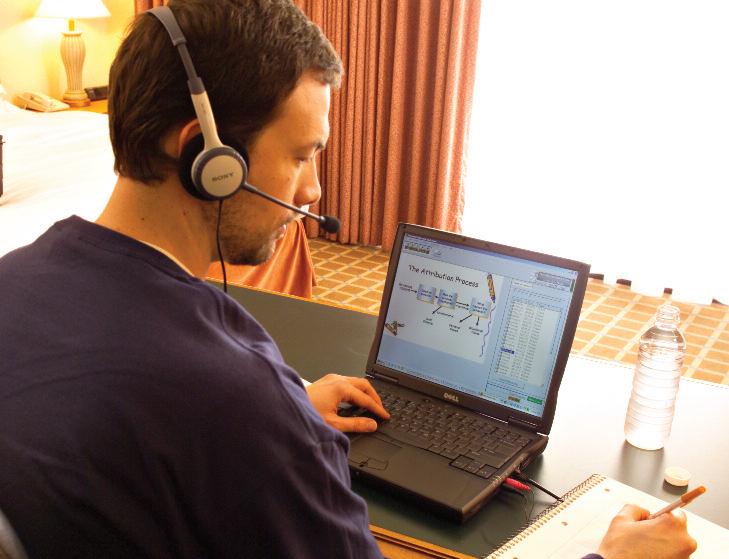
• WIU Interactive OnlineSM—theconvenienceofonline courses,withtheaddedadvantageof live and recordedclassesthatyoucanaccess24/7
• Attendclassoncampus, live withWIU Interactive OnlineSM orboth
• Newcoursesbegineverymonth
• Afacultyofexperienced,workingprofessionals Callanenrollmentcounselortodaytofindouthoweasy wecanmakeyourtransitionintoabachelordegree program. 602.943.2311
*AppliestonewstudentsattendingWIUforthefirsttimewhotransfercreditfromanMCCCD college.TheBookVoucherisforuseintheWIUBookstoretopurchasebooksforWIUcourses forwhichthestudentisregisteredandisattending.Tobeeligibleforthisoffer,studentsmustsign aMemorandumofUnderstanding(MOU)uponenrollmentandmustmeetallcriteriaasstatedin theMOU.Maynotbecombinedwithanyotherbookoffer.



























If you are decided on a major and plan to transfer to ASU to earn a bachelor’s degree, then the Maricopa-ASU Pathways Program (MAPP) might be an excellent option for you. This program includes the specific coursework that allows students attending one of the Maricopa Community Colleges to transfer to ASU without loss of credit. Along the pathway, you will earn an MCCCD Arizona General Education Curriculum (AGEC) certificate and a transfer associate’s degree. MAPPs are available for many of the most popular majors at ASU. Many majors are available now, and more will be developed over the next year.
Student benefits:
• Guaranteed admission to ASU degree programs when all MAPP requirements are met.
• Eligibility for the ASU Tuition Commitment, which provides predictable limits on tuition increases during enrollment at ASU.
• Specific scholarships available for meritorious students who complete the appropriate transfer degree.
• Access to ASU Transfer Advisors who hold office hours at Maricopa Community Colleges.
To get started, follow these steps:
• Visit maricopa.edu/alliance for a list of MAPPs currently available.
• Make an appointment with an advisor at your community college.
• Your community college advisor will explain the MAPP terms and requirements and sign you up for a MAPP.
• Plan to meet with an advisor at least once a year to check your progress and make sure you are on track.
Visit maricopa.edu/alliance

I was thrilled when I found out about the MAPP program. The MAPP program has provided structure and accountability and has helped me stay focused throughout the semester. I have since then improved my GPA and am proud to say last semester I earned three As and one B. This program is great for outlining a student’s future successfully and eliminates any confusion. I would recommend this program to any aspiring Sun Devil.



















The Connection is a unique partnership between the Maricopa Community Colleges and Northern Arizona University (NAU) designed to help you continue your education toward a bachelor’s degree after completing your associate’s degree. This can be done while attending classes at or near a local community college. NAU advisors and faculty are located on your community college campus to ensure your path to a bachelor’s degree is convenient, flexible and affordable. You will save on the overall cost of your undergraduate degree by paying lower tuition at your Maricopa Community College. NAU degree programs are offered at local Maricopa Community Colleges or online. To learn more, visit the Connection website at maricopa.edu/connection.
The Connection offers local bachelor’s degrees in a variety of academic areas. Undergraduate programs can include online and hybrid deliveries, 90/30 credit transfer and continuation for several associate’s degrees in applied sciences. Degrees are offered for many different majors including:
• Business Administration • Interior Design
• Elementary Education • Emergency Services Administration
• Administration of Justice
Speech Communication
• Health Sciences • Public Management (Interdisciplinary Studies)












Arizona General Education Curriculum (AGEC) & Associate degree:
1. Have you selected a major with an Arizona General Education Curriculum (AGEC)? If so, have you completed the requirements and requested AGEC certification on your transcripts?

2. Have you met with an advisor to determine your eligibility to graduate at your community college?
3. Have you submitted an application for graduation?



1. Does your major have a second language proficiency requirement?
2. Have you completed all the pre-requisites for your university program?
3. Have you met the minimum cumulative GPA for admission into the university and academic program you want?
4. Have you investigated tuition and fees at the university? (Note: Some programs may require a professional fee, which is in addition to tuition.)



Check with an academic advisor as program offerings are subject to change. For more information, visit the Connection website at maricopa.edu/connection/
University Application Process & Transcripts:
1. Have you researched university admission priority dates and deadlines?
2. Have you submitted your application(s) for admission and all of your official transcripts (and any AP and CLEP test scores) prior to transferring?
3. Have you checked to see if high school transcripts and test scores are required?
4. Have you sent final official transcripts after your final semester is completed?
1. Have you submitted your Free Application for Federal Student Aid (FAFSA) by the priority date of your transfer institution(s)?
2. Have you researched scholarship opportunities? Be wary of potential scams, as search services should be free of charge.
3. Have you decided whether you will live on- or off-campus? (On-campus housing can be limited and is usually awarded on a first-come, first-served basis.)
































“With 85 percent of projected new jobs requiring post-secondary education and work experience, high school graduates will need to be both college and career bound.”

– “Education to Work: Is Arizona Prepared?” The Alignment Project Report (2006)













Making informed decisions is a skill that each of us uses every day, in just about every possible way: at work, with friends and family, for personal goals and as consumers. Technologies and websites are there to help us in our decision-making efforts, however, they can also bring additional confusion at times. This page is designed to provide you with great ideas on how to more successfully achieve the goal of graduating from the Maricopa Community Colleges, transferring to a college or university and completing your bachelor’s degree. Once you have a clear picture of your goals, you can count on these people and resources to assist you in making the best decisions for your future.
For the last several decades, increases in college tuition and fees have far surpassed the rate of increase to family income (Measuring Up, 2008; highereducation.org). The current economy, coupled with more people needing financial assistance for college, leaves students with challenging questions about their educational future.
Put your best financial foot forward and check into sources of money that may be available for financing your college education:
• Federal Financial Aid
• Work-Study & Part-time Employment
• Scholarships and Grants
• Athletic and Performance Stipends
• Student (and Family) Loans
• Special Incentives (including reimbursements)
Also, take time to learn if your transfer university offers any tuition-locking programs. These programs set a guaranteed rate for tuition (sometimes to include increases), as long as you stay continuously enrolled and make significant progress toward completing your bachelor’s degree.



• Class search features
• Course descriptions and outlines
• Internet, hybrid and honors class search options
•
Although only you have the answers, who better to help you make decisions about your college major and transfer opportunities than these college personnel:
• Academic Advisors
• Financial Aid Staff
• Faculty and Coaches/Mentors
• Counselors
• Career Center Personnel
• Librarians
• Student Life Leaders
• Student Services Specialists
Compared to other states, Arizona performs well in awarding certificates and degrees relative to the number of students enrolled; but can still improve in areas of college preparation and affordability (Measuring Up, 2008). Arizona also got excellent marks for offering its residents sufficient opportunities to education and training beyond high school (Grade = A).

These sites contain information, links and resources you will need for making the most of your transfer opportunity with the Maricopa Community Colleges. The more you familiarize yourself with these tools, the smoother your transfer experience will be. Advisors, faculty and counselors will guide you through many of the steps, but get started today and save yourself time in learning What’s New with these Tools!
tuition/costs
• Learn about credit transfer
• Access specific sites for MCCCD graduates
• Get connected with advisors/faculty






Student Testimonial Nissa Hinman
Starting at a community college made sense to me because I wanted something flexible. I also wanted to make sure the business management degree was right for me before I spent a larger amount of tuition at a university. When I finished the classes I needed to transfer I found out that I could attend NAU without moving up to Flagstaff. This was very appealing to me so I met with the counselor for my program; she was very helpful in making sure that all my questions were answered and my transition process went smoothly.
I did not have any problems with transfer credits because the transfer programs were well planned out. I had also done my research on the program so I had an idea of what to expect and what was needed from me. You cannot expect someone else to do all the work for you, so the more you know coming into it the easier things will be. This degree will be very beneficial because the classes have given me a lot of practice with situations I will face in the business world. We gave presentations and speeches in almost every class and we learned how to work together in group settings. I think my favorite part about this program is getting to have many of the same teachers for different courses.
There is certainly something to be said for being greeted by your teacher by your first name the moment you walk into a classroom. It really makes you feel like your education is important.




Transfer Balance and Inspiration
What keeps Heath Palen-McBee going while he balances being a husband, father to three, working professional and student? Sheer determination, along with help from Mesa Community College (MCC) and Regis University College for Professional Studies. For 20 years, Palen-McBee’s goal has been to earn a Bachelor’s degree. He recognizes the value an advanced degree offers and the doors it can open.
Kelly Glish, 24-year-old Gilbert, Ariz., resident, loves children and enrolled in Rio Salado College to become a teacher. Rio Salado College offered the flexibility of online classes that Glish needed to continue working full time as a nanny.
It was in her previous position as a children’s swim coach that she discovered her passion for working with children.
“I was always enthusiastic and woke up every day excited about coaching them,” she said. “Their carefree and loving personality inspired me to study elementary education.”
After receiving her associate’s degree, Glish considered transferring to several local universities. The staff at Rio Salado College assisted her by providing information on in-state and out-of-state universities associated with Rio Salado College’s transfer program. The articulation agreement, and her need for a flexible schedule, confirmed her decision to attend Ashford University.
“The transition to Ashford was easy,” she said. “The agreement between the colleges allowed all of my courses to transfer seamlessly to my bachelor’s degree program and the university offered online classes for my degree program.”
Glish recommends that all transfer students use the resources that are available to them.
“Ashford University and Rio Salado College academic and financial aid offices coordinated with one another making for an easy transition,” she said. “Enrollment advisors at Ashford were prompt, efficient and accessible and it has been a great experience.”
Glish will receive her bachelor’s degree in elementary education this spring and plans to pursue a teaching position in her hometown of Davison, Michigan.




“Start with a beginning course to see if it’s a good fit. Then be prepared to do lots of reading and writing - in the end, IT’S ALL WORTH IT.”






Strayer University Student Marcie Harrison
Marcie Harrison, transfer student to Strayer University in the Bachelor of Business Administration program. In Marcie’s words:
A colleague of mine, who is a Strayer University student, thought the school would be a good fit for me –and she was right. Because I had started with GateWay Community College, I knew what was needed to succeed in school. One of the most important things is a smooth transfer process to an accredited four-year program.
During my transfer to Strayer University, the admissions representative took care of everything I needed. One of Strayer University’s professors took time out of his busy schedule to talk with me about the classes. The fact that he sat down and talked to me made me think, ‘This is the school for me.’
My advice to students looking to make a transfer from a community college to a four-year university is to make sure you don’t rush into your decision. Also, look for a university whose faculty and staff take the time to listen to you and answer your questions, like Strayer University did for me.
Fresh out of high school Palen-McBee went to MCC, one of 10 Maricopa Community Colleges, because, like many 18 year olds, he was not ready to attend a fouryear university. From college to the military – he’s back at it again. Transferring from MCC to Regis was “a pretty seamless process,” Palen-McBee says. MCC was timely on processing his transcripts and Regis offered valuable direction. “The information provided was very helpful,” he recalls. “The direct contact with people was greater than any other school, making my decision to transfer easier.” Palen-McBee wanted a reputable school that met his needs. “I didn’t want just another online school, but I wanted an established campus,” says Palen-McBee. Maximizing his transfer credits was also important and the partnership between MCC and Regis’ Associate’s to Bachelor’s Program® did just that. The program allows students to transfer up to 90 credits from a Maricopa Community College toward a Regis Bachelor’s degree. Palen-McBee offers one piece of advice to transfer students: “Start with a beginning course to see if it’s a good fit. Then be prepared to do lots of reading and writing – in the end, it’s all worth it.”
I was happy to finish my Associate Degree in Arts at Phoenix College. As I was looking forward in the hopes to obtain my Bachelor of Science degree in Education, I pondered what universities would benefit my career and suit my schedule. I looked into other universities and found that they required more credit units and daytime schedule to be considered for financial aid, which I needed in order to return to school.
University of Phoenix is suitable for a working mother who wishes to finish schooling as soon as possible. As soon as I visited the University of Phoenix – Phoenix Campus, I realized that the class structure, set up, classrooms and students’ ages were different than other local universities. I also noticed that University of Phoenix was different than those universities I visited; there was no football field, no large libraries and no masses of young students walking in and out of the building.
Several questions ran through my mind. How many students are there per class? Where is the library? Do I need to purchase textbooks? My enrollment counselor informed me that University of Phoenix serves the working students, with small class sizes and flexible schedules. I felt at peace and comfortable working with University of Phoenix staff.
I was awarded with federal loan, federal grant and a scholarship that allowed me to start my classes without the worries of financing my degree. I realized that becoming an educator means receiving small checks; therefore, my Academic Counselor supplied me with additional scholarship websites and a link for employment opportunities.













If you’ve got a head start on your degree, you need to make the most of your hard-earned credits. At Park, we understand the value of the work you’ve done. So we’ll help you make the most of it.
Talk to one of our advisors and find out how smooth your transition can be. We’ve been making higher education accessible for more than 135 years. We know how to listen.
Tell us where you’d like to go. We’ll show you ways to get there.




























If you have a tight budget and want to stay close to home, begin at one of the Maricopa Community Colleges. Your community college will help you prepare academically to enter the university of your choice. To learn more about your transfer opportunities, visit: maricopa.edu/transfer


1. Explore
Now is the time for you to explore a major or program of study. Ask faculty and staff from Advisement, Career Services and Counseling, about resources to help you.
2. Decide
Now that you are on the path to completing your AGEC and associate degree, you have a few more decisions to make. You need to decide which academic program to pursue (according to your university major) and which college or university you would like to attend.
3. Prepare
If transferring to a university is your academic goal, you should begin by looking into an AGEC (Arizona General Education Curriculum) – a 35-credit certificate that fulfills university general education requirements, and will have you more than half way through your associate.
4. Transfer
When you are ready to transfer, make sure that you have requested an evaluation of your transcripts for AGEC and associate degree.


• Associate In Arts (AA)
• Associate In Arts – Elementary Education (AAEE)
• Associate In Business (ABus)
• Associate In Science (AS)
• Associate in Arts (AA) Degree, Fine Arts – Art
• Associate in Arts (AA) Degree, Fine Arts – Dance
• Associate in Arts (AA) Degree, Fine Arts – Theatre
• Associate In Applied Science (AAS)
If you complete any of the above degrees, you will be admitted to a public Arizona university with junior status; however, this does not guarantee admission into specific programs.


Besides acknowledging your efforts and providing you with a sense of completion and achievement, your degree may offer you several of these advantages:
• Guarantees admission into many Maricopa partner institutions.
• Prepares you academically to enter university programs.
• Provides a transfer plan to your four-year college or university.
• Helps assure a smooth transition by maximizing the applicability and transferability of your academic credits.
• Helps you qualify for tuition discounts and scholarships at Maricopa partner institutions.
• Helps you qualify for a job or promotion.














The following is a general timeline to assist you in planning your transfer. It’s never too early to begin planning. It is recommended that you:
• Declare your intent to transfer when you begin transfer coursework;
• Aim to finalize your choice of major and university by the time you have earned 24 credits.

• Discover which universities offer the major that interests you.
• Investigate possible transfer institutions that offer your intended program – by desired features (i.e., cost, location, size, services, distance learning options, etc.).

• Solidify your choice of academic major or area of study and narrow down your transfer institutions.
• Continue selecting courses that transfer appropriately within your program of study.

• Consult your professors, as well as advising, counseling and career center personnel.
• Learn more about general education requirements and lower-division requirements.


• Begin looking for scholarships, discounts and other ways to meet costs.
• Pay attention to required course sequencing and GPA requirements for your academic program.

• Identify specific admission requirements, and investigate program-specific selection criteria and requirements such as auditions or portfolios. Many majors have priority deadlines.
• Access Transfer Guides and the Course Equivalency Guide to assist you with course selection: aztransfer.com
• Submit your applications for admission and financial aid along with all of your official transcripts, AP and CLEP test scores if you have any, and immunization records.
• File your Free Application for Federal Student Aid (FAFSA) early – depending upon the priority dates of the universities you are considering.
• Check in with advisors and academic professionals at your transfer institution.
• Find out if orientation is required and keep yourself in the know of changes in program requirements.
• Visit your community college advisor to check your eligibility to graduate.
• Complete transferable coursework in your program and apply for your associate’s degree and graduation.
• Request AGEC certification to be placed on your transcripts.
• Send official transcripts at the end of your last semester before transferring.
• Attend new student orientation sessions and use online orientation tools to learn which resources are essential.























Thinking of attending a four-year university? Then think about attending a Maricopa Community College for your first two years. You can get the same general required courses, but for a lower tuition. You’ll find a lot of great social and academic opportunities outside the classroom, too. Add that to flexible schedules, online classes, and hundreds of program options, and you’ll discover how the Maricopa Community Colleges give you an opportunity to create the college that’s just right for you. Visit maricopa. edu/study to see how you can get the most out of your college experience.



8-week