

By SHERI GASSAWAY Missouri Correspondent
While eliminating the Missouri income tax may sound like a good idea, the current plan could drastically increase sales and use taxes, creating a negative impact on working families, says the Missouri AFL-CIO.
House Joint Resolution 174, introduced last week to the House Commerce Committee, is a proposed constitutional amendment asking Missouri voters in November to grant lawmakers broad authority to expand the state’s 4.2 percent sales tax rate to currently untaxed goods and services, like accounting fees for tax preparation or subscription services.
‘DRASTICALLY INCREASE SALES AND USE TAXES’
“Generally speaking, we are against any legislation that shifts toward a consumption tax,” said Missouri AFL-CIO Secretary-Treasurer Ryan McKenna. “It shifts the tax burden from wealthy individu-

als to those that can least afford it. Eliminating the income tax, while sounding good, would drastically increase sales and use taxes on all of the goods and services we use day-to-day.
“Very few details, however, have been worked out, and we will need to see how the plan looks as it gets closer to debate,”
he said. “Income tax covers the vast majority of the state’s overall budget making it unclear how you would replace that much revenue, leaving many programs, especially education, drastically underfunded. We are optimistic that there will be thoughtful debate that a respectable proposal is put forth, or the legislation doesn’t make it through.”
Missouri collected $9.2 billion
See STATE INCOME TAX page 15
Safety in highway work zones a priority, but IDOT says it is limited by a lack of resources
By ROBERT KELLY Correspondent
Edwardsville, IL — Safety in highway work zones is the top priority for the Illinois Department of Transportation (IDOT), but the department is too often limited by a lack of resources, IDOT’s Safety Programs Unit Chief Juan D. Pava says.
“We do the best we can with what we’ve got,” Pava said.
“In 2024 we experienced 15 work zone traffic-related fatalities,” he said. “That year, the primary contributory factor was failure to reduce speed (by passing motorists), followed by improper lane usage.”
The forum featured scores of highway workers, IDOT suppliers, and other officials who analyze data for safety issues on Illinois highways.
The day-long forum, featuring various safety discussions, was sponsored by the Southern Il -

linois Builders Association and the federal Occupational Safety and Health Administration in cooperation with several other safety groups. Events were held in the Morris University Center at Southern Illinois University Edwardsville.
Highway workers were especially vocal at Pava’s session with them. Too often, they said, they feel unprotected from motorists
See WORK ZONES page 15
47 hits from the 47th president have hurt us all
(The first in a series highlighting the Economic Policy Institute’s report on how actions by Trump, in just the first year of his second term, have hurt ALL workers.)
President Donald Trump’s actions over the last year have consistently undermined workers’ wages and increased their economic vulnerability, making it harder for many families to afford basic necessities.
In the first weeks after being sworn in, Trump moved quickly to roll back minimum wage increases for hundreds of thousands of workers and more recently, he finalized regulations that reduce the wages of all farm workers, including those who are U.S. citizens.
The following actions illustrate how this agenda has played out across a range of policies that harm workers’ wages and economic security:
• Hit 1 - Reducing the minimum wage for nearly 400,000 federal contractors: President Trump rescinded an executive order that increased the minimum wage for federal contractors to $15 per hour in 2022 and indexed it to inflation.
The minimum hourly wage for federal contractors had reached $17.75 by the time he eliminated the policy.
• Hit 2 - Stopping enforcement of misclassification protections for workers illegally classified as independent contractors: This robs workers of minimum wage, overtime, workers’ compensation, and other basic rights.
• Hit 3 - Finalizing an interim final rule that will radically cut the
See 47 HITS PART 1 page 15

By DAVID MCCALL President United Steelworkers
Wes Parcell and his coworkers use lead, nitroglycerin, and other deadly substances to manufacture propellants and munitions for America’s war machine.
Facing risks like toxic exposure and fire every day, they decided to double down on safety and called in a key federal agency in the fall of 2025 to review conditions at the Radford Army Ammunition Plant in southwestern Virginia.
Representatives from the National Institute for Occupational Safety and Health (NIOSH) showed up and dug in for a threeday “health hazard evaluation,” giving the once-over to everything from the workers’ personal protective equipment to the structural integrity of elevated work platforms. They even swabbed the microwave oven handle in the lunchroom to ensure dangerous substances weren’t migrating from one part of the plant to another.
Parcell and his colleagues, members of United Steelworkers (USW) Local 8-495, now go to work with renewed confidence and lasting gratitude for the NIOSH team’s expertise.
They’re also breathing easier knowing that Donald Trump recently caved under pressure and backed down from his reckless plan to gut NIOSH. That means the union members at Radford and millions of other workers across the country will continue to benefit from the agency’s life-saving mission.
There was just one reason for that. In April 2025, Trump summarily cut 90 percent of NIOSH’s workforce, all but wiping out a well-established, one-of-a-kind agency that paid for itself in lives saved.
Besides workers’ access to health hazard evaluations, Trump’s nonsensical attack on NIOSH imperiled other critical missions performed by no one else.
That included studying miners’ health, helping the nation respond to disasters, conducting research on workplace hazards, and training the next generation of health experts while also certifying the respirators used by many workers and the self-contained breathing apparatus essential to fire fighters.
Workers, unions, and allies fought back with a fury that grabbed Trump’s attention. They held rallies, went to court to block the cuts, and demanded that members of Congress take a stand with them.
The workers won. Early in 2026, the government called hundreds of NIOSH staff members back to their jobs, and they’re already restarting projects and otherwise cleaning up the mess Trump made.
Parcell said the inspectors he worked with got in touch with him to say they’re reviewing lab results, obtaining more information from management, and taking other steps essential to completing their final report on Radford.
“This was the first interaction we had with them since September,” he said.
‘RELIEVED AND THANKFUL’
“I was obviously very relieved and thankful,” said Parcell, vice president of Local 8-495. “I’d hate to think that they wouldn’t be there to help someone who needed them just as much as we did.
“They really showed that they cared,” Parcell said of the NIOSH officials. “They were very diligent. They left no stone unturned.”
The local’s 900 or so members negotiated strong health and safety language provisions at the government-owned site, where they work for a contractor, BAE Systems.
Still, workers recognized the value of an independent, thorough review given the dangerous environment—and records showed that NIOSH last conducted that kind of deep dive at the facility decades before.
“A lot of the stuff we work with is very volatile,” Parcell explained. “It’s very flammable. It burns at a very high heat.”
HEALTH HAZARD EVALUATIONS
NIOSH provides health hazard evaluations at no cost whenever workers, unions, or employers request them because of concerns about heat, noise, radiation, chemical exposure, infectious diseases, musculoskeletal issues, or other threats.
The agency posts the final reports online, enabling everyone to benefit from its findings at sites ranging from schools to wastewater treatment plants to foundries.
After evaluating the Radford plant, the NIOSH team issued a quick summary of findings, making suggestions for maintenance, housekeeping, storage of chemicals, and other improvements. They promised to start working on the longer, more comprehensive report and to return if workers ever needed them.
But then, Parcell recalled, their NIOSH contacts “dropped off the face of the earth.”
Sadly, the fight for safety is far from over.
While celebrating NIOSH’s revival, workers continue to make strides toward saving another essential safety agency that Trump keeps trying to kill.
Workers, unions, and even industry bosses all rallied to preserve the Chemical Safety and Hazard Investigation Board (CSB), which investigates the root causes of chemical-related incidents and makes recommendations for making industries safer.
The agency performs this critical work with a $14 million budget and a workforce of about 50. Abolishing it means saving pennies at the cost of lives, and yet Trump attempts to eliminate the CSB every year he’s in office.
“It shows how out of touch some people in government are,” observed Kyle Downour, unit chair for USW Local 1-346, surprised that abolishing an agency as valuable as the CSB would ever cross anyone’s mind. “It’s amazing what they do with 50 people.”
Downour worked closely with the CSB after a fire at an oil refinery in Oregon, Ohio, that killed two USW members—brothers Max and Ben Morrissey—in 2022. The agency’s comprehensive report—detailing the chain of events ending in calamity—left a deep impression on refinery workers.
“You could tell they absolutely had a desire to understand so they could possibly make things safer,” Downour recalled.
While he’s pleased that Congress agreed to continue funding the CSB for now, he pointed out that workers and CSB staff members require long-term stability.
Working people also need to be assured of a robust NIOSH going forward, said Parcell, noting, “It’s nice to have somebody in our corner.”
“NIOSH looks at the facts,” Parcell said. “Is it a hazard or is it not a hazard? NIOSH is a great third party that determines that for us.”
(This article was produced by the Independent Media Institute.)
Opinions expressed are those of the individual – not their union.
A new proposal by the Armory Innovation District in St. Louis includes a number of laudable updates, as desired by elected officials and community leaders who want to see this area thrive and succeed. (“Developer reworks Armory data center plans: New site, no St. Louis incentives,” Jan. 16.)
This new proposal is responsive to community feedback, and reflects alignment with existing zoning, environmental responsibility, and long-term public benefit. And it does so without reliance on local development incentives.
The Armory is a special place, which is why many in the community want to ensure this historic resource is preserved and utilized for the benefit of the region, especially after recent renovations were completed to the historic structure. The new proposal utilizes that renovation and will be dedicated as Class A creative tech office space, attracting a new workforce to the area. The data center will be located in the long-vacant Macy’s/Famous-Barr warehouse west of the Armory. We applaud this change.
Additionally, this proposal calls for a closed-loop and air-cooled system to greatly reduce water use. Integrated noise mitigation measures are also included in the updated proposal. Another new feature includes the use of LEED design standards for both the office and data center components.
Finally, the project is now located entirely on K-unrestricted sites, reducing land-use friction and the Key 500 Prospect Site is
preserved for future redevelopment.
Taken together, the ARCO/THO Investments/Contour proposal is extremely responsive to community and citizen concerns. The new facility will represent approximately $3 billion in local investment, and involve over a thousand construction jobs. Permanent employment includes at least 50 data center employees at the Macy’s site, 150 office employees at the Armory site, and an additional 176 support jobs across the local economy.
Much-needed revenue for our city will be generated from this new development — up to $484.7 million dollars, including $147.7 million for the City of St. Louis, $232.7 million for the St. Louis Public Schools, and $104.34 million for other taxing districts in the city.
This project converts a long-underutilized, highly visible site into an active and secure job and resource producing area. Once in operation, the new facility will enhance the nearby land in Midtown and create redevelopment potential in the area. We both strongly support this new development and applaud the developers for hearing our concerns and addressing them.
LAURA KEYS
St. Louis Alderwoman (Ward 11) and TOM OLDENBURG
St. Louis Alderman (Ward 2)
(Reprinted from the St. Louis PostDispatch)
The Jefferson County Labor Club is endorsing four incumbent Festus City Council members who have consistently supported union jobs, economic development and working families throughout their tenure.
The endorsements include Ward 1 Councilman Jim Collier, Ward 2 Councilman Brian Wehner, Ward 3 Councilman Bobby Venz and Ward 4 Councilman Jim Tinnin. The endorsements for the April election were approved by the St. Louis Labor Council Jan. 20.
These council members have a proven track record of supporting policies that create good-paying jobs and strengthen our local economy. They understand that when workers succeed, our entire community prospers.
Additionally, the endorsed incumbents have consistently voted in favor of economic development projects that bring high-wage union jobs to Festus, while also ensuring that new developments are good neighbors. The most recent economic development is a data center that would provide high paying jobs for the local workforce and strengthen the city’s tax base
This council has passed one of the strongest municipal ordinances in the country to hold tech companies and data centers accountable. They’ve strictly regulated noise and light pollution, required companies to ask permission to run generators, and supported Missouri laws that force data centers to pay for the energy they use, protecting us from rising energy bills.
The council’s approach has balanced the need for economic growth with transparency requirements and appropriate regulations to protect neighboring residential areas. Thanks to them, we will have transformational opportunities for working families in Festus and economic development that works for everyone.
I would encourage union members to attend upcoming Festus City Council meetings to show support for these pro-Labor incumbents. The council meets the second and fourth Monday of the month at Festus City Hall at 711 Main St. at 6 p.m.
TED RAMSDELL
Jefferson County Labor Club president


The Southern Illinois Builders Association (SIBA) recently awarded 20 scholarships to students pursuing a degree in the field of construction management, construction-related engineering, architectural-interior design or construction safety. SIBA began offering scholarships in 2012 and since then has awarded 169 scholarships totaling approximately $330,399.93. Members of the SIBA Education Committee selected the following students to receive 2025 scholarship checks:
• Shaelyn Borowiak, Aviston, Ill.;
• Samuel Denny; Columbia, Ill.;
• Gibson Fager, Murphysboro, Ill.;
• Chase Fallert, Bloomsdale, Mo.;
• Addison Gansauer, Carlyle, Ill.;
• Dillon Guess, Bunker Hill, Ill.;
• Grayson Guthman, Murphysboro, Ill.;
• AJ Hobbs, Murphysboro, Ill.;

• Lucas Jackson, O’Fallon, Ill.;
• Carson Klostermann, Breese, Ill.;
• Georgia Litteken, Trenton, Ill.;
• Cole Perryman, Belleville, Ill.;
• Parker Poirot, Freeburg, Ill.;
• Owen Jake Rann, Harrisburg, Ill.;
• Trevor Reinneck, Mascoutah, Ill.;
• Tate Schaber, Ava, Ill.;
• Isaac Trapp, Belleville, Ill.;
• Joe Whitworth, Columbia, Ill.;
• Grant Wilson, Harrisburg, Ill.; and
• Trey Winkeler, Breese, Ill. Members of the SIBA Education Committee are:
• Gregg Korte, chairman, Korte & Luitjohan Contractors, Inc.;
• Rachelle Lengermann, Plocher Construction Company;
• Lyle Simonton, Subsurface Constructors, Inc.;
• Scott Korte, Pyramid Electrical Contractors;
• Phil Kingdon, River City Construc-
tion, L.L.C.;
• Jeff Evans, J.F. Electric; and
• Mike Gould, Gould Flooring Services.
SIBA advertises for the SIBA scholarships in the fall and requests that information be submitted by mid-November for the SIBA Education Committee to meet and make their selections. To obtain a complete list of requirements for the SIBA scholarships, contact Donna at the SIBA office 618-624-9055 or email her at ceo@ siba-agc.org
The Southern Illinois Builders Association is a trade association of commercial contractors representing approximately 500 commercial and industrial building, highway and utility construction contractors throughout Southern Illinois.
The Greater Madison County Federation of Labor will hold its annual awards banquet on March 26 and is seeking nominations for the awards.
All affiliated locals with the Federation are invited to nominate individuals dedicated to the service of Organized labor and who contribute to their community. Nominees for “Labor Leader of the Year” should be union members who have shown leadership qualities throughout the past year, not only for their own local, but for the good of the Labor Movement. Nominees for “Outstanding Friend of Labor” should be individuals who have consistently been outstanding supporters of Labor.

highlight their activities and service for the categories for which they are nominated. The deadline for submitting nominations is Feb. 26, and should be sent to Mike Fultz, first vice president, 2540 Northbridge Court, Granite City, Ill. 62040. Forms can be found online or by contacting Fultz at mpfultz@att.ent
Ads for the booklet can be purchased up by contacting Fultz, ranging from $45 for a businesscard size ad to $410 for a double full page. Camera ready copy must be provided by Feb. 27, and payment must be made by March 16.
Each local should submit a resume for their nominee(s) to
The event will begin at 5:30 p.m. on March 26 at Julia’s Banquet Center, 101 Eastgate Plaza, East Alton, Ill. Questions can be directed to Fultz or to Federation President B. Dean Webb.



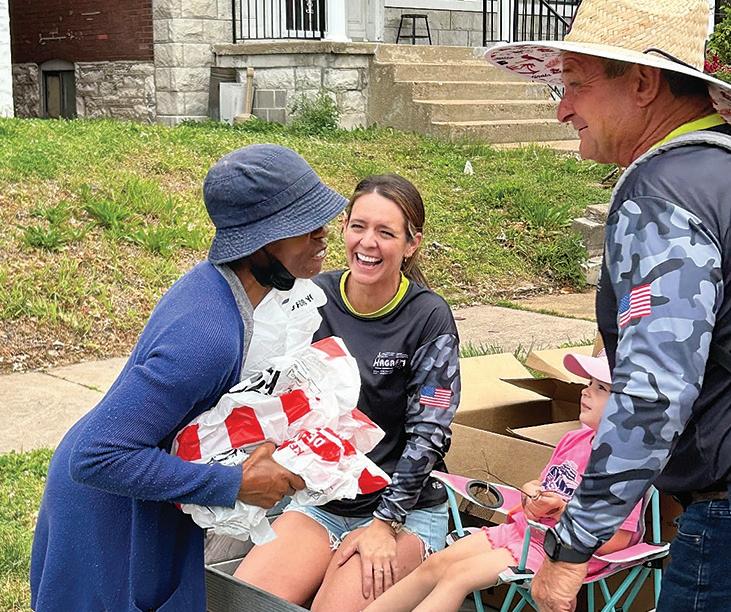
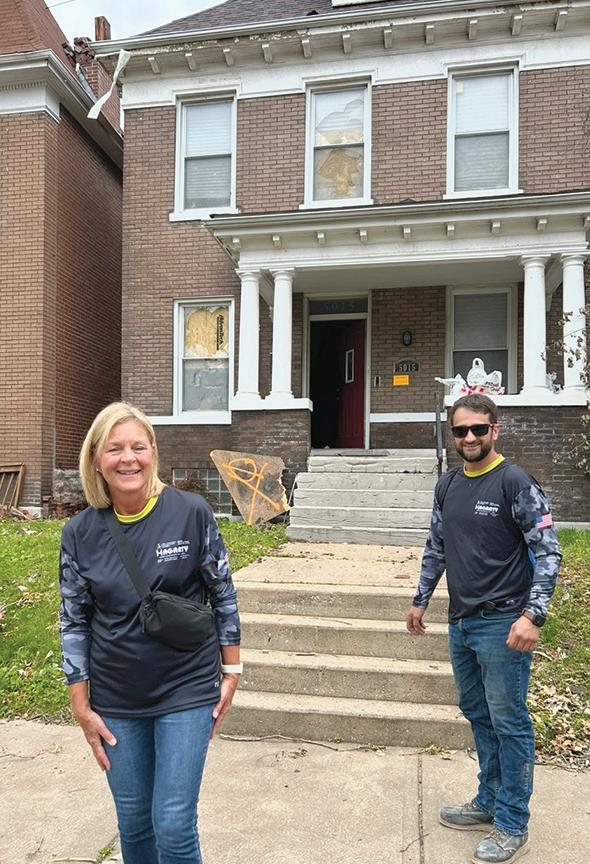
North St. Louis – Last spring, when a tornado swept through north St. Louis, Tim Hagarty, founder of Hagarty Ironworking Company and a 46-year member of Iron Workers Local 392, and his son Brendan Hagarty, owner and also of Local 392, reached out to Tim Hagarty’s nephew, Mike Hagarty, who manages KFC restaurants on both sides of the river. Together they worked

with the stores’ owner Hector Gomez to purchase 100 box lunches at cost and deliver them to victims of the tornado. “They were really thankful,” Tim Hagarty said. “It was pretty rewarding.” Joining in the charitable delivery effort were Brendan Hagarty’s fiancé Laura Biekert, daughter Ameila, and Tim Hagarty’s significant other Carrie Wicklein. – Photos courtesy of Tim Hagarty






FEBRUARY 9
1917 – Wobbly activist Tom Mooney convicted in bombing frame-up orchestrated by Pinkerton Detective Agency. He was pardoned and released 22 years later.
1961 – President Kennedy asks Congress to approve creation of the Medicare program, financed by an increase in Social Security taxes, to aid 14.2 million Americans aged 65 or older.
2000 – Some 19,000 Boeing engineers and technical workers in Washington state and Oregon begin what is to become a 40-day strike over economic issues.
FEBRUARY 10
1908 – The American Federation of Labor (AFL) founds the Building and Construction Trades Department as a way to overcome the jurisdictional conflicts occurring in the building and construction unions.
1963 – Eleven members of the Carpenters’ union in Reesor Siding, Northern Ontario are shot, three fatally, by independent local farmer-settlers who were supplying wood to a Spruce Falls Power and Paper Co. plant.
1973 – Forty workers are killed on Staten Island, N.Y., when a huge storage tank filled with liquefied gas explodes.
FEBRUARY 11
1903 – Five hundred Japanese and 200 Mexican laborers unite to fight the labor contractor responsible for hiring at the American Beet
Sugar Co. in Oxnard, Calif. They ultimately win higher wages and the right to shop at stores not owned by the company.
1919 – The Seattle General Strike ends after six days. Some 65,000 workers struck for higher pay after two years of World War I wage controls.
1948 – “White Shirt Day” at UAW-represented GM plants. Union members are encouraged to wear white shirts, marking the anniversary of the 1936-1937 Flint sit-down strike that gave the union bargaining rights at the automaker.
1968 – Some 1,300 sanitation workers begin what is to become a 64-day strike in Memphis, ultimately winning union recognition and wage increases. The April 4 assassination in Memphis of Martin Luther King Jr., who had been taking an active role in mass meetings and street actions, brought pressure on the city to settle the strike.
2011 – Wisconsin Gov. Scott Walker announces he will call out the National Guard, if necessary, to deal with any “unrest” among state employees in the wake of his decision to unilaterally end nearly all collective bargaining rights for the workers.
FEBRUARY 12
1818 – Abolitionist Frederick Douglass born into slavery near Easton, Md.
1880 – John L. Lewis, president of United Mine Workers of America and founding president of the CIO,
born near Lucas, Iowa.
FEBRUARY 13
1865 – A national eight-month strike by the Sons of Vulcan, a union of iron forgers, ends in victory when employers agreed to a wage scale based on the price of iron bars — the first time employers recognized the union, the first union contract in the iron and steel industry, and what may be the first union contract of any kind in the United States.
2008 – Some 12,000 Hollywood writers returned to work today following a largely successful threemonth strike against television and motion picture studios. They won compensation for their TV and movie work that gets streamed on the Internet.
FEBRUARY 14
1903 – Western Federation of Miners strike for eight-hour day.
1903 – President Theodore Roosevelt creates the Department of Commerce and Labor. It was divided into two separate government departments 10 years later.
1913 – Legendary Teamsters leader Jimmy Hoffa born in Brazil, Ind., the son of a coal miner. He disappeared on July 30, 1975 and declared dead seven years later.
FEBRUARY 15
1820 – Susan B. Anthony, suffragist, abolitionist, Labor activist, born in Adams, Mass. “Join the union, girls, and together say: Equal Pay for Equal Work!”
1934 – U.S. legislators pass the Civil Works Emergency Relief Act, providing funds for the Federal Emergency Relief Administration, which funneled money to states plagued by Depression-era poverty and unemployment, and oversaw the subsequent distribution and relief efforts.
1950 – The Congress of Indus-


Washington (Satire from The Borowitz Report) — Donald J. Trump announced on Monday that he had successfully completed the first phase of the Kennedy Center’s renovation by removing its audience.
Arguing that a building cannot undergo construction while people are still in it, Trump revealed that he had spent the past year ensuring that no one would set foot inside the performing arts center for the foreseeable future.
He achieved that goal with blazing efficiency by putting his name on the building, naming himself chairman, and alienating any performing artist one might conceivably pay to see.
Additionally, audiences have steered clear of the Kennedy Center out of fear that they might be seated next to JD Vance.
In a Truth Social post, Trump boasted, “For the past 54 years, the Kennedy Center has been plagued by audiences. I was able to fix that problem in just 12 months!”






Longtime Business Representative
Shannon Duffy retires
St. Louis – Robin Harvey has been named administrative officer/ business representative for the St. Louis United Media Guild (UMG), replacing Shannon Duffy, who recently retired.
Harvey most recently worked as an attorney for Legal Services of Eastern Missouri (LSEM), which joined the UMG in 2023. Prior to working at LSEM, she was a field attorney for the National Labor Relations Board’s Fort Worth Regional Office. She attended law school at Washington University.

“Robin Harvey is an amazing individual,” Duffy said. “She is wicked smart, has mad skills and ROBIN HARVEY has been named administrative officer/business representative for the St. Louis United Media Guild – Photo courtesy of Robin Harvey.
a real edge at the bargaining table. UMG’s Executive Committee made a phenomenal choice, and it’s gratifying to know the local is in such capable hands.”
Newly-elected UMG President David Carson was equally impressed with Harvey.
‘TALENTED LEADER’
“Robin is a smart and talented leader whose experience as a lawyer with the National Labor Relations Board and Legal Services of Eastern Missouri will be an asset to members of the United Media Guild,” Carson said.
Duffy, known for his impactful leadership and ongoing activism
in the St. Louis Labor Movement, served in the position for 20 years.
Jeff Gordon, president of the UMG, also retired recently, and Carson, who was serving as vice president, was elected president.
‘DYNAMIC DUO’
“Shannon Duffy and Jeff Gordon, our former president, were a dynamic duo who guided the guild through a turbulent time of bankruptcies and consolidations in the media industry,” Carson said. “Shannon tirelessly advocated for the members of the United Media Guild. We’ll be forever grateful for his passion, skilled negotiations at the bargaining table and organizing efforts to bring

new members into UMG.
“I’m so glad Robin, our new business representative, had the opportunity to learn from Shannon for the past few months as we transitioned into new leadership,” he added.
The UMG, founded in 1934 as the St. Louis Newspaper Guild, represents about 300 St. Louis-area journalists and employees at several non-profit organizations, like LSEM, Missouri Jobs with Justice and the Missouri ACLU.
“My goal is to expand both the journalistic and non-profit sectors of the UMG,” said Harvey, who noted that both of her parents are journalists. “We also plan to get our members more involved in the Labor Movement by developing leadership.”
For more information on UMG, visit unitedmediaguild.org
Springfield, IL – Illinois leads the Midwest and is third in the nation for workplace development, according to an economic development publication.
Site Selection Magazine highlighted Illinois’ innovative workforce programs, career training and employment services in moving Illinois up from second in the Midwest and fourth nationally for this year’s rankings, which are used by companies planning their development strategies.
Illinois ranks third nationally and Missouri ranks eighth.
“Illinois’ rise to the top of workforce development rankings reflects our commitment to building the strongest talent pipeline in the nation,” said Gov. JB Pritzker. “We’re aligning education and training with the real needs of employers so people can get good jobs and companies can confidently invest and expand right here in Illinois.”
Criteria include credentials, degrees, technical skills, return on investment and other factors.
Kristin Richards, director of the Illinois Department of Commerce and Economic Opportunity, cited the administration’s continued investment in workforce development and investment incentives in “solidifying Illinois’ position as a global economic powerhouse.”
“There are a lot of reasons Illinois is the best place to live and work — this recognition is an important example of our dedication to helping Illinoisans grow personally and professionally,” said Lt. Gov. Juliana Stratton, currently running in the Democratic primary for Illinois’ next U.S. senator. “As our economy continues to succeed and expand, we’re making sure that no one is left behind. By investing in workforce development and expanding access to education and training, we’re ensuring that opportunity reaches every corner of our state — and that we succeed together.”
The magazine also ranked the Chicago-Naperville-Elgin metropolitan area fourth in the country

as a tech hub.
“Site Selection’s revised ranking system underscores what we know to be true: States thrive when their people have the skills and credentials that drive economic growth,” says Lumina’s Data and Measurement Strategy Director Chris Mullin, which helped develop the survey.
Illinois’ apprenticeship programs include 450 programs serving 22,000 registered apprentices, with $10 million awarded through the Apprenticeship Expansion Competitive Grant Program in 2025. The Illinois Works Pre-Apprenticeship program launched in 2021 to expand access for historically underserviced populations in the trades, with 1,024 people served in the first year. In 2025, Illinois Works granted $19 million to 38 organizations with 1,900 pre-apprentices.
The only states ahead of Illinois on the list are Utah and North Carolina.
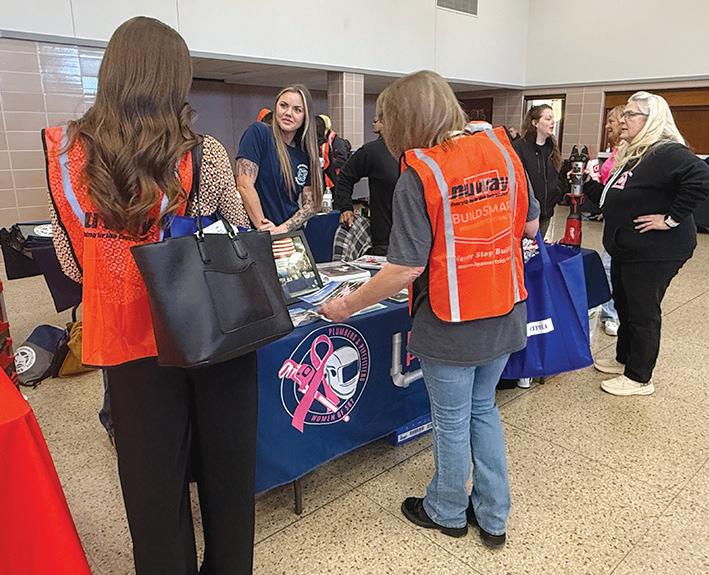
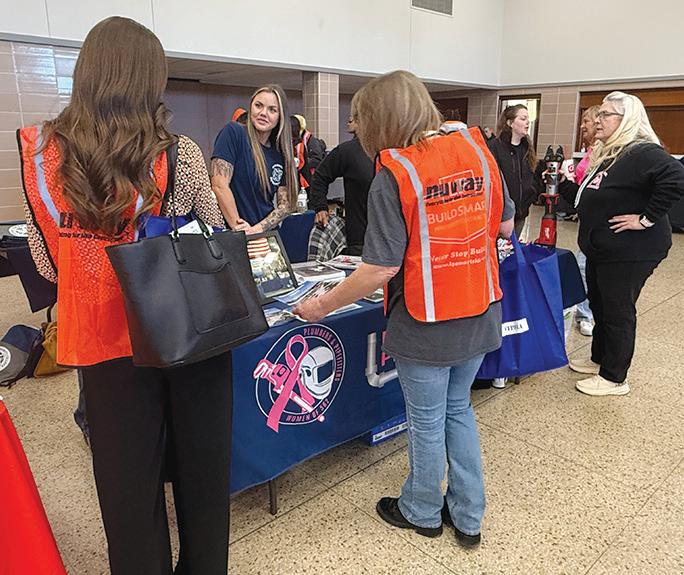
Missouri Women in Trades (MOWIT) is holding its 5th Annual Women’s Construction Careers Expo on Friday, March 6.
The free event, open to all women, including juniors and seniors in high school, will be from 1 to 4 p.m. at the Glaziers Local 513 union hall located at 5916 Wilson Ave. in St. Louis. The fair is being held in conjunction with National Women in Construction Week.
All participants will receive takehome information on a variety of construction apprenticeship programs and trade career opportunities, including connections with companies who may be hiring immediately.
Representatives will be present from pre-apprenticeships, apprenticeships, support groups and contractors, and tradeswomen will be at the event to share experiences and for mentoring connections.
For more information on registering or to become an exhibitor, email mowitstl@gmail.com or call Diana at the Construction Forum at 314-8802063, ext. 303.

Feb. 13 – Mental Health Resiliency Training, presented by the St. Louis Building Trades Worker Wellness Coalition, will be held at St. Louis University: II Monastero at 3050 Olive St. in St. Louis. The event will help to build a culture of resilience and well-being, which will help tradespeople thrive in the face of challenges. Participants will be able to identify healthy methods to address stress and transform difficulty into a positive asset for resilience and thriving. Networking begins at 7:30 a.m., followed by the program at 8 a.m. RSVP at https://shorturl.at/15IMx

Feb. 19 – Missouri Women in Trades (MOWIT) Meetup for tradeswomen and women interested in joining the building trades, 4 to 6 p.m. at the AGC Training Center, 6301 Knox Industrial Ave. in St. Louis. RSVPs are required and food will be provided. Register at mowit.org or call 636-926-6948.
Feb. 19 – St. Louis Faith Labor Alliance Breakfast, hosted by Missouri Jobs with Justice (MOJWJ), will be held at the Painters District Council 58 union hall at 2501 59th St. in St. Louis from 7:30 to 9 a.m. To register, visit mojwj.org/action/join-ast-louis-faith-labor-alliancebreakfast
Feb. 20 – 22 – “A Brick and A Bible,” presented by Bread & Roses Missouri, will be held at the Missouri History Museum’s Lee Auditorium at 5700 Lindell Blvd. in St. Louis. Experience the untold story of the 1933 Funsten Nutpickers Strike in St. Louis. The presentation is directed by Rayme Cornell, written by Kathryn Bentley and Colin McLaughlin, with music by Alicia Revé Like. There are four showings: Feb. 20 at 7 p.m., Feb. 21 at 3 and 7 p.m., and Feb. 22 at 3 p.m. Tickets are $15 per person or $10 per person for groups of 10 or more. To RSVP, visit cur8.com/25728/ project/135159

Feb. 21 – Operating Engineers Local 513 Annual Charity Cornhole Tournament will be held from 11 a.m. to 4 p.m. at the Local 513 union hall at 3449 Hollenberg Drive in Bridgeton. The cost is $50 per person or $100 for a team. Five food or drink tickets per person will be provided and more are available for purchase. Prizes include $400 for first place, $300 for second place and $250 for third place. RSVP at https://tinyurl. com/yc355ryr
Feb. 21 – IBEW Local 309 RENEW Trivia Night will be held at the Local 309 union hall at 2000 Mall St. in Collinsville. Doors open at 6 p.m., and trivia begins at 7 p.m. The evening will feature additional games, a silent auction and a brown bag lottery. Tables of eight are $300. Soda and water will be provided. Outside food and drinks are welcome. To RSVP, call Lauren Streff at 636-357-9941.
Feb. 21 – A. Philip Randolph Institute (APRI) Trivia Night will be held at the CWA Local 6300 union hall at 2258 Grissom Drive in Maryland Heights. Doors open at 6 p.m., and trivia begins at 7 p.m. There will be a prize for the winning table as well as attendance prizes and a 50/50 drawing. Light snacks and refreshments will be served. The cost is $25 per person, and sponsorships are also available.
Send payments to APRI St. Louis Chapter c/o CWA Local 6300, 2258 Grissom Drive, Maryland Heights, 63146. For more information, call Jessica Chambers at 314-757-7599.
Feb. 26 – March 1 – “A Brick and A Bible,” presented by Bread & Roses Missouri, will be held at the Metro Theater Company at 3311 Washington Ave. in St. Louis. Experience the untold story of the 1933 Funsten Nutpickers Strike in St. Louis. The presentation is directed by Rayme Cornell, written by Kathryn Bentley and Colin McLaughlin, with music by Alicia Revé Like. There are five showings: Feb. 26 at 7 p.m., Feb. 27 at 7 p.m., Feb 28 at 3 and 7 p.m. and March 1 at 6 p.m. Tickets are $15 per person or $10 per person for groups of 10 or more. To RSVP, visit cur8. com/25728/project/135159
March 7 and 8 – “A Brick and A Bible,” presented by Bread & Roses Missouri, will be held at St. Stephen’s & the Vine Episcopal Church at 33 N. Clay Ave. in Ferguson. Experience the untold story of the 1933 Funsten Nutpickers Strike in St. Louis. The presentation is directed by Rayme Cornell, written by Kathryn Bentley and Colin McLaughlin, with music by Alicia Revé Like. The showings are March 7 at 7 p.m. and March 8 at 3 p.m. Tickets are $15 per person or $10
per person for groups of 10 or more. To RSVP, visit cur8.com/25728/ project/135159
March 7 – Coalition of Labor Union Women St. Louis Chapter’s Women of Many Hats Brunch will be held from 11 a.m. to 2 p.m. at the CWA Local 6300 union hall at 2258 Grissom Drive in Maryland Heights. Doors open at 10:30 a.m. Tickets are $35 each or $250 for a table of eight. Advertising is also available in the program book. For more information, contact Deb Herbert at cluwstl@gmail.com or at 314-488-8766.
March 7 – Machinists District 9 Open Invitational Bowling Tournament will be held at Airport Plaza Bowl at 4 Erwin Plegge Blvd. in Bethalto. Registration and lunch begin at 12:30 p.m., and bowling starts at 1 p.m. The cost for a five-person team is $200 and $20 for guests who aren’t bowling. Sponsorships are available ranging from $150 to $250. Mail entry forms to Roy Collins, Machinists District 9, 159 Shamrock, East Alton. Ill. 62024 by Feb. 20.
GET LISTED
Have something for the Calendar? Send it to Sheri Gassaway at Labor Tribune, 301 S. Ewing Ave., St. Louis, MO 63101 or email sheri@labortribune.com
THE DISTINCTIVE CONSUMER EMBLEMS of Organized Labor have played leading roles in our economic society. Every success story has its supporters . . . the millions of union members and the general public have recognized the importance of these emblems by looking for them when purchasing products and services.
LOCAL UNION #309, AFL-CIO Collinsville, Illinois and Vicinity Office: 2000 Mall Street (Route 157) Collinsville, Ill. 62234
John Garrett, President Tyler Mueth, Vice President
David Rhymer, Recording Secretary Jason McIntyre, Treasurer
Chris Hankins, Business Manager Dustin Grice, Organizer
Executive Board Members
Jacob Albers, Adam Biagi, Stephen Erspamer, Brian Hutson, Steve Lodes, Michael Meinhardt, Andrew Reibold, Ron Scott

Asst. Business Managers Steve Duft, Mark Link, Carlos Perez
Examining Board Members
Jeremy Carron Josh Jenkins Josh Stewart Joe Varvera
Downstate Illinois
Laborers' District Council
Dustin Ramage, Business Manager Greg Stimac, Secretary-Treasurer
618/234-2704 FAX: 618/234-2721 19 Gateway Drive, Collinsville, Ill. 62234 www.downstatelaborers.org
Local #649, AFL-CIO
RYAN MOUSER
Business Manager
COREY DODSON, President (618) 462-1627
3945 Humbert Road, Alton, Ill. 62002




STEAMFITTERS
Local 439, AFL-CIO
Charles Bailey, Jr. Bus. Mgr., Fin. Sec'y and Treas. John Passiglia Asst. Business Manager/Vice President (618) 624-6096 1220 Donald Bailey Drive Caseyville, Illinois 62232-2061 Mack Schmitt President Steve Kohlberg, Recording Secretary Steve Marshall, Inside Guard




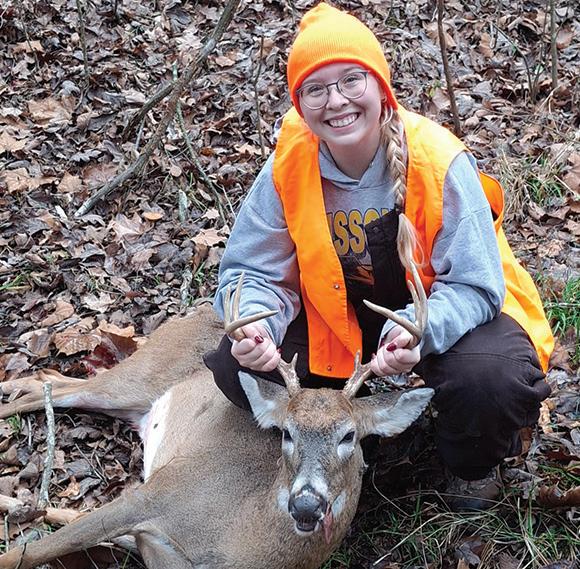

By BRANDON BUTLER Driftwood Outdoors
What is your favorite hunting trip of all time is a question I am often asked. While I can’t say I have one favorite that stands out above all others, because so many have been special for different reasons, my ocellated turkey hunting trip on the Yucatan Peninsula of Mexico is certainly near the top. Especially considering the weather we are having in the Midwest right now.
Bill Cooper is one of the most accomplished outdoor writers I know. A member of the Legends of the Outdoors Hall of Fame and the recipient of countless other honors, Bill has seen and done more in the outdoors than most could dream of accomplishing in multiple lifetimes. So, when he invited me to join him on a trip to the Yucatán Peninsula to chase ocellated turkeys, there was no hesitation in my enthusiastic acceptance.
The first stop on the multi-leg tour of the Yucatan was Mérida. We flew into Cancún late in the afternoon and immediately hopped in a passenger van headed to the beautiful colonial-looking city. From this point forward, my ignorance of Mexico rapidly deteriorated.
Many Americans, myself formerly included, have established preconceived, negative notions about Mexico based on media coverage that leads us to believe Mexico, outside of the Las Vegas-style resort areas, is a very dangerous place. To the contrary, Mexico is a wonderful, beautiful and diverse land. There are areas of dirt-poor poverty, and areas of exquisite extravagance. As we traveled the Peninsula, passing through small villages and walking city streets at night, I never once felt unsure of my safety.
Mérida is the largest city in the Yucatán Peninsula. It is the capital of the state of Yucatán.
In Mérida, we met up with Maya Amazing Adventures. Rueben Encalada, their public relations director, sure knows how to plan a trip to expose outdoor enthusiasts to the natural and manmade treasures of the Yucatán. Our tour guides were Pancho, a recreation and tourism instructor at a local college, and Lisa, an intern from Austria. Lisa was promptly nicknamed “Lefty,” so our tour guides were Pancho and Lefty.

We spent the next two days touring Mayan archeological sites, swimming in cenotes, exploring coastal wildlife refuges, eating incredible food and enjoying outstanding company. Mayapan was my favorite site. It has over 4,000 structures around the Temple of Kukulcan. Cenotes are water-filled sinkholes. You’re basically swimming in a cave full of crystal-clear water. We took a boat from the fishing village of Dzilam de Bravo to Parque Natural San Felipe. Pink flamingos were everywhere, providing incredible birdwatching and photography opportunities. Fresh, line-caught fried grouper, fresh vegetables and a chilled octopus cocktail served seaside was just one of the meals I’ll never forget.
From Mérida, we traveled to Campeche where we spent time touring Fort San Miguel and the local street markets. Roberto Sansores of Snook Inn Hunting and Fishing picked us up for the hour-long ride to turkey camp. Roberto’s father, Jorge Sansores, who sadly has passed away, was a legend of ocellated turkey hunting. He was outfitting on the Yucatán Peninsula for over 50 years and prided himself on helping hunters achieve the World Slam, which is accomplished by shooting all six subspecies of wild turkey in North America. Jorge’s camp was located in the small village of Carlos Cano
Cruz. It’s about an hour outside of Campeche. The accommodations were rough, but adequate for an authentic Mexican hunting adventure. The food was the best I’ve ever experienced in a hunting or fishing camp. One night, we had all the stone crab claws we could eat paired with fresh grilled Spanish mackerel. For dessert, we enjoyed pineapple drizzled with honey and rum.
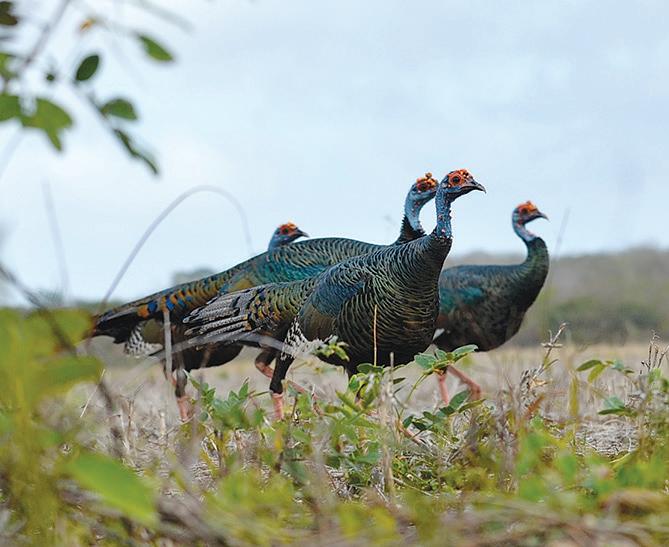
The turkey hunting took place in agricultural fields surrounded by dense jungle. Jaguars roam these fields. Ocellated turkeys often come through in flocks. The first morning five gobblers came in front of me, and I ended my hunt before sunrise with a single shot. The beauty of the ocellated turkey is in its colors. A shimmering aqua and bronze body is highlighted by a tail fan with each feather hosting an eye of blue. I spent the second morning behind the lens of my camera. Over 100 turkeys in a single flock flew down in front of my blind. The next hour was mesmerizing.
(For more Driftwood Outdoors, check out the podcast on www.driftwoodoutdoors.com or anywhere podcasts are streamed.)

Hunting, Fishing, Camping, Boating, Outdoor Travel
Jefferson City — The Missouri Conservation Heritage Foundation (MCHF) in partnership with the Missouri Department of Conservation (MDC) invites youth archers and the public to attend the Missouri Archery Classic, formerly known as Border Wars Archery Tournament. The 2026 Missouri Archery Classic, presented by Mid America Bank, will take place at The LINC in Jefferson City over President’s Day Weekend, Feb. 14-15, 2026.
This new name better represents the scope and vision of the event, which helps student archers prepare and qualify for the MoNASP State Archery Championship held in
Branson, March 18-21, 2026.
Mid America Bank is deeply tied to the communities they serve. As the exclusive presenting sponsor of the Missouri Archery Classic, Mid America Bank is committed to investing in the community and introducing more youth to outdoor sports and activities.
“As someone who has always loved nature and supported youth archery since our daughters competed in MoNASP, it’s inspiring to see the Missouri Archery Classic continue to grow here in Jefferson City,” said Gina Meyer, SVP director of HR &



PR for Mid America Bank. “Archery builds confidence, discipline, and a lifelong connection to the outdoors. It means a great deal to me personally to see more students discovering this sport, and I’m grateful that Mid America Bank can help strengthen opportunities for young archers across Missouri through this sponsorship.”
The Missouri Archery Classic is conducted under the rules of the
National Archery in the Schools Program (NASP), promoting education, self-esteem and physical activity for students in grades four-12.
Nearly 1,000 student archers are expected to compete in elementary, middle and high school divisions. The best teams in each division compete for $1,500 cash, medals and a trophy. Top scoring individuals in each division compete for trophies, medals and cash.
“We are eager about this new chapter and look forward to growing this event to promote a lifelong sport that
builds character and confidence,” said MCHF Executive Director Tricia Burkhardt. “Thanks to our presenting sponsor, Mid America Bank and our other incredible partners, this event makes a significant impact on student archers preparing and qualifying for the State Championship.” If you have any questions or would like to join us as a sponsor, vendor or volunteer, please reach out to Andrea Smith at andrea.smith@mochf.org or 417.310.2705. You can learn more about the event at www.mochf.org/ moarcheryclassic/
Black Bass
Impounded waters and non- Ozark streams: Open all year
Most streams south of the Missouri River:
Î Catch - and - Keep: May 24, 2025–Feb. 28, 2026
Î Catch - and - Release: March 1– May 22, 2026
Nongame Fish Gigging
Streams and impounded waters, sunrise to midnight: Sept. 15, 2025 – Feb. 15, 2026
Impounded waters, sunrise to sunset: Feb. 16 –Sept. 14, 2026

Paddlefish
Statewide:
March 15 – April 30, 2026
On the Mississippi River: March 15 – May 15, 2026
Sept. 15 – Dec. 15, 2026
Trout Parks
During the catch-and-release season, Maramec Spring Park is open daily; other trout parks are open Friday–Monday.
Catch - and - Release: Nov. 14, 2025 – Feb. 9, 2026
Catch - and - Keep: March 1– Oct. 31, 2026
Bobcat, Opossum, Raccoon, Striped Skunk Nov. 15, 2025 – Feb. 28, 2026
Coyote
Restrictions apply during April, spring turkey season, and firearms deer season. Open all year
Crows
Nov. 1, 2025 – March 3, 2026
Deer
Archery:
Sept. 15 – Nov. 13, 2026
Nov. 25, 2026 – Jan. 15, 2027
Firearms:
Î Early Antlerless Portion (open areas only): Oct. 9–11, 2026
Î Early Youth Portion (ages 6 –15): Oct. 24 –25, 2026
Î November Portion: Nov. 14 –24, 2026
Î Late Youth Portion (ages 6 –15): Nov. 27–29, 2026
Beaver, Nutria Nov. 15, 2025 – March 31, 2026
Bobcat, Coyote, Mink, Muskrat, Opossum, Raccoon, River Otter, Striped Skunk Nov. 15, 2025 – Feb. 28, 2026
Î Late Antlerless Portion (open areas only): Dec. 5 –13, 2026
Î Alternative Methods Portion: Dec. 26, 2026 – Jan. 5, 2027
Rabbits
Oct. 1, 2025 – Feb 15, 2026
Squirrels
May 24, 2025 – Feb. 15, 2026
Turkey
Spring:
Î Youth (ages 6 –15): April 11–12, 2026
Î Spring: April 20 – May 10, 2026
Waterfowl
Fall: Î Archery: Sept. 15 – Nov. 13, 2026 Nov. 25, 2026 – Jan. 15, 2027
Î Firearms (open areas only): Oct. 1– 31, 2026
See the Migratory Bird and Waterfowl Hunting Digest or visit short.mdc.mo.gov/ZZx for more information.
Special Trapping Season for Private Lands Only: Coyote, Opossum, Raccoon, Striped Skunk March 1– April 14, 2026
By MIKE ROUX
Besides the sound of a spring gobbler, Mother Nature has provided us with no finer music than that of a beagle on a hot rabbit track. I had a beagle before I had a bicycle. My Grandpa Guy raised great gun dogs, and I have owned a few pretty good rabbit dogs myself.
It has been well over a decade since my last beagle, Shortlegs, ran his last bunny. Beagles and the men who train and run them are not as common as they once were. That is
a shame. The fun of the chase and the following dinner of fried rabbit and milk gravy combine to make traditional rabbit hunting one of the most gratifying sports there are.
My wife has a cousin, Liz Garrett. Her husband Aaron is one of the few I just mentioned. Not only does he own and train great hunting beagles, he also field trials some dogs and is even a field trial judge.
A couple of Saturdays ago,
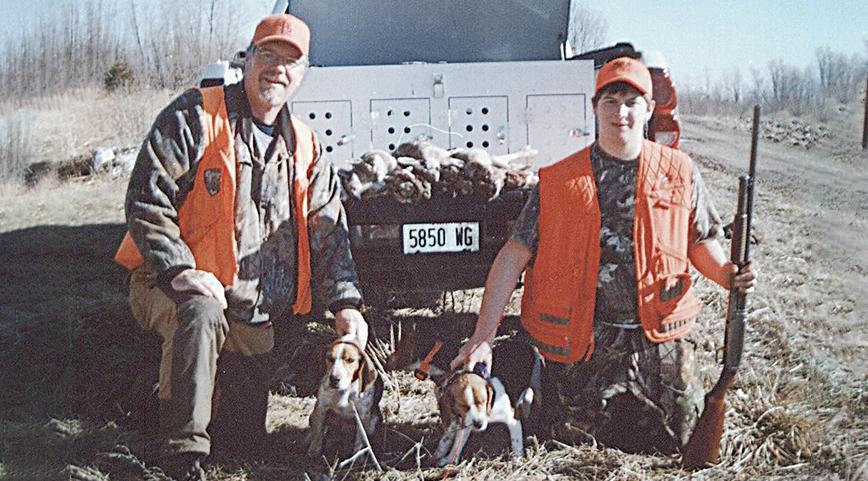
Aaron brought three of his dogs up to central Missouri to hook-up with Parker, my youngest, and me for what we hoped would be a few good chases. I have access to some bottom ground that holds lots of bunnies. My boys and I had taken well over 20 rabbits off this farm just using our “stomp, jump and shoot” method. So, we were excited about our chances.
As we released the dogs, named Star, Rex, and Junior, we headed south to make a loop around a swampy slough. The big sandy portion of the property where most of our previous hunts had been successful, we would hold till last.
We had gone almost all the way

















•
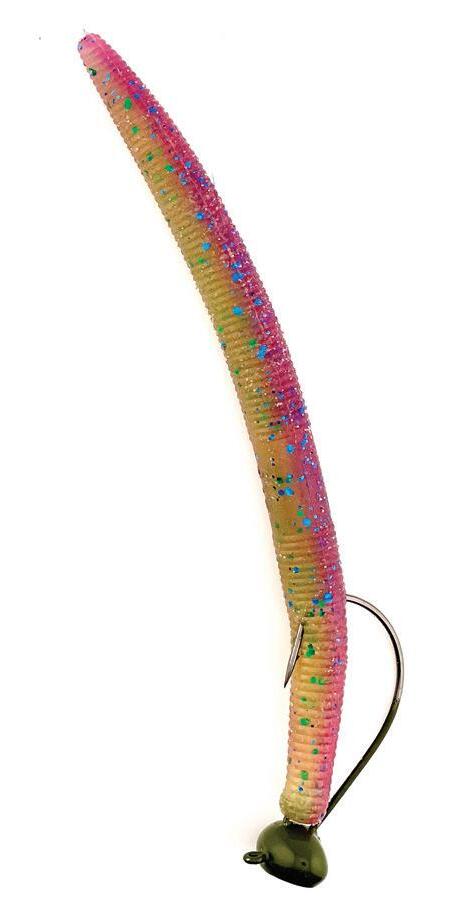
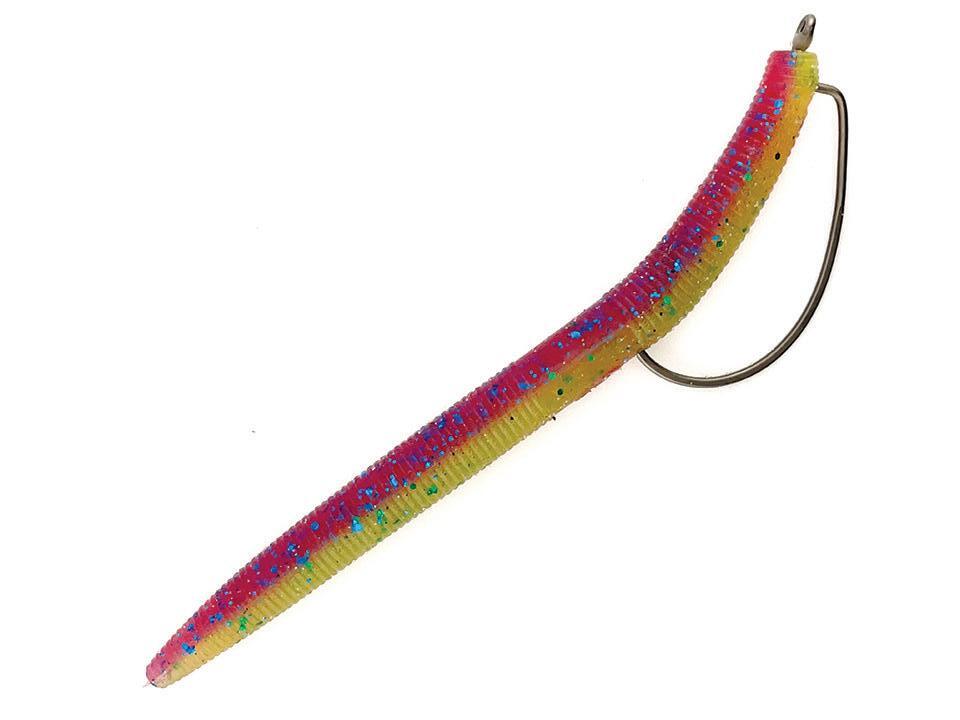
• Proven Senko
• Irresistible
•
• Throw it with “don’t-overthink-it”


















around the swamp without bumping a bunny. Aaron commented on the number of deer tracks as two does tiptoed down the road. Just then Star hit a track.
This first rabbit circled fast and crossed the field behind us without a shot. After the dogs crossed the field, the three of us repositioned. The wet, marshy earth slowed the dogs, but it was not long before they pushed the rabbit right at Aaron and me.
We had positioned Parker in the most likely spot for a shot. We agreed that Parker would get his shots first. The rabbit passed way too close to shoot. We both let him get by us in the field and then took about a 25-yard shot. The rabbit rolled into a heap.
The next spot we hit was another swamp patch of about 10 acres. This quickly turned into a honey hole. We took six more rabbits from this spot. Twice we had split races. A split race is when, during running the first rabbit, one or more of the beagles get on a second rabbit track. These can be very exciting times in a rabbit hunt.
We also knew that we were in the hot spot when not once, but twice, while retrieving a shot rabbit, we would jump another one. We spent well over two-hours in this small, cattail swamp.
Parker killed one more rabbit on the way to the sandy ground. We were now only four rabbits from our limit and were just getting to where we really wanted to hunt.
The next two chases were textbook perfect. Both Aaron and I were set up in the right spots and took good shots on the first loop, both times. Aaron and I now needed only one more each. Parker had become a spectator before we left the last spot.
The last race of the day split at the halfway point. Both Aaron and I saw different bunnies at the same time. The shots came very close together.
We took 12 rabbits, three limits, before noon. Now that is a real rabbit hunt. But one of the most enjoyable parts of this hunt did not take place until we got home. Nancy was waiting for us, and she had picked up Ayden, our three-year old grandson. He was thrilled with the rabbits and had to get his “gun” to help us shoot the rabbits. That is exactly how new hunters are developed. When kids see and hear how much fun we have with the sport, they naturally want to become a part of it. Thank God for Beagle music.
(For regular and constant outdoor content Like and Follow Mike Roux Outdoor Enterprises on Facebook.)
By DAN ZARLENGA Missouri Department of Conservation
There was a time when the dawn was ushered in by the beautiful goddess, Eos. The earliest rays of dawn passed to the earth through her rosy fingers. The beams brought new life to the land, awakened by the light of her brother Helios—the sun. The appearance of Eos symbolized the break of day, the first light of rebirth and renewal.
So the ancient Greek mythology goes. The great poet Homer called her Erigenia, Greek for “earlyborn.”
Each morning, Eos opened the gates of heaven to release the sun onto the land. She is often represented as adorned with wings and
golden arms, her rosy fingers symbolizing the warming light of dawn.
The spirit of Eos lives still in a tiny flower you might just start seeing right about now. What could be the significance of a plant that typically blooms at a height of just two- to- three- inches, and never grows more than eight inches in total? Much like the Greek goddess, it heralds the dawn of a new season.
The harbinger of spring is a flower which can bloom in Missouri even during the icy grip of late January. It’s commonly seen by February in bottomland and moist upland forests, often in ravines and valleys, and along streams and rivers. It can be found throughout the

Show-Me State.
The plant’s scientific designation is Erigenia bulbosa, inspired by Homer’s nickname for the Greek goddess of the dawn. Like Eos, the harbinger of spring ushers in the rebirth and renewal to come.
The “bulbosa” part of the name describes the plant’s tuberous roots.
Harbinger of Spring flowers are tiny white blossoms, arranged in very small, rounded clusters. They’re shaped a bit like an umbrella. The flower’s dark reddishbrown anthers stand out to create colorful accents, evoking the rosy fingers of goddess Eos.
Harbinger of Spring is a member of the carrot family and related to Queen Anne’s lace, water hemlock, parsnip, parsley, cilantro/cori -

ander, celery, dill, fennel, cumin, and anise.
This species is one of the earlyspring ephemeral woodland wildflowers. It must emerge, bloom, and perpetuate itself before the trees leaf out and block the light of Helios. The reproductive mission of the harbinger of spring is enabled by the pollination work of a wide variety of bees and flies.
While most loved as one of the earliest signs of spring, the bulbs of the plant are actually edible, both cooked and raw. As with many wild plants, proper identification is essential.
The Cherokee were also known to chew parts of the harbinger of spring to relieve toothaches.
The humble harbinger of spring may not be as dramatic as the lovely goddess for which it is named. The one who ascended to the sky in a chariot each morning, opening up the gates of heaven to spread the light of the dawn upon the land.
But the plant’s more subtle beauty still makes it worth seeking out. It truly is one of the “early born” of spring, with miniature rosy fingers that beckon in the warmth, light, and a season of renewal.





Hunting, Fishing, Camping, Boating, Outdoor Travel
By LARRY DABLEMONT
The opening of the doe season was only a few hours away and the wind was blowing through the oaks up here on Lightnin’ Ridge. “Shucks” I thought to myself, “There won’t be a leaf left on my oak trees!”
I am sensitive about such things. I had watched those oak leaves bud out on the big white oak beside my back porch only a few months ago. First, there were the tassels hanging down, shedding a yellow-green pollen all over my porch, a thick dusting
of it that caused me to sneeze.
How wonderful spring was, if I can remember right. But finally those squirrel-ear-sized leaves began to pop out and it was easy to see summer was on its way. In no time, they were fully formed and bright green and it was great to sleep at night with the windows open and hear the rain dripping through that thick canopy.
In September, I abruptly awak-
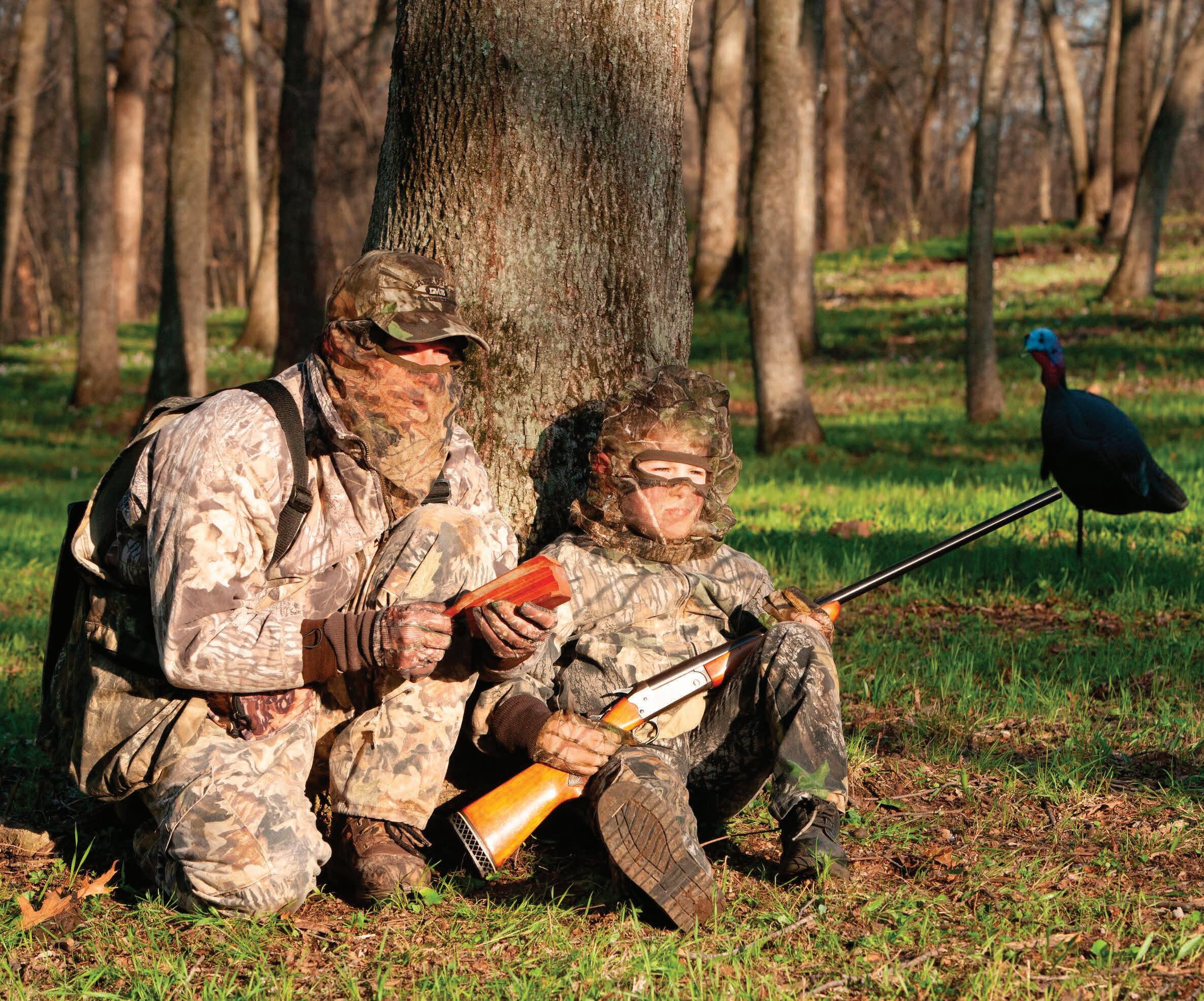
Missouri adults 16 and older can complete hunter education training all online.
` Flexibility to learn at your own pace
` Access 24/7
` No in-person skills session required
The all-online course includes engaging video and animation on hunter safety, firearm safety, ethics, regulations, and wildlife management.



ened to the sound of acorns bouncing off my roof. I smiled to myself knowing that those first acorns meant the bass would be smashing buzz-baits and topwater lures on the river. In no time, you could hardly sleep at night for the sound of bouncing acorns off the roof. It was one of those Octobers where you had to sweep the porch every couple of hours.
October flew past, the sun began to set earlier and earlier, and those beautiful green leaves began to turn, and yellow, and gold and red and finally, brown. In the last days of that wonderful month, I began to sweep some leaves off the porch as well as acorns.
Ten or 15 years ago I would have likely shot a doe during this season because I like to eat venison. For some reason, it is harder to want to now that the rocks beneath the oaks are harder to sit on. And my camera is lighter than my rifle. I can now gaze through the woodlands before me, at squirrels busily gathering the acorns they so willingly ignored when hickory nuts were plentiful, and I can see, in my mind’s eye, the first skiff of snow, and hear some distant church bells ringing out a Christmas carol, as deer season is forgotten.
JANUARY
I can feel the cold mornings of January and see falling snow that gets deep enough to make for good photos and good rabbit hunting. Even beyond that, I gaze into the future and imagine the coming of longer, warmer days and those first oak stamens which will make me sneeze in April, just when some long-bearded, gobbling tom is easing

through the woods, scratching at old dead leaves which were bright green a few months ago. What a picture I will get then, as I lean up against a big oak tree. It feels good to be in the woods, no matter the season and no matter the reason, waiting and listening and thinking. There will be many more oak trees to sit against, I hope. I think I’ll keep bringing that old, camouflaged boat cushion with me to soften the rocks. Make no mistake about it, it will not soften me any! And make no mistake about it, I’ll get that hat-rack buck yet, with my camera, sometime before all of today’s oak leaves are blown away and decay. I’ll get him and some of his sons with my camera. Maybe. If there’s a soft spot against a big oak, and a layer of leaves to cushion the rocks.
(For more from Larry Dablemont, visit larrydablemont.com or larrydablemontoutdoors.com.)
By LARRY DABLEMONT
Deer season was a big thing in the Big Piney country of south-central Missouri where I grew up. When somebody killed a deer, whether it was a doe or a buck, they brought it to that small town main street, on the open tailgate of a pick-up, or tied across the hood of some old car if the hunter didn’t have a pick-up. Since my dad and grandpa’s pool hall, where I worked, was right at the middle of Main Street, I got to see a lot of them. I learned something when I was only 12 that I wonder if anyone pays attention to at all today. Somebody was pointing out that the antlers had five points on each side, and that meant the










deer was five years old. Later, Ol’ Bill hurrahed the whole notion. “Ain’t nothin’ to that, boy,” he said. “He might be 10 years old and have six points, and he might be three years old and have 15 points.” Ol’ Bill Stalder and Ol’ Jim Splechter were my heroes because they were rivermen and outdoorsmen like my grandpa, and they knew more about the outdoors than any men I had ever known. Ol’ Bill followed it up by telling me that you could figger an old buck by a lot of things, but the only definite way was by looking at his teeth.
“Yep,” Ol’ Jim said with a laugh… “any old buck is gonna have false teeth, like Bill.”






from the individual income tax last year, according to the St. Louis Post-Dispatch
Missouri Budget Project, a think tank that focuses on the state’s spending and revenue, projects that generating the same revenue on the current sales tax base would require an additional sales tax of about 8.5 percent.
Democrats are skeptical of the legislation because it doesn’t spell out what goods or services can be taxed or by how much. Republicans say a list of sales and services that will be taxed and the rate needed to replace current revenue from the income tax, will be decided by lawmakers after voters decide the issue.
wages of all farm workers: The rule reduces the minimum wages paid to migrant farm workers in the H-2A program and deducts up to 30 percent of their hourly pay for housing costs. These wage cuts for H-2A workers are so massive that they will put downward pressure on the wages of all farm workers, including U.S. citizens. Farm workers as a whole will lose between $4.4 to $5.4 billion in pay — roughly 10 to 12 percent of their total wages.
The Trump administration admitted that their immigration enforcement efforts are hurting farmers and will likely lead to higher food prices — an admission they use to justify the pay cuts.
• Hit 4 - Denying two million in-home health care workers minimum wage and overtime pay: In July, the Trump administration proposed a rule rescind-
From page 1
“We’re against anything that raises taxes or creates new taxes on families,”
Senate Majority Leader Doug Beck (D-Affton), a member of Plumbers & Pipefitters Local 562, said during a recent news conference. “The voters are being asked to give the legislature the power to be able to tax anything they want. Everything can be taxed, even your home.”
House Minority Leader Ashley Aune (D-Kansas City) told the Post-Dispatch the switch to sales taxes as the primary funding mechanism for state government will raise prices. She said that the
From page 1
ing the 2013 home health care worker rule, which gave in-home care workers the right to earn the minimum wage and overtime pay for the first time. The Department of Labor also stopped enforcing the 2013 rule, effectively giving employers the green light to ignore it during the rollback process.
• Hit 5 - Facilitating the inclusion of cryptocurrencies among 401(k) investment options: The Trump administration rescinded guidance that warned employers they
move would shift the tax burden from affluent Missourians to lowerand middle-income taxpayers, who would experience an overall tax increase.
“House Democrats support making life more affordable,” Aune told the Post. “Imposing new taxes that will increase the cost of virtually everything Missourians buy will instead make their struggles harder.”
Nine states do not impose income taxes: Alaska, Florida, Nevada, New Hampshire, South Dakota, Tennessee, Texas, Washington and Wyoming.
would face heightened scrutiny if they included cryptocurrency investments in their retirement plans. This “neutral approach” to cryptocurrency, alongside other types of retirement investment strategies, could expose millions of future retirees to significant financial risk.
Next week: Part 2: Undermining job creation.
(The Economic Policy Institute’s report on 47 ways our 47th president has made life less affordable in just the last year- was written by Celine McNicholas, Margart Poydock and Josh Bivens.)
From page 1
while they are doing their jobs in highway work zones.
“It’s a race track out there, and we aren’t safe,” one worker shouted at Pava.
Pava said he understood and empathized with their concerns. He told them, “IDOT frequently updates specifications, policies, and standards to address issues observed in the field. IDOT, in coordination with industry associations . . . has updated a number of highway standards.”
However, he again stressed budget limitations hampering what IDOT can do about work zone problems.
A few workers suggested that having a state trooper or even an unoccupied Illinois State Police squad car at work sites would go a long way toward making motorists slow down.
Pava noted that IDOT officials decided “to remove the use of flaggers from select highway standards and replace them with a traffic spotter in 2019” because of budget constraints.
“The intent of the change was to reduce the exposure of workers to the high-speed traveling public, limit the interaction of workers with the traveling public, and minimize speed differentials that
may contribute to front to rear crashes,” Pava said. “Anecdotally, the goals of this change have been realized and there has been a reduction on the frequency of front to rear crashes.”
Still, department officials hope to find the money someday to do more, he said.
“We still continue to see high numbers of drivers not abiding by the posted speed limits,” Pava said. “We continue to evaluate other measures for speed control in work zones, such as automated enforcement and speed feedback display trailers.”
Pava, who has had his current job for nine years, holds a bachelor’s degree in civil engineering from the Georgia Institute of Technology.
Pava that he has been working for about a year and a half on developing a “vulnerable road user safety program.”
“I hope consideration of safety for pedestrians, bicyclists and other non-motorized users continues to expand in project development, and we are creating tools to make this easier for people across the state,” he said.
He did not say when that program would be completed.
Visit our website to see more. www.labortribune.com Click on Outdoors