Empowering students to think critically and creatively since 1913
VOLUME 112, ISSUE 6
FEBRUARY 26, 2026
IN THIS ISSUE
OPINION
Tiger examines the backlash against veganism and the philosophy it derives from.
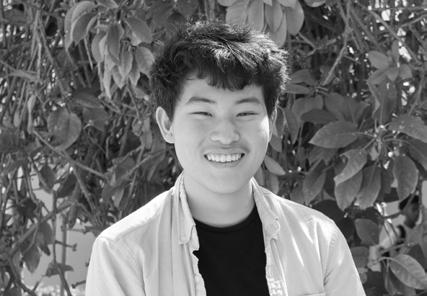
Tiger recaps the SPHS walkout in protest of ICE, and the student behind
SPHS talent show showcases bands, artists, and gamers
SPORTS
Tiger examines the proven importance of transgender-inclusive policies in high school athletics.
Democrats falter
STORY RAFA ESTOLANOSRIDHARAN ILLUSTRATION JAYDEN ZUMBA
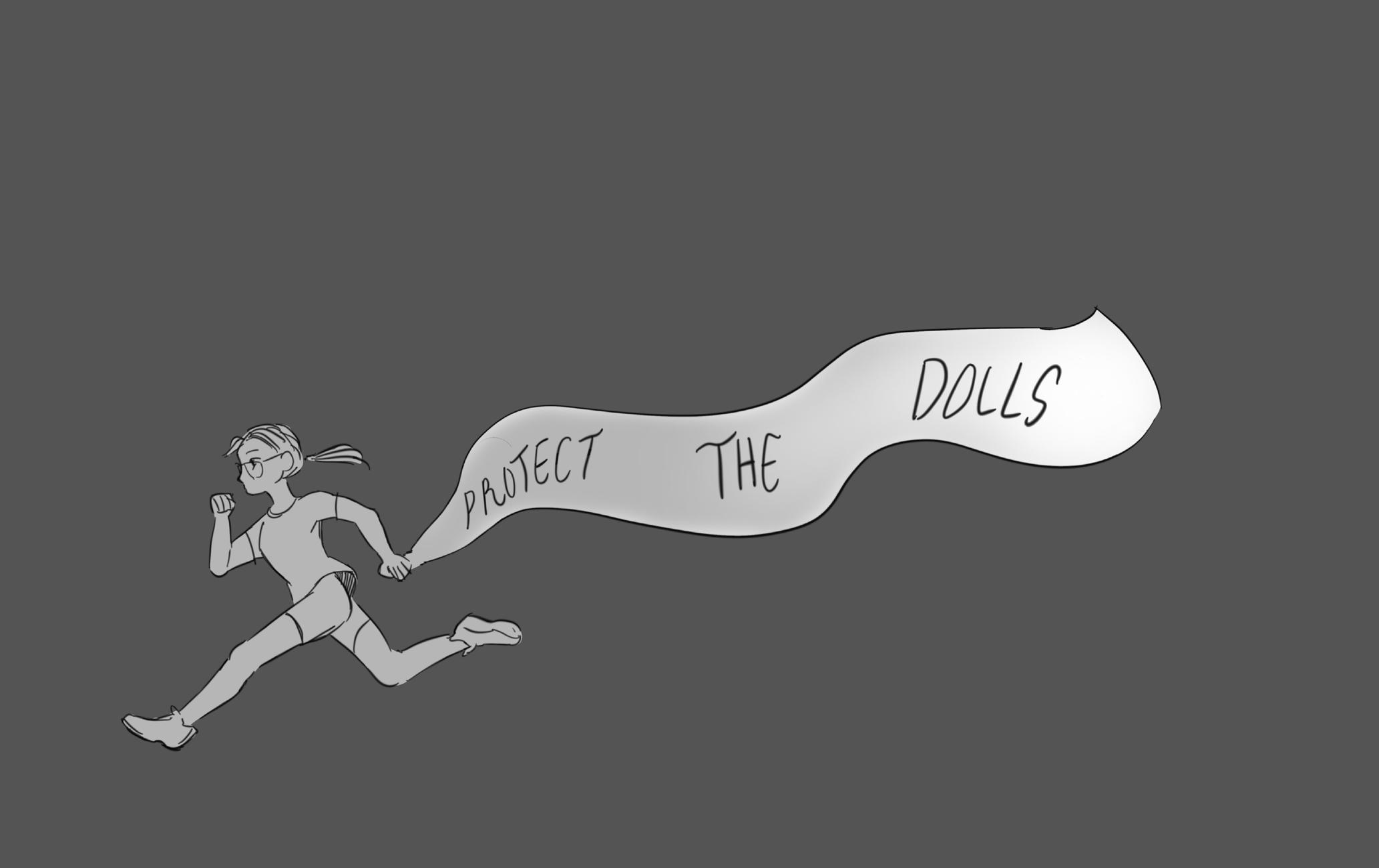
A few weeks ago, 21 Democrats crossed party lines to vote for a spending bill that would continue to fund ICE for an extra two weeks. Just a few days later, ICU nurse Alex Pretti was dead, shot over 10 times in under five seconds by ICE agents in the streets of Minneapolis. A few weeks before, Renée Good was shot and killed by ICE agents while leaving a protest.
Six bands and 25 individual performers were featured during the show.
STORY MAXINE MESSINEO PHOTO MAC SHROPSHIRE
SPHS held its 2026 talent show during a pair of assemblies on Thursday, Feb. 12 both before and after third period in the Anderson Auditorium. The show featured 25 performers and six bands. Also, similar to the 2025 SPHS Talent Show, a performer played a rhythm game, with it this time being the mobile game Project Sekai: Colorful Stage.
A few of the judges for the talent show included math teachers Andrew McGough and Shane Mills, along with students, including junior Lorenzo Jones, sophomore Justin Kim, and freshman Liam Painter.
Senior ASB Commissioner of Assemblies
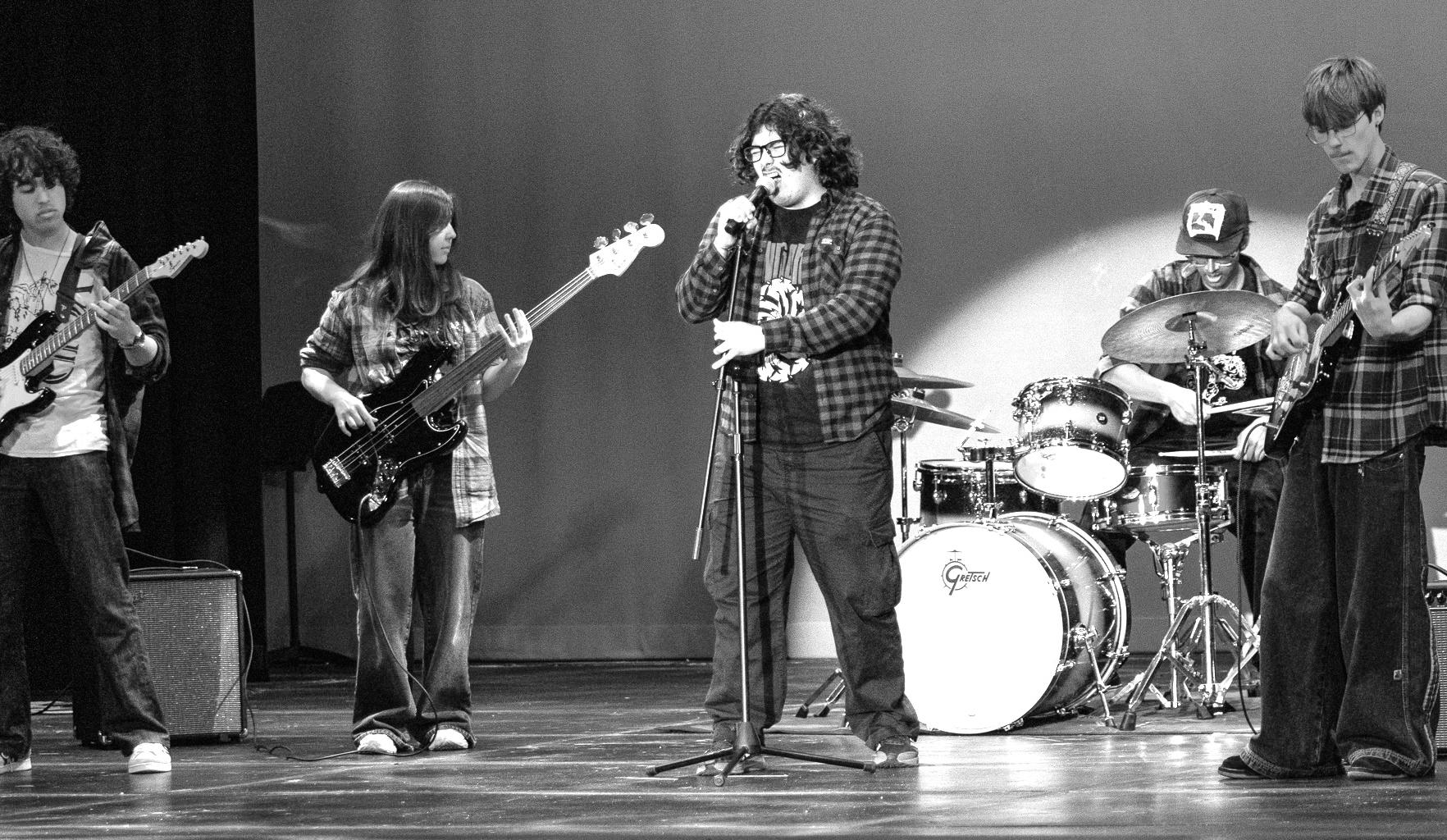
Baron Shroff opened the assembly with his band, Fundamental Theorem. Senior Cinbie Chang followed with a rendition of The Star-Spangled Banner.
Just the Five of Us, consisting of juniors Vitalii Zelko, Eric Kim, and Talon Ebbert and senior Woody Wu then performed a cover of Just the Two of Us. The song was originally sung by Bill Withers and Grover Washington, Jr. in the 1980s. Then, a performance was delivered from sophomores Caden Ahn, Bono Stevens, and Maxwell Mobley with Can’t Stop, originally by the Red Hot Chili Peppers.
Juniors James Ouyang and Lucy Huang, along with senior Maxine Ma, performed afterwards with Ouyang on the violin,
Huang on the traditional Chinese instrument guzheng, and Ma on the piano playing a classical music piece.
A video from Peer Mediators was played after Shroff’s announcement to advertise the program’s benefits with a comedic sketch. Senior Ellis Kim then made several announcements regarding Powerpuff, the flag football tournament between junior and senior girls coached by SPHS football players. Kim also announced that boys’ soccer had won their first round of playoff games.
Sophomore Denis Blekhman screencasted a round of Hatsune Miku: Colorful Stage!, otherwise known as Project Sekai, a mobile game similar to the more well-known Magic Tiles mobile game. Blekhman played the song Jinsei at the Expert 31 level. During the first assembly, Blekhman encountered a technical difficulty and, despite the setback, the audience cheered him on throughout the performance.
Senior Sean Kang, junior Sam Allen, sophomore Dylan Wantanabe, and senior Aiden Garcia performed Until I Found You, originally by Stephen Sanchez and released in 2023. They were followed by freshman Mav Swallow, senior Rumi Dewan, and Garcia who performed a cover of Minor Threat by the 1980s punk band, Minor Threat.
Next up was Sin Prisa consisting of seniors Nick Matthew, Eric Salvado, and Chris Amaro, who played Me va a costar, a
breakup song by Kevin Kaarl. Senior Andrés Urzua concluded the show by singing and playing John Mayer’s Edge of Desire on the piano. However, 18 total groups auditioned for the talent show, but there was only room for eight on the agenda, so many of them had to be cut.
Additionally, Shroff’s role in planning the talent show assembly, as the commissioner of assemblies, was to plan and facilitate the organization of the event.
Shroff creates the agenda for the event, deciding on the amount of acts that would be shown, and how long each act would be with the time available for the assembly.
He additionally plans out the transitions so that the setups for each act could happen with minimal interruptions for those watching the assembly. He furthermore informs those in charge of equipment when they would perform and where they should set up.
The winners of the talent show were announced Tuesday, Feb. 17 during fourth period. The first place winner, Blekhman, earned $100, with second place, Urzua, earning $75, and third place, Swallow, Dewan, and Garcia, earning $50.
“Everyone who auditioned should be commended as one must have a certain bravery to perform in front of others, and I respect everyone that took the time out of their day to showcase their talents, even if they didn’t win the grand prize,” Shroff said.
This is not the first time Democrats have facilitated the fascism that is creeping into American life. The Democratic Party has failed as an opposition party and is beyond reform; at this point, they are out of touch and fundamentally misaligned with the needs of the American people. A truly progressive party is needed to meet the challenges of the coming decades.
In May of 2023, Little Tokyo’s Suehiro Cafe was evicted. Despite its status as a community staple for 51 years, the cafe was priced out of its building on 1st Street and forced to relocate to a Downtown LA location later that year.
This incident has not stood alone, as in the face of rising bills and costs, several other legacy Little Tokyo businesses have had to close their doors. From the 122-year-old Rafu Shimpo newspaper having to move to Montebello in June of 2025 to Mitsuru Sushi and Grill permanently closing its doors after 49 years of service, the list goes on and on.
(From left) Senior Aidan Garcia, junior Madelin Rentmeester, senior Baron Shroff, senior Rumi Dewan, and senior Wyeth Heimstadt of the band Fundamental Theorem during their opening performance.
STORY ANNA MCDONNELL
PHOTO SAM ALLEN, Contributor
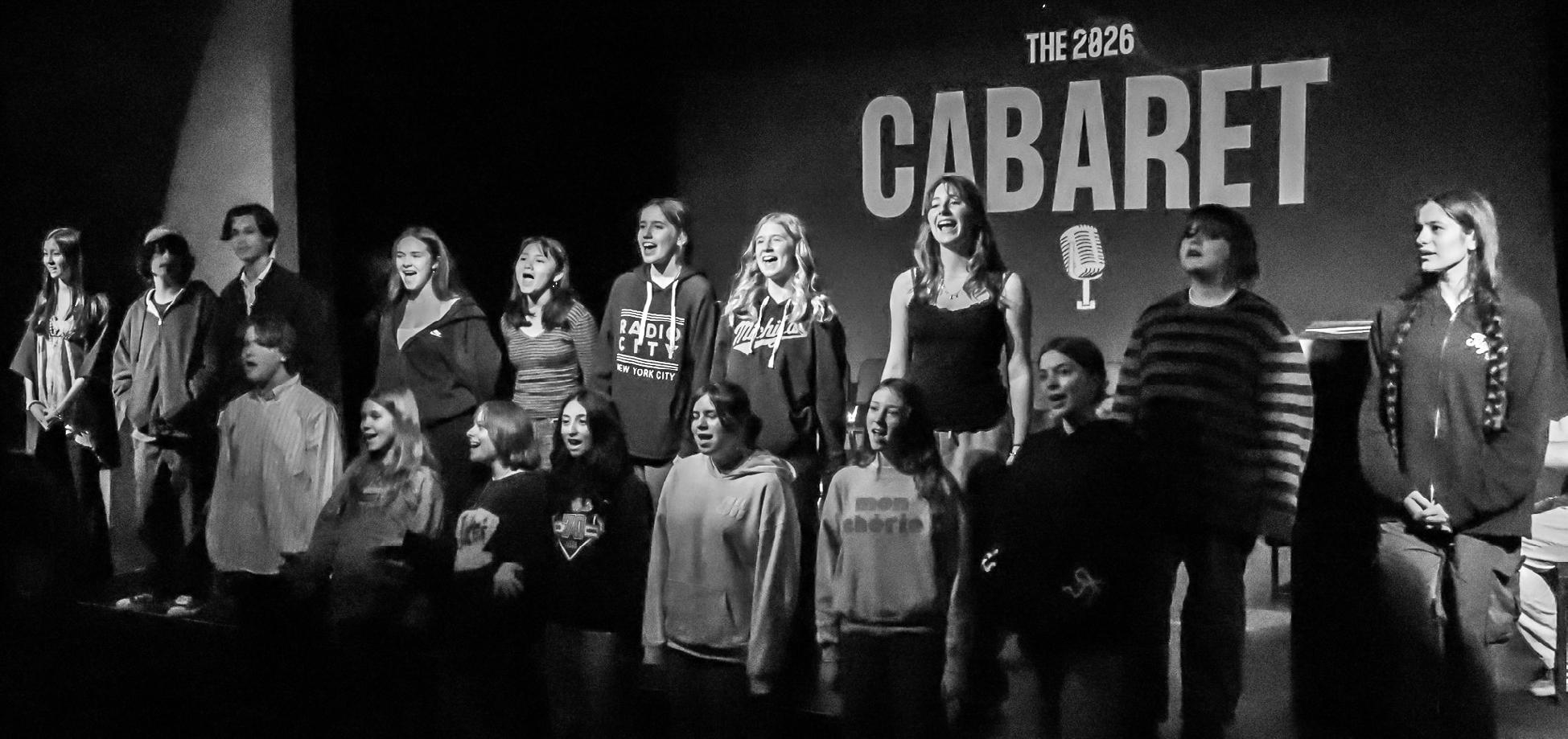
The third annual underclassman cabaret took place in the SPHS Little Theatre from Feb. 19 to 20. Tickets were sold at the door for $10, but entry was free for students with a SAC card.
The annual cabaret is a show performed by the freshman and sophomore drama students. SPHS Drama program advisor Nick Hoffa created the event to give the underclassmen, who typically do not get to perform in the school’s musical or fall play, a chance to perform.
Students performing in the cabaret determine what form of theatre they want to do. The forms of theatre consist of singing, acting, or dancing. Planning for the cabaret started in the first semester and there were a total of 15 performances. Twelve of them were musical numbers, one of them was a tap solo, and two of them were originally written scenes by kids in drama.
The 2026 cast included two sophomore emcees, Ronda Williams and Allegra Wright, who introduced performances and provided comic relief. The opening number was a song called Welcome to the Rock from Away. The performers were all sophomores: Allegra Wright, Brooke Zeisler, Isabel Edwards, Kian Mannal, Kya Kruse, Lexi Mayne, Maryia Mironenka, Max Mobly, and Ronda Williams.
The next few performances were songs performed by both freshmen and sophomores. One of them was Something to Believe in from Newsies performed by freshmen Ella Engstrom and Jay Plake. Junior Henry Bennett was the
Underclassmen perform in third mixed media cabaret
The SPHS Drama program conducted their third annual Underclassman Cabaret.
show’s stage manager. The show was additionally directed by SPHS counselor Nora Hunter and included band teacher Jorge Padron as the pianist for certain performances.
“My favorite thing about the cabaret was my Wonderwall performance with Isabel; we got the whole crowd singing along, and it was really fun,” Zeisler said.
The duo came out sporting wigs and aviator sunglasses, and singing in Australian accents.
The performance included singing, acting, and guitar fusion.
“It’s really fun to prepare because it’s almost wholly studentled,” Zeisler said.
SPHS scholarship committee offers 80 different scholarships through Naviance
STORY EVELYN DIAZ
SPHS provides various scholarship opportunities to students through Naviance. From March to April, around 80 scholarships, accumulating over $65,000, will be provided to students. Over the years, there has been a marginal, consistent rise in the number of student scholarship applicants.
The SPHS alumni association presents scholarships that vary for athletes, scholars, and leadership. For the athletic scholarships, athletes who are passionate about their sport and have hopes to continue the sport they desire at the collegiate level may apply.
Scholastic scholarships are for students who worked hard these past years and received a GPA of a 3.5 or higher. While leadership scholarships are for students who take
initiative in being a club leader or organizing events at SPHS or in other things around their community. Scholar athletes may obtain the Siskurry Sportsmanship Award or the Weldon Award, which is considered the highest honor. Students can apply for scholarships through different methods. Many gain scholarships through writing essays. Others, however, may also involve an interview. Once submitted, the scholarship committee reviews the essays to determine whether a student can gain the scholarship.
Chair of the SPHS scholarship program Denise Gill has run the program since 2003. Gill noted differences between the scholarship application before and after COVID-19. Students had to handwrite essays, however, after COVID, applications shifted toward technology, in hopes to make it easier for students to apply.
“I think it’s a lot easier for the students because … they would have to hand it to me by [around] 3:30 … that was a lot more stressful,” Gill said. “Whereas now they can sit there after school at home and finish it up and upload something by midnight … Moving online has made it easier for students to apply.”
A primary contributor to the SPHS scholarship program was former English teacher and PE coach Lori McDonald. McDonald designated in her will to give an amount of money to the scholarship committee, aiding the scholarship program SPHS has today.
In honor of McDonald, every year the English department donates books as rewards for excellence.
“It is very cool to see how many different people end up being honored on [Awards Night],” Gill said.
(Back row, from left) Sophomores Kian Mannal, Max Mobly, Kya Kruse, Ronda Wiliams, Allegra Wright, Lexi Mayne, Brooke Zeisler, Maryia Miroenka, and Sophia Vyas. (Front row, from left) Freshmen Malloy Chichester, Ella Engstrom, Jay Plake, Riley Leyva, Ava Ryan, Kallie King, and Evie Skinner.
Winter Arts Crawl lights up Meridian Avenue
South
Pasadena residents gathered to view various art pieces, such as jewelry and accessories.
STORY UMA CHAKRABORTY
PHOTOS MAC SHROPSHIRE
T he South Pasadena Chamber of Commerce hosted the Winter Arts Crawl of 2026 the afternoon of Saturday, Feb. 7 at the small section of Meridian Avenue, where the weekly farmer’s market occurs.
Historically, this area of South Pasadena — which spans from Mission Street to adjacent blocks — is known as the business district, and is located in South Pasadena’s commercial corridor. This commercial corridor has hosted antique stores, galleries, and restaurants since the late 19th century. The Chamber of Commerce, which is a nonprofit membership organization, aims to continue this legacy by “working to create a vibrant local economy, celebrate the arts, and connect the community,” according to their website.
The Arts Crawl featured different small businesses and exhibitions, and was open to the public for free. Crafts such as sewn makeup pouches and astrology posters were present at the arts crawl.
“Here’s to another unforgettable Neighborhood-Nighton-the-Town filled with art, music, shopping, food, and fun!” the organization committee shared on Instagram prior to the event. They also shared a schedule of events for the arts crawl, including a local makers popup presented by Jones Coffee Roasters and a live clay
demonstration by Nick’s Ceramics Studio. The South Pasadena public library also offered a 15-minute tour of the library’s facilities.
Previous editions of the Arts Crawl, hosted during the summer and fall, have featured over 20 participating businesses and presented several activities for the public to participate in. This year, the booths at the Arts Crawl were based largely on viewership only, and limited community participation.
The Arts Crawl is held with South Pasadena Arts and Music Academy (SPAMA). Allowing the Chamber of Commerce to additionally host a “musical petting zoo.”
The “petting zoo” allowed participants to interact and touch various different instruments such as pianos, guitars and drums.
Around 15 different artists shared and sold their art pieces, as people walked and browsed their stalls. One person in particular, Marie Anderson-Dam, runs her business “Altadena Candle Company” which she started when living in Altadena. After moving to South Pasadena, she continued making and selling candles to connect with the community. Anderson-Dam touches on the note of how putting artwork out into the world can feel intimidating as a new artist.
“Just get out there and see what happens. You never know who’s gonna connect with your work. I just started
showing up to little events; people like my candles, and it built my confidence over time,” Anderson-Dam said.
Cindy Tolhurst, another business owner, runs a purposely repurposed jewelry business called Tolhurst Jewelry. She takes in vintage metal flatware, sometimes antiques, and turns them into new jewelry ranging from rings and pendants, to earrings and necklaces. As a medalsmith, Tolhurst started her business during the pandemic shortly after buying a ringbender.
“One of my fellow jeweler friends said, ‘You can make spoon rings with that’ and I had not put those two together. After that, I went down the spoon ring wormhole, and here we are, five years later,” Tolhurst said.
Lydia Yakano runs Potter’s Field Ceramics. While not her full time job, creating and selling her pieces of pottery is a hobby she frequently enjoys. She started her pottery journey through her studio’s annual pottery sale, where she then started looking for opportunities outside.
Yakano recommends growing artists to further develop their skills and to present their works when they want to.
“Take some classes, develop your skills. Try to develop some kind of voice or a personal expression,” Yakano said. “When you feel comfortable [look] into the type of vending opportunities you want to do.”
PAGE DESIGN GABBY FERRI
1. People gather around the Arts Crawl vendor fair near the South Pasadena Metro station.
Celebrating Lunar New Year
Lunar New Year traditions and superstitions celebrate prosperity and hope for the year ahead. Various events are hosted in the community during Lunar New Year, with events happening at Marengo Elementary School, at SPHS, and in neighboring areas.
Lunar New Year traditions and beliefs across Asia
STORY KHLOE YUEN ILLUSTRATIONS LANAH KIM
L
unar New Year marks the beginning of the lunisolar calendar, and lasts for around two weeks. The 2026 Lunar New Year, the Year of the Horse, lands on Tuesday, Feb. 17. Throughout East and Southeast Asia, various traditions, cultural beliefs, and celebrations are practiced during the two weeks.
Chinese New Year, or the Spring Festival, is a 15-daylong celebration, with traditions like exchanging red envelopes, and setting up red and gold lanterns and banners to ward off evil. The Legend of Nian is a traditional Chinese folktale that describes the origin of the modern customs that are practiced today.
Nian was a ferocious monster that terrorized the villagers around the time of the Chinese New Year. However, one year, an old man discovered Nian’s fear of the color red, bright lights, and loud noises.
When Nian approached the house, he was flooded with the red banners posted throughout the house and within the man’s clothes, and loud noises and bright colors from firecrackers. To celebrate the defeat of Nian, people wear red and set off firecrackers.
Some traditions include giving red envelopes (hóngbāo) with money inside them, as well as gathering for a big meal with family. People also clean their homes before the Lunar New Year to sweep away the bad luck and misfortune; however, the cleaning must be finished before New Year’s Day because taking out the trash and cleaning after the new year will brush away the new good luck and wealth.
Vietnamese New Year, or Tet Nguyên Đán (Feast of the First Morning of the Year), is the most widely celebrated holiday in Vietnamese culture. In Northern Vietnam, peach blossoms symbolize renewal and ward off bad spirits, while in Southern Vietnam, yellow apricot blossoms symbolize wealth and joy. Houses are
decorated with these plants, as well as kumquat trees, to welcome good fortune and abundance, while altars with offerings are set up to invite the ancestral spirits to the celebration.
Some foods that are widely eaten during this time of year are Bánh Chung and Bánh Tét, banana-leaf-wrapped, glutinous rice cakes stuffed with mung bean and pork, Mut, candied fruits and seeds, and Giò Lua, Vietnamese pork sausage.
Imlek, or Lunar New Year in Indonesian, is a widely celebrated holiday, especially in cities with a large Chinese-Indonesian population. Like other cultures, their festivities include wearing red, lion dances, and visiting temples.
Cap Go Meh marks the 15th and final day of the Lunar New Year festival in Indonesia, as well as the first full moon of the year.
During this time, large parades are held. In Singkawang, Tatung rituals, mainly practiced by the Hakka-Chinese community, are held as intense ceremonies to ward off evil.
Seollal, the Korean Lunar New Year, is a national 3-day celebration. Wearing hanbok, traditional Korean clothing worn for special occasions, is one of the many traditions that people practice during New Year’s. People also play Yut Nori, which is a board game where players compete to move all of their tokens around the board and back to the start.
Lunar New Year is a time to spend with family and friends and practice traditions for good luck and prosperity, a similarity amidst the unique and differing traditions of different cultures.
SPHS and community united by new year celebration
STORY JULIA GILDERSLEEVE
ILLUSTRATION LANAH KIM & CLAIRE MAO
PHOTO HELENA EASTERBY
This year, Lunar New Year fell on Tuesday, Feb. 17. During Lunar New Year, many organizations host events in the community since, in South Pasadena, the Asian population is 35 percent of the district. Marengo Elementary School held their Lunar New Year event, “The Great Race,” on Feb. 22 from 11 a.m. to 2 p.m. in Orange Grove Park.
The South Pasadena High School’s APISU event on Friday, Feb. 20 celebrated Lunar New Year with several booths. They offered henna, cucumber salads, mango sago, lucky candy packages, origami, and a calligraphy booth. Another table had a group of high schoolers playing mahjong with a small crowd of onlookers.
The APISU club’s goal is to celebrate all Asian and Pacific Islander cultures on campus. They strive to further unite and educate the student body about the different cultures. They hold school events, celebrations of AAPI culture, and fundraisers.
Neighboring communities also have various Lunar New Year events. The 2026 Chinese Club of San Marino (CCSM) Lunar New Year Festival occurred from 10 a.m. to 3 p.m. in Lacy Park on Saturday, Feb. 7.
“This event recognizes our Asian American community and it celebrates the cultural diversity of our nation. This year we have such an impressive lineup, every year it just gets bigger and bigger,” Congresswoman Judy Chu said.
The Chinese Club of San Marino also launched innovative STEM programs that benefit local communities, hosts the mid-autumn festival gala, partners with the Crowell Public Library on monthly programs, and supports numerous city events.
The streets around the park were packed with cars, and crowds of people were flooding into Lacy Park. Upon entering the park, families were greeted by performers in Chinese costumes giving out red envelopes.
There were more than 60 booths featuring the district, local organizations, food vendors, and business sponsors along with 20 live performances at the event.
Pasadena Humane Society representatives managed a booth stationed to the left of the entrance that showcased dogs up for adoption. Families stopped by and interacted with the dogs.
Children and adults performed on stage on the large stage in the grassy area. Some programs included Chinese dances, while others had band performances and kung fu.
Police officers and fire fighters roamed around the booths, making sure that everything was running smoothly.
Meanwhile, colorful costumes and upbeat music flooded the stage with beauty and sound from drums, gongs, and cymbals.
The event additionally hosted several game booths with Mahjong, dice rolling, bean bag toss, marble and chopsticks, and ring toss.
“I like Chinese culture, food, performances, and I like their clothing,” Sandra, a viewer of the event, said.
The event featured traditional lion dances, cultural performances, food vendors, and family-friendly activities, all celebrating the Year of the Horse. Some activities included playing Chinese checkers, the marble and chopsticks game, ring toss game, rolling dice, and mahjong.
“Lunar New Year is about hanging out with family, food, and celebrating the new year to come,” Ann, a parent at the event, said.
The San Marino Unified School District, San Marino Schools Foundation, East Meets West Parent Education Club, and Southwestern Academy were all community co-sponsors of the Lunar New Year festival. Other corporate sponsors included Keck Medicine of USC, U.S. Bank, and Pasadena City College.
Juniors Liliana Kazachka (center) and Ella Chang (right) sell mango sago at the Lunar New Year celebration.
THE TIGER
ESTABLISHED
NSPA FIRST CLASS 2025
NSPA FIRST CLASS 2024
CSPA GOLD MEDALIST 2023
CSPA SILVER CROWN 2022
CSPA SILVER CROWN 2021
CSPA GOLD MEDALIST 2019
CSPA SILVER CROWN 2018
CSPA GOLD MEDALIST 2017
CSPA CROWN AWARD 2016
CSPA GOLD MEDALIST 2015
EDITOR-IN-CHIEF
SONYA SHIMPOCK
MANAGING EDITORS ZOE CHEN, Print
EMIKO ESSMILLER, Online
RUBY FOUDY, Associate
NEWS
CLAIRE MAO, Editor
OPINION
RAFA ESTOLANO-SRIDHARAN, Editor
FEATURE
RUBY FOUDY, Editor
SPORTS
GAVIN BARTOLOME, Editor
DESIGN
OLIVIA CHIN, Editor
LANAH KIM, Editor
PHOTOGRAPHY
HELENA EASTERBY, Editor
COPY
OWEN HOU, Editor
SOLANA SINGER, Editor
STAFF WRITERS
UMA CHAKRABORTY
EVELYN DIAZ
MIRIAM ELGHEFARI
JULIA GILDERSLEEVE
HARRIET GODSON
ETHAN KWAK
LEIGHTON KWOK
ANNA MCDONNELL MAXINE MESSINEO
ELLIE SONG
KHLOE YUEN
STAFF PHOTOGRAPHERS
LUCINDA ERNST
SEBASTIAN GUTIERREZ
MAC SHROPSHIRE
STAFF ILLUSTRATORS
KRISTEL HOUNG DIANA LOPEZ
JAYDEN ZUMBA
PAGE DESIGNERS
GABBY FERRI PAISLEY PARK
ALISON SCHRADER
VIDEOGRAPHER
THEO THOMPSON
BUSINESS AND ADS MANAGER PASCALE WILLIAMS
SOCIAL MEDIA SPECIALIST
ISABELLA JONASEN
FACULTY ADVISOR KAREN HAMES
VOL. 112 NO. 6 DISTRIBUTED ON FEBRUARY 26, 2026
DISTRIBUTION: 1460 STUDENTS; 70 COMMUNITY. 1200 COPIES PRINTED. DISTRIBUTED BY TIGER STAFF FREE OF CHARGE.
TIGER IS PRODUCED BY THE ADVANCED JOURNALISM
NEWSPAPER CLASS AT SOUTH PASADENA HIGH SCHOOL, 1401 FREMONT AVE, SOUTH PASADENA, CA 91030. LAYOUT AND PHOTO IMAGING ARE COMPLETED
SIGNED ARTICLES APPEARING IN TIGER REPRESENT THE WRITER’S OPINIONS AND DO NOT NECESSARILY
REFLECT THE VIEWS OF THE STAFF, STUDENT BODY,
FACULTY OR ADMINISTRATION OF SPHS. ORIGINAL STORIES WILL CARRY BYLINES, ALTHOUGH STORIES REWRITTEN BY ANYONE OTHER THAN THE ORIGINAL WRITER WILL NOT RECEIVE ONE. CONTRIBUTING WRITCONTACT THE PUBLICATIONS OFFICE AT (626) 4415820 EXT. 2615 BETWEEN 8:00 A.M. AND 4:00 P.M. FOR ADVERTISING RATES AND SUBSCRIPTIONS. TIGER WEL-
REBUTTALS FOR PUBLICATION IN THE PRINT AND ONLINE
EDITIONS. ALL LETTERS MUST BE SIGNED AND VERIFIABLE, BUT NAMES WILL BE WITHHELD UPON REQUEST.
TIGER’S MISSION IS TO PROVIDE A RELIABLE NEWS OUTLET FOR SPHS AND THE LOCAL COMMUNITY. THROUGH A VARIETY OF COVERAGE, TIGER EMPOW-
ERS/ENABLES STUDENTS TO THINK CRITICALLY AND CREATIVELY, COMMUNICATE EFFECTIVELY, SOLVE PROBAND INDEPENDENTLY AS RESPONSIBLE CITIZENS. TI-
GER IS A FORUM FOR STUDENT FREE SPEECH, IN
ACCORDANCE WITH CALIFORNIA ED CODE 48907. ALL REMAINING CURRENT TIGER NEWSPAPER POLICIES ARE ONLINE
STAFF EDITORIAL
Social media usage has overtaken the mind
Social media is taking over the usage of websites such as Google.
In the past year, Gen Z has begun to use social media as a search engine. The use of social media has rejected the essence of Google, textbooks, and newspapers. Before social media became dominant as a source of entertainment and news, these three original mediums were used in order to display teachings and needed information, whether it be for school research or keeping up with weekly news. Students now use TikTok, Instagram, and other social media platforms as search engines.
The shift away from traditional search engines reflects a broader change in attention habits and information consumption. This reliance on social media for news and information can be a slippery slope, as convincing stories can spread quickly, especially when a content creator or unverified reporter shares false information.
To avoid misinformation, students have been taught to rely on search engines like Google when they need information. Whether that be for homework, the definitions of words, or general curiosity, typing a question into a browser was standard. Recently, however, that habit has shifted. Platforms such as TikTok and Instagram are no longer just used for entertainment, but are increasingly becoming tools for finding answers quickly.
Google has admitted that nearly 40 percent of Gen Z users now turn to TikTok or Instagram instead of Google Search or Google maps when looking for information such as nearby locations or quick explanations. These platforms offer short, visual responses that feel more accessible than long lists of links, especially for younger users.
Algorithms then continue to recommend related content, often without the user actively searching further. This makes learning feel effortless, but also passive.
Social media has also become a major source of news. According to Pew Research Center, a majority of adults ages 18
to 29 sometimes get their news from social media rather than traditional news outlets. TikTok, in particular, has grown rapidly as a news source among young people, surpassing platforms like YouTube in some studies.
While this accessibility can be beneficial, it also raises concerns. Unlike traditional journalistic outlets, social media posts are not always fact checked. Anyone can present themselves as a reliable source, making it difficult for viewers to distinguish between accurate information and misinformation.
Relying heavily on social media for information may also affect critical thinking skills. Search engines encourage users to compare sources and evaluate credibility, while social media often presents information as a single, confident narrative. When students accept information quickly without verification, misinformation spreads faster and becomes harder to correct.
Social media is not inherently harmful, but the way it is used matters. As students increasingly turn to these platforms for answers, it becomes essential to question the accuracy of what is being consumed.
Just as society moved from encyclopedias to the internet, it now appears to be moving towards shorter and faster forms of learning. Social media does not just change where information is found, but how it is processed, remembered, and understood. As these platforms continue to replace traditional search engines, they begin to shape not only how what students know, but how they think. In this way, social media has not only overtaken search engines, but has increasingly overtaken the mind. In order to fix this, society must fight the urge to believe these false accusations, people have to trust in their own thoughts, and individuals should not be intimidated by the opinions of others.
Tiger’s cheers and jeers for the month of February
BOO to Wuthering Heights. It truly left me too stunned to speak.
BOO to Kid Rock. Ew.
BOO to freaky AI chatbots. Get a Wattpad account like God intended.
BOO to love. Yeah, relationships are great, but have you heard of House MD?
BOO to the common cold. I thought it was niche.
BRAVO to Valentine’s Day. Some of you may be sad and alone forever, but not me.
BRAVO to the zoo. Zooper cool!
BRAVO to the half time show. What I would give to be a blade of grass in Bad Bunny’s world.
BRAVO to dogs that are more put together than I am. You are truly an inspiration.
BRAVO to Jefferson and Hamilton. They are the original heated rivalry.
BOOS
BRAVOS
It is time to abandon the Democratic Party
The Democratic Party has failed to oppose Trump’s radical agenda; a new party is needed to bring change.
Continued from Page 1.
Progressive Democrats must no longer accept the party’s failures because “it is the only choice.” They must abandon the party en masse. True change will never come so long as the Democrats are solely the alternative to fascism instead of a champion of evolution and growth.
It is hard to imagine an alternative to the Democratic Party because America is so entrenched in its two-party system, but it is possible. In the United Kingdom, a country with a similar two-party system, the Green Party has quietly gained support and pressured the governing Labour Party into more progressive reform. A new party would not immediately subsume the role of the Democratic Party. Like the Greens in the U.K., the new party would pressure the Democrats into taking more radical action. It would take decades before a new party could take the role of the Democratic Party, but it would be better for the country.
Over the past year, the Democrats have failed to oppose Donald Trump’s radical agenda. At every turn, they have wrung their hands about the impending doom of Trump’s fascist agenda, only to introduce minor reforms that do not match the scale of the problem.
Recently, Democrats refused to vote for a deeply regressive Republican spending bill, contributing to the recordbreaking 49-day government shutdown, but by the end of it, they failed to extract any major concessions. These actions give the illusion of opposition, allowing the Democratic Party to maintain support, but do not actually bring meaningful change.
When Democrats do offer tangible efforts at opposition, they come in the form of lackluster reforms that fail to
actually address the issues at hand. To combat illegal ICE activity, they have offered a “code of conduct,” bans on masks (a reform they later rescinded), and the use of bodycams. ICE is a deeply corrupt agency that requires a strong legislative opposition the Democratic Party seems unable to provide.
Deepening the problem, the Democrats have also capitulated on key parts of Trump’s agenda. In the lead up to the 2024 U.S. presidential election, Democratic candidate Kamala Harris agreed that there was a problem with crime on the southern border, despite the fact that immigrants are far less likely to commit violent crimes, and promised to crack down on immigration.
The Democratic Party is beyond reform because it does not want to be reformed — it is functioning exactly as intended. It exists to maintain the status quo, a flawed mission that they can no longer maintain. There are those in the party that seek reform — the Zohran Mamdanis and Alexandria Ocasio-Cortezs. But their successes come in spite of the Democratic Party. This unnecessary obstacle is untenable in an era where the challenges the world is facing are so diverse and so vast.
While it is still important to lobby the party to be a more effective force against the Trump administration’s agenda, a new party that is truly progressive and truly anti-fasict is needed to meet the myriad challenges facing America.
The never-ending death and revival of literature
STORY ETHAN KWAK ILLUSTRATION LANAH KIM
The chasm has never been more distinct between those who “care” about literature and those who do not. This can be traced back to the sensibilities developed by the “L=A=N=G=U=A=G=E” poetry movement of the 1960s. These poets resisted the Confessional tradition by focusing on the materiality of language itself rather than its coherent meaning.
This ideal of post-structuralism, that language is not a stable, closed system as previously understood, is a pillar of contemporary poetry and MFA-style writing. This is why
contemporary poetry is both delightful and challenging to read: It invites reader participation in the meaning of the work itself but also risks pushing away the modern reader with experimental indulgences that become self-referential in their inaccessibility. Over time, these self-referentialist tendencies have resulted in an institutional alienation.
The greatest threat against literature is not AI, it is humanity. The problem is not AI’s capability to write convincingly but the fact that enough people are convinced it can write proficiently. This delusion is fed by the sentiment that literature is dying. On one hand, within writing circles, passion for the literary arts has never been more fervent. Echo-chambers crystallize and form their own gates. This
ETHAN KWAK
Notes from the Death Cafe
The Death Cafe movement began in 2011 in East London as a respectful space for people to discuss their mortality and “make the most of their finite lives.” It was based on the “cafe mortel” first hosted in 1999 by Swiss sociologist Bernard Crettaz following his wife’s death. Now Death Cafes are hosted everywhere. Strangers meet for tea and connect through the shared experience of death.
I was skeptical of the idea of everyone dying because it always seemed so obvious a statement and so overused
in petty, banal ways that it had transformed into a non sequitur. Death, so frequently fodder for abstraction, so frequently taboo and neglected in modern culture, so industrialized and so sapped of rituals, carried no weight. No longer am I certain of this. Everybody dies, and we are unified in that sensation, that anticipation, that acceptance.
The South Pasadena Public Library held its first Death Cafe on Friday, Feb. 13 in the community room. It is ironic that I first came across the event doomscrolling on Instagram. It is ironic because it was precisely through the instrument that kills me, spiritually and physically, that I discovered the event, described as “an open, group directed conversation about death with no agenda, objectives, or themes.” Lying in my bed in the fatal fetal position of my generation, I instantly thought of Autoportrait by Edouard Levé, the book which lay on my nightstand. For the past week, I’d read a page or two and journal a page or two of mimesis. This kind of ritual kept me grounded. It also seemed to expel from me whatever creative impulses had kept me up
is a neutral force. It is neither malicious nor benevolent. On the other hand, the accessibility of literature, and thus its survival, is threatened by those who fear that democratization has eroded its quality. Poet Kaveh Akbar famously Tweeted that ‘a bag of dirt’ could be presented as a poem. Many miss the nuance: he never said it would be a good poem.
The democratization of literature has been overwhelmingly positive because the traditional avenue of publication is no longer the only way for voices to be heard in rigorous spaces. Thousands of online literary magazines uplift marginalized voices, and the content posted on these sites are more accessible to the general public. Rupi Kaur, who has amassed four million followers on Instagram, is one pioneer of the Insta-poetry movement. Her confessional posts reach more readers than the most prestigious magazines today. Clearly, something is resonating.
Poetry is not dead. It is being outpaced. Debating whether an idea is dead is useless because by debating it, one is thinking about it and giving it life. A mentor once said a viral Instagram poem must be pretty good if people are talking about it, regardless of one’s opinion. By that logic, an Instagram poem is as valuable today as a challenging L=A=N=G=U=A=G=E poem or a layered Shakespearean sonnet.
So write. Write badly, baldly. Turn the page and keep on. Try not to feel alienated by challenging texts, and do not dismiss art that does not immediately resonate. When friends make art, celebrate them for it. Take part, always, in the “supernatural extra brilliant intelligent kindness of the soul!”*
(Footnote to Howl, Allen Ginsberg)
so late in the past doing nothing in particular. The book is a series of declaratory statements, a consciousness of loose associations. Each sentence begins with “I.”
Anyway, it seemed to me that Levé was trying his best to stick around on Earth for as long as possible. He did not attempt to explain or justify himself. He had the awareness to know his own fears and indulgences, his foolishness and ambition, joys and comforts. KNOW THYSELF. I am a writer.
Surprisingly, religion or politics rarely intersected with our discussion of death, which unified rather than divided us. The concept of death can be likened to how Rothko saw his own later work: not as abstract fields but as concrete representations of feeling. Death is abstract, taboo. It’s abstract until one is literally facing the metaphor.
Death itself is not political, death itself is not religious, and it is certainly not something we should willfully ignore. To ignore death is to be apathetic to life and why it matters. That’s what really kills us.
In defense of veganism, an ethical concern
Despite its reputation or controversy, veganism is a philosophical view and should be treated as such.
STORY RUBY FOUDY
PHOTO SEBASTIAN GUTIERREZ
The term “vegan” is usually met with an eyeroll or used as an insult to mock someone who does not eat meat. Yet, its definition is often unknown to those who mock it: veganism is the philosophy and lifestyle working to exclude all forms of animal exploitation or cruelty, meaning vegans do not eat meat or animal products like eggs or dairy. Veganism is often looked down upon and misunderstood, but it is, at its core, an ethical decision that deserves respect.
The basic reasoning behind veganism is that vegans like animals and do not want to take part in their suffering. It seems like an easy concept to grasp, but it is often not even attempted to be understood. The argument for veganism is presented as a matter of basic morality, so the recipient of that argument feels guilty because their ethics are being attacked, and this guilt can manifest as anger. It is
an understandable reaction; guilt is an uncomfortable feeling, but that does not excuse attacking or discrediting someone’s philosophy.
The justifications of this philosophy are valid; the meat, egg, and dairy industries can be home to gruesome animal cruelty and abuse. Every year, 80 to 90 billion animals are slaughtered for food. Doing so is not always as humane as one would hope. Animals like pigs, cows, and chickens are often kicked, beaten, and dragged to be moved through the slaughterhouse, and they are stunned before their deaths with bolt guns, carbon dioxide gas, and electrified water baths.
Many times, the animals are not properly stunned and are left conscious during the killing process. Some are not even attempted to be made unconscious; their throats are slit, or they are even skinned and dismembered alive. It seems graphic or exaggerated, but that is the harsh reality of the meat and livestock industry.
Vegans simply do not want to partake in the suffering of animals but are belittled for doing so. It is true that vegans should not shame others for their personal choices, but the respect needs to go both ways.
If one takes the time to try to understand it, the reasoning behind veganism is clear. Vegans believe that killing animals and exploiting animals is wrong and therefore do not want to contribute to it. Not only is veganism a completely valid belief and practice, but it also has a genuine positive impact.
A major European study on cancer and nutrition revealed that a vegan diet has only 30 percent of the environmental impact of a high-meat diet. The meat and dairy industries have indisputable negative impacts on the environment. 80 percent of the world’s agriculture is dedicated to livestock, and meat production is one of the leading factors of biodiversity loss worldwide. Additionally, livestock industries are a leading contributor to CO2 emissions and climate change.
Though one person refusing to eat meat or dairy products will not dismantle the meat industry or end all animal suffering, it has a positive environmental impact and brings the individual peace in knowing they do not contribute to a system they believe to be immoral.
Still, many have concerns about vegans that extend to their health rather than just their beliefs. It is a common misconception that vegans are malnourished or that it is impossible for vegans to get the proper nutrients.
The absence of dairy, eggs, and meat does leave gaps for essential nutrients, but they can be filled with supplements and alternative food sources. Protein intake is a concern for vegans, as only meat contains all the needed amino acids, but a variety of other proteinrich foods, like nuts, soy products, grains, or beans is sufficient. Nutrients like B12, iron, calcium, vitamin D, and omega-3 fatty acids are also primarily found in animal products, and can be fulfilled with supplements and fortified foods.
Veganism is a highly debated topic that has many nuances. Vegans have a reputation for being particularly outspoken about their beliefs, not always in a manner that is respectful, but the concepts behind veganism are not in themselves flawed. Veganism is more than a diet, it is a philosophy, and should be respected as such.
Technology will never hold the power of real art
STORY ISABELLA JONASEN ILLUSTRATION KRISTEL HOUNG
I Run is a song made famous by social media. It quickly sparked controversy online when listeners discovered the song’s true origins came directly from artificial intelligence. The song garnered well over 13 million streams on Spotify, and it was close to being placed on the Billboard Hot 100, before Haven, the band, was struck by a lawsuit from famous UK R&B singer Jorja Smith. In this suit, Smith’s record label, Famm, argued that I Run had been trained using her vocals with the intention to emulate a similar sound to hers without her consent. Major streaming platforms were quick to take action in the removal of the song, as it went against policies regarding artist impersonation. Shortly after, the three largest record labels, Universal Music Group, Warner Music Group, and Sony Music Entertainment, filed lawsuits against the software companies Suno and Udio that create millions of AI songs every day. The creation of these songs require human made music that are under said record labels.
What began as major lawsuits somehow shifted into a joint collaboration project between the AI music generator companies and major record labels. Today, AI “artists” are getting signed by labels and record companies are signing licensing deals to send off their music catalogs made by real songwriters, singers, and producers, to AI companies strictly for financial gain. All are allegedly done with the artist’s consent.
The issue with this settlement is that although this agreement will protect a handful of artists, it will not protect all. Small unsigned musicians are still vulnerable to getting their music stolen to be used to train AI software without their permission. It is difficult enough for indie artists to grow an audience and it will become even harder when independent artists are forced to compete with technology that is using their voices, songwriting style, and unique production against them. The partnering of the companies confirms that the world’s largest record
labels are not concerned with suing the AI music generator companies with the intent of protecting their own artists, but rather to combat the loss of revenue they are facing in competition to these AI companies.
For record labels, it is easier to create a perfect version of what they want a musician to look like than to sign human musicians who want creative freedom and rights to their work. In their eyes, it is a much safer investment than financing an indie artist for years hoping that eventually they will reach success.
Famed music manager Ray Daniels has expressed his excitement for AI musicians, as he believes that there is nothing better than an artist that does not talk back. Daniels argues that the backlash AI generated music has received is unfair.
The two human producers behind the song I Run chose not to hire a woman to sing the song, which is what is making the rise of AI so threatening. Humans who choose to spend their lives learning how to perfect their
craft are now disregarded and replaced by an artificial intelligence that constantly sounds mangled as it does not have the ability to render the notes or the words properly. AI music will never become a standard in the music industry because it will never evolve to create new sounds or break any boundaries by creating a new genre; it is simply not possible. AI is constructed in such a way where it takes from preexisting human made art to create its own regurgitation, which reinforces the notion that in order to create any form of art, human expression is essential.
Listeners who value authenticity and creativity must be intentional when it comes to the music they chose to interact with. AI music will never have the ability to replicate the emotional depth and storytelling that comes from human made art. When listeners purchase merchandise and attend performances of human musicians it helps support the careers that were actually built on years of dedication and love for the craft. Staying away from artificial art is the only way to help protect genuine artists and preserve human expression.
Vegans are often mocked and belittled for their choice of diet and the philosophy behind it.
Duck syndrome and students’
Tiger conducted interviews with students of all grade levels and put out a Google Form survey light on the things students do to present perfect images of themselves and to
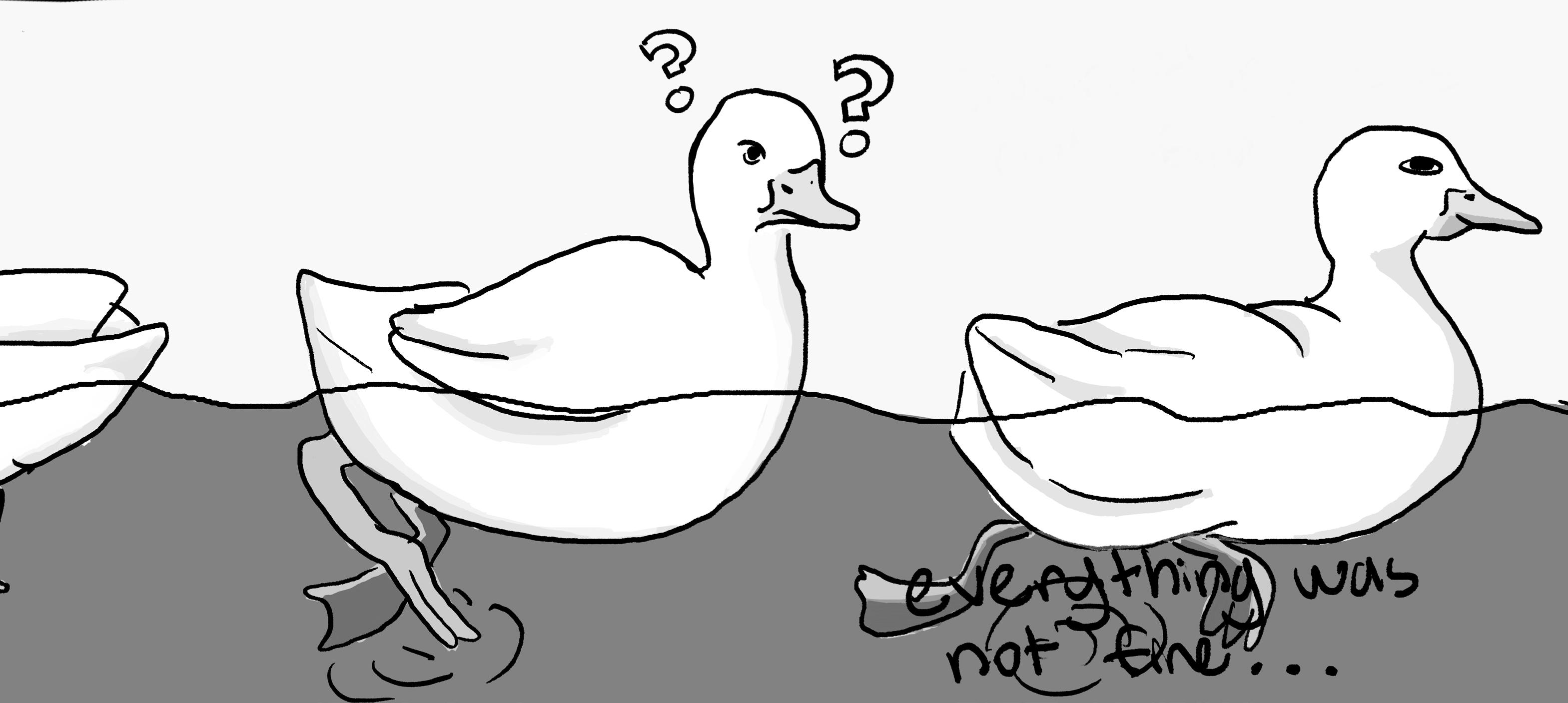
Picture a duck swimming in a pond: On the surface, the duck glides smoothly over the water. Below the surface, the duck is kicking furiously to stay afloat.
Duck syndrome is a feeling experienced by individuals based on their own belief that
1. Their peers are near-effortlessly successful
2. The individual must work furiously to keep up with their peers
3. The individual must hide how much they are struggling based
on the self-belief that it should not be this hard for them
Duck syndrome is especially prevalent at high-achieving institutions like SPHS. It is not a clinical term or health diagnosis.
Student
motivations
STORY UMA CHAKRABORTY & ELLIE SONG
O
verall, the motivations of students at SPHS for keeping their struggles private can be placed into three umbrella categories: they do not want to feel less than, they do not want to be judged by others, or they do not want others to worry.
“[My family] wants me to be perfect. So I try to let them see that I’m perfect, even if I’m very much not perfect. I’ve crafted this image around that, and now it’s what everyone sees. And now I can’t break the image … it’s sort of like an obsession, where once you start doing it [trying to be the best at everything all the time], you can’t stop,” junior Yifang Lou said.
Some students expressed the desire to be perceived as effortlessly successful for the sake of their own pride.
“I want to seem nonchalant and like I have it together. I want to seem like I’m not trying,” senior Sammi Keller
Manifestations of duck syndrome
STORY HARRIET GODSON & ANNA MCDONNELL
People experience duck syndrome in different ways. Whether it manifests itself in pretending to be effortlessly perfect or in avoiding asking for help out of shame, it is hard not to compare oneself to peers. Tiger aimed to shine a light on the different ways people have hidden their struggles and show what really happens beneath the surface.
“It’s hard because there are people who barely study and get perfect grades, and meanwhile I’m over here studying away but I’m still not getting grades as good as them,” sophomore Pei-Chen Ng said. “After tests, it feels like everyone says, ‘That was so easy,’ and I often feel like, ‘Am I the odd one out?’ It feels like everyone is such a high achiever, and it’s hard for me to keep up.”
Senior Adelaide Bertolina explained feeling as if she were “drowning in homework and doing bad on tests” in an environment where “everyone around you seems to have everything come easy to them.”
Freshman Jayda Ou expressed similar feelings. “When I have a test … I refrain from telling others how much I studied to do well,” Ou said. “There are people out there who did not have to study and work hard for the good grade they received, and it makes me feel less smart if I had to work hard to achieve the same grade.”
“I feel stupid all the time. I constantly feel behind when I shouldn’t, when it seems like everyone else just gets it,” freshman Luna Burg added. “I struggle to ask for help with my schoolwork because other people don’t know how my brain specifically works and how I can receive help.”
Comparison thrives in and out of the classroom, and duck syndrome does not pertain exclusively to academics. The pressure to succeed amid competitive environments is present in extracurriculars as well. Junior Yifang Lou experienced the feeling during a team dinner as her team celebrated their recent competition results.
“The entire time I couldn’t eat or anything; I just felt really, really overwhelmingly sad. The reason was, it’s really dumb, but it’s because I got second place … and I didn’t get first,” Lou said. “You’re always trying to do so many things that you’re not directing enough energy to be first place in anything. And then when you’re not in first place, you get all caught up in it. It’s a loop.”
Students tend to prefer to keep their struggles to themselves and shield themselves from possible judgment, even if this means lying or avoiding getting additional support.
“When teachers or friends ask you, ‘Hey, are you doing okay?’ or, ‘Hey, how are you feeling?’ your default answer is supposed to be, ‘Oh, I’m doing fine.’ Not because you actually are, but because it’s social politeness,” Lou said.
“What are you supposed to say? ‘No, I’m not doing well’? That’s just inconveniencing the other person into thinking about a very difficult conversation.”
Duck syndrome is hard to describe, both because it is inherently secretive and because it takes form differently in different people.
“Duck syndrome is such a vulnerable topic,” Ng said. “It’s hard to shine light on it, because the whole point is that everyone feels like they need to hide. Nobody wants to be the one who admits that they’re struggling.”
students’ secret struggles
that received 234 responses, or about 16 percent of the student body. This spread aims to shine to understand why students feel the need to hide all struggles from their peers.
motivations to present themselves perfectly
said. “My ego makes me want to look effortlessly better than everybody else.”
“What do I even have if I’m no longer excelling at everything?” Lou added. “That becomes your identity, being effortlessly successful, being perfect. That’s who you are … and you don’t know who you are outside of that.”
Other students explained fear of judgement from others.
“I’ve lied to my parents, peers and more about my grade, because being a 3.0 student … people look down on you for it. Especially because a lot of people have had straight As for years, and they just can’t comprehend how someone could not be amazing at school, so they assume you’re either unintelligent or lazy,” freshman Kai Adam Ifill said. “l don’t know who could help me without being judgemental. I’ve had stressful experiences in my life where I’ll ask my parents, friends and more for help, but they’ll just get mad, impatient … I don’t want to stake a relationship or my time by asking for help.”
“I can’t admit that I am worse off than I actually am. I’m supposed to be the smart one,” freshman Vincent Angarita added.
Other students discussed shame and fear of burdening others with their problems.
“There’s definitely a shame aspect to it, because especially at South Pas, there’s so many other … people doing more than you, doing it better than you, and they never speak up about the struggles they face. So I feel like if I were to admit that I’m struggling, it would make me inferior to the other people,” Lou said.
Freshman Jayda Ou similarly touched upon the idea of burdening others.
“I find it genuinely embarrassing for people to see me struggle, especially when it seems like no one else is. It makes me look weaker or less capable than others,” Ou said. “In the past, when I was more vocal about struggles, all I would get in return for being open is the feeling of
having annoyed or burdened someone, or that I am being judged for my circumstances.”
“I don’t want to seem like a burden, and it makes me feel like a failure,” senior Adelaide Bertolina put simply.
“I prefer to handle my own problems,” sophomore Lucas Ang added.
Some students also admitted not knowing how, or when, to ask their friends, family, and teachers for help.
“It never feels like the right time,” junior Ashley Walton said.
“On one hand, you want to reach out to someone and share your struggles with them and ask for help. But on the other hand, there’s always that part of you that’s doubting,” Lou said. “If I do tell someone that I’m struggling with this, are they going to believe me because of the appearance that I have so painstakingly already crafted? … But honestly, who knows? Maybe South Pasadena is just one giant flock of ducks.”
Student
FEATURE
Student sparks SPHS walkout
Junior Olivia Alva started a large-scale school walkout to Mission Street.
STORY LEIGHTON KWOK
PHOTO MAC SHROPSHIRE
O
n Friday, Jan. 30 at 1 p.m., over 800 high schoolers, middle schoolers, elementary schoolers, and parents flooded the sidewalks of Mission Street and Fair Oaks Avenue in protest of the recent US Immigration and Customs Enforcement (ICE) raids. Over 600 high school students walked out of sixth period to show their solidarity with the families that were taken by the ICE arrests and to stand up for what they believe in. The event lasted until 3 p.m. Junior Olivia Alva, the originator behind the idea and execution, sparked the citywide event that shook South Pasadena.
The inspiration for the walkout first came to Alva when she felt hopeless the week before. Seeing immigrants taken off the street built a sense of anger in her, as her father is also an immigrant from Peru. She wanted people in her community to speak up for the injustices she was witnessing. When Alva noticed that students from other schools were planning peaceful walkouts, she made the decision to plan one herself. Coincidentally, that Friday also happened to be the day of the planned nationwide strike, entailing no shopping, no school, and no work. Along with speaking against injustice, Alva’s purpose was also to educate people about the right to exercise the First Amendment.
“We’re the next generation to vote. And I think we need to know our rights, we need to know what we stand for, and we need to be able to use our voices when it matters,” Alva said.
On Monday night, Alva created an Instagram account and made her first post announcing the creation of the walkout the coming Friday. When the account was first released, Alva took the effort to stay anonymous, planning to reveal herself at the start of the event. Even though Alva assumed many would not show up, her goal was to have as many people as possible walk out. The next morning after the post was made, the account blew up to over 100 followers.
“I didn’t want to tell anyone, because I didn’t want people thinking it was for name recognition or popularity. It
Editorial Cartoon
wasn’t, it was because I wanted people to show up for this cause and show up for this, whether or not whoever started it,” Alva said.
During the planning stages, Alva had some help making sure that the walkout would be well-thought-out and safe for the students. Another junior, Lorenzo Jones, assisted and called the South Pasadena Police Department nonemergency line to ask for an escort and make them aware of the situation. Jones then suggested Alva reach out to local publications and news outlets to try to get the story for more people to see.
On the day of the walkout, Alva received much love as she made a speech about the personal connection that she had to the cause. The ICE raids made her afraid for the people around her, and she wanted to find a way to bring about change. Alva felt like she had a moral obligation to speak out and allow others to do so as well.
After she came forward about her role in the protest, students she had never met congratulated her. Teachers were also in this mix, giving praise for being brave and standing up for what she believes in. Alva cried tears of joy for the number of people who wanted to reach out and the overwhelming feeling of accomplishment. The impact of the protest extended far beyond South Pasadena; a TikTok video of the students walking to Mission Street has amassed more than 1.8 million views and 500 thousand likes. Even Pedro Pascal reposted it to his Instagram story.
The large success of the walkout restored Alva’s faith in humanity and more respect for herself and her peers. It also gave a sense of safety to the students who attended, reminding them that those around them truly care.
“When I want to just give up and not do something because I’m scared, I’m going to remember that I persevered, and I did this, even though I was scared and terrified. I still did it because … I knew that this was something so important to me. So I didn’t let it. I didn’t let fear take over,” Alva said.
Sonya’s Spiels
SONYA SHIMPOCK
Shameless (and proud of it)
“I think I’m losing all semblance of shame,” I say, propping my head up on my hands, scrolling through Pinterest, not even trying to hide my phone screen as the app pulls up photos of Hudson Williams and Chloe Bennet (I contain multitudes). It’s lunch, I’ve just finished my panini, and I’m trying to talk myself out of making the 11-minute walk to Kaldi’s for an overpriced cold brew.
“Yeah, I can tell,” my friend deadpans back to me. A quick silence, then laughter. Mostly from me.
She’s completely right: I think we can all tell. Second-semester senioritis has stripped me of more than my ability to study/think/function — it’s also taken any shred of shame that I used to have.
I’ve always been energetic. I like to put on a show, to be loud and unfiltered, and senior year has only magnified that. The most obvious example of this would probably be my newfound penchant for sharing thoughts I usually stifle (which, if you know me, is saying a lot), forgetting what I’ve wildly put out into the public sphere, and then having my behavior quoted back to me verbatim whenever someone needs to win an argument. Perhaps I have not as much lost my shame as I have lost my inhibitions.
When I was an underclassman, I was always irrationally worried about being perceived. I was consumed with other people’s impressions of me: Was I too loud? Too obnoxious? Did I raise my hand too much? (Probably, probably, and definitely.) I’d overthink every interaction I had, every choice I made, so much that I was afraid to live. I was afraid to behave in a way that made me happy, solely because I was so concerned with ensuring that people didn’t feel the need to make exasperated eye contact every time I opened my mouth.
Of course, I’m sure those of you who have spent your high school years in the same classrooms as me know that I’ve wildly missed the mark on a lot of this, and are beyond themselves with bland amusement at my “newfound” resolution to shed shame I probably never had (especially Emi, who has been privy to this version of me for a while).
This decision, however, is significant to me: I don’t want to limit myself by forcing myself to be quieter and more tame. I will live in my stupid dad-joke, teacher’s-pet, no-volume-control, distinctivelaugh glory. I’ll be shameless.
And, to those of you reading: I know high school can be a lot, and everyone says to “just stop caring.”
Instead, I’ll offer this: care a lot. Care about your happiness enough to look after it before anything else. Care about your academic life, your social life, your friendships, your relationships. You only get one life, so care about yourself for a change. Care so much you end up having no shame.
SPHS and SPMS students gather on the corner of Mission Street and Fair Oaks Avenue to protest ICE presence across the United States.
How historic Little Tokyo is slowly fading
Tiger takes a deep dive into the plague of gentrification in Los Angeles’ oldest
STORY & ILLUSTRATION OWEN HOU
I
n May of 2023, Little Tokyo’s Suehiro Cafe was evicted. Despite its status as a community staple for 51 years, the cafe was priced out of its building on 1st Street and forced to relocate to a Downtown LA location later that year.
This incident has not stood alone, as in the face of rising bills and costs, several other legacy Little Tokyo businesses have had to close their doors. From the 122-year-old Rafu Shimpo newspaper having to move to Montebello in June of 2025 to Mitsuru Sushi and Grill permanently closing its doors after 49 years of service, the list goes on and on. Beyond just businesses, many long-time Little Tokyo residents have also been forced to move due to rising rents. All of these different closures, openings, and changes can be tied to one phenomenon: gentrification.
At its core, gentrification is the process of a neighborhood or area changing due to higher-income residents moving in. While it does fuel economic growth from new businesses and improve infrastructure, these changes are not without their costs. Displacing longtime residents, uprooting previous pillars of the community, and fracturing the community all come with gentrification as well, as seen through the changing of Little Tokyo.
The neighborhood began as a community of Japanese immigrants, and over time, it eventually blossomed into a fully-fledged Japantown filled with Japanese Americans. Despite the initial success, after Executive Order 9066, the area was vacated as most of its residents were forced to move to concentration camps. During this wartime period, the labor-seeking African American community moved in, turning the area into Bronzeville, a hotspot for Black culture. As the war came to a close, Bronzeville began to fade away as Japanese Americans bought out Bronzeville business leases. Even so, the Little Tokyo population still never returned to what it once was, dropping from 150 blocks to only two today.
While gentrification can be very damaging to the community, completely isolating from outsiders has not been the solution either. Without any change, diversity, or visitors, businesses would have few customers, streets would be empty, and the neighborhood would become a ghost town. At the same time, complete control by new residents would exacerbate the already-present issue of gentrification.
The solution has been a balance. Some non-Japaneseowned businesses have flourished in the community, but have made sure to also respect the preexisting community. In turn, local organizations and businesses have reciprocated this respect. Rather than local and non-native businesses being at odds, the community as a whole has come together, creating a culture of respect and collaboration.
Even in the face of this adversity, Little Tokyo is still standing and has been able to hold onto much of its personality. This has been in part due to the community battling and protesting to protect the two remaining blocks. Organizations within the area have helped to bring order and structure to the community’s efforts, specializing and working to protect the community on different fronts.
Out of all of these organizations, the Little Tokyo Community Council is the largest communitybased coalition in the area, and works to preserve, promote, and protect Little Tokyo. Consisting of stakeholders, businesses, residents, and other member organizations, the LTCC has deep roots in the community.
The council gives the neighborhood an authentic voice and provides a platform to launch initiatives and make stands. In one of their first big battles, the LTCC prevented Los Angeles from building a jail in Little Tokyo. Ever since, the coalition has been using the combined voices of the community to continue rallying and aiding the neighborhood.
Gentrification is a major problem Little Tokyo currently faces, but hope lies in both the actions of
Japantown.
organizations and visitors. While larger organizations and coalitions fight bigger battles that decide the fate of the neighborhood, individuals can support the area in smaller ways. Minor actions like supporting local businesses, respecting residents, and not littering can all go a long way. Together, the people can rally behind a common cause to protect this historic and vulnerable area.
Sinners wins the most Oscar nominations of all time
STORY MIRIAM ELGHEFARI
PHOTO DIANA LOPEZ
Sinners, a vampire-esque thriller film produced by Ryan Coogler, made headlines this past month. Amassing around $280 million in the US and Canada and generating a 97 percent approval rate on Rotten Tomatoes, the film far exceeded initial expectations. The film, which features stars such as Michael B. Jordan, Hailee Steinfeld, and Miles Caton, made history by being the first of its kind to receive 16 Oscar nominations. In Oscar history, no film has ever received as many nominations as Sinners has.
The film, set in the 1930s Jim Crow era of Mississippi, follows twin brothers Smoke and Stack as they set up a juke joint in their hometown with the help of their musically-gifted cousin, Sammy. The brothers build
connections within their community and pursue their love interests whilst battling racism and a deep sinister evil — Remmick, a vampire from Ireland who arrives in Mississippi on the hunt for victims.
The plot of Sinners both references and is built upon multicultural history. For example, in African American history, “juke joint” was a term used to describe any sort of establishment in which people came together to sing, dance, and connect. The brothers employ the Chow family, Chinese immigrants who run a grocery store in the town, to assist them in the setup of the juke joint. Upon returning to their hometown, the brothers purchase the building for their juke joint from an older white man. It is later revealed in the film that the seller of the building was a Klansman who sold the building with the intent of returning to attack the brothers and their community. Despite the existence of the main
antagonist, Remmick, it is clear to viewers that the Klansmen are an overarching antagonist in the film, too. The plot of Sinners mirrors the pain and suffering that groups such as the Klan brought upon people of color in American history.
As they travel around Mississippi to find people to aid in the set-up of the juke joint, the impact of the Jim Crow era on African American culture becomes quite obvious. In a scene on an open street, there are two of each establishment such as two grocery stores and two banks, highlighting the segregation that took place at the time. Many of the characters still actively work on plantains and face racism and discrimination throughout the film.
Other cultures are represented in Sinners, too. The film features quite a few cameos of a Native American tribe and the brothers employ an Asian American couple to supply the juke joint with food during opening night. The collective multicultural group and their contributions to the community’s juke joint is a beautiful representation of strength in shared oppression.
In the arguably most impactful scene of the film, Sammy plays a blues song on his banjo. As the song progresses, Sammy watches as the spirits of people of different cultural and ethnic backgrounds dance around the joint, such as “Xiqu” — Chinese opera performers and African tribal dancers. The music begins to fuse with music from around the world, as hip-hop bass, rock-nroll chords, and Gospel music swell. Spirits of people from countless musical eras in history join Sammy and the people celebrating in the juke joint. Sinners is a representation of how, for African Americans and other oppressed people alike, music served as a means of coming together and uniting as one. To this day, music connects people from all walks of life and brings them together.
Sinners is an artistic film that uses a typical horrorfilm-type of plot to tell the devastating story of African Americans and their oppression throughout American history. The film ends with a crushing scene — a vision of one of the brothers’ late wives nursing their stillborn child. The scene serves as a tragic reminder that African Americans who faced oppression were only ever truly at peace in their deaths. Sinners highlights the suffering and disparity of African Americans, and shows how community and music served as a way of finding strength in hopeless times. Ryan Coogler is arguably one of the most impactful filmmakers of this time, and it is undeniable that each and every nomination, across any award group, is well-deserved.
Sid the Cat, South Pasadena’s new venue
The city’s new music venue is now bringing live events to the residents of South Pasadena.
STORY ISABELLA JONASEN
PHOTO THEO THOMPSON
Sid the Cat Auditorium, the shiny new concert venue that has settled steps away from the A-line, has swiftly become a major indie music hotspot for Angelenos alike. Sid the Cat’s team spent three years renovating the space to hold 500 concert goers, while also restoring its small sculptures and most notably an overhead mural crafted by artist Lucile Lloyd that was discovered upon paneling from the rafters falling down.
The historic building, once an elementary school and formally serving as the South Pasadena school district headquarters, has been on El Centro Street since the 1930s. Sid the Cat opened their doors in late November of 2025, and soon the building will include District Brewing Company, the Boy and the Bear coffee shop, and Villa’s Tacos.
The mission behind Sid the Cat has been prevalent for many years as its promoters, Brandon Gonzalez, Kyle Wilkerson, and Sean Newman have been active LA live music enthusiasts for over a decade, planning their early shows under the banner of Sid The Cat Presents. Since the beginning, Sid the Cat has made it their mission to ensure their promotion continues to uphold the DIY vision they had when building the project. Sid the Cat has had the privilege of hosting some of the most influential indie artists to date, such as Fiona Apple, Mac DeMarco, Big Thief, and Cat Power.
In a period of digital media, it is essential to uphold and support community spaces meant for appreciating art. Sid the Cat reflects this sentiment in their dedication to creating an easily accessible venue that is community-centered.
Wilkerson further explained their aim in an interview with the Los Angeles Times, “It brings out a different level of artistry to put acts in a unique setting that has character and history. If you do this for as long as us, you hear the horror stories on the road, and a space like this stands out on your tour. It has everything you need in a truly walkable neighborhood.”
The venue itself still holds the same character that the old school district building did, just with a nicer paint job. The queue is lined with merch for each performing act, as well as Sid’s own exclusive merch and iconic matchbooks that they have been distributing for over a decade. One of Sid’s many ambitions was to create a venue for all ages, being that they are blocks away from the high school.
The demographic of concertgoers varies from a wide range of different age groups. The venue attracts an incredibly lively community, bringing in people from far outside of South Pasadena into the school auditoriumesque concert venue. The ticket scanning checkpoint leads to an open brick hallway with entrances to Sid’s Bar, a patio, and the auditorium.
Aside from spotlighting independent musicians, the venue also hosts movie screenings, comedy shows, and
live podcasts. Additionally, launch parties are held for their own magazine, the Sid Zine, their ongoing “rock ‘n’ roll” publication that covers the local music scene with the help of talented illustrators and writers.
“We don’t book anything we don’t believe in,” said Wilkerson in an interview with Pollstar. “Music is at the forefront of everything we do, but we’ll have comedy, podcasts, and screenings, too, as well as local community events.”
Sid the Cat truly stands out within the South Pasadena community and will continue to be a vibrant place to gather to discover new music and experience live entertainment. It is essential to continue uplifting the safe spaces created for community members to attend live events, as they hold the power to unify others.
The 100th anniversary of Black History Month
STORY LUCINDA ERNST
VISUAL MAC SHROPSHIRE
Disclaimer: This article contains outdated terms in titles used in a historical context for educational purposes. Tiger recognizes the problematic nature of these terms and acknowledges the history behind them.
Black History Month is an annual celebration every February in the United States commemorating Black culture and recognizing Black history.
“I feel like Black History Month now … celebrates Black people and their accomplishments and … their future, their dreams,” senior Lucy Williams, SPHS’s Black Student Union (BSU) vice president said.
This year marks the 100th anniversary since the week that Black History Month began. The century has had several critical moments, including the civil rights movement of the
60s, the Rodney King protests in 1992, and the Black Lives Matter movement that began in 2013 with the murder of Trayvon Martin.
Black History Month has a long history, beginning on Sept. 9, 1915, when historian, educator, and activist Dr. Carter G. Woodson founded the Association for the Study of African Life and History in a YMCA in Chicago. In 1926, 11 years later, Woodson created the “Negro History Week” and established it in the second week of Feburary to honor the birthdays of abolitionists Frederick Douglass and former President Abraham Lincoln.
Woodson’s Negro History Week set out to promote the dissemination of Black history, a call that was answered by thousands of mostly female Black teachers across the nation. Hundreds of churches and community centers, as well as Black fraternities and sororities known as the Divine Nine, took up the call to action, organizing lectures, literature drives, and educational programs to celebrate Black history and culture.
In 1970, the week was extended to a month, and six years later in 1976, Black History Month was officially recognized by then-President Gerald Ford.
Today, the tradition of schools spreading awareness for Black History Month is still present. At SPHS, BSU exists as an identity group on campus for Black students and their allies.
“I’ve been in BSU for four years now. I feel like since there’s not like a big … Black demographic here, I thought that BSU would be a chance for me to connect with my Black side. I’m half white, half Black, and so I was kind of hoping for that. But … it’s tough,” Williams continued.
Across the world, Black History Month is recognized in dozens of countries, including Canada, Germany, France, and the Caribbean nations. However, not all nations recognize it in February.
The United Kingdom first recognized BHM in October of 1987, thanks to the efforts of Ghanaian analyst and organizer Akyaaba Addai-Sebo. He chose October as the movement’s month for the UK, as it is often known as a period of tolerance and reconciliation in many African countries. Additionally, Brazil celebrates Black Consciousness Day on Nov. 20.
Schools in the area are recognizing Black History Month in a variety of ways. Arcadia High School hosted a recognition week; SPHS recognized the month with a library display and a bulletin board, though in Williams’ words, the school needed to do “a little bit more.” She addressed possible actions to be taken by BSU and SPHS, including highlighting Black students and aiding Black families affected by the Eaton fires.
Williams expressed how she believed the movement had changed. “I feel like it’s evolved more to promoting … Black-owned businesses, supporting Black people, their accomplishments … it’s developed a lot more.”
Williams went on to address the anti-ICE walkout many SPHS students participated in last month, stating that so many students being civically engaged was beneficial for more than one movement.
“I do think that [it] helps Black History Month, because … it’s people of color coming together, and also advocating for each other … In the civil rights movement, everyone was involved. So I feel like it’s very much a reflection of that.”
Black History Month is recognized around the world, serving as a time of celebration and recognition of the Black community. The 100th anniversary of its creation calls for its history to be retold.
Sid the Cat is located in the old school district building, providing local live events and a community space for music appreciation.
TAAGLAA: LA Zoo
TIGER’S AWESOME ADVENTURES IN THE GREATER LOS ANGELES AREA
On Sunday, Feb. 23, Tiger explored the LA Zoo under the guidance of our resident animal expert, Alison. Upon entering, Ethan, Rafa, Isabella, Helena, Sam Allen, and I made a beeline for the petting zoo, much to my enthusiasm. As we got in line, I noted that we were exclusively surrounded by small children, many of whom I was more excited than. I did pick up on some strange looks from the parents, but we were, after all, a group of seven teenagers in line for a petting zoo. Side eyes were to be expected. Once we were let in, I made a break for the first goat I saw, who sat comfortably in a basket. We spent a few minutes at the petting zoo, but unfortunately, some of the children in line were getting antsy, so we made our departure.
After the petting zoo, we entered a small cave (also meant for children), and Isabella and I promptly got lost upon taking the wrong exit. Through sheer grit and determination, we made our way back to the group and began on our journey to see the rest of the animals. The LA Zoo was organized pretty clearly. Animals were placed in sections based on their country of origin. For example, giraffes, rhinos, and zebras were grouped in the area so cleverly named “Africa.” Despite the obvious labeling of sections and color-coded maps to accompany them, the zoo felt like a maze to me. Thankfully, Alison, who is a volunteer, guided us through the park without anyone getting lost or falling into an enclosure.
As we passed the main entrance, we were greeted with the scent of flamingos, which immediately reminded me of why I used to avoid that enclosure when I was a small child. Still, I persevered, and we saw a small concession stand selling ice cream. It was 11 a.m., which was obviously the perfect time for Dole Whip. As we ate our treats, we made our way to the aviary, per Helena’s request.
To prevent the birds from escaping, the aviary had a netted ceiling and a double-door system. It was complete with trees, rock formations, and even a waterfall. I heard the birds more than I saw them. They had very distinctive calls, but it was difficult to spot them. However, later Alison took us to see a wide variety of birds in their respective enclosures: Toucans, a lonely harpy eagle, and, most notably, a DoubleWattled Cassowary. The Cassowary was perhaps the most ridiculous animal I had ever seen. Ostrich-shaped, only with a shorter, very blue neck with purple-orange accents, the bird absolutely gob-smacked me. I had been oblivious that such an animal existed.
After the aviary, we bounced around from creature to creature, some of my favorites being the giant river otter and the chimps. The river otter had a whimsical enclosure that included a waterslide connecting different pools. As we admired the architecture, the otter came sliding down the water slide and splashed into the water, and repeated the process in the next pool. Never have I been more jealous of a river otter. I was also quite fond of the chimps, who looked very deep in thought as they perched on the rocks.
We decided to grab lunch and snagged the table with the best view of the chimps. While discussing Sam’s cult of personality over fries, a chimp was flung from a very
high rock by its brethren, creating quite a ruckus. The chimps were hooting and hollering like there was no tomorrow, a similar scene to the freshman quad at lunch.
Following the chimp fiasco, we began our trek to the orangutans, my very favorite animals, which I had been waiting to see since I set foot in the zoo. Lunch had revived the group from our walking-induced coma, and I was invigorated by the promise of seeing the orangutans. Alison led us into their enclosure, where I literally started jumping up and down out of joy. The orangutans were kept in a wide area with netting and various structures to climb on. As I looked over the five or so orangutans basking in the sun, eating leaves, and swinging from bars, I found myself considering a career as a zookeeper. My excitement grew when I noticed a baby orangutan tucked into its mother. Alas, I could only stare at them for so long, and I was ushered by the group to the next exhibit.
We continued to play our game of zoo ping-pong, bouncing from one animal to the next in no foreseeable pattern. Among the blur of creatures, we saw giraffes, meerkats, and a very loud gibbon whose hollering I could only tolerate for 30 seconds. Isabella and I sat on a bench that looked like a gecko as the rest of our group visited the spiders and amphibians, where I eventually decided to lay down. After my brief power nap on the gecko, we speedily traveled to our final destination: the carousel. Only Isabella, Rafa, Alison, and I participated, and I’m very glad I did. I claimed the giraffe, as the unicorn was already taken by a little girl, and made the most out of the $5 ticket.
At the end of our journey, we stopped by the gift shop, where I got an orangutan shirt, and we ended the afternoon by waiting in a very long line for overpriced Coffee Bean. Overall, the LA Zoo was a really fun experience. There was a wide variety of animals, and interactive elements, and (slightly overpriced) food. I had a great time, and am already thinking of returning to visit the orangutans again.
2.
3.
1. Flamingos are highly social birds. They are born gray or white and only grow their iconic pink plumages after a few years.
Ruby and Rafa have a whimsical time on the carousel.
The harpy eagle is the world’s largest and most powerful raptor, an apex predator with talons bigger than grizzly bear claws.
Season recaps of each of SPHS winter sports
Boys’ soccer had a near-perfect record, and three of the five sports qualified for playoffs.
STORY HARRIET GODSON
PHOTO MAC SHROPSHIRE
Winter sports are wrapping up. Boys’ soccer had a standout season, coming out first in league with a near perfect record of nine wins and one tie. Girls’ water polo improved their record this year compared to last, going from 6-4 last year to 8-2 this year. Girls’ basketball also adjusted to a new head coach and celebrated the legacy of their old coaches.
Boys’ soccer came out undefeated for the second year in a row, with a record of nine wins and one tie. Key players included senior Sammy Rodak, who scored six goals this season, and senior Leo Sanchez, who assisted eight goals. Their hard work and victories throughout the season led them to winning league and progressing to CIF.
They fell to Amino Leadership High School 0-1 in the second round of CIF playoffs.
The girls’ soccer team flatlined after an exciting preseason. Despite having a strong team and a mainly successful preseason, the Tigers struggled to pull out wins against teams such as Monrovia and La Cañada. Senior Rose Vandevelde and sophomore Kaia Trainedes led the team in goals, scoring six each this season.
“I think a struggle we had a few times during the season was creating and finishing offensive chances,” Vandevelde said. “Honestly there were games where this went really well and other times we struggled. Also towards the end of the season the flu and sickness hit us pretty hard.”
Sickness made it especially hard to pull off the wins they needed at the end of the season. They fell just short of making CIF playoffs, placing fourth in the Rio Hondo League. Their season concluded with a record of four wins, three losses and three ties.
Girls’ basketball had a near-perfect 9-1 record and ended second in league. Senior Brylee Woo averaged 9.4 points per game and seven rebounds per game. The team also adjusted to a new head coach mid-season.
Coach Kevin Kholer became the head coach after previous head coach Cody Masden left SPHS to pursue a job in Sacramento. The team went on to compete in CIF playoffs,
UPCOMING GAMES
but lost to Lancaster High School in the first round. Boys’ basketball placed fifth in league. They had a 3-7 record. Senior Rod Khollesi led the team, averaging 27.5 points per game, followed by senior Nick Rios, who averaged 12.5 per game. Both were key players for the Tigers and led the team stats across many categories including points per game, field goal percentage, rebounds per game, and assists for each game.
Girls’ water polo boasted 21 wins across their whole season. They grew significantly as a team this past season, increasing their record and connecting well. The team
was captained by juniors Hayun Lee and Ruby Meyer and sophomore Taylor Burns. They placed second in league, coming short of Temple City by two wins. Their league record was 8-2.
The Tigers went on to compete in CIF playoffs. However, they lost to Redondo Union in the first round.
This 2025–26 season is the last time South Pasadena winter sports will play in the Rio Hondo League before the league merges with the Pacific League, creating new and tougher competition.
SATURDAY, FEB. 28TH @ 11 AM, SOFTBALL VS. ALHAMBRA AWAY
WEDNESDAY, MARCH 4TH @ 3:15 PM, BASEBALL VS. SALESIAN AWAY
FRIDAY, MARCH 6TH @ 6:30 PM, BOYS’ VOLLEYBALL VS. POLY AT HOME
High school athletics have no spot for bigotry
SONYA SHIMPOCK
STORY
ILLUSTRATION KRISTEL HOUNG
West Virginia recently passed a law that will publicly affect exactly one person in the state — a 15-year-old student athlete attempting to join her local track team.
Becky Pepper-Jackson transitioned in the third grade, and she has taken puberty-blocking medication ever since. This ensured that she did not undergo typical male puberty and therefore does not possess the increased muscle mass, bone density, and hormone levels it yields. Despite this, the West Virginia state legislature still passed a law to directly block her from participating on her local high school track team. The language of the bill, which forbids transgender girls from participating on girls’ sports teams, has far-reaching and dangerous, implications.
Public policy and advocacy research group Center for American Progress has indicated trans-inclusive policies “have no negative effect on girls’ sports participation.” Other studies have supplemented this claim by demonstrating that transgender athletes perform similar to cisgender athletes, especially in women’s sports.
On the high school level, the Center for American Progress has shown that in states with inclusive policies, “high school girls’ participation in sports remained unchanged from 2011 to 2019,” in comparison to states with exclusive policies, where girls’ participation has decreased. In some states, like California and Connecticut,
which both have inclusive policies, girls’ sports participation has increased from 2014 to 2020.
Beyond this, trans-exclusive policies have been shown to substantially harm transgender youth. A survey conducted by GLSEN in 2019 found that one in 10 “LGBTQ youth have been discouraged from playing school sports due to their sexual orientation or gender identity,” and “more than half of transgender students reported being prevented from using bathrooms and locker rooms that align with their gender identity.”
Transgender youth already experience incredibly elevated rates of suicide and depression, and GLSEN reported that LGBTQ+ youth who experienced these trans-exclusionary policies reported “lower self-esteem and school belonging than those who had not, as well as higher rates of depression and school absenteeism.” This, in turn, elevates mental health risks — GLSEN also reports that “28 percent of transgender youth whose pronouns are not affirmed attempted suicide in the past year,” compared to “12 percent for those whose pronouns are affirmed by all or most people in their lives.”
Currently, the official website of the South Pasadena Unified School District declares that under Title IX, “no District student or employee shall be excluded from participation in, be denied the benefits of, or be subject to discrimination on the basis of actual or perceived sex … gender, or gender identity.” Specifically, SPUSD Board Policy 6145.2 states that “the Superintendent or designee shall ensure that equivalent athletic opportunities are provided for males and females, and that students are permitted to participate in athletic activities consistent with their gender identity.”
Ultimately, at the heart of the issue is human kindness. Especially at the level of high school sports, it is more imperative to ensure that transgender students feel supported and secure. This is not a political issue; it is a moral one. A personal sense of competition and pride must not overrule compassion and empathy. Laws and actions that blatantly aim to tear down and invalidate transgender students and athletes are a waste of government resources and an example of a level of cowardice that has no place in America. Government resources should be directed to the brutality in our streets, not regulating a high school track team.
Tiger interviews three SPHS athletes who play sports represented in the Milan-Cortina Winter Olympics.
STORY ANNA MCDONNELL
PHOTOS HELENA EASTERBY & MAC SHROPSHIRE
LINDSAY YON
When she was eight years old, SPHS sophomore Lindsay Yon would accompany her father to Mammoth Mountain, where he introduced her to alpine skiing. Now, she skis competitively for the Snow Summit Race Team, an alpine ski team in Big Bear, California, and is the current women’s team captain. As an international athlete, she is also a member of the BSC Ski Club in Yongpyong, South Korea.
During the pandemic, Yon spent nearly half a year in Korea, skiing almost every day. Her main disciplines of the sport are slalom and giant slalom, also known as GS. Slalom consists of many quick turns and complicated gate combinations, while GS is more for speed and larger turn radii for longer distances. Occasionally, Yon dabbles in the super-G discipline for more speed and higher jumps.
“I think the hardest part about skiing is definitely the unpredictability of it. The weather, the snow conditions, the visibility, the temperature, and even the probability of finishing the course are impossible to predict, so it is crucial to be adaptable and mentally fortified,” Yon said. Yon has been following the Olympics closely this year and is cheering on Team USA and Team South Korea.
“I also really look up to Gim So-hui, who is one of South Korea’s best racers … Although South Korea has never
been a giant in the alpine skiing field, I’ve been so hyped to see them competing,” Yon said.
As for now, she hopes to continue competing in regional and national-level competitions in both the US and Korea before transitioning to race in college.
KEATON WHITMORE-VOSSLER
Freshman Keaton Whitmore-Vossler plays defense for the California Bears Youth Hockey Club. He started playing casually when he was four years old, introduced to the sport through his older brother, senior Roman Whitmore-Vossler, who also plays hockey competitively. However, K. Whitmore-Vossler only began to truly dedicate himself to hockey around four years ago.
“The hardest thing about hockey is playing when the lights are bright, playing through the stress, and playing through the pressure,” K. Whitmore-Vossler said.
As for the Olympics, K. Whitmore-Vossler has been following the US team closely, and he is enthusiastic about their dominant performance. Recently, the US men’s hockey team beat Canada in a thrilling game that concluded with a score of 2-1, winning the gold medal for the first time since 1980 with a sudden-death goal in overtime from Jack Hughes.
For now, K. Whitmore-Vossler plans to stay with his team and progress as far as he can before heading off to college on a hopeful scholarship and recruitment for hockey. His main goal is to get a good education, and he is trying to get there through hockey.
LEIAH KIM
Ever since watching the 2022 Winter Olympics in Beijing, China, freshman Leiah Kim has been hooked on figure skating. She became inspired by one specific performance, Yuzuru Hanyu, a male figure skater. She had never skated before, but she took it upon herself to learn, and she is now competing nationally.
Kim began her skating journey four years ago, but in January of last year, she started to take it more seriously. Her older brother had previously skated before quitting, so Kim was lightly accustomed to the sport. Now, she specializes in women’s singles skating and synchronized skating. She skates for the Rose City Crystals and also represents the Pasadena Figure Skating Club. Her singles season starts in April, and she is hoping to earn first place in the Pacific Coast sectionals and to finish her senior year in the rink.
“The hardest thing about my sport is the mental aspect, everyone is so competitive, and there are these young kids who are doing the craziest jumps and spins,” Kim said.
Kim says it is difficult balancing school and an outsideof-school sport. She is in the process of figuring out what to prioritize at different times, especially because she also participates in track at school.
This summer, in July, Kim will compete in nationals. Despite her love for the sport, watching the Olympics makes Kim nervous and ultimately not want to compete internationally with that load of pressure.
L.A. Olympics
STORY HARRIET GODSON & ANNA MCDONNELL
PHOTO ALISON SCHRADER
It is official: after withdrawing from the 2024 Olympics bid to make way for Paris, the 2028 Summer Olympics are set to kick off in Los Angeles. The games will be from July 17 to 30 and can be streamed on Peacock or watched live on NBC and other programs. The Olympics committee decided in 2017 that they would be hosted in L.A, hosting over 50 sports and around 800 events.
As an added benefit of hosting, L.A. can propose their own additions to the competition, usually sports that are popular to that area. Notably, baseball, softball, and lacrosse are returning to the Olympic program while flag football will also make its Olympic debut in L.A.
Additionally, August of 2028 will mark L.A.’s first time hosting the summer Paralympic Games. The Paralympics offer a wide variety of sports such as blind soccer, wheelchair basketball, and goalball. L.A. specifically is adding para-climbing as a sport for the Paralympics.
Milan Olympics
The 2026 Winter Olympics and Paralympics were hosted in Milan, Italy from Feb. 6 to 22. They featured a total of 16 sports, including the addition of ski mountaineering. At the end of the day, Norway took the cake, boasting 41 total medals and 18 gold medals, with the US in second and Italy in third.
Alysa Liu won the hearts of Americans as the 19-year-old Olympic gold medalist figure skater. Liu was a child star in figure skating, winning gold in the World Championships, but in 2022, she quit the sport only to come out of retirement in 2024. On the flip side is the most decorated freestyle skier Eileen Gu, who sparked controversy when she decided to represent her mother’s home country, China instead of the US.
This year’s Winter Olympics had many memorable moments, such as Liu’s comeback and her performance to Promise by Laufey. The next Winter Olympics will be in 2030 in the French Alps.
LINDSAY YON
LEIAH KIM KEATONWHITMORE-VOSSLER
Tiger’s winter sports photo recap
PHOTOS HELENA EASTERBY & MAC SHROPSHIRE
Opinions
I was recently told that I shouldn’t go into art and that, instead, I should study political science. This was, to nobody’s surprise, said by a guy. Anyway, I was momentarily stunned. I laughed it off and returned to my Trader Joe’s peanut noodles. Mid slurp, I paused again. “Yo … what did you mean by that? Are you saying I’m too opinionated?”
“Let’s not get into that,” I was told.
Again, I laughed it off. I’ve found that recently, I try to laugh off most things. The less serious I am, the less I enter a realm of having to be opinionated. Clearly, I’m failing. I’m a firm believer that nearly everything is political. Yes, I’m that person.
Throughout high school, I’ve become more vocal about my political values, not because I’m less shy, but because I’m more educated.
The more time I spend in Tiger or in student organizations that promote diversity, the more time I spend being disappointed with the White House.
So many people that I am around seem to sit in a world of complacency, one that prides itself on some sort of moral high ground.
People want to leave the “liberal bubble” that is South Pasadena. I don’t think many of the people saying that understand the utter privilege that kind of statement is derived from.
It is an absolute privilege to not feel the need to be political. The misconception that you are untouchable from an administration that attempts to oppress you is being willfully ignorant.
We are not exempt. Even the white male is living under a regime that wants to set our society up for failure. Not to mention, failing the American people in and of itself.
It’s difficult for me to ever remotely agree with someone that believes in moderacy. There was a time when calling yourself a republican didn’t mean you supported fascism, and labeling yourself as a moderate didn’t mean you let fascism slide. That time is long gone.
As I return to my Trader Joe’s peanut noodles, I’d like to provide a response that I didn’t give at the time: I don’t see any correlation between having opinions and wanting to go into art, nor do I see any inherent issue with having opinions. The funny thing is, I’m not even going into art or political science.
A word of advice to all the girls that are open to hearing it: Don’t laugh when someone sours the taste of your favorite Trader Joe’s meal because they make an insensitive remark about you being too opinionated.
To the girlies specifically, don’t let any boy, dissociated from politics, let alone uneducated on all general world issues, tell you you’re being too political. Most importantly, speak out about your political views. Don’t settle for complacency, and don’t live in a world of moderation. As Sonya would probably say, “speak your truth!!” (Intentional double exclamation.)
1) Senior Milla Humphrey (right) shoots the ball in game against Temple City. 2) Senior Nick Rios attempts a three-pointer while being blocked by a Temple City player. 3) Freshman Lucy Bonz kicks the ball to teammate. 4) Senior Leo Sanchez (left) runs with the ball in match against San Marino. 5) Senior Audrey Estanislao attempts a layup in a game against Blair.