
TIAʼs High Performance Academy is a comprehensive, system-driven player development program that supports junior athletes through every stage of their competitive journey. We operate as a large academy with a small-group approach, combining a high-level training environment with individualized mentorship.
Our model is intentional, structured, and built for long-term development —not short-term optics or rankings. We believe in transparency and want families to understand not only what we do, but why we do it, so they can feel confident in the developmental pathway we provide.

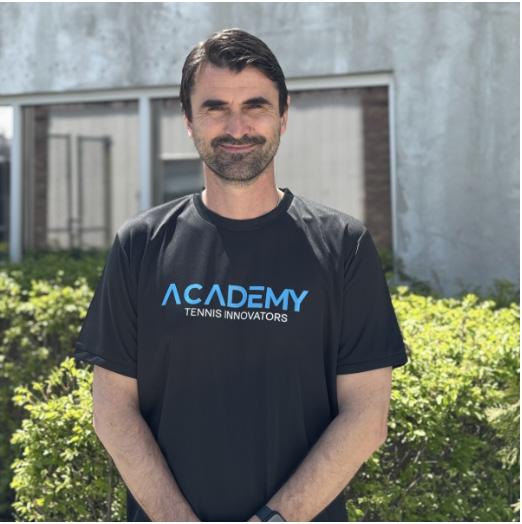
Aljosa Piric
Regional Director of High Performance Aljosa@TIAcademies.com
Who Is Responsible for My Childʼs Development?
Every High Performance athlete is assigned a Primary Coach (Mentor), regardless of private lesson participation, and is overseen by Coach Aljosa and Coach Sven.
The Primary Coach:
• Owns the athleteʼs long-term development plan
• Sets training and tournament priorities
• Serves as the main point of contact for families
• Works with staff to ensure consistency and alignment
This structure ensures clear communication, consistent mentorship, and unified coaching across all training and competition phases.
At TIA High Performance, no player trains anonymously—every athlete is known, guided, and supported within a deliberate development system.
A common assumption in junior tennis is that development comes from always training with stronger players. In reality, intentional court time is the primary driver of progress.
International development guidelines consistently show that as players mature, both training and match volume increase:
Ages 10–12
• 12–16 hours per week
• 40–55 singles matches per year
Ages 13–14
• 16–20+ hours per week
• 55–75 singles matches per year
While exact volumes are individualized, the most reliable indicator of long-term success remains the same: how intentionally court time is structured—and how engaged the player is in the process.
True player development is built on four core components, all of which are intentionally developed within our training system:
• Training Ownership & Competitive Discipline
• Technical and Physical Ability
• Tactical Ability, Problem Solving, and Decision-Making
• Emotional and Mental Intelligence
We do not isolate these components or prioritize one at the expense of the others. Each develops at a different pace and requires specific training environments—which is why group practice is structured with purpose.
Training ownership and competitive discipline reflect a playerʼs ability to practice with intent, focus, accountability, and competitiveness. This foundation is essential for deep, sustainable improvement.

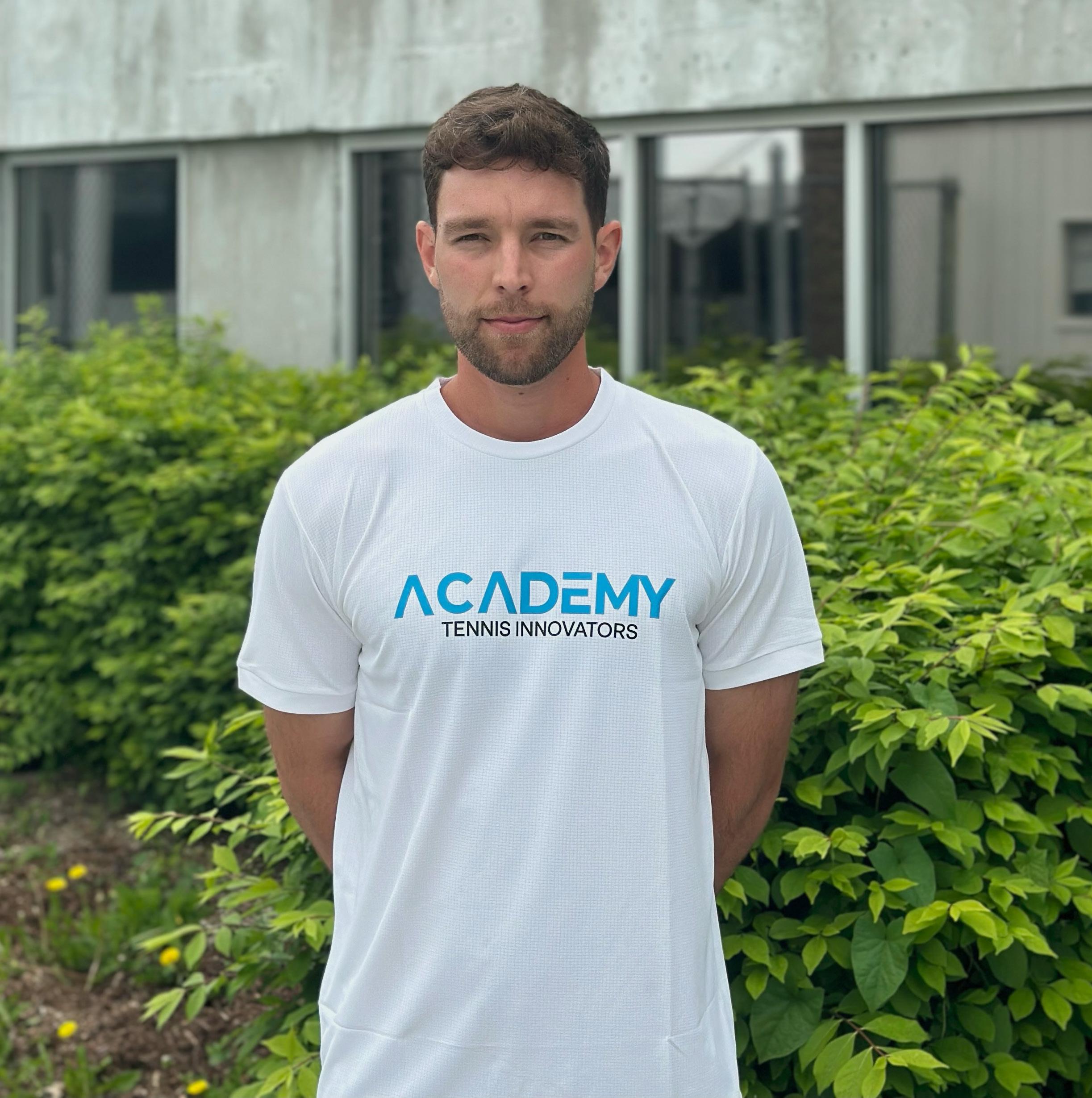
Asst. Director of High Performance 14U & 18U
Sven@TIAcademies.com
Player development cannot be fully evaluated through practice alone. Our mentorship model encourages regular competition, and while tournament participation is ultimately a family decision, players are strongly encouraged to attend events where their Primary Coach is present whenever possible.
Primary Coaches attend 3–4 selected tournaments per year to:
• Observe match behavior under pressure
• Identify technical, tactical, and emotional gaps
• Deliver targeted, actionable feedback
• Shape the next phase of training
When coaches and players compete at the same events, the connection between training, competition, and development is strongest— and coach-player relationships deepen more naturally.
Successful development is a collaborative process. Players are expected to engage fully, take ownership of their training habits, and apply feedback consistently. Parents play a critical role by supporting the long-term vision, reinforcing consistency, and maintaining open communication.
When coaches, players, and parents are aligned, development accelerates.

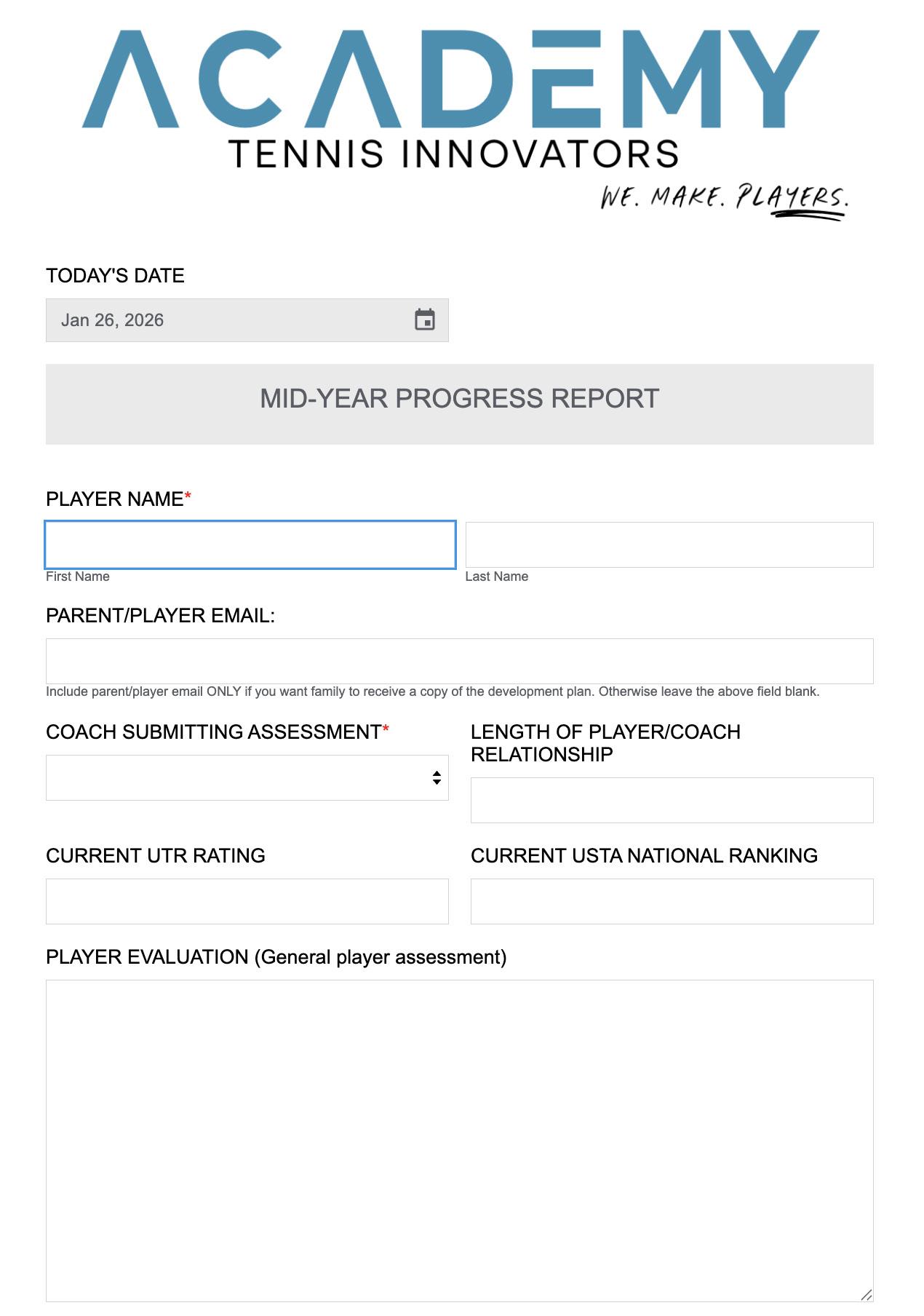
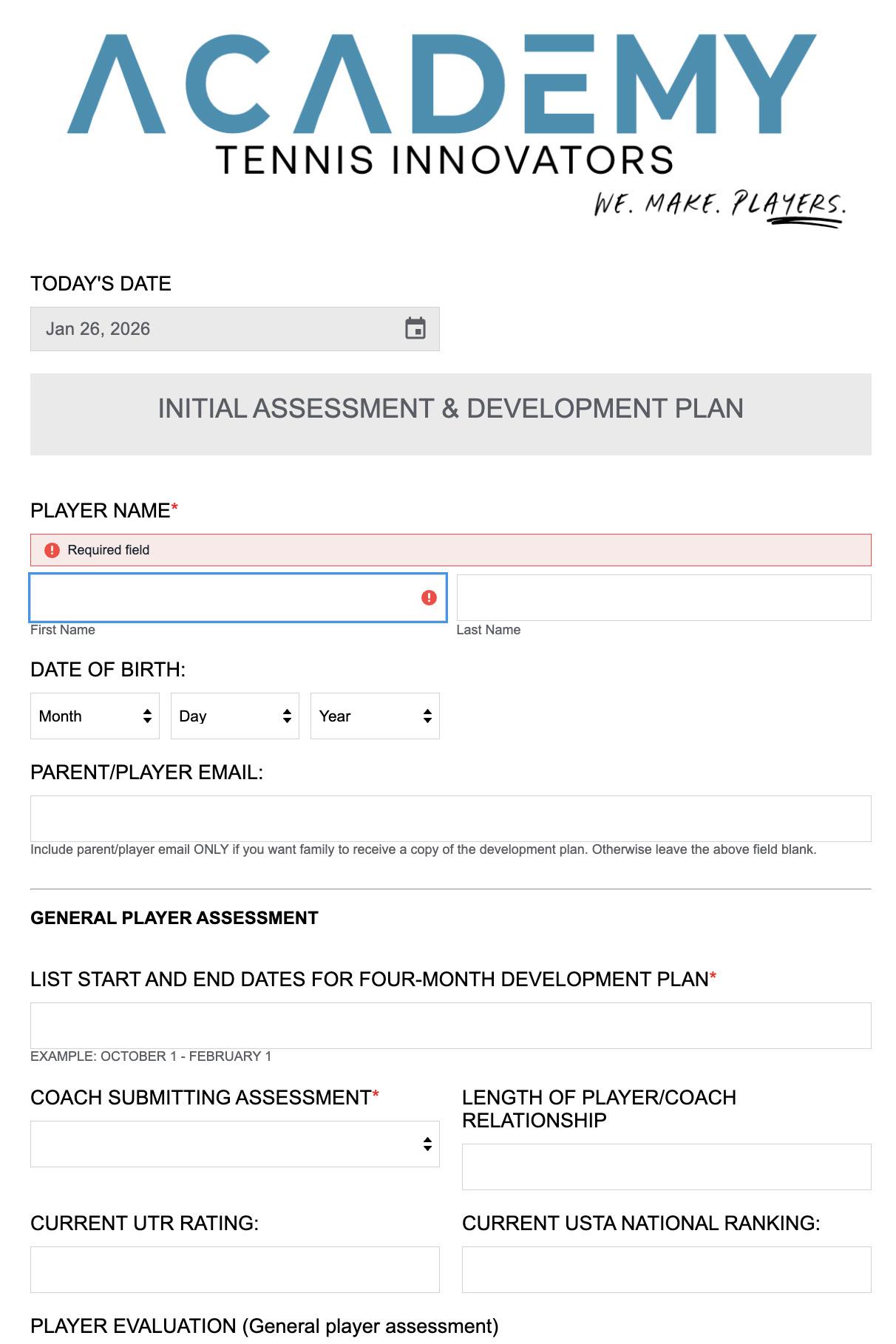


Every TIA High Performance athlete follows a structured development cycle, paired with a quarterly tournament plan to ensure clarity and progression.
Established at program entry or the start of the season, outlining each playerʼs technical, tactical, physical, and mental priorities.
Progress is evaluated through coach assessments and player/parent meetings, with adjustments made as needed.
A comprehensive review assessing development, competitive readiness, and recommendations for the next stage.
Progress is tracked continuously, ensuring development remains intentional, measurable, and aligned throughout the year.
We define an optimal training environment as one where matches are challenging in at least one key area of development — not simply because an opponent is stronger. For this reason, your child will not always be placed with the highest-rated players in the room.
(For parents familiar with UTR, this is often described as competing within roughly a one-point range — used here only as a reference, not a rule.)
Each training environment serves a purpose — but not
• Encourages adaptation to speed and faster decision-making
• Exposes players to a higher pace of play
X Limits technical development as “survival” habits emerge
X Reduces emotional pressure when outcomes feel predictable
Example: A 10 UTR training with 11–12 UTR players learns to handle speed but is not under real scoreboard pressure.
Long-term reality:
When overused, this environment provides the least long-term developmental return.
Strengthens technical execution under control
Builds emotional discipline and patience
Develops leadership and accountability
Creates real pressure to execute and close matches
Example: Your child enters as the clear favorite and must manage nerves, focus, and the responsibility of finishing sets.
Long-term reality:
This environment is essential for building mental toughness and competitive responsibility.
Technique remains accessible
Pressure is real
Decision-making is challenged
Emotional control is tested
Long-term reality:
This environment is where all four components of development grow together — and where training translates most reliably to competition.
A common concern arises when a player performs freely against stronger opponents but becomes tight against equal or lower competition. This is a developmental signal — not a flaw.
Against stronger opponents, pressure is often reduced or even eliminated. With less expectation, players tend to swing more freely, take risks, and appear to “play better.” While this can look encouraging, it is not a reliable measure of true development. In tennis, the real separator is the ability to remain composed and execute when expectations are high.
For this reason, strong performances against higher-rated opponents should not be viewed as a reason to always train up. Against equal or lower competition, outcomes matter, pressure increases, and the skills that define competitive toughness are built.
Mental toughness does not develop when pressure disappears. It is developed when players learn to stay poised under expectation, remain disciplined, and execute when matches must be closed.
Is there favoritism?
No. Favoritism is structurally impossible within our program.
While players naturally build relationships with certain coaches, all developmental decisions are made through a consistent, transparent framework focused on long-term growth — never on personal relationships.
Every player:
• Is assigned a Primary Coach (Mentor)
• Follows a documented development plan
• Is evaluated using the same standards and checkpoints
Training opportunities and progression are based on developmental needs and readiness — not private lessons, rankings, or perception.
Why is my child sometimes training with weaker players?
Because critical developmental skills are built in those environments.
Training with weaker players creates real expectation. Players must stay engaged, composed, disciplined,
and accountable while executing and closing matches. These situations develop leadership, focus, emotional control, and competitive poise — often the true separators as players advance.
Does UTR determine groups or priority?
No. Ratings provide competitive context, but they do not define developmental readiness.
Training decisions are based on a playerʼs ability to manage expectation, apply technical and tactical objectives, and remain engaged under pressure. As these skills improve, ratings naturally follow.
Are private lessons required?
No. Our program is designed so players can succeed fully within the system.
Private lessons are optional tools and should be used strategically to address specific needs. They are neither requirements nor indicators of priority or opportunity.
We believe in:
• Development over optics
• Court time over court placement
• Training ownership over entitlement
• Process over short-term outcomes
We do not believe in:
• Always playing up as a development strategy
• Ratings defining readiness or value
• Private lessons determining opportunity
• Short-term performance predicting long-term success
We are a development system designed to prepare players for the realities of competitive tennis — not to chase numbers or appearances.

If your child trains with us, they are: Seen · Guided · Developed — with purpose.