Mind & Body | MEN'S HEALTH MONTH
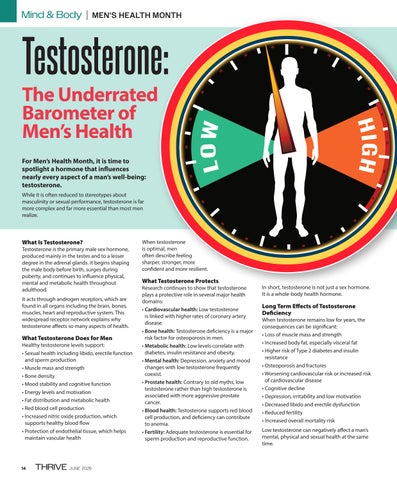
Testosterone: The Underrated Barometer of Men’s Health For Men’s Health Month, it is time to spotlight a hormone that influences nearly every aspect of a man’s well-being: testosterone. While it is often reduced to stereotypes about masculinity or sexual performance, testosterone is far more complex and far more essential than most men realize.
What Is Testosterone?
Testosterone is the primary male sex hormone, produced mainly in the testes and to a lesser degree in the adrenal glands. It begins shaping the male body before birth, surges during puberty, and continues to influence physical, mental and metabolic health throughout adulthood. It acts through androgen receptors, which are found in all organs including the brain, bones, muscles, heart and reproductive system. This widespread receptor network explains why testosterone affects so many aspects of health.
What Testosterone Does for Men
Healthy testosterone levels support: • Sexual health including libido, erectile function and sperm production • Muscle mass and strength • Bone density • Mood stability and cognitive function • Energy levels and motivation • Fat distribution and metabolic health • Red blood cell production • Increased nitric oxide production, which supports healthy blood flow • Protection of endothelial tissue, which helps maintain vascular health
14
JUNE 2026
When testosterone is optimal, men often describe feeling sharper, stronger, more confident and more resilient.
What Testosterone Protects
Research continues to show that testosterone plays a protective role in several major health domains: • Cardiovascular health: Low testosterone is linked with higher rates of coronary artery disease. • Bone health: Testosterone deficiency is a major risk factor for osteoporosis in men. • Metabolic health: Low levels correlate with diabetes, insulin resistance and obesity. • Mental health: Depression, anxiety and mood changes with low testosterone frequently coexist. • Prostate health: Contrary to old myths, low testosterone rather than high testosterone is associated with more aggressive prostate cancer. • Blood health: Testosterone supports red blood cell production, and deficiency can contribute to anemia. • Fertility: Adequate testosterone is essential for sperm production and reproductive function.
In short, testosterone is not just a sex hormone. It is a whole-body health hormone.
Long Term Effects of Testosterone Deficiency
When testosterone remains low for years, the consequences can be significant: • Loss of muscle mass and strength • Increased body fat, especially visceral fat • Higher risk of Type 2 diabetes and insulin resistance • Osteoporosis and fractures • Worsening cardiovascular risk or increased risk of cardiovascular disease • Cognitive decline • Depression, irritability and low motivation • Decreased libido and erectile dysfunction • Reduced fertility • Increased overall mortality risk Low testosterone can negatively affect a man’s mental, physical and sexual health at the same time.