Over 100 students turn out to SA elections debate at Pub
TOBY CHOU SENIOR WRITER
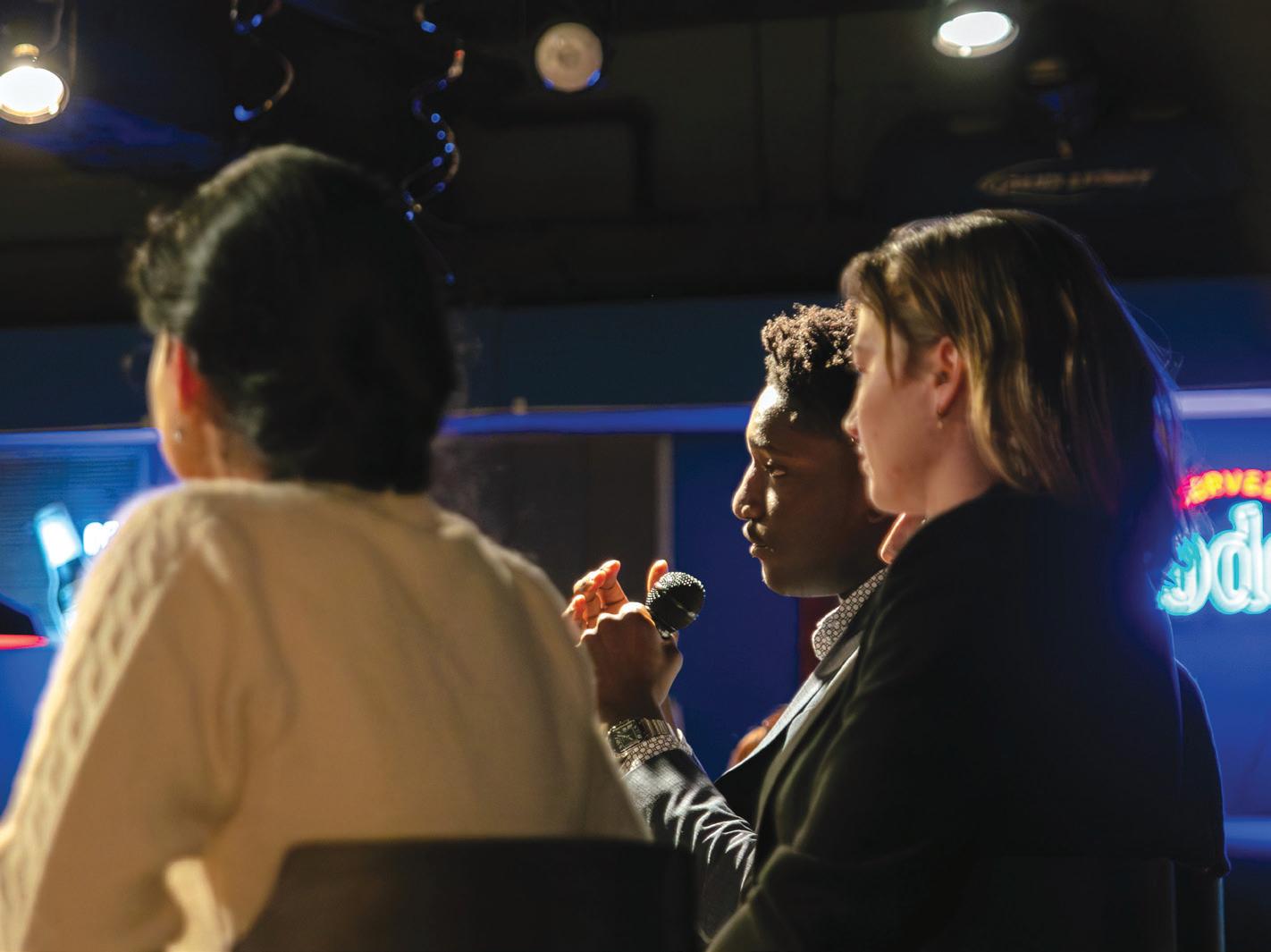
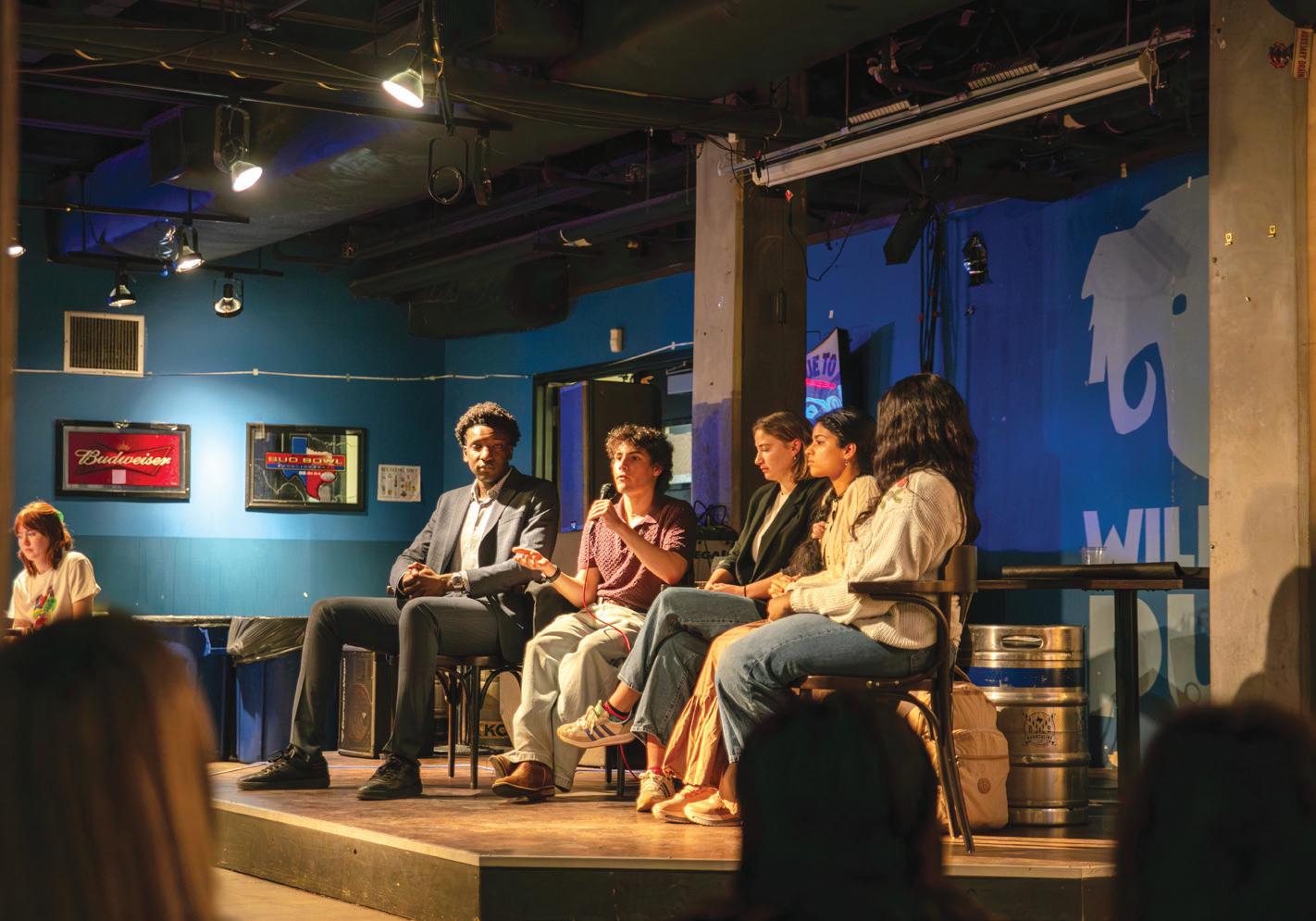
Students packed into Pub at Rice on Monday night, some waving signs and cheering, as the five Student Association presidential candidates debated key issues. The debate, hosted by the Thresher, focused on a sense of dissatisfaction with the current SA, immigration concerns for international students and student organization funding.
Muyiwa “Mo” Ogunsola, a Hanszen College freshman, said if he were elected president, his first action would be to restructure the whole SA. Ogunsola said the small policy changes the SA makes do not make the organization truly representative.
“We do the same thing every year,” Ogunsola said during the debate. “We elect somebody new. They have a couple changes they want to make. They say they’ll make those changes. They don’t, and we all feel the same.”
The first priority for Brown College Senator Max Menchaca as president would be to fight for improved student life on campus.. He plans to discuss repealing some of the restrictions that have been placed on social events with Dean of Undergraduates Bridget Gorman or the Alcohol Policy Advisory Committee.
“There have been so many restrictions put on our lives,” said Menchaca, a sophomore. “Whether it’s FITQs, college nights, the publics themselves, ticketing, all of that. There needs to be a barrier of safety, but it doesn’t need to feel like we’re up against a brick wall.”
Jenny Karsner, a Wiess College junior, said she plans to push for more funding for Rice students from the university directly.
“In general, they have so much money, this huge ball of money sitting,” Karsner said. “We are not taking advantage of that. I want to demand more, because Rice students, we dream big.”
McMurtry College sophomore Ananya A. Nair said her first goal is to increase budgets for Blanket Tax Organizations and reduce the restrictions to applying for the Initiative Fund.
“First thing will be refunding those clubs
and figuring out for new clubs if they can have a kind of starter fund or something that could be allocated to them as well, so all their initiatives can come into fruition,” Nair said.
Chelsea Asibbey, a Baker College junior, said her first priority will be to increase food accessibility through creating two locations for late-night dining and figuring out those logistics.
“My first goal would be late night dining,” Asibbey said. “Let’s get that to two locations. I’ve seen the struggle throughout the whole summer.”
During the debate, audience members had the opportunity to submit questions to candidates. One asked how the presidential candidates would address immigration enforcement issues.
Ogunsola said the SA, in its current state, is far too weak to protect its international student population, in part due to how slow the organization is to act.
“I want to support an international community no matter what challenges face them, no matter who’s attacking them,”
Ogunsola said. “But I think that right now, quite frankly, we are not in a position to do that through the Student Association. We need to make change, and that change is what I’m running on.”
Menchaca said he had two different approaches to this issue. First, as his own college did earlier this year, he wants all colleges to host a know-your-rights night where students can learn what their rights are when approached by immigration enforcement. Second, he wants to enter into talks with the general counsel on making Rice a sanctuary campus.
“What are things that we can do that could concretely improve these sorts of things?” Menchaca said. “And then those are the long term talks that can go into improving the situation.”
Karsner said she wants to use the SA’s role as a voice for the student body to advocate for keeping Rice’s international students safe.
“I think we need to spend time at the SA as a student’s voice making statements to admin and to the general population about Rice’s stance on keeping students safe,” Karsner said.
WHAT’S INSIDE
Nair said she wants students alongside the SA to petition administration to show how escalations by law enforcement are affecting students on campus.
“If there are students who are comfortable [with making] petitions and especially talking to admin and just immediately tackling it,” Nair said. “[Instead of] having a closed door meeting and making everybody confused.”
Asibbey said she plans to highlight the Undocumented Students Task Force, an organization that already exists within the SA, so the student body can work together on this issue.
“As tensions continue to rise, giving a platform to the Undocumented Students Task Force to continue to make meaningful change in a way that protects students but also invites other people that want to be allies into that conversation,” Asibbey said. “It’s not something that should be hidden away in the corner, especially as these issues rise up.”
Another topic discussed was change to the Blanket Tax Committee, which allocates funds to organizations that serve the entire student body and the Initiative Fund.
Ogunsola said his main goals are to both push for greater funding from the administration for the Blanket Tax and the Initiative Fund, as well as to increase transparency in the BTC.
“I think [the BTC] has probably the worst transparency in the entire Student Association,” Ogunsola said. “If you go to the SA website, the Blanket Tax page has not been updated since 2024, and you can’t see any of the financial data for any of these Blanket Tax Organizations.”
Menchaca said the issue with the BTC is a lack of communication between the BTC and the SA.
“I’m going to say there were real problems there with transparency,” Menchaca said. “Whenever the Senate gets a bill to vote on, it’s not entirely clear how they drew these lines. I think that there should be more transparency than that.”
Karsner said that the SA should not have to decide between funding the Initiative Fund or funding the Blanket Tax organizations.
Instead, the SA should demand more funds from the administration, due to the Gateway project potentially creating more revenue for the university, Karsner said.
“We shouldn’t be choosing to allocate $1,000 here or $1,000 more to the initiative fund,” Karsner said. “When Rice has this new project, the Gateway Project, where they’re making this large path to Rice Village through our Beer Bike track, but this project, it’s not just for students. Rice is making so much money. We need to be asking for it to actually benefit student life.”
Nair said she wants to encourage more clubs to apply to the Blanket Tax. She also said she disagrees with the previous administration’s choice to shift funding from the Blanket Tax Organizations to the Initiative Fund, as many clubs have been around for long enough that it is difficult for them to create “new and innovative” events.
According to the bylaws, in order to apply to be a BTO, a club must have existed for at least three years and have a purpose that “serves the interests of the student body and the Rice University community in general.”
“I would like to first of all make sure that other clubs are also included in the Blanket Tax organization, empower them and give them the resources to understand how to apply,” Nair said. “I feel like many have applied, they’ve taken the time to apply, but then they’re rejected.”
Asibbey said she is approaching the issue from both the perspective of the students and the perspective of the BTC. From the student side, she wants to get more students to advocate for their clubs to receive funding.
On the BTC side, she wants to make sure the members are committed to meeting weekly so budgets get passed.
“We talked about this recently,” Asibbey said. “There’s a committee that meets weekly, and money doesn’t get passed if they do not meet. And making sure that they’re meeting has been a big issue, and no money gets allocated because they don’t reach quorum. So we need to tell students that they can show up to the meetings and have representatives in the clubs actually show up to the meetings to make sure that funding is given.”
KONSTANTIN SAVVON / THRESHER
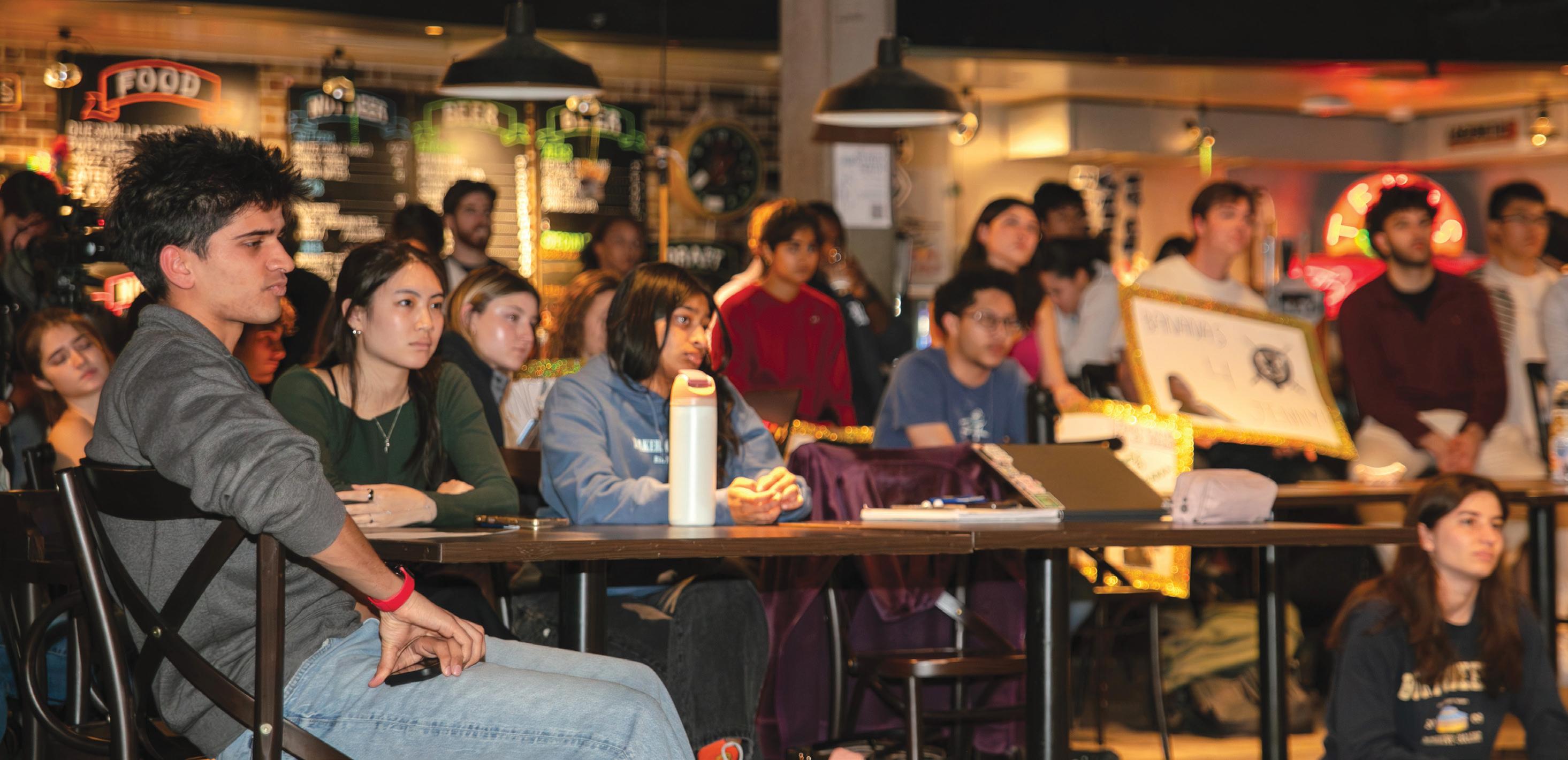
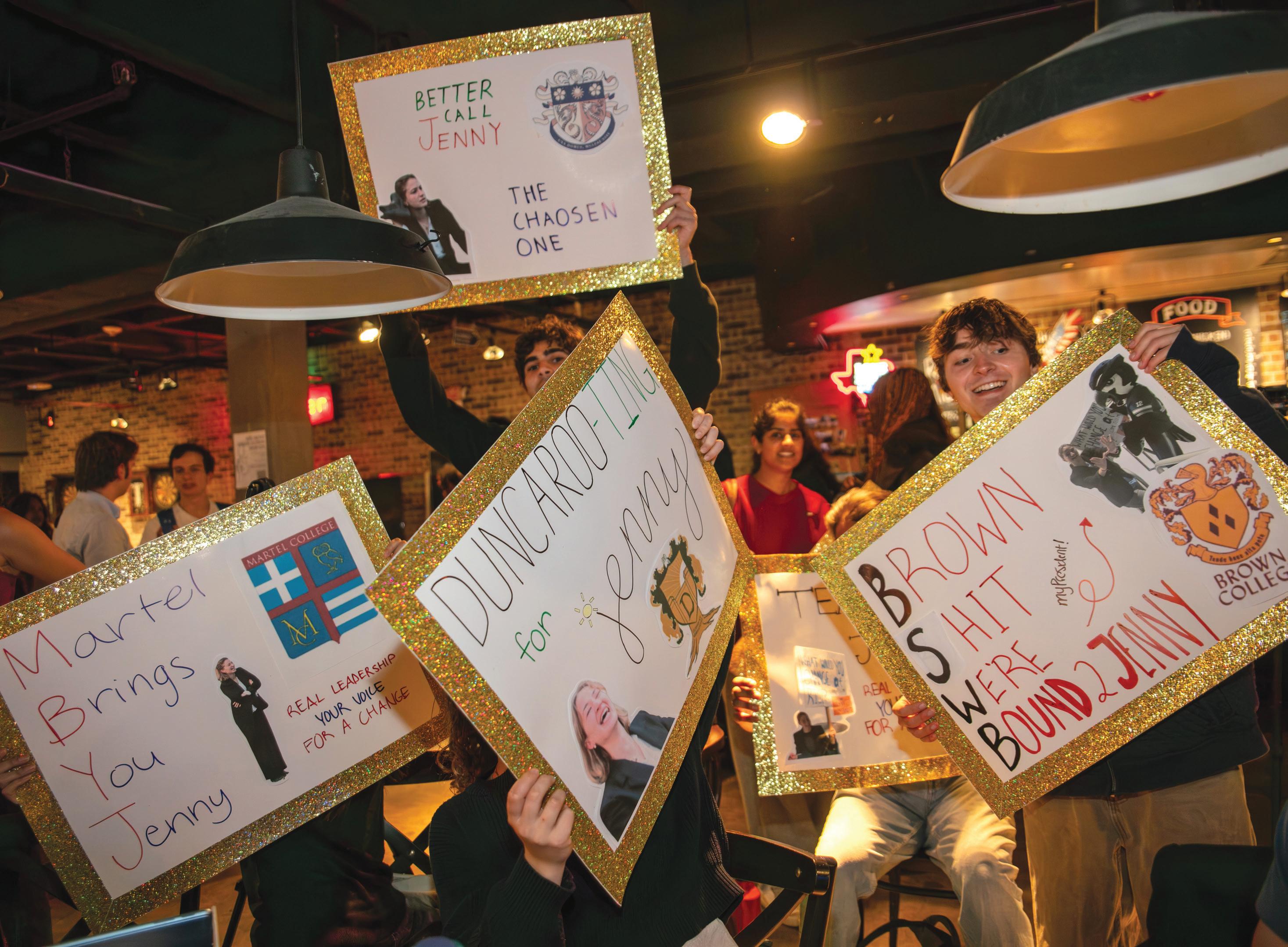
Students gather at Pub at Rice to watch the Student Association election candidates debate their positions. This year, five candidates ran for president in the most crowded presidential race since 2003.
Chelsea Asibbey
TOBY CHOU
SENIOR WRITER
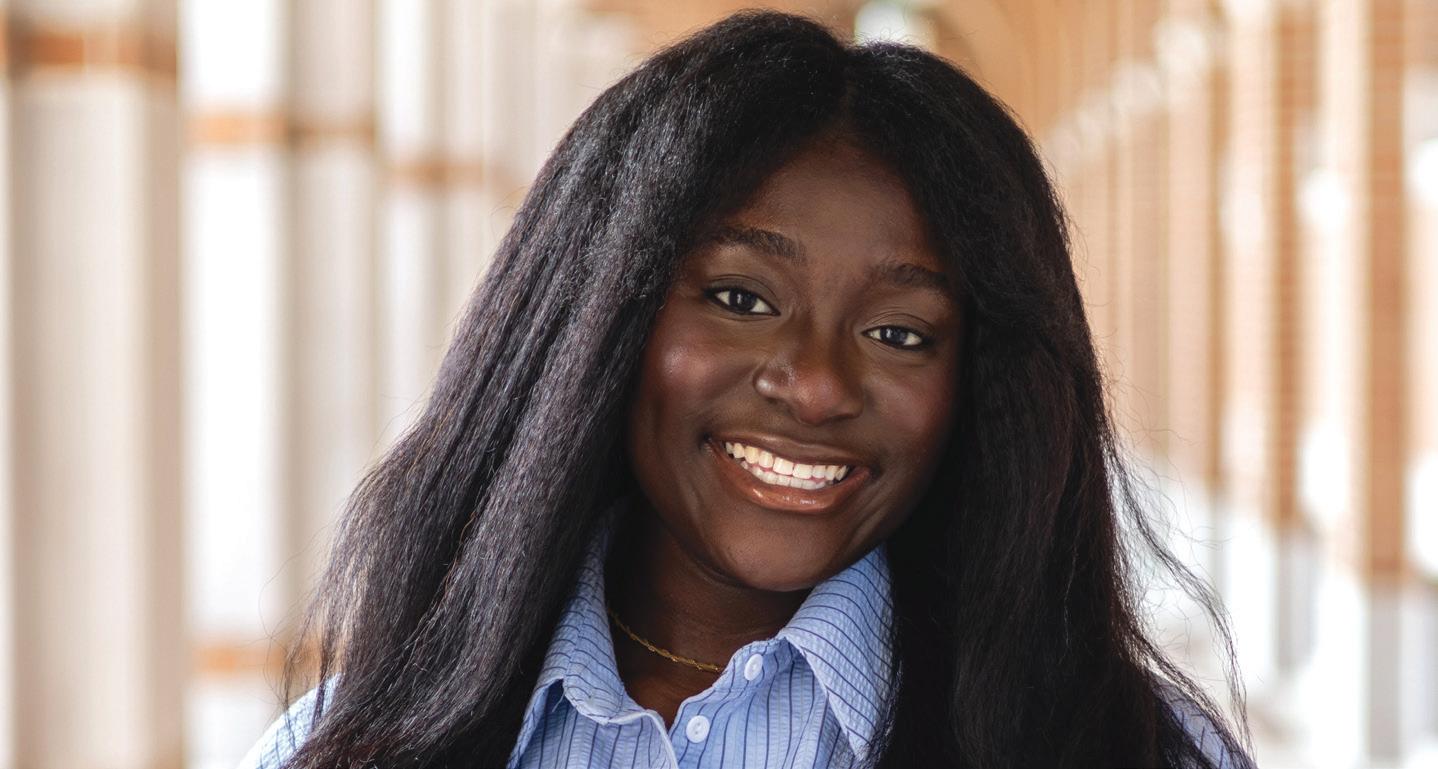
Chelsea Asibbey, a Baker College junior, uses three A’s to describe her presidential platform: action, accessibility and affordability.
First, under action, Asibbey said she wants to make sure that as Rice continues to grow, traditions and community are not lost along the way.
“Rice is expanding so much, so quickly,” Asibbey said. “Where’s Beer Bike going? Can we find a place to make sure that traditions don’t get lost amongst the people?”
Second, under accessibility, Asibbey wants to focus on giving both sides of campus easier access to late night dining options, as well as better integration of student resources past Orientation Week.
“One thing that Rice does is that we have a big spike of all the resources in the beginning of the year,” Asibbey said. “Everybody knows about everything: mental health, well-being, all these things. But if we could find a way to continue to integrate well-being throughout the year, so it’s not just a big spike and a taper off. I think that’s the Student Association’s place to make sure that the resources that are available to us are known.”
Finally, under affordability, Asibbey praised the effort the current administration put into getting the $5 printing credit, but said she wants to push for the $10 credit that was originally proposed.
She also said she wants to use the SA’s voice to push for more affordability changes, like more discount days for the Rice
Max Menchaca
PRESIDENTIAL CANDIDATE
Bookstore in the Rice Memorial Center and asking the Rice administration to critically evaluate Cengage, a textbook platform used by many STEM courses that can cost over $100 per course.
“We can’t make Cengage lower their prices,” Asibbey said. “But if there’s an alternative platform that’s affordable and accessible, we should be looking into what other universities that are our peers use that are not $200. We can motion for those things and present them to Faculty Senate.”
Asibbey said she believes her wide breadth of experience will serve her well as president. Asibbey is the SA’s director of communications and previously served as secretary. She is also an event coordinator for the Rice African Student Association.
“I think it’s important that whoever is president has the ability to represent all different parts of campus,” Asibbey said. “I’ve taken the time in my three years to get to know different parts of campus and bring that knowledge to the table. I hope that my presidency would be effective leadership, good facilitation and a representation of voices that maybe don’t always get the platforms.”
Concerning the current administration, Asibbey said the priority for next term should be changing the way the SA is perceived. As the current director of communications, Asibbey said social media is a great way to help get students more involved in the SA.
“I started a segment that said things like ‘your Student Association actually does stuff, please don’t hate us,’” Asibbey said. “I want
PRESIDENTIAL CANDIDATE
TOBY CHOU
SENIOR WRITER
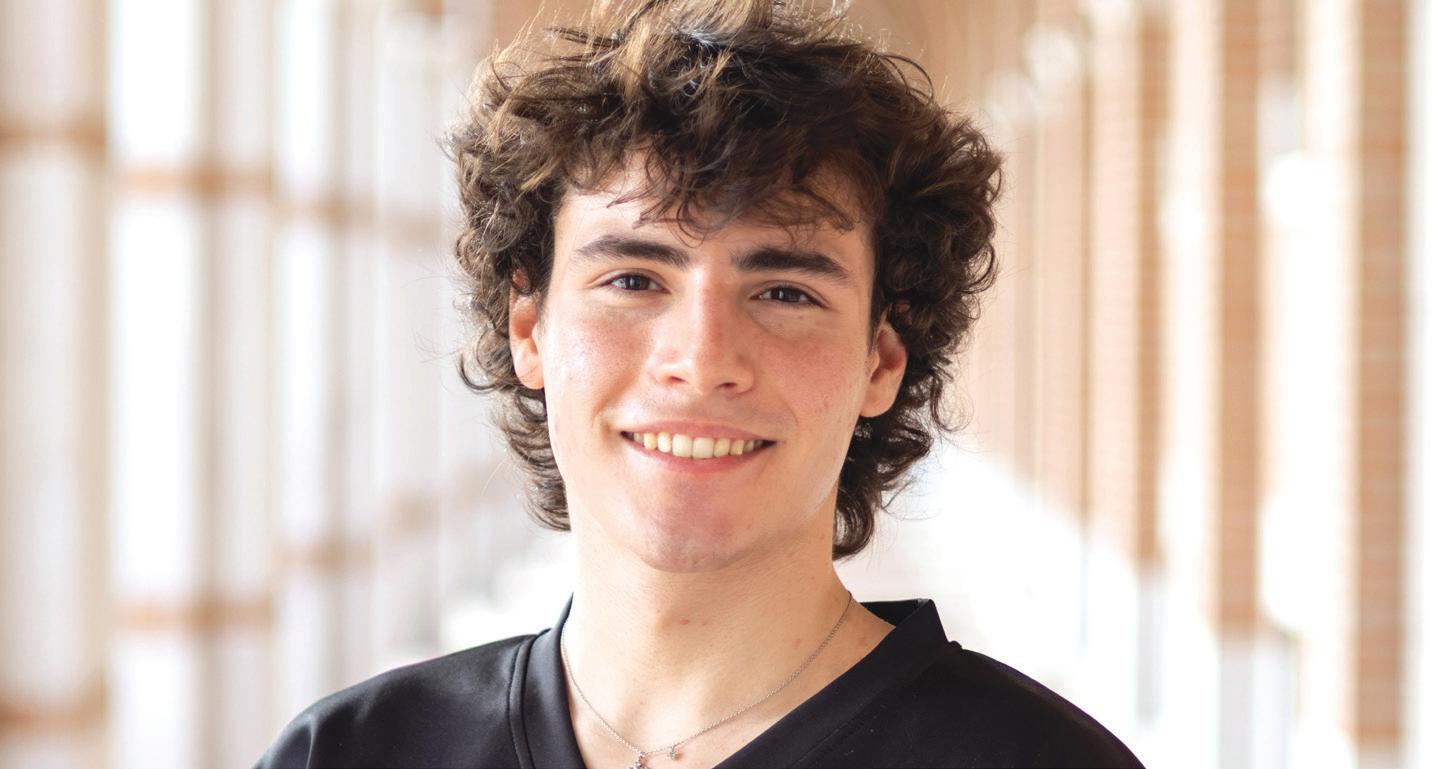
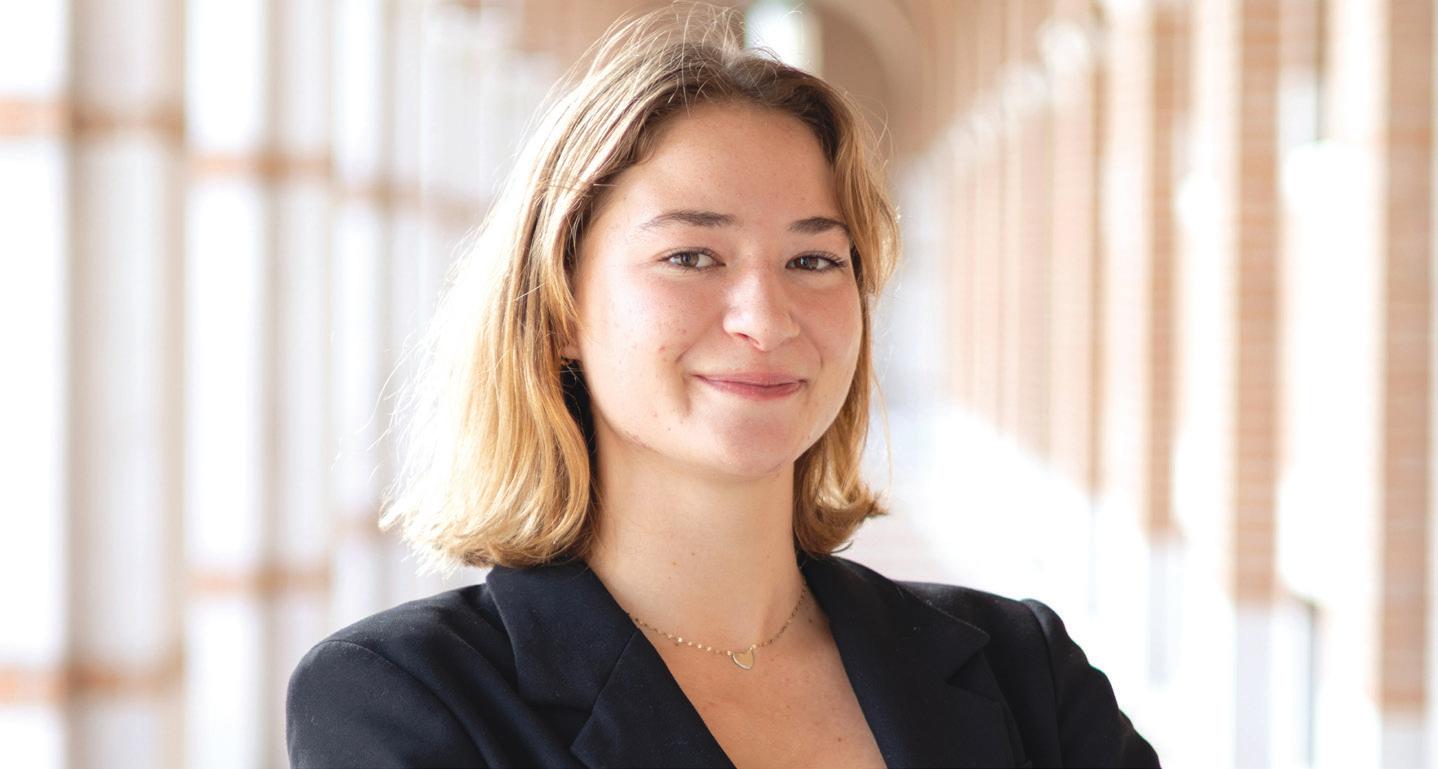
Max Menchaca’s presidential campaign can be divided into three main goals.
Menchaca is the current Brown College senator. His first goal is to use the Student Association’s voice and power to push back against the restrictions that the administration has placed on student life, from parties to protests.
“I feel like in the last, especially two years, and from what I’ve heard from before, when I had matriculated, is that Rice has become kind of just harder to be a student in terms of expressing yourself,” said Menchaca, a sophomore. “Whether that be in the form of protests or written pieces, or whether that just be going out or going to Pub, it’s felt like less
Jenny Karsner
TOBY CHOU
SENIOR WRITER
Jenny Karsner’s main goals center around work-life balance, especially in the face of dramatic changes on campus.
“I’m not exactly a traditional president, because this isn’t a traditional year,” said Karsner, a Wiess College junior. “We have a lot of big changes coming up, like Chao College being added as a residential college, and then the Gateway plan creating a path between Rice Village and Rice, which is going
to use social media to inform students, like, ‘we understand you’re frustrated, but here’s what your students are doing.’”
Asibbey said she also wants to use social media to expand on commissions within the SA. While she admires the work they have done, she said she also believes students are still unaware of what these commissions do. Through social media, she wants to advertise the work they do, available applications for students to get involved in and what platforms they represent.
“There’s a lot of niches in the Student Association,” Asibbey said. “If you want to be a part of the Diversity Commission, you can do that. If you want to be part of the Environmental Commission, you can do that. I think people think it’s just the senators and the voting members.”
Asibbey said she also has issues with the way the Blanket Tax Committee is currently run. She said the key issues are that the
committee is not making quorum and BTC members are not representative of the people that they are giving money to, specifically referring to the Rice Women’s Resource Center budget cuts last year.
“We need to make sure that people who are on the Blanket Tax Committee show up so we can get people their money,” Asibbey said.
Concerning institutional neutrality, Asibbey said she places the highest priority on making the SA accessible, and that would mean not making political comments that do not pertain to the university.
“I think that as a Student Association, it is important that we remain accessible to all students, unless there’s an issue that deeply touches our mission,” Asibbey said. “For example, I think it is appropriate that we speak about the shooting at Brown [University]. That’s important, that could be us, that could be here.”
fun and it’s felt way more restricted.”
Menchaca’s second goal is to use the SA to push for academic improvements, especially concerning the final exam schedule and expensive tools like WebAssign, a feature on the textbook platform Cengage that is used by many STEM courses and can cost over $100 per course.
Menchaca said releasing the final exam schedule so late negatively affects many international and out-of-state students and that Rice should critically assess WebAssign due to its high cost to students.
Menchaca’s third goal revolves around getting the student body more connected to the SA. His main solution to the current disconnect between the SA and the general student body is to move Senate from Fondren to more public areas.
PRESIDENTIAL CANDIDATE
to go through the whole Beer Bike track, which is basically our biggest tradition.”
Her campaign statement starts with a hypothetical scenario about an off-campus student choosing how to get to campus on a rainy day. Their options include biking in the rain, juggling an umbrella while biking, or missing class. Karsner said she wants to create a “rainy day fund” to help these students arrive on campus safely and dry.
In terms of academics, Karsner is pushing for changes to Fondren Library hours, meal plans and alumni connections. For student
“One thing I find particularly ridiculous is that we expect students to come to us like we hold our Senate in Fondren, and we are always telling people like, come to Senate,” Menchaca said. “I think it should be the other way around. I think the Senate should make a concerted effort to go to the people.”
He also wants to push for SA to be integrated more into Orientation Week. He said he believes incoming freshmen are often unaware of possible ways they can impact the SA.
Menchaca said his experience as a former New Student representative and current senator allowed him to see how much he could improve student life and becoming president would allow him to do even more good work.
“Being president means being able to drive this big vehicle that is the SA in a direction that benefits everybody,” Menchaca said.
While Menchaca said he was also considering running for Brown president, he ultimately decided to run for SA president so he can make an impact while continuing to live off campus.
Considering the current administration, Menchaca said while the SA has had great successes, they need to push for more.
Although he praised the advocacy for the $5 printing credit and the resolution to push back against Local Foods’ restrictive seating practice, which he co-authored, he said there needs to be follow through from admin on these resolutions.
“I think that there’s so much space there to utilize our voice and to utilize the power that we have,” Menchaca said. “I think right now, it’s kind of understood in a figurative way,
when it’s really tangible.”
He also said he wants to create more amicable relationships with Blanket Tax Organizations. Last year, the Blanket Tax Committee allocated the Rice Women’s Resource Center less than half of their requested funds. Other organizations, like ktru, had their travel budgets completely cut.
Menchaca also said he wants to push for more collaboration between the SA and the Blanket Tax Committee, as he believes there is a lack of communication between them that leads to confusion.
“I think there’s a lot more space there for sort of the rationale to be explained,” Menchaca said. “Why are we allotting this much money to this? Why did we cut funding to this? I would like to see a lot more collaboration there so that we can know what we’re voting on.”
Menchaca, as one of the co-authors of the resolution that discussed institutional neutrality, said he does not believe people in the SA should be able to make political comments as representatives of the SA. However, he does want to push for more student political engagement.
His resolution, which would limit the political speech of the SA president, ultimately failed after undergoing multiple drafts.
“I do think that there is a role for the SA in political speech, specifically with referendums,” Menchaca said. “I think that is a very unique tool that we have, and something that may be underutilized. It’s really cool because it allows students to bring an issue that they feel passionately about to Senate, and then it allows the Senate to pass it on to the campus with a vote.”
FRANCESCA NEMATI / THRESHER
FRANCESCA NEMATI / THRESHER
FRANCESCA NEMATI / THRESHER
life, she wants to maintain culture, especially with the establishment of Chao College and the possible disruption of Beer Bike by the Gateway Project.
“I want to make sure that that culture lives on,” Karsner said. “Not just by integrating Chao, but through making more sports events, making more inter-college competitions and sports events, adding all the other things that you guys have basically been telling me, like more therapy dogs, better well-being resources, things like this.”
Karsner said a major goal of her presidency is to connect the student body to the SA. In the week leading up to the Pub at Rice presidential debate, she positioned herself outside Fondren with a sign asking for student thoughts. She said only by connecting with students directly can the SA
truly represent the student body.
“I believe leadership right now requires three things: listening closely, turning what we hear into stronger systems and making the Student Association feel like a lived part of campus life,” Karsner said.
One possible initiative Karsner has in mind is creating consistent spaces where students can see their input translate into real action.
“My goal is not simply to manage what exists, but to improve how it works and how it feels,” Karsner said.
While she lacks SA experience, Karsner said her experience in leadership roles outside of the SA gives her a better understanding of Rice’s student body and how it interacts with the SA.
“I chose to spend my time at Rice across
YILIAN
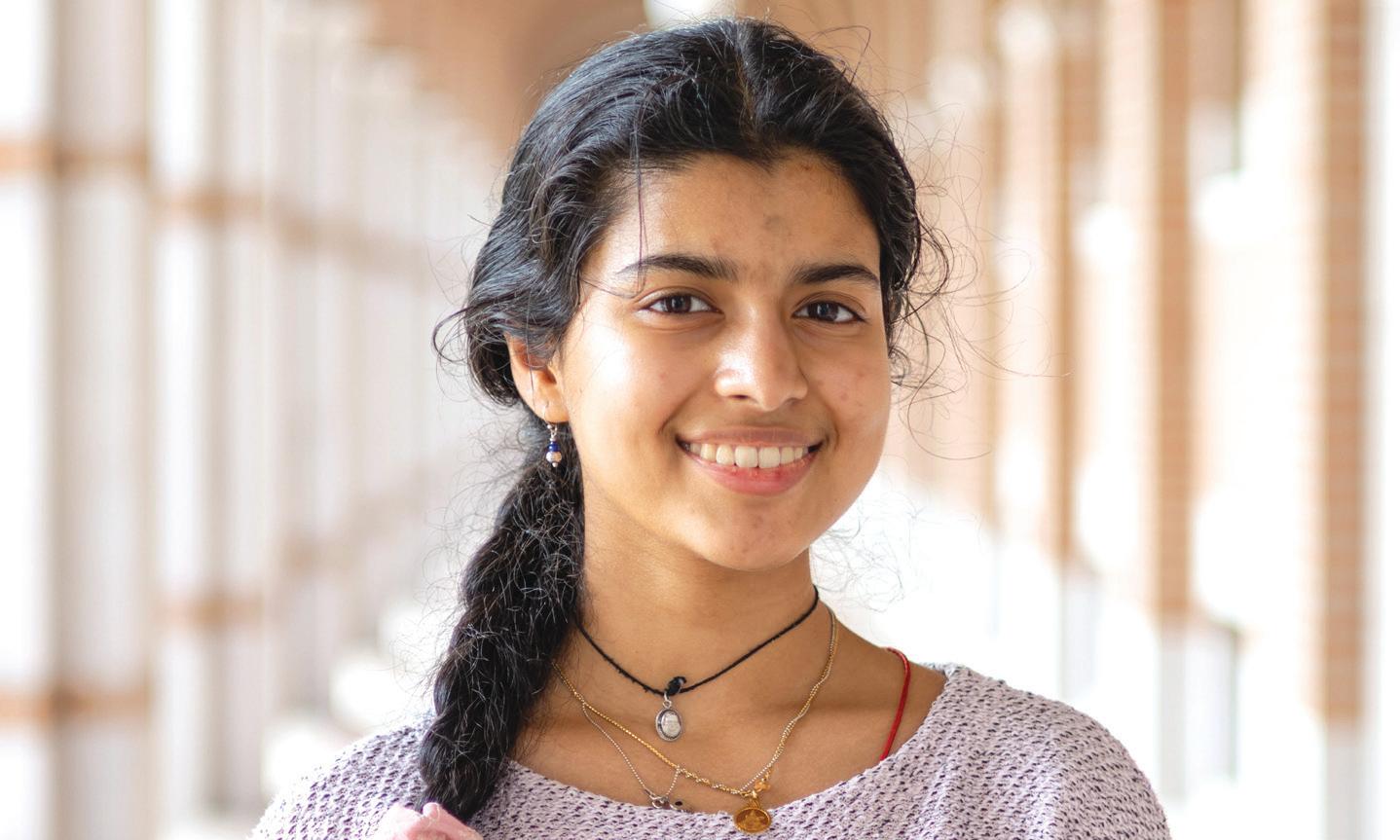
Ananya A. Nair, a McMurtry College sophomore, is running on the platform of improving the quality of servery food, funding clubs who lost money under last year’s Blanket Tax cuts and proposing resolutions that meet student needs rather than increasing the power of the Student Association executive board, according her candidate page on the SA website.
Nair declined to be interviewed by the Thresher for this article.
Currently, Nair is the committee cochair for the McMurtry philanthropy committee and member of the SA Athletic Commission. Nair ran for internal vice
president in last year’s SA election; Sohani Sandhu ultimately won the seat. Nair’s campaign website reads that she hopes to implement “flavorful, nutritious, and organic food across all Rice serveries” that is more inclusive of different dietary needs. She is also running on expanding late night dining to both North and South colleges.
Another one of Nair’s policies is advocating for shuttle services that are “inclusive” of off-campus undergraduate students. Her website says she also wants to create a central location for students to gather and use the shuttle services.
Citing eyestrain from the extended usage of screens, Nair is campaigning on implementing free printing. The SA
Muyiwa Ogunsola
TOBY CHOU SENIOR WRITER
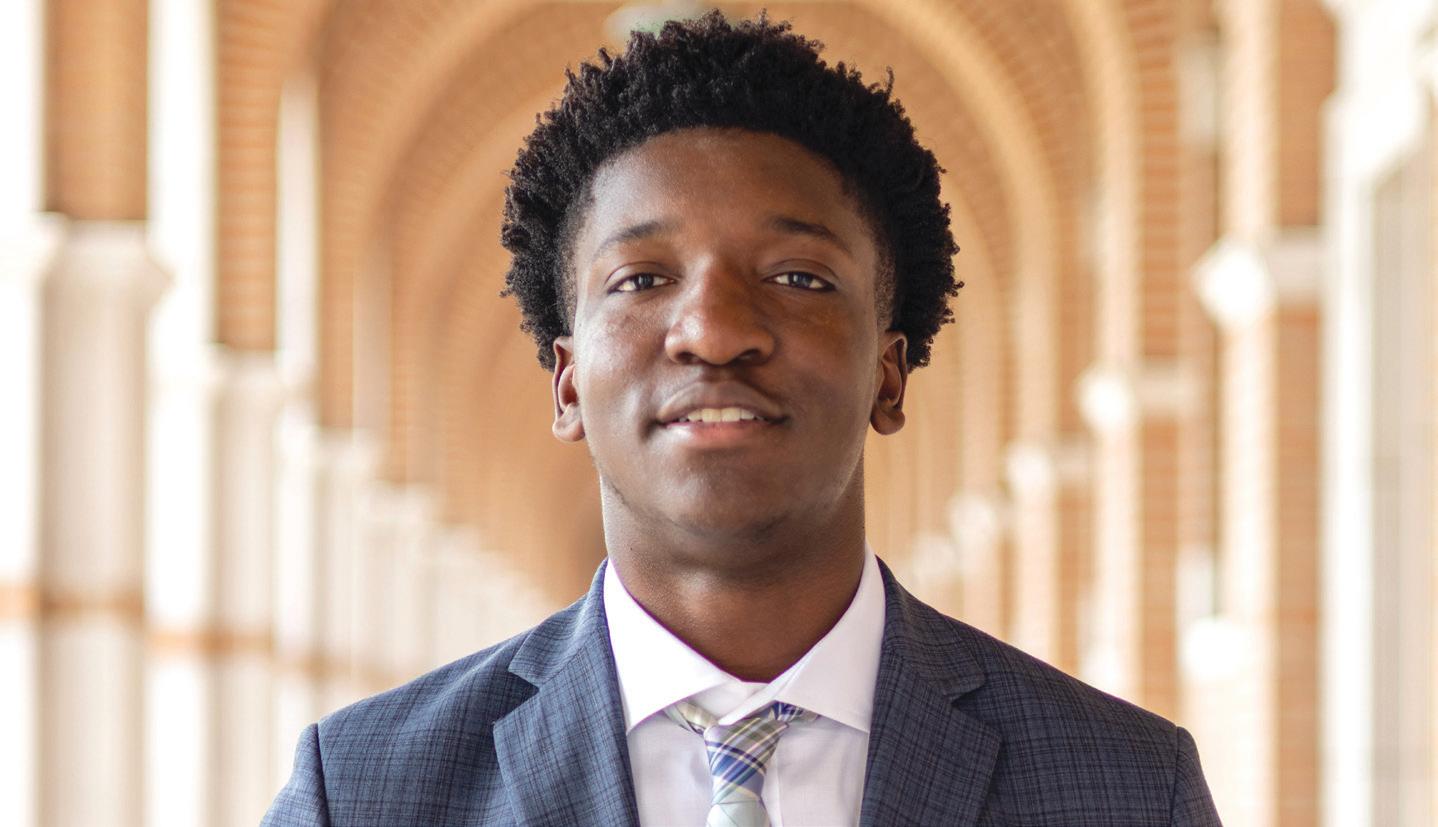
Muyiwa Ogunsola is running for Student Association President with the goal of restructuring the bureaucracy for growth and efficiency. Ogunsola said in his one year at Rice, he has noticed that many of his peers believe the SA is inconsequential and does not achieve anything.
“I think that we should have a Student Association that represents our voice and is able to stand up for us,” said Ogunsola, a Hanszen College freshman. “It’s supposed to be our centralized government, and right now is not doing that.”
In Ogunsola’s view, the problem with the SA lies not within the people running it, but in a flawed constitution. He said the constitutional amendment process is too slow and ends up restricting the ability of the SA to do anything, causing them to spend weeks on procedure and voting.
“The constitution is meant to mimic the United States Constitution, which is representing hundreds of millions of people,” Ogunsola said. “We need to water it down to something that’s more grassroots, more close to the people, something that reflects the size of our school.”
Ogunsola said while the people in the SA have incredible drive and motivation, the SA constitution is not built for students.
“They all care about the school deeply, and they all commit a lot of time and energy
many different communities,” Karsner said. “I have served as a Civic Immersion Facilitator, UCourt Representative, member of Mechanical Engineering Board and in residential college leadership.”
Karsner said her experience as a volunteer at the Rice Women’s Resource Center is part of the reason she is running for SA president. She said she witnessed the disconnect between Blanket Tax Organizations and the SA when the RWRC was allocated less than half of their requested funds, and she seeks to fix that relationship.
“Working at the Women’s Resource Center showed me how directly funding decisions and institutional priorities affect student well-being,” Karsner said. “My governance roles showed me how those decisions are made.”
Ananya A. Nair
recently passed a $5 printing credit, paid for by the Blanket Tax. Nair is also campaigning on “ensuring that the Rice Recreation Center is fully equipped with all the essential work out equipments for a great workout.”
During the SA Pub debate, Nair highlighted her experience as a First Year Representative and Parliamentarian at McMurtry. She also said she has experienced what she perceives as exclusivity within the SA and has responded by taking on a more observational role by attending meetings and writing a Thresher column last semester about her opinions on the organization’s proceedings.
“As an outsider, I have observed everything in the SA, because the SA has not given me a chance to be a part of it,” Nair said. “That’s why I’ve been running for this position, because right now it’s a top-down process to make any change.”
When it comes to funding allocations, Nair said one of her priorities is funding student organizations that were impacted by Blanket Tax cuts, such as the Rice Women’s Resource Center. She suggested pursuing alternative pathways to fund new clubs and events rather than relying on the Initiative Fund, such as holding fundraisers and defunding “expensive senator dinners.”
“Regarding the Initiative Fund, I would like to enlarge it and not say new has to be part of the rubric, because there are many upcoming initiatives that have
Concerning institutional neutrality, Karsner said she is firmly against it.
“I think it conflicts with past statements that Rice has released in speaking on certain issues,” Karsner said. “If you’re gonna say you’re neutral now, what does that mean for anything we’ve said in the past? I don’t think it’s a policy that we should be making to make ourselves neutral.”
With Blanket Tax organizations and the Initiative Fund, Karsner said she believes that while the Initiative Fund has amazing potential, the disconnect between the SA and the student body leads to much of the money remaining underutilized.
“I wouldn’t allocate as much money to the Initiative Fund in the future,” Karsner said. “I think I want to reallocate a lot more money to the Blanket Tax Organizations.”
PRESIDENTIAL CANDIDATE
happened before, but to make it even better, they still need those funds,” Nair said. “Sometimes the SA can give full funding, but the SA will certainly give partial funding. I will not be rejecting any initiative.”
Nair said she is in favor of institutional neutrality, particularly student leaders and residential college governments abstaining from endorsing candidates in SA elections.
“There are some candidates here that were not endorsed by their own president, even I was almost in that situation, and it’s very disheartening because your residential college is your home,” Nair said. “The SA president and the whole executive board should not be endorsing candidates. They should be abstaining, because they are representing every student at Rice University.”
If elected, Nair said she would work to make the SA more accessible to the student body by allowing interested parties to get directly involved through volunteering and shadowing opportunities.
“One reason that students are frustrated with the SA is that they’re not being taken in, like I was not taken in for anything,” Nair said. “That is what I’m going to be doing as SA president; every student in Rice who wants to be a part of the SA, whether it’s a commission, volunteer opportunity, project-based opportunity, they will be included.”
PRESIDENTIAL CANDIDATE
to the Student Association,” Ogunsola said. “But due to their people kind of growing content with what they have, they lack the vision to see further into a better future for the SA. They see action through the SA as it is, and not changing the SA to fit the needs of us, the people.”
One of the biggest changes to the constitution Ogunsola wants to push for is a decrease in the voter turnout threshold, which he believes has stopped the SA from making more of an impact on campus. The current required voter turnout is at least 20% in order for measures to pass.
“We have these people in SA,” he said. “They’re working hard drafting these incredibly long bills and all this stuff to kind of get legislation through. It’s just impossible, because we only have elections every so often, and in these elections, you won’t get enough voter turnout. I think we need to change that and decrease our voter turnout threshold.”
Ogunsola is the only freshman in the SA Presidential race. He said this gives him a unique perspective not burdened by the SA’s status quo.
“I feel that waiting a year is counteractive to everything I stand for,” Ogunsola said. “I think that for someone to have some perspective in the SA and to make this kind of radical change, they have to be new to it. Because once you’re in the SA for two, three years, you grow used to the bureaucracy, the delays, and you don’t have the drive to change anymore.”
Ogunsola’s opinion on the current administration is mixed. While he praises them for their work on the $5 printing credit, he said without reform, SA impact will remain relatively weak.
“I think that what they’ve done with the printing credit is great — they’ve increased that funding,” he said. “But I think that the people deserve more and that we can do more.”
This year, political speech and institutional neutrality were hotly contested talking points, following a post concerning conservative influencer Charlie Kirk’s assassination.
Ogunsola said above his personal beliefs on institutional neutrality, he would prioritize what the student body wants.
“I can’t just consider my own personal views,” Ogunsola said. “I think I have to
consider my constituents first before I consider myself. And looking through the data, it looks like the students don’t want the Student Association commenting on political topics like that, especially political topics that don’t directly pertain to the university.”
Another change Ogunsola wants to make is to connect the student body more to the SA by pushing it as another form of Rice’s Culture of Care and making it more accessible to students who do not regularly attend Senate.
“I think that people do care about other students at the school, and right now, they can’t see the SA as an avenue to care for other students,” Ogunsola said. “I want to move Senate to a more open area where people will be able to come by and actually see what happens, see the kind of change that we’re making.”
FRANCESCA NEMATI / THRESHER
FRANCESCA NEMATI / THRESHER
JIANG THRESHER STAFF
Current EVP Mahtab Dastur runs unopposed for IVP
HONGTAO HU ASST. NEWS EDITOR
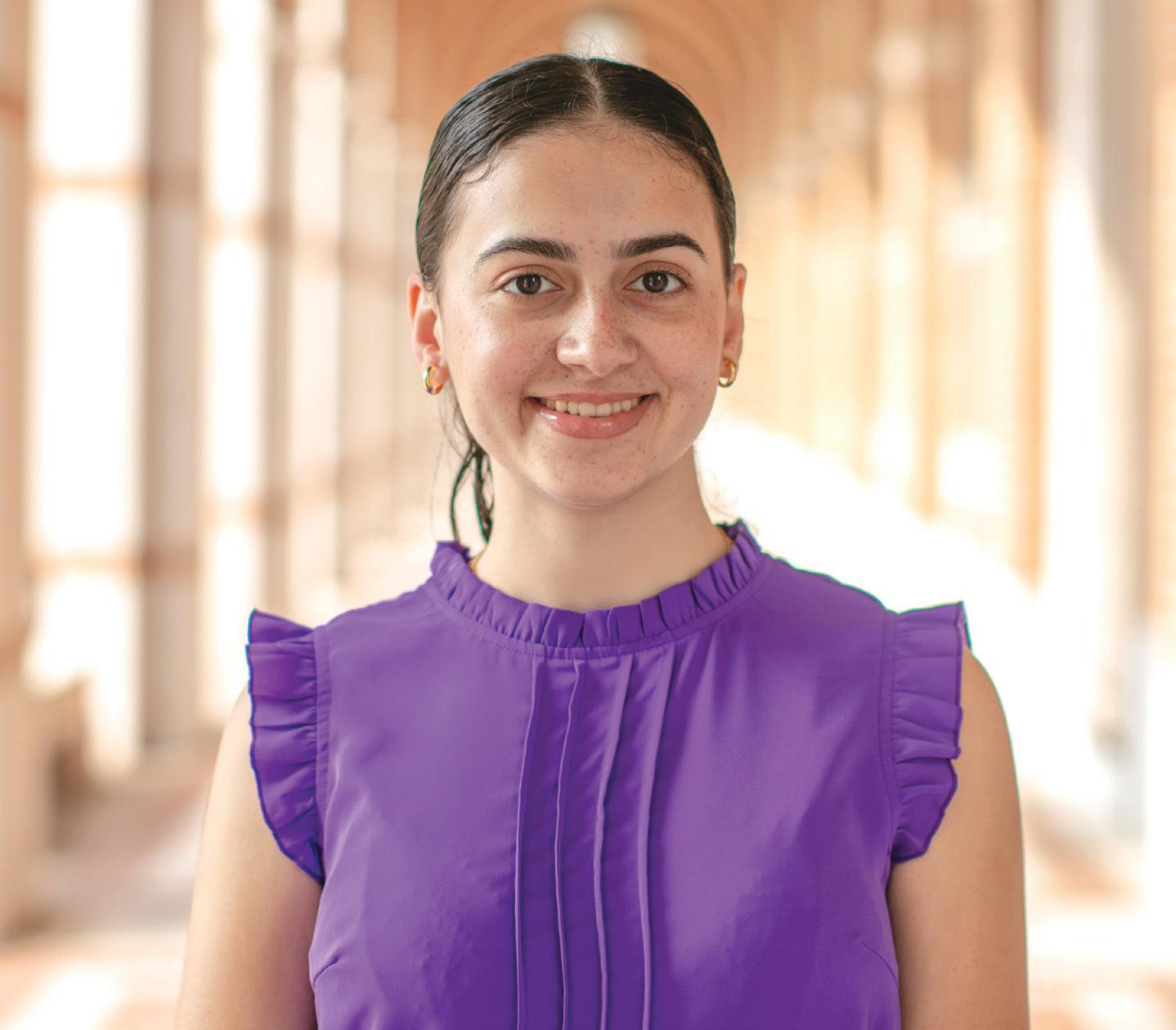
In a bid to move inward, current External Vice President Mahtab B. Dastur is the uncontested candidate in this spring’s Student Association election.
Dastur, a Duncan College sophomore, is running for Internal Vice President on a platform of addressing food insecurity,
strengthening traditions as Rice expands and increasing student printing credits.
The proposals are similar to Dastur’s platform for EVP last year, when she ran on free printing and increasing meal swipe donations, along with increased participation in the SA by the student body.
“Food insecurity is a lot bigger than just pantries and swipes,” Dastur said. “Fundamentally, it’s about access to food,
and I’m hoping that access to food is just generally increased on campus, whether that be through extended food pantry hours or extended food pantry locations.”
In her role as EVP, Dastur said launching the printing credit pilot last fall was one of her biggest accomplishments. The pilot deposited $5 in printing credits into Rice undergraduates’ accounts, and was funded by the SA. Dastur was one member of the SA who introduced the printing credit resolution; as IVP, she said she hopes to create a permanent version of this program.
“I think the printing credits took a whole lot of my time — I worked through the first semester and summer as IVP on it,” Dastur said. “We’re currently in discussion with many different offices, including OIT, and we’re hoping that it’ll be picked up from the pilot program. We just got the data back, and it looks really, really promising.”
Through her experience as EVP, Dastur said she will maintain dialogue between the SA and Rice administration to support student-favored initiatives.
“I think one of the really big things that we did was to open the channels of communication between the SA and departments at Rice,” Dastur said. “We now have a working relationship with OIT and H&D, the President’s office, all that stuff, which really helps us get initiatives started and accomplished.”
If Dastur shifts from EVP to IVP, some of her current responsibilities may not change if Constitutional Amendment No. 2 passes.
This amendment would give the IVP oversight of new student representatives
and the Senate. This, Dastur said, will allow her to continue supporting the senators — her current responsibility as EVP.
“A lot of the things that the senators do, I support them with — I’m really proud of them, for making sure organizations on campus are listening to student needs,” Dastur said. “If the amendments pass, it’ll continue to be part of my role. So I’m actually pretty excited about that. It’s really cool to be the point of contact and point of support for a group of people who all have these different things that they want to accomplish, and then seeing those come to fruition.”
It’s really cool to be the point of contact and point of support for a group of people who all have these different things that they want to accomplish, and then seeing those come to fruition.
As a member of Chao College’s founding committee, Dastur said her work in shaping the future of Chao College drives her passion to preserve Rice’s traditions.
“One of the things that makes Rice so special is the very rich traditions that we have,” Dastur said. “I’m passionate about making sure that we are preserving those traditions in a manner that fits the student body.”
Rohan Dharia, Da’Taeveyon Daniels compete in EVP race
RUBY GAO SENIOR WRITER
Rohan Dharia, a McMurtry College senator, and Da’Taeveyon Daniels, a New Student representative from Martel College, are the two candidates vying for the Student Association’s external vice president role.
Dharia, a sophomore, said he is running for the position based on his two years of experience working with the SA and his service over the past year as a McMurtry senator. He said these roles have prepared him to make a tangible impact and address issues facing students.
Pointing to his campaign slogan “Feel the Change” Dharia said he hopes to make the SA’s work more visible and meaningful to students by focusing on initiatives that directly affect student life.
“I think the reason people feel the SA may not be transparent is because people are disengaged from what the Student Association does, and it’s natural,” Dharia said. “That’s why my platform is student life. If we can make impacts that will better the life of every student, then every student will feel like, ‘Oh, the SA actually does not stop. Let me go get more involved in it.’”
Daniels, a freshman, is running for the position with a goal of addressing transparency and representation in the SA, but through a different approach. He said his interest in the SA began when he wanted to advocate for changing the association’s name to better reflect the student body.
Daniels authored a name change amendment on this year’s ballot, which received support from current internal vice president Sohani Sandhu and New Student representatives from Lovett College. If passed, the amendment would change the abbreviation from SA, an abbreviation for sexual assault, to RSA, standing for Rice Student Association.
“We were just tenacious and audacious in our pursuit of this goal of having the student voice represented on
this matter,” said Daniels. “There were so many other issues that came up along the way of representation and people feeling like the Student Association wasn’t hearing the cries from the student body.”
Dharia said he helped establish McMurtry’s 24-hour snack pantry and secured funding to support it during his time as senator. He said he plans to continue expanding the project to other colleges if elected.
“It’s a process of talking to every single college, getting them to make a plan for where they’re going to put the snack pantry, how they’re going to restock it, things like that,” Dharia said. “Basically, we just allow every student to have 24-hour access to snacks.” Looking ahead, Dharia said he plans to hold more office hours across residential colleges and increase opportunities for students to access information about the SA.
“I think doing those more often and setting up time at each college because that’s more accessible to students to go to their own college, rather than walking all the way to the RMC,” said Dharia. “For a lot of students, that’s a far way to go, or especially if you’re off campus.”
Dharia said another one of his proposals is to expand after-hours access to academic buildings. He said he is currently working with administrators, including Dean of Undergraduates Bridget Gorman and Provost Amy Dittmar.
“A lot of people don’t like studying in a library, and it also closes at 2 a.m.,” Dharia said. “I think the academic buildings are a good way to start.”
Daniels said he is advocating for higher student wages and has received an endorsement from the SA Labor Commission.
“Why are students on this campus being paid absolute dirt?” Daniels said. “That’s a platform I’m running on, and that’s why I have the student Labor Commission’s endorsement, because we’re going to be actively working together to co-create a plan of how we can increase student wages sustainably and equitably on this campus.”
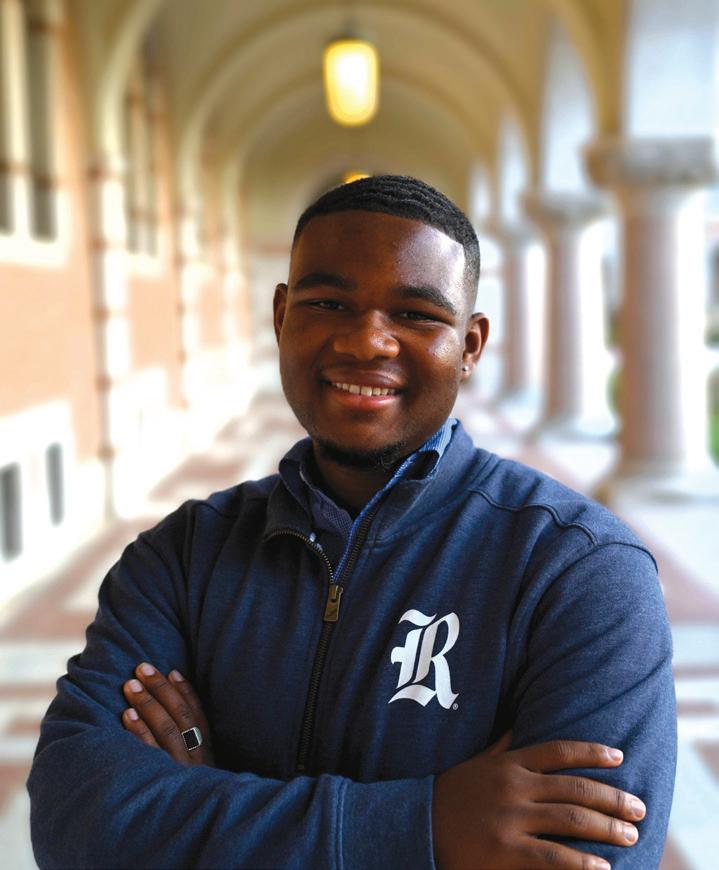
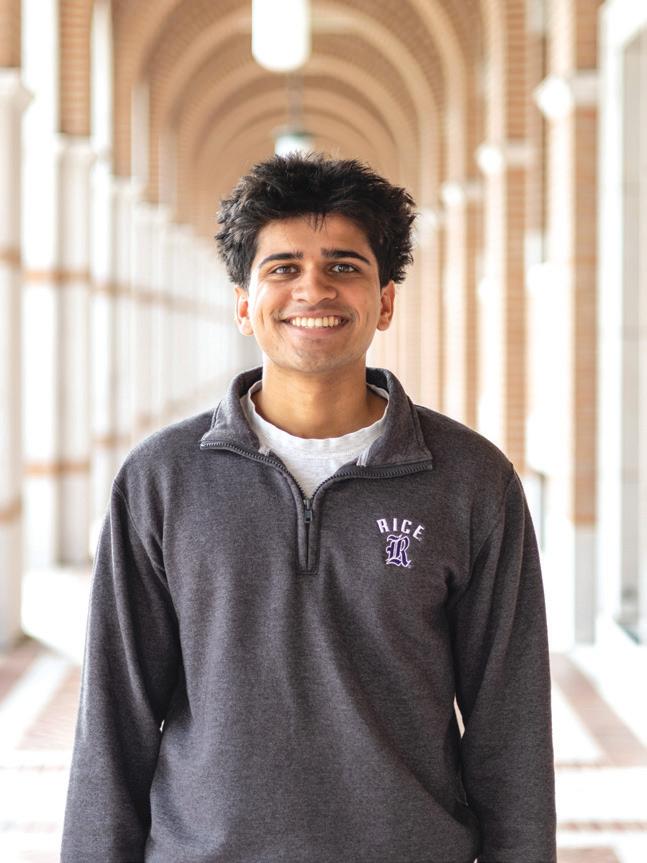
Daniels said he also plans to establish an advisory board for student organizations to share ideas and provide input for decisions that impact them.
“There needs to be a space where we can come together and have an advisory board and get the opinion of the people who will be most impacted, because it’s those people who will have to apply for the initiative,” Daniels said.
Dharia said he is also working to improve accessibility to the Initiative Fund. Managed by the Blanket Tax Committee, the fund provides student organizations with resources to support new ideas, events and projects that benefit the broader campus community.
Daniels said he also hopes to improve transparency and accessibility surrounding the Initiative Fund, particularly by helping student organizations better navigate the funding process.
“When it comes to the funding decisions made with the initiative fund, [students] feel like there’s not a lot of clarity,” said Daniels. “So creating centralized resources for student organizations, which are cultural
epicenters on campus, gives them the resources and space they need to represent not only their own voice, but also the voices of the students who engage with their organizations.”
Drawing on his two years of experience with the SA, Dharia said if elected, he plans to continue and build on existing initiatives, including late-night dining, which he collaborated on with current SA president Trevor Tobey.
“I want to continue meeting with Housing and Dining, because H&D is one of the most direct pieces of Rice administration that most directly impacts students,” Dharia said.
Starting in 2022, Daniels said his experience organizing against book bans in the Texas Legislature showed a commitment to education justice, and he will continue on this.
He said he is confident in his ability to overcome obstacles and push reform with administration, including changes to wages.
“At the end of the day, we’re either going to knock on the door and have [administration] allow us in, or build a door around them,” Daniels said.
FRANCESCA NEMATI / THRESHER
FRANCESCA NEMATI / THRESHER EVP candidates Da’Taeveyon Daniels (left) and Rohan Dharia (right) pose for a photo.
Robert Fischer runs unopposed for SA secretary
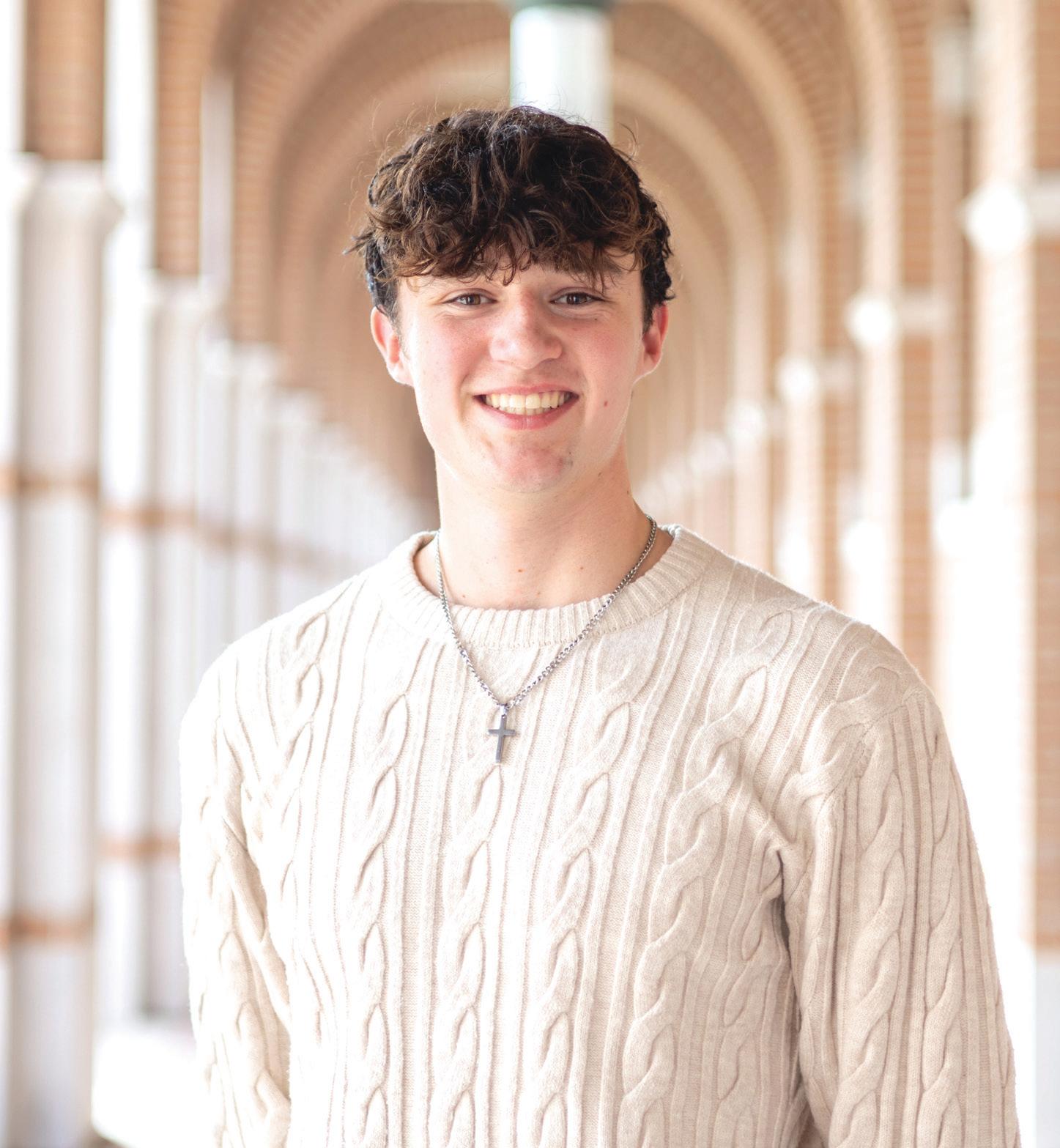
Robert Fischer, a Baker College freshman and New Student representative, is campaigning uncontested in this year’s race
for Student Association secretary.
“[The secretary] is really the backbone of the Student Association — taking notes, having records, a lot of important background, really tying things together, making sure that students are aware of what the student association is doing,” Fischer said.
Fischer said as secretary, he hopes to improve communication between the SA and residential college presidents and senators.
“There were a couple of times this year that the executive board was doing something and the presidents of colleges didn’t know what was going on,” Fischer said. “I think internally making sure presidents and senators are aware of what’s coming up for a meeting, what we will be voting on, as well as how commissions are going about their work and making sure they’re staying on track of various projects.”
As NSR, Fischer said he gained experience helping out with Baker’s government, shadowing president Alex Rubio and senator Veronica Paz.
“[The NSRs] were able to learn how they take notes, how they interact at Senate, kind of learn the scope of their role if we’ll potentially do that in the future, so that was a great learning experience,” Fischer said.
Fischer said he also shadowed SA President Trevor Tobey during executive board meetings, helping shape resolutions and writing emails as part of the executive board’s internship program for NSRs.
“Being a New Student representative and interning under Trevor … I know how things operate, I know how the Google Drive works, I know how our website operates, I
know how the agenda is formed, I know how we can successfully have resolutions,” Fischer said.
Being a New Student representative and interning under Trevor … I know how things operate, I know how the Google Drive works, I know how our website operates, I know how the agenda is formed, I know how we can successfully have resolutions.
As NSR, Fischer said he is currently working on a project with OpenStax — a Ricebased open source textbook publisher— to increase textbook accessibility for students by providing an affordable alternative to Cengage WebAssign, a textbook platform used by many STEM courses that can cost over $100 for a semester-long subscription.
The affordability of textbooks and assignment platforms is also a component in the platforms of several presidential candidates.
“If we can see if we can meet those quality concerns and potentially have that shift, it would be more like $40 or $50 for those classes with OpenStax textbooks instead of $140 or $150 with Cengage textbooks,” Fischer said.
TREASURER CANDIDATES
Suri Yang and Ronak Kothari face off in treasurer election
NEMATI / THRESHER
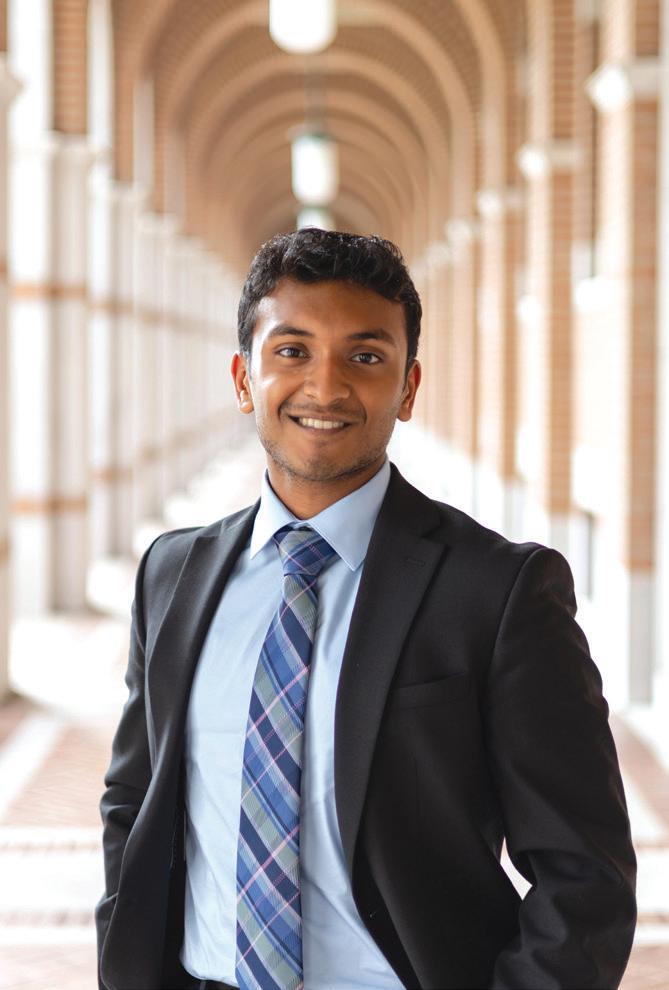
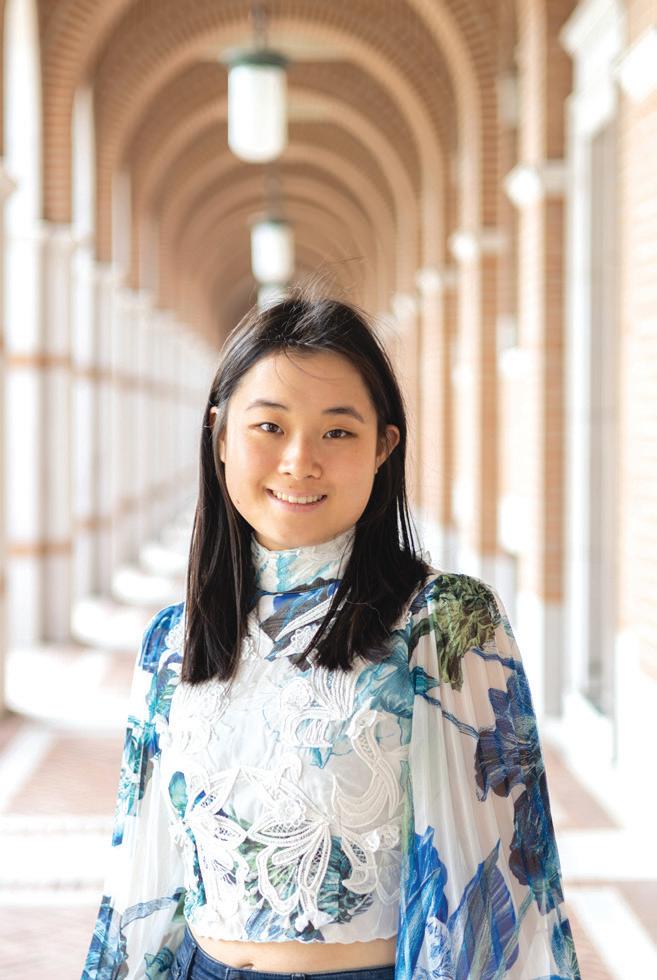
Treasurer candidates Ronak Kothari (left) and Suri Yang (right) pose for a photo.
YILIAN JIANG STAFF WRITER
Suri Yang and Ronak Kothari are both running for treasurer in the Student Association election.
Yang, a Will Rice College freshman, is campaigning for transparency around budget decisions and increased accessibility to club funding through the Blanket Tax Committee and Initiative Fund.
“While serving as deputy parliamentarian, I was also on the committee for club approvals, so I got to see what students are interested in,” Yang said. “[A lot of] student life is encompassed through cultural shows and student clubs, and being able to put those on through funding.”
Yang said one of the current successes of the SA is the size of the Initiative Fund, which funds newly-formed student organizations and initiatives. She said she aims to make it a more accessible
resource for existing clubs and events.
“Right now in our constitution, we have [it] set as, if you want to apply for the Initiative Fund, it needs to be a new and innovative thing,” Yang said. “Ultimately, Rice is about tradition, and I think that us [not] forcing things to be new is also something that we definitely need to work on.”
There are some things that I believe should be changed, like methods of funding, but for the most part, it’s simply growth in every single facet and pillar. Ronak Kothari
LOVETT COLLEGE SOPHOMORE
In addition to her current role in the
SA, Yang said she has gained exposure to the responsibilities of the treasurer role by taking an accounting class, going through the Blanket Tax Committee mid-year audit reviews and speaking with current treasurer Jackson Darr.
“In general, I’ve been to quite a few of the meetings that treasurers typically go to. For example, I was at one of the BTC meetings [on Feb. 23], so I know how the budget works,” Yang said.
If elected, Yang said she would actively communicate with student organizations on each step of the funding application process and provide clear explanations for each decision.
“If there is a budget allocation that I do not agree with, after I have consulted multiple different entities about this spending, then we can have a conversation of, ‘Okay, where can we meet on a middle ground on things?’” Yang said. “I want each person who has worked with me to know that I fought for them to have an answer about their situation, and that we didn’t just turn them away for no valid reason.”
Kothari, a Lovett College sophomore, is running on a platform of “growth, not change,” with the goal of streamlining the funding application process and building upon existing initiatives that benefit student life, such as the Hedgehopper program, a membership-based initiative that provides students with discounts from local businesses that was started in 2008 and recently revitalized by Darr.
“Change is a buzzword. I believe that it gets thrown out there, even when an organization doesn’t need it,” Kothari said. “There are some things that I believe should be changed, like methods of funding, but for the most part, it’s simply growth in every single facet and pillar.”
A transfer student and a New Student representative, Kothari said his experience from his previous student government at Babson College gives him a unique perspective to address the needs of the student body.
“I was doing a lot of representation and talking with a lot of people to figure out what the needs are, and then confirming if those needs affect the broader campus,” Kothari said. “We helped fund a $10 Uber credit for four different rides to certain locations and we created a shuttle system. All that is to say, my past experiences and roles helped me be confident in my ability to represent the needs of the Rice community campus.”
One of Kothari’s priorities is clarifying the funding application process for new clubs, he said.
“I’ve spoken to them when they have to submit what they look like in terms of financial positions, [and] that’s something that’s been very difficult,” Kothari said. “They don’t have the experience … so [making] it more equitable between the newer clubs and the more established clubs would be super important.”
I want each person who has worked with me to know that I fought for them to have an answer about their situation, and that we didn’t just turn them away for no valid reason.
Suri Yang WILL RICE COLLEGE FRESHMAN
If elected, Kothari said he will create a comprehensive document outlining all of the different club funding opportunities and ensure that the reasoning for budget decisions is clearly defined.
“I noticed when I was at Senate, most of the decisions made by the Blanket Tax Committee are defended verbally,” Kothari said. “I think when it comes to all of these decisions, being able to write down the step-by-step process, although that might take more time, is super important.”
FRANCESCA NEMATI / THRESHER
FRANCESCA
HOPE YANG ASST. NEWS EDITOR
Max Menchaca for Student Association president
Due to his action-oriented character, deep-rooted desire for institutional change and Student Association experience, we, the Thresher Editorial Board, endorse Max Menchaca for SA president.
The Board finds itself in a uniquely difficult position this year. Five passionate, driven candidates entered this year’s presidential race, the most since 2003. Such a heavily contested race confirms that the Rice undergraduate population craves change from the SA.
Menchaca built his platform on fighting against bureaucracy and implementing real change at Rice. His day one goal of defending public parties and traditions at the administrative level has every student in mind. He is also the only candidate who has outlined an academically oriented goal — getting final exam schedules published earlier.
Menchaca emphasized bringing the SA to the students, literally and figuratively. Most notably, he wants to move Senate from the Kyle Morrow Room in Fondren Library to more convenient locations for the North and South Colleges. We appreciate his dedication to increasing accessibility of the SA.
He acknowledges that the SA needs to do a better job reaching students, but we hope he realizes the promise he’s making, given that he said during the SA debates that he thought Rice had 3,000 undergraduate students. (The current enrollment is actually 4,776.)
We’re encouraged by Menchaca’s track record as Brown College senator but wish we could have seen his initiatives advance further. One of his biggest achievements is authoring a bill on institutional neutrality, which he says was held up due to its classification as a bill rather than an amendment. Although this bill faced obstacles, we appreciate his support of institutional neutrality and agree that the opinions of elected SA officials should be kept separate from SA-sponsored statements that represent the student body as a whole. We hope Menchaca will build on this push for institutional neutrality if elected.
Menchaca also authored a bill fighting back against Local Foods’ seating policy. While this bill is encouraging in theory, it still requires a push for more action after it was passed by the SA but ignored
at the administrative level.
Still, relative to the other four candidates, Menchaca offers a far more refreshing path for the SA. He strikes a perfect balance of experience and newness. Menchaca knows how to lead and how the SA works, yet he won’t carry over every quality of the previous SA executive committee. We’re encouraged by his commitment to improving communication between presidents, senators and commissions to create more transparency and less strife within the SA.
The Board finds itself in a uniquely difficult position this year. Five passionate, driven candidates entered this year’s presidential race, the most since 2003. Such a heavily contested race confirms that the Rice undergraduate population craves change from the SA.
We admire the campaigns led by the other four candidates and sincerely believe their claims that they want to fix the SA, even if they didn’t inspire as much optimism or confidence as Menchaca.
As a freshman, Muyiwa Ogunsola lacks the SA experience required to lead the organization and represent Rice’s entire undergraduate student body. A self-proclaimed outsider, Ogunsola has taken a couple of steps in the right direction, such as reviewing the Survey of All Students data.
We’d like to see Ogunsola take on other roles in the SA — and spend more than a singular year at Rice — before putting his name back into the mix for president down the road. His commitment to increasing the Initiative Fund is admirable. However, when speaking with the Thresher, he said he felt a budget of $1 million was a realistic target. The Initiative Fund currently has a budget of $143,000, so suggesting to raise this number nearly sevenfold shows the absence of a realistic vision.
Additionally, some of Ogunsola’s proposed methods to make the SA more efficient, such as lowering the voter turnout threshold from the constitutionally required 20%, give us pause. We acknowledge the SA is inefficient, but lowering the barriers for them to get measures passed — as opposed to bolstering student turnout and engagement — is not a democratic solution.
Jenny Karsner’s proposed initiatives are bold and ambitious, perhaps too much for their own good. Her proposal to potentially offer mid-year Initiative Fund rebates to students is incredibly impractical and could hint at a greater misunderstanding of the president’s power and capabilities. However, we applaud her motivation to bring massive change to how the Initiative Fund is allocated, including a desire to remedy the Rice Women’s Resource Center budget cuts.
Karsner’s stance on institutional neutrality seems to lack clarity. On one hand, she wants the SA to make statements on major national events, but only if they pertain to college students. We agree there needs to be restrictions on which events warrant the SA weighing in, but we question how Karsner’s administration would draw the line between what’s worthy of a statement and what should be addressed on a more individual level.
Her mission to get SA “at the grownups’ table” with administration has students’ best interests in mind but is not necessarily different from the goals set forth by her opponents.
As Chelsea Asibbey preaches many of the same narratives that we’ve heard from the Tobey-led SA, we worry about the potential for change. Her Day 1 goal of expanding late-night dining fails to address more important needs and desires. Especially in an era of Rice where late-night dining already exists at one servery, the need to expand the program is far less significant than saving traditions and publics, refocusing Initiative Fund spending and taking a hard-line approach with administration.
Asibbey’s stance on institutional neutrality is similar to that of Karsner: open-ended and vague. She listed the recent Brown University shooting as
an example of a situation where the SA should make a statement. If a national storyline unfolds, we are unsure we can trust Asibbey to have a consistent rubric for deciding whether the SA should take a public stance.
We commend Asibbey for being the candidate with the most SA experience. Her willingness to correct other candidates’ claims shows that she possesses a strong understanding of the Blanket Tax, the Initiative Fund and how the SA operates. However, we want change — and the turnout at the SA debates, plus the most contested election in over two decades, shows the student body agrees. Based on our conversations with Asibbey, we worry that her presidency would simply be an extension of the 2025-26 academic year under Tobey.
Ananya A. Nair declined this editorial board’s request for comment and asked to be removed from the endorsement process. An interview with the Thresher could have offered an opportunity for her to answer our key questions rather than requiring the student body to base their understanding of her campaign on her online presence and the SA debates.
Menchaca knows how to lead and how the SA works, yet won’t carry over every quality of the previous SA executive committee. We’re encouraged by his commitment to improving communication between presidents, senators and commissions to create more transparency and less strife within the SA.
During the presidential debate, she expressed persistent criticism of college presidents’ endorsements and a desire to eliminate traditional application processes for open positions within the SA, instead advocating for the automatic hiring of all individuals who express interest, regardless of the number of applicants.
Rohan Dharia for Student Association External Vice President
Due to his experience pioneering student initiatives and goal of improving student engagement, we, the Thresher Editorial Board, endorse Rohan Dharia for Student Association external vice president.
Dharia’s message is distinct by not framing the disconnect between students and their representatives as merely a communication issue, but rather a result of the student body not feeling the impacts of the work the SA does.
Dharia’s platform focuses on several specific goals he would have as EVP centered around student accessibility and engagement. His success as a McMurtry College senator, working on the team that brought the first late-night dining options to students, proves that he is capable of
following through on these promises.
Dharia’s experience working with administrative stakeholders and investment in the Rice community make him well suited for the EVP role, which fosters communication between the student body and beyond the hedges.
Dharia said he believes the lack of student engagement is the biggest barrier between students and the SA, a sentiment echoed across other candidates’ platforms. He goes one step further, though, in offering a solution: more tangible changes that directly benefit students’ lives.
Dharia’s message is distinct by not framing the disconnect between students and their representatives as merely a communication issue, but rather a result of the student body not feeling the impacts of the work the SA does.
Dharia’s goals speak directly to this problem. He aims to combat a rising food insecurity problem on campus by expanding 24-hour snack pantries in residential colleges. He said he will work with administration to give students after-hours swipe access to academic buildings so they have a place to study after Fondren Library is closed. He
also wants to bring back the pre-COVID farmer’s market hosted in Greenbriar Lot.
Not only do Dharia’s specific objectives speak to his ability to understand how the EVP role can directly solve issues students face, his experience inspires a confidence that he will follow through with them.
Not only do Dharia’s specific objectives speak to his ability to understand how the EVP role can directly solve issues students face, his experience also inspires confidence that he will follow through with them.
Late-night dining is one of the few fully-realized promises championed by this year’s SA, and Dharia was directly involved in pushing for that initiative.
This shows Dharia’s words are backed up by his actions, a desirable quality in any
elected official.
We appreciate Dharia’s opponent Da’Taeveyon Daniels for his thoughtfulness and persistence in pushing for a name change from the acronym SA — a commonly used abbreviation to refer to sexual assault — to RSA.
Daniels’ platform also includes a push for change and makes valid points that the EVP should do more to uplift all student voices and advocate for higher wages for students working on campus. Both candidates’ platforms include worthwhile initiatives that, if accomplished, would certainly serve the student body.
However, we believe Dharia has the ability to follow through on substantial policy initiatives in a way that Daniels does not. Daniels’ difficulty earlier this year in working with the rest of the Martel College government as their New Student Representative is also cause for concern, given that tension and a lack of cooperation have been issues within the current SA.
Dharia has a proven track record in accomplishing goals students care about in collaboration with his colleagues.
Ronak Kothari for Student Association treasurer
Due to his strong background in financial management and commitment to improving student life at Rice, we, the Thresher Editorial Board, endorse Ronak Kothari for Student Association treasurer.
A transfer student from Babson College, a school known for its elite business and entrepreneurship education, and the current Lovett New Student Representative, Kothari brings both experience and passion to the often underappreciated role of treasurer.
From the moment he walked into the endorsement interview wearing a full suit and tie, Kothari impressed us with
AMENDMENT ENDORSEMENTS
his professionalism and dedication. A transfer student from Babson College, a school known for its elite business and entrepreneurship education, and the current Lovett College New Student Representative, Kothari brings both experience and passion to the often underappreciated role of treasurer.
Kothari’s platform is primarily centered around simplifying procedures surrounding funding for student organizations. His campaign emphasizes open communication through initiatives like office hours, regular sharing of information about timelines and clearer funding templates.
We particularly admired this commitment to student organizations, which shines through not only in Kothari’s platform but also in the personal stories he shared about making friends after first transferring to Rice through the Rice Cricket Club. We have confidence that someone with such meaningful firsthand experience in student organizations will do everything in his power to uplift these clubs and
their members.
Perhaps most importantly, Kothari has a strong background in financial management and accounting through both his education and his prior role as the founder of a company before coming to Rice.
Kothari also displays a keen understanding of the intricacies of the role of treasurer, including the position’s broader implications as a member of the Executive Committee. Beyond preparing the necessary financial documents as required for this role in the SA constitution and bylaws, Kothari said he also hopes to represent students and ensure they feel seen in Senate.
Perhaps most importantly, Kothari has a strong background in financial management and accounting through both his education and his prior role as the founder of a company before coming to Rice. The necessity of technical competence for a position like treasurer cannot be overstated.
We applaud Kothari’s opponent Suri Yang for her campaign and admire her commitment to accessibility and transparency, but as the current deputy parliamentarian, we question whether treasurer is the logical next step for her involvement in the SA versus a more traditional progression to parliamentarian.
Yang also expressed interest in running for other roles in the future, like external vice president. While we don’t fault anyone for having ambitions, we feel the role of treasurer may not be best suited to her goals for the SA. Regardless, we hope Yang’s calls for accessibility and transparency — both of which are valuable aims for the SA treasurer and the SA as a whole — will be heard.
Our constitutional amendment endorsements
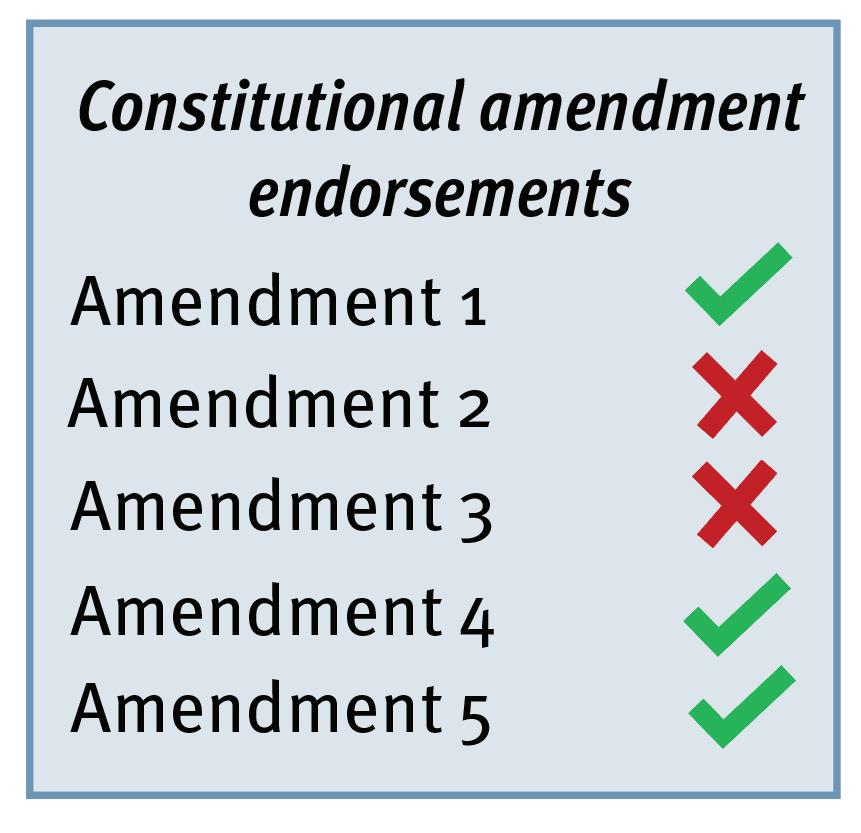
Vote yes on Amendment 1
Amendment No. 1 failed when first proposed last spring and failed again in a special election in October 2025. The amendment proposes several grammatical changes to the Student Association constitution and adds clarifying language to a number of policies.
The amendment also gives the parliamentarian the authority to make “non-substantive” changes, such as spelling or formatting corrections, without the need for a constitutional amendment.
Increased transparency is an issue on many of our candidates’ platforms, and updating the language in the constitution can only help. We encourage voters to approve these changes, if only so we don’t have to have grammatical changes on the ballot next year, too.
Vote no on Amendment 2
Amendment No. 2 is also a repeat from last year’s ballots, and the Editorial Board has the same objections to the amendment that we did last year.
We don’t expect three nonSenate students to know how much it costs to run every BTO, nor should the Senate. That’s why leaders are part of the BTC — those are things they already know. To ensure that BTO funding is decided by people who understand the orgs they’re paying for, vote no on Amendment No. 3.
The existence of presidential veto power that sends legislation back to the Senate to be reconsidered is understandable. The updated job descriptions for elected positions are also fine. The problem is Article IV, section 2.1.4. This addition would give the Senate “final authority over the Student Association Budget, the Blanket Tax, and the Blanket Tax Organizations.”
As discussed in our endorsement last year, the Senate already approves the SA and Blanket Tax budgets. The idea that the Senate would control decisions made by all of the BTOs is cause for concern.
Would voting members of the SA have to approve every University Court verdict? Would they review every event held by RPC? The Thresher is also a BTO. If the Senate has “final authority” over us, what would happen if we printed an article they didn’t like?
Out of concern for the functionality of the BTOs, we encourage voters to say no to Amendment No. 2.
Vote no on Amendment 3
Like Amendment No. 2, No. 3 is mostly good. We support the expansion of the Initiative Fund to include more projects and events, not just those that are considered “new and innovative.”
However, we do not support removing BTO leaders from the Blanket Tax Committee.
This matter has been under discussion since January 2025. Our opinion is the same as it was then. The presence of BTO leaders on the committee that approves their budgets has been called a conflict of interest. But leaders can’t vote on their own budgets — they’re there to explain what their organizations need money for and why. Who better than the RPC president, for example, to say exactly how much it costs to put on Beer Bike?
The assumption appears to be that BTO leaders would want other organizations to receive less funding so more is available for their own groups. Not only does this insult the leaders being removed, but it seems to contradict the values that members of these organizations would vote for in a leader. BTO leaders are generally chosen by internal election, and electing a selfserving leader who would work against their peers would be a poor decision by any Rice student.
We’re fine with not being invited to the party, but since every student media organization had its budget cut significantly last year, we worry the BTC doesn’t understand where students’ money is going.
According to the Rice Women’s Resource Center’s report on their own budget cuts, members of the BTC questioned why the RWRC was purchasing Diva Cups, a brand of menstrual cups. One member apparently said they thought the product was “just a fancy cup.” We don’t expect three nonSenate students to know how much it costs to run every BTO, nor should the Senate. That’s why leaders are part of the BTC — those are things they already
know. To ensure that BTO funding is decided by people who understand the organizations they’re paying for, vote no on Amendment No. 3.
Vote yes on Amendment 4
The last of the repeat amendments from last year, Amendment No. 4, ensures that if a candidate may have violated election rules, they will be referred to UCourt. UCourt will then determine if a violation occurred and, if so, what consequences that candidate will face.
This change allows for more flexibility in how election rule violations are handled. It also takes the responsibility off the SA Election Committee to handle these issues. We encourage voters to approve Amendment No. 4.
Vote yes on Amendment 5
Amendment No. 5 is the only new amendment on this year’s ballot. It would change the abbreviation of the Student Association from SA to RSA, for the Rice Student Association. This amendment
corresponds to a question on the Survey of All Students taken in the fall asking students what name they would choose for the SA.
The current acronym has been critiqued because “SA” is commonly used online to refer to sexual assault, which could be triggering for some students. While the change may seem small, it’s an easy fix that can make members of our community feel safer on campus. For that reason, we ask you to vote yes on Amendment No. 5.
Editor’s Note: News editor James Cancelarich recused himself due to reporting on the corresponding story in our news section.
Editor’s Note: Thresher editorials are collectively written by the members of the Thresher’s editorial board. Current members include Sarah Knowlton, Kathleen Ortiz,
Juliana Lightsey, James Cancelarich, Jenna Perrone, Arman Saxena, Andersen Pickard and Evie Vu.
JESSICA XU / THRESHER

KONSTANTIN SAVVON / THRESHER
Students wave signs in support of presidential candidate Jenny Karsner at Pub at Rice on Monday night. Over 100 students gathered to watch the candidates debate.
KONSTANTIN SAVVON / THRESHER
Presidential candidates (left to right) Ananya A. Nair, Muyiwa Ogunsola and Jenny Karsner during their debate.
KONSTANTIN SAVVON / THRESHER
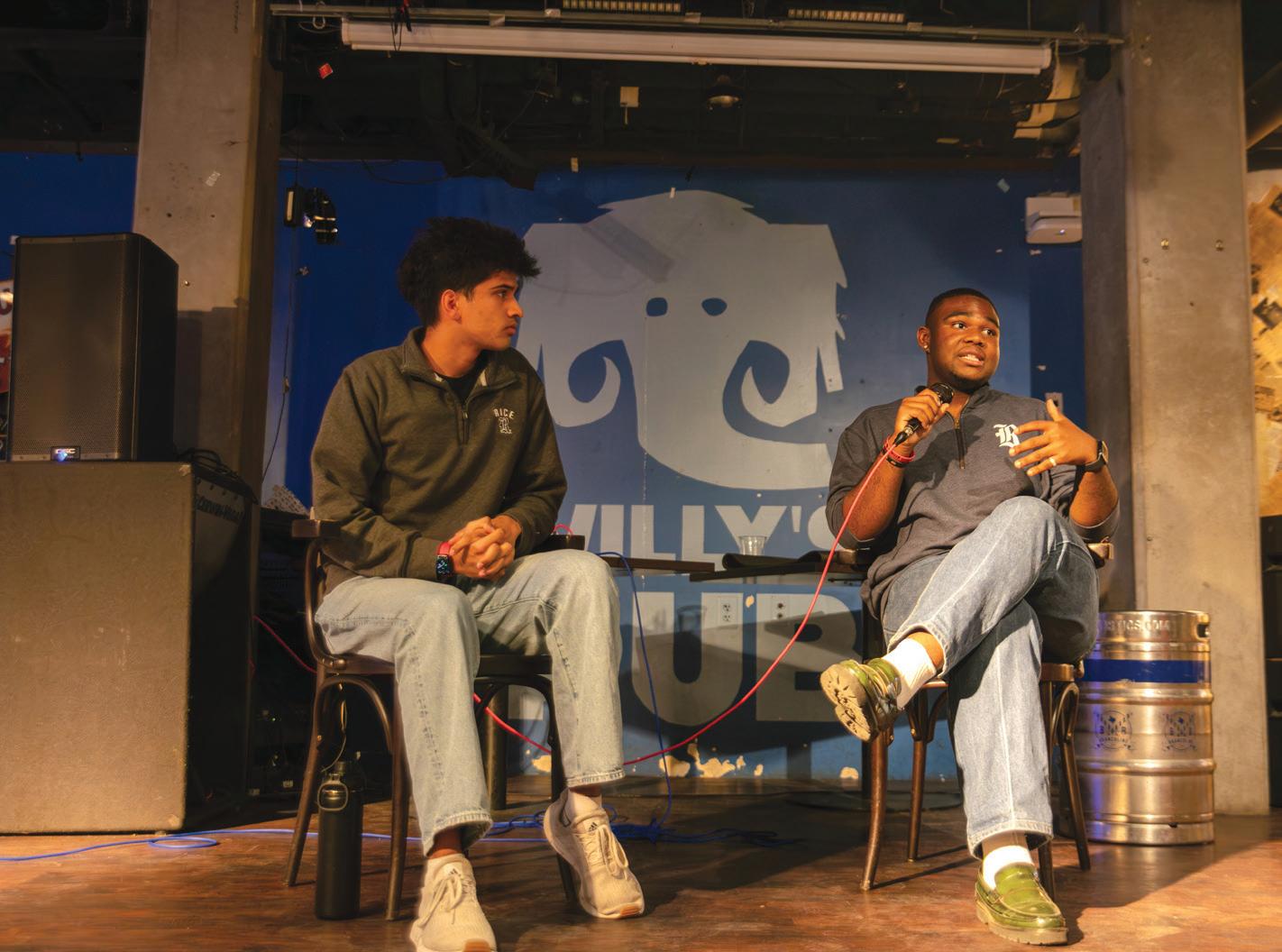
Presidential candidate Max Menchaca answers an audience question at Monday’s debate.
KONSTANTIN SAVVON / THRESHER
External Vice President candidates Rohan Dharia (left) and Da’Taeveyon Daniels (right) during their debate.
KONSTANTIN SAVVON / THRESHER
A camera films as the five presidential candidates take the stage during Monday night’s debate.