





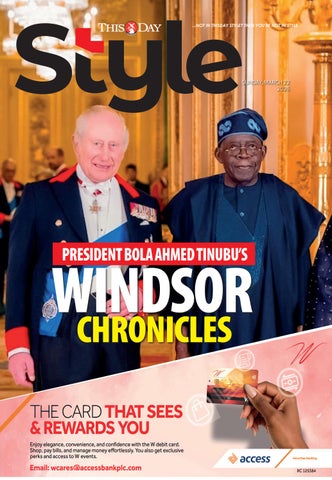

resident Bola Ahmed Tinubu’s state visit to the United Kingdom felt, quite simply, like a proud moment for Nigeria and Nigerians.
At a time when much of the focus at home is on navigating everyday realities, it also served as a reminder of how the country is seen on a global stage. The images from Windsor Castle, the ceremonial welcome, the carriage procession, and the state banquet all carried a certain weight. Not just because of the tradition, but because of what it represents. It was measured, deliberate, and symbolic in a way that does not happen often.
For many, it may have felt distant. And that’s ok. Life right now requires attention elsewhere, with conversations often centred around stability, security, and the broader question of where we are headed as a nation. But moments like this still matter. They signal presence. They show that Nigeria remains part of important global conversations, engaged, visible, and recognised.
There is also something about visibility at that level that shapes perception over time. Not instantly, not dramatically, but gradually. How a country is received, the rooms it enters, the relationships it maintains, all of these things contribute to a larger picture that extends beyond the moment itself.
And yes, that doesn’t immediately change things at home. But it does speak to something just as important- direction. The idea that progress, even if gradual, is still possible. That movement, even when it feels slow, is still movement.
And perhaps that is where the balance lies. Holding both realities at once. Understanding where we are, while still allowing room for where we can go. It is a quiet kind of optimism, not loud or exaggerated, but steady.
In this issue, we capture that moment at Windsor, the ceremony, the history, and the quiet significance of a return after 37 years.
Elsewhere in these pages, we continue to explore the things that shape how we live, what we are wearing, how we are taking care of ourselves, and how we are finding ease in the middle of everything else. Because even now, life continues. We adjust, we create, we show up, often more intentionally than before. As the season of Ramadan draws to a close, want to wish all our Muslim readers a peaceful and joyful Eid el-Fitr celebration. May it bring rest, renewal, and meaningful time with loved ones.
And to everyone else, enjoy the break. Take the time to pause, reset, and find a little ease where you can.






BIRTHDAY WITH REFLECTIVE THANKSGIVING IN LAGOS.
Media entrepreneur and public strategist
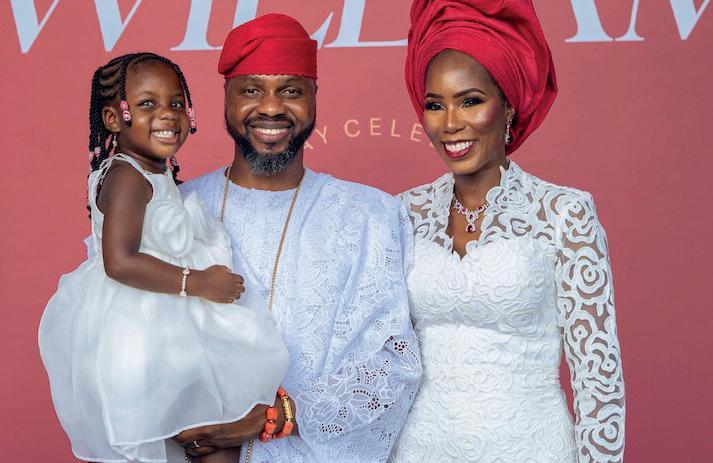
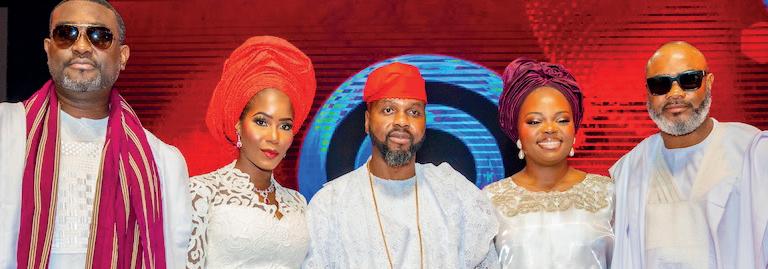
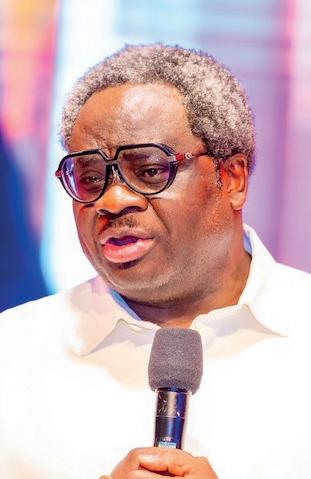
Adebola Williams has unveiled his 40th birthday season, themed “The Year I Turn 40,” with a reflective Thanksgiving Service at This Present House in Lagos.
The gathering brought together leaders from government, business, media, culture, and faith, marking the start of a series of events set to take place across Nigeria, Africa, and Europe as part of a year-long reflection on purpose, service, and legacy.
The service was structured into three segments: faith, nation, and family. It opened with gratitude for Williams’ journey, featuring Bible readings by Yomi Awobokun and worship led by Mercy Chinwo. The second segment focused on Nigeria, with prayers for the nation and remarks by Minister Bosun Tijani on service and innovation.
The final segment centred on family, with worship led by Adeyinka Alaseyori and a Bible reading by his wife, Kehinde Daniel-Williams, followed by tributes.
In his reflection, Williams spoke about moving “from a silver spoon to a wooden spoon,” sharing how his mother’s rise and loss in business shaped his understanding of resilience. Mo Abudu, Dr. Kola Adesina, and Dr. Oby Ezekwesili praised his wisdom, loyalty, and integrity, while his sister described him as a foundational influence in her life.

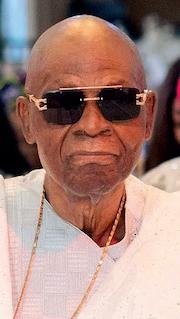

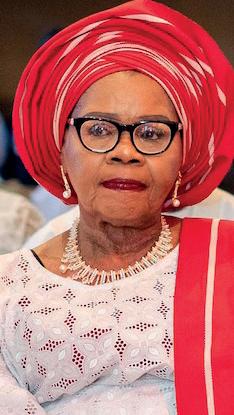
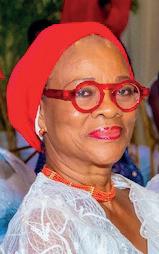
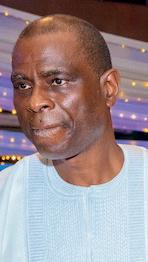
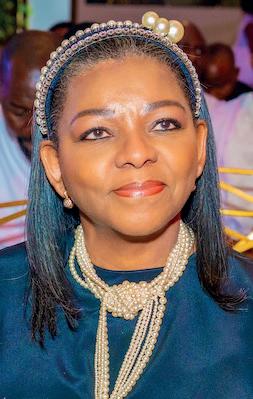
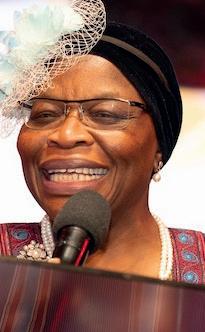

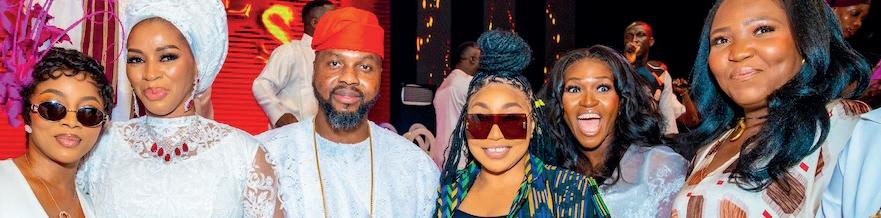
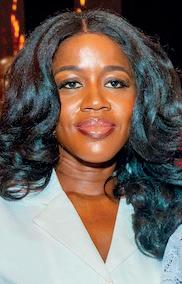
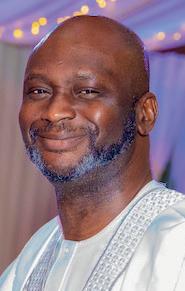

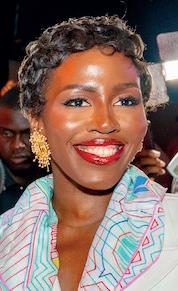

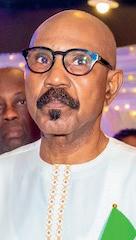
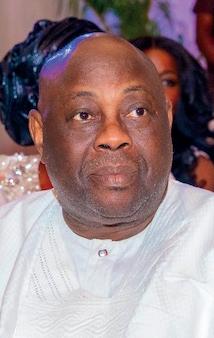
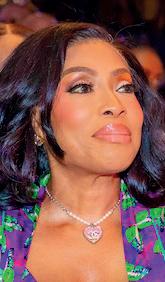
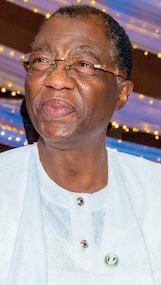
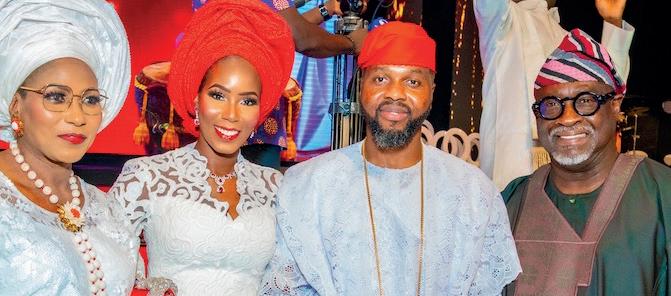

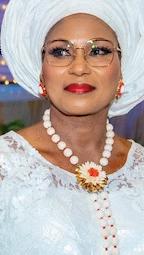
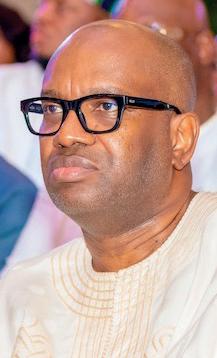
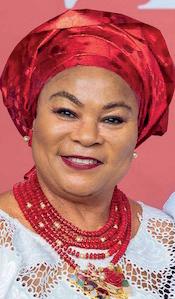
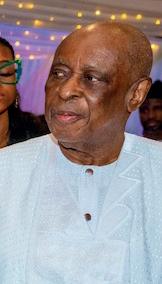

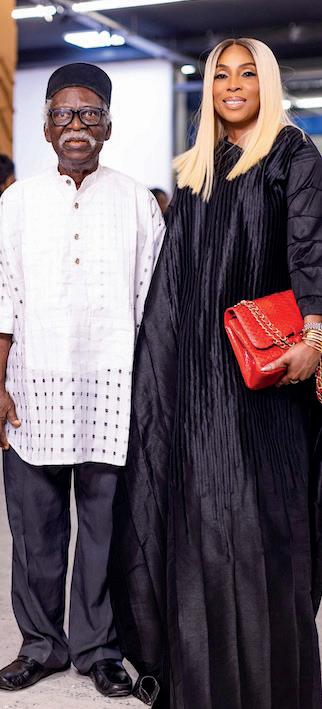
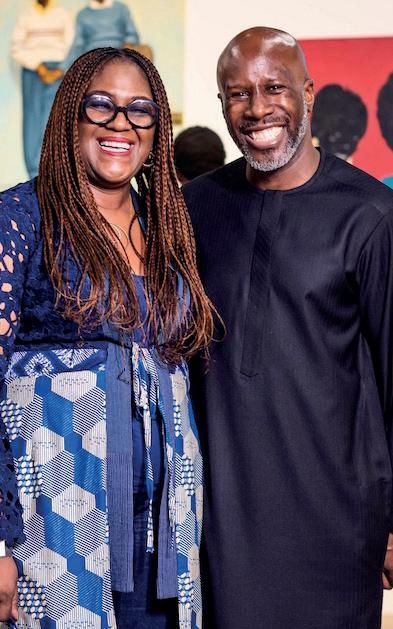
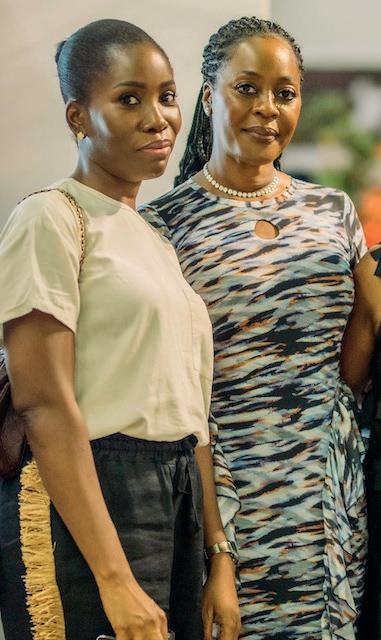
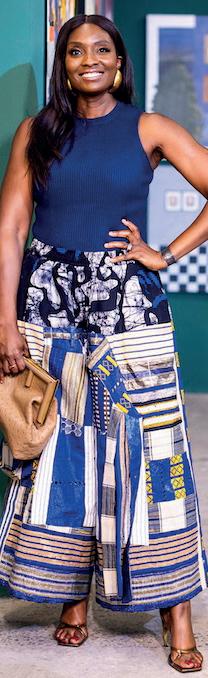
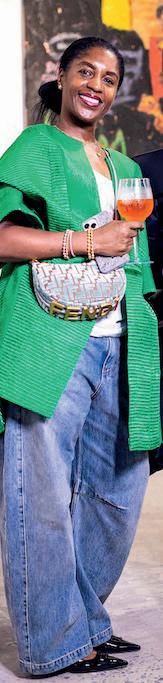
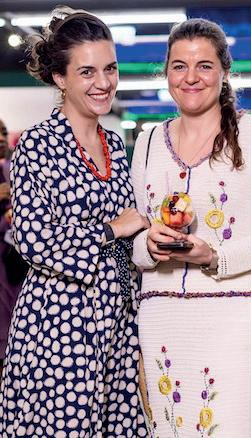
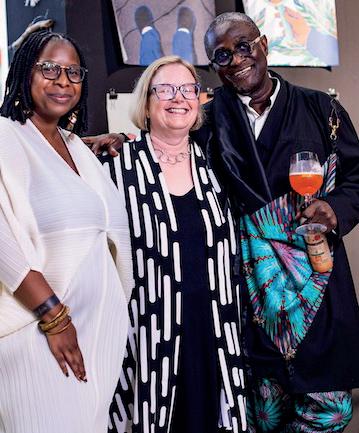
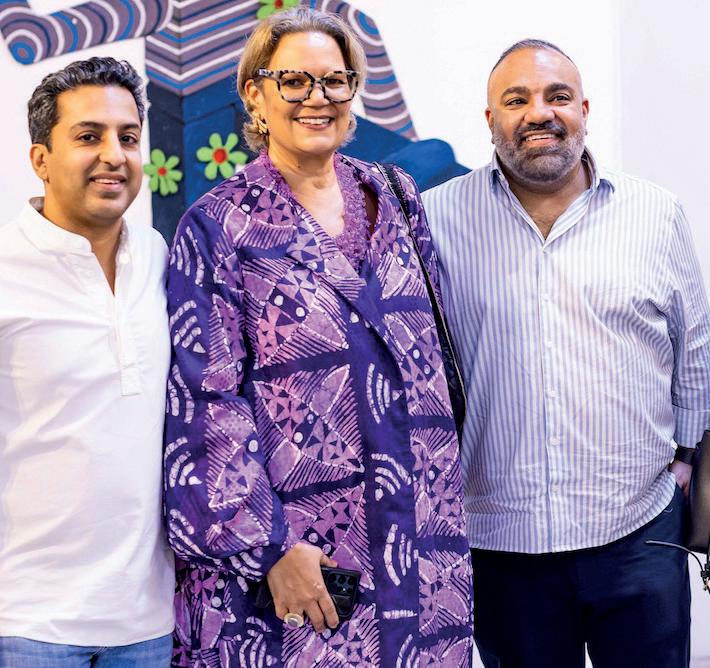
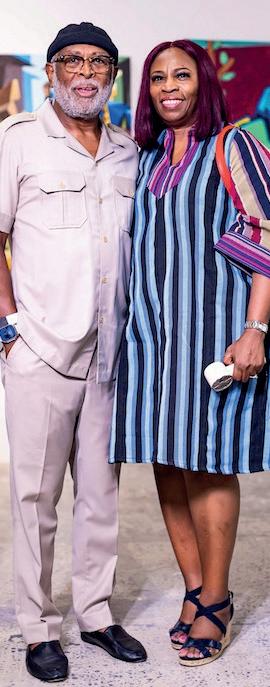
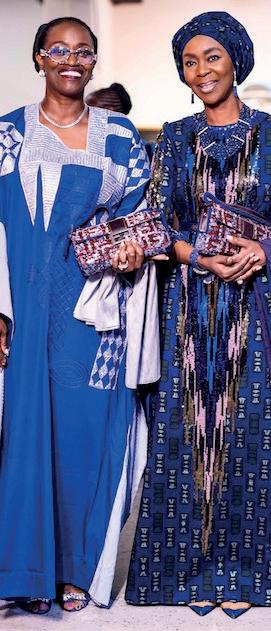
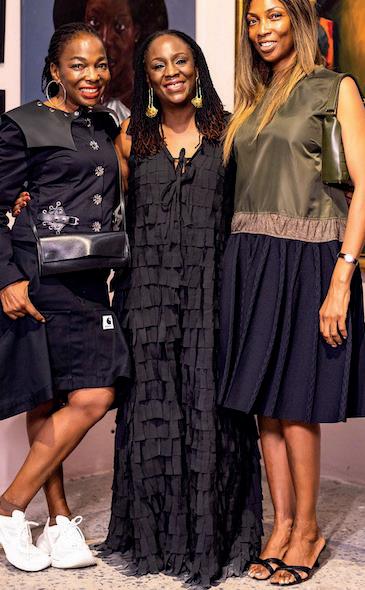
Ecobank Nigeria and Soto Gallery successfully hosted the third edition of the +234 Art Fair, which ran from March 5–8 at the Ecobank Pan-African Centre, Victoria Island, Lagos, delivering on its promise of a more inclusive and far-reaching contemporary art platform.
Curated around the theme “Inclusivity,” the 2026 edition expanded opportunities within Nigeria’s art ecosystem. In just a few years, the fair has established itself as one of Lagos’ most important contemporary art platforms, with a distinct focus on emerging and often ungalleried Nigerian artists. It continues to serve as a critical gateway—connecting local talent to collectors, patrons, cultural institutions, and global audiences while strengthening Nigeria’s creative economy.
A defining feature this year was the curatorial team’s extensive nationwide research process. Travelling across more than 15 states, the team identified and engaged artists beyond traditional art centres, reinforcing the fair’s commitment to equitable representation and ensuring diverse regions, backgrounds, and creative contexts were meaningfully included.
Speaking ahead of the fair, Tola Akerele, Founder of Soto Gallery and the +234 Art Fair, said the theme reflects a clear intent to widen representation and reposition visibility within the art space. She noted that exceptional works were already being received from artists who might otherwise lack access to such platforms and encouraged Nigerian artists to seize the opportunity.
Omoboye Odu, Head, SME Partnerships and Collaborations at Ecobank Nigeria, described the fair as a purposeful intervention aimed at reshaping how Nigerian creativity is discovered, supported, and sustained. She emphasised that inclusivity is both a principle and a practice, adding that the fair intentionally broadens access to spotlight talent from new geographies and underrepresented voices.
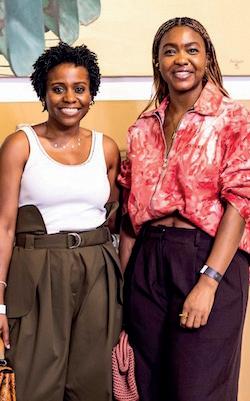
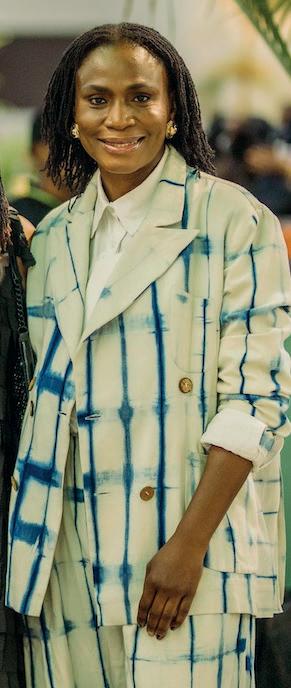
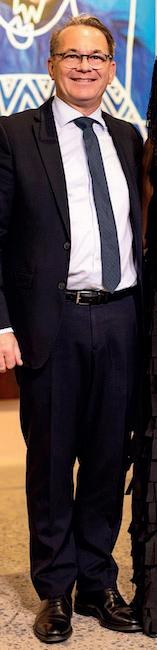
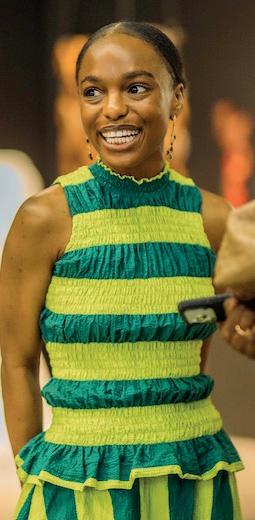
The event attracted a diverse audience, including art lovers across Nigeria, members of the African diaspora, government officials, policymakers, the diplomatic community, collectors, and global art enthusiasts.
A highlight was the VIP opening, with organisers extending appreciation to sponsors The Balvenie and The Osahon Okunbo Foundation for their support.



Spice, Smoke and Story
is a food column by Funke Babs-Kufeji, telling her love story for cooking and food in Nigeria, while exploring everything from restaurant reviews and recipes to fine dining, hosting, and the culture that shapes how we eat.
Every
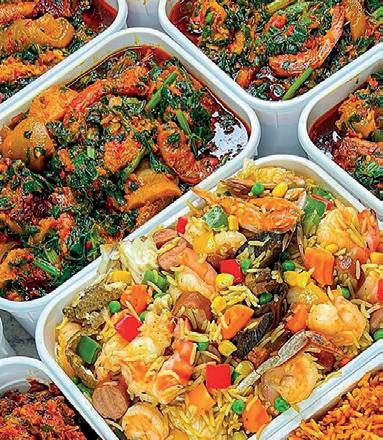
Food is rarely just food. It is memory, place, and people.
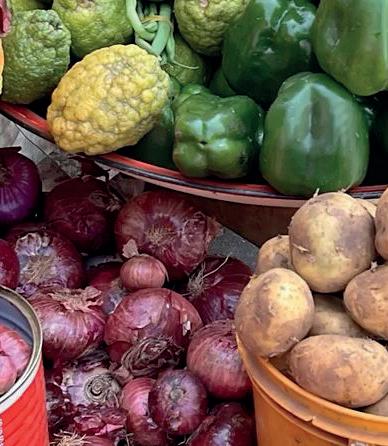
Long before a dish reaches the table, it has already travelled through hands, kitchens, and generations. A pot of soup carries the quiet work of the person who washes the vegetables, the one who grinds the pepper, and the cook who stands patiently by the fire, waiting for the flavours to come together.
In a city like Lagos, food tells stories everywhere you turn. The smell of roasted corn on a street corner, the sharp heat of pepper in a pot of stew, the smoke rising from a suya grill late in the evening. These small moments form part of the rhythm of daily life. They remind us that cooking is not only about feeding the body, but also about belonging. For me, this connection to food begins early. grow up in a household where cooking is more than a daily task. My mother owns one of the first breakfast restaurants in Lagos. She is also a baker and a caterer, and the kitchen is always alive with activity. Mornings often begin before the sun is fully up, with the smell of bread and pastries in the oven, eggs cooking on the stove, and the quiet preparation that comes with feeding people at the start of their day.
Food is a big deal in our home. It is serious work, but it is also an expression of care. I watch my mother prepare meals not only for customers, but for celebrations, gatherings, and family tables. There is always something being mixed, baked, fried, or stirred. The kitchen feels like the centre of everything.
BY FUNKE-BABS KUFEJI
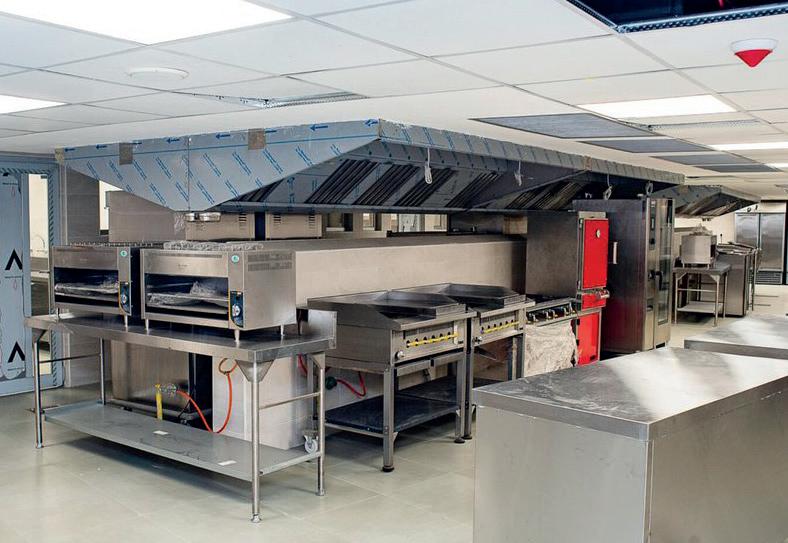
Growing up in that environment teaches you things without anyone needing to explain them. You begin to understand that cooking requires patience. You learn to recognise the sound of onions softening in hot oil, or the smell that tells you a cake is almost ready to come out of the oven. These small lessons stay with you long after you leave that kitchen.
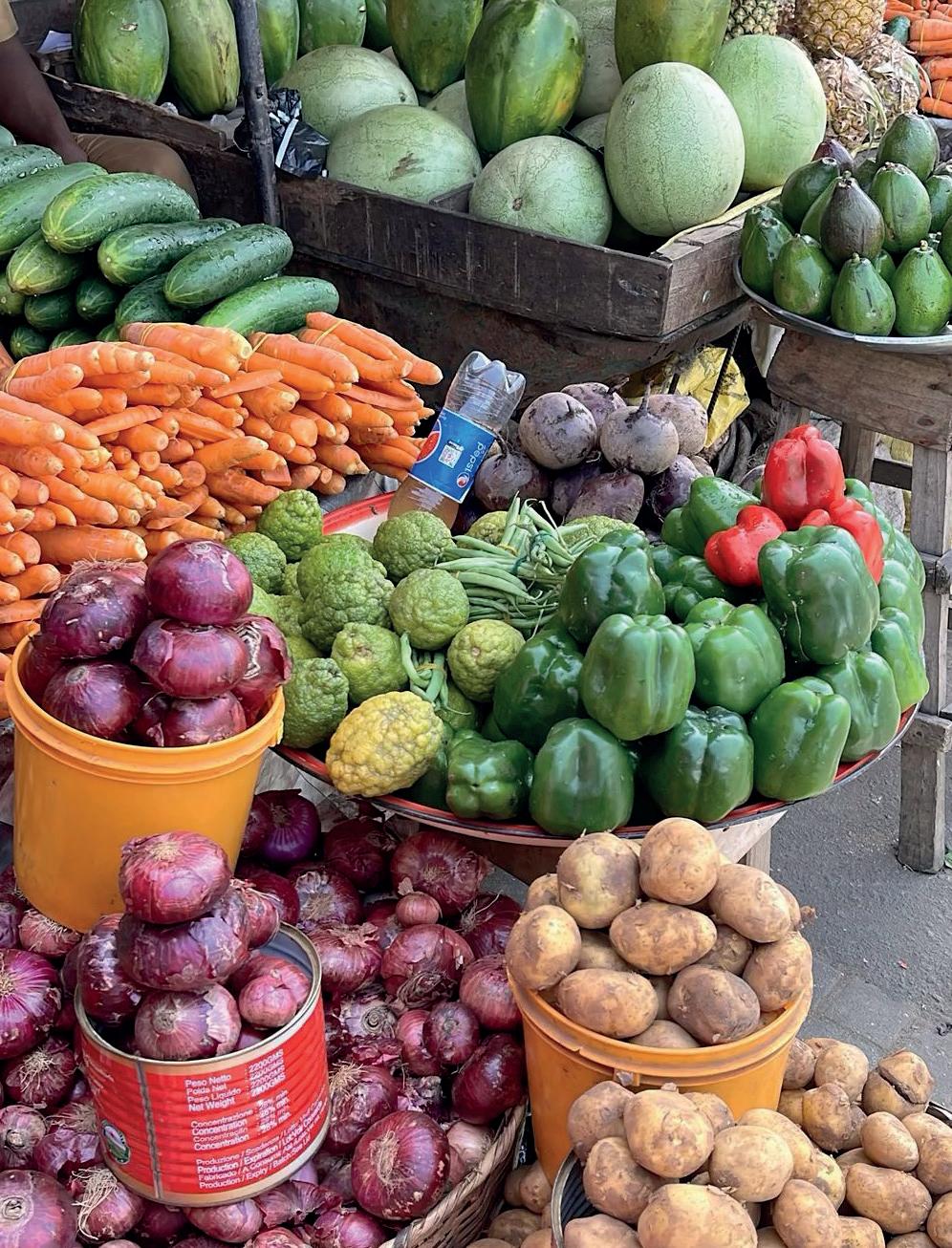
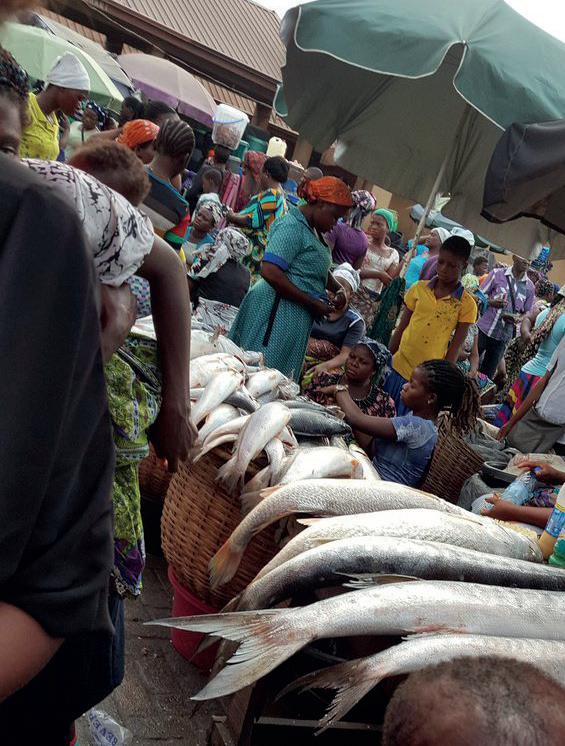
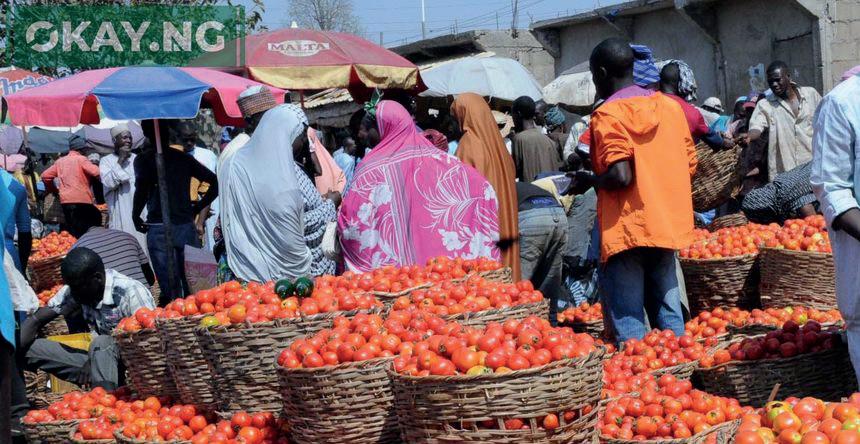
Today, as a journalist, budding caterer and baker, I often think about those early mornings, busy kitchens, and the events helped my mum cater. Food appears at weddings, birthdays, naming ceremonies, and quiet family celebrations. People may not remember every detail of an event, but they remember what they eat. A well-cooked dish becomes part of the memory of the day. Even the ingredients themselves hold memory. Pepper, vegetable oil, onions, garlic, ginger. These are simple things, yet they form the base of countless meals across homes and communities. Markets play their own role in this story. In places such as Mile 12 Market, Oke Arin Market, Makoko fish Market and more, traders begin their day before sunrise. Baskets of tomatoes, piles of peppers, fresh vegetables, meat, fish and more move through many hands before they reach the kitchen. This is what Spice, Smoke and Story sets out to capture. It will follow the journey of food from market stalls to home kitchens, from street corners to restaurant tables. It is about the ingredients that shape our cooking, the people who keep traditions alive, and the quiet stories behind every plate. Some months, the focus is on the dishes that define celebrations. Other times, it is a closer look at a single ingredient, or the craft behind baking and catering. There will be visits to restaurants and markets, conversations with street vendors, and reflections on the meals that stay with us long after they are eaten.
For me, the story of food began in my mother’s kitchen, surrounded by the warmth of ovens, the smell of breakfast cooking, and the understanding that feeding people is one of the most powerful ways to care for them. Every meal is a small piece of history served on a plate. Every dish has a story waiting to be told and I will tell it.
By Funke Babs-Kufeji
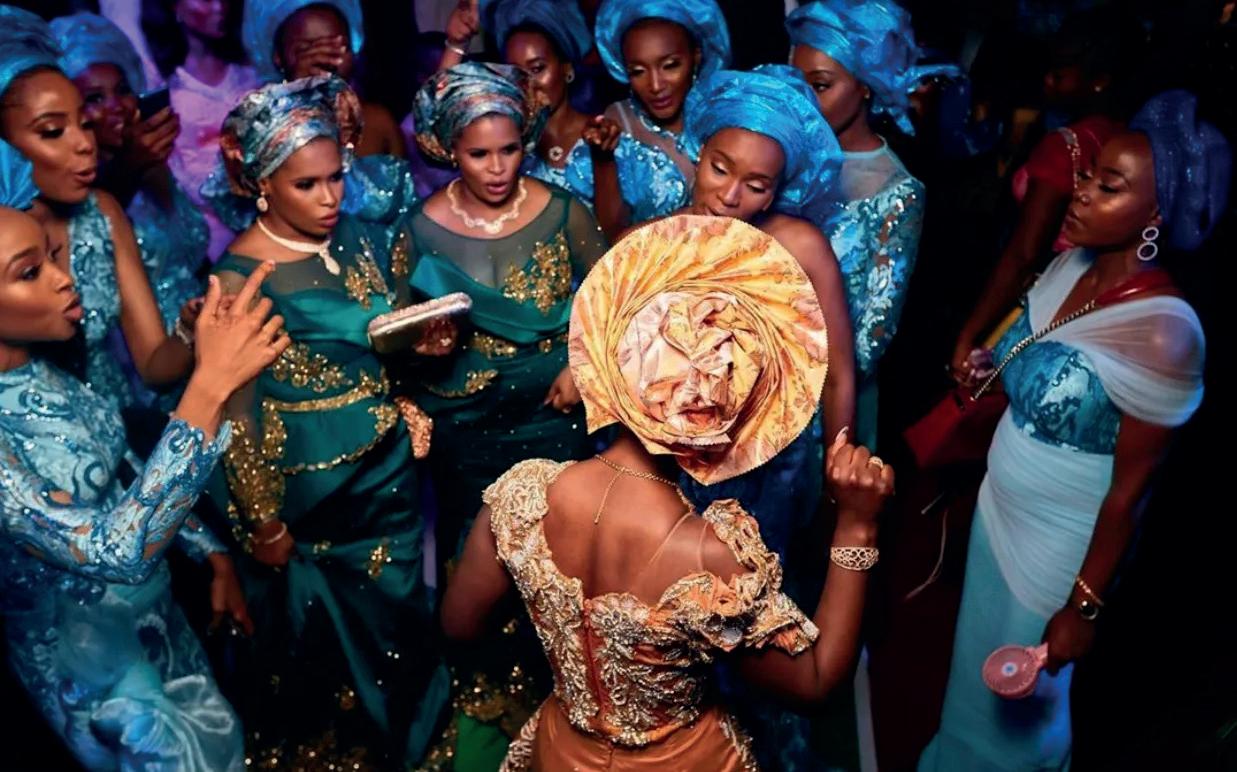
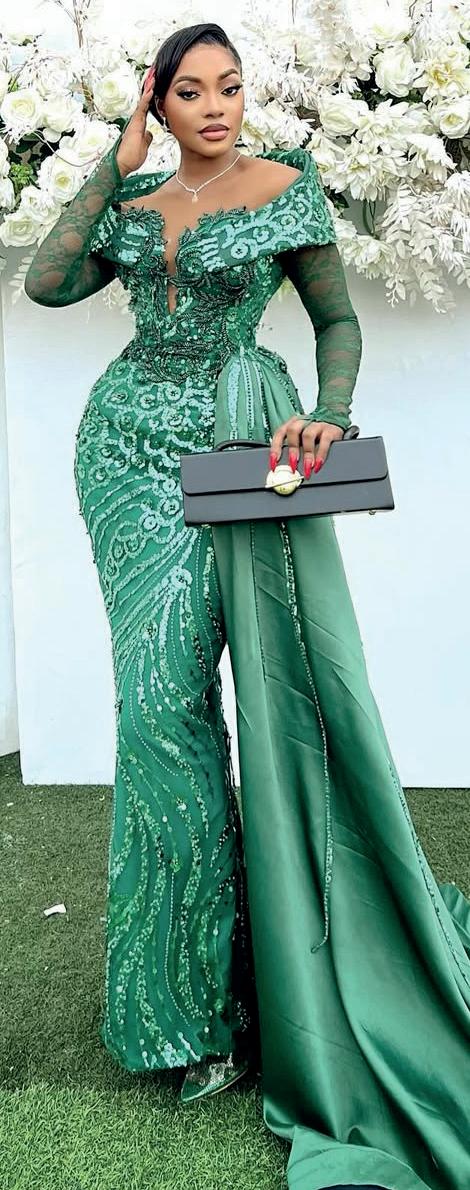
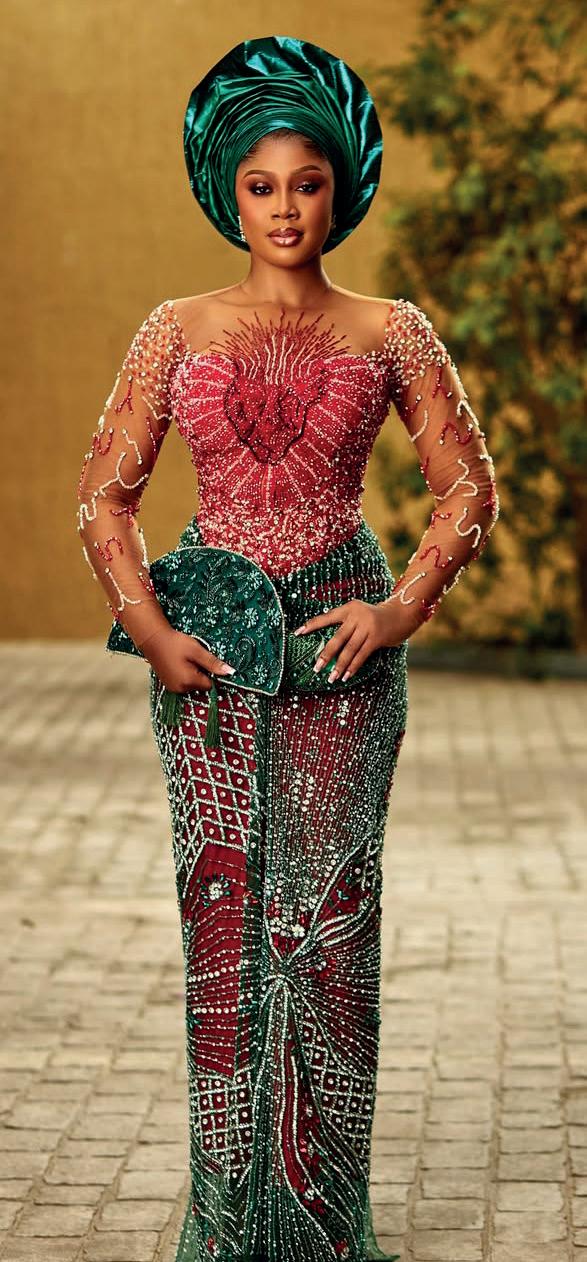
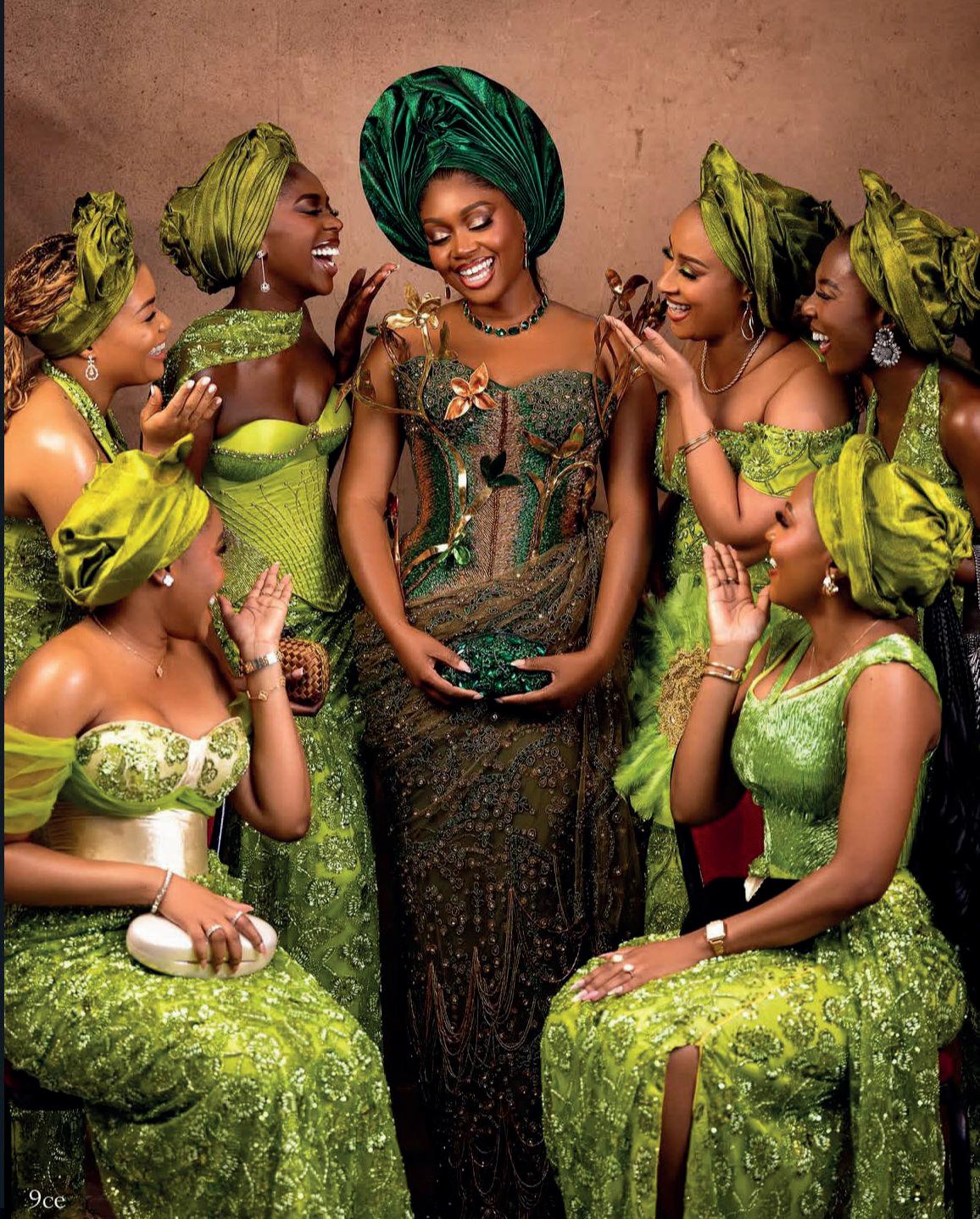
Weddings in Nigeria have always been a social event, but lately, attending one feels like a financial commitment. Not for the couple, but for the guests. What used to be about presence and celebration has slowly turned into a quiet competition of appearance, access, and spending. From aso ebi to styling, gifting, and logistics, the price of “just attending” a wedding has climbed to levels that many people feel but rarely say out loud.
It often starts with the aso ebi. Once you commit, you are already in. Fabric prices now sit anywhere from N100,000 to as high as N500,000, and in some circles, even priced in dollars. Then comes tailoring. A simple style will not do. The cost of making an outfit can range from N80,000 to as much as N1,000,000, depending on the designer and how detailed the look is meant to be. There is pressure to show up looking like you belong in the room. Add gele, shoes, a bag, and the numbers begin to stack up quickly. Makeup is its own line item. The average face beat now costs between N80,000 and N150,000, especially if you are booking an in-demand artist. Hair is another cost entirely. Whether it is a frontal install, a custom wig, or a styled updo, it all adds to the final bill. And for many guests, one outfit is not enough. There is often a second look for the after-party or a change later in the day.
Instagram has made this even more visible. You scroll through and see guests posting full looks with captions like “Aso ebi level”, “Stepped out for my people”, or “Owambe ready”. Influencers tag designers, makeup artists, and stylists, turning wedding attendance into content. The comments follow the same pattern. “Who styled you?”, “Drop the vendor please”, “This look is everything”. What you do not see is the cost behind that moment. There is also a new layer to it. Some guests now go beyond dressing up and invest in how their outfits are presented. Content houses are booked ahead of the event, complete with curated spaces, lighting, and backdrops designed for photos and videos. Personal photographers and videographers are hired just to capture “the look” before stepping into the actual wedding.
What used to be a quick mirror check and a few phone pictures has turned into a full production. On Instagram, it shows. Polished reels, slow-motion entrances, detailed closeups of fabric, gele, and jewellery. Captions are simple, but the effort behind them is not. It is no longer just about attending the wedding. It is about documenting the moment and presenting it well. The wedding becomes part of a larger visual story, one that lives online long after the event is over. There are also the unspoken expectations. You cannot show up empty-handed. Cash gifts, sometimes in carefully folded notes or decorative envelopes, are part of the culture. Then there is transportation. In Lagos, getting to a wedding, especially on the Island, is its own expense. Add the possibility of attending multiple events in one weekend, and the numbers start to feel heavy. Some guests are opting out quietly. Others attend selectively, choosing only close friends and family. But for many, there is still a sense of obligation. Weddings are social currency. Being present matters. It shows support, loyalty, and connection. Not showing up can be noticed. At the same time, there is enjoyment in it. Nigerian weddings are lively, expressive, and full of energy. The music, the food, the fashion. It is one of the few spaces where people can dress up fully and celebrate without holding back. For some, the spending is part of the experience. Still, the question remains. At what point does showing up become too expensive? Instagram continues to reflect both sides. The glamour and the pressure. The beautiful photos and the quiet reality behind them. You see posts like “Another weekend, another owambe” or “Fully booked with weddings this season”, often said jokingly, but carrying some truth. The culture is not going away anytime soon. If anything, it is growing. But there is a shift happening. People are beginning to talk more openly about cost, about boundaries, and about choosing how and where to show up. Because at the end of the day, a wedding invitation should not feel like a bill. It should still feel like what it was meant to be. An invitation to celebrate.
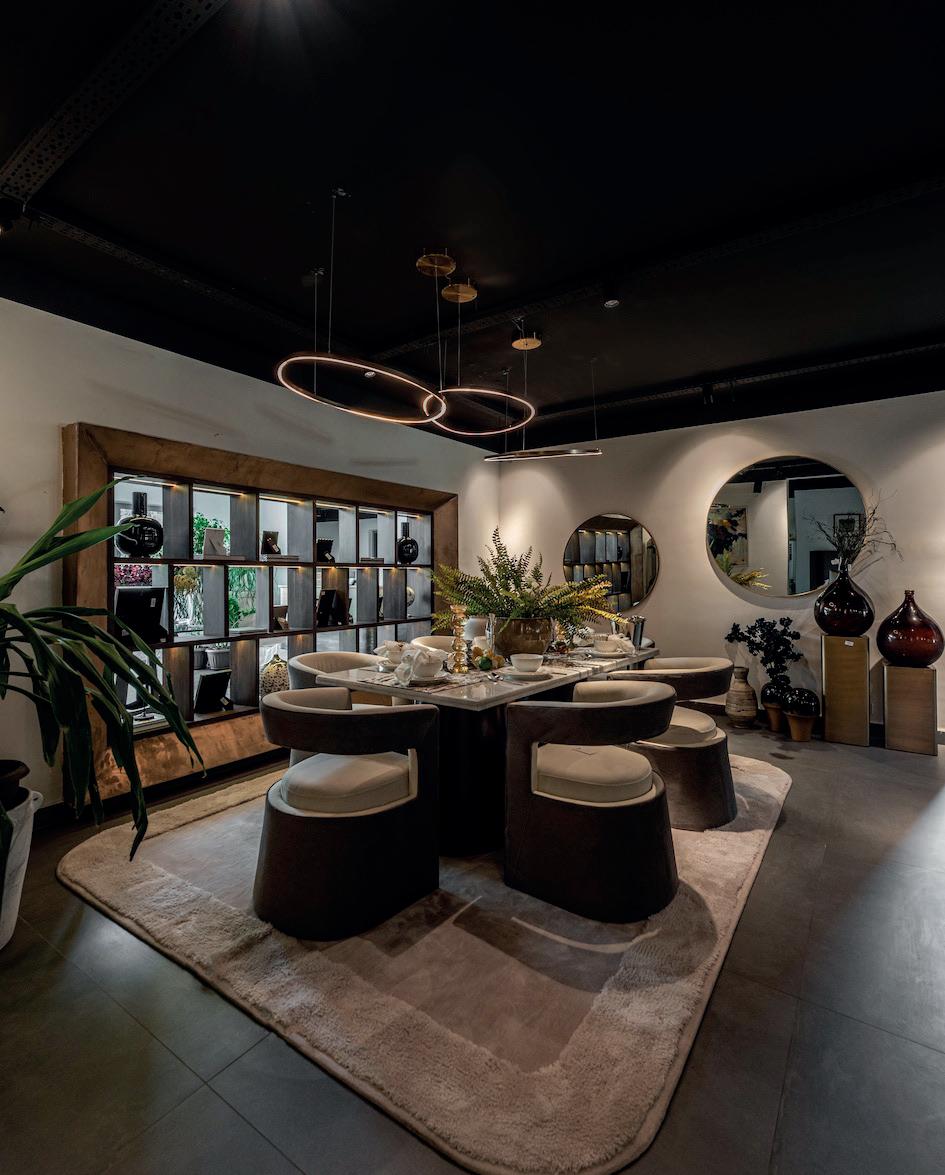
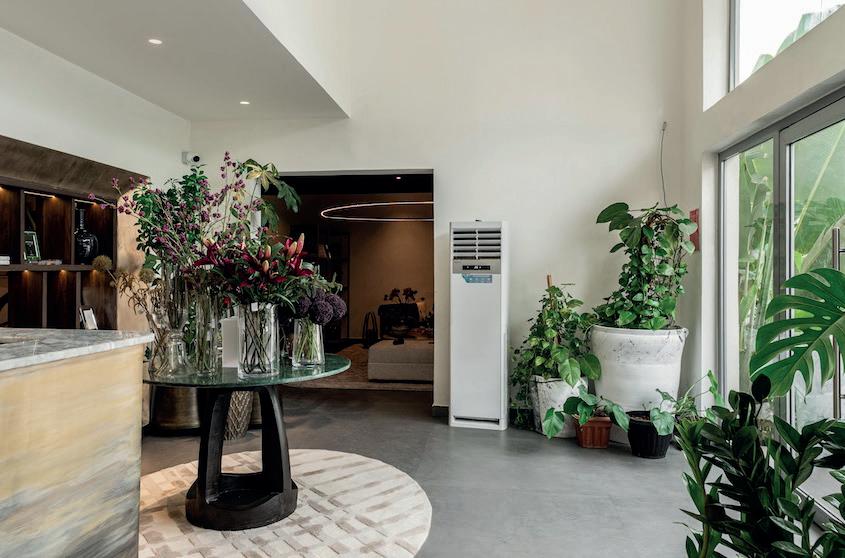
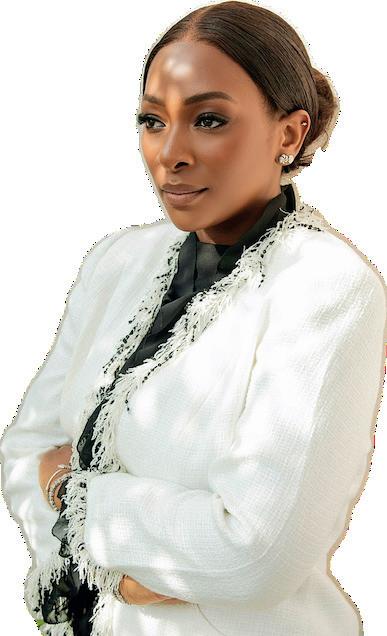
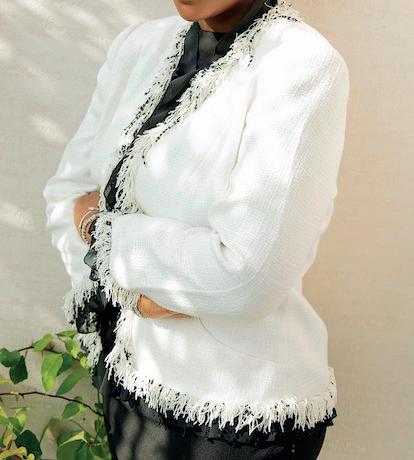
House of Williams does not announce itself loudly. It doesn’t need to. What it offers is far more controlled, a point of view that is clear from the moment you step in. Located on 3B Karim Kotun Street in Victoria Island, the space is built on restraint, not excess, and that decision defines everything that follows.
The first thing you register is the scent. Not the expected sweetness that often fills retail interiors, but something warmer, layered, and grounded. It sits in the air in a way that feels considered rather than decorative. Before you have taken in a single object, the environment has already begun to establish itself. It is not incidental. The fragrance is custom-developed, diffused through a scent machine designed specifically for the space, and available to clients who want to extend that same atmosphere into their own homes.
House of Williams is the retail extension of Chioma Williams’ design practice, Design by C Williams, and the connection is immediate. The store reads like a physical translation of her design language. Every object has been selected with intent, but more importantly, every object has been positioned with discipline. Placement does the work that volume often tries to do elsewhere.
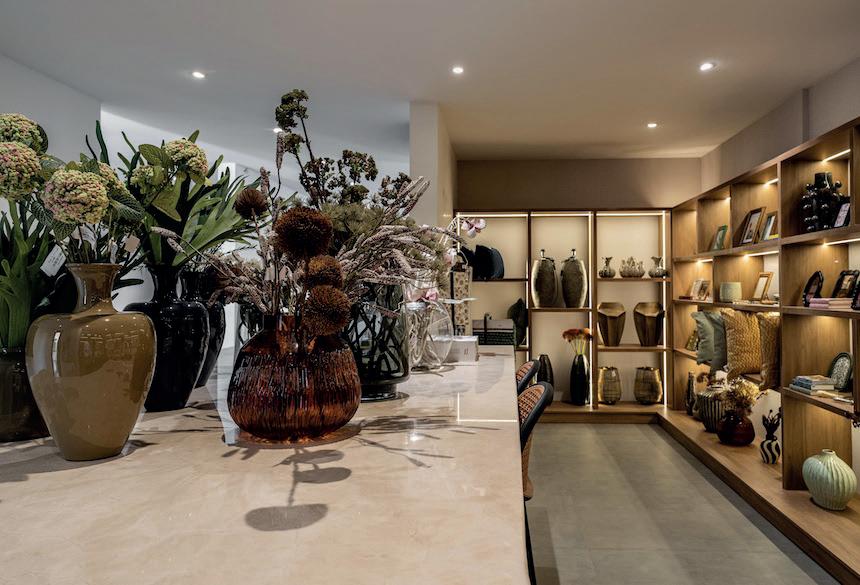
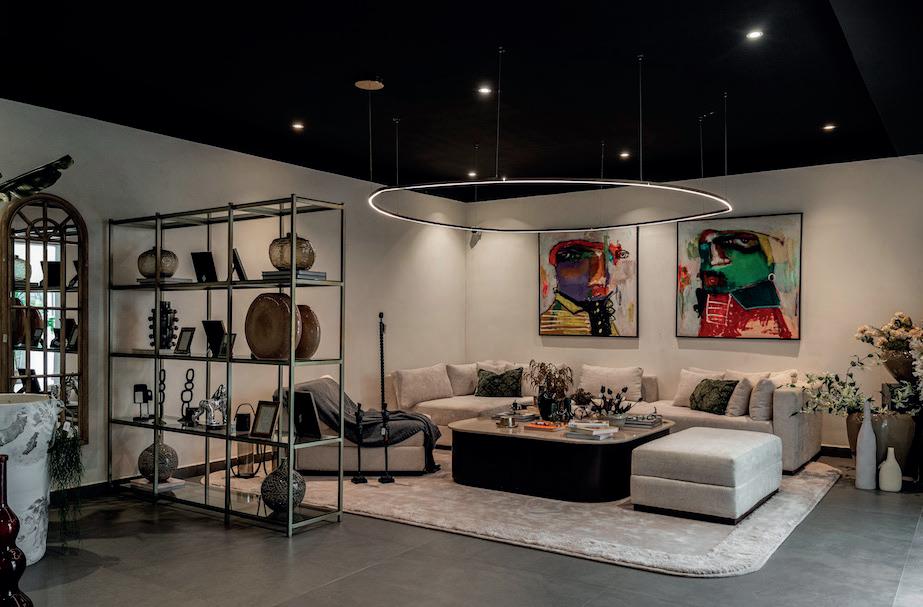
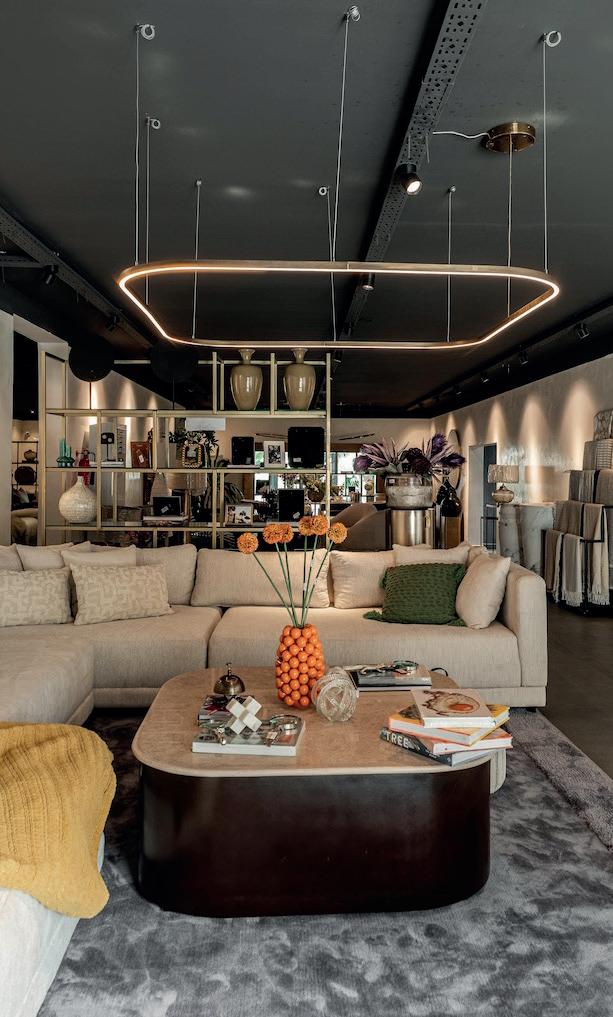
Pieces are given room to exist without interference. A sculptural chair occupies its corner without competition. A console is interrupted by a single object rather than layered with many. There is a deliberate refusal to overcrowd. What stands out is not just what has been included, but what has been left out.
The palette stays within warm neutrals, but avoids becoming flat. There is enough variation in tone and texture to keep the space from feeling predictable. Light is handled carefully, shaping the room without drawing attention to itself. Nothing is overly lit, nothing is hidden. The balance is precise.
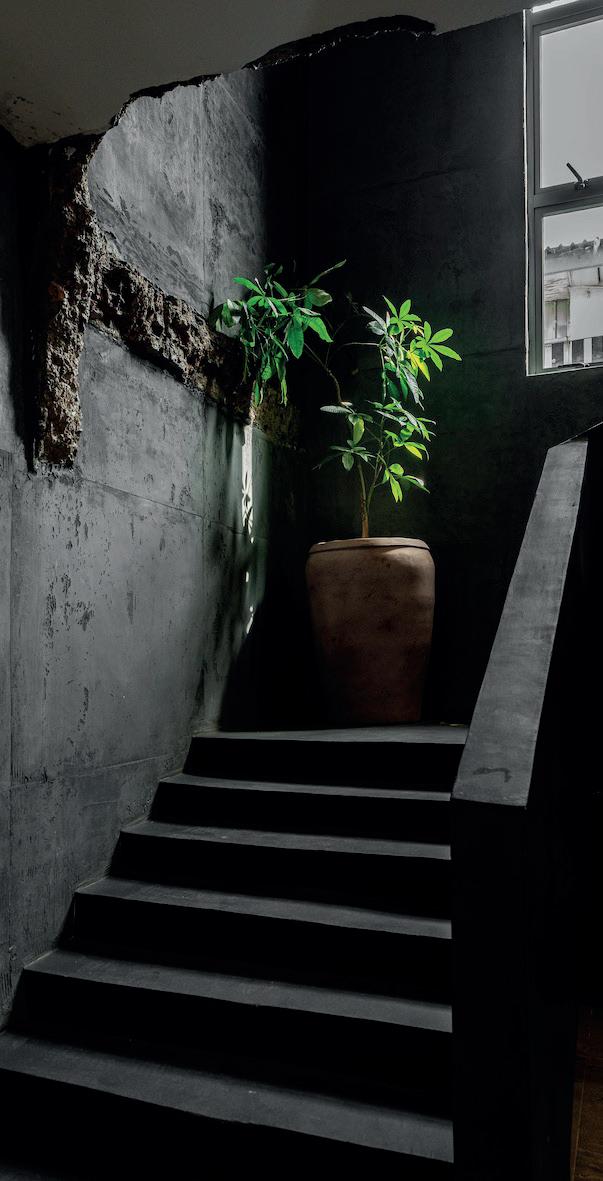
As you move further in, the layering becomes more apparent. Large clay pots sit like sculptural anchors within the space, grounding the lighter elements around them. Nigerian artworks are integrated into the environment in a way that feels natural rather than performative.
Coffee table books are not stacked for effect; they are edited, chosen for both visual weight and cultural relevance. Accessories; trays, bowls and objects are used sparingly, each one completing a composition rather than competing within it. You get the sense that nothing has been added simply because there was space available.
“I’m very particular about what comes into a space,” Chioma says. “If it doesn’t contribute, whether that’s texture, balance,
or even a bit of contrast, then it doesn’t stay.”
It is a straightforward approach, but one that requires discipline to maintain. The result is a space that feels resolved without feeling rigid.
There is no obvious reference to trend. You are not looking at a space designed to reflect what is currently popular or what will fade in a few months. The focus is on pieces that can hold their own over time, not because they are neutral, but because they are considered. That distinction is clear when you spend time in the room. Nothing feels temporary.
This way of thinking is becoming more relevant as people begin to approach their homes differently.
There is less interest in copying a look and more interest in understanding how a space works. The challenge, of course, is knowing where to stop.
When does a room feel complete? When has enough been done?
House of Williams does not answer those
questions directly, but the approach is visible throughout.
“There’s no point designing a space you can’t relax in,” Chioma says. “It has to work for how you actually live.”
And that is what ultimately makes House of Williams stand out. It does not overwhelm you into admiration. It draws you into understanding. You don’t leave thinking about how much you need to buy. You leave thinking about how much you need to refine your own space. Which is why, if you are serious about how your home looks, feels, and functions, this is not a place you scroll past or hear about in passing. It is a place you go to physically and intentionally, because seeing it in person changes your standard. Not in a dramatic, overstated way, but just enough to make everything else feel unfinished.



Enjoy elegance, convenience and confidence with the W debit card. Shop, pay bills and manage money effortlessly. You also get exclusive perks and access to W events












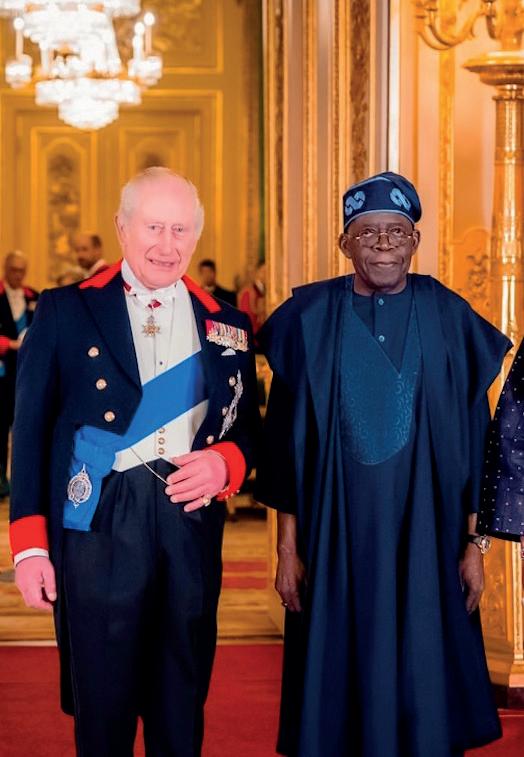
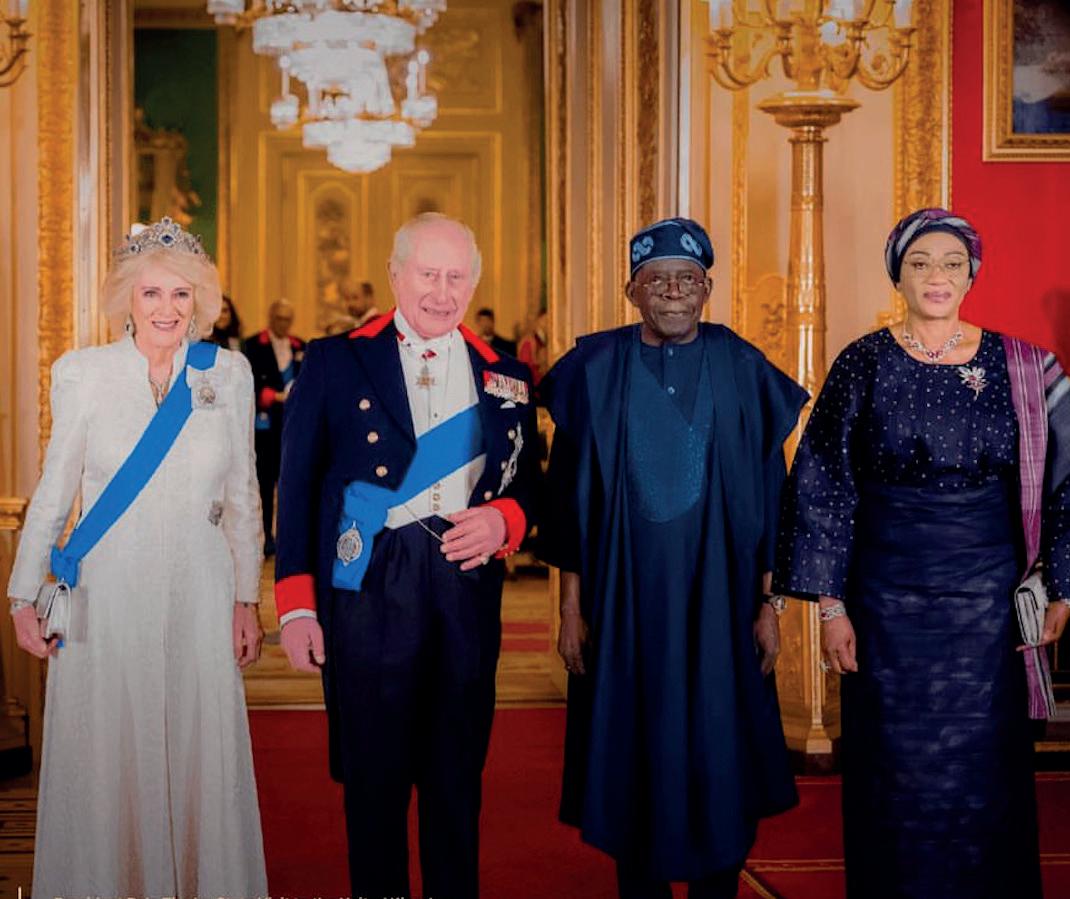
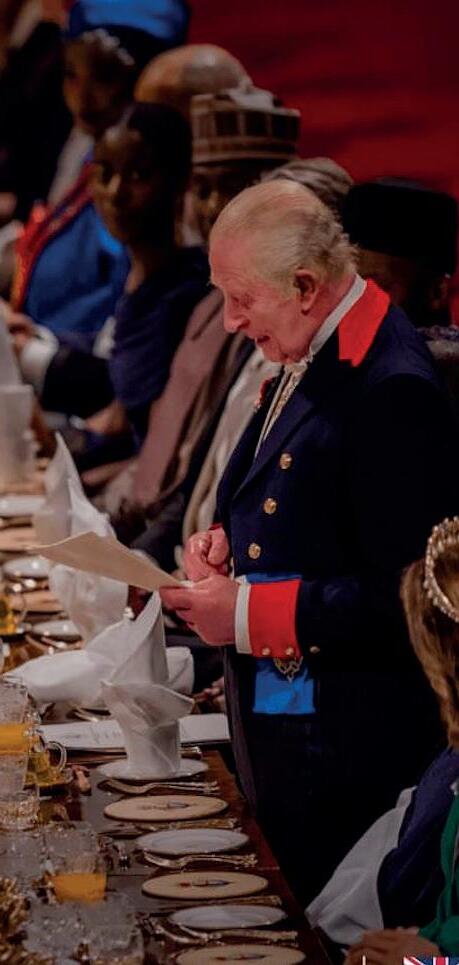
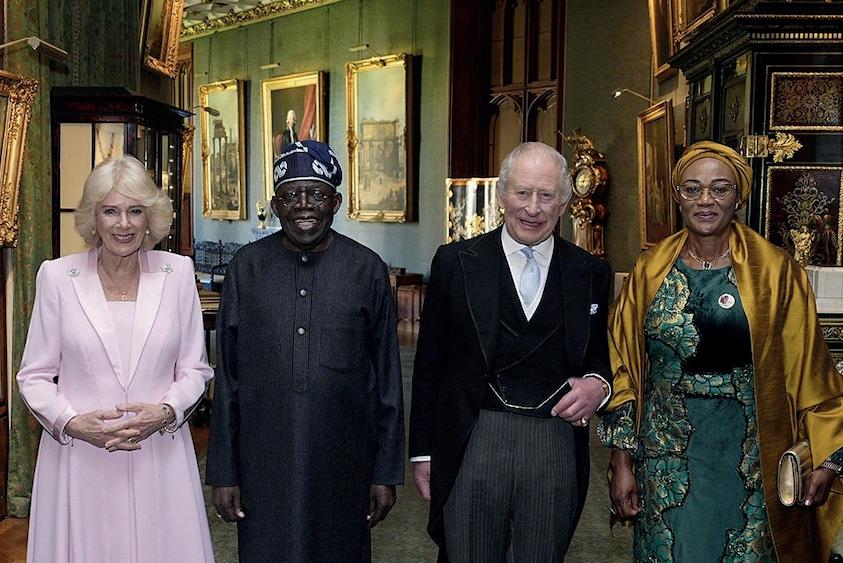
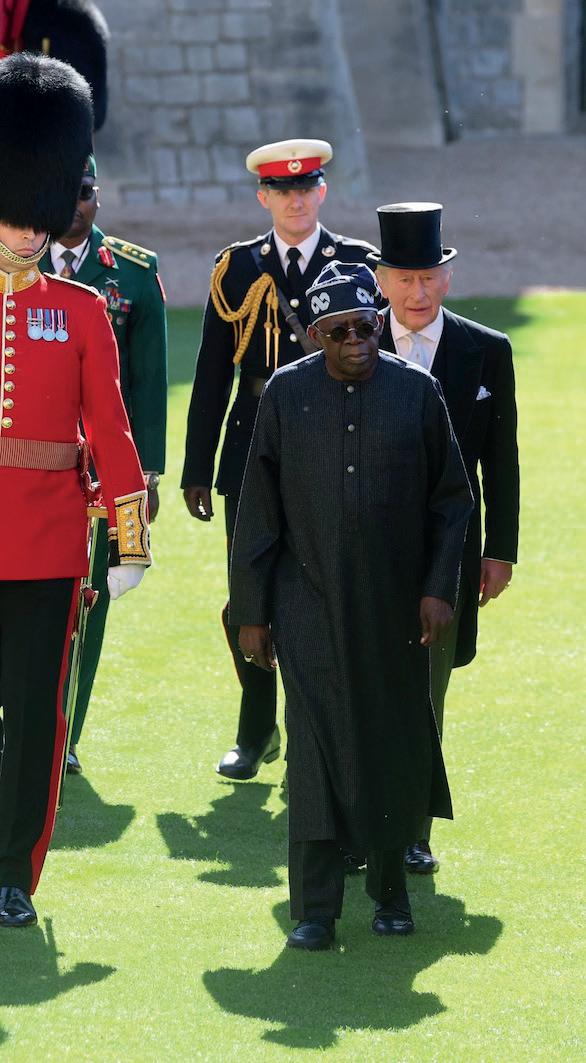
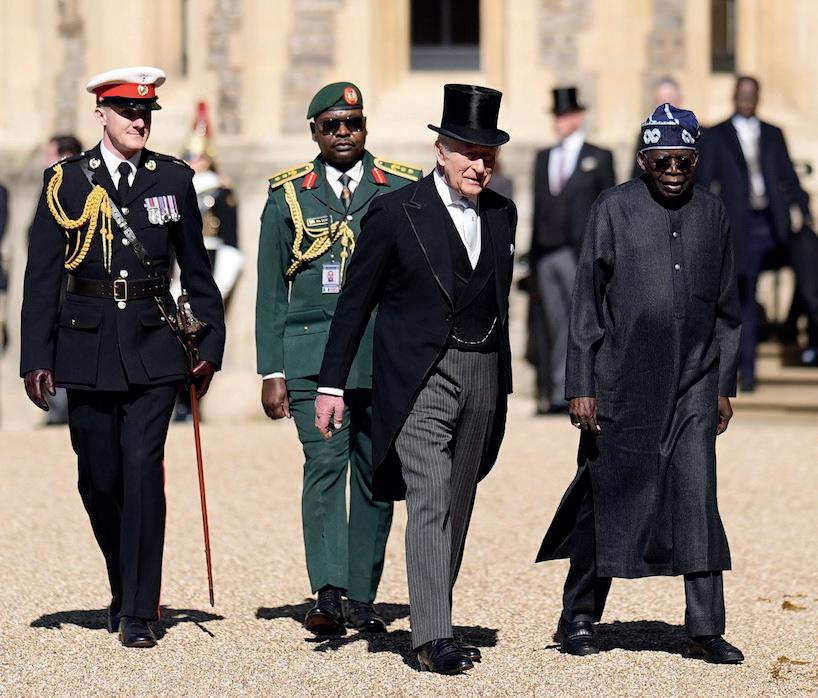
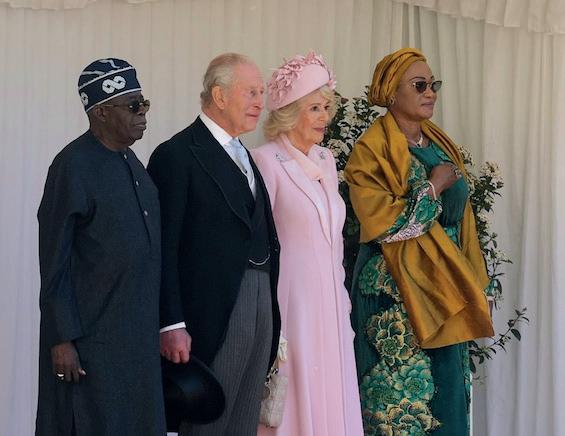
t Windsor Castle, under the full weight of royal tradition, President Bola Ahmed Tinubu and First Lady Oluremi Tinubu were received by Britain’s King Charles III in a ceremonial welcome that marked the beginning of a historic state visit to the United Kingdom. With a 42-gun salute by the King’s Troop Royal Horse Artillery, a carriage procession, and a formal military parade, the moment unfolded with all the grandeur reserved for visiting heads of state, placing Nigeria once again at the centre of a rare and significant diplomatic exchange. The sequence began on arrival in London. President Tinubu and the First Lady landed at Stansted Airport on Tuesday before proceeding to the Fairmont Hotel, where they were received by a high-ranking Nigerian delegation, including several state governors from Lagos, Katsina, Zamfara, Enugu, Akwa Ibom, and Plateau, alongside the Minister of Defence. It was a brief but notable pause, grounding the visit within a strong Nigerian presence before the transition into full royal protocol.
From there, the tone shifted quickly and deliberately. Prince William and Princess Catherine arrived at the Fairmont to personally receive the presidential couple, accompanying them on the onward journey to Windsor.
On Datchet Road, the formalities of state began in earnest.
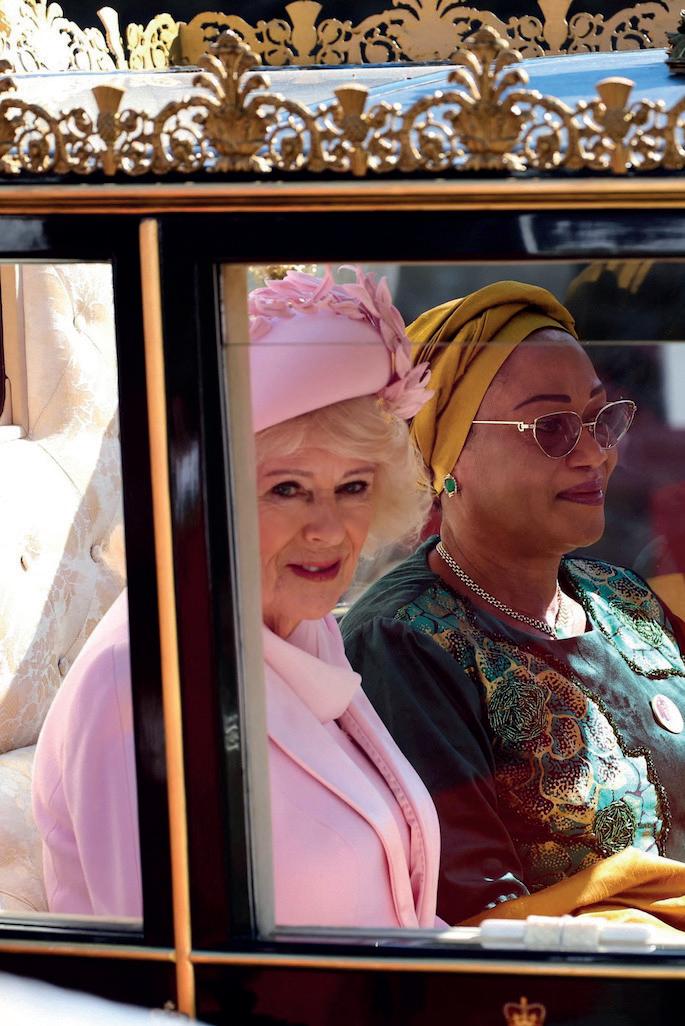
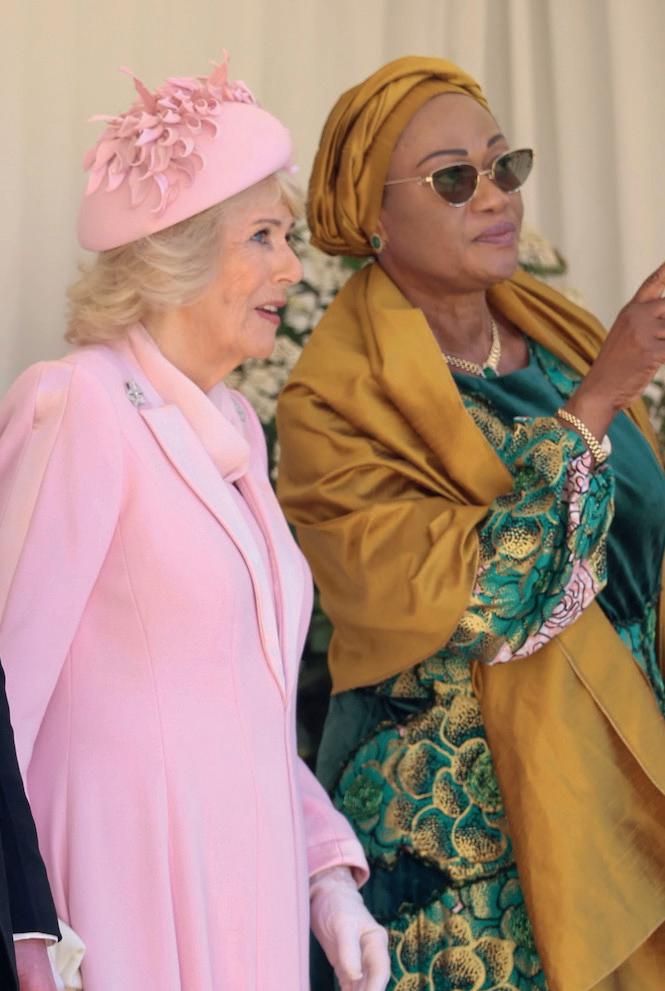
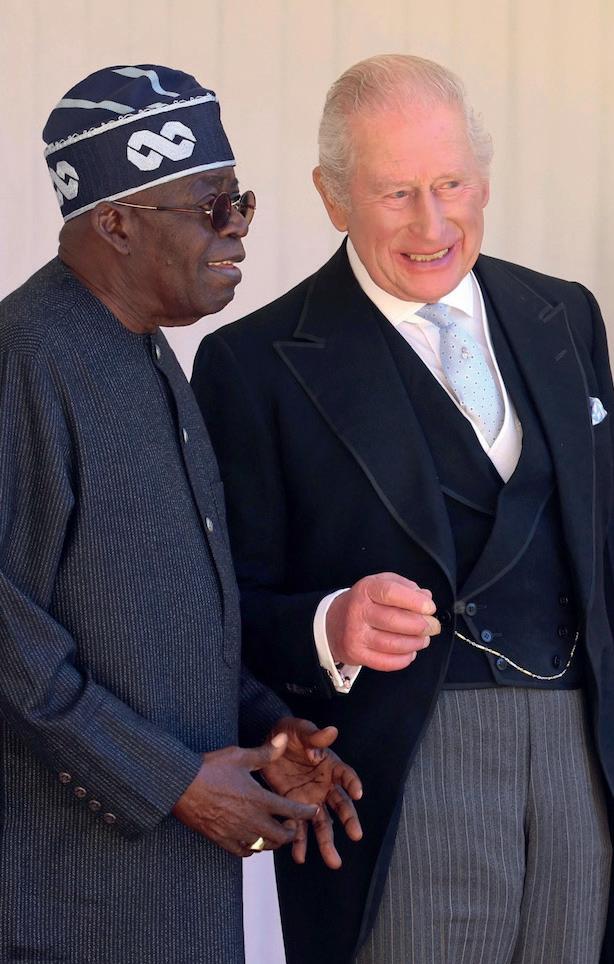
President Tinubu and the First Lady were received by King Charles III and Queen Camilla, marking the official commencement of the visit, before proceeding in a carriage procession into Windsor Castle, where the full scale of royal pageantry unfolded. Upon arrival at the castle, President Tinubu and the First Lady were honoured with a 42-gun salute by the King’s Troop Royal Horse Artillery, one of the defining ceremonial moments of the visit. The display, precise and deliberate, reinforced the significance of the occasion and set the tone for the engagements that followed.
Inside Windsor, the structure of royal protocol continued. Senior members of the royal family, including the Queen Consort, were present, while Prince William and Princess Catherine formally presented the Nigerian First Family to King Charles III and Queen Camilla. The moment carried both symbolic and procedural weight, reflecting the layered nature of state engagements at this level. This visit holds particular historical significance. While President Tinubu has travelled to Britain several times since taking office, this marks his first state visit. More notably, it is the first such visit by a Nigerian leader to the British monarch in 37 years.
The last occurred in May 1989, when former military ruler General Ibrahim Babangida visited Queen Elizabeth II, placing the current visit within a long but infrequent diplomatic timeline. King Charles III hosted President Tinubu and the First Lady at Windsor Castle for the duration of the two-day visit, with engagements that balanced cultural exchange and formal diplomacy.
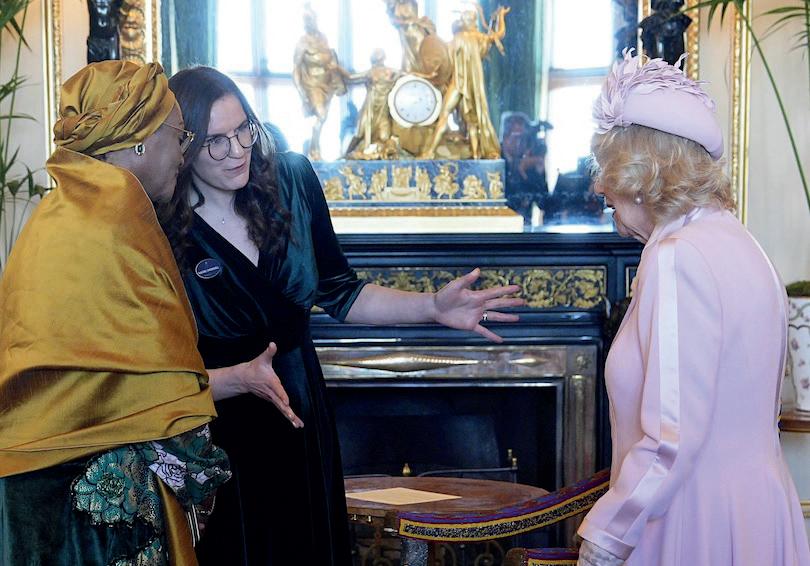
Among these was the exchange of gifts, alongside curated displays of Nigerian-related artefacts held within the Royal Collection, offering a visual link between both nations within the historic setting of the castle.
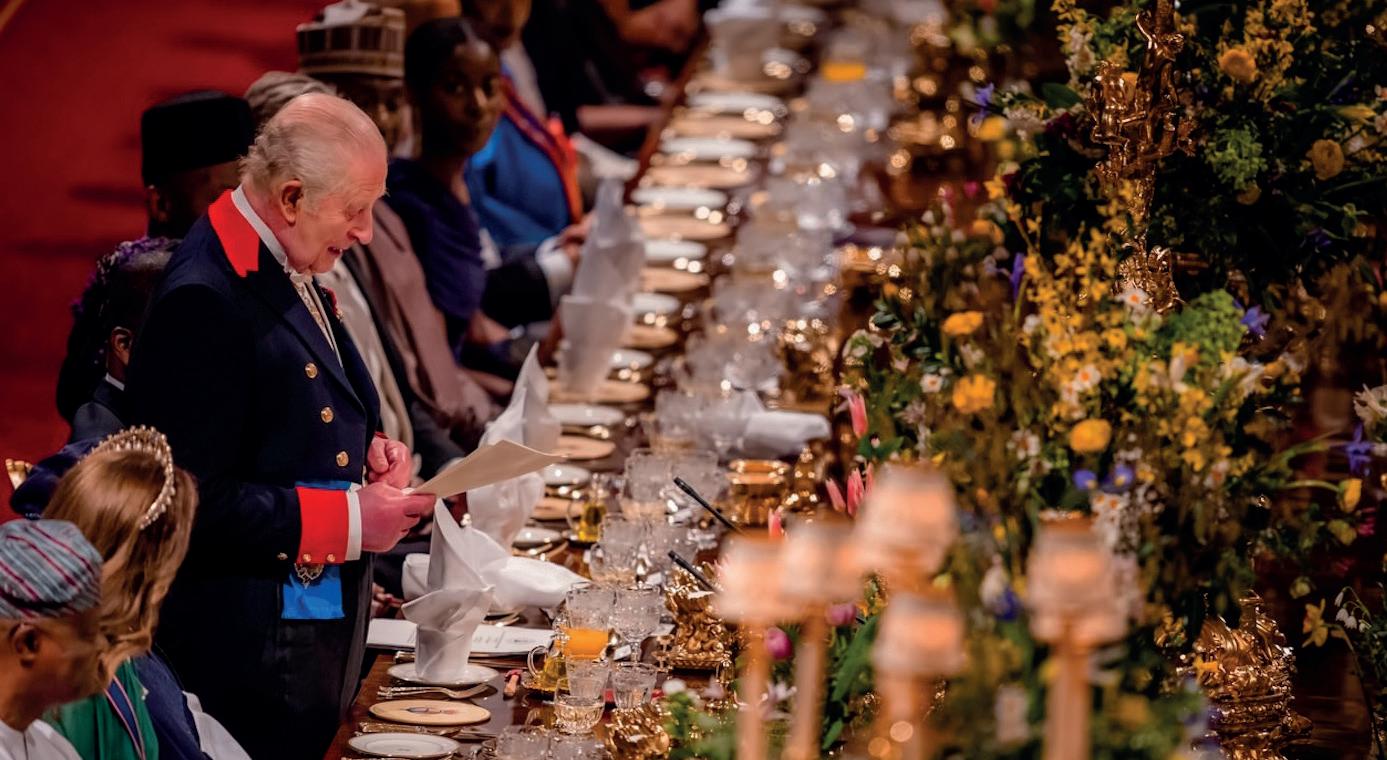
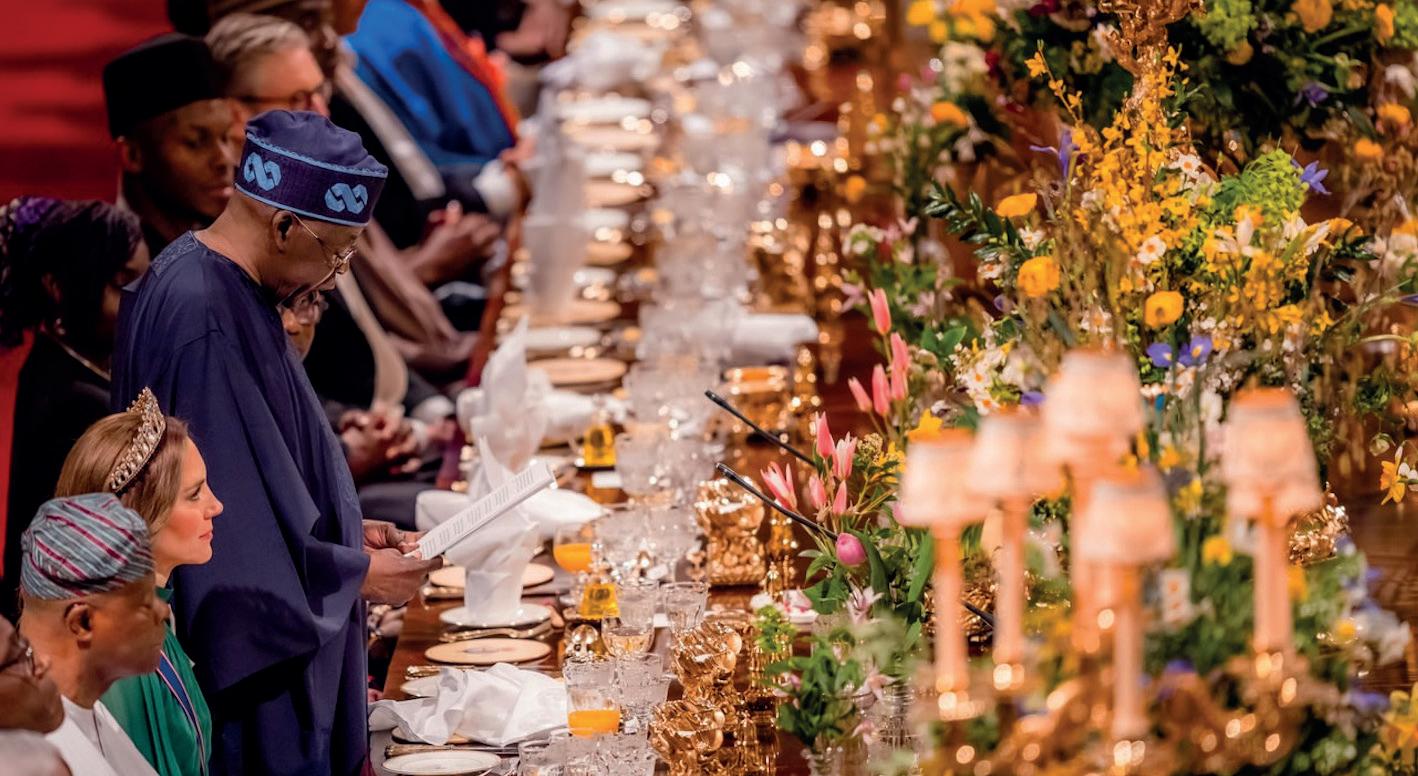
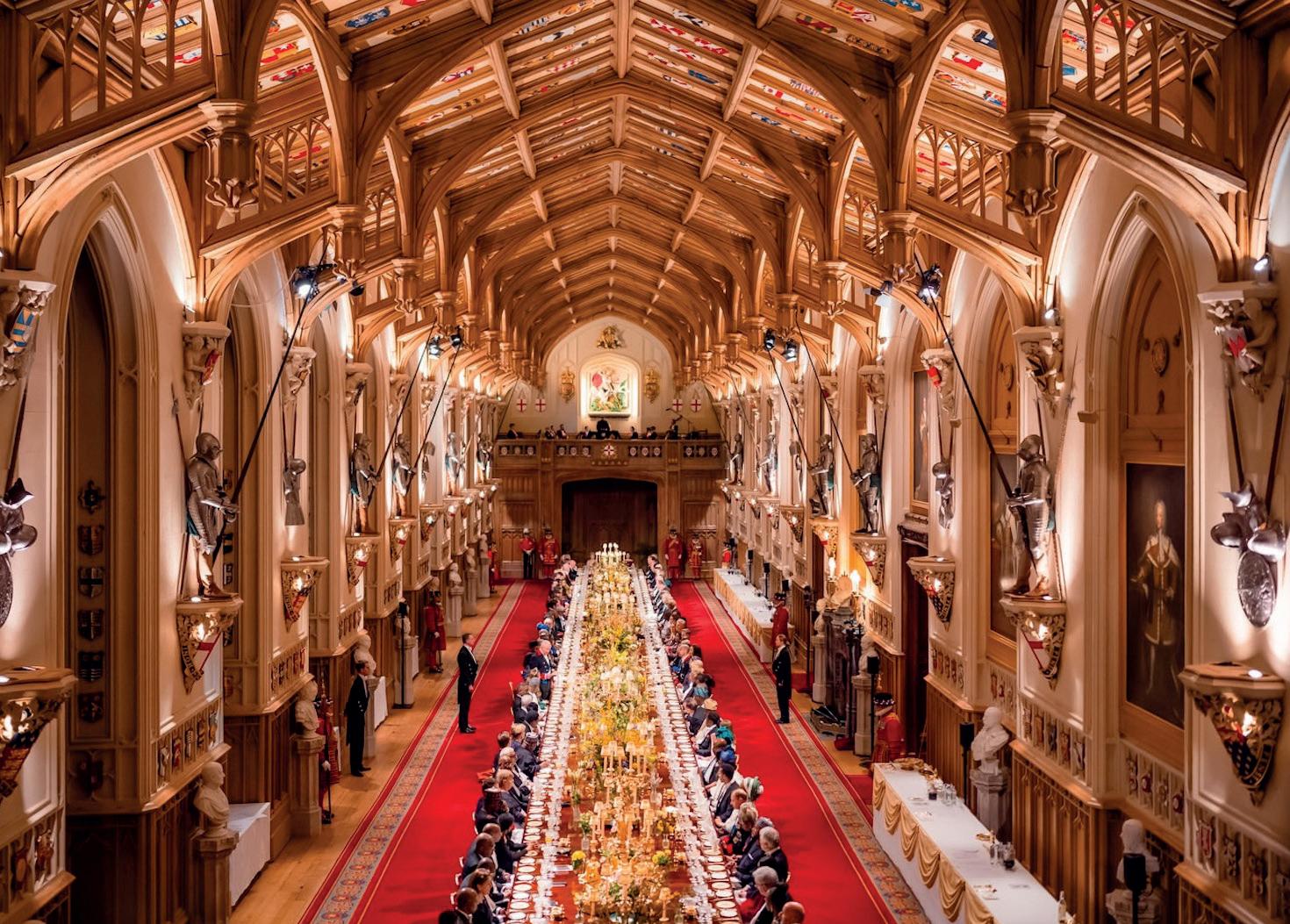
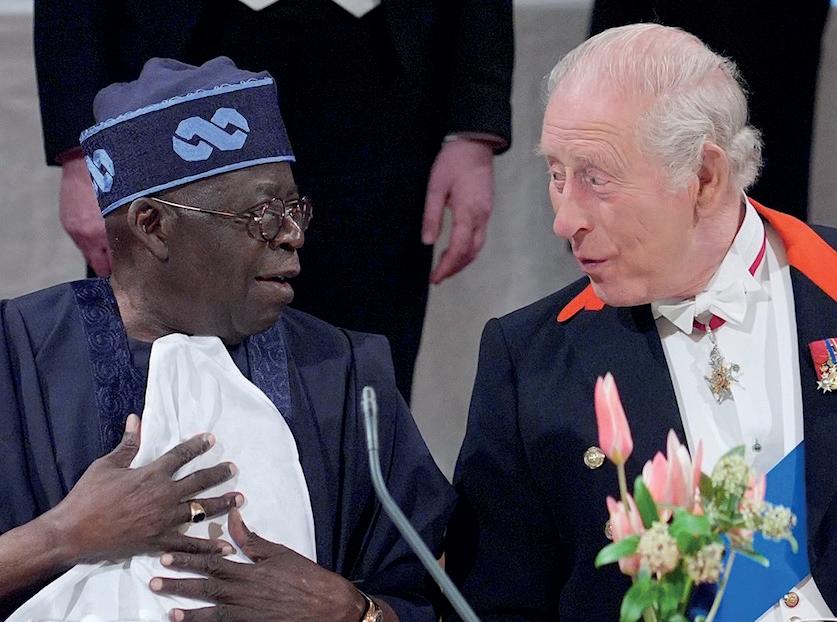
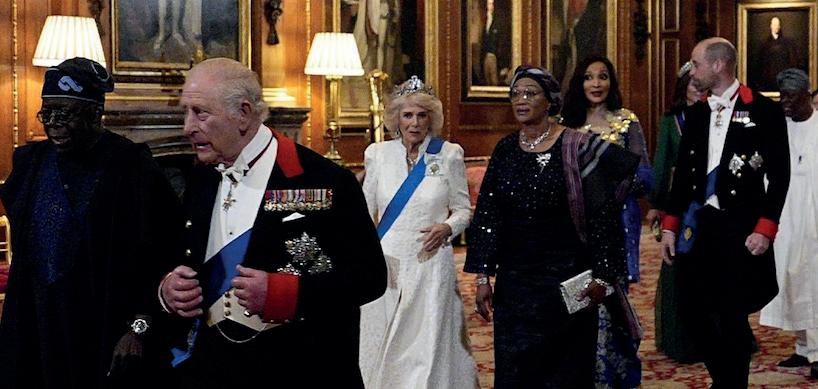
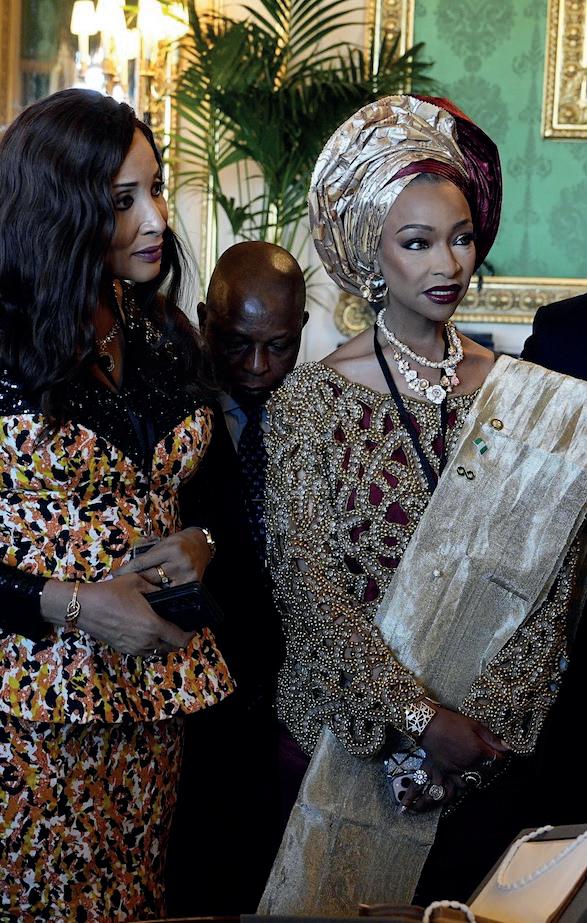
One of the central moments of the visit was the state banquet held in St George’s Hall. Known for its opulence, the hall hosted an evening that brought together political leaders and notable figures with connections to Nigeria. During the banquet, both King Charles III and President Tinubu delivered speeches, reinforcing the diplomatic significance of the occasion. There were also subtle adjustments to the programme in recognition of personal observance. The traditional lunch with the King did not take place, as President Tinubu, who is Muslim, was observing the Ramadan fast, a detail that was quietly accommodated within the structure of the visit.
Throughout, the visit maintained a careful balance between ceremony and diplomacy, each moment building on the last without excess, allowing the significance of the occasion to speak through its structure..
Your Majesty, King Charles III, Queen Camilla, Prince William, the Prince of Wales and Duke of Cornwall, and Catherine, the Princess of Wales,
Distinguished Guests, Ladies and Gentlemen,
It is a profound honour to stand before you today, representing the people of Nigeria as we reaffirm the enduring bonds of friendship, history, and shared purpose that have united our two nations for several centuries.
Allow me first to express my sincere appreciation to Your Majesty and to Her Majesty, The Queen for the warmth and generosity extended to me, my wife, Oluremi, and the Nigerian delegation.
As the first Nigerian leader to speak here at Windsor Castle, which has served the British Crown for nearly a millennium, is particularly historic. Windsor has stood as a symbol of continuity, witnessing the steady evolution of institutions that have shaped governance, culture, and public life not only in Britain but far beyond these shores.
Nigeria and the United Kingdom have shared more than just history; our two nations share a vision of progress and resilience. Today, we continue that journey, committed to building a future rooted in partnership, mutual respect, and common values.
Standing here in Windsor Castle, one cannot help but reflect on Britain’s impact on modern democratic governance worldwide.
The Magna Carta of 1215 laid the early foundations for the rule of law and the development of parliamentary democracy, establishing enduring ideals around liberty, accountable government, and civic responsibility.
Great British thinkers and writers such as Thomas Hobbes, John Locke, and Edmund Burke helped to propagate those democratic ideals. Their influence continues to resonate to this day.
The literary genius of William Shakespeare and other writers such as Charles Dickens, has enriched and shaped the English language, spoken by over 1.5 billion people worldwide.
In Nigeria, elements of these traditions continue to inform the institutional foundations of our own republic. Our courts draw upon legal traditions rooted in English common law. Our parliamentary institutions reflect constitutional practices that evolved here over centuries. Our civil service structures have also drawn upon administrative models developed in Britain and adapted to Nigeria’s own national context.
While institutions matter greatly, our people remain the strongest bridge between our two countries.
The Nigerian community in the United Kingdom has become one of the most dynamic diaspora communities worldwide.
Nigerians contribute enormously to the vitality of this nation. Within the National Health Service, Nigerian doctors and nurses play an indispensable role in delivering healthcare.
Nigerian-trained doctors are among the largest groups of international medical professionals serving the NHS.
In sport, rugby players such as Maro Itoje, footballers including Bukayo Saka and Eberechi Eze, and champion boxer Anthony Joshua, illustrate the remarkable human connection that links Nigeria and the United Kingdom.
Our partnership is further strengthened through the Commonwealth of Nations, which connects 56 countries under Your Majesty’s leadership.
As one of the largest nations within the Commonwealth, Nigeria looks forward to contributing constructively to the continued growth and vitality of this global community.
Our West African region faces complex terrorism challenges with roots in the Sahel. Nigeria carries an enormous responsibility to help safeguard regional stability. In confronting these threats, partnership with the United Kingdom remains essential and I look forward to my meeting with Prime Minister Kier Starmer tomorrow.
Despite these challenges, Nigeria approaches the future with hope and confidence. We are a nation of diverse and vibrant people, of young people dreaming big, of entrepreneurs with a global outlook, and of a hopeful people determined to realise their full potential.
Your Majesty, I am confident that the friendship between Nigeria and the United Kingdom will continue to grow.
Finally, Your Majesty, I wish to express Nigeria’s deep gratitude to this great nation for the refuge and support it extended during the dark years of military dictatorship. Like many Nigerians involved in the pro-democracy struggle, found safety here, and recall that my residence was placed under Metropolitan Police surveillance for protection following threats from agents of the junta. That solidarity remains etched in our collective memory, and it is deeply humbling for me to stand before Your Majesty today as the President of a democratic Nigeria.
On behalf of the Government and people of Nigeria, thank Your Majesty, Her Majesty The Queen, Prince William and Catherine, the Princess of Wales, other members of the Royal Family, and the people of the United Kingdom for their longstanding friendship.
In the spirit of friendship and our shared destiny, invite you all to raise a glass with me:
To the special bond between Nigeria and the United Kingdom, and to the bright future that we shall build together.
God bless His Majesty The King. God bless Nigeria. God bless the United Kingdom. Thank you very much.
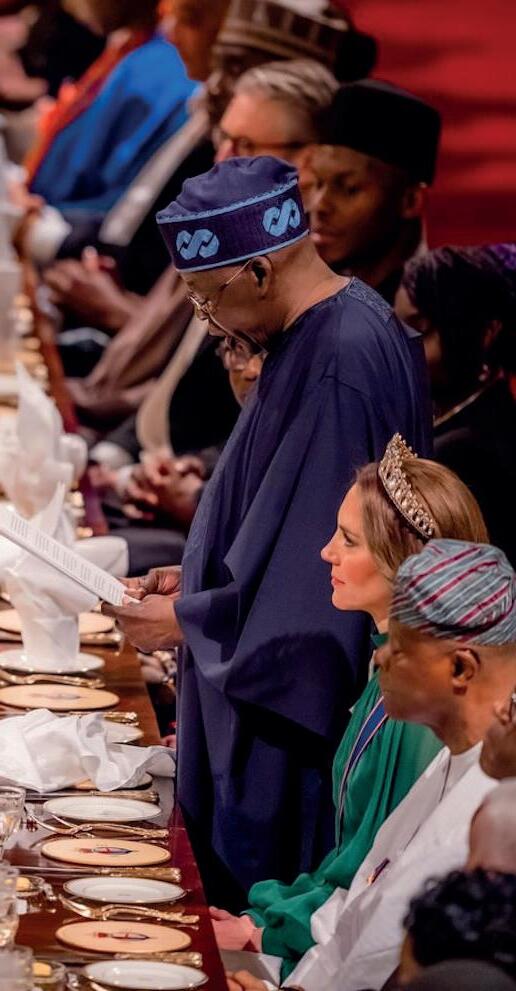
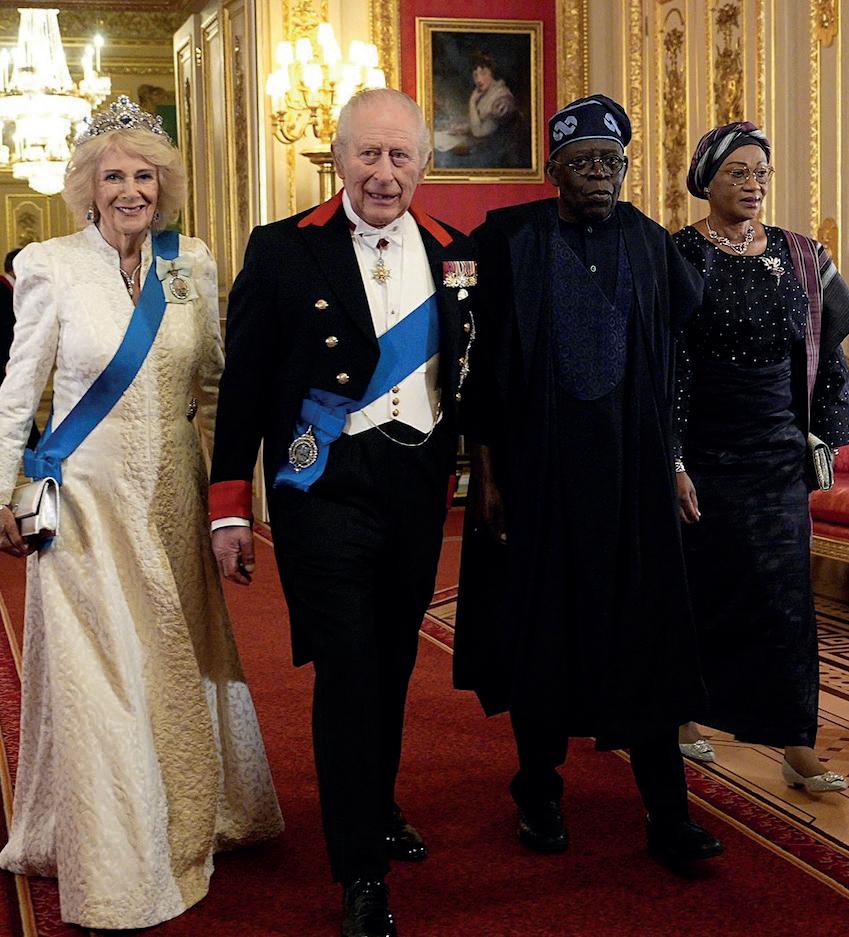
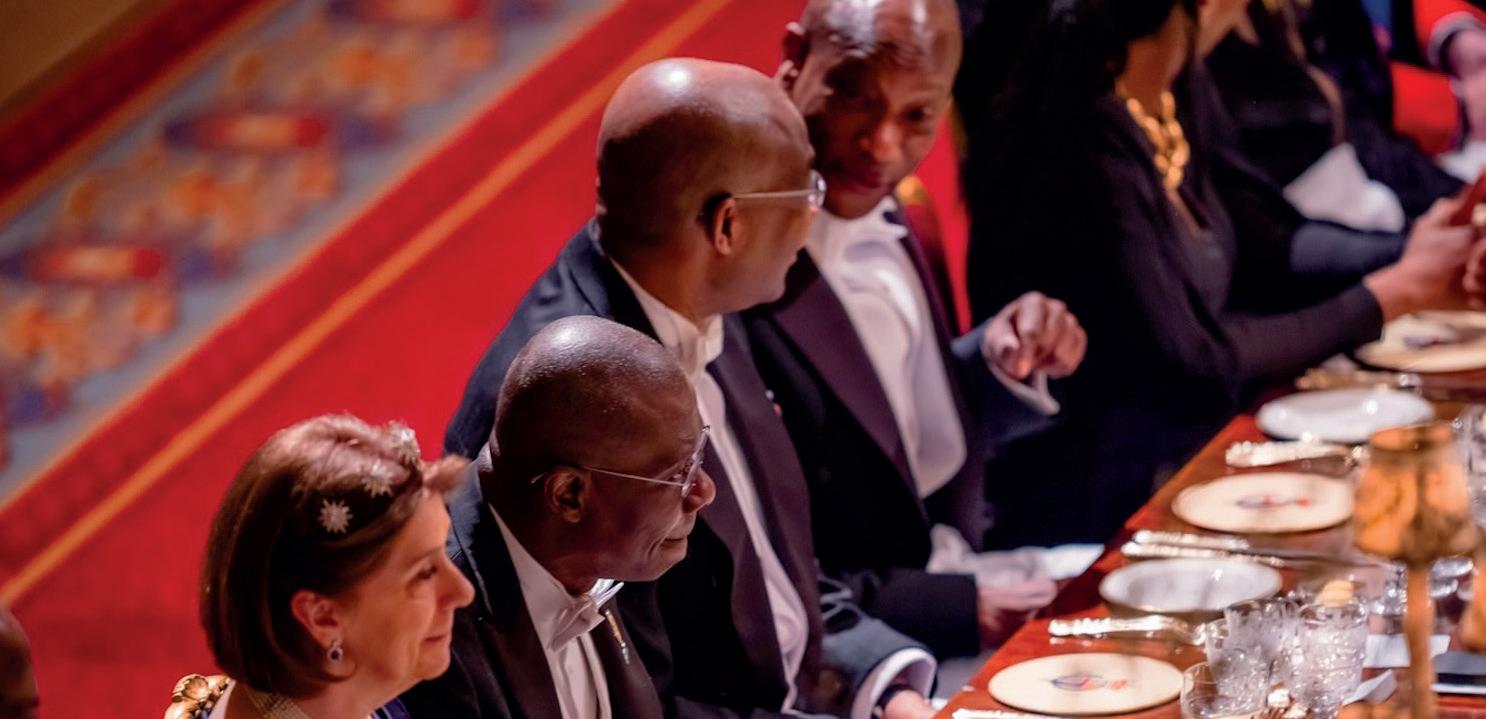
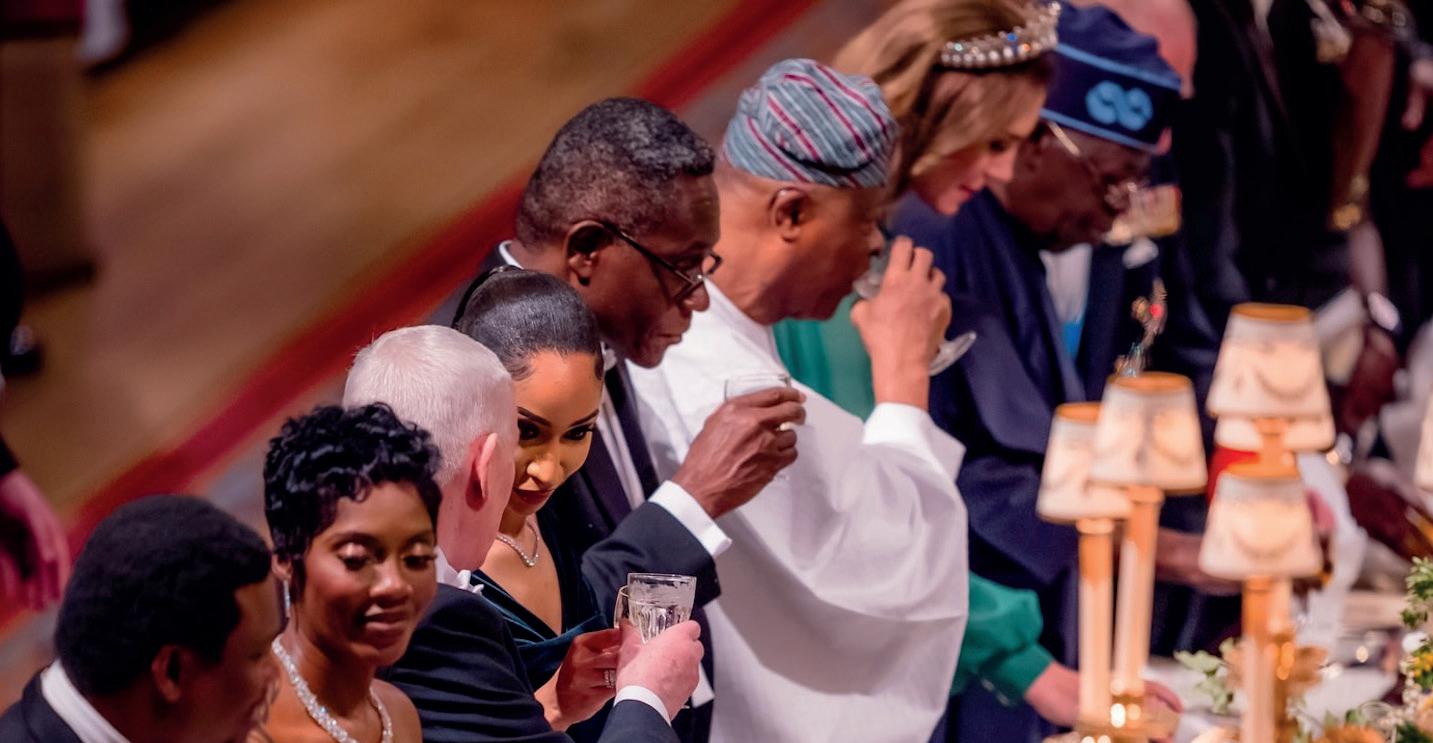
“Your Excellency, Mr President, and Distinguished First Lady, “Ekabo. Se Daaa Daa Ni. (Greetings! I hope you are well.)
“My wife and I are delighted to welcome you to Windsor Castle here on this occasion. We are most grateful to you for travelling during this holy month which, I acknowledge, is no small sacrifice, and so it is my particular pleasure to wish you, Mr President, peace, blessings, and an abundance of joy.
“Ramadan Mubarak!
“During my most recent visit to Nigeria in 2018, when I was fortunate enough to be able to spend some time with your highly respected traditional leaders, the Sultan of Sokoto, the Ooni of Ife, Onitsha, Warri, and The Emir of Kano, it was self-evident that while the warmth of the Nigerian welcome remains constant, the country itself is transforming at a remarkable pace. Nigeria hasn’t merely changed. It has arrived. Yours is now a nation of over two hundred and thirty million people, half of whom are under eighteen, with the energy, ingenuity, ambition and resolve to address the great challenges of our age.
“We in the United Kingdom are blessed that so many people of Nigerian heritage, having chosen Britain as their home, are now at the heart of British life through excelling at the highest levels of business, technology, academia, law, science, sport, literature and the arts, and public service.
“I have met so many of these quiet heroes in our schools, businesses, National Health Service and universities, including countless young people who have flourished through the work of my King’s Trust over the last fifty years. Only last week, I was delighted to host a rather lively group of them for a ‘Jollof and Tea’ Party, at St. James’s Palace. I was firmly assured that the Jollof was only the best: Nigerian, of course… or perhaps Ghanaian or Senegalese. Diplomatically cannot remember!
“But who could have imagined that, when first visited Nigeria thirty-six years ago today, so many of those I might have met would have gone on to have such an impact in the United Kingdom. From Afrobeats filling our concert halls and Nollywood captivating our screens, to stars competing in our Premier League and adjudicating our highest courts, so much of Britain’s culture is, in truth, profoundly enriched by Nigeria. Whether they are Nigerians who have chosen Britain as their adopted place to invest, trade or study, or Britons who cherish their personal connection to Nigeria, they all represent a living bridge of over half a million people who connect our nations, Mr President, and help make our cultures richer, our shared security stronger and our economies more prosperous.
“We are proud that so many great examples of this living bridge join us this evening.
“As the connections between our nations deepen every day, so too do the economic ties. Your visit has provided the opportunity to celebrate the fact that Nigeria is investing in Britain’s future as much as Britain is investing in Nigeria’s – leading Nigerian banks have chosen the City of London as a global base, examples of the best Nigerian companies have listed on London’s Stock Exchange, and U.K. Export Finance is supporting investment in Nigeria’s ports. In education, British schools and universities are opening their doors in Nigeria, and British and Nigerian technology companies are forming ever closer partnerships. I was pleased to see that visitors from Nigeria spent £178 million in Britain in 2024, and 251,000 people from Britain travelled to Nigeria and spent just as much, in return. In January of this year, Nigeria became the United Kingdom’s biggest export market in Africa and whilst I hear that in Nigeria the phrase ‘Made in U.K.’ has always symbolised the highest quality, it evidently now has a distinctively Nigerian flavour…
The friendship between our two countries, Mr President, is a partnership of equals that has brought us both
enormous benefits. It has been described to me as a deeply spiritual connection – beyond churches and mosques – a deep bond through which we have strengthened our shared security, ensured our economies are more prosperous, and empowered each other to believe in a more hopeful future.
The many dynamic connections between our two nations have deep roots and yet do not pretend that those roots are without a shadow. There are chapters in our shared history that I know have left some painful marks. I do not seek to offer words that dissolve the past, for no words can. But I do believe, as I know you believe, Mr President, that history is not merely a record of what was done to us – it is a lesson in how we go forward together to continue building a future rooted in hope and growth for all, and worthy of those who bore the pains of the past.
“This afternoon, in another part of the Castle, Mr President, you and witnessed one such example of how we are learning from one another when we met leaders of the British Christian and Muslim communities. The gathering was a deeply meaningful symbol of what Nigeria has long shown: that people of different faiths can, do, and must live alongside one another, in peace, in harmony and in shared purpose. It was also a timely reminder of the importance of standing with you – and in us strengthening your Quick Reaction Forces, or in providing food, nutrition and protection services in Northern Nigeria – when challenges disturb the age-old balance between these communities.
“Your nation, Mr President, is an economic powerhouse, a cultural force and an influential diplomatic voice from a continent that is playing an increasingly important role in the world. In a vastly interconnected global environment, one that is changing at unimaginable speed, that leadership brings responsibility – and opportunity. heed the Yoruba wisdom – and forgive me if say it in English… that “rain does not fall on one roof alone”. As you observed so astutely before the Commonwealth Heads of Government Meeting in Samoa in 2024, “if we didn’t have this global alliance… of fifty-six member states, 2.7 billion people and a combined G.D.P. forecast soon to surpass twenty trillion U.S. dollars… there would be a need to create one”. I believe firmly that, when rain clouds gather, we can tighten the grip of friendship between us and, in so doing, reinforce the central role of the Commonwealth in our shared future.
“As the world changes, these are lessons we must heed now more than ever. As the Hausa saying goes, “when the music changes, so does the dance”. We can learn from Nigeria, and the best of the U.K. and Nigeria’s partnership, and harness the advantage that comes from our common languages, our similar legal systems, and the web of cultural ties and spiritual connections that provide such deep trust between us, and look to the future and learn new dance steps, together.
“Mr President, you have spoken, in particular, of the importance of expanding intra- Commonwealth trade by creating shared standards, regulatory and digital alignment, and removing barriers that deter investment – as the U.K. and Nigeria’s Enhanced Trade and Investment Partnership is just such an example – so that our economies can grow, in harmony with Nature, and create the millions of jobs our citizens need. So as we look towards C.H.O.G.M. this year, I hope far from being past its time – we can demonstrate that the Commonwealth’s time has come, as you so rightly said. In achieving that, my wife and I will gain strength from seeing Nigeria take her rightful place at the heart of the Commonwealth and to standing alongside you as a friend, who believes the future is best when built together. As the Igbo say, “Knowledge is never complete two heads are better than one”.
“So as close, Mr President, in anticipation of Eid El-Fitr in Nigeria and across the world, can only wish you and the millions of Muslims in our countries, Eid Mubarak.
“And, in doing so, let me propose a toast,
“To the President and people of Nigeria –
“Naija No Dey Carry Last!” (Nigerians Never Come Last)”

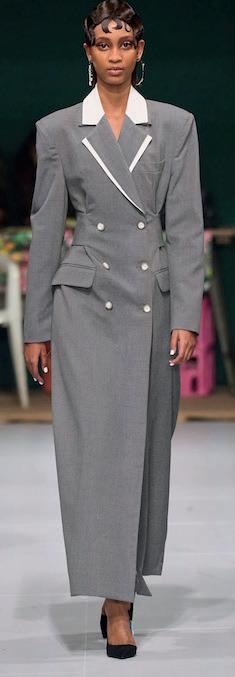
Earlier this year, during London Fashion Week, King Charles III attended his first runway show, taking his seat for BritishNigerian designer Tolu Coker’s Fall 2026 presentation. It was the kind of moment that doesn’t immediately announce itself as historic, but in hindsight, clearly was. A monarch at a young designer’s show. Not couture heritage, not a legacy house, but a contemporary label still defining itself.
Now, just months later, that quiet endorsement has taken on a more visible form.
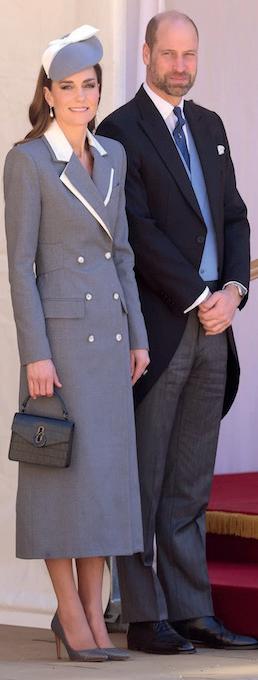
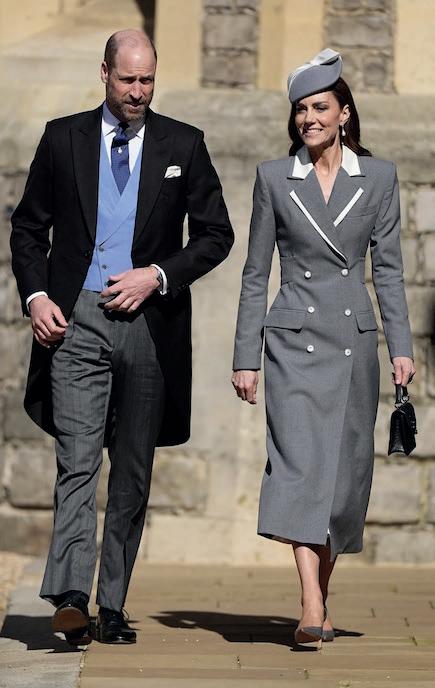
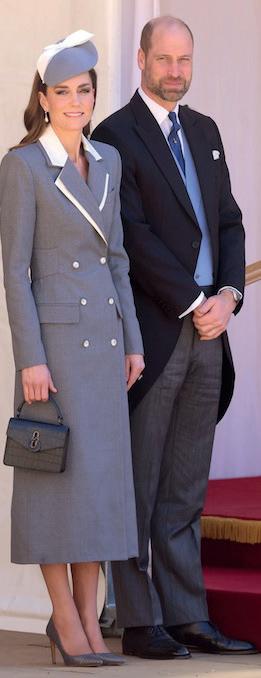
At the ceremonial welcome for H E Bola Ahmed Tinubu and his wife, Oluremi Tinubu, in Windsor, Catherine, Princess of Wales, stepped out in a tailored grey and white coat from Tolu Coker’s Fall 2024 collection. The choice felt deliberate. Diplomatic, even. A subtle but powerful nod to Nigerian creativity at a moment of national significance. The coat itself was sharply considered. Cut in a doublebreasted, A-line silhouette, it carried a certain restraint, clean lines, long sleeves, and a structured presence that leaned into occasion dressing without excess. White accents traced the collar and lapels, mirrored by a row of buttons that broke up the soft grey with precision.
She anchored the look with anthracite pumps by Hugo Boss and a coordinating hat by London milliner Jane Taylor, keeping within a disciplined colour palette. A black top-handle bag from Mulberry added contrast, while the finishing touch, Collingwood pearl and diamond drop earrings, introduced something more personal. The same pair once worn by Princess Diana, now part of the Princess of Wales’ regular rotation, brought a sense of continuity that fashion alone cannot replicate.
But beyond the styling, the significance lies in the designer. Tolu Coker’s trajectory has been quietly building for years.
A graduate of Central Saint Martins under the University of the Arts London, she sharpened her craft within the studios of Celine, JW Anderson and Maison Margiela before launching her label. Since then, her work has developed a clear point of view, one rooted in identity, social commentary, and a commitment to sustainability. Her collections often lean into deconstruction, reworking familiar forms into something more layered and intentional. There is also a strong emphasis on inclusivity, not just in casting but in philosophy. Through collaborations with organisations such as Amnesty International, Choose Love, and The City of Joy, her brand exists as both a fashion label and a platform.
Long before the royal spotlight, there had been early backing. Coker was a beneficiary of The Prince’s Trust, receiving mentorship and support during the formative stages of her business. That connection now feels almost full circle—what began as institutional support has evolved into visible recognition at the highest level.
And the timing matters.
This appearance coincided with a significant diplomatic milestone: the first official state visit to the United Kingdom by a Nigerian leader in 37 years. Hosted at Windsor Castle, the visit included a full programme of engagements, culminating in a state banquet. In that context, every visual detail carried weight. Every choice, intentional.
And perhaps more importantly, it signals a shift.
Not long ago, recognition for designers of Nigerian descent often came from within fashion circles, editors, stylists, and insiders. Now, that recognition is extending into institutions that shape global visibility in entirely different ways. Royal wardrobes. State visits. Historic moments.
The runway is no longer the final destination. It is just the beginning.
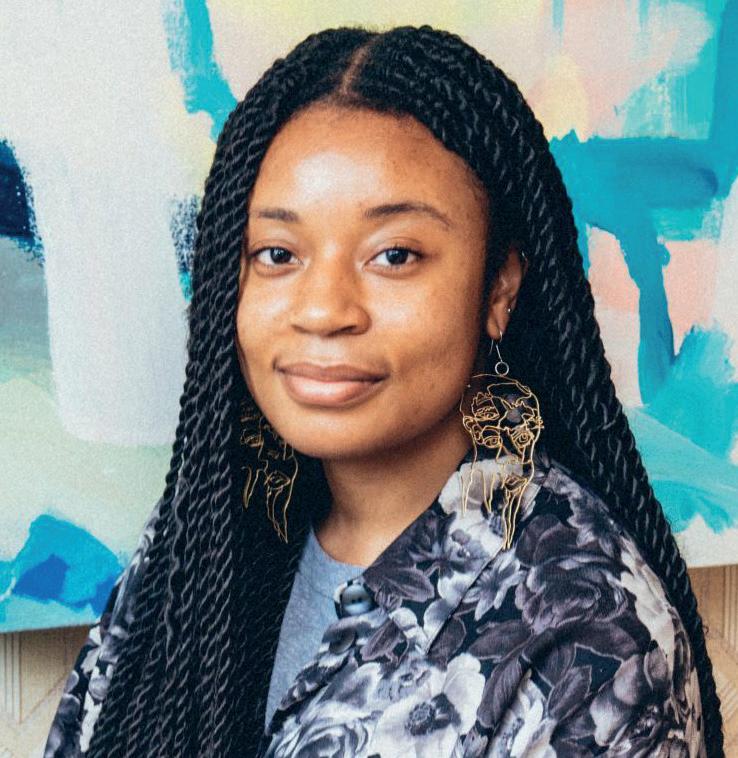


@thisdaystyle @thisdaystyleon
BY KONYE CHELSEA NWABOGOR
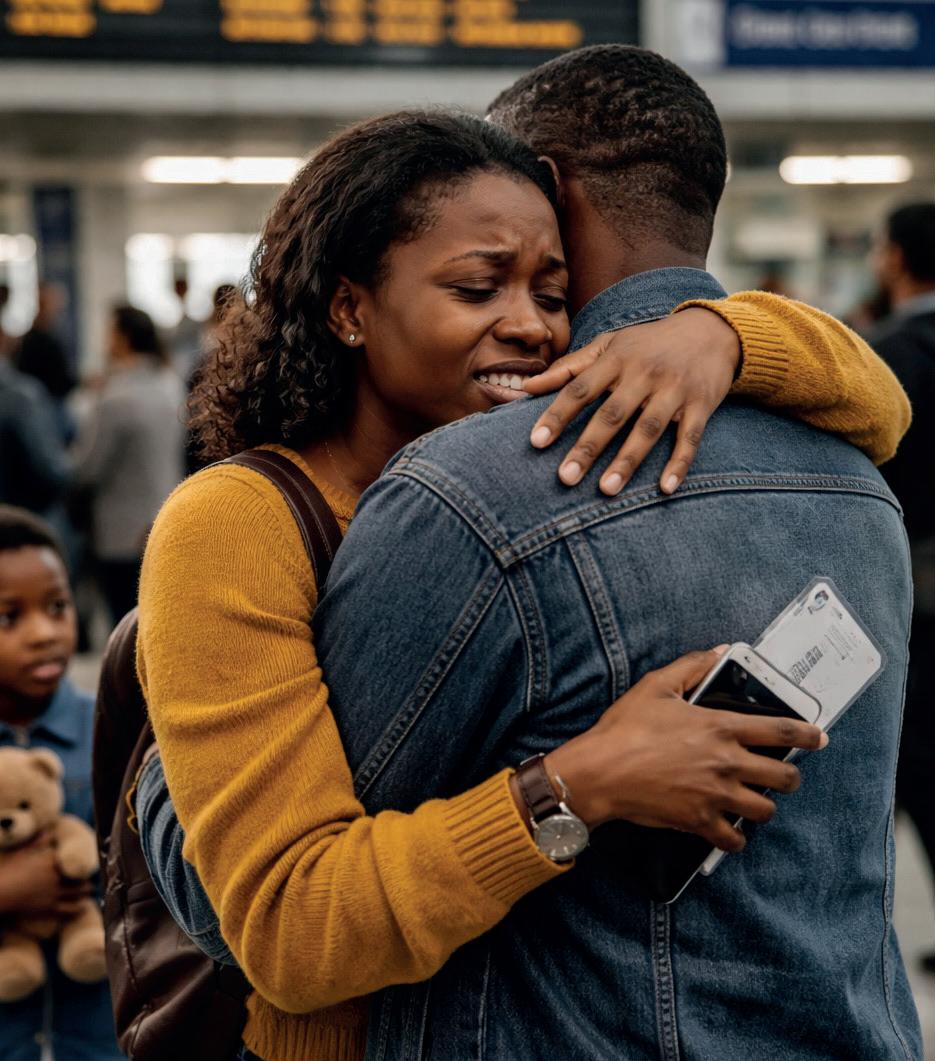
t the airport, it sounds like a plan. A temporary separation. A necessary sacrifice. A means to something better. I’ll send for you. It’s just for now. We’ll figure it out. But the truth is, most people leaving already know on some level that they are not just stepping out. They are stepping away. And we are not being entirely honest about that. Because this wave of leaving, this thing we have casually branded japa, is not driven by wanderlust. It is not a lifestyle choice in the romantic sense. It is, for many, a response to pressure. A quiet calculation between staying and stagnating.
When the cost of living rises faster than income. When inflation makes planning feel almost foolish. When power supply, security, and infrastructure remain inconsistent at best. When the gap between effort and reward widens so much that even the most optimistic begin to feel… stalled. Leaving stops feeling like ambition and starts to feel like necessity.
“I didn’t leave because I wanted to,” a friend tells me, now based in the UK. “I left because felt like if stayed, would be explaining my potential for the rest of my life instead of actually living it.”
That sentence, explaining your potential, sits at the centre of many of these departures. And it complicates the narrative around relationships, because it is hard to argue against someone trying to build a better life, even when that decision quietly dismantles the life you were building together.
We have normalised that dismantling in ways that would have once been unthinkable.
So couples begin negotiating distance as if it were a phase. Something to manage. Something to outlast. But distance is not neutral. It alters the very structure of a relationship, and not all relationships are built to survive that kind of shift.
The person who leaves enters a world that demands immediate adjustment. New systems, new expectations, new rhythms. There is a certain urgency to survival abroad. You adapt quickly, or you fall behind. That process hardens you in some ways, sharpens you in others.
The person who stays behind is also adapting, but in a different way. They are holding on to a version of the relationship that is no longer being reinforced by shared experience. They are navigating life locally while emotionally tethered to someone living an entirely different reality.
And slowly, almost imperceptibly, the gap widens.
It is not always about infidelity or conflict. In fact, many of these relationships do not end in drama, they dissolve in distance. In misalignment. In the quiet realisation that love, on its own, is not always enough to bridge structural separation.
“You start to feel like you’re talking to someone who used to know you very well,” someone says to me, describing her partner who relocated to Canada. “Not someone who knows you now.”
www.thisdaystyle.ng
scheduled. Missed moments that cannot be recovered.
At first, it feels manageable. Then it starts to feel like work.
“I didn’t realise how much of our relationship was built on just… being around each other,” someone admits. “Not talking. Not doing anything significant. Just existing in the same space.”
That kind of existence is impossible across continents.
But if romantic relationships are under pressure, family dynamics are being quietly, profoundly reconfigured, and we are talking about it far less than we should. Japa is not just breaking couples apart; it is stretching families into unfamiliar shapes. Siblings who once saw each other weekly now rely on group chats and occasional calls. And even those calls begin to feel like performances, condensed updates, curated versions of life, everyone trying to sound okay.
Meanwhile, life continues on both sides, but not together.
Children grow up with aunties and uncles; they know more from screens than from memory. You miss the first steps, the first words, entire personalities forming in your absence. Birthdays are missed, not once, but repeatedly. Weddings become negotiations, who can travel, who cannot, who watches through livestreams and pretends it is enough.
And then there are the harder moments, the ones no one prepares you for. Funerals attended via video calls. Families grieving across time zones. The dissonance of loss without physical presence. The quiet guilt of not being there, mixed with the practical reality that sometimes, you simply cannot be.
That distinction is subtle, but it is everything. Long-distance love is often romanticised as a test of strength. But in reality, it is a test of structure. And many people are discovering, sometimes too late, that we are asking relationships to survive conditions they were never designed for. Because communication, no matter how consistent, cannot replace presence. You can recount your day, but you cannot replicate proximity. You can share updates, but you cannot share energy. The small, seemingly insignificant moments, the ones that actually build intimacy, are the first to disappear.
And then there is the emotional economy of it all. Who is allowed to struggle more? The one abroad dealing with a new environment, or the one at home dealing with absence? Who gets to complain without sounding ungrateful?
Who gets to ask for more without seeming unreasonable?
So people edit themselves. They minimise their feelings. They avoid difficult conversations. Not because they don’t care, but because they are trying to protect what is already under strain.
And then there is time. Time zones that don’t align. Calls that have to be
“My dad was buried and my brother couldn’t make it back,” someone shares. “We understood why. But understanding doesn’t remove the feeling.”
There is also a kind of relational drift that happens over time, and we are often too polite to name it. Friendships thin out. Not because they lacked depth, but because they lacked proximity. Inside jokes expire. Cultural references shift. Priorities change.
“You realise that maintaining some friendships requires proximity,” another voice says. “Not just effort. Actual physical presence.” And perhaps that is one of the more uncomfortable truths of this moment: not all relationships are meant to stretch indefinitely. Some are shaped by context, by shared environment, by being present in each other’s lives in ways distance cannot replicate. Yet, within all of this, there is still a strong cultural insistence on endurance. On waiting. On holding on.
Particularly in romantic relationships, there is often an unspoken expectation, especially for the person who stays, to remain patient, supportive, and understanding. To believe in the plan, even when the plan becomes increasingly abstract.
I’ll send for you.
It is a phrase that sounds like commitment, but often functions as suspension. A way to hold someone in place while life moves forward elsewhere. But what we are less willing to ask is this: how long is a life supposed to wait?
When “soon” becomes “eventually,” and “eventually” becomes undefined, what exactly are we preserving a relationship, or an idea of one?
At what point does loyalty become inertia?
The japa generation is often framed as bold, ambitious, forward-thinking. And that is true. But there is another side to this story, one that is quieter, more complicated, and far less convenient to confront.
It is the reality that while people are building new lives abroad, entire ecosystems of relationships back home are being slowly, steadily restructured. Not broken all at once.
Not dramatically. But stretched, thinned, redefined.
We are learning, in real time, that love does not just need intention, it needs infrastructure. It needs shared space, shared time, shared reality. And when those things are removed, what remains is not always enough, no matter how strong the feeling once was.
And perhaps the hardest truth of all is this: for many people, the life they are building is no longer one their relationships can fully fit into, and the people they love are left negotiating whether to follow, to wait, or to quietly let go.