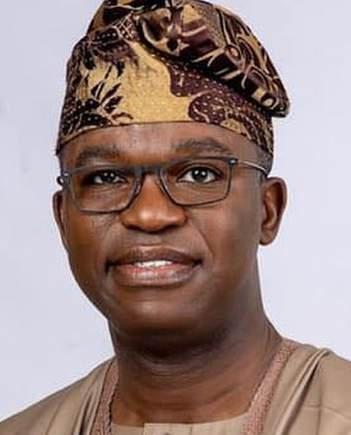
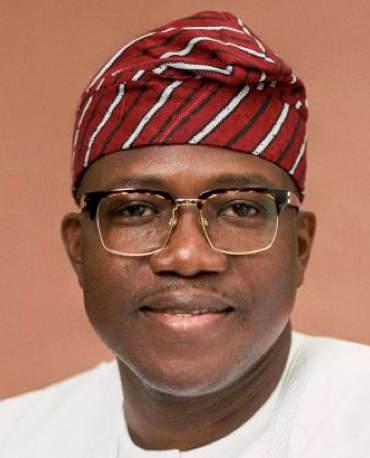
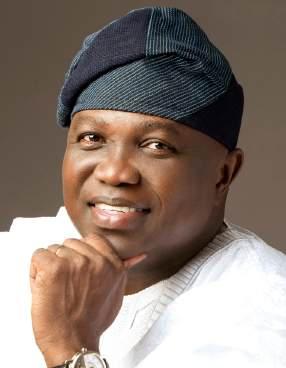
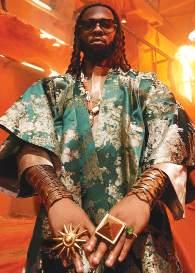
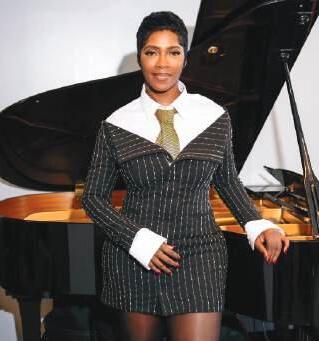
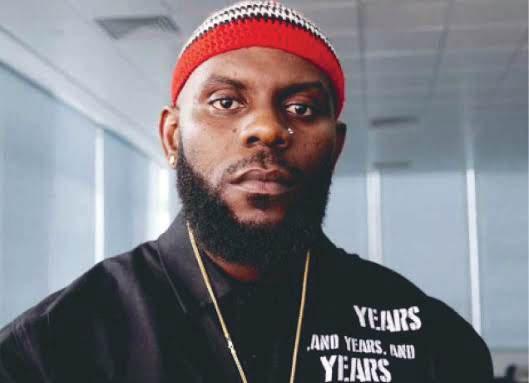
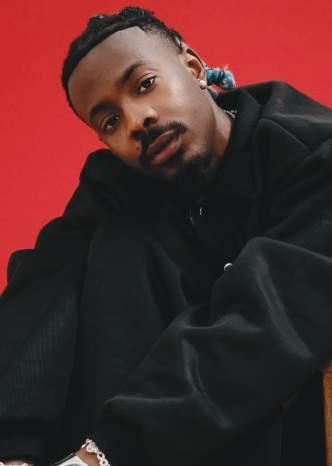
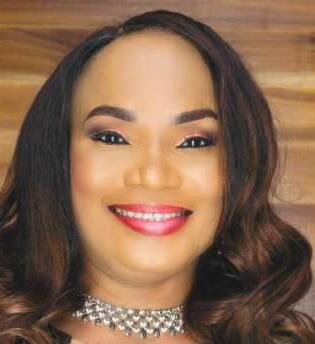
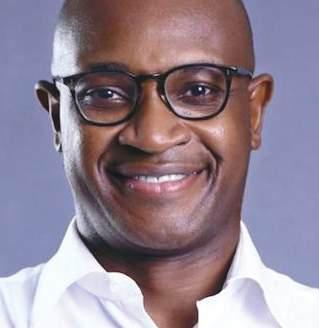
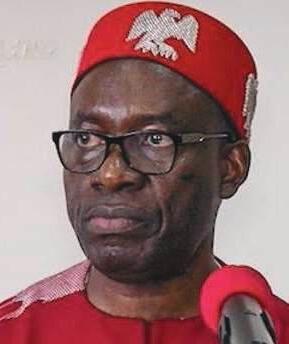
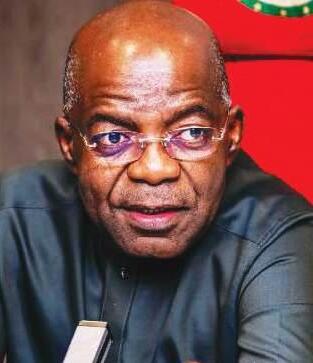
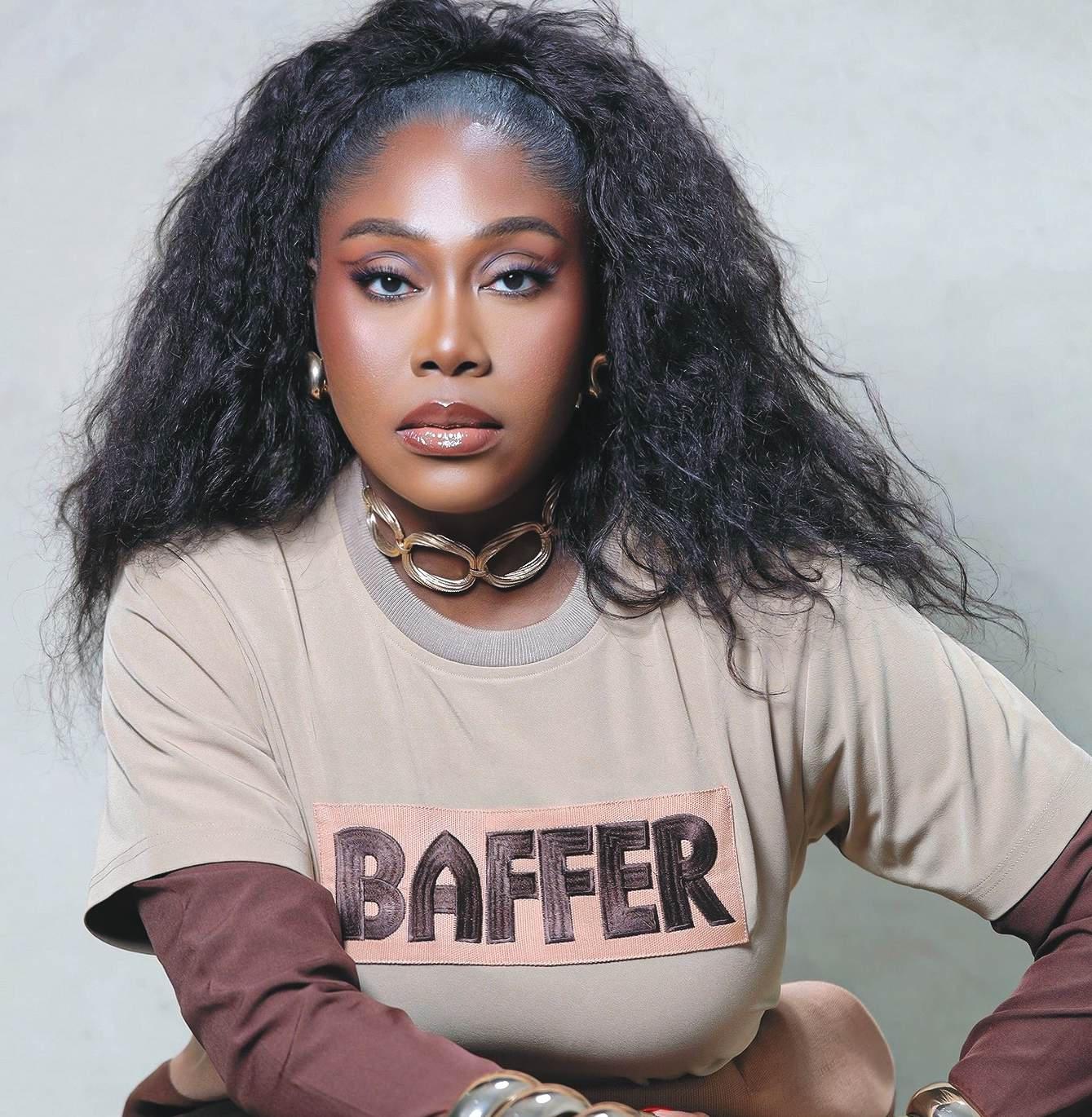
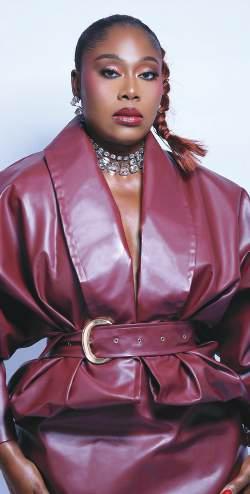
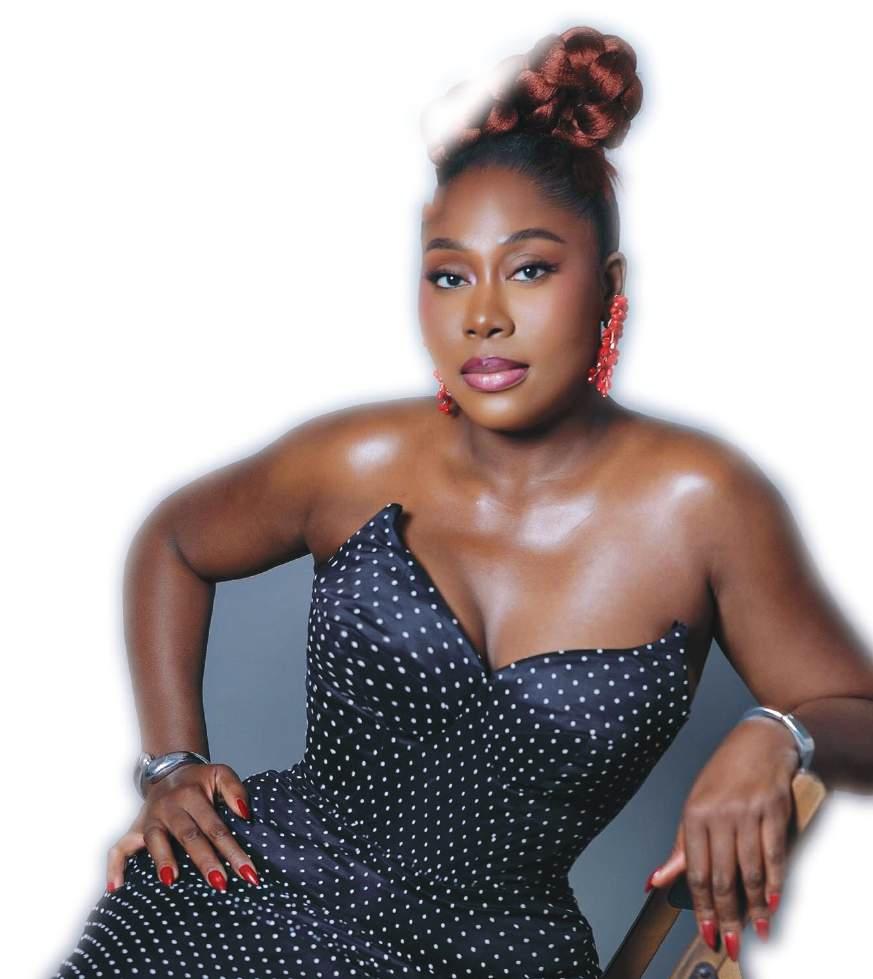
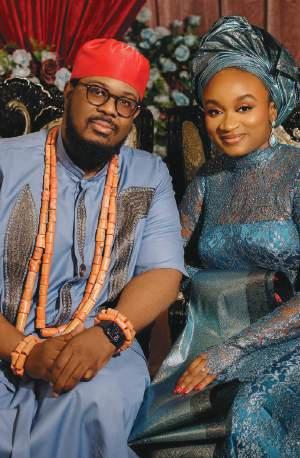
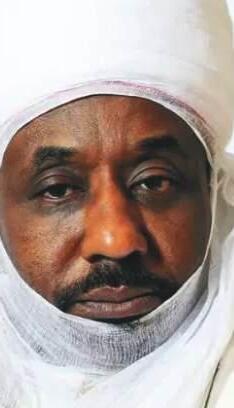
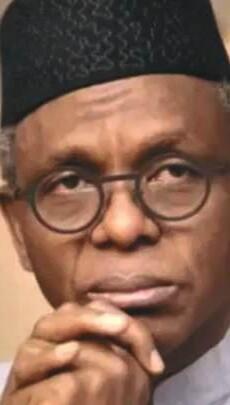
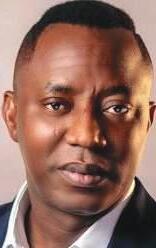
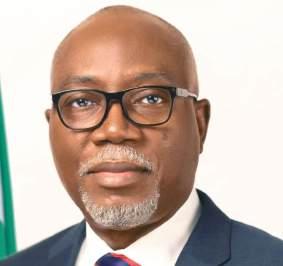
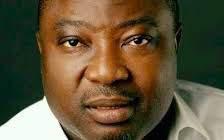
Alausa, Hamzat, Abiru, Muri-Okunola, Ambode in Beauty Parade in Lagos
Festus Akanbi
As the 2027 general election approaches, the race for the Lagos State governorship seat
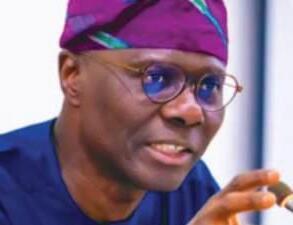
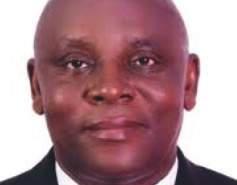
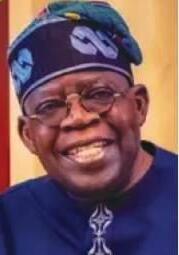
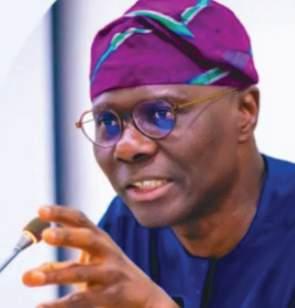
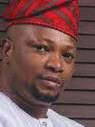
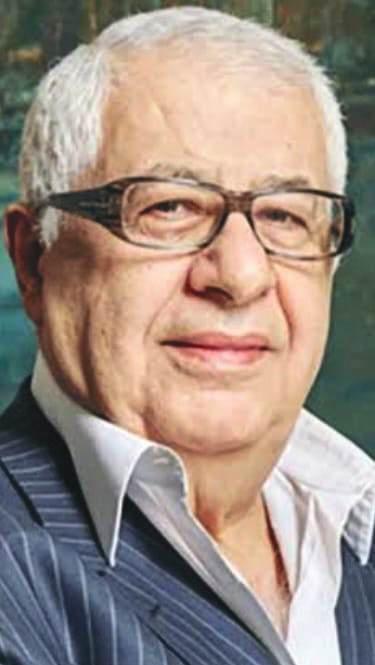
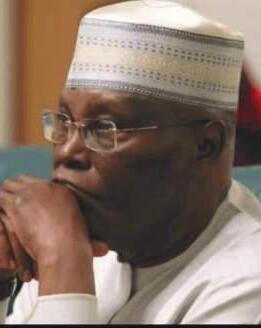
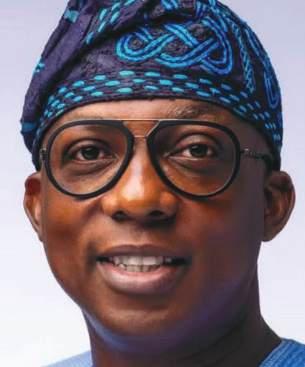
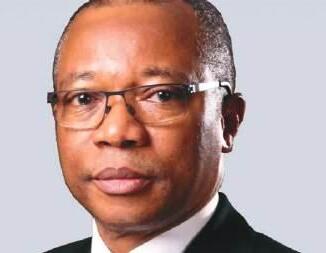
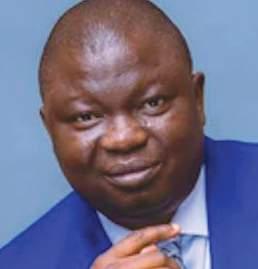
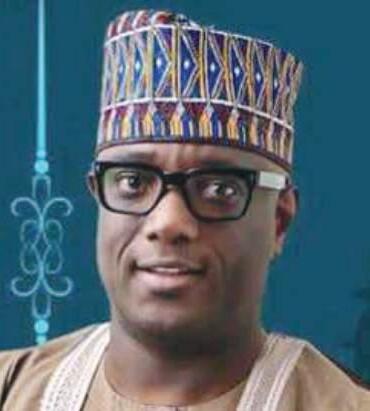
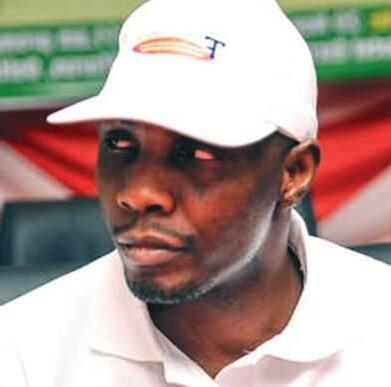
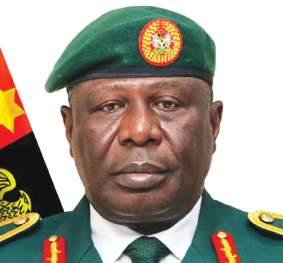
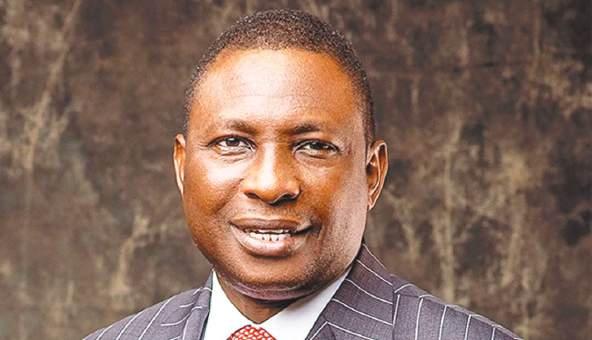
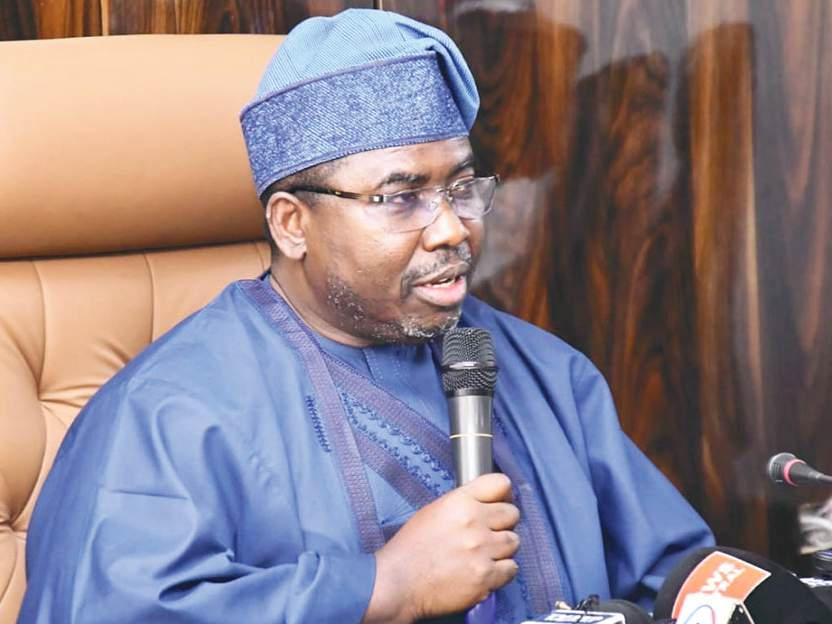
has begun with the former Governor Akinwumi Ambode; the Minister of Education, Dr. Tunji Alausa; the senator representing Lagos East,
Tokunbo Abiru; the current Deputy Governor of Lagos State, Obafemi Hamzat and President Bola Tinubu’s Principal Secretary, Hakeem
Fuming Trump Issues Fiery 48-hour
Muri-Okunola, as the likely contenders, THISDAY has learnt.
Soludo Backs Tinubu’s Re-election in
2027, Says APGA Won’t Field Presidential Candidate
David-Chyddy Eleke in Awka Anambra State Governor, Prof. Chukwuma Soludo, has declared his support for the re-election of President Bola Ahmed Tinubu in the 2027 general election, stating that he has no regrets about his position. Soludo made the remarks during a television interview in Awka, where he described the president as a friend and
US Boosts Nigeria’s Anti-terror War With Drones, 200 Troops Stationed Bauchi
Ejiofor Alike with agency report
The United States has deployed multiple MQ-9 drones operating in Nigeria alongside 200 troops to provide training and intelligence support to the military, which is fighting Islamist militants across the north, US and Nigerian officials told Reuters.
The troops, who are going to be operating assets from the airfield in Bauchi State, are not integrated within Nigerian units on the frontline.
The drones are to collect intelligence and not carry out airstrikes, Reuters quoted officials from the two countries as saying.
A former Chief of Army Staff (COAS), Lt. Gen. Tukur Buratai (rtd), last Thursday stated that while the military had made progress and
was not overwhelmed, it continued to face operational challenges, including limited manpower and equipment relative to the vast terrain of the North-east.
“I don’t see that the insurgency is overwhelming the troops. We are okay, but we need more enablers such as drones and additional platforms. The landmass is enormous, and troops are widely dispersed,” Buratai reportedly said.
However, the US deployment, which follows US airstrikes targeting militants in North-west in the late 2025, shows the US getting involved in tackling Islamic State and al Qaedalinked insurgencies that are spreading across West Africa.
Reuters reported that the US military previously had
Continued on page 5
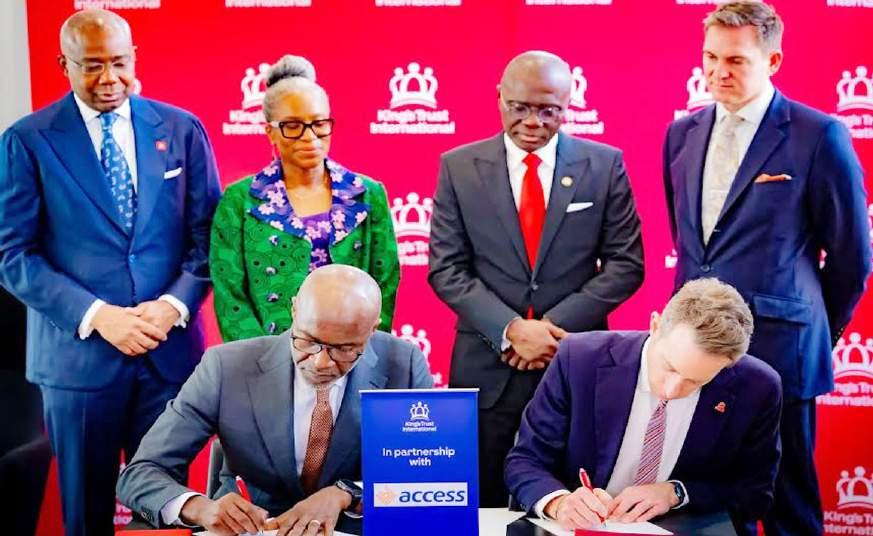
WITH DEVELOPMENT PARTNERS…
Telcos, Banks, Others Dominate NGX as 16 Firms
Kayode Tokede
Nigeria’s equities market is increasingly being defined by a narrow band of corporate heavyweights, with just 16 companies spanning telecommunications, banking, oil and gas, cement, and consumer goods accounting for a remarkable N96.8 trillion of total market capitalisation.
Data from the Nigerian Exchange Limited showed that as of March 18, 2026, total equity market capitalisation stood at N129.13 trillion, with these firms contributing 74.98 per cent. The figures underscore the growing
Account for N96.8tn
dominance of large-cap stocks and their decisive role in shaping market direction.
The rally in these stocks reflected sustained investor confidence in companies with strong fundamentals, resilient earnings, and the capacity to navigate Nigeria’s challenging macroeconomic terrain.
Leading the chart is MTN Nigeria Communications Plc, which retained its position as the most capitalised listed company, with a market value of N15.9 trillion. The telecoms giant has also recorded an impressive year-to-date share price appreciation of 48.3 per
cent, rising from N511 to N758 per share by the close of 2025.
The surge in investor interest was underpinned by a sharp turnaround in its financial performance. MTN Nigeria posted a profit before tax of N1.7 trillion for the 2025 financial year, marking a dramatic recovery from a loss of N550.3 billion recorded in 2024. Revenue also climbed significantly to N5.2 trillion, up by nearly 55 per cent from N3.36 trillion in the previous year.
Describing the performance as a turning point, the company’s Chief Executive Officer, Dr. Karl
Market Value
Toriola, noted that the year reflected resilience and recovery, supported by a stronger balance sheet and increased investment in network infrastructure to improve service quality and customer experience.
Trailing MTN Nigeria is BUA Foods Plc, with a market capitalisation of N14.36 trillion, reaffirming the strong investor appetite for food and consumer staples. Dangote Cement Plc followed closely at N13.67 trillion, while BUA Cement Plc stood at N11.06 trillion, reflecting the cement sector's continued strength amid sustained infrastructure demand.
Also featuring prominently is Airtel Africa Plc, valued at N8.53 trillion, further consolidating the telecoms sector’s influence on the Exchange. In the industrial segment, Lafarge Africa Plc posted a market capitalisation of N3.65 trillion.
In the oil and gas space, Seplat Energy Plc and Aradel Holdings Plc recorded N5.46 trillion and N5.26 trillion, respectively, reflecting renewed investor confidence in energy stocks amid relatively firm crude oil prices.
The banking sector remains a critical pillar, with nine
US BOOSTS NIGERIA’S ANTI-TERROR WAR WITH DRONES, 200 TROOPS STATIONED BAUCHI
a $100 million drone base in neighbouring Niger Republic with about 1,000 troops monitoring militants across the Sahel region, but that was closed in 2024 after the Niger junta requested their departure, part of a broader rejection of Western military support by countries in the Sahel region.
An assault by suicide bombers on a North-eastern Nigerian garrison town last week showed how a 17-year insurgency there can still strike urban centres. Meanwhile, bandits have
stepped up their attacks in the North-west, near the border with the Benin Republic and Niger, where a long-running banditry crisis risks mutating into another operating zone for Islamists.
A US defence official was quoted as saying that the drones had been deployed alongside troops at the request of the Nigerians to collect intelligence.
"We see this as a shared security threat," the official said.
The Director of Defence Information at Nigeria's
Defence Headquarters (DHQ), Major General Samaila Uba, confirmed that the US was operating assets from the airfield in Bauchi State.
"This support builds on the newly established US-Nigeria intelligence fusion cell, which continues to deliver actionable intelligence to our field commanders," he told Reuters.
"Our US partners remain in a strictly non-combat role, enabling operations led by Nigerian authorities."
Uba said both sides would agree upon the timeline
for the US deployment in Nigeria.
MQ-9 drones, sometimes known as Reaper drones, can loiter at high altitude for more than 27 hours and are used for both intelligence gathering and airstrikes.
Neither Uba nor the US official would comment on specific cases where US intelligence had led to the Nigerians targeting militants.
Still, Uba said that US forces were helping Nigeria "identify, track and respond to terrorist threats".
Late last year, Reuters
reported that aircraft based in Ghana had been conducting intelligence-gathering flights for the US military over Nigeria.
The US - which has had a long partnership with Nigeria's military, providing training and selling weaponssaid it carried out airstrikes in the North-west on Christmas Day to stop the targeting of Christians in the region.
Nigeria's government and experts on the conflict have rejected claims of a concerted anti-Christian campaign, saying it oversimplifies a
financial institutions collectively accounting for N18.92 trillion in market value. Guaranty Trust Holding Company Plc and Zenith Bank Plc led the segment with N4.52 trillion each, maintaining their status as investor favourites. United Bank for Africa Plc posted over N2.15 trillion in profit. Other banks above the N1 trillion valuation mark include Stanbic IBTC Holdings Plc, Access Holdings Plc, Ecobank Transnational Incorporated, Fidelity Bank Plc, and Wema Bank Plc.
complex crisis.
It was not immediately clear who carried out the March 16 attack on the garrison town.
Uba said it was still being investigated, adding that both Boko Haram militants and ISWAP, an Islamic State-allied faction, remain a persistent threat, adapting their tactics over time.
"We continue to assess that these organisations will seek opportunistic targets and may attempt to demonstrate relevance through highvisibility attacks," he said.
SOLUDO BACKS TINUBU’S RE-ELECTION IN 2027, SAYS APGA WON’T FIELD PRESIDENTIAL CANDIDATE
other presidential hopefuls to reconsider their ambitions.
He also disclosed that the All Progressives Grand Alliance (APGA) would not field a presidential candidate in 2027.
“Tinubu is my friend, and I want him to win a second term. I am unapologetic about that,” he said.
The governor noted that the stance aligned with the party’s position in the 2023
elections, when APGA did not present a presidential candidate but supported the All Progressives Congress (APC) flagbearer.
According to him, the decision should not be
viewed as anti-party activity but as a strategic collaboration aimed at promoting governance and development.
Soludo said his administration had
maintained a strong working relationship with the federal government, adding that the President had been supportive of Anambra State since assuming office in 2023. He explained that
ALAUSA, HAMZAT, ABIRU, MURI-OKUNOLA, AMBODE IN BEAUTY PARADE IN LAGOS
THISDAY gathered that while the final decision rests with Tinubu, some of these potential contenders have begun consultations with the leaders of the All Progressives Congress (APC) in the state.
Reacting to speculations on his undeclared ambition, Alausa had recently dismissed reports that he was planning to resign from the Federal Executive Council (FEC) to pursue a governorship bid in Lagos State ahead of the 2027 general election.
But sources close to the minister stated that he is one of the governorship hopefuls.
Tunji Alausa
Alausa is a trusted technocrat and cabinet member of Tinubu’s administration.
As President Tinubu’s personal doctor in the National Democratic Coalition (NADECO) days, he played a crucial role in supporting NADECO chieftains who fled Nigeria during the military regime of the late General Sani Abacha. He is a key part of his governing team, having been
appointed first as Minister of State for Health and later redeployed as Minister of Education, reflecting the president’s confidence in his reform-driven approach and policy execution.
Tokunbo Abiru
Abiru is a Nigerian banker-turned-politician who currently serves as the Senator representing Lagos East and chairs the Senate Committee on Banking. Before politics, he built a strong career in finance, including serving as Lagos State Commissioner for Finance and later as the CEO of Polaris Bank.
His connection to Tinubu is primarily political and structural. Abiru is widely regarded as a loyal member of Tinubu’s political network in Lagos, which many describe as the “Lagos political machinery.”
Obafemi Hamzat
Hamzat is the current Deputy Governor of Lagos State and a long-standing
technocrat within the Lagos political system. An engineer by training, he has served in key roles, including Commissioner for Science and Technology under Bola Tinubu and later Commissioner for Works under Babatunde Fashola.
His closeness to Tinubu is best described as institutional loyalty built over time. Tinubu brought him into government in 2005, and since then, Hamzat has
remained within the same political circle, consistently trusted and retained across administrations aligned with Tinubu.
Akinwunmi Ambode
Ambode is a former Governor of Lagos State (2015–2019) and a seasoned accountant who rose through the Lagos civil service, eventually becoming the state's Accountant-General
APGA’s priority remained strengthening its influence at the state and regional levels while backing a presidential candidate it considered capable of delivering at the national level.
before entering politics.
Tinubu backed Ambode’s emergence as governor, seeing him as a capable technocrat to continue the governance model he established. However, the relationship later deteriorated over political and structural disagreements, leading to the withdrawal of Tinubu’s support, most notably when Ambode failed to secure a second-term ticket within the ruling party.
Ambode and the Speaker
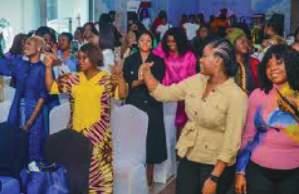
of the Lagos State House of Assembly, Mudashiru Obasa, yesterday held a rally for Tinubu, calling on Nigerians to support the re-election of the president in 2027, citing his ongoing reforms and economic policies as key to national development.
The duo made the call during an interfaith prayer session organised by The Mandate Movement and held
Ambode
Abiru
Muri-Okunola
PARTNERSHIP FOR IMPROVED HEALTH DELIVERY…
MTN, Dangote Cement, Seplat, 17 Others
Post N2.1 Trillion Finance Costs in 2025
The corporate Nigeria has continued to struggle under the weight of high funding costs, with at least 20 major companies, including MTN Nigeria, Dangote Cement, Seplat Energy Plc, and Oando Plc, incurring a combined finance cost of about N2.1 trillion in 2025.
The figure represents a slight increase of 0.99 per cent from the N2.05 trillion recorded by the same firms in 2024, underscoring the persistent impact of high borrowing costs on business operations across key sectors of the economy.
Finance costs typically include a range of debt-related obligations, such as loan servicing, interest on lease liabilities, and interest payments on commercial paper and other financing instruments used by companies to fund expansion and operations.
There was a marginal easing of monetary policy by
the Central Bank of Nigeria (CBN), which recently reduced its benchmark interest rate to 27 per cent from 27.50 per cent.
The rising cost of debt has become a defining challenge for businesses in Nigeria in recent years, largely driven by the CBN’s aggressive monetary tightening aimed at curbing inflation and stabilising the naira in the foreign exchange market.
However, while the policy stance was designed to restore macroeconomic stability, it had also made borrowing significantly more expensive for companies, forcing many to allocate a larger share of their revenue to servicing debt.
Industry analysts said the situation had been worsened by declining consumer purchasing power, which limited companies' ability to pass rising costs on to consumers.
The result was a difficult operating climate marked by rising finance costs, shrinking
profit margins, and weaker earnings across several industries.
An investigation by THISDAY covering 20 companies across sectors such as oil and gas, telecommunications, fast-moving consumer goods (FMCG), cement manufacturing, power generation, and brewing revealed that a handful of firms accounted for a substantial share of the total finance burden.
Among the companies reviewed, MTN Nigeria Communications Plc recorded the highest finance cost in 2025.
The telecommunications giant posted N524.91 billion in finance expenses, representing an increase of about 22 per cent compared with N431.65 billion reported in 2024.
The increase was largely attributable to higher lease liabilities associated with extended tower lease arrangements and rising
infrastructure financing costs.
Following closely behind was Oando Plc, which reported finance costs of N465.4 billion in 2025, reflecting a sharp 97.3 per cent increase from N235.84 billion in the corresponding period of 2024.
In the cement sector, Dangote Cement Plc recorded finance costs of N351.5 billion in 2025.
Although the figure remains substantial, it represents a significant drop of nearly 50 per cent compared with the N700.3 billion declared in 2024, suggesting a reduction in debt exposure or changes in financing structures.
Similarly, Seplat Energy Plc posted finance costs of N281.21 billion in 2025, representing an increase of about 103 per cent from N138.7 billion reported in 2024.
Across the corporate sector, rising borrowing costs have continued to weigh heavily on profitability and shareholder returns.
Companies have had to
Two Suicide Bombers Still on the Loose in Maiduguri, Gov Zulum Warns Residents
Borno State Governor, Prof. Babagana Zulum has said that five suicide bombers slipped into the state, and only three of them have set off their IEDs so far.
The governor raised this alarm in an exclusive chat with BBC News Pidgin at the weekend, while reacting to the triple blasts that rocked Maiduguri, the Borno capital in north-east Nigeria.
At least 23 people were killed and around 100 others
wounded when suspected suicide bombers hit three spots at once.
The Nigerian Army said the targets were the Post Office area, the Monday Market stretch, and the gate of the University of Maiduguri Teaching Hospital.
The explosions occurred on Monday evening, right around the time Muslims fasting for Ramadan were sitting down to break their
fast. The military was pointing the finger at Boko Haram militants.
In the interview, Zulum said security teams were still hunting for the other two bombers and his government was dead set on making sure their plan falls apart.
“We’ve got solid intelligence that five suicide bombers made it into Maiduguri,” he explained.
“Three have already detonated their devices.
“We’re tracking the remaining two right now. I won’t say more than that, but we’re on it. By God’s grace, we’ll stop those last two before they can strike.”
The governor said he was “very sad” when he heard the news in Saudi Arabia.
Since flying back home, Zulum has been locked in back-to-back meetings with the military and other security chiefs to get the situation under control.
devote a larger portion of their operating income to servicing debt, reducing the funds available for expansion, investment, and dividend payments.
Data from the CBN’s latest Money Market Indicators showed that the average maximum lending rate in Nigeria’s banking sector stood at 29.32 per cent in December 2025, slightly lower than the 29.71 per cent recorded in December 2024.
The decline followed the decision of the CBN’s Monetary Policy Committee (MPC) to lower the Monetary Policy Rate (MPR)—the benchmark interest rate used to guide lending conditions in the economy—to 27 per cent
in 2025.
The maximum lending rate represents the average of the highest interest rates charged by deposit money banks and typically reflects prevailing monetary policy conditions.
In December 2024, when the MPC decided to retain the MPR at 27.50 per cent, the maximum lending rate stood at 29.71 per cent.
Earlier in 2024, the rate had risen sharply as the CBN intensified its fight against inflation and currency volatility. For instance, the CBN’s money market indicators showed that the average maximum lending rate stood at 27.07 per cent in January 2024 when the MPR was at 18.75 per cent.
Gov Sule: I’m Under Pressure to Go to Senate in 2027
Governor Abdullahi Sule of Nasarawa State has hinted he may contest for the Nasarawa North senatorial seat in 2027.
The governor made the disclosure during a visit by state executive council members, led by the Deputy Governor, Dr. Emmanuel Akabe, at his Gudi country home in Akwanga Local Government Area (LGA) of the state.
Sule cited the need for quality representation for the North and pressure from some stakeholders, urging him to run.
“With all the pressure coming from our leaders, and so I don’t want them to feel offended that I have not been responding, I promise them I will contest when the time comes,” he said.
He said he had previously planned to support another candidate but changed his mind after the individual joined calls for him to contest.
The governor said he was consulting stakeholders before making a final decision, saying he’s been persuaded by traditional rulers and senior politicians from Nasarawa North.
Sule will leave office as governor after serving two four-year terms in the position.
Earlier in an opening speech, the Deputy Governor used the occasion to renew the loyalty of the cabinet to the governor.
“We will swim with you until we get to the touch line, and together we will shout hurray! We have come, we have seen, we have conquered,” he said.
Kayode Tokede
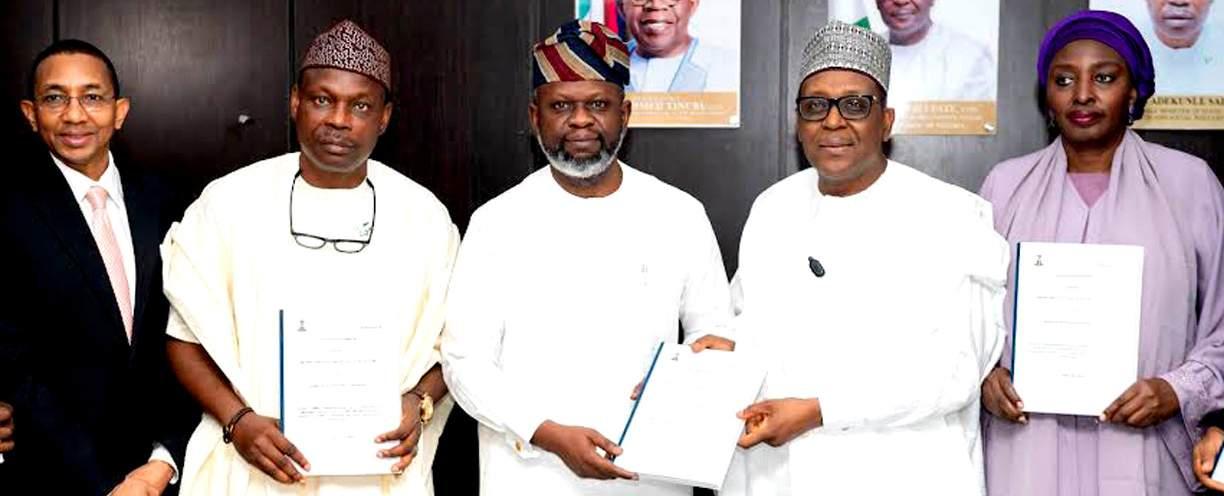
L-R: National Coordinator, Presidential Initiative for Unlocking the Healthcare Value Chain, Dr. Abdu Mukhtar; Minister of State for Health and Social Welfare, Dr. Iziaq Adekunle Salako; Chairman, Medipool, Dr. Oluwaseun Abiola; Minister of Health and Social Welfare, Professor Mohammed Ali Pate; and Permanent Secretary, Ministry of Health and Social Welfare, Daju Kachollom, during the signing of the service level agreement with the Federal Ministry of Health and Medipool held in Abuja…recently
DELIVERING DIVIDENDS OF DEMOCRACY…
Idris: Nigeria Ready to Ease Middle East Tension
by Stabilising Global Energy Supply
Says security agencies working to ensure safety of Nigerians
The Minister of Information and National Orientation, Mohammed Idris, has emphasised the capability of Nigeria to ease global security in the energy sector in the light of the disruption to global oil production occasioned by the US-Israel attack on Iran on February 28.
Idris asserted this in an interview with the BBC, where he delivered his assessment on the escalating tensions in the Middle East and their potential impact on Nigeria.
He affirmed Nigeria’s readiness to support global stability, especially in the energy sector saying “Nigeria is ever ready to contribute to energy security around the world.
Whatever Nigeria can do to ease tension, it will do. The world needs oil, and Nigeria is there."
He also spoke on the security challenges in the country, particularly the role of intelligence services in the light of recent suicide attacks in Maiduguri that led to death of scores of people.
The minister said the security agencies were working around the clock to ensure the safety of
citizens, in addition to taking deliberate and sustained steps to strengthen security across the country.
He assured that the federal government has a clear focus on protecting lives and property and preventing further attacks.
Idris also tacitly rejected the notion of a failure on the part of Nigeria's security agencies, saying, “I don’t think they failed.
The court-recognised faction of the Peoples Democratic Party (PDP) loyal to the Minister of the Minister of Federal Capital Territory (FCT), Mr. Nyesom Wike, yesterday inaugurated its national convention committee with the former Governor of Abia State, Okezie Ikpeazu as chairman.
Inaugurating the over 500-member convention committee, the Chairman of the party's National Caretaker Committee, Abdullahi Mohammed, tasked the committee to deliver a transparent convention coming up on Saturday.
According to the chairman of the PDP National Caretaker Committee, ''we gathered not merely to inaugurate a committee, but to set in motion a process that carries the weight of our collective destiny and the promise of renewal. I salute every member of this committee for the confidence reposed in you by the party.
''You have been carefully selected to pilot the affairs that will
lead us to an all-inclusive, legally sound, and politically credible National Convention, one that will produce leaders entrusted with guiding our party for the next four years,'' he stated.
''Our journey to this point has not been without challenges. For over a year, our party has navigated complex legal and judicial issues. Yet, through resilience, wisdom, and a shared commitment to unity, we have emerged not diminished, but refined.
''Today, the PDP stands once again as a beautiful bride, radiant with renewed political prospects and ready to reclaim its rightful place in the national space,'' he stated.
He said that the recent judgment of the Court of Appeal, widely regarded as a "no victor, no vanquished" verdict, offered the PDP a philosophical anchor.
He said that judgement reminded the PDP members that true triumph lies not in individual victories, but in collective survival and institutional continuity, adding ‘'It calls us to rise above divisions and embrace reconciliation as a higher virtue.''
ballot
He said, ''we reaffirm our openness to broader engagement.
We extend a hand of fellowship to all, firmly believing that genuine reconciliation will deepen unity, strengthen solidarity, and reposition our party for greater national service. In this regard, we salute all agents of peace within our ranks and commend the commitment and sacrifices of our leaders, particularly our National Leader, His Excellency, Minister Nyesom Wike, whose steadfastness has contributed meaningfully to this moment.
''We also warmly welcome our brothers and sisters who have returned to the family fold. The PDP remains a broad and accommodating platform, ever willing to reconcile and rebuild.
''To the members of this committee, the responsibility before you is both administrative and historic. You are entrusted with the duty of planning and delivering a National Convention scheduled for the 29th and 30th of March 2026 that will stand firmly on the pillars of legality, legitimacy, and inclusiveness.
I urge you to discharge your responsibilities with diligence,
impartiality, and a deep sense of duty to the party and the nation.
''Let us be guided by a simple yet profound truth. Yesterday is beyond our correction, but today is within our control, and tomorrow is ours to determine.
Let us learn from yesterday's lessons, act with wisdom today, and together shape a glorious future for our party and our country.
''On behalf of the National Caretaker Working Committee (NCWC), I hereby formally inaugurate the Peoples Democratic Party, 2026 National Convention Planning and Organising Committee,” he added.
The occasion was attended by former National Publicity Secretary, Debo Ologunagba; the former National Organising Secretary, Bature Umar, and former national secretary, Senator Samuel Anyanwu.
Commenting, the National Secretary of the caretaker committee, Anyanwu said that the PDP will be at the ballot and that nobody will stop it from participating in the 2027
election.
I think that more work needs to be done. Nigerian security agencies are working around the clock to ensure that this does not happen again."
He further stated that Maiduguri had recorded significant improvements in peace and stability over time.
“The government is putting a lot of attention. The reform agenda of the president is aimed at ensuring that Nigerians are safe and that this does not happen again."
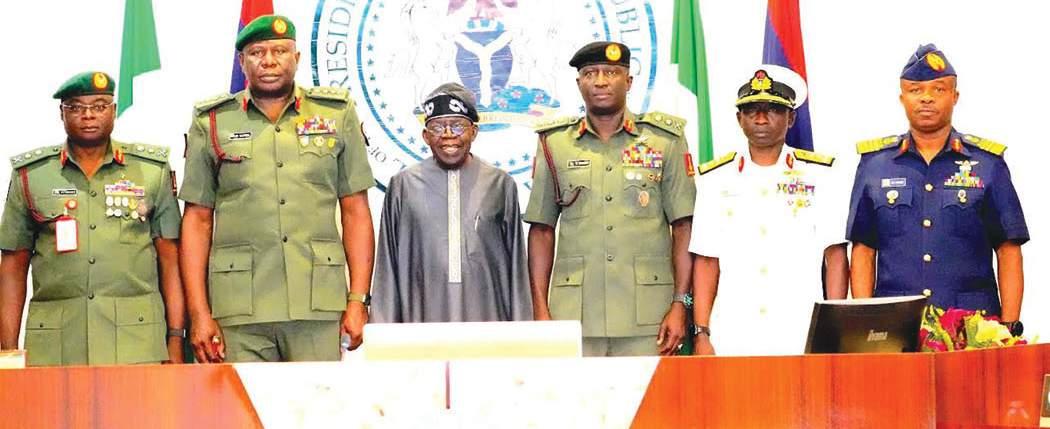
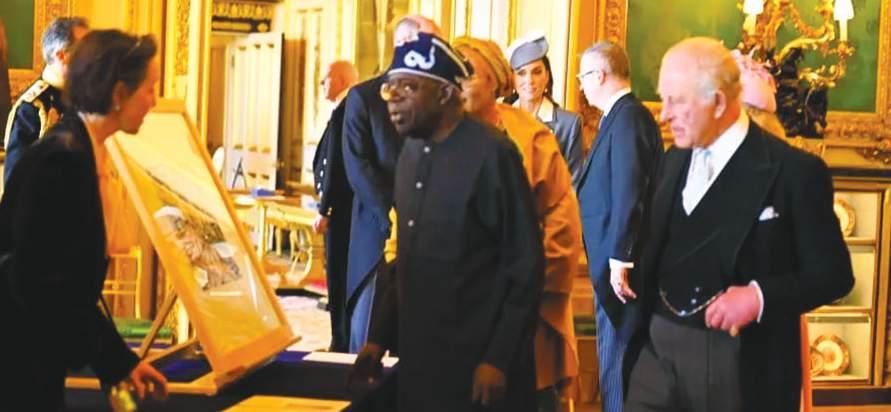
He assessed President Bola Tinubu’s ongoing engagements abroad, especially the recent state visit to the UK as a visit that would boost Nigeria’s
international relations.
“This visit underscores the historical relationship, the cultural ties, and the economic ties between Nigeria and the United Kingdom. We hope that we will deepen it further in the interest of both countries,” he said.
The minister also highlighted the positive impact of the administration’s reforms, noting that they were already improving Nigeria’s global standing. “With the reforms that President Bola Ahmed Tinubu has instituted, we have seen a significant uplift in the economy,” positing that “the invitation extended to the President reflects how positively these reforms are being viewed globally.”
Shettima to Welcome Zamfara Gov into APC on Tuesday
The Zamfara State chapter of the All Progressives Congress (APC) has concluded arrangements to receive Vice President Kashim Shettima, who will formally welcome Governor Dauda Lawal into the party on Tuesday.
The announcement was made yesterday by the state APC Chairman, Tukur Danfulani Maikatako, during a meeting with party stakeholders in Gusau, the state capital.
Maikatako expressed the party’s pleasure over Governor Lawal’s recent defection to the APC, saying the vice president, alongside the national leadership of the party, would visit the state for the occasion.
He said, “We all know that Zamfara has long been one of the APC’s stronghold states, where the defected Governor was once a bona fide member.
“Now that he has decided to return home, having been satisfied that the APC remains
his second choice after the one he left for obvious reasons.
“As Chairman of the APC, I urge all our esteemed members across the 147 wards of the 14 local government areas in the state to come out en masse to honour the presidential visit, which is meant to strengthen and boost the popularity of the APC ahead of the 2027 general elections.
“I also call on you to forget factionalism in the party and remain united. We are all politically one family that has many things in common, especially in our goal of making Zamfara and Nigeria great again.”
In his remarks, former state APC Chairman, Lawal M. Liman, appealed to party members across the state to carry the message to their respective wards and local government areas, emphasising that the APC is one family working toward common goals for the success of the party.
Olawale Ajimotokan in Abuja
Chuks Okocha in Abuja
general
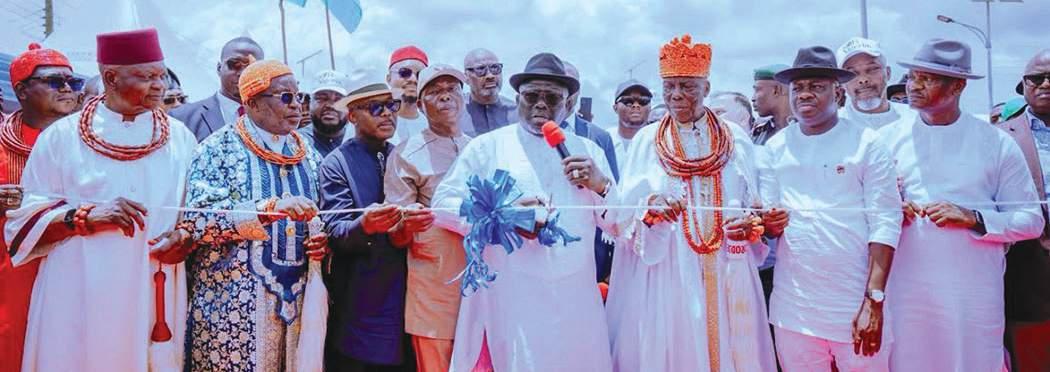
L-R: The Ovie of Agbon Kingdom, HRM Michael Omeru; Pere of Akugbene Mein, HRM Pere Luke Kalanama VIII; Hon. Nicholas Mutu; Senator James Manager; Delta State Governor, Sheriff Oborevwori; Chairman, Delta State Traditional Rulers Council and the Orodje of Okpe Kingdom, HRM Major General Felix Mujakperuo (rtd.), Orhue I; Speaker of the state House of Assembly, Hon. Emomotimi Guwor; Commissioner for Works (Rural Roads) and Public Information, Mr. Charles Aniagwu, during the inauguration of the 31-km reconstructed Ohoror-Bomadi road, in Bomadi LGA of the state…recently
MOBILISING AGAINST BREAST CANCER...
Police Arrest 11 More Suspects over Sexual Assaults in Delta, Obi, NBA, ADC Demand Investigation
Chuks Okocha in Abuja and Wale Igbintade in Lagos
Eleven more persons have been arrested by the Delta State Police Command over the sexual harassment and molestation of women during a festival in Oramudu quarters in Ozoro community in Isoko
North Local Government Area (LGA) of Delta State.
This is as former presidential candidate, Mr. Peter Obi; Nigerian Bar Association (NBA); African Democratic Congress (ADC) and the Nigeria Federation of Business and Professional Women (BPW Nigeria) yesterday condemned the alleged raping
of women during the cultural festival, calling on relevant authorities to investigate the dastardly act.
A statement by the spokesman of the Delta State Police Command, SP Bright Edafe, said the latest arrest brought the number of those so far in police custody over the issue to 15.
He added that preliminary investigation by the police indicated that the alleged harassment and molestation of the women during the festival were done by suspected criminal elements, who took advantage of the festivity to carry out their actions.
He called on members of the
Fuming Trump Issues Fiery 48-hour Ultimatum to Iran over Strait of Hormuz
Emmanuel Addeh in Abuja
President Donald Trump yesterday issued a blistering ultimatum to Iran, warning that it has 48 hours to fully reopen the Strait of Hormuz or face US strikes that would “obliterate” its vital energy infrastructure.
“If Iran doesn’t fully open, without threat, the Strait of Hormuz, within 48 hours from this exact
point in time, the United States of America will hit and obliterate their various power plants, starting with the biggest one first!” the president fumed on Truth Social.
Last week, Iran announced that ships from the US, Israel and their allies were barred from passing through the waterway.
But vessels flagged to China, India, Turkey, and
Pakistan have continued to trickle through the crucial corridor.
Trump’s warning came after he raged on his social media platform that the US has “blown Iran off of the map” and claimed the escalating conflict was progressing “weeks ahead of schedule,” while swiping at the New York Times for reporting otherwise.
“Their leadership is gone,
their navy and air force are dead, they have absolutely no defense, and they want to make a deal. I don’t!”
Trump said, before also launching into an attack on the New York Times.
“We are weeks ahead of schedule. Just like their incompetent election coverage of me, The failing New York Times always gets it wrong! President DJT.”
public, particularly victims and witnesses to come forward with credible information that would aid ongoing investigations, adding that all information provided will be treated with strict confidentiality.”
Meanwhile, Obi has condemned the sexual assault and harassment of women during the festival, describing the attacks as a reflection of misplaced national priorities.
In a statement titled: ‘Channelling Our Women to Critical Areas of Development,’ Obi described the festival incident as a “triviality” that diverted attention from more pressing development needs, particularly the empowerment of women, who constitute over 50 per cent of Nigeria’s population.
He further criticised the national focus on events such as the Ozoro festival, where videos circulating on social media showed young women being chased, stripped, and molested in broad daylight on Thursday,
March 19.
Also, the NBA described the incident as a “national disgrace” and a “collapse of conscience.”
In a statement by its President, Afam Osigwe (SAN) and the Chairperson of the NBA Women’s Forum, Huwaila Muhammad, the association said, “A society reveals its true character in how it treats its women. Where women are chased, stripped, groped, violated, and publicly humiliated by mobs under the guise of celebration, what is on display is not culture. It is barbarity. It is a collapse of conscience. It is a stain on our shared humanity.”
The NBA said the acts constituted “gender-based violence in its most primitive and shameful form” and a “grave violation of the fundamental rights to dignity of the human person, personal liberty, and security as guaranteed under the 1999 Constitution, as well as other international human rights instruments.”
Tinubu Celebrates Tony Elumelu on His Birthday, Hails Africapitalism Vision
Foundation unveils 12th entrepreneurship cohort today
Deji Elumelu in Abuja and Kayode Tokede in Lagos
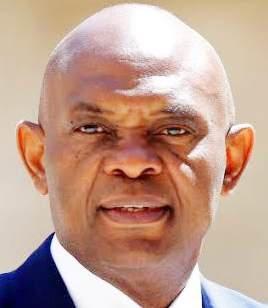
President Bola Tinubu has congratulated renowned economist, banker, and philanthropist Tony Onyemaechi Elumelu on the occasion of his birthday on March 22. This is because the Tony Elumelu Foundation is set to announce the 12th cohort of beneficiaries of its Entrepreneurship Programme today, March 22, 2026, following what it described as a record surge in applications from across the continent.
In a statement issued yesterday by the Special Adviser
to the President on Information and Strategy, Mr. Bayo Onanuga, the President described Elumelu as “an African business icon and a standout advocate of the Nigerian and African enterprise.”
Elumelu is the Chairman of Heirs Holdings, United Bank for Africa, Transcorp, and the founder of the Tony Elumelu Foundation.
President Tinubu commended the business leader for “his resilience, the excellence that governs his entire enterprise and his staunch belief in Africapitalism.”
The President also praised Elumelu’s commitment to
youth development, particularly through the Tony Elumelu Foundation’s entrepreneurship programme, which he noted: “has so far trained 2.5 million young Africans in 54 countries and empowered over 24,000 budding African entrepreneurs with non-refundable seed capital of $5,000 each.”
As Elumelu marks the occasion, Tinubu joined his family and associates in wishing him “good health and strength and continued success in his pursuits.”
Meanwhile, the Tony Elumelu Foundation is set to announce the 12th cohort of beneficiaries of its Entrepreneurship Programme
today, March 22, 2026, following what it described as a record surge in applications from across the continent.
In a statement at the weekend, the foundation said it received over 265,000 applications from entrepreneurs across all 54 African countries, reflecting growing interest in business development opportunities, particularly in sectors such as artificial intelligence, agriculture, and the green economy.
It said the announcement of the new cohort will be made virtually at 2:00 p.m. West African Time.
The statement read, “In an
unprecedented demonstration of Africa’s rising economic empowerment, the Tony Elumelu Foundation is set to unveil the 12th cohort of its flagship Entrepreneurship Programme on Sunday, March 22, 2026.
“This follows a recordshattering surge of over 265,000 applications from across all 54 African nations. This massive influx of interest underscores a continent-wide hunger for transformation, particularly within high-impact sectors like artificial intelligence, agriculture, and the green economy.”
The foundation disclosed that it would provide $ 16
million in seed funding to 3,200 entrepreneurs selected for the 2026 cohort, with each beneficiary expected to receive $5,000 in non-refundable capital, business training, and mentorship support.
Elumelu
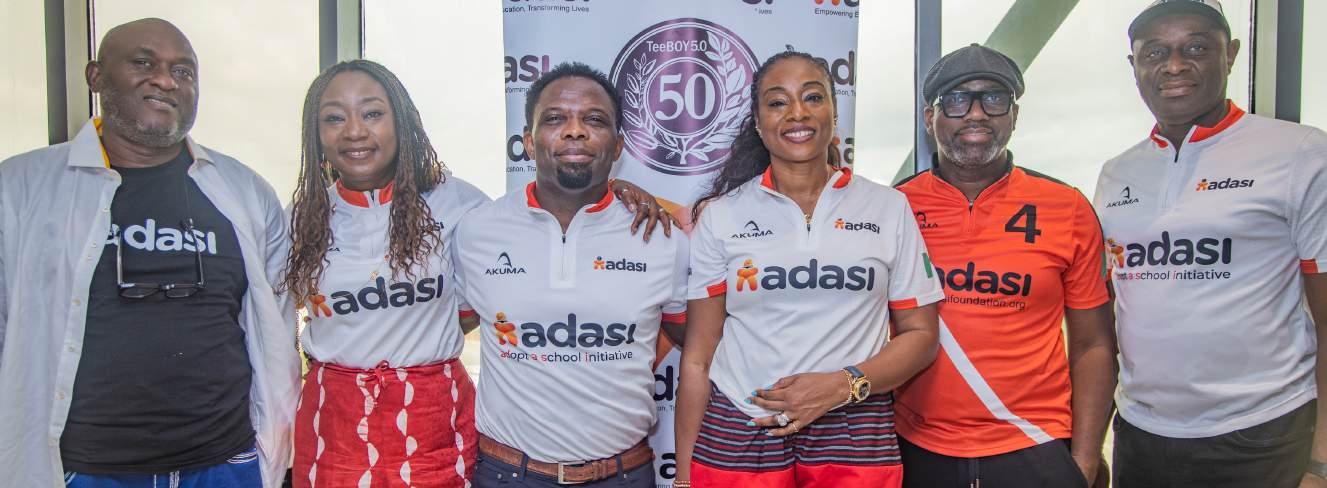
L-R: Kunle Iluyemi; Professor Sola Oni; Producer and Director of the film, Shades of Survival, David Ayeni; Chief Executive Officer, ADASI Education Foundation, Seun Oyinlola; Ayotade Oyinlola; and Onyechi Anosike, during a private screening of Shades of Survival, a documentary film centred on breast cancer education sponsored by Adasi Education Foundation at EbonyLife Place, Victoria Island, Lagos...yesterday
KUNLE OGUNFUYI
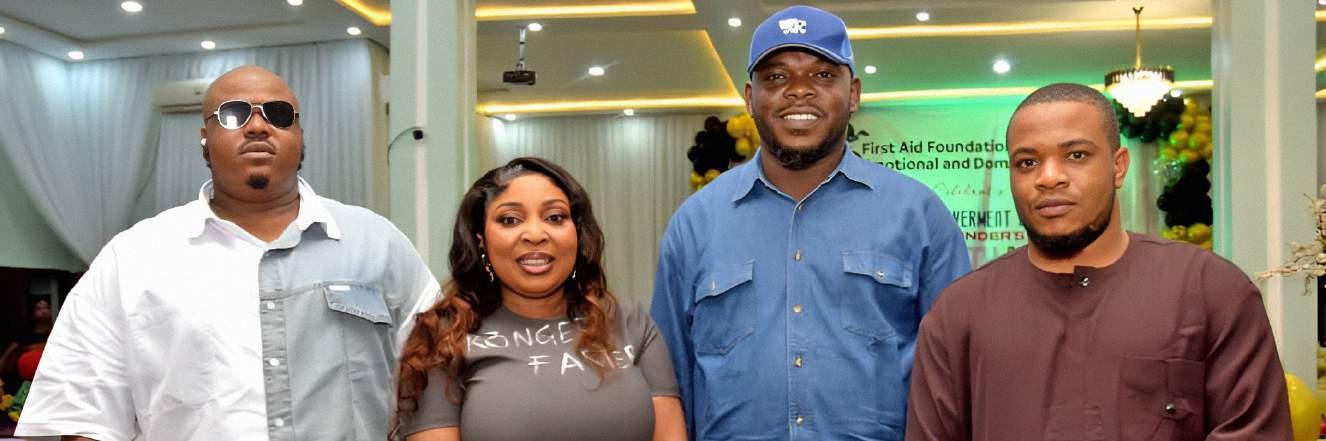
EMPOWERING WIDOWS…
L-R
at Nneka’s birthday and widow’s empowerment through her foundation, First Aid Foundation Against Emotional and Domestic Abuse in Festac Town, Lagos … weekend
Buratai Asks FG to Move against Terrorism Financiers, Says Military Alone Can’t End Insurgency
A former Chief of Army Staff, Lt. Gen. Tukur Baratai (rtd.), has called on the federal government to act against terror financiers, adding that the military alone cannot rout out insurgents. Buratai said the mere identification of those financing terrorism would be insufficient to address Nigeria’s security challenges.
In March 2024, the federal government said it had uncovered 15 entities allegedly involved in terrorism financing, comprising nine individuals and six bureau de change
(BDC) operators. However, there has been little update from the government on efforts to prosecute the suspects, despite persistent public outcry.
Speaking during a television interview, Buratai said, “We over-rely on the military and the army; everybody has their
ECOWAS, Energy China
own responsibility. You cannot say I should be responsible for naming the financiers of terror.
“The government knows where the source came from; we have responsible agencies. But it’s not just about mentioning names; action should be taken.”
The former army chief
Explore Partnership to Strengthen West Africa’s Power Infrastructure
Michael Olugbode in Abuja
The Economic Community of West African States (ECOWAS) has begun discussions with Energy China International (CEEC) to deepen cooperation on developing regional energy infrastructure to expand electricity access and strengthen power systems across West Africa.
The engagement took place during a meeting in Abuja,
where officials from the ECOWAS Energy and Mines Directorate met with CEEC representatives to advance dialogue on priority regional energy projects.
The session also included participants from the West African Power Pool (WAPP), the regional body responsible for coordinating electricity generation and transmission among West African countries.
During the meeting,
participants reviewed project portfolios, technical capabilities, and potential financing channels designed to accelerate growth in the region’s power sector and support broader infrastructure development.
Discussions focused on exploring partnership opportunities and funding options for ECOWAS priority initiatives covering power generation, electricity transmission, and distribution
infrastructure.
Acting Director of Energy and Mines at ECOWAS, William Baidoe, provided an overview of the Directorate’s mandate and ongoing programmes to improve energy access across the region. These include projects to expand electricity distribution networks as well as initiatives to develop energy storage systems that can enhance the stability and reliability of power supply.
NCF Raises the Alarm over Deforestation, Says Nigeria Lost 90% of Forest Cover in 30 Years
The Nigerian Conservation Foundation (NCF) has called for urgent action to halt deforestation, noting that Nigeria has lost nearly 90 per cent of its forest cover in three decades.
The foundation made the call in a statement issued yesterday in Lagos by the Director of Communications, Policy and Advocacy, Mr. Kunle Olawoyin, to mark the International Day of Forests, observed every March 21.
Olawoyin said the 2026 theme: “Forests and Economies,” underscored the crucial role forests play
in supporting environmental sustainability, livelihoods, and national development.
According to him, Nigeria currently records one of the highest deforestation rates globally, largely driven by illegal logging, agricultural expansion, and urbanisation.
He added that over the past three decades, the country had lost nearly 90 per cent of its forest cover, leaving less than 10 per cent of the original forest landscape intact.
Olawoyin said heavy reliance on fuelwood and charcoal for energy by a
significant portion of the population continued to exert pressure on the remaining forest reserves.
He stressed that forests were vital for supporting agriculture, regulating the water system, and providing livelihoods for millions of Nigerians, particularly in rural communities.
He, however, said the sector remained undervalued in national development planning.
He identified illegal logging, weak enforcement of environmental laws, increasing demand for land and energy, and inadequate
investment in restoration as major drivers of forest loss.
Olawoyin warned that without urgent and coordinated interventions, the environmental and economic consequences could be severe.
He quoted the DirectorGeneral of NCF, Dr Joseph Onoja, as emphasising the importance of forests to human survival and climate stability.
“We all know that forests are vital for life on Earth. The question remains: Why are we destroying the very systems that sustain us?” he queried.
said the military’s role was limited to its constitutional responsibilities, adding that broader policy decisions, such as the rehabilitation of repentant insurgents, were determined by the government.
He described Nigeria’s insurgency as a complex and deeply rooted challenge that cannot be resolved quickly or through military force alone.
“Our focus has often been on the army, that the army must do everything: clear, dismantle, and wipe out all insurgents, but it is not like that. It is more or less an embedded problem within society, and it requires everyone’s effort,” he said.
“It would be wishful thinking for anyone to say that this type of insurgency can be cleared overnight. These are people with ideology and
beliefs who think they have a mission. Once they establish it, they imagine a perfect society, which is not realistic in the Nigerian context.”
He also addressed the debate over the “technical defeat” of Boko Haram. Buratai said that while the intensity of attacks significantly reduced after 2015 and territories were reclaimed, the threat persisted.
He recalled that at the height of the insurgency, bombings were widespread from Maiduguri to Abuja. Still, by late 2016, such attacks had largely subsided, and previously occupied local government areas were recovered.
Despite the gains, Buratai said he warned that insurgency could endure if not comprehensively addressed.
ALAUSA, HAMZAT, ABIRU, MURI-OKUNOLA, AMBODE IN BEAUTY PARADE IN LAGOS
in the Ikeja area of the state to commemorate President Tinubu’s 74th birthday.
In his remarks, Ambode praised Tinubu’s leadership and legacy, urging Nigerians to rally behind the President’s re-election bid.
“President Tinubu’s commitment to Nigeria’s progress is commendable, and it is our collective duty to support him so that the nation can fully reap the benefits of his reforms,” Ambode said.
He added that the President had stabilised the country and its economy, expressing confidence that Nigeria would continue to prosper under his administration.
Hekeem Muri-Okunola
Muri-Okunola is a senior Nigerian bureaucrat who
served as the Head of Service of Lagos State and later moved to the presidency as Principal Secretary to the President. He comes from a prominent Lagos family and built his career within the state’s civil service, gaining a reputation for administrative efficiency and discretion. His relationship with Tinubu is rooted in longstanding institutional trust and proximity to the Lagos power structure. Though not a political figure, Muri-Okunola has operated within Tinubu’s governance ecosystem for years and is widely regarded as part of his trusted inner administrative circle, someone relied upon for coordination, continuity, and execution at the highest levels of government.
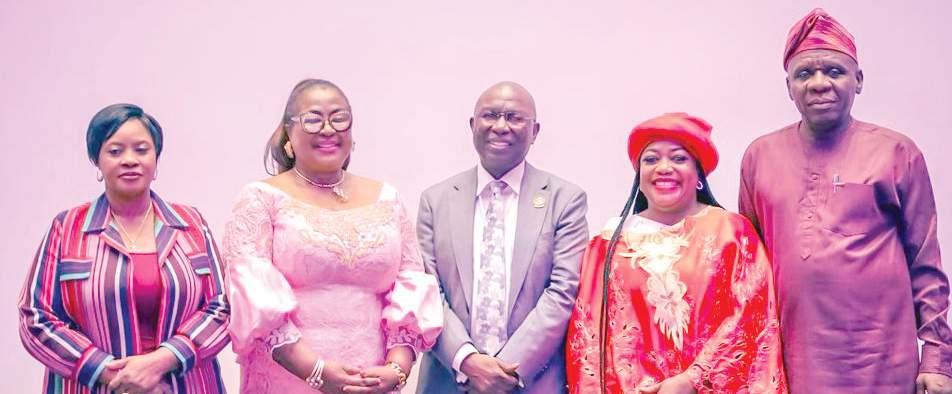
L-R: President, Women’s International Shipping and Trading Association, Dr. Odunayo Ani; Member, Group of Experts, United Nations Regular Process for Global Reporting and Assessment of the State of the Marine Environment and socio-economics, Dr. Felicia Mogo; Director General, Nigerian Maritime Administration and Safety Agency, Dr. Dayo Mobereola; Deputy Director, Maritime Guard Command, Chizoba Anyika; and Executive Director Operations, NIMASA, Mr. Fatai Taiye Adeyemi, during the 2026 International Women’s Day Celebration by NIMASA in Lagos.
Elon Musk Misled Twitter Shareholders in $44 Billion Deal, US Jury Rules
A federal jury in California has ruled that tech tycoon Elon Musk misled Twitter shareholders, driving down the company’s share price as he was poised to buy it in a $44 billion deal, AFP has reported.
The verdict in the class action securities lawsuit means the
world’s richest person could be ordered to pay billions of dollars, according to damages calculated by jurors.
Minutes after the judgment was announced, the entrepreneur’s lawyers informed AFP that their client would appeal the decision, characterizing it as a “setback.”
After a three-week trial in
Kwankwasiyya Movement Raises Concerns Over ‘Crooked’ Judicial Verdicts
Chuks Okocha in Abuja
The Kwankwasiyya Movement has expressed serious concerns over what it described as “the disturbing pattern of judicial pronouncements” emerging from courts across Nigeria.
It particularly noted one of the most recent controversial judgments delivered by Justice Bello Kawu of the Federal Capital Territory (FCT) High Court, Abuja, in a matter involving the New Nigeria People’s Party (NNPP).
The group called on the National Judicial Council (NJC) to urgently review and address the growing concerns surrounding conflicting and controversial judicial decisions.
It noted that the implications of such judicial pronouncements for Nigeria’s democratic stability were profound, stressing that if the pattern continued unchecked, it would erode trust in democratic institutions, escalating political tensions, and undermining the credibility of future elections.
The movement pointedly declared that a democracy would not thrive where the rule of law was perceived to be selectively applied or subject to manipulation.
These were contained in a statement by the spokesperson for the Kwankwasiyya Movement, Dr. Habibu Sale Mohammed, in which he noted that the development was not an isolated incident, but part
of a troubling and escalating trend in which certain judicial actions appear to overstep constitutional boundaries, produce conflicting orders, and raise serious concerns about neutrality, due process, and the sanctity of the rule of law.
Mohammed noted that across the country, Nigerians had witnessed similar judicial interventions in the internal affairs of major political parties, including the Peoples Democratic Party (PDP), the Labour Party (LP), and the African Democratic Congress (ADC).
He said: “These interventions have often resulted in confusion, deepened factional disputes, and weakened internal party structures, thereby creating opportunities for manipulation by political opportunists.
“Of particular concern is the growing tendency for courts of coordinate jurisdiction to issue conflicting rulings on similar matters, entertain cases that are already subject to appellate consideration, and, in some instances, proceed in ways that appear to disregard fundamental principles of fair hearing and procedural integrity.
“The apparent erosion of established legal doctrines such as stare decisis is both alarming and unacceptable, as it undermines the consistency and predictability upon which the legal system depends,” Mohammed stated.
a San Francisco federal court, which included in-person testimony from Musk, the jury found that two tweets posted in May 2022 by the Tesla and SpaceX CEO contained false statements responsible for a plunge in Twitter’s share price.
An investor, Giuseppe Pampena, had filed the suit on behalf of people who sold Twitter shares between mid-May and early October 2022.
Musk acquired the social media platform in late October 2022 and later renamed it X.
Jurors agreed that Musk violated a securities rule that bars false and misleading statements that sink a stock price, in this
case, that of Twitter, the verdict form showed.
An attorney for the plaintiffs estimated the damages at about $2.6 billion.
Musk, who has a near-constant presence on X, did not immediately react to the verdict.
The judgment marks a rare legal defeat for Musk, often dubbed “Teflon Elon” for his ability to emerge unscathed from lawsuits he is expected to lose.
His lawyers, in fact, reminded AFP of this track record, noting that a Texas court cleared him just that same day in a separate defamation case.
In 2023, a jury in the same San Francisco federal court
cleared him within hours of similar charges brought by Tesla shareholders, following his 2018 tweets claiming he had the funding to take the automaker private.
The civil complaint in California accused Musk of driving down Twitter’s stock price to gain leverage to renegotiate the purchase price or exit the deal entirely, causing shareholders who sold shares to lose money.
Musk tweeted at one point during the process that the acquisition deal was temporarily on hold until Twitter executives could prove the percentage of “bots” — fake accounts run by software instead of real users —
was as low as the social media platform claimed.
The plaintiffs contended that these statements were part of a scheme to pressure the board of directors to accept a price lower than his initial offer — at a time when Tesla’s share price was falling, meaning Musk would have to sell more of his shares to finance the deal.
Musk abandoned his effort to back out of the Twitter deal in late 2022 after the company sued to enforce the contract.
Musk has since merged the social media platform with his artificial intelligence startup, xAI, and his private space exploration firm, SpaceX.
Chidoka Cautions Political Gladiators against Issuing Statements on Behalf of Ndigbo
Ejiofor Alike
A former Minister of Aviation, Chief Osita Chidoka, has cautioned Igbo political gladiators against making political statements on behalf of Ndigbo, insisting that the Igbo people have never operated as a monolithic political bloc directed by any single voice or authority. In a statement issued yesterday, the former Corps Marshal and Chief Executive of the Federal Road Safety Corps (FRSC) also stated that the Igbo people have no central parliament that determines a unified electoral position.
“In this election season, I appeal to all Igbo political gladiators: Campaign freely; support whomever you wish, but leave Ndigbo as a collective out of your statements. Do not question our collective choices. From 1960 to date, Ndigbo have consistently voted in line with what we believe to be our interest. The Igbo people have never operated as a monolithic political bloc directed by any single voice or authority. We have no central parliament that determines a unified electoral position,” Chidoka explained. According to Chidoka, the political strength of Ndigbo
“has always resided in the independence of thought and the agency of our people.”
“Our voting patterns reflect our understanding of our interests, shaped by history and lived experience. That history is not a light one. It carries the weight of displacement and adaptation; the scars of the transatlantic slave trade; the disruptions of colonial rule; the trauma of pogroms; the devastation of civil war; and the persistence required to navigate structural constraints in its aftermath. Yet, we endured. We overcame it. And more importantly, we rebuilt,” Chidoka said.
He charged Ndigbo to approach their collective identity with respect and responsibility, even in moments of political contestation.
“What may be described today as political setbacks must be situated within the broader historical arc of a people defined by resilience, enterprise, and renewal. Let us not, in the urgency of present contests, diminish that enduring story. I appeal to all: engage robustly in politics, but allow Ndigbo the dignity of agency. Respect our long arc of survival. Respect our right to choose. Respect the wisdom of our people,” he added.
NIMC Debunks Fake Free NIN Data Correction Link, Flyer
The National Identity Management Commission (NIMC) has warned Nigerians against a circulating online flyer claiming that a free NIN data correction portal has been opened, describing it as fake.
The commission, on its official X handle on Saturday, urged the public not to use the portal advertised in the flyer for any
modification of their National Identification Number data.
“The public is hereby advised not to use the above for modifying their NIN data. All modifications should only be done via the official channel: https://selfservicemodification. nimc.gov.ng,” the post read.
The fake flyer, which had been widely circulated on
social media, bore the NIMC and Federal Government logos and claimed that the Federal Government had directed the commission to open a correction portal following a “high level of complain.”
It listed options including name correction, gender correction, date of birth correction and others, with links directing users
to a “gvly.xyz” domain which is not an official government website.
The flyer had been stamped “FAKE” in red, suggesting it was being recirculated by NIMC itself as a debunking notice. NIMC has consistently warned that data modification services are only available through its official self-service portal.
Chuks Okocha in Abuja
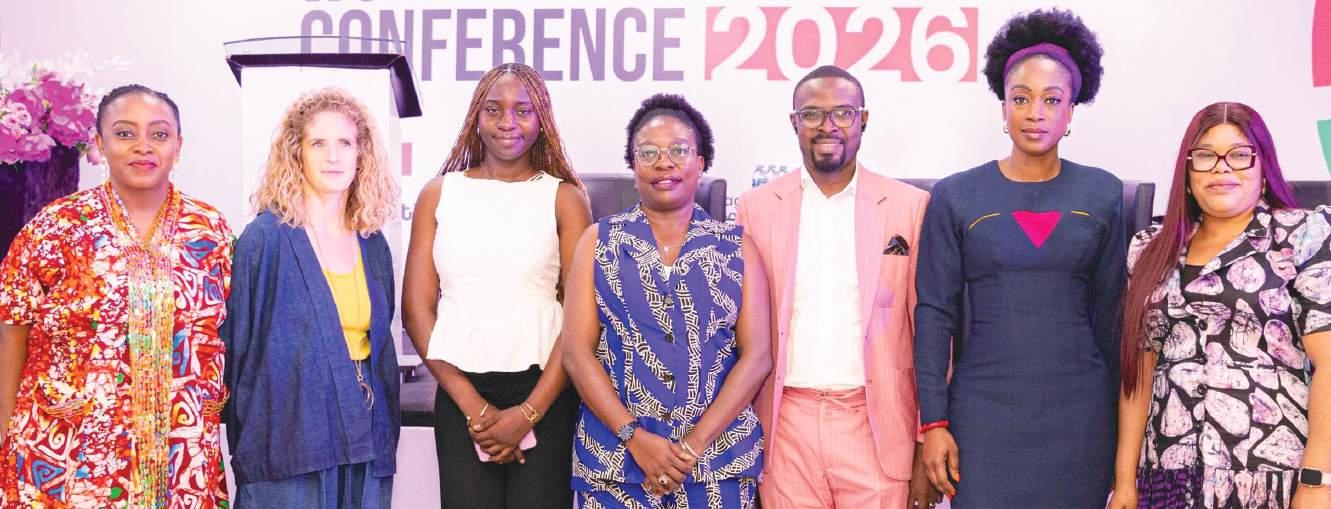
WOMEN AFFAIRS…
L-R: Founder, Jewels Network and Lead Strategist, The Scratch Board, Mrs.
Executive Director, Food and Beverage
Alliance,
Umahi Drags Tracy Ohiri to Court over Her Accusation of Indebtedness
The Minister of Works, David Umahi, has ordered his legal team to proceed to court against Tracy Ohiri over her persistent accusations of indebtedness against him.
Ohiri had alleged on social media that Umahi owed her N280million for campaign materials when the minister was the chairman of the Peoples Democratic Party (PDP) in Ebonyi State.
The woman also accused Umahi of sexual harassment in the viral video.
She was, however, arrested and prosecuted over the allegations.
Her lawyer, Marshall Abubakar, waded into the matter, prompting the woman to delete all posts against the minister and withdraw the allegations through a public apology, which also went viral on social media.
Days after the lawyer’s intervention, Ohiri resumed her claims
against Umahi. In a statement issued by Umahi’s Senior Special Assistant on Media, Francis Nwaze, he said he had indicated to Abubakar during his intervention into the matter that if Ohiri could provide complete evidence, logs and communications from the period in question, some of his friends and associates were willing to contribute the sum of N1billion and give her which she has not been able to do.
The minister said he was still waiting for evidence from Ohiri that he owed her, and directed his legal team to proceed with all court proceedings in the matter to ensure the truth was fully established.
“At no time did Barr. Marshall discusses or negotiates the payment of any money to Mrs. Ohiri. However, some associates and well-meaning individuals ap-
Canada-based Entrepreneur, Arogundade, Takes Centre Stage at Ogidi Day Festival
Canada-based entrepreneur and community development advocate, Stephen Babalola Arogundade, has accepted an invitation to serve as Father of the Day for the 2026 Ogidi Day Festival.
The festival secretariat, in a statement, said the annual cultural event will hold on Saturday, June 20, 2026, in Ogidi, attracting participants and visitors from across Nigeria and abroad.
Arogundade, in his acceptance message, described the honour as an opportunity to give back to the community that shaped him.
Organisers noted that the Father of the Day plays a central role in providing leadership and moral direction for the festival, which has grown into one of Nigeria’s notable cultural celebrations in
June.Past holders of the position include Abiodun Ehindero, Olu Balogun, Matthew Adekunle Medupin, Ambrose Adewale, Ayo Abudu and Oyewale Abiodun Adekanbi.
This year’s edition will also feature renowned batik artist and cultural icon, Nike Okundaye, the Yeyeoba of Ogidi, as Mother of the Day. She is expected to present the New Yam to the Ologidi of Ogidi, Rabiu Oladimeji Sule, as part of traditional rites marking the festival.
The celebration will include performances by cultural troupes and community groups, as well as a fundraising drive for the construction of the Ogidi Community Centre, an initiative launched last year.
Organisers added that dignitaries and tourists from within Nigeria and the diaspora are expected to attend.
proached him independently to help her.
“For the avoidance of doubt, the Honourable Minister had clearly stated two conditions for resolving the matter - either the issue should be determined in court, or Mrs. Ohiri should provide verifiable evidence, including all relevant communications, to substantiate her claims.
“It must also be emphasized that Barr. Marshall Abubakar conducted himself with utmost decency and integrity throughout. He neither requested nor received any money from the Honourable Minister at any point.
“Following the failure to meet the stated conditions, particularly the inability to provide credible and verifiable evidence, the minister has
directed his legal team to proceed with all court processes to ensure that the truth is fully established.
“The minister further acknowledged that he had indicated to Barr. Marshall, if Mrs. Ohiri could provide complete evidence, logs, and communications from the period in question, some friends and associates were willing to contribute the sum of One Billion Naira (N1 billion). The
Minister is still waiting for the above. “It is also worth noting that for several years, the minister chose to remain silent despite persistent provocations and public attacks. This restraint was deliberate and guided by a commitment to focus on state and national service rather than distractions. However, recent developments have made it necessary to respond.”
Cases of Meningitis Outbreak in UK Rise to 34
The number of meningitis cases reported in a deadly outbreak linked to a nightclub in Southeast England rose from 29 to 34, including 23 confirmed cases, UK health officials announced yesterday.
Hundreds of students queued for meningitis B vaccines at the University of Kent — where several cases were reported — yesterday morning, after some had been turned away the previous day.
In total, over 5,700 vaccines and over 11,000 antibiotics have been administered in Kent, where the outbreak is centred, the UK Health Security Agency (UKHSA) said.
Meningitis is a potentially
deadly infection that can lead to sepsis if it affects the protective membranes surrounding the brain and spinal cord.
Two people — one university student and one schoolgirl — have died in the outbreak, which began just over a week ago, and has resulted in several other young people being hospitalised.
The epicentre is believed to be a three-floor nightclub called Club Chemistry, with authorities urging clubgoers who were at the venue from March 5 to 7 to come forward and receive medication.
“As of 12:30 p.m. on 20 March 2026, UKHSA has been notified of 23 confirmed and 11 probable
cases of invasive meningococcal disease with epidemiological links to Canterbury, Kent,” the health body said in a statement.
It added that the majority of confirmed cases were group B meningococcal disease (MenB), caused by the meningococcus bacterium. Bacterial meningitis is rarer and deadlier than the viral type. In the UK, babies have only been routinely vaccinated against MenB since 2015.
Kent council’s public health director, Anjan Ghosh, on Friday warned that “small household, sporadic clusters” could appear in other parts of the UK as students who have travelled home could
“incubate” the bug.
But he said these would be “containable” and stressed that the risk of infection between individuals is low. One case linked to the outbreak has been reported in France. The French health ministry confirmed last Wednesday that a person who had attended the University of Kent was hospitalised in stable condition. Meningitis is most common in young children, teenagers, and young adults. Initial symptoms include headache, fever, drowsiness, and a stiff neck — but these can be symptoms of various illnesses and can hamper prompt diagnosis.
We Paid Ransom for Abducted Cocoa Farmers, Says CFAN
Kemi Olaitan in Ibadan
The Cocoa Farmers Association of Nigeria (CFAN) has confirmed that an undisclosed ransom was paid to secure the release of three abducted members, bringing to an end a tense kidnapping ordeal involving five farmers in Ogun and Oyo states.
In a statement issued by its National President, Comrade Adeola Adegoke, the association disclosed that the final group of victims regained their freedom in the early hours of yesterday after their families met the kidnappers’ demands.
The development followed the earlier release of two victims, Apostle William Solomon and
Rufus Megbowon, who were freed on health grounds in what the association described as a “divine arrangement.“
According to CFAN, the remaining victims were released between midnight and 2:00 a.m. at an undisclosed location in Ogun State after ransom payment by their relatives.
However, the process took a dramatic turn when an unexpected gunshot disrupted the victims’ movement shortly after their release.
The statement said the incident occurred at a separate location in Ibadan, where the
freed captives were being moved by their abductors.
CFAN stated: “Sequel to our press release dated 19th March, 2026 on the kidnapping incident involving five members of the Cocoa Farmers Association of Nigeria, Ogun State Chapter, who were on a familiarisation visit to the Cocoa Research Institute of Nigeria, and the subsequent release of the duo, Apostle William Solomon and Rufus Megbowon, on health grounds, considered a divine arrangement, we are pleased to provide an update.”
“Between the hours of 12:00 a.m. and 2:00 a.m., the remaining victims were released following
ransom payment by their family members at an undisclosed location in Ogun State.“
“However, during the process of their release by the kidnappers in another location in Ibadan, there was a sudden gunshot from an unidentified person that led to the kidnapped victims to lose coordination and awareness of their immediate environment.”
“Due to this development, the duo of Ayebusia Toyin and Ayebusiwa Tayo were successfully helped by the Amotekun Corps guiding a quarry site located in their vicinity, while Omosoluyi Omoseyimi was able to safely reach out to the Association at about 8:30 a.m. today.“
Ihotu Eritosin-Gregory; Executive Director, Circular Economy Innovation Partnership, Dr. Natalie Beinisch; Research Assistant, BudgIT Nigeria, Kofoworola Awotoye;
Recycling
Agharese Lucia Onaghise; Founder, African CleanUp Initiative, Dr. Alexander Akhigbe; Chief Executive, CSR-in-Action, Dr. Bekeme-Masade Olowola; and Executive Director, Fresh Fountain Consulting Limited, Dr. Monica Nwosu, during the Women SDG Advocates Conference in Victoria Island, Lagos…recently
Access Holdings Plc’s Private Placement of 1,975,308,641 Ordinary Shares of 50 Kobo each at ₦20.25 per share (“the Private Placement”) opened on December 24, 2025 and closed on December 24, 2025.
• Applications Ordinary Shares ere received in respect of the Private Placement and processed
• Applications for Ordinary Shares s bmitted to the C for Capital Verification ere allotted as follo s
• Applications for Ordinary Shares ere verified and allotted in f ll (100 )
• application for Ordinary Shares as partially verified and allotted Ordinary Shares (28.12 )
• applications for Ordinary Shares ere not verified
• Applications for Ordinary Shares are ndergoing C ’s Capital Verification process
he Private Placement as 122.75 overs bscribed and 53.6 of the offer is being allotted
he
of Allotment of the
Flavour, Young Jonn, Others Lined Up for Big Fiesta
Vanessa Obioha
Nigerian music stars Flavour, Young Jonn, Cinemas Asuquo are among the stellar lineup for the Nigerian Breweries Plc newly launched “Big Fiesta.” The new event platform brings together concerts, festivals, and cultural experiences across several Nigerian cities.
The platform was introduced at a media luncheon in Lagos, attended by media executives, entertainment figures and industry stakeholders.
According to the company, the initiative builds on its previous large-scale events, including its end-of-year concert series, and is designed to consolidate multiple entertainment experiences under a single calendar.
The Big Fiesta lineup includes a mix of music concerts and cultural events across the country. Among them are performances by Young Jonn in Abuja, Flavour in Aba, and Phyno in Enugu. Other events include Afro Wonderland in Lagos, the Mak Town Festival in Makurdi, and Songs & Stories with Cobhams Asuquo in Abuja. Cultural festivals such as Egbaliganza in Abeokuta are also part of the schedule.
At the launch, Sarah Agha, Marketing Director at Nigerian Breweries, said the initiative aims to create shared experiences across different cities. “Our purpose is to build the joy of togetherness, and in a country like Nigeria, that couldn’t be more relevant. We are a people who love to celebrate everything, not just the occasions themselves, but the moments that bring us together, whether it’s family, friends or even strangers.”
The event also featured a panel session on the role of large-scale celebrations in Nigeria’s creative economy, with participants including M.I Abaga, Uche Pedro, Godwin Tom, Kiekie and Samuel Onyemelukwe.
Tiwa Savage, Odumodublvck Set for SXSW London Music Festival
Vanessa Obioha
Nigerian music star Tiwa Savage is among the artists billed to perform at the 2026 edition of SXSW London Music Festival.
Scheduled to run from June 1 to 6, the event will feature a mix of emerging and established acts from across the globe, including Nigerian rapper Odumodublvck and British indie rock band Circa Waves.
The festival will take place across venues, clubs and cultural spaces in Shoreditch, highlighting the U.K.’s music scene while connecting it with international talent and audiences.
Adem Holness, head of music at SXSW London, said the event will spotlight communities shaping contemporary sound.
“At a moment when technology can generate endless music, what really shapes the future are the communities and scenes where artists push culture forward in their own contexts,” he said.
Other artists booked to perform at SXSW London include soft rock band Infinity Song, DJ Pete Tong, and Jamaican-Guyanese singer-songwriter Amaria BB.
Nollywood Creatives Honoured at Intimate Gathering
Iyke Bede
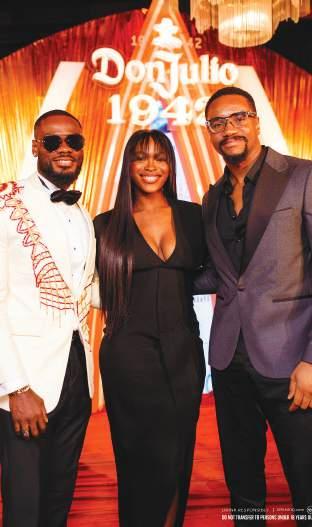
As the 2026 film awards season continues across major global stages, Don Julio 1942 marked the moment with a special edition of ‘The Don’s Table,’ bringing together Nigerian filmmakers and actors for a conversation on craft, discipline, and balancing authenticity with global appeal.
Notable attendees included model and media personality Idia Aisien, TV host Uzoamaka Onuoha, actor Jidekene Achufusi, and others. In a panel moderated by TV personality Uti Nwachukwu, actors Kunle Remi and Angel Anosike shared their insights on navigating the demands of the industry while staying true to their creative vision.
“At Don Julio, devotion is everything,” said Head of Culture, Influencer and Advocacy, Diageo South, West and Central Africa, Ifeoma Agu. “It is the discipline behind the scenes, the years of refinement, the refusal to compromise on excellence. African film is powered by that same devotion, by storytellers who have committed their lives to shaping culture. With this edition of ‘The Don’s Table’, we are honouring the creators who tell our stories with pride.”
The evening also highlighted the intersection between film and fashion,
with bespoke looks on the red carpet adding to the celebration of the wider creative industry.
Don Julio 1942’s ‘The Don’s Table’ is establishing itself as a recurring gathering in Nigeria’s film calendar, providing a space for industry figures to reflect on their craft and celebrate their work.
Asisat Oshoala Shares Journey to Stardom with Fans
At a special Instagram Live session, Nigerian footballer Asisat Oshoala shared her journey to global stardom with fans.
The session, hosted by media personality Osas Irianele and supported by Amstel Malta, featured fans asking questions about Oshoala’s rise from Lagos to international football, her achievements, and the principles guiding her career.
With participation from over 100 viewers, the footballer spoke about discipline, focus and
consistency—values she said have shaped her path to becoming one of Africa’s most decorated players. One hundred participants were selected to receive N30,000 each for their contributions during the session, in line with activities marking International Women’s Day.
The event follows Oshoala’s recent appointment as a brand ambassador for Amstel Malta.
Francs Obiajulu, Senior Brand Manager
Amstel Malta & Hi-Malt at Nigerian Breweries Plc, said the session was designed to give fans closer access to the footballer’s story.
For Oshoala, the platform offered an opportunity to connect directly with fans while encouraging them to pursue their goals.
Widely known as “Agba Baller,” Oshoala is a six-time African Women’s Footballer of the Year and a UEFA Women’s Champions League winner, with a career spanning clubs in Europe and Asia.
Jocelyn Muhutu-remy
Odumodublvck
L-r: prince Nelson enwerem, Angel Anosike, and Jidekene Achufusi at the special edition of The Don’s Table.
Young Jonn
Flavour of in with Ebonylife Island, lighthearted filled was crew, series far-reaching socioeconomic continuing of
InternatIonal Nigeria’s Strategic Shuttle Diplomacy: The Case of PBAT’s State Visit to Britain
Shuttle diplomacy was coined at the time of Henry Kissinger in the 1970s to describe the Kissingerian efforts at mediating the Middle East conflict. Conceptually in international relations, it is considered a negotiation method requiring a mediator in a given crisis to travel back and forth to disputing parties in order build trust, facilitate accords, and promote direct communications. Shuttle diplomacy also refers to the frequent movement of a negotiator between capitals. When shuttle diplomacy is qualified by the word ‘strategic’, the meaning is no longer simply about communication and mediation but also travelling in pursuit of specific national interest. As explained by Google, ‘while standard shuttle diplomacy is about communication, the strategic layer is about active manipulation of the negotiation environment to force a breakthrough.’
Explained differently, it is the act of manipulation of the negotiation environment and the factor of forcing a breakthrough that make shuttle diplomacy different from strategic shuttle diplomacy. In the context of President Bola Ahmed Tinubu’s strategic shuttle diplomacy, the purpose is to shift from a domestic-driven foreign policy making to international-driven foreign policy making in such a way that domestic situations are re-explained to the world that Nigeria is not as bad as she is being internationally presented and that Nigeria should be seen as a beautiful damsel that can always be friendly courted.
Thus, foreign policy and the international environment are being used to promote the doctrine of 4-Ds (Democracy, Development, Demography, and Diaspora) as definienda for strategic autonomy, on the one hand, and strategic autonomy, as a foreign policy grand strategy for Nigeria, on the other hand. It is against this background that PBAT’s state visits, and particularly, the last one to Britain, should be understood.
Nigeria’s Shuttle Diplomacy, 2023-2025
There are many types of visit in international relations: official, unofficial, officious or courtesy, working, and state. Official Visit and State Visit have many things in common but the differences are also distinct. The distinction lies largely at the level of ranking and the extent of ceremonial pomp and the type of invitation. While State Visit requires an invitation by the Head of State of the country to be visited, Official Visits are often initiated by the visiting Head of the country seeking to go on visit. For a state visit, the ceremony is generally of high pomp, involving a 21-gun salute, inspection of military guard of honour, elaborate arrival and departure ceremony, as well as special banquet, called State Dinner. As for Official Visit, the banquet is called Official Dinner. The ceremony for official visit is generally not elaborate. Additionally, a State Visit occurs once during a presidential term while official visit can be many for ongoing diplomatic business.
Unofficial visit in diplomacy is when a leader or a high-ranking government official goes on a foreign trip for non-governmental purpose, for personal or private reasons. Unofficial visits do not require application of due protocol. The unofficial visitor can interact with his or her counterparts but without any governmental connotation. Airport reception may not be an obligation for the receiving State. The unofficial visitor bears the financial burden of his or her visit, and therefore the receiving state is not involved in the area of hospitality or hospitalization if need bes.
Unlike unofficial visit, an officious visit has the features of both official and unofficial visits. For example, when a government official is invited to a diplomatic reception organized by a diplomatic agent and the invited government official attends the event, the government official is only attending in his private capacity and not on behalf of his own government. Thus, attending as a government official without the character of governmental representation in a governmental event, is an illustration of an officious visit. It can also be likened to a courtesy visit which is also informal.
Working visit is a diplomatic trip with a focus on performing certain tasks, projects, etc. rather than engaging in ceremonial activities and protocolar functions. It should be recalled that Nigeria’s First Executive President, Alhaji Shehu Shagari, was scheduled to pay an official visit to France in 1981 after visiting London on March 17-20, 1981. The visit to France did not take place because French President François Mitterrand preferred not to go to the airport to receive the Nigerian leader, considering that Alhaji Shagari was coming to France on a ‘working visit’ and not on official visit.
The argument was considered by the Embassy of Nigeria on Avenue Victor Hugo as offensive but this was not really the major source of Nigeria’s grievance. The offending reason was the issue of President Mitterrand instructing Mrs. Georgina Dufoix, a Secretary of State for Family Affairs in 1981 and who became Minister of Social Affairs and National Solidarity in 1984 to receive President Shagari. In the eyes of the Embassy of Nigeria in Paris, Mrs. Dufoix was too junior an official to receive Nigeria’s President. As President Mitterrand was holding on to the argument of Shagari’s visit being a working one, President Shagari aborted the so-called working visit to France and flew directly to Germany where a red-carpet welcome was organized for him. The essential point being made here is that the type and nature of a visit can define the quality of reception to be given either at the airport, banquet, or other ceremonies.
In other words, on the continuum of diplomatic visits, state visit is the most important and it is at the crescendo of the continuum. PBAT has gone on several state visits abroad: France on 27 November 2024, Saint Lucia in June 2025, Turkiye in January 2026, and the United Kingdom in March 2026. Unlike the state visits to France, Saint Lucia, Turkey, the state visit to Britain is quite significant in expression of sentiments, quality and place of reception.
The state visit to France in 2024 was the first state visit by a Nigerian leader in 24 years. The purpose was to strengthen ties in the areas of agriculture, security, education, energy transition and innovation. He was received at the Presidential palace, L’Elysée after having been given full military honours at Les Invalides, founded in 1670 as a military hospital.
The state visit to Saint Lucia on 28 June 2025 was the first state visit
by an African leader to the island since the visit of President Nelson Mandela in 1998. He was received with full military honours by Governor General Cyril Errol Melchiades Charles and Prime Minister Phillip J. Pierre. The visit enabled the formal establishment of diplomatic ties. PBAT addressed a special session of the Saint Lucian Senate and House of Assembly at the Sandals Grande Saint Lucian in Gros Islet.
The 3-day state visit to Turkiye on 26 January 2026 upgraded Nigeria’s bilateral cooperation to the level of strategic partnership. PBAT was received at the Ankara Esenboga Airport by a delegation led by the Turkish Minister of National Education, Yusuf Tekin. During the visit, nine agreements were done in the key areas of defence and security, especially concerning military cooperation, counter-terrorism, and joint defence industry production; economy and trade; education and culture. The visit is in further diversification of the pattern of Nigeria’s international cooperation.
On the most recent and important state visit to Britain, it was more symbolic. It was the first State Visit by a Nigerian leader in 37 years, reminding of General Gowon’s state visit in June 1973 when the Queen received him and jointly rode in her Royal Cart. PBAT was received at the Windsor Castle and was hosted by the British Monarch, King Charles III. The visit enabled PBAT to repair the international perception of Nigeria as a fantastically corrupt country and the presentation of Nigeria in bad light by Kemi Badenoch, the leader of the Conservative opposition, as a country of social disorder.
More interestingly, the state visit was also quite significant from the perspective of Nigeria’s First Lady, Oluremi Tinubu, who was scheduled to preach at the Lambeth Palace and meet the Representatives of the Church of England, Sarah Mullally. Sarah Mullally, as Head of the Anglican Church, raised opposition in Africa, and particularly in Nigeria. For instance, not only are many Catholics against homosexuality in the Catholic fold, a conservative group of Africans, which called itself Movement of Authentic Anglicans, also held a meeting in Abuja in March 2026 under the auspices of the Global Anglican Future Conference. The meeting elected Laurent Mbanda, the Archbishop of Rwanda, as their chairman. The movement is hostile to the election of Sarah Mullally as Head of the Anglican Church worldwide. This point is to suggest that one critical area of discussion in Nigeria-Britain bilateral ties should be of concern. And perhaps most interestingly is the aspect of PBAT being an opposition refugee element and a presidential dignity in the U.K. It should not be forgotten that PBAT was given shelter by the U.K. during the military dictatorship of the late General Sani Abacha who was after the National Democratic Coalition (NADECO). By the time the U.K. was assisting, that Bola Ahmed Tinubu would one day become the Nigerian leader might have been contemplated but the timing of his coming to the U.K. on state visit could not have been contemplated. Atat best, a matter of speculation, it could have been.
PBAT’s State Visit and Nigeria-Britain Ties
PBAT’s state visit has the potential to be taken advantage of especially by virtue of BREXIT. The British withdrawal of membership from the European Union is consistent with the spirit of strategic autonomy. The UK wants to be self-reliant as a big power. The EU is strongly promoting the EU currency while Britain wants to continue sustaining the British pound sterling as the second international currency after the US dollar. Brexit requires the need for Britain to open its doors more widely to Nigeria, being an important major market for the European Union. In the same vein, Nigeria’s current pursuit of strategic autonomy, particularly in the area of defence and security, necessarily attracts both countries. Their trade relationship is quite good with a trade value of about £8.1 billion pounds sterling in early 2026. In the period from 2010 through 2015, that is, under the presidency of Dr. Goodluck Jonathan, Nigeria had bilateral trade surpluses with the crescendo reaching more than N1 trillion in 2012. Following the accession of General Muhammadu Buhari to power in 2015, trade began to slump as a result of global low oil prices and reduction in oil production. The value of volume of trade was put at about £6.9 to £7.2 billion in 2024. Nigeria’s trading items were basically oil and gas while Britain’s main exports to Nigeria were refined petroleum and machinery. One major dynamic of the boost in trade is the UK-Nigeria’s Enhanced Trade and Investment Partnership (ETIP), which was done in 2024 and which supports agriculture, finance, and technology.
In 2016, Nigeria imported goods valued at N362.87bn and exported goods worth only N300.66bn, meaning a trade deficit. This was the beginning of the period of trade deficit for Nigeria while the UK businesses were thriving better. For example, the UK market share in Nigeria increased from 6.6% in 2022 to 9.6% in 2023. With the rise in value of British trade with Nigeria to about £8.1bn in 2025, Nigeria is UK’s second-largest trading partner in Africa.
Britain is considered another Nigeria or a second home for Nigerians, colonial impact being a major dynamic. The number of Nigerians granted British citizenship is always averagely on the increase. In the period from 1998 through 2009, for example, the number of granted citizenships on a yearly basis was not less than 3000: 3,550 in 1998, 5,594 in 2000, 6,290 in 2001, 6,480 in 2002, 6,615 in 2005, 6955 in 2009, etc. The impact of London on Nigerians is to the extent that a village known locally as Abiriba in Abia State, because of its beauty, is referred to as ‘Small London.’ Consequently, the large population of Nigeria in the United Kingdom clearly justifies PBAT’s state visit to Britain. This is in spite of the global rating of Nigeria as number 4 on the impact of terrorism.
Read full article online on www. thisdaylive.com
Tinubu
Editor: Festus Akanbi
Labour’s Dilemma in Nigeria’s New Fuel Reality
Global oil shocks are again testing Nigeria’s fragile economy. For labour, the real question is whether the coming windfall will bring relief or repeat old disappointments, writes Festus Akanbi
Global oil shocks are once again exposing the contradictions at the heart of Nigeria’s economy. For organised labour, the question is stark: will rising crude prices translate into real relief for workers, or will the country relive a familiar cycle where windfalls fail to improve living conditions?
This dilemma is already reflected in fresh demands by the National Public Service Negotiating Council (NPSNC), which has proposed a minimum wage of N154,000 and a 120 per cent increase in salaries and allowances for public workers. The union describes the current reality as a “life of servitude,” a blunt assessment of how inflation and rising costs have eroded earnings.
The demand, conveyed in a March 12, 2026, letter to the Office of the Head of the Civil Service of the Federation, comes amid intensifying economic pressure. Petrol prices have climbed to between N1,170 and N1,300 per litre, driven partly by geopolitical tensions involving the United States, Israel, and Iran. For many Nigerians, the effect is immediate: higher transport fares, rising food prices, and shrinking disposable income.
In response, the Nigeria Labour Congress (NLC), led by Joe Ajaero, has set out a fivepoint intervention plan in a statement titled “Save Nigerians from This Shock: An Urgent Relief Has Become Necessary.” The demands go beyond wage increases, reflecting a broader attempt to stabilise living conditions.
The NLC is calling for an across-the-board wage award and a Cost-of-Living Allowance to mitigate inflation’s impact. It also wants an expanded and more transparent cash transfer programme that reaches vulnerable households and adjusts to rising prices. Tax relief for low-income earners is another
key demand, including the suspension of what the union sees as regressive taxes and opposition to extending taxation into the informal sector.
Crucially, labour is insisting that any gains from higher oil prices be directly channelled into social support programmes rather than absorbed into routine government spending. It is also demanding a clear timeline for the full operation of Nigeria’s refineries in Port Harcourt, Warri, and Kaduna—facilities whose prolonged inactivity continues to symbolise policy failure in the oil sector.
These demands stem from a worsening cost-of-living crisis. Transportation now consumes a larger share of workers’ income, while food inflation continues to rise. For many households, basic survival has become a daily struggle. The NLC warns that this trend carries wider risks: declining productivity as workers struggle to commute and growing social tension as families face economic hardship.
However, while labour focuses on immediate relief, analysts point to a more complex economic backdrop. Rising oil prices, though painful for consumers, could generate significant government revenue. The Nigeria Economic Summit Group (NESG) estimates that Nigeria could earn up to N30 trillion in additional oil income if prices remain between $95 and $105 per barrel, far above the government’s budget benchmark.
In theory, such a windfall should create fiscal space for relief measures. Higher crude prices typically boost export earnings, foreign exchange inflows, and government revenues across all tiers. But this potential is constrained by Nigeria’s persistent production challenges. Oil output remains below capacity, fluctuating between 1.4 and 1.6 million barrels per day. Crude theft, pipeline vandalism, and underinvestment continue to limit production,
thereby weakening the country’s ability to benefit from high prices fully. This creates a paradox: Nigeria cannot maximise gains from oil price increases, yet it still suffers the domestic consequences through higher fuel costs.
For consumers, the outlook remains difficult. Analysts warn that petrol prices could rise further, potentially reaching between N1,200 and N1,500 per litre if global trends persist. Transportation costs could increase by up to 40 per cent, which would feed directly into inflation. For low-income households, where food and transport already account for most spending, even small increases have severe effects.
Food inflation is particularly vulnerable. Higher fuel costs raise the price of transporting agricultural produce, pushing up market prices. Estimates suggest food inflation could rise by an additional five to eight percentage points under current conditions. Diesel prices, which are critical for logistics and farming, may also surge, compounding the problem.
The impact extends beyond households to businesses and financial markets. Rising operational costs are squeezing companies, while inflation is weakening consumer demand. Investor confidence remains fragile, with concerns that prolonged global instability could further disrupt economic activity.
These pressures have revived debate over policy responses. Some argue for the reintroduction of fuel subsidies to ease the burden on consumers. However, fiscal experts warn that this would reverse recent reforms and reintroduce distortions that previously strained public finances without solving structural problems.
Public affairs analyst Reuben Abati adds a note of caution. He questions the assumptions behind projected oil windfalls, arguing that
revenue estimates must be grounded in actual production levels. Without addressing output constraints, expectations of large fiscal gains may prove unrealistic.
He also warns that broad wage increases, if not matched by productivity gains, could worsen inflation. In the private sector, many firms are already struggling with rising costs and may be unable to absorb higher wage bills, potentially leading to job losses or reduced investment.
Taken together, these perspectives highlight the complexity of Nigeria’s current situation. Labour is demanding urgent relief for workers facing rising costs. Economists are warning about inflation and structural weaknesses. Business leaders are calling for reforms that reduce dependence on imported fuel and volatile global markets.
The challenge for policymakers is to strike a balance. Immediate relief measures may be necessary to ease hardship, but they must be carefully designed to avoid fuelling inflation or undermining fiscal stability. At the same time, deeper structural reforms, particularly in refining capacity, oil production, and energy diversification, are essential to reduce vulnerability to external shocks.
Nigeria now stands at a familiar crossroads. On the one hand is the promise of increased oil revenue; on the other, the reality of rising fuel prices and declining living standards. The outcome will depend on how effectively the country manages this intersection.
For organised labour, the issue is not just about higher wages but about how economic gains are distributed. For the government, the task is more difficult: delivering relief without repeating past mistakes. Whether this moment becomes a turning point or another missed opportunity will depend on the choices made now, under pressure, in an economy with little room for error.
Some Nigerian workers
The Cost Pressures Behind Higher Beer Prices
Inflation is easing, but beer prices are rising. For Nigeria’s brewers, production costs remain too high to ignore, writes Festus Akanbi
At exactly 3:47 p.m. on a humid day in Ojuelegba, a beer distributor, Ayodele Ogunlesi, stared at a WhatsApp message announcing yet another price increase from Nigerian Breweries Plc. From March 20, the cost of a crate of Star Lager would rise again.
His confusion was immediate. Inflation, government officials said, had dropped to about 14 per cent. The naira had stabilised. By all official measures, the economy was improving. Yet, for Ayodele and thousands like him, costs were still climbing.
That contradiction captures the reality of Nigeria’s brewing industry in 2026: macroeconomic indicators are improving, but production costs remain stubbornly high. The result is a widening gap between policy optimism and operational reality.
The Energy Burden
At the heart of the problem is energy. Nigerian manufacturing still runs on a fragile grid, heavily supplemented by diesel generators. For breweries, which require continuous production cycles, power interruptions are not just inconvenient—they are expensive.
Reports the Manufacturers Association of Nigeria (MAN) said that manufacturers spent about N676.6 billion on alternative energy in the first half of 2025. Breweries are among the hardest hit.
Even firms on Band A tariffs, paying over N200 per kilowatt-hour for promised high supply, report outages lasting hours or even days. When this happens, diesel generators take over. At current diesel prices hovering around N1,500 per litre, self-generated power can cost up to N350 per kWh, far exceeding the cost of grid electricity.
For breweries, energy is not a marginal cost. Producing beer requires both thermal and electrical energy at scale. Operators explained that when diesel becomes the fallback, production costs surge immediately. Inflation figures do not capture this dynamic; they reflect consumer prices, not the cost of keeping factories running.
to the dollar, a significant recovery from its 2024 lows. But stability has come at a much weaker level than in previous years. For manufacturers dependent on imports, this “stability” offers little relief.
Brewing relies heavily on imported inputs, such as barley, hops, enzymes, and packaging materials. These are priced in dollars, and while exchange rate volatility has eased, the cost base remains permanently elevated.
The damage from earlier currency swings remains embedded in the company’s accounts. Nigerian Breweries and Guinness Nigeria both recorded massive foreign exchange losses in 2024. Those losses do not disappear simply because the currency has steadied; they linger in debt obligations, supplier contracts, and balance sheets.
In effect, manufacturers are operating on yesterday’s expensive inputs while being judged against today’s improved macro indicators.
Rising Input Costs
Beyond energy and forex, input costs remain structurally high. Analysts said that Nigeria’s brewing industry has limited backward integration, meaning most specialised raw materials are imported.
Global commodity fluctuations add another layer. Barley prices have been volatile due to climate disruptions in key producing regions. Shipping costs, denominated in dollars, compound the burden.
Financial data reflects this pressure. Nigerian Breweries saw its cost of sales rise sharply, while industry-wide spending on energy and raw materials exceeded N1 trillion among major firms in 2025. Marketing, logistics, and administrative expenses have also climbed significantly. These are not short-term shocks; they are structural costs tied to supply chains
that Nigeria has yet to localise.
Profitability Under Pressure
On paper, the brewing sector appears to be recovering. Revenues are up, and several firms have returned to profitability. Nigerian Breweries posted strong revenue growth, while Guinness Nigeria and International Breweries rebounded from losses.
But profitability remains fragile. Margins are thin, leaving little room for shocks. A modest increase in energy prices or a renewed slide in the currency could quickly erode gains.
Much of the recent profit improvement has come from internal adjustments, cost-cutting, pricing strategies, and financial restructuring, rather than a genuine easing of operating conditions. In other words, companies are surviving through discipline, not thriving due to favourable conditions.
This explains the latest price increases. They are defensive moves aimed at preserving already narrow margins, not opportunistic decisions driven by excess profits.
The Consumer Impact
For distributors like Adebayo, the consequences are immediate. The wholesale price of a crate of beer has risen sharply over the past two years, forcing retailers to pass costs to consumers.
The result is declining demand. Many consumers are switching to cheaper alternatives, including informal or locally produced alcoholic drinks. This shift not only affects brewery revenues but also has broader implications for tax collection and quality control.
Official reports already indicate falling per capita beer consumption, reflecting reduced purchasing power and changing consumer behaviour.
This is where the disconnect becomes most visible. While inflation figures suggest easing pressure, everyday experience tells a different story. For households and small businesses, costs remain elevated across multiple fronts: transportation, energy, and basic goods.
Beer prices are simply one visible symptom of a broader economic strain.
Structural Constraints
The underlying issue is structural. Nigeria’s manufacturing sector operates in an environment where critical inputs,
power, raw materials, and logistics are either unreliable or expensive.
Efforts are underway to address some of these challenges. Manufacturers are exploring independent power generation, including solar solutions. Government initiatives aim to reduce reliance on diesel in public institutions, though private sector adoption remains uneven.
Breweries themselves are adjusting strategies. Nigerian Breweries has expanded into wines and spirits, targeting premium segments that can better absorb higher costs. Others are focusing on efficiency and product innovation.
But these are incremental responses. They do not fundamentally resolve the structural bottlenecks driving costs.
A Persistent Paradox
The brewing industry illustrates a broader paradox in Nigeria’s economy. Macroeconomic stability, lower inflation, and a steadier currency have returned, but they have not translated into lower production costs.
The reason is simple: stability has come at a higher baseline. Energy remains expensive, imports remain costly, and infrastructure gaps persist. As a result, businesses continue to operate under pressure even as headline indicators improve.
For consumers, this creates a sense of disconnect. The narrative of recovery does not match lived reality. Prices continue to rise, and purchasing power remains weak.
The latest round of price increases by beer manufacturers is not an anomaly; it reflects deeper economic realities. Companies are responding to persistent cost pressures in energy, foreign exchange, and inputs, pressures that macroeconomic indicators alone cannot capture.
Until these structural issues are addressed, price adjustments will remain inevitable. Stability, in this context, is not enough. What manufacturers need is a reduction in the underlying production cost.
For now, the hum of diesel generators continues to define Nigeria’s industrial landscape, a reminder that beneath the surface of improving statistics lies an economy still struggling to translate stability into relief.
The Currency Trap
The naira has stabilised around N1,360
Glasses of Beer
Heineken Beer
Guinness Stout
www.thisdaylive.com opinion@thisdaylive.com
INVESTING IN THE FUTURE
Sanwo-Olu is committed to education and human capital development, argues SAMUEL AYELABOWO
See Page 20 WOMEN AND THE STRUGGLE FOR POLITICAL REPRESENTATION
SAMUEL
AKPOBOME
OROVWUJE argues for deliberate steps to create a more inclusive political system
See Page 20
What has Nigeria benefitted from the visit? asks ETIM ETIM
TINUBU’S STATE VISIT TO THE UK
Undoubtedly, Nigeria had a beautiful outing at the world stage last week during President Tinubu’s two-day state visit to the UK. He arrived Tuesday evening and left Thursday afternoon, after participating in three major events, including attending an art exhibition. During that time, Zenith Bank formally opened a branch in Manchester, the second in the UK, further positioning Nigeria as the powerhouse of Africa’s financial services sector. The pomp and panoply of British royal ceremonies are always beautiful to watch. As they say, no country does events like the UK. I congratulate the President on such a successful visit. But what has Nigeria really benefitted from it? Diplomatically, it is good for our country to be so well received by a G7 and a leading OECD country. Opening with Yoruba words for welcome; and spiced with some Nigerian proverbs and slangs, King Charles’ welcome speech at the luncheon was beautiful and elegantly delivered.
The President also read a well written speech that touched on the long relationships between the two countries. It was graceful poignant. The Nigerian delegation was made up of mostly government officials –governors, ministers and a sprinkling of business people. I was, however, surprised to see the Minister of Defence, Gen. Christopher Gwabin Musa (rtd) in the crowd in London. I had expected him to stay back home and perhaps travel to Maiduguri to coordinate the military’s response to the terrorist attacks that occurred in that city the morning the president left the country. Even if the minister had already left town in advance team by the time the terrorists struck, he ought to have returned immediately. A twin suicide bombing in a vast metropolis requires the presence of the high command of our security forces and political leadership. And this is why Vice President Kashim Shettima’s quick trip to Maiduguri to comfort and console the people was quite helpful in the absence of the state governor.
Nigeria signed two main MOUs during Tinubu’s meeting with Prime Minister Keir Starmer. The first is a £746 million (approx. $902 million) deal to modernize the Lagos port complex (Apapa and Tin Can Island Port). The purpose is to upgrade infrastructure, enhance efficiency, reduce congestion and digitalize operations at the two ports – the nation’s busiest - which handle over 70% of the our exports and
imports. The project is supported by the UK Export Finance (UKEF), with loans arranged by Citibank and guaranteed by the UK government. UKEF is the UK’s export credit agency that helps British companies win overseas contract by providing financial support and insurance.
Expectedly, the MOU specifies that British firms would be the sole beneficiaries in the supply chain, meaning that the main and subcontractors in this project would have to be British firms. In fact, British Steel, a major steel producer in UK, would be the sole supplier of steel for the project. Contract value is £70 million. This loan is a good example of how the developed countries typically exploit Africa. They give you a loan or aid and you’re bound to import everything from that country, including the technicians that would work on the project. This is why Chinese technicians, steel and locomotives were brought in to build rail network funded with Chinese loans during the Buhari era. There was no provision to build the locomotives in-country or train Nigerian engineers. You borrow the money, pay huge interests on it and export jobs and business opportunities back to them!
Why were Nigerian banks not contacted to arrange funding for the ports upgrade? Our banks are present in many African countries where they provide funding for capital development. In 2013, a few Nigerian banks came together to provide over $3.3 billion to part-finance Dangote Refinery. In 2025, Nigerian banks participated in a $4 billion syndicated refinancing deal to the same company. They would have been glad to put up the £746 million and we would have had the liberty to choose
the contractors and suppliers. And this brings me to the important issue of port development in Nigeria. With the Tinubu administration’s plan to grow the economy to $1 trillion in 2031, Nigeria requires new ports outside Lagos. It is therefore critical that the federal government provide the needed support for Akwa Ibom State to build its deep seaport. With a natural draft of over 17 meters, Ibom Deep Sea Port is a significant investment in Nigeria’s maritime sector that would serve the Gulf of Guinea and the nation’s eastern states renowned for international trade. IDSP is designed to be a transshipment hub for West and Central Africa. With a berth depth of over 16 meters, land area of 2,565 hectares and additional 1,565 hectares for future expansion, quay length of 7.5 kilometers, the port would be suitable for handling large cargoes. Nigeria needs Ibom Deep Sea Port now, and President Tinubu is the right man to deliver it.
Another MOU signed by Nigeria during the President’s state visit will permit Britain to repatriate Nigerians who are staying illegally in Britain back to Nigeria, even if such persons do not have valid travel documents. The returnees would be issued what is known as “UK Letters’’ which is essentially identification document given to individuals without valid passport so that the returnees will no longer have to wait for emergency travel documents before they could be deported. Over 2,000 Nigerians would be deported in the first batch under this scheme, according to one report. I really do not have any qualms about deportations of illegal migrants back to their country. On return to Nigeria, such persons should be mobilized and supported by their respective state government acquire skills with which they would be useful to themselves and society.
The Tinubu administration has signed over 30 MOUs with several countries including Benin Republic, Chad, Ghana and many other African countries. Outside Africa, we have signed MOUs with Brazil, Germany, the Netherlands, USA, UAE and many others. MOUs are not as binding as formal agreements. MOU, otherwise known as handshake deal, is just an understanding between parties, unlike an agreement which is a more formal, legally binding contract that spells out the terms and conditions of a deal. How far have we gone with all these MOUs? What have they brought to the table, as we say in the streets?
INVESTING IN THE FUTURE
Sanwo-Olu is committed to education and human capital development, argues SAMUEL AYELABOWO
In a rapidly evolving world where knowledge and skills define prosperity, governments that prioritise education are not merely investing in schools, they are shaping destinies. In Lagos State, this philosophy is finding strong expression under the leadership of Governor Babajide Sanwo-Olu, whose administration is making deliberate, largescale investments in education and human capital development.
The recent launch of a 34.9 billion ($25 million) outcomes-based education fund marks a defining moment in Lagos’ education reform journey. More than just a policy initiative, it is a bold statement of intent: that every child, regardless of background, deserves not only access to education but the opportunity to learn, grow, and thrive.
For decades, education policy in many parts of Nigeria has focused heavily on enrolment figures, how many children are in school. While access remains crucial, it is no longer sufficient. The real question is whether children are actually learning.
Sanwo-Olu’s education fund signals a strategic shift from access to outcomes. By adopting an outcomes-based financing model, the Lagos State Government is aligning funding with measurable results such as literacy, numeracy, and retention.
This approach introduces a new level of accountability. It ensures that investments in education are not merely symbolic but transformative. As the governor aptly noted, the goal is to ensure that “every investment translates into real learning, real opportunity, and measurable outcomes.”
This is a critical pivot that places Lagos at the forefront of education reform not just in Nigeria, but across Africa.
At the heart of this initiative is a clear and urgent objective: reducing the number of out-of-school children. Despite Lagos’ status as Nigeria’s economic hub, the challenge of children outside the formal education system persists, driven by poverty, migration, and social dislocation.
The Lagos Education Access Fund aims to address this head-on by targeting over 50,000 out-of-school children between the ages of six and 14. Through structured community outreach and targeted interventions, the programme seeks to remove barriers that keep children away from classrooms.
But what makes this initiative particularly compelling is its holistic approach. It recognises that getting children into school is only the first step. Sustaining their attendance and ensuring meaningful learning outcomes is equally important. By also supporting 150,000 pupils already in school, the programme ensures that the focus extends beyond enrolment to quality education. This dual strategy, bringing children in and improving what they experience once inside, reflects a comprehensive understanding of the education challenge.
The new initiative builds on the successes of Project Zero, a flagship intervention launched in 2021. Through this programme, Lagos has identified, tracked, and reintegrated more than 36,000 children into formal education.
Project Zero demonstrated that targeted interventions, backed by data and community engagement, can yield tangible results. It also provided valuable lessons on the importance of monitoring, follow-up, and stakeholder collaboration.
By scaling up these efforts through the new education fund, Sanwo-Olu is not starting from scratch. Instead, he is building on a proven foundation, expanding its reach, and enhancing its impact.
One of the most commendable aspects of the Lagos approach is its recognition that education does not exist in isolation. Children drop out of school not just because of lack of access, but often due to economic hardship at home.
To address this, the government has integrated livelihood support for parents and guardians into its education strategy. Over 360 beneficiaries have received vocational training in areas such as fashion design, soap making, catering, and hairdressing.
This intervention reflects a deeper understanding of the socio-economic dynamics at play. When families are economically stable, children are more likely to remain in school. By empowering parents, the government is indirectly strengthening educational outcomes.
It is a model that links education policy with economic empowerment—a synergy that is both practical and impactful.
Beyond policy and funding, physical infrastructure remains a critical component of education delivery and learning outcomes. Classrooms, schools, and learning facilities are the foundation upon which educational experiences are built.
Sanwo-Olu’s administration has made significant strides in this area, delivering more schools and classrooms in the past seven years than were constructed in the previous two decades. This expansion is not merely quantitative; it is strategic, aimed at addressing overcrowding and improving the learning environment.
Modern classrooms, better facilities, and improved learning conditions contribute directly to student engagement and academic performance. They also enhance the dignity of education, making schools places where children are eager to learn.
Another key element of the governor’s approach is the emphasis on accountability, not just within government, but across society.
The proposed executive order mandating that school-age children should not be seen outside during school hours underscores this commitment.
While enforcement must be handled with sensitivity, the message is clear: education is a shared responsibility. Parents, communities, and institutions all have a role to play in ensuring that children are in school.
This approach shifts education from being solely a government obligation to a collective societal duty. It encourages communities to take ownership and fosters a culture where education is valued and prioritised.
The success of the Lagos education initiative is also anchored in strategic partnerships. Collaboration with the Education Outcomes Fund (EOF) and other development partners brings not only financial resources but also technical expertise and global best practices. These partnerships enhance the effectiveness of the programme, ensuring that it is aligned with international standards while remaining responsive to local realities.
In an era where complex challenges require collaborative solutions, Lagos is demonstrating how governments can leverage partnerships to achieve greater impact.
At its core, Sanwo-Olu’s investment in education is an investment in human capital. It recognises that the true wealth of any society lies in its people, their knowledge, skills, and potential.
WOMEN AND THE STRUGGLE FOR POLITICAL REPRESENTATION
SAMUEL AKPOBOME OROVWUJE argues for deliberate steps to create a more inclusive political system
March is more than a marker on the calendar. It is a season of reflection, recognition, and renewed resolve. As the world observes International Women’s Day 2026, attention turns not only to the achievements of women, but also to the inequalities that persist beneath the surface of progress. In Nigeria, this moment carries a particular weight. Women are visible everywhere—in markets, in classrooms, in businesses, and in the daily work of sustaining families and communities yet they remain strikingly invisible in the spaces where power is exercised.
This contradiction is not abstract; it is measurable. Women make up nearly half of Nigeria’s population and form a significant share of its voting strength, yet their presence in political office tells a different story. In a National Assembly of 469 members, only a small fraction are women. The Senate, with 109 seats, has historically had fewer than ten female senators at any given time, while the House of Representatives, with 360 members, and has rarely had more than 20 women. In practical terms, this means that for every woman in the legislature, there are more than 15 men shaping national decisions. At the state level, the imbalance is often even more pronounced, with some assemblies having little or no female representation at all.
These figures place Nigeria near the bottom of global rankings on women’s political participation. The gap becomes even clearer when compared with other African countries. In Rwanda, women occupy more than 60 percent of parliamentary seats, a transformation achieved through deliberate constitutional reforms after 2003. Senegal moved close to parity following its 2010 gender parity law, while South Africa has steadily increased women’s participation through party-based quotas since the mid-1990s. These examples show that change is possible when it is intentional.
For Nigeria, the question is not whether women are capable of leading, but why the system continues to limit their access to leadership. The answer lies in the intersection of socio-economic realities and political structures.
Sadly, running for office in Nigeria is an expensive undertaking. From party nomination forms to campaign logistics, the financial demands are high, often running into millions of naira. For many women especially those operating in the informal sector or without access to substantial assets these costs are prohibitive. Economic inequality, therefore, becomes a political barrier. When women are less likely to own land, access credit, or control financial resources, they are also less likely to enter and sustain political campaigns.
This connection between economic power and political participation has been rigorously examined in scholarship. Naila Kabeer, in “Resources, Agency, Achievements: Reflections on the Measurement of Women’s Empowerment” (1999), argues that empowerment is fundamentally about the ability to make meaningful choices. In the Nigerian context, the ability to choose a political
path is often constrained by financial limitations and institutional barriers. Without economic independence, political ambition remains difficult to translate into reality. Overpoweringly, history also plays a defining role. Oyeronke Oyewumi, in “The Invention of Women: Making an African Sense of Western Gender Discourses”, demonstrates that pre-colonial Yoruba society did not organize power strictly along gender lines. Women exercised authority in economic and social spheres. Colonial rule, however, introduced rigid hierarchies that privileged male dominance in governance, a legacy that persists in modern political institutions.
Similarly, Ifi Amadiume, in “Male Daughters, Female Husbands: Gender and Sex in an African Society”, challenges Western assumptions about fixed gender roles, showing that African societies historically allowed more fluid and flexible systems of power. These works collectively dismantle the argument that women’s exclusion from politics is culturally inevitable.
Cultural expectations in contemporary Nigeria continue to reinforce structural barriers. Women are often expected to prioritize family responsibilities, including childcare and household management. These roles, while essential, are rarely recognized as forms of leadership. Yet, they require organization, negotiation, and resilience the very skills needed in governance.
As Chimamanda Ngozi Adichie writes in “We Should All Be Feminists” (2014), “culture does not make people; people make culture.” This insight is critical. The norms and values that limit women’s political participation are not fixed; they can be changed and the time is now.
Global feminist thought reinforces this point. Gloria Steinem, in “Outrageous Acts and Everyday Rebellions”, emphasizes that the struggle for equality is collective and ongoing. Michelle Obama, in “Becoming” (2018), underscores the limitless potential of women when given the opportunity to lead. These perspectives align with the Nigerian experience, where the issue is not capability but access.
Despite these constraints, there are emerging opportunities. Nigerian women are increasingly visible in the economic sphere, leading businesses, driving innovation, and contributing significantly to national development. The expansion of digital platforms has opened new avenues for entrepreneurship and engagement, allowing women to build networks and influence beyond traditional structures. This growing economic presence has the potential to translate into political influence. However, it requires supportive policies— greater access to finance, reduced cost of political participation, and institutional reforms that create pathways for women to enter politics.
Orovwuje is a
Ayelebowo writes from Lagos
Editor, Editorial Page PETER ISHAKA
Email peter.ishaka@thisdaylive.com
2027 GENERAL ELECTION: RISING CASES OF VIOLENCE
Politicians must guard against taking Nigerians down a familiar
violent road
For decades, elections have always been a major source of insecurity in Nigerians. Many of our politicians often resort to desperate means either to access power or to retain same. The ongoing campaigns of violence ahead of the 2027 general election provide ample illustration of such desperation. In what is increasingly becoming an established pattern, there is a growing number of violent attacks on persons, party offices and political gatherings. Ordinarily, being the eighth in a series of successive general elections, 2027 should demonstrate to what extent Nigerians have internalised the fundamental principles of democratic engagement in almost three decades. But if the morning, as they say, shows the day, the omens are not good.
With the primaries of the political parties scheduled to commence in the next few weeks, the current trend is worrisome. While the 2027 polls will come and go, the ideals of responsible citizenship will suffer if Nigerians are made to believe that there are no rules of engagement in the matter of competition for public office. The unnecessary bitterness and hate that would arise and linger long after the elections portend ill for peace and national unity. We must guard against that.
eventually become a menace to the larger society. “When politicians begin to stop the use of thugs, touts, or some other group of criminals, that is when we will begin to have safety and security in our land,” said Bello who added that because these miscreants are usually dumped after elections, they are left with no other options than to become “hydra-headed monsters”.
The audacity of present general violence and insecurity can only embolden campaign and election time violence
Part of the expected benefits of the National Peace Accord initiated by former Head of State, General Abdulsalami Abubakar, and Bishop of the Catholic Church of Nigeria, Matthew Hassan Kukah since 2014 is the promotion of peace and justice. The Peace Pact often signed by major contenders before every election enjoins decorum in the use of language during campaigns, as well as visible indications that there would be no recourse to violence before, during and after the votes are cast, counted and the results announced. Despite their pledge, available evidence suggests that all is not well, in terms of solemn commitment to these ideals.
The problem persists because the authorities have been collaborators. In a television interview in 2022, then Kogi State Governor, Yahaya Bello confirmed that those who seek public offices in Nigeria often employ the services of thugs who
SUNDAY NEWSPAPER
editor DAviDSoN iRiekpeN
deputy editors FeSTUS AkANBi eJioFoR ALike
Managing director eNioLA BeLLo
deputy Managing director iSRAeL iwegBU
chairMan editorial Board oLUSegUN ADeNiYi
editor nation s capital iYoBoSA UwUgiAReN the oMBudsMan kAYoDe koMoLAFe
THISDAY NEWSPAPERS LIMITED
editor-in-chief/chairMan NDUkA oBAigBeNA
group executive directors eNioLA BeLLo, kAYoDe koMoLAFe, iSRAeL iwegBU divisional directors SHAkA MoMoDU, peTeR iwegBU ANTHoNY ogeDeNgBe deputy divisional director oJogUN viCToR DANBoYi snr. associate director eRiC oJeH associate director pATRiCk eiMiUHi controllers ABiMBoLA TAiwo UCHeNNA DiBiAgwU, NDUkA MoSeRi director, printing production CHUkS oNwUDiNJo to send eMail: first name.surname@thisdaylive.com
Bello must have been speaking from experience. It is a notorious fact that most of the criminal elements who terrorise innocent people are well known to many of our political gladiators. Therefore, smashing these gangs of sundry criminal elements in our society will only require the willingness to act on the part of critical stakeholders at all levels. We are worried because the current pre-election violence may just be a natural extension of the general insecurity prevalent in our society. People are being killed in droves. Property is being torched, and homes are razed. While a virtue of democracy is freedom of movement, Nigerians are increasingly being curtailed by banditry, kidnapping and routine transactional abductions. There are virtually no consequences in terms of law enforcement or judicial sanctions. In an environment of political conflict, the impunity of violence is likely to intensify. Incumbent governments that see political opponents as adversaries may not see the need to invoke the law or security instruments to control the violence that they initiate.
There have been talks about enacting laws or creating some tribunals for electoral violence, but we believe that there are enough laws in the country to deal with this menace. What has always been lacking is the political will. But we do not believe that an election should generate the kind of desperation that we have witnessed in recent weeks. The audacity of present general violence and insecurity can only embolden campaign and election time violence. Therefore, beyond signing peace accords, we need to invoke sanctions against existing violence in the society. A society that brooks violence, impunity and criminality cannot reasonably control violence in a struggle for power.
Letters in response to specific publications in THiSDAY should be brief(150-200 words) and straight to the point. interested readers may send such letters along with their contact details to opinion@thisdaylive.com. we also welcome comments and opinions on topical local, national and international issues provided they are well-written and should also not be longer than (950- 1000 words). They should be sent to opinion@thisdaylive. com along with the email address and phone numbers of the writer
LETTERS SULLIED
Politics is not a dirty game, no matter how loudly cynicism repeats it. What has become dirty is the way politics is practised in many parts of Africa. When politics is stripped of conscience, polluted by greed, and reduced to a contest for wealth and influence, it loses its dignity. Yet politics remains the most powerful platform through which human lives can be protected, shaped, and transformed. History offers undeniable proof. Societies did not move forward because of wealth alone; they moved forward because individuals in positions of authority chose service over selfishness. When we think of leaders who shaped humanity, we remember people like Nelson Mandela, Abraham Lincoln, and Kwame Nkrumah. Their names endured not because they held power, but because they used power to defend the dignity of ordinary people. Leadership became meaningful only when it was translated into service.
That is why politics should never be dismissed
POLITICS AND INTENTIONAL
as a dirty game. It is, in fact, the most fervent platform to influence lives, touch lives, and change destinies. A wise or wealthy man without access to leadership may understand the problems of his country, but without influence, his wisdom may never reach the suffering masses. The men and women who left lasting legacies in history were often those who occupied public office and accepted the responsibility of shaping the lives of others. Today, however, Nigeria appears to have separated politics from leadership. Politics is often used to dominate, secure resources, and accumulate wealth, while leadership—the moral responsibility to improve the lives of citizens—continues to decline. After the 2023 general elections, the removal of fuel subsidy, the floating of the naira, rising rents, insecurity, farmer–herder conflicts, inflation, and the soaring cost of food have deepened poverty and unemployment. When the people cried out, “Let the poor breathe,” what they expected was empathy. What they needed was leadership that
listens before it defends itself.
LEADERSHIP
Every public office carries a moral calling. Politicians, civil servants, public servants, ministers, commissioners, rectors, chancellors, principals, pastors, priests, and CEOs are all entrusted with one fundamental duty: to serve humanity. Authority is not meant to intimidate subordinates or silence critics. It is meant to uplift the weak, protect the vulnerable, and restore hope to those who feel forgotten. History has always judged leaders not by how long they stayed in office but by how deeply they touched the lives of others. Even in ancient times, leaders who ruled without compassion were eventually remembered with shame, while those who served humanity were remembered with honour. Leadership is therefore not about status; it is about responsibility. It is not about privilege; it is about sacrifice.
Going on vacations or taking time to rest is not wrong for anyone in public office. What matters is the timing and the sense of duty behind every
decision. A nation that is suffering needs leaders who understand urgency. A hungry population cannot wait for comfort; a struggling generation cannot wait for indifference. Leadership demands discipline, vigilance, and a willingness to place public welfare above personal convenience.
Every opportunity in political office carries one central purpose: to help mankind. Every elevation in status—social or economic—should translate into better living conditions for the public. Power that does not serve the people becomes empty. Authority that does not protect the weak becomes dangerous. And leadership that does not produce good works becomes meaningless.
Obiotika Wilfred Toochukwu Living Grace Restoration Assembly Inc., Nkono-Ekwulobia, Anambra State
Inside MISKAY and Hilda Baci’s New Collection
Vanessa Obioha
On Saturday, March 14, 2026, fashion lovers trooped to the flagship store of Nigerian fashion retailer MISKAY in Lekki, Lagos, for the launch of its new collection, The Signature. The release marked a first for the brand, representing its debut collaboration with an influencer.
That collaborator was none other than Hilda Baci, the Guinness World Record-breaking chef who has wowed Nigerians with her culinary feats. Swapping her apron for statement silhouettes, Baci steps into the fashion space with MISKAY, bringing her personality to life through a series of curated looks.
The collection features about 15 looks, with sizes ranging from 6 to 16. According to MISKAY’s creative director and co-founder, Kofoworola Ahmed, the goal was to create outfits for women who resonate with Baci’s style. As a longtime customer of the brand, she was seen as a natural fit to inspire the collection.
“She’s been a customer of ours for a very long time. We wanted someone who affiliates with and really loves the brand. And she shops here all the time. We just thought her a perfect fit,” said Ahmed.
Describing the creative direction, Ahmed explained that the pieces were designed to reflect the different facets of Baci’s lifestyle.
“For instance, we created a blazer to show that she is a boss at what she does. In another look, we designed something she could wear to the club. She wanted a bit of everything—pieces for the club, brunch, weddings, or even date nights.”
With the collection on display, guests moved through the store, trying on and purchasing pieces, while Baci engaged attendees and even assisted with sales.
The collection offers a mix of day and evening wear that can be styled across occasions. Standout pieces include the Badass jeans — a light blue wash barrel silhouette — that can be paired with the black open-back Boss Blazer.
The brown-print mini Uyai dress works for a night out but can be reimagined for semi-formal settings when styled with the white Afici backless waistcoat.
The Kemp skirt, a leopardprint midi, and the Ewa dress, a multi-print long-sleeved bodycon piece, are ideal for date nights or relaxed lounge outings. Other standout pieces include the Electra Set, featuring a black crop top and tapered pants; the Dom Set, a brown faux-leather crop top and midi skirt co-ord; and the Recee Dress, a brown one-shoulder satin piece.
Earthy and brown tones dominate the collection, a deliberate nod to Baci’s favourite colour. Now available online and in-store, the collection aims to attract both new and returning customers while showcasing Baci’s signature style.
Hilda Baci helping a customer out
Hilda in A-kang set
A selfie with Baci Hilda in Hill top and lady pants.jpeg
Hilda in Hill top and lady pants.jpeg
for Lagos
What was once dismissed as mere speculation has now taken a definitive shape. The whispers have grown louder and clearer: Abdul-Azeez Adediran, widely known as Jandor, is once again setting his sights on the governorship seat of Lagos State.
For many political observers, his name is far from unfamiliar. In the build-up to the 2023 gubernatorial election, he shook the political establishment when he contested under the banner of the People’s Democratic Party (PDP), challenging the long-standing dominance of the All Progressives Congress (APC) in the state. His campaign energised sections of the electorate and stirred debates across the political landscape.
Although the election did not end in his favour, Adediran’s bold entry into the race left an imprint on Lagos politics. His departure from the PDP afterwards signalled a strategic recalibration rather than a retreat. Now, his return to the APC — the political platform widely credited for giving him his early political footing — marks yet another twist in his evolving political journey.
Observers believe the move is more than symbolic. It suggests a renewed attempt by Adediran to reposition himself within the mainstream power structure of Lagos politics while preparing for another shot at the state’s top job.
As the road to the next governorship election gradually unfolds, one thing is becoming increasingly clear: Jandor is not stepping away from the political arena anytime soon. Instead, he appears determined to remain a significant player in the unfolding drama of Lagos political future.
Anambra Watches Closely as Soludo Begins Second Term
Last Tuesday, the political and social landscape of Anambra State took on a renewed hue as Charles Soludo stepped confidently into his second term in office.
In the refined tradition of Anambra’s politically conscious society, such moments are never a mere routine. It is a statement of trust renewed, a mandate reinforced.
For Soludo, whose intellectual pedigree was shaped during his time at the helm of the Central Bank of Nigeria, this new chapter presents both an endorsement of his first-term strides and a challenge to elevate his vision into a lasting legacy.
Anticipation buzzed across Awka’s corridors of power, the bustling markets of Onitsha, and the industrial heartbeat of Nnewi. The people are not just hopeful - they are expectant. They look up to a leader long regarded as a reformer to consolidate gains in infrastructure, deepen economic reforms, and strengthen security across the state.
Soludo’s first term was defined by bold
In the ever-evolving landscape of Nigeria’s financial services sector, where institutions are constantly pressured to reinvent themselves or risk obsolescence, Ladi Balogun has emerged as a steady, visionary hand—quietly, but firmly steering First City Monument Bank, as the
ambition - urban renewal projects, fiscal discipline, and a governance style that sought to redefine public service.
Yet, as the curtain rises on this second act, the emphasis has subtly shifted from promise to performance, from vision to visible impact.
For the political elite and the everyday citizen alike, this is a moment of quiet scrutiny. Can Soludo translate policy into prosperity at a scale that touches every corner of Anambra? Can he further position the state as a beacon of innovation and enterprise in Nigeria’s competitive landscape?
Beyond the rhetoric and the ceremony lies the enduring question of legacy. In the grand theatre of Nigerian politics, second terms often define how history remembers its principal actors. For Soludo, the opportunity is clear - to move from a leader of ideas to a builder of enduring structures and legacies.
As Anambra watches, hopeful and discerning, one truth stands firm: this is more than a
Group Chief Executive, into realms that transcend traditional banking.
Unlike many of his contemporaries who lead with noise and spectacle, Balogun’s style is defined by calm authority and intellectual depth. But beneath that understated persona lies a bold reformer, one who understands that the future of banking is not merely in vaults and ledgers, but in innovation, inclusiveness, and impact. Under his leadership, FCMB has undergone a remarkable transformation—from a conventional financial institution into a dynamic, diversified financial services group.
This evolution did not happen by chance. It is the result of deliberate strategy, a keen understanding of global financial trends, and an unyielding commitment to relevance in a digital age. By embracing technology and prioritising customer experience, Balogun has ensured that the bank remains not only
Governor Otti, Kalu Set to Contest Abia Governorship
In the ever-dramatic theatre of Abia politicswhere ambition, legacy and rivalry often collide - an intriguing political contest appears to be quietly gathering momentum between Governor Alex Otti and former governor and senator, Orji Uzor Kalu. What began as subtle political signals is gradually evolving into a rivalry that many observers believe could shape the next phase of Abia’s political future.
Governor Otti, who assumed office in 2023 with a wave of popular enthusiasm after years of persistent political struggle, has spent the early part of his administration projecting the image of a reformminded leader determined to chart a new path for the state. His victory on the platform of the Labour Party was widely viewed as a dramatic political upset that disrupted the long-standing dominance of traditional political structures in Abia.
Looming over this evolving political landscape is a figure whose influence in Abia politics remains formidable. Kalu, a seasoned political operator and
competitive but forward-looking.
However, what truly sets him apart from the crowd is his people-first philosophy. Within FCMB, there is a palpable sense of purpose—an ecosystem where talent is nurtured, ideas are encouraged, and excellence is rewarded. Employees are inspired to see themselves as partners in progress, not just participants in a corporate structure. This cultural re-engineering has become one of the bank’s most enduring strengths.
Balogun’s vision extends into society. Through sustained support for small businesses, financial inclusion initiatives, and community-driven programmes, he has reinforced the role of banking as a vehicle for empowerment.
Today, as the financial sector continues to navigate through the business world of uncertainty, one thing remains clear: under Balogun, FCMB is not just keeping pace—it is setting the tone, driven by leadership that understands that true legacy lies far beyond banking.
now a leading voice within the All Progressives Congress, has never concealed his deep interest in the political direction of the state he once governed.
For Kalu and his loyalists, Abia remains a political terrain they know intimately. A two-term governor before moving to the Senate. Within his camp, the current political climate is increasingly viewed as an opportunity to reclaim what they believe slipped from their grasp in the last electoral cycle.
Fuelling the unfolding drama is the reemergence of Kalu’s younger brother, Mascot Uzor Kalu, who has once again declared interest in the Abia governorship ahead of the 2027 race. Mascot, who flew the flag of the Action Peoples Party during the 2023 election, is positioning himself for another attempt at the state’s top seat, and the senator has thrown his weight behind him.
In recent months, rhetoric from both sides has grown noticeably sharper. Allies of the former governor have hinted openly that the battle for
Kemi Alashe and the Leatherworld Legacy
When Kemi Alashe first
of
more than three decades ago, she was not merely imagining a furniture business. She envisioned a brand that would define class, craftsmanship and enduring luxury in Nigeria’s furniture industry. Today, that dream has grown into one of the country’s most respected furniture companies — a name synonymous with quality, elegance and reliability.
Founded in 1994, Leatherworld Furniture Company began as a modest retail outlet created to meet the rising demand for premium furniture in Nigeria. At the time, the local market was largely dominated by mass-produced items where durability often took a back seat to cost and quick turnover.
But Alashe chose a different path. From the very
beginning, the company positioned itself as a curator of quality, building partnerships with renowned Italian luxury furniture brands and offering Nigerian customers access to sophisticated global designs. More importantly, it established a philosophy that would guide its operations for decades: never compromise quality.
That principle remains the company’s defining compass. From its early retail beginnings, Leatherworld has expanded significantly, spreading its presence across key commercial hubs in the country.
Its elegant showrooms in Victoria Island and Lekki in Lagos, as well as its Abuja outlet in the Federal Capital Territory, have become
destinations for discerning homeowners, interior designers and corporate clients seeking furniture that combines durability with refined aesthetics.
Yet Leatherworld’s story is not simply about expansion. It is about endurance. In an industry where shortcuts are often tempting, the company has continued to demonstrate that true class lies in patience and precision.
One striking example of this philosophy is its use of seasoned hardwood, which is aged for up to seven years before it is used in production. It is a deliberate process that reflects the brand’s commitment to creating furniture designed not for fleeting trends, but for generations.
Soludo
Adediran
Otti
Abia’s political soul is far from over, while supporters of Otti insist that the governor’s performance and growing public goodwill will ultimately silence his critics.
Alashe
dreamt
Leatherworld
Balogun
The Art of Starting Again
Sometime last year, media personality and fashion entrepreneur Gbemi Olateru-Olagbegi found herself at a loss over what her next chapter should be. It was unfamiliar territory for someone who had always had a firm grasp of her life’s trajectory. More so as the first child in her family, from the royal Olagbegi home of Owo, Ondo State, and a natural planner others often look up to.
At the age of 14, she had completed secondary school. While most spent four years at university, she completed her degree in Communications at Oakland University, Rochester, in three. After serving at the Nigerian Television Authority during her NYSC, she joined Cool FM in 2005, co-hosting Good Morning Nigeria before anchoring the midday show. She would later become the youngest female Programme Director at Naija FM and also serve as deputy programme director at Beat FM.
In December 2021, she dropped her headphones, a decision that surprised many of her fans. But for Olateru-Olagbegi, radio had become too comfortable. She needed a new challenge.
By then, she had discovered podcasting, which was still in its infancy. Encouraged by listeners who enjoyed their on-air chemistry, she and Tolu ‘Toolz’ Oniru created Off Air, a space for unfiltered conversations.
Although the idea came early, it took nearly a decade to assemble the right team. They eventually launched in 2019.
It was a first for the duo as most podcasts then were mostly audio-based. Off Air adopted both visual and audio formats, distributing on YouTube. Although they drew many viewers from Nigeria and within the diaspora, they had no sponsor and production was costly.
“We wrote proposals countless times to many brands. But for some reason, they didn’t see the vision, and they didn’t buy into it,” she said during a recent chat.
At one point, shortly after returning from a hiatus in 2021, the duo planned a special episode on motherhood, having just become mothers themselves. They approached multiple brands for sponsorship but received little interest.
“We even had a popular actress who I’m friends with, who was a brand ambassador for one of these brands, to hand me over to someone so that our proposals would not be lost in the air. She handed me over to people who dribbled us left, right and centre.
“What we were looking for was just N2 million sponsorship for that particular episode and it didn’t make sense to me. We did our episode anyway but it was quite interesting to observe.”
Till date, she still receives positive feedback from that episode.
“I went to a Mother’s Day brunch recently, and a lady still mentioned that episode to me. She said to me: ‘I’ve watched that episode, and I’m telling you it prepared me for when I was going to be a mom, because there were many things that we were not told.’”
Help came when MultiChoice Nigeria approached them in 2022 to bring the show on their Africa Magic platform. By then, they had done 100 episodes. It was a big relief for the hosts as the burden of production costs was taken away. However, the feeling was not the same for their audience who felt accessibility would be limited. On YouTube, anyone from anywhere in the world could access the show but on MultiChoice channels, it was only available in Africa. Also, there were no repeat airings.
“As much as the audience was upset, this is not a hobby, and I guess that’s what people always forget,” she said. “Creators are not creating just because it’s fun, it’s also a business. At some point, if you’re not making money from it, it starts to take a toll.”
The show has since returned to YouTube and is now in its ninth season, though rebuilding its digital audience after a two-year break felt like “starting from scratch.”
But there’s a lesson for her.
“For anyone who’s building anything, do not be afraid to start from scratch.”
Along the line, Olateru-Olagbegi dabbled in other creative and entrepreneurial pursuits. She launched a fashion shoe label, Gbemisoke Shoes (they also make bags); acted, co-founded an entertainment start-up, TNC, served as Vice President of Marketing at travel company Wakanow, and even walked the runway.
Despite these achievements, she felt the need for something more, particularly in an increasingly uncertain economic climate. When clarity did not
come immediately, panic set in.
“I’m the sort of person who panics first when things don’t go as planned,” she admitted. “It was very terrifying for me, because I’ve always been a planner. I’m the family planner, I’m the one that says we’re going to do this, we’re going to do that. Let’s organise. Even in my friend group, I’m sort of the person who’s like, oh, we are going somewhere. We’re doing this.
“For me to one day get up and realise I don’t know that person who’s always been sure of herself was scary. For the first time in my life, I was unsure of what direction to go coupled with all the stuff that was happening in the country.”
After the initial meltdown, she began to look inward. What were her interests? What brings her joy? What was she good at? She knew she had to start something
“We’re in this space now where it’s not just enough for you to do your job. So whether you are a media personality or an actress, or whatever it is you’re doing, you have to create content which is so annoying,” she said jokingly.
“Do you understand? Pre-Instagram, TikTok, you could just get up, do your job, and that was enough. But now your social media presence is very important. In some cases, before you’re hired for a job, they will look at your social media. If you don’t have a strong social media presence, you’re not going to get that job. We’re in this day and age where content is king”
She figured out she loves fashion, loves to tell stories and has friends who are designers. She decided to come up with a form of storytelling that would see her walk into stores and try on a few clothes. The response was strong, and soon, brands began reaching out.
“I have to develop a rate card because I didn’t know where this was going to lead,” she said. By the end of 2025, she had created content with about 50 designers. The beauty of her strategy was that it was a mix of all fashion tiers.
So whether you love high, mid or low fashion, there was something for everyone.
In doing this, Olateru-Olagbegi discovered a gap. There were a lot of stories behind these designers that were not out there. Too often, fashion stories focus on the aesthetics and do not capture all the people involved in the ecosystem.
“People see your outfits, either as a creator or a model and they just like it. But where’s the story, where’s the journey? We don’t know their struggles. We don’t know how they started. A lot of people want to get into the fashion business but have no clue how to start or where to start. Some see others as successful but don’t know how they achieve that or even brands that were shut down.”
That realisation led to ‘Fashion Roundtable,’ a long-form interview series spotlighting voices across the fashion ecosystem. The first episode premiered on March 19 on YouTube, with a 13-episode debut season featuring designers, stylists, and industry insiders.
Among the stories are designer Kiing Davids’ abandoned attempt at women’s shoes, Zephans & Co’s remarkable sale of 35,000 outfits in a year, and Bawsty’s sold-out pop-up event, which drew 600 registrations in under two hours.
An interesting group of people featured are stylists who she described as image architects and whose roles are evolving rapidly. For the season, she spoke to two stylists including Swazzi, the stylist for many Nigerian celebrities including Flavour.
With this new venture, Olateru-Olagbegi begins a new chapter but beyond that, expanding the lens through which fashion stories are told. Where this exciting journey leads remains openended, but that uncertainty no longer unsettles her.
“I hope I don’t run out of people to interview,” she said, laughing.
A major society wedding is set for May 9, 2026, in Lagos. It will bring together business leaders, social figures, and close family for the marriage of Ngozi Obiekwugo and Ephraim-Julian Osula.
The groom is the son of Julian Osula, chairman of Julian’s Luxury, a company known for high-end watches, jewellery, and exotic cars. Over the years, the brand has built a strong reputation among Nigeria’s wealthy clients. This event is expected to reflect that same standard.
Osula is not new to highprofile events. His business deals with global luxury brands, and his personal background includes ties to the Benin royal family. His wife, Oghogho Osula, is a senior executive in the financial sector. Together, they are well known in business and social circles.
For guests, the wedding is likely to be more than a ceremony. It is expected to feature detailed planning, premium hospitality, and a guest list that includes people from different industries. Events like this often double as networking spaces where business and social ties are strengthened.
At the centre of it all is the couple. The bride and groom represent a union that blends grace and ambition. Their story, now formalised, carries the quiet promise of a shared future built on mutual purpose and support.
For observers, the interest goes beyond the celebration, showing Nigeria’s upper tier marks important life events. Indeed, they mark such events with scale, coordination, and attention to detail. It also shows how family, business reputation, and social standing normally meet in one place.
The wedding is a reminder of how influence works in Nigeria, where personal milestones can also serve as public moments, drawing attention from both society and business circles. And because it is Osula that is at the heart of it, it will be luxury all the way.
with Kayode aLFRed 08116759807, E-mail:
...Amazing lifestyles of Nigeria’s rich and famous
When Politics Enters the Family: The Atiku Case
Politics is now creating visible tension within the family of former Vice President Atiku Abubakar, and it is beginning to affect party stability in Adamawa State.
The immediate issue involves two of his sons, Adamu and Mohammed. Both are said to be interested in the same House of Representatives seat in the Jada, Ganye, Toungo, and Mayo-Belwa constituency ahead of the 2027 elections. This has split members of the African Democratic Congress (ADC) into rival groups.
Party officials are struggling to manage the situation. Reports suggest that each camp is backed by one of the brothers, with funding and influence shaping loyalties. This has slowed decision-making and weakened the party’s structure at the state level.
The problem goes beyond one contest. Different members of the Atiku family are now in different political camps. One son, Abba, has already joined the ruling APC and openly supports President Bola Tinubu. Others remain aligned with their father’s
political path.
For party members, this raises practical concerns. Some fear the ADC in Adamawa is becoming too dependent on one family, both in leadership and funding. Others worry that internal disputes could cost the party support before the elections.
There are already signs of strain. Key figures have stepped back from party activities, and some are considering leaving altogether. Efforts to settle the dispute internally, including reports of a possible family-led decision on the ticket, may come too late to repair the damage.
For voters, the issue is simple. Political parties are expected to offer clear choices and stable leadership. When internal conflicts dominate, it becomes harder to focus on policy, representation, and results.
What is happening in Adamawa shows how quickly personal ambition can affect public politics—and how family dynamics can shape outcomes beyond the home.
Titans at the Table: Chagoury’s ITB, MSC Secure $1bn Snake Island Port Project
A new $1 billion port project in Lagos could change how goods move in and out of Nigeria. And it is being handled by two major private business groups.
Mediterranean Shipping Company (MSC), the world’s largest shipping company, has secured a 45-year agreement to build and run a new container terminal at Snake Island.
To construct it, MSC is working with ITB Nigeria, a subsidiary of the Chagoury Group, along with a European engineering firm.
The goal is simply to increase capacity. Lagos ports, especially Apapa and Tin Can Island, are often congested. This leads to delays, higher costs, and slow delivery times.
The new Snake Island terminal is expected to handle more cargo and reduce some of that pressure.
The planned facility will include a long quay for large ships, modern loading equipment, and a container yard. It is also designed to handle bigger vessels than many existing Nigerian
Lagos is bringing back a practice many residents remember: monthly environmental sanitation. Starting April 25, 2026, people will be expected to clean their surroundings on the last Saturday of every month, from 6:30 a.m. to 8:30 a.m.
This move is part of a wider plan led by Tokunbo Wahab, the state’s Commissioner for Environment and Water Resources, whose focus has never been simpler: to reduce waste, to prevent flooding, and to improve public health.
For residents, the impact is direct. Blocked drainage is one of the main causes of flooding during the rainy season. When waste is dumped in gutters, water has nowhere to go. Streets flood, traffic worsens, and homes are affected.
The Lagos government, led by the amiable Governor Babajide Sanwo-Olu, is pairing this sanitation exercise with stricter enforcement. Thousands of people have
already faced penalties for illegal dumping and other environmental violations. Fines can be significant, and officials say enforcement will continue.
There are also ongoing infrastructure changes. The state is clearing major drainage channels, expanding waste collection systems, and moving away from old dump sites toward more structured disposal methods. New waste bins have been distributed, and alternative landfill sites are being developed.
Public spaces are also under review. Authorities have removed illegal structures in some areas to improve cleanliness and order.
Still, the success of these efforts depends on residents. The government can enforce rules, but daily habits matter more. Proper waste disposal, keeping gutters clear, and following sanitation schedules will determine whether the city improves.
For many in Lagos, this is less about policy and more about daily life. Cleaner streets mean
ports can currently manage.
For businesses and consumers, the impact could be practical. Faster port operations may reduce shipping delays and, over time, help lower the cost of imported goods. It could also make it easier for Nigerian exporters to move products out of the country.
The federal government is expected to earn revenue from the project over the 45-year period, with estimates running into billions of dollars. There are also expected to be new jobs linked to construction and port operations.
Both companies involved have strong track records. MSC operates a global shipping network with hundreds of vessels. The Chagoury Group has built major projects in Nigeria, including Eko Atlantic and large road developments.
This project is a long-term investment. Its success will depend on whether it can deliver consistent, reliable port services in a system that has struggled with delays for years.
fewer floods, better health, and less disruption. The question is whether residents will treat sanitation as a shared responsibility or just another rule to follow. Then again, given the convincing milestones of Wahab, Lagosians are likely going to unite under the former.
Atiku
Ephraim-Julian Osulas and Ngozi Obiekwugo
Chagoury
Wahab
Bank Plc is charting a bold international course, unveiling plans to list its shares on the London Stock Exchange by 2027. Announced in March 2026, the move signals a strategic push to tap into deeper pools of global capital and accelerate
Adaora Umeoji’s Global Play: Zenith Bank Sets Sights on London Listing
the bank’s expansion beyond Nigeria’s borders. But what does a London listing truly represent?
At its core, a stock exchange is a marketplace where investors buy and sell shares. While Zenith Bank is already listed on the Nigerian Exchange, a London listing would open the door to a broader class of international investors, particularly those who face barriers to investing directly in Nigeria. It effectively places the bank on a larger financial stage, increasing visibility, credibility, and access.
This is not entirely unfamiliar territory for Zenith. Since 2013, the bank has maintained a presence in London through Global Depository Receipts (GDRs). However, the proposed move to a full listing marks a significant leap—one that offers stronger liquidity, wider investor participation, and greater capital-raising potential.
Industry observers point to the leadership of Group Managing Director and CEO, Adaora Umeoji, as a defining force behind this ambitious direction. Since assuming office in 2024, she has overseen a period of strategic strengthening—raising the bank’s capital base above regulatory thresholds and extending its international footprint, including the establishment of a new branch in Manchester.
For Zenith, the objective is clear: secure
more robust funding, support cross-border transactions, and compete more aggressively on the global stage. By reducing dependence on local funding—which can be both limited and costly— the bank positions itself for more sustainable, long-term growth.
For Nigerian customers and investors, the implications are layered. On one hand, a stronger, globally connected Zenith Bank could enhance financial stability, inspire investor confidence, and elevate the profile of Nigeria’s banking sector. On the other hand, a foreign listing introduces tighter regulatory demands, increased scrutiny, and the possibility of shifting strategic focus away from the domestic market. The market has already responded positively. Zenith’s share price saw an uptick following the announcement, reflecting investor optimism about the bank’s global ambitions.
Ultimately, the success of this move will hinge on execution—how effectively Zenith balances international expansion with its strong domestic foundation. If managed well, this London listing could mark not just a milestone for the bank, but a defining moment for Nigerian banking on the global stage.
Olalekan Adebiyi: Redefining Road Construction Across Nigeria
Olalekan Adebiyi has built a strong position in Nigeria’s construction sector without much public attention. As founder of LaraLek Ultimate Constructions, he leads one of the country’s largest indigenous firms, with a focus on roads and major infrastructure.
His work is visible across Lagos and the South-west. Key projects include major road networks in Lagos state, as well as ongoing constructions across the country. These are hightraffic routes where durability matters more than design.
Adebiyi’s approach has not changed since he first started gladdening the hearts of his clients with good work. He prioritises roads that can handle heavy use over long periods. This focus has earned him industry recognition, including an honorary fellowship from the Nigerian Society of Engineers. It is a rare award for someone without formal engineering training.
Beyond roads, his companies have handled
New Dawn for Petroleum Sector: Tinubu Empowers Adeola to Lead Strategic Overhaul
The federal government has set up a new team to fix key problems in Nigeria’s petroleum sector. President Bola Tinubu has appointed Fola Adeola, a co-founder of Guaranty Trust Bank, to lead this effort.
The group is called the Presidential Petroleum Reform and Value Optimisation Taskforce. Its job is to design clear, practical steps to improve how the oil and gas sector works. Unlike past committees, this one has a strict timeline, which is to deliver results within six months.
For everyday Nigerians, the goal is
Headwinds
large public and private projects. Through Visible Construction, he completed the renovation of the National Assembly complex in Abuja. The project set a new benchmark for government buildings in terms of finish and delivery timeline.
He is also leading the construction of The Ark, a 100,000-seat worship centre. This project shows Adebiyi’s capacity to manage large, complex builds outside standard road work.
For everyday road users in Lagos and nearby states, Adebiyi’s influence is practical. Better-built roads reduce travel time, lower vehicle damage, and ease pressure on transport systems. In a city where congestion is a daily issue, construction quality directly affects cost and productivity.
LaraLek now competes with international firms operating in Nigeria. Its growth shows that local companies can deliver at scale if standards are maintained.
Adebiyi remains largely out of the spotlight. His companies, however, continue to take on
straightforward. The government clearly wants a sector that brings in more revenue, attracts more investment, and operates with fewer inefficiencies. This could affect fuel supply, government income, and the overall economy.
The task force has three main assignments. First, it will propose immediate fixes, including changes to laws
and government structures. Second, it will create a financial plan to unlock between $5 billion and $10 billion tied up in the sector. Third, it will produce a 10-year strategy with clear targets for oil production, foreign exchange earnings, and economic growth.
The team will report directly to the president and give monthly updates.
An initial report is expected within three months.
Adeola was chosen because of his track record. He helped build GTBank into one of Nigeria’s leading financial institutions and has worked on major national reforms, including the pension system. He also runs a foundation that supports small businesses.
This move builds on recent changes in the sector, including the removal of fuel subsidies and efforts to increase oil production. The key question is whether this task force can move from plans to action. Many reform efforts in the past have produced reports but little change. This time, the government is promising clear steps—and a deadline.
Rise: Tompolo Grapples with Tough Realities
High Chief Government Ekpemupolo, widely known as Tompolo, is no stranger to power struggles. But in early 2026, the stakes around him feel unusually high—and less certain.
Tompolo leads Tantita Security Services, the company responsible for protecting Nigeria’s oil pipelines in the Niger Delta. The contract is massive, worth about N48 billion a year. For years, it has positioned him as both a security partner to the government and a dominant figure in the region. That position is now under pressure.
A key shift came in 2025 when Mele Kyari, the former head of NNPC and one of Tompolo’s strongest allies, left office.
His successor has kept some distance, and Tompolo’s direct access to the presidency appears to have weakened. Reports suggest he has even sought help from former President Goodluck Jonathan to rebuild those connections.
In response, Tompolo is making visible moves to prove his value. His company has increased operations against oil theft, including intercepting vessels carrying stolen crude. It has also invested in new surveillance technology, such as drones, to strengthen monitoring of pipelines. Financially, he has made large public donations, including N10 billion to a state security fund.
But these efforts come as criticism grows. Some former militant groups and
Hon. Babajimi Benson has built a reputation on results rather than rhetoric. Representing Ikorodu Federal Constituency, Lagos, in the House of Representatives, he balances legislative excellence with tangible projects that directly improve lives.
Benson has sponsored over 58 bills, including the DICON (Amendment) Act and the Electricity (Amendment) Act. As Chairman of the House Committee on Defence, he ensures national security oversight is thorough and accountable without political showmanship. He also champions policies like the Reserved Seats Bill to increase women’s representation, influencing decisions quietly but decisively.
His work is most visible in Ikorodu. The “Touched” campaign marks projects with his palm print, signalling initiatives that range from healthcare and education to infrastructure. He has facilitated more than 65 roads, installed the “Light Up Ikorodu” solar streetlights, and built an 80bed Mother and Child Hospital in Imota.
The iCare FoodBank has provided monthly support to families for over eight years, while the IKD 106.1FM community radio ensures citizens have a voice. Benson has also opened a modern ICT Centre and funds educational grants and vocational training for local youth.
Before politics, Benson built a strong professional foundation. He served as a legal officer at the United Nations in New York and held senior positions at Ecobank PLC, Lead Bank PLC, and the Lagos State Development and Property Corporation. He holds an LLB from Lagos State University, an LLM from London Guildhall University, and an MBA from Warwick Business School.
The combination of legislative influence, constituency projects, and disciplined leadership has earned him the national honour of Commander of the Order of the Federal Republic (CFR) in 2025.
Benson’s approach demonstrates that power need not be loud to be effective. His record is felt daily in the lives of his constituents, making him a rare example of quiet authority paired with visible, measurable impact.
civil society voices argue that the pipeline contract should be reviewed or shared more widely, rather than concentrated in one network.
To understand the moment, it helps to recall Tompolo’s past. He once led militant groups that disrupted Nigeria’s oil production before accepting amnesty in 2009. That shift turned him from adversary to partner, someone the government relied on to secure the same system he once attacked.
Now, that partnership is being tested. The question is no longer just whether Tompolo can deliver results, but whether his role in Nigeria’s oil security will remain as central as it has been.
Umeoji
Adebiyi
Zenith
Benson
Adeola
projects that affect how people move, work, and live across key parts of the country.
Tompolo
Peller’s Misadventure at Oba of Benin’s Palace
The institution and traditions that surround the highly revered Oba of Benin remain quite distinct and serious. People usually do not “play”around them. I personally do not joke or trifle with it. The other day, on a visit to the palace “just to look,”I was stopped by some stern-looking chiefs who looked more intimidating than the armed policemen at the gate.
“Come here,”they barked.“Where you dey go?”
With a shaky voice, I responded: “I just come look around. I come from far, and I respect una traditions. Make una just let me look.”
“Common geraway”was the response I got.
I respect that, especially in an era where our traditional institutions continue to be derided and “molested.”
The institution that surrounds the
Emir mohammEd SanuSi ii: rolling on thE groovy train
Bini throne, I must say, seems to be withstanding the marauding erosion of values that beset its colleague institutions all over the country. The Benin people have kept the sanctity and seriousness of their monarchy almost intact.
The Oba is highly revered and not joked with, and he in turn carries himself with the highest respect and dignity, justifying his almost godlike positioning in society.
It is within this context that loudmouthed and barely literate social media titan, Peller, carried his wahala to go and lodge.
Footage of him within the grounds of the palace has flooded the internet, with him apparently making a mockery of the centuries-long traditions of the Benin people. As expected, his illiterate behaviour has drawn the ire of the Palace. A
I have seen a report that says that the very well-respected Emir Sanusi, who happens to be my bosom friend, will be taking home about N400 million in his role as an independent Director of the telecoms giant MTN. You see, the moment I saw the report, I picked up the phone to call the Emir’s Chief of Staff to greet them, but it appears they have blocked me. It is not a problem because, as Patience Jonathan once said, “there is God o.” Blocking a very close friend like me because of dividends that are coming is very comical. But no problem.
Just as I was getting over the snub, the news that the great Emir would be leading the durbar — or what do they call it during the festive celebration marking the end of the fasting — reached Nigerians. In fact, Emir Muhammadu Sanusi II’s life shows that there is often a bright spot behind every dark cloud. From his dethronement to his controversial detention—and subsequent release facilitated by the now-arrested Nasir
staff member has been arrested, a chief has been suspended, and a Queen is facing uprooting. And yes, this is how a serious custodian of traditions and culture should behave. It must rise to protect its integrity and the sanctity of its ethos, especially against such a strong force as personified by the social media titan.
I remain very proud of the Bini traditional stool for standing very firm against the withering of its ethos and for teaching Peller and his hordes of followers, which runs into the millions, that some things cannot and should never be trifled with.
But he himself, how can he leave all the disco obas that are his immediate neighbours in that Lekki area and go and try himself out of all institutions, the Bini one? He really get mind oo.
El-Rufai—to moments that bordered on uncertainty and despair, he remained steadfast in his convictions. His eventual reinstatement and return to the enduring contest over the Kano throne has now culminated in a N400 million allocation and a firm declaration by the state government that he will lead the durbar— an affirmation of his position as the true Emir of the historic Kano emirate. Mbok, you people should not let me faint o. Can someone ask Emir Sanusi to unblock me? I just want to tell him something o. Kai.
naSir El-rufai: PriSonEr of ConSCiEnCE?
How many days later, reports still indicate that our paddy is yet to be charged to any court of competent jurisdiction despite his “sexy” arrest. Why our Lords always put the cart before the horse in cases like this always beats me. Why not finish all of your investigations and get a water-tight case before you rush for the televised arrests?
Now, after all the Nollywood-style arrests, we are finding it difficult to charge or
even arraign Mallam. All we are getting is different news of either seeking or not seeking an extended remand notice, or finding listening devices all over his toilet and boys’ quarters.
If I ever become president of this country, I would do everything within my power to uphold human rights. I swear, this is the hanging fruit for good governance and popularity. Freedom is a commodity that should never be trifled with. If a man has a case, let them follow due process, don’t interfere and let the course of justice take its place. It cannot be that difficult, na.
If Mallam has questions to answer, let him answer them, and if he does not have, let him go abeg. This kind of thing does not give the common man confidence, I tell you. Thanks.
SoworE’S lawyEr and hiS travailS
My people, let me just say categorically that as we stand today, Yele is the numero uno when it comes to delivering constructive and consistent opposition in Nigeria today. Remove some of the small
“kunkunu” that comes with his positions, his consistency and continuous push have given him some level of credibility in that space.
For this, he has suffered a little bit more than his contemporaries – arrests, varied court cases, infringement on his rights, injuries arising from physical assaults, restrictions and even the stealing of his spy glasses that he used to look at the judges’ underwear.
Well, a new low was recorded recently in his journey. A judge was reported to have asked his lawyer to kneel down in court. Mbok, this elicited a whiff of laughter amidst the real serious stench of pity for our system. Even the judge in the famous “Ichokwu” TV series would never ask a lawyer to kneel in his court, let alone a serious judge within the Nigerian judicial system. This one is not a judge o. This one is Chief Eleyinmi, the Magistrate of the Oja Customary Court of the famous Village Headmaster series, reincarnating into a judge o.
This our Nigeria ehn, nothing we will not see or hear – ordering a lawyer to kneel? Kai.
Nafiu
Pelller
Sanusi II El-Rufai
Brig-general nafiu: an indemnity of Chaos
You know how people push me to look for trouble. Well, that was how a friend sent me a report on NYSC the other day. “Edgar, please put your voice on this.” It was a statement by one lady protesting very vehemently against NYSC’s decision to ask corpers to sign an indemnity form, effectively putting the responsibility of paying ransom in the event of a kidnap at the doors of the parents.
This was just too preposterous to imagine, so I decided to dodge – Oga, no national news medium has carried this thing, so I cannot put my voice. Before I could swallow the giant morsel of Afang that I was swirling in my hands, the guy sent a news report from Vanguard. Kai, this bobo don catch me.
Well, the report that I read and carried by Vanguard was very explicit. The lady who leads a national advocacy group was decrying the situation where corpers were sent to “fire” with no life insurance, among others. She stated the instance of a corper who had been kidnapped on the way to his station, and nothing has been heard from him till date. She offered solutions like a suspension of sending our children to security-challenged areas, military training and arming of these corpers, among others.
But my own question is, why would I be responsible for paying ransom when my child is on national service? Abi the responsibility of the government begins and ends with giving them uniforms that used to tear when they squat? If this report is true, then this is the greatest dereliction of responsibility since Dele Giwa was bombed out of existence. If you cannot protect my child, why then force him into a service that could lead to him losing his limb or life?
Mbok, this NYSC sef, is it still even working? Let’s just kuku scatter the whole thing instead of sending our kids to certain death, all in the name of serving the fatherland. I no gree, abeg.
luCky aiyedatiwa: a sitting duCk?
Let me first start by asking this “lucky” Governor to immediately embark on a cabinet reshuffle. I think his Attorney General, Richard, my friend, should be moved to Information or be made his media aide. Mbok, the way that one used to inundate my WhatsApp with press releases upon statements upon positions in defence of “Lucky,” you will just tire. One day, I asked him if he would not be better suited as an information or press officer with the dexterity and consistent media push. Anyways, the matter is that of re-election or not. Lucky was sworn in to finish the term of his predecessor, who unfortunately lost his life in office. He finished that term and won a reelection for his own full term, which he is still serving. Now, no matter whether he is doing well or not, it is up to the Ondo people to decide, but then, as expected, attempts were initially made to seek “judicial interpretation” or, as I would most likely say, “judicial intervention,” to allow him to recontest despite the very unambiguous nature of the constitutional provision. The courts came back firmly, shutting the door and to save face, when Lucky was asked by pressmen his reaction, he was reported to have said: “I will confer with my lawyers...” What is there to confer? The position is clear: “You are not qualified.” Kai, one down, many more to go. Nigeria will soon be free. I tell you.
Peter oBi: a funny move Mbok, did I just see Peter Obi visit the justreleased Abubakar Malami the other day?
dele momodu: standing on his mandate
I once sat with the very influential Dele Momodu in his luxury flat at the well-heeled Banana Island in Lagos to discuss Tinubu. The man has remained very consistent in his opposition. Whatever Tinubu has done to his erstwhile bosom friend must be very strong because Uncle Dele is not “agreeing o.”
Edgar, I am the closest to Tinubu than most of these flies around him. We were in exile together, and I know how we survived that period. So if I wanted anything from him and his government, it would just be a walk in the park. But at this age, one must think about Nigeria, one must think about posterity, and one must walk with principle.
This is the summary of the conversation over plates of very delicious rice and fried plantain. His consistency to those who do
I saw a picture of Mr Obi paying a quick welcome visit to this Malami, who is facing monumental charges involving corruption that we have not seen in this country since Lord Lugard’s side chick gave us our name. So this Obi, who is running on a frugal and incorruptible platform, would now willingly and publicly associate himself with this man? Yes, I know that he has not yet been convicted and, as such, remains innocent, but he should have at least waited until he was acquitted of all charges.
This impatience by Mr. Obi shows a desperation that has long been predicted. It also shows confusion and weak
that did so many great exploits on the field of play and brought so much pride to Nigerians. According to Mr. Odegbami, Henry was in Intensive Care for about five days before losing the battle. Nigeria just lost one of its very well-respected heroes. I once sat with him over bottles to watch one of our Super Eagles matches somewhere in Yaba, and he cut a very humble and likeable image as he took us through the match. He explained all the moves and told us exactly what he thought was going through the coach’s mind.
Sad, he had to leave at such a young age. The inevitability of all of our passing gives us the courage to bear this loss. Nigeria remains grateful to him for his exploits and must do all within its powers to immortalise these heroes because they are the true ones. Kindly accept my condolences, dear Nigerians. He was truly one of the greatest. Kai.
B atunde fashola: a m an h is w ords
Duke, you will hear from me. This was Babatunde Fashola, SAN, the former Governor of Lagos State, former Minister of Works and Housing and the most “tiptoeing” politician of the era.
Well, the man has succeeded in maintaining very strong goodwill despite his deep involvement and association with his party and party men, who daily receive a beating in the court of public opinion. An avowed APC man and a strong loyalist of the president, Fashola somehow seems to escape all the mudslinging that comes with being part of that terrain.
not know him is surprising, but for students of “Momoduism” like me, his last showing on national television is just in line with his character and what he seems to be standing for.
The man is not in line with this Tinubu and “emilokanism.” He is very clearly standing aside and shouting at the top of his voice that we, as a nation, are on a fast pace towards Golgotha, and that if we are to reroute, Tinubu can surely not be that driver.
His explosive interviews this week sit very well with his persona of sticking to his guns no matter the position, and if you have been following him from the June 12 debacle, you will not be too surprised at his consistency on this matter.
Uncle Dele, when are we eating that rice again, because for now, that is my own concern? I am very close to giving up on this our Nigeria. I don dey tire egbon.
positioning. If you ask me, he has lost his lustre and is just running around and making all these gaffes.
For me sha, he remains the best possible candidate for the Presidency, but for him to make any dent, he has to show a very serious sense of purpose. One of the ways to reenergise his movement is to avoid people like this o. At least for now o.
henry nwosu: adieu, the Boss
It was the mathematical Segun Odegbami who announced the passing of the great Henry Nwosu the other day. Nwosu was a member of the great Green Eagles team
Today, years out of office, his goodwill and public standing remain at an alltime high and for that. I say well done. Today sha, I want to show my ultimate gratitude to him for supporting our play on the late blind minstrel ‘Kokoro.’ I had done my research and found out that as governor, he had looked seriously at rehabilitating Kokoro, who never seemed to be able to wrestle down poverty despite his huge fame.
It is in this regard that I approached His Excellency for support and to be the Special Guest of Honour at the Command performance of the play coming up during Easter at the Muson Centre in Lagos. His Excellency not only accepted to attend but sent in his generous support, and this is why, as a well-brought-up lad, I send my appreciation. Mbok, anybody who knows him, help me thank him too; he is truly a great man. Kai.
Bullies at y our d oorste P Mbok, did you guys see the footage from that beating at the Igbinedion School in Benin City? The beating was so gruesome that the aged and very well respected Esama of Benin, the great Chief Gabriel Igbinedion, stood up and waltzed into the school.
The two bullies have been expelled and heckled out of the school, but a lot more should be done nationally against this malaise. It is not as if we that are writing did not bully or were not bullied in our days, but this is modern times, and such behaviours must be seriously stamped out. Kai, that beating was too much, I swear.
Everybody, government, parents and civil society must put their hands together to fight this scourge.
Unbinding the Fire This Time
writes
No ceremony will herald the April 3—Good Friday—release of James Eze’s Unbind Me Now. No unveiling. No ribbon-cutting. No audience clinking glasses. Though the poet, journalist, and communications specialist considers the day “perfect” for unveiling such a collection, it will be released quietly, announced by press release—and that restraint carries its own weight. “Christ was nailed to the cross on that day to fulfil a prophecy—the prophecy of Jonah,” he muses, invoking the shadow in which Jonah’s three days in the belly of the fish foreshadow Christ’s three days in the tomb. Darkness before revelation. Stillness before illumination.
Against this backdrop, the poet steps forward as seer—bearing, in the stretch of his vocabulary, the anguish of his people. Cross and page slip into a wordless exchange, a silent call-and-response playing out beneath the currents of history and daily life. Sacrifice finds its echo in utterance; suffering turns to speech. Masobe Books, with its instinct for voices that trouble the living conscience, proves an apt midwife, ushering forth a collection that does not so much manifest as assert its presence.
Viewed through a deeper spiritual lens, the day called “Good Friday” is more than commemoration; it is admonition. Humanity, confronted with Truth over two millennia ago, failed to recognise It, and in that failure set in motion consequences no ritual or act of piety could annul. In this light, Unbind Me Now reads less as commentary than as mirror: a register of human error, echoing the same refusal to heed what is clear, just, and life-preserving.
Yet the timing is no accident. The book enters the world under the long shadow of that ominous day, bearing the weight of history and the urgency of reckoning. The poet as witness—chronicler of grief, injustice, and absence—threads through these pages with unflinching clarity, a precision that shapes not only what the poems convey but the very texture of their language.
Eze does not merely assemble poems; he conjures them. They arrive in waves—incantatory, insistent—charged with a heat that defies restraint. From the Okigbo epigraph, already taut with sacrificial tension, the collection stakes its allegiance. Fire is everywhere: not merely motif but medium of utterance—temperament, argument, method. In “burning bush,” the opening sequence, flame is both revelation and rebuke. The poems crackle with urgency, their cadences pitched between sermon and street chant. Eze’s voice does not falter—he names, he accuses, he refuses the anaesthetic of silence. “They have set fire to the wind,” he writes, and the line lands with the force of something both impossible
and undeniable.
Under the shadow of that Crucifixion commemoration day, the imagery cuts even deeper. This is a world that does not merely suffer but colludes in its own undoing—a world that crucifies, again and again, what might redeem it. The wounded landscapes—skies that grieve, rivers that retreat, a sun dimmed by injustice—are not ornamental but revelatory, tracing a deeper disorder governed by an inviolable law, where consequence is neither arbitrary nor delayed but earned.
What sustains the collection is its modulation. The blaze never holds at fever pitch. In “slow burn”, the temperature dips, revealing anger in subtler forms—the way it settles into bone, the way it sharpens rather than fades. The poems turn inward, less declarative, more probing. By “silent ember”, the voice lowers to a murmur, yet it is a dangerous hush, thick with unresolved questions. Here, public catastrophe becomes private reckoning. The poet turns on the self, on faith, on the tenuous distance between divine promise and human wreckage—questions that recall the often-ignored demand for personal responsibility within a lawful moral order.
Eze is most persuasive when his imagery is rooted in the sensory and physically tangible. The drums of “divination time”, the harmattan’s dry breath, the baobab’s endurance—these anchor the work, giving body to its reach. Without them, abstractions like “malignant clouds” and “implacable ears” risk drifting. With them, the poems gain weight and density, resisting easy generalisation while pulling the reader into a fully lived world.
Still, the collection thrives on excess. Images pile up; metaphors buckle under their own weight. Volcanoes labour, rivers walk away, skies fracture into grief. At times, it overwhelms, as if the poet, armed with a vocabulary equal to his outrage, cannot spare a single line. A stricter hand might have let the fiercest phrases breathe. Yet this very excess is the collection’s pulse. It surges, spills, refuses restraint—mirroring the chaos it confronts.
Its political core is unmistakable. In poems such as “burning flag,” “burnt bibles,” and “unknown gunmen,” the nation appears as both stage and casualty. Violence is named plainly, yet lifted into a mythic dimension where the land itself recoils and remembers. Nigeria is no mere geography; it is a sentient presence, trembling under the weight of its contradictions.
As the collection unfolds, another shift occurs. The tenderness of fire ushers a quieter
tone—questions of identity, belonging, and fractured selfhood. The blaze softens into warmth. In “the hush we once lived in”, the COVID-19 pandemic is evoked with restraint: emptied streets, suspended time, a world holding its breath. By “to a grieving earth”, the lens widens again. The poems take on ecological urgency, mourning a planet worn thin. The anger remains, but it carries an elegiac undertone.
If the collection falters, it does so through insistence. Fire, above all, is worked so relentlessly that its edge sometimes dulls. Rhetoric circles back. Yet even here, the work is steadied by conviction. Eze believes in the necessity of his voice, and that belief sustains the reading experience. What lingers is not a line but a sensation—having stood too close to something volatile, unresolved. Unbind Me Now resists polish. It chooses witness. It chooses rupture. It speaks where silence might suffice. Released on a day that is both exhortation and reckoning—a reminder of humanity’s failure before Truth and the consequences that follow—the collection reads like an echo of the oft-repeated pattern: the seer proclaims, the world defies, and the fire, once lit, runs its course.
Eze
A Jazzy Comeback for Oti Bazunu
Stories by Yinka Olatunbosun
Sixteen years ago, something shifted in the cultural landscape of Lagos. As the city edged towards megacity status, its notorious traffic had become a defining feature for professionals and expatriates navigating its commercial energy. Then came Oti Bazunu—fresh from stints in Montreal and New York—with an understanding of the work-life balance that sustains vibrant global cities.
A businessman and arts enthusiast, Bazunu is best known as the founder of the Lagos Jazz Series (LJS), an initiative that introduced a refreshing way for Lagosians to unwind in a safe, relaxed atmosphere. What began as a curated musical experience soon evolved into an annual outdoor festival, promoting high-quality music and positioning Lagos as an international jazz destination. He also spearheaded the “Bring Back the Music” (BBM) CSR initiative, underscoring his long-standing commitment to the arts.
For nine years, the Lagos Jazz Series thrived—until what Bazunu describes as “sponsors’ fatigue” set in. Without sustained funding, it became increasingly difficult to maintain the ambitious model of pairing local talent with international stars and transforming public spaces into soulful havens. Muri Okunola Park in the Victoria Island neighbourhood, once reimagined with colourful mats and a laid-back picnic ambience, became a sanctuary for music lovers. The memories linger: performances by global icons such as Marcus Miller, Bob James, and Mos Def, all set against the Lagos skyline.
“LJS was quite extensive at the time,” Bazunu recalled. “It cost about a million dollars every year. It was a three-day festival, and we didn’t always have sponsors. We managed it for a while, but we couldn’t sustain it. We had to shut it down.”
Now, Bazunu is staging a comeback—this time, more intimate and deliberately scaled. His former residence in Victoria Island has been transformed into Oti’s Jazz Bistro, a cosy, curated music hub that channels the spirit of a modern-day Harlem Renaissance.
A walk through the garden—past a vintage car—ushers visitors into a sensory blend of coffee, conversation, and music. The bistro has quickly become a gathering point for celebrities, executives, and discerning music lovers. With its Afro-inspired cuisine and close-knit ambience, it functions as a mini concert venue designed to rekindle the city’s fading jazz culture.
During a recent media parley, Nina Simone’s voice floated through the lounge, setting the tone for conversations about reviving jazz in Lagos. Relaxed and witty, Bazunu—every bit the urbane host—spoke candidly about the music scene and his renewed vision.
April, globally recognised as Jazz Appreciation Month, promises a highlight: Lisa Simone, daughter of the legendary Nina Simone and a Grammy-nominated artist in her own right, is scheduled to perform two shows at the bistro on April 5 and 6.
“Lisa Simone is a world-class artist,” Bazunu said. “It’s a rare opportunity for Lagos audiences. We don’t get artists like this often. We’re trying to use music to calm the tempo—the ‘ra ra ra’ of Lagos.”
For Bazunu, jazz remains foundational to much of modern music. Referencing Fela Anikulapo-Kuti, he emphasised jazz’s deep imprint on Afrobeat and global sounds.
“When you listen to Afrobeat, you feel the jazz,” he noted. “Fela started as a jazz artist before evolving his sound.”
This view is echoed by music critic Benson Idonije, who documented in This Fela Sef that Fela recorded one of Nigeria’s earliest jazz albums.
Bazunu’s work has long extended beyond performance. Through the Lagos Jazz Series, he created bridges between local and international artists, even taking Nigerian bands to global festivals in places like Cape Verde. His goal remains clear: to elevate Nigerian musicians to international standards.
Page to Stage: Turning Leadership Lessons into Theatre BOOKS
In what observers describe as a unique fusion of leadership development and theatre, executive coach and performance strategist Dr. Abiola Salami is bringing his book No More Shrinking: A Performance Tool for Women Who Are Done Playing Small from page to stage.
The stage adaptation, premiering Saturday, March 28, will feature two performances at Terra Kulture, Victoria Island, Lagos.
The production represents a rare moment in Nigeria’s performing arts scene: a leadership and performance development book transformed into theatre, reflecting a growing trend of blending professional insight with artistic storytelling.
Nigeria has a rich tradition of adapting literary works for the stage. The plays of Nobel Laureate Wole Soyinka remain foundational, with works such as A Dance of the Forests and The Road continuing to inspire generations of theatre practitioners. Likewise, Chinua Achebe’s novels, particularly Things Fall Apart, have sparked numerous stage interpretations, underscoring
the enduring connection between literature and theatre in Nigeria.
Contemporary Nigerian theatre has also produced acclaimed adaptations such as The Secret Lives of Baba Segi’s Wives, based on Lola Shoneyin’s novel and adapted for the stage by Rotimi Babatunde. More recently, Achebe’s Arrow of God was reimagined as an opera and performed at Operabuja in 2025, highlighting the continued vitality of literary storytelling in the country’s performing arts.
Unlike many previous adaptations that explored colonial history or cultural identity, No More Shrinking focuses on a contemporary leadership challenge: the psychological barriers that often prevent talented professionals—especially women—from fully expressing their competence in workplace and leadership settings.
Through dramatic scenes, spokenword storytelling, and character-driven
narratives, the play explores everyday professional moments—hesitation to speak in meetings, navigating male-dominated environments, and balancing confidence with social expectations.
Reflecting on the production, Dr. Salami explained that the adaptation draws on real-life experiences shared by professional women across industries.
“Many brilliant professionals know exactly what they want to say in critical moments but hesitate to express it,” he said. “The stage offers a powerful way to bring these internal battles into the open and start a meaningful conversation.”
Industry observers note that the adaptation signals a shift in Nigerian theatre toward productions that combine personal development, social commentary, and artistic expression.
With performances on Saturday, March 28, the play is expected to attract professionals, cultural enthusiasts, and theatre audiences eager to explore the intersection of leadership insight and performing arts. Showtimes are scheduled for both afternoon and evening at Terra Kulture.
Ongoing 90-Day AI Animation Stress Test Transforms Lagos Mainland Neighbourhood
In the heart of Ijora Badia, Lagos, a maze of submerged buildings hides a remarkable sight: a shelter built entirely from recycled PET bottles. Inside, children in colourful uniforms are cutting and pasting scraps of paper—a quiet prelude to a much bigger story: the ongoing 90-day live stress test at Africa’s first Tier-3 AI Animation Hub.
This isn’t just a studio. It’s a gateway for young storytellers and a bold experiment in merging creativity, technology, and sustainability. Since 2022, the hub has trained spirited children, helping them rise above challenges and showcase both artistic flair and digital skills.
On February 26, Adetunwase Adenle, founder of Slum Art and Animation Hub, officially opened the facility and launched the stress test to showcase and refine what is poised to become the world’s first fully automated AI television (AI TV) platform. Community leaders, investors, media, and partners witnessed the unveiling of a project designed to transform
VISUAL ARTS
lives through 21st-century skills.
For 90 days, the studio doors remain open to the public, offering a front-row view of AIpowered storytelling—from concept to broadcast.
What sets the hub apart is its structure: the world’s first animation studio built from recycled plastic bottles, turning waste into climate-conscious innovation. By integrating circular economy principles with high-performance AI production, the project proves sustainability and cutting-edge technology can thrive together.
The stress test is validating infrastructure durability, energy sustainability, and real-time AI animation pipelines, while refining collaborative storytelling workflows.
Globally, companies like Disney and OpenAI are exploring AI-driven narrative ecosystems—but Nigeria is carving its own path, building sovereign platforms that give African creators both voice and ownership.
The hub’s flagship production, The Nigeria Story, aims to unite up to one million contributors in a Guinness World Record attempt for the largest collaborative animation project ever, rooted in mass participation and digital inclusion. During its pilot phase, over 10,000 children across Lagos trained in AI-assisted storytelling,
proving youth engagement, operational feasibility, and scalability. Now, the AI Factory steps up as a community-driven industrial engine, preparing one million young storytellers for global distribution and challenging stereotypes of underprivileged areas. Inspired by Eyes of Wakanda, The Lion King, and Madagascar, these creatives are set to make their voices heard worldwide.
The hub’s physical construction was made possible by World Connect, turning recycled plastic into opportunity. First City Monument Bank (FCMB) has been a key supporter since 2019, positioning the initiative as its flagship 2026 CSR project. Omoniyi Iyanda, FCMB’s Head of CSR, said: “This initiative reflects our commitment to inclusive innovation, environmental responsibility, and long-term economic empowerment. We are investing in sustainable impact with global relevance.”
Oti Bazunu MUSIC
Adetunwase Adenle, the founder of Slum Art and Animation Hub, at the opening of Africa’s first Tier3 AI Animation Studio and AI Factory
Arts & review/PotPurri
Best Books of 2025
Every serious reading culture needs moments of stocktaking. It needs occasions when we pause, look at the books that shaped conversation, stirred thought, sharpened public debate, or gave readers unforgettable stories, and say: these deserve to travel further. In Nigeria, that task matters even more. To spotlight local authors is not merely to celebrate national talent; it is to affirm that Nigerian writers are documenting our anxieties, ambitions, contradictions, memories, and possibilities with depth and originality, fostering a sense of pride and cultural identity among Nigerian readers.
That is why a list like this matters. It promotes Nigerian literature in a market often crowded by imported titles. It encourages reading by showing that local books can be urgent, stylish, accessible, and globally relevant. And it gives deserved attention to writers whose works have earned strong public interest, critical attention, or major recognition. This selection takes a broad view of 2025’s literary conversation: some of these books were newly released that year, while others became especially prominent through major reviews, awards, or wider cultural impact. Supporting these works can inspire a thriving Nigerian literary scene.
Non-Fiction
Leading in a Storm by Dakuku Peterside Few books felt more timely in 2025 than Leading in a Storm. Released in October 2025, the book presents leadership not as a slogan or charisma, but as disciplined action under pressure. Peterside frames crisis leadership around eight practical competencies, including contextual intelligence, calm confidence, sense-making, strategic decision-making, communication, and adaptive resilience. Drawing from research, public-sector experience, and real-world cases, the book argues that crises do not suspend leadership; they reveal its quality. It is written as a guide for people who must make decisions in unstable conditions and when certainty is scarce. This focus on leadership themes invites readers to reflect on Nigeria’s ongoing challenges and the importance of resilience and integrity. What makes it a must-read is its unusual practicality. At a time when leadership books often drift into cliché.
Leadership Sense: A Practical Guide to Transformational Impact by James Popoola
James Popoola’s Leadership Sense, publicly presented in Lagos on December 13, 2025, is especially relevant for Nigerian emerging leaders, professionals, and changemakers seeking practical guidance. Its distinction lies in its democratic view of leadership. In a society where leadership is often treated as the privilege of officeholders, Leadership Sense insists that initiative, responsibility, and influence can begin long before formal promotion.
SCARS: Nigeria’s Journey and the Boko Haram Conundrum by General Lucky E. O. Irabor
descriptions and reviews emphasise that it is not merely a celebration of wealth, but a narrative of setbacks, reinvention, and the discipline required to rebuild after major reversals. Otedola presents the book as a testament to mindset, endurance, and the possibility of defying difficult odds, while commentators have highlighted its lessons in integrity, resilience, and long-term thinking. Its must-read quality comes from its relevance to Nigeria’s entrepreneurial imagination.
Fiction
Cursed
Daughters by
Oyinkan Braithwaite
Oyinkan Braithwaite’s Cursed Daughters is a dark, atmospheric novel about inheritance, grief, superstition, and the emotional weight carried through generations—the story centres on the Falodun family and a curse that seems to doom its women in love.
Major summaries open with a haunting scene: Monife Falodun dies, and soon after, a child is born who is believed to be her reincarnation. Through multiple perspectives, the novel explores love, loss, faith, family expectations, and the psychological force of stories people inherit about themselves. What makes it essential is Braithwaite’s control of mood and theme. She takes a supernatural premise and turns it into a rich meditation on patriarchy, trauma, and the stories families use to explain suffering.
Sànyà by Oyin Olugbile
Though first published earlier, Sànyà became one of the defining Nigerian fiction titles of 2025 when it won the Nigeria Prize for Literature on October 10, 2025. The novel follows a young girl marked as different from birth, whose extraordinary powers tie her to a destiny she must resist even at great personal cost. Both the publisher’s description and the prize citation emphasise its mythic energy, its reimagining of Yoruba mythology, and especially its bold reworking of Sango through a female figure. Its importance in 2025 is obvious: this was the year the book moved from admired work to nationally consecrated literature.
Necessary Fiction by Eloghosa Osunde
SCARS is one of the year’s most important books on conflict, security, and national memory. In book descriptions and reviews, General Irabor presents it as a first-hand account of the Boko Haram crisis and its effects on the Nigerian state. Reviewers note that the book’s 14 chapters are divided into three parts and that it is less a triumphalist military memoir than a reflective examination of insurgency, sacrifice, command, and national trauma. It seeks to chronicle not only strategy and operations, but also the emotional and social weight of prolonged conflict. What makes it essential is its public value in Nigeria’s security discourse, offering an insider’s perspective that encourages deeper reflection on national trauma and accountability.
Making It Big: Lessons from a Life in Business by Femi Otedola Part memoir and part business guide, Making It Big traces Femi Otedola’s journey through ambition, expansion, loss, recovery, and philanthropy. Book
Eloghosa Osunde’s Necessary Fiction, published on July 22, 2025, is an expansive, polyphonic novel about queer life, chosen family, survival, and self-making in contemporary Nigeria. The book follows more than two dozen characters as they navigate Lagos’s creative, emotional, and social worlds while wrestling with desire, fear, belonging, and freedom. Official descriptions and reviews consistently highlight its cross-generational scope and its probing questions about who gets to define family, legitimacy, and home. What makes it indispensable is its imaginative courage. Few Nigerian novels in recent memory have attempted this kind of breadth while centring lives and emotional realities that are often pushed to the margins of public discourse.
Under the Rain by Ayo Deforge
Released on December 1, 2025, Under the Rain is described as a romantic suspense novel about enduring love, painful compromise, and second chances. It follows Bolaji and Shola, whose youthful bond is complicated by the revelation that both carry the sickle cell trait. Years later, after separation, migration, marriage, and emotional detours, their lives intersect again, forcing both characters to confront the choices that shaped them. Reviews have also noted that the novel goes beyond romance into questions of regret, duty, repression, and the burdens of adulthood. Its power lies in emotional maturity. Under the Rain takes love seriously, not as fantasy, but as something entangled with health, family, timing, religion, social expectation, and loss.
IN THE ARENA
A Case for Whistleblowers’ Protection Law
Davidson Iriekpen writes that the call by the Chairman of the Economic and Financial Crimes Commission (EFCC), Mr. Ola Olukoyede, for a whistleblower protection law could strengthen transparency in the fight against corruption
The Chairman of the Economic and Financial Crimes Commission (EFCC), Mr. Ola Olukoyede, last week reignited debate on Nigeria’s whistleblowing framework, urging the National Assembly to enact legislation that protects whistleblowers and strengthens transparency amid growing cases of reprisal.
Speaking at a nationwide sensitisation programme in Calabar, Cross River State, Olukoyede emphasised the need for a legal framework to shield whistleblowers from victimisation and eliminate bureaucratic delays in accessing promised rewards.
Represented by the acting Zonal Director for Uyo, Assistant Commander Oshodi Johnson, he noted that only a few countries within the Economic Community of West African States (ECOWAS) have such protections in place. He urged lawmakers to domesticate Article 33 of the United Nations Convention Against Corruption (UNCAC), which provides safeguards for individuals who report corruption.
“The appeal here is that citizens should be more interested in whistleblowing that prevents the stealing of public funds rather than focusing on recovery, because once funds are looted, they may never be fully recovered,” he said.
The call was not the first time Olukoyede had openly supported whistle-blowing in the country. In 2024, while speaking at a gathering of anti- graft stakeholders in Abuja, he urged Nigerians to adopt and actively participate in whistle-blowing as a critical tool in the fight against corruption.
In fact, he emphasised the urgent need for a collective and unwavering commitment to exposing and tackling economic and financial crimes, highlighting that the whistle-blowing policy, introduced in 2016, remains a vital mechanism for ensuring transparency and accountability inTheNigeria.whistleblower policy was a revolutionary concept that, for the first time, invited all citizens to report wrongdoing through confidential channels and offered rewards of 2.5 to five per cent for credible tips.
The policy recorded early success in 2017 when a tip led to the discovery of over $43 million in cash in an apartment in Ikoyi, Lagos.
Not long after, another eager whistleblower revealed that the former Group Managing Director (GMD) of Nigerian National Petroleum Corporation (NNPC), Andrew Yakubu, might be hiding foreign currencies in a house in Kaduna.
Olukoyede
The authorities discovered approximately $9.8 million concealed in fireproof metallic safes at the said location, although the court later exonerated Yakubu of any wrongdoing.
However, whistleblowers continue to face serious risks - harassment, threats, litigation, job loss, and even death - largely due to the absence of a comprehensive legal framework to protect them.
In 2024, the Secretary to the Government of the Federation (SGF), Senator George Akume, cast a shadow over these achievements by threatening to jail government employees who leak official documents, a move that could deter whistleblowers and journalists from exposing wrongdoing.
“There is the need to regulate the activities of the civil society organisations that use the Freedom of Information Act to harass, intimidate and siphon resources from public officers through the dissemination of fake and unfounded information. This should be properly addressed by all the practitioners in the communication and related industries,’’ he reportedly said at the time.
Ironically, the Attorney-General of the Federation and Minister of Justice, Chief Lateef Fagbemi, called for the protection of whistleblowers for the success of the anti-corruption war that same year.
According to the AGF who spoke at a seminar commemorating the African Anti-Corruption Day 2024, effective whistleblowing mechanisms can curb corruption in the areas of fraud, money laundering, terrorism financing, breach of international sanctions, inappropriate use of company resources, conflict of
interest, insider trading, infractions to competition and antitrust laws, infringement of personal data protection laws, harassment or discrimination in theHeworkplace. also identified some of the challenges faced by whistleblowers such as insufficient knowledge of the law and suggested that the National Assembly must have an effective law to protect whistleblowers from risks.
Freedom of expression, press freedom, and media rights play a crucial role in whistleblowing. These fundamental rights enable whistleblowers and journalists to disclose sensitive information safely, shed light on wrongdoing, and protect the public interest. Respecting these rights promotes an environment conducive to transparency, accountability, and the disclosure of information in the public interest.
While Nigeria’s constitution protects freedom of expression, several laws limit this right. Laws on cybercrime, terrorism, and state secrets have infringed on the work of journalists and the penal code continues to treat defamation as a crime. Relatedly, legislation regulating social media has been proposed in recent years which would severely restrict journalists’ freedom.
The Freedom of Information (FoI) Act 2011 by its intent is a proposition that the era of keeping governance a secret affair has come to an end. But the federal government has continued to hold tenaciously to the Official Secret Act which provides the protection of sensitive official information.
Several attempts have been made
POLITICAL NOTES
in the past to pass a comprehensive protection law for whistleblowers in Nigeria. However, none of these attempts has yielded positive results due to a lack of presidential assent. Civil society organisations should form coalitions to lobby the executive on the economic costs of corruption. The media can launch targeted campaigns for public pressure. Legislators must also secure a two-thirds majority vote to override an executive veto. With these strategies, Nigeria can finally establish a well-defined legal framework to protect whistleblowers. Many analysts posit that for a whistleblower protection law to be effective, there is a need for capable institutions to oversee all aspects of whistleblowing.
A fellow at the African Liberty, Glory Adelowo argued that one of the reasons why corruption thrives in Nigeria is that the existing fragmented legal provisions for whistleblower protection are scattered across separate laws. These laws, according to her, fail to offer real and unified protection for whistleblowers.
For example, Section 39 of the 1999 Nigerian Constitution (freedom to impart information) provides no real protection against retaliation and harassment. Additionally, this provision lacks an enforcement mechanism that guarantees the safety of whistleblowers. Similarly, Section 27 of the Independent Corrupt Practices and Other Related Offences (ICPC) Act only protects whistleblowers’ identities. This provision offers only a limited safeguard for whistleblowers.
On his part, the African Centre for Media and Information Literacy (AFRICMIL) Coordinator, Chido Onumah, said in the absence of legal protection, whistleblowers faced all kinds of retaliation ranging from stigmatisation and discrimination, dismissal from place of work, criminal sanctions and death in extreme cases for daring to take what is obviously a delicate conscious action.
The organisation therefore urged the Nigerian government to urgently enact a whistleblower protection law to safeguard individuals who disclose wrongdoing in the public interest. Going forward, one conversation that should be sustained is how to commit the National Assembly to come up with a legal framework for whistleblowers and how to get the president to assent to the law.
It is time for Nigeria to ensure adequate legal protection and establish a dedicated unit to make whistleblowing effective in the country. It will immensely help curtail corruption.
Oluyede’s Uncharitable Comments to Yobe, Borno Communities
If the Chief of Defence Staff (CDS), General Olufemi Oluyede, intended his comments last week urging residents of Borno and Yobe states to take ownership of the fight against terrorism as a strategy to end insurgency, then he missed the mark.
Oluyede, who spoke after a high-level security meeting in Maiduguri, argued that ending the Boko Haram crisis requires all hands to be on deck, with communities playing a more active role. He further noted that insurgency in the North-east is being sustained, in part, by individuals sometimes embedded within affected communities.
According to him, intelligence reports indicate that many of those responsible for attacks over the past 15 years originate from the same communities bearing the
brunt of the violence.
His comments however did not augur well with many as they deem them unfair and disconnected from the realities on the ground.
How can communities be expected to take ownership of a war they are neither equipped nor trained to fight? Is that not fundamentally the responsibility of the military?
Too often, Nigeria’s security agencies resort to explanations that appear to shift responsibility rather than address operational shortcomings. There have been reports of terrorists issuing warnings to communities ahead of attacks. In some cases, such intelligence is reportedly shared with the military, yet responses are delayed or inadequate. In other instances, informants within communities are exposed, leading to reprisals
that devastate already vulnerable populations.
It is also troubling to hear the CDS describe the use of drones and advanced technology by insurgents as an “evolving” threat, while suggesting that the military is only beginning to scale up its own capabilities. Should the armed forces not be ahead of non-state actors in both strategy and technology?
It is unfortunate that for over a decade into the conflict, the military has not made significant progress. If they don’t blame lack of motivation for their lapses, it is the lack of equipment or the typography of the areas where the terrorists operate from.
It is high time the military moved beyond explanations and delivered measurable results. Protecting lives and securing communities is not optional; it is its core mandate.
General Oluyede
BRIEFINGNOTES
As Service Chiefs Relocate to Borno
A recent directive by President Bola Tinubu for the Service Chiefs to relocate to Maiduguri to take charge of security should not be treated like the late President Muhammadu Buhari’s order to a former Inspector General of Police to relocate to Benue State and Tinubu’s previous directive to the defence and military chiefs to relocate to Sokoto State, Ejiofor Alike writes
President Bola Tinubu’s recent directive to service chiefs to relocate to Maiduguri, the Borno State capital, to take charge of security was another commendable attempt by the president to ensure that the Nigerian military wins the war against insurgency in the North-east.
Reacting to the multiple bomb attacks that led to the loss of over 20 lives and left more than 100 persons injured in Maiduguri, shortly before embarking on the historic State visit to the United Kingdom, Tinubu said Nigeria would not succumb to fear.
He said: “The Monday attacks were desperate acts of the evil-minded terrorist groups. Our gallant military and civilian task forces will curtail and put them down.
“Just last weekend, during a security meeting with leaders of security and intelligence agencies, I approved additional equipment and operational support to enhance their capabilities. This effort is already in progress.
“Additionally, I have directed security chiefs to move to Maiduguri to take charge of the situation. I have also directed the emergency agencies to provide proper care for the injured. There is no place in Nigeria where terrorists will find safety. We will locate them, confront them, and completely defeat them. Nigeria will not succumb to fear.”
The security situation in the North-east, particularly in Borno State has worsened in recent weeks as about four explosives were said to have been detonated simultaneously at different locations in Maiduguri, the state capital, last Monday.
The explosive devices were said to have been detonated by suspected Islamic State West Africa Province (ISWAP) and Boko Haram terrorists.
Before these multiple bomb blasts, the Nigerian military had reportedly lost at least three commanding officers in charge of forward operations bases following coordinated assaults by Boko Haram and ISWAP at different locations within seven days in the state.
Seven senior officers and about 40 soldiers were reportedly killed within the last three months in the state.
The deteriorating security situation has fuelled the need for the military authorities to overhaul the North-east Operation HADIN KAI (OPHK) in Maiduguri, which is leading the anti-insurgency operations.
Tinubu’s decision for the security chiefs to move to Maiduguri to take charge of the situation is a welcome development.
President Tinubu (middle) flanked by service chiefs
However, this is not the first time Tinubu directed the military and defence chiefs to relocate to a war zone but the previous orders were ineffective as the only objective was never realised.
In September 2024, President Tinubu had ordered the Minister of State for Defence, Mr. Bello Matawalle and the military chiefs to relocate to Sokoto State as part of the president’s efforts to rid the state and the entire North-west of rampant terrorism.
Tinubu’s order came amid an embarrassing video clip that circulated online showing how a jubilant terrorism kingpin, Bello Turji, and his armed bandits were celebrating victory over the Nigerian Army after burning down two military Mines Resistant Armour Personnel (MRAP) vehicles stuck in the mud.
Following the president’s order, Matawalle was seen landing at the Sultan Abubakar International Airport Sokoto, clad in military camouflage, and accompanied by the then Chief of Defence Staff (CDS), General Christopher Musa (now Minister of Defence), and the Chief of Defence Intelligence, Lt. Gen. Emmanuel Undiandeye, among other senior officers.
Addressing soldiers at the 8 Division Headquarters in Sokoto, Matawalle explained: “We are here in Sokoto State on the instructions of President Tinubu, who directed the Ministry of Defence with all its artillery to come to Sokoto and review the operations, especially that of Operations Hadarin Daji.
“Nigeria is not a banana republic; Nigeria
is a country governed by the Constitution, and you all know Mr President knows the problem of the North, and that is why he appoints his security team from the North, including myself and the defence minister (Muhammad Badaru),” Matawalle said.
He added that the president was intentional about their appointment because he knows the region’s security challenges.
“The president carefully selected northerners and appointed them into key positions. Look at me: I am from Zamfara State, and the Chief of Defence Staff is from Kaduna State. The Minister of Defence, Badaru, is from Jigawa State; the National Security Adviser is from Adamawa State while the Minister of State for Police Affairs is also from the North.
“So, he carefully selected us because he knows our problem is insecurity. So, we are here to flush out those bandits that have been terrorising our region,” he said
However, despite the relocation of the military chiefs to Sokoto, and Tinubu’s commendable efforts in appointing northerners into key security positions, bandits have continued to have a field day in the state and the entire North-west.
In January 2018, the late President Muhammadu Buhari also ordered the then Inspector General of Police (IG), Ibrahim Idris, to immediately relocate to Benue State, following the tension in the state arising from the renewed killings of residents by suspected herdsmen.
Buhari had mandated the police boss to im-
NOTES FOR FILE
mediately restore law and order, prevent further loss of lives and forestall the crisis from escalating and spreading in the state.
The then Force Public Relations Officer, Jimoh Moshood, a Chief Superintendent of Police, had told the grieving people of Benue State and other Nigerians that the IG was moving into the state with additional five units of Police Mobile Force (PMF), making a total of 10 units of PMF deployed in the state which was in addition to other police formations on the ground in the state before the crisis.
According to a statement issued by Moshood, more units of the Police Special Forces, Counter Terrorism Units, and Conventional Policemen were already being deployed to the state to comply in totality with the presidential order.
Despite these deployments, Benue State has remained a killing field with many residents now living in IDP camps.
The IG reportedly returned to Abuja barely two days after his purported relocation to Benue State. Therefore, the people of Borno State should not celebrate Tinubu’s directive to the military chiefs but should demand concrete results.
President Tinubu should give timelines and targets to the military chiefs that relocated to Borno State and also demand verifiable results of their efforts.
The military authorities should also reorganise the North-east Operation HADIN KAI (OPHK) in Maiduguri, and inject fresh hands to take charge of the war against insurgency.
Aiyedatiwa’s Hide-and-Seek on Re-election Game
Many political analysts did not believe the claim by the Ondo State Governor, Mr. Lucky Aiyedatiwa, that he was not seeking re-election, which was halted by a Federal High Court in Akure penultimate week. The governor had barely settled down in office after he was sworn in when it was reported that he had discreetly commenced moves to seek reelection in 2028.
Aiyedatiwa was first sworn in on December 27, 2024, following the death of his predecessor, Oluwarotimi Akeredolu, to complete the remainder of his tenure.
He was subsequently sworn in again on February 24, 2025, after winning the November 16, 2024, governorship election in the state.
Recall that under former President Muhammadu Buhari’s administration in 2019, the 1999 Constitution was amended.
By this amendment, a deputy governor who assumes the office of governor to complete the tenure of an elected governor due to death, resignation, impeachment, or permanent incapacity, is only eligible to be elected to that office for one additional term of four years.
However, barely three months into his tenure, Aiyedatiwa’s supporters started campaigning on social media for his re-election in 2028, arguing that he remained eligible to contest the election.
They argued that the governor did not emerge through an election in 2023 and that the first time he
would be elected as governor was in the November 2024 election.
Following a suit instituted by a member of the All Progressives Congress (APC) in the state, Kin Egbuwalo, the presiding judge, Justice Toyin Bolaji Adegoke of the Federal High Court held that the 1999 Constitution (as amended) does not permit an elected president, vice president, governors, or deputy governors to remain in office for more than eight years.
However, the governor has denied nursing any ambition to contest the next governorship election in the state.
According to him, he has never told anyone that he would re-contest.
Aiyedatiwa
CiCero/issues
From Nigerian Turbulence to Windsor’s Calm: A Disquieting Contrast
Crusoe Osagie describes the convergence of Nigerians on the serene grounds of Fairmont Windsor Park in their usual eye-service to President Bola Tinubu during his state visit to the United Kingdom
On the morning of March 17, 2026, the serene grounds of Fairmont Windsor Park were meant to host another day of quiet luxury. Nestled on the edge of the historic Windsor Great Park, the five-star countryside retreat is designed as a sanctuary—an escape defined by calm gardens, refined architecture, and carefully curated hospitality.
Yet what unfolded that day shattered the quiet elegance that normally defines the estate. The event was more than an unexpected disruption; it was a troubling display that exposed deep contradictions within the politics and social realities of Nigeria. What should have been a routine day at one of Britain’s most exclusive hotels turned into a spectacle that left observers puzzled, hotel staff overwhelmed, and many Nigerians reflecting with disappointment on the global image of their country.
A Day Meant for Calm
The Fairmont Windsor Park is not an ordinary hotel. Designed to host just over 250 guests at a time, the property sits within 40 acres of manicured landscapes, blending Jacobean-style architecture with contemporary luxury interiors. Its clientele typically consists of corporate executives, diplomats, high-net-worth travellers, and guests seeking discreet relaxation away from the bustle of London.
Security at the hotel is carefully planned but understated, consistent with the ethos of a luxury retreat. Staff members are trained to manage the occasional arrival of political figures, celebrities, or international delegations, but always within an atmosphere of quiet order.
That calm began to unravel shortly before midday on March 17.
The Sudden Influx
Without prior arrangement with hotel management, groups of people began arriving in increasing numbers. At first they appeared like ordinary visitors. But as more vehicles approached and more individuals gathered outside the entrance, it became clear something unusual was unfolding.
Within a short period, hundreds of individuals assembled around the premises.
Many wore clothing associated with political campaigns—caps, shirts, and fabrics styled after the colours and insignia of Nigeria’s ruling party, the All Progressives Congress (APC). Their presence was tied to the expected arrival later that evening of Nigeria’s president, Bola Ahmed Tinubu.
Hotel staff quickly realised the situation was escalating beyond normal protocol.
By some estimates, as many as 500 uninvited supporters had converged on the grounds—far exceeding the number the property could safely accommodate even if they had been registered guests.
Security Struggles to Maintain Order
Members of the hotel’s security team attempted to maintain order with professional restraint.
“You cannot park that vehicle there please… Please move that car to the car park… This is an access point; you cannot gather here,” staff members repeated in
A
polite but increasingly strained tones.
Their words, delivered in calm British professionalism, were largely ignored.
Vehicles stopped in prohibited areas. Groups blocked access roads. Clusters of enthusiastic supporters gathered around entryways intended for guests and emergency services. The staff’s attempts to gently redirect the crowd became an exercise in frustration.
For guests staying at the hotel—many of whom had no interest in Nigerian politics—the scene was bewildering. Individuals who had come seeking tranquility in a luxury countryside retreat suddenly found themselves surrounded by a loud and chaotic political gathering.
The situation seemed momentarily under control at intervals. Security personnel would guide away a few vehicles or disperse a group gathered too close to the entrance.
But each time order seemed restored, another wave of arrivals appeared.
It became, in many respects, a dynamic calamity—one problem replaced by another in quick succession.
The Question of Resources
The incident raised an uncomfortable question: How did such a large crowd mobilise for a political demonstration thousands of miles away from home?
Nigeria is a nation struggling under significant economic strain. The country faces mounting debt, persistent inflation, and widespread poverty. According to many estimates, over 120 million Nigerians live in conditions of extreme deprivation.
Hospitals in many parts of the country lack essential equipment. Emergency services remain underfunded. Infrastructure challenges—from electricity shortages to deteriorating roads—continue to affect daily life for millions.
Against that backdrop, the presence of hundreds of political supporters traveling to the United Kingdom for what resembled a campaign rally calls for serious introspection.
Observers wondered where the resources for such mobilization came from—and whether those resources could have been better used addressing urgent needs at home.
A Painful Contrast
What made the spectacle particularly disturbing was its timing.
Barely 24 hours before the gathering at Windsor, Nigeria had suffered yet another tragic security incidents.
In the northeastern state of Borno State, a series of explosions had struck communities in and around Maiduguri. The blasts reportedly killed at least 30 people and injured hundreds more.
As if that was not enough, Katsina State Government
confirmed the killing of 18 persons during an encounter between bandits and members of a vigilante group in Falale and Kadobe villages in Jibia Local
For residents of the two states, the attacks were another painful reminder of the insecurity that has plagued northern Nigeria for years.
And these tragedies were far from isolated.
Nigeria’s Deepening Security Crisis
Since President Tinubu assumed office in 2023, Nigeria has continued to grapple with a complex web of security challenges.
In the North-east, insurgent groups linked to Boko Haram and the Islamic State West Africa Province (ISWAP) remain active. These organisations continue to launch attacks on villages, military installations, and humanitarian facilities.
Communities across Borno, Yobe, and Adamawa states have experienced repeated bombings, ambushes, and kidnappings.
In the North-west, armed bandits have been terrorising rural populations, particularly in states like Zamfara, Kaduna, and Katsina. Entire villages have been raided, with residents forced to pay ransoms for kidnapped family members or flee their homes entirely.
Meanwhile, central Nigeria has witnessed persistent clashes between farming communities and armed groups in states such as Benue and Plateau. These conflicts have resulted in hundreds of deaths and widespread displacement.
Even in the country’s southern regions, criminal networks engaged in oil theft and piracy have undermined economic stability and security.
Across these different regions, the human toll has been immense. Thousands have been killed over the past three years. Millions remain internally displaced. Families have lost homes, livelihoods, and loved ones.
A Nation in Distress
The cumulative impact of these crises is a sense of national exhaustion.
Citizens across Nigeria increasingly question whether the country’s political leadership fully grasps the urgency of their suffering.
In such a climate, images of enthusiastic political supporters gathering in luxury surroundings thousands of miles away can feel profoundly disconnected from the daily struggles of ordinary Nigerians.
To many observers, the scene at Windsor symbolised a troubling gap between governance and reality.
While citizens face economic hardship and security threats at home, political theatrics appear to continue unabated abroad.
See concluded part on www. thisdaylive.com
photograph from the ceremonial welcome at Windsor Castle for President Bola Tinubu and First Lady Senator Oluremi Tinubu during his State Visit to the United Kingdom... recently
Jehovah’s Witnesses have eased aspects of their doctrine on blood transfusions, allowing members to decide whether their own blood may be removed, stored, and later returned during medical procedures.
In a video statement released on their website on Friday, Gerrit Lösch, a member of the JW’s governing body, said the clarification reflected the need for personal decisionmaking in matters involving a patient’s own blood.
He noted that the denomination’s long-standing position against the transfusion of donated blood remained unchanged, as members were still expected to “abstain from blood” based on biblical teachings.
According to the group,
while scriptural directives guided its rejection of transfused blood, the Bible does not specifically address the use of a person’s own blood in medical and surgical care.
The organisation said this informed its updated position, emphasising that individual members must decide how their own blood would be handled — including whether it can be stored and reinfused during treatment.
“The decision is a personal one,” the group said, noting that members may arrive at different conclusions based on their understanding of scripture and personal convictions.
Jehovah’s Witnesses said while the collective doctrine on abstaining from blood
Allow Self-donation
remains binding, decisions involving personal medical care — particularly the use of one’s own blood — are left to individual members after prayer and consideration of biblical principles.
However, the group still maintains the ban on transfusions of another person’s blood but allows individual discretion in life-saving treatments.
The clarification comes
amid growing medical options involving blood management technologies, such as cell salvage and heart-lung machines, which can involve a patient’s own blood.
In December 2025, Mensha
Omotola Esther, a grocery shopper popularly known as Aunty Esther, died of breast cancer after reportedly refusing a blood transfusion in line with her Jehovah’s Witness faith.
NSC Orders Immediate Suspension of New Shipping Tariffs
The Nigerian Shippers’ Council (NSC) has directed shipping lines and their agencies to suspend the implementation of recently approved tariffs immediately.
The directive is contained in a notice issued by the council’s management and made available to journalists in Lagos at the weekend.
It stated that the order followed ongoing engagements with key stakeholders over
the newly approved charges.
According to the council, the engagements responded to concerns about the timing, structure, and potential impact of the tariffs on port users and logistics operations.
“To safeguard fair competition, transparency, and sectoral stability, the council considers it necessary to halt further implementation,” the council said.
It added that the suspension
would remain pending the conclusion of consultations and a comprehensive regulatory review.
“Accordingly, all affected operators are mandated to revert to, and apply strictly, the tariff regime previously in force,” the statement read.
It warned that any deviation would constitute a breach of compliance and attract sanctions under existing laws.
THE SUBSTANCE, SYMBOLISM OF PRESIDENT TINUBU’S UK STATE VISIT
blossoming 27-year-old democracy. This largely explains why the enthusiasm that greeted last week’s visit and the ceremonies accompanying it was deeper.
The late Queen Elizabeth II hosted General Babangida, while King Charles III – who is no stranger to Nigeria, having visited on several occasions – hosted President Tinubu. Both President Tinubu and King Charles III spoke and interacted as friends and brothers of sorts. One could sense the warmth and affection on display between the two leaders, with King Charles holding President Tinubu’s hand “with love,” as one viral social media post put it.
President Tinubu has emerged as the first Nigerian leader to be so hosted at Windsor Castle. The significance of Windsor Castle, that royal residence in England steeped in history, should not be lost on us. According to Wikipedia, as the oldest and largest inhabited castle in the world, it’s been a central part of the British monarchy for over 900 years, hosting pivotal events and housing monarchs, including Queen Elizabeth II, who spent a significant amount of time there. William the Conqueror reportedly built the castle in the 11th Century as a defensive ring of fortifications around London.
Beyond all of that, there are also other equally remarkable parts of the visit during which the real gains of the two-day visit crystallised. Nigeria and Britain have a longstanding relationship that dates back to colonial days. After Nigeria’s independence, the relationship developed into business and trade partnerships. At the moment, Nigeria is one of the United Kingdom’s largest trading partners.
Official records show trade between Nigeria and the United Kingdom totalled £8.1 billion, an 11.4% increase from the previous year. Energy products and services largely account for this phenomenal growth.
Nigeria’s exports to the United Kingdom are dominated by crude oil, valued at £1.0 billion, while the UK’s exports to Nigeria are led by refined oil, worth £1.6 billion. The UK also maintains a healthy trade surplus of £3.4 billion with Nigeria.
During President Tinubu’s visit, a financing deal worth £746 million was signed between the two countries for the
“The council will, upon conclusion of consultations and internal reviews, communicate a definitive position on the matter,” it added.
The NSC reaffirmed its commitment to effective regulation, protection of cargo interests, and promotion of an efficient and equitable maritime transport system. It urged all operators to ensure strict and immediate compliance.
refurbishment of two major Nigerian ports, Apapa Quays and Tincan Port Complex. The import of that most ambitious deal is unmistakable. The multiplier effect of a modernised port, whether through loans or otherwise, on the speedy clearance of goods and on general operational efficiency and effectiveness, can hardly be overemphasised.
Additionally, Nigerian banks like Zenith Bank and Fidelity Bank are expanding their presence in the UK, with investments in Fintech, manufacturing, and education also on the rise.
Both President Tinubu and King Charles alluded to the growing, harmonious, mutually beneficial bilateral and trade relationships between the two countries in their speeches at the state banquet at Windsor Castle. “Nigeria and the United Kingdom have shared more than just history; our two nations share a vision of progress and resilience. Today, we continue that journey, committed to building a future rooted in partnership, mutual respect, and common values,” President Tinubu said, while expressing confidence that the friendship between the two countries will continue to improve.
King Charles said: “Your visit (Tinubu’s visit) has provided the opportunity to celebrate the fact that Nigeria is investing
in Britain’s future as much as Britain is investing in Nigeria’s. Leading Nigerian banks have chosen the City of London as a global base; examples of the best Nigerian companies are listed on London’s Stock Exchange, and U.K. Export Finance is supporting investment in Nigeria’s ports.
“In education, British schools and universities are opening their doors in Nigeria, and British and Nigerian technology companies are forming ever closer partnerships. I was pleased to see that visitors from Nigeria spent £178 million in Britain in 2024, and 251,000 people from Britain travelled to Nigeria and spent just as much, in return.”
At No 10 Downing Street, London, President Tinubu later held bilateral and business meetings with British Prime Minister Keir Starmer during the visit, during which discussions centred on trade, the economy, climate change, terrorism, the tension in the Middle East, and wider global challenges.
“Currently, the entire world is challenged. Nigeria is not immune to what is happening around the world. I have seen your reactions on television on certain developments,”
President Tinubu told Prime Minister Starmer, adding, “My reaction, as you
rightly said, is the economy and the welfare of the people and how we should work together to improve the livelihood of our people.”
Like King Charles, the British PM also expressed his appreciation for the UK’s enduring relationship with Nigeria, particularly the vibrant people-to-people connections that continue to strengthen both societies, noting that both countries already maintain strong collaboration in areas such as the economy, defence, and security.
Before leaving the UK and heading back to Lagos in time to attend the Eid-el-Fitr prayers at Dodan Barracks Prayer Ground, President Tinubu created time to attend an Access Bank-sponsored art exhibition at Tate Modern, where he praised the creativity and resilience of Nigerians as they reinvented images of the past into modern history.
Indeed, it may have been a two-day visit, but the impact and significance will continue to resonate in the coming years.
•Rahman is Senior Assistant to President Tinubu on Media & Special Duties.
Tinubu
BACKPAGE CONTINUATION
SLOW DOWN, DANGEROUS CURVES AHEAD
who was behind the attack, although the state government, which is under the control of the All Progressives Congress (APC), insinuated that it was an intra-ADC matter. It is not impossible, but Okpebholo did not cover himself in glory in the past when he insisted Obi needed prior security clearance to visit the state. Not even Lagos, where President Bola Tinubu comes from, erected such a barrier. No matter Okpebholo’s intention, the events following his pronouncement are ominous.
Meanwhile, two weeks ago, the ADC office in Ubima, Rivers state, was set on fire. Who did it?
We still don’t know. There are no reports of arrests. Ubima is the hometown of Rt Hon Rotimi Amaechi, former minister of transportation, who is also an ADC presidential hopeful. Politics in Rivers is not for the faint-hearted, though. I am restrained in apportioning blame or pointing accusing fingers because of the state’s peculiarity. Rivers is often full of dead bodies in political seasons. In March 2003, Chief Marshal Harry was murdered. He had defected from the Peoples Democratic Party (PDP) to the All Nigeria Peoples Party (ANPP) to support Gen Muhammadu Buhari in the presidential election. Chief AK Dikibo, an associate of Alhaji Atiku Abubakar, was also murdered in 2004. Rivers is something else.
Recently, the police in Cross River state sealed
BOMBING BORNO
The recent massive suicide-bombing attack on Maiduguri, Borno state, claimed by Boko Haram terrorists, brought back terrifying memories of the past and sparked off trepidation about the immediate future. For a long time, the terrorists had not been able to attack the city, even though we know they are active in other towns and rural areas. Although the federal government and the military authorities keep assuring us that we are winning this war, this will not be music to the ears of Ba Musa, who lost four sons to the attacks, or millions of Nigerians gripped by fear. We cannot cave in to fear, but suicidebombing is a different animal. Taming it requires a different strategy. Rethink.
off the venue of the inauguration of the ADC membership registration, mobilisation and revalidation committee, preventing party members from convening. The police action was reportedly based on a petition by some party members, not even a court order. The inauguration was eventually moved to a private residence. This is quite worrisome. Also, a meeting of the ADC Coalition Movement in Bakassi, in the same state, was attacked by hoodlums. Several members were beaten and wounded. An operative of the secret police who was on official duty was said to have been assaulted and almost stripped naked. Cross River has never been not known for political violence, so this should really worry observers ahead of the elections.
Naturally, the ADC will point accusing fingers at the ruling party — the APC — which has all the state instruments to persecute or undermine the opposition. It is also conceivable that some of these incidents are local politics or intra-ADC, but my understanding of Third World dynamics is that the ruling party will always take maximum advantage of its hold on power to undermine the opposition. We are all witnesses to how the PDP has been reduced to smithereens since the APC displaced the once mighty party from Aso Rock in 2015. The last two years have been devastating.
The PDP is now an empty shell with probably more followers on Twitter than on its membership register. Nobody in the whole world can convince me that the APC did not take full advantage of the PDP internal crisis.
Maybe the APC is on a revenge mission. The PDP did all it could to undermine the move by the opposition parties to form the APC in 2013. As soon as the Action Congress of Nigeria (ACN), the Congress for Progressive Change (CPC), All Nigeria Peoples Party (ANPP) and a faction of the All Progressives Grand Alliance (APGA) announced the merger, strange things began to happen. Some politicians, suspected to be PDP members, quickly sent an application to the Independent National Electoral Commission (INEC) seeking to register their own APC, named “African Peoples Congress”. Another APC surfaced, called “All Patriotic Citizens”. The rumour then was that the PDP was trying to do everything to irritate and frustrate the opposition. The APC, it must be said, survived it all.
The ADC is also facing its own irritation and must make its own countermoves. Hon. Nafiu Bala Gombe, former vice-chairman of the ADC, has been laying claim to being the authentic leader. He has announced his own dates for the national convention. A leadership crisis similar to that of
And Four Other Things…
ROAD CLOSED
Just last week, I complained about the quality of decision making in government following the disastrous change of toll payment system at the airports. You can now add the federal ministry of works to the hall of infamy. The decision to close a section of the Kara bridge on the Lagos-Ibadan expressway a few days to Eid is incredibly ridiculous. Who in the world doesn’t know that Eid was coming and there would be traffic upsurge on that road towards the weekend? This ill-conceived decision created a bedlam, as expected, and I cannot stop wondering when our decision makers will start using their brains the right way so that Nigeria can stop being a laughing stock. Catastrophic.
THE OIL WINDFALL THIS TIME
We were importing 100% of the petrol consumed in Nigeria and the national oil company had become the sole importer at some point. Additionally, there used to be concerns about finding the foreign exchange for importation of the continuously expanding volume of locally-consumed petrol, some of which conceivably seeped into neighbouring countries. The take-off of the Dangote Refinery has taken care of the supply anxiety. And majorly, the removal of petrol subsidy has translated to Nigerians grudgingly coming to terms with the fact the price of petrol, like the price of any other good, can rise and fall based on the dictates of the market. Tinubu’s signature reform has also removed soaring subsidy bill from government’s worry list.
But it is a direct transfer of burden from the government to the consumers. Petrol prices in Nigeria have jumped 35-40% in the last one month. The country has experienced one of the highest percentage increases across the world (though not the highest jump in absolute numbers). The effect of the increase in petrol prices has, predictably, gone beyond raising energy costs to driving up the costs of transportation and food. The recent gains in national productivity and price stability could suffer some setback. Also, the harsh effects of recent reforms (which are yet to fully dissipate) could actually worsen. There is a legitimate worry about the gap between macro gain and adjustment costs which are disproportionately borne by low-income earners. This is the more reason why the government’s response should be more proactive and concrete, especially as petrol prices continue a steady climb.
The increase in the price of crude oil should be a revenue boon to the Federation and should expand the capacity of the different tiers of government to provide reasonable succour to mitigate the impact of high energy costs on businesses and households, especially the most vulnerable. If crude oil price stays elevated, every barrel of oil belonging to the Federation would fetch a higher revenue than projected, about $25-50 extra per barrel. But the extent of the boon will be determined by the actual production figures and the Federation’s share of the total production.
In the 2026 proposed budget, the Federal Government projected to produce 1.84 million barrels of crude oil per day. This is more realistic than the 2.1 million barrels per day projected for
2025. However, oil production has started falling again, with average daily production for February 2026 reported by NUPRC at 1.48 million barrels, down from 1.63 million barrels in January. I don’t have the latest data about Federation’s share of total oil production. But it should be around 40% and some of it is likely to have been pledged in different forward sales and loans by NNPCL and the Federation.
The combination of low oil production, rise in oil theft and mounting petrol subsidy ensured that Nigeria was about the only oil-producing country which was not under sanctions that did not reap a windfall from the Russia-Ukraine War in 2022. IMF projected that oil producers earned extra $320 billion in 2022. Nigeria missed out of that and did not even gain from increased forex inflow because it was practically bartering its crude oil for imported petrol. Meanwhile, the country was hit with high prices of food and other final and intermediate goods. Luckily, however, Nigeria of 2026 is different from the Nigeria of 2022. Precisely because of Tinubu’s fiscal and monetary reforms, the country stands to benefit from increase in government revenue and foreign reserves if oil prices stay much higher than the budget benchmark. The windfall may not be humongous, but some additional revenue is expected this time, with added bonus for the foreign reserves.
Nigeria is not new to oil windfall. We have had different windfalls, right from the aftermath of the 1973 Arab Oil Embargo to the many episodes of soft oil booms between 2000 and 2014. Without fail, we always fail to maximise the boons and, in most instances, we turn them into burdens. Historically, the oil windfall that is not frittered away in Nigeria is pilfered. The 1991 Gulf Oil War Windfall is a major case in point: up till today, there are still question marks on the management of the $12.4 billion sequestered in certain accounts. Periods of high oil prices coincide with when we lose our heads, expand the size of government, pursue white elephants, and binge on imports. We not only fool ourselves into thinking that high oil prices would last forever but also compound the structural deficiencies of our economy.
In 2004, the President Olusegun Obansajo administration invented the Excess Crude Account (ECA), a rainy-day fund, to insulate the country against
FOREX FORTRESS
Mr Olayemi Cardoso, governor of the Central Bank of Nigeria (CBN), says the old forex regime is gone “for good” and the new “transparent system” is fully established. “Nobody needs to know anybody at the CBN to access forex any longer and I can say that era is gone for good,” he said, adding, jokingly, that “nobody comes to say hello to me at the office again”. He was speaking at The Africa Capital Forum in London on Tuesday on the sidelines of President Tinubu’s historic state visit to the UK. The macro-economic gains are self-evident, I would say, but the sticking question is: how will the micro-economic pains be eased — and quickly? Over to the fiscal and political authorities. Crucial.
the known volatility of oil prices. As at 2008, the ECA had a balance of over $20 billion. The ECA was questioned, legitimately, on constitutional grounds. But its depletion owes more to the indiscipline and lack of foresight of the political elite. Oil booms are always followed by oil busts, and those that do not have enough to fall back on end up gnashing their teeth. That has been the case with Nigeria, after each boom time.
Now that we are back to the prospect of an oil windfall, the challenge is what to do differently. There will be a temptation to share the extra money to all tiers of government, as we have done with the extra revenue from petrol subsidy removal and Naira devaluation. This will not necessarily trickle down to the citizens or address the new burden imposed on consumers by high energy prices. Besides, sharing and spending the money may have inflationary impact. This will undermine the valiant efforts of both the monetary and fiscal authorities on price stability and additionally punishes the poor. The legislators may also be tempted to increase the oil benchmark price, and together with the executive they may even connive to raise the total budget. These should be resisted by all means.
The windfall this time around, no matter how small or big, should be managed more transparently and accountably. A portion of it should be deployed to providing relief to vulnerable households and businesses in a meaningful but sensible way. But the bulk of it should be put aside for the rainy day that will surely come or to provide insulation from the possibility of a global recession. Despite constitutional hurdles, political actors have found statutory and smart ways to save part of the money that comes to the Federation Account. This further illustrates that where there is a will, a way will emerge. Even the constitution can be amended once there is a political consensus to do so.
Solid Use of Catalytic Funding
A major challenge of Nigeria’s mining sector is that it is not deemed bankable. This is despite the promise the sector holds and the fact that anything above the shovel-and-digger mode of resource extraction would be capital intensive. The government realised this gap as far back as the early 2000s when it made the first serious effort to reposition the solid
the Labour Party seems to be unfolding. His set of national working committee (NWC), headed by Chief Ralph Nwosu, had resigned in July 2025 to pave the way for the take-over of the party by politicians who had left the PDP and APC in pursuit of their ambitions. INEC recognised the new NWC led by Senator David Mark as national chairman. Gombe claims his resignation letter was forged, insisting that he is the authentic acting chairman after Nwosu’s resignation. We know all these things.
As a fan of competitive democracy, I believe the opposition should be allowed to “breathe”. I still do not believe the battle in the Nigerian political space is between good guys and bad guys, heroes and villains, or saints and sinners. I got my deliverance from that nonsense 20 years ago. But I strongly believe that no matter what, people should be allowed to play their politics as they like. Freedom of choice. Freedom of association. Imagine Sunday Igboho, the Yoruba nationalist, threatening that only Tinubu would be allowed to campaign in the south-west. What if other parts of the country react in kind? All these threats can set the country ablaze — as if the inferno from banditry, terrorism and separatism is not enough. We must nip these dangers in the bud to avoid the consequences. Caution.
NO COMMENT
We Africans can never stop embarrassing ourselves, can we? Two months after Senegal won the Africa Cup of Nations (AFCON), the Confederation of African Football (CAF) has awarded the trophy to Morocco. Senegalese players had behaved disgracefully during the match, walking off the pitch for 15 minutes after a penalty was awarded to the hosts in the dying minutes. The game continued, Brahim Díaz fumbled the penalty with a Panenka, and Pape Gueye scored in extra time to win it for Senegal. Two months later, CAF says the match was abandoned and awards the trophy to Morocco. And now, Morocco says it would host WAFCON 2026 after initially backing out childishly. Wonderful!
mineral sector. This was why a special fund, the Solid Minerals Development Fund (SMDF), was created in Section 34 of the Nigerian Minerals and Mining Act of 2007, one of the signature laws of the Obasanjo era.
But for some curious reasons, the fund did not fully take off until 2017 when its board was inaugurated and a management team was appointed by the President Muhammadu Buhari administration. Led by Hajia Fatima Shinkafi, the management of SMDF has been working silently but strenuously to make solid mineral sector more investable. The fund has favoured strategic partnerships, flexible financing, technical support and catalytic funding to advance its mission. Some of the efforts are beginning to yield tangible fruits, though many may not notice. Two key developments are worth highlighting. The Central Bank of Nigeria recently announced that it has increased its gold reserves to $3.5 billion. This is mainly from gold bars sourced and processed locally through one of the initiatives of SMDF. Launched in 2019, the Presidential Artisanal Gold Mining Initiative (PAGMI) is a smart policy intervention that seeks to integrate artisanal miners into the national economy and prioritise processing, which is where the real value in mining is.
The second key development is also about beneficiation—the fancy name for processing. But it is value-addition with a twist. This is the partnership between SMDF and the Africa Finance Corporation (AFC) to establish a $1.3 billion alumina refinery in Nigeria. There are many bright things here: the involvement of AFC, a multilateral investor; the estimated contributions of the project ($8 billion in forex inflows and over $25 billion to Nigeria’s economy across the project’s lifecycle); and the genius idea that nothing stops you from adding value to natural resource sourced from outside your shores. My sense is that our public officials and the larger public still do not fully understand that the solid minerals sector is different from the oil and gas sector. The structure and the economics of the two sectors are different, even though both are from the same extractive parent. To derive maximum value from solid minerals, the state has to concentrate on setting policy direction while also serving as a facilitator and catalyst. The clarity as well as the inventiveness of SMDF’s approach is thus a cause for cheer.
Children of Democracy Unite…
What is popularly referred to as the “turn by turn” syndrome is a very Nigerian political affliction. It just requires that the political baton of leadership and pre-eminence be periodically passed from region to region, ethnicity to ethnicity and perhaps faith to faith. Perhaps it is now time to apply a generational qualifier to our political dynamics.
A perception is now rampant that Nigerian political leadership is hungry for a generational change. We are fed up of the old guard of politicians and ‘politics as usual’. Enough of people in their late 60s, 70s and even 80s who just will not give way and allow a younger generation to ascend the ladder of national leadership.
Since the issue on hand is democracy and its prevalence among our people, we can invoke history to help us.
Nigerians born after 1999, the year the military ceded space for the return of democracy are the most authentic and qualified candidates to lead a democratic Nigeria. They are now at most 27. You can concede an age bracket of all those under the age 40 as the democracy generation if we consider that those who were about 12 years old by 1999 when the military quit knew nothing of garrison political values. In other words, it is now the turn of Nigerians born and raised in the era of democracy. They have only recently attained voting age. They now qualify to give us a new lease of political leadership. They have neither experience nor memory of dictatorship and arbitrary rule.
Let us call them the democracy generation or “Children of Democracy”. They were born in a relatively free state and attained voting age unencumbered by jackboots, decrees and regimental commands loudly barked by merchants of violence. They are the generation born free, unlimited by silly barriers and curtailments. The who are under 40 are the critical mass of nearly 75% of our estimated 230 million population.
But ironically, most of those who order our lives today, the present crop of political leaders are people over 40, products of dictatorship, arbitrariness and impunity. They came into political consciousness under military dictatorships of different hues. They grew when decrees, jackboots, horse whips and impunity were the markers of social and political reality.
In other words, our public affairs are being directed by a largely authoritarian generation. Even when elected through democratic rituals, our present crop of leaders relapse easily into authoritarian ways and habits. They are reluctant to respect free elections. When elected, they easily degenerate into imperial governors and legislative terrorists. Yet, the children of democracy born in freedom are being compelled to obey without complaints.
Those with good memory will recall that the most activist era of Nigerian history was when the nation was under a more youthful breed of leaders. Gowon was 31 years old when he became Head of State. Murtala Muhammed was 36 when he assumed national leadership. Ojukwu was 33 years old when he led Biafra. Alfred Diette Spiff was 26 when he became governor of then Rivers State. Osaigbovo Ogbemudia was 35 when he energised the governance of then Bendel State. Elsewhere, in Burkina Faso, Thomas Sankara was 33 when he re-wrote the story of that arid poor country of dusty Savannahs. Today, Toure is 34 and trailing the same path as his illustrious late predecessor. Muammar Ghaddafi was 27 when he toppled the monarchy in Libya. Jerry Rawlings was a swash buckling 32 year old young air force pilot when he stormed Ghana’s seat of power and inaugurated the violent changes that guided the journey to today’s democratic Ghana.
These varied youthful leaderships have not all been under democracies. The important point is to underline the relationship between youth and energized leadership under whatever guise or terrain. The idealism and energy of youth has often been associated with visionary and activist leadership phases in national governance and history. Youth is the age of daring, fearlessness, audacity and messianism. Idealism fires vision and leadership requires a guiding vision to drive change.
The leadership of Nigeria under more youthful leaders may not have been under democratic climates. But no one can deny that idealism, energy and vision energized Nigerian leadership at certain points in our history. We remain nostalgic about those moments of anger and revolt under young leaders. The Murtala spirit dissolved the colonial
amupitan
regions and replaced them with today’s states. It decentralized the army and police and created a national command structure. That spirit redefined Nigeria’s federalism along less regional and ethnic lines while strengthening a united national ethos.
It is important to point out that in today’s demographic configuration, the age bracket of the youth is technically structured out of leadership because of the timing of the military’s exit from power. The timing of the return of democracy after decades of military despotism has placed our democracy generation at a disadvantage but they are the majority of this hour. It is their hour and the moment of the change we have been waiting for.
We must however admit the uncomfortable reality that those at the helm today have entrenched themselves politically and financially. Therefore, our democracy generation has to fight their way into political leadership and notice by protesting, clawing, scratching, screaming and overturning things in order even to be noticed. We, their sympathizers, in the ancient powerless brackets of the population are too powerless to be of any help or use to them in the battles ahead. We can only pray, urge and encourage from the spectator stand.
This is perhaps the crux of political division and conflict in today’s Nigeria and in the years ahead. Happily, the democracy generation is imbued with a totally different mindset and set of values. They treasure freedom, openness and accountability. They insist that things be done properly. They want to demystify the mechanics and processes of government. Technology, modernisation and travel exposure have opened their eyes to the global village and the wonders of the new world. They look at the progress in other lands and ask: why not here too? Their patriotism is fired by these new realities and an anxiety for Nigeria to move quickly to the front row of human progress.
The military and garrison generation is authoritarian, ancient but lawless. We older ones see democracy as merely a manner of speaking, a buzz word and fashion. Our party members still wear printed uniforms
emblazoned with the images of our candidates like deities! We speak of democracy but hire lawyers and bride crooked judges to thwart the popular will after chaotic elections. We fight elections like pitch battles and routinely demolish civil rights and lawful freedoms with executive wrecking balls. We define ‘good’ citizens as those who vote for us in exchange for loaves of bread and wads of currency. Those who do not question us as we embezzle constituency votes are good followers and devotees. Those who ask us uncomfortable questions are trouble makers and opposition rascals who must be conquered and quarantined to a life time of poverty and hunger. At best, the rest of us in the civil populace now have a polarized consciousness.
The democracy generation is the dominant force in today’s social media landscape. They constitute a dormant volcano underneath our uneasy calm. They have no patience with arbitrary decisions and lawless orders. They are ready -made protesters against social and economic deprivation, injustice and governmental high handedness. They are the #EndSARS mob, the “Revolution Now” standby crowd on regular call in Abuja and the ‘We no go gree’ chorus on every tertiary campus. When the First Lady encountered them at that Edo School of Nursing, the democracy kids changed the theme of the welcome song from “Na our Mama be this” to “Na una Mama be that o!”. What audacious kids! But that is how they were raised. They are vendors of free speech, natural rebels against authoritarian impositions and systems that limit and constrict freedom of speech and movement.
Our ageing and aged politicians, mostly bred under the military, cannot understand them. The police is trained to see them as law breakers and trouble makers. They drive around town in fancy “papa dash me “ automobiles.
Their offices are mostly the laptops in those cars or the smart phones wired 24/7 to the internet with instant video cameras. Don’t ask them silly questions about the contents of their phones and laptops. That is an invasion of their privacy, their sanctuary or virtual sovereign space. They live and breathe in another world where they are at work wherever they are and are handsomely paid for their intellectual assets which we analog generation can neither broach nor touch or understand.
The democratic instincts of our democracy generation have been deepened by an embrace of rapid developments in technology especially
information technology. Physically, they live among us but mentally and culturally “they are the world”. At very short notice, they overwhelm the information space with their views and preferences. Somehow, the future of our society and democracy in particular will depend on the plight and preferences of the democracy generation. They will fight us to yield them space. They are not likely to take power peacefully because we , their adversaries, are entrenched, violent and vicious. But they too are inherently impatient , intemperate and can act spontaneously if need be. That is why every household is now a theatre of an undeclared war between the garrison generation and the democracy generation.
The democracy generation are asking us uncomfortable questions. They cannot understand why we cannot conduct simple elections and render honest results. They cannot understand why adult public officials, some already in their seventies, will steal billions of dollars from the public till when their needs ought to be diminishing. They cannot figure out why we convert simple hiccups into huge problems that last decades to solve. Or, for that matter, why the simple solutions that the people seek , like electricity, pipe borne water, public safety and primary healthcare still hold our society hostage.
The central irony of our day is that the democracy generation are still largely apolitical. Politics has been made uninteresting and unattractive to them. Most of them casually leave the political field to the elders. They prefer to become skit makers and musicians with neither talent nor preparation. And yet it is now all about their future and those of their own children. A trickle of them are crawling out to join parties and contest elections. But the broad current of the democracy generation are still lost in the sea and wilderness of political alienation.
In the 2023 elections, one presidential candidate, Peter Obi, used the social media to deliver an appropriate message to this generation. He challenged them to retake their nation and the politics of organised criminality. That message and the social media swept through the nation and nearly upset the old political apple cart. But the old guard seems to have retaken the theatre.
As the 2027 elections approach, we are at the cusp of yet another battle. The abiding question remains: Will the Democracy Generation step forward to vote and retake their nation?
SundaySPORTS
Troost-Ekong Slams FIFA, CAF Over Nigeria/DR Congo, AFCON Final Verdicts
Former Super Eagles captain William Troost-Ekong has criticised two major decisions taken by FIFA and CAF, saying they raise serious concerns about how football is governed in Africa.
The first issue involves Nigeria’s protest against DR Congo during the World Cup qualifiers. Nigeria had accused DR Congo of wrongly registering some Europe-born players, arguing that the country does not allow dual nationality for football eligibility.
The Nigeria Football Federation believed it had a strong case and hoped FIFA would punish DR Congo and restore Nigeria’s place in the intercontinental playoffs for the 2026 World Cup. However, FIFA dismissed the complaint, not because of the evidence, but due to technical issues. The world body said Nigeria failed to submit the protest on time and did not pay the required fee. The NFF has since insisted it will challenge that decision.
At the same time, another controversial ruling has shaken African football. CAF’s Appeal Board ruled that Senegal forfeited the AFCON 2025 final, handing the title to Morocco.
Senegal had originally won the match 1-0 after extra time. But during the game, they protested a penalty decision and briefly refused to play for about 15 minutes before continuing. Morocco later filed a complaint, arguing that Senegal’s actions broke tournament rules.
CAF’s Appeal Board agreed with Morocco’s protest and applied tournament regulations, ruling that Senegal had breached Articles 82 and 84. As a result, the match was officially recorded as a 3-0 win for Morocco, overturning the result on the pitch.
“The appeal lodged by the Fédération Royale Marocaine de Football (FRMF) is declared admissible in form and the appeal is upheld,” CAF confirmed.
These decisions have left Troost-Ekong stunned, and he believes they highlight deeper problems in African football administration.
Troost-Ekong celebrating with Super Eagles teammates
“African football seems to be the only place where you can play extra time in the courts, and it happens too often,” he told The Athletic.
“Serious questions need to be asked about changing the outcomes of games in this manner. We are also seeing it with Nigeria and the Democratic Republic of Congo over World Cup 2026 qualification.
“Maybe there needs to be more rigorous checks at the start of the tournament about whether players have the right documenta-
CARABAO CUP FINAL
More Than A Silverware for Arteta and Guardiola as Arsenal, Man City Clash
The EFL Cup trophy will sport red and white or sky blue ribbons this evening, when either Arsenal or Manchester City will take the famous walk up the Wembley Stadium steps to collect their winners’ medals after a mouth-watering final.
The last time the Gunners conquered this competition, none of their current players had even been born; meanwhile, Pep Guardiola’s charges are seeking a first piece of major silverware since the 2022-23 Champions League, in what is remarkably the first-ever EFL Cup final to be contested by
the first and second-placed Premier League teams.
April 18, 1993 was the last time that the Gunners hoisted the League Cup trophy aloft, six years after their inaugural success; in contrast, Arsenal’s six final defeats - most recently to their upcoming foes in 2018 - is more than any other side.
Nearly six years on from the 2019-20 FA Cup showpiece - Arteta’s first and only final at Arsenal so far (excluding the perpetually debated Community Shields) - the ex-Man City assistant can now write a new chapter of club history by becoming the first Gunners manager to win his first two major cup finals.
tion to play and if the referees are capable of making the right decisions. We need to give them the power to do that, regardless of whether it is the opening game or the final.
This might seem basic, but it needs to be reiterated to give the players confidence again.
“Going forward, we need former players and people who have been a part of the most celebrated moments of African football to be involved with CAF and guide them on what can be improved. We shouldn’t have
to try to fight from the outside. It will help CAF to truly understand what it takes to make certain key decisions.
“Former players, coaches and directors can help the organisation and structure of African football to develop so it matches the flamboyance and quality we see on the pitch.”
Troost-Ekong was the Most Valuable Player at the 2023 AFCON, where he captained the Super Eagles to a runner-up spot.
Osimhen to Undergo Surgery, Will be Sidelined for Six Weeks
Galatasaray star, Victor Osimhen has confirmed he will undergo surgery after suffering a fractured arm, revealing that he expects to be sidelined for up to six weeks.
The Super Eagles forward disclosed the extent of his injury during a livestream session with Nigerian social media influencer Carter Efe, explaining the need for an operation and outlining his recovery timeline.
Speaking during the session, Osimhen said, “I need to go under the knife. ‘Under the knife’ means I need to have surgery to fix it because my arm is broken. It will take a maximum of five to six weeks. Six weeks at most, and I will be back to football.” He further provided insight into the rehabilitation
Under the soft harmattan light of March, the Benin Club Golf Section (BCGS) will pause to celebrate more than birdies and back-swings, but instead celebrate Stephen Ebaretonbofa’s 50th Birthday Pro/Am Invitational Golf Tournament.
In a sport that measures patience as much as power, BCGS Captain, Stephen’s half-century golf tournament anticipated to feature over 250 golfers across Nigeria offers the perfect excuse to fill the fairways with friends, fun, and a few well-earned celebrations.
The captain’s birthday tournament teeing
process, adding, “Most of the time, it’s four weeks, then two weeks for you to train alone, gradually regain your fitness, and then you join the team.” The injury occurred during Galatasaray’s UEFA Champions League clash against Liverpool at Anfield, where Osimhen was injured in the first half after a heavy challenge.
The striker was involved in a physical contest with Liverpool defender Ibrahima Konaté midway through the half, leaving him in visible discomfort.
Subsequent medical examinations after the match confirmed that the forward had sustained a fracture in his right forearm.
Osimhen has since returned to Nigeria for a short break as he prepares to undergo surgery and begin his recovery.
off from March 23–28, 2026 opens with ladies showcase and unfolds into six days of caddie pride, pro-am drama, veterans grit and guests camaraderie.
The tournament tees off with a dedicated BCGS Special Ladies Outing on Monday, setting a festive tone for the week, while on Tuesday, Caddies from Edo and Delta States contest an open round, recognising their role in the game, and captain’s mentorship. Wednesday and Thursday are set aside for the professionals challenge, featuring the top 10 professionals in Nigeria competing against other invited professionals from Ikoyi Golf Club, Lakowe Lakes Golf Club, Ikeja Golf Club; IBB Golf Country Club;
Guardiola, Arteta go for broke
BARKA DA SALLAH…
Slow Down, Dangerous Curves Ahead
Anybody who knows me well will be aware of my cynicism about Nigerian politics and politicians. For the life of me, I do not believe most of our politicians care about democracy or development. Their bellies are their God. There was a time in my life when I believed our politicians said and did things in the national interest — to defend our democracy, to protect our freedoms, to rescue us from poor governance. I passionately believed the battle was between the good guys and the bad guys, the heroes and the villains, the saints and the sinners. My deliverance came ahead of the
see through political posturing. That was when I started writing the series, ‘Fellow Nigerians, It’s All Politics’.
Regardless, I remain a firm believer in constitutional democracy, no matter its imperfections that stare at us daily. I will pick democracy above any other form of government any day. I believe in multiparty democracy. I believe in competitive elections. I believe in freedom of choice. That is why I am very worried about the dangerous choice of words by some individuals as we approach the 2027 general election. I was very disturbed watching a video of someone who was identified as an aide to Governor Monday Okpebholo of
Edo state saying: “The only banner we want to see in Edo state is Asiwaju (Bola Tinubu). If we see any other political banner, the person who puts the banner will learn new things. We must take this state for Asiwaju.” Pray, when are our politicians going to grow up?
Just last month in the same state, Mr Peter Obi, presidential hopeful, and Chief John Odigie Oyegun, former governor of Edo state, were attacked on their way from the African Democratic Congress (ADC) secretariat in Benin. We are yet to be told suspects have been arrested. We still do not know 2007 elections. I heard things. I saw things. I lost my naïvety. I started calming down and began to
Continued on page 61
The Oil Windfall This Time WAZIRI ADIO
Brent Crude closed at $112.19 per barrel on Friday. That is 57% higher than $71.27 (the price exactly a month earlier) and 73% higher than $64.85 (the benchmark price for Federal Government’s proposed 2026 budget). Ordinarily, this predictable fallout of the US-Israeli war on Iran should be music to Nigeria and Nigerians. But not necessarily so. The significance of government’s windfall is not guaranteed. However, the hike in petrol price has swiftly imposed a significant burden on Nigerian households and businesses that are still reeling
from a sustained episode of high energy cost and punitive inflation.
The distribution of the potential and the real benefits and burdens of the sudden jump in oil prices deserves serious policy attention. A recent statement from the Ministry of Finance indicates that the Economic Management Team (EMT) is already on top of the issue. That is comforting in a way, though nothing concrete came out other than the managers of the economy are monitoring and reviewing things. It is possible that certain policy options are being considered and are to be unveiled
at the appropriate time. A lot will depend on how long the war lasts, how high oil prices jump, and how deep the aftershock goes. Given the different channels through which Nigeria may be impacted and the fragility of recent macro-economic gains, a watching brief will not suffice.
High oil prices, which ultimately hurt everyone, used to produce a different kind of anxiety within Nigerian government. It would have meant higher subsidy bill, since we operated a naked-hedge subsidy scheme (fixed pump price irrespective of the landing or production costs of petrol). This is precisely what
happened in 2022 when Nigeria splurged $10 billion of its scarce resources on petrol subsidy alone. When Russia invaded Ukraine on 24th February 2022, oil prices leapt from less than $100 a barrel to a peak of $139 in a little over a week. But the pump price of petrol stayed the same in Nigeria. By the end of the year, the difference washed up in a record petrol subsidy bill. Another recent worry used to be petrol availability, which had been framed as government’s responsibility.
Continued on page 61
The Substance, Symbolism of President Tinubu’s UK State Visit
It is said that no one does ceremonies quite like the British. This much was obvious last week when Nigeria literally strutted the red carpet rolled out in her honour on the ancient and hallowed grounds of Windsor and 10 Downing Street. By the time the curtains were drawn on President Bola Tinubu’s two-day official visit to the United Kingdom last Thursday, March 19, after his bilateral meeting with Prime Minister Keir Starmer, not a few who witnessed the series of events put together
to mark the visit or watched them live on television, and many others in Nigeria and across the world concluded it was a historic and glorious moment for Nigeria, and no less for President Tinubu. Whether observing the ceremonies physically or on television, one would be proud to be a Nigerian.
The pomp and ceremony that greeted the visit are worth repeating for their splendour, glory and grandeur. His Majesty King Charles III and Queen Camilla received President Tinubu and First Lady Oluremi Tinubu at Windsor
Castle’s Quadrangle. The President reviewed the guard of honour and was treated to a 42-gun salute by the King’s Troop Royal Horse Artillery. President Tinubu, the First Lady, and the Nigerian delegation were treated to a state banquet later that evening.
The visit highlights Nigeria’s return to the international stage on the back of the economic reforms of the Tinubu administration, which have stabilised the Naira, liberalised the investment climate and modernised the tax system, resulting in renewed global recognition
and commendation.
Historically, the state visit by President Tinubu came 37 years after a similar visit by military President Ibrahim Babangida in 1989, four years after he took over power. The underlying difference between the two visits lay in the significance. While the visit by General Babangida, a military ruler, occurred during the dark days of military dictatorship in Nigeria, the recent one took place under
Continued on page 60
L-R: Chief Imam of Oluwanishola Estate Mosque, Imam Akintola Maroofdeen Awwal; Imam Sulaiman Akintola; Founder/Chairman of Eleganza Group of Companies, Chief Razaq Akanni Okoya; Imam Sodiq Maroof; and Abdulwasiu Olalekan, during the 2026 Eld-el-Fitr Prayers organised by Chief Okoya at his Oluwanishola Estate, Lekki–Ajah Expressway, Lagos …Friday