Input VAT Credits Under Nigeria’s
Ekeghe The Chairman of the Presidential
Chuks Okocha and Alex Enumah in Abuja The Economic and Financial Crimes Commission (EFCC) has clarified that the former Attorney-General of the Federation and Minister of Justice, Mallam Abubakar Malami (SAN), did not meet the five bail
US, Nigeria Close to Reaching Strategic Security Agreement on Terrorism, Says Congressman,
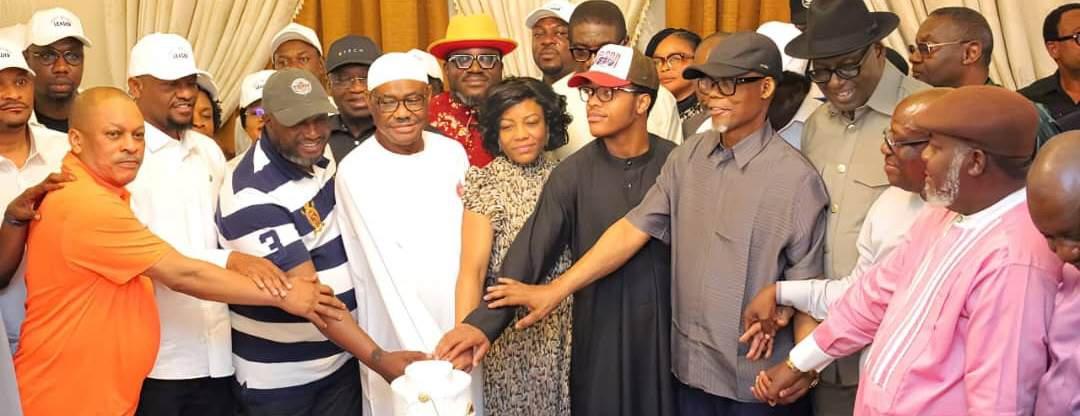
FIFTY-EIGHT HEARTY CHEERS…
L-R: Factional National Secretary, Peoples Democratic Party, Senator Samuel Anyanwu; Speaker of Rivers State House of Assembly, Martins Amaewhule; PDP National Caretaker Committee Chairman, Mohammed Abdulrahman; Minister of the Federal Capital Territory, Mr. Nyesom Wike; his wife, Justice Eberechi Suzzette Wike; his Son, Joaquin; Senator Bari Mpigi; former Deputy Speaker of the House of Representatives, Hon. Chibudom Nwuche; APC National Vice Chairman (South-south), Victor Giadom; and Senator George Sekibo, during Wike’s 58th birthday celebration at his residence in Abuja…yesterday













Falana: Presidential Prerogative of Mercy Cannot Override Judicial Process
Wale Igbintade
Human rights lawyer and Senior Advocate of Nigeria (SAN), Mr. Femi Falana, has asserted that the constitutional power of the president and state governors to grant pardon does not override ongoing judicial proceedings, insisting that executive clemency cannot
lawfully be exercised while a criminal trial or appeal is still pending before the courts.
Falana stated this in a detailed legal commentary titled: ‘Judicial Power to Quash Presidential Pardon’, in which he examined the constitutional limits of the prerogative of mercy and the authority of courts to invalidate pardons granted
in breach of due process.
According to Falana, it is a settled position of Nigerian law that the right of a convict to have an appeal determined by the Court of Appeal or the Supreme Court cannot be truncated or frustrated by any executive action, including the grant of pardon.
He stressed that until
all appeals are finally determined, neither the president nor a governor can validly exercise the power of prerogative of mercy under Sections 175 and 212 of the 1999 Constitution.
The human rights lawyer referenced the recent Supreme Court decision in the Maryam Sanda case,
where the apex court affirmed her conviction and death sentence for culpable homicide, notwithstanding an earlier presidential pardon.
Delivering the judgment in the case, Justice Adumein held that it was wrong for the executive to exercise the power of pardon in respect of a case in
which an appeal was still pending.
Falana said the ruling reinforces the supremacy of the judicial process over executive discretion, contrary to claims by some lawyers that the prerogative of mercy exists independently and can be exercised at any time, regardless of court proceedings.
US, NIGERIA CLOSE TO REACHING STRATEGIC SECURITY AGREEMENT ON TERRORISM, SAYS CONGRESSMAN, MOORE
Ejiofor Alike
A United States congressman, Riley Moore, has stated that the US and Nigeria are close to reaching a strategic security agreement aimed at addressing terrorism and genocide against Christians by those he described as the radical Fulani Muslims in the Middle Belt.
Moore, who disclosed this yesterday night in a post on his X account, noted that recent discussions with the Nigerian authorities had recorded progress on the country’s security challenges.
A US congressional delegation led by Moore had last week concluded a fact-finding mission to Nigeria over allegations of Christian genocide.
new tax laws, describing tax reforms as a fundamental reset of the economy and the country’s social contract.
Oyedele, who explained that the new tax framework, set to commence in January 2026, comes at a critical time, noted that Nigeria narrowly avoided complete economic collapse in 2023.
According to him, the reforms have placed the country on a firmer path to recovery, modernisation, and sustainable growth.
Speaking at a media parley in Lagos, Oyedele emphasised that the reforms represent the most impactful legislation since the landmark pension reforms of the early 2000s.
Input Value Added Tax (VAT) credit is the VAT paid by a business on goods and services used in its operations.
Under the new law,
The team was expected to brief President Donald Trump by the end of this month.
The delegation, comprising five members of Congress, arrived in Nigeria last Sunday and visited internally displaced persons, survivors of terrorist attacks, Christian communities and leaders, as well as traditional rulers, in Benue State.
They also met with the National Security Adviser (NSA), Mallam Nuhu Ribadu, and the Attorney General of the Federation, Mr. Lateef Fagbemi (SAN).
Moore said the delegation travelled across parts of Benue State in armoured vehicles due to security concerns and met Catholic and Protestant leaders, bishops, and
companies can deduct this VAT from the amount they charge customers and remit to the government, thereby reducing their overall tax burden and eliminating multiple taxation along the value chain.
He described the Nigeria Tax Reform Acts as the most critical economic development in Nigeria since the Pension Reform Act signed into law by the former President Olusegun Obasanjo’s government. According to him, “Eminent Nigerians agree on this. Recently, an elder statesman, Stanley Orosanye, and a founder of one of the top three banks in Nigeria, called me expressing their joy that President Bola Ahmed Tinubu had the political will to push the tax reforms through. This is a game changer for Nigeria.”
community heads to gather what he described as “ground truth.”
Moore, last Wednesday, shared the accounts of violence against Christian communities in the state, recounting what he said he was told during a visit to camps for internally displaced persons.
Writing on X, Moore said, while in the Middle Belt state, he met “dozens of Christians who were driven from their homes and subjected to horrific violence and now live in IDP camps.”
According to him, those he spoke with described attacks that left entire families dead and forced survivors to flee their villages.
“They told harrowing stories that will remain with me for the rest of my life,” Moore wrote.
On input VAT, Oyedele explained: “The new law from January next year makes you eligible to claim input credit, almost like receiving money back into your account. From next year, input VAT on assets, overheads, and services can be claimed. Input VAT on inventory, which is currently the only allowable claim, will also continue under the new law. Do you know how much this translates to? It is N3.4 trillion based on 2024 VAT collection. This is what the government is giving back to businesses next year by way of input credit.”
He noted that beyond VAT, the reforms cover corporate taxation, capital gains, and compliance processes, all designed to incentivise investment, encourage formalisation,
He cited the case of one woman who “was forced to watch as they killed her husband and five children. She and her unborn child barely escaped.”
Moore added that another woman told him that her family “was murdered in front of her and her baby was ripped from her womb.”
The US congressman also described the testimony of a man who said “his family was hacked to death in front of his eyes, and his arm was permanently mangled.”
Moore revealed that Trump had tasked him and the Chairman of the House Appropriations Committee, Tom Cole, to compile a comprehensive report on the situation.
In his last night’s post,
and strengthen Nigeria’s fiscal stability.
“These reforms are more than just taxes. They represent a reset of our economy and how we deliver the social contract. For the first time, businesses will see government policy working to reduce their burden, not increase it.
This is about building trust, encouraging growth, and ensuring fairness in the system,” Oyedele said.
“Furthermore, one of the most far-reaching elements of the tax reform package is the reworking of how Value Added Tax applies to everyday necessities. Under the current framework, staples such as bread are exempt from VAT, which means producers do not charge VAT at the point of sale. But the exemption comes with a cost,” he said.
He noted that because
Moore said the proposed framework would focus on combating extremist groups operating in the North-east, including Boko Haram and ISISlinked factions.
He said the talks also covered violence in the Middle Belt region.
Moore described the Middle Belt violence as genocide against Christians by the radical Fulani Muslims.
The federal government has consistently insisted that the country’s security challenges are not driven by religion.
Moore wrote: “We did have positive conversations with the Nigerian government, and I believe we are close to a strategic security framework to address both the ISIS and Boko Haram threat
exempt goods do not qualify for input VAT recovery, bakers absorb VAT on virtually everything required to run their businesses, from flour, sugar, and butter to equipment, fuel, delivery vans, phones, and airtime, and that this structure quietly pushes up prices for consumers.
“The current system says ‘that is your problem to deal with.’ So, bakers add those VAT costs to the price of bread, making it more expensive for consumers.
“That structure will change from January. Bread and other essential items will move from VAT-exempt to zero-rated status. While producers will still charge VAT at 0 per cent, they will now be able to reclaim the full VAT paid on their inputs, a shift designed to lower production costs and ease price pressures.
in the North-east, as well as the genocide against Christians by the radical Fulani Muslims in the Middle Belt.
“The report that I will present to @POTUS outlines paths to work with the Nigerian government to end the slaughter of our brothers and sisters in Christ.”
The congressman did not provide details on when the framework would be finalised or the nature of US involvement.
Trump had in October designated Nigeria a “Country of Particular Concern” over alleged persecution of Christians. The federal government has consistently disputed this claim, insisting that insecurity in the country has no religious dimension.
“Food, education, and healthcare are now zero-rated. Schools from kindergarten to universities will charge 0 per cent VAT and recover VAT on laptops, boards, computers, and other inputs. This will help bring down the cost of education,” Oyedele said. He added: “Not all essential sectors will fall under the zero-rating regime. Transportation and rent will remain VATexempt, largely due to the complexity of administering VAT in those areas. Together, however, they form part of the five core expenses that dominate household spending: food, housing, transport, healthcare, and education. There is no luxury in those five items. It does not make sense for a country to be taxing people on the things they need to survive.”
After Meeting With Obasanjo, Other PDP Leaders, Turaki Says Sacking APC Possible
Chuks Okocha in Abuja and James Sowole
The National Chairman of the Peoples Democratic Party (PDP), Dr. Kabiru Turaki (SAN), has stated that the task of sacking the ruling All Progressives Congress (APC), from Aso Rock in 2027 is possible due to the incompetence of the ruling party, adding, however, that it won’t be a tea party.
Addressing journalists yesterday after a 40-minute closed-door meeting of PDP leaders with former President
Olusegun Obasanjo at his Olusegun Obasanjo Presidential Library (OOPL), Abeokuta, Turaki stated that the frank discussion between the opposition party leaders and the former president has further inspired them that the task ahead is not impossible.
Turaki led the party's newly elected National Working Committee (NWC) on a visit to Obasanjo to secure his critical support and guidance ahead of the party's task.
He described Obasanjo as a highly experienced
Shettima: Tinubu’s Administration Will Remodel NIPSS into Digitally Driven, Global Centre of Excellence
Deji Elumoye in Abuja
Vice President Kashim
Shettima yesterday reaffirmed the resolve of the government of President Bola Tinubu to remodel the National Institute for Policy and Strategic Studies (NIPSS) into a globally recognised centre of excellence that is digitally driven and financially stable by 2030.
According to him, apart from serving as the most strategic platform for developing thinkers, reformers, and innovators in Nigeria, the institute's Senior Executive Course represents a deliberate investment in the nation’s future leadership as well as a meeting point for ideas that define policy, guide reform, and influence
the course of national development.
Shettima spoke while representing President Tinubu at the Graduation Ceremony of Senior Executive Course 47 of NIPSS in Kuru, Plateau State.
He said: "President Bola Tinubu, has been unequivocal in his commitment to supporting NIPSS in its transformation agenda, particularly its ambition to become a digitally driven, financially stable, and globally recognised centre of excellence by 2030.
"We recognise the Institute’s critical role in shaping national policy and in building the leadership capacity required to navigate an increasingly complex world".
elder statesman and former president under the PDP administration, whose legacy of building strong institutions has significantly strengthened democratic development in the country.
Explaining the purpose of the visit, Turaki said the opposition party's
new leadership thought it wise to visit Obasanjo to draw on his wealth of wisdom and seek his blessings and support for the success of the party's new leaders.
In the entourage of the new PDP leadership were the Chairman of the party’s Board of
Trustees (BoT) and former Senate President, Senator Adolphus Wabara; the National Secretary and former Deputy Governor of Oyo State, Alhaji Taofeek Arapaja; two former governors of Niger and Plateau States, Dr. Muazu Babangida Aliyu; and Senator Jonah Jang,
respectively.
“As the newly elected PDP leadership during our recent congress at Ibadan, we came to introduce ourselves to our father, the former president under the PDP administration, Chief Olusegun Obasanjo,” Turaki said.
Journey for APC to Reclaim Osun Has Begun, Tinubu Declares
Hails Oyebamiji’s emergence as party’s governorship candidate
Deji Elumoye in Abuja and Yinka Kolawole in Osogbo
President Bola Tinubu yesterday declared that with the emergence of the past Managing Director of the National Inland Waterways Authority (NIWA), Mr. Bola Oyebamiji, as the candidate of the All Progressives Congress (APC) for the August 8, 2026 governorship election in Osun State, the journey to reclaim the state for the progressive fold has begun.
Oyebamiji was yesterday announced as the APC candidate after seven other
In Goodwill
aspirants adopted him as a consensus candidate during the party’s primary in Osogbo.
One of the aspirants, Mr. Kunle Rasheed, a Senior Advocate of Nigeria (SAN), moved the motion for the adoption of Oyebamiji as a consensus candidate, which was seconded by another aspirant, Senator Babajide Omoworare.
The Chairman of the Electoral Committee for the congress, Governor Monday Okpebholo of Edo State, thereafter put the ratification of Oyebamiji to a voice vote, and the
1,660 delegates from the 30 local government areas in the state answered in the affirmative.
“By the power vested in me, I declare Oyebamiji as the APC candidate for the August 8, 2026, governorship election in Osun,” he said.
Okpebholo, in his remarks, thanked the other aspirants for stepping down, commending them for sacrificing their personal ambitions for the interest of the state.
He said APC victory in 2026 could only be achieved through unity,
and urged other aspirants to work with Oyebamiji for the victory of the party in the election.
Okpebholo, who noted that he had never lost any election, said that as the chairman of the electoral committee, the APC would win in the state.
He urged the electorate to support a candidate who would bring development to the state, saying, “We are tired of dancing”.
In his acceptance speech, Oyebamiji thanked all the other aspirants for foregoing their ambitions and giving him their support.
Message to Tiv, Atiku Says Impunity is Threatening Nigeria's Survival, Not Diversity
Chuks Okocha in Abuja
Former Vice President Atiku Abubakar has stressed that the threat to Nigeria is impunity, not diversity.
Atiku, who is also the Zege Mule U Tiv, made the observation in a goodwill message to
the Tiv on the occasion of the Tiv Cultural Day 2025.
Speaking against the backdrop of incessant attacks and killings in the region, Atiku noted that criminal elements must never be allowed to define relations between
communities that have shared centuries of neighbourliness and mutual respect, adding, "Our diversity is not a threat; impunity is."
He restated his condemnation of these atrocities and called for decisive and sustained action to restore security
to the region and rebuild trust. The former vice president extended the warmest facilitations to the Tiv Nation on the occasion of the Tiv Day 2025, urging them to continue their commitment to unity, peace, and resilience.
in Abeokuta
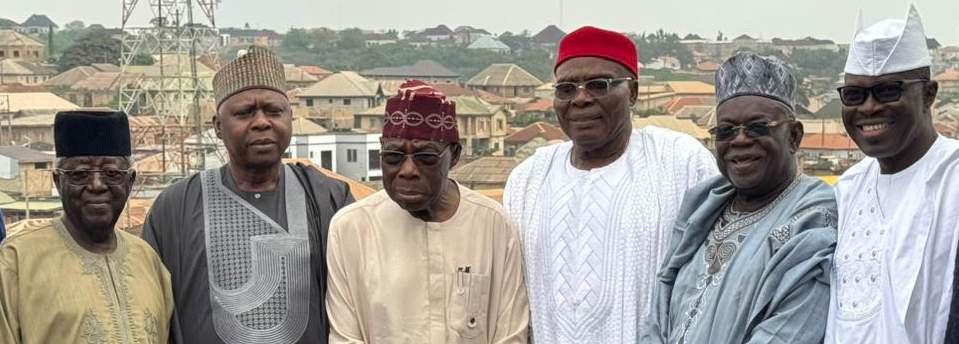
L-R: Former Governor of Plateau State, Senator Jonah Jang; National Chairman of Peoples Democratic Party, Tanimu Kabiru Turaki (SAN); former President Olusegun Obasanjo; Chairman of Board of Trustees of PDP, Senator Adolphus Wabara; former governor of Niger State, Dr. Babangida Aliyu; and PDP National Secretary, Taofeek Arapaja, during a visit of the PDP leaders to the former president in Abeokuta…yesterday

I SHARE IN YOUR GRIEF…
Saraki: Nigeria’s Reforms Will Collapse Under Public Pressure Unless They Improve Living Conditions, Create Jobs
Wale Igbintade
Former President of the Senate, Dr. Bukola Saraki, has warned that Nigeria’s recent economic reforms will collapse under public pressure unless they translate into concrete improvements in living conditions.
Saraki insisted that adjustment without visible social benefits is neither sustainable nor acceptable.
He spoke at the launch of the Ignite Nigeria Economic Outlook 2026 Report, themed “Nigeria’s Economic Outlook 2026: From Adjustment to Advantage,” where he said the country has reached a critical turning point after years of difficult but necessary economic restructuring.
He noted that reforms such as removing fuel subsidies, unifying the
foreign exchange rate, tightening monetary policy to curb inflation, and early efforts to restore fiscal credibility have tested public trust and social resilience.
However, he said they have also laid the foundation for a more transparent and competitive economy.
“The question before us is not whether reform was necessary—it was inevitable. The real question is whether
Nigeria can now translate reform into inclusive growth,” Saraki said.
He stressed that economic success cannot be measured solely by macroeconomic indicators, warning that reforms would not endure unless Nigerians begin to feel tangible improvements in their daily lives.
According to him, the actual test of reform lies in creating jobs,
Tijani: Bandits Use Special Technology to Make Phone Calls, Evade Tracking, Monitoring Calls Very Technical
Chuks Okocha in Abuja
The Minister of Communications, Innovation and Digital Economy, Mr. Bosun Tijani, has said bandits use “a special kind of technology” to make calls and evade surveillance.
The minister, in a television interview over the weekend, explained
Dele Alake:
the steps the federal government has taken to tackle insecurity through the telecommunications sector.
He said the monitoring of bandits’ calls for intelligence purposes is “more technical” than Nigerians assume.
The telecom sector has been under scrutiny since 2020, when the government introduced the mandatory
National Identification Number (SIM) linkage to curb fraud, anonymous communication, and crimes facilitated through unregistered lines.
However, Tijani revealed that some criminal networks had shifted tactics, relying on technologies that allow them to route calls across multiple towers, a method that becomes particularly
effective in remote or poorly connected locations.
Tijani, who acknowledged public worry over cases of kidnapping and ransom negotiations allegedly conducted through unregistered SIMs, said the criminals bounced calls off multiple towers to throw off security agents tracking their communication.
Mining Sector Digitisation Triggers Revenue Increase, Efficiency, Global Recognition
The Minister of Solid Minerals Development, Dele Alake, has attributed the sector's significant strides to digital reforms introduced by the President Bola Ahmed Tinubu-led administration over the last two and a half years. He made this declaration in Abuja while inaugurating the
OneGov Enterprise Content Management System (ECMS) at the Mining Cadastre Office (MCO) – a critical agency under his Ministry.
Alake, who was elated by the breakthrough recorded by MCO, said that digital reforms are now powering the sector's “unprecedented revenue, transparency, operational efficiency,” as well as global recognition.
Describing the launch as “a monumental step that reflects the new colours of success, progress, and efficiency in Nigeria’s solid minerals sector.”
The minister explained that the achievement underscores the decisive shift his administration has driven since assuming office.
“What the MCO
has achieved today is symptomatic of the entire sector. We have made strident strides across every part of the solid minerals’ ecosystem,” he stated.
Disclosing that government revenue from the sector had risen sharply due to digitisation, strict policy enforcement, and improved licensing processes.
stabilising prices, protecting incomes, and expanding opportunities.
“Nigerians must see reforms reflected in more affordable food, reliable energy, better transport, functional schools and hospitals, and dignified work for our youth,” he said, adding that adjustment without improvement in living conditions cannot be sustained.
Referencing projections in the outlook report, Saraki said Nigeria’s economy is expected to grow between 3.5 per cent and 4.2 per cent in 2026, driven mainly by non-oil sectors such as services, agriculture,
telecommunications, trade, and a gradual recovery in manufacturing.
While inflation has remained elevated in the short term, he noted that the report projects it to moderate to the mid-teens by 2026, subject to sustained monetary discipline, improved food supply chains, and exchangerate stability.
He said reforms in the foreign exchange market have improved transparency and liquidity, with the naira expected to experience greater stability rather than artificial strength, supported by remittances, autonomous inflows, and enhanced oil and gas receipts.
Global Body Honours Ezekwesili with Anti-corruption Excellence Award
Wale Igbintade
A former Nigerian Minister of Education and prominent anti-corruption advocate, Dr. Obiageli Ezekwesili, has been honoured as a joint winner of the International Anti-Corruption Excellence Award 2025 in the Lifetime/ Outstanding Achievement category.
The award ceremony took place on December 14, 2025.
According to the organisers, Ezekwesili emerged successful following a rigorous and independent evaluation conducted by the Assessment Advisory Board and the High-Level Award Committee.
Her selection, they said, was in recognition of her
enduring commitment to integrity, accountability, and the global fight against corruption.
The notification was conveyed by the Secretariat of the International AntiCorruption Excellence Award on behalf of the Chairman of the High-Level Award Committee, Dr. Ali Bin Fetais Al Marri, who is also the United Nations Special Advocate for the Prevention of Corruption. Ezekwesili, a former Vice President of the World Bank for Africa and co-founder of the global anti-corruption organisation Transparency International, is widely recognised for her advocacy on good governance, public accountability, and institutional reform in Nigeria and internationally.
Folalumi Alaran in Abuja
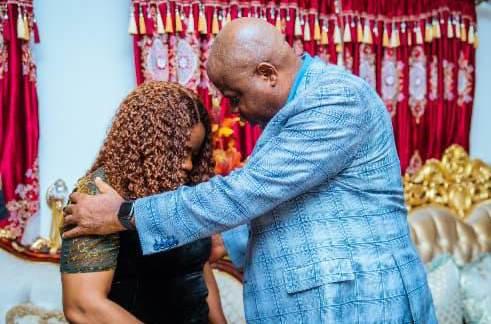
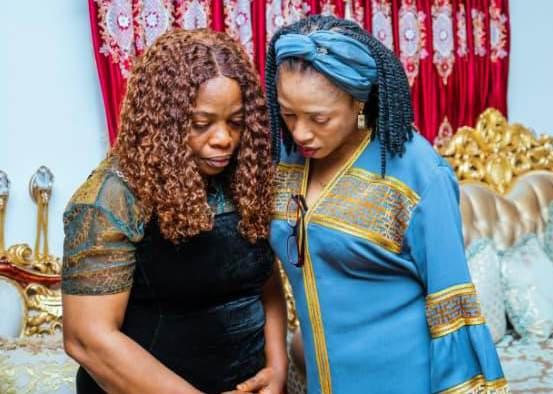
Wife of the late Bayelsa State Deputy Governor, Mrs. Beatrice Ewhrudjakpo (left), and Governor Douye Diri during the latter’s visit to the late Senator Lawrence Ewhrudjakpo’s family in Government House, Yenagoa… Friday
Wife of the late Bayelsa State Deputy Governor, Mrs. Beatrice Ewhrudjakpo (left), and wife of the governor, Dr. Gloria Diri, during Governor Douye Diri’s visit to the late Senator Lawrence Ewhrudjakpo’s family in Government House, Yenagoa…Friday

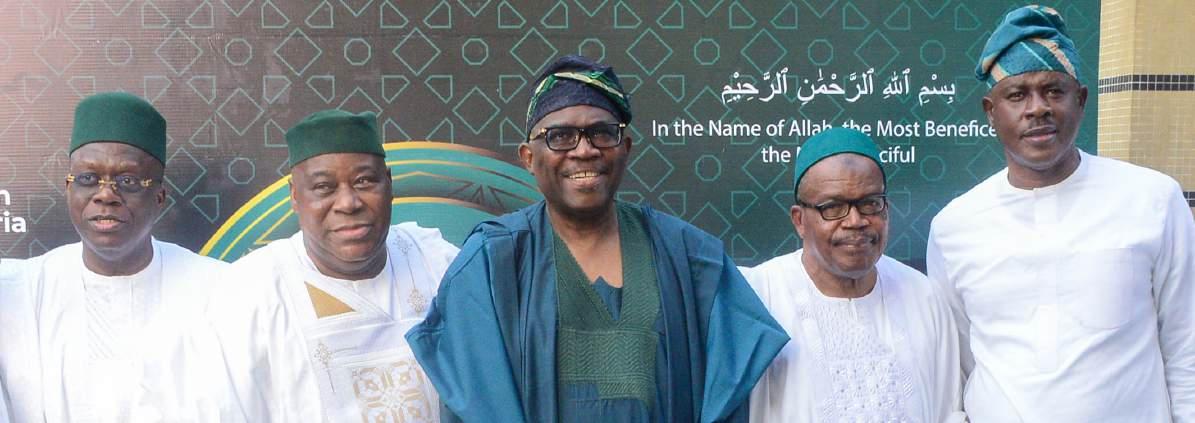
President, Ansar-Ud-Deen Society of Nigeria, Prince Mosediq Adeniji Kazeem (SAN); Deputy President, Dr. Ibrahim Adebayo Yusuf; Chairman, Board of Trustees, Ansar-Ud-Deen Foundation, Alhaji Abdulfatai Kekere-Ekun; Pro-Chancellor/Chairman, Governing Council, Summit University, Offa, Alhaji Rafiu Adisa Ebiti, and Senator Musiliu Obanikoro, during the inauguration of the Ansar-Ud-Deen Foundation Board of Trustees at the Muson Centre, Onikan, Lagos...yesterday
At ECOWAS
Session, W’African
Ministers Express Concern over Spread of Violent Extremism, Unconstitutional Changes of Govt
Michael Olugbode in Abuja
The 95th Ordinary Session of the Economic Community of West African States Council of Ministers ended at the weekend with the ministers expressing worries over the spread of violent extremism in the Sahel, the circulation of small arms, transnational organised crime, maritime insecurity in the Gulf of Guinea, and the continued occurrence of unconstitutional changes of government.
The meeting, held from December 10 to 12 in Abuja, was chaired by Sierra Leone’s Minister of Foreign Affairs and International Cooperation, Timothy Kabba. It examined key challenges confronting West Africa.
In his closing remarks, Kabba said the deliberations also examined political developments in several member-states and their implications for democratic governance, adding that Sierra Leone supported ECOWAS’s position
Jonathan, Diri Mourn Bayelsa Deputy Governor, Ewhrudjakpo
He was a friend, not my subordinate, says gov
Former President, Dr. Goodluck Jonathan and Bayelsa State Governor, Senator Douye Diri, have expressed shock over the death of the Deputy Governor of Bayelsa, Senator Lawrence Ewhrudjakpo.
Jonathan described Ewhrudjakpo as a devoted public servant, a true patriot, and a loyal steward of Bayelsa and Nigeria.
Jonathan said this in a statement by his Special Adviser on Media, Ikechukwu Eze, in Abuja yesterday.
The former president noted that throughout the late deputy governor’s years in public service, he served the people of Bayelsa with unwavering passion and earned widespread admiration.
He recalled Ewhrudjakpo’s hard work, commitment, and lifelong pursuit of knowledge, highlighting the distinction he brought to every office he held.
On his part, Governor Diri described his late deputy as a friend with whom he had an outstanding relationship and was never seen or treated as a subordinate.
A statement by his Chief Press Secretary (CPS), Mr. Daniel Alabrah, quoted Senator Diri as stating this on Friday night when he led a delegation comprising state legislators and top government officials on a visit to Mrs. Beatrice Ewhrudjakpo and his late deputy’s family at the official residence in Government House, Yenagoa.
that constitutional order, democracy, and the rule of law should remain central to the bloc’s agenda.
“During our discussions, we confronted with precision the key issues shaping our region’s trajectory. Among other issues, we examined the ongoing security threats that jeopardise
stability in parts of our area, including violent extremism in the Sahel, the spread of small arms, transnational organised crime, maritime insecurity in the Gulf of Guinea, unconstitutional regime changes, economic integration, and climate change.
“These threats,
though challenging, are not impossible to overcome. Our discussions confirmed that ECOWAS's strength lies in our unity, solidarity, and ability to deploy both diplomatic and operational measures to safeguard and advance our shared peace and security framework.
“We also reflected
deeply on the political situations in some member states and their impacts on democratic governance in the region. Sierra Leone remains fully committed to ECOWAS’s goal of a region where democracy, constitutional order, and the rule of law are nonnegotiable principles,” he said.
Osunbor: Nigeria Drifting Toward Lawlessness, Fubara’s Suspension a Serious Constitutional Violation
Wale Igbintade
A former Governor of Edo State and immediate past Chairman of the Nigerian Law Reform Commission, Senator Oserheimen Osunbor, has accused the three arms of government of collectively undermining the rule of law and pushing Nigeria toward a state of institutional breakdown.
He criticised the
suspension of Governor Siminalayi Fubara of Rivers State, calling it unconstitutional and wrongly endorsed by the National Assembly.
Osunbor delivered the remarks during the keynote address at the 90th birthday colloquium in honour of veteran lawyer Oladipo Jimilehin at the Nigerian Institute of International Affairs (NIIA), Victoria Island, Lagos.
The event, themed: ‘The Rule of Law in Contemporary Nigeria: An In-Depth Analysis,’ brought together jurists, scholars, and legal practitioners to interrogate the nation’s constitutional challenges.
In a hard-hitting address, the former law professor lamented that although the rule of law has historically been a central principle in Nigeria’s governance frameworks, the country has now reached a disturbing point “where the law exists only on paper.”
According to him, the leadership of the three arms of government has not demonstrated fidelity to the concept in recent years.
Nigerian Governors: How 36 States Grew Health Sector Budget by 30% to N2.36tn in 2025
Chuks Okocha in Abuja
The Chairman of the Nigeria Governors Forum (NGF) and Kwara State Governor, Abdulrahman AbdulRazaaq, has explained how the 36 governors in the country moved the health sector financing to N2.36 trillion, representing 30 percent of their budgets.
The chairman of the
governors’ forum spoke at the annual Primary Health Care (PHC) Leadership event held on Friday night in Abuja.
Represented by the Governor of Nasarawa State, Abdullahi Sule, the Kwara State governor said the 36 states increased health sector budgets from N831 billion in 2022 to N927 billion in 2023, N1.4 trillion in 2024, and N2.36
trillion in 2025, representing a 30 per cent increase.
According to him, these states allocated their annual budgets to Primary Health Care and have also begun to see reductions in institutional maternal mortality, reflecting the impact of these investments.
Additionally, the Nigeria Governors’ Forum has introduced a series of scorecards to track State
commitments and promote accountability across key health initiatives.
''I am also pleased to announce that an expanded scorecard to track subnational commitments to the Health Sector Renewal Compact will be released in 2026, to enable us—as Governors—to monitor and uphold the commitments we have made transparently.
L-R:


PROMOTING WOMEN AFFAIRS…
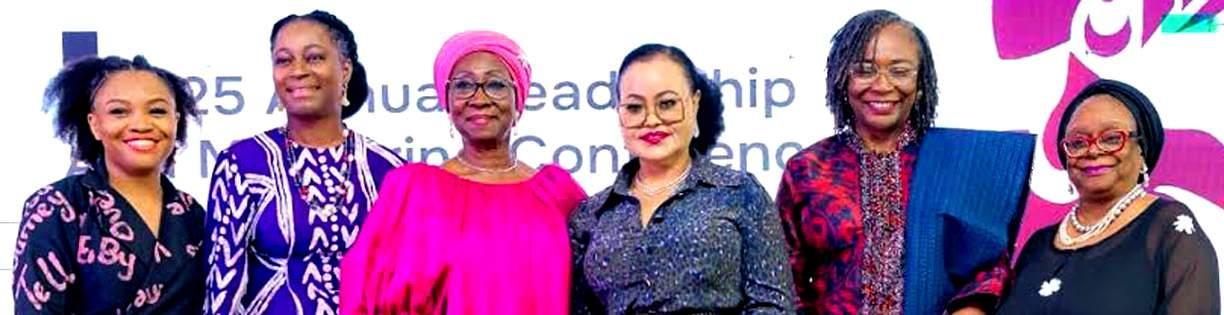
L-R: Executive Secretary, Women in Successful Careers, Ekemini Akpakpan; Founder and Managing Partner, Arcadia Advisory Africa and Member of Advisory Board, WISCAR, Folake Ani-Mumuney; Founder and Chairperson, WISCAR, Amina Oyagbola; Representative of the Governor of Lagos State and Secretary to the Lagos State Government, Mrs. Bimbola SaluHundeyin; Vice-Chancellor, University of Lagos and 2025 Distinguished WISCAR Awardee, Prof. Folashade Tolulope Ogunsola; and Founder/Principal Consultant, Toki Mabogunje and Member of Advisory Board, WISCAR, Toki Mabogunje, at the annual leadership and mentoring conference in Lagos…recently
ADC Commences Membership Registration, Sets Dates for Congresses and National Convention
Chuks Okocha in Abuja
The African Democratic Congress (ADC) has announced the commencement of a 90-day nationwide Membership Mobilisation, Revalidation, and Registration (MMRR) exercise.
government levels.
The party also approved provisional dates for its congresses and the election of delegates at the polling unit, ward, and local
According to circulars issued by the National Secretary, Ogbeni Rauf Aregbesola, the congresses are scheduled to hold between January 20 and 27, 2026, and will culminate in a
Non-Elective National Convention slated for February 2026 in Abuja.
In a statement released yesterday by the National Publicity Secretary, Mallam Bolaji Abdullahi, the party said the decisions followed the
Emir Sanusi Hosts Christian Leaders in Kano, Preaches Peace, Unity, Religious Harmony
Ahmad Sorondinki in Kano.
The Emir of Kano, Muhammadu Sanusi II, has reaffirmed his dedication to promoting security, peace, and unity among different religions in Kano State and across Nigeria.
The Emir spoke when he received in audience the Executive members and Elders of the Kano
revoked the bail.
EFCC’s clarification followed the African Democratic Congress (ADC)’s insistence, yesterday, that the revocation of the bail initially granted the former minister by the commission was partisan politics, not law enforcement.
The anti-graft commission, in a statement issued yesterday by its Head of Media and Publicity, Mr. Dele Oyewale, disclosed that the ex-minister had yet to meet the bail conditions imposed on him and advised Malami to
State Chapter of the Pentecostal Fellowship of Nigeria (PFN) who paid him a courtesy call in his palace.
The Emir, who informed the clerics that he attended a Catholic School as a young man, thanked God for the existing peace in the state, while urging the visiting religious leaders to continue to pray for peace in the state and in the country as a whole.
channel his energy toward meeting them, rather than claiming he is being held for political reasons.
"The commission wishes to advise Malami to expend his energy on meeting the five bail conditions he acknowledged and signed on November 28, 2025,” the statement said.
According to the EFCC, “administrative bail is a discretionary temporary reprieve that allows a suspect to be released on stated conditions, pending conclusion of investigation and arraignment in court.
To this effect, after his brief interrogation on
He particularly enjoined them to offer more prayers for the state in the light of the troubling cases of insecurity affecting some border communities.
Sanusi expressed delight at the peace award conferred on him by the religious body and assured them of his continued attention to their affairs in the state.
Earlier in his remarks, the Kano State Chairman
of the Pentecostal Fellowship of Nigeria (PFN), Elkanah Enweluzor explained that the purpose of their visit was to identify with the monarch’s efforts towards the sustenance of peace in the state.
“We cannot but admit that your fatherly posture, at all times, has been highly supportive of the peace we all enjoy in the state,” he said.
resolutions of the meeting of the National Working Committee (NWC) held on November 27,
2025, and are in strict compliance with the relevant provisions of the party’s constitution.
NLC to Hold Nationwide Protest over Insecurity December 17
The Nigeria Labour Congress (NLC) has said its planned nationwide protest on December 17 aims to draw attention to Nigeria’s worsening insecurity and compel urgent action from stakeholders.
NLC President, Mr. Joe Ajaero, stated this in Gombe yesterday while speaking with journalists after meeting Governor Inuwa Yahaya on labourrelated issues.
Ajaero said the protest would demand decisive government action against insecurity, stressing that the situation now affects every Nigerian, regardless
of status or occupation.
He said banditry and violent crimes were alien to Nigeria’s culture and must be collectively condemned to reverse what he described as a dangerous national narrative.
According to him, insecurity is damaging the economy and weakening Nigeria’s ability to attract local and foreign investors.
“Our planned protest is to call attention to the impact of insecurity on investors and workers, who are kidnapped daily and sometimes killed,” Ajaero said.
CONDITIONS GRANTED HIM ON NOVEMBER 28
November 28, 2025, Malami was offered provisional bail hinged on five requirements. He has neither met any of the requirements nor shown readiness to keep faith with them", the statement added.
According to the commission, Malami was supposed to return to the agency for further interrogation on December 1, 2025. Still, in what the EFCC described as a curious twist, the former minister was said to have pleaded with his investigators through a letter dated December 4, 2025, seeking permission
to attend to his “ill-health”.
Oyewale noted that the EFCC compassionately granted this plea even while his bail conditions had not been met.
"He was initially required to commence reporting for further investigations on December 1, 2025, but this had to be deferred to December 4, 2025, mainly owing to his request for an adjournment on grounds of ill-health. He neither provided a medical report nor any credible proof of ill health to the commission.
"The EFCC cannot allow the latitude granted the
former minister on his health to stand in the way of investigations. On this score, he was invited again on December 8, 2025, for further interrogation and detained until the pending bail conditions are met.
"Evidently, the former minister’s claims of revocation of bail by the EFCC are untenable. It is equally ridiculous to insinuate that the commission barred him from granting media interviews and from participating in political activities in Kebbi State. Such bogus claims from a former chief law officer of the nation are strange, as
the EFCC has no interest in the political affiliation of its suspects.
"It bears reiterating that the commission is apolitical. A former governor and ranking member of the ruling party was recently arraigned for alleged contract fraud,” the statement said.
Revocation of Malami’s Bail Politics, Not Law Enforcement, ADC Insists Meanwhile, the ADC has described the EFCC's revocation of the bail initially granted to the former minister as partisan politics, not law enforcement.
EFCC: MALAMI DIDN’T MEET FIVE BAIL
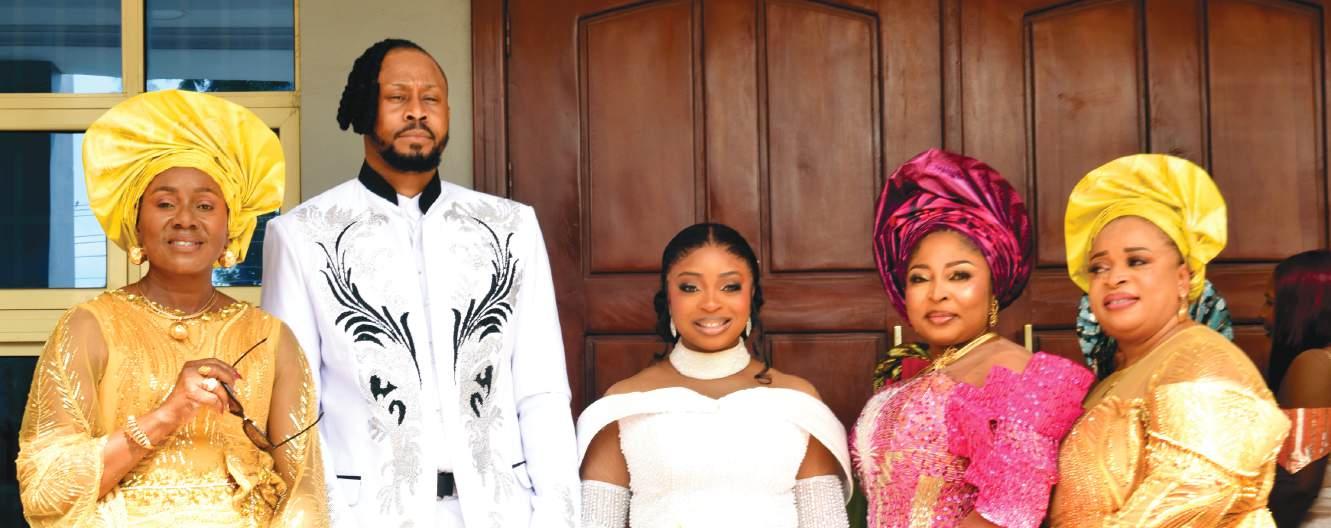
CONGRATULATIONS…
L-R:
Etok, at the wedding of the couple at Holy family Catholic Church, Festac Town, Lagos…recently.
Tinubu, Fubara Hail Wike at 58, President Lauds FCT Transformation
Olawale Ajimotokan in Abuja
President Bola Tinubu and the Rivers State Governor, Mr. Siminalayi Fubara, have congratulated the Minister of the Federal Capital Territory (FCT), Mr. Nyesom Wike, on the occasion of his 58th birthday, describing him as an audacious and results-driven public servant whose performance has stood out in his administration.
This comes as the FCT minister reiterated that he is unmoved by criticism and abuse for his support of President Tinubu.
In a statement issued yesterday by his Special Adviser on Information and Strategy, Bayo Onanuga, the president celebrated the former Rivers State governor for a life marked by purpose, service, and courage, while thanking God for his contributions to national development.
President Tinubu praised Wike as a top performer who consistently defies obstacles and delivers tangible results, particularly in the ongoing transformation of the Federal Capital Territory (FCT) through aggressive infrastructure expansion.
The president highlighted the minister’s recent intervention, which broke a 14-year deadlock on the construction of the Apo–Karshi Road, describing it as emblematic of Wike’s problem-solving approach to governance.
Commending the minister’s resilience and “can-do” attitude, Tinubu noted that Wike’s commitment to excellence has translated into visible improvements across the FCT, reinforcing public confidence in the delivery of critical infrastructure.
“Nyesom Wike has been
Dozzy Group Denies Settlement With Ibeto, Insists US$3m Debt, Land Dispute Remain Unresolved
The founder and Group Managing Director of Dozzy Group, Chief Daniel Chukwudozie, has dismissed claims of an out-of-court settlement with Chief Cletus Ibeto and his group of companies over an alleged N4.8 billion fraud, insisting that the dispute remains unresolved with an outstanding debt of US$3 million. In a press statement issued by the media office of Dozzy Oil & Gas Limited, the company
described reports suggesting that all issues between the parties had been settled as false and misleading, accusing Chief Ibeto of orchestrating a misinformation campaign aimed at deceiving the public and the media.
According to the statement, financial records verified by the Economic and Financial Crimes Commission (EFCC) showed that Chief Ibeto and his companies received a total of N3.295 billion and US$6 million in two instalments in 2015.
VACANCY
one of the shining stars in the cabinet, an exceptional performer, developing infrastructure in the Federal Capital as never seen before and proving that his moniker as ‘Mr Project’ is not limited to his home state of Rivers,” the President said.
On his part, Fubara has described Wike as a leader whose commitment to public service has continued to yield visible results.
Fubara, in a goodwill message he personally signed in Port Harcourt, said the state is proud of the former governor of Rivers State for the infrastructure development in Abuja during his tenure as FCT minister.
The governor said the celebration is significant, coming at a time when Wike’s leadership in the FCT has continued to attract national attention for its infrastructural impact.
He noted that Wike’s sterling qualities have translated into unprecedented contributions to FCT’s development, particularly through the expansion of public infrastructure and improved service delivery.
He said, “We are proud of you. You have continued to deliver enduring infrastructure development in Abuja, reinforcing your reputation as a public servant committed to results
and the advancement of the Nigerian capital city. Meanwhile, the FCT minister has reiterated that he is unmoved by criticism and abuse for his support for President Tinubu.
Wike stated this yesterday in Abuja at a special event organised to mark his 58th birthday, which was attended by prominent individuals from different political cross-sections.
NiMet Predicts Three-day Sunshine, Haziness from Today
The Nigerian Meteorological Agency (NiMet) has predicted sunny and hazy weather conditions from Sunday to Tuesday across the country.
NiMet’s weather outlook released yesterday in Abuja envisaged a sunny and hazy atmosphere over the northern region during the forecast period.
According to NiMet, a slight dust haze is expected over the central region throughout the forecast period.
The agency anticipated a cloudy
atmosphere with some hours of sunshine over the southern region during the morning period.
NiMet forecast isolated thunderstorms over parts of Rivers, Bayelsa, Cross River, Lagos, and Akwa Ibom states in the southern later in the day.
”On Monday, a moderate dust haze atmosphere is anticipated over the northern region throughout the forecast period. Slight dust haze is expected over the central region during the forecast period.
”Cloudy atmosphere with a few
hours of sunshine is anticipated over the southern region with prospects of isolated thunderstorms over parts of Bayelsa, Akwa Ibom, Cross River, and Rivers States during the morning hours,” it said.
The agency predicted a cloudy atmosphere later in the day with intervals of sunshine over the southern region.
According to the agency, moderate dust haze is anticipated over the northern region throughout the forecast period on Tuesday.
It envisaged a sunny and hazy
atmosphere over the central region throughout the forecast period. It also forecast a cloudy atmosphere over the southern region during the morning hours. The agency predicted isolated thunderstorms with light rains over parts of Anambra, Imo, Ogun, Ondo, Bayelsa, Akwa Ibom, Cross River, Lagos, Delta, and Rivers States.
NiMet urged the public to take necessary precautions as dust particles could be in suspension over the northern region.
Ooni, Obalufe Hail Fani-Kayode’s Senate Screening, Laud Ambassadorial Appointment
The Ooni of Ife, His Imperial Majesty, Adeyeye Enitan Ogunwusi, Ojaja II, and Obalufe of Ile-Ife, HRM Oba Idowu Olaniyi Adediwura, have expressed delight over the successful screening of Chief Femi Fani-Kayode by the Nigerian Senate, describing the development as a source of pride for the people of Ifeland and Osun State.
The Ooni’s message, delivered through his representative, Dr. Kemade Elugbaju, Sooko Omoniyi, highlighted Chief Fani-Kayode’s distinguished heritage and record
of national service.
“The Ooni, the good people of Ifeland, and the generality of Osun State indigenes are delighted by this honour done to one of our sons,” the statement said.
Chief Fani-Kayode, a lawyer and former Minister of Aviation, holds several traditional titles, including Aare Ajagunla of Otun Ekiti, Sadaukin Shinkafi, Wakilin Doka Potiskum, and Otunba Joga Orile.
The Ooni commended FaniKayode’s commitment to public service, particularly his efforts
to appoint qualified indigenes of Osun State to key positions during his tenure as Minister of Aviation.
“Kabiyesi is confident that Chief Femi Fani-Kayode will do even more in his new role as Ambassador of the Federal Republic of Nigeria,” the statement added.
Also, another prominent traditional authority in Ile-Ife, the Obalufe of Ile-Ife, HRM ObaAdediwura, congratulated Fani-Kayode on his appointment as Nigeria’s Ambassador, describing it as both a recognition of experience and a call to serve the nation with
honour and responsibility.
In a congratulatory message issued on behalf of the ancient city of Ile-Ife, the Obalufe said the appointment reflected national confidence in Fani-Kayode’s visibility and sustained engagement in national and international affairs. Describing Ile-Ife as the cradle of the Yoruba race and a historic source of leadership, culture, and identity, the Obalufe noted that the city takes pride whenever one of its sons is called to represent Nigeria beyond its borders.is called to represent Nigeria beyond its borders.
President Moves to Review University Staff Pay, Condition of Service
President Bola Tinubu has said his administration will begin reviewing the conditions of service and remuneration of university staff nationwide to align their pay and welfare with prevailing economic realities and improve the quality of teaching, research, and learning in Nigeria’s tertiary institutions.
Tinubu, speaking at the 49th Convocation Ceremony of Obafemi Awolowo University,
Ile-Ife, Osun State, reaffirmed his administration’s commitment to dialogue as the key to achieving lasting industrial peace in Nigeria’s tertiary institutions.
Tinubu, represented by a former Vice Chancellor of Ahmadu Bello University, Professor Kabir Bala, emphasised the need for mutual respect and collaboration between the government and university staff.
He admonished university staff
to dialogue with the government to resolve differences, saying “doing so would ensure universities can remain open, stable, conducive and productive.”
According to the president, “Government remains committed to dialogue as the surest path to lasting industrial peace in our tertiary institutions.
“The federal government is, therefore, intensifying efforts to review the conditions of
service and remuneration of university staff to reflect the realities of the present-day economy. In collaboration with relevant staff unions within the university system and the National Salaries, Incomes and Wages Commission, we are already developing a sustainable framework that rewards dedication, innovation, and productivity while also ensuring fiscal responsibility.
Wale Igbintade
Vice President, Clarion Shipping West Africa Limited, Lady Benedine Eloka; the couple, Mr. and Mrs. Chinedu Iwuagwu; Mother of the bride and Chief Executive Officer, Kens Enterprises Nigeria Limited, Lady Nneka Egbe; and an oil sector management Specialist, Lady Tessy

Editor: Festus Akanbi
08038588469 Email:festus.akanbi@thisdaylive.com
Lagos Frets over Planned Reactivation of Other Ports
Nigeria’s ongoing battle for port efficiency has taken a new turn following Governor babajide Sanwo-Olu’s sharp remarks on the state of the nation’s maritime gateways. His comments have reignited scrutiny of how Lagos and other ports measure up in terms of capacity, competitiveness, and national relevance, writes Festus Akanbi
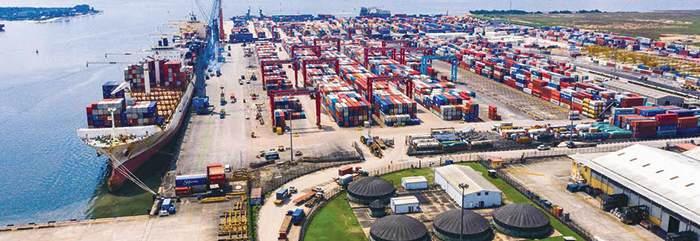
The renewed debate over the future of Nigeria’s maritime gateways erupted last week after the League of maritime editors (LOme) publicly criticised Lagos State Governor babajide Sanwo-Olu for comments interpreted as unease over the reactivation of ports in Warri, Onne, and calabar. What should have passed as a routine sectoral remark has snowballed into a national conversation, touching on economic geography, political sensitivities, inter-agency reforms, and the broader struggle to modernise Nigeria’s logistics backbone.
For decades, the Apapa and Tin can Island ports have functioned as the country’s dominant trade arteries. Their rise dates back to colonial-era planning and post-independence investments that cemented Lagos as Nigeria’s industrial and commercial nerve centre.
These historical advantages created a gravitational pull, drawing shipping lines, freight forwarders, manufacturers, bonded terminals, and a broad ecosystem of businesses to Lagos. Today, the city handles between 70 and 80 per cent of national imports, a dominance that has become both an economic strength and a structural liability.
Structural Liability
That liability is seen most clearly in the dramatic congestion that has defined Lagos ports for more than a decade. endless queues of trucks, dilapidated access roads, chaotic traffic flows, and extortion by non-state actors have long frustrated shippers. even with reforms introduced by the Nigerian Ports Authority (NPA) and its technology partner, Trucks Transit Parks (TTP), the corridor is still recovering from years of inefficiency. Billions have been spent, electronic call-up systems have been deployed, and traffic management frameworks have been strengthened. Yet Lagos continues to handle more cargo than its infrastructure was built to handle.
Reducing Logistics Costs
This context explains why the federal government has intensified efforts to revive neglected ports outside Lagos. The Warri, Onne, and calabar ports, each with its own historical and strategic value, are now seen as crucial to reducing national logistics costs, stimulating regional development, and easing pressure on Lagos.
The NPA’s managing Director, Dr. Abubakar Dantsoho, has repeatedly emphasised that Nigeria cannot afford a single-city port model. In this context, AUDA/NEPAD, transport economists, shippers’ groups, and industry analysts have argued for a more balanced maritime ecosystem that distributes cargo volumes in line with regional productive capacity.
It was against this backdrop that LOme interpreted Governor Sanwo-Olu’s remarks as an attempt to preserve Lagos’ dominance at the expense of national efficiency. In a strongly worded statement, the group accused the governor of resisting a reform process that benefits the broader Nigerian economy. They argued that Nigeria’s logistics chain is too vast and complex to continue relying on a single state, particularly one already struggling with urban congestion and infrastructure strain. LOme insisted that the revival of Warri, Onne, and calabar is not a threat to Lagos but rather an inevitable step toward creating a more competitive maritime system.
Yet to reduce Lagos’ position to simple resistance would be to ignore the deeper economic considerations. Lagos officials have long maintained that the state is not opposed to the growth of other ports but is concerned about the risk of sudden cargo diversion without parallel investment in nationwide logistics infrastructure.
In their view, Lagos hosts the densest cluster of manufacturers, importers, exporters, and service providers in West Africa; a significant rerouting of cargo could disrupt production cycles, alter supply chains, and even destabilise revenue streams on which the state depends. Their argument is not entirely without merit: the success of non-Lagos ports depends heavily on dredging, waterway security, hinterland rail links, and modern cargo-handling systems, areas where progress has been uneven.
This is why the current disagreement is less a clash of political interests and more a question of sequencing. Should Nigeria first invest heavily in upgrading alternative ports before shifting cargo? Should Lagos be further modernised to stabilise current volumes? Or should both happen simultaneously under a coordinated national ports strategy? These are the questions that policymakers have been grappling with, often without clear answers. meanwhile, Lagos’ port reforms, although imperfect, have begun producing tangible results. The Ètò electronic call-up system introduced by
NPA and operated by TTP has processed more than three million truck journeys. The company says its N4.2 billion investment has helped reduce haulage costs by up to 65 per cent since 2021. recent improvements include the deployment of electronic barriers at all terminal gates, eliminating many loopholes that allowed trucks to bypass procedures. In addition, truckers are now required to adhere to a structured movement schedule that prioritises safety and efficiency.
Stakeholders such as the Association of maritime Truck Owners (AmATO) argue that the narrative of constant congestion in Apapa is outdated. In their view, the corridor is significantly more organised, with reduced waiting times and fewer traffic breakdowns.
but this view contrasts sharply with the assessments of the Nigerian Association of road Transport Owners (NArTO), whose president, Yusuf Othman, has highlighted persistent extortion, uncoordinated identity checks, and ageing truck fleets as ongoing barriers to efficiency. He acknowledged that Lagos is moving in the right direction but insists that loopholes remain, loopholes that must be sealed if the city is to maintain its role in the wider maritime chain.
The Lagos State Government has also attempted to improve safety by announcing plans to inject 2,000 compressed natural gas (cNG) trucks into the haulage system. Officials argue that this will reduce accidents, cut emissions, and improve last-mile cargo evacuation. but industry players caution that technology alone cannot solve systemic problems.
They argue that a holistic solution must include road reconstruction, consistent enforcement, and a unified command system for traffic management.
These domestic debates carry broader economic implications. Nigeria’s logistics chain is among the most expensive in Africa, with long dwell times, cumbersome processes, and unpredictable trucking costs.
economic studies have consistently shown that the concentration of maritime activity in Lagos contributes to these costs through bottlenecks and inefficiencies. Reviving the Warri, Calabar, and Onne ports could more evenly distribute economic activity across the regions, shorten the supply chain for eastern and Northern manufacturers, and reduce overall transport costs. But these outcomes hinge on significant investments in dredging, security, road and rail links, and modern cargo-handling technologies.
Lagos at Crossroads
Lagos, for its part, stands at a crossroads. A gradual shift of cargo to other ports could reduce environmental strain, ease road congestion, and support a transition toward a more high-value logistics ecosystem. but without careful planning, it could also undermine local businesses, shrink port-related revenues, and disrupt industries built around the Apapa–Tin Can axis. The choice is therefore not binary: Nigeria does not have to choose between Lagos and the other ports. What the country needs is an integrated national maritime strategy that assigns roles, coordinates investment, and ensures that no port operates in isolation.
There are signs that such thinking may finally be taking root. The federal government’s push for a National Single Window, designed to harmonise documentation across all ports, reflects a desire to modernise the entire system. NPA’s plans to expand the Ètò platform into states such as Cross river, Abia, bauchi, and Kaduna illustrate its commitment to a unified logistics framework. meanwhile, the rehabilitation of rail corridors linking ports to inland terminals, particularly the Lagos–Ibadan standard gauge, suggests a growing recognition that ports are only as efficient as their evacuation mechanisms.
The controversy sparked by Sanwo-Olu’s remarks may therefore have an unintended but constructive effect: it has forced Nigeria to confront the reality that its maritime system is at a turning point. Lagos has borne the burden of national trade for decades, often at high cost to its infrastructure and residents.
Other ports offer relief, but only if they are equipped, governed and connected to meet global standards. The task now is to blend Lagos’ experience with the strategic potential of the eastern and Niger Delta ports to create a maritime network capable of supportingAfrica’s largest economy.
In the end, Nigeria’s maritime future should not be framed as a turf war between Lagos and the rest. Instead, it should be seen as an opportunity to build a diverse, resilient, and efficient port system in which each location plays to its strengths. Suppose this moment becomes a catalyst for coordinated national planning, transparent investment, and genuine reform. In that case, the controversy may prove to be a turning point in Nigeria’s quest for a modern, competitive logistics architecture.
Onne Multipurpose Port
NLNG’s Renewed Push to Deepen Penetration of Global Market
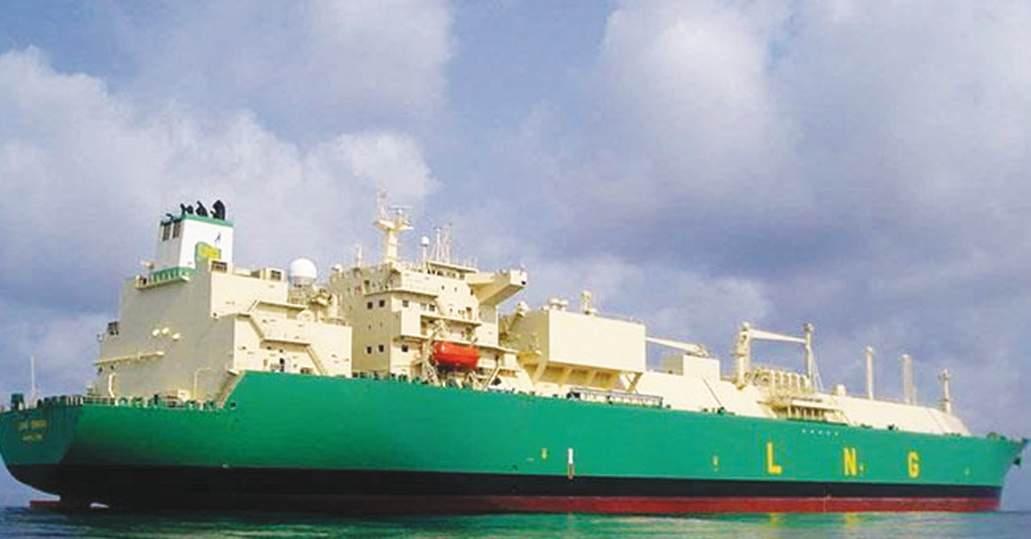
With the Train 7 of the Nigeria LNG Limited nearing completion, a recent call by the managing Director of the company, Dr. Philip mshelbila, at the World LNG Summit and Awards held in Istanbul, Turkey, for the removal of bottlenecks in the Liquefied Natural Gas market, if implemented, will incentivise shareholders to fast-track future investment decisions and bridge the gap between Nigeria and Qatar’s shares of the global market, Ejiofor Alike writes
Nigeria’s drive to sustain or increase its share of the global Liquefied Natural Gas (LNG) market was hindered by the lack of sustained investments since December 2007 when Train 6 of the Nigeria LNG Limited became operational. NLNG was incorporated in 1989, five years after QatarEnergy LNG was established in 1984.
The shareholders of Nigeria LNG signed the Final Investment Decision (FID) for Trains 1 and 2 in 1995, Trains 4 and 5 in 2002, and Train 6 in 2004.
However, between 2007 when the Train 6 became operational and December 2019 when the FID for Train 7 was signed, a period of 12 years, no new train was added to the NLNG.
This lack of sustained investments created lost opportunities, which reduced Nigeria’s share of the global LNG market from 10 per cent to seven per cent.
The six trains can produce a total of 22 million metric tonnes per annum (mTPA) of LNG.
In contrast, Qatar, which started shortly before Nigeria, is currently producing 77 million mTPA with a target to double the capacity to 142 million mTPA by 2030 after the completion of ongoing LNG projects.
With the Train 7 of the NLNG, which will add eight million mTPA capacity, nearing completion, Nigeria targets to increase output to 30 million mTPA.
However, this production target is still less than 50 per cent of Qatar’s current output and will represent only about 25 per cent of Qatar’s annual production by 2030 unless the Nigerian government creates an enabling environment for the shareholders to sign more FIDs.
Despite Nigeria’s abundant gas resources estimated at 210 trillion cubic feet (proven reserves), the country is still far behind the United States, Australia, Qatar, Russia, Malaysia, and Algeria in LNG export capacity due to lack of sustained investments.
The Nigerian government had initiated the brass LNG in bayelsa State and the Olokola LNG at the border town between Ondo and Ogun states.
However, while the Olokola project did not progress beyond the ground-breaking stage, the brass LNG’s shareholders were not incentivised to actualise the project after spending an estimated $1 billion on early works.
At the just-ended 2025 World LNG Summit and Awards held in Istanbul, Turkey, the managing Director and chief Executive Officer of the Nigeria LNG Limited, Dr Philip mshelbila, had urged the global industry leaders to remove the bottlenecks in the LNG market for the product to remain competitive.
While mshelbila has demanded the removal of global bottlenecks, the Nigerian government should focus on creating an environment that allows investment to grow and brings returns to stakeholders so that the NLNG shareholders are incentivised to sign more FIDs.
Delivering a paper during the 2025 World LNG Summit and Awards, the Independent consultant of Flower LNG, Andy Flower, stated that growth in the global LNG supply was slow in 2024, increasing by just 3.88 mT or 0.96 per cent. According to him, two liquefaction plants started production - eNI’s 0.6 mTPA congo LNG project in march and New Fortress Energy’s 1.4 MTPA facility offshore Altamira, mexico at the end of September.
He disclosed that the first 6.6 MTPA train of Russia’s Arctic 2 project started production at the beginning of the year and filled its storage.
Flower, however, noted that because of the sanctions by the United States, the operator, Novatek, was unable to secure ice-breaking LNG carriers needed during much of the year when the Arctic is frozen.
“eight cargoes were reported to have been loaded on Russia’s “dark fleet” of conventional tankers during the summer months, but Novatek was unable to find buyers.
“Three of the cargoes were trans-shipped into the Saam FSU moored offshore Murmansk and one cargo into Koryak FSU moored off the Kamchatka Peninsula.
“The other four cargoes remained on the ships. Operations at Arctic 2 were suspended,” Flower explained.
Flower noted that growth accelerated in the first 10 months of 2025, with an increase of 22.32 mT (6.7 per cent)
“The USA has been the main source of supply growth, increasing exports by 21.26 MT (30.8per cent),” he said.
“Venture Global’s Plaquemines project in Louisiana exported 187 cargoes (12.8 mTPA), as production from the 13.3 mTPA
first phase built up to full capacity and the 6.6 MTPA second phase was commissioned. Venture Global says the plant is operating at a rate of 24 mTPA.
“BP and Kosmos started production at the 2.5 MTPA Greater Tortue Ahmeyim project offshore Mauritania and Senegal in April. by mid-November 15 cargoes (1.15 mT) had been loaded.
“In August 2025, cheniere announced commercial completion of the second 1.5 mTPA train at the Stage 3 expansion of its corpus christi plant in Texas with Train 3 commercial completion announced at the end of Q3,” he explained.
The independent consultant also disclosed that LNG Canada loaded the first cargo from the 7 MTPA train 1 in July, adding that by mid-November, 21 cargoes had been loaded (1.53 mT).
“Novatek started production at train 2 of its Arctic 2 project but the problems in finding buyers continue. “However, it delivered 0.8 mT from Arctic 2 to china between September and November 2025,” he added.
Speaking at a special panel session titled: “energy Expansion in a Challenging Trade Environment,” the ceO of NLNG demanded a global alliance to address the bottlenecks in the global market.
“In order to safeguard global energy security from the risks of geopolitics and unilateral (national and regional) policies and sanctions, LNG contracts must evolve from merely defining volume and price to actively managing sovereign risk, through diversification of supply sources, delivery routes and contract terms,” he said.
He stated that global energy expansion will stall unless supply, pricing, decarbonisation and other structural bottlenecks in LNG supply are urgently addressed.
“LNG has long been viewed as a transition fuel, but its potential goes far beyond that. With greater supply, stronger affordability, and deep decarbonization across the entire system, arguments for LNG as a true destination fuel become increasingly credible,” he said.
On the issue of affordability, Mshelbila warned that “If we do not make LNG more affordable and more decarbonized, its reach will remain limited. but with technological improvements and continued investment, we can unlock its full potential for decades to come.
“even if incremental upstream cost is reduced, it will be impactful,” he added.
mshelbila also spoke extensively on the issue of decarbonisation, recalling that europe started the implementation of the policy of decarbonisation.
While describing decarbonisation as a welcome development, he insisted that policies that work globally should be adopted.
“Nobody is contesting decarbonisation but the question is how and the timeline. There should be a collaboration.
“We need more global policies to be put in place,” he added. mshelbila also noted that the LNG market had moved from a period dominated by short-term contracting to heightened interest in long-term commitments after the 2022 supply shock.
According to him, both contract types are now in strong demand, driven by elevated global risk and uncertainty. Also addressing the global LNG leaders, the Deputy managing Director of the NLNG, mr. Olakunle Osobu stated that with the Train 7 nearing completion, the company is well positioned to compete with the United States and Qatar, assuring that “we will keep the gas flowing as long as you keep the dollar rolling.”
mshelbila had earlier urged the Nigerian government to address the fundamentals of gas production and supply to achieve global competitiveness in the LNG market.
Speaking at a strategic panel session on “Accelerating Gas Development for Domestic & Global Energy Needs” at the 2025 NOG energy Week held in Abuja, mshelbila listed the longstanding bottlenecks in Nigeria’s gas sector. He acknowledged that recent reforms have led to significant progress and renewed investment momentum.
He said: “We need to have sufficient volume of gas. We should be able to produce and then transport them to where they are needed.”
He described the Petroleum Industry Act (PIA) of 2021 as being instrumental in resolving key obstacles.
“The PIA has dealt with many of these bottlenecks”, he said, adding that a lot of governance and regulatory issues are also being addressed.
According to him, a better fiscal environment and targeted government policies have begun to attract Foreign Direct Investments (FDIs) into the gas sector.
He noted that the fiscal environment has enabled investment and that the Presidential Directive for Gas has led to an influx of foreign direct investment into the gas space.
Drawing comparisons between Nigeria and Qatar, Mshelbila stated that the two countries started nearly around the same period.
“We are now patting ourselves on the back for getting to 30 million MTPA, while Qatar is aiming at over 140 million mTPA. That is what is possible, and that is what we can do as well.”
“We have to start changing the narrative. Talk as much as you want, but if the results are not there, if performance is not there, and if people cannot invest their monies and get returns, then we are just wasting time talking,” he said.
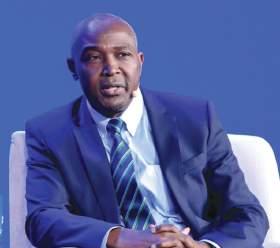
Mshelbila
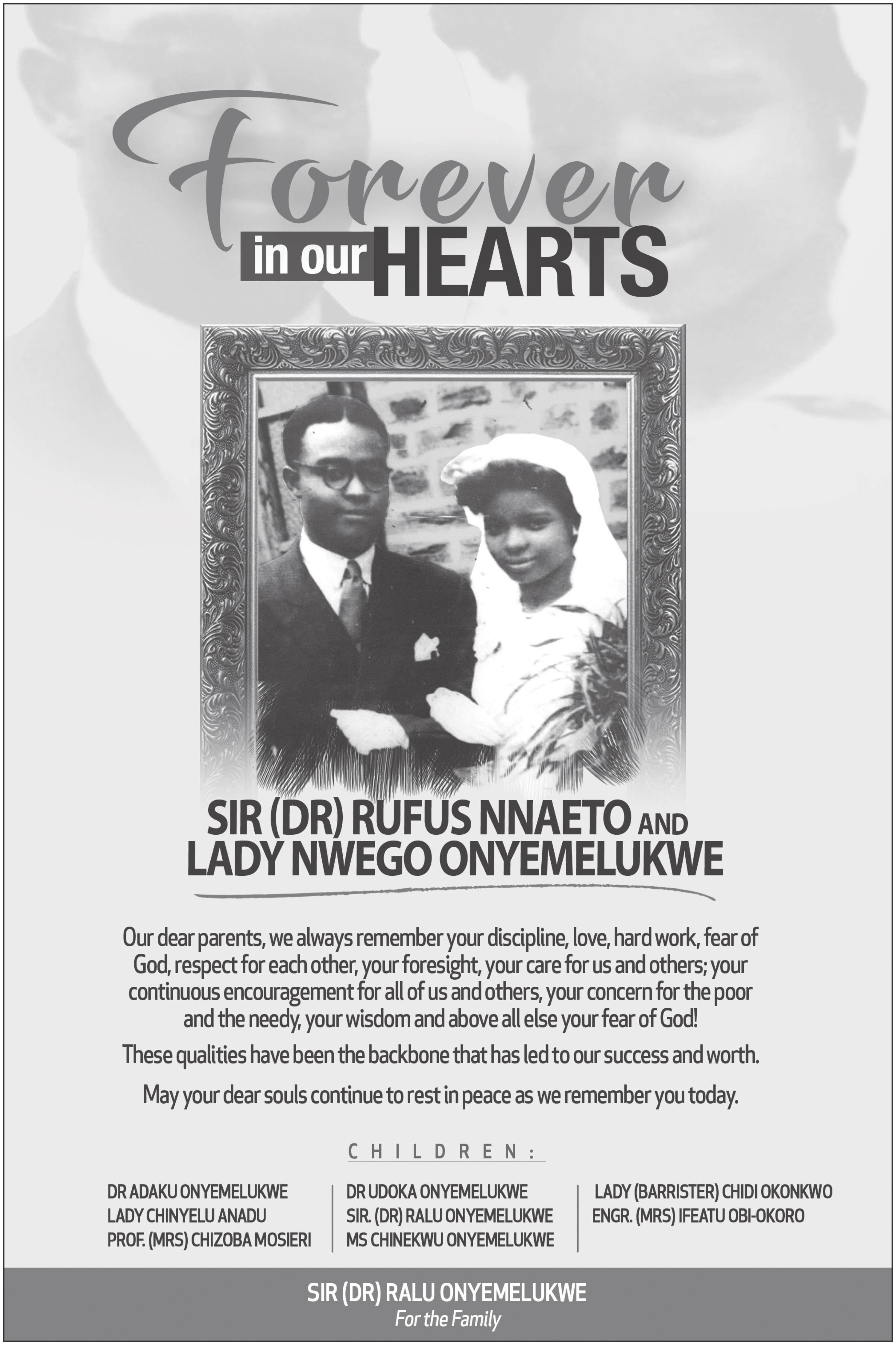

HAPPY BIRTHDAY,
IJEOMA
AYOOLA AJANAKU pays tribute to Ijeoma Nwogwugwu, an influential Journalist at 60
One name stands among the most respected figures in Nigerian journalism. A woman whose name has become synonymous with editorial excellence, fearless reporting, and transformative leadership is none other than Ijeoma Nwogwugwu. At 60 years, her story is not merely one of personal achievement, but of quiet revolution: expanding the horizons for women in media, shaping national discourse, and redefining what it means to lead in a male-dominated profession.
Born on 14 December 1966, Nwogwugwu’s journey into journalism was neither expected nor conventional. With a degree in Accounting from the University of Lagos and further studies at the Wharton School of the University of Pennsylvania, she began her professional life outside the newsroom. Yet, the pivot she later made from numbers to narratives would change Nigerian media forever.
After beginning her career in banking, Ijeoma joined THISDAY newspapers in 1995. What started as a transition gradually became the foundation for a storied career. Her accounting background, laden with analytical, rigorous, precise characterisation, not only equipped her for covering business and finance but gave her an edge as a storyteller able to probe beyond headlines into the deeper realities shaping Nigeria’s socio-economic landscape.
Within the newsroom, she quickly distinguished herself. She worked across multiple desks, rising through the ranks with clarity of purpose and intellectual rigour. By 1999, she had become Group Business Editor and, in the years that followed, established herself as both an editor and a strategic thinker with a deep understanding of Nigeria’s evolving media environment.
Ijeoma’s path was not a comfortable cruise up the hierarchical ladder - it was a demonstration of grit. In a sector where women are often marginalised, she carved out a space that allowed her voice to be heard and respected. Her ascent was marked not only by individual accomplishments but by pioneering moments that rewrote expectations for women in journalism.
In June 2012, Ijeoma Nwogwugwu reached a milestone that would solidify her place in the annals of Nigerian media history: she was appointed Editor of THISDAY, Nigeria’s most influential newspapers. In doing so, she became the second woman ever to serve as editor of a national Nigerian newspaper, following in the footsteps of the late Dr Doyin Abiola.
What set her tenure apart was not the title alone - it was her stellar performance. Over the course of 11 uninterrupted years, she edited all three main titles under the THISDAY umbrella - Weekend, Sunday, and daily editions. An achievement unparalleled in the paper’s history. Her editorial leadership bore the weight of responsibility: defending press freedom, navigating political tensions, and nurturing a newsroom in an era of digital disruption.
Her editorial voice was incisive, informed, and anchored in an unwavering commitment to truth.
This was most visible in her weekly column and in decision-making that consistently elevated quality over convenience. Under her stewardship, THISDAY newspaper from the stable of Prince Nduka Obaigbena’s Leaders and Company became a platform for rigorous debate and fearless reporting - a newspaper that not only informed, but shaped national conversation and discourse.
In 2020, this influence received formal affirmation. Ijeoma was named the Most Powerful Woman in Nigerian Journalism by ‘Women in Journalism’ (WiJAfrica), ranking first among 25 leading female journalists.
The accolade recognised not just her editorial role, but her impact on national policy and public accountability, her influence across Nigeria’s media landscape, and her role in galvanising broader conversations about governance and society.
WiJAfrica’s criteria encompassed measuring impact in national affairs, industry influence, career arc, and cultural relevance, highlighting Ijeoma’s extraordinary breadth of influence. While some accolades are symbolic, this ranking was substantive: it underscored the breadth of her influence among peers, policymakers, and citizens alike.
In June 2018, Ijeoma’s leadership journey took another bold step when she was appointed the pioneer Managing Director of ARISE TV, a burgeoning news channel with a pan-African focus. Her appointment marked a new phase - one that expanded her influence into broadcast media and allowed her to shape editorial vision on television as well as in print.
Under her leadership, ARISE TV grew in prominence, offering robust news coverage and expanding its reach across Nigerian and international audiences. Her transition from print to television demonstrated adaptability and foresight, connecting with diverse audiences at a time when media consumption was rapidly evolving.
After four years at the helm, she resigned in 2022, leaving behind a legacy of institutional growth and elevated journalistic standards. Though the reasons for her exit were not publicly disclosed, her tenure is widely seen as transformative for the network.
Ijeoma’s career is not only a compendium of titles and accolades. it is a testament to prowess, professionalism, and perseverance. In a media landscape often beset by commercial pressures, political interference, and digital disruption, she remained steadfast in her commitment to quality journalism.
Her career trajectory has inspired a generation of journalists, particularly women, to pursue careers in media with confidence and conviction. She has shown that leadership in journalism is more than managing news. It is about shaping narratives, defending public interest, encouraging accountability, and mentoring emerging talent. She has gone a notch further to hold board directorships in blue chip firms - a veritable characterisation that journalese influence and value does not end at the newsroom.
As she marks her 60th birthday today, Ijeoma Nwogwugwu’s story offers poignant lessons on resilience, adaptation, and impact. Her career bridges eras from a time when print was king to the digital age’s relentless pace; from the exclusive newsroom to a globally connected media ecosystem. She has done more than navigate change - she helped define it.
For many, she is a symbol of journalistic courage. For the industry, she is a benchmark of editorial excellence.
RETHINKING NIGERIA’s sECURITY ARCHITECTURE
are rarely
For nearly two decades, Nigeria has grappled with the persistent threat of insurgency, banditry, kidnapping, and other forms of violent insecurity that have tested the resilience of our security institutions and the patience of the citizenry.
The sacrifices of our soldiers, police officers, and community defence volunteers are undeniable, yet the outcomes have often fallen short of expectations. Despite periodic successes, the threats continue to evolve, shift locations, and adopt new tactics. This prolonged struggle has raised a fundamental question: Are we fighting 21st-century security threats with 20th-century tools?
Recent developments in the South-East suggest that the answer may soon change.
The decision by the Enugu State government to acquire surveillance drones marks an important turning point in Nigeria’s approach to internal security. This initiative is more than a symbolic gesture; it reflects a deeper understanding that modern security challenges demand modern solutions. In a country where insecurity can escalate within minutes, and criminals can vanish into forests, hills, and border regions, real-time surveillance has become indispensable.
A Nation Fighting Blind in an Age of Precision.
Nigeria’s geographical realities pose a significant challenge to traditional security approaches. With thousands of kilometres of land borders, vast stretches of ungoverned spaces, dense forests, mountainous regions, and rapidly growing urban centres, our security forces often confront threats without adequate intelligence. Patrols are stretched thin, response times are delayed, and operations sometimes rely on outdated information. This mismatch between terrain and tactics has cost Nigeria dearly in lives, equipment, and public confidence.
Yet globally, warfare has been transformed by technology. Countries that face internal threats similar to Nigeria, such as Colombia, India, and even smaller nations like Rwanda, have integrated drones, night-vision imaging, thermal scanners, AI-assisted surveillance, and automated communication systems into their security operations. These technologies provide the eyes, ears, and speed that human personnel alone cannot guarantee.
In this context, Enugu’s drone initiative is not only timely but visionary. It demonstrates that state governments need not wait for federal intervention before embracing innovation. It also underscores a fundamental truth: a nation cannot secure what it cannot see.
Security experts agree that modern conflicts are rarely won by numerical strength but by technological superiority. Drones can cover areas that would take soldiers hours or days to patrol. Thermal imaging can detect movements hidden in thick vegetation. Aerial surveillance can monitor border crossings, track kidnappers on the move, and provide immediate intelligence during a crisis.
Moreover, technology drastically reduces risk. Instead of sending troops into unfamiliar or dangerous terrain without prior knowledge of what lies ahead, drones can map out the environment, detect hostile positions, and guide safe routes. This not only protects personnel but also improves mission success rates.
Unfortunately, Nigeria has been slow to adopt such tools on the scale required. While there have been isolated attempts to modernise the military, these efforts have often lacked continuity, coordination, or integration into a broader national security framework. The result is a chronic gap between capability and threat level.
Behind every security failure lies a human story: families displaced, businesses destroyed, communities living in fear, and
security personnel facing preventable dangers. The country’s economy also suffers significantly. Agriculture declines in affected regions; foreign investment hesitates; tourism weakens; and national stability becomes fragile.
The operational strain on the military is equally severe. Troops are deployed repeatedly without adequate rest, equipment, or intelligence. Morale suffers. Lives are lost. And the public grows increasingly frustrated.
Continuing along this trajectory is unsustainable. Nigeria must embrace a paradigm shift where technology becomes central, not supplementary, to national security.
The Enugu experience should catalyse a wider national conversation. If one state can integrate surveillance technology into security management, others can follow suit, and the federal government can coordinate a unified, national strategy that connects these technologies into a seamless network.
A nationwide technological security overhaul could include: Long-range surveillance drones for border monitoring; short-range drones for urban policing and forest operations; automated earlywarning systems;
AI analysis of movement patterns to predict attacks; Integrated command-andcontrol centres linking military, police, and intelligence agencies; training programs for security personnel on advanced technology; and partnerships with tech firms and research institutions.
Such a system would allow Nigeria to detect threats early, respond faster, and reduce casualties dramatically.
It is encouraging, however, that the President and Commander-in-Chief, Chief Bola Ahmed Tinubu (GCFR), has recently approved the transformation of the nation’s forest guards into an armed and organised surveillance force. This initiative is a commendable step and reflects a growing recognition of the need to secure our forests, rural communities, and border zones more strategically. The President’s efforts deserve appreciation, particularly at a time when Nigerians are yearning for a more proactive and visible approach to national security.
Nevertheless, it is important to highlight that while the deployment of forest guards is a welcome improvement, their contribution cannot match the efficiency of modern surveillance equipment. What 10,000 guards can cover in 100 days, a powerful drone can scan within hours, with greater accuracy and precision, zero human risk, and constant availability.
Oluwadare is a Professor of Political Science, Nigerian Defence Academy, Kaduna
Ajanaku is a communications and advocacy specialist based in Lagos
Modern conflicts
won by numerical strength but by technological superiority, argues ABIODUN OLUWADARE

Editor, Editorial Page PETER ISHAKA
Email peter.ishaka@thisdaylive.com
ECOWAS COUP BUG AND NIGERIA’S STRATEGIC ROLE
Nigeria has what it takes to lead the charge for the survival of the regional body
Nigeria has been confronted with a twin problem following the failed coup in Benin Republic. The primary one is a test of capacity to manage crises in our immediate neighbourhood. Our military intervention to squelch the coup proves beyond doubt that we have that capacity. We congratulate President Bola Tinubu and the Nigerian armed forces for a job well done. The second aspect has to do with the stability of the Economic Community of West African States (ECOWAS) as a regional block. Both are linked by the factor of Nigeria’s military and political leadership in the subregion.
The foiled coup in Benin has exposed the region’s vulnerability to political turmoil in member states. In the aftermath, ECOWAS declared a state of emergency, warning that the subregion is now facing an unprecedented combination of military interventions, democratic setbacks, terrorist expansion and worsening humanitarian conditions. These developments have also reinforced the old argument on the necessity for establishing a regional stabilisation force. To underscore its importance, Tinubu recently reiterated that the ECOWAS Standby Force must move from concept to operational reality.
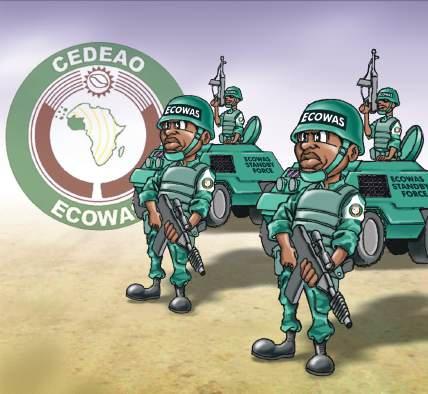
states to make for a coherent force. Most importantly, at least five member states are now under military rule. If the likelihood of military coups is the premium reason for the proposed force, opposition and outright sabotage from these undemocratic states should be expected. We also should not discount the cost factor. As the largest contributor of troops to the standby force, Nigeria would undoubtedly bear a significant burden of the proposed deployment. Already, the military is overstretched and deeply committed to fighting insurgency and banditry within our borders. Some recent operational setbacks have been attributed to inadequate manpower to maintain a strong presence and dominate wide areas. Deploying a substantial number of troops to the ECOWAS standby force could deplete and divert manpower resources away from our domestic security challenges where they are critically needed.
Nigeria has a global responsibility to avert the growing erosion of civil rule in West Africa
The main objective of such a military organ is to enhance the security of the subregion by supporting member states in the fight against terrorism, banditry, and other violent crimes. The force is also expected to assist in the restoration of democratic governance in member states affected by military coups and, when necessary, provide humanitarian assistance in conflict areas and places affected by natural disasters. We consider the current enthusiasm for the formation and operationalisation of the 5,000- strong ECOWAS standby force understandable, especially considering the myriads of security challenges confronting many of the countries within the subregion.
However, while the merits of having such a standby force are obvious, so are the obstacles. A good number of member states are poor, both financially and in the requisite manpower. Most lack the military capacity to contribute meaningfully to the proposed force. Above all, there is hardly a tactical synergy among the
SUNDAY NEWSPAPER
editor DAviDSoN iRiEkpEN
deputy editors FESTUS AkANBi, EJioFoR ALikE
Managing director ENioLA BELLo
deputy Managing director iSRAEL iwEgBU
chairMan editorial Board oLUSEgUN ADENiYi
editor nation s capital iYoBoSA UwUgiAREN the oMBudsMan kAYoDE koMoLAFE
THISDAY NEWSPAPERS LIMITED
editor-in-chief/chairMan NDUkA oBAigBENA
group executive directors ENioLA BELLo, kAYoDE koMoLAFE iSRAEL iwEgBU
divisional directors SHAkA MoMoDU, pETER iwEgBU ANTHoNY ogEDENgBE
deputy divisional director oJogUN viCToR DANBoYi snr. associate director ERiC oJEH
associate director pATRiCk EiMiUHi controllers ABiMBoLA TAiwo UCHENNA DiBiAgwU, NDUkA MoSERi director, printing production CHUkS oNwUDiNJo to send eMail: first name.surname@thisdaylive.com
However, inaction is no longer an option for our country and the subregion. Nigeria needs ECOWAS to survive. We need the free flow of goods, services, and people across the region. Capital fares better when it can move freely across a wide geographical space, hence the universal appeal of regional economic blocs. And by virtue of its size and geo strategic advantages, Nigeria has an overarching responsibility to lead the charge for the survival of ECOWAS. Intra West African trade can only enrich the entire region. Together, we will all fare better. Perhaps more importantly, Nigeria has a global responsibility to avert the growing erosion of civil rule in West Africa.
The exit of Mali, Burkina Faso and Niger from ECOWAS and their regrouping under the Alliance of Sahel States with a not-so-subtle agenda to make military rule acceptable in the subregion is dangerous. But to reverse the trend of viral coups, Nigeria needs the support of the free world. We are equipped historically to play that role. After over four decades under military rule and nearly three decades of sporadic democracy, Nigeria has a few lessons to teach West Africa on the value of representative government, even with all its imperfections. This is therefore time for Nigeria to demonstrate leadership across the board within the ECOWAS.
Letters in response to specific publications in THiSDAY should be brief(150-200 words) and straight to the point. interested readers may send such letters along with their contact details to opinion@thisdaylive.com. we also welcome comments and opinions on topical local, national and international issues provided they are well-written and should also not be longer than (950- 1000 words). They should be sent to opinion@thisdaylive. com along with the email address and phone numbers of the writer
LETTERS
RENEWED HOPE IN THE FIGHT AGAINST TERRORISM
The appointment of General Christopher Gwabin Musa (rtd) as Nigeria’s new Minister of Defence is a defining moment for the nation’s war against terrorism, marking the elevation of an elite, combat-proven commander to the highest civilian defence portfolio. This decision by President Bola Tinubu is a clear strategic signal that the administration intends to replace bureaucratic inertia with operational expertise in the fight to secure Nigeria.
General Musa’s profile stands distinguished from previous military appointees in the Fourth Republic. He is the first former Chief of Defence Staff (CDS) to be appointed Minister of Defence since the return to democracy in 1999. While past appointees like General T.Y. Danjuma were former Chiefs ofArmy Staff (COAS) or had earlier command experience, General Musa is unique for his recent, high-level operational exposure. His career track places him at the heart of the national security apparatus as the insurgency began around 2010, having served in crucial
decision-making roles. His experience includes commanding Sector 3 of the Multinational Joint Task Force (MNJTF) and, most notably, serving as the Theatre Commander of Operation Hadin Kai in the North-East in 2021 before becoming the CDS in 2023.
This means General Musa is not learning on the job; he already knows the root, understands the challenge, and has studied the interests of the terrorists and their alleged financiers from the background. He is moving from a position of receiving orders to directly formulating and directing the nation’s defence strategy, essentially giving orders to the current Service Chiefs, including the Chief of Defense Staff. This combat experience dramatically eases the burden of work, as his insights are grounded in first-hand battlefield realities, allowing him to bypass unnecessary bureaucratic layers and focus on tactical success.
For this experienced commander to succeed in his new role, only two things are fundamentally
required. Firstly, he needs the President’s comprehensive attention and direct access with timely responses to ensure swift implementation of strategic decisions. Secondly, he requires the cooperation of the citizens. This is not the time for Nigerians to be pointing fingers and claiming a non-existent Christian Genocide; the task ahead requires unity. With the baton now placed in the hands of a dedicated Christian General, the national obligation is to support him by ceasing to engage in divisive sentimental social media rhetoric, actively reporting suspicious movements and groups, and strengthening local security systems. This collaborative effort will set the nation back on the path to stability.
While we celebrate General Musa’s appointment, we must simultaneously advocate for critical infrastructure upgrades that have made the task of ending terrorism needlessly difficult. The lack of surveillance and an indigenous satellite capability that can scan
and monitor the entire country for real-time intelligence remains a gaping hole in our defence architecture; this must be a priority investment. Furthermore, Nigeria must exercise extreme caution regarding foreign defence agreements. The signing of a defence MoU with Israel, a state whose intelligence agencies are historically known for mounting spying devices and stealing confidential information from countries and individuals—as evidenced by various international espionage cases—presents a serious, self-inflicted vulnerability. We need serious legislation on data sharing and encryption with platforms like Google, Facebook, and WhatsApp, given the consistent allegations of foreign powers using these services to conduct covert operations. The success of General Musa ultimately rests on the nation’s ability to secure both its physical territory and its digital sovereignty.
Abdullahi Abubakar Ladan, Kaduna
Abiola Laseinde: Transforming Africa’s Tech Leadership
Moved by the understated labour of Chief Information Officers (CIOs) during the pandemic, Abiola Laseinde, a legal and business executive of over two decades, set out to give them a stage. Five years later, her vision has blossomed into a thriving tech ecosystem that draws participants from across Africa and places Nigeria firmly at the centre of the conversation, Vanessa Obioha writes
Five years ago, at the height of the pandemic, Abiola Laseinde, CEO of Edniesal Consulting, found herself deeply moved by the Information Technology (IT) professionals who worked tirelessly to keep the world connected. While the coronavirus threatened human interaction, these tech workers silently built and secured the digital bridges that held society together.
Overwhelmed by their efforts, Laseinde began sharing her idea of honouring them. It sounded odd to many who knew her—after all, she had no background in tech and had never worked in the industry. Even more unusual was her insistence on celebrating individual Chief Information Officers (CIOs), a group hardly recognised in the public sphere. They are the ones who respond when a cyberattack hits, who race to restore connectivity when systems collapse, yet rarely does anyone acknowledge their role, particularly during the pandemic when many businesses were doomed to collapse if not for the technological innovation.
Laseinde was clear from the start: the awards would honour individuals, not corporations.
“These are human beings behind the companies,” she emphasised. Human beings she considers tech heroes; those who made extraordinary sacrifices during the pandemic to ensure the world was not cut off.
Despite scepticism, she pushed on, talking to anyone who cared to listen. A friend of her husband eventually opened crucial doors, and soon, firms such as EY and PwC bought into the concept and helped refine it—from branding to the selection process. The result was the birth of the CIO & C-Suite Conference and Awards.
Today, the event has evolved far beyond a recognition platform for CIOs and C-Suite managers. It has become a continental hub for the IT ecosystem, attracting nominations from outside Nigeria. Countries such as Ghana, Morocco, Kenya, and others now submit entries each year, and the numbers keep increasing.
“We had no intention of going outside Nigeria,” Laseinde explained. “We were just very focused on Nigeria. And then we started seeing nominations coming in from other countries. And it wasn’t one country, it wasn’t two countries. Nominations are coming in from Ghana, from Kenya, from South Africa, from Morocco. We’re like, what’s going on?”
In the first year, eligibility required

nominees to be residents of Nigeria.
But as foreign entries poured in, Laseinde heeded the advice of a “wise man” and opened the doors. Today, about 15 countries participate.
More importantly, the awards are now recognised as a hub for Africa’s IT ecosystem, with dozens of participants travelling to Nigeria annually. This accolade brings smiles to Laseinde who is now convinced that her decision to start the awards was not born from a fleeting feeling.
“We didn’t envisage that other Africans would be coming into
Nigeria,” she recalled. “Many come for the first time. In terms of exposure to a big country like Nigeria, there is a forex inflow from their travel and accommodation, and when they arrive, they are wowed by the experience.
“Like last year, we took them to the Microsoft Centre, the FCMB Security Operations Centre, and then they had this big dinner somewhere. A lot of them were really amazed by our hospitality. We are incredibly proud that in our own little corner, we are shaping the narrative of Nigeria.
Nigeria is now seen as a centre of attraction when it comes to the IT ecosystem awards.”
What started as just an awards platform has now become both a conference and an awards event. This evolution, she noted, was intentional.
“By the second year, when the ecosystem started pulling and asking for more, because the award is multisectoral — it is insurance, media, academic, financial services, all the financial services, name it, every sector of the economy. So when we started seeing that elevation, and we were getting partners and supporters who were interested, we decided that it was good to give them value for their investment.
“We felt we should enlarge the capacity, the engagement of all the stakeholders. We added a valuable conference that will look at a trend that even the sponsors and the partners themselves can sit in and participate in. Like this year’s theme was Digital Tax Shift. We had a Kenyan from Digitech who spoke elaborately about how there has been technology infusion. It’s changing the narrative around tax, and making it more efficient.”
Beyond the awards, the CIO ecosystem has birthed other platforms. One is the CIO & C-Suite Club Africa, launched in 2020 as a strategic community driving digital transformation. Built on Advocacy, Empowerment, Research and Development, and Thought Leadership, the Club now boasts over 1,000 senior technology executives across 15 countries. Through annual summits and collaborative initiatives, it strengthens Africa’s digital community.
There is also the Ladies in Tech and Leadership Network (LITL), established in 2022 to advance women’s participation in Africa’s digital growth.
For Laseinde, Nigeria is wellpositioned to be a leading voice in global tech leadership. “Nigeria is doing very well in terms of education, empowerment, awareness, and leveraging technology,” she said.
Yet she notes that infrastructure remains a significant weak spot. She wonders, for instance, why Nigeria still has no smart city.
“Everything we’re doing now is what individual companies and associations can achieve—creating enabling environments for growth. Our government hasn’t worked enough. So as a club, one of our focuses next year is ensuring that Nigeria becomes a smart Nigeria in spirit and in truth, infrastructurally. It’s a tall order, but we need to make noise and demonstrate what is possible. We have so much inside, but are we ready to birth the full potential of emerging technologies? We’re not yet prepared.”
Laseinde

a Newsroom’s maverick at 60
As she turns 60, those who have crossed paths with Ijeoma Nwogwugwu remember a woman whose presence could steady a room and sharpen a newsroom. Their recollections reveal a trailblazer who insisted on excellence, yet mentored with a generosity that softened even her toughest critiques. Today, they raise a toast to the woman who shaped their craft and, in many ways, their courage, Vanessa Obioha writes
Whenever the name Ijeoma Nwogwugwu springs up in discussions, one can be certain that these words will be repeatedly mentioned: ‘excellence’, ‘outstanding’, ‘thorough’, ‘disciplined’, ‘kindhearted’ and many more. It’s against this backdrop that the Sunday Editor, Davidson Iriekpen, suggested we do a story to celebrate her 60th birthday today. And what better way to tell it than through the voices of those who encountered her during her years at THISDAY. As expected, these words echoed strongly in their recollections.
Mr. Iriekpen described her as an amazing woman, a mentor par excellence; A very hard-working lady, an all-round journalist.
“Ijeoma is a wonderful person and a superlative editor. She motivated, encouraged and challenged me greatly,” he said, recalling that he worked directly under her as the News Editor when she edited the daily paper for six years.
“It was not an easy job, but she gave me encouragement, hope and inspiration, even as she would reprove me sometimes because she wanted the best from me. Working under was really inspiring. She injected me with hard work and impacted my career and life. I am so grateful to her.”
The Saturday Editor, Dr. Obinna Chima, hailed her editorial brilliance and commitment to excellence.
“She had a way of challenging those of us who were willing and always ready to work with her to stretch beyond our limits. I used the words ‘willing and ready’ here because it is not everyone you meet in the newsroom who is disposed to hard work.”
Working with her, he noted, remains one of the most formative and inspiring experiences of my professional journey.
“What sets her apart was not just her remarkable intellect or instinct for news, but her ability to lead with fairness, clarity, and consistency. She had a tremendous impact on the careers and lives of a lot of THISDAY journalists and editors, including myself, who had the privilege of learning under her leadership and mentorship.”
For the former editor of Glitterati, Nseobong Okon-Ekong, she is an editor’s editor.
“She kept a strict deadline for copy flow, which allowed her enough time to work on the scripts. She put her Midas touch on every copy, turning many of them from rough-hewn wood to polished, admirable furniture.”
A native of Abia State, Nwogwugwu was one of the pioneer staff of THISDAY Newspapers before climbing the rungs to become the paper’s executive editor. From business reporting to editorial leadership, she remains the only woman in THISDAY history to have edited all three titles—Saturday, Sunday, and Daily—and the second woman in Nigeria to achieve that feat, after the late Doyin Abiola. In 2020, Women in Journalism Africa (WijAfrican) ranked her the number one most powerful woman in journalism.
Despite studying Accounting at the University of Lagos and later earning a postgraduate diploma in International Housing Finance from the Wharton Business School, her passion for journalism remained unparalleled. As Okon-Ekong puts it, she is no pushover when it comes to newspaper production.
“The common self-description among journalists is that they are ‘knowledgeable about many topics, experts in none.’ This phrase may not be true of Nwogwugwu. Her natural turf is business and economy, but Nwogwugwu also understands soccer and tennis like the back of her hand. She talks knowledgeably about politics, can handle a camera, and when it comes to newspaper production, she is no pushover. She not only has a working understanding of a vast array of subjects in order to report them, but she actually delves deep into these subject matters to become an expert.”
A Newsroom’s Maverick at 60
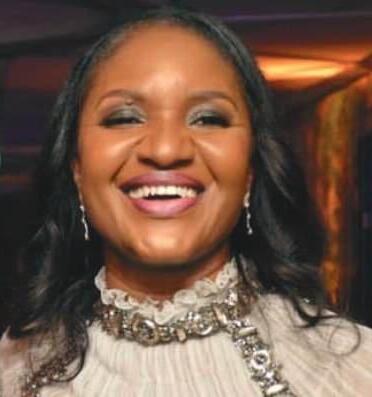
Beyond journalism, she attended several management and professional training programmes in Nigeria, Europe and the United States, and has sat on the board of several companies, including Ikeja Electric Plc, First Pension Custodian Nigeria Ltd., Nigerian Security Printing and Minting Company, Daily Times of Nigeria Plc and the National Hospital, Abuja, the nation’s capital. She was also a World Bank Consultant for the Bureau of Public Enterprises.
Her excellence led her to ARISE NEWS where she once again proved her mettle as the pioneering Managing Editor of the channel. During the #EndSARS protests, the station, under her leadership, became the go-to source for real-time updates. Reporters were on the ground; anchors engaged key figures; and the newsroom pulsed with clarity and urgency. She laid the foundation for the wave of popularity the station enjoys today. Little wonder that Rufai Oseni, one of the channel’s anchors, could not contain his excitement about her birthday today. He wrote on social media:
“My boss and mentor, Madam Ijeoma Nwogwugwu, will be 60 on Sunday, and I can’t keep quiet. Pls (sic) help me celebrate her! She has a very good heart. She gave me a chance on ARISE TV. Without her, maybe I might never be on Arise!”
For young women at THISDAY, including myself, her impact has been deeply felt.
I remember my first encounter with her in 2017 when she was still Executive Editor. I had just developed an idea for a restaurant and dining page, and Mr. Okon-Ekong, the Glitterati Editor at the time, encouraged me to speak with her about it. I reached out, unsure of what to expect, and she graciously invited me to her home.
There, Ms. Nwogwugwu put me through an intense but rewarding crash course in the world of fine dining, explaining stemware, etiquette, and subtle details that elevate the culinary experience. She didn’t stop there. She handed me a book on wine and spirits that completely broadened my understanding of that space. It was as if she had handed me a key to a whole new world.
But our conversation didn’t end with food. She introduced me to finance and economics, speaking with such clarity and ease that I found myself wishing I could one day speak about a subject with similar confidence. The more she talked about the subject, the more my admiration for her grew. I still remember the pride in her voice when she mentioned that her son had followed a similar path and was one of the analysts contributing to a show on Channels TV.
I had arrived at her home with limited knowledge and a little bit uncertain about how our interaction would go, but I left enriched. Her depth of insight only reaffirmed what I already knew: she is a thorough, exceptional woman whose passion for journalism is unmatched.
The THISDAY Style Executive Editor, Konye Nwabogor, shared a similar story:
“I had been at THISDAY for barely two years when I had my first real encounter with Ijeoma Nwogwugwu. I doubt she even remembers it—but I do, vividly,” she said.
“Ruth Osime, my Editor at the time, was out of town, and I was asked to take a cover story to her office for review. She read the intro once, picked up her pen and began correcting it. Then she
stopped mid-way, looked up at me and said, ‘No. You go and do it. Make changes here, here and here.’
It was already past close time for me. Ugh! What followed was nearly an hour of rewriting—climbing and descending flights of stairs, knocking, presenting, retreating, rewriting again. Back and forth. Paragraph by paragraph. Line by line. Then, eventually, she looked up, smiled—for the first time that evening—and said, “Yes. That’s it.”
That’s Aunt Ijeoma for you. “Demanding. Exacting. Uncompromising about standards. Formidable yet nurturing. But also incredibly fair, kind, deeply invested, quietly—and fiercely—supportive.”
For the Group Features Editor, Chiemelie Ezeobi, Ms Nwogwugwu’s tough love kept her grounded.
“If you ever have Ijeoma Nwogwuwgwu in your corner, ‘just go and sleep. Of course, I mean go and sleep figuratively, because you have to earn her being in your corner. It’s no small walk in the park. I kid you not,” she said.
“Ever heard of that saying about ’people mentioning your names in rooms that matter even behind your back?’ That is quintessential Ijeoma Nwogwugwu. Fearless! Bold! Empathic!
“A mentor and fairy godmother rolled into one, she is never one to mince words when you miss it, but best be assured that she will whip you into the right path! She will always have me in her corner!”
What more can be said of a woman who never allowed gender or tribe to hinder her path and who led so many onto the path of excellence?
Here’s to 60 hearty cheers as she begins a new chapter.
From all whose lives you have touched, happy birthday!
Nwogwugwu
How a Governor Learned the Grammar of Survival
The line that set the tone came from the governor himself: without the president’s intervention, he said, he would already be a former governor. Few Nigerian leaders summarise their ordeal with such economy.
Siminalayi Fubara announced his defection to the All Progressives Congress (APC) in Port Harcourt on December 9, 2025. The room held party elders, state officials, and the faint tension of a man crossing a political river with no bridge behind him. He blamed the PDP for leaving him stranded during months of turmoil.
Even though the turmoil had a clear architect. Even though the said architect is reportedly his predecessor, Nyesom Wike. Even though Wike remains a towering figure in Rivers’ politics.
Readers might remember all the ‘wahala’ Fubara went through, starting with the impeachment threat, the federal intervention, and everything in between. Fubara would later admit that the President shielded him from a fall that seemed imminent. This gratitude hints at the real cost of remaining in his former party.
Fubara’s situation differs from the usual choreography of Nigerian defections. According to him, it was not in his register to plan ahead for a second term or chase alignment with the centre. He was trying to salvage his seat. The fight with Wike was public, daily, and draining. Even a Supreme Court ruling on the defected lawmakers became part of the theatre.
It is from all these that his role in the political scene emerges: a governor pushed into survival mode by a mentor-turnedrival, a party unable to defend him, and a federal rescue that came with its own gravity.
Rivers’ politics now carries that choice like a watermark. But will a governor who learned survival in public govern with quiet confidence or with the caution of someone who knows how quickly the floor can shift?
How Oyetola
Timipre Sylva and the Season of Sealed Doors
Someone in Maitama said the house went quiet first, then bright red letters appeared on the walls. It was the sort of sight people pretend not to notice while slowing their cars to take it in.
The residence belongs to Timipre Sylva, former Minister of State for Petroleum Resources and exgovernor of Bayelsa. It now sits under the grip of an EFCC order linked to an alleged scheme involving $14.8 million. A Federal High Court issued an arrest warrant in early November, followed days later by the agency declaring him wanted.
The operation did not stop with the paint. Soldiers had raided the house weeks earlier over rumours of a plot against the Tinubu administration. The details of that episode remain hazy, but the arrests of aides, a brother, and domestic staff gave it a harder edge. The home has since remained sealed.
Sylva was reportedly away during both raids. His lawyers
The trouble with oracles is that they rarely speak on schedule.
Kwara now waits for one.
Bukola Saraki, former Senate President and heir to a storied political lineage, sits at the centre of the state’s 2027 calculations. Party leaders say he has refused
told investigators he is battling a severe medical condition and cannot appear in person for now. His media aide, Julius Bokoru, has supplied the counter-narrative: a view that the process is irregular and the intention political.
Bokoru’s criticism is sharp. He describes a procedure carried out without a warrant or warning. He speaks of children and relatives confined inside the compound for weeks. His language turns a legal dispute into a portrait of people trapped in a climate of fear.
The political reading flows easily. Bokoru insists the President has no hand in the matter. In his view, it is the pressure as a local rivalry dressed in the uniform of federal authority. And because in Nigeria, institutions carry the burden of suspicion, the suggestion is gaining traction.
The case itself is tangled: a refinery investment, disputed transactions, and competing explanations. The arrests around the raid deepen the confusion.
Yet the public faces a simpler reality. A house in Abuja stands shut, and the silence around it grows thicker by the day.
If the truth eventually surfaces, it may arrive long after those painted letters fade from the walls.
Saraki’s Waiting Game and the Search for Kwara’s Next Standard-bearer
to name a preferred flag-bearer for the Peoples Democratic Party (PDP). He prefers a field without anointed favourites; he wants the strongest contender to rise through the contest.
His restraint has sharpened interest in his revived clout. The Saraki network, a structure built by his father and refined through two gubernatorial terms, remains embedded across wards. The PDP’s claimed sweep of the recent local government polls, though disputed by the electoral commission, revealed the network’s durability. It signalled that the so-called “Otoge” rupture of 2019 no longer defines Kwara’s mood
Saraki’s influence flows through more than nostalgia. His record still circulates in local memory. Shonga Farms, KWASU, and community health schemes serve as shorthand for an era some now view as steadier than the
present. His critics dispute the scale of those achievements, yet the projects give his supporters a narrative anchor. He also invests in small gestures that matter to voters: water programs, Sallah outreach, and personal visits that create a sense of access. These actions may feel modest, yet they keep his brand alive in a state where political loyalty usually grows from personal encounter.
Several aspirants wait within this orbit. Ali Ahmad brings a legislative pedigree. Ladi Hassan brings administrative familiarity. Muritala Awodun carries a technocratic appeal. All present themselves as faithful interpreters of the Saraki tradition, even while insisting the contest remains open.
The question now is whether Saraki’s chosen figure, when he eventually signals one, can inherit both the machinery and the sentiment. Kwara politics has a habit of surprising its players. Even political brides must wait for the music to start.
and Others Allegedly Edged Out Omisore from Gubernatorial Race
The puzzle began with an empty seat. Seven aspirants walked into a meeting with the president. One stayed away. That absence shaped the story more than any handshake inside the Villa. emerged quickly. President Bola Tinubu hosted APC hopefuls from Osun and urged them to avoid factional quarrels that once cost the party valuable ground. By the end of the meeting, the aspirants aligned behind Bola Oyebamiji as the consensus candidate for the 2026 race. Their withdrawal created a clean path for the former NIWA managing director. It also deepened the shadow over Iyiola Omisore, who had been disqualified days earlier by
the screening committee. Officials cited a failure to secure the required number of financially updated nominators from all local governments.
Omisore rejected that explanation. He called the process a joke and accused the Minister of Marine and Blue Economy, Gboyega Oyetola, of shaping the screening outcome. The allegation was the latest from the long-standing rivalries inside the Osun APC.
The timing was curious. A list of nine aspirants collapsed to two after the verdict of a committee chaired by Obinna Uzor. Only Oyebamiji and Mulikat Jimoh met the criteria. The rest were told their paperwork failed internal tests that many party members consider technical rather than political. Omisore saw a pattern. His allies argued that
disqualification served as the real primary, with the Villa meeting merely confirming the direction already chosen. His decision to boycott the session with the president strengthened that reading and drew attention to the gap between the party’s public language of unity and its private arithmetic of influence.
Yet, after initial rejection, Omisore later signalled support for Tinubu’s choice, evidence that the man understands that in Osun politics, survival most times requires adjustment. The consensus announcement closes one chapter, although unanswered questions linger. An empty seat can be louder than a crowded room, and the echoes may influence the political colour of the months ahead.
oyetola
Fubara
Saraki
Sylva
All Eyes on Zacch Adedeji
“Why target the only office bringing in good news?” A civil servant asked in Abuja last week. The question lingered because it captured the current unease around the sudden storm over Zacch Adedeji.
The controversy began when the Arewa Consultative Youth Movement demanded that the FIRS chairman step aside for investigation. Their petition mentioned an “unexplained lifestyle,” but brought forward no evidence, dates, or transactions.
What Adedeji’s allies saw was different. The FIRS had just crossed historic revenue marks; targets were met and exceeded; staff morale rose after long-neglected welfare reforms. The tax service, normally treated as a bureaucratic backwater, became a pillar of the administration’s economic agenda.
The taxman’s defenders pointed to outcomes. Leakages were sealed; digital systems replaced paper trails; a new policy architecture pushed the country toward a progressive tax regime. Nigeria’s external reserves climbed toward $45 billion, easing market anxiety. These were structural shifts, not cosmetic wins.
So the allegation struck many as oddly
For Stella Oduah, the Storm is Not Over
“Court again?” should be the thought of the informed reader upon eyeing this piece. Just this past Wednesday, December 10, the weather at the FCT High Court revolved around Stella Oduah’s latest arraignment.
The EFCC charged the former aviation minister with a five-count allegation of fraud involving more than N2 billion. Prosecutors said she conspired with an aide in 2014 to extract funds from the aviation ministry using two private firms. They called the transactions false pretence; she pleaded not guilty.
The sums were striking. One transfer represented an alleged cost of technical supervision. Another carried the label of security support services. Investigators now argue the labels masked misappropriation. Her lawyers countered that she returned from the United States voluntarily and had honoured previous summons.
That defence entered a crowded history. A decade earlier, Oduah lost her ministerial seat after the scandal around the purchase of luxury BMW vehicles for more than N200 million.
The episode opened a long corridor of probes: airport contract audits, EFCC interrogations, and public questions about academic claims she once cited.
The claims grew tangled. An American college denied awarding the postgraduate degree she listed. The National Youth Service Corps stated she did not complete the mandatory service year. Each revelation pushed her deeper into legal territory that mixed political rivalry with procedural questions.
Financial troubles added another layer. AMCON seized some assets over unresolved debts. Federal prosecutors later filed charges of document falsification linked to the NYSC issue. Even those cases required special court directives to manage the volume of filings.
Her current arraignment fits into that mosaic rather than standing apart from it. Critics frame it as the natural progression of an unresolved past. Supporters insist the timing reflects selective enforcement. Either way, the courtroom remains the arena where her public life now unfolds.
The judge granted bail and scheduled the
timed. Civil society networks, including organisations that once questioned Adedeji, reversed themselves and issued a vote of confidence. The Northern Youths Movement urged him to ignore the threats. Former Aviation Minister Femi Fani-Kayode called the demand for suspension an “absurdity.”
That chorus raised a different question: who benefits from distracting the head of an agency currently stabilising the nation’s finances? Several opinion writers hinted at turf battles. Some suggested contract seekers felt shut out. Others noted that a few power blocs see the FIRS as the last major institution still under reformminded leadership.
In truth, revenue work rarely earns applause, even though it determines whether a country borrows for survival or invests for renewal. By and large, Adedeji’s tenure has tried to shift Nigeria toward the latter.
Calls for suspension will continue, but their origins may become clearer. Therefore, eyes remain fixed on Adedeji, even as the accusations struggle to land.
trial for February 2026. For Oduah, the date offers little respite. A storm that began with a pair of luxury cars has expanded into something larger, and the horizon still carries clouds.
Pa Joshua Olugbodi: A Life Anchored in Service and Community
6, 2025, at the age of 94, leaving a void that stretched from the corridors of the Central Bank of Nigeria to the heart of his hometown in Ara Kingdom.
A retired senior executive at the CBN, Olugbodi’s professional life was marked by precision and integrity. Yet, he found equal purpose in the rhythms of local leadership, serving as Chairman of Egbedore Local Government and holding the traditional title of Bobagunwa of Ara. In both spheres, influence was measured in trust, not headlines.
Generosity defined him as sharply as his administrative acumen. Projects in Ara Kingdom bore his fingerprints: schools, health initiatives, and support for local artisans.
Residents recall him attending community meetings as an elder who listened before offering guidance. Leadership, for Olugbodi, was a quiet service rather than a spectacle.
Family was central to his identity. He is survived by his wife, Grace Olabisi Olugbodi,
Akpabio and Natasha: The Unwilling ‘Twins’
December 9 rolls around every year, and two Nigerian senators wake up older, richer in enemies, and bound by the same stubborn calendar date.
Godswill Obot Akpabio, born 1962, now Senate President, and Natasha AkpotiUduaghan, born 1979, share December 9 like unwilling twins; one leads the red chamber, the other fights to keep her seat in it.
Their connection should have stayed a harmless trivia nugget. Instead, it became the punchline nobody dared tell aloud. Or maybe a few within the Chamber.
And this is because of the dark history between these two. Natasha alleges the trouble started when she rejected late-night overtures at the Senate President’s residence; words about “enjoying a whole lot” if she played nice. Akpabio calls the story fiction.
The Senate chamber itself turned into a stage. A rearranged seat, a sharp exchange, and Akpabio’s unfortunate “nightclub” remark, later apologised for, yet remembered by
everyone.
Suspension followed: six months without pay or voice, handed down by colleagues who laughed when Akpabio once noted their shared birthday.
Lawsuits rained, with ordinary people wondering exactly how senators run their lives based on outsider influence rather than a firm talk on a garden bench. But Natasha wanted N100 billion for damaged reputation; Akpabio’s wife demanded N250 billion for wounded feelings; the Senate President counters with his own N200 billion claim.
Next, Natasha carried the fight to Geneva, pleading political persecution before the InterParliamentary Union. Akpabio stayed home, gavel in hand, waiting for her to return.
And that is the Akpabio–Natasha story at a glance.
Millions of Nigerians now know December 9 as the day two powerful people, born 17 years apart, celebrate by suing each other into the next lifetime. For this, the average and informed
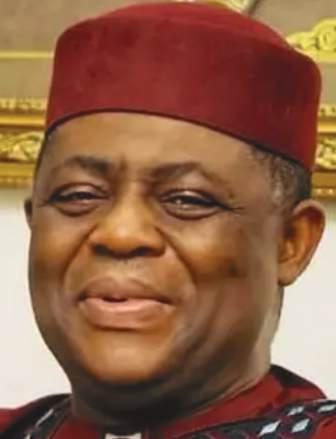
Femi Fani-Kayode Gets Rewards for Love of Unity
Femi Fani-Kayode, a lawyer and former Minister of Aviation, means different things to different people.
While some appreciate his brilliance and outspokenness, some others see him simply as controversial. However, what you cannot take away from him is his loyalty; he respects the sanctity of friendship and never takes friendship for granted.
If you ever think of compiling a list of Nigerians who deserve commendations for their love for the unity of Nigeria, this smooth-talking lawyer will certainly make the list with a generous mention. He considers every Nigerian as one. He holds the unity of the country paramount to his heart.
This we gathered has been one of the things working for him and his rising profile. He is powerful, influential, high-wired connections with friends across the four corners of the country.
and children and grandchildren who carry forward the principles he lived by. Dr. Tunji Olugbodi, Executive Vice Chairman of Verdant Zeal Communications Ltd, called his father’s passing “painful” yet expressed gratitude for a life devoted to service and sacrifice.
Even at 94, he remained engaged, a bridge between generations. His patient storytelling is well-known, especially the mingling of financial lessons with cultural wisdom. The span of Baba’s life was less about personal accolades and more about the scaffolding he provided for others— both family and community.
The Olugbodi family will announce burial arrangements in due course, yet already, Ara Kingdom mourns while celebrating a life well-lived. Pa Olugbodi leaves a legacy anchored in steady hands, measured words, and the enduring architecture of communal care.


Oftentimes, he has told anyone that cared to listen to his belief in the virtues of courage, loyalty and faith in God. His belief in loyalty to country, family, friends and political party. His patriotism and belief in loyalty to Nigeria, and also his belief in the unity of Nigeria. The Osun State-born lawyer is a detribalised Nigerian whose circle of friends cuts across the Who- is-who in high society, including captains of industry, monarchs, politicians, socialites and celebrities that he has built over the years.
Perhaps, this explains the frenzy and buzz currently around his circles of friends when he was nominated as an ambassador. Many of his friends that have benefited from his goodwill couldn’t hide their excitement for him.
Some of the notable people that spoke glowingly about Fani-Kayode last Thursday shortly after his successful screening by the senate include Ooni of Ife, Oba Enitan Adeyeye Ogunwusi. According to the message delivered by the Sooko (Dr.) Kemade Elugbaju Sooko Omoniyi and the Ambassador Plenipotentiary to the Ooni of Ife on behalf of the first class monarch, he congratulated the man fondly known as FFK over successful screening by the senate and also the appointment by the President Bola Ahmed Tinubu.
Ooni Ogunwusi congratulated FFK on his successful screening by the Senate, acknowledging the honour bestowed upon him and the people of Ifeland.
The Kabiyesi wished him continued success and grace in his new role as Ambassador of the Federal Republic of Nigeria. He posited that Chief Femi FaniKayode has distinguished himself, as the lover of his people majorly from Osun State, many of whom he appointed to effectively position all the parastatals under the Aviation Ministry while serving as the Minister of Aviation. Kabiyesi is confident that FFK will do much more.
In conclusion, the Ooni is highly grateful to President Bola Tinubu for the great honour done to Fani-Kayode and asked God tp bless the president.
Fani-Kayode
Oduah
Natasha
Akpabio
Olugbodi
One cannot measure a life by years alone. This is what comes to mind upon recalling the quiet authority of Pa Joshua Oyedele Olugbodi. He passed away on Saturday, December
Adedeji
Nigerian chimes that may their cakes be sweet, their lawyers sweeter, and their shared date forever the most expensive coincidence in Nigerian history.
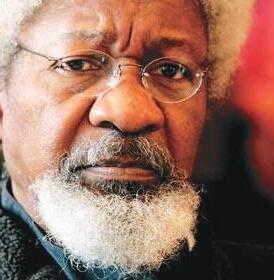
wole Soyinka’s Saul of Tarsus m oment
I was once a Sunday School teacher, and as such, I used to make reference to those teachings regularly. Remember the story of Saul, who went to persecute Christians and NEPA struck him with and the scales fell off his eyes?
That seems to be what must have happened to our dear esteemed professor, who is now singing, “Before I was blind, and now I see,” at the nearest fellowship centre following his encounter with the “battalion” that guards his ‘best friend’s’ son.
In a viral clip, it appears that the drama surrounding the First Son
and his security has suddenly opened the great professor’s previously blind eyes to the happenings of this government. He had asked earlier to be given some time to evaluate the government before speaking. The time seemed to be taking forever until his aburo’s mini army caught his attention.
Prof opened his mouth as he saw a replica of Saddam Hussein’s famous force surrounding an unelected citizen who so happens to have come out of the loins of the President.
Prof shout o – aghhh Bola, let’s
not overdo these things na. This is too much ooo. Then he ended by advising that instead of sending troops to Benin to quell the insurgency, we should just ask the “boy” to lend us a few of his “men” to dash down to Cotonou and give those insurgents frog jump.
My dear Prof, I certainly do hope that now that the scales are off, they will not come back on again o, because your voice being silent for the last two years of this administration – get as e be. Thank you.
I am sure you all saw the clip. The one where First Lady Remi Tinubu walked up to Governor Adeleke to ask him to stop singing or she would “off the mic.”
Nigerians went gaga. Led by my egbon, Dele Momodu, all sorts were said about the incident. Oh, a First Lady with no constitutional rights; a sitting governor, what an insult, a constitutional hara kiri. My people, the abuse was so much to the point that mummy had to come out to beg us not to amplify her mistakes.
You see, for me ehn, when people have suffered too much as we have, they become taut and angry. So, any small thing, they will unleash. That is why they say that a hungry man is an angry man. Nigerians are very hungry, and as such, when a few of us who are not hungry do things like this even in a playful manner, we will overreact.
Me, I have watched that footage severally and I didn’t see any real affront there o. The best we can say of it is what Yoruba people call “arifin” or “see finish” in pidgin. Those two are very good friends and were very close in the Senate. If you recall, the then Senator Adeleke was among those who built a wall around Senator Remi to fend off the rampaging Senator Melaye that year. So, this could have just been two friends playing around, and you people in your perpetual angry and
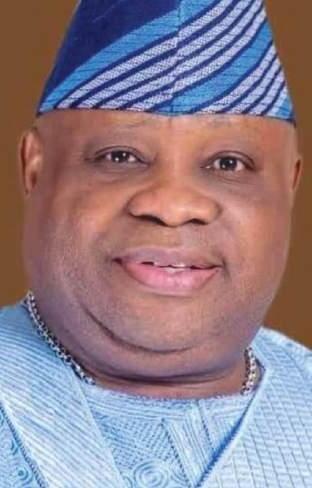
hungry state are now overreacting and crying more than the bereaved. But even this Governor Adeleke, if speaking English is the problem as I suspect, get a teacher or read a speech. Which one is singing every time and everywhere? If singing runs in your family as it obviously does, then go and do backup either for your nephew or your son and reduce this thing abeg. It is getting too much abeg. Thank you.
HArrISoN GwAmNISHU: THe HUNTer, THe HUNTeD
Harrison is that man who used to jump into the bush to assist kidnapped victims. He is a real-life superhero like those ones in those American comics. But because na Delta man, they have not sewn costumes for him like Spiderman and Superman of the Marvel Comics fame.
But what the man has been doing is nothing short of superheroism. Going almost armless into the forest to confront kidnappers, rescue victims and that kind of thing? Mbok, count me out ooooo.
Now, all of a sudden, he is the hunted. Allegations are rife that he took out of the N20million ransom money they had given him to free a couple, and as a result, the kidnappers released only the pregnant wife and held down the husband.
The police, in a swift response, arrested Harrison and sent a signal to the kidnappers to wait, that they are
coming, and will soon get back to them once they finish investigating and prosecuting Harrison. Positions are heavily divided between those who say Harrison still remains a hero despite allegedly pilfering N5million of the money, and those who are shouting for his crucifixion.
His lawyers have been quoted to have said that removing part of the funds was his strategy, as he would put trackers in the funds to enable him to track the kidnappers. Mbok, where do I stand in all of these? I stand with the people who say that all of these are a result of the total collapse of the system. If you ever have any reason to go report a case — even if it’s a petty case of pickpocketing or a babe collecting transport fare and did not show up — to the police, you will understand why Harrison today has a self-given role in our society.
My people, I think that the family are yeye people for going to report Harrison. The people they went to report him to, what have they done beyond doing photo ops with Harrison and showing themselves interrogating him in pidgin English? If I were in their shoes, I would thank Harrison for taking his fees up front but beg him to wait first for us to secure our people and then give him a car or house or six virgins as collateral for his fees. The most important thing is the life of those in captivity and not any yeye N5million.
Today, Harrison is in jail; the man is still with kidnappers, the family will still be spending money to prosecute Harrison, and nothing is being achieved. From that family, to police, to bloggers calling for Harrison’s head, to Harrison, to kidnappers, all of you are leprose actors in a foulsmelling comedy of errors. Come and beat me.
SHeIkH GUmI: mY relUcTANT SUpporT
Well, this man looks like he has not had a shower in years, plus the things he says make me ignore him. Once I see the headlines, I just hiss and move on without looking at the story itself. Like the one that he was quoted as saying, that it is better to kidnap school children than to kill soldiers. I just hissed and said -werey le eleyi o- meaning that this one is a madman. Soldiers who have signed off their lives to die for the country as against school children who are the most vulnerable in the world?
Well, that was how this morning, I decided to even just read what exactly this man meant by all this rubbish he spews. According to him, the Army cannot win against the bandits. He went on to ask which regular army has ever won a war against a guerrilla army, and I must painfully agree with the man.
Guerrilla warfare is not fought with a standing army because they don’t stay in one place; they strike like hyenas and disappear. They mix with the civilian population, making it very
IT wAS All A Joke BeTweeN remI TINUBU AND ADeleke
Gumi
Gwamnishu Adeleke malamI
difficult to attack without risking civilian casualties.
To better understand this, just imagine being attacked by a swarm of tambolo or soldier ants. They will be all over your body, biting and irritating you. You will be dancing all over the place, swathing them, but you can’t really see them. You will be feeling the bites everywhere, and in frustration, you will have to jump into a pool of water. Even at that, they will keep biting you.
So, he said, that negotiations, community relations, robust intelligence are all that is needed and not necessarily all these huge military structures that we are throwing at them.
Hmm…, Baba makes sense because Governor Fashola at some point had said something like this in response to a question by me along these lines. It is for this reason that I partially want to agree with this man with the funny beard. Can we also ramp up activities in those areas he mentioned, except maybe the negotiations are part of it — that one I will never agree to — and see if it will work?
Na suggestion ooo.
AbUbAkAr MAlAMI: A GAMe of THroNeS
This was Buhari’s Attorney-General, and he is presently cooling off his heels with the EFCC. They say he could not meet his bail conditions as at the time of writing, and as such, he is still there playing chess or whatever big men do in custody.
Mbok, the allegations are mindboggling that I am even too afraid to mention here again. If these things are true and proven, then we should look no further in search of the reasons why we are in the state of comatose that we are as a nation.
If the chief law officer of a nation can be in the middle of these levels of corrupt practices, then we are truly not only in trouble but are a dead people.
Please, slow down and note that these are just mere allegations, and the Baba has come out in a statement to note all his work in promulgating statutes to fight against money laundering, terrorism financing and all that he is being accused of. Anyway, some analysts have said that these allegations only surfaced because he has announced his intention of running for the governorship of Kebbi State, and as such, they could just be trumped up or amplified to dissuade him from running.
But whatever it is, there has never been smoke without fire. These allegations, like the N10billion one and his wife’s N4billion loan fiasco, are only just so annoying.
Let’s be patient and see how this unfolds, as I have never been one to roast a man when he has not been given an opportunity to defend himself properly in a law court. Till then, I hold fire. We are watching. Kai.
kwAM 1: THe flY IN THe oINTMeNT Like play like play, this plane catcher will emerge. The Ijebus are looking for a new king after the demise of the last one, and as expected, Fuji music maestro and one of the most influential Ijebu men in recent times has thrown his hat into the ring. He recently submitted his letter of
intent, quoting the laws of Ogun State and other laws, explaining why he should be considered for the throne. In response, his people have asked him to go and trace his family history back seven generations, which is very easy to do. In fact, if he wants me to do it for him, I will do it very easily.
The way the thing is going, KWAM 1 may just likely emerge, and there would be nothing any Aloba — who has written very strenuously on social media against it — can do about it.
If you ask me, I think the Ijebus should start preparing themselves for the golden era of Fuji in their palace, as this KWAM 1 does not joke. I have looked at the other contenders, and none meet his reach in terms of influence, accomplishments and notoriety. Kwam 1 is in a class of his own.
The only way that the Ijebus can
avoid this moving train is to institute a compulsory DNA test on all aspirants, and we may just see that his great-grandfather was actually from Ukanafon in Mpanaak Local Government of Akwa Ibom, because anything short of that, na Fuji garbage on the throne. Na wa.
ADeMIDe ADelUSI-ADelUYI: More Than a Chip of the Old Block Shey you guys still remember Prince Julius Adelusi-Adeluyi, one-time Minister of Health and promoter of the iconic Juli Pharmacy? Well, this is his daughter. A professor of African History at the world-famous Howard University. She just published a powerful book, ‘Imagine Lagos: Mapping History, Place and Politics in a 19th Century African City.’ Long title abi? Well, the book just won the very prestigious ASA Best Book Prize,
bolA TINUbU: Now THAT we Are All TerMITeS
The Rivers State Governor, Siminalayi Fubara, just announced his movement to the APC, and nobody noticed. That eel has always shown that he did not have the bone to withstand and fight for his people, so his announcement was taken like that of a hard-working prostitute who just announced her 10th customer for the evening – what else is new?
My issue today is not even with this weakling Fubara but with his grandfather principal, Bola Tinubu.
My Daddy, as at the last count, almost every governor is now holding a broom except maybe four. So now that you have stylishly moved us into a disgraceful one-party state, what next?
Mbok Abasi, what next ooo? Are we going to be doing congress as they do in North Korea, where if you dare sleep, you get your head cut off? Are we looking at a maximum rulership, where dissension could be fatal? What is the plan for Nigeria now that all of us are termites?
All of these cannot just be for 2027,
because I think you could have just gotten it without all of this crap. Are we to look beyond 2027? Are we looking at a Mugabe-type structure? What exactly is the end game, because a second term is just too little a prize for the hard work of obliterating the opposition party and moving us dangerously close to civilian dictatorship?
While I am waiting for your answer, let me just remind you that the USSR collapsed under a one-party state, and that with the APC being the only such party in the land does not necessarily guarantee you a second term in the near or whatever it is that you have planned in the long term. What would guarantee that immortality will be good governance? Simple. As long as Nigerians keep getting stuck with a broom in their backsides, no amount of crosscarpeting will guarantee you political immortality.
I wish you well. You have tried. Well done.
among other accolades.
The book, from my understanding in my discussions with the famous historian, takes a look at Lagos streets, not only giving context to the names but also drawing up the stories and history behind those names and why the streets were named thus.
As I sat down with her and her professor husband, she opened my mind’s eye to the stories behind some of Lagos’ famous streets. She even once told me about the contest between early missionaries and traditional religion adherents in winning converts either way. She mentioned that most documentaries on the history of Lagos are locked up at the British Museum in London. She showed me a copy of the book, and the in-depth work that went into it was very apparent as I held it, so it is no surprise to me that she has won this very much globally coveted prize.
Well done, my sister, well done.
MeNSAH
oMololA: relIGIoN, blooD AND Her CANCer
This lady was diagnosed with cancer and was told that the disease was confined to the breast and shoulder areas. She went on social media and raised over N30million for her treatment, but insisted on not taking a blood transfusion. Instead, she chose a longer course of treatment. Her decision is hinged on her belief as a staunch member of the Jehovah’s Witnesses. It is even reported that her church elders had threatened to punish her if she dared take the blood. Now, this has angered Nigerians who ordinarily would not be interested since it is her breast, but because they raised and contributed to her treatment, they now feel that they have a stake in the matter. Some in anger have said that she should return the funds so that others could use it to save their lives, but she argues that she chose one of the two options available to her and which would still cost her money and as such, we should all just calm down.
This matter goes straight to the heart of the matter – the effect of religion on our sanity.
Don’t let me say much, let’s all just be watching and seeing how it will pan out. All I know is that if I were in her shoes, and God forbid, I would slap that church elder that will try me with that nonsense. I swear, I will slap him.
SUNNY ADe vS ebeNezer obeY, wHo’S THe GreATeST?
This is one question that if you ask any Yoruba man, he will look at you with one eye, suddenly go dumb and walk away. This controversy I aim to bring back up, and anybody can come and beat me.
Mbok, between King Sunny Ade’s upbeat, sexy sound and the more mellow pseudo-religious sound of Ebenezer Obey, which artist would you say is the greatest?
I have the answer and will give it on this page in two weeks. When I talk finish, anybody who wants to come and beat me should feel free.
Na wa. I can look for trouble ooo. Mbok, who is the greatest of the two? Send me your answers anonymously if you like, but we must answer this question once and for all. Thank you.
Tinubu
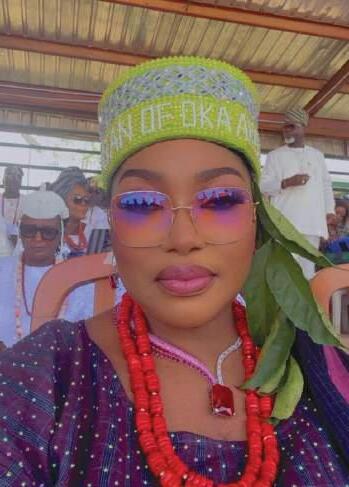
Tony Elumelu’s Compassionate Side
Banking guru, Tony Elumelu, embodies compassion in both his professional and personal life. His distinctive approach to leadership sets him apart; rather than maintaining a strict hierarchical relationship with his staff, Elumelu views them as colleagues, treating them with dignity and respect. The Africapitalist ideology proponent is dedicated to fostering the happiness and growth of his team, a philosophy that has significantly contributed to his success as a leader.
Recently, tragedy struck the United Bank for Africa (UBA), where some of his colleagues tragically lost their lives in a devastating fire at one of the bank’s branches on Lagos Island. Faced with this heartbreaking news, Elumelu immediately cut short his previous engagements to visit the site of the incident. Rather than delegating this sensitive task to others, he felt compelled to be present, demonstrating his deep empathy for those impacted by the loss.
He took the time to assess the situation
firsthand and reached out to the families of the deceased, providing support during their darkest hour.
In light of this tragedy, he made a poignant decision regarding his annual end-of-year celebration, known as the ‘TOE White Party.’ Traditionally a vibrant occasion that brings together friends and family, Elumelu has announced the suspension of the event for this year as a mark of respect for the colleagues who lost their lives in service to the bank.
This gesture not only honours the memory of the dead but also reflects Elumelu’s belief that true leadership involves acknowledging and respecting the profound impact of such losses on the entire community.
While many of his friends and family may be waiting for the usual festivities associated with the White Party, he has emphasised that this year should be a time for reflection and remembrance.
This heartfelt initiative has drawn widespread

commendations from peers and observers who appreciate his unwavering attention to detail and his sensitivity to the emotional health of his team.
It is a happy moment for Senator Grace Bent. She registered her name as a trailblazer in Nigerian politics after she represented Adamawa South Senatorial district in the 6th Senate.
She and her husband, Otunba Jackson Bent, have been installed as “Yeye Aare Arimuyanga and Aare Amuyangan of Oka Akoko respectively, during the celebration of Igoke Agba by the highly revered 79-year-old monarch, Oba Dr. Yusuf Adeleye.
Apart from being a socialite, her impressive portfolio also includes serving as Coordinator of the Stakeholders (Special Duties) Directorate of the All Progressives Congress (APC) Presidential Campaign Council.
Fondly called “GOGGO” by her admirers and the people of Adamawa state, especially her constituency, she is a detribalized Nigerian who demonstrated a high sense of commitment to doing good for the people while in the red chamber of the National Assembly.
In 2007, Senator Bent made history when she defeated many of her opponents in the senatorial election to represent Adamawa South, the largest senatorial district in the state, on the platform of the Peoples Democratic Party (PDP).
With this, she became the first female senator in the North-east geopolitical region of Nigeria and also the first female senator based on marital affiliation to be elected into the Senate from northern Nigeria (her husband Jackson Bent is an indigene of Adamawa State) and she is the first Nigerian to systematically analyse inter-ethnic marriages in her ground-breaking book, ‘Inter-Ethnic Marriages In Nigeria: Beacon Of National Unity.’
Leadership is not only based on merit and competence, but it also takes into account symbolic impact. In diplomatic circles, there is a high sense of meritocracy where individual achievement is valued. As such, her achievements were valued by President Tinubu following her nomination as an ambassador.

Call her a fashion wizard, and you wouldn’t be far from the truth. For her uncommon creativity, she has
been able to stand out in her chosen career for almost two decades. She is reputed for flying the country’s flag around the world with her premium fashion designs, which embody sophistication and femininity.
Even in the face of stiff competition, Rone is still singled out for her ingenuity, a reason her clientele continues to grow.
When she founded her high-end, Africa-based women’s wear line over 18 years ago, her mission was simple: to revolutionise, redefine, recreate and dominate the industry. In all intent and purpose, she has remained faithful to her mission.
Little wonder, when she announced the launch of her new baby, Textures of the Ocean, many who are aware of her exceptional ingenuity knew instantly that something good was about to hit the
Adewale Tinubu: The Global Ascent of An Energy Titan
Unarguably, Adewale Tinubu, Group Chief Executive Officer (GCEO) of Oando Plc, is one of the few who command a great deal of reverence in Nigeria’s vast and ever-evolving energy landscape.
To keen watchers of development in the nation’s energy sector, Tinubu’s pedigree transcends more than being the head honcho of Oando; he is the rare alchemy of audacity and foresight.
Today, his name has become synonymous with resilience and brilliance; he is also a figure whose influence transcends sectors, borders, and generations. Tinubu always sees opportunity beckoning to him. With this perspective, one easily understands Oando’s rise from a modest downstream operator to one of Africa’s most formidable integrated energy companies.
Oando, under the exemplary leadership and management style of Tinubu, has expanded across exploration, production, power, and renewables.
Given his trademark philosophy to act, tarry or strike with precision, he has been able to navigate Oando through global market shifts, regulatory waves, and economic downturns without so much noise.
Perhaps, this is the secret to his dazzling recognition and honour since the beginning
being
may be on the cliff, just like every other time he had made the attempt.
industry once again.
True to prediction, the launch that was held recently in Ikoyi, Lagos, was witnessed by the cream of society, including fashion enthusiasts, critics, and aspiring fashionistas. It was indeed a night of glitz, glam, and glamour!
The excitement was palpable, and the audience watched in awe as the models filed out on the runway one after another.
In a chat with reporters, Rone revealed that she got inspired when she was reminded that the ocean holds an extraordinary depth of energy, beauty, and abundance. “It was in that moment of reflection that the collection was born, and I would say it is close to her heart,” she said.
“Textures of the ocean is a journey into movement, tranquillity, and timeless elegance, crafted for the woman who embodies quiet power and effortless grace.”
of the year. In January, he bagged the Investor/ Transaction of the Year 2024 at the New Telegraph Awards in Lagos.
The recognition followed Oando’s landmark $783 million acquisition of Agip Oil Company, a transaction completed in August 2024 and hailed as one of the year’s most significant moves in Nigeria’s economy.
But that was only a precursor to several other accolades for Tinubu, as he was again honoured with the prestigious Lifetime Awards at the Africa Energy Week (AEW) 2025.
Like the compass with which Oando navigates the nation’s unpredictable energy terrain, Tinubu is perpetually in quest of the opportunity to position the company as both a continental powerhouse and a symbol of African ingenuity.
Again, evidence that Tinubu’s influence has become global came to the fore when Oando emerged as the preferred bidder for the Trinidad refinery.
Despite a dip in revenue, Oando posted a $145 million profit in the first nine months of its 2025 fiscal year—a testament to disciplined strategy and Tinubu’s steady hand at the helm.
Meanwhile, the most significant signal of Oando’s next chapter came recently with an announcement that underscores Tinubu’s instinct for the future: Oando is diversifying into
The ambition of ruling the state seems to have eluded him one way or another every time he aspires for the job. But like a typical politician with incurable optimism, the trained engineer keeps up the hope and courage.
Yet again, the billionaire businessman received another shock penultimate week when a heavy blow was dealt on his ambition after he was suspended from contesting the state governorship election primary of the All Progressives Congress (APC).
This is no doubt a severe setback to his agelong ambition, as well as his ‘newly revived’ political ambition. You were all aware that he only recently came back from the political wilderness. This, many in the know of the matter in the state are united in the belief that this could be the final nail to his political coffin.
No one can really put a finger on the reason behind this consistent political misadventure that has trailed him since he left office as a deputy governor.
Well, as many say, maybe he has the trust of his people and top politicians in the state.
mining, with a sharp focus on lithium and other minerals critical to the clean-energy transition.
The company has already assembled a strong team of seasoned geologists and launched exploration activities across Nigeria, including a major program in Kebbi State. By the end of 2025, Oando aims to complete its field evaluations and identify a prime location for pilot lithium production.
Many would recall that Omisore at the beginning of his political trajectory had experienced more roses than thorns until he had a showdown with his boss, marking the beginning of his political catastrophe.
He attempted to succeed him but Akande had stood his ground and stopped Omisore from contesting under the then Alliance for Democracy (AD). The war was so fierce and intense that it shook the political foundation of Osun State.
Omisore left AD and pitched his tent with the People’s Democracy Party (PDP), with the hope of flying its umbrella. But the move was akin to a kiss of death despite his heavy financial war chest and popularity.
A source revealed that Omisore, like a fighter and an ambitious man that he is, has taken up the gauntlet and vowed to fight with everything within his possession to save his political career from destruction. He is not taking this lightly at all as he is running from pillar to pole to save his career from heading for the precipice.
elumelu
Tinubu
pmisore It is an understatement to describe the current situation of Senator Iyiola Omisore as
troubled. He is disheartened and depressed, as his long-time ambition to secure the plum job of Osun State is gradually evaporating, while his political career
A publicAtion
From Lagos to Łódz, Bukola Oyebode Shapes Art Across Continents
Bukola oyebode moves across continents and exhibitions with a restless curiosity, always chasing stories
that refuse to stay buried. okechukwu
Uwaezuoke writes
Stepping into the Central Museum of Textiles in the Polish town of Łódź that autumn, Bukola Oyebode must have struggled not to look like someone running on four hours of sleep. Perhaps— who knows?—she actually was. It would hardly have been surprising, given the packed schedule that had her hopping between continents, trying to keep her ideas in order, digging up histories she didn’t want to lose track of, and lugging around the stubborn weight of artistic memory. Still, beneath her calm exterior flickered the familiar restlessness of a mind circling back to unfinished notes and half-formed thoughts.
Her journey to this moment—co-curating the 18th International Triennial of Textile—didn’t begin with grand pitches or glossy presentations; it began quietly, almost casually, without the usual fanfare. It began, quite simply, with someone noticing. “I didn’t realise I was being observed prior to the invitation,” she says, still perhaps faintly flustered at the serendipity of being seen by the right eyes at precisely the right time. Those eyes, as it turned out, belonged to Marta Kowalewska, the museum’s chief curator and the seasoned helmswoman of the last two editions.
Earlier, Kowalewska—convinced that the Triennial’s future could use a little less monochromatic approach—had pitched to the Programme Council a curatorial expansion.And this meant more voices, wider horizons, fewer Eurocentric filters. “Their focus was expanding its curatorial process, reflecting the dynamics of the art world,” Oyebode recalls. In that desire for expansion, she found herself drawn into the day-to-day machinery of a European institution trying, in its own way, to rethink itself.
The work began in early 2024, and what awaited her was the kind of inbox shock that makes one pause and mutter, how did I end up here?: 1,600 portfolios from nearly 40 countries. Yet even amid the chaos, there was an almost anthropological thrill. The resulting exhibition, Deconstruction/Reconstruction, brought together 70 artists weaving meaning from textile, memory, and the very real political tensions shaping their worlds. “It became a space to rethink the current state of the world,” she says, with the clarity of someone who has seen what artists can dredge up when institutions finally place opportunities on a silver platter. As if that weren’t enough to provoke a brief how-did-I-end-up-here? moment, destiny handed Oyebode an unexpected challenge. She was still knee-deep in the main show when she was asked—casually, as though tacking on a minor aside—to curate a collateral exhibition as well. Rhizomatic Portals: Ways of Knowing quickly became a broad, intergenerational gathering of African women artists, each contributing a story woven from heritage, intuition, and the deeper dimensions of cloth. She curated it with the kind of careful attention one reserves for something easily lost or mishandled, and with the precision of someone fully aware that African women cannot be neatly categorised. “I placed emphasis on weaving together self-stories and emotions,” she says, possibly a veiled warning
to any visitor expecting a tidy, linear exhibition. The show, deliberately nonlinear, is a rich and improvisational weave of narratives: spiritual cosmologies, land regeneration, intergenerational memory, the tactile intimacy of textile practices, and the long shadow of colonial rearrangements. The statement could serve as a manifesto for her entire practice—an insistence that African art, like the lives it mirrors, resists simplification.
Artists like the Senegalese-French Aissa Dione, the Moroccan Amina Agueznay, and the Nigerian-born but US-based Peju Layiwola stand alongside younger practitioners not as contrasts but as continuities. Yet what sets Oyebode apart is the way she tenaciously holds on to historical detail, never letting a name or earlier contribution slip past unnoticed. “I try my best not to erase precious history,” she says, explaining her archival dig that unearthed Madame Zo, the late Malagasy artist whose presence in the 2007 Triennial deserved a return to the spotlight. Through an homage within the exhibition, Oyebode resurrected that legacy, quietly resisting the fashionable tendency to brand every contemporary African participation as a “first.”
Most people would have called it a day at that point. But Oyebode, by disposition averse to the run-of-the-mill, kept plodding on. While stitching together two exhibitions in Poland, she was simultaneously organising a satellite programme in Lagos for The Listening Biennial, a decentered global project where sound becomes a form of collective engagement. “This year has been exceptionally busy for me but also fulfilling,” she admits, carrying the weariness of someone who has finally paused long enough to take stock.
The Lagos exhibition, titled Wind Chimes, Gongs and Bells. For Whom Is This Call?, unfolded at the newly reopened Centre for Contemporary Art (CCA) Lagos—an institution intricately threaded into her own artistic story. Artists from Nigeria, Sudan, Switzerland, the Netherlands, and Cameroon converged, treating Lagos not as a brief stopover but as a place where global concerns and local rhythms could bump against each other. The Lagos Sound Artists' Collective added a live sonic performance that felt like a communal exhale. At the emotional centre of this chapter was her return itself. “Returning to Lagos was a major highlight of my year,” she says. The journey wasn’t merely a flight home; it was a pilgrimage to the place where the late curator Bisi Silva had once taken her under wing. Being back at CCA Lagos, now helmed by Oyindamola Fakeye, felt like life looping back in a way she hadn’t fully anticipated.
Before all this continental shuttling and curatorial shape-shifting, there was TSA Art Magazine—the publication she founded and edited with a kind of devotion that felt more like a long-developed habit than a grand plan. The Nigerian art scene has always been vibrant, yet under-documented. “I consider my work in publishing a conscious archiving practice,” she says, as if archiving weren’t a herculean task but merely diligent stewardship. Through TSA, she collected stories, held space, and built a

semblance of infrastructure where none existed. Even when the magazine ended, the impulse did not. Its spirit reincarnated into TSA Ideas Lab, a laboratory for ideas that refuses tidy categorisation or labels. From there emerged new publications—the hybrid magazine/book Artists & Cities, the monograph Tracings of Time and Place on Nigerian-German artist Ngozi Ajah Schommers, Omonblanks’ Kids from the River, and the Momentum 12 publication Together As To Gather. Each felt like a quiet refusal to let important work fade into silence.
Speaking of Schommers’ monograph, she notes, “In an ideal ecosystem, she would have had one or two critical publications. Working
on this was an act of recognising that gap and filling it.” On Kids from the River, she is equally emphatic, pointing to its refusal of neat categorisation and the challenge of finding a platform for such work. These choices reveal a through-line in Oyebode’s practice: a refusal to allow silence where documentation ought to exist.
Now, somewhere between China—her newest home—Poland, Nigeria, and The Netherlands, she is quietly plotting her next act. “I am in the early phase of preparing a publication bringing together some amazing women artists,” she reveals, though the slow pace of funding tempers the timeline. She is also nudging open the door to Asia, where future collaborations shimmer at the edge of possibility. Her career, it seems, doesn’t follow a neat, step-by-step path; it spreads out in unexpected directions, sometimes messy, sometimes brilliant, always in motion.
Oyebode’s story is not one of arrival but of continuous motion, of a curator, editor, and archivist whose work shifts depending on where she is and what she’s wrestling with. She is, in many ways, a listener—attuned to archives, to artists, to histories that resist forgetting. Yet she is equally a builder, reconstructing narrative linkages where institutions have left gaps. If the world is, as she says, in a state that requires rethinking, then her work—quietly insistent, meticulously layered—does not offer answers so much as ways of working through things: a method for knowing, a method for remembering, a method for stitching the world back together.
View of work by Adeola Olagunju and Marie-Claire Messouma Manlanbien in 'Rhizomatic Portals: Ways of Knowing', Collateral Exhibition of the 18th International Triennial of Textile. Courtesy of Central Museum of Textiles in Łódź
Installation view of 'Rhizomatic Portals: Ways of Knowing', Collateral Exhibition of the 18th International Triennial of Textile. Courtesy of Central Museum of Textiles in Łódź
Oyebode
When Abuja Feasted on Colours
From December 3 to 7, the dream of the inaugural Abuja Art Fair crystallised at the Art Pavilion of the International conference centre (Icc), transforming the Federal capital Territory into an unexpectedly vivid stage for creativity, dialogue, and cultural exchange. For a city that has been quietly undergoing an image makeover — helped along by a steady procession of exhibitions, open studios, and artistic flirtations — the fair arrived like yet another jaunty feather in a hat that is fast evolving into something far more theatrical than even its most hopeful boosters had imagined.
Abuja — which, despite its earnest push for cultural relevance, still often finds itself cast as Lagos’s quieter understudy — seemed positively thrilled by the disruption. Visitors roamed through the partitioned exhibition halls humming with colour and conversation. Paintings announced themselves with the boldness of debutantes; sculptures appeared to bask in the steady gaze of admirers; installations, predictably, carried the knowing air of works that understand far more than they choose to reveal. What emerged was a landscape that felt both carefully curated and faintly conspiratorial.
At the centre of this subtle cultural shift stands Jeff Ajueshi, a curator whose career has long fused patience with a sort of quiet audacity. Nearly two decades ago — when Abuja’s art ecosystem could, with generosity, be called aspirational — he set about founding the Thought Pyramid Art Gallery, which later expanded into the Thought Pyramid Art centre. These early spaces functioned as creative refuges at a time when artists in the capital frequently complained of being marooned far from Lagos’s bustling art economy. Over the years, his vi-
ABUJA ART FAIR
sion sprawled geographically — from Abuja to Ikoyi, benin city, and Oghara — forming a lattice of creative hubs that gently but firmly suggested that art life need not remain the exclusive preserve of a single coastal city.
If the Abuja Art Fair felt like the natural next chapter, it was because its exhibitions sketched confident lines across Nigeria’s many ongoing cultural conversations: environmental anxieties rendered in pigment and fibre; meditations on civic responsibility tucked into mixed-media assemblages; and works by women artists that sliced cleanly through the visual noise with a kind of understated authority. The atmosphere suggested a city not merely hosting art but engaging in an active, occasionally cheeky
negotiation with it.
None of this occurred in isolation. behind the scenes, patrons like Osahon Okunbo provided the kind of steady support that often separates lofty aspiration from works that are actually installed, lit, insured, and seen. Through the Osahon Okunbo Foundation, his commitment to contemporary art — especially the nurturing of emerging voices — lent the fair both a practical backbone and an ideological boost. In a country where arts funding can resemble a mirage shimmering just beyond reach, interventions like his bring a rare and tangible clarity.
For Abuja, the arrival of the fair meant more than a week of visual indulgence. It marked a subtle but significant shift in Nigeria’s cultural map. Lagos may still reign as the country’s commercial art heavyweight — the enfant terrible with more stamina for traffic than most — but
Exploring the Intersection of Art, Sound, and Self-Discovery
Nigeria-based multidisciplinary artist, Oluwayemisi AbejideAkingbola, opened the doors of her creative world to the public in a special two-day event titled “Open Hues:ASound XArt experience”, held from November 28 to 29 at her Hues of comely Studio at magboro, Ogun State. It was an intimate, sensory-driven encounter that invited visitors not only to view her works, but to listen, feel, and question the deeper meanings behind them.
Akingbola, a visual artist, sound artist, fabric-print designer, and sculptor, is known for weaving her culturally rooted stories through different mediums. Yet inside her studio, her art takes a more personal, exploratory turn. Visitors arriving at the space are greeted by neatly lined plants climbing the staircase — like gentle guides into Akingbola’s world. Inside the studio, her paintings — a clutter of creativity — sit boldly on the walls, while her drawing table stands like an altar of ideas, and a dimly lit, tunnel-like corridor invites guests to step into a private moment of reflection.
As part of its annual calendar, the Guild of Professional Artists of Nigeria (GFA) is showcasing a rich collection of artworks at 202 Gallery in Ikoyi, Lagos. The exhibition, titled Reflections, runs from December 15 to 19, and brings together pieces from both seasoned masters and emerging talents. curated by majid biggar, the gallery manager, Reflections features 27 members of the Guild, presenting a mix of sculptures, paintings, mixed-media works, and drawings. According to the gallery, the exhibition celebrates mentorship, creativity, and the dynamic interplay between tradition and innovation in Nigerian art. The show highlights iconic works such as Ato
VISUAL ARTS
In that narrow path, each visitor puts on headphones to listen to her self-composed 8D sound piece, created in a language she built for herself. She calls it an idioglossia—a private language formed from existing sounds but bearing new meaning.
“basically, you come in, wear the headset, and listen,” she explains. “I created my own language because my work has its own visual language. I want cohesion—meaning in the patterns, meaning in the sound. The whole meaning of the song is ‘I create peace’.”
For Akingbola, a graduate from OAU Ilé-Ifè, drawing and painting are not enough. She believes much of the emotional essence behind an artwork is often lost, especially those silent thoughts that sit inside an artist’s mind.
“You see me painting, but you don’t know what’s in my head,” she says. “I’m trying to create a bridge between what we see and what we do not see. That’s where the sound comes in.”
Her open studio is therefore designed to provoke curiosity in every visitor. The installation, titled “What Are You curious About?”, is inspired by childhood
EXHIBITION
Arinze’s 1998 bronze sculpture “Torso of a Tomboy” and DukeAsidere’s vibrant abstract portraits. Young artists are also on display, including collinsAbinoro, whose deer sculpture crafted from repurposed spoons transforms everyday materials into art, and elizabeth ekpetorson, whose intimate paintings explore self-acceptance and emotional healing. Other notable contributions include Gerry Nnubia’s recycled metal pieces, Sam ebohon’s acrylic paintings on plexiglass, and Nathalie Djakou Kassi’s bronze figures examining femininity and balance. Also on display are emotive portraits by Olajide Salako and edosa Ogiugo, alongside George Edozie’s impressionist works reflecting social, political, and emotional dimensions of life today. Across the gallery, visitors can experience the
Abuja has begun staking a convincing claim as a hub of thoughtfulness, experimentation, and cross-regional artistic exchange. The fair broadened the national art calendar, offered a platform for Northern and middle belt artists too often overlooked in coastal curatorial circuits, and provided the city’s collectors with ideas and debates far fresher than their usual dinner-table fodder.
By the time the final day, December 7, drifted to a close, the transformation was unmistakable. Abuja had, if only briefly, set aside its reputation for bureaucratic composure and allowed itself to glow — not with political pomp, but with genuine artistic curiosity. The fair revealed that the city’s cultural pulse was no longer theoretical; it throbbed with visible confidence across the Art Pavilion’s galleries and walkways.
For many observers, the event felt both like a culmination and a beginning. Nearly two decades of groundwork by Ajueshi, alongside a network of artists, patrons, and cultural workers who saw potential where others saw a paper-pushing city, had finally borne fruit. Yet the fair also read like the opening chapter of a new story — a signal that Abuja’s role in Nigeria’s cultural narrative is expanding, perhaps inevitably. The event suggested that creativity and governance need not occupy separate spheres in the capital; they could coexist, overlap, and even intertwine, much to the delight of the city’s art aficionados. In the end, Abuja r ising emerged not as a slogan but as a lived reality — a city discovering that its imagination, like its architecture, had room to stretch. And if the inaugural edition offered any indication, Abuja may soon be known not only as the nation’s political capital, but also as its quietly throbbing creative heart.
memories of those tiny, almost forgettable moments that later return as powerful recollections.
“curiosity leads to questions, questions lead to answers,” she says. “At the end of the tunnel, what will you find? How will it change your perspective?”
One striking part of the show is her pathway lined with sculptures made from discarded styrofoam. She uses the material to pose questions about purpose, transition and reinvention.
“When styrofoam has protected an object, what happens next?” she asks. “Do we discard it or give it a new life? For me, that’s an allegory of relationships and phases of life. What happens when our role ends? Do our memories get discarded, or do they shape who we are?”
Akingbola refuses to be restricted to one form of expression. With a background in broadcast journalism spanning 13 years—presenting, producing and directing—she says every part of her past now strengthens her art.
“I refuse to be put in a box,” she says. “I started painting for fun, but during cOVID-19 I began taking art seriously. even now, my experience as a voiceover artist and producer supports what I do.”
She describes herself as an abstract and sound artist who draws heavily from African culture and uses 8D sound, audio that can be manipulated from
diversity of Nigerian artistry through the works of ben Ibebe, emeka Nwagbara, Fidelis Odogwu, Olisa Nwadiogbu, Wande George, and others. Speaking at the opening, Gerry Nnubia, chairman of the exhibition committee, revealed that the
One of the works
left to right to deepen the stories she tells. From exhibitions in the UK to multiple residencies, Akingbola continues to explore new materials and ideas. but at the heart of her practice is a simple desire: to make people think, question and reconnect with forgotten parts of themselves.
Her two-day open studio succeeded in doing just that, turning a quiet creative space into a corridor of self-discovery, memory, and sound. In the end, Akingbola leaves each visitor with one question echoing in their mind: What are you curious about?
Guild, now 10 years old, is dedicated to nurturing artistic excellence. “The Guild is a crop of very excellent artists,” he said. “every year, we showcase a fragment of what we can do, to present the best of Nigerian art. Reflections is about bringing past and present together, showing how art evolves over time.”
Nnubia’s own works, “Love Garden 5 & 6,” reflect his vision of God’s original plan for humanity to dwell in love. He also noted differences between generations, saying younger artists are more liberal and innovative, while older artists bring their own dynamic approaches to their work.
emeka Nwagbara, another exhibiting artist, described the exhibition as a benchmark for the Guild. “People come not just to acquire art but to be inspired and educated,” he said. “every artist must leave a piece of themselves in their work so it can be recognised through style, colour, or technique.”
Yinka Olatunbosun
Yinka Olatunbosun
at the exhibition
Ajueshi in the midst of a sculptural installation
IN THE ARENA
As Northern Leaders Unveil Fresh Blueprint on Insecurity
How the governors of the 19 northern states and traditional rulers will implement the resolutions reached at their meeting in Kaduna recently will reveal their commitment to addressing the insecurity ravaging the region, Davidson Iriekpen writes
Afew months after they gathered in Kaduna for a meeting on the security situation in their region, the governors of the 19 states in the North met again recently to discuss solutions to the widening crisis.
The meeting also had traditional rulers led by the Sultan of Sokoto and Chairman of the Northern Traditional rulers Council, Mohammed Sa’ad Abubakar II, in attendance.
The leaders discussed how to tackle the worsening insecurity situation and other socioeconomic challenges affecting the region. They conducted a comprehensive assessment of the problem and proffered sustainable solutions which, if implemented, would go a long way in addressing the insecurity ravaging the region.
For over a decade, the northern region has been grappling with heightened security threats – ranging from killings, banditry, insurgency and kidnapping.
Different groups of terrorists are simultaneously running amok, putting the entire region under siege.
To many in the region, the situation is dire. Killings and kidnappings have surged, unsettling citizens and raising serious questions about the effectiveness of national security frameworks.
Over the years, what used to be episodic attacks have evolved into a sustained campaign of abductions, village raids and highway banditry that expose deep cracks in the country’s ability to protect its people.
The bandits have since extended their atrocities to the southern parts of the country, unsettling everyone.
Across the region, and some southern parts of the country, travellers avoid certain routes, farmers abandon their farmlands, and families adjust their routines around the unpredictability of violence.
In the Middle Belt, attackers strike quickly, vanish into unmapped forests, and resurface in another location days later. Communities are left grieving while government assurances rarely transform into long-term relief.
Not only has insecurity devastated the region, it has also spread wide-scale poverty and hunger as farmers no longer go to their farms, which is the primary source of their livelihood.
The situation has also seriously affected education, further increasing the number of out-of-school children and spreading mass illiteracy.
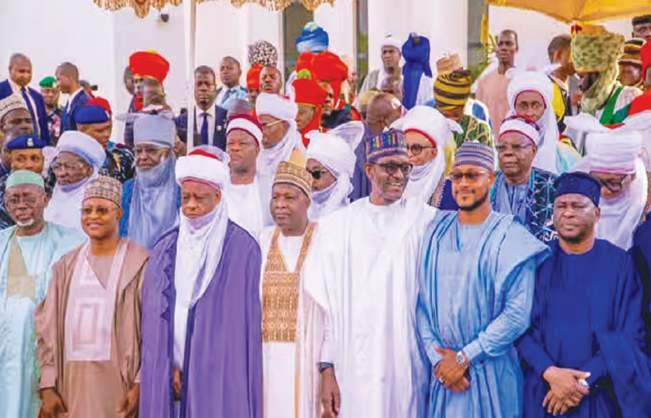
The insecurity in the north has spread to the southern region, further putting the entire country on edge.
Confronted by these challenges, the leaders, in unison, agreed that only a joint action could halt violence.
The Chairman of the Northern Governors’ Forum, Governor Inuwa Yahaya, said the security challenges confronting the north are multifaceted and affect both Muslims and Christians.
According to him, the present security situation in the north requires that leaders of the region unite and collectively address the key drivers of insecurity, such as underdevelopment and illiteracy, just as he cautioned against promoting divisive and one-sided narratives that undermine national cohesion, entrench divisions, and ultimately harm their collective efforts to tackle the challenges.
“To return northern Nigeria to the path of stability and prosperity, we must work together, hand in hand, to confront these challenges by investing massively in human capital development, critical infrastructure, and socioeconomic opportunities. In this light, we placed the issues of Almajiri and out-of-school children at the forefront of our agenda today.
“My dear colleagues, the reality of millions of our northern children roaming the streets instead of being in classrooms is not only unacceptable but also a stain on our collective
conscience. we must move beyond rhetoric and take decisive and coordinated actions to put every child in school and equip them with the knowledge and skills required to achieve their God-given potential.
“Our challenges are local, and their solutions, to a large extent, lie in this hall (the political and traditional leaders of northern Nigeria). I therefore call on all of us to engage in today’s discussions with the seriousness it demands. we must create local solutions to address our local problems.”
At the end of the meeting, the governors announced far-reaching resolutions issued in a communiqué. It includes their commitment to unity, stability, and the collective development of the region, as well as a pledge of renewed support for actions taken by president Bola Tinubu to intensify military operations against insurgents and criminal elements in their hideouts. They hailed the sacrifices of the security personnel engaged in counter-insurgency operations nationwide.
In one of its major resolutions, the forum reiterated full support for the establishment of the State police. It urged federal and state lawmakers from the region to fast-track the legislative process required to actualise it.
The governors also identified illegal mining as a key driver of insecurity and recommended that the president direct the Minister of Solid Minerals to suspend mining activities for six months. The suspension, they said, would allow
for a comprehensive audit and revalidation of all mining licences in consultation with state governments.
As part of broader security reforms, it approved the creation of a regional Security Trust Fund. each state and its local governments will contribute N1 billion monthly to be deducted at source under an agreed framework to strengthen security operations across the North.
On his part, the Sultan, who led the traditional leaders, called on the region’s governors to listen more attentively to their critics and to use constructive feedback to strengthen governance across the north. He also called for more frequent engagement between governors and traditional leaders across the three geopolitical zones, proposing structured meetings to harmonise decisions affecting the north.
One important aspect the leaders left out during the meeting is their commitment to the swift prosecution of kidnappers, bandits and terror suspects as part of efforts to curb the escalating insecurity across their states. If the perpetrators of violence are prosecuted for their actions, it will serve as a deterrent to others.
Notwithstanding, the governors’ meeting was good. For too long, they left the security of the people in the hands of the federal government, as if it were not their responsibility to protect the lives of citizens. Now that they have resolved to take action, they must be strategic, and their plans must be detailed and sustained.
A weakened public trust can only be rebuilt through visible, sustained action. Citizens want coordinated operations, not conflicting statements.
The current moment calls for serious actions. what the country faces requires a recalibration of its security priorities. Intelligence must take precedence over brute force. Communities need to be integrated into early-warning mechanisms. Technology - especially aerial surveillance, communication tracking, and real-time mapping of forest corridors - must shift from policy statements to operational deployment.
The states must also be allowed clearer, legally backed roles in security management, as the current centralised structure is no longer sufficient to address a crisis spread across vast territories.
with this renewed determination, Nigerians are eagerly waiting to see how the governors’ deliberations will be implemented to restore peace and development to the region.
FG’s push for Speedy Trial of Terror Suspects
One thing that cannot be denied in the country today is the fact that the designation of Nigeria as ‘Country of Particular Concern’ by the United States President, Mr. Donald Trump, and his threats of invading the country have suddenly woken the Nigerian government up from its long slumber.
The Attorney General of the Federation and Minister of Justice, Lateef Fagbemi (SAN), last week gave an assurance that the federal government would be committed to the swift prosecution of kidnappers, bandits and terror suspects as part of efforts to curb the escalating insecurity across the country.
Speaking last Monday at the opening of the 2025/2026 legal year of the Court of Appeal in Abuja, Fagbemi said government was prioritising timely prosecution over prolonged detention or
exclusive reliance on military operations. He stated that accelerated trials for suspects linked to masscasualty attacks, kidnap-for-ransom syndicates, extremist recruitment and terror financing would help dismantle criminal networks and reduce impunity.
“At this solemn juncture in our national life, it is impossible to ignore the grave challenge of insecurity confronting our country. The judiciary must lend its weight to national efforts through firm and courageous adjudication that ensures those who threaten peace are held accountable,” he said.
The minister noted that President Bola Tinubu has approved the immediate appointment of additional Federal High Court judges to strengthen national counter-terrorism efforts and speed up the handling of terrorism-related cases.
Fagbemi said the court’s Fast-Track Practice Directions for terrorism, kidnapping and humantrafficking cases have significantly improved the pace of justice delivery. According to him, swift and decisive adjudication builds public confidence and reinforces the nation’s resolve to confront terrorism through the rule of law.
Before Trump’s threat, Nigerians were being killed and kidnapped almost on a daily basis without the perpetrators being arrested or prosecuted.
Nigeria was the only country where bandits could invade a community and wipe out the residents and disappear into the air.
Those enabling these terrorists live in the country, yet no law enforcement agency has summoned the courage to bring them to justice.
Northern governors
Fagbemi
BRIEFING NOTES
Nigeria’s Celebrated Military Mission in Benin Republic
With the celebrated gallantry of the Nigerian Air Force fighter jets and ground troops deployed against coup plotters in the Republic of Benin, many Nigerians have been wondering why such air and ground assets have not moved against the bandits holding many Nigerians hostage within the nation’s territory, e jiofor Alike reports
Many Nigerians were shocked when President Bola Tinubu last Sunday confirmed what he described as the swift response of the Nigerian military to a request from the Government of Benin Republic to help protect its 35-year-old democracy after soldiers attempted a coup at dawn.
The President’s Special Adviser on Information and Strategy, Bayo Onanuga, said Benin Republic made two separate requests for military assistance to foil last Sunday’s coup in that country.
Following the first request, Tinubu was said to have ordered Nigerian Air Force (NAF) fighter jets to enter Benin’s airspace and help dislodge the coup plotters from the National Television station and a military camp where they had regrouped.
A second request was for Nigeria to deploy Air Force assets within Benin’s airspace for surveillance and rapid-intervention operations under Benin-led coordination.
The Beninese authorities also requested Nigerian ground forces “strictly for missions approved by the Beninese command authority in support of the protection of constitutional institutions and the containment of armed groups.”
The Chief of Defence Staff (CDS), General Olufemi Oluyede, also confirmed that all requests had been executed.
“Ours is to comply with the order of the Commander-in-Chief of our armed forces, President Tinubu,” he said.
Soldiers led by Colonel Pascal Tigri had earlier on that Sunday announced a coup, seized the National Television station and declared that President Patrice Talon had been removed and democratic institutions suspended.
However, government loyalists, assisted by Nigerian forces, regained control of the broadcaster after several hours and flushed out the coup plotters.
After order was restored, Tinubu commended the Nigerian armed forces for standing “firm as a protector and defender of democracy.”
President Tinubu later sought and obtained approval from the Senate for the deployment of Nigerian troops.
During the session, the senators were said to have examined the security, humanitarian, and diplomatic implications of the deployment.
Key concerns included the potential influx of refugees into Nigeria, the safety of border communities, and the broader consequences for regional peace and security
After an extensive debate, the lawmakers overwhelmingly voted to ratify the president’s action.
In his remarks, the Senate President, Senator Godswill Akpabio praised Tinubu for taking steps
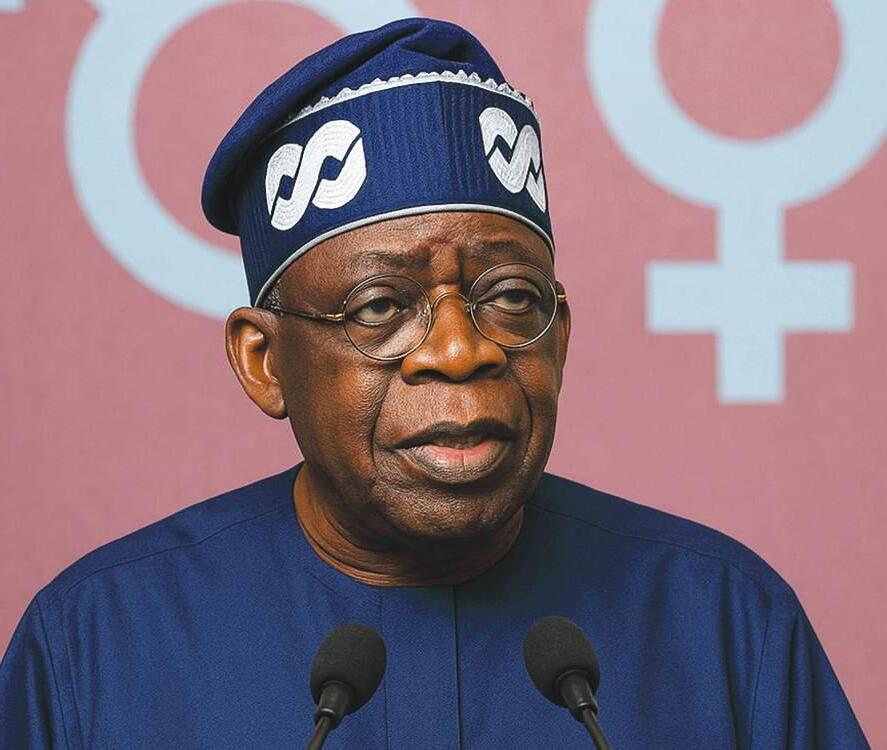
Tinubu
to stabilise the region and upholding constitutional norms by seeking Senate’s consent, even after an “urgent deployment”.
However, many Nigerians were shocked that the NAF and the Nigerian Army could swiftly dislodge the coup plotters in Benin Republic but are unable to save many Nigerians in the den of kidnappers and bandits operating within the Nigerian soil.
Many expressed shock that the military failed to show similar commitment to track the locations of bandits and their victims within the Nigerian soil and deploy the same air and ground assets to dislodge the terrorists and rescue their victims.
Reacting, the Save Nigeria Group USA, in a strongly worded press statement, said the action stood in stark contrast to the Nigerian government’s alleged rejection of US assistance for targeted strikes against extremist groups like Boko Haram and Islamist Fulani militias that are reportedly terrorising Nigerian citizens.
“A president must first remove the log from his own eye before acting as a self-styled regional policeman,” the group
declared.
“Nigerian lives must come first. National security should come first. Protect Nigeria before playing the regional hero.”
“The same administration that refuses to bomb known terrorist camps within Nigeria, abandoning Christians, farmers, and villages to slaughter, suddenly finds jets, fuel, and political will to bomb the Benin Republic,” the statement read.
“This exposes a deeply troubling pattern of neglect, complicity, and hypocrisy.”
Similarly, the presidential candidate of the Young Progressive Party (YPP) in the 2023 general election, Malik Ado-Ibrahim, speaking during an interview on television, said deployment of troops by Nigeria was a contradiction.
“You went to Benin Republic; you didn’t pay attention at home here. That’s the contradiction that we’ve seen in the last 48 or so hours,” he said.
He added that while Nigeria can project force externally, communities at home continue to face kidnappings and terrorist attacks.
Malik added that kidnappers exploit Nigeria as a “soft target.”
Many other Nigerians believed that the Nigerian military prioritised its intervention in Benin Republic
over Nigeria’s internal security because the coup in Benin was a threat to Nigeria’s ruling class and had to be averted while the insecurity affects only ordinary Nigerians.
However, Nigeria’s role in foiling the coup may have also provoked the ire of the military governments of Burkina Faso, Mali and Niger Republic, which seized NAF C-130 aircraft and detained 11 Nigerian military officers in Burkina Faso after the aircraft made an emergency landing in the country.
A successful coup in the Benin Republic would have brought the number of countries under military regime in West Africa to four.
The Air Force C-130 aircraft entered Burkina Faso’s airspace last Monday without authorisation, according to the country’s Territorial Administration Minister, Emile Zerbo.
In a joint statement, the military governments of Burkina Faso, Mali and Niger said their prompt investigation confirmed the “violation of its airspace and the sovereignty of its member states.”
But NAF said a technical problem forced the plane, which was en route to Portugal, to land in accordance with safety procedures.
The aircraft landed in Bobo-Dioulasso, in the west of Burkina Faso and its second-largest city. The NAF said it was the site of the nearest airfield when the plane had to make an emergency stop.
But the Nigerian account of the incident contradicts the position of the trio of Sahel countries, formally known as the Alliance of Sahel States (AES), which said that the aircraft entered Burkinabè airspace without prior authorisation and was forced to land.
It called the landing an “unfriendly act” and said the countries’ respective air forces had been put on maximum alert and authorised to “neutralise any aircraft” found to violate the confederation’s airspace.
On its part, the Nigeria Governors’ Forum (NGF) said President Tinubu’s “prompt intervention” in the attempted coup prevented a major security threat to Nigeria.
NGF Chairman and Kwara State Governor, AbdulRahman AbdulRazaq, said a successful takeover in Benin would have created opportunities for militants and other non-state actors operating across the Sahel to further destabilise the country.
“With the Sahel already in severe security distress, a successful coup in Benin would have had devastating effects on our own country due to the long and porous borders we share,” the statement added.
As the debate over Nigeria’s military mission in Benin Republic rages, the expectation of many Nigerians is that the same air and land assets should be mobilised to dislodge bandits from ungoverned territories within the Nigerian soil and rescue their hostages.
Nasarawa as Quite Haven for Gunrunning Syndicates
RecenteventshaveindicatedthatNasarawaState is emerging as a hub and transit route for gunrunning syndicates operating across various states in Northcentral Nigeria.
Manyillegalgun-runningsuspectsarrestedinAbuja; Makurdi-Wakari-Jalingo Road; and Abuja-Kaduna Expressway have often admitted to buying weapons from Nasarawa for bandits in the North-west region.
Securityagencieshavealsomadenumerousarrests andseizedlargecachesofweaponsinthestateaspart of ongoing efforts to combat this criminal activity. These arms include AK-47 rifles and other assorted weapons.
Security forces, including the Nigeria Police Force and the Nigeria Security and Civil Defence Corps (NSCDC), have conducted successful operations in 2025targetingarmstraffickinginandaroundthestate.
InSeptember2025,thepolicecommandrecovered 38firearms,includingAK-47,AK-49,andG-3riflesand over 4,200 rounds of live ammunition in operations near the Benue border.
In separate operations in February and October 2025,securityforcesrecoveredadditionalautomatic rifles,pistols,andthousandsofroundsofammunition, leading to further arrests.
Nine suspects, including alleged gunrunners and localarmsmanufacturers,werearrestedinSeptember 2025. Other arrests in 2025 have included a female arms courier, individuals involved in an illegal arms manufacturing ring, and suspects linked to arms supply networks spanning multiple states like Plateau, Kaduna, Taraba, and Benue.
A lot of times, most of those arrested are retired or deserted soldiers or policemen who have turned
criminal elements.
Investigationshaverevealedthatthesesyndicates use Nasarawa as a base for manufacturing, storage, and distribution of arms to various criminal elements, including bandits, kidnappers, and groups involved in communal clashes.
The state’s proximity to other volatile regions and the FCT(Abuja) makes it a strategic location for these activities.
Recently, the state’s Police Commissioner, Shettima Mohammed Jauro, personally led some of these operations and commended the efforts of security operatives and residents for their cooperation.
This is why security agencies, including the Department of State Services (DSS) must carefully beam theirsearchlightsonthestatewiththeaimofarresting the syndicates.
Ajayi
International Politics of Benin’s 2025 Coup and Nigeria’s Intervention: QuoVadis, Africa?
The foiled coup d’état on Sunday, 7th December, 2025 in the Republic of Benin raises many questions than answers. First, will there ever be an end to coup-making in Africa, and particularly in the West and Central Africa regions of Africa? This question is raised in light of the fact that most of the coups d’état that had taken place occurred in the two regions where the policies of subsidiarity and zero tolerance for unconstitutional changes of government (UCG) are underscored. African Union (AU)’s principle of subsidiarity is about bringing the peace process nearer to the people. In other words, it is predicated on the belief that sustainable peace is possible if conflict resolution mechanisms are enabled by people who are geopolitically and strategically close to the scene of a given crisis. In other words, crises in the West Africa region are expected to be handled by the Economic Community of West African States (ECOWAS). The same is expected of the Economic Community of Central African States (ECCAS) for the crises in the Central Africa region.
Secondly, why is it that all the states involved in the coups in the past five years are Francophone states? In the immediate post-independence era, coup-making was common with Lusophone and Anglophone countries of Africa. Today, the Anglophones appear to have thrown UCG into the garbage of history or left it for the Francophones to manage. Are the coups mainly anti-French? Will the rapprochement with Russia be more profitable than that of the traditional allies?
Thirdly, with the recidivist character of coup-making in West Africa, what really is the future of the AU-ECOWAS policy of zero tolerance for UCG in Africa? On the one hand, the sermons of continental unity are preached. On the other hand, Africa is playing host to establishment of sub-regions and sub-regional organisations. Can the objective of continental unity be achieved by dividing? Can one unite by dividing or what is uniting by dividing? More importantly, has democracy any good future if elected presidents are now the very people organising coups d’état in their home countries, especially as most recently shown in the case of Guinea-Bissau? In which way is the Bissau-Guinean coup different from that in Benin?
Benin’s 2025 Coup and Nigeria’s Intervention
The various coups d’état in West Africa since 2021 appear to have enjoyed popular support which has also made a nonsense of the sanctions taken by the ECOWAS against the military juntas that came to power by use of force. The African Union (AU) and the ECOWAS have shown keen interest in fighting UCG but with little or no interest in the dynamics of the coupmaking. They appear to want to defend elected presidents to the detriment of the interests of the people. This is one conflict of interest that enhanced coup-making.
Put differently, whose interests take priority: those of the people or those of the elected government? Why is the AU or ECOWAS not able to promote and ensure good governance, and by so doing prevent coup-making? Why are the regional organisations not interested in containing poor governance, which is one important reason for coup-making? Why is there much interest in sanctioning UCG? Why is making a society free from political chicanery and policy remissness impossible in Africa?
Most disturbingly, Benin Republic is on record to have had several coups since the time of her independence: the 1963 Dahomeyan coup d’état, 1972 Dahomeyan coup d’état, 1977 Beninese coup attempt, 2025 Beninese foiled coup, etc. If there had been coups after coup, it is because there had been many things wrong with political governance at the level of leadership. For instance, why are lessons not learnt from the first coup? Why are the reasons given for a coup not addressed by successor regimes or administrations? The political situation in Benin Republic that led to the coup of December 7, 2025 ought to have been addressed by either the ECOWAS or the AU. This was never the case before the coup.
President Patrice Guillaume Athanase Talon, who has been

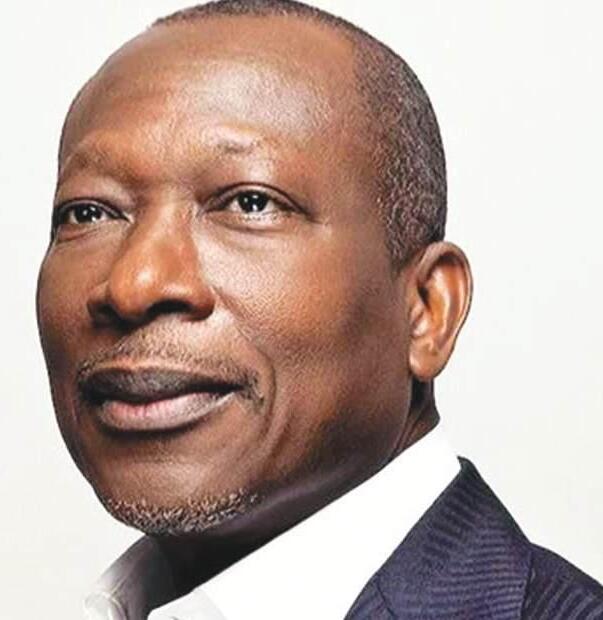
• Talon
serving as the eighth President of Benin Republic since 2016, is not on record to have promoted good governance, even though he is a good and strong member of the Celestial Church of Christ. He has tried to mediate the crisis and dispute between the Registered Board of Trustees of the Church and the Pastor and Head of the Church, Reverend Mobiyina Oshoffa, but to no avail.
In 2016, President Talon not only promised in April 2016 to be in power only for one term, but also to change the presidential term to only one term of five years. Today, he is being accused of pursuing a third-term agenda. This is in spite of his publicly declared non-intention to contest again. He is also accused of turning Benin into a one-party state and oppressing the opposition elements. He has been accused of embezzling 18m euros in taxes in 2012 when he was not yet elected president.
And true enough, the more critical dynamic of the coup appears to be the decision of President Talon to capture the parliament and to use the judiciary as a tool of public oppression. For instance, he reportedly appointed his personal lawyer and friend, Joseph Djogbéndu, as Minister of Justice when he came to power in 2016. In 2018, Djogbéndu was further elevated to the position of the President of the Constitutional Court, which is the highest judicial authority of the land. Djogbéndu eventually turned the Constitutional Court from being an independent watchdog into partisanship and instrument of presidential oppression.
Most disturbingly, President Talon has consciously made political life difficult for opposition parties to survive and to participate in electoral politics. For instance, there are more than 200 registered parties in Benin which President Talon considered as unwieldy and not helpful to effective governance. True, many
With this type of coup-making development in Africa, what future has Africa? What future is there for democracy to thrive? In trying to answer these questions, it is useful to learn lessons from the coups. First, the mere fact that democracy has thrived for a reasonably length of time does not mean that there cannot be a new coup. Eternal vigilance cannot but be a top policy priority. In fact, the longer democracy exists and make life too convenient for people, the likelier the elected leaders begin to turn dictatorial and the more the people have the potential to support military take-over of power. Consequently, there is the need to strengthen all democratic institutions. Secondly, timely intervention and mediation have become a desideratum. More interestingly, the need for promotion of dialogue between governments and civil society has to be promoted. The appropriate thing here is for all member states of the AU and the ECOWAS to create different platforms for citizen engagement where grievances can be discussed and resolved. In this regard, emphasis should be placed on how to addressing the root causes of discontent. In the same vein, there has to be a collaborative regional solutions approach. The current style of some leaders talking about zero tolerance for UCG and some other African leaders are engaging in self-staged coups can never brighten the future of democracy in Africa. It is the future of coup-making that will be brightened. Africa now needs a democratic re-strategy.
of the parties are small. On October 18, 2025, the National Assembly passed a bill requiring the possession of a Certificate of Conformity to be eligible to participate in electoral politics. In fact, only two parties loyal to President Talon were found to be eligible to contest elections. This is because the new law also requires the payment of $424,000 to qualify to field a list of candidates for the 83-seat parliament. Besides, 10% of the votes of the 109 mayors and deputies was required to be able to contest. This largely explains the many protests against his administration and attempted coups. It is against this background that the last December 7 coup should be understood.
As regards Nigeria’s intervention to assist President Talon, the intervention can be justified for various reasons. First is the reason of sanctity of international agreements. In this regard, there is the first consideration of subsidiarity principle by which a central government is considered to only have responsibility for tasks that cannot be effectively performed by a central government at a more immediate or local level. In other words, as explained above, regional organisations like the ECOWAS has responsibility to nip in the bud crises and ensure peace in its region within the framework of its 1978 ECOWAS Protocol on Non-Aggression which discourages the use of force to settle disputes and its 22 April 1981 Protocol Relating to Mutual Assistance in Defences on non-aggression and mutual assistance. Both Protocols request Nigeria to assist or provide, if necessary, troops to help contain situations of insecurity, threats, aggression in the region by way of mutual assistance. In this regard, why wouldn’t Nigeria accept to do so in the spirit of pacta sunt servanda?
As noted in a Joint ECCAS-CMI Publication on “The Principle of Subsidiarity: The Example of ECCAS in the Central Africa Crisis,” subsidiarity has several advantages the most prominent of which are the enablement of better local awareness, especially that the role of actors cannot but be more fitting to the task to be performed when better analysis and understanding of issues underlying a situation exists. There will be more interest in the outcome due to proximity. This is because ‘local actors have more to potentially gain or lose in the outcome. Local actors are more interested in seeing sustainable and effective outcomes than a more distant actor might be.’ This point is particularly relevant as President Talon apparently has considered this factor of proximity in requesting for help from Nigeria.
Subsidiarity cannot but also have greater flexibility and adaptability in responding quickly to situational changes on the ground. And perhaps more interestingly, subsidiarity enables greater legitimacy as actors that are closer are seen as more legitimate than distant actors. Thus, Nigeria’s intervention in helping to contain the coup in Benin Republic is justified on the basis of this principle of subsidiarity.
It cannot but also be an act of unfriendliness if Nigeria is asked to assist and such request is neglected. All those seeking safety and are being pursued in Nigeria have generally escaped Nigeria through Dahomey, the Benin Republic of today. In the event of any problem in Nigeria in the future, Benin may no longer be an escape route for safety as the country may apply the principle of reciprocity. Besides, Nigeria has a defence doctrine that considers Nigeria’s international border to be in faraway Mali and Mauritania. Any outbreak of any gunfire in Mali is considered happening on Nigeria’s border with Benin, and therefore should be quenched in Mali before its exportation to Nigeria. The coup in Benin has become too close for comfort, hence the need to quickly and promptly respond to Benin’s request for assistance. And true enough again, Nigeria’s intervention in Benin provides a good opportunity for self-capacity building in the context of the country’s quest for strategic autonomy as a new foreign policy objective. Nigeria’s intervention was a resultant from sovereign autonomy which must also be well protected and defended in the mania of the 1963 Nigeria’s formulation of an exception to the principle of non-intervention under Article 2(7) of the UN Charter.
International Politics and Future of Africa
International politics of coup-making in Africa does not go beyond condemnation of and taking sanctions against the putschists, asking for the immediate release of the ousted president and other detained officials, as well as restoration of the democratic status quo ante. ECOWAS condemnations and sanctions follow the same pattern and logic from one coup to the other.
In the Bissau-Guinean coup, the Communiqué of the Extraordinary Session of the ECOWAS Mediation and Security Council is quite relevant here. The Extraordinary session was held virtually at the Level of Heads of State and Government. Attention was focused on the Situation in the Republic of Guinea Bissau. The resulting communiqué, which was issued on 27 November 2025, noted, in its paragraph 6, that the Mediation and Security Council (MSC) ‘Condemn in the strongest terms the coup d’état perpetrated on 26 November 2025 and calls for the unconditional restoration of constitutional order without delay. It rejects any arrangements that perpetuate the illegal abortion of the democratic process and the subversion of the will of the people of Guinea Bissau.’ It is important to note that the word ‘Condemn’ begins with a capital letter ‘C’ which is meant to underscore the importance of the condemnation.
Read full article online - www.thisdaylive.com
ENGAGEMENTS
Rude Boys in the Neighbourhood
There are troubling skirmishes in Nigeria’s immediate neighbourhood. A coup attempt in next door Benin Republic was a rude poke in the nation’s eye. Nigeria quickly woke up and did the needful. When there is a fire in a neighbour’s hut next door, you need to rally to put it out before it consumes your palace. That is what Nigeria did about the coup attempt in Benin Republic last week. By helping to extinguish the coup through military intervention, we projected power and clearly indicated what we will not allow to happen must not happen around here.
There was no violation of anyone’s sovereignty. Nigeria was invited to help restore a democratically elected government in distress. Above all, Benin falls squarely within Nigeria’s sphere of influence, a concept that elementary foreign relations has always recognised.
The democratic government in Benin has been restored even if on stilts. Benin’s political leaders narrowly survived the revolt of the rude boys. They were almost thrown into the unemployment market or jail. But the collateral disturbances are just about to begin for the region and perhaps for Nigeria.
For ordinary Nigerians troubled by viral insecurity, the effectiveness of the Nigerian military in the Benin operation has raised a conditional hope. It is our hope that the same level of proficiency will now be applied to end banditry, terrorism and insurgency on every inch of Nigeria. It took less than 48 hours to restore the democratic government in Benin. It has taken nearly 15 years to fight the insurgency and terrorism in parts of Nigeria. In this period, jihadism has morphed into viral terrorism, isolated terrorism has become general banditry and casual criminals have become industrial kidnappers and abductors. These are the more reasons to hope that the new impetus and efficiency of our military will soon relieve us of sleepless nights of fear and anxiety. We are entitled to this hope for the sake of our country. In the meantime, the President, the new Defense Minister and the new Chief of Air Staff all deserve accolades on the Benin success.
There is another big blessing for Nigeria. It is a lesson in power and its strategic projection. If you are a regional big brother, power without responsibility is a farce. Pre-eminence without perceivable military teeth makes a regional power more of a eunuch. Regional political responsibility that cannot be felt by neighbors in times of need and existential emergency is a joke.
We had demonstrated this in Liberia and Sierra Leone under Babangida to end two unnecessary civil wars and later on in The Gambia under Buhari to oust the Jammeh kleptocracy. In the Babangida days, we altered our street language by introducing the term ECOMOG! It stuck and came to mean influence backed by credible force and diplomatic gravitas backed by projectable power. We were exporting the value of order, not democracy since we had none then. We were then taken seriously and respected around the world.
In the Benin aftermath, ECOWAS has seen the danger in a rowdy neighbourhood with too many ambitious boys in uniform. It has declared an emergency. The object is to emplace a standing regional stabilization force to curb the increasing appetite for illegal occupation of the presidential palaces by ambitious boys in battle fatigue.
But there is indication that the five military juntas in the sub region are rattled. They are behaving like a pack of frightened hens on sensing a hovering kite. A Nigerian Air Force cargo plane en route to Portugal made an emergency landing in Burkina Faso and was quickly held hostage, its crew of 11 politely restrained. No one knows when they will be released since they were not on a combat mission.
Consultations among the military leaderships of Guinea, Mali, Burkina Faso, Niger and Chad plus now Guinea Bissau are unanimous in identifying their common adversary: Nigeria. Its stoppage of the Benin coup is to them ‘enemy action’. Nigeria is perhaps the only ECOWAS state capable of such audacity. It needs to be blocked. That is the rude boys’ consensus.
ECOWAS is troubled and may break badly. Majority of its member states are French speaking and a sizable number are now audacious military dictatorships acting in concert on most issues. The rest are startled that the regional bloc may be badly dented. The idea of a joint military force may be destabilized by poverty and lack
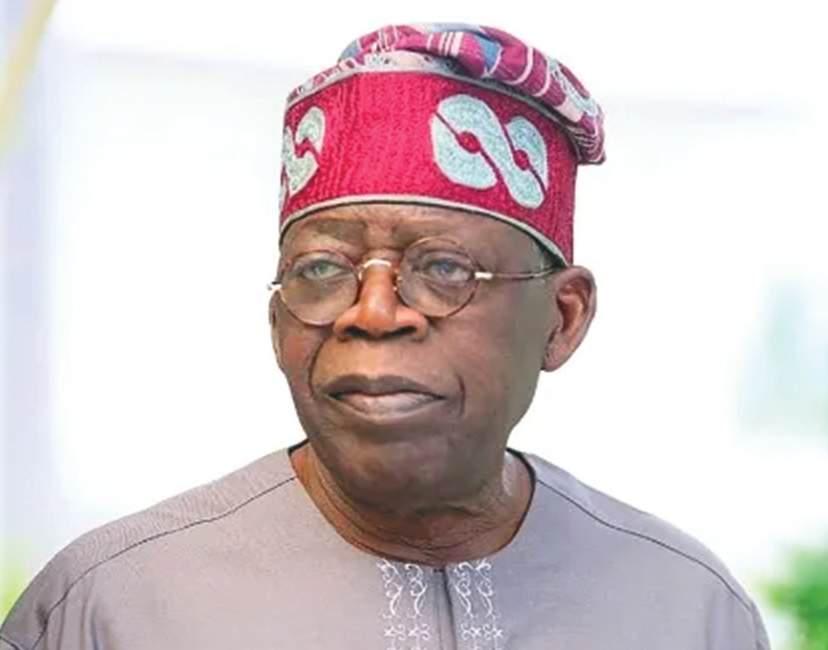
of tactical synergy among member states. Some of the states are either too tiny or have armed forces that look more like Boys Scouts. Nigeria, Ghana and Cote d’Ivoire may end up bearing the burden of a regional stabilization force. The existing military dictatorships are not about to support a regional force that has them as its target. When autocracy has a vote, democracy can hardly achieve a majority.
In the meantime, Nigeria has been invited to station ground troops in Benin as a stabilizing presence. Tinubu already has the Ayes of his rubber stamp parliament. That is a clear indication of where things are headed.
On the whole, the rumbling in Benin has compelled Nigeria to assume a role it is hardly prepared for- that of defender of democracy in West Africa. Its own democratic credentials are thoroughly perforated. At best, what we have here is a crime scene democracy, a seasonal power grab fueled by big cash mostly corruption and bad business practices.
Ironically the power games Nigeria is about to play in West Africa can only attract global sympathy if cast as being in defense of democracy. Even a flawed democracy surrounded by ambitious authoritarian enclaves deserves international support and will get it either in words, cash or armaments. That logic will likely earn Tinubu’s rattlesnake government some interim respectability. There is economics as well. Intra West African trade has benefited from the ECOWAS umbrella, leaky and tattered as it may be. Trade in grains, livestock, plastics, and other finished goods has been thriving for years. Of course the treaty on free movement of persons and goods has facilitated the movement of factors of production among the states. It has of course also facilitated the free movement of bad people and their wares- jihadists, terrorists and their weapons. Weapons of war from bad places in North Africa and the Middle East now find their way mostly on horse and donkey backs to
ECOWAS states. But generally, the billboards of Nigerian telecommunications and banking giants give hope all over the sub-region.
Now the lines are about to be redrawn in West Africa. Beyond the colonial mostly cultural divide between Anglophone and Francophone states, we now have a widening divide between weak democracies and aggressive military dictatorships. In these divides, many others could mushroom: rich and poor states, strong and weak states etc. If ECOWAS splinters, the divisions will manifest and destroy the region in many ways.
In a world ruled by a new hemispheric scramble, there is above all a fertile ground for global power play. America is hungry for rare earth minerals and is envious of China. China wants to protect its cheap African captive markets and new friends made with cheap loans and dodgy infrastructure deals. Putin’s Russia has foothold in the authoritarian states on account of supply of cheap arms in exchange for mining contracts and a foothold in Africa. The shrinkage of French influence is welcome news to these other interlopers.
Emmanuel Macron carelessly let the imminent meltdown in West Africa happen. He sought to escape from the colonial burden of sustaining and defending France’s former colonies economically and militarily. He applied too much book keeping to his politics and has lost the colonial heritage that formed part of the cultural identity of his country. He couldn’t defend the cost in cash and military expense to a domestic audience that has lately been in trouble over immigration, unemployment and worsening insecurity.
Among the FrancophoneWest African countries, pressure from jihadist insurgency from the Sahel to the north, armies in the former French colonies began questioning the financial arrangements under which France dictated their economic life and controlled their budgets from Paris. France withdrew defence and security support to compensate for lost financial control over the former colonies. Then the political meltdown and the viral coups came with a nasty avalanche of autocratic regimes.
France can ill afford to lose grips with Nigeria. Too many French companies are making good money in Nigeria. So, Macron has made some Nigeria friendly noises in the aftermath of the Benin episode. But that cannot absolve Nigeria
of ultimate responsibility for security and political stability in West Africa. This region falls squarely within our sphere of influence. Ideally, the entire Gulf of Guinea stretch should come under Nigeria’s maritime and air surveillance in collaboration with Brazil and the United States from a geo strategic viewpoint. But Nigeria has been short in commitment and presence. Nigeria’s geo strategic obligations and imperatives are beset with existential question marks. How does a nation wracked by insecurity, disorderly economics , atrocious governance and filthy politics bear the burden of added international responsibility?
Moreover, it is almost the eve of the 2027 election campaigns. Mr. Tinubu and his totalitarian party are desirous to continue with their wagon of misrule. Can Tinubu avoid politicizing the new challenges in the West African region? It is a costly gamble. If he plays domestic Nigerian politics with it, it will earn him little or no votes. If he doesn’t, he will have a scanty basket of achievements. Whatever Tinubu’s Nigeria does in West Africa will have tangential resonance in domestic Nigeria. The reason is obvious. Nigeria has never been a foreign policy nation except briefly under Murtala Muhammed and Babangida. Those leaders were not angling for votes to retain power. And Tinubu has failed to activate a foreign policy machinery. I am not aware that his administration has articulated a tangible foreign policy beyond numerous uncoordinated foreign trips by the President himself. He has maintained a festive foreign presence with over bloated delegations to even the most inconsequential international gatherings. Beyond this, there is hardly a foreign policy position.
As Tinubu struggles to deal with the new external challenges, we are once again faced with the difficulty of defining our national direction in the world. Our response to unfolding events in West Africa will highlight the unanswered questions about Nigeria’s relationship with the world. What is our mission in the international arena? What is our global agenda? What is our ambition in Africa, and the wider world? Questions…
Our present dilemma is captured by the words of the late musician, Sonny Okosun: “Which way Nigeria?”
•Tinubu
Polity
Uba Sani Propels Kaduna to FDI Spotlight
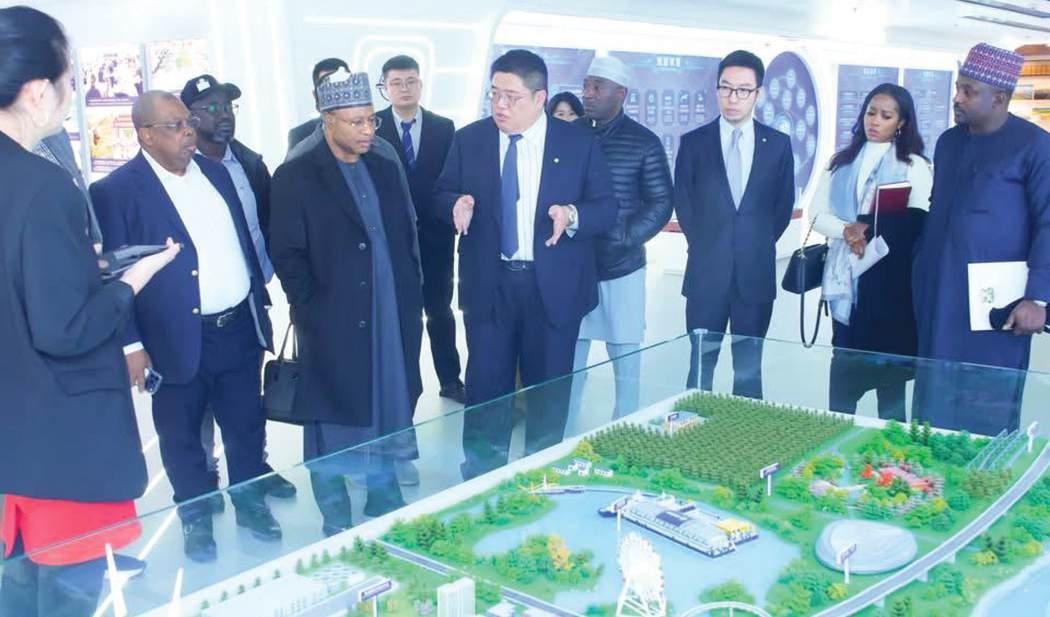
The story of Kaduna State over the past two and a half years is, in many ways, the story of a place that refused to surrender to despair. A state once weighed down by insecurity, balkanised communities, and an atmosphere inhospitable to investors, Kaduna has undergone a historic rebirth under the calm, reformist, and strategically minded leadership of Governor Uba Sani. Today, global partners who once viewed Kaduna with trepidation are reassessing the state, not as a frontier of instability, but as a renewed frontier of opportunity; one increasingly defined by investment-readiness, security stabilisation, and development diplomacy that is attracting unprecedented international attention. At the centre of this reawakening is a governor who has not only stabilised the polity but has also stepped up efforts to position Kaduna as the top destination for Foreign Direct Investment in Nigeria.
A watershed moment arrived on September 10 when the United Kingdom made a consequential announcement: Kaduna State had been formally reclassified from “Red” to “Amber” in the UK Government’s travel advisory. For a country like the United Kingdom; whose assessments of travel risk carry enormous weight in diplomatic, commercial, and humanitarian circles, this was an emphatic vote of confidence. More than a bureaucratic shift, it symbolised Kaduna’s emancipation from the shadows of years of volatility and insecurity. The announcement was made by Ms. Cynthia Rowe, the UK Foreign, Commonwealth and Development Office’s Development Director, during the signing of a new MutualAccountability Framework between the FCDO and the Kaduna State Government. Her declaration was simple yet seismic: British citizens were once again free to travel to Kaduna State. In the room that day, the significance of her words was unmistakable; not only for what they said about the past, but for what they signalled about the future.
This reclassification did not emerge from chance, but from a deliberate architecture of peacebuilding that Governor Sani and his administration have nurtured with patience, persistence, and clarity of purpose. Through what is now widely described as the Kaduna Peace Model: an approach that fuses both kinetic operations and non-kinetic dialogue, the governor has rallied traditional rulers, religious leaders, security agencies, vigilante groups, and grassroots institutions into an ecosystem of shared vigilance. Today, communities once written off as theatres of conflict are reclaiming the rhythms of normal life. Markets in Birnin Gwari are buzzing again, schools have reopened in areas once under threat, and farmers are returning to their farmlands with renewed optimism. The peace is not accidental; it is engineered.
It is this restored stability that underpins the wave of investor interest sweeping into Kaduna. With peace returning, infrastructure expanding, governance reforms deepening, and human capital improving, Governor Sani has intensified his global outreach to secure the kind of investment that can translate stability into prosperity. His international engagement has been purposeful, not performative. Whether in his strategic missions to Kuwait or China, or in his robust collaborations with the UK, the governor’s objective has remained the same: positioning Kaduna as West Africa’s emerging investment powerhouse.
One of the clearest manifestations of this investment-focused diplomacy is Kaduna’s strategic partnership with the Kuwait Fund forArab Economic Development. In Kuwait City, Governor Sani held high-level engagements with the Fund’s Director General, Dr. Waleed Al-Bahar, who described Kaduna as “a model for sustainable development-focused governance” and reaffirmed the state’s status as the first Nigerian subnational beneficiary of the Fund’s support. This endorsement was not bestowed casually; it was anchored in the measurable progress of the Reaching Out-of-School Children (ROOSC) Programme, a USD $62.8 million initiative supported jointly by the Kuwait Fund, Islamic Development Bank, Education Above All, Global Partnership for Education, and Save the Children. The programme is one of the most ambitious education recovery efforts in Nigeria; a response to the alarming number of outof-school children in the North
The results have been impressive. So far, 79,275 out-of-school children have been identified and mapped across 14 local governments. Of these, 13,756 have already been enrolled; surpassing the Year One target of 10,000. The programme has trained 1,300 teachers, distributed more than 35,000 learning kits, and commenced civil works to rehabilitate 170 schools and construct 102 new ones. These are not token achievements; they are structural interventions that are laying the foundation for a more literate, productive, and competitive workforce. In an era when investors place a premium on the quality of human capital, Kaduna is signalling loudly that it is prepared for the industries of the future.
But nowhere is the governor’s global investment diplomacy more visible than in his unfolding partnership with the Government of the People’s Republic of China. On December 6, 2025, the governor arrived in Beijing at the invitation of the Chinese Government to advance and finalise negotiations on the USD $200
is converting it efficiently.
Internally, Kaduna’s investment proposition is also reinforced by sweeping improvements in its human development landscape. In health, Kaduna is the only state in Nigeria that has upgraded 250 primary healthcare centres from Level 1 to Level 2, dramatically expanding access to maternal and child care. More than 2,000 health workers have been recruited, solving chronic shortages and strengthening service delivery. In education, Kaduna has climbed from 12th to 7th place in national WAEC rankings, driven by massive investments in school infrastructure, teacher training, and student support. The Kaduna Vocational and Skills Development Institute, now with more than 30,000 students, has become one of the country’s leading engines for skills transformation. It was no surprise when Vice President Kashim Shettima recently praised Kaduna as a national model, urging other states to emulate its forward-looking approach to skills development and job creation.
million Model Integrated Poultry Development Project; a project conceptualised as one of the most ambitious agribusiness ventures in West Africa. The numbers tell a compelling story: once operational, the facility is projected to generate over USD $450 million annually and create more than 350,000 direct and indirect jobs across the poultry value chain. This is not merely a farming enterprise; it is a multi-layered industrial complex with the potential to reshape Kaduna’s agro-economy, stimulate exports, deepen food security, and anchor Kaduna’s transition into a continental hub for modern agribusiness.
The significance of the mission was underscored by the calibre of delegation accompanying the governor; a federal government team led by the Director-General of the Nigeria–China Strategic Partnership, Mr. Joseph Tegba. The joint delegation signalled that the project is not just a state initiative; it is a national priority. In Beijing, Governor Sani’s engagements were far-reaching. With China Communications Construction Company (CCCC), he held comprehensive discussions and toured flagship projects that illustrate the engineering might of one of the world’s biggest construction conglomerates. At the company’s headquarters, the governor received a warm welcome, with the Global Managing Director, Mr. Yu He, noting that the Kaduna delegation was the first official Nigerian team ever hosted at the facility. That symbolic milestone showcased the increasing gravitational pull of Kaduna within Nigeria’s economic landscape.
Mr.Yu He commended Kaduna’s development vision, aligning his admiration with China’s appetite for long-term, mutually beneficial investment. He reaffirmed CCCC’s commitment not only to delivering the poultry project on schedule but to exploring deeper investment collaborations across multiple sectors of Kaduna’s economy. During the visit, Governor Sani also toured the world-class Beijing Doudian Yisheng Halal Meat Industry Co., Ltd., where he gleaned insights that will inform Kaduna’s efforts to modernise its livestock sector. For a state with some of Nigeria’s largest livestock assets, the application of technology and global best practices in meat processing, animal health, and cold-chain logistics holds transformative potential.
This blend of diplomacy, technical engagement, and investment promotion reflects a governor who understands that FDI does not fall from the sky; it is earned through credibility, stability, and proactive international outreach. Kaduna, under Governor Sani, now embodies these attributes. Stability has returned, institutions are being strengthened, and governance is becoming more transparent. His administration’s flagship governance reforms: Local Government Transparency, Accountability and Sustainability (LFTAS), Issue-Based Initiatives, and Community Development Charters, are giving citizens more voice than ever before in determining development priorities. Investors notice these things. Credible governance is a currency in the global economy, and Kaduna
Infrastructure is another cornerstone of the governor’s investment-readiness strategy. Kaduna’s road revolution has been unprecedented in scale and reach. In Phase One, the administration completed or advanced work on 85 roads covering 785 kilometres. In Phase Two, more than 50 additional roads and bridges were launched, spanning 550 kilometres. Rural communities long abandoned places and communities are now connected to markets, healthcare facilities, and urban centres. In many of these places, the inauguration of new roads triggered emotional scenes of celebration from residents who had resigned themselves to decades of neglect. Infrastructure fuels commerce; commerce attracts investment; and investment accelerates development. Kaduna is demonstrating this principle with clarity. Through his Executive Order on Financial Inclusion, Governor Sani has also brought more than 2.5 million people into the formal financial system; leveraging digital tools, mobile money agents, and community-level mobilisers. This is a massive leap forward for a state where cashdominant, informal economies had historically limited access to credit, insurance, and scalable enterprise. Today, small businesses, farmers, artisans, and young entrepreneurs can access financial services that give them the security and leverage to grow. A financially included population is a magnet for investors; it signals a stable consumer market and a more reliable labour force.
Agriculture, which contributes more than 42 percent of Kaduna’s GDP, is receiving some of the largest budget allocations in the state’s history. More than 10 percent of the 2026 budget has been dedicated to the sector, with investments targeted at mechanisation, climate-smart technologies, irrigation expansion, processing centres, storage facilities, and youth and women empowerment. These interventions reduce post-harvest losses, increase productivity, and expand value-addition, all critical to attracting agribusiness investors.
Taken together, these reforms, investments, and diplomatic engagements form the foundation of Kaduna’s new identity; a state that is not only ready for investment but hungry for it. Governor Uba Sani has stepped up efforts across multiple domains: security, infrastructure, human capital, agriculture, financial inclusion, peacebuilding, and global partnerships, to rebuild Kaduna’s reputation from the ground up.And the world has taken notice. From Westminster to Beijing, from Kuwait City to Abuja, the emerging consensus is clear: Kaduna is rising.
What distinguishes the governor is not only his vision but the discipline with which he executes it. While others rely on rhetoric, he relies on results. While some deepen divisions, he builds coalitions. And while many leaders succumb to the politics of the moment, Governor Sani is governing with an eye on the future, on the kind of Kaduna that will attract investors not through incentives alone, but through credibility, stability, and opportunity. Kaduna’s journey is far from complete, but it is undeniably on a new trajectory; one that is garnering admiration at home and abroad. Under Governor Sani, Kaduna is not only reclaiming its place in Nigeria; it is stepping confidently onto the global stage as a rising destination for investment, innovation, and inclusive development. In a world hungry for stability and opportunity, Kaduna is positioning itself as the place where both can be found.
•Hafiz,a development expert and university teacher, resides in Zaria, Kaduna
Jamilu Hafiz
Kaduna State Governor Uba Sani, during a visit to China... recently
How Keyamo Plans to Make Airfares Cheaper in Nigeria
Airlines operate on thin margins, a fragility amplified in emerging markets such as Nigeria. Currency volatility, high financing costs, operational gaps, and weak infrastructure all drive up carriers’ cost base, which in turn leads to higher ticket prices for passengers.
According to World Air Transport Statistics (WATS), the three largest costs for airlines globally are aircraft fuel, depreciation and amortisation, and flight crew salaries.
Fuel and oil account for a substantial 28.7% of total airline costs. Depreciation and amortisation make up 9.1%, followed by flight crew salaries and expenses at 8.6%. These ratios vary by region, making it important to examine Nigeria’s specific cost drivers.
Structural Drivers of High Fares in Nigeria
High ticket prices in Nigeria stem from several structural issues: expensive aircraft financing, high jet-fuel costs, overseas maintenance, elevated insurance premiums tied to perceived country risk, and under-capitalised airport infrastructure that requires government subsidy. These factors are interlocking. Addressing only one delivers limited relief; meaningful fare reduction requires coordinated reforms across the value chain. This is the approach the Minister of Aviation and Aerospace Development has adopted.
What the Minister Has Doing
• Aircraft Availability and Leasing Reform
Seasonal spikes in fares, especially during Christmas and peak travel periods, are largely driven by demand outstripping available aircraft. By expanding fleet availability through leasing, airlines are better positioned to meet seasonal demand without sharp price increases.
Historically, Nigerian airlines relied on wet leases or outright purchases because international lessors avoided the market due to legal enforcement and reputational risks. According to the CEO ofAir Peace, “the money we use to buy one brand-new plane could get me about 40 or 50 aircraft on dry lease.” In practical terms, instead of spending roughly $80 million to purchase one aircraft outright, the same capital could support the dry lease of 40–50 aircraft, paid through monthly rentals rather than a heavy upfront purchase.
The minister, who has a strong legal background, rallied the judicial system and the government’s ease-of-doing-business team to restore confidence by driving legal and regulatory reforms, including Nigeria’s renewed commitment to the Cape Town Convention. This reform directly improves aircraft repossession certainty and lessor protection. Atangible outcome followed: Nigeria’s compliance score was raised to 75.5%, and it exited the Aviation Working Group (AWG) watchlist in late 2024.
For the first time in over a decade, Nigeria received its first dry-leased commercial aircraft in November 2024. This signals that global lessors are re-engaging with the Nigerian market, reopening access to cheaper and more flexible fleet financing. The Minister’s reputation with Boeing and Airbus has also supported domestic airlines in their fleet modernisation efforts.
• Jet A1 Fuel Supply Dynamics
Aviation fuel accounts for roughly 30–40% of airline operating costs in Nigeria. The federal government has supported policies that encourage domestic refining and supply diversification, particularly following the commissioning of large-scale refining capacity such as the Dangote Refinery.
In 2024, Dangote began supplying significant volumes of Jet A1 into the domestic market, reducing Nigeria’s reliance on imports and exposure to global logistics shocks. This marks a structural shift in fuel availability. However, stakeholders have been clear that refinery output alone does not automatically translate to cheaper fuel at airports. Distribution bottlenecks, pricing frameworks, and foreign exchange settlement issues still affect final pump prices.
The minister has opened a channel for ongoing engagement with marketers, regulators,
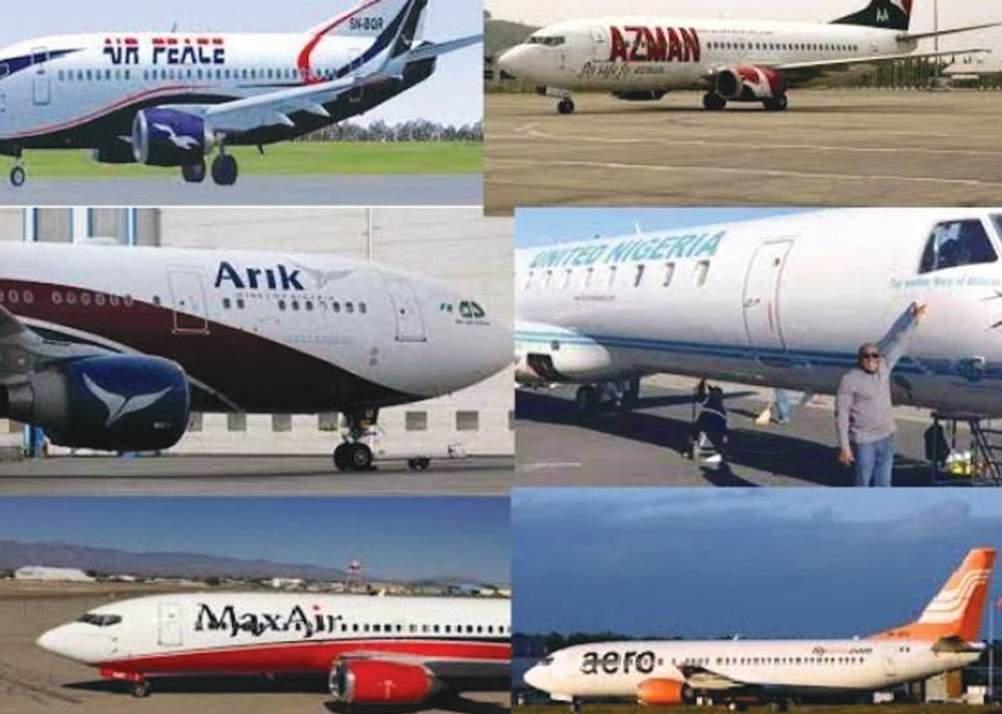
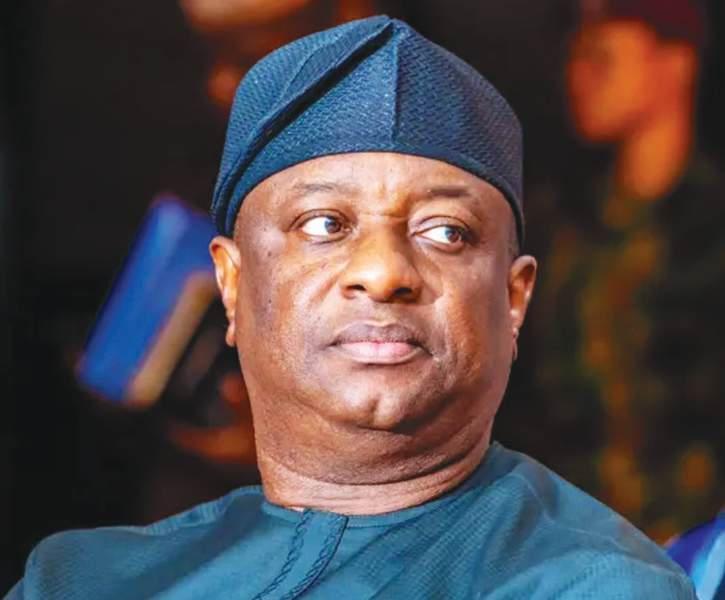
and monetary authorities aimed at addressing these frictions so that supply gains flow through to airlines. He has also tasked relevant agencies with supporting all market participants to develop alternative solutions that encourage competition and ultimately drive prices down.
•Development of Local MRO Capacity
Sending aircraft abroad for heavy maintenance significantly increases costs and aircraft downtime, while draining foreign exchange. The Minister has actively pursued partnerships, incentives, and memoranda of understanding with international Maintenance, Repair, and Overhaul (MRO) providers to establish viable local facilities.
Recent government and industry announcements point to renewed momentum around local MRO development, with planned facilities designed to serve both Nigerian and regional operators. The objective is to retain maintenance spend within the country while improving turnaround times and fleet availability. MROs are projected to generate $2 billion annually, in addition to saving airlines the costs of going overseas for maintenance.
Keyamo disclosed that he had started speaking to investors who may be interested in partnering with the Federal Government to realise the project, “as government has concluded that such a project could only be
realised through a Public Private Partnership (PPP) because of the financial outlay and technical depth needed.”
• Insurance Costs and Perceived Operating Risk
Nigeria’s aviation insurance premiums have historically been elevated due to country risk perceptions and limited underwriting competition. The minister, working through regulators and industry stakeholders, has engaged insurers and market institutions to reassess aviation risk pricing and expand market participation.
As safety oversight, regulatory consistency, and macroeconomic indicators improve, the Ministry’s position is that insurance premiums should better reflect actual operational risk rather than blanket country assumptions. Broadening insurance capacity is a key part of this effort.
•Aviation Leasing and Local Financing Frameworks
Beyond attracting foreign lessors, the Ministry is promoting the development of domestic aircraft leasing and financing structures. Local leasing can reduce exposure to foreign currency risk, align repayment terms with local revenue cycles, and create financing solutions better suited to Nigerian airlines.
Policy signals and engagements in 2024 show deliberate efforts to mobilise domestic capital, pension funds, and financial institutions toward aviation asset financing, reducing sole dependence on offshore debt markets.
• Airport Concession and Private Sector Participation
Nigeria’s major airports are capital-intensive and often underperforming, with operational inefficiencies that raise airline and passenger costs. The Minister is advancing airport concession and private-sector participation as a means to improve efficiency, expand capacity, and reduce the fiscal burden on the government.
Recent approvals and public debate around airport concessions indicate active policy movement. While outcomes will depend on concession design and execution, the objective is clear: better-managed airports that reduce delays, improve passenger processing, and lower indirect airline costs.
•Taxes, Levies, and the Limits of Removal
Aviation taxes and charges fund essential infrastructure, safety oversight, and personnel. Because most Nigerian airports are not financially self-sustaining, wholesale removal of charges without alternative funding would undermine system viability.
The minister’s approach has therefore been pragmatic rather than populist: focus on reducing the underlying cost base for airlines—covering financing, fuel, maintenance, insurance, and airport efficiency—while improving the regulatory and economic environment so the market can scale sustainably. Over time, increased capacity, efficiency, and competition are expected to exert downward pressure on fares.
Reforms take time to yield results, and Festus Keyamo is laying the foundation for a stronger aviation industry which would translate to lower airfares for Nigerians. The Minister’s strategy is systemic rather than cosmetic. By simultaneously tackling aircraft financing constraints, fuel supply inefficiencies, maintenance costs, insurance premiums, and airport performance, the reforms target the structural reasons Nigerian aviation remains expensive.
Early indicators, such as the return of dry leasing and progress on local fuel and MRO capacity, are encouraging. However, sustained fare reductions will depend on consistent policy execution, macroeconomic stability (particularly regarding foreign exchange), and continued private-sector participation. If these reforms hold, Nigerian passengers should see more affordable and resilient air travel over the medium term.
• Emameh Gabriel writes from Abuja.
Emameh Gabriel
Some local airlines
Keyamo
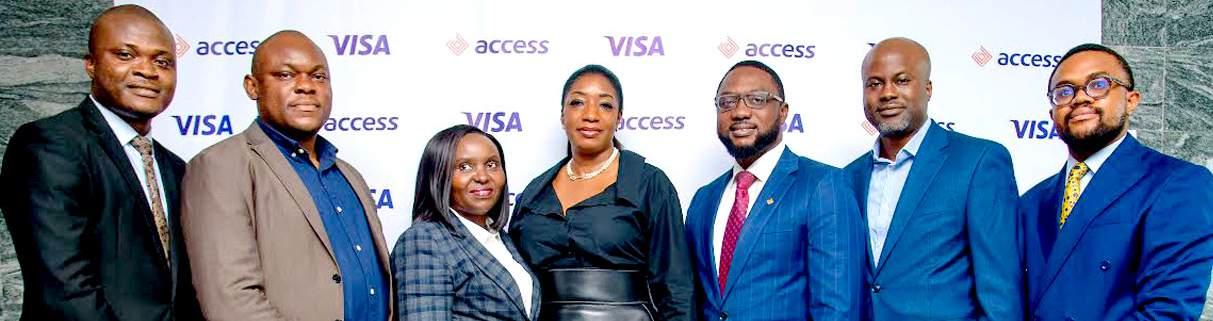
PROVIDING ACCESS TO CREDIT…
L-R: Team Lead, Card Products, Access Bank, Mr. Oladimeji Adegbayi; Director, Visa Commercial Solutions, Mr. Chiedu Adudu; Head, Card Products, Access Bank, Florence Owuor; Director, Business Development, Visa, West Africa, Mr. Oluwatoyin Badeji; Sector Head, Oil and Gas Upstream / Power, Access Bank, Mr. Emeka Nkwonta; Senior Business Development Leader and Country Manager, Visa, West Africa, Chidozie Chukwuemeka; and Relationship Manager, Commercial Banking Division, Access Bank, Mr. Damola Giwa, at the Launch of the Access Bank Visa Corporate Credit Card Solution Acceleration Initiative in Lagos…recently
SIMO N KOLAWOLE
SIMONKOLAWOLELIVE!
simon.kolawole@thisdaylive.com, sms: 0805 500 1961
On Nigeria’s Adventure to Benin Republic
You should have seen my face when news broke last Sunday that some soldiers had announced the overthrow of President Patrice Talon of the Republic of Benin. Apart from the fact that as a Nigerian, I still have some PTSD from the military era, Benin has been one of the more stable democracies in West Africa — howsoever defined — and I could not understand why the military would terminate 34 years of civil rule just like that. Moreover, I have been reading some encouraging reports about the progress being made by Talon, who has managed to focus on developing a world-standard public service and building quality infrastructure in the francophone country of 13.7 million people.
As Winston Churchill, the former UK prime minister, once said, “Democracy is the worst form of government except for all those other forms that have been tried from time to time.” I would adapt those words thus: for all its glaring shortcomings, the worst form of democracy is better than the best form of military rule. I recall an argument I had with a major general a few years ago. He was complaining about a news story in our newspaper and I exchanged hot words with him. After the whole drama, I shook my head and said to myself: “Lucky you — if this were to be under military rule, you would not sleep at home tonight and your whereabouts may never be known again.”
There seems to be a coup contagion in West Africa. Mali, after some promising years of practising democracy along with its failings, got entangled with military dictatorship in 2021. Burkina Faso fell to Captain Ibrahim Traore in 2022. The Republic of Niger was captured by Gen Abdourahamane Tchiani in 2023. These three countries exited the Economic Community of West African States (ECOWAS) and formed the Alliance of Sahel States (AES), announcing that they were discarding the “colonial” influence of France. Russia is their new colonial master. Good luck to them. In other news, Guinea-Bissau dramatically went back to military rule after
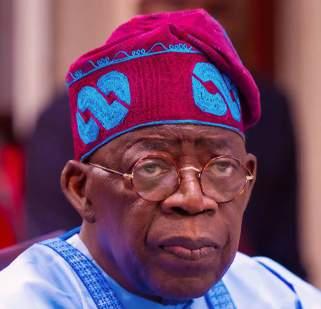
Tinubu
its November 2025 presential election.
As it turned out, the coup in Benin failed, with the Nigerian military playing an important role in dislodging the plotters. In 1997, the Nigerian military also intervened to help restore democracy in Sierra Leone. Major Johnny Paul Koroma had overthrown President Ahmad Tejan Kabbah but ECOWAS swiftly condemned the coup and directed the Nigerian-led ECOWAS Monitoring Group (ECOMOG) to restore order, which it did in February/ March 1998, reinstating Kabbah to office. The Economist of London wrote a sarcastic leader, saying Nigeria was exporting what it did not have. The dramatic irony was that Nigeria itself was under military rule, led by the inimitable Gen Sani Abacha. I was so relieved when the Benin coup was foiled. Having another suspected Russia-backed military government next door to us presented a nightmare scenario. The coup leaders pointed to the jihadists’ attacks in the northern part of Benin as one of the reasons for the coup (in April 2025, al-Qaeda-affiliated terrorists killed 54 Beninese soldiers on the border with Burkina Faso). They accused Talon of doing nothing to end the insurgency, but those who are familiar with military antics know that coup plotters often ride on public sentiments when they want to seize power by saying what the people want to hear. What happens next is none of their business and you cannot question them. For those who may not know, before
the US helped to oust Colonel Muammar Gaddaffi as the Libyan leader in 2011, he was building a massive army made up of young Africans. After his fall, Libya descended into a civil war and anarchy took full control, with no functioning government in place. One major result was the transformation of Libya into a human trafficking hub, but the little-talked-about consequence was the looting of Libyan armoury by the newly trained fighters, who became ready tools for al-Qaeda and Islamic State. One outcome was the strengthening of Boko Haram in Nigeria, who became better armed and launched a reinvigorated war against the Nigerian state.
Post-Gaddaffi, Boko Haram was no longer a ragtag army of suicide bombers and hitand-run jihadists. They became reinforced, got better equipped and had better-trained militants, who moved the terrorist war from hit-and-run to full insurgency, presenting a new set of problems to the Nigerian military. But Nigeria was not the only battleground. In 2012, Tuareg rebels, who had been reinforced by an influx of battle-hardened and well-armed militants from the Libyan war, began to destabilise Mali, leading to a series of coups and counter-coups. Today, and under military dictatorship, most of Mali has been captured by the Jama’at Nusrat al-Islam wal-Muslimin (JNIM), an al-Qaeda franchise.
As I write this, Bamako, the Malian capital, has been under siege by JNIM for weeks and experts project that it is a matter of time before it falls. That would make Mali the first African country to come under the control of either al-Qaeda or Islamic State. Mali, by the way, is a Muslim-majority country. Burkina Faso, also under military rule, has been the centre of the most vicious terrorist attacks in the world. It currently occupies the first position in the Global Terrorism Index (GTI), making it the most terrorised country in the world. Niger is also under strain and is ranked No 5, one step above Nigeria. May I remind us that Mali, Burkina Faso and Niger are all under military rule.
NOTE: Read full article online on www.thisdaylive.com
And Four Other Things…
BUMPY BUDGETING
Does President Bola Tinubu have a nonchalant attitude (I initially wanted to say “disdain”) for budgeting? Years after we managed to normalise the JanuaryDecember cycle under President Buhari, Tinubu has not behaved in a way to suggest he cares about this very important aspect of governance. Under him, there was a time when we were running up to four budgets simultaneously. I don’t even know how many we currently run. Budget performance reports are so rare. By now, federal lawmakers should be processing the 2026 budget, but the prerequisite medium-term expenditure framework (MTEF) just found its way to their chambers on Thursday. Befuddling..
RIP PDP?
I pride myself on not having sympathy for any political party, but the decimation of the PDP is really sad, the truth be told. As of May 29, 2003, the party controlled 16 of the 17 southern states. Today, it controls only one. How are the mighty fallen! PDP’s exit from power in 2015 created a leadership vacuum in its ranks and accelerated its decline as members started jumping ship, but it was not as bad as it is today. I believe the exodus stems from governors and lawmakers being afraid their faction may be rejected by the courts and their re-election bids truncated. The APC is believed to be stoking the fire just to weaken opposition, but something tells me the story has not ended yet. Watching..
IJ AT 60
Ms Ijeoma Nwogwugwu, former editor of THISDAY, is 60 today. What a year 1965 turned out to be for Nigerian journalism. The roll call includes Mr Olusegun Adeniyi, Dr Reuben Abati, Mr Seye Kehinde, publisher of City People, and Mr Dipo Kehinde, publisher of Newsmakers. Senior citizens all! Nwogwugwu is someone I always use to inspire young female journalists. “What beat would you like to cover?” I would ask them during recruitment. The answer was almost always “entertainment” — as if women had been barred from the other specialities. I would say: “Do you know Ijeoma? She is one of the finest in financial journalism. Don’t limit yourself.” This has unlocked many talents. Model..
NO COMMENT
I get called all sorts for my views. Some call me “ronu” because I did not join their IReV movement. Some call me “Afonja” because I did not say President Buhari was “Jibril Al Sudani”. Some even say I am a “Fulani slave” because of my takes on “true” federalism. Ladies and gentlemen, here is the latest one: Mallam Nasir el-Rufai has posted an article on his X handle labelling TheCable as a “Yoruba paper” being used by the “Yoruba EFCC” to hound Mr Abubakar Malami over the Abacha Loot. In fact, we broke the story in 2017 when Buhari was in power. Now that I am fully celebrating the foiling of the Benin coup, what is the next blackmail? That I am French toast? Hahahaha.