Nigeria is Safe, Former UK Prime Minister, Boris Johnson Declares
Musa Takes Charge, Vows to End Bloodshed, Return Children to School
Tinubu driving bold push to strengthen security nationwide, experts declare Military pledges continued support for UN operations in north east

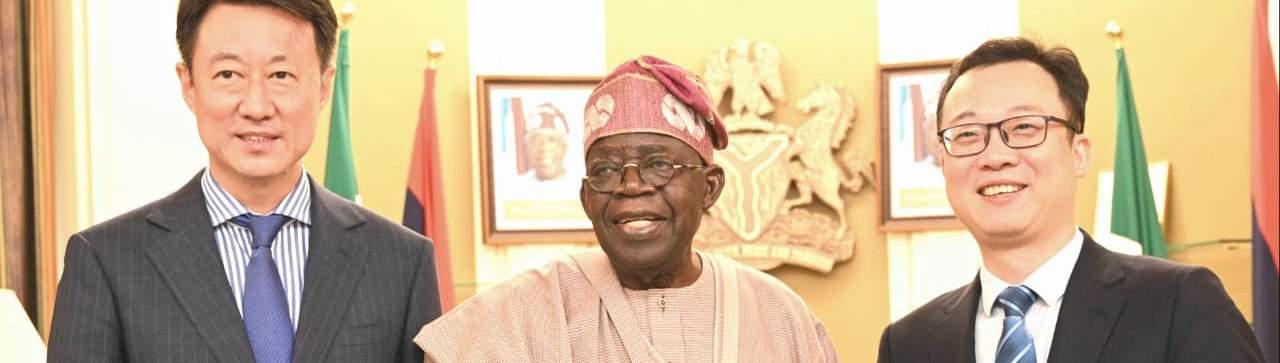
L-R: Chinese Ambassador to Nigeria, Mr. Yu Dunhai; President Bola Tinubu and Chinese Embassy Political Chief, Mr. Zhu Songbo, during an audience with the President at the Presidential Villa, Abuja...yesterday



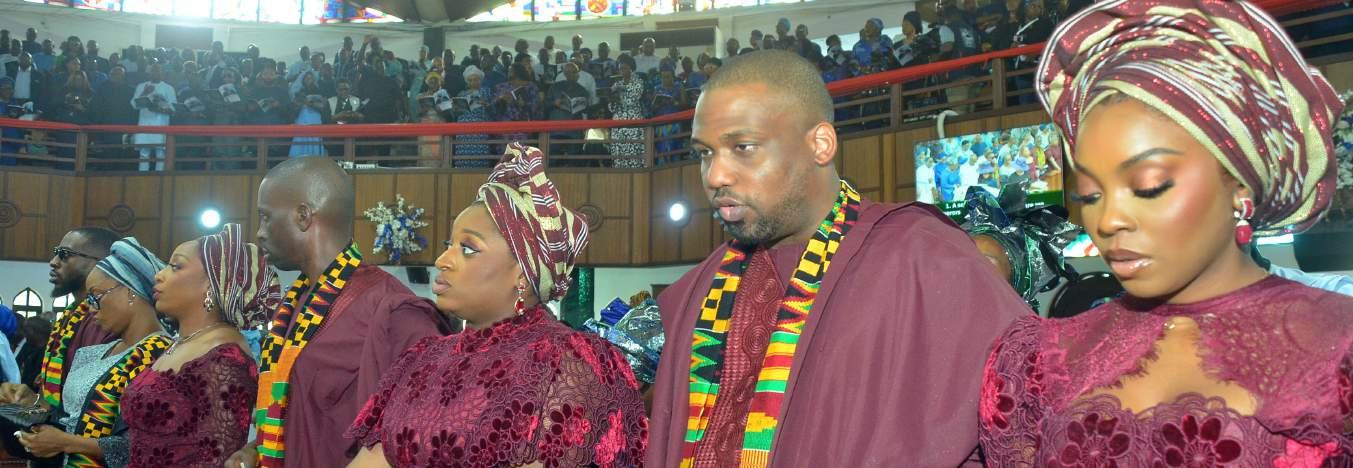
Tinubu, Akpabio, Governors, Obaigbena, Others Bid Segun Awolowo Farewell
Sunday Ehigiator
Former Executive Director/ CEO of the Nigerian Export Promotion Council (NEPC) and grandson of the late Chief Obafemi Awolowo, Chief Segun Awolowo, was yesterday, laid to rest in Lagos at a solemn ceremony attended by President Bola Ahmed Tinubu, Senate President Godswill Akpabio, Lagos State Governor Babajide
Sanwo-Olu, the Chairman of THISDAY/ARISE Media Group, Prince Nduka Obaigbena, and an array of statesmen, political leaders and business personalities.
Other dignitaries that attended the funeral ceremony included former Vice President Prof. Yemi Osinbajo and his wife; former Senate President Bukola Saraki and his wife; Governor Dapo Abiodun of Ogun State, former
MUSA TAKES CHARGE, VOWS TO
Stepping into office with urgency and moral clarity, the newly appointed Defence Minister, Retired General Christopher Musa, yesterday pledged to end the bloodshed tearing through communities and ensure Nigeria’s children, especially in some parts of the north, return safely to their classrooms.
This comes as security and diplomatic experts have said the recent policy pronouncements and appointments in the security sector by President Bola Tinubu are signals of broader efforts by his administration to reinforce national security amid escalating unrest.
Equally, the Nigerian Military yesterday reaffirmed its commitment to supporting the United Nations (UN)
humanitarian operations in the North East, emphasising its determination to provide a secure environment for effective humanitarian interventions.
Musa, who officially assumed duty yesterday, pledged to prioritise national security and also vowed zero tolerance for corruption, indiscipline, and indolence within the ministry and its agencies.
Highlighting the role of technology and intelligence in shaping Nigeria’s defence posture, the Minister said the ministry must serve as the strategic brain of the nation’s defence architecture.
Speaking during his inaugural address, the Minister stressed that his core philosophy for steering the ministry rests on three pillars: operational effectiveness, unified action,
Ogun State Governor, Senator Gbenga Daniel and his wife; former Delta State Governor, James Ibori; Senator Tokunbo Abiru; Chief Dele Momodu; former NBA President Olumide Akpata; and Lady Ibru, among several others.
Tinubu, represented at the event by his Chief of Staff, Hon. Femi Gbajabiamila, joined other dignitaries in honouring Awolowo’s contributions
to national development, describing him as, “a patriot whose brilliance, calm strength and statesmanship enriched Nigeria’s economic and political fabric.”
According to him, “I have known the pain of losing a child. I understand from experience that grief of this nature is heavy, solitary, and lingering. My heart goes out to you. I pray that God, in His
infinite mercy, grants you the strength to bear this loss and to remember Segun as he truly was: a good man who lived a good life.
“Segun Awolowo was a patriot with exceptional passion and unwavering dedication. From his earliest days as Special Assistant to the President to his distinguished tenure as Executive Director and Chief Executive Officer of the
BLOODSHED, RETURN CHILDREN TO SCHOOL
and strategic foresight.
He said: "We cannot operate in silos. We cannot allow gaps between policy and execution. This ministry must be a powerhouse of strategic direction, enabling support and ensuring accountability. The shedding of innocent blood must end.
“Our children deserve to return to school. Farmers must return to their farms. Many of these issues require both kinetic and non-kinetic solutions—justice, equity, fairness, and good governance. We will pursue a comprehensive, balanced approach."
The Minister further stated: "Technology and intelligence will drive our defence posture. The ministry must serve as the strategic brain of our defence architecture. We will leverage
technology for intelligence, surveillance, and reconnaissance, and strengthen partnerships with our allies and other security agencies. Data—not conjecture—must guide our decisions.
“I expect the highest standards of professionalism, integrity, and urgency. We do not have time to waste. We must respect human rights, avoid mistakes where possible, and when they occur, correct them decisively. I will always welcome candid advice and robust debate, but once a decision is made, we must move as one team. There will be zero tolerance for corruption, indiscipline, or indolence.
“Our loyalty is to Nigeria and the Nigerian people. The President is the Commanderin-Chief, and the responsibility ends on his table. We owe him
and the nation results."
Speaking further, he said: "To the Service Chiefs, I assure you of my full support and expect your unwavering cooperation.
To the Permanent Secretary and our civil service cadre, you are the institutional memory of this ministry.
“Your diligence is essential to translating military objectives into actionable policies. The road ahead will be tough. Let us not underestimate that. But we are Nigerians—resilient, determined, and capable. The threats we face may be adaptive and complex, but our spirit is stronger. With the support and prayers of Nigerians, we will not fail."
He emphasised reward and discipline, stating: "Those who excel will be rewarded, and where corrective measures are
RIVERS: FUBARA MUM, 17 LAWMAKERS JOIN APC, WIKE INSISTS HE REMAINS IN PDP
Siminalayi Fubara has remained silent over yesterday’s defection from the Peoples Democratic Party (PDP) to the All Progressives Congress (APC) of 17 lawmakers of the State House of Assembly, led by the Speaker, Martins Amaewhule.
However, Minister of the Federal Capital Territory and immediate past governor
of Rivers State, Nyesom Wike, despite the recent announcement of his expulsion by the Kabiru Turaki-led faction of the PDP, yesterday said he remains a member of the main opposition party. He also foreclosed defection to any political party, saying he remains a member of the PDP and has no intention of defecting with members
of the House of Assembly to the APC.
Attempts by THISDAY to confirm if Governor Fubara would also leave the PDP were not successful as they did not respond to enquiries. Also, the Governor's supporters declined to comment.
Following the current development, there was fear that there could be a renewed
political crisis in the State as the lawmakers have shown that there could still not be a cordial relationship between the legislature and executive arms of government in the state.
However, the 17 lawmakers claimed that the reason for their defection was because of the division at the national level of the party, which has
made the future of the party hazy and nebulous.
The Assembly members who recently made peace with Fubara, after a long political rift, had on Wednesday pledged their loyalty to President Bola Tinubu.
The APC State chairman, Chief Tony Okocha, was also sighted at the Assembly chamber monitoring the
FG TO REVIEW CAPITAL GAINS LAW, ADDRESS CONCERNS IN NEW TAX POLICY
public that it would be fair, responsible and transparent while giving the policy a human face in the course of execution.
The Chairman of the committee, Mr. Joseph Olasunkanmi Tegbe, who gave the assurance in Abuja, after it was inaugurated by the Minister of Finance and Coordinating Minister of the Economy, Mr. Wale Edun, also promised that areas of concen in the new tax law, including the Capital Gains Tax (CGT), will be addressed via wider consultations.
The government plans to impose a 30 per cent levy on the sale of Nigerian shares unless the proceeds are reinvested in other listed or unlisted domestic equities. The change — part of a new tax law — would triple capital gains tax on foreigners.
Stakeholders in the Nigerian capital market had called
for a moratorium because of concerns that the policy would deter foreign investors.
Nigerian Exchange Group Plc, operator of the nation’s stock market, had called for either the removal of the tax or a deferment for five years.
Concerns about the size of the new levy had led to a 6.9 percent decline in Nigerian equities in November, the worst monthly performance this year.
But briefing journalists, Tegbe noted that tax implementation committee would eschew anything disruptive or injurious to the economic interest of the country.
Ahead of the January 1, 2026, roll out of the new tax law, Tegbe stated that it was extremely important to emphasise, "that the work ahead is huge and is critical for our national progress."
The CGT is among areas of concern that would be
addressed “in the next few days,” Tegbe added.
According to him, "The tax laws touch the foundations of tax administration, level of federal and state interpretation, and ease of business. We want to reassure Nigerians and investors that the implementation of this Act will be fair, will be transparent, and we will do it with human face.
"There have been concerns, and I will touch on that. There will be no surprises. Some of those areas of concern will be addressed. The systems that we are building will respect legitimate expectations, reduce uncertainty, and protect the most vulnerable.
"The committee inaugurated today has been set up to ensure broad and meaningful consultations and collaboration. We do believe it is extremely important. We want to ensure that all stakeholders are aware and have fair buy-in and
ownership of whatever they implement.
"So, we will meet widely, both businesses, subnational governments, civil societies, and also professional bodies. Let me make some categorical statements.
"The government has no business irresponsibly encroaching on personal bank accounts of citizens or its residents in Nigeria.
"The government is not going to be encroaching on their personal accounts. Nigerians are not under probe or under investigation.
"Second, there are areas of concern that have been expressed. This government is a humane government, and this government will work hard to build stakeholders to ensure that areas that need further clarification and further resolutions are addressed. One of those areas is the CGT.”
Speaking further, he said:
Nigerian Export Promotion Council, he pursued every assignment with purpose, diligence, and discipline. He delivered remarkable successes for our nation.
“His later role as Secretary of the National Action Committee on the African Continental Free Trade Area reflected his strong belief in Nigeria’s future; a future built on trade, collaboration, and shared prosperity."
required, they will be taken. We must consistently assess what we do and find ways to improve. I expect every member of this ministry to put in their best without waiting to be reminded of their responsibilities. If each of us does our part, the nation’s burden becomes lighter."
Noting that Nigerians must take ownership of national challenges, he said: "No one else will solve our problems for us. When we decide—together—that we are capable of addressing these issues, then we will succeed. God has already given us the capacity; the responsibility now rests on us to act."
In his remarks, the Chief of Defence Staff (CDS), General Olufemi Oluyode, called for a
Continued on page 17
defection process. Those who defected to APC included Amaewhule; the Deputy Speaker, Dumle Maol; the Majority Leader, Major Jack; the Deputy Majority Leader, Linda Somiari-Stewart; Chief Whip, Frankline Nwabuchi, and Deputy Whip, Ofiks Kabang.
"We will ensure that we are fully engaged and ensure that whatever resolutions are done actually take into consideration the concerns that have been expressed."
Tegbe explained that, much as the Committee would proceed with the January 1 implementation schedule, there might be some provisions that would be reconsidered before then.
He noted that the tax policy remains one of the most important undertakings of the Bola Tinubu-led administration.
"I have the direct mandate of Mr. President and that of the Minister of Finance. It is not by proxy. Direct,” he insisted.
Tegbe, stressed that everything would be implemented responsibly and humanely.
Responding to questions from journalists, Tegbe maintained that while the law would commence in January,
grey areas would be refined in the course of implementation. According to him, "As you are implementing, you are learning, you are refining. There are clear areas that we have identified. One of them, I mentioned, is the CGT.
"The capital gains tax, there have been controversies. It almost crashed the stock market when some statements were made.
"It took the intervention of the Minister of Finance for the stock market to bounce back. We will look at that. And some of the things you will hear in the next few days are that there might be areas where the status quo might be maintained."
He noted that the approach entails implementing and refinements.
The NTPIC, which was inaugurated by Edun has Sanyade Okoli as Secretary of the Committee.
Linus Aleke in Abuja

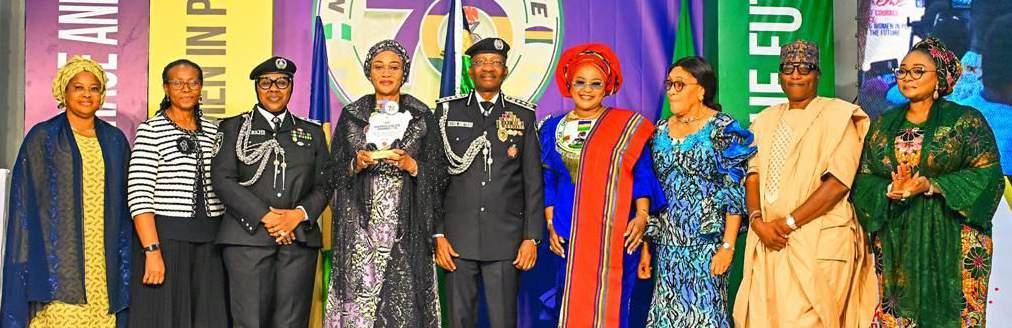
CELEBRATING NIGERIA POLICE WOMEN AT 70...
L-R: Chairman House Committee on Women Affairs, Hon Kafilat Ogbara; Vice President, International
Tinubu; IGP Kayode Egbetokun, his Wife, Mrs. Elizabeth Egbetokun; DIG Ivy Okoronkwo(rtd), Vice Chairman, House Committee on
Ibrahim, at the celebration of Nigeria Police Women at 70 held in Abuja…recently
Osun Guber: APC Disqualifies Omisore, Six Others
Umar Sani: Adeleke doesn’t want PDP to field candidate for guber election Court asked to nullify Accord Party's primary, affirm national chairman’s suspension
Adedayo Akinwale and Alex Enumah in Abuja and Melissa Enoch
Ahead of the December 13 Osun State governorship primary, the All Progressives Congress (APC) Screening Committee has disqualified former APC National Secretary, Senator Iyiola Omisore and six other aspirants. The committee cited gaps and irregularities in their nomination processes.
This was as a chieftain of the Peoples Democratic Party (PDP), Umar Sani, has accused Governor Ademola Adeleke of attempting to prevent the party from producing a candidate ahead of the forthcoming gubernatorial election, insisting that the governor’s political manoeuvres are designed to secure his own personal survival rather than protect the party’s interests.
In another development, a High Court of the Federal Capital Territory (FCT), Abuja,
Shettima:
has been asked to set aside and nullify the issuance of any statutory notices, particularly the notice of ward congress for the Osun governorship and the notice of primary in any part of the country in the name of the Accord Party.
The Screening Committee led by Chief Obinna Uzoh concluded its proceedings on December 4, 2025, and submitted its report to the APC National Working Committee (NWC) in Abuja, yesterday.
The committee in its reports said the disqualified aspirants including; Omisore, Babatunde Oralusi, Oyedotun Babayemi, Dr. Akin Ogunbiyi, Benedict Alabi, Adegoke Rasheed Okiki, and Sen. Babajide Omoworare, did not submit proof of sponsorship from at least five fully registered and financially current party members from each Local Government Area in Osun State, as stipulated by Articles 9.3(i) and 31.2(ii) of the APC Constitution and
Traditional Institutions Are Irreplaceable, Will Be Preserved Under Tinubu
Deji Elumoye in Abuja
Vice President Senator Kashim Shettima yesterday reiterated the commitment of the administration of President Bola Tinubu to the preservation and protection of traditional institutions in the country.
According to him, traditional rulers, the closest to the grassroots, are the leaders and fathers of the society, and their institutions outlive every administration.
Shettima gave the assurance during the 45th Anniversary of the Emir of Gumel, HRH, Alhaji Ahmed Mohammed Sani II, and the inauguration of Gumel Central Mosque
in Gumel local government area of Jigawa State.
The Vice President stated that the tenure of every elective political office holder ends after eight years but the traditional institutions remain.
"Therefore, we must respect them, we must take care of them, and we must preserve as well as protect the institution," he added.
Shettima, who congratulated the Emir of Gumel for celebrating his 45th anniversary in good health, prayed Almighty God to spare the life of the traditional ruler to witness his Golden Jubilee and centenary celebrations.
Paragraph 6(c) of the party guidelines.
The committee added that only Mulikat Jimoh and Munirudeen Oyebamiji were approved to participate in the primary election.
The committee stated, “In carrying out its assignment, the Committee adopted the following screening process:
“Examination of documents and materials, all forms, declarations, supporting
materials, and attachments submitted by aspirants were thoroughly reviewed to verify their authenticity and compliance with statutory and party requirements.
“Each aspirant underwent a structured interview session during which the Committee assessed their knowledge of party rules, personal preparedness, adherence to nomination requirements, and overall suitability.
UK, Nigeria Launch Flagship Economic Reform Programmes to Strengthen Stability, Drive Economic Growth
Michael Olugbode in Abuja
The British High Commission in Abuja has launched two flagship economic reform programmes – the Nigeria Economic Stability and Transformation (NEST) programme and the Nigeria Public Finance Facility (NPFF) - reaffirming the United Kingdom’s long-term commitment to supporting Nigeria’s economic reform and growth agenda.
Backed by a £12.4 million UK investment, NEST and NPFF sit at the centre of the UK-Nigeria mutual growth partnership and support Nigeria’s efforts to strengthen macroeconomic stability, improve fiscal resilience, and create a more competitive environment for investment and private-sector growth.
Speaking at the launch, Head of Development Cooperation at the British High Commission in Abuja, Cynthia Rowe, said:
“These two programmes sit at the heart of our economic development cooperation with Nigeria. They reflect a shared commitment to strengthening the fundamentals that matter most for our stability, confidence, and long-term growth.”
The launch followed the inaugural meeting of the Joint UK-Nigeria Steering Committee, which endorsed the approach of both programmes and confirmed strong alignment
between the UK and Nigeria on priority areas for delivery.
Representing the Government of Nigeria, Special Adviser to the President of Nigeria on Finance and the Economy, Sanyade Okoli, welcomed the collaboration.
“We welcome the United Kingdom’s support through these new programmes as a strong demonstration of our shared commitment to Nigeria’s economic stability and long-term prosperity.
PSC, Stakeholders Harmonise Plans for Recruitment of 50,000 Police Officers
The Police Service Commission (PSC) has convened a strategic meeting with key stakeholders, including the Nigeria Police Force, the Ministry of Police Affairs, and the Federal Character Commission, to
streamline preparations for the recruitment of 50,000 new police personnel.
The meeting, the Commission said, aimed to ensure that the recruitment exercise is transparent, credible, and guided by the principles of fairness, equity, and merit.
In a statement by the PSC’s Head of Protocol and Public Affairs, Torty Kalu, the Chairman of the Commission, DIG Hashimu Argungu (rtd), reaffirmed the Commission’s resolve to deliver an open and inclusive recruitment process that will strengthen the capacity and diversity of the Nigeria Police Force. Represented by the Chairman of the PSC Standing Committee on Nigeria Police Force Matters, DIG Taiwo Lakanu (rtd), Argungu expressed commitment to working collaboratively to safeguard the integrity of the recruitment exercise.
PENGASSAN Seeks Increase in Workers' Salary
Onyebuchi Ezigbo in Abuja and Sylvester Idowu in Warri
The Petroleum and Natural Gas Senior Staff Association of Nigeria (PENGASSAN) has asked companies in the oil and gas sector to undertake urgent review of salaries of their workers in
view of the prevailing harsh economic conditions in the country.
Also, the pensioners of Chevron Nigeria, under the aegis PenCoN, have lauded the President of PENGASSAN, Comrade Festus Osifo and his executive on their unrelenting efforts toward addressing
pension abnormalities faced by retired workers in the oil and gas industry.
The association also appealed to the federal government to take necessary measures to check banditry and terrorist activities in parts of the country.
PENGASSAN President, Osifo who addressed
journalists shortly after the National Executive Council meeting of the association in Abuja, said that though a lot of success has been recorded in negotiating salary reviews for its members, there are still organisations that have failed to lift their workers from the present harsh economic situation.
Linus Aleke in Abuja
Association, Lt. Gen. Leah Shibambo (rtd); AIG Aishatu Abubakar Baju; First Lady of Nigeria, Senator Oluremi
Police Affairs, Hon Wale Ahmed, and Minister for Women Affairs, Iman Suleiman-

it’s time to be extremely cautious...
a waste!
Gen. Christopher Musa and the Task Ahead
In Praise of President Buhari
WThen President Muhammadu Buhari took over the reins of power on May 29, 2015, Nigeria was sadly a broken state in many respects. As a result of many other factors including bad governance and untold level of corruption, government could not live up to its financial obligations to citizens and service providers at both the federal and state levels.
Indeed one of the first official assignments that President Buhari carried out was the approval of billions of Naira in bailout funds to enable state governors pay something as basic as workers’ salaries. Granting those bailout funds was a huge boost to national security because the pressure of arrears of unpaid monthly salaries building dangerously all over the country was a ticking bomb.
he appointment of General Christopher Musa (rtd) as Nigeria’s Minister of Defence by President Bola Tinubu has generated broad approval across the country. His emergence comes at a time when the nation is wrestling with layered security challenges, from terrorism and banditry to organised crime. Many see his return as not only timely but also fitting, given his operational background and reputation for firm, coordinated leadership.
Musa stressed the need to reposition the military for strategic combat roles and withdraw soldiers from routine policing on the roads. Nigerians will hold him to that commitment. Police and civil defence personnel must reclaim their conventional duties, while the military focuses on overpowering insurgents and terrorists. Ending extortion at checkpoints is also overdue, and offenders should face real consequences.
by the EFCC, President Buhari by his action has successfully brought back to the public consciousness the need to treat public funds with the highest level of transparency and accountability.
After keeping treasury looters on their toes and at bay through the EFCC, particularly, President Buhari moved to curb unnecessary spending habits of the nation on what economists call articles of ostentation. Part of the disclosures of the President’s stock taking was how the country frittered away billions in foreign currency by importing goods, which can be produced at home. One of such items was rice, a major staple among Nigerians. By banning rice importation into the country, the President on one hand had saved the nation billions in foreign currency annually.
Segun Aluwaye: Keeper of the Funds
CStop Ritual Attacks and Killings
TAsk the naysayers and they would readily remind you of how long it took President Buhari to appoint his ministers and how that contributed to collapse of the economy as if, without ministers, governance was frozen. But buying that narrative would amount to what a famous Nigerian writer, Chimamanda Adichie, termed “the danger of a single story”. Yet the whole story was that many of our citizens did not know how decrepit a state President Buhari inherited in 2015.
Musa’s years in active service, particularly his role as the immediate past Chief of Defence Staff, place him in a unique position. He brings first-hand knowledge of the nation’s most volatile conflict zones and understands the structural weaknesses within the security architecture. This experience is expected to strengthen ongoing efforts to curb insecurity and stabilise affected regions.
It was therefore necessary for him to take stock against the background of the fact that the departing government did not, reportedly, cooperate full well with the incoming government in terms of leaving workable handover notes. Although President Goodluck Jonathan was gracious in defeat, many of his appointees were still sulking over what they saw as their personal losses and therefore pulled all the stops to make things difficult for the Buhari government.
Another pressing concern is the shabby condition of salaries and welfare packages across the security sector. Members of the armed forces, the police, and the paramilitary endure enormous risks yet receive compensation that barely supports their families. This gap is not just morally troubling, it fuels misconduct. A comprehensive and urgent wage review would help restore dignity and reduce the temptation to engage in corrupt practices.
And, on the other hand, the President has boosted domestic production of rice and in the process had nudged the country into self sufficiency in food production. He also created millions of jobs for young people in the rice value chain.
What is most admirable about President Buhari and his government is its frugal management of scarce national resources to attain optimum goals. Recall that since President Buhari stepped in the saddle, oil revenue dropped abysmally as if to sabotage him knowing all the big promises he made to citizens during his campaigns. But with the little resources that trickle in, the President is achieving what governments that received oil windfalls could not dream of.
Tochukwu Jimo Obi, Obosi Anambra State
Even with the obvious and unpatriotic obscurantist behaviour of the PDP appointees and their supporters still in government hell-bent on making things difficult for Buhari, the President moved on with his methodical repair of a broken country. The first thing he did was to identify all possible sources of income to the nation and directed that all inflows be paid into one single account in line with the policy of Single Treasury Account (TSA).
As he settles into his new office, he is entering with a mandate built purely on merit. Nigerians are not merely hopeful; they demand tangible outcomes. His prior achievements set a high bar, and the public expects decisions anchored in competence rather than sentiment. The weight of expectations is heavy, but so is the confidence placed in him.
The TSA policy, interestingly, was mooted by the PDP government but its penchant for imprudence and lack of accountability denied it the courage of implementing the policy. What the President literally did was to gather all the nation’s money into one box and locked it up with a big padlock and watched for any thief to come close.
Today, the trains are up and running daily from Abuja to Kaduna. And from Lagos to Ibadan a brand new rail track was started and completed; citizens are already commuting daily to and fro these two major cities in the country seamlessly as they reap from the dividends of democracy. And with the way this government is going, before 2023 when the President would leave, the entire country would be linked by rail with all of its economic advantages.
Ainofenokhai Ojeifo, Abuja
THE SATURDAY NEWSPAPER
EDITOR OBINNA CHIMA
DEPUTY EDITOR AHAMEFULA OGBU
MANAGING DIRECTOR ENIOLA BELLO
THE SATURDAY NEWSPAPER
DEPUTY MANAGING DIRECTOR ISRAEL IWEGBU
EDITOR YEMI ADEBOWALE
CHAIRMAN EDITORIAL BOARD OLUSEGUN ADENIYI
DEPUTY EDITOR AHAMEFULA OGBU
MANAGING DIRECTOR ENIOLA BELLO
EDITOR NATION’S CAPITAL IYOBOSA UWUGIAREN THE OMBUDSMAN KAYODE KOMOLAFE
DEPUTY MANAGING DIRECTOR ISRAEL IWEGBU
omrade Segun Aluwaye is the current treasurer for the Federal Capital Territory (FCT) Council of the National Union of Road Transport Workers, and a close ally of the President, National Union of Road Transport Workers, Alh. Akinsanya Musiliu (MC Oluomo). Comrade Aluwaye has been managing the resources of NURTW effectively. He advises on financial and strategic plans and develops long time financial strategies for the Union. He safeguards the assets from potential misuse and ensures the funds of NURTW are used appropriately. Segun Aluwaye advises members of NURTW to shun violence and, organizes seminars and workshops for members to be ambassadors of peace and harmony. He also made it known to them that they should not molest or harass motorists when performing their legitimate duty. He manages the motor parks which includes setting rules, collecting various formal and informal levies and disciplining drivers. Comrade Aluwaye also interacts with the government and political institutions on issues relating to the transport sectors, including the development of infrastructure and ensuring the availability of transport for national activities like elections.
Anjorin Adeolu Joseph, Abuja
Who can blame the President for almost developing paranoia over the safeguard of the national treasury with revelations and reports of mind-boggling looting that took place in the 16 years of the PDP? With such disclosures of how billions meant for fighting insurgency in the Northeast ended up in the pockets of a few individuals while our gallant soldiers fought with bare hands and on empty stomach, President Buhari was duty bound to bring sanity and accountability back in national spending.
A core responsibility before him is ensuring unity among the Service Chiefs. Nigeria’s security agencies have too often operated like rival bodies instead of complementary forces. That culture needs to be dismantled. Effective synergy must replace unhealthy competition, and intelligence sharing should become the norm rather than the exception.
During his ministerial screening,
Thus, under President Buhari, the Economic and Financial Crimes Commission (EFCC), which had remained comatose for years, was woken up to resume its duties. Apart from the trillions of Naira of looted funds and property recovered from corrupt politicians
CHAIRMAN EDITORIAL BOARD OLUSEGUN ADENIYI
EDITOR NATION’S CAPITAL IYOBOSA UWUGIAREN
MANAGING EDITOR BOLAJI ADEBIYI
THE OMBUDSMAN KAYODE KOMOLAFE
THISDAY NEWSPAPERS LIMITED
EDITOR-IN-CHIEF/CHAIRMAN NDUKA OBAIGBENA
GROUP EXECUTIVE DIRECTORS ENIOLA BELLO, KAYODE KOMOLAFE, ISRAEL IWEGBU
THISDAY NEWSPAPERS LIMITED
DIVISIONAL DIRECTORS SHAKA MOMODU, PETER IWEGBU, ANTHONY OGEDENGBE
EDITOR-IN-CHIEF/CHAIRMAN NDUKA OBAIGBENA
DEPUTY DIVISIONAL DIRECTOR OJOGUN VICTOR DANBOYI
In a World of Dreams
GROUP EXECUTIVE DIRECTORS ENIOLA BELLO, KAYODE KOMOLAFE, ISRAEL IWEGBU, IJEOMA NWOGWUGWU, EMMANUEL EFENI
SNR. ASSOCIATE DIRECTOR ERIC OJEH
ASSOCIATE DIRECTOR PATRICK EIMIUHI
DIVISIONAL DIRECTORS SHAKA MOMODU, PETER IWEGBU, ANTHONY OGEDENGBE
DEPUTY DIVISIONAL DIRECTOR OJOGUN VICTOR DANBOYI
CONTROLLERS ABIMBOLA TAIWO, UCHENNA DIBIAGWU, NDUKA MOSERI
SNR. ASSOCIATE DIRECTOR ERIC OJEH
DIRECTOR, PRINTING PRODUCTION CHUKS ONWUDINJO
ASSOCIATE DIRECTOR PATRICK EIMIUHI
TO SEND EMAIL: first name.surname@thisdaylive.com
CONTROLLERS ABIMBOLA TAIWO, UCHENNA DIBIAGWU, NDUKA MOSERI
DIRECTOR,
he Advocacy for Alleged Witches (AfAW) urges the Nigerian public to stop ritual attacks and killings because the notion of ritual money and wealth is completely baseless. AfAW is making this call following the reported arrest of suspected ritualists in Oyo State in southern Nigeria. The local media reported that members of the Western Nigeria Security Network, Amotekun, arrested suspected ritualists with the body parts of a 73-year-old man. The suspects, who were apprehended in the Boluwaji area in Ibadan, said that a Muslim cleric asked them to procure some human body parts for rituals. Ritual attacks are widespread in Nigeria. Irrational conceptions of how to make money or become wealthy and successful undergird these atrocities. Many Nigerians strongly believe in blood money, known in some local languages as Ogun Owo (Yoruba) or Ogwu ego (Igbo). They think that they could become rich, or successful through ritual sacrifice. Unfortunately, this is not the case. Ritual wealth has no basis in reason, science, or reality. Home movies known as Africa magic or Nollywood films have not helped matters. These movies continue to reinforce these mistaken notions and other superstitions. Families, churches, mosques, and other public institutions do not encourage the interrogation of these traditional occult beliefs. There are no robust efforts to criticize or dispel these irrational and paranormal claims in schools, colleges, and universities. So millions of Nigerians grow up blindly believing that they could make money through ritual sacrifice of human body parts. The belief has led many Nigerians to commit crimes and perpetrate atrocities. Many Nigerians have been jailed or are undergoing court trials due to ritualrelated attacks and murder. Not too long ago, the police arrested some young Nigerians for stealing female pants, which they intended to use for ritual sacrifice. AfAW is asking all Nigerians to desist from ritual-related abuses because ritual money beliefs are baseless superstitions. Nigerian media, schools, and colleges should help educate and reorient the public. They should assist in reasoning Nigerians out of this killer-superstitious absurdity and nonsense. Leo Igwe directs the Advocacy for Alleged Witches (AfAW)
was amused to see President Trump seeming to doze off in the latest cabinet meeting. This meeting included a lot of strong praise for the President and his ‘achievements’. If anyone was praising me so enthusiastically I would be wide awake and attentive but I’m not nearly 80. Dennis Fitzgerald, Melbourne, Australia
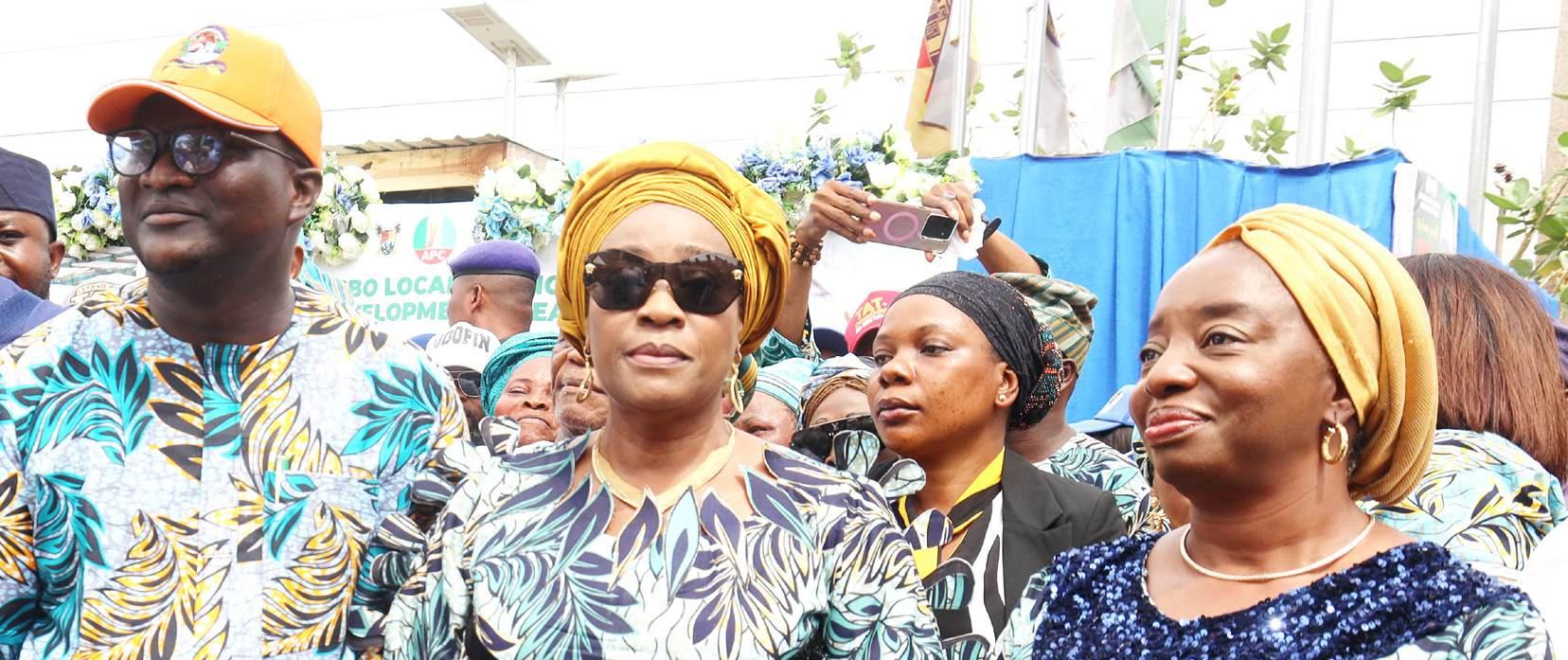
CELEBRATING 100 DAYS IN OFFICE...
Withheld Funds: Supreme Court Strikes Out Osun’s Suit against FG
Berates federal government over non-compliance with judgement on LG autonomy
The Supreme Court in a split decision of six-to-one justices yesterday, struck out the suit filed by the Osun State Government against the federal government, over the non release of statutory allocations due to the Local Government Areas (LGAs) in the state.
The apex court in the majority judgement struck out the suit on the grounds of want of jurisdiction.
According to the majority judgement delivered by Justice Mohammed Idris, the Supreme Court held that the Osun State Attorney General and Commissioner for Justice has no legal right to have instituted the case on behalf of the 30 local governments in the state.
Also, the justices in the majority judgement berated the federal government for failing
to observe the last year's verdict of the apex court which, having recognised the autonomy of local government in the country, ordered the direct release of monthly statutory allocation to the accounts of the LGs.
The Osun State had through the state’s Attorney General and Commissioner for Justice, dragged the federal government to the apex court, challenging the decision of the Attorney General of the Federation (AGF) to withheld funds belonging to the state's LGAs and directing same to be paid into a special account for the benefit of the alleged sacked chairmen and councillors of the All Progressives Congress (APC).
The plaintiff, in the suit marked: SC/CV/773, had sought for an order of the apex court directing the
IGP: Women Police Officers Not Appendix in Our Story, They Are Essential to Our Mission
Inspector General of Police, Kayode Egbetokun, has affirmed that women officers in the Nigeria Police Force are central to the institution’s identity, essential to its mission, and instrumental to its future.
Speaking at a ceremony marking the 70-year legacy of women in policing, Egbetokun paid tribute to their resilience, professionalism, and courage, urging the younger generation of female officers to shape the next chapter of policing in Nigeria.
“Women officers are not an appendix in our story. They are central to our
identity, essential to our mission, and instrumental to our future,” he stated.
He also thanked President Bola Ahmed Tinubu and the First Lady, Oluremi Tinubu, for their support in empowering women across the Force.
Reflecting on the history of women in the Nigeria Police Force, Egbetokun noted that when they were first admitted in 1955, their roles were largely restricted to juvenile welfare, clerical duties, and cases involving women and children.
"Despite these limitations, the pioneering officers set a standard of discipline, compassion, and dedication that has influenced the entire institution.
AGF to immediately release the statutory allocations to Chairmen and Councillors validly elected for the 30 Local Government Areas of the Osun State.
The plaintiff also sought for another order barring the AGF from further withholding, suspending or seizing monthly allocations and revenues standing to the credit of the
constituents LGs, having democratically elected chairmen and councillors in place.
But, the federal government had challenged the powers of the apex court to hear the suit
on grounds that it did not fall within the issues the apex court was empowered to handle, adding that the plaintiff lacked the necessary locus standi to initiate the legal action.
Two Weeks After Their Abduction 259 Children Still in Kidnappers’ Den
Laleye Dipo in Minna
Two weeks after their kidnap, the 259 pupils/students of the St. Mary's Catholic Nursery Primary/Secondary School in Papiri, Agwara Local Government Area of Niger State are still in the hands of their abductors.
Apart from the 259 children, 13 of their teachers abducted are also still with their
abductors.
THISDAY learnt that the majority of the pupils and students are aged between five and 16 years while the teachers are reported to be between 20 and 23 years of age.
All of them according to findings belong to the Christian faith.
National Security Adviser, Malam Nuhu Ribadu who led a federal government
delegation to Kontagora during the week, assured some of the parents that "we know where the children are."
But the parents claimed they have been kept in the dark about the whereabouts of the kids and their teachers.
"No one has said anything to us about our children," one of the parents told THISDAY on the phone.
The worried parent said,
"We, the parents of the abducted children, should assemble where our children were kidnapped tomorrow (Saturday).”
Asked if the proprietor of the School, who doubles as the Chairman of the Christian Association of Nigeria (CAN), Most Reverend Dr. Bulus Dauwa Yohanna, contacted the parents on the issue, the parent said "no".
Enugu Council Boss Launches ‘Operation Kwechiri,’ Patrol Vehicles to Fight Insecurity
Gideon Arinze in Enugu
Following in the footsteps of the Enugu State Governor Peter Mbah, the Chairman of Uzo-Uwani Local Government Area, Chijioke Ezugwu, has launched ‘Operation Kwechiri’, a special security force to further strengthen the war against insecurity in the council.
As part of the security
package, Ezugwu also launched four security vehicles, comprising one Hilux gun truck, three Sienna vans and 25 motorcycles to the local Neighbourhood Watch, a strategy designed to keep the 16 political wards in the LGA under a 24-hour security surveillance.
Speaking during the event to inaugurate the security arrangement and equipment at Nkpologu Ward on
Thursday, Ezugwu described ‘Operation Kwechiri Special Security Squad’, as an effort to complement the giant strides of the Governor Mbah, whom he said, had shown the political will and also made huge investments in the security sector to make the state one of the safest in the country. He cited the governor’s effort to include the construction of a state-
of-the-art Command and Control Centre matched with AI-enabled cameras mounted across the Enugu State for full surveillance, setting up of the state's Distress Response Squad, a special police unit powered by over 150 security vehicles as well as the recent launch of high-tech equipments like high-impact drones and patrol vehicles to strengthen the war against insecurity.
Tinubu, Kano Residents Celebrate Elder Statesman Tanko Yakasai at 100
Ahmad Sorondinki in Kano
President Bola Ahmed
Tinubu has described Mallam Tanko Yakasai, a Kano-born politician, as a shining example and consensus builder who
consistently advocates for national cohesion, peaceful coexistence, and democratic consolidation.
This was just as hundreds of people converged on the city yesterday to celebrate Yakasai in an event filled
with historical significance, resilience, and enduring good health.
A special prayer was held at the Juma'at mosque near his Yankaba residence, seeking Allah's blessings for his good health and steadfast spirit.
In a special tribute, Tinubu described Yakasai as the last man standing, born a hundred years ago in Kano City who exemplifies a purposeful life, carving out a meaningful legacy despite humble beginnings.
Alex Enumah in Abuja
Linus Aleke in Abuja
L-R: Executive Chairman of Ejigbo Local Council Development Area (LCDA), Taoheed Adebayo Taiwo; Wife of the Deputy Governor of Lagos, Mrs. Oluremi Hamzat, and First Lady of Lagos State, Dr. Ibijoke Sanwo-Olu, during the inauguration of Ambulance Bus at Ejigbo LCDA as part of the activities marking the first 100 days in office of the Ejigbo Council Chairman in Lagos recently
FOSTERIING TEAMWORK, SYNERGY...
Peter Obi to European Union: Rethink Your Perspective of Africa
The presidential candidate of the Labour Party in the 2023 general election, Peter Obi, has called on the European Union parliament to rethink
its perspective on Africa and indeed Nigeria. Obi, who had a guest appearance before the European Union said, ''I say to them it is time to rethink. Africa today is the last frontier of global
development. It's the second biggest continent in terms of size in the world, the second biggest continent in terms of population.
“It's the continent that has highest amounts of natural
resources. It's a continent that has vast uncultivated land, a continent with young population. Sixty per cent of Africa's population today is young. But then again, it's a continent of mass poverty.''
Sokoto State Launches Ambitious Three-year Fiscal Blueprint, Major Infrastructure Push
Onuminya Innocent in Sokoto
The Sokoto State Executive Council has approved a threeyear fiscal framework that will guide the formulation of the state budget from 2026 to 2028. Also, the state government in partnership with the United Nations Population Fund (UNFPA) and the European Union’s Serah Project, has kicked off a 10-day household data survey aimed at profiling the state’s demographic dividend. The exercise, known as the Sokoto State Demographic Dividend
Profiling (Household Data Survey), will cover six wards in each of the 23 local government areas, reaching a total of 138 wards across the state.
Briefing journalists after the Council meeting, Commissioner for Budget and Economic Planning, Dr. Abubakar Muhammad Zayyana, said the framework was prepared in line with the Fiscal Responsibility Law No. 13 of 2019.
He described it as “a crucial financial planning tool” that links government policy priorities with strategic planning and resource allocation.
“The framework provides a credible, predictable and disciplined budgeting system for the state,” Zayyana, noting that for 2026 the framework stands at N702.55 billion.
The commissioner explained that the document offers a micro-economic analysis that will guide the government in preparing a realistic annual budget aligned with long-term development goals.
The Commissioner for Health, Dr. Faruk Umar, said that the Council also approved a series of contracts aimed at upgrading the state’s health
infrastructure.
Dr. Umar said the contracts cover the rehabilitation and remodelling of six hospitals across Sokoto, marking the second phase of ongoing upgrades in the health sector.
The hospitals and their contract values are: General Hospital Yabo – N290.14 million, General Hospital Illela – N382.40 million, General Hospital Bodinga –N189.25 million, General Hospital Sabon Birni – N272.29 million, General Hospital Tangaza –N291.31 million, and the Women and Children Hospital, Sokoto – N187.99 million.
Jega Urges Youth Involvement in Politics to Strengthen Nigeria’s Democracy
Chuks Okocha in Abuja
Former chairman of the Independent National Electoral Commission (INEC), Prof. Attahiru Jega, has advocated more involvement of youths in politics to entrench Nigeria’s nascent democracy.
Jega said this yesterday at a
The former Anambra State governor further said, “Today Europe, if I take Nigeria for example, Nigeria in terms of population is 50 per cent of European Union population. You're about 450 million were about 240 million, so have over 50 per cent of your population.
In terms of land size, Europe has about four point something million square kilometres, Nigeria is about a quarter of that.
''But when it comes to wealth, while Europe has a Per Capita of over $40,000, Nigeria which is 50 per cent of your population, has a Per Capita of about two and a half per cent of that of Europe. So you could see the potential, with all the resources, the potential for growth.''
He told the EU parliament that the nearest continent to
Africa is Europe, explaining, ''So if Africa today turns around, the biggest beneficiary would be Europe. If it collapses, the consequences will affect you more.
“I believe that we have so many commonalities that we can work together and everything, and what is the problem of Africa? ''
Obi explained that the problem of Africa remains, leadership, adding, ''To have a political leadership that is competent, have the capacity, compassion, commitment and character to be able to deal with the issues of corruption, law and order, focus on investing on critical areas of development, which is health education and pulling people out of poverty.
Pharmacists Kick Against New Health Commissions
Jega said youths’ inclusion in politics would help tackle some of the challenges in governance and bring in fresh ideas towards solving the problems in governance.
He said that since the ballot remained a key route
public lecture themed ‘Elections and Good Governance in Nigeria’ organised by Federal University of Kashere (FUK), Kashere, in Akko Local Government Area of Gombe State According to him, meaningful youth involvement was crucial for strengthening and sustaining democracy in Nigeria.
to renewing leadership in any democracy, the youths should not be indifferent about it but embrace the process to effect positive change in leadership.
“The participation amongst youths in politics is declining in spite of the improvement being recorded in the electoral process since 2011.
Transafam Power Launches Elderly CSR, Commits to Annual Wellness Day
Pharmacists under the aegis of the Association of Community Pharmacists of Nigeria (ACPN) have cautioned the National Assembly against tampering with the National Health Act 2014 to accommodate additional Commissions, which would undermine the statutory powers of existing professional regulatory bodies of the country’s healthcare system.
In a statement jointly signed by the ACPN National Chairman, Ambrose Igwekamma Ezeh, and National Secretary, Omokhafe Ashore, the association contended that, “the attempt to create three Commissions from the legal structures established in NH-Act 2014 is unnecessary because all endeavours pertaining to the regulation of control of organ trafficking and procurement, surrogacy and the monitoring/regulatory appraisals of standards, or accreditation of tertiary hospital facilities is already lawfully vested in the National Tertiary Health Institutions Standards Committee (NTHISC).’’
The landmark outreach
Transafam Power Limited, one of the two power generation businesses of Nigeria’s largest, listed conglomerate Transnational Corporation Plc, has successfully launched the maiden edition of its Corporate Social Responsibility (CSR) for the senior citizens of its host community, Okoloma-Afam, Oyigbo Local Government Area, Rivers State.
provided comprehensive medical screenings, wellness education, food, and essential items for the elderly, as well as long-term health monitoring tools to over thirty elderly residents comprising
twenty-four women and six men, reinforcing Transafam’s position as a socially responsible corporate citizen deeply invested in the well-being of the communities that host its operations.
Reacting to fallout from the public hearings by the House of Representatives on November 18, 2025 and at the Senate on November 24, 2025 where strong propositions for new Commissions were made, including a Surrogacy Commission, a National Accreditation and Standards Commission, a Tertiary Health Institutions Commission, and Sickle Cell Research and Therapy Centres across the six geopolitical zones and the FCT; ACPN described the move as economically unrealistic and unnecessary.
ACPN further stated that, as a creation of the NH-Act 2014, the National Tertiary Health Institutions Standards Committee (NTHISC) is empowered to exercise effective regulation and control of the systems, adding that what is needed is adequate oversight responsibilities by the National Assembly.
Chuks Okocha in Abuja
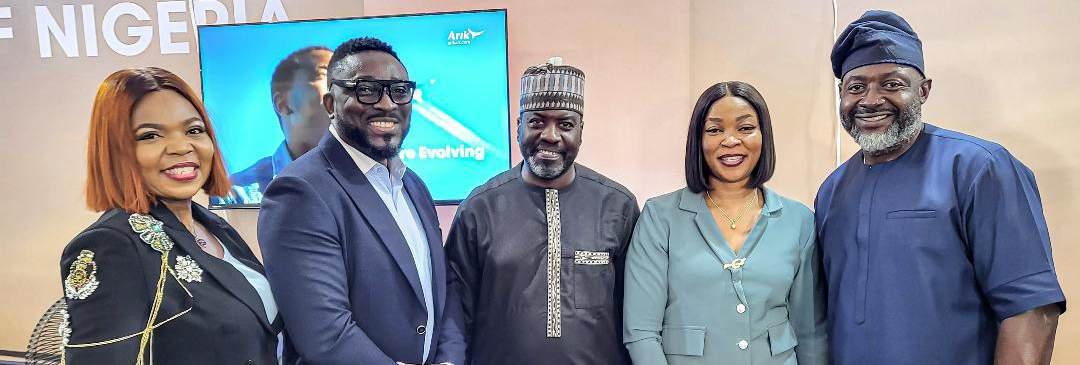
Supervisor Ticketing and Reservation, Abuja, Arik Air, Lynda Uche; Head, Global Sales, Henry Ejiogu; Vice President, Technical, Engr. Emmanuel Balami; Ticketing and Reservation, Abuja, Evelyn Egbezien-Ose, and Chief Commercial Officer, Charles Ailemen, in Abuja…recently
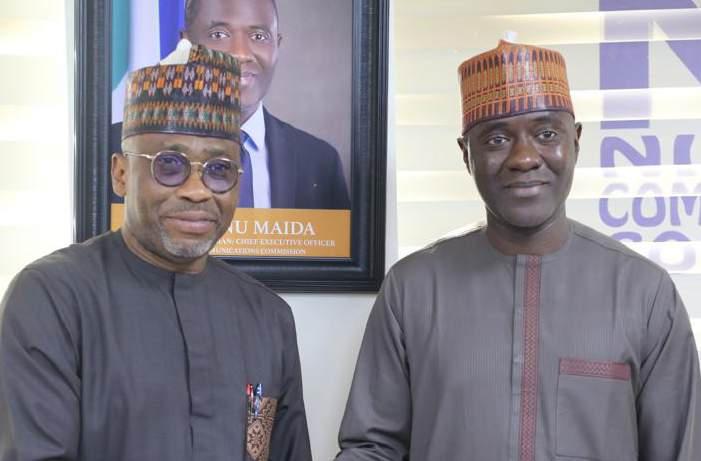
STRENGTHENING REGULATORY TIES...
Director General, National Broadcasting Commission (NBC), Mr. Charles Ebuebu (left) and Executive ViceChairman, Nigerian Communications Commission, NCC, Dr. Aminu Maida, when a team of the NBC management paid a courtesy visit to the NCC headquarters in Abuja...recently
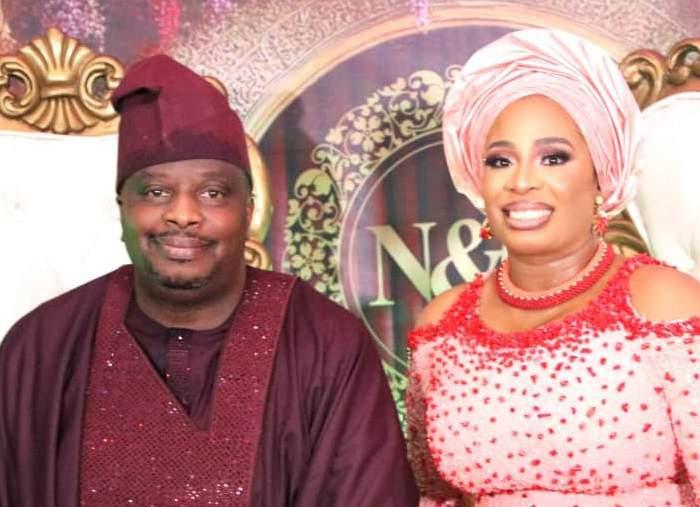
TRADITIONAL MARRIAGE...
Traditional wedding of Nnedinma and Chuba Abaelu in Lagos...
Eminent Africans Demand Release of Guinea-Bissau Election Results
Sunday Ehigiator
A group of 20 eminent Africans, including a former President of Cabo Verde Pedro Pires, ex-Foreign Minister José Brito, former senior ECOWAS officials, heads of International bodies and civil society organisations, have in a joint statement, demanded the immediate release of the results of the 23 November legislative and presidential elections in Guinea-Bissau and the winner declared.
FG Urged to Review FOI Act
Bennett Oghifo
Justice of the Supreme Court, Abraham Moore Adumein, has urged the federal government to review the Freedom of Information (FOI) Act to reflect today’s realities.
He said now that “corruption has become digitally sophisticated, access to timely, accurate and unimpeded information is essential for effective forensic investigation and national accountability.”
Justice Adumein, who made the call at the Second Founders’ Day anniversary of the Chartered Institute of Forensics and Certified Fraud Investigators of Nigeria (CIFCFIN) at the Abuja Chamber of Commerce and Industry (ACCI), said, “The justice system depends on credible evidence, effective investigation, and proper handling of cases.”
He said forensic practice has moved to the centre of justice administration, providing clarity,
supporting evidence-based conclusions, and strengthening accountability. “Forensic practice supports this directly and indirectly, strengthening both operational processes and institutional integrity.”
He commended the Institute for introducing modern techniques to combat digital offences, cyber-related threats, and other emerging crimes.
“It (CIFCFIN), continues to engage with international investigative frameworks and proposes their adoption in sensitive national processes, such as the electoral system management and public sector reforms. These practices must be guided by credible reports, transparency, and professionalism,” he added.
He said one of the most outstanding achievements of the Institute is the training and capacity building of over 5,000 forensic professionals across Nigeria and beyond since its inception.
“ECOWAS must demand the truth (about the elections), protect the winner and request the freeing of the political actors being detained by the military junta,” the group stated in the statement titled “Restoring Constitutional Order and the Rule of Law in Guinea-Bissau.”
They noted that, “taking into account an opinion widely shared in West Africa and
throughout the rest of the continent, …we take the liberty to invite the ECOWAS Heads of State, who are meeting in a Summit, on 14th December to make a bold move towards solving the current crisis afflicting one of the most fragile (states) of… the community.”
According to the group, “What prompted us to act is (that) under the threat of
security services and the army, the National Electoral Commission (CNE) was forced to declare its inability… to continue the compilation of the election results and to announce them.
“It (CNE) said that the military had destroyed and/ or taken away the documents and data needed for releasing the election results recorded in
Akpabio Sues Akpoti-Uduaghan for Defamation, Seeks N200bn Damages Over Sexual Harassment Allegations
Senate President Godswill Akpabio has filed a N200 billion defamation suit against the Senator representing Kogi Central, Senator Natasha Akpoti-Uduaghan, over the sexual harassment allegations she made against him.
Akpoti-Uduaghan, who disclosed this on her Facebook page yesterday, revealed that the suit was
filed at the Federal Capital Territory (FCT) High Court.
She attached the order of U.P. Kekemeke, the judge, directing that she should be served via substituted means through the clerk of the national assembly. The order was issued November 6. The case is expected to commence on January 21, 2026.
He said the suit would provide an opportunity for her to prove how she was sexually harassed.
She wrote: “Today being the 5th day of December, 2025, I’m in receipt of the newly instituted N200 suit against me by Senator Godswill Akpabio claiming defamation on sexual harassment.
CIMA Collaborates with Nigerian Varsities on CGMA Programme
The world’s largest accounting and finance membership body, AICPA and CIMA, have collaborated with Thomas Adewumi University and Landmark University to provide their accounting and finance students access to the CGMA Finance Leadership Programme, a remote, digital self-paced learning programme.
The CGMA Finance Leadership Programme is a guided learning and assessment route to completing CIMA’s CGMA Professional Qualification and earning the CGMA designation.
A statement noted that with the help of real-life case simulations, it teaches a mix of finance, accounting, business, people, leadership and digital skills that will be required to build successful careers.
MUSA TAKES CHARGE, VOWS TO END BLOODSHED, RETURN CHILDREN TO SCHOOL
more robust and coordinated approach to tackling the country’s complex security challenges.
He said: “In the meeting we had earlier, I made it clear that we must be sincere and collective in our approach. To achieve meaningful results, we must get the full buy-in of the Minister to drive the process, and the government must continue to demonstrate the political will required to support our efforts. I want
to assure the Minister that collectively, we will support this cause and strengthen the confidence of Nigerians in our Armed Forces. I am convinced that, going forward, Nigeria will be better.”
Earlier, Permanent Secretary of the Ministry of Defence, Mr. Richard Pheelangwa, said the Minister’s assumption of duty marked a significant moment for the ministry and the entire defence sector.
He emphasised that service to the nation requires professionalism, integrity, discipline, and accountability.
"We stand ready to work diligently under your guidance to uphold these values. Your appointment by President Bola Ahmed Tinubu is a clear testament to the nation’s confidence in your experience, character, and capability to strengthen and reposition our security architecture," he said.
Established 67 years ago, the Permanent Secretary said the ministry has the statutory responsibility of overseeing the nation’s defence sector, safeguarding Nigeria’s sovereignty and territorial integrity, and supporting global peacekeeping operations.
He added that the ministry comprises both civilian and military components, with a total staff strength of about 7,666 personnel.
Tinubu Driving Bold Push to Strengthen Nationwide Security, Experts Declare
Security and diplomatic experts have expressed support for President Bola Ahmed Tinubu’s administration move to reinforce national security amid escalating unrest.
Former Foreign Affairs spokesperson, Amb. Ogbole Amedu Ode, stressed that
Guinea-Bissau’s eight regions, in a desperate attempt to destroy the archives.
“it is not late to salvage the democratic aspirations, based on the tenets of the rule of law in Guinea-Bissau,” the statement said: “We salute the convening of a virtual summit by the ECOWAS Heads of State and Government… in the aftermath of the (26 November) putsch as well as its condemnation of the staged coup undertaken by key military officers all closely linked to the outgoing president (Umaro Sissoco Embaló.
international scrutiny and mounting public anxiety may have influenced the decision. Other analysts, including Amb. Simon Ejike Eze and Major General Chris Olukolade (Rtd), also noted that the appointment of retired General Musa as the new Minister provides an opportunity to re-evaluate and strengthen defence operations.
Sanwo-Olu: Has Lagos Lifted the Ban on Okada?
Despite repeated government crackdowns and assurances that the ban on commercial motorcycles remains firmly in place, the sight of okada weaving through Lagos traffic has become increasingly common again, raising fresh questions about enforcement, public safety, and the growing wave of robberies linked to both okada and dispatch riders across the city, writes Sunday Ehigiator
For three years, Lagos State has insisted that commercial motorcycles, popularly known as okada, are banned from major highways and key local government areas. Governor Babajide Sanwo-Olu has repeatedly emphasised safety, orderliness, and the need to reduce alarming rates of motorcycle-related accidents and crimes. Enforcement agencies have carried out thousands of impoundments, crushed seized motorcycles, and announced tighter controls. But today, in many parts of Lagos, the question on the lips of residents is a simple one: ‘Is Okada back?’
A visit to several parts of the city over the past three weeks suggests a reality that contradicts official declarations.
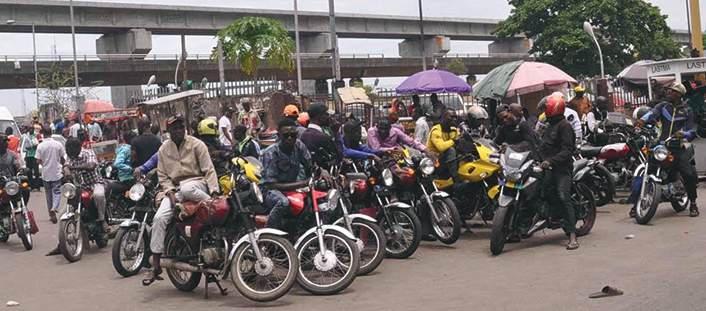
From Ogba to Surulere, Okota to Ikorodu, Ojodu Berger to Mile 2, motorcycles, both commercial okada and dispatch bikes, are not just present; in many areas, they are back in full force. And with their return has come an unsettling rise in robbery incidents carried out by riders, including those masquerading as deliverymen.
Findings across Lagos
When the government intensified the ban in 2022, Ogba was one of the first places where residents noticed a clear difference. The streets emptied of okada riders, bus stops adjusted, and commuters resigned themselves to longer treks. That period is gone. Today, what you see in the early hours in Ogba are riders gathered around Ogba market, near the Sunday Market corridor, even around Ajayi road, Excellence hotel and along Wempco road, calling out to commuters just as they did before the ban.
Residents noted that the return began gradually around mid-2024, but by early 2025, the service had fully resumed.
“They disappeared for a while, but not completely,” said a shop owner near General
Filing Station, who gave her name as Joyous Benjamin. “Now they are everywhere again. Only difference is they scatter whenever they hear Taskforce is coming.”
Surulere
Surulere, with its dense mix of homes, shops and narrow connecting roads, has always been fertile terrain for okada operations. At Shitta, Ijesha, Akerele and Census, Ogunlana areas, riders have returned in full swing, ferrying passengers along both major and minor roads.
The Task Force’s presence along major intersections like Lawanson and Bode Thomas provides only a temporary disruption. Riders simply divert through neighbourhood backstreets until the coast is clear.
Aresident of Akerele, Mrs. Omishola Obadina, noted that, “From 6 am, they begin work. Whether the ban is on or not, people here depend on them. When the buses don’t come, or traffic holds
everything up, okada becomes the only hope.”
Okota
Okota remains one of the most defiant zones.
From Ago Palace Way to Apple Junction, motorcycles move like an organised fleet; speeding past gridlock, shuttling through estate gates, and servicing riders late into the night.
Dispatch riders are especially visible here, and that visibility has contributed to a new layer of insecurity.
In August, a viral social media post showed a young woman recounting how two men on a bike, disguised as a delivery duo, attempted to snatch her bag by the Canoe Bus Stop.
The confusion between legitimate dispatch riders and criminals posing as them continues to fuel anxieties in the area.
Ikorodu
Ikorodu is arguably where okada is most
The Urgency of State Police
Uche Anichukwu
Finally, the chicken has come home to roost. That which we were forewarned about has come upon us.As the late Ghanaian poet and literary icon, KoofiAwoonor, says in “Songs of Sorrow,” “Death has made war upon our house.”
Kidnappers, terrorists, extremists, and all manner of criminal cartels, who dared not lift their heads to look in our faces in time past, have come out as men. Criminals, who rape our women, murder our citizens in cold blood, abduct our children (including nursery and primary school pupils), take us on ransoms as though they loaned money to us. We are paying the price of the obstinate refusal of successive administrations since the fall of the First Republic to allow Nigeria to run like a federation. The introduction of the highly misplaced Decree 34 of 1966 by the General Aguiyi Ironsi Administration, which put Nigeria on the path of a unitary form of government as opposed to the federalism adopted after various painstaking conferences in Nigeria and London by our founding fathers set the state for our sorry state. The Ironsi Regime set up a body look at the desirability of unifying the Nigeria Police and Local Government Police. The irony is that the General Yakubu Gowon Regime, populated by those who overthrew Ironsi and made him pay the supreme price for his unitary tendencies , supposedly aimed to pocket the rest of the country, and quickly nullified the contentious Decree 34 of 1966, still went ahead to foist a unitary police system on the country. This is as opposed to a decentralised police system with various layers of police services that subsisted until the coming of the military.
That was not all. From 1966 till the last military
regime quit in May 1999, a lot of harm was done to the federal structure that birthed Nigeria’s golden era. The result is the Nigeria we have today – a nation beset by security and economic woes. While the introduction of unitary police gradually made the nation vulnerable to insecurity, the destruction of fiscal federalism and subsequent introduction of what former Deputy President of the Senate, Senator Ike Ekweremadu, christened “Feeding Bottle Federalism,” destroyed the creativity, selfreliance, and competitive growth that gave rise to the economic successes recorded before the 1966 coups.
However, as far as I am concerned, the military is no longer to blame, as 26 unbroken years of democracy are more than enough to right the wrongs we felt the military had done to Nigeria. I recall that Ekweremadu pushed for the decentralisation of policing since the Sixth National Assembly until the Ninth National Assembly. When hapless Nigerians were massacred in Barkin Ladi, Plateau State, in 2018, an already frustrated Ekweremadu forewarned that the most painful part was not just that many hapless citizens were massacred, but also that more people would be killed and more villages overrun. In his words, “there is no way you will have a big federation like Nigeria with all the diversities, and continue to operate a centralised policing.” Sadly, people who should know were more interested politics and narrow interests.
Working closely with the Senate Committee on Constitution Review as Ekweremadu’s media aide afforded one the privilege of understanding the underpinning ethnic and regional politics as well as unfounded fears, claims and sentiments that have torpedoed every attempt to introduce state police over several Assemblies. But perhaps, the greatest enemy of state police, in my opinion, is the selfish belief by successive presidents that
it is in their best interest to have a total control of all legitimate instruments of coercion in their firm grips – an assumption that have severally boomeranged in their faces. They only see the need for state police after leaving. This is where President bola Tinubu is different.
It is therefore heartwarming seeing the consensus that now flow in favour of state police - even from the unlikeliest quarters. Only a few days ago, the top echelon of the northern political leadership and intelligentsia – governors, top traditional rulers led by the revered Sultan Sa’ad Abubakar III, top security chiefs, among others – all gathered at the Kashim Iman House to unanimously endorse state police. As former Chairman of the Senate Committee on Rules and Business and one of the critics of Ekweremadu’s State Police Bill, Senator Ita Enang, once confessed on Channels TV’s “Politics Today,” “state police is an idea, which time has come.” It is an emergency and he was no longer interested in what the governors could do with it, so long as they protect the people.
Quite significantly – and also ironically - support for this paradigm shift has equally come from former President Goodluck Jonathan and former Head of State, General Abdulsalami Abubakar (Retd.). Of course, the recent meeting of the Southern Governors Forum and the Southern Nigerian Traditional Rulers Council in Ogun also came up with the same verdict.
However, beside the harsh realities in the form of a worrisome wave of insecurity, the credit to the momentum and consensus state police now enjoys should go to President Tinubu for body language, statements, and federalist dispositions, including the devolving of more powers to the states. The president also gave a new kick to the push for state police during his recent declaration of emergency on insecurity. The president declared that “Our administration will support state governments,
visible today. From Agric to Ogolonto, from Benson to Elepe and down through Ijede Road, motorcycles operate freely as though the ban never existed.
The sheer demand for transport, worsened by gridlock on the Ikorodu Road expansion corridor, means riders have a ready market. Many commuters openly admit they use okada daily, ban or no ban. Here, enforcement is comparatively weak, and the riders seem aware of it.
Ojodu Berger
Ojodu Berger has recently emerged as one of the hotspots for motorcycle-enabled robberies, particularly phone snatching and after-dark muggings. Residents narrate cases of men on bikes trailing unsuspecting commuters at night, especially those walking toward underbridges or heading home from nearby bus stops such as Grammar School and Omole Phase 1.
In a viral post weeks ago, a middle-aged man recounted how two riders cornered him at about 9:45 pm along Isheri Road.
“They rode past me, then came back and stopped in front. Before I could react, one held a knife, and the other snatched my phone. They sped off into the estate.” He said the entire encounter lasted less than 12 seconds.
The police have made some arrests in recent months, but residents say the attacks persist; largely because the robbers rely on the speed and manoeuvrability of motorcycles to outrun any pursuit. Meanwhile, the community also shares a border with Ogun State, hence the enforcement difficulty on the ban of motorcycles, since Ogun State has no such ban in place.
Growing Crime Trend
Recent reports by security experts say the most worrying development is the use of delivery bikes as camouflage for robbery.
which have set up security outfits to safeguard their people from the terrorists bent on disrupting our national peace.” He also asked the National Assembly to “begin reviewing our laws to allow states that require state police to establish them.” Indeed, in the face of rising insecurity in recent times, the president has shown uncommon courage and the political will to navigate Nigeria away from doom. From changing the service chiefs across the military services to the appointment of former Chief of the General Staff, General Christopher Musa as new Minister of Defence, to the directive for the mass recruitment across the military services and the police as well as the recent approval by the National Economic Council, the sum of N100 billion proposed by the Governor Peter Mbah-led Committee for the Revamp of Police and other Security Training Institutions, President Tinubu has displayed a strong will to fix the nation’s security lapses.
However, of particular commendation is his recognition of the fact that security is local. Thus, he went ahead to not only show the political will to see state policing through, but also to support local security initiatives by governors. Talking about local initiatives, what Governor Mbah is doing with security in Enugu State clearly demonstrates how far a purposeful state government can go to secure a state. In less than three years as governor, he has changed the Enugu security story. He has invested heavily in the construction of a state-of-the-art Command and Control Centre matched with AI-enabled cameras mounted across Enugu State for full surveillance. He set up the Distress Response Squad, a special police unit powered by over 150 security vehicles fixed with AI-embedded cameras for effective patrol of the state to mitigate crimes and also ensure a quick response to crime situations. Just recently, he launched hitech equipment like high-impact drones and patrol vehicles to strengthen the war against insecurity in his state.
Okada
Anichukwu writes from Enugu
•Tourism •Arts&Culture
Sheraton Lagos @40: Celebrating Decades of Hospitality, City-shaping Legacy
For 40 unbroken years, Sheraton Lagos Hotel and Towers has continued to contribute to the
and development of hospitality sector in Nigeria, writes Charles Ajunwa
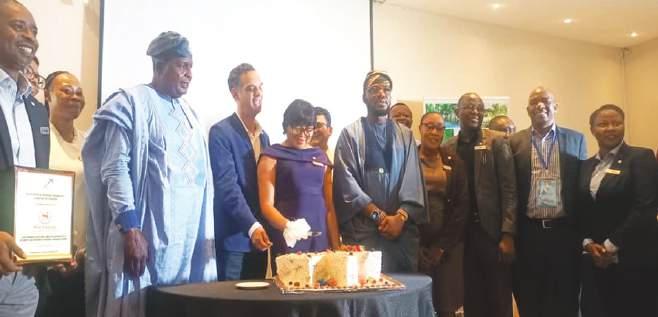
The Moremi Hall of Sheraton Lagos Hotel and Towers in Ikeja, Lagos, was recently filled as the hotel marked its 40 years in Nigeria, celebrated together with the conference and awards organised by the Association of Nigerian Journalists and Writers of Tourism (ANJET).
Dignitaries who attended the event included former Nigerian Minister of Tourism and Culture, Ambassador Frank Ogbuewu, the immediate past Director General of the National Council for Arts and Culture (NCAC) and the Nigerian Tourism Development Authority (NTDA), Segun Runsewe, and Director General, National Institute for Hospitality and Tourism (NIHOTOUR), Dr. Abisoye Fagade.
Other distinguished Nigerians were, Otunba Wanle Akinboboye, Mr. Jemi Alade, Engineer Tarzan Ganiyu Shekoni Balogun, Mr. Nkereuwem and Mrs. Abimbola Bode-Thomas, Professor of Hotel Management and Tourism, Atiba University Oyo, Prof. Wasiu Babalola, and many others.
Fagade, who was the chief host, commended Sheraton Lagos Hotel and Towers for their contributions to the growth and development of the hospitality sector in Nigeria.
NIHOTOUR boss, who joined others in cutting the hotel’s 40-year-old cake, emphasised that certification is key to tourism. On his part, Ogbuewu said, “If this country manages tourism well, we should not have a single child looking for a job. After agriculture, tourism is the biggest employer of labour, but we are still playing games, we are still telling ourselves stories.”
Babalola, who delivered a lecture themed: ‘The Role of International Hospitality Brand in the Growth of Nigerian Tourism and Economy’, said brands like Sheraton built the foundations for today’s hospitality sector.
“In doing so, we acknowledge that while
brands like Sheraton led the way, it is the people and organisations behind the scenes — the institutions and the visionaries — who turn an industry into a legacy.”
Babalola, who is Chairperson, National Technical/Mirror Committee on Tourism and Related Services Director, African Travel Commission (ATC), explained that hospitality, in its purest form, is as old as humanity itself.
According to him, early establishments like the Bristol Hotel, the Federal Palace Hotel, and later, the Eko and Sheraton Hotels, began to redefine comfort, service, and international standards in accommodation and tourism services. “Among these pioneers, one name has stood tall and enduring – Sheraton.
The Sheraton brand, born in 1937 in Springfield, Massachusetts, USA, began with a simple
AFRIMA, British High Commission Partner to Promote Culture, Creative Exchange
Stories by Charles Ajunwa
The All Africa Music Awards (AFRIMA) and the British High Commission in Nigeria have entered into a cultural partnership aimed at boosting creative exchange, strengthening cultural ties, and opening more international doors for African music as the 9th AFRIMA Awards is set to hold from January 7-11, 2026.
The collaboration, formalised through a newly signed Cultural Cooperation Agreement, also affirms that the British Deputy High Commission in Lagos would co-host the Welcome Soirée for the Nominees and Guests in Lagos, the official opening event of the 9th AFRIMA Awards Week.
A statement explained that the exclusive gathering would take place on January 7, 2026, and in attendance would be AU officials, AFRIMA delegates, jury members, international guests, nominees, creatives, and media professionals for an evening of networking and cultural connection.
Unarguably, Africa’s global music awards, the 9th AFRIMA is organised by the International Executive Committee of AFRIMA in partnership with the African Union Commission and the Lagos State government as the Official Host City.
Speaking of the partnership, AFRIMA’s Chief Experience Officer (CXO), Adenrele Niyi, described the collaboration as a strategic move to deepen cultural diplomacy through music.
“This partnership reflects AFRIMA’s mission to position African music as a global force,” she said. “Beyond the awards, we are committed to building spaces where creativity meets opportunity and where African talent can confidently engage the world. Working with the British High Commission expands our platform for industry innovation, collaboration, and meaningful cultural exchange.”
Niyi added that this edition of AFRIMA will place strong emphasis on strengthening global creative-industry relationships.

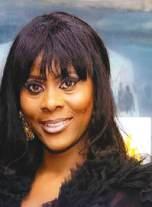
“Partnerships like this show just how relevant African music has become on the world stage. We’re honoured to collaborate with such an important institution, and we believe the impact will go far beyond 2025.”
The agreement, signed by Gill Lever, Chargé d’Affaires, British High Commission Nigeria, aligns with the UK’s ongoing support for Nigeria’s creative industries through enhanced cultural exchange and innovation.
philosophy, to create a chain of hotels where guests could expect the same high-quality experience no matter where they were. That vision of consistency, comfort, and class spread across continents, and by the late 20th century, Sheraton had become a symbol of international hospitality excellence.
“When Sheraton Lagos Hotel and Towers opened its doors in 1985, exactly 40 years ago this year, it marked not only a new chapter in the Nigerian hospitality story but also a turning point for Lagos as an emerging global city. Strategically located in Ikeja, near the international airport, Sheraton Lagos became a gateway, the first impression of Nigeria for countless business travelers, diplomats, and tourists.
“It was more than a hotel. It was, and still is, a beacon of global standards, a training ground
for professionals, and a symbol of Nigeria’s readiness to engage the world.”
He outlined Sheraton’s Lagos contributions to the Nigerian economy and standards, including pivotal roles it played in our national tourism story.
In the area of human capital and skills development, Babalola said, “One of the most significant benefits from the presence of an international brand is the development of talent. Sheraton Lagos has trained hundreds, if not thousands, of hospitality professionals, many of whom now lead hotels and institutions across Nigeria and Africa. These trained practitioners carry the ‘Sheraton standard’ into every corner of our tourism value chain.”
On benchmarking global standards, he said before the arrival of major international brands, many local hotels operated by local definitions of comfort and service.
“Sheraton Lagos introduced, from its inception, the kinds of Standard Operating Procedures (SOPs), quality assurance systems, hygiene regimes, guest-service protocols, and safety frameworks that are in line with global best practice. These standards have served as reference models for the broader industry in Nigeria, and indeed have fed into national standards development,” he added.
Babalola who listed economic multiplier and visibility, said the multiplier effect of Sheraton’s presence should not be underestimated. “When Sheraton Lagos attracts an international conference, foreign delegation, or business event, the local economy benefits from suppliers, catering, transport, logistics, staff employment, and ancillary services. It also places Lagos and Nigeria on the global map as a destination for business and tourism.”
Musawa Commends Runsewe’s Contributions to Tourism Sector’s Growth
Minister of Art, Culture, Tourism and Creative Economy, Hannatu Musa Musawa, has acknowledged the contributions of the immediate past Director General of the National Council for Arts and Culture, Olusegun Runsewe, to the growth and development to Nigeria’s cultural tourism landscape.
Musawa, who gave the acknowledgement at the Nigeria Tourism Investment Forum and Exhibition (NTIFE) 2025 held in Abuja, described Runsewe’s impact as “indelible,” and appreciated his recommendations, assuring the audience that his insights would be explored as part of an urgent effort to analyse the sector’s strengths, weaknesses, and opportunities for sustainable transformation.
The event, organised by the Federation of Tourism Associations of Nigeria (FTAN), was Runsewe’s first major tourism appearance in the Federal Capital Territory since his removal from office on January 12, 2024, during a restructuring of agencies under the Federal Ministry of Art, Culture, Tourism and
Creative Economy.
It was the first time both personalities would meet in the same event and share a stage nearly a year after Runsewe’s exit.
Runsewe delivered an insightful assessment of global cultural tourism trends, complete with data and analysis reminiscent of his days at the helm of the NCAC and Nigerian Tourism Development Corporation (NTDC) now Nigerian Tourism Development Authority (NTDA).
Addressing government officials and the Minister directly, he called for a strategic reassessment of the sector, recommending a SWOT analysis framework to reposition Nigeria as a competitive global tourism force.
Former NCAC boss lamented Nigeria’s absence from the list of Africa’s top 10 performers in the latest global tourism report, which recorded over 1.1 billion international arrivals between January and September 2025.
He noted that nations such as The Gambia, South Africa, Kenya, and several North African countries powered the continent’s growth.
Continental Hotels Launches Twin-City Holiday Package for Christmas, New Year
The Continental Hotel Group has announced a city-wide festive programme that allows guests to celebrate the Christmas and New Year holidays in Nigeria’s two flagship cities - Lagos and Abuja, without having to choose between them.
The Cluster Director of Marketing Continental Group, Richard Mutanda, who unveiled this, said the packages were invented to celebrate the season in style.
According to him, the Twin-City Festive Escape, which runs from 19 December 2025 to 10 January 2026, was tailored to have exclusive accommodation, gourmet dining, family activities,
and premium wellness benefits at both the Abuja Continental and Lagos Continental hotels.
“Under the early-bird offer, rooms are priced at a reduced rate that includes breakfast for two adults and two children under 12, as well as a complimentary welcome gift for youngsters. Guests will also enjoy a 20 per cent discount on a one-month gym membership, a 60-minute Swedish massage, a free 15-minute facial or head massage, and a complimentary body assessment at each hotel’s fitness centre,” Mutanda said.
“For Abuja Continental with the theme ‘Capital Winter Wonderland’ in the federal capital, the celebrations begin with a festive
brunch at Obudu Grill on 21 December, followed by Christmas Eve lunch and dinner on 24 December and a Christmas Day brunch at the Lakeside Conference Centre on Christmas day. The season’s highlight is a poolside New Year’s Eve dinner on New Year eve featuring a chef’s special, live entertainment and a champagne toast, with a New Year’s Day brunch and dinner on 1January to close the festivities.
“Families can explore the Children’s Fun Village, participate in Sip & Paint workshops and meet Santa, while parents relax at the Ginger Bread House with hot cocoa and treats,” he explained.
r unsewe (2nd left), Fagade (5th right) and others cutting cake to mark 40 years of Sheraton Lagos Hotel and Towers in Nigeria
Gill Liver Adenrele Niyi
Carloha Nigeria Celebrates Global Safety Awards for Chery Tiggo 8
carloha, the exclusive distributor of chery vehicles in Nigeria, has said the Tiggo 8 has achieved five-star safety ratings from both ANcAP (Australasian New car Assessment Programme) and euro NcAP (european New car Assessment Programme), “reinforcing its position as a leader in family safety and automotive innovation.”
A statement issued by carloha said this dual five-star certification underscores the Tiggo 8’s exceptional safety performance, designed to protect every passenger with cutting-edge engineering, intelligent assistance systems, and a robust safety philosophy. The recognition from two of the world’s most rigorous safety authorities highlights chery’s commitment to global safety standards and its dedication to delivering uncompromising protection for families.
The General manager at carloha Nigeria, Felix mahan, said, “At carloha, we are proud to bring the globally recognised Tiggo 8 to Nigerian roads. These certifications reaffirm what we already know—the Tiggo 8 is engineered for families who prioritise safety without compromising comfort, style, or performance. As chery continues to push the boundaries of innovation and safety. “We remain committed to offering Nigerian customers vehicles that protect what matters most—their loved ones. more so during this Yuletide season, when many Nigerian families will be travelling to various choice locations.”
Dual recognition from Global Safety Authorities: — A Space Proven for Protection
The Tiggo 8 Pro mAX earned a five-star ANcAP rating in 2024, achieving outstanding scores across all key categories, which include Adult Occupant Protection (88%), child Occupant Protection (87%), Vulnerable road User Protection (79%), and Safety Assist (86%).
Shortly after, the Tiggo 8 cSH secured a five-star
Carloha

ceuro NcAP rating, demonstrating balanced safety performance with scores of 82% for Adult Occupant Protection, 85% for child Occupant Protection, 80% for Vulnerable road User Protection and 78% Safety Assist.
These results reflect the Tiggo 8’s superior crashworthiness, advanced driver assistance systems, and comprehensive protection for all occupants—making it one of the safest SUVs in its class.
Engineered for Protection: A Reinforced Safety Cage
The Tiggo 8’s safety begins with its high-strength body structure, featuring over 60% high-strength steel and benteler ultra-high-strength hot-formed steel in critical areas. This rigid safety cage effectively absorbs and dissipates impact energy, ensuring maximum protection in collisions.
Inside the cabin, up to 10 standard airbags provide 360-degree coverage, including a 6-second pressure retention system that maintains protection even during secondary impacts. This advanced design ensures consistent safety for all passengers, from the front row to the third.
Intelligent Safety: A Co-Pilot for Every Journey beyond passive safety, the Tiggo 8 is equipped with L2+ Advanced Driver Assistance Systems (ADAS), offering nearly 20 intelligent safety functions to enhance driving confidence. Key features include enhanced Autonomous emergency braking (Aeb) – Automatically applies brakes to prevent or mitigate collisions, Lane Keeping Assist (LKA) – Gently corrects unintentional lane drifting, Adaptive cruise control (Acc) – maintains a safe following distance, reducing driver fatigue on long journeys.
Partners with FRSC for Ember Month Safety Campaign
arloha Nigeria, the assembler and franchise holder of chery vehicles in Nigeria, has partnered with the Federal road Safety corps (FrSc) to drive awareness during the 2025 ember-months Safety campaign.
The FrSc has consistently championed road safety advocacy across Nigeria, especially during the ember months when accident rates tend to rise, mostly due to human factors. This year’s campaign theme, “Take responsibility for Your Driving: Stop Distracted Driving,” emphasises the importance of driver behaviour as the first line of defence against crashes.
As part of the collaboration, carloha Nigeria is supporting the FrSc rS2 Headquarters, Lagos, with the donation of reflective jackets for improved officer visibility and informationpacked flyers for public sensitisation throughout the campaign period.
Speaking on the initiative, Felix mahan, General manager, marketing, carloha, said:
“Our partnership with the FrSc underscores carloha and chery’s commitment to promoting safer roads and encouraging responsible driving habits, especially during the high-traffic
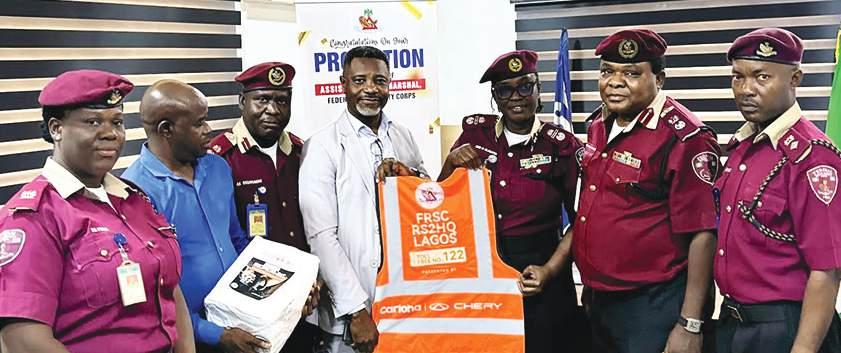
l-r: SrC ruth Kupoluyi, pro; Mr. Julius ojuade, operations Manager, Carloha Nigeria; CC ogungbemi, AHr; Mr. Felix Mahan, General Manager, Marketing, Carloha Nigeria; ACM Ann oladayo, Zonal Commanding officer; CC Anthony Daudu, Motor Vehicle Administration; and CrC Akinwale, operations, during the presentation of reflective jackets and flyers by Carloha Nigeria in support of the ember-Months campaign of the Federal road Safety Corps at the FrSC rS2 Zonal Headquarters, ojodu, lagos… recently
end-of-year period.”
He added that although many chery vehicles feature advanced safety technologies – including driver-assist systems, anti-collision and emergency brake assist, lane departure and
PHOTOSPEAK
Managing Director, BKG exhibitions,
distraction warnings, and multiple airbags – the company considers it essential to reinforce a culture of alertness, discipline, and personal responsibility among motorists.
Also commenting, Acm Ann Oladayo, Zonal Commanding Officer, RS2 Headquarters, Lagos, expressed appreciation for carloha’s support.
“We are delighted to have carloha and chery partner with us on this year’s ember-months campaign. The reflective jackets and flyers will significantly enhance the visibility of our officers during public enlightenment activities and support our efforts to reduce road traffic crashes,” she said. Oladayo encouraged other corporate organisations to emulate carloha and chery in backing initiatives that promote safer road use across Nigeria.
The FrSc ember months campaign, which runs annually from September to December, advocates responsible driving during the busy year-end travel season. Prior to its introduction, the last quarter of the year often recorded heightened road crashes linked to driver recklessness. The campaign has since played a key role in increasing public awareness and reducing avoidable road accidents.
Auto Revolution Takes Centre Stage as NADDC, FRSC Bosses Lead Star-Studded NAJA Awards
The Director General of the National Automotive Design and Development council (NADDc), chief Joseph Oluwemimo Osanipin, and the corps marshal of the Federal road Safety corps (FrSc), Shehu mohammed, have confirmed their participation at this year’s Nigeria Auto Journalists Association (NAJA) International Auto Awards, billed for 6pm on Tuesday, December 16, at the Oriental Hotel, Victoria Island, Lagos. Their attendance underscores the strategic importance of the annual awards—widely regarded as Nigeria’s most credible and prestigious platform for celebrating excellence, innovation and industry leadership in the automotive sector.
Osanipin, a leading voice in Nigeria’s push for stronger local vehicle assembly and electric mobility adoption, is expected to shed light on the council’s long-term vision for the nation’s automotive future.
At the recently concluded Abuja International motor Fair, he assured a NAJA delegation led by chairman Theodore Opara that he would not only attend but take active part in the ceremony.
In a similar vein, the FrSc corps marshal, Shehu Mohammed, has also confirmed his intention to attend the event.
He conveyed this through a brief message to the NAJA chairman, expressing excitement about engaging industry stakeholders and reinforcing ongoing road safety advocacy.
This year’s edition is expected to gather automakers, distributors, policymakers, and mobility experts at a time the sector is undergoing rapid transformation driven by new technologies, sustainability goals and policy shifts.
chairman of the Award Planning committee, Frank Kintum, said preparations were in full swing to maintain the awards’ reputation as the “industry’s gold standard.”
“The NAJA Awards have become the benchmark for honouring brands, organizations, and individuals who demonstrate innovation, integrity, and excellence in advancing Nigeria’s automotive ecosystem.
“This year will spotlight progress in local manufacturing, green mobility and policy development,” Kintum said.
reinforcing the awards’ national relevance, NAJA chairman Opara noted that the event aligns closely with the Federal Government’s industrialisation agenda.
“As the automotive sector evolves, NAJA remains committed to supporting initiatives that drive sustainable growth,” he said.
“We are particularly delighted to have the NADDc as a central partner this year, given its pivotal role in policy formulation and innovation.”
meanwhile, excitement is already building over the highly coveted 2025 Nigeria car-of-the-Year crown, as three chinese brands—changan, Jetour and chery—emerge as surprise frontrunners.
Their shortlisted models, the changan cS55, Jetour Dashing and chery Tiggo 8, signify a major shift in Nigeria’s increasingly competitive auto market.
“For the first time, Chinese manufacturers are not just competing — they are leading,” Opara said in a statement unveiling the finalists.
“The quality, technology and market acceptance we’ve seen from these brands show how much the industry is changing.”
The Awards committee, he added, placed strong emphasis on innovation, durability and suitability for Nigerian roads.
While the car-of-the-Year list has been released, nominees in other categories— including vehicle assembly, electrification, aftersales, heavy-duty trucks, transport service and luxury mobility—will be unveiled in the coming days.
and General Manager, Marketing and Corporate
renault
and Kardian into the Nigeria market at the Abuja Auto fair at the eagle Square, Abuja… recently
Through this partnership, carloha and Chery reaffirm their commitment to supporting government-led safety initiatives and contributing to a safer transportation ecosystem across Nigeria.
Kintum assured that the committee is “raising the bar again this year,” with the 2025 edition expected to reflect the sector’s ongoing advancements—from electric vehicles to expanded local assembly operations.
Tiggo 8 pro
l-r: Branch Manager, Abuja, Coscharis Motors, Ms leticia onuzulike;
Mr. Ifeanyi Agwu; Director General, NADDC, Dr. Joseph osanipin;
Communications, Coscharis Group, Mr. Abiona Babarinde, at the official unveiling of the all-new
Koleos
Ferdinand Ekechukwu - 08035011394
Email: ferdi_adthisday@yahoo.com
2Baba: Is Love A Crime?
ekechukwu
music icon Innocent Idibia, better known as 2Face or 2baba, and his wife, Natasha Osawaru, are currently trending on social media. The situation has left many wondering, especially coming barely months after the ‘If Love is a crime’ crooner wedded Natasha in a private traditional ceremony in July.
events around the singer’s marriage of late have left not a few to conclude there’s a storm in the union, perceived to be toxic. His family, friends, fans, and colleagues are worried, fear that his life, career might be in danger. On social media some users have made it lighter as content, others in the interest of the legend have called for him to be saved.
While 2baba, in his posts, has continued to claim he is fine, his body language says otherwise about the relationship. It followed the musician’s highly publicised separation from his estranged wife and actress, Annie macaulay, in January this year. Since then, it’s been 2baba this, 2Face that, with his new wife, Natasha, at the heart of the controversy.
Interestingly, Annie, in a show of love, has added “Idibia” back to her Instagram page, leaving observers with the impression that all is not yet lost between the African Queen and the love of his life, 2baba. Not done, she continues to update her Instagram Stories with cryptic messages that many users interpreted as reactions to the controversy.
The unfolding happenstance between 2baba and Natasha went viral this week, after they were captured in a heated exchange during an Instagram live session, heating up the internet. A purported video clip showing an alleged altercation with Natasha that ended with him being led away by policemen in the United Kingdom.
The viral footage, which showed the officers speaking with the Afrobeats legend outside what appears to be a retail store with his
hands cuffed behind his back, coincided with 2baba’s scheduled show billed on October 2, 2025, which left fans disappointed after failing to perform at a scheduled show.
The emergence of the arrest video and the couple’s scuffle were just hours apart. The Instagram live broadcast with Daddy Freeze, as it were, featured two of 2baba’s former managers for a conversation about the singer’s recent UK scandal. They accused Natasha of allegedly having a negative influence on 2baba and working against his progress.
The former employees further alleged that the couple, who barely weeks ago welcomed a baby girl, had been abusing substances and that Natasha had become “controlling,” even claiming she was violent toward the singer on several occasions. They also alleged that she currently oversees 2baba’s finances.
A few minutes into the live chat session, 2baba, who was expected to join the session, immediately confronted one of them, his former manager Kaka Igbokwe, who appeared to be in the front row of the Natasha and 2baba’s scuffle during the UK, attempting to shut down the accusations that has put the couple in bad light.
The situation quickly escalated as Natasha, who came up beside 2baba in the background, got into a heated exchange, leading to a tense scene between the two. meanwhile, 2baba had earlier denied the London arrest incident in October just weeks after his milestone 50th birthday anniversary celebration.
The singer, who was on a UK tour packaged by Nero experience and Nero entertainment, had been billed to perform, but despite fans turning up for the show with tickets, he did not appear. He later denied claims that he was arrested, stating that his absence resulted from a medical emergency and not any encounter with the police.
“First of all, I want to appreciate everybody who came out. We had a medical emergency, and it was tough. So, to the organisers and everyone who came out, we will regroup and make something wonderful happen. And if you don’t know something, please don’t talk about it.”
Furthermore, the singer’s former staff confirmed that there was an altercation between 2baba and his wife at Lagos Airport before their flight to the UK. He also revealed that she sometimes felt neglected by the singer, who, he explained, naturally attracts a great deal of attention. According to Kaka, the singer receives attention wherever he goes because people recognise him and want to engage with him. Therefore, as fans, family, and observers continue to speculate, one truth remains: only clarity, healing, and sincere support—not noise—can determine whether love, for 2baba, becomes a refuge or remains a crime in the court of public opinion.
Top Four Nollywood Movies at Cinemas This December
December is often highly anticipated in the film world, with the diverse movies Nollywood has in cinemas. It promises a season full of entertainment, fan favorites stars, and unforgettable stories. From comedy to epic to drama and action thriller, Nollywood has lined up several must-watch films this season. Here are the top four anticipated Nollywood films set for release in December 2025
King of Boys 3 - Kemi Adetiba
Long-awaited King of boys 3 is scheduled for release on December 25, 2025. While the official subtitle is ‘The beginning of the end’, anticipation for this film is at a record high following King of boys 1&2. Directed by Kemi Adetiba, the film is expected to continue the political and social themes from the previous installments. Directed by Kemi Adetiba, Sola Sobowale will return as the lead character, eniola Salami.
Behind The Scenes – Funke Akindele
Produced by Funke Akindele and co-directed by Tunde Olaoye, “behind The Scenes” is a drama that centers on what goes on behind the spotlight.
With AfroCulture, Flavour Gears
chinedu Okoli better known by his stage name Flavour N’abania or simply Flavour, is a Nigerian singer and songwriter whose music has stood out firmly among a discography of Nigerian sounds.
Flavour’s music is defined as a masterful blend of highlife, contemporary Afro rhythms, and soul-stirring traditional elements that reflect the richness of eastern Nigerian heritage. His signature sound is highly rooted in melodic guitar riffs, percussive depth, and emotive vocal delivery, which creates an unmistakable identity that resonates across generations.
Whether he is serenading with his love compositions or delivering culturally grounded anthems, he speaks of excellence through intentional artistry, powerful storytelling, and a commitment to preserving the sound of his roots while elevating it to global relevance.
Avivid, street-charged anthem blending vibes, attitude and authentic Nigerian energy, “eWO”, by romeo babyo featuring berri-Tiga, resonates with listeners familiar with his root and vibes.
The benin-born rising star romeo babyo returns with a vibrant new single, featuring breakout sensation berri-Tiga, a record that captures the
His latest album, Afroculture, features a wide range of flavours and features a perfect blend of local and African artistes such as baaba maal, Pheelz, Kozz Daniel, Qing madi, Odumeje, and a few others. One thing he has done with this album is to create feelings that are like a lush return to the roots, weaving highlife, folk rhythms, and contemporary Afro fusion into a body of work that is both nostalgic and boldly modern.
raw pulse of the streets, the unpredictability of youthful encounters, and the irresistible charm of romeo’s signature sound.
“eWO” showcases romeo babyo’s versatility and his ability to create music that feels both fresh and relatable. built on smooth rhythms and a bouncy groove, the track captures the spontaneous moments, playful tension, and real-life situations that inspire everyday conversations among young
Described by the box office Queen as a deeply personal project, the movie digs beneath the glossy surface of success to explore the emotional costs of ambition, influence, and public expectation. “behind the Scenes” opens in cinemas December 12. The cast include Funke Akindele, Iyabo Ojo, and Tobi bakare.
This Is Not a Nollywood Movie – Wale Ojo barely 24hrs in cinemas nationwide, heralded by a glittering premiere, the meta-comedy follows a struggling Igbo filmmaker trying to stage a comeback after several career disappointments. The situation spirals into a “mad and zany” when the director himself is kidnapped. Aims to deliver
“bucketful of laughter”, the movie plays with Nollywood itself as a subject. Written, directed by Wale Ojo, and produced by boma Akpore, with an all-star cast including bimbo Akintola, Hanks Anuku, and Julius Agwu.
Colours of Fire – Niyi Akinmolayan Directed by Niyi Akinmolayan, this adventure/ fantasy drama had left audience on the edge of their seats with the teaser. The fantasy film follows the lives of two rivals whose affair causes chaos within an empire. Some of its sterling cast members include Uzor Arukwe, Osas Ighodaro, Ibrahim chatta, and Gabriel Afolayan. “colours of Fire” will open in cinemas on christmas eve.
Organisers of roadblock, the fastest-rising rave movement in Africa and the defining force of Detty December nightlife, has officially announced its headliners for Saints & Sinners III – rISe, taking place December 19, 2025 at balmoral centre, Ikeja Sheraton Lagos. Leading this year’s roadblock DJ Ascension is three of Africa’s most respected sonic alchemists.
Off the top is SPINALL – Africa’s global icon, whose footprint runs from Lagos to Ibiza, celebrated for his mastery of Afro-electronic dance fusion, DJ NePTUNe – The God of Greatness, a continental hit maker and crossover king with unmatched crowd control, and YK mULe – the new-era phenomenon pushing street energy into futuristic soundscapes.
Additional DJs will be revealed in the coming days as roadblock completes the
people.
romeo’s crisp vocals blend effortlessly with berri-Tiga’s dynamic style, resulting in a collaboration that feels organic and exciting. romeo babyo continues to prove why he is becoming one of the most exciting new voices out of benin and the Nigerian music landscape.
His musical journey began early in the church choir, where he discovered the emotion and storytell-
full Afro Dance music (ADm) lineup, said a statement from the organisers. In a strategic move to entrench roadblock’s philosophy, the organisers have declared ADm as its official sound —for the global stage. This year’s edition marks a historic moment as roadblock formally aligns its identity with Afro Dance music.
roadblock is Africa’s pioneering ADm rave movement — a youth-powered, hightechnology dance culture platform designed to redefine nightlife across the continent. Inspired by global festivals like Tomorrowland yet powered entirely by African energy, roadblock is home to ADm: Afro Dance music.
According to Dr. Felix King eiremiokhae, Founder & chief experience Architect, roadblock, “ADm is roadblock’s official music statement: a high-energy fusion of Afrobeats rhythms, indigenous street sounds, and electronic dance engineering designed for massive crowds, ritual-like movement, and emotional release.
ing power behind sound. Today, that foundation translates into a unique style that blends soul, creativity, and an unmistakable original flair. romeo doesn’t just make music, he creates moments, paints scenes, and delivers stories that resonate deeply. With its catchy hook, lively beat, and seamless collaboration, “eWO” is poised to become a street favorite, a playlist essential, and one of romeo’s most memorable releases yet.
Ferdinand
Ferdinand ekechukwu
Tosin Clegg
Ferdinand ekechukwu
Natasha and 2Baba
Franklin Nechi: Mobility is the New Wealth
As 2026 approaches, the Chairman, Optiva Capital Partners Limited, Franklin Nechi, argues that true prosperity now depends on global access. For Africans, he says, mobility is the new wealth shaping security and opportunity, writes Sunday Ehigiator
As 2025 gradually winds down and a new year beckons, Optiva Capital Partners, Africa’s leading investment immigration and wealth retention firm, is calling on entrepreneurs, professionals, and High Net Worth Individuals (HNIs) across Nigeria and the continent to plan intentionally for global access, wealth diversification, and family security in 2026 and beyond.
In an increasingly uncertain world - defined by shifting economies, geopolitical instability, and tightening immigration rules - the message from Optiva Capital Partners is clear: the time to act is now.
Speaking on the company’s outlook for 2026, at an interactive session with journalists, Chairman of Optiva Capital Partners, Franklin Nechi, emphasised that true financial freedom in the modern world goes beyond local investments.
“Mobility is the new wealth,” he said. “For entrepreneurs and families, access to markets, education, healthcare, and security is the real measure of success. The coming year presents an opportunity for Africans to reposition globally, and Optiva is here to guide that journey with trusted, structured solutions.”
Optiva Capital Partners advises individuals and families to embrace global access planning - a long-term wealth and lifestyle strategy that integrates investment immigration, offshore asset diversification, and international education and healthcare options.
Secure Global Access Through Investment Immigration
For entrepreneurs and professionals, obtaining second citizenship or permanent residency through investment is no longer a luxury - it’s a strategic decision. Optiva Capital Partners continues to lead in helping clients access reputable programs across Europe, the Caribbean, North America, and the Middle East - granting visa-free travel to over 140 countries, business mobility, and the ability to relocate or expand globally.
This means clients can attend global business meetings and trade fairs without visa delays; access international banking and investment platforms seamlessly; give their children and families a secure alternative home in times of crisis.
Diversify Wealth Across Currencies and
Jurisdictions
Optiva emphasises the need for wealth diversification in an era of volatile local currencies and fluctuating markets. Through its global partnerships, Optiva provides access to real estate investments, structured funds, and asset-backed opportunities in stable economies like the UAE, Portugal, Greece, the UK, USA and the Caribbean.
“In 2026, investors must think beyond borders,” noted Franklin Nechi.
“Our role is to help clients preserve and grow wealth across multiple jurisdictions - so that their money works for them, even when they sleep.”
Prioritise Education and Healthcare Access
Education and health remain two of the most powerful drivers of generational security. Optiva advises families to leverage second citizenship to gain access to world-class education for their children at domestic tuition rates in top universities; quality healthcare systems that offer affordable, timely, and life-saving services.
Families who have followed Optiva’s structured advisory have successfully relocated, enrolled children in Ivy League and top European universities, and gained access to superior healthcare networks.
Build Legacy and Continuity
A second passport is not just a symbol of freedom; it is a family asset that can be passed down to future generations. It guarantees stability, inheritance, and inter-generational wealth transfer.
Optiva Capital Partners’ holistic solutions integrate investment immigration, wealth retention, insurance, and legacy planning - ensuring clients build and preserve a legacy that endures beyond them.
As part of its broader mission, Optiva Capital Partners has expanded beyond investment immigration into holistic wealth retention services.
The firm offers an integrated suite of financial solutions that help clients protect, grow, and optimize their assets across jurisdictions.
Nechi explains that the firm’s philosophy is rooted in four pillars - protection, growth, optimization, and enhancement. “Protecting wealth means safeguarding it against currency fluctuations and market instability. Growth ensures that your money continues to earn returns through diversified investments.
Optimisation means putting your money to work efficiently, so it keeps generating value even when you retire, while enhancement ensures that clients’ investments are diversified and well distributed across asset classes, currencies, and jurisdictions.”
For African investors, Optiva’s message is clear: diversify. “Do not keep all your wealth in one market or currency,” Nechi advises.
“If your expenses are in foreign currencies - tuition, healthcare, travel - then part of your income should also be earned in those currencies. That’s how you build long-term financial resilience.”
Expanding Horizons
Optiva’s expansion into Dubai real estate investment marks a bold new chapter. Dubai, Nechi explains, has emerged as a magnet for African investors seeking stable, asset-backed opportunities with strong yields and capital appreciation.
“Many of our clients wanted not just citizenship or residency, but tangible investments in credible markets,” he explains. “Real estate in Dubai offers that - and we’ve aligned with top developers to give clients access to the very best.”
For Optiva, this is more than diversification - it’s part of a larger vision to help Africans build wealth and identity beyond borders.
“We’re moving from the migration of people to
diversification of prosperity,” Nechi summarizes. As global trends evolve, so too are the motivations behind second citizenship. What used to be a “Plan B” for travel has now become a strategic plan for health, education, wealth, and security.
“Africans are no longer seeking escape; they’re seeking expansion,” Nechi observes. “The demand is accelerating, and Optiva will remain at the forefront of this transformation.”
He envisions a future where Africa becomes a net participant in global capital and citizenship - not merely a beneficiary.
“We want every African family with ambition to find a trusted partner in Optiva - for citizenship, for investment, for legacy creation,” he concludes. “We are helping Africans own a stake in the global future.”
Africa’s global economic narrative is being rewritten. Firms like Optiva Capital Partners are leading the charge, transforming dependency into participation, limitation into boundless opportunity, and uncertainty into unparalleled potential. Join the movement shaping Africa’s future.
In a world where mobility is power and access is wealth, Optiva Capital Partners stands as a testament to what visionary leadership can achieve - a company not just connecting Africans to the world, but helping them claim their rightful place within it.
2026 Outlook
As the world becomes more interconnected, African investors are realising that success is no longer confined to borders.
Optiva Capital Partners believes that the next decade will belong to those who plan globally, diversify intelligently, and embrace international opportunities for growth. “2026 is not a year to be reactive - it’s a year to be strategic,” concluded Nechi. “The families and entrepreneurs who act now will own tomorrow.”
Optiva Capital Partners is Africa’s foremost investment immigration and wealth retention firm, with a presence across major Nigerian cities and partnerships with licensed international institutions and governments.
The company provides bespoke solutions in investment immigration, global real estate, wealth retention, and insurance, helping clients protect, grow, and optimise their wealth - while granting them access to a borderless world of opportunities.
Audu Olokpo: Civil Servants’ Training Vital for Building Forward-thinking Leadership
The Vice President of the Aig-Imoukhuede Foundation, Audu Olokpo, believes civil servants’ training is central to cultivating forward-thinking leadership, He explains to Sunday Ehigiator how the foundation’s intensive capacity-building programmes are strengthening governance and empowering a new generation of public-sector leaders across Nigeria
Can you briefly describe the core mission of the AigImoukhuede Foundation and its core capacitybuilding initiatives?
The Aig-Imoukhuede Foundation is a philanthropic organisation dedicated to transforming the public sector through support for the rehabilitation of primary healthcare centres, public sector reforms, and capacity-building programmes for senior public service personnel in Africa. With a core mission to build a better Africa by improving the effectiveness of government institutions and promoting good governance, the foundation, through its partnership with the University of Oxford’s Blavatnik School of Government, invests in the development of public sector leaders through its AIG scholarship programme, the AIG Fellowship, and the AIG Public Leaders Programme. The foundation, in its quest for public sector reforms, has supported the Office of the Head of the Civil Service of the Federation (OHCSF) in digitalising their operations, instituted awards for best performing civil servants, reform of the staff appraisal system, capacity building of permanent secretaries and recently, directors amongst others.
The Foundation has now trained over 500 public servants. How would you describe the alumni community today?
The alumni association continues to grow significantly with the commencement of the
fifth cohort of the AIG Public Leaders Programme (PLP), comprising 72 outstanding African public servants. Joining them is the 2025 AIG Scholar, Oluwapelumi Olugbile, who recently began her studies at the Blavatnik School of Government, University of Oxford.
Today, the alumni network spans several countries across the African continent, including South Africa, Ghana, Kenya, and Nigeria. In the coming months, it will further expand to include members from Zambia, Tanzania, and Egypt.
This diverse community of bright and dedicated alumni drawn from various sectors of the public service at both federal and state levels provides a rich network of intellectual resources. Members engage, exchange ideas, collaborate to solve problems, and open doors to opportunities that were once beyond their individual reach within their respective organisations.
What has been the strategy for keeping the PLP alumni connected, engaged, and supportive of one another since their training?
The foundation has been deliberate in its alumni engagement through regular upskilling events in Lagos and Abuja for the alumni. The upskilling events are either hybrid or virtual and organised with the Alumni Association and focus on current topical issues affecting the alumni in their quest to make a positive impact. The events also offer great networking opportunities to members. The recently introduced mentorship programme is another big plus as it affords alumni to be mentored
or to be mentors, all in a bid to enhance our skills to improve the public service. Alumni are also involved in conducting capacity-building programmes where they cascade learnings to other members of their organisations or those of alumni colleagues.
Why was there a continuation of these programmes post-graduation? What specific gaps were you aiming to fill?
The upskilling programmes are a great idea as they bring together alumni and provide opportunities for networking and learning, as participants are from different cohorts of the PLP and MPP scholars. Past upskilling programmes have covered a wide range of critical areas, including negotiation, lobbying and stakeholder management, project planning and execution, securing funding and building strategic partnerships, navigating challenges and adapting to change, monitoring and evaluation, project impact measurement, as well as ethics and integrity in public procurement.
Resource persons at the events are also wellgrounded and knowledgeable persons, some being distinguished past and present permanent secretaries, chief executives and illustrious leaders in the private sector. The programme, from the topics delivered, affords alumni opportunities to connect, get inspired and be equipped to transform the public sector in our spheres of influence.
Ultimately, how do these upskilling programmes translate into better services for citizens?
The whole essence of the public service is to provide programmes, goods and services to Nigerian citizens to enhance their wellbeing. The upskilling programmes are equipping those responsible for crafting, implementing and evaluating policies and programmes of the government in its bid to achieve that goal.
Nnechi
Olokpo
IntervIew
Rae Imasiku: How DeepWell Plans to Redefine Diaspora Remittance Market
DeepWell Capital’s Chief Executive, Rae Imasiku, is on a mission to transform how Africans abroad send money home—and what that money becomes. In this interview, he argues that while Africa has successfully solved challenges around payments, it has yet to solve prosperity. Remittances, he says, flow endlessly into day-today survival with little long-term value created for senders or their families. He explains how DeepWell’s model uses AI-guided systems, transparent processes, and regulated partnerships to turn everyday remittances into structured, wealth-building opportunities. Dike Onwuamaeze brings the excerpts
Africa has solved payments. It has not solved prosperity.Across Nigeria, Kenya, Ghana, South Africa, Uganda everywhere fintechs have removed friction in sending money but have left untouched the far harder problem: building wealth consistently at scale. The infrastructure is there; the demand is there. What’s missing is the system that translates everyday financial behaviour into long-term economic power. That’s the gap DeepWell exists to close.
What lessons have you learnt from recent regulatory actions affecting major fintechs in Nigeria?
Regulators don’t move to slow innovation. They move to prevent chaos. Recent actions across Nigeria and other markets reinforced one truth: Compliance isn’t a department. It’s a culture. We build DeepWell with that in mind: transparent data flows, verifiable processes, licenced partners, and a structure where regulators can see the mechanics clearly. We operate with them, not around them.
What inspired the creation of DeepWell Capital, and what gap in the fintech or remittance market are you specifically trying to solve?
Two realities created DeepWell: Africans abroad send billions every year, money that disappears into day-to-day survival. My family and I sent money back home and rarely built anything for our own future. People sacrifice everything to support their home, yet end up with nothing to show for it. DeepWell exists to break that cycle. We’re building the first system where supporting your family and building your own future happen in the same motion.
How does DeepWell’s AI Steward work in practical terms to convert remittances into investments automatically?
We don’t share proprietary details. DeepWell’s AI Steward is an intelligent companion that helps users turn everyday remittances into the foundation of their wealth-building journey. It guides. It protects. It supports. And it only acts with the user’s explicit instruction. No complexity. No financial expertise required. Just clear, intelligent steps forward.
Fintech competition in Nigeria is intense— what is DeepWell’s strategy to differentiate and scale sustainably?
Oyagbola: Mentoring
We’re not a faster remittance company. We’re
not a cheaper wallet. We’re not another fintech pushing the same product with new colours. DeepWell is a new category. We convert the largest financial habit in the African diaspora sending money home into a wealth engine. Every other platform optimises the transaction. We optimise the outcome. We scale through: Diaspora networks, embedded partnerships, regulatory first expansion, AI-driven customer guidance, and value proposition competitors cannot imitate without rebuilding their companies from scratch. This isn’t a product wedge, it’s a behavioural wedge.
The diaspora remittance market is worth billions of dollars annually. What specific advantages does DeepWell offer Africans abroad compared to existing platforms on the continent?
DeepWell turns remittances into a dual benefit: Support your family today and build your future at the same time. On the other hand, senders get: Automatic personal wealth-building pathways, transparent fees, AI-guided financial clarity that feels human and not technical. Receivers get: instant access, shared goals, better stewardship of funds, no platform on the continent delivers value to both sides of the remittance journey simultaneously. That’s our advantage.
What types of investment products or asset classes will users be able to access through the platform?
We stay within regulated, low-risk, partnerbacked options: Cash-equivalent savings, fixedincome instruments, goal-based savings products, and long-term regulated vehicles through licensed financial institutions. We provide structure, not speculation. Safety first. Growth second. Simplicity always.
What makes DeepWell different from
Can Position Women to Take
traditional money transfer or diaspora investment channels?
Traditional transfers by only moving money. Traditional investments. DeepWell builds wealth through behaviour people already have. Sending money becomes the gateway to long-term stability, not just a monthly expense. That’s the shift.
What regulatory licences have you secured, both in Nigeria and internationally, to operate as a fintech and investment facilitator?
We operate through a combination of: Licenced payment partners, regulated financial institutions, cross-border compliance frameworks, jurisdiction-specific authorisations where required, and every market has its own compliance architecture. We respect that reality and build inside it. Specific licence details are shared privately with regulators and institutional partners.
Some customers worry about hidden fees in fintech services. How does DeepWell ensure pricing transparency?
Radical clarity. Every user sees the rate, the fee, the exact amount delivered, there are no hidden spreads, no dark corners, no fine print and trust is earned through transparency, not marketing.
How will you manage customer complaints, disputes, or failed transactions to avoid the frustrations common with many Nigerian fintechs?
We design for zero abandonment: Real-time monitoring, 24/7 human-backed support, automated escalation workflows, clear SLAs with our regulated partners, and if something goes wrong, the user should feel protected because they are.
on Influential Roles in Society
WISCAR’s 2025 Annual Leadership and Mentoring Conference highlighted the critical role of mentoring in empowering women. The Founder, Amina Oyagbola, tells Funmi Ogundare how structured mentorship positions women to influence policy, strengthen governance, and drive national development, shaping a more inclusive Nigeria
What does this year’s theme, ‘Claiming Our Future: Women in Leadership and Policy Transformation’, mean in practical terms for Nigerian women today?
The theme reflects WISCAR’s vision for women to take ownership of their leadership journey and play an active role in shaping Nigeria’s future. It calls for women to move from advocacy to action by driving policy reforms, influencing governance, and leading transformation across every sector. It also reinforces WISCAR’s mission to develop women who lead with competence, character, and commitment to nation-building.
‘Claiming Our Future’, is both a declaration and a strategy, It’s about women shaping Nigeria’s reform agenda through leadership that delivers results, accountability, and inclusion. The future of governance, enterprise, and policy cannot be built for women without being built by women.
Why was this theme chosen at this point?
This year’s theme aligns with the national and global momentum around gender equity. With the federal government’s renewed focus
on women’s inclusion and the 30th anniversary of the Beijing Declaration, WISCAR saw the need to spotlight how women can move from policy conversation to implementation. The theme underscores that the future belongs to women who claim space, influence systems, and lead change. It is also a reflection of Nigeria’s defining moment, a call to translate political commitment into institutional reform, and ensure that gender equity becomes a measurable pillar of national transformation.
How does this conference intend to move beyond discussion to drive real policy transformation?
TheALMC is not only a forum for dialogue but also a platform for action. WISCAR is convening key leaders from the public, private, and civil society sectors to co-create policy recommendations that will strengthen accountability and implementation of gender equity frameworks such as the National Gender Policy and the Women’s Economic Empowerment Policy. The conference outcomes will feed into ongoing advocacy and leadership development programmes that WISCAR is championing nationwide. In addition, the conference outcomes will inform WISCAR’s policy advocacy briefs, leadership fellowship engagements, and
mentorship curriculum, ensuring that every conversation translates into measurable reform steps and sustained institutional accountability.
The 2025 conference featured the graduation of the first cohort of the Women in Law Mentoring Programme (WILMP).What was the significance of this milestone?
The graduation of the inaugural WILMP cohort represents a major step in WISCAR’s efforts to strengthen women’s leadership in law and governance. It demonstrates how structured mentoring can transform professional development and position women to take on influential roles in policy, justice, and governance. It also showcases WISCAR’s ability to design focused programmes that address specific industry gaps and drive measurable leadership impact. This milestone also coincides with WISCAR’s largest mentorship intake to date, with over 90 mentees across WIN 1, WIN 2, and WIN 3, reaffirming the organisation’s growing reach and impact. Beyond law, WILMP also represents a scalable model , one we intend to replicate across other sectors such as engineering, finance, and media , proving that mentorship is not just a career tool but a national development tool.
After 17 years of empowering women, what
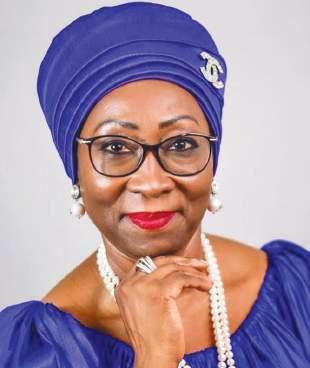
continues to challenge WISCAR about the barriers women face in leadership? While there has been significant progress, women still face structural and cultural barriers that limit their advancement. What continues to challenge WISCAR is the persistence of these barriers across sectors, but what inspires us is the determination of Nigerian women who continue to lead, innovate, and excel. Each year, WISCAR renews its commitment to dismantling these obstacles through mentorship, advocacy, and leadership development.
Read full Article online - www.thisdaylive.com
Imasiku
Oyagbola
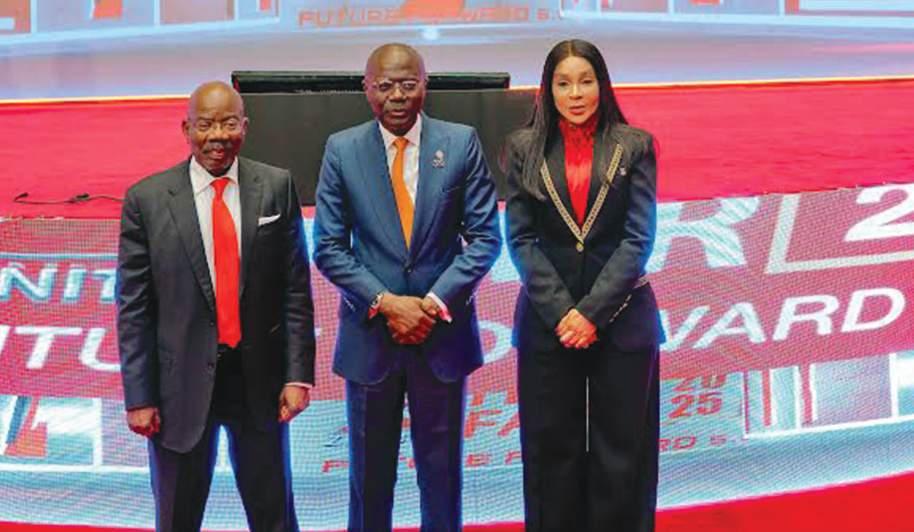
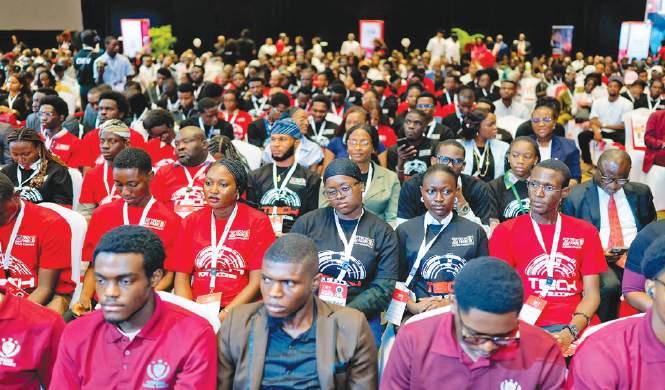
Zenith Bank: Empowering Africa’s Brightest Innovators with N140m
Africa’s young innovators are brimming with bold ideas, yet many struggle to access the funding and support needed to scale their solutions. At the recently held Tech Fair 5.0, Zenith Bank bridged this gap, empowering the continent’s brightest minds with N140 million to transform groundbreaking concepts into real impact and future-ready enterprises, writes Nume Ekeghe
Africa’s tech ecosystem is brimming with ideas, yet many brilliant innovations struggle to find funding and mentorship. Young innovators often face hurdles turning prototypes into scalable solutions, leaving transformative ideas unrealised.
The pressure to compete globally adds urgency for platforms that nurture talent and provide real-world support. Recognising this gap, Zenith Bank stepped in, awarding N140 million to the brightest minds at Tech Fair 5.0, giving them the resources to turn vision into impact. This support was not just funding, but a lifeline for young creators striving to solve Africa’s toughest challenges. And for many of these innovators, it marks the beginning of a journey that could reshape industries and redefine the continent’s digital future. Their stories reflect a generation determined to build solutions that matter, despite the odds stacked against them. With Zenith Bank’s intervention, their dreams now stand a real chance of becoming the breakthroughs Africa needs.
In all, the total cash prize of N140 million was awarded to 10 African innovators to scale their transformative solutions after a keenly contested hackathon and pitch session at the Fifth Edition of the Zenith Tech Fair, themed “Future Forward 5.0: Tech for Success – Innovate, Adapt, Accelerate”, which held recently in Lagos.
The 2025 edition of the Zenith Tech Fair featured an expanded, dual-competition structure that included a high-stakes Hackathon for product development and a Startup Pitch Competition for early-stage ventures, and drew participation from thousands of developers, founders, and entrepreneurs across the continent.
The prize money was shared among ten finalists who emerged from the over 2,000 contestants that took part in the Zecathon. In the hotly contested final, two major winners emerged, each receiving the top prize of N30 million.
The winner of the Hackathon, Trust Loop, clinched first place for its innovative solution that delivers seamless digital KYC and liveness verification. Simultaneously, the winner of the Startup Pitch Competition, Cubbes Technologies Limited, secured the top spot for its revolutionary AI-powered EdTech platform that enhances learning and career readiness.
The remaining eight finalists across both categories were equally recognised, each receiving N10 million in non-dilutive funding. They include Venille Ltd, Sowota, FLOW, InvoPay, Zenith Intelliscore, The Very Hacked Men, Konfam and Zerax. All ten finalists will also be entitled to a six-week mentorship and incubation programme designed to help them grow and scale effectively, and this will run from December 2025 to February 2026.
The Group Managing Director/CEO of Zenith Bank Plc, Dame Dr Adaora Umeoji, OON, in her welcome address, thanked the Founder & Chairman, Dr Jim Ovia, CFR, for the visionary foresight that led to the creation of the Zenith Tech Fair.
Commenting on the Zecathon, she said, “Our theme this year, ‘Tech for Success: Innovate, Adapt, Accelerate’, is very timely.
To appreciate its urgency, it helps to reflect on the speed of human progress. According to the Harvard Business Review, it took humanity millions of years to master fire, yet only 66 years to move from the first powered flight to landing on the moon. The lesson is simple – the next technological breakthrough will not take a lifetime. It will emerge sooner than we expect and could come from any one of you in this room today. We are confident that this Tech Fair will produce innovators who will change the world, and we stand ready to support you to turn your ideas into reality.”
In his goodwill message, Ovia said, “This fifth edition reflects our unwavering commitment to create value through technology, innovation, and talent development. My vision is to continue to empower the youth through technology, with the hope that one day we will produce the likes of Bill Gates, Steve Jobs and Jeff Bezos.”
Whilst delivering his goodwill message, the Governor of Lagos State, Mr. Babajide Sanwo-Olu, called for increased technological empowerment initiatives to provide youths with adequate opportunities needed to thrive in the digital future.
He said, “What I see happening here every year are things that we in leadership need to connect with. This is an activation that can bring life and real conversation to the young, dynamic, innovative, and creative young people that we have in this country. By 2050, half of the youth population in the world will be in Africa, and even in Africa, they will be in Nigeria, and if they are in Nigeria, they will be somewhere in Lagos, and we need to be able to fish them out. We need to give them an opportunity and a space to fly. We want to make Lagos the human capital centre of the world, where Microsoft and Google will think of raising a million tech experts. That’s the kind of vision and opportunity we want to leave behind.”
Hailed as a resounding success by participants, the Fair showcased cutting-edge demonstrations on the role of Generative AI, Agentic AI, and Cloud Computing in driving economic growth with Keynote addresses delivered by Sitoyo Lopokoiyit, Managing Director, M-PESA Africa; Jonas Kjellberg, Co-Creator, Skype and Dr. Shivagami Gugan, Chief Technologist for Middle East, Turkey and Africa, AWS.
The event also featured goodwill messages by the National Commissioner, Nigeria Data Protection Commission, Dr. Vincent Olatunji,
and the Governor of Niger State, His Excellency, Governor Mohammed Umaru Bago, ably represented by the Head of Service, Niger State, Mr. Abubakar Sadiq Idris.
Another key feature from the tech fair this year was the robust exclusive masterclasses delivered by global technology and consulting powerhouses: McKinsey & Company, Huawei, Check Point, and Microsoft. These sessions covered critical topics from cybersecurity to advanced cloud solutions and disruptive technologies, equipping participants with world-class insights.
Aside from the thrilling musical performance by Nigerian musician Spyro, the fair also featured dual-panel sessions that were very insightful and highly interactive. The panel sessions both had Zain Asher, CNN Anchor, as host, and featured high-level discussants including Adaora Nwodo, Founder & Executive Director, NexaScale; Aisha Tofa, Board Chair, Startup Kano Centre for Innovation Dev.; David Kpakima, Co Founder, Rasab Group, Sierra Leone; Dr Stanley Jacob, President, FINTECHNGR; Iyinoluwa S. Aboyeji, CEO Future Africa; Gary Fowler, CEO & Founder GSD Venture Studios; Bradwin Roper, Chief Payments & Partnerships Officer at JUMO, and Mrs. Omoyemen A. Jide Samuel, Director, Information Technology, CBN.
In 2024, a total of N77.5 million in prize money was won at the end of a keenly contested hackathon session at the Fourth Edition of the Zenith Tech Fair. Then, the prize money was shared among ten finalists who emerged from the over 1,700 contestants that took part in the hackathon, with JumpnPass, a self-checkout technology solution reshaping the retail landscape in Africa emerging as the overall winner and taking home the grand prize of N25 million. This was in addition to a six-week mentorship and incubation program designed to help them grow and scale effectively, which ran from December 2024 to February 2025.
Also, in 2024, the first runner-up, CreditChek, a credit and verification service provider which leverages AI and open banking to streamline income and credit history verification for financial institutions, won N20 million and a mentorship programme, while the second runner-up, Salad Africa, a start-up which offers seamless integration of credit products for digital platforms and software companies won N15 million as well as a mentorship programme. Other finalists who took home N2.5 million each include Regxta, CashAfrica, Middleman, Messenger, Pocketfood, Famasi Africa, Kitovu. This is a reflection of the bank’s commitment to supporting start-ups and fledgling entrepreneurs.
Zenith Bank remains committed to fostering an ecosystem where innovation thrives, ensuring that the next generation of African tech leaders have the capital, mentorship, and resources required to achieve global scalability and impact.
Zenith Bank has continued to blaze the trail in digital banking in Nigeria, scoring several firsts in the deployment of Information and Communication Technology (ICT) infrastructure to create innovative products that meet the needs of its teeming customers.
The bank is verifiably a leader in the deployment of various channels of banking technology, and the Zenith brand has become synonymous with the deployment of state-of-the-art technologies in banking.
Today, the bank is globally celebrated as a relentlessly forward-thinking institution, consistently setting the benchmark for digital banking across the Nigerian and African banking sectors, according to a report by International Banker.
Built upon the three principles of people, technology and service, the optimisation of experience and satisfaction across its vast customer base inspires Zenith Bank’s digitalisation strategy, which delivers innovative solutions that are consistently ahead of the local competition.
The bank can proudly boast of having deployed several firsts in cutting-edge offerings that continuously satisfy evolving customer preferences and are thus pioneering the digital-banking revolution transpiring across the country—and, indeed, the continent—at present.
These innovations include the deployment of the first offsite automated teller machine (establishing an ATM in a location outside the bank’s premises in 2003), real-time online banking across its entire branch network, transaction notifications via SMS (Short Message Service) and email, an online payment gateway and QR (quick-response) code payment system.
Today, some of its internet banking solutions include the *966# Banking, which is a convenient, fast, and secure way for its customers to access their bank account and perform banking transactions via non-smartphone without internet connectivity. This service is available to all individual account holders with any feature phones that run on the GSM platform.
Also, the Zenith Bank Mobile App enables customers to get access to their accounts 24 hours a day from wherever you are. A quick download of the mobile banking app can transform customers’ smartphone into a powerful banking tool. The Zenith Bank’s Mobile App is a dual functionality app which bundles Mobile Banking and eaZymoney.
The bank’s track record of excellent performance has continued to earn the brand numerous awards across the world.
Clearly, Zenith Bank’s investment goes beyond prize money, but remains as a catalyst for unlocking Africa’s next generation of tech leaders. By backing bold ideas with meaningful support, the bank is helping shape a future where young innovators can build solutions that uplift communities and transform the continent.
Ovia, Sanwo-Olu and umeoji at the tech fair held in Lagos...recently
Some participants at the tech fair held in Lagos...recently
Insecurity: Before We Snooze Again
In February 2020, long before “banditry” became a national synonym for grief, I wrote a warning in this same space: “Let’s tread with sense and sobriety; we should not further complicate a complex man-made problem.” It was in response to the now forgotten absurdity of a proposed National Agency for “Education, Rehabilitation, De-radicalisation and Integration of Repentant Insurgents.” The bill was sponsored by a senator representing Yobe East Senatorial District and former governor of Yobe State, Ibrahim Geidam. It sought to establish an agency designed, not for victims of terror, but for the terrorists themselves - complete with schooling, psycho-massage and possible reinsertion into communities still nursing their wounds. At the time, it seemed like another tragicomic episode from the theatre of Abuja. Today, with Nigeria besieged on multiple fronts, it sounds less like satire and more like prophecy ignored.
I had quoted experts then - Andrew Silke of the University of East London, Patrick Dunleavy chronicling Britain’s failed attempt with Usman Khan, the London Bridge attacker who gamed the system and walked out of prison more radical than he walked in. I warned that deradicalisation without a watertight framework was a “dangerous gamble” - the sort of gamble we Nigerians tend to lose spectacularly. Yet our lawmakers flirted with it, seduced by shiny PowerPoints from foreign consultants, and by the delusion that radicalisation is something you can sprinkle with counselling and release like a domesticated parrot.
Four years later, Nigeria is living a grim, unrelenting sequel to that warning. From Plateau to Kaduna, Zamfara to Niger, Taraba to the FCT, we are under siege - not from ghosts or shadows but from organised, well-armed, well-networked terror franchises: insurgents, bandits, jihadists, hybrid kidnappers, encore Boko Haram, and permutation
ISWAP. If you throw a stone today, it will hit either a roadblock, a ransom negotiation, or a community in mourning. Our security architecture is stretched thin; our institutional credibility is scraped to the bone. And in the midst of this, some people still ask, “What exactly went wrong?”
Part of what went wrong is what always goes wrong: the refusal to see the obvious until it explodes in our laps. Between 2014 and 2020, Boko Haram and its affiliates morphed from ideological terrorists to full-blown territorial occupiers. Between 2020 and 2024, bandits evolved from cattle thieves to warlords with their own proto-states, judicial systems (yes, they hold court), tax regimes, and the sort of operational intelligence that would make a Hollywood villain blush. Yet we approached the problem with a softness reserved for mischievous nephews: signing secret deals, paying untraceable ransoms, releasing “repentant” fighters back into the wild, and even floating ideas of vocational training - as though terror were a youth development programme.
And now? Well, the monster we refused to confront properly has grown fangs, hooves and GPS coordinates. Communities are raided in daylight. Kidnappings happen in convoys. Terror cells communicate across borders with encrypted ease. Villagers flee; farmers flee; even security operatives, sometimes, withdraw. What we are facing today is the compounded interest of every bad decision, every political flirtation with bandit leaders, every amnesty without accountability, every half-hearted military sweep, and every “soft-soft” approach offered as policy.
But this column is not merely an “I told you so” - tempting as that may be. Beyond the failures of institutions, what can the average Nigerian do? How do regular people survive in a country where danger is no longer a possibility but a probability? Government may be responsible for the macro-defence, but citizens must now
embrace the micro-defence toolkit for personal survival.
First: situational awareness is no longer optional. Nigerians must develop the habit of scanning their environment the way Lagosians scan traffic - alert, unsentimental and ready to reverse at a moment’s notice. A strange vehicle parked too long, unfamiliar faces loitering around a building, sudden roadblocks - these are no longer movie cues; they are warnings. Constant communication, especially when travelling, is critical. Share your route, estimated arrival time, and checkpoints with people who can respond if something goes wrong.
Second: avoid predictable behaviour. Most kidnappings succeed because victims are creatures of habit - same road, same hour, same routine. Vary your paths, your departure times, your commuting choices. If your village route has become notorious, stop tempting fate with blind faith. In this era, wisdom is safety; familiarity is danger.
Third: learn and practice rapid-response behaviour. Not “jungle justice,” not vigilante theatrics, but basic defensive instincts. Don’t drive into suspicious gatherings. Don’t stop for “accidents” without verifying legitimacy. Don’t approach abandoned vehicles; don’t answer midnight knocks; don’t negotiate with strangers claiming to be “security men” without proper identification. In this landscape, hesitation can be fatal; prudence can be life-saving.
Fourth: communities must now adopt collective security consciousness. Early-warning systems - simple neighbourhood whistles, digital alert groups, or coordinated watch schedules - can reduce risk drastically. Local intelligence is more effective than any Abuja press conference. Villagers often know the suspicious new settler, the strange cattle movement, the unfamiliar bikes arriving at dusk. Silence is no longer golden; it is gasoline.
Fifth: digital safety. Bandits now track victims through social media oversharing. That innocent post about travelling home for the weekend is intel

for someone. Nigerians must learn to post after the fact, not before. The fewer breadcrumbs you leave online, the harder you are to hunt.
Of course, these personal measures do not replace the duty of the State. Government must overhaul its surveillance infrastructure, improve response time, professionalise its security units, and impose real consequences on collaborators within the system. Our borders need technology, not tokenism. Our police need training, not press statements. Our governors need spine, not sirens. And once - just once - we need a terrorism policy that is not shaped by political calculation or ethnic consideration but by national survival.
One hopes the lesson is now clear: you do not pamper terror. You do not incentivise it. You do not “understand” it. You confront it with intelligence, muscle, and moral clarity. You do not, as we once contemplated, send it to school, give it pocket money and hope it becomes a gentleman.
Nigeria is paying today for every soft glove worn in the past. But with citizens more alert, communities more coordinated and government more honest, we may yet stem the bleeding. What we cannot do, however, is continue pretending - pretending that terror is a misunderstanding, pretending that bandits are misunderstood entrepreneurs, pretending that insurgents can be reintegrated overnight, and pretending that warnings from four years ago were just noise.
The noise, as it turns out, was the fire alarm. And now that the building is smouldering, we cannot afford to hit the snooze button again.
Civil Unrest in Ohoba: Pathways Restoring Peace, Law, Order
This incident report provides a detailed exposition, analysis, and recommendation concerning the severe breach of public order and tragic loss of life that occurred in the Ohoba community on Tuesday, 18 November 2025. The incident represents a confluence of failed development promises, youthful agitation, disproportionate security response, and deep-seated socio-political fractures within the community. It aims to contextualise the event, diagnose its underlying causes, and propose a structured pathway towards restitution, reconciliation, and sustainable peace.
narrative Reconstruction of the incident
The crisis finds its proximate origin in a contested road construction project undertaken by Prospective Multi-link Limited (PML), under the supervision of its Chief Contractor, Mr. Shiner. The company’s unilateral decision to cease work halfway in Ohoba, asserting contractual fulfilment—a claim vehemently disputed by residents—was perceived as a betrayal of communal expectations for development. This perception snowballed into a protest action by Ohoba youths, who impounded key construction machinery (including an excavator) as leverage.
The contractor’s response—enlisting personnel from the “Tiger Base” and Obinze military cantonment—escalated the situation from a civil dispute to a potentially militarised confrontation. Eyewitness accounts describe a volatile encounter: helpless youths, armed with stones and cudgels, had no option but to defend themselves against the confrontation of the security agents. The subsequent response involved ruthless sporadic gunfire, indiscriminate arrests, and the use of force, resulting in the tragic death of Mr. Onyewuchi Awụlotu (Nwa Sir Maazị), multiple non-fatal gunshot wounds, and an unspecified number of arrests.
etiology of the Conflict: A multilayered Analysis
The post-incident discourse, characterised by acrimonious “accusations and counter-accusations” on WhatsApp virtual platforms (The Ohoba Parliament, Ohoba Leadership and Practical Development, Ohoba Peace Initiative), reveals this event not as an isolated episode, but as a symptom of profound communal pathologies:
Developmental Grievance: The core trigger was a
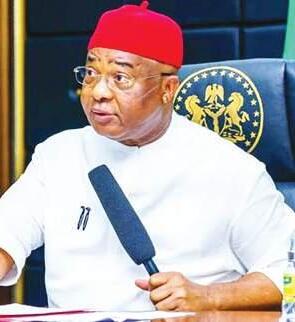
uzodinma
profound sense of infrastructural neglect and contractual bad faith. The halted road project symbolised a broader pattern of unfulfilled promises, fostering a justifiable, if ill-channelled, sense of grievance among the youth.
Security Sector Overreach The invocation of military and quasi-military forces like Imo State Tiger Base to Police Force notorious for high-handedness to resolve a civil contract dispute represents a critical failure of conflict mediation and an alarming militarisation of civil space. The reported “sporadic shooting” and “indiscriminate arrests” indicate a response grossly disproportionate to the threat, violating principles of necessity and proportionality, and exacerbating the tragedy.
Leadership Vacuum and Fragmentation: The community lacks a unified, legitimate authority structure. Blame is diffused among the President General (Mr. Cyril Chukwuemeka Ọchasi), the Youth President (Mr. Nnamdi Ọdịkanwa), and the “irate youth.” This diffusion points to a crisis of leadership and accountability.
Underlying Dynastic Schism: The incident has been weaponised within a pre-existing “regency and leadership tussle” between the progeny of the late Eze P.O. Anyanwu—Dr. Armstrong Fidelis Anyanwu and Mr. Stanley Ikechukwu Anyanwu (Morrocasion). This deep-seated chieftaincy dispute provides a toxic backdrop that colours every communal issue, turning specific grievances into proxies for a wider power
struggle.
Communal Social Fabric in Crisis: The aftermath reveals a community divided against itself. The debate over bailing detained youths—between punitive “teaching them a lesson” and the communal ethic of “onye aghala nwanne ya” (be your brother’s keeper)—alongside criticisms of voluntary efforts by individuals like Mr. Dominic Sunday Okpor and others, demonstrates eroded social capital and a debilitating lack of trust.
Current status and imperatives
Ohoba is now officially stigmatised as a “violentprone community” by the Imo State Government, a false narrative peddled by its neighbours. Unfortunately, this erroneous designation is capable of impeding future development and investment. The immediate imperative is the humane and just resolution of the legal cases against the detained individuals. Leaving them to “spend the Christmas holidays in custody” is not only inhumane but would cement bitterness and guarantee future cycles of retaliation. The logistical challenges of bail and legal defence, however, lay bare the community’s disorganisation.
Recommendations for Restoring Peace, Law, and order
Sustainable peace requires moving beyond ad-hoc reactions to a systematic, multi-stakeholder framework.
Form a Unified Crisis and Reconciliation Committee (CRC): Constitute a committee of respected, neutral elders, clergy, diaspora representatives, and legal professionals (formally engaged) excluding individuals directly implicated in the current leadership factions. This CRC must be mandated to:
a. Oversee a transparent fund for legal defence and humanitarian support for victims’ families.
b· Serve as the sole liaison with the police, military authorities, and the Imo State Government.
Commission an independent fact-finding report on the events of 18 November to establish a credible communal narrative.
Engage in Structured Dialogue with Security Institutions: The CRC, possibly with backing from the Local Government Chairman and State House of Assembly member, must engage the relevant military and police commands. The goal is to secure the release of the detained on bail, de-escalate the military presence, and initiate a dialogue about community-security relations and appropriate rules of engagement.
medium-term institutional Reform (3-12 months)
Address the Developmental Trigger: The CRC must formally engage with Prospective Multi-link Limited and the relevant contracting government agency to review the contested road contract. The objective should be either its lawful completion or a transparent official explanation, thus closing this specific wound.
Mediate the Leadership and Regency Question: With the aid of a recognised traditional institution from outside Ohoba (e.g., the Imo State Council of Traditional Rulers), initiate a transparent, inclusive, and culturally sanctioned process to resolve the regency tussle. Ohoba community stability is impossible with this festering dispute.
Establish a Community-Mediation and Youth Engagement Forum: Create a standing body comprising elected youth representatives, elders, and women to serve as the first port of call for future grievances, preventing escalation to violence. Partner with NGOs to design skills acquisition and civic engagement programmes for the youth.
Phase 3: Long-term Cultural and Civic Reconstruction (1 Year onwards)
Rehabilitate Ohoba’s Image: Upon demonstrating sustained internal peace, the community leadership must proactively engage the Imo State Government to have the “violent-prone” tag reviewed, linked to tangible peacebuilding achievements.
Civic Re-education: Utilise village assemblies and virtual platforms not for abuse, but for structured civic education. Topics must include the limits of protest, the appropriate channels for redress, and the dangers of inviting militarised responses.
Honour the Dead and Reconcile the Living: A public memorial for Mr. Onyewuchi Awụlotu, coupled with a truth and reconciliation forum where aggrieved parties can speak in a controlled, traditional setting (Igba ndụ), is essential for psychosocial healing.
The Ohoba crisis is a tragic parable of modern Nigerian national strife. It underscores the catastrophic results when development fails: youths are alienated; security forces are unaccountable, and traditional governance structures are fractured. The solution lies not in assigning monolithic blame but in courageous, collective action to rebuild institutions, foster dialogue, and restore the primordial ethic of “onye aghala nwanne ya.” The time for strategic, unified action is now, lest Ohoba’s future should be dictated by the ghosts of its recent, painful past.
Nwakaego, an indigence of Ohoba, writes from Kano
obed Nwakaego
Akobo: Redefining Universities’ Role in Nigeria’s Emerging Economy
Tayo Olu
Dr. Daere Akobo delivered a lecture at Rivers State University’s combined 37th and 38th convocation ceremony on Wednesday that diagnosed Nigeria’s innovation deficit and prescribed a joint venture model anchored on entrepreneurship, technology, sustainability, and people.
The lecture, titled “Joint University-Industry Ventures: The Entrepreneurship, Technology, Sustainability and People Nexus for Rivers State University,” focused on how Nigerian universities can engage with industries to drive innovation.
“This country is oversized…You need to be innovative. Innovation starts with critical thinking,” Akobo told a packed auditorium of 13,242 graduates at the Nkpolu-Oroworukwo campus of RSU.
The entrepreneur, who earned his first degree in Applied Physics from RSU, used his journey to inspire the graduates and the university’s leadership.
From his early days at General Electric Nigeria, where he was recognised as the company’s top talent in Africa, to building PANA Holdings into a conglomerate spanning energy, technology, telecommunications and real estate, Akobo spoke on the possibilities he believes should be the standard in Nigeria.
He lamented that the country as a whole produces only two patents per million people annually. In contrast, he said institutions like the Indian Institute of Technology Madras (IIT) and Massachusetts Institute of Technology (MIT) have built economic ecosystems around intellectual property and commercialisation.
“How many of you have patents?” Akobo asked the audience.
“Unfortunately, in Nigeria, I did a study. The whole of NNPC does not have more than three patents. In Nigeria, one in every one million people has a patent. In fact, in the whole of Nigeria, only two patents in one million are produced annually.”
Akobo, who is also the founder of PE Energy Ltd, said universities must shift from graduating students based only on exams to graduating them with commercially viable patents. “How can we move from using tests to graduate students to using patents to graduate students? It is the patent that brings money. When you have patents, people pay for patents. You are off the screen, but your patent is what they are using,” he said.
Akobo envisioned Rivers State University transitioning from producing graduates with theoretical knowledge to producing innovators with marketable intellectual property. He described himself as a commercialisation agent who takes inventions from university laboratories and transforms them into viable businesses.
He recalled that in 2017, he discovered a patent related to agricultural technology and wrote to the late former President Muhammadu Buhari to propose a solution for resolving farmer-herder conflicts in northern Nigeria.
The philanthropist and Forbes Business Council member further spoke on the concept of the ‘triple helix,’ which is a model of innovation anchored on collaboration among academia, industry, and government to drive economic growth, knowledge transfer, and new technologies.
Modern universities, he said, cannot operate in isolation. They must embed industry realities into curriculum design, participate in the co-creation of technology and work with the government to shape policies that support innovation.
Akobo argued that RSU must evolve into a globally competitive knowledge institution comparable to MIT, Harvard and Stanford, not in size but in the quality of ideas
it exports to the world. According to him, Nigeria’s economic future depends on universities that can anchor proprietary software, produce commercially valuable patents and nurture innovators who participate in global markets.
“A typical oil and gas industry has more than 750 software, and these software are all developed in India and Pakistan. We cannot make more money without understanding the economies of GDP. And the economies of GDP are all about local goods, what is paid in the country, and what is exported,” he noted.
“If you look at the word MIT, what comes to your mind? Technology. MIT, from the last banking review, they call another world. Because the amount of money the entrepreneurs in MIT have generated, the GDP is bigger than several countries. They call them the 47th world.
“We cannot make money without understanding the economies of GDP,” Akobo stated.
He challenged RSU’s petroleum engineering faculty to develop indigenous software solutions for an industry that currently relies on more than 750 foreign-developed software platforms, each representing lost revenue and missed opportunities for Nigerian innovation.
Akobo further stated that the Rivers State government’s role extends beyond funding. He distinguished between what economists call extractive capacity, which is the government’s ability to collect taxes and mobilise resources, and directive capacity, which is its ability to channel those resources toward national priorities. He called on Governor Siminalayi Fubara to strengthen the latter.
“Do we have state capacity?” Akobo asked.
“Your Excellency, even if you are not here, you are the state governor. Do we have state capacity?”
Akobo recalled visiting IIT Madras in India in his quest to establish Africa’s first data refinery. The institution has attracted hundreds of millions of dollars in research grants from companies like Schlumberger, General Electric and Shell. Its technology park hosts corporate research facilities, and the
Delusion of Power, Political Ambition and Necessary Counsel to Tanimu Turaki
Arthur Bruno Ekwelem
Leonardo da Vinci warned that “The greatest deception men suffer is from their own opinions.” Robert Lind added that the gravest form of delusion arises when people “persist in their delusions.”
Chinua Achebe, ever a sentinel of truth, also reminded us that life demands clarity of vision, not a naïve surrender to “the mirage of hope.”
These words echo a timeless truth: nothing misleads a man faster than his own unchecked ambitions, and nothing blinds the political class more than their fascination with power.
John F. Kennedy captured this danger succinctly when he observed that “The great enemy of the truth is very often not the lie… but the myth, persistent and persuasive.”
Mikhail Gorbachev similarly warned that in politics, the most dangerous falsehood is the one that masquerades as truth.
Tanimu Turaki and the self-styled “National Working Committee” he leads would do well to reflect on these cautionary words. Their recent actions reveal not leadership, but a descent into a dangerous illusion—an attempt to force a lie upon the conscience of the public and repackage it as political truth.
It is deeply disheartening that an individual once regarded as a custodian of legal wisdom would allow personal ambition to undermine decades of legal training, moral discipline,
and professional integrity.
No amount of public posturing can rewrite or nullify the constitution of the Peoples Democratic Party (PDP).
Yet each passing day, Turaki’s pronouncements expose a conflict within himself—a struggle between legal knowledge and political delusion, between truth and a self-manufactured fiction of authority.
Public scrutiny, once an ally of honour, has become a shadow hanging over his academic and professional claims, an unfortunate development he precipitated by his own actions.
Democracy cannot thrive on impunity, falsehood, intimidation, and political brigandage.
Sadly, Turaki’s conduct has dragged the values of the PDP into disrepute. His recent push to impose himself as National Chairman, in blatant disregard for constitutional order, reflects not ambition but desperation. For a lawyer, the legal implications of such behaviour require no tutorial.
The events of November 18, 2025, when he stormed the party’s secretariat, allegedly with hired thugs to intimidate party members legitimately invited for an official meeting, stand as a tragic testament to this descent. One must ask: By what authority did he act? What locus did he possess to justify such a crude and reckless display?
Ambition appears to have clouded judgement, reason, and decorum. Worse still, Turaki seems oblivious to the fact
economic activity generated by its graduates has positioned it as an economic force.
He challenged Rivers State University to pursue a similar transformation by creating a technology hub on campus that would attract corporate partnerships and research funding. The university’s current performance on Sustainable Development Goals indicators shows promise, he noted, particularly in clean energy research, but the challenge is converting academic output into commercial ventures.
“Have you turned this into money? Is there clean water in Rivers State University? Do we have a community water system? You must showcase your talent. Charity begins at home,” he stressed.
Akobo’s lecture further addressed what he called the “mental box” that limits regional ambition. Quoting South African author Steve Biko, he identified self-deprecation and conceptual shame as factors that constrain possibilities.
“When I go to Abuja, I told myself, I cannot fail in Abuja. I cannot see Rivers people not having an office in Abuja. So, I decided I must open an office in Abuja in the heart of Maitama,” he said.
“Also, we should drop that mentality of tearing down people. If you open a company here (Port Harcourt), to be honest with you, you are the first people who want to destroy it. Mental box. We need to get out of it. If you cut your chain, you have freedom. But if you cut your root, you die.”
Akubo’s Port Harcourt office now employs approximately 150 people, all paying taxes in Rivers State. He said it was a deliberate choice he made despite banking and business advantages that favour Lagos. He urged fellow Rivers State indigenes in positions of influence to make similar commitments to developing the region’s economic infrastructure.
The entrepreneur also refuted claims that his father had a connection to President Bola Tinubu due to his success in business.
“Today, I have heard that my father and President Tinubu were very close friends. That’s a lie. My father did not know Tinubu. You know, success can bring a new story. People say that, yeah, my father and Tinubu they are very close friends. My father does not know Tinubu. But I know somebody who knows Tinubu. And you also have that person. So, I take invention, I change the process on how to take that invention to the market,” he said.
In his lecture, Akobo introduced a framework he’s developing into a book, which he described as the Five P’s of business success. He said ‘purpose’ comes first because without clarity of purpose, abuse becomes inevitable. The second is ‘philosophy’, which encompasses the principles and worldview that guide decisions. He said ‘process’ represents the systematic approaches and technology platforms that enable execution. Product, the third P, refers to the solutions and services an enterprise offers, while the fourth P is People.
“Every one of us, including me, started business with people. I saw my younger ones, I employ. I saw my friend’s sister, I employ. Never do so. That is a killer,” he warned. He also warned graduates against the “three F’s” they must avoid: family, friends and fools. The last category, he explained, includes anyone who punctuates dreams or focuses on problems rather than solutions, including well-meaning colleagues.
Akobo identified the fifth P as ‘Profit and prosperity”, which he said distinguishes between financial transactions and businesses that generate genuine gratitude.
that the current National Working Committee is still in office. Rather than seek truth, he has allowed himself to be manipulated by internal saboteurs whose interests lie not in strengthening the party but in destroying it. If he is not their pawn, then he may well be their collaborator.
His recent charade of issuing so-called “Certificates of Dismissal” to respected party officials only deepens the embarrassment. These documents, circulated widely, serve as a public confession of ignorance about party administration and the PDP constitution.
It is imperative that Turaki pauses to reflect before speaking or acting further. Diana Nyad once said, “Great ambition is the passion of a great character.” But ambition unguided by wisdom becomes a vehicle of destruction.
Akobo
Turaki
BACKPAGE CONTINUATION
THE RETURN OF OLISAH METUH
media "consultancy". Then, a member of the group angrily announced his regret that they contacted me. "This is your problem", he said. "When Ugochukwu Uba came to the Senate and we wanted to drum up media support to use Andy's influence and make him Senate President you opposed the idea in his presence and even rallied your media people behind you.
You had said it was in the interest of the Uba family not to also over expose their very reasonable brother". He was going on and on, but somebody stopped him at a point. Meeting over, I headed straight to Olisah's house and arrived just before midnight.
I told him and his wife where I was coming from but without mentioning any names. I said that Olisah needed to know the extent of animosity against him and why he must take everything more seriously than ever before.
I went to see him in court a few weeks later. He was sitting almost alone and waiting for proceedings to begin. My message to him was simple and direct: "Olisah, I am in a bit of a hurry to get to the airport, but I needed to tell you this while you are in court. Everything is looking very bleak right now, but do you remember Nelson Mandela? The experiences that prepared him for his future global leadership role looked like suffering while it was going on. My brother, this shall pass, no matter how long it takes. The most important thing is for you not to miss the lessons the coming experiences have for you". He smiled genuinely and said: "Okey d'alu. Thank you so much. This means a lot to me". I left.
I did not talk to him or see him again until the worst aspects of that experience were over. This was deliberate on my part. It is sometimes important to give someone you take seriously reason to doubt you. That is, doubt you in every way possible. If in the midst of those doubts he finds it difficult to convince himself that you are really bad, and that the new reality he was seeing was not quite real, then the prospect of genuine, unsolicited, trust will arise and subsist. Today, I think back to my first meeting with Olisah Metuh, some 25 years ago. It
was at the Sheraton Hotels and Towers in Lagos. He had come for a scheduled meeting with the Minister of Transport, Ojo Maduekwe, to whom I was Special Assistant. He appeared genuinely interested in helping Ojo leverage the latter's relevance and visibility within his limited sphere of influence.
Seeing that the brief he had been given by my boss was a non-starter, and as I had seen the same pointless brief given to others without expectations of any meaningful outcome, I later called Olisah aside for a separate meeting, wherein I frankly asked him not to waste his time on what he was told and face something else of greater value. Today, not many people know Olisah's role in dousing some aspect of the tension surrounding the "Idiotic Igbo Presidency" controversy. Nor of the team of youth leaders he brought for a very important meeting in Abuja.
When Olisah relocated from Lagos to Abuja and I learnt of his need for accommodation, pending the completion of his house, I approached my boss to give him the lovely Minister's Guest House. Ojo wouldn't hear of it. Why? He asked.
I explained that it was a duty he owed a young man who was the youth leader of his party. I pointed out that Olisah would most probably be living in the Hilton, or in some other luxurious accommodation provided by elders from his part of the country, if he was the party Youth Leader for the North or South West.
My point was that Olisah would not have to waste that money, and that it would also give him a profile upgrade in political perception if he is known to be living in the "Ministers Quarters" in Mabushi. Ojo listened without comments. He was angry but he hid it well.
When I brought it up again soon afterwards, speaking with some urgency, he burst out: "To think that this conversation is going on while you know very well that my older cousin, Old Soldier, is living there.. What am I supposed to do with him, in order to give your new friend the house? I thought you didn't know him before our recent encounter with him. Look,
you have to tell me what business you have with Olisah Metuh, really!”
He continued: " I have never seen you so persistent and tenacious about anything since you joined me. So, I must ask you to tell me what is going on".
As I later learnt, months after Olisah and family had moved into the Guest House, that two people were asked to discreetly find out "what deal I may have struck" with Olisah. He was both politician and business man and may have achieved the unlikely feat of having me as his advocate for a consideration. Curiously, there were also concerns even from Olisah's closest associates, that "there must be something Okey wants, or is planning, for him to appear more concerned about your welfare than yourself".
Which takes me back to the discussion I mentioned earlier, about his supposed friends who offered a media consultancy in order to "bury him" politically. "What has he done for anybody", one of them asked, in the heat of the discussion. " Okey is here talking as if Olisah has cast a spell on him, instead of asking himself what Olisah has ever done for him".
When I spoke about the need for them not to deliberately stand in the way of anyone, one of them threw in this proverb, apparently for my edification: "Our people say that the person who is eager to give advise and support to a peer, or anyone for that matter, should ask himself how he is going to remain consistently greater than him. Okey, what do you have to say to that"?
I tmchucked and replied: "Those who live by that proverb forget that it is sometimes their duty to advise a peer so that, collectively, everyone would be at his best; to the benefit of all”. I also added this: "The proverb which says that a snake must swallow it's kind in order to grow, rests on the wrong assumption that snake growth is necessarily dependent on eating another snake”.
Coming back to the present, last Sunday, at his 60th birthday thanksgiving service, Olisah declared that he was not only back in politics, but was also simultaneously changing his political party. For someone who has not, at any
time, wavered in his identification with the Peoples Democratic Party (PDP), this was seen by some as an event of near-cosmic dimensions.
What are his reasons? How are the stakeholders around him reacting to it all, while keeping a straight and smiling face? What should he pray for, going forward? Where does he see himself in the next 5 years? How about the next ten years?
Let me say, as I have had cause to say to Olisah privately in the past: "Your ability to influence your environment politically must not be taken for granted. For you to still be going relatively strong, against all odds and after overcoming many obstacles, it means that there's a purpose you are yet to divine correctly and fulfil. Let it not be about you. Look beyond narrow horizons and expand the scope of your fulfillment".
Unemployability Index and Other Matters
Against the background of many things going on at the highest level of national leadership, let me share a fees paragraphs from a piece that appeared on this page two years ago, under the above title.
"Unemployable Nigerians have become an absolute majority today. This includes intelligent graduates who actually studied for, and got, their academic qualifications. The “unemployability” of some of them stems from a moral handicap. In their education, socialization and engagements, they internalized the wrong values about leadership, public office, service delivery and much more. Thus, they are a danger to the state. Is it correct to say that the major crisis facing the Nigerian State today is the failure to work out, and be guided by, the unemployability index in everything it is doing today? Just asking.
We walk through a maze and claim to be walking under bright lights. Debauchery has been given a new name, in the hope that the discerning will no longer keep watch over disappearing values. No, the relevant eyes are still wide open, even if fewer in number than hitherto. The call for authenticity is real. Enough said! IN SUPPORT OF SCRAPPING MOTHER TONGUE TEACHING POLICY
argued that despite high enrolment, 45 million children aged seven and 14 cannot read a simple sentence, while learning outcomes remain unacceptably low.
Quoting UNICEF data, he stressed that the crisis remains uneven, with the North-west bearing the largest burden with literacy and numeracy rates of 9.4 per cent and 8.3 per cent respectively, followed by the North-east with 12 per cent and 10.7 per centCOMMA respectively.
Besides, he noted that North-central has literacy and numeracy rates of 24.3 per cent and 22.7 per cent, respectively, while the South-west has 45.8 per cent and 46.7 per cent rates. The South-east has the highest literacy and numeracy rates at 55.8 per cent and 52 per cent, while the South-south has 37 per cent and 34 per cent, respectively.
“Nigeria is in a learning emergency. Despite high enrolment, 45 million children aged 7–14 still cannot read a simple sentence, and learning outcomes remain unacceptably low. The crisis is uneven across the country,” he argued.
Data also show that Nigeria’s children are facing a severe and uneven learning crisis, with some regions lagging far behind in both literacy and numeracy.
The gap between schooling and actual learning reflects a system-wide decline in education quality.
This necessitated the comprehensive reform package that the Federal Ministry of Education recently unveiled, which includes the recent cancellation of the National Language Policy, aimed at improving the quality of education and learning outcomes.
Some of these also include reviewing pre-service teacher training, nationwide capacity building for teachers, school leaders, and monitoring and evaluation officers, digital training with incentives, and the establishment of teacher Communities of Practice (CoP).
Nevertheless, the language policy review, one component of the broader effort, has emerged as the single most contentious, drawing the loudest debate and reaction. This controversy becomes even clearer when you consider the realities inside the classroom.
For example, a teacher posted or employed to either private or public schools in the Northern part of Nigeria who cannot speak the local language will not be able to implement the policy of using the mother tongue. Likewise, someone from the North, East, or South posted to any of the regions will not be able to teach the
learners in that regard.
Another example is the learners themselves, who come from different backgrounds and find themselves in the same class. With this, it is always difficult to use the mother tongue of that area to teach them. If mother tongue is used, then there would be no inclusivity, thereby depriving other students from learning. Unfortunately, in some states, they are taught in their mother language up to secondary level, and by the time the students are set to take national examinations such as WAEC, NECO, JAMB, they are not able to compete with their peers from other parts of the country that have been exposed to learning with English from childhood.
Additionally, another irony is that in some of these states, while the public schools teach their pupils with their mother tongue, in the private schools, where most of the elites send their children to, the case is different, as the language of instruction is often English, thereby creating a dichotomy in the society.
Countries like China, which has implemented this policy, with Mandarin as the language of learning, and India, which has Hindi as its national language, despite having other languages, have built educational materials and invested
heavily in these two languages to boost learning outcomes, which have long-term multiplier effects on their productivity, respectively.
Nigeria lacks the heavy investment required to develop educational materials around its diverse languages. The country also has a complex ethnic structure and the mother tongue policy has been seen to be significantly damaging to students in certain parts of the country, especially northern Nigeria. That is why the cancellation of the mother tongue policy should be supported, and English being a common language adopted.
In the present world, where Artificial Intelligence presents dazzling opportunities and promises every child the kind of upbringing once available only to the rich, the Nigerian child must not be left behind or confined by policies that limit global competitiveness. Nigeria’s policymakers should be focused on an education system where no child is disadvantaged by language, supported by political will, partnerships, funding, and regional collaboration. By adopting English early, supported by strong literacy interventions and culturally inclusive teaching, Nigeria positions its children not only to learn better today but to thrive in the global knowledge economy.
ANALYSIS
Tinapa Rebounds as Cross River’s New Growth Engine
Tinapa’s revival is positioning Cross River for renewed economic growth, attracting investment and restoring regional confidence, writes Oluchi Chibuzor
Tinapaisexperiencingalong-awaited resurgence,emergingonceagain as a strategic asset in Cross River State’s push for economic renewal. Once regarded as a bold butunrealisedvision,theprojectis nowregainingmomentumasnew investments, policy support, and private-sector interest begin to reshape its prospects.
Its revival signals more than the rehabilitation of a landmark facility—it represents a renewed commitment to unlocking the state’s commercial potential. As Cross River seeks fresh pathways for growth, Tinapa is increasingly positioned to serve as a catalyst for trade, tourism, and broader regional development.
OnNovember7,2025,theCrossRiverStateGovernment announced a historic breakthrough: The TinapaBusinessResort&FreeZoneinCalabar,one ofthemostambitioussubnationaldevelopmental projects, which has been fully repossessed from the Assets Management Corporation of Nigeria (AMCON). The announcement ended 14 years of legal ambiguity and administrative complexity.
The resort was inaugurated on April 2, 2007, by former President Olusegun Obasanjo. It was a vision born by then-Governor Donald Duke to transform the state into the economic heartbeat of West Africa.
More importantly, it was designed as a fulcrum forjobcreation,revenuegeneration,tourismresuscitation,economicemancipationanddevelopment revolution.
Aftertheglitzandglamthatheraldeditsunveiling, the project, in 2011, literally sailed into a man-made financialtempestthatgroundedit.Whenallrevival efforts failed, it was subsequently taken over by AMCON.
Nonetheless, Tinapa’s story, from its glittering conceptiontoitsparalysis,publicdebt,andeventual repossessionbytheCrossRiverStateGovernment in 2025, reads like an epic. It has been described in manyquartersasadecisivevictorythatwillrewrite the state’s story for future glory. It is a narrative of hope, missteps and remarkable resilience.
And now, under Governor Bassey Otu, Tinapa
is experiencing what many have described as its most promising rebirth.
Child of Necessity
Tinapa was conceived at a time when Cross River State sought to reinvent itself as a globally competitive investment destination. As the State transitionedawayfromoildependencyandaggressivelypromotedtourism,thegovernmentenvisioned a complementary commercial nerve centre, one that would blend leisure, trade, and business.
Theresortwasdesignedasamixed-usedevelopment with world-class retail facilities, wholesale emporiums, a film studio (Studio Tinapa), hotels, entertainment complexes, and Africa’s largest waterpark at the time. The aspiration was not merelyinfrastructural;itwasstructural.Tinapawas intended to serve as what Governor Otu recently described as “an enabler of the socio-economic transformation of the State.”
For years, the vision attracted international attention. Investors, tourists, and development analyststoutedthefacilityasasymbolofsubnational ambition executed at an admirable scale.
At its opening, it was easily one of the most sophisticatedbusinessandleisureestatesinNigeria.
It was hailed as a breakthrough. The combination of luxurious hotels, state-of-the-art retail spaces and seamless architectural design gave the State an economic beacon unlike anything in the region. Its location, strategically positioned near the Calabar Free Trade Zone, was intended to support duty-free shopping, large-scale trade, and international commercial traffic. The early years sawasurgeofinterestfrombusinessesandtourists. Conferences were held there. Families flocked to the waterpark. Retail shops buzzed with activity.
Forawhile,itworked.Tinapawasalive.AndCross Riverians believed the promises that their State had finally found a non-oil revenue engine strong enough to rewrite the future.
Regulatory Hurdles and Operational Strain
But despite the glamour of its launch and the massive capital investment it attracted, Tinapa soon began drifting toward uncertainty. However, Tinapa’s decline did not occur overnight. It was
gradual, layered and deeply tied to regulatory constraints. The very engine that was supposed to power the resort, duty-free operations, ran into federal Customs restrictions that crippled the resort’s core business model. Goods meant to be tradedfreelyweretrappedinlayersofbureaucracy.
Without free-flowing international commerce, Tinapa’s retail sector lost its competitive edge. Shops closed. Investors exited. Foot traffic dwindled.FinancialpressuremountedandtheState, unable to maintain the massive infrastructure withouttheprojectedrevenuestreams,founditself sinkingintodebt.Theprojectthatoncesymbolised progress became an emblem of stalled potential.
Itwasduringthisperiodoffinancialdistressthat Tinapafellunderthemanagementandsupervision of AMCON, which had stepped in to recover debt obligations.
Legal Contest over True Ownership of Tinapa
Once AMCON took over the management of the resort’s liabilities, the question of ownership entered a grey zone. Though Cross River State remained the initiator and principal stakeholder, the facility functioned under different operational andlegalencumbrancesthatunderminedtheState’s direct control. The ambiguity discouraged investors. Potential partners feared litigation. The general public viewed the once-glittering estate as a stranded asset.
Tinapa, in effect, became a majestic structure trapped in limbo, unable to operate freely, yet too valuable to abandon.
For years, successive governments attempted negotiations,renegotiationsandlegalreviews.Butit wasnotuntil2025thatabreakthroughfinallycame.
Otu’s Repossession as Turning Point
Tinapa repossession, which state officials described as “decisive, strategic and economically necessary,” restored the resort as the bona fide property of the Cross River state government.
Governor Otu, while literally taking back the keys to the resort, delivered a set of statements that captured both the gravity of the moment and the optimism of the state moving forward.
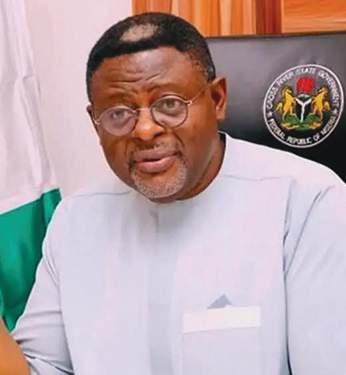
He said: “Today’s event has finally removed the legal lacuna on the ownership of Tinapa, which is now the bona fide property of the Cross River state government. We are not only reclaiming the facility; but also increasing the stock of our enduring infrastructure.
“The return of Tinapa is not merely an event; it is a rebirth, the triumph of faith, patience and resilience. This is more than reclaiming an asset; it is the revival of a vision that once placed Cross River on the global economic map.”
He reaffirmed his administration’s commitment under the, “People First Agenda” to reposition Tinapa as a thriving hub for trade, tourism, and creative enterprise.”
He further revealed that discussions were already ongoing with credible investors and partners to transform the facility into a dynamic centre of commerce and job creation, guided by transparency and accountability. Otu also expressed gratitude to the federal Government, AMCON and other relevant agencies for their cooperation throughout the transition process, commending all stakeholders who played key roles in ensuring the successful handover.
Read full article online - www.thisdaylive.com
Adeshina: Honoured for Impactful Contributions to Finance
On Saturday November 29th, 2025, Delta State stood still when the Chairman of Goldfield Group, a diversified financial services firm, Dr. Abimbade Adeshina, popularly known as ‘Bade Adeshina’, was conferred with an Honorary Doctor of Management Science (Honorary Causa) degree in Entrepreneurial Finance and Management in recognition of his contribution to the Nigeria’s financial sector, by Edwin Clark University.
Adeshina is a renowned financial technocrat and reputable boardroom strategist, with many accomplishments in the private and public sectors.
The Senate of Edwin Clarke University (ECU), Delta State, took a look at his accomplishments and contribution to the growth of the country’s financial institutions, and decided to honour him.
In a letter to him, the university’s Senate stated, “This distinguished award recognises your remarkable accomplishments and leadership in the fields of finance, investment management, and governance. Your extensive career, spanning commercial and investment banking, discount house operations, pension management, and public service, reflects excellence, innovation, and commitment to national and international economic development.
“The University Senate noted, with particular admiration, your educational background with B.Sc. and M.Sc. in Finance from the University of Lagos, your Treasury Dealership Certificate with CIBN/Financial Market Dealers Association, and your Fellowships with several professional bodies, including The Chartered Institute of Bankers of Nigeria, Certified Pension Institute of Nigeria, Association of Investment Advisers and Portfolio Managers, Institute of Directors Nigeria, and Nigerian Institute of Management, among others.
“Your sterling leadership as Chairman and Director of several reputable organisations, and your
service as Special Adviser on Economic Planning, Budget and Development to the Government of Osun State, were further considered as evidence of your entrepreneurial distinction and dedication to national development.”
The Osun State-born technocrat was decorated during the university’s combined 4th, 5th, 6th and 7th Convocation Ceremonies held at the university auditorium in Burutu Local Government Area of Delta State. The event brought together industry leaders, policymakers, and academia.
The Vice Chancellor of ECU, Prof. Samuel Tita Wara, in his address, said the university proudly conferred its honorary doctorate on Adeshina, whom he described as “an astute finance entrepreneur, manager, and administrator,” for his “exceptional leadership, innovation in financial management and dedication to human empowerment, which mirror the ideals of the University.”
Acknowledging that great leaders inspire others not by power but by example, Wara noted that Adeshina’s story is one of diligence, faith and national contribution.
“We celebrate your impact and support to the development and growth of Edwin Clark University in accordance with the aim of our Founder and Father, Chief Edwin Kiagbodo Clark. We also appreciate you and your family for the support and donation to the University based on belief and commitment to education, thus extending opportunities for the less privileged in our communities”, the Vice-Chancellor added.
In his acceptance speech, Adeshina said he was humbled by the recognition bestowed on him and accepted the award of Doctor of Management Science (D.MSc) (Honoris Causa) in Entrepreneurial Finance and Management with immense gratitude and respect for Edwin Clark University.
“I thank the Senate and leadership of Edwin Clark University for the confidence reposed in me and my work. Your recognition strengthens my belief that steady service, ethical leadership and commitment to learning remain essential for
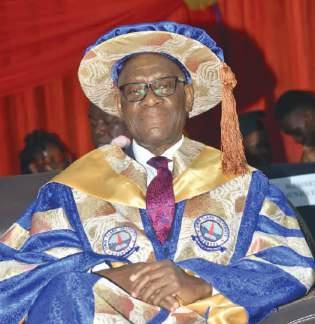
building strong institutions and a stronger nation”, he said.
Adeshina noted that his journey in finance, governance and institutional development had been shaped by the lessons gained through education, the guidance of the Almighty and the invaluable encouragement from his colleagues and his family.
He said, “I owe much to the people who stood by me, challenged me and supported my efforts and vision over the years. This award is not only a personal honour; it is a reminder for me to continue to contribute where my skills and experience can make a meaningful difference.
“I hope my story encourages young Nigerians to pursue excellence with discipline, and lead with integrity wherever they find themselves.”
Adeshina reflected that on occasions such as this, “we must appreciate the role that citadels of learning in our country must continue to play in rebuilding Nigeria.
“This is so that our country may translate its enormous potentials into tangible assets; those
priceless assets needed in a digital era where the best performing nations prioritise knowledge as key drivers of socio-economic transformation, as I reckon to be part of treasured mandate of Edwin Clark University. This university deserves all the support we as alumni can provide, to sustain and grow the dream of its founder, Chief Edwin Kiagbodo Clark,” he said.
Adeshina is a highly accomplished and versatile senior executive and board leader with over three decades of distinguished experience across commercial and investment banking, asset management, stockbroking, public service and financial consulting. His career is marked by a consistent record of leadership in highly competitive and structured institutions, both in Nigeria and internationally.
His academic foundation includes a B.Sc. and M.Sc. in Finance from the University of Lagos and a Diploma in Information Science/Systems from the University of Ibadan. He further enhanced his executive education through prestigious programmes at world-renowned institutions, including Harvard Business School, Stanford Graduate School of Business, Kellogg School of Management and Wharton Business School.
He has held several C-suite and Board-level positions, demonstrating a capacity for strategic direction and governance. Adeshina served as the Managing Director/CEO of CDL Asset Management Limited, where he provided overall leadership and oversaw a diverse portfolio including funds management, corporate finance and treasury services.
Previously, as General Manager at Marina International Limited, he honed his expertise in treasury, risk management, and investment banking over a 15-year tenure. His public service commitment was demonstrated in a cabinet-level role as Special Adviser and Head of the Ministry of Economic Planning, Budget and Development for the State of Osun, where he spearheaded budget preparation, economic planning, and public procurement reforms.
Bennett Oghifo
Adeshina
Otu
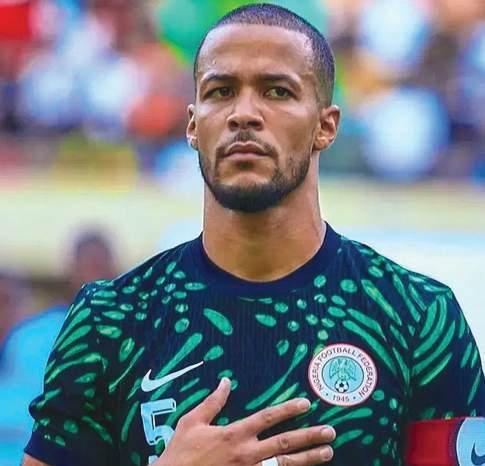

SA muel C H ukwueze re DISC over IN g HIS groove
SincemovingtoACMilanfromVillarrealfor€20millioninthesummerof2023,SamuelChukwueze hasgonethroughadifficultpatch,culminatingintheSerieAgiantsloaningtheSuperEagleswinger toFulhaminthelastsummertransferwindow.However,hismovetoCravenCottagedoesnotseem tobemakinganydifferenceinthedwindlingformoftheNigerian.Interestingly,thelastthreeweeks havemadeabigdifferenceontheEuropaCupwinner,asheseemstohavefoundbackhisMojo
Samuel Chukwueze was on fire in Fulham’s 5-4 loss to Manchester City at Craven Cottage on Tuesday, scoring two goals off the bench as he opened his Premier League account.
The AC Milan loanee has been in good form over the last three games, bagging two goals and two assists, and this pleased Fulham’s head coach, Marco Silva.
The Portuguese manager lauded the Nigerian forward in Fulham’s 2-1 win over Tottenham Hotspur over the weekend, while his club and national teammate, Alex Iwobi chimed in, nicknaming him ‘Chuwku-magic’.
His performance on Tuesday night was no less inspiring, as he lifted his teammates as Fulham knocked on City’s doors for an equaliser that never came. Still, Marco Silva was delighted with the 2015 FIFA U-17 World Cup winner.
“He’s already making an impact. Last Saturday, he did it,” the former Watford head coach said in his post-match presser.
The reeling effect of Chukwueze’s good form means Silva’s good work on the fleet-footed player could be undone in a few weeks.
He’s created goals and now found the back of the net himself, but the Fulham manager is sad he’ll lose one of his jokey cards to the African Cup of Nations, AFCON tournament.
“Chukwu is just showing his quality; he has quality on the right and on the left. He can make the right decisions as well.
“He’s getting better and better. Unfortunately, we’re going to lose him in 15 days time like it was three times in the last three months, but it is what it is, and till then we have to get the best from him and let’s hope we can do it on Sunday again,” Silva concluded.
Chukwueze equally praised Fulham for their fighting spirit in their 5-4 defeat to Manchester City on Tuesday night.
The Nigeria international came from the bench to net twice for the Londoners but that could not help them from losing to Pep Guardiola’s men.
After the game, the former Villarreal star lauded his team’s effort while focusing on their next fixture against Crystal Palace.
“It was a crazy game today,” Chukwueze said post-match.
“We conceded goals we shouldn’t have conceded but I liked the spirit of the team for the comeback.
“The chances we created in the second half were almost there. It was a difficult one to take because we wanted three wins in a row and it didn’t happen, but we’ll keep our heads up. We fought until the last minute and on Sunday against Crystal Palace we’re going to give everything for the fans.”
“Samuel Chukwueze’s time in Milan has not been very consistent,” Nigeria legend Mutiu Adepoju said earlier this year. “He needs to work harder because if you leave Milan and go somewhere else and still have the same level of performance, that would be a huge mistake.
“He needs to work more so that he can get into the team and play consistently, and from there, his career will go up.”
It was a sentiment shared by Chukwueze himself, who acknowledged during the summer that he’d failed to live up to his own standards during his second campaign in Lombardy.
No Fulham player created more goalscoring opportunities during the course of the contest than Chukwueze, while no one on the pitch completed more successful dribbles than the Super Eagles winger.
However, Silva deserves credit for deploying the winger in an unfamiliar role on the left-hand side, where his desire to cut on his right foot and tear at goal struck fear into Spurs hearts.
Following on from his decisive assist against Tottenham last weekend - a late moment of inspiration to set up Raúl Jiménez for the
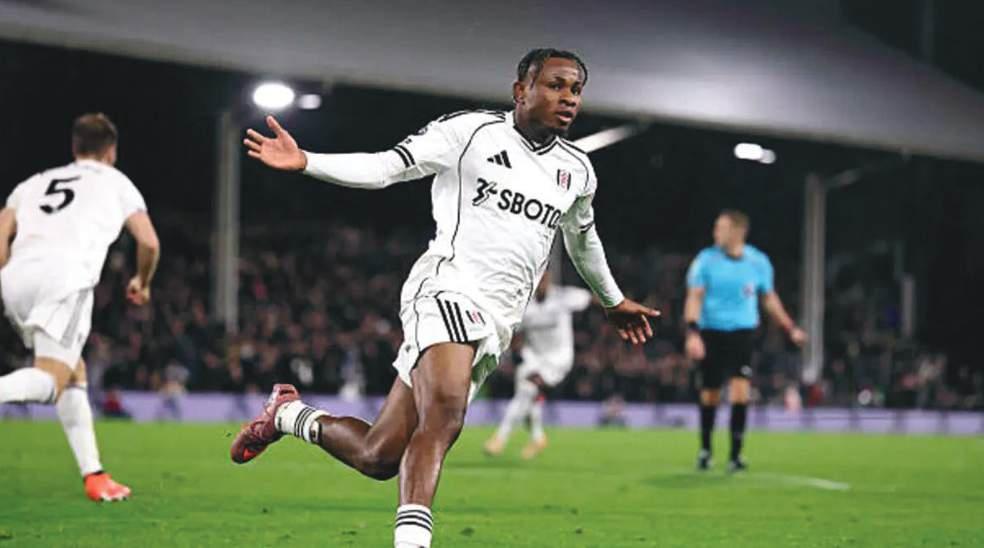
winner, Chukwueze has finally regained a measure of momentum again in a career that has threatened to run out of steam.
Still only 26, this is the first time the winger has registered direct goal contributions in consecutive matches since October 2024, with the wideman increasingly losing his sense of direction at parent club AC Milan.
Moving to AC Milan from Villarreal for €20 million in July 2023 represented a significant step up for the youngster. However, his time in Italy was not an unbridled success. Given the fee, the expectations, and Chukwueze’s promise, a contribution of four goals and five assists across two Serie A campaigns is a poor return.
Admittedly, the winger never truly had the
trust of Milan’s head coaches over the last two seasons, making just 21 league starts since his arrival, with hamstring and thigh injuries leading to frequent spells on the sidelines while preventing him from consistently establishing himself in the Rossoneri’s starting XI.
The context at the club, where coaches Stefano Pioli, Paulo Fonseca, Sergio Conceicao and Massimiliano Allegri all held the reins between Chukwueze’s arrival and his loan move to Fulham, has hardly helped, with the Nigerian having to adapt to different styles, varied approaches on the training round and the general drift of transition during these challenging years.
Regardless of the head coaches, there’s a sense that his playing style was never a perfect fit for Italian football either, with Chukwueze
struggling to find the space he needed to operate, and lacking the subtly or creativity in the final third to prise open more dogged defences.
Once upon a time, he was one of the most eye-catching wingers in Spain, while his five goal contributions in 11 Europa League games in 2020-21, en route to the title, set him apart as one of the bright prospects to watch across Europe’s major leagues.
Chukwueze also alluded to his difficult time at AC Milan.
“Last season is something we don’t really want to talk about,” he began, as per Tribuna.
“It was a bad season for the Milan fans and for everyone involved. Honestly, it’s one of the worst seasons of my professional career.”
In the aftermath of Chukwueze’s performance against Spurs - a showing that earned him a first PL Man of the Match award - Iwobi was quick to heap praise onto his compatriot.
“He is energetic on and off the pitch,” the ex-Everton man told Sky Sports. “We are happy to have him. You can see the magic he does on the field. He’s a great addition to the club. We want to give him the confidence and the license to enjoy football.
“’Chukwu-magic’ - that’s his nickname on the training field,” Iwobi added. “He’s able to do it in training, he’s able to do it in matches. As long as he remains consistent, that’s the main thing for him.”
Chukwueze couldn’t contain his joy after the match, appearing a player rejuvenated and revived as the confidence that steadily evaporated during those years in Italy seeps back into his system.
“I love the nickname,” he responded. “As long as it’s working, I love it.
“I wasn’t expecting to start today, but I’ve been training hard, been focused, the last months have been difficult but I keep my head down, keep working, and today I took the opportunity.
“Iwobi and Calvin Bassey are the ones who always pushed me more in training,” he added. “It works, telling me ‘keep your head down, keep working, it’s going to come’, so it motivates me a lot.”
Consistency, as Iwobi noted, is clearly the big question mark hanging over Chukwueze in the coming months.
Samuel Chukwueze celebrates one of his brace against manchester City at Craven Cottage
pep guadiola hugging Chukwueze for his heroics against manchester City
GLOBAL SOCCER

Trump Wins Inaugural FIFA Peace Prize
UDonald Trump received the inaugural Fifa Peace Prize before the draw for the 2026 Fifa World Cup.
The award has been introduced this year by Fifa president Gianni Infantino, designated for a person who has “taken exceptional and extraordinary actions for peace” and “united people across the world”.
It was widely expected that Trump, who arrived at the ceremony with Infantino and has madeseveralpublicappearances withhiminrecentmonths,would be the winner.
That was confirmed at the ceremony in Washington DC yesterday.
As well as receiving a large golden trophy, Trump was also given a medal and certificate by
Infantinobeforemakingaspeech.
Trump stated he had saved “tens of millions of lives” through diplomatic interventions and had “stopped wars happening just before they started”.
“This is truly one of the great honours of my life,” Trump said, beforeclaimingthatthe2026World Cup has set a new record for ticket sales.
“Gianni has done an incredible job. It is a nice tribute to you and the game of football, or as we call it soccer. It is beyond the numbers wethoughtwerepossible,”Trump said. “The world is a safer place now.TheUSAwasnotdoingwell a year ago; now we are the hottest country in the world right now.”
The 2026 World Cup will be co-hosted by the United States, CanadaandMexico,andwilltake placebetweenJune11andJuly19. Trump later returned to the
stage alongside Mexico’s President Claudia Sheinbaum and Canada’s Prime Minister Mark Carney to perform the ceremonial opening to the draw.
The three leaders drew the balls of their respective nations, which had already been assigned their groups.Afterwards, the trio posed for a selfie taken by Infantino.
Mexico are in GroupA- and will play in the tournament’s opening match - while Canada are in Group B and USA feature in Group D. Trump, after repeating his comments about ticket sales, joked about the name clash between American football and what Americans generally call soccer.
“We have to find another name for the NFL,” Trump said. “This is football, we call it soccer here in the USA but it is really football. It doesn’t make sense that we call it soccer.”
Failing to Lift 2023 AFcON Trophy A Big Let down, Says Troost-ekong
Former Super Eagles
captain William TroostEkong has revealed his only regret with the Nigerian National team after drawing the curtain on his international career.
The 32-year-old has seen his position in the Super Eagles starting lineup diminish slowly with the rise of Benjamin Frederick, and prior to the World Cup play-offs, he harboured the goal of representing Nigeria at another World Cup after playing in Russia seven years ago.
While he was included in Eric Chelle’s 55-man preliminary AFCON squad, he chose to bow out just two weeks before the tournament in Morocco.
Upon his retirement announcement, the Holland-born Nigerian revealed that what he’s achieved so far in the green and white colours was something he never thought possible.
“I would dream big, bigger than other people believed in me or thought was possible,” Troost-Ekong told Standard Sport.
“But to go in this direction with Nigeria, and be part of everything I have, I would not have been able to write it down. I’ve managed to live beyond my wildest dreams.”
“You always want things to end perfectly. It’s hard when you are watching the last minutes of the game. It felt like a blur.
“I remember sitting there and absorbing those last minutes, because you know that could be it. To have that in a penalty shootout, my heart was pounding like crazy.
Jackson Obaseki @ 80 Birthday Golf Tournament ends Today
Golfing actions will come to a close today at Dr. Jackson Gaius Obaseki @ 80 Birthday Golf Tournament holding at Benin Club Golf Section (BCGS), Benin City, Edo State.
The event has been a grand affair, celebrating the life and legacy of Dr. Obaseki, a renowned Nigerian oil and gas expert, and former Group Managing Director of the Nigerian National Petroleum Corporation (NNPC).
Today’s grand finale is
the culmination of a spectacular event for the special guests, guests, regular ladies hcp 0-28, and regular men hcp 0-18 categories as the best of the best compete for the top spot.
According to the BCGS Captain, Stephen Ebaretonbofa, the tournament is organised by the BCGS Management Committee in conjunction with other notable members in the club.
The tournament teed off on Wednesday when Caddies gathered on the
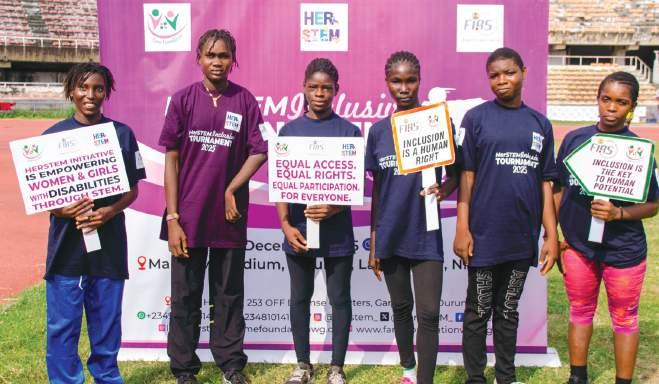
Spots in Football, Wema, Access Shine in Athletics
The race for the 2025 Nigeria Bankers Games (NBG) football title produced high drama at the weekend as UBA and FCMB sealed their places in the final after hard-fought victories at the UNILAG Sports Complex, Akoka.
In the first semi-final, UBA edged past Wema Bank 1–0 in a tight contest decided by an early momentofbrilliance.AlabiAllwell, operatingfromtherightflank,delivered a precise assist that found AmadUmar,whocalmlyslotted home for what proved to be the only goal of the match.
Wema Bank pushed relent- lessly for an equaliser, but UBA held firm, with Umar’s all-round performanceearninghimtheMost Valuable Player (MVP) award.
The second semi-final was a repeat of last year’s final, as defending champions Sterling
Nigeria Bankers Games 2025
Bank once again faced FCMB.
But unlike in 2024, when Sterling lifted the trophy, it was FCMB that emerged victorious this time, claiming a 2–1 comeback win. servedlySterlingbeganbrightlyanddetook the lead in the 21st minute through Eze Philemon, whoscoredfrom close range off a corner kick that FCMB did not deal with decidely. Their advantage, however, lasted just six minutes, as FCMB’s Abubakar Shafi converted from the penalty spot to level the tie.
Shafi completed his brace in the 60th minute, finishing off a sweeping FCMB move to
complete their comeback. Sterling Bank searched desperately for an equalizer, but this bid was dealt a blow when Rotimi Akinola was sent off after receiving a second yellow card for dissent towards the referee. Reduced to 10 men, the champions struggled to find a response as FCMB held on to secure their passage to the final. UBAand FCMB will now battle for the prestigious trophy as the 2025 Nigeria Bankers Games football tournament reaches its climax next weekend. Meanwhile, the finals of the track events also held over the weekend at the Yabatech Sports Complex, Lagos. Team Wema Bank had an impressive outing winning four Gold and two silver medals. They were closely followed by Access Bank with three gold, one silver and one bronze, respectively.
MTN Partners Trafique communications on Public Health Awareness through Sports
Soccer fans were thrilled to highly entertaining football matches on Sunday at the Campus Mini Stadium, Lagos, as 20 football clubs engaged themselves in a round robin format to create awareness on public health and community wellbeing.
Theevent,whichwassponsored byMTNinconjunctionwithTrafique Communications,witnessedalarge turnoutoffootballenthusiastsasfans were given free medical treatment, withthewinningteamscartingaway various prizes and trophies.
InachatwithTHISDAYNewspapers,ProgramOperationsManager,
Trafique Communications, Dotun Oyelesesaidtheeventhasbeengoing on for the past 14 years.
“Our drive to make the society a betterplaceisactuallywhatinformed thiseventbyenlighteningthesociety through sports. We are trying to educate the youths on how to make the society a better place and we felt there is no better way to drive this thanthroughsports.Wethereforeuse sportstopromoteouragendatomake the society a better place.
“We’ve been doing this for close to 14 years. We had our first event in 2013 and some of the players we haveshowcasedhavegoneontoplay
in the national leagues. We’ve used this event to change lives positivity by helping a number of youths get to the next level in their chosen career.
“Also, we’ve been able through the medical outreach to test people for different ailments from malaria to dental issues and eye tests, especially for the elderly, and help them to live a better life in their old age,” Oyelese said.
He however admitted that but for MTNthathasbeentheirbiggestsupporter, Trafique Communications would not have achieved much, considering how capital intensive the projects are.
Over 150 for Sir Okoye’s 50th wedding Anniversary Golf Tournament
green for their shows, while Professionals hit the fairway on Thursday.
Furthermore, on Friday, the atmosphere was filled with excitement and camaraderie as veteran ladies and men’s, super veteran men, ladies hcp 29 - 26, and men’s hcp 19 - 28 take part in the golf festivities to showcase their skills.
Meanwhile, friends, family, and golfing buddies will gather to mark this significant milestone, sharing stories, laughter, and a few golf swings on the course.
In-Form Villa Host Arsenal Live on SuperSport
Premier League leaders, Arsenal, will face another big examination this weekend when they confront Unai Emery’s in-form Aston Villa at Villa Park. The game, which will kick off at 1.30 pm today, and other weekend fixtures will be broadcast live on SS Premier League (DStv Ch. 203, GOtv Ch. 65). At 4:00 p.m., Man City host Sunderland at the Etihad. Kicking off at the same time is the clash between Tottenham and Brentford. Spurs, who play at home, are in a slump and remain winless in their last six.
Leeds United face Liverpool at 6:30 p.m. after a morale-boosting win over Chelsea ended their fourmatch losing streak. Tomorrow at 5:30 p.m., Fulham meet Crystal Palace The round concludes on Monday at 9:00 p.m. as Wolves host Man United.
Over 150 golfers, including friends, family and golfing buddies of Sir Leo Ike Okoye are storming Aba Sports Club 1926 Golf Section, Abia State today for the high profile golf tournament being organised in his honour by the club.
The tournament is to celebrate the golden jubilee wedding anniversary of Sir Okoye, a renowned philanthropist, industrialist, and avid golfer.
The stroke play format event has attracted over 150 players from various
clubs across the country, including 10 esteemed golf professionals.
The tournament is to support a noble project estimated at N30m on behalf of the Trustee and Patron in appreciation and recognition of his philanthropic investments in the section, while the surplus funds will be used for a special project in the golf section in his honour.
In addition, the celebrant, a Trustee of Aba Sports Club 1926 is recognised for his
significant contributions to golf in Nigeria, having sponsored numerous golf professionals, including Kingsley Okparaku and Nnamdi Chima.
The event is expected to be a grand celebration of his milestone anniversary and contributions to golf community, and being the sponsor of hole number 12 of Aba Golf Club.
Meanwhile, the hole 19 conviviality and presentation of prizes have been slated to commence from 4pm.
FAMe Foundation Calls for Inclusion of persons with Disabilities through Sports
FAME Foundation marked the International Day of Persons with Disabilities with the hosting of Inclusion Games at the main bowl of the National Stadium, Lagos, advocating for disability-inclusive societies.
The event, held on December 3, featured 26 participants competing in activities including the 100m finals for visually impaired
athletes, athletes with cerebral palsy and the deaf, as well as discus throw for amputees and polio survivors, and shot put for amputee and lexul athletes.
Executive Director of FAME Foundation, Arabinrin Aderonke Atoyebi, expressed her joy at the organisation’s first edition of the tournament while reaffirming the foundation’s commitment to promoting inclusion and
celebrating diverse abilities.
“I am happy with today’s event. The Inclusion Games allowed us to celebrate different abilities through various activities. This is what inclusion should look like in our society,” Atoyebi said. She linked the initiative to the foundation’s HerSTEM programme, which provides digital literacy and basic computer skills training for women and girls with disabilities.
L-r: uS president, Donald Trump and FIFA president, Gianni Infantino during the draws for the 2026 world Cup
Athletes pose during the FAMe Foundation to mark the international Day of person with disabilities
FcMB, UBA Book Final
nited States President,
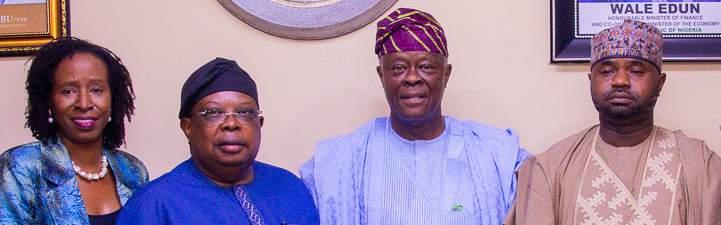
The Return of Olisah Metuh
Ihad a good laugh when Olisah Metuh said he was quitting politics, some three years ago. I had then said to him: "To say 'I am quitting politic' is one thing. For politics itself to say: 'I am done with this fellow and I will let him go' is another matter altogether. I recall telling him, back then, he was kidding himself.
Of course, he maintained at the time that he was dead serious and that I would see how serious he was. When I replied that he had unfinished business in the political arena and that his declaration was premature, he said: “I am telling you that I am done with politics”.
His decision and announcement at the time were predicated on his understanding of his own reality
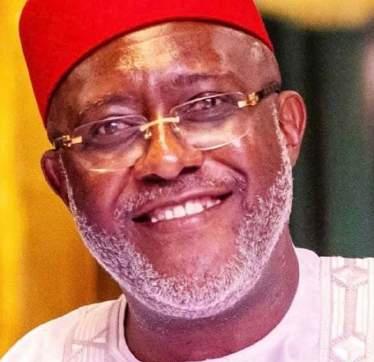
gone through. It was these troubling experiences preceding the declaration that led him to the assumption that the
right thing to do was to quit politics.
When a friend who had read the report of his "withdrawal" from politics brought up the matter with me, I simply told him that Olisah had always had a great future in leadership, but that part of his challenge was "stakeholder" management. Then the conversation shifted to the varied reactions to his predicament when he ran into trouble with the authorities; who were more into a witch hunt than a search for justice.
At the beginning of that unfortunate personal crisis, some individuals from the South East, and some of them presumably close to Olisah, came up with the hare - brained idea of "doing whatever they could" to contribute to the latter's problem by further damaging his image, especially in the media. They declared a budget of 250 million naira
CHIMA
for a strong media campaign that would put Olisah in an impossible situation. This was really the very limit of e wickedness.
When I demanded an explanation, baffled that they could contemplate such a thing, one of the major promoters of the project burst out: "Nwoke m, oburo sooso Olisah ka ekeelu South East (My friend the South East was not created, or made, for Olisah alone). He has been rising consistently and everyone has been losing to him. If it was someone else that has had the kinds of political favors Olisah has been getting, others around him would have benefited more from it.
I disagreed with both the proposal and the motive. I also rejected the implied
Continued on page 27
In Support of Scrapping Mother Tongue Teaching Policy
Nigeria’s learning crisis can no longer be ignored. Despite the fact that successive governments over the years continue to double down on policies that barely scratch the surface, the country is confronted with a serious emergency in its education sector.
One of such challenges hurting the education sector is the mother tongue instruction policy, which, for me, the current debate over its ban misses a crucial truth. If we are serious about tackling learning poverty, we must confront our biases and embrace evidence, not sentiment, in shaping the future of education.
Mother tongue education refers to any form of schooling that uses the language or languages that children
are most familiar with to help them learn. This is usually the language that children speak at home with their family. It was designed to help children learn effectively and aims at ensuring children acquire real learning and foundational skills, equipping them with a competitive advantage for future success.
Nigeria’s National Policy on Education (NPE) 1977, 1981, 1998, 2004, 2007 and 2013 articulates that the mother tongue or language of the immediate community should be the language of instruction in pre-primary and lower primary education. This policy framework is theoretically sound, rooted in constructivist principles, and aligned with international best practices. No doubt there are evidence-based studies that show that when kids learn in their mother tongue in early childhood,
they comprehend better. However, gaps in the policy implementation remain substantial. The country’s ethnic and linguistic diversity, with not less than 520 indigenous languages, makes the mother tongue policy attractive in theory, but daunting in practice. Implementing it impartially would require massive investments in textbooks, teacher training, curriculum development, and assessment tools for dozens of languages within a single state.
Limited development of orthographies and learning materials in many Nigerian languages, as well as inadequate teacher training and deployment in multilingual pedagogies, are also major setbacks to this policy.
In a system already struggling with a myriad of challenges, attempting this scale of localisation risks deepening inequality rather than improving learning
outcomes.
At this point however, it is important to stress that cancelling the mother language policy does not in any way mean abolishing subjects such as Yoruba, Hausa, Igbo, and other native languages already being taught in both primary and secondary schools in the country. This only means abolishing the use of mother tongue in teaching pupils.
The Minister of Education, Dr. Tunji Alausa, recently highlighted why Nigeria needs to overhaul the learning processes in the education sector, describing the situation as an emergency that requires urgent attention, a reality that aligns with my own concerns.
In a position paper, the Minister