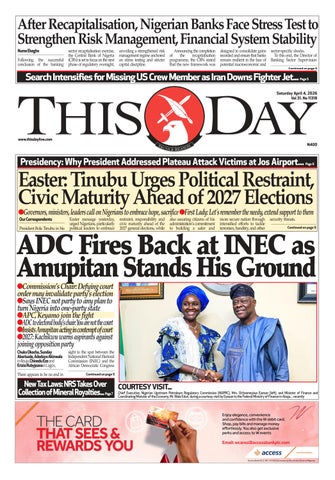
After Recapitalisation, Nigerian Banks Face Stress Test to Strengthen Risk Management, Financial
Nume Ekeghe
Following the successful conclusion of the banking
sector recapitalisation exercise, the Central Bank of Nigeria (CBN) is set to focus on the next phase of regulatory oversight,
unveiling a strengthened risk management regime anchored on stress testing and stricter capital discipline.
Announcing the completion of the recapitalisation programme, the CBN stated that the
System Stability
Presidency: Why President Addressed Plateau Attack
Easter: Tinubu Urges Political Restraint, Civic Maturity Ahead of 2027 Elections
Governors, ministers, leaders call on Nigerians to embrace hope, sacrifice First Lady: Let's remember the needy, extend support to them
Our Correspondents
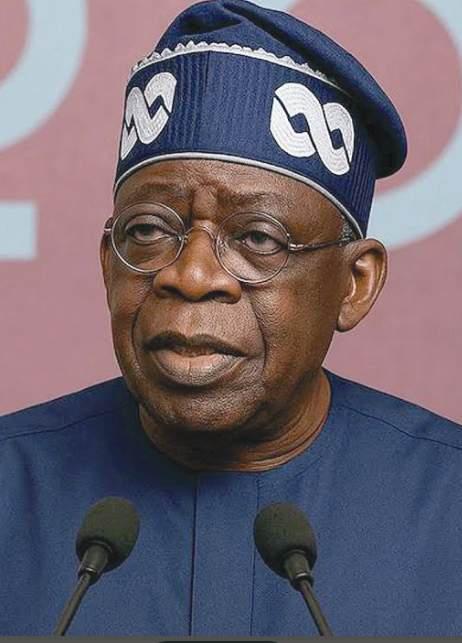
President Bola Tinubu in his Easter message yesterday, urged Nigerians, particularly political leaders to embrace
restraint, responsibility and civic maturity ahead of the 2027 general elections, while
also assuring citizens of his administration’s commitment to building a safer and
more secure nation through intensified efforts to tackle terrorism, banditry, and other security threats.
Continued on page 5
ADC Fires Back at INEC as Amupitan Stands His Ground
Commission’s Chair: Defying court order may invalidate party’s election
Says INEC not party to any plan to turn Nigeria into one-party state
APC, Keyamo join the fight
ADC to electoral body’s chair: You are not the court
Insists Amupitan acting in contempt of court 2027: Kachikwu warns aspirants against joining opposition party
Chuks Okocha, Sunday Aborisade, Adedayo Akinwale in Abuja, Chinedu Eze and Erizia Rubyjeana in Lagos, There appears to be no end in
sight to the spat between the Independent National Electoral Commission (INEC) and the African Democratic Congress
Search Intensifies for Missing US Crew Member as Iran Downs Fighter Jet
Trump: With time, we’ll open Strait of Hormuz, take oil, make fortune
Ndubuisi
Francis in Abuja with agency report
A United States fighter jet has been shot down over Iran and search-and-rescue efforts have so far recovered one of two crew members who ejected, a United States official revealed yesterday, in the first known incident of its kind in the nearly five-week-old war.
(ADC), as the party pushed back against warnings by INEC Chairman, Prof. Joash Amupitan, during an exclusive interview on ARISE NEWS yesterday, that proceeding with its congresses and convention could violate existing court orders.
This comes as the All Progressives Congress (APC), reacting to what appears to be a setback for the ADC, described the opposition party as a group of unserious individuals with a penchant for internal conflicts, and urged it not to blame President Tinubu for its predicament.
The Minister of Aviation and Aerospace Development, Festus Keyamo, who also weighed in on the matter, chided the David Mark's faction of the ADC, saying the use of emotional reasoning and blackmail cannot enable it bluff its way out of “purely legal conundrum” it brought upon itself.
Former Presidential candidate of the ADC, Dumebi Kachikwu,
Also yesterday, the First Lady, Senator Oluremi Tinubu, canvassed for care of the needy and less privileged in society, while Governors and other political leaders charged Nigerians to leverage on the spirit of the season to show love and tolerance for one another.
In his Easter message, addressed to Nigerians at home and abroad, the President acknowledged that, despite the sacrifices of the Armed Forces and other security agencies, challenges to national security have persisted.
Ahead of the 2027 general elections, Tinubu called for political responsibility, restraint, and civic maturity, stressing that the Election Act must guide the conduct of political parties and actors to safeguard
This comes as President Donald Trump yesterday suggested that the U.S. was looking to seize Iran’s oil industry, appearing to argue that more time was needed for the war.
warned all aspirants in the 2027 general elections to avoid contesting on the platform of the party, saying it has been embroiled in a legal quagmire.
The ADC described the position of the INEC Chairman as wilful distortion of the Court of Appeal’s directive to maintain the status quo, which amounts to contempt of the court.
ADC accused INEC of overstepping its supervisory role and attempting to halt lawful processes, insisting that internal disputes do not suspend democratic functions, while reaffirming its decision to proceed in full compliance with the law.
In a statement by the National Publicity Secretary, Bolaji Abdullahi, the ADC stated that it carefully reviewed the interview granted by Amupitan, and found it necessary to respond in order to correct several legal and factual misrepresentations.
The ADC said while the Commission seeks to present
democracy, peace, and national stability.
His words: “As the nation gradually approaches another electoral cycle, this season also serves as a call to civic duty and maturity. The Electoral Act must guide the conduct of our political parties and political actors. Let our choices be guided by a shared commitment to peace, continuity, stability, and the long-term good of our country. Democracy flourishes where responsibility, restraint, and informed participation prevail.”
The President expressed optimism that the country is on the path to recovery, citing improving economic indicators as evidence that the right choices are being made.
He, therefore, urged
It also emerged yesterday that the U.S. Army Chief of Staff, Randy George, has been fired by Defense Secretary Pete Hegseth. Three U.S. defense officials disclosed his sack to Reuters, a major staffing change that comes as the U.S. military
its position as one anchored on law and neutrality, the substance of the Chairman’s own statements revealed a fundamental misapplication of both constitutional principles and judicial directives.
According to the ADC spokesman, "First, the Chairman’s repeated assertion that INEC is merely acting within the confines of a ‘multi-party constitutional order’ is, with respect, a deflection from the central issue. The question before Nigerians is not whether Nigeria remains a multi-party state in theory, but whether the actions of INEC in practice are undermining the ability of opposition parties to freely organise and function.
"The ADC has not alleged the abolition of multi-party democracy in form; rather, it has raised concerns about actions that, in effect, weaken it. The Chairman’s reliance on the existence of multiple parties as proof of neutrality does not
Nigerians to keep faith with the administration’s vision of a safer, stronger and more prosperous nation.
“Fellow Nigerians, you have been very supportive of my administration because you trust our ability to make our nation better. I will continue to serve to retain your trust. I enjoin you to keep the faith and never cease to contribute to the progress and greater future we seek, each in our own way, to the emergence of a democratically stronger, more prosperous, and safer nation,” Tinubu further said.
According to him, the government was making available the necessary resources and strengthening foreign partnerships to enable security agencies to deal decisive blows to terrorists,
Oil prices may hit $150 per barrel, JP Morgan warns
fights a major war in the Middle East.
Oil prices could top $150 per barrel if energy flows through the Strait of Hormuz remain disrupted by the middle of May, investment bank, JP Morgan warned yesterday.
On the fighter jet that was
address the specific conduct under scrutiny.
"On the issue of the Court of Appeal’s order, the Chairman places heavy reliance on the doctrine of status quo ante bellum, suggesting that it requires a rollback to a particular point in time and a suspension of party activities. This interpretation is both selective and legally flawed.
"The preservation order, by its nature, is intended to prevent actions that would irreversibly alter the subject matter of litigation, not to paralyse the internal functioning of a political party.
"The Chairman’s attempt to define the “status quo” by tracing the controversy to internal party developments in July 2025 is an administrative interpretation that INEC is not empowered to make. That determination lies strictly within the jurisdiction of the courts, not the Commission.
"Furthermore, the Chairman’s claim that holding congresses or conventions would “render
bandits and other criminal elements.
His words: “Despite the good efforts of the administration and the gallant efforts of our men and women of the Armed Forces who leave behind their families to confront the evil actors in our land, challenges to our security have remained. However, my administration continues to make resources available and forge foreign partnerships to enable us to deal decisive blows to the agents of terror and banditry."
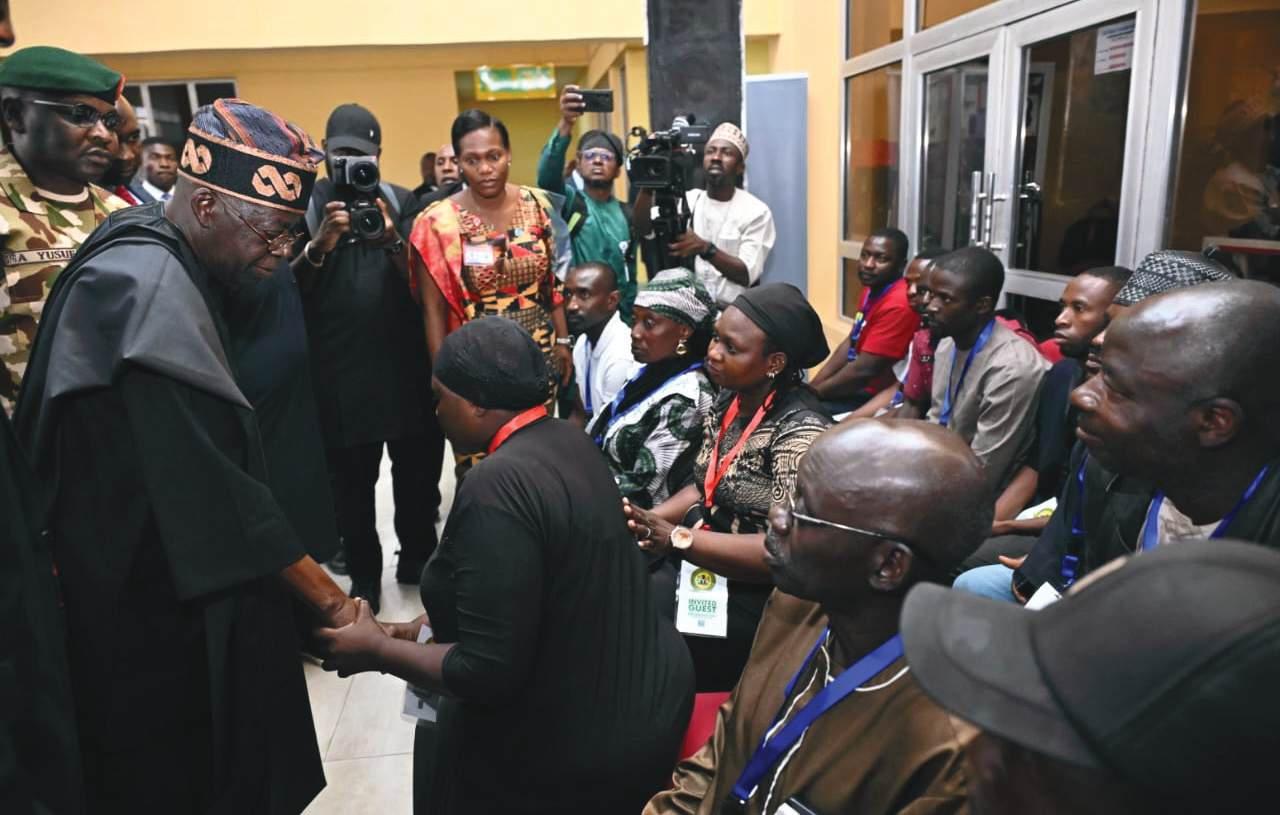
Tinubu noted that following his condolence visit to Jos, Plateau State, where he commiserated with victims of the recent deadly attack, security chiefs had given strong assurances of progress, while international support was also
shot down, Pentagon and U.S. Central Command did not respond to Reuters requests for comment.
The prospect of a U.S. pilot being alive and on the run inside Iran raises the stakes for the United States in a conflict that, according to opinion polls, has struggled to win popular support among Americans. It also presents a challenge to the U.S. military, which faces the twin goals of trying to save the life of an American behind enemy lines while safeguarding anyone involved in perilous rescue missions.
proceedings nugatory” is an overreach. Internal party processes, conducted in line with the party’s constitution and the Electoral Act, do not extinguish or prejudice pending judicial proceedings.
"On the contrary, democratic continuity within a political party is presumed under the law unless expressly restrained by a competent court. No such explicit order prohibiting congresses or conventions has been cited. What exists are general preservation directives, which cannot be expanded into a blanket prohibition on party governance.
"The assertion that INEC is restrained from monitoring congresses due to an injunction equally exposes a critical misunderstanding of its role. INEC’s duty to monitor is statutory and triggered upon proper notification. A party’s decision to proceed with its internal processes does not depend on INEC’s participation.
mobilised to reinforce Nigeria’s response.
He added: "On Thursday, I was in Jos to commiserate with people of Plateau State, share in their grief, and offer reassurances of better days to come. The leaders of the nation’s security institutions have given strong assurances of progress. We have also sought and are receiving assistance from outside our shores."
He further assured residents of other parts of the country facing one form of insecurity or another that concerted government actions are beginning to produce results, urging citizens to support lawful efforts, remain united, and reject forces that threaten the country’s collective peace and stability.
"I am reassured that the
By conflating its monitoring function with the validity of the processes themselves, INEC effectively places itself above the law, assuming a veto power it does not possess.", the ADC spokesman.
The Chairman also referenced conflicting communications from different factions within the ADC as justification for inaction. However, Abdullahi in response stated, "the existence of internal disputes does not suspend a political party’s constitutional rights. Indeed, such disputes are commonplace in democratic systems and are routinely resolved without administrative paralysis. INEC’s role is not to arbitrate these disputes or to freeze party activities pending their resolution, but to maintain neutrality and allow due process to run its course.
"On the invocation of precedents such as Zamfara,
AFTER RECAPITALISATION, NIGERIAN BANKS FACE STRESS TEST TO STRENGTHEN RISK MANAGEMENT, FINANCIAL SYSTEM STABILITY EASTER: TINUBU URGES POLITICAL RESTRAINT, CIVIC MATURITY AHEAD OF 2027 ELECTIONS
citizens appreciate our efforts. I will continue to remind us of the imperative of unity and oneness. No nation can thrive where fear prevails, and no progress can be sustained without peace."
The President said no nation can make meaningful progress where fear prevails, assuring communities affected by violence that better days lie ahead.
Tinubu said Easter season symbolises sacrifice, resilience, and the triumph of light over darkness, noting that its message resonates strongly with Nigeria’s present realities as the nation navigates economic stress and security challenges.
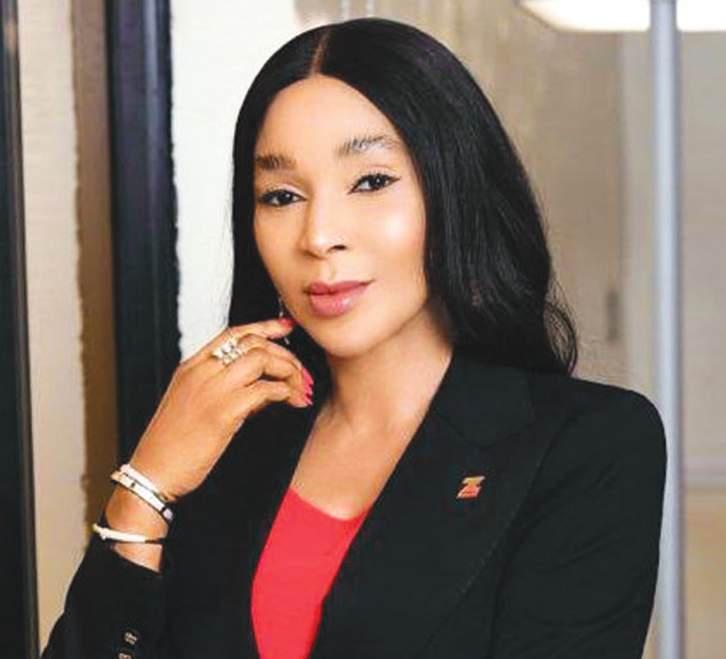
at the CBN, Dr. Olubukola Akinwunmi, who disclosed this during an interview on ARISE NEWS Channel, said the apex bank has reinforced its risk-based capital adequacy framework, mandating deposit money banks to conduct periodic stress tests under defined scenarios, while maintaining sufficient capital buffers to absorb potential losses. He explained: “To safeguard these gains, the CBN has strengthened its risk-based capital adequacy framework, requiring banks to conduct regular stress testing across defined scenarios and maintain appropriate capital buffers.
risk management, and sector resilience.”
Speaking further, Akinwunmi said: “We don't have to wait for another 20 years or 30 years before we ensure that our banks are adequately capitalised.
“Key regulatory measures, including prudential guidelines and the supervisory framework, are subject to periodic review to support ongoing strengthening of governance,
“Now, the stress testing framework requires that banks create scenarios that could happen where there is a deterioration in their loan books. So, if there is any shock,
domestic or external, that affects the economic agents that they are lending to households, consumers, businesses and it happens to impact their ability to repay, that means the bank may be exposed to taking some losses.
“What the risk-based capital requirement, founded upon the stress testing framework, says is that, on an ongoing basis, banks will assess their
exposure to risk based on a gradual deterioration of their loan book.
“And that gradual deterioration of the loan book is a scenario-based deterioration to determine the gap that may be there for banks to proactively respond by raising additional capital, or perhaps proper planning of their loan books to ensure that the capital they have is properly managed to
meet the demands of their risk exposure.
“The essence of the stress testing framework, and the intent is to ensure that banks proactively manage the capital required, their capital adequacy, and meet it when necessary, raise adequate fresh capital that is required to maintain capital adequacy.”
COMMEMORATING GOOD FRIDAY...
New Tax Laws: NRS Takes Over Collection of Mineral Royalties
Folalumi Alaran in Abuja
Collection of mineral royalties from mining sector operators across the country will henceforth be the responsibility of the Nigeria Revenue Service (NRS), while the Ministry of Solid Minerals Development will continue its technical and regulatory oversight on the sector.
This was the outcome of a meeting between the Minister of Solid Minerals Development, Mr. Dele Alake and the NRS Chairman, Zacch Adedeji, held at the former’s office in Abuja, to define collaborative ways of working together.
A statement yesterday, explained that the decision was based on the new tax
laws, which empower NRS to administer all federally collectable revenue and account for the same.
The statement made available by the Special Adviser to the NRS Chairman, Dare Adekanmbi, stated that the decision, effective January 1, 2026, was contained in a joint statement endorsed by both Alake and Adedeji.
“The Ministry of Solid Minerals Development and the Nigeria Revenue Service wish to inform mining operators and the general public of the outcome of their meeting held on April 2, 2026, on the collaborative implementation of mineral royalty administration under the Nigeria Tax Laws 2025.
“Following the enactment
of the laws by President Bola Tinubu on 26 June 2025, the administration of mineral royalties, effective January 1, 2026, has transitioned to NRS.
“The Ministry of Solid Minerals Development continues to serve as a vital technical partner, providing mineral pricing data, geological information, and industry coordination in support of the royalty process.
“Both institutions have agreed to work closely together to ensure that operators are well-informed, and that the new royalty framework is implemented in a way that supports the growth and development of the solid minerals sector,” the statement explained.
Wike: Tinubu Not Trying to Turn Nigeria into One-party State
Says PDP must rebuild grassroots, not chase presidential power
Olawale Ajimotokan and Boluwatife Enome in Abuja
Minister of the Federal Capital Territory (FCT), Nyesom Wike, has debunked as “misleading” the insinuations that President Bola Tinubu and the ruling All Progressives Congress (APC) were hatching a subterranean plan to transform Nigeria into a one-party state. This was as he said the
Peoples Democratic Party (PDP) survival depended on grassroots strength, not presidential ambition amid internal party crisis
Wike stated this yesterday at his media chat monitored in Abuja.
He downplayed the claims that opposition parties were deliberately targeted by the Tinubu administration that is working towards a one-party state.
He made the clarification in light of the controversies that have trailed the recognition of Nafiu Bala Gombe as the National Chairman of the African Democratic Congress (ADC) by Independent National Electoral Commission (INEC) which has derecognised the faction led by former Senate President David Mark and
former Osun State governor, Rauf Aregbesola, as National Chairman and National Secretary of the ADC, respectively.
Wike, a former governor of Rivers State, said the allegation of harassment of the opposition by the ruling party lacked merit and paled in comparison to what he faced under the late Muhammadu Buhari administration.
Miserable Leadership
Emenike: I'm in ADC to Help Salvage Nigeria from
The 2023 governorship candidate of the All Progressives Congress (APC) in Abia State, Chief Ikechi Emenike, has confirmed that he has joined the emerging political coalition to help save Nigeria from miserable leadership.
He made this known yesterday, while responding to a statement by a group impugning his membership of the African Democratic Congress (ADC), attaching bad motives to his change of party.
Emenike described as "trash and pure blackmail" the insinuation that his presence in ADC would lead to crisis, saying that he has always played politics of development.
He pushed back at the so-called ADC Vanguard and those sponsoring the group,
wondering why they have become jittery and indeed afraid of his defection to ADC.
Emenike explained that he decided to join hands with political leaders of like minds to pull Nigeria back from plunging into the precipice.
He made it clear that he is not in ADC to seek any position, saying that his traducers "should be prepared to hide their faces in shame as Emenike is neither vying for governorship nor any elective office.
"ADC of today is made up of leaders from different parties who have converged to salvage Nigeria," he said.
Given his status in his former party, Emenike said that he deserved commendation for dumping APC instead of remaining in the ruling party and watching the ruination of Nigeria in the hands of the ruling party.
IGP Pays N185m to Next-of-Kin of Deceased Police Officers, Applauds Their Supreme Sacrifice
The Inspector General of Police, Olatunji Disu, has presented a total of N184,889,087.00 in group life assurance payments to 16 beneficiaries and nextof-kin of officers and men of the Force who died in active service.
Speaking during the presentation in Abuja, the IGP emphasised that the funds
are not—and can never be—a payment for a life lost. Rather, they serve as a symbol that the institution remembers and honours the sacrifice of those who gave their lives.
"A symbol that their sacrifice is valued, and a symbol that we remain committed to supporting those they left behind," he said.
He added that the occasion also calls for reflection by the
Force’s leadership. "We must continue to do more to protect those who protect others. We must strengthen welfare, improve support systems, and ensure that no officer of the Nigeria Police Force ever feels abandoned—whether in service or in sacrifice."
Addressing injured officers who were also beneficiaries, the IGP acknowledged their courage and resilience. "You have borne the physical and emotional cost of service to this nation, and we recognise your sacrifice with deep respect. Your perseverance is a testament to the strength and spirit of the Nigeria Police Force." He further noted that the cheque presentation recognises the courage, sacrifice, and ultimate price paid by some of the finest officers who lost their lives in the line of duty.
Seven Injured in Abuja Building Collapse
Olawale Ajimotokan in Abuja
A two-storey building collapsed yesterday in Jikwoyi, a suburb of Abuja, with seven persons said to be injured.
The building under construction collapsed around
11a.m. while workers were on site.
The Head Public Affairs FCT Emergency Management Department (FEMD), Nkechi Isa, said the Search and Rescue Team from the department reported that 17 workers were on the upper floor of the building
when it collapsed injuring five workers and trapping a lone male who was at the ground level of the building.
Aside from FEMD, respondents from National Emergency Management Agency, Department of Development Control, Engineering Department
FCDA, Civil Defence Federal Fire Service and the FCT Police Command mobilised to the incident scene.
The injured workers and the rescued trapped male were referred to the Sisters of Nativity Hospital in Jikwoyi and were said to be responding to treatment.
Linus Aleke in Abuja
Boniface Okoro in Umuahia
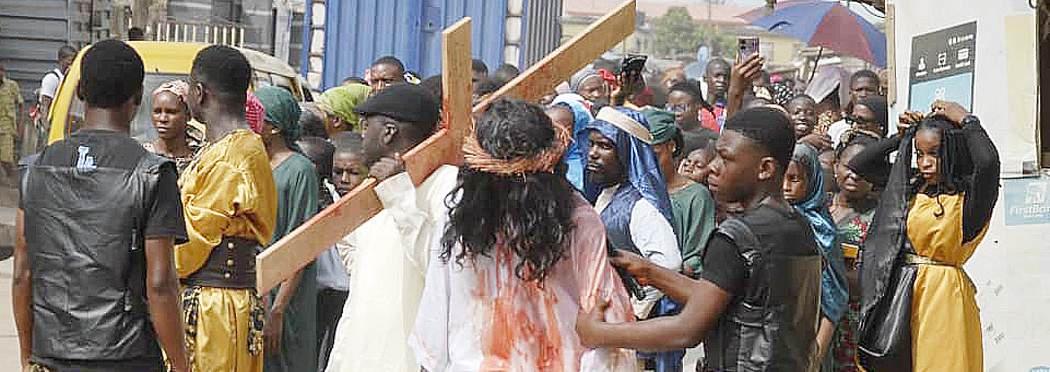
Some parishioners of St. Christopher Catholic Church, Oke-Odo, during the good Friday Station of the Cross drama in Lagos…yesterday
Warns improvements in debt-to-GDP ratio may reverse if borrowing continues to outpace
revenue
While the economic rationale for the fresh $6 billion external borrowing recently approved by the National Assembly appeared broadly defensible, it poses significant concerns over fiscal prudence, a report by Afrinvest has stated.
The report also warned that beyond the immediate energy price shock, a prolonged crisis in the Middle East presents a material downside risk to Nigeria’s already fragile food security position through the fertiliser channel.
It pointed out that rising input costs and freight rerouting are likely to push global benchmark
prices, urging the federal government to initiate policy interventions to enhance food security.
The Afrinvest Monthly Market Report - March 2026; Analysing Global and Nigerian Economies and Financial Markets, cautioned that a 20 per cent to 30 per cent increase in fertiliser prices could lead to a 10 per cent to 20 per cent reduction in application rates, based on historical elasticity observed during 2022–2023.
It stated that additional input cost pressures were likely to result in further margin compression, forcing firms to either pass costs onto consumers or rationalise output.
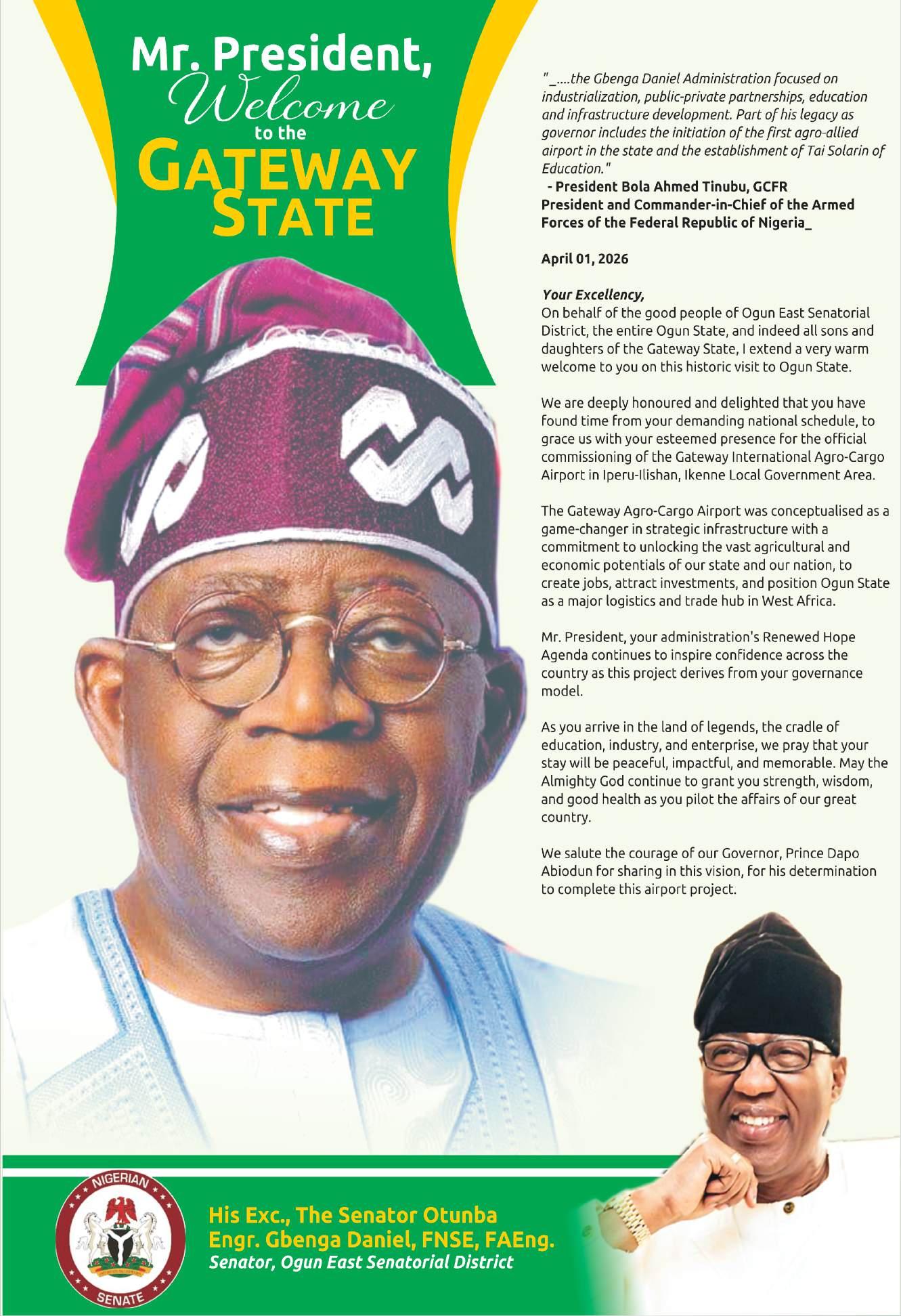
Tinubu Visits Ogun Today, to Inaugurate Airport, Airline, Other Projects
President Bola Ahmed Tinubu will today embark on an official visit to Ogun State, as the Gateway State prepares to witness the inauguration and inspection of a sweeping array of landmark projects—an indication of its bold stride toward infrastructural transformation, economic expansion, and improved service delivery.
According to a statement issued by the Special Adviser on Information and Strategy, Hon. Kayode Akinmade, the President’s itinerary reflects a
comprehensive showcase of strategic investments cutting across critical sectors.
At the forefront of the visit is the inauguration of the Gateway International Airport, Iperu—an ambitious project designed to position Ogun State as a major aviation and logistics hub in Nigeria. Within the airport complex, President Tinubu will also inaugurate two newly acquired aircraft under Gateway Air, marking the official takeoff of the state’s aviation initiative in partnership with ValueJet.
Wema Bank Emerges Double Winner at Global SME Banking Innovation Awards
Bennett Oghifo
Wema Bank has won the SME Financier of the Year and Best SME Lending Product – Digital Bank awards at the Global SME Banking Innovation Awards 2026, in recognition of its contributions to expanding access to finance for small and medium-sized enterprises.
The awards, presented on March 12, 2026, celebrate
financial institutions demonstrating innovation, institutional excellence, and measurable impact in SME banking while promoting global benchmarks for performance and entrepreneurship support. The programme recognises organisations developing solutions that improve financing access and build sustainable ecosystems for small businesses worldwide.
The report, among other things, called for a coordinated response from both policymakers and businesses to address the emerging fertiliser crisis. It said policymakers should prioritise preserving fertiliser affordability at the onset of the planting season through targeted interventions such as input subsidies and tax incentives for local producers.
billion as Middle East-driven risk aversion triggered a flight to safety from emerging markets.
The report further revealed that in the review month, Nigeria's external reserves slipped 0.5 per cent, month on month, to $49.4
This, it said, dampened foreign investment inflows even as elevated oil prices failed to deliver a meaningful boost to the country's foreign exchange receipts.
Afrinvest further pointed out that the central Bank of Nigeria (CBN)'s newly introduced policy which allowed for IOC's to fully repatriate export proceeds contributed to the reserves decline.
Labour Party Fixes Dates for National Convention, States’ Congresses
Chuks
Okocha in Abuja
The national leadership of the Labour Party (LP) has formally notified the Independent National Electoral Commission (INEC) of its approved timetable for the 2026 elective ward, local government, and state congresses, alongside its National Convention.
In a correspondence addressed to the Director of Election and Party Monitoring (EPM) at INEC headquarters in Abuja, the
party said the notification was in compliance with relevant legal provisions guiding political party activities in Nigeria.
The letter cited Section 82(1) of the Electoral Act 2022 (as amended), as well as INEC’s Regulations and Guidelines for Political Parties, and Sections 223(1) and (2) of the 1999 Constitution (as amended), which mandate political parties to duly inform the electoral umpire of their congresses, conventions, and meetings.
According to the party, the new schedule follows an earlier postponement of its internal electoral activities. The Labour Party explained that the delay was necessary to ensure broader participation of its members nationwide, particularly to allow for the completion of its ongoing digital membership registration exercise.
“The party, in an earlier correspondence duly acknowledged, notified the
Commission of the postponement of its previously scheduled activities to enable broader participation of members,” the letter stated.
With the updated timetable now approved, the party said it is set to proceed with the conduct of its elective congresses at the ward, local government, and state levels, culminating in a National Convention expected to shape its leadership structure ahead of future political engagements.
Sokoto East Senator Quits APC, Seeks New Party
Onuminya Innocent in Sokoto
Senator Ibrahim Lamido Isa, representing Sokoto East Senatorial District at the National Assembly, has announced his decision to leave the All Progressives Congress (APC), citing the worsening security situation in his constituency.
The senator stated that the move was driven by the persistent attacks by bandits on communities across the district, which he claimed the APC-led government had failed to adequately address.
According to Isa, several villages have been left devastated, with residents displaced and livelihoods destroyed.
He emphasised that his decision was not motivated by personal ambition or political gain, but rather by the need to stand with his people in the face of ongoing insecurity.
Speaking during an interview with journalists, Isa said, "My people are suffering. Entire communities have been ruined by bandits, and as their representative, I cannot
remain in a system that has not shown enough commitment to ending this crisis."
The senator revealed that after extensive consultations with his supporters, political allies, and community leaders, a collective decision was reached to leave the APC and seek an alternative political platform that would prioritise security and development.
Adamu: National Policy on Combating Stereotyping, Ethnic Profiling Underway
Linus
A national policy on combating stereotyping and ethnic profiling in security discourse in Nigeria is underway, Beacon Security and Intelligence Limited (BSIL) and the Whiteink Institute for Strategy Education and Research (WISER) have revealed.
In a joint statement issued at the end of a two-day high-level conference on ethnic profiling
and stereotyping in security discourse and operations across West Africa, the Managing Director of BSIL, Dr. Kabir Adamu, disclosed: “We are producing an Anti-ethnic Stereotyping and Profiling
Toolkit and a National Policy Brief. These documents will provide clear guidance for security agencies, the media and policymakers on the use of nonstigmatising and operationally effective language.”
Local
(LCDA), Alhaji. Nurudeen Oye Ashade; Former Lagos State Commissioner for Rural Development and Infrastructure, Hon. Olanrewaju Saka-Shenayon; Convener, Pa Andu Liadi Adio; former member, House of Representatives, Hon. Rafeequat Arinola Onabamiro, and former Chairman Badagry Local Government, Hon. Zannu Michael, at a media briefing on the plea to zone Lagos State APC gubernatorial ticket to Badagry, held in Lagos… recently
Aleke in Abuja
James Emejo in Abuja
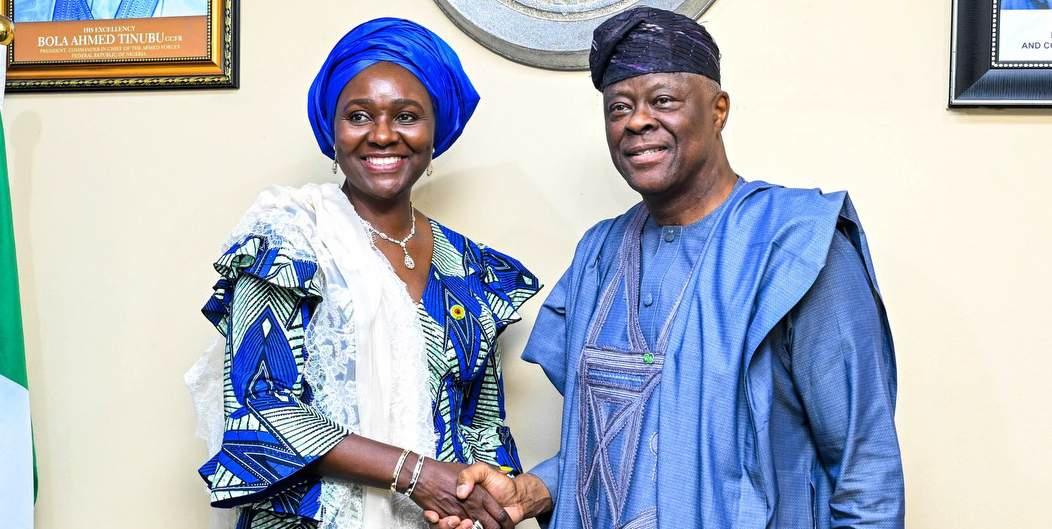
COURTESY VISIT...
NHRC demands end to killings, urges FG to prosecute perpetrators
The Defence Headquarters (DHQ) has revealed that more than 300,000 terrorists surrendered to the superior firepower of the Armed Forces of Nigeria between 2016 and 2025.
As a safeguard, the National Human Rights Commission (NHRC) has called on the federal government to take urgent and decisive action to halt the wave of violent killings across the country, particularly
the recent attacks in Jos.
The military further disclosed that of this number, 2,615 ex-combatants successfully graduated from the Operation Safe Corridor (OPSC) programme, initiated by the federal government for deradicalisation, rehabilitation, and reintegration into society.
Speaking to THISDAY in Abuja yesterday, the National Coordinator of OPSC, Brigadier General Yusuf Ali, explained that although the surrendered number included women and children, these groups are not
admitted into the programme.
“2,615 clients have so far graduated through OPSC. This is out of more than 300,000 who have surrendered, including women and children,” General Ali stated.
He clarified that women and children are handed over to their respective states of origin for rehabilitation. “OPSC does not admit women and children; they are usually catered for by their state governments with assistance from UNICEF,” he added.
Addressing public concerns
regarding due diligence, monitoring, and other safeguards, General Ali said: “Operation Safe Corridor is not static; it continuously evolves in response to the changing security environment and realities across different theatres of operation in Nigeria. We are strengthening the programme along several critical lines.”
He acknowledged the challenges inherent in similar initiatives globally, particularly in active conflict environments.
“Community acceptance and balancing victim support
Rising Fuel Prices Drive EV Adoption in Nigeria, Say Experts
Kuni Tyessi in Abuja
Rising fuel costs are pushing Nigerians towards electric vehicles (EVs) as industry players, financiers and policymakers say lower running costs and flexible financing are making the shift increasingly practical.
According to them, the shift is being driven by everyday pressure, noting that as petrol prices rise and transport costs take a bigger share of incomes, EVs are beginning to look less like a futuristic option and more
like a practical way for people and businesses to stay afloat.
These views were shared by stakeholders at the Abuja Compact on Electric Mobility Roundtable, which brought together government officials, financiers, operators and clean energy experts through keynote addresses, panel discussions, a closed-door session and an open strategy dialogue on scaling electric mobility in Nigeria.
Omolara Obileye, who represented the Chairman, Presidential Initiative on Compressed Natural Gas and
Electric Vehicles (Pi-CNG & EV), Barr. Ismaeel Ahmed, said the financial case for EVs is becoming harder to ignore, especially after the removal of fuel subsidies.
“Today, charging an electric vehicle for a 200-kilometre journey would cost approximately N4,500. The same journey on petrol would cost about N22,500. That represents a five-to-one cost advantage in favour of electric vehicles,” she said.
She explained that the government’s approach is
not to choose one solution over another, but to manage a gradual transition.
“What we are navigating is not a choice between CNG and EVs. It is a deliberate, phased energy transition. The goal is a balanced energy mix: one that serves Nigerians today while building the infrastructure required for tomorrow,” she said.
Still, she acknowledged that the road ahead is not without obstacles, pointing to gaps in electricity supply, infrastructure and affordability.
Kate Henshaw Champions Menopause Awareness at Efamol EPO Launch
Sunday Ehigiator
Nollywood actress and wellness advocate, Kate Henshaw, has called for greater awareness and informed management of menopausal health among Nigerian women, as she headlined the launch of Efamol Evening Primrose
Oil (EPO) in Lagos.
The unveiling took place during the 2026 Continuing Education Conference of the Association of Community Pharmacists of Nigeria (ACPN), Lagos State chapter, drawing pharmacists, healthcare professionals and industry stakeholders from across the country.
The event spotlighted a shift in Nigeria’s wellness narrative, from external beauty fixes to internal, science-backed health restoration, with a focus on addressing hormonal changes and overall wellbeing.
Speaking during a panel session, Henshaw stressed the importance of understanding
the body and making intentional health decisions, particularly as women age. Reflecting on her personal journey, she said, “I never knew the symptoms and effects of menopause until just after age 50, when I realised that what I was feeling in my body were actually menopausal symptoms.”
with reintegration remain areas of focus. That is why we are evolving the programme to include stronger community engagement and victimcentred interventions,” he stated.
It would be recalled that the National Coordinator had
earlier identified National Identification Number (NIN) registration as a key mechanism to monitor ex-combatants’ conduct after graduation from the six-month intensive Deradicalisation, Rehabilitation, and Reintegration (DRR) programme.
Group Empowers Over 400 Women, Persons with Disabilities in Katsina
Francis Sardauna in Katsina
Jobberman Nigeria in partnership with the Mastercard Foundation, convened over 400 women from diverse backgrounds under the theme, ‘From Potential to Power: Advancing Women Into Opportunities’.
Speaking at the event, Senior Strategy Consultant at Jobberman Nigeria, Oladoyin Kolawole, described the initiative as the first of its kind
in the state, aimed at amplifying women’s voices across various sectors and helping them access opportunities.
“Our focus is on women who are entrepreneurs, professionals, Persons With Disability and those who are internally displaced. Today, we are challenging the systemic barriers that limit their access to opportunities and saying clearly that those doors must be opened.” Kolawole asserted.
Ebute-Metta West Stakeholders Allege Political Marginalisation,
Seek Intervention
Bennett Oghifo
Leaders and stakeholders from Ebute-Metta West in Lagos Mainland Local Government have raised concerns over what they described as decades of political marginalisation, appealing to President Bola Ahmed Tinubu, Governor Babajide Sanwo-Olu and leaders of the All Progressives Congress (APC) to intervene and restore equity in the political representation of the area.
Speaking at a press briefing themed ‘Marginalisation of Ebute-Metta West Since
1999’, representatives of the community said the area had been consistently excluded from elective and major appointive political offices within Lagos Mainland Local Government despite its contributions to the electoral success of the ruling party. Addressing the gathering, which included party leaders, members of the media and community stakeholders, the group expressed gratitude to God for witnessing what they described as a historic moment, noting that events such as the gathering often shape the course of history.
Linus Aleke and Michael Olugbode in Abuja
L-R: Publicity Secretary, Association of Corporate and Marketing Professionals in Banks (ACAMB), Abiodun Coker; General Secretary, Olugbenga Owootomo; Director General, ARCON, Dr. Olalekan Fadolapo; President, ACAMB, Jide Sipe; Secretary, Fadekemi Ajakaiye, and Assistant General Secretary, Ademola, Adesola, during a courtesy visit to ARCON office in Lagos…recently
a waste!
When will the agony end?
Recognising the Slave Trade as a Crime Against Humanity
In Praise of President Buhari
When President Muhammadu Buhari took over the reins of power on May 29, 2015, Nigeria was sadly a broken state in many respects. As a result of many other factors including bad governance and untold level of corruption, government could not live up to its financial obligations to citizens and service providers at both the federal and state levels.
TSlave Trade as a Crime ...
by the EFCC, President Buhari by his action has successfully brought back to the public consciousness the need to treat public funds with the highest level of transparency and accountability.
Indeed one of the first official assignments that President Buhari carried out was the approval of billions of Naira in bailout funds to enable state governors pay something as basic as workers’ salaries. Granting those bailout funds was a huge boost to national security because the pressure of arrears of unpaid monthly salaries building dangerously all over the country was a ticking bomb.
Ask the naysayers and they would readily remind you of how long it took President Buhari to appoint his ministers and how that contributed to collapse of the economy as if, without ministers, governance was frozen. But buying that narrative would amount to what a famous Nigerian writer, Chimamanda Adichie, termed “the danger of a single story”. Yet the whole story was that many of our citizens did not know how decrepit a state President Buhari inherited in 2015.
signals that Africa is approaching this issue with seriousness and coordination. The next step is to translate that commitment into practical mechanisms: support for the Caribbean Community’s 10-point reparations framework, expanded educational partnerships and development financing arrangements that help correct longstanding structural imbalances.
It was therefore necessary for him to take stock against the background of the fact that the departing government did not, reportedly, cooperate full well with the incoming government in terms of leaving workable handover notes. Although President Goodluck Jonathan was gracious in defeat, many of his appointees were still sulking over what they saw as their personal losses and therefore pulled all the stops to make things difficult for the Buhari government.
PAfter keeping treasury looters on their toes and at bay through the EFCC, particularly, President Buhari moved to curb unnecessary spending habits of the nation on what economists call articles of ostentation. Part of the disclosures of the President’s stock taking was how the country frittered away billions in foreign currency by importing goods, which can be produced at home. One of such items was rice, a major staple among Nigerians. By banning rice importation into the country, the President on one hand had saved the nation billions in foreign currency annually.
And, on the other hand, the President has boosted domestic production of rice and in the process had nudged the country into self sufficiency in food production. He also created millions of jobs for young people in the rice value chain.
What is most admirable about President Buhari and his government is its frugal management of scarce national resources to attain optimum goals.
Handled with discipline and imagination, this initiative could help redefine reparations not as a backward-looking claim, but as a forward-looking project of global fairness.
Even with the obvious and unpatriotic obscurantist behaviour of the PDP appointees and their supporters still in government hell-bent on making things difficult for Buhari, the President moved on with his methodical repair of a broken country. The first thing he did was to identify all possible sources of income to the nation and directed that all inflows be paid into one single account in line with the policy of Single Treasury Account (TSA).
he president of Ghana, John Dramani Mahama, is right to argue that recognising the transatlantic slave trade as a crime against humanity is an essential step toward justice (It’s time for the UN to formally recognise the transatlantic slave trade as a crime against humanity, 22 March). But recognition alone will not be enough. The real question before the international community is what recognition is meant to achieve. For decades, Africa and the Caribbean have secured acknowledgments of historical injustice, from the Abuja Proclamation to the Durban Declaration and Programme of Action. Yet the structural effects of that history remain visible in patterns of development, opportunity and vulnerability across Africa and its diaspora. If this new initiative at the United Nations general assembly is to succeed, it must move beyond symbolic affirmation toward institutional consequences.
The TSA policy, interestingly, was mooted by the PDP government but its penchant for imprudence and lack of accountability denied it the courage of implementing the policy. What the President literally did was to gather all the nation’s money into one box and locked it up with a big padlock and watched for any thief to come close.
Recall that since President Buhari stepped in the saddle, oil revenue dropped abysmally as if to sabotage him knowing all the big promises he made to citizens during his campaigns. But with the little resources that trickle in, the President is achieving what governments that received oil windfalls could not dream of.
Rear Adm Kenneth B Ati-John Lekki, Nigeria
resident John Dramani Mahama demonstrates an eagle eye, spotting an injustice that many have overlooked or conveniently bypassed. Calling for the UN to formally recognise the transatlantic slave trade as a crime against humanity is an act of moral courage, forcing the world to confront a past that has been too long ignored. Recognition is not merely symbolic; it is a call to accountability, education and reparative justice – a necessary step toward restoring dignity to millions whose lives and legacies were stolen.
For more than four centuries, the transatlantic trafficking and enslavement of Africans was not merely a historical event; it was structural violence that reshaped continents, erased cultures and forged inequali-
Today, the trains are up and running daily from Abuja to Kaduna. And from Lagos to Ibadan a brand new rail track was started and completed; citizens are already commuting daily to and fro these two major cities in the country seamlessly as they reap from the dividends of democracy. And with the way this government is going, before 2023 when the President would leave, the entire country would be linked by rail with all of its economic advantages.
Ainofenokhai Ojeifo, Abuja
THE SATURDAY NEWSPAPER
EDITOR OBINNA CHIMA
EDITOR YEMI ADEBOWALE
DEPUTY EDITOR
DEPUTY EDITOR AHAMEFULA OGBU
DEPUTY MANAGING DIRECTOR ISRAEL IWEGBU CHAIRMAN EDITORIAL BOARD OLUSEGUN ADENIYI
Stop Ritual Attacks and Killings
Tties whose legacies persist today. Many of the world’s economic disparities, racial hierarchies and institutional exclusions are traceable to this system of exploitation, which profited the few at the expense of millions. Recognition must therefore open pathways to cultural restoration, economic opportunity and education about the profound human costs of slavery.
However, true recognition also demands nuance. While Europe’s colonial powers orchestrated and expanded the trade, a complete historical account acknowledges that multiple actors and networks – including African intermediaries under coercive conditions – were entangled in this complex system. Incorporating this fuller truth enriches our collective understanding and strengthens the moral case for rectification.
Ndine Wa Chiuta, Dar es Salaam, Tanzania
Not Such a Good Friday for Pam
Who can blame the President for almost developing paranoia over the safeguard of the national treasury with revelations and reports of mind-boggling looting that took place in the 16 years of the PDP? With such disclosures of how billions meant for fighting insurgency in the Northeast ended up in the pockets of a few individuals while our gallant soldiers fought with bare hands and on empty stomach, President Buhari was duty bound to bring sanity and accountability back in national spending.
Reparatory justice should therefore be understood not simply as compensation for the past but as a framework for restructuring opportunity in the present. Recognition only becomes meaningful when it strengthens the ability of affected societies to negotiate fairer terms within the international system that their labour helped build.
The African Union’s decision to designate 2026 to 2035 as the “decade of action on reparations”
Thus, under President Buhari, the Economic and Financial Crimes Commission (EFCC), which had remained comatose for years, was woken up to resume its duties. Apart from the trillions of Naira of looted funds and property recovered from corrupt politicians
EDITOR NATION’S CAPITAL IYOBOSA UWUGIAREN
UWUGIAREN THE OMBUDSMAN KAYODE KOMOLAFE
MANAGING EDITOR BOLAJI ADEBIYI THE OMBUDSMAN KAYODE KOMOLAFE
THISDAY NEWSPAPERS LIMITED
THISDAY NEWSPAPERS LIMITED
EDITOR-IN-CHIEF/CHAIRMAN NDUKA OBAIGBENA
EDITOR-IN-CHIEF/CHAIRMAN NDUKA OBAIGBENA
GROUP EXECUTIVE DIRECTORS ENIOLA BELLO, KAYODE KOMOLAFE, ISRAEL IWEGBU
DIRECTOR, PRINTING PRODUCTION CHUKS ONWUDINJO TO SEND EMAIL: first name.surname@thisdaylive.com
he Advocacy for Alleged Witches (AfAW) urges the Nigerian public to stop ritual attacks and killings because the notion of ritual money and wealth is completely baseless. AfAW is making this call following the reported arrest of suspected ritualists in Oyo State in southern Nigeria. The local media reported that members of the Western Nigeria Security Network, Amotekun, arrested suspected ritualists with the body parts of a 73-year-old man. The suspects, who were apprehended in the Boluwaji area in Ibadan, said that a Muslim cleric asked them to procure some human body parts for rituals. Ritual attacks are widespread in Nigeria. Irrational conceptions of how to make money or become wealthy and successful undergird these atrocities. Many Nigerians strongly believe in blood money, known in some local languages as Ogun Owo (Yoruba) or Ogwu ego (Igbo). They think that they could become rich, or successful through ritual sacrifice. Unfortunately, this is not the case. Ritual wealth has no basis in reason, science, or reality. Home movies known as Africa magic or Nollywood films have not helped matters. These movies continue to reinforce these mistaken notions and other superstitions. Families, churches, mosques, and other public institutions do not encourage the interrogation of these traditional occult beliefs. There are no robust efforts to criticize or dispel these irrational and paranormal claims in schools, colleges, and universities. So millions of Nigerians grow up blindly believing that they could make money through ritual sacrifice of human body parts. The belief has led many Nigerians to commit crimes and perpetrate atrocities. Many Nigerians have been jailed or are undergoing court trials due to ritualrelated attacks and murder.
There is some similarity to the Easter Story, she has been crucified, her career is dead and buried maybe with some of the Epstein files, but there won't be a resurrection. It appears her loyalty to President Trump hasn't kept her safe. A few of the more dedicated supporters/sycophants in the team might need to watch out as further distractions from the Epstein files will be needed if the Iran war is ended although by then they may have retired. Is there any justice in the Justice department? Dennis Fitzgerald, Melbourne, Australia THE SATURDAY NEWSPAPER
t would seem Pam Bondi is now looking for a new job, but probably not in the White House.
Not too long ago, the police arrested some young Nigerians for stealing female pants, which they intended to use for ritual sacrifice. AfAW is asking all Nigerians to desist from ritual-related abuses because ritual money beliefs are baseless superstitions. Nigerian media, schools, and colleges should help educate and reorient the public. They should assist in reasoning Nigerians out of this killer-superstitious absurdity and nonsense. Leo Igwe directs the Advocacy for Alleged Witches (AfAW)
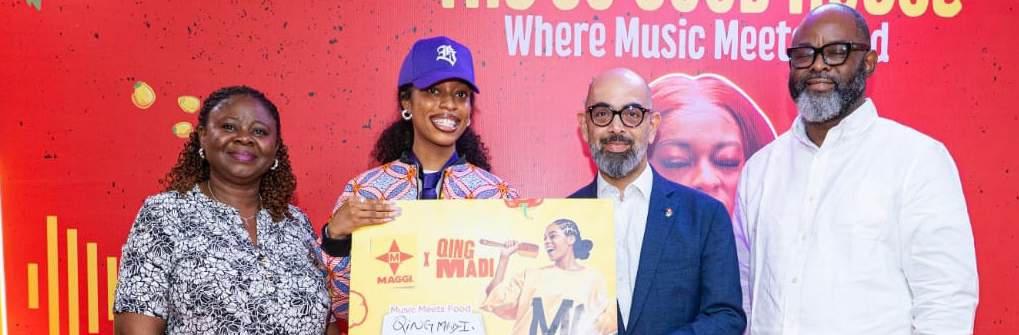
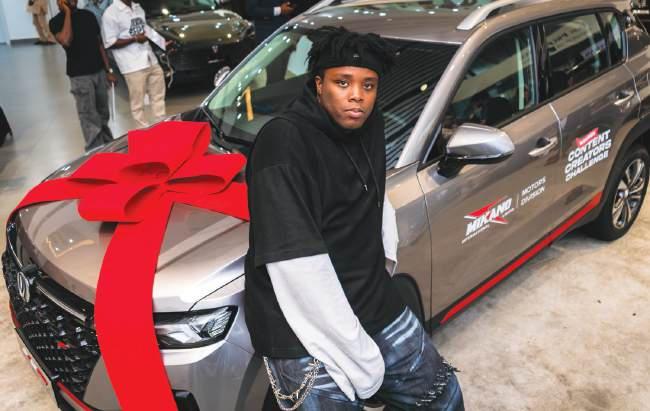
unveiling of Qing Madi as Maggi Ambassador and signing of partnership, held in Lagos...recently
the comparison is misplaced. Those cases involved clear and established failures to comply with mandatory legal requirements for primaries.
In contrast, the ADC has demonstrated its commitment to conducting its processes in strict accordance with its constitution and the Electoral Act. Pre-emptively warning of hypothetical judicial consequences, as the Chairman has done, amounts to speculation and cannot serve as a legal basis to restrict lawful party activities.
"Finally, while the Chairman frames INEC’s position as one of caution to avoid future judicial invalidation of elections, this reasoning cannot justify present overreach. The law does not permit administrative bodies to curtail constitutional rights on the basis of speculative future outcomes. The proper course is to allow parties to act within the law and for courts to adjudicate disputes as they arise.
"In conclusion, the ADC reiterates that its right to organise congresses and hold its national convention is constitutionally guaranteed and has not been lawfully suspended by any court. The interpretation advanced by the INEC Chairman stretches judicial directives beyond their meaning and risks setting a dangerous precedent where regulatory caution becomes a tool for democratic suppression.
“'The ADC will therefore proceed with its activities in full compliance with the law and urges INEC to confine itself strictly to its constitutional and statutory mandate.", the spokesman of the party said.
Amupitan: No Plan to Turn Nigeria into OneParty State, I remain neutral
Amupitan strongly rejected allegations that the electoral body was complicit in plans to entrench a one-party state, insisting that the commission’s actions are strictly guided by the law and existing court orders.
In an exclusive interview with ARISE NEWS, Amupitan pushed back against accusations from opposition parties, particularly the ADC, that INEC had taken
sides in its internal leadership crisis.
“I am not guilty as charged. Let me say it very clearly. I am not a party to the plan of anyone to turn Nigeria into a one-party state. By the Constitution of the Federal Republic of Nigeria, Nigeria is a multi-party state. Look at the last election. Many parties contested. I think about 10 political parties. In that case, you even had the ADC having five, and PDP winning one. Zenith Labour Party did very well. Other parties are existing.”
He stressed that Nigeria’s democratic structure remains firmly multi-party, adding, “By the Constitution of the Federal Republic of Nigeria, Nigeria is a multi-party state.”
Addressing the controversy surrounding INEC’s decision not to recognise any faction within the ADC, Amupitan explained. “The Court of Appeal dismissed the appeal, and at the same time made some preservation orders. The preservation orders were very clear. To the extent that, number one, in view of the fact that INEC had already released its timetable for the election, the intelligence was directed an order to proceed with the case expectations, and this is an originating summons.
“Then number two, which is now causing the controversy, is the order, specific order, that parties should maintain status quo ante bellum. I did not just stop at that. The parties should not do anything that would force defeat or conflict on the tri-accords. And finally, that we should not, parties should not do anything that would render the proceedings before the Court of Appeals, just like the definite orders of the Court of Appeals.”
Amupitan said the interpretation of status quo ante bellum was central to INEC’s decision-making.
“So, if you look at it from that perspective, and there are some difficult decisions to that effect. The status quo is even different from status quo ante bellum. So, when you talk of status quo ante bellum, it means I have to go back. And that was a specific order of action. There is an indication of time here, Yes. When you say status quo ante
bellum. At what point will you put the date of that status quo?
If you look at it backwards now, you look at it from the viewpoint of when was there a controversy. Controversy started when on the 29th day, July 2025, there was a meeting of NEC, which now ratified the appointment of the deputy national president. So, that’s when we had issues.”
He traced the origins of the crisis to internal developments within the ADC.
“Until the controversy came. So, if you look at it backwards now, you look at it from the viewpoint of when was there a controversy. Controversy started when on the 29th day, July 2025, there was a meeting of NEC, which now ratified the appointment of the deputy national president. So, that’s when we had issues. Before that time, what was the position?
“Now, in this case, the plaintiff went to court on the 2nd of September, 2025. He filed their motions, motion of exparte, motion on notice for injunction, and also filed further motions of exparte on the 15th of December, and motion on notice restraining us, and even stopping them from parading themselves. Those are proceedings.”
According to him, these legal processes created binding constraints on INEC’s actions.
“Those are proceedings. Court of Appeal said, don’t do anything that will render any proceeding, whether it is valid, whether it is competent or not, so long as it is filed. Don’t do anything that will render the proceeding nugatory.
“So, if we are going to take any step, to go and monitor any primaries, there’s an injunction that stops us from going there. To go and monitor any congress, there’s an injunction that is stopping us from going there.”
He revealed that INEC received conflicting communications from opposing factions.
“On the 16th day of March 2026, I received two letters. One from the solicitors of Senator David Mark, requesting me to maintain the status quo, if ever, and not to recognise the other. That’s when I also received another letter from
Summit Chambers, the solicitors, that by order of the courts, he was supposed to be recognised as the leader, national leader of ADC, and requesting that I should come down. So naturally, when you receive such communications, you have to refer it first. I call a meeting of the legal department and the EPO, and we look at the facts based on the changes.”
Amupitan warned that disregarding such legal constraints could have farreaching consequences.
“We don’t want to go into a situation where they say, no, don’t do anything, don’t take any step. I have the judgement. It’s very definite. So, if I proceed, for instance, to monitor the convention, it means that I’m taking steps that is meant to offend the subject matter that is pending before the court.”
He cited instances where political parties lost electoral victories due to non-compliance with court orders.
“Well, as far as we are concerned, INEC is a party in the case and INEC was sued as a defendant by a member of the leadership. Parties, including David Mark himself, should refrain from doing anything that would face the situation of fait accompli. So, if they are going ahead with their congress, with their convention, it’s left for them to look at it, whether it’s in contravention or not, because INEC did not just take a decision.
“We didn’t just wake up one day and took this decision. There was something that led to it. There was another part: don’t do anything, don’t take any step that would render any proceeding before the court nullity.
“We don’t want to conduct an election without these early warnings. And at the end of the day, after you have won, the court again will come and declare the election invalid. And the implication is that the person with the second highest number of votes will be declared the winner.
“It happened during the last election, where after the question of primaries was an issue, and congresses were not held in some states, in some parts of the State. So, the court
said, go and do those primaries. But unfortunately, they did not obey the court order. So, failing to obey the court order has consequences.”
The INEC chairman also addressed concerns about the commission’s planned voter register revalidation exercise.
“Now, the opposition parties say this is a plan to disenfranchise many Nigerians. The decision to revalidate the voters’ register was taken even before I became the chairman. The only problem is that it has not been implemented.
“That is why I have now decided to put it in this year’s budget, so that the exercise will be carried out. Our records for now, if you’re not adding the number that I’ve registered recently, we have about 93 million voters. That record is not great.”
Amupitan explained that the validation process would be conducted in phases.
“Now, the validation is going to be two phases. You have the first phase, which has to do with framework, and then engagement with the stakeholders. Then you have the second phase, which has to do with going to the fields,” he said.
APC, Keyamo Knock ADC
The APC has said that it was malicious and outright propaganda for the ADC to blame President Bola Tinubu for its current predicament.
It also added that the call by the opposition for the sack of the INEC Chairman and other Commissioners further exposed a lack of seriousness and understanding of leadership processes of established institutions.
Addressing a press conference yesterday in Abuja, the National Secret of APC, Senator Ajibola wondered how Tinubu was weakening the opposition to force a one party state ahead of the 2027 elections when there are 19 registered political parties in Nigeria.
He stated: “Nigerians must know that the present predicament of David Mark and his ilk has to do with the
untidy way they hijacked the leadership of an existing political party without carrying along all stakeholders resulting in court litigation before the Federal High Court and the adverse judgment of the Court of Appeal.”
The secretary explained that the ADC went to the Court of Appeal over an internal leadership dispute that was still ongoing at trial court, and in doing so, made a fundamental legal mistake.
Basiru added that the appellate court found that the lower court had not granted injunctive reliefs sought but merely asked the defendants to show cause why the others sought should not be granted, implicating that Mark’s faction appeal was built on a faulty premise.
He stressed that in addition to this, the key issue of jurisdiction was still pending at the trial court, making the appeal premature, and they failed to obtain the required leave for an interlocutory appeal, an error serious enough to render the entire case incompetent.
Basiru noted that the appeal was therefore completely dismissed, with the court ordering all parties to maintain the status quo and avoid any actions that could disrupt the ongoing case, “effectively portraying ADC as acting hastily, procedurally flawed, and in disregard of due legal process.”
He said it was the orders of the court that was being put into effect by INEC and “we are at loss the basis for the allegation that President Bola Tinubu is weakening opposition in the circumstance.”
Continued online
I, Formerly known and addressed as MISS NJOKU CHIAMAKA MARYCLARET, now wish to be known and addressed as MRS EBIRIM CHIAMAKA MARYCLARET. All former documents remain valid. The general public should take note I, Formerly known and addressed as MARK VIVIAN WAAYEADE, now wish to be known and addressed as EEGBARA VIVIAN WAAYEDAE All former documents remain valid. The general public should take note
Managing Director, Nestle Nigeria, Mr. Wassim Elhusseini, and Commercial Manager, Boladale Odunlami, during the
ADC FIRES BACK AT INEC AS AMUPITAN STANDS HIS GROUND
‘Frown Your Face’ Wrong
JOYFUL Easter, generally, to all brethren of mine (not brethrens”)! Just beam and don’t frown this weekend! Got the point?
“Among other numerous reasons, the faces of Ebonyi people are beaming with smiles….” A rewrite: Ebonyi people are beaming. You beam with only your face and it is never with a frown! Check out the meaning of ‘beam’ for elucidation.
“…Your Excellency has shown that his administration is people centred (sic)….” Would it have been object-centred? Please avoid mechanistic and trite expressions!
“…the soon to be reconstituted (the soon-tobe-reconstituted) exco would (will—it is not a probability) still accommodate those who….”
“South East battles with unknown gunmen….” Worsening insecurity in Nigeria: this fad about ‘unknown gunmen’ must stop! How do you know gunmen? Just say ‘gunmen’—this kindergartner goof should not be found in an Editorial!
“…and destroyed properties worth millions of naira in communities in….” ‘Property’ can only be inflected in real estate communication—not household items or other infrastructural elements.
“Government should also consider decentralising (decentralizing, preferably) the police to make it (them) more effective for them (take note of this curious correct entry as opposed to the preceding usage) to apprehend criminals.”
“Our black brothers in (on) other continents….”
You are welcome to stateside English: “Unknown assassins last week pulled the trigger on Imo-born US-based show biz (showbiz) promoter in Owerri.” How on earth will assassins be known in Owerri of all places? Let it just be ‘assassins’ for reportorial purposes.
“The Lord’s Chosen Charismatic Revival Movement invites you to a 2-day annual power packed (power-packed) crusade”
“TUC, private firm partner to build 100,000 house (100,000-house) project” Or, loosely: 100,000 house projects
“Benin murder: Cop arraigned, remanded in prison” The cop would not have been remanded without being arraigned and when remanded it is in prison! So, a rewrite: Benin murder: Cop remanded
“Burial rites of (for) Oba of…begin May 10”
“Police nabs (nab) 3 robbery suspects in Ondo”
“Nigeria-China relations: The issue of oil for infrastructure (oil-for-infrastructure) deals (1)”
“Hisbah cops, hoteliers (hoteliers’) association at war in Kano”
“Maintain your culture and tradition, Igbos (Igbo) in Zamfara, (needless comma) urged”
“If you have seen him or have information on his whereabout (whereabouts), kindly call or contact the nearest police station or any office of the Federal Inland Revenue Service”
“IBM to invest $100m on (in) system development”
“JOGS 1974/1979 set elects new excos” People & Events: The school elected an executive. ‘Executives’ (excos) here will connote different groups of executives—this is different from the use of ‘officials’. Furthermore, ‘new’ is otiose! ‘Election’ means inauguration of new officials, while re-election means re-endorsement of the existing (old) officials (excos).
“...and a sense of purpose in consolidating our 120 year (120-year) heritage as a Bank that puts her (its) customers first.” No feminization of language!
“The people of Offa in Kwara State appeal to banks to re-open (reopen) their branches....”
“Our society has not yet ravenously demanded for justice for those raped.” Yank away the first redundant ‘for’!
“Lagos set to provide homes for first time (first-time) buyers”
“Advocating for specialization for estate surveyors and valuers” Just like ‘demand’, ‘advocate’ does not admit ‘for’ when used as a verb or as a gerund. Again, delete the first ‘for’.
“In 2003, our public universities were closed for five months because universities (university) lecturers employed wildcat’s measure (wildcat strike) to agitate for improved welfare conditions.”
“...on this great occasion of his 49th Birthday Anniversary” ‘Birthday’ and ‘anniversary’ cannot co-function!
“Yet, he emerged from prison without bitterness, extending an olive branch of peace to his erstwhile oppressors and helping to lay a solid foundation for a peaceful multiracial South Africa.” Mandela’s example: ‘Olive branch’ does not require adumbration (‘of peace’)”
“This comprises of a house in Johannesburg....” Take away ‘of’ because of its awkwardness here....
“This speaks volume (volumes) of the sheer compassion and humanity of the man.”
“In doing so, they under-develop their countries, impoverish majority (a majority) of their people....”
Slow Death of Nigeria’s Middle Class
There was a time - not too long ago - when being “comfort- able” in Nigeria did not require a miracle. A steady job, modest planning, and a disciplined lifestyle could secure a decent life: rent paid without drama, children in reasonably good schools, occasional outings, and perhaps a generator humming in the background like a loyal understudy to public electricity.
That was the Nigerian middle class - never extravagant, often cautious, but reasonably stable. Today, that class is not just under pressure; it is quietly disappearing. The evidence is not found in official reports or economic jargon. It is visible in everyday adjustments. Families that once bought in bulk now purchase in fractions. Private school parents are reconsidering public alternatives. Professionals with respectable salaries now juggle side hustles with a desperation that was once reserved for the unemployed. Even the once-sacred monthly budget has become a speculative document - revised weekly, sometimes daily.
What we are witnessing is not merely economic strain. It is a structural shift. Nigeria is becoming a two-speed society. On one end are those who can cushion the impact of rising costs - through wealth, influence, foreign currency earnings, or proximity to power. On the other are those who absorb the shocks directly - salary earners, small business owners, and informal workers whose incomes remain stubbornly static while expenses sprint ahead.
And in between, the middle class - once the buffer, the stabiliser, the quiet engine of economic activity - is thinning out. The danger of this development cannot be overstated. In most functional economies, the middle class performs a critical role. It drives con- sumption, sustains small businesses, supports education, and anchors social stability. It is also the segment most invested in governance, policy, and long-term national direction. When
the middle class is strong, societies tend to be more balanced, more predictable, and more accountable. When it weakens, the consequences ripple across every sector. Take consumption, for instance. The middle class does not just spend; it spends consistently. It keeps markets alive, services running, and businesses planning ahead. But when this group begins to cut back - reducing quantity, delaying purchases, cancelling plans - the entire economic ecosystem feels the strain.
Suddenly, restaurants are emptier. Retailers experience slower turnover. Service providers face declining demand. What begins as individual adjustment quickly becomes systemic slowdown.
Then there is education. The middle class has traditionally prioritised schooling as a pathway to upward mobility. But as fees rise and incomes stagnate, choices become harder. Parents are forced into compromises - cheaper schools, deferred payments, or, in some cases, interrupted education. This is not just a personal setback; it is a long-term national risk. A shrinking middle class also alters the psychology of aspiration. When hard work no longer guarantees stability, motivation shifts. The narrative changes from “work hard and progress” to “survive however you can”. In such an environment, shortcuts become more attractive, and long-term planning loses its Perhapsappeal. most concerning is the political implication. The middle class has historically been the most vocal in demanding accountability - not because it is the most affected, but because it has the capacity to engage. It writes, debates, organises, and votes with intention. It pays attention. But when this group becomes preoc-
“The wealthy among us also have something to emulate in (from) Mandela’s generosity of spirit....”
“Afenifere leader says Yorubas (Yoruba) not opposed to conference”
“We celebrate your illustrious life, your inspiring leadership which has culminated into (in) monumental transformation of....”
“Association of Local Government (Governments) of Nigeria (ALGON) Ekiti State Chapter”
“Edo: Court remands killer cop in prison” Where else would the cop have been remanded?
“CBN said money is (was) missing from federation account (the federation account).”
“Congratulations, (needless comma) Your Excellency and more grease (power) to your elbow.”
“Again, Anambra PDP leadership tussle resurrects” The first and last words in the extract cannot function in the same environment.
“6 students remanded in Osun prisons for alleged illegal possession of arms” Where else would they have been remanded? In the shrine!
“Herbalist bags 14 years (years’) jail term for fraud”
“Kano to revive young farmers (farmers’) clubs in schools”
“Police arrest Zuma’s son over (for) fatal crash”
“…where three deaf and dumb bothers (boarders) are students”
“Works across all data enabled (data-enabled) feature phones” (Full-page advertisement by MTN)
“Investors’ interest shift (shifts)…”
“I won four golds as a nursing mother…” ‘The most widely-read newspaper’: four gold medals
“The privilege (privileged) class has taken over virtually everything….”
“…power show in the country is choking the common man on the street….” My own view: the man/woman in the street (also the man/woman on the street) ‘Commonness’ is implied!
“...and that these have the potential to trigger off crisis (a crisis) the end of which nobody could fathom.”
cupied with survival, its civic engagement diminishes. Energy that could have gone into advocacy is redirected toward coping. Time that could have been spent analysing policy is spent calculating expenses.
In short, economic pressure translates into political quietude. And when the middle class goes quiet, governance often becomes less responsive.
It would be simplistic to attribute this entire situation to a single policy or administra- tion. The erosion of Nigeria’s middle class has been years in the making, shaped by structural inefficiencies, inconsistent economic management, and a persistent gap between policy design and implementation.
However, recent economic realities have accelerated the decline. Inflation has outpaced wage growth at an alarming rate. Currency instability has increased the cost of imported goods and services. Energy costs have reshaped transportation and production expenses. Each of these factors alone would be challenging; together, they form a sustained pressure that few middle-income households can withstand indefinitely.
Yet, within this challenge lies an uncom- fortable contrast. While many Nigerians are adjusting downward, a smaller segment appears largely insulated. This group - comprising those with access to foreign exchange, political patronage, or high-level corporate earnings - continues to operate with relative ease. For them, rising costs are inconvenient, not crippling.
This is where the idea of a two-speed society becomes most visible. Same country. Same policies. Completely different experiences. One group cushions. The other absorbs. Over time, this divergence creates not just economic inequality, but social distance. Shared experiences begin to fade. The col- lective understanding of hardship becomes fragmented. And with that fragmentation comes a weakening of national cohesion. It is difficult to build a unified society when realities are so sharply divided.
So what can be done? First, there must be
a deliberate focus on policies that directly support income stability. It is not enough to address inflation in abstract terms; there must be tangible measures that protect purchasing power - whether through wage adjustments, tax reliefs, or targeted subsidies that reach the intended beneficiaries.
Second, small and medium-scale enterprises must be strengthened. The middle class does not only consume; it produces. Supporting businesses with access to credit, stable energy, and predictable regulations can help restore some balance.
Third, there must be consistency in policy implementation. Uncertainty is the enemy of planning. When individuals and businesses cannot predict the economic environment, they default to caution - and caution slows growth.Finally, there is a need for honest com- munication. Citizens are more likely to endure hardship when they understand its purpose and trajectory. What erodes trust is not difficulty alone, but the absence of clarity. Still, beyond policy, there is a broader reflection to be made. A nation does not lose its middle class overnight. It happens gradually - through small adjustments, quiet compromises, and unspoken recalibrations of expectation. By the time it becomes obvious, the structure has already shifted.
Nigeria may not yet be a country without a middle class. But it is certainly becoming one where that class is no longer secure. And that should concern everyone… because when the middle disappears, what remains is not balance - but tension. Not stability - but strain.
And eventually, a question no nation can afford to ignore: who, exactly, is this economy working for?
•Tourism •Arts&Culture
Nigeria - Saint Lucia Alliance: Forging New Era of Partnership
Nigeria and Saint Lucia are redefining South-South cooperation with a bold alliance that promises to reshape tourism, trade, culture and diplomacy across the Atlantic. Sparked by President Bola Tinubu’s 2025 state visit, both nations are moving beyond historic ties toward a results-driven partnership anchored on innovation, connectivity, and shared prosperity, writes Onuminya Innocent
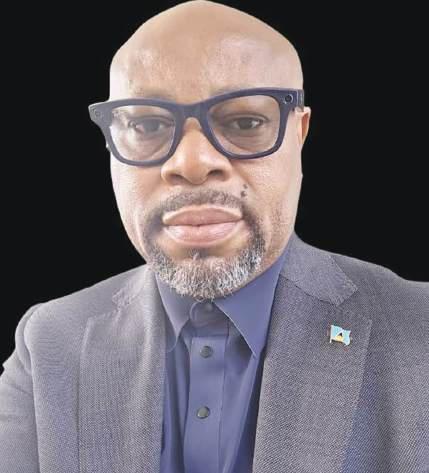
In the wake of President Bola Ahmed Tinubu’s 2025 state visit, a historic shift is occurring in the middle of the Atlantic. Nigeria and Saint Lucia are transforming their relationship from symbolic ties to a thriving economic and diplomatic partnership. The appointment of Justin Nwabuisi as Saint Lucia’s Honorary Consul to Nigeria marks a new era of strategic collaboration, focusing on trade, technology, and cultural exchange.
The primary challenge for any South-South partnership is logistics. To combat this, the newly established diplomatic framework prioritises direct shipping lanes, reducing transit times and costs. This will enable seamless trade between the two nations, boosting economic growth and tourism. Digital infrastructure is also a key focus, with plans to invest in integrated tracking systems and harmonised regulatory standards.
Saint Lucia’s expertise in sustainable blue economy and Nigeria’s industrial innovation will drive growth. The two nations will collaborate on marine conservation, responsible fisheries, and eco-friendly port facilities. This partnership will set a global standard for maritime cooperation, showcasing the potential of South-South collaboration.
The cultural synergy between Nigeria and
Saint Lucia is a potent “soft power” asset. The vibrant energy of Nollywood and Afrobeats will merge with the world-renowned Saint Lucia Jazz and Arts Festival. This collaboration will fuel the “Orange Economy,” driving tourism and job creation, and bringing African and Caribbean artistic expressions to a unified global stage.
The partnership includes heritage tourism, genealogical support, and visa facilitation, reconnecting Saint Lucians with Nigerian roots.
Many Saint Lucians trace their ancestry to the Bight of Biafra and Senegambia, making this initiative a meaningful way to honor ancestors and empower future generations.
The Consulate is spearheading a “Heritage Tourism” initiative, highlighting historical sites such as Calabar, Bonny, and Badagry. This will provide a unique cultural experience for Saint Lucians and Nigerians, promoting cross-cultural understanding and exchange.
The appointment of Nwabuisi and the launch of the dedicated portal marks the official beginning of this chapter. “The timing reflects a convergence of national interests that makes collaboration imperative,” says the Consulate. With this partnership, Nigeria and Saint Lucia prove the Atlantic is a highway, not a barrier.
The partnership will have a significant impact on trade and investment. Saint Lucia’s
advanced manufacturing sector will benefit from Nigeria’s vast consumer market, while Nigeria will gain from Saint Lucia’s expertise in sustainable development. This collaboration will drive economic growth, create jobs, and improve living standards.
The cultural exchange between Nigeria and Saint Lucia will be a key aspect of the partnership. Saint Lucians will have access to Nigerian markets, and Nigerian artists will gain exposure in the Caribbean. This exchange will promote cross-cultural understanding, creativity, and innovation.
The partnership is a testament to the power of South-South collaboration. By working together, Nigeria and Saint Lucia are creating a brighter future for their citizens. This partnership will drive economic growth, promote cultural exchange, and set a global standard for maritime cooperation.
With this partnership, Nigeria and Saint Lucia are writing a new chapter in their history. They are transforming their relationship from symbolic ties to a thriving economic and diplomatic partnership. The future is bright, and the possibilities are endless.
As the two nations continue to work together, they will create a legacy of mutual respect and shared prosperity. Saint Lucia is officially open for business with Nigeria. The bridge is built, and the journey has just begun.
As Kano Durbar Returns in Grand Revival of Royal Heritage
The Kano Durbar has started gaining attraction again with the lifting of embargo by the
The colourful Kano Durbar, which attracted local and foreign tourists to the ancient city in northern Nigeria especially during the Eid al-Fitr and Eid al-Adha celebrations, is making a comeback after being suspended for years by State government over security concerns and leadership tussle within the Kano Emirate.
Last year, the Nigeria Police stopped the Durbar ceremony as both the 16th Emir of Kano, Muhammadu
The Minister of Art, Culture, Tourism and Creative Economy, Hannatu Musa Musawa, has commended the National Hospitality and Tourism Stakeholders’ Forum held in Abuja.
Convened by Director General of the Nigeria Tourism Development Authority (NTDA), Dr. Ola Awakani, the forum which ended on Wednesday gathered government officials, industry leaders, associations and partners to strengthen alignment, spur collaboration, and drive actionable steps to reposition tourism as an engine for diversification, investment and job creation.
Musawa praised the DG’s commitment and energy for producing a practical roadmap that links culture, entertainment and tourism to growth and employment. She said consistency, public-
Sanusi II and the 15th Emir, Aminu Ado Bayero, laid claims to it.
A few hours to the commencement of the 2026 Eid al-fitr, the Kano State Government confirmed that the 16th Emir of Kano, Muhammadu Sanusi II, will lead this year’s Eid-el-Fitr (Sallah) prayers.
The Commissioner for Information and Internal Affairs, Ibrahim Waiya, in a statement said the government was committed to preserving Kano’s rich cultural heritage while ensuring residents’ safety and protecting property.
private partnership and annual follow-up will turn Nigeria’s creative assets into development gains.
“This forum will be an annual staple. Under President Bola Ahmed Tinubu’s administration, we are deliberately repositioning tourism as a central pillar of economic diversification and national identity. Bringing previously fragmented sectors into one coordinated ecosystem unlocks synergies, drives efficiency, and positions Nigeria as a global cultural and tourism powerhouse,” she said.
Musawa added that the ministry will keep showcasing Nigerian and African culture while connecting private-sector players to market opportunities.
“The new travel-market platform gives stakeholders ownership and a framework to expand globally,” she noted.
Earlier, Awakani thanked operators for embracing the “out-of-the-ordinary” energy in the room.
government,
“The safety of residents and the smooth conduct of our cultural celebrations are our top priorities,” Waiya said.
According to Waiya, the programme include Hawan Sallah, Hawan Daushe, Hawan Nasarawa, and Hawan Panisau, were modified to ensure safety. He announced that Hawan Nasarawa would be held in a modified form without horses, while Hawan Daushe, Fanisau, and Dorayi were suspended in the interest of public safety.
For a smooth Durbar, the state government also
Governor Umo Eno, in one of his on-the-spot inspections of tourists’ facilities in Uyo, Akwa Ibom State, recently declared that “Akwa Ibom is ready for the world.”
He vowed to make Akwa Ibom not only the best sought after tourists’ destination in Nigeria, but the world at large.
Eno, at the March Projects Delivery Meeting reaffirmed his administration’s commitment to timely project delivery and sustainable development.
The governor who appreciated stakeholders for their continued support, highlighted 86 priority projects of the administration outside of roads, hospitals, and schools.
As part of his administration’s policy to build and improve on landscape tourism, scenic tourism, nature tourism, and cultural geography tourism, Eno addressed the state’s electricity situation, outlining ongoing reforms and clear roadmaps for Akwa Ibom State to take ownership of its power market. With steady power supply, Eno envisions an Akwa Ibom where tourists will like to make
announced that the Hawan Idi Durbar would proceed under Sanusi II along designated routes from Kofar Mata to Gidan Shettima of the Emir’s Palace.
“All security agencies have been directed to intensify surveillance and ensure strict compliance with these directives to prevent any breach of peace before, during, and after the celebrations,” the commissioner said. After Eid prayers as part of courtesy, Emir Sanusi II paid a Sallah visit to Governor Abba Kabir Yusuf, at the Government House as part of the celebrations marking the end of Ramadan fasting.
their second home.
On agriculture, which plays key role in tourism sector, Eno approved the sum of N2.5 billion for the procurement of over 620,000 palm seedlings for distribution to registered farmers across the 31 local government areas of the state. Malaysia, which is reputed today for producing different products sourced from Palm trees, collected their first palm seedlings from Akwa Ibom.
Eno whose administration will be three years on May 29, reviewed a total of 55 projects during the meeting, with clear timelines and inauguration dates established. These landscape projects reviewed included; the Governor’s Office Annex, AKWA-GIS House, Ibom International Convention Centre, Ibom International Hotel, Itam Industrial Park, Arise Palm Resort, International Market, Ikot Ekpene; Rehabilitation of AKADEP Head Office, Youth Friendly Centres, One Project Per LGA (Phase 2), Judiciary Village, Chairman’s Lodge, 350 Bed International Hospital, Tree Crop Revolution, Security and Command Centre, AKBC House, Court of Appeal Complex, key airport infrastructure.
Abuja Continental Offers Easter Extravaganza for Guests
Abuja Continental Hotel is gearing up for Easter celebration, with a range of activities and offers that promise to delight guests of all ages.
From April 3 to April 6, 2026, the hotel will be transformed into a vibrant family haven, offering a multi-day Easter programme centred on
indulgence, adventure, and festive fun.
Cluster Director of Sales and Marketing, Richard Mutanda, disclosed that the Easter Sunday brunch, is scheduled for April 5, 2026, promising to be a highlight of the celebrations, with curated Easterinspired cocktails and mocktails at the Pool Bar and Lounge.
According to him, guests could also enjoy a themed Easter buffet on April 3, 2026, featuring signature meals such as roast lamb, chocolate eggs, hot cross buns, and other seasonal favourites.
He also noted that the Kids Fun Zone is another major attraction, offering exciting activities such as bouncy castle, bunny mascot appearances, face
painting, arts and crafts sessions, and an Easter egg scavenger hunt.
“At Abuja Continental, Easter is about enchanting every guest – from gourmet delights and creative cocktails for adults to boundless energy and surprises for kids. Our comprehensive programme ensures families feel fully immersed in the festive magic.
State
writes Charles Ajunwa
Nwabuisi
Ferdinand Ekechukwu- 08035011394 Email:
Commissioner DJ Wysei: Inspiring
Story of Nigerian Female Disc Jockey
Mostly identified with her distinct Mohawk styles, distinguished by her live electronic drums, Commissioner DJ Wysei has over the years emerged as a symbol for cultural relevance, electrifying performances, writes Ferdinand Ekechukwu
Sometime in December, 2025, Nigerian Disc Jockey, Commissioner DJ Wysei returned home after dedicated performances across major cities around the world. Part of her mission was to stage a music and dance festival. It was her first-ever homecoming concert. One that resonated with excitement, as she reconnected with her roots, lit up her hometown of Mbaise, in anticipation of a momentous show.
And she did deliver, featuring high-energy DJ performances that have defined her brand, alongside surprise guest appearances, cultural celebration, and provided space for bonding. Set against the vibrant atmosphere somewhere within the historic Ahiara Junction in Mbaise, Imo State, the event attracted natives, fans, music lovers, and industry players mostly of her indigene.
It marked one of the area’s most anticipated cultural gatherings. Days leading to the concert saw her visit prominent figures, socialites and familiar faces in entertainment, to seek support. Overwhelmed by the outcome, DJ Wysei took to social media to express her feelings.
“Mbaise showed me mad love! The concert was epic, the crowd was wild, and the vibes were unmatched.”
In appreciation for making her actualise it, Commissioner DJ Wysei, also known as Drummer Queen posted, “Thank you to everyone who supported, physically, spiritually, financially, in every way. December 2026 is coming with something HEAVIER. Bigger stage, bigger energy, bigger memories. We’re taking it to another level. Thank you, Mbaise, see you again soon!”
At its core, the festival stands as a powerful statement about remembering one’s roots while building a global presence, reinforcing the values of home, heritage, and giving back. Over the years, DJ Wysei has emerged as a symbol for electrifying performances, commanding stage presence, and cultural relevance across multiple cities, consistent, with years of grinding.
So bringing that whole experience home, closing the year with a major end-of-year celebration, attracting neighbouring towns and communities in Mbaise, according to her, was significant as more than just a performance. It was bigger than music. The reception, the feelers, the turnout were described as massive; one that triggered a rapturously pulsating experience.
The homecoming concert represents a defining moment in DJ Wysei’s journey, and goes beyond entertainment to embrace identity, gratitude, and community pride. “It’s about gratitude, legacy, and letting my people see that dreams born here can travel far and still return home stronger,” she enthused, mostly identified with her signature,
Mohawk styles.
The last in a family of eight, her childhood was quite affectionate, her talent a mix. “I grew up with my mum who was a nurse and midwife,” she recalled in a feature. “I think I was too attached to her, to the extent that I would go to the hospital with her. She saw me as a mini-her and envisioned me becoming a doctor.” But that was not to be for DJ Wysei who had always wanted to be the best of herself.
“While growing up, I always told myself that anything I wanted to do, I must do it well. I try to be unique with my performances and every other thing. I always motivate myself.” Like most individuals encounter in their career paths diverse ways; some knowing what they wanted to do with their lives early. For Commissioner DJ Wysei, hers was football. She also nurtured music.
Although her mum disapproved football, she played representing her school and the country at some point. Her football career was cut short, following a devastating accident that almost took her life. That incident changed her career path in 2014. Thus began her musical journey, one she’s very proud of today, everyone in her family too.
As she recalls it, “I broke my mum’s heart for football. My coach and school supported me, saying I was really talented. I was even a “head player” at school games. My mum didn’t let me pursue it, because my elder brother had lost a leg playing football, and she feared that something similar could happen to me. After secondary school, I moved to Lagos, joined a team, and became the captain.
“I played outside the country, in Côte d’Ivoire, and even scored a winning goal at the game. When I came back to Nigeria, my mum was still against it. Then in 2014, I had an accident, which changed the whole story. I fell from a three-story building while playing football with friends on the balcony of the building. It was a usual spot for us, but the balcony collapsed.
“My best friend died, and I survived but was hospitalised for over six months. I had broken bones and spent additional time at an orthopedic hospital. It was devastating. I couldn’t play anymore. Lying in the hospital, I felt miserable—not just because of the accident but because I knew my football career was over. It was after the accident that I decided to go into entertainment.
“Everyone in my family is proud of me now, including my sisters. Unfortunately, my dad is late, so he didn’t really see the bigger side of this journey.” She has grown to become an inspiration to her colleagues and upcoming female DJs in the industry. Initially, she started as a singer, and even produced a song for her mum, just to please her, because her mum did not want her to follow another career path.
DJ Pretty
But, one day, “I told myself that I was not getting it right. I did not like my voice, perhaps because I was still a teenager then. Anyway, I went out and saw a DJ performing, and I liked what he was doing.” The multi-talented DJ Wysei once explained further how she decided to embrace it as a career in a post on her Instagram page.
After her secondary education, DJ Wysei bagged a degree in Information Communication Technology from the National Open University (NOUN).
“The passion for music developed during my secondary school years and through my University days as a student. I am also a certified Information Technologist. Though I had no Idea I would decide on disk jockeying,” she wrote in a post.
Distinguished by her signature style of playing live electronic drums, a skill she developed out of passion.
“Before going to perform, I think of what I would do on stage. I play all genres of music just to accommodate different crowds and age brackets. When I see Gen Zs, I know what to give them. When I see our fathers and mothers, I know what to give them as well. But personally, I love reggae.
“I have had lots of experiences in my career when I started as a DJ and I can boldly say publicly that coming out strong and noticed in the industry is not just about being a lady with all the attractive features to offer, but such that could attract the needed attention and know what the listeners want”. Her story is incomplete without the impact her sister made.
In making her dream come true, a memory she said will remain with her forever, she recounts. “It all began with a simple question that I answered without knowing what the future holds. ‘DJing?’ my sister asked, ‘Is that what you want to do?’ I told her with full confidence: ‘I’ve decided to take this thing full time; I love it and I am ready for it’.
“She could see I was clearly love-drunk with music and the industry. It was then she took me and bought me my very first DJ player, a memory that has created a beautiful after-taste of passion, drive and brilliance. I can never forget that moment in my life,” she said. Along the path Commissioner DJ Wysei met some other DJs in the industry who taught and took her through the rudiments.
She figured that after graduation, she would get a job, use her DJ skills for fun. But, everything changed after she met DJ Switch, a leading Nigerian DJ.
“I used to follow DJs for gigs, and I even helped out once in a while for free. I was doing that until I met DJ Switch, who was with P-Square at the time. According to her, she liked my swag.
“She was excited, and she told me that though she had never accepted to teach anyone before but she liked me and would put me through. True to
her words, she put me through and taught me to be a professional DJ. She was trying to make sure I would be bigger than her. She often told me that she would be proud to see me grow bigger than her. She really wanted to see me win.
“Many people doubted my abilities just because I am a woman… However, I stayed focused and kept pushing forward. Today, people appreciate me and want to see me.” Having succeeded creating a niche for herself in the same industry dominated by the male folks, possessing a rich profile and an intimidating list of awards, achievements and recognition to show for it.
By 2018, Commissioner DJ Wysei was already gaining global attention when she was listed on CNN’s Inside Africa and BBC’s top five female disc jockeys in Africa making waves in their countries and beyond. Her popularity was further boosted when she was announced the official DJ for Globe Broadcasting and Communication, the parent company of Wazobia FM 95.1, Lagos.
“Initially, I wasn’t well-accepted. There was a time I was told I couldn’t play at a party because I was a female DJ. But, I didn’t give up. I had to prove myself and deliver amazing performances. I was still with her (DJ Switch) when CNN came for five female DJs in Africa. They saw my video, and I was selected among the five. That and a feature by BBC were the turning points for me.”
Play Recovering After Historic
300-Hour Marathon Attempt
Nigerian DJ, cultural curator, and performer, Princess Ntuk Williams, professionally known as DJ Pretty Play, recently completed a massive 300-hour non-stop DJ marathon set to break the Guinness World Record for the Longest Marathon Club DJ-ing.
She originally aimed for 288-hours but pushed herself to complete 300 hours in 12 days continuously from March 3rd to March 15th, 2026. The attempt took place at Bay Lounge in Lekki, Lagos. Her performance showcased high-energy music, rhythm, across genres including Afrobeats, Afrohouse, Hip-Hop, and Amapiano. Her determination remained unwavering throughout the attempt as she engaged the crowd. Following the intense performance, the Lagos-based DJ shared images and
videos showing significant physical strain, including swollen legs caused by fatigue and prolonged standing.
During the marathon, the Akwa Ibom-born artist faced several obstacles, including a restart after an inadvertent song repetition four days into the challenge. Nevertheless, she persevered with resilience and completed the full duration, taking only five-minute breaks per hour.
She was briefly hospitalized and oxygen support given but has since been responding to treatment. During the marathon, several high-profile entertainment figures and fellow DJs, including D’Banj, DJ Obi, and DJ Big N, visited the venue to show their support.
DJ Pretty Play is widely recognized for her clean mixes, creative transitions, and powerful live performances.
She has previously performed at major platforms such as Big Brother Naija and the AFRIMMA Awards (USA), and has collaborated with notable artists like Magnito and Skales.
This record attempt is more than a personal milestone it represents a bold statement for African women in the global DJ industry. By taking on this challenge, she aims to break stereotypes, amplify African culture, and inspire the next generation of female creatives to pursue global opportunities.
While the official recognition from Guinness World Records is still pending, her team extends heartfelt gratitude to her fans and supporters worldwide. “Your encouragement has been invaluable.” It said in a post. “Though she is unable to speak at this time, we are confident she will return stronger.”
DJ Wysei
DJ Pretty Play
AUTOWORLD
Mikano Changan Challenge Ends in Lagos with Win for Creativity and Innovation
The Mikano Changan Creators Challenge, an initiative created by Mikano Motors to recognise, support, and invest in Nigeria’s growing community of digital creators ended on Thursday.
The #MikanoChanganChallenge was a powerful celebration of creativity, talent, and possibility of champions.
Hosted at the Mikano Motors showroom in Victoria Island, Lagos, the grand finale brought together Mikano executives, creators, industry leaders, media professionals, and notable personalities for a moment that went beyond competition. It was a gathering that reflected a shared belief: that creativity deserves recognition, support, and real opportunity.
The challenge was designed with a clear intention to create a platform where young creatives are seen, heard, and rewarded for their originality, effort, and storytelling. Creators were tasked with showcasing their creativity and ideas around Mikano Changan Cars. Across weeks of participation, they expressed their voices, perspectives, and ideas, turning everyday creativity into meaningful expression.
After a series of intense selection of winners, the contestants were shortlisted and the winner was chosen by a panel of notable judges, which included Bovi Ugboma, Doris Ogah, Chioma Ude, Joelle Haykal, represented by Syam Abdul Kadir, and Oluseyi Asurf Amuwa, whose experience and perspective helped shape a fair and thoughtful selection process.
Chibundu Victor Chisom emerged as the overall winner and was awarded the grand prize a brand new Mikano Changan CS35 car marking not just a win, but a recognition of his creative journey. The vehicle also comes with a 6-year warranty and nationwide after-sales support, reflecting long-term value and reliability. One thing stood clear: creativity was at its peak.
In Mikano and Changan’s commitment to the
creative economy, the first runner-up, Princess Tony Jessica Omusuku, received a cash reward of N3million, while the second runner-up, Oluwamayowa Philip, received a cash reward of N1.5 million. In addition, the remaining top finalists were each awarded N500,000 in recognition of their dedication, consistency, and creative excellence throughout the challenge.
The event also featured a panel session with respected voices in the creative and media space, who shared insights on the importance of nurturing creativity, the evolving landscape of digital expression, and the role of platforms that create real opportunities for emerging talent.
The conversation reinforced a shared understanding that creativity thrives when it is supported,
encouraged, and given room to grow.
The occasion was further enriched by the presence of notable personalities from the entertainment and film industry, including Jemima Osunde, KieKie, Rita Dominic, and Patrick the Bassist, a former winner of a previous challenge, alongside the 19 shortlisted creators. Their presence reflected a community that continues to grow through collaboration, shared experiences, and mutual support.
Speaking at the event, Syam Abdul Kadir, National Head of Operations Mikano Motors, reaffirmed the brand’s commitment to empowering the creative ecosystem, emphasising its belief in the value of creativity as a driving force for growth, expression, and opportunity.
Carloha Nigeria Strengthens Aftersales Network With Chery Technical Training for Partner Technicians
Carloha Nigeria, the authorised dealer of Chery vehicles in Nigeria, has successfully concluded the 2026 Basic Chery Training Programme for Partner Technicians, held from March 24 to March 25, 2026, at the Carloha Head Office and Major Workshop in Lagos. The two-day technical training programme was organised to strengthen the after-sales service network for Chery vehicles in Nigeria by equipping partner technicians with the knowledge and practical skills required to maintain and service Chery vehicles in line with global standards.
The training brought together seven experienced technicians from Carloha-Chery accredited after-sales service centres across the country. The initiative is part of Carloha Nigeria’s ongoing commitment to building local technical capacity and ensuring that Chery customers enjoy reliable, professional
Partner Technicians at Carloha Nigeria’s 2026 Basic Chery Training Programme in Lagos…recently
maintenance support.
The primary objective of the programme was to introduce technicians to Chery’s basic maintenance and repair procedures, while facilitating the
transfer of Chery’s automotive technology and service standards to local technicians. Through a combination of classroom sessions and practical demonstrations, participants gained hands-on exposure to the fundamental principles of servicing Chery vehicles.
The training modules covered basic maintenance operations, warranty procedures, general troubleshooting techniques, engine lubrication systems, engine cooling systems, and basic automotive electrical systems. Additional sessions also focused on good repair practices, understanding and diagnosing customer complaints, and an overview of engine and gearbox electronic assistance systems.
The sessions were facilitated by Carloha’s aftersales technical team within a workshop environment, enabling participants to gain practical experience with Chery vehicle components and diagnostic procedures.
BC Logistics has announced significantly faster delivery timelines across key commercial corridors in Nigeria, reinforcing its position as a dependable partner for time-sensitive cargo movement.
Customers on select major routes can now benefit from improved delivery windows of 24 to 48 hours, reflecting enhanced operational speed, stronger coordination, and increased distribution capacity.
The improved turnaround time is enabled by the company’s recent fleet expansion drive, which has strengthened haulage capacity and reduced transit bottlenecks across high-volume routes.
The addition of new vehicles has improved route optimisation, enhanced schedule discipline, and increased overall network efficiency—allowing the company to sustain faster deliveries with greater consistency.
The accelerated delivery service now applies to major routes including:
• From Lagos to: Ibadan, Abuja, Port Harcourt, Benin,
Coscharis Motors Rolls Out EasterThemed Customer Value Offering T IPS
Coscharis Motors Plc a respected leading automobile dealership in Nigeria has introduced a limited Easter-themed value offering for customers, providing up to 10% price consideration on select vehicle models throughout April.
The initiative, positioned as part of the company’s seasonal engagement with its customers, also incorporates extended warranty coverage, flexible financing arrangements, and strengthened after-sales support to enhance overall ownership experience across its automobile brands that include BMW, Range Rover, Grenadier, Ford, Renault and Geely.
Speaking on the campaign, The General Manager, Marketing and Corporate Communications, Coscharis Group, Abiona Babarinde stated that “Easter season is another period to celebrate ourselves while we reflect on our success stories. For us at Coscharis Motors, it is also an opportunity to reinforce our commitment to delivering lasting value and dependable mobility solutions to our customers.
According to him, the Easter season presents a unique opportunity for customers and prospects who appreciate style, value, luxury, prestige, and high-performance vehicles to take advantage of this exclusive offer across Coscharis Motors’ portfolio of globally renowned automobile brands. He noted that by visiting any Coscharis showroom nationwide, customers can enjoy the special Easter discounts of up to 10% on select variants, making it an ideal time to own a brand new and reliable vehicle while celebrating the season.
Coscharis Motors remains dedicated to providing worldclass automotive solutions while strengthening its relationship with customers through meaningful seasonal engagements.
The Easter offer is valid until the end of April, with enquiries available via designated customer channels.
Coscharis Motors Plc is a key player in Nigeria’s automotive industry, representing a portfolio of globally recognized brands including BMW, MINI, Ford, Range Rover, Grenadier, Geely and Renault. The company provides sales, after-sales services, and mobility solutions backed by a nationwide network and decades of industry experience.
•From Abuja to: Lagos, Port
•From the Eastern region (Owerri axis) to: Enugu and Abuja.
In addition to expanding its fleet, the company has enhanced hub operations through semi-automated cargo processing systems, structured loading protocols, and trolley-assisted loading and offloading systems. These improvements have reduced handling time, strengthened cargo security, and improved operational coordination nationwide.
Management stated that the strategic investment in fleet growth and process efficiency reflects a deliberate commitment to meeting rising demand for faster, secure, and reliable logistics services across Nigeria’s commercial centres.
ABC Logistics is the trade name of ABC Cargo Express Limited, a subsidiary of ABC Transport Plc.
The overall winner of the #MikanoChanganChallenge, Chibundu Victor Chisom standing beside the grand prize, a brand new Mikano Changan CS35 car
Warri, Lokoja, Abeokuta, Akure, Ilorin, Asaba, Owerri, and Onitsha.
Harcourt, Lokoja, Benin, Owerri, and Onitsha.
PeoPle
From Banking Titan to Reform Champion: Aigboje
Aig-Imoukhuede’s Bold Public Service Gamble
From banking titan to reform champion, Aigboje Aig-Imoukhuede is charting an ambitious new course—one that seeks to revive the credibility and effectiveness of Nigeria’s public service. In this piece, James Emejo examines his bold transition and the driving vision behind the Public Leaders’ Programme, an initiative aimed at restoring excellence, discipline, and purpose to governance. Aig-Imoukhuede’s vision is rooted in a simple belief that no nation can rise above the quality of its public institutions. At a time when confidence in governance remains fragile, his intervention seeks to nurture a new generation of public sector leaders defined by competence, integrity, and accountability
The most contrarian bet in African development isn’t a fintech startup or a pan-African fund. It’s a man who transformed one of the continent’s most troubled banks into a financial powerhouse and then turned that same discipline toward the most neglected room in the building: the public service.
In 2002, Aigboje Aig-Imoukhuede, did something that seasoned bankers thought was reckless. He led the acquisition of Access Bank, then a fringe, crisis-prone regional lender that barely registered on Nigeria’s financial landscape, and over the next eleven years, rebuilt it from the ground up into one of the most formidable financial institutions on the African continent.
It was a masterclass in institutional transformation that demonstrated the benefit of governance discipline, systems thinking, and relentless investment in talent to a broken organisation that held untapped promise.
When he eventually stepped back from executive banking, the assumption was that he would settle into the comfortable orbit of boards, awards, and legacy philanthropy. He did not.
Instead, he made a wager that confounded his peers.
As the founder and Chairman of the AigImoukhuede Foundation, he planted his flag in a territory that Africa’s elite have long abandoned: the public institution. The bureaucracy. The ministry. The public servant.
This is not sentimentality. It is a diagnosis, and it proceeds from the same logic that drove the Access Bank turnaround.
He believes that you can engineer a profitable business, but if the state around it is broken, your ceiling will always be low. National prosperity is mathematically bounded by the quality of its institutions. As he declared at the inaugural International Civil Service Conference (ICSC) 2025 in Abuja, “No matter how successful the private sector is, it cannot replace the role of a functional state.” It focused the spotlight on the gaps and called for a different perspective to shape the future of Africa.
Reclaiming the Mandarin Class
To understand the audacity of this bet, you have to travel back to an era most Nigerians can only inherit through stories, when the Naira stood shoulder-to-shoulder with the British Pound.
That golden decade of the 1960s and 70s was not simply an accident of oil wealth. It was the product of a fiercely meritocratic public service, one that recruited through competitive examinations ruthless enough to filter for only the sharpest minds in the country. These were Nigeria’s mandarins, the administrative elite who designed the Third National Development Plan (1975–1980), still one of the most intellectually ambitious governance blueprints in the nation’s history. That filter has since been clogged, corroded, and largely discarded.
A 2023 assessment of a major Federal Ministry exposed the structural challenge beneath the surface: 70% of the workforce comprised junior-grade staff, while only 8% held degrees in core analytical disciplines. The nation’s best minds had migrated to the private sector, to the diaspora, to anywhere but the ministry. What remained was a capacity vacuum at the very heart of governance.
At the Africa Breakfast Conversations (ABC), a side event at the 80th UN General Assembly in New York in 2025, Aig-Imoukhuede named it: “We cannot continue to outsource our thinking to consultants while the internal engine of the state remains hollow. We must build the capacity to govern from within.”
The Aig-Imoukhuede Foundation’s response is a multi-billion Naira effort to reverse this brain drain through rigour. In partnership with the University of Oxford’s Blavatnik School of Government, the Foundation has been injecting 1970s-style intellectual
discipline back into the bloodstream of government. The ambition goes beyond issuing certificates. It is about producing a new elite within the service.
Officials are trained to think with the precision of a CEO. The service is being equipped to make a first-class graduate from Ibadan or Nsukka choose the Ministry of Finance over a consulting firm in London.
The Human Face of Reform
The Foundation’s most compelling argument goes beyond rhetorical to empirical, and it has names attached to it.
Through the AIG Public Leaders Programme (AIG PLP), delivered in partnership with Oxford’s Blavatnik School, over 300 senior officials across Africa have been retrained to dismantle broken systems and rebuild them with the discipline of private-sector operators. As Aig-Imoukhuede often reminds participants of the programme: “Transformation is not about grand speeches; it is about the mundane, daily discipline of making systems work for the common man.”
Four case studies crystallise what that discipline looks like in practice.
At the Isheri Olofin Primary Healthcare Centre, a Foundation-trained leader re-engineered patient flow and slashed wait times from 82 minutes to 31, a 62 percent efficiency gain that meant the difference between a mother receiving care or abandoning the queue entirely.
At the National Agency for Food and Drug Administration and Control (NAFDAC), the Foundation supported the automation of the dossier review process, clearing a 15-year backlog of regulatory approvals in a stroke.
A 15-year backlog. Gone. This is what “business-friendly” actually means. Not tax holidays and press releases, but a regulator that moves at the speed of the market.
Within the Nigerian National Youth Service Corps (NYSC), a PLP alumnus developed and implemented a nationwide policy to combat sexual harassment, an institution that processes over 400,000 corps members and staff annually, none of whom previously had a structured, enforceable framework
protecting their dignity and safety. That framework now exists.
At the National Assembly, a Foundation-trained official built a dashboard to track bills, automate legislative processes, and make lawmaking data accessible to the Nigerian public for the first time.
Millions of citizens can now follow the legislative process in real time and hold their representatives accountable. Transparency, in this instance, was not a campaign slogan. It was a software deployment.
The critics of this model are not wrong to raise questions. Capacity building, they argue, is slow. It targets a thin elite. It does not address the deeper structural and political-economic challenges that make even the best-trained officials ineffective, from budget capture to political interference, and weak accountability mechanisms.
You can send a public servant to Oxford, the argument goes, and they will return to the same broken system that frustrated them in the first place.
It is a fair challenge. And Aig-Imoukhuede does not dismiss it.
But the counter-evidence is accumulating. Programmes like the AIG PLP are explicitly designed as applied reform, where every participant is required to execute a reform project that solves a real challenge within their institution. The results are not theoretical.
Alumni have gone on to design and implement more than 230 reform projects within their ministries, departments, and agencies across Africa, spanning healthcare, finance, agriculture, education, and justice. Since inception, 62% of alumni have earned promotions, expanded roles, or other career advancements following their participation.
More fundamentally, the argument that the system is too broken to be reformed from within is, at its core, an argument for permanent paralysis.
Aig-Imoukhuede’s counter-wager is that every system was built by people and can therefore be rebuilt by more capable people.
How Does Nigeria Compare?
The urgency of Aig-Imoukhuede’s theory becomes sharper when held against the continent’s governance success stories. Rwanda, often cited as Africa’s most dramatic institutional turnaround, did not rebuild solely through infrastructure. It invested obsessively in public-sector capacity, performance management, and accountability, and built a public service culture where delivery is non-negotiable.
Botswana’s decades of relative stability rest on a
similar foundation of a small, well-remunerated, largely meritocratic bureaucracy that has consistently translated resource wealth into public goods. Nigeria, with its vast human and natural capital, has rarely been able to replicate that equation at scale. The reasons are complex, but the capacity gap is a core variable. And that is the gap the Foundation is targeting. Not superficially, but in the design of the application of innovative systems, and empowered public leaders, now resulting in measurable reform projects.
Accountability Before It was Fashionable
For Aig-Imoukhuede, it would be a mistake to read any of this as a late-career pivot. The through-line stretches back decades.
In 2012, he chaired the Presidential Committee on the Verification of Fuel Subsidy Claims, a forensic assignment launched in the white heat of Nigeria’s subsidy crisis, when public trust was depleted, and fiscal exposure was catastrophic. The committee uncovered significant discrepancies in claims and helped the government recover and protect trillions of Naira. It was an early, unambiguous demonstration of a pattern that has never broken, which demonstrated the deeply personal willingness to carry private-sector discipline into public systems. His influence now spans the board of Nigeria Bulk Electricity Trading (NBET), his role as Co-Chair of the Lagos International Financial Centre, and technical engagements with the National Economic Council (NEC).
He is also the Founder of EnterpriseNGR, a leading private sector–driven policy and advocacy platform for Nigeria’s financial services sector. Beyond Nigeria’s borders, he serves as Co-Chair of the Africa Advisory Board of King’s Trust International, where he brings the same structural rigour to tackling youth unemployment.
what Comes Next
Aig-Imoukhuede is not operating without a scoreboard. Through the Foundation’s efforts, he plans to produce 3,000 reform-minded public sector leaders across Africa by 2030. This is a critical mass large enough to shift institutional culture and bring about real-world change.
The target reflects a theory of change that demands fundamental institutional transformation and a critical mass of reform-minded leaders operating simultaneously across different levels and sectors of government. One trained director can change a department. Three thousand, committed to the same purpose can change a continent.
The Bet
At the ABC in New York, Aig-Imoukhuede reiterated a deeply held thesis that has served as a blueprint for decades: “The greatest legacy we can leave is the systems we strengthen so that our people can thrive long after we are gone.”
This is the Aig-Imoukhuede Bet. A system that contributes to birthing a public service that attracts the best, trains them to the highest standard, equips them with the tools to execute, and holds them accountable for results.
It is the same way he built Access Bank, starting with broken infrastructure and producing an institution that outlasted his tenure. He is attempting the same transformation at a continental scale, with the same tools and a stubborn conviction that organisations are only as good as the people inside them.
Africa’s development agenda has searched for the panacea to the continent’s problems: from infrastructure projects to foreign investment and waves of governance reforms. Aig-Imoukhuede’s answer is quieter and far more enduring.
A vision to produce excellent public servants who can fix public systems and elevate a nation. This vision is not a dream, but a reality in the making.
Aig-Imoukhuede
Kola Ajibola
Adamawa: Listening Beyond the Noise to People’s Pulse
As Nigeria gradually inches toward another electoral cycle, Adamawa State is once again emerging as one of the country’s most compelling political theatres. Yet the unfolding drama in the state is not merely about the traditional rivalry between political parties. Rather, it is increasingly about the strategic choices confronting the ruling All Progressives Congress (APC) choices that could determine whether its recent political gains translate into lasting dominance or fleeting advantage.
The political calculus in Adamawa has shifted in ways few observers anticipated just a few years ago. The defection of Governor Ahmadu Umaru Fintiri from the People’s Democratic Party (PDP) to the APC has fundamentally altered the balance of power that once defined the state’s political landscape. For the first time in recent memory, the APC finds itself in the unusual position where the greatest challenge ahead may not come from outside the party but from within it.
On the surface, this development appears to give the ruling party a commanding advantage. Yet politics, particularly in a state as politically sophisticated as Adamawa, rarely rewards complacency. Beneath the seeming consolidation lies a quietly evolving opposition dynamic.
The African Democratic Congress (ADC) has begun to attract a coalition of experienced political actors, including Aisha Dahiru Ahmed, Ishaku Abbo, and Jibrilla Bindow. These are not peripheral figures in the state’s political history. Each commands networks, recognition, and a degree of grassroots loyalty capable of reshaping electoral calculations if effectively mobilised.
Thus, while the APC may appear ascendant, the emerging contest may ultimately be decided not by the weakness of opposition forces but by the wisdom—or lack thereof—of the ruling party’s internal decisions.
At the centre of this debate lies a deceptively simple question: who within the party best embodies the convergence of grassroots enthusiasm, youth mobilisation, and elite confidence necessary to sustain electoral victory?
Among the names increasingly mentioned in these discussions is Abdulrahman Bashir Haske, an APC chieftain whose political visibility across Adamawa and the broader North-East has grown steadily in recent months. While it may be premature to frame any individual as the inevitable standardbearer of the party, it is equally difficult to ignore the pattern of political activity surrounding his engagements.
Observers frequently reference the visit of President Bola Ahmed Tinubu to Yola, where Haske’s organisational involvement and grassroots mobilisation reportecite President Bola Ahmed Tinubu’s visitdly stood out among party stakeholders. In a political culture where turnout is often the clearest indica-
tor of underlying structures, the scale of mobilisation during that visit did not go unnoticed.
A similar pattern appeared during the APC North-East Zonal Congress in Gombe, where supporters aligned with Haske were visibly active among delegates and observers. While such moments do not in themselves determine political outcomes, they often reveal the informal networks through which influence quietly travels in Nigerian politics.
His presence was again noticeable during the recently concluded 8th National Convention of the All Progressives Congress in Abuja. There, amid the bustle of delegates, party leaders, and political negotiators, Haske’s engagements reportedly bridged two often-separated political spaces: grassroots delegates and national party elites.
Yet the significance of these appearances lies less in spectacle and more in what followed. In the weeks after the convention, a series of consultations with party elders, youth groups, community leaders, and political stakeholders quietly intensified across Adamawa. According to insiders, these engagements
appear less focused on personal ambition and more on the patient work of coalition-building—an exercise that often proves decisive long before formal campaigns begin.
Still, the unfolding conversation within the APC is far from settled. If anything, it has grown more complex.
The resignation of Ahmed Galadima Aminu from his position as Executive Secretary of the Petroleum Technology Development Fund (PTDF) to pursue the governorship ticket illustrates the widening field of ambition within the party. Such moves are not unusual in Nigerian politics, but they do sharpen the internal debate over succession, fairness, and strategic calculation.
On one hand, this competition reflects the vitality of democratic contestation within the APC. On the other, it introduces the familiar risk of internal fragmentation an outcome that has historically weakened even the most formidable political parties.
Complicating matters further is the evolving expectation among ordinary citizens. Across many communities in Adamawa, conversations about the future of governance increasingly revolve around continuity rather than rupture. Governor Fintiri’s reputation as a grassroots politician has shaped public expectations of leadership style, and many voters appear inclined toward a transition that preserves that people-centred approach rather than abruptly discarding it.
It is within this broader political mood that figures like Haske have begun attracting attention, particularly among younger voters and community organisers. His style of engagement—marked by accessibility and consistent grassroots interaction—aligns with a growing sentiment that electoral legitimacy must increasingly flow from the base rather than from elite endorsements alone.
Yet even this narrative invites caution. Political popularity can be fleeting, and mobilised enthusiasm does not always translate into electoral success. The APC leadership must therefore resist the temptation to read temporary momentum as permanent political capital. What remains undeniable, however, is the magnitude of the decision before the party.
A miscalculation in candidate selection could open unexpected pathways for rival coalitions eager to regain relevance in the state. Conversely, a transparent and inclusive process that genuinely reflects the will of party members—and the broader electorate—could entrench the APC’s influence in Adamawa for years to come.
Ultimately, the debate unfolding within the party transcends the ambitions of individual aspirants. It represents a deeper test of political judgment: whether the APC will prioritise popular legitimacy or retreat into the familiar comfort of internal power arithmetic.
In the months ahead, the party’s leadership must confront a defining choice. Will the future of the APC in Adamawa be determined by negotiated political equations behind closed doors, or by the quieter but unmistakable pulse rising from communities, youth networks, and grassroots structures across the state?
L-R: Representative of Lagos State All Progressives Congress (APC), Governorship Aspirant, Chief Rasheed Shobaloju; former Member House of Representatives; Rofeequat Arinola Onabamiro; APC Apex Woman Leader Badagry, Alhaja Kikelomo Pesu Ladipo and Kappo Pedeti Elizabeth, during the Press Conference by Women of Badagry Federation on Equity Justice and Call for Governorship Candidate from Badagry Division (“Badagry Lokan”) in support of Samuel Ajose held in Badagry Town Hall, Lagos recently
ADIGUN
L-R: Head, Geocycle, Lafarge Africa Plc, Temitope Dosumu; Group Managing Director/Chief Executive Officer, Lafarge Africa Plc, Lolu Alade-Akinyemi; Beneficiary, Mary Amoo; Executive Secretary, Lagos State Employment Trust Fund, Feyisayo Alayande, and Communications, Public Affairs and Sustainable Development Director, Lafarge Africa Plc, Viola Graham-Douglas, during the graduation ceremony for the beneficiaries of Disability to Ability(D2A) initiative organized by Lafarge Africa Plc held in Lagos today 31-03-2026
Haske
SUNDAY
Seniour Pastor, Trinity House, Pastor Ituah Ighodalo and Rev. (Dr.) Chioma Ohakwe with children of the Bethesda Home and School For The Blind during their recent visit to Trinity House in Lagos at the weekend PHOTO SUNDAY ADIGUN.
Omolabake Fasogbon writes on the contributions of Zenith Bank Plc towards women’s empowerment
On one warm Monday morning in Lagos last month, the atmosphere at The Civic Centre in Victoria Island was partly celebration, reflection and quiet determination.
This was as women from across industries, backgrounds, and generations gathered for a reaffirmation of their place, their power, and their possibilities. The event was Zenith Bank’s 2026 International Women’s Day seminar with the theme, “Take It, You Own It.”
From the moment the doors opened, it was clear there was a deliberate statement. One that spoke to ambition, resilience, and the responsibility of institutions to create space for women to thrive.
Inside the hall, conversations flowed easily between seasoned executives and young professionals, entrepreneurs and creatives, each woman carrying her own story of struggle and triumph. There was laughter, but also an unmistakable sense of purpose. For many in attendance, this was a validation.
In her welcome remarks, the Group Managing Director and CEO, Dr. Adaora Umeoji, captured the spirit of the moment with striking clarity.
She spoke about intentionality as a commitment to ensuring that women are not merely included in the system, but empowered to shape it.
Umeoji explained that the International Women’s Day is a reminder that progress requires intentionality. According to her, ‘Give to Gain’ speaks to the responsibility institutions have to create real opportunities, while the theme ‘Take It, You Own It’ challenges women to step forward boldly and lead.
She said Zenith Bank remains deliberate about building environments where women are supported to grow, thrive, and shape outcomes, not only within our institution but across the communities and industries we serve.
Recommitting
to Gender equity, empowerment
According to the Zenith Bank CEO, the annual International Women’s Day is an opportunity to pause, reflect, and recommit, “ourselves to the ideals of gender equity, empowerment, and inclusive progress.”
“But beyond that, it is also a practical reminder that progress does not happen by accident. It happens when people choose action over intention, outcomes over applause, and when there is a genuine commitment to delivering results. That is why we do not treat today as merely ceremonial. We see it as a platform for interaction, reflection, learning, and renewed commitment.
“This year’s global theme, “Give to Gain,” speaks to a simple truth: sustainable progress follows purposeful investment in women. When you give—whether through mentorship, opportunity, resources, or advocacy — the impact extends far beyond the individual.”
Umeoji pointed out that women lift families, strengthen communities, and expand economic potential for institutions.
According to her, it means removing barriers, building systems that reward competence, and fostering a more equitable society. Additionally, it means valuing women’s contributions and opening doors for the next generation of leaders.
“Kofi Annan, former Secretary-General of the United Nations, captured it well when he said, ‘There is no tool for development more effective than the empowerment of women.’ This means that any society that neglects women effectively forfeits a significant portion of its productive capacity.
“Despite this, significant gender disparities persist globally, often to the disadvantage of women.
According to the World Economic Forum’s 2025 report, only 68.8 percent of the global gender gap has been closed. At the current pace, it could take approximately 123 years to achieve full gender parity.
“Here in Nigeria, the situation is even more urgent. We have closed only 64.9 percent of the overall gender gap, leaving a gap of 35.1 percent that still needs to be addressed. In addition, there is a 19.3 percent disparity in labour force participation between men and women in the country.
“These figures cannot be ignored, particularly because the economic benefits of closing this gap
are profound. The World Bank suggests that closing gender gaps in employment and entrepreneurship could boost global GDP by more than 20 percent. Similarly, the McKinsey Global Institute estimates that achieving gender parity could add up to $12 trillion to global GDP.
“At the country level, McKinsey’s analysis indicates that closing gender gaps in Nigeria’s economic participation could increase GDP by as much as 19 percent, translating to roughly $90 billion in additional value,” she added.
She pointed out that the projections reflect the immense value women possess, the contributions they already make, and the progress they continue to drive every day.
“From micro-entrepreneurs in local markets to female executives in boardrooms, women are playing a critical role in our economy. Estimates show that out of approximately 53 million women in Nigeria, over 23 million operate micro-enterprises, contributing directly to household income and job creation.
“It is encouraging to see this reality increasingly recognised and reinforced at the highest levels of leadership. Her Excellency, Senator Oluremi Tinubu, First Lady of the Federal Republic of Nigeria, through her Renewed Hope Initiative, continues to champion women’s empowerment—supporting female entrepreneurs and expanding access to education, technology, and other critical sectors of the economy. These efforts reflect a strong national commitment to advancing women’s development, and we commend her impactful contributions.
“Our theme for this year’s International Women’s Day seminar is “Take It, You Own It.” We chose this theme because every woman possesses inherent capabilities and strengths. It is essential to recognise, own, and confidently deploy them to take advantage of opportunities as they arise.
“Opportunities lead to success only when they are claimed. Knowledge becomes impactful only when it is applied. And legacy is ultimately measured by how many lives you have empowered.
“To truly “take it and own it,” you must first build the capabilities required to take your seat at the table, create value, and add value. Be intentional about your growth. Be deliberate about your progress. And always be willing to support others in achieving their full potential.
“This philosophy resonates with the famous words of Shirley Chisholm, who said, ‘If they don’t give you a seat at the table, bring a folding chair.’ Let me repeat that: If they don’t give you
a seat at the table, bring a folding chair.
“This is more than a quote—it is a mindset and a call to action for all women. Do not wait to be invited. Equip yourself with the knowledge and skills necessary to claim your place and make a difference. Position yourself boldly, confidently, and intentionally to leverage opportunities as they arise. That is the true spirit of “Take It, You Own It.”
Zenith Bank women empowerment
Umeoji pointed out that, “at Zenith Bank, we are deliberate about fostering a work environment where every individual is empowered to succeed. This commitment has been embedded in our culture of excellence since the bank’s inception and is reflected in our operations and philosophy.
“As a result, we have maintained a diverse and inclusive workforce, with approximately 50 percent female representation across the bank. Our leadership has ensured that women are empowered to head key departments and occupy senior management positions.
“Opportunities are provided based on merit, free from bias, enabling women to turn their aspirations into reality. This foundation continues to define who we are. It is evident in our policies, succession planning, training programmes, and work-life integration initiatives. It has also contributed to high levels of staff loyalty and retention.
“Beyond our internal structures, Zenith Bank has developed programmes and initiatives aimed at empowering women externally. Through various interventions, we support women in acquiring skills, building businesses, and contributing meaningfully to the economy.
“Through initiatives such as the ZWoman Programme, the SME Grow My Business platform, and our learning series, we provide financial support, mentorship, and capacity-building opportunities for female entrepreneurs. We continue to expand access to finance for women-led businesses while strengthening policies that support work-life balance.
“For 17 years, Zenith Bank has remained the sole sponsor of the Nigerian Women’s Basketball League. Several players from this league are members of D’Tigress, Nigeria’s national women’s basketball team, which won the FIBA Women’s AfroBasket Championship in 2025. The bank proudly celebrated this achievement with financial rewards.
“Through the Pad-Up Initiative, we provide a one-year supply of sanitary pads to schoolgirls in underserved communities across Nigeria, alongside education on menstrual hygiene. These initiatives are not mere gestures—they are deliberate investments in protecting the dignity, health, and future of the girl child.”
Zenith Bank and Ford Foundation
But perhaps the most powerful expression of this commitment was when the bank extended its focus beyond boardrooms and conference halls into the heart of communities across Nigeria. At another gathering in Lagos, this time in partnership with the Ford Foundation, the spotlight shifted from established leaders to women whose stories are rarely told—yet whose impact is undeniable. They were called “Sheroes.”
No corporate titles or polished resumes were defining them. Instead, there were stories of grit, sacrifice, and unwavering commitment to others. A roasted corn seller in Abuja who had quietly supported families in her community.
A market woman in Port Harcourt whose influence extended far beyond her stall. A visually impaired academic pursuing a doctorate while mentoring others. A retired nurse empowering young people in her village. Nineteen women in total, each representing a different corner of Nigeria, each embodying resilience in its purest form.
The inaugural ‘Woman of Power Award,’ organised by Zenith Bank and the Ford Foundation, was about visibility. It was about bringing into the national consciousness the everyday women who hold communities together, often without acknowledgment or reward.
As the awardees took the stage one after another, there was a palpable shift in the room. They shared stories of perseverance against odds—against systemic barriers, cultural expectations, and economic hardship.
In her remarks at the event, Zenith Bank’s Executive Director, Adobi Nwapa, emphasised the bank’s commitment to creating platforms that recognise and support women across all levels of society—not just those in visible positions of influence, but also those working quietly at the grassroots.
The Ford Foundation’s Regional Director, Dr. Catherine Aniagolu, added another layer of insight, describing the initiative as an “eye-opener.” Her team’s journey across Nigeria, she noted, revealed a vast reservoir of untapped and often unrecognised human potential among women.
Conclusion
Over the years, Zenith Bank has consistently positioned itself as more than a financial institution. From supporting female entrepreneurs with access to finance to creating internal structures that promote gender inclusion and leadership, the bank’s approach has been both strategic and sustained. It is in the young entrepreneur who gains confidence after attending an IWD seminar. The market woman whose story is finally told and celebrated. The professional who finds mentorship and support within the institution and the communities that benefit from the ripple effects of empowered women. These stories may not always make headlines, but they form the foundation of real change. Equally important is the bank’s growing emphasis on sustainability—an area where gender inclusion plays a critical role. Zenith Bank’s sustainability initiatives recognise that economic growth cannot be separated from social equity. In a world where conversations about gender equality often remain abstract, this intentionality matters to the woman in the marketplace striving to support her family. It matters to the young professional navigating her career. It matters to the community leader working tirelessly to uplift others. And it matters to a nation seeking inclusive growth and sustainable development.
Umeoji
FeATureS
How Big Tent’s ‘Obidient Connect’ Seeks to Mobilise 20 Million Nigerians, Reshape 2027
With a $500 million diaspora funding target and a nationwide grassroots structure across 176,864 polling units, a new citizen-powered platform is poised to redefine Nigeria’s democratic playbook, writes Sunday Ehigiator
In the unfolding story of Nigeria’s democratic evolution, moments arise that signal not just change, but a recalibration of how power itself is organised. One such moment may now be at hand. Later this month, the Big Tent Coalition, led by renowned Political Economist, Professor Pat Utomi, is set to unveil what insiders describe as the most ambitious civic-tech initiative in Nigeria’s political history – “Obidient Connect.”
More than just a digital platform, Obidient Connect is being positioned as a nationwide operating system for citizen-led democracy, a bold attempt to transform the widespread enthusi- asm of the Obidient Movement into disciplined, structured, and measurable political power ahead of the 2027 general elections.
With projections to onboard over 20 million Nigerians, both at home and across the diaspora, the initiative reflects a strategic shift from emotional mobilisation to organised, data-driven grassroots engagement.
The idea behind Obidient Connect is deceptively simple but profoundly consequential: how do you convert the energy of millions into coordinated action capable of influencing electoral outcomes? According to Director of Media and Communications of the Big Tent Coalition and one of the architects of the platform, Charles Odibo, the answer lies in structure. Quoting Prof. Utomi, Odibo explained that the platform was born out of a fundamen- tal question confronting Nigeria’s democracy - “How do we organise the hope of millions into structured civic power?” That question has taken on greater urgency in the aftermath of the 2023 elections, which saw unprecedented citizen engagement but also exposed critical weaknesses in grassroots coordination. In internal communications, Utomi made this point explicitly to Big Tent State Coordinators: “The 2023 elections showed both the strength of citizen engagement and the dangers of disorgan- isation at the grassroots. Obidient Connect has been created to ensure that every polling unit is organised, every volunteer is coordinated, and every vote is protected.”
The Polling Unit Revolution
At the core of Obidient Connect is a granular focus on Nigeria’s 176,864 polling units, the true battleground of electoral politics. Rather than relying on top-down campaign structures, the platform seeks to build a bottom-up citizen network, where each polling unit becomes a node of organisation, mobilisation, andUtomi’saccountability. directive to state coordinators underscores the seriousness of this approach: “You are expected to ensure that all polling units in your states are covered, with capable coordinators and volunteers in place. Between now and the unveiling, there must be deliberate sensitisation and mobilisation to guarantee massive adoption of the platform.”
This emphasis on polling unit-level organisation represents a departure from traditional political campaigns, which often prioritise rallies and media visibility over grassroots structure.
Four Pillars, One Mission
Obidient Connect is built around four operational pillars that define its strategic architecture - Connect: Linking Nigerians directly to their polling units and diaspora communities; Organise: Coordinating volunteers, training programmes, and civic engagement activities; Donate: Enabling transparent, lawful funding for voter education and mobilization; Deliver: Ensuring participation and protection of votes at the polling unit level.
Taken together, these pillars aim to create a self-sustaining ecosystem of civic participation, where citizens are not just voters but active participants in the democratic process.
The platform is also expected to support real-time reporting, volunteer coordination, and election monitoring, effectively building a parallel civic infrastructure that complements, and in some respects, challenges the traditional party system.
A Global Funding Strategy
Perhaps one of the most striking elements of the Obidient Connect initiative is its ambitious funding model, anchored in a strategic partnership with Naija We Can (Better Naija), a US-
based nonprofit organisation. The partnership is expected to drive a diaspora fundraising campaign targeting over $500 million, alongside more than N100 billion in local contributions.
For a country where political funding has historically been opaque and elite-driven, this represents a significant shift toward crowd-sourced, transparent financing. Sources familiar with the arrangement say the structure has been carefully designed to comply with Nigerian laws that prohibit direct foreign funding of political parties. Instead, funds will be channelled into civic education, grassroots organising, democratic advocacy, and support for lawful political engagement. Despite its clear political implications, Obidient Connect is being framed by its promoters as something fundamentally different from a traditional campaignAccordingtool.to insiders, the platform is not owned by any individual or political party, but rather designed as a citizen-led infrastructure for democratic participation. Yet, its alignment with the broader Obidient Movement, and by extension, Mr. Peter Obi, who emerged as a central figure in the 2023 elections, is unmistakable. The Big Tent Coalition itself played a pivotal role in galvanising support for Obi’s candidacy, and observers believe Obidient Connect could become the organisational backbone of a renewed political push in 2027.
A Movement at Scale
What sets Obidient Connect apart is not just its ambition, but its scale. With a target of 20 million users, the platform aims to create one of the largest organised civic networks in Africa.
This scale is critical, given Nigeria’s complex electoral landscape, where turnout, coordination, and vote protection often determine outcomes as much as candidate popularity. Odibo, who is coordinating the platform’s rollout, empha- sised the urgency of mobilisation in a message to coalition members: “The platform will be officially unveiled in April, and all hands must be on deck to ensure its success. The future will not fix itself. Nigeria will change because citizens
decide to organise and take responsibility.” To support this effort, the coalition is planning a global virtual engagement ahead of the unveiling, aimed at aligning stakeholders, answer- ing questions, and driving early adoption.
For political analysts, the emergence of Obidient Connect signals a broader shift toward technology-enabled civic engagement in Nigeria. In an era where digital platforms have transformed everything from commerce to communication, it was perhaps inevitable that democracy itself would undergo a similar transformation.
By integrating data, connectivity, and grassroots organisa- tion, Obidient Connect represents an attempt to modernise Nigeria’s democratic infrastructure, making it more transparent, participatory, and resilient. It also reflects a growing recognition that citizens, not just institutions, must play a central role in safeguarding electoral integrity.
With barely nine months to the next general elections, the stakes could hardly be higher. Our country faces persistent challenges, from economic instability and insecurity to declining public trust in institutions.
In this context, the credibility of the 2027 elections will be a critical test not just for the country, but for the broader African democratic project. Obidient Connect enters this landscape as both a tool and a symbol, a tool for organising citizens, and a symbol of a new approach to political participation.
Whether it succeeds will depend on execution, on the ability of the Big Tent Coalition to translate vision into action, and of Nigerians themselves to embrace a more structured, disciplined form of civic engagement.
A Defining Moment
For now, all eyes are on the impending April unveiling. If the ambitions of its promoters are realised, Obidient Connect could mark the beginning of a new chapter in Nigeria’s democratic journey, one where citizens are not just participants, but architects of their political destiny. As Utomi himself put it: “Nigeria will not change by accident. It will change because citizens decide to organise and take responsibility.” In that simple but powerful statement lies the essence of Obidient Connect, and perhaps, the future of Nigeria’s democracy.
30 Innovation Teams Emerge in Nigerian Engineering Olympiad Regional Qualifiers
Sunday Ehigiator
The Nigerian Engineering Olympiad (NEO) has announced the selection of 30 standout innovation teams to advance to the regional phase of its national competition.
This marked a significant milestone in a 10-month journey to transform academic research into a commercial, sustainable enterprise.
A statement explained that selected from an initial pool of 375 submissions, these teams represent the vanguard of Nigeria’s next
generation of engineers, with five projects chosen from each of the country’s six geopolitical zones.
The initiative, launched in November 2025, aims to bridge the long-standing divide between theoretical engineering education and industrial application. Each of the 30 shortlisted teams will receive a N3 million grant for prototype development and technical mentorship, representing an immediate N90 million investment in local innovation.
The competition now moves into a rigorous regional phase where
teams from 30 higher institutions, including federal, state, and private universities, as well as polytechnics, will vie for 12 slots at a national bootcamp in Lagos.
Country Director of Enactus Nigeria, Michael Ajayi, highlighted the demographic urgency of the project, noting that with youth making up 70 percent of the population and unemployment exceeding 30 percent, the country must leverage the drive of young people to support national development.
According to him, the initiative
will harness the innovation, energy, and creativity of young people to address real-world challenges while helping them build sustainable businesses and create jobs.
Also, the General Manager for Integrated Gas Development at First E&P, Yetunde Taiwo, noted that such initiatives are vital for reducing “brain drain” by providing clear career pathways.
She added: “We believe that developing STEM education, which includes engineering, is critical to sustainable national development.
This is why we are excited about
the opportunity to support and co- sponsor the Nigerian Engineering Olympiad, which is designed to strengthen the engineering profession and practices in Nigeria; all while inspiring Nigeria’s youth to create engineering solutions that can transform lives and industries.”
Beyond the immediate competition, the NEO is projected to produce over 150 engineering prototypes and numerous startups within the next three years. By facilitating access to seed funding and professional guidance on engineering design and financing, the initiative aims to create a pipeline of high-skill labor for the energy, ICT, and manufacturing sectors.
Obi
Utomi
Middle-East crisis: How Tinubu’s Naira-for-Crude
Policy Guarantees Supply Security in Nigeria
President Bola Tinubu demonstrated foresight in July 2024, when he approved the use of the naira as the payment currency for crude oil supplied by the NNPC to the Dangote Refinery.
Since the launch of the naira-for-crude initiative on October 1, 2024, Nigeria has experienced a strategic breakthrough amid the ongoing economic turmoil resulting from the Iran-Israel-US conflict in the Middle East.
Since its inception, the technical committee on naira-forcrude, which has the Minister of Finance and Coordinating Minister of the Economy, Wale Edun and Executive Chairman of the Nigerian Revenue Service, Zacch Adedeji and others as members, the federal government has developed a robust framework that has ensured the Presidential initiative continues to deliver on its core objectives by maintaining supply security, stabilising the economy, and safeguarding Nigeria’s energy future.
The US/Israel-Iran war has now entered its 6th week, triggering global economic chaos. With no immediate end in sight, the conflict has been exacerbated by Iran’s closure of the Strait of Hormuz, an important maritime corridor between the Persian Gulf and the Gulf of Oman, that accounts for over 20 percent of global oil and gas flows.
The disruption of this vital waterway has sent shockwaves through energy markets worldwide. Across Europe, the United States, Asia, Africa, and the Middle East, prices for LPG, LNG, PMS, and diesel have skyrocketed, placing enormous pressure on households and governments alike. The rising costs of energy have intensified economic strain on many nations, especially those with limited resources, where transportation and basic goods are becoming increasingly unaffordable.
While the cost of PMS and other petroleum products has also gone up in Nigeria, as in other countries, the global energy crisis has not led to a domestic scarcity of petroleum products, unlike in major countries where people are standing in long queues for days at gas stations.
Many countries in Europe, Asia, and major African countries, such as South Africa and Kenya, now rely on supplies from Nigeria through the Dangote Refinery.
The Dangote Refinery, located in Lekki, Lagos, has validated the strategic importance of local production and refining capacity for a country as critical as Nigeria, a regional economic powerhouse. There is no doubt that the ongoing conflict in the Middle East has exposed critical vulnerabilities in the global energy supply architecture.
The conflict has constrained crude oil and refined product availability, triggering acute shortages and sharply rising energy costs across many markets. Countries that historically depended on the import of refined products are currently experiencing disruptions to their supply chains, with immedi-
ate and visible consequences.
A few examples: Vietnam is encouraging people to work from home to reduce transportation costs. The Thai government has ordered civil servants to conserve energy in public buildings and is considering whether to compel private businesses to do the same.
Bangladesh told universities to close early for a holiday and imposed daily limits on fuel sales. Pakistan has implemented emergency measures, including a four-day government work week and temporary school closures, to conserve energy. Indian restaurants are closing their doors due to LPG scarcity. In Egypt, shops and restaurants are mandated to close by 9 pm every day as part of the government’s exceptional measures to combat soaring energy prices. In the Philippines, the government has declared a national energy emergency. In parts of the United States, Americans join long queues to buy fuel.
Fortunately, the Dangote Refinery has largely shielded Nigeria from the worst effects of the global supply crisis. By scaling up production at a critical time before the escalation of the conflict, the refinery has met Nigeria’s refined products requirements.
Even in the face of more attractive export options, the Dangote Refinery committed to prioritising Nigeria’s energy security. This commitment has ensured full availability of petroleum products with zero queues, while other countries grapple with scarcity.
While the price of petroleum products has had to go up, this is being managed to reduce the impact on Nigerians. For example, despite a 10 percent increase in crude oil prices over the last couple of days, the Refinery has cut petrol prices by 75 Naira per litre. This was done, even though the refinery is paying an additional premium of up to $18 per barrel for Nigerian crude oil cargoes. This is the benefit of local refining.
The Dangote Refinery is transforming Nigeria into a more resilient and energy-independent nation, providing all-year-round availability of petroleum products and enabling the country to withstand external shocks better. Petrol queues, even during festive seasons, have disappeared since the Refinery commenced PMS production in Oct 2024. What is perhaps not visible to many Nigerians is how this was achieved while simultaneously eliminating the huge demurrage bill that NNPC used to incur in maintaining safety stock on several floating vessels.
Furthermore, the ongoing crisis has positioned Nigeria as a strategic and credible exporter to Africa – a role with long-term commercial and diplomatic significance as African governments seek more resilient and integrated energy supply arrangements.
Since the conflict began, the Dangote Refinery has ramped up exports to Africa in a bid to help shore up supply across the continent. In March, the refinery exported close to 500,000 tons of refined products to various African countries, generat-
Tinubu
ing export earnings for Nigeria.
This underlines the importance of local production and the need for Africa’s industrialisation as championed by the Dangote Group. Not only does local production create and sustain jobs for thousands of people, preserve foreign exchange, and stimulate other sectors of the economy, but more importantly, as we have seen, it insulates the country from global volatility, supply disruptions, and geopolitical risks that continue to batter import-dependent economies in times of stress.
The Dangote Refinery is more than an industrial asset; it is the foundation of Nigeria’s energy sovereignty and a catalyst for sustainable economic growth.
• Ajayi is the Senior Special Assistant, Media and Publicity to President Tinubu
Sowore’s ‘Naked Dance’ in Aba: A Reappraisal
On March 17, 2026, controversial activist and publisher of Sahara Reporters, Omoyele Sowore, visited Aba, the commercial hub of Eastern Nigeria. He claimed his mission was to advocate for the release of detained Biafran separatist leader, Nnamdi Kanu.
However, developments surrounding that visit—particularly his remarks during and afterward—suggest that the trip may have carried a different motive. Rather than a focused advocacy effort, it appeared aimed at undermining the growing public approval and performance of Abia State Governor, Alex Otti. Since assuming office on May 29, 2023, Governor Otti has overseen what many observers describe as a dramatic transformation of Abia State—from a region once labeled among the least developed in Southern Nigeria to one of the fastest-improving states in the country. This shift has earned the popular tag, “The Abia Miracle.”
To better understand the controversy surrounding Sowore’s visit, context is essential. First, Nnamdi Kanu remains in federal custody, and any decision regarding his release lies largely with the federal government—potentially through presidential intervention. Logically, any meaningful advocacy campaign would be directed toward political power centers such as Abuja or Lagos, not a marketplace in Aba. This raises an obvious question: what role do traders at Ariaria Market play in such a campaign? Realistically, none.
Reports also indicate that Sowore spent less than an hour at Ariaria. There is little evidence to suggest he had visited Abia prior to the current administration. Had he done so, he would have witnessed the severe infrastructural decay that once defined the state—and would now be able to contrast it with the ongoing transformation under Governor Otti.
Even the road leading into Ariaria Market, which Sowore used, has undergone visible improvement. The cleaner environment he acknowledged today sharply contrasts with the past, when the area was plagued by filth and neglect. The long-standing flooding issue known as “Ofe Obara,” which once crippled the Ariaria axis, has now been effectively addressed—something previous administrations failed to achieve.
This renewal extends beyond Aba, reflecting a broader statewide shift.
Before the current administration, Abia struggled across key sectors. Infrastructure was dilapidated, roads were notoriously poor, and public services were largely ineffective. Some areas were even under the control of criminal elements. Today, the narrative has significantly changed. Abia is now considered one of the safer states in Nigeria, with crime rates steadily declining since May 2023—thanks in part to the Operation Crush security initiative.
In infrastructure, over 400 roads have reportedly been reconstructed within two years. These roads are notable for their durability, proper drainage systems, and solar-powered street lighting. Many have been completed within tight timelines, often under one year. A striking feature of these projects is the use of direct
labour—engaging local engineers and technicians rather than external contractors.
A similar approach has been applied in public housing, with the renovation of key government structures such as the State Secretariat, Commissioners’ Quarters, and the Dr. Michael Okpara Auditorium. The establishment of the Greater Aba Development Authority and the Greater Ohafia Development Authority has further accelerated development efforts in both urban and rural areas. Education has also seen significant attention. Upon assuming office, Governor Otti declared a
state of emergency in the sector, leading to increased funding—reportedly around 20 percent of the state budget. Lost accreditations in tertiary institutions have been restored, and infrastructure development is ongoing. At the basic level, the recruitment of 5,000 teachers through a merit-based process has strengthened the system, even if such progress may not be immediately visible during a brief visit.
Workers’ welfare has improved, with salary arrears cleared and consistent payment now ensured by the 28th of each month—reflecting a renewed commitment to governance.
In healthcare, the administration has undertaken large-scale upgrades across all levels, alongside the recruitment of over 700 health professionals. More than 200 health centers have been rehabilitated under “Project Ekwueme.” The state also won the 2025 Nigeria Governors’ Forum Primary Healthcare Leadership Challenge in the South East Zone, securing a $500,000 prize. Additionally, plans for a billion-dollar medical village, in collaboration with foreign partners, aim to reduce medical tourism from the region has been perfected and work has since commenced on the site.
Beyond infrastructure, governance reforms have been central to the administration’s approach. These include merit-based recruitment, fiscal discipline, transparent procurement processes, and the restructuring of Ministries, Departments, and Agencies for greater efficiency. A culture of accountability and service delivery is gradually being entrenched.
Temitope Ajayi
Jones Ike
Otti
As Alawuba Powers Strategic UK Engagements
Nigeria’s first state visit to the United Kingdom in 37 years was a parade of restored prestige as King Charles III received President Bola Ahmed Tinubu with the full ceremonial weight of the British monarchy. The optics were unmistakable that Africa’s most populous nation was back in the spotlight.
But a few miles from the halls of Windsor, another version of Nigeria that included top banking echelon, executives, private sector leaders, and policy makers, was making its case, working in a different space to achieve a similar goal.
Over five intense days in March, UBA’s Group Managing Director/CEO, Oliver Alawuba, traversed London, from boardrooms to the House of Lords, from diaspora roundtables to the Africa Capital Forum, executing what is expected to be one of the most ambitious international capital pushes by a Nigerian bank in years, as he stated, “The opportunity is no more in dialogue alone, but in stronger pathways that connect capital to credible, bankable projects.”
At the Africa Capital Forum…
The Africa Capital Forum, held on the margins of the state visit, offered Alawuba, who is also Chairman of the Chartered Institute of Bankers of Nigeria’s Body of Banks’ CEOs, a direct platform to make the argument that the recapitalisation of Nigeria’s banking sector is an important and paramount step for Nigeria’s drive to build $1 trillion economy.
Speaking alongside fellow banking leaders, Alawuba argued that a better-capitalised Nigerian banking system creates a stronger framework for the continent and for international capital seeking reliable institutional counterparts in Africa.
Today, with UBA operating across 20 markets on the continent and maintaining key footprint in London, Paris, and New York, Alawuba’s argument carries a lot of weight.
“The business that we have has over 65 percent of the revenue coming from outside of Nigeria. That means that we can do more in Africa. Today, Nigerian banks are not only present in the UK but are actively shaping global financial conversations, sitting at the table, influencing outcomes,” Alawuba said.
The forum’s discussion is one Alawuba knows intimately, as UBA has long positioned itself as the connective wire between African opportunity and global capital, a claim that, after the eventful week in London, came with some fresh evidence as the bank signed a strategic partnership with British International Investment (BII), the UK government’s development finance institution
Closing the Gap: UBA’s Partnership with BII
UBA and BII agreed to collaborate on expanding access to trade finance across Africa, a continent where the financing gap for trade is estimated at $80 billion annually, with small and medium-sized businesses bearing the heaviest burden.
The agreement, announced in London on March 16, is designed to expand access to trade and working capital facilities, particularly for SMEs that continue to face significant barriers in securing financing for cross-border trade.
For UBA UK, which serves as the group’s hub for crossborder trade operations, it reinforces the bank’s positioning as a critical bridge between African businesses and international capital markets.
For BII, which has been deepening its Africa portfolio in
recent years, the partnership adds institutional credibility and continental reach.
UBA, with its vast presence in markets from Senegal to Kenya to Mozambique, offers an edge that only a few other financial institutions can, which is on-the-ground infrastructure.
The Diaspora Play
Trade finance was only one thread in Alawuba’s London week. A second, arguably more personal one, was the bank’s engagement with the African diaspora, a community that UBA has been quietly repositioning from remittance source to strategic economic partner.
At UBA’s UK office, Alawuba hosted representatives from the Nigerians in Diaspora Commission (NiDCOM), led by its Chairman and CEO, Dr Abike Dabiri-Erewa. The meeting, which also brought together diaspora youth, entrepreneurs, and business leaders, was framed around a simple proposition that the home market is open for business, and the bank is ready to serve as the conduit.
“With UBA, you have a financial partner that is with you, that understands what you are going through, and that can support you to make sure you realise your aspirations, both here and in the country.”
“You are not limited here; you have opportunities on the continent, and we want you to make good use of them. That is where banking, and we at UBA, become the connecting point that you need to access the opportunities back home. “Whether you like it or not, the returns are high in Africa, and we are here to help you navigate that space,” Alawuba concluded
Indeed, this is a message UBA has been promoting for years, and more particularly in the past few weeks, the strategic visit comes on the heels of the bank’s recently launched Diaspora Banking platform, which is designed to provide a seamless, integrated platform for Africans in the diaspora to bank, invest, and manage their financial obligations back home, thus connecting global Africans with
Nigeria’s Oil Sector Faces Fresh Crisis as Seplat Workers Down Tools
Nigeria’s struggling oil sector was yesterday confronted with a fresh challenge as workers at Seplat Energy, Nigeria’s largest independent oil and gas producer, began an indefinite strike.
This is coming amid the country’s inability to meet its Organisation of Petroleum Exporting Countries (OPEC) output for years and as rising global oil prices caused by the Middle East conflict increase pressure on the country to maximise supply.
The action by members of the Petroleum and Natural Gas Senior Staff Association of Nigeria (PENGASSAN), a union of professional oil staff, followed a breakdown in talks over a 2026 collective
bargaining agreement and staff welfare issues, the union said in two letters to the CEO, reported by Reuters. According to the union, the industrial action would continue”until further notice”. Seplat Energy did not immediately respond to a request for comment by Reuters.
Besides, PENGASSAN said its members would suspend most operations, including production reporting and export activities, while maintaining only essential safety and power functions.
The strike notice covers onshore and offshore assets, joint venture operations and offices nationwide from Friday. Other less skilled workers are covered by a second union that is not on strike, the report said.
Seplat Energy’s group production averaged 131,506 barrels of oil equivalent per
day in 2025, according to its latest audited results, the equivalent of around 7 per cent to 9 per cent of Nigeria’s total liquids production.
In its projection this year, the company expects output to rise to 155,000 boepd, making any sustained disruption particularly sensitive for Nigeria’s supply outlook.
Nigeria is Africa’s largest oil producer and higher oil prices, fiscal pressures and the ramp up of the Dangote refinery have sharpened the government’s need to lift crude output and foreign exchange earnings.
One of Nigeria’s high flying energy firms, Seplat reported a 150.4 per cent increase in revenue to N4 trillion in 2025, driven by a significant expansion in output and its first full year of offshore operations since it acquired Mobil Producing Nigeria Unlimited (MPNU).
investment and wealth opportunities.
The platform is a one-stop shop for banking, pensions, insurance, investments, property buying, and more, with leading ecosystem partners representing a major step toward redefining diaspora banking beyond remittances toward structured wealth creation and long-term investment.
House of Lords Impact…
The week’s most politically charged engagement came at the House of Lords, where Alawuba joined the UK-Nigeria Project Agglomeration Compact, a convening designed to turn diplomatic goodwill into investable transaction pipelines. The compact brought together sovereign leaders, institutional investors, and key stakeholders with a singular objective of translating Nigeria’s fiscal reforms and emerging infrastructure project pipelines into bankable opportunities capable of attracting serious international capital.
What distinguished Alawuba’s participation from typical banker diplomacy was his dual role as both a facilitator and a prospective partner, capable of underwriting and structuring the very deals being discussed across the table.
Capital Connectivity - What It Means…
The Nigeria-UK Roundtable, which opened Alawuba’s London engagement, set the tone for everything else that followed. “The real measure of progress will be in transactions completed, capital mobilised, and partnerships that deliver tangible economic impact,” was how UBA framed its takeaway from the roundtable.
UBA has been building toward this kind of moment for two decades. Its first expansion beyond Nigeria into Ghana, about 22 years ago, was the opening move in a continental strategy that now spans 20 markets. The London office, the trade finance infrastructure, the correspondent banking network, all of it has been constructed in anticipation of a day when the conditions for deepening Africa’s access to global capital would finally align.
N70,000 Minimum Wage: NLC Orders Street Protest in Defaulting States
The Nigeria Labour Congress (NLC) has directed workers in states yet to fully implement the 2024 national minimum wage to hold protests on May Day, 2026. Under the 2024 National Minimum Wage Act, governments and other employers of labour are expected to mandatorily pay a minimum wage of N70,000 to their workers.
A statement signed by the General Secretary of the NLC, stated that there would be no May Day ceremonies inside government houses, banquet halls, or any enclosed venue hosted by or in collaboration with defaulting State Governments.
It warned that the leadership state chapters which fails to
comply or substitutes the directive with any form of passive celebration in a defaulting state shall face immediate disciplinary action
The statement read: “National leadership of Congress! May Day, the international day of the working class has always been a Day of solemn reflection on the state of workers’ rights and the celebration of our collective efforts in continuously building the wealth of nations.
“Regrettably, several State Governments have continued to violate the 2024 National Minimum Wage Act, refusing to fully implement its key provisions, including consequential adjustments for senior workers, regular and timely payment of the new wage, and extension of coverage to local government staff, primary school teachers, and health workers.
“This constitutes not only
a breach of the law but an assault on the dignity of Nigerian workers. Accordingly, all State Councils in states where full implementation has not been achieved are hereby directed as follows: No Indoor or Official Receptions There shall be no May Day ceremonies inside government houses, banquet halls, or any enclosed venue hosted by or in collaboration with defaulting State Governments. Official receptions are hereby suspended.”.
In line with the protest, the NLC stated that all workers in the affected states shall assemble at designated labour houses, union secretariats, or public squares by 7:00 a.m. on May 1, 2026, from where they will take to the streets of their respective state capitals in peaceful, organised, and resolute processions.
Dapo Salmon
Alawuba
Emmanuel Addeh in Abuja
Onyebuchi Ezigbo in Abuja
Chris Okafor at 45: The Power of Process, Purpose and Global Calling
Ogbu
From humble beginnings to building a global spiritual movement, the Grace Nation leader reflects a life driven by discipline, vision, and unwavering faith. As he turns 45 today, April 4, 2026, Dr. Chris Okafor is not merely marking another birthday - he is celebrating a journey that has become a blueprint for resilience, spiritual leadership, and the discipline of building something that lasts.
Humble Beginnings, Extraordinary Vi- sion
Long before the global platform, before the packed auditoriums and international branches, there was a young man with a vision shaped by modest beginnings - but an unshakeable belief in purpose.
Okafor has often shared this part of his story - not for effect, but as a reminder that greatness is not inherited; it is built. This new age is a milestone that offers not just a moment of celebration but a powerful reflection on a life shaped by grit, faith, and an unyielding commitment to purpose. For millions across Nigeria and beyond, Okafor is more than a preacher. He is a movement - one whose journey from modest beginnings to global spiritual influence continues to inspire both followers and observers alike.
From Humble Roots to Global Reach
Born into a humble background, Dr. Okafor’s story is one he has never shied away from telling. It is a narrative grounded in struggle, perseverance, and a deep conviction that destiny is not defined by origin.
Over the past two decades, that conviction has translated into the building of Grace Nation — a rapidly expanding global religious ministry with branches spanning continents. What began as a small expression of faith has evolved into a formidable spiritual network, touching lives through worship, philanthropy, and prophetic ministry. Yet, behind the growth lies a that is both simple and profound.
Meeting Okafor for the first time - he cuts a certain interesting picture - sharp-witted, cerebral and exuding a high level of both episcopal and philosophical calmness. He effortlessly exhibits control in the sprawling edifice at Ojodu that is the global headquarters of his church.
Building Global Movement
Over the past two decades, that belief has materialized into Grace Nation Worldwide - a ministry that has grown beyond borders, impacting lives across continents. What distinguishes this growth is not just scale, but structure - a deliberate, process-driven expansion anchored on consistency and faith.
A Leader for the Times
At 45, Okafor represents a new generation of African spiritual leaders - bold, media-savvy, and globally minded,
yet deeply rooted in faith and cultural identity. His ministry has become a platform not just for spiritual growth, but for hope - especially among young Nigerians navigating economic uncertainty and social change. Beyond the altar, his influence extends into community development and humanitarian efforts, reinforcing the idea that faith must find expression in tangible impact.
The Philosophy of Focus
In a world increasingly defined by noise and distraction, this message has struck a chord. To his congregation, it was instruction. To leaders and aspiring builders, it is strategy.
Okafor’s journey reflects a disciplined avoidance of distractions — a trait that has allowed him to stay focused even amid public scrutiny.
“There is distraction, and there is focus. You choose focus.
Focus is not the absence of distraction, but you choose focus.
With the help of God, I have always known how to build deliberate structures around myself. Firstly, there are levels you go with God in prayers.
“When you become a man of prayers and fasting consistently, and you are determined, certain things don’t become a problem to you. The more you pray and get closer to God and study the word of God, these distractions don’t become problems to you anymore. So, I put structures around myself,” he said recently.
Empowerment -Impact Beyond the Pulpit
Beyond preaching, his ministry has evolved into a platform of hope - particularly for young Nigerians seeking direction in uncertain times. Through outreach, mentorship, and spiritual guidance, Grace Nation continues to bridge the gap between faith and real-life challenges.
“We have the Chris Okafor Humanity Foundation. This Foundation takes care of people in different ways. We have over 600 people, both in Lagos and in my village and other places on scholarship at various secondary schools and universities.
“We also have foundation that takes care of widows and the less privileged. We cater for the less privileged. We empower people and we train others for different skills. We have trained and empowered thousands of people since we started this, and in the same vein, we have sponsored many people abroad. We got visas for some, bought their tickets and all of that.
“There are countless of people we have sheltered and given accommodation. We give thanks to God for giving us the privilege and the wherewithal to be able to touch lives and we are going to do more by the grace of God.
“If you come to Ojodu here, where we have the headquarters of our church, we did the interlocking of the road leading to our church for the community, we bought a new transformer for the community and provided a borehole to access water.
“We also have a school where we send members who cannot afford school fees to take care of their school fees. On the last Sunday of every month, we share foodstuffs to hundreds of the less privileged. God has used us to change lives here in Nigeria and all over the world,” he added.
A Milestone Not a Destination
At 45, Okafor stands at a defining intersection and seasoned yet evolving, established yet forward-looking. For him, this milestone is not about arrival, but momentum. As tributes pour in from across Nigeria and beyond, one message stands out: building is a process, not an event. And in that process, Okafor has found both purpose and legacy.
Instructively, this 45th life journey offers powerful lessons for anyone building a vision - whether in ministry, business, or personal life
From the Hospital to the Altar: How Faith Transformed Fola-Alade’s Journey
From the uncertainty of hospital corridors to the certainty of the altar, Sola Fola-Alade’s journey is one of profound transformation, writes Oluchi Chibuzor
Dr. Sola Fola-Alade, popularly known as DSFA, had everything set for a career in medicine. But midway through medical school, a different calling redirected his path, one that led him from the consulting room to the pulpit.
While pursuing medicine at the University of Ibadan, he encountered Christ and gave his life to Him in 1990. The encounter sparked an interest in ministry so strong that he considered abandoning medical studies. But his father urged him to complete the degree.
By 1992, while working as a house officer at the University College Hospital, Ibadan, he co-founded Pri Temple, a fellowship that marked the start of his ministry journey. Although he eventually stepped away from medical practice, Doctor Sola Fola-Alade insists medicine shaped the way he now ministers.
“Medicine taught me discipline and structure, which I now apply in studying and teaching the Bible,” he said. “It also gave me compassion because both medicine and ministry are about helping people.”
Leaving medicine for ministry came with tough financial realities. At first, he turned to business to support himself, especially when serving as a missionary in England.
“Initially, I didn’t want to depend on anyone. I worked part-time while running a business, until ministry became stable,” he explained. Being single at
the time made the ransition easier. Today, DSFA leads The Liberty Church, where his message centres on what he calls, “the full gospel the whole counsel of God.”
His emphasis is on the supernatural, the prophetic, and raising leaders who can thrive both in the church and in society.
He also highlights the importance of relationships marriage, partnerships, and divine connections as critical to success in life and ministry.
Before becoming a Christian, Dr. Sola Fola-Alade lived what he described as a reckless life. He was involved in partying, drinking and smoking, even leading a popular social club. His transformation into a preacher shocked many of his peers.
“My life did a complete turnaround,” he said.
Having pastored in the United Kingdom for over three decades, Dr. Sola Fola-Alade now finds his ministry drawing a younger crowd. Nearly 65 percent of his congregation is under 35.
“It’s a privilege to know my message is still relevant to young people,” he said. “I believe raising the next generation of leaders is part of my mandate.”
Through The Liberty Church, he is pursuing a vision to plant 40 churches over the next 10 years. It is an ambitious goal, but for a man who left the certainty of medicine to embrace the uncertainty of ministry, it is simply the next step in a journey of faith.
Ahamefula
Okafor
Fola-Alade
BACKPAGE CONTINUATION
EASTER AND RESURRECTION OF THE FLESH
means that you are not sure, right?
Schimera: Well…?
Aletheia: If you are not sure, it means that you are only guessing, right?
Schimera: I suppose so. But don’t forget that this is a very popular belief. The millions of people who believe it cannot be wrong.
Aletheia: Which one is the popular belief now: (1) That the flesh comes back to life? (2) That the soul re-enters the body and rises with it? or (3) That the soul stays in the grave with the buried body until the day of resurrection?
Schimera: Well, I am not sure right now, but many people believe different aspects of what you have just mentioned. Some think that the soul stays somewhere and then later joins the body during resurrection.
Aletheia: So those who believe in a resurrection of the flesh do not all even believe exactly the same thing?
Schimera: No, they do not!
Aletheia: And do you suppose that all of them are correct, irrespective of the differences in their beliefs about resurrection?
Schimera: No, if one of the beliefs is right then the others must be wrong.
Aletheia: And does it occur to you that all of them could be wrong?
Schimera: But yes, my dear master! I never thought of that. But, considering that millions of people all over the world believe these things, should we not cut them some slack?
Aletheia: There was a time millions of people on earth believed that the earth world was flat; until one man found out that it was false and said so.
Schimera: But don’t people have the right to believe what they like.
Aletheia: Oh yes, they do. But they also have the more important duty of making sure that their beliefs are correct.
Schimera: But people can call themselves free thinkers.
Aletheia: Yes. Just don’t forget that everyone cannot just wake up one glorious morning and say that whatever they think must be the truth.
Schimera: And what if I hold my beliefs to be true and allow others to hold theirs?
Aletheia: Then you will all have no way
by government officials seriously until the release of OPEC’s monthly data, which in most cases, are at variance and typically lower. In fact, to show that not much has changed since Ojulari took over the reins of governance at the NNPC, at the time he was appointed last year, precisely in April 2025, official data showed that Nigeria produced 1.683 million bpd of crude oil and condensate. But almost a year later, in February 2026, the latest monthly data released by the NUPRC showed that the country could only manage to produce 1.483 million bpd of the liquids. From all indications, this looks like a reversal of the moderate gains made by the NNPC before his appointment.
Equally, the NNPC recently released its financial and operational reports for January 2026, which put its revenue for the month at N2.571 trillion, representing a 46.7 per cent decline from the N4.82 trillion reported in the previous month. This revenue figure was in sharp contrast with both oil and gas sales, which were recorded during the period. The N2.571 trillion revenue recorded in January reflected a N2.249 trillion decline compared to the N4.82 trillion posted in December. For a national oil company critical to the economic survival of the country, this sudden drop in revenue without explanation should ordinarily be unacceptable.
Besides, crude oil and condensate production during the month averaged 1.64 million bpd. Compared with December’s total production of about 1.60 million bpd, January output represented a 2.5 per cent month-on-month increase. Despite the production improvement, the January financial report raised questions of
of knowing who is correct. Surely concept of truth in a world where everyone’s belief is unquestionable will be difficult to understand.
Schimera: You know that most of my beliefs are things I grew up with. My problem is that something unusual in me is always making me to ask questions when others are living their normal lives in peace.
Aletheia: What you are doing is what is expected of every responsible adult. It is everyone’s sacred duty to examine inherited beliefs and only keep the ones he can retain out of conviction.
Schimera: Well, that is rather challenging and tiring, especially because the answers are not easy to find.
Aletheia: But we are making progress right now, are we not?
Schimera: We are? I am even more confused now than I was before we began this conversation.
Aletheia: Well, you have got to the point of now realizing that one or two things you thought was knowledge was not real knowledge.
Schimera: Well, yes!
Aletheia: You are now in a position to say what you know and restrain yourself from saying that you know something when you do not. Is that no progress?
Schimera: I see your point now, master.
Aletheia: Well, there is a difference between personal opinion and knowledge.
Schimera: I don’t understand.
Aletheia: Your opinion may depend on hearsay and inherited beliefs, while knowledge depends on absolute certainty.
Schimera: Mmmmm.
Aletheia: Going back to your question about resurrection of the flesh, we came to a dead end there; did we not?
Schimera: I suppose so. I brought up the matter because I just want to know if it is true that dead and buried flesh can rise from the grave in order to go to heaven; or rise to a new life of the soul in the great beyond.
Aletheia: Consider these three questions: (1) Is the physical body Christ used on earth an important component of His true Identity? (2) Did He rise in the flesh from the dead,
transparency in the management of Nigeria’s oil resources. This is because simple economics expects that when you sell higher volumes of commodities, you make higher revenue. But in the case of NNPC, the reverse was the case.
Another troubling development under Ojulari in the past 365 days was that, in spite of the establishment of the Frontier Exploration Fund (FEF) from which over N450 billion was realised by the NNPC in 2025 alone, Nigeria’s oil reserves have continued to decline.
using the very same physical body? (3) Is it true that a physical body of flesh and blood can be taken up to heaven, which is non-physical?
Schimera: If the physical body is an essential part of a person’s identity then it means that he must need it outside this world of matter.
Aletheia: And what if the body is only a covering which the soul uses while on earth, and which it does not need outside the world of matter?
Schimera: Hmmmmm.
Aletheia: Christ was once quoted to have said: “Before Abraham was, I Am”. It means is that He was part of the very beginning of all things, even before the creation of man.
Schimera: But He was just born about two thousand years ago.
Aletheia: Exactly! He was in existence before then. He simply entered a physical body which He needed for a Mission on earth, two thousand years ago. His Existence and Identity did not depend on whether He came to this world or not. He is Who He Is, with or without the world of matter and the physical body.
Schimera: You are saying that the body Christ used on earth was not a necessary part of His identity?
Aletheia: No, it was not! He Is Who He Is, whether in a physical body or not.
Schimera: But Who is He, really? He was like no ordinary man.
Aletheia: That is correct! You will understand that He was the Divine Envoy of Almighty God. He had to use a physical body as an instrument for His Mission on earth.
Schimera: Are we saying that man is not partly physical and partly spiritual? Remember there is the belief that the flesh makes Christ partly human, while His Divinity makes him more than human.
Aletheia: The question to ask here is: What does the physical body add to the essence of man? If I cut off your leg, only your movement suffers. But the entire body stops working the moment the spirit is out of it.
Schimera: Wait a minute, master: people
This was an indication that the national oil company is not doing enough to grow the country’s oil reserves. Nigeria’s 2P (proven plus probable) crude oil and condensate reserves in 2026 stand at 31.09 billion barrels and 5.92 billion barrels, respectively, amounting to a total of 37.01 billion barrels. In the same vein, the 2P Associated Gas (AG) and Non-Associated Gas (NAG) reserves stand at 100.21 Trillion Cubic Feet (TCF) and 114.98 TCF, respectively, resulting in total Gas reserves of 215.19 TCF.
For context, in 2025, Nigeria’s crude oil reserves stood at 37.28 billion barrels, falling from 37.50 billion barrels in 2024, the NUPRC announced at the time.
Nigeria’s frontier exploration fund was created under the Petroleum Industry Act (PIA) in 2021 to finance exploration in the frontier basins of the country where hydrocarbons are suspected but not yet proven or commercially developed. In plain terms, it was designed to search for new oil and gas deposits in underexplored regions, expand Nigeria’s reserves base beyond the traditional Niger Delta and de-risk exploration in difficult or unproven terrains where private investors are usually reluctant to go.
These frontier basins include places like the Chad Basin, Sokoto Basin, Anambra Basin, Benue Trough, Dahomey Basin, and others.
Before President Bola Tinubu stopped the administration by the NUPRC and the NNPC early this year, instructing direct payment to the Federation Account, the law mandated that about 30 per cent of NNPC’s profit from oil and gas production-sharing contracts be set aside for this purpose. But despite the
actually consider themselves complete personalities even when they lose a leg, their hands, or when an accident changes their face completely.
Aletheia: Of course! No one ever introduces himself as Mr. so and so, minus one leg.
Schimera: So, you are saying that Christ is not partly human and partly Divine?
Aletheia: Flesh itself is just flesh. It is not even human-spiritual, but a purely material substance that eventually dissolves into its original mineral composition. Once the physical body of Christ was damaged by the act of murder on Calvary, the Divine occupant of the maltreated cloak left it.
Schimera: I see! Which means that He was Alive even before Mary of Nazareth was created, or born.
Aletheia: yes! The mutilation of the body and the crucifixion, did not touch His Essence. He was always Alive; even at the time they went to lay the damaged body He had used on earth in a grave. Christ, not the body He used on earth, never died.
Schimera: So, what are we to understand from the statement in the Bible that He rose from the dead?
Aletheia: Let us begin by asking who the dead are. Christ is a Divine Envoy, Who came among the slumbering and dead human spirits on earth and then blazed the straight path to spiritual salvation.
Schimera: Oh, He came among them and rose again from among them.
Aletheia: Coming all the way down and then rising out of this darkness and showing the way with his teachings.
Schimera: I see!
Aletheia: Yes, but not with His physical body, which is made of material substance. The spirit and heaven are not material things.
Schimera: I see!
Aletheia: Yes, as it is written: “Of the earth earthly, of the spirit spiritual”. After a long quiet moment, with no further verbal exchanges, master and people got up and left their siting positions, and the stream-garden.
Let Easter be truly Easter for us all, as all strive from spiritual slumber to a new life of great realizations.
huge accruals, Nigeria’s reserves declined instead of the expected increase.
More unsettling in the past one year is the lack of clarity on the fate of NNPC’s refineries. What plan does the NNPC have for its refineries? Are they to be rehabilitated, privatised, or quietly phased out? Huge funds are still being expended on them, even as the facilities remain non-functional. Without the Dangote Refinery, a 650,000 bpd facility, the shockwaves from the ongoing Iran–Israel/US conflict would have weighed far more severely on Nigerians and their already strained livelihoods. These are the questions begging for answers about Nigeria’s refineries as NNPC’s traditional role as the guarantor of national energy security continues to weaken under Ojulari’s watch, leaving stakeholders uncertain about the strategic direction of Nigeria’s downstream sector. From the foregoing, what stands in the past one year is a steady stream of policy announcements, forward-looking declarations and strategic intentions that have yet to translate into visible outcomes. In fact, it would seem that the more things change, the more they remain the same!
In a sector as critical and historically burdened as Nigeria’s oil and gas industry, intent without execution only deepens public scepticism. Leadership in a national oil company and the NNPC at this moment in Nigeria’s economic trajectory demands execution at scale. This must be followed with some level of credibility. If the current trajectory continues, Ojulari’s tenure may be remembered less for transformation and more for a prolonged phase of deferred expectations.
Ojulari
ONE YEAR OF BAYO OJULARI AT NNPC
ANALYSIS
New Dawn for Nigeria’s Banking Sector
Nigeria’s banking sector is entering a new era of resilience and renewed confidence following a sweeping recapitalisation exercise that has significantly strengthened its financial base, writes Obinna Chima
Nigeria’s banking sector is entering a new phase of strength and stability following a sweeping recapitalisation drive that has reshaped its financial landscape.
With N4.65 trillion raised in fresh capital within 24 months, the industry is now better positioned to support economic growth and withstand shocks.
The Olayemi Cardoso-led Central Bank of Nigeria (CBN) had, on March 28, 2024, announced a two-year bank recapitalisation exercise which commenced on April 1, 2024. The 24-month timeline for compliance ends on March 31, 2026. The upward capital revision is expected to ensure that Nigerian banks have the capacity to take on bigger risks and stay afloat amid both domestic and external shocks. It also means an increased liquidity position of banks, which will help broaden their loss-bearing capabilities.
Specifically, the recapitalisation exercise required a minimum capital of N500 billion, N200 billion, and N50 billion for commercial banks with international, national and regional licences, respectively.
Before the new capital requirements, many banks were operating with low capital levels despite the huge profits they were churning out, compared with their peers on the continent. For instance, commercial banks with international licences were previously only required to hold a minimum capital base of N25 billion, which had been affected by currency devaluation.
Revealing the outcome of the exercise, the CBN on Wednesday disclosed that Nigerian banks raised a total of N4.65 trillion within 24 months, strengthening the resilience of the financial system and enhancing industry capacity to support the economy.
The CBN, in a statement signed by its Director, Banking Supervision, Dr. Olubukola A. Akinwunmi, and acting Director, Corporate Communications, Mrs. Hakama Sidi Ali, stated that the exercise recorded strong participation from both domestic and international investors, with 72.55 per cent of capital sourced locally and 27.45 per cent from international markets, reflecting sustained confidence in the Nigerian banking sector.
Commenting further on the success of the exercise, Cardoso said, “The recapitalisation programme has strengthened the capital base of Nigerian banks, reinforcing the resilience of the financial system and ensuring it is well-positioned to support economic growth and withstand domestic and external shocks.”
The central bank further confirmed that 33 of the 37 banks in the country met the revised minimum capital requirements established under the programme.
It however noted that a limited number of institutions remain subject to ongoing regulatory and judicial processes, which are being addressed through established supervisory and legal frameworks. All banks remain fully operational, ensuring continued access to banking services for customers, the apex bank added.
The CBN further stated that the recapitalisation programme has strengthened Capital
Cardoso
Adequacy Ratios (CAR), with the sector maintaining levels above international Basel benchmarks. Minimum CAR thresholds remain at 10 per cent for regional and national banks and 15 per cent for banks with international authorisation.
The recapitalisation, implemented alongside an orderly exit from regulatory forbearance, has improved asset quality, thereby reinforcing balance-sheet transparency and overall financial system stability.
To safeguard these gains, the CBN has also strengthened its risk-based capital adequacy framework, requiring banks to conduct regular stress testing across defined scenarios and maintain appropriate capital buffers.
It pointed out that key regulatory measures, including prudential guidelines and the supervisory framework, were subject to periodic review to support ongoing strengthening of governance, risk management, and sector resilience.
“The recapitalisation programme was carried out without disruption to banking services, ensuring continuous access for individuals and businesses throughout the process.
“The successful completion of the programme establishes a stronger and more resilient banking system, better positioned to support lending, mobilise savings, and withstand domestic and global shocks,” it added.
The central bank further reaffirmed its commitment to maintaining a stable, transparent, and resilient financial system that inspires confidence among depositors, investors, and the broader public, and to advancing the sustainability of the nation’s financial architecture.
An integral part of the exercise was the definition of qualifying capital, which was specified as paid-up share capital and share premium only, thereby excluding the industry’s significant retained earnings reserves and other forms of capital. Banks were also required to comply with the Capital Adequacy Ratio (CAR) relevant to their licence category while trying to meet. the new capital requirements
The CBN did not hide its resolve to
ensure that the capital verification process was strict, to prevent bubble capital from entering the system and to ensure that every single kobo invested in the banks passed the anti-money laundering (AML) test.
This was because after the 2004/2005 recapitalisation exercise, banks were then awash with funds and the absence of strong risk management frameworks and effective regulatory oversight, the industry saw the misallocation of funds through excessive and risky lending rose significantly. This led to a regulatory intervention and the removal of some banks’ Chief Executive Officers in 2009.
That was why, to guard against such occurrences, Cardoso recently disclosed that the central bank has redesigned its “credit risk framework to enforce stronger governance, greater transparency, and firmer accountability across the sector. We are determined to break the boom and bust cycle that has accompanied past recapitalisation efforts.”
Additionally, the CBN has raised the regulatory bar for anti-money laundering compliance, directing banks and other financial institutions to take full ownership of their control frameworks, even as it set a June 10, 2026 deadline for the submission of implementation plans under its new automated AML standards.
In a recent circular, the apex bank underscored that compliance with its newly issued Baseline Standards for Automated AML/CFT/CPF Solutions would be assessed at the institutional level, rather than based on the capabilities of technology vendors.
The move signals a shift away from a “tickbox” approach to compliance, amid growing reliance on third-party solutions, as the regulator seeks to strengthen governance, effectiveness, and integration of anti-money laundering and counter-terrorism financing frameworks across the financial system.
Director, Banking Supervision, CBN, Dr Olubukola Akinwunmi, pointed out that Nigerians want to be assured that whenever they transact with banks or keep their money in financial institutions, the money is safe, while the banks are stable, and sound.
He explained that the recapitalisation exercise was designed to strengthen confidence.
Speaking further, he said recapitalisation, “ensures that the banking system is resilient and capable of safeguarding depositors’ funds, giving Nigerians peace of mind when they engage with financial institutions. When that confidence exists, banks are able to mobilise
more savings. And when banks mobilise more savings, they can perform their core function more effectively—financial intermediation. This simply means lending to economic agents, including businesses and households.
“When banks lend to businesses, those businesses can expand. Entrepreneurs are able to access financing for viable, bankable projects and ideas. As businesses grow, they create employment opportunities, which in turn improves incomes and livelihoods.
“With increased employment, consumers are better positioned to access credit and purchase goods and services. This drives demand, enabling businesses to expand even further. It creates a virtuous cycle of productivity and growth that is essential for economic development. As the economy grows, government revenues also increase. With higher revenues, the government can invest more in critical infrastructure, further enhancing the productive capacity of the economy. So, in simple terms, this is how recapitalisation affects everyone.”
The Centre for the Promotion of Private Enterprise (CPPE) urged the CBN and the fiscal authorities to see the reconnecting of the banking system to the real economy as the next critical phase of financial service sector’s reform. It however, commended the CBN for the successful implementation of the bank recapitalisation programme.
The organisation decried a situation where the services sector is accounting for about 55 per cent of total credit, while manufacturing, agriculture and Small and Medium Enterprises (SMEs) are receiving about 14 per cent, five per cent and one per cent respectively, saying that this is inconsistent with Nigeria’s aspirations for economic growth.
The Chief Executive Officer of CPPE, Dr. Muda Yusuf, noted that “the recapitalisation programme has successfully strengthened the resilience and stability of Nigeria’s banking system,” which the CBN deserved commendation, especially for delivering a reform process that has been both effective and non-disruptive.
“However, the ultimate success of this reform will be determined not just by stronger balance sheets, but by the extent to which the banking system supports investment, enterprise, job creation and economic transformation. At this critical juncture, the priority must shift from capital adequacy to economic impact. Nigeria needs not just stronger banks, but banks that work for the economy.”
He also urged the CBN to incentivise longterm financing for productive sectors, promote a more balanced sectoral allocation of credit, expand access to consumer credit to stimulate aggregate demand and address the crowding-out effects of public sector borrowing.
According to Yusuf, the successful implementation of the bank recapitalisation programme marked a significant milestone in the ongoing effort to strengthen the resilience, stability and capacity of the Nigerian banking system.
It also said the orderly and non-disruptive manner the recapitalisation exercise was carried without reports of depositor losses, forced mergers, job losses or erosion of shareholder value marked a significant improvement over past consolidation episodes and reflected stronger regulatory capacity, improved market discipline and greater resilience within the banking system.
Indeed, it is a new dawn for Nigerian banking sector as expectation are high that with the recapitalisation exercise over, financial institutions are now better placed to undertake big-ticket transactions, support infrastructure development, play bigger roles in the African Continental Free Trade Area, and also drive Nigeria’s quest for a $1 trillion economy by 2030.
Additionally, well-capitalised banks are essential in mobilising finance for priority sectors such as agriculture, creative economy, SMEs, enhance innovation, boost financial inclusion, as well as employment opportunities. Customers on the other hand look forward to an industry where they would no longer be excessively charged, disputes resolved at ease and innovations to make banking transactions easier and more flexible introduced.
Therefore, Nigeria’s banking sector stands at a defining moment with stakeholders looking forward to stronger balance sheets, improved resilience, and renewed investor confidence going forward. This reform is expected to lay the foundation for a more stable, competitive, and growth-driven financial system.
GLOBAL SOCCER GLOBAL SOCCER
pHI l I p OT ele
An e agle at l ast
HisdreamhasalwaysbeentoonedaydonthegreenandwhitejerseyoftheSuperEaglesandhe sawaglimpseofthatdreamcomingthroughlastyearwhenhewasnamedinNigeria’s55-man provisional squad for the 2025 Africa Cup of Nations, but failed to make the final list. However, PhilipOtelewouldnothavetowaittoolong,ashewasnamedintheSuperEaglessquadforthe international friendlies against Iraq and Jordan inTurkey during FIFA’s international break, and the Port Harcourt-born winger has described it as a dream come true.“For me, it was a dream cometrue.Wealwaysplayfootballtorepresentthenationalteam.So,Ialwayswantedtoplayfor Nigeria,and it was a big moment for me and my family,”Otele had said
After coming in for Frank Onyeka during Nigeria versus Jordan match on Tuesday, the Hamburg winger, Philip Otele described his maiden appearance for the Super Eagles as the ultimate fulfilment of a lifelong ambition, revealing the great personal pride behind his international bow.
Otele expressed his delight after earning a call-up to the Super Eagles, describing the opportunity to represent Nigeria as the fulfilment of a lifelong dream.
Otele made Nigeria’s provisional squad for the 2025 Africa Cup of Nations, though he knew his chances of making the final team were slim, as manager Eric Chelle preferred to assess him in a friendly match before considering him for a competitive fixture.
After not featuring in Nigeria’s 2 1 win over Iran, the Basel loanee made his first appearance for the Super Eagles on Tuesday evening, replacing Frank Onyeka in the closing minutes of a 2 2 draw with Jordan.
Otele revealed ahead of his debut that the call-up to the Super Eagles was a proud moment not only for him but also for his family.
“My name is Philip Otele from Bayelsa State, Nigeria. I am a winger. I am very happy to be here; it’s a pleasure for me and my family, and I want to say a huge thank you to God first. I also want to thank the Super Eagles for trusting me with this call-up,” Philip Otele told the Super Eagles media team.
“For me, it was a dream come true. We always play football to represent the national team, so I always wanted to play for Nigeria, and it was a big moment for me and my family.
“I am proud of this moment. As a player, when you play for your national team, it gives you that extra boost, and it also means a lot in general because of the tournaments you get to play with the national team.
“Being here is a huge thing for me because
I am a patriotic fan, and I have been following the team for a long time.”
The Basel loanee’s path to the national team has been one of persistence. Despite being overlooked for the final AFCON roster earlier this year, the winger remained a “patriotic fan,” a trait he believes gives him an edge on the pitch.
“I am proud of this moment. As a player, playing for your national team gives you that extra boost.”
Otele is the latest Nigerian player to make his debut for the Super Eagles, following in the footsteps of Emmanuel Fernandez and Yira Sor, who also earned their first caps during the Antalya camp.
Prior to joining the Super Eagles camp, Otele recorded a personal breakthrough after scoring his first Bundesliga goal for Hamburger SV, in a dramatic 3-2 defeat to Borussia Dortmund at the iconic Signal Iduna Park.
Yet beyond the result, the moment carried weight. For a player still carving out his place in Germany’s top flight, it was a statement of arrival, of intent, and of growing influence.
Otele, who joined Hamburg on loan from FC Basel during the winter transfer window, wasted little time in making his mark.
He opened the scoring early in the contest, finishing with precision to beat Dortmund goalkeeper, Gregor Kobel and hand the visitors a surprise lead. It was a goal that underlined his strengths: sharp movement, composure, and the ability to deliver in decisive moments.
For Hamburg, it was the perfect start in one of Europe’s most intimidating arenas.
His first Bundesliga goal arrives at a defining point in his career, just days after earning his maiden senior invitation to the Super Eagles for Nigeria’s upcoming friendlies against Iran’s national football team and Jordan’s national football team in Antalya, Turkey.
For a player whose journey has taken him across multiple leagues and systems, this moment represents validation. The goal signals adaptation;
the call-up confirms recognition.
For Otele, scoring at Signal Iduna Park, against one of Germany’s biggest clubs, marks a milestone that transcends the result. It is evidence of growth, of readiness, and of a player beginning to assert himself on bigger stages.
The defeat to Dortmund will sting for Hamburg. But for Otele, the night may well be remembered as the point where his trajectory shifted toward greater responsibility, greater visibility, and a new chapter with Nigeria.
The 26-year-old winger has taken a less linear path to the top, one that traverses education, lower leagues, and multiple European systems before arriving at this moment.
Born in Port Harcourt, Otele briefly trained with Arsenal FC as a teenager, hinting at early potential. However, his development took a different route when he combined football with academics at Teesside University in England. During that period, he featured for Wolviston FC between 2017 and 2019, operating in the lower tiers while refining his game.
His professional breakthrough came in Lithuania with FK Kauno Žalgiris, where consistent performances earned him a move to UTA Arad. The real turning point arrived at CFR Cluj, where he delivered a standout 2023/24 season, scoring 18 league goals to finish as joint top scorer and draw attention across Europe.
A move to Al Wahda FC followed, though his stay was brief. He returned to European football with FC Basel, where he made an immediate impact, helping the club win the Swiss league title before sealing a January move to Hamburger SV.
The move to Hamburger offers the 26-yearold attacker an opportunity to test himself in one of Europe’s most competitive leagues while adding pace and attacking depth to the squad.
Otele arrives in Germany on the back of encouraging performances for Basel, where he has steadily grown in influence since joining
the club.
Known for his versatility across the frontline, Otele is capable of operating from either wing or through the middle, giving Hamburger SV tactical flexibility as they push for their objectives in the second half of the season.
His direct style of play, willingness to run at defenders and eye for goal are attributes the club hope will inject greater cutting edge into their attack.
For Otele, the loan switch represents a significant step in his career progression. The Bundesliga provides a demanding platform, and consistent performances could open the door to a permanent move or further opportunities at the top level.
Since arriving in Germany, Otele has started six of eight possible Bundesliga matches, registering one goal and one assist. His integration into the squad suggests growing trust, and now, the Super Eagles’ invitation presents a parallel challenge, translating club-level adaptation into international readiness.
Otele will be hoping to make a stronger impression in future call-ups to cement a place in Chelle’s best team.
Otele scored his first Bundesliga goal in Hamburger 3-2 loss to Borussia Dortmund
Otele
GLOBAL SOCCER
Joshua, Fury Set for Fall Showdown in Dublin
Tyson Fury and Anthony Joshua have reportedly agreed to fight this Fall in Dublin, despite it being a massive UK super-fight.
The two former heavyweight champions remain some of the biggest names in boxing, even after their six professional losses. They have agreed to fight on multiple occasions before, including in 2021 when they held every belt in the division – but the bout remains a massive attraction half a decade later.
And now top promoter Kalle Sauerland is claiming that the pair have agreed to fight not in the UK, US or Saudi Arabia but Ireland. Fury has ties to the country as a member of the trav-
elling community and former Irish heavyweight champion, but it is not exactly a hub for pay-per-view fights.
Speaking with IFL TV at the press conference for Derek Chisora vs Deontay Wilder, veteran promoter Kalle Sauerland claimed that a deal has not only been struck for Tyson Fury vs Anthony Joshua, but that a venue and date have been inked as well.
Sauerland, who is promoting today’s big show which Joshua will attend alongside Eddie Hearn, said: “There’s actually quite a lot at stake for these two (Chisora and Wilder) because I think the winner does go and fight Oleksandr Usyk next.”
“He then added that “I think
Fury-AJ is done for the Autumn in Dublin,” which reporter Joe Pugh doubled down on to clarify.
“That’s what I’ve heard, done for Dublin in I think September/ October.” When Pugh asked ‘is that out there’, he replied “Have I put my foot in it? That’s what I’ve heard, word on the street.”
There have been very active talks to have Katie Taylor finish her career at the 82,300-capacity Croke Park around that time.
Frank Warren has even teased a fight for Pierce O’Leary at the stadium, which is one of the biggest in Europe, telling Bloody Elbow that he would be willing to work with formerly bitter rival Hearn in order to put on a mega-event in the Irish capital.
S’ eagles-eligible, Osula Beats Iwobi to premier League Goal of the Month Newcastle United forward, William Osula has been named the Premier League Goal of the Month winner for March.
Osula edged out Nottingham Forest’s Morgan Gibbs-White and Elliot Anderson, Fulham’s Alex Iwobi, Everton’s Iliman Ndiaye, Manchester City’s Bernardo Silva, and Aston Villa’s John McGinn to win the monthly award.
Chaos in the ring Season 4 to Attract unprecedented Global Viewership as African Best Boxing Talents rumble
CEO of Balmoral Group Promotions, Ezekiel Adamu has declared that Chaos in the Ring season 4, scheduled for May 1 at Balmoral Hall, Federal Palace Hotel, Victoria Island, Lagos, will leverage its global broadcast on DAZN to showcase the finest boxing talent Africa has to offer.
Adamu outlined his ambitions at a press conference on Tuesday, stressing that the vision for Chaos in the Ring extends far beyond the ropes.
“Partnering with Amir Khan and DAZN will give the talents we undeniably have in Nigeria and across Africa the exposure they need.”
His achievement also marks a notable milestone for Newcastle, as Osula becomes the club’s first recipient of the award this season and the first since Alexander Isak won it in December 2024.
Alex Iwobi was also in contention after his superb goal against Tottenham Hotspur earned a nomination.
The midfielder produced a sublimeinstepfinishfromtheedge of the box, a strike that ultimately proved decisive in securing victory
The Nigeria-eligible youngster secured the award following his sensational 90th-minute winner against Manchester United.
for his side.
Iwobi was also shortlisted for the Premier League Player of the Month award, underlining his impressive run of form during the period.
However, that honour ultimately went to Bruno Fernandes, who emerged victorious after delivering a series of standout performances.
The Portuguese playmaker beat off competition from a strong shortlist that included Morgan Gibbs-White, Anthony Gordon, and David Raya.
Adarabioyo in Contention to Captain Chelsea against port Vale
Chelsea manager, Liam Rosenior has revealed that Super Eagles target Tosin Adarabioyo is among the players in contention to captain the club ahead of their FA Cup tie against Port Vale at Stamford Bridge.
The Blues will be without regular leaders Enzo Fernandez, who has been sanctioned following recent comments about his future, and Reece James, who remains sidelined due to injury. Rosenior, however, insisted the squad is well-stocked with
leadership options despite the absentees.
Speaking during his pre-match press conference, the Chelsea boss named Tosin alongside several key players in the club’s leadership group, indicating the defender’s growing influence within the squad.
We’ve got many leaders,’ Rosenior said. “Moises Caicedo is in our leadership group. Tosin, too. We’ve got Cole Palmer, we’ve got Joao Pedro. We’ve
Gattuso Quits Italy’s Job after Failure to Qualify for 2026 world Cup
Manager Gennaro Gattuso and Italy have agreed to “mutually terminate” his contract after their failure to qualify for a third successive World Cup.
Italy missed out on a spot at this summer’s showpiece event when they were beaten 4-1 on penaltiesbyBosnia-Herzegovina in Tuesday’s play-off.
Gattuso, who won 73 caps for the Azzurri during his playing career,wasappointedasLuciano Spalletti’s successor in June and won six of his eight games in charge.
An emotional Gattuso apologised for the defeat during his post-matchnewsconferenceand admitted it was “hard to digest”.
“With a heavy heart, having failed to achieve the goal we set ourselves, I consider my time as coach of the national team to be over,” Gattuso said.
“The Azzurri jersey is the most precious asset in football, which is why it’s right to facilitate futuretechnicalevaluationsright from the start. “It has been an honour to lead the national team, and to do so with a group
got Marc Cucurella. We’ve got leaders in the group.”
“So I’ll make that decision later on today when I name the team and you’ll see who’s captain tomorrow.”
Tosin has made 26 appearances in all competitions, scoring once and accumulating 1,414 minutes on the pitch.
The 28-year-old remains eligible to represent Nigeria at senior level, despite featuring for England at various youth levels, and continues to be linked with a potential switch to the Super Eagles.
of players who have shown commitment and devotion to the jersey.”
“It follows the resignation of Gabriele Gravina as the head of Italy’s football association (FIGC) on Thursday.
Former goalkeeper, Gianluigi Buffon, who was working closely with the national side, also resigned as delegation head via Instagram., external
Italy are four-time World Cup champions but last featured at the tournament in 2014.
No previous winner of the tournament has missed three World Cups in a row, which Italy now have after missing out on Russia in 2018 and Qatar 2022.
“We are building towards becoming one of Africa’s leading experiential platforms, with ambitions that go well beyond boxing. The goal is to create a large-scale business capable of eventually accessing the public markets,” he said.
“In the coming years, we aim to position it as the first experiential infrastructure platform to be listed on the Nigerian Stock Exchange, enabling expansion across multiple African markets.
“What we are building is part of the cultural economy. We are creating systems and consistent platforms capable of connecting talent with visibility and monetisation on a global level.
Central to the fight card is a WBO All-Africa cruiserweight title clash between EzraArenyeka and Godday Appah—described by Adamu as a “Peace Fight” aimed at easing tensions between the Ijaw and Itsekiri communities in the Niger Delta.
“We don’t want to fight with guns or weapons anymore. We want to settle the score in the ring,” Adamu said, adding that the winner will be named a Peace Ambassador for the Niger Delta.
Adamu pointed to DAZN’s
global reach and the event’s growing international footprint as evidence that Lagos is emerging as Africa’s boxing capital, noting that the franchise has already generated tens of millions of impressions through partnerships with international fighters and promoters. He also highlighted teenage sensation Raheem Animashaun (19-0, 12 KOs), the youngest West African Boxing Union super-lightweight champion in history, who is set to face Tanzanian veteran Emmanuel Amos (22-10-1, 13 KOs).
According to Adamu, Animashaun recently secured a deal with a major international boxing platform following his performance at a previous edition.
Explosive Showdowns Loom in Week 10 of Nat Idowu-Ajegunle U14 League
The Nathaniel Idowu-Ajegunle Under-14 Football League is set for a pulsating Week 10, with four fixtures guaranteed to shake up the standings and ignite the Ajegunle turf with drama and excitement. Fans can expect a day of high-stakes battles as teams chase crucial points in their quest for glory.
The action kicks off at noon with a clash between Ajegunle United Sporting Club, currently 6th on the log, and second-placed Strong Dove Football Academy. Ajegunle United, buoyed by their 2-0 victory over Coal City FA, will be eager to upset Strong Dove and push into the top four. With
confidence running high, they will rely on their talented squad to deliver another statement performance.
At 1 pm, Michael May FA, rooted at the bottom of the table, face Divinely Blessed Football Academy, who sit 9th. Michael May FA will be desperate to halt their losing streak, but they face a side equally determined to bounce back after suffering a heavy 5-0 defeat to Strong Dove last week.
The marquee fixture comes at 2 pm, when league leaders Fortune Football Academy lock horns with third-placed Pure Talents FootballAcademy.
Fortune FA, flying high with 19 points, will look to extend their lead at the summit, while Pure Talents,just three points adrift, will be hungry to close the gap. This encounter promises fireworks as bothteamsaimtoassertdominance in the title race.
The day’s final showdown at 3 pm pits Coal City Football Academy against Young 11 Football Academy. Coal City, sitting 7th, will be keen to recover from recent setbacks, while Young 11, currently 8th, will seek redemption after their 1-1 draw with Bright Future FA. With pride and positioning at stake, both sides will be determined to finish strong.
SuperSport to Air FA Cup Q’Finals, European Fixtures Live
The Easter weekend schedule brings a full slate of top-flight football across Europe, with FA Cup quarter-finals and decisive league fixtures set to take centre stage.
In England, FA Cup action dominates today’s programme, beginning with a headline clash between Manchester City and Liverpool at 1:45 pm. Both sides remain in contention for silverware, with City carrying recent cup momentum and Liverpool seeking consistency.
Chelsea face Port Vale at 6:15 pm under mounting pressure following a difficult run, while
Southampton host Arsenal at 8:00 pm as the visitors look to respond after their recent cup final defeat. The quarter-final line-up concludes tomorrow at 5:30 pm with West Ham against Leeds in an evenly poised contest. All FA Cup matches air live on SS EPL.
In Spain, Real Madrid travel to Mallorca on today at 3:15 pm aiming to maintain pressure in the title race. Attention then shifts to the weekend’s headline fixture at 8:00 pm, as Atletico Madrid host Barcelona in a high-stakes encounter with implications at both ends of the table.
Monday’s programme sees Girona take on Villarreal at 8:00 pm, with the visitors looking to consolidate their top-three position. La Liga matches air live on SS La Liga. In Italy, Inter Milan face a key test against Roma tomorrow at 7:45 pm, as they look to steady their recent form at the top of the table. Monday’s fixtures begin with Udinese hosting the in-form Como at 11:30 am, before Napoli meet AC Milan at 7:45 pm in a pivotal clash between title contenders. Serie A fixtures will be shown on SS Africa 2.
Joshua and Fury
Action in the ongoing Nathaniel Idowu u14 Football League
CeO Balmoral Group promotions, ezekiel Adamu (m) during the introduction of boxers for the Chaos in the ring season 4
THE FUTURE OF NIGERIAN GIRLS...
Easter and Resurrection of the
Schimera, the student, met Aletheia near the stream late in the evening. They sat in silence for a while, with Aletheia lost in thought. Together they watched the movement of the water and how the fish swam and danced with the currents. A yellow leaf detached from the tree and begun its decent to the ground. Its directionless twists and turns almost gave the breeze-driven leaf a crazy half-life.
Finally, it dropped motionless to the ground, as Schimera turned to look at his Master’s expressionless face. His thoughts went back to the question that made him seek out the old one so late in the evening.
Schimera: Is there such a thing as resurrection of the flesh, he asked?
Aletheia: Perhaps you wouldn’t mind telling me what you mean by ‘resurrection of the flesh’?
Schimera: I mean the belief that someone who has died, and has been buried, can rise
from the dead and live again.
Aletheia: I see. So, in what form will the dead person ‘rise’ and live again; as a tree, or a goat, or something else?
Schimera: Well, certainly as a human being. And he will look exactly the same.
Aletheia: I see. So, a person who has risen from the dead must look exactly the way he did before he was buried?
Schimera: Well, yes, but I am not quite sure. The voice will still be the same, and he will behave the way he was known to behave. In short, there is something inside that makes us who we are.
Aletheia: And what, if I may ask, is the nature of this ‘something’?
Schimera: I don’t really know, sir. All I know is that the soul is said to rise after death in a new life.
Aletheia: Oh, you are talking about the soul. Is this soul made of flesh and blood?
Flesh
Schimera: Certainly not! Otherwise, it wouldn’t be a soul!
Aletheia: So, it is the soul that rises from the dead and not the body, then?
Schimera: I suppose so. No, wait, it is both of them.
Aletheia: But your question was about the resurrection of the flesh. All of a sudden, it is now turning into resurrection of the soul. Does that not sound strange to you?
Schimera: Not entirely. I believe that the soul rises from the dead, using the body.
Aletheia: Interesting! From what you are saying, the soul must actually be lying in the grave with the body, waiting for the day of resurrection, right?
Schimera: I believe so.
Aletheia: You say ‘you believe’; which
Continued on page 27
One Year of Bayo Ojulari at NNPC
April 2, 2026, marked one year since Bayo Ojulari assumed office as Group Chief Executive Officer (GCEO) of the Nigerian National Petroleum Company Limited (NNPC), a tenure that has delivered a mixed scorecard at best. While marked by frequent policy pronouncements and reform intentions, his stewardship has largely fallen short of expectations in translating promises into measurable results.
Upon assuming duty, the engineer who vowed to pursue the company’s bold ambitions and build a national oil company that would be the pride of all Nigerians has continued to struggle to match his lofty promises with results.
“We stand at the gateway of a new era—one
that demands courage, professionalism, and a relentless drive for excellence. The task before us is great, yet the opportunity to redefine Nigeria’s energy future is even greater. Now is the time to turn our transformation promise into performance,” were Ojulari’s words when he met thousands of the company’s staff while unveiling his agenda.
According to him, under his stewardship, he aims to attract sectoral investments worth $30 billion by 2027 and $60 billion by 2030; raise crude oil production to over 2 million barrels per day, sustained through 2027 and attain 3 million bpd by 2030; expand refining output to 200kbpd by 2027, and 500kbpd by 2030; grow gas production to 10bcf per day by 2027, and 12bcf by 2030 and deepen energy access and affordability for all Nigerians.
But while it is on record that the Presidency, even before Ojulari assumed office, had taken steps to attract investment to the oil and gas sector, a critical review of the past one year under the GCEO highlights a number of significant inefficiencies and policy concerns.
For instance, despite clear production targets he set from the outset, Nigeria has struggled to consistently meet its quota under the Organisation of the Petroleum Exporting Countries (OPEC) for a substantial part of the past year.
To be sure, as the hand of the government at the upstream level, the NNPC is mandatorily involved in the exploration and production of crude oil and natural gas. Through joint ventures and production sharing contracts with international oil companies, it helps
locate new reserves, develop oil fields, and ensure steady output.
But because it has largely underperformed in this respect, Nigeria recorded a combined crude oil and condensate production shortfall of about 16.6 million barrels in January and February of 2026, according to a recent THISDAY analysis of data released by the Nigerian Upstream Petroleum Regulatory Commission (NUPRC).
However, the NUPRC, during a visit by its Chief Executive, Oritsemeyiwa Eyesan, to the Ministry of Finance on Thursday, put the country’s current output at 1.84 million bpd in ‘recent days’. But industry watchers do not take such extempore pronouncements
Doris Anite-Uzoka (right) and Chief Executive Officer of Malala Fund Nigeria, Nabila Aguele,
of Nigerian Girls,’ organised by the Malala Fund in Abuja…recently