Diplomats, Analysts Count Gains of President’s UK Visit
Akinyemi, others hail trip Harp on implementation of deals, agreements
Sunday Ehigiator
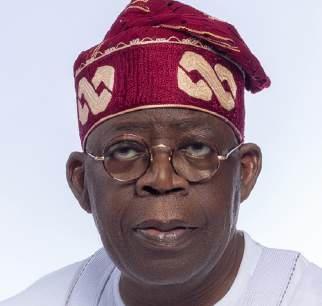
President Bola Ahmed Tinubu has concluded a two-day historic state visit to the United Kingdom (UK), with diplomats and analysts highlighting significant economic prospects and diplomatic gains, while cautioning that success will ultimately depend on implementation rather than
optics. The visit, hosted at the highest level of British diplomacy by King Charles III, resulted in investment commitments estimated at
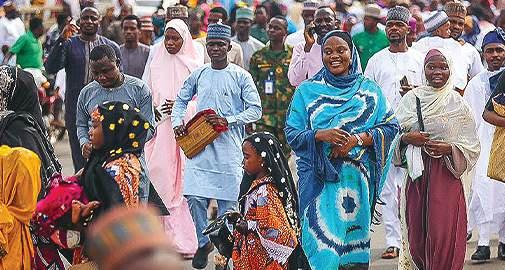
Iran War Triggers Petrol Demand Surge for Dangote Refinery Across Africa Eid-el-Fitr: Tinubu, Sultan,
about $1.51 billion, alongside a suite of bilateral agreements aimed at deepening trade, infrastructure development, and strategic cooperation.
Relations between Nigeria
and the UK date back to colonial times but have since evolved into a multifaceted partnership anchored on trade, education, and diaspora ties.
In recent years, both countries have sought to reposition the relationship toward mutual economic growth, particularly under frameworks such as the
Nigeria would have been at standstill now without the refinery, says Aliko Dangote Raises petrol price to N1,245 per litre Trump: US considering 'winding down' Middle East military operation
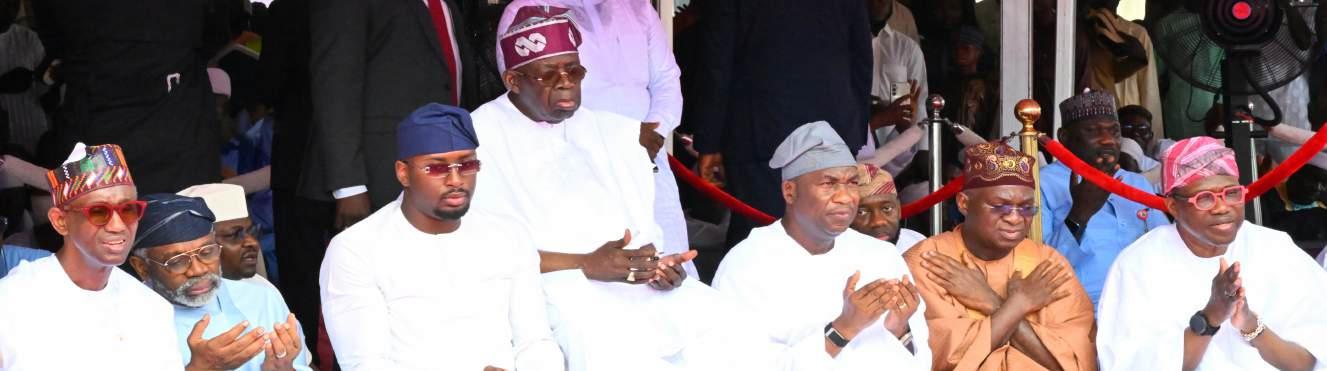
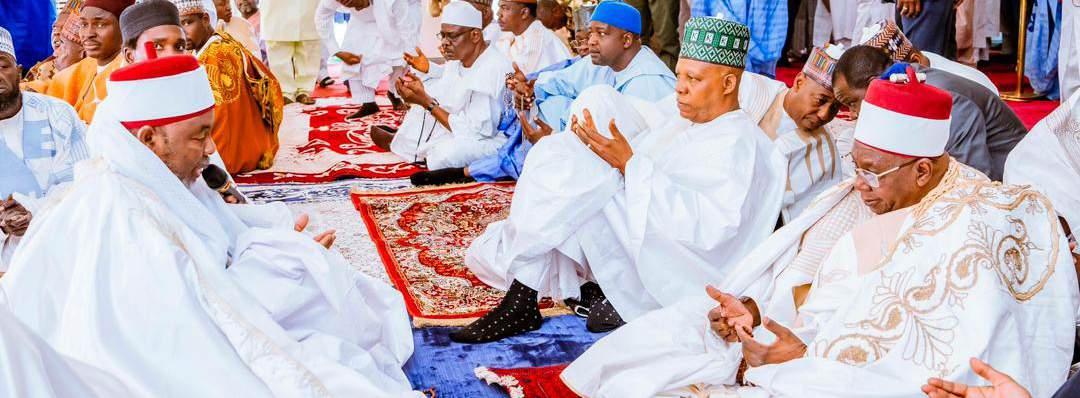
L-R: National Security Adviser, Nuhu Ribadu; Chief of Staff to the President, Femi Gbajabiamila; Yinka Tinubu; President Bola Ahmed Tinubu; Lagos State Deputy Governor, Obafemi Hamzat; former Lagos State Governor, Babatunde Raji Fashola, and Private Principal Secretary to the President, Hakeem Muri-Okunola, during the Eid Mubarak prayer at the Dodan Barracks Prayer Ground in Lagos... yesterday
Providus Bank Fully Meets CBN Capital Requirement
Kayode Tokede
Providus Bank Limited yesterday dispelled media reports over its compliance with regulatory capital requirements, confirming that it has successfully met and exceeded the recapitalisation threshold set by the Central Bank of Nigeria (CBN).
In a statement, the bank clarified that under the CBN’s recapitalisation framework, regional commercial banks
The escalating conflict involving Iran, Isreal and the United States driving an unprecedented surge in demand for refined petroleum products across Africa, placing the Dangote Refinery at the centre of a rapidly shifting global energy landscape.
This comes as the Dangote Petroleum Refinery yesterday increased its ex-depot (gantry) price from N1,175 to N1,245 per litre, while the coastal price increased from N1,512,648 to N1,606,518 per metric tonne. The company cited the rising global geopolitical tensions and rising crude oil costs as the driving factors. The new pricing takes effect from midnight on March 21, 2026.
Also yesterday, President Donald Trump said the United States was "very close" to achieving its objectives in the war against Iran and signalled a potential winding down of
are mandated to maintain a minimum capital base of N50 billion, stating unequivocally that it achieved this benchmark as far back as January 2025 and has since strengthened its financial standing.
According to the bank, its current paid-up capital stands at N65 billion, significantly above the regulatory minimum, underscoring its resilience and commitment to sound financial management.
military operations, while urging other nations to take responsibility for securing the Strait of Hormuz.
The US President also assailed NATO allies, over their lack of support for the war, calling members of the group "cowards."
Equally, yesterday, the British government gave authorisation for the US to use military bases in Britain to carry out strikes on Iranian missile sites that are attacking ships in the Strait of Hormuz.
However, describing the unfolding global geo-political situation in an interview with The Economist, President of the Dangote Group, Aliko Dangote, said, “It’s a crazy situation right now,” as crude oil prices spiked to nearly $120 per barrel, following developments in the Gulf.
He added, “And I think it will continue for a while,” signalling expectations of prolonged volatility in global
The bank noted that this strong capital position places it in good stead to support its growth strategy and continue delivering value to customers and stakeholders.
Providus Bank emphasied that any suggestion implying non-compliance with the CBN’s recapitalisation requirement was inaccurate and does not reflect its current regulatory status.
The bank reiterated its dedication to maintaining
energy markets.
The refinery, located on the outskirts of Lagos, is Africa’s largest, with a processing capacity of 650,000 barrels per day. As supply chains tighten due to geopolitical disruptions, demand from across the continent has surged dramatically.
“People are ready to pay anything now,” Dangote revealed, underscoring the intensity of competition for available fuel supplies.”
Beyond the immediate market pressures, Dangote positioned the refinery as a strategic asset for Africa’s longterm economic independence.
“If we Africans don’t lead in the industrialisation of Africa, Africa will never industrialise,” he said, highlighting the need for homegrown investment in critical infrastructure.
The facility is already having a measurable macroeconomic impact.
According to Dangote,
robust governance standards and aligning with all prudential guidelines set by the apex regulator.
It explained: "Providus Bank Limited notes recent media reports regarding the recapitalisation status of certain banks and considers it important to provide factual clarification as it relates to the Bank. Under the CBN recapitalisation framework, regional commercial banks are required to maintain a
“Nigeria would have been at a standstill now without the refinery,” pointing to its role in reducing the country’s reliance on imported petroleum products and easing pressure on foreign exchange reserves.
Built on a massive industrial complex featuring extensive storage capacity and dedicated port infrastructure, the refinery represents one of the most ambitious private-sector investments on the continent.
Dangote himself emphasised its scale, noting: “Actually we are building a runway there. Nobody believes something like this exists in Africa. We can fly in people to come and have a look.”
The refinery’s importance has been further amplified by disruptions to global trade routes, particularly the Strait of Hormuz, a key channel for energy and fertiliser shipments. This has elevated Dangote’s position as a critical supplier not only of fuel but also of
DIPLOMATS, ANALYSTS COUNT GAINS OF PRESIDENT’S UK VISIT
Enhanced Trade and Investment Partnership (ETIP).
Analysts said Tinubu’s visit reflects both Nigeria’s push to attract capital and Britain’s postBrexit strategy to strengthen non-European alliances.
Central to the visit was a £746 million UK Export Financebacked facility to modernise Nigeria’s Lagos and Tin Can Island ports; projects expected to improve trade efficiency and reduce logistics bottlenecks. In addition, agreements were reached across agriculture, energy, and finance, including a major dairy investment project and expanded cooperation in SMEs and clean energy.
The cumulative value of deals signed during the visit was estimated at $1.51 billion, underscoring the scale of economic engagement.
Economic analysts say the agreements could significantly impact Nigeria’s trade competitiveness if properly executed.
Former Minister of Foreign Affairs, Prof. Bolaji Akinyemi, described Britain’s treatment of Nigeria during the visit as a major confidence boost for the country’s global reputation.
Speaking on ARISE News Channel’s ‘Morning Show’, Akinyemi praised the ceremonial display at Windsor, noting that “you cannot detract from the magnificence of the show that the King put on; nobody does it better than the British when it comes to protocol.”
He stressed that the visit’s significance was in its symbolism, particularly as the first Nigerian state visit to the
UK in 37 years, urging critics to focus less on timing and more on its strategic importance.
According to him, the reception by Britain sends a broader message internationally: “If Great Britain, through the monarchy, values Nigeria, the rest of the world should also be paying attention to Nigeria.”
Akinyemi also pointed to Tinubu’s physical appearance during the visit as a reassuring signal amid concerns about his health.
“My heart was in my mouth at Windsor to watch the President climb those steps; that was a signal that whatever his medical problems are, they can be accommodated,” he said, adding that it demonstrated Nigeria has “an older president, but not a dying one.”
However, the former
diplomat expressed dissatisfaction with the reception accorded to Tinubu by the British Prime Minister, Keir Starmer, describing it as falling short of expected diplomatic courtesy.
“I am not happy about what happened on the side of the Prime Minister. There is no reason he could not have met President Tinubu the way he meets President Zelenskyy,” he said.
He further urged Nigerian authorities to be more assertive in bilateral engagements, warning that Britain traditionally pursues its interests vigorously.
“The British have a habit of pressing for what they believe is owed to them; so they will always push for their interests. We must also push for ours,”
minimum capital base of N50 billion."
“Providus Bank confirms that it had met its capital requirement since January 2025 and currently has a capital base of N65 billiom which is in excess of its capital requirement. Accordingly, any suggestion that Providus Bank has not met the applicable recapitalisation threshold is not consistent with its current regulatory standing.”
The Olayemi Cardoso-led
petrochemicals and fertiliser inputs across Africa.
Looking ahead, Dangote signalled even broader ambitions, including plans to expand refining capacity and list part of the business on the capital market.
He also stressed the urgency of African-led investment, warning: “We know that if we don’t invest, there’s nobody that will come and invest in our continent.”
At the same time, he expressed scepticism about the ability of other African economies to replicate such large-scale industrial projects.
“I can’t see any African country today building a refinery, and if they tried, I wish them best of luck,” he said. “Africans generally might not have this kind of capital. Even when they have, they don’t want to invest. They are scared about investing. We are not.”
Despite criticisms about
he added.
Drawing from his experience under former Head of State, Ibrahim Babangida, Akinyemi emphasised the importance of reciprocity in diplomacy, respect for the rule of law, and cultural sensitivity in engagements involving monarchies.
Despite widespread optimism about the outcomes of the visit, experts maintain that execution remains the critical factor.
Analysts warn that Nigeria has historically struggled to translate bilateral agreements into measurable outcomes due to policy inconsistency and weak institutional frameworks. Without clear frameworks, accountability mechanisms, and sustained policy stability, the gains of the historic visit risk remaining largely on paper.
For the Chief Executive
Central Bank of Nigeria (CBN) had, on March 28, 2024, announced a two-year bank recapitalisation exercise which commenced on April 1, 2024. The 24-month timeline for compliance ends on March 31, 2026. The upward capital revision is expected to ensure that Nigerian banks have the capacity to take on bigger risks and stay afloat amid both domestic and external shocks.
reliance on foreign technical expertise, Dangote defended his operations, insisting: “We are very, very innovative,” pointing to advanced automation in both refining and cement production. Dangote wants to list a portion of the refinery on the Nigerian Exchange Limited and perhaps on the London Stock Exchange, and over the next three years expand capacity to almost half as much as all of Saudi Arabia’s facilities combined. He also wants to use the gas produced at the complex to provide power for manufacturers that could set up nearby.
The Dangote Group, which already operates in 16 other African countries, has plans beyond Nigeria. Last year it announced a $2.5 billion joint venture with Ethiopia to build a fertiliser plant of similar size to that in Nigeria. Dangote said he will invest another $1bn in
Officer of the Centre for the Promotion of Private Enterprise (CPPE), Muda Yusuf, described the port modernisation initiative as a potential “game changer” for Nigeria’s economy.
“Efficient ports reduce the cost of imports and exports, improve turnaround time, and enhance Nigeria’s attractiveness to investors. This is a positive signal to global markets that Nigeria is open for business, but consistency in policy implementation will determine whether these commitments translate into real growth,” he said.
Governance and strategy expert, Yemi Mapaderun, also described the visit as a platform for mutually beneficial outcomes.
Sultan of Sokoto, Alhaji Saad Abubakar III harped on the need for tolerance and prayers for the wellbeing of the country, adding that with prayers and love the country will remain peaceful and will progress.
Also, the Christian Association of Nigeria, (CAN) while congratulating Muslims on the Mubarak, called for national reset and return to peaceful coexistence which the country was known for. Governors and leaders across the country also lent their voices in urging for peaceful coexistence and love for one another beyond the season of Ramadan and lent.
The President, who spoke to reporters after the Eid-el-Fitr prayers at the Dodan Barracks in Lagos, said the bedrock of development lies in peaceful and harmonious coexistence.
He said: “I pray for peace in the country. The stability, peace and security of the nation is not just one man’s responsibility. We are all involved. Report suspicious movements of people across the length and breadth of the country. These are our responsibilities too".
Tinubu said the spiritual emphasis on charity and kindness to others should go beyond the fasting period.
According to him: “We give thanks to God for guiding us through the month of Ramadan. We have accepted the principles, philosophy and doctrine of giving, peace, security and love of our nation, and of neighbours, and kindness to all humanity in any way we can.
“We should assist the needy and help the vulnerable. That is the teaching. May God accept
our sacrifices.
“We must continue not because Ramadan has come and it’s over. We thank almighty God for giving us that month. But the teaching must continue even after Ramadan. We must continue to be our brother’s keeper. Good behaviour, good neighbours, and love for humanity".
The President noted that the focus of all religions in the
country remains the worship of one God, and that the character of citizens must reflect deep spiritual values drawn from prayers, the study of the Holy Scriptures, meditation, and penitence.
He said the task of nationbuilding is collective, inclusive and shared by all Nigerians, urging more emphasis on the
Dike Onwuamaeze
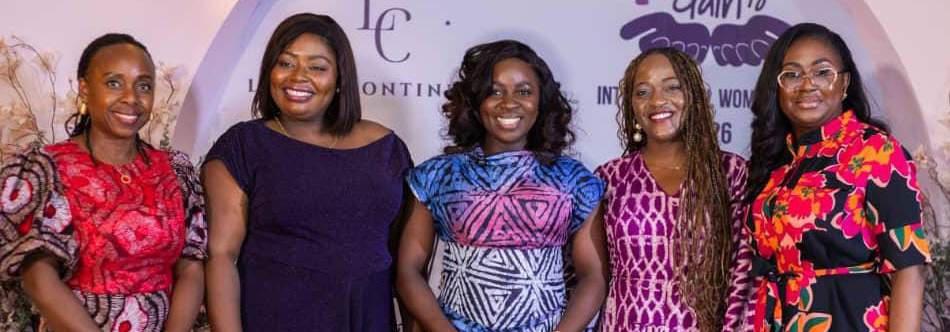
2026 INTERNATIONAL WOMEN’S DAY...
L-R: Head, Business Planning and Compliance, Optiva Capital Partners, Eke Onyinyechi;
Catholic Bishops Urge Nigerians to Stand for Peace, Justice
Onyebuchi Ezigbo in Abuja
The President of the Catholic Bishops’ Conference of Nigeria (CBCN), Archbishop Matthew Man-Oso Ndagoso, has urged citizens of all faiths in the country to go beyond peaceful coexistence and work collectively towards building a nation anchored on justice, truth, and mutual respect.
In a goodwill message to the Muslim faithfuls, on the occasion of Eidel-Fitr, the Archbishop urged Nigerians to imbibe values such as forgiveness, solidarity with the poor, and reverence for God as pathways to national
healing and renewal.
“As you celebrate, we join you in thanksgiving to Almighty God, praying that the spiritual benefits of Ramadan will continue to renew hearts, deepen compassion, and strengthen unity across the nation,” he said.
Ndagoso commended their commitment to fasting, prayer, and almsgiving, describing it as a strong demonstration of faith, discipline, and devotion to God.
While harping on the significance of this year’s religious calendar, CBCN said that both Christians and Muslims commenced their fasting periods simultaneously.
Malaysia’s Exports to Nigeria Grows by 20.7% in 2025
Kayode Tokede
Malaysia’s exports to Nigeria grew by 20.7 per cent in 2025, reaching $664 million, underscoring strengthening bilateral trade ties and deepening economic engagement between the two countries amid an evolving global trade landscape.
The export growth was driven primarily by increased exports of palm oil and palm oil-based agricultural products, which rose by 33.7 per cent.
This was followed by strong growth in transport equipment (1,260 per cent growth), machinery, equipment and parts (44.8 per cent growth), and processed food (28.1per cent growth).
During the same period, Malaysia key imports from Nigeria comprised agricultural products (54.7 per cent), petroleum products (22.9 per
cent), metalliferous ores and metal scrap (10.3 per cent), and crude petroleum (4.3 per cent).
Total bilateral trade between Malaysia and Nigeria in 2025 reached $1.23 billion, positioning Nigeria as Malaysia’s fourthlargest trading partner in Africa and 43rd globally.
The High Commissioner of Malaysia to Nigeria, H.E. Aiyub Omar, welcomed the positive trajectory of bilateral trade, noting that the sustained growth provides a strong foundation for enhanced strategic and economic cooperation between both nations.
He highlighted that Malaysian companies are not only exporting goods to Nigeria but are also actively contributing through services and expertise particularly in priority sectors identified by the Nigerian Government such as the development of the palm oil industry.
According to the CBCN president, the convergence underscores shared values of sacrifice, prayer, and reliance on God, while reinforcing the need for unity and
NASFAT
Sunday Ehigiator
mutual understanding among Nigerians.
He also said that the country is currently grappling with serious challenges, including
insecurity, economic hardship, and social divisions.
In the light of the unabating challenges facing the country, Ndagoso
prayed for peace, protection, and divine guidance for Nigeria and its leaders, urging them to remain committed to serving the common good.
Calls for Patience, Support for Tinubu’s Reforms
The Chief Missioner of the Nasrul-Lahi-l-Fatih Society (NASFAT), Imam Abdu-Azeez Morufu Onike, has urged Nigerians to support the administration of Bola Ahmed Tinubu and exercise patience as the government implements ongoing reforms.
In his Eid-ul-Fitr message delivered in Lagos, Onike cautioned against premature
criticism, calling on citizens to adopt a more measured and constructive approach to national discourse.
“Islam teaches balance. We hold leaders accountable, but we must also avoid baseless suspicion, offer constructive advice, and support genuine efforts aimed at public welfare,” he said.
The cleric acknowledged the economic hardship currently facing Nigerians but noted that
the federal government is making observable efforts to stabilise the economy and improve security.
He pointed to key policy measures such as fuel subsidy removal, foreign exchange unification, and fiscal reforms, which he said are already producing positive macroeconomic indicators, including increased government revenue and improved investor confidence.
Onike further stressed the
importance of relying on verified information, citing Qur’an 4:83, which warns against spreading unverified reports. He said adherence to this principle would help build trust in governance and reduce unnecessary tension in the country.
Referencing a saying of Prophet Muhammad (SAW), he added: “Do not curse your leaders; rather, ask Allah to make them righteous, for their righteousness brings about your well-being.”
Tuggar Denies Fuelling Disaffection in Bauchi APC, Accuses Yuguda of Misleading Party Members
The Minister of Foreign Affairs, Ambassador Yusuf Maitama Tuggar, has reacted to recent claims made by former Bauchi State Governor, Malam Isa Yuguda, regarding the conduct of the All Progressives Congress (APC) congresses in the state, describing the allegation as entirely false and lacking credible evidence.
Tuggar said he remains fully
focused on his national duties, advancing Nigeria's diplomatic and economic interests in line with President Bola Ahmed Tinubu's Renewed Hope Agenda.
In a response contained in a statement issued yesterday by Tuggar’s Special Assistant on Media and Communications Strategy, Alkasim Abdukadir which was made available to journalists in Bauchi, dismissed the allegation as entirely false
and lacking credible evidence.
Tuggar stated that he has no interest in engaging in unnecessary public disputes and will not allow his name or reputation to be dragged into unfounded controversies.
Yuguda had earlier alleged that a petition submitted by the minister to the party's National Working Committee (NWC) was aimed at maligning his character and credibility. He described the move as baseless
and accused Tuggar of fuelling disaffection within the APC in pursuit of his alleged governorship ambition.
In a statement signed by Dapo Okubanjo on behalf of Yuguda's media office, the former governor further accused Tuggar of attempting to undermine him despite being his political beneficiary during their time in the defunct All Nigeria Peoples Party (ANPP).
Blue Economy: BRACED Commission to Reposition South-south into Africa’s Industrial Hub
Blessing Ibunge in Port Harcourt
In a bid to boost and sustain the region's growth, a regional development body made up of six states from the South-south region, BRACED Commission, has set its sights on the blue economy and manufacturing to promote economic activities in the region.
and Delta states that work closely to achieve a strong regional economy, through job creation, manufacturing, and improved agriculture.
BRACED, is an acronym for Bayelsa, Rivers, Akwa Ibom, Cross Rivers, Edo
The Commission, in a communique issued at a symposium on investment in Port Harcourt, Rivers State, yesterday, resolved to work towards transforming the economy of member states "from a resource dependent model to a diversified, valueadded and investment-driven regional economy."
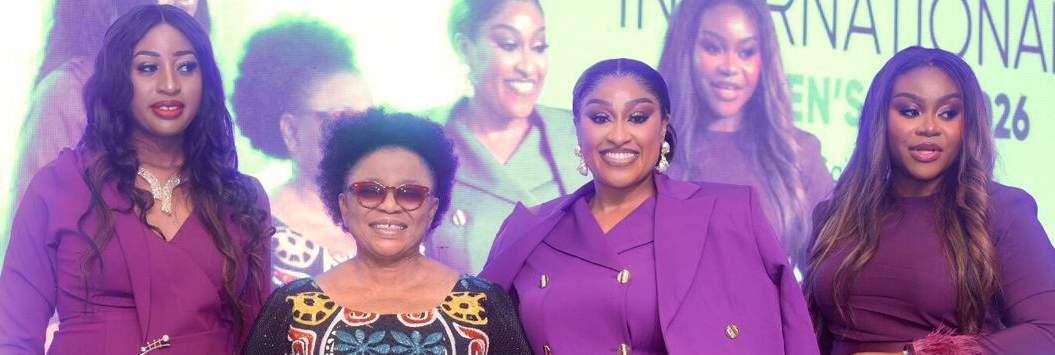
Africa's Richest Woman, Mrs. Folorunsho Alakija; Executive Director, Optiva Capital Partners, Dr. Amaka Okeke, and Head, Customer Engagement, Emeni Amarachi, at the IWD 2026 event hosted by Optiva Capital Partners in Lagos…recently
Segun Awofadeji in Bauchi
Oil Price Surge to Put Cost Pressure on Manufacturers, Experts Say
Economists and financial market experts have warned that the disruption in supply of crude oil by the United States and Israel war against Iran will expose Nigerian manufacturers to serious cost pressure due to very high energy costs and adversely affect productivity of business enterprises.
Currently the pump prices of petrol are within the range of N1,230 and N1,300 in Lagos and some major cities, but sells higher in some other cities, while diesel has gone up from N950 to 1,650 in Nigeria depending on locations.
They also cautioned that the current macroeconomic gains recorded by Nigerian economy may diminish through sharp spike in inflation in the coming months.
According to them, Nigeria might not be in a position to
optimise the benefits of the rising crude oil price which is tending toward $120 per barrel (bp) if the country does not expand its daily production from the current 1.5mbpd to 2.5 million barrels per day (mbpd).
These views were expressed by Professor of Economics and former member of the Monetary Policy Committee of the Central Bank of Nigeria, Prof. Mike Idi Obadan; Emiretius Professor of Economics, Prof. Akpan Ekpo; Chief Executive of Economic Associates Limited, Dr. Ayo Teriba and the Chief Executive Officer of BIC Consultancy Services, Dr. Boniface Chizea.
According to Obadan, “the impact of rising oil prices in the global market on corporates and households is negative and strong.
“Already, through very high energy costs, manufacturers are under serious cost pressures.
“Cost of production has risen
DataPro Convenes Media, Analysts, Industry Influencers for Credit Rating
Nigeria’s technology-driven credit rating agency, DataPro, has set March 26, 2026, as the date for its annual virtual training programme for media practitioners, aimed at deepening understanding of the credit rating industry and strengthening financial reporting standards.
The initiative, first introduced in 2021 as part of the company’s corporate social responsibility (CSR) efforts, continues to serve as a platform for building capacity among journalists and analysts covering the financial and capital markets.
According to Victoria Balogun, the company’s Senior Financial Analyst, this year’s edition is expected to attract a wide range of participants, including professionals from the print and electronic media, editors of capital market
publications, financial analysts, communication officers, and financial industry influencers.
Speaking ahead of the programme, the Executive Director/Chief Rating Officer of DataPro, Mr. Oladele Adeoye, underscored the evolving nature of financial journalism in a rapidly changing technological landscape.
According to him, this year’s training theme, ‘Reporting Financial Analysis in the Age of AI’, reflects the urgent need for media practitioners to adapt to new tools and realities shaping the industry.
“Financial reporting is no longer just about numbers; it is about trust, transparency, and resilience,” he said. “In the age of AI, media practitioners must be equipped to interpret dynamic data and communicate it in ways that empower society.”
sharply for diesel, petrol, and aviation fuel.
“The energy price stabilising force of the Dangote Refinery has now been disrupted with petrol price per litre rising from about N830.00 pre-US-Iran war to the present N1,230 - N1,300
depending on the location. Diesel price per litre has similarly risen from about N950.00 to 1,650.00.
“The rising prices of energy and imported input costs have adversely affected production and productivity in
production enterprises, especially manufacturers.”
Obadan also said Nigeria’s low level of crude oil production which is presently at 1.5mbpd may deny the country expected windfall of revenue from the escalating oil prices.
He said: “In Nigeria’s case, however, the impact on public revenue is attenuated by several factors: low volume of oil production and export, such that as at present reports indicate that the country produces about 1.5 million barrels per day (mbpd).
Group Proposes Nigeria’s Restructuring to Tackle Insecurity
Felix Omoh-Asun in Benin
A group, God and People Prayer Parliament in God, GAP, Nigeria, has proposed the break up of Nigeria into seven republics to tackle insecurity in the country.
The Benin, Edo State-based group, said breaking Nigeria into various republics will safeguard citizens from unnecessary political tension and prevent terrorists from infiltrating villages.
Founder of GAP, Dr. Dele Oluwatade who spoke with journalists in Benin, explained
that dividing Nigeria into seven parts will make the citizens settle down to peaceful coexistence.
"Once the country is broken up, security men will be deployed to their various republics. This will give them the opportunity of policing their area, well known to them. Any outsider is easily detected," Oluwatade said.
He posited that this will preserve Nigeria's status as the largest black nation in the nation.
He noted the country needs a system that will insulate and
protect Nigerians from each other, while living peacefully together in one country, saying the country will be able to defeat terrorism if the nation is broken into republics.
According to him, "when we are in a confederate system, the communities now are empowered to defend themselves."
On the incessant terrorism going on in the country, he said, "a member of the armed forces said Nigerians should defend themselves, the battle is getting more than what the
military can cope with. We agree with him. So what the President should do now is to divide us into confederation."
Oluwatade emphasised that all the stakeholders in Nigeria should be reconfigured into confederation, noting "units that can now defend themselves. You cannot defend yourself in a presidential system."
Advising that "Nigeria should restructure itself quickly into seven confederal republics to pre-empt international forces who may want to disintegrate Nigeria."
Police Invite Edo LG Acting Chairman Over N100m Financial Misconduct Allegations
Wale Igbintade
The Nigeria Police Force has invited the Acting Chairman of Etsako East Local Government Area of Edo State, Mr. Sunday Akiotu, for questioning over allegations of financial misconduct involving more
than N100 million in council funds.
The invitation, issued by the Police Special Fraud Unit (PSFU) in Lagos, follows a petition submitted by Integrity Advocacy for Development Initiative, which raised concerns about a series of transactions
linked to the local government’s finances.
According to documents reviewed, Akiotu is expected to appear before the Commissioner of Police at the PSFU headquarters in Ikoyi on March 25, 2026, to respond to issues raised in the petition. Two officials of the council, Mr. Ahonsi Charles and Mr. Otaru Gospel, have earlier been questioned by investigators as part of the ongoing inquiry handled by the unit’s Stock and Capital Market Fraud Section.
Sokoto Governor Donates Vehicle to NUJ, Pledges Support
Sokoto State Governor, Ahmed Aliyu, has donated an official vehicle to the Nigeria Union of Journalists (NUJ) Sokoto State Council at a special Iftar event held at the Government House, Sokoto.
The event brought together members of the NUJ, social media leaders, and top government officials to strengthen collaboration and address media challenges.
Governor Aliyu acknowledged the media's vital role in promoting
transparency and good governance, stressing the need for professionalism and responsible communication.
He approved the vehicle donation and assured press freedom and continued collaboration, pledging to do more on security and social well-being in addition to
achievements recorded so far. NUJ Chairman, Usman Mohammed Binji, commended Governor Aliyu for transforming Sokoto State through initiatives in education, healthcare, security, youth and women empowerment, and rural development.
L-R: Project Lead, PIU Project Bridge, Jumoke Akande; Minister of Communications, Innovation and Digital Economy, Dr. Bosun Tijani; Head, Investment Banking, Quest Merchant Bank, Yetunde Falore, and Acting Managing Director/ CEO, Afolabi Olorode, at the project BRIDGE workshop held in London.. recently
Onuminya Innocent in Sokoto
Dike Onwuamaeze
CELEBRATING WOMEN...
ADC Leadership Crisis Deepens as Faction
Petitions US Over Alleged Hijack of Party
Chuks Okocha in Abuja
The leadership crisis within African Democratic Congress (ADC) is taking another turn as a faction of the party has formally filed a petition with the United States Embassy in Abuja, accusing some members of trying to take control of the party and undermine internal democratic processes.
The faction led by Nafiu Bala Gombe is asking the US to consider imposing sanctions, including visa restrictions, on individuals allegedly involved in the unconstitutional takeover
of the party’s leadership.
In a formal complaint sent to the embassy, Gombe, who said he is the real leader of the party, claimed that some unnamed politicians broke the party’s rules and didn’t follow the proper steps.
Gombe stated that the incident occurred after the resignation of the party’s former National Chairman, Ralph Okey Nwosu, along with other members of the National Working Committee (NWC).
Gombe stated in the petition, “I am writing to you in my capacity as the authentic
National Chairman of the African Democratic Congress, ADC. I want to highlight a serious issue within our party that we think is putting the democratic process and the rule of law in Nigeria at risk.
“As a symbol of democracy and a guardian of constitutional processes around the world, we are asking the Embassy to recognise the situation and take action against the undemocratic takeover of our party.
“Our complaint stems from the evident breach of the ADC Constitution due to the voluntary resignations of our
former National Chairman, Mr. Ralph Okey Nwosu and other members of the National Working Committee (NWC).
“When the National Chairman position becomes empty, the Deputy National Chairman must take over to keep things running smoothly.
Following the resignations, I, Hon. Nafiu Bala, remained the sole and only National Deputy Chairman who did not resign. So, by law and following the proper steps, it was my duty as a leader to take charge of the party’s matters.
“Therefore, by constitutional
Tension as APC Disrupts ADC Women Rally in Rivers
Blessing Ibunge in Port Harcourt
Tension flared in Eleme Local Government Area of Rivers State, yesterday, as the maiden rally of the ADC Young Women Forum was abruptly halted following disruption by an All Progressives Congress (APC) ward councillor, raising fresh concerns about political intolerance in grassroots democracy.
The event, scheduled to hold outside the Alesa Eleme Town Hall, had already seen
canopies and chairs arranged, with participants gathering in anticipation when the councillor, identified as Hon. Daddy Chikere, walked in and stopped proceedings.
It was gathered that the councillor insisted that the organisers failed to seek prior approval from him and further claimed that the Independent National Electoral Commission (INEC) had not authorised political campaign activities.
Reacting to the incident, the event organiser and National Coordinator of the
Atedo Peterside, Others
ADC Young Women Forum, Ms. Atosemi Oma-Uwame, described the disruption as an attempt to suppress democratic engagement.
“Today was meant to be the inaugural programme of the ADC Young Women Forum in Eleme LGA. The APC came to disrupt the event. I give thanks to God and I'm grateful that there was no act of violence because the issue was resolved diplomatically,” she said.
Oma-Uwame rejected claims that the gathering
was a political campaign, clarifying that it was merely a constituency meeting of young women.
“The councillor claimed that INEC has not given approvals for campaign, but the truth is that we didn't come for a campaign.
It was just a gathering of ADC Young Women Forum in my constituency, Eleme,” she stated.
She further disclosed that she was warned by the disruptors against hosting events under the ADC name in the area.
right and due process, the mantle of leadership fell on me to steer the affairs of the party.
“However, our rightful journey toward leadership has been blocked by outside political forces, including power seekers from different political parties.
“These people are trying to take control of the ADC and become leaders without following our party’s rules or proper procedures. We have taken our case to court to fight for justice and show that we are following our party’s rules, but our opponents have used propaganda instead.
Action Movie Star, Chuck Norris Dies at 86
Sunday Ehigiator with agency report
Chuck Norris, the martial arts grandmaster and action star whose roles in ‘Walker, Texas Ranger’ and other television shows and movies made him an iconic tough guy — sparking internet parodies and adoration from presidents — has died at 86.
Norris died Thursday, in what his family described as a “sudden passing.”
“While we would like to keep the circumstances private, please know that he was surrounded by his family and was at peace,” the Associated Press quoted the family to have said in a statement.
Torrance, California, and joined the U.S. Air Force after high school, in 1958. It was during a deployment to Korea that he started training in martial arts, including judo and Tang Soo Do.
“I went out for gymnastics and football at North Torrance high,” he had told The Associated Press in 1982. “I played some football, but I also spent a lot of time on the bench. I was never really athletic until I was in the service in Korea.”
Seek Urgent Electoral Reforms to Safeguard
A civic coalition, GoNigeria, has called for urgent and credible electoral reforms, warning that declining public confidence in Nigeria’s electoral process poses a serious threat to the country’s democratic stability. In a statement by the Convener, Atedo Peterside, on behalf of GoNigeria,
the group said Nigeria’s democracy rests on four critical pillars—electoral reform, judicial reform, freedom of speech, and the security of life and property—arguing that credible elections remain the foundation upon which legitimate governance and institutional trust are built. The statement was signed by
Nigeria’s Democracy
the Convener and released on behalf of GoNigeria, which has the following 24 Advocates at its helm: Abubakar Siddique Mohammed, Aisha Yesufu, Arunma Oteh, Ayisha Osori, Obonganwan Barbara Etim James, Binta Max Gbinije, Dike Chukwumerije, Dudu Mamman Manuga, Folarin Falana (Falz), Hamzat Lawal,
Ibrahim Dahiru Waziri, Kashim Ibrahim-Imam, Bishop Matthew Kukah CON, Muhammad Ali Pate, HH Muhammad Sanusi II (Emir of Kano), Ngozi Coker, Nuruddeen Lemu, Osita Chidoka, Salamatu Hussaini Suleiman, Sola Akinyede OON, Tomiwa Aladekomo, Tony Rapu, and Yemi Adamolekun.
Before he would become a star in movies and on TV, Norris was wildly successful in competitive martial arts. He was a six-time undefeated World Professional Middleweight Karate champion.
He also founded his own Korean-based American hard style of karate, known sometimes as Chun Kuk Do, and the United Fighting Arts Federation, which has awarded more than 3,300 Chuck Norris System black belts worldwide. Black Belt magazine ultimately credited Norris in its hall of fame with holding a 10th degree black belt, the highest possible honor.
Born Carlos Ray Norris in Ryan, Oklahoma, on March 10, 1940, he grew up poor. At age 12, he moved with his family to
After he was honourably discharged in 1962, he worked as a file clerk for Northrop Aircraft and applied to be a police officer, but was put on a waitlist. Meanwhile, he opened a martial arts studio, which expanded to a chain, with students including such stars as Bob Barker, Priscilla Presley, Donny and Marie Osmond, and Steve McQueen, whom he later credited with encouraging him to get into acting.
Norris made his film debut as an uncredited bodyguard in the 1968 movie ‘The Wrecking Crew’, which included a fight with Dean Martin. He had also crossed paths with Bruce Lee in martial arts circles. Their friendship — sometimes, as sparring partners — led to an iconic faceoff in the 1972 movie ‘Return of the Dragon’, in which Lee fights and
kills Norris’ character in Rome’s Colosseum.
L-R : Founder, Fullcircle Geriatric Care Services, Gbeminiyi Laolu-Adewale; Director of Finance and Business Support, Lagos Continental Hotel, Abimbola Adekoya; Director of Sales and Marketing, Caroline Obasa; Head of Marketing and Sales Support, Oriflame Nigeria, Adesewa Okeyinka, and Zonal Head, Providus Bank, Rasheedat Adeyemi, at the International Women's Day event hosted by Lagos Continental Hotel...recently
In Praise of President Buhari
Issues in Tinubu’s State visit to UK
WThere is a native proverb that states: nobody chases rat while his home is on fire. What Tinubu did by jetting out of the country ostensibly on a state visit to UK while bomb blasts rocked the city of Maiduguri is analogous to chasing a rat while the house is on fire.
hen President Muhammadu Buhari took over the reins of power on May 29, 2015, Nigeria was sadly a broken state in many respects. As a result of many other factors including bad governance and untold level of corruption, government could not live up to its financial obligations to citizens and service providers at both the federal and state levels.
Indeed one of the first official assignments that President Buhari carried out was the approval of billions of Naira in bailout funds to enable state governors pay something as basic as workers’ salaries. Granting those bailout funds was a huge boost to national security because the pressure of arrears of unpaid monthly salaries building dangerously all over the country was a ticking bomb.
Several bomb blasts exploded in different locations, in the evening of 16th March 2026 claiming over 20 lives, injuring over 110 others and displacing thousands of others in Maiduguri, Borno State. The next day, Asiwaju Bola Ahmed Tinubu traveled with a retinue of state governors, ministers and personal aides like an emperor on a picnic. It was a show of shame in London as the world watched the funfair while his home country is aflame. Will the British prime minister or any other leader travel out of his country if this deadly attack were to be in his country?
to the space. Do I blame them? In the absence of any visible achievement anything can be termed an achievement.
Ask the naysayers and they would readily remind you of how long it took President Buhari to appoint his ministers and how that contributed to collapse of the economy as if, without ministers, governance was frozen. But buying that narrative would amount to what a famous Nigerian writer, Chimamanda Adichie, termed “the danger of a single story”. Yet the whole story was that many of our citizens did not know how decrepit a state President Buhari inherited in 2015.
It was therefore necessary for him to take stock against the background of the fact that the departing government did not, reportedly, cooperate full well with the incoming government in terms of leaving workable handover notes. Although President Goodluck Jonathan was gracious in defeat, many of his appointees were still sulking over what they saw as their personal losses and therefore pulled all the stops to make things difficult for the Buhari government.
by the EFCC, President Buhari by his action has successfully brought back to the public consciousness the need to treat public funds with the highest level of transparency and accountability.
But Tinubu and his team cannot fool the international community with the state visit to UK. The entire thing is just a waste of tax-payers money because nothing tangible can be achieved through acts of junketing abroad when your home is on fire. The international community and multilateral agencies have intelligence about Nigeria more than we can imagine and so they cannot be fooled by Tinubu’s showmanship and empty rhetoric.
Stop Ritual Attacks and Killings
No genuine foreign investor would want to invest in an environment that is not secure.
After keeping treasury looters on their toes and at bay through the EFCC, particularly, President Buhari moved to curb unnecessary spending habits of the nation on what economists call articles of ostentation. Part of the disclosures of the President’s stock taking was how the country frittered away billions in foreign currency by importing goods, which can be produced at home. One of such items was rice, a major staple among Nigerians. By banning rice importation into the country, the President on one hand had saved the nation billions in foreign currency annually.
He's Feeling It
PEven with the obvious and unpatriotic obscurantist behaviour of the PDP appointees and their supporters still in government hell-bent on making things difficult for Buhari, the President moved on with his methodical repair of a broken country. The first thing he did was to identify all possible sources of income to the nation and directed that all inflows be paid into one single account in line with the policy of Single Treasury Account (TSA).
The TSA policy, interestingly, was mooted by the PDP government but its penchant for imprudence and lack of accountability denied it the courage of implementing the policy. What the President literally did was to gather all the nation’s money into one box and locked it up with a big padlock and watched for any thief to come close.
Many Nigerians are saddened by the unfortunate incident in Maiduguri. Not even Tinubu’s halfhearted order to his service chiefs could make anybody think that he is serious about doing anything to help the victims, fight insecurity and forestall bloodbath that has become everyday occurrence since 2023. Whatever Tinubu and his team intend to achieve by the UK visit has been diminished by turmoil in Nigeria and his apparent nonchalant response to it.
Who can blame the President for almost developing paranoia over the safeguard of the national treasury with revelations and reports of mind-boggling looting that took place in the 16 years of the PDP? With such disclosures of how billions meant for fighting insurgency in the Northeast ended up in the pockets of a few individuals while our gallant soldiers fought with bare hands and on empty stomach, President Buhari was duty bound to bring sanity and accountability back in national spending.
To Tinubu and his political jobbers this visit is a landmark achievement, judging from the way their propagandists put it: it is historic, the first in 37 years from any Nigerian president. To them, it is as Nigeria has launched its visit
Thus, under President Buhari, the Economic and Financial Crimes Commission (EFCC), which had remained comatose for years, was woken up to resume its duties. Apart from the trillions of Naira of looted funds and property recovered from corrupt politicians
TThus, Tinubu’s official visit to UK at this time of national emergency smacks insensitivity to the plight of the people. In fact it is difficult to situate Tinubu’s policies and his obvious lack of empathy for those he has sworn to protect.
And, on the other hand, the President has boosted domestic production of rice and in the process had nudged the country into self sufficiency in food production. He also created millions of jobs for young people in the rice value chain.
Hajia Hadiza Mohammed, An actress, social activist, politician, London, UK. hajiahadizamohammed@gmail.com
What is most admirable about President Buhari and his government is its frugal management of scarce national resources to attain optimum goals. Recall that since President Buhari stepped in the saddle, oil revenue dropped abysmally as if to sabotage him knowing all the big promises he made to citizens during his campaigns. But with the little resources that trickle in, the President is achieving what governments that received oil windfalls could not dream of.
resident Trump has said that the Iran war will be over “when I feel it in my bones.” Does this include his bone 'spurs' that prevented him from serving. Dennis Fitzgerald, Melbourne, Australia
Today, the trains are up and running daily from Abuja to Kaduna. And from Lagos to Ibadan a brand new rail track was started and completed; citizens are already commuting daily to and fro these two major cities in the country seamlessly as they reap from the dividends of democracy. And with the way this government is going, before 2023 when the President would leave, the entire country would be linked by rail with all of its economic advantages.
Ainofenokhai Ojeifo, Abuja
THE SATURDAY NEWSPAPER
EDITOR OBINNA CHIMA
DEPUTY EDITOR AHAMEFULA OGBU
MANAGING DIRECTOR ENIOLA BELLO
THE SATURDAY NEWSPAPER
DEPUTY MANAGING DIRECTOR ISRAEL IWEGBU
EDITOR YEMI ADEBOWALE
CHAIRMAN EDITORIAL BOARD OLUSEGUN ADENIYI
DEPUTY EDITOR AHAMEFULA OGBU
EDITOR NATION’S CAPITAL IYOBOSA UWUGIAREN
MANAGING DIRECTOR ENIOLA BELLO
THE OMBUDSMAN KAYODE KOMOLAFE
DEPUTY MANAGING DIRECTOR ISRAEL IWEGBU
CHAIRMAN EDITORIAL BOARD OLUSEGUN ADENIYI
EDITOR NATION’S CAPITAL IYOBOSA UWUGIAREN
MANAGING EDITOR BOLAJI ADEBIYI
THE OMBUDSMAN KAYODE KOMOLAFE
THISDAY NEWSPAPERS LIMITED
EDITOR-IN-CHIEF/CHAIRMAN NDUKA OBAIGBENA
GROUP EXECUTIVE DIRECTORS ENIOLA BELLO, KAYODE KOMOLAFE, ISRAEL IWEGBU
THISDAY NEWSPAPERS LIMITED
DIVISIONAL DIRECTORS SHAKA MOMODU, PETER IWEGBU, ANTHONY OGEDENGBE
EDITOR-IN-CHIEF/CHAIRMAN NDUKA OBAIGBENA
DEPUTY DIVISIONAL DIRECTOR OJOGUN VICTOR DANBOYI
SNR. ASSOCIATE DIRECTOR ERIC OJEH
ASSOCIATE DIRECTOR PATRICK EIMIUHI
DIRECTOR, PRINTING PRODUCTION CHUKS ONWUDINJO TO SEND EMAIL: first name.surname@thisdaylive.com What a waste!
GROUP EXECUTIVE DIRECTORS ENIOLA BELLO, KAYODE KOMOLAFE, ISRAEL IWEGBU, IJEOMA NWOGWUGWU, EMMANUEL EFENI
DIVISIONAL DIRECTORS SHAKA MOMODU, PETER IWEGBU, ANTHONY OGEDENGBE
he Advocacy for Alleged Witches (AfAW) urges the Nigerian public to stop ritual attacks and killings because the notion of ritual money and wealth is completely baseless. AfAW is making this call following the reported arrest of suspected ritualists in Oyo State in southern Nigeria. The local media reported that members of the Western Nigeria Security Network, Amotekun, arrested suspected ritualists with the body parts of a 73-year-old man.
Ogwashi-Ukwu is Neglected
Iwrite on behalf of residents of OgwashiUkwu, capital of Aniocha South Local Govt Area of Delta State, to draw your attention to our plight.
For years, Ogwashi-Ukwu have been neglected in terms of basic infrastructure.
The suspects, who were apprehended in the Boluwaji area in Ibadan, said that a Muslim cleric asked them to procure some human body parts for rituals. Ritual attacks are widespread in Nigeria. Irrational conceptions of how to make money or become wealthy and successful undergird these atrocities. Many Nigerians strongly believe in blood money, known in some local languages as Ogun Owo (Yoruba) or Ogwu ego (Igbo). They think that they could become rich, or successful through ritual sacrifice. Unfortunately, this is not the case. Ritual wealth has no basis in reason, science, or reality. Home movies known as Africa magic or Nollywood films have not helped matters. These movies continue to reinforce these mistaken notions and other superstitions. Families, churches, mosques, and other public institutions do not encourage the interrogation of these traditional occult beliefs. There are no robust efforts to criticize or dispel these irrational and paranormal claims in schools, colleges, and universities. So millions of Nigerians grow up blindly believing that they could make money through ritual sacrifice of human body parts. The belief has led many Nigerians to commit crimes and perpetrate atrocities. Many Nigerians have been jailed or are undergoing court trials due to ritualrelated attacks and murder.
Our roads are nothing to write home about, not to talk about the Ogwashi-Ukwu General Hospital.It is sickening.Besides, we suffer from epileptic power supply, and subjected to outrageous estimated billing by the Benin Electricity Distribution Company. We buy transformers,poles and cables yet we are being asked to pay bills for darkness. Most businesses depending on electricity have virtually closed shop because they can no longer cope with buying fuel to sustain their businesses. We would be grateful if the right authorities can intervene.
Feyisetan Akeeb Kareem, One Voice,Our Choice, Ogwashi-Ukwu, Delta State
Not too long ago, the police arrested some young Nigerians for stealing female pants, which they intended to use for ritual sacrifice. AfAW is asking all Nigerians to desist from ritual-related abuses because ritual money beliefs are baseless superstitions. Nigerian media, schools, and colleges should help educate and reorient the public. They should assist in reasoning Nigerians out of this killer-superstitious absurdity and nonsense. Leo Igwe directs the Advocacy for Alleged Witches (AfAW)
Eid Mubarak
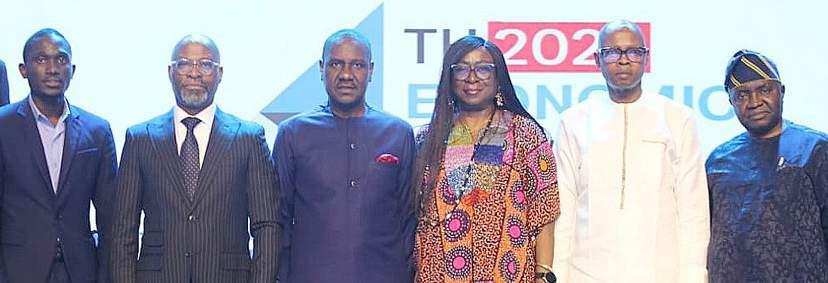
2026 TRINITY HOUSE ECONOMIC SUMMIT...
IRAN WAR TRIGGERS PETROL DEMAND SURGE FOR DANGOTE REFINERY ACROSS AFRICA
cement and power projects in Zimbabwe.
He lists other ideas: potash and phosphate mining, copper processing in Zambia, cocoa processing in Ghana and Ivory Coast, and a petroleum pipeline from Namibia to central Africa.
Most of the refinery’s managers are Indians. The cement business has a longstanding relationship with Sinoma, a large Chinese company. Mr Dangote brushes these criticisms away.
Trump Says US Considering 'Winding Down' Middle East Military Operation
President Donald Trump yesterday said the United States was "very close" to achieving its objectives in the war against Iran and signalled a potential winding down of military operations, while urging other
nations to take responsibility for securing the Strait of Hormuz.
In a post on Truth Social, Trump outlined what he described as major military gains against Iran.
"We are getting very close to meeting our objectives as we consider winding down our great Military efforts in the Middle East with respect to the Terrorist Regime of Iran," he wrote.
He listed a series of achievements, including dismantling Iran's military capabilities.
"Completely degrading Iranian missile capability destroying Iran's defense industrial base eliminating their Navy and Air Force," Trump said, adding that the U.S. would ensure Iran never comes close to developing nuclear weapons.
Trump also said Washington had secured its regional allies.
"Protecting, at the highest level, our Middle Eastern allies, including Israel, Saudi Arabia, Qatar, the United Arab Emirates, Bahrain, Kuwait, and others," he wrote.
A key part of Trump's message was a call for countries reliant on the Strait of Hormuz to take over its security, signalling a shift in U.S. strategy.
"The Hormuz Strait will have to be guarded and policed, as necessary, by other Nations who use it — The United States does not!" he said.
He added that while the U.S. could assist, it should not be necessary. "If asked, we will help these Countries in their Hormuz efforts, but it shouldn't be necessary once Iran's threat is eradicated."
The remarks suggest Washington may be preparing to scale back its direct military role
after weeks of intense operations, even as tensions in the region remain high and shipping through the Strait of Hormuz continues to face disruption.
The waterway is a critical global energy route, carrying a significant share of the world's oil and gas supplies. Trump's push for other nations to take charge underscores a broader effort to shift the burden of security to countries that rely most heavily on the route.
While the U.S. has not formally announced a withdrawal, Trump's comments point to a strategy of maintaining strategic dominance while reducing frontline involvement — keeping pressure on Iran while expecting allies and global powers to step in on maritime security.
Meanwhile, Trump yesterday assailed NATO allies over their lack of support for the
war against Iran, calling the longtime US allies "cowards."
"Without the U.S.A., NATO Is A Paper Tiger!" Trump said in a social media post.
The US president complained NATO countries did not want to join the fight against Iran, yet complained about high oil prices.
"Now that fight is Militarily WON, with very little danger for them, they complain about the high oil prices they are forced to pay, but don’t want to help open the Strait of Hormuz, a simple military maneuver that is the single reason for the high oil prices. So easy for them to do, with so little risk," he wrote.
"Cowards, and we will Remember!"
Germany, Britain, France, Italy, the Netherlands, Japan and Canada pledged in a joint statement on Thursday to join "appropriate efforts to
ensure safe passage through the Strait." But German Chancellor Friedrich Merz made clear that this presupposed an end to combat.
In the meantime, the British government yesterday gave authorisation for the United States to use military bases in Britain to carry out strikes on Iranian missile sites that are attacking ships in the Strait of Hormuz.
British ministers met to discuss the Iran war and Iran's blocking of the Strait of Hormuz, Reuters quoted a Downing Street statement.
"They confirmed that the agreement for the U.S. to use UK bases in the collective selfdefence of the region includes U.S. defensive operations to degrade the missile sites and capabilities being used to attack ships in the Strait of Hormuz," the statement said.
On his visit to the United Kingdom with the First Lady, Senator Oluremi Tinubu, and the reception by His Majesty, King Charles III, and Queen Camilla, Tinubu described the honour as a reflection of Nigeria’s place in the emerging global economy.
“Our visit was a very big opportunity for us to be a good example of the diversity in our society, being able to accept one another as our brothers’ keepers. Tolerance among all faiths. The fact that we worship the same God doesn't mean our styles have to be the same. Our behaviour could be different, but we serve God Almighty,’’ the President stated.
Earlier in his sermon, Grand Chief Imam of Lagos State, Alhaji Sulaiman Oluwatoyin Abou-Nolla, who led the Eid al-Fitr prayer, reminded the Muslim Ummah of the significance of Ramadan and the need for the faithful to continue to live in the virtues of penitence and piety.
"Today, we are witnessing a world unsettled by tensions and fear. Nations are on edge,
and economies are fragile. For Nigerians, especially the good citizens of this great nation, this is a time for calmness, not chaos—a time for wisdom, not provocation. Ours is a religion of peace and discipline and care," the Imam said.
Shettima Reassures of Govt's Resolve to Tackle Insecurity, Other Challenges
Vice President Shettima who joined other Muslim faithful to observe the Eid-el-Fitr prayers at Ramat Square in Maiduguri, the Borno State capital, assured the people of their safety flowing from actions the government had taken.
The prayers, led by the Chief Imam of Borno State, Shettima Mamman Saleh, drew an impressive array of dignitaries, including Borno state Governor, Prof Babagana Zulum, Senator Ali Ndume and Senator Kaka Shehu Lawan, alongside other prominent sons and daughters of the state.
Speaking to newsmen after the prayers, Shettima expressed
optimism that insecurity across the country would soon be contained through the proactive measures deployed by both the federal and state governments.
He called for unity among Nigerians, noting that the convergence of Ramadan and Lent offered a powerful moment for reflection. According to him, national progress is inseparable from peace, stressing that Nigerians must come together to confront shared challenges such as insecurity and underdevelopment.
He also commended the people and leaders of Borno State for their resilience and unwavering commitment to peace, harmony, and progress.
Earlier in his sermon, the Chief Imam urged Muslim faithful to carry forward the lessons of Ramadan, comprising discipline, sacrifice, and devotion into their daily lives beyond the holy month.
He emphasised the need for continued piety, compassion, and social responsibility as essential tools for building a peaceful and cohesive society.
Sultan of Sokoto Urges Unity, Prayers for Nigeria
The Sultan of Sokoto used the occasion to call on Nigerians to sustain prayers and commitment to the nation's progress, emphasising the need for genuine unity and dedication among leaders.
In his Eid-el-Fitri message in Sokoto, he commended Islamic Scholars for educating people during Ramadan Tafsir and other preaching sessions, urging them to sustain efforts and engage in individual and collective prayers for the country.
The Sultan encouraged Nigerians to embrace positive change, expressing optimism that the country's best days lie ahead.
He urged citizens to remain God-fearing, adhere to religious guides, and be patriotic to national building. Abubakar commended Governor Ahmed Aliyu of Sokoto State and President Bola Tinubu for implementing policies impacting citizens' lives, highlighting Sokoto's free feeding programs and
poverty reduction schemes.
Governor Aliyu responded, commending the Sultan's foresight and leadership, assuring more engagement with the Sultanate council.
He thanked the people for their support and urged collaboration with security agencies to end banditry and terrorism. The Governor also congratulated the Sultan on completing Ramadan fasting and appreciated scholars' efforts.
Aliyu Calls for Continued Support for IDPs
Sokoto State Governor, Ahmed Aliyu, called on Muslims to continue supporting internally displaced persons (IDPs) beyond the Ramadan period. In his Eid-el-Fitri message, he emphasised that charity strengthens Islamic brotherhood and promotes love and unity between the rich and the poor.
The Governor noted that his administration has provided sustained support to security agencies to tackle banditry, which has led to the displacement of several
communities, particularly in the eastern parts of the state. He highlighted measures to improve IDP welfare, including constructing 100 houses in Illela Local Government Area, with more houses to be built in other parts of the state.
Governor Aliyu appealed to affluent individuals to complement government efforts, citing past distributions of hundreds of millions of naira, food items, and clothing materials to vulnerable groups, including the physically challenged, widows, orphans, and IDPs. He emphasized that supporting the less privileged is a key aspect of Islamic values and ideals.
The Governor assured continued commitment to executing projects that will transform Sokoto State, particularly in infrastructure and urban renewal, and called for sustained support for his administration's 9-Point Smart Innovative Agenda. He wished Muslims a joyful Eid-el-Fitri celebration and urged prayers for lasting peace and harmony in Sokoto State and Nigeria.
L-R: Research Economist BAA, Mr. Benjamin Akinsoto; Commissioner for Commerce, Industry, and Trade Ogun State, Mr. Adebola Sofela; Senior Pastor Trinity House /Convener, Ituah Ighodalo; Co-Founder Edfin MfB, Ms. Bunmi Lawson; Group Executive Director Alpha Morgan Bank, Mr. George Imade, and CEO Centre for the Promotion of Private Enterprise, Dr. Muda Yusuf, during the 2026 Economic Summit of Trinity House held n Lagos… recently
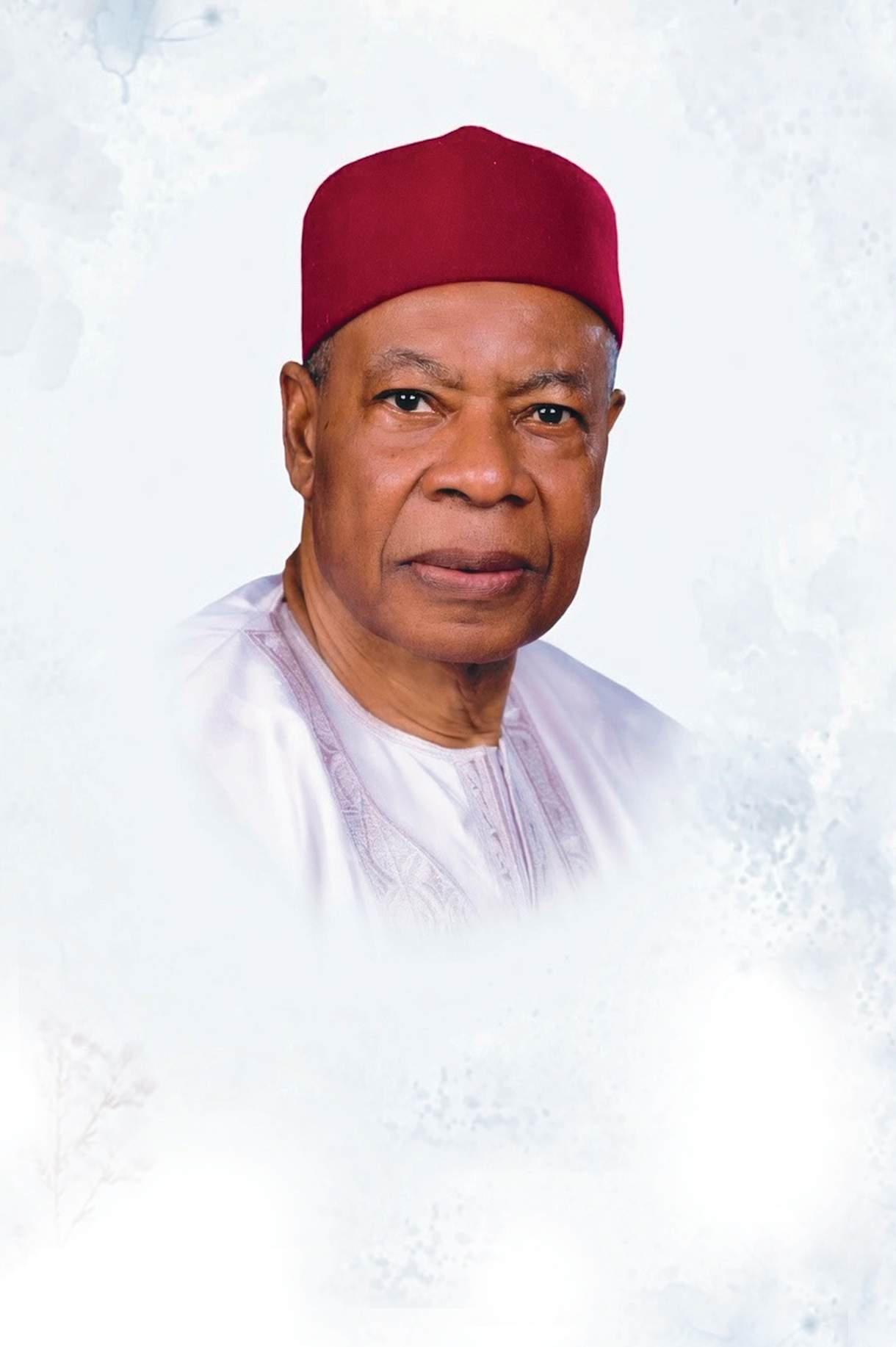
FAREWELL TO A PROFESSIONAL ICON, CORPORATE TITAN AND MAN OF EXCELLENCE
CHIEF ARTHUR
MBANEFO
MFR, CON,
Odu-Osodi III of Onitsha
On behalf of our family, we commiserate with the entire Mbanefo family on the peaceful passing of a father, leader, mentor and patriarch. A man of great wisdom and impeccable integrity, who devoted his life to the service of humanity. He was an epitome of nobility and refinement, with an unalloyed commitment and passion for public good.
We miss you Odu! Ka chi fo Nkata-Ukwu!!
SIGNED: HENN & ABC ORJIAKO
For the Orjiako family
‘Jewellery’ Uncountable
PLEASE note that Americans use ‘jewelry’ as opposed to the British version above. Headline correction below.
“…Deficit hits N2.8trn, as Works and Housing, Transportation, others get lion’s share” Three or more ministries cannot simultaneously get the Lion’s share of something (budget)! If there is parity in the allocation, there should be other ways to express the various revenue receipts. ‘Lion’s share’ simply refers to ‘the largest part (of something)’.
The next offence is by News of March 9 which offered readers a meaningless centre-spread headline: “Residents seek urgent help as pupils evacuated”
“Group seeks govt’s attention on (to) dilapidated roads in Anambra”
“In the aftermath of its suspension of business, several deposit (depositors) and staff of the bank….” (Source: as above)
From NEWS of March 7 comes this schoolboy misapprehension: “ASUU splits, new union emerge (emerges)”
“Erosion swallow (swallows) 200 buildings in Anambra”
“LG stakeholders pass vote of confi- dence on (in) Mbah”
“Fire outbreak on NNPC’s OML 20 oil asset” Delete ‘outbreak’ on grounds of its Accessredundancy this grammatical inexactitude from my bank: “Call…to report an incidence (incident) of fraud or any suspicious activity on your account” (Full-page advertorial by Access Bank). Certainly, writing is more than banking and transcends figures!
SOCCER Sun of March 12 disseminated three inaccuracies: “…that a football rivalry between the two (sic)
countries was truely born” What type of computers do some journalists use that they do not experience automatic spell-check, which is inbuilt? ‘Truly’ does not accommodate ‘e’!
“That is why Sunday’s encounter between the Selecao and the Super Eagles will be more than a friendly and the roll call (roll-call) of players billed for the match attest (attests) to that.”
“Stakeholders gear-up (gear up) for…”
“Sultan advocates stiff penalty for out of school (out-of-school) children’s parents” Guardians, too, should be penalized.
“It is simply not possible because cost of meters have (has) already been fixed by
“BEDCNERC.”to rollout (roll out) 572,392 prepaid meters in 2 years”
“How corruption among govt agencies cripple (cripples) ports’ revenue”
“Barca swoops for (on) Nigerian whiz-kid”
“Organizers assure on 2026 Lagos Women Run” Who did they assure?
DO WE HAVE UNARMED BANDITS?
SOME media professionals ignorantly use the phrase “armed bandits”:
“The Zamfara State Government’s effort towards finding lasting solution to armed banditry and cattle rustlings suffered a setback as...” The dictionary defines a bandit as “a member of an armed gang that robs people”. It means a bandit is usually armed; therefore the word “armed” to qualify him is out of place. On the contrary, a robber is someone who “takes property from a person or place illegally”. A robber may or may not bear arms. If he does, he is an armed robber liable to the death penalty upon conviction.
As we can see, the distinction between a robber (armed or unarmed) and a bandit is clear.
RAYPOWER, WHAT’S THE PAST TENSE OF SLIDE?
THE nation’s premier independent radio station, RayPower, reported in the business segment of its Nigeria Today newscast on Tuesday, March 17, 2026, that the country “SLIDED into recession...” Its editors and correspon- dents, and indeed media professionals, should note that SLID is both the past tense and past participle of SLIDE. It is not in the same word class as GLIDE and GLIDED.
“Among the controversial recom- mendations was the creation of more states at a time many states are (were) having difficulties meeting their recur- rent expenditures, including monthly salaries.”
“…as heads of MDAs most times ignore the summons (summonses) of the parliament and treat its resolution (resolutions) with levity, while the law- makers watch helplessly (haplessly).”
NEWS of March16 disseminated this inaccuracy: “He said the salvation of the country cannot (could not) be found in any of the existing political parties.”
From the preceding diseased headline to this juvenile slipshodness: “Doctors suspend stike in Kaduna, Ebonyi” Even the computer underscored this strike carelessness from the same page as above! Do we still have editorial bastions (proofreaders) this time round?
“The facility will result in improved security profile of the Internet traffic and save the nation of the embarrassment of….” Info-tech: save the nation the embarrassment of….
“Renowned filmmakers will converge
Diplomacy By Delay, Embarrassment By Design
For a country that prides itself as the “Giant of Africa”, Nigeria has an uncanny ability to shrink at the most inconvenient moments. The unfolding diplomatic awkwardness surrounding the rejection - or polite hesitation, depending on how generously one reads it - of some of President Bola Tinubu’s ambassadorial nominees is one of such moments.
It is not merely a bureaucratic hiccup. It is a quiet but telling commentary on how nations are perceived, weighed, and, when necessary, gently sidelined in the unforgiving theatre of international relations.
For nearly two years, Nigeria operated without substantive ambassadors in over a hundred missions across the world. A recall was executed in September 2023, sweeping away both career and political envoys in one decisive move. And then - nothing. Silence. A prolonged intermission in what should have been a continuous diplomatic performance.
During that period, Nigerians in the diaspora navigated consular limbo. Passports delayed. Legal protections weakened. Bilateral engagements slowed to a crawl. For a nation with one of the most vibrant and economically significant diasporas in the world, this was not just an administrative oversight - it was a strategic miscalculation.
Naturally, explanations floated around. Funding constraints. Administrative bottlenecks. The need for “proper consultations”. Yet, curiously, the machinery of government never appeared starved of resources in other areas. Political structures remained well-oiled. Appointments in less sensitive domains proceeded with admirable speed.
Which raises a question that has lingered, unanswered and increasingly uncomfortable: why did it take so long to appoint ambassadors?
When the nominations finally came - 65 names unveiled with the flourish of a long-awaited announcement - they were received with a mixture of relief, surprise, and in some quarters, disbelief. The list was an eclectic blend: seasoned diplomats alongside political loyalists, technocrats sharing space with individuals whose public
records invite… spirited debate. One might call it a cocktail of competence and convenience.
Now comes the diplomatic recoil.
Countries such as India have reportedly declined to accept certain nominees, citing a policy that discourages receiving ambassadors from administrations with less than two years left in office. It is a position grounded not in hostility, but in pragmatism. Diplomacy, after all, thrives on continuity. An envoy expected to stay barely long enough to memorise the protocol handbook is hardly an attractive proposition.
Under the Vienna Convention on Diplomatic Relations, no country is obliged to accept a foreign envoy without its consent. Agrément is not a courtesy; it is a gatekeeping mechanism. And when that gate begins to close - or even hesitate - it sends signals far beyond the immediate transaction.
Let us be clear: this is not about India being difficult, or any other country being unfriendly. It is about Nigeria appearing, at best, tardy, and at worst, unserious in managing its diplomatic obligations.
International relations may be polite on the surface, but beneath the smiles and handshakes lies a cold calculus. Nations assess credibility, consistency, and intent. When a country delays its diplomatic postings for over two years and then rushes to fill them barely a year before a general election, it raises legitimate questions. Are these envoys meant to build lasting relationships or merely to tick administrative boxes before the clock runs out? Are they representatives of a long-term national strategy or placeholders in a short-term political arrangement?
Even more troubling is the subtle but unmistakable message embedded in these rejections: Nigeria is being viewed, in some quarters, as a government nearing
in (on) Nigeria next week for….”
“Politically, experts in IT advocated for the use of e-voting system….” Once again, ‘advocate’ when used as a verb does not admit ‘for’.
“There will be what I call enriched mobile communication experience come 2027 through mobile money….” ICT development: experience in 2027.
“PDP in make or mar primary”: Self-acclaimed Voice of The Nation: make-or-mar primary. The hyphenation confers class. No standard publication dispenses with it. The same tragedy trailed the accompanying rider, too: “State by state analysis (sic) of how delegates may vote” As above: State-by- state“…today’sanalyses….presidential primary may be riddled with so much (many) underhand deals and sharp practices.” What is the difference between ‘underhand deals’ and ‘sharp practices’? The latter should subsume the former! An aside: ‘much’ instead of ‘many’?
“In doing so (a coma) some of the government’s supporters may certainly have overstepped the bound of propri- ety….” From the other side: the bounds of propriety.
“Reactions to this position have been pouring in, and it’s highly elating that most share same position.” This way: most share the same position.
“Majority of Nigerians are of the opinion that a country roundly blessed has no business tottering at the brink of disintegration and collapse.” A/the majority of Nigerians….
the end of its cycle, rather than one firmly in control of its diplomatic narrative.
That perception - fair or not - has consequences. Diplomacy is not only about formal engagements; it is about influence. It is about shaping conversations, securing advantages, protecting citizens, and projecting national image. When a country’s envoys are absent, delayed, or diplomatically unwelcome, its voice in global affairs becomes faint. And in international politics, a faint voice is often an ignored one.
There is also the matter of credibility. When nominees with controversial public profiles are put forward, host countries conduct background checks with far greater rigour than local political calculations might anticipate. What may pass as acceptable within domestic political circles does not always translate well in international environments where reputation is currency.
This is where the blend of career diplomats and political appointees becomes particularly delicate. Career diplomats understand the nuances, the codes, the quiet language of statecraft. Political appointees, on the other hand, often arrive with domestic baggage that may not travel well.
As one former envoy rightly observed, the concern is not always about individuals, but about timing and purpose. An ambassador who may return home within months to participate in electioneering hardly inspires confidence as a long-term partner in bilateral engagements.
So where does Nigeria go from here? First, there must be an honest acknowledgment that the delay in appointing ambassadors was a strategic error. Not a minor lapse. Not an administrative inconvenience. A clear misstep with tangible consequences.
Second, the government must engage in quiet, sustained diplomatic persuasion. Relationships matter. Nigeria’s longstanding ties with countries like India should not be dismissed lightly. Exceptions can be negotiated, but they require tact, credibility, and, above all, consistency.
Third, there may be a need to rethink the composition of the ambassadorial list. Where resistance is clearly linked to concerns about tenure or background, pragmatic adjustments
may serve the national interest better than rigid insistence.
Fourth - and perhaps most importantlyNigeria must institutionalise its diplomatic processes in a way that removes them from the uncertainties of political timing. Ambassadorial appointments should not be treated as afterthoughts or political rewards. They are central to national strategy.
Other countries do not pause their diplomatic presence because elections are approaching. Their systems ensure continuity. Their foreign services operate with a level of predictability that inspires confidence among partners. Nigeria must aspire to the same standard.
There is also a broader lesson here about how the world sees us. For all our size, population, and economic potential, global respect is not automatic. It is earned through consistency, competence, and credibility.
Grand gestures - state visits, high-level meetings, ceremonial honours - have their place. But they cannot substitute for the quiet, daily work of diplomacy carried out by competent representatives on foreign soil.
In the end, this episode is less about rejection and more about reflection. Reflection on how a nation positions itself. Reflection on how seriously it treats its international obligations. Reflection on whether it understands that in global affairs, timing is not just important - it is everything.
Nigeria may yet navigate this diplomatic turbulence. Deals may be struck. Exceptions may be granted. Envoys may eventually take their posts. But the lesson will remain, etched in the margins of this episode: in diplomacy, as in life, delay is not always harmless. Sometimes, it is the difference between being welcomed at the table and being politely told that the meeting has already moved on.
•Tourism •Arts&Culture
Chuks Akamadu: Nigeria’s Arts
Powerful Tool of Cultural Diplomacy
Managing Director and Chief Executive Officer, Afrocultour, Mr. Chuks Akamadu, speaks on President Bola Tinubu’s visit to the United Kingdom, its impact on Nigeria’s arts and culture, among other salient issues. Charles Ajunwa brings the excerpts:
Aspartofhistwo-daystatevisit toUnitedKingdom,President Bola Tinubu and First Lady Oluremi Tinubu attended a specialexhibitiononNigerian itemsputtogetherbytheBritish RoyalFamily.whatdoyoumake outofthisRoyalexhibition?
You see, President Bola Ahmed Tinubu is the number one promoter of Nigeria’s arts and culture, and he did justice to that. His administration takes arts and culture seriously. He created the Art, Culture, Tourism and Creative Ministry under the leadership of Hannatu Musawa. You can see that during his official outings in the United Kingdom, Mr. President and First Lady, Oluremi Tinubu, wore mostly made-in-Nigeria materials. Even when they we’re departing Abuja, for the two-day state to United Kingdom on the invitation of King Charles III, the Nigerian First Family wore made-in-Nigeria clothes. At the state banquet organised on behalf the Nigerian leader held at St. George’s Hall, Windsor Castle and at the special exhibition of Nigerian items from the Royal Collection at Windsor Castle, President Tinubu and First Lady also wore beautifully made-in-Nigeria
dresses. The First Family marketed Nigeria well on this historic international stage. King Charles while welcoming President Tinubu and the Nigerian delegation at a state banquet, greeted him in Yoruba Language- “E káàboo, sé dáadáa ni,” meaning “Welcome, how are you doing?” Social media platforms like X, Facebook, Instagram and others, are awash with good narratives and beautiful photos of the President’s two-day visit to United Kingdom. This is a powerful message coming from Mr. President.
President Tinubu attended another exhibition which featured over 250 works from 50 artists and curated by Osei Bonsu. The show highlighted how artists from the 1940s–1990s blended traditional techniques with international styles to forge a new post-colonial identity. What’s your take on that also?
I’d like to note that “Nigerian Modernism” is a momentous exhibition because it aspires to reframe Nigeria’s art history not merely as a peripheral story to Western modernism, but as a parallel and equally innovative movement that can stand alone on the merit. Interestingly, the period 1940s–1990s was the period when Nigeria transitioned from colonial rule
to independence, and artists were actively involved in issues that bother on heritage, identity and global relevance. So, President Tinubu’s presence at such a show in the UK is beyond symbolism. It does have a functional value, because it positions Nigerian art as a cultural export and asserts Nigeria’s prominent place in global art history. Exhibitions like this are not just about aesthetics. Rather, they are essentially about cultural diplomacy, national image, and rewriting narratives of modernism to rightly include African input.
In my view, therefore, the UK exhibition which is both a celebration and loud artistic statement is coming at a most auspicious time. However, more than anything else, it celebrates the ingenuity of Nigerian artists who forged a new identity through art, and corrects the historical omission of African modernism from mainstream narratives. For Nigeria, it is a time of cultural affirmation. On the other hand, it is, for the UK, an opportunity to confront colonial legacies by looking herself in the mirror, while engaging with the richness of Nigerian creativity. Over all, I think it’s a commendable initiative.
How will this international exhibitions impact
on Nigeria’s arts, culture, tourism and creative ecosystem?
It will help in demolishing erroneously held notions that tend to present Nigeria as being less endowed artistically. The impact will also include greater inspiration for players in the ecosystem to do a lot more; because beyond being an acknowledgement of significant contribution to world modernism, it will assert Nigeria as a dominant force in the global arts, culture, tourism and creativity habitat.
Alake of Egbaland Commends NANTA for Promoting Nigerian Culture, Travels
The Alake and Paramount Ruler of Egbaland, Oba Adedotun Aremu Gbadebo, has commended the National Association of Nigeria Travel Agencies (NANTA) for consistently promoting Nigerian culture and the travel industry.
The monarch gave the commendation when he received members of the NANTA AGM Planning Committee, led by Mrs. Lola Adewole, at the Ake Palace in Abeokuta, Ogun State.
Oba Gbadebo also commended the association for its resilience and unity over past five decades, noting that sustaining a professional body for 50 years reflects commitment, strong leadership, and
Nigeria’s fashion industry witnessed a significant moment of professional development as renowned bespoke designer, Adetayo Adeyeye, popularly known as Taryor Gabriels, led an advanced tailoring masterclass titled “Curated Excellence in Suit-Making.”
The event which held recently was organised in collaboration with Christian Designers Hub and took place at The Bridge by Obsidian, a creative venue known for hosting fashion, technology and innovation-focused gatherings.
The masterclass drew more than seventy designers and professional tailors from across the country who gathered to learn directly from the respected bespoke designer.
One of the highlights of the event was a live garment critique session where participants presented their completed suits for professional evaluation.
Acting as the lead critic and evaluator, Gabriels carefully examined each garment, offering detailed feedback on crucial aspects of tailoring such as structural balance and silhouette, lapel proportion and finishing, sleeve pitch and armhole construction, fabric selection, garment architecture, and overall craftsmanship.
Through this hands-on assessment, the designer evaluated the work of dozens of professionals, provid-
ing practical guidance aimed at improving technical standards in suit-making. Many participants described the session as eye-opening, noting that direct critique from an experienced bespoke designer offered rare insight into the level of precision required to compete in the global tailoring industry.
During the masterclass, Gabriels stressed that the future of African tailoring depends not only on creativity but also on technical discipline and mastery of garment construction. He urged designers to pay close attention to the fundamentals of tailoring, emphasising that excellence in bespoke suit-making is achieved through patience, precision and respect for traditional craftsmanship.
shared vision among its members.
The monarch, who assured NANTA of his royal presence at the association’s Golden Jubilee celebration and Annual General Meeting scheduled to hold in Ibadan, Oyo State, in April, also prayed for the continued growth and impactful contributions of the association to Nigeria’s cultural tourism sector.
The Alake further said that Egbaland and Ibadan share deep historical, cultural, and traditional ties.
Earlier, the leader of the NANTA delegation, Mrs. Lola Adewole, who was accompanied by the association’s Second National Deputy President, Dr. Tokunbo Dagunduro, and Financial Secretary, Mr. Yinka Ladipo, informed the monarch that NANTA has always promoted Nigeria’s cultural tourism offerings as a vital national asset.
She explained that the association views the
country’s cultural heritage as a gold mine that must be preserved and harnessed for Nigeria’s economic and social development.
Adewole noted that the theme of the association’s 50th anniversary, ‘Embracing Our Diverse Cultural Heritage from the City of Firsts: Redefining Our Role as Global Ambassadors’, reflects NANTA’s commitment to supporting and promoting Nigeria’s cultural tourism economy.
As part of activities ahead of the anniversary, the NANTA team also visited the Ogun State Commissioner for Culture and Tourism, Hon. Sesan Fagbayi, to formally invite him to the Ibadan conference.
During the visit, the delegation highlighted the rich cultural heritage of Ogun State and its importance to national tourism development and economic growth.
Explores Cost of Family First
Nigerian Actress and film producer, Uche Frances Nwaefuna known by many as Uche Montana recently released a new movie on her YouTube page she titled, ‘Monica.’
The movie explores the life of a first daughter and eldest child, played by Uche Montana who acted as Monica. The film kicks off with a daily routine of how she helps her mother go about her business before she sets to get her younger siblings to school and finally going to her apprenticeship work after all is done.
For Monica that was her daily routine and she did it with so much joy and genuinely committed herself to putting everyone first. The first 30 minutes of the film showed how she would effortlessly sacrifice her food, her time, her resources and much more so that everyone else is fine ignoring her own self in the buildup.
But what began as harmless and innocent gradually started becoming something else as she shoulders her family’s financial burdens, faced exploitation and manipulation from her mother. This got her to a brink and she gradually more or less accepted her fate as it was. The central themes of sacrifice, family, and relationships upheld the movie.
The film further details the effect of her mother’s
actions which was thought provoking as it became unexplainable why she was hostile and unbearable to Monica. Ignoring the possibility of her exploitation by a predator, denying her the possibilities of a university education, deploying physiological play on her, cutting her off a promising future with a man ready to give her all among other things really made fans upset with the character of the mother. In her own words as shared on her Instagram page she wrote, “Home should protect you. A mother should shield you. But I guess the movie MONICA is what happens when the danger is inside the home?”
Charles Ajunwa
Tosin Clegg
Tosin Clegg
Oba Gbadebo (middle) flanked by members of the NANTA AGM Planning Committee
Taryor Gabriel
Uche Montana
Akamadu
As ‘No Car, No House’ Claims Pit Papa Ajasco Against Wale Adenuga
When Abiodun Ayoyinka, the man well known as Papa Ajasco, came out recently to claim career struggles following the titular character he portrayed in Papa Ajasco & Company, a comedy series produced by Wale Adenuga Productions, the wave of reactions that greeted him was quite not unexpected. It is not unusual to see folks like him cry out and most times exit in penury despite decades of fame.
The show, a spin-off of a feature film of the same title created by Wale Adenuga in 1984, became one of Nigeria’s most widely watched television sitcom, airing weekly across several African countries at its peak Papa Ajasco character the most loved. Ayoyinka opened up about the professional and financial challenges he has faced, attributing them to restrictions surrounding his popular on-screen persona.
Ayoyinka said the character was trademarked by filmmaker Wale Adenuga, limiting his ability to fully capitalise on the fame it brought him. He explained that the restriction reduced his visibility and opportunities beyond the show. The actor also disclosed that he has faced financial hardship in recent years, noting that he retired from the Lagos State Ministry of Arts and Culture about five years ago.
Ayoyinka, 65, made the revelation in an emotional interview which has gone viral on the internet, during which he appealed to fans to continue supporting the once-popular sitcom, Papa Ajasco and Company. The actor also lamented that despite the fame associated with the character; he has no personal car or house and earns relatively modest fees when new episodes are produced.
Reflecting on his time on the widely watched television series, Ayoyinka noted that actors were paid per episode rather than on a stable salary. “It is money, and then if you have a
good job, you will get a car for yourself. It is not that easy; they always pay us per episode. At times, we would record eight or nine episodes for the amount.
“We started with Wale Adenuga with N2,500, which was 1997 per episode. Then we began to grow to N3,000, N5,000, N20,000, N25,000 and so on and so forth, but it is not easy to collect a pay per episode, then you relax at home and then come back again after the year,” he added. He further explained that the restriction has reduced his visibility and opportunities beyond the show.
However, addressing the controversy, Wale Adenuga sought to clarify what he described as misinformation and emotional commentary that followed the interview.
Adenuga in a statement said he had a cordial relationship with Ayoyinka, describing him as a versatile actor who closely resembled the original cartoon character of Papa Ajasco.
“My first impression when I watched the Papa Ajasco video now trending on the internet, and local TV channels was: ‘Okay, so this guy has taken Papa Ajasco comedy into the public space,’”Adenuga said. “It is all well and good. I am happy for him, as his money-making strategy using social media has apparently worked for him.”
The veteran producer added that Ayoyinka had played the role successfully for many years and remained close to him.
“He is very close to me, and so far there has been no irreconcilable difference between us,” he said. Addressing claims of financial hardship, Adenuga said the actor had benefited from several forms of support during his years working on the show.
According to him, Ayoyinka previously received a car from the production company and had used several vehicles over the years, including a Mercedes-Benz.
“On the car issue, we once gave him a car and Pa James as well. He has also used not less than five cars, including a Mercedes-Benz, at different times,” he said. Adenuga added
Mavin Artist Heats-up Social Media, Drags Don Jazzy
Barely a couple of days ago, before he sparked uproar on X (formerly Twitter), Nigerian Afro pop artiste, Charles Chibueze Chukwu, popularly known as Crayon, dropped a single titled ‘Baami’, which was launched across streaming platforms in the early hours of its release.
The singer in the new song conveys an engaging Afrobeats tune themed on protecting his hustle, enjoying life, and warding off anyone who might disrupt his progress or positive energy. ‘Baami‘ was released under Olodum Entertainment imprint. The project carries no visible Mavin branding.
The song, a mix of Pidgin and English, had barely circulated when Crayon started a ranting spree on X. He had called out the leadership of Mavin Records in a series of tweets, while he continued to trend after he named Mavin boss Don Jazzy, and Mavins chief operating officer Tega Oghenejobo.
The singer made several posts online which drew criticism for what he said about Don Jazzy. In one of the tweets, Crayon accused Mavin records of earning $200 million, without giving him a penny, in addition to delaying his payments in order to make him suffer.
In the posts, Crayon appeared to question decisions within the
label while making remarks that suggested internal tensions. The singer also appeared to express frustration with his ex-label, label mate and global music star Rema, alleging that Rema had “stolen his star”.
Many questioned the timing of his tweets, suggesting it was timed following his new single‘Baami’. Crayon who was signed to Blowtime Entertainment, an imprint of Mavin Records in May 2019, wrote, “Mavin is going down!!!!!!”, “Rema for the next 100 years no feature. You stole my star from me.”
Amid the social media outburst, Crayon also dropped hints suggesting that he may have parted ways with the Don Jazzy-led record label. At first it felt like his X account was compromised, as the singer has been active on Instagram without raising any alarm about a hack.
that, the actor also owns a house in Ogun State.
The producer also clarified that the Papa Ajasco character is a registered trademark, explaining why the actor cannot use the identity independently for personal ventures.
“He cannot use the copyrighted brand name Papa Ajasco for personal ventures because it is our duty to protect the brand from inappropriate usage that could damage its reputation,” he said.
He stressed that Ayoyinka had not been barred from accepting jobs, provided official approval was obtained from Wale Adenuga Productions (WAP).
“As he himself stated, all that is required is to seek official approval from WAP. This is part of brand protection,” he added. Adenuga rejected suggestions that actors working on the sitcom were restricted from taking other roles. However, Adenuga pushed back firmly on the poverty narrative. He pointed out that Ayoyinka spent over 30years as a civil servant with the Lagos State Government, where he was even the face of the state’s cultural troupe, a role that brought him close to prominent figures. Adenuga questioned what became of Ayoyinka’s gratuities and retirement benefits from that long career.
Bucci Franklin, Sunshine Rosman Reunite in New Action Thriller, The Creek
Award winning filmmaker and director, Toka Mcbaror has released the trailer for his upcoming film, “The Creek,” which is set for a cinematic release on March 27.
The story delves into the conflict surrounding oil exploration in the Niger Delta, highlighting the significant amount taken from the people and the minimal benefits provided for them.
With strong themes of survival, power, and struggle, The Creek transports you to the Niger Delta, showing the lives of men and
When likeminds gather in the name of worship,
you can expect a transformative atmosphere characterized by unity, heightened spiritual presence, and mutual encouragement. Such a gathering often leads to profound personal and collective experience that go beyond private devotion to strategic networking. Thus, the renewal and outpouring of thanksgiving experienced by creative professionals who gathered during the third edition of Industry Night of Worship (i-NOW) 2026
held with the theme, ‘We Raise A Sound’ recently at Shaolin Kung Fu Chinese Restaurant, Lekki, Lagos.
The event, which drew actors, musicians, content creators, crew members, producers and other media practitioners, across the media and entertainment space, was convened by Mrs. Chioma Agwunobi. The build up to the edition of the (i-NOW) was quite inspiring, trending on social media.
Some of the ministers who graced the occasion include Pastor Shola Olapade, Pastor Chuks Anochie, Isaac Ray, Bidemi Olaoba, Nosa and Uuju, featuring live performances. They described the gathering as spiritually uplifting and impactful, aimed at sparking revival within the entertainment sector.
In her remarks, the convener,
Mrs. Chioma Agwunobi, CEO, Sharcee Media, speaks on the faithbased initiative. Agwunobi described the initiative as a platform where
women who fight daily for justice as their flames “burn brighter than the refineries” in the oil-producing region.
As Nollywood continues to expand its storytelling scope and global reach, The Creek stands out as a film that reflects the industry’s commitment to telling meaningful African stories.
Directed by Toka Mcbaror and produced by Nicholas David Adora, The Creek stars Bucci Franklin, Sam Dede, Shine Rosman, Charles Inojie, Alfred Benjamin, and more.
If you watch the pair Bucci Franklin and Sunshine Rosman in “To Kill A Monkey,” then you might want to pay attention to what they’re doing next in this new action thriller as they two actors reunite in “The Creek”.
Christian creative executives can freely express their faith and seek divine direction for their careers. She noted that the idea aimed at seeking divine direction and restoring godly values within the sector, came to birth because she felt as “Christian creatives there should be a note to just freely express themselves to proclaim Jesus and lift His name.”
She added: “It’s an evening of praise, worship and Kingdom networking of creatives and professionals lifting one voice and sound to praise God. For us as believers in the industry, we are strengthened, empowered and encouraged to even step out more for the kingdom because we draw from God in such a gathering.”
Ferdinard Ekechukwu
Ferdinand Ekechukwu
Ferdinand Ekechukwu
Don Jazzy
Franklin and Sunshine
Gospel artiste, Bidemi Olaoba performing at the Industry Night Out
Rebecca Isreal
Adenuga
Papa Ajasco
at Money Fair, analysts Harp on Unlocking Domestic investment
Nigeria’s inability to effectively channel its vast domestic liquidity into productive invest- ment has come under renewed scrutiny, with analysts warning that the country risks ceding economic control as foreign investors increasingly dominate startup and entrepreneurial funding.
Speaking at the Money Fair, experts highlighted a troubling disconnect within the financial system: despite a money supply estimated at about N124 trillion, total equity investment remains a mere N95 billion. This significant gap, they noted, continues to constrain access to capital for startups and poses a serious threat to Nigeria’s ambition of building a $50 trillion capital market by 2030.
The experts expressed this concern at the Nairametrics Financial Literacy Forum, tagged ‘The Money Fair,’ held recently in Lagos, where economic think tanks, capital market operators, pension fund administrators, the Securities and Exchange Commission (SEC), and other regulators gathered to chart a path forward for Nigeria’s financial markets.
In his address, Chief Executive Officer of Chapel Hill Denham, Bolaji Balogun stressed the need for stronger domestic participation in capital formation.
He described the imbalance in the financial system as troubling, noting that money market and bond funds hold about N7.25 trillion, while equity funds which drive entrepreneurship remain at N95 billion.
Balogun said this was unlike in the United States where retail investors allocate about 50 per cent of their portfolios to equities, a trend he said significantly drive household wealth creation.
“With limited risk capital and minimal equity investment, it is no surprise young entrepreneurs struggle to raise funds. If they continue to rely on foreign investors, we risk recolonising ourselves and waking up to see 70 to 80 per cent of Nigerian innovations owned by outsiders,” he warned.
Managing Director/Chief Executive Of- ficer of Nigerian Exchange Group, Mr. Temi Popoola, also stressed that financial literacy and digital access remain key to improve domestic participation in the capital market.
Represented by the Group Chief Strategy
Officer, Jumoke Olaniyan at a panel session titled “Nigeria Investor Outlook 2026–2027: Regulation, Politics, and Capital Positioning in a Reformed Era,” Popoola emphasised that improved literacy often translates to increased participation.
He noted that progress was being made in retail engagement, disclosing that nearly 300,000 investors had been brought into the market through the NGX Invest platform across 15 recent initial public offerings.
“Infrastructure now exists for any Nigerian to invest at the tap of a button. ETF invest- ments on the exchange have grown by 100 per cent in recent years, driven by deliberate efforts in access and education,” he said.
Also speaking at the session moderated by Founder/CEO of Nairametrics, Ugodre Obi-Chukwu, Executive Commissioner for Operations at the Security Exchange Com- mission (SEC), Bola Ajomale described as a snag, the proliferation of unlicensed operators.
“We need to put a stop to this. Unless we do, there will continue to be a perception of weak governance and limited transparency in the market,” he said.
On pension fund participation, Head of Corporate Communications at the National Pension Commission (PenCom), Ibrahim Buwai
MARKeT NewS SToRIeS
said the commission actively shifted resources towards equities to hedge against inflation.
“Pension fund equity holdings rose from N3.9 trillion in December to N5.4 trillion by February, representing 18.8 per cent of total
assets. This is driven partly by the Multi- Fund Investment Structure, which allows younger contributors to opt for higher-risk, higher-return portfolios,” he explained.
Meanwhile, Deputy Director and Head of Planning, Department of Strategic Services at the Nigerian Investment Promotion Commis- sion (NIPC), Abdullahi Shiru, said Nigeria has continued to attract strong foreign direct investment (FDI) despite low domestic equity participation.
“FDI inflows increased from $90 million in Q1 2025 to $720 million by Q3, driven by policy reforms, macroeconomic stability and improved regulation. While foreign capital is important, it should not overshadow domestic ownership and entrepreneurship,” he cautioned.
Stakeholders at the forum agreed that while Nigeria’s regulatory framework remains viable for investment, sustained efforts are required to strengthen market structures, improve transparency and reinforce investor protection to rebuild trust.
Earlier, Obi-Chukwu said the fair was designed to move Nigerians from merely consuming financial information to taking informed financial decisions, especially amid prevailing economic uncertainties.
How Women Leaders Are Driving Workplace Safety for Profitability
As businesses navigate rising operational risks, workforce pressures, and economic uncertainty, experts say organiSations perform better when women occupy leadership roles, not just in governance but in workplace safety and financial management.
Across industries, from construction sites to corporate boardrooms, female executives are shaping organisational culture, strengthening safety systems, and enhancing the bottom line.
Studies have consistently linked inclusive leadership to stronger risk management and profitability, showing that gender-diverse leadership teams deliver better innovation, smarter decision-making, and higher financial returns.
Yet, women remain underrepresented globally, holding just 27.5 per cent of managerial positions
and approximately 31.7 to 34 per cent of senior and middle management roles across industries, according to International Labour Organisation (ILO) and Grant Thornton’s Women in Business report.
Beyond corporate governance, experts say women leaders are increasingly influencing workplace safety culture, a domain with enormous financial implications for businesses.
ILO reports that over 2.3 million people die annually from work-related accidents or diseases, while poor occupational safety practices cost the global economy about four per cent of annual GDP through lost productivity, compensation, and medical expenses.
For businesses, this means safety failures are not only a human tragedy but also a significant financial risk. Analysts say companies led by executives who
prioritise people-centred leadership often achieve stronger safety outcomes, ultimately protecting productivity, reducing insurance costs and improving workforce retention.
Lead Consultant at Safety Consultants and Solutions Providers Limited (SCSP), Antonia Beri, affirmed that women executives are increasingly shaping the safety culture of modern organisations.
As a key takeaway from the 2026 International Women’s Day, Beri reiterated the need to recognise women shaping not only the future of organisations and industries, but also global workplace safety standards.
“Across boardrooms, project sites and executive leadership teams, women are playing a pivotal role in shaping the direction of modern organisations.
Firm Backs Digital Learning Drive with Donation
In support of the federal government’s drive to accelerate digital learning nationwide, Woobi Interactive, a technology brand under Equipment Hall Group, has donated 20 interactive smart boards to Unity Schools across Nigeria.
The company said the donation aims to bridge digital divide and position Nigerian education on par with international standards, where teaching has long transcended manual tools.
According to the United Nations Children’s Fund (UNICEF), a deficit in digital infrastructure, frequent
electricity challenges, and the fact that less than half of teachers (47%) possess basic ICT skills have left millions of Nigerian children without access to quality education and essential digital skills for the future.
Founder and Group CEO of Equipment Hall Limited and Woobi Infrastructure, Gbolahan Olayomi said the initiative seeks to close this gap and provide a vital future enabler.
He described the gesture as a corporate giveback, acknowledging that federal government’s
long-standing investment in Unity Schools has produced many Nigerians contributing to the nation’s economy.
Speaking at the presentation of items to Unity Schools Old Students Association (USOSA), Olayomi stressed that the gesture was timely.
“Our children are digital natives. Nigerian students now sit for computer-based exams, yet most public classrooms still rely on chalk, markers, and bare white-tiled walls. This intervention comes at the right time to transform the learning experience”,
“Female leaders bring strategic thinking, resilience and emotional intelligence that help organisations navigate complex operational environments while strengthening safety culture,” she stated.
She said further that organisations with inclusive leadership structures experience stronger decisionmaking processes, improved organizational culture, greater innovation and better financial performance.
She maintained that workplace safety leadership requires more than regulatory compliance.
“Safety is not just about compliance; it is about people, culture, responsibility and foresight. Women often bring a collaborative and human-centred leadership approach that strengthens communication, accountability and shared responsibility for safety within teams,” she said.
he said.
Receiving the boards, USOSA President-General Michael Magaji said the initiative would leave a lasting impact on the education sector, particularly in public schools.
“While we are starting with 20 schools, we hope this inspires others to adopt digital learning and attracts further donations in the future,” he added.
Also at the event, Woobi Board Chairman Chief Mrs. Toyin Awoseyi, noted that the donation aligns with the company’s vision to fulfill every child’s learning potential through technology. She stressed Woobi’s ambition to have its smart boards in every school across Nigeria and beyond.
Omolabake Fasogbon
• Obi-Chukwu
•Trading floor
AUTOWORLD
Toyota Premieres New Three-Row Highlander
Toyota Motor Corporation (Toyota) has announced that it will expand its battery electric vehicle (BEV) lineup in North America as part of its multi-pathway approach toward achieving a carbon-neutral society.
As part of this effort, Toyota Motor North America (TMNA), Toyota’s North American business entity, premiered a new BEV model of the three-row SUV Highlander on February 11 (JST; February 10 PST) in Ojai, California. Sales in North America are expected to begin in late 2026.
Toyota is committed to product- and regioncentered management with the aim of making ever-better cars. In developing powertrain systems to achieve carbon neutrality, Toyota is rolling out a variety of mobility solutions under its multi-pathway approach, offering electrified vehicle options tailored to meet customer needs in each country and region around the world.
To steadily advance its multi-pathway approach in the North American market, Toyota will add a BEV model as a key option for the Highlander. Production will take place at Toyota Motor Manufacturing Kentucky (TMMK) as the fourth model in its BEV lineup, following the bZ*1, TOYOTA C-HR*2, and bZ Woodland*3.
•North American name for the bZ4X
•North American name for the TOYOTA C-HR+ (Europe)
•North American name for the bZ4X Touring Highlander BeV (North American model)
The Highlander has earned strong support from families as a three-row SUV that handles everything from city driving to outdoor
adventures, thanks to its spacious interior and excellent off-road performance. Since the first generation launched in the United States in 2001, cumulative sales have exceeded 3.6 million units*4. With the addition of this BEV model, Toyota aims to further evolve the Highlander in its pursuit of a carbon-neutral society.
The lithium-ion battery lineup includes a 76.96kWh*5*6 capacity specification designed for urban driving, such as shopping trips, and a 95.82kWh*5*6 capacity specification aimed at improving cruising range for customers who
enjoy long-distance travel and outdoor activities. Together with front-wheel drive (FWD) and all-wheel drive (AWD) types, a wide range of options are available to customers. In addition to incorporating a high-capacity battery and improving eAxle efficiency, the 95.82kWh*5*6 specification has a development target cruising range of up to 320 miles*7 (AWD). Battery preconditioning*8 is included, with a development target of rapid charging in approximately 30 minutes*9 under cold conditions by maintaining the battery at an optimal temperature for charging.
NAJA Urges FG to Ensure Crude Supply to Local Refineries as Fuel Prices Rise
The Nigeria Auto Journalists Association has called on President Bola Ahmed Tinubu to take decisive steps toward stabilising Nigeria’s fuel market by guaranteeing the direct supply of crude oil to domestic refineries, particularly the Dangote Refinery, as global tensions continue to unsettle energy prices.
In a statement issued on Thursday, the association warned that the rising cost of petrol, exacerbated by the ongoing crisis in the Middle East, poses a serious threat to economic stability and the welfare of Nigerians already grappling with inflationary pressures. NAJA argued that Nigeria must urgently insulate its downstream petroleum sector from external shocks by strengthening local refining capacity.
The association’s intervention comes amid heightened volatility in the international oil market, where geopolitical developments have continued to influence crude prices and, by extension, the cost of refined petroleum products. For Nigeria, a country paradoxically rich in crude oil yet heavily dependent on imported fuel, the situation has once again exposed structural weaknesses in the energy value chain.
NAJA noted that while recent policy measures by the federal government signal a willingness to address the crisis, more targeted interventions are required to achieve lasting stability. The group specifically referenced the government’s plan to distribute 100,000 Compressed Natural Gas (CNG) conversion kits nationwide, describing it as a commendable but insufficient response to the scale of the challenge.
According to the association, the CNG initiative represents a forward-looking approach to energy diversification, particularly within the transportation sector. However, it stressed that alternative fuel adoption alone cannot resolve the immediate pressures facing petrol consumers. Instead, NAJA maintained that ensuring the efficient operation of domestic refineries remains the most viable short-term solution.
Speaking on behalf of the association, its Chairman,
Theodore Opara, urged the federal government to implement policies that would enable local refineries to access crude oil directly from the Nigerian National Petroleum Company Limited, preferably in naira. He argued that such a move would significantly reduce the exposure of domestic fuel production to fluctuations in the global oil market.
Opara pointed out that the current arrangement, under which the Dangote Refinery imports a substantial portion of its crude feedstock, undermines the refinery’s potential to stabilise local fuel prices. He explained that reliance on imported crude effectively ties domestic refining operations to international pricing dynamics, thereby limiting the benefits of local production.
“Dangote Refinery imports most of its crude, hence it is exposed to the effects of the ongoing crisis in the Middle East,” he said. “If the refinery gets direct crude supply from the NNPC, it will strengthen the country’s long-term energy diversification strategy
and reduce exposure to international supply shocks.”
The NAJA chairman further noted that Nigeria’s continued dependence on imported refined petroleum products remains a major vulnerability, despite its status as Africa’s largest crude oil producer. He described the situation as economically unsustainable, particularly at a time when global uncertainties are driving up energy costs.
“If Nigeria’s major refineries, including Dangote, receive crude locally and transact in naira, the country will reduce its vulnerability to global market disruptions. It will also help stabilise the downstream petroleum sector,” he added.
Industry analysts have echoed similar sentiments, arguing that direct crude allocation to local refineries could yield multiple economic benefits. Beyond stabilising petrol prices, such a policy could ease pressure on the naira by reducing the demand for foreign exchange needed to import refined products and crude feedstock.
8 Signs You Could Have Brake Problems
Car brake repair and brake servicing are important parts of proper vehicle maintenance. When you take care of your brakes, they’ll take care of you when you need them most. However, even with regular maintenance, the brakes on your vehicle may require a professional inspection and servicing if you encounter one or more of these eight brake problem warning signs and symptoms.
Brake Light On
If a brake light indicator appears on your dashboard, it’s either time for your regular maintenance or it’s an alert to a potential problem. These are some of the more common dashboard alerts that appear in today’s vehicles. Note: Consult your vehicle owner’s manual for possible causes for these and other indicators.
Brake Pad Indicator
This light lets you know your brake pads may be wearing out, along with other non-visible reasons. Either way, get them inspected at Les Schwab.
Brake Fluid Level Indicator
This light will flash when your brake fluid levels are low. You may be able to top off the fluid to keep your brakes functioning properly, or stop by your local Les Schwab and we’ll give you a hand.
Parking Brake Indicator
When this light appears, your parking brake is either engaged or there is a problem with it. To diagnose the possible issue, engage and disengage your parking brake. If the indicator goes away, there are no issues. If it still won’t go away, come to Les Schwab.
Squealing or Squeaking Noises
Odd or unusual noises coming from your brakes aren’t always a sign of problems. It could just be a foreign object lodged in your brakes (a pebble or debris). It could also be your brake-pad wear indicators. These bits of metal in your brake pad come in contact with the rotor to emit a high-pitched noise when you apply the brakes. This lets you know it’s time to get your brake pads replaced.
Grinding Noises
Grinding noises, whether you have disc or drum brakes, could mean your brakes need servicing right away. In some cases, the sounds may be the brake pad or shoe scraping on metal contact points. A trip to Les Schwab is recommended when you hear or feel any form of brake grinding.
Wobbling, Vibrating, or Pulsing When Braking
If your steering wheel or vehicle shakes, vibrates, or pulses when you apply the brakes, it could be an uneven rotor. Brake rotors, which are a vital part of your disc brakes, are large metal discs attached to both ends of your vehicle’s axle. When you hit the brakes, the brake pads push against the rotors, which stops your wheels from spinning. Wobbling, vibrating, or pulsing can occur if the rotor surface area is not flat (has uneven areas). Over time, it’s normal for the rotor surface to wear down and possibly become uneven. Braking friction, when you apply the brakes, results in the transfer of pad material to the rotor surface. If the pad material transfers unevenly, you may experience vibration when braking. Left uneven, the material will continue to accumulate, worsening over time. During brake servicing, the face of the rotor should be smoothed or evened out to correct flaws and keep you from feeling a wobble when you brake. If the rotors are too far worn to be serviced, they will need to be replaced.
Leaking Fluid
When you apply your brakes, a lot of things happen all at once. An important part of the process involves brake fluid. This is used to create hydraulic pressure, which pushes the brake pad against the rotor (the large metal disc attached to the end of your axle). If your vehicle has no brake fluid, you won’t be able to stop safely. Check your vehicle’s brake fluid often. Not sure how? Stop by Les Schwab and we’ll be glad to help.
Spongy or Soft Brakes
When you press on the brakes, you want to feel some resistance. If they feel soft or the pedal goes all the way to the floorboard, it could indicate air or moisture in the braking system. It could also
Toyota 3-row new Highlander BEV
Adeleke: Technology, Indigenous Capacity Key to Nigeria’s Energy Future
Ngozi Adeleke, President of the Pipeline Professionals Association of Nigeria and President of Women in Renaissance, has spent over two decades shaping Nigeria’s oil and gas landscape through operational excellence, strategic leadership and advocacy for indigenous capacity. She speaks with Funmi Ogundare, on the urgent need for technology-driven efficiency as the global energy mix evolves, the critical role of digitalisation in sustaining ageing infrastructure, and why indigenous companies must take the lead in unlocking Nigeria’s vast gas potential and expanding midstream infrastructure to drive long-term energy security and industrial growth. Excerpts:
You have spent over two decades in the energy industry, including roles at Shell, how has this journey prepared you for your current leadership position at Renaissance Africa Energy Company Limited?
Renaissance Africa Energy Company Limited is an awesome opportunity for Nigeria, with an incredible opportunity to scale up our experience on the African continent. Our vision to be Africa’s leading energy company, sustainably enabling energy security and industrialisation aligns with my personal values derived from my over two decades’ adventure in the energy industry. My career so far has seen me take on responsibilities that spanned a large aspect of the hydrocarbon value chain and ensured that I gained experience in what it would take to deliver results in difficult and high-risk environments. This includes working in several facilities, both on land and swamp locations, as a Facilities Engineer, working on well optimisation and deferment reduction, asset optimisation, business and technical planning, chief of staff to a senior business leader, manager of four satellite integrated oil and gas facilities before my move to pipelines operations management and finally now as Asset Manager for Pipelines. Through this journey, I have learnt that the key to achieving organisational goals is the ability to unlock the delivery potential in your team, both in the short term and the long term. This entails creating an enabling environment for your team to share their ideas and supporting them to bring those ideas to life if they are feasible and have a chance of delivering business value.
How has your academic background in Chemical Engineering and your MBA influenced your approach to strategic decision-making?
What you would find is that the business world is very different from what you learn at school because it is more about the application of knowledge rather than the knowledge of engineering principles in itself. For example, it was my knowledge of process control that enabled me to have a challenge session with my control room operators in a gas plant I managed, which led us to adjust certain interrelated parameters, resulting in our highest gas production recorded at the time. The MBA helped me to deepen my understanding of strategy formulation and the importance of strategy execution in successful businesses. This has helped me to prioritise developing the ‘how’ immediately after deciding what we want to achieve as a team.
You are leading a multi-year pipeline rejuvenation strategy aimed at supporting 500,000 barrels of oil per day. What does this target represent for the company and Nigeria’s broader production ambitions?
We all need to be aware that Nigeria’s upstream landscape
has undergone a decisive structural shift and since Renaissance came onboard as operator of Nigeria’s largest oil and gas exploration and production joint venture (NNPC/Renaissance/TotalEnergies/AENR JV), we have enjoyed goodwill from well-meaning Nigerians, host communities and various institutions. Everyone wants us to succeed, and at Renaissance, we talk about unlocking Nigeria’s energy potential and scaling toward one million barrels of oil equivalent per day by 2030. We are very clear that this is not a slogan. It is a long-term ambition that must be earned through disciplined execution. I can confirm that Renaissance operates under a structured loss-reduction framework tied to operational efficiency, security programmes and infrastructure integrity. We have taken our first concrete action to secure the right foundation. The acquisition of the former SPDC assets gave us scale, a rich oil and gas portfolio, and a workforce with deep operating knowledge. Then we deployed a three-step transition: safely receive, stabilise and grow. This has put us on the path to one MMboe per day , a journey we have embarked upon, and our responsibility is to move steadily, credibly and responsibly in that direction. Our strategy is aimed at creating sufficient capacity to convey our target barrels of hydrocarbons to the various points of sale in the country and feed into the government’s ambition to increase production to over two million bpd, increasing national income and helping to further stabilise the economy.
Achieving 100 per cent pipeline availability and eliminating illegal connections are significant milestones. What structural reforms and operational strategies made this possible?
We must commend the excellent collaboration we have with government security forces assigned to protect national assets in our areas of operation, and the support of private security contractors engaged by government. This has steadily helped to move operations away from the destructive grip of crude theft, when terminal receipts dropped to about 10 per cent of what was produced into the pipelines. Internally, we restructured the way the team addressed crude theft. We separated and dedicated a crew to respond to illegal connections, giving them the resources to do so while freeing up the other team to continue its pipeline integrity assurance programme. This sharpened accountability and focus.
Pipeline vandalism and illegal connections have long challenged Nigeria’s oil sector. What sustainable measures are required to address this issue permanently?
Curbing pipeline vandalism and crude oil theft requires a unified front of government, operators and host communities. This is what we have deployed in Renaissance operations, and we are now seeing the gains in increased availability and stability on the pipeline networks. First, both government and
MasterCh
Adeleke
operators adopted an intelligence-driven security framework, combining enforcement capabilities with the use of drones for real-time monitoring. Secondly, we embraced a communitycentric protection model. When local communities see pipelines as shared assets rather than government infrastructure, the incentive shifts from sabotage to cooperation. Thirdly, stronger legal deterrents, including special prosecution courts for energy infrastructure offences, ensure swift prosecution. Finally, we adopted a joint transparency framework where government agencies and operators share real-time analytics on breaches and recovery.
How do you think digital technologies and simplification principles can reshape asset management and operational efficiency in the energy sector?
Digital technologies, especially those that help simplify how we operate, will redefine asset management in the energy sector. In Nigeria, where we manage infrastructure across challenging terrains and complex stakeholder environments, digitalisation offers us a chance to fundamentally change our operating model.
The m Group Opens Art Exhibition Today in Lagos Kunle Remi Clarifies Viral Comment Against AMVCA, Says ‘I Was Joking’
Sunday Ehigiator
“Wake
Up!”, a contemporary art and photography exhibition showcasing the voices of emerging Nigerian creatives will launch today at Angels & Muse, Ikoyi, Lagos.
The group exhibition curated by Awele Onwordi, first class communications graduate and muti-dimensional artist will feature works from eight artists – Ade(To)Juwon Anthony Adeniyi, Franklyn Okoye, Charles Lasisi, Ajilore Kehinde, Chuka Onwordi, Joshua Bakare, Lohi Simone and Awele Onwordi.
The exhibition of works that straddle photography, digital art and painting are, a statement yesterday, quoted the curator to have explained, “focused on amplifying the voices of emerging Nigerian creatives. Rooted in a desire to challenge conventional narratives of Nigerian art, the exhibition foregrounds a new visual language one shaped by youth culture, lived realities, digital consciousness, and fluid identity.”
Continuing the curator noted that it will, “serve as a bridge between generations – inviting audiences to witness how Nigerian art is being redefined by a
new wave of artists who are unafraid to experiment, disrupt, and speak honestly about their world in a new visual language and attitude while fostering an inclusive space where innovation thrives and authentic storytelling is celebrated.”
Concluding she noted that, “by confronting outdated artistic norms and encouraging intergenerational dialogue, Wake Up affirms the cultural value and global relevance of emerging Nigerian voices.”
Treygtk, a young musician who has been quietly sharpening his sound since 2020, will perform at the opening. He will thrill the audience with songs from his highly anticipated debut project, Party Tears which arrives not just as a body of music, but as a statement of identity – one that blends vulnerability, rhythm, and emotional storytelling.
Explaining the meaning behind the title, treygtk explained that the phrase itself captures the emotional paradox at the heart of the project.
“Party Tears is a title that describes the feeling I tried to convey while making this record. A feeling of longing and yearning, lost love and strained relationships set to danceable rhythms and melodies.”
Nollywood actor, Kunle Remi, has clarified that his recent social media comment comparing the Africa Magic Viewers’ Choice Awards to the Academy Awards (Oscars) was made in jest, following widespread reactions online.
The conversation began after the actor shared a video from the 2026 Academy Awards (Oscars), where Michael B. Jordan was seen having his award engraved shortly after his win.
In his initial reaction, Remi suggested that winners at the AMVCA do not receive their plaques immediately, a claim that quickly gained traction across multiple media platforms.
However, in a follow-up video posted shortly after, the actor dismissed the comparison as a joke, noting that he was aware of how the AMVCA award process works.
“I was just messing around and it was all a joke,” he said, adding that people had taken the remark more seriously than intended.
He reaffirmed his respect for the platform, describing the AMVCA as the only African awards show comparable to the Oscars.
“AMVCA is the only African show you can even compare to the Oscars,” he added.
The actor also confirmed his involvement with the awards, noting that he will be present at this year’s edition and is actively working on it.
“I’ll be at this year’s AMVCA, in fact, I’m working with them on this one.”
The exchange has since drawn attention to how awards are handled at the AMVCA. Winners receive their plaques on stage immediately after being announced and are subsequently directed to a designated media room, where engraving stations are set up to personalise each award in real time.
Godwin Archie-AbiA:
i Transform what People Throw Away into Something Meaningful
In a modest studio tucked inside Peace Estate, Baruwa, Lagos, canvases lean against the walls — some textured, some carved, others layered with recycled debris that shimmer under filtered sunlight. Here, history, faith, and social commentary collide in the hands of a man who calls himself both “self-taught” and “historically informed.” For over three decades, the founder of WinArc Gallery, Godwin Archie-Abia has crafted a visual language that bridges Nigeria’s past and present. From the sacred to the social, from bone-collage sculptures to mixed media canvases alive with political tension. Archie- Abia’s journey from Lagos State University’s Department of History and International Relations to becoming a full-time artist, educator, and cultural advocate tells a story of reinvention, curiosity, and conviction. Adedayo Adejobi writes
“Istarted practicing art before I went back to school,” he recalls. “Back then, my art was focused on Christian evangelism. People saw me as a pastor who painted.”
Returning to the university changed everything. “Studying History and International Relations opened my mind,” he says. “It helped me see how art and history are connected — how every piece can document, represent, or question the times.”
That new awareness reshaped his practice. His work Homage to God explores worship across eras — from ancestral rituals to modern faith. Abeokuta Before 1960 reconstructs a colonial-era landscape, while More Blood in Our Hands examines the moral cost of political violence. Others, like ‘I No Go Chop,’ confront hunger and governance failures.
“Going back to school gave me depth,” he explains. “It changed my scope of thinking and made me connect with people in ways I couldn’t before. History gave my art purpose.”
In the 1990s, the artist was known across Lagos for his bone-collage technique — an intricate process of cutting and assembling cow horns into sculptural compositions. “It was my signature,” he says. “But I had to evolve.”
Several factors prompted the shift: erratic electricity that disrupted production; collectors’ complaints that bone works were too heavy to ship abroad; animal rights campaigns; and dwindling access to raw materials.
“When horns became scarce, I began experimenting with what I could find — sand, textiles, waste materials. I wanted to express more ideas, and bone alone couldn’t carry them.”
That evolution birthed a new phase — embossed, textured paintings and mixed media works that blend oil, sand, and recycled materials into powerful social commentaries.
“I discovered other materials were more flexible, more expressive. Today, I enjoy them more than bone,” he says with a smile.
Much of his practice revisits Nigeria’s markets, streetscapes, and everyday life — scenes that pulse with colour, commerce, and contradiction.
“Art documents society,” he insists. “My works portray different times in history — times of abundance, and times of lack.”
Yet, there is one Nigerian story he feels remains under-told: politics. “Our democracy is not yet understood,” he says thoughtfully. “We read about democracy in books, but what we practice here is
different. That’s a narrative I haven’t fully unpacked — governance, morality, accountability.”
His politically charged piece ‘I No Go Chop?’ was first created during Nigeria’s struggle for democracy and has been retitled and reinterpreted over the decades to mirror shifting realities.
“Each time our politics changes, that work speaks again,” he says. “It questions integrity and the hunger for power.”
Founded in 1996, WinArc Gallery began as one of the few independent exhibition spaces in Ikeja.
“Then, artists had nowhere to show their works,” he recalls. “Only Treasure House and WinArc existed around Ikeja.”
When he relocated to Baruwa, critics questioned the move from Lagos’ commercial core to its periphery.
“People said I was going backward,” he laughs. “But today, that move is paying off. I’ve discovered raw talent here. We sell, we teach, and we grow.”
WinArc has evolved into a community hub — offering weekend and summer art classes for children and young adults.
“We started with four students,” he says. “Now we can hardly manage the crowd. Parents tell us their children have become more confident, creative,
More Troubles for national Grid as Vandals Attack Tcn Towers
Nigeria’s already fragile electricity transmission network has suffered another setback following the collapse of a key tower along the Ughelli/Benin 330kV transmission line, further constraining power supply across parts of the country.
The Transmission Company of Nigeria (TCN), in a statement in Abuja by its spokesperson, Ndidi Mbah, disclosed that Tower T99 on the critical line gave way on March 15, 2026, after vandals removed vital structural components, weakening the installation and triggering its eventualAccordingcollapse. to the company, the incident
was uncovered during a routine patrol after a line trip along the route at Coconut Village in Effurun Local Government Area of Warri, Delta State. A subsequent technical assessment, it said, revealed that key bracing members of the tower had been tampered with and carted away, compromising its structural integrity.
Further checks also showed that adjacent towers, T100 and T101, were similarly van- dalised, although they remain standing for now, raising concerns about the stability of the entire transmission corridor.
The development, according to the TCN, has led to a temporary disruption in the evacuation of bulk electricity from Transcorp Power Plc to the national grid via the Benin 330kV transmission line, worsening supply challenges in a system already grappling with generation and distribution constraints.
and even better at other subjects.”
The centre combines studio practice with education, mentorship, and exhibition — a delicate balance of commerce and community.
“We sell art, but we also build people,” he says. “Some of our students now earn money from their work while still in school.”
The artist’s use of discarded materials — from cow horns to found objects — aligns him with a growing global movement for sustainability in art. “Sustainability and local resourcefulness are shaping the future of Nigerian art,” he argues. “By recycling materials, we reduce waste and inspire creativity.”
For him, this practice is both ecological and philosophical. “I transform what people throw away into something meaningful,” he says. “It’s about giving life to what’s been forgotten — just like history itself.”
Through exhibitions and workshops, WinArc promotes eco-art awareness, encouraging young artists to see environmental responsibility as a creative opportunity. “Sustainable art empowers communities,” he adds. “It teaches innovation and self-reliance.”
Mentorship has become central to his practice. “Teaching art isn’t just about technique,” he explains.
“It’s about shaping how young people think.”
His pedagogy blends project-based learning with critique sessions and cultural education. “We encourage self-expression, practical experimentation, and constructive feedback,” he says. “Success isn’t measured by prizes or sales — it’s about confidence, critical thinking, and cultural awareness.”
His students’ growth is his greatest reward. “When I see a child turn passion into profit, or when parents tell me their children are happier — that’s success.”
Running a gallery in Lagos is not without challenges — power costs, logistics, and the fluctuating art market among them. Yet, he remains optimistic. “I give every artist a chance,” he says. “I don’t discriminate by style or fame. What matters to me is material mastery and honesty of expression.”
He offers firm advice to emerging artists: “Don’t overprice your work. Let your growth determine your worth. Consistency builds value. Every masterpiece starts as a modest beginning.”
He is vocal about government neglect of the visual arts. “Over the years, I’ve called for investment in the creative industries,” he laments. “Music and film got private support early — look where they are now. But visual art is still struggling.”
If given a year of government attention, his priorities are clear: “First, establish a national art policy. Second, fund art education from primary school upward. Third, support exhibitions and competitions across the country.”
He believes policy alone is not enough — collaboration is key. “Government should work with real practitioners, not just committees,” he says. “If we drive creativity from the bottom up, we’ll see its impact across society.”
Looking ahead, his dream is both simple and profound. “In five to ten years, I want to see my students surpass me,” he says quietly. “I want to create an environment where art is respected, where creativity feeds families, and society values imagination.” His legacy, he hopes, will be one of influence rather than fame. “If a child I trained becomes a global artist, or if a parent begins to see art as education — that’s enough. That’s immortality.”
In his studio, one painting stands out — Mystery. Layers of muted tones and sand textures swirl into an abstract form that feels both cosmic and human. “Life is a mystery,” he muses. “I want people to unveil the mystery around it.”
For him, art is not merely decoration; it’s a witness. “Art records what society wants to forget,” he says. “It questions, it heals, it preserves. That’s why I keep creating — because Nigeria’s story is still being written.”
The federal government said it has stepped up high-level discussions on the proposed trans-continental gas pipeline aimed at delivering its natural gas to European markets, aimed at strengthening its energy security and unlocking long-term economic value.
The proposed pipeline, a statement in Abuja by Louis Ibah, spokesman to the Minister of State Petroleum Resources (Gas), Ekperikpe Ekpo, yesterday, said, was designed to transport up to 30 billion cubic metres of gas annually from Nigeria’s southern reserves through Chad and Libya, before extending subsea to Sicily, Italy, and into the broader European market. Ekpo, who joined key industry stakeholders in London, United Kingdom for discussions on the proposed pipeline, described the engagement as both
timely and historic, adding that Nigeria is poised to attract investors into its gas sector.
“Nigeria is set for investors to take advantage of this natural gas. With the Petroleum Industry Act (PIA) and the Executive Orders by Mr. President for the petroleum sector has set a conducive environment to attract investments to the sector. We must be intentional in the utilisation of our resources, so long as we have these reserves, we must take advantage of them and better the lives of those in the region,” Ekpo said.
The minister further noted that with appropriate financial backing in place, there would be no obstacle to the project coming to fruition.
Also speaking, Executive Vice President, Gas, Power & New Energies at the Nigerian National Petroleum Company Limited (NNPC) Mr. Olalekan Ogunleye, assured of Nigeria’s policy alignment and investment-readiness, noting that the national oil company was focused on unlocking value across the gas value chain.
•Archie-Abia
Emmanuel Addeh in Abuja
Emmanuel Addeh in Abuja
Abimbola Olashore: A Life That Refused
To Be Reduced By Circumstances
As Abimbola Olashore marks his 60th birthday and unveils his deeply personal book ‘My Journey,’ Ayo Arowolo offers a reflective and heartfelt tribute—one that goes beyond celebration to illuminate the values, discipline, and quiet resilience that have defined a life of purpose and impact
The Discipline of Quiet Influence
In an era obsessed with visibility, Prince Abimbola Olashore represents a rare leadership archetype: the man whose influence precedes his introduction. He has never believed in publicity for his own sake. He does not chase relevance; relevance finds him. His philosophy is simple yet exacting: every engagement must carry dignity, value, and consequence.
Across business, education, civic leadership, and national economic advocacy, Olashore has built a career defined not by noise, but by precision—a life anchored on authenticity, governed by values, and measured by outcomes rather than applause. This posture explains why, even while serving across some of Nigeria’s most consequential institutions and boards, his impact has remained both understated and unmistakable.
His grounding has always been rigorous. Educated across Nigeria and the United Kingdom, trained initially as an engineer, refined as a chartered accountant with distinction, and later shaped by executive programmes at Lagos Business School and IESE Business School in Barcelona, Spain, his formation reflects a mind comfortable with systems, risk, and long-horizon thinking—the very attributes that boardrooms quietly depend on.
Banking, Mastery, and the Trial that Redefined the Man
Before history tested him, Olashore had already earned his place among Nigeria’s most respected banking professionals—particularly as a capital markets and mergers-and-acquisitions expert, advising institutions even beyond the one he led.
His ascent at LeadBank Plc—from capital markets professional to board member, acting Managing Director, and ultimately substantive Chief Executive—was built on technical mastery and institutional trust. By his early forties, he was already operating at the intersection of strategy, regulation, and market confidence.
Then came the 2004/2005 banking reforms—a moment many have rightly described as a tsunami. Over 90 bank CEOs were displaced. Careers ended overnight. Olashore was among them.
The irony was cruel: while advising other banks on successful mergers, his own institution—LeadBank Plc—was unable to conclude its approved transaction. For a man whose professional identity was built on competence, this was not merely a regulatory outcome; it was a human reckoning.
He has described it memorably: “It felt like a priest having a failed marriage.” Yet in that moment—amid questions of reputation, legacy, and self-worth—what emerged was not bitterness, but clarity.
The Father’s Counsel and the Birth of Reinvention
The turning point did not come from a boardroom or a regulator.
It came from a father. Without reproach or interrogation, his father delivered a message that would recalibrate a life: “The fact that you have a challenge in one area does not mean you cannot create opportunities in several others.” That counsel did not erase the setback—but it liberated the man.
Within days, Olashore returned to work—not to reclaim the past, but to design the future. With the unwavering support of his wife and children, he began again—this time building LeadCapital Group.
Under his leadership, LeadCapital evolved into a full-fledged investment banking platform with subsidiaries in
stockbroking, asset management, and advisory services nationwide. He successfully navigated the firm through regulatory recapitalisation and, importantly, voluntarily stepped aside as Chief Executive once stability and succession were assured—an act that quietly reinforced his credibility across Nigeria’s boardrooms.
It was therefore no surprise when institutions continued to call on him—first as Executive Director at Ecobank Nigeria, with continental responsibility for growing investment banking under the Ecobank Development Corporation, and later into governance roles across market infrastructure, pension administration, financial training institutions, and, most recently, the board of the Nigerian Deposit Insurance Corporation. These were not ceremonial appointments; they were votes of confidence in judgment, temperament, and memory.
Faith, Perspective, and the expansion of
Access Bank, King’s Trust International
Formalise Strategic Partnership
Access Bank Plc and King’s Trust International (KTI) have formally signed a strategic partnership agreement to expand opportunity, entrepreneurship and sustainable livelihoods for young people across Africa.
The partnership agreement was signed by the Managing Director/Chief Executive Officer, Access Bank Plc, Roosevelt Ogbonna and CBE, Chief Executive Officer of King’s Trust International, Will Straw.
A statement explained that the signing ceremony was witnessed by senior leaders and representatives from both organisations, alongside distinguished guests including Aigboje Aig-Imoukhuede, CoChair, KTI Africa Advisory Board and Chairman, Access Holdings Plc; Ofovwe Aig-Imoukhuede; Co-Chair, KTI Africa Advisory Board, and Lagos
State Governor, Babajide Sanwo-Olu. The partnership brings together KTI’s expertise in youth development with Access Bank’s pan-African reach and long-standing commitment to inclusive and sustainable growth. Through this collaboration, the two organisations will work to equip young people with the skills, confidence and support needed to build successful futures through employment and entrepreneurship. Under the agreement, Access Bank would support the delivery of KTI’s programmes that empower young people across several African countries, supporting them to gain skills and find pathways into meaningful employment and self-employment across Africa.
Speaking at the signing, Straw said:
“This partnership with Access Bank reflects a shared commitment to unlocking the potential of young people across Africa. By combining our experience in youth development with Access Bank’s scale and leadership across the continent, we can create meaningful pathways to opportunity and long-term impact.”
Ogbonna added: “At Access Bank, we believe that empowering young people is fundamental to Africa’s sustainable growth. Our partnership with King’s Trust International reinforces our commitment to entrepreneurship, job creation and inclusive development, while enabling us to play a purposeful role in shaping the continent’s future.”
The partnership marks a significant milestone in advancing cross-sector collaboration to address youth unemployment, foster entrepreneurship and drive inclusive growth across Africa.
Purpose
Olashore admits that spirituality was not always central to his life. But adversity widened his lens. With encouragement from his wife, he drew closer to God and discovered something transformative: success without perspective is incomplete.
This inner expansion reshaped how he viewed wealth—not merely as accumulation, but as stewardship; not as status, but as structure. It also explains why his professional life expanded beyond finance into education, agriculture, philanthropy, and mentoring—sectors where patience, values, and continuity are just as important as capital.
education as Legacy: Reinforcing a Father’s Vision
If finance was his professional calling, education became his generational assignment. As Chairman of the Board of Governors of Olashore International School, Iloko-Ijesa, Olashore, working with his ever supportive siblings, not only preserved his father’s legacy—he elevated it. Through governance reform, programme innovation, and ecosystem thinking, the school became a catalyst for regional transformation, helping turn a once-quiet town into a centre of learning, hospitality, and opportunity. Here, leadership was not theoretical. It was physical, visible, and enduring.
The Pattern of a True wealth Builder
When Enlightened Media and Matthew Wealth Academy set out to identify individuals who embody real, lasting wealth, their criteria were exacting: longevity of commitment, enterprise that creates employment, structured philanthropy, intentional mentorship, and succession planning. Olashore met all criteria. Not loudly. Not performatively. But consistently. His long service across professional bodies, chambers of commerce, institutes of directors, and investment associations—often in governing or elected capacities—reflects a career in which peers repeatedly conferred confidence, not convenience. He has chaired, governed, and advised not as a headline seeker, but as a custodian of standards.
“My Journey”: Not a Memoir, but a Mirror His book, My Journey, is not an exercise in self-congratulation. It is a documentation of lived lessons.
Olashore reminds us that every life is a book—and that even the painful chapters belong to the story. By choosing to write his own account, he has offered more than an autobiography; he has contributed to Nigeria’s body of leadership memory. In aligning with the Passion2Wealth project, he affirms a belief that is both urgent and patriotic: “We have no other country. We must document what we have learnt so others can build better.”
At Sixty: The Authority of a Life examined
At sixty, Abimbola Olashore stands not merely as a successful man but a man full of gratitude to God for surmounting setbacks that came in diverse forms. It is nothing but a story in resilience and strong determination to fulfill his ordained purpose regardless of the hurdles tacked on his path.
A builder of institutions—financial, educational, and human. ‘My Journey’ is not the end of his story. It is an invitation to reflect, to learn, and to lead with depth. And so, of this quietly profound thought leader—one who has continued to build bridges across strategic sectors and seasons—we offer not excess praise, but a prayer: May the Almighty God multiply the remaining chapters of his journey on this side of eternity, loading them with deeper impact, greater significance, and enduring fruit.
For some, life does not shout their greatness.
They prove it—over time.
Happy birthday my oga at the top Shalom!
Olashore
The World is Watching: YouTube’s Limitless Frontier for Creators, Others
Chukwudum Ofomata
There has never been a better time to own a camera, a story, or a voice. YouTube, the world’s largest video platform, has quietly become the most democratic and powerful broadcasting infrastructure ever built. It does not matter whether you are a filmmaker in Lagos, a sports broadcaster in London, or a first-time content creator in rural Kenya. If you have something worth watching, YouTube gives you the stage. And that stage just got considerably bigger.
FIFA Kicks Off a New Era
In a landmark move that signals just how far YouTube has travelled from its humble beginnings as a video-sharing site, FIFA and YouTube have announced a historic partnership ahead of the FIFA World Cup 2026, set to change how football fans experience the beautiful game. Under the deal, official rights holders will be able to broadcast the first ten minutes of matches live on YouTube, putting live sport in front of billions of viewers at no cost. But that is just the opening act. FIFA has confirmed that “broadcasters will be able to stream a select number of matches in full on their YouTube channels, engaging global audiences and promoting where to watch more of the competition.” The partnership was also designed with a clear generational intent, capturing the attention of Gen Z and younger viewers who increasingly bypass traditional broadcast in favour of on-demand and streaming platforms. For broadcasters, this is not merely a distribution perk. It is a strategic megaphone. A broadcaster that once struggled to reach audiences beyond a cable or satellite footprint can now put their coverage in front of YouTube’s 2.7 billion logged-in monthly users. The audience is already there. YouTube simply hands you the microphone.
Nollywood Takes the World Stage
Nowhere is YouTube’s transformative power more visible than in Nigeria, where the Nollywood film industry has embraced the platform with remarkable results. What was once confined to DVDs sold in open markets has found a global audience online, and the numbers tell a compelling story.
Mark Angel Comedy, a Port Harcourt-based sketch comedy outfit, became one of the most-subscribed Nigerian channels on YouTube with hundreds of millions of views, built almost entirely on the strength of relatable, home-grown humour.
Omoni Oboli’s ‘Love In Every Word’ has surpassed 30 million views on the platform, a milestone that underlines how
deeply Nigerian romantic drama resonates with audiences well beyond the continent. Bimbo Ademoye’s ‘Where Love Lives,’ crossing 20 million views, tells a similar story of a locally crafted film finding an audience of a scale that SVODs (subscription video-on-demand) platforms would struggle to deliver.
That last point is worth dwelling on. A subscription-based platform demands that a viewer already pays for access before they ever discover your film. YouTube removes that barrier entirely on their AVOD (advertising video-on-demand) freemium service. The content finds the viewer, not the other way around, and that distinction is everything.
The AVOD Advantage
For content creators and filmmakers looking to build a sustainable business, AVOD is one of the most compelling models available today. Unlike SVOD, which requires viewers to pay a monthly fee, AVOD allows audiences to watch content for free while revenue is generated through advertising placed around the content. YouTube is the world’s most prominent AVOD platform, and the implications for creators are significant.
The AVOD model scales in a way that traditional distribution simply cannot. A filmmaker who uploads a feature to
Youth Leaders Want Tinubu to Find Urgent Solution to Rising Cost of Living
Emmanuel Ugwu-Nwogo in Enugu
President Bola Ahmed Tinubu and his advisers have been urged to come up with appropriate measures to stem the rising costs of goods and services engendered by the US/ Israel war with Iran.
The Coalition of South East Youth Leaders (COSEYL) made the call in a statement issued by the President General, Comrade Goodluck Ibem, made available to the media yesterday, saying that the current situation has
already become unbearable. The group expressed “deep concern over the increase in the prices of petrol, food items, goods, and essential services across Nigeria” and demanded for presidential intervention.
“The current economic situation has placed unbearable hardship on millions of Nigerians who are already struggling to meet their daily needs,” COSEYL lamented.
It noted that the price of petrol has risen from about N900 to as high as N1,500 per litre in several parts of the country, adding that
President Bola Tinubu has lauded the creativity and resilience of Nigerians as they reinvented the images of the past into modern history.
The President made this commendation Thursday at Tate Modern during a reception organised by the British Government in London as part of activities to mark the state visit and to celebrate the industry of Nigerians who are contributing significantly to the growth and development of the country.
According to Tinubu, “the theme of the exhibition, Nigeria’s modernism, is more than just a title for an art show. It is a testament to revolution. It tells the story of a generation of Nigerian giants, who in the middle of the 20th century refused to be despised but chose to define themselves.”
He praised the creative ingenuity of Nigerians, who have created a timeless and enduring body of work through the fusion of the ancient and the modern.
The President also used the occasion to assure the gathering that the Nigerian economy had navigated its way out of the dark tunnel of economic uncertainty and hopelessness, and the country is now moving
“this sharp increase has triggered an astronomical rise in the cost of transportation, food, goods, and services.
“Similarly, the prices of diesel and other petroleum products have also increased significantly, further worsening the economic pressure on businesses and households.
“These developments have created a situation where the cost of living continues to rise daily, while the salaries and incomes of citizens remain largely static,” the
into the bright future that Nigerians expect to unfold.
He advised the gathering not to be carried away by certain negative indices often bandied about by naysayers, affirming his trust in Nigerian citizens’ capacity to excel anywhere.
Earlier, the UK Deputy Prime Minister, David Lammy, who organised the reception, welcomed the Nigerian President and First Lady, emphasising the strong strategic partnership between the UK and Nigeria, marked by mutual respect and cooperation. He said that the annual trade between the two countries has reached £8.1 billion, with over half a million Nigerians contributing to the UK’s cultural and economic life.
Lammy highlighted Nigeria’s vibrant cultural influence globally, from art to entertainment, and underscored the ambition and future focus of the UK-Nigeria relationship, as exemplified by the ongoing trade and investment dialogue.
Chairman of the Nigerians in Diaspora Commission (NIDCOM), Hon. Abike Dabiri-Erewa, who moderated the event, also highlighted a few accomplishments of Nigerians holding very important positions in the United Kingdom.
YouTube does not need to negotiate with a distributor, press physical copies, or manage a subscription tier. The platform handles the monetisation infrastructure. As viewership grows, so does revenue, automatically and continuously. For independent filmmakers and digital-first studios alike, this presents a more agile and scalable path to profitability than conventional routes have ever offered.
Monetisation Without a Ceiling
YouTube’s monetisation ecosystem extends well beyond advertising revenue. Through the YouTube Partner Programme, eligible creators can earn from ads, channel memberships, Super Thanks, merchandise shelves, and paid digital content. Brands routinely approach creators with large, engaged audiences for sponsorship deals that can dwarf a creator’s ad revenue. For filmmakers and broadcasters, YouTube Premium revenue adds yet another stream, as a portion of subscriber fees is distributed to creators whose content is watched by Premium members.
The opportunities compound. A broadcaster who uploads archive content earns passively. A filmmaker who releases a documentary earns while they sleep. A comedian who uploads weekly sketches builds a business with no physical inventory and no shelf life.
Watch It Your Way
Part of what makes YouTube so powerful for both creators and audiences is the sheer flexibility of the platform. Creators can go live at any moment, streaming events, concerts, match coverage, or live Q&A sessions in real time. They can also schedule streams in advance, building anticipation and allowing subscribers to set reminders before a broadcast begins.
For viewers, YouTube offers something traditional broadcasting never could: genuine control. You choose what to watch, when to watch it, and how many times. You can subscribe to a channel and receive notifications the moment new content goes live, building a direct and loyal relationship between creator and audience that no television network can replicate.
The result is a platform where creators are no longer at the mercy of schedulers, gatekeepers, or distribution deals. The audience decides what succeeds, and the tools to reach that audience have never been more accessible.
The camera is ready. The platform is waiting. Press play. Ofomata is a global brand and marketing strategist with over 18 years of experience building brands across Africa. He’s passionate about the creative economy, storytelling, and go-to-market execution in emerging markets
First Lady to Nigerians: Let’s Use Our Voices to Inspire, Uplift the Nation
Deji Elumoye in Abuja
group stated.
The youth leaders reminded the President that “many Nigerians can no longer afford basic necessities such as food, transportation, and healthcare. Small businesses are also struggling to survive due to the high cost of energy and logistics.”
COSEYL, which describes itself as the apex sociopolitical youth group in the South-east geopolitical zone, insisted that the federal government should not fold its arms and watch Nigerians continue to suffer.
Wife of the President, Senator Oluremi Tinubu, has called on Nigerians to use their voices to inspire, uplift and unite the nation.
In a message issued yesterday to mark this year’s International Day of Happiness, the First Lady stressed the need “for us to use our voices, both online and offline, to uplift, inspire, and unite.”
Mrs. Tinubu, in the fourparagraph message stated, inter alia: “Today, on International Day of Happiness 2026, with the theme, ‘Caring and Sharing’ reminds us that happiness is not only a personal pursuit,
but a shared responsibility. In a world increasingly connected by social media, we must ensure that our digital spaces promote kindness, encouragement, and positive engagement rather than division or despair.
“Let us use our voices, both online and offline, to uplift, inspire, and unite. Let us teach our children that happiness grows when it is shared. And we must all continue to foster a Nigeria where empathy, compassion, and the responsible use of social media guide our path forward.
“When we care for one another, we all thrive!
“Happy International Day of Happiness.”
Global Publishing Leaders Converge to Shape Industry’s Future
Wale Igbintade
Top executives, authors, and industry stakeholders from around the world gathered in London for the 2026 edition of the London Book Fair 2026, highlighting critical discussions on the future of publishing, emerging trends, and strategies to sustain global reading culture.
Held at Olympia London, the prestigious annual event brought together agents, writers, and publishers to exchange ideas, forge partnerships, and explore new opportunities within the literary ecosystem. Leading voices at this year’s fair included Bob Carrigan, Joanna Prior, and Tom Weldon.
Their presence underscored the importance of leadership-driven dialogue in navigating a rapidly evolving industry marked by digital innovation, changing consumer habits, and the rise of audiobooks and multimedia formats.
The fair served as a strategic platform for stakeholders to discuss sustaining the industry while promoting reading culture in institutions and among the
global public. Conversations emphasised innovation, inclusivity, and adaptability in response to shifting audience preferences and technological disruption.
Emerging authors also benefited from the fair, gaining direct access to decisionmakers, pitching ideas, and learning how to establish a foothold in the competitive publishing market.
Writer Hakeem Ajao described the event as “an opportunity for aspiring authors to explore ideas, develop our craft, and connect with literary professionals shaping the industry.”
The 2026 edition featured contributions from publishing experts and authors such as Amanda Harris, Hennah Sandhu, Steven Dumughn, and T. M. Logan, who participated in panels addressing both creative and commercial aspects of publishing.
As the global publishing industry navigates challenges of relevance, digital transformation, and audience engagement, the London Book Fair continues to serve as a vital forum for shaping policy, fostering collaboration, and defining the future of storytelling worldwide.
Deji Elumoye in Abuja
Nigeria’s Dissociative Identity Disorder
Crusoe Osagie writes that the conflicting conditions in Nigeria depicted by the haves and the havenots perfectly fits a mental health condition known as Dissociative Identity Disorder
Nigeria today presents one of the most perplexing paradoxes in the modern world. It is a nation that appears to exist in two incompatible realities at the same time. In one reality, parts of the country resemble ungoverned territories where armed groups dictate the rhythms of daily life. In the other, a confident political and economic elite projects an image of stability, prosperity, and progress through lavish ceremonies, outlandish declarations of robust economic growth, global travel, and glittering displays of wealth.
The coexistence of these two extremes has produced what can best be described as a national psychological split — a kind of collective dissociative identity disorder.
Territories Without the State
Across several northern and central Nigerian states — particu- larly in parts of Borno State, Benue State, Niger State, and Kwara State — there are local government areas where the authority of the Nigerian state has been severely diminished.
In these communities, residents have reported paying levies to bandits and insurgents in order to farm their land, move along local roads, or simply remain alive. Entire villages have negotiated informal “tax arrangements” with armed groups that dominate nearby forests and rural corridors. These arrangements function as a crude survival mechanism in regions where government security presence is intermittent or absent.
The rise of these parallel systems of authority is tied largely to the insurgency driven by groups such as Boko Haram and its splinter faction Islamic State West Africa Province. The conflict has killed tens of thousands and displaced millions since it began in 2009, transforming large portions of northeastern Nigeria into prolonged conflict zones.
Banditry in northwestern and north-central Nigeria has compounded the crisis. What began as sporadic cattle rustling evolved into a complex criminal economy built on mass kidnap- pings, village raids, extortion, and protection rackets.
The most disturbing development is how normalised this condition has become. Communities now routinely negotiate with criminals for survival — an arrangement that reflects not merely insecurity, but the erosion of the state’s monopoly on force.
When Generals Fall
Perhaps the most symbolic evidence of Nigeria’s fractured security reality is the unprecedented targeting of senior military officers.
In previous decades, the deaths of high-ranking officers in active combat were extremely rare in Nigeria’s internal security operations. Over the past 10 years, however, insurgents and bandits have repeatedly ambushed military convoys, attacked bases, and even captured senior commanders.
Among the notable cases include:
Killing of Lt. Col. Aliyu Saidu Paiko
On 17 October 2025, Lt. Col. Aliyu Saidu Paiko, the Com- manding Officer of the 202 Tank Battalion, was killed during a military operation in the Kashimri area of Bama Local Government Area, Borno State. The incident occurred while Nigerian troops were conducting a clearance operation as part of Operation Hadin Kai, the military campaign aimed at combating insurgency in northeastern Nigeria. During the mission, militants from Boko Haram/ISWAP launched a surprise ambush against the troops, triggering a heavy gun battle. In the course of the confrontation, Lt. Col. Paiko and several soldiers lost their lives.
This incident highlights the continuing capability of insurgent groups to target and kill high-ranking military officers even during organized military operations. It also underscores the persistent insecurity in Borno State, which remains a major stronghold of insurgent activity in northeastern Nigeria.
Killing of Brigadier-General Musa Uba
Brigadier-General Musa Uba, who served as the Commander of the 25 Task Force Brigade, was killed during operations against insurgents linked to the Islamic State West Africa Prov- ince (ISWAP) along the Damboa–Biu axis in Borno State. During the course of military operations, ISWAP militants ambushed the convoy in which the general was traveling.
Reports indicate that General Uba was captured alive by the militants after the ambush. The insurgents reportedly interrogated him before ultimately executing him. The incident demonstrated a disturbing level of operational coordination and intelligence capability among insurgent groups, suggesting that they were able to track or anticipate the movements of senior military personnel.
Multiple Officers Killed in Base Attacks (2025–2026)
Between 2025 and 2026, several coordinated attacks were carried out on Nigerian military bases located in Borno and Yobe states. These assaults were attributed to Boko Haram and ISWAP militants, who launched well-organized raids on the installations. During these attacks, at least four military officers and numerous soldiers were killed as militants overwhelmed certain positions. In addition to the casualties, the attackers seized military equipment including weapons, vehicles, and ammuni- tion from the bases they temporarily overran.
Ambush Killing of Soldiers in Zamfara (2026)
In 2026, Nigerian troops conducting security operations in Zamfara State were ambushed by armed gunmen. The attackers launched a sudden strike on the soldiers, killing five troops before reinforcements arrived.
The attack reflects the volatile security environment in north- western Nigeria, where armed bandit groups frequently carry out ambushes on both civilians and security personnel. The incident also demonstrates the geographic spread of violent attacks in Nigeria, indicating that security threats once
concentrated in the northeast are increasingly affecting other regions, particularly the northwest.
Plateau State Ambush Killing Security Person- nel (2026)
In 2026, security personnel operating near Wanka and surrounding communities in Plateau State were targeted in a deadly ambush by an armed group. The attack resulted in the deaths of approximately 20 security personnel, including officers and other security operatives.
The assault took place during security operations aimed at stabilizing communities affected by violent clashes and criminal activities in the region. The scale of casualties underscored the seriousness of the attack and the level of coordination displayed by the armed group responsible.
This event reflects Nigeria’s increasingly complex security challenges, where different threats—including banditry, insurgency, and communal violence—often overlap and stretch the capacity of security forces across multiple regions.
Large-Scale Military Casualties in Borno Base Raids (2026)
In 2026, a series of coordinated assaults on military positions in northeastern Nigeria, particularly in Borno State, resulted in the deaths of approximately 40 Nigerian soldiers. The attacks were attributed primarily to militants associated with ISWAP. During these operations, the insurgents launched simultaneous attacks on several military bases, employing advanced weaponry and well-coordinated tactics. In addition to killing soldiers, the militants abducted civilians and looted military equipment from the targeted bases.
Oreke–Okeigbo Attack (2025)
On 4 June 2025, armed gunmen attacked a mining site lo- cated in Oreke–Okeigbo, Kwara State, which was under the protection of Nigerian security forces. During the assault, the attackers killed Assistant Superintendent of Police Haruna Watsai and Inspector Tukur Ogah.Following the killings, the gunmen abducted two workers from the mining site before fleeing the area. The attack illustrates the vulnerability of security personnel assigned to protect economic sites such as mining operations, particularly in regions where criminal networks target resource extraction activities.
The incident also highlights the broader security risks fac- ing Nigeria’s mining sector, where armed groups sometimes attack sites in order to kidnap workers, steal resources, or disrupt operations. Meanwhile, attacks on military bases have intensified in recent years, with insurgent groups sometimes overrunning forward operating positions and seizing equipment.
In any country claiming peacetime stability, such occur- rences would constitute a national emergency.
The Kidnapping Economy
Parallel to insurgency is the meteoric rise of kidnapping for ransom.
What was once a sporadic crime on remote highways has grown into a highly organized criminal industry. Armed gangs now conduct coordinated raids on schools, villages, highways, and residential neighborhoods.
Victims range from farmers and traders to schoolchildren
and clergy. Entire communities have been forced to pool resources to pay ransom for abducted members.
Kidnapping has effectively become a shadow economic sector — complete with logistics networks, informants, negotiators, and ransom brokers.
The Other Nigeria
Yet while these grim realities unfold in rural and conflict- affected regions, another Nigeria operates in dazzling contrast.
In the capital and major cities, political elites host elaborate state banquets and international summits. Presidential delegations travel frequently to stable global capitals such as Washington, D.C., London, and Ankara.
State visits are accompanied by declarations that Nigeria has overcome many of its challenges and is entering a period of renewed economic growth. Within the political class, party defections have become a daily spectacle. Politicians migrate between parties not on ideological grounds but in pursuit of electoral advantage and personal security.
The message projected outward is one of stability and continuity.
Billionaires and the Mirage of Wealth
Beyond politics, Nigeria’s elite economic class also contributes to the paradox. Prominent business figures regularly announce their inclusion in the Forbes list of global billionaires. Their combined wealth often appears to exceed the productive capac- ity of the national economy from which it emerged. Luxury real estate, private jets, and global investment portfolios project the image of a thriving capitalist powerhouse.
Yet the macroeconomic fundamentals tell a different story: high inflation, volatile currency values, widespread unemploy- ment, and one of the world’s largest populations living in poverty. The glitter often obscures the fragility beneath it.
The Youth and the Spectacle
Nigeria’s young population — arguably the greatest victims of this contradiction — has learned to participate in the spec- tacle. Social media platforms are filled with displays of luxury lifestyles: Lamborghinis, Ferraris, Rolls-Royces, designer fashion, and exclusive travel experiences.
To be fair, some of this wealth is genuinely earned. Nigerian creatives have successfully exported talent to the global market. The rise of Afrobeats has propelled artists onto international stages. Nigerian comedians and skit creators dominate digital entertainment platforms. Social media influencers and fintech entrepreneurs are building new industries that were unimagi- nable two decades ago.
These achievements deserve recognition.
But alongside legitimate success stories is a culture of exag- gerated prosperity — one that celebrates visible wealth while ignoring the structural weaknesses of the national economy.
Dancing on a Fragile Edge
The result is a society that appears to celebrate itself while standing on unstable ground.
Political elites proclaim victory over crises that millions of citizens still experience daily. Economic elites accumulate immense fortunes while public infrastructure decays. Young people project luxury lifestyles even as unemployment and underemployment remain widespread.
Adoji
BOOK reVIew
‘Scattered Ground’
Long before this debut, Adeola Akinremi built a reputation as a journalist committed to telling difficult truths from the frontlines of Nigeria’s political and social realities. With ‘Scattered Ground’, he turns to poetry to explore the emotional terrain behind those stories, transforming years of reportage into reflective verse that meditates on displacement, power, climate crisis and the fragile search for belonging in a fractured world. In this report, Sunday ehigiator gives a review of the recently launched work of literature.
In journalism, the writer is often constrained by facts, deadlines and the discipline of objectivity. Poetry, however, offers a different terrain; one where emotion, memory and moral reflection find fuller expression. With ‘Scattered Ground,’ award-winning Nigerian journalist Adeola Akinremi crosses that boundary with a debut collection that reflects both the rigour of reportage and the contemplative depth of lyric writing.
For readers familiar with Akinremi’s career in the newsroom, the move into poetry may appear unexpected, especially when it comes from someone with a deep background in investigations. Yet, as the poems in ‘Scattered Ground’ reveal, the impulse to interpret the world has always been central to his work, especially as a former features editor of THISDAY Newspaper.
Safe to say, Journalism told the stories; poetry now explores the emotional and philosophical aftermath of those stories.
Poetry of Witness
At its core, ‘Scattered Ground’ is poetry shaped by witness. Akinremi’s career as a reporter and public policy practitioner has taken him across continents, and the poems bear the imprint of those journeys. Conflicts, migration, climate change and the pressures of governance form the thematic architecture of the collection.
These are not abstract themes. Rather, they are rendered through a voice that has observed the lived realities behind headlines: communities uprooted by environmental disasters, citizens navigating broken political systems, and individuals searching for identity in a rapidly shifting world.
In many ways, the poems extend the moral concerns that have long defined Akinremi’s journalism. Where a news report may record the displacement of a community, a poem allows the writer to explore the psychological residue of such displacement: grief, memory and longing.
The Metaphor of the Title
The title, ‘Scattered Ground,’ serves as the central metaphor of the collection. It evokes a world fractured by historical forces; colonial legacies, environmental crises, political instability and global migration. The ‘scattered ground’ becomes both geographic and emotional: a continent whose resources are dispersed, societies struggling to hold themselves together, and individuals navigating fragmented identities.
This metaphor resonates strongly in an era where mobility, voluntary or forced, has become one of the defining features of modern life.
The title ‘Scattered Ground’ also functions both as a metaphor and a thesis. It evokes a fractured world: continents divided by
inequality, societies fragmented by power struggles, and individuals displaced by forces beyond their control.
Migration, both literal and psychological, runs through the collection. The poems often speak from the perspective of someone who has travelled between worlds, carrying the memory of home while navigating unfamiliar landscapes. In this sense, Akinremi captures a defining condition of contemporary African experience: the tension between rootedness and displacement.
There is also a persistent ecological consciousness. Climate change, desertification, flooding, and environmental injustice appear not as abstract policy debates but as lived realities affecting communities already vulnerable to political neglect.
Echoes of Eliot, Shadows of Clark
Akinremi’s poetic sensibility is shaped by two significant literary personalities. He openly acknowledges the influence of T. S. Eliot and J. P. Clark-Bekederemo in his literary formation.
From Eliot comes the modernist awareness of fragmentation and the search for meaning in a fractured world, a sensibility famously captured in The Waste Land; the sense that modern life must be expressed through broken images and layered voices. From Clark comes the grounding in Nigerian landscapes and political history, where rivers, storms, villages, and earth often mirror the emotional currents of society.
The interplay of these influences gives Scattered Ground a distinctive texture: modernist in tone and structure, yet deeply rooted in African emotions, experiences, and political geography. Journalism’s Quiet Afterlife
Perhaps the most striking aspect of the collection is how it transforms the discipline of journalism into poetic reflection. The journalist observes; the poet interprets. In Akinremi’s work, the two roles coexist.
His lines often carry the clarity of a reporter’s notebook but unfold into meditations on power, displacement and human dignity. The poems become spaces where the emotional truths behind public events are allowed to surface.
In this sense, Scattered Ground can be read as the emotional archive of stories that could never be fully told within the constraints of news reporting. The book, therefore, reads like the emotional archive of stories that journalism cannot fully contain.
A Tradition of Writer-Editors
Akinremi’s entry into poetry places him within a tradition of journalists and editors who have found a second voice in verse. The movement between newsroom and verse is not accidental:
both are attempts to interpret the human condition, though in different languages.
In Nigeria, the example of J. P. Clark-Bekederemo remains particularly instructive. Clark himself worked as a journalist before becoming one of the defining voices of modern African literature, demonstrating that reportage and poetry can share a common moral foundation.
With this collection, Akinremi joins a small but notable tradition of editors and journalists who have turned to poetry as a parallel form of expression. In Scattered Ground, the poet does not abandon the reporter; he expands him.
A Debut of Reflection and Reckoning
As a debut, ‘Scattered Ground’ is ambitious in scope and thoughtful in tone. It grapples with large themes: governance, war, climate, migration, while remaining attentive to the intimate human experiences behind them.
The collection does not seek easy consolation. Instead, it invites readers to reflect on the fractured realities of contemporary life and the ways individuals attempt to find meaning within them.
In doing so, Akinremi reminds us that the work of witnessing does not end with the news story. Sometimes it continues in quieter, more enduring forms; in the reflective language of poetry.
Verdict
‘Scattered Ground’ announces Akinremi as a poet whose work emerges from the intersection of journalism, public policy and literary imagination. The collection demonstrates how a writer shaped by the urgency of news can turn to poetry not as escape, but as a deeper mode of engagement with the world.
For readers interested in contemporary Nigerian writing and in the enduring dialogue between journalism and literature, ‘Scattered Ground’ is a debut that invites careful attention.
The collection is a thoughtful and ambitious debut that situates itself at the intersection of literature, politics and moral witness. It is not a collection seeking easy consolation. Rather, it confronts the fractured terrain of the contemporary world and insists that poetry still has a role in helping us understand it.
For a writer whose career has long been defined by telling difficult truths, Akinremi’s transition to poetry feels not only natural but inevitable.
Signals, Strain and Regulated Pulse of Nigeria’s Digital Future
Emefulenwanne Ibeayoka
In the unseen architecture of modern civilisation—where whispers outrun the wind and economies pulse through invisible conduits—Nigeria’s telecommunications sector stands as both sovereign and steward: an empire of signals guided not only by enterprise, but by regulation, restraint and resolve.
At the centre of this delicate equilibrium sits the Nigerian Communications Commission (NCC), whose regulatory hand—firm yet adaptive—has shaped the contours of a sector that must constantly reconcile ambition with accountability. Through spectrum management, consumer protection frameworks and forward-looking policy instruments, the Commission has, with measured clarity, sought to balance competition with cohesion, and innovation with inclusion.
Its stewardship, though often tested, remains a stabilising force in an otherwise volatile terrain.Within this regulated ecosystem, operators such as MTN Nigeria, Globacom, Airtel Nigeria and 9mobile continue to shoulder the immense responsibility of nationwide connectivity. Their enduring investments, expansive reach and evolving service portfolios have collectively underwritten Nigeria’s digital awakening.
Yet, even these formidable institutions now navigate a tightening corridor—where operational costs surge, infrastructure faces persistent threats, and consumer expectations grow ever more exacting.
Beneath the apparent fluidity of connection lies a deeper strain. Networks stretch under the weight of exponential data demand; fibre pathways are often disrupted by vandalism; and the economics of expansion remain steep in a climate of rising energy costs.
Rural connectivity gaps linger like uncharted silences, while urban centres throb with congestion. It is a paradox both practical and philosophical: ubiquity tempered by limitation.
And yet—within this symphony of effort and endurance— emerges a quieter, deliberate resonance.
Remarkably, Globacom, Nigeria’s indigenous telecommunications standard-bearer, advances with a distinct sense of purpose. While the broader industry grapples with scale and sustainability, Glo’s approach appears to dwell on depth—fortifying its infrastructure with sustained fibre-optic expansion and metropolitan network enhancement. These investments resemble the careful weaving of digital sinews, binding disparate geographies into a more unified technological organism.
Latency, that fleeting interval between intent and response, becomes in this context almost metaphysical. In refining this dimension, Globacom gestures towards a network that does not merely react, but resonates—where immediacy becomes experience, and experience matures into trust.
Beyond performance lies a subtler contribution—access. In a nation where economic disparities often define opportunity, Globacom’s pricing philosophy carries the quiet force of democratisation. By lowering the barriers to entry, it extends the reach of connectivity to the trader in Aba, the student in Zaria, the craftsman in Ibadan—thereby recalibrating the microeconomic realities of millions. Here, telecommunications ceases to be an abstraction and becomes an instrument of lived transformation.
The ripple effects are both tangible and profound. Healthcare expands through telemedicine; education transcends physical classrooms; financial systems evolve into agile, mobile ecosystems. Small and medium enterprises—those vital cogs in Nigeria’s economic machinery—find renewed agency within the digital marketplace.
Thus, telecommunications emerges not merely as an industry, but as an ecosystem of consequence.
Aligned, whether by policy design or economic necessity, with the broader developmental aspirations of Bola Ahmed Tinubu, the sector assumes a central role in the nation’s pursuit of a one-trillion-dollar economy. Digital infrastructure is no longer ancillary—it is foundational. Without resilient networks, the promise of fintech expansion, e-governance, smart agriculture and digital healthcare remains
an unfinished narrative.
Within this evolving framework, the collaborative interplay between operators and the NCC becomes ever more critical. The Commission’s regulatory foresight—evident in its facilitation of spectrum access, quality-of-service benchmarks and consumercentric reforms—provides the scaffolding upon which innovation may responsibly flourish. In tandem, Globacom’s engagements with state governments, particularly in right-of-way negotiations and regional infrastructure deployment, underscore a shared recognition: that progress must be collective, deliberate and enduring.
The march towards 5G, in this light, transcends mere technological upgrade. It is an ontological shift—a reimagining of connectivity as immediacy, of data as lifeblood, of networks as the nervous system of a modern state.
Yet, even amidst these luminous strides, a quiet admonition lingers.
For the sustainability of Nigeria’s telecommunications sector rests not solely on expansion, but on equilibrium—between profit and public trust, between innovation and inclusivity, between regulatory firmness and operational flexibility.
Transparency in billing, responsiveness in service and sincerity in communication must anchor this digital evolution. Nigeria’s telecom landscape thus remains a paradox rendered in motion: resilient yet restless, expansive yet encumbered, visionary yet vigilant.
If its custodians—regulator and operators alike—can harmonise these competing forces, the sector will not merely endure; it will define the cadence of Nigeria’s economic renaissance. If not, the rising tide of public dissatisfaction may yet obscure its many triumphs. And so, in that delicate interplay between signal and structure, between freedom and framework, Nigeria’s digital destiny awaits its clearest, most enduring transmission.
Ibeayoka is a Public Affairs Analyst
BACKPAGE CONTINUATION
MR PRESIDENT, PLEASE ARM YOUR PEOPLE
Bauchi states? The aforementioned states have the highest negative security indices, extremely high poverty ratings and every other thing that diminishes life in Nigeria today.
If, as stated by the initiators of the vigilante programme, part of the reasons for setting up the group is to “help flush out the bad elements among them in the state”, the question WHY NASARAWA STATE? Still remains”.
Then this: “The fact that kidnapping and banditry are going on unabetted and even increasing all over the country, plus the additional fact that the Federal Capital, which is the seat of power and the residence of the Commander-in-Chief of our Armed Forces, is now favorite hunting ground for freelance bandits, sundry criminals and kidnappers, makes it mandatory for President Tinubu to ask himself why adult Nigerians of both gender, whose character and means of livelihood can be vouched for, should not carry arms and ammunition for self-protection. It is incomprehensible to basic common sense, logic and any decent interpretation of holistic national security that Nigerians who are not in military, police or security-related jobs are forbidden from owning, or possessing, a short gun; or any such weapon. It was not always so. The ban came at a point, due to the exigencies of a specific historical hour. That historical hour, which is far behind us now, led to new rules that limited any interested persons to the possession of either a single or double barrel, cartridge powered, long snout rifle. This species of guns has limited firepower and cumbersome loading protocols, which leave its possessor at a clear disadvantage in the face of any real danger that requires prompt response.
Before this development, the Mossberg Shotgun, including the short barrel option, were available under government license. So was the .22 Gevam Sporting rifle, a lovely French product, my favourite, with its twelve round slim magazine.
Is it not strange that there are citizens – sometimes of questionable origins – who freely and openly wield banned military assault rifles within the same country where such hardware is banned? They flaunt it everywhere, ostensibly to protect their cattle from cattle thieves. So, should all other trades groups also arm themselves against whatever dangers threaten their members and their goods? Would that
be the way to go and still remain a viable 21st century nation?
In the same country that banned military assault rifles are impudently wielded by teenagers in defence of the cattle they are rearing for some members of the elite, a pastor who was caught on social media brandishing the same military assault rifle is on trial for illegal arms possession. One of the charges against the former Central bank Governor, Godwin Emefiele, was illegal possession of arms. But little boys are walking freely all over the Federal Republic of Nigeria with the same military hardware unchallenged by the national security machinery”.
The forgoing observations are as valid today as they were two years ago.
Going further, the article referred to an even earlier comment on the same subject matter of five years ago, saying: “As was said on this page on July 17, 2019, the strength of the criminals all over the country today, some of them Fulani from outside Nigeria, actually comes from the fact that they are unchallenged for now. When the government of Ghana took concrete and firm steps to contain their excesses it became obvious that they had no capacity to do anything. But that is because the Ghanaian State took its own survival seriously. The Fulanis, and Myetti Allah, did nothing when Sule Lamido, as governor of Jigawa State, forbade open wandering of cattle in his state. They also did nothing when Lamido authorized every citizen of Jigawa State to kill and barbecue any cattle found roaming in the city. No one heard their whimper about this “Lamido’s free gift to the people of Jigawa State,” as it was then called. And Lamido is Fulani, and of the right breed if you like”.
Going back to the impropriety of a trade union for herders forming its own security outfit, the article continued:
“It should not be in the midst of the current bedlam in national security that Miyetti Allah, which has not been particularly helpful in building bridges, should launch a vigilante outfit. Recall that the same group created an uproar when, a few years ago, it tried to make pretensions about providing the same service in Imo State.
It referred to what Abdullahi Bello Bodejo, the national president of the association, said in his inaugural address: that the nomadic vigilante group was set up “to help secure the livelihoods of farmers and herders,
LESSONS FROM PDP’S LINGERING SICKNESS
that a decisive break, potentially toward the African Democratic Congress (ADC), may better serve their political ambitions.
But what lessons can other political parties learn from this so as to remain relevant beyond the next general elections and continue to promote democracy in the country? This is because political parties are the backbone of any democratic society. They facilitate political participation, shape public opinion, provide checks and balances and serve as a bridge between the government and the populace.
Therefore, for any political party not to find itself in the current mess the PDP is in today, firstly it must embrace transparency in its primaries and cultivate new voices untainted by past excesses. For any political party to consolidate democracy, it must strive to
and aid sharing of information and intelligence with security agencies”. This is in addition to such voluntary activities as first aid, community security, and relief services to affected communities as well as help in communal development efforts”.
Our questions, then and now, remain: “To be funded by whom, and from what resources? And in place where you have a sitting modern government? Alhassan Sule, the national secretary of the organization told Nigerians, during the flag off, that the vigilante personnel “will undergo rigorous training from renowned security organisations before commencement of operations”. So, the launch was not the commencement of operations? What are the renowned security organizations being mentioned here? Who approved and funded everything connected with this vigilante group? Can any other association do the same, “in support of national security”? Are the personnel now on full time job, for which they are paid regular salaries? What is their background, and what will you do with them in the next one, two, five, or ten years? Who assessed them, and on what basis were they recruited?
Etc. Etc”.
And the Nasarawa State Police Commissioner, Usman Nadada, was there. He advised the group to abide by “rules of engagement in carrying out their duties”, and urged the general public to cooperate with the vigilantes in the fight against kidnapping and banditry in the state. Nasada’s statement, that the group is not allowed to bear arms, “except the ones provided by the police, in the discharge of its duties” rests on some questionable assumptions.
The first is that the police can, and should, arm the group. The second is that an undermanned, underarmed and under-equipped Nigeria Police can oversee this group. The third, and final, questionable assumption is that the police can control this group once it becomes operational. Will the farmers in Nasarawa State and environs not see this as a signal for a final ditch contest for living space?
The corollary to the above is that there is no reason why any other association should not, following this precedent, set up is own vigilante group, “to help secure the livelihoods of farmers and herders, and aid sharing of information and intelligence with security agencies”.
Part of the concern here, today, is that the North does not seem to be paying
enough attention to what is happening to it, especially on account of its refusal to count the toll of insurgency, banditry, ruined lives and progressive degradation of a sense of community?
Please recall that an article appeared on this page, also some three years ago, under the title ‘Northern Nigeria: The Pretence persists’, wherein it was said: “A recent lengthy submission from the elder statesman, Ahmed Joda, rested on a telling conclusion: Northern Nigeria is not developing its human capital. It also does not have the time to do so anymore. Therefore, it is now ill-equipped to fit into either the knowledge-driven world of today or the new world of tomorrow. It needs at least 20 years to become significant in any way. But rather than wake up to this benumbing fact, there is the pursuit of the illusion of dominance.
Meanwhile the people of the region lack the skills for tomorrow, as majority of its youth lack everything that could make them part of a 21st century world. The major point in Joda’s intervention is that the triumphalism of cattle rearers, whose illusion of invulnerability is fuelled and sustained by a national security framework that is skewed to promote insecurity in specific regions of the country, will go burst sooner than later. Confiscation of the headship of institutions of state is not the same thing as creating a “replacement generation” that could be part of a 21st Century world.
Drugs, poverty and rapacious daredevilry have chased northern big men to Abuja. But is Abuja itself still safe? Are some high-profile estates and exclusive neighbourhoods in Abuja not being quietly attacked these days”
The last submission from the aforementioned piece came thus: “As local economies collapse, as redesertification takes over many places, as farmlands and animal husbandry are abandoned, as the proceeds of crime become the new means of livelihood for the unlettered, the threats to the children of the elite will multiply. The peace of mind of those who had the chance to make a difference but failed to do so will evaporate. The free-band society of cattle herders will collapse before their very eyes, as much of the North is taken over by “degenerate marauders who know nothing about modern statehood, law and order etc.”
Thus, let us re-echo a call once made here before: Mr President reconsider gun licencing guidelines and protocols and arm your people. Lest we all perish!
be democratic in its internal operations. Members must subject themselves to the party’s constitution. Personal interests of politicians should be subordinated to the larger interest of the political party. Members should be treated equally, and fairly in order to create a level playing field and encourage participation.
Political parties must design credible, transparent, and technology-driven primary systems that minimise manipulation and restore trust, so as to address recurring intra-party crises, especially those that may arise from imposition of candidates and dubious substitutions.
Equally, political parties must be more inclusive and have the confidence of its members, especially the young people in their fold. Engaging the youth on their key policy issues can also translate in the long-term to a larger
support base for parties. Youth wings of political parties, in particular, have the potential to engage with young people in a sustained and meaningful way, especially in a digital world.
Another critical lesson from the PDP’s terminal sickness is the need for party members to avoid forum shopping and abuse of court processes. Political parties must develop internal conflict-resolution process that encourage resolution of disputes outside the court. Here, the crisis involving former Jigawa State Governor, Sule Lamido, remains one of the PDP’s major undoing, as a faction of the party disregarded a subsisting court order and proceeded with the Ibadan convention, which not only deepened divisions within the party but also raised serious questions about its commitment to the rule of law.
Finally, political parties in the country must consider significant changes in the
way their activities are financed. Their over-reliance on wealthy individuals, especially those in power, weakens the institution. Financing models rooted in membership contributions and transparent fund-raising should be embraced to ensure accountability and collective ownership of the party, rather than being at the mercy of few wealthy individuals, which was the case of the PDP over the years. Ultimately, the story of that party, which once boasted that it would rule Nigeria for 60 years, is a stark reminder that no political dominance is permanent when discipline, vision, and unity are sacrificed on the altar of personal ambition. If other existing political parties fail to learn from this situation, they may soon discover that the distance between dominance and disappearance is far shorter than imagined.
CBN: Building Secured, Stable Financial System With Stricter BVN Rules
Dike Onwuamaeze
The Central Bank of Nigeria (CBN) has introduced stricter Bank Verification Number (BVN) enrollment and data access rules to prevent fraudulent transactions in the financial system. The policy plan, which takes effect on May 1, helps in building secured, stable and more efficient financial system for customers and economy. For the CBN, the expanded BVN rule will strengthen fraud monitoring, boost identity management, and safeguard the integrity of financial transactions.
The BVN scheme, which captures the uniqueness of every bank customer is one of the most-innovative projects introduced into the financial system by the Central Bank of Nigeria (CBN).
The BVN project gives unique identification to each of the current 68.59 million bank customers enrolled in the scheme, based on the Nigeria Interbank Settlement System (NIBSS) data.
The BVN is further revolutionalising the banking and payment systems, ensuring safety and integrity of depositors’ funds. Since its introduction in 2014, the BVN remains a central tool for protecting bank customers against fraudsters.
To make the scheme stronger and its impact resounding, the CBN last week introduced a circular, titled “Addendum to the Revised Regulatory Framework for Bank Verification Number (BVN) Operations and Watchlist for the Nigerian Banking Industry 2021”.
The CBN under the leadership of its Governor, Olayemi Cardoso, has consistently promoted policies that ensure a safe and secured banking system.
He said the CBN has a duty of care, ensuring that it provides excellent guidance that ensures that bank customers get the best services for their patronage.
Central to achieving this goal is the need provide financial literacy, complaints resolution mechanisms, protecting customers’ right to privacy , confidentiality and transaction integrity.
The new CBN circular signed by the CBN Director of the Payment System Policy Department, Musa Jimoh, is expected further help banks and other financial institutions maximize the gains of BVN.
In the circular, the apex bank said it introduced the ‘Revised Regulatory Framework for BVN and Watchlist for the Nigerian Banking Industry 2021’, to promote a stable financial system.
The apex bank reiterated that enrollment for the BVN be limited to individuals aged 18 and above, while amendments to phone numbers linked to a BVN will be restricted to a one-time change only.
Financial Institutions are by the new rule mandated to establish and maintain a temporary watchlist for BVNs implicated in suspected fraudulent transactions reported by a financial institution.
“A BVN may remain on this temporary Watchlist for a maximum period of twenty-four (24) hours. During this period, the BVN owner shall be contacted to clarify the identified transaction(s).
Enrolment for BVN is restricted to individuals who have attained the age of eighteen (18) years and above.
Amendments to phone numbers linked to a BVN shall be allowed only once,” the statement read.
The CBN insisted that it maintain an exclusive right to access BVN databases and to approve access to them by financial institutions.
“Access to the BVN databases shall be exclusively granted to CBN-licenced financial institutions. Notwithstanding this provision, the Central Bank of Nigeria (the Bank) reserves the right to approve access to the BVN databases in extenuating circumstances and in accordance with the provisions of extant laws,” the statement said.
The directive was part of the CBN’s recent regulatory amendments in combating fraudulent activities.
On Tuesday, the bank issued new regulations, “Baseline Standards for Automated Anti-Money Laundering (AML) Solution for Financial Institutions in Nigeria’, to all financial institutions, in a bid to automatically counter money laundering and terrorism financing.
What the CBN is saying?
According to the apex bank, the amendments are aimed at strengthening fraud monitoring, improving identity management within the financial system, and safeguarding the integrity of banking transactions.
“In line with its mandate of promoting financial system stability, the CBN hereby issues the following amendments to the Revised Regulatory Framework for BVN Operations and Watch-List for the Nigerian Banking Industry 2021,” the circular stated.
Under the new guidelines, financial institutions are required to establish and maintain a temporary watch-list for BVNs linked to suspected fraudulent transactions reported within the banking system.
“A BVN may remain on this temporary Watch-list for a maximum period of twenty-four (24) hours, during which the BVN owner shall be contacted to provide clarification regarding the identified transaction(s),” CBN stated in the circular.
The CBN added that the measure is intended to enable banks to quickly flag suspicious transactions while allowing customers an opportunity to explain or resolve the issue before further regulatory action is taken.
More insights on BVN potential
The revised framework also introduces a stricter age requirement for BVN enrolment, limiting registration to 18-year-old individuals and above.
With the new rule, the apex bank intends to strengthen identity verification and ensure that BVN registration aligns with legally recognised age thresholds. In addition, under the new directive, customers will only be allowed to change the phone number associated with their BVN once.
This restriction is designed to reduce the risk of identity manipulation and fraud often associated with repeated changes to contact information tied to financial identities.
The circular also tightened access to BVN databases, stating that such access will be exclusively granted to financial institutions licensed by CBN. However, the apex bank stated that it retains the authority to approve access to the BVN database in exceptional circumstances, provided such approvals comply with existing laws and regulatory provisions.
President, Bank Customers Association of Nigeria (BCAN), Dr. Uju Ogubunka, disclosed that by introducing a temporary watch-list for suspicious transactions, the CBN is effectively strengthening real-time monitoring of banking activities and enabling financial institutions to respond quickly to potential fraud risks.
Other analysts said the restrictions on BVN enrolment age and phone number changes are also expected to tighten the noose against identity manipulation by fraudsters while improving verification processes across banks and payment
service providers.
Expanding Access with BVN
The CBN recently took steps to expand financial services access with the launch of Non-Resident Biometric Verification Number (NRBVN) policy. The surge in BVN enrollment is an indication that the policy is achieving its objective of getting more Nigerians into the domestic financial services net.
The project is now witnessing enrollment surge, Cardoso-led CBN continues to take strategic steps to advance financial inclusion in the country.
Following the unveiling of NRBVN in Abuja, the CBN boss Cardoso directed Nigerian banks to proactively develop and offer products specifically tailored to meet the unique needs and preferences of the diaspora community.
The NRBVN launch is seen as a major step to keep remittances inflow to the country soaring and dollar liquidity strong.
The NIBSS data has shown that the number of Nigerian bank account owners linked to BVN hit 68.59 million this month, higher than 66.2 million at the end of July, 2025.
The data showed significant surge from 64.8 million recorded in January 2025 and 63.5 million as at December 2024.
The data showed that 2.7 million new BVN enrollments were recorded between December 2024 and July 2025. Further analysis of the NIBSS data showed that as at 2021, 51.9 million accounts were linked to BVN, it rose to 56 million in 2022, and 60.1 million in 2023 and closed 2024 at 63.5 million.
According to NIBSS, the BVN gives bank account owners a unique identity that can be verified across the Nigerian banking industry, while it ensures that customers’ bank accounts are protected from unauthorized access.
The BVN project, which captures the uniqueness of every bank customer, is one of the most-innovative projects introduced into the financial system in 2014.
How Non-Resident BVN impacts economy Cardoso explained that offering innovative and attractive financial solutions can greatly enhance diaspora participation, deepen financial inclusion,
and significantly boost remittance inflows.
“Over the past year, our policy frameworks have undergone extensive refinements, informed by sustained dialogue with International Money Transfer Operators (IMTOs). The introduction of the willing buyer, willing seller regime, licensing of additional IMTOs, and market reforms that have facilitated currency convergence are notable examples. Consequently, remittance flows through official channels have risen markedly, from $3.3 billion in 2023 to $4.73 billion last year,” he said.
He added: “With the introduction of NRBVN and complementary policy measures, we are optimistic about achieving our ambitious target of $1 billion in monthly remittance flows, a goal we believe is entirely achievable given the growing trust and convenience in formal remittance channels”.
Cardoso explained that a fully connected system will ensure that every Nigerian in the diaspora can confidently contribute to national development through trusted and cost-effective channels. He emphasized that the launch was not the final destination, but the beginning of a broader journey.
“The NRBVN is a dynamic initiative, one that will continue to evolve in response to the needs of its users. It presents a unique opportunity to learn, to innovate, and to adapt. We encourage all stakeholders to engage actively, share insights, and help shape a system that serves millions of Nigerians across geographies and generations. The NRBVN is not just a tool; it is a bridge between Nigeria and its global citizens,” he said.
He added: “With the introduction of NRBVN and complementary policy measures, we are optimistic about achieving our ambitious target of $1 billion in monthly remittance flows, a goal we believe is entirely achievable given the growing trust and convenience in formal remittance channels”.
“To meet these targets, collaboration and compliance with established regulatory frameworks remain essential. All stakeholders MUST adhere strictly to the FX Code and other relevant regulatory guidelines. This is critical to ensuring market stability, integrity, and overall confidence in Nigeria’s financial system.”
The CBN boss further invited the IMTOs to integrate with the NRBVN platform as part of shared vision to build a secure, efficient, and inclusive financial ecosystem for Nigerians globally.
Cardoso explained that a fully connected system will ensure that every Nigerian in the diaspora can confidently contribute to national development through trusted and cost-effective channels. He emphasized that the launch was not the final destination, but the beginning of a broader journey.
Impact on Diaspora Remittances
According to the President, Association of Bureaux De Change Operators of Nigeria, Aminu Gwadabe, there are over 1.24 million Nigerian Migrants abroad and 50 per cent of them lives within the African neighbour hood, and the figure is expected to rise in the coming years.
Gwadabe listed the importance of migrant remittances to the economy to include serving as a lifeline for the recipients small house hold in the economy and used for health, nutrition, education and societal needs.
The remittances are also higher than both Foreign Direct Investment and foreign aids flow to the economy and still, are cheaper sources of funds.
In a report: “Diaspora remittances: The power behind Africa’s sustainable growth”, Regional Vice President of Africa at Western Union, Mohamed Touhami el Ouazzani, said remittances may be measured through the movement of money, but their real impact is measured in lives changed. He said remittances symbolize deep ties that keep communities connected across borders. “Families with a breadwinner working abroad depend on these funds to provide vital support for day-to-day needs. They also build the foundation for broader financial stability,” he said.
“Beyond their immediate impact, remittances are powerful drivers of economic change. They fuel infrastructure development, spur entrepreneurship, and promote financial inclusion – all essential for long-term economic development. Ghana’s National Financial Inclusion and Development Strategy (NFIDS) is simplifying access to remittances, while countries like Kenya, Ethiopia and Nigeria are tapping into diaspora bonds to fund infrastructure and other national projects,” he added.
Cardoso
GLOBAL SOCCER GLOBAL SOCCER
GLOBAL SOCCER
w O r LD C up p LAYOFFS Chasing Another Shadow
Nigeria’shopeofhoistingherflagatthe2026WorldCupthroughthebackdoor,afterfailingtoqualify throughtheAfricanplayoffs,wasfinallynailedafterworldfootballgoverningbody,FIFA,dismissedthe country’sprotestagainstDRCongoforallegedlyfieldingineligibleplayersagainsttheSuperEaglesin the final African playoffs in Morocco last November. However, characteristic of the Nigeria Football Federation, NFF, rather than start putting its house in order and channeling its energy on how the countrywillnotagainmissoutofthe2030edition,theeggheadsoftheGlassHousehavedecidedto, onceagain,startchasingshadowsbycommencingtheprocessofappealingthedecisionoftheFIFA DisciplinaryCommitteetotheCourtofArbitrationforSports(CAS),KunleAdewalewrites
It’s still mind-boggling how a country that qualified for three consecutive World Cup editions -1994, when Africa was given three slots; 1998 and 2022- when five countries were representing the continent with tougher oppositions to contend with through the qualifiers, could not pick a ticket when FIFA increased the number of African qualifiers to nine with smaller rivals like war-torn Rwanda, Zimbabwe and Lesotho who both played their home matches away from home, Benin Republic and South Africa. So-much-so that the Nigeria Football Federation, NFF, is now trying to push the Super Eagles to the 2026 Mundial through protest.
Nigeria’s hopes of playing at the 2026 FIFA World Cup in the USA, Canada, and Mexico was dealt a major blow by FIFA, after the world
football governing body rejected the protest filed by the NFF against the DR Congo national football team.
Nigeria had lodged a complaint shortly after the Super Eagles defeat to DR Congo in the African playoff for the 2026 FIFA World Cup, citing concerns over the eligibility of several Congolese players.
However, FIFA’s decision to dismiss the petition depicts key legal and regulatory factors that worked against the NFF’s case.
In a chat with THISDAY Newspapers, former Nigeria international, Taju Disu said he was not surprised that FIFA dismissed Nigeria’s protest against DR Congo.
“It is a shame that we have to go through this route in an attempt to qualify for a global tournament. If Nigeria cannot qualify from a group
included
then what business do we have going to the World Cup. When did we become like this? Of course, not because of want of talents,” a bitter Disu said.
Under FIFAregulations, a player is considered eligible if he holds a valid passport of the country he represents and has received approval from FIFA in cases involving a nationality switch.
In this case, there is no public indication that any of the DR Congo players fielded in the match failed to meet these requirements at the time of the fixture.
Even though the NFF raised concerns about how some players obtained their nationality, FIFA typically does not act on speculation or external interpretations of domestic laws unless there is concrete proof of fraud or misrepresentation.
Nigeria’s protest reportedly questioned the legality of dual nationality under Congolese law, particularly for players with European roots.
However, FIFAstatutes operate independently of domestic legal debates. As long as a player presents valid nationality documents recognised by FIFA, the governing body considers him eligible.
This means that even if there are discrepancies between a country’s internal laws and a player’s status, FIFA will prioritise the documentation submitted during the eligibility process.
For an eligibility protest to succeed, it must be proven that a player was either cleared after the match or featured without receiving FIFA approval beforehand.
DR Congo likely fielded cleared players before the playoff clash, significantly weakening Nigeria’s case.
The Nigeria Football Federation was required to prove that FIFAreceived false or manipulated documents during the approval process.
In the absence of such definitive evidence, FIFAis unlikely to impose drastic sanctions such as disqualification or match forfeiture.
FIFA is generally reluctant to overturn match
results unless the violation is clear-cut.
The playoff clash, which ended 1-1 before DR Congo triumphed on penalties was already completed and recorded, making any reversal highly unlikely without undeniable proof of wrongdoing.
However, in spite of the setback, the NFF has indicated its intention to appeal the decision of the FIFA Disciplinary Committee to the Court of Arbitration for Sports (CAS).
“We have received the decision of the FIFA Disciplinary Committee on our petition, but we are not satisfied with the decision, which rejected our petition.
“I want to assure Nigerians that the NFF has immediately commenced the process of appealing the decision,” said NFF General Secretary, Dr Mohammed Sanusi on Tuesday.
Interestingly, according to a school of thought, the NFF is just playing to the gallery by wanting to take the case to CAS, saying that the federation knew the outcome of its appeal all along hence its decision to feature the Super Eagles in a four-nation tournament billed to hold almost the same time that Mexico would be hosting the inter-confederation playoff.
He said: “The African representative will meet either Jamaica or New Caledonia in Mexico on March 31 to decide who qualifies for the World Cup. That is the same time Nigeria is billed to participate in the four-nation playoff in Turkey.
Based on precedent and the nature of FIFA regulations, overturning the ruling remains a difficult task.
It however remains to be seen what comes out of NFF’s appeal to the Court of Arbitration for Sports, CAS. But from all indications and facts on the table, the federation is just chasing shadows, especially considering that the InterConfederation Playoffs involving the final six nations that will qualify for the World Cup is barely a week to kick off in Mexico.
Super eagles in action during the Africa playoffs
Dr Congo players celebrating their victory over Nigeria in the Africa playoffs in Morocco
that
Lesotho, Rwanda, Zimbabwe and Benin Republic,
NFF president, Ibrahim Gusau chasing shadows by taking appeal to CAS
Nigerian Jurist, Daibo-Harriman Hailed for Decision to Strip Senegal of AFCONTitle
Respected African football pundit, Mamadou Gaye has praised the integrity and professionalism of Nigerian jurist Roli Daibo-Harriman following a landmark ruling by the Confederation ofAfrican Football Appeal Committee in the aftermath of the controversial Africa Cup of Nations final.
The Confederation ofAfrican FootballAppeal Board stripped Senegal of their Africa Cup of Nations title, awarding Morocco a 3-0 victory after a controversial final on January 18.
Senegal were found to have breached regulations by walking off the pitch in protest after Morocco were awarded
a disputed penalty, causing a 17-minute delay.
Although Sadio Mané later convinced his teammates to return and the match ended 1-0 in their favour after extra time, Articles 82 states that any team that refuses to continue play or leaves the pitch without thereferee’spermissionisdeemed to have forfeited the match.
Article 84 further stipulates that such a breach results in a 3-0 loss and elimination from the competition.
Gaye commended the leadershipoftheCAFAppealCommittee, highlightingtheroleofrespectedNigerianjudgeRoliDaibo-Harriman.
“The Disciplinary Committee
took a decision. Senegal did not appeal,Moroccoappealed.Senegal was satisfied with the fine because they knew it was a jackpot, they knew what they did,” Gaye said on SuperSport’s Soccer Africa, as monitored by allnigeriasoccer. com.
“Morocco protested. Now the Appeal Committee is led by a Nigerian woman judge highly respected in Nigeria, very decent woman.
“They took the decision based on the inquiries. They even interrogated all the cameras in the stadium. That’s why the Appeal Committee exists. Now after the Appeal Committee, you go to the Court of Arbitration.
Liverpool Condemn Konaté Abuse after Injury to Osimhen
Liverpool have strongly spoken out after defender Ibrahima Konaté was targeted with racist abuse on social media following their big win over Galatasaray in the UEFA Champions League. LiverpoolbeatGalatasaray4-0 atAnfield,sealinga4-1aggregate victorytoreachthequarter-finals. Butthematchhasbeenovershadowed by online attacks directed at Konaté.
The French defender was heavily involved in several key
moments during the game. One of the most important came early on, when he accidentally collided with Victor Osimhen.Theimpactledtoaserious arm injury for the Nigerian striker. Konaté also faced criticism for otherincidentsduringthematch.He wasinvolvedinamomentwherehe pulled a teammate away during a tensesituationinvolvingNoaLang, andlaterclashedwithMauroIcardi near the goalposts. In the aftermath, some angry
fans flooded social media with racist messages aimed at Konaté. These included offensive language and monkey emojis,a pattern often seen after high-pressure matches where emotions run high.
Liverpool reacted quickly and firmly, releasing a strong statement condemning the abuse.
“Liverpool FC is appalled and disgustedbythevileandabhorrent racist abuse directed at Ibrahima Konaté on social media,” the club said.
... Super e agles Striker r eturns to Nigeria after Anfield Heartbreak
Victor Osimhen is now back in Nigeria as he continues to recover from the injury he suffered during the match at Anfield.
The Galatasaray striker picked up the injury in the first half after the collision with Konaté. Despite the pain, he continued playing until half-time before being taken off.
Medical checks later confirmed that Osimhen had fractured his right forearm. His arm has now been placed in a cast.
According to reports, the striker will wait for the swelling to go down before
deciding whether he needs surgery. If surgery is required, he could be out of action for around six weeks.
This would be a big blow for Galatasaray, as Osimhen could miss several important league games, including matches against Trabzonspor, Kocaelispor and Gençlerbirlii. He is also facing a race against time to be fit for a major clash against Fenerbahçe on April 26.
Osimhen’s absence has already been felt at international level. He was not included in the Nigeria national football team squad for upcoming friendly
matches against Iran and Jordan in Turkey.
However, his trip to Nigeria was not entirely unexpected. It had already been planned before the injury and international break.
This season has been challenging for the former African Footballer of the Year, who has struggled with fitness issues and missed several matches across domestic and European competitions.
Even so, Osimhen has remained one of Galatasaray’s most important players. He has contributed directly to 26 goals this season, scoring 19 times and providing seven assists.
Ajegunle u td e yes r edemption as Nathaniel Idowu u 14 League Hits week 8
The Nathaniel Idowu–Ajegunle Under-14 Football League is gathering momentum, and Week 8 promises to deliver drama, passion, and plenty of goals this weekend.
At the heart of the action, Ajegunle United Sporting Club will be desperate to halt their slide when they welcome Divinely Blessed Football Academy.
After back-to-back de-
feats—1-3 to Moree Wins FA in Week 6 and 1-2 to Bright Future FA in Week 7—the home side is under pressure to rediscover their spark.
Their visitors, Divinely Blessed FA, have been equally inconsistent, suffering losses to Pure Talents FA and Moree Wins FA in recent weeks. Both teams will see this fixture as a chance to reset their season. Elsewhere, Strong Dove
Sons of Former Super Eagles Players Among 13 Nigeria-eligible Players in England Squads
The English Football Association has announced the Young Lions’ squads for this month’s international fixtures, with 13 Nigeria-eligible players receiving call-ups.
Arsenal loanee, Ethan Nwaneri and Chelsea-owned winger, Tyrique George have been included in England’s U21 squad for their European Championship qualifiers against Andorra and Moldova.
The Marseille forward has attracted the attention of Super Eagles coach, Eric Chelle, who monitored his performance during a Coupe de France encounter against Rennes after the 2025 Africa Cup of Nations.
Seven players of Nigerian
descent have been named in Neil Ryan’s England U20 squad for the friendly against Italy at the Riano Athletic Centre, Rome.
They are former Flying Eagles invitee, Olabade Aluko, Somto Boniface, Super Eagles hopeful Jayden Meghoma, JoshuaAjala, Jamaldeen Jimoh, Isiah Dada-Mascoll and Callum Olusesi.
At U19 level, Arsenal’s tri-national goalkeeper Khari Ranson and Liverpool wonderkid Rio Ngumoha have been named in the squad for the elite round of the European U19 Championship qualifiers.
The Young Lions will take on Serbia and Poland at the
Campo da Pista Atletismo Gemos Crastro on March 25 and March 28 respectively, before facing Portugal at Estadio Amelia Morais on March 31.
Landon Emenalo and Wesley Okoduwa are set to add to their international caps at youth level for England, with the two defenders called up for the 2027 European U19 Championship first qualifying round matches against Bulgaria, Spain and Croatia.
Landon is the son of Super Eagles’ 1994 World Cup star Michael Emenalo, while Wesley is the son of retired Nigeria international forward Emmanuel Okoduwa, who made a splash at the 2003 African Games.
After Dumping Nigeria for Italy, Ahanor Gets Azzurrini Call-up
The Italian Football Federation have made a move to secure the services of Atalanta’s Nigeria-eligible centre-back Honest Ahanor.
Having recently reached the age of majority, the Genoa academy graduate—born in Aversa to Nigerian parents— obtained an Italian passport, making him eligible for Italy’s U19, U20, U21 and senior national teams.
Ahanor will begin his international career with the
Italy U21s, with manager Silvio Baldini naming him in the squad for two European Championship qualifiers against North Macedonia and Sweden.
The 18-year-old has turned down the opportunity to represent the Super Eagles, citing a stronger personal connection to Italy, the country of his birth.
Ahanor is one of four newcomers in contention to make their Italy U21 debuts, alongside Avellino goalkeeper Giovanni Daffara, Juve Stabia midfielder
Mattia Mannini, and his teammate, striker Alessio Cacciamani.
If the Nerazzurri defender features in any of this month’s matches, he would become provisionally cap-tied to Italy and would need Fifa approval to switch allegiance to Nigeria in the future.
The Azzurrini will face North Macedonia at the Carlo Castellani Stadium in Empoli on Thursday, March 26, before taking on Sweden in Borås on Tuesday, March 31.
Since transferring to Atalanta last summer, Ahanor has appeared in 28 matches, including 16 starts.
TASG Kicks off as Elementary Athletes Take Centre Stage
The Athletics School Games season 3 commenced yesterday amidst excitement as parents turned out in large numbers to support, cheer and encourage pupils who represented their school teams.
The two-day competition holding at the Sports Complex of the Yaba College of Technology, saw competitors in the primary schools category, take to the track, showing their talents in various events for different age groups.
More than 20 schools are participating in the athletics meet designed to nurture tal-
Football Academy will look to extend their winning streak against the in-form Moree Wins Foundation FA.
Strong Dove’s spirited 3-2 victory over Pure Talents in Week 7 showcased their tactical sharpness, but Moree Wins arrived with confidence after consecutive wins over Ajegunle United and Divinely Blessed. This clash of momentum could be one of the highlights of the
ent among children aged 4–16. Endorsed by World Athletics and the Athletics Federation of Nigeria, T.A.S.G serves as a platform for talent discovery while opportunity for pupils and students to gain exposure.
Founder, T.A.S.G, Dr. Seun Akinbohun said separating the primary and secondary categories has improved the quality of organisation as new events have been introduced to enhance the competition.
Akinbohun expressed excitement with the heights the schools based event has attained. She reaffirmed un-
wavering commitment to sustain the initiative.
Equally expressing excitement with enthusiasm shown by the kids, parents and officials said the Athletics School Games is fulfilling the sports desire of competitors to take part in a proper athletics competitions.
For some of the kids, competing against their peers from different schools helps in building confidence and competitive spirit.
The Athletics Schools Games continues on Saturday with students competing in the secondary schools category.
D’Tigress Maintain 8th Spot in FIBA World Rankings
African champions Nigeria’s D’Tigress maintain 8th place in the latest FIBA Women’s World Rankings with 700.3 points. Nigeria continue to stand as the African continent’s sole representatives in the top 10, underlining their sustained excellence against the world’s best teams.
The new ranking is released on 20th March, just days after the
conclusion of the FIBA Women’s Basketball World Cup 2026 Qualifying Tournaments. During this period, D’Tigress have been active across both the qualifiers and international friendlies, delivering a mix of standout performances and challenging results.
After opening their qualifying campaign in Lyon with a dominant 70–37 victory over Colombia,
D’Tigress suffered a 77–60 defeat to South Korea before bouncing back with an impressive 101–84 win against the Philippines. A spirited second-half comeback against France ended in a 93–86 loss, and the team rounded off their qualifying run with an 81–73 defeat to Germany. In a friendly prior to the qualifiers in Lyon, they also fell narrowly 77–76 to Turkey.
Senegal celebrate AFCON win after victory over Morocco, but two months later, CAF has overturned the victory
Action in the ongoing TASG competition at the Yaba College of Technology Sports Centre
Mr President, Please Arm Your People
For the record, the incidents of mass killings, attacks on military installations and kidnapping stand at its peak today. It is everywhere. No one is safe anymore. Kinetic and non-kinetic engagements are not abating, but so are cases of everything that shouts insecurity from the roof tops. The military is doing the much it can, but our soldiers are overstretched, under-equipped and not helped by the near-absence of effective civilian leadership presence, social infrastructure and viable local economic activities where they are needed.
Today’s topic first appeared on this page on January 24, 2024. The reasons for the article of that day, two years ago,
was the same as that of today, namely, to urge Mr President to reconsider the
official government position on civilian possession of light weapons for self defence. I intend to reproduce substantial sections of the aforementioned article, while contextualizing parts of it as we go on.
It began thus: “Our people say that a father who allows his son to enter the village square for a wrestling contest and then enforces a family rule of not grappling with anyone in public has guaranteed the defeat of his son even before the latter’s opponent is known. That appears to be the position of the average Nigerian today. Thus, except the Federal Government urgently reviews the existing policy on arms possession in Nigeria, the nation’s growing reputation as a mass killing field will become
CHIMA
its marker, and identity trademark”. Referring to the sudden emergence of a private armed group, complete with uniforms and state recognition, the write-up observed: “A few days ago, Miyetti Allah set up a Nomadic Vigilante Group in Nasarawa State, which is within spitting distance of the Presidential Villa, in order to help improve national security. If reason and common sense are not being stood on their heads here, why should Miyetti Allah’s expression of “shared commitment to economic prosperity, job creation, and the fight against banditry and cattle rustling” not start in Katsina, Kebbi, Sokoto, Zamfara, Borno and
Continued on page 27
Lessons from PDP’s Lingering Sickness
Established in August 1998, the Peoples Democratic Party (PDP), once celebrated as the anchor of Nigeria’s democratic rebirth and a broad coalition of national interests has been enmeshed in a prolonged crisis.
The one-time leading political party in the country is today fractured by internal strife, weakened by loss of direction, and struggling to retain relevance in the very system it helped to build.
The formation of the PDP, which once boasted that it would rule Nigeria for 60 years, was in response to the military rule that had dominated the country for many years. At the time, Nigeria
was under the military regime of Sani Abacha. Then, the need for a political alternative and a return to civilian rule prompted the formation of political parties, and the PDP emerged as one of them and the most formidable.
Founded on the principles of national unity, freedom, social justice, development and the overall well-being of citizens, that political party which ruled Nigeria for 16 years, producing the President in four consecutive elections, has been embroiled in internal crisis, with some analysts even predicting its demise after the next general elections.
Today, the party has only two Governors – Seyi Makinde of Oyo State and Bala Mohammed of Bauchi
State. The prolonged conflict also saw the reduction of the number of PDP senators in the chamber to 14, far below the 36 the opposition party had at the inauguration of the 10th National Assembly in June 2023. Similarly, in the House of Representatives, the number of its members in the Green Chamber has reduced to 17. In all, across both chambers of the National Assembly, the PDP has so far lost 107 lawmakers.
Indeed, no matter the reconciliation being parroted today, ostensibly to allow the party field candidates to offices in the 2027 general election, such efforts appear more cosmetic than substantive.
Many commentators believe that as
long as the FCT Minister, Nyesom Wike remains in the PDP, it will be extremely difficult to achieve peace, as his objective is to secure President Bola Tinubu’s re-election in 2027. Therefore, for him and his group, that sound these days more like a subsidiary of the All Progressives Congress (APC), they would do everything to frustrate the PDP from having a formidable candidate that can challenge the President. Against this backdrop, questions are being raised about the strategic direction of the opposing faction in the PDP, with some observers suggesting