AMCON Suffers Major Defeat as Court Revokes Attempt to Place GHL Under Receivership
Slams abuse of process, rebukes agency for forum shopping Dismisses suit for suppressing facts, violating court orders
Wale Igbintade Justice Adetayo Aluko of the Federal High Court in Lagos, yesterday, revoked the attempt to place
2025 SERVICE OF NINE LESSONS AND
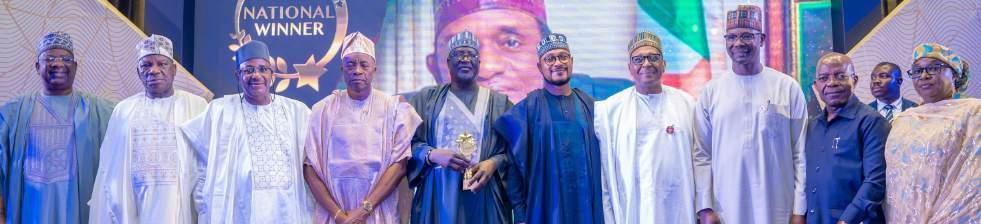
R-L: Deputy Governor, Kaduna State, Balaraba Sabuwa; Governor, Abia State, Dr. Alex Otti; Governor, Nasarawa State, Abdullahi Sule; Coordinating Minister of Health and Social Welfare, Mohammed Ali Pate; Governor of Zamfara State, Dauda Lawal; Yobe State Deputy Governor, Alhaji Idi Barde Gubana, overall winner of the PHCLC; Osun Deputy Governor, Kola Adewusi; Deputy Governor, Jigawa, Aminu Usman; Deputy Governor, Gombe, Manasseh Daniel Jatau, and Director General, Nigeria Governors’ Forum (NGF), Dr. Abdulateef Shittu, at the 2025 Primary Health Care (PHC) Leadership Challenge Awards organised by the NGF in Abuja…yesterday
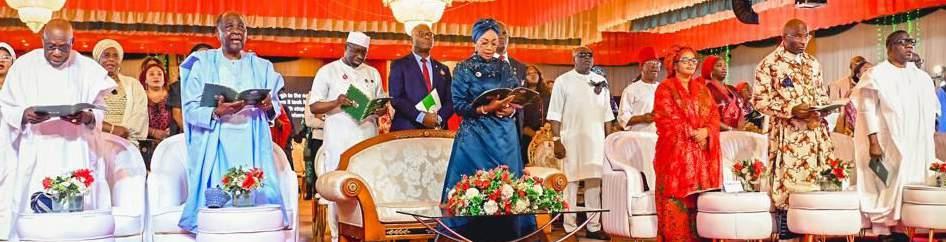
L-R: Former President, Chief Olusegun Obasanjo; former Head of State, General Yakubu Gowon; First Lady, Senator Oluremi Tinubu; wife of the Speaker, House of Representatives, Fatima Tajudeen Abass; Deputy Speaker, Hon. Benjamin Kalu, and Senate Leader, Senator Opeyemi Bamidele, during the 2025 service of nine lessons and carols held at the State House banquet Hall…yesterday
Dangote Refinery Cuts Petrol Price by 16%, Pegs Gantry Price at N699/Litre
per litre of the product.
For the umpteenth time, the Dangote Refinery has reduced its petrol gantry price, cutting it from N828 to N699 per litre, representing about 16 per cent decrease or N129
Data monitored on Petroleumprice.ng yesterday, showed that the new price took effect on December 11, 2025, marking about the 20th petrol price adjustment announced by the refinery this year.
However, Nigerians
through physical capture.
The first phase of the Independent National Electoral Commission’s (INEC) Continuous Voter Registration (CVR) has ended nationwide, recording a rise in new voters with 2,685,725 registrants added to the existing register.
The first phase of the CVR which began on 18 August 2025, came to a close on Wednesday.
According to the figure, 1,576,137 individuals completed the online preregistration, while 1,109,588 finalised their registration
The breakdown of the data released by the commission showed that Osun State recorded the lead in this first phase with 208,357 registered voters. It was closely followed by Kano (159,669), Sokoto (152,650), and Imo (145,561). States like Borno (123,835) and Lagos (123,484) also reflected the growing mobilisation of citizens.
In addition, gender distribution revealed that women accounted for the majority of registrants.
A total of 1,508,559 females completed their registrations in this first
were optimistic yesterday that the reduction of the ex-depot price will translate to a cut in fuel prices at the pumps.
The latest reduction aligns with previous attempts by the refinery to undercut the competition, who are majorly importers
phase, representing 56 percent of the total, while male registrants stood at 1,177,166 or 44 per cent.
On age data, registrants between ages 18 and 34 accounted for 1,974,894, which is 53 per cent of all completed registrations. Whereas those aged 35 to 49 years total 488,708 or 18.20 percent. Also, registrants between 50 and 69 years stood at 199,494, while those aged 70 years and above accounted for 22,629. Occupational data indicated that students form the largest group on the register. INEC recorded 831,386 student
of the product. Aliko Dangote had assured that he has enough petrol in-country to meet the about 50 million litres per day consumption in the country.
Dangote during the week, also restated his commitment to keeping domestic fuel
registrants, representing 96 per cent of the total.
The breakdown of the figures also showed that business people followed with 492,866 35 per cent, while housewives accounted for 449,822 74 per cent.
Farmers and fishers recorded 295,079 registrations, 151,375 artisans recorded, whereas civil and public servants together accounted for fewer than 70,000 registrants.
The Commission also reported that 40,154 registrants identified as persons with disabilities, representing about one
prices “reasonable and competitive” despite global volatility and persistent smuggling along Nigeria’s borders, after a closed-door meeting with President Bola Tinubu in Abuja.
He stated that prices would continue to fall as the refinery ramps
and a half percent of the total registrations.
Prior to the 2023 elections, registered voters stood at 93,469,008.
While speaking in Abuja at the Nigeria Civil Society Situation Room’s Stakeholders’ Forum on Elections, INEC Chairman, Prof. Joash Amupitan, said the mobilisation was a testament to the rising political awareness, and "we commend the states leading the charge".
He added that the drive for inclusion and participation finds its strongest expression in the commission's commitment to the CVR exercise.
up output and competes directly with imported products. “Prices are going down. The reason why prices have to go down is that we also have to compete with imports. But luckily for us now, the smuggling has reduced, not totally,” he stated.
Amupitan added that this process was vital for ensuring the integrity and completeness of our national register.
According to him, “Since the CVR exercise began, we have worked tirelessly to bring the registration process closer to the citizens.” He, however, urged all stakeholders, especially civil society organisations and the media, to sustain the momentum and ensure every eligible Nigerian is registered before the final conclusion of the exercise.
MOVES TO CALM FEARS AHEAD OF JAN. 2026 NEW TAX LAWS ROLLOUT
Tax Reforms, Mr. Taiwo Oyedele, yesterday reassured Nigerians that the new tax laws were designed to ease burdens on Nigerians and not increase them.
He insisted that the new legislation, which would become effective from January 2026, would end a situation where the poor bear the tax burden, eliminate multiple nuisance levies, and ensure that 97 percent of small businesses pay zero corporate tax from next year.
Management Corporation of Nigeria (AMCON), Sevi Akinwunmi.
Justice Aluko nullified the order while ruling on the Notice of Preliminary Objection filed by the Chairman of GHL, Prince Nduka Obaigbena, challenging the jurisdiction of the Court to entertain the suit.
Akinwunmi had filed the suit seeking to give effect to the purported receivership over General Hydrocarbons Limited and its assets.
In his ruling, the judge
Speaking during an interactive session with journalists in Lagos, yesterday, Oyedele, warned that widespread misinformation was fueling unnecessary fear, stressing that many reforms from the input VAT refunds on everyday purchases to exemptions for small businesses represent gains Nigerians are learning about for the first time.
He emphasised that the top two percent of earners, not ordinary citizens, would bear the
agreed with Obaigbena's objection that the suit was an abuse of court process because of the prior existence of Suit No. FHC/L/CS/1903/2025General Hydrocarbons Limited against AMCON & 3 others.
The Court also held that Akinwunmi and his counsel commenced this suit in breach of the clear orders of Justice Ambrose Lewis-Allagoa in Suit No. FHC/L/CS/1903/2025, marked September 23, 2025, wherein AMCON and its
bulk of new obligations, while long-standing requirements like Taxpayer Identification Number (TIN) for bank accounts are being misunderstood as new rules.
Oyedele maintained that the January 2026 rollout would be fair, technology-driven, and transparent, noting that the government’s continuous engagement before and after the law’s passage shows a sincere commitment to smooth implementation and
agents, privies, nominees, etc., were prohibited from appointing or continuing with the appointment of a receiver over General Hydrocarbons Limited and its assets.
The Court further stated that Akinwunmi, having been appointed by AMCON, was an agent of AMCON, and thereby bound by the orders of Justice Lewis-Allagoa in Suit No. FHC/L/ CS/1903/2025 against AMCON.
Justice Aluko also
genuine reform.
The Tax Reforms Committee boss also calmed growing public concerns that the federal government would begin deducting money directly from bank accounts once the new tax laws become effective.
He also explained that Nigeria’s Company Income Tax (CIT) rate, which has stood at 30 per cent since 1996, would under the new framework be reduced to 25 per cent, insisting that the reform was aimed at
acknowledged that Akinwunmi and his counsel, Bidemi AdemolaBello (SAN), deliberately suppressed facts in commencing this suit and securing the interim orders against General Hydrocarbons Limited and its assets.
The Court also held that if Akinwunmi and his counsel had disclosed the existence of the prior orders of Justice LewisAllagoa in Suit No. FHC/L/CS/1903/2025, Justice Aluko would not
boosting investment and modernising the tax system.
Oyedele also clarified that more than 99 per cent of stock market investors would remain exempted from Capital Gains Tax (CGT), while only the top 1 per cent, typically large institutional investors, would be liable, and even they can avoid the tax if they reinvest their gains back into the market.
Addressing misconceptions about direct account debits from 2026, he stated: “Let me
have granted the interim orders of 24th October 2025.
be clear: nobody will debit your account. There is no scenario under the current laws or the upcoming ones where government can simply take money from you because they think you should pay more tax.” He emphasised that even in rare cases where taxpayers owe liabilities, the law requires a structured process involving notices, assessments, the right to dispute, and ultimately a court order.
Additionally, the Court reviewed the subject matter and parties in the case before Justice Lewis-Allagoa, as well as the current lawsuit, and concluded that they are identical or very similar. It found no justification for filing a new case on the
Continued on page 22
Our attention has been drawn to the error in our report on December 5, 2025 with headline “Security: Five Men Shaping Tinubu's Defence, Intelligence, Policing Strategy” published on pages 1 and 33, where the name of the Director General of the National Intelligence Agency (NIA), Ambassador Mohammed Mohammed was written as "Ambassador Dauda Mohammed”. We regret the mixup in names and apologise for the embarrassment this may have caused the incumbent DG and the NIA and urge the reading public to take note of this correction. –Editor
He chose loyalty, steadfastness over personal gain, says former gov
Olusegun Samuel in Yenagoa
The Bayelsa State Government has announced with deep regret and profound shock the sudden passing of the Deputy Governor, Senator Lawrence Ewhrujakpo.
The deputy governor died on Thursday, 11th December 2025, at the age of 60, after he slumped and was rushed to the Intensive Care Unit (ICU) of the Federal Medical Centre (FMC), Yenagoa, the state capital.
He was said to have slumped at around 1:30p.m. on Wednesday in his office, prompting an emergency response.
Eyewitnesses described him as being in a serious condition when he was taken to the hospital’s emergency unit.
Though there were initial reports that he was stabilised at the Intensive Care Unit (ICU), no official statement was released regarding the cause of his health scare. But sources suggest it may be related to a cardiac emergency.
As his death attracted sympathisers to the hospital, security operatives cordoned off the hospital.
Confirming the demise of the man popularly referred to as the 'Workaholic Deputy Governor'
Bauchi Governor Sponsors 355 Christians for 2025 Israel Pilgrimage
The Bauchi State Governor, Senator Bala Abdulkadir Mohammed, has sponsored 355 Christian pilgrims for the 2025 pilgrimage to Israel, reaffirming his commitment to religious inclusivity and support for the Christian community.
The Executive Secretary of the State Christian Pilgrims Welfare Board, Ibrahim Yakubu Gwallang, disclosed this yesterday at the commencement of the screening exercise for intending pilgrims held at the Board’s headquarters.
Gwallang described the governor’s gesture as a clear demonstration of inclusive governance, noting that the sponsorship reflects Bala Mohammed’s dedication to strengthening unity and supporting Christians in the state.
He urged the beneficiaries to pray for the governor’s success and conduct themselves responsibly throughout the process.
the Commissioner for Information, Orientation and Strategy, Mrs. Ebiuwou Koku-Obiyai,
said the late deputy governor was active and carrying out official duties earlier in the day.
She said, "He collapsed while proceeding to a scheduled meeting within his office and was rushed to the Federal Medical Centre, Yenagoa, where he was later confirmed dead.
U.S. Intercepts Nigerian-owned Vessel for Suspected Crude Oil Theft, Piracy, Others
Peter Uzoho
The United States Coast Guard, in a joint operation with the U.S. Navy, has intercepted a Nigerianowned supertanker, Skipper, following intelligence reports linking the vessel to crude oil theft, piracy, and a series of transnational criminal activities spanning
multiple jurisdictions.
The Skipper, a 20-year-old Very Large Crude Carrier (VLCC) with IMO Number 9304667, has long operated in West African and South American waters.
Though the tanker is reportedly owned and managed by Lagos-based Thomarose Global Ventures Ltd., its official registration
lists Triton Navigation Corp., headquartered in the Marshall Islands, as the owner.
At the time of the interception, the tanker was allegedly flying the Guyanese flag without authorisation. Officials from Guyana’s Maritime Administration Department (MARAD) confirmed that
Skipper does not appear in the country’s ship registry, describing the vessel’s use of the flag as both illegal and deceptive. Flag-switching, often called “flag hopping,” is a common tactic used by ships attempting to evade regulations, trade sanctions, or detection by maritime authorities.
Experts, Diplomats Back FG’s Deployment of Troops to Benin to Restore Order
Linus Aleke in Abuja
Security experts, scholars, and diplomats have rallied in support of the federal government’s deployment of troops to Benin, insisting the intervention was both necessary and timely to restore constitutional order and prevent further instability in the neighbouring country.
They argue that the action reflects Nigeria’s long-standing commitment to regional security and its responsibility to safeguard democratic governance across West Africa.
trip.
He further appealed to intending Pilgrims to ensure orderliness, present only genuine documents, and uphold the image of Bauchi State during the
Earlier in the week,
President Bola Ahmed Tinubu, in his capacity as Commander-in-Chief of Nigeria's Armed Forces, authorised the deployment to help Benin’s authorities foil an attempted coup that threatened to unseat the country’s democratic government. The decision immediately ignited intense debate among policy analysts, diplomats, scholars, and security practitioners—while many applauded the move, others criticised it as a costly distraction from Nigeria’s domestic challenges.
Critics of the administration argue that Nigeria is already grappling with significant internal security and economic pressures and should therefore avoid committing scarce resources to foreign crises that offer no immediate benefits.
However, supporters counter that Nigeria cannot afford to overlook developments that may trigger a domino effect of military takeovers within the sub-region.
One of those defenders, is a security expert with deep experience in
protocol and intelligence retired Ambassador Simon Ejike Eze, who described the intervention as “timely and justified,” noting the cultural and demographic ties between both countries.
“Do not forget that there are Yorubas in Benin, so President Bola Ahmed Tinubu did exactly what was expected of him by helping to quell the coup,” he said.
He warned that if the growing trend of revolts against constitutional authority is left unchecked, it could sweep across the entire West African region.
Segun Awofadeji in Bauchi
holy
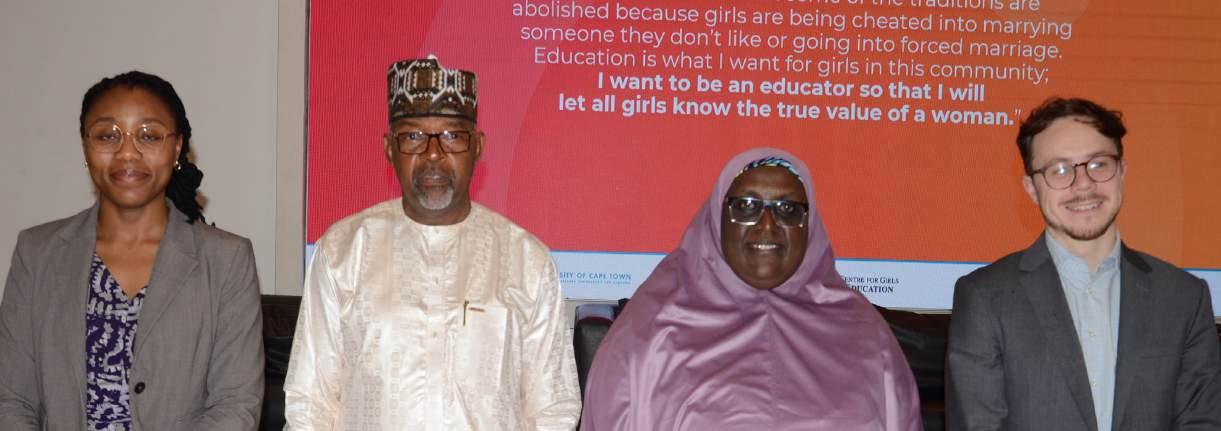
L-R: Accelerate Hub, University of Oxford, Dr. Sopuruchukwu Obiesie; Permanent Secretary, Ministry of Education, Dr. Halliru Musa Soba; Executive Director, Centre for Girls Education, Mrs. Habiba Mohammed, and Senior Researcher, University of Oxford, Dr. William Rudyard, during the investment case intervention supporting Girls’ Education held in Abuja… recently KINGSLEY ADEBOYE
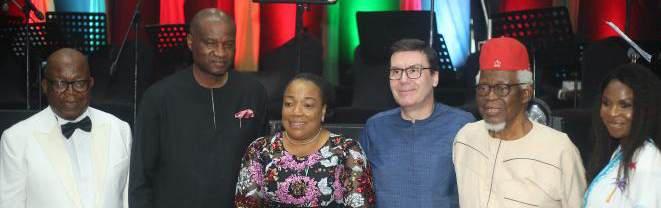
2025 CHRISTMAS CONCERT...
L-R: Director of Music and Conductor, Musical Society of Nigeria (MUSON), Emeka Nwokedi; Ayo Adeloye; Executive
Ayo-Adeloye; Group Managing Director, Mandilas Group Ltd., Mr. Vlassis Liakouris; Director, Mandilas Group, Chief Gregory
Christmas Concert held at MUSON Centre, Onikan, Lagos…recently
and
Defections: ADC, APC, PDP Trade Blame
Nigeria’s major political parties are locked in a war of words as fresh defections reshape the political landscape ahead of 2027.
From accusations of opposition failure to claims of false narratives and nepotistic governance, the African Democratic Congress (ADC), the All Progressives Congress (APC), and the Peoples Democratic Party (PDP) are each pushing back, insisting the blame lies elsewhere.
Speaking in separate interviews on ARISE News Channel yesterday, spokespersons for the ADC, Bolaji Abdullahi; APC, Felix Morka, and PDP, Ini Ememobong, all defended their respective parties.
Morka, the National Publicity Secretary of the APC, dismissed claims by the PDP and the ADC that his party was pushing Nigeria towards a one-party state, insisting that the governing party was actively strengthening democratic practice across the country.
Morka added, “The All Progressives Congress is very busy doing exactly what a political party is expected to do in a democracy. We’re not doing anything unusual, that shouldn’t be of concern to any Nigerian.”
He maintained that the APC’s conduct has remained consistent with democratic norms, adding that “We do nothing untoward when it comes to democratic consolidation.
As a matter of fact, we are doing more than is expected of a political party to deepen
Globacom Unveils Four Movies Exclusively on Glo TV
Globacom, Nigeria’s leading digital solutions provider, has announced the release of four neverbefore-seen movies on its premium entertainment platform, Glo TV absolutely FREE for all subscribers.
This major content rollout reinforces the brand’s unwavering commitment to enriching the digital viewing experience for millions of Nigerians.
In a statement issued in Lagos on Wednesday, Globacom revealed that the newly unveiled titles feature some of Africa’s most celebrated actors and
storytellers, delivering a vibrant blend of comedy, romance, drama, cultural richness, and emotional depth. The movies include Johnny Just Come (JJC), Eko Vibes, Bound, and Shifting Desire.
“Each of these movies has been carefully selected to showcase diverse African narratives while delivering world-class entertainment unavailable in cinemas, on YouTube, or on any other VoD platform. Viewers do not need to purchase any subscription or pay any fee, access is completely FREE,” the company stated.
democracy.”
Responding to allegations from opposition spokespersons, Morka emphasised that the party operates transparently and welcomes political participation from all Nigerians.
“Now, we keep our doors open because that’s what
democracy is all about.
The freedom of choice of citizens to enter and exit from a political association like the APC, and for that matter, like the ADC and the PDP,” he said.
He criticised the opposition parties for failing to address internal crises, arguing that their instability
is the primary reason for the exit of their members.
According to him, “You all on this panel, you got it right when you stressed to them that the problem really is internal to them. It is their own failure to govern themselves effectively that’s creating the atmosphere and the
panic for their members to exit their party.”
For his part, the National Publicity Secretary of the ADC, Abdullahi, said the ruling APC was deliberately creating a false narrative that the 2027 general election had already been won, insisting that Nigerians still have a credible alternative.
Single Term Will Eliminate Laziness Among Politicians, Says Gov Bago
Chuks Okocha in Abuja and Laleye Dipo in Minna
Niger State Governor, Mohammed Bago, has proposed a single term for elected officials and political appointees, arguing that it would curb laziness among politicians and boost performance.
Bago made this call yesterday while swearing in newly nominated commissioners and elected
local government leaders in the state.
He noted that he had contemplated removing some appointees but chose to wait for a second term, emphasising that he would have acted more decisively then.
“I am an advocate of a single term of governance. Everything in Nigeria is now being tied to politics. It’s unfortunate. There are things I would have done
today, but I am deferring them to after the election.
“I want to sack some people who are not working, but I cannot, because of the election. They have failed their exams severally, and could not be promoted, but they are a burden on the system.
“If I had a single term, I would have been more decisive than where I am today. Some special advisers, board directors and so many other people would have
done their best because they have just one shot in governance.
“Everybody is procrastinating about tomorrow, tomorrow, tomorrow. When is tomorrow? Our tomorrow is today,” Bago said. The governor also called for state police and community policing, saying that society would be a safer place than the present centralised system of policing the country.
Armed Men Strike in Ilorin Daylight Robbery
Hammed Shittu in Ilorin
Four-man armed robbery gang yesterday struck in Ilorin, Kwara State capital, shooting sporadically before carting away unspecified millions of naira from an unsuspecting victim.
The incident, according to THISDAY checks, happened along Murtala Mohammed Way, Ilorin, where the offices of some major national newspapers are located.
The dare-devil masked gunmen it was gathered drove in an ash-colour
Toyota Corolla with faded number plate.
During the robbery operations, a former Chairman of the Kwara NUJ and state correspondent for The New Telegraph newspaper, Elder Stephen Oni, got injured while scampering for safety.
Sources said that the armed robbery gang have been trailing their victim to the spot where they eventually opened fire on him before carting away monies stuffed in four big cartons.
It was gathered that the robbers rained bullets on their lone victim’s greycolour Toyota Sienna from behind to deflate the two left tyres.
After being forced to stop, the three masked men appeared while a man was sighted at the wheel ready for get away.
The three men shot sporadically into the air to scare off intruders who were at that time, scampering for cover for safety.
Though no life was lost, stray bullets, however,
caught the driver on arm as well as the stray bullets passed through the front and back windshields and the vehicle’s body.
“They unpacked the cartons full of money from the grey colour Toyota Sienna into their own Toyota Corolla before driving away,” an eyewitness recalled.
Another eyewitness lamented that while it lasted, no policeman was seen. “Neither during the operation, nor after it,” he said.
Erizia Rubyjeana, Melissa Enoch and Faridah Abdulkadiri
Vice Chairman, Mandilas Trust Co. Ltd and Vice Chairman, Mandilas Group Ltd, Mrs. Ola
Ezeokafor,
Mrs. Rebecca Liakouris, at the 2025 MUSON-Mandilas
FG Unveils N5m Credit Window for Youths Under CREDICORP
Pushes for better, cheaper healthcare access
Reaffirms commitment to human rights
Also, the Coordinating Minister of Health and
The federal government has said that under the Consumer Credit Corporation (CREDICORP) scheme Nigerian youths between 18 and 39 years can access up to N5 million credit.
Social Welfare Prof. Ali Mohammad Pate, has said that Nigeria is currently working hard to achieve the target of improving healthcare services and making them accessible and
affordable to the citizens.
This was as the AttorneyGeneral of the Federation and Minister of Justice, Lateef Fagbemi, stressed that freedom of expression and access to information
Alaafin Meets Marwa, Assures NDLEA of Support in Illicit Drugs Fight
The Alaafin of Oyo, His Imperial Majesty Oba Abimbola Owoade, has assured the Chairman/ Chief Executive Officer of the National Drug Law Enforcement Agency (NDLEA) Brig. Gen. Mohamed Buba Marwa (rtd), of support and collaboration in his renewed mandate to curb the scourge of substance abuse and illicit drug trafficking in the country.
According to a statement, the revered traditional ruler
gave the assurance when he led two other royal fathers: Oloro of Oro, Oba Joel Olaniyan Olatoye and Olusin of Ijara Isin, Oba Ademola Julius Ajibola, on a courtesy visit to Marwa at the Agency’s national headquarters in Abuja, yesterday.
He said he is proud of Marwa’s trajectory as Atunluse of Yoruba land.
According to him, “to be kind with you, we are proud of you. Your being in this position at the moment
is not just by chance, it's because of your devotion, your commitment. You have this amiable character. That's why you are able to govern Borno and Lagos states, and you have always been a performer. Another thing which I can't forget about you is the legacy of Keke Marwa that you brought to Nigeria.”
Responding directly to the charge by the NDLEA boss for traditional rulers to support ongoing efforts against drug abuse in the
country, the Alaafin assured of his readiness to mobilise his colleagues to work with the Agency.
“I've heard your message and the same thing with some of my colleagues here and some of my other traditional rulers, we are ready to collaborate with you. I have to tell you, we are at the grassroots, we are close to the community people. We know a lot about what's going on. So, I'm using this opportunity to tell you that we are ready.
The Director General of the Department of State Services (DSS), Oluwatosin Adeola Ajayi, has ordered the immediate release of three men who were arrested in June 2025 over alleged links to banditry and kidnapping. He also approved the payment of N3 million as compensation to the
trio — Umar Ibrahim, Alhaji Bello Rabiu, and Jaja Sarki Bamo — after a DSS review panel confirmed that their arrest was a mistake. According to credible security sources, a detailed investigation revealed no evidence whatsoever connecting the men to the crimes for which they were detained. The sources explained
that the release and compensation reflect the DSS leadership’s renewed commitment to correcting past procedural errors and ensuring that justice is delivered without delay.
Over the past several months, ongoing internal reviews have led to the discharge of innocent suspects, while those credibly implicated are now facing prosecution.
One source described the DG as a leader who does not shy away from acknowledging and correcting errors.
“The DG DSS is an honourable man who addresses mistakes with urgency. His insistence on due process and his willingness to revisit cases demonstrate his commitment to doing what is right.”
remain the bedrock of democratic governance.
Even as it has officially launched the YouthCred for Employed Youth initiative under the Nigerian CREDICORP, the federal government described it as a bold step towards empowering young Nigerians and giving them a solid footing in a credit-based economy.
Unveiling the programme at the Ministry of Finance Auditorium in Abuja, the Minister of
Finance and Coordinating Minister of the Economy, Wale Edun, described the initiative as a practical expression of President Bola Tinubu’s vision for a modern, credit-enabled economy.
He stressed that as government reforms strengthen the economy, Nigerians must also feel these gains in their daily lives through access to tools that make them more productive and financially secure.
The Group Chief Executive Officer of Wakanow, Mr. Bayo Adedeji, has called on Nigerian graduates to touch excellence in everything they do.
The travel-tech company executive stated this yesterday, November 28, 2025 after he was conferred with an Honorary Doctorate in Business Administration by Madonna University, Nigeria, during the institution’s 23rd Convocation Ceremony held at the University Convocation Arena, Elele, Rivers State.
The ceremony, presided over by the Chancellor of the University, Very Rev. Fr. Prof. Emmanuel Edeh, recognised Adedeji
for what the institution described as his “exceptional achievements in business leadership and remarkable contributions to society.”
While presenting him to the Chancellor, the ViceChancellor, Prof. Chris Anyanwu, said Adedeji’s accomplishments “embody the values of our esteemed institution and reflect excellence worthy of emulation.” Another recipient of the honorary doctorate was Dr. Chuka Nwachukwu.
In his remarks after receiving the honour, Adedeji announced a N500,000 annual award for each of the three best graduating students, totalling N1.5 million yearly, to support academic excellence and motivate young achievers.
Bennett Oghifo in Lagos, Onyebuchi Ezigbo and Kuni Tyessi in Abuja
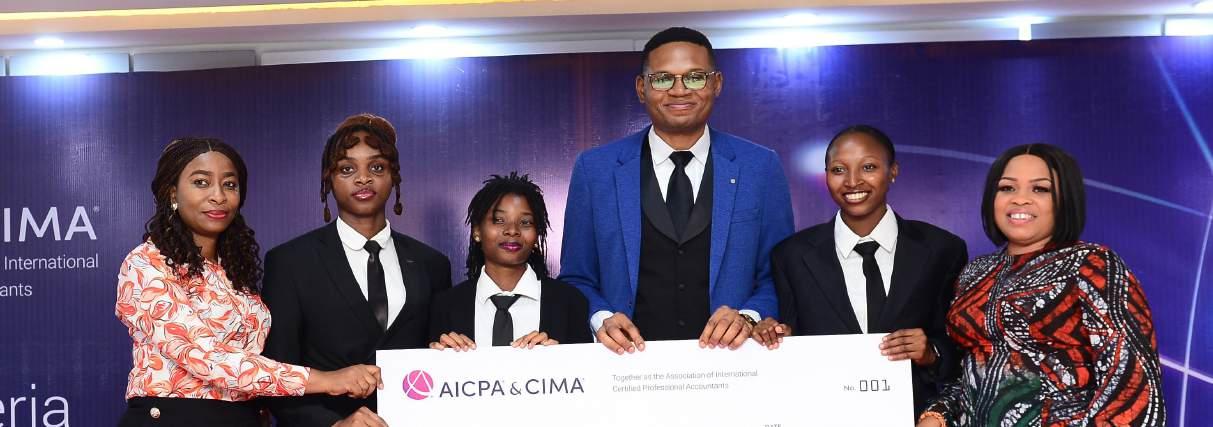
L-R: Chief Financial Officer, Fibreone Broadband Limited, Patricia Duru; Students of Baze University, Abuja: Tiffany Beh-Nubel, Ninma Kolo, Ugochukwu Udorji, Maryayi Iliya, Winner of the 2025 CGMA Business Challenge, and Country Director, AICPA and CIMA, Ijeoma Anadozie, during the prize presentation ceremony at the grand finale of the challenge held in Lagos...recently
REWARDING CUSTOMER LOYALTY...
L-R: Assistant Manager, Trade Development, Golden Penny Foods Limited, Ile Ife, Chukwuemeka Okagbue; Car Winner, Friday Uche Mathew; Brand Manager, Pasta, Golden Penny Foods Limited, Abiola Akinrole, and Area Sales Manager, Golden Penny Foods Limited, Ile Ife, Titus Ekundayo, during the presentation of the sixth car reward in Osun, as part of the ongoing Golden Penny 65th Anniversary Buy & Win Golden Promotion.
BRAND PROMOTION...
and
and
Alleged Corruption: Court Remands Ngige in Kuje Correctional Centre
Alex Enumah in Abuja
A High Court of the Federal Capital Territory (FCT), Abuja, yesterday, ordered the remand of the former Minister of Labour and Employment, Dr. Chris Nigige, in the Kuje Correctional Centre.
Nigige who was arraigned on alleged corruption charges would remain in Kuje Correctional Centre till Monday, when his bail application would be heard.
Ngige was specifically charged with conferring unfair advantage on his associates, in the award of several contracts when he held office as minister, between 2015 and 2023.
He was also accused of corruptly accepting gifts of several millions of naira through his organisations, while he was in office.
He pleaded not guilty to all the eighth-count charge brought against him by the Economic and Financial Crimes Commission (EFCC).
However, his bail application could not be taken as it was served on the prosecution shortly before the court's proceedings.
His lead lawyer, Mr. Patrick Ikweato, SAN, pleaded with the court to admit the former minister on health grounds, pending the hearing of the bail.
But, the request was
Tech Firm Launches Mediloan Credit Solution to Close Healthcare Financing Gap
Oluchi Chibuzor
Mytura, a Nigerian healthtech company, has unveiled MediLoan, a digital credit solution designed to prevent patients from abandoning medical care due to a lack of funds and to improve liquidity for healthcare providers.
Myltura is one of nine startups supported under the Gates-funded Digital Public Infrastructure initiative and will receive go-to-market strategy assistance from CCHUB and DSN.
Speaking at the launch of the product in Lagos,
recently, the CEO, MyItura, Shina Arogundade, said the platform was created to tackle Nigeria’s crippling out-of-pocket health expenditure.
According to him, over 70 percent of Nigerians fund their healthcare directly, while fewer than 10 percent have active health insurance.
Arogundade said the MediLoan initiative, developed in partnership with CCHub, Data DSN and the Digital Impact Alliance offers patients immediate credit at the point of care, allowing treatment to commence without financial delays.
opposed by EFCC's lawyer, Mr. Sylvanus Tahir, SAN, on the claim that the former minister was a flight risk, adding that he would respond formally to the bail application.
In a short ruling, Justice Mariam Hassan adjourned till Monday, December 15, for the hearing in the bail application.
In the charge marked:
FCT/HC/CR/726/2025, the former minister in count one was alleged to have used his position as Minister of Labour and Employment and the Supervising Minister of the Nigeria Social Insurance Trust Fund (NSITF), "to confer an unfair advantage upon Cezimo Nigeria Limited, a company whose MD/CEO and alter ego, Ezebinwa
Amarachukwu Charles is your associate, by the award of Seven different contracts for consultancy, training and supply by the NSITF to the said company to the tune of N366,470,920.68.
In count two, the former minister was alleged to have used his position to confer an unfair advantage "upon Zitacom Nigeria Limited, a company whose MD/CEO
Fubara Formalises APC Membership
Rivers State Governor, Siminalayi Fubara, has formally received his All Progressives Congress (APC) membership card from the state Chairman, Chief Tony Okocha.
Receiving the membership card, at the Government House Port Harcourt, Governor Fubara vowed
Bennett Oghifo
Wema Bank has announced a N120 million prize pool for the Hackaholics 6.0 Grand Finale, following the emergence of 35 teams from regional pitch sessions that recorded 1,460 participants across seven cities in Nigeria.
Announcing the prize structure, MD/CEO Wema Bank, Moruf Oseni, disclosed that the N120 million will be awarded across several winning categories at the finale.
to ensure that President Bola Tinubu’s 2027 reelection bid is smooth and unencumbered in the state.
The governor said he had every reason to support President Tinubu, noting that the President’s sacrifices were instrumental to the survival of his administration.
He explained that joining the APC was
his way of openly identifying with Tinubu and reciprocating the President’s support.
He said, “We can’t be doing our own here and be on a different course from the federal government, the ruling party. There is every reason to support Mr. President. If not for anything else, I know the sacrifices he has made to ensure we still stand as a government.
The Ideathon prizes include N25 million for first place, N20 million for the first runner-up and N15 million for the second runner-up. In the Hackathon category, the first to fourth-place teams will receive N20 million, N15 million, N10 million and N5 million respectively. In addition, two womenled innovations, one from each vertical, will receive N5 million each in recognition of Wema Bank’s commitment to advancing female participation in technology and innovation.
According to Oseni, “Hackaholics continues to demonstrate the power of young people to shape the future of technology and nation-building. We believe strongly in the ideas, resilience, and ingenuity of the Nigerian youth, and our investment in this initiative is a clear testament of our commitment to giving them the resources, mentorship, and platform they need to transform their ideas into real-world solutions.
and alter ego, Ezebinwa Amarachukwu Charles is your associate, by the award of eight different contracts for supply, training and consultancy, with the NSITF, to the said company to the tune of N583,682,686.00. Ngige was also alleged to have used his position to confer an unfair advantage upon Jeff & Xris Limited, a company whose MD/ CEO and alter ego, Nwosu Jideofor Chukwunwike, said to be his associate by the award of eight different contracts to the said company to the tune of N362,043,163.16.
In another count, the former minister was alleged to have "between September 2015 to May 2023 in Abuja, within the jurisdiction of this court and being the supervising Minister of the Nigeria Social Insurance Trust Fund (NSITF), used your said position to confer an unfair advantage upon Olde English Consolidated Limited, a company whose MD/CEO and alter ego, Uzoma Igbonwa is your associate, by the award of four different contracts for consultancy, training and construction by the Nigeria Social Insurance Trust Fund (NSITF) to the said company to the tune of N668,138,141.00.
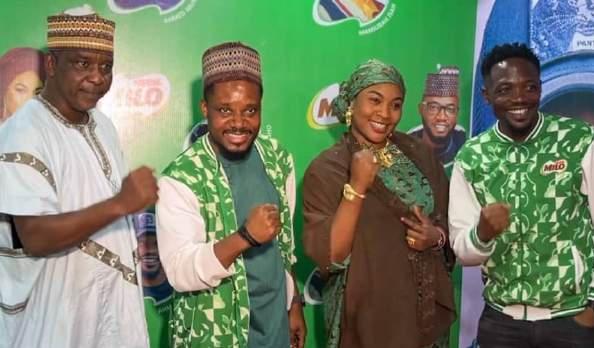
L-R: Kannywood actor
comedian, Sulaiman ‘Bosho’ Yahaya; Category Manager, Beverages, Nestlé Nigeria, Gilbert Tweneboah-Koduah; actress and social impact advocate, Mansurah Isah;
Nigerian footballer, Ahmed Musa, during MILO signing of Northern influencers to strengthen national representation held at the Nestlé Head Office in IIlupeju, Lagos...recently
Blessing Ibunge in Port Harcourt
Methodist Church Prelate Tasks Nigerians On National Unity, Selfless Service
Gowon, Obasanjo, Ooni, Akume, Bamidele, Kalu, others attend Christmas carols hosted by First Lady
Deji Elumoye in Abuja
Prelate of the Methodist Church of Nigeria, His Eminence Oliver Aba, yesterday charged Nigerians to embrace selfless service, unity to rebuild trust and restore hope amid the nation’s economic and security challenges.
Aba, delivered the charge at his homily during the 2025 Service of Nine Lessons and Carols, themed “Emmanuel: God With Us,” hosted by the wife of the President, Senator Oluremi Tinubu, at the State House, Abuja.
According to him, the Christmas message was
a reminder of God’s abiding presence with the nation through seasons of uncertainty.
He said: “Jesus did not come to be far away from us. He came to be present… God is with us in the valley, in the storms of life and in victory,” Aba said, assuring Nigerians that divine presence endures “in season and out of season.”
Talking specifically about inflation, insecurity and social divisions, the Prelate called for collective responsibility and sacrificial leadership.
“As a people, as a nation, when you are worried, God
is with you as a Prince of Peace. Today, the Prince of Peace is ready to give us peace,” he said, urging leaders and citizens alike
to choose selflessness over narrow interests.
Aba anchored the theme Emmanuel on God’s closeness to humanity,
stressing that national renewal requires love, peace and service modeled after Christ’s sacrifice.
Quoting John 3:16, he
framed the season as an expression of God’s selfless love and challenged Nigerians to recommit to unity.
Akinmade Explains Why Abiodun is Prioritising Youth-led Strategies in Ogun
The Dapo Abiodun administration in Ogun State has taken measurable steps that reinforce youth empowerment as a foundation for community security, Special Adviser to the Governor on Media and Strategy, Hon. Kayode Akinmade, has said.
Akinmade stated this in a keynote address delivered at the NUT Secretariat, Kuto, Abeokuta, during a one-day Youth Security Summit, themed "Youth-Led Strategies for Community Security," and organised by the Ogun State Chapter of the Nigeria Youth
Organization in collaboration with the Federal Ministry of Youth Development yesterday.
According to him, this is because the youth are not only the leaders of tomorrow but the defenders, innovators, and nationshapers of today.
He stated that their insight, creativity, and courage are essential to the safety and progress of the state, adding that when young people embrace leadership, insecurity retreats, and that communities grow stronger when they lead with purpose.
Be Merciless to Bandits, CAS Charges Air Commanders
Linus Aleke in Abuja
The Chief of the Air Staff (CAS), Air Marshal
Sunday Kelvin Aneke, has directed Air Component Commanders under the Joint Task Force, North Central, Operation Whirl Stroke, to deal decisively and mercilessly with bandits destabilising communities within the zone.
Sunday Ehigiator
DEALS Sports Club has celebrated three decades of growth at its End-ofYear Awards Gala and Inauguration Night held in Festac, Lagos.
It also supported education in its host community and honoured distinguished members.
The club’s President, Mr. Austin Egbemhonkhaye,
He further urged them to intensify air operations in their Areas of Responsibility while sustaining critical support to ongoing military campaigns across the country.
The directive was disclosed in a statement by the Director of Public Relations and Information, Nigerian Air Force (NAF), Air Commodore Ehimen Ejodame.
DEALS Club Honours Members
described the occasion as a celebration of growth, unity and service to the community.
According to Egbemhonkhaye, the club which marked 30 years of existence evolved from a small boyhood football group into a structured association committed to positive impact.
“As a club, we have grown. We are 30 years in existence, and it was a boyhood club which turned into what you
are seeing today,” he said.
According to him, “the event combined several milestones, including the induction of new members, presentation of end-of-year awards and the club’s corporate social responsibility (CSR) initiative. As part of the celebrations, DEALS
Sports Club carried out an educational endowment programme at Festac Senior Grammar School.
He noted that the CAS issued the charge during his maiden operational visit to Tactical Air Command (TAC) and its co-located units in Makurdi on Friday.
During the visit, Air Marshal Aneke outlined the NAF’s strategic shift
toward intelligence-led and technology-enabled operations, anchored on a strengthened safety culture.
He stressed that operational efficiency would increasingly depend on innovation and the optimal use of recently acquired air
platforms and combat assets. He reaffirmed the Service’s commitment to air power readiness, welfare-driven warfare, and smarter operational strategies designed to maximise mission impact.
ALTECS Targets Nationwide Expansion, Donates Sports Kits to BIS
Sunday Ehigiator
International educational consultancy, All Things Education Consultants (ALTECS), has announced plans to scale up its operations across Nigeria as part of efforts to broaden its impact on the country’s education sector.
The organisation said
its long-term goal is to extend its support initiatives beyond Lagos and reach schools nationwide through a blend of academic and extracurricular interventions.
Speaking on the firm’s expansion strategy, ALTECS Director, Emmanuel Oyedeji Awe, said the consultancy has a “brilliant ambition” to achieve national
spread, enabling more schools to benefit from its programmes. Although ALTECS has gained public attention mainly through sportsfocused projects since entering the Nigerian market, Awe clarified that the organisation’s mandate cuts across the full spectrum of education.
PAYING FINAL RESPECTS…
FG Temporarily Opens Section One of Lagos-Calabar Coastal Highway to Ease Traffic
The federal government, yesterday, temporarily opened Section 1 of the Lagos-Calabar Coastal Highway to commuters in Lagos for smoother journeys this festive season.
The newly accessible stretch covers 47 kilometres from the Ahmadu Bello Way
junction to the Eleko village junction, easing movement along one of the state’s busiest corridors.
Minister of Works, Dave Umahi, announced the
opening during a ceremony attended by government officials, traditional rulers and other key stakeholders.
He said the partial opening will bring immediate relief to
motorists who have endured severe traffic congestion on the Lekki–Ajah corridor for years. According to him, putting the first section to use fulfils the promise he
made during his inspection tour last month, where he assured that Section 1 would be open to traffic between December 12 and 17, 2025.
AMCON SUFFERS MAJOR DEFEAT AS COURT REVOKES ATTEMPT TO PLACE GHL UNDER RECEIVERSHIP
same issue (by the same parties) when an earlier substantive suit in the same Court can resolve all the disputes between the parties.
On this basis, the Court held that the suit was an abuse of court process, having been commenced in violation of the prior orders of Justice LewisAllagoa in Suit No. FHC/L/ CS/1903/2025.
Justice Aluko also stated that Akinwunmi and his counsel's actions could undermine the credibility of the judicial process and represent a significant waste of the Court's time and resources, which should be frowned upon.
The judge, therefore, dismissed the suit and set aside its interim orders made on 24th October 2025.
In an earlier suit, the court had on September 23, 2025, expressly barred AMCON, its agents, privies, and nominees from appointing or continuing with the appointment of any receiver over General Hydrocarbons or its assets.
The ruling marks a significant victory for GHL in the dispute and reinforces the judiciary’s stance against forum shopping, suppression of material facts, and attempts to circumvent valid court orders.
In a separate but related decision delivered on Monday, December 8, 2025, Justice Ambrose LewisAllagoa had invalidated the appearance and appointment of senior lawyer Mr. Oluseye Opasanya as counsel for General Hydrocarbons Limited.
The judge held that Opasanya’s engagement by a purported receiver was in flagrant violation of existing injunctions.
Justice Allagoa had criticised Akinwunmi’s purported appointment of Opasanya, noting that the receiver’s own appointment, said to have been made on September 18, contravened the injunction issued on September 23 restraining AMCON from appointing a receiver.
He emphasised, citing Ngere v. Okuruket, that court orders must be obeyed until discharged or set aside, irrespective of whether parties believe them to be erroneous.
The judge also highlighted that AMCON’s counsel had given a personal undertaking on October 22 to comply with the court’s directives, yet filed a fresh suit the very next day seeking to validate the prohibited receiver appointment.
The judge had ordered
that neither Opasanya nor any lawyer appointed by the purported receiver may represent the company.
“In the affidavit of facts deposed by one Seyi Akinwunmi, the deponent claim to be appointed by the 1st defendant as the receiver of GHL on 18th September, 2025. The Notice of Appointment dated 18th of September is attached to the said affidavit of facts as Exhibit 1. In furtherance of the performance of the deponent’s duty as Receiver Manager by a letter instruction dated 14th November, 2025, the said Receiver Manager appointed by Mr. Kayode Adeluola, SAN, and Oluseye Opasanya, SAN as legal counsel for the plaintiff. That a Notice of Change of counsel was then filed and served.
“In my view, the appointment of Mr. Oluseye Opasanya, SAN and Mr. Kayode Adeluola, SAN as counsel for this plaintiff was inappropriate and offends the law. On the 23rd September 2025, this Honourable Court granted an ex-parte order upon hearing the submissions of Dr. Abiodun Layonu, SAN.
“The pertinent part of the order reads as follows: a)AN ORDER of interim
injunction restraining the Defendants either by themselves, or acting through their servants, agents, assigns, privies, affiliates howsoever described, including any person claiming under their authority from taking any steps or continuing with any steps whatsoever against the Applicant or its assets as it pertains to the debt incurred by Atlantic Energy Drilling Concept Nigeria Limited to the 3rd Defendant which led to the deficit in the 3rd Defendant's books to the tune of US $718,000.00 (Seven Hundred and Eighteen Million United States Dollars) and which was purchased by the 1st Defendant as an Eligible Bank Asset pending the hearing and determination of the motion on Notice in this suit.
“AN ORDER of interim injunction restraining the Defendants either by themselves, or acting through their servants, agents, assigns, privies, affiliates howsoever described including any person claiming under their authority from taking any steps or continuing with any steps whatsoever to enforce any rights against the Applicant or its assets, including but not limited
to freezing the accounts of the Applicants, its directors or shareholders, the appointment of a Receiver/ Receiver Manager, Asset Manager, recovery agent e.t.c, over the Applicant, the applicants asserts or the assets belonging to the Applicant's directors or shareholders on the basis of the loan purchase and Limited Servicing Agreement the outstanding Exposure Tripartite Deed, the intercreditor and security sharing Agreement, or any other agreement related to the 1st Defendant's purchase of the Jd Defendant's nonperforming loan against the Applicants, pending the hearing and determination of the motion on Notice in this suit.”
The ruling stated further that, “the position of the Law is clear on orders of the court must be obeyed. In the case of NGERE V. OKURUKET (2014) 11 NWLR (PT 1417) S.C.
147 P. 173 PARAGRAPHS
E-F. The Supreme Court held: "The Judgment of a Court of competent jurisdiction subsists until upset on appeal. While a Judgment subsists every person affected by it or against whom an order is made must obey it even if it appears wrong."
“It is noted that during the proceedings of 22nd October 2025 before this Honourable Court, this court directed that its interim orders made on 23rd September 2025 would remain in effect until set aside. The 1st and 2nd Defendant's counsel, Mr. Bidemi Ademola-Bello SAN, equally undertook to abide by the decision of this Honourable Court. A certified true copy of the record of proceedings of this Honourable Court on 22nd October 2025 was attached with as Exhibits "C".
“Therefore, I agree with counsel for the Plaintiff Mr. Abiodun Layonu SAN that the appearance of Mr. Oluseye Opasanya SAN at the proceedings of the Court purportedly being appointed by a receiver on the 26th November 2025 was an act carried out in violation of the valid and subsisting orders of this court made in this suit on 23rd September 2025 and re-affirmed during the proceedings of 22nd October 2025.”
Together, both rulings underscored the judiciary’s intolerance for procedural abuses, conflicting representations, and attempts to subvert the authority of subsisting court orders in high-stakes commercial litigation.
L-R: Opeyemi Awe; Adetokunbo Awe; Olumuyiwa Awe; the widow, Mrs. Christianah Awe, and Mrs Olubunmi Arokodare, at the funeral of their late father and husband, Late Moses Adeagbo Awe, held at Methodist Church Nigeria, Oke Ayedun, Ekiti… recently
Melissa Enoch
Ini Ememobong: PDP Not Begging Anybody, But Reaching Out to Everybody
The New National Publicity Secretary of the Peoples Democratic Party, Ini Ememobong addresses the party’s internal challenges, clarifying its stance on recent defections. While insisting the party is not begging anybody, he emphasises that it is reaching out to stakeholders, dialoguing and making efforts to reconcile. Chuks Okocha brings the excerpts
Two groups are pulling the PDP from different positions. As a party, do you agree that the PDP has failed?
To fail would mean that an examination has been set. When you look at the ruling party, despite having a President, look at what happened in Osun; the President had to intervene. A political party looks homogeneous from the outside, but inside it is a potpourri of heterogeneous struggles for power. The political party is the hotbed for conflict, which is why the most critical leadership tool is conflict resolution.
There are indications two more Governors may also leave the party. Are you begging them to stay?
In the circumstance that we are, you know that, except for the legislature, where the law binds their hands, every executive has the capacity to do what they think is right. So, we are not begging anybody, but we are reaching out. The Turaki-led administration is reaching out; the Governors’ Forum is reaching out. But you know there’s a thin line between what is illegal and what is immoral.
You recently described Governor Fubara’s defection as a‘self-inflicted injury.’How would you describe that of Governor Adeleke?
Well, Governor Adeleke’s defection... he’s a victim of circumstance, which is vicarious. Vicarious because every problem has a human cause and therefore should also have a human solution. At the level of the leadership to which he belonged in the party, the party ought to have acted decisively. Is it a challenge? Immediately, we begin to feed the monster without knowing that we’ll end up in the belly of the monster. After a while, we become victims. So if we feed animals to the monster, we feed others to the monster, and we think that time will solve problems. Time allows human beings to solve problems; it doesn’t solve problems on its own. So, it’s vicarious in the sense that strong action by leadership ought to have been taken from 2023 immediately the decline started. But there were negotiations. I mean, you also cannot fully blame them because sometimes you think that with negotiations, when passions are calm, people could reconsider their positions. But unfortunately, they didn’t, until the convention took the decision it did in Ibadan. So that’s the nature of what has happened. He’s become a victim of circumstances arising from vicarious liabilities from which he cannot completely extricate himself.
So you sort of give excuses for Governor Adeleke, but for Governor Fubara of Rivers State, no excuse at all?
No, we’re not giving excuses. We’re saying that both are circumstantial, and even the victims of
the circumstances themselves had a role to play in the conflict that eventually engulfed them. So we’re not making excuses. But in the case of Fubara, you do know that Fubara voluntarily became a candidate of the party. And you do know that the people who brought him have always said that there were agreements. We’re talking about agreements... till today he hasn’t said what the agreement was, but his political party stood by him. The point of our anger is really when he mentioned that he wasn’t secure on the platform. We all have great sympathies for Fubara even as a person. Before becoming Publicity Secretary, I had sympathies for him—a calm, gentle person who is pushed to the wall, who has no other direction to move than in the opposite direction. But to attempt to lay blame other than where blame ought to be... Because if you backtrack and look at the origin of the crisis, you know that the origin is between two people.
You remember that people rose up at the beginning of this crisis and began to speak for him. After a while, he came out and said, “No, no, don’t worry, it’s a father-son matter.” And after a while, a state of emergency was declared. People started advocating, and he went silent. I spoke to some Governors, especially Governor Bala, asking what happened. Governor Bala said, “Look, we were ready and we had deployed at
Nosak Famili Oil Earns SON’s Certification
Nosak Farm Produce Limited has announced that its flagship product, Nosak Famili Oil, has been awarded the prestigious mandatory conformity Assessment Programme (mANcAP) certification by the Standards Organisation of Nigeria (SON).
This recognition affirmed Nosak Famili Oil as one of the highest-quality and purest vegetable oil brands in the Nigerian market.
A statement explained that the MANCAP certification was a testament to Nosak Farm Produce Limited’s unwavering commitment to quality, safety,
and compliance with national and international standards. “Trusted by millions of households, Nosak Famili Oil is produced under stringent hygiene conditions and advanced technology, ensuring exceptional purity, nutritional value, and consumer satisfaction,” it added.
Speaking on the achievement, managing Director of Nosak Farm Produce Limited, engr. Kunle babalola, said: “This award reinforces our dedication to delivering premium-quality products that meet and exceed regulatory standards. At Nosak Farm Produce Limited, we prioritize the health and well-being of our consumers, and this recognition from SON validates our efforts.”
some points, but the governor would either remain incommunicado or would say ‘don’t worry, we would handle it’.” So, volenti non fit injuria—you cannot do harm to a consenting person.So while he has our sympathies, the attempt to shift blame is what we are very angry with. There’s no need to shift the blame. When you get into a voluntary agreement... till today he has not said what agreement he got into. He has not really told Rivers people or us on camera or confided in anyone what the real issues are.
So while we sympathise with him—and we know that this is a situation where Stockholm syndrome has happened, where a captive has fallen in love with the captor—we frown against that conscious amnesia where he picks and chooses where the blame should be. He knows where the origin of his problem is.
So many questions emerge from your defense of your party, particularly in the Fubara case. Would it be the first time that a predecessor would be having an agreement with a successor governor?
You do know that people do not enter a crisis until the parties themselves have declared war. So if people have agreements and the agreement is going fine and the state is not suffering, you have no business going into it because you wouldn’t
even know there was an agreement. But it is when people begin to shout or things begin to happen to suggest that a crisis has occurred, that’s when third parties come in. In this circumstance, even when he went to the meeting with the President, did he consult the party? Did he consult the Governors’ Forum? Remember that even after his election as Governor, it took a long while for him to even associate with the party. We quite understand that maybe his hands were tied. But immediately you feel the pinch, you begin to call for help.
Are you saying that agreements do not exist between governors/predecessors and their successors?
I’m not saying that agreements do not exist, but the first thing is that there cannot be a valid agreement to commit a crime. If the agreements are to siphon state funds or lead the state in a way inconsistent with the Constitution, that’s an illegal agreement. But if people have political agreements—”this one will take this, this one will take that”—those are not illegal. But where agreement fails, and understanding fails, then if the parties begin to speak out, the third parties will come in.
Talk to us about why PDP Governors did not go all the way with the court case initiated to challenge the state of emergency and suspension of democratic institutions by the President in Rivers State?
You do know that even at the last NBA conference, very senior lawyers raised the issue that there was a court case and the Supreme Court did not fix the hearing. But number two, when you are fighting for a person, you must fight in the interest of the person. And the person in whose interest you are fighting must feel that you are fighting in his interest. If you look at the disposition of the Governor, even in that whole period, he discouraged people from fighting. Commentators coming out from Rivers State to attempt to fight... what was his disposition? “He will sort the matter out.” You cannot cry more than the bereaved at a funeral. The PDP Governors took steps, but the steps you’re taking must have the person’s go-ahead. You don’t file a case in court and someone comes to say, “I didn’t send you to do that.” We have been having discordant dispositions from the Governor. When he was ready to fight, everyone fought along with him—look at the local government election, he had all the support. But in a circumstance where you are not fighting from the front and you’re asking people to backtrack, then people begin to think maybe fighting further would hurt your interest. It’s like a patient who tells you, “If you give me injection, I will die.” You cannot still go ahead and give that patient injection against his own will.
HaT Development Institute Organises Outreach
The HaT Development Institute (HaT), with operations in both Texas, United States and Nigeria, has continued its mission to improve elderly wellbeing through expanded community wellness programmes across the country.
The institute, according to a statement, recently held a successful outreach in benin city, edo State, which drew nearly 80 elderly participants.
A doctor from a general hospital, supported by a nurse and volunteers, provided free medical screenings, including blood pressure and blood sugar checks, alongside wellness counselling. It revealed that attendees received food packs, wellness kits, antihypertensive medications, and paracetamol.
HaTs’ President, cynthia eguzouwa, noted that the organisation intends to expand these events across more communities, emphasising the need to celebrate and support Nigeria’s elderly population.
“Our elderly deserve more than occasional care—they deserve consistent support, love, and recognition,” she said.
“We plan to host more of these wellness events across Nigeria to give back to the people who shaped us and to strengthen community bonds.”
With its cross-continental presence, HaT aims to collaborate with government agencies, private organisations, and community groups to scale elderly-focused wellness programmes nationwide.
Dike Onwuamaeze
Dike Onwuamaeze
Ijeoma Nwogwugwu: Reading, Self-improvement Key to Success in Any Profession
As she marks her 60th birthday tomorrow, former Editor of THISDAY and former Managing Director of ARISE NEWS Channel, Ijeoma Nwogwugwu reflects on a life defined by curiosity, discipline, and relentless self-improvement. Renowned for her remarkable journey in media, Nwogwugwu credits reading and continuous learning as the pillars of her success. Despite reaching this significant milestone, she views it not as a turning point but as a continuation of her lifelong pursuit of growth and achievement. For her, age is merely a number; what matters is the commitment to meeting the goals she sets for herself, embracing new challenges, and contributing meaningfully to her profession. This milestone, she says, is a reminder to remain grateful, focused, and purposeful, celebrating both past accomplishments and the opportunities that lie ahead. She also talks about her seamless transition into real estate development. Sunday Ehigiator brings the excerpts:
Ijeoma Nwogwugwu: Reading, Self-improvement Key to Success in Any Profession
as you celebrate 60, what does this milestone mean to you on a personal level?
I am thankful that I have reached this age. But other than that, I don’t consider it any different from my other birthdays. the day will not feel any different, nor will I have more or less resources at my disposal to meet the targets that I have set for myself.
Looking back, which life experiences outside the newsroom shaped you the most?
My public sector experience working for the Bureau of public enterprises under Nasir el-rufai remains one of the most impactful experiences I had. It gave me a better perspective on how policy decisions are made and how they impact Nigerians in the short to long run. also, my dad’s influence on five of us when we were growing up played a huge role in terms of cognitive, social, and emotional growth, fostering confidence, better school results, healthy relationships, and fewer behavioural issues. the boardroom positions I have held and continue to hold have equally honed my leadership skills from a strategic point of view.
How have you managed work–life balance throughout a career known for its intensity and long hours?
Managing a work-life balance was never easy, and the excruciatingly long, sedentary hours at tHIsday have taken a toll on my body. But fortunately, I have always been athletic, so playing tennis and engaging in other forms of high-impact physical activity have helped. so have travelling and safeguarding my privacy, which have been very crucial for me to maintain my sanity and recuperate far from the maddening crowd.
What daily habits or routines helped in sustaining your mental clarity and resilience over the years? reading, reading, reading!!! you would always have limitations if you do not read. I also have this ability to shut out the outside world. It helps me to reflect and resurface for air feeling rejuvenated.
You’ve held some of the most demanding and influential roles in Nigerian media. What has been the biggest leadership lesson of your career? editing tHIsday Newspaper was exciting and relatively easy. However, managing arIse News from scratch was another kettle of fish altogether. Managing anchors and presenters who are generally fueled by their celebrity and egos is one of the most difficult jobs in the world, and this is not just applicable to arIse News. It is a global phenomenon because behind the scenes, there is a lot of handholding and deep-seated rivalry that management is constantly fighting to smooth over so that these issues do not spill to the surface. another thing I learnt was that broadcast media is not as detail-oriented as their print counterparts. Not that I blame broadcasters because the emphasis is on video and audio output, and broadscast presenters are constantly thinking on their feet and have just a few minutes to express themselves. as such, they are more liable to make mistakes and proffer alternative facts. Nonetheless, I remain eternally grateful to the Chairman and editor-in-Chief of the tHIsday-arIse Media Group, prince Nduka Obaigbena, for both opportunities and would do it again if given the chance to relive my life.
Whatmomentsordecisionsdefinedthetransition from journalist to media executive for you?
do you really ever transition in the media space?
Once a journalist, always a journalist, irrespective of the executive position you occupy. the editor-in-Chief, Managing director or Managing editor experiences the same level of excitement as the reporter on the beat when a major story is breaking, or when a media organisation beats its competitors to a major exclusive, or even when you write or produce a seminal piece. We are at heart all creatives and draw our energies from the high-paced, high-octane, and unpredictable nature of news. as you know, even though I am in semi-retirement mode, I continue to send stories to my colleagues in tHIsday and arIse and intervene where necessary because it is what I love to do. Quite frankly, you don’t have to hold a position to remain a journalist.
How did your experience as Editor of THISDAY prepare you for running a major broadcast platform like ARISE News?
so, the main difference between both jobs is that print uses visuals, allowing deep dives and detail, but requiring active reading. Broadcast, on the other hand, offers dynamic, real-time engagement, bringing
Nwogwugwu
events to life through sight and sound for broader audiences. despite the differences, multimedia integration was important by blending both. For instance, a print story from tHIsday might have an accompanying video from arIse, or a broadcast segment referring to an online article. In this digital age, it was also critical that arIse had robust online platforms, such as the website and on social media to compete with digital natives. staff versatility also meant that teams had to be trained in both writing and on-camera/audio skills to create flexible, multimedia content. Being courageous under fire and being able to attract and curate the right talent to arIse were also critical to the network’s success. If you remember, during the #eNdsars protest in October 2020, we were under immense pressure from the federal government to curtail coverage of the protesters or stop it completely. However, I was adamant that we must give them a voice and kept assigning our crew at enormous risk to cover the protests. Our coverage of #eNdsars was a major turning point for arIse and brought eyeballs to the network like never before. the same applied to some incredible reportage on the kidnapped students of secondary schools in Zamfara and Kebbi states by amaka Okoye. Her coverage and reports of those abductions were so good that the likes of aFp and reuters used to call asking for permission to use our videos. Other excellent talent we were able to attract and nurture include dr. reuben abati, rufai Oseni, rotus Oddiri, Laila Johnson-salami, adefemi
akinsanya, Ngozi alaegbu, Ojy Okpe, adesua Omoruan, Nkechi Nnanna, and the indefatigable Ovieteme George, among many others.
What kept you motivated through decades of deadlines, crises, and public scrutiny?
I have been motivated by so many things, but some of the most important ones have been being the best at what I do because I am by nature very competitive. I have never liked being the second best at anything, hence my preference for individual high-impact sports as opposed to team sports. I am also motivated by imparting knowledge to the younger generation and hoping that I can inspire them, even though I am far from perfect.
Many young journalists see you as a role model. What advice would you give to those entering the industry today? readingandself-improvementarekeytosucceeding in any profession, not just in the media. But if we have to be media-specific, being open-minded, thorough, ethical, courageous, dedicated to your job, and developing institutional memory are very important to succeeding in the media landscape. you also have to be nimble and ready to burn the midnight oil in the media to make a mark. this requires a lot of personal sacrifices, but in the end it will be worth the effort.
What personal values guided your decision-
making during tough professional moments? team work, collaboration, integrity, reliability, discipline, hard work, generosity, and courage are some of the most critical personal values that have assisted in my decision-making throughout my career.
At 60, what are you most proud of and what still excites you about the future?
Oh, quite a bit. I have made the seamless, and if I must add, quite a successful transition from media to real estate development, which I absolutely enjoy because it’s like birthing a new baby, then nurturing and watching that child grow. However, building residential homes is not for the faint-hearted because it requires a lot of planning and compliance with engineering and building codes. the capital outlay is also enormous due to the high cost of land in Lagos, statutory payments that must go to the authorities, and escalating construction costs in Nigeria. Nonetheless, it is a business that can be highly rewarding with proper planning and project management, targeted marketing, and ensuring that the quality of the projects that you deliver are top-notch. so far, I have been able to deliver a number of luxury apartments in Ikoyi and hope to continue to do so in the foreseeable future.
If you could give your 30-year-old self one piece of advice, what would it be? sometimes, talk less and listen more in order to avoid trouble and annoying people.
Investigate Into, Not ‘On’
YOU are welcome to this especial edition: “Herdsmen (Herdsmen’s) attack: Okpebholo inaugurates security, boundary committees”
“…who have commenced investigation on (into) the case since the video surfaced online.”
“Action Collective raises alarm (the alarm) over plot against Natasha
“…the Almighty God will take you to higher pedestal.” Either a higher pedestal or higher pedestals.
“Igbo group urges FG to consider restructuring amidst (amid) rising insecurity in Benue”
“Why more accidented (accident) vehicles are flooding Nigeria”
“More grease (power) to your elbow.” Don’t grease The Bull, please.
“The worst human being is a policeman or soldier who will take arms from his own formations and sell it (them) or hide it (them)….”
Maritime: “Apapa Customs remits N1.875trn into (to) FG’s coffers in 10 months”
“Ladies of St. Mulumba Nigeria to hold annual convention in…” Where, please?
“We extend our heartfelt condolences to the entire family of late (the late) Senator…”
“Nothing will work as long as we keep tying the level of exchange rate to our consumptions.” The last word in the extract is uncountable.
“…were the one (ones) going to Parliament (unnecessary capitalization).”
“We decry the national embarrassment cased her by the gross negligent (negligence) of duty by AFN and NOC officials.”
“Trade policy yielding result as balance hit (hits) N6.5trn…”
“Forced retirement: Police officers lament IG’s non compliance (non-compliance) with court (court’s) ruling”
“All eyes on Reps over constitution review
exercise” Please delete ‘exercise’ in the interest of word economy.
Yet another set of headline foibles: “KWASU partners USA, China (Chinese) coys on solar energy”
“Kogi farmers’ association allege (alleges) diversion of N1bn agric fund”
“Do they know it’s International Women’s Day” What of the question mark?
The Nation On Sunday of October 12 combated the English language in the following entries: “Somalia (Somali) president attacked by al-Shabab”
“…you have raised the bar of governance which will ever remain difficult for mediocre (mediocrities/mediocrists/the mediocre) to attain….” (Full-page advertisement) ‘Mediocre’ is an adjective.
“Benue 2027: PDP at crossroads over governorship candidate” This way: at a/ the crossroads
“Nigerians are, however, skeptical about the level of compliance to (with) the laws guiding the scheme….”
“The governing council, members, management, staff & students of Osun College of Education, Ilesa (another comma) felicitates (how?)….”
“As a symbol, your strides lead the way and inspires (what is going on here?) the hope of a brighter and rewarding future.” (Half-page advertorial by the above institution)
“Any one (sic) with useful information (police cliché: would it have been useless information?) about his where about (sic) (whereabouts) should….” (Full-page advertorial by the FIRS)
Daily Independent online of November 23 circulated headline and body flaws: “Those who say Ibadan don’t (doesn’t) serve gov twice are poor students of history”
“LASU students, JAF protest over (against/ at/about) fee hike”
Let us extend our searchlight to Leadership of November 23: “…work for the restoration of peace in (to) northern Nigeria.”
From the editorial to opinion page: “…the citizenry still needs (need) his enormous wealth of experience to stir us to path of rectitude.”
“All Anambra (All-Anambra) LG soccer championship set to kick off”
“…we had been invited on (to/for) a facility tour by the governor.”
“I thought the governor would ride in his official car, or join us in the bus as many other governors have (had) done on trips to other states.”
“We went round Owerri metropolis, seeing state of the art (state-of-the-art) schools….”
“Issues in the Chibok schoolgirls abduction” A syntactic surgery: Issues in Chibok schoolgirls’ abduction
“Royal father disowns vigilante (vigilance) group” (DAILY TRUST, November 23)
The Guardian of November 22 toyed with morphological truth: “Parents of abducted female students of the Government Girls (Girls’) Secondary School….” The Guardian must be underestimating its readers’ intelligence: would it have been male students in a girls’ school?
“The aggrieved and traumatised (traumatized, preferably) parents spoke at (on) the premises of the destroyed school when….”
“Umar, Southern Taraba leaders trade words over frequent crisis (crises)”
“Nigeria has best disease surveillance (disease-surveillance) system in Africa”
“SURE-P assures over funding of East-West road” Who did the agency assure?
“…the ordinary poor man in the street….”
The ‘man in the street’ does not require any embellishment!
Finally from The Guardian: “…the NJC is a body which every lawyer revere (reveres).”
Next is The PUNCH of November 22 with this faux pas: “FG wants African Leadership of November 22 circulated dozens of inaccuracies: “He said about 150 parents have (had) made spirited attempts last week in search of the abducted girls….”
For The Unsung Who Made The Songs
There is an odd kind of immortality that comes not from headlines but from habit - the steady, patient practice of noticing. Adewale Olomu, the young reporter who died in 1994, practised that particular art with a zeal that made the ordinary seem important. He did not chase glamour; he excavated it. He prized the studio engineer, the backup vocalist, the distribution clerk and the sleeve designer - the invisible cogs that keep the music machine turning. That insistence on looking sideways, on celebrating workmanship rather than mere celebrity, is the founding breath of the Wale Olomu Memorial Awards and Roundtable. Three years on, the idea has become an institution because institutions reward consistency and, occasionally, mad devotion.
When I wrote an opening note in 2023 - a preface to what felt then like a daring experiment - I suggested WOMA-R might become a place where history and humility meet. The inaugural year taught us two lessons. First, people hunger for a ceremony that honours craft, not only chart positions; second, a roundtable that favours frank conversation over flattery will always draw a crowd. The 2023 roundtable on TopRadio 90.9 FM set that tone: serious, conversational, occasionally deliciously uncomfortable. We were less about red carpets and more about redressing the ledger. By 2024 we had proof that the model worked. A compact, three-panellist format - brief, disciplined, and sharply curated - proved the sweet spot. The Roundtable remained conversational but rigorous: industry elders, young practitioners and critical writers sat in the same room (or the same Zoom square) and did the necessary thing - they interrogated the ecosystem. We heard from practitioners who had spanned decades and those who had just learnt to monetise a viral clip. We kept the running time tight, the questions
pointed, and the music in the margins generous. That year’s Awards recognised the long-haulers - the people who had kept the lights on even when the playlists ignored them - and the public response made it plain that the appetite for conscience-led celebration is not a niche.
Which brings us to 2025. The third edition carries the theme: “Unsung Legends Who Shaped Today’s Glory.” It is an unapologetically corrective theme - a declaration that the shiny present did not materialise out of nowhere. It has antecedents, apprentices and a chorus of unnamed hands. The Roundtable on Saturday, 13 December, and the Awards on Saturday, 20 December, will be aired live on TopRadio 90.9 FM. We are back with the talk that matters first - conversation before confetti - because if you want to understand why an artist is “now”, you must first understand where he or she came from and who held the mic steady for them.
This year’s panel confirms the WOMA-R tendency to mix voices that can both sing and analyse. Wunmi Obe brings the rare combination of stage craft and corporate acuity; Olumide Iyanda carries the institutional memory of a newsroom that refused to be merely decorative; Jide Taiwo offers the historian’s patience and the critic’s appetite for nuance; and Jimi Akinniyi arrives with the streetwise, broadcast-trained pragmatism that keeps any conversation honest and occasionally laugh-out-loud real. Aralola Olamuyiwa (Ara) adds the performer-philosopher’s clarity - an artist who understands how cultural reporting can lift an indigenous instrument from the margins to the world stage; while Kayefi Osha supplies the perspective of a new-generation singer-songwriter navigating both Nigerian and diaspora ecosystems, where media framing can make or unmake momentum. These are not cameos; they are meaningful interlocutors who know the beats, the bylines, and the unspoken truths between them.
“He said government has (had) brought food items to the town for….”
“…the case against the Nigerian was serious on the ground (grounds) that he had confessed that….”
“FCT suspends controversial ‘park and pay’ policy” No controversy: ‘park-and-pay’ policy
“MASSOB strikes out ex-Gov Obi’s name from awardees list” Get it right: awardees’ list
“UN raises alarm (the alarm) over ethnic slaughter in South Sudan”
“…restoring sanity in (to) the land….”
The next three wrongdoings are from the opinion pages: “…unless they steal because the varsity has been prized (priced) out of the reach of the poor.”
“…Tinubu to take the bull by the horn (horns).”
“I want to wholeheartedly congratulate President Bola Tinubu for (on/upon) keeping his word….”
“Untold story of E. K. Clark (Clark’s) son’s kidnap, freedom”
“…as you project the vast potentials (potential) of ‘ndi-Anambra’, we wish to appreciate our governor….”
“…Chukwu on his 52nd Birthday anniversary….” Either 52nd Birthday or 52nd Anniversary (the two words cannot co-function).
“Sex enhancing drugs everywhere” Insight: Sex-enhancing drugs everywhere (Otherwise, it will be sex that will be enhancing the drugs)!
“Pomp and glamour as Lagos Traders (Traders’) Cup kicks off” Sports: either pomp and ceremony or pomp and circumstance or just pomp
Vanguard of September 18 goofed two times: “He can still warm (worm) himself to his benefactor in the true spirit of love and reconciliation.”
“…as Kogi and Benue states have experienced it at one time or the other (one time or another).”
We will, of course, salute our honourees on 20 December. Three Lifetime Achievement Awards and a cluster of Special Recognition prizes will be announced that breakfast hour - names that, by design, are not the celebrity flavour-of-the-week but the names that stitch our industry together. The decision to reveal the Special Recognition laureates in the early hours of the Awards day is deliberate: ceremony and surprise walk hand in hand, but respect must always come first.
What WOMA-R does, quietly and stubbornly, is insist upon a fuller record. Nigerian entertainment has long suffered an imperial amnesia where the loudest publicists dictate the archive. Our modest intervention is to create a corrective ledger - a programme of recognition that preserves primary testimony, creates better civic memory, and offers role models for young practitioners who may otherwise believe that success is only a shortcut or a scandal away. If you are a young producer who thinks the only path to relevance is viral soundbite, come to a WOMA roundtable and listen; if you are an older editor who worries the discipline has been diluted, come and reclaim the argument. We are, after all, in the business of collective memory.
There is also a soft political project here - not party politics, but the politics of valuation. What do we value in an industry that so easily confuses attention with worth? By naming and celebrating the unsung, we tilt the scale. We model an industry that values workmanship, documentation and ethical stewardship over flimsy metrics. Tony Okoroji’s insistence on rights and royalties, Kenny Ogungbe’s commercial nous, Laolu Akins’ production wisdom - these aren’t just fond memories; they are a curriculum. WOMA-R creates a syllabus out of stories.
Our format remains pragmatic and purposeful.
The Roundtable is compact by design: a tight set of voices, a sharp line of inquiry, and a refusal to be merely nostalgic. The Awards moment is
ceremonial, yes, but it is also pedagogical: every citation, every short melody and every testimony is selected to teach as well as honour. And let us be frank - in an era when events are often exercises in self-advertisement, WOMA-R persists in being slightly old-fashioned: we still believe that honour should educate.
There will be laughs. There will be arguments. There will be memories that make you wince and others that make you stand upright. And if, by the end of it, a young person watching on YouTube decides to study studio craft rather than chase a single, then we will have succeeded. If an auditor in a record company decides to be less coy with sales figures because they’ve heard the argument and felt the shame, then we will have succeeded. The big wins are small and accumulative.
So, on behalf of a steering committee stubborn enough to keep the lantern lit, I invite you to join us. Tune into the Roundtable on 13 December; listen, watch or stream the 90-minute Awards on 20 December (from 7.30am). Bring your curiosity. Bring your appetite for truth. Bring your memories. If you knew Wale, bring his stories; if you didn’t, bring your ears. WOMA-R is not merely a ritual of remembrance - it is a functional history lesson delivered in real time.
After all, history is not only what we read in textbooks; it is what we remember together, aloud, in the company of those who shaped the soundtrack. If Wale taught us anything, it was this: look for the people who make the music possible, and give them their due. The rest, as they say, will sing for itself.
obed Nwakaego
•Tourism •Arts&Culture
Turning Creativity into Continental Economic Strategy
For two days, stakeholders gathered in Abuja for the maiden Africa Tourism and Creative Economy Expo. Charles Ajunwa, Olawale Ajimotokanand Folalumi Alaran highlight continental perspectives on how creative and tourism industries are redefining development across the continent
Across Africa, a quiet but deliberate transformation is underway—one that could alter the continent’s economic map and global identity. For decades, Africa’s growth narrative has been built around oil, minerals, and agriculture. But now, a new engine is emerging from an unlikely source: the imagination of its people.
From bustling film sets in Lagos to music studios in Kinshasa, from fashion ateliers in Dakar to digital art hubs in Nairobi, the creative economy is fast becoming Africa’s most dynamic frontier. It is where talent meets technology, where heritage becomes trade, and where storytelling evolves into soft power.
Experts say this shift is more than cultural—it’s economic. The continent’s policymakers and investors are beginning to recognise that creativity is not just about expression, but about enterprise. The creative and tourism sectors already employ millions across Africa, yet their full potential remains untapped. The question now confronting leaders and industry players is how to transform Africa’s vast cultural wealth into measurable economic value.
That question took centre stage at the Africa Tourism and Creative Economy Expo (AFTCREE) 2025, a high-level continental dialogue that gathered ministers, diplomats, investors, and innovators around one bold vision: to reposition Africa’s creative and tourism sectors as the backbone of trade and sustainable development.
With the theme “Optimising Africa’s Comparative and Competitive Advantage for Accelerated Trade and Economic Growth,” the Expo offered more than ceremony—it was a strategic call for Africa to leverage culture as an instrument of trade, diplomacy, and sustainable development.
From Heritage to Enterprise
Speaking at the forum, the Minister of Arts, Culture, Tourism and the Creative Economy, Hannatu Musa Musawa, urged African countries to move from rhetoric to practical reform. She described the continent as “rich in culture, heritage, and youthful creativity,” yet said those assets remain underutilised.
Her point was both economic and philosophical: culture should not be treated as a side note to development—it is development.
“Our task is to move from potential to practicality; we must invest in innovation, training, access to finance, and cross-sector collaboration that translates creativity into livelihoods.” she said.
Musawa, represented by the Permanent Secretary Ministry of Arts, Culture, Tourism and Creative Economy, Dr. Mukhtar Yawale Mohammed, outlined four strategic goals under Nigeria’s cultural and creative policy reform, including establishing creative clusters and innovation hubs where artists, filmmakers, and digital creators can access
Kano Cultural Troupe
infrastructure and mentorship, reviving heritage and tourism assets to attract visitors and investment, deepening partnerships with financial institutions, such as the Bank of Industry, to improve access to credit for creative entrepreneurs and expanding cultural diplomacy to project Nigeria’s soft power and influence abroad.
She explained that these initiatives align with the broader goals of the African Continental Free Trade Area (AfCFTA), which aims to promote trade in services—including creative services—across African borders. A new National Creative and Cultural Economic Model, she said, will help harmonize this strategy, turning Africa’s creative energy into a tradeable commodity.
The CultourMetre: Measuring the Intangible
If Musawa’s focus was on policy reform, the Managing Director of Afrocultour Limited and convener of the Expo, Chuks Akamadu, emphasised metrics, accountability, and measurable growth.
He noted that despite its enormous potential, Africa still contributes less than three percent to global trade and a mere five percent of global tourism revenue.
“We cannot continue to sit on our fortunes while depending on aid, Africa must stop being a destination for sympathy and start being a destination for investment.” he said.
The CultourMetre, a new assessment tool designed to track and rank African countries by their investment and progress in the creative and tourism sectors was unveiled at the event. Developed in partnership with the African Union Commission, AfCFTA Secretariat, and AFREXIM Bank, the CultourMetre will use objective data to measure countries’ performance—budget
allocation, sectoral GDP contribution, and policy implementation.
The tool’s targets are bold: raising Africa’s share of global trade to 10 percent and tourism revenue to 20 percent by 2030. “This is Africa’s moment, the world will no longer measure us by our challenges but by how we transform creativity into capital.” Akamadu said.
Awards for Kano, Plateau, Emirates
The two-day event was characterised by cultural performances by the Kano State Troupe, Africa on the Runway (Fashion Show), an organised tour of Abuja, chorale group, Makosa dancers from Congo DR, gala night and presentation of special awards. Plateau State Governor Caleb Mutfwang and Kano State Governor Abba Kabir Yusuf, bagged the Africa Friend of Culture Tourism awards, while the Travel Gold Awards were presented to Minister of Aviation and Aerospace Development, Festus Keyamo, and Emirates Airline. Emirates was recognized for supporting job creation, facilitating trade on the African continent and connecting Africa’s tourism destinations.
It contributed $407 million to the economy of South Africa alone between 2014-2015. The award was received for Emirates by President of Continental Fleet, Alex Rodney.
Culture as Soft Power and Peacebuilding
The event also attracted diplomatic voices who see the creative sector as a bridge between nations. The Ambassador of the Democratic Republic of Congo to Nigeria, Pascaline Gerengbo Yakivu, in her goodwill message, said culture remains a powerful instrument of peace, understanding, and cooperation.
She commended Nigeria for its leadership in promoting Africa’s creative industries, noting that “cultural exchange transcends barriers and brings people closer together.”
The ambassador highlighted Congo’s own creative assets—from its world-renowned Rumba music and cuisine to its national parks and biodiversity—as tools not only for tourism but for economic renewal and social cohesion. “Our cultural diversity helps build peace and create opportunities,” she said.
Re-imagining the Economics of Creativity
Deliberations throughout the Expo returned to one central theme: that Africa’s creative and tourism industries are vastly underdeveloped relative to their potential. Participants cited familiar challenges— funding deficits, weak legal frameworks, limited infrastructure, and data scarcity—but insisted that the time has come for structural change.
Resolutions from the meeting called for stronger government commitment, better access to finance, and a more investment-friendly environment for creative entrepreneurs. Delegates also underscored the importance of Edu-tourism, cultural preservation, and policy consolidation, urging African governments to integrate their culture and tourism portfolios under unified structures for efficiency.
These steps, they argued, are not just bureaucratic— they are essential for Africa to raise its share of global trade and tourism to meaningful levels.
The Botswana Experience
The High Commissioner of Botswana to Nigeria, Philda Nani Kereng, who drew from her country’s experience also provided insights on how Africa can use its comparative and competitive advantage for accelerated trade and economic growth. Kereng, who was from 2019-2024, the former Botswana’s Minister of Environment and Tourism before coming to Nigeria, spoke on how Botswana transited from a poor country to a middle-income country, largely by utilising revenue from its diamond resources for tourism.
She said the Southern African country achieved economic growth from nothing at independence in 1966, had just one kilometre of road, no water, no schools, no hospitals and no educated people.
“But through progressive policies, laws, and good governance that turned our diamond revenue into a resource that developed other sectors, we found our diamonds two years after independence, and we had a new way to see what we can do with it. So something that is interesting for the continent is that the business of diamond industry has been a benchmark for Botswana because we have been able to generate income, they developed our social protection, developed our infrastructure, schools, health, and all that, and also advanced free education and free health up to today,” she said.
2025 Calabar Carnival Beckons Ikogosi Warm Springs Resort Set for Christmas, New Year Festivities
Ikogosi Warm Springs Resort, nestled within the hills of Ekiti State, is ready for fun-seeking guests who want to relax, explore, and discover during the Christmas and New Year celebrations.
Managed by Glocient Hospitality, Ikogosi resort, known globally for its rare warm and cold springs flowing side by side, is more than a scenic marvel; it’s a rejuvenating escape perfect for the holiday seasons.
According to the Senior Communications Specialist, Glocient Hospitality, Ifeoluwayimika Olaniyi, guests will be treated as “kings” during the Christmas and New Year activities in the resort.
Olaniyi said that guests would have the opportunity of visiting some landmark locations within the resort. Guests will also visit the Iconic Warm and Cold Springs, take a guided tour to the exact point where the two springs meet, dip their feet in the contrasting waters, and enjoy the serene forest walk surrounding this natural wonder. It’s one of Nigeria’s most
beautiful spots and a must-see for visitors.
“They join the Christmas Bonfire Nights. As the stars come out, the resort lights up with music and laughter. Guests will gather around bonfires to enjoy grilled treats, local drinks, and live performances, a signature Ikogosi Christmas tradition that brings everyone together.”
Another thing of interest according to Olaniyi, is where guests will explore the trails and Arinta Waterfalls. “For nature lovers, hiking through the hills and forest paths around Ikogosi is a rewarding adventure. The nearby Arinta Waterfalls provide the perfect photo backdrop and a cool, refreshing end to a morning hike.
“Guests will enjoy a Spa and Wellness Session. The resort’s spa offers relaxation therapy, massages, and hydrotherapy sessions using natural spring water. It’s a perfect way to recharge before heading into the new year.
“They will dine and celebrate with festive Cuisine from Ekiti’s famous pounded yam and egusi to gourmet continental dishes, the resort’s restaurant serves something for everyone. There will be Christmas buffets, barbecue nights, and family-friendly dining all season long,” Olaniyi explained.
All is now set for the 2025 Calabar Carnival following the third and final Dry Run. This year’s carnival themed ‘Traces of Time’, will mark the 20th anniversary of the iconic event.
According to organisers, the stage is all set for a month-long celebration of heritage, history and artistic expression.
Following the tradition of the Calabar Carnival, Cross River State Governor, Senator Bassey Edet Otu, led the official switch-on of the 2025 Christmas lights at Millennium Park, where he paid tributes to all his predecessors for sustaining the two-decade old carnival.
According to Governor Otu, the illumination symbolised not just the festive spirit but the values of unity, kindness and progress that Cross Riverians continue to uphold.
The edutainment-friendly governor, commended his predecessors for laying the foundation for the state’s development and identity.
He paid glowing tribute to former Governor Dr. Clement Ebri, recalling his strides in governance, infrastructure and media development, including the establishment of quality television broadcasting
in the state and completion of the State Cultural Centre.
Ebri’s humility and leadership ethos, according to Otu, “aligned with current global governance standards.”
Otu also acknowledged the transformative era of Mr. Donald Duke, crediting him with repositioning Cross River as a world-class tourism destination. He highlighted Duke’s legacy projects—Carnival Calabar, the revival of Obudu Cattle Ranch, the establishment of Tinapa Business and Leisure Resort, and the founding of the Cross River University of Technology—describing them as “indelible footprints” that reshaped the state’s global image. Otu commended former Governor Liyel Imoke for his focus on education, rural development and strict administrative procedures, noting that Imoke’s emphasis on renovating schools, reestablishing the College of Education and improving social welfare left a lasting mark on communities across the state.
To his predecessor, Senator Ben Ayade, Otu praised his industrialisation efforts, youth empowerment schemes and the creation of Cally Air, which put Cross River’s flag back in the skies, adding that Ayade’s political move to realign the state with the ruling party, ensured continuity in governance.
Charles Ajunwa
Charles Ajunwa
Ferdinand Ekechukwu - 08035011394
Email: ferdi_adthisday@yahoo.com
Wizkid, Asake Make
‘Real’ Their First Joint EP
Ferdinand ekechukwu
Following their nomination in the best African music Performance category at the 67th Annual Grammy Awards, held early this year, for their song “mmS”, a standout track from Asake’s 2024 Lungu boy album, Afrobeats stars Ayodeji “Wizkid” balogun and Ahmed “Asake” Ololade have stirred excitement among Afrobeats lovers across the globe with their forthcoming album this December. A significant moment, building on his successful fusion of Afrobeats, Amapiano, and Fuji, Asake solidifies his collaborative efforts with the Starboy Wizkid on this new extended Play (eP), titled ‘real Vol. 1’. Their past collaborations have consistently blended Wizkid’s soft, melodic delivery with Asake’s vibrant energy and fuji-leaning style—that has largely resonated with their listeners.
As anticipation builds among fans of the super music duo, Nigerian-American disc jockey michael “DJ Tunez” Adeyinka posted a snippet of one of the tracks on his X page. The song, titled “Jogodo”, showcases both artistes’ lyrical dexterity. Asake delivers smooth Yoruba vocals that blend effortlessly with the beat, displaying the same mastery that has defined his previous hit records.
Wizkid follows with a line referencing the track’s title, emphasising that they are trying to kill him with alcohol (ogogoro). “Fans have already begun speculating about what the project will sound like, with many expecting a blend of Asake’s choir-heavy, street-infused sound and Wizkid’s polished Afropop style.” Fans on social media went wild as snippets of the song are already trending.
The inaugural edition of entertainment Week Africa (eWA) represented a cultural festival as it brought together creators, executives, investors, policymakers and industry leaders for a six-day, multi-venue event. Featuring an impressive line-up of stars including Tiwa Savage, Teni, Don Jazzy, Yemi Alade, Waje and Sasha P. Founder of entertainment Week Africa, Deola Art Alade said the idea of the event was borne out of the vibrancy of Lagos as an economic, intellectual and artistic hub. “Our ambition over the coming years is for entertainment Week Africa to establish itself as a critical part of the economic, intellectual and artistic capital of this great city. We’re delighted with the first steps towards that,” she stated.
The event, which positioned Lagos as a rising global centre for creative-economy innovation, held across several of the most notable venues
While the exact release date has not been made known, observers feel it’s the collaboration everyone wanted, and nobody saw coming, at least not this soon, promising to deliver the inescapable anthem for the ‘Detty December’ celebration. The timing is strategic. It coincides with the festive season, a period famously known as “Detty December,” which can only mean one thing: non-stop partying!
The announcement of this joint debut project was made during a recent Apple music session where Wizkid, seated beside Asake, shared the news with a smile that immediately sent fans into a frenzy. “Special announcement, 2025 mr money X big Wiz project. It’s called reAL, and it drops this December. For the people, Vol. 1,” Wizkid said, with Asake nodding in agreement.
Some music buffs noted the title “reAL (Vol. 1)” is intriguing, suggesting there could be a Vol. 2. The Wizkid-Asake project is not just business. It stems from genuine friendship. Asake opened up during the broadcast, speaking candidly about Wizkid. This collaboration is built on a history of hits. The duo has proven their synergy before.
mr. money described their relationship as “real.” He said it is “deep,” and it goes beyond just making music. “In our relationship, we are so close, so real. We don’t share too much. It’s December, so everyone is going to be happy with it. This is deeper than just making music, this is greatness itself,” Asake said.
both artists have enjoyed an extraordinary run in 2025. They teamed up on “bad Girl,” another fan favourite that further proved the duo’s smooth chemistry. Wizkid’s album, morayo, released in November 2024, emerged as Nigeria’s most-streamed album of 2025 on both Apple music and Spotify, reaffirming his staying power in a fast-evolving Afrobeats scene.
for creative endeavours in Lagos, including the Livespot entertarium, eko Hotel, ebonyLife Place, Alliance Française and Heritage Place.
According to organisers, in just its first edition, the festival, themed “close the Gap,” set a powerful foundation for pan-African creative mobility and global cultural exchange and served as both a challenge and a blueprint, uniting talent, capital, policy and platforms in one ecosystem.
At the Opening Night, dignitaries including Jumoke Oduwole, minister of Trade & Investment; Johnny baxter, british Deputy High commissioner; Olufolake Abdulrazaq First Lady of Kwara State; Toke benson Awoyinka and the Lagos State commissioner for Tourism, Arts & culture.
In his remarks, Jonny baxter, british Deputy High commissioner, emphasised the festival’s diplomatic and economic significance. “entertainment Week Africa represents a week of celebration, partnership and progress. by “closing the Gap,” we are not just building bridges; we are creating highways for ideas, talent and investments to flow freely between
Alugo Delivers Stirring Keynote at Rwanda Silver Gala
Senior Vice President of DVPPer Digital (Africa), Ademola Alugo has continued to lead partnerships, artist development, and continental music strategy, representing Africa’s talent on the global stage. recently in Kigali rwanda, Alugo earned standing ovation championing African unity, youth empowerment, and cross-border creative development.
The event saw Nigeria’s creative industry receive global recognition as Alugo, delivered the keynote address at the prestigious Silver Gala, hosted by the Sherrie Silver Foundation at the bK Arena in Kigali. The event brought together government dignitaries, diplomats, leading creatives, philanthropists, and business executives from across Africa.
The gala raised funds to support over 800 rwandan youth through education, dance, mentorship, and access to healthcare. Alugo’s keynote emphasised continental unity, shared purpose, and generational impact. “It is a beautiful thing when purpose brings people together, not profit, not power, but purpose,” he said.
referencing rwanda’s history, he quoted President Paul Kagame: “rwanda is a story of ordinary people who chose to do extraordinary things.” He continued: “As Africans, our journeys
may differ, but our purpose is the same, to light paths where others are still walking in the dark. A candle loses nothing by lighting another.”
The keynote earned a standing ovation inside the arena. The gala also featured performances by massamba Intore, Juno Kizigenza, butera Knowless, ross Kana, chriss eazy, and the Sherrie Silver Foundation troupe. The bK Foundation pledged to sponsor school fees for 100 rwandan youths, further strengthening long-term youth development.
Nigeria and the UK,” he stated. Over the six days of the festival, from November 18th – 23rd, the event welcomed
28,683 pass-holders from 8+ countries and over 50 different industries across the conference; screen, music and interdisciplinary creator programme touch points.
A landmark gender-equity conversation with Yemi Alade, Waje, Qing madi, Teni, Sasha P and Tiwa Savage spotlighted representation gaps, with sound bites such as “Out of the top 100 songs in Nigeria on Apple music, there’s only one female song,” “The gap is too wide, we need to balance the scale” as music executive, Don Jazzy added: “We’re too masculine… It affects the numbers, the airplay, the clubs.” In terms of numbers, the top four countries at the festival apart from Nigeria are Ghana, Senegal, Kenya, and the UK. Passes to the inaugural event were bought by 51 different industries, with the highest attendance coming from entertainment while sectors such as creators, advertising, music, technology, media, marketing, and filmmaking were among those well represented. Others came from industries such as business consulting, events; design; public relations and communication services.
Nigerian entertainer and content creator, mr. chukwuebuka emmanuel, popularly known as brainjotter has signed an ambassadorial partnership with cryptocurrency trading
firm, Apex Network.
At a ceremony held in Lagos, the chief executive Officer, Apex Network, mr. Abraham efemena, explained that the company’s vision is to build a future where innovation, opportunity and impact
flows seamlessly across Africa and beyond and its partnership with brainjotter aligns in this regard.
“brainjotter represents creativity, consistency and a deep connection with his audience and that is exactly the kind of energy we want to bring into the Apex Network ecosystem”, he said.
Accepting the role, brainjotter expressed excitement, and explained that he was inspired by integrity which has become a yardstick in a season of increasing economy pressures, while leveraging on the Apex brand to connect people with the crypto currency trading platform.
brainjotter who also spoke with newsmen on the sidelines of the ceremony, shares inspiration behind his work which he said is to drive positive social change using the ordinary things. The ace skitmaker said: “People do not use social media
as well as they should so my content aims to correct that narrative and make people understand that social media is a tool and not a weapon.”
“by creating awareness on seemingly ordinary things on social media, people can support meaningful change. The inspiration behind my contents is things around us. The ordinary things are what inspire the majority of my content. every other message you see on my page is actually very deliberate, trying to correct one narrative or the other. People should understand that you should use that space to pass as many positive messages as possible.”
Bennett Oghifo
Ferdinand ekechukwu
esther Oluku
Ademola Alugo
wizkid with Asake
L-r: Music mogul, Don Jazzy; Afrobeats Songress, Tiwa Savage; Founder of entertainment week Africa, Deola Art Alade; and media personality, Adesope Olajide shortly after the panel session titled “The price of Being Her” at the entertainment week Africa 2025 held in Lagos... recently
Tiggo 8 Wins Car Of The Year In Uk
Nominated For Car Of The Year In Nigeria
carloha Nigeria has announced that the globally acclaimed chery Tiggo 8 has been awarded car of the Year in the United Kingdom, describing it as “a milestone that further reinforces chery’s position as one of the world’s fastest-rising automotive innovators.”
This prestigious recognition highlights the Tiggo 8’s advanced engineering, superior safety technologies, refined craftsmanship, and familyfocused design – qualities that continue to set it apart in highly competitive global markets.
The Tiggo 8 took top honours following evaluations by carwow.co.uk, the UK-based online automotive marketplace, earning an impressive 4.5/5 rating from 75,914 reviews. carwow’s annual car of the Year Awards are widely regarded as one of the most authoritative industry benchmarks, drawing on decades of collective road-testing experience. According to their reviewers, the Tiggo 8 stands out as “a spacious seven-seater with a posh interior – for an unbelievable price.” The award solidifies Chery’s growing influence in the international automotive landscape.
In Nigeria, the chery Tiggo 8 is rapidly gaining traction, securing a coveted top-three nomination for Nigeria’s car of the Year in the forthcoming national automotive awards. Its growing popularity is driven by its versatility, fuel efficiency, stylish exterior, and intuitive technology – attributes that have made it a favourite among families, executives, and long-distance travellers.
Speaking on the recognition, mr Felix mahan, General manager, marketing, at carloha Nigeria,
expressed confidence in the Tiggo 8’s growing reputation. “The Tiggo 8’s recognition in the UK and its nomination here in Nigeria reflect the strength, quality, and trust that the chery brand continues to build among customers. We are proud to offer an SUV that combines global excellence with after-sales support that truly puts our customers first.”
Featuring a panoramic sunroof, advanced infotainment system, intelligent driver-assist features, and robust engine performance, the
Kia’s PV5 Wins ‘2026
Kia corporation’s all-electric PV5 has been awarded the ‘2026 International Van of the Year’ (IVOTY), becoming the first Korean vehicle and Asia’s first electric van to receive the industry’s highest global honour.
According to the auto maker, the recognition, presented at SOLUTrANS 2025 in Lyon, France, follows a unanimous vote by 26 leading commercial vehicle journalists worldwide.
Why Is the IVOTY Award So Significant?
Established in 1992, IVOTY is the most authoritative global award in the light commercial vehicle (LCV) sector. Winners are selected based on:
Technological innovation
Operational efficiency
Safety
environmental performance
The PV5 outperformed six other finalists, marking only the second time an Asian brand has secured this honor in the award’s 34-year history.
“congratulations to Kia for winning the prestigious 34th International Van of the Year Award.
The all-electric Kia PV5 sets a new benchmark for innovation, efficiency, and all-round capability in the light commercial vehicle segment. It combines zero-emission performance with versatility and practicality, redefining what businesses can expect from a modern van. Kia has long been celebrated for its award-winning cars, and now, its van division is making an equally powerful impact on the industry,” said Jarlath Sweeney, chairman of the International Van of the Year jury.
Auto brands, Regulators, Mobility Innovators Set for 2025 NAJA Awards December 16
The Nigeria Auto Journalists Association (NAJA) has announced that all is set for the 2025 NAJA Awards, scheduled to hold on Tuesday, December 16 at the Oriental Hotel, Lagos.
The annual ceremony—revered across the motoring community as the “Oscars” of the Nigerian automotive industry—will unite the country’s most influential brands, regulators, distributors, innovators, and mobility stakeholders for an evening of celebration and industry reflection.
Speaking ahead of the event, the chairman of the NAJA Awards Organising committee, Frank Kintum described the 2025 edition as “a defining moment for Nigeria’s auto industry”, noting that this year’s competition is one of the strongest in recent years.
Tiggo 8 is purpose-built for the demands of Nigerian roads. Its blend of luxury and utility continues to position it as one of the most sought-after SUVs in the country. beyond the Tiggo 8’s engineering excellence, customers in Nigeria are also drawn to the industry-leading after-sales support provided by carloha Nigeria through carlohacare 6-6-7. This comprehensive package offers six years of free service, a six-year warranty, and a seven-day repair promise.
International Van of the Year’
How Does the PV5 Strengthen Kia’s Leadership in Electric Mobility?
The PV5 builds on Kia’s established electric vehicle (EV) momentum demonstrated by the EV6 and EV9 winning World Car of the Year titles. With its debut, Kia expands its vision for sustainable mobility into the commercial sector.
“Kia has long stood at the forefront of EV innovation, and the PV5 brings that leadership into the commercial vehicle space with purpose. We developed the PV5 by listening closely to our business customers and by focusing on creating a
vehicle that is both highly practical and distinctly Kia in its refined, modern design and functionality. Moreover, the PV5 brings innovation in the traditional LCV production through our conveyor and cell integrated manufacturing system enabling environmental modification process. To have the PV5 named International Van of the Year in its debut is an exceptional honor. It reinforces our belief that Kia can redefine this segment and continue shaping the future of smart, sustainable and electric mobility for businesses around the world,” said Ho Sung Song, President & ceO of Kia corporation.
Carloha Nigeria Ignites the Festive Season with “The Cash Tower Challenge” End-of-Year Promo
carloha Nigeria ignites the festive season with the launch of its highly anticipated end-of-Year Promo, designed to bring unparalleled excitement to automotive enthusiasts.
running from December 10, 2025, to February 14, 2026, carloha is introducing a unique and interactive experience for customers and enthusiasts, themed “cash Tower challenge,” to blend the joy of owning a premium vehicle with the adrenaline of a high-stakes game, ensuring that this holiday season is truly unforgettable for customers. According to a statement issued by the company, “The end-of-year promo offers a direct way for customers and enthusiasts to get a reward for their
loyalty.” The promo runs in two categories: The first category is for customers who purchase a brand-new chery Tiggo 8 Pro within the promo period. Upon the purchase of the sophisticated Tiggo 8 Pro, customers are invited to step up to the challenge. The premise is simple yet exhilarating: participants have the opportunity to pile up as much physical cash as they can within a 60-second window. This interactive experience transforms the traditional car-buying process into a moment of pure celebration and reward.
The rules of the challenge are designed to test steady hands and quick thinking. Participants must stack bundles of cash as high as possible without the tower falling over before the timer runs out. If the stack remains standing when the
60 seconds conclude, the participant wins the total amount they have successfully piled. For those whose towers take a tumble, carloha ensures no one leaves empty-handed, offering a variety of exciting consolation prizes to keep the festive spirit alive.
The second category is targeted at the general public, including chery customers and enthusiasts. In this case, they stack up dummy cash and exchange it for a variety of fantastic chery-branded souvenirs. To participate in this category, simply walk into any carloha showroom in Lagos, answer a few questions, and voila, you are allowed to show your skills and stack dummy cash to earn your own rewards live. The challenge is simple, exciting, and provides an instant reward for your dexterity.
“The industry has witnessed significant transformation over the past year—from electric mobility growth to new product rollouts and stronger after-sales investments. This year’s awards will capture these milestones and honour the people and organisations driving the progress,” he stated.
He added that the awards are not just a prize-giving ceremony but an opportunity for auto professionals to engage, exchange ideas, and spotlight the innovations shaping transport in Nigeria.
The FrSc corps marshal, Shehu mohammed and the Director-General of the National Automotive Design and Development council (NADDc), Otunba Oluwemimo Joseph Osanipin are among the high-profile dignitaries expected. Their participation, organisers say, highlights the strategic importance of the event to national road safety, automotive policy, and the future of local vehicle manufacturing.
“Having the leadership of FrSc and NADDc with us reinforces the shared commitment to safer roads, stronger regulations, and the growth of our domestic auto sector,” Kintum added.
Also confirmed for attendance are senior executives from major automotive brands and mobility companies, including: Toyota Nigeria, coscharis motors, Weststar Associates (Mercedes-Benz), Innoson Vehicle Manufacturing (IVM), Carloha Nigeria, Briscoe Motors, Jet Systems, SAGLEV Electric Vehicles, Stallion Group, Industrial Project International (IPI), Dangote Sinotruk West Africa, Jetour Auto, GUO motors, ceDrIc, and JeGo electric mobility, among many others.
This year’s award categories will spotlight excellence across a wide range of performance areas, including innovation, customer service, vehicle safety standards, sustainable mobility, commercial vehicle leadership, after-sales service delivery, and local manufacturing accomplishments.
Electric vehicle (EV) manufacturers and mobility-tech startups—some of the fastest-growing segments in the sector—are also expected to feature prominently as Nigeria slowly transitions towards cleaner and technology-driven transport solutions.
Kintum believes the intense competition among brands this year reflects the evolving landscape of the Nigerian auto market, which is increasingly influenced by new mobility technologies, local assembly growth, and competitive customer expectations.
According to the NAJA President, the awards play a crucial role in spotlighting best practices and raising performance standards across the sector.
“The NAJA Awards have become a benchmark for excellence. every year, they push the industry forward and inspire brands to improve on safety, service, technology, and customer satisfaction,” he said.
As guests converge on the Oriental Hotel, the 2025 NAJA Awards are expected to offer more than recognition—providing an influential platform for networking, policy dialogue, and new partnerships that could shape the future of Nigeria’s automotive ecosystem.
Chery Tiggo 8
Falling Inflation as Sign of Better Days Ahead
At the advent of the current administration in Nigeria in 2023, inflation rate was at 22.41 percent. However, with the pronouncements of President Bola Tinubu during his inauguration ceremony that “subsidy is gone” and the subsequent floating of the naira exchange rates, inflation skyrocketed to 28.92 percent by December 2023.
Of course, food and transport accounted for the higher proportion in the basket. Inflation rate started galloping and the resultant hardship amongst citizens with poverty rate hitherto estimated to be around 46 percent, affecting approximately 104 million people in 2023, sadly jumped to an estimated 139 million in 2025, according to a World Bank report.
Though the report also acknowledged that some level of stabilisation has been achieved through recent government reforms, they are yet to significantly translate to improved household conditions, partly due to eroded purchasing power from high inflation and other economic shocks.
Even at that, oil which is the country’s major revenue source is recording an output hovering around 1.6 million barrels per day as against the 2.06 million barrels per day projected at an average price $65 below the 2025 budget benchmark of $75. That meant that both in terms of output and prices, Nigeria was off the income marks.
The rate of inflation became very alarming until the idea of rebasing the gross domestic product (GDP) computation was implemented in mid-2025 which calmed palpable fear of economic Armageddon, though with the underlining factors still steering at us, unresolved.
In reality, we all know what the figures were, before rebasing which is simply an economic process where a country’s economic data, like Gross Domestic Product (GDP), is updated to reflect current situation.
This is with a view to providing more accurate picture of the economy by incorporating new sectors and updated consumption patterns, making it easier to assess things like investment potential, employment statistics, debt-to-GDP ratios, and real growth.
The latest inflation figure from the National Bureau of Statistics (NBS) about Consumer Price Index (CPI) revealed that inflation moderated for the second consecutive month, falling sharply from 18.02 percent in September to 16.05 percent in October 2025, the lowest in 44 months. This moderation
was driven by a new CPI base year and some easing in food prices. Whilst the headline inflation has slowed, Nigerians are still struggling to pay more for food, transport, energy, housing and other essential services in the midst of progressive growth records.
The silver lining is that Institutions like the International Monetary Fund (IMF), Moody’s and Standard and Poor (S&P), have been applauding the performance of the ongoing reforms and the corresponding growth trajectory in the last two years.
The IMF has raised Nigeria’s economic growth forecast for 2025 to 3.9 percent due to factors like improved oil production, investor confidence. The Fund also projects 4.2 percent growth for 2026, citing factors like the nation’s strengthened fiscal stance and improved security in the oil sector and further advised the government to prioritize rebuilding fiscal buffers, preserving central bank independence, and addressing structural impediments.
Moody’s, a rating agency, has also upgraded Nigeria’s rating from Caa1 to B3 based on a stronger fiscal position, improved external accounts, and the government’s commitment to reforms like liberalising the foreign exchange market and elimination of fuel subsidies
While Standard and Poor (S&P) another rating agency, posited that “the positive outlook reflects improving external, economic, fiscal, and monetary results. Despite low GDP per capita, a weak, albeit improving, fiscal revenue base, high debt servicing costs as a percentage of revenues, and challenges in compiling national statistics.”
S&P further noted that “authorities are taking
steps to improve the economy’s growth prospects, and macroeconomic resilience.”
However, the agency was quick to add that it could revise the outlook to stable if risks to Nigeria’s reform program implementation rise or if capacity to repay commercial obligations weakens.
According to S&P, such could arise, for instance, from higher fiscal deficits or debt-servicing needs, or because domestic financial markets are unwilling to absorb additional local currency debt. Confidence-sensitive capital outflows could also pose downside risks.”
The country is over burdened with debt servicing obligations which no doubt, drains resources needed for meaningful development. While the debt-to-GDP ratio is projected to fall to 39.8 percent in 2025, Theo total public debt stock has significantly increased all through the year.
According to a forecast by BudgIT, total public debt could reach N187.79 trillion by the end of 2025.
The budget for debt servicing is more than the budget of education, health and defence put together in the 2025 budget. Nigeria’s debt service to revenue ratio (DS/RR) has been a serious concern, but hopefully, the ongoing economic reforms could possibly offer some relief if well implemented.
Much as rebasing has now provided a platform for proper evaluation of inflationary trends, the moderation may not reflect on critical growth factors like investment, credit to real sector, agricultural output and overall wellbeing of the citizens.
The 2025 World Bank report indicates that in addition to income poverty, many Nigerians also lack access to basic services, with significant percentages lacking access to improved drinking water, sanitation, and electricity.
The issue of affordability of basic amenities is very important as the poverty index remains high and alarming. In the report titled ‘Quality of Life Index by Country 2025 Mid-Year’ conducted by Numbeo, the survey which examined the overall human well-being factors ranging from safety, healthcare, cost of living, climate to security, and other relevant conditions ranked Nigeria as number one country with lowest quality life in the world.
By the way, Numbeo is the world’s largest cost of living database and a crowdsourced global resource for quality of life data. It provides insights into cost of living, housing price indicators, perceived crime rates, healthcare quality, transport quality, and various other key statistics.
If an estimated 139 million Nigerians live in poverty, representing approximately 61% of the population, a significant increase from previous years partly due to factors like falling consumption, high food inflation, and the impact of recent
economic reforms that have, despite their positive effects on investor confidence, exacerbated inflation and reduced purchasing power for many. The situation is dire in rural areas where the poverty rate is about 75%, compared to roughly 40% in urban areas.
The central Bank of Nigeria (CBN) is living up-to expectations by deploying all the tools at its disposal to wrestle inflation down. It is not yet economic uhuru and it shouldn’t rest on our oars as much need to be done towards bringing inflation down to the desired level of single digit of 7.0 to 8.0 percent and more still need to be done.
The Central Bank of Nigeria (CBN) is already shifting to an inflation targeting framework to manage the country’s price stability. This move involves setting a specific, public inflation target (a numerical goal) and using monetary policy tools like interest rates to achieve it in collaboration with the Ministry of Finance on a strategy to achieve single-digit inflation.
In tackling the inflationary tendencies, it now behoves on the fiscal authority to mobilize other key players to face the challenge thrown at the country by IMF to grow the economy to a projected 4.2 percent and even beyond. This is achievable if the security situation improves, especially along the food production belts of the country. This will go a long way to stabilise prices, especially if the issue storage and preservation are revisited with all seriousness. This will not only ensure availability, stabilize prices and income for farmers amidst all year round availability and overall improvement in quality of life.
These optimistic projections are quite encouraging but far from laying the foundation for economic prosperity. Going forward in as much as the food component of the consumer price index (CPI) is moderating, we should not loose the hindsight that seasonality of major food crops and importation account for the relief. Deliberate efforts devoid of lip service, should be made to boost agricultural productivity by ensuring security of life property across the country.
Given the structural deficiencies like a infrastructural gap, insecurity, weak governance both at corporate and government at all levels and inability to harness available resources to diversify revenue base to insulate the economy from market volatility, portends serious setbacks towards reining in inflation. The resources to needed to fix these huge gaps might not be readily available, however, government should prioritize and tackle security and power and agriculture headlong.
Call for Harmonisation: Why Nigeria Needs Unified, Evidence-based Excise Policy
The ongoing legislative move to dramatically amend the Customs and Excise Tariff (Consolidation) Act, specifically by raising the Sugar-Sweetened Beverage (SSB) excise tax from the current N10 per litre to as high as N130 per litre, is a fiscal and policy flashpoint that demands national introspection.
Pitched as a public health imperative, this proposed amendment, sponsored by Senator Ipalibo Harry Banigo, has ignited a fierce, and worryingly disjointed, debate.
The initial N10 per litre SSB tax introduced in 2022 was widely hailed as a pro-health measure intended to curb the rising tide of non-communicable diseases (NCDs) like diabetes and hypertension. However, the proposed amendment to Section 21(3) of the Customs and Excise Tariff Act advocates raising the excise tax on SSBs based on a percentage-based system calculated on retail prices and the subsequent clamour for a 1,200% hike, largely driven by public health advocacy groups, risks becoming a classic case of policy overreach driven by emotion rather than context-specific data.
The bill has generated divergent views among stakeholders. Proponents, backed by the Minister of Health, cite global best practices and local studies suggesting such an increase could significantly reduce per-capita SSB consumption and generate substantial revenue for the ailing health sector. This is a compelling, humanitarian argument. Yet, the counter-arguments from the Organised Private Sector (OPS), which includes major stakeholders like the Manufacturers Association of Nigeria (MAN), Nigerian Association of Chambers of Commerce, Industry, Mines and Agriculture (NACCIMA), and others, are too significant to ignore.
They warn that such a punitive, one-size-fits-all tax could lead to deindustrialisation, massive job losses (affecting an estimated 1.5 million direct and indirect jobs), and a collapse of the local beverage industry already reeling from foreign exchange volatility and inflation. Furthermore, they underscore that the amendment introduces “mathematical, legal and administrative contradictions” that make consistent implementation practically impossible. This wellintentioned policy risks being undermined by the lack of a comprehensive, harmonised framework that balances health priorities with economic realities.
The core of the issue is not whether a tax should exist, but how it should be designed. The tax rate should be determined by an evidence-based approach, which is superior because it provides not just a scientific justification but also a strong incentive for beverage companies to reformulate their products without exiting the formal market.
Arbitrarily fixing a punitive flat tax – with studies conducted by some anti-SSB advocacy organisations showing that an excise adjustment to N130 per litre could raise retail prices by 39 per cent, potentially reducing per capita consumption by 29 per cent –shrinks the formal market, pushes consumers toward cheaper, unregulated, and potentially unhealthier alternatives, and risks trading formal sector jobs for black market substitutes.
In a country grappling with inflation, unemployment and fragile industrial growth, these concerns cannot be dismissed as mere lobbying.The proposed amendment, advanced in part without full alignment with other fiscal and industrial policies, threatens to create severe disruptions to the SSB value chain, from manufacturers and distributors to small-scale vendors. A balanced approach is, therefore, essential, one that mitigates health risks without strangling an industry that supports thousands of jobs and contributes significantly to GDP. A policy that destroys a significant contributor to non-oil GDP for an unproven health gain is fiscal
recklessness.
Perhaps the most troubling aspect of this amendment push is the evidence of gross policy incoherence and the visible misalignment between the Executive and Legislative arms of government on tax administration. The executive arm, through the Ministry of Finance, has consistently maintained that Section 13 of the existing CETA Act empowers the President to impose, vary or remove excise duties as needed to respond to macroeconomic realities and international obligations. Conversely, the National Assembly is attempting to assert its constitutional authority to amend the law and earmark funds for health programmes.
In addition, the federal government, through the Nigerian Sugar Master Plan (NSMP), has invested billions to promote and subsidise local sugar production, aiming for backward integration. However, the National Assembly, through this proposed amendment, is aggressively strangling the primary industrial demand for that very sugar.
This tug-of-war over authorising power risks creating parallel agendas. This parallel agenda not only burdens the SSB industry but also fractures the entire tax framework, distracting from the holistic overhaul needed to simplify and unify Nigeria’s tax system, as currently championed by the Presidential Fiscal Policy Committee. This is a textbook definition of fiscal schizophrenia, sending confusing signals to domestic and international investors and undermining President Bola Tinubu’s stated agenda of stability and ease of doing business.
This would also expose businesses to compliance chaos and litigation. Worse still, it could discourage investment in the beverage sector, a space already under pressure from rising input costs, heavy taxation and currency volatility. Moreover, earmarking excise revenue for health programmes through legislation, while noble in intent, raises practical concerns about fiscal flexibility. Public health financing should be
robust, but it must also adapt to changing economic conditions. Locking funds into rigid statutory allocations could constrain the government’s ability to respond to emergencies or reallocate resources when priorities shift. Nigeria does not need a fragmented excise regime where fiscal and health objectives pull in opposite directions. What the country needs is a unified, evidence-based excise policy framework, one that integrates health priorities into fiscal planning without undermining economic competitiveness or governance principles. Such a framework should be developed collaboratively by the executive, the National Assembly, industry stakeholders, and public health experts, ensuring that decisions are informed by data, not emotions or populist rhetoric. It is not a policy that should be made unilaterally or hastily.
One of the ways of ensuring it is done through a catalysed process is for all stakeholders to abandon superficial arguments and commission an independent, joint health and economic impact study. This study must evaluate the actual price elasticity of demand for SSBs in Nigeria, the true impact on NCDs among the primary consuming demographic and the quantifiable impact of various tax rates on jobs and the GDP contribution of the beverage value chain. Also, any future excise tax rates must be grounded in empirical research, balancing health objectives with economic sustainability. It must be tiered and specific, based on grams of added sugar per unit volume, leading companies to embrace reformulation, which is the proven global mechanism for health gains. The bill’s vision to earmark revenue for primary healthcare and disease prevention is commendable, but requires robust monitoring mechanisms involving civil society, the organised private sector and independent auditors to ensure that the funds are truly utilised for public health initiatives, such as primary healthcare funding, and NCD screening and treatment.
Cardoso
ummie Kabir
Chudy uwadiegwu
Ngozi Ekeoma: The Powerhouse Redefining Leadership, Legacy
Few lives illuminate the intersection of purpose and power as brilliantly as the Managing Director, Nepal Energies, Ngozi Ekeoma, writes Adedayo Adejobi
“Success is not a stroke of luck, it is the child of courage, constancy, and character.”
These words could well serve as the refrain for the remarkable odyssey of Ngozi ekeoma, a Nigerian leader whose life and career reflect an extraordinary blend of vision, courage and unshakeable resolve — and whose recent honours are testament to a legacy that transcends boardrooms and conference halls.
In an age where merit and meaningful contribution increasingly define the contours of leadership, the latest accolade conferred upon Ngozi Ekeoma — an Honorary Doctorate (Honoris Causa) from the Federal University of Technology, Owerri (FUTO) is far more than ceremonial.
It is a profound acknowledgement of a life lived in the service of nation-building, empowerment and purposeful enterprise.
Alongside distinguished Nigerians such as Aliko Dangote and Senator George Akume, she stood on the convocation dais as a visionary whose achievements shine luminously across sectors and borders.
But this is not the first time Ekeoma’s exemplary status has garnered national acclaim. Only recently, she was crowned Vanguard Woman Entrepreneur of the Year, an honour that celebrates not just commercial ingenuity but her role in redefining what it means to be a female leader in Nigeria’s often male-dominated business landscape.
These dual recognitions from academia and industry speak to the breadth and depth of her influence: intellectual, economic, social and cultural.
To understand the magnitude of these honours is to understand the trajectory from which they emerged. born and raised in Igbere, Abia State, Ngozi’s early experiences were far from a linear ascent.
She completed her secondary education in Aba and, at the age of sixteen, entered marriage, a chapter that might have eclipsed aspiration for others. But for Ekeoma, it was the beginning of a dual journey: nurturing a young family while nurturing an unquenchable desire for learning and achievement.
With unwavering support from her husband, Eme Ekeoma, she sat for the Joint Admissions and Matriculation Board (JAMB) examination and gained entry to the University of Lagos, where she first earned a diploma in Criminal Justice Administration before pursuing an LLB in Law. Called to the Nigerian Bar after completing the Nigerian Law School, she later enhanced her executive acumen at the prestigious Harvard Business School. Her academic journey was not simply a quest for credentials, but a deliberate forging of capability and confidence. In a society
Ekeoma
where early marriage can often truncate educational promise, Ngozi Ekeoma’s return to the classroom was a bold recommitment to self-realisation.
Armed with legal training and strategic insight, Ngozi ekeoma entered the world of business with a clarity of purpose that would soon become her hallmark. She took the helm of Nepal Energies Limited, part of the Nepal Group of Companies and led it through a transformation from a modest enterprise into a major player in Nigeria’s energy sector.
Today, Nepal Energies distributes hundreds of thousands of metric tonnes of petroleum products annually and operates an expansive network of retail outlets, storage infrastructure and downstream service.
Yet her corporate footprint extends far beyond energy alone.
Under her stewardship, the group has diversified into agriculture, manufacturing, power, logistics, shipping, and finance, establishing a multifaceted business ecosystem that not only sustains economic returns but also creates jobs and opportunities for thousands of Nigerians.
It is one thing to succeed as a business leader. It is quite another to do so while consciously lifting others with you. Ngozi Ekeoma’s leadership ethos reflects a deep belief that enterprise and empowerment must be symbiotic. In a country grappling with youth unemployment and structural inequity, her firms have been engines of job creation and community development, a living rebuttal of the notion that business success is measured solely by balance sheets.
Complementing her corporate achievements is a formidable track record of philanthropy and public-spirited engagement.
Through the Ngozi Ekeoma Foundation (NEF) and the Pa Anyaso Skill Acquisition Centre, she has championed vocational training, mentorship and empowerment for women and youths across Nigeria. Thousands have benefited, not just with skills and certificates, but with renewed agency to shape their destinies. During the COVID-19 pandemic, her leadership was especially visible: she pioneered the construction of a world-class isolation centre and molecular laboratory in Abia State, and mobilised food, medical supplies and palliatives to communities hardest hit by lockdowns. Such interventions were not ancillary; they were strategic contributions to national resilience.
Ngozi Ekeoma’s philanthropy is not sporadic. It is woven through deliberate, sustained initiatives that prioritise dignity over charity and empowerment over handouts. It speaks to a philosophy that sees wealth not as a private priviledge but a public trust.
Ngozi Ekeoma’s story disrupts outdated assumptions about gender and leadership. The oil and gas industry, in particular, has historically been dominated by male executives, a fortress well-guarded by tradition and stereotype. Yet Ngozi Ekeoma walked into that terrain “elegant, brilliant, unyielding”, not through entitlement, but with discipline, vision and rigorous work ethic. This was not merely an entry; it was a transformation. Her rise challenges reductive narratives that position women as secondary actors in economic life. Instead, she stands as proof that gender parity is not a rhetorical ideal but a practical imperative for national development. Her achievements demonstrate that Nigerian women, when given access, opportunity and support can lead and innovate at the highest levels of industry and commerce.
Read full article online - www.thisdaylive.com
Aiyedatiwa: FG Has Revalidated Ondo Deep Sea Port Licence
Ondo State Governor, Lucky Aiyedatiwa, has disclosed that the Federal Executive Council (FEC) has approved the revalidation of the state’s deep sea port licence, a milestone he described as pivotal for industrialisation and investments in the state.
Governor Aiyedatiwa made the announcement yesterday, while addressing All Progressives Congress (APC) stakeholders at
the final expanded quarterly meeting for 2025 at the International culture and event centre, The Dome, in Akure.
He explained that the licence, initially secured from the federal government during his tenure as deputy governor, faced delays due to a naming error in the original business case.
“There was an error in terms of the name of the potential investor. It created setbacks because the licence was not in the name
of Deep Sea Port Limited. We had to start new processes and prepare a brand-new full business case,” he said.
The Governor revealed the port will be located in erunona, Ilaje local government area, which boasts the state’s longest coastline and serves as a gateway to global trade.
The corridor, he added, would host chemical plants producing fertilisers, the Sunshine Petroleum Zone, and a modular refinery with a 500,000-barrel capacity, all at different
DHQ Canvasses Joint Communication Within Military Command, Control System
The Defence Headquarters (DHQ) has called for the harmonisation of communication channels within the military’s command-and-control system, emphasising that unified communication is essential to improving operational efficiency across all theatres of operation.
This position was advanced by the Chief of Defence Communication (CDC), Major General Edore Agbebaku, during his maiden operational assessment visit to the Headquarters of Operation Hadin Kai (OPHK) in Maiduguri, Borno State. major General Agbebaku was received with a comprehensive briefing on OPHK’s communication architecture before engaging in an interactive session with key commanders and communication specialists. According to a statement by the media
Information Officer for OPHK, Lieutenant Colonel Sani Uba, the initiative forms part of ongoing efforts to strengthen joint operational communication within the Armed Forces of Nigeria.
The CDC’s visit, the statement noted, was aimed at evaluating existing communication infrastructure, improving information flow within the command-and-control framework, and deepening collaboration in the maintenance of critical communication assets.
The engagement also enabled him to interact directly with field commanders to better understand operational realities and determine how the Defence Communication Department could further support the theatre.
Major General Agbebaku revealed that DHQ has been reviewing several requests from the theatre and has approved the establishment of modular earth observation centres across all
operational zones.
He explained that the visit followed directives from the Defence Headquarters to identify areas requiring strategic support, particularly within OPHK.
Reaffirming the central importance of joint communication in contemporary military operations, he stressed his commitment to achieving seamless interoperability across all services.
He advocated joint communication practices in the Armed Forces as a top priority, adding that modifying privacy protocols within its networks is the way forward.
He urged all components of OPHK to sustain their synergy and assured the theatre of continuous backing from DHQ.
The cDc also commended the Theatre Commander, officers, and troops for their unwavering commitment to securing the North east and the country at large.
planning and development stages.
“A lot is happening. The MOU has been signed, land allocated and preliminary work done. Construction on the modular refinery has already begun,” he said, underlining the state’s readiness for large-scale investments.
He emphasised infrastructure development as central to the administration’s strategy, noting that roads to industrial zones are being dualised and modernisation projects are ongoing. Preparations for residential, educational, and hospitality facilities to support an anticipated population increase are also underway.
Highlighting social achievements, Dr. Aiyedatiwa noted that 412 primary healthcare centres have been completed or nearing completion, ambulances provided to all local governments, and doctors’ welfare prioritised.
“Security remains a key focus, with 512 personnel deployed across the state, supported by command and control centres. Traditional rulers have been prioritised with enhanced salaries and mobility to strengthen grassroots oversight,” he said.
Aiyedatiwa urged party unity, stressing that personal ambitions should not divide the APC. Recalling his governorship primary, he said, “Even if your aspirant does not secure a ticket, it should not divide the party. Eight of 15 aspirants supported me immediately, and the others eventually joined. That is the way it should be.”
He also called for unity ahead of the 2027 presidential election.
Linking state progress to national reforms, the Governor said improved fiscal policies have allowed Ondo to invest in infrastructure, security, and industrial projects while reducing debt.
Fidelis David in Akure
Fidelis David in Akure
Travellers’ Guide to Avoiding Visa Scams
Omolabake Fasogbon
When mrs. benita Ogar handed over a sum of N6 million to a travel agent introduced by her children’s school proprietress, little did she know she was unknowingly parting with her life savings.
Ogar, based in Kaduna, had believed she was finally securing her family’s long-awaited relocation to canada. She submitted her international passport, paused her job, and waited, just like other parents referred by the same proprietress who also fell victim to the scheme.
months passed. The agent kept promising that visa approvals were almost ready. Then his phone lines went dead, the office was locked, and the apartment emptied, prompting a report to the economic and Financial crimes commission (eFcc).
Ogar’s hopes collapsed the day eFcc in Kaduna called her husband to come and identify the suspect. The man had been arrested after another victim spotted him at a nightclub in Abuja, where he was partying. by the time he was caught, the N6million collected from each parent involved was gone. Sadly, it was the second time Ogar had been duped by a travel agent, losing her life savings.
The agent pleaded with families to withdraw the case, offering to refund N3.5 million when released, a promise that has remained unfulfilled. meanwhile, the proprietress who vouched for him had distanced herself, claiming she only recommended him because he once handled a visa for her child.
Ogar’s experience is far from unusual. Visarelated fraud has quietly grown into one of the fastest-rising sources of financial loss among middle-income Nigerians desperate to relocate abroad in search of greener pastures.
Visa scams, described as the deceptive practices of exploiting people looking to apply for travel permits have continued to pose a major challenge to Nigeria’s travel landscape, while rubbing off negatively on the economy.
The eFcc, in a recent report, stated that it received more than 1,200 complaints regarding fake US visas and job offers in 2025 alone, adding that victims lost an estimated N4.7 billion £2.2 million.
Despite repeated warnings from foreign missions, many Nigerians still fall victim to fraudsters who flaunt shady schemes online or pose as legitimate migration consultants, like the one Ogar fell for.
Perpetrators often lure their victims, mostly fresh or young travellers with juicy offerings like visas, unqualified job placements, interview slots in exchange for payment or fast-tracked processing in exchange for high fees.
Worried still by rising cases, the diplomatic missions of the United Kingdom, canada and Australia, recently launched a joint campaign “FightingVisaFraud” to tackle the menace and protect Nigerians from fraudulent immigration.
At the launch, the missions reiterated the ruin, including financial insolvency caused by visa related scam, urging prospective applicants to consult only official government websites for immigration information.
They warned travellers to verify that consultant are properly registered, avoid anyone promising guaranteed approvals or shortcuts, and watch for red flags such as excessive fees, pressure for quick payments, or job offers requiring no qualifications.
meanwhile, most victims are rarely able to recover their fund, forcing them back to square one. chances are slim that Ogar will get a refund especially as the proprietress who vouched for the agent now denies responsibility.
Travel experts have highlighted a need for
OTH er Bu SIN e SS STO r I e S
continuous and multi-platforms enlightenment to shield travellers from loss, and associated trauma.
Speaking with a cross -section of these experts, they provided some cautionary tips to guide prospective travellers from falling victims:
Be careful with referrals
many people fall for scams because they rely on referrals from friends or acquaintances without verifying the agent. A recommendation is not proof of legitimacy. Always pause, cross-check documents, confirm registrations and verify embassy information before paying anyone, no matter who introduced them.
Genuine agents are registered real travel agents and migration consultants can show verifiable accreditation like International Air Transport Association (IATA). If an agent cannot provide a registration number you can confirm online, that is a strong warning sign. Proper accreditation remains one of the most reliable ways to detect genuine agents.
Avoid paying into personal or untraceable accounts
Scammers often use personal accounts or business names that cannot be traced. Travellers should only pay into registered company accounts and insist on official receipts. Any demand for cash-only payments or urgent transfers is a red flag.
Never release your passport too early
Nigeria’s Weak Supply Chain Threatens Blue Economy Gains, Says Expert
Nigeria’s longstanding logistics and port inefficiencies are eroding its competitiveness in regional and global trade, despite sitting on an enormous blue economy.
Senior Partner Akabogu& Associates and Founder of OTL Downstream Development, Dr. emeka Akabogu, stated further that the country’s strategic coastal position makes it a natural hub for West and central African trade, adding that inefficiencies in local supply-chain system continue to push value Akabogu,offshore. while speaking at the Africa centre for Supply chain (AcSc) Annual
Awards and Dinner Night in Lagos recently, highlighted Nigeria’s low participation in intra-African trade.
According to him, trade between African countries accounts for only 11 percent of the continent’s total commerce, adding that the status quo limits the growth of domestic supply-chain activities and suppresses value creation within the region.
He said, “expanded intra-African trade will directly accelerate the development of the continent’s supply-chain systems.”
He noted that Nigeria currently maintains a trade surplus, with exports accounting for
59.8 percent of total trade, driven largely by crude oil.
He warned that reliance on oil remains largely unsustainable.
“The day we begin to fully harness non-oil resources and services, the value unlocked for supply-chain operators will be far greater,” he said.
He lamented Nigeria’s underperforming port system, citing that Togo, despite being one of Africa’s smallest economies, has become one of Nigeria’s biggest import and export gateways due to the efficiency of its port.
Nivea Rolls Out N3bn Festive Promo
Indigenous skincare brand under beiersdorf, Nivea, has launched a N3 billion National consumer Promotion aimed to reward loyal customers, and reinforce its long-standing promise of care beyond skin.
The promotion, which spans six Nivea lotion variants, guarantees instant airtime rewards for every purchase and offers shoppers a chance to win weekly cash prizes, Nivea product vouchers, three SUVs, and all-expense-paid trips for ten loyal customers to watch real madrid live next
Turkish
year at the newly redesigned Santiago bernabéu Stadium in Spain.
Speaking at the promo announcement, country manager, beiersdorf Nigeria, Dele Adeyole, stated that the gesture reflects the company’s commitment to giving back to consumers who have made the brand a household name.
He noted that real madrid, with which NIVeA recently renewed a five-year partnership, was selected as the promo’s anchor partner due to the natural synergy between the two brands.
“We’re putting N3 billion into the Nigerian market in the form of appreciation to our loyal consumers. care beyond skin is part of our core value, while we truly care for our consumers’ skin, we are going beyond this by extending gratitude to those who have remained loyal and those aspiring to join the NIVeA family,” he added.
Also speaking, National Sales manager of beiersdorf Nigeria, Desmond Quaye, highlighted the scale of rewards and eligibility.
Airlines, South African Airways in New Deal to Deepen Connectivity
Turkish Airlines and South African Airways have signed a new codeshare agreement aimed at expanding passenger connectivity between Africa and Türkiye.
This was as both national carriers move to strengthen their strategic presence across
key global routes. The agreement, signed in Geneva by Turkish Airlines chairman of the board and executive committee, Prof. Ahmet bolat, and South African Airways ceO, Prof. John Lamola, would take effect from march 2026.
Your original passport should only be submitted at the Visa Application centre or through official embassy channels. When an agent asks to hold your passport long before application time, they may be trying to misuse it or create false progress. Keep your passport in your possession until the proper stage.
Don’t believe anyone promising guaranteed visas
No agent can guarantee a visa because only embassies make that decision. claims such as “100% sure” or “I know someone inside” are tools used by scammers. Visa approval depends on meeting immigration requirements, not personal connections or payments.
Ask for evidence at every stage
A legitimate process comes with clear paperwork—receipts, application confirmation, tracking numbers and emails from official platforms. Agents who avoid giving written proof or only communicate through calls and WhatsApp are hiding something. Proper documentation helps travellers detect fraud early.
Do independent background checks before paying any agent, travellers should research them independently: verify their business on the corporate Affairs commission (cAc) portal, read reviews, confirm office location, and check procedures on embassy websites. Personal due diligence helps one avoid agents who use fake testimonials or temporary offices to appear credible.
Speak out early if something seems wrong many victims stay silent out of shame, which allows scammers to continue. reporting suspicious behaviour early increases the chance of recovery and protects others. Speaking up is a key step in stopping ongoing fraud.
Protect your money through safer, traceable channels
Instead of giving money to agents to “hold,” travellers should save through proper financial institutions or use direct application routes where possible. For complex migration, licensed immigration lawyers are safer. reporting suspicious agents early to agencies like eFcc, Police SFU or FccPc also helps prevent future scams.
Jamara Home Champions Community Support
One of Nigeria’s hubs for electronics and home appliances, Jamara Home has lent its support to families and vulnerable groups at the recent Syrian charity bazaar and Fun Day in Lagos.
The initiative, which celebrated cultural exchange and community solidarity, also served as a platform for fundraising for disadvantaged communities. In a gesture of goodwill, the firm donated some appliances, including refrigerators and air conditioners to some participants through event activities, offering practical benefits to the winners’ households.
Head of marketing at Jamara Home, Oluwatomi Famiran said the gesture aligns with the company’s commitment of giving back to the community and making luxury meaningful in everyday life.
“Our participation underscores Jamara Home’s dedication to social responsibility, showing that our commitment goes beyond business operations. by providing practical, high-quality appliances, we aim to enhance the quality of life for Nigerian households,” he added.
In a statement by Turkish Airlines on the deal, Turkish Airlines would place its TK code on South African Airways flights across major African gateways, including Johannesburg, cape Town, Durban, Port elizabeth, Windhoek, Harare, Victoria Falls, and mauritius.
In return, South African Airways will place its SA code on selected Turkish Airlines-operated routes linking İstanbul with Johannesburg, cape Town, Durban, Frankfurt, Paris and London. bolat described the agreement as a strategic push to deepen the airline’s foothold on the continent.
Transforming African Commerce
Africa’s haulage sector has long bled from cash-driven inefficiencies, but a quiet digital revolution is reshaping the landscape. Led by Innocent Ifode of Fueling Agile Solution, smart fuel technology is restoring control, boosting accountability, and redefining operational efficiency across Nigeria’s supply chain, writes Adedayo Adejobi
For too long, the mechanics of powering African business, particularly in Nigeria, have been shrouded in a smog of paper receipts, cash transactions, and a rather jolly good chaos.
The movement of goods, the very lifeblood of the continent’s burgeoning economy, has been hamstrung by a logistics model as ancient as the internal combustion engine itself. This opaqueness has quietly but consistently eroded corporate profits, an insidious drain commonly known across the boardrooms of Lagos and beyond simply as ‘leakage.’
Enter Fueling Agile Solutions. This enterprise is not merely selling fuel cards. It is pioneering a genuine revolution, armed with a sophisticated digital arsenal to combat the hidden, corrosive costs of traditional fleet management. The shift from bulky wads of naira and fragmented paper trails to smart fuel management systems is not just a technological upgrade, it is a maturation of the Nigerian, and by extension, the African business landscape, making the entire operation cleaner, quicker, and considerably more profitable.
The romance of cash is a fiction; its reality in the transport sector is a fiscal nightmare. When fleet operations rely on cash payments at the pump, businesses expose themselves to a quartet of deadly operational flaws: administrative burden, a catastrophic lack of real-time control, vulnerability to outright fraud, and the near-impossibility of accurate budgeting.
The hidden costs, as they are so quaintly called, include everything from outright siphoning and collusion at the pump to the simple, maddening inefficiency of accounting for every last kobo and naira spent by a driver, hundreds of kilometres away.
“We were bleeding money, utterly blind to where every drop of diesel went, like pouring gold into a sieve,” explains Adekunle Johnson, CEO of a major Lagos-based haulage conglomerate, speaking of the pre-Agile era.
“The lack of data meant we were always reactive, chasing losses rather than preventing them; cash was simply a licence for inefficiency.”
His sentiment is echoed throughout the continent. Cash, it turns out, is the single greatest impediment to the rigorous accountability demanded by modern global supply chains.
The beauty of Fueling Agile solution, spearheaded by the AgileFlex Fuel Card, lies in its direct, unapologetic dismantling of this cash hegemony. By moving transactions onto a secure, prepaid, and highly regulated digital platform, it immediately seals the leaks. Fraud, whether it is padding an invoice or the more serious matter of outright fuel theft, finds itself with nowhere to hide.
What is being peddled here is far more than a simple prepaid card; it is a sophisticated data conduit. The true ingenuity of the Agile Smart Fuel Card, and its powerful cousin, the AgileFlex Petrokaart, lies in the smart management capabilities it unlocks. This digital intelligence elevates fuel spending from a necessary
evil to a highly auditable and strategic corporate function.
For the chief financial officer, this means regaining command of one of the largest controllable corporate expenses. The system allows for granular control, enabling businesses to restrict purchases by fuel type, volume, time, and even specific vehicle registration.
If a company truck is scheduled to be off the road, the fuel card assigned to it can be instantly disabled or capped, all managed remotely from a central office dashboard.
“This isn’t just a plastic card; it is a live data feed,” remarks Ifode Innocent, the Managing Director, Fueling Agile Solutions, specialising in African logistics. “It transforms a notoriously opaque corporate expense into a measurable, manageable, and highly auditable variable.
The instant a transaction occurs, the data is available, complete with location, volume, and cost, providing the kind of transparency that auditors adore and fraudsters absolutely despise.”
This digital discipline also ensures that all funds are spent exclusively
on fuel, eliminating the common issue of cash being diverted for unauthorised purchases. The system ensures compliance; the card is tied to the vehicle, providing an immediate, unassailable audit trail for every litre consumed.
For the behemoths of the transport industry, the large fleet operators, and the sprawling conglomerates, the sheer scale of the operation demands a dedicated, robust solution. This is where the AgileFlex Petrokaart enters the arena, offering unprecedented efficiency and savings by simplifying the most complex fuelling needs.
In the words of Ifode, ‘Fleet managers are discovering a potent tool for achieving genuine, measurable savings. By centralising the fuel budget, they gain complete visibility over the entire fleet’s consumption pattern, allowing them to detect inefficiencies, analyse driver behaviour, and optimise routes based on objective, real-world data, not guesswork. This means reduced downtime, quicker turnaround, and a demonstrable boost to the bottom line, which is, after all, the entire point of commerce.’
The system deftly debunks the five most persistent myths surrounding fuel cards. The idea that they are only for large corporations, that they are prohibitively complex, or that they are more expensive than cash is swiftly proven to be spurious.
In fact, by eliminating the hidden costs of cash—the theft, the accounting hours, the lost time—the net saving on fuel expenditure is substantial, often immediately justifying the switch. Fueling Agile Nigeria’s tools are scalable, proving just as potent for a small business with three delivery vans as they are for a national logistics network with hundreds of articulated lorries.
The success of Fueling Agile Nigeria is more than a local triumph; it is a blueprint for operational maturity across the African continent and in any emerging market grappling with similar cash-based logistics challenges. When businesses in Nigeria, often viewed as the testing ground for African enterprise, adopt such sophisticated, transparent systems, they signal a readiness to compete on the global stage.
This digital transformation in fuel management directly supports broader African economic growth by fostering trust, reliability, and efficiency in the supply chain. For international investors and multinational corporations, the presence of accountable, auditable logistics partners—made possible by systems like the Petrokaart—significantly de-risks their operations in the region.
The revolution is not merely about managing petrol; it is about managing power, control, and data. By empowering fleet managers and business owners with real-time insight and absolute control over their consumption, Agile is not just changing the game, it is redefining the rules. It proves that in the modern economy, the sharpest tool in the shed is not always the spanner, but the smart card, ensuring every drop of fuel is accounted for, and every journey contributes to profit, not loss. This sophisticated, witty deployment of technology ensures the future of African commerce is not only faster and fairer, but financially sound, a genuinely progressive sight for eyes weary of cash-based conjecture.
Inside Nigeria’s 2025 Anti-Corruption Day Commemoration
Bennett Oghifo
At the Shehu Musa Yar’Adua Centre, Abuja, the atmosphere on December 9 carried the weight of reflection, urgency, and renewed hope as Nigeria joined the global community to mark the 2025 International Anti-Corruption Day. Anchored on the theme, “Uniting with Youth Against Corruption: Shaping Tomorrow’s Integrity,” this year’s commemoration interrogated a familiar reality: that the strength of Nigeria’s anti-corruption future rests firmly in the hands of its youth.
Delivering the keynote address, the Attorney-General of the Federation and Minister of Justice, Lateef O. Fagbemi, described the day as a reminder of the, “global urgency for the fight against corruption” and a call for Nigeria to intensify efforts in shaping transparent governance systems. But his emphasis was unmistakable—Nigeria’s youth, he argued, are not just participants in this fight; they are the decisive factor.
“A hopeful youth is harder to corrupt; an engaged youth is harder to mislead; and an empowered youth is a powerful force for national transformation,” he noted, aligning this stance with the administration’s ongoing reforms under President Bola Ahmed Tinubu.
Fagbemi detailed a suite of government initiatives designed to close the vulnerability gaps that often push young people toward corrupt alternatives. These include the 3 Million Technical Talents (3MTT) programme, aimed at deepening digital capacity; the Nigerian Youth Academy (NiYA), created to strengthen innovation skills; and the expanding Nigeria Education Loan Fund (NELFUND) which is widening access to tertiary and vocational training. In parallel, entrepreneurship-support platforms like NYIF and iDICE are offering young Nigerians pathways to create wealth without compromising integrity.
He emphasised that inclusion in governance has been more
intentional, with a growing number of young Nigerians appointed into key public roles. Yet he challenged this demographic—especially those already in government—to become “true ambassadors of integrity.”
The AGF also linked Nigeria’s recent exit from the FATF grey list to the administration’s intensified push for financial integrity. He urged broader collaboration among public institutions, civil society, private sector actors and development partners to sustain the fight.
Earlier in her welcome address, Mrs. Jane Onwumere, Head of the Technical Unit on Governance and Anti-Corruption Reforms (TUGAR), framed the day as both a celebration of progress and a sober reminder of the social and economic scars corruption continues to leave behind.
She lamented how graft has fuelled the “japa wave,” draining the nation of young talent and fracturing families—the very unit from which values of integrity should spring.
Onwumere underscored that this year’s focus on youth was deliberate, insisting that they are “not only beneficiaries of good governance, but they are co-architects of it.”
To reinforce this, the day’s programme centred on youth-led activities: a debate between public secondary schools on whether youth activism is a more effective tool against corruption than institutional reforms; a dance drama by NYSC members; and a spoken-word performance highlighting the moral costs of corruption.
Beyond symbolism, the event offered practical discourse. Two panel sessions explored Nigeria’s emerging tax policies as tools for accountability and strategies for sustaining compliance with anti-corruption standards following the country’s removal from the FATF grey list. Throughout the proceedings, the role of partnership remained a recurring theme. The Inter-Agency Task Team (IATT)—which has jointly commemorated the day since 2009—was commended for fostering synergy among anti-corruption institutions.
Development partners, including the EU, IDEA/RoLAC, UNODC,
MacArthur Foundation and CDD were also recognised for their sustained support.
The event closed on a forward-looking note. Fagbemi urged Nigerians not to relent in the collective struggle, cautioning that the road ahead “will not be easy because the fight against corruption is long and complex.” But he insisted it is a fight worth sustaining, not only for today’s citizens but for generations yet unborn.
In a country where the cost of corruption is measured not only in lost revenue but in lost confidence, the 2025 commemoration served as both a mirror and a map. It reflected hard truths—but also charted a future in which integrity, driven by a mobilised youth population, may finally become the norm.
Ifode
Fabgems
Albert Sunday Anjorin: Beyond Mere Mortal
Tunde Olusunle
Ade Emmanuel Abanida, a very senior medic and longstanding brother and I had been in regular talks in the last two years about our mutual mentor and confidant, the most charismatic Albert Sunday Anjorin. Abanida and I encountered the octogenarian Emeritus pathologist, seasoned teacher, affable humanist and free-spirited scholar, charismatic colossus at various intersections in our lives.
Whereas Abanida was Anjorin’s postgraduate student in pathology at the University of Ilorin during the 1986/87 academic session, I had met the old man years earlier and been wholly adopted by him as a beloved kid brother, ardent mentee and loyal ally. Anjorin was very ill, Abanida had informed me, and his former students were polling support for him.
I immediately put a call through to Prof. Anjorin to hear his trademark voice. A critical part of me remains in Ilorin till date. Long before our roads fell into gross dilapidation and became fertile hunting ground for freelance criminals and ransom takers, it was most convenient for me to be chauffeured from Abuja to the erstwhile address of the legendary warrior, Afonja. Nothing would equate sitting down with Prof and engaging with him, and enjoy our father-son conversations, which would typically switch from English, which he spoke with the fervour of William Shakespeare, to our home-tongue in the Okun country, Yagba, and thenceforth to Yoruba. This will be interspersed by wise cracks of the very humorous old man and his patent royal laughter. My heart was eternally with him.
Last October, I braved it to Ilorin and headed straight for his home in GRA, in the Kwara State capital.
His choice of a location for his very spacious retirement home, in the “Government Reserved Area,” tells you something about a man of taste and distinction. My good friend, Segun Sobogun, who picked me up from the airport, and I were received by Prof Anjorin’s long-serving driver, Moses Ayoade, and settled in the living room.
Anjorin knew my whole family and my closest friends. He adopted everyone as family and was selfless in pouring his being, assisting in times of need, in whatever way he could. Sobogun, Toyin Olaoye, Martins Oni and John Audu are some of my Ilorin-based friends he knew so well. Ayoade left us for a moment ostensibly to inform Prof that I was visiting. He returned in a jiffy to inform us to proceed to his bedroom on the first floor of the edifice. Prof Anjorin sprang up from the bed once we walked in and greeted him. “Olusunle,” the way he typically called me, oju re, (is this you), he asked in Yagba. “So good to see you,” he continued as he struggled to get on his feet to acknowledge my friend and I.
O ri ighin mo ku wa, (can you see how emaciated I’ve become), he continued as I embraced him. Stretching out his hand to greet Sobogun, he asked me: “Where did you find this man,” in obvious reference to the fact that he hadn’t seen him in a long time.
“Sobogun, where is Olaoye?” I waved him to his bed, pulled a chair and asked for details of his situation. He narrated same very enthusiastically, graphically. He spoke about how his former students, many of whom he couldn’t remember, and friends, had been magnanimous in ensuring steady supply of his medications, some of which were either unavailable locally or priced beyond the reach of a retiree like him. I got him to speak on phone with my wife Funmi, whose wedding to me he co-chaired over three decades ago; my cousins, Pastor Kayode Elebiyo and Dr Toba Olusunle who he co-mentored, and Dr Ade Abanida, among others. You could see his excitement, the sheer joy of being able to engage with many people he hadn’t seen in years but who loved and respected him still.
He looked around the room as if searching for something. Ki ma’n se o olojo lo, Olusunle (what do I offer you on this your august visit, Olusunle)? “When you’re stronger, Prof, it will be my utmost delight to fete you to your favourite cat-
Anjorin
fish peppersoup,” I joked with him and we both had a good laugh. After being with him for over two hours, I told him I would love to take a photograph with him as keepsake until our next meeting. He got up and wore a neatly-tailored top with exquisite pens peeping from the breast pocket. Me ma’n wo sokoto, (I won’t wear my trousers), he warned. Hinmi re, Prof, (never mind Prof), I reassured him as I requested Segun Sobogun to kindly take us a few photographs with my phone. “Tell Sobogun,” Prof Anjorin warned as Segun adjusted my phone to get a good angle, ewo’m e gbedo yo ninu foto ma fa, (my scrotum must not appear in this photograph) and we all had a good laugh.
We exchanged farewells and I assured Prof I’d see him on my next visit to Ilorin. He walked us to the tip of the stairs and pleaded not to have to go with us downstairs. We thanked him for receiving us so very warmly and reliving the memorable times we shared with him. Weeks later on December 2, 2025, Abanida sent me a post from the Nigerian Medical Association, (NMA), Kwara State branch, announcing the transition of Prof Anjorin. Just in case I hadn’t seen the post, Dr Abanida followed up with a call, both to notify me of the sad development and to commiserate with me knowing my very special relationship with Prof. Looking back now, I’m glad I saw him that Thursday October 16, 2025, in the course of my trip to Ilorin.
I first met Prof Albert Sunday Anjorin 45 years ago. My cousins, Kayode Elebiyo, Toba Olusunle and I, all wrote and passed our West African School Certificate Examination, (WASCE), in Division One, that same 1980, in our various schools in the old Kwara, Kaduna and Bendel states. My father, Pastor Jacob Adeniyi Olusunle, had relocated from Benin City to set up his own enterprise the year before and our new home in Ilorin was going to be the new hub for as many members of the family, immediate and extended, who desired a convenient environment for instruction, spiritual growth and educational advancement. Elebiyo was Head Boy of his alma mater, St Kizito’s College, Isanlu, in contemporary Kogi State, when 37-year old Anjorin was Guest Speaker at the prize giving day and graduation ceremony of his class in June 1980.
The strikingly grey-haired, younger, dashing Dr. Albert Anjorin who travelled from his desk at the fledgling University of Ilorin to speak to the youngsters, dazzled Elebiyo and his classmates with Oxford-style brilliance and erudition at the
Albert Sunday Anjorin: One Hurtful Demise
Olu Obafemi
Every death connotes and denotes a painful loss, a burdensome deprivation, to one or more persons. The more intimate the deceased was, the more agony it inflicts on the body and soul of the bereaved.
As I gathered my garments around my hapless loins to grapple with the shocking demise of my brother and friend of over four decades, Professor Albert Sunday Anjorin (whom I simply called “Sir Albert” and who called me Olu Obaf; Brother me; Aluba omo Griteni y’oku, as the older generation of Amuro-Orokere refered to Albert Anjorin over gourds of palm wine during our numerous visits home, I’m unable to amortize my passion and feelings of loss. No exaggeration at all. An avalanche of passionate memories from the furies races through my mind, informing me that Professor Albert Anjorin’s irredeemable loss will rage and simmer, depending on which moment or chapter of our friendship and kinship is being captured for sober reflection.
was akin to a siamese intercourse, had retreated somewhat as our commitments and engagements took us along
disparate paths. This makes the pain of loss more blightful and deeply agonizing in its unrecoverability in flesh and blood, in the manner of deaths.
I shall measure the past of our friendship in stingy teaspoons to savour the memories enduringly.
For, truly, no one who knows Sir Albert in his prime of life in the eighties, nineties and early twenties, like I do and a few other friends will resist the drop of a couple of salt- water tears for the crash of this giant, this grove- rampaging elephant (in both physiognomic and cerebral senses): this medical colossus, with an infectious volume of social magnetism, with humane and humanizing impactfulness. What an untameable loss, even in his octogenarian clime of life!
Prof Anjorin will be gravely missed in the classroom by votives and accolades in the Pathology and Morbid Anatomy classes across Nigeria and West African Universities. He will be missed in the homes and homesteads of his weekly NTA Ilorin audiences of Your Health. He will be missed by those of us who were his paddies in clubhouses in Ilorin and Ibadan, and at the Fish Pond shed in Adewole, Ilorin, where we drove to for recreation nightly for over a decade. His absence from union activities across the country at NECs and meetings playing the role of an unofficial ‘ASUU
event.
As the “Olusunle trio” of Elebiyo, Toba and I sought to proceed with our education, we needed guidance, we needed mentoring. Elebiyo quickly remembered Anjorin and we went in search of him at the mini campus of the University of Ilorin one harmattan morning in 1980. He received us very warmly but advised us to visit him in his official quarters in GRA, Ilorin so we could have ample time to discuss. Since the three of us didn’t make the cut for the Joint Admissions and Matriculation Examination that year, he advised us to hasten to obtain application forms to enable us get places in the School of Basic Studies, (SBS), Kwara State College of Technology, Ilorin, where we would write the very highly regarded Cambridge University-moderated Higher School Certificate Examination, (HSC). We all got placements, even as we clutched to him as our pathfinder.
He wholly and totally adopted and indulged us. His doors were open, his car keys typically on a table in his living room. He shared beers very freely with us and regularly pampered us with sizzling peppersoup. One of those days we got to his house before him, we began depleting his stock of lager even before his arrival from work. Since there were 12 bottles in the fridge and there were four prospective consumers, the “Olusunle trio” and Anjorin, simple mathematics meant, were each entitled to three bottles. Since Anjorin didn’t return early and we needed to wait to see him, we cleared the stock. It was a thirsty Anjorin, confident he could refresh with a very cold drink on his return to his home, who came in shortly after.
He opened the fridge only to discover it had been emptied. He looked at all three of us, thoroughly exasperated and said in Yagba: “Ha, you these boys, you drank up a whole carton of beer including the few bottles which should be mine. Beer that I bought myself and kept to chill. I bet you, on this one, God will ask you questions!” We froze in our seats knowing the gravity of our offence. He walked to the kitchen, got himself a glass, inspected the bottles of beer we were just settling to consume and seized them. He poured himself a drink and told us we would be forgiven if we promptly replaced what we took “illegally.” We winked to ourselves as Toba dashed off to restock! Prof Anjorin had no space for bile and malice. He forgave whatever was thrown at him and just moved on.
Toba left for the primeval University of Ife, (now Obafemi Awolowo University), one year into our programme in SBS, Ilorin. Elebiyo and I visited him often and fell in love with the ambience and aesthetics of the campus. For the 1982 university entrance examination, we chose Ife so we could rejoin Toba. Once we didn’t make the first list, we both panicked. We went straight to Prof Anjorin. He acquitted himself on that occasion as the quintessential marketer for the burgeoning University of Ilorin. “Young men,” he addressed us. “But for your teenage fantasies about Ife, the new big thing in the Nigerian university system is Ilorin, okay. Some of the best academics from across the world, from across Nigeria, are congregating in Ilorin. We are maintaining very high standards comparable to, if not higher than Ife and UI, okay.” Prof Anjorin continued. “I’m glad you both made your Cambridge HSC papers. Rather than wait endlessly to be admitted into 100 Level law in Ife, both of you should write to JAMB for change of university, change of course and admission into the direct entry class. Go and meet my friend, Tayo Adido, Admissions Officer in the Faculty of Arts and tell him you’re from Albert Anjorin. You resume in 200 Level. You can always go back to law if you want after your bachelors, okay. Elebiyo, once you get your admission letter from JAMB, walk to Hakeem Danmole in History and tell him you’re from me. Olusunle, report to Olu Obafemi once you resume in English. They are your lecturers, not your college fathers.
Olusunle, PhD, Fellow of the Association of Nigerian Authors, (FANA), is an Adjunct Professor of Creative Writing at the University of Abuja
Doctor’ will be visceral. His innumerable pro bono treatment of patients thronging from just anywhere, any corner of this country will be bitten by the bug of his indefinite absence. His animating touch of the homeless, the succour from the ring of his inimitable voice of compassion, the cream of love and kindness from the generosity of his spirit, will cause endless pain. His handouts to the dregs of the earth in the Okun villages will be a source of mass deprivation.
In sitouts, his contagious smiles, and roaring laughter as bottles of Star beer fell by the wayside amidst bantering and jangling on the fate of our troublous nation will yield mournful aegis.
Sir Albert will be missed in our home, as he had a special parley and choice of dish with my wife. Mama, my 103-year-old mother, any time she gains her presence of mind, asks after Irecre Albat, her doctor in the eighties, who carried her in his car to hospitals in Ile-Ife and Ibadan.
Adieu then, the white-haired, medical genius, cerebral intellectual, passionate and compassionate nurturer of the ailing whose caring fingers nourished the souls of many. For decades, your companionship and intimate guide were invaluable gifts I have cherished and your memory will never depart from the recesses of my still restless mind.
Rest on then, Sir Albert.
Obafemi, FNAL, NNOM, D.Litt, is an Emeritus Professor of English
Press Freedom, Human Rights as Everyday Essentials
Press freedom and human rights are everyday essentials that shape democratic participation, safeguard accountability, and protect citizens’ dignity, writes Oluchi Chibuzor
Press freedom is an everyday essential that shapes how societies function, hold power accountable, and protect individual rights. That was why as the world on Wednesday, marked the Human Rights Day 2025 under the theme “Human Rights, Our Everyday Essentials,” it was a timely reminder that the ability of journalists to report freely, safely, and independently is foundational to all other freedoms.
Without a vibrant, protected press, citizens are denied the information they need to make informed decisions, participate meaningfully in governance, and safeguard their own rights.
In Nigeria, where journalists continue to face harassment, censorship, and the misuse of repressive laws, the call to defend press freedom has never been more urgent.
The shrinking civic space threatens not only media practitioners but the democratic fabric of the nation. Upholding press freedom as an everyday essential means ensuring that reporters, editors, and storytellers can work without fear; that public interest journalism thrives; and that truth remains accessible to all.
Journalists, human rights defenders and activists play an indispensable role in documenting, reporting on human rights violations and deepening of democracy. Trying to suppress them has far-reaching negative consequences, including the erosion of democracy, increased corruption, the spread of misinformation, and human rights violations. No nation will progress under such conditions.
Impunity for those who threaten, intimidate and harass journalists, human rights defenders and activists contributes to the hostile environment for these defenders of constitutionally and internationally guaranteed human rights in Nigeria.
Speaking at an interactive session on, “Practical Strategies, Legal Tools and Collaborative Approaches to Address the Increasing Threats to Civic Space and Media Independence in Nigeria,” jointly organised by the Socio-Economic Rights and Accountability Project (SERAP) and the Nigerian Guild of Editors (NGE), the President of the NGE and Editor of Vanguard Newspaper, Mr. Eze Anaba, noted continuing reports of use of Strategic Lawsuits Against Public Participation (SLAPPs) in Nigeria, the persistent denial of access to public information, and the systematic weakening of the rule of law.
“These actions constitute serious violations of human rights, including the rights to freedom of expression, association, and public participation, and directly undermine Nigeria’s obligations under international law.
“SLAPPs are abusive, meritless lawsuits aimed at silencing journalists, human rights defenders, environmental activists, and civil society organizations.
“In Nigeria, we are witnessing this pattern with alarming regularity, where public-interest actors are targeted for exposing corruption, environmental abuse, and government malfeasance.
The denial of access to information compounds these abuses.
Transparency is a cornerstone of democracy, yet Nigerian authorities routinely block journalists, activists, and citizens from obtaining critical information about government decisions, contracts, and expenditures.
Nigerian authorities should end practices that are incompatible with international human rights obligations and undermine civic space and media freedom in the country. Nigerian authorities should halt
to public information, ensuring compliance with Nigeria’s Freedom of Information Act and international human rights standards. In his keynote address, Mr. Richard Akinnola of the Media Law Centre, noted that it is clear that without the opportunity and space for Nigerians to organise and enjoy their human rights and to advocate and act on behalf of human rights, the constitutional goals of justice, dignity and equality would not be achieved.
He cited the UN Office of the United Nations High Commissioner for Human Rights, which states that, “Civic space is the environment that enables civil society to play a role in political, economic and social life. In particular, civic space allows individuals and groups to contribute to policy-making that affects their lives, including how it is implemented.”
According to Akinnola, “This civic space is increasingly under pressure in Nigeria from repressive laws and increased restrictions on freedoms to express, participate, assemble and associate. Civic space is essential for rights holders to engage on all types of rights.
“The escalating restrictions on civic space and attacks on freedom of expression, media freedom and civil society organisations, including online, take the forms of assaults, arbitrary arrests and detentions, abductions, prosecution on trumped up charges, and retaliation against family members, and the use of SLAPP lawsuits to target journalists, activists, and civil society organisations. Others include online violence, smear campaigns, targeted digital surveillance, hacking, and blocking of news sites.
“Journalists, human rights defenders, political activists and civil society organizations are among the most common targets of SLAPPs in Nigeria. The objective is to obstruct, intimidate and undermine the legitimate activities of civil society organizations and silence journalists and their sources, and create an environment of fear and insecurity in which self-censorship prevails to the detriment of freedom of expression.
“According to the reports, security and law enforcement operatives are mostly behind attacks against journalists, activists and civil society organizations. Media houses have been threatened or shut down for political reasons in Niger, Zamfara, and other states. Some broadcast stations, including Pride FM, Gamji TV, and Al-Umma TV, were once closed simply for airing an opposition rally.
“SERAP is among civil society organisations currently facing SLAPP lawsuits simply for carrying out their legitimate activities. The use of SLAPPs and similar procedures frequently undermine human rights, including freedoms of expression, association and peaceful assembly and the right to political participation in the country.
“I’m particularly worried about the use and abuse of the Cybercrimes (Prohibition, Prevention, etc Act) (Amendment)Act 2024, which is now being weaponised by political leaders, particularly State governors to deal with perceived opponents and critics. It seems the law is the civilian version of Public Officers (Protection against False Accusations) Decree 4 of 1984, a law the Buhari junta used to hound the media, leading to the imprisonment of two The Guardian journalists, Tunde Thompson and Nduka Irabor,” he added.
all SLAPPs and enact legislation to protect journalists, activists, and whistleblowers from abusive litigation,” Anaba added in his opening remarks. Therefore, he urged Nigerian authorities to guarantee full access
L-R: Film Maker and content creator, Steven Ndukwu; Travel content creator, Zim erobu; Travel Influencer, Adenike Tejuoso; and chief Marketing Officer, Heirs Insurance Group, IfesinachiOkpagu, at the Heirs Insurance Travel Festival in Lagos... recently
L-R: The Macallan Brand educator and Ambassador, Lagos, daniel Atteh; Brand Manager, edrington Portfolio, Nigeria, Idorenyin emmanson; Author and The Macallan Brand Influencer, Sunkanmi Ojulari; Lawyer and The Macallan Brand Influencer, Beauty Tukura; Senior Brand Manager, West and central Africa (WAcA) edrington Portfolio, Hammed Adebiyi; and The Macallan Brand Specialist, Rasak Makanjuola during the unveiling dinner of Beauty Tukura and Sunkami Ojulari as The Macallan Brand Influencers at The Macallan Lounge, Kaly, Lagos .... recently
L-R: Regional Sales Manager, The Alternative Bank, chukwuemeka Agada; Regional Head, edo/delta, The Alternative Bank; Akanni Owolabi; Secretary, Uvwie Local Government council, chief (dr.) Samuel eshenake; Unuevworo of Uvwie Kingdom, High chief Hope Akasa (JP); and Vice-chairman, Uvwie Local Government council, Hon. Andrew Agagbo at the launch of The Alternative Bank’s branch in effurun, delta State recently.
L-R: Vice chairman, Unusual Praise, Tina Oruche; convener/Parish Priest, catholic church of divine Mercy, Lekki, Msgr. Paschal Nwaezeapu; chairman Unusual Praise, Ikem Umezuoke; Artist, BJ Sax and Artist, ekon Ogboruche at the upcoming Unusual Praise Night press conference held in Lekki…. Yesterday PHOTO SUNdAY AdIGUN
Anaba
Oluwadare
NNPCL: Beyond the Dainty Figures
Ndubuisi Francis writes that with the last financial report, the NNPCL has proven that if effectively and efficiently deployed, its potential can deliver energy that powers Nigeria’s growth, create value for its people, and position the nation competitively in the evolving global energy landscape
The recent unveiling of the 2024 Annual Financial Report of National Oil Company, Nigerian National Petroleum Corporation (NNPC) Ltd., is still generating massive interest and reviews in several quarters.
The financial highlights revealed that for the full year ended 2024, the company’s revenue stood at N45.1 trillion, a 88 per cent year-on-year growth, while Profit After Tax (PAT) was N5.4 trillion or 64 per cent year-on-year growth.
Earnings per share also came to N27.07, indicating a 64 per cent year-on-year growth.
Like the great poet, Henry Wadsworth Longfellow said, “The heights by great men reached and kept, were not attained by sudden flight, but they while their companions slept, were toiling upward in the night.”
What actually propelled the company to the impressive performance?
It attributed the result to several critical drivers, including enhanced operational efficiency across its assets, the positive impact of downstream market reforms, and an unwavering commitment to cost discipline.
With strengthened financial resilience and enhanced operational efficiency, the outcome was inevitable.
Perhaps, the company’s Chairman, Alhaji Ahamdu Musa Kida captured it more succinctly: “Through a combination of robust strategic initiatives, NNPC Limited achieved significant milestones across the upstream, midstream, and downstream sectors of the energy value chain in 2024.
“We recorded an increase in national production levels, peaking at 1.8 million mbpd, the highest since January 2022. This was made possible by the roll out of Accelerated Production Recovery Initiatives (APRI) championed by NNPC Limited.”
Kida noted that over the past year, the company proactively responded to industry challenges, guided by a commitment to sustainable value creation.
For the Group Chief Executive Officer of
Ojulari
NNPC Ltd., Engr. Bashir Bayo Ojulari, three factors accounted for the impressive outcome.
He itemised them as operational efficiency and cost discipline, increased production and revenue, as well as the positive impact of downstream deregulation.
On the first, he said: “Over the last few months, we have seen NNPC implementing rigorous cost-optimisation measures across its operations, from upstream to downstream. This means we are producing more efficiently, reducing waste, and getting greater value for every Naira spent.”
He also noted that increased production and revenue assurance contributed to the 2024 financial outcome.
“We have seen improved uptime and performance from our assets and have made significant strides in tackling crude oil theft and pipeline vandalism, which has led to higher volumes of crude oil reaching the export terminals,” he added.
On the positive impact of downstream deregulation, he explained that the reforms in the downstream sector have allowed for a more market-reflective pricing structure, which has significantly reduced the previously massive financial burden of petrol subsidies on our books.
“This has unlocked value and allowed our downstream operations to contribute positively to the bottom line.
In essence, this profit is a testament to the success of NNPC Ltd’s corporate transformation into a commercially focused and efficiently run entity,” Ojulari noted.
President Tinubu’s Mandate
President Bola Tinubu gave the NNPC a mandate to attract sectoral investments to the tune of up to $30 billion by 2027; increase crude oil production by 2mbpd by 2027, among others.
How feasible are these?
For Ojulari who was appointed in April this year, substantial progress had been made, adding that in the area of investment attraction, NNPC is now pushing a deeper transparency drive.
He said, “We saw them holding an earnings call for the first time, which is fundamentally targeted at building global investor confidence. We are now seeing a national oil company that is actively finalising deals and has a robust pipeline of bankable projects.
“The declared $60 billion investment target is a clear signal of this ambition, which surpasses the initial goal and shows the high level of market interest the company is generating,” Ojulari noted. On production optimisation, he stated that NNPC is relentlessly focused on such target, doubling down on the plan to reach 2 million barrels per day by 2027 .
How are they going to achieve that? I think they are achieving that through:
· Rejuvenating its Assets: Investing in wellworkovers and technology to boost output from existing fields.
Maximising the Vast Assets
NNPC is reportedly Africa’s biggest energy company by assets. Having vast assets is one
thing; making them work for the nation is another. The 2024 financials are the report card that shows that the Company is effectively “sweating those assets.”
Today, the NNPC is moving from a culture of mere ownership to one of active, strategic asset management.
The N5.4 trillion profit is the direct financial proof that these assets are no longer just dormant on the balance sheet, but are active, revenuegenerating engines for the Nigerian economy.
The 2025 Financials in View
For Ojulari, “The momentum which NNPC Ltd has built in 2024 provides a powerful launchpad for 2025 and beyond. While the Company cannot pre-empt its full-year results, today, all its key performance indicators are pointing towards a positive direction. We expect the full-year benefits of its cost-saving initiatives and production optimization efforts to become even more pronounced. “
According to him, NNPC Ltd’s focus is not just on the next fiscal year, but on the next decade. According to him, the major projects which the company is advancing today are what will secure its performance for years to come.
“Looking ahead, NNPC Ltd’s future is being forged by critical national projects like the AKK Gas Pipeline and the OB-3 Gas Link Line. These are not just pipelines; they are the arteries that will fuel Nigeria’s industrial revolution, powering homes, industries, and creating a vibrant gas-based economy.
“They will unlock billions of dollars in investment, create millions of jobs, and provide a stable, low-carbon energy source for generations.
“These projects, alongside NNPC Ltd’s refinery rehabilitation efforts, are fundamental to its longterm strategy. They will diversify NNPC Ltd’s revenue streams, enhance its safeguarding of Nigeria’s energy security, and firmly establish the Company not just as an African energy champion, but as a competitive and resilient global energy company.”
NEF 2025: Tackling Education Crisis through Sustainable Financing
As Nigeria grapples with widening gaps in learning and skills, the 2025 Nigeria Education Forum emerged as a crucial platform to chart sustainable financing solutions, rally stakeholders, and drive reforms needed to rebuild an equitable, resilient education system for the future of Nigeria, writes Oluchi Chibuzor
Nigeria’s most consequential conversation on education financing in recent years held in Abuja on Tuesday and Wednesday, with the Chairman of the Nigeria Governors’ Forum (NGF), AbdulRahman AbdulRazaq, declaring that the country has reached “a defining moment” and must overhaul how it invests in its young population.
Welcoming delegates to the maiden Nigeria Education Forum (NEF), the Kwara State Governor, who is the NGF Chairman, said the gathering brought together “the nation’s leading voices in education” and serves as a national think tank for building a coherent pathway to sustainable funding and sector reforms.
He thanked a long list of partners and sponsors, including Premium Trust Bank, Edo, Enugu and Kano State Governments, NewGlobe, the Federal Inland Revenue Service, Bayelsa and Plateau State Governments, Samsung West Africa and Seplat Energy.
“To all our guests and participants, I bring you warm greetings from the Nigeria Governors’ Forum, a collaborative platform through which the 36 Governors champion good governance, human capital development, and sustainable economic transformation,” he said.
Critical Moment for Nigeria’s Youthful Population
AbdulRazaq said Nigeria’s demographic reality demands urgent and strategic investment.
He added: “With 43 percent of our population under the age of 14 years and another 33 percent between 15 and 24 years old, our demographic trajectory presents an extraordinary opportunity for wise and systemic investment.”
But the data remains sobering.
“National education spending remains at three percent of GDP,” he said, which is far below the global benchmark of four to six percent.
Budgetary allocations of eight percent at the federal level and 14 percent across states still fall short of UNESCO’s recommended 15 to 20 percent.
Even where states are improving allocations, the real challenge lies in implementation.
“In 2024, states utilised only 67 percent of budgeted funds, resulting in an N800 billion shortfall rooted in unexecuted capital projects,” he warned. “This recurring implementation gap is one of the most urgent issues before us.”
States Increasing Funding, But Execution Is Lagging
The forum heard that states spent N1 trillion on education in 2022, budgeted N1.6 trillion in 2023 and increased this to N2.4 trillion in 2024. For 2025, states collectively raised the allocation to N3.6 trillion, “driven largely by a 69 percent rise in capital allocations.”
The projection for 2026 is even more ambi-
tious. Lagos, Kano, Enugu, Kaduna, Katsina and Abia alone are expected to appropriate N1.8 trillion. Kano, Enugu, Kaduna and Abia will commit 30, 32, 25 and 20 percent of their budgets, respectively, while “two-thirds of the states are projected to meet the 15 percent global benchmark.”
He acknowledged fiscal constraints. “We are hopeful of addressing debt servicing challenge which exceeds total education expenditure in some states,” he said, noting that this limits the ability to invest in teachers, foundational learning, TVET and higher education. Still, he insisted that “modalities have been put in place to address these critical needs.”
Three Strategic Priorities for States AbdulRazaq outlined the three pillars the NGF is strengthening to support state-level transformation.
Access and Continuity: States are expanding interventions to improve enrolment, retention and transition, especially for girls, vulnerable learners and underserved areas. “The role of the State Universal Basic Education Boards, Commissioners of Education and state planning agencies remains central to deepening equitable access,” he said.
Learning and Skills Development: He said states are “rethinking instructional models to strengthen literacy and numeracy, deepen teacher capacity and embed the skills sets
needed for Nigeria’s educational and economic competitiveness.” Initiatives range from digital learning environments to competence-based TVET reform.
Sustainable Financing and Efficient Delivery: “The future requires more than higher budgets; it demands smarter financing and disciplined execution,” he said. He called for improved domestic revenue mobilisation, pooled funds, education bonds, strong industry partnerships and transparent mechanisms to protect capital investments.
Read full Article online - www.thisdaylive.com
e be N ezer Ak INSAN m I ro
F I ll IN g A YAw NIN g gA p
SincegainingpromotionwithRemoStarsfromtheNigeriaNationalLeaguetotheNigeriaProfessionalFootball League at the end of the 2020–21 season, Ebenezer Akinsanmiro has never looked back.After joining Inter Milan in the winter transfer of 2023,playing for the Super Eagles has been his dream.With the 2025AFCON just a few days away,the Pisa midfielder may be living his dream as he has made Eric Chelle’s final list to the biennialcompetitioninMorocco.ItthereforecadreamcomethroughforAkinsanmirothoughhewillhaveto fightfortheshirtinthesquad
Before the Nigeria’s final 28-man list was announced on Thursday, reports have already filtered in from Italy by Pisa SC manager, Alberto Gilardino, confirming that Inter Milan-owned Ebenezer Akinsanmiro has been named in Super Eagles’ final squad for the 2025 Africa Cup of Nations.
And true to type, when the roll call was unveiled, Akinsanmiro was among the midfielders Nigeria would be showcasing in Morocco.
It is the 21-year-old’s first senior national team call-up, a remarkable rise for a player who only made his Serie A debut earlier this year. Akinsanmiro’s inclusion follows an eye-catching start to life with newly promoted Pisa, where he has become one of the revelations of the season.
The Nigerian has made 11 league appearances, delivering one assist and twice earning man-of-the-match recognition. His energy, discipline and range of passing have stood out in a side battling for stability in Italy’s top flight.
The midfielder recently returned from a shoulder injury that kept him out against Sassuolo and Inter Milan. Introduced at halftime against Parma, he injected urgency into Pisa’s midfield and almost fashioned an equaliser, denied only by a teammate’s poor finishing.
The Super Eagles head coach is believed to view Akinsanmiro as a dynamic option in midfield: a willing runner, a tidy passer, and a box-to-box presence who offers attributes Nigeria currently lack behind Wilfred Ndidi and Frank Onyeka.
Pisa boss did little to hide his admiration for Ebenezer after Parma match, praising the youngster’s continued growth and confirming that he will soon depart for national duty. “Akinsanmiro? After Lecce (on December 12), he’ll miss several matches,” he said, as per FC Inter1908.
Nigeria opens camp on December 15 ahead of the AFCON, meaning Akinsanmiro is expected to be among the first arrivals. He could earn his maiden cap a day later in a pre-tournament practice match against Egypt. The Super Eagles begin their AFCON campaign on December 23 against Tanzania, with the competition kicking off two days earlier.
Inter Milan, who still own the midfielder, are tracking his progress closely. The Nerazzurri inserted a €6m option-to-buy and a slightly higher buy-back clause when loaning him to Pisa, allowing the former Italian champions to retain long-term control while evaluating his future next summer.
Meanwhile, Pisa have reiterated their intention to sign Akinsanmiro on a permanent deal despite their deepening relegation concerns, following a 2-0 defeat to Inter Milan last weekend.
The Serie A newcomers, who have relied heavily on the 21-year-old during his loan spell, maintain that the player has found the ideal environment to continue his development.
Before the match against Inter, which is Akinsanmiro’s parent club, Pisa issued a statement, cited by Tuttomercato, affirming that the midfielder remains an Inter player and that his current agreement includes an option for Pisa to buy him, while Inter retain a buy-back
clause. The club added that they would have liked the midfielder to be available against Inter, but his loan deal prevented him from featuring.
Pisa president, Giuseppe Corrado expanded on the situation after the game, expressing confidence in Akinsanmiro’s growth and the club’s desire to keep him
beyond this season.
“Akinsanmiro is a strong player, he’s Inter Milan’s, but we have the right to buy him,” Corrado said. “Of course, Inter also have the option to buy him back, but he’s a player we believe has found the ideal place to grow at Pisa. We would have liked to have him.”
Akinsanmiro started playing professionally for Remo Stars in 2020. He was part of the team that gained promotion from the Nigeria National League to the Nigeria Professional Football League at the end of the 2020–21 season.
In March 2022, Akinsanmiro briefly joined Alec Transfiguration, featuring in the Torneo di, where the team reached the final, losing to Sassuolo. On 31 January 2023, Akinsanmiro joined Italian club, Inter Milan on a permanent deal, signing a four-year contract. While playing for the club’s U19 team, he also received his first call-ups to the first team under manager Simone Inzagi.
On 24 May, he was an unused substitute on the bench for Inter Milan, as the club won their ninth Coppa Italia title. He made his first-team debut for Inter Milan on 25 February 2024, coming on as a substitute against Lecce.
On 19 July 2024, Akinsanmiro joined Serie B club, Sampdoria on a season-long loan, with an option to buy and a buy-back clause, and in July this year, he joined Pisa on loan. Akinsanmiro’s journey, from Remo Stars to Viareggio finalist and from Inter Milan debutant to a standout at Pisa, has accelerated rapidly.
Born in November 2004, he has shown the maturity and technical balance of a player several years older. Now, as he heads to his first major international tournament, Nigeria will hope his rise continues on continental soil.
With his dream of starring for the Super Eagles in sight, how well he utilises the opportunity remains to be seen.
ebenezer Akinsanmiro(l) tries to stop rafael leah (r) during a Serie A encounter between pisa and AC milan at the San Siro Stadium
GLOBAL SOCCER
Fulham manager, Marco Silva has acknowledged the difficult weeks ahead after Samuel Chukwueze, Alex Iwobi and Calvin Bassey were officially named in Nigeria’s 28-man squad for the 2025 Africa Cup of Nations.
Their call-ups mean Fulham are the only club contributing three players to the Super Eagles’ delegation; an honour on paper, but a heavy footballing burden for Silva.
All three have been integral to Fulham’s season so far. Iwobi has become Silva’s go-to tactical solution, filling roles from winger to deep-lying playmaker with ease.
Bassey, entrusted at the heart of defence, has built a reputation for consistency and composure.
Chukwueze arrived on loan from AC Milan with modest expectations and a slow start, but in recent weeks has burst into form with two goals and two assists in his last four games. Their absence will hit Fulham during a particularly dense run of fixtures.
Speaking on Thursday, Silva made no attempt to hide the challenge ahead, though he stressed the club had prepared for this outcome.
“We knew it was going to
happen. We will not panic about its impact,” Silva said.
“We are talking about three starting XI players. We know Alex is a key player in any posi- tion he plays. The importance of Calvin, and what Chukwueze has been doing in recent games cannot be overemphasised. You have to find solutions. If you know any other way to handle it (AFCON), let me know.”
Chukwueze, Iwobi and Bassey will feature in this weekend’s Premier League clash against Burnley before flying out to Egypt, where Nigeria will hold camp ahead of the competition in Morocco.
Osimhen Becomes First African to Win GQ Türkiye Sportsman of the Year
SuperEaglesstriker,Victor Osimhen on Thursday added another landmark achievement to his stellar career after clinching the Sportsman of the Year award at the 2025 GQ Türkiye Men of the Year ceremony in Istanbul.
The win is historic, making him the firstAfrican ever to take home a GQ Türkiye honour in any category.
The prestigious event, which celebrates cultural influencers and outstanding achievers across entertainment, fashion, arts and sport, highlighted the
transformative impact Osimhen has had since joining Galatasaray — first on loan, and later permanently.
Osimhen’s performances in Turkey have been nothing short of sensational.
Last season, he recorded an extraordinary 37 goals and eight assists, powering Galatasaray to both the Super Lig title and the Turkish Cup. The feat places him in rare company; only two other footballers in the past decade — Wesley Sneijder and Mauro Icardi — have earned the same GQ Türkiye honour, Sulaiman
both Galatasaray legends in their own right.
His brilliance has carried into the current season. With 11 goals in 14 matches, Osimhen remains central to Galatasaray’s push to retain their top-of-the-table status. His fierce work-rate, clinical finishing and commanding presence have cemented his reputation as one of the most influential foreign players in the history of Turkish football.
In his acceptance speech, Osimhen thanked the organisers and paid tribute to the Galatasaray community that has embraced him.
States Mission as Football
Preliminaries Begin Jan 12 in P ort Harcourt
The Chairman of the Local Organising Committee for the 2026 Nigeria Oil and Gas Industry Games (NOGIG), Dr Sulaiman Sulaiman has explained his vision as he presides over preparations for the next edition of the games billed for February, next year. The preliminaries of the football event will hold in Port Harcourt
2026 NOGIG
A few days to the kick-off of the 2025 Africa Cup of Nations (AFCON) in Morocco, football lovers in Nigeria are protest- ing CAF’s decision to limit the number of matches that will be shown on terrestrial or Freeto-Air television to 32, while European terrestrial stations have the right to show all 52 games.
It will be recalled that CAF has limited public channels to only 32 of the 52 matches, a number many Nigerians consider insufficient.
A cross-section of Nigerians interviewed around the country by our correspondents called on the Federal Government to work with the Heads of State of other African countries to call CAF to order and ensure that the injustice is reversed before the tournament begins
on December 21, 2025.
Malik Sani, an Abuja-based football aficionado, could not believe that CAF is allowing European televisions to show all the matches free on terrestrial stations in Europe, while Africans, the owners of the championships, are limited to only 32 matches.
“Will UEFA limit the number of EURO Championship matches to be shown in Europe to 32 and give Africa 52 match- es?” Sani asked rhetorically.
“We all know Europeans will never do that; they will give their citizens all the matches free and ask Africans to pay for all the matches.”
He could not understand the rationale behind giving all 52 matches free to Europeans, most of whom have pay tele- vision, and limiting Nigerians
and Africans — where 80% of the citizens can’t afford pay television but rely on terrestrial television — to just 32 matches.
“This is unfair. We hope our government and other Heads of State across Africa will work with CAF to correct this injustice before the AFCON begins in a few days.”
European countries will be able to watch all 52 AFCON matches on Free-to-Air television. In the United Kingdom, for example, Channel 4 will show all 52 matches on free-to-air television for UK viewers.
The 52 matches will be on E4, 4Seven, Channel 4 Streaming, and Channel 4 Sport YouTube.
Speaking on the deal, CAF Gen- eral Secretary, Véron Mosengo- Omba, said: “The agreement between CAF and Channel 4 is historic in many ways, and it ensures that the CAF Africa Cup of Nations Morocco 2025 will live in every household in the UK.’’
Kuti, Others Set for 11th elicris Table Tennis cup
Nigeria’s finest table tennis players, led by the sensational Matthew Kuti, are gearing up for the 11th edition of the Elicris Table Tennis Cup, scheduled for December 22-23, 2025, at the Molade Okoya-Thomas Hall, Teslim Balogun Stadium, Lagos.
foundation’s commitment to youth sports development.
Babatunde Adejobi, founder of theBAAFoundation,explainedthat the competition was designed to help the NTTF identify new talents andprepareathletesformajorevents in 2026.
He added that beyond staging the tournament, the foundation would continue to support players in pursuing international exposure.
In a chat with newsmen yesterday, Dr. Sulaiman said, “my vision is to focus on excellence, to focus on innovation, to focus on visibility and sustainability of the NOGIG games. So those are my priorities as the chairman.”
He said NOGIG has come to stay as it provides a platform for the enhancement of inter-corporate relationships and connectivity. Hear him: “NOGIG is always organised to promote unity, wellness, a lot of networking and cooperation among employees in the Nigerian oil and gas sector.” between January 12 to 17.
NBA Africa Announces prize-winning Startups for Second Accelerator Demo Day
NBA Africa, during the week, announced the five prize-winning startup companies from the second edition of NBA Africa Triple-Double Accelerator, which the league launched last year to support the continent’s technology ecosystem and the next generation of African entrepreneurs.
The five winning
companies are; Reborn (Morocco), Fitclan (Egypt), Athlon Technology (Egypt), Atsur (Nigeria) and Songdis (Nigeria) – were awarded financial support and the opportunity to join Carnegie Mellon University Africa’s (CMU-Africa) 12-month Business Incubation Program as part of its Innovation Hub, which helps African tech startups transform
e ronini Triumph at Sir Okoye’s 50th
It was an amazing moment at the Sir Leo Okoye
Anniversary
emerged overall best winner at the event.
Eronini, playing off
proof-of-concept prototypes and preliminary market assessments into scalable, market-ready products and services (valued at up to $70,000).
The top three companies also each received $10,000 in Application Programming Interface (API) credits and an immersion day with the OpenAI engineering team at OpenAI’s headquarters.
handicap 15 played a net score of 68 to win the star prize at the tournament organised by the club management to celebrate Sir Leo Okoye, a renowned philanthropist, industrialist, and avid golfer, for his significant contributions to golf in the club and Nigeria at large.
In another development, S. T. Ajah played exciting golf as he finished top with a gross score of 77 to win the category one event ahead of Edeh Michael who also recorded 77 gross while U. C. Anoruo settled for third with 78 gross.
The two-day national tournament, organised in partnership with the Nigeria Table Tennis Federation (NTTF) under the leadership of Adesoji Tayo, is sponsored by the Babatunde Abayomi Adejobi (BAA) Foundation. As the final major event of the year, it promises thrilling contests while reaffirming the
In line with the new vision of the Nigeria Table Tennis Federation (NTTF), the organisers of the annual Daniel Ford International Youth Invitational Table Tennis Championships have introduced a new U-12 category for the third edition of the competition holding from December 17 to 20, at the Molade OkontaThomas Hall of Teslim Balogun Stadium in Lagos. Since its inception in 2023, the tournament has featured U-15 and U-19 events. The addition of the U-12 category is designed to allow cadet players to
“We are not going to relent in our efforts to support youth development. For over a decade, this tournament has fostered friendships among young people and while helping the NTTF discover talent. Some of our players are now part of the national team, and what inspires us most is their enthusiasm and desire to excel,” Adejobi said.
showcase their talent and be considered by national handlers for future development. Chairman of Daniel Ford, Yemi Edun, expressed delight at the progress of the championship.
“The tournament has been fantastic—it’s thrilling, engaging, and watching players progress to win bigger tournaments has been very encouraging. I’ve been quite pleased with how things have gone so far,” he said.
Organised in partnership with the NTTF, the championship has quickly become a fixture in Nigeria’s
“We will keep helping them achieve their dream of playing at a world level. We are satisfied with the quality of play and grateful for the support from NTTF and the Lagos State Sports Commission through the Lagos State Table Tennis Association (LSTTA).”
NTTF President, Adesoji Tayo, praised the BAA Foundation’s consistency in sponsoring the tournament, describing it as a majorboosttothefederation’sefforts.
youth sports calendar, producing talents who now form the backbone of the national team. In 2024, the organisers introduced a pre-tournament clinic to sharpen players’ skills and prepare them mentally and technically for competition, making the event more than just a contest.
“We hope this tournament revitalizes our pipeline for elite-tier players. In sports, early mastery is crucial—some say by age 13, you should already be on the path. Nigeria, being the largest Black nation on earth, has immense talent to tap into.
players Battle for Honours at pH International polo Tourney
Players from within and outside Nigeria will from January 11-17, 2026 gather in Rivers State for the 2026 NPA Port Harcourt International Polo Tournament with the theme: “United By The Game.”
Among the trophies to be contested for are Rowland Cookey-Gam, King Alfred Diete-Spiff, King T.J.T Princewill, T.Y Danjuma, Armed Forces
Remembrance, President and Governor cups, in addition to a special memorial cup in honour of late former president of the club, Rowland Cookey-Gam.
The President of Port Harcourt Polo Club, Prince Henry Agbodjan, at a media briefing, stated that this year’s edition seeks to deepen unity and inclusiveness.
According to him, “Like
the theme of this year’s tournament said, it’s united by the game. So for us as polo club, it’s a diverse group of people. Polo in itself is played in very diverse manners, and we believe in diversity, equity, and inclusiveness as well. So for us both, male and female, no matter where you come from, we are in a united front to ensure that next year’s tournament will be a major success.
Iwobi and Bassey
L-r: port Harcourt polo Club Treasurer, raphael Olowu; Financial Secretary, Victor Ojum; president, Henry Agbodjan; Club Captain, Dr Ikenna Nebolisa; Security Member, Manasis Adams and Honourable Secretary, Kester Buzugbe during the briefing
AFcON 2025: Nigerians Protest cAF’s decision to Give europe 52 Free-to-Air Matches Against Africa’s 32
Fulham Boss Bemoans chukwueze, Iwobi, Bassey’s Absence for AFcON
50th Wedding
Golf Tournament held over the weekend at Aba Sports Club 1926 Golf Section, Abia State as Ronnis Eronini
COURTESY VISIT...
OBINNA CHIMA
obinna.chima@thisdaylive.com
Making Coup D'état Unattractive
In West Africa, the urgency of making coup d’état unattractive has taken on new weight, especially after last Sunday’s attempt to overthrow Benin Republic's President, Patrice Talon.
The development in Benin Republic, which occurred a few days after soldiers took power in Guinea-Bissau, while a presidential election vote count was still underway, has deepened concerns about democracy backsliding in the sub-region.
In response to the Benin Republic incident, President Bola Tinubu had authorised air strikes in the neighboring country, while the Economic Community of West African States (ECOWAS) dispatched ground troops same day.
Coups retards growth and hinder stability and since 2020, the sub-region has been shaken by repeated disruption of democratic settings. About 10 months ago, it recorded a forceful takeover of democratic structures in Mali, Burkina Faso, and the Niger Republic, a situation ECOWAS is yet to recover from. There have been eight successful military takeovers within the last five years.
For Guinea-Bissau, former President Goodluck Jonathan, who recently returned from election monitoring duties in the West African country, where he was trapped and later evacuated after the military seized power, had said the “so-called coup” was engineered by the ousted President Umaro Sissoco Embaló, and was not a genuine military coup. Jonathan had explained that during the exercise, Embaló himself announced that he had been arrested before the military made any public declaration.
Indeed, the high rate of coups in West Africa raises critical questions regarding its causes in the sub-region and, more importantly, whether democracy as currently practised remains necessary, effective, or even meaningful for long-term stability and development.
Some key factors that encourage military intervention in the democratic process in the sub-region include, governance failure
linked to institutional corruption, lack of accountability, flawed electoral processes, as is the case here, which encourage sit-tight leaders in some parts of West Africa, as well as economic factors.
The sub-region is littered with broken promises, twisted constitutions, and battered democracies, mainly due to the sit-tight syndrome. A growing number of leaders seem unwilling to relinquish power, clutching onto it with tenacity that defies democratic norms. These politicians ascend to office with popular support, consolidate power, amend the constitution, and remain indefinitely.
In some others, like Togo, dynastic succession and manipulated elections have turned the democratic process into a farce. Some of them have either modified or eliminated constitutional term limits in their countries, while others have resisted efforts to institute them. The justification for their actions is often attributed to popular pressure from their citizens to remain in power, which remains a threat to the democratic credentials of the sub-region.
Indeed, sit-tight leadership erodes public trust, weakens institutions, stifles innovation, and breeds instability. Regrettably, the
voices of the youth, which is the largest demographic on the continent, are drowned out by gerontocratic regimes that no longer represent their aspirations, with civil society routinely muzzled.
Another factor responsible for this is the pervasive insecurity plaguing the sub-region. A report by the United Nations Development Programme (UNDP) had identified insecurity in the Sahel region as one of the causes of coups in the sub-region. This no doubt exposes weakness of civilian governments and contributes in eroding public confidence in democratic institutions. Countries such as Mali, Burkina Faso, Niger, including Nigeria have struggled for years to contain terrorists and other forms of insurgents that have killed thousands, displaced millions, and crippled local economies. As violence spreads, citizens become increasingly frustrated with governments they perceive as either overwhelmed, corrupt, or incapable of providing basic security, creating fertile ground for military actors to intervene in democratic processes.
Additionally, external factors play a role in contributing to coups in West Africa, especially as foreign interests ranging from France, China, Russia, and the United States battle for control of natural resources in the sub-region.
As stated previously, military interventions in democratic settings, no matter how they are justified, ultimately undermine stability, weaken institutions, and derail the long-term development of West African countries. They replace constitutional order with uncertainty, concentrate power in unelected hands, and often worsen the very crises they claim to solve. West Africa cannot build a strong, resilient future on the foundation of military rule. The region’s progress depends on strengthening democratic institutions.
But democracy will only survive in West Africa if political leaders invest in a way that benefits their people. Preventing coups in West Africa, as in any other region, requires addressing the underlying political,
social, and economic factors that contribute to political instability. Some of these include tackling corruption, promoting free and fair elections, tackling poverty, unemployment, hyper-inflation, and rising inequality. Countries still practising democracy in the sub-region must therefore prioritise good governance, reject sit-tight leadership, and wage a decisive war against corruption and terrorism. By promoting transparency, protecting civil liberties, and upholding term limits, leaders can rebuild public trust and give citizens a reason to keep faith in the democratic process. As we all saw in Guinea-Bissau, elections have become a major trigger of instability in West Africa.
Political leaders need to understand that the only thing constant in life is change and that everything is constantly changing. Periodic change in political leadership through a democratic process makes leaders accountable to the people they represent. The threat of being voted out of office encourages responsiveness to public needs and concerns. So, to make coups unattractive, political leaders and political institutions must encourage a peaceful and transparent electoral process.
This must be a time for true reflection for ECOWAS and its members. The body must work hard to disincentivise coup d’état and address the root causes of unconstitutional changes in the sub-region so as to reverse the trend. Apart from the declaration of a state of emergency across the region, the body needs to move beyond mere condemnation of military coups and announcement of sanctions. It must be in the driving seat in the much-desired quest to strengthen good governance in West Africa.
The President of the ECOWAS Commission, Omar Touray, who said recent developments underline the imperative of serious introspection on the future of democracy and the urgent need to invest in the security of West Africa, must also see to the genuine support of a coordinated regional response to terrorism and cross-border criminal activity.
Touray
L-R: Registrar/Chief Executive, Institute of Chartered Accountants of Nigeria (ICAN), Dr. Lanre Olasunkanmi; Chairman, Governing Council, Chartered Institute of Forensics and Certified Fraud Investigators of Nigeria (CIFCFIN), Dr. Iliyasu Gashinbaki; President and Chairman of Council, ICAN, Dr. Yahaya Nma Haruna, and Registrar CIFCFIN, Dr. Isa Salifu, during the Institute’s courtesy visit to ICAN in Lagos... recently