ExxonMobil to Declare FID Readiness on $10 Billion Deepwater Projects Soon
N223bn already disbursed, says presidency Verheijen: Move will restore confidence in power sector
Deji Elumoye and Emmanuel
President Bola Ahmed Tinubu has approved a N3.3 trillion payment plan aimed at settling long-standing debts owed to power Generation Companies (Gencos) as well as Gas Companies (Gascos) in a move designed to address persistent liquidity crisis in Nigeria’s electricity sector. The presidency said the Continued on






Emmanuel Addeh in Abuja
A prolonged Middle East crisis has begun to reshape macroeconomic expectations across Sub-Saharan Africa, with Fitch Solutions revising regional growth slightly downward while warning of rising inflationary pressures, particularly in Nigeria, where price growth is now projected
approval followed a final verification and reconciliation of legacy obligations accumulated between February 2015 and March 2025 under the Presidential Power Sector Financial Reforms Programme. The intervention is expected to improve cash flow within the electricity market, particularly for Gencos and gas suppliers, who have faced prolonged payment delays that have constrained generation capacity and weakened overall system performance, the presidency stated.
Nigeria’s mounting debt to Gencos is rooted in the structural weaknesses that followed the 2013 privatisation of the sector. Under the current market model, Gencos sell electricity to the Nigerian Bulk Electricity Trading Plc (NBET), which
The leadership challenges faced by African Democratic Congress (ADC) appear not to be abating, as a document from the Independent National Electoral Commission (INEC) has revealed fundamental flaws in the composition of the current leadership led by former Senate President David Mark.
The document, a memo dated August 6, 2025, was in respect of a communication between ADC and INEC on the meetings that produced the caretaker committee of the party. It contained a submitted list of the caretaker committee, National Working Committee (NWC), and zonal officers of ADC as ratified at the ADC meeting of July 2025, as well as the minutes of the party’s 99th National Executive Committee
over $1 billion, of which Exxon has already made a 30 per cent commitment and aims to declare its investment readiness in a matter of months.
With a couple of investments and projects lined up, the company has also set an ambitious target of growing its total oil production in Nigeria from the current 100, 000 barrels per day (bpd) to 250,000bpd in the next five years.
Chairman and Managing Director of ExxonMobil Affiliate in Nigeria, Mr. Jagir Baxi, disclosed the plans during an interview with THISDAY, in Lagos, at the back of the
to hit 15.5 per cent in 2026. Fitch’s latest assessment trimmed Sub-Saharan Africa’s aggregate growth forecast to 4.2 per cent from 4.3 per cent, reflecting what it described as an “extend-to-end” US-Iran conflict scenario lasting through April, underscoring the region’s vulnerability to external shocks, especially through energy and trade channels.
in turn supplies Distribution Companies (Discos).
However, chronic undercollection of revenue by Discos, driven by poor metering, energy theft, and weak tariff enforcement, has meant that only a fraction of market invoices is ever settled, prompting government’s intervention in the form of subsidies.
Compounding the problem is the long-standing refusal by the government to fully implement cost-reflective tariffs. Electricity prices have remained politically sensitive and often set below the actual cost of generation and supply, creating a persistent funding gap. As a result, NBET has been unable to meet its payment obligations to Gencos, leading to a build-up of debt now estimated at N6 trillion
(NEC) meeting of July 29, 2025.
According to the memo signed by Deputy Director, Election Party Monitoring Committee (EPMC), Joan Arabs, ADC did not give the required 21 days’ notice to the commission in respect of the meeting that produced the caretaker committee nor provide any records of the meeting.
Arabs, in the memo to the chairman of EPMC, pointed out that failure to serve such notice violated Section 82(5) of the Electoral Act, and as such rendered it invalid.
The memo read, "The provision of section 82(1) of the Electoral Act 2025 is clear on which of the activities of political parties requires the mandatory 21 days’ notice.
“The section is reproduced
recent celebration of 20 years anniversary of uninterrupted oil production at the Erha oil producing asset by Esso Exploration and Production Nigerian Limited (EEPNL), Exxon's affiliate and operating firm in Nigeria.
As reported by THISDAY, ExxonMobil had in September 2024 during a meeting between its executives and Vice President Kashim Shettima in New York announced its decision to invest $10 billion in deep-water oil projects in Nigeria, expecting to unlock at least 180,000 barrels per day (bpd).
Central to that investment is
For Nigeria, however, the outlook presented a more complex, almost paradoxical picture as Fitch marginally upgraded Nigeria’s Gross Domestic Product (GDP) growth forecast to 4.4 per cent from 4.3 per cent, citing higher global oil prices, which are expected to boost export earnings and strengthen fiscal revenues.
This reflected Nigeria’s
by the Gencos.
Besides, the liquidity crisis has had cascading effects across the power value chain. Gencos, faced with cash flow constraints, struggle to maintain plants or pay gas suppliers, leading to reduced generation capacity, despite installed potential. Gas producers, wary of nonpayment, have also limited supply to power plants, further worsening outages, especially in recent weeks.
The situation has eroded investor confidence and slowed the much-needed investment in the sector, even as unreliable grid supply has forced businesses and households to rely heavily on self-generation, raising production costs and contributing to inflationary pressures.
But according to a State
herein:
‘Every registered political party shall give the Commission at least 21 days’ notice of any convention, congress, conference or meeting convened for the purpose of ‘merger and electing members of its executive committees, other governing bodies or nominating candidates for any elective offices specified under this Act’.
"The emphasis here is placed on what the gathering, by whatever name it is called, seeks to achieve. Section 82(5) made it clear that failure to give the notice stipulated in 82(1) renders the activity invalid.
"The ADC gave the Commission the Notice of the NEC meeting held on July 29, 2025 that ratified the resolutions of the National
the Owowo deep-water asset, which holds between 500 million and one billion oil reserve, and whose development requires a tie-back to the company's nearby Usan Floating Production, Storage and Offloading (FPSO) facility.
ExxonMobil holds 27 per cent interest in the Owowo asset and is the operator, while Joint Venture Partners include Chevron Nigeria Limited (27 per cent), TotalEnergies E&P Nigeria Limited (18 per cent), Nexen Petroleum Deepwater Nigeria Limited (18 per cent), and the Nigerian National Petroleum Company Limited (NNPC) (10
structural dependence on crude oil, which accounts for the bulk of export receipts and a significant share of government income. In periods of elevated oil prices, the country typically enjoys improved external balances, stronger foreign exchange inflows, and enhanced fiscal space.
Fitch also pointed to a key shift in Nigeria’s economic
House statement issued by presidential spokesman, Bayo Onanuga, yesterday, the N3.3 trillion figure represents a full and final settlement of the debts, providing what the government described as a transparent and equitable resolution for stakeholders across the power value chain.
As part of the implementation, 15 power generation companies have already signed settlement agreements with the federal government covering a total of N2.3 trillion, according to the statement.
The statement stressed that the government had so far raised N501 billion to kick-start the process, out of which N223 billion had been disbursed, with further payments ongoing.
The presidency expressed optimism that as funds begin to
Working Committee (NWC) but neglected to give notice of the meeting where those resolutions were made.
"The party did not state the effective date the appointed caretaker takes effect from the communications of the party. It is not within the powers of the commission to impose upon any political party when and how to activate the implementation of its decisions and resolutions."
Besides, the deputy director informed the chairman that ADC had not forwarded the specimen signatures of the caretaker chairman and secretary.
Accordingly, Arabs recommended, "That the commission await the submission of the names and specimen signatures of the
per cent).
Giving the latest information about the planned investments, ExxonMobil's Chairman in Nigeria, Baxi, said the company was embarking on infill drilling campaign on the Usan field in order to recover more resource in it as shown by seismic result.
Though part of the original Usan reservoir, Baxi explained that the project would require new infrastructure, brand new wells, new subsea connections, and leveraged the Usan FPSO capability and capacity that exists today.
He stated, "Back to the comment I made about seismic
structure, that is, reduced exposure to fuel import shocks. Unlike during the 2022 global energy crisis, when rising oil prices inflated Nigeria’s import bill, the ramp-up in domestic refining capacity, driven largely by the Dangote Refinery, it said, has altered the dynamics.
With less reliance on imported petrol, Fitch, in the report tagged: “ Sub-Saharan
flow through the value chain, power generation will stabilise, leading to improved electricity supply to homes and businesses.
Tinubu also commended stakeholders for their role in resolving the long-standing issues and confirmed that a second phase of the programme was expected to commence later this quarter.
The statement said, “President Bola Tinubu has approved the payment plan to finally settle the outstanding debts under the Presidential Power Sector Financial Reforms Programme. The debt repayment plan followed the final review of the legacy debts that have beset the power sector for more than a decade.
“The long-standing debts accumulated between February 2015 and March 2025. Following
supposed new leadership of the African Democratic Congress and the proposed effective take off date."
By the memo, ADC had in the letters dated July 29, 2025 forwarded the said documents relying on the provisions of Articles 19(12)(vii) and 19(14) (N,O,P&S) of the party’s 2022 constitution.
The 2022 amended constitution, in Article 19{12) {vii), empowers the caretaker committee to exercise all the powers and perform all the functions of NEC, pending the next meeting of NEC for ratification.
Other provisions of the articles allowed the caretaker committee to exercise powers and functions as may be vested in it by the National Convention, pending
result, it became clear that there is resource, it's material, it's valuable, it can be produced with relative speed, different from a brand-new greenfield FID.
“We do plan to declare the investment ready in a short while."
Baxi said the company had been working with all the stakeholders, including NNPC Ltd, as the concessionaire, their partners in OML 138, the regulators – Nigerian Content Development and Monitoring Board (NCDMB) and Nigerian Upstream Petroleum Regulatory Commission (NUPRC) – to
Africa: Modest Growth Revisions as US-Iran Conflict Continues”, stated that higher crude prices now translate more directly into net gains for the economy. Finance Minister, Edun
verification, N3.3 trillion has been agreed as a full and final settlement, ensuring a fair and transparent resolution.”
The statement added, “Implementation has begun, with 15 power plants signing settlement agreements totalling N2.3 trillion. The Federal Government has already raised N501 billion to fund these payments. Out of the amount, N223 billion has been disbursed, with further payments underway.
“What this means for Nigerians (is that) with payments reaching the power value chain, generation will be more stable. With power plants supported, electricity reliability will improve. And as the sector stabilises, more investment,
the next national convention; ratify all the decisions and resolutions of the National Working Committee; and ratify the dissolution of any state executive and constitution of Interim or careteker committee as the NWC might recommend. The deputy director observed that ADC had in the said letters stated that it was officially submitting the names of the caretaker National Working Committee and zonal executives that were ratified by its NEC. Arabs stated, "This goes to show that the appointment of the caretaker committee was not the product of the NEC or decision taken at the NEC meeting but outside which the NEC has the power to ratify.
achieve all the relevant requirements needed to take the FID.
He disclosed that the investment for the Usan infill drilling programme was worth about $1 billion and ExxonMobil had already made 30 per cent commitment from that in the early works.
Baxi said, "And we are closing in on the point where all the important execution enablers will be clear and in place, and provide us the basis to declare that investment as ready to go. So, we're excited that it's close
Email: Goddy.egene@thisdaylive.com,
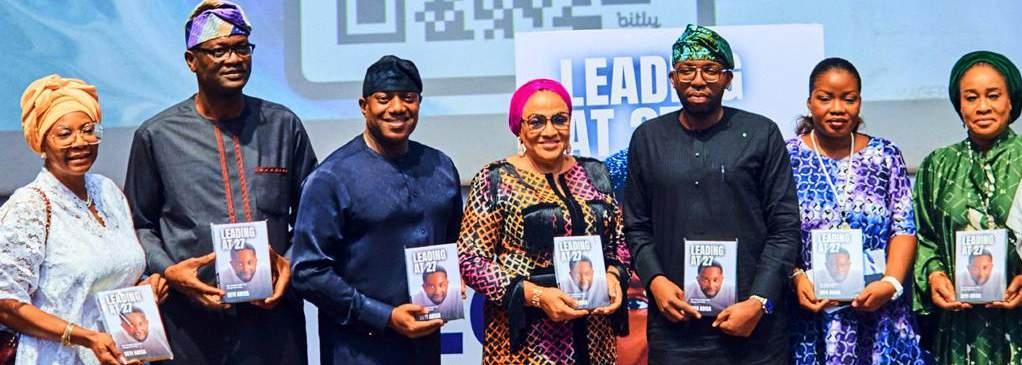
BOOK LAUNCH...
A new report by United Nations Trade and Development (UNCTAD) has warned that as the Strait of Hormuz, a critical supply route, remains virtually closed, the risks are now extending well beyond energy markets, spreading through the global economy, disrupting energy flows, raising prices, and increasing financial pressure on developing countries, like Nigeria.
The Strait of Hormuz is one of the world’s most critical maritime chokepoints, carrying around a quarter of global seaborne oil trade and significant volumes of liquefied natural gas and fertilisers.
The report comes as the United Kingdom (UK), weekend, scheduled a meeting of 35 nations, including Nigeria,
to weigh diplomatic and political options available to restore freedom of navigation, guarantee the safety of trapped ships and seafarers, and resume the movement of vital commodities through the important trade route.
According to the UNCTAD report, external borrowing costs for Nigeria and other developing nations are on the rise following the war and closure of Strait of Hormuz, a critical energy corridor.
Although Nigeria’s Economic Management Team (EMT) recently met to assess the effect of the war in the Middle East, it did not directly cite increased external borrowing costs as one of the fallouts of the Gulf war on Nigeria, but identified three immediate transmission channels through which the crisis could affect the Nigerian economy.
They were via crude oil and gas prices, with volatility in global energy markets already driving increases in domestic prices, including fuel, diesel, cooking gas, and fertiliser. It identified the second channel as capital flows and financial markets, stating that heightened geopolitical risks may prompt a shift to safe-haven assets, affecting capital flows into emerging markets, including Nigeria, as well as broader financial market conditions.
According to the EMT report, the last channel is global logistics and supply costs. It said disruptions to major shipping and energy supply routes could raise international freight and logistics costs, putting upward pressure on domestic prices.
However, the report by the UN trade body said, "As
uncertainty rises, investors are shifting away from riskier assets, selling stocks, bonds and currencies in developing countries. The sell-off has been more pronounced than in advanced economies. This is typical in periods of heightened risk.
"Currencies in developing countries have weakened, making imports such as fuel and food more expensive. At the same time, countries are facing higher costs to borrow on international markets, making it harder to raise capital when it is most needed.
"Borrowing costs have risen across developing regions in the weeks since the escalation."
To underscore the rise in borrowing costs, using a regionby-region yield on sovereign bonds, UNCTAD stated that the African region recorded a 0.64 per cent increase in yield
Says projects for inauguration key to state’s transformation
Governor of Bayelsa State, Senator Douye Diri, has urged the people of the state to turn out en masse for the April 10 visit of President Bola Tinubu. Diri, who spoke during an Easter Sunday service at St. Peter’s Anglican Church in his hometown, Sampou, Kolokuma/Opokuma Local Government Area, said the presidential visit was significant and offered an opportunity for Bayelsans to showcase their famed hospitality and warmth to guests.
He stated that the projects to be inaugurated during the oneday visit were central to the state’s economic development and transformation.
The governor prayed for sustained unity across the state,
stating that peaceful coexistence remains a defining trait of the Ijaw people.
He said, “I call on all Bayelsans to come out en masse to welcome Mr. President and accord him the hospitality that we are known for. It is part of our culture as Ijaw people to warmly receive our guests.
“We are known for peace and unity. Let us continue to uphold these values as we move forward as one people.”
Reaffirming his administration’s commitment to the state’s development, Diri said it will continue its infrastructural drive to place Bayelsa on the map of investment, tourism, and economic development.
He described the 60-megawatt gas turbine project to be inaugurated as critical to improving electricity supply in the state.
“Power is a major driver of economic growth, and this project is key to our development agenda,” he said.
Diri also underscored the significance of the 630-metre Angiama-Oporoma bridge, saying it is a historic milestone for Southern Ijaw Local Government Area.
He stated, “For over 60 years, our people in Southern Ijaw have had no road access to Yenagoa. This bridge changes that reality.
“These are legacy projects that will positively impact our people and open up Bayelsa
for greater opportunities.”
Speaking on the significance of the Easter celebration, he stressed the importance of reflecting on the sacrifice of Jesus Christ.
The governor stated, “The lesson of the death and resurrection of Christ is that of love. God loves us so much that He laid down His life for us. We must, therefore, love one another, stay united, and avoid actions that contradict what we celebrate today.”
Present at the service were the wife of the governor, Dr. Gloria Diri; Deputy Governor Peter Akpe; Head of Service, Dr. Wisdom Sawyer; and Acting Chief of Staff, Government House, Mr. Irorodamie Komonibo.
since the war commenced.
Developing Asia and Oceania recorded a 0.7 per cent yield, while Latin America and the Caribbean were yet to witness an increase, the report said.
The increased yield on sovereign bonds affected Nigeria, which had only last November floated a dualtranche US dollar-denominated benchmark Eurobond to address the country’s 2025 fiscal budget deficit and refinance existing outstanding indebtedness.
While further stating that
trade was losing momentum, with global merchandise trade expected to slow sharply, from about 4.7 per cent growth in 2025 to 1.5–2.5 per cent in 2026, UNCTAD explained that inflation pressures were equally rising, with energy shocks pushing up prices and increasing the cost of living. It added that this was as financial stress increased, forcing investors to pull back from developing countries, weakening currencies and raising borrowing costs, UNCTAD added.
Oye Leads NTBC, Turkish Ambassador on Investment Drive to Expand Nigeria–Türkiye Trade to $5bn
The Chairman of the Nigeria–Türkiye Business Council (NTBC), Dele Oye, has led efforts to deepen economic cooperation between Nigeria and Türkiye, partnering H.E. Amb. Mehmet Poroy, Turkish Ambassador to Nigeria and his delegation on a series of strategic business engagements aimed at expanding bilateral trade between both nations to $5 billion.
The strategic engagements which held across northern Nigeria, included a visit to the Kano Chamber of Commerce where discussions focused on strengthening trade ties, boosting investment flows, and unlocking new business opportunities across various sectors.
In a statement, Oye, who is also Chairman of the Alliance for Economic Research and Ethics (AERE), emphasized NTBC’s commitment to facilitating business linkages, organizing trade delegations, and positioning Kano and the wider northern region as a major hub for enterprise and investment.
He also revealed plans to formalize collaboration through a Memorandum of Understanding (MoU) with the Kano Chamber of Commerce. According to him, “As Chairman of the Nigeria–Türkiye Business Council (NTBC), I had the honour of accompanying H.E. Amb. Mehmet Poroy, Turkish Ambassador to Nigeria, and his delegation on a series of strategic engagements across northern Nigeria.
“One of the highlights was our visit to the Kano Chamber of Commerce, where we reaffirmed our shared vision to scale bilateral trade to $5 billion and expand investment flows between our two nations.
“I emphasized NTBC’s unwavering commitment to facilitating business linkages and trade delegations; positioning northern Nigeria, especially Kano, as a hub for enterprise and investment, and formalizing collaboration through a forthcoming MoU with the Kano Chamber of Commerce.”
Air Peace, Nigeria’s largest airline and leading carrier in West Africa, has announced plans to commence international flight operations from Gateway International Airport to London this summer. The airline’s Chief Executive Officer, Allen Onyema, disclosed this during an interview with journalists after inspecting the airport facilities alongside Governor Dapo Abiodun.
The visit followed the official commissioning of the airport by President Bola Tinubu.
According to Onyema, Air Peace will operate flights connecting the airport to both London Gatwick Airport and Heathrow Airport, marking a significant milestone for Ogun State’s aviation sector.
He praised the state government for delivering a world-class aviation facility, describing the airport as one
of the best-equipped in SubSaharan Africa.
Onyema said, “This is one of the best-equipped airports in Sub-Saharan Africa, and Air Peace will not sit back and watch this facility go unused.
“When you see a promising initiative, you must embrace it."
He emphasised that the airport’s infrastructure met global standards and highlighted its four-kilometre runway, which is capable of accommodating large aircraft, such as Airbus A380.
Onyema said Air Peace planned to deploy its Boeing 777 fleet for the London route.
He also revealed that he had received approval from the aviation minister to proceed with the operations, describing the project as a national asset rather than a purely state initiative.
Abiodun, in his remarks, announced plans to further expand the airport’s ecosystem
The deepening crisis within the Peoples Democratic Party (PDP) has taken a more troubling turn, as presidential aspirant, Dr. Gbenga Olawepo-Hashim, has started weighing the option of exiting the party amid the collapse of reconciliation efforts and growing fear of opposition capture.
According to a statement from his Media office, ''What began as an internal leadership dispute has evolved into a full blown structural breakdown, with entrenched factions and competing interests rendering the party increasingly ineffective as a national opposition platform.
with the construction of an international conference and convention centre, alongside a 550-room five-star hotel. He said the development would position Ogun State as a hub for global business and tourism.
The governor also disclosed that cargo operations had already commenced at the airport with Allied Air, while Ethiopian Airlines was expected to begin operations soon. He said another European carrier was also set to launch cargo services into the state.
Abiodun projected that approximately 50 cargo flights would operate through the airport between April and the end of the year.
He revealed the establishment of Gateway Airlines, which had acquired two Bombardier CRJ900 aircraft. The 90-seater planes were expected to enhance connectivity between
Ogun State, Abuja, and other major Nigerian cities. With the developments, the governor expressed confidence that Gateway International Airport could soon become Nigeria’s third busiest aviation hub, after Lagos and Abuja.
A former Deputy Governor of Central Bank of Nigeria and an All Progressives Congress (APC) governorship aspirant for Ogun State, Chief Tunde Lemo, has commended President Bola Tinubu for supporting the realisation of the Gateway International Airport project describing it as a transformative economic asset for Ogun State and Nigeria.
Lemo equally commended the Ogun State Governor, Prince Dapo Abiodun for his vision and commitment to position the state on sound economic footing.
of the Gateway International Airport President Bola Tinubu. Lemo, who mobilised hundreds of his supporters to welcome Tinubu during the commissioning of the Airport and Gateway Airline, described the project as remarkable.
He said, "This is a remarkable achievement. For me it is not only because it will carry passengers but because it will help export drive.
"The cargo airport will be used to export agricultural products and that for me is a major breakaway. It will help to boost the GDP of Ogun State.
best three if not the best in terms of IGR generation in the next five years.
Stakeholders described Lemo's action on Saturday as a demonstration of a strong show of political loyalty and grassroots strength as he mobilised supporters to welcome President Bola Ahmed Tinubu during the commissioning of the Gateway International Airport.
Lemo who was also visibly present among top national and state dignitaries described the airport project, as a transformative economic asset for Ogun State and Nigeria.
“This project represents progress, opportunity, and a new economic pathway for our people. It will create jobs, boost commerce and position Ogun as a strategic hub for investment”, Lemo stated.
According his Media office, Olawepo-Hashim said, ''For many observers, this has fueled speculation that the PDP risks losing its identity as an opposition force, with some even warning of a drift toward tacit support for the ruling order ahead of the 2027 elections.
''For Dr. Hashim, the implications are clear.
Remaining within a fractured and potentially compromised structure could undermine both his presidential ambition and his long standing commitment to democratic plurality'.
''More concerning are growing indications that elements within the PDP may have aligned with the political establishment under President Bola Ahmed Tinubu, raising fears that the party is being systematically weakened from within,'' the statement stated.
The aspirant spoke with journalists at the inauguration
"My expectation with this achievement is that Ogun State should take over as one of the
The mobilisation, which drew noticeable participation from grassroot supporters across key communities, was widely interpreted by political observers as a strategic signal of alignment with the president’s leadership and reform agenda ahead of the 2027 electoral cycle.
He further praised Governor Abiodun of Ogun State for what he described as visionary leadership, while also acknowledging past administrations for laying the groundwork that made the project possible.
Emmanuel Addeh in Abuja
The Rural Electrification Agency (REA) has announced that it recorded another milestone in its funding disbursement efforts to support renewable energy projects across the country.
In the latest round, it stressed that N7.95 billion was disbursed to Havenhill to finance critical equipment for four mini-grid power projects across Taraba, Kwara, and Kogi States. Similarly, N1.056 billion was released to Faraday &
Otstred Limited for mini-grid deployments across three sites in Niger State, it said.
These allocations, according to a statement yesterday, followed REA’s recent announcements of N7.4 billion in financing for Ventura Logistics Services and N3.2 billion for Zanoplus.
Backed by the Distributed Access through Renewable Energy Scale-up (DARES) programme’s PerformanceBased Grant (PBG) framework, the funding, it said, is a direct result of a recently signed
N100 billion Memorandum of Understanding (MoU) with Lotus Bank.
Commenting on the development, REA’s Managing Director, Dr. Abba Aliyu lauded the consistent capital injection into Nigeria's renewable sector.
"What is particularly encouraging here is the consistency; this is not one-off. It is a pattern of capital being deployed, projects moving forward, and confidence in the system continuing to grow."
"For developers, this means
access to the equipment and financing needed to deliver. For communities, it means faster timelines for reliable power. And for the market, it reinforces the point that local financing is stepping up in a significant way," Aliyu said. He added that the REA remains committed to empowering local companies to power Nigeria, expressing the view that Nigerian financial institutions should take the lead in powering the country's renewable infrastructure
Centre for the Promotion of Private Enterprise (CPPE) has cautioned the Central Bank of Nigeria (CBN) against any inclination towards further monetary policy tightening in response to inflationary pressures stemming from the prevailing global economic disruption.
CPPE warned yesterday in its policy brief that monetary tightening would be counterproductive because the present inflationary episode was largely cost-push in nature rather than excess aggregate demand.
The brief, titled, "Q1 2026 Economic Review and Q2
Macro Stability
Amid Persistent Cost Pressures and Rising Geopolitical Risks," said monetary policy was expected to remain cautious and strongly data-driven, with limited headroom for aggressive rate cuts.
Chief Executive Officer of CPPE, Dr. Muda Yusuf, stated, "There is a risk that the CBN may be inclined toward further tightening in response to prevailing geopolitical and inflationary pressures.
"Such a stance would be counterproductive, given the fragility of current growth dynamics.
"Notably, the present inflationary episode is largely cost-push in nature—driven by
A Frontline Traditional Ruler in Osun State, Ataoja of Osogbo land, Oba Jimoh Oyetunji Larooye at the weekend vowed that traditional institutions in Osogbo are battle ready to wage war against gender-based violence (GBV) in the state.
Ataoja who spoke through his High Chief Kazeem Abayomi Azeez, Ajagunna of Osogboland when HACEY conducted a high-level advocacy visit to the Ataoja of Osogbo’s palace noted that the visit focused on strengthening traditional and community leadership support for GBV prevention and response
The project was titled: "Empowering Christian Women Leaders and Women Leaders of Culture on Prevention and
in Nigeria."
According to him, the Palace of the Ataoja would fully backs the initiative by empowering women leaders to tackle GBV, while cultural institutions step into frontline role in community justice and survivor support.
The palace, represented by the Ajaguna of Osogbo equally signed a commitment certificate supporting Advocacy against GBV, Accountability for perpetrators and support for survivors.
However, the endorsement of the palace significantly increases community acceptance of GBV prevention efforts, reporting and referral of survivors, accountability at grassroots level and shift in narrative as GBV was also framed as “a crime against humanity,” not just women.
energy prices, exchange rate pass-through, and structural inefficiencies—rather than excess aggregate demand.”
Yusuf said, "Consequently, additional monetary tightening would have limited effectiveness in addressing the underlying drivers of inflation, while potentially exacerbating constraints on investment, credit expansion, and overall economic growth."
He added, "The scope for further monetary easing in the near term appears constrained by renewed inflationary pressures, particularly those linked to rising global energy prices.
"In this context, monetary policy is expected to remain cautious and strongly datadriven, with limited headroom for aggressive rate cuts."
He said the first quarter of
2026 represented a significant inflection point for the Nigerian economy, which was marked by notable gains in macroeconomic stability.
Yusuf said the gains were tempered by persistent structural challenges and mounting welfare pressures.
He stated, "The outlook for Q2 2026 remains cautiously positive but increasingly uncertain, shaped by
geopolitical developments, political cycle dynamics, and fiscal execution risks.
"The ongoing Middle East conflict presents a credible risk of stagflation, particularly if the crisis is prolonged or intensifies.
"Rising global energy prices are likely to amplify inflationary pressures while simultaneously constraining output growth through higher production and logistics costs.
The Senate, through its Committee on Agricultural Colleges and Institutions, has broadened its international outreach, engaging key global partners, including Malaysia, the European Union, Brazil, China, Germany, India and the United Kingdom in a renewed push to transform Nigeria’s agricultural research and training ecosystem.
Chairman of the Committee,
Leading female executives have stressed the need for integrity and an ownership mindset as critical drivers of success for women in corporate Nigeria at the third edition of The Bloom Conversations with Sola, held in Lekki, Lagos.
The exclusive, invitation-only gathering brought together
Sharafadeen Alli, according to a statement on Sunday, disclosed this during a series of high-level courtesy visits to diplomatic missions in Abuja, where he underscored the National Assembly’s resolve to harness global expertise, technology and investment to reposition Nigeria’s agricultural colleges and research institutes for sustainable development, enhanced productivity and job creation.
He said the engagements
form part of preparations for the First National Legislative Summit and Expo on Agricultural Colleges and Research Institutions, slated for May 11 to 13, 2026 at the International Institute of Tropical Agriculture, Ibadan, Oyo State.
The statement issued by the committee and made available to journalists in Abuja explained the summit is designed to mobilise international support,
strengthen institutional capacity and showcase innovations capable of accelerating agricultural transformation in Nigeria.
“Alli told his hosts the committee was deliberately reaching out to key global players in agriculture to build strategic alliances that would enhance research, promote technology transfer and boost mechanisation across Nigeria’s agricultural institutions,” the statement noted.
about 40 professional women across various industries for a day of intensive engagement focused on leadership, wealth creation, and personal development.
Founded in 2023 by Oluwasola Obagbemi, the platform is designed to provide a safe and empowering environment where women can share experiences and
gain practical insights into navigating the complexities of modern corporate life.
Delivering a keynote session, Founder and President of Woodhall Capital, Mojisola Hunponu-Wosu, called on women to rethink traditional career aspirations by embracing ownership thinking as a pathway to long-term financial independence.
“For too long, the corporate narrative for women has been centered on climbing the ladder for a better paycheck. To build a lasting legacy, women must move beyond the safety of a salary and embrace the mindset of an owner. It is about transitioning from being a participant in the economy to becoming a stakeholder.”
Bassey Inyang in Calabar
Cross River State Governor, Senator Bassey Otu at the weekend delivered what he described as a "State of the Union" address, rallying elders and critical stakeholders of Cross River State to unite behind his administration’s quest to restore justice and reclaim the state’s status among oil-producing states in the Niger Delta.
Addressing a high-powered gathering in Calabar, the governor said his administration was committed to “righting the wrongs and injustice occasioned by the malicious deletion” of the state from the oil-producing bloc, assuring that ongoing efforts would ultimately return Cross River to its rightful position.
He thanked the leaders
for their steadfast support while appealing for patience as government works to “get the state out of the woods.”
The event drew an array of prominent figures including former governors Donald Duke, and Pam Ogar, alongside former and serving lawmakers, ex-deputy governors, and the current deputy governor, Hon. Peter Odey.
Speaking on the theme: “Justice and Welfare Through Strength and Unity,” Otu struck a reflective tone, declaring: “I stand before you today, humbled by the weight of history and the responsibilities that lie ahead,” adding that Cross River, “like the legendary Phoenix, has risen from the ashes time and again to reclaim its rightful place.”
He acknowledged prevailing concerns among some leaders,
noting “whispers of withering faith and echoes of opposition for opposition’s sake,” but insisted his administration would remain resolute.
Quoting wartime rhetoric, he declared: “We shall fight… we shall never surrender, not because we won’t, but because the people will not allow it.”
The governor pointed to strides made under his leadership, asserting: “We have taken bold steps in strengthening our infrastructure, repositioning agriculture, refining education, boosting tourism and deepening social welfare, while our security remains top notch.”
On the lingering oil well dispute, he assured: “Our struggle continues, and I assure you, we shall prevail.”
Governor Otu however
emphasized the moment called not for self-congratulation but for collective resolve.
“I have not come here to boast,” he said, “but to enlist your support, your prayers and your unity for strength and success,” adding in a philosophical note that he was “in alignment with Heaven and holding Heaven accountable to complete what it has started.”
Calling for unity across political divides, he urged leaders to rise above differences, invoking classical wisdom: “The whole is greater than the sum of its parts,” he said, stressing that unity among leaders remains “the first pillar of enduring governance.”
He acknowledged the contributions of past administrations, noting: “If I have seen further, it is by standing on the shoulders of
The Socio-Economic Rights and Accountability Project (SERAP) has filed a lawsuit against the Code of Conduct Bureau (CCB) over the agency’s alleged failure to investigate claims of abuse of office tied to the Electoral Act amendment and tax reform laws.
SERAP mase the disclosure on Sunday via its X account.
In the suit marked FHC/ ABJ/CS/634/2026 and filed at the Federal High Court in Abuja, SERAP is seeking “an order of mandamus to direct and compel the CCB to probe the allegations that
certain lawmakers improperly removed key sections on electronic transmission of election results from the Electoral Act (Amendment) Bill.”
The organisation also asked the court to compel the bureau to investigate “the allegations that certain lawmakers and officers of the executive branch unlawfully altered some aspects of the tax reform bills, which resulted in differences between the tax laws passed by lawmakers and the gazetted copy available to the public.”
SERAP further urged the court to grant “an order of
mandamus to direct and compel the CCB to refer any substantiated violations of the Code of Conduct for Public Officers deriving from the outcome of its investigation to the Code of Conduct Tribunal for prosecution and to uphold the constitutional principle that public office is a public trust.”
Explaining the basis of the suit, the group argued that, “Granting the reliefs sought would help address critical concerns relating to conflict of interest, abuse of office, non-disclosure of interests, and reinforce adherence to due process.”
It added, “Where lawmaking
is shaped by abuse of office and conflict of interest, it ceases to be a legitimate exercise of constitutional and fiduciary responsibility and becomes a legal and ethical infraction prohibited under the Code of Conduct for Public Officers.”
SERAP maintained that, “The Code of Conduct for Public Officers is a constitutional imperative designed to ensure probity, accountability and transparency in public life. This means that any credible allegation of breach must be promptly, thoroughly, transparently and effectively investigated by the CCB.”
giants like you.”
The governor warned against forces he described as seeking to “redefine our destiny by weakening our collective resolve,” cautioning that disunity could undermine the state’s aspirations.
“We must rise up and seek justice through truth,” he charged, adding that “we cannot cuddle injustice disguised as diplomacy or
technicality.”
On the contentious oil well dispute with Akwa Ibom State, Otu maintained that Cross River’s exclusion was based on flawed premises. “We came up to say no,” he declared, insisting that the state retains a valid littoral status tied to the Calabar estuary and should benefit from offshore resources along the Nigerian-Cameroon maritime boundary.
As coalition urges FG to decentralise Pipeline Surveillance for Stability, Peace in N'Delta
In a show of solidarity and support, traditional rulers and stakeholders from Imo State, particularly those from Ohaji/ Egbema Local Government Council have thrown their weight behind the surveillance team led by Oweizidei Thomas Ekpemupolo, also known as Tompolo, passing a vote of confidence on him for his efforts in curbing illegal oil bunkering activities in the state.
National Secretary of Phase One Presidential Amnesty Programme, Andrew Vocor, stated that Imo State has seen a significant reduction in oil pipeline vandalism and loss of lives since the deployment of Tompolo's team. "We lost 300 persons in one day due to illegal bunkering, but today, there's zero incident of bunkering in Imo State," he said.
However, apparently
unimpressed by the position of Imo State monarchs, a coalition of Concerned Youth Bodies in Rivers State has urged the federal government to decentralise pipeline security contracts in the Niger Delta region.
A statement signed on Sunday, by Mr. Charles Malford, on behalf of the coalition in Port Harcourt, called on President Bola Tinubu to take further decisive steps toward achieving lasting peace and stability in the region by decentralising the surveillance contracts.
On their part, a statement by the National Secretary of Phase One Presidential Amnesty Programme, Andrew Vocor said: "We want to critically tell those who are criticizing Tantitah talking about decentralization especially the Ijaw people to know that we are not Ijaws, we are from Imo State and our own oil pipe line runs from here, the oil facilities here are purely ours and have nothing to do with Ijaws.
Urges Tinubu, NASS to halt amendment bills pending in courts Says proposed law will undermine PCN autonomy, professional standards
Sunday Ehigiator
The Pharmaceutical Society of Nigeria (PSN) has warned the federal government against proposed changes to legislation guiding pharmacy practice in the country, saying such moves could weaken regulatory control and endanger public health.
PSN President, Ibrahim Tanko Ayuba, gave the warning at the 2026 PSN Colloquium held recently in Yola, Adamawa State, where he expressed concern over an Amendment Bill currently before the National Assembly.
Ayuba cautioned that any alteration to existing laws regulating the profession would disrupt the governing structure of the Pharmacists Council of Nigeria (PCN), thereby undermining its authority and the integrity of pharmaceutical practice.
He described the proposed amendment as “an undue interference and disruption of the autonomy of professionalism in pharmacy practice,” urging lawmakers to suspend further consideration of the bill.
The PSN president also called on Bola Ahmed Tinubu and the National Assembly to halt all health-related amendment bills currently before the courts, stressing the need to respect judicial processes.
“A disruption of this smooth equilibrium poses huge threats to the sustainability of the PCN and public health ultimately. We respectfully urge President Tinubu and the National Assembly to halt these amendment health bills as there are multiple court cases in the various High Courts and the Court of Appeal,” Ayuba said. He argued that pharmacy
remains the only health profession listed on the Exclusive Legislative List, noting that drugrelated matters are covered under Item 21 of Part 1 of the Second Schedule of the 1999 Constitution. According to him, this aligns with global best practices, warning that interference in its regulation could expose Nigerians to unsafe practices.
Ayuba further maintained that the rules of the National Assembly prohibit deliberation on matters already before the courts, expressing confidence that the current administration would uphold the rule of law.
Describing the PCN as indispensable to maintaining standards and discipline in the profession, he stressed the need for a competent and balanced Governing Council to safeguard pharmaceutical practice nationwide.
“The Council plays a critical role in practice regulation, training of pharmacists, pharmacy technicians and support staff, and disciplinary oversight, while also serving as a bridge between supervisory ministries and other stakeholders,” he said.
He warned that any imbalance in the composition of the Council could pose serious risks to both the profession and public safety, noting that the PCN uniquely regulates not just practitioners but also the business of pharmacy, including community pharmacies, patent medicine vendors, and veterinary pharmacies.
Ayuba explained that regulatory enforcement is handled by Pharmaceutical Inspection Officers who must be registered pharmacists, while training and disciplinary responsibilities are clearly outlined in the PCN Act 2022.
Tension is brewing at the Federal University of Technology Akure Teaching Hospital as its management has responded firmly to a notice of service withdrawal issued by the Nigerian Union of Allied Health Professionals (NUAHP), Ondo State Council, denying allegations of misconduct and calling for continued dialogue.
In a statement released on Sunday by the hospital’s Head of Public Relations,
Tope Fayehun, the management reiterated its commitment to staff welfare and quality healthcare delivery, describing the claims against its leadership as “unfounded and misleading.”
“We remain fully committed to the welfare of our staff, the delivery of world-class healthcare, and elevating FUTA Teaching Hospital to the customary standards of leading teaching hospitals in Nigeria and beyond,” the statement noted.
The hospital stressed its
operations strictly adhered to established frameworks guiding federal tertiary health institutions across the country.
According to the management, all decisions taken are in line with best practices aimed at improving patient care.
“Every action taken by the current management aligns with these standards aimed at optimising service delivery for patients who travel from far and wide, seeking quality care,” it added.
Responding directly to
the union’s allegations, the management dismissed claims of arbitrary staff removals, forceful transfers, departmental restructuring, and intimidation.
“We categorically deny all allegations levelled against the Chief Medical Director (CMD) and management, including claims of arbitrary staff removals, forceful transfers, department scrapping, capricious demotions, inappropriate appointments, intimidation, or oppression.
On governance, he said the Council’s membership should comprise experienced professionals drawn from PSN leadership, academia, Directors of Pharmaceutical Services, representatives of the Federal Ministry of Health, and other key stakeholders to ensure efficiency and sustainability.
Meanwhile, the PSN president commended Governor Ahmadu Umaru Fintiri for what he described as significant strides in the state’s healthcare sector. He cited the implementation of the Consolidated Health Salary Structure (CONHESS)
and Consolidated Medical Salary Structure (CONMESS), establishment of a Pharmacy Consultancy Cadre, and ongoing training programmes for pharmacy technicians as notable achievements.
According to Ayuba, Adamawa has also recorded major improvements in healthcare infrastructure, including upgraded facilities across local government areas, a modern laboratory complex, cottage hospitals, an infectious disease centre, a dialysis complex offering free services, and advanced surgical facilities.
Mary Nnah
Governor Umo Bassey Eno of Akwa Ibom State led the mourning crowd at Daystar Christian Centre HQ, Ikeja, Lagos, as they gathered last Tuesday during the service of songs to bid farewell to Oluwakemi Oyeteju James, wife of SSA to the Governor, Mr. Michael Effiong James.
The governor, who lost his own wife, also named Oluwakemi, two years ago, described the loss as "devastating". "I don't know why God is surrounding you with people who have passed through this," he said, offering words of comfort to the bereaved husband. "God will see you through."
Governor Eno recalled his brief encounter with Oluwakemi, saying, "I met her only in December, and I remember we
cracked jokes, and I asked her if she can cook Afang soup. She said she will cook for me, and I will know that she can cook all of our soups."
He urged Michael Effiong James to be strong, citing the support of the church and the community.
"I've been through this before, and I can tell you that God will fill the vacuum," Governor Eno said. "Don't let her memory fade. Do something that will keep her memory alive. Kemi was a wonderful person, and I'm sure she'll be remembered for her kindness and love."
Pastor Ituah Ighodalo, Senior Pastor of Trinity House, delivered a powerful sermon, reminding the congregation that "God has a way of taking away the pain over time" and that "life is designed by the Almighty to do you good in the end."
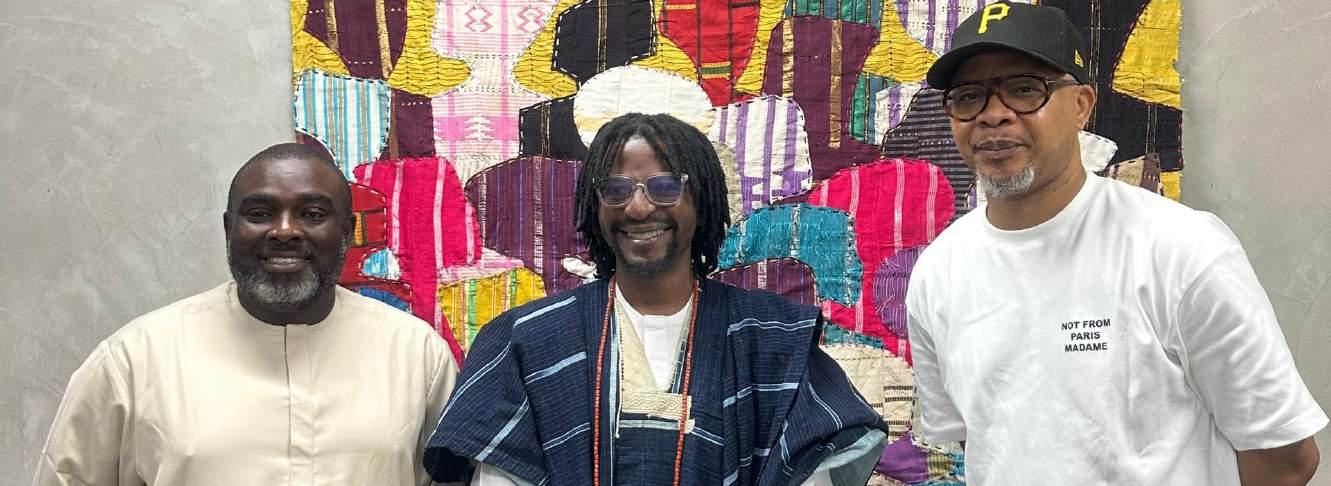
Triangle International Magazine marked its tenth anniversary with a landmark diaspora lecture and dinner at the Great Hall of Kings College London, bringing together a distinguished audience of policymakers, business leaders, academics, media professionals and members of the Nigerian diaspora.
The event drew a full house, reflecting both the significance of the occasion and the growing importance of diaspora engagement in national development.
Anchored by renowned comedian and media personality Seyi Law, the evening combined celebration with serious intellectual
engagement around the theme of harnessing the role of Nigerians in the diaspora for national development.
Delivering the keynote address as Guest of Honour, the Minister of Interior, Dr. Olubunmi Tunji Ojo, called for a more deliberate and structured engagement with Nigerians living
abroad, describing them as a critical force in the country’s development trajectory.
He highlighted Nigeria’s evolving economic direction under President Bola Ahmed Tinubu, noting that bold reforms such as the removal of fuel subsidy and the unification of the foreign exchange system were necessary steps towards
Deji Elumoye in Abuja and Segun Awofadeji in Gombe
President Bola Ahmed Tinubu and the Northern States Governors’ Forum (NSGF) have commiserated with the presidential Adviser on Livestock Development, who is also former chairman of the Independent National Electoral Commission (INEC), Prof Attahiru Jega, on the passing of his wife, Hajiya Hadiza Jega. Vice President Kashim Shettima, who attended the Janazah prayer for the late Hadiza Jega at the National Mosque, Abuja, on Sunday, conveyed the President's condolences to Professor Jega and his family.
Meanwhile, on their part, Chairman of the Northern States Governors’ Forum (NSGF) and Governor of Gombe State, Alhaji Muhammadu Inuwa Yahaya, also conveyed the heartfelt condolences of the 19 northern governors to Professor Jega, over the demise of his wife, Hajiya Hadiza Jega.
Hajiya Hadiza passed away earlier today and was laid to rest in accordance with Islamic rites after funeral prayers held at the National Mosque, Abuja. Tinubu, in a release issued on Sunday by his Adviser on Information and Strategy, Bayo Onanuga, described Hajiya Hadiza as a woman of uncommon grace, character, and a strong anchor for Professor
Jega as he navigated public life, including serving as chairman of the Independent National Electoral Commission (INEC).
The President also extolled her support for education and community development.
"Dear Professor Jega, it is with a heavy heart that I receive the news of the passing of your beloved wife of over 40 years. Hajiya was an exceptional woman. I mourn this painful loss with you and your family and pray that God Almighty grant her Aljannatul Firdaus. I stand with you and your family at this difficult time," Tinubu said.
Meanwhile, in a condolence message, Governor Inuwa Yahaya described the death
of Hajiya Hadiza as a painful and profound loss not only to the Jega family, but also to all who were touched by her life of grace, humility and devotion to family values.
This was contained in a press release issued by Ismaila Uba Misilli, Director-General (Press Affairs), Government House, Gombe, and made available to journalists Sunday night.
The governor noted her death has created a deep vacuum in the lives of her loved ones, while urging the bereaved family to take solace in the exemplary life she lived and the enduring legacy of kindness, faith and compassion she leaves behind.
long term stability.
He also pointed to improvements in fiscal discipline, including reductions in external debt obligations. According to him, the ongoing shift from consumption driven spending to productionoriented investment is creating a more enabling environment for enterprise, innovation and productivity.
He urged Nigerians in the diaspora to seize emerging opportunities by investing strategically and contributing meaningfully to national growth.
In recognition of his leadership and reform driven initiatives, he was presented with the Personality of the Year Award.
The event was attended by several high-profile personalities including the governor of Zamfara State, Dr. Dauda Lawal, alongside other notable figures from government, academia and industry.
Their presence underscored the importance of collaboration between leaders at home and Nigerians abroad in shaping the future of the country.
The governor of Zamfara State, Dr. Dauda Lawal, in his remarks highlighted key strides
made by his administration in restoring governance and rebuilding public confidence in the state. He noted ongoing efforts to improve security, revive critical infrastructure, strengthen the healthcare system and reposition the state’s economy through prudent financial management and targeted reforms.
He emphasised his commitment to transparency, accountability and people centred development, stating that his administration remains focused on delivering tangible benefits to citizens despite prevailing challenges.
Governor Lawal also commended the organisers of the event for creating a global platform that promotes constructive dialogue and strengthens the connection between Nigeria and its diaspora, describing the initiative as timely and essential for national progress.
A major highlight of the evening was the address delivered by Professor Ojo Emmanuel Ademola, Chairman of the Board of Triangle International and Africa’s first Professor of Cybersecurity and Information Technology Management.
The President of the Quantity Surveyors Registration Board of Nigeria, Obafemi Onashile, has raised concerns over mounting challenges confronting Nigeria’s construction industry, warning that hyperinflation, naira devaluation and lack of development funding are putting pressure on the sector.
Delivering his welcome remarks at the 2026 Quantity Surveyors’ Annual Assembly and induction of 363 newly qualified quantity surveyors
in Abuja, Onashile said the industry is increasingly strained by rising costs and shrinking financial resources.
“Globally, the construction industry is steadily becoming more competitive day-by-day under the stress of global inflation from worldwide threats of wars and other crises. In Nigeria, the construction industry especially is faced with hyperinflation, devaluation of the naira and lack of development funding,” he
argued.
He explained that the evolving complexity of infrastructure projects, tighter budgets and increasing stakeholder expectations have made financial management more critical.
“The magnitude, complexity and expectations of modern construction and infrastructure projects are evolving rapidly. Budgets are tighter, stakeholders are more demanding, risks are more dynamic, and the margin
for error continues to shrink,” he said.
According to him, the role of quantity surveyors has expanded beyond traditional cost measurement to strategic financial leadership.
“The role of the quantity surveyor is no longer confined to measurement and cost reporting; it has become central to strategic financial leadership,” Onashile added.
He stressed the need for professionals to adapt to
emerging realities, including technology and changing global standards.
“Today’s Quantity Surveyor must be more than technically sound; they must be financially astute, technologically adaptive, and strategically proactive,” he said.
In his remarks, the Minister of Housing and Urban Development, Ahmed Dangiwa, represented by the Permanent Secretary, Shuaib Belgore, said the federal
government was repositioning the housing sector as a key driver of economic growth, noting that housing delivery must be scaled up without compromising quality and affordability.
“The demand for housing and infrastructure across Nigeria continues to grow rapidly. Millions of Nigerians aspire to decent homes and better urban systems, and these expectations are legitimate,” he said.

Pope, in first Easter lesson, urges world leaders to end wars Mark, Akpabio, Mbah, Zulum, Alia, Radda, senators urge unity, say Nigeria will defeat insecurity soon CAN, Catholic, Anglican bishops preach hope COAS enjoins troops to uphold honour, discipline, rule of law at Easter 17 killed in Benue community during festivity
Deji Elumoye, Chuks Okocha, Emmanuel Addeh, Sunday Aborisade, Onyebuchi Ezigbo, Kuni Tyessi in Abuja, Yinka Kolawole in Osogbo, Hammed Shittu in Ilorin, Francis Sardauna in Katsina, George Okoh in Makurdi, Okon Bassey in Uyo, Emmanuel Ugwu-Nwogo in Enugu, Yemi Kosoko in Jos, Muhammad Sabiru in Maiduguri
Vice-President Kashim Shettima, yesterday, assured Nigerians of better days ahead under the Renewed Hope Agenda of President Bola Tinubu, saying the present difficulties are only temporary.
Shettima reiterated the administration’s commitment to peace, economic recovery, and long-term prosperity, stating that the path to national renewal often demands sacrifice and collective resolve.
In his Easter message to Nigerians, the vice president expressed optimism that the country would overcome its current economic and security challenges.
Reflecting on the significance of Easter, Shettima said the Christian message of sacrifice, hope, and resurrection reminded the country that no period of hardship lasted forever.
According to him, Easter speaks to the triumph of hope over despair and light over darkness.
He said the lessons of the season were especially relevant to Nigeria’s current moment.
“Easter is a reminder that history often bends in favour of those who refuse to surrender
to despair. It is the story of light piercing through darkness, of hope rising from the shadows of pain, and of faith prevailing over fear,” he said.
The vice president observed that though Nigeria had passed through difficult times, with the citizens enduring significant challenges, the country had never been defined by adversity.
“I remain confident that by our collective will, shared sacrifice, and abiding faith in the promise of this nation, we shall triumph over whatever challenges beset us momentarily,” he said.
Shettima called on Nigerians to remain united and continue to support the ongoing reforms of the Tinubu administration, stressing that national progress requires patience, endurance and a shared sense of purpose.
He urged citizens to reject division and embrace the values that bond them together as one people, maintaining that Nigeria’s diversity remains one of its greatest strengths.
Pope Leo, yesterday, in his Easter message, urged global leaders to end the conflicts raging across the world and abandon any schemes for power, conquest, or domination.
The pope, who had emerged as an outspoken critic of the Iran war, lamented in a special but first message to the thousands gathered in St. Peter's Square that people
"are growing accustomed to violence, resigning ourselves to it, and becoming indifferent".
Leo did not mention any specific conflicts in the message, known as the "Urbi et Orbi" (to the city and the world) blessing. It was unusually brief and direct.
"Let those who have weapons lay them down!" the first U.S. pope exhorted, adding, "Let those who have the power to unleash wars choose peace!"
The pope said the story of Easter, when the Bible said Jesus rose from the dead three days after not resisting his execution by crucifixion, showed that Christ was "entirely nonviolent".
Leo said, "On this day of celebration, let us abandon every desire for conflict, domination, and power, and implore the Lord to grant his peace to a world ravaged by wars."
He urged people not to feel numbed by the scope of the conflicts raging across the world but to work for peace, a Reuters report said.
The pope had made a rare direct appeal to the U.S. President Donald Trump on Tuesday, urging him to find an "off-ramp" to end the Iran war.
In his address from the balcony of St. Peter's Basilica to the Square below, decorated with thousands of brightly coloured flowers for the holiday, Leo offered brief Easter greetings in 10 languages, including Latin, Arabic and Chinese.
His tone echoed his first address in May 2025, in which he set out a vision of a church centred on peace, charity, and
closeness to those suffering, calling for a community that “moves forward” while remaining attentive to the most vulnerable.
Following his address, yesterday Leo stood atop the Popemobile waving to crowds and kissing the foreheads of babies and young children as he was carried around Vatican City, with thousands of people cheering and waving flags from all over the world.
Authorities estimated that 50,000 people had attended the celebration in St Peter's Square at the Vatican, with another 10,000 waiting and watching from outside.
President of the Senate, Godswill Akpabio, assured Nigerians that the wave of insecurity across the country would soon be brought to an end, expressing optimism that peace and stability would prevail in the near future.
Akpabio, according to a statement from his media office, gave the assurance in his Easter message delivered at the Ikot Ekpene Field Major Convention of The Apostolic Church, Ikot Obong Edong, in Ikot Ekpene, Akwa Ibom State.
According to the statement by his Special Assistant on Media/Communication, Anietie Ekong, Akpabio acknowledged the pains and losses suffered by many Nigerians due to insecurity. He said families across the
country were grappling with grief.
“Across our country, many families are passing through moments of grief and loss. Some have lost loved ones in the line of duty—our brave men and women in uniform, who daily put their lives on the line to defend our nation,” he said.
He added that others had lost relatives in homes, places of worship, markets, farms and workplaces, describing the situation as a painful national challenge.
Mbah Urges Peaceful Coexistence, Collective Efforts for Nation Building
Enugu State Governor, Mr. Peter Mbah, called for peaceful coexistence, humility and selfsacrifice for nation-building.
Mbah made the call in his Easter message to Christians in Enugu State and across Nigeria, saying citizens should imbibe the lessons of the Lenten period, which preceded the Easter celebration.
While congratulating Christians on the Easter celebration, Mbah described the season as a profound reminder of the triumph of hope over despair, love over hate, and eternal life over death.
He stated that the resurrection of Christ underscored the enduring values of sacrifice, redemption, and renewal, adding that Nigerians should see the sacred nature of Easter as inspiration to renew their commitment to excellence, integrity, and diligence.
Mbah enjoined Nigerians to foster unity and peaceful coexistence across religious, ethnic, and political divides, stressing that the country's strength lay in its diversity and shared aspirations.
Don’t Allow Enemies of Peace Derail Our Progress, Zulum Tells Christian
Borno State Governor, Professor Babagana Zulum, urged citizens to shun divisive tendencies and never allow enemies of peace to derail the progress recorded so far across the state.
The governor disclosed this in a statement issued by his spokesman, Malam Dauda Iliya, where he felicitated with the Christian community in the state and beyond on the occasion of Easter.
“I want to remind us that Borno belongs to all of us. We must shun divisive tendencies, especially during this political period. We have embarked on a collective journey of recovery, and we must not allow enemies of peace to derail our progress,” he said.
Zulum also reiterated his administration’s resolve to sustain peace, end Boko Haram insurgency, and strengthen the existing harmony amongst the people.
He said, “It is heartening to observe the level of religious harmony between Christians and Muslims in the state. I urge all residents to sustain this spirit as we continue to take deliberate steps towards achieving lasting peace.”
Yemi Kosoko traces the history of the over three decades-old communal clashes in Plateau state including last week’s killings in a ngwan Rukuba in Jos, the state capital and moves by federal and state governments to frontally address the recurring problem.
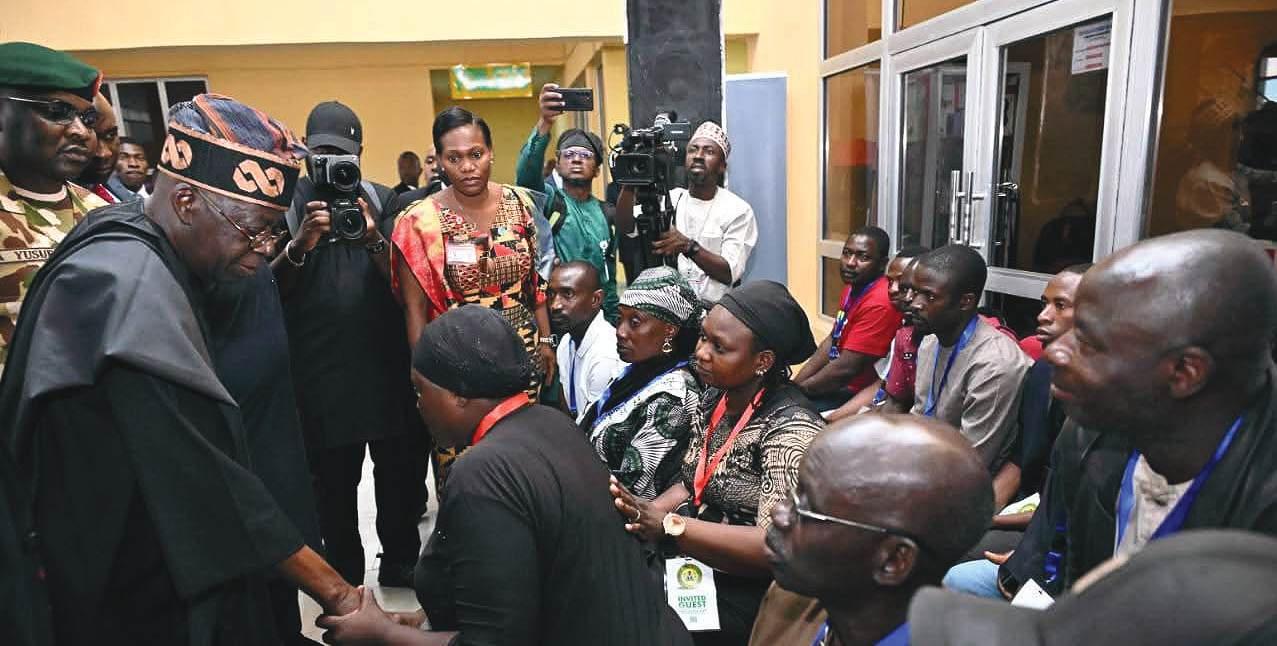
The soft cool wind swept across Yakubu Gowon Airport with a chill that felt heavier than weather a chill shaped by grief, memory, and the ghosts of three decades of violence. As President Bola Tinubu stepped into the reception lounge in Jos, the air was thick with tension. Leaders from across Plateau State stood waiting, their faces marked by fatigue and the familiar dread that follows yet another attack this time in Angwan Rukuba.
This was not a routine presidential stop. It was a confrontation with history.
A President Facing a Wounded Land.
Tinubu’s voice, when he began to speak, carried the weight of a man who had reached his limit. “Why is the past not a source of lesson for us?” he asked, his gaze sweeping across traditional rulers, political leaders, and security chiefs.
“I don’t want to be here constantly to see killings and unrest. I want to be here to establish peace.”
There was no applause. Only the heavy silence of a room that knew the truth of his words.
The President reminded Governor Caleb Mutfwang of the mandate they share.
“We were elected on the promise of peace and prosperity not to comfort and create widows and widowers.”
It was a rebuke, a plea, and a challenge all at once. Then, in a symbolic gesture, Tinubu raised an object meant to represent the breaking of chains.
“I brought the symbol of this camp to break the shackle; the shackle of violence, ignorance, poverty, hopelessness. We must break it together.”
For a moment, the room seemed to hold its breath with everyone present ruminat ing through a crisis of three decades in the making.
To understand the weight of Tinubu’s
words, one must understand Pla teau’s long descent into conflict, a descent that began quietly in the 1990s and has since carved deep scars into the state.
Looking through the first cracks in the 1990s with tensions over land, grazing routes, and political identity simmered beneath the surface. The 1994 Jos North crisis exposed the first major rupture.
Then the turning point in 2001. A dispute at a mosque spiralled into days of bloodshed. Hundreds died. Plateau’s innocence died with them.
Thereafter, retaliation and State of Emergency of 2002–2004 as ru ral communities burned. The 2004 Yelwa–Shendam massacre forced the Federal Government to declare a state of emergency.
In 2008, Jos erupts again, local council elections triggered another wave of killings. Trust between com munities fractured further. Followed by the 2010 Dogo Nahawa where over 200 people were slaughtered in a night of horror that still haunts survivors.
The period between 2011 and 2015 witnessed bombs and raids.
Christmas bombings, night‑time raids. Entire villages emptied. The conflict grew more complex, more criminal, more unpredictable.
The assassination of the Saf Ron Kulere in Bokkos in 2016 deepened fears of targeted ethnic attacks. Closely followed with the 2018 Barkin Ladi mass killings of over 200 killed in coordinated assaults. The world took notice.
2020–2022 witnessed a fragile calm as brief period of stability returned. Inves tors tiptoed back. However, hope flickered with the 2023 Christmas eve massacres as more than 150 were killed. The cycle roared back to life.
And 2026, the Angwan Rukuba marks the latest attack. The latest heartbreak. The latest test of leadership.This is the history that stood silently in the room as Tinubu spoke a history that Plateau’s people carry like a second skin.
Governor Mutfwang rose to speak, his voice steady but heavy. He acknowledged the progress Plateau had made for the return of investors, the slow rebuilding of trust and the pain of seeing it threatened again.
“The incident of last Sunday is a tempo rary setback,” he said. “But by the grace of God, we will overcome and remain on our path toward peace and prosperity.”
Whether Plateau rises from this latest tragedy will depend on unity, discipline, and resilience, the same qualities that have carried its people through three decades of turmoil.
For now, the state stands at a crossroads bruised, grieving, but still fighting for the peace it once knew.
He reminded the room that this crisis has confronted every governor before him — Dariye, Jang, Lalong and now it is his turn to face the storm.
Yet he offered a glimmer of hope.
“The gap in unity among our leaders is narrowing. We will join hands so that enemies of the state do not infiltrate our communities.”
On the streets outside the lounge of the stakeholders meeting, the rumble of military trucks echoed through Jos.
Earlier that morning, the Chief of Army Staff,(COAS), Lt. General Waidi Shaibu, had ordered the deployment of over 850 additional troops from Abuja and Kaduna. The reinforcements were absorbed into Operation ENDURING PEACE, a mis sion stretched thin by years of recurring violence.
At the Joint Task Force Headquarters, the COAS addressed the troops with a stern message: protect lives, restore calm, confront the killers. The Army had provided the logistics. Now, it was time for action.
For Plateau, Tinubu’s visit was more than a political gesture. It was a reckoning, a moment when the weight of 30 years of conflict collided with the urgency of now.
In Angwan Rukuba, families are still burying their dead. In Jos, fear lingers like smoke. But for the first time in months, there is also a flicker of something else: the possibility that the cycle might finally be broken.
Tinubu’s final words captured that frag ile hope. “Our promise was progressive development not to bury, but to build.”
Whether Plateau rises from this latest tragedy will depend on unity, discipline, and resilience, the same qualities that have carried its people through three decades of turmoil. For now, the state stands at a crossroads bruised, grieving, but still fighting for the peace it once knew.
The National Hydrographic Agency (NHA), Nigeria’s central authority for hydrographic and oceanographic activities, recently advanced maritime safety and regional development with the establishment of the International Centre for Electronic Navigational Charts (IC-ENC) West African Regional Office and Training Centre in Abuja. The centre positions Nigeria as a hub for hydrographic training, navigational charting, and technical capacity building across West Africa. Beyond its operational mandate, Chiemelie Ezeobi writes that it represents strategic investment in human capital and maritime infrastructure, directly supporting the Renewed Hope Agenda of President Bola Tinubu, which prioritises economic diversification, skills development, and regional leadership
When the National Hydrographic Agency (NHA) was established in 2022, following legislation enacted by the National Assembly on 21 February, its mandate was to serve as Nigeria’s central authority for hydrographic and oceanographic activities, advancing navigational safety and regional capacity building.
The creation of the agency marked a strategic move to strengthen maritime safety, support national defence, and drive economic development while reinforcing Nigeria’s role in regional and global maritime operations.
At its core, the NHA conducts hydrographic and oceanographic surveys, including ocean meteorology, to support safe navigation and provide accurate nautical charts, maritime safety information, and navigation data for ships in Nigerian waters.
The agency regulates hydrographic surveys nationwide to ensure compliance with international standards and represents Nigeria in global hydrographic matters under maritime treaties and conventions.
It also supports economic diversification through marine surveys and data services, while maintaining national hydrographic data and assisting in defining Nigeria’s maritime boundaries.
In essence, the NHA was established to enhance maritime safety, strengthen national security, meet international obligations, and contribute to Nigeria’s blue economy.
Governing Council Composition
To provide strategic oversight, the law establishing the agency created a Governing Council responsible for policy direction and governance, comprising the Minister responsible for Defence as Chairman; the Ministers responsible for Transportation, Justice, and Finance; the Chief of Defence Staff; the Chief of Naval Staff; the Surveyor General of the Federation; three presidential appointees; and the Hydrographer of the Federation as Secretary.
Significant Milestone of the IC-ENC West African Regional Office and Training Centre
Nigeria recently recorded a significant milestone in maritime development with the completion of the IC-ENC West African Regional Office and Training Centre in Abuja, serving as a regional hub for Electronic Navigational Chart charting, validation, training, and revenue generation.
Hosted by the NHA under Hydrographer of the Federation and CEO of the National Hydrographic Agency, Rear Admiral Ayodeji Olumide Olugbode, the development is widely seen as a strategic boost to maritime safety and economic growth.
The achievement reflects sustained policy direction and sectoral leadership, particularly under the Renewed Hope Agenda, which prioritises infrastructure development, economic diversification, and institutional capacity building.
This initiative also aligns with investments aimed at unlocking Nigeria’s maritime potential and positioning the country as a dominant force in Africa’s blue economy.

Rear Admiral Olugbode stated that the regional training centre is expected to strengthen maritime safety, expand hydrographic capacity, and unlock new economic opportunities across West Africa, while placing Nigeria among a select group of countries hosting IC-ENC regional offices globally, including the UK, US, Australia, and Brazil.
He stressed that the development underscores Nigeria’s growing leadership in Africa’s maritime and blue economy landscape and directly supports IC-ENC’s strategic objective to have the right size, skills, and structure for its members.
He added that during the IC-ENC Chair Team Meeting in London in May 2025, productive engagement with the global hydrography body highlighted the agency’s vital role in marine safety, environmental protection, and economic growth.
The exchange, he noted, underscored the significance of early stakeholder engagement and the agency’s dedication to propelling Nigeria’s maritime aspirations forward, adding that the regional outlook is crucial because ships move from port to port, which was why the initiative was taken to ensure the establishment of the centre.
The IC-ENC West African Regional Office and Training Centre was established to expand regional presence and strengthen maritime safety through localised support and capacity building. The IC-ENC encourages developing regional offices worldwide to provide training, technical support, and validation services closer to member countries.
As part of this initiative, the NHA was endorsed to host the West African Regional Office and Training Centre, positioning Nigeria as a key maritime hub. The decision was driven by NHA’s statutory mandate to promote national and regional capacity in hydrography, nautical cartography, and marine
geospatial sciences while fostering collaboration to strengthen Nigeria’s leadership in Africa’s blue economy.
The office was created to improve maritime safety, enhance cooperation among West African countries, and support economic development through more efficient maritime operations.
Key objectives include ensuring accurate and up-to-date Electronic Navigational Charts for safe regional navigation; providing training and technical development programmes to strengthen West African hydrographic offices; fostering regional cooperation among member states; and improving the efficiency and safety of maritime transport.
In practical terms, the centre positions Nigeria among a select group of countries hosting IC-ENC regional offices globally, underscoring the nation’s growing leadership in Africa’s blue economy and reinforcing its role as a strategic hub for maritime safety and hydrographic innovation.
The new regional office has a training and operational mandate to strengthen maritime safety, technical capacity, and professional competence. Thus, it will validate Electronic Navigational Charts produced in the region, provide technical support to member states, and serve as the primary contact for hydrographic services across West Africa.
The centre will ensure maritime data meets international standards, improving navigation safety, reducing accidents, and enhancing shipping efficiency. It will promote maritime safety through accurate and up-to-date charts while fostering regional cooperation and building technical capacity among hydrographic professionals.
Beyond safety, the centre will contribute to economic development by facilitating trade, commerce, and tourism through reliable maritime operations. It will offer internationally recognised courses in hydrography,
marine cartography, and navigational safety, including foundation programmes, advanced cartographic techniques, and maritime safety information management. Modern classrooms, simulation laboratories with navigation systems, and digital mapping studios support practical learning and data analysis and all programmes will meet international hydrographic standards and provide professional certification for participants across West Africa, thus helping build a skilled workforce in maritime technology and services.
Global Commendation
In his message to the NHA, James Harper, General Manager of the IC-ENC, described the establishment of the ICENC West African Regional Office and Training Centre in Abuja as a milestone for maritime development in the region. He noted that the West Africa Office concept was approved by the organisation’s global membership about a year ago and credited Rear Admiral Olugbode’s leadership for rapid progress.
Harper stated that the centre represents a step forward for hydrographic, cartographic, and marine transportation in West Africa, with the capacity to improve navigational safety, operational efficiency, and broader marine transport opportunities.
He emphasised that the facility aligns international and national aspirations for expanding hydrographic capacity and is positioned as a regional hub for electronic navigational charting, validation, training, and revenue generation.
He expressed confidence that the centre will operate to high international standards, promote professional ethics in hydrography, and contribute meaningfully to maritime safety and regional development.
As the clock winds down to Friday, April 10, 2026, for the unveiling, stakeholders opined that by enhancing professional expertise, promoting accurate navigational standards, and fostering collaboration among West African nations, the NHA, through the centre, is set to unlock new economic opportunities, improve maritime safety, and reinforce Nigeria’s emerging role as a regional maritime leader.
with Nicky Okoye ( digitalassets@anabelgroup.com )
One of the most important pillars of the emerging digital asset markets worldwide is Blockchain Technology. It is pertinent to note that the rise of cryptocurrencies and other digital assets would not be possible without the rails on which they run: Blockchain technology. The technology itself is unique, but, more importantly, it is the pillar supporting the multi-trillion-dollar digital asset industry. It therefore makes sense to fully understand how Blockchain Technology evolved and how it is being deployed to drive a totally new industry.
As a distributed ledger, Blockchain Technology solved a unique fundamental problem posed by digital scarcity, which is required for code uniqueness. For instance, digital files have existed long before Blockchain; these included music files, documents, units of value, etc. However, the rules of digital duplication allow copying of digital files; most of the time, these copies are perfect. Blockchain Technology provides for a multilayer verification system, making duplication almost impossible. The units of value in this case, cryptocurrency or digital assets, are recorded on the blockchain ledger, and those records are replicated across millions of independent computers, known as nodes. Not a single computer on the system or the rails has unilateral control over the information in the database or on the rails, making accurate copying impossible. This is in contrast to the databases of government agencies, schools, or even financial institutions. This decentralisation of database management is considered the most powerful attribute of Blockchain Technology. In this respect, Blockchain Technology enabled innovators to develop concepts for uniquely ownable digital assets, resulting in cryptocurrencies, digital asset-backed tokens, and NonFungible Tokens (NFTs).
Other unique properties of Blockchain Technology include the ability to maintain an on-chain audit trail. Thus, the audit trail functions by grouping data created on-chain into “blocks” using cryptography, which provides a unique digital fingerprint. To alter the database or “block” in any way, it will require re-mining all subsequent blocks and controlling a majority of the network’s computational power. As the blocks have been verified and stored on millions of computers worldwide, this alteration is considered economically and technically infeasible across major global networks. This results in an unchangeable, transparent history that supports audits of data, information, or any required audit trail. This is particularly useful to Government regulators, schools, financial institutions, asset trading and management, etc.
One of the most profound features of Blockchain Technology is its programmability, which gives rise to what we call “Smart Contracts”. “Smart Contracts” give Blockchain Technology the power to selfexecute, in addition to its record-keeping and on-chain auditability. I have written in detail about “Smart Contracts” in previous articles. It is important to note that “Smart Contracts” are self-executing code that automates on-chain instructions, building trust among counterparties and removing the need for institutional intermediaries.
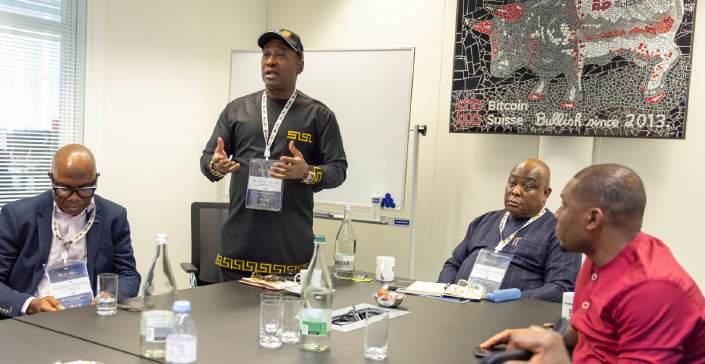
Advisory CommunityDistinguishedSenatorOsitaIzunaso,ChairmanoftheSenateCommitteeonCapitalMarketsEngagedwithBlockchain TechnologyprovisionplatformsinZurich,Switzerland
In addition to the core attributes of Blockchain Technology, which I outlined above to include decentralisation, its ability to provide authenticated database management, its strong audit traceability and the programmable nature of smart contracts which sit on the blockchain, there are three core areas that make Blockchain Technology the ideal rails for the growth of the global Digital Asset Markets.
1.Native Digital Ownership
Enabling private keys means every onchain contract has one, which is essentially a cryptographic password. This is regarded as the ultimate proof of ownership and is very powerful for asset ownership. The cryptographic keys (Private Keys) allow an investor, for the first time, to own a digital asset in a way that is entirely self-custodied, portable, removable from the distributed ledger, and cannot be seized, acquired, or converted by any third party without the cryptographic password or private key. The original owner’s permission is sacrosanct.
2.Seamless Settlement
On a blockchain, settlement, which is the final transfer of the asset versus the consideration, is final and takes place in a few seconds or in a minute. The blockchain, therefore, acts as the ultimate source of truth, eliminating counterparty risk. In traditional financial systems, settlement can take 1, 2, or 3 days (T+3, T+2, or T+1). Most importantly, it is very expensive and can involve a long chain of intermediaries, such as clearinghouses, custodians, and brokers. As the Digital Asset Market continues to grow, some of these traditional intermediaries may become necessary as regulators impose guardrails to protect investors.
3.Liquidity & Programmability
Digital assets can be traded on-chain 24/7 worldwide. This is especially true for decentralised exchanges (DEXs) that never close. Furthermore, the use of Smart Contracts, which are self-executing and integrated with particular on-chain digital assets such as Real-World Asset Tokens, has created new digital asset classes and new financial tradable instruments. The liquidity to expand into these digital asset classes without the permission of traditional financial institutions is known as Decentralised Finance (DeFi). A growing new sector of the Digital Asset Markets Ecosystem.
The United States Securities and Exchange Commission issued a Token taxonomy statement recently, to provide clarity on
how to treat digital assets going forward, especially as it pertains to securities law. The new guideline, for which the US Commodities Futures Trading Commission concurred, classified Crypto tokens into five categories: Digital Collectables, Digital Commodities, Digital Tools, Stable Coins and Digital Securities. In its statement, the US SEC indicated that Federal Securities law will apply only to Digital Securities. In other words, the US SEC is saying that Digital Collectables, Digital Commodities and Stable Coins are non-securities. My understanding of the SEC regulations is that traditional securities tokenised under Real-World Asset Tokenisation protocols are treated as securities and are subject to Federal Securities law.
In the global digital asset markets, we are currently dealing with the following digital asset classes:
a.Cryptocurrencies (e.g., Bitcoin), regarded as Digital commodity money.
b.Utility Tokens (e.g., ETH, SOL), regarded as “Gas fees” or the fuel to use a blockchain network.
c.Stablecoins (e.g., USDC, USDT): Tokenised fiat currency, considered the backbone of on-chain settlement.
d.Security Tokens: Tokenised traditional securities, Real-World Asset Tokenisation of equities, debt, bonds, real estate etc. RWA Tokenisation is an emerging feature in this category.
e.Non-Fungible Tokens (NFTs): Unique digital representations of ownership for any specific assets.
The advent of Blockchain Technology is synonymous with the birth of Bitcoin, the world’s most famous cryptocurrency. After the major global financial crisis of 2008, innovator Satoshi Nakamoto (real identity unknown) launched the Bitcoin white paper, and launched it on-chain by 2009. This was in direct response to the fragility of centralised financial systems. Bitcoin’s early innovators and supporters were mostly ideological, desiring a means of exchange that could sidestep what they considered the corrupt banking community and the overbearing influence of Government regulators. A means of exchange that doesn’t require Government would require a decentralised, immutable ledger system. And hence, the Blockchain Technology was born, signalling the growth of Bitcoin and similar cryptocurrencies. The World adjusted to the 2008 financial crisis by 2016, when the Ethereum era began in the Blockchain ecosystem. The Ethereum era, which spanned 2016 to
2020, introduced smart contracts, which enable programmable digital assets, including asset-backed tokens minted from real-world assets. The last five years, from 2020 to 2025, have seen institutional participation and scalability, in stark contrast to the era of ideology-driven rise of cryptocurrencies and digital assets. This era has ushered in the role of institutional capital and institutional investors, including BlackRock, Fidelity and Vanguard, three of the world’s largest asset management firms. These institutional investors have contributed to the rise of stablecoins, which have become much more important from a systemic standpoint. And they have constituted the much-required bridge between traditional finance and the World of digital assets, positioning Blockchain Technology as a superior settlement layer in financial and investment transactions.
We are entering a new era in which users may not even realise they are using a blockchain as they interact with financial and investment institutions.
The Tokenisation of Real-World Assets Convergence Era:
I anticipate that the World will experience a massive on-chain migration of real-world assets (RWA), which will be particularly beneficial for Africa and its people. Most of our current assets are considered “dead assets”, without the ability to be leveraged or to contribute effectively to economic development. We expect that the world of securities, such as bonds, stocks, private equity, real estate, and assets such as artwork, music files, vessels, cars trucks etc., will all have their digital twin or be aligned to a cryptographical code held in custody by the original owner or on his/ her behalf by an institutional custodian, using institutional-grade custody solutions.
Central Bank Digital Currencies (CBDCs) & Stablecoin Dominance:
As the digital asset markets continue to grow, we will witness the most developed economies of the World shift their emphasis to the use of CBDCs for wholesale interbank settlement. In addition, we expect that the growth of regulated stablecoins will make them the dominant medium for global digital commerce. Blockchain Technology will effectively become the backbone of global payment systems; it will no longer be seen as a fringe activity reserved for crypto-native investors.
The most critical shift in the use of Blockchain Technology is expected to come with the decentralisation of Identity management. The connected digital wallet, which will be registered and owned by all users, will allow users to authenticate themselves online and offline using the same verification system used to verify trillions of dollars in asset trading and transactions. The digital wallet can contain verifiable credentials for your date of birth, your professional certifications, your financial creditworthiness as well as even your criminal record, if any. Blockchain Technology thus becomes the root of trust for all digital identity Worldwide. Indeed……Great Things are Happening.
•Dr Nicky Okoye Global Investment Advisor Founder, Global Investment Advisory Community (GIAC)
Ayokunle Victor
How time flies! Flurry activities in the Nigerian oil and gas industry. Today, 2 April 2026 makes it exactly one year that a consummate oil and gas expert, Engr. Bashir Bayo Ojulari was appointed by President Bola Ahmed Tinubu as the 2nd GCEO of the ‘new’ Nigerian National Petroleum Company Limited, (NNPC Limited). Recall that a new NNPC (i.e. NNPC Limited) was born in 2022 following the passage of PIA 2021 into law. Mallam Mele Kyari became the 1st GCEO of the new NNPC Limited until 2 April 2025, when he handed over to Engr Bashir Bayo Ojulari. Counting from the beginning of the old NNPC, Engr. Ojulari is the 20th Chief Executive to man the affairs of NNPC since the national oil company was created by Decree 33 of 1977.
Without doubt, the choice of Engr. Bayo Ojulari as the GCEO of NNPC Limited, at this point in time, is essentially one of the best choices made by President Tinubu. Of course, that goes a very long way to buttress the point that has been made by many analysts about the fact that President Tinubu, from his days as the Governor of Lagos State, knows how to identify the best hands, who can help him steer the ship in every area of his administration. So, Ojulari owes his appointment to no other person, or to any political apron strings, but to the President and Commander-in-Chief of the Armed Forces of Nigeria, President Bola Ahmed Tinubu. Engr Ojulari had not only paid his dues in the oil and gas industry, but he has also proven his mettle in the new NNPC Limited in the last 365 days. Ojulari is one Nigerian whose immense impact in the oil and gas industry is not only monumental, but also transformative. Upon assumption of office, he clearly understood the task ahead of him - to transform the national oil company; a behemoth that is not only strategically important to the socio-economic wellbeing of the Nigerian nation, but also important to the global oil and gas industry. So, there was no indication that Ojulari believed his new job would be a stroll in the park. He knew he was stepping into an environment where he was not only to be at his best professionally, but he also needed to understand the political dynamics and variables that surround his new office.
So, no one should be surprised at what Ojulari is currently doing at NNPC Limited. He started by driving expansion of the production capacity of NNPC Limited. His first focus was the NNPC Exploration and Production Limited, (NEPL). NEPL is an E & P company owned 100% by NNPC Limited. The company is an upstream company whose main objective is direct exploration and production of oil and gas resources. Over the years, the company has been struggling to produce between 200,000 to 250,000 barrels of oil per day. When Ojulari took office, he was not comfortable with this level of performance. So, he went to work. It was not long, NEPL production increased to an unprecedented 330,000 barrels per day as of August 2025. By the end of 2025, NEPL is celebrating 355,000 barrels per day of production.
NNPC Limited owns and manages Joint Venture business relationships with International Oil Companies (IOCs) such as Chevron, TotalEnergies, and host of other Nigerian oil companies such as Seplat, Heir Holding, etc. NNPC Limited, by the provisions of the PIA, is also designated and serves as the concessionaire for all the Production Sharing Contracts (PSCs). The PSC sets out the contractual and commercial framework for exploration and development of oil, especially,
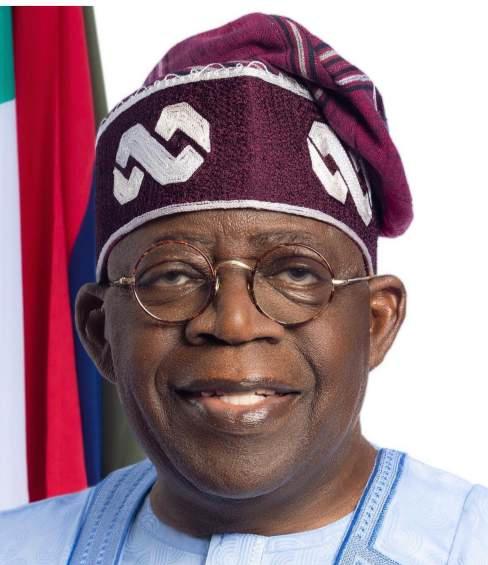
in the Deepwater frontiers of the Nigerian oil industry. As a concessionaire, NNPC role in the framework of the PSCs involves managing the PSC business relationship by partnering with the oil companies in the development of oil fields and representing the interest of the Nigerian Federation in all the PSCs. Ojulari, within the last one year, with the support of President Tinubu, has been able to woo Shell, to come forward to invest in the development of Bonga Southwest-Aparo field. Since Egina FID was taken in 2014, there’s no major FID in the deepwater space until presidential approval for Bonga Southwest-Aparo FID was given by President Tinubu a couple of weeks ago. This is a major deepwater development, which promises to bring additional 200,000 barrels of oil per day and 140 MMScf of gas per day, to the daily production capacity of Nigeria. The project alone is poised create over 5000 direct and indirect jobs in Nigeria. Before now, Ojulari has taken steps that fast track the development of Bonga North and Preowei projects. These are currently ongoing deepwater development projects which are championed by Ojulari, and which promise another 200,000 bpd. The above-mentioned projects and many more ongoing projects scattered across Nigeria’s upstream landscape gives an indication that Nigeria’s daily production can surpass 2 million barrels per day by year 2027. Indeed, the impact of Ojulari in the upstream space is quite enormous. The last time this kind of mega deepwater development project was seen in Nigeria was the Egina development whose FID was taken in 2014. So, it is not surprising that they are springing up now that Ojulari is on the saddle. Two factor account for this new development. First, the PIA and its terms. The second factor is the Ojulari factor. His personal pedigree and his vast connection within the global oil and gas industry is drawing investors’ attention to Nigeria’s deepwater space. It is good to highlight Ojulari’s soft skills which have driven drastic transformational
changes in NNPC Limited. First, he took some people-oriented measures which have positively changed the mindset and the mood of the NNPC workforce. With the support of his astute senior management team, he has driven massive changes in the way things are done at NNPC Limited. His leadership has been driven with passion to see a better NNPC woven in excellence, integrity, and patriotism. He has successfully installed a performance-based management system, making it clear to all that there is a paradigm shift in the management of NNPC Limited. Today, there are positive changes in the method of emplacing commercial contracts; hence contractual obligations are no longer used as a means just to settle some political IOUs. Rather, every decision is seen and taken as business decision in the best interest of over 200 million Nigerians and the NNPC Limited. The goal of every engagement is to drive the commercial progress of the company for the benefit of the Nigeria people at large.
Perhaps, anyone conversant with intrigues of labour movement the Nigerian oil and gas industry would not but applaud the industrial harmony that had existed in NNPC and in fact in oil industry since Ojulari took over the helms of affairs. He has keenly established a healthy working relationship between his management team and the labour unions. Inside sources confirmed that he has not only achieved this healthy working relationship, but he has also been able to get the leadership of the labour unions and indeed the entire workforce to work very harmoniously with him, with everyone supporting his drive for improved business processes and profitability at NNPC Limited.
When one looks at the financial results of NNPC Limited, a demonstration of Ojulari’s Midas touch is clearly seen. The year 2024 audited financial results show that NNPC Limited posted a profit after tax of, PAT, of 5.4 trillion naira. The recent announcement of year 2025 unaudited result is clearly showing that NNPC will post
about 5.76 trillion Naira PAT. In the words of Ojulari himself, “these results are more than numbers; they are a validation of our strategic direction and the dedication of every member of the NNPC team. This performance strengthens our foundation to fuel Nigeria’s economic growth and energy security, and it reaffirms our commitment to delivering sustained value for all our stakeholders.”
These impressive results did not come by happenstance. It is not hard to believe that these were products of meticulous deployment of both material and human resources. We also gathered that NNPC Limited is already concluding work on key national gas assets like the Ajaokuta–Kaduna–Kano, AKK, pipeline, the Escravos–Lagos Pipeline System, ELPS, and the Obiafu–Obrikom–Oben, OB3 pipeline expansion.
Even with these impressive shifts in the outlook of NNPC Limited, the management of NNPC Limited led by Ojulari needs to do more in the area of constructively informing the Nigerian public on the achievements of NNPC Limited. There is need for NNPC Limited to upgrade its approach to media and public awareness system. To be honest, the current approach has not done enough to change the perception about the NNPC of old: a cesspool of sleaze with an opaque management system. Changing this narrative will go a long way to reshape public perception of the company. A huge population of the Nigerian public is yet to know and see the new NNPC Limited. And the new NNPC-L is there to see and behold. The public is LOOKING. It must be helped to SEE. And this requires a meticulous approach to perception management.
As Ojulari and his team mark one year in office, we see hope for the Nigerian oil and gas industry and hope for the Nigerian people. This hope stems from the fact that Ojulari is on the right track driving major transformational changes in the Nigerian oil and gas industry. The only prayer we offer for Ojulari and team is this: may the system allow them to see this through.
•Ayokunle, an oil and gas expert, wrote in from Abuja

The rivalry between Abdullahi Sule and Al-Makura bodes ill for the APC, argues KABIRU DAN MALLAM
The killings persist because no one is held to
The greatest leaders are those who raised people worthy of surpassing them, argues LINUS OKORIE
There is a particular kind of insecurity that wears the mask of strength. It lives in leaders who cannot celebrate a subordinate's success without feeling diminished by it. It lives in the manager who quietly reassigns the most promising talent away from high-visibility work, or who gives vague feedback where they should give clear direction, because deep down, they fear being surpassed. It is one of the most common failures in organizational leadership. And it stalls individual careers and arrests the growth of institutions.
A leader whose primary concern is being the smartest person in the room is not leading. They are occupying space. Leadership is not measured by how much a person accomplishes. It is measured by how many people that person has made capable of accomplishing things they could not do before. Your greatest leadership legacy is in people.

General Electric, PayPal, and McKinsey understood this deeply enough that the world is still living with the results of their investment in people. When Jack Welch became chairman and CEO of General Electric in 1981, their market value was $14 billion. But when he retired, it had grown to over $400 billion. But the more lasting legacy was not the balance sheet. It was the people.
Welch knew that leadership is beyond vision, strategy, and operations. It is the development of your team into people who no longer need you. John C. Maxwell accurately describes it when he said, the function of leadership is to produce more leaders, not more followers. Welch built a system around this conviction.
GE's 4,000 managers were required to review their people annually, identifying the top performers not just for bonuses but for deliberate stretching. Welch invested resources into Crotonville, GE's leadership development centre, where leaders at every level spent weeks each year not just learning techniques but being reshaped in how they thought about leadership itself. He turned the centre into a crucible.
The people who went through the crucible went on to champion several of American businesses. These include but not limited to Jeff Immelt who ran GE Medical Systems, and became the CEO of GE. Robert Nardelli led Home Depot. James McNerney led 3M and then Boeing. David Zaslav served as the CEO of Warner Bros. Discovery.
What Welch understood, and what most leaders resist, is that developing strong people beneath you does not weaken your position. It is the strongest

trees that produce the most seeds.
PayPal’s leadership turned their founding team into a group of extraordinarily talented people who formed the most generative alumni network in the history of technology. They faced an extraordinarily difficult situation together, and the pressure bonded them.
PayPal faced serious competition with eBay and chaos with the dot-com bust. The people who survived this ordeal emerged with skills, confidence, shared resilience, and with deep trust in one another. That combination turned out more valuable than any formal training programme in the world.
Those group of people went on to build companies that include YouTube, LinkedIn, Palantir, SpaceX, Yelp, and scores of others. David Sacks, one of the former employees (alumni), acknowledged that their leaders genuinely invested in them. No wonder PayPal produced billion-dollar companies at a per-capita rate estimated to be 350 times that of Google.
McKinsey & Company has more current Fortune 500 CEOs among its alumni than any other firm, at least 18 at last count, with over 700 alumni currently holding C-suite roles at companies with annual revenues above $300 million.
Among them are Sundar Pichai of Alphabet, Tony Xu of DoorDash, Ryan McInerney of Visa. Across more than 120 countries, approximately 34,000 McKinsey alumni work at over 15,000 organizations.
The mechanism behind this is cultural. McKinsey does not treat resignation as loss. It celebrates it. Consultants are actively encouraged to think about where they are going next, because McKinsey's model understands something that their alumni are the legacy.
When a McKinsey alumnus becomes a Fortune 500 CEO, they do not sever their relationship with the firm. They often become clients. The network selfreinforces, and the firm's investment in developing them pays compound returns for decades. This is what it looks like when an organization genuinely internalizes the idea that raising people up is the highest form of strategic investment.
What did the leaders inside these organizations share? Definitely not temperament because Welch was famously combative, the PayPal founders notoriously difficult, while McKinsey's leadership were legendarily understated. What they shared was the way they saw their people. They saw them as futures, not as functions they play today.
The leaders who build other leaders are those who have resolved, in their own psychology, the question of scarcity. They do not believe that someone else's brilliance diminishes their own. They believe that their brilliance is most fully expressed in the brilliance they catalyse in others. The gardener is not threatened by the flower. The gardener's purpose is the flower.
As leaders, reflect back to your people a vision of who they can become, not just who they currently are. When people know they are being seen as future leaders, not just current contributors, it changes how they see themselves. Selfconcept precedes behaviour.
Build the understanding that the relationships forged here will outlast any single career decision. PayPal alumni funded each other for decades. McKinsey alumni hire each other across continents. Trust, accumulated in a highstakes environment, becomes a form of wealth that no salary can replicate.
Here is what is most extraordinary about the GE, PayPal, and McKinsey stories: none of them knew how far the effects would travel. Welch was simply building a better GE. The PayPal founders were just trying not to go bankrupt. McKinsey were only serving its clients and developing its consultants. They were simply committed, each in their own way, to making the people around them better, and posterity received the overflow.
The hidden logic of leader development is that when you genuinely invest in the growth of another person, the return rarely stays inside your organisation. It flows into industries, into communities, in ways you will likely never fully see or measure.
Okorie
MFR is a Leadership Consultant
The killings persist because no one is held to account, contends PAT ONUKWULI

When will the killings stop, across Nigeria’s many fault lines, from Benue State and Kaduna State to Zamfara State, Borno State, and, most recently again, Plateau State? This question, increasingly, defines the national condition. It is no longer episodic, nor is it confined to one geography. It is structural. And until it is confronted as such, it will persist.
There is a persistent tendency, particularly in moments of collective grief, to localise tragedy, to treat each outbreak of violence as discrete, contained, and exceptional. Plateau is often framed this way. So too Benue. So too Zamfara. Yet such framing obscures more than it reveals. What is unfolding is not a sequence of isolated crises, but a distributed pattern of insecurity, one that reproduces itself across regions and zones with unsettling consistency.
Recent events illustrate this continuity with stark clarity. On March 29, 2026, at least 28 people were killed in Jos North. Days later, on April 3, President Bola Ahmed Tinubu visited Jos, meeting victims’ families at the airport rather than within the affected communities, but a power failure curtailed the visit. Yet within hours of that visit, fresh killings were reported in Jos South. The sequence is difficult to dismiss in its absence, without reach or reassurance, without interruption.
This is not an isolated contradiction. It is a pattern. An earlier presidential visit to Benue in 2025 attracted similar scrutiny and engagement. It did not get to the epicentres of violence, impeded by poor road infrastructure. These incidents, while circumstantial, are nonetheless indicative. Insecurity, inadequate infrastructure, and unreliable electricity supply are not discrete challenges but interconnected elements of a broader governance deficit. It may be argued that such occurrences are symbolic rather than substantive. However, symbolism carries interpretive weight. However, explanation does not neutralise implication. When the state’s highest office
cannot fully access affected communities, it reflects, in concentrated form, the dreadful everyday limitations experienced by ordinary citizens. This underscores the gap between institutional presence and lived reality.
Symbolism, in such contexts, is not incidental. It is diagnostic. Across Nigeria’s security scene, the forms of violence differ: insurgency in Borno, banditry in Zamfara, and communal conflict in the Middle Belt, but the underlying style remains consistent: fragile security coverage, constrained deterrence, and an accountability deficit that continues to erode public confidence. What changes is the method; what persists is the pattern.
It is within this already layered environment that the reported joint aerial operation of December 25, 2025, conducted by the United States in collaboration with the Nigerian government, must be situated. Interpreted one way, it represents a necessary escalation: a recognition that domestic capacity may require external reinforcement. Interpreted another way, it raises enduring questions around sovereignty, proportionality, and the long-term efficacy of externally supported force within a domestic security framework.
A measured assessment accommodates both readings. It neither assumes that such intervention is sufficient nor dismisses it as inconsequential. Rather, it situates it within a continuum in which tactical actions, however precise, must ultimately be evaluated against strategic outcomes. The central test remains unchanged: do these interventions disrupt recurrence, or merely respond to it?
At the core of this recurrence lies a more enduring deficit: accountability. Across affected regions, the limited visibility of arrests, prosecutions, and convictions reinforces a perception of impunity. Justice, when delayed or inconsistently applied, ceases to function as deterrence. Instead, it becomes part of the enabling environment for further violence.
To acknowledge structural constraints, geographic scale, infrastructural deficits, and institutional limitations is necessary. But to rest on them is insufficient. The persistence of killings across multiple states suggests not only constraint, but a systemic vulnerability, one that reproduces itself irrespective of location.
The responsibility before President Tinubu is therefore not local, but national in scope. The challenge is not simply to respond to incidents, nor to demonstrate presence, but to alter the conditions that allow such incidents to recur. This requires coherence among security operations and judicial processes, infrastructure and accessibility, and policy articulation and lived experience.
Dr. Onukwuli is a legal scholar and public affairs analyst., patonukwuli2003@yahoo.co.uk
The rivalry between Abdullahi Sule and Al-Makura bodes ill for the APC, argues KABIRU DAN MALLAM
The unfolding political rivalry in Nasarawa State between former governor Tanko Al-Makura and incumbent Abdullahi Sule is no longer just a local power tussle—it is fast becoming a liability for the broader fortunes of the APC, particularly the electoral strength of Bola Ahmed Tinubu in the state.
Sen Almakura’s quest to jettison the zoning formula that promotes peaceful coexistence is creating division among stakeholders. He has taken his divisive rhetoric a notch higher by mobilizing internal divisions and championing internal conflicts.
At the heart of the issue is a familiar but dangerous pattern: the inability of political heavyweights to reconcile legacy influence with present authority. Al-Makura, the former Governor of the State who lost election to the Senate, due to his dwindling popularity in Nasarawa politics, appears unwilling to accept reality and yield space to Sule, who now commands the machinery of government and the loyalty that comes with incumbency. This tension, while not unusual, is being managed in ways that risk fragmenting the party’s base.
One of Al-Makura’s most consequential missteps is the sustained projection of parallel authority. Unlike other climes where incumbents upload their loyalists, Sule allowed his predecessor’s appointees to continue in office for continuity and peaceful transition. While this may appear his albatross, these appointees, buoyed by his sincerity of purpose, have since shifted their loyalty to the Governor. Al-makura deludes himself with maintaining grip on party structures to no avail. He is inadvertently aligning with alternative blocs, to fuel the perception of a divided house. He has continued to mislead aspirants as the Lord of the manor. Such misguided signals create confusion about leadership and direction—conditions that often suppress voter enthusiasm. Equally damaging is the timing
of these manoeuvres. With national political calculations already tilting toward consolidation ahead of future elections, internal discord at the state level sends the wrong message. Instead of reinforcing the APC’s dominance in Nasarawa, the ongoing rivalry risks opening cracks that opposition forces can exploit.
There is also the question of electoral consequences. Nasarawa has been a reliable contributor to Tinubu’s vote bank, but that stability depends heavily on unity among party leaders. When influential figures are perceived to be at odds with the Governor, the ripple effect can extend to ward and local government levels, where elections are often decided. Disillusioned party members may disengage, defect, or quietly resist mobilization efforts.
Moreover, the optics of elite conflict undermine the narrative of cohesive governance. Voters are less concerned with former this and that, than with tangible outcomes. Prolonged infighting risks portraying the APC as inward-looking at a time when public expectations are high.
These further diminishes Al-Makura’s perceived political stature and his contributions to the state. However, in the current context, his approach appears increasingly counterproductive. Power, in politics, is not only about retention but also about timing, restraint, and strategic alignment.
If this trajectory continues, the real casualty may be President Bola Tinubu’ and the APC’s electoral strength in this critical North central State of Nassarawa.
Unity, not rivalry, remains the party’s most valuable political currency.
As the Chairman of the APC North Central Forum , Gov Abdullahi Sule remains the constant decimal to coordinate and deliver Nassarawa State, and the North Central zone
Editor, Editorial Page PETER
ISHAKA
Email peter.ishaka@thisdaylive.com
Regulatory agencies should be alive to their responsibilities
he death in an elevator accident of the All Progressives Congress (APC) Assis tant Organising Secretary in Kano State, Abdulsalami Ginsau, has raised the issue of safety in many of our public build ings. Ginsau was said to have entered a malfunctioning elevator at an Abuja hotel last Friday morning and sank with it. His remains were discovered the following day after the hotel started perceiving an offensive odour that necessitated a search. His death serves as a poignant reminder of the importance of equipment maintenance and stringent safety measures in public buildings. We commiserate with the family of the deceased even as we call for a thorough investiga tion.
We are especially concerned that accidental deaths in elevators are becoming frequent, even when many go unreported. Within a period of one month in 2023, a Lagos medical doctor and an 18-year-old student at Lagos State Skills Acquisition Centre Technical School, Egan, died in elevator accidents. The teenager’s death occurred at a construction site in Ikoyi where he was observing an Industrial Training programme. He was trapped in the lift shafts overnight without anyone knowing. With no safety system in place, his bruised and lifeless body was discovered the following morning, eliciting shock and grief.
accidents like fire or building collapse. Elevator accidents could also be fatal, whether in the developing or the advanced world. From South Africa, Iran, Cambodia to Israel, Canada, United States and South Korea, accidents with severe casualties have been reported. Some have been attributed to defective doors, irregular speed or snapped wires, as well as electric or mechanical issue that mixes the signals in the elevator.
EDITOR SHAKA MOMODU
DEPUTY EDITOR WALE OLALEYE
MANAGING DIRECTOR ENIOLA BELLO
DEPUTY MANAGING DIRECTOR ISRAEL IWEGBU
CHAIRMAN EDITORIAL BOARD OLUSEGUN ADENIYI
EDITOR NATION’S CAPITAL IYOBOSA UWUGIAREN
THE OMBUDSMAN KAYODE KOMOLAFE
The circumstances of the death of a medical doctor at the General Hospital, Odan, Lagos, were slightly different. The young lady was riding in the elevator in the staff quarters of the hospital which later lost control and tumbled down from the ninth floor. She was reportedly alive for over an hour after the collapse of the machine. When she was eventually rescued and rushed to the emergency ward of the hospital, the non-availability of blood allegedly contributed to her death.
We concede that elevators do malfunctions in homes, offices, hotels, etc. But they are not on the high list of
T H I S D AY N E W S PA P E R S L I M I T E D
EDITOR-IN-CHIEF/CHAIRMAN NDUKA OBAIGBENA
GROUP EXECUTIVE DIRECTORS ENIOLA BELLO, KAYODE KOMOLAFE, ISRAEL IWEGBU
DIVISIONAL DIRECTORS SHAKA MOMODU, PETER IWEGBU, ANTHONY OGEDENGBE
DEPUTY DIVISIONAL DIRECTOR OJOGUN VICTOR DANBOYI
SNR. ASSOCIATE DIRECTOR ERIC OJEH
ASSOCIATE DIRECTOR PATRICK EIMIUHI
CONTROLLERS ABIMBOLA TAIWO, UCHENNA DIBIAGWU, NDUKA MOSERI DIRECTOR, PRINTING PRODUCTION CHUKS ONWUDINJO
TO SEND EMAIL: first name.surname@thisdaylive.com
However, in other countries, lessons are learnt from these accidents that are usually investigated with the reports made public. That is not the case in Nigeria where many of the disasters that we witness are preventable. Safety demands more than good engineering. It takes independent regulation, and a meticulous, self-critical safety culture that endlessly searches for risks, according to most experts. At least, global best practices demand that elevators are regularly maintained and repaired. In our country, there have been cases where faults reported on elevators are practically ignored until disaster happens. This problem can also be located in lax regulation.
It is unfortunate that generally, regulatory authorities in the country are more reactive than proactive. They prefer to arrest a criminal rather than prevent the commission of a crime. Even the reactive approach to enforcement is fraught with unbearable inefficiency given response time to distress calls. The result is that lives are often lost before the intervention of these agencies.
Going forward, we believe that the reactive approach to enforcement of regulation must change if the nation is to fundamentally check the spate of disasters enveloping it. We urge the regulatory agencies and disaster management bodies to embark on a massive public enlightenment on safety regulations, dangers of non-compliance and basic steps to take in the event of any untoward occurrence. The death of Ginsau should compel action on the need to ensure that the elevators in all public buildings in Nigeria are not only fit for purpose but also safe.
Letters in response to specific publications in THISDAY should be brief (150-300 words) and straight to the point. Interested readers may send such letters along with their contact details to opinion@thisdaylive.com. We also welcome comments and opinions on topical local, national and international issues provided they are well-written and should also not be longer than (750- 1000 words). They should be sent to opinion@thisdaylive. com along with photograph, email address and phone numbers of the writer.
Many Nigerians are ignorant of the perils of patronising real estate quacks. The question is who is quack? A quack is someone who carries out a professional activity for which he is not trained or registered to do. At the extreme, a quack may also mean a fraudulent person or someone that is not skilled, or a charlatan and impostor carrying out services that they are not supposed to do.
Real estate quackery may be synonymous to crime, where those that practise such carry out services of the estate surveyor and valuer that are not registered by the Board regulating the profession.
Estate quacks are found on the streets, along with other professionals that are not estate surveyors and valuers, e.g. doctors, engineers, etc.,. carrying out real estate agency. Such persons are patronized because it is a market activity, property owners, developers, demanders and seller can choose who they relate to, so you get what you want.
If you as a property developer chose a medical doctor to sell your property that’s your choice, but its a wrong choice. A professional estate surveyor and valuer is the right person to carry out such service for you.
There are three advantages of patronising a professional estate surveyor and valuer, and they are the three Rs. They are recognition, regulation and redress.
Recognition means you have to go through somebody that is recognized by law, by training to carry out a particular service. The estate surveyor and valuer is the one that is trained and recognized. Then regulation, meaning every professional that is not regulated is not a professional. The state surveyor and valuer in Nigeria is regulated by a government agency called the Estate Surveyors and Valuers Registration Board of Nigeria (ESVARBON) that set standards of conduct, minimum level of education and ethics that have to be complied with.
On one property, no two registered estate surveyors are allowed to compete as agents, but quacks could do that. The third R is redress. If the estate surveyor and valuer commits an act which in the eyes of the law constitutes misconduct you can seek redress through either the Nigerian Institution of Estate Surveyors and Valuers (NIESV) or ESVARBON.
The estate surveyor and valuer is usually involved in normal valuation, compensation and resettlement issues, and real estate development. Beyond this, he is an economist and an expert of the built environment, every component of the real estate market and its activities, he is also a professional adviser who can advise on best decisions to take to get optimum returns on your investment knowing that real estate investment is capital intensive, if you take risk you lose.
Esv. Adamu Kasimu, Abuja ad_kasimu@yahoo.com
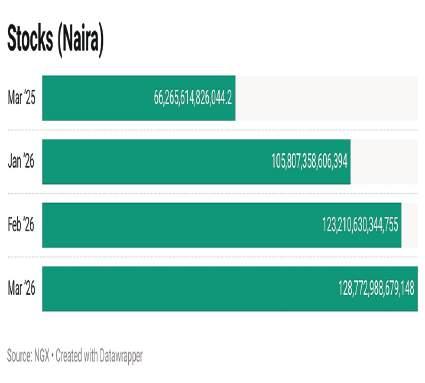
As the Nigerian Exchange Limited (NGX) sustained its positive momentum since 2025, the market capitalisation listed securities (Stocks, Bonds, Exchange Traded Fund) have added N60.58 trillion or 52.6 per cent in its Year-on-Year growth to a significant N175.8 trillion as of March 2026.
The overall market capitalisation of listed securities was at N115.22 trillion March 2025, according to an investigation by THISDAY intelligence.
The stability in the foreign
exchange market, companies recovering from foreign exchange losses, market liquidity, capital inflow, dominance of domestic investors, increasing portfolio investment, Central Bank of Nigeria (CBN) ’s banking sector recapitalisation and insurance sector reforms have played a critical role in overall market capitalisation growth since 2025.
The stock market has increased from N66.266 trillion in March 2025 to N128.77 trillion as of March 2026, about N62.507 trillion or 94.33 per cent growth YoY.
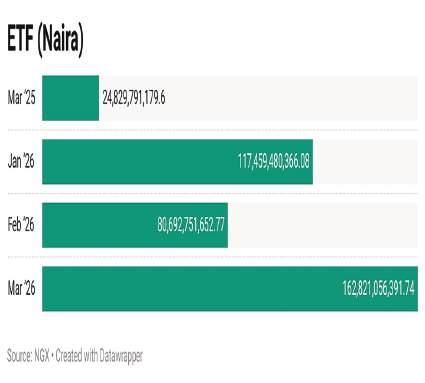
The stock market in March 2026 had crossed the N130 trillion mark on investors demand for listed fundamental stocks quoted on the NGX.
The latest milestone highlights the sustained momentum in Nigeria’s stock market, which continues to attract growing interest from both domestic and institutional investors.
The stock market section continues to dominate transactions on NGX amid foreign investors taking advantage of the foreign exchange reforms by the
CBN, the recent upward revision of allocation to ordinary shares by the National Pension Commission (PenCom), investors’ confidence and impressive corporate earnings by listed companies.
The Group Managing Director and Chief Executive Officer of Nigerian Exchange Group, Temi Popoola described the milestone as a sign of growing confidence in Nigeria’s capital market.
He added that, “Nigeria’s ongoing reforms are strengthening domestic capital formation, and
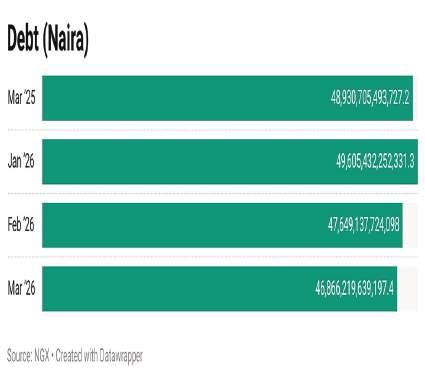
the market is responding positively. Increased participation by local investors, improving corporate fundamentals, and continued market modernisation are reinforcing the role of the capital market as a catalyst for long-term wealth creation and sustainable economic growth.”
The debt market came second, contributing about N46.87 trillion from N48.931 trillion March 2025, while the ETF ranked third with N162.82 billion as of March 2026 from N24.829 billion
March 2025. The debt market on the NGX is made up of corporate Bonds/ Debentures, FGN Bonds and State and Local Bonds. Currently, there are 51 listed bonds on NGX issued by the Central Bank of Nigeria and Federal Government of Nigeria; four States bonds and 16 corporate Bonds/Debentures. So far this year, the CBN has continued its monetary policy tightening to stabilise the naira and inflation.
The National Insurance Commission (NAICOM), is set to increase the minimum capital base of insurance firms underwriting Micro Insurance businesses from the present level of N40 million for unit, N100 million for state and N600 million for National Micro insurance firms to N3 billion.
This is contained in the Nigeria Insurance
Industry Act (NIIRA2025) on minimum capital base for operating firms.
Though the commission had while spelling out the minimum capital base for life, at N10 billion,General business at N15 billion and reinsurers at N35 billion, it has been silent on what constitutes new minimum capital base for micro insurance.
THISDAY gathered that the commission may settle at N3 billion as uniformed
minimum capital base for micro insurance firms effect from this month.
This replaces the older tiered structure, aiming to strengthen financial capacity for nationwide low-income coverage.
The previous structures of N40 million for unit microinsurance firm, N100 million for state and N600 million for national Micro insurance operators are being phased out in favor of the new, higher
requirement.
Going by the guidelines the target market for the micro insurance are; low-income individuals, micro-entrepreneurs, and underserved communities.
The product has to be simplified policies with lowvalue, easy-to-understand terms tailored to the target market.
The Nigeria Insurance Industry Reform Act (NIIRA) 2025 promotes microinsurance to increase financial inclusion for underserved and rural populations, with a focus on tailoring, regulating, and integrating these products into the broader insurance market.
The Act enables specialised products and
The initial channels for its distribution are agents, cooperative societies, nongovernmental organisations (NGOs), faith-based organisations, and mobile payment systems.
requires digitisation for increased access.
The act recognises microinsurance as a vital component for enhancing market penetration and widening coverage to underserved populations. It encourages collaboration between key stakeholders, including the Central Bank of Nigeria (CBN), to develop tailored, affordable insurance products.
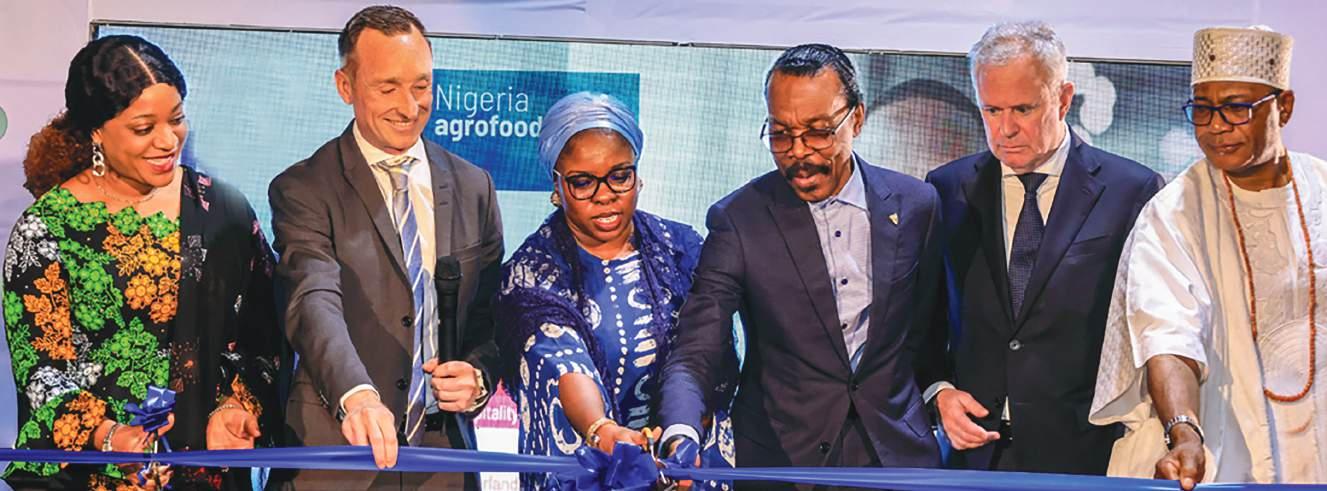
The Chartered Institute of Directors Nigeria (CIoD) has stated that Nigerian firms are transitioning from compliancedriven to performance-driven observance of corporate governance.
The CIoD stated this during the launch of its 2026 CIoD Nigeria Corporate Governance Outlook with the theme, “Governing for Sustainable Value: The Evolving Board Agenda in 2026.”
The CIoD said: “The findings indicate gradual improvement in formal governance structures, particularly in board’s composition and policy documentation. A key theme emerging from the data is the transition from compliance-driven governance to performance-driven
governance.”
The report added that while awareness of Environment Sustainability Governance (ESG) and sustainability obligations has increased, measurable integration into strategy, risk management and capital allocation remained uneven.
In his opening remarks, the President and Chairman of the Governing Council, CIoD, Mr. Adetunji Oyebanji, said that the launching of the 2026 outlook marked a significant milestone for the institute.
Oyebanji said: “This maiden edition of the corporate governance outlook is a testament to our belief in an institutionalised governance framework for achieving the envisioned triple bottom line: People, Planet, and Profit.
“It is, therefore, a strategic
FCMB Capital Markets Limited, the investment banking arm of FCMB Group Plc, raised N1.53 trillion in corporate debt capital through bond listings and commercial paper quotations on FMDQ Securities Exchange Limited in 2025.
Following this, FCMB Capital Markets was ranked first on the exchange’s Fixed Income Primary Markets Sponsors’ League Table for the year ended December 31, 2025.
The exchange’s report showed that FCMB Capital Markets led overall sponsor contributions across the bond listings and commercial paper quotation markets during the year. In the bond market, the firm accounted for 11.66 per cent of total listings, for the top spot. In the commercial paper
market, FCMB Capital Markets achieved the highest share of quotations at 7.68 per cent outpacing other registration members in that segment.
The Exchange reported that 58 registration members participated in listings and 77 in quotations. During the period under review, 47 institutions actively sponsored fixed-income securities listings or quotations, excluding Federal Government securities.
“Our ranking reflects the confidence issuers place in our ability to structure and execute capital market transactions,” said Femi Badeji, Executive Director, Coverage and Investment Banking at FCMB Group Plc. “Mobilising more than N1 trillion in a single year demonstrates the depth of demand for capital market funding and the role we play in connecting issuers with long-term investors.”
document designed to shape boardroom thinking, strengthen institutional leadership, and support Nigeria’s journey toward sustainable economic prosperity.”
The Chairman of Nigerian Exchange Group Plc, Dr. Umaru Kwairanga, said in
his goodwill message that the theme and insights embedded in this outlook came at a critical time for our economy.
Kwairanga said: “As Nigeria
continues its journey towards economic transformation and global competitiveness, the role of boards and directors has never been more pivotal.
Chinedu Eze
The Chairman and Chief Executive Officer of Nigeria’s leading carrier, Air Peace, Dr Allen Onyema, has assured lessors that domestic airlines must abide by leasing agreements they signed with lessors.
Onyema, who is also the Vice President of Airline Operators of Nigeria (AON), gave the assurance when he spoke at
the maiden Nigeria Aircraft Acquisition and Investment Summit (NAAIS) 2026, which ended at the weekend in Lagos.
He said that some Nigerian airlines might have defaulted on leases in the past but significant changes have taken place in the country’s aviation sector that it would never happen again.
This is because there is a new commitment spearheaded by the federal government
and the Minister of Aviation and Aerospace Development, Festus Keyamo, who has made significant effort to re-establish Nigeria’s goodwill in the global aviation community.
Onyema noted that under the leadership of President Bola Ahmed Tinubu, Nigeria has taken deliberate steps to de-risk aviation investment in Nigeria, which includes the strengthening of Nigeria’s implementation of
the Cape Town Convention and Aircraft Protocol.
Significantly, Nigeria has issued the Federal High Court Cape Town Convention & Aircraft Protocol Practice Direction and went a step further by officially issuing the Irrevocable DeRegistration and Export Request Authorisation (IDERA) Advisory Circular, intended to improve deregistration and export-remedy procedures.
Emma Okonji
Bharti Airtel has announced a major milestone in its global operations, crossing 650 million mobile subscribers worldwide, a scale that now positions the company as the second-largest telecommunications operator globally by customer base.
Crossing the threshold
reflects a network of immense scale, the capacity to reach customers across diverse markets with consistent quality, and the ability to deliver experiences shaped by sustained innovation.
In Nigeria, Airtel has continued to scale infrastructure at a pace unmatched in its recent history.
Over the past three years, the company has increased its national site count from just above 13,000 to nearly 17,200 sites, including more than 1,560 added in the last twelve months. The expansion deepens capacity in high-demand corridors and extends high-speed coverage to previously
underserved regions.
“The company is advancing plans for its second submarine cable internet breakout point at Kwa Ibo in Akwa Ibom State, early in the 2Africa cable system rollout, to provide faster and more resilient national connectivity across regions.
The Managing Director of the Federal Airports Authority of Nigeria (FAAN), Olubunmi Kuku, has called on international and financiers, lessors and others to invest in Nigeria, assuring they would reap huge returns on investment.
Beta Glass Plc has reported a strong financial performance for the year ended December 31, 2025, posting a revenue of N149.12 billion and a 144 per cent surge in profit after tax, driven by improved efficiency and sustained demand.
Kuku who made her presentation virtually at the Nigeria Aircraft Acquisition and Investment Summit (NAAIS) 2026, which ended at the weekend in Lagos, emphasised that Nigeria’s’s aviation market remains one of the most attractive on the African continent.
She noted that Nigeria’s
According to its audited financial statement, the company’s revenue grew by 27 per cent from N117.58 billion in 2024 to N149.12 billion in 2025.
Gross profit rose by 71 per cent to N52.66 billion from N30.76 billion, while operating profit jumped by
large and youthful population, coupled with its diversified economy and strategic geographic location, continue to drive strong demand for both passenger and cargo air services.
She said despite global disruptions such as pandemics and economic headwinds, Nigeria’s aviation industry
104 per cent to N48.09 billion from N23.56 billion recorded in the previous year.
Profit before tax increased by 154 per cent to N50.54 billion, while profit after tax climbed significantly to N33.25 billion, up from N13.63 billion in 2024.
Earnings per share also rose
has shown resilience, with improving load factors, recovering routes and emerging opportunities for new connections.
“Investors should focus on long-term fundamentals rather than short-term fluctuations, and Nigeria’s aviation market fundamentals remain strong,” she said.
by 144 per cent to N55.41 compared to N22.71 in the previous year, reflecting the company’s strong profitability.
The company attributed the improved performance to enhanced operational efficiency and cost management, with gross margin rising to 35.3 per cent from 26.3 per cent.
Dan Kunle
War in Iran has jolted energy markets, sparking a crisis far beyond the battlefield. This geopolitical clash exposed flaws in the production, refining, and distribution of fuel. Fortunately, Dangote’s mega-refinery aided Nigeria.
At the center of the disruption is the Strait of Hormuz, a narrow maritime corridor through which nearly one-fifth of global oil and gas moves. With traffic severely constrained, the impact goes beyond rising prices. In many parts of the world, the issue is no longer affordability but outright availability.
A clear pattern is emerging. Countries with weak currencies, low reserves, and heavy fuel imports are most affected. In these nations, the crisis means empty petrol stations, rationed cooking gas, grounded flights, and slowing economies. Nigeria, however, is charting a different course—defined by strategic resilience and growing self-sufficiency, not vulnerability.
Energy Vulnerability
Across South and Southeast Asia, strain is already acute. In Pakistan, which imports over 80 percent of oil, authorities have moved quickly to conserve fuel. Schools have closed, government workers have been sent home, and commuters have been urged to limit travel. Long queues stretch across major cities like Karachi and Lahore as petrol stations struggle to keep up with demand. Prices have surged in recent days, with ripple effects across transport, commerce, and sport.
Sri Lanka, still recovering from its 2022
financial crisis, has returned to familiar but painful measures. Fuel rationing has been reintroduced through a QR-based system that strictly limits weekly consumption. For households already under pressure, the result is a renewed cycle of queues, uncertainty, and rising living costs. Disruptions to fertilizer imports have also raised concerns about food inflation, linking the energy crisis to broader economic instability.
In Nepal, daily life is disrupted. Liquefied petroleum gas, essential for cooking, is in short supply. Families wait hours for partially filled cylinders; others resort to firewood or electric stoves. Nepal’s supply issues predate the conflict, but the global shock has exposed more weaknesses. In the Philippines, LPG shortages worsen


as stations close, while authorities urge conservation and seek more imports.
Vietnam and Thailand present contrasting but telling cases. In Vietnam, surging diesel prices strain airlines, manufacturers, and logistics. In Thailand, a spike in diesel demand has stressed supply, prompting rationing and emergency measures. In East Africa, Kenya faces rolling shortages, with stockouts in cities and rural areas. In Haiti, where insecurity fuels shortages, the effect is the same: scarcity, disruption, and economic strain.
These cases show that nations without refining capacity remain vulnerable during global crises.
A snapshot of the global situation further illustrates the scale and urgency of the disruption. Across continents, countries are grappling with varying degrees of fuel scarcity and supply instability. In South Asia, Sri Lanka continues fuel rationing while Pakistan faces severe shortages marked by long queues and surging prices. India, despite its size, reportedly holds only limited days of fuel reserves, highlighting underlying vulnerability.
In Africa, South Africa reports relative stability, yet many stations experience dry pumps, pointing to supply chain stress beneath the surface. Across Europe, the United Kingdom has issued fuel shortage warnings, while Germany and France contend with rising fuel costs and tightening supply.
Major global economies are not immune. In the United States, authorities are responding






with strategic measures to stabilize supply, while China accelerates stockpiling efforts to cushion against prolonged disruption. In East Asia, Japan and South Korea are closely monitoring reserves as the crisis unfolds. This is now a truly global energy shock— cutting across developed and developing economies alike. Notably, this marks about 35 Days of the Strait of Hormuz blockade, underscoring both the persistence of the disruption and the growing pressure on global supply chains.
Emergence of Dangote Refinery
Nigeria appears, at first glance, to fit squarely into this category of vulnerable countries. Despite being Africa’s largest oil producer, the country has historically depended on imported refined petroleum products. For decades, this paradox has constrained growth, strained foreign exchange, and exposed the economy to shocks. Today, that story is changing—decisively.
Dangote Refinery marks a turning point for Nigeria and Africa. By supplying most petrol, diesel, and aviation fuel domestically, it reshapes Nigeria’s energy landscape. It achieves what years of policy could not: large-scale, reliable refining, insulating the economy from global volatility. While many nations grapple with shortages, Nigeria maintains relative stability. There are no nationwide queues, shutdowns, or emergency rationing seen elsewhere. This resilience is not accidental but stems from private investment aligned with national priorities.
t he story continues online on www.thisdaylive.com













Following the successful banking recapitalisation exercise, expectations are high that the nation’s economy would receive a boost towards the realisation of the N1trillion plan, writes Goddy Egene
It was on November 24, 2023 that the Central Bank of Nigeria (CBN) Governor, Olayemi Cardoso, first announced the apex bank’s plan to recapitalise banks. He laid out ambitious plans to get the sector significantly drive growth of businesses and support the federal government’s $1 trillion economy project. Analysts have lauded the success of the two-year exercise and expressed confidence that with bigger and more resilient banks, the Nigeria financial sector has what it takes drive sustainable growth and real sector productivity.
When Cardoso directed banks to brace up for a new round of recapitalisation in the sector, many pundits foresaw an idea whose time had come.
Expectedly, the CBN boss, walked the talk, and set a two-year timeline for the exercise. March 31, signaled the end of the timeline, and beginning of an era with 33 resilient and highly capitalised banks raising N4.65 trillion and determined to drive business and economic growth.
The recapitalised banks will play significant role in federal government’s drive for $1 trillion Gross Domestic Product (GDP) target by 2031.
Cardoso said the Nigeria banks needed to raise new capital to have sufficient capital relative to the financial system’s needs in servicing a $1.0 trillion economy in the near future.
Continuing, he said: “The administration, as outlined in the widely circulated Policy Advisory Council report on the national economy earlier this year, has set an ambitious goal of a GDP of $1.0 trillion, with clearly defined priority areas and strategies.
According to him, attaining this substantial target necessitates sustainable and inclusive economic growth at a significantly higher pace than current levels.
“The administration has already commenced this journey through fiscal reforms, including the removal of petrol subsidy and the unification of the foreign exchange market rate,” he said.
Reaffirming the stability of the banking sector, he said: “Indeed, despite the challenging global and domestic macroeconomic environment, Nigeria’s financial sector has demonstrated resilience, with key indicators of financial soundness largely meeting regulatory benchmarks.”
The CBN had, on March 28, 2024 announced a two-year bank recapitalisation exercise which commenced on April 1, 2024. The recapitalisation plan required minimum capital of N500 billion, N200 billion and N50 billion for commercial banks with international, national and regional licences respectively. The 24-month timeline for compliance ends on March 31, 2026.
Cardoso said the apex bank would be enforcing stronger governance, greater transparency, and firmer accountability to protect raised funds.
The CBN has equally established a dedicated Compliance Department, now fully operational, with mandates covering financial crime supervision, market conduct, enterprise security, corporate governance, and Environmental, social, and governance (ESG).
According to the CBN boss, the process enforcing stronger controls on raised funds is ongoing with the redesigning of the credit risk framework expected to ensure that raised
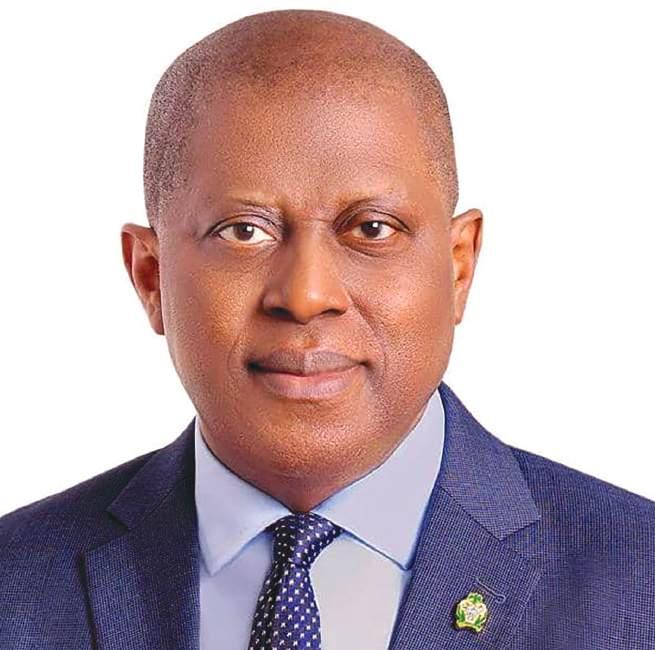
funds are well managed by financial institutions.
Previously, banks were awash with post recapitalisation funds, with analysts predicting that without proper risk management policies and regulatory controls, chances of misapplying such raised funds through risky loans remain high.
To guard against such occurrence, Cardoso stated: “We are redesigning the credit risk framework to enforce stronger governance, greater transparency, and firmer accountability across the sector. We are determined to break the boom-and-bust cycle that has accompanied past recapitalisation efforts.”
In a report titled: “Nigeria’s macro headwinds trigger bank recapitalisation” Deloitte, a global accounting and audit firm, said the upward review of banks’ capital base from N50 billion to N500 billion depending on the type of licence held by the bank, remains an essential action required to boost capital adequacy needs of the Nigerian financial industry.
Nigeria banks’ capital adequacy, the report said, has been significantly impacted by macroeconomic challenges such as high inflation and interest rates, currency volatility and forex illiquidity.
“The upward revision will ensure that Nigerian banks have the capacity to take on bigger risks and stay afloat amid both domestic and external shocks. It also means increased liquidity position of banks, which will help broaden their loss-bearing capabilities,” the report said.
What stakeholders are saying
President, Bank Customers Association of Nigeria (BCAN), Dr. Uju Ogubunka, said the exercise, which saw 32 banks raising N4.61 trillion presented opportunity
for the lenders to provide cheaper loans, expand their operations and provide improved services to customers.
“The banks have raised significant funds to shore up their capital bases. Now, we expect them to improve on service quality and shun excess charges,” he said.
CEO, Economic Associates, Dr. Ayo Teriba, urged the CBN to review Cash Reserve Ratio (CRR) policy to allow banks utilise funds raised from the recapitalisation exercise.
He said that with Ways and Means dropping from N27 trillion to N3 trillion and stability in exchange rate, and adequate FX reserves, the CBN should rescind the policy on CRR to allow banks intermediate.
The CBN pegged CRR for Deposit Money Banks at 45.00 per cent, Merchant Banks at 16.00 per cent, and 75.00 per cent for non-Treasury Single Account (TSA) public sector deposits.
Also speaking, President, Association of Bureaux De Change Operators of Nigeria (ABCON), Dr. Aminu Gwadabe, agreed with Ogubunka on the need for low interest loans.
Gwadabe said: “We need cheaper loans. Big capital should reflect on cheaper and more affordable loans. Also, banks should lend for longer terms, and projects that support the economy.
He said that more capital will increase banks’ buffers and hasten Nigeria’s path to achieving $1 trillion economy.
“Now they have bigger capital, we expect the banks to come out and compete with other global banks. The Nigerian banks need to compete favourably at international stage,” he said.
Continuing, Gwadabe said the era of high lending rates should also be over.
“We expect the interest charged by banks on loans to reflect international standards. We equally want the banks to de-risk
agriculture to improve food security,” he said. Country Director, World Bank in Nigeria, Matthew Verghis, underscored the importance of positioning recapitalisation as a tool for economic transformation as well as the strategic opportunities that lies ahead.
“A stronger banking system creates the foundation to finance Nigeria’s long-term ambitions — from empowering MSMEs and expanding productive capacity to unlocking large-scale infrastructure development. The opportunity before us is clear: to convert stronger balance sheets into deeper intermediation, greater resilience, and inclusive growth that accelerates Nigeria’s journey toward a more competitive and sustainable economy,” he said.
Head of Financial Institutions Ratings at Agusto & Co, Ayokunle Olubunmi, said many of the banks classified as being at an advanced stage of compliance have already secured the required funds.
“You’ll be shocked that a lot of those that the CBN said are at an advanced stage, some of them already have the funds with the CBN. What CBN is doing is verifying those funds. So, it’s not that they are still going in the markets looking for the funds. The bulk of them have actually raised the funds,” he said.
Cardoso earlier explained that the banking sector remains robust with key indicators reflecting a resilient system.
“The non-performing loan ratio remains within the prudential benchmark of five per cent, showcasing strong credit risk management. The banking sector liquidity ratio comfortably exceeds the regulatory floor of 30 per cent, a level which ensures banks are maintaining adequate cash flow to meet the needs of customers and their operations. The recent stress test conducted also reaffirmed the continued strength of our banking system,” he said.
Founder and Chief Consultant of B. Adedipe Associates Limited (BAA Consult), Prof. ‘Abiodun Adedipe, listed major policy shifts yielding positive results for the economy. He said that the CBN has eliminated strange arbitraging and roundtripping opportunity through the forex market reforms; through petrol subsidy removal, the federal government remove crippling annual waste of US$10.7 billion and created environment for competition; bank recapitalisation is creating stronger and more capable banks to fund US$1 trillion economy while fiscal consolidation is plugging leakages, deploying technology and making government agencies more accountable and expanding fiscal space at sub-national.
Continuing, Adedipe said the real game changer remains the tax reforms, capable of igniting regional competition (the secret behind Chinese economic renaissance) while the Nigerian Education Loan Fund, Consumer Credit Corporation, Recapitalised Bank of Agriculture, National Credit Guarantee Company Ltd, Single digit interest rate mortgage loans are major steps that should be taken to support sustainable economic growth.
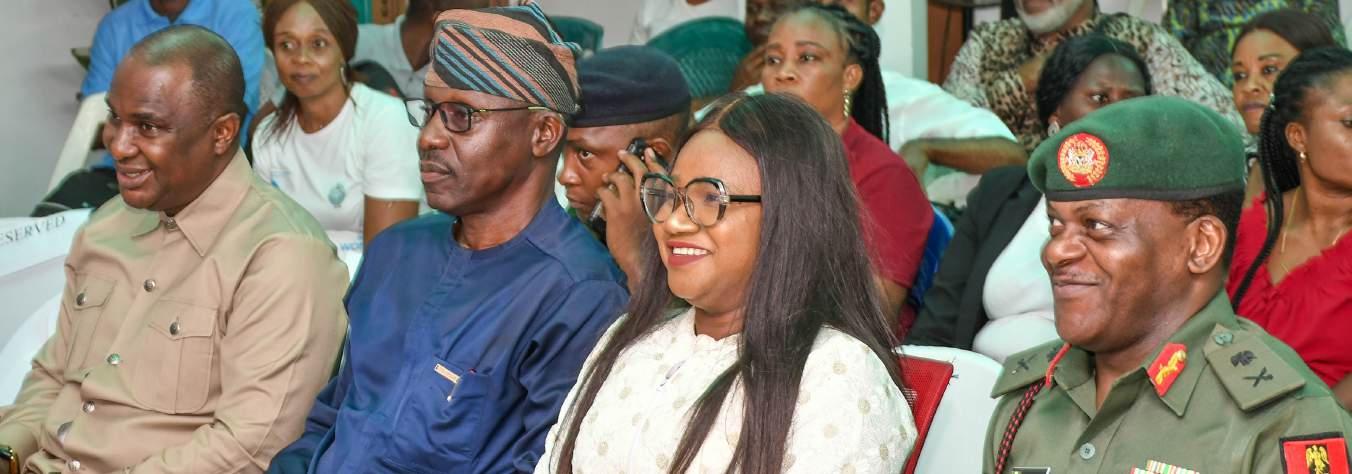
Sunday Aborisade in Abuja
Leader of the Senate, Senator Opeyemi Bamidele, yesterday, dismissed claims that the 2026 Electoral Act was designed to weaken opposition parties, saying its provisions were the outcome of broad-based stakeholders’ consensus
rather than legislative imposition.
Bamidele, a member of the Senate Committee on Electoral Matters, said the new electoral framework aligned with global best practices and was enacted in national interest, not for partisan advantage.
In an Easter message by his Directorate of
Media and Public Affairs, the senate leader urged political actors to abide by the rules collectively agreed upon, stressing that the time had come to strengthen democratic culture through compliance, not resistance.
Opposition parties, particularly the African Democratic Congress,
had alleged that certain provisions of the law— especially Sections 77 and 84—were inserted to frustrate their chances ahead of the 2027 general elections.
But Bamidele rejected the claims, insisting that every clause in the legislation emerged from consultations involving
political actors, civil society organisations and development partners.
According to him, the requirement for political parties to submit digital membership registers to the Independent National Electoral Commission was aimed at promoting transparency and preventing the hijack
more jobs, and better service will follow.”
In his remarks, Special Adviser to the President on Energy, Olu Verheijen, said the initiative went beyond debt settlement and was intended to rebuild confidence in the sector.
Verheijen added that the plan formed part of a broader reform agenda that included ongoing metering initiatives and implementation of servicebased tariffs aimed at aligning electricity pricing with quality of supply.
She stated that the government was also prioritising improved electricity access for businesses and industries, stressing that reliable power is critical to job creation and economic growth.
Verheijen explained, “This programme is not just about settling legacy debts. It is about restoring confidence across the power sector, ensuring gas suppliers are paid, power plants can keep running, and the system begins to work more reliably.
“It is part of a broader set of reforms already underway — including better metering and service-based tariffs that link what you pay to the quality of electricity you receive.
“The government is also prioritising power supply to businesses, industries, and small enterprises — because reliable electricity is critical to creating jobs, supporting livelihoods, and growing the economy.
“The goal is simple: more reliable power for homes, stronger support for businesses,
and a system that works better for all Nigerians."
With an Installed generation capacity officially put at about 13,000 megawatts (MW), Nigeria's actual available capacity typically fluctuates between 4,000 MW and 5,500 MW, depending on gas supply, grid stability, and plant conditions.
But in practice, Nigeria's average daily generation often hovers around 4,000 MW, for a country of over 200 million people. By comparison, South
Africa, with roughly a quarter of Nigeria’s population, regularly generates over 20,000 MW.
On a per capita basis, Nigeria produces roughly 20–25 watts per person, far below the global average, which exceeds 1,000 watts per person in industrialised economies.
Transmission remains a major bottleneck as the grid, managed by Transmission Company of Nigeria (TCN), has a wheeling capacity of about 8,000 MW, though it rarely sustains that level due to
to the point you made. It will provide new production from deep-water in the near term.
"Within months of the campaign starting, we'll be able to produce from this investment. The investment runs through almost all next year as a total campaign. It's worth about one billion dollars in total, and we have already committed around 30 per cent of that in the early works, the early long-lead equipment and in the foundational contracts.
"That's about the time a typical large investment would reach FID readiness. So, we'll cross that gate or that milestone very soon."
For Owowo, a major deepwater asset awaiting FID, Baxi said the total investment required for its development was between $7 billion and $8 billion.
"You should think about
Owowo at the seven to eightbillion-dollar range plus," he said. Baxi described Owowo as the tip of the spear and "the one that we are also maturing rapidly behind Usan infill as the lead investment".
Explaining the size of the Owowo asset, he said in a full development case, it would be 20 to 40 wells, more than the Erha and Bonga tiebacks, which are in the 10 to 15 wells range, respectively. According to him, those tiebacks are a single kilometre away while Owowo is 30 plus kilometres away. In terms of well counts, Baxi said Owowo will be at least twice as big as Bonga North, another large deep-water oil asset being operated by Shell Nigeria Petroleum Company Limited (SNEPCo), which is currently under development at an investment size of $5 billion.
The ExxonMobil chair explained, "Resource size, you can characterise Owowo as at least 50 per cent or more, larger than either the Erha North tieback or the Bonga North tieback to Bonga. It's a truly big field, but its geography is spread more than Erha or Bonga today are.
"So, these are some of the characteristics of complexity that I would share as ways that we can describe and help you understand the progression of the investments to date, the tiebacks that are occurring.
"And so, I come back to Usan at one billion dollars. Bonga North at five billion dollars. We're now in the eight plus range as a measure of the complexity and step up. So, the sense of urgency of timing to announce, I share that with you and with the stakeholders."
Although, he did not
specifically say when the FID on the Owowo development or Usan infill drilling programme will take place, Baxi said the maturity of all the thinking that had to occur prior to the declaration was in flight.
He stated, "And what I hope we'll be able to be more open about with stakeholders, like you and others, is when we can point to the formative announcements or formative agreements like long lead procurement, like establishing shore base capability to support that.
"These will be the visible early signals before FID, just like we did with Usan field. So, there's a lot that occurs today that are within the stakeholder groups enabling the presidential inspiration. Each of those will reach a milestone that will underpin more visible commitments.
"That's the journey we're on.
So, when we make an FID announcement, we do it with the partners clearly aligned with us, the stakeholders clearly aligned. It's a signal to go.
"We're not interested in making an announcement that looks like we want to go. That's not the ExxonMobil way. We want certainty, we'll work for certainty, and we'll commit to what we say we will do as operator and move to it.
"That's the reputation we want to continue to live by. It's clarity of our intent, and then we will do what we say.”
In five years, Baxi said ExxonMobil, through Esso, would be able to hit total production of 250,000bpd in Nigeria, up from the current 100,000bpd output, and also deliver 100 million standard cubic feet per day in gas production.
He explained that both the
of party structures by unregistered power brokers. He noted that party membership globally formed the foundation of democratic participation, adding that the digital register would ensure accountability and protect internal decision-making processes.
frequent system constraints and collapses. Nigeria has recorded multiple grid collapses annually, disrupting supply nationwide. Distribution is even weaker. Nigeria’s 11 distribution companies collect only about 60–70 per cent of billed revenue on average. Aggregate Technical, Commercial and Collection (ATC&C) losses remain high, often above 40 per cent in some networks. This means a significant portion of electricity supplied is either lost, stolen, or unpaid for.
infill drilling campaigns in Usan and Erha and the development of the bigger Owowo field will unlock a combined 160,000 barrels per day (bpd) in oil production and deliver about 100mmscf/d. He said the brownfield Usan and Erha will unlock additional 40,000bpd and 20,000bpd, respectively, while the greenfield Owowo project will deliver 100,000bpd of oil and 100mmscf/ of gas outputs.
Baxi said, "So, to your question if we can see a future of 250,000 or 200,000 barrels, yes, it is definitely a possibility as we put these investment pieces together.
"We are motivated to try and do more than that, actually. I mentioned Owowo project comes with an expectation of a gas pipeline that can unlock gas from Owowo and Usan to shore.
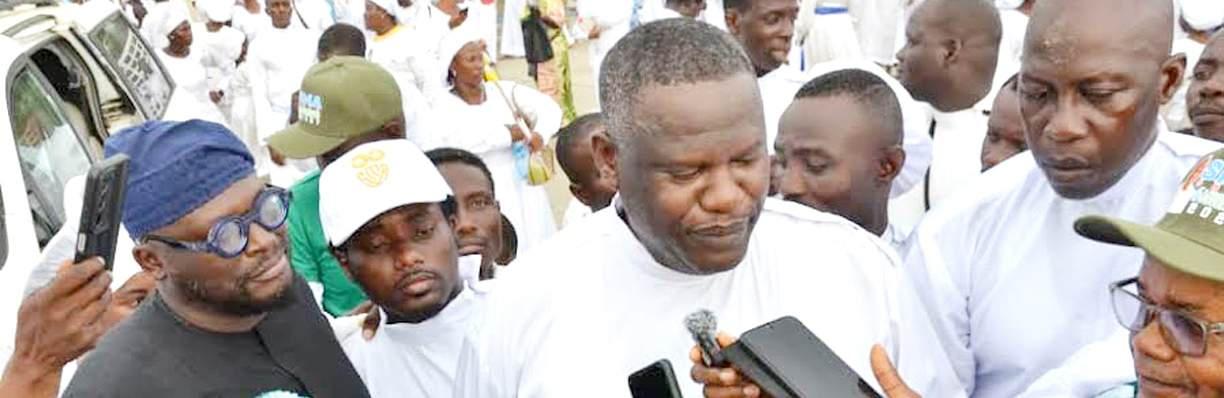
Plateau State Governor, Caleb
has unveiled plans to introduce emergency toll‑free
hotlines that would allow residents report suspicious activities and support rapid response to security threats across the state.
The governor made the announcement during an Easter service at St. Paul’s Anglican Church, Old Bukuru Park, in Jos North Local Government
Area.
He assured worshippers that his administration was intensifying efforts to protect lives and property amid recent
Gbenga Sodeinde in Ado Ekiti
Former Ekiti State Governor, Kayode Fayemi, and the state leadership of the All Progressives Congress (APC) have rejected what they described as “kangaroo endorsements” of aspirants ahead of the 2027 general election, warning party
members to disregard such claims.
Fayemi, who spoke on Saturday in Isan Ekiti while hosting party stakeholders from across the state, decried the activities of what he termed “a few opportunists” allegedly fueling division within the party through unauthorised endorsements.
In what appeared to be
a direct move to reassert internal party discipline, Fayemi emphasised that no aspirant should rely on backdoor endorsements, insisting instead on transparent and credible primary elections.
While acknowledging that consensus remained a legitimate option where mutually agreed upon by
all aspirants, he stressed that primaries were inevitable where such agreements failed.
“Any serious aspirant must be ready to test their popularity and acceptability before party members,” he said, urging those currently holding elective positions to account for their stewardship rather than depend on political patronage.
security concerns.
Mutfwang said the hotlines would create a direct communication link between citizens and security agencies, stressing that public cooperation remains essential in combating crime.
“The simple message is: see something, say something. We will be inaugurating hotlines in the coming days for citizens to share information, and we will respond decisively to all forms of criminality,” he stated.
The governor referenced the recent Palm Sunday attack in Angwan Rukuba, acknowledging the fear and trauma experienced by residents.
He, however, maintained that the government would
not be deterred in its pursuit of peace.
“We will not be intimidated or cowed by fear. What the enemy intended for evil, God is turning around for His glory. Plateau will continue to rise higher and higher,” he said.
Mutfwang noted that the past week had been particularly challenging but declared that his administration was scaling up security interventions across both urban and rural communities.
“We are not resting on our oars. While we have taken significant steps to prevent further attacks, we will continue to strengthen our efforts to ensure that both our cities and villages are secure,” he said.
"Paragraph 8 of the minutes of the NEC meeting at folio 83 states that, ‘the report of the NEC Mandated NWC was read, and the NEC ratified the resolutions adopted at the NWC meeting held on July 2, 2025, which included the decision to constitute a caretaker Committee to manage the party’s affairs considering the coalition process and internal restructuring’
"It is worth noting that for any action or activity to be ratified, it would have taken place prior to the date of the ratification. There is no record of the appointment of the caretaker committee of the African Democratic Party with the commission that requires ratification has claimed by the executives of the party.”
The party, again, at paragraph 12 of the minutes of the NEC meeting stated that following the ratification of the NWC resolutions, NEC approved the appointment of the caretaker committee to steer the party for a period not exceeding 12 months and listed the composition to include Senator David Mark as Caretaker National chairman,
Ogbeni Rauf Aregbesola as Caretaker National Secretary, and Bolaji Abdullahi as Caretaker National Publicity Secretary.
"Article 19(12) of the ADC Constitution provides for the powers of the National Working Committee to include performing all the functions of the National Executive Committee pending the next meeting of the National Executive Committee for ratification," Arabs added.
He said the chairman, in his response, wrote: "noted".
INEC had last week, citing the ruling of the Abuja division of the Court of Appeal, de recognised the David Mark led leadership of ADC.
The decision appeared to put the chances of the party in the 2027 general election in jeopardy, following their planned National Convention slated for April 14.
The party, however, vowed to proceed with the convention, arguing that INEC's role at such convention is merely supervisory.
ADC added that the mandatory 21 days’ notice had already been communicated
to the electoral umpire.
Nevertheless, former Deputy National Chairman of the ADC, Nafiu Bala Gombe, is currently in court challenging the Mark leadership.
Gombe specifically asked the court to declare him the authentic chairman of the party, alleging unlawful takeover by the Mark led leadership.
According to him, the resignation of Nwosu and other members of the former executive automatically made him the leader of the party, having not resigned with the others.
ADC announced plans to institute legal action against INEC over what it described as a “mischievous” interpretation of a recent ruling by the Court of Appeal regarding the party’s leadership.
Addressing journalists on behalf of the Katsina State chapter of ADC, Sunday
evening, Lawal Tukur Batagarawa, said the national leadership, in consultation with its legal team, had concluded plans to challenge INEC’s action in a court of competent jurisdiction.
Tukur Batagarawa explained that INEC’s decision to remove the ADC leadership from its official portal was based on a flawed understanding of the appellate court’s directive to maintain the “status quo” pending further proceedings.
Describing the move as “mischievous” and a misinterpretation of the appellate court ruling, Tukur Batagarawa said the judgement did not warrant the suspension or removal of its leadership structure from the commission’s portal.
According to him, INEC wrongly interpreted the directive to maintain the status quo mean a suspension of the entire ADC national leadership structure.
He stated, “The INEC deliberately, consciously, decided to create mischief and doubt in the minds of people, interpreted the status quo to mean suspending the entire leadership structure of the
African Democratic Congress.
This is sheer mischief.
“The national headquarters of our party, in consultation with our legal team, deliberated extensively on this matter and came to the conclusion that we are going to challenge this interpretation of INEC in the court of competent jurisdiction.
We are sure the interpretation of INEC was mischievous and wrong.”
Determined to deal with the leadership crisis in ADC and avoid a repeat of what happened to Peoples Democratic Party (PDP) with its Ibadan national convention, opposition leaders are considering alternative political platforms ahead of the 2027 elections.
THISDAY gathered that the opposition leadership was weighing options with political parties with stable political leadership.
One of the sources said they were considering the options of contesting under Action Peoples Party (APP) or National Democratic Congress (NDC) if
the legal issues affecting ADC were not resolved.
According to the sources, the crisis within ADC, compounded by the refusal of INEC to recognise the party’s leadership, could prevent the party from fielding candidates in the 2027 elections.
They said opposition leaders would meet in Abuja after the Easter break to deliberate on a strategy and decide on the way forward.
Sources alleged that the ongoing legal battle surrounding ADC could extend beyond the party primaries and affect the submission of its register of members.
According to them, May 8 is the expected deadline for political parties to submit their registers to INEC ahead of the electoral cycle.
A source said, “If this crisis continues and members contest within ADC, and the party loses recognition, they cannot simply move to another party.
“With INEC refusing to recognise the current leadership, any convention or congress conducted under the disputed administration would be invalid.”
Islamic Revolutionary Guards Corp [IRGC] and has lined up military assets all along the long coastline leading up to the 2027 elections.
IRGC is said to have planted artillery pieces deep inside caves and mountains overlooking the Strait of Hormuz and the entire Persian Gulf. It has also deployed fast attack boats, which will pursue and attack any ship that sails through the Strait without permission. In addition, IRGC has planted mines, some of them floating and some of them on the ocean floor, to blow up any ship that tries to sail through. Finally, from a distance all over Iran’s rugged mountainous terrain, missiles and drones are primed to sprout out from caves and attack oil tankers in the Strait. No wonder that right now, 2,000 oil tankers and other ships are stranded in Saudi, Iraqi, Qatari, Bahraini and Emirati ports, just as Nigeria’s most potent opposition parties are stranded just off INEC’s website.
The allegation by some mischievous Nigerians is that the courts are APC’s drones. Since last year, High, Appeal and Supreme Courts have handed down rulings that have created havoc in all the major opposition parties, ranging from who are the authentic local government chairmen in Osun, to who are the legitimate members of Rivers State Assembly, to whether Labour Party chairman Julius Abure’s tenure has expired, to whether PDP’s Ibadan convention was authentic, or whether Nyesom Wike’s scanty Abuja show was the real thing. And lately, whether Rafi’u Bala should single handedly replace the David Mark exco at the head of the increasingly potent ADC, despite papers flying around showing that he resigned last
year along with all other ADC exco members in order to allow the politically more potent new comers to take over the leadership.
According to these mischievous Nigerians, the anti-corruption agencies EFCC, ICPC and Court of Conduct Bureau are APC’s equivalent of Iran’s Shahed missiles that have rained havoc on Tel Aviv, Haifa and even Dimona, the center of Israel’s open-secret nuclear industry. With the alleged Russian-aided precision of the Shahed drone, the anti-corruption agencies have rained charges on top opposition figures Nasiru el-Rufa’i and Abubakar Malami, and have frightened the chairman of PDP Governors’ Forum by apprehending his Finance Commissioner and his Accountant General.
I personally do not subscribe to the view of cynics, who are asking why the anti-corruption agencies appear to be asleep with the alleged trillion-naira case of former PDP vice presidential candidate Ifeanyi Okowa once he dragged his successor Sheriff Oborevwori and Delta’s entire PDP caucus into APC. Nor do I believe cynics’ allegation that EFCC’s once relentless, hide and seek pursuit of former Kogi State governor Yahaya Bello to answer a 100 billion naira alleged money laundering case has gone cold even though he is fully visible as a member of APC’s Presidential Reconciliation Committee. I do not support these insinuations; I am sure that EFCC and the courts have good reasons to keep the files under wraps.
Even the people who are alleging that DSS is APC’s equivalent of Iranian fast attack boats, I do not agree. The secret state police said it found weapons in former Attorney General Malami’s house and also said it found evidence
that he is a terrorist sponsor. Malami’s claim that only one licensed gun was found in his associate’s house should not be believed. I am sure when the matter finally reaches the courts, DSS would be able to show transfers of money from Malami’s personal accounts directly into Boko Haram, ISWAP and bandits’ treasury, which will silence the cynics.
Of all the false allegations that cynics are making, the one I find most unbelievable is the allegation that INEC is the electoral Strait of Hormuz in the run up to 2027. The fact that it hurriedly ignored the PDP Turaki faction’s appeal to the Supreme Court, urgently observed the Wike faction’s Abuja “convention” and with great speed pasted the people elected at that convention on its website, does not support the allegation that INEC is an APC Strait of Hormuz. I know that these cynics are making other allegations, including that before PDP, Labour Party was also held up at INEC’s electoral chokepoint. Sometime last year, Elu Pi held a major meeting in Awka and installed former Finance Minister Nenadi Usman as its caretaker chairperson, and a court ruled that Julius Abure’s tenure as chairman had expired, but Elu Pi still got held up like an oil tanker at a Qatari port.
Late last week, there was what critics thought was a bombshell when INEC announced that it was removing the David Mark-led ADC leadership from its website, which it said was because a court ordered preservation of the status quo ante bellum. I do not agree with cynics that the timing of INEC’s action was suspicious because big political figures such as Rabi’u Musa Kwankwaso, Nasiru Gawuna
diversification. How does Nigeria reduce its dependence on oil? How does it earn foreign exchange from sectors not hostage to a commodity price set in Rotterdam? How does it build export industries that create jobs and generate fiscal revenue that compounds over time?
Medicinal cannabis is interesting because it disrupts that calculus in an unusual way. Unlike bulk agricultural commodities, where Nigeria competes against countries with infrastructure and logistics advantages we cannot easily close, pharmaceutical-grade cannabis commands margins that reward quality and compliance over sheer volume. A kilogram of CBD extract is not priced like a kilogram of cocoa. The value addition happens at the processing stage — and processing is something we can, with the right policy, do here.
To understand where cannabis sits relative to markets Nigeria already participates in — or has participated in and lost ground — consider the table below.
The table makes a point that I find more useful than any statistic in isolation. Nigeria is already participating in most of these markets. The pattern across every row except cannabis is identical: raw material out, finished value somewhere else. Cocoa grows in Ondo and Ekiti; the chocolate margin ends up in Switzerland. Oil palm is indigenous to West Africa; Indonesia and Malaysia took the industry and built it into a $70 billion market while Nigeria became a net importer of its own native crop.
Medicinal cannabis is the one market in this table where Nigeria could theoretically enter at processing and pharmaceutical level from the start, precisely because no country has yet established an insurmountable lead on the African continent. That window will not stay open indefinitely.
There is also a tax architecture argument that rarely gets made. A licensed medicinal cannabis industry would, if structured correctly, be unusually taxable. The industry has natural chokepoints — seed supply, cultivation licensing, processing, export certification, pharmaceutical approval — at which revenue can be collected cleanly. The regulatory requirements for pharmaceutical products demand documentation. The taxman’s job becomes significantly easier when the industry cannot legally operate without paperwork. Canada’s Cannabis Act generated C$580 million in federal and provincial tax
revenue in its first full year of operation. That came from an industry that had previously generated no fiscal revenue at all.
I want to name the African comparators specifically, because the instinct in Nigerian policy circles is to look to Europe or North America and miss what is happening closer to home.
Lesotho issued its first medicinal cannabis cultivation licence in 2017. Zimbabwe licensed production in 2018. Zambia followed in 2019. Malawi — one of Africa’s poorest economies, historically dependent on tobacco — legalised medicinal and industrial cannabis in 2020 as an explicit crop diversification and export strategy. Rwanda established a regulatory framework in 2021. Morocco, which legalised industrial and medicinal cultivation the same year, is now positioning itself as a primary supplier
to the European market.
None of these countries has the agricultural scale, the demographic base, the industrial capacity, or the pharmaceutical infrastructure that Nigeria possesses. They moved anyway, because the economics were obvious. Nigeria watched.
None of these countries has the agricultural scale, the demographic base, or the pharmaceutical infrastructure that Nigeria possesses. They moved anyway, because the economics were obvious. Nigeria watched.
The Objections, Briefly
I am not dismissing the counterarguments. The gateway concern — that any cannabis legalisation signals social permissiveness — is not irrational in a country where the NDLEA has spent years containing a significant drug abuse problem. But it is an argument about implementation and communication, not an argument against a medicinal framework.
framework. An exis�ng illegal cul�va�on base generates no tax, no forex, no formal employment.
4th largest producer globally. Exports raw beans. Captures none of the chocolate margin.
Same bean. Eight �mes the market value. Nigeria is at the botom of the chain.
Once the world’s largest producer. Now a net importer. A cau�onary tale about squandered advantage.
Negligible producer. Largely absent from a market this
Sources: Grand View Research; IMARC Group; Data Bridge Market Research; Precedence Research; Polaris Market Research. Figures are approximate and reflect mid-range estimates across multiple research providers. Projections to 2030–35 reflect consensus CAGR applied to current values.
and possibly Bala Mohammed are flocking to the party. I agree with APC’s spokesmen that the ruling party has nothing to fear from the opposition, since it controls the Presidency, National Assembly, the liquid Federal Treasury, all the security agencies, thirty state governments and, allegedly, all anti-corruption agencies and all the courts. I do not agree with this baseless allegation.
Even the skeptics’ allegation that INEC acted as an Iranian-style floating mine and refused to register ADA despite its fulfilling all conditions for registration, but that it has several werewolf parties such as Boot and Youth on its register, I do not believe it. I think General Obasanjo wrote somewhere that 1970s military rulers were worried that if FEDECO did not register PRP, a million voters in Kano could be disenfranchised, just as soldiers led by General Abdulsalami prodded INEC in 1999 to register AD. One top cynic even alleged last week that a top INEC official wrote a post-dated resignation letter before he was appointed. I am sure that Nigerians heard the last of post-dated resignation letters in 2003, when Dr. Chris Ngige was said to have handed one over to godfather Chris Ubah at the Okija Shrine. No one in Nigeria will ever write such a letter again. Some people allege that INEC’s plan to revalidate all voter’s cards is like erecting a Nigeria Police checkpoint within the Strait of Hormuz. I don’t agree. Only 26.72% of Nigerian voters voted in 2023. Even if you refuse to revalidate your voter’s card and you join the sit at homes, results will still be declared.
Regulation runs in the opposite direction from permissiveness: it moves supply from uncontrolled black markets, where product quality is unknown, into licensed supply chains where formulations are controlled and use is medically supervised. The religious and cultural sensitivities are real and deserve respect; the policy answer is a framework that is visibly and credibly pharmaceutical, in which the route to a medicinal cannabis product runs through a doctor’s prescription and a licensed pharmacy. Germany’s model, which explicitly separates pharmaceutical cannabis from social use legislation, is one template. Others exist. The enforcement capacity objection is perhaps the most pointed. If Nigeria cannot currently enforce prohibition, how will it enforce a licensing regime? The answer is that prohibition without enforcement has already produced an outcome: a large, unregulated industry operating entirely outside state visibility. A licensing regime does not need to be perfectly enforced to be an improvement on that baseline.
The Cost of Watching
In finance, inaction has a cost. It does not appear on the ledger the way a bad investment does, which makes it easy to overlook. But opportunity cost is as real as any other kind. Every year Nigeria does not develop a medicinal cannabis framework, other countries are building the supply chains, establishing regulatory recognition, signing trade agreements, and developing human capital that will define this industry’s structure for the next two decades. The relationships being built now between Moroccan producers and European distributors, between Malawian cultivators and pharmaceutical processors, between Lesotho and the Swiss pharmaceutical supply chain — these are not easily displaced. Nigeria does not need to be first. It is too late for that. But it needs to move before the market structures are so firmly set that entering them requires displacing incumbents rather than simply joining a growing industry.
The window is still open. It is not, however, indefinitely open.
•Kemi Adeosun is a former Minister of Finance of the Federal Republic of Nigeria and former Commissioner for Finance of Ogun State. She is the founder of Nidacity.com. She writes from Lagos.
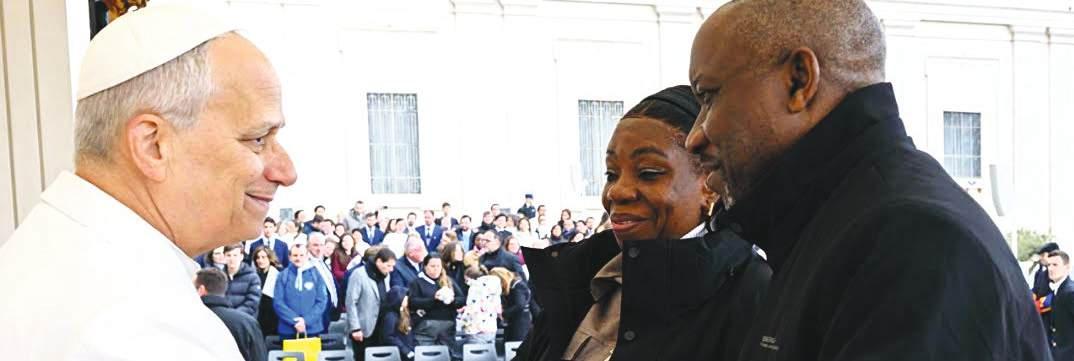
L-R: Catholic Pontiff, His Holiness, Pope Leo xIV; Wife of the minister of State Petroleum Resources (Gas), Lady Esitmbom Ekpo, and the minister, dr. Ekperikpe Ekpo, having an audience with the Holy Father at the Vatican City in Rome... recently
John Shiklam in Kaduna and Wole Ayodele in Jalingo
The Nigerian Army has thwarted an attack by terrorists on Ariko village in Kachia Local Government Area of Kaduna State, securing the release of 31 church worshippers abducted during Easter service.
The assailants, were said to have stormed the community, targeted three churches in a coordinated assault that disrupted religious activities and led to multiple casualties. Five people were said to have been killed during the incident.
Confirming the development, the
Segun James
A governorship hopeful in Lagos state on the platform of the ruling All Progressives Congress (APC), Dr. Samuel Mawuyon Ajose, has said that President Bola Tinubu’s position in the forthcoming 2027 general election is unassailable.
He assured the people that Lagos is going to give the president a bloc votes in the election as the most populous state in the federation, there’s no cause for alarm on the presidential election.
He said the highest number of votes would come from members of the Celestial Church of Christ Worldwide
(CCCW) in Lagos State.
Dr. Ajose gave this assurance during the Special Easter Service organised by the CCCW held at the Headquarters in Makoko area of the state.
He expressed delight with the massive turn out of the faithful at the special service adding what the church can offer the ruling party in terms of votes at the poll cannot be ignored.
Dr. Ajose while answering questions from newsmen shortly after the service disclosed that the Church offered prayers for President Tinubu, economic posterity and continued peaceful coexistence in the country.
Raheem Akingbolu
Pepsodent, a leading global toothpaste brand, has officially launched its 2026 World Oral Health Day (WOHD) campaign, themed “Do The 2,” as part of efforts to promote oral hygiene habits among Nigerians.
The “Do The 2” campaign was launched at a press conference held recently at Unilever’s head office in Lagos, and organised in collaboration with the Nigerian Dental Association (NDA).
The campaign kicked off on March 16 and ran through Saturday, March 21, 2026, featuring school engagement programmes, public activations in high-traffic areas, and dental camps. The campaign will run in 17 key states across the country, with a strategic focus on Lagos, Abuja, Port Harcourt, and Enugu, and the aim of reaching 50 million Nigerians. Speaking at the press briefing, the Brand Manager, Pepsodent, Lauretta Amie, noted that the brand aims to instill lifelong oral health habits in children and adults alike by combining awareness, education, and engagement activities in schools and communities.
Nigerian Army Headquarters disclosed in a statement posted on its verified X handle that
troops responded swiftly following a distress call from the area.
“The swift response
of the troops followed a distress call reporting the abduction of worshippers during
an Easter service at an ECWA Church in Ariko Village,” the statement reads.
Bassey Inyang in Calabar
The Nigerian Air Force (NAF), under the Air Component of Joint Task Force North-East, Operation Hadin Kai, has eliminated scores of terrorist fighters and commanders during a precision air interdiction mission at Kangarwa in the Northern Tumbuns.
He stressed that the
strike, carried out in April, followed credible intelligence and was enforced by Intelligence, Surveillance, and Reconnaissance missions.
This, he said, confirmed the massing of terrorists and sustained hostile activities within the enclave.
In a statement, the Director of Public Relations and Information, NAF, Air Commodore Ehimen
Ejodame, said the operation underscores the force’s sustained offensive campaign aimed at dismantling terrorist strongholds and restricting insurgents’ freedom of action across the theatre.
During the mission, several terrorists were observed moving around structures and concealed positions within the settlement.
Following identification and target confirmation, NAF air assets carried out successive strike passes, delivering accurate fire on designated targets.
He revealed that the bombardment destroyed key structures, logistics hubs, and neutralised scores of fighters, significantly degrading the enclave and diminishing its operational effectiveness.
Blessing Ibunge in Port Harcourt
A chieftain of the All Progressives Congress (APC) in Rivers State, Princewill Dike, has said that no amount of propaganda against President Bola Tinubu will stop his re-election in the 2027 general election.
Dike, a Port Harcourtbased legal practitioner, stated this in Port Harcourt, while reacting to a statement credited to former Senate President, David Mark, after a court ordered the derecognition of the leadership of the African Democratic Congress (ADC) under him.
According to him, the
former Senate president had, in a press conference statement, read that the court order was an “attack on democracy” by the President Tinubu-led administration.
Mark was quoted by Dike in the statement as saying: “But, we knew all along that Nafiu Bala and his lawyers were
not acting on their own volition. They had become willing tools in the hands of a ruling party that had lost all support and goodwill of the Nigerian people; a government that had become desperate to cling on to power by all means,s even if it meant throwing the country into an avoidable crisis.”
Kemi Olaitan in Ibadan
A health awareness mobilisation group, Campaign For Better Public Health (CBPH), has called on the Oyo State Ministry of Education and the National Board of Technical Education (NBTE) to urgently launch investigation into the proliferation of illegal
colleges of health in the state.
The body claimed that apart from the Oyo State College of Health Science and Technology, Eleyele, in Ibadan and Iseyin College of Science and Health Technology, no other institution is on the approved list of NBTE till date.
The group, in a statement made available in Ibadan
by its Director of Public Communication, Anthony Ojo, said it was necessary to call the attention of Oyo State Government, NBTE, parents and guardians to the spread of unregistered health institutions across the state, so as to prevent innocent students fall prey for those behind the establishment
The Broadcasting Organisations of Nigeria (BON) has announced plans to hold the second edition of its Nigeria Broadcasting Awards (TNBA) on Wednesday, April 8, 2026.
BON, in a statement issued in Abuja, said the decision to organise the long-awaited second edition of the awards, aimed at honouring notable individuals and organisations
in the industry, followed “several months of painstaking process and preparations.”
The organisation said the event would be held at the NAF Conference Centre, Kado, Abuja, between 6.00 p.m. and 9.00 p.m.
According to the statement entitled “BON set to celebrate excellence in broadcast media,” the TNBA was endorsed by the 74th General Assembly of BON
of the schools. Ojo went further to name the illegal schools of health to include: Ajorosun College of Health, Ibadan; Impressive College of Nursing, Okeho, Kajola Local Government; Wecare College of Health, Ibadan; Adelakun College of Health Technology, Ibadan and Covenant College of Health, Ogbomoso.
held in Kano in 2021.
The statement partly read: “The primary objective of the awards is to celebrate excellence and promote quality media practice in the broadcast industry.
“This year’s edition, which is the second in the series, began with a call for the submission of entries, which generated a total of 204 entries covering broadcast performance in 2024.
“The Awards Selection Committee was led by a former Director-General(DG) of the National Broadcasting Commission, Dr Danladi Bako, with other members drawn from key industry players such as the Advertising Regulatory Council of Nigeria (ARCON), the National Broadcasting Commission and selected veteran broadcasters, among others.
Duro Ikhazuagbe
Nigerian international, Kelechi Iheanacho, slammed in a dramatic late winner as Celtic beat Dundee 2-1 to move within three points of the Scottish Premiership leaders Hearts.
After Hearts drew at Livingston earlier yesterday, Celtic’s win narrowed the gap to the Tynecastle club, while they trail Rangers in second by two points.
The strike was Iheanacho’s fourth goal of the season and his first since early October,
Speaking to Celtic TV after the game, the Nigerian international said: “It feels good to help the team to get the win today. We really showed character and we really worked hard to get the win.
“I think, especially in the first-half, we blew them away and had a few chances, but unfortunately it didn’t click.
“In the second-half they came back and scored the penalty, but at the end we
RESULTS NPFL
Wikki 2-2 Enyimba
Nasarawa 0-1 Khalifat
Kano 4-0 B’Insurance
Kwara 3-0 El-kanemi
Rangers 0-0 Barau
Katsina 1-0 Tornadoes
W’Wolves 2-0 Rivers Utd
Remo Stars 1-0 Shooting
Monday (06/04/26)
Plateau Utd v Ikorodu
Abia War v Bayelsa
got the points which is massive.
“I’ve been out for a while so it feels good to be back and to help the team get the win, so I’m happy,” concludes the The 29-year-old Nigerian striker who had endured an injury-hit campaign.
Yang Hyun-Jun opened the scoring for Martin O’Neill’s side inside eight minutes by getting a slight touch on Benjamin Nygren’s close-range shot and they should have been further in front before half-time, with striker Tomas Cvancara missing several gilt-edged chances.
And their wastefulness came back to bite them after the break.
Video assistant referee (VAR) Matthew MacDermid spotted a handball by full-back Colby Donovan and referee Steven McLean pointed to the spot after going to the pitchside monitor.
Dundee captain Simon Murray calmly converted to level the scores and Celtic took their time to wrestle back their momentum.
However, with time running out, substitute Iheanacho lashed a left-footed shot past stricken home goalkeeper Jon McCracken to secure all three points.
Dundee were then reduced to 10 men as centre-back Ryan Astley was dismissed for taking out Yang.
Dundee remain five points clear of Kilmarnock in the relegation play-off spot.
Utd Stun Strong Dove as Nat Idowu U14 League Nears Business End
Duro Ikhazuagbe
Ajegunle United Sporting Club continued their impressive run in the Nathaniel IdowuAjegunle Under-14 Football League, climbing to fourth place on the log after edging Strong Dove Football Academy 1-0.
The decisive moment came in the fifth minute when John Eshemughe struck, securing the team’s third consecutive clean sheet and extending their unbeaten streak.
Their remarkable rise from eighth to fourth in just three weeks has been nothing short of spectacular, injecting fresh excitement into the league and leaving fans eager to see how far their momentum can carry them.
Elsewhere, the marquee clash between Fortune Football Academy and Pure Talents Football Academy lived up

Wilder Tells Anthony Joshua: “Let’s Do it Again!
Deontay Wilder has raised the possibility of a fight with Anthony Joshua, telling the Briton “let’s do it” following the American’s points victory over Derek Chisora. Two-time world heavyweight champion Joshua was ringside at London’s O2 Arena on Saturday to support his friend Chisora for what is expected to have been the beaten fighter’s final professional bout.
Joshua has largely remained out of the spotlight since he was a passenger in a car crash that killed two of his friends in Nigeria
on 29 December.
The 36-year-old sustained minor injuries in the crash that killed Sina Ghami and Latif ‘Latz’ Ayodele.
He last fought on 19 December, when he stopped YouTuberturned-boxer Jake Paul in the sixth round.
After that victory, which improved his record to 29 wins and four defeats, Joshua said he was ready to face long-term rival Tyson Fury next.
Fury ended his latest spell of retirement in January when he
announced he would be returning to fight Arslanbek Makhmudov in the UK on 11 April.
Joshua’s promoter Eddie Hearn told DAZN pre-fight: “To be honest, we’ve been very focused about making the Tyson Fury fight. But AJ did mention to me yesterday that, he’s to support Derek, but if Deontay Wilder wins in style tonight, it opens a big fight with Anthony Joshua as well.”
to expectations, ending in a thrilling 3-3 draw.
Fortune’s goals came from Akinola Olajide (26th min), Lot Heritage (31st min), and Adetola Faizor (40th min), while Pure Talents responded through Adeleke Igbowu (11th min), Alabi Khalid (12th min), and Ajaloleru Yesir (45th min).
Michael May FA recorded their first win of the season with a 3-0 victory over Divinely Blessed Football Academy, offering hope of a turnaround, while Young 11 Football Academy also impressed with a 3-0 triumph over Coal City Football Academy.
At the top of the standings, Fortune FA remain leaders with 20 points, closely followed by Strong Dove FA on 18 and Pure Talents FA on 17. Ajegunle United now sit in fourth with 12 points, edging Bright Future FA on goal difference.
Some of Nigeria’s top sports personalities have poured encomiums on the well-attended 6th Sportsville Award which took place in Lagos at the weekend.
The dignitaries who were on ground to witness the ceremony described the award as masterpiece in planning and execution.
Former WAFU President and CAF Executive Member, Dr Amos Adamu, described the event as world-class.
He said, “honestly, I haven’t seen this world-class award ceremony in recent times.
“I am honestly excited with what Frank Ilaboya and his team put together, great show it was and I say big kudos.”
In his own assessment, Dr Larry Izamoje, who chaired the ceremony said he was proud of the show. “I salute the outstanding performance of your team, it shows proper planning on your part. Please, keep it up,” the Chairman of Brila Group added.
For the NOC Scribe, Tunde Popoola, “Sportsville Award is becoming bigger and better year after year. I am happy with the progress you guys are making. I can see a lot of improvement and technical
quality in your outing and this is quite commendable. I am happy I didn’t miss this gathering of the finest minds in Nigerian sports.”
The General Manager of SuperSports Nigeria, High Chief
“I’m ready for whoever, long as these guys are in the heavyweight division, I am here.
“You can call me Mr Clean, because I want to clean up the whole division. The division is nothing without Deontay Wilder.”
On Saturday, Wilder, 40, walked past Joshua, fist-bumped him and said “let’s do it”, before he could be heard saying “He’s scared” as he walked away. Later, former world champion Wilder, who also said he may have a small fracture in his hand, addressed the exchange, saying: “It wasn’t a few words, I dapped it up with him and I said: ‘Now let’s get it on.’
Felix Awogu, has this to say. “This is a very commendable outing by all standards. The choice of awardees and the award presentation ceremony are quite commendable. Weldone to you and your team.”
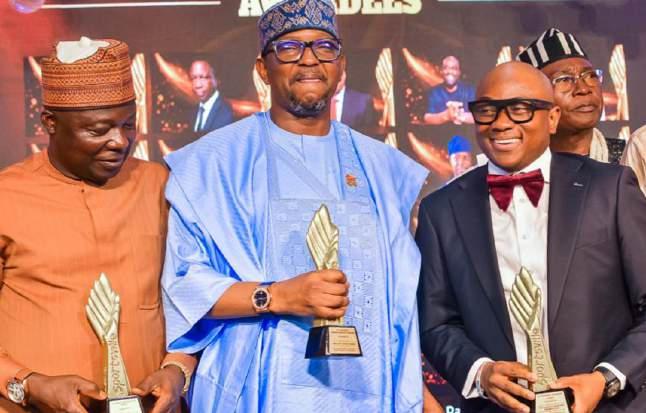
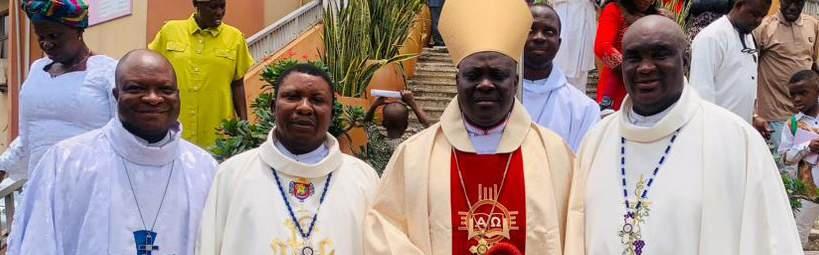
Imagine the political space in Nigeria to be the Persian Gulf, 989 kilometres long and 336 kms at its widest point. Imagine the 19 registered political parties in Nigeria to be akin to the 2,000 ships, with 20,000 sailors on board, that have loaded up crude oil and liquefied natural gas from Iraqi, Qatari, Bahraini, Saudi Arabian and Emirati ports as well as Iran’s Kharg island but are currently stranded in the Persian Gulf. Much like the super tankers intend to sail into the Gulf of Oman, onto the Arabian Sea and on to various destinations around the world, our political parties intend to sail through elections into State Assemblies, House of Representatives, Senate, Government Houses and onwards to the Presidency, but most of them are currently held up in our political Persian Gulf.
Amupitan
The “cargo” our political parties are carrying, which is equivalent to crude oil, liquefied natural
gas, diesel and aviation fuel, is made up of ambitious political aspirants, each one of them backed by an army of men and women who want to ride on their backs to become legislative aides, special assistants, special advisers, commissioners and ministers. Like the cargo of super oil tankers, this Nigerian political cargo is highly combustible.
For most of the Nigerian political parties trying to sail out to the political Promised Land, they face a problem very similar to the one faced by oil tankers waiting in the Persian Gulf: they have to pass through the Strait of Hormuz. Right now, this narrow strait, 167 kms long, 97km at its widest point and only 39 kms wide at its narrowest point, is the most prized piece of waterfront estate in the whole world. All of it is within the range of Iranian missiles, drones, attack boats and mines.
US President Donald Trump loves waterfront real estate; last year, he proposed to build a beautiful waterfront estate in the Gaza Strip after Israel would have expelled all its three million Palestinian inhabitants. Here now is a piece of waterfront estate much more valuable than Gaza, and Mr. Trump is desperate to open it. To get to their destination of contesting elections, our political parties must pass through INEC. While the Strait of Hormuz is described as the world’s most critical maritime chokepoint, some wags are describing INEC as Nigerian politics’ most critical chokepoint through which all political parties must pass on their way to the 2027 elections. Why because, some people are saying that the ruling All Progressives Congress [APC] has copied from a secret manual of Iran’s

Ihave never taken drugs. Not once. Not even the ceremonial puff at a university party that everyone seems to have in their origin story. I say this not as a boast — it is simply a fact, and a useful one for what follows. I have no personal stake in this argument. No dog in this fight. No suppressed nostalgia for Amsterdam cafés to colour my judgment. What I do have is a habit, acquired over decades in finance and public policy, of noticing when a market is growing at double digits and the country I care most about has no coherent plan to participate in it.
The global medicinal cannabis market was valued at approximately $20–25 billion in 2023. It is growing at between 20 and 25 percent annually. By the end of this decade, most projections place it in the $60–90 billion
range, depending on regulatory expansion and market definitions. These are not speculative figures from a niche publication — they reflect estimates across major market research firms that serious investors and trade ministries rely upon. The countries that moved early — Canada, Germany, Thailand, Morocco, and a clutch of smaller African nations — are building industries, attracting investment, and booking tax revenue. Even Britain where green houses are needed to cultivate have issued guidelines. Nigeria, which has some of the most favourable growing conditions on earth for the crop in question, has no policy framework for any of this.
That is the puzzle I want to sit with today.
We Are Already in the Business Nigeria’s comparative advantage in agriculture
is frequently invoked and rarely capitalised upon. We have 84 million hectares of arable land, only a fraction under cultivation. We have a climate ranging from the humid tropics of the south to the drier savanna of the north. We have a young, large, and chronically underemployed workforce. And we have a crop that has been growing here, without permission and without policy, for a very long time. Cannabis sativa is not a foreign introduction to Nigeria’s agricultural landscape. It has been cultivated illegally — primarily in Ondo, Edo, Delta, and parts of the South-South — for decades. The NDLEA’s annual seizure statistics are, in a perverse way, a testament to the scale of production. Nigeria is already growing cannabis. The question is not whether the crop can be produced here — it plainly can. The
question is whether the state captures any of the value, or whether that value continues to flow entirely through informal channels that pay no tax, create no regulated employment, and generate no foreign exchange. Nigeria is already growing cannabis. The question is not whether the crop can be produced here — it plainly can. The question is whether the state captures any of the value, or whether that value flows through channels that pay no tax and generate no foreign exchange.
The Foreign Exchange Case
When I served as Minister of Finance, the conversation I had most often — with investors, and international institutions — was about