JOURNAL SPECIAL

Streamline your property sales process
Simplifying o昀er management for agents and giving buyers a secure and transparent tool to place o昀ers on their dream home.
Book a 20 minutes MyHome O昀ers Demo with our team today by emailing property@myhome.ie






Tel:
Email:
Log your CPD
Reading the Surveyors Journal counts towards your informal


BRINGING CLARITY TO COMPLEXITY
THE SCSI’S ‘REAL COSTS OF NEW APARTMENT DELIVERY 2025’ REPORT IS YET ANOTHER EXAMPLE OF OUR EVIDENCE-BASED CONTRIBUTION TO CRUCIAL NATIONAL DEBATES.
Ihope you enjoy this special edition of the Surveyors Journal, which focuses on the issues raised in the SCSI’s ‘Real Costs of New Apartment Delivery 2025’ report.
Ireland’s housing supply and affordability remain the defining public challenge of our time, and this latest edition of the report offers a deep dive into the barriers and successes.
Recent data signal progress, with completions rising and some policy interventions beginning to take hold. However, the core issue persists: we must deliver more homes, more efficiently, and with greater longterm ambition.
Therefore, we should all take notice of the report’s findings, which indicate that Ireland is transitioning towards a more standardised, efficient apartment typology, with design evolution now shaping cost structures just as much as inflationary pressures. This shift reflects changes in density delivery, the growing role of cost rental, and the industry’s move towards larger, more efficient schemes. In many respects, these are positive developments, signalling a maturing and professionalising sector.
As surveyors, we will use our understanding of these changes to inform clients and policymakers.
From apartment viability to agricultural land trends, the SCSI’s evidence-based insights are shaping national debate and supporting informed decision-making. This Surveyor’s Journal, along with the report, will hopefully be of great interest to you, demonstrating the valuable contribution the SCSI community makes to national policy dialogue. It also provides valuable food for thought on the practical, targeted measures that can help unlock supply, which we should all consider.
My sincere thanks to the expert group of quantity, planning and development, valuation and residential surveyors who contributed to this important work, and all the contributors to this edition.
Let’s bring clarity to complexity and continue to champion our chartered expertise through evidence-based analysis. In so doing, Ireland can create communities that people deserve.

PRESIDENT’S MESSAGE
Gerard O’Toole SCSI President

INFORMING SOLUTIONS
THIS SPECIAL EDITION SHOWCASES THE VALUABLE INSIGHTS PROVIDED BY THE SCSI ON VITAL ISSUES.
Reflecting its importance to society and the economy, the shortage of housing with all its many consequences has been the most constant issue covered by this Journal over the past decade. Regrettably, problems persist and are very concerning for a growing number of people, not only on a personal level but also for employers looking for talent. Dr Neha Kamrani, SCSI Policy & Research Executive, points out (p.20) that the familiar pressures of constrained supply, price inflation and affordability challenges will continue in 2026.
As she says, the SCSI’s annual ‘Residential Market Monitor Review and Outlook 2026’ indicates that the sector continues to face structural challenges and, unhappily, first-time buyers are facing a market moving out of their reach. In seeking to help, the Society continues to bring technical insight to inform solutions. In this special edition of the Journal there is a feature on the real costs of new apartment delivery (p.13), reporting the views of a range of stakeholders in property, land and construction as they respond to the Society’s ‘Real Costs of New Apartment Delivery 2025’ report. This updates previous reports going back to 2017.
Paul Mitchell, chair of the working group that produced the report, says that he is generally happy about the reception of the report, which is seen as an independent and reliable source of data, crucial to dealing with complex problems.
Turning to a practical matter, it is worth pointing out that this Journal is sent to all SCSI members, now numbering in excess of 7,000. Reflecting the diversity of the professional disciplines represented by the SCSI, some members will have specialist capacities that they can provide to others. Given the very large number of surveyors now practising, personal connections among professional colleagues may not be sufficient to acquaint other members with those specialist services. This can be done by advertising in this Journal. It is probably not widely known that members get a 50% discount on advertising. Try it!
Finally, may I congratulate the 13 Fellows who were elected during 2025. This reflects personal career achievement and is a recognition of accomplishments as a Chartered Surveyor.
HOUSE PRICE INCREASES IN THE EU
PERCENTAGE INCREASES IN HOUSE PRICES IN THE EU IN Q3 2025, AS C OMPARED TO Q3 2024.
Tom Dunne Editor


Source: https://ec.europa.eu/eurostat/web/products-euro-indicators/w/2-09012026-bp
EXPERT INPUT IN THE OIREACHTAS
Contributing to the legislative process remains an important part of the SCSI’s work in 2026. Through its engagement with Government, the SCSI continues to bring technical insight on behalf of the profession to key stages of regulation, with a continued focus on constructive and evidence-based engagement with policymakers.
In January, members Kevin Hollingsworth FSCSI FRICS and Aisling Keenan AssocSCSI represented the SCSI at the launch of the ‘PreLegislative Scrutiny Report on the General Scheme of the Apartment and Duplex Defects Remediation Bill 2024’, held in the Houses of the Oireachtas.
The report sets out 19 key recommendations to strengthen the proposed legislation and support the development of a fair, workable, and effective remediation framework for affected homeowners.

The SCSI now looks forward to the publication of the draft legislation and to continued constructive engagement with policymakers and stakeholders.


From left: Edward McAuley, SCSI Interim CEO/Director of Practice and Policy; Dr Neha Kamrani, SCSI Policy and Research Executive; Kevin Hollingsworth FSCSI FRICS; and, Aisling Keenan, AssocSCSI.
PLANNING FOR WHAT COMES NEXT NEW RICS PRESIDENT
The Third Act Conference took place at the end of January, with 90 members joining online. The conference focus was on planning for retirement and the later stages of professional life. Maura Connolly, Partner at Addleshaw Goddard, discussed the challenges of increasing life expectancy and the “pension time bomb”, focusing on legal obligations and employer–employee conversations about retirement age, including considerations like health, safety, and alternative work arrangements. Sean Buggy and Karen Deacon of Arachas spoke on financial planning strategies and professional indemnity insurance (particularly run-off cover), respectively. Tom Dunne shared his journey, where, after retiring as Head of the School of Surveying at DIT, his third act took him into strategic leadership roles and personal pursuits. The conference concluded with Thora Mackey of Boardmatch, who explained the role and benefits of joining charity boards, including the due diligence process, skill requirements, commitment levels, and how professionals with property or construction expertise can contribute effectively. If you missed it, you can visit the SCSI’s CPD library to watch the conference.
CONGRATULATIONS TO OUR ELECTED FELLOWS
As we begin the new year, we congratulate 13 Fellows elected during 2025. The Fellowship grade of SCSI membership is a prestigious award that reflects the career achievements of a special group of property, land and construction professionals. Many congratulations to:

n Niall Brereton FSCSI FRICS, Bannon
n Ali Brindley FSCSI FRICS, Cairn Homes
n Emer Byrne FSCSI FRICS, TU Dublin
n Edward Campbell FSCSI FRICS, Colliers
n Conor Gillett FSCSI FRICS, JLL
n Oliver Held FSCSI FRICS, JLL Ireland
n Finbar McGrath FSCSI FRICS, Linesight
n Peter Moloney FSCSI FRICS, Colliers
n David O’Neill FSCSI FRICS, MMP
n John O’Sullivan FSCSI FRICS, John O’Sullivan Property Consultants
n Emmett Page FSCSI FRICS, Colliers
n Patrick Ryan FSCSI FRICS, Colliers
n Declan Stone FSCSI FRICS, Colliers
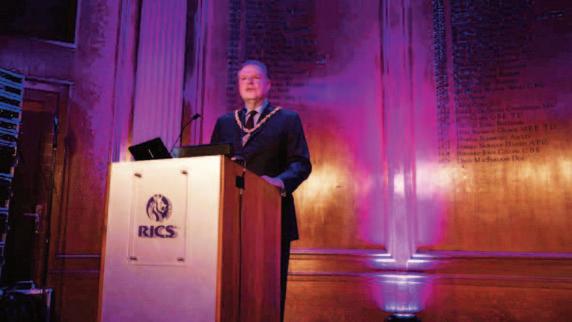
On January 22, Nicholas Maclean OBE RD FRICS IRRV (Hons) was inaugurated as the 144th President of the RICS. SCSI President Gerard O’Toole FSCSI FRICS was in attendance on behalf of members. Joining Nick and Gerard on the night were RICS Governing Council members Johanna Gill FSCSI FRICS and David Hourihan FSCSI FRICS. Gerard said: “I extend my warmest congratulations to Nick, and wish him and his team the very best for his term. I look forward to continuing our work together”.

Nicholas Maclean was recently inaugurated as the 144th President of the RICS.
THE BIGGEST NIGHT OF THE YEAR
The SCSI Annual Dinner on February 5 welcomed 1,200 industry professionals and guests from over 150 companies, with the support of feature sponsors AIB and Cumming Group. The event continues to be Ireland’s largest professional gathering of the property, land and construction sector. The evening was opened by SCSI President Gerard O’Toole, who said: “As we look to the year ahead, I feel both pride and confidence: pride in the work you [SCSI members] do every day across Ireland and confidence in this profession’s ability to continue leading,


COLLABORATION WITH UCD
The UCD Professional Academy and the SCSI have teamed up to offer members access to a growing suite of online Skill Sprints courses.
Skill Sprints is a new set of short courses designed to help busy professionals build practical, careerfocused skills fast. Skill Sprints consists of three online courses over three
innovating and advocating for a built environment that works for everyone”. After dinner, members and guests were treated to a show from TV hypnotist and Brainhacker Keith Barry. There was no sitting back to watch as one table after another saw guests hop on stage to take part in the evening’s entertainment. The AV team was kept on their toes as cameras panned the audience to find his next unsuspecting volunteer. Once the show was over, SCSI members continued to enjoy connecting with colleagues and being introduced to new peers.


PSRA CPD 2026 NO W LIVE
weeks. The partnership offers a discounted rate of €399, saving SCSI members €200. The latest addition to this collaboration is the ‘AI Productivity with ChatGPT’ course.
Use the exclusive code SCSISKILL2026 when enrolling at https://www.ucd.ie/professionalacadem y/partnerships/scsi/

Get ahead this year and join the 1,464 professionals who completed their Property Services Regulatory Authority (PSRA) CPD with the SCSI in 2025. Earn your PSRA certificate from anywhere, at any time, through the SCSI website.
Special guest Keith Barry with SCSI President Gerard O’Toole and Yvonne McCarthy of AIB.
SCSI President Gerard O’Toole addressing this year’s Annual Dinner.
Andrew Walsh of Colliers was one of many volunteers on the night with special guest Keith Barry.
Keith Barry and Akopo Africa of Cogent Associates amaze the audience yet again.

GRANT JOINS MODULE
Module Group has announced the appointment of Tony Grant as a business development consultant. The company says that he will play a key role in strengthening the firm’s presence and reach across Ireland. Commenting, Tony said: “I am excited to embrace the challenge and build on the success of such a well-established Irish brand. As we look ahead, 2026 promises positive prospects for property owners and increased opportunities for investors. As the next real estate cycle continues to turn, we anticipate an increase in transactions and
JOB SEARCH
Negotiators
Quinn Property Management
development, alongside a rise in refurbishment and reconfiguration projects, with a strong focus on sustainability and the repositioning of older building stock. Module Group is ideally positioned to provide robust local expertise and strategic advice to clients at every stage of the property cycle. I look forward to working with Andrew, Shane, and the wider team across our two office locations to deliver first-class service, identify wider opportunities, and drive continued growth and market share”.

Job description: Two opportunities for negotiators based in Co. Clare. One role, requiring 5+ years’ experience, will support the growth of a rental portfolio and property sales service. The second is an opportunity for a graduate or earlycareer professional to work directly with landlords and tenants in a fast-paced residential environment.
Contact: +353 65 682 4343 or jobs@quinnproperty.com. Deadline for applications: April 6, 2026. For further information on the roles, please see https://quinnproperty.com.












CPD COUNTS
DOES YOUR CPD SIMPLY TICK A BOX, OR IS IT ACTIVELY INFLUENCING THE DIRECTION OF YOUR CAREER?
Continuing professional development (CPD) has long been recognised as a cornerstone of professional practice across the construction, land and property sectors. For surveyors whose work directly influences the built environment, public confidence, and economic activity, the importance of CPD has only intensified. As the industry evolves at unprecedented speed, CPD is no longer a compliance exercise, it is an essential investment in competence, credibility, and career longevity.
The Society of Chartered Surveyors Ireland (SCSI)’s regulation audit findings on CPD compliance tell us that our members are responding effectively to ongoing legislative developments in planning, safety, land use, housing, and energy, utilising CPD as a means to facilitate their adaptation. Sustainability now shapes the sector, requiring knowledge of carbon assessments, environmental performance, and circularity for a lowcarbon built environment. Digitisation with tools like building information modelling (BIM), geographic information systems (GIS), drones, and artificial intelligence (AI)-driven analytics is transforming workflows. Keeping up with these developments is essential for safe, ethical and future-ready services. At this time of year, our members are receiving reminders from the SCSI and the Property Service Regulatory Authority (PSRA), requiring evidence of CPD completed over the previous 12 months. While the requirement is often expressed as a minimum number of hours, the true value of CPD lies not in the quantity but in the quality. Members should ask themselves: Is my CPD genuinely making a difference to my work? Is it improving how I serve clients and the public? Is it shaping my career in a meaningful way?
FEATURE
Gwendolyn Wilson SCSI Director of Regulation and Registrar

Reflective practice is key
Rather than completing CPD merely to ‘tick a box’, we should evaluate whether our chosen activities align with our current role, areas of specialisation, and future ambitions. High-quality CPD sharpens judgement, enhances ethical awareness, and supports better decision-making abilities.
A useful approach is to diversify how CPD is undertaken. Online courses and webinars offer efficiency and convenience, but in-person training, conferences and workshops provide something equally valuable: networking, peer learning, and the exchange of practical insights that only happen face-to-face. Members should consider balancing remote CPD with live events to expand their professional network, gain new perspectives, and strengthen relationships across their discipline.
Upholding professional standards
The Royal Institution of Chartered Surveyors (RICS) is updating its CPD policy to keep pace with international standards. In Ireland, the SCSI upholds professional standards by operating a CPD policy that meets the requirements for SCSI and RICS membership. The SCSI also has in place a statutory CPD system for member and non-member Quantity and Building Surveyors under the Building Control Act 2007, strengthening regulation and best practice in the sector, and further promoting the protection of the public interest. The SCSI delivers the required CPD as stipulated by PSRA legislation for members acting as property service providers and conducts specialised Red Book compliance workshops for valuer members. Additionally, the SCSI offers a comprehensive range of CPD opportunities and events. The SCSI will be working closely with the RICS over the coming months to ensure coherence, alignment, and growth in CPD expectations – an important step that will support both members and the wider profession as standards evolve.
Surveyors are not alone in this. CPD is a blanket expectation across regulated professions, from engineers and architects to legal, financial, and healthcare practitioners. What these sectors have in common is an understanding that public trust depends on continuous learning.
For members, CPD is not simply a regulatory duty, it is a professional responsibility. More than that, it is an opportunity – to deepen expertise, embrace innovation, and play an active role in shaping a built environment that is safer, more sustainable, and better connected.
ADVANCING PROFESSIONAL PRACTICE
A STRATEGIC EDUCATION COLLABORATION WITH UCD OFFERS SCSI MEMBERS THE OPPORTUNITY TO UPSKILL IN THE USE OF AI.
Strategic collaboration between higher education institutions and professional bodies plays an increasingly important role in addressing skills gaps and supporting lifelong learning. As digital technologies continue to reshape professional practice, such collaborations provide a structured and credible means of ensuring that members remain equipped with relevant, future-focused skills. Recognising the growing impact of artificial intelligence (AI) across construction, property, and land-related disciplines, the Society of Chartered Surveyors Ireland (SCSI) has recently entered into a collaboration with UCD Professional Academy to support members in developing AI capability. This collaboration offers SCSI members access to a structured pathway of education in AI, with a suite of courses ranging from introductory through to intermediate and more advanced levels. All courses are available at a significant discount for SCSI members and are designed to equip professionals with practical, businessready AI skills that can be applied directly within their roles.
The courses are short, professionally oriented programmes designed to fit around the demands of busy working lives. They provide
NEWS FEATURE
James Lonergan SCSI Director of Education and CPD

a flexible approach to learning, while supporting members in maintaining and enhancing professional competence across a range of practice areas. Courses are developed and delivered by subject matter experts with professional experience, ensuring that learning is grounded in realworld application and delivers tangible outcomes for participants.
Accessibility and flexibility are central to the offering. All courses are delivered in an interactive online format, enabling members to engage with learning opportunities regardless of geographic location and allowing an opportunity for members to meet and collaborate with professionals from a range of other disciplines.
A suite of AI-focused courses
To support the immediate and practical application of AI, the ‘Boosting Productivity with AI’ course provides a short, skills-focused introduction to the use of AI tools in everyday professional tasks. The course uses practical case studies to demonstrate how AI can assist with analysing information, supporting collaboration, drafting content, and improving efficiency in routine workflows.
‘Change Management & AI’ explores the role of AI within broader organisational change and digital transformation. The course provides an understanding of key concepts associated with AI adoption, examining both the benefits and limitations of AI within business and professional environments.
The responsible use of AI is addressed through ‘AI Governance & Risk Management’, which helps professionals understand how to implement ethical AI practices within their workplace. This course focuses on governance, accountability, and risk awareness – areas of particular importance within regulated professions such as surveying.
Reflecting the rapid adoption of generative AI tools, ‘AI Prompt Engineering with Microsoft 365 Copilot’ focuses on teaching participants how to structure effective prompts, evaluate AIgenerated outputs, and integrate Copilot tools into daily tasks while maintaining professional standards. Additional courses covering generative AI, the effective use of ChatGPT, and Excel Copilot mastery further support professionals seeking to enhance productivity. Collectively, these courses provide a clearly defined and structured pathway for members seeking to engage with AI in a practical manner. By concentrating on productivity, governance, organisational change, and realworld application, AI is positioned not simply as a technical discipline, but as a core professional competency increasingly essential to the future of surveying and the wider built environment sector.
SCSI members can enrol in these focused courses at a discounted rate through: https://www.ucd.ie/professionalacademy/ partnerships/scsi/
LEADING THE HOUSING DEBATE
THE SURVEYORS JOURNAL ASKED A RANGE OF STAKEHOLDERS IN PROPERTY, LAND AND CONSTRUCTION FOR THEIR RESPONSE TO THE SCSI’S ‘REAL COSTS OF NEW APARTMENT DELIVERY 2025’ REPORT.
In December 2025, the SCSI published ‘The Real Costs of New Apartment Delivery 2025’. An update to and expansion on previous reports produced in 2017 and 2021, the 2025 report firstly looked at the costs, viability and affordability of a typical two-bedroom build to sell apartment, analysing the impact of recent Government interventions. The report then also analysed a case study apartment block in Dublin, looking at affordability and viability across three tenures – build to sell, private rental sector and cost rental –and also modelling the impact of proposed new apartment design guidelines. The report is central to the SCSI’s mission to present evidenced-based and data-driven information on property, land and construction, in the public interest. The Surveyors Journal spoke to a number of stakeholder representatives to gauge their response to the report, and its findings.

Co-author – Paul Mitchell, Mitchell McDermott
Ann-Marie Hardiman Managing Editor, Think Media Ltd

Paul was chair of the working group that produced the report, and was also involved in the two previous reports. He outlines the significant body of work that goes into reports of this type: “We started about 12 months before the report was issued. The first thing is to collate the information from surveyors, public sector bodies or developers. Then there were two separate groups: QSs and agents. All projects were anonymised – information was submitted directly to the SCSI and then sanitised – and sent back out to the two groups for a series of workshops. Those ran in parallel and those two groups never met. There was a lot of debate, a lot of toing and fro-ing, and different views and interpretations of the data”. For Paul, this report showed significant developments: “It did show that Government interventions were working, and it did show areas where there was no Government intervention, like the private rental sector. I think the other thing that it threw up was that STAR [Secure Tenancy Affordable Rental], which is one of the initiatives for cost rental, is not working for the private sector, and there’s been no attempt to address those issues”.
“
IT DID SHOW THAT GOVERNMENT INTERVENTIONS WERE WORKING, AND IT DID SHOW AREAS WHERE THERE WAS NO GOVERNMENT INTERVENTION, LIKE THE PRIVATE RENTAL SECTOR.
He’s generally happy with the response to the report, which was seen as an independent and reliable source of data. The main media focus, he says, was understandably on affordability: “There’s been a lot of work to do with viability, because without viability, it doesn’t matter what you can afford because there’s no product. On affordability, when you look at the chart showing the nine deciles of income in Ireland, and then you plot the apartment costs or prices against them, it’s pretty stark”.
He’s also been happy with the response from Government: “I think they actively engaged, and it wasn’t just to tick the box. They asked questions and they wanted to understand. They have a difficult role; it’s not easy to come up with new initiatives and changes because there are unintended consequences, but I think a lot of things have changed and a lot of things have moved. I think it is a sign of a mature Department, or business, if they’re always asking and they’re always listening and they’re always tweaking”.
Paul’s commitment to working on these reports stems also from his belief in their value to the SCSI, and to the public interest: “I think people do look at them, do trust them, and housing bodies or public bodies look at them and use them”.
Indeed, he points out that the Department of Housing has been inspired by reports such as these to collect its own data: “They have looked at the cost of a two-bed, they’ve looked at the cost of a three-bed, they’ve gone on to look at the cost of duplexes, and they’ve gone on to do the study on student accommodation, and they’ve done them internationally. I think reports like this can lead the way, from that point of view, to others”.
From the SCSI’s perspective, these reports show the Society to be an independent body, and that ties in with the Society’s ethos and stated objectives: “And when there are important discussions nationally or at Government level, the Society is invited in for our opinion. I think that’s the ultimate compliment”.

Local
authority –
Gavin Doyle, Chief Quantity Surveyor, Dublin City Council
Gavin notes the report’s findings that both hard and soft costs have increased in the period from 2021 to 2025, and says this aligns with Dublin City Council’s experience during the same period. However, he points out that increases do not necessarily reflect the same
inputs becoming more expensive over time: “The construction industry is continually evolving, and enhanced design and regulatory requirements – including changes to Part B fire safety standards and the wider adoption of digital delivery tools such as BIM – have expanded what must be delivered as part of a modern apartment project. In parallel, the sector’s shift towards decarbonisation and improved building performance has introduced new specialist roles and processes, adding to soft costs but supporting long-term sustainability, quality and efficiency, which in turn will reduce hard costs”.
He feels that there are a number of stand-out elements to the report: “The report highlights the extent of viability challenges in the absence of State intervention, and the strong positive impact of measures such as the VAT reduction and Croí Cónaithe in enabling schemes to approach or meet viability thresholds. However, the reality is that an affordability gap remains”.
He agrees with other commentators that there is no ‘silver bullet’ when it comes to improving affordability and viability: “However, the report clearly shows that progress comes from combining what is already working with continued evidence-based decision-making. High-quality data, such as this report provides, enables policymakers, local authorities and delivery teams to target measures where they will have the greatest impact”.
He notes the report’s focus on expanding eligibility for affordability supports, enhancing private rental sector viability, and supporting the continued growth of cost rental supply, but points to its discussion of improving viability through design reforms as key: “The case study is a clear example of how design-led efficiencies can deliver immediate, measurable benefits”.
He says this aligns strongly with the recent Delivering Homes, Building Communities 2025-2030 policy. This mandates standardised design approaches, which he says have been incorporated into a number of City Council housing programmes: “Standardised designs, particularly in social housing, can give the construction industry the confidence that a consistent pipeline exists. That in turn supports investment in off-site manufacture and assembly, accelerating delivery and reducing longterm costs. In this way, standardisation is not simply a design choice –it’s a strategic enabler of scale, certainty and affordability”.
He feels that the report delivers significant value through its depth, transparency and evidence-based analysis: “It provides a uniquely robust assessment of real delivery costs, giving policymakers and local
“
ANYTHING THAT INCREASES SUPPLY IS A POSITIVE. RENTS ARE VERY HIGH. THE ONLY WAY TO DEAL WITH RENTS IS TO INCREASE SUPPLY.
authorities a clear, comprehensive understanding of cost structures and viability dynamics”.
The data on affordability are also crucial: “By mapping income requirements against CSO income deciles, the report highlights the structural affordability gap, showing that access to new supply is concentrated among the top 20-30% of earners – a critical finding for future policy direction”.
He describes the report’s recommendations as “pointed, realistic and strategically useful”, noting in particular that one of the key recommendations – exploring delivery through competitive dialogue mixed-tenure development – directly aligns with a current City Council initiative, reflected in its recent Preliminary Market Consultation: “This underlines the practical value of the report as a tool that informs realworld delivery approaches”.
The fact that the report is the latest in a series is also important: “This continuity provides a long-term picture of how development costs, viability and the impact of State supports have evolved over time, rather than offering a one-off snapshot”.

Property – Evan Lonergan, Director, Development Land/Industrial, Knight Frank
Evan feels that the report highlights the positive measures from Government in recent times: “I think we have to stand back and see what the Government has done. Without Government support, nothing would be viable, and no developer can have the confidence to build”.
He notes the report’s findings on affordability and believes it’s time for the Government to look at perhaps expanding the thresholds for Help to Buy and the First Home Scheme for apartment purchases: “Unfortunately in Dublin, the cost of delivering the apartment exceeds where our Help to Buy schemes fall out. I don’t think increasing Help to Buy to €600,000 for apartments is going to drive the land values wild, or put more money in developers’ pockets. We’re in a housing crisis. We should be trying to pull every lever we can”.
This includes the new apartment design standards, and Evan hopes that the current legal proceedings will be resolved without undue delay as he says these changes, along with the other interventions, are already increasing interest from international investors who are crucial, in particular for the private rental sector, which the report shows has not
benefitted as much as other sectors from recent interventions: “Anything that increases supply is a positive. Rents are very high. The only way to deal with rents is to increase supply. We [in our industry] probably see the international interest more than anybody else. When the new apartment guidelines were announced, we saw the number of international investors here who already have a site who said, ‘Let’s look at that again – will we turn our 50 apartments into 55 or 60? Does that get us over our viability?’”.
While some tweaks to the system might be needed, Evan does feel that stability is essential for that investment to take place: “We have a stable political environment. Unemployment is nearly at zero. Site prices are very stable now. Our only problem is we tend to knee-jerk when there’s a public cry. We’re making changes now, and then we need to say, ‘Leave it’”. He echoes other commentators in praising the report, which he says is unique in being drawn from real experience and data in the sector: “That’s huge because the SCSI is one of the organisations that can gather that number of professionals together, all aligned in one direction. It’s an internationally recognised organisation. We would share this with international people coming in because it shows land values at a level, and it shows construction costs as stable. Having this kind of document is invaluable in terms of all sectors of the industry coming together to provide this information”.

State body – John Coleman, CEO, Land Development Agency
John echoes the report’s findings that design efficiency is a significant factor in viability: “One unit in one area in one development is not the same as another unit in another development. A lot of that is around efficiency of the design, whether there’s basement car parks, other variables that play a role”.
As prominent procurers for apartment construction, the LDA contributed data to the report, and John is optimistic that the trends in terms of costs are heading towards the lower ranges reported: “We experienced a period of hyperinflation up to 2024, but that has settled, especially towards the second half of 2025. There’s decent capacity among the main contractors at the moment in the market. That’s driving competitive tension on bid processes for tenders. That’s positive for viability and affordability as a trend”.
He agrees that the new design guidelines will potentially have a significant impact, pointing out that the SCSI’s case study dealt with retrofitting an existing design: “A development where you’re retrofitting the new design standards is going to be less cost-efficient than one where you start from scratch. So I think that all bodes well over the medium term”.
The reductions in VAT, as well as the hope that more land will become available via rezoning are also positive signs: “There’s no question that some of the hard lines around viability have been eased somewhat by the VAT cut. It’ll take a little bit of time to settle. For instance, the design standards are still going through a legal challenge and have to be implemented. But when you look at it from an enduring perspective, those initiatives which have yet to be realised and reflected in these numbers will make a very material impact on viability”.
Like several commentators, he praises the Government for the decisions they’ve made: “It was necessary. And to be fair to the Government, it’s never especially popular to reduce minimum apartment sizes, or other things that could be perceived as lower quality design, when we don’t believe that’s true. It’s very possible to design high-quality schemes to the new standards. They made that somewhat brave decision to press ahead with those, so they deserve credit for that in our view”.
John says that reports like this one are hugely valuable: “I think for a functioning market, the more information you have, the better. There’s a lot of numbers thrown out that it costs X amount of money or Y amount of money to deliver apartments. That tends to be accepted as fact, whereas, in fact, it’s only hearsay. But these figures are constructed from actual tendered projects, so there’s a transparency to it, and this reflects what’s actually happening on the ground. We think it’s hugely valuable to the market. We think it can help inform policy choices. As the new standards, and the release of more land and other factors that the Government has made available, as they come to fruition, I think it will be worth doing a further review, say in the next two to three years, as those impacts settle”.

Funding – Dara Deering, CEO, Home Building Finance Ireland (HBFI)
“HBFI welcomes the publication of the SCSI report as a constructive contribution, underpinned by current market data, to the viability challenge for apartment delivery in Ireland. Recognising the scale of ambition in the national housing plan Delivering Homes, Building Communities, and the pivotal role of apartment delivery within it, the HBFI remains open to and has funding available to support delivery of apartments, whether for private sale, social housing, or for private or cost rental tenures.”

Investment – Pat Farrell, Irish Institutional Property (IIP)
“The SCSI report provides evidence-based confirmation of what IIP has been consistently highlighting for several years: new apartment delivery in Ireland has been fundamentally challenged by cost inflation and viability constraints. Construction costs, regulatory requirements, financing and taxation have contributed directly to making many otherwise well-located and policy-compliant schemes unviable, particularly over the last few years. For long-term institutional capital, which is seeking to deliver high-quality, energyefficient housing at scale, viability is not a theoretical issue, it directly determines whether homes get built. To its credit, since taking office the Government has responded to these challenges with a series of policy measures and reforms that seek to address viability, thus creating the conditions necessary to attract much-needed institutional funding into the Irish market on the scale necessary to deliver on our housing targets.”
CLARITY THROUGH MASTER PLANNING
MAJOR INFRASTRUCTURE
IS VITAL TO IRELAN D’S FUTURE, YET
IT
OFTEN SEEMS OUT OF REACH DUE TO SLOW, COSTLY DELIVERY. CORK AIRPORT OFFERS INSPIRATION, AS PLANNING, MODELLING, PROCUREMENT AND EXECUTION ARE ALIGNED THROUGH A MASTER PLAN.
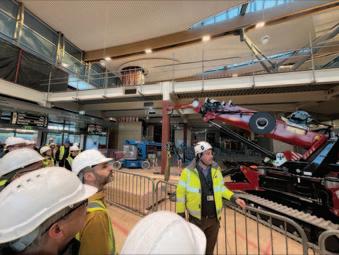
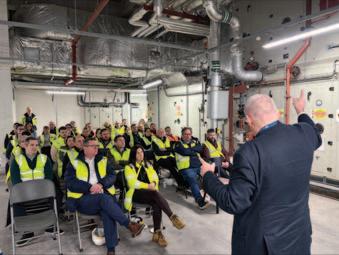
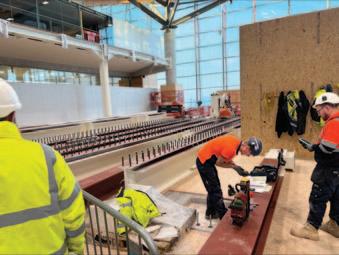
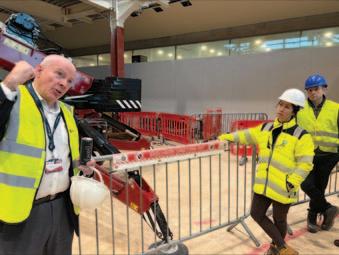
In January, the SCSI Southern Region Committee organised a site visit to understand the scale, complexity, and strategic intent underpinning the current capital works programme at Cork Airport. The visiting group was welcomed by Niall MacCarthy, Managing Director of Cork Airport, alongside members of the senior airport management team. Technical delivery perspectives were provided by PJ Hegarty, the main contractor on the current project, represented on site by Fergus O’Rourke, Regional Director.
The visit provided a valuable opportunity to examine how long-term master planning, economic modelling, procurement strategy, and construction delivery are integrated within a highly regulated, live operational environment. For surveyors involved in public infrastructure, transport assets, and large operational estates, Cork Airport offers a particularly instructive case study in disciplined, forward-looking capital investment. The following is a synopsis of the presentation and site visit insights.
The business case for planning
The fundamental premise underpinning Cork Airport’s capital programme is straightforward: sustained passenger growth requires a coherent, long-term plan. No infrastructure can be expanded reactively without incurring disproportionate costs, operational disruption, and planning risk. As passenger
numbers increase, the absence of a structured master plan leads inevitably to capacity pinch points, inefficient interim solutions, and expensive retrofitting.
At Cork Airport, Niall MacCarthy explained that early planning materially reduces both capital cost and planning risk. Infrastructure delivered at the appropriate point in the growth curve is typically simpler, cheaper, and easier to integrate than emergency interventions delivered after capacity has already been exceeded. It also means that future plans are built into the project plans. In this context, the master plan is not an aspirational document, but a cost-control and risk-mitigation tool.
The master plan as organising framework
The airport’s master plan guides long-term capital decisions, outlining its spatial and operational growth as passenger numbers exceed 3.5 million, and move towards five million and beyond. It sets investment priorities so that capital projects are assessed for both immediate need and future integration. This ensures that assets are planned with upcoming development phases in mind. A case in point was the very room where members received the presentation: the plant room seemed too big for its purpose, but was designed to house future plant for terminals and piers.
Patrick King SCSI Director of Membership and Public Affairs

Demand modelling and capacity trigger points
The master plan analyses the airport’s operations as a system, similar to an assembly line, and identifies bottlenecks based on passenger forecasts to demonstrate that individual systems will reach capacity. Importantly, airport capacity is not defined solely by terminal size, but by a chain of interdependent processes: car parks, check-in, security screening, immigration, gates, aircraft stands, and airfield infrastructure. The airport’s effective capacity is determined by whichever of these elements fails first.
How the passenger growth forecast was estimated was one question from the audience. Niall explained that passenger demand at Cork Airport was modelled using established aviation economics, where airport traffic typically grows at approximately 1.5 times gross domestic product (GDP) growth, reflecting the discretionary nature of air travel. Conversely, during economic downturns, demand contracts by a similar multiple. This approach allows the airport to maintain operational resilience while avoiding premature capital expenditure.
Capital works as phased responses to the plan
The current programme of capital works should be understood as specific responses to master plan triggers, rather than standalone developments. The expansion of security screening capacity, reconfiguration of passenger circulation, enhancement of retail areas, and extension of car parking are all driven by identified future constraints. Phasing is critical. Works are sequenced so that new capacity is commissioned before existing facilities are taken offline or reconfigured. This ensures continuity of service, but also compliance with aviation security and safety regulations throughout the construction period, which is essential.
Technical delivery in a live airport environment
From a construction perspective, delivering these works within a live terminal environment presents significant challenges. As outlined by Fergus O’Rourke of PJ Hegarty, construction methodology is heavily constrained by noise sensitivity, passenger safety, security requirements, and limited access windows.
Steel erection, drilling, and bolt tightening are largely undertaken at night to minimise passenger disruption. Structurally, the works comprise steel columns supporting metal decking and a 300mm reinforced concrete slab designed to accommodate next-generation computed tomography (C3) security scanners and associated equipment. The slab supports extensive mechanical, electrical, fire, and data services, with an 80mm screed and a tiled finish matching the existing terminal.
The scale of the works is notable, with approximately 1,400m2 of floor area, incorporating circa 270 tonnes of structural steel, 780m3 of concrete, and 60 tonnes of reinforcement. Steel elements are intumescent coated to achieve the required fire performance, and concrete is pumped internally to avoid roof penetrations or airside disruption.
Procurement strategy and cost certainty
The project is procured under an NEC4 Engineering and Construction Contract Option A (Priced
Contract with Activity Schedule). This procurement route was chosen to maximise cost certainty, programme control, and risk visibility in what is an exceptionally complex operational environment.
The DAA infrastructure department, with Cork Airport, oversaw the full design process by a design consultant on the completion of a fully detailed and highly co-ordinated design ahead of tender, driven by the stringent requirements associated with constructing major infrastructure within a live airport environment. This required extensive and iterative co-ordination with airport security, operations, health and safety, information and communications technology, fire officers, and multiple end-user groups. Every design decision had to ensure:
n no disruption to passenger flow, queue systems, or security screening throughput; n safe segregation of construction and airport users;
n continuity of operations for staff, airlines, and third-party service providers; and, n future-proofing for long-term capacity and regulatory changes.
Examples include the installation of five new security lanes, while also embedding civil, structural, mechanical, and electrical provisions for a future sixth lane, without the need for major demolition or rework. This forward planning provides lifecycle value and avoids future operational disruption.
The DAA Group Board’s approved budget placed further emphasis on value engineering, challenge sessions, and tight cost control throughout the design development stage. By
Cork Airport’s master plan is an excellent example of disciplined, forward-looking capital investment.
Fergus O’Rourke of PJ Hegarty takes the Southern Region members through the works at Cork Airport.
resolving design uncertainties, validating scope, and aligning specifications early, the client team significantly reduced the potential for post-award variations. As a result, the tender competition ran constructively, bidders priced on a consistent and well-defined scope, and mobilisation to site proceeded without the typical re-design or clarification delays.
Fergus O’Rourke from PJ Hegarty noted that the NEC4 Option A form supports programme certainty, cost control, and transparent performance measurement. Because the contract was tendered on a fully developed design with minimal changes from Issued for Tender (IFT) to Issued for Construction (IFC), contractors could price risk more accurately.
Under Option A:
n there is no traditional bill of quantities;
n payments are linked to completion of defined activity schedule items, not partial progress; and,
n compensation events arise only when the employer’s requirements change, not through remeasurement or ambiguities.
This places strong emphasis on clarity of scope, completeness of design, and risk allocation at the point of tender.
From the client side, this procurement strategy required significant upfront investment in design, co-ordination, stakeholder engagement, and constructability assessments. However, this early effort delivered key benefits:
n cost certainty: a well-defined scope reduces contractor risk allowances and limits compensation events;
n programme predictability: detailed phasing plans, operational sequencing, and work hour constraints were fully integrated into the design before tender;
n reduced operational disruption: airportcritical systems, passenger flows, and security protocols were protected by having co-ordinated plans agreed with all stakeholders in advance; and,
n market confidence: contractors could tender competitively, knowing the design was mature, realistic, and stable.
Niall highlighted that while this approach demands greater planning, governance, and internal co-ordination, the return is realised in speed, quality, and on-budget delivery once construction begins.
Overall, the procurement strategy created the necessary cost certainty, programme assurance, and operational safety controls for delivering a major capital project inside a live airport environment. The combination of early design completeness and strict scope discipline enabled a smooth tender process, reduced commercial risk, and positioned the project for predictable delivery within the approved DAA budget.
Long-term asset placement and value protection
One of the most striking aspects of Cork Airport’s approach is the deliberate placement of enabling infrastructure to protect long-term value. Facilities such as energy substations, which may appear oddly located in the short term, are positioned to align with future pier extensions, apron development, and airfield expansion.
The airport controls approximately 40 acres of land reserved for long-term growth, including aircraft parking and apron development. By safeguarding this land and aligning short-term projects with the master plan, Cork Airport avoids the need for costly relocation or demolition of assets in later phases.
Conclusion
The SCSI Southern Region site visit to Cork Airport demonstrated that the airport’s capital works programme is best understood through the lens of its master plan. Growth-driven demand modelling, clearly defined capacity triggers, disciplined procurement, and technically robust delivery have combined to create a resilient framework for long-term development.
For Chartered Property and Construction
Surveyors, Cork Airport offers a clear example of how strategic planning, undertaken early and maintained consistently, can reduce cost, simplify planning, and deliver infrastructure that remains fit for purpose across generations. In Ireland, we know that the delivery of major infrastructure is crucial for our future, but it is often delayed. This visit demonstrated that Ireland has the professional planning and execution skills to succeed. Cork Airport exemplifies effective organisation in capital decisions, and applying this method nationwide could improve infrastructure delivery.
The scale of the works includes approximately 1,400m2 of floor area, 270 tonnes of structural steel, 780m3 of concrete, and 60 tonnes of reinforcement.
Niall McCarthy explains that the new infrastructure is designed to support long-term expansion and development.
HOUSING PRESSURES PERSIST
IN ITS LATEST
‘RESIDENTIAL MARKET MONITOR REVIEW AND OUTLOOK’ REPORT, THE SCSI WARNS OF STRUCTURAL IMBALANCE IN THE 2026 MARKET OUTLOOK.
Ireland’s residential property landscape is entering 2026 with familiar pressures resurfacing: constrained supply, sustained price inflation, and continued affordability challenges. The SCSI’s annual ‘Residential Market Monitor Review and Outlook 2026’ indicates that the market continues to face structural challenges in meeting the needs of aspiring homeowners and renters nationwide. Gathering the perspectives of more than 190 estate agents across Ireland, the SCSI report provides a clear snapshot of the year ahead. The findings indicate that although price growth is moderating slightly, the underlying dynamics that have long shaped the housing crisis remain firmly in place.
SCSI agents now predict an average 4% increase in national property prices for 2026, down modestly from the 5% and 6% year-ahead forecasts recorded in the previous two years. While this suggests that the market may be moving towards a more settled phase, affordability pressures persist. Some 84% of agents consider current prices either “expensive” or “very expensive”. Many believe the market is hovering close to its peak, with a combined 83% saying prices will either soon level off or have already reached their ceiling. Yet for first-time buyers in particular, the mismatch between income and purchase power continues as “housing remains largely unaffordable for young people, low- and middle-income households, and other vulnerable groups, underscoring the deepening supply–demand imbalance and the persistent national housing crisis”.
Despite a strong economy and ongoing Government interventions, the lack of supply remains the defining force in the market. More than seven in 10 agents report low stock levels in their local areas, a pattern that has remained consistent across successive survey cycles. Some 58% of respondents identify the shortage of new housing construction as the single biggest factor influencing their expectations of future price movements. This comes despite a slightly improved output, as 36,284 new homes were completed in 2025, around 20% more than the

previous year, with targets to deliver over 300,000 homes between 2025 and 2030. But the scale of historic undersupply means that even this stepped-up output may struggle to close the gap created through years of population growth and urbanisation.
First-time buyers: a market moving out of reach
An important aspect of the report is the updated affordability study, which assesses the purchasing power of a first-time buyer couple earning a combined annual income of €112,000, based on a garda and a nurse with 10

Dr Neha Kamrani SCSI Policy & Research Executive

Table 1: Affordability (€112k gross salary) trend over the first and second halves of 2025 using x4 times the loan-to-income (LTI) ratio. Six-month first-time buyer affordability change for three-bed semi-detached homes.
County
Meath
Kildare
Wicklow €548,000
Cork

Not
but gap narrowing
Not affordable but gap narrowing
years’ service. When applied to real market prices in Meath, Kildare, Wicklow and Cork, the calculations show that three-bedroom semi-detached homes (long considered the standard family starter home) are now unattainable in most regions (Table 1).
Smaller two- and three-bed terraced homes remain more accessible, but even here, affordability depends heavily on county and availability. Crucially, Wicklow stands out as the least accessible of all counties analysed, with deficits on both house types examined. Meanwhile, Dublin, although excluded due to price variations, would be “clearly unaffordable” for this benchmark couple.
With the median age of homebuyers increasing from 35 to around 40 over the past decade, young families are delaying
major life milestones, with broad implications for long-term financial security and demographic patterns.
Government support measures such as Help to Buy (HTB) and the First Home Scheme (FHS) remain central to bridging affordability gaps. However, the report, through three scenarios, highlights limitations in how these schemes align with on-the-ground pricing. For instance, a €525,000 semi-detached home in Wicklow exceeds both HTB and FHS thresholds, rendering the couple ineligible and leaving a €24,500 shortfall that neither savings nor Government supports can bridge.
Rental sector strained as small landlords leave the market
The report highlights mounting distress in the rental sector, with evidence that landlord participation is shrinking at an accelerated pace. According to SCSI members:
n 86% expect more landlords to exit in 2026;
n 61% of termination notices issued in Q3 2025 were due to planned property sales; and,
n new tenancy restrictions taking effect in March 2026 may intensify departures.
SCSI agents cite three key reasons for the exodus: overly complex rental legislation; low net rental returns; and, landlords exiting negative equity and choosing to cash out. The SCSI adds that unless reforms are paused and reviewed, rental supply could tighten further, creating added pressure not just on prices but on access to secure, long-term tenancy options.
Finally, energy efficiency continues to reshape buyer and tenant preferences. Half of all respondents in the report state that properties with stronger BER ratings command 5-10% higher prices, reflecting both environmental consciousness and rising utility costs.
Despite modest improvements in supply and policy supports, the outlook shows that affordability challenges, landlord exits, and persistent supply shortages will continue to impact Ireland’s housing landscape in 2026.
The SCSI ‘Residential Market Monitor Review and Outlook 2026’ is available from: https://scsi.ie/wpcontent/uploads/2026/02/SCSI_ResidentialMarketMonitor2026_proof-6.pdf
PLAN TO ACCELERATE
THE GOVERNMENT’S ACCELERATING INFRASTRUCTURE REPORT HAS BROUGHT A RENEWED FOCUS TO WHAT ACTUALLY ENABLES INFRASTRUCTURE DELIVERY ON THE GROUND, BUT CHALLENGES REMAIN FO R DELIVERING ON HOUSING TARGETS.
Looking back over 2025, it was, in my opinion, a year of productive engagement by key stakeholders, informed by the ‘Report of The Housing Commission’ (May 2024) and the subsequent ‘next steps’ response, both of which emphasised that housing delivery requires joined-up, enabling infrastructure and delivery oversight.
In that context, the Government’s ‘Accelerating Infrastructure Report and Action Plan’ of December 2025 (the acceleration plan) sits alongside the Government’s updated infrastructure plan, namely the revised National Development Plan (NDP) and the more detailed sectoral investment plans that sit underneath it. Together, they have placed a renewed focus on what actually enables delivery on the ground. Alongside the investment programme, the acceleration plan sets out a programme of reforms intended to speed up delivery and ensure that funding translates into timely, co-ordinated outcomes. It groups 30 actions under four pillars, covering legal reform, regulatory reform and simplification, delivery and co-ordination reform, and public acceptance, with timelines, oversight and metrics for implementation. It is further broken down into detailed sub-actions and delivery milestones, particularly over 2026 (Figure 1).
There is a lot in this acceleration plan, but in this article I will address mainly Pillar 3 (Actions 17-26): ‘Co-ordination and Delivery Reform’, focusing on utilities and connection sequencing, particularly water, wastewater and electricity. Others are of course important, but I am deliberately not dealing with them in any detail here.
Eoin Wilcox MA MRICS MSCSI Director of Business Information and Underwriting, Castlethorn FEATURE

Background
In June 2025, the Society of Chartered Surveyors Ireland (SCSI), along with the Royal Institute of the Architects of Ireland (RIAI), was invited to meet with the infrastructure office created within the Department of Public Expenditure and Reform (DPER) to discuss delivery mechanisms, perceived barriers, and what additional supports might aid the delivery of critical infrastructure. This type of consultation and engagement is consistent with the approach set out in the acceleration plan.
In November 2025, the Oireachtas Joint Committee on Infrastructure and National Development Plan Delivery invited the SCSI, along with the RIAI and the Irish Planning Institute (IPI), to contribute as witnesses to a Joint Committee meeting. I attended as part of the SCSI delegations on both occasions, and many of the points I set out here were woven into the SCSI submissions and discussions with these bodies. Below I map a number of the Actions to the issues raised and outline some examples.
Actions 17, 18 and 19
I am grouping the following Actions together: 17 ‘Target Investment at Priority Sectors through NDP Review’; 18 ‘Publish Sectoral Investment Plans to Promote Project Pipelines’; and, 19 ‘Enhance Infrastructure Coordination Function in DPER’.
In summary, set out through the revised NDP and its sectoral investment plans, the Government commits to total public capital investment of €275.4 billion to 2035, including €102.4 billion in exchequer capital ceilings for the period 2026-2030, supplemented by a further €10 billion in equity and fund releases to support major projects. Within that framework, the Government identifies specific enabling investment for housing delivery, including significant investment in water and wastewater through Uisce Éireann (noting that the acceleration plan references circa €11.9 billion over 2025-2029, and associated equity support to enable delivery), €3.5
Pillar 1: Legal reform
Pillar 2: Regulatory reform and simplification
Action 2:
Action 1:
Reform judicial review
Action 6: Respond rapidly to precedent
Action 11: Reform processes applied to critical infrastructure within agencies/regulators
Action 16:
Review the role and functions of the Office of the Planning Regulator and drive performance in the planning system, including consistency in decision-making
Action 21: Improve utility co-ordination at national and local level
Action 26: Apply AI and digital tools to support infrastructure rollout
Enact legislation to accelerate critical infrastructure and provide for emergency powers
Action 7: Enact civil reform bill to legislate for judicial reviews
Action 12: Implement early warning system re. EU legislative change on critical infrastructure
Action 17: Target investment at priority sectors through NDP review
Action 22: Increase construction sector capacity and productivity
Action 27: Create a duty for State bodies to co-operate in making land available and accessible for critical infrastructure
allocation.
billion in equity support for electricity grid capacity (ESB Networks and EirGrid), and additional targeted investment intended to unlock housing through key transport and other enabling infrastructure. This scale of investment is significant and welcome. It will require the other pillars of the acceleration plan to work, including Pillar 1 ‘Legal Reform’, to enable physical delivery. Actions 17, 18 and 19 are intended to make the investment programme visible as a pipeline and coordinated in delivery.
Historically, Uisce Éireann has been funded, in part, on a yearly cycle – unlike ESB Networks, where grid investment programmes are planned over longer regulatory and investment periods – and this can limit forward planning
Pillar 3: Co-ordination and delivery reform
Action 3:
Implement other targeted legislative reforms
Action 8: Develop and publish national planning statements for critical infrastructure
Action 13: Advocate for new approach to legislation at EU level on critical infrastructure
Action 18: Publish sectoral investment plans to promote project pipelines
Action 23: Accelerate projects through consenting processes
Action 28: Build leadership support for critical infrastructure projects at national and local levels
Action 4: Progress domestic reforms to environmental assessment in parallel with EU simplification agenda
Action 9: Establish a regulatory simplification unit
Pillar 4: Public acceptance
Action 5: Increase exemption thresholds for critical infrastructure
Action 10: Rationalise legislation underpinning regulatory processes
Action 14: Advise on alternative methods of transposing EU legislation
Action 19: Enhance infrastructure co-ordination function in DPER
Action 24: Provide expert assistance for key infrastructure projects
Action 29: Enhance Government communication to promote the importance of infrastructure delivery
with certainty to some degree. The point in practice is that even where multi-year envelopes exist, delivery still depends on sequencing, approvals, and connection programmes aligning with housing delivery schedules. Actions 17, 18 and 19 should work well together as support for multi-year capital allocations under the revised NDP, and for the sectoral investment plan for water services and water quality, as well as ESB Networks grid capacity.
Action 21
Action 21 is ‘Improve Utility Coordination at National and Local Level’. Uisce Éireann was required to issue confirmation of feasibility for each development that sought planning
Action 15: Enable developer-led infrastructure
Action 20: Introduce risk appetite statements
Action 25: Reform procurement processes
Action 30: Establish a benefits realisation framework for infrastructure projects
approval as part of the Strategic Housing Development (SHD) planning process, and this has continued in practice under the Largescale Residential Development (LRD) process. This can be seen as a positive early interaction by the utility provider with the landowner and delivery teams, and it helps them to assess issues that may not otherwise be established at that point.
Unlike Uisce Éireann, ESB Networks is not typically involved at planning stage with the landowner or delivery teams, and currently has a process that only truly engages with the delivery team after the grant of planning, and after naming and numbering have been confirmed by the local authority. That sequencing can mean that the first time a
FIGURE 1: Summary of the pillars and actions. Source: Adapted by the author from the action list in the Government’s ‘Accelerating Infrastructure Report and Action Plan’ (December 2025). Colour-coding added to indicate pillar
scheme meets an electricity capacity constraint is relatively late in the programme. This is currently under review by ESB Networks. By way of example, we had a development that had houses standing, awaiting connection from ESB Networks, with the units sold and needing power to be completed and properly signed off, only to be told that there would be a significant (months-long) delay to receiving connection due to the need for a new substation to reinforce another part of the network. It can take up to two years from the order of a new substation to delivery. However, through constructive engagement with ESB Networks, a solution was found to minimise the impact, by redirecting a substation from another area where demand hadn’t progressed as anticipated or mapped.
In my mind, this issue came about due to two factors. Firstly, ESB Networks’ process of engagement is late in the delivery process, unlike Uisce Éireann, meaning that the lead-in time for equipment was disconnected from the on-site delivery of homes. Secondly, the heatmaps used by utilities providers are overly dependent on local authority input and do not adequately incorporate what is actually being delivered by construction delivery partners. To support this, the use of infrastructure heatmaps should be expanded beyond local authorities to include input from delivery teams where programmes are committed and genuinely progressing to commencement, enabling clearer identification of constraints, better sequencing, and more transparent decision-making.
Action 21 is intended to target issues like this by improving co-ordination at national and local level through formal engagement structures, so that constraints are surfaced earlier and connection programmes can be sequenced in step with delivery programmes.
Action 22
This targets increasing construction sector capacity and productivity by advancing the actions of the construction industry capability group, streamlining the processes around visas and work permits to support global recruitment, expanding the capacity and output of existing vocational and educational institutions, and improving the use of modern methods of construction (MMC) and digitalisation. This is welcome, as it supports the wider capacity of the construction industry, and the professional and specialist resources required for delivery.
Actions 20, 23 and 25
Again, I am grouping the following Actions: 20 ‘Introduce Risk Appetite Statements’; 23 ‘Accelerate Projects through Consenting Processes’; and, 25 ‘Reform Procurement Processes’. There are a number of objectives within these actions, but I wish to highlight the objective of further standardising procurement. According to the acceleration plan, a more centralised approach to procurement in critical infrastructure and works projects will be adopted within specific sectors and in the local authority sector through the work of the Local Government Operational Procurement Centre (LGOPC). This objective links with Action 23 (accelerating projects through consenting processes) and Action 20 (risk appetite statements) in that consenting and approvals can be streamlined, and proportionate oversight can be applied earlier,
to avoid sequential delay where a project is already clearly on the critical path.
In practice, rigid funding and procurement frameworks can make it difficult for public and semi-State bodies to respond flexibly or engage effectively with private sector delivery partners, and there is merit in expanding and streamlining procurement approaches, including through the introduction of clearer risk appetite statements across the system. Currently there is a prevailing reliance on traditional public procurement methods, which can be overly prescriptive and risk averse. Broadening the use of alternative delivery models, such as design-and-build and competitive dialogue, can enable earlier engagement between semiState bodies and industry actors, and lead to faster, more efficient outcomes, where appropriate.
While the following scenario would easily fall under Pillar 2, Action 15 (to enable developer-led infrastructure), I use it as an example of procurement process impact. Uisce Éireann allows on-site infrastructure to be delivered by the delivery teams, but off-site connection works in public roads require separate processes to progress, and the self-lay process in public road delivery, while updated in June 2025, has limitations on quantum of work eligibility thresholds. One instance where I have experienced this impact was where we delivered key pumping station and water services works on site for a large development. Ultimately, these works were to be taken in charge, but we were unable to progress the off-site connection in the public road. We needed to wait for Uisce Éireann’s due process of procurement and appointment to progress, creating a disconnect between on-site delivery and final connection. While this issue, thankfully, was flagged at an early stage due to the upfront nature of the Uisce Éireann process, it nonetheless led to uncertainty for an extended period of time for the delivery team.
Action 26
Action 26 is to facilitate applying artificial intelligence (AI) and digital tools to support infrastructure rollout by improving visibility of live pipelines and constraints, and by supporting clearer reporting and coordination across delivery partners – so that issues are identified earlier and decisions can be made with real-world programme information.
Translating investment into capacity
In summary, the revised NDP and the sectoral investment plans set out the scale and priority of investment now committed to enabling infrastructure, while the Government’s ‘Accelerating Infrastructure Report and Action Plan’ sets out the delivery reforms intended to translate that investment into capacity and connections on the ground. The practical challenge remains converting investment into predictable, sequenced outcomes, particularly where utility engagement, approvals, and procurement processes do not align with housing delivery schedules. The proposed Actions under Pillar 3 are therefore important and welcome because they are intended to improve co-ordination, pipeline visibility, and delivery certainty at national and local level, and to reduce avoidable delay where projects are already clearly on the critical path.
PROTECTING THE FABRIC
FRANK KEOHANE IS A CHARTERED BUILDING SUR VEYOR AND ARCHITECTURAL HISTORIAN. HE IS SURVEYOR OF THE FABRIC AT CHRIST CHURCH CATHEDRAL, DUBLIN, AND HAS WRITTEN BOOKS ON IRISH PERIOD HOUSES AND THE ARCHITECTURE OF CO. CORK.
Frank Keohane’s path to building surveying wasn’t a direct one. After trying his hand at accountancy, Frank switched to a degree in valuation surveying, but something was still missing: “From a young age, I wanted to work with old buildings. I joined the Irish Georgian Society when I was 15. When I graduated, I joined a training programme with Dublin Civic Trust, in recording and inspecting historic buildings. That got my first foot on the ladder”.
After completing a postgraduate diploma and a master’s degree in architectural building conservation, Frank was headhunted by Paul Arnold, a conservation architect: “During that time, I completed the APC process for building surveying. The fact that I was working in an architect’s office that deals with a lot of traditional buildings meant that I was getting very good core skills in building surveying”. Through his work in conservation architecture, Frank already had a longstanding connection to Christ Church Cathedral when he was appointed as its Surveyor of the Fabric in 2021: “Christ Church is the oldest extant building in Dublin, and it’s still functioning. In 2028, we’ll celebrate our 1,000th anniversary. My role is, in many ways, a holistic one. At one level, I’m thinking about the broader conservation of the building and how it should be cared for into the future. At another level, I’m on my hands and

knees in a gutter, trying to figure out why it’s leaking. We do a quinquennial inspection – a full audit of the building. Then we begin to identify prioritised repair projects. In many cases, it will be over a 20-year period, because we’re looking at a 60- to 100-year design life. Christ Church is a microcosm of all the different projects I do, because I may be dealing with leadwork and slating, stonework and pointing, metalwork, or stained glass”. When dealing with historic buildings, Frank emphasises that a measured approach to problem-solving is required: “It’s always important to consider the historical, architectural, archaeological, artistic significance of something, and take a balanced view. The really important thing is not to panic – and your client will sometimes panic. But you have to follow the trail of investigation before making decisions. You might get a phone call out of the blue saying, ‘Birds have got into the belfry again, how are we going to get them out?’ Two weeks ago, I got a one-liner: ‘We have flooding in Hell’. Hell is actually a part of the Cathedral – it’s a space in the crypt. So, it’s interesting; it’s never straightforward!”
A voice for historic buildings
For several years Frank was Chair of the SCSI’s Conservation Working Group. He is also no stranger to number 38 Merrion Square: “Recently, I was overseeing the repointing at the front façade of the building, and the conservation of the railings. I know the building well – from top to toe”.
As one of only nine Chartered Sur veyors in Ireland fully accredited in building
conservation, Frank feels the demand for expertise: “I don’t have capacity to deal with all the inquiries I get. It’s hard to refer work to other accredited surveyors when there isn’t anybody else in Dublin. We need more people, but it’s difficult for people to get experience working with historic buildings. There are plenty of building sur veyors out there who probably do have experience and expertise. There might be a need for a little bit of additional CPD, and I’d encourage them to do it”.
His advice to surveyors with an interest in conservation is unequivocal: “You really do need to be on site; you need to get your hands dirty. It’s important to talk to the tradespeople: the stone masons, the carpenters. Never approach a building and think you know it all. Every day is a learning day”.
One of the jobs of a conservation practitioner is to give a voice to buildings, says Frank: “The building needs to speak as well. It’s what I get up in the morning for”.

As well as enjoying hill walking and socialising, Frank is an avowed nerd when it comes to historic buildings, including when he’s on holiday: “I get a lot of joy out of travelling and seeing old buildings, materials, workmanship – but I do enjoy sitting with a book on a beach from time to time”.
Caoimhe Coolican Copy editor and journalist, Think Media Ltd SURVEYOR PROFILE
CHANGE, BUT NOT FOR THE BETTER
PROPOSED NEW RENTAL REGULATIONS ARE ADDING TO A LOSS OF CONFIDENCE AMONG SMALL LANDLORDS, AND MAY LEAD TO MANY MORE EXITING THE MARKET.
Back in 2004, I was appointed as an adjudicator for the Private Residential Tenancies Board (PRTB). This occurred when the Residential Tenancies Act 2004 (RTA 2004) was enacted and the PRTB (now the RTB) was created. When I happily accepted this position, and was quite proud of the fact that I was one of the few non-legal professionals on the panel of adjudicators, did I ever think the residential landlord and tenant landscape would change so drastically over the next 20+ years?
What I mean by this is that there have been constant, if not relentless, amendments to the original legislation since 2004. Some of the most notable include changes to the length of Part 4 tenancies, greater security of tenure for tenants, longer notice periods for landlords and tenants, and the creation of strict rules when issuing tenancy termination notices. We must also not forget the introduction of the Rent Pressure Zones, which caught many landlords by surprise, especially those who had tenancies in place with rents below market value.
New reform concerns
After 22 years of giving professional advice, guidance, and expert knowledge on these different layers of legislation to many
THE LAST WORD
Marcus O’Connor FSCSI
FRICS ACIArb Managing Director, MFO The Property Professionals

stakeholders in the residential property industry, I am concerned that the additional changes proposed from March 1 will encourage more landlords to leave the market. The proposals strengthen tenancy protections by providing tenancies of minimum duration (six years) and remove the right of landlords to issue a Notice of Termination for reasons of selling their investment property, unless the tenant moves out of their own volition or the six-year tenancy ends. This could impact on the market value of the property, which is a significant concern for landlords and the reason why many are selling before the new rules come into force. This could leave the supply of rental properties in the market at further depressed levels.
Data released by the RTB in December 2025 showed a significant 35% increase in landlords issuing Notices of Termination between September and November, compared with the same period in 2024, which supports this view. We await figures for the last quarter of 2025, but I expect to see similar levels.
Loss of confidence
Since last summer, when the new reforms were announced, I have received regular feedback from many landlords, suggesting that there was significant confusion with the proposed new rules. For example, many landlords were not aware that the proposed reforms would impact new tenancies and not existing ones. This confusion sparked a reaction from the Department of Housing, Local Government and Heritage in December,
when letters were issued to all registered landlords clarifying the proposed changes. I believe the overall engagement and communication regarding the changes could have been better handled.
Having had dozens of conversations with landlords, agents, and other stakeholders, what lies at the core of this issue is that landlords, particularly smaller landlords, have lost confidence in the current rental regulations and dispute resolution process. Even with the accommodation crisis that we face across the country and the trend of landlords leaving the market, I still believe that now is a good time for a full ‘root and branch’ review of the rental sector with a longer-term vision in mind. Where we need to go is for a rental sector that is much more vibrant, with less complex rules, as responsive and decisive an approach as possible to addressing issues of non-compliance, and providing an attractive investment environment to encourage all landlord types to remain and further invest in rental stock.