


















ISSUE 300 SEPTEMBER 2023 THIIS.CO.UK THE UK’S NO.1 MAGAZINE FOR THE MOBILITY, ACCESS & INDEPENDENT LIVING TRADE BUYERS’ GUIDE Expert-recommended bathing and toileting aids POWER PLAYER Electric Mobility: Still innovating 40 years on RETAILER SPOTLIGHT How Wenman Healthcare is making a difference issues of THIIS! Celebrating
Up To 45 Mile Range!
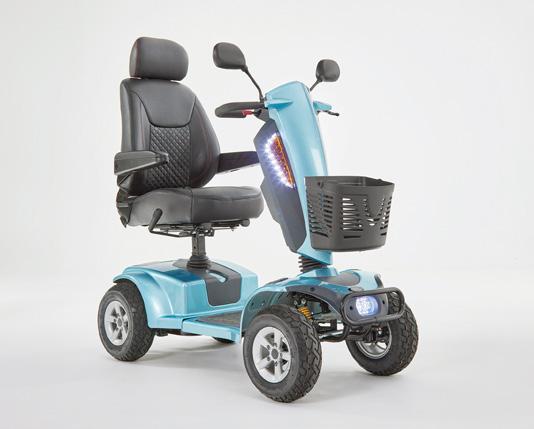
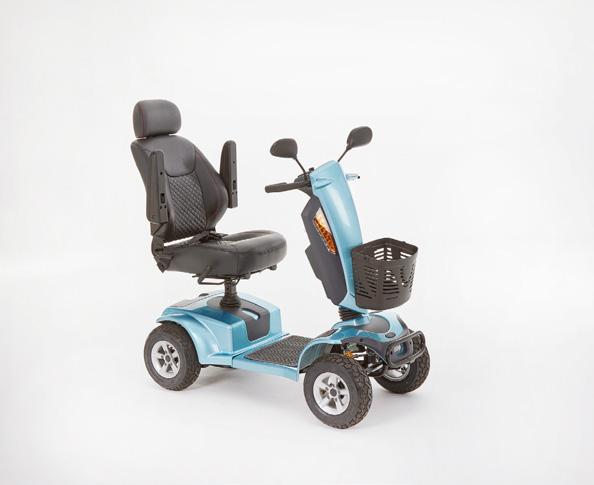
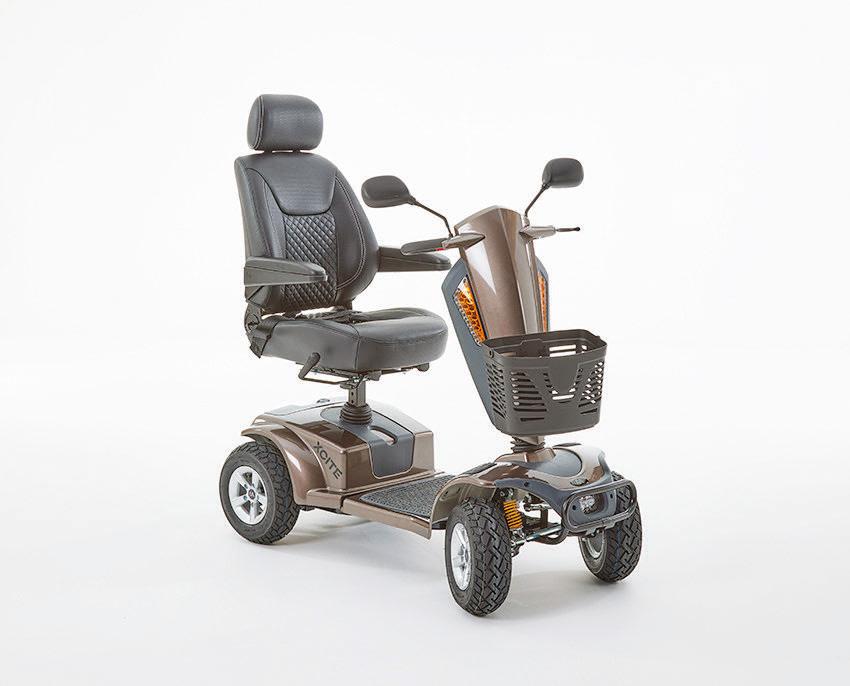
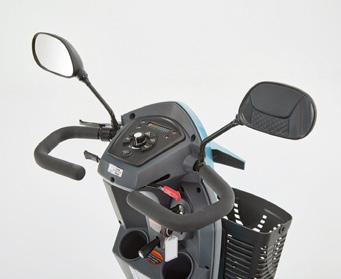
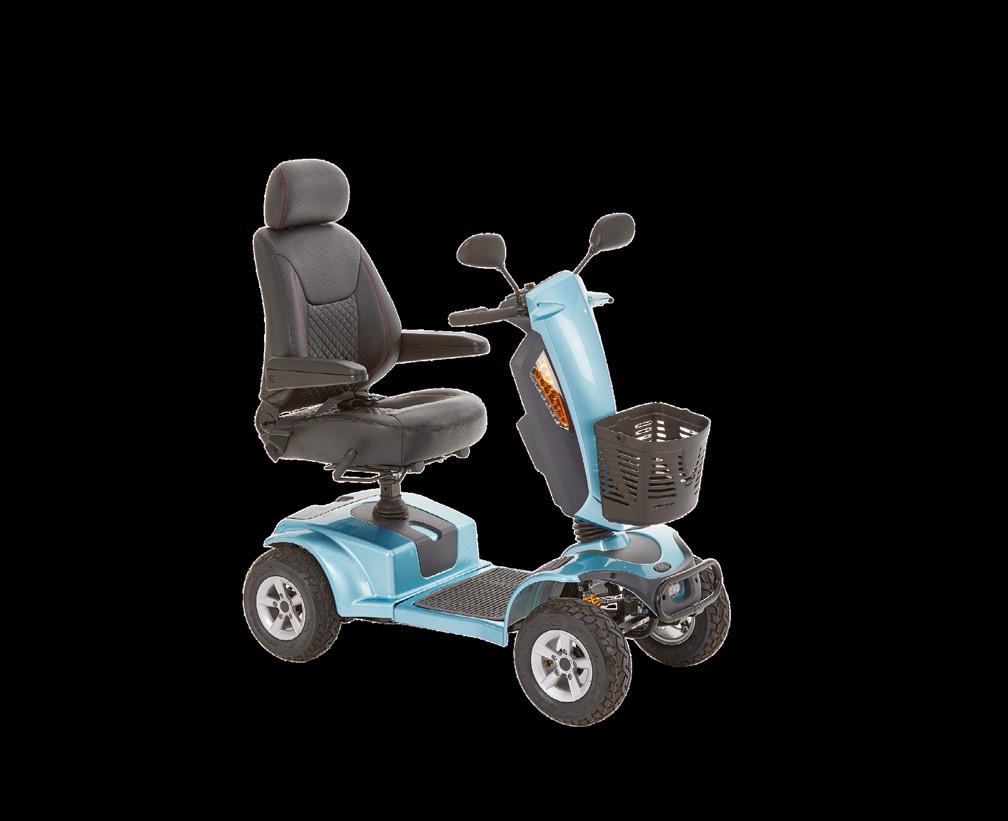
The Xcite Li uses ultra safe Lithium Phosphate batteries to offer market leading range and performance on a compact 8mph scooter.
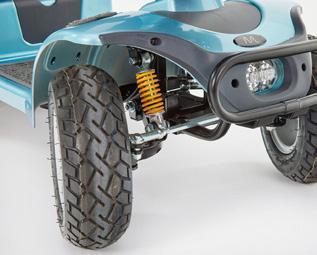
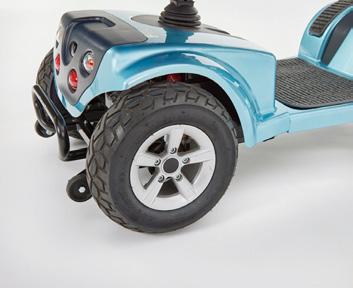
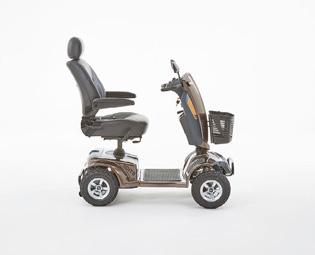
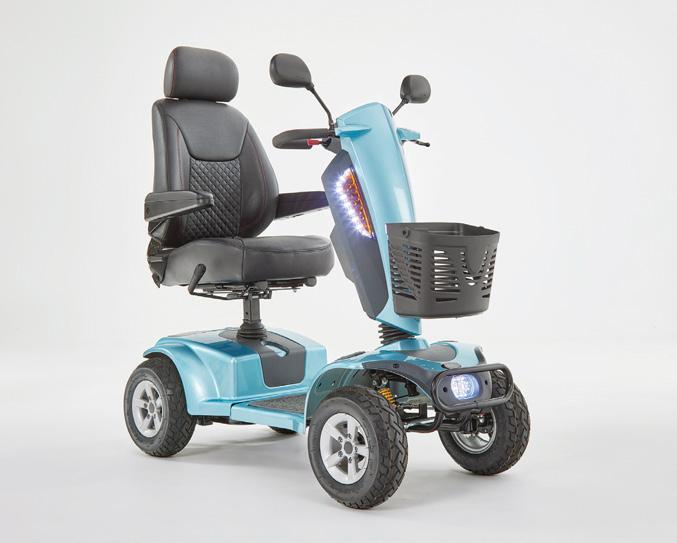
LARGE PNEUMATIC
HIGH GROUND
LARGE ROTATING & SLIDING CAPTAIN SEAT
Aqua Bronze
Available in: 25 Stone
Li Lithium-Ion Battery Technology



Up to 45 Mile Range
FRONT & REAR SUSPENSION
Weight Limit
Available with SLA or Lithium batteries

FRONT LED LIGHT
DELTA HANDLE BAR & SIMPLE CONTROLS
HIGH LEVEL DAYTIME RUNNING LIGHTS
W A R R A N T Y W A R R A N T Y W A R R A N T Y 5 YEAR W A R R A N T Y W A R R A N T Y *Available through our network of Approved Repairers only*
VISIT www.motionhealthcare.co.uk CALL 0844 257 8150
Welcome!
This issue THIIS is celebrating 300 issues and 25 years of keeping trade professionals in the mobility and access sector informed with the latest industry news, views, insights, products and jobs.
Aside from a refreshing new look, THIIS has taken the opportunity to catch up with David Russell, the magazine’s founder, to learn about its roots and some of his memories in growing the publication from an eight-page bulletin to its current format (p4).
Inside you’ll find plenty to read about, with expert-recommended bathing aids (p14 & 48) and an industry take on a couple of themes which have been making national headlines lately. These include a look at lithium batteries and to what extent mobility retailers need to be educating customers about their use (p44). Another is AI. Artificial intelligence has had a bit of negative press lately with its use in everything from student essay writing to Hollywood films, but our feature on page 20 looks at how retailers in the mobility industry can embrace AI to their advantage. isn’t alone in marking important milestones lately. Electric Mobility has been innovating in the mobility sector for 40 years now, and this year the firm has been busier than ever, bringing out new products and embracing ‘state-of-the-art’ lithium ferro-phosphate battery technology (p34).
Also celebrating 40 years is Warwickshire-based mobility retailer Wenman Healthcare. Aside from a busy showroom, its newly refurbished independent living centre offers on-hire specialist healthcare equipment and Trusted Assessor training for healthcare professionals (p26).
If you’re a retailer with any news to share about your showroom then don’t delay in getting in touch with me about it. Enjoy the issue.
THE UK’S NO.1 MAGAZINE FOR THE MOBILITY, ACCESS & INDEPENDENT LIVING TRADE
EDITOR
Liane McIvor 07917 784929 liane@thiis.co.uk

ADVERTISING Joe Fahy 07384 258 372 joe@bhta.com
SUB-EDITOR Sarah Sarsby sarah@thiis.co.uk
STAY UP TO DATE... @wwwthiiscouk
THIIS.Magazine
thiis-magazine
THIIS is produced by the British Healthcare Trades Association. Printed in the UK by Buxton Press Ltd. Designed by Dan Thompson at TypeStart. All rights reserved. No part of this publication may be reproduced or used in any way without the written permission of the publisher. The views expressed in this publication are not necessarily those of the publisher and although every effort has been made to ensure that the information is accurate, the publishers take no responsibility for errors or omissions.
st article: Celebrating 300
rade Talk: AI in mobility retail

upplier Spotlight: Electric Mobility
ews, deals and people
etailers’ Choice: Bathing and toileting recommendations
uyers’ Guide: Bathing and
Inside... thiis.co.uk | From the editor | 3 48 09
Celebrating 300 issues!
The original founder of THIIS Magazine,
Russell

How did it all begin 25 years ago?
Well, there was an important period before which led to the development and launch of THIIS.
A couple of years before, I had left my position of Marketing Director at Keep Able to go out on my own, under the name Marketing Matters. I had been encouraged by a small group of mobility dealerships in Liverpool, Sheffield, Leicester and Watford. We formed a small group, and I produced marketing campaigns both for them individually and collectively.
We decided to have a crack at national advertising, but to do this, we had to have more dealerships to cover the country. I formed the Mobility Matters Network, and, eventually, 28 companies with close to 40 outlets were involved.
We produced thousands of lowcost enquiries over several years. At the same time, I was developing other ideas which involved bringing groups of companies together to take advantage of cost savings, such as a combination mailer that was inserted into various magazines.
BOOKLET ORIGINS
One of the other initiatives was a very simple booklet which just contained advertising from suppliers and was sent to every dealership in the UK. It was around 20 pages and worked well. That
was called Healthcare Matters.
Since the earlier 80’s and throughout my career in the industry I had been visiting the American global healthcare show, Medtrade. It was a huge event with suppliers from all over the world. The American marketplace was more advanced than our own in many respects, both in terms of products and distribution channels. One of the other noticeable differences was that there were three industry magazines being produced.
Although very much smaller and less advanced, I started to wonder whether our industry would be big enough, or interested enough, to sustain a magazine of any kind. A few months later, I took the plunge and launched THIIS.
However, it wasn’t a real magazine at the start. The clue is in the title – THIIS I’m guessing that very few readers will know what it stood for.
It was The Homecare Industry Information Service, and it was just a simple eight-page bulletin with snippets of news. I decided to launch
it as a subscription newsletter and worked hard on what I thought was a really powerful marketing mailer to tempt both dealerships and suppliers to sign up. It was £70 a year for dealers and £95 a year for suppliers.
I sent out the mailer to everyone I had on my database, which, in those days, was around 2,000 and waited… And waited… And waited.
SLOW START
To say that the take-up was slow would be a gross over-exaggeration. Although I did get a call from one supplier who was known to be an effective marketeer congratulating me on the mailer and telling me just how good it was – that was ironic!

4 | Guest article | thiis.co.uk
David
recalls how the publication for the mobility and access trade came about 25 years ago…
“Well done to THIIS for making it to their 300th edition. As the first company ever to advertise in your magazine, we are pleased to say we are still supporting you, and look forward to many, many more editions.”
First Senior Group
This image from the Quadrosenior campaign, produced by Essential Aids, was one of the more memorable covers of THIIS in the early days
We did get subscribers, but not many. Over the next few weeks and months, we offered ‘three months free’ promotions and gradually started to get a reasonable number of subscribers.
One of the things that ensured THIIS continued was the support it received from a few of the mobility company representatives. They would visit a dealer, ask whether they had seen a particular news item and, if not, suggest that they really should be getting it. A few of them kindly took subscription forms around too. If you are still in the industry and reading this, then please know that it was very much appreciated.
As for the format, that stayed the same for quite a few issues. It grew to 12 and then 16 pages, but was, essentially, a collection of news snippets from around the industry and nothing else.
One of the limitations was that ‘news’ wasn’t that easy to come across in those days. Very few companies were using PR companies, and many didn’t even have a marketing department.
Those that did weren’t used to sending news items out, as there wasn’t anywhere to send them previously.
BRINGING IN ADVERTISING
Over time there was a gradual development, with images used and spot colour being introduced – very adventurous indeed. Bit by bit the newsletter became more like a proper publication, but there was still no advertising involved as Healthcare Matters was still running quarterly. It was one of the suppliers who pushed me into taking advertising in THIIS. They were keen to run something monthly rather than quarterly and so in the end I gave in and took the money!
Soon, as other suppliers followed, the magazine started looking much as it does today and the final development saw the introduction of full colour which, as you can imagine, made a huge difference to the look and feel of the publication.
Getting good images from the companies that were being featured was also an issue in the early days. Over the years I had some pretty awful photographs sent in which people assumed could be used.
The advent of better phone cameras made a difference and now more companies were using PR agencies and sending across interesting and newsworthy material with professionally taken images.
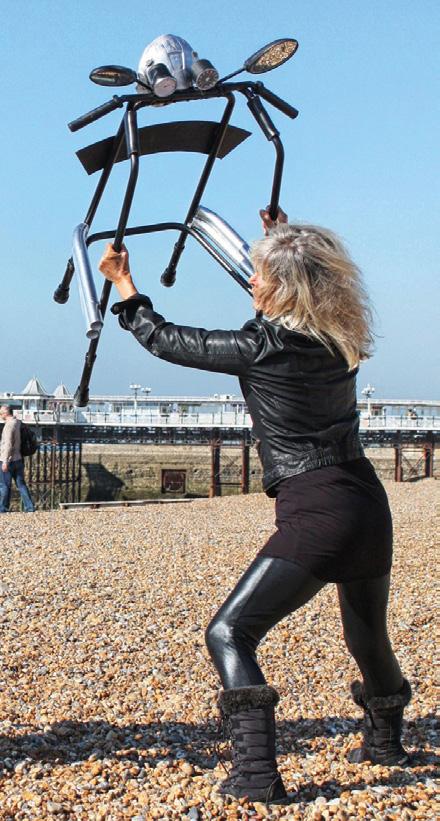
I was also keen to get something different on the cover of the magazine and managed that quite often, I think. The Quadrosenior campaign, produced by Essential Aids and based on Quadrophenia by The Who, was one of the more memorable covers, although it was one of the first times that I felt old when I was explaining about The Who in the office and eventually realised that no one knew who they were – outrageous.
PRODUCING CONTENT
Much of the content in the magazine was produced by interviews, sometimes face-to-face, but more often on the phone. They were recorded and then written up. Everyone knew that whatever they told me was totally confidential and that they would get to see the text from the article before it appeared in the magazine. That put people at ease, and it soon became apparent that there was a group of people in the industry who were excellent at giving interviews and saying exactly what you wanted to see on the page.
If you have contributed over the years, then thanks for your time and experience.
Of course, good magazine content is all about the new stuff generally –products, ideas, people and companies. A frustration was having to work so hard to find the new stuff!
My biggest bugbear was exhibitions. The number of new products with absolutely no marketing or promotional support at the shows was staggering. I
thiis.co.uk | Guest article | 5
“Congratulations on your 300th issue, that’s a fantastic milestone to hit! Others have come and gone but it’s great to see THIIS is still going strong.”
Drive DeVilbiss Healthcare
“Many happy returns from all the team at Karma, you have come a long way since the days we paid extra for a colour advert.”
Karma Mobility
“THIIS has been a reliable guide through the ever-changing landscape of our industry, from the first issue to the 300th. Congratulations on this incredible milestone!”
Access BDD
could walk around a show (and anyone who saw me at the many shows will know I walked around a lot!) and not see a single sign telling me what was new.
It got to me so much that I eventually offered to produce signs for companies to use at Naidex. Two signs were on offer – ‘New’ and ‘Updated’. I considered an updated product or service just as newsworthy if the changes were substantial. The response was amazing. In the end, there were over 800 signs in the show highlighting the new and updated stuff – result. But I bet that the next time you walk around a show…
must have been way too cheap for anyone else to be interested!
I’m still very proud of how THIIS developed and the fact that it is still around today. The magazine has helped companies launch, helped build distributor networks, helped people get jobs and helped to keep thousands informed and up to date.
KEEPING UP THE PUBLISHING
After I stepped back, we had a move up to the ‘frozen north’ to be nearer grandchildren. I led the development of a couple of other magazines, for a retailer and a charity, and played some golf, and more golf.
The golf club I joined (Woodsome Hall) had its centenary last year and so I wrote the book for that which was fun. It wasn’t the first centenary book I had written though, as I had produced the BHTA book a few years ago.
PROUD LEGACY
Our little company (Homecare Publishing – Pam and I) never wanted to employ anyone, and so the 72-page monthly issues were quite intense. When the opportunity came to hand it on to the British Healthcare Trades Association (BHTA) it seemed like a sensible move.
Calvin Barnett joined with a view to him taking over when I eventually went through the door for the last time, and he did just that, doing a great job for several years. Throughout my career in different businesses, I employed very few people, but he was most definitely the best ‘catch’.
And so here we are, 25 years later and the magazine is still providing information, news and views in what is a unique marketplace. Amazingly, throughout the time I was running the magazine, there was absolutely no competition. The advertising clearly
However, way back in 1995 I wrote my first book – ‘The complete guide to quick and easy marketing that works’. It was before internet selling and was self-published but did ok.
So, after a short break of just 28 years, I thought I’d have a go at another marketing book. ‘58½ ridiculously simple marketing gems I wish I’d known years ago’ is being edited right now and will be available from all good bookshops (online) shortly.
It’s based on my whole career, but as the vast majority of it was spent in this industry, you might find it interesting. There are plenty of examples of good and bad marketing that relate to things I’ve seen over the years, but there are no names mentioned of course. I can’t afford the legal fees.
Since there’s nothing like a sensational scoop, here’s a shocking fact. When we were putting together the 200th edition, I was going through old issues to refresh my memory about stories we had covered and came across two different issues... With the same issue number. Whoops.
So, just as the 200th issue was
actually the 201st, then this 300th has a bonus issue too. To anyone reading this who I did business with, debated with, learnt from, was entertained by, spent time in the hotel bars during showtime with and met endless times in the 40 years I was involved in the marketplace, I hope you are doing well and good luck for the future.
One final thought. The Spectator is the world’s longest running magazine. It’s been around for an amazing 195 years. Not long to go then!
David can be contacted on 07825 084 111 or via his website at www.cantbuyit.com
6 | Guest article | thiis.co.uk
“Congratulations on 300 issues of informative trade news and the latest product launches.”
Precision Rehab
“Congratulations on delivering high quality content every issue, an admirable success on reaching this milestone. Thank you from the Electric Mobility Team.”
Electric Mobility
“300 issues is a fantastic milestone, well done to everyone who has been involved in the production of THIIS over the years.”
Rehasense UK
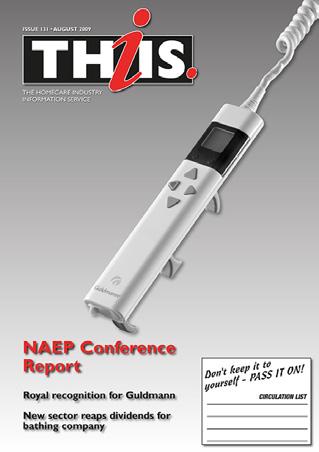
An earlier issue of THIIS Magazine




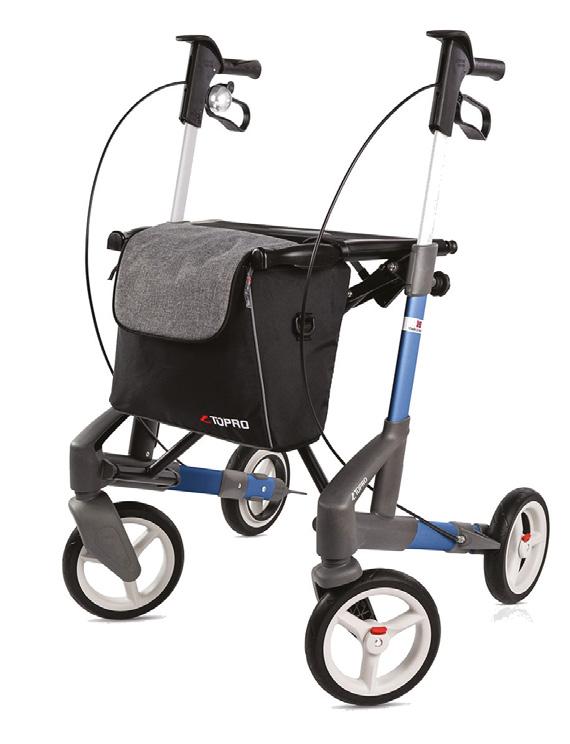
- keep on moving 0115 846 5406 info@topro.co.uk www.topromobility.co.uk Responsibility for the next generation Made in Norway
TOPRO
yours now on:
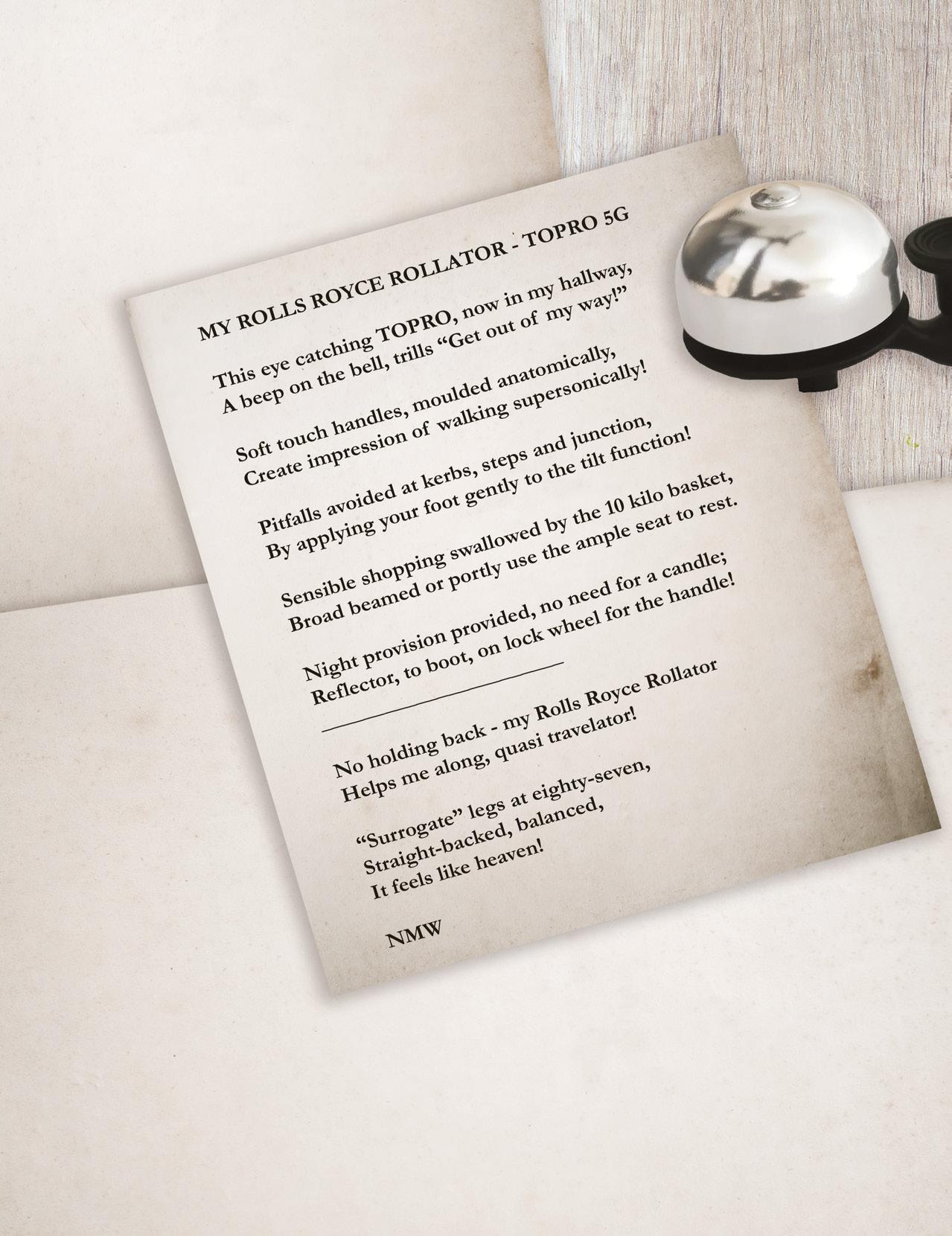
This message arrived from one of our customers, Mrs W of Oxfordshire Trust
for something completely different. Order
orders@topro.co.uk
An Ode to Freedom
A FIXED RATE INSURANCE PACKAGE
RETAILER ESSENTIALS
Exclusive to Retail Members of the BHTA

COVER INCLUDES
✔ Material Damage
✔ Business Interruption
✔ Employers, Public & Products Liability
Option 1: Excluding Employers Liability


- £224 including 12% Insurance Premium Tax
Option 2: Including Employers Liability
- £280 including 12% Insurance Premium Tax
REQUEST INFORMATION
For more information on our insurance packages, please contact Stephen Aldridge - our Client Director who has worked with BHTA’s members for many years.
E: stephen.aldridge@verlingue.co.uk

T: +44 (0) 208 282 8595
W: www.verlingue.co.uk
Cover provided by Markel (UK) Ltd
ABOUT US
Verlingue is the approved insurance broker for the BHTA insurance scheme, which is available exclusively to BHTA Members. We are part of the Verlingue Group, one of Europe’s largest independent insurance brokers, employing over 1,100 people and placing premiums in excess of €2 billion.
Authorised and regulated by the Financial Conduct Authority
News, deals & people
A round-up of the key trade stories for business leaders to digest
Training day success for Driving Mobility
Funded by the Department for Transport, Driving Mobility recently held its first training day in Cornwall for powered wheelchair and mobility scooter retailers (PWMS) so road safety can be improved for all.
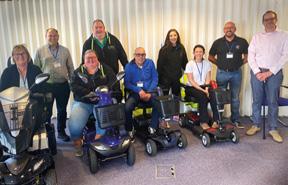
Held at Cornwall Mobility in Truro, a Driving Mobility-accredited centre, the educational event involves clinicians working with retailers so they can better assess customer needs, provide appropriate products and raise awareness about safe driving.
All attendees at the Cornwall event had completed web-based training before moving onto the hands-on workshops and interactive discussions.
LEGO makes learning braille fun
LEGO Braille Bricks are now available through www.lego.com.

LEGO Braille Bricks – Play with Braille – is aimed at kids aged 6+ and has been designed so that anyone who is curious about braille, be they blind, partially-sighted or sighted, can have fun getting to know the braille system at home with their family members in a playful, inclusive way. The set includes 287 bricks in white, yellow, green, red and blue with the studs on each brick arranged to correspond to the numbers and letters in the braille system, with the printed version of the symbol or letter situated below the studs.
It also includes two baseplates to build on and a series of play starters to teach players how to orient, attach and stack the bricks through well-loved games such as ‘rock, paper, scissors’.

Launched at a House of Lords event earlier in the summer the free PWMS Retailer Training Scheme is available to all suppliers of scooters and wheelchairs. The course consists of an online module and a practical day at a Driving Mobility centre. Retailers interested in enrolling on the scheme can email:
info@drivingmobility.org.uk
THIIS has ONE set of LEGO Braille Bricks –Play with Braille (RRP £79.99) to give away. Simply email your name and address to info@thiis.co.uk with ‘LEGO Braille’ in the subject head by 19th September 2023.
thiis.co.uk | News, deals & people | 9
WIN!
Ability Plus’ retail expansion
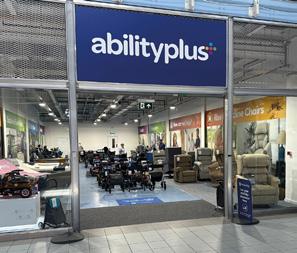
Mobility retailer Ability Plus recently celebrated the grand opening of its spacious new showroom at Dockside Outlet Centre in Chatham, Kent. The new showroom offers an extensive range of cutting-edge mobility aids, including wheelchairs, mobility scooters, walking aids, and much more.
Mobility in Motion launch
A ground-breaking initiative with a mission to revolutionise the landscape of driving aids and vehicle adaptations has been launched.
Mobility in Motion is part of the ABC Mobility Group, which boasts 40 years of industry experience. It has been launched to leverage its cutting-edge technology and UK-leading experts in the field to reimagine the driving experience for all individuals and foster inclusivity on every road.
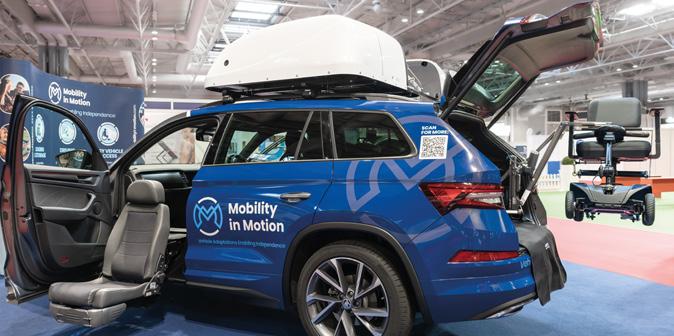
The East Midlands-based business is the exclusive distributor of both Autochair and Brig-Ayd products within the UK, simplifying the way its customers can purchase both ranges and arrange installation anywhere in the UK. It has been confirmed that the product range will expand in the coming months.
Dash Rehab launches smart powered wheelchair
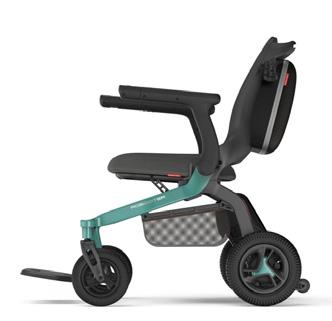
Mobility equipment supplier Dash Rehab has launched its second smart powered wheelchair, the manual-fold Robooter E40, following on from the X40 electric-fold model earlier this year.
The E40 is a 4mph manual-fold powered aluminium wheelchair which can be controlled with a smartphone. Added features built into the chair include the ability to change the voice on the chair, so it is a family member’s voice instead, and power settings. A ‘fault find’ feature highlights if there is an issue with the chair, and the end-user can receive handy updates via an app. Available in black, grey, and turquoise, the E40 has a 20amp lithium battery with a travelling distance of 16 miles.
Seating supplier LCS acquires WheelAir
Irish custom-made seating supplier LCS has announced the acquisition of WheelAir, the Scottish start-up which devised an active airflow system to assist wheelchair users with heat and moisture control. WheelAir will operate as a subsidiary of LCS, maintaining its brand, with its brand produced and distributed by LCS. Before closing for business at the end of 2022, WheelAir enjoyed much success, bolstering its team with clinical expertise and expanding its product range with new models.
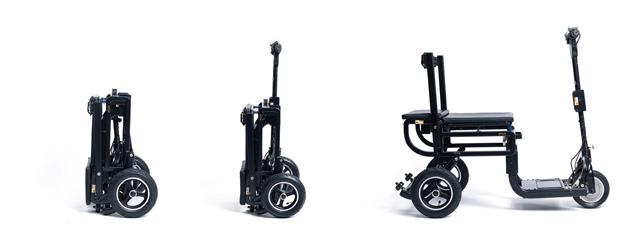
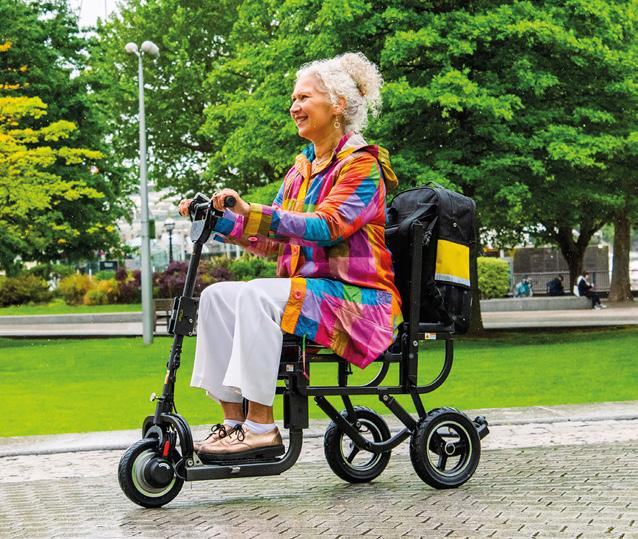
eFOLDi’s all-new Power Chair upgrades
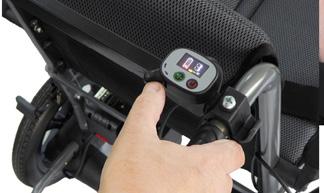
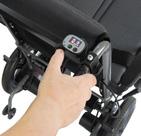
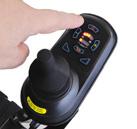
Portable mobility specialist eFOLDi has introduced a suite of enhancements for its Power Chair. A new joystick system makes it easier for users to operate the chair while a charging port incorporated into it helps to facilitate on-board charging. An integral USB port also enables endusers to charge their mobile phones or other devices on the move.
An advanced on-board controller delivers enhanced operational performance and improved battery management capabilities, while the attendant controls have also been upgraded. Other updates include an ergonomically designed layout for the thumb control, speed control and battery management display on the rear of the chair.
10 | News, deals & people | thiis.co.uk
Safety First
Our products are designed and manufactured with the utmost care and attention to detail, ensuring they meet the highest safety standards.
EN 81-40:2020 sets out safety rules for the construction and installation of stairlifts and inclined platform lifts, and we are proud to say that our products meet these standards.
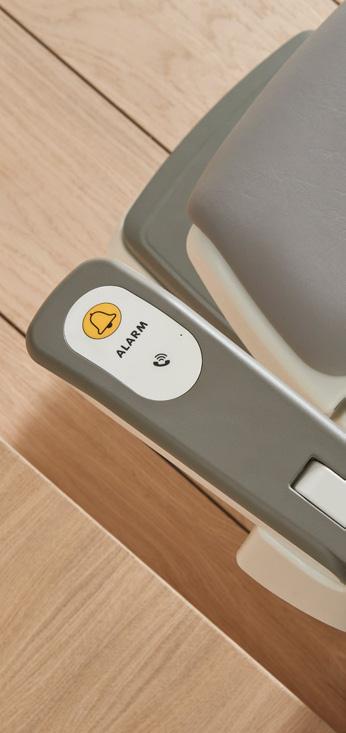
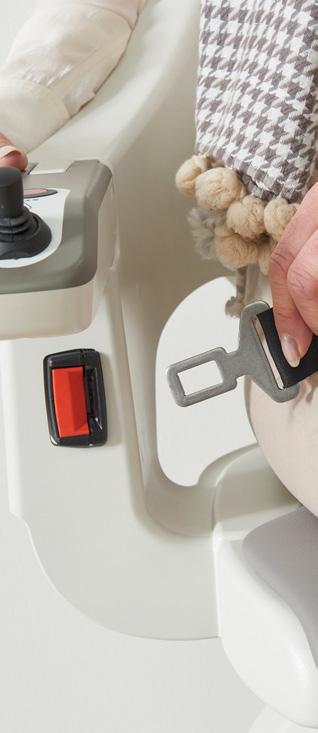
With Access BDD you can have absolute confidence and peace of mind, knowing that our products are fully compliant for you and your customer. Speak to the team to learn more.
accessbdd.com
Events
REHACARE
WHEN?
13-16 September 2023
WHERE?
Dusseldorf, Germany
www.rehacare.com

KIDZ TO ADULTZ NORTH
WHEN?
1 November 2023
WHERE?
Manchester Central www.kidzexhibitions. co.uk/kidz-north
KIDZ TO ADULTZ MIDDLE
WHEN?
14 March 2024
WHERE? Exhibition Hall, CBS Arena www.kidzexhibitions. co.uk/kidz-middle
DISABILITY AWARENESS DAY
WHEN?
14 July 2024
WHERE?
Warrington, Cheshire
www.disability awarenessday.org.uk
MEDICA
WHEN?
13-16 November 2023
WHERE?
Dusseldorf, Germany
www.medica-tradefair.com
NAIDEX
WHEN?
20-21 March 2024
WHERE? NEC, Birmingham
www.naidex.co.uk
MEDTECH FORUM
WHEN?
22-24 May 2024
WHERE? Vienna, Australia
www.themedtechforum.eu
PMG CONFERENCE
WHEN?
15 July – 17 July 2024
WHERE?
Telford International Centre, Telford
www.pmguk.co.uk
KIDZ TO ADULTZ WALES & WEST
WHEN?
21 September 2023
WHERE?
ICC, Newport, Wales www.kidzexhibitions. co.uk/kidz-wales
MEDTRADE
WHEN? 26-28 March 2024
WHERE? Dallas, Texas www.medtrade.com
DISABILITY EXPO
WHEN?
5-6 July 2024
WHERE? ExCeL London
www.thedisabilityexpo.com
CARE SHOW
WHEN?
11-12 October 2023
WHERE?
Birmingham, West Midlands
www.careshow.co.uk
THE OT SHOW
WHEN?
22-23 November 2023
WHERE?
NEC, Birmingham
www.theotshow.com


THE HEALTH & SAFETY EVENT
WHEN?
30 April – 2 May 2024
WHERE?
NEC, Birmingham
www.healthandsafety event.com
THE BIG EVENT
WHEN?
15-16 September 2023
WHERE?
Royal Highland Centre, Edinburgh
www.motabilityone bigday.co.uk
If there’s an event you would like to see included here or you would like to advertise your event please email info@thiis.co.uk
12 | Events | thiis.co.uk
Our guide to some of the key upcoming events UK and abroad for the mobility and access sector.
You asked us for a straight stairlift suitable for gently inclined stairs, and we listened, now our flagship 1100 offers an expanded inclination range (25 – 50 degrees). It’s the ideal fit for an even broader range of home configurations and provides you with the ability to survey, quote and install a life-changing lift in just a matter of days!
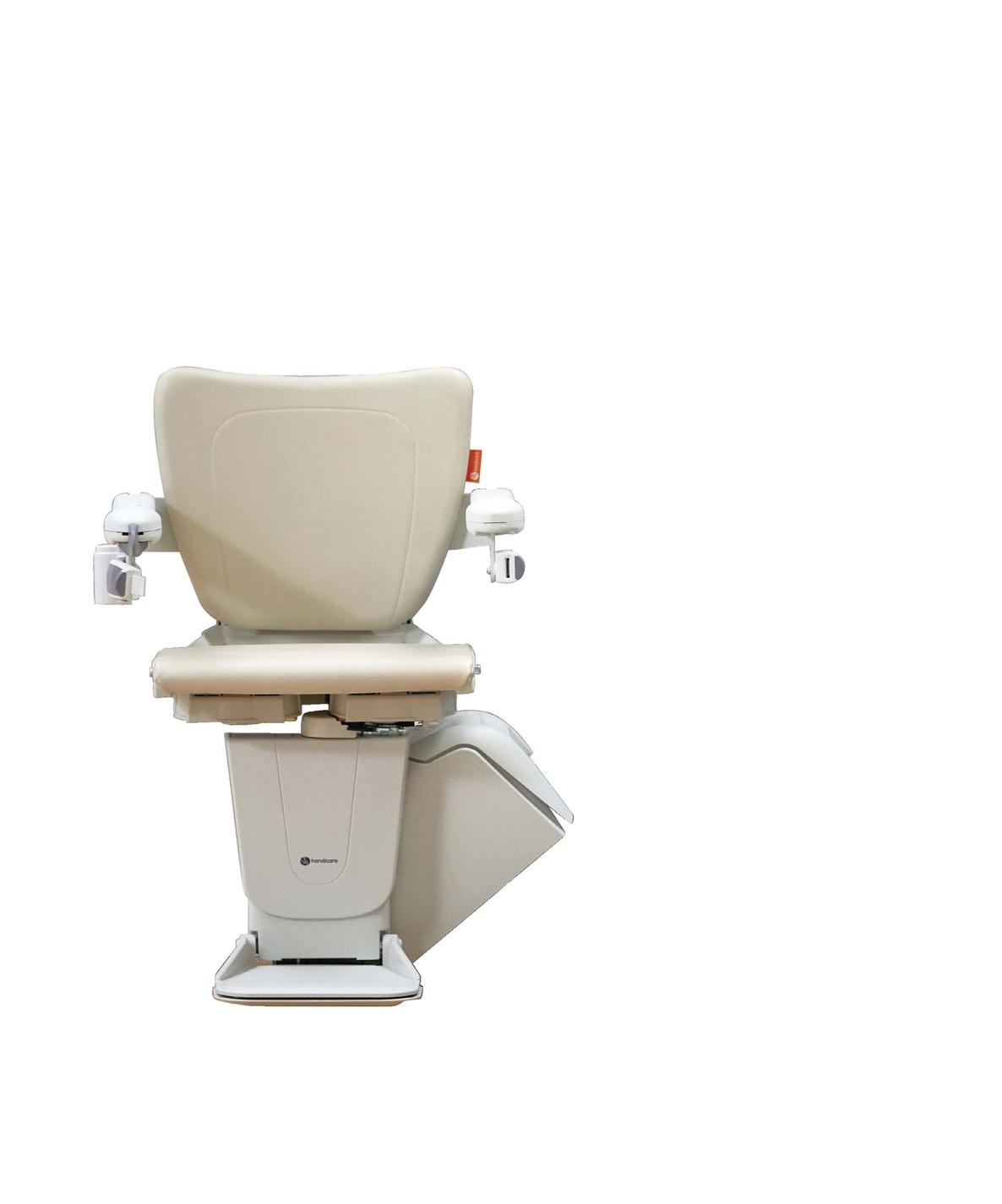
www.

Speak to your BDM to learn more or call TPS on

handicare-stairlifts.co.uk
225 3121
0844
THE RETAILERS’ CHOICE Bathing and toileting aids
Wondering which bathing and toileting aids are grabbing mobility companies’ attention?
Each month, retailers in the industry highlight one product that is standing out for them and why…

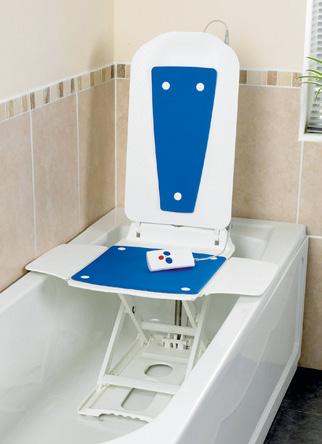
Deltis Bath Lift from Bathmaster
“One of our most popular bathing aids is the Bathmaster Deltis Bath Lift. One huge advantage the Deltis has over other bath lifts is that it doesn’t have any plumbing or electric cables; it is completely battery-operated and can be installed in most standard bath sizes.
“It is super easy to secure with four suction feet that can be positioned so they fit the curved floor of the bath. One nifty function is that is also has a quick rear-release system, so it can
Aquatec Ocean Shower Commode from Invacare
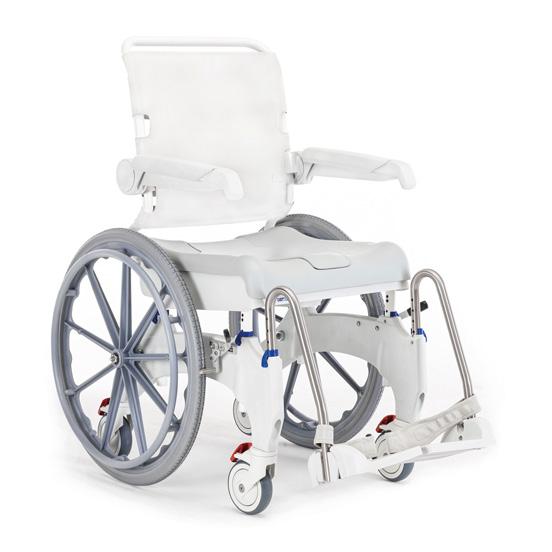
“I have chosen the updated Aquatec Ocean Shower Commode from Invacare as our bathing product this month. As well as the standard chair, an XL and a tilt-in-space version are also available. It is highly configurable with a good range of accessories to support various conditions and postural requirements.
“As well as a great sales product, the Ocean works well as a hire fleet product and having the ability to use it as a transit chair, or a self-propelling chair by simply adding the larger rear wheels makes it extremely versatile.
“It’s very simple to disassemble for decontamination and storage and the three-year warranty gives clients peace of mind.”
be moved from the bath without the individual having to use screwdrivers or the ever-elusive allen key!”
Julia Phipps Director of The Ability Superstore www.abilitysuperstore.com

14 | Retailers’ Choice | thiis.co.uk
Lauren Bromfield Occupational Therapist at Classic Mobility www.classicmobility.org.uk



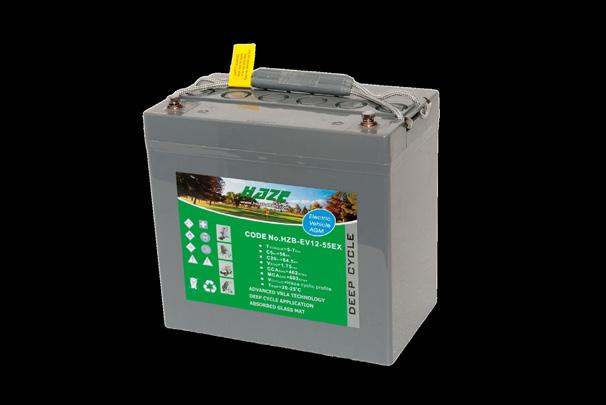
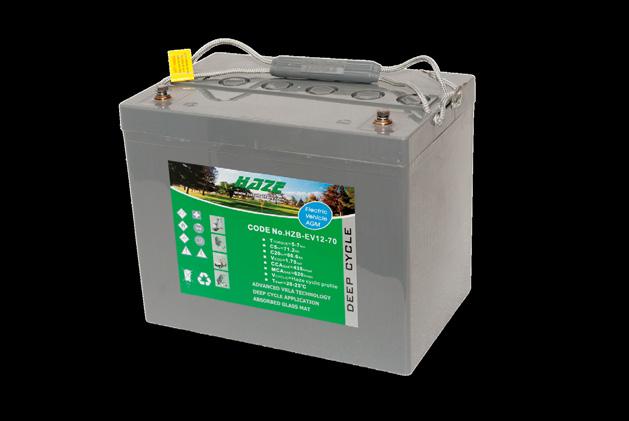
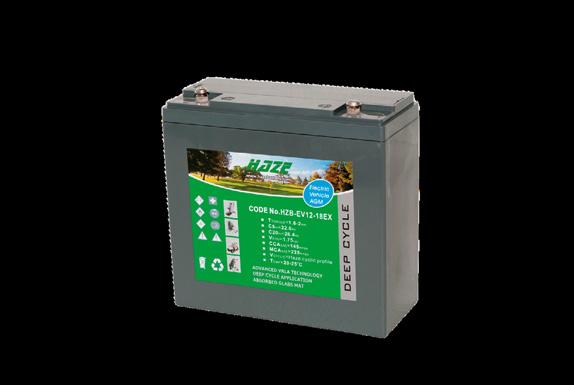
Our AGM batteries are the most powerful battery on the market! We offer Haze AGM batteries in their standard range and their EX range The Haze EX range offers a significantly higher Ah in the same box size - perfect for customers needing that extra boost! 01536 203030 sales@easystartbatteries.co.uk www.easystartbatteries.co.uk
Palma Vita Wash and Dry Toilet from Closomat
“Shower toilets preserve dignity and mental wellbeing in the most basic of human functions. There are several on the market and these are an evolution from separate WC and bidet units that would require significant space and client mobility.
“One of our preferred options is the Closomat Wash and Dry Toilet. It flushes, washes with warm water then dries with a flow of warm air.
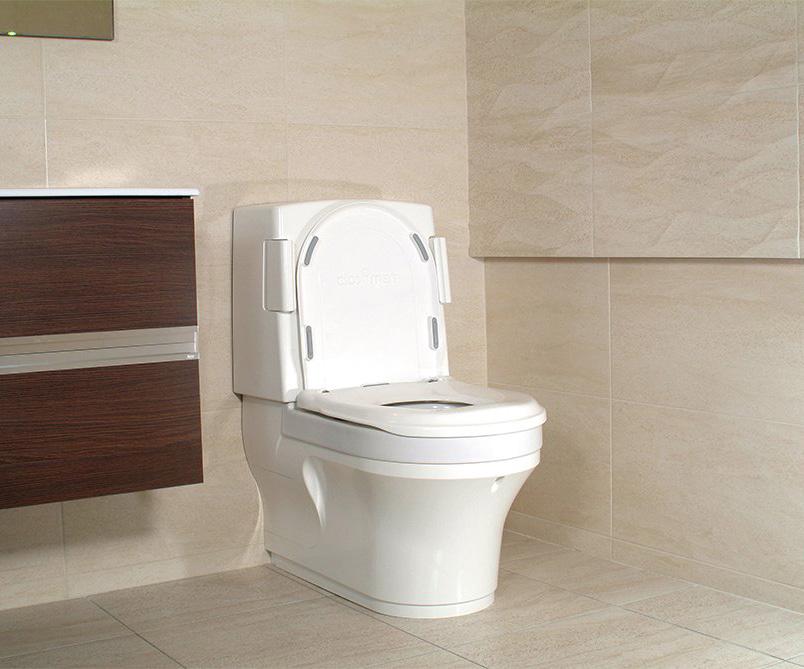
“As simple and as basic as this is, it allows those without the dexterity or mobility to carry on having a private moment without the assistance of a carer or care staff intruding on their personal ablutions. The psychological value of this cannot be underestimated in terms of the wellbeing of the user.
“It is a very reliable and simple device that gives a few options on controls,
but in essence just does its job really well.
“An easy addition to any dealers portfolio if they are prepared to spend a little time training the installers. It complements the range for stairlift and hoist installers and allows a total solution to daily living to be provided.”
Managing Director of TPG DisableAids tpg-disableaids.co.uk


Stay Put Shower and Bathmat from Able 2
“The Stay Put range of bathmat and shower mats are not the typical cheap hardware store mats that you can buy. They are thicker, softer, comfortable and grip really well as they have a lot of suckers on the
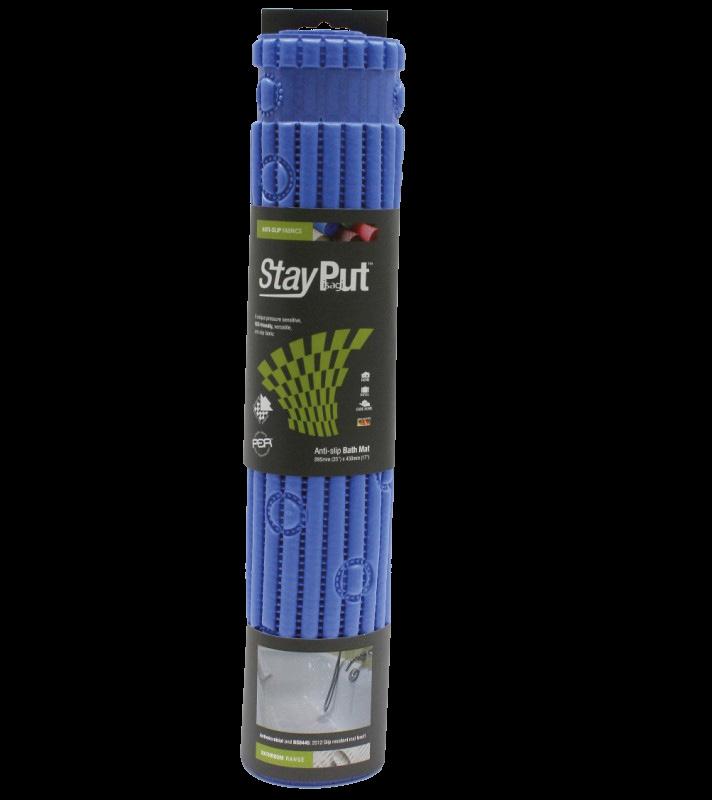
“They do not perish the same or as quick as the standard mats. Being manufactured in the unique PER material combined with an antimicrobial ‘silver’ additive it actively inhibits mould and bacterial growth.
“Strong grip suckers on the bottom ensures they are secured well to the bottom of the bath or shower, although they are not considered suitable for an uneven nonslip surface or where the surface has raised areas as the suckers
“There is a loop on the back to
hang it up after using it or washing it, it is machine washable at 40 degrees centigrade. Both the bath and shower mats are available in white and blue.
“Successfully completing the Slip Resistance testing by Independent Laboratories to Level 1 of the BS Standard BS8445:2012 they are a perfect smaller item for your showroom.”
Karen Sheppard Managing Director of People First Mobility www.peoplefirstmobility.com
16 | Retailers’ Choice | thiis.co.uk
Alastair Gibbs
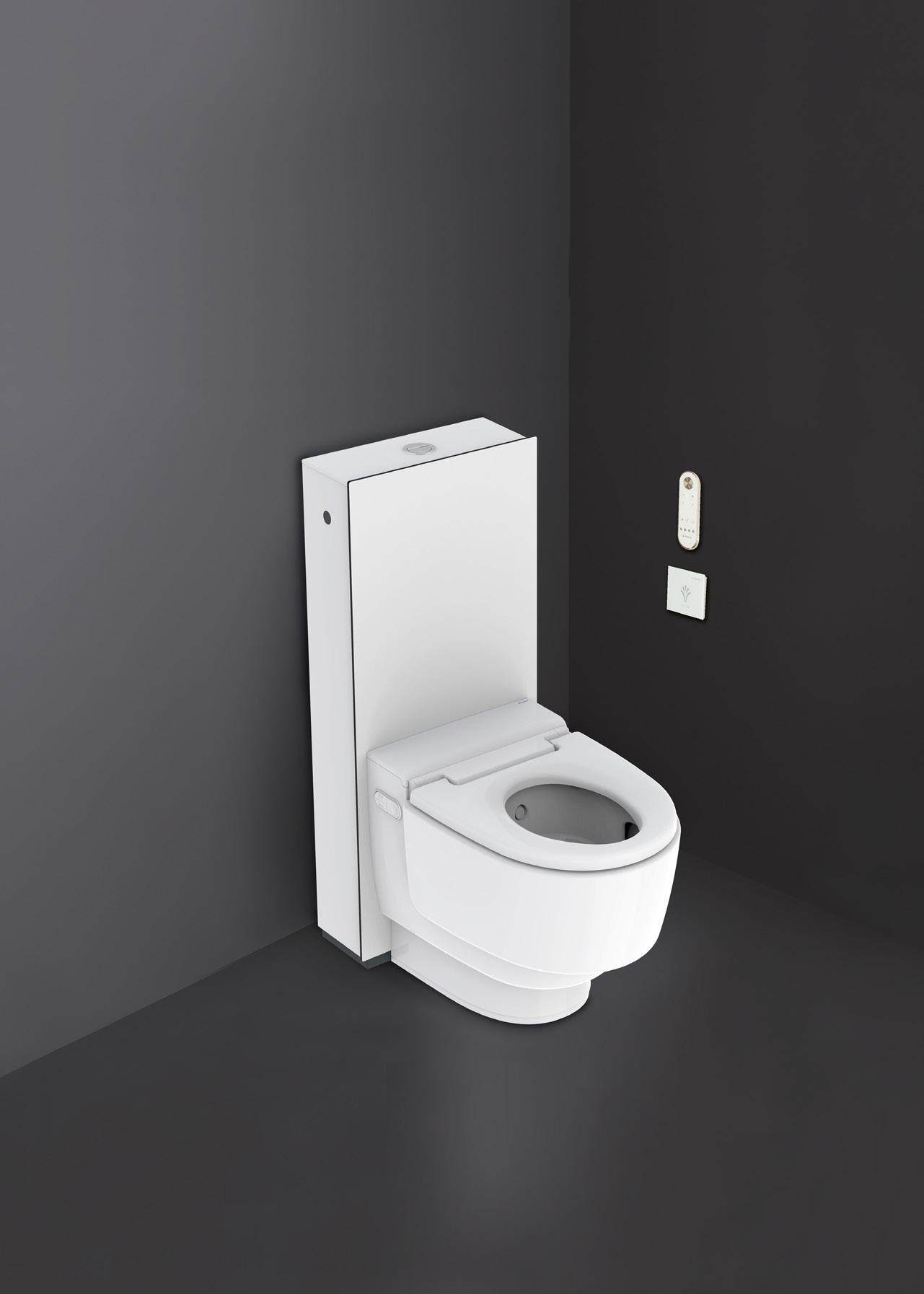
geberit-aquaclean.co.uk/care GEBERIT AQUACLEAN MERA CARE INNOVATIVE THINKING FOR INDEPENDENT LIVING FIXED SEAT NO LID FLUSH ACTUATION FROM REMOTE CONTROL CONTINUOUS FLOW HEATER AND STORAGE WATER HEATER APP AVAILABLE FOR IOS AND ANDROID AUTOMATIC FLUSHING VIA USER DETECTION TOUCHLESS WALL CONTROL PANEL SHOWER CHAIR MODE
Swift Shower Stool/Chair from Etac
“We have recently started selling the Etac Swift range in our showrooms and they are very popular.
“Swift shower stools/chairs are designed with functionality and simplicity in mind. They adapt to uneven floors thanks to the flexible seat and soft ferrules, ensuring a good grip.
“Customers may only need to start using the basic shower stool but at a later date, it can be transformed to add arm supports and back support if their circumstances change. The Swift is easy to adjust to the required height with the telescopic legs. It can be set one step lower at the front for a slightly forward tilted seat to facilitate standing up.
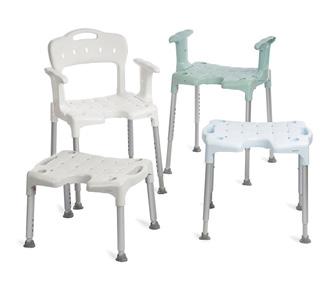
“The lightweight corrosion-free frames are easy to handle and can be assembled without tools. Etac also have other shower stools in their range including the Edge, Smart and Easy, so there are plenty of options.”
Shower Stool from Drive DeVilbiss Healthcare
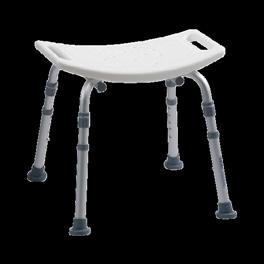
“Showering should be a moment of tranquillity and self-care, and this product helps to preserve the end-user’s independence. The Shower Stool provides support and stability. Crafted with a lightweight aluminium frame, it promises durability and strength while complementing the end-user’s bathroom aesthetics.
“The integrated handles offer both support and portability while the ergonomically crafted seat and strategically placed handles are comfortable and easy to use. With handles on both sides of the seat it becomes the perfect aid for individuals with limited grip strength, enabling them to effortlessly move the stool to suit their needs. It also boasts multiple drainage holes, ensuring water flow is never an issue.”
Laura Hays Director of Thistle Help Limited www.thistlehelp.co.uk
 Rhian Pita Marketing Manager at Ableworld www.ableworld.co.uk

THE MANGAR SUPINE TRANSFER SYSTEM
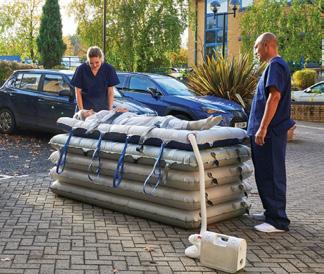
The new Mangar Supine Patient Transfer System makes lifting and transferring patients easy…wherever they fall.
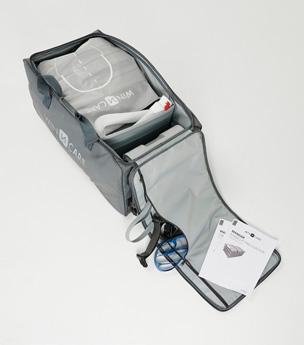
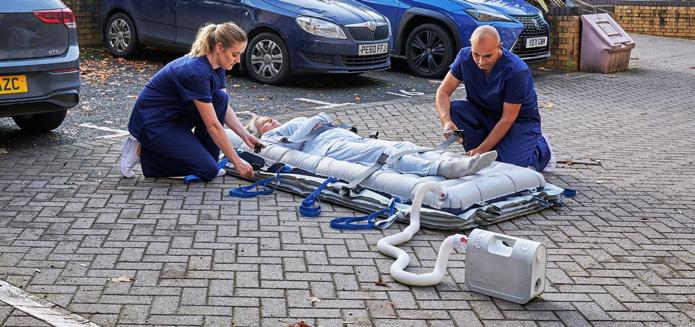
✓ Designed in collaboration with manual handling experts

✓ Combined weight of the products is less than 20 kg

✓ Hands-free inflation
✓ Removeable handles and valves for easy maintenance
✓ No stitching or velcro
✓ Battery and mains operated as standard
For more information or to book a demonstration please email enquiries@winncare.uk or call 0800 2800 485
UK Innovation UK Manufacturer

P OW ER TR IP S
How AI can help your mobility business
There is a lot of chatter about artificial intelligence (AI), and I wanted to discuss the elephant in the room. Does it apply to me and my business? The answer is a resounding ‘yes’.
In his blog, Bill Gates has stated that the development of AI is as fundamental as the creation of the microprocessor, the personal computer, the internet, and the mobile phone, changing the way people work, learn, travel, get health care, and communicate with each other.
He states: “Entire industries will reorient around it. Businesses will distinguish themselves by how well they use it.”

The ongoing digitalisation wave and the ever-increasing use of AI technology are revolutionising various industries. In particular, the mobility and healthcare
sectors are currently at a critical juncture of transformation, with AI being an indispensable component. Incorporating AI is a strategic advantage and necessary for small enterprises.
ENHANCED CUSTOMER EXPERIENCE
AI-powered chatbots and virtual assistants are the frontline soldiers of digital customer care.
For businesses in the mobility and healthcare realm, this implies instant responses to queries, real-time troubleshooting, and 24/7 support. It’s not just about convenience but also about providing a seamless experience to patients and customers.
In mobility aids, like wheelchairs and scooters, downtime can significantly hinder a user’s quality of
life. With predictive algorithms, AI can preemptively alert businesses about potential device failures.
By analysing usage patterns and wear-and-tear data, AI can forecast when a device might malfunction, enabling timely maintenance and ensuring the end users aren’t stranded.
One size rarely fits all, especially in healthcare. AI algorithms can assess individual health records, monitor patient progress, and suggest bespoke treatment plans or mobility solutions. This personal touch can make all the difference in a patient’s recovery journey or enhance mobility.
Another way AI can help is to predict demand, monitor stock levels, and even automate reordering processes. Keeping a tab on inventory is critical, especially when dealing with healthcare products or mobility aids.
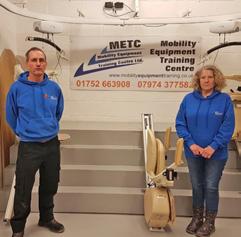
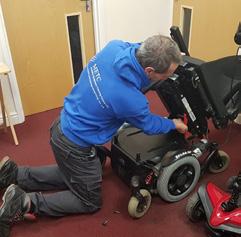
MOBILITY EQUIPMENT ENGINEER TRAINING
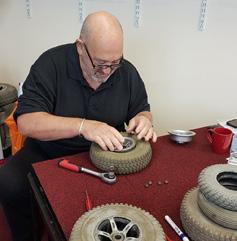
OUR TRAINING CENTRE PROVIDES OUTSTANDING COURSES, LED BY 1ST CLASS PROFESSIONALS IN A WIDE RANGE OF MOBILITY EQUIPMENT.
20 | Trade Talk | thiis.co.uk
With artificial intelligence increasingly becoming an indispensable component in industry, the mobility and healthcare sector needs to embrace it fully if it is to innovate, serve better, and grow, as retail marketing expert Mike Glynn explains…
FOR MORE INFORMATION, PLEASE CONTACT ONE OF OUR FRIENDLY STAFF OR VISIT OUR WEBSITE WWW.MOBILITYEQUIPMENTTRAINING.CO.UK
This efficiency level can prevent potential stock-outs, ensuring patients and customers can always access the necessary products.
Small businesses often need more resources to conduct largescale market research. Enter AI. AI can provide insights into market trends and customer preferences by analysing customer reviews, feedback, and purchasing patterns. For the mobility and healthcare sectors, this means understanding the evolving needs of their demographic and making informed product or service modifications.
HARNESSING AI IN PRACTICE
Let’s explore practical examples of how AI is utilised in retail and manufacturing, especially in the mobility and healthcare industries.
AI isn’t just about futuristic concepts or advanced labs; it’s a pragmatic tool reshaping industries. The retail and manufacturing sectors, crucial elements of the mobility and healthcare ecosystem, are a testament to this evolution. Through concrete examples,

let’s explore how these sectors harness AI for transformative results…

1. Virtual Try-Ons
Eyewear retailers, especially those selling assistive glasses, use AIpowered virtual try-ons. Customers can upload their photos and virtually “wear” different glasses, getting real-time feedback on fit, aesthetics, and even lens clarity tailored to their prescription.
2. Smart Factories

Factories producing mobility aids now incorporate AI-driven sensors into their assembly lines. These sensors detect anomalies in real-time during production, ensuring that any faulty device part is identified and corrected before reaching the end user. This ensures product quality and minimises the risk of device malfunctions postpurchase.

3. AI-Powered Recommendations
Some online pharmacies or health tech platforms use AI algorithms to analyse customer purchase

Develop a strategy
While the advantages of AI integration are manifold, small businesses must approach adoption with a strategic mindset. Here are some suggestions:
START SMALL
You don’t need a large-scale overhaul from the outset. Start with a singular AI application, gauge its impact, and expand.
INVEST IN TRAINING
Implementing AI tools isn’t enough. Your team needs to know how to use them effectively. Consider periodic training sessions or workshops.
STAY UPDATED
The world of AI is fast-evolving. Make it a point to stay abreast of the latest advancements and integrate them when beneficial.
PRIORITISE DATA PRIVACY
With great data power comes great responsibility. Ensure that your AI tools comply with privacy regulations, especially in the sensitive healthcare domain.

thiis.co.uk | Guest article | 21
Unit 1, 147 Elliott Road, Plymouth PL4 0QS 0800 285 1956 mobilityequipmenttrainingcourses@yahoo.co.uk
histories and health data, offering personalised supplement or medication recommendations. This can be particularly helpful for those with chronic conditions or specific mobility challenges.




4. Smart Shelves


Brick-and-mortar stores selling healthcare products or mobility solutions have begun adopting ‘smart shelves’. These AI-powered shelves detect when stock is running low and automatically reorder necessary items. This ensures that customers always find what they need in-store.
5. AI in Quality Control















Manufacturers of prosthetics or orthopaedic aids use AI-driven quality control systems. These systems scan each product, comparing it to a ‘perfect model’. Any discrepancies, be it a millimetre size or a slight variation in shape, are detected instantly, ensuring each product meets the desired standard.



CONCLUSION

While the AI landscape might seem vast and overwhelming, the key is to harness its power in ways that resonate with your business model and customer needs.

Not every AI application might suit your needs, so choose what aligns with your business goals.
You might also wish to consider partnering with tech companies or AI experts who can guide your implementation journey, but always try to be ‘customer-centric’.
Whether in retail or manufacturing, always keeping the end customer in focus is vital. After all, AI should enhance their experience, not complicate it.
In the transformative world of mobility and healthcare, AI is a technological marvel and a practical tool to help drive business success. It’s not a futuristic concept for small businesses in the mobility and healthcare sectors—it’s the present. Embracing it can redefine customer
experience, operational efficiency, and business growth.










Embrace it, not out of novelty but out of the need to innovate, serve better, and grow. AI emerges as a game-changer in a world where personalisation and promptness are paramount.


To learn more about how AI can add value to your business, contact Mike Glynn at 01256 213020 or email info@mgretailconsulting.co.uk

FREEDOM Intelligent Braking System Intelligent Cruise Control Motion Direct Control
“Another way AI can help is to predict demand, monitor stock levels, and even automate reordering processes”
BUGGIES & WHEEL BASES


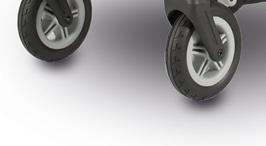
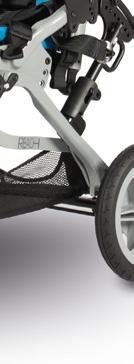
Kids grow and with that their pushchair positioning needs to change. With 10,20, or 30 degrees of fixed tilt plus recline, the REACH can keep up with those changes. 5” of depth adjustment and 4” of width allow the REACH to grow with your little one. The REACH comes in 3 sizes and up to 150 lb weight capacity

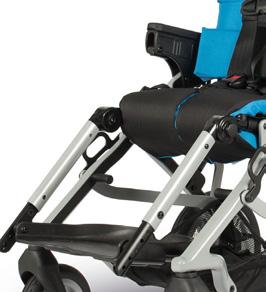
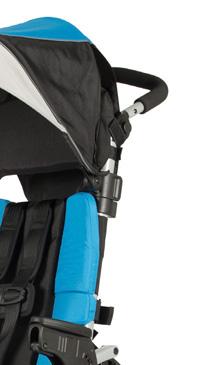
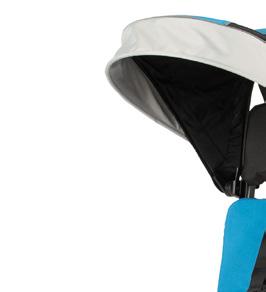

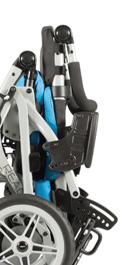
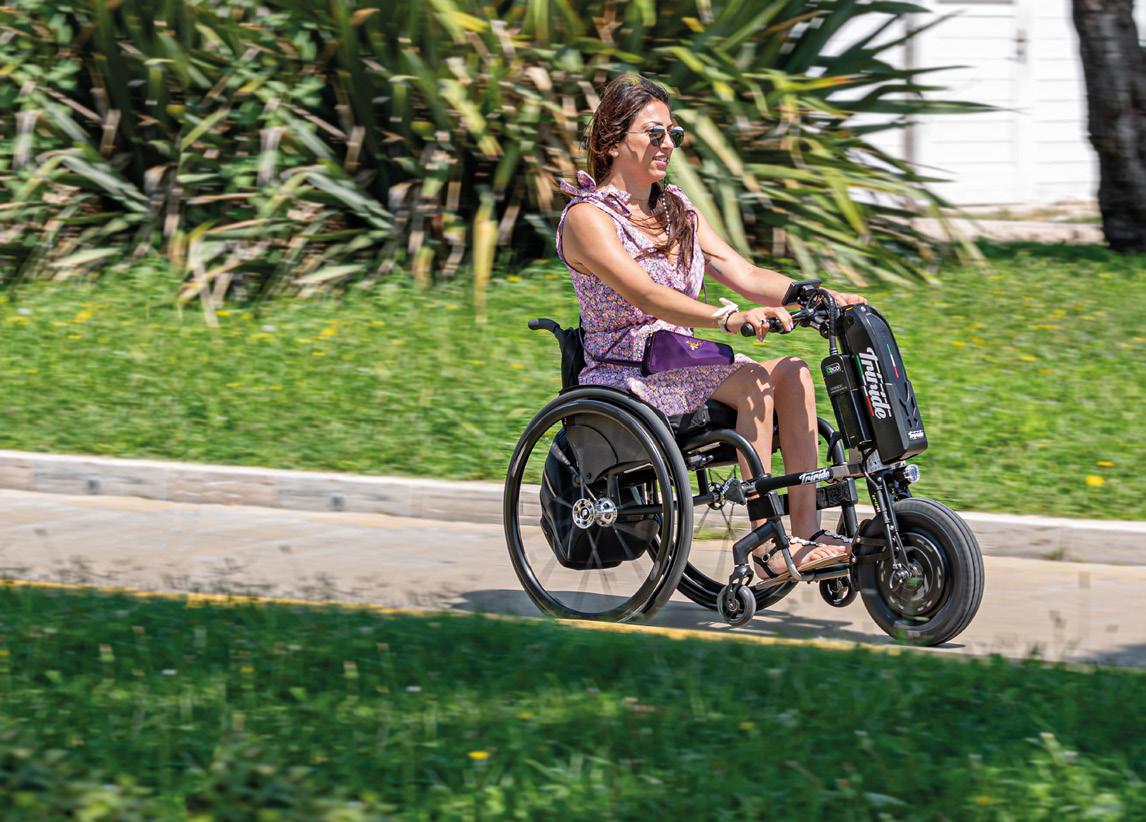
Other buggies and wheel bases available from Stealth





Lightning



Enzo

Contact our Stealth specialist on: 07731 999192
CRASHED TESTED

SPECIAL OFFERS,
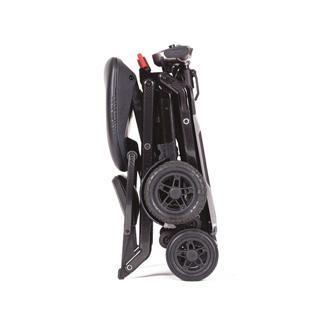
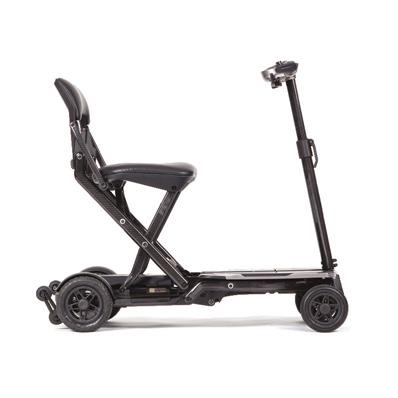
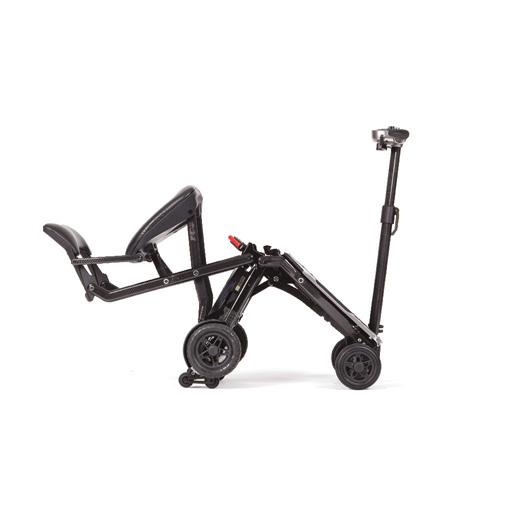
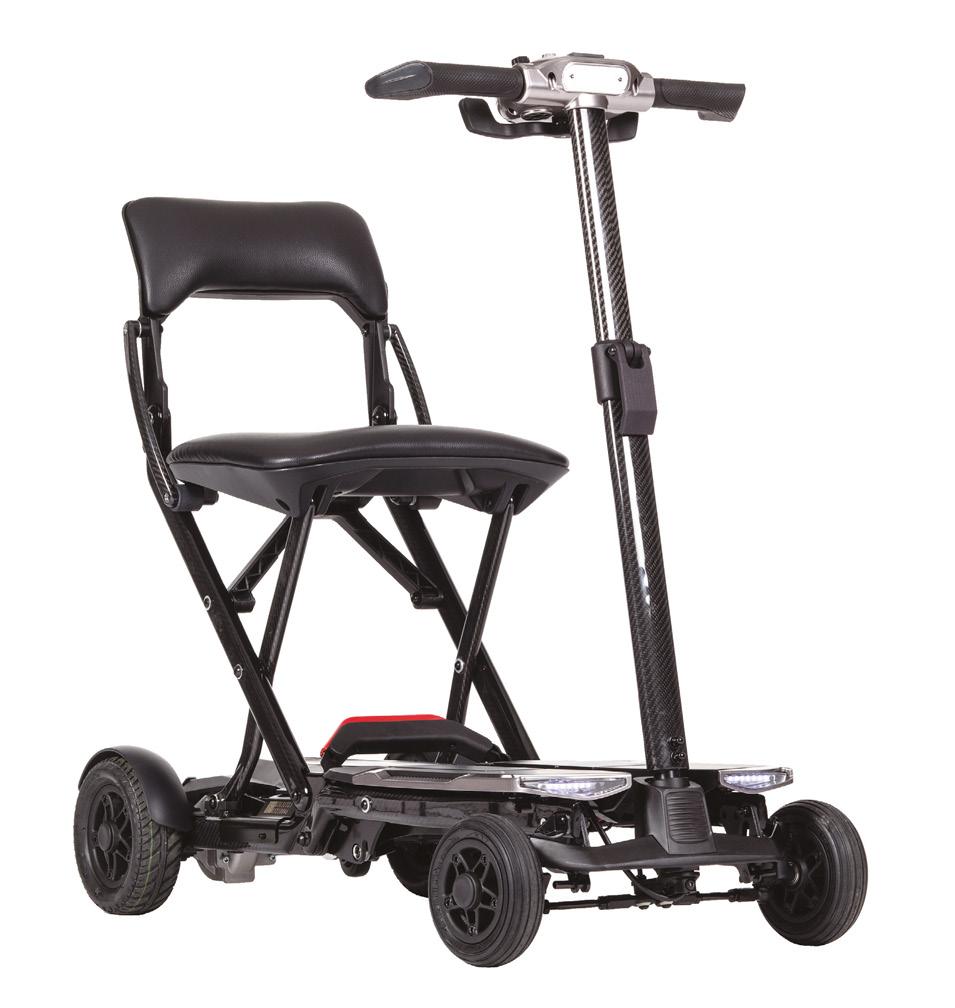
A FLAWLESS FUSION OF INNOVATIVE CARBON FIBRE &
FOLDING TECHNOLOGY

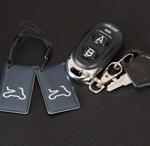
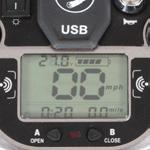
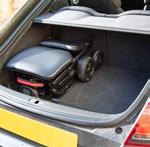
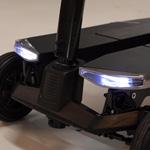
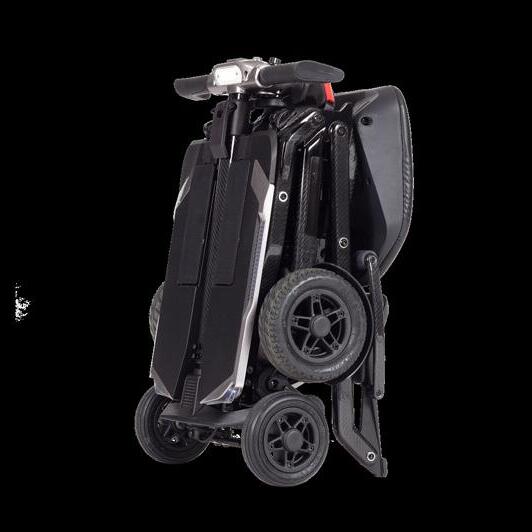
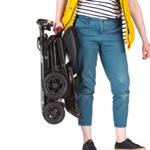
The AIRFOLD PRO is leading the way with innovative features resulting in a cuttingedge auto folding scooter that really enhances the user experience. It is a dream to transport at only 19.9kg* - it’s exceptionally lightweight, extremely compact and easy to lift in and out of car boots. *Without batteries SCAN THE QR CODE FOR FULL PRODUCT INFORMATION & SPECIFICATION
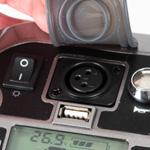
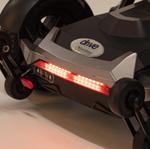
Karen Clarke 01274 475 118 karen.clarke@drivedevilbiss.co.uk Sandra Conlan 01274 475 121 sandra.conlan@drivedevilbiss.co.uk Nial Hutton 01274 475 116 nial.hutton@drivedevilbiss.co.uk www.drivedevilbiss.co.uk | sales@drivedevilbiss.co.uk Call NOW for SPECIAL OFFERS or to request an InStore demonstration! Innovative operation –key, contactless card or remote control Easily removable batteries Headlights Incredibly lightweight Rear lights USB
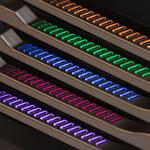
& on board charging port Super compact for easy transportation Digital LCD display Pulsating coloured side lights
AUTO
charger
Wenman Healthcare: Helping customers live independently

Based in rural Warwickshire, Wenman Healthcare has a lot be proud of during its 40 years in business, but more than that, making a meaningful difference in the mobility industry.
Its founder, David Wenman, established the business back in the early 1980s and lays claim to being the sole importer of the first go-everywhere mobility scooter and exhibiting it across the UK and one of the earliest members of what is now known as the British Healthcare Trades Association (BHTA).
Wenman Healthcare is a true family
concern, having employed numerous family members over the years, including the founder’s wife, June Wenman. Now aged 94, June will often be found welcoming customers into the showroom.
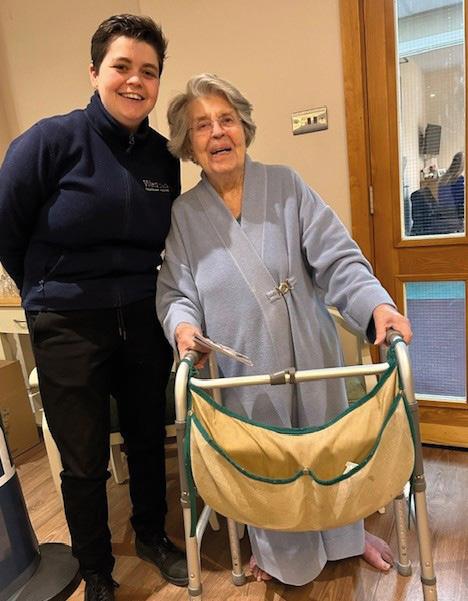
The founder’s son, Ian Wenman, Director of Wenman Healthcare, is now also a board member of the BHTA, having only recently joined the company in a regular role alongside his other business interests, one of which included the development of the UK’s first passenger-approved battery train and fast-charging system.
David’s granddaughter, Charlotte
Let the Powerpack do the pushing
Incredibly easy to fit and simple to remove
Designed and made in the UK Range of up to 10 miles
Wenman, is Operations Manager at Wenman Healthcare and is a qualified trusted assessor.
The family is assisted in the business by a small, hard-working team of staff. Hayley Smith, Operations Assistant, has been managing the business while Charlotte is on maternity leave. There is also a service technician, and sales and finance support.
26 | Retailer Spotlight | thiis.co.uk
Having reached its 40th anniversary milestone of serving customers, Warwickshire-based Wenman Healthcare has much to celebrate, which includes its newly refurbished training centre and showroom…
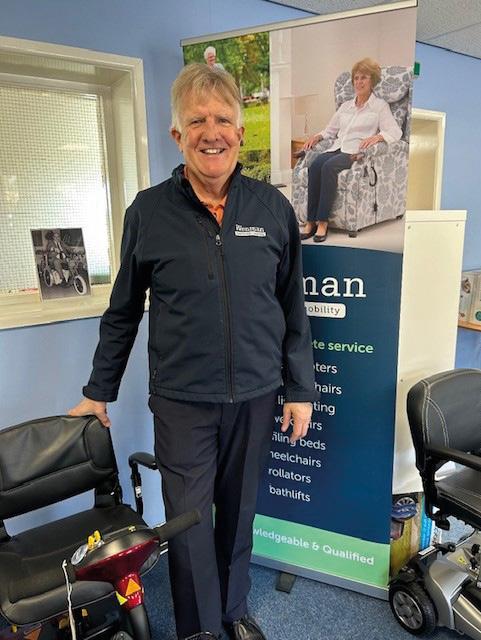
Hayley Smith visits customers to carry out assessments
Hayley’s day-to-day role is to visit customers in their own homes or in nursing or care homes to carry out assessments and help to ensure the products that Wenman Healthcare stock in its showroom are of good quality and meet the needs of our customers.
She will also shortly be training for the Trusted Assessor Level 3 and 4 qualifications, which will enable her to better meet the needs of their customers in assessing for more specialist equipment.
Prior to working at Wenman Healthcare, Hayley managed a petrol station. She says: “I enjoyed working at the petrol station, but I find the role I have now a lot more rewarding as I am constantly helping people to become more independent.”
RURAL SHOWROOM
The showroom, training room and maintenance workshop are in three converted barns, a mile or so from
Junction 15 of the M40 in Barford, near Warwick.
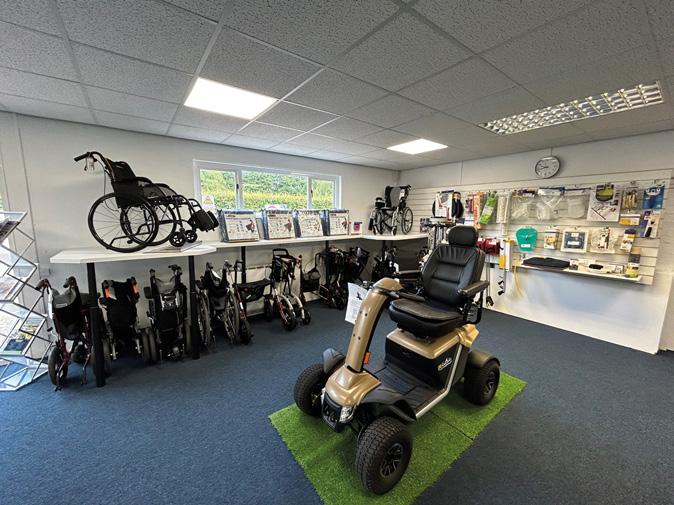
It has a large area to test-drive scooters, and powerchairs in a safe environment away from traffic and pedestrians.
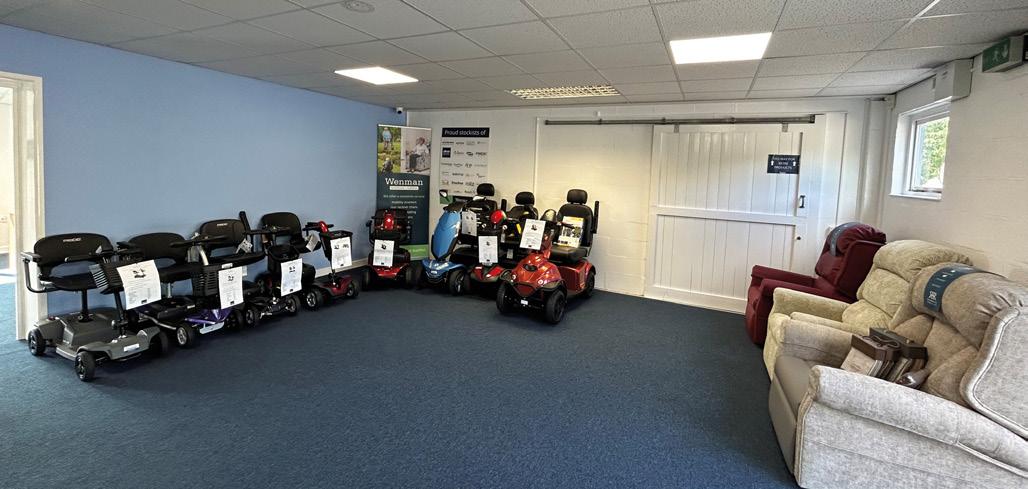
The company sells products and services to local hospitals, care homes, health professionals and public, and is it is currently developing an independent living centre for less able people. It boasts a fully equipped and recently refurbished training room and a large and varied fleet of mobility products for hire.
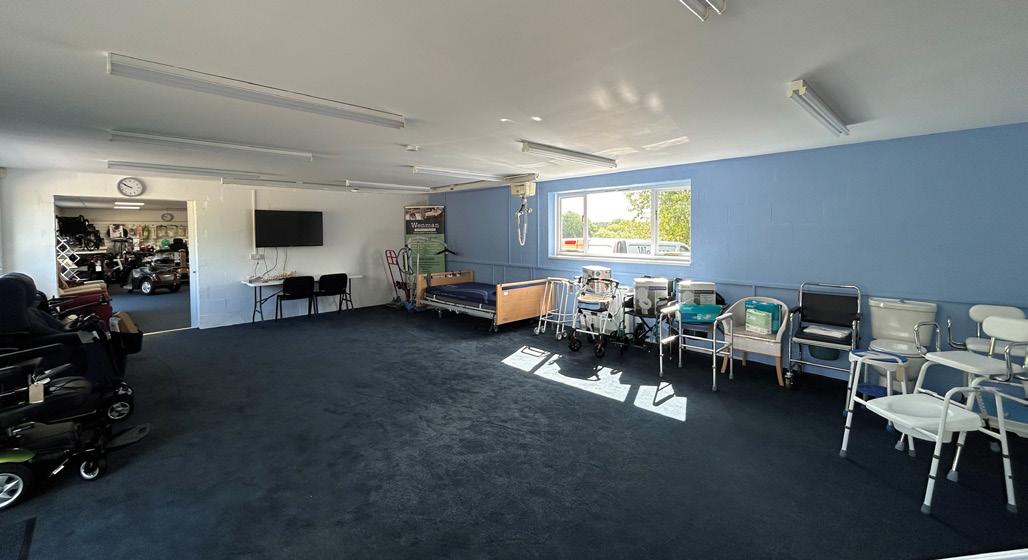
The independent living centre has undergone a complete refurbishment and extended its stock range to include more specialised walking aids and a wider range of go-anywhere scooters, paying homage to the founder’s initial product line.

Its hire fleet is extensive, and
according to Hayley certainly one of – if not the – largest in the area, and it is currently developing this even further for the benefit of those trying to stay in their homes or return home after being in hospital.
LIGHTWEIGHT BESTSELLERS
The best-selling products at the moment are lithium battery-powered scooters and powerchairs, exclaims Hayley. “Everyone wants lightweight!”
She continues: “At Wenman Healthcare we prefer to recommend mobility scooters that can be taken apart to go into the back of the vehicles as opposed to the electric folding ones as we have found they’re a lot more reliable, lighter when broken down and can go over more uneven terrain.”
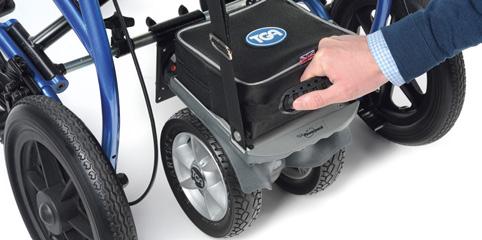
Go-anywhere scooters and lightweight powerchairs continue
Call to find out more 01787 888 106 or email trade.sales@tgamobility.co.uk www.tgamobility.co.uk QUOTE: THS20 Attaches in seconds thiis.co.uk | Retailer Spotlight | 27
“The independent living centre has undergone a complete refurbishment and extended its stock range”
The on-site training room where care providers train their staff members
to be popular, with more customers beginning to realise the ability of some of the new products coming onto the market.
Hayley continues: “We expect the more rugged scooters we have recently got into the showroom, such as the Scooterpac Invader and the Pride Ranger, will become popular.
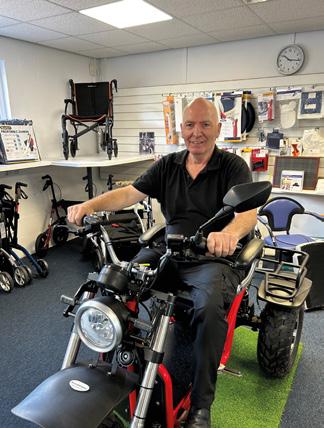
“Due to our rural location these can be adequately tested, and we believe a lot of the less able landowners and those wishing to explore the countryside will be interested in these products as not only will they go over rough terrain, but they are also ecofriendly with being battery operated.”
The brands Wenman Healthcare most enjoy working with are Pride Mobility, Electric Mobility, Invacare and Karma Mobility. These suppliers, explains Hayley, have a quick response time and the quickest delivery of parts or equipment. She says: “Their equipment is very reliable and if there ever is an issue, their staff are always on hand to answer any queries efficiently.”
As with many mobility retailers, increasingly, Wenman Healthcare has its products to sell online but prefers to meet our customers in person especially as a user’s needs can vary and often be complex. It is difficult and sometimes impossible to handle this adequately online, explains Hayley.
Online, a customer can’t look at the product in person and test it, which is extremely important as they can’t tell if it will solve the problem they have.
PROVIDING A VALUABLE SERVICE
Wenman Healthcare remained open throughout the Covid-19 pandemic, providing a valuable service to nursing and care homes across the surrounding area but there has been a surge in pent-up demand after Covid which, along with delays in supply, has been challenging at times, explains Hayley.
Like many retail businesses, Wenman Healthcare was hit by a lot of
shipping delays on various products. This wasn’t ideal as in many cases the equipment was often needed urgently by their customers. Hayley explains: “The way we got around this was by reaching out to different suppliers and providing a bigger range of products that would still meet the customers needs but could be supplied more quickly.
“This has actually been a learning curve as we have been able to try and test new products that we haven’t had in the showroom before and been able to pick out the pros and cons.”
The other biggest challenge to hit the business is the economy. Says Hayley: “Customers currently don’t have the money to spend which is why we are always looking out for good quality, budget range equipment so we can cater for everyone’s financial situations.”
Perhaps the most recent setback though was when a major water leak put the training room out of commission for three months when the ceiling collapsed, damaging a lot of equipment. The team all mucked in clearing and helping dry out the site and ensuring that the business was up and running as soon as was reasonably possible.
NEW INDEPENDENT LIVING CENTRE
Wenman Healthcare is looking forward to developing its independent living centre fully and getting the word out there. It was originally established some 20 years ago, consisting of a
28 | Retailer Spotlight | thiis.co.uk
“We prefer to recommend mobility scooters that can be taken apart to go into the back of the vehicles”
Go-anywhere mobility scooters and lightweight powerchairs are popular
Showroom assistant Malcolm Service technician John
training area with hoists, profiling bed, etc, for moving and handling, first aid and trusted assessor training.
As Hayley explains: “Exactly what happens to this space going forward very much depends on what the local healthcare professionals and our customers wish to see, as demand for the training room and space for products compete.
“We would however, like to see it develop as a place to come for specialist training, as we are one of the only locations with specialist equipment available for hire in the area.”
David Wenman was heavily involved in the early days of the British Healthcare Trades Association (BHTA) and lobbying the UK Parliament over scooter laws, helping to develop proper regulations and standards for the
supply of scooters in the UK.
She says: “His son Ian Wenman is now endeavouring to build on this by providing a fully trained team of trusted assessors and engineers to ensure the public get the right help, at the right time and right cost, in a friendly and caring environment.

“This cannot always be provided adequately in a retail high street location and we believe a new brand of professional mobility operators are required to service and back up the needs of our pressurised NHS and social services with an increasingly ageing population.”
PUTTING THE CUSTOMER FIRST
Where the mobility sector is concerned, Hayley says that the business would like to see more regulation to ensure
customers are adequately protected and getting the right product solution for their needs that they can operate safely, from people who are properly trained.
Says Hayley: “We as a business are keen to ensure we uphold the values of our founder providing a quality product and service to best fit the needs of the less able.
“We believe this, along with trained advisers, is the way forward for a professional offering that healthcare professionals can comfortably recommend to patients. We also feel that if we get this right we can better help the local NHS and social services.” Hayley finishes with an example of a customer who came into the showroom a few weeks ago with his severely disabled, wheelchair-bound wife, who had an issue with the way she was sitting in her chair.
“His local wheelchair services didn’t have the capacity to sort it for him and he had waited weeks with his wife suffering discomfort. He was eventually referred to us by our local wheelchair services centre, having travelled many miles across Warwickshire to get to us.
“We completed the modification in a day or so at minimal cost and had his wife back and comfortable in her chair. It’s examples like this that show the need for and value of a well-equipped mobility or independent living centre with properly trained staff.
“We believe we are well placed to serve the growing needs of the healthcare profession and to increase the number of people we can assist.”
www.wenmanhealthcare.co.uk
30 | Retailer Spotlight | thiis.co.uk
“We are always looking out for good quality, budget range equipment so we can cater for everyone’s financial situations”
There is plenty of indoor space for customers to test out the products
The showroom, training room and workshop are in three converted barns, in Barford, near Warwick



Award winning ultra-lightweight folding scooter 0800 138 2878 • www.efoldi.com • sales@efoldi.com * without batteries NEW Upgraded control system The Lite No Assembly Required Only 1p/mile to run Stable: 4-point balancing system ✓ ✓ ✓ FOLDS & UNFOLDS IN SECONDS ONLY 1 5kg* The Power chair Award Winning Attendant control as standard Easy to lift and stow ✓ ✓ ✓ ONLY 15KG* Why buy from eFOLDi? ► Excellent marketing and after sales support including videos, photos and point of sale ► Excellent stock of products and parts ► National advertising campaign that drives customers into showrooms ► Continual product development ► Small dealer network Lightweight folding Power Chair with attendant controls U ltra light weight*
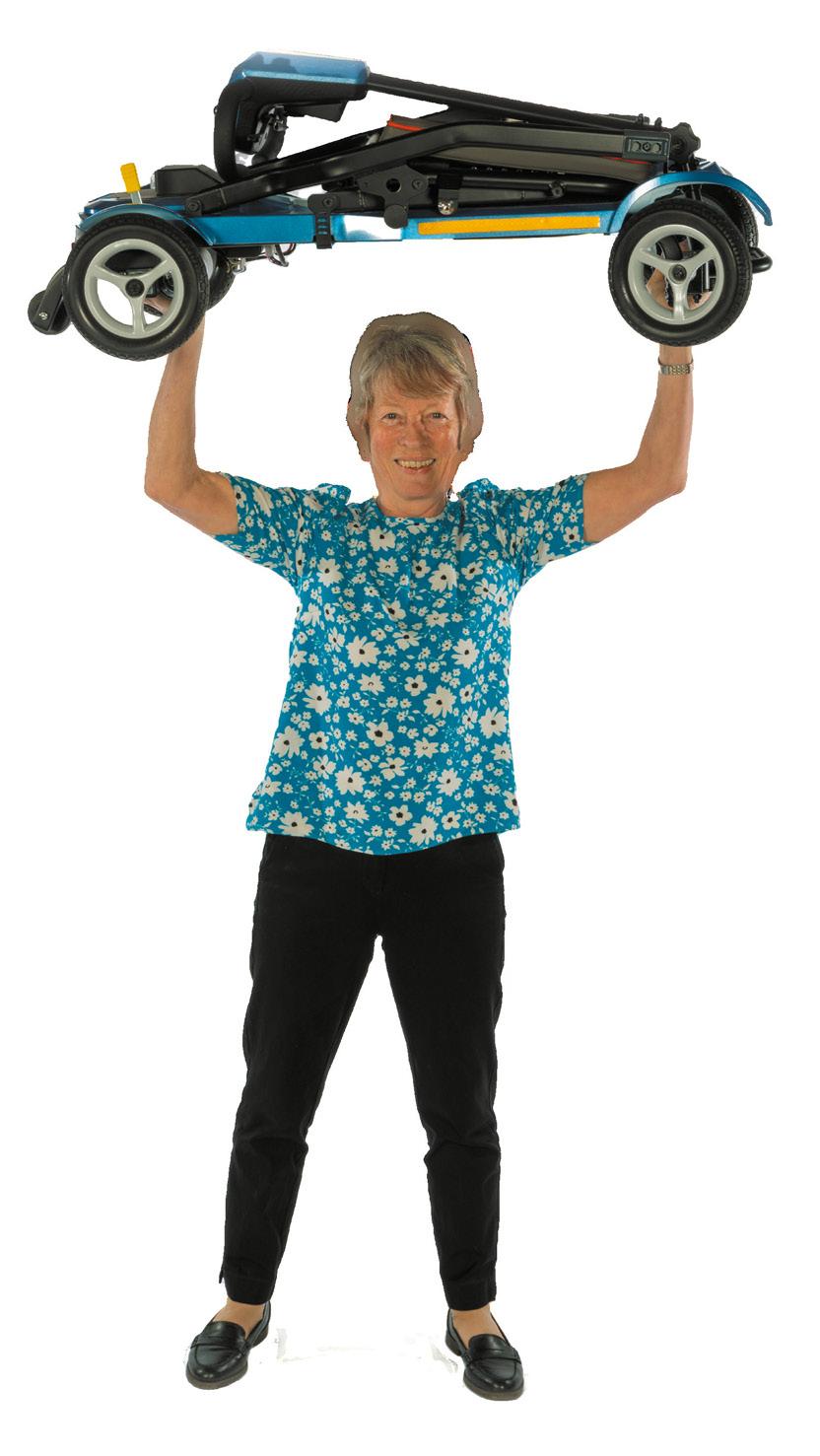
THE WORLD’S LIGHTEST GENUINE FOUR WHEEL MOBILITY SCOOTER.
• Premium build quality
• Lightweight
• 8” PU wheels, solid front and back
• Maximum weight capacity 125kg
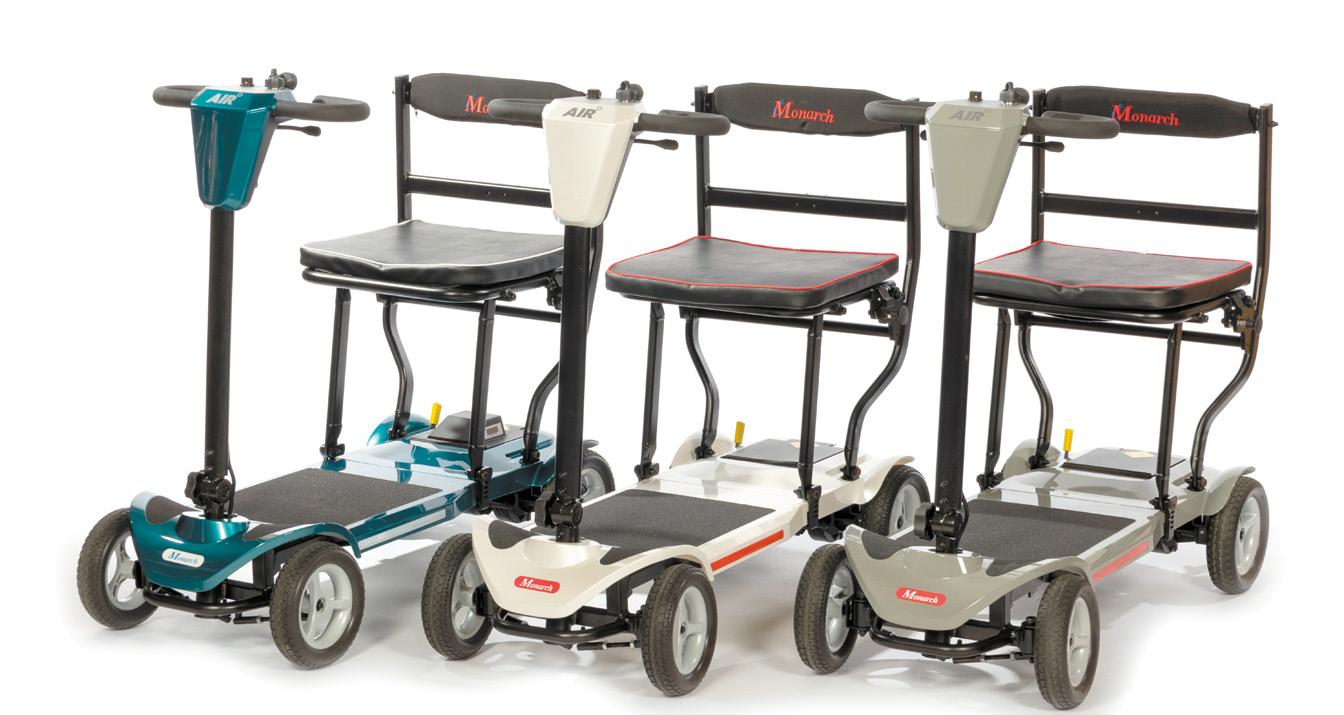
• 120W brushless motor
• Maximum speed 7km/h
• Frame made from magnesium
Weighs only 14.75kg!
Excluding battery & seat cover.
CALL CHRIS OR IAN ON 01422 323 888
dependent upon user weight, terrain, incline, temperature and battery conditions. Introducing...
*Range is
TRADE@MONARCHMOBILITY.COM WWW.MONARCHMOBILITY.COM
as seen
Electric Mobility: Charging forward with innovations

Mobility equipment distributor Electric Mobility has been leading the way over the past year with new products and pioneering state-of-the-art lithium ferro-phosphate battery technology...
Electric Mobility has been developing and supplying products that help with mobility and daily living for nearly 40 years under its Rascal and Cosi Chair brands. Based in Ilminster, Somerset, the firm’s range of mobility scooters, powered and manual wheelchairs, rise & recline chairs and specialist furniture now extends to nearly 100 individual models sold exclusively through its retailer partners. THIIS chats to Mike Flowers, Owner & Chairman of Electric Mobility Euro, to find out more…
YOU ESTABLISHED ELECTRIC MOBILITY EURO IN 1984. HOW HAS THE COMPANY EVOLVED SINCE THEN?
“Electric Mobility started in the USA as the Electric Products Division of our family business in 1974. Our first products were electric bicycles and adult electric tricycles created during the OPEC Oil Boycott to provide a pollution-free transportation alternative to the car.
“After people adjusted to the new higher gas prices, we pivoted the company to serving our elderly and walking impaired electric tricycle customers. In 1981, we developed a large aluminium electric three-wheeled
scooter with a flat platform which featured a differential drive system and powerful electric motor controlled by an electronic speed controller. The CycleChair transformed the company into Electric Mobility Corporation and our business tripled.
“In 1982 we exhibited the CycleChair at the first Naidex Exhibition held at Alexandra Palace later that year. The following year we developed our flagship mobility scooter, the Little Rascal, also with a lightweight aluminium frame and differential drive,
34 | Supplier Spotlight | thiis.co.uk
The new Vierra LiFe deluxe scooter


For more information on our range go to... www.primacare.co.uk Tel 01685 845900 Need a chair quickly? Introducing the new Supreme Adjusta New for 2023
to provide folks with both indoor and outdoor mobility.
“Our business quickly expanded by another 50 per cent. We exhibited at the second Naidex Exhibition in an effort to find a UK distributor, but the industry had not yet developed in the UK. So, in 1984, we launched Electric Mobility Euro Ltd and pioneered the introduction of mobility scooters around the UK.
“With an aggressive national magazine and newspaper advertising campaign in weekly and monthly subscription publications geared to the elderly, we generated thousands of inquiries from people who had few alternatives for enjoying their personal independence. We soon outgrew our initial premises and relocated to Somerset in 1986.”
WHAT ARE YOU MOST PROUD OF?
“Although I thrive on developing new products to satisfy the mobility problems of our customers, I am most proud of the loyal and hardworking team of employees and dealers who have made Electric Mobility the industry leader in customer service.
“We have many employees and dealers who have been serving our customers for 20+ years, including a dealer in the Midlands whose founder was one of my first salesman I trained in 1984! Their integrity and loyalty to our company and our customers I find personally rewarding and motivating.”
WHICH PRODUCT HAS REALLY STOOD OUT FOR YOU IN TERMS OF ACHIEVING RECOGNITION AND SALES GROWTH?
“My company has literally developed and marketed hundreds of mobility vehicles and award-winning mobility products and satisfied the needs of over one million customers.
“I look back on our secondgeneration Rascal scooter introduced in 1986 as a technological breakthrough because it featured the first-ever lightweight aluminium take-apart frame and the first industry sealed-transaxle with spring suspension.
“I am proud that the features of this early development project are still being used by us and our competitors on the newest mobility scooter designs today.”
WHY DO YOU THINK THE ‘RASCAL’ AND ‘COSI CHAIR’ BRANDS HAVE ENDURED THE TEST OF TIME?
“The Rascal and Cosi Chair brands are symbolic of the attributes they provide our customers. The Rascal brand elicits a fun and independent meaning to its users – they love being little rascals on their Rascal scooters.
“The Cosi Chair brand conjures up a warm and comfortable feeling for people, the same feelings they experience when using one. In summary, and most importantly, our Rascals and Cosi Chairs are topquality products that deliver on their brand promises, underpinned by
the company’s integrity, products that always comply with legislative requirements and above all “doing things right”.”
THE NEW RASCAL VELUMILI BOASTS “STATEOF-THE-ART” LITHIUM FERRO-PHOSPHATE BATTERY TECHNOLOGY. WHAT MAKES THIS TYPE OF BATTERY SPECIAL?
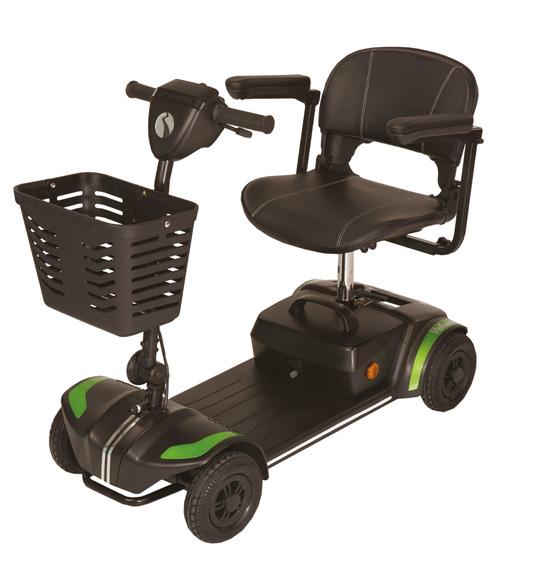
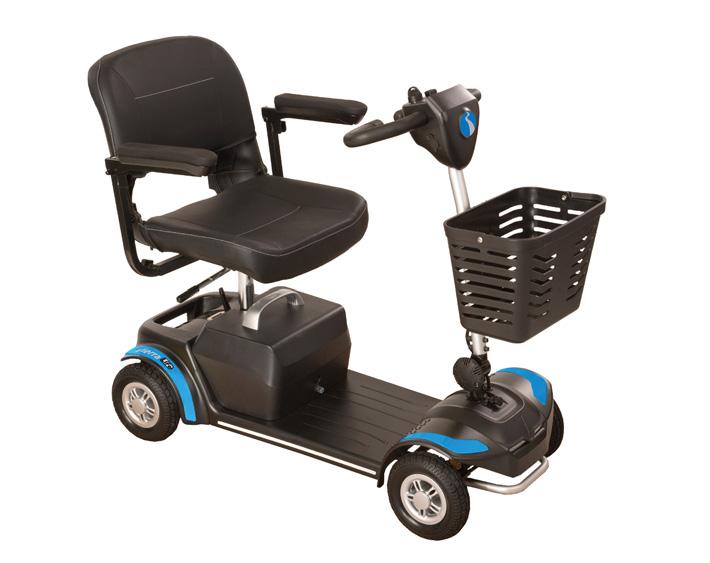
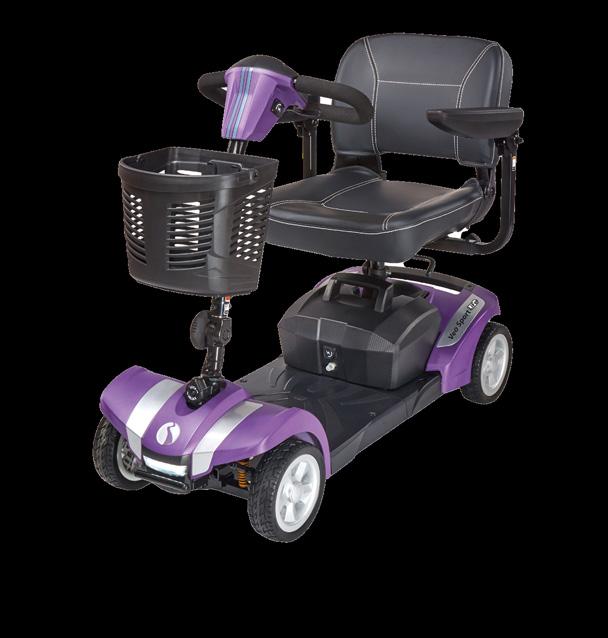
“Our lithium solution now includes a lifetime guarantee on the battery, another first for our pioneering company. It is now available on our VelumiLi, Veo Sport LiFe and the new Vierra LiFe deluxe scooter.
“Our Managing Director, Jonathan Hearth, has been wary about the regulations and dangers of lithium-Ion batteries and the caustic chemicals they contain, such as cobalt and manganese, which do not decompose in the environment.
“As we are seeing in the news, lithium-ion batteries are combustible if damaged or charged incorrectly, which is known as ‘thermal runaway’. When they combust, the fire cannot
36 | Supplier Spotlight | thiis.co.uk
“I look back on our second-generation Rascal scooter introduced in 1986 as a technological breakthrough”
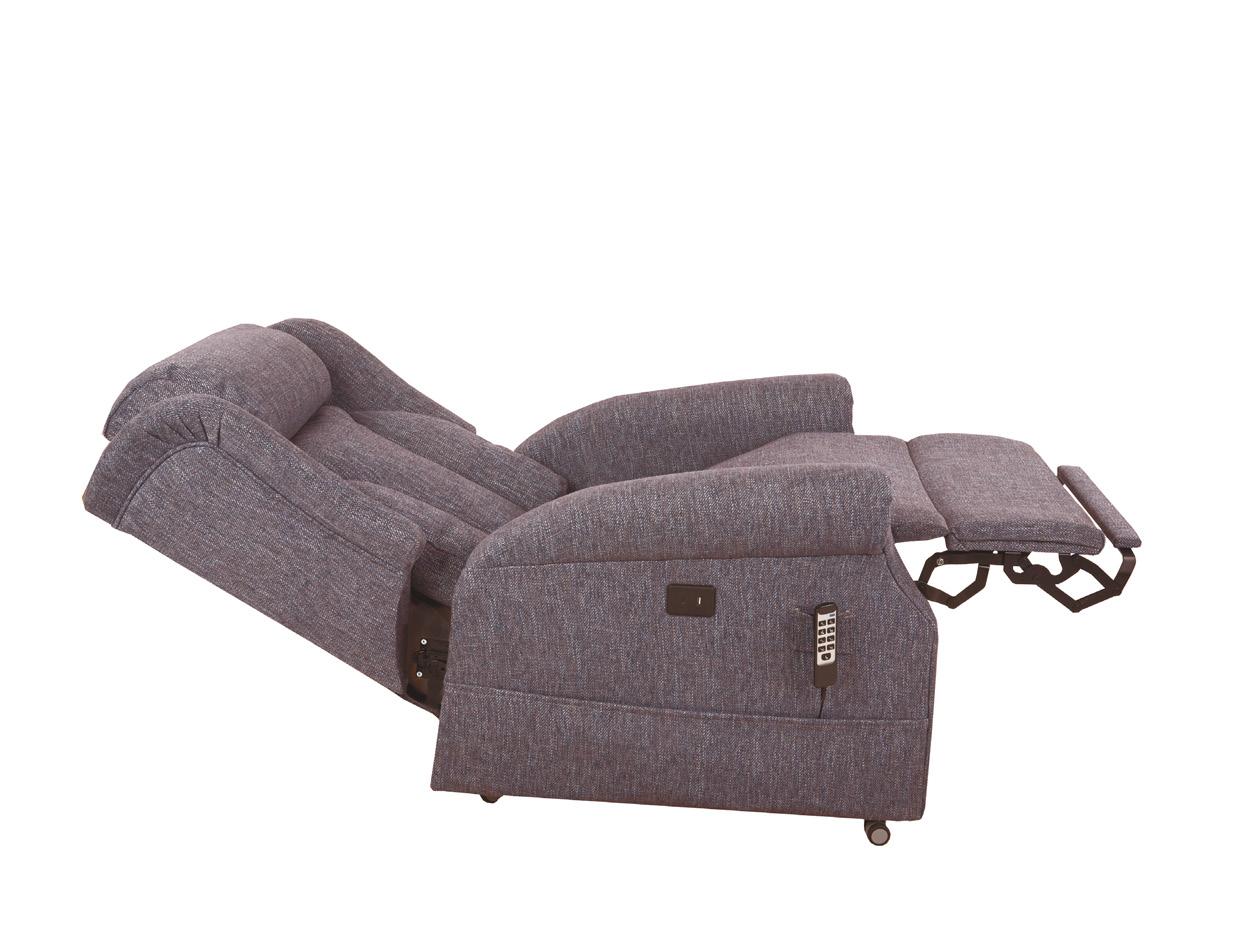
The Iconic Quad-motor Riser Recliner






GIVE US A CALL TODAY! 01582 840067 dealer.support@firstsenior.com www.firstsenior.com First Senior insurance is authorised and regulated by the financial Conduct Authority. Firm Reference Number 308478. First Senior Insurance Services Ltd is registered in England and Wales. Company Registration Number 3504591. Registered Office: Unit 2 Cotswold Business Park, Millfield Lane, Caddington Bedfordshire, LU1 4AR. First Senior Finance is authorised and regulated by the financial Conduct Authority. Firm Reference Number 726510. First Senior Finance Ltd is registered in England and Wales. Company Registration Number 3120962. Registered Office: Unit 2 Cotswold Business Park, Millfield Lane, Caddington Bedfordshire, LU1 4AR. The perfect blend of options for your clients from one source... You can offer: • Scooter/Powerchair insurance, Roadside Recovery and Extended Warranty for products up to £30,000 • Extended Warranty for Stairlifts and Riser Recliner Beds or Chairs • Dealer Hire Insurance • Point of Sale Finance All it will cost is a cup of coffee when we come to discuss how we can help you! GROUP High Acceptance Rates NO FEES!
be extinguished with water, and the result is the venting of flammable and toxic gases, as well as potential explosion of the battery case.
“Although lithium batteries are marked with labels warning against sending lithium-ion batteries to the landfill, they are now the leading cause of landfill fires in the UK and the cause of four deaths in house fires in the UK so far this year. It is distressing that people do not know about the environmental effect of the heavy metals inside lithium-ion batteries, cobalt, and manganese,
above 4 amp hours capacity are considered ‘dangerous goods’ when transported by delivery trucks, a regulation we follow diligently. Surprisingly, our dealers have shown us delivery paperwork from other scooter suppliers which do not show the ‘dangerous goods’ warning labels on their boxes of scooters with lithiumbatteries inside.
“We incur additional costs when we ship lithium batteries responsibly, so I challenge our competitors to also follow the regulation for safe shipping of their ‘dangerous goods’. All importers and manufacturers of lithium batteries are also responsible for proper disposal of lithium batteries they distribute.
“Our battery partner is in the UK and manufactures our custom lithium ferrophosphate (LiFePO4 or LiFe as we call it) battery modules to our specifications for use in power mobility vehicles. One of the leading causes of mobility battery failures is when a battery is left in an end user’s storage area over the winter without being charged.
“To help prevent this common problem for users and dealers we have designed our Rascal LiFe batteries with a miniscule power leakage from its’
battery module when it is not in use. So, not charging it for long periods of time will not ruin it. Plus, our custom solution provides over 1,600 charge cycles, which prompted us to make the ‘lifetime battery guarantee’ for our customers.
“Lithium-ion batteries are typically only rated to last up to 450 charges. The average replacement cost for a small 10 amp lithium-ion battery pack is £400-£500 for the user, an unwelcome surprise after a few years of use.”
ARE YOU FINDING THE MOBILITY SCOOTER/ WHEELCHAIR MARKET IS BECOMING MORE PRICESENSITIVE AND CUSTOMERS ARE WILLING TO FORGO A CERTAIN LEVEL OF QUALITY FOR A LOWER PRICE?
“The state of the economy is certainly affecting people’s buying habits and making it a more price competitive market. However, we will not skimp on important issues such as scooter safety and stability, meeting all compliance standards, something which is often overlooked on lightweight aluminium
“We have designed our Rascal LiFe batteries with a miniscule power leakage when it is not in use… Plus, our custom solution provides over 1,600 charge cycles”
The Vierra LiFe scooter in blue
The VelumiLi scooter in green
MEYRA iChair



MOTIVATION THROUGH INNOVATION TM Strident Innovations Head office address: 50 Turbine Way, Ecotech Business & Innovation Park, Swaffham, PE37 7XD T: +44 (0)1362 300102 | F: +44 (0)1362 300103 | sales@strident.uk.com www.stridentbatteries.com Strident - a name you can trust for high performance batteries With over 20 years experience, Strident are perfectly placed to offer the widest range of high quality battery products to the mobility and medical industries. Careful selection of only the highest quality raw materials, consistent quality control throughout the entire production process and painstaking attention to every detail gives the Strident range its unique properties that can be trusted and relied upon in many vital mobility and medical applications. To find out more about the Strident range of Mobility and Medical focused power products please contact our salesteam now. STRIDENT BATTERIES THIIS ADVERT DEC 2021_Layout 1 07/12/2021 10:42 Page 1 DELIVERY l Nationwide delivery & installation l Removal & disposal of old products l Manufacturers warranties honoured l Owned & operated fleet of vehicles SERVICING l Annual equipment servicing l LOLER testing & inspection l Bed inspections & servicing l Engineer call-outs for repairs STORAGE l 35,000 Square foot warehouse l Short term storage solutions Experts in Healthcare Logistics Your Promises. Delivered. 0330 445 0099 info@hdd-ltd.com www.hdd-ltd.com CONTACT US TODAY
and magnesium alloy scooters.
“Our lithium battery is just one example of the quality solutions we will continue to introduce to the UK market. It costs us more for this technology, and to ship them properly, but when the customer considers the value of a lifetime battery guarantee it outweighs buying on price alone.”
CAN YOU TELL US ABOUT ANY NEW ADDITIONS IN THE COSI CHAIR RANGE?
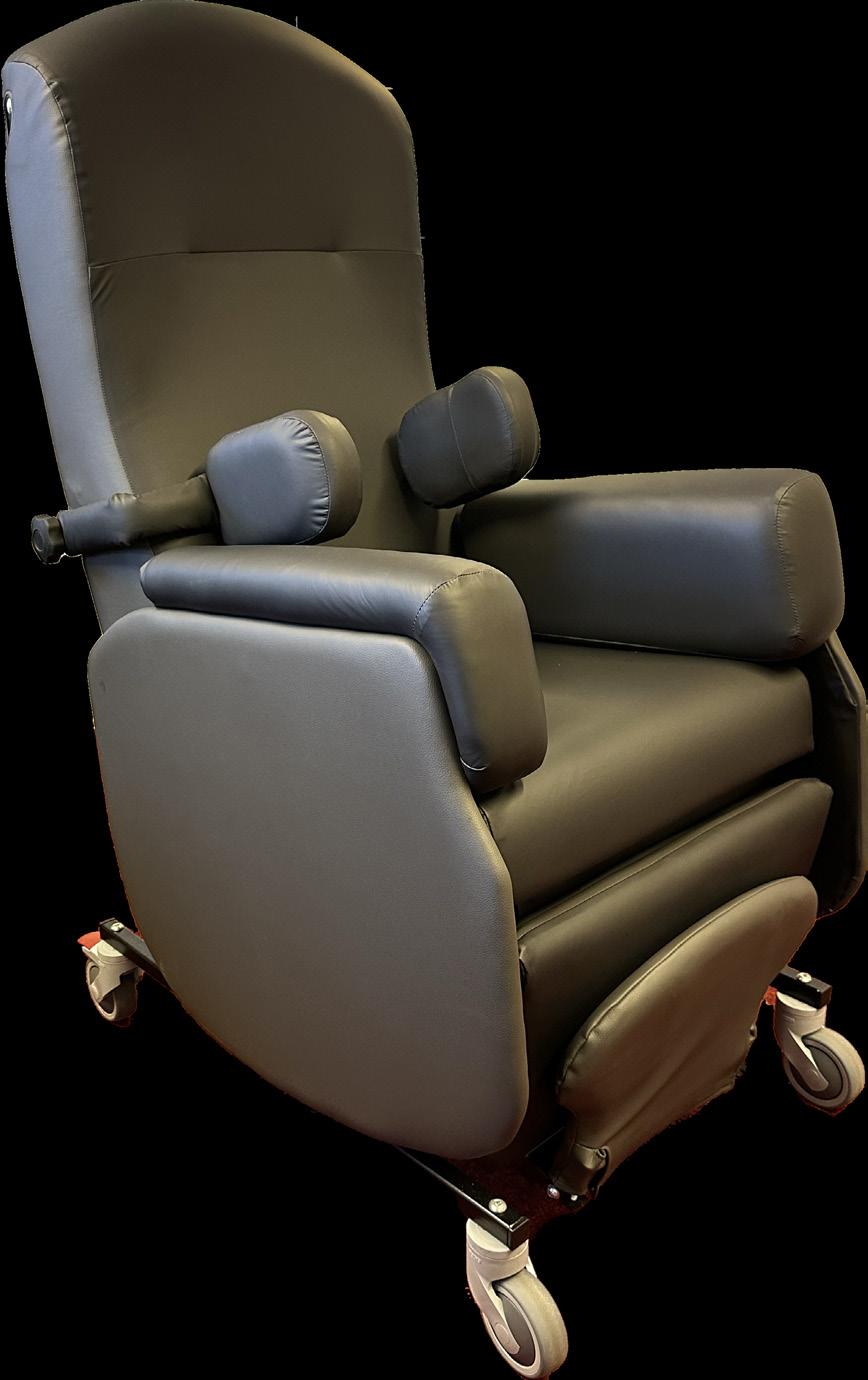
“Electric Mobility continues to develop new technologies with a number of our UK component suppliers bringing unique features and benefits for our Cosi Chair ranges including the new Iconic, our premium quad-motor tilt-inspace riser recliner chair.
“The Iconic has been designed in conjunction with Seminar Components, it is based on Seminar’s premium 160kg tilt-in-space (TIS) with the Variable angle lift (VAL) mechanism, this has a unique leg lift function that as it reclines it lifts the legs and then automatically concaves the leg rest area which helps to relax the legs.
“The VAL allows the dealer to adjust the angle of the lift angle for the client from a standard 30° to 20° or to 10°
which almost gives a vertical lift rather than a tilted lift, we have designed the Iconic to have an automated back recline as the chair lifts to assist the client exiting the chair, this allows the client to be more upright into a stand position.
“The Iconic features a home button which returns the client to a seated position, a powered headrest and powered lumbar support along with a true footrest which offers the longest hip to heel seating in the market to accommodate taller clients. It also has a USB socket on the arm assembly so you can conveniently charge your mobile phones or tablets all from the comfort of your chair.
“In addition to the Iconic we have several new riser recliner chairs being launched in September. These include a new mid-range UK manufactured standard dual motor chair complete with a split ottoman footrest, home button, USB connection in the hand
control and available in three sizes across a choice of new fabric designs. In addition, we will be offering a new mid-range UK-manufactured split ottoman quad-motor again in three sizes and new, contemporary fabric designs.
“With the current cost of living crisis, we understand many customers are looking for more affordable options and are therefore launching further economy chairs in the autumn.
“Electric Mobility will continue to develop and improve our Cosi Chair range throughout 2023 into 2024 giving the dealer and consumers even more choice across the premium, mid-range and more affordable segments.”
ARE YOU LOOKING TO EXPAND YOUR DEALER NETWORK, AND IF SO, WHAT DOES ELECTRIC MOBILITY OFFER DEALERS WHO COME ONBOARD?
“We are always looking to welcome new dealers to our network of retailers. We place a lot of value in finding dealers who are honest with their customers and provide good service after a sale.
“We place a lot of value in finding dealers who are honest with their customers and provide good service after a sale”
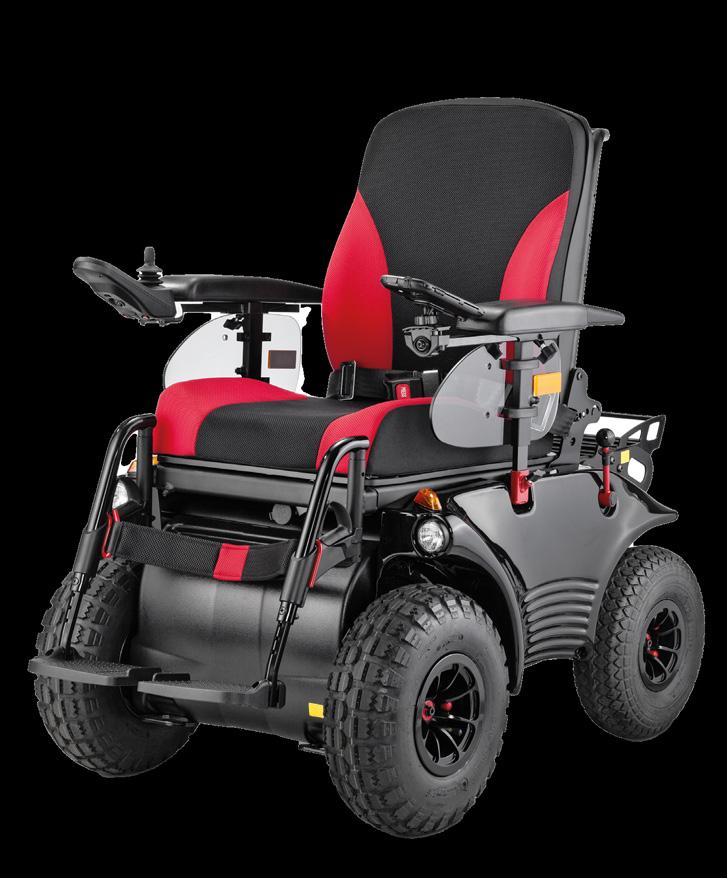
The Optimus 2 RS off-road electric wheelchair
The Veo Sport LiFe in eye-catching purple











01460 258120 sales@electricmobility.co.uk electricmobility.co.uk For Traditional & Digital Marketing POS contact the Marketing Team at marketing@electricmobility.co.uk Discover the NEW Call today to arrange a demonstration & find out more! *LiFetime Battery Guarantee T&Cs apply. E. O. & E. with Rascal LiFe Battery Guarantee LiFetime Battery Guarantee‡ MADE BRITISH LiFe RASCAL LiFe Vierra Lithium FerroPhosphate battery LithiumState-Of-The-ArtFerro-Phosphate (LiFePO4)Batterypack Over1500cyclesproviding increasede ciency&performance Batteryfullchargeanddischargecycles NumberofCyclesto80%ofnewperformance Residual Capacity 3006009001200 LeadSealedAcid Typical Lithium-Ion 100% 90% 80% LiFePO4 EXCLUSIVE Upto26MilesPerCharge* *AppliestoVierraLiFe25LongRangeMaximum MADE BRITISH LiFe RASCAL LiFetimeGuaranteeT&Csapply LiFetimeBattery Guarantee Lithiumpoweredscooters TheLithiumFerro-PhosphateBattery is ‘built last’ the SAFEST LithiumBatteryintheMobilitysector MADE BRITISH LiFe RASCAL Vierra LiFe LiFe time • 25Ah battery upto 26 miles range • 12.4Ah battery upto 13 miles range • 21.4 stone user weight limit Quality engineered lightweight aluminium rugged frame Super light front section weighing just 10.8kgs Front & rear integrated LED high performance lighting All-round suspension with exceptional ride comfort Delta tiller Swivel seat 8” Dual compound puncture proof tyres for impressive stability USB & Tiller charging point Discover your style with a choice of 5 vibrant colours MADE BRITISH LiFe RASCAL
“We work hard to support our dealers and strive to provide the best quality products for them to sell, as well as providing them excellent marketing materials for PR, digital and traditional channels to promote our products.”
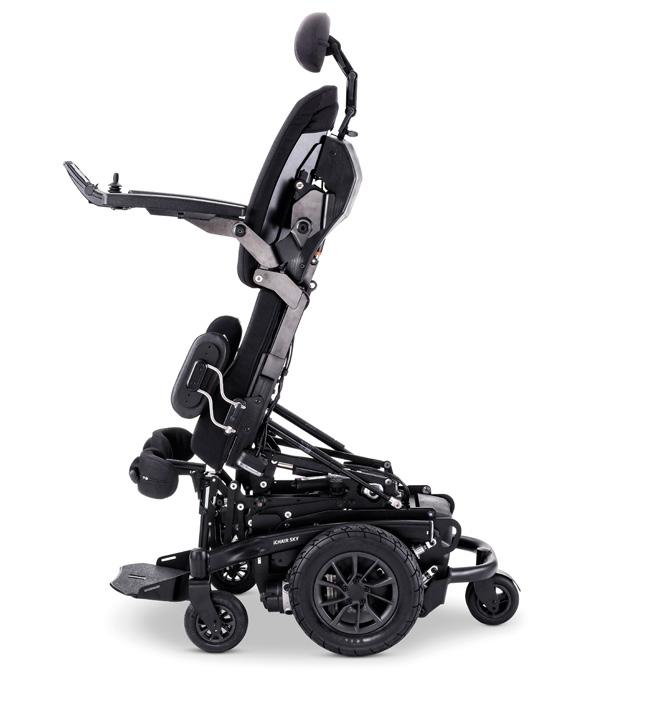
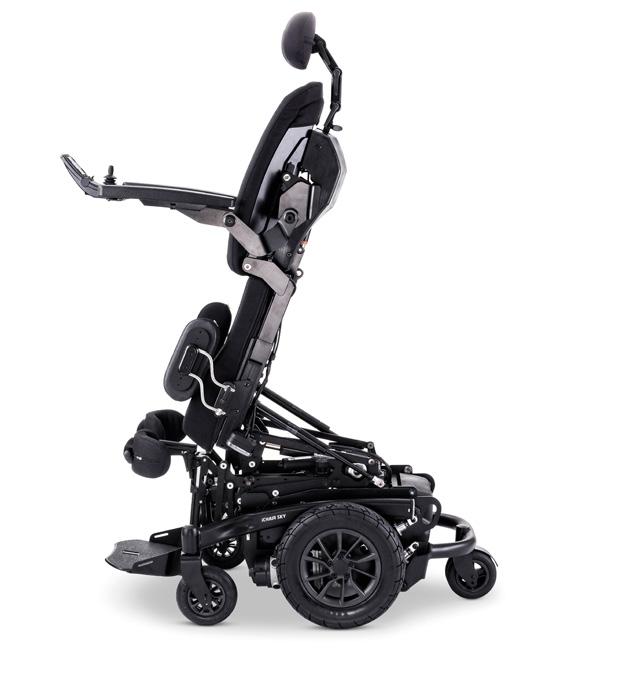
CAN YOU DESCRIBE THE DETAILS OF YOUR PARTNERSHIP WITH EUROPEAN WHEELCHAIR MANUFACTURER MEYRA. WHICH PRODUCTS DOES ELECTRIC MOBILITY EXCLUSIVELY DISTRIBUTE IN THE UK?
“MEYRA GmbH (founded in 1936) is part of the globally active MEYRA Group and one of the most internationally renowned and successful wheelchair manufacturers and suppliers of rehabilitation aids.
“With this increasing portfolio we have concentrated on the power wheelchair range and have developed the Orbit Mid Wheel Drive, now offering power tilt and lights and indicators as standard for the growing Motability market.
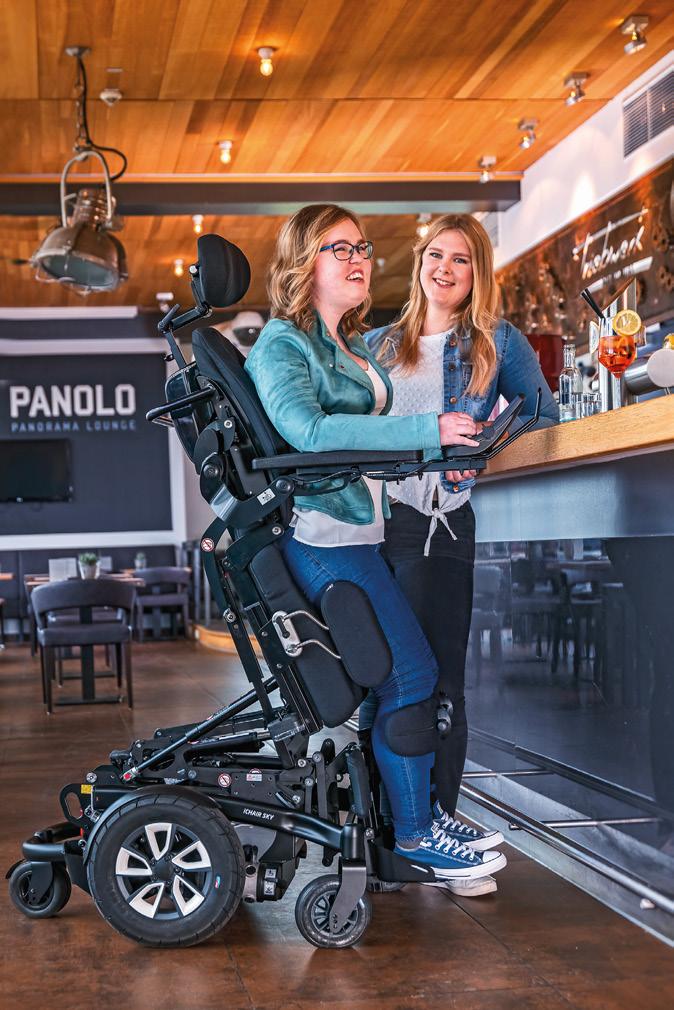
“We have also added further Rear Wheel Drive powerchairs that feature improved seating and faster speed options for off road use. The Optimus 2 RS has proved popular as a capable off-road powerchair with unique characteristics that is different to anything else on the market.
“With MEYRA’s recent acquisitions we look forward to expanding into more seating options and off road capable powerchairs. Also there is exciting news to come on manual wheelchairs with the FUSE R, a MEYRA active rigid framed wheelchair designed by Rainer Kuschall just being launched in Germany.”
HOW HAS ELECTRIC MOBILITY MANAGED TO NAVIGATE CHALLENGES
IN THE PAST YEAR, SUCH AS COVID AND GLOBAL SHIPPING DELAYS, AND BALANCING THIS WITH CUSTOMER EXPECTATIONS?
“To say it has been challenging is an understatement! Unfortunately, we are still seeing spot electronic shortages on some items such as joysticks for certain power wheelchairs. But ocean freight costs have returned to just a little more than they were before Covid.
“We have increased our inventories to minimise supply disruptions, but as always there are complications with managing global supply chains in the 2020’s!”
WHAT’S NEXT FOR ELECTRIC MOBILITY OVER THE NEXT 12 MONTHS?
“This month we will introduce our more powerful 25 amp hour Rascal LiFe battery solution, a 10 amp hour LiFe battery pack as a lower cost LiFe solution and of course all LiFe batteries will come with our lifetime guarantee.
“We are also busily introducing LiFe battery versions of all of our transportable scooters and of course expanding our lightweight aluminium range by leveraging our 40+ years
of aluminium scooter design and manufacturing. The new Rascal Vierra LiFe scooter is the latest example, and the early reviews from our dealers are excellent!”
www.electricmobility.co.uk
42 | Supplier Spotlight | thiis.co.uk
“We are introducing LiFe battery versions of all of our transportable scooters and expanding our lightweight aluminium range”
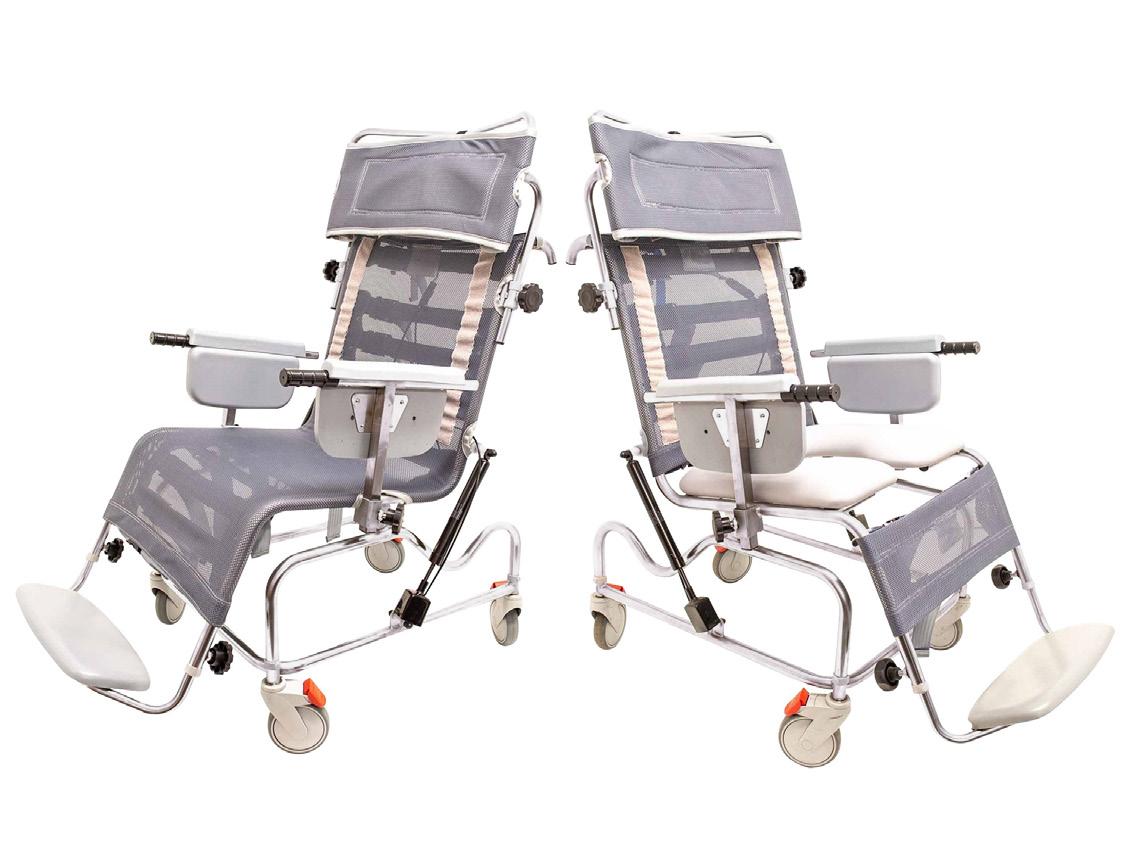
The multi-functional MEYRA iChair in action

Trade thoughts
“As a manufacturer of both lead acid and lithium batteries, we think it is vital for retailers to offer their customers as much information as possible. Educating users not only prevents risks and hazards but also empowers them to optimise their battery performance. Given the newer status of lithium technology, misinformation is widespread. Retailers bridging this gap by providing accurate details is pivotal.
“For instance, many are unaware that lithium batteries are prone to overheating, potentially causing fires, notably when damaged, overcharged, or exposed to high temperatures. Mobility retailers should be knowledgeable on these risks, offering guidance on proper usage, charging protocols, and storage conditions to best avoid these incidents.
“By teaching customers about the safety, maintenance, and charging of devices with lithium batteries is essential. Retailers can provide instructional materials, user manuals, and online resources that highlight best practices and safety guidelines. Given the potential dangers associated with lithium batteries, including incidents involving e-scooters, mobility retailers have a responsibility to prioritise safety.
“Although lithium is known to have longer lifespans than other batteries they are still going to degrade over time. Mobility retailers should inform customers about the expected lifespan
of batteries and recommend or offer proper disposal methods as adding them to regular waste can cause environmental harm from potential chemical leakages or fire hazards.
“Additionally, it is also important for the mobility retailers to keep on top of their own education. Depending on the region, there might be specific regulations or standards related to lithium battery safety. Mobility retailers should stay informed to ensure that the products meet the required safety standards.
“Ultimately, collaboration between manufacturers, retailers, regulatory bodies, and consumers is necessary to establish clear guidelines, promote responsible use, and enhance the overall safety of devices powered by lithium batteries.”
www.leochbattery.co.uk
“RHealthcare believes that it is not a matter of more guidance rather than clear and specific guidance relating to the actual product. There is a lot of generic information and assumptions that customers make. Supplying clear and specific guidance for the product is the most important way to ensure that lithium batteries are used safely.

“Retailers should have simple and precise instructions available, preferably bullet points letting the customer know how and when to charge, store and check the battery. We are working to produce even clearer instructions, separate from the user guide, to reinforce best practice for the customer, so that they have a safe, and ongoing experience with the wheelchair and battery.
“Understanding that the battery should not be run flat; that the battery should not be left on charge overnight; that the wheelchair should be stored in a well-ventilated place at a steady temperature between 15-30 degrees Celsius; and that when the end-user is not using the wheelchair, they remove the battery and store correctly with nothing touching the battery connectors, are basic steps that will ensure the customer has a positive experience with the wheelchair and does not require as much contact with the retailer.”
www.dashrehab.co.uk

44 | Trade Thoughts | thiis.co.uk
Do you think mobility retailers should be given more guidance on the safety of lithium batteries for customers?
LEWIS HOLT Technical Manager, Leoch Battery UK
MATTHEW NELSON Technical Manager at RHealthcare
“Mobility retailers should inform customers about the expected lifespan of batteries”
“Roma Medical first had experiences with lithium batteries in 2004. We had the manufacturer’s full assurance on safety, durability, and capability. We were advised at the time that they were literally bullet proof, as they had been tested for use in military equipment, but, after these claims proved to be false, we changed the product back to traditional lead acid batteries.
“We are being offered lithium powered scooters on a daily basis from manufacturers but have stayed clear. Recently, our insurers highlighted what they termed a “serious concern” when we spoke about potentially storing lithium batteries in our warehouse and they initially refused to cover us. They subsequently came back with a quote that was more than double our usual insurance cost and a list of additional storage and handling requirements.
“With the adverse publicity lithium
SIMON DALTON Managing Director of Roma Medical

batteries are receiving in the media, we contacted BHTA for guidance. There are so many lithium powered mobility products being sold with little regard to safety. We are uncomfortable selling a potentially hazardous product to our dealers who are probably unaware of the possible dangers to their business
and their customers.
“We have seen websites offering to convert all types of scooters to lithium with the promise of improved performance etc. Roma products have not been tested or been approved for conversion to lithium.”
www.romamedical.co.uk
Strident - a name you can rely on for tyres and tubes

MOTIVATION THROUGH INNOVATION Strident Innovations Head office address: 50 Turbine Way, Ecotech Business & Innovation Park, Swaffham, PE37 7XD T: +44 (0)1362 300102 | F: +44 (0)1362 300103 | sales@strident.uk.com www.stridenttyres.com
“With the adverse publicity lithium batteries are receiving in the media, we contacted BHTA for guidance.”
With over 20 years experience in the mobility tyre industry, Strident are perfectly placed to offer the widest range of high quality mobility tyres. Our range of solid tyres, air filled tyres and inner tubes are designed to offer excellent levels of grip, longevity and reliability. This comprehensive range is suitable for a wide range of mobility scooters and equipment. To find out more about the Strident range of Mobility Tyre products please contact our salesteam now. STRIDENT TYRES THIIS ADVERT DEC 2021_Layout 1 07/12/2021 10:40 Page 1
Covering a mobility need in a care home

Having been approached a number of times in recent months by friends and acquaintances in the village in which I live for advice about equipment to help with their spouses or older relatives, it has become clear that signposting for assistive technology support is desperately needed in the community, and training in residential and care homes is far from adequate. This case study highlights these points.
In a small community, what one does in one’s working hours is generally well known. I live in a village with about 120 houses. My neighbour is an esteemed shoulder surgeon at the Royal United Hospital in Bath, and whenever anyone has a shoulder niggle, he’s turned to for advice (shortcutting the GP referral route). It’s become known that I’ve worked with assistive technology equipment, and so people have been turning to me for advice.
In the last nine months, I’ve advised one person about a bath solution for her mother who, despite having mobility challenges, still wanted to continue to have baths under her own control (and not a shower), and another where he wanted advice for an arm chair for his mobility-impaired wife that could be used in the kitchen while he prepared meals but compact enough that it could be wheeled into their living room for other times of the day.
THE CHALLENGE
A third example, and the subject of this case study, relates to another pair of neighbours, in their 80s. A lovely
couple, he a tall Scotsman, and she a short Yorkshire lass, have been married 60 years. She had a stroke last autumn affecting one side of her body. She also has quite a degree of senile dementia. He decided, reluctantly, that it would be impractical for her to come home and so she has been in a care home nearby since she left the care of the rehabilitation hospital. It became clear that she would be spending most of her day in a wheelchair, and because she would be inside most of the time, the local wheelchair service indicated that she did not meet their criteria for provision. What the home had to offer was a basic transit chair on a one size fits all basis, and what her husband wanted was something better fit for purpose. Because he knew I’d been involved with wheelchair equipment for well over 30 years he came to me for advice.
THE SOLUTION
The solution we came up with was a Weely chair with a Varilite Icon Deep back support and Reflex cushion, and a Bodypoint pelvic positioning belt and Moduform dynamic arm support1 (Figure 1).
The Weely manual chair (Figure 2) with its drive wheels in the midline position is ideal for home use in that this position of the wheels allows for a much smaller turning circle than a conventional manual wheelchair, making it much more manoeuvrable
46 | Let’s get it clear | thiis.co.uk
Figure 1. The Bodypoint Moduform dynamic arm support
Figure 2. The Weely mid-wheel drive manual wheelchair
for staff. It also has both recline and tilt facilities, and angle adjustable leg supports, which suited the lady’s changing needs during the day. A further feature is the ability to lift the front casters over thresholds or kerbs, allowing the chair to go forwards over obstacles, which is more dignified than having to be dragged backwards when outside. The width of the chair was chosen to match the lady’s pelvic width, to ensure that she was well supported on either side.
The Reflex cushion was chosen since the air-foam mix would give good skin protection, the internal foam mix gives good positioning support, and the self-setting valve means that it is maintenance free. The newly launched Bodypoint Moduform dynamic arm support was to provide support and movement for the stroke-affected left arm.
WHAT COULD GO WRONG?
The care home involved is well run and the staff well trained in day-to-day care provision. However, early on it became clear that to get the therapeutic benefit of the Moduform (where the user has to be positioned properly in the chair), unfortunately this was not happening frequently enough for the Moduform to be effective, and so it was removed.
The next challenge arose from the behavioural complications of the dementia. The chair user, wanting possibly to feel she had some control of the chair, spent much time putting the brake on and off on one side, and also turning the knob that allowed adjustment of the lower leg support angle. With time this wore away the nut securement part of the knob, and then
the knob twirled without resistance. We have subsequently resolved this by replacing the knob, and then using the ingenuity of our young designer, Peter Horton, who used his 3D printer to create a removable cap to go over the knob. The cap could be rotated with enough friction to keep it in place without actually turning the knob (Figures 3 and 4).
When assessing a solution for the knob, we found that despite the chair having been supplied with a specialist cushion to reduce the risk of skin damage, a young nurse had decided to add another, very thick and more basic, cushion on top of the provided cushion (Figure 4). The downside for the user was that she felt much less stable, was positioned badly in a resulting slumped position, and the chair had not been adjusted for the fact that she was now several centimetres higher off the chair’s seat base.
WHAT’S NEEDED?
This case study has raised some important points. The first aspect that needs to be addressed is how the general public can be made better aware of where to turn if they need advice on any and all relevant equipment. In the UK, because the bread and butter end of the business of wheelchair provision, for example, is carried by wheelchair services, this is not passed through dealers, and therefore most UK dealers do not develop the complex breadth and range of product provision that is
experienced in other countries. Also, quite a lot of equipment will come into people’s homes from a loan store, and not from a dealer. The recipient, on the other hand, will only get what the local NHS or social services will offer within their local criteria for support and provision. Many peoples’ needs are therefore not being met by the state, and they are not generally being signposted by the State as to where else to turn.
A knock-on of this is that much equipment that people end up with does not actually meet their needs in their own homes or in care homes –either because the wrong equipment is being used, or because the carers do not know how to apply the correct equipment to the resident’s needs. This is a worldwide problem. In Canada, the prevalence of inappropriate wheelchair seating in long term care facilities has been reported to be 58.6%2,3, with common implications being discomfort, poor positioning and mobility, and skin integrity issues.
How can we get better training of care home staff as to how to set and use properly the specialist equipment that is supplied to the benefit of the user? Would something simple attached to the equipment with a pictorial guide to the correct set up (the do’s), and parallel guidance for what not to do (the don’ts) make any difference? Ideas welcomed!
REFERENCES
1. ter Haar MB (2023) Managing the upper extremities of the seated person. THIIS July 2023, pp40-42.
2. Canada S (2008) Participation and Activity Limitation survey 2006. Ottawa.
3. Giesbrecht EM, Mortenson, WB, Miller W (2012) Prevalence and facility level correlates of need for wheelchair seating assessment among long term care residents. Gerontology 58, 378-384.
‘Let’s Get it Clear’ by Dr Barend ter Haar
Further items can be found at www.beshealthcare.net
Dr ter Haar has been involved in seating and mobility for over 30 years, including lecturing internationally, and developing international seating standards.
thiis.co.uk | Let’s get it clear | 47
Figure 3. The 3D printed leg support knob cover
Figure 4. The leg support knob cover in place, and the temporarily added cushion
and toileting aids
Mangar Supine Transfer System from Mangar Health
The Mangar Supine Transfer System enables healthcare workers to lift and transfer patients with minimal moving and handling, while providing a stable, safe experience for the patient.
The Mangar system consists of the Rhino Lifting Cushion, the Swift Transfer Slide, and the Airflo Duo Compressor. Manufactured in the UK the system weighs under 20kg in total, including the roller bag.
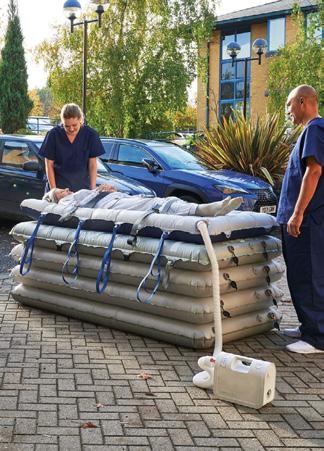
The Airflo Duo is a state-of-the art air pump, which uses both battery or mains power for maximum portability and versatility, while the Rhino and Swift are both made of lightweight anti-rip material for easy folding and transportation.
www.mangarhealth.com
The Bellavita Bathlift from Drive DeVilbiss Healthcare
This lightweight battery-powered reclining bathlift with front aperture comes with a wide range of accessories. At the touch of a button it gently lowers users down to bottom of the bath for bathing and relaxation then raises them to the top again for safely getting out. A very low minimum seat height of 6cm from the bottom of the bath allows improved water immersion, making it ideal for shallow baths. It weighs only 9.3kg (without handset).
An excellent maximum seat height of 48cm enables easy and safe transfers in and out of the bath.
It separates easily and quickly into two lightweight sections for ease of fitting/ removal, storage and transportation. The backrest reclines to a maximum angle of 50 degrees, operated easily by the hand control.
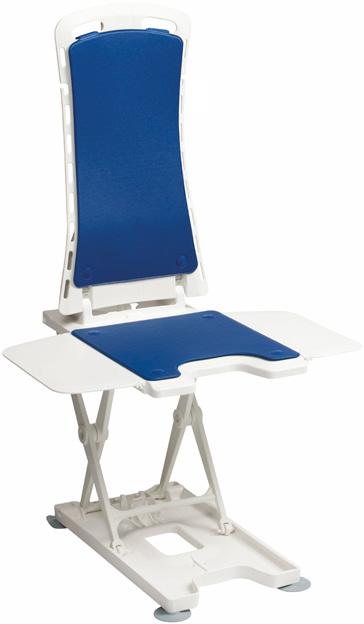
A contoured, slimline profile further facilitates handling and its quick-release suction feet secure the lift in the bath.
www.drivedevilbiss.co.uk
48 | Retailers’ Buyers Guide | thiis.co.uk Discover key products to consider offering to customers...
Buyers’ guide to bathing
BHTA MEMBER BHTA MEMBER

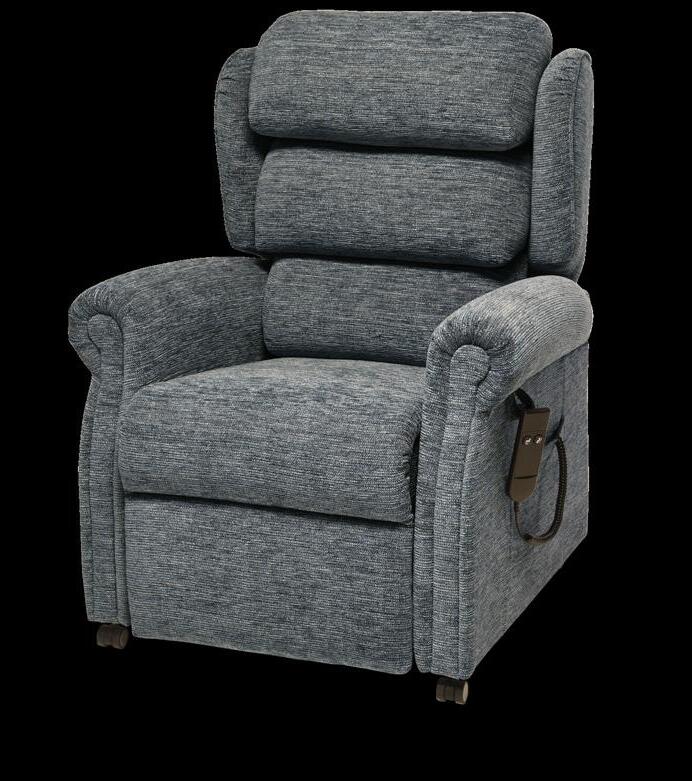

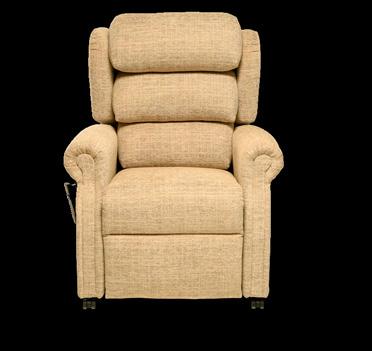
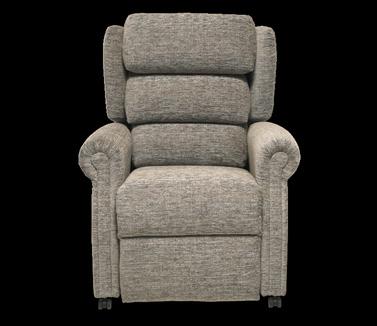
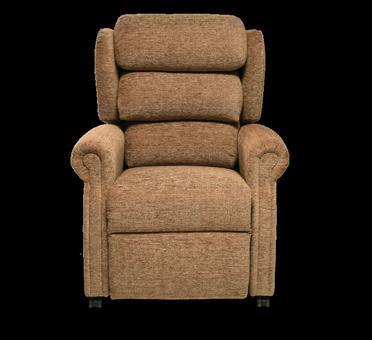
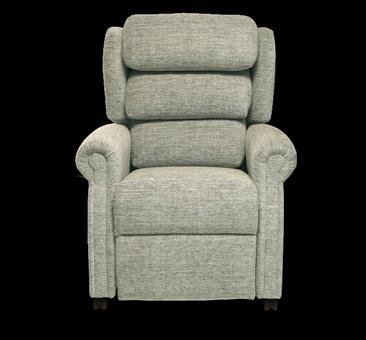
Recliners’ Express Domestic, despatched in just 24 hours*. Perfectly suited when urgency is top priority without sacrificing comfort. SCAN ME recliners.org.uk Call: 01443 431 000 Email: info@recliners.org.uk Oatmeal Slate Cocoa Duck Egg NEED A CHAIR IN A HURRY? Available Options Product Size SH SW SD BH AH Petite 16.5 18 20 27 6 Classic 19 2020 27 7 Classic Extra 19 2020 29 7 Wide Petite 16.5 21 20 27 6
Alerta Commode & Transfer Chair from Alerta Medical
The Alerta Commode & Transfer Chair comes with drop-down armrests, swing-away detachable footrests, arm pads and rear brakes, with a wipeable 53cmx46cm PVC seat and back.
Key features of the seat include a powder-coated steel frame, drop-down padded armrests, swing-away detachable and fold-up footrests, full length arm pads, push handle, four-steel swivel castors, braked rear castors and wipeable PVC seat and back. Its maximum user weight is 110kg.
www.alertamedical.com
YESS Range Shower Stools & Chairs from Cefndy Healthcare
Manufactured in Wales, this range offers an off-the-shelf solution for plussized patients. The range focuses on size rather than weight as all support up to 285kg.
The products are measured by width between the arms – Mediatric (600mm), Bariatric (700mm) & Super Bariatric (800mm). Each chair has optional PU or vinyl upholstery and optional adjustable backs for greater comfort and adaptability. The range also has perchers, shower chairs, raised toilet seats and more in the same sizes. www.cefndy.com
Timo Hydraulic Shower Trolley from The Osprey Group
The Timo Hydraulic Shower Trolley with backrest adjustment as standard combines modern technology to enable easy bathing for both patients and carers.
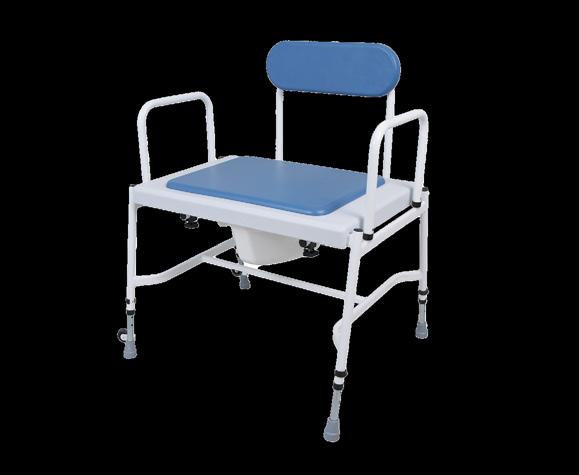
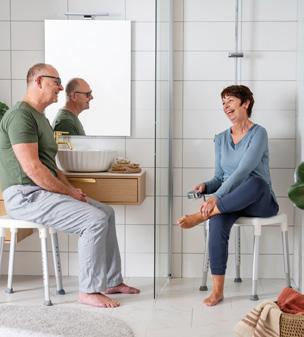
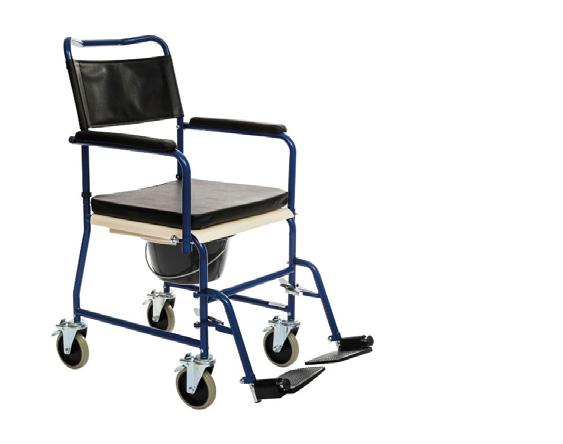
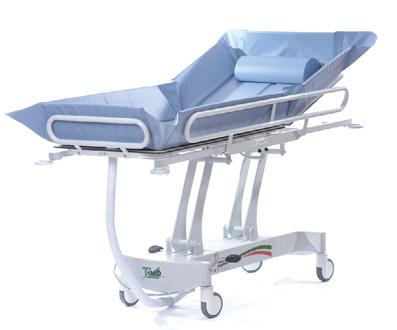
Adjustable in height by means of an easy-to-use foot pedal and hydraulic cylinder the hydraulic backrest can be adjusted by 30 degrees. It comes with coated drop-down safety rails, vinyl mattress and pillow, and central locking brake system with directional brake steer. It is available with a blue coloured top and offers a 200kg safe working load.
www.theospreygroup.co.uk
Swift Shower Stool from Etac
Etac’s range of simple Swift shower stools are stable and lightweight, offering easy “click and press” height adjustment.
Non-slip ferrules adapt to the floor and provide an excellent grip on wet or uneven surfaces. The stools come flat-packed and are easily assembled without tools. They are also corrosion free and come with a five-year warranty.
50 | Retailers’ Buyers Guide | thiis.co.uk
BHTA MEMBER www.etac.co.uk
Features

1. Ultra light frame

2. Foldable frame


3. Tilting 3 positions

4. Facing parent mode


5. Adjustable footrest in height
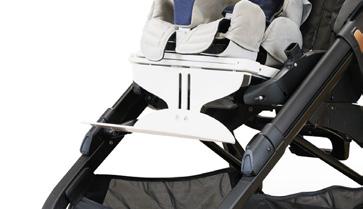
Pushchair
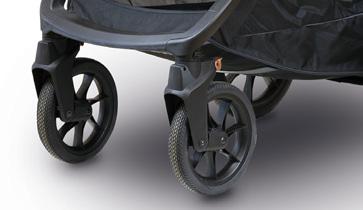
The pushchair is lightweight and manoeuvrable, with a seat that can be tilted. It comes with all the necessary accessories such as a hood, basket, and sleeves, which come as standard. It can be used both facing the street and facing the parent. Detachable and lightweight, it is easy to load into the car.


Contact our Tarta specialist on: 07731 999192
1. 2.
3.
4.
5.
Glove Convenience Max Sling from Care & Independence
The new Glove Convenience Max is the latest sling innovation from Care & Independence, delivering maximum experience for support, comfort, security, and performance.
Core stability is addressed by a self-adjusting corset-style body (fixed by a triple clunk-click chestband) hugging as it lifts. Deep padding to lumbar and underarms utilise luxurious one-way non-slip velvet velour, with patented binding-free leg sections featuring double-sided padded slidesheet fabric for easy fitting, also reducing tissue viability risks from drag and shear.
As a toileting sling, there is naturally a large aperture, giving excellent lower body access. An adjustable angle of recline can be achieved via combination of leg loop straps and dynamic, self-adjusting shoulder extensor straps at the shoulder. Available in sizes 4-9 with free assessments offered.
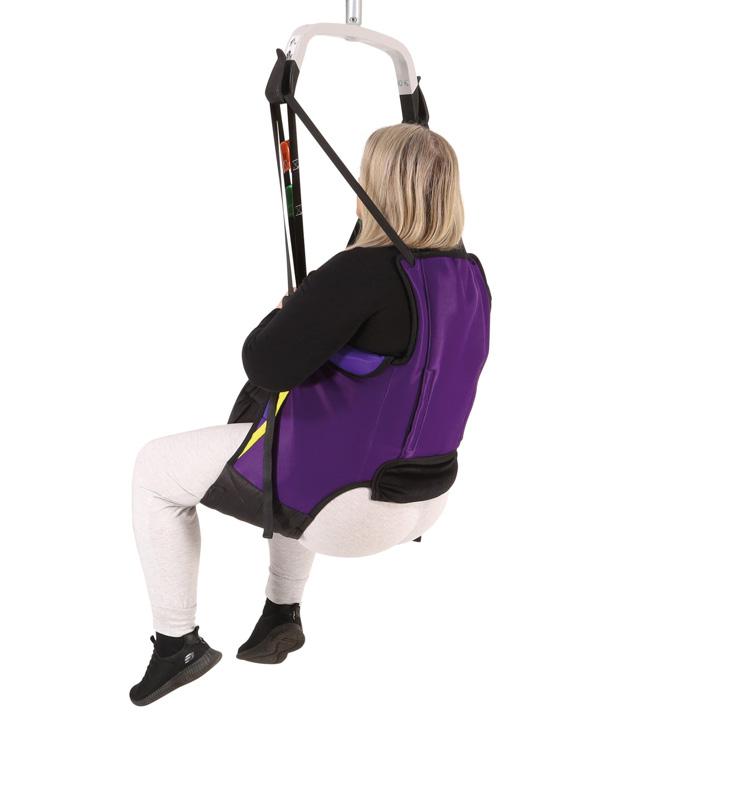
www.careandindependence.com
Mangar Rhino Lifting Cushion from Mangar Health
The Mangar Rhino Lifting Cushion lifts a person in the supine position from the floor to the height of a bed or stretcher and lifts up to 500kg. It is powered by the Airflo Duo, a state-of-theart air pump, which uses both battery or mains power for maximum portability and versatility.
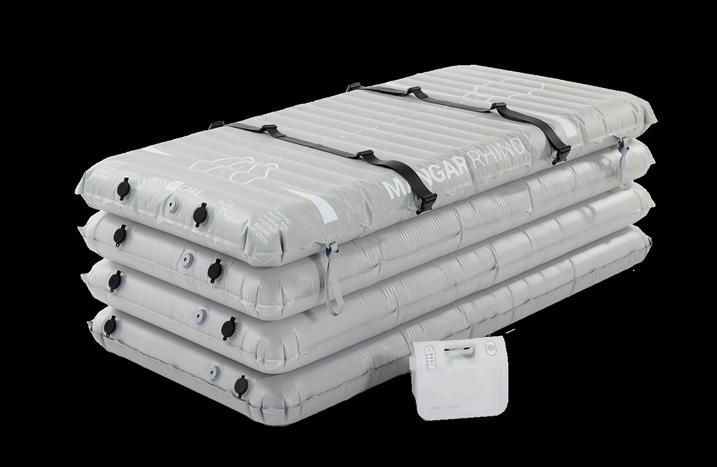
The Rhino can be used in tight spaces or outdoors so the patient can be lifted safely and with dignity wherever they fall. It is manufactured in the UK and made of lightweight anti-rip material for easy folding and transportation. It includes a CPR function and has a seven-year expected life span.
www.mangarhealth.com
Freeway Flow Shower Cradle from Prism Medical
The Freeway Flow shower cradle is the latest addition to the Freeway bathing range. The shower cradle is built in the UK from locally sourced materials, providing comfort and support while bathing. It is the natural progression for individuals requiring more support and stability than a traditional shower chair can provide.
The cradle has three sizes and smooth tilt action. Its quick-drying mesh provides a comfortable resting position, whilst the antimicrobial powder coating prevents the growth of harmful bacteria. It has anti-tangle castors to prevent wheels from clogging, reducing the need for ongoing maintenance. A range of accessories are available to enhance the experience further.
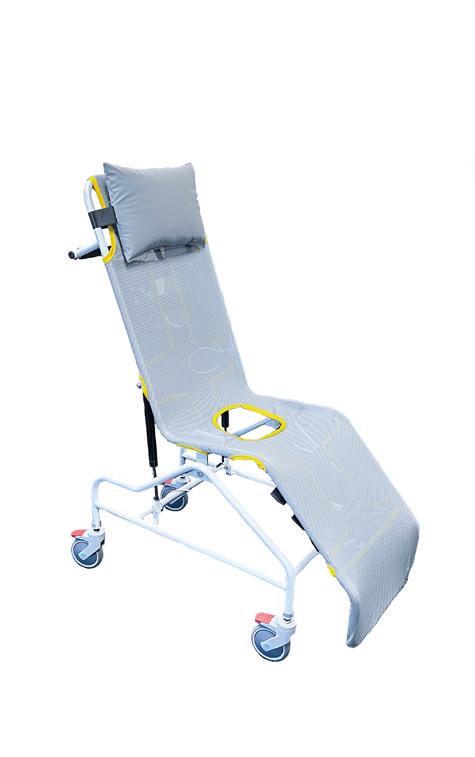
A five-year warranty is included on the metalwork and a two-year warranty on the fabric.
www.prismmedical.co.uk
52 | Retailers’ Buyers Guide | thiis.co.uk
BHTA
BHTA MEMBER
MEMBER
BHTA MEMBER
AquaClean Mera Care Shower Toilet from Geberit
The AquaClean Mera Care Shower Toilet has been specifically designed to improve quality of life for those who have difficulty using a conventional toilet.
Its advanced technology enables a greater sense of independence in the bathroom, leaving customers feeling cleaner and fresher with a comfortable, convenient, and hygienic bathroom experience. There is now an updated app that can be used to personalise comfort levels to suit individual preferences that can then be used on any other AquaClean models in settings outside of the home. Videos and technical support can be accessed through the app to help improve the whole AquaClean experience.
www.geberit-aquaclean.co.uk
In-Situ Deluxe Sling in Silva-Superfine Plus Fabric from Silvalea
The In-Situ Deluxe sling offers full body support and comes with an integral adjustable head support, with removable stiffeners. The shaped leg sections provide full femur and hip support and have low-friction fabric on both sides for ease of application.
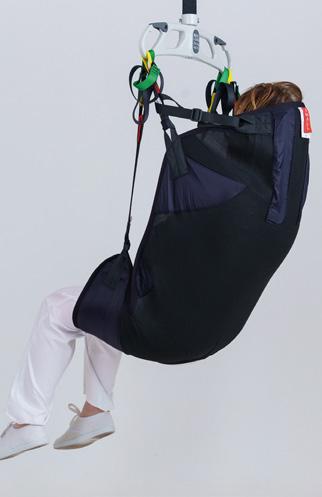
The sling is provided with fixed colour-coded tapes and has been successfully used for many different scenarios. It is manufactured in Silva-Superfine plus, a 3D compression spacer fabric which helps to redistribute weight and reduce pressure build-up. This fabric is soft and comfortable with a two-way stretch which moulds to the patient. This fabric is excellent for bathing as it allows the water to easily drain through and offers additional comfort where needed. Sizes available from XXXSXXL.
www.silvalea.com
Osprey Toilet Raiser from The Osprey Group
Designed to assist the user to sit and stand from the toilet or at the bedside, the Osprey Toilet Raiser is a new addition to the market. Its height-adjustable frame will fit around most domestic toilets and it is fully compatible with the Geberit Mera Wash Dry Shower Toilet. Battery operated for ease of use and with a 30-stone user weight it is strong, secure and sure to meet the demands of almost everyone.
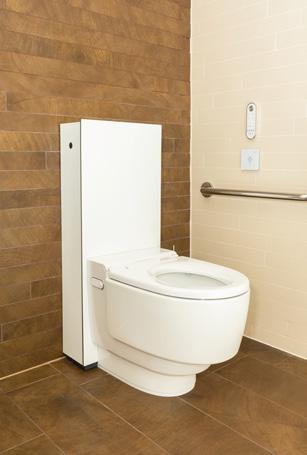
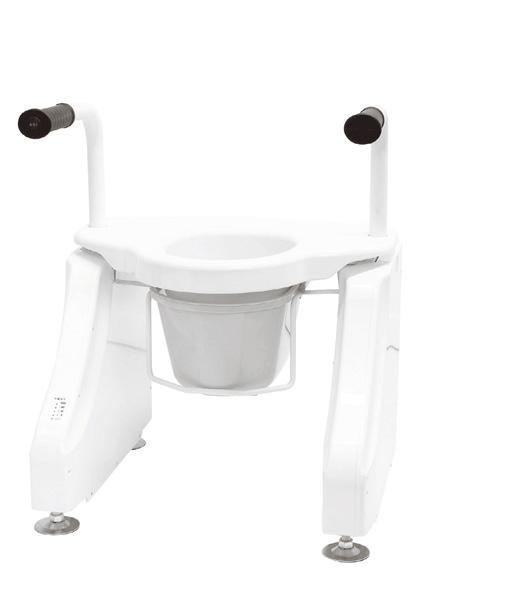
Features include an easy push button operation, detachable battery, which does up to 100 lifts per charge, and a bedside commode/battery, or it can be plugged into the mains. It fits in with most domestic bathrooms with a wide range of optional extras available.
www.theospreygroup.co.uk
thiis.co.uk | Retailers’ Buyers Guide | 53
Alerta Aqua Shower Commode Chair from Alerta Medical
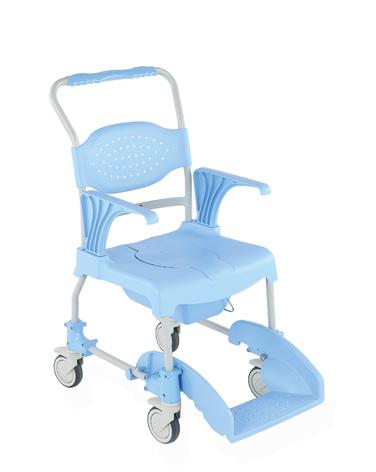
While it can be used for showering, transferring and as a mobile commode, the pot can be removed and the chair can also be wheeled to the toilet, making this a very easy-to-use toileting chair.
The Alerta Aqua is stylish, effortlessly manoeuvrable and manufactured from very easy-to-clean plastic coated steel.
A selection of soft padded seat sections are available as accessories, with key features including a five-position footrest, four individually braked wheels and removable arms. Its maximum user weight is 150kg.
www.alertamedical.com
The Flotation sling is an ideal hoistable product for swimming and hydrotherapy pool environments. Providing maximum buoyancy using a built-in flotation foam support (noodle) around all three sides it offers full support to the patient in a horizontal position. Patients can be safely hoisted into the water and the detachable hoisting tapes can be easily disconnected by the caregiver when transfer is complete. The mesh fabric allows water to drain easily and quickly, while the built-in foam neck roll supports the neck and head. There is also a waist support with a connecting groin strap, along with an under-knee roll to the base of the sling.

www.silvalea.com
Mangar Swift Transfer Slide from Mangar Health
The Mangar Swift Transfer Slide helps to transfer and reposition patients in the supine position with minimal moving and handling force needed.
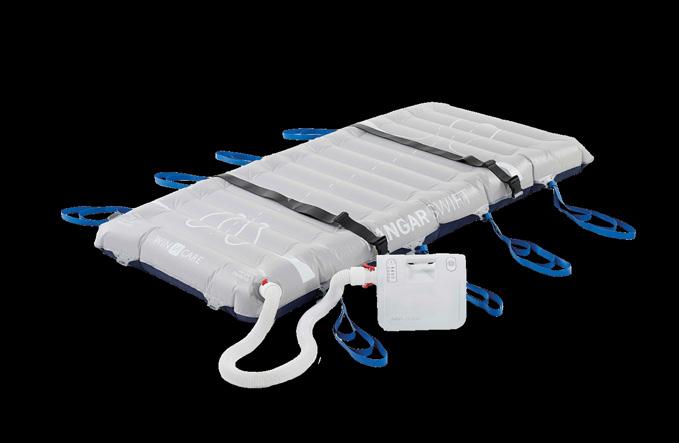
It is powered by the Airflo Duo, a state-of-the-art air pump, which uses both battery or mains power for portability and versatility. Part of the Mangar Supine Transfer System, the Swift can be used by patients weighing up to 500kg and is made of a lightweight anti-rip material for easy folding and transportation and has a
Flotation Sling from Silvalea Toilet Safety Frame from Drive DeVilbiss Healthcare
This sturdy free-standing steel frame was developed to surround a toilet, providing additional support to help assist with getting on and off the toilet. Its padded armrests provide additional comfort and can be angled in to give improved support when lowering and rising. Featuring a lightweight and portable steel frame, this model includes a magazine rack for added convenience. It is designed to suit most bathroom decors and comes with nonslip pads and option to secure to the floor. It has a maximum user weight of 136kg.
www.drivedevilbiss.co.uk
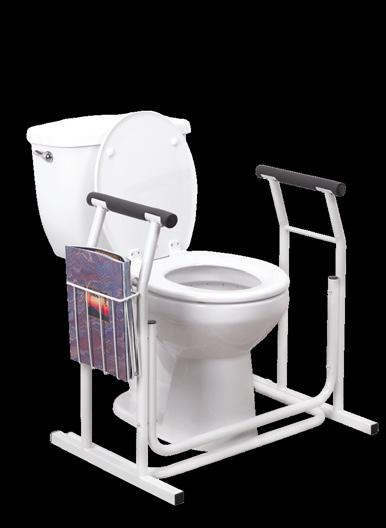
54 | Retailers’ Buyers Guide | thiis.co.uk
BHTA MEMBER BHTA MEMBER
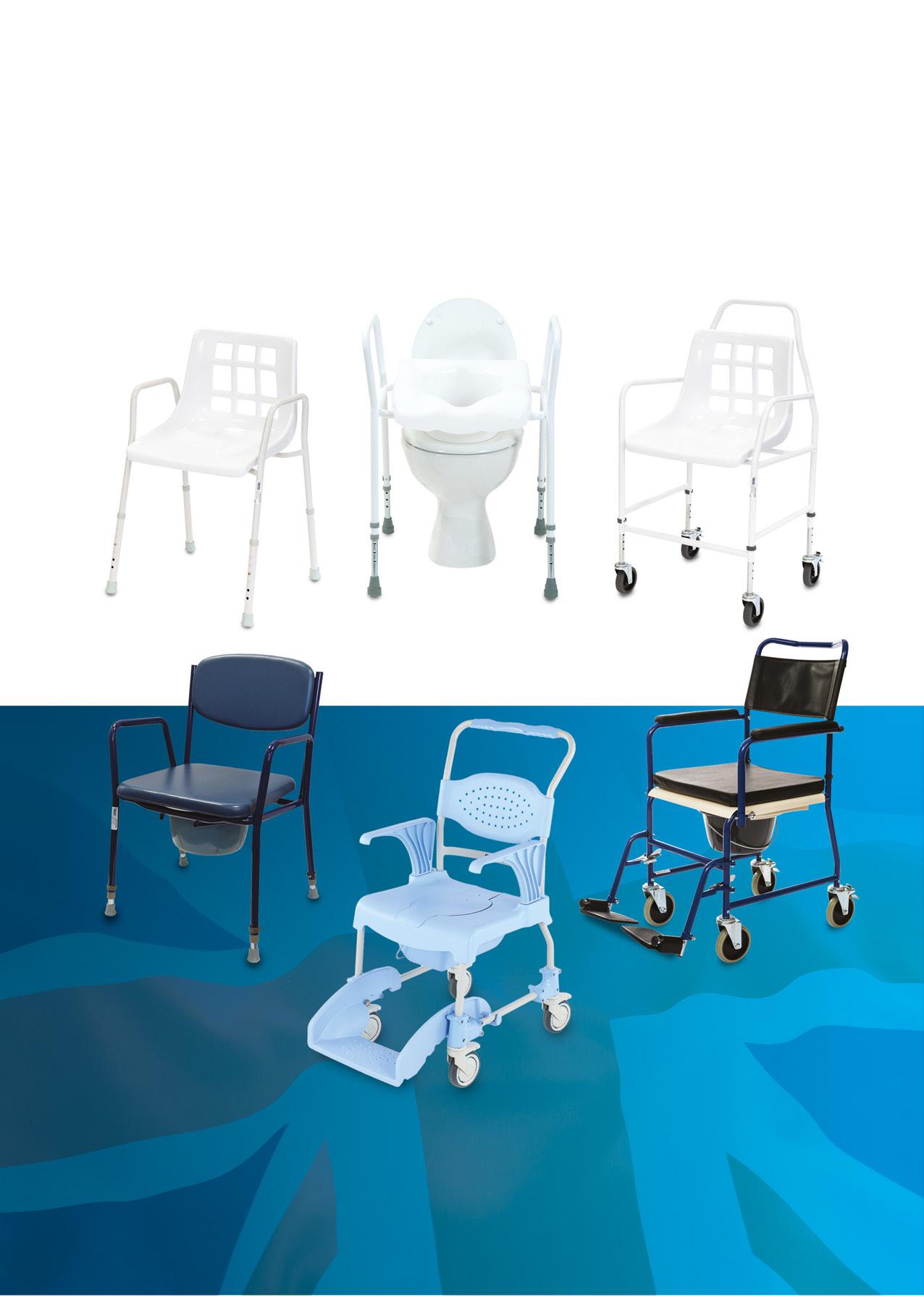

+44 (0)3452 088 097 | www.alertamedical.com | sales@alertamedical.com ALERTA’S SHOWERING & TOILETING RANGE Contact the Alerta Medical team for attractive trade prices, technical information and marketing support. SCAN TO VIEW PRODUCTS ONLINE Alerta Medical supply a full range of quality toileting and showering equipment aids, with large stocks available for fast delivery.
Continental Easy Access Sling from Silvalea
A perfect choice for patients with poor or reduced tone, extreme active movement or strong extensor patterning, this sling gives a greater degree of comfort during transfer due to the woven, structured polyester fabric. The closed cell foam padding also allows for quick water drainage while the enlarged commode aperture enables good access for hygiene purposes and bathing. The sling comes with integral head support and self-tightening thoracic support. The adjustable counterbalance straps provided allow for natural movement.
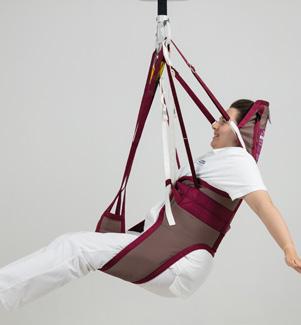
Seat


The Bath Stool with Rotating Seat is an excellent bathing aid for use in both the shower or bath, enabling the user to turn more easily.
The rotating top of the seat can be removed for easy cleaning. A simple, push button offers height adjustment in 2cm increments for adapting to bath, shower and user requirements. Its suction-style non-slip, non-marking feet provide additional stability. Featuring smooth, accessible surfaces for ease of cleaning it offers easy tool-free assembly. The stool can be flat packed for transportation and storage.
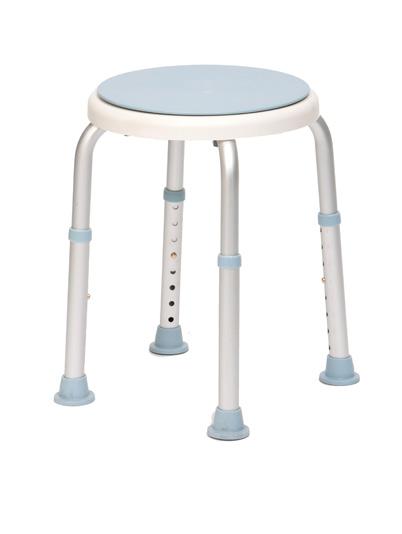
www.drivedevilbiss.co.uk
Burnett Remould Adult Bath Seat from Care & Independence
The Burnett Remould Bath Seat provides full body postural support during bathtime. Thousands of beads are heat-sealed inside a durable soft vinyl pouch, enabling highly supportive moulding to individual body contours. Compression or expansion options can be achieved via the mid-hinge, plus a padded shoulder and side flares deliver lateral support. Suction cup fixtures give wet environment security, and the support’s base can also be ramped to prevent users slipping when in-situ.

www.careandindependence.com
The commode is manufactured from powder-coated tubular steel and comes with a comfortable padded upholstery on the seat and back, which is heat sealed, allowing it to be cleaned without the risk of water ingress.
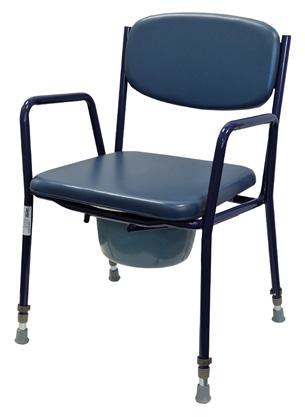
The toilet seat is oval shaped with a clip on/clip off design. A rubber buffer sits in the seat to avoid seat abrasion against the frame. The commode holds a five-litre round potty and its seat height can be adjusted from 45-60cm. Its maximum user weight is 180kg.
www.alertamedical.com
56 | Retailers’ Buyers Guide | thiis.co.uk
www.silvalea.com
Adjustable
Alerta
Alerta Stacking Commode with
Height from
Medical
Bathstool with Rotating
from Drive DeVilbiss Healthcare
BHTA MEMBER
BHTA MEMBER
Dress Sling for Bathing
Product
Open Weave Mesh Fabric

Hygiene and Bathing Dress Slings
As part of the Silvalea ‘Standard’ sling range, the Dress Sling is designed to give good access for hygiene, personal care and general transfers due to the large commode aperture and easy application. Both sling options include a waist band with a hook and loop fastening and a clunk-click buckle for additional security.
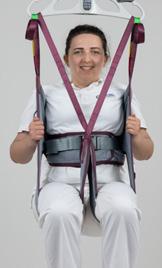
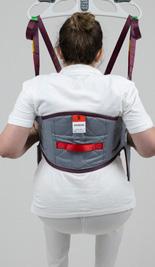
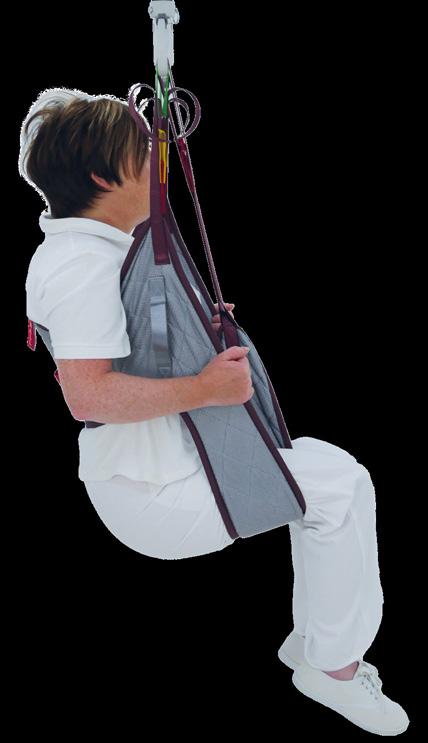
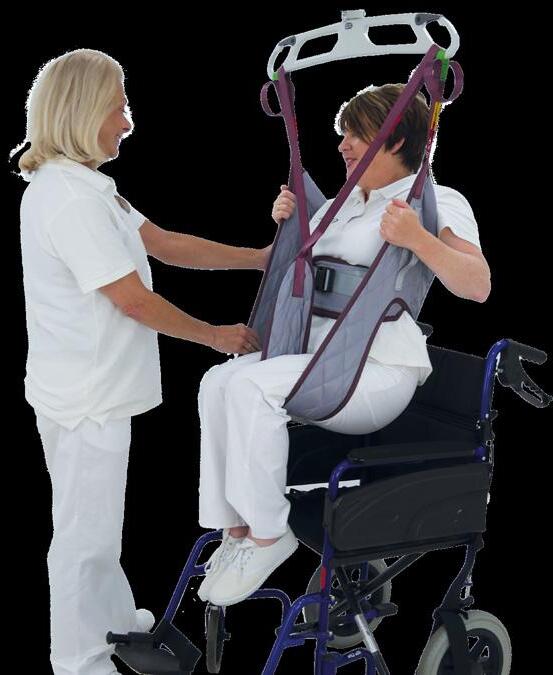
Manufactured in quilted polyester or mesh fabrics, they are available with or without a padded under-arm roll, for extra patient comfort.
Choose between the standard ST1 sling design or the ST2, our deluxe design with padded roll.
• Full Risk Assesment Required: Only suitable for a patient with good upper body tone.



• Colour Coded Tapes: All hoisting tapes have colour coded loops, for ease of reference and positioning options.
Dress Sling Padded Roll
• Sizes: Available from XXXS-XXL in both designs. We recommend our Tailor Made Sling Service for more complex patient body shapes.
Solutions 3 Tel: +44 (0)1626 331 655 Website: www.silvalea.com Email: customerservices@silvalea.com FM 35946 EMS 609677
Patient Transfer
A strong and durable fabric commonly used for bathing and hygiene slings. The open weave allows water to drain through the fabric and dry more quickly. The mesh fabric is structured and produces a solid hard wearing sling, making it an ideal sling fabric for use within all residential and acute environments.
Codes: ST1A Poly, ST1B Mesh MAXIMUM ACCESS EXTRA SUPPORT UNDER ARM PADDING View the full range at silvalea.com
Codes: ST2A Poly, ST2B Mesh Scan to register for Live Training on 07/09/2023 to view these slings in action.
Product
Next issue...
Buyers’ guide to aids for daily living
house ad
Each month, discover key products from a different segment of the mobility market to consider offering to customers.
For the various options available and to get your products in front of the mobility and access industry please direct your enquiries to Joe Fahy via joe.fahy@bhtaengage.com or 07384
258 372
Quantum Specialist – South East

As a world leader in innovative powered wheelchair design and manufacture, a unique opportunity has arisen for someone with Passion, Energy, Drive and Ambition to join our successful Quantum Rehab Specialist team.
This fantastic opportunity will require determination and focus, in return we offer:
• A competitive salary, details of remuneration will be discussed during the interview stage.
• Company vehicle
• Plus many other benefits including product and control systems training.
The successful candidate would ideally need to reside in the Southeast territory and will be required to travel throughout this area, continuing to support our existing accounts, and to create new opportunities to develop the territory.

The ideal candidate will be required to demonstrate their involvement in the assessments and provision of powered wheelchairs for a minimum of two years, whether this is through the retail or NHS sectors.
Experience of powerchair control systems and specialist seating is desirable but not essential as full training will be provided. For a full job specification or to send us your CV, please email: kevin@quantumrehab.co.uk
The closing date for applications is 1st October 2023.
quantumrehab.co.uk
Over
Please
Quantum Technical Support
An exciting opportunity has arisen for a candidate to fill this brand new position in the Quantum Specialist Team; to aid with their expanding client base. This is a varied role which is largely office based, with field based training courses which the successful candidate will conduct, throughout the year.
This is an incredible opportunity for a candidate to lead the education of our clients in our products, and be their first port of call for any technical concerns. Benefits include:
• 25 days annual leave plus all bank holidays and additional Christmas days off

• Use of a company vehicle
Preferred candidates would need to live within an area compatible with travelling to our head office each day
The ideal candidate will be required to demonstrate previous customer relations experience. Knowledge of technical and manufacturing procedures is preferred but not essential, as full training will be provided.
If you are interested in this role or would like a full job description, please email: liv@pride-mobility.co.uk
The closing date for applications is 1st October 2023.
quantumrehab.co.uk
contact us for our trade catalogue: Tel 01460 75686 www.classiccanes.co.uk
500 models available from stock
The updated Blazer has a number of user friendly upgrades and is now even narrower than before. It is still available with either a Sling or Captain seat and a variety of accessories.
Captain
Manual Recline No Tilt-in-Space
Captain Sitting
Nominal Seat Width (inch): 18 / 20
Tilt-in-Space/ Standard Seat Sling Sitting
Adjustable Seat Depth
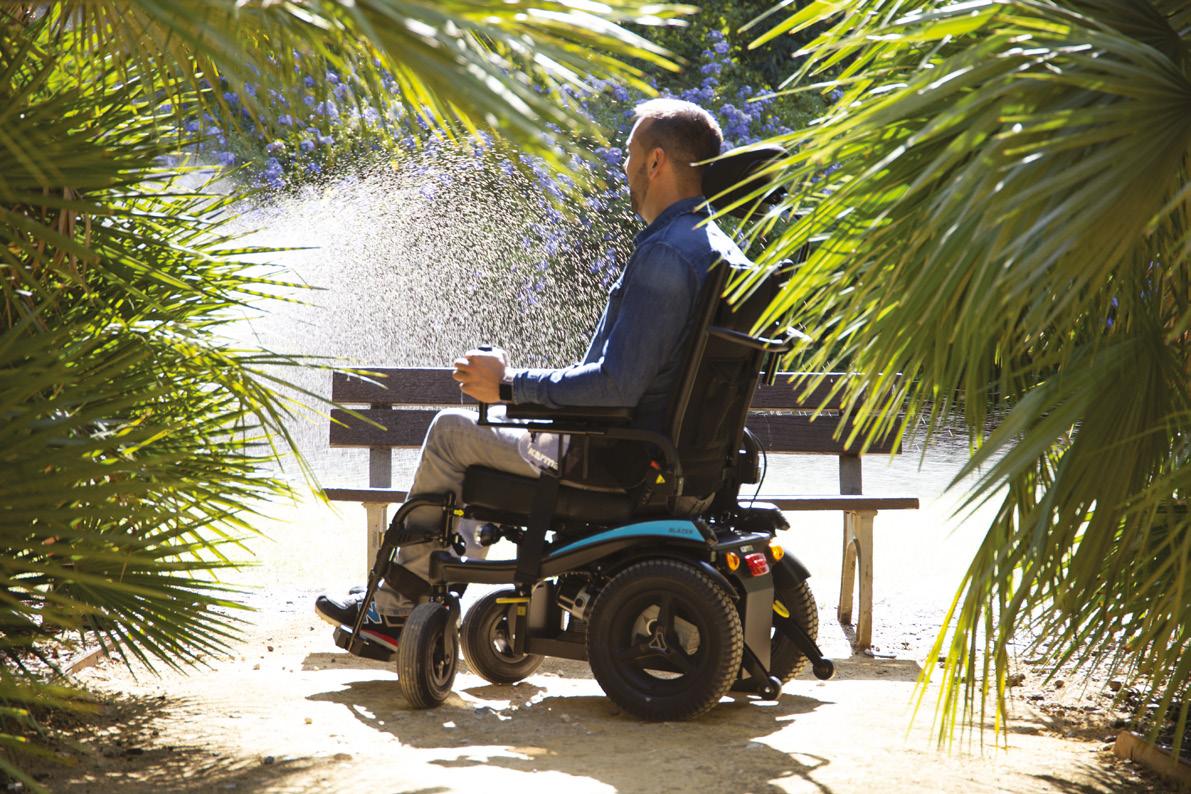
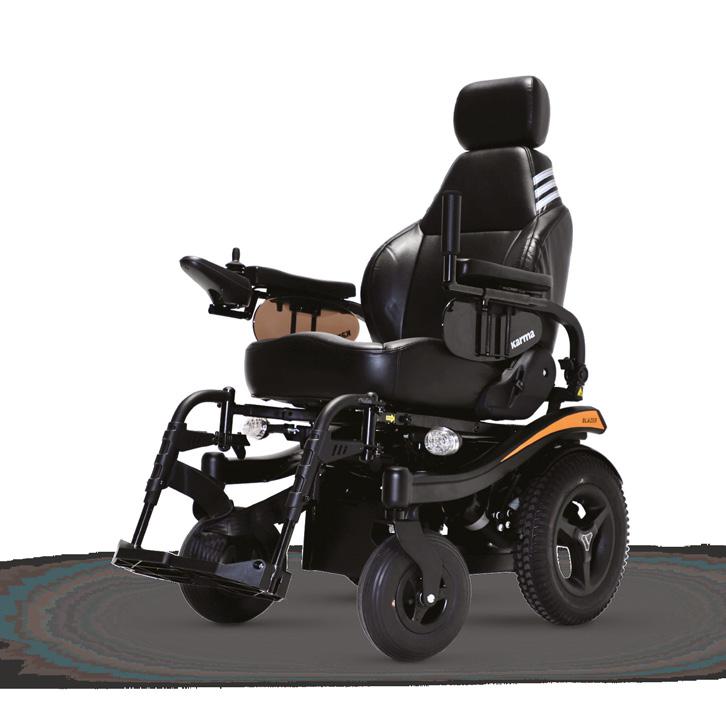
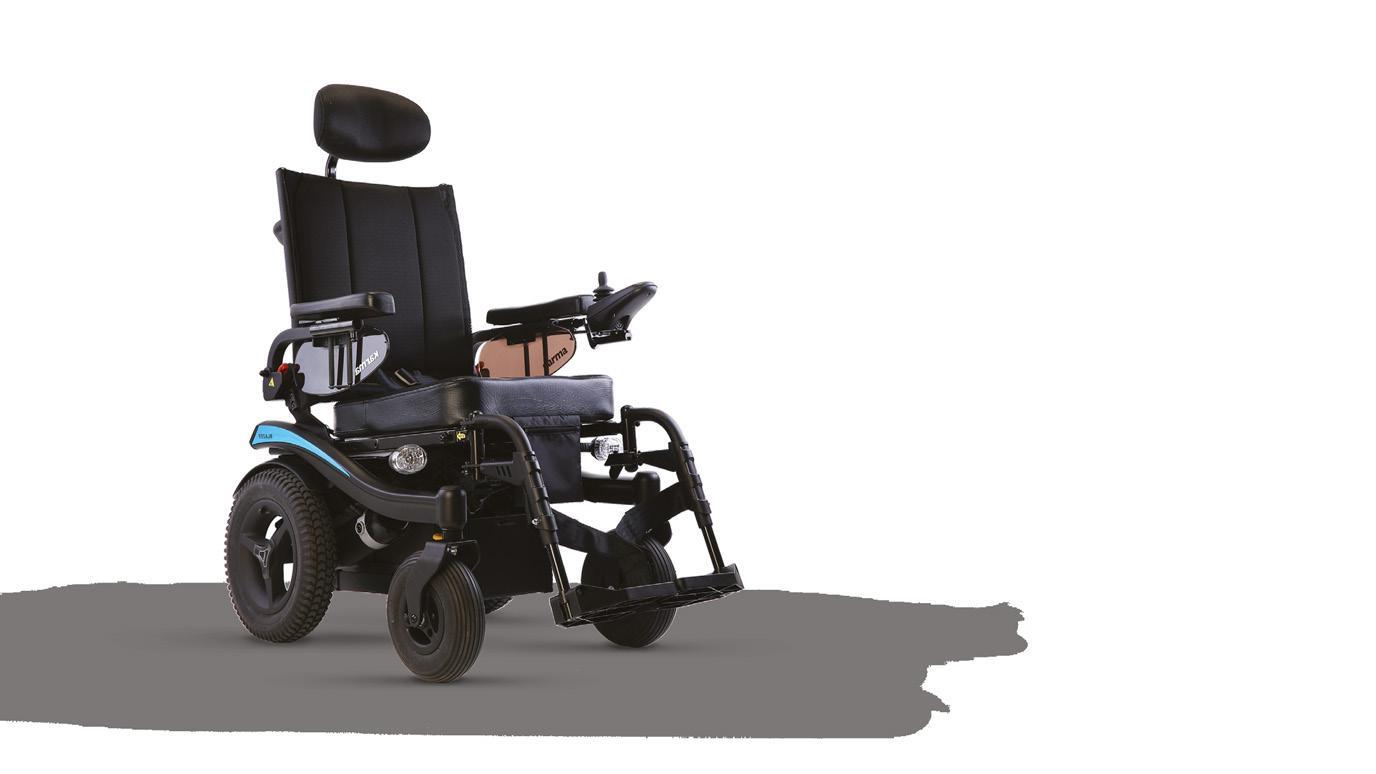
Manual Stepless Recline
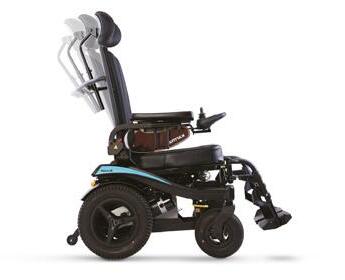
Nominal Seat Width (inch): 17 / 19 / 20
 Blazer Sling
Blazer
Blazer Sling
Blazer
Vita X
Designed with nature in mind. Be comfortable on or off the beaten path with the stylish and versatile Vita X. Chunky tyres on large alloy wheels ensure enhanced capability for rugged terrain.
A powerful motor and tough suspension provide effortless performance and comfort. A visually striking model with an impressive battery range and no compromise on style.
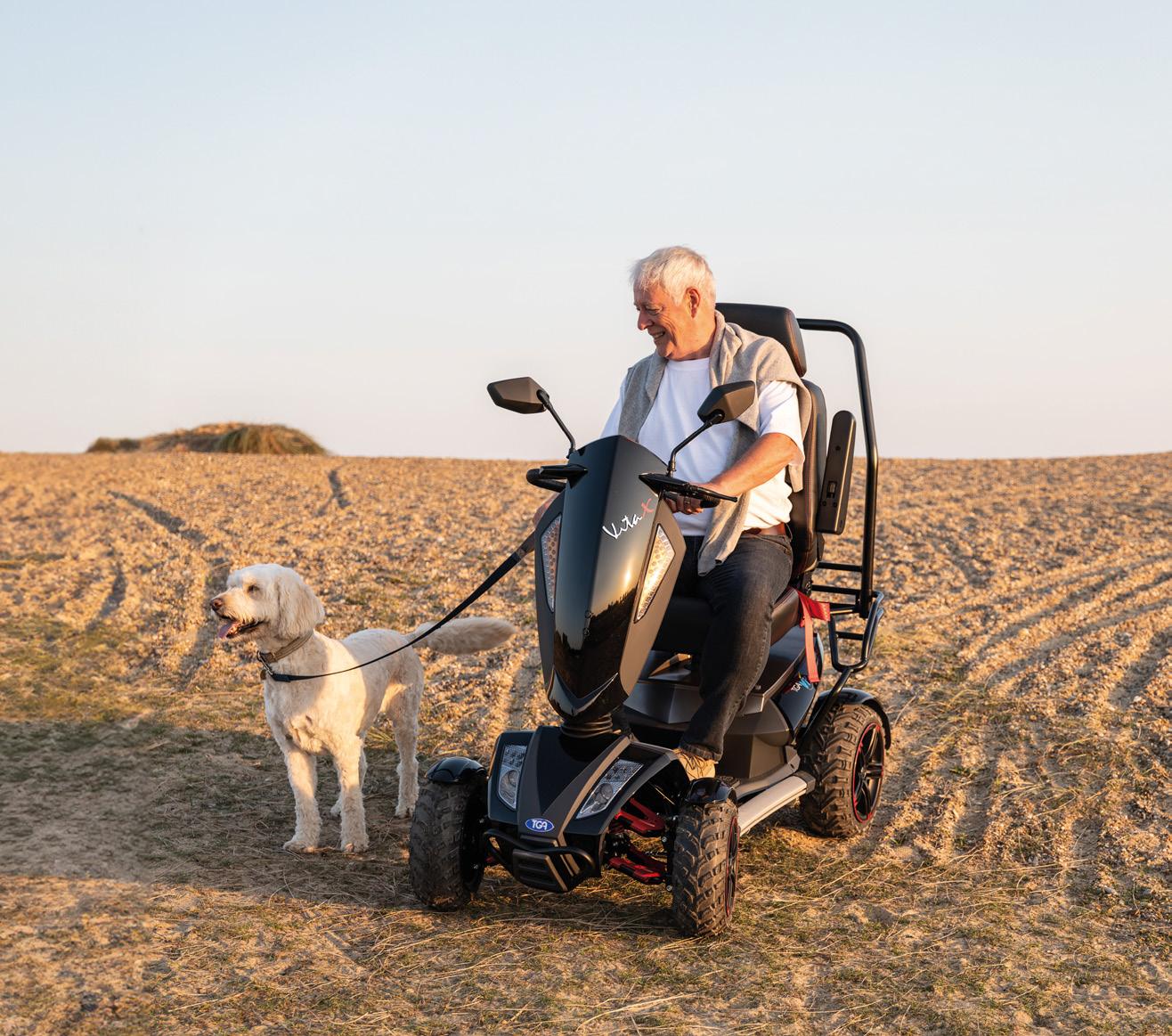
| trade.sales@tgamobility.co.uk | 01787 888 106 FEEL MOVED
tgamobility.co.uk