Art Exhibition “All These Words Are” Explores Meaning
Ghidaa Tareq News Reporter
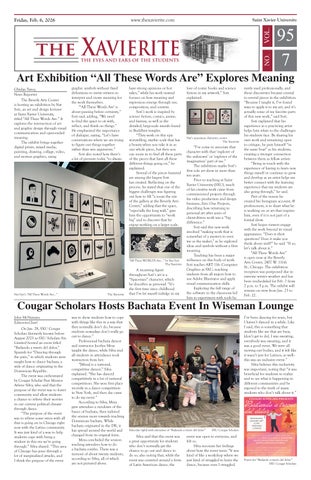
The Beverly Arts Center is hosting an exhibition by Nat Soti, an art and design lecturer at Saint Xavier University, titled “All These Words Are.” It explores the intersection of art and graphic design through visual communication and open-ended meaning.
The exhibit brings together digital prints, mixed media, painting, drawing, collage, video, and motion graphics, using
graphic symbols without fixed definitions to invite viewers to interpret and create meaning for the work themselves.
“‘All These Words Are’ is about pausing before certainty,”
Soti said, adding, “We need to find the space to sit with, reflect, and think on things.”
He emphasized the importance of dialogue, saying, “Let’s have conversations where we are trying to figure out things together rather than win arguments.”
Soti also noted how there’s a lot of pressure today “to always


have strong opinions or hot takes,” while his work instead focuses on how meaning and expression emerge through use, composition, and context.
Soti’s work is inspired by science fiction, comics, anime, and fantasy, as well as the detailed, large-scale murals found in Buddhist temples.
“They work on this epic storytelling, mythic scale that has a beauty when you take it in as one whole piece, but then you can zoom in to find all these parts of the pieces that have all these different things going on,” he explained.
Several of the pieces featured are among the largest Soti has created. Reflecting on the process, he stated that one of the biggest challenges was figuring out how to fill “a room the size of the gallery at the Beverly Arts Center,” adding that the space, “especially the long wall,” gave him the opportunity to “work big” and to discover that he enjoys working on a larger scale.
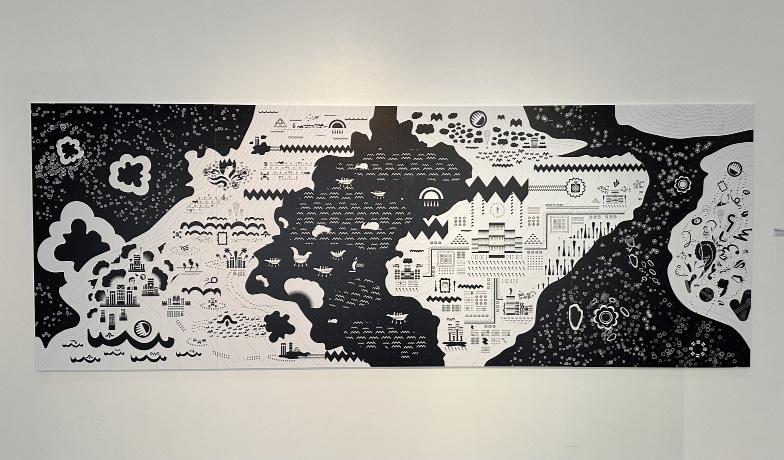
A recurring figure throughout Soti’s art is a “Spaceman” character, which he describes as personal. “It’s the first time since childhood that I’ve let myself indulge in my
love of comic books and science fiction in my artwork,” Soti explained.

“I’ve come to associate that character with that ‘explorer of the unknown’ or ‘explorer of the imagination’ part of me.”
The exhibition marks Soti’s first solo art show in more than ten years.
Prior to teaching at Saint Xavier University (SXU), much of his creative work came from commissioned projects through his video production and design business, Zero One Projects, describing how returning to personal art after years of client-driven work was a “big difference.”
Soti said this new work involved “making work that is somewhat of a mystery to even me as the maker,” as he explored ideas and symbols without a firm meaning.
Teaching has been a major influence on this body of work.
Soti teaches ART 116: Computer Graphics at SXU, teaching students from all majors how to use Adobe Illustrator and apply visual communication skills.
Exploring the full range of the software in the classroom led him to experiment with tools he
rarely used professionally, and those discoveries became central to several pieces in the exhibition. “Because I taught it, I’ve found ways to apply it to my art, and it’s actually some of my favorite parts of this new work,” said Soti.
Soti explained that his experience as a practicing artist helps him relate to the challenges his students face. By sharing his own work and remaining open to critique, he puts himself “in the same boat” as his students, creating a stronger connection between them as fellow artists.
“Being in touch with the experience of having to learn new things myself or continue to grow and develop as an artist helps me better connect with the learning experience that my students are also going through,” he said.
Part of the reason he created his Instagram account, @ professorsoti, is to share what he is working on or art that inspires him, even if it is not part of a formal show.
Soti hopes viewers engage with the work beyond its visual appearance. “Does it elicit questions? Does it make you think about stuff?” he said. “If so, let’s talk about it.”
“All These Words Are” is open now at the Beverly Arts Center, 2407 W. 111th St., Chicago. The exhibition reception was postponed due to extreme winter weather and has been rescheduled for Feb. 7 from 2 p.m. to 5 p.m. The exhibit will remain on view from Jan. 23 to Feb. 22.
Cougar Scholars Hosts Bachata Event In Wiseman Lounge
John McNamara Editor-in-Chief
On Jan. 28, SXU Cougar Scholars (formerly known before August 2025 as SXU Scholars Sin Límites) hosted an event titled “Bailando a través del dolor,” Spanish for “Dancing through the pain,” in which students were taught how to dance bachata, a style of dance originating in the Dominican Republic.
The event was orchestrated by Cougar Scholar Peer Mentor Arlene Silva, who said that the purpose of the event was to foster community and allow students a chance to relieve their worries in our current political climate through dance.
“The purpose of the event was to relieve some stress with all that is going on in Chicago right now with the Latino community. It was just kind of a way to help students cope with being a student in this era we’re going through.” Silva shared. “This area of Chicago has gone through a lot of marginalized attacks, and I think the purpose of the event
was to show students how to cope with things like this in a way that they normally don’t do, because students nowadays don’t really go out to dance.”
Professional bachata dancer and instructor Jocelyn Meza taught the dance, while Silva and all students in attendance took instruction from her.
“[Meza] is a national, competitive dancer,” Silva explained. “She has danced competitively in a lot of national competitions. She won first place recently in a dance competition in New York, and then she came to do my event.”
According to Silva, Meza gave attendees a rundown of the basics of bachata, then tailored the session more towards teaching Dominican bachata. While bachata originated in the DR, it has spread around the world and changed from its original form.
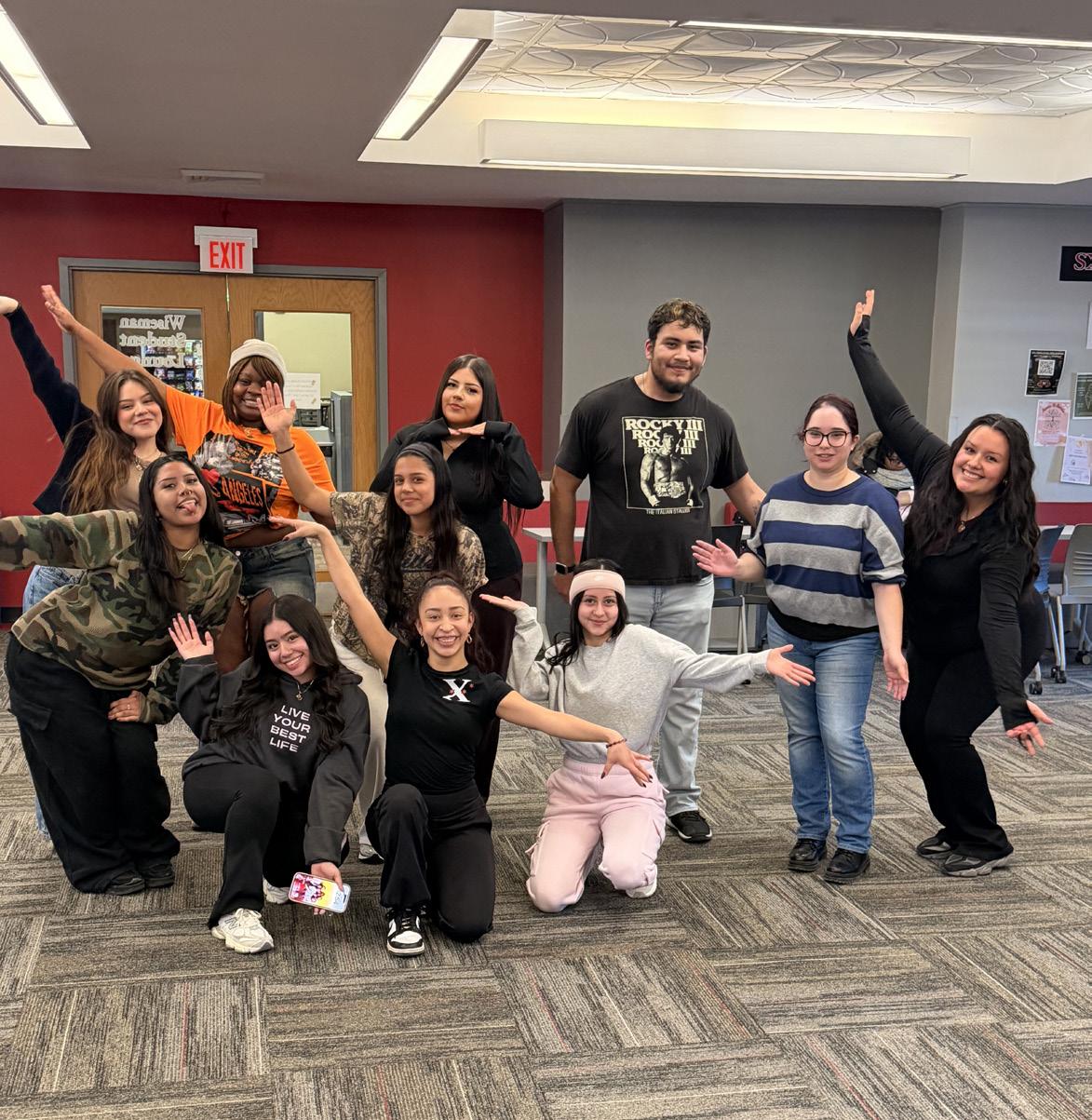
Meza concluded the session teaching attendees how to do a bachata combo. There was a turnout of about twenty students, according to Silva, all of which are not pictured above.
Silva said that this event was a great opportunity for students who don’t normally get the chance to go out and dance to do so, also noting that, while the event was centered around a form of Latin American dance, the
event was open to everyone, and felt so.
Silva recounts her feelings about how the event went: “It was kind of like a workshop where we just kind of struggled to learn the dance, because even I struggled.
I’ve been dancing for years, but I haven’t danced in a while. Like I said, this is something that students like me that are busy, [don’t get to do]. I was sweating, everybody was sweating, and it was a good event. We were all moving our bodies, and it felt like it wasn’t just for Latinos, as well–this was an inclusive event.”
Silva believes this inclusivity was important, noting that “it was beneficial for students to realize and to see what is happening in different communities and be exposed to the truth of many students who don’t talk about it.”

Nat Soti’s ”All These Words Are…”
The Xavierite
“All These WORLDS Are…” by Nat Soti The Xaveirite
Nat’s spaceman character, center. The Xavierite
Silva (far right) with attendees of “Bailanda a través del dolor” SXU Cougar Scholars
Poster for “Bailando a través del dolor” SXU Cougar Scholars
The Xavierite
Call
773.298.3380
thexavieritenewspaper@ gmail.com
Write
The Xavierite
Saint Xavier University
3700 W. 103rd Street Chicago, IL 60655
Staff:
Editor-in-Chief
John McNamara
Deputy Editor-in-Chief
Grace Tynski
News Editor Open for Position
News Reporter
Ghidaa Tareq
Features Editor Grace Tynski
Features Reporters
Niki Kowal
Sam Alcala
Daniel Justic
Opinions Editor Open for Position
Opinions Columnist
Arlene Silva
Sports Editor
Adedolapo Ogunleye
Sports Reporters
Leonardo Alvarez-Salgado
Business Manager Open for Position
Promotions Director Kegan Sakowski
Webmaster Zion Cunningham
Videographer Sam Alcala
Director of Student Media
Peter Kreten, M.Ed.

Opinions
Dr. Bermele Steps Down as Dean of Nursing and Sciences
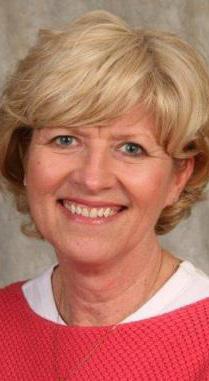
On Monday, Jan. 12, Saint Xavier University (SXU) announced that Dr. Charlene Bermele will be stepping down from her position as Dean of Nursing and Health Sciences.
With this change the editorial board discussed their concerns, while also expressing some optimism for the future dean of the program.
“I can say that the nursing department will most likely be affected by this. Dr. Bermele [...] has been a huge advocate for domestic violence victims,” one board member said.
Dr. Bermele has made a lasting impact on not only domestic violence victims but also countless nursing students in her over 20 year career here at SXU.
One member believes that this change can be a positive thing.
“It’s always good to get fresh eyes and new perspectives in a program as ever-evolving as nursing.”
There are some concerns, however, considering the large scale of the program.
“Despite being such a small school, being the dean of such a program comes with a massive amount of responsibility.”

SXU’s nursing program continues to be its most enrolled program year after year, making the dean of nursing an important role to fulfill.
“I hope the change in faculty won’t disrupt the nursing
students or their program,” states another board member.
Another member feels optimistic about what comes next.
“Despite having big shoes to fill, I have full confidence that the school will make the best decision to keep the program thriving for the next generation of nursing students.”
Finally, our editorial board leaves some final remarks to the future dean of nursing and sciences.
“I’d like the new dean to know SXU is a welcoming place. In my experience, new staff members typically bond with students quickly” one member said.
The strong relationship between staff and students is what helps make this school better and stronger.
“SXU is an amazing community built from incredible people” another member said. SXU is a mercy institution that values every member of the community.
The editorial board is optimistic but also concerned given the integrity of the nursing and sciences program and how much it means to SXU.
At the end of the day no matter who is selected to fill the role we know that they will fit in with this amazing community.
- The Xavierite Editorial Board
Dr. Charlene Bermele
Sam Alcala Videographer
Weak Representation Is Not Representation
Unsurprisingly, Odessa A’Zion was recently under fire for taking the role of a MexicanJewish character for the film “Deep Cuts,” an upcoming A24 film directed by Sean Durkin.
Many felt the choice was tone deaf and I highly agree. A’Zion made the claim of being unaware of the character’s background, which in itself is highly irresponsible.
I can give A’Zion grace and believe taking the role was not with ill-intent, but at some point we have to draw a line and give actors some responsibility to research even the slightest about the characters being offered to them.
Not to mention, the character’s name is “Zoe Gutierrez.” That’s not exactly a name commonly seen outside of the hispanic population.
As a whole, I find it utterly ridiculous that casting white actors for characters with minority backgrounds is still an ongoing issue in 2026. I would argue that representation in Hollywood has regressed in many areas.
I don’t care to celebrate little wins with representation anymore when audiences have to beg for them in the first place. In many cases, it’s not done properly.
Most ridiculous is Disney’s sad attempts to rectify their years of improper representation by
setting up women of color for mass waves of hate and scrutiny through casting them for previously white roles.
Rachel Zegler and Halle Bailey got the most backlash for their roles as “Snow White” and “Princess Ariel” respectively. The amount of vitriolic, racist hate they received online was immense and still occurs to this day.
It’s cowardly and a half-baked response to demands for more representation. I for one refuse to celebrate some executive’s “here, damn” form of representation.
Even more ridiculous is Hollywood’s obsession with proximity to whiteness. It shouldn’t be so hard to find actors and actresses darker than a paper bag in leading roles.
This is most prevalent in romance and disproportionately affects women of color. Most romances feature white and or mixed female leads, such as “The Summer I Turned Pretty”, “Anyone But You”, and “The Materialists.”
The best romantic representation I’ve seen lately is Bridgerton, with many people of color serving as love interests such as Simon Basset (Regé-Jean Page), Sophie Baek (Yerin Ha), and Kate Sharma (Simone Ashley).
Fortunately, Bridgerton does a good job of at least giving their characters of color complexity. Unfortunately, they also often stay in a support role.
Where are the love stories that are by and for people of
color? I’ve seen so few films come out in recent years that include two people of color as the leads. Don’t even get me started on stereotypical portrayals. Sure we’ve progressed past the in-your-face racist stereotypes, but it’s hard to enjoy a Mexican-American show where the characters sound like a malformed caricature of my family.
There is a lack of research and effort that irritates me when it comes to Mexican-American representation. I don’t want to
see George Lopez on my screen for the millionth time yelling “familia is everything” at me.
Minorities deserve fleshed out, real characters that are more than just their ethnicity.
It’s as frustrating as watching queer characters who serve as nothing more than comedic relief or 2D characters with no depth other than a coming out scene.
The most recent example of this was Will’s (Noah Schnapp) coming out scene in Stranger Things. I’ve never seen a more boring, flat coming out scene in
Representation of queer men is barely starting to get better, such as with “Boots.” I can’t even think about representation of queer women without getting mad.
Often, the pieces of media that do have good representation get cancelled after one season. I’m still mourning “Boots” and “I Am Not Okay With This.” It’s exhausting waiting for Hollywood to catch up with the world, and I am sick of waiting.
Why Cutting the Arts, Culture, and Humanities Is a Political Choice
Arlene Silva Opinions Columnist
In recent years, the value of a liberal education has come under increasing attack. Once considered the backbone of higher education, liberal arts majors are now dismissed as impractical, unethical, or financially irresponsible.
Students are warned that pursuing these degrees is a gamble that may not pay off in the job market. This growing skepticism has fueled policy shifts, funding cuts, and institutional decisions that prioritize profit and efficiency over intellectual growth and civic responsibility.
Across the country, states and universities are responding to financial pressures by targeting liberal arts programs. Federal funding proposals, rollbacks of diversity initiatives, and heightened scrutiny of university endowments have created an environment where programs not immediately tied to high-paying careers are deemed dispensable.
What is often left out of this conversation is the deeper cost of these decisions.
When institutions cut liberal arts programs, they are not just trimming budgets; they are narrowing the purpose of education itself.
When cuts are made there are less choices to explore more about political science, philosophy, or other world studies in general. This often results in many students taking the same

subject with the same professor over and over again.
At Saint Xavier University, this trend became reality in the spring of 2023.
Former Xavierite Deputy Editor-in-Chief Nuala Hanlon, ’24, reported that four majors (Religious Studies, Philosophy,
Mathematics, and Actuarial Science) were eliminated from the university’s list of available programs. These cuts sent a clear message: certain fields of study were no longer worth maintaining.
Liberal arts degrees are often portrayed as disconnected from
workforce needs, but this claim ignores the skills these disciplines cultivate. Critical thinking, ethical reasoning, effective communication, and adaptability are not luxuries; they are essential in a rapidly changing job market. Employers repeatedly emphasize the value of graduates
who can analyze complex problems, collaborate across differences, and think beyond the box. Ironically, these are exactly the skills that liberal arts education emphasizes.
The consequences of these cuts fall disproportionately on first-generation students. For many, college is not just about securing a job, it is about gaining access to knowledge, confidence, and social mobility.
Limiting academic options sends the message that only certain paths are “worth” pursuing, reinforcing existing socioeconomic inequalities. Firstgeneration students should not be boxed into narrow definitions of success dictated by short-term economic logic.
Education should not be reduced to a transactional exchange where degrees are valued only by their monetary value. Universities have a responsibility to prepare students not only for their first job, but for a lifetime of learning, leadership, and civic engagement.
Liberal arts education fosters informed citizens who can question power, understand diverse perspectives, and contribute meaningfully to society. Preserving liberal arts programs is not about nostalgia, it is about defending the integrity of education itself.
Students deserve the freedom to pursue disciplines that challenge them to think deeply, act ethically, and participate fully in our democracy.
The four pillars in front of the Warde Academic Center SXU News
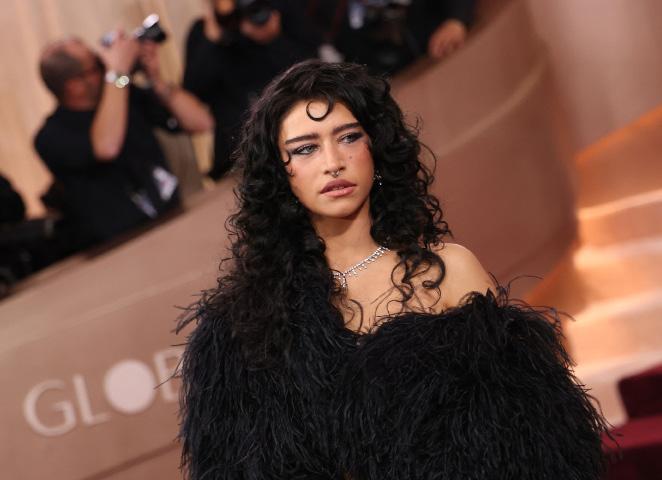
Odessa A’zion attends the 83rd annual Golden Globe Awards at the Beverly Hilton hotel in Beverly Hills, California, on Jan. 11, 2026. Michael Tran/AFP/Getty Images/TNS my life.
At the Grammys, Art Has Always Been Political and 2026 Proved It Again
There has been no shortage of debate lately over whether art should be political, but the question itself feels misguided.
Art has never existed in a vacuum.
Every song, every performance, every award handed out on a glittering stage is shaped by the social moment in which it exists. Whether subtle or outspoken, all art is political and nowhere is that more evident than at the Grammy Awards.
The Grammys has a long history of using music’s biggest night as a platform for cultural and political expression.
One of the most iconic moments dates back to 1973, when Helen Reddy won Best Female Pop Performance for her feminist anthem “I Am Woman.”
She closed her acceptance speech with a line that would echo through Grammy history: “And I would like to thank God, because she makes everything possible.”
More than five decades later, that legacy remains alive; notas an anomaly, but as tradition.
The 2026 Grammy Awards were no different. If anything, they were a reminder that when artists are given a microphone, they will use it to speak to the world they live in.
One of the night’s most

powerful statements came in the form of a win that spoke volumes before a word was even said.
Bad Bunny’s “DeBÍ TIRAR MáS FOToS” took home the title of Album of the Year., making It is theit the first Spanish-language album to win the category in the Grammys’ 68-year history.
In a time when immigration rhetoric continues to dominate headlines, the win felt monumental and not just historic, but deeply human.
Bad Bunny, visibly emotional as he took the stage, dedicated the award to those who have had to leave everything behind in pursuit of something better.
“I want to dedicate this award to all the people that had to leave their homeland, their country, to follow their dreams,” he said.
The moment was quiet, reverent, and deeply moving., It serves as aa reminder that representation is not symbolic when it’s rooted in lived experience.
Later in the night, the Puerto Rican artist echoed the growing chorus of “ICE OUT” sentiments voiced throughout the ceremony.
“We’re not savage. We’re not animals. We’re not aliens,” he said. “We are humans, and we are Americans.” He urged viewers to fight hate with love, adding, “
The only thing that is more powerful than hate is love.” It was a sentiment that resonated far beyond the walls of the arena.
Bad Bunny wasn’t alone
either.
Political expression wove its way through the entire evening, from the red carpet to the acceptance podium.
Artists including Shaboozey, Kehlani, and Bon Iver made pointed statements in solidarity with Minnesota protesters and against ICE. In the audience, small but unmistakable “ICE OUT” pins dotted lapels and gowns., They were worn by attendees like Justin and Hailey Bieber, Billie Eilish, and Joni Mitchell.
The message was clear: even in an industry often criticized for its silence, artists were choosing visibility.
For Olivia Dean, who won Best New Artist, the politics of the night were deeply personal.
“I’m up here as a granddaughter of an immigrant,” she said during her acceptance speech.
“I wouldn’t be here, I’m a product of bravery, and I think those people deserve to be celebrated. We’re nothing without each other.”
The room erupted in applause which underscores , not controversy, underscoring a growing shift in how these moments are received.
Even the show’snight’s humor carried a political edge. Host Trevor Noah, in his sixth and final year of hosting the Grammys, leaned into satire with pointed jokes about former President Donald Trump.
At one point, he drew cheers
from the audience by noting who wasn’t in attendance: Nicki Minaj. “She is still at the White House with Donald Trump discussing very important issues,” Noah joked.,
The jab referenced Minaj’s recent appearance with Trump at the Treasury Department’s Trump Accounts Summit, where he praised her as “the greatest and most successful female rapper in history.”
Later, Noah reflected on his departure as host and CBS’ final year airing the Grammys with another political nod. “I loved my time, but I believe in term limits,” he said, in a clear reference to Trump. “I wanted to set an example for anyone who might be watching the show. Leave when the time is up.”
For as long as artists have taken the stage, there have been calls for them to “stick to the music.” However,But music has always told stories of struggle, of identity, of resistance, andof hope. The 2026 Grammys didn’t introduce politics tointo art; itthey simply refused to hide it.
As the night came to a close, one factthing wasfelt undeniable: the Grammys continue to be much more than an awards show.
It isThey are a cultural snapshot -, a mirror reflecting not only what we listen to, but who we choose to stand with. IAnd in 2026, the message iswas clear: — art is speaking, whether we’re ready to listen or not.
28 years later: The Bone Temple - Review
Sam Alcala Videographer
“28 Years Later: The Bone Temple” is the latest installment in the 28 Days Later franchise and a direct sequel to its predecessor “28 Years Later.”
The 28 Days Later franchise is set in a post-apocalyptic Britain that has been ravaged by the rage virus—a bloodborne virus that comes with zombielike symptoms.
Of all the movies in this series, “28 Years Later: The Bone Temple” is my favorite thus far. It takes a unique route, focusing on building upon the previously set story from “28 Years Later.”
The film features dual storylines, one depicting the connection between a “doctor” and an infected alpha (or zombie).
The other storyline in this film focuses on a boy named Spike (Alfie Williams) and the Jimmies, a cult-like group that “rescued” Spike in the last movie.
In particular, I found the relationship between Dr. Ian Kelson (Ralph Fiennes) and Samson (Chi Lewis-Perry) the most compelling part of this film.
Both characters were featured in the previous film, but this sequel dives deeper into
their dynamic in a way I hadn’t expected. Dr. Kelson builds a relationship with Samson, who is an infected Alpha (or zombie) with heightened strength and resilience.
Initially, I found the scenes between Dr. Kelson and Samson to drag, but upon reflection, the film does an excellent job at building their connection well by the end.
Fiennes and Lewis-Perry’s performances throughout this film are remarkable. Both actors capture your attention and create a tight feeling in your stomach whenever you see them interact.
It leaves you wondering if Dr. Kelson will succeed in his mission with Samson in the end.
The Jimmies are led by Sir Jimmy Crystal (Jack O’Connell), a man who survived the initial rage virus outbreak as a child.
O’Connell gives a superb performance to the point that I did not recognize him in the slightest despite seeing him in other films. He molded the character into someone that’s impossible to look away from—a scene stealer for sure.
The writing and directing of this film shocked me. My qualms with sequels almost always are that the writers either run out of interesting storylines
or completely bastardize the story, but this is absolutely not the case here.
Despite being a bit slow to start, this film progresses like a novel that keeps building upon itself in the best way. I found myself eager to see what happens next, rather than bored.
The cinematography itself is stunning and differs greatly from the earlier films in the 28 Days Later franchise, but I
found it works well for this new story.
I can’t spoil my favorite scene, but there is one with Fiennes towards the end that highlights the beauty of this film wonderfully. It’s magical, enticing, and had me hoping to see more.
If the franchise continues in this direction and further explores this world, I could definitely see it having great
success. This is one of my favorite sequels of any film by far. I would give it an 8.5/10. I highly recommend anyone tired of boring apocalypse films to check out this film. It is a sequel, but it’s one that will make you want to get into the franchise.
“28 Years Later: The Bone Temple” is currently showing in theaters.

Ralph Fiennes in “28 Years Later: The Bone Temple.”
Ice Out button as seen at the Grammys 2026 the Xavierite
Album Review: “Death in the Business of Whaling” by Searows
Grace Tynski Deputy Editor-in-Chief
On his second album, “Death in the Business of Whaling,” Searows carves a niche for himself in the indiefolk scene with devastating lyricism, haunting vocals, and complex instrumentation.
Alec Duckart, the artist behind Searows, first appeared on my radar in the form of TikToks which used snippets of his songs and highlighted their gut-punch lyrics. Before I even knew who this artist was, I was captivated by his writing.
While other music-lovers may focus on instrumentals or vocals, the lyrics of a track will always be more important to me. It’s most likely because I’m a writer myself. I don’t know much about chord progressions or key changes, but I know what goes into crafting a good line.
Duckart’s lyricism is hard to describe as it manages to be both specific and universal. Many compare him to Phoebe Bridgers, and I can see the resemblance between their vulnerable, raw verses.
Like Bridgers, Duckart’s dreamlike vocals don’t merely scratch the surface; they claw their way under your skin.
This is evident in the album’s sixth track, “Dearly Missed.” The track was first released in Oct. 2025 as the
lead single for the album.
Beginning with shoegazey guitar and soft vocals, the track’s lyrics create an almost eerie sense of dread. “You probably grew up being dishonest/What else could you do, though?/It’s all that you knew,” Duckart sings throughout the first verse.
The song flourishes into a character sketch of a man who’s been through some unspecified traumatic event. Duckart then uses this lens to explore poignant rage and grief.
After the first verse, the chorus comes in with crashing drums and visceral vocals that release all the previously built tension. The track’s full emotional resonance is realized as Duckart’s vocals grow more and more desperate.
The track’s title comes from the bridge, where Duckart sings: “By some sort of coincidence/ He drove his car off of the river bridge/They never found him, and they haven’t since/He’s dearly missed.”
“Dearly Missed” is a prime example of Duckart’s narrative lyricism. His lyrics can read like poetry, which is why it didn’t surprise me to learn the album’s closing track, “Geese,” was inspired by a famous Mary Oliver poem of a similar name.
The track draws direct parallels to Oliver’s poem
and tells the listener: “You do not have to do good/But you cannot do nothing.”
While Duckart’s lyricism is my favorite feature of his music, there’s also plenty to appreciate when it comes to instrumentation. From the nostalgic guitar on “Photograph of a Cyclone” to the seamless banjo on “Belly of the Whale,” Duckart combines skillful folk
elements with his thoughtful lyrics.
The combination of the two serves as the backbone for an album that feels expansive despite consisting of only nine tracks and a 42-minute runtime.
As Irmak Altinok wrote for Firebird Magazine last year, Duckart’s music “feels like it’s made for a Chicago winter, those days that start with the
warmth of the sun on your face and end with a snowstorm.”
While temperatures drop and snow continues to fall, I’ve found “Death in the Business of Whaling” to be the perfect soundtrack for this winter season. I’d highly recommend it to anyone who appreciates good folk music —particularly fans of Bon Iver, Phoebe Bridgers, or Noah Kahan.

From Riches to Rags: A Fresh Look into the Game of Thrones Universe
Daniel Justic Features Contributor
Advertised as a much tamer look into the “Game of Thrones” world of Westeros, I was unsure of how I would like this universe’s newest series “A Knight of The Seven Kingdoms.”
Used to and loving the grandiose castles, fire breathing dragons, and magical-entity-filled world of the previous two series, I initially thought this series would appear lackluster.
However, I was pleasantly proven wrong.
Premiering on Jan. 18, 2026, this series is based on another of George R. R. Martin’s works: “The Hedge Knight.”
Hedge knights (often lowborn individuals with no family name and little money) wander around the land in search of employment from lords.
These nomads, including our main character, obtain their name from their tendency to sleep under hedges and trees.
Through the simple yet charming hedge knight known as Dunk, short for Ser Duncan the Tall (Peter Claffey), it feels like a story following a person just like me and you.
Dunk, alongside a young boy named Egg (Dexter Sol Anell), who he names as his squire, is a man trying to find his place in the chaotic world of Westeros.
A rarity, Dunk grew up during a moment of peace, sheltered from the world’s workings we’ve followed in past
series.
A nine year old boy, Egg seems to know everything about everything, a stark contrast to Dunk struggling to even remember noble houses.
Providing a comedic tone and interesting companionship between the two, each mentors the other on various aspects of the treacherous world.
Knighted by his former master, who we see Dunk laying to rest in the opening scene of the show, I see Dunk’s situation in my own life and many others here at SXU.
Similar to us as we begin our careers, Dunk is a person who has suddenly been thrust into the real world, no longer shielded by his master, and must find his way on his own from the bottom up.
With the initial arc following Dunk joining a tournament with the goal of winning riches and establishing a name for himself, we are constantly reminded how far down the hierarchical pyramid we have fallen compared to past shows.
A surprisingly honest man, Dunk is a rare good-intentioned person in a land usually filled with deception, death, and conflict.
You can’t help but feel hopeful when watching him.
While the series maintains the gritty feel of the previous two series, one aspect that’s different yet enthralling is the humor.
In previous series, humor

came about through clever quips which still served to carry the plot forward.
Here, we see much more physicality, a reminder that we are no longer following noble-borns who have a certain reputation to uphold.
Alongside humor, the cinematography takes a more grounded route than its predecessors.
Opting to follow the two
almost exclusively, as opposed to a constant swapping between groups.
This approach gives the series an intimate feel. I felt as though I was part of their group, experiencing everything they see and hear right there with them.
A parallel to the end of our careers as students, Dunk is on a journey into the unknown.
Put down at every turn, he is a reminder to keep pushing
no matter how far we are from the top.
With three episodes out so far, “A Knight of the Seven Kingdoms” has been a refreshing look into the “Game of Thrones” universe.
Leaving me eagerly anticipating each Sunday night, I can’t wait for more.
“A Knight of The Seven Kingdoms” is now streaming on HBO Max.
Spotify page for “Death in the Business of Whaling”
The Xavierite
“Peter Claffey as Dunk, left, and Dexter Sol Ansell as Egg in HBO’s “A Knight of the Seven Kingdoms.” (Steffan Hill/HBO/TNS)

The Drought Is Over, Cougars Claim Their First Road Win of the Season
Dolapo Ogunleye Sports Reporter
After nine straight road games of disappointment, the SXU Cougars finally lock in and earn a road win. It truly has been a long season with a great amount of losses and giving the opponents the best homecourt advantage.
SXU defeated Indiana University Northwest with a final score of 85-80 which improved their record to 8-12 and officially has their road record standing at 1-9.
They were led by Senior guard Ike Nwaobi, who came off the bench and finished the game with 21 points, and nine rebounds. Nwaobi came up big in the clutch when he scored 17 points alone in the second half and shot 60 percent from the field for the game.
The Cougars were also led by junior guard James Morgan as he finished the game with 20 points, two rebounds and assists, and a steal. The 20 point performance is marked as a season-high for Morgan and he was highly efficient, shooting 6/8 from the field and ¾ from three-point range. Unfortunately, the Cougars aren’t out of the woods yet as their overall record is still negative. And

after suffering a home loss against Olivet Nazarene University this past Saturday, the Cougars fall to 8-13 with only six games left in the regular season.
The CCAC Tournament begins on February 25, 2026 and the Cougars desperately need these wins in order to qualify for the tournament. Ultimately, they want to still reach the playoffs and qualify for the 2026 NAIA Opening Round which kicks off on March 13, 2026.
The dream scenario for sure is
to go 6-0 for the remainder of the season, which would have them finish the season at 14-13. But you have to crawl before you walk and the Cougar’s biggest focus right now is to win the next game. It’s now or never for the Cougars as they look to start a momentum shifting winning streak. They’ll be playing against Holy Cross College (Ind.) who are currently 9-13 on the season. Action takes place at home in the Shannon Center on Wednesday, Feb. 4 at 7:00 PM.

A Cougars Guide to Spring Sports
Leonardo Alvarez-Salgado Sports Columnist
The spring semester has begun, which means a new wave of sports will begin.
From men’s volleyball to baseball, softball, track & field, golf, cheer, dance, and playoff basketball, this semester has it all.
As of Feb.1 both men’s and women’s basketball enter their final two weeks of the regular season before conference tournaments and the National Association of Intercollegiate Athletics (NAIA) tournament.
The men’s team had a disappointing year, going 8-12 overall with seven games left.
The women’s team will finish the regular season above .500 as they currently have a 15-7 record with six games remaining.
No.2 men’s volleyball team has already started their 2026 campaign and, at the time of writing this, they are off to a 2-2 start as they look to repeat last year’s run to the NAIA national championship.
On Jan. 30, 2026, the reigning Chicagoland Collegiate Athletic Conference (CCAC) champions men’s baseball team will begin their season in Bradenton, Florida.
For more information, check out last week’s article
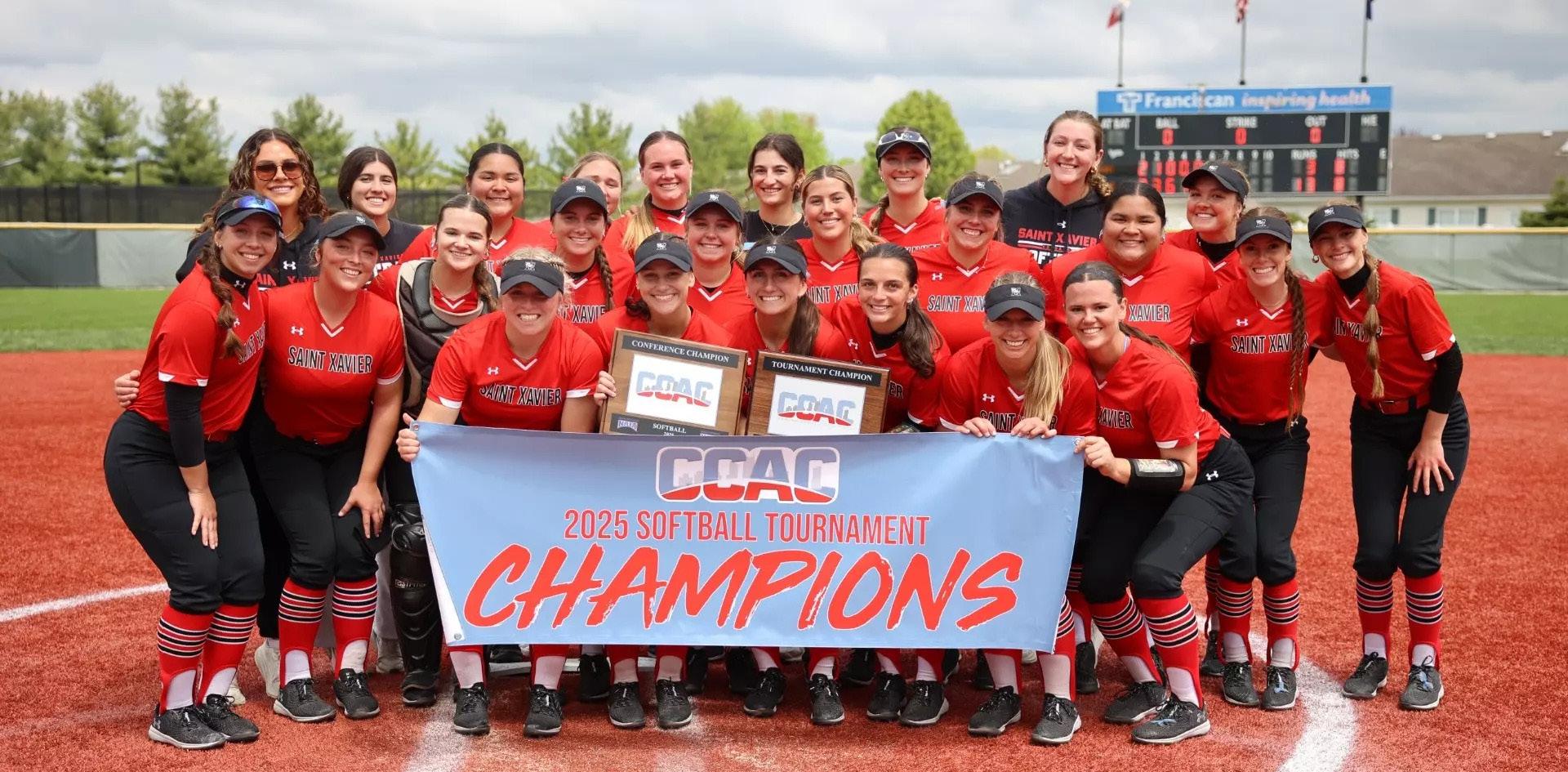
The Cougars will look to win their sixth straight CCAC title when the softball season begins on Feb. 12, 2026, as the No.23 Cougars take on No.14 Madonna University (Mich.) at the Rosemont Dome as part of a doubleheader.
Their first home game will be played on March 21 against Judson University.
The men’s and women’s
track and field season has resumed after a month-long break, and their next event will
Conference Championships on March 6, in Columbia, Missouri. Finally, No.6 men’s bowling and No.22 women’s bowling

6 in Bourbonnais, Illinois. They will also have a twoday meet in Allendale, Michigan on Feb. 13, and Feb. 14, before the CCAC championships begin on Feb. 20. On March 3, 2026, men’s and women’s golf tees off at the Saddlebrook Spring Kickoff in Wesley Chapel, Florida.
The Cougars dance team will have three competitions before the American Midwest Conference Championships on March 7.
As for the cheer team, they will have a two-day competition in New Orleans, Louisiana from Feb. 5-6 before they also head to the American Midwest
continue their strong seasons as they reach their final event on Feb. 14-15 before ITC sectionals begin on March 14. The NAIA national championships on March 19-21, and the ITC nationals in April. No matter what sport you like, this semester has a little bit of everything with a mix of indoor and outdoor events, so come out to show support for your 2026 Cougars.
Matt Pannala during game at the Shannon Center
SXU Athletics
Senior Guard Ike Nwaobi Attempts Floater Over Defender
SXU Athletics
Cougars softball celebrate fifth straight CCAC title
SXU Athletics
Junior Guard James Morgan Scans the Floor to Make the Next Play SXU Athletics
be the Walter Cramer Invite on Feb.
