To improve the health and welfare of our communities through responsive, whole-person health services for all and the sustainable renewal of an inspired, competent workforce that is privileged to serve
For our Graduate Medical Education Safety-Net Consortium framework that integrates patient care delivery, workforce development, innovation, and empowered voice of communities to be the leading model of primary health care in America
OUR VALUES
Do the Wright thing
Be privileged to serve
WE
OBe an exceptional team member
Be driven for excellent results
Be trustworthy and accountable
HUMBLY ACKNOWLEDGE AND THANK
Spread optimism
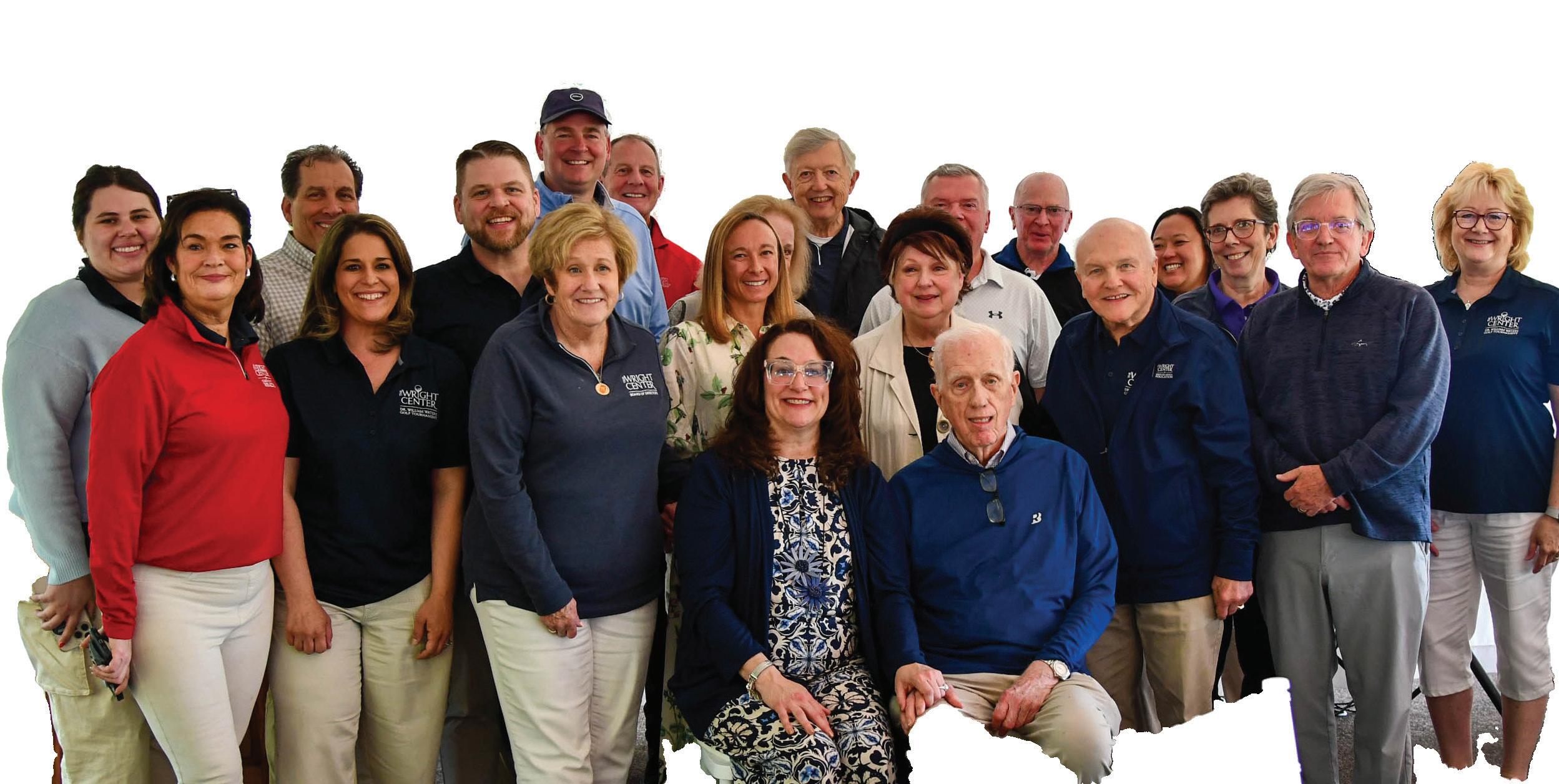
ur patients and families who place their confidence in our care teams; Our volunteer board members who unselfishly dedicate their time and talent; Our resident and fellow physicians who entrust us with their education; Our employees and staff who deliver our mission and vision every day; and Our communities that shape our experience and innovations and allow us the privilege to serve. The list below includes everyone who served on one of our governing boards from July 1, 2024, through June 30, 2025. For a list of current board members, visit TheWrightCenter.org/board-members.
The Wright Center for Community Health (88% of whom are patients)
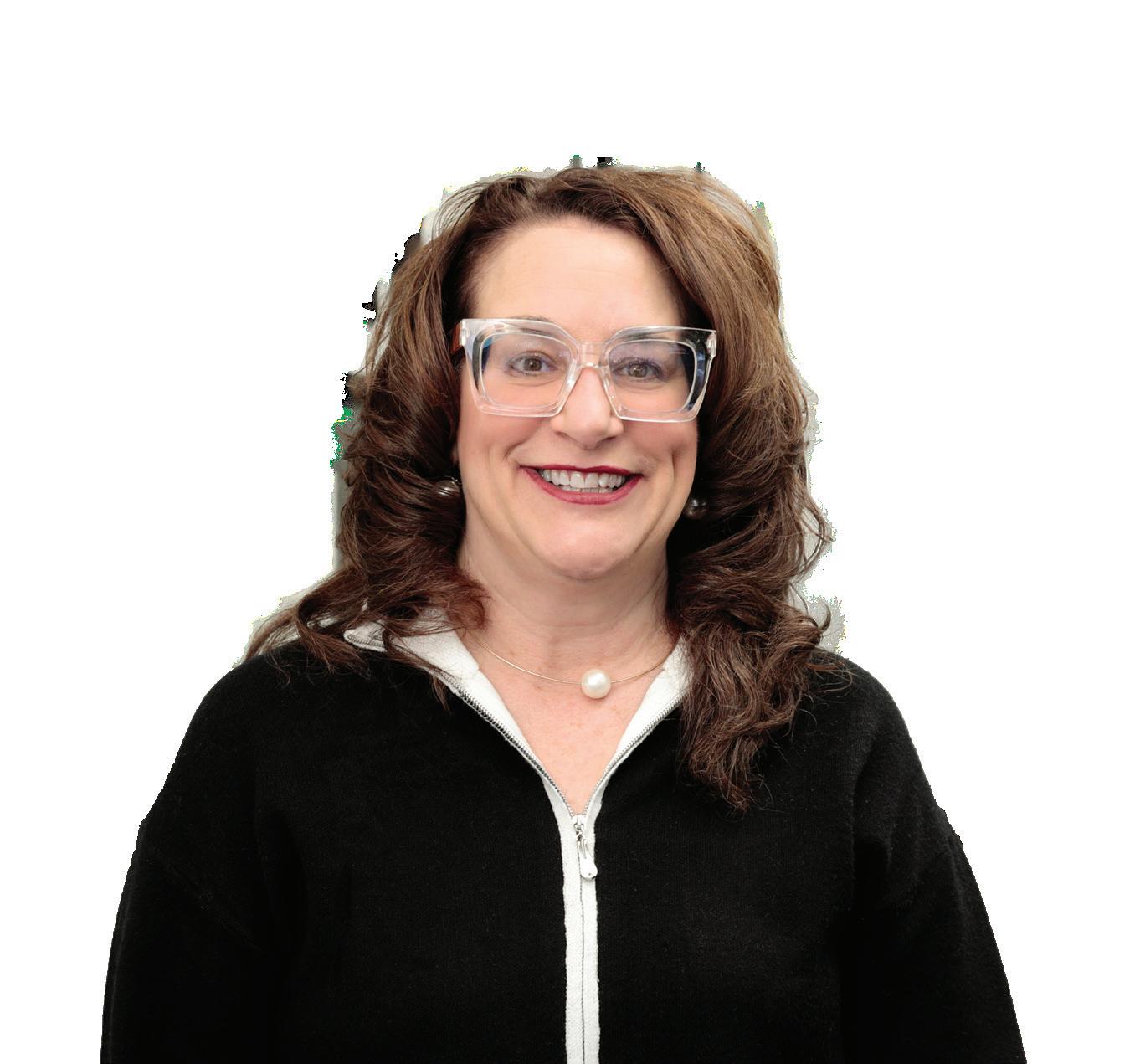
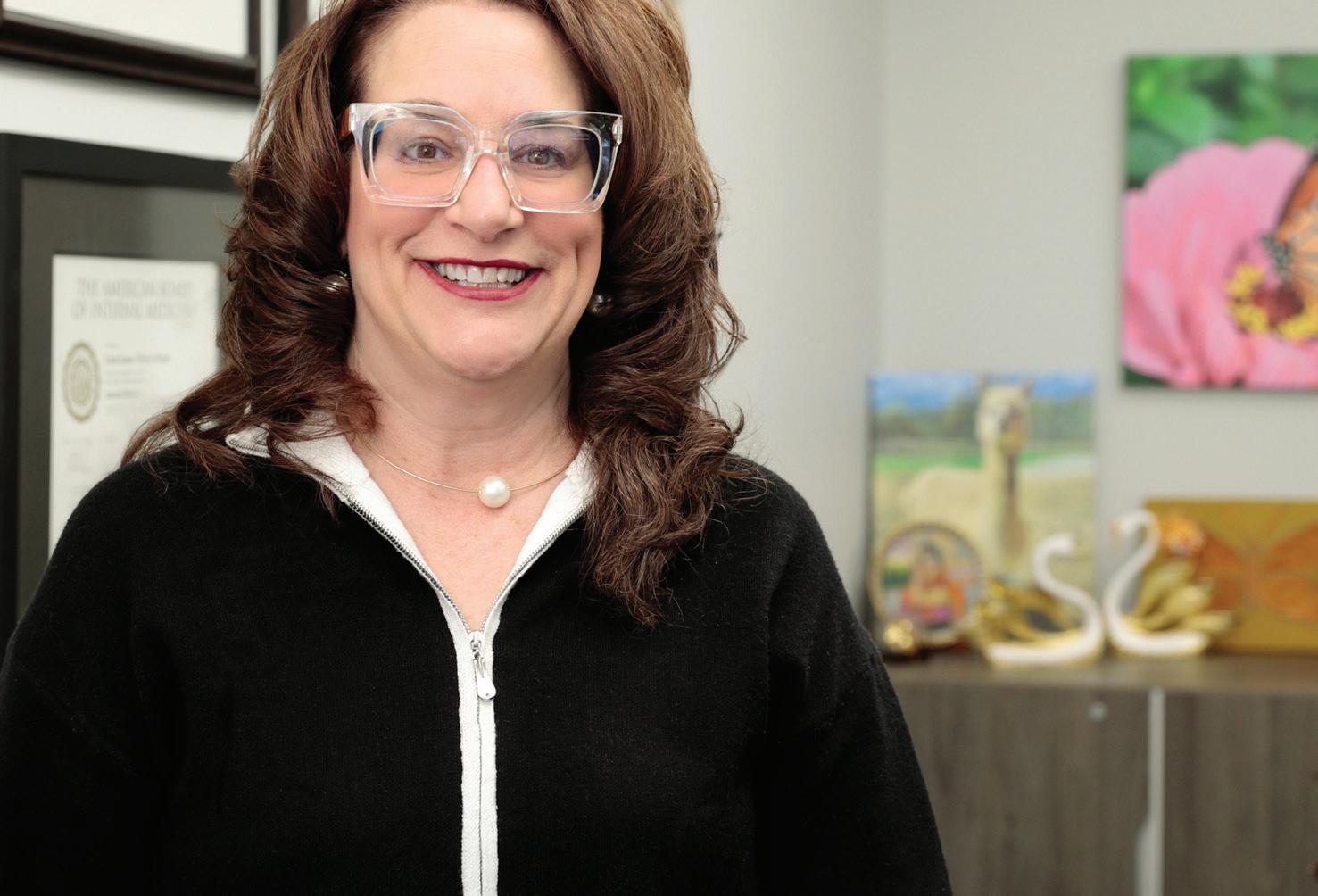
Linda Thomas-Hemak, M.D., FACP, FAAP
President and CEO, Ex-Officio, Non-Voting
Deborah Kolsovsky Chair
Richard Krebs Vice Chair
Mary Marrara Secretary
Kenneth Okrepkie, MHR Treasurer
Gerard J. Geoffroy, M.S., MPA
Immediate Past Chair
Pedro L. Anes, M.S.
Mary Ann Chindemi, RN
Patricia Desouza
LeeAnn Eschbach, Ph.D.
Kim Heritscko
Tracy Hunt
Mary B. Klem, M.S., R.D., CSO, LDN
Lewis Marcus
Joseph J. Marinelli, RPh, MBA
Robert J. Neary
Marwan A. Wafa, Ph.D.
Ellen Walko
The Wright Center for Graduate Medical Education
Linda Thomas-Hemak, M.D., FACP, FAAP President and CEO
Harold W. Baillie, Ph.D. Chair
James Gavin, MSW, MMS Vice Chair
Carol Rubel
Secretary
Scott E. Schermerhorn, Esquire
Treasurer
Jumee Barooah, M.D., FACP
SVP of Education, Designated Institutional Official, Ex-Officio, Non-Voting
Crystal Berry, MHA – HealthPoint, Washington
Holly Binnig, M.D. – HealthSource of Ohio
Robert Cole, Ph.D. – Allied Services
Ariane Conaboy, D.O., MHA, CMPC – Commonwealth Health System
Michael P. Curran, MHA – Guthrie
Christopher Howe, MHA – Friendship House
Frances G. Langan, Ed.D., MPH – Keystone College
Kevin G. Mitchell Jr., MBA – Fidelity Bank
Sharon Obadia, D.O., FNAOME – A.T. Still University School of Osteopathic Medicine in Arizona
Teri Ooms, MBA – The Institute
Michael J. Paglia, M.D., Ph.D. – Geisinger Health System
Douglas Spegman, M.D., MSPH, FACP – El Rio Health, Arizona
Debra Youngfelt, MCHES, CTS – Northeast Pennsylvania Area Health Education Center
Renee Zehel, Ph.D. – Marywood University
The Wright Center for Patient & Community Engagement
Linda Thomas-Hemak, M.D., FACP, FAAP Co-Chair
Mary Marrara Co-Chair
LeeAnn Eschbach, Ph.D. Vice Chair
Ellen Walko Secretary
Pedro L. Anes, M.S. Treasurer
Gerard J. Geoffroy, M.S., MPA Immediate Past Chair
Yash Deshpande, M.D. Chief Resident Liaison
Kirelos Younan, M.D. Resident Leader Liaison
Gail Cicerini
Paul Haugland
Charlie Hemak
Nicole M. Langan, Ed.D.
Lorraine Lupini
Kari Machelli, RN
Jacob Miller, M.D.
Kathleen P. Munley, Ph.D., CMFC
Girard Petula, Ed.D.
Sarah Quinlin-Sheridan
Carol Rubel
Tammy Saunders
EXECUTIVE LEADERSHIP TEAM
Linda Thomas-Hemak, M.D., FACP, FAAP
President and CEO
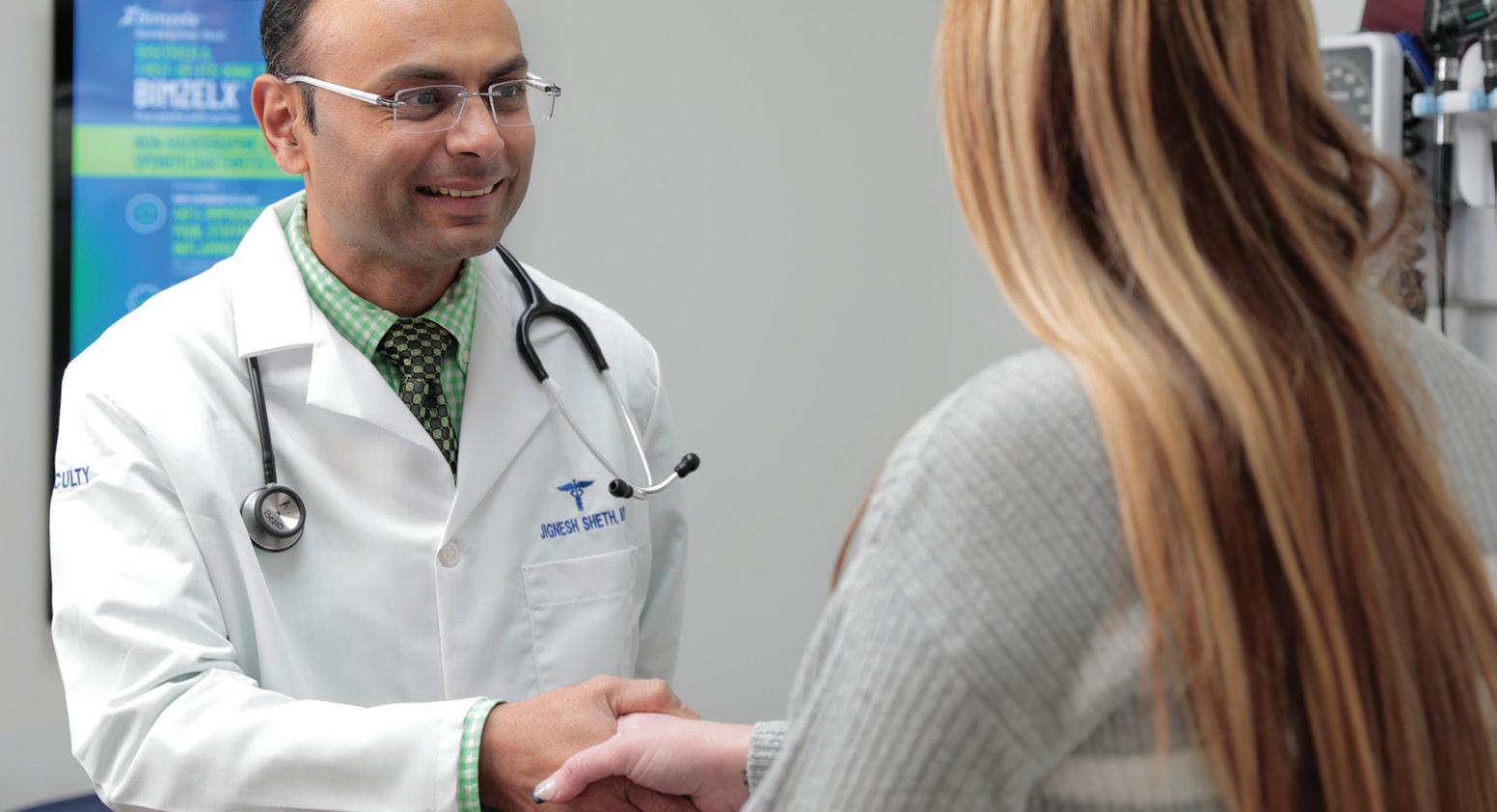
Jignesh Y. Sheth, M.D., MPH, FACP
SVP and Enterprise Chief Operations and Strategy Officer
Jumee Barooah, M.D., FACP
SVP of Education and Designated Institutional Official
Jennifer Walsh, Esquire
SVP of Enterprise Integrity, Chief Legal and Governance Officer
Douglas Klamp, M.D.
SVP and Chief Medical Education Officer, Internal Medicine
Residency Program Director, and Physician Chair of Resident and Fellow Talent Acquisition
William Dempsey, M.D.
Chief Population Health Value-Based Care Officer and Medical Director
Meaghan Ruddy, Ph.D.
SVP of Enterprise Wellness and Resiliency, Assessment and Advancement, and Chief Strategic Research and Development Officer
Sandra Yastremski, CPA
SVP and Chief Financial Officer
Ronald P. Daniels, MBA, CPA
SVP and Chief Resource Stewardship Officer
Lisa Baumann, MHA
VP of Strategic Initiatives
Colleen Dougherty, DNP, CRNP, FNP-BC
VP, Chief Clinical Operating Officer, and Director of Certified Registered Nurse Practitioner and Physician Assistant Services
INDEX
Brian Ebersole
VP of Academic Affairs and Associate Designated Institutional Official
Sheila Ford, RN, BSN
VP and Chief Compliance Officer
Thomas Glaser, MPA
VP of Grant Operations
John Janosky
VP of Information Technology and Innovation and Chief Information Technology Officer
Tiffany Jaskulski, BSBA
VP of Value-Based Population Health, Informatics Innovations, and Strategic Initiatives
Kellie Knesis, M.S., SHRM-SCP
VP of Human Resources and Chief Human Resources Officer
Jacqueline Krah, CPA VP and Controller of Revenue Cycle
Terrell H. McCasland, J.D., M.S. VP and Chief Revenue Officer
Laura Spadaro, MHA
VP of Primary Care and Public Health Policy and Chief Primary Care and Public Health Policy Officer
Erin McFadden, M.D.
Deputy Chief Medical Officer and Medical Director
Manju Mary Thomas, M.D.
Deputy Chief Medical Officer and Medical Director of Pediatrics 14 19 58 62
Community partner marks silver anniversary
The Northeast Pennsylvania Area Health Education Center develops training programs for our region’s future health care workforce.
Marking a fulfilling career of healing and educating
After treating generations of families and training countless physicians, Maureen Litchman, M.D., retires after her 47-year career.
our mission one physician
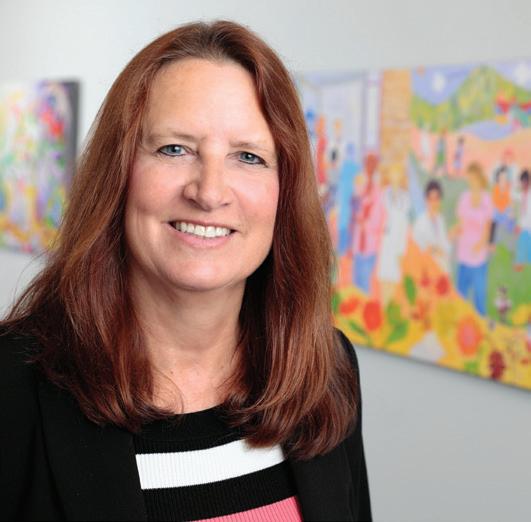
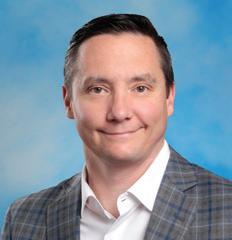
New board chair utilizes corporate insight, community mindedness and personal passion to ensure our mission thrives.
Online: The Annual Report is a comprehensive look at The Wright Center’s accomplishments during the preceding year. It is also available at TheWrightCenter.org/AnnualReports
provide primary care family medicine to communities in
County.
Local leader steers The Wright Center’s Community Health Board
Fulfilling
at a time
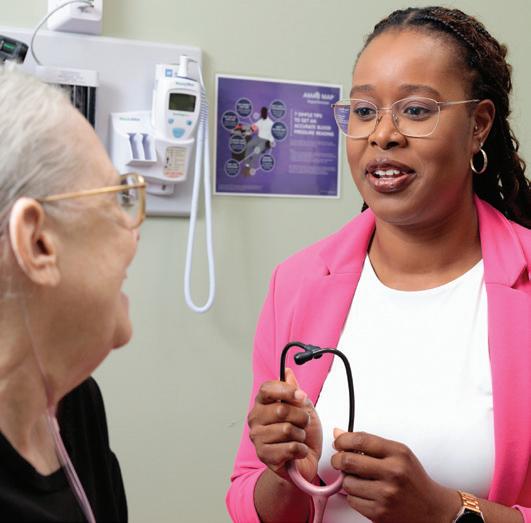
2024 alumna joins our Teaching Health Center in Wilkes-Barre to
Luzerne
Promoting hope, health, and stronger communities
“Act as if what you do makes a difference. It does.”
– William James
This powerful reminder from philosopher and psychologist William James calls forth the acknowledgment and energy of our critical individual and collective service work at The Wright Center for Community Health, The Wright Center for Graduate Medical Education, and The Wright Center for Patient & Community Engagement. This year’s Annual Report honors and celebrates our nearly 50-year-old legacy, our mission delivery accomplishments, and our overarching community benefit impact.
Throughout the 2024-25 academic year, we reliably delivered on our mission with certitude, compassion, and courage. The positive differences we are making in the health and welfare of the patients, families, learners, and communities we serve are undeniable. Each story in this report reflects our spirited organizational resilience and our extraordinary, devoted people – our board members, executives, employees, residents, fellows, students, patients, partners, and alumni – whose meaningful mission contributions can truly never be overstated. Together, we are fostering a healthier future for the patients, families, learners, and communities we serve.
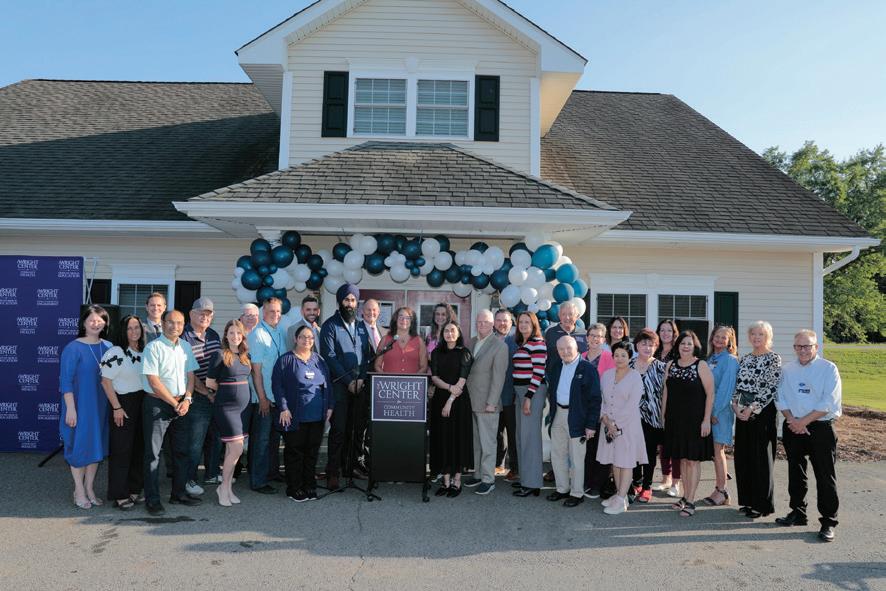
We remain deliberately focused on responding directly to the complex and evolving health and needs of the patients, families, and communities we serve and the educational needs of our interprofessional learners to prepare them for their blossoming careers in health care. With that mission-driven intention, our Graduate Medical Education Safety-Net Consortium thoughtfully and joyfully expanded our clinical footprint to safeguard access to primary health services and workforce sustainability by opening our new Teaching Health Centers in Dickson City and also within the Wyoming County Healthcare Center in Tunkhannock and at Friendship House in downtown Scranton.
In our daily clinical work, we are honored to witness and support the remarkable journeys of our patients, such as D.J. Hockman, who received a life-saving kidney transplant after being diagnosed with stage 5 kidney failure with assistance of his primary care team led William Dempsey, M.D. Such stories illuminate the
resiliency of our patients and the life-changing difference that faithful, compassionate, community-based primary care teams can make, empowering and walking beside patients, especially when the odds seem insurmountable. This year, Dr. Dempsey marked 40 years of community service in medical practice. His thriving career and D.J.’s story, like so many others across our communities, affirm that what each and all of us do genuinely makes a difference, just as William James so powerfully reminds us.
This academic year, we also celebrated the legacy and numerous academic achievements in our Graduate Medical Education enterprise, the most significant of which was the restoration of our historically strong Sponsoring Institutional Continued Accreditation by the Accreditation Council for Graduate Medical Education (ACGME) under the leadership of our Designated Institutional Official Dr. Jumee Barooah.
What could have been a moment of uncertainty became a coordinated, mission-driven effort that yielded clarity, stability, and meaningful progress.
We notably empowered and facilitated the successful reengineering of our National Family Medicine Residency Program, culminating in the launch of new ACGME-accredited Sponsoring Institutions and Family Medicine Residency Programs at El Rio Health in Tucson, Arizona, and HealthPoint in Auburn, Washington. We also proudly maintained and strengthened our relationship with HealthSource of Ohio in Hillsboro as they progressed their aligned journey, earning ACGME accreditation for their new Family Medicine Residency Program under our Sponsoring Institution. Supporting these awesome achievements of our long-term partnering, like-minded community health centers demonstrates and exercises our nationally significant, high-impact leadership across organizations, while proving the replicability of our Teaching Health Center Graduate Medical Education Safety-Net Consortium model as a primary care health services and workforce development solution.
We celebrated other key milestones, including the ACGME approval of our Family Medicine - Scranton
Residency Program and the launch of our Internal Medicine-Geriatrics Integrated Residency and Fellowship Pathway, which reaffirms our standing as a national leader in community-based training through our groundbreaking Graduate Medical Education Safety-Net Consortium model.
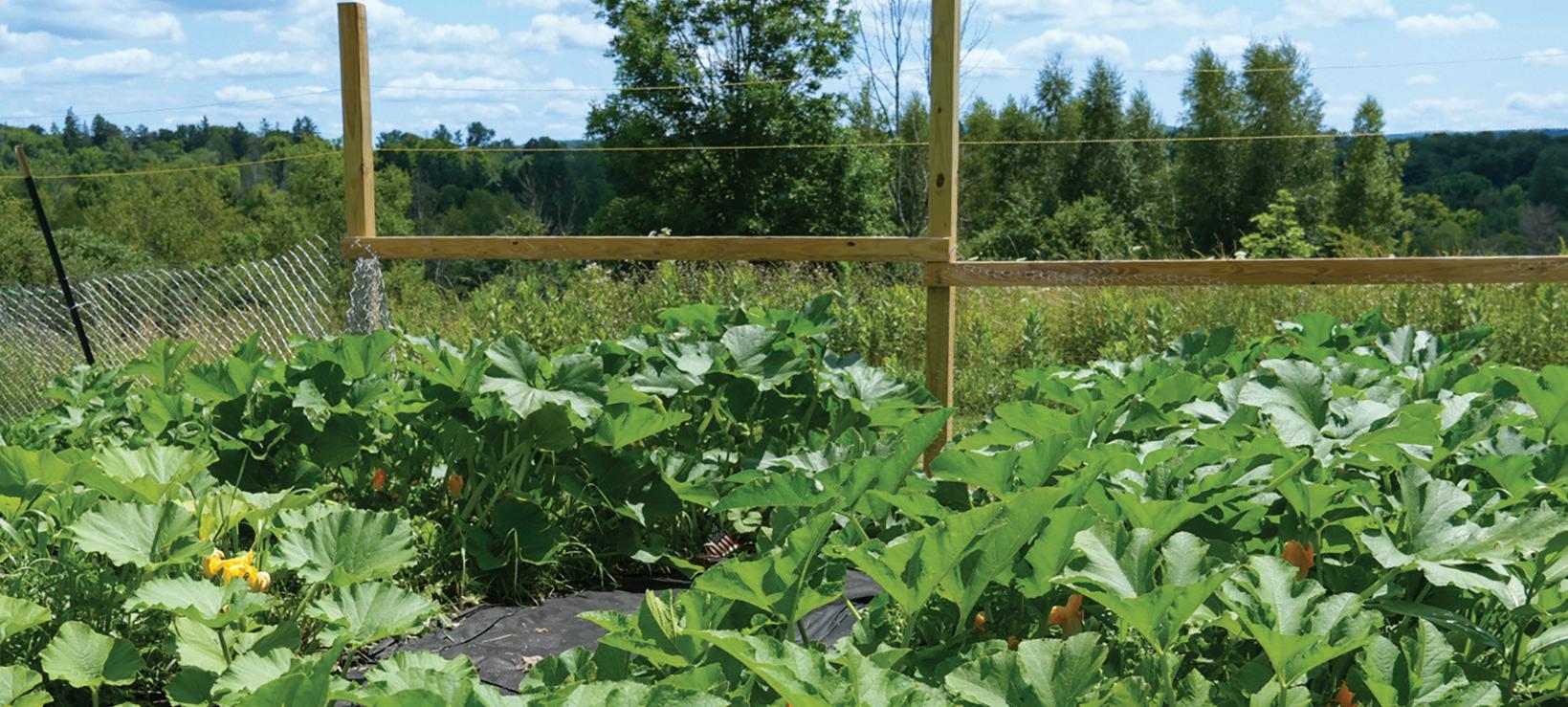
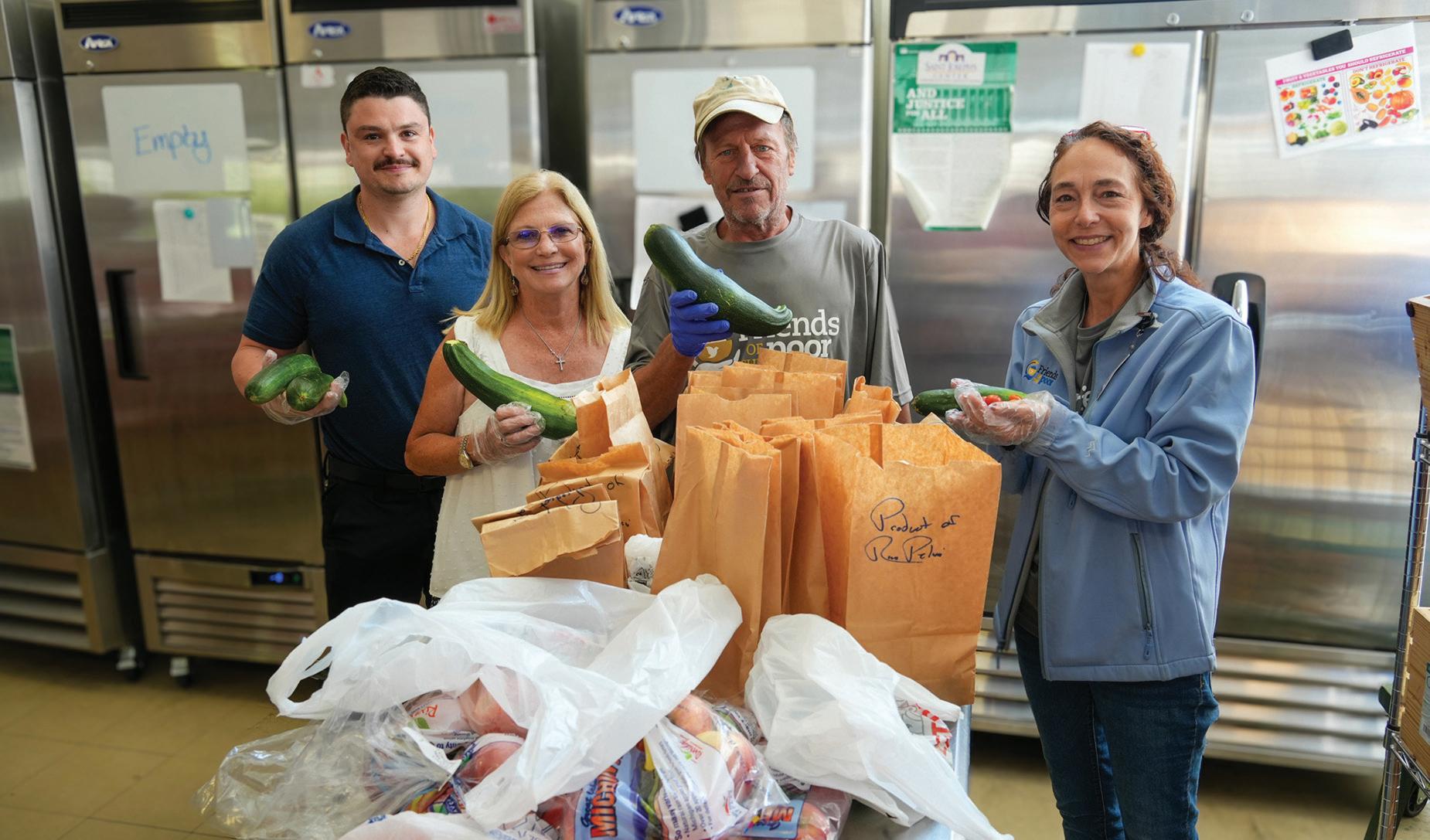
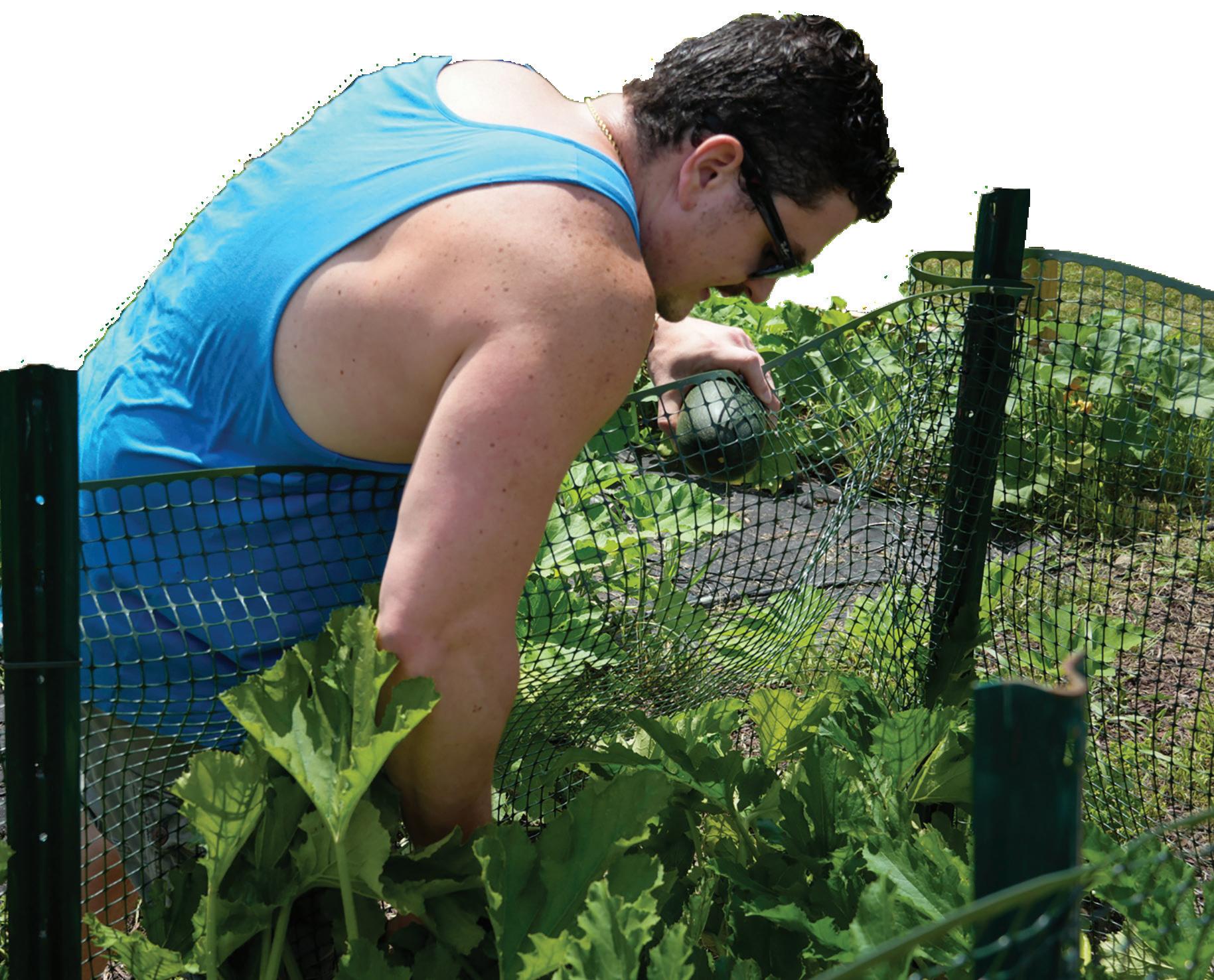
Our residents continue to secure prestigious fellowship placements, including with the National Institutes of Health. Their community engagement, whether through garden projects aimed at addressing food insecurity or advocacy work at the national level, exemplifies the values we strive to instill.
None of this would be possible without you and our cherished community partnerships. Our collaboration with local hospitals, health systems, the VA, schools, nonprofits, and partners at the local, state, and national levels strengthens our region’s health care infrastructure and helps sustain a robust, compassionate, and culturally competent interprofessional health care workforce.
I am especially proud of how we continue to nurture the well-being of those who serve through initiatives like our ongoing journey to Sanctuary certification. We are fostering environments where our employees, learners, and patients can feel safe, supported, and empowered to thrive.
Our Annual Report offers us and those we serve snapshots of progress, purpose, and promise. It reminds us of the why behind our mission-driven path and validates why we will faithfully continue our enterprise journey toward excellence together, despite challenges or headwinds on the horizon.
Indeed, what we do individually and together matters. Every patient cared for, learner inspired, and barrier removed strengthens the health and welfare of our communities, illuminating the way forward for future generations. Thank you for your faithfulness, trust, and unwavering commitment to our vital and far-reaching work.
With gratitude, respect, and love,
Linda Thomas-Hemak, M.D., FACP, FAAP President and CEO
The Wright Centers for Community Health and Graduate Medical Education
Built to lead
Alumni reflect on our groundbreaking Teaching Health Center Graduate Medical Education SafetyNet Consortium model for workforce development and improving access to essential health services
At a time when health care systems are under increasing pressure to integrate services, address communityspecific needs, and develop sustainable workforce pipelines, our Community Health Centers and Teaching Health Center Graduate Medical Education programs stand as a national model for how mission-driven, community-focused training prepares physicians to deliver care and to serve and lead with purpose.
Through the lens of distinguished alumni, each of whom has carried our principles into their leadership roles across health systems and educational institutions, they share their insights on the enduring impact of our patientcentered, communityresponsive model of care and education.
The alumni are: Gerald Maloney, D.O., FACP, ’98, senior vice president and chief medical officer at Franciscan Alliance in Mishawaka, Indiana, and Geisinger Health System’s former chief medical officer for system hospitals in Danville, Pennsylvania; Michael J Mintzer, M.D., ’80, retired geriatrician and professor at the University of Miami’s Miller School of Medicine, Medical Campus; and Milan Patel, M.D., MBA, ’15, chief medical officer at St. Mary’s General Hospital in Passaic, New Jersey.
From shaping health care infrastructure in underserved regions to building collaborative bridges with hospital systems, these physician leaders reflect on how their graduate medical education training and experiences with us continue to influence their approach to care, leadership, mentorship, and advocacy, and how today’s resident physicians are poised to carry that legacy forward.
Their responses to the following five questions have been edited for clarity and style.
1. How did your community and graduate medical education training at The Wright Center prepare you to thrive in today’s increasingly integrated health care systems, and what aspects of that model do you still rely on in your practice today?
Dr. Maloney: Our residency training was focused on learning medicine, and we were trained to provide comprehensive care for our patients. Well-trained primary care physicians are well-positioned to practice in integrated systems, as the broad knowledge base acquired during residency helps today’s primary care providers direct the care of their patients and give patients the security of having a knowledgeable physician advocating for them.
Dr. Mintzer: My training at The Wright Center prepared me very well for a career in geriatrics. Geriatrics is the ultimate in interdisciplinary care. After my training, it seemed very natural for me to work closely with my interdisciplinary co-workers, and most importantly, value their health care expertise. I have often used the phrase, “Doctors make rounds; nurses take care of sick people.” By recognizing the expertise nurses have in consoling the sick (something that many doctors are NOT trained to do), I validate that nurses have skills that doctors do not have but are needed in caring for patients. The same is true of social workers who spend hours on the phone and filling out forms so our patients can receive the services needed after discharge. Dietitians, clinical pharmacists, and rehabilitation specialists, among others, all provide care that doctors can order but cannot deliver themselves. I witnessed and incorporated the professional respect for the knowledge and skills that other health care professionals provided to patients during my training.
Dr. Patel: Training in a patient-centered medical home model laid a solid foundation for thriving in today’s integrated health care systems. It emphasized interdisciplinary collaboration, continuity of care, and shared decision-making, all of which are critical in navigating complex patient needs within coordinated networks. One of the most valuable aspects I still rely on is the team-based approach. Working closely with care coordinators, behavioral health, pharmacists, and social workers taught me how to break down silos and prioritize whole-person care.
2. Community-needs-responsive care is central to our mission. How did that focus shape your approach to patient care, and how do you see it making a difference where you practice now?
Dr. Maloney: If you’re going to take the best care of your patients, you have to meet them where they are. What are the challenges they have that impact their health and the ability to thrive in their community? Can they afford their medicines? Do they understand the instructions? What support do they have at home? These questions can be as important to maintaining or regaining health as any action taken during a hospital admission. Looking back, our faculty was ahead of its time as we learned to consider these issues before they were widely discussed.
Dr. Mintzer: I never witnessed care outside of a hospital or clinic during my medical school years. During training (at The Wright Center), I was unexpectedly required to visit physicians’ offices, attend to my patient in a nursing home, and drive to the Moscow clinic on cold, snowy days. I thought it would be such a waste of time. It was not. You truly get to know patients much better when you see them in their own community. I did not see a large number of patients at the Moscow clinic, but the ones I saw were very appreciative of having a doctor in their community. It opened my eyes to health care needs that existed only a few miles away from the city where I worked every day. No matter where you practice medicine, urban or rural, there will be those with unmet health care needs.
Dr. Patel: The focus on community-responsive care at The Wright Center deeply shaped how I approach patient care, not just as a clinical interaction, but as a partnership grounded in trust, respect, and relevance. It taught me to listen beyond the symptoms and consider the social, cultural, and economic realities patients face. Today, I carry that lens forward. As a chief medical officer (CMO), whether I’m coordinating care, engaging in health education, or advocating for resources, I see firsthand how meeting patients where they are –geographically and emotionally – improves outcomes and builds long-term engagement. That community-rooted mindset is no longer just a value; it’s a daily practice.
3. What was unique about learning in a Teaching Health Center environment like ours?
Dr. Maloney: As residents, we were both teachers and learners. We taught medical students and nurse practitioner students, and we taught each other. We also had opportunities to teach the faculty. You have to know medicine to be able to teach, so the fact that we were teaching meant we had to learn more and know it
better. We recognized the need to support other disciplines in their development, enabling us to collaborate for the benefit of our patients. It was the teaching aspect I enjoyed the most.
Dr. Mintzer: My group had an experience that most residents never have: there were no physician trainees before us; there were no junior residents or senior residents to turn to. The nursing staff was well-trained in dealing with sudden, unexpected events in patient care. After we evaluated a new patient or a patient with a sudden change in status, we called the attending. We learned early on how to be succinct and complete in our presentations, with much help from the nursing staff. In the health care setting, workforce development means more than making sure doctors know how to train doctors or nurses know how to train nurses, etc. It means we train in teams; we learn a new language together and share best methods.
System-based care is difficult to teach. In short, it means: how do we know the system of care we work in is good for our patients? In training, we learned that cost-conscious care and awareness of duplication of services are ways to help patients and health care systems. I have come to understand that structured quality improvement, formal process reviews, adverse incident tracking, and a myriad of other measures can inform you and your patients about the effectiveness and responsiveness of your health care system.
Dr. Patel: Training in a teaching health center environment like The Wright Center continues to influence how I lead as a CMO today. The integration of education and care delivery in a high-need, community-driven setting helped me
Michael J. Mintzer, M.D. Geriatrician and Professor –Retired University of Miami’s Miller School of Medicine
Milan Patel, M.D., MBA CMO St. Mary’s General Hospital
Gerald Maloney, D.O. Senior VP and CMO Franciscan Alliance
FROM PREVIOUS PAGE
appreciate the power of growing a workforce from within the community, one that reflects its patients, understands their challenges, and is deeply invested in their well-being. That experience shaped my philosophy around workforce development, because I saw how intentional mentorship, interprofessional collaboration, and hands-on training created clinicians who were not only clinically excellent but also system-minded and equity-driven. As a CMO, I champion similar pipelines, investing in clinical education programs, nurturing talent from diverse backgrounds, and embedding workforce planning into our strategic goals.
4. How did your training help you build the leadership or advocacy skills necessary to serve diverse or underserved communities?
Investing in a healthier tomorrow – for everyone Q&A
Dr. Maloney: You learned to do what was right, and you recognized that the person who had no insurance was (every bit as deserving of care as) the one who had the best coverage money could buy. It wasn’t always easy to obtain a specific medicine or treatment for those without insurance. You learned to stand up for patients and help meet their needs. In this era of misinformation, insurance denials, and patients losing their coverage for various reasons, physicians must be able to advocate effectively for their patients.
Dr. Mintzer: I learned that leadership skills are best observed and defined by others. I recently had an email conversation with Dr. (Robert) Wright, wherein he stated he saw leadership qualities in me during training nearly 50 years ago! What are leadership qualities? How many are there? How many do you need to have to be a successful leader? So many questions. Likewise, what are advocacy skills? All doctors should be advocates for their patients. How does that translate to underserved communities? I have encountered many patients and families who became advocates for the treatment of specific diseases, especially rare or poorly defined illnesses. I recognized two commonalities among patient and family advocates: first, the illness affected someone near and dear to them; and second, there was a sense that something was missing in the care, understanding, or zeal in treatment. These patients and families are often responsible for increasing the understanding of a particular disease within their community.
I worked in the VA for nearly 30 years. This hospital system is often criticized for political reasons. If, however, you look deeper, you will find programs that reach veterans well outside of the walls: providing for the homeless, financial support to the poor, mental health outreach, home visits, respite care, nursing home and domiciliary care, and more. The VA is a great model for health care
community outreach. Leaders and advocates both require one crucial factor: passion. Passion is the only human emotion that thrives on rejection! Passionate people will always find a workaround. Leaders and advocates always face the same issues: limited resources. New leaders and advocates always want to “fix” all the problems at once.
In the real world, the best leaders and advocates have learned to be both relentless and patient. It always takes time and thick skin. A medical school dean once told me, “My primary job as dean is to keep the doctors, who vehemently disagree with every decision I make, separated from those who are as yet undecided.”
Leadership and advocacy require people who have recognized serious needs, prioritize effort and resources, plan, implement, and evaluate results, and do not quit. During my internship, I never wanted to be responsible for creating the residents’ work schedules. By the time I finished, I could make the decision to leave Pennsylvania because it was a time of serious recession. In my home city of Philadelphia, hospitals were not accepting medical staff applications; I would not be able to admit and care for my own patients. Florida was growing and needed doctors. It was a hard decision, with many more administrative requirements than making the residents’ schedule, but somehow, I had learned how to make a decision and make it happen.
How did I learn leadership and advocacy in training (at The Wright Center)? I was a witness. I saw people with passion who would not be deterred in their efforts to improve medical care well beyond the walls of Mercy or Moses Taylor hospitals: Drs. Wright, Sherry, Murphy, Tracy, Roe, Yeager, Benedetto, Luna, Heim, Doherty, Pancoast, and so many more; nurses Malinowski, Karam, and the staff of the fifth floor who helped us as residents learn to be caring doctors; the Sisters of Mercy and the board of Moses Taylor who led their facilities to greatness. How can you not learn when great care is being modeled all around you every day!
Dr. Patel: Training at The Wright Center was foundational in shaping the leadership and advocacy skills I rely on every day as CMO of a hospital that serves a predominantly poor and underserved population. Leadership at The Wright Center wasn’t confined to titles; it was expected at every level and grounded in action. I learned to lead by listening, collaborating across disciplines, and centering the voices of those most impacted by structural barriers to care. That experience now informs how I lead, from driving equity-focused initiatives and expanding access to care, to mentoring future leaders and building community partnerships that extend care beyond the hospital walls.
FQHCs emerge as independent academic leaders in a new community-driven residency model.
Localizing the future of family medicine training
We marked a pivotal moment in our mission-driven journey and Graduate Medical Education Safety-Net Consortium (GME-SNC) this year by thoughtfully transitioning our National Family Medicine Residency (NFMR) Program into a new, more localized structure that empowers Federally Qualified Health Centers (FQHCs) as academic leaders in their own right.
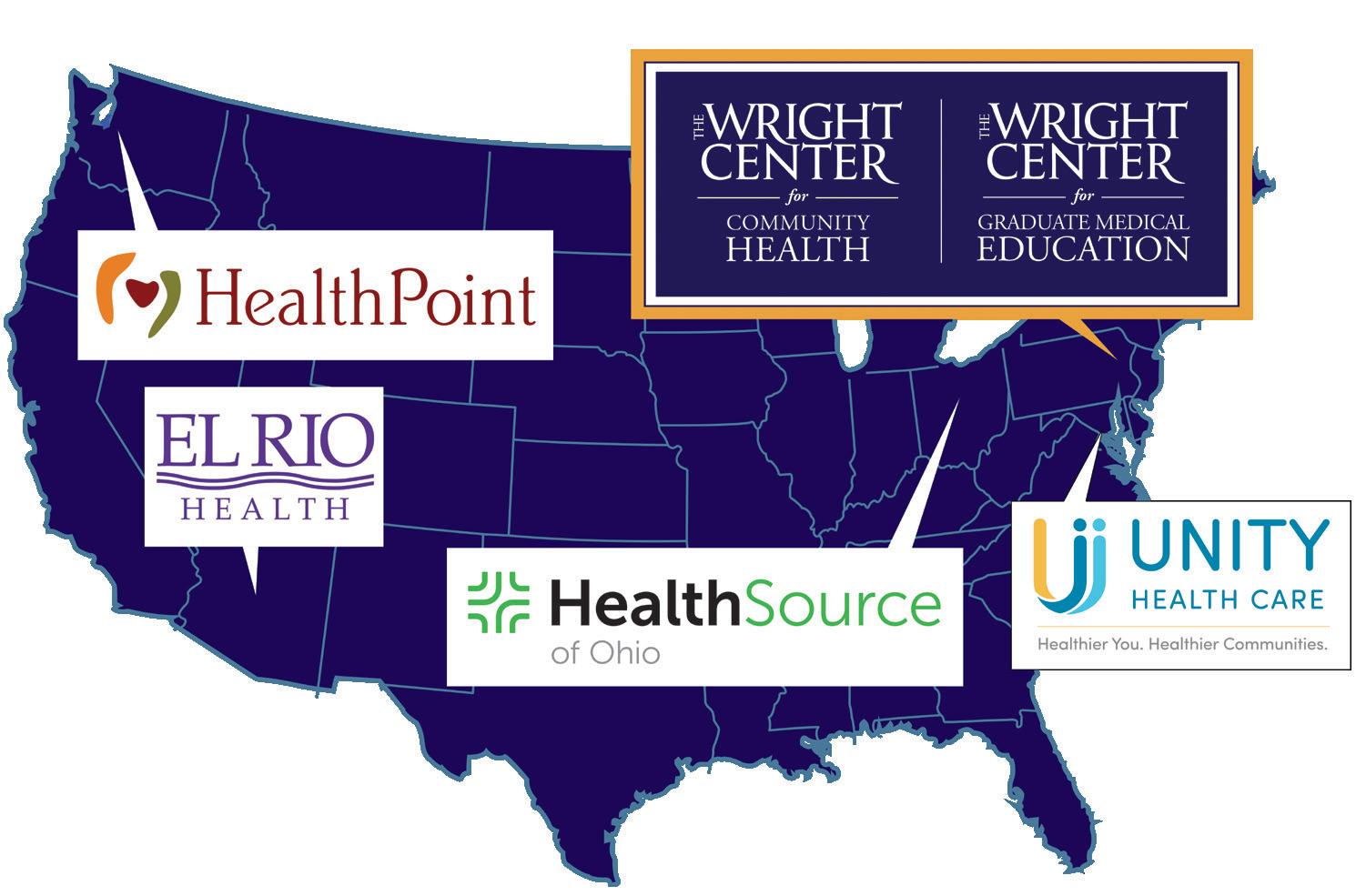
This transition was initiated after the Accreditation Council for Graduate Medical Education (ACGME) withdrew its accreditation in 2023 of our NFMR Program, which was established in 2013 in partnership with A.T. Still University School of Osteopathic Medicine in Arizona. The ACGME cited concerns with our program’s innovative design, which trained more than 50 residents across four geographically dispersed FQHCs – El Rio Health in Tucson, Arizona; HealthPoint in Auburn, Washington; HealthSource of Ohio in Hillsboro; and Unity Health Care in Washington, D.C. – under a single program umbrella. While our model demonstrated exceptional outcomes, including unprecedented retention of graduates in community health centers and medically underserved areas, it fell outside ACGME’s traditional accreditation framework.
In response and in close collaboration with our longstanding partners, we ensured seamless placements for all affected residents. We also embraced the
opportunity to distribute ownership and oversight of medical education across individual FQHCs, ushering in a more decentralized, community-anchored approach to physician training.
We proudly supported the establishment of two new ACGME-accredited Sponsoring Institutions at El Rio Health and HealthPoint, each now home to its own Family Medicine Residency Program. At the same time, we deepened our affiliation with HealthSource of Ohio, providing the institutional support and technical expertise that led to successful ACGME accreditation for its inaugural Family Medicine Residency Program.
Each newly ACGME-accredited Family Medicine Residency Program was also conditionally awarded Teaching Health Center Graduate Medical Education funding, a critical milestone that secures financial sustainability and reinforces the national importance of training physicians in high-need, underserved areas.
Our GME-SNC model has now proven it can transform FQHCs from peripheral training outposts into fully accredited, self-governing academic institutions. The success of El Rio Health, HealthPoint, and HealthSource of Ohio has ignited new conversations with other FQHCs interested in replicating our model, expanding the possibility of sustainable, community-governed GME nationwide.
Innovating medical education to meet the needs of tomorrow
For nearly 50 years, The Wright Center for Graduate Medical Education has remained steadfast in its mission to train physicians who not only excel in their field but also stay to serve our communities across the region.
Founded under the leadership of Robert E. Wright, M.D., FACP, a visionary physician, the organization has responded to the national physician shortage –particularly in primary care – by graduating more than 1,100 doctors, many of whom continue to practice where they trained.
Today, amid a rapidly evolving health care landscape, we are once again stepping forward with bold new initiatives to meet the region’s growing needs and reimagine medical education and training.
“We always want to think about ways we can continue to meet the needs of our communities,” said Brian Ebersole, our vice president of academic affairs and associate designated institutional official. “We’re innovating and finding ways to accomplish those innovations in unique ways.”
Family Medicine - Scranton Residency Program
Recent health care shifts, including the closure of WilkesBarre General Hospital’s obstetric services in July 2023 and the failed sale of several Commonwealth Health System hospitals in late 2024, prompted our leadership to rethink our residency program offerings.
The result: a reimagined Family Medicine - Scranton Residency Program, which launched in July 2025 with
need for trained primary care physicians is critical and opportunities exist to partner with health care entities that can train learners.
“This program is rooted in the Scranton community,” Ebersole said. “It is designed to be replicable in other communities – like Wilkes-Barre – where the need for primary care physicians is urgent and local training infrastructure can be built through partnerships to immerse the learners in a specific community.”
Internal Medicine-Geriatrics Integrated Residency and Fellowship Pathway Program
With more than 20% of Lackawanna County’s population over age 65 – surpassing the statewide average – the need for geriatric specialists is critical. Responding to this demand, we launched a Geriatrics Fellowship Program in 2019 alongside a comprehensive geriatrics service line.
However, recruiting geriatric fellows remains a national challenge. To help fill our slots for fellow physicians, we recruit individuals to begin their training with a year in our Geriatrics Fellowship Program and then transition into our Internal Medicine Residency Program.
As our efforts continued to train geriatricians, we were selected by the Accreditation Council for Graduate Medical Education (ACGME) in 2024 to begin an Internal Medicine-Geriatrics Integrated Residency and Fellowship Program, commonly known as the Combined MedGeri Pathway. The program was developed by a national
Sustaining excellence: Continued accreditation secured
The Wright Center for Graduate Medical Education’s Sponsoring Institution received official notification May 15, 2025, that it has achieved continued accreditation status from the Accreditation Council for Graduate Medical Education (ACGME). The designation follows the ACGME Institutional Review Committee’s review conducted during its meeting held May 12-15, 2025.
Continued accreditation is awarded to institutions that demonstrate compliance with ACGME requirements and a sustained commitment to the quality and integrity of graduate medical education programs. The status reflects our adherence to national standards and our ongoing efforts to provide a rigorous and supportive learning environment for resident and fellow physicians.
Edward Dzielak, D.O., FACP, director of our Geriatrics Fellowship Program, and Douglas Klamp, M.D., director of our Internal Medicine Residency Program, the new program will integrate geriatric medicine with internal medicine, ensuring participants have patient and service line continuity throughout their four years of training.
“Participants will work with the geriatric population throughout their entire training,” Ebersole said. “This continuity helps embed the skills and compassion needed to care for our aging population.”
HealthSource of Ohio
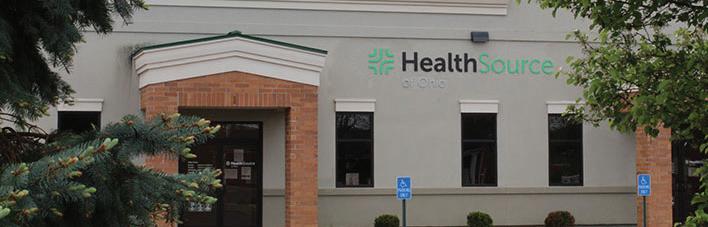
As our National Family Medicine Residency Program winds down in June 2026, its legacy lives on through the creation of new programs at our partner sites. One such example is HealthSource of Ohio, which will launch its own Family Medicine Residency Program, supported by our Sponsoring Institution.
With up to four resident physicians per year, the program builds on a 13-year collaboration for a three-year family medicine residency program at HealthSource’s Hillsboro Pediatrics & Family Practice and shares our commitment to rural health. The program began July 1, 2025.
“HealthSource needed a reliable pipeline for physicians for the communities they serve,” Ebersole said.
“We’ve invested more than a decade into building our infrastructure, and now we’re sharing that knowledge and experience aligned with our model, extending our reach while honoring local independence.”
We will provide administrative oversight, ACGME alignment support, and academic resources, while HealthSource will manage the day-to-day training through its own faculty and program leadership.
“Over the last 50 years, we’ve invested significant resources into graduate medical education, into infrastructure, into recruitment,” Ebersole said. “Think of it like a franchise model. We provide the framework and resources to HealthSource, and they implement it locally with their partners and learning environments.”
Mercer partnership
We are also exploring an opportunity in western
Pennsylvania near the Ohio border.
During discussions about opportunities for us in that region, our leadership team learned that Primary Health Network, one of the largest Federally Qualified Health Centers (FQHC) in the state, was interested in launching a residency training program.
“We reached out to them and offered our help in developing the infrastructure,” Ebersole said. “Much like our partnership with HealthSource of Ohio, we would be their SI and help them with the administrative side of things, but they would have their own program director.”
We initiated the application with the ACGME in June 2025, targeting a July 2026 start date should the program earn approval.
Primary Health Network’s Mercer Primary Care in Mercer, Pennsylvania, would serve as the program’s home, with resident physicians also training at Allegheny Health Network Grove City Hospital.
“Primary Health Network shares our passion for physician training and community-based care,” Ebersole added. “Collaborations like this are how we extend our impact to meet needs across Pennsylvania and beyond.”
Ebersole is excited about the possibilities for the future as we strengthen existing partnerships and develop new ones near and far.
“It’s incredibly energizing to work with partners who are just as committed to the mission as we are,” he said. “Together, we are building something truly meaningful for the next generation of physicians and the communities they will serve.”
Stephanie Gill, M.D., MPH Program Director | Family Medicine –Scranton Residency Program
Douglas Klamp, M.D. Program Director | Internal Medicine Residency Program
Edward Dzielak, D.O., FACP Program Director | Geriatrics Fellowship Program
Michael Dietz, D.O. Program Director | Family Medicine – HealthSource of Ohio Residency Program
‘Everyoneknowsthereus’
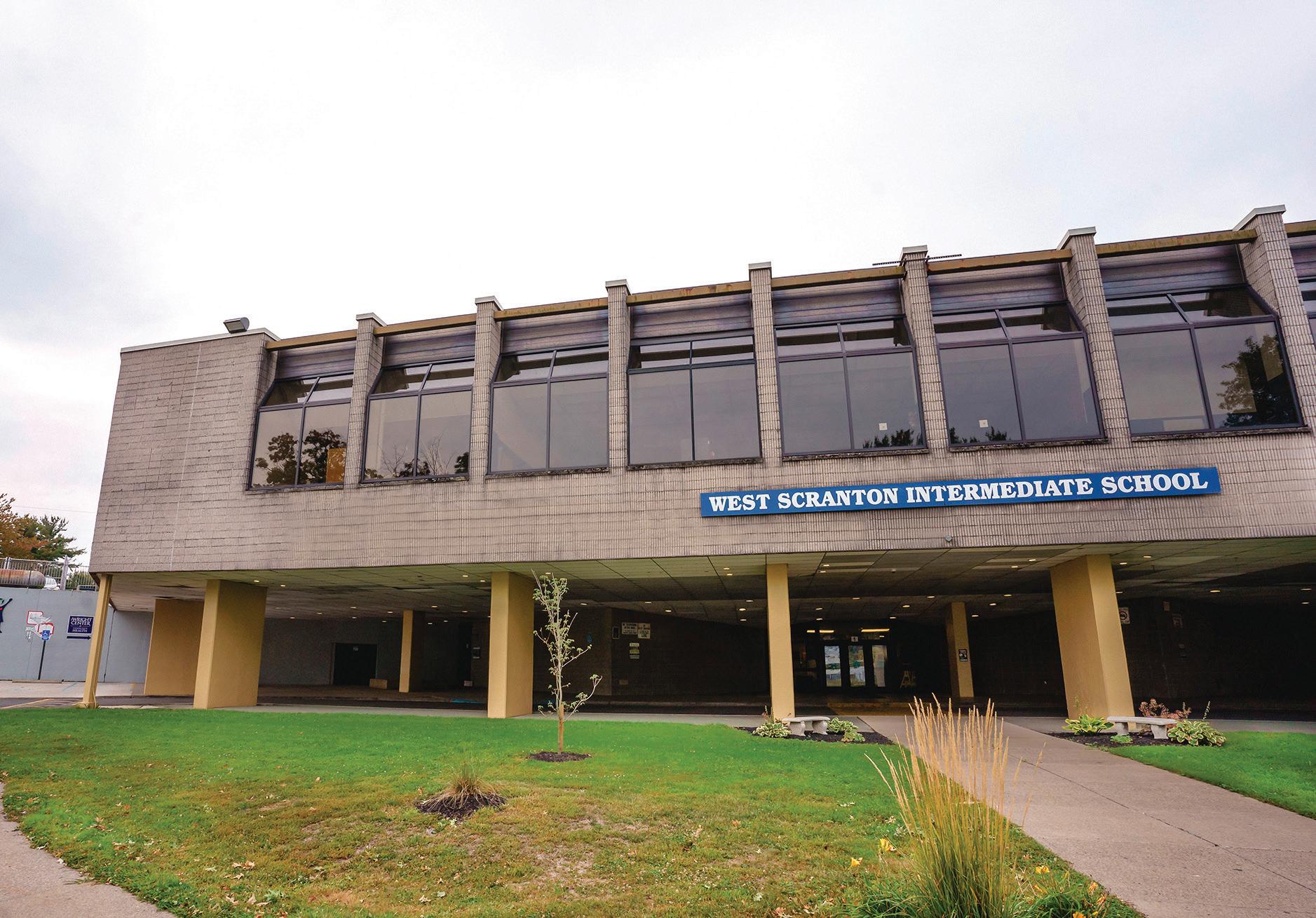
Scranton family finds medical home in School-Based Health Center
For weeks, Hailey Pinto didn’t feel like herself.
“I was tired all the time, and my throat hurt,” she said. “I kept going to the school nurse, and they would check me for a fever, and when I didn’t have one, they would send me back to class.”
Her mother, Dawn Crist, noticed that Hailey, an eighth grader at West Scranton Intermediate School at the time, seemed unusually listless and sluggish. Concerned, she took her daughter to a pediatrician, but the symptoms lingered. In September 2017, when we opened our health center inside West Scranton Intermediate School, a clinician there noticed Hailey appeared unwell. After a quick call to Crist for consent, the health center’s staff conducted some medical tests on the middle school student.
“I remember they called the next day and said I had mono,” said Pinto, now 20. “I remember crying because that meant I couldn’t play in my upcoming basketball game.”
Impressed by the care her daughter received, Crist scheduled
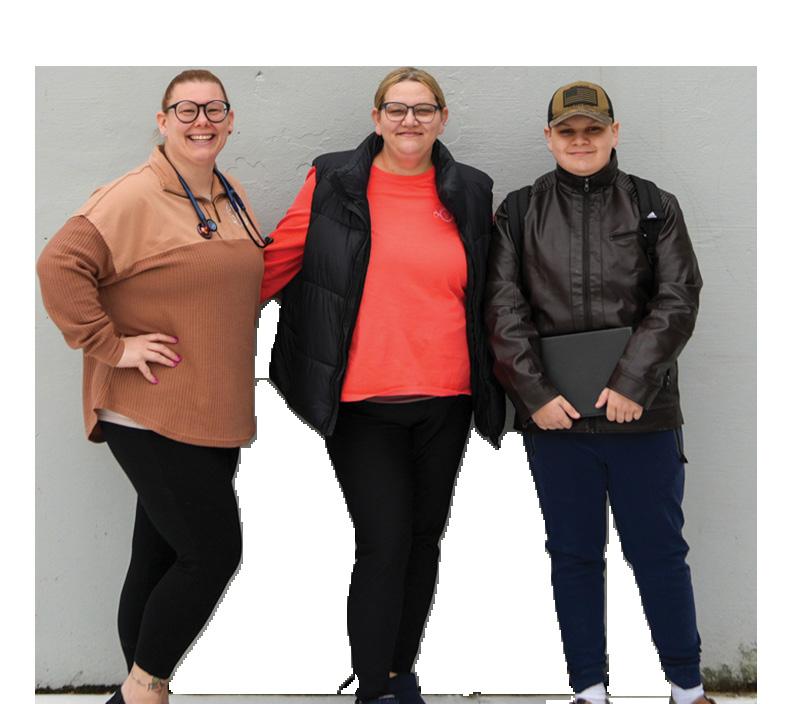
The Crist family has been receiving whole-person primary health services at our School-Based Health Center inside the West Scranton Intermediate School for several years. Chelsea Hafner, left, our certified registered nurse practitioner with a Doctor of Nursing Practice degree, poses with Dawn Crist, center, and her son, Robert, outside the clinic.
checkups for herself and her son, Robert, who was then 7. The family has been receiving care at our clinic ever since.
The family is one of hundreds of success stories at our School-Based Health Center, which offers primary and preventive care services to students, faculty, staff, and community members. We are exploring similar partnerships with school districts throughout Northeast Pennsylvania to improve access to affordable, high-quality, whole-person primary health services.
Led by Chelsea Hafner, a certified registered nurse practitioner with a Doctor of Nursing Practice degree, our health center at West Scranton Intermediate School has seen more than 6,300 unique patients since opening seven years ago, more than half of whom are covered by Medicaid or Medicare.
“There’s a lack of pediatric health care resources in our region,” Hafner said. “Our School-Based Health Center is filling a deep need for school-age children. We can help them avoid hospital visits for illnesses, and we can address
‘There was just no time between working and raising the kids. I liked the convenience of the whole family going to the same place, just down the street from where we live.’
– Dawn Crist, Parent
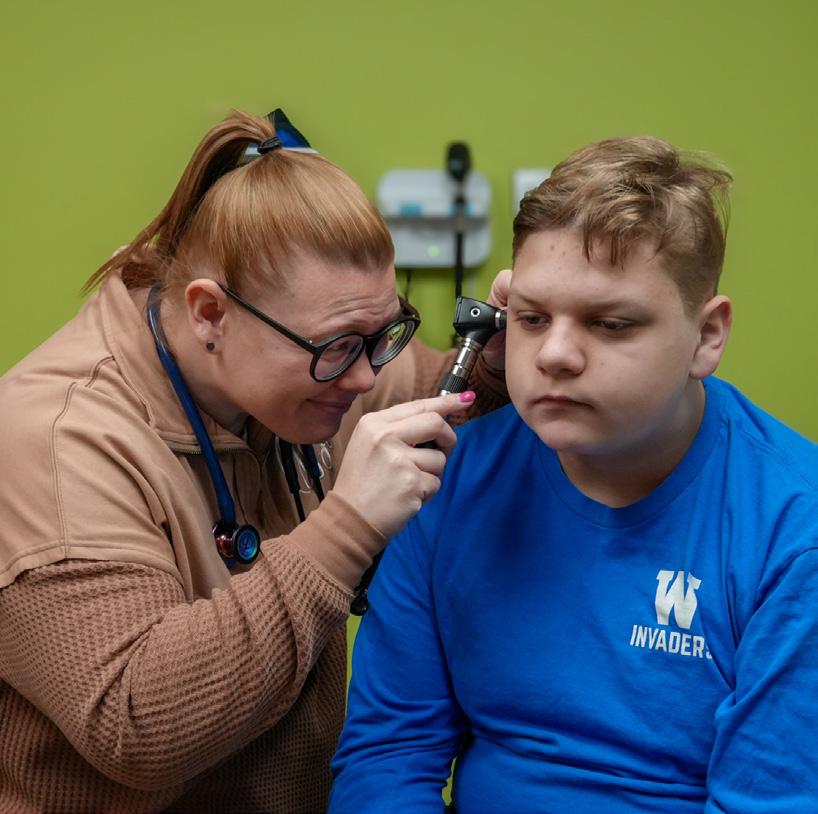
Chelsea Hafner, a certified registered nurse practitioner with a Doctor of Nursing Practice degree, examines Robert Crist, 13, at left, during an examination at school, and talks with Dawn Crist during an
appointment.
health issues before they turn into chronic diseases.”
It’s also filling a need for local families. Before Crist started visiting our clinicians at West Scranton Intermediate School, she didn’t have regular appointments with a primary care doctor.
“There was just no time between working and raising the kids,” she said. “I liked the convenience of the whole family going to the same place, just down the street from where we live.”
Offering a medical home for the entire family is one of the main goals of our school-based health programs, Hafner said.
“Building relationships with the whole family enhances the care we provide,” she said, adding that she and her team offer a wide range of resources through our community health centers, including behavioral health, dental services, and more – tailored to meet each family’s needs.
Eight years later, Crist and her children still receive care at the School-Based Health Center because the staff feels like family to them.
“From the time we walk in until the time the appointment is over, everyone there knows us and our medical history,” Crist said. “They don’t bombard us with information, but they’ll remember something I’ve said and, at the next appointment, they’ll follow up and offer solutions.”
For instance, when it became clear that Robert, now 13 and attending West Scranton Intermediate School, needed additional services, Hafner suggested he seek treatment at the same school-based location. Now, our clinician sees him regularly during the school day and informs his mother after each appointment.
“It’s all worked out, and I don’t have to worry about picking him up and taking him to another location,” Crist said. “It’s convenient for him and me.”
Expanding access: School-based health services grow in Scranton
Beginning July 1, 2025, The Wright Center for Community Health will significantly expand its school-based whole-person primary health services across the Scranton School District. The new agreement brings regular health clinics to every school in the district, offering wellness exams, sports physicals, preventive care, screenings, and more in coordination with school nurses.
To further enhance access, our mobile medical and dental unit, Driving Better Health, will visit schools for special physicals and vaccine clinics as needed.
The school-based health center inside West Scranton Intermediate School – open to all district students, staff, and the public since 2017 – will continue operating Monday through Friday, 8:30 a.m. to 5 p.m. However, expanding services directly into neighborhood schools will make it easier for students and families to receive care close to home.
The partnership also connects students and families to our broader network of community health centers, offering primary care, behavioral health, dental services, and comprehensive support from care teams, including community health workers.
“It’s another way we’re continuing to create access to health care in our communities,” said Kathleen Barry, our deputy chief operating officer. “We want to make sure students and their families have what they need –not just for school, but for their overall health.”
Northeast Pennsylvania Area Health Education Center celebrates silver anniversary 25
Nicole Sekelsky expected to learn just first aid and CPR to enhance her medical assistant training when she joined a community health class after spotting a Northeast Pennsylvania Area Health Education Center (NE PA AHEC) flyer.
Instead, she discovered a new career as a community health worker, or CHW, providing health education, support, and connections to services like housing, food, transportation, and more. It was the same kind of support the mother of four sought when her 25year marriage ended in November 2021.
Shortly after completing the classes and her medical assistant certification, the Tunkhannock, Pennsylvania, native joined our team in 2022. A certified CHW II, she was promoted in May 2024 to community outreach and enrollment coordinator.
Sekelsky is among countless Northeast Pennsylvania students, professionals, and residents positively influenced by the dozens of community health education and health care workforce development programs NE PA AHEC has offered in its ninecounty region – Bradford, Lackawanna, Luzerne, Monroe, Pike, Sullivan, Susquehanna, Wayne, and Wyoming – since its inception 25 years ago.
connect students and professionals with the tools, training, and resources necessary to develop an effective health care workforce to provide quality health care, with a focus on primary care for rural and underserved communities.”
From a humble beginning on Keystone College’s campus in July 1999 with just a couple of staffers and programs and a $250,000 budget, the Archbaldbased organization now employs seven, works with a $1 million budget, and offers nearly two dozen career community-based educational programs.
It survived a state budget stalemate in 2008-09 that led to a 60% cut in state funding, threatening the closure of several regional AHEC centers. It overcame the challenges of sharing a small staff and leadership for several years with the Lehighton-based Eastcentral PA AHEC.
And it ultimately flourished.
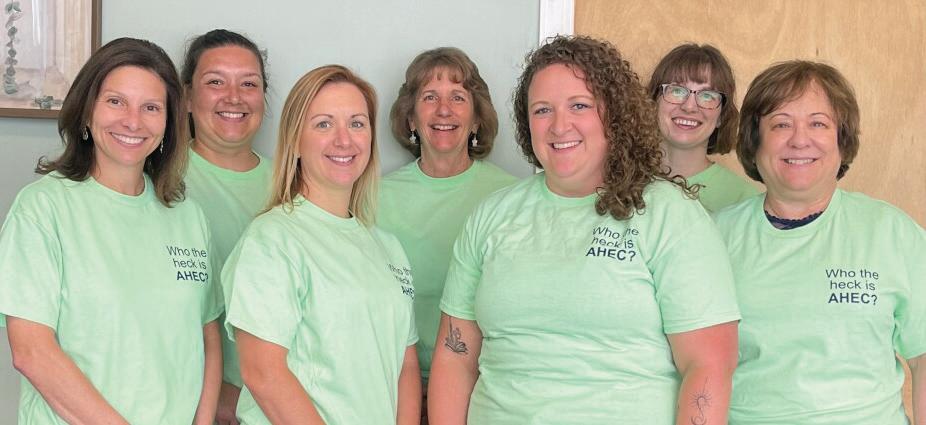
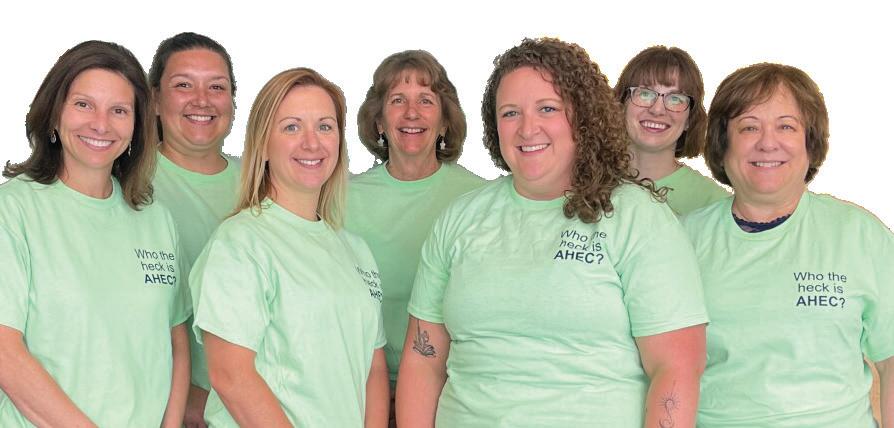
The NE PA AHEC celebrated its 25th anniversary in 2024. Staff, below from left, are Leslie Petroff, MPH, health educator; Alicia Novak, office assistant; Valerie Williams, health educator; Debra Youngfelt, MCHES, CTTS, executive director; Chelsea Wolff, Ph.D., health educator; Rachel Walczak, MBA, business manager; and Mary Theresa Mazur, M.A., program manager.
“My philosophy was always you don’t say no when you have something you can do that can be funded,” said Debra Youngfelt, MCHES, CTTS, NE PA AHEC’s executive director and a member of our Graduate Medical Education Board of Directors since 2021. “We have a great team that goes out and networks and develops partnerships, which provides for opportunities, funding, and growth. We’ve been very fortunate with our partners, like The Wright Centers for Community Health and Graduate Medical Education, National Health Corps (NHC), and schools and communities.”
She also credits the board of directors, where our president and CEO, Linda Thomas-Hemak, M.D., FACP, FAAP, serves as chair, with much of the organization’s growth and success.
“They challenge us, bring us opportunity, and provide support,” she said. “Anytime we need anything, I can reach out to any of the board members, and they’re there to help.”
Youngfelt started with the Eastcentral PA AHEC as a health educator in 2002 and became executive director in 2017, simultaneously overseeing the Eastcentral and Northeast PA AHECs at their shared office in Lehighton. In 2021, Eastcentral PA AHEC hired its own staff executive director, and Youngfelt opened an office and moved the NE PA AHEC team to its current location in Archbald.
This enabled NE PA AHEC to train local CHWs, like Sekelsky and others, through its Community Health Fellowship Program and place them to serve with host sites in local communities. CHWs are a vital link between health care organizations and communities to improve well-being.
Partner organizations, including The Wright Center, Greater Wyoming Valley YMCA, Valley in Motion, Volunteers in Medicine, United Neighborhood Centers, and others, agree to provide on-the-job training for a year after NHC members complete CHW training.
NE PA AHEC’s Program has trained nearly 200 CHWs, including 38 through the NHC Program – six of whom served as NHC members at The Wright Center – and seven through the AHEC CHW Apprenticeship Program, with four working at our health centers.
“It allowed me to explore an opportunity to work closely with individuals that I, unknowingly, would forge amazing future partnerships with,” said Sekelsky, a member of the program’s first cohort. “The NE PA AHEC CHW class teaches about boundaries, safety, and security, and NHC gave me the opportunity to explore those lessons.”
Congress developed the AHEC program in 1971 to recruit, train, and retain a health professions workforce committed to underserved populations. There are 56 AHEC programs with more than 235 centers in almost every state and Washington, D.C. In 1994, Penn State College of Medicine established the Pennsylvania AHEC Program, which has seven regional centers, including NE PA AHEC.
“We’re here to support the health care workforce development in any way that we can,” said Youngfelt. “If we don’t have it, and it’s needed, we create it or work with somebody to make it happen. We want everybody to have health care. We want everybody to have a good job, and there are so many health care jobs.”
Her say-yes mindset resulted in NE PA AHEC becoming the first Pennsylvania AHEC to be named an AmeriCorps-funded NHC host operating site.
For Jasleen Kaur, of Sugarloaf, the program became a stepping stone toward fulfilling her dream to become a primary care physician immersed in public health and community well-being. The 2021 University of Scranton graduate began classes at the end of August 2024 at Geisinger Commonwealth School of Medicine.
Through the program, Kaur worked at the Willow Foundation’s day shelter, the Heartwood Center in Hazleton. The shelter provides people who are experiencing homelessness with a place to go during the day, offering meals, resources, and support.
“It really opened up my eyes to how so many people in our area are experiencing homelessness and grew up in poverty, and are not able to look after themselves because they are uninsured,” Kaur said.
The program has grown in popularity, according to Youngfelt, and is among several in-demand programs NE PA AHEC offers. Partnerships also enable the organization to offer additional training programs.
Decades deep
Doctors bring a combined 128 years of experience to their patients, students, and communities
At The Wright Center, some names quietly become synonymous with wisdom, longevity, and unwavering service – and one growing group just happens to begin with the letter “D.”
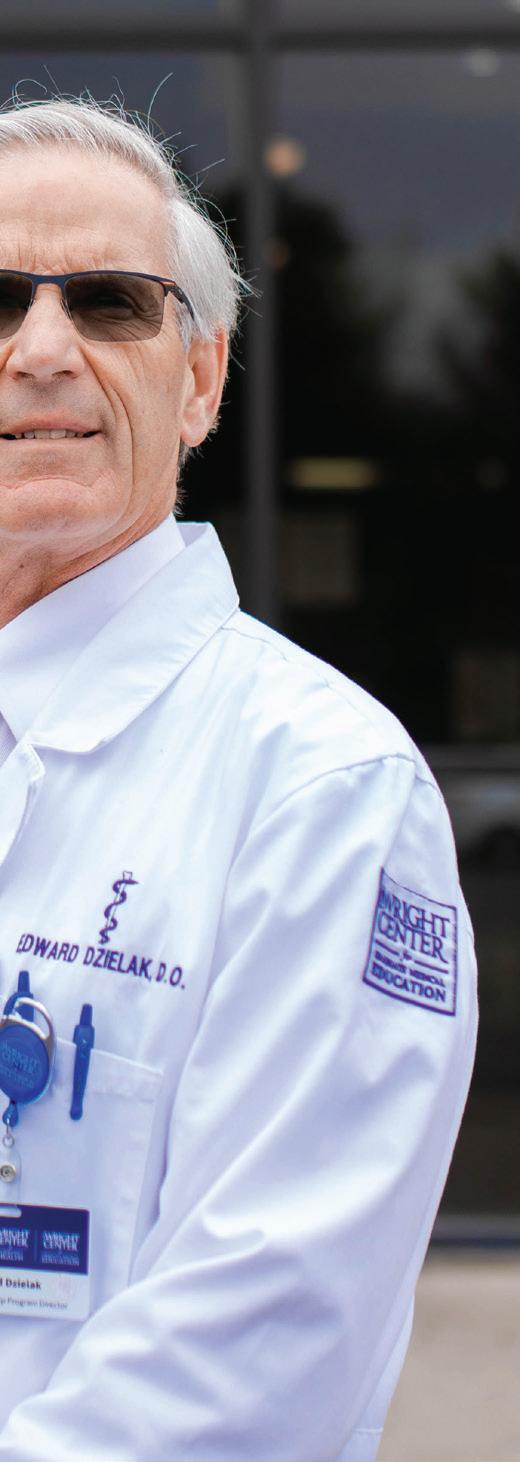
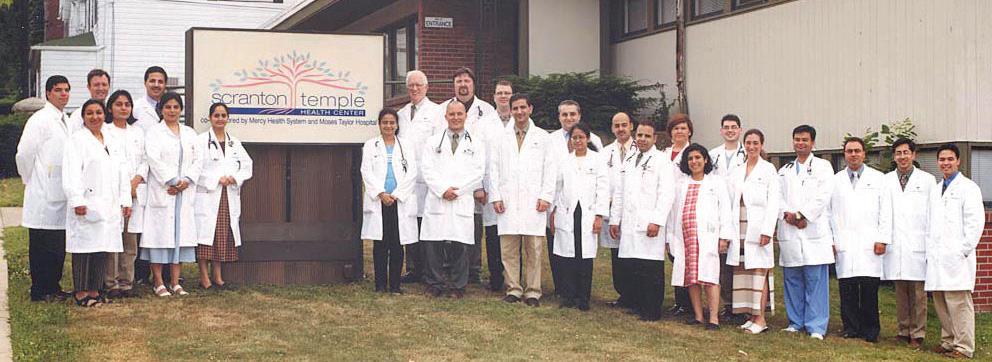
This year, William Dempsey, M.D., our chief population health value-based care officer and medical director at our Clarks Summit community health center in South Abington Township, joined “The 40+ Club,” a rare and revered cohort of our physicians whose commitment to practicing medicine has spanned four decades. The other two members are Charles Deck, M.D., associate program director of our Internal Medicine Residency Program, and Edward Dzielak, D.O., FACP, founding program director of our Geriatrics Fellowship Program. Each brings 44 years of experience, having trained together as members of the second cohort of six residents in the Scranton-Temple Residency Program – renamed The Wright Center for Graduate Medical
Education in 2010, from which they graduated in 1981.
With quiet conviction, shared values, and a razor-sharp focus on people over profit, these three doctors have left a lasting imprint on the fabric of community-based health care in Northeast Pennsylvania. While each has taken a unique path, their collective story is one of purposedriven longevity and deeply human care.
Collectively, they have served thousands of patients, trained hundreds of new physicians, modeled what it means to serve over the long haul, and quietly remind us that the best medicine is still human.
“Drs. Deck, Dempsey, and Dzielak are the embodiment of purpose-driven medicine,” said Linda Thomas-Hemak, M.D., FACP, FAAP, our president and CEO. “Their four decades of service are not just a testament to their clinical excellence, but to their unwavering commitment to people over profit, education over ego, and community over convenience. They have shaped generations of
compassionate care, deep faith, steadfast leadership, and an enduring sense of purpose to make a meaningful difference. Like the distinguished “Ds” who came before him, he remains a grounding force in a world that sorely needs more of precisely that.
Born and raised in Dunmore and a University of Scranton graduate, Dr. Dempsey earned his medical degree from St. George’s University School of Medicine and completed his residency at Florida’s Tallahassee Memorial Regional Hospital Center before returning to Northeast Pennsylvania in 1985, after the birth of his first of seven children.
A board-certified family medicine physician, Dr. Dempsey also serves as a core faculty member of our Family Medicine - Scranton Residency Program. His career began in private practice.
“I loved those days,” he reflected. “Back then, success came from the quality of care you delivered and word of mouth. You were in charge. Most neighborhoods
had a doctor’s office on the corner with just a nurse and a receptionist, and that was enough. You knew your patients, and you enjoyed the kind of autonomy that allowed you to make decisions based solely on what was best for the patient. But today, the rising cost of doing business has made it nearly impossible for physicians to remain independent. We have lost something important as private practice has disappeared.”
For many of the same reasons, he also found great fulfillment working in emergency departments earlier in his career, including at the former Carbondale General Hospital. His diverse experience spans correctional facilities and occupational health clinics, and he has also served as team physician for athletic teams.
Dr. Dempsey eventually became the medical director of WorkMed Center for Occupational Health until 1994, when he joined Community Medical Center as a staff physician in its emergency department, both in Scranton.
In 2010, he joined PrimeMed Medical Group in WilkesBarre, and in 2014, he joined our team. In 2020, he was appointed as our assistant chief medical officer.
He finds great satisfaction in training the next generation of doctors, blending clinical expertise with hard-earned wisdom and practical guidance, such as promoting balance in physical, emotional, spiritual, and intellectual well-being to prevent burnout.
“I tell residents and medical students: primary care is hard, and you won’t get rich doing it,” he said. “But no other profession offers a greater chance to make a real, lasting impact. If you do it right, it’s a path to heaven. Focus on quality, not money.”
Defined by family
Dr. Dempsey’s career is inextricably linked to his roles as a husband, father of seven, and grandfather of 14. Alongside his wife, Laureen, their home is open to children from around the world through international foster care, serving as a sanctuary for those in need, just as his exam room does.
“I began to see my patients as extensions of my own family, and that shaped the way I cared for them,” he said. “I would ask myself: ‘If this were my mother, my grandmother, my child, what would I do?’ This mindset guided me. As my own family grew, that perspective deepened, and it profoundly influenced how I treated every patient who came through my door.”
He also became a passionate advocate for integrating behavioral and physical health, recognizing that true healing requires addressing the whole person.
“So much of what we treat physically is rooted in emotional, spiritual, and behavioral struggles,” Dr. Dempsey said. “If we want our patients to truly heal, we SEE NEXT PAGE
Our physicians, from left, Edward Dzielak, D.O., FACP; Charles Deck, M.D.; and William Dempsey, M.D., serve patients and learners.
Three doctors, one enduring mission
FROM PREVIOUS PAGE
have to care for every part of them.”
A sign hanging in his office captures his philosophy in simple, powerful terms: “If you’re happy, you’re healthy. If you’re sad, you’re sick.”
Doctoring with dignity
Like Dr. Dempsey, his fellow 40+ Club members share the belief that true healing starts with human connection, the foundation of all meaningful care.
Dr. Deck, a board-certified internal medicine physician, is equally known for his compassionate, patient-centered approach and commitment to education. A trusted mentor to generations of internists, he has spent decades balancing clinical excellence with humility and heart.
A Philadelphia-area native, he earned a degree in chemistry from the University of Pennsylvania before receiving his medical degree from McGill University’s Faculty of Medicine and Health Sciences in 1978.
After completing his residency in Northeast Pennsylvania, he chose to put down roots with us in the region. With one sister living in the Poconos, another in Binghamton, New York, and a deep personal connection to Promised Land State Park – a cherished destination for family getaways during his youth – staying in the area felt both practical and deeply personal.
While building his private practice, Dr. Deck maintained a lasting connection with us, first as a part-time teaching physician and, decades later, transitioning into his current full-time leadership role.
Off the clock, he has also been a tenor II in the Catholic Choral Society for over two decades, proof that healing comes in many forms. He was a member of a choral group assembled to perform Beethoven’s Ninth Symphony and Mozart’s Requiem with the Northeast Pennsylvania Philharmonic, and among local chorus members invited to Arcadia Chorale’s inaugural Summer Sing, which featured a performance of Vivaldi’s Gloria.
Married since 1973, he and his wife, Leslie, have six children.
Driven by duty
Just as Dr. Deck has blended medicine with mentorship and music, Dr. Dzielak brings his distinctive harmony to the trio, rooted in deep clinical expertise, quiet leadership, and a lifelong dedication to elder care.
“When a patient comes to you, I consider it an honor and a privilege to take care of them,” Dr. Dzielak said.
A Carbondale native, first board-certified in internal
medicine and later in geriatrics and critical care medicine, Dr. Dzielak earned his bachelor’s degree in biology from the University of Scranton in 1974 and his medical degree from the Philadelphia College of Osteopathic Medicine in 1978.
He is one of the original architects of our educational infrastructure, serving as coordinator of the ScrantonTemple Residency Program from 1981 to 2015, during which our program was renamed The Wright Center for Graduate Medical Education. He also served as geriatrics subspecialty chief from 1988 to 2017 and critical care subspecialty chief from 1989 to 2009.
Dr. Dzielak also served on the faculty of The Commonwealth Medical College, now Geisinger Commonwealth School of Medicine, and held dual leadership roles as director of medicine and director of the intensive care unit at Moses Taylor Hospital in Scranton until his retirement in 2017. While at Moses Taylor, he launched our region’s first hospitalist program and established its first medical ethics committee. At different points in his career, he also served as a board director for both The Wright Center and Moses Taylor Hospital.
After retiring, Dr. Dzielak returned just two years later to serve as the founding program director of our Geriatrics Fellowship Program, at age 68, scoring in the 90th percentile on the 10-hour geriatric board certification exam.
Leveraging his national network of leading experts, he brings the best ideas in geriatrics to life at The Wright Center. Under his guidance, our community health centers quickly pursued designation as Age-Friendly Health Systems.
Throughout his esteemed career, Dr. Dzielak has served as coordinator of the residency program’s Moses Taylor Hospital campus, director of its ICU, chief of geriatrics, and leader of multiple nationally recognized programs aimed at improving care for older adults. His contributions have not only advanced geriatric care but have also helped shape the very foundation of education in our region.
Edward Dzielak, D.O., FACP
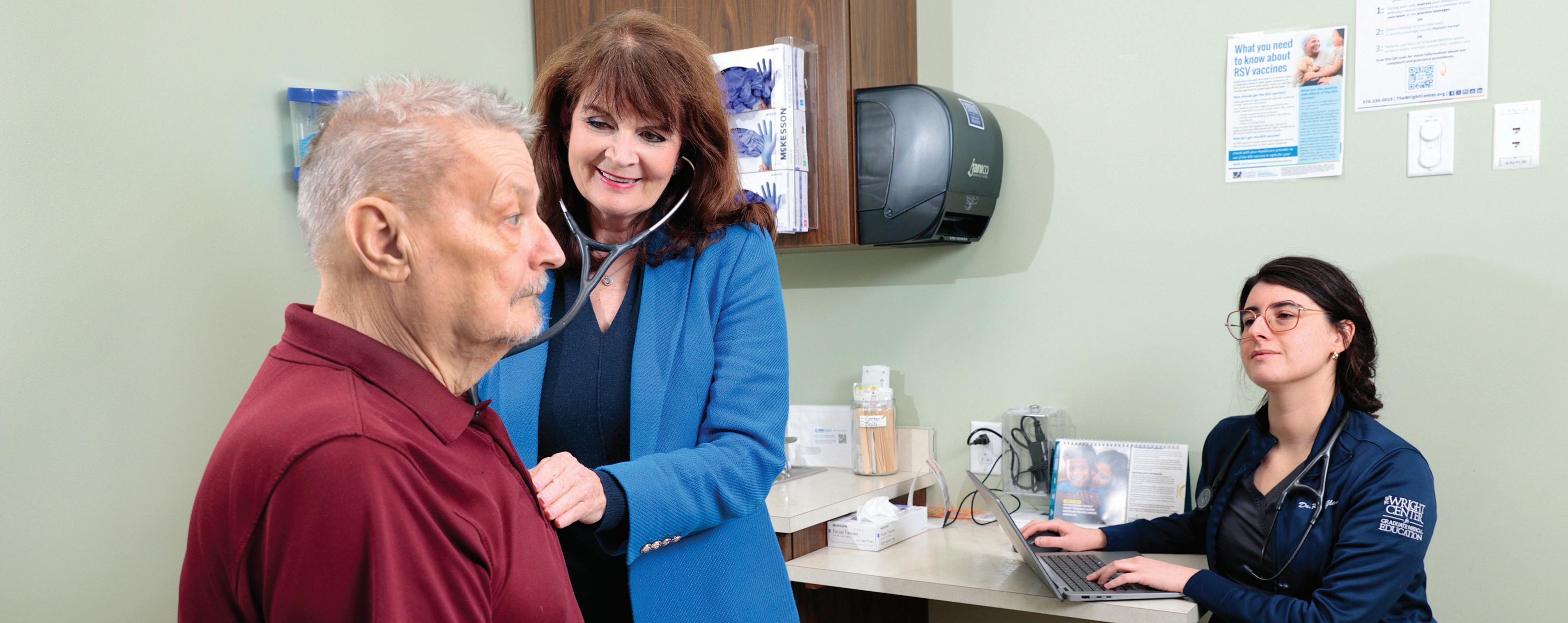
Maureen Litchman, M.D., sees a patient at our Teaching Health Center in Wilkes-Barre.
Treating, teaching, & creating
Longtime doctor reflects on a storied career in Luzerne County
Although Maureen Litchman, M.D., became the first physician in her family, her father’s career in education steered her path in medicine.
Influenced by her parents’ deep respect for doctors, Dr. Litchman entered medical school at just 19 through a unique six-year program at then called Wilkes College. She earned her medical degree from Hahnemann Medical School in Philadelphia, Pennsylvania, in 1978, then returned home to Luzerne County to complete her family medicine residency at Wyoming Valley Family Practice, graduating in 1981.
close when she retired June 30, 2025. The boardcertified family medicine physician has treated generations of patients throughout the community. As she prepared to retire, the associate program director of our Regional Family Medicine Residency Program and medical director of our Teaching Health Center in Wilkes-Barre, reflected on a career she called “even keeled,” eschewing highlights to define it.
‘From the beginning of my career, I knew I could only care for so many patients directly. By teaching residents, I’ve been able to extend that care exponentially.’
Just a month after graduating, she joined the residency’s clinical faculty, inspired by a passion for teaching that she attributes to her father, a lifelong educator and former assistant superintendent of the Wilkes-Barre Area School District.
Dr. Litchman’s competitive spirit emerged early. As a swimmer, she became the first woman to letter on the team at Wilkes College. She still recalls a lesson from her swim coach that became a guiding philosophy.
– Maureen Litchman, M.D.
“The strongest competitor I could ever face was myself, and a good race was one when I improved my best time, even if I was last,” she said.
“That’s how I’ve measured my performance ever since.”
“I followed in his footsteps, even though it was a different discipline,” she said. “From the beginning of my career, I knew I could only care for so many patients directly. By teaching residents, I’ve been able to extend that care exponentially.”
Teaching became the cornerstone of Dr. Litchman’s 47-year career as a physician, which came to a
Through the decades, Dr. Litchman has navigated the evolving health care landscape with resilience and purpose. She and her husband, the late Dr. Joseph Litchman, raised four daughters – now adults with lives of their own – deepening her ties to the community she served.
Healing with words: Dr. Litchman’s journey continues beyond clinical care
“Being a primary care physician isn’t just about knowing diseases,” she said. “It’s also knowing the patient and being able to have clinical interactions with them within the context of the doctorpatient relationship.”
Her connection to patients extended well beyond exam rooms. She often bumped into them at the grocery store or her daughters’ sporting events – always ready with a teasing comment about what was in their cart or on their snack tray.
“In a funny way, it validates me,” she said. “I’m a person who has walked in their shoes, which makes it easier for patients to feel that I can relate to them.”
In addition to working as a family physician, Dr. Litchman also spent a decade in the emergency department at Wilkes-Barre General Hospital, managing emotionally intense cases. To process those experiences, she turned to a longtime hobby: creative writing.
She first realized her talent as a writer in college, when she wrote a biology class paper as a fictional story – imagining a couple walking through the aisles of a futuristic store, picking out traits for the perfect baby, down to the infant’s eyes, hair, and height.
“From there, I launched into the genetics and the science of it,” she said. “I remember the professor writing me a little postscript, encouraging me to explore writing.”
In 2023, she earned a master’s degree in creative writing from Wilkes University and is now just a semester away from completing a Master of Fine Arts (MFA). That same year, she won first place in the Family Medicine Education Consortium’s creative writing competition for a story inspired by a powerful experience delivering a baby under difficult circumstances in General Hospital’s emergency room.
As part of her MFA program, Dr. Litchman wrote a book, although she hasn’t had enough time to finish it.
“It’s waiting for me to edit it, but I need a quiet spot to do that,” she said, adding that she’s not sure what retirement will hold for her. “I’ve gotten positive feedback on it, so we’ll see.”
Now 70, Dr. Litchman said she’s retiring to give herself the gift of time – time to write, reflect, and explore what comes next.
“I see patients who retire and have all these plans, but before you know it, they’re gone,” she said. “I think the ultimate wake-up call was that, for the first time in my life, the pope is younger than me.”
As she prepares to retire, she’s had many emotional encounters with many longtime patients.
“I’ll definitely miss the relationships I’ve had with my patients,” Dr. Litchman said. “But I want to go on my own terms, while I still have quality time left.” FROM PREVIOUS PAGE
THE WRIGHT CENTER FOR COMMUNITY HEALTH’S ECONOMIC OUTPUT
THE WRIGHT CENTER FOR GRADUATE MEDICAL EDUCATION’S ECONOMIC OUTPUT
TWC TOTAL WORKFORCE FULL-TIME EQUIVALENTS
Patient & Community Engagement
A subsidiary of The Wright Center for Community Health, The Wright Center for Patient & Community Engagement helps many of the most underresourced individuals and families in Northeast Pennsylvania, including those experiencing poverty, food insecurity, homelessness, social isolation, transportation challenges, trauma exposure, or other hardships.
The nonprofit’s mission-driven efforts included:
• 21,979 - Patients received free clothing**
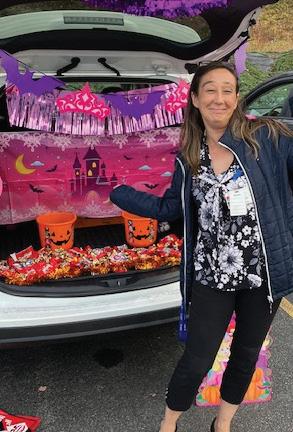
• 4,900 - Children participated in our Trunk-N-Treat Programs**
• 4,640 - People received help with health insurance enrollment**
• 2,648 - Families fed from regional food drives**
• 1,389 - Stocked backpacks distributed to students**
• 726 - Patients received transportation assistance**
• 629 - Individuals who obtained assistance with utilities**
• 480 - Lives saved by donating 160 pints of blood**
• 305 - Patients supported with housing assistance**
• 139 - Children received gifts through our Angel Tree Program**
• 117 - Bags of warmth distributed to community members**
Combined net operating revenue: $99.7 million**
Combined net assets: $55.4 million**
Grant revenue (federal, state, and foundation funders): $23.0 million**
Salaries and benefits as a percentage of combined net operating revenue: 62%**
*Source: The Institute
SECTION TITLE GOES HERE
** Source: The Wright Center
A lifesaving Christmas gift:
Lifestyle medicine program aids couple’s journey to kidney transplants
Christmas 2023 brought D.J. Hockman the greatest gift he could have imagined – a second chance at life. Just days after the holiday, two and a half years after being diagnosed with stage 5 kidney failure, he received the miraculous news that a suitable kidney had been found for him.
His surgery was set: January 2024 at Penn Medicine in Philadelphia, Pennsylvania.
This life-changing donation was made possible by D.J.’s wife, Tiffany Akers-Hockman. The South Abington Township, Pennsylvania, couple underwent extensive medical evaluations and spent a year improving their health – losing weight and preparing for surgery – with the support of our Teaching Health Centers in Clarks Summit and Jermyn. Their commitment culminated in a paired kidney donation: Tiffany’s kidney was transplanted to a recipient in California, while D.J. received a kidney from a donor in Minnesota.
“The news couldn’t have come at a better time. I was getting sicker and sicker,” D.J. recalled in August 2024.
“In November 2023, I had been in the hospital several times because of infections, fluid overload, and a whole bunch of different issues.”
Nearly 104,000 people across the United States need an organ transplant, according to the United Network for Organ Sharing (UNOS), a private, nonprofit organization that manages the nation’s organ transplant system. Of those, more than 96,000 need a kidney, according to UNOS. Most will wait between three to five years for a kidney donor.
The Hockmans, like many families, hadn’t thought much about organ and tissue donation until 2021,
DoNation Campaign
The U.S. Health Resources and Services Administration (HRSA) hosts the annual DoNation Campaign to raise awareness about the importance of organ donation and to sign up more people as organ, eye, and tissue donors. We have received national recognition for our efforts to raise awareness about the need for more donors, earning platinum status from HRSA in recent years. For more information, visit www.organdonor.gov/professionals/ workplace/donation.
when D.J.’s kidneys began to fail – even though Tiffany had registered as a donor when she received her driver’s license. Doctors were never able to determine the cause of his kidney failure.
“They ran a bunch of tests, biopsies, and they couldn’t find a specific reason why,” he said. “The doctors said I was going to need to go on dialysis, and in March 2022, they scheduled the surgery to put the dialysis catheter in.”
D.J.’s exhaustion from working full time and undergoing nine hours of dialysis each night made it difficult for the family – which includes the couple’s four sons – to do anything together. They relocated to Northeast Pennsylvania from Virginia in 2021 and frequently traveled back to visit family.
However, these trips became less frequent, partly due to D.J.’s nightly dialysis, which made it challenging to travel except for essential medical appointments in Northeast Pennsylvania and Philadelphia.
“I watched my husband go from an active guy to someone who couldn’t take more than a few steps without becoming winded,” Tiffany said. “He would come home after work and just crash. He had no energy.”
To find a donor, the couple began sharing D.J.’s story on social media in hopes of finding a match.
“We really hadn’t told anyone up to that point,” Tiffany said. “A lot of people saw it and said they were going to sign up to be a donor, but it’s a long process to become one, and there are a lot of health restrictions.”
In fact, Tiffany wanted to donate one of her kidneys to her husband, but her body mass index initially was too high, according to her doctors. The emotional toll was overwhelming.
“There were a lot of emotions running through my head,” she said. “My husband is sick. We just moved here and don’t know anyone. I have the kids, and one has medical issues. It was a lot.”
During a routine checkup at our health center in Clarks Summit, Tiffany shared her concerns with William Dempsey, M.D., our chief population health value-based care officer and medical director, who offered her a compassionate ear.
“For the first time in a long time, I felt like a doctor really listened to me,” she said. “He said, ‘Any one of those things would be enough to
To read more stories about our advocacy efforts, scan the code.
break anyone.
But here you are, surviving.’”
Dr. Dempsey referred Tiffany to Jumee Barooah, M.D., FACP, one of our board-certified lifestyle medicine physicians and also our senior vice president of education and designated institutional official in graduate medical education. Along with a team of specialists, Dr. Barooah guided Tiffany through a weight-loss journey that not only qualified her to donate but also significantly improved her overall health.
arrived in Philadelphia.
“There’s a lot of barriers to getting these kinds of surgeries, which can be frustrating even though there are very good reasons,” Dr. Dempsey said. “It’s our job as family doctors to connect them to as many resources as possible to help them get healthier.”
A care team worked with Tiffany for months, coaching and counseling her as she lost weight and developed healthier habits.
“It wasn’t just about donating my kidney,” Tiffany said. “I realized that if, God forbid, something was to happen to him, I need to be healthy to take care of our boys.”
After about a year of hard work, the couple was approved to proceed with the kidney donation. However, doctors informed them that Tiffany and D.J. were only a “medium match.” Considering their young ages – D.J. was 45 and Tiffany, 42 – they opted for a paired donation to ensure the best possible match for D.J.
Just before Christmas 2023, Tiffany received the call that a recipient for her kidney had been found. A few days later, D.J. learned a match had been found for him. Doctors scheduled the surgeries for Jan. 23, 2024, at Penn Medicine.
After weeks of prescreenings and tests, the surgery proceeded as planned. Tiffany went first in the early morning, and her kidney was flown across the country to a waiting recipient in California. D.J.’s surgery followed that evening after the donor kidney from Minnesota
After a brief recovery period in the hospital, the couple moved into the Clyde F. Barker Penn Transplant House, where they spent about a month recovering and meeting other transplant patients, many of whom became friends.
Today, the Hockmans remain committed to the healthier lifestyle habits they developed with our lifestyle medicine care team, including regular evening walks at local parks.
“I’ll be monitored for the rest of my life, but because it came from a living donor, I could easily get 20-plus years from this kidney,” D.J. said. “I can’t even say how grateful I am to Tiffany and the other donor.”
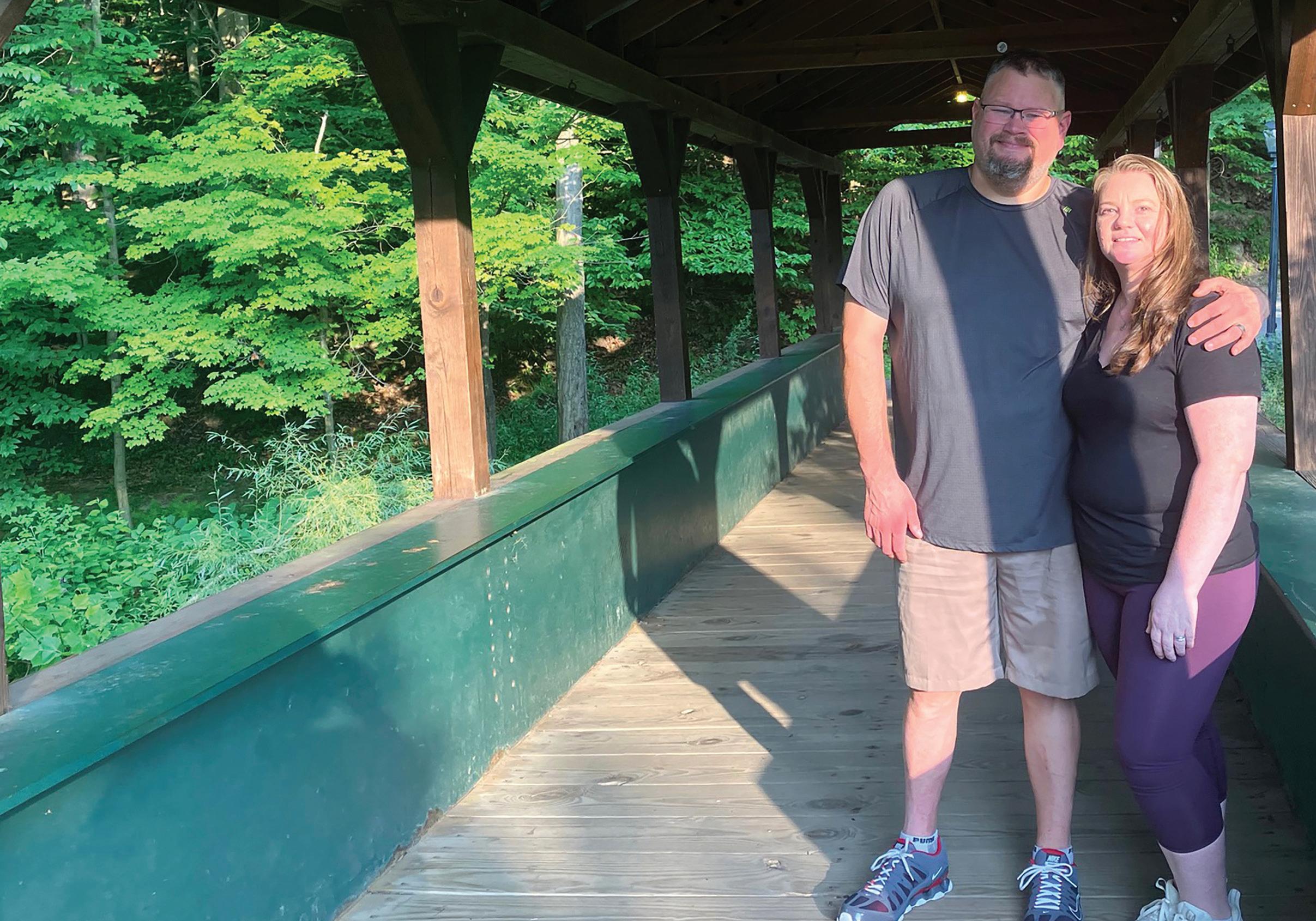
D.J. Hockman, left, and his wife, Tiffany AkersHockman, take a walk at South Abington Recreation Park in South Abington Township, Pennsylvania. The couple regularly takes walks at the park to continue the healthy habits they developed with assistance from our care teams.
Each day, 20 people in the U.S. die while waiting for a lifesaving organ transplant. Every 10 minutes, another person’s name is added to the national transplant waiting list.
To learn more, visit DonateLifePa.org
Our brightest REDS raise awareness for National Drug Endangered Children Awareness Day
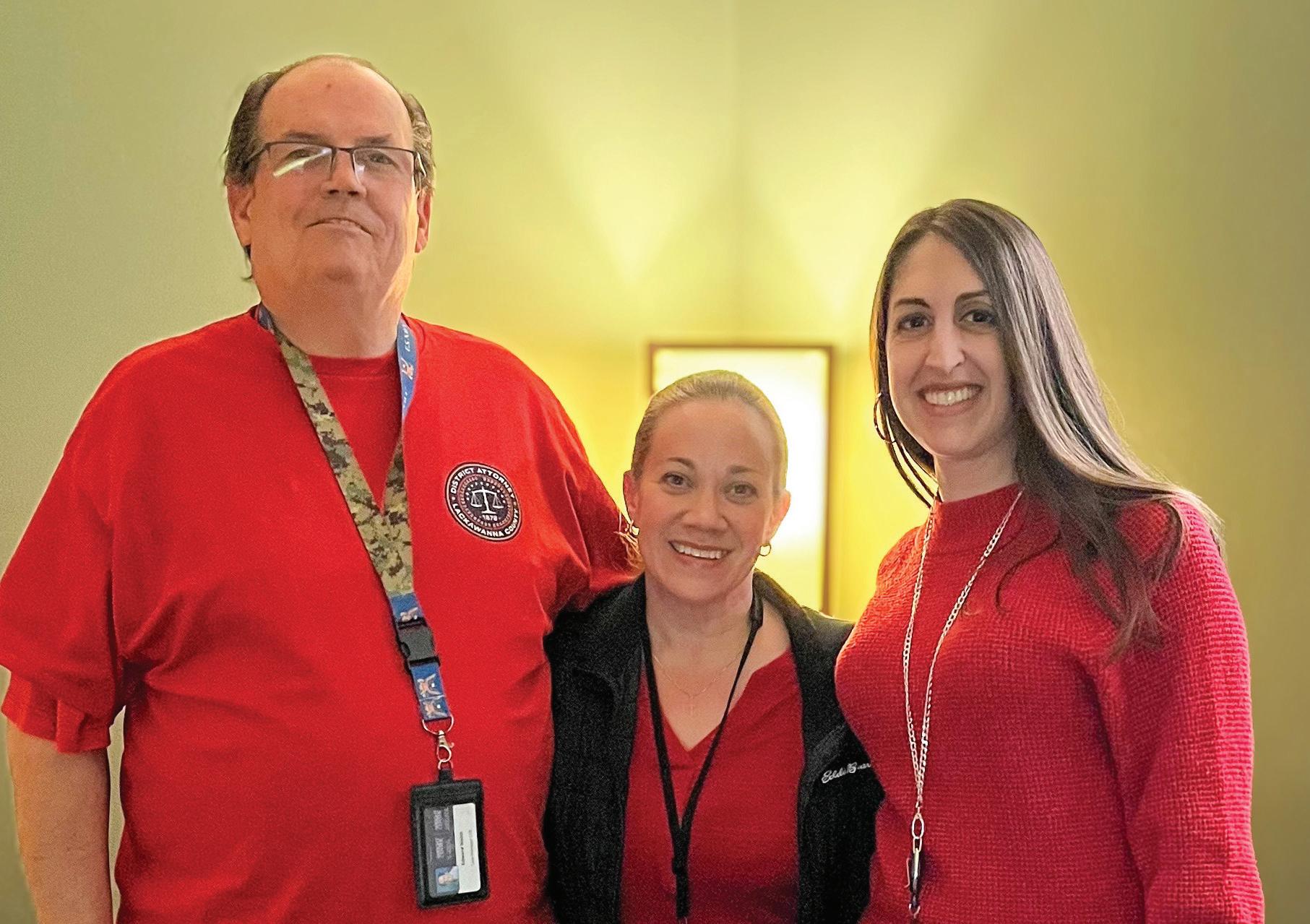
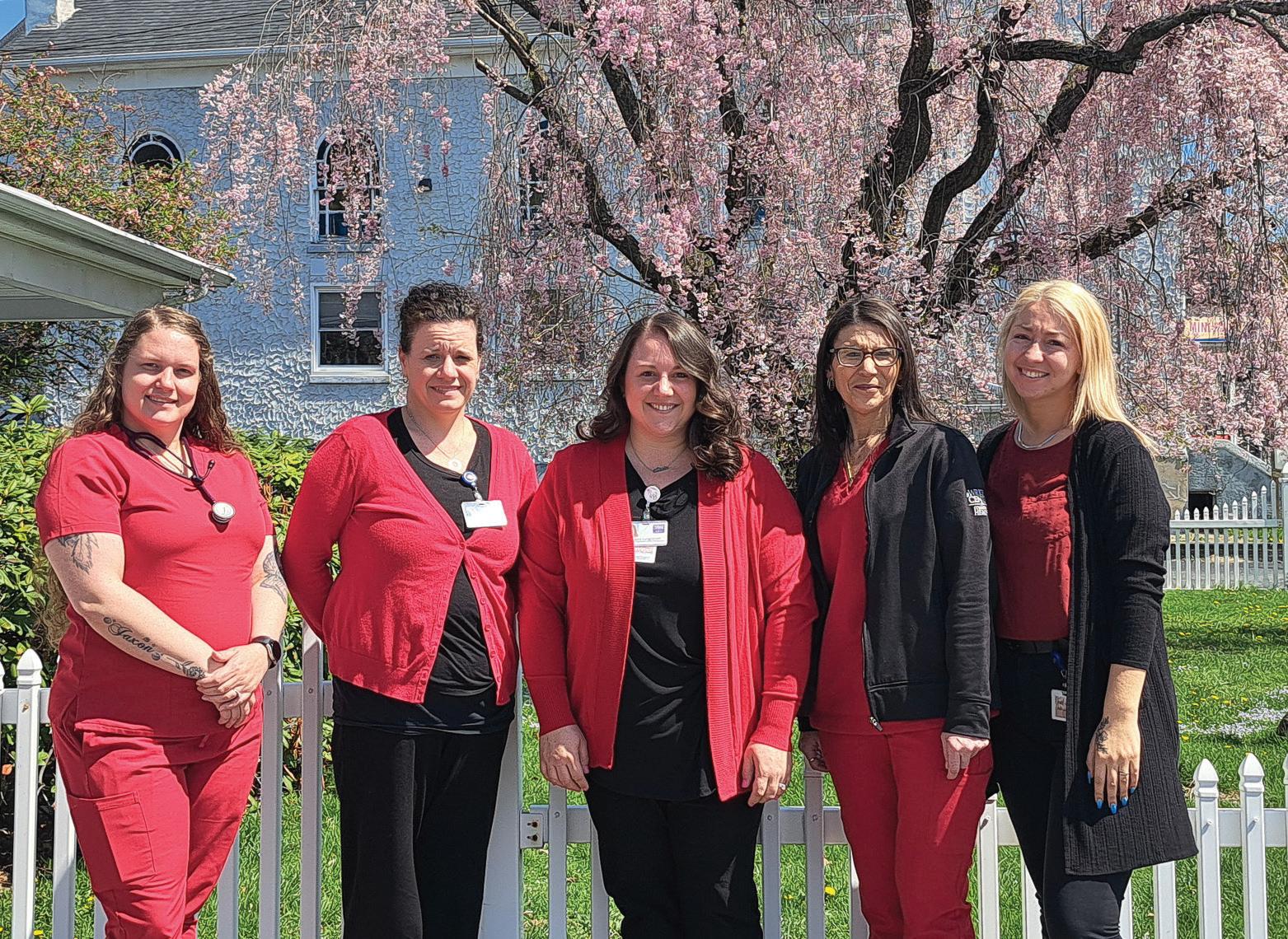
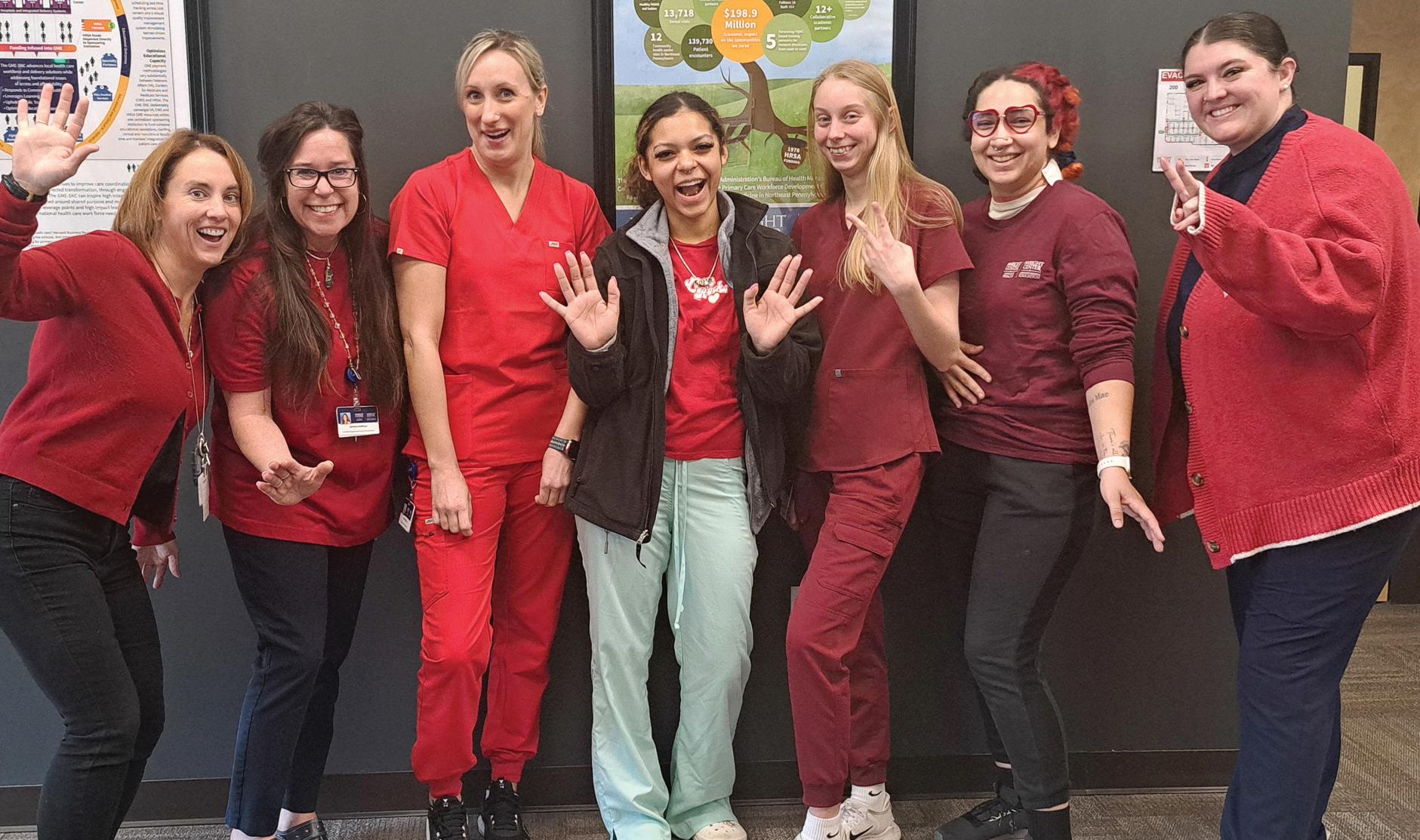
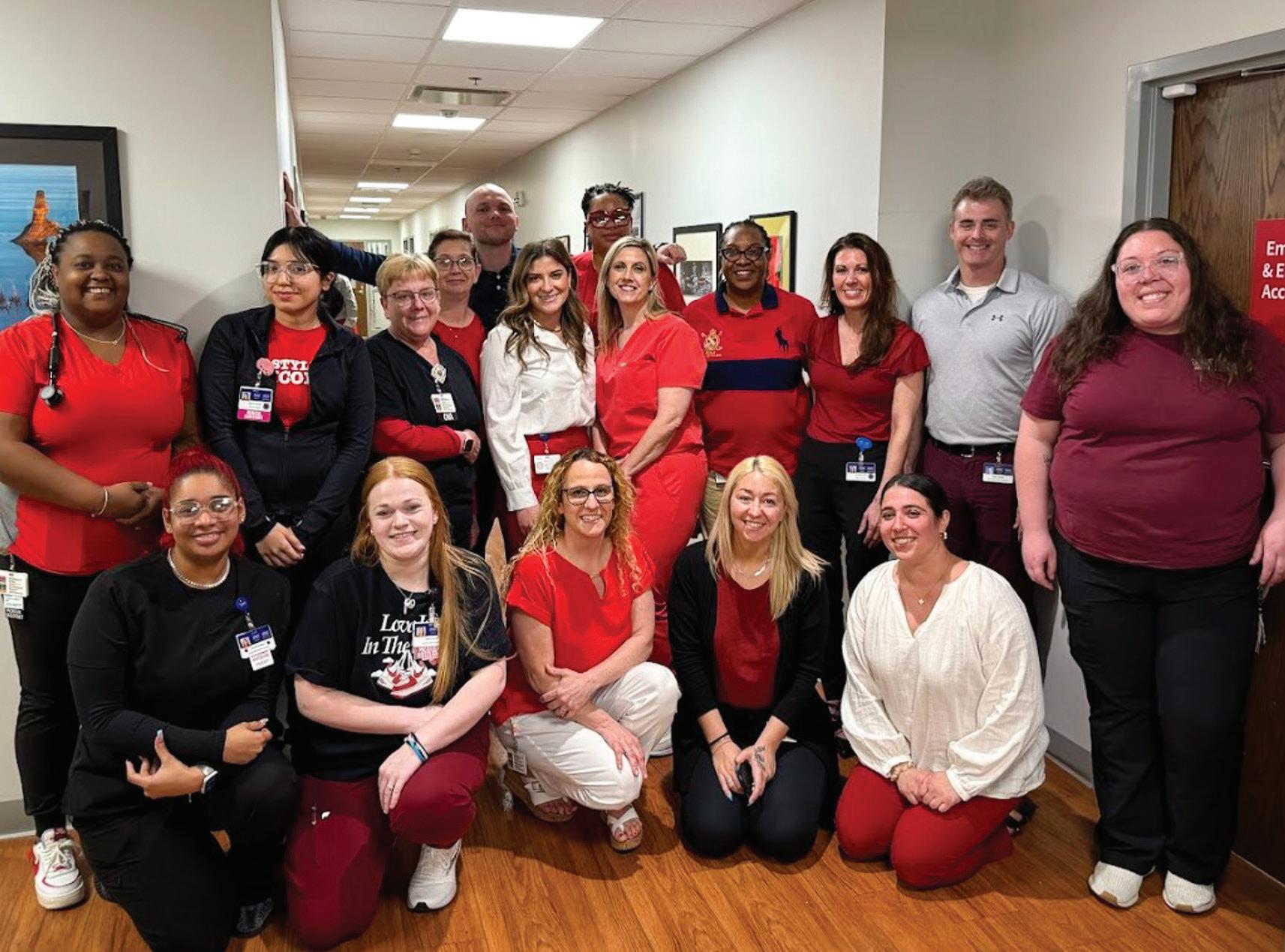
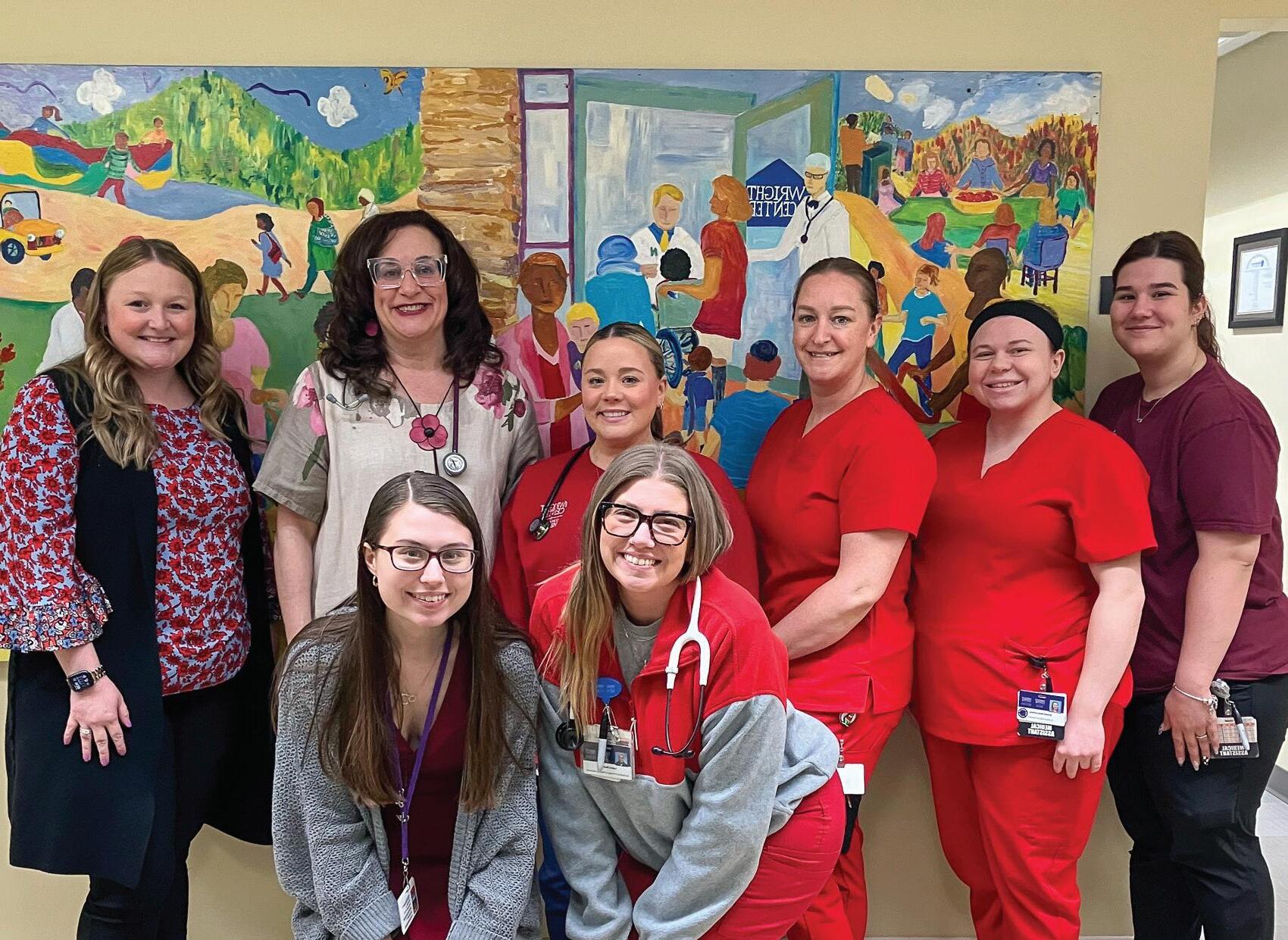
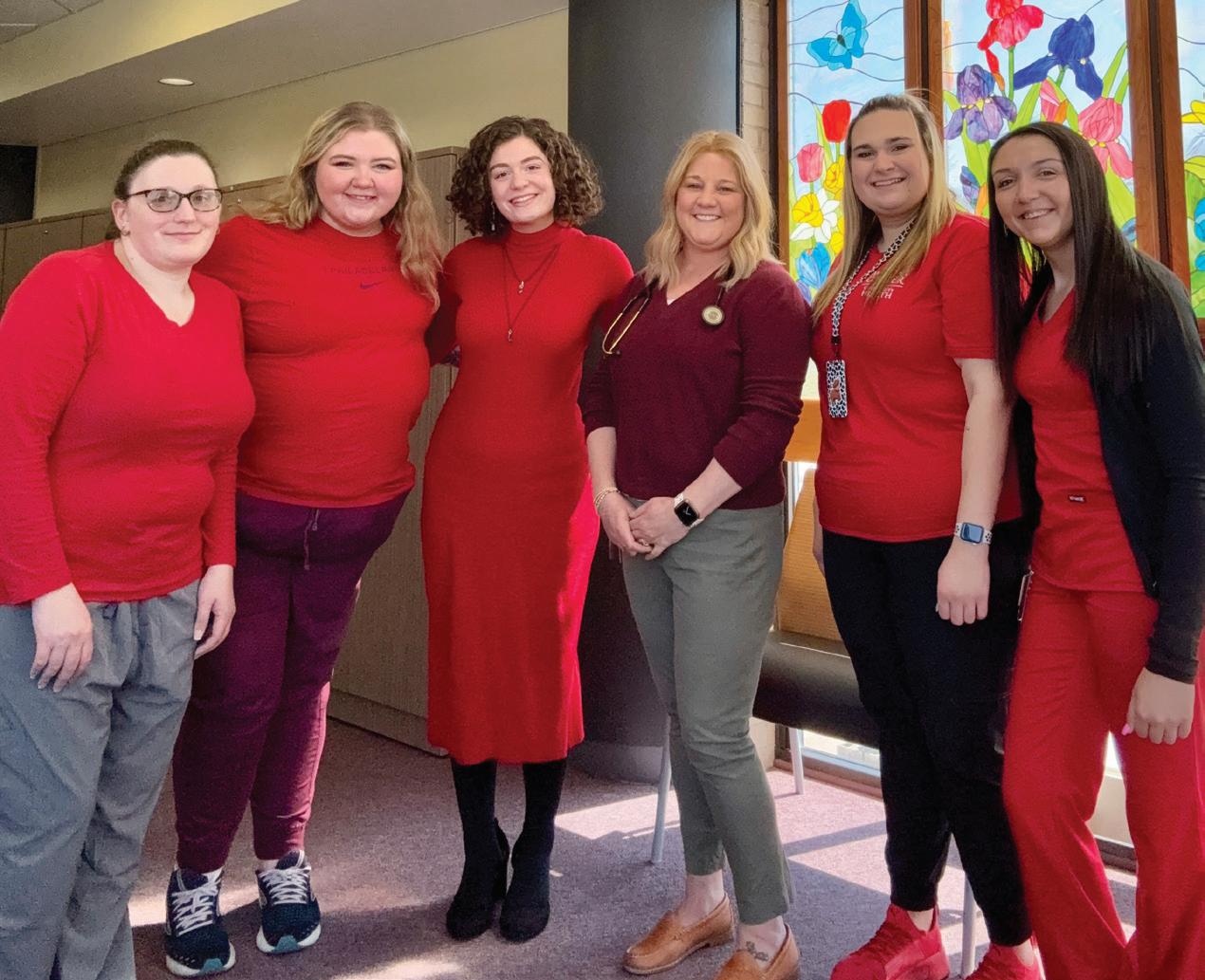
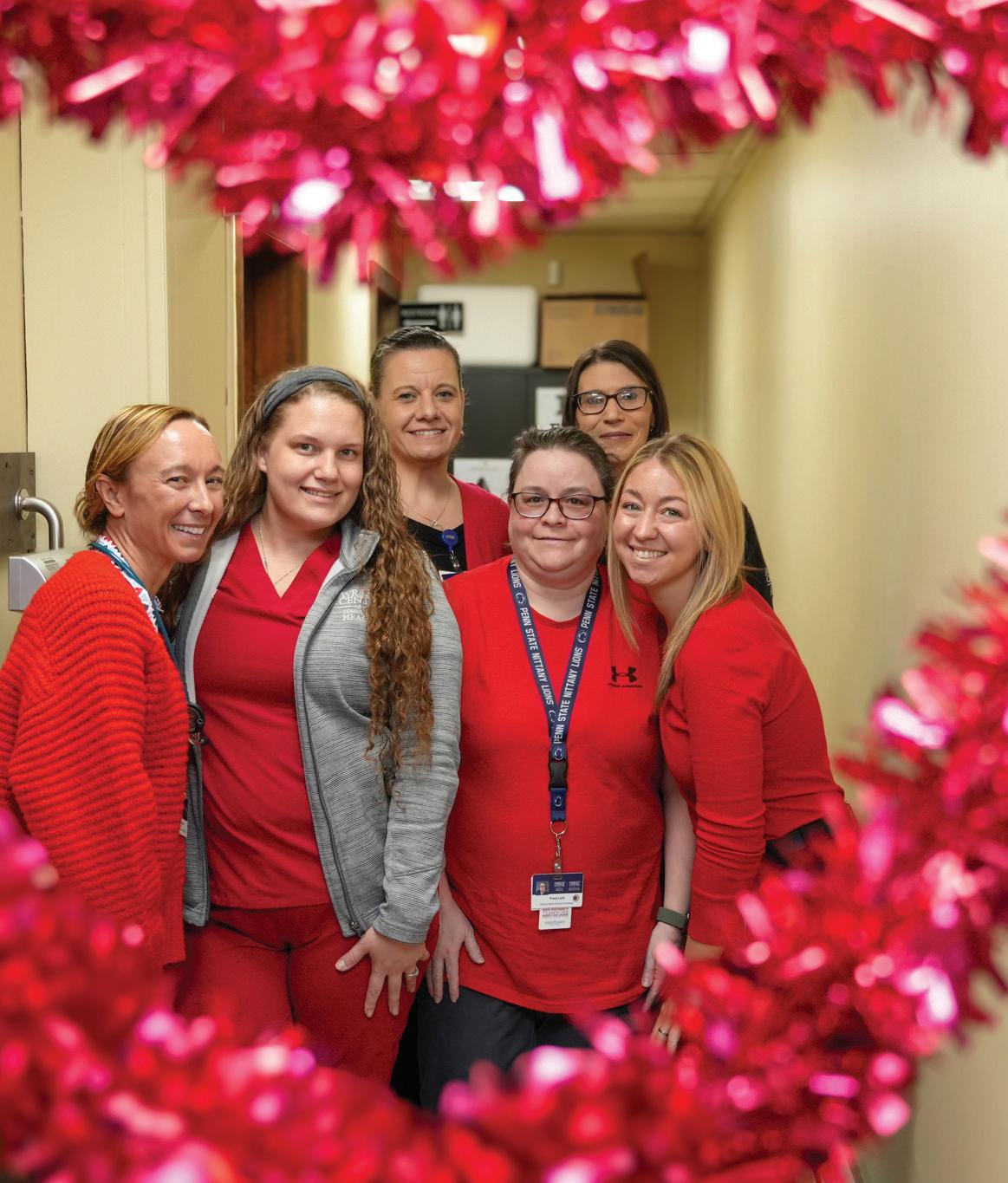
Each year, on the fourth Wednesday of April, communities across the country unite to shine a light on the challenges faced by children living in environments impacted by substance misuse. On April 23, 2025, we supported National Drug Endangered Children Awareness Day by wearing our bold reds at our health centers throughout Northeast Pennsylvania. The annual observance day teaches early identification, response, and appropriate intervention services for children and families affected by parental or caregiver substance misuse. For more information, visit nationaldec.org.
U.S. Representative Bresnahan tours our Teaching Health Center in Scranton
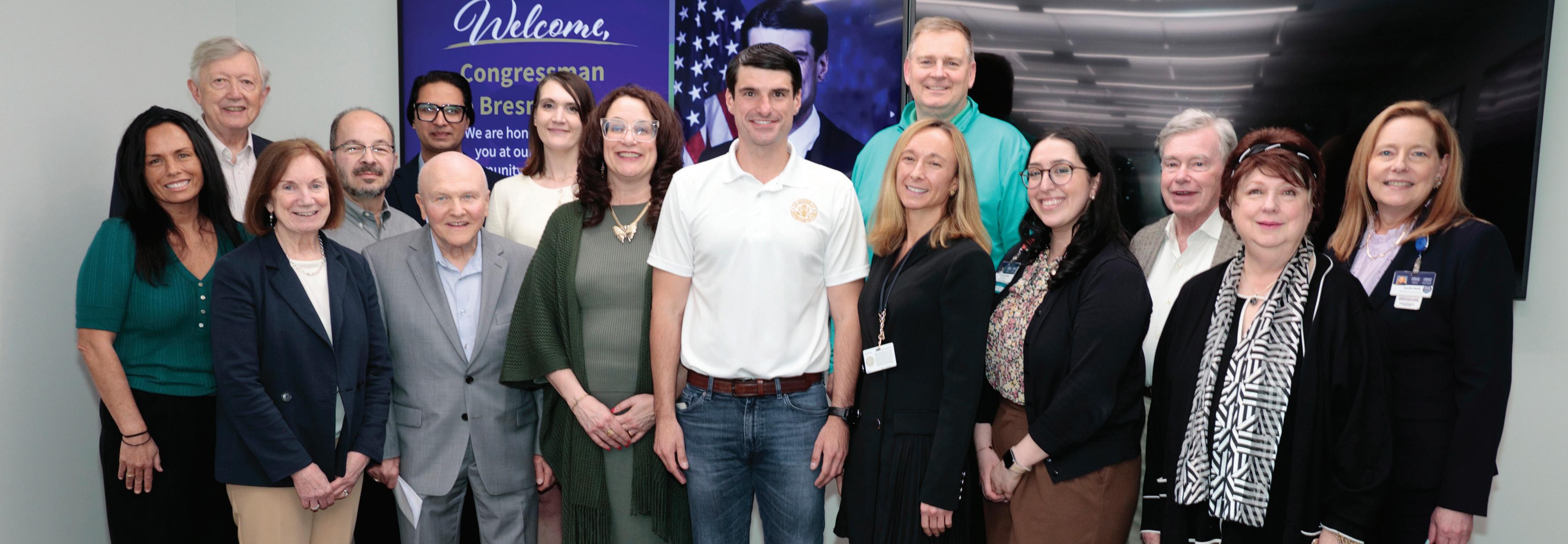
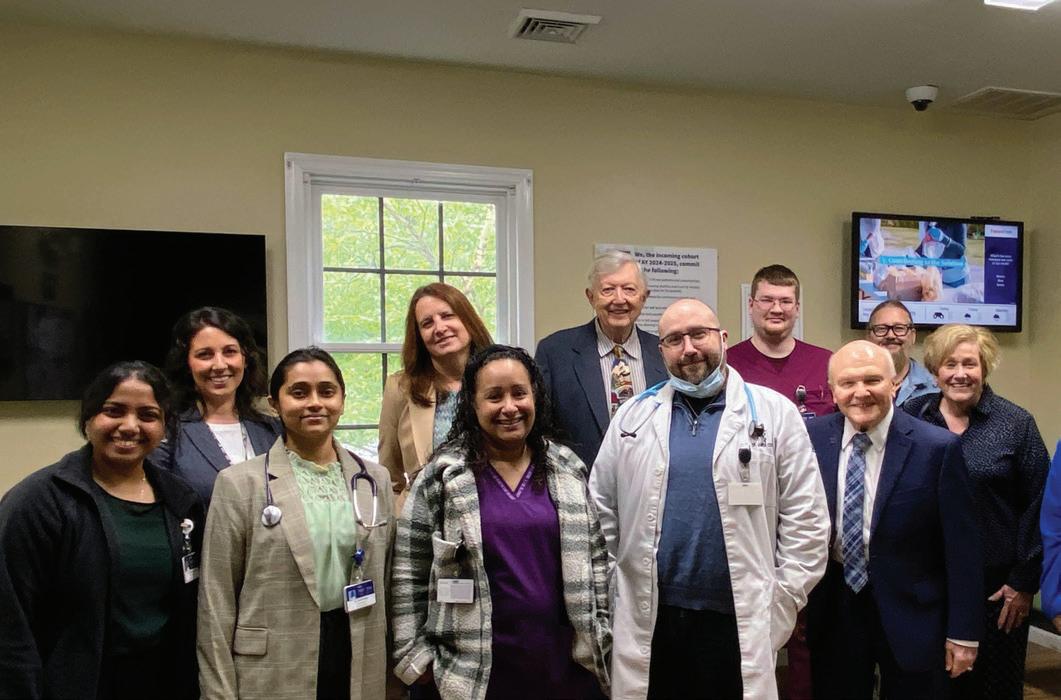
The Wright Centers for Community Health and Graduate Medical Education hosted U.S. Representative Robert Bresnahan Jr., and several members of his staff, on Friday, April 25, at our Teaching Health Center in Scranton, Pennsylvania.
Linda Thomas-Hemak, M.D., FACP, FAAP, our president and CEO, met with Representative Bresnahan to share information about our mission and stressed the importance of protecting funding that supports community health centers. She also addressed how essential Medicare and Medicaid funding are to Northeast Pennsylvania.
Center in Scranton so we can share the critical work we are doing throughout Northeastern Pennsylvania.”
During his visit, he toured our Teaching Health Center in Scranton. The visit concluded with a group discussion with Representative Bresnahan, his staff, and our board members, executive team, faculty, resident physicians, and other key staff members.
‘The Wright Center serves as a national model for how community-based health care and workforce development can go hand-in-hand to improve lives.’
– U.S. Representative Robert Bresnahan Jr.
“We wanted to thank Representative Bresnahan for stepping up to represent our region in Washington, D.C., and for the partnership we have built with him and his staff, both here in his district and in our capital, over the past few months. We are grateful for the commitment he has shown in supporting community health centers,” Dr. Thomas-Hemak said. “Today was an opportunity to thank him and welcome him to our Teaching Health
Advocating for ‘The Wright’ reasons
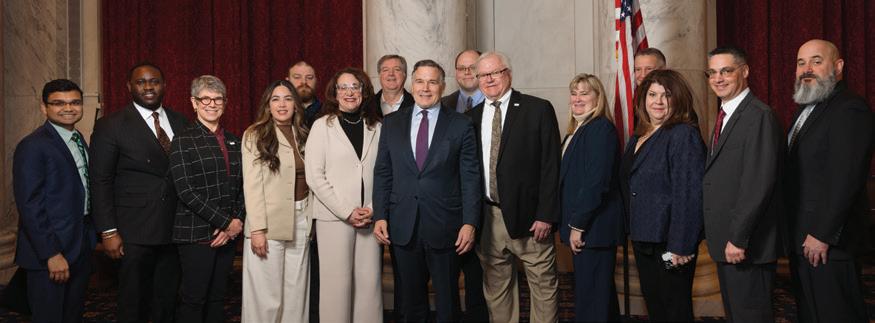
U.S. Senator Dave McCormick, center, hosted a Keystone Constituent Coffee in Washington, D.C., February 5, 2025, with Linda Thomas-Hemak, M.D., FACP, FAAP, and other community health center leaders, to discuss the importance of community health centers in the overall health and well-being of our communities.
U.S. Representative Robert Bresnahan Jr., center, and his staff toured our Teaching Health Center in Scranton on April 25, 2025, with residents, staff, and leadership.
“The Wright Center is doing extraordinary work to ensure high-quality, affordable care reaches every corner of Northeastern Pennsylvania,” said Representative Bresnahan. “I want to thank The Wright Center for the opportunity to visit their Scranton health center and to discuss ways in which we can work together to strengthen both the health and future of our communities.
“The Wright Center serves as a national model for how community-based health care and workforce development can go hand-in-hand to improve lives.”
State representative tours locations
State Representative Kyle T. Donahue toured our School-Based Health Center and our Teaching Health Center in Scranton during a meeting November 15, 2024. We touted our partnership with the Scranton School District and how our school-based model represents the future of delivering health services to children.
Representative of U.S. Senator McCormick meets with leadership Nate Gerace, regional director for U.S. Senator Dave McCormick, toured our Teaching Health Center in Scranton May 28, 2025. He met with leadership and clinicians to learn about our mission as a Federally Qualified Health Center Look-Alike and our nearly 50year history.
From checkups to chapter books
New program encourages families to read together
Thanks to the support of a well-known national nonprofit, area families will soon get a little something extra during their visits with pediatricians at our community health centers.
In partnership with the nine-member Lackawanna County Literacy Committee, we have become a hub for Reach Out and Read, a national program that aims to give young children a foundation for success by incorporating books into pediatric care and encouraging families to read aloud together.
Participating in the announcement, from left, are Sandie
We are pursuing grant opportunities and creating children’s lending libraries in our waiting rooms to support an initiative that provide age-appropriate books to children ages 6 months to 5 years during their pediatric visits. In addition, we are exploring read-aloud events during clinic hours.
“Reading plays such a vital role in a child’s development, and this program helps us show families just how impactful it can be,” said Manju Mary Thomas, M.D., our deputy chief medical officer and medical director of pediatrics and school- and community-based medical home services. “Beyond language development, children engage with the colors, textures, and overall experience of a book – it all supports their growth.”
The Lackawanna County commissioners created the county’s literacy committee in 2022. From the beginning, partnering with the Reach Out and Read Program was one of the goals, according to Sandie Lamanna, a longtime school psychologist, who serves as the county committee’s chairperson.
According to the National Literacy Institute, 130 million adults nationwide are unable to read a simple story to their children. More than 80% of a child’s brain is formed during their first three years, according to the Reach Out and Read Program, and what they experience during this
window can irreversibly affect how their brain develops.
“The National Institute for Child Health declared illiteracy a national health problem,” Lamanna said during a program at our Teaching Health Center in Scranton in September 2024. “Birth through age 5 are critical years where we can build a foundation before children start school.”
Lamanna said the links between illiteracy and poverty are clear.
“Between 46%-51% of American adults have an income well below the poverty level because of their inability to read,” according to the National Literacy Institute.
Dr. Thomas point to years of peer-reviewed studies showing the positive effects of the program. Studies show that parents who participate in the program are 2½ times more likely to read to their infants, toddlers, and preschoolers and that children’s language development is improved by 3-6 months. In celebrating the start of our Reach Out and Read Program, Dr. Thomas recalled the joy of distributing books through the program at an Allentown doctor’s office where she got her start.
“I handed a book to the 9-month-old, and his eyes just lit up,” she said. “The mother got excited because her child was so excited.”
Lackawanna County Commissioner Bill Gaughan is excited about the program.
“This is a really big deal to bring this here,” Lamanna said. “The Reach Out and Read Program has been around for 30 years, and the research clearly shows it is having an impact.”
Lamanna, Lackawanna County Literacy Committee chairwoman; Manju Mary Thomas, M.D., and Lackawanna County Commissioner Bill Gaughan.
From fear to first response: Empowering our communities through CPR training
Mark Powell, RVT, NRP, watched closely as Marywood University student Talia Avia tried to squeeze a breath into a mannequin’s mouth using a bag valve. He shook his head and gave the student a big smile as he held up one hand, showing her his thumb and first two fingers, which he had stretched into the shape of an L.
“Use your fingers to lift the jaw a little, and then flatten your thumb over the mask to get a good seal,” he explained, demonstrating what the experts call a C-E shape with his fingers. He nodded as Avia adjusted her fingers and squeezed the bag again, making the mannequin’s chest rise. “There you go. You got it.”
Since joining us in March 2024 as our director of employee health and coordinator of continuing medical education, Powell has been working toward a big goal: to have our American Heart Association (AHA) training site designated as an AHA training center. His extensive background in vascular technology and emergency medicine, combined with a passion for teaching, provides him with the ideal skill set to achieve our goal.
“We’re trying to cement The Wright Center’s reputation as the place to go to get training in all American Heart Association training classes,” Powell said. “These skills are
More than 350,000 cardiac arrests occur outside of hospital settings each year in the U.S., according to the AHA. But only about 40% of those suffering a cardiac arrest get the critical help they need before emergency responders arrive. CPR can double or even triple a person’s chance of survival if administered immediately, according to the AHA.
By the numbers FY 25
• Certifications: 1,851
• Trainings: 2,136
Certifications
• Basic Life Support: 1,123
• Advanced Cardiovascular Life Support: 254
• Pediatric Advanced Life Support: 87
• Pediatric Heartsaver Cardiopulmonary Resuscitation + First Aid: 29
• Heartsaver Cardiopulmonary Resuscitation: 275
• Heartsaver Cardiopulmonary Resuscitation + First Aid: 83
Trainings
• Narcan: 202
Since we launched our training site in 2023, we have awarded 3,560 certifications, which include 1,761 in Basic Life Support (BLS), 416 in Heartsaver CPR, 412 in Advanced Cardiovascular Life Support (ACLS), and 158 in Pediatric Advanced Life Support (PALS).
• Hands-only CPR and AED: 302
Powell is collaborating with local school districts, institutions of higher education, businesses, civic groups, and other community partners to raise awareness about our classes and their impact, even for those outside the medical field. Recognizing the universal value of these lifesaving skills, we have also started offering free BLS training to all employees and volunteer board members.
One thing nearly everyone who takes the class shares, Powell said, is a bit of fear about learning – and possibly one day using – the lifesaving skills. To help alleviate those fears, he encourages a supportive atmosphere where everyone helps one another and includes plenty of handson practice to build comfort and confidence.
“I just remind them that they can do this,” he said. “Everyone is learning it together.”
Fast facts about Mark Powell
• He has been a registered vascular technologist since 2004, a paramedic since 1998, and a New York emergency medical technician since 1990.
• He has served as a school board member for the North Pocono School District since 2014.
• The Jefferson Township native lived in New York for about a decade before moving back to our area to open a restaurant with his father.
• He’s been married to Carolyn, a teacher and author, since 1997. The couple has two children: Macenzie, a forensic scientist in Philadelphia, Pennsylvania, and Nathaniel, a student at Penn State’s Smeal College of Business.
Mark Powell, RVT, NRP, provides instruction to Talia Avia.
Community collaboration leads to successful skin cancer screening clinic
The Wright Centers for Community Health and Graduate Medical Education, in partnership with Lackawanna Valley Dermatology Associates and the Northeast Regional Cancer Institute, hosted our inaugural skin cancer screening clinic May 17, 2025, providing screenings to more than 60 individuals at our Teaching Health Center in Scranton.
Clinicians from Lackawanna Valley Dermatology Associates teamed up with 10 of our Internal Medicine resident physicians to screen 64 people for skin cancer, the most common form of cancer in the U.S., with over 5 million cases diagnosed annually.
The clinic identified positive findings in 21 patients, with 15 requiring biopsies and six needing cryotherapies.
Following the clinic, one of our nurses contacted each patient’s primary care physician to ensure appropriate follow-up care.
“We’re thrilled the clinic was so well-attended and that we were able to help so many participants who have
suspected skin cancer,” said Michael J. O’Donnell, M.D., of Lackawanna Valley Dermatology Associates. “Clinics like these are so important to community health, because we know that early detection can significantly increase survival rates.”
Dr. O’Donnell added that he was happy to provide our resident physicians a hands-on learning opportunity about how to screen patients for skin cancer so they can better serve their patients now and in the future.
Michael J. O’Donnell, M.D., and Mark Marsili, M.D., of Lackawanna Valley Dermatology Associates, collaborated with The Wright Center on our inaugural screen cancer clinic.
Food pantry, information fair draws strong turnout
The Wright Centers for Community Health and Graduate Medical Education and the American College of Physicians’ Pennsylvania (PA-ACP), Eastern Chapter, gave away more than 60 bags of nonperishable food and seasonal clothing items during their second annual Spring into a Day of Giving Pop-Up Food Pantry on March 14, 2025, at Weston Field in Scranton.
More than 100 individuals also picked up information about our dental and behavioral health services; “Bags of Warmth” containing cozy socks, a winter hat, gloves, and more; doses of naloxone, a life-saving medication that rapidly reverses an opioid overdose; information about health insurance; and other community resources.
Mark Marsili, M.D., seated, of Lackawanna Valley Dermatology Associates, examines Joan Welby for signs of skin cancer, as Taimoor Nasir, M.D., and Tushar Abhinav, M.D., of our Internal Medicine Residency Program, use the clinic as a learning experience.
Kirelos Younan, M.D., our second-year internal medicine resident physician, organized the program after hearing about two local cases: a young patient who died after being diagnosed with melanoma, the most dangerous form of skin cancer, and another patient who survived after doctors detected the melanoma early. He called the clinic a success.
“While we anticipated strong interest, the turnout exceeded expectations,” Dr. Younan said. “We saw patients across various age groups with identifiable skin cancers, reinforcing the urgent need for accessible dermatologic services in our communities.”
Participating in the program, from left, are Internal Medicine Residency Program resident physician Dhruv Patel, M.D., Linda Thomas-Hemak, M.D., FACP, FAAP, our president and CEO, and Internal Medicine Residency Program resident physicians Omaima Chaudhary, M.D., and Sunny Kumar, M.D.
New program improves access to enriched primary health services with integrated specialty engagement
Our new initiative to enhance access to enriched primary health services with integrated specialty engagement has significantly reduced wait times and ensured that patients receive timely, specialized care that might have otherwise been delayed or overlooked.
We have a long-standing commitment to patient-centered enriched primary health services with integrated specialty engagement, such as addiction medicine, obesity medicine, lifestyle medicine, nutrition, geriatrics, HIV/AIDs care, and more. Through
to include cardiology and gastroenterology specialty-guided point-of-care primary health services within the primary care setting.
During the 202425 fiscal year, cardiologists
Samir Pancholy, M.D., MSCAI, FAHA, FACC, and Haitham Abughnia, M.D., program and associate program directors of our Cardiovascular Fellowship Program and North Penn Cardiovascular Specialists in Clarks Summit, Pennsylvania, and gastroenterologist David Reynolds, M.D., associate program director of our Gastroenterology Fellowship Program and Northeastern Gastroenterology Associates in Honesdale, Pennsylvania, collaborated with our primary care teams to improve access to enriched primary health services specialists.
Andrew Hicban, M.D., right, an Internal Medicine Residency Program resident physician, received hands-on experience with Haitham Abughnia, M.D., associate program director of our Cardiovascular Disease Fellowship Program and of North Penn Cardiovascular Specialists, during a cardiology clinic.
This integration not only increases access to vital health services for our patients but also creates meaningful interprofessional training opportunities for our medical students, interprofessional learners, and resident and fellow physicians.
David Reynolds, M.D., a gastroenterologist, center, has been seeing patients at our Teaching Health Center in Mid Valley. Our enriched primary health services with integrated specialty engagement enables resident and fellow physicians to gain hands-on experience and improves access to specialty services for our patients.
SECTION TITLE GOES HERE
Participating in the inaugural specialty-guided point-of-care primary health services cardiology clinic in January 2025, from left, are Sanya Badar, M.D., an Internal Medicine Residency Program resident physician; Muhammad Sabih Saleem, M.D., a Cardiovascular Disease Fellowship fellow physician; and Anagha Teggihal, M.D., an Internal Medicine Residency Program resident physician.
Samir Pancholy, M.D., MSCAI, FAHA, FACC
NEWS & NOTES
Wright Center receives HIT badge from HRSA
The U.S. Health Resources and Services Administration (HRSA) awarded us the “Advancing Health Information Technology (HIT) for Quality” badge in October 2024.
The badge recognizes community health centers that effectively leverage technology to improve patient care. To qualify, recipients must demonstrate excellence in electronic health record adoption, telehealth services, clinical data exchange, patient engagement through (HIT), and social risk data collection.
HRSA annually reviews performance data from community health centers nationwide and highlights top achievers through its Community Health Quality Recognition Program. Badge recipients are featured on HRSA’s public dashboard at hrsa.gov.
AllOne Charities boosts children’s dental care
AllOne Charities awarded us with a $25,000 grant in November 2024 to expand dental services and oral health education to Head Start programs across five counties.
The initiative, launched in 2023, delivers dental screenings and hygiene education to children ages 3-5 in Lackawanna, Monroe, Susquehanna, Wayne, and Wyoming counties. Services are provided aboard our Driving Better Health mobile medical and dental unit.
As a Federally Qualified Health Center Look-Alike, we are committed to making preventive care accessible to children where they live, learn, and play.
AllOne Foundation & Charities, based in Wilkes-Barre, Pennsylvania, works independently or collectively to enhance the health care delivery system of Northeastern and North Central Pennsylvania and is innovative, creative, and collaborative in crafting new ways of improving the health and welfare of people in our region.
Ryan White Clinic secures three-year grant
Our Ryan White Clinic was awarded over $1 million in federal funding in April 2025 from the U.S. Health Resources and Services Administration.
The three-year grant, part of our Ryan White HIV/AIDS Program Part C Early Intervention Services Program, will support the clinic’s continued delivery of comprehensive HIV primary medical care and treatment, education and adherence counseling, and referrals to other specialty services if needed for medical care and supportive services to low-income, uninsured, and underserved individuals living with HIV in Northeast Pennsylvania.
We scored a 99 out of 100 in the application process.
Dental residency program earns approval for expansion
To address the need for dental health services in Northeast Pennsylvania, we received approval from the Commission on Dental Accreditation in October 2024 to expand our Advanced Education in General Dentistry (AEGD) Residency Program in partnership with NYU Langone Health.
“Our dental residents are receiving valuable hands-on training as primary oral health care providers,” said Caitlin McCarthy, D.M.D., site director for our program. “The need is here, and if we have more providers, we can serve even more patients.”
Wright Center joins National Academy of Medicine project
The National Academy of Medicine’s Action Collaborative on Combatting Substance Use and Opioid Crises selected our organization as a participant in the program in August 2024.
We are one of 16 sites across the nation that will partner on the new project aimed at advancing education and training on substance use disorder treatment.
The sites will implement the Action Collaborative’s “3Cs Framework for Pain and Unhealthy Substance Use.” The framework – Core Knowledge, Collaboration, and Clinical Practice –addresses the full spectrum of medical, mental, behavioral, dental, and nonmedical social risk factors, paving the way for healthier, more supportive, and therapeutic communities.
Dr.
Dempsey finds new ways to serve communities
The Pennsylvania Medical Society board of trustees appointed William Dempsey, M.D., a doctor, executive, and educator with us, to the board in January 2025.
A board-certified family medicine physician, medical director of our community health center in Clarks Summit, and chief population health value-based care officer, will represent doctors in Carbon, Lackawanna, Luzerne, Monroe,
Pike, and Wayne counties for a fouryear term. He was also appointed to the Pennsylvania Medical Society’s Charitable Trust Board.
In February 2025, he also was appointed to the board of the Community Intervention Center, a nonprofit that provides various services to people experiencing homelessness in Lackawanna and Luzerne counties.
Dr. Manju Thomas receives board appointment
The Pennsylvania School-Based Health Alliance named Manju Mary Thomas, M.D., our pediatrician and deputy chief medical officer and medical director of pediatrics and school- and communitybased medical home services, to its board of directors in October 2024.
The Philadelphiabased organization advocates for school-based health centers by promoting the development of innovative, scalable care systems that address the key medical and academic challenges caused by limited access to high-quality health care and wellness education.
Pennsylvania Medical Society honors Dr. McFadden
The Pennsylvania Medical Society presented an Everyday Hero Award to Erin McFadden, M.D., our boardcertified internal medicine physician and deputy chief medical officer and medical director at our Teaching Health Center in Scranton and the Scranton Counseling Center, in March 2024.
Dr. McFadden was nominated for the award by her colleagues.
“Erin’s unwavering dedication to patient care and medical education exemplifies the very best of our profession,” said Linda Thomas-Hemak, M.D., FACP, FAAP, our president and CEO. “As an
exemplary graduate of our legacy Internal Medicine Residency Program and our noble mission delivered, Erin’s leadership and countless contributions embody The Wright Center’s mission to improve the health and welfare of our communities through responsive, whole-person health services for all and the sustainable renewal of an inspired, competent workforce that is privileged to serve.”
The Pennsylvania Medical Society’s Everyday Hero Award acknowledges physicians who are often “the unsung heroes of our communities, tirelessly working to improve lives and inspire hope,” according to the organization.
Dr. McFadden is also at the forefront of our efforts to strengthen the physician workforce pipeline, serving as coregional director of medical education for A.T. Still University School of Osteopathic Medicine in Arizona.
Dentist joins faculty for postdoctoral residency
Our dentist, Michael Regan, D.M.D., joined the faculty of NYU Langone Health’s Dental Medicine Postdoctoral Residency Programs in November 2024 and will begin teaching Advanced Education in General Dentistry (AEGD) residents at our Teaching Health Center in Scranton.
Dr. Regan began seeing patients at our new Teaching Health Center in Wilkes-Barre’s new dental clinic when it opened in August 2024, just weeks after he completed his postdoctoral AEGD residency with us through the NYU Langone Health Program.
He will join Caitlin McCarthy, D.M.D., a dentist at our Teaching Health Center in Scranton, who supervised the
residency training of both Dr. Regan and Ryan Rebar, D.M.D., a dentist at our Teaching Health Center in Jermyn.
Grant provides breastfeeding resources
The Pennsylvania Chapter of the American Academy of Pediatrics presented our Healthy Maternal Opiate Medical Support (Healthy MOMS) Program with a $7,500 grant in November 2024.
Co-founded with other community partners in 2018 to combat the opioid crisis, it initially served Lackawanna and Susquehanna counties but has grown to serve women and their families throughout much of Northeast Pennsylvania. Our program helps pregnant women and new mothers achieve and maintain sobriety.
The grant will help provide essential breastfeeding resources and supplies to Healthy MOMS participants who may otherwise be unable to afford them. It will also fund doula training, which prepares individuals to offer emotional, physical, and informational support to mothers before, during, and after childbirth.
Funding targets regional food insecurity
Our nonprofit subsidiary, The Wright Center for Patient & Community Engagement, was awarded a $15,000 grant in November 2024 from the Central Atlantic Chapter of the Dunkin’ Joy in Childhood Foundation to support initiatives aimed at addressing food insecurity among children and families in Northeast Pennsylvania.
The grant will enable us to provide free lunches, take-home snacks, and backpacks with educational materials about nutrition in the summer. It will also fund grocery gift cards for families to purchase healthy foods.
SEE NEXT PAGE
NEWS & NOTES
FROM PREVIOUS PAGE
“This impactful and deeply appreciated grant from the Central Atlantic Chapter of the Dunkin’ Joy in Childhood Foundation will make a meaningful difference in the lives of children and their families in our region who are experiencing food insecurity,” said Linda ThomasHemak, M.D., FACP, FAAP, our president and CEO. “The continued investment by Dunkin’ helps us meet critical needs and fosters a sense of unity, hope, generosity, and resilience within our communities.”
Sordoni Construction donation helps our patients
In July 2024, Sordoni Construction made a meaningful impact with a generous donation to our Teaching Health Center in Wilkes-Barre.
Its contribution of essential hygiene items – including soap and toothpaste – were distributed to individuals experiencing homelessness, supporting the health and well-being of our most vulnerable community members.
City grant expands Healthy MOMS in W-B
Our Healthy Maternal Opiate Medical Support (Healthy MOMS) Program received a $62,000 grant from the Wilkes-Barre City Health Department in July 2024 to expand a program that helps moms and their babies build a solid foundation to begin their lives in recovery from opioid use disorder.
Our program will receive funding through a two-year grant provided by the U.S. Health Resources and Services Administration’s Maternal and Child
Health Services block grant.
To expand the program in Luzerne County, we will leverage our existing behavioral health services and our statedesignated Opioid Use Disorder Center of Excellence to provide extensive community outreach, education, prevention efforts, and opioid pregnancy recovery and medicationassisted treatment services.
Team members receive national
honors
Two of our employees earned national recognition in February 2025 for their work supporting health care in underserved communities.
Sandra Rabat, D.O., a resident physician in our Internal Medicine Residency Program, and Nicole Sekelsky, our director of needsresponsive outreach, engagement, and enrollment at our community health centers, received honorable mentions for the 2024 National Area Health Education Centers Organization 2024 Alumni/Advocate of the Year Award for their work in regional communities.
Four clinics receive national recognition
Four of our community health centers received commendations from the National Committee for Quality Assurance (NCQA) for delivering highquality, patient-centered care.
Our community health centers in Clarks Summit and Jermyn achieved the NCQA’s Patient-Centered Medical Home certificate of recognition in January 2025. The award recognizes
both locations’ commitment to delivering affordable, high-quality, whole-person primary health services using the patient-centered medical home model.
Our community health centers in Scranton and WilkesBarre earned certificates in November 2024. Our Mid Valley location first achieved this distinction in 2011, followed by Clarks Summit in 2014, and both Scranton and Wilkes-Barre in 2021.
Grant supports dental services expansion
Our Teaching Health Center in Wilkes-Barre received a $148,400 grant in July 2024 from the Moses Taylor Foundation to expand dental services.
The grant was used to purchase three dental chairs and related equipment, as we continue to expand dental and primary health services.
“We are deeply honored to partner with the Moses Taylor Foundation and most grateful for its trust and investment in The Wright Center,” said Linda Thomas-Hemak, M.D., FACP, FAAP, our president and CEO.
“This generous grant will enhance our regional efforts to expand affordable, high-quality oral health services to people of all ages, income levels, and insurance statuses.
“The Moses Taylor Foundation is one of our most cherished, missiondriven community partners. This most welcomed contribution supports our mission to improve the health and welfare of our communities through responsive, whole-person health services for all and the sustainable renewal of an inspired, competent workforce that is privileged to serve.”
Dr. Rabat
Sekelsky
Showcasing excellence: Scholars Day highlights cutting-edge research
Our Teaching Health Center in Scranton hosted our annual Scholars Day Program on May 24, 2025. Our event included 31 scholarly research posters presented by physician learners from our residency and fellowship programs, as well as from the Geisinger Commonwealth School of Medicine, Geisinger Internal Medicine Residency Program, HonorHealth Mountain Vista Medical Center, and Guthrie Robert Packer Hospital Department of Graduate Medical Education.
The program featured the keynote address, “From Clinic to Community: Partnering with AHEC to Shape Health Beyond the Exam Room,” by Debra Youngfelt, executive director of the Northeast
of Directors. Dr. Amninder Singh, a resident physician in our Internal Medicine Residency Program and scholarly activity chief resident, delivered the closing remarks.
Prizes were awarded for first, second, and third place in each poster session category. The winners included:
SESSION A WINNERS (Case Reports)
1st Place
Presenter: Dr. Himani Mongia, Internal Medicine Residency Program, The Wright Center for Graduate Medical Education
Poster: “A Novel Case of Utilizing Overlapping Lumen-Apposing Metal Stents for Treatment of Complicated Marginal Ulcers at the Gastrojejunal Anastomosis”
2nd Place
Presenter: Dr. Chukwuemeka Christian Aghasili, Internal Medicine resident physician, Geisinger Internal Medicine
“When Arteries Fracture without a Cause: A Case of Multivessel Spontaneous Coronary Artery Dissection and Associated Extracoronary Arterial Vascular Dissections in the Absence of Connective Tissue
Medicine Residency Program, The Wright Center for Graduate Medical Education
Poster: “Balloon-Expandable Versus SelfExpanding Valves in Patients with Small Aortic Annuli Undergoing Transcatheter Aortic Valve Replacement: A Meta-Analysis of Randomized Controlled Trials and Propensity Score Matched Studies”
2nd Place
Presenter: Dr. Harshaman Kaur, Internal Medicine resident physician, HonorHealth Mountain Vista Medical Center
Poster: “Readmission Risk Associated with Falls in Decompensated Cirrhosis: Insights from a National Database”
3rd Place
Presenter: Dr. Yuexiu Wu, Internal Medicine Residency Program, The Wright Center for Graduate Medical Education
Poster: “Surveillance Study of Lyme Disease in The Wright Center for Community Health from 2015-2024”
SESSION C WINNERS (Community-Oriented Primary Care)
1st Place
Presenter: Dr. Sonam Gautam, Internal Medicine Residency Program, The Wright Center for Graduate Medical Education
Poster: “One-Time Routine HIV Screening in Primary Care”
2nd Place
Dr. Harshaman Kaur, Internal Medicine resident physician, HonorHealth Mountain Vista
Presenters: Drs. Justine Carlo Guevarra and Imran Hamid, Regional Family Medicine Residency Program, The Wright Center for Graduate Medical Education
Poster: “Investigation into Possible Improvement in HSM Rotation for Effectiveness of Intern Orientation and Preparedness for Unsupervised Patient Care”
3rd Place
Presenter: Dr. Archana Sridhar, Internal Medicine Residency Program, The Wright Center for Graduate Medical Education
Poster: “Predictive Value of PREVENT Calculator for Cardiovascular Outcomes in Patients at Outpatient Clinics in Northeast Pennsylvania”
Harshaman Kaur, M.D., of HonorHealth Mountain Vista Medical Center, explains her scholarly research poster to Harold W. Baillie, Ph.D., chair of our Graduate Medical Education Board of Directors.
LivingOUR MissionTogether
Celebrating a legacy of service and impact
Graduate Medical Education marks nearly 50 years of training physicians with heart by honoring 68 new graduates at 46th commencement
Sixty-eight resident and fellow physician graduates were honored during our 46th annual commencement on Saturday, June 21, 2025, at Hilton Scranton and Conference Center.
The commencement ceremony honored 36 graduates in our Internal Medicine Residency Program, 15 in our National Family Medicine Residency Program, seven in our Regional Family Medicine Residency Program, five in our Geriatrics Fellowship Program, three in our Cardiovascular Disease Fellowship Program, and two in our Gastroenterology Fellowship Program. The graduates join more than 1,100 resident and fellow physicians who have completed their residency and fellowship programs since we began educating physicians in 1976 with the creation of the Scranton-Temple Residency Program.
Sharon Obadia, D.O., FNAOME, a member of our Graduate Medical Education Board of Directors and the dean of A.T. Still University School of Osteopathic Medicine in Arizona (ATSU-SOMA), was among the speakers who addressed our graduates and guests during the ceremony. We have been a training and educational site for ATSU-SOMA students since 2020.
Hometown Scholars Program, which recruits future physicians, dentists, and other medical professionals from Northeast Pennsylvania and elsewhere who want to serve the area where they were born and raised. The training Hometown Scholars receive is unique compared to other medical schools, with students spending their first year on campus at ATSU-SOMA in Mesa, Arizona, followed by three years in their hometown. Since 2019, four Northeast Pennsylvania students have been selected
‘I have been incredibly proud to work alongside The Wright Center in partnering to educate this next generation of osteopathic physicians who will go into the world providing patient- and community-centered primary care to those most in need.’
– Sharon Obadia, D.O., FNAOME The Wright Center for Graduate Medical Education Board of Directors and Dean of A.T. Still University School of Osteopathic Medicine in Arizona
As she spoke about our shared mission to train the next generation of compassionate health care professionals, Dr. Obadia highlighted the
to participate in the program. Two have graduated with degrees from ATSU-SOMA, and the other two are completing the program.
“I have been incredibly proud to work alongside The Wright Center in partnering to educate this next generation of osteopathic physicians who will go into the world providing patient- and community-centered primary care to those most in need,” Dr. Obadia said. “I look forward to growing our Hometown Scholars Program in Northeast Pennsylvania to continue to enable students from this region to return and serve their community.”
Linda Thomas-Hemak, M.D., FACP, FAAP, our president and CEO, praised our graduates’ dedication to providing high-quality, whole-person primary health services and urged them to remember what they learned during their time in the region.
“You have practiced medicine in our communities that needed you most. You brought compassion to places where bureaucracy too often gets in the way. You brought light to the shadows. You brought love to our noble work and profession,” she said. “And as you did, you helped
John Diakiw, M.D., FACP, right, presents the Sandy A. Furey, M.D., FACP, Golden Stethoscope Award to Kanishq Rajan Jethani, M.D., who graduated from our Internal Medicine Residency Program. The coveted award recognizes the graduating senior who most serves as a role model for underclassmen.
reshape those communities you proudly served. You did not wait for systems to change; you became the change.”
Hal W. Baillie, Ph.D., chair of our Graduate Medical Education Board of Directors, thanked our graduates for fulfilling our mission.
“Celebrating you as learners, The Wright Center thanks you for embracing our experiential primary care model, joining with us in your continuing education, and your developing efforts to provide care for our local patients,” he said. “In so doing, you have fulfilled the definition of a profession, combining the development of expertise with service to the community. Every day, you compassionately provided that service to patients, many of whom have struggled to obtain adequate medical care, and you have done so with everincreasing insight and ability.”
Jumee Barooah, M.D., FACP, our designated institutional official and senior vice president of education, reminded the Class of 2025 about the long tradition they joined.
“You are now part of a powerful legacy, one that began when six internal medicine residents started training to address a critical primary care physician shortage in Northeast Pennsylvania. Nearly a half-century later, you join our alumni who have carried that mission forward with grace, grit, and heart,” she said. “Our reach has grown far beyond Scranton, shaping training programs across the country – from Arizona to Washington, D.C. –all driven by one singular vision: to improve the health and welfare of our communities through responsive, whole-person health services for all, and the sustainable renewal of an inspired, competent workforce that is privileged to serve.”
Class of 2025
• Internal Medicine
Salman Abdul Basit, M.D.; Ahmed Abdellatif Ibrahim Mohamed Algohiny, M.D.; Sanya Badar, M.D.; Taibah Chaudhary, M.D.; Lokendra Chhantyal, M.D.; Yash Deshpande, M.D.; Sonam Gautam, M.D.; Faryal Haider, M.D.; Sajid Hussain, M.D.; Mohammad Ibrar, M.D.; Mohammad Faisal Iftikhar, M.D.; Aimen Iqbal, M.D.; Nadia Jamil, M.D.; Kanishq Rajan Jethani, M.D.; Jesvin Jeyapaulraj, M.D.; Lavleen Kaur, M.D.; Ravleen Kaur, M.D.; Mohamed Hesham Esmat Ahmed Khorshid, M.D.; Anand Reddy Maligireddy, M.D.; Elmkdad Mohammed, M.D.; Atif Nasrullah, M.D.; Maria Nawaz, M.D.; Ronakkumar Rameshbhai Patel, M.D.; Arathi Prabha Kumar, M.D.; Usman Iqbal Rana, M.D.; Samurna Sabir, M.D.; Sonali Sachdeva, M.D.; Muhammad Hassan Shakir, M.D.; Amninder Singh, M.D.; Gurminder Singh, M.D.; Harmandeep Singh, M.D.; Sapinder Pal Singh, M.D.; Archana Sridhar, M.D.; Ei Ei Tun, M.D.; Muhammad Waqas, M.D.; and Yuexiu Wu, M.D.
• National Family Medicine
Stacey Elizabeth Benben, D.O.; Jacob Matthew Brumfield, D.O.; Sachit J. Desai, D.O.; Vaishnavi Gadicharla, D.O.; Jingyi Gao, D.O.; Daniel Gatazka, D.O.; Hope E. Hardy, D.O.; Justin Kim, D.O.; Sarah Jane Lawson, D.O.; Leah Joy Moorefield, D.O.; Urvashi Pandit, D.O.; Evan James Smith, D.O.; Kent Stanton, D.O.; Andrew Roy Tsai, D.O.; and Kayla Simone Williams, D.O.
• Regional Family Medicine
Cassandra Rose D’Andrea, M.D.; Renee Frieda Gladilen, M.D.; Justine Carlo G. Guevarra, M.D.; Imran Hamid, D.O.; Navaneeth Nambiar Othayoth Ganapathiyadan, M.D.; Deepinder S. Samra, M.D.; and Andrew Sukhu, M.D.
• Geriatrics Fellowship
Richard Michael Bronnenkant, M.D.; Ogochukwu Augustina Ekete, M.D.; Stephanie Farah, M.D.; Ahmad R. Khan, M.D.; and Arun Kumar, M.D.
• Cardiovascular Disease Fellowship
Pranav V. Karambelkar, M.D.; Purveshkumar Patel, M.D.; and Nischay Nikhil Shah, D.O.
• Gastroenterology Fellowship
William Ivan Buniak, D.O., and Vabhave Pal, M.D.
Dr. Archana Sridhar will study endocrinology
Internal Medicine Residency Program alumna set for prestigious fellowship at the National Institutes of Health
As a child, Archana Sridhar, M.D., was spellbound by her mother’s stories about being a nurse, helping to save lives and improve health in their Southern India community. When it came time to choose a career, she only had one option in mind: becoming the first physician in her family.
“As my mother came from an underprivileged background, she didn’t have the means to become a doctor,” said Dr. Sridhar, who graduated from medical school in Coimbatore, India. “She and my father worked to give me ample opportunities that helped me get to where I am today.”
Dr. Sridhar is one of 68 resident and fellow physicians from around the world who graduated June 21, 2025, during our 46th annual commencement ceremony at Hilton Scranton & Conference Center.
Our graduate medical education programs have been a key part of this journey for more than 1,100 physicians since we launched our Internal Medicine Residency Program in 1976, then known as the ScrantonTemple Residency Program. Today, our residency
and fellowship programs prepare doctors to meet the evolving needs of patients and communities across the country.
For Dr. Sridhar, a recommendation from a friend led her to our Internal Medicine Residency Program – and ultimately helped her discover her passion: endocrinology, the field of medicine focused on hormones and the glands that produce them.
“I was overjoyed to get an interview from a program as prestigious as the National Institutes of Health (NIH),” said Dr. Sridhar, who will begin a three-year endocrinology fellowship at the NIH in Bethesda, Maryland, soon after graduation. “My husband encouraged me to apply for the program and supported me in presenting my strengths throughout the application and interview process.”
She is one of 14 resident and fellow physicians advancing into specialized fellowship programs across the country.
Dr. Sridhar began her medical journey in Coimbatore, India, where she completed a clinical rotation at a rural health center, gaining valuable experience while managing a high volume of patients.
“It opened my eyes to how limited access to health care can be,” she said. “I’ll never forget a woman who came in seven months pregnant – her first medical visit. She only came because she was experiencing pain.”
During her residency, Dr. Sridhar found herself drawn to the strong patient relationships fostered in primary care –and even more so during two endocrinology rotations.
“The experience was very similar to the kind of patients we see in primary care, because we treat patients with diabetes, metabolic disease, and thyroid disease,” she said. “But endocrinologists see patients again and again, sometimes for a patient’s whole life. It allows us to develop stronger relationships, which can lead to better care.”
Archana Sridhar, M.D., left, receives her diploma from Timothy Burke, D.O., FACOI, associate program director of our Internal Medicine Residency Program, at the 46th annual commencement ceremony.
Match Day marks important milestones
Combined Med-Geri Pathway, Family Medicine – Scranton, and Family Medicine –HealthSource of Ohio programs accept first students
Fifty-six new resident physicians were welcomed into our residency programs on National Match Day for aspiring doctors on March 21, 2025.
Fellows join our specialty programs
Seven new fellows will also join our fellowship programs in Cardiovascular Disease, Gastroenterology, and Geriatrics at the start of the new academic year in July 2025.
Our in-demand fellowship programs received 1,178 applications for the available slots. We announced in December 2024 that we will fill three positions through prematch in our Cardiovascular Disease Fellowship Program, under Program Director Samir Pancholy, M.D., MSCAI, FAHA, FACC, and one fellow will join Program Director Vikas Khurana, M.D., in our Gastroenterology Fellowship Program.
The three slots in our Geriatrics Fellowship Program were filled post-match.
We look forward to Match Day each year as we learn which medical school graduates will continue their training in our Accreditation Council for Graduate Medical Education (ACGME)-accredited residency programs. We are one of the largest U.S. Health Resources and Services Administration (HRSA)-funded Teaching Health Center Graduate Medical Education Consortiums in the country, with more than 190 physicians in training.
We successfully matched residents into the following regional programs: Internal Medicine Residency (35) and Physical Medicine & Rehabilitation Residency (9). Additionally, new resident physicians joined our new Internal Medicine-Geriatrics Integrated Residency and Fellowship Pathway, commonly known as the
Combined Med-Geri Pathway (2), Family Medicine –Scranton (6), and Family Medicine – HealthSource of Ohio (4) residency programs.
We are one of 14 training sites across the country approved by ACGME to offer the unique Med-Geri Pathway Program, which provides an alternative route for training geriatricians by integrating the clinical experiences and competencies required of a geriatrics fellowship across the internal medicine residency.
Our innovative Family Medicine - HealthSource of Ohio Residency Program focuses on training family medicine physicians in rural settings with an emphasis on caring for underserved populations. Residents will gain hands-on experience in patient care at Ohio’s largest Federally Qualified Health Center, which serves more than 85,000 patients annually. Through this immersive training, our program aims to strengthen the rural health care workforce and improve access to highquality whole-person primary health services.
We will also retain three physicians in training who will complete the Geriatrics Fellowship Program in June 2025. They will join our Internal Medicine Residency Program.
The new resident physicians will begin their program July 1, 2025. Incoming residents hail from 13 countries: 20 from the United States, 16 from Pakistan, five from India, four from Egypt, three from Canada, and one each from Georgia, Jordan, Kazakhstan, Lebanon, Nigeria, Saudi Arabia, Serbia, and Turkey.
We received 5,835 applications and interviewed 433 candidates, or about 7.42% of the applicants.
“Match Day is one of the most exciting days of the academic year and a celebration to welcome our new residents,” said Jumee Barooah, M.D., senior vice president and designated institutional official at The Wright Center for Graduate Medical Education. “For the residents, the day represents the culmination of years of hard work and perseverance that began at an early age.”
‘A
chance to make my mark’
Internal Medicine resident follows parents’ footsteps; takes on new leadership role at The Wright Center for Graduate Medical Education
As a child, Simran Bhimani, M.D., had a bird’s-eye view of her parents’ medical clinic in their small village near Karachi, Pakistan.
Dr. Bhimani’s childhood home doubled as a medical
is gaining in popularity. It seeks to improve decisionmaking and enhance accountability by emphasizing the involvement of ordinary citizens in the overall process of building a better society.
Jumee Barooah, M.D., FACP, our senior vice president of education and designated institutional official, left, congratulates Simran Bhimani, M.D., a resident physician in our Internal Medicine Residency Program, on being named our Participatory Citizenship Chief Resident.
obstetrician-gynecologist, and her father, a pediatrician, cared for patients on the first floor. Some of her earliest memories include her mother tending to her between patient visits.
“Becoming a doctor is something that was ingrained in me from an early age,” said Dr. Bhimani, a resident physician in our Internal Medicine Residency Program in Scranton, Pennsylvania. “Training in the United States was my mother’s dream, so it’s special to me to be able to come here and train.”
Now, as the resident physician follows her parents’ path, she’s taken on a unique leadership role: Participatory Citizenship Chief Resident. The post serves as a bridge between our resident and fellow physicians and leadership.
Participatory citizenship is an international concept that
“The position was created to ensure that the voices of the residents and fellows are heard,” said Dr. Bhimani. “Some residents may feel hesitant to voice concerns or give feedback to faculty or Graduate Medical Education Committee members, but as a colleague and friend, I hope they feel comfortable speaking with me.”
Dr. Bhimani’s primary goal is to boost resident and fellow physician participation in our graduate medical education surveys. These surveys gather feedback on various topics, including faculty engagement and learning environments. In her first email to residents and fellows, she praised the strong response rate to a recent clinical climate survey and highlighted the steps we are taking based on the feedback we
“As we strive for excellence, one key area for improvement emerged: enhancing the patientcentered continuity experience. We have enhanced our team-based continuity model in our primary clinics to address this concern,” Dr. Bhimani wrote in the message. “While this initiative is still in its early stages, we are committed to refining and expanding it in the coming months.”
Dr. Bhimani emphasized that informing residents and fellows about how their feedback contributes to improving and refining training programs is essential for boosting survey participation.
“When I was a first-year student, I didn’t understand the importance of filling out a survey,” she said. “Now I know that responding to a survey is a chance to make my mark on the program and contribute to making it better for all stakeholders – the residents and fellows, leadership, the patients, and most importantly, future learners.”
Coming from a family of physicians – including her brother, Sameer Bhimani, M.D., a first-year resident physician in our Internal Medicine Residency Program – she understands the importance of open communication in medical training. This trait was recognized by our leadership team.
“Together with Dr. Bhimani and our resident and fellow physicians, we are demonstrating the value of
participatory citizenship, sharing opportunities to contribute, and offering a venue for action plans,” said Jumee Barooah, M.D., FACP, our senior vice president of education and designated institutional official. “We look forward to working with her to develop and define this role as we continue our efforts to improve the graduate medical education experience.”
compassionate treatment. Along her journey, she has drawn inspiration from leadership at The Wright Center, including Linda Thomas-Hemak, M.D., FACP, FAAP, our president and CEO, and Dr. Barooah.
‘The position was created to ensure that the voices of the residents and fellows are heard.’
Dr. Bhimani views the new role as another valuable opportunity to develop skills for her future career as a primary care physician. Inspired by her parents’ dedication to whole-person care in Pakistan, she is committed to providing the same level of
“I connect to the type of care offered here because my parents also took a whole-person approach to treating their patients,”
Dr. Bhimani said. “The doctors I’ve worked with take the time to listen and understand their patients. The whole sum of The Wright Center’s program is community care and community outreach. That’s what I want to provide as a doctor, too.”
‘Positive change:’ Resident physician wins national award for advocacy work
Usman Rana, M.D., never considered how decisions made on Capitol Hill could affect the community where he lives and works – until one of those decisions impacted his life.
A federal policy change in 2022 prevented him from completing his geriatrics fellowship with our graduate medical education program in Scranton, Pennsylvania. Witnessing our leaders advocate for him and his fellow physicians ignited his passion for advocacy. After transitioning to our Internal Medicine Residency Program, Dr. Rana became actively involved with our enterprise’s Advocacy Team.
Less than three years later, Dr. Rana earned national recognition for his advocacy work with us. In February 2025, he accepted the National Association of Community Health Centers’ (NACHC) 2025 Elizabeth K. Cooke Advocacy MVP Award at the association’s Policy & Issues Forum in Washington, D.C. It recognizes efforts to educate federal and state legislators about Community Health Centers.
“I had no idea what was happening in Washington, D.C., or how it affected health care in Scranton or across the country,” he said. “I realized that being a voice for your community, colleagues, and patients can work miracles.”
For the past two years, Dr. Rana has actively engaged in advocacy efforts on Capitol Hill. His work centers on key issues such as securing long-term reauthorization of the Teaching Health Center Graduate Medical Education Program, increased funding for Community Health Centers like us, and expanding access to health care and prescription medications.
In his nomination for the NACHC award, our leaders noted Dr. Rana’s remarkable efforts to continue building a culture of advocacy within the enterprise and the larger community.
“Dr. Rana is a remarkable physician servant leader in support of our work to enact policy change in our nation’s public health policies,” said Jennifer Walsh, Esquire, our senior vice president and chief legal and governance officer. “His passion is helping to elevate the key role that physicians can play in helping to shape federal and state policies to better serve patients, their families, and the communities they serve.”
Usman Rana, M.D., stands in front of the U.S. Capitol after advocating on behalf of The Wright Center for Graduate Medical Education.
Growing for GOOD
Internal Medicine resident physician donates heaps of homegrown produce to Friends of the Poor
What started as a few rows of corn and a dream has become an annual labor of love that feeds hundreds of needy people across Northeast Pennsylvania.
A modest initiative confined to a small patch of land when it began in 2014, Enrico Pelicci, M.D., now plants an array of produce – from broccoli to zucchini, much of it grown from seed – in a 5,000-square-foot garden with an electrified fence, raised beds, and a watering system on his family’s 115-acre farm in Waverly Township, Pennsylvania. Since 2015, Dr. Pelicci and his mother, Ann, have donated over 1,000 pounds of produce to Friends of the Poor’s Jackson Terrace Food Pantry in Scranton.
In addition to the property’s history as a farm, Dr. Pelicci drew inspiration for his project from one of his University of Scranton professors, Michael Hardisky, Ph.D., a longtime biology professor known for his interest in plants.
‘ I
really like what The Wright Center stands for. My Jesuit background at the University of Scranton dovetails well with what The Wright Center is doing. Both are focused on helping people, improving lives, and dedicating yourself to service.’
– Enrico Pelicci, M.D. Internal Medicine Residency Program
“Everyone knows him as the plant guy, and his advice on this project has been invaluable,” Dr. Pelicci said.
Dr. Pelicci’s path to becoming a doctor and his passion for growing vegetables stem from a deep desire to help others. After earning
Our Internal Medicine resident physician Enrico Pelicci, M.D., proudly displays the produce he grew and donated to Friends of the Poor’s Jackson Terrace Pantry in August 2024. Since he began gardening in 2015, Dr. Pelicci and his mother, Ann Pelicci, have donated over 1,000 pounds of produce to the pantry.
his undergraduate degree in 2017, he pursued medical studies at the American University of the Caribbean. While initially considering a career in neurology, he ultimately found that our Internal Medicine Residency Program aligned better with his goals. His journey, from a student with a dream to a resident physician making a tangible difference, is a source of inspiration for the community.
“I really like what The Wright Center stands for,” he said. “My Jesuit background at the University of Scranton dovetails well with what The Wright Center is doing. Both are focused on helping people, improving lives, and dedicating yourself to service.”
His garden has come a long way since he began planting corn a decade ago. He’s branched out into other crops as he’s learned more about battling the elements and the hungry rabbits, gophers, and other wild animals. This year, he planted corn in the upper half of the plot and pumpkins in the lower corner. In between, he planted raised beds full of broccoli, cucumbers, zucchini, tomatoes, cantaloupes, and more.
“Last year, we tried planting potatoes and it ended up being very successful,” he said, as his mother nodded in
Enrico Pelicci, M.D., a resident physician in our Internal Medicine Residency Program, at left, showcases the bounty he donated to Friends of the Poor’s Jackson Terrace Pantry in August 2024 with his mother, Ann Pelicci, Ingrid Husisian, pantry supervisor, and Paul Przywara, pantry volunteer.
agreement. “So, we did it again this year.”
Each growing season brings new lessons in battling the elements and the wildlife who see the garden as their own personal snack bar. Last year, a major storm midway through the summer wiped out much of his and his mother’s work, leaving them scrambling to replant. This summer’s battle involved incredibly persistent moles, who nested beneath the weed barrier in the cornfield and ate the seed corn and any young plants that managed to grow. He replanted the corn several times early in the season, but the moles’ appetite proved insatiable. These challenges, though daunting, only strengthen their resolve to continue their philanthropic efforts.
“I was so confused,” Dr. Pelicci said as he showed off his garden’s progress in mid-July 2024. “I couldn’t figure out why the corn wasn’t sprouting. And now it’s too late to replant again, so I guess they won this year.”
The moles also damaged the green beans, but the rest of the garden has been wildly successful. By early summer, Dr. Pelicci had donated more than 125 pounds of produce to the pantry. He continued making donations through the end of the growing season. Dr. Hardisky, his old college professor, connected him to Friends of the Poor when the Pelicci garden produced more than the family could possibly eat.
“We are so fortunate to receive donations like this from the community,” said Ingrid Husisian, the Jackson
Terrace Pantry supervisor. “Every little bit helps – and it’s delicious.”
As Dr. Pelicci and his mother walked up the sidewalk to the busy food pantry one sunny morning in mid-August 2024, employees greeted him enthusiastically. After weighing the bags of deep-green zucchini, juicy cherry tomatoes, and more – about 23 pounds total – Dr. Pelicci heaped them onto a stainless-steel table. The produce was then sorted by staffers and packed into food boxes for the pantry’s clients.
“Farming is backbreaking work, but when we drop off what we’ve grown at Friends of the Poor, people are so grateful,” Dr. Pelicci said. “It’s gratifying to see how much it’s enjoyed.”
Enrico Pelicci, M.D., a resident physician in our Internal Medicine Residency Program, harvests vegetables from his garden in Waverly Township.
Love through the years:
Caljean family faces dementia
The first time Bob Caljean saw Elaine Prutisto, he fell instantly in love.
“I was at a job site, servicing a machine, and she walked by,” he recalled. “She was just beautiful. And I said, ‘Well, that’s the girl I’m going to marry.’”
That moment was nearly 65 years ago, but Elaine remembers it, too. Bob, with his full head of wavy dark hair, looked sharp – even while working a repair job for his family’s business, Caljean Vending.
Two years later, the couple wed at St. Thomas Aquinas Church in Archbald, Pennsylvania, on November 24, 1962, celebrating afterward with a wedding breakfast at St. Michael’s Hall in Jermyn, Pennsylvania. Over the decades, they built a life full of love, laughter, and adventure in their hometown: raising three daughters, building two homes, traveling the world, and serving the community side by side.
But about a year ago, Elaine, now 82, began noticing subtle changes in her memory.
“I knew it was happening, but I didn’t talk about it,” she said.
Their longtime primary care physician, Linda ThomasHemak, M.D., FACP, FAAP, our president and CEO, was the first to voice concern. Elaine’s daughter, Leslie
Caljean, remembers the moment Dr. Thomas-Hemak gently raised the possibility that her mother might be showing early signs of dementia.
Alzheimer’s disease, the leading cause of dementia, is a progressive brain disorder that gradually impairs memory, thinking, and daily functioning. In Pennsylvania, about 282,000 individuals are living with the disease. In 2023, about 465,000 family members and friends across the state provided unpaid care for loved ones with Alzheimer’s or other forms of dementia, according to the Alzheimer’s Association.
We offer a nationally recognized Alzheimer’s and Dementia Care (ADC) Program to help patients and families navigate these challenges. The program uses a collaborative, team-based model, working closely with primary care or referring physicians to create customized care plans and provide ongoing support.
“Dr. Linda” has known the Caljean family for years, having grown up with their daughters. That continuity of care made all the difference, Leslie said.
“I was blown away at Mom’s appointments because Dr. Linda remembers things that happened with my mom even years ago,” Leslie said. “She can recall everything about my mom’s health history. I’m really impressed.”
Early diagnosis can help families prepare for the future,
Bob, Leslie, and Elaine Caljean in their Archbald, Pennsylvania, home. Leslie, the couple’s daughter, moved back to Archbald from Philadelphia after Elaine was diagnosed with dementia.
together with our support
said Nicole Flynn, RN, MS, ADC-MC, CDP, director of our Geriatrics Service Line. While no cure exists, early intervention can improve quality of life and help manage symptoms.
“It’s more common that patients or caregivers come to us after the disease has already progressed,” Flynn said. “In some ways, the disease can be harder for the caregivers and family members because the patient doesn’t remember. It’s hard to understand why this person they’ve always known is acting so strangely.”
Our ADC Program includes a 90-minute in-person consultation with a dementia care specialist, followed by a tailored care plan developed with the patient’s physician. The team – made up of clinicians, social workers, nurses, and community health workers – stays connected with patients and families throughout the journey, providing round-the-clock support to help avoid emergency visits and hospitalizations.
Bob, 85, says he appreciates the regular phone calls from Flynn with updates about test results or to see how a treatment, procedure, or new medication is working –not just for Elaine but for him, too.
“Nicole once called on a Sunday because she saw my blood pressure test had come back very high,” he said. “We learned later the machine had malfunctioned, but she’s always keeping an eye on us.”
We have been recognized by the Institute for Healthcare Improvement as an “Age-Friendly Health System,” a designation that emphasizes four key areas in geriatric are: What Matters, Medication, Mentation, and Mobility.
Our clinicians specializing in geriatric care focus on understanding what matters most to each patient, including their treatment priorities and preferences and for end-of-life care. They work to help patients maintain mobility for daily activities, prevent and manage conditions like dementia, depression, and delirium, and regularly review medications to ensure they support, rather than hinder, the patient’s overall well-being.
As part of Elaine’s care plan, Dr. Thomas-Hemak recommended enrolling her in Telespond Senior Services’ Adult Day Program, one of our many community partners. The program offers older adults with dementia opportunities for social interaction and cognitive stimulation in a safe, supportive setting.
Elaine was initially hesitant. She worried she wouldn’t know what to do or that she’d make a mistake. Many people with Alzheimer’s and dementia resist going to a program like Telespond’s, Flynn said.
Telespond is a regional nonprofit agency that has been improving the lives of older adults in the region since 1974 through its adult day and in-home personal care services, senior companion program, and more. For more information about Telespond Senior Services, call 570.961.1950 or visit SeniorDayServices.org
With encouragement from Dr. Thomas-Hemak – and from Leslie – Elaine decided to give it a try.
Back at home, Bob, Leslie, and her sisters, Renea and Sharon, and our care team are doing everything they can to help Elaine stay safe and comfortable. Bob, who has health concerns of his own, said Leslie’s return home after decades in Philadelphia has been “a blessing.”
She now lives just two minutes away and attends medical appointments regularly, keeping her sisters updated from afar – Renea in Connecticut and Sharon in New Jersey.
Elaine admits she sometimes gets confused or frustrated if her routine is disrupted. Bob says conversations sometimes take longer and involve more repetition, But, he views her dementia as just another challenge to face together.
Bob and Elaine Caljean look through family photo albums at the kitchen table of their Archbald, Pennsylvania, home.
‘Paying it forward’
Mother explores ways to help others in recovery after receiving support from our Healthy MOMS Program
Shannon Sharkazy has always felt a calling to help others. First, though, she had to help herself.
A 36-month prison sentence for cocaine distribution and related charges proved to be the impetus for her recovery from substance use disorder in 2006. While incarcerated, Sharkazy helped some of her fellow inmates learn to read and take other steps to change their lives, igniting her passion for helping others.
“After I came home from prison, I knew I was not cut out for my old life,” the Honesdale, Pennsylvania, resident said. “I didn’t want to be that person, so I had to make some changes.”
Today, Sharkazy is a devoted mother of five, with children ranging in age from 2 to 12. As she rebuilt her life, she operated Gypsy Hollow, a transitional sanctuary for rescued farm animals near Honesdale, and dedicated herself to helping women – especially mothers – develop healthier relationships, stronger communication, and a resilient mindset.
She also speaks publicly about her recovery journey, attributing her success to those who supported her, including our Healthy Maternal Opiate Medical Support Program, known simply as Healthy MOMS.
“I needed support,” Sharkazy said. “They immediately saw who I really was and what I needed.”
Our Healthy MOMS Program focuses on helping mothers-to-be and mothers with substance use disorder, bringing together health care, legal, housing, and social services organizations from more than seven counties in Northeast Pennsylvania. Participants can join before giving birth and remain in the program until the child turns 2. An assigned case manager helps with a range of support services, including medications for opiate use disorder, counseling, primary and OBGYN care, parenting tips, legal advice, and more.
It has served mothers as young as 14, but most are in their late 20s and 30s. Named after a similar program in Ohio, it was introduced in our region as a pilot program in two counties, with initial grant funding secured by the Lackawanna/Susquehanna Office of Drug and Alcohol Programs. Today, our program assists women in Lackawanna, Luzerne, Monroe, Pike, Schuylkill, Susquehanna, Wayne, and Wyoming counties. Since its launch in 2018, they’ve helped 577 mothers and welcomed 323 babies.
“As we know, it takes a village to raise a child – and the challenges of opioid addiction can make pregnancy even more difficult,” said Maria Kolcharno, manager of our Healthy MOMS Program and director of
Shannon Sharkazy and her children, from left, Carter, Blake, Mason, and Emerson, spend time in the orchard at Gypsy Hollow. The family has since left the farm and settled in Honesdale.
Shannon Sharkazy feeds her mini-horses, Moonshine and Blaze, with her daughter Mason.
addictions services. “Evidence shows that mothers who enroll in our program and participate in recovery services well before delivery are less likely to give birth to babies affected by neonatal abstinence syndrome – a potentially painful and costly condition caused by withdrawal from drugs the baby was exposed to in the womb.”
Despite Sharkazy’s commitment to sobriety after her release from prison, life remained deeply unstable. She found herself in an abusive marriage to someone struggling with substance use and far from the support of her family. During this difficult time, she gave birth to her daughter Blake and her son Carter.
She divorced her husband, moved back home with her two children, and eventually began dating a man who was recovering from substance use disorder. Unfortunately, he relapsed, and soon after, Sharkazy realized she was pregnant with her second daughter, Mason, who was born with cystic fibrosis and Down syndrome.
Over time, Sharkazy started taking prescription medication to manage pain caused by several debilitating, chronic issues.
“My doses kept increasing,” Sharkazy said. “And then I got pregnant again, and I thought, ‘I can’t be on these ridiculous doses anymore. I need help.’”
Sharkazy learned about our medication-assisted treatment for opiate use disorder through her exhusband’s experience at our Teaching Health Center in Jermyn. Aware that Suboxone – a prescription medication used to treat substance use disorder –could also help manage pain, she began treatment with us in November 2019. She found the care team to be exceptionally supportive and nonjudgmental.
Sharkazy then became one of the first clients in the Healthy MOMS Program to access the specialized health services she needed. Healthy MOMS Case Manager Michele Coyle has worked with Sharkazy for five years, celebrating her successes and helping her through life’s challenges. Over the years, Sharkazy has served as a keynote speaker at our events and shared her story at several other programs around the region.
“It’s been beautiful to see her maintain her sobriety and to act as an advocate for her children and herself,” Coyle said.
Although she was putting in the hard work with
Shannon Sharkazy feeds her mini-horses, Moonshine and Blaze, vegetable scraps while Emerson, left, and Mason watch their mother.
the support of Coyle and other staff members in the Healthy MOMs Program, Sharkazy’s use of Suboxone, along with other complications, led to an extended hospital stay for her daughter Emerson.
“Because of the medication I was prescribed, hospital staff assumed I was an IV drug user, even though I have never once put a drug in my veins and had been sober for years,” she said. “They treated me terribly, but the Healthy MOMS staff made it a lot easier. They advocated for me, in and outside of the hospital.”
Sharkazy remained in the Healthy MOMS Program for the birth of her fifth child, Ethan. When she had similar problems with hospital staff over the stigma of using Suboxone, Healthy MOMS staff again advocated for her, including producing paperwork.
“I can’t imagine being a mom newly in recovery or a mom without a support system, facing these challenging situations,” Sharkazy said. “I knew I could just call Michele, and she would be there to talk to, do check-ins, and just to make sure I was mentally in the right place.”
Coyle said that, over the years, Sharkazy has become a resource to other clients, especially those with children who have special needs.
“I’m supporting her needs, but sometimes, I go to her for advice. She’s navigated the system and is willing to share what she’s learned,” Coyle said. “I think we’ve learned a lot together.”
Mission in full swing
Annual charity golf tournament supports our underserved neighbors and communities
Our 2025 Dr. William Waters Charity Golf Tournament, held in May at Glenmaura National Golf Club in Moosic, Pennsylvania, raised $49,959 in support of The Wright Center for Patient & Community Engagement. The event drew more than 160 golfers, sponsors, and supporters together in a shared mission: to uplift underserved and underresourced individuals across Northeast Pennsylvania.
to The Wright Center with three bus schedules, two young grandchildren, and one dire lab slip. She left with treatment, transportation, and dignity,” Dr. Wright recalled. “Many years later, she sent a photo of her grown-up grandkids giving her a huge hug. Her handwritten note read: ‘Because you taught your doctors to listen first, I’m still here to listen to them.’
Our tournament celebrated the life and legacy of Robert E. Wright, M.D., FACP, our namesake founder and honorary chair of the event. Dr. Wright was recognized throughout the day for his transformative role in shaping medical education and health care delivery.
During his remarks, he reflected on our region and his hometown of Archbald, Pennsylvania, and his desire to return home after his service in the U.S. Army and completion of his Internal Medicine Residency at Temple University. These many years later, one story sums up the impact of our organization today.
“I am reminded of the 68-year-old patient who came
“Multiply that by tens of thousands. That’s The Wright Center’s true ledger,” he added.
Proceeds benefit our outreach and support programs organized through efforts by Patient & Community Engagement. These initiatives include food and fresh produce distributions, winterwear and school supply giveaways, health screenings, and other efforts aimed at addressing homelessness, food insecurity, transportation assistance, limited access to education, and more.
The Prescription Center served as the event’s presenting sponsor. Other generous sponsors included The Moses Law Group, Joyce Moses and Attorney Peter John Moses, the Hazzouri Group at Morgan Stanley, the Kearney Family Foundation, Community Bank, Fidelity Bank, Northeast Rehab, Sordoni Construction Services Inc., PNC Bank, SignalLamp Health, Allied Services, Matt Burne Honda, and James Gavin, MSW, MMS.
The 2025 tournament was our most successful yet, showcasing the power of community support in driving our mission forward.
For more information about Patient & Community Engagement and how to support our 2026 tournament on May 1 at Glen Oak Country Club in Clarks Summit, visit TheWrightCenter.org/golf-2026 or contact Holly Przasnyski at przasnyskih@TheWrightCenter.org.
Scan the code to watch the speech Robert E. Wright, M.D., FACP, delivered during dinner at our annual Dr. William Waters Charity Golf Tournament.
Grant supports
our
efforts to assist residents with their utility bills
The Scranton Area Community Foundation awarded $8,000 to Patient & Community Engagement in December 2024 to help Lackawanna County residents pay their utility bills.
Patient & Community Engagement advances our mission by assisting the region’s most vulnerable populations, including those experiencing poverty, homelessness, food and housing insecurity, limited access to education and job opportunities, transportation barriers, social isolation, and other challenges.
To help connect patients with resources, our community health workers collect information about our patients’ nonmedical factors, such as income, education level, employment status, housing quality, neighborhood environment, and access to health care, that can influence health outcomes.
Thanks to the grant, we can assist up to 133 low-income households in Lackawanna County with one-time payments of up to $200 for electric bills. Our community health workers and other staff members will complete the screenings to identify patients who need utility bill assistance and can refer them to other community agencies for additional support.
Spitz Foundation supports our efforts to provide nutritious meals and transportation to medical appointments
Our Patient & Community Engagement was awarded a $10,000 grant in November 2024 from the Robert H. Spitz Foundation, administered by the Scranton Area Community Foundation, to support the expansion of our Patient and Community Needs Program.
The funding will enable us to provide nutritious meals to hundreds more individuals and families, ensuring no one goes hungry. It will also support transportation to medical appointments and expand access to nutritional education.
“This philanthropic gift beautifully exemplifies the unwavering dedication of the Robert H. Spitz Foundation and Scranton Area Community Foundation to our cherished community partnership and steadfast commitment to improving the health and well-being of our communities,” said Linda Thomas-Hemak, M.D., FACP, FAAP, our president and CEO. “As the needs of our communities continue to grow, we are deeply grateful for this support, which provides a lifeline to individuals and families struggling with necessities.”
Lackawanna County Sheriff Department’s toy drive supports our mission
The Lackawanna County Sheriff’s deputies ensured local children have a great holiday season by hosting a toy drive in December 2024 that benefited Patient & Community Engagement. New, unwrapped toys and monetary donations
Scranton. Volunteers loaded donations into the sheriff department’s transport van. The toys were distributed to local families.
Participating in the program, front row, from left, are Deputy Colin Quinn, K-9 Arlo, and Holly Przasnyski, director of Patient & Community Engagement; second row, Lackawanna County Sheriff Mark McAndrew, Lieutenant John Padula, deputies Morgan Holmes, Matthew Batysko, and Brice Finnerty, Corporal Brenda Goosley, Corporal Kerry McHugh, deputies Lisa Deustachio and David Pascolini, Corporal Joe George, and Gerri McAndrew and Kathleen Doyle, co-directors of Patient & Community Engagement.
Remembering the life and impact of Dr. Pancoast
An infectious disease doctor who led the region’s response to the AIDS epidemic – and laid the groundwork for The Wright Center’s Ryan White Clinic –passed away in May 2025 at age 78.
Stephen Pancoast, M.D., was known for his unwavering dedication to the health and wellbeing of his patients, according to colleagues who worked alongside him for decades. A native of Portland, Maine, Dr. Pancoast arrived in Scranton in July 1979, one of several specialists personally recruited to the area by Robert E. Wright, M.D., FACP.
“There was a great need for specialists in this area,” Dr. Wright said. “We were trying to improve the area’s health care, and we were working to train medical residents through the Scranton- Temple Residency Program, so we needed specialists for both.”
Dr. Pancoast played an instrumental role in the early success of the Scranton-Temple Residency Program, now known as The Wright Center for Medical Education, and its clinic in Scranton. No one could have predicted just how essential Dr. Pancoast would become to Northeast Pennsylvania.
When the AIDS epidemic began in the early 1980s, very few medical professionals knew what it was, much less how to treat it, Dr. Wright recalled. While some doctors were scared to treat people infected with the virus, Dr. Pancoast immediately began learning all he could.
“It was a frightening period, because so little was known about it,” he said. “But Steve kept everyone calm, and he kept abreast of every development, no matter how small.”
He became the area’s leading expert on AIDS and HIV, treating patients at our clinic, his private practice, and area hospitals. He passed on that knowledge to his colleagues and countless residents.
Among them is Erin McFadden, M.D., who graduated from our Internal Medicine Residency in 2012 and now sees patients at our community health centers in Scranton, Scranton Counseling, and
North Scranton. She also serves as our deputy chief medical officer, medical director of our Teaching Health Center in Scranton, dean of undergraduate medical and interprofessional education, and core faculty member for our Internal Medicine Residency Program.
“He had such close relationships with his patients, which taught me so much about the importance of building trust with patients so you can provide them the best care,” she said. “Another aspect that stuck with me was his commitment to learning as much as he could about advances and discoveries regarding AIDS, HIV, and other infectious diseases. He was a true lifelong learner, which impacted my approach to primary care.”
As the treatments for people with AIDS and HIV evolved, Dr. Pancoast made sure local care kept up.
Sister Ruth Neely, a certified registered nurse practitioner and a member of the Religious Sisters of Mercy, began working with him in 1997, monitoring patients who were prescribed medications meant to treat the virus.
Starting in the late 1980s, the development of medications transformed how AIDS and HIV were treated and began a new chapter in care, Sister Ruth explained.
“Before the medications came out, Dr. Pancoast would see a patient one day and the next, that person might die,” she said. “There was nothing we could do, other than comfort measures or maybe a medication that treated symptoms of illnesses caused by the weakened immune system.”
Even as treatment improved, the stigma of AIDS and HIV remained. Dr. Pancoast never hesitated, according to Sister Ruth and Karen McKenna, RN, who began working with Dr. Pancoast in 2014. Both remember him as a deeply respectful doctor who saw the humanity in everyone.
“He always wore a button-down shirt and a tie under his white coat as a sign of respect for his patients, and he would always call them mister, missus, or miss,” McKenna remembered. “He had this remarkable way of seeing the good in everyone, and patients responded to that because they were used to being stigmatized by the disease.”
Stephen Pancoast, M.D.
As AIDS and HIV medications became more effective, Dr. Pancoast’s goal became making sure every patient he treated had an undetectable viral load.
“Undetectable equals untransmittable,” McKenna said. “That was his focus, so moms don’t pass it on to their unborn children, so husbands don’t infect their wives, so no one can pass it on to a partner.”
Dr. Pancoast’s work is carried on today by our Ryan White Clinic, which received a U.S. Health Resources and Services Administration designation in 2002. Today, the clinic provides care to nearly 500 patients at our Teaching Health Centers in Scranton and WilkesBarre.
In addition to his private practice and his work at area hospitals, Dr. Pancoast continued to see patients at our Ryan White Clinic in Scranton until 2021. Even though he no longer walks the halls, he’s left a mark. You just need to know where to look.
An AIDS quilt that Ryan White Clinic employees collaborated on years ago hangs in the clinic. One square bears Dr. Pancoast’s crabbed, blocky handwriting underneath a cheerful sunrise.
“Every day, the sunrise brings new possibilities and hope,” he wrote. “Our job is to be there to see it.”
Remembering Dr. Korinn Vandervall
Two new benches in Scranton’s Nay Aug Park honor the memory of the late Internal Medicine Residency Program alumna, Korinn Vandervall, D.O.
Dr. Vandervall completed her Internal Medicine Residency with us in June 2021, serving as chief resident and chair of the Residency and Fellow Wellness Committee in her graduation year. She later pursued a fellowship in palliative medicine at the Cleveland Clinic and was in the process of obtaining her Pennsylvania medical license when she passed away unexpectedly in June 2022.
In a brief speech at the dedication, our president and CEO, Linda Thomas-Hemak, M.D., FACP, FAAP, reflected on Dr. Vandervall’s legacy of selfless service, saying her memory continues to bring light to the communities we serve.
Several of Dr. Vandervall’s family, friends, and colleagues attended a ceremony in June 2025 to dedicate the
Sister Ruth Neely, MSN, CRNP, at left, a member of the Religious Sisters of Mercy, and Karen McKenna, RN, pose next to an AIDS quilt square that was created by Stephen Pancoast, M.D. The quilt hangs in the hallway at our Ryan White Clinic, which Dr. Pancoast’s work helped to establish.
benches, including from left, her father, Kevin Vandervall; her longtime boyfriend, James Cortese, M.D.; her mother, Kim Vandervall; her sister, Kelsee Vandervall; her best friend, Felisa Saldutti, D.O.; and Dr. Saldutti’s husband, Devin Chapman.
Vandervall, D.O.
Korinn
Leaders earn honors for advancing community health and policy
President/CEO receives state, local recognition. Page 54
The Wright Centers for Community Health and Graduate Medical Education continue to shine on the statewide stage, with several of our leaders and board members recognized by City & State Pennsylvania, a multimedia news organization that covers the Keystone State’s local and state politics and policy, for their outstanding work advancing community health, policy, and education.
Laura Spadaro, MHA, our vice president and chief primary care and public health policy officer, was named to the news outlet’s 2024 “Who’s Who in Government Relations” list in January 2025. This prestigious honor recognizes individuals across the commonwealth who influence legislative priorities and represent the interests of their organizations to policymakers.
Since joining us in 2021, Spadaro has championed equitable federal and state health policies, focusing on vital issues such as sustainable funding for Teaching Health Center Graduate Medical Education programs, protections for the 340B Drug Pricing Program, and expanded access to vaccines and primary care. Her advocacy has helped secure $4 million in funding to support underserved communities and propelled us to gold-status Advocacy Center recognition. A former Pennsylvania Department of Health leader, Spadaro is now recognized alongside other prominent policy leaders like Teresa Osborne of AARP Pennsylvania and Stephanie Watkins of the Hospital & Healthsystem Association of Pennsylvania.
sectors. A longtime Jermyn, Pennsylvania, resident and patient of ours, Geoffroy was recognized for his 14 years of dedicated volunteer service and unwavering support for community health access and governance.
He was instrumental in transforming our Community Health Board’s composition, shifting it from being exclusively physician-led to including community members, primarily patients from diverse backgrounds, ensuring that patient voices are central to decisionmaking. Additionally, Geoffroy was a key figure in our transition to a Federally Qualified Health Center Look-Alike in 2019, a milestone that unlocked vital resources for patients and communities, and the organization.
In December 2024, City & State Pennsylvania presented Pedro L. Anes, M.S., and Michael P. Curran, MHA, with 2024 Impact Awards. Anes, a member of our Community Health and Patient & Community Engagement Boards, was honored for his decades of work advancing education and supporting underserved populations in Pennsylvania. A Scranton, Pennsylvania, resident and founder of Inpact Learning LLC, Anes is lauded for his advocacy at both local and national levels, including direct engagement with congressional leaders to support health center funding.
Also honored this year was Gerard J. Geoffroy, M.S., MPA, immediate past chair of our Community Health and Patient & Community Engagement Boards. He earned a place on City & State Pennsylvania’s 2024 “Fifty Over 50” list in December 2024, which celebrates influential leaders across
Curran, who serves on our Graduate Medical Education Board, was recognized for his nearly 25 years of leadership in health care and strategic efforts to build a robust interprofessional health care workforce pipeline. As vice president for service line integration and development at Guthrie Medical Group, Curran is instrumental in aligning academic partnerships with the region’s health needs.
These statewide honors highlight the extraordinary contributions of our team and volunteers, whose leadership and advocacy continue to shape the future of community health across the state and nation.
Dr. Sheth receives accolades for transformative leadership in community health and infrastructure
Jignesh Y. Sheth, M.D., MPH, FACP, our senior vice president and enterprise chief operations and strategy officer, received national and state recognition
In August 2024, Dr. Sheth was presented with the Innovative Research in Primary Care Award by the National Association of Community Health Centers during its Community Health Institute & Expo Conference in Atlanta, Georgia. The national award honors a health center clinician who demonstrates leadership in primary care research and innovation that enhances patient care, public health, and care coordination.
Our
and
was honored with three major awards for his contributions to health care delivery and infrastructure development. Pennsylvania Governor Josh Shapiro also selected him to serve as a member of the state’s newly formed Alzheimer’s, Dementia, and Related Disorders Advisory Committee.
Established in October 2024, the Alzheimer’s, Dementia, and Related Disorders Advisory Committee is tasked with advising the Pennsylvania Department of Aging and other state agencies on the development and implementation of a state plan for Alzheimer’s disease, dementia, and other related disorders. Dr. Sheth was appointed in April 2025.
That same month, Dr. Sheth also received the 2024 Outstanding Primary Care Clinician Award from the Pennsylvania Association of Community Health Centers, in recognition of his significant contributions to delivering primary care to vulnerable populations. He accepted the award during the organization’s Annual Conference and Clinical Summit in Lancaster, Pennsylvania.
Dr. Sheth was recognized for his pioneering, data-driven initiatives that have transformed care delivery across our Teaching Health Centers in Northeast Pennsylvania. He implemented a telemedicine system that connects patients in remote areas to high-quality care from their homes, upgraded electronic health record systems for more robust data analytics, and adopted state-of-the-art technologies – such as translation services and Neo, an AI-powered chatbot – to improve patient access and engagement. His strategic use of business analytics and grant inventory systems also improved operational efficiency and helped secure critical federal funding.
Further cementing his reputation as a forwardthinking leader, Dr. Sheth was also named a 2024 Trailblazer in Building and Infrastructure by City & State Pennsylvania in August 2024. This statewide recognition highlights individuals driving transformative infrastructure projects with a lasting community impact.
Dr. Sheth earned the honor for his visionary leadership in transforming 10 buildings across Lackawanna, Luzerne, and Wayne counties into welcoming Community Health Centers. City & State praised his meticulous oversight and ability to ensure uninterrupted patient services during major renovations.
One of the most significant milestones of this work occurred in August 2024 with the third phase completion of our Teaching Health Center renovation in WilkesBarre. The expansion added critical new space, including dental and behavioral health facilities, doubling the center’s check-in capacity and enhancing service delivery. Dr. Sheth was promoted to his new role in June 2025.
senior vice president
enterprise chief operations and strategy officer, Jignesh Y. Sheth, M.D., MPH, FACP, was recognized with state and national awards in 2024-25.
Our president and CEO receives prestigious awards for visionary leadership, lifelong service
Linda Thomas-Hemak, M.D., FACP, FAAP, our president and CEO, continues to earn statewide and national recognition for her transformative leadership, dedication to mentorship, and advocacy for improving access to care. During the 2024-25 fiscal year, she received four prestigious honors, each reflecting a distinct facet of her profound impact on health care, education, and community service.
In February 2025, the Greater Scranton Chamber of Commerce named Dr. Thomas-Hemak the recipient of the ATHENA Leadership Award, an honor that celebrates individuals who excel professionally, serve their communities, and actively mentor and support women in leadership. The award was presented to her during the Chamber’s International Women’s Day Breakfast in March. Citing her relentless commitment to patients, leadership, and tireless community involvement, the Chamber hailed Dr. Thomas-Hemak as a trailblazer whose work has elevated not only regional health care, but also the next generation of female leaders.
Adding to this distinguished recognition, City & State Pennsylvania, a multimedia news organization, named Dr. ThomasHemak in December 2024 as one of Pennsylvania’s 100 most powerful and influential female leaders. The list includes public officials, business executives, nonprofit leaders, and advocates whose work is transforming communities across the commonwealth. The acknowledgment marks Dr. ThomasHemak’s second significant honor from the publication in the same year: She was also recognized as a 2024 Trailblazer in Health Care in July 2024 for her innovative contributions to public health and medical education.
generation of health care professionals and her lifelong commitment to public service. In accepting the award, she emphasized the power of mentorship as a “sacred privilege” and a force multiplier in achieving lasting community impact.
Our president and CEO, Linda Thomas-Hemak, M.D., FACP, FAAP.
In October 2024, Dr. Thomas-Hemak received the Wilford Payne Health Center Mentor Award, one of the Pennsylvania Association of Community Health Centers’ highest accolades under its APEX (Awards for Primary Care Excellence) Program. The award recognizes extraordinary mentorship and leadership in advancing community health. Dr. Thomas-Hemak was honored for her unwavering dedication to nurturing the next
Community Health Centers’ 2024 CEO Affinity Group for Women Leaders and high-profile panels hosted in 2025 by WVIA Public Media and the Federal Reserve Bank of Philadelphia on shaping the interprofessional health care workforce and driving rural prosperity through innovative health care delivery. She also delivered the keynote address at the 2025 Medical Education Leadership Summit in Houston, Texas, and served as the moderator of the “Addressing Challenges with PA’s Healthcare Workforce” panel at the 2024 City & State Pennsylvania Healthcare Summit. Whether recognized for empowering women, reshaping health care policy, or cultivating the next generation of physicians and leaders, Dr. Thomas-Hemak continues to be a powerful advocate for compassion and innovation in health care.
Liberty Trees honor our history, communities
We co-sponsored three certified Liberty Trees, historic tulip poplars in Lackawanna, Susquehanna, and Wyoming counties, in partnership with America250PA and the Pennsylvania Freemasons. In anticipation of the United States’ 250th anniversary, these trees have been given out in a statewide effort to honor our nation’s founding.
To receive these trees, we needed to locate publicly accessible land that has historical ties to the American Revolution. These trees were planted between September 2024 and June 2025. The Lackawanna County Liberty Tree can be found at the VFW Park in Dickson City, Susquehanna County at Soldiers Orphan School in Kingsley, and Wyoming County at Lazybrook Park in Tunkhannock.
A ceremony for Wyoming County’s Liberty Tree was held June 7, 2025. The Liberty Trees each feature a plaque with our logos.
New service line expands behavioral health access
Medical interpreters improve access to care
Our medical interpreters assist Spanish-speaking patients, ensuring every patient gets the same level of access to whole-person primary health services as people whose native language is English.
Medical interpreters who serve our patients and community health centers, from left, are Lida Kiefer, certified medical assistant II; Scarlet Pujols Recio, community health worker II, Anthony Beltran, certified medical assistant II, and Mileurys Franco, certified medical assistant. The four, along with Alexis Escobedo, a Ryan White Clinic case manager (not pictured), completed the 40-hour medical interpreter training program.
In response to the ongoing mental health crisis and a regional shortage of behavioral health specialists, we expanded access to care in March 2025 by introducing office-based remote psychiatry appointments. This innovative model enhances patient access to high-quality psychiatric services while integrating behavioral health more deeply into our whole-person primary care approach.
Two experienced psychiatrists, Jean Gauvin, M.D., Ph.D., and Evan Silvi, M.D., joined us to provide remote psychiatric care to patients of all ages. Through secure video conferencing technology available in our offices, patients can receive comprehensive behavioral health services in a familiar, supportive setting – eliminating many barriers to care, including long wait times, provider shortages, and geographic limitations.
“When behavioral health care providers work hand in hand with primary care providers, patients’ health outcomes improve,” said Jignesh Y. Sheth, M.D., FACP, MPH, our senior vice president and enterprise chief operations and strategy officer. “We know there’s a deep need for behavioral health services in Northeast Pennsylvania, so we’re excited to welcome Dr. Silvi and Dr. Gauvin to our care team as we continue our focus on increasing access to care.”
Jean Gauvin, M.D., Ph.D.
Evan Silvi, M.D.
‘From patient to purpose’
Board chair brings corporate insight and personal passion to our mission
BKolsovsky, a five-year board member now serving as board chair, is helping steer our organization through a period of rapid transformation and growth. She applies the same principles that have defined her 35-year career in finance and the corporate world: remaining calm under pressure, thinking strategically, upholding unwavering integrity, and, as her fellow board members affectionately note, running meetings right on time.
efore she ever stepped into a boardroom at The Wright Center for Community Health, Debbie Kolsovsky sat in its waiting rooms.
For over 20 years, she and her family have entrusted their care to our physicians. That firsthand experience of seeing how dedicated and caring our doctors, staff, and resident and fellow physicians are gave her something no resume or title could: a deep understanding of our mission and a personal commitment to its success.
“I was honored when approached to join The Wright Center for Community Health Board of Directors,” she said. “What keeps me inspired is being able to be part of the governance of this growing organization. The model of providing whole-person health care to any and all patients that need it is inspiring and so necessary.”
Her experience as executive vice president and managing director at PNC’s Institutional Asset Management, which she retired from in July 2025, provides her with a firm grasp of fiscal strategy and risk management – critical tools for a board leader guiding an expanding nonprofit health care enterprise. Over the course of more than three decades at PNC, she also served as managing director of Outsourced Chief Investment Officer and Retirement Services, national sales director, managing director of Wealth Management and Institutional Investments, and a corporate banking relationship manager – roles that collectively sharpened her ability to lead through complexity and change. Health care, like finance, is undergoing rapid transformation.
Kolsovsky, who earned her bachelor’s degree in business administration and management from the University of Scranton, sees striking parallels between the two industries: both are heavily regulated, constantly evolving, and shaped by external forces, from policy changes to economic shifts.
In both sectors, compliance is a nonnegotiable, and success depends on understanding the landscape and adapting accordingly, she added. She points to ongoing consolidation in both industries as a strategy for gaining operational efficiencies.
Still, she acknowledges that health care faces added
Debbie Kolsovsky
complexity due to patient diversity, unpredictable reimbursements, and public health factors.
“That’s why collaboration, rather than duplication, and proactive, strategic thinking are essential for the evolution of health care systems,” she stressed. Since joining the board, Kolsovsky has witnessed – and helped shape – a period of rapid organizational evolution.
“Over the last five years, I have seen the growth of new clinics, ownership and development of new properties, and learnings that came out of the COVID pandemic to create a very strong organization,” she said.
“Most recently, the ability to move so quickly and not lose a beat to buy and develop the Wilkes-Barre community health center to continue to serve patients in the area was just amazing.”
As board chair, she skillfully balances the drive to advance a bold, mission-driven agenda with the responsibility of ensuring sound financial stewardship. That often means asking tough, strategic questions – even playing devil’s advocate when necessary – to ensure decisions are thoughtful, sustainable, and free of unintended consequences.
“Sometimes you have to slow down to go fast,” Kolsovsky said. She leverages her corporate experience to inform our strategic direction and guide thoughtful, nonclinical decision-making. Her leadership is grounded in five guiding principles: “No. 1, lead by example. I would never ask anyone to do something I was not willing to do myself. No. 2, communication is key. Be transparent, be concise, and tell people the why along with the what. No. 3, empower others. No. 4, make decisions based on data and with integrity, and No. 5, be accountable for your decisions – good or bad.”
Ultimately, Kolsovsky believes our dual purpose – health care and graduate medical education – is its greatest strength.
“Having that dual mission allows The Wright Center to train residents in the way it believes health care should be delivered,” she said. “Residents can see firsthand in the clinical environments the value they are bringing to patients. The hope is then that the residents will enjoy their work, see the value, appreciate the beauty of living and working in NEPA, and continue their careers here, becoming compassionate health care providers and filling the workforce needs.”
Kolsovsky is also a steady presence in times of change in our region’s health care landscape, bringing perspective honed from decades of watching markets rise and fall.
“What I have learned over the years is that change is constant and also necessary to continue to grow,” she shared. “A leader should never panic. Decisions made in haste or panic very rarely have a positive outcome. A strong leader needs to balance knowing the facts to help lead, be decisive when needed, and also be adaptable if a shift is necessary.”
Her ability to navigate complexity and uncertainty has made her an invaluable thought partner to our leadership team, especially as we continue to grow across our region.
What energizes her most is seeing The Wright Center expand its services and reach to more people across Northeast Pennsylvania. She noted that access to health care in our region remains a significant challenge, which makes our integrated model, offering multiple services under one roof, especially impactful and inspiring to witness as it grows.
“I see the board’s role as being that sounding board to vet the growth and expansion strategy, provide fiduciary oversight for the organization and its development, but not getting in the way of the day-to-day operations and management decisions,” she said.
A champion of mentorship, Kolsovsky has been recognized numerous times throughout her career, including with the 2024 Athena Leadership Award from The Greater Scranton Chamber of Commerce, which she describes as a career highlight. The award recognized her leadership and mentorship, particularly in promoting the advancement of women.
“There have been so many impressive women who have been recognized over the years, and to be included in that group was very meaningful,” said Kolsovsky of the Athena Award, which was also presented in 2025 to our president and CEO, Linda Thomas-Hemak, M.D., FACP, FAAP. “I had a mentor 30-plus years ago who said it was important to always give back to the communities that we live and work in. So paying forward is a constant part of what I do when given the opportunity to do so.”
Kolsovsky has also served, or is currently serving, on several other boards, including as the immediate past chair of The Greater Scranton Chamber of Commerce board of directors and chair of the United Way of Lackawanna, Wayne & Pike board of directors. She is active with the Girl Scouts in the Heart of Pennsylvania and served as vice chair of its board of directors, as well as a member of the Johnson College board of directors.
“I started volunteering within the community 30-plus years ago,” she said. “The ability to get involved with so many different types of organizations has shaped me personally. …I am very appreciative of all I have and have seen firsthand the needs in the community. … Professionally, the learnings I have gained from working with nonprofit organizations have helped me as a leader and have built strong connections within communities.”
For Kolsovsky, collaboration is key to building healthier communities for everyone.
“The whole is greater than the sum of its parts,” she said. “There is more need in communities than sometimes there are resources to support, so when organizations and leaders can collaborate, there is a greater opportunity for efficiencies and better outcomes by leveraging the strengths that each has.”
Homegrown and whole-hearted
‘All kids have a little adult in them, and all adults have a little bit of kid in them.’
That observation from Stephen Long Jr., M.D., has quickly become a philosophy that anchors his daily work with us as a dually board-certified internal medicine and pediatrics (Med-Peds) physician.
Born in Bethlehem, the heart of Pennsylvania’s Lehigh Valley region, educated in Scranton, trained in Maine, and now deeply rooted in Northeast Pennsylvania (NEPA), Dr. Long’s career has come full circle –intentionally and joyfully. His decision to return in 2024 to serve the very region that shaped his early path reflects a rare kind of professional integrity and
undergraduate years at the University of Scranton, where he earned his Bachelor of Science in biochemistry, cell and molecular biology, and philosophy. It matured during medical school at the Geisinger Commonwealth School of Medicine, where Dr. Long found role models who encouraged him to pursue both internal medicine and pediatrics, and never choose between the two.
After completing his Med-Peds residency at MaineHealth’s Maine Medical Center in Portland, he kept his promise to return to NEPA, joining our faculty and interprofessional health care teams at our Mid Valley
Stephen Long Jr., M.D.
Expanding dental care access in Wilkes-Barre
We welcomed our second postdoctoral-trained dentist to our dental team, further strengthening access to highquality oral health services in the region.
In March 2025, McKenzie Taylor, D.M.D., began delivering comprehensive dental care to patients of all ages at our Teaching Health Center in Wilkes-Barre, Pennsylvania – the largest dental clinic in our network. Her services include preventive, endodontic, periodontal, restorative, prosthetic, and follow-up care. During fiscal year 2025, our health center served more than 2,560 unique dental patients.
She joins Michael Regan, D.M.D., who began seeing patients in August 2024 after completing his own AEGD residency at our Teaching Health Center in Scranton, Pennsylvania.
Education
Bachelor’s degree: Florida State University - Biology
Doctorate: Temple University Kornberg School of Dentistry
AEGD Residency: The Wright Center for Community Health Scranton via NYU Langone Health’s Dental Medicine Postdoctoral Residency Program
From student to mentor: Dr. Long’s return strengthens NEPA’s future
Medicine Residency Program and an internal medicine and pediatrics physician faculty member, he mentors the next generation of physician leaders. He also champions physician wellness and was recently selected as a 2025 Well-being Champion by the Eastern Region of the Pennsylvania Chapter of the American College of Physicians, where our president and CEO, Linda Thomas-Hemak, M.D., FAAP, FACP, serves as governor.
across the state who will receive the prestigious honor at PAMED’s award ceremonies in September 2025.
‘Dr. Stephen Long embodies the kind of physician and medical educator every community dreams of – competent, humble, and a compassionate servant leader inspired by purpose.’
In recognition of his extraordinary commitment to clinical excellence, mentorship, and advocacy, particularly in underserved communities across NEPA, Dr. Long was selected as one of Pennsylvania’s 2025 Top Physicians Under 40 by the Pennsylvania Medical Society (PAMED). He joins 22 other standout physicians from
– Linda Thomas-Hemak, M.D., FACP, FAAP President and CEO, The Wright Centers for Community Health and Graduate Medical Education
“Dr. Stephen Long embodies the kind of physician and medical educator every community dreams of –competent, humble, and a compassionate servant leader inspired by purpose,” said Dr. Thomas-Hemak. “He is brilliant and kind. We are proud and blessed to have him as our primary care partner. A stellar physician and medical educator, his homecoming powerfully demonstrates The Wright Center’s noble mission delivered, reflecting what is possible when physicians choose to return to our region to reinvest their talents, renew their purpose, and help heal the very communities that once nurtured their calling.”
Veteran physician joins our team
Henry C. Novroski, D.O., a seasoned local physician with deep ties to Northeast Pennsylvania’s health care community, joined our community health center in Tunkhannock in September 2024 before transitioning to our Teaching Health Center in Wilkes-Barre in June 2025.
Dr. Novroski brings decades of experience in family and emergency medicine, including work at Moses Taylor Hospital in Scranton, Wilkes-Barre General Hospital, and most recently, a family medicine practice in Dunmore since 2021.
A resident of Shavertown, Pennsylvania, Dr. Novroski earned his bachelor’s degree in biology from then-Wilkes College and his Doctor of Osteopathic Medicine from the Philadelphia College of Osteopathic Medicine. He completed a residency in family medicine at Wyoming Valley Family Practice, where he later served on the residency’s faculty for over two years.
Former chief resident remains in region to serve our communities
Amatus Legbedion, M.D., a 2024 graduate of our Regional Family Medicine Residency Program, is now providing comprehensive primary care at our Teaching Health Center in Wilkes-Barre, Pennsylvania.
A board-certified family medicine physician, Dr. Legbedion began seeing patients of all ages in Wilkes-Barre, 169 North Pennsylvania Avenue, in January 2025. She earned her medical degree from Windsor University School of Medicine in St. Kitts, West Indies, and served as our chief resident during her time in residency.
In addition to her clinical responsibilities, she holds two key leadership roles within Graduate Medical Education. As director and physician liaison for academic affairs, she fosters collaboration among staff, learners, clinical teams, and educational partners. She also serves as outpatient faculty in our Family Medicine Residency –Scranton Program, where she mentors resident physicians while continuing to deliver high-quality, whole-person primary health services.
Dr. Legbedion’s commitment to our communities in Northeast Pennsylvania underscores our mission to improve the health and welfare of our communities through responsive, whole-person health services for all and the sustainable renewal of an inspired, competent workforce that is privileged to serve.
Amatus Legbedion, M.D.
Henry C. Novroski, D.O.
Work continues to transform our health center in Wilkes-Barre
From an expanded waiting room to a dental clinic boasting 10 operatories and state-of-the-art equipment, work continues to transform a 34,460-square-foot former office building into a health care destination for residents across Luzerne County.
In summer 2024, we unveiled our expanded dental clinic in Wilkes-Barre – the largest in our network – and a new behavioral health wing at 169 North Pennsylvania Avenue. The new dental wing also boasts cutting-edge equipment, including an Orthopantomograph 3D LX that can take a single panoramic X-ray of the teeth, mandible, and maxilla, giving our dentists more detail as they diagnose and treat patients.
Our new space also contains 28 new behavioral health and behavioral health clinician rooms and a second reception desk dedicated to check-ins for dental and behavioral health appointments. Just off the lobby is the new Sanctuary Colonnade, a space for community events, as well as a place to gather, work, and reflect.
“It is exciting to see the vision for this state-of-the-art community health center become a reality,” said Jignesh Y. Sheth, M.D., MPH, FACP, senior vice president and enterprise chief operations and strategy officer. “Together, the three renovated sections will enable us to offer the best in whole-person primary health services to the patients and communities we serve in Luzerne County.”
The future will bring more changes to the building as we
continue to meet community needs. A project to create a 1,400-square-foot pharmacy began in fiscal year 2025; plans call for the pharmacy to open as soon as spring 2026. In addition, we plan to open a 1,400-square-foot in-house lab next to the pharmacy to complete routine testing.
Our community health center serves many patients who face transportation challenges. Ensuring they can easily obtain tests and access the medications their doctors prescribe simply makes sense, Dr. Sheth said.
Continuing construction will also focus on creating space to partner with other local nonprofits. The Institute, a data analysis, research, and consulting organization serving the region, recently began using office space inside the building. Plans call for the addition of a conference room that can serve as a gathering place for our staff, community partners, and the public.
“The future looks very bright for our community health center in Wilkes-Barre,” Dr. Sheth said. “We look forward to launching new ways to improve our community’s health and well-being there.”
TV program addresses tomorrow’s health workforce
Our panel discussion on WVIA, “Conversations for the Common Good: Shaping Tomorrow’s Health Workforce,” was recorded at Scranton Preparatory High School’s Bellarmine Theater on June 17, 2025. It aired on WVIA six times in June and July.
It explores how our education programs and partnerships are transforming the future of health care by training the next generation of compassionate physicians and interprofessional health care workforce. The program delves into real stories of impact, innovation, and collaboration shaping a more just and healthy tomorrow. Panelists include Linda Thomas-Hemak, M.D., FACP, FAAP, our president and CEO; Pennsylvania State Representative Bridget M. Kosierowski, The Institute’s President Jill AveryStoss, and Johnson College President and CEO Katie Pittelli, Ed.D.
Scan the code with your smartphone to watch the program in its entirety.
Our pharmacy under construction.
Statue honors legacy of John P. Moses, Esquire, at Teaching Health Center in Wilkes-Barre
With close family members, special guests, and leadership team members, we proudly unveiled a bronze statue of the late John P. Moses, Esquire, on May 9, 2025, at our emerging Teaching Health Center in Wilkes-Barre, honoring a life defined by service, philanthropy, and an enduring commitment to children and families.
The 6-foot-2-inch bronze statue, weighing 385 pounds, now greets patients, guests, and employees at the front entrance at 169 North Pennsylvania Avenue. Surrounded by family, the unveiling served as both a celebration of Attorney Moses’ legacy and a tribute to his role in making our largest community health center a reality.
“It is a great honor to unveil this legacy tribute to Attorney John Moses,” said Linda Thomas-Hemak, M.D., FACP, FAAP, our president and CEO. “He was undeniably one of our region’s timeless and larger-thanlife leaders – a trusted advisor and friend, an extraordinary advocate for the health and welfare of children and families and education, and a true champion of community collaboration and public service. John’s role in the establishment of this facility cannot be overstated.”
Born in Wilkes-Barre on June 27, 1946, he graduated from St. Nicholas High School and King’s College both in Wilkes-Barre, earned his Juris Doctor from Villanova University School of Law, and went on to become a transformative leader in law, business, education, and philanthropy at local, state, and national levels.
Attorney Moses served on the boards of numerous organizations, including the AllOne Foundation & Charities, The Commonwealth Medical College, the F.M. Kirby Center for the Performing Arts, First National
Peter J. Moses, Esquire, right, son of the late John P. Moses, Esquire, and Candace Moses, Peter’s wife, stand next to the bronze statue honoring his father.
Community Bank, the Greater Wilkes-Barre YMCA, Highmark Inc., and the Washington, D.C.-based René Moawad Foundation.
Perhaps his most impactful philanthropic contributions came through his longstanding service to St. Jude Children’s Research Hospital in Memphis, Tennessee, where he served as volunteer chair of the board, as well as chair of the board of the American Lebanese Syrian Associated Charities, St. Jude’s fundraising arm.
His influence was equally profound at home. Following the sudden closure of First Hospital in Kingston in 2022, Attorney Moses was instrumental in guiding us through the urgent process of securing and opening a new downtown Wilkes-Barre location in January 2023. Just days before his passing on October 31, 2022, he learned that the facility would be named in his honor – a tribute to a lifetime devoted to the betterment of others.
During the unveiling, Dr. Thomas-Hemak invited Joyce and Peter Moses, John’s beloved wife and son, to join in the unveiling. As the bronze likeness of Attorney Moses was revealed, attendees reflected on his humility, compassion, and enduring impact.
“This statue is far more than cast bronze,” Dr. ThomasHemak shared. “It is a powerful symbol of vision, compassion, and the transformational impact one person can have when they choose to lead with heart, integrity, and unwavering commitment to community. May this statue inspire all who see it to lead lives of purpose, service, and compassion.”
The unveiling was attended by dignitaries, including Wilkes-Barre Mayor George Brown, Gertrude McGowan, Esquire, and our board members.
Expanding to serve OUR communities
The Wright Center for Community Health expanded its reach in fiscal year 2024-25, responding to the growing health care needs of Northeast Pennsylvania by opening new Community Health Centers in Dickson City, downtown Scranton, and Tunkhannock.
As a Federally Qualified Health Center Look-Alike, we are committed to providing comprehensive wholeperson primary health services, including integrated medical, dental, mental and behavioral health, addiction and recovery, and Ryan White HIV services to medically underserved populations. With 13 locations across Lackawanna, Luzerne, Wayne, and Wyoming counties, we provide a reliable safety net for individuals regardless of insurance status, ZIP code, or ability to pay.
Dickson City
We proudly opened our Community Health Center at 312 Boulevard Avenue in Dickson City with a ribbon cutting and open house on September 3, 2024. The event welcomed members of the community alongside local and state elected officials to our new familyfriendly office.
Our Dickson City location provides primary and preventive care services to people of all ages, from pediatrics to geriatrics, and is open Monday through Friday, 8:30 a.m. to 5 p.m. To make an appointment, call 570.489.4567.
Tunkhannock
Our expansion into Wyoming County marks a significant step toward restoring local health care access. After the closure of Tyler Memorial Hospital in 2021 –the only hospital in the county residents were left in a health care desert.
Our new Community Health Center opened September 9, 2024, on the fourth floor of the Wyoming County
Healthcare Center, 5950 U.S. Route 6, Suite 401. This milestone was made possible through a collaboration with more than 20 community partners and the vision of Bill Ruark and his family, who purchased the former Tyler Memorial Hospital in 2023.
Now residents of Wyoming County – particularly seniors and children – have access to high-quality primary and preventive care, as well as pediatrics and geriatrics and addiction and recovery services for people of all ages thanks to our community-needsresponsiveness.
The Tunkhannock office is open Monday through Friday, 8:30 a.m. to 5 p.m. For appointments, call 570.591.5299.
Downtown Scranton
Addressing complex needs in our communities requires collaboration – and our partnership with Friendship House Whole Person Care Center at 200 Wyoming Avenue, Suite 250, in downtown Scranton exemplifies this approach.
Unveiled during a ribbon cutting and press conference on November 5, 2024, our Community Health Center delivers integrated primary care and behavioral health services for individuals navigating mental health challenges and substance use disorders.
It is open Tuesdays and Thursdays, noon to 5 p.m. To make an appointment, call 570.342.5253.
“We are grateful and deeply honored to collaborate with Friendship House at its new state-of-the-art Whole Person Care Center,” said Linda Thomas-Hemak, M.D., FACP, FAAP, our president and CEO. “We specifically thank Alex Hazzouri, president and CEO, and his team, as well as the governing board, for their vision to promote unprecedented collaboration that led to our welcome invitation to be part of this wonderful development for our community.”
Here to help: Mental Health First Aid course
equips our staff to spot and respond to signs of mental illness
Shannon Osborne quickly recognized the value of a course designed to help employees identify, understand, and respond to signs of mental illness and substance use disorders.
She had just begun her job as one of our project managers in 2022 when she was assigned to help launch our Mental Health First Aid (MHFA) Program. A grant through Americares, in partnership with the National Association of Community Health Centers, funded the cost of one staff member becoming certified as an MHFA instructor and the materials to begin classes.
Since its launch, the program has grown to include three dedicated instructors and a consistent schedule of classes – demonstrating our ongoing commitment to spreading trauma-competent, whole-person wellness. Through the end of fiscal year 2025, we conducted 19 MHFA trainings, resulting in 216 individuals earning certification. Participants included our staff members, resident physicians, a board member, and community members alike.
MHFA was established in Australia in 2001, and has expanded to 29 countries. In the United States, the National Council for Mental Wellbeing operates the MHFA course in partnership with the Missouri Department of Mental Health. Our three employees –Osborne; Allison LaRussa, our associate vice president of health and wellness; and Sharon Whitebread, manager of medical case management at our Ryan White Clinic – are each certified to teach courses.
MHFA’s goal dovetails with our mission focus on providing affordable, high-quality, whole-person primary health services for all. It also supports our efforts to implement the Sanctuary model, which acknowledges the impact of trauma on individuals, organizations, and systems, delivering services that avoid re-traumatization while addressing underlying traumas that prevent progress.
As Osborne points out, everyone wants to be healthy. When a provider encounters a patient who is not complying with suggestions to improve their health, it’s important to dig deeper using appreciative inquiry and the
skills the MHFA course provides – both to understand barriers the patient may face and to offer help in overcoming challenges and obtaining the care they need to take control of their physical and mental health.
One of the most surprising things about the MHFA course is how applicable it can be in everyday situations, with our instructors noting how the classes have given them insight into their own mental health struggles and well-being.
“We all struggle with challenges, but often, we don’t talk about it,” Whitebread said. “Through this course, we get to talk about how it’s OK not to be OK and that there’s help and support available. That in itself is valuable.”
Thanks to the advocacy of Carol Rubel, secretary of The Wright Center for Graduate Medical Education Board of Directors, plans are underway to synthesize the course provided to all first-year resident and fellow physicians during orientation, starting in July 2025. Rubel took the class in January 2025 and quickly realized it would be a valuable addition to our resident and fellow physicians’ education.
“We would not graduate a resident or fellow who did not know how to perform CPR or the Heimlich maneuver,” she said. “We need the same level of dedication and diligence to mental health first aid.”
Sharon Whitebread, left; Shannon Osborne, and Allison LaRussa respond to signs of mental health and substance use challenges.
Scranton-Temple Residency Program (STRP) residents, faculty, and Robert E. Wright, M.D., FACP, founder and director of the program, pose for a photo in front of the Scranton-Temple Health Center in Scranton, Pennsylvania. The health center opened in 1997 and combined the Mercy Primary Medical Practice and the Moses Taylor Wainwright Ambulatory Care Center into one primary care center, allowing STRP resident physicians to provide comprehensive, continuous care.
Participating in the photo, back row at left of the sign, are Dr. Eric Smith, Dr. Jay Vanston (faculty), and Dr. Abdelnaser Elkhalili; front row, Dr. Bhavna Chhabria, Dr. Savita Singh, Dr. Shubhra Shetty (faculty), and Dr. Lakshmi Shankar. At right of the sign are Dr. Vaidehi Boinapally, Robert Wright, M.D., FACP, Dr. Shawn Hazlett, Dr. John Lisiak, Dr. Belal Sharaf, Dr. Mahmood Dweik, Dr. Raed Hamed, Dr. Vaijayanthi Deevakonda, Dr. Husam Issa, Dr. Julio Ramos, Dr. Karla Puente-Shultz (Murray), Dr. Laila Elkeeb, Dr. Eric Gnall, Dr. Nicole Chiappetta, Dr. Manish Relan, Dr. Georges Chamoun, Dr. Rajeev Dewan, and Michael Klingerman.
WHO WE ARE
The Wright Center for Community Health is designated as a Federally Qualified Health Center (FQHC) Look-Alike by the U.S. Health Resources and Services Administration (HRSA) Bureau of Primary Health Care. We are an Essential Community Provider of whole-person safety-net primary medical, dental, mental, and behavioral health services, a Pennsylvania Opioid Use Disorder Center of Excellence, and a Ryan White HIV/AIDS provider. We operate 13 community-based primary care teaching health centers throughout Northeast Pennsylvania, including a public school district’s school-based health center and a mobile medical and dental unit called “Driving Better Health.” We are proudly patient- and community-governed in alignment with HRSA requirements for FQHCs that empower the voice of patients and families to ensure the delivery of services is responsive to the needs of the communities served.
The Wright Center for Graduate Medical Education is one of our nation’s largest HRSA-funded Teaching Health Center Graduate Medical Education Safety-Net Consortiums. It is dedicated to training compassionate, highly skilled physicians in community-immersed health centers and clinical learning networks collectively serving to address our nation’s primary care physician shortage, misdistribution, and related health, health care, and health care careers disparities.
The Wright Center for Patient & Community Engagement is a nonprofit subsidiary of The Wright Center for Community Health that complements the enterprise’s mission through patient and community engagement in the delivery, enhancement, and transformation of whole-person primary health services, interprofessional health workforce development, and public health improvement through education, advocacy, and responsive address of the social drivers of health that disproportionately affect underserved, vulnerable, and rural communities.
During fiscal year 2025, The Wright Center for Community Health’s (TWCCH) operations were supported by clinical patient service revenues from Medicare and Medicaid programs and private insurance plans, participation in the 340B Drug Program, federal educational resources from The Wright Center for Graduate Medical Education, and direct funding from various federal, state, and local philanthropic agencies. Of the $70.4 million in operating expenses incurred by TWCCH, $53.0 million, or 75%, was supported either directly or indirectly by federal funds.
During fiscal year 2025, The Wright Center for Graduate Medical Education’s (TWCGME) operations were supported by direct funding from the U.S. Health Resources and Services Administration and the Veterans Administration, indirect funding from the Centers for Medicare & Medicaid Services through affiliation agreements with acute and inpatient rehabilitation hospitals, and shared savings from the Medicare Shared Savings Program through 10% ownership of the Keystone Accountable Care Organization. Of the $43.1 million in operating expenses incurred by TWCGME, $33.2 million, or 77%, was supported either directly or indirectly by federal funds.
GRANTS & AID
(July 1, 2024 – June 30, 2025)
The Wright Centers for Community Health and Graduate Medical Education received a combination of private, local, state, and federal grants to support our mission-driven work during the 2024-25 fiscal year. The $23.0 million received in critical grant funding was deployed to improve the health and welfare of our communities through responsive, wholeperson health services for all and the sustainable renewal of an inspired, competent workforce that is privileged to serve.
CLINICAL SUPPORT SERVICES
United Way of Wyoming Valley: To support the Ryan White Part B HIV and Preventive Services in Northeast Pennsylvania
U.S. Health Resources and Services Administration: To support the Ryan White HIV/AIDS Program’s Part C Early Intervention Services in Northeast Pennsylvania
U.S. Health Resources and Services Administration: To support Postdoctoral Training in General, Pediatric, and Public Health Dentistry and Dental Hygiene for New York University Langone Health’s CODA-Accredited Advanced Education in General Dentistry Program
Upstream USA: To provide training and technical assistance to help our clinical staff adopt best practices related to contraceptive care
Moses Taylor Foundation: To equip three full operatories in our expanded dental practice at The Wright Center for Community Health Wilkes-Barre Practice
PA Department of Health WilkesBarre Dental Expansion: To support the expansion of the The Wright Center for Community Health Wilkes-Barre Dental Practice
National Council on Independent Living-Centene Dental Grant: To purchase equipment to improve access to dental care for people with disabilities
National Council on Independent Living-Wellness Grant: To purchase a scale specifically designed for wheelchairbound patients
AllOne Charities: To provide on-site dental care to children enrolled in Head
Start programs in Northeast Pennsylvania
William G. McGowan Charitable Fund-General Operations for Vulnerable Populations FY24: To enhance access to primary dental care for low-income patients in need of dentures
National Association of Community Health Centers (NACHC) Supporting Measurement Awareness and Remote Tracking of Blood Pressure (Smart BP) Grant: To expand self-measured blood pressure options for patients with poor hypertension health outcomes
GRADUATE MEDICAL EDUCATION
U.S. Health Resources and Services Administration:
Teaching Health Center Graduate Medical Education: To support residency and fellowship programs including Regional Family Medicine, National Family Medicine, Internal Medicine, Psychiatry, and Geriatrics
Primary Care Training and Enhancement: To support Family Medicine residency training in mental and behavioral health
Primary Care Training and Enhancement: To support Internal Medicine residency training for patients with limited English proficiency, and individuals with physical and/or intellectual and developmental disabilities
Teaching Health Center Planning and Development Program: To support the development of new residency programs in obstetrics and gynecology, pediatrics, and pediatric dentistry
Rural Residency Planning and Development Program: To support the development of a Rural Family Medicine Residency Program (Wayne County, Pennsylvania)
American Medical Association: To participate in the ChangeMedEd Consortium using data analysis and artificial intelligence to focus on medical residency training and patient outcomes in a Teaching Health Center
The Everest Foundation: To support the development of medical student and residency candidates through research fellowship placement and training
COVID-19 FUNDING
City of Scranton & Scranton Area Community Foundation (SACF): To support the implementation of a community health center focused and centralized data reporting and analytics solution
Pennsylvania Chapter, American Academy of Pediatrics: To address vaccine hesitancy about COVID-19 vaccines, particularly in Northeast Pennsylvania communities disproportionately affected by the virus
Pennsylvania Association of Community Health Centers: To increase access to COVID-19 testing and preventive services for vulnerable populations in Northeast Pennsylvania
Pennsylvania Association of Community Health Centers: To reduce hesitancy to receive the COVID-19 vaccine and boosters, and to increase the number of trained Medical Assistants in Northeast Pennsylvania
Pennsylvania Association of Community
GRANTS & AID
(July 1, 2024- June 30, 2025)
Health Centers: To reduce the hesitancy to receive the COVID-19 vaccine and boosters, and for a COVID-19 marketing campaign across Northeast Pennsylvania
HRSA Bridge Access Program: To support Community Health Centers to maintain COVID-19 vaccination, testing, and enabling services to underserved populations in Northeast Pennsylvania
RECOVERY SUPPORT SERVICES
Appalachian Regional Commission Investments Supporting Partnerships in Recovery Ecosystems (INSPIRE) Initiative: To implement workforce expansion via training-to-employment opportunities for people in recovery from substance use disorder
A.T. Still University School of Osteopathic Medicine in Arizona: To support the integration of primary care with behavioral and mental health services for whole-person care delivery within our Community Health Centers
U.S. Health Resources and Services Administration: To support Healthy MOMS programming via the Rural Communities Opioid Response ProgramNeonatal Abstinence Syndrome
Pennsylvania Department of Health/ Pennsylvania Association of Community Health Centers Maternal and Child Health Services Block Grant (HRSA Title V Funding): To support increasing access to health care for children with special health care needs in our Community Health Centers
Pennsylvania Department of Drug and Alcohol Programs: To provide pregnancy support services and outreach through the Healthy MOMS Program for pregnant and postpartum women struggling with opioid use disorder
Pennsylvania Chapter, American Academy of Pediatrics: To improve breastfeeding initiation and duration rates for women enrolled in our Healthy MOMS Program
Centers for Disease Control and Prevention/National Association of Community Health Centers/National
Health Care for the Homeless Council/ Fenway Institute: To support evidencebased learning opportunities addressing disparities among racial, ethnic, and identity-based minorities related to pain management, substance use, and service linkages
Jewish Healthcare Foundation/ Coronavirus State Fiscal Recovery Funds/Pennsylvania Department of Human Services: To provide training for doulas and in life support certifications to benefit pregnant and postpartum women with opioid use disorder
Jewish Healthcare Foundation/ Coronavirus State Fiscal Recovery Funds/Pennsylvania Department of Human Services: To provide a camera system to the neonatal intensive care unit (NICU) with live-streaming video access to a child’s bedside for postpartum moms with opioid use disorder who have children in the NICU
County of Pike, Pennsylvania: To provide Healthy MOMS pregnancy support services for pregnant and postpartum women with opioid use disorder in Pike County
Moses Taylor Foundation: To provide community education and training for Mental Health Certified Peer Specialists and Supervisors to increase the availability and utilization of mental and behavioral services at our clinics
Luzerne County OMAAC Opioid Settlement Fund: To provide care, services, and support for people with opioid dependencies in Luzerne County
Lackawanna County Office of Drug and Alcohol Programs, Opioid Settlement Funds: MAAC Opioid Settlement Fund: To provide care, services, and support for people with opioid dependencies in Lackawanna County
City of Wilkes-Barre Health Department: Maternal and Child Health Services Block Grant (HRSA Title V Funding): To support increasing access to health care for children with special health care needs in the Healthy MOMs Program for pregnant and postpartum women
struggling with opioid use disorder
COMMUNITY SUPPORT GRANTS
American Cancer Society: To enhance cancer prevention and screening navigation for colorectal cancer within our Community Health Centers
The Robert H. Spitz Foundation: To address food insecurity and transportation needs for our Community Health Center patients and community members
City of Scranton American Rescue Plan Act funds: To support wellness programming by integrating lifestyle medicine into everyday practice within our Community Health Centers
Dunkin’ Joy in Childhood Foundation: To provide backpacks and school supplies and to address food insecurity in Northeast Pennsylvania during the summer months when schools are closed
Dunkin’ Joy in Childhood Foundation: To address food insecurity in Northeast Pennsylvania by providing lunches to children during the summer months when schools are closed
2024 Fall Community Needs Grant: To support residents of Northeastern Pennsylvania struggling to pay utility bills
Lackawanna County Arts and Culture Grant: To provide art supplies for art projects at senior citizen centers, libraries, and community centers
GRANT OPERATIONS TEAM
Meaghan Ruddy, Ph.D., SVP, Enterprise Wellness and Resiliency, Assessment and Advancement, Chief Strategic Research & Development Officer
Lisa Baumann, Vice President, Strategic Initiatives
Thomas Glaser, Vice President, Grant Operations
Michael Higgins, Post-Award Grants Manager
Jennifer Washney, Grants Specialist
Graduate Medical Education Safety-Net Consortium (GME-SNC)
Academic Health Centers’ (1) (AHCs) hospital-based, specialty-intense spirit of research, discovery, education, and patient care delivered humbling medical advances during the Flexner era. Yet progress from discovery to care continuum has been notably slow, with escalating health challenges and increasing workforce shortages and misdistribution. Large-scale industrial changes are disorienting and chaotic; physician burnout is at an all-time high. Despite being an intensely change-averse industry, capitalistic forces are decentralizing health care, generating community-driven, innovative solutions for high performance and solvency.
The GME-SNC nurtures an enriched community network of learning venues to improve care coordination and public health while well-preparing an interprofessional workforce. AHCs’ self-directed transformation, through engagement in GME-SNCs as backbone organizations, can lead a fix for America’s health care. The GME-SNC can inspire high integrity academic frameworks to build comprehensive networks of stakeholders aligned around shared purpose and mutually reinforcing action plans. Utilizing Institute for Healthcare Improvement’s seven leverage points and high-impact leadership models, the GME-SNC catalyzes large-scale health care transformation to address national health care workforce needs, to actuate the Triple Aim and to refuel meaningful professional practice.4
1. Christianson CM, Bohmer R, Kenagy J. Will disruptive innovations cure health care? Harvard Business Review, Sept-Oct 2000: 103-111.; 2. Mullan F, Chen C, Petterson S, Kolsky G, Spagnola M. The social mission of medical education: ranking the schools. Ann Intern Med. 2010;152:804-11. [PMID:20547907]; 3. Rieselbach RE, Feldstein DA, Lee PT, Nasca TJ, Rockey PH, Steinmann AF, et al. Ambulatory training for primary care general internists: innovation with the affordable care act in mind. J Grad Med Educ. 2014;6(2):395–398 4. Ruddy MP, Thomas-Hemak L, Meade L. Practice transformation: professional development is personal. Acad Med. 2015 Dec 29.