JAG
Dear Wellington Community,
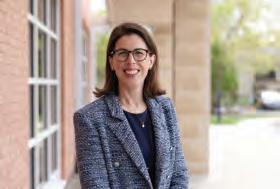
As I walk through our halls this fall, I feel a profound sense of momentum. Our classrooms are alive with challenge and curiosity, the kind that fuels deep engagement and joyful learning. That spirit defines Wellington, and it’s what inspires me most as we look to the future through A Bold Leap: 2032, our new strategic plan.
A Bold Leap is about our shared purpose. It reaffirms Wellington as the best place to teach and learn: a community where educators feel empowered, students are seen and supported as individuals, and families are partners in shaping a vibrant learning experience. It reminds us that excellence is not static. It’s a living culture of challenge that stretches us to think, connect, and grow together.
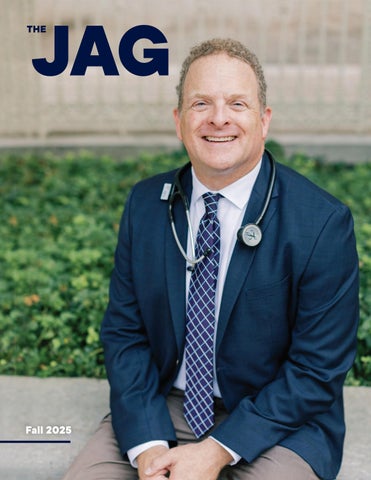
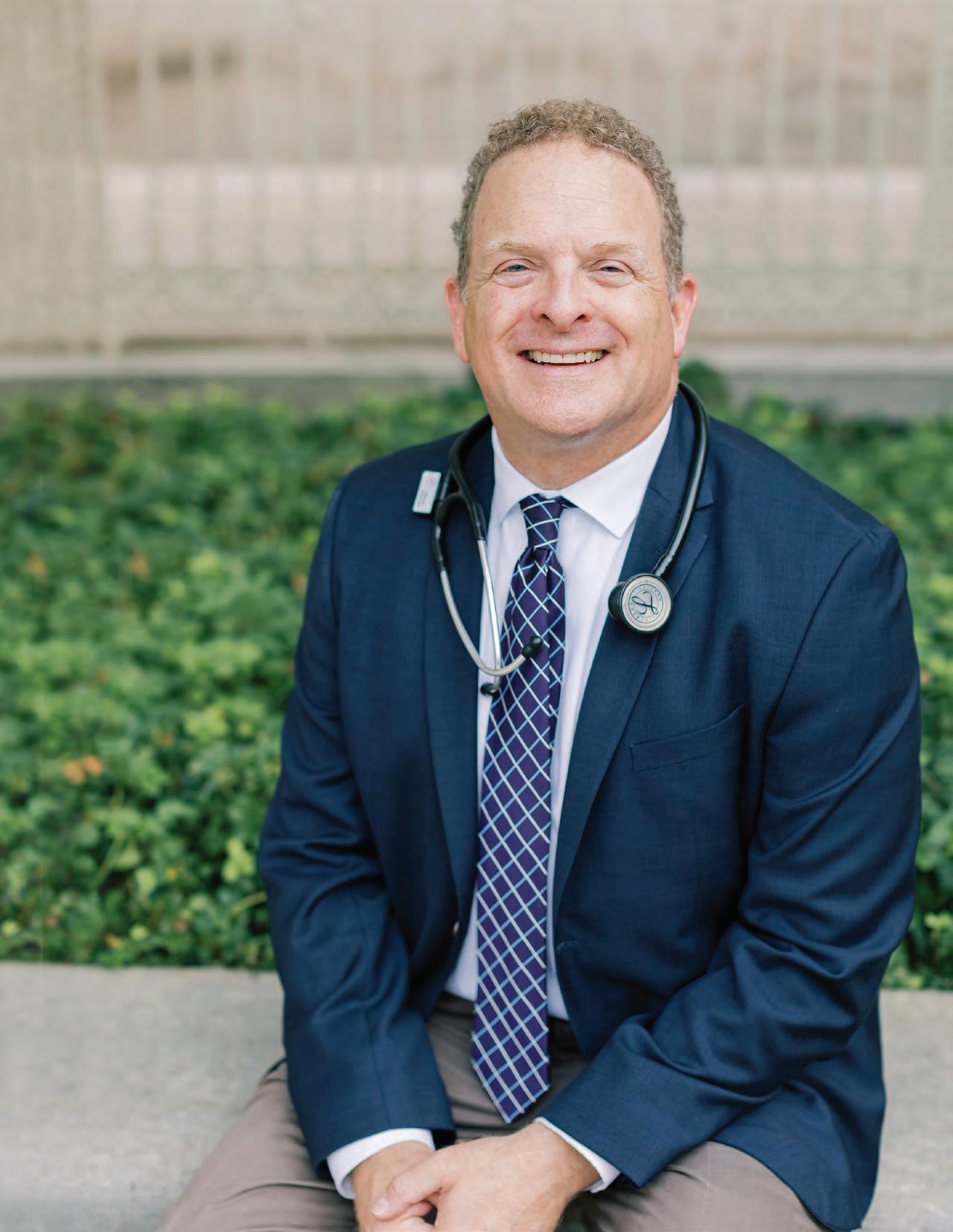
I was reminded of that culture when I met Dr. Jon Koff ’89 at Yale earlier this year. A member of Wellington’s first graduating class, Jon has redefined what’s possible in the field of medicine, helping extend the lives of people with cystic fibrosis through groundbreaking research and compassionate
“A Bold Leap is about our shared purpose. It reaffirms Wellington as the best place to teach and learn: a community where educators feel empowered, students are seen and supported as individuals, and families are partners in shaping a vibrant learning experience.”
THE JAG is published by Wellington for all members of its community. Please send any comments to Jessica Young at communications@ wellington.org.
EDITOR:
Jessica Young
CONTRIBUTORS:
J.J. Bain ’06
Kim Catley
Jacob Ely
Erica Foster P ’32
Scott Langford P ’36
Alyson Lee
Amanda Pierce P ’40
Jessica Young
care. What struck me most was his humility, his intellect, and his clear sense that Wellington taught him to explore, take risks, and keep learning. His story captures the essence of who we are and what we aim to nurture in every student: curiosity, courage, and care for others.
This issue of The Jag celebrates that same spirit across our school. You will find excellence in the classrooms where mathematical reasoning builds confidence, in the professional learning that strengthens great teaching, and in the joyful collaboration that defines our performing arts and athletics. Each story reflects Wellington’s belief that when students are engaged, challenged, and supported, they discover what is possible.
As you read, I hope you see the thread of excellence that connects our past to our future. Together, we are continuing to build a school where substance matters, and engagement is our North Star.
Thank you for all you do for Wellington, and… Go, Jags!
Eliza McLaren Head of School
COPY EDITORS:
J.J. Bain ’06
Kim Catley
Christine Conkle
Melanie Eggleton
Amanda Pierce P ’40
Brenda Porter P ’12 ’17
PHOTO CREDITS:
Ben Anderson P ’28
Benjamin Derkin
Nick Fancher
Grace Flynn
Cora Jane Photography
Pete Kaser ’96 P ’27 ’29
Amanda Pierce P ’40
DESIGN:
Bluewave Creative
ELIZA MCLAREN

The ability to try different things at Wellington has stayed with me. It is why I’ve never stopped exploring in my career.”
DR.

TESSA GRIFFING ’34


DR. JON KOFF ’89:
Redefining What’s Possible
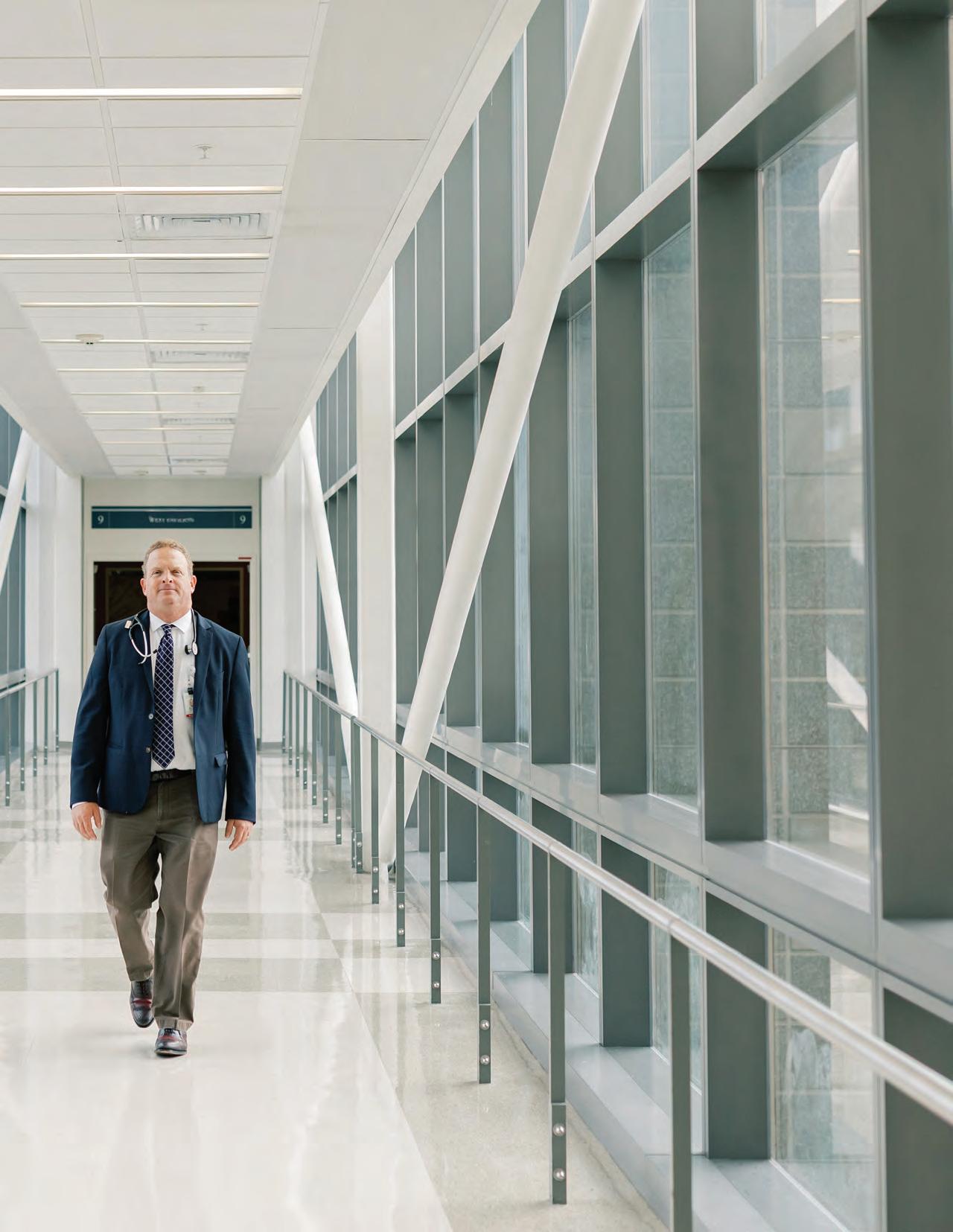
For Dr. Jon Koff ’89, every breakthrough begins with curiosity. The mindset he developed at Wellington now drives his work at Yale, where he’s advancing care and hope for patients around the world.
A Career With Impact
Koff has a favorite line when meeting new patients. “Yes,” he tells them with a grin, “Dr. Koff treats coughs.” The coincidence is too perfect to ignore, and the joke never fails to break the ice. But behind the humor lies a career of remarkable seriousness.
As a physician-scientist at Yale University, Koff has helped redefine what is possible for people living with cystic fibrosis (CF). The chronic condition affects the cells that produce mucus, sweat, and digestive fluids, causing damage to the lungs and other organs. When he began training, the median life expectancy for CF patients was in the mid-20s. Today, thanks to advances in care that Koff helped shape, survival has stretched into the late 50s and early 60s. Patients once told they would not live to adulthood are now raising families, pursuing careers, and envisioning long futures.
“To witness and contribute to the transformation in cystic fibrosis survival has been extraordinary,” said Koff. “When I began, families were preparing for a much shorter future. Now I see patients planning weddings, raising children, and living full adult lives.”
From Humanities to Medicine
Koff did not set out to become a doctor. At Wellington, he gravitated toward the humanities—history, languages, and politics. He majored in world politics at Hamilton College, with a minor in Spanish, and wrote his thesis on the globalization of Spain’s wine industry after studying abroad in Madrid. While traveling in Europe after graduation, Koff realized he wanted to generate new knowledge rather than interpret the past. That shift in perspective inspired him to pursue research abroad, leading to a year at Aarhus University Hospital in Denmark. There, he conducted microsurgery on hairless mice to study wound repair, co-authored his first scientific paper, and discovered a sense of ownership in the work that would set him on the path to medicine.
Soon after returning to the U.S., he enrolled in Case Western Reserve University’s School of Medicine, followed by training at Brown University and the University of California, San Francisco. He was already showing an interest in pulmonology and lung disease when the specialty turned personal as he watched his grandfather struggle with advanced chronic obstructive pulmonary disease (COPD).
“I was very motivated to understand lung disease,” he said. “It gave me a sense of purpose that has stayed with me.”
Transforming CF Care
In 2011, Koff joined the faculty at Yale University, where he now serves as associate professor of medicine, director of the adult CF program, and associate director of fellowship research in pulmonary, critical care, and sleep medicine.

His trajectory has paralleled a revolution in CF care. While specialists previously focused largely on preparing patients for lung transplants, treatment has shifted toward therapies that preserve and even restore lung function. Koff has been at the forefront of this change, caring for patients in clinic, treating critically ill individuals in the ICU, and directing research that grows directly out of their needs.
“What happens at the bedside shapes the questions we ask in the lab,” he said. “And what we learn in the lab has the potential to change patient care.”
For Koff, progress is measured in faces and families. He has cared for patients who were once told they might not see adulthood and who are now thriving as parents and professionals. “That is what makes this work so meaningful,” he said.
Preparing for Tomorrow’s Health Challenges
Alongside his work in CF, Koff is the medical director of Yale’s Center for Phage Biology and Therapy, one of the first centers of its kind in the country. Phage therapy uses viruses that naturally infect and kill bacteria to treat infections that no longer respond to antibiotics.
“Phage therapy won’t replace antibiotics,” said Koff. “But it offers a critical new approach when antibiotics fail. It’s an opportunity to save lives now, while also preparing for a future when resistant infections could become one of the world’s greatest health challenges.”
That challenge is looming. By 2050, antimicrobial resistance is projected to cause more deaths than cancer, claiming hundreds of thousands of lives each year in the U.S. alone.
Koff and his colleagues are collaborating with international partners to bring phage therapy into practice. In Ecuador, officials are preparing to integrate phage therapy into aquaculture, agriculture, and medicine. In Australia, federally supported programs are testing its use in hospitals.
“The global nature of this work is both the challenge and the opportunity,” said Koff. “By learning across systems and borders, we have the chance to build a model that could change the way the world treats infectious diseases.”
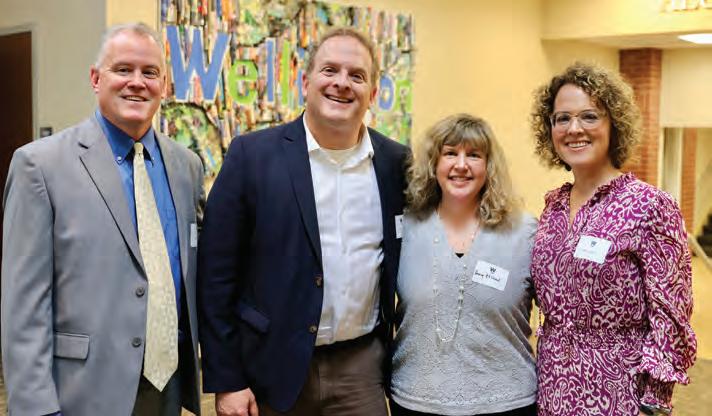
PICTURED
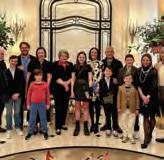
Dave Efland ’90, Koff, Amy Efland, and Ashley Koff ’91 at the 2025 Alumni Celebration
The Power of Mentorship
Across his career, mentorship has been both anchor and compass. “I had great mentors who helped me find my way,” said Koff. During his fellowship, one mentor encouraged him to turn his earliest wound repair studies in Denmark into a first-author manuscript, a project that confirmed he could chart a future in research. Others guided him in balancing lab work with clinical care and in navigating the demands of an academic career. “Now I have the privilege of doing the same for the next generation of physician-scientists.”
At Yale, he advises fellows and junior faculty as they develop their research and careers and helps students and young alumni see what’s possible for their own futures. Through Wellington’s JagsConnect network, he also gives back to his alma mater by connecting with students and alumni who are exploring careers in medicine. In 2025, he was honored with Wellington’s Distinguished Alumni Award for his professional impact and continued commitment to the school community.
“Mentorship is about helping people see what’s possible,” he said. “Someone did that for me, and I believe it’s my responsibility to do it for others.”
Wellington’s First Class
For Koff, the foundation for his work in medicine was built at Wellington. As a member of the school’s first graduating class in 1989, he experienced a culture
“ The ability to
try different things at
Wellington has stayed with me. It is why I’ve never stopped exploring in my career.”
DR. JON KOFF ’89
where students were encouraged to try new things, even when the outcomes were uncertain.
“The experience gave me resilience and confidence,” he said. “I learned it was okay to take risks, and that lesson has carried me through every stage of my career.”
He remembers the teachers who shaped his voice, his thinking, and his global outlook. Kathy Pinson P ’89 ’93, who taught English and speech and later became head of the upper school, encouraged him to write for The Wellingtonian, the student newspaper. Chris Williamson P ’94 introduced him to Vietnam-era journalism, sparking an early appreciation for reporting. In European history, Sam Stewart P ’99 ’05 challenged students with the strategy game Diplomacy, pushing them to think critically and negotiate. And Spanish teacher Rose Marie Mierzejewski prepared him for study abroad in Madrid and the research that informed his world politics thesis.
“The ability to try different things at Wellington has stayed with me,” he said. “It’s why I’ve never stopped exploring in my career.”
A Life of Purpose
Koff is married to Dr. Camille Brown, a pediatrician who directs Yale’s Pediatric Refugee Program. Their daughter,
Juliet, is a high school senior and ballet dancer considering a future in physical or occupational therapy. Their son, Austin, is a college junior majoring in biology and preparing for a semester in Tanzania. The family shares a love of travel, from sabbatical hikes in Australia to a bike trip through Croatia, and Koff admits with a smile that he came home from Melbourne “a full-on espresso addict.”
From hand-laying out articles in The Wellingtonian to leading global efforts against drug-resistant infections, Koff’s journey has been shaped by curiosity, resilience, and a commitment to impact.
“Medicine is complex, challenging, and deeply rewarding,” he said. “What motivates me every day is the opportunity to improve the lives of patients and to support the colleagues and students who will carry this work forward.”
It is a fitting story for Wellington’s first graduating class: the doctor with the perfect name whose work is shaping the future of medicine, one discovery— and one patient—at a time.
0
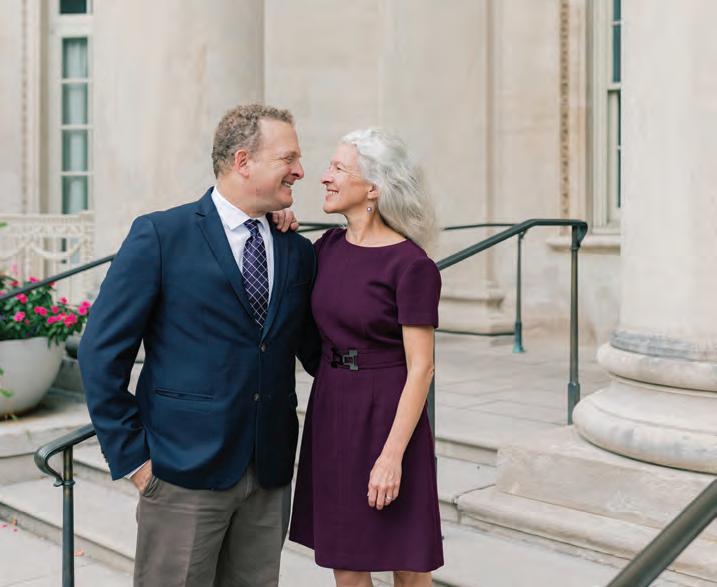
PICTURED
Koff and his wife, Dr. Camille Brown

ELIOT SPEAKMAN-ELCHERT ʼ31

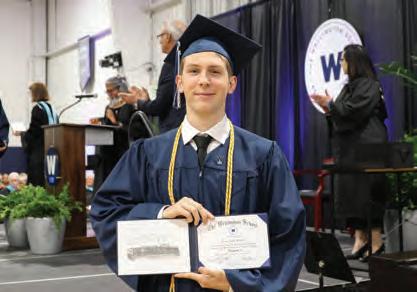
PICTURED Isaac Brady ’25
Jaguars’ Curiosity Fuels Their Purpose
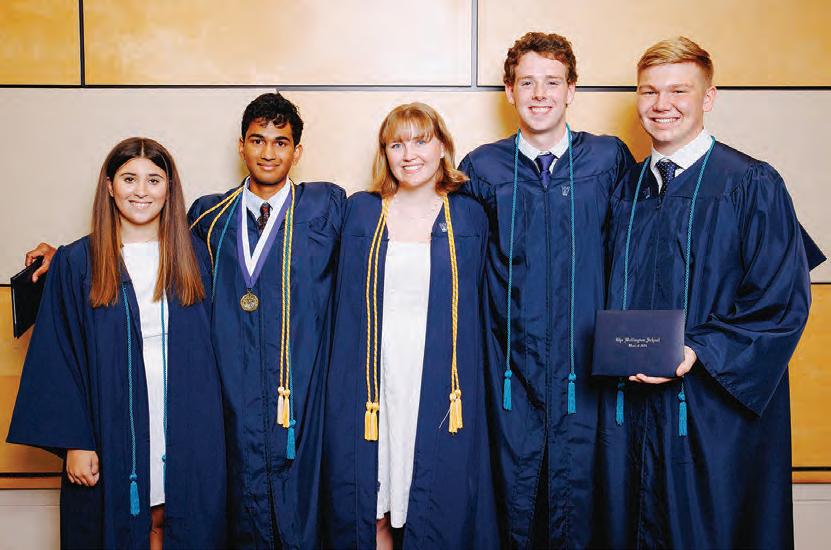
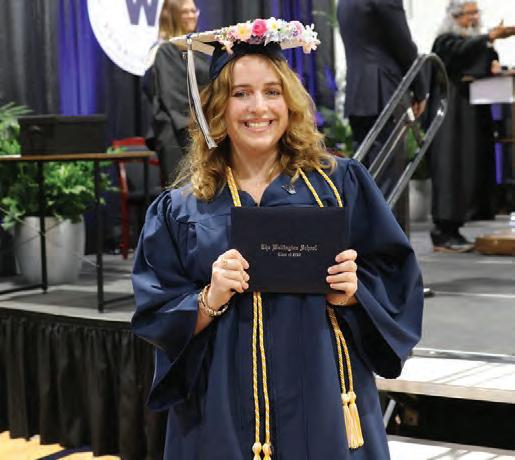
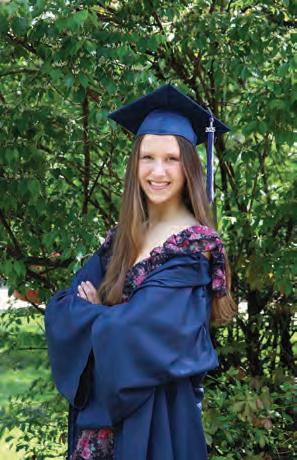
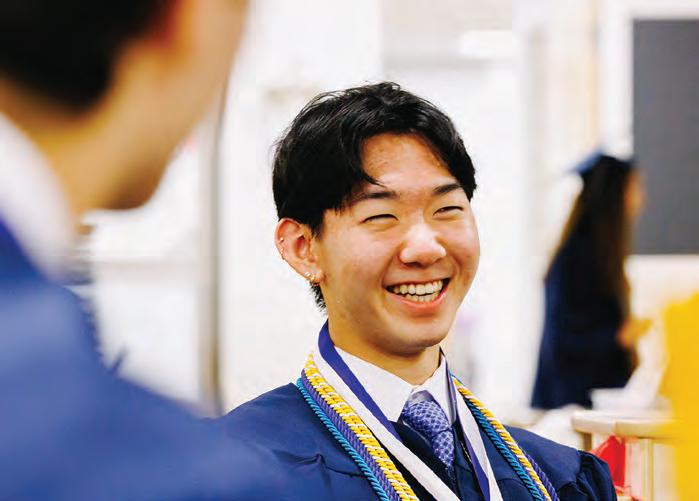
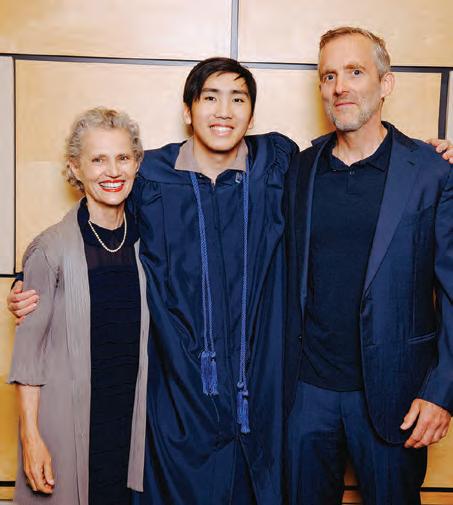
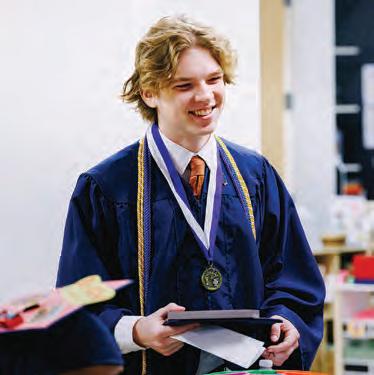
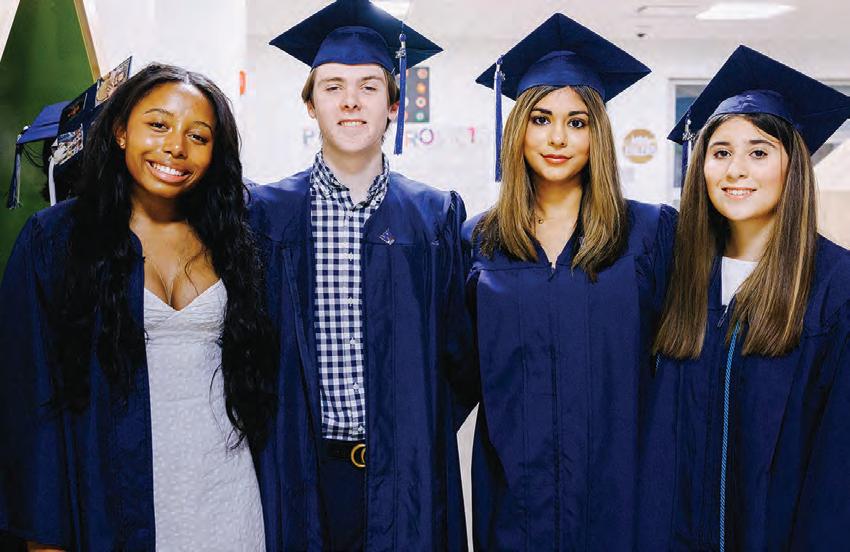
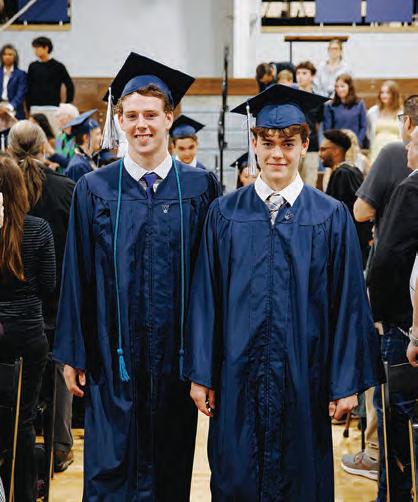
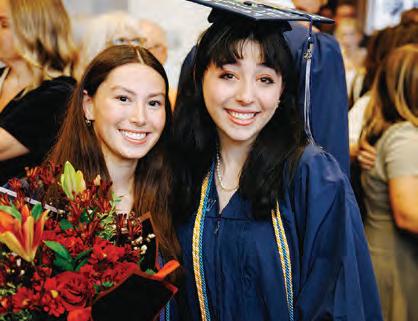
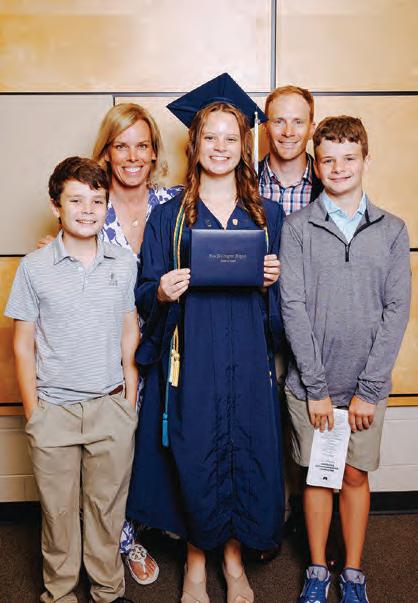
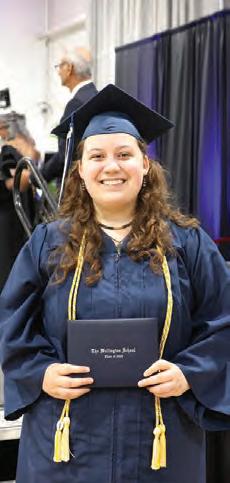
Wellington’s 37th commencement, held on Friday, May 30, was a spirited and inspiring celebration of the Class of 2025’s energy, creativity, and thoughtfulness. Throughout their upper school years, these Jaguars grew into leaders who balanced intellect with kindness, curiosity with responsibility, and individuality with empathy.
The Class of 2025 is ready to take on new challenges. Among them are future electrical engineers, attorneys, writers, and social scientists. Wellington seniors were accepted to and matriculated at a wide array of schools, from Denison University to Vassar College to New York University, prepared to bring their passions and purpose to the next stage of their journeys.
The graduation ceremony, held indoors in Gard Gym, followed beloved Wellington traditions. Seniors processed through the lower school as staff and faculty lined the hallways to cheer them on. Entering the gym, the graduates formed a tunnel to welcome the adults who guided and mentored them along the way.
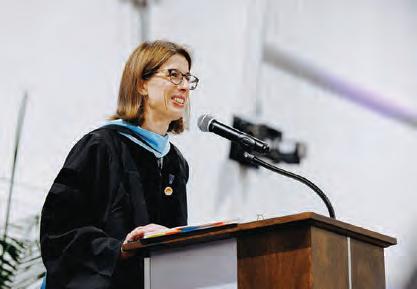
Eliza McLaren, delivering her first commencement address as head of school, encouraged students to set intentions for this new beginning. Quoting Eleanor Roosevelt, she noted that the goal of education is not just the acquisition of facts but “to give children a desire to learn and to teach them how to use their minds.” She reminded the Class of 2025 that Wellington has taught them how to think, not what to think, and to lead lives that uplift others. “The world does not need you to be perfect,” said Ms. McLaren. “It needs you to be principled and poised and to find your purpose as you contribute to the success and well-being of others.”
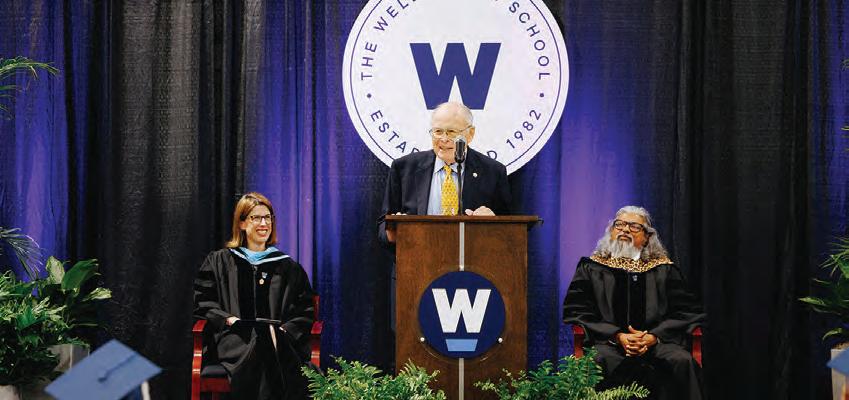
Guest speaker and Wellington founder, Ken Ackerman GP ’05 ’08, spoke on the power of continued engagement. Drawing from his own experiences and examples from institutions that thrived or faltered, Ackerman emphasized that a school’s future depends on the connection of its alumni. “You will stay involved only if you care about the future of Wellington,” he told the graduates. “The future of this school is really up to you.”
Approximately one-quarter of the Class of 2025 are Lifers, those students who have attended Wellington since prekindergarten, kindergarten, or 1st grade. To honor their long-standing commitment, these students were given a blue honor cord at the Senior Celebration Dinner earlier in the week to wear at commencement.
The program featured student voices and talents, from Music Award recipient Finnegan Wheeler ’25’s expressive trombone performance of J.J. Johnson’s “Lament” to Student Body President and elected class speaker Isaac Brady ’25’s remarks, delivered with humor and reflection. Brady shared how Wellington helped him find the self-belief to lead, even when he once doubted himself. “If you can’t value what makes you special, then how is anyone else supposed to see all you have to offer?” he asked, likening self-doubt to a curtain hiding an actor from the stage. He urged his

“The world does not need you to be perfect. It needs you to be principled and poised and to find your purpose as you contribute to the success and well-being of others.”
classmates to live boldly, declaring, “Don’t ask if you’re ready for the world. Ask yourself if the world is ready for you.”
Head of Upper School Rishi Raghunathan P ’27 ’30 passionately praised the Class of 2025 for the lessons they had taught him and the community. He shared three guiding principles: engagement, responsibility, and joy. “Engagement means showing up fully, not just physically but emotionally and intellectually. Responsibility means owning your impact. And joy,” he said, “is not a reward for getting life right but a survival skill.” He reminded graduates, “You already have everything you need, and I can’t wait to see what you do with it.”
The Class of 2025 leaves an enduring legacy of curiosity, leadership, and compassion. Their willingness to embrace challenges, uplift one another, and live with purpose has enriched the Wellington community. “We are always going to be your home, your Wellington,” said Ms. McLaren in her closing words. “Now it is your responsibility to bring your Wellington education to the world. We will be cheering you on with our deepest admiration, our enduring support, and our complete confidence.”
ELIZA MCLAREN, HEAD OF SCHOOL

1: Graciela Leahy ’25
2: Isabel Shihab ’25, Shivum Kalyanam ’25, Lilly Vance ’25, Cameron Petitt ’25, and Grant Spirko ’25
3: Jadyn Talbott-Boord ’25
4: Hannah Guffrey ’25
5: Koen Kwak ’25
6: Dorothée Imbert P ’25, Pierre Cruse ’25, and Andrew Cruse P ’25
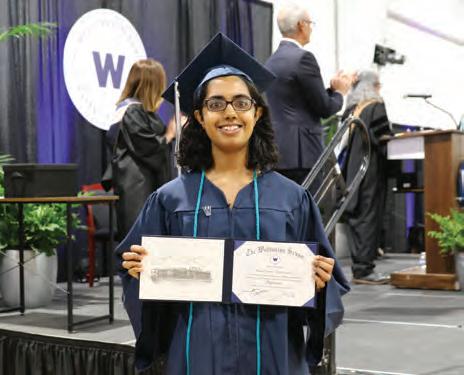


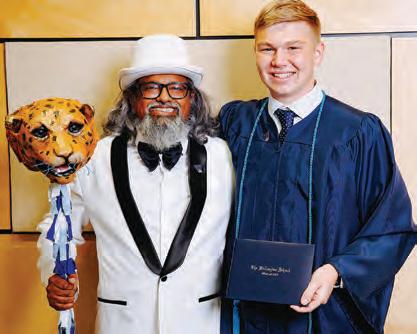
1: Maxwell Johnson ’25
2: Ishana Samaranayake ’25
3: Cameron Petitt ’25 and Michael Brello ’25
4: Nectarios Michailidis ’25 and Asher Sniderman ’25
5: Jonah Hunter ’25
6: Tyla DeBose ’25, Jon McCarthy ’25, Lauren Sodhi ’25, and Isabel Shihab ’25
7: Head of School Eliza McLaren
8: Head of Upper School Rishi Raghunathan P ’27 ’30 and Grant Spirko ’25
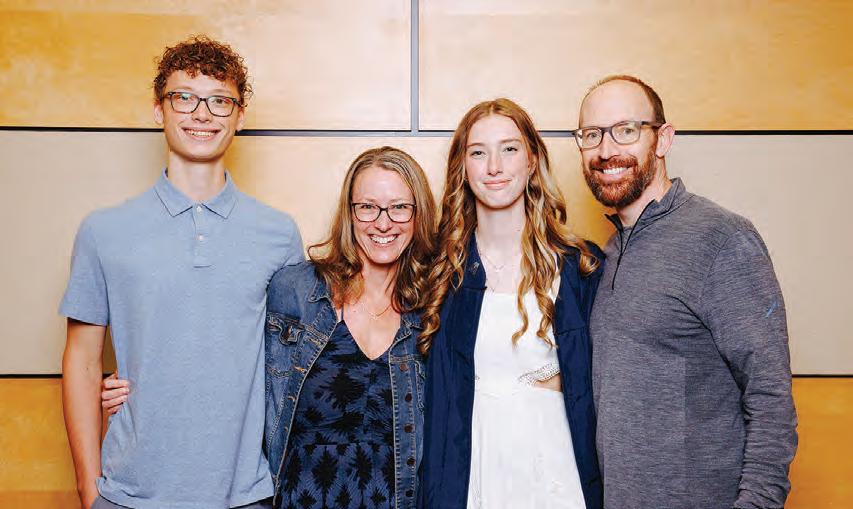
9: Teresa Tawes P ’25, Lia Tawes ’25, and Nathan Tawes P ’25
10: Lauren Sodhi ’25 and Hashrith Kesani ’25
11: Maxwell Boster ’25, Sabrina Bong ’25, and Katherine Armitage ’25
12: John Rosan P ’25 ’27, Stephen Rosan ’25, Kristin Rosan P ’25 ’27, and Erin Rosan ’27
13: Andrew Wissman ’25
14: Julian Cheslock P ’25 ’27 ’32, Milo Cieslak ’25, Norval Rasmussen GP ’25 ’27 ’32, Barbara Rasmussen GP ’25 ’27 ’32, Sara Rasmussen P ’25 ’27 ’32, and Sharon Cheslock GP ’25 ’27 ’32
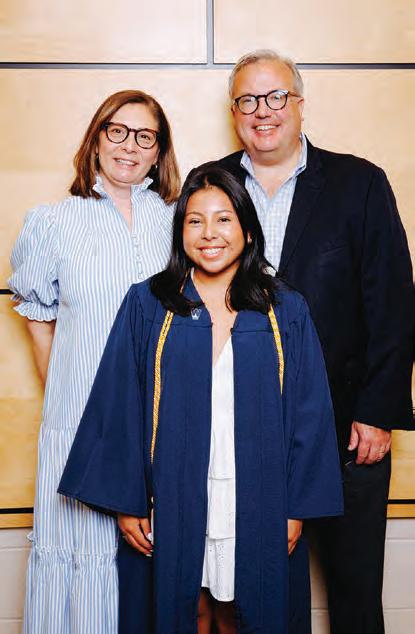
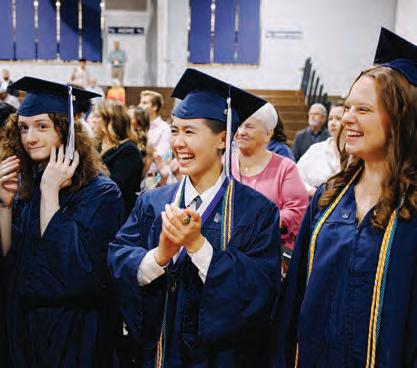
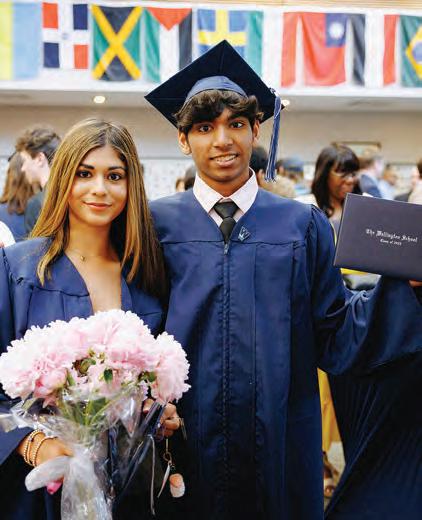
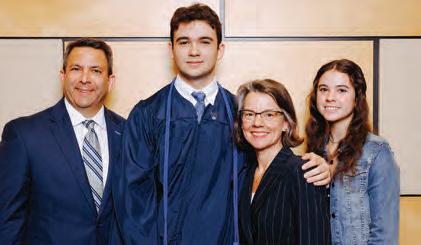
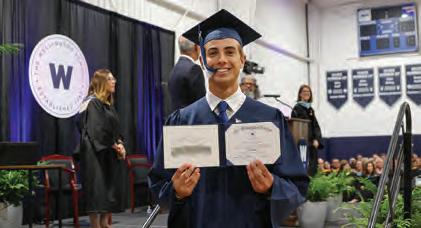
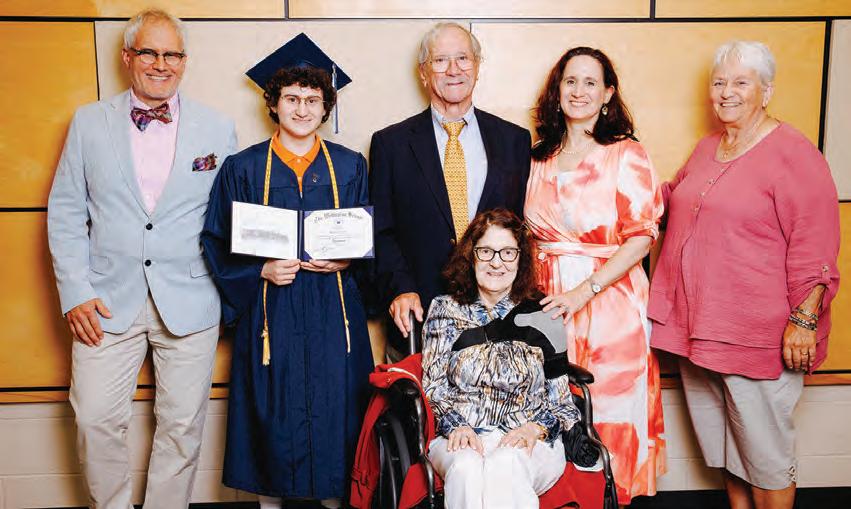
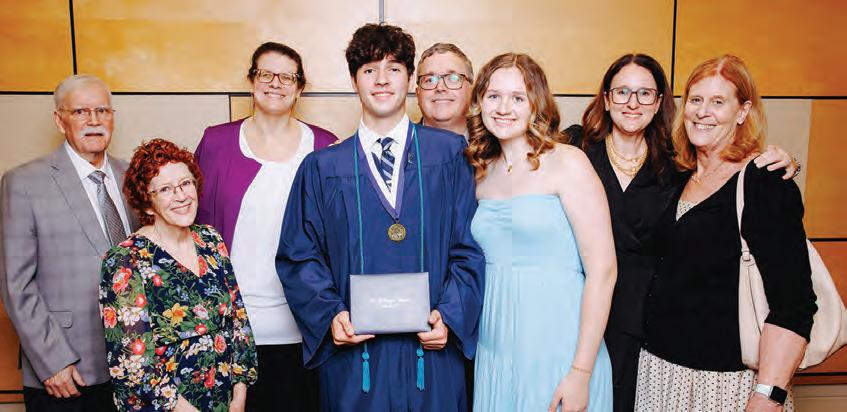
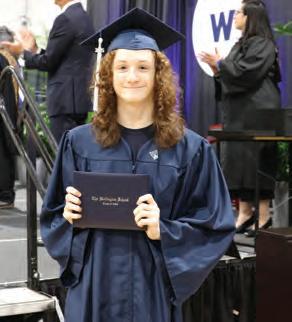

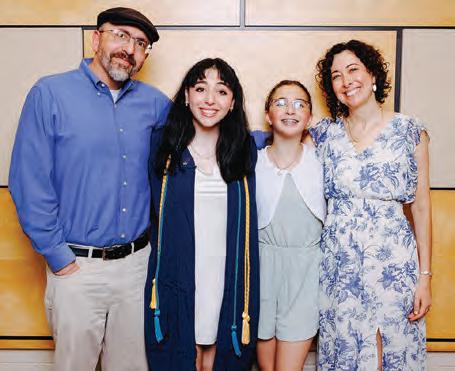
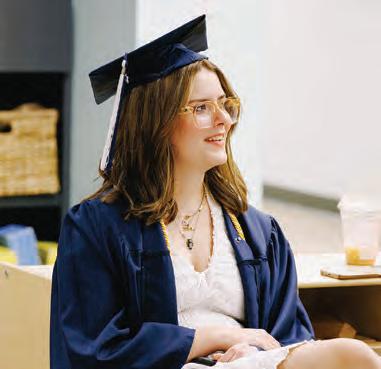
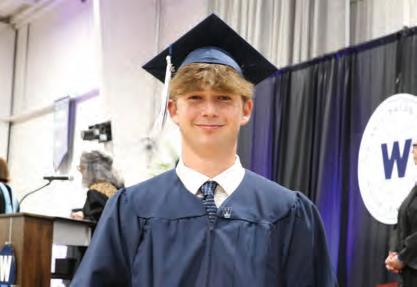
1: Tom Lanning GP ’25, Mary Lou Lanning GP ’25, Thea Allendorf, Charles Lanning ’25, Marty Lanning P ’25, Caroline Lanning, Cathy Lanning P ’25, and Linda Allendorf GP ’25
2: Ross Braswell ’25
3: Maxwell Boster ’25
4: Finnegan Wheeler ’25
5: Catherine Cartmell ’25 and Sigal Judd ’25
6: Jason Judd P ’25, Sigal Judd ’25, Mila Judd, and Amy Judd P ’25
7: Nila Meeker ’25
8: Ben Armitage ’30, Lisa Armitage P ’25 ’28 ’30, Katherine Armitage ’25, Steve Armitage P ’25 ’28 ’30, and Charlie Armitage ’28
9: Wellington Founder Ken Ackerman GP ’05 ’08 delivering his address
10: Noah Ehlers ’25
11: Katherine Kristel ’25
12: Malcolm Wade ’25
13: Kaikane Rozmiarek ’25 and Donovan Otcasek ’25
14: Kyra Hunter ’25
15: Zachary Ware ’22, Julia Ware P ’22 ’25, Elodie Ware ’25, and Jason Ware P ’22 ’25
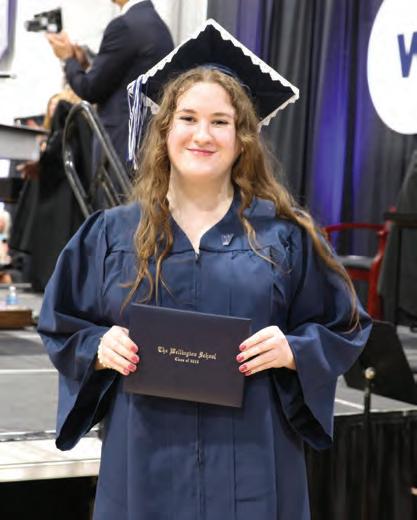
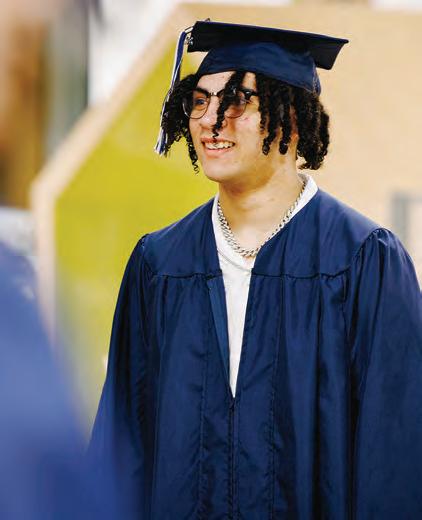
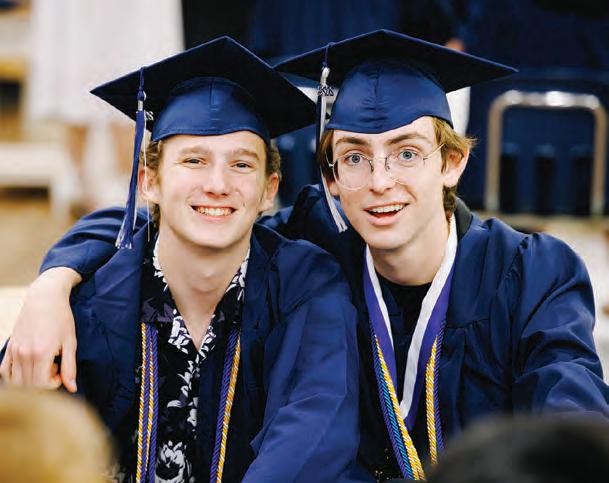
Not pictured: Grace Haney ’25
Wellington’s Roadmap to Tomorrow
A BOLD LEAP

A Strategic Plan Leading to The Wellington School’s 50th Year
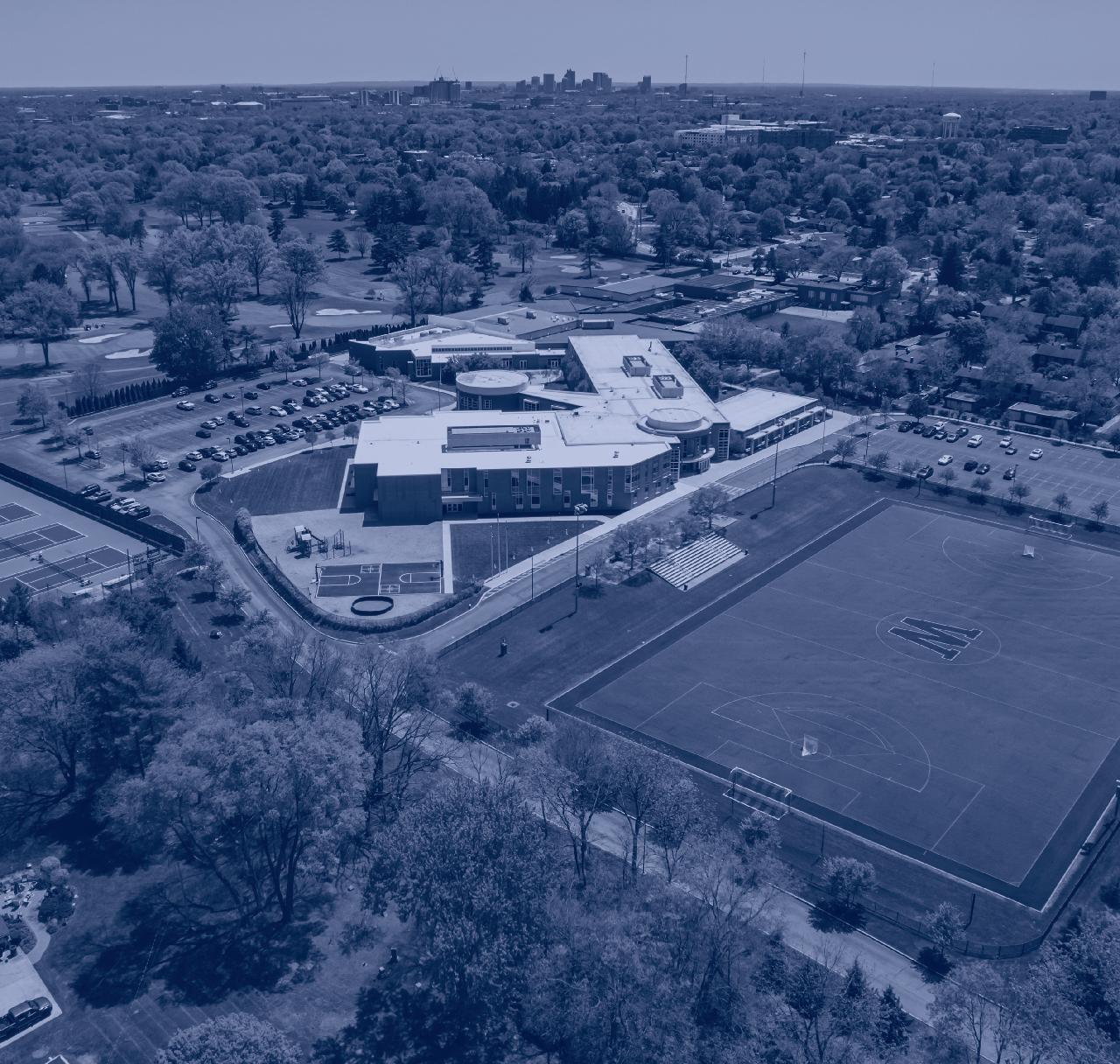
With the school’s 50th anniversary just seven years away, momentum is building. A new strategic plan, A Bold Leap: 2032, charts a daring course to ensure Wellington arrives at that milestone stronger, more innovative, and more ambitious than ever.
“The schools that thrive are the ones that never stop asking what’s next. What impressed me most at Wellington was the entrepreneurial mindset. It’s in the DNA.”
TIM FISH, FOUNDER OF TWO CHAIRS STUDIO AND FORMER CHIEF INNOVATION OFFICER AT THE NATIONAL ASSOCIATION OF INDEPENDENT SCHOOLS
Since our founding in 1982, the world has changed at an astounding pace. What has never changed is Wellington’s belief that education can—and should—be better. The founding families who created the school embraced connection, agility, and an entrepreneurial mindset, embedding those qualities into a community defined by belonging and joy. Their vision built a school that could move faster, think bigger, and teach differently. A Bold Leap: 2032 continues that tradition, channeling Wellington’s founding spirit into a shared roadmap for the future.
“This plan carries forward the courage of our founders and unites our community around what matters most,” said Head of School Eliza McLaren. “It ensures Wellington remains a place where students love to learn, teachers love to teach, and families feel a deep sense of belonging.”
The Process: Shaping the Future Together
The planning process formally began on October 11, 2024, during Wellington’s fall professional development day. Among those present was founder Ken Ackerman GP ’05 ’08, a reminder of
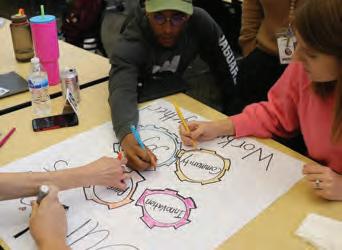
Wellington’s entrepreneurial roots and the legacy of bold ideas that continue to guide the community. Faculty and staff spent an energizing brainstorming session with consultant Tim Fish, founder of Two Chairs Studio and former chief innovation officer at the National Association of Independent Schools. With more than 25 years of experience guiding independent schools through strategy and innovation, Fish was quick to affirm what makes Wellington unique. He noted that the school has been on a path of growth and innovation since its founding, and this moment was an opportunity to shape the next stage together.
In the months that followed, Fish returned to campus regularly to meet with trustees, administrators, and the leadership team, and he spent time listening to faculty, staff, parents, alumni, students, and Columbus community partners. His approach, grounded in deep listening and relationship-building, gave him a chance to understand Wellington’s culture and values before helping to chart its future. “The schools that thrive,” said Fish, “are the ones that never stop asking what’s next. What impressed me most at Wellington was the entrepreneurial mindset. It’s in the DNA.”
0 0 0 0
AUGUST 2024JUNE 2025 Listening
OCTOBER 2024JUNE 2025 Planning MARCH 2025
0 0 0
0
PICTURED
Above: Faculty and staff brainstorming and providing ideas for A Bold Leap
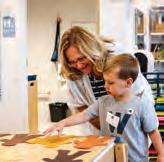
Below: Jenn Bailey, early childhood lead, with Sam
’40
The Board of Trustees and Wellington’s administrative team continued that collaborative spirit at a March 2025 retreat. Together, they examined emerging priorities, weighed new possibilities, and envisioned the initiatives that would shape Wellington’s path to its 50th anniversary in 2032.
After conversation and refinement, the Board of Trustees approved A Bold Leap: 2032 in May 2025. Board Chair Jim Croft P ’17 ’20 ’22 reflected on the significance of that moment: “Our responsibility is to steward Wellington not just for today’s families, but for the generations ahead. This plan makes that commitment real. It ensures that Wellington enters its sixth decade not with hesitation, but with clarity and momentum.”
Wellington’s strategic plan was officially launched in September 2025 as a signal that Wellington’s next chapter will be ambitious and forward-looking. And like any good roadmap, A Bold Leap: 2032 sets a clear destination while leaving room for creativity, innovation, and community choice in how the school will get there.
The Plan: People & Place, Program, Potential
PEOPLE & PLACE
At the heart of A Bold Leap: 2032 is a commitment to ensure Wellington remains the best place to teach and learn. The plan affirms that the school’s strength comes from its people: talented educators, curious students, and a community bound together by the school’s mission and values.
Over the next several years, Wellington will invest in its faculty by increasing teacher compensation, clarifying advancement pathways, and expanding professional growth opportunities that inspire and sustain great teaching. “Our faculty are the heart of Wellington,” said Ms. McLaren. “When we invest in them, we are directly investing in the lives of our students.”
This commitment is already taking shape through a $5 million gift from the Scantland family (see page 23), which will support professional development for faculty and staff. The school will also strengthen recruitment pipelines by seeking educators who reflect the diversity of the student body and who thrive in Wellington’s highly relational environment.
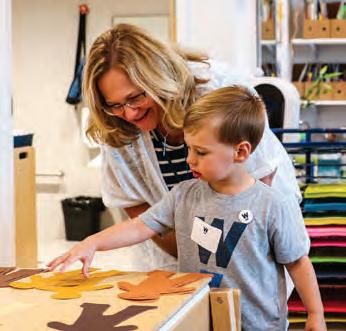
Place matters, too. A comprehensive campus master plan will ensure that learning environments at every grade level embody Wellington’s commitments to engagement, collaboration, and innovation. The opening of The Kinder Wing and the renovation of kindergarten classrooms are early examples of how space will evolve to support growth (see page 30).
PROGRAM
Wellington has always paired rigorous academics with innovation and joy in learning. The new plan calls for elevating that standard even higher, advancing curriculum and instruction while creating programs that inspire the highest levels of student engagement.
A centerpiece of this vision is the new Center for Student and Teacher Engagement, designed to fuel both student programming and professional learning. The Center will provide pathways for students to pursue small-group learning, differentiated instruction, and extended opportunities, while also equipping faculty with the resources and training to push their practice further.
The plan also looks outward. Expanded programs in engineering, entrepreneurship, and apprenticeships will ensure students graduate with hands-on skills that prepare them
Pammer
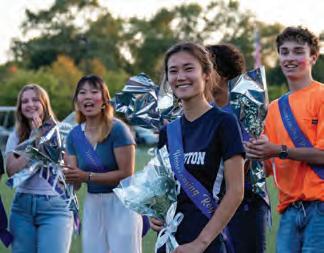
Right: Homecoming Court 2025
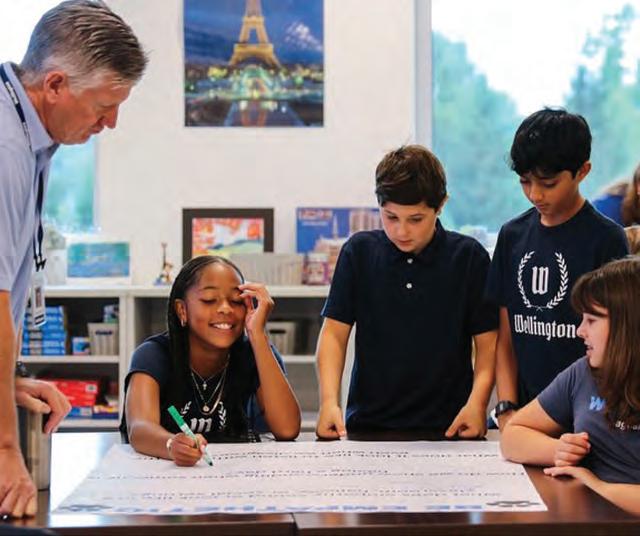
for tomorrow’s world. A thoughtful approach to executive function and well-being, paired with co-curricular programs in athletics, global travel, outdoor learning, and service, will ensure that every Wellington student finds their path to success.
POTENTIAL
The third pillar aims to secure Wellington’s future and sustain our reputation for excellence. A Bold Leap: 2032 outlines a strategy to strengthen the school’s financial foundation through both enrollment growth and philanthropy.
The plan calls for increasing enrollment in the middle and upper schools by 60 to 80 students over the next decade, while expanding tuition assistance to ensure access and maintaining the low teacher-to-student ratio that underpins Wellington’s deep relationships.
A capital campaign and endowment growth will provide additional resources needed to support faculty, invest in facilities, and fund programs at the highest level. Equally important is building a culture of philanthropy that encourages long-term support for Wellington and engages with the school’s wider community. By cultivating alumni engagement and raising Wellington’s annual giving benchmark above $1 million, the plan seeks to translate pride in Wellington into meaningful investments in future generations.
The Road to 2032
A Bold Leap: 2032 sets Wellington’s course with clarity and ambition. By investing in people and place, elevating programs, and striving to reach the school’s full potential, the plan promises Wellington will reach its 50th anniversary with strength and momentum.
What Excites Our Educators
Lindsey Smith P ’33 CHIEF OPERATING OFFICER
“The campus master plan is about using our resources wisely and preparing for growth. By planning with collaboration, discovery, and community at the forefront, we ensure our facilities reflect our values and strengthen our future.”
Shelley Brown P ’32 ’33 ’38
ASSISTANT HEAD OF SCHOOL FOR ACADEMICS AND HEAD OF EARLY CHILDHOOD AND LOWER SCHOOL
“The spaces we create shape how children see themselves as learners. When classrooms and common areas invite curiosity and collaboration, students feel comfortable taking risks, asking questions, and working together. What excites me most is the chance to align our spaces with the kind of teaching and learning we believe in.”
Christie Johnson
MIDDLE SCHOOL LANGUAGE ARTS
“Professional growth opportunities expose teachers to creative instructional practices and diverse literature, which in turn engage students and enrich their learning.”
Allison Watts
LOWER SCHOOL LEAD
“I love Wellington because I can bring my whole self into the classroom. With more opportunities for professional growth, I’m excited to keep learning about neurodivergence and the latest neuroscience, so I can support every student even more effectively.”
What Excites Our Students
From supportive teachers to unique opportunities, students share what makes them feel known and valued at Wellington, a core priority of the strategic plan.
Collins Fetters ’35
“Spelling is hard for me. I couldn’t spell ‘squash,’ but Mrs. Watts helped me with picture cards and I got it. That’s why I love Wellington my teachers always help me.”
Saem Kim ’32
“One teacher that made a big difference to me was Mrs. Trubilowicz. In 5th grade, she was my role model and support.”
Cora Spurgeon ’29
“I love how much we get to try new things and experiences. Most schools don’t have those kinds of options, and it feels really special that we do.”
“While some strategic plans collect dust on a shelf, ours is a living document we will reference every day in our work.”
ELIZA MCLAREN, HEAD OF SCHOOL
Growth will fuel progress. By intentionally expanding enrollment, Wellington will generate the resources to raise teacher compensation and secure the school’s place as a soughtafter employer for the very best educators. Careful growth will also expand tuition assistance, opening Wellington’s doors to more highachieving students and enriching the culture of the school. And by transforming classrooms and spaces, Wellington can create a futurefocused upper school, alleviate middle school overcrowding, and foster a flexible environment for learning and community building.
Ms. McLaren said it best: “What excites me most is that this work belongs to all of us. While some strategic plans collect dust on a shelf, ours is a living document we will reference every day in our work. Our destination is an even stronger Wellington, and this plan will get us there.”
Explore A Bold Leap: 2032 in detail

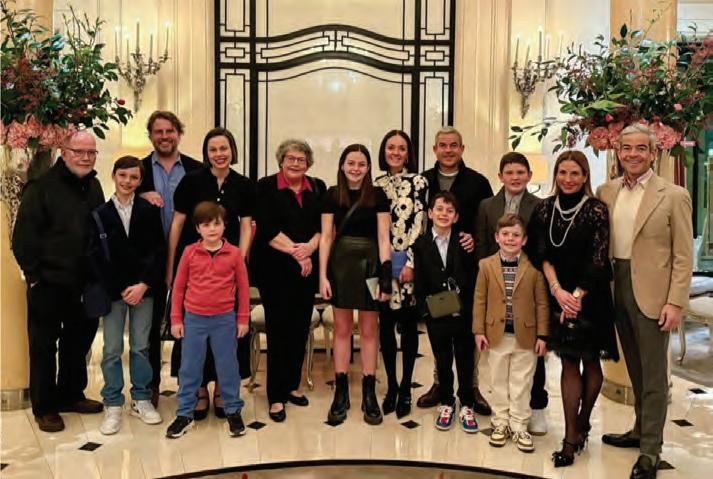
PICTURED
The Scantland family including adults (L to R) Alan Scantland GP ’30 ’30 ’32 ’34 ’35 ’37, Rob Littleton P ’32 ’37, Susan Littleton P ’32 ’37, Peg Scantland GP ’30 ’30 ’32 ’34 ’35 ’37, Michelle Scantland P ’30 ’34, Pete Scantland P ’30 ’34, Meara Scantland P ’30 ’35, and Matt Scantland P ’30 ’35
Growing Great Teaching: The Scantland Family’s Gift to Wellington
Wellington has announced a landmark $5 million gift from the Scantland family, the largest in the school’s 43-year history. The transformative investment establishes a permanent endowment dedicated to attracting, retaining, and empowering outstanding educators through competitive compensation and professional growth opportunities.
“Our family believes deeply in the power of amazing teachers, and it is an honor to support Wellington’s vision to lead with people as it redefines what great education can be,” said Matt Scantland P ’30 ’35, vice chair of the Wellington Board of Trustees.
“It has been a priority of Wellington’s since its founding, and a priority of our
family’s philanthropy across a number of causes, to ensure that students from all socio-economic backgrounds can access high-quality education,” Matt continued. “This new endowment advances Wellington’s people-centric vision by attracting and retaining passionate, game-changing educators, launching innovative academic programs that improve student outcomes, and supporting teachers’ professional growth and career goals.”
Head of School Eliza McLaren expressed gratitude for the family’s vision. “Wellington is profoundly grateful for the Scantlands’ affirmation of our mission and monumental support. They understand that outstanding education begins with outstanding teachers, and
their commitment ensures Wellington will be able to support educators in meaningful ways for generations to come.”
Peg Scantland GP ’30 ’30 ’32 ’34 ’35 ’37, Matt’s mother and an expert in literacy instruction, has long partnered with Wellington to strengthen faculty training in the science of reading. “Wellington’s commitment to faculty excellence energizes us and gives us great confidence that the school will remain an extraordinary place where both students and faculty thrive,” said Peg. “We are inspired by the warmth, compassion, and generosity of this community and its commitment to future-focused, people-first academic excellence.”
THE STANDARD OF EXCELLENCE:
Bumi Hidaka ’04 Joins Wellington’s Athletic Hall of Fame
Long before his name was etched into Wellington’s Athletic Hall of Fame, classmates already knew there was something different about Bumi Hidaka ’04.
During preseason basketball conditioning, when trash cans were stationed around the gym for
exhausted players and most feet slowed to a shuffle, Hidaka kept moving, sharp, quick, relentless. Teammate and friend Adam Claytor ’04 remembers thinking, “I’m a pretty fit person, but this guy is a machine.”
That ability to push past limits, to treat effort as the standard, defined Hidaka’s years at Wellington. A threesport athlete in soccer, basketball, and lacrosse, he earned 11 varsity letters and captained all three
programs. His teams reached the district finals in soccer, the state Final Four in basketball, and the State Championship game in lacrosse. He was a two-time Wellington Athlete of the Year and an All-Ohio honoree in lacrosse.
Claytor, who presented him at the 2025 Alumni Celebration, called him a “renaissance man,” equal parts athlete, musician, scholar, and leader.
Hidaka never saw himself as the most technically skilled player. What he brought instead was energy and resolve. In basketball, where he was often one of the shorter players on the floor, he leaned on quickness and defensive intensity. “It was fun surprising some opponents who may have underestimated my height,” he said, “and making it difficult for them to get rebounds or score points.” In soccer and lacrosse, he contributed through conditioning, focus, and reliable play.
His approach earned the trust of coaches and teammates. Older players modeled toughness and accountability, and the example stuck. “As a freshman, I was intimidated at first,” said Hidaka. “But it set expectations for how to practice, how to perform in games, and how to keep getting better.”
Coaches across three programs reinforced those lessons. Soccer coach Susan Milby taught fearlessness against older, more physical players. Basketball coaches Brian McCants P ’03 ’06, Dave Herrick P ’20, and Tory Richardson
emphasized team defense. Lacrosse coach John Carmichael insisted on details that build accountability. Athletic trainer Dom Davis P ’14 ’19, with humor and honesty, helped him manage the grind of overlapping seasons. “They recognized my strengths, allowed me to grow, and taught leadership and integrity,” said Hidaka.
The Wellington community extended well beyond teammates and coaches. Parents drove carpools, organized meals, and opened their homes. Fans packed gyms and fields. “The entire journey felt like family outside of home,” he said.
Athletics became a form of selfexpression. A quiet and reserved student, Hidaka found confidence through sport. “It helped me break out of my shell, learn from others, and build my voice,” he said. Those lessons stayed with him, shaping how he approaches challenges in work and life.
Now, two decades later, after standing on stage to receive his Hall of Fame
induction, his advice for current Wellington student-athletes is simple: “Have fun. Time flies. Each season will go by fast. Take in the moment and atmosphere.”
His message also reached beyond the scoreboard. Teams, he said, offer a rare environment to learn about yourself, to compete in healthy ways, to communicate, and to solve problems together. He urges students to pursue balance, to explore academics and the arts, and to support the wider school community. Years of cello and piano lessons reinforced the same truth as conditioning runs: improvement comes through steady practice. “It takes patience, discipline, and consistent hard work to get better, in athletics, in the classroom, or in music.”
Hidaka cautions against constant comparison. Progress is personal. Focus on fundamentals, prepare well, and look for ways your strengths can help the group. He found his role through speed, defense, and effort. “Working hard was the one thing I could always contribute,” he said. “It helped earn trust from teammates and coaches.”
Hidaka’s induction recognizes more than scores or records. It honors a mindset of humility paired with effort, and discipline balanced with joy. As Claytor summed up at the ceremony, “He inspired us to reach his greatness.”
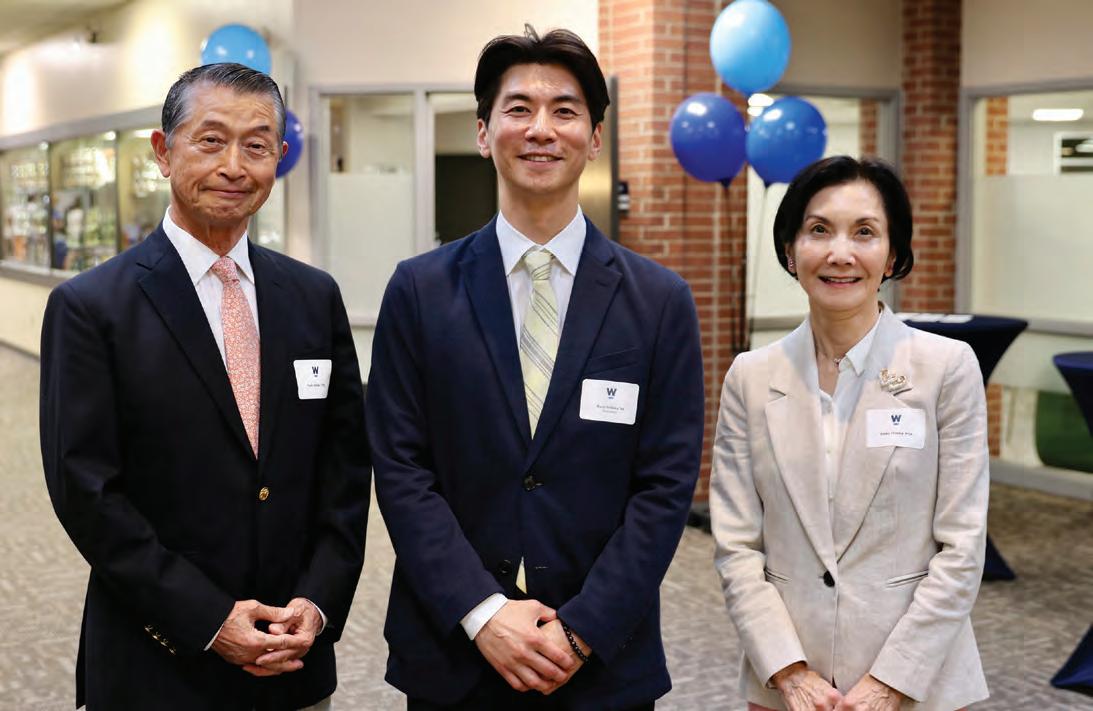
PICTURED
Opposite page: Yoshi Hidaka P ’04, Bumi Hidaka ’04, and Keiko Hidaka P ’04
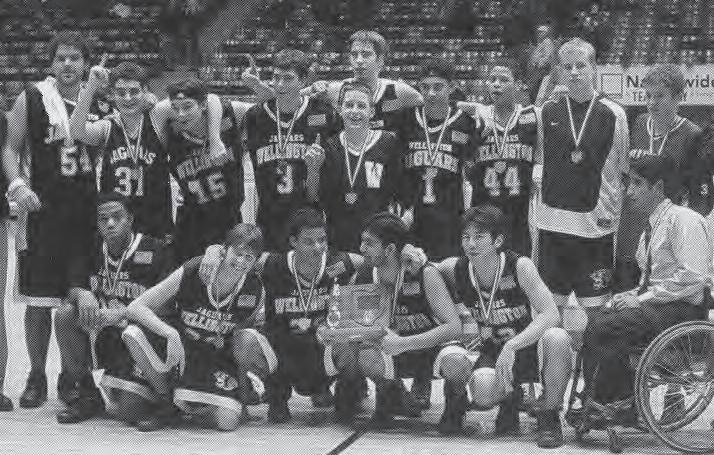
Left: Bumi Hidaka ’04 (front row, far right) with teammates after winning the 2003 regional championship
Foundations That Add Up: How Wellington Shapes Confident Math Learners
Early Childhood and Lower School
For many students, math is all about memorizing multiplication tables, formulas, and theorems. The Wellington curriculum takes a different approach, instead focusing on understanding number relationships and developing problemsolving strategies. It also makes math more fun.
By Erica Foster P ’32
EARLY CHILDHOOD AND LOWER SCHOOL MATH SPECIALIST
In my teacher-training, I saw how math was taught in countries like Singapore and Japan, and I began to experiment with ways to make it fun and fulfilling for my students. I now understand that math is deeply grounded in meaning, pattern, and relationships and I am passionate about developing young mathematicians who reason deeply about numbers.
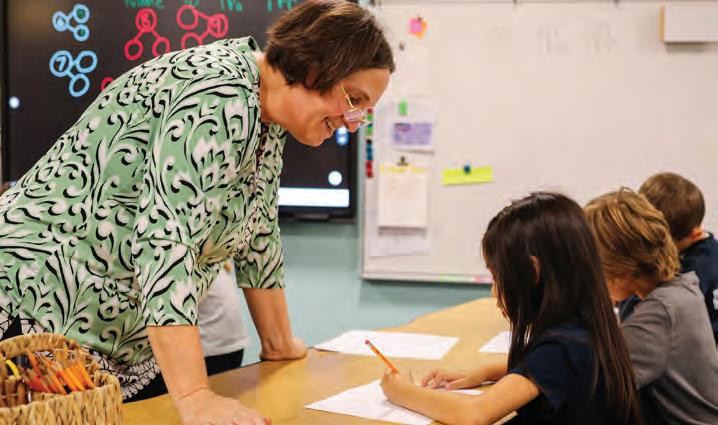
In early childhood, students start with becoming experts at counting within 10, 20, 30, and 100. While that may sound simple, counting can be approched as a rich intellectual activity as they develop skills such as cardinality, conservation, hierarchical inclusion, and subitizing. Counting is also how students first access addition and subtraction.
The main work of grades 1 through 3 is additive reasoning, where students make jumps greater than 1 when adding or subtracting. For instance, 1st graders might use known doubles like 4+4=8 to solve a related problem, 4+5=9.
This builds up to a 3rd grade addition strategy, Give and Take, in which students solve a problem like 676+767 by moving 24 to create the much easier problem 700+743.
Developing strong additive reasoning supports them in their next step— multiplicative reasoning—which is the work of grades 3 through 6. Instead of memorizing math facts or skip counting, we give students multiplication strategies that empower them to multiply and divide within 100 and beyond. For example, if asked to multiply
24 x 98, they could use (24x100) - (24 x 2) = 2400-48 = 2352.
My goal for our students is that they arrive in middle school with a growth mindset towards math, strong critical thinking and reasoning habits, and a solid knowledge base that allows them to tackle more complex tasks.
Middle School
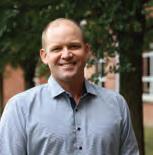
By Scott Langford P ’36
MIDDLE SCHOOL MATH
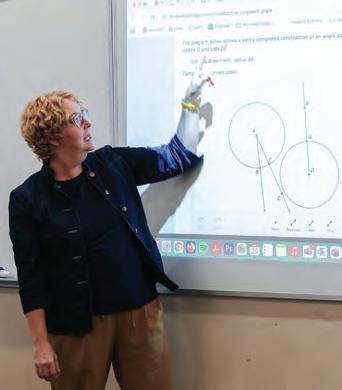
In middle school those individual skills start to mesh together to make a sequence, so students might pull from three or four or five skillsets for one problem. That level of problemsolving requires higher-order thinking, as opposed to learning a formula and repeating it.
Projects are great for getting students to organize their reasoning and apply what they’ve learned to the world around them. We have projects where we run simulations of the financial markets, and we’ve used cryptocurrencies so they can track the numbers and changes. In geometry, they might plan a city block using parallel and perpendicular lines and the algebra behind them.
We want students to have numeracy skills, to view math as a language that crosses global borders and will help them adapt to whatever the world looks like in 10, 15, 20 years.
Upper School
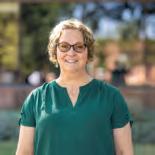
By Alyson Lee
SCHOOL
UPPER
MATH
AND MATH
DEPARTMENT
CURRICULAR LEAD
In upper school, students are learning to solve problems in steps, apply what they’ve already learned to new situations, and support their reasoning. They encounter challenges of all kinds throughout their lives and building the neural pathways to tackle problems step by step and defend their thinking will be useful in everything they do. Math courses also build individual perseverance and grit as students work through ever more complex material.
In some classrooms, we use techniques adapted from the book “Building Thinking Classrooms in Mathematics” by Peter Liljedahl, which get students out of their chairs and working on whiteboards to solve problems collaboratively. Several of us also completed a projectbased learning training where we learned to create immersive projects that frame the learning and culminate in an authentic product.
This year, we are working to identify a unifying curriculum that we can use to build student skill and knowledge year over year. A priority of mine, as the curricular lead, is to ensure that whatever program we choose has data science and statistics components beginning in grades 5 and 6, with opportunities continuing through upper school. The data explosion of the last decade has created an overwhelming need for students to have foundational literacy in collecting, extracting, organizing, refining, and analyzing data.
By building a unified program that emphasizes both mathematical reasoning and data fluency, we are preparing Wellington students not just for college, but for meaningful futures in a world where making sense of data is essential.
Success Story: Alex Lott ’22
From an early age, Alex Lott ’22, showed an advanced aptitude for math. Wellington faculty encouraged his development by placing him in upper-level and honors math courses, supporting independent study, and connecting him with local math competitions.
Lott is now majoring in mathematics and computer science at Case Western Reserve University, where he was recently awarded the Lajos F. Takács Mathematics Prize. This fall, he’s also interning with NASA’s Glenn Research Center where he’s working on the fission surface power project.
“I was lucky to have teachers who taught me well, who nurtured my interests, who provided resources when I displayed further curiosity, and who accelerated my progress through the mathematics track,” said Lott.
With New Staff, Performing Arts Departments Find Their Collective Voice
Wellington’s
performing arts departments are full of new faces—and with their arrival comes a fresh wave of collaboration in the performing arts.
PICTURED
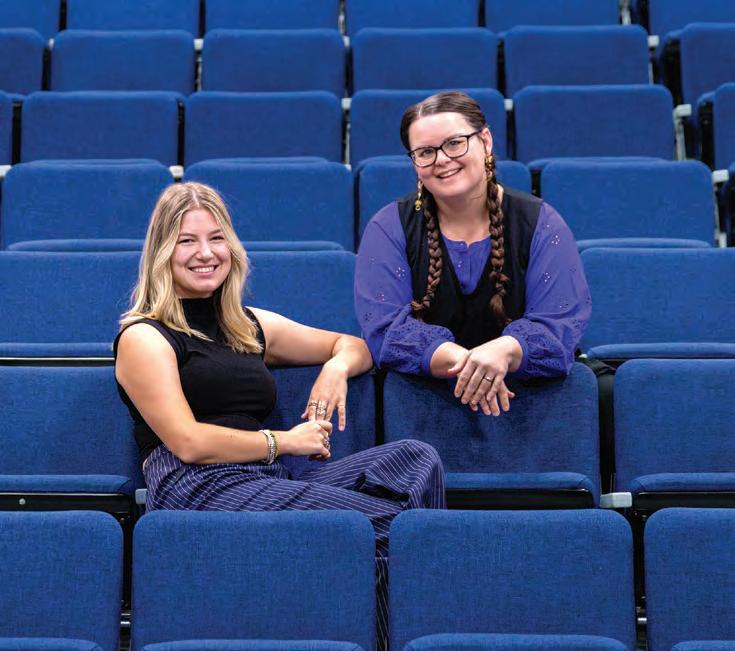
Dakota Elder-Thorn, Wellington’s new theatre director and director of performing arts, comes to the school after 10 years of working as a professional performer, director, and collaborator in Columbus. She also taught for Columbus Children’s Theatre and Available Light Theatre—in fact, she’s Wellington’s third theatre director to come from Available Light.
In addition to leading the theatre department, Elder-Thorn is also Wellington’s first director of performing arts—a new role that aims to foster deeper partnership between theatre, music, and choir.
“I fell in love with the possibilities of building a program that doesn’t just showcase talent, but cultivates a culture of collaboration,” she said. “It was exciting to me to create something that’s truly interdisciplinary versus having each of the arts in their own little silos.”
Aly Marchant and Dakota Elder-Thorn
PICTURED
Sayf Shihab ’29, Elder-Thorn, and Elle Reed ’29 in an Introduction to Theatre class
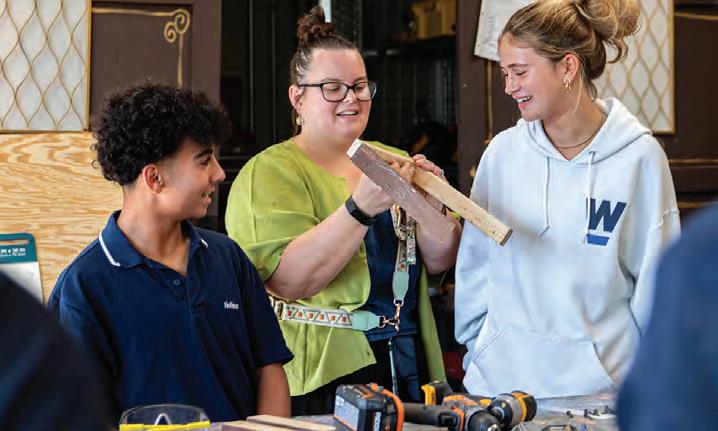
One of Elder-Thorn’s first steps in building connections is to develop a three-year strategic plan for the performing arts. Through this process, she hopes to make the arts more visible on campus, and more deeply embedded in the classroom.
“We’re moving beyond the idea of performing arts just being on the stage,” she said. “We want to create the idea that it’s not just about talent and performing. It’s about collaboration and storytelling and our productions can be a canvas for that.”
Building Confidence
Elder-Thorn is joined by Aly Marchant, the new assistant director of performing arts. Marchant came to Wellington last year as an early childhood and lower school learning guide. This year, she’s splitting her time between the two roles.
One of Marchant’s areas of focus will be expanding middle school theatre offerings to meet a growing demand. This year, she and Elder-Thorn are teaching a devised theatre Dive with a goal of soon offering a full elective. Building on activities around writing, acting, movement, music, and dance, each student is working towards
writing, performing, and producing a 20-minute piece of art based on a chosen theme.
“It doesn’t necessarily have to be a play,” said Marchant. “It could be a concert, it could be a dance piece.”
“Performing can equip students to give a speech or present in class. It builds confidence and an insane amount of empathy. It’s so important for the kids to have a creative outlet that helps them do those things.”
Finding Joy
On the music side, Middle/Upper School Vocal Music Director Allison Enchelmayer and Middle/Upper School Orchestra Director Dawna Rone recently joined Wellington’s long-time band director, James Becker P ’27 ’34.
During his 20-plus years at Wellington, Becker said he’s been able to develop meaningful relationships across the Wellington community, often rooted in a shared passion for music.
“My goal in teaching is to convey the joy that I get personally from playing my trumpet,” he said. “I try to emphasize the idea that anyone has the capacity
to be a successful musician if they are willing to work through challenges, learn from mistakes, and find value in being a part of an ensemble project.”
Becker hopes a more integrated performing arts department will also lead to more interdisciplinary offerings with the visual arts, English, and other departments—like the class he coteaches with Chris Robbins P ’17 ’22, upper school English, on the role of soundtracks in film—and allow more students to engage in the arts.
“Music ensembles and theatre give students an outlet to realize and utilize their voice and their talents, to grow as young people, and to contribute positively to our community,” he said. “They provide a wonderful space for risk-taking and developing their selfexpression.”
Process Over Performance
Wellington’s shift towards an integrated performing arts program will be front and center during Wellington’s two upper school theatre productions: “A Wrinkle in Time” this fall, and “You’re a Good Man, Charlie Brown” in the spring.
“When I joined Available Light, my ideas around performing were thrown on their head and it became much more about the process of building your performance, your character, your craft, than the final product,” said Elder-Thorn. “We’re going to have great productions, but it’s because we’re teaching the students that they don’t have to put so much pressure on those final performances. We’re focusing on the skills, they’re having a good time, they have confidence in themselves, and they work as a team—and that crosses all divisions of the performing arts.”
A JOYFUL START, A GRATEFUL CELEBRATION: Croft Kindergarten Wing is Open
When Wellington’s kindergartners arrived for the first day of the 202526 school year, they stepped into something brand new: the Croft Kindergarten Wing, also called The Kinder Wing.
The wing includes three light-filled classrooms, a shared common area, and a flexible space known as the Discovery Den. Thoughtfully designed with input from early childhood educators and the Learning Environments Committee, the spaces were created to reflect best practices in early childood education.
For Lori Feyko, kindergarten learning guide, the design has already proven transformative. “I love that the new Croft Kindergarten Wing has three bright
and spacious classrooms grouped together to foster collaboration and a strong sense of community among the kindergarten students and teachers.”
For kindergarten teacher Catie Swendal, the space’s thoughtful design is impactful. “The natural light, spacious rooms, and thoughtful details like the shared common area and mudroom make the space feel welcoming, functional, and built with young learners in mind.”
The project was made possible through the generosity of Board Chair Jim Croft P ’17 ’20 ’22, his wife Michelle Croft P ’17 ’20 ’22, and their children Matthew ’17, Mia ’20, and Macy ’22. Their $500,000 lead gift launched the renovation.
PICTURED
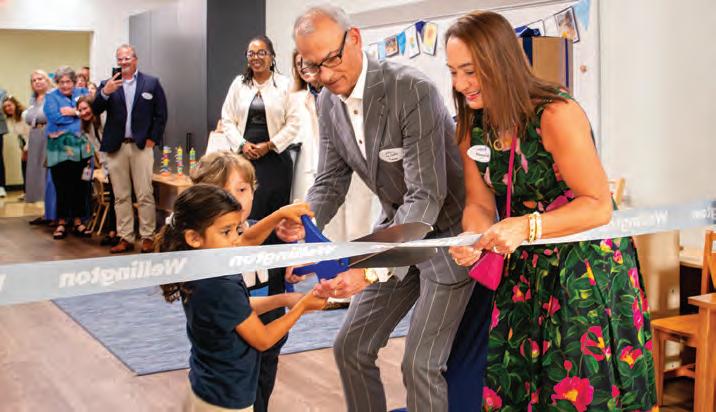
Jim and Michelle Croft P ’17 ’20 ’22 cutting the ribbon on The Kinder Wing
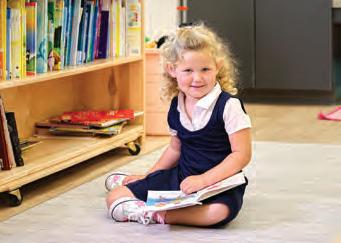
Below: Evie Rubin ’38 playing in the Discovery Den
“Wellington has always been a place that meets students where they are,” said Jim Croft. “We were thrilled to support this project and help create a space where young learners can develop a love of school from the very start.”
Head of School Eliza McLaren emphasized that The Kinder Wing represented more than a new facility. “This is a future-focused investment in our students and teachers, and it is the first step in a significant campus upgrade,” she said. “Jim and Michelle’s generosity allows us to bring our vision for early learning to life.”
The Croft Kindergarten Wing also advanced Wellington’s broader campus master plan, creating smoother transitions for Little Jags and laying the groundwork for future updates across the campus footprint.
On September 30, the Wellington community gathered for a ribboncutting ceremony to celebrate the Crofts’ impact and the joyful learning already underway inside.
INARI PATEL ’30
REDEFINED EXCELLENCE,
At Wellington, excellence is inherent in all that we do. It’s in the academic mastery that prepares students for college and beyond, and in the curiosity, collaboration, and creativity that carry them through life. It’s found in the earliest foundations for Little Jags to advanced seminars for seniors. At every step, Wellington students are encouraged to stretch their minds and discover what’s possible.
In the Outdoors
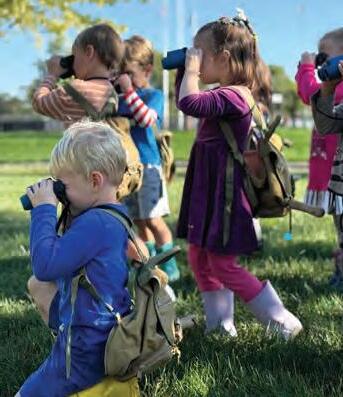
In the wake of the COVID-19 pandemic, Pete Kaser ’96 P ’27 ’29, early childhood Explorers, was looking for innovative learning experiences when he turned his attention outdoors.
On Friday mornings, three early childhood classes hop on the bus and take off for a local park. Little Jags head back for lunch while prekindergarten and kindergarten classes stay through the afternoon (with an outside nap for the 4-yearolds). The day is full of science lessons, making music and playing pretend, and building worlds and making up stories.
The Explorers program takes place closer to home, wandering the Wellington grounds. Kaser leads a 55-minute lesson—such as identifying seeds and trees—but is quick to change course if the group stumbles on an anthill or feather.
“We have to foster that curiosity,” said Kaser, “so that as they grow up, they still know it’s all right to ask questions and
trust that they can find the answers through investigation.”
On the Page
“I’m a long-time English teacher, but deep down, I always tried to teach the humanities,” said Mason Roulston P ’31 ’34, middle school humanities and writing support specialist. “They go hand-in-hand.”
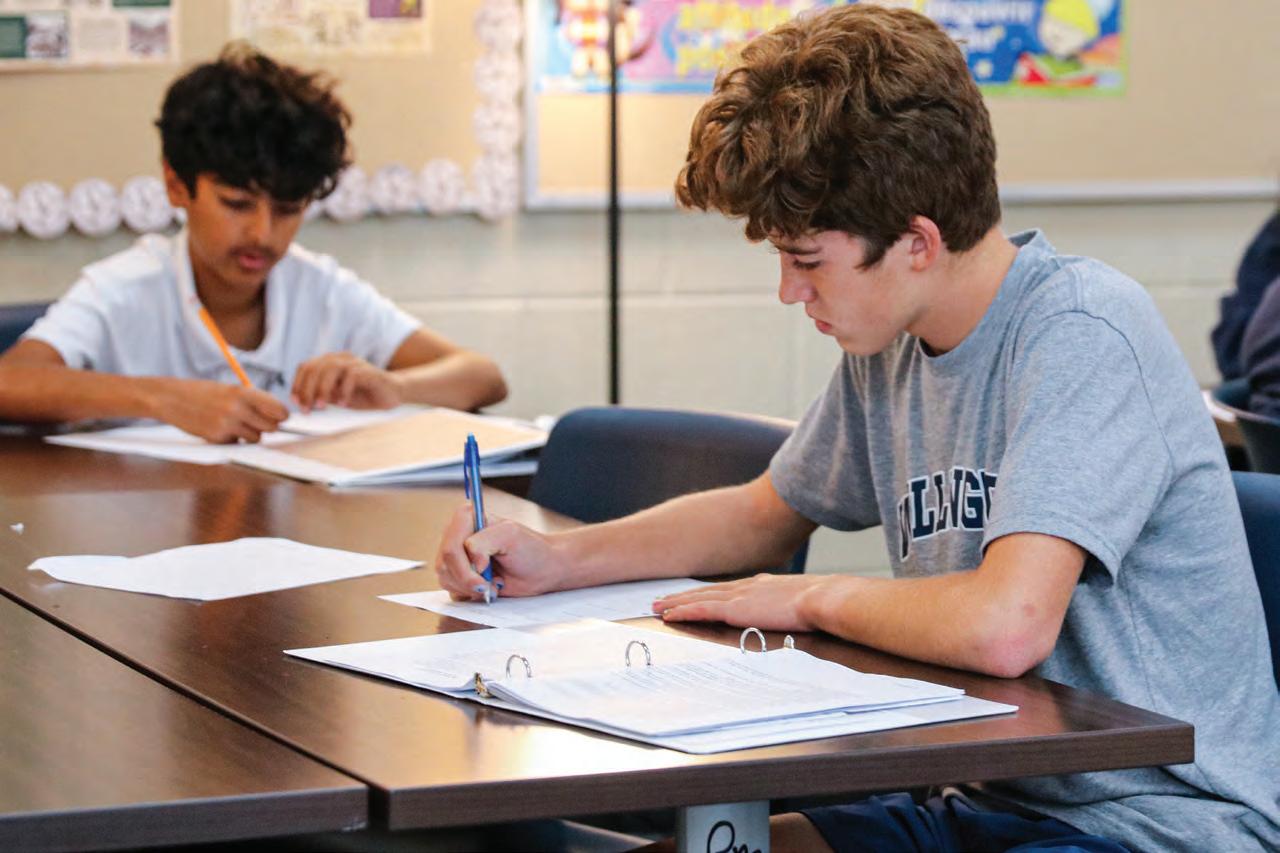
After joining Wellington in 2024, Roulston is now piloting a new class during supervised study called LYCEUM, or the League of Young Creators Exploring Universal Meaning. The accelerated humanities class is designed for students who love to think deeply, write purposefully, explore connections across history and literature, and engage in meaningful discussion.
In the 7th grade LYCEUM, for instance, students are exploring how justice is portrayed in dystopian stories, from the weaknesses of certain characters to the outsiders and rebels that inevitably appear. Along the way, students learn the key signposts and archetypes that are often lurking below the surface of great literature.
“Everything we read, we have a pen, a highlighter,” he said. “We’re reading between the lines to find the secret breadcrumbs the author leaves that most people miss. It deepens the experience, which is so important in this age of 10-second video clips, where everything is moving so fast.”
On Camera
For many, the study of history conjures lessons on governments, battles, and national leaders. While important, Victoria Lirio, upper school history, said there’s just as much to learn from the everyday experiences of ordinary people.
“ Learning Showcases are designed to highlight student voice and ownership of learning.”
SHELLEY
BROWN P ’32 ’33 ’38, ASSISTANT HEAD OF SCHOOL FOR ACADEMICS AND HEAD OF EARLY CHILDHOOD AND LOWER SCHOOL.
At Wellington’s new Learning Showcases, Little Jags to 12th graders show their expertise and offer a lesson with their families, peers, and community guests. In these open house-style events, students present a range of projects, from science experiments to original writing, from artistic creations to collaborative projects.
Through the Social History Project, Wellington sophomores are building a collection of social histories by researching a historical event—such as the Manhattan Project or the experiences of Vietnam refugees—and producing their own 10- to 12-minute documentary.
Throughout the yearlong project, students develop their time management skills, learn video editing programs, and practice asking openended questions. They conduct research with primary and secondary sources. The project also encourages them to be curious and look for stories in their own communities.
Each project is shown at an all-day film festival in May, with parents, community members, and the 9th grade class in attendance.
“The Social History Project is easily the most real-world assignment I give my students,” said Lirio. “They are provided structure and scaffolding, but at the end of the day they have to rely on themselves and be accountable.”
On Display
There’s no better way to show mastery of a subject than to share it with others.
It’s a natural fit for Wellington, where students are expected to go beyond simply recalling facts. Here, they analyze, debate, synthesize, and build. Learning is meaningful and thinking is deep, leading to a culture of challenge where students rise to meet high expectations.
“Learning Showcases are designed to highlight student voice and ownership of learning,” says Shelley Brown P ’32 ’33 ’38, assistant head of school for academics and head of early childhood and lower school. “It’s a wonderful opportunity for students to pull back the curtain on Wellington’s academic program and invite our community to see their curiosity, creativity, and challenge in action.”
PICTURED
Opposite: Ibrahim Khan ’30 and Ben Austin ’30 completing work in LYCEUM
Below: Early childhood explorers studying birds
Connecting Learning Across Divisions to Advance Academic Excellence
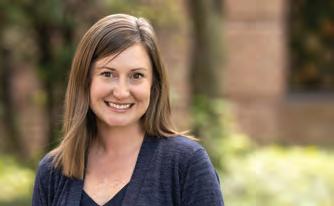
Shelley Brown P ’32 ’33 ’38 brings a unique perspective to her new role as assistant head of school for academics. While continuing to serve as head of early childhood and lower school, she now helps guide Wellington’s academic program across all divisions, from Little Jags through grade 12. Her appointment marks a new chapter in Wellington’s academic leadership, with the role created to strengthen alignment and advance excellence across the school.
“What excites me most is the chance to connect learning across all divisions,” said Brown. “I want every student to feel challenged in meaningful ways and every teacher to feel supported in the work that makes that possible.”
Brown has been a part of Wellington’s community for 11 years, serving as director of the Wellington Summer Program, head of early childhood, and, most recently, as head of early childhood and lower school. A graduate of Miami University and DePaul University, where she earned an M.A. in school administration and supervision, she also spent 10 years
teaching and leading at a progressive independent school outside Chicago. Her career in education now spans more than 20 years.
In her first year as assistant head of school for academics, Brown is launching the Center for Teaching and Learning as a hub for professional growth. She is strengthening curriculum alignment across divisions, building structures that support smallgroup instruction, and developing ways to use data more effectively to inform teaching and program development. She is also highlighting student
learning through showcases and storytelling that connect families to the academic life of the school.
Her philosophy of academic excellence balances mastery of content with skills like collaboration, critical thinking, and empathy. She believes a thriving Wellington education is relevant, interdisciplinary, and connected to the real world. “Learning should be joyful at every stage,” said Brown. “When students are engaged, challenged, and supported at just the right level, they can thrive and grow to their fullest potential.”
PICTURED
Brown and her three sons, Coleman ’38, Lincoln ’32, and Declan ’33
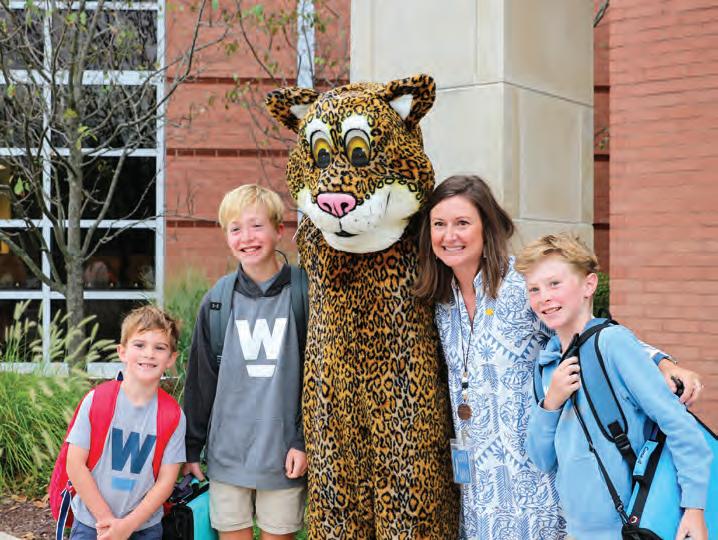
Building Belonging and Strengthening Community at Wellington
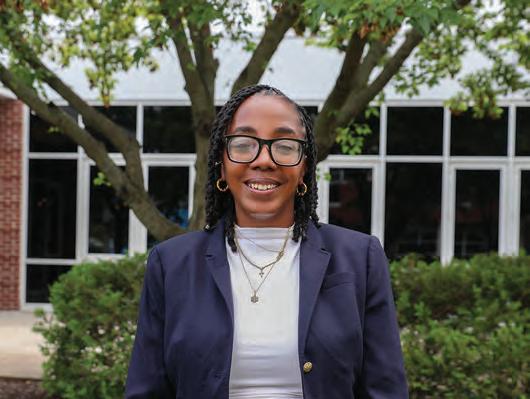
Latisha Humphries P ’31 stepped into her new role as Wellington’s director of community engagement and belonging with a clear focus on strengthening relationships. Her charge is to ensure that every student, family, and faculty member feels seen, supported, and connected both on campus and across the broader Columbus community.
“Belonging is not just about inclusion,” said Humphries. “It is about creating environments where people can thrive, contribute, and know that they matter.”
Humphries brings a wide range of experience to Wellington. Most recently, she worked at the Ohio Department of Education and Workforce, leading statewide initiatives in student leadership development, inclusive engagement, and school climate. She also served as dean of students at United School Network in Columbus, where she championed restorative practices, restructured advisory programming, and emphasized relationship building as a foundation for student growth. Earlier in her career, she taught English
in New York City, an experience that cemented her commitment to responsive, student-centered learning.
Since beginning at Wellington, Humphries has launched several efforts to build community. She introduced Sunday Suppers, a seasonal opportunity for Wellington families to gather over food and conversation. She began hosting open Engagement and Belonging Coffees, providing a dedicated time for listening and connection. With middle school students, she created the Bulletin Board Crew, giving them ownership of shared spaces and a platform for student voice. In September, she served as one of the first guest speakers in the upper school Race and Identity class, part of her commitment to being present in classrooms and supporting student learning. She also has taken on an advisory role for the Black Student Union (BSU) in the upper school.
Her philosophy is shaped by a deep belief in restorative education. At previous schools, Humphries guided shifts away from punitive discipline toward practices that balanced accountability with fairness and education. She led faculty through professional development in advisory circles, designed resources to make relationship building approachable for teachers, and helped schools rethink policies so they better reflect dignity, equity, and care.
Humphries is eager to keep building momentum. “This is a community with tremendous energy and purpose,” she said. “I look forward to continuing the work of creating spaces where everyone belongs.”
PICTURED
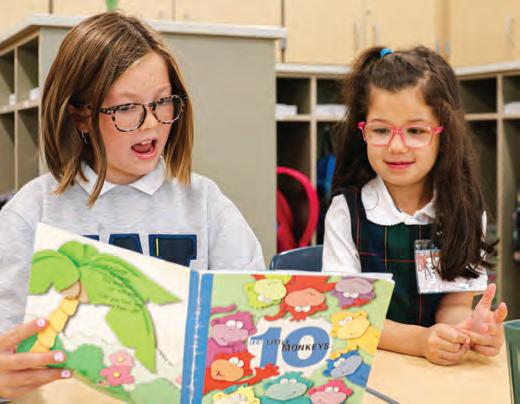
Reese Effler ’34 reading with her kindergarten buddy, Anna Olgun ’38
Listening, Learning, and Leading With Joy in Early Childhood and Lower School
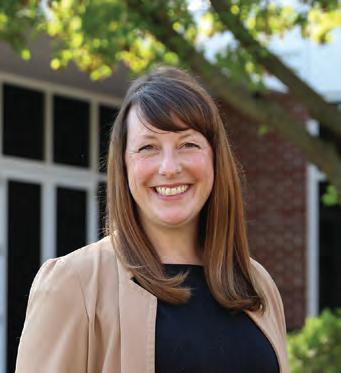
For Nicole Franks P ’38, the magic of school began in her own preschool classroom on the College of Wooster campus. That early love of learning set her on a path that has spanned more than 20 years in early childhood education and leadership. Today, as Wellington’s new assistant head of early childhood and lower school, Franks brings both experience and joy to the role.
“I have admired Wellington from afar for years,” said Franks. “The school’s forward momentum is both inspiring and exciting. Choosing Wellington means being part of a school that is willing to take leaps and lean into current educational research, providing children with the very best school experience and readiness to launch into an ever-evolving world.”
Franks joins Wellington after 15 years at Laurel School in Shaker Heights,
Ohio, where she served as director of early childhood and associate director for kindergarten–grade 2. There, she championed inclusivity and socialemotional learning, guided faculty through professional growth, and helped implement the science of reading into literacy instruction. Her leadership was always marked by a commitment to keeping children’s natural joy and curiosity at the center of learning.
“Supporting students, teachers, and families in making school a magical place for children to grow, learn, and be inspired is the most rewarding part of my work,” said Franks. With a B.A. in education from Bowling Green State University and an M.A. in child development from the Erikson Institute,
she pairs research-driven practice with a deep belief in the importance of imaginative, developmentally appropriate learning.
In her first year at Wellington, Franks hopes to “listen, learn, and act,” prioritizing time in classrooms, hallways, car line, and community events to build strong connections. She is especially excited to partner with Shelley Brown P ’32 ’33 ’38, assistant head of school for academics and head of early childhood and lower school, in leading the division and to build on Wellington’s strong foundation of curiosity, belonging, and joy.
PICTURED
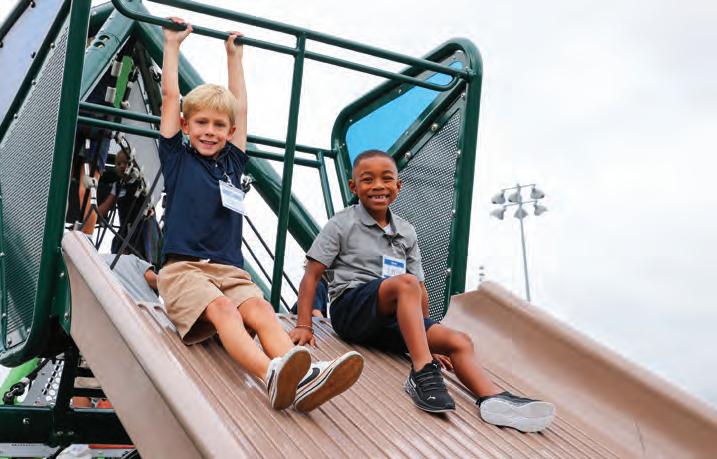
Harris Toth ’37 and Lincoln Green ’37 enjoying the Playscape
Commitment, Competition, and Character Shape Jaguar Athletics
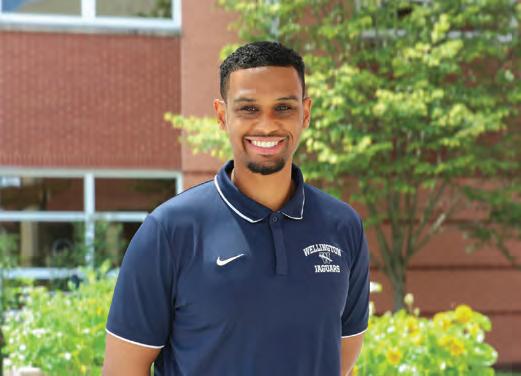
Wellington’s new director of athletics and physical education, Nick Williams, is returning to the place where his educational journey began, as a prekindergarten student at Wellington. “This is a fantastic community that I am honored to be a part of,” said Williams.
Since those early days, Williams has built a career across nearly every level of athletics and education. Most recently, he served as a project manager in Vanderbilt University’s student life department. He has also worked as an athletic administrator, student programming coordinator, coach, and physical education teacher. His own experiences as a state championship-winning varsity athlete and a Division I track and field student-athlete at High Point University, where he graduated cum laude, shaped his belief in the lasting impact of athletics.
Williams’ philosophy emphasizes student ownership, strong competition, and a culture of character, with encouragement from peers, families, and the Wellington community at the heart of it all. “I want student-athletes to have a voice in shaping their experiences,” said Williams. “When they feel ownership, they are eager to join, to lead, and to represent Wellington.”
His vision for Jaguar athletics is aligned across all divisions. In lower school, students are introduced to a variety of sports. Middle school brings opportunities to develop skills and embrace competition. By upper school, Williams wants athletes prepared to compete at the highest levels and pursue championships. Along the way, he emphasizes that physical education and athletics work hand in hand, reinforcing skills, healthy habits, and lifelong fitness.
Williams’ leadership is also informed by his academic research. He earned a Doctor of Education in leadership from Vanderbilt University, where his dissertation focused on student-athlete belonging and success. Reflecting on his new role, Williams said, “With deep knowledge and passion for fostering excellence in athletics and physical well-being, I look forward to inspiring our students and helping them succeed.”
Outside of athletics, Williams enjoys staying active with his family and still finds time to watch sports whenever he can. When you meet him, be sure to ask about his favorite gameday traditions and expect him to turn the question back to you.
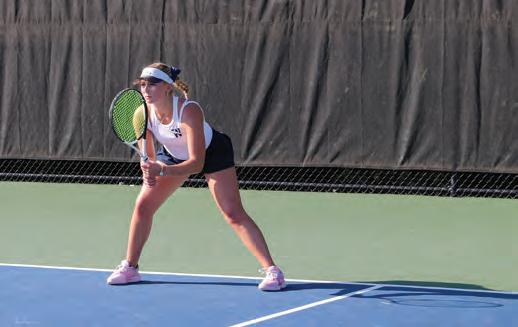
PICTURED
Mary Claire Thompson ’26
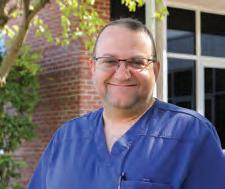
Wellington Welcomes New Faculty and Staff
Wellington is pleased to welcome 14 new members to our community.
Eric Ballinger
HEALTH AIDE
Ohio University
Columbus State Community College
Loves road trips and has driven to each of the lower 48 states
Inspired by stories of people who have overcome uphill battles
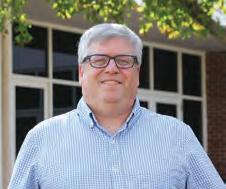
Matthew Bardoe
UPPER SCHOOL MATH
University of Illinois Chicago
The Ohio State University
Wife is an author, and one of her books is in the Abbott Family Learning Center
“Math is hard, and seeing students gain increased facility and capabilities is a wonderful way to spend your day.”
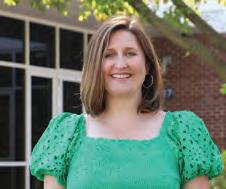
Kristin Barnett
LOWER SCHOOL LEAD
Georgetown College Centre College
“The most rewarding part of my job is to help students realize what gifts they have and provide them with opportunities to develop them.”
Lived in Strasbourg, France for a semester to study art history and French
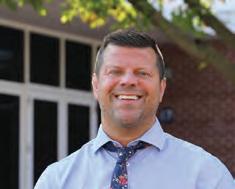
Anthony Constantino P ’38
MIDDLE SCHOOL MATH
Brooklyn College City College of New York Columbia University
Began wrestling at age five and continued through college
Inspired by the teachers in his life who work tirelessly to ensure that students are provided the education they deserve
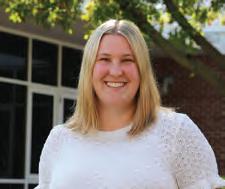
Allison Enchelmayer
MIDDLE/UPPER SCHOOL VOCAL
MUSIC DIRECTOR
University of Evansville
Has played golf for more than 20 years and played Division I golf in college
Inspired by those who overcome adversity in situations out of their control and make the best of what they have
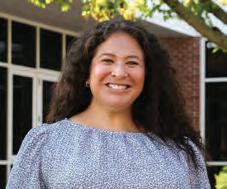
Alex Faber
SCHOOL NURSE
The Ohio State University
Was a neonatal intensive care unit (NICU) nurse for more than 12 years
“The best part of my job is contributing to Wellington’s mission through keeping children safe and secure.”
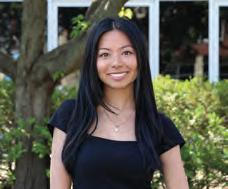
Grace Flynn
DIGITAL MARKETING COORDINATOR
The Ohio State University
“I enjoy using my creativity to highlight the moments of joy that make Wellington so special.”
Loves puzzles and, in high school, was part of a puzzle club with retired women in her hometown
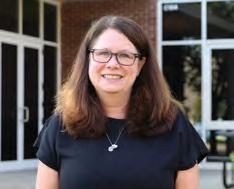
Mindy McCabe
EARLY CHILDHOOD LEARNING GUIDE
Hartwick College
Did a modified version of the running of the bulls while an exchange student in Spain
“The most exciting part of my job is witnessing children grow emotionally and academically.”
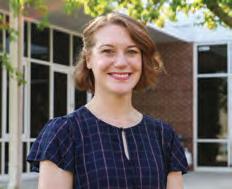
Katie Nowack
LOWER SCHOOL LEARNING GUIDE
University of North CarolinaWilmington Wright State University
“The most exciting part of my job is helping students follow their curiosity, meet new challenges confidently, and know that they are seen and accepted for who they are.”
Inspired by her colleagues and students
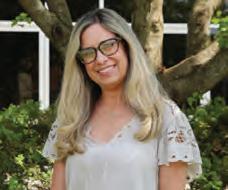
Tracy Gilbert
MIDDLE SCHOOL COUNSELOR
The Ohio State University University of Wisconsin
“The most exciting part of my job is working with middle schoolaged kids!”
Inspired by her children, and looks forward to the inspiration Wellington students will provide
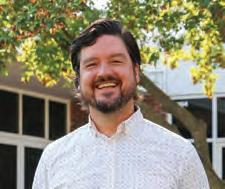
Jon Meinhold P ’38
MIDDLE SCHOOL MATH
Bowling Green State University
“The most exciting part of my job is working with students and seeing those ‘ah-ha!’ moments in class.”
Loves baking, collecting records, and traveling
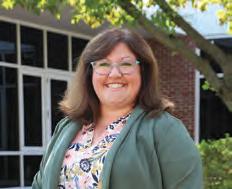
Dawna Rone
MIDDLE/UPPER SCHOOL
ORCHESTRA DIRECTOR
University of Cincinnati
The Ohio State University
“The most exciting part of my job is that moment when a student who is struggling finally achieves a new level of understanding.”
Has three children who all play different stringed instruments
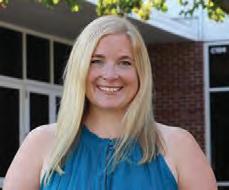
Sarah Poe P ’39
EARLY CHILDHOOD LEAD
Mount Vernon Nazarene University Ohio University
Inspired by her coworkers who make her a better person and better teacher every day
“The best part of my job is connecting with children and their families, and creating a classroom family every year!”
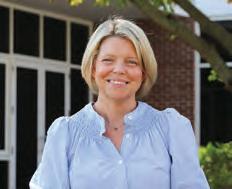
Gayla Roush P ’30 ’35
LOWER SCHOOL LEARNING GUIDE
Rockhurst University University of Missouri
Moved to Columbus from Kansas City seven years ago; still a huge Mizzou and Kansas City Chiefs fan
Inspired by her sons to be a better mom, educator, and person

LENA WEINBERG ’31
Laurie Parsons Retires
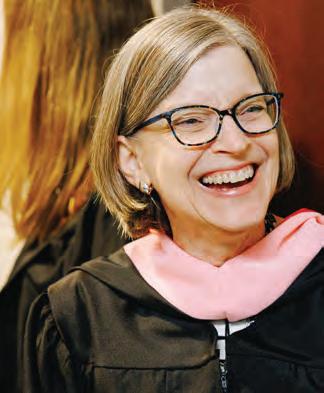
After 23 years at Wellington, Laurie Parsons, lower school music, has retired. Known for her joyful classroom, signature performances, and deep care for students, Parsons was a beloved presence in the lives of children and colleagues alike.
Parsons first encountered Wellington during a professional development day and was drawn in by its warmth and mission. “Wellington had such a welcoming atmosphere,” she said. “It was evident the community cares about each other and the students.”
During her tenure, Parsons taught multiple grade levels, from the early days of Little Jags to her most recent role with kindergarten through 4th grade students. She championed music literacy by teaching students to read rhythms, identify pitches, and use hand signs to decode melodies. She taught them how to listen and use their “tower voices” confidently. Her Music Moves Me programs became a
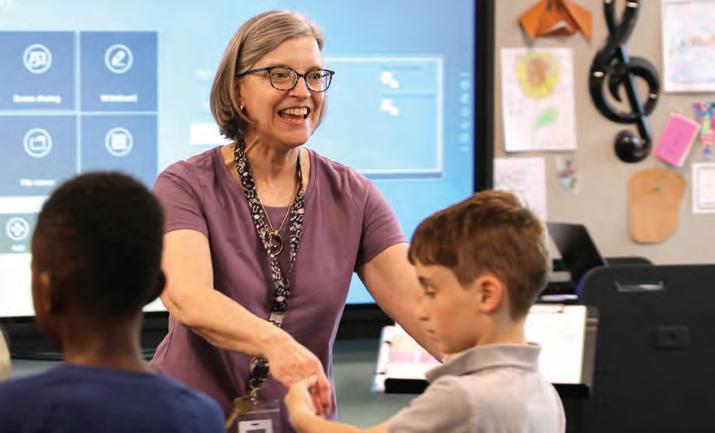
cherished lower school tradition, filled with singing, movement, and original scripts.
Parsons also helped bring new life to an old tradition: the Alma Mater. When she arrived, few students knew the school song, so she began teaching it in every class. With a spark of collaboration, and a suggestion from Chris Robbins P ’17 ’22, upper school English, she organized lower school students to visit upper school morning meetings and lead the way. Today, hearing the whole school sing the Alma Mater is a moment of unity that Parsons helped make possible.
PICTURED
Parsons at the Class of 2025’s commencement
Parsons’ creativity and collaborative spirit extended far beyond the music room. “She frequently checked in with homeroom and special area teachers to see where music could enhance other parts of the curriculum,” said Patty Hans P ’17 ’20, lower school French. “Over the years, she occasionally worked with middle and upper school flutists during her planning time. Her impact on our students and our faculty has been enormous.”
In retirement, Parsons looks forward to spending time with her grandchildren, volunteering at her church, gardening, and getting back to playing her flute in a local community group.
When asked what she’ll miss most, she answered: “The people, adults, and children.” The Wellington community will miss her just as much.
Faculty News
\t'-c\e\?e\1-o.ew-
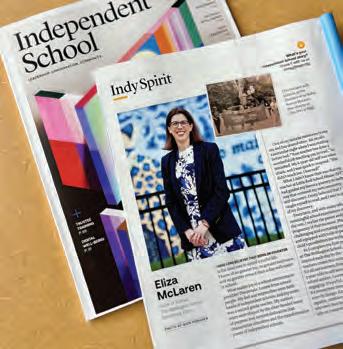
Eliza McLaren
Ms. McLaren was featured in the National Association of Independent Schools blog article, “Dear New Heads: Tips from the Sophomore Class.” Reflecting on her first year at Wellington, she encouraged new heads to learn students’ names early, connect with seniors, and celebrate teachers as the heart of a school’s success.
Dara Jackson
DIRECTOR OF ADMISSIONS
Katie Lumbley P ’30 ’33
ASSISTANT DIRECTOR OF ADMISSIONS
Neelie Barthenheier P ’27 ’30
ADMISSIONS COORDINATOR
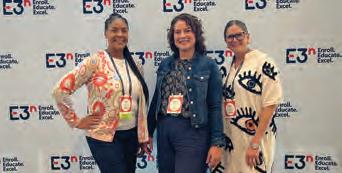
Jackson, Lumbley, and Barthenheier attended the Enrollment Management Association’s annual conference, Embracing Change, in Austin, Texas. Over three days of workshops and presentations, the admissions team explored new ideas in enrollment management, from financial aid to innovative event design, and are eager to bring fresh strategies back to Wellington.
Kara Trent P ’26
UPPER SCHOOL SPANISH
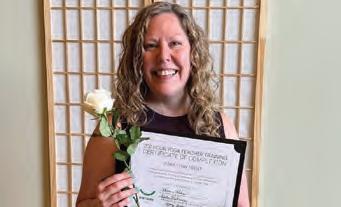
Trent recently completed her 200-hour yoga teacher training through Mat Happy Yoga in Hilliard. As part of the six-month program, she led practice teaching sessions with volunteers from the upper school faculty. She is now using this training to lead Jaguar Flow sessions for Wellington educators, supporting health and well-being, and also facilitated a session for kindergarten and 4th grade buddies.
Emily Berty
DIRECTOR OF COLLEGE COUNSELING
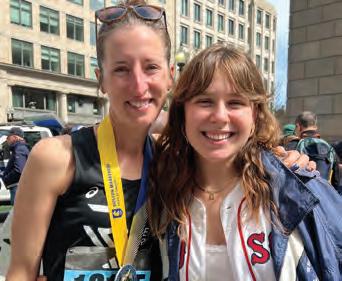
Berty completed her fourth Boston Marathon this spring. After the race, she caught up with Eve O’Sullivan ’24, who is now a second-year student at Northeastern University.
Aaron Frim P ’19
ASSISTANT HEAD OF UPPER SCHOOL
Jennifer Frim P ’19
ASSISTANT DIRECTOR OF TECHNOLOGY
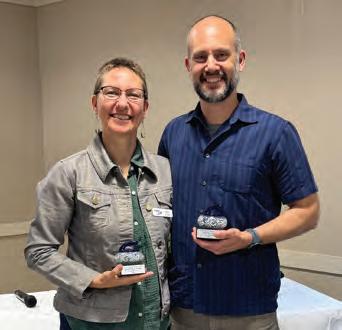
The Frims were inducted into the Columbus Curling Club’s Hall of Fame this May. As two of only four individuals honored in the club’s third Hall of Fame class, they have made a lasting impact on the CCC’s 21-year curling history in Central Ohio.
HEAD OF SCHOOL
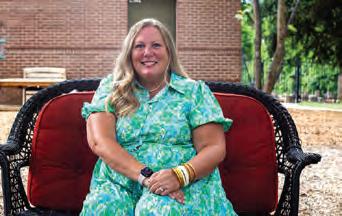
Catie Swendal
EARLY CHILDHOOD LEAD
Swendal earned certification in the first level of Orton-Gillingham training, a structured, multisensory approach to literacy that helps young readers build strong foundations. This additional training further strengthens the support she provides to Wellington’s young learners.
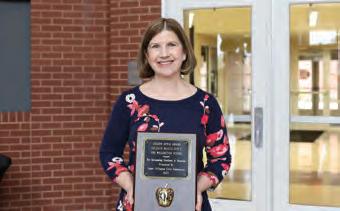
Sloan Magliery
ASSISTANT HEAD OF MIDDLE SCHOOL
Magliery received the Golden Apple Award from the Upper Arlington Civic Association, which honors excellence in education. One nominator shared, “She connects with students authentically and goes above and beyond to make them feel seen and cared for.”
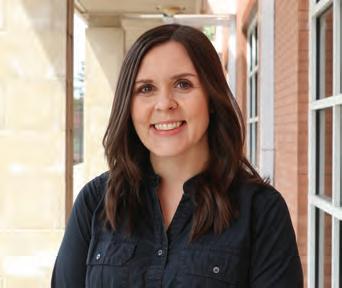
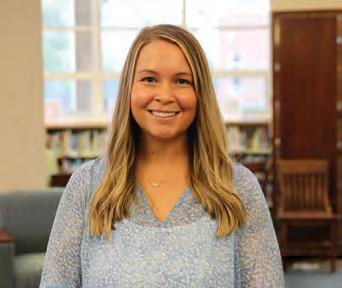
Emeri Ferguson P ’39
EARLY CHILDHOOD AND LOWER SCHOOL LITERACY SPECIALIST
Ellen Rhomberg
EARLY CHILDHOOD SPECIALIST
Ferguson and Rhomberg have been named 2026 Groundwork Ohio Early Childhood Leadership Fellows. Through this yearlong program, they will join a statewide network of early childhood professionals committed to advocacy, equity, and policy change for Ohio’s youngest learners and their families.
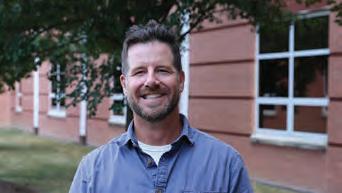
Greg Davis
MIDDLE SCHOOL LANGUAGE ARTS
Davis presented at the National Association for Media Literacy Education annual conference. His session, “Propaganda, Misinformation, and the Ideal of Objectivity,” introduced a streamlined approach to teaching media bias and propaganda, offering practical strategies for middle and high school classrooms.
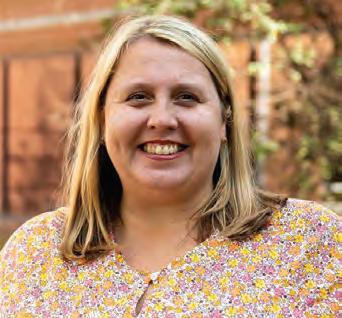
Erica Clark P ’28
DIRECTOR OF STUDENT SUCCESS K–12
Clark joined Jennifer Farmer P ’35 on the “Faith Talks” podcast to share strategies for preventing summer learning loss and keeping kids engaged year-round.
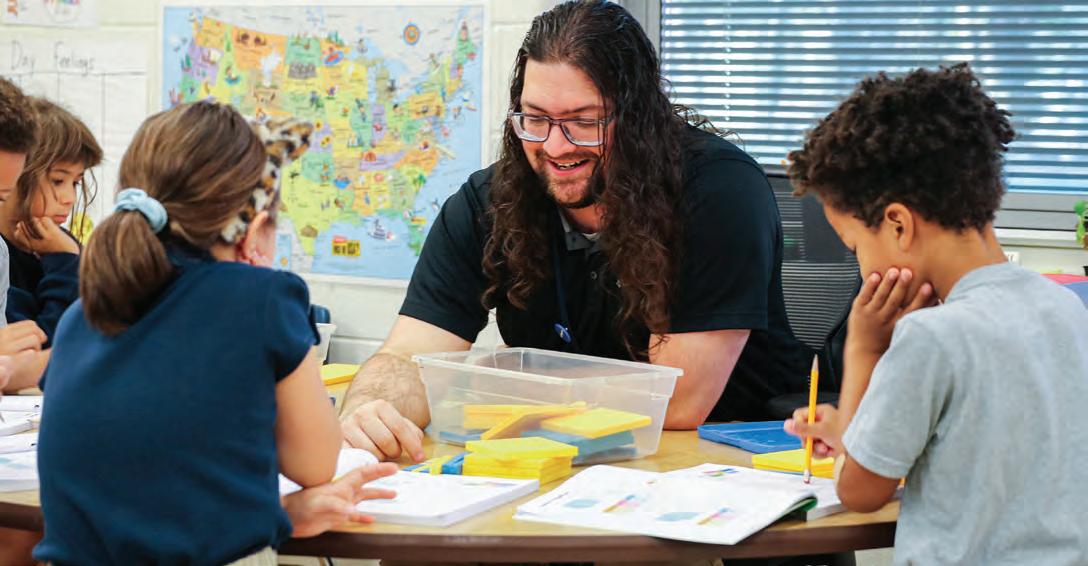
PICTURED
Lower school lead Max McGrath attended the Ignite to Write conference and brought his learning back to 2nd graders
GROWTH AND DEVELOPMENT: With Donor Support, Wellington Invests in Meaningful Professional Experiences
This summer, middle school science teacher Cristen Geary P ’35 ’36 attended a training on projectbased learning (PBL). As she learned more about the method—which encourages students to learn subjects by engaging in real-world, meaningful projects—Geary couldn’t stop thinking about her unit on cells.
Studying the structure of cells that were too small to see had long been
a challenge, and she sometimes struggled to bring the content to life. As the PBL training went on, Geary started to see a better way.
“While students engaged in the learning practices I used, upon reflection, the activities and projects didn’t always leave them with lasting ‘nutrition,’” said Geary. “The training helped me more fully understand how to develop meaningful, real-
world lessons and units that lead my students to be curious, engaged, and hungry for more.”
“I was able to add, update, or delete aspects of the unit to ensure it’s more of a ‘main course’ that leaves them satisfied and full of knowledge.”
Geary was one of 35 Wellington educators from all levels who completed the PBL training this summer. In addition to helping students connect with course material, the method also fosters civic engagement by asking students to investigate issues that matter to their communities.
“Whether it’s creating an adoption plan to match rescue dogs with owners in 3rd grade or exploring what it takes to be a successful investor in today’s global economy, students are encouraged to think critically, solve real-world problems, and engage as
active, thoughtful citizens,” said Shelley Brown P ’32 ’33 ’38, assistant head of school for academics and head of early childhood and lower school. “PBL also prioritizes student voice, encouraging learners to ask their own questions and lead their own investigations.”
The PBL training is one of several ways that Wellington is investing in the professional growth and development of faculty and staff—and thus reshaping the student experience— thanks in part to the philanthropy of donors.
“We’re trying to build out a more robust professional development option for our faculty and meeting that need is an annual giving priority,” said Jacob Ely, development coordinator. “We want to provide the best education we possibly can, and that comes with knowing what’s changing in education, knowing what the research says, and being able to integrate that into the classroom.”
“We’re trying to build out a more robust professional development option for our faculty and meeting that need is an annual giving priority.”
JACOB ELY, DEVELOPMENT COORDINATOR
A gift from Peg and Alan Scantland GP ’30 ’30 ’32 ’34 ’35 ’37 allowed 20 Wellington educators to begin the Lexia Language Essentials for Teachers of Reading and Spelling (LETRS)
training. LETRS takes a scientific approach to literacy instruction, weaving together phonological awareness, phonics, fluency, vocabulary, comprehension, and writing.
And a new funding model gives faculty and staff more flexibility to pursue the opportunities that are most meaningful to their development. Instead of an individual allotment of funds, where funds could be rolled over to save for larger opportunities, Wellington faculty and staff can now request funds from a collective pool.
“Anyone with a strong proposal aligned to their growth goals and the strategic plan can request support,” said Brown. “This flexibility allows us to send faculty to national conferences, bring outside experts to campus, fund intensive trainings, and provide smaller-scale opportunities like online workshops and certifications.”
Kelly Presson, lower school lead, recently visited the Ron Clark Academy in Atlanta, Georgia. During the immersive, two-day learning experience, she observed classrooms, participated in dynamic workshops, and had time to meet with educators and leaders at the academy.
“My experience at Ron Clark Academy energized me to foster more authentic relationships with students and families, challenge students in their academic pursuits, and cultivate a love of learning through curiosity and ambition,” said Presson. “It was a chance to mirror what I expect of my students: stay curious, stretch your brain, and share your knowledge to lift up others.”
Brown said the new model ensures equitable access and allows Wellington to meet faculty and staff where they are, from early-career teachers seeking foundational skills to seasoned educators pushing into advanced, specialized work. It also improves retention by demonstrating the school’s commitment to the long-term growth of its faculty and, above all, ensures that Wellington continues to be a place where education is exciting and purposeful.
“Teachers want to feel valued, supported, and challenged professionally,” said Brown. “When they have access to high-quality professional development, they not only sharpen their skills but also feel more connected to Wellington’s vision.
“Every dollar invested in a teacher multiplies across dozens of students each year, and across many years of a teacher’s career. It keeps our faculty at the forefront of research, allows Wellington to remain innovative, and ensures that our classrooms are places of curiosity, rigor, and care.”
Join other donors in supporting transformational professional growth and development opportunities for faculty by making a gift to The Wellington Fund.
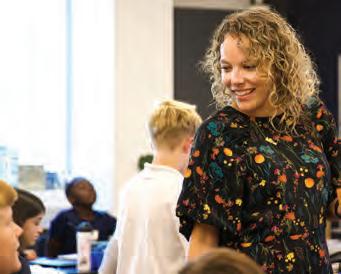
PICTURED
Cristen Geary
ON GIVING SPOTLIGHT

By Jacob Ely Development Coordinator
Thanks to the generosity of Wellington community members, we are able to make big things happen.
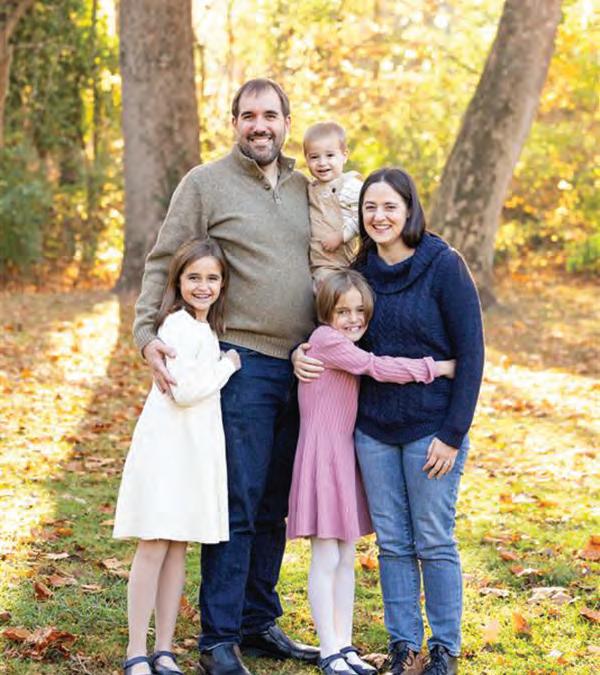
For Emelie and Bryan Inderhees P ’33 ’35, Wellington is both a workplace and a home. Emelie has taught Latin at Wellington for 15 years and finds deep fulfillment in the school’s collaborative spirit. “There is a genuine family feel here. Colleagues support one another, celebrate successes together, and collaborate in ways that make the work both meaningful and sustainable,” she said.
When it came time to choose a school for their daughters, Cecilia ’33 and Lavinia ’35, the Inderhees’ were drawn to Wellington’s balance of high expectations and high support. “Students are challenged to grow academically while being known and cared for as individuals,” they said.
Seeing Wellington’s impact from both faculty and parent perspectives inspires their giving. Through gifts to The Wellington Fund and the Scholarship Granting Organization, they help extend that experience to more families. “Philanthropy, for us, means caring for our shared community,” said Emelie. “It’s about helping others thrive.”
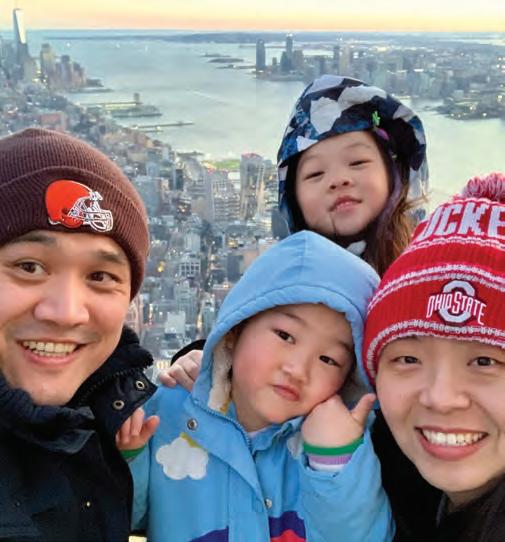
Ding Li and Yanan Zhao P ’36 ’38 found in Wellington the individualized attention they wanted for their children, Vivien ’36 and Aaron ’38. “Every morning, they walk to the rotunda with smiling faces,” Li shared.
Their favorite Wellington moments are small but powerful— watching Vivien finish her first book, hearing both children sing school songs at home, and seeing them brimming with confidence and curiosity. “It’s amazing to see how much they’ve learned and how happy they are as Wellington students,” said Li.
Gratitude motivates their giving. In addition to annual support for The Wellington Fund, the family contributed to the Kindergarten of the Future project. “We experienced how much better the prekindergarten space became after the Believing campaign,” Li explained. “We knew the Kindergarten project would be just as meaningful.”
A member of Wellington’s third graduating class, Sophia (Baidya) Mohr ’91 credits the school with shaping how she approaches problem-solving and innovation. “Wellington taught me to think critically and creatively, skills that have been invaluable throughout my career,” she said.
Now serving on the Board of Trustees, Mohr helps guide conversations about the school’s future through the Strategic Futures Committee. She also volunteers with JagsConnect, recently hosting students at Central Ohio Transit Authority (COTA), where she is chief innovation and technology officer.
“We focus our giving on helping the next generation,” said Mohr. “Supporting Wellington means investing in a community that challenges students, fosters critical thinking, and nurtures lifelong connections.” Through her gifts to The Wellington Fund, she helps ensure the same opportunities for future Jags.
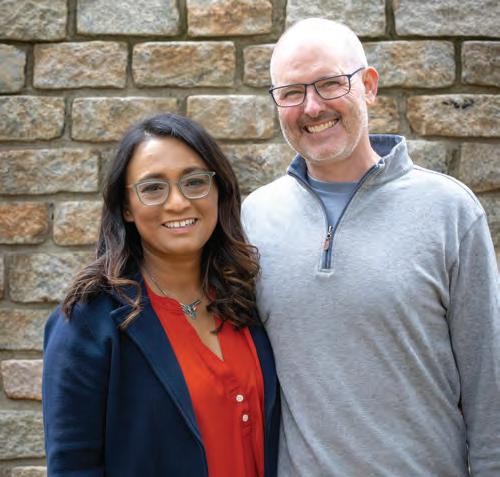

YOUR GIVING IN ACTION: How Philanthropy Shapes Tomorrow’s Wellington
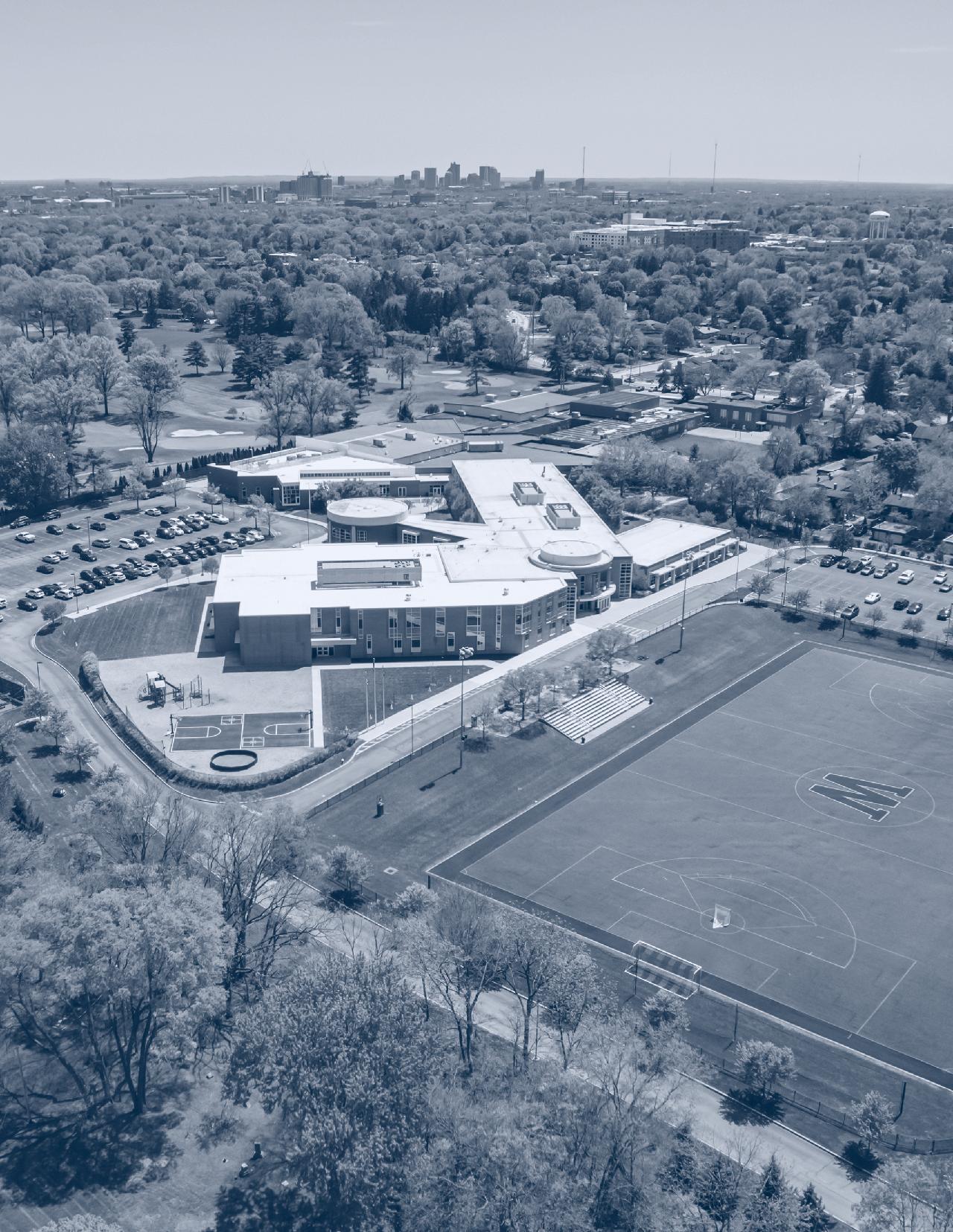
The 2024–25 school year marked a historic milestone for Wellington. Together, our community raised $896,211 for The Wellington Fund, the highest total in school history, with 57% parent and caregiver participation. Each gift, no matter the size, strengthened the people and programs that make Wellington extraordinary.
Your generosity brought The Croft Kindergarten Wing to life, expanded athletic and wellness spaces, advanced civic engagement and project-based learning, and provided tuition assistance to 32 families facing financial hardship. Support for student well-being and belonging also grew through grants that empower students to lead with confidence and empathy.
Every act of giving, from a volunteer hour to a conversation that inspires philanthropy, fuels the momentum of a community that believes in joyful, student-centered learning. Thank you for investing in Wellington’s future and ensuring that curiosity, creativity, and care continue to thrive for generations to come.
Read Your Giving in Action, Wellington’s annual report

ANNIE SHEN ’26
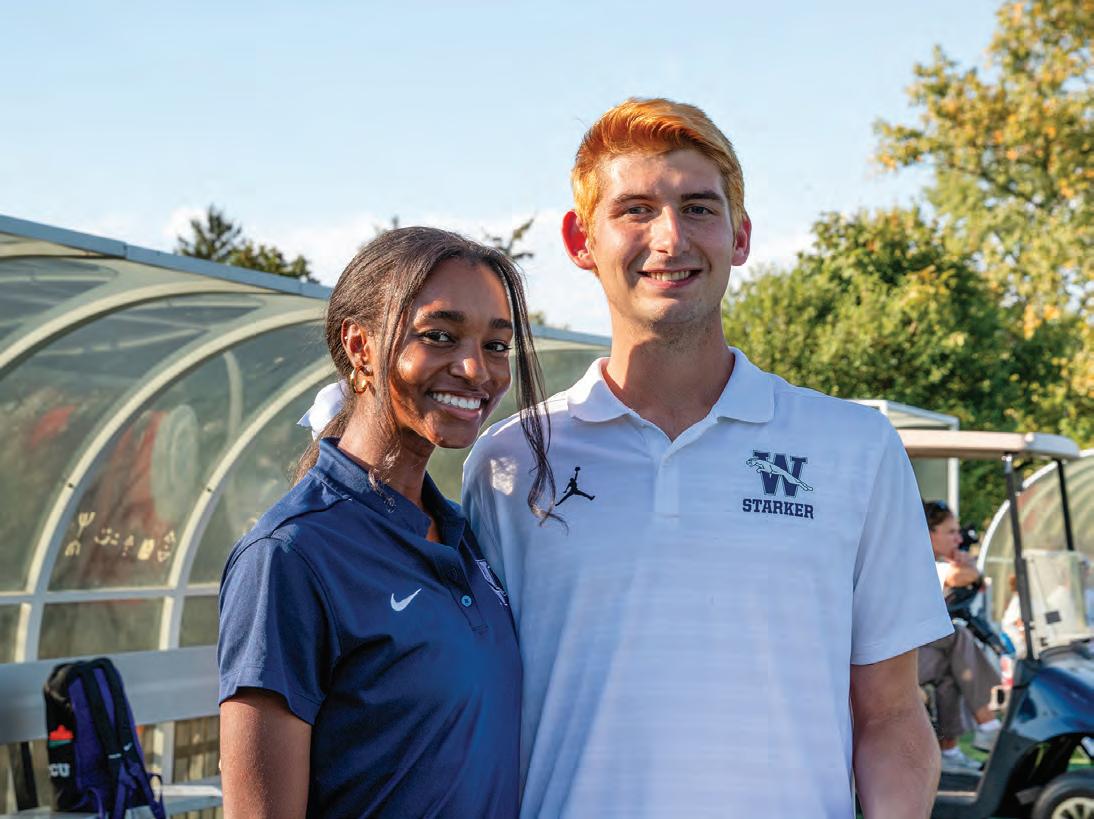
Full Circle: Alumni Coaches
Build the Future of Wellington Soccer
When the girls varsity soccer team took the field this fall, they did so under new leadership with familiar faces at the helm. Wellington alumni Ben Starker ’17 and Jakaysha (Williams) Hookfin ’18 stepped in as co-head coaches, bringing fresh energy, shared history, and pride in the program that shaped them.
Their arrival marks a new chapter for girls soccer. After a challenging season, Starker and Hookfin have focused on rebuilding from the inside out: restoring confidence, redefining culture, and reminding players what it means to play for something bigger than themselves.
PICTURED
Jakaysha Hookfin ’18 and Ben Starker ’17
STARKER
Building a Foundation for the Future: Ben Starker ’17
For Ben Starker, moving from assistant coach on the boys side to co-head coach of the girls team felt “exciting and humbling all at once.” What drew him in was the chance to lead a program in transition. “I saw the potential in this group, the opportunity to develop confident players and create a culture the girls can be proud of.”
That culture centers on growth, effort, and togetherness. “We know where the program has been, but we are focused on where it is going.” Practice by practice, players learn to support one another, compete every day, and celebrate small steps forward.
A 2017 graduate, Starker still remembers the exhilaration of his senior year when Wellington captured its first district championship. “That season set the foundation for future success and friendships that will last a lifetime.”
Now, he hopes to give his players that same sense of belonging. “Resilience and accountability, those are the lessons I learned as a Jaguar. Effort and attitude are always within your control.”
“ The way you do anything is the way you do everything.”
BEN STARKER ’17
This season’s Founders Day game stands out. “We beat a team 3–0 that we had tied earlier, and one goal came from a set piece we practiced indoors during a thunderstorm,” he said. “It showed how far we had come, the growth, the work, and the belief in each other.”
Looking ahead, Starker wants Wellington girls soccer to be known for toughness, discipline, and unity. His advice to the team sums up his approach: “The way you do anything is the way you do everything.”
Coaching With Heart: Jakaysha Hookfin ’18
When Athletic Director Nick Williams asked Jakaysha Hookfin to take on the girls head coaching role, she hesitated. “I had only coached little kids and 5th and 6th grade Wellington soccer with Ben,” she said. “Playing and coaching
are very different, and truthfully, I did not feel qualified.”
Still, the pull to give back was strong. “Soccer season was one of the highlights of my high school career. I wanted to give that same experience to the girls.” That night, Ben called with four words that changed her mind: Let’s build a dynasty.
Together, Hookfin and Starker set out to reset the tone after a winless year. “We made sure spirits were high going into a new season with new coaches,” she said. “We prioritized a growth mindset and fun.” As alumni, they also wove Wellington’s values of curiosity, responsibility, and empathy into their daily work.
For Hookfin, the greatest reward has been the team’s hunger to improve. “After games, they ask, ‘What can I do to get better?’ Watching them grow as players and people has been so rewarding.”
Her favorite memory as a Jaguar still fuels her coaching. As a senior, she helped lead a 2–1 win over Grandview. “It was the first time I saw what our team could really do.” The belief a coach showed in her then shapes how she invests in players now. “The habits I built in soccer, discipline, resilience, and a strong work ethic, are the same ones I carry into every area of my life. Now I get to help our girls see what they are capable of.”
At Wellington, legacy looks like progress. For Starker and Hookfin, coaching is not only about the score. It is about building the kind of community that built them.

MS. HILLER’S 2024-25
LITTLE JAG STUDENTS
Alumni News
1991 & 2006
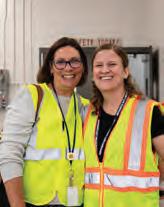
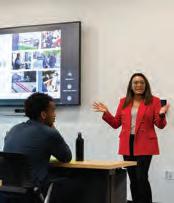
Sophia (Baidya) Mohr and Casey (Brown) Blazer, pictured with Erin Cornett ’96 P ’34, both work at Central Ohio Transit Authority (COTA) and hosted a group of Wellington seniors this fall as part of JagsConnect career exploration programming.
New JagsConnect Programming!
This fall, JagsConnect officially launched across the upper school, giving students in grades 9–12 new opportunities to explore career pathways and connect with alumni mentors. Along with the rollout, we’ve onboarded our first group of JagsConnect volunteers, who will be supporting students through career exploration panels and oneon-one conversations. Together, we’re helping Jaguars discover their purpose and build meaningful connections that will last beyond graduation!
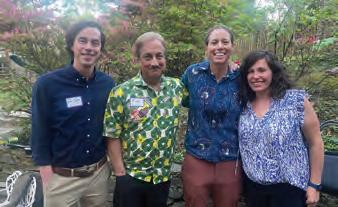
Anna Taft spoke at George Washington University and a private gathering in Washington, D.C., sharing updates on the Tandana Foundation’s work in Ecuador and Mali and discussing her new book. The event brought together Wellington alumni and friends, including Chris O’Hara ’08, Julia Skapik ’97, and former head of school Rick O’Hara P ’03 ’08.
She also reunited with Ravi Waldron ’97 and Hope Taft P ’97 on a Tandana Foundation trip to Ecuador, reconnecting while serving indigenous communities in the Andes Mountains.
Andres Marquez-Lara is publishing a new book titled “Rituals 2.0: Building Pathways to Connect in a Fragmented World.” The book explores how vulnerability and emotional openness can foster deeper human connection.
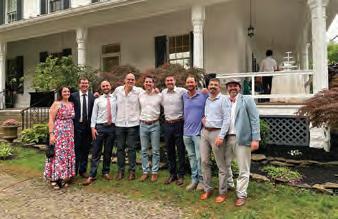
Alex Para began a new role as senior vice president at Starwood Capital Group in Dallas, Texas. He was also married this summer, joined by some of his closest Wellington friends.
Duncan Forbes and his team at C.Krueger’s hosted a group of Wellington seniors as part of a career exploration series with JagsConnect.
Seventeen members of the class gathered in September for a reunion at Pins in Columbus. Special thanks to Libby (Graf) O’Brien and Aly (Farber) Kelly for organizing! THE CLASS
THE CLASS
2008
Kyra Wagner recently moved back to Columbus from Florida and is engaged. She’s helping coach the girls tennis team at Upper Arlington and enjoyed coaching against Carl Faller P ’15 ’18 ’18 at Wellington this fall.
2011
Grace Korandovich was featured in Architectural Digest for her work with Grace K Designs, a fine art and large-scale installation studio specializing in custom fabrication for retail and events, as well as fine art commissions.
2013
2015
Carolyn Faller was awarded the Virginia Public Service Scholarship at the University of Virginia School of Law. She previously worked at Legal Aid Chicago and served in the Peace Corps in Eswatini. Her commitment to housing justice and public interest law continues to inspire.
Elizabeth Zimmerman has been promoted to manager – social media + partnership activation at The Wendy’s Company. She’s excited to take on this new role and continue driving creative engagement and brand partnerships at one of the nation’s most iconic fastfood brands. THE CLASS
Joshua Ghosh-Groen is attending Harvard Law School this fall. He shared his excitement and gratitude for this milestone, calling it a dream come true and the result of years of hard work. He looks forward to the journey ahead as part of the Harvard Law School Class of 2028.
2018
Zoe Beatty is pursuing a doctorate in neuroscience at Harvard University after graduating from the California Institute of Technology in 2022. Her research focuses on psychiatric disorders and addiction, building on her work on engineering fluorescent biosensors for neural drugs. THE
Trinity Scott graduated summa cum laude from North Carolina A&T State University with a degree in psychology and a minor in political science. She is now a first-year law student at Capital University Law School.
2020
Aidan Schumer spent the summer competing professionally in golf before deciding to pursue full-time employment. He’s seeking opportunities to apply the skills he developed through athletics and academics and is passionate about joining projects that promote community and belonging.
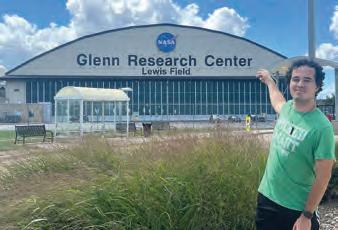
Alex Lott is interning at NASA this fall. In spring 2025, he received the Lajos F. Takács Mathematics Prize at Case Western Reserve University for academic excellence, research, and leadership.
Ella McGlynn is a senior on the Capital University women’s tennis team and is enjoying her final season.

Kendhyl Wilder was named to The Ohio State University’s 2025 Homecoming Court. A dual-degree pre-law student in public management and political science, she has interned in Congress and with the Ohio Wrongful Conviction Project. She’s a six-time Dean’s List honoree and active leader in multiple campus organizations, including Alpha Kappa Alpha Sorority, Inc. At Ohio State, she continues to uplift the principles of excellence, leadership, service, and compassion that Wellington instills in its students.
ALUMNI, SHARE YOUR GOOD NEWS!

New job Awards Got married New baby Travel Mini reunion
Do you have a new job, recent publication, or did you receive an honor or award? Did you recently marry, have children, or travel? Did you have a mini Wellington reunion with your classmates? The Wellington Alumni Office wants to share your good news with your fellow alumni.

2023
Abdullah Amir conducted ovarian cancer screening research at the University of Kentucky College of Medicine under Dr. Edward Pavlik. His summer included surgical observation, patient follow-up, and participation in tumor board conferences. He’s grateful to Denison University and Dr. Pavlik for their support.
Charlie Dobres was promoted to senior consultant at Red Frame Lab, Denison University’s studentrun innovation and consulting lab. As a global commerce major, he continues to explore creative problem-solving and strategic thinking.
Alumni Gatherings
We’d love to see you. Whether you’ve been gone five years or twenty, alumni gatherings are a chance to reconnect with old friends, meet fellow Jags across graduation years, and share stories that still make you laugh. Join us for good company, great memories, and a strong dose of Wellington spirit.
Gigi Manley interned with Besa, a nonprofit in Columbus, where she worked with the programming team and learned about community engagement. As a Dean’s High Honor Scholar at Connecticut College, she expressed gratitude for the opportunity and those who supported her journey.
Alumni Celebration and Alumni Weekend
April 17-18, 2026
Washington, D.C. Alumni Gathering
April 23, 2026
New York City Alumni Gathering
June 4, 2026
THE CLASS OF
Community Highlights
Alumni
Connections Across Generations
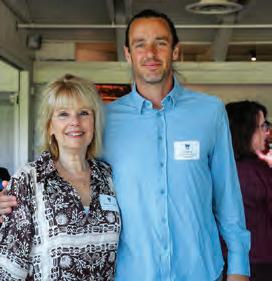
This fall, Wellington alumni came together in meaningful ways that showcased the strength and warmth of our community.
In Chicago, over 25 Jags from across generations gathered for an unforgettable evening of connection, laughter, and shared memories. From recent graduates to longtime alumni, the energy in the room was electric—a true testament to the enduring Wellington spirit. Beloved faculty members Chris Robbins P ’17 ’22 and Sara Brdar P ’02 ’03 joined the festivities, reminding everyone of the lasting relationships that define the Wellington experience.
Back in Columbus, alumni parents from founding families to the Class of 2026 gathered at The Boat House for the Parent of Alumni Luncheon. The event was a beautiful celebration of Wellington’s legacy, rekindling connections, and forming new friendships.
Another special evening took place at The Kitchen, hosted by Families Flourish and sponsored by alumni parents
Carl Faller P ’15 ’18 ’18 and Mary Finnegan P ’15 ’18 ’18. The event featured acclaimed speaker Hanif Abdurraqib and brought together alumni, including Jacquie
Sierzputowski ’18, Jakaysha (Williams) Hookfin ’18, Chris Robbins P ’17 ’22, Carolyn Faller ’15, and Alex Tannous ’16. It was a powerful reminder of the impact Wellington alumni continue to make in their communities and the joy of reconnecting with one another.
Whether near or far, Wellington alumni continue to show up for each other—and for the school that helped shape them. We’re grateful for every opportunity to celebrate what it means to be a Jag.
PICTURED
1: Jane Forbes P ’02 ’04 and Duncan Forbes ’04
2: Soleil Tibbets-Barnes ’19, Jaedyn Gaines ’19, Chris Robbins P ’17 ’22, Jameela Askira ’22, Eliza McLaren, Adriane Thompson ’20, Teddy Kent ’09, Ian Fout ’09, Tyler Furste ’08, D.J. Bruno ’09, James Hutcherson ’98
3: Marisa Bain P ’99 ’06 and J.J. Bain ’06
4: Gloria Redding P ’01 and Denise Hickson P ’01
5: Liz Kazemi ’17 and Manijeh Kazemi P ’17
6: Jacquie Sierzputowski ’18, Jakaysha (Williams) Hookfin ’18, Chris Robbins P ’17 ’22, Carolyn Faller ’15, Alex Tannous ’16

NORA RAAB ’26