The Wealth Mosaic is a curated online marketplace directory of solution providers and solutions relevant to the business needs of the global wealth management community.
Our online directory includes 3,175+ technology and related Solution Provider profiles and well over 7,000+ categorised solutions from across this community. This resource is supported by an extensive library of knowledge resources.
2 Marketplaces
39 Business needs
3,175+ Business profiles
7,000+ Solution profiles
6,000+ Knowledge resources
Discover The Wealth Mosaic >
Foreword
By April Rudin of The Rudin Group and Nick Rice of Brunswick Group
With technology moving from the margins to the core of wealth management, April Rudin and Nick Rice set the scene – exploring how digital tools are reshaping client management, investments, crossborder wealth, philanthropy, and firm operations.
Introduction
By Douglas Thomson of The Wealth Mosaic
A window into the themes and trends that characterise this 2026 report: the shift from experimentation to execution; the centrality of technology to strategy, scalability, and competitive advantage in wealth management; the critical role of data in the successful implementation of AI tools; and how firms are navigating integration, regulation, client expectations, and disciplined investment, to turn technology capability into sustainable advantage.
16
36 Data & Insights
By Stephen Wall of The Wealth Mosaic
A curated collection of relevant insights and data points about the state of WealthTech in 2026, providing an empirical foundation for the perspectives that follow. We follow up with a presentation of the Top 10 trends that we believe will characterise the WealthTech space in the year ahead.
Showcases 68 Industry Perspectives
A collection of seven thoughtful pieces, each giving a different perspective on the WealthTech sector in 2026, covering AI simulation, operational transformation, holistic estate management, technology strategy, agentic AI, talent bottlenecks, and innovation culture. Our industry perspectives offer a set of grounded principles on where wealth management technology is heading – and what it will demand of firms that intend to lead.
With the shift in WealthTech from experimentation to execution, we present a pair of technology-focused showcases that explore this shift from different perspectives. Together, they illustrate how WealthTech is moving beyond surface-level efficiency gains and into the structural heart of day-to-day modern wealth management.
Foreword
After many years of lurking in the shadows, technology is now integral to every aspect of the global wealth management industry.
For our recently published book ‘Wealth Management with a Difference’, we spoke to more than 80 industry leaders and experts around the world. From those conversations, it is clear that technology has emerged as an enabler of every major commercial opportunity in wealth management, in addition to being an opportunity in and of itself.
We identified several client opportunities where technology will be especially critical. Millennials and younger generations are accumulating wealth rapidly and tend to be heavier users of certain types of social media and other technology – creating a need for wealth managers to engage with these clients through new channels. As baby boomers settle into retirement and embark on the biggest decumulation of wealth in history, financial advisers need fresh tools that can help these clients draw down that wealth sustainably to fund their pension years and leave enough money for their heirs.
On the investment side, clients are seeking to broaden their portfolios beyond traditional stocks and bonds. The right technologies will be essential in helping them to model and understand how these alternatives fit into their overall portfolios, as well as to invest in them through a digital platform in a user-friendly way. Clients want to receive comprehensive data and analysis on their alternative investments and see them in a single statement alongside their traditional assets.
When it comes to their broader financial footprint, many investors are also becoming increasingly international. First, the era of remote or hybrid work has enabled clients to operate from a wider variety of locations. Second, deglobalisation has made clients’ geographic footprints more complicated – for instance, forcing them to establish a foothold in new jurisdictions as a political hedge. For wealth managers that work with international clients, establishing consolidated cross-border technology platforms can help make service more seamless.
This issue becomes even more complex when it comes to ultrawealthy individuals. Their balance sheets contain a greater proportion of international and alternative assets, but typically are also more intricately structured, with an array of investment vehicles and borrowing arrangements. For providers, there is an opportunity in building software that enables this balance sheet to be consolidated, analysed, and managed in the same place.
Finally, clients often wish to identify a purpose for their wealth and ensure their financial activities serve that purpose. Even in this emotionally charged area, technology plays a critical role. For instance, many clients use philanthropy to support their favoured causes, yet establishing the right structures for their philanthropy often involves a lot of paperwork that is crying out for automation. Clients also want more data and analysis on the impact of their philanthropy to ensure that it fulfils their intended goal. Some providers have seized this opportunity and are now helping to create a more standardised digital infrastructure for foundations and other philanthropic structures.
In 2026, it is no exaggeration to say that technology is everywhere in the wealth management industry.
In addition to addressing client opportunities, technology has also become essential to the way wealth managers run their firms. Mergers and acquisitions in the industry are in some cases partly driven by a business need for technology resources, or to create efficiencies and free up funds for tech capabilities. And while the industry continues to grapple with artificial intelligence (AI) and its use cases in wealth management, some firms will even be looking beyond that to applications from other advanced technologies such as quantum computing.
Perhaps most importantly, the advent of AI and other new tools will allow wealth managers to automate many administrative or technical tasks, freeing up time to spend with clients. Ironically, this will mean that financial advisers will likely be incentivised to focus even more on emotional intelligence than technical brilliance and on getting to know their clients, and their financial circumstances, on a deeply personal level.
Although McKinsey has predicted there will be a shortage of 100,000 advisers in the US alone by 2034, that figure may be lower if AI can do some of their work for them.
In 2026, it is no exaggeration to say that technology is everywhere in the wealth management industry. Wealth managers that remain curious about technology and deploy it in the right way in their business will have an increasingly significant advantage over their peers.
Technology has emerged as an enabler of every major commercial opportunity in wealth management, in addition to being an opportunity in and of itself.
By April Rudin, Founder & CEO, The Rudin Group, and Nick Rice, Director, Brunswick Group
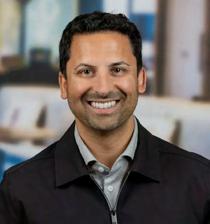
April Rudin Founder & CEO
The Rudin Group
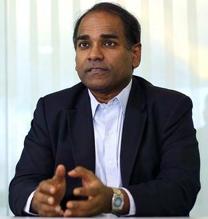
Nick Rice Director Brunswick Group
Technology now has become inseparable from the day-to-day operations of wealth management. It is shaping how advice is delivered, how portfolios are constructed and governed, how compliance is evidenced, how client relationships scale, and how firms differentiate themselves in increasingly competitive markets.
Letter Editor's
Welcome to the WealthTech 2026 report from The Wealth Mosaic, our annual sense-check on the outlook for the WealthTech industry. It’s an exciting time to be returning to our WealthTech annual series because, as you’ll see in the pages that follow, technology in wealth management is now moving from the ideas and promises phase to the phase of delivery.
Technology now has become inseparable from the day-to-day operations of wealth management. It is shaping how advice is delivered, how portfolios are constructed and governed, how compliance is evidenced, how client relationships scale, and how firms differentiate themselves in increasingly competitive markets.
This report shows how this shift is playing out – unevenly, but decisively – across regions, business models, and client segments. When we and our contributors describe wealth management technology in this report, we’re not talking speculatively about a distant, AI-driven future; we’re talking about a real, AI-driven present day where wealth management firms are already seeing returns on the technology investments they’ve made in recent years.
You will learn in these pages why AI is no longer best understood as a standalone innovation initiative, but as a capability that exposes the quality of a firm’s underlying foundations: data, integration, architecture, and governance. Several articles examine what happens when AI is layered onto fragmented systems – and, more importantly, what becomes possible when
those foundations are coherent. The contrast between ‘experimentation’ and ‘execution’ runs throughout the report.
You will also see how technology is enabling the scope of wealth management itself to expand. Traditional portfolio-centric views are giving way to holistic perspectives that incorporate private markets, complex family structures, intergenerational considerations, and outcomesbased advice. Technology is not simplifying this complexity but making it visible, manageable, and actionable at scale.
Technology is also enabling firms to reassess their approach to regulatory compliance, risk management, and client trust. From consumer outcomes to cybersecurity, the report explores how data-driven, explainable, and repeatable capabilities are becoming essential – not only for compliance but for credibility with boards and clients.
There are still barriers in the way – organisational, cultural, and talent constraints that slow progress. There is a widening gap between firms that have modernised their core and those that have accumulated disconnected solutions. Not every firm needs to move at the same pace, but every firm needs a path. Direction matters now more than intent.
We hope you find in this report clarity – about the trade-offs you face, the assumptions you need to challenge, and the foundations that will determine whether technology becomes for you a source of advantage or friction in the years to come.
Stephen Wall Founder
The Wealth Mosaic
Introduction
Change is in the air. In 2026, the wealth management industry is facing a moment of inflection rather than continuity.
At this moment, that change isn’t principally coming from the broad structural forces that have shaped the sector for years – such as demographic change and intergenerational wealth transfer, intensifying regulatory scrutiny, ongoing consolidation, shifting asset allocations, and rising client expectations. The big change underway right now is the role technology plays in responding to those forces. Technology has moved from an enabling function at the margins to a central determinant of strategy, scalability, and competitive positioning.
This year’s report reflects an industry transitioning from exploration to execution. After years of experimentation with digital platforms, cloud infrastructure, and early artificial intelligence (AI) use cases, firms are now focused on delivery: embedding technology deeply into operating models, aligning it with firm-specific strategies, and extracting measurable value.
Firms are no longer asking whether to invest in technology. They are asking how to deploy it effectively, how to integrate increasingly complex technology stacks, and how to ensure return on investment in a capital-intensive and highly regulated environment.
Much of the technology discussion is about AI in particular, as we move away from the learning, pilots, and proof-of-concept initiatives that have characterised the AI space for the last few years. 2026 marks the point at which AI becomes operationally consequential. Firms are moving beyond surface-level automation and content generation towards more embedded applications across front, middle, and back office functions. This includes advisory support, portfolio insights, compliance monitoring, onboarding, and operational workflows.
But, as this WealthTech 2026 report makes clear, there are challenges ahead as we enter this phase. AI amplifies both strengths and weaknesses. Without robust data foundations, integrated systems, and coherent architectures, advanced AI capabilities remain constrained. Many firms will find their new AI-enabled technologies to be a stress test of their underlying technology and data maturity.
That makes data a foundational theme running through the entire wealth management landscape. The ability to collect, structure, govern, and activate data consistently across an organisation underpins nearly every strategic ambition – from personalisation and client experience to regulatory compliance, cybersecurity, and AI enablement.
Firms that have invested in unified data strategies are increasingly able to move faster, personalise more deeply, and scale insight across their businesses. Those that have not done so face a future characterised by rising complexity and diminishing returns, as point solutions accumulate without integration.
Technology investment itself continues to rise across regions and business models, reflecting both competitive necessity and a recognition of historic underinvestment. However, the focus is becoming more disciplined. Rather than simply adding new tools, firms are reassessing their technology estates through the lenses of integration, optimisation, and strategic fit.
The ability to collect, structure, govern, and activate data consistently across an organisation underpins nearly every strategic ambition.
Long-standing debates around whether to buy, build, or rent technology are evolving into more nuanced and pragmatic decisions, that are often influenced by the growing maturity of third-party platforms and the configurability enabled by modern, API-driven architectures. Technology is also shaping and being shaped by client expectations. The more it can do, the more clients expect it can do. Yesterday’s “wow!” is tomorrow’s baseline requirement.
Technology is enabling the extension of more sophisticated propositions further down the wealth spectrum, such as private markets access and family office-style services. This is reshaping both the product mix and the service models that firms can viably deliver.
Regulation and risk form an equally important part of the 2026 landscape. Cybersecurity threats are growing in sophistication alongside digitalisation and AI adoption, reinforcing the need for resilient, well-governed systems.
Regulatory regimes are evolving away from an emphasis on process and towards demonstrable outcomes, increasing demand for data-driven monitoring, explainability, and repeatability at scale. Here again, technology is not merely a compliance tool but a potential source of competitive advantage for firms that build robust and outcome-focused capabilities.
Taken together, the themes in this report point to a sector at the outset of a more consequential phase of transformation. WealthTech in 2026 is no longer about experimentation or hype. It is about execution, discipline, and alignment that turns capability into advantage.
Technology is shaping and being shaped by client expectations. The more it can do, the more clients expect it can do.
WealthTech in 2026 is no longer about experimentation or hype. It is about execution, discipline, and alignment that turns capability into advantage.
In
this report, you will find a range of insights from across the world of WealthTech to bring you a broad view of where this industry sits today and where it’s heading tomorrow.
We open with an exploration of the Data and Insights into current spending on technology in wealth management, and go on to present our high-level view of the top trends characterising WealthTech in 2026.
The report provides a window into some of the recent thought leadership and market visualisation The Wealth Mosaic has produced – including previews of recent publications in our WealthTech Insight Series, and our well-appreciated AI Market Map.
We also present an interview with Tom Wooders, UK and Ireland head of Allfunds, who speaks to the challenges and opportunities associated with accessing the alternatives market.
The report contains a range of industry perspectives, showcasing thought leadership from across the WealthTech sector on themes including: the WealthTech skills gap; operating architecture; holistic wealth management; AI simulations of client behaviour; regional divergence in AI adoption; and a five-pillar approach to AI adoption. And finally, it contains a pair of solution showcases from two leading WealthTech vendors, which show how technology can help firms evidence regulatory compliance and strengthen advisory relationships.
The firms that are set to enjoy the years ahead are the ones that have prepared in the years behind. They are the ones who treat technology not as an end in itself, but as an integrated enabler of trust, relevance, and sustainable growth, in an increasingly complex and demanding wealth management environment.
WealthTech 2026 marks the point at which preparation becomes performance, and where disciplined execution determines which firms convert technological capability into sustainable growth.
Firms are no longer asking whether to invest in technology. They are asking how to deploy it effectively, how to integrate increasingly complex technology stacks, and how to ensure return on investment in a capital-intensive and highly regulated environment.
Annual Event WealthTech 2026, US
Join us at WealthTech 2026: US edition, an exclusive insight-led afternoon event focused on WealthTech in 2026 and hosted in partnership with EY.
Taking place at EY’s New York headquarters from 12:00 PM to 5:00 PM on 29th April 2026, this event will bring together a range of players across the US wealth management ecosystem to discuss the leading themes at play for technology in and around the wealth management sector.
Why attend?
With 150+ senior wealth management executives attending, including industry professionals from banks, broker-dealers, RIAs, credit unions, and family offices, the event is designed for peer-level discussion, practical insight, and meaningful connection.
Attendance is free for qualifying wealth managers, with a limited number of paid passes available for vendors, investors, and consultants.
Interested in participating in WealthTech 2026?
Discover more and book a meeting today. Read online >
Featuring new insights
This event follows the release of our WealthTech 2026 annual report, which explores the key trends, themes, and challenges impacting the wealth management sector this year. The report features perspectives from leading global contributors and provides actionable insights for executives looking to translate investment into realworld results.
Eary-bird passes
Vendors can receive a 25% discount for tickets booked in February using the code TWMEarlyBirdFeb25
Attendance is free for qualifying wealth managers, with additional discounts available for TWM members. Don’t miss this opportunity to secure your place early and take advantage of these offers.
Scene Setter Data & Insights
Welcome to our Data & Insights section. This is designed to provide a curated collection of relevant insights and data points about the state of WealthTech in 2026, to provide an empirical foundation for the perspectives that follow in this report. It highlights the trends in technology, investment, and spending that we see in the market at the moment, and offers valuable perspectives for wealth management professionals operating in this thriving market.
The year 2026 may become a decisive one, for technology and for its deployment and impact across the global wealth management sector. Although many elements will stay the same or evolve at a similar pace to their historical norm, the role and capabilities of technology, and in particular of Artificial Intelligence (AI), promise fundamental and potentially seismic change across the sector. If recent years have seen firms learning, exploring, and testing, 2026 might really see them deliver broad-based engagement and delivery.
At the same time, all the usual drivers of the industry’s ongoing evolution will also be at play:
• Enhanced client experience, together with expanded expectations and increasing wealth transfer;
• Compliance with new and adapted regulations;
• Changes and updates to the product and service mix;
• Portfolio allocation shifts to meet not only short-term return and risk management but also long-term trends;
• Ongoing M&A and industry consolidation;
• The shifting of the target operating model towards delivery on firms’ individual strategies.
Technology, while a standalone theme in itself, also plays a key role in the delivery of these and many other themes of change and evolution across the wealth management sector. Although a rising theme for the last decade and more, the current prominence of technology’s role in delivering, enabling, and also challenging the industry’s norms is unprecedented. 2026 might very well be a breakthrough for technology’s role across the industry and the perception of it.
If recent years have seen firms learning, exploring, and testing, 2026 might really see them deliver broad-based engagement and delivery.
Spending on technology
Although individual firms will make their own decisions, it is no surprise to hear that many across the global wealth management sector are likely to increase their spending on technology in 2026. Indeed, this is a multi-year theme, which might be due to the oft-cited criticism that the industry has not invested enough in technology over the years; or it may be a simple need for firms to invest in technology across their businesses to stay competitive and relevant in a rapidly evolving landscape.
Given the clear lack of global definitions regarding what constitutes wealth management, there is relatively little data available that captures the true global picture. It might be possible to capture data for the biggest and most international firms, but for many parts of this hugely fragmented industry – not to mention some of the tucked-away jurisdictions – spending analysis is very hard to determine.
The long tail and relative diversity of wealth management players globally (financial advisers, investment managers, family offices, etc.) is also strikingly hard to cover.
That said, by pulling some elements together, we can create a broad overview.
In Celent's 2024 report, Wealth Management IT Spending Forecasts by Technology, 2023 – 2028, the analyst firm highlighted wealth management technology budgets expanding across business models, wirehouses, banks, independent broker-dealers, and registered investment advisers (RIAs).
That report projected total global spending to grow steadily at a 4.5 percent CAGR over the 2023 - 2028 period, to reach a total of US$66.9 billion in 2028.
Figure 1: IT spend across global wealth management, 2023-2028 Source:
The Celent report also categorised spending, predicting that the two fastest growth areas will be services and cloud. Why? According to Celent, because both cloud computing and external services “enable cost savings, agility, and scale”. Cloud migration is a key trend, according to the Celent Technology Insight and Strategy Survey (CTISS), a supporting survey from the analyst firm, which found 63 percent of wealth management firms believing they will move more of their needs to the cloud.
With a similar growth trajectory highlighted, a recent study by the US website wealthmanagement.com found that 67 percent of wealth management firm respondents expected their technology budgets to increase in 2026, with the survey indicating an overall 3.3 percent year-on-year increase in operational technology budgets. Regarding the coming year’s technology budget, respondents were even more likely to predict an increase (79 percent) than were those in the 2023 study (68 percent).
Looking at the United Kingdom, research from BWC Benchmarking has pinpointed technology spend across the wealth management industry in the UK as having nearly trebled over the past 10 years, from £349 million (US$471.6 million) in 2014 to £909 million (US$1.2 billion) in 2024, with notable step increases since the pandemic. In 2024, the rise was as high as £175 million (US$236.5 million) compared to the previous year (a 24 percent year-on-year increase). As a percentage of revenue, this has increased from 5.9 percent in 2014 to 8.8 percent in 2024, as firms increase their focus on technology.
Turning back to the United States, but looking specifically at the RIA segment, a recent article on Investipal explored technology spending by firm size, citing research and data from the 2024 InvestmentNews Advisor Benchmarking Study and The Schwab 2025 RIA Benchmarking Study
Figure 2 : Non-staff related IT spend in UK wealth management industry (£m)
Figure 3: Technology spending by firm size in the United States
Source: Investipal, InvestmentNews, Schwab
Citing those same sources, Investipal’s article argues that US RIAs should budget an annual spend of between 3 percent and 8.4 percent of revenue for technology – similar figures to those cited by BWC Benchmarking with respect to the UK. But, if anything, this may be underplaying things.
Referencing research from Datos Insights, this article in Financial Planning suggests a far higher budget commitment from wealth and asset managers, typically between 15 percent and 20 percent of their operating budgets.
Spending on technology – focus areas
Referring again to the recent wealthmanagement. com study referenced above, US respondents' top three areas of focus for technology spend in 2026 are: customer relationship management (CRM), financial planning, and portfolio management and reporting. See Figure 4 for the complete list of focus areas.
Top technology focus areas for US wealth management firms in 2026
Source: wealthmanagement.com, 2026
Figure 4: Top technology focus areas for US wealth management firms in 2026
Data & Insights Conclusion
Technology is no longer a supporting function or a series of disconnected tools as we begin 2026. It is now the central determinant of strategy, scalability, and long-term competitiveness for the sector as a whole. Wealth management has stopped asking itself whether to invest in technology. It is now firmly focused on how to deploy it effectively, how to extract value, and how to align it with broader business objectives.
After years of experimentation, learning, and foundational investment, many firms are entering a new phase of delivery. Data infrastructure, cloud migration, and modern platforms are increasingly in place, creating the conditions for more advanced capabilities – most notably AI –to be embedded across the operating model. AI is no longer a theoretical opportunity but a practical enabler, supporting everything from client engagement and personalisation to operational efficiency, compliance, and portfolio insights.
At the same time, technology investment is rising in tandem across different geographic markets. This reflects not only competitive necessity but also pent-up demand, after years of underinvestment. The research we have cited here highlights sustained growth in IT spending globally, with firms clearly prioritising CRM, financial planning, and portfolio management and reporting.
The challenge for firms’ technology journeys is not just the acquisition of and access to technology, but how well that technology is integrated, optimised, and turned towards ROI. As their technology stacks become more complex, and as vendor ecosystems expand, firms will have to make their infrastructure work as a coherent whole.
The year ahead will reward firms that take a pragmatic, strategic, and disciplined approach to technology. Those firms will be the ones that revisit and challenge their long-held assumptions, engage actively with the WealthTech ecosystem, and ensure that their technology initiatives are closely aligned with firm-specific strategies, rather than industry hype.
WealthTech in 2026 is about turning capability into competitive advantage. Technology ultimately is not an end in itself, but an enabler – of trust, of relevance, and of growth, in an increasingly demanding and dynamic wealth management landscape.
The challenge for firms' technology journeys is not just the acquisition of and access to technology, but how well that technology is integrated, optimised, and turned towards ROI.
Top 10 WealthTech Trends
Data, AI, cybersecurity, integration, and other core topics will be at the centre of the wealth management sector’s focus in 2026.
Could it be that 2026 will be the most impactful and far-reaching year to date in terms of the role of technology in and around the global wealth management sector? Sure, we’ve been here before. We’ve heard the hype. Every year, analyst and consultant reports come with gamechanging headlines, and the pressure has built up, with a reaction imminent. The tipping point is upon us. But wealth management and probably many other industries have a real habit of carrying on regardless, the same topics in play year-on-year, seemingly little changing as the years pass.
Perhaps we are wrong, but the arrival and development of artificial intelligence (AI) and its increasing encroachment into the mindset and operational activities of wealth managers feel more real now, more like the beginning of genuine change. Is 2026 the year that AI across wealth management really starts to deliver on its promises? The challenges, the pressures, the threats, the opportunities, the need for change – the stars might be aligning for real technological change to come into effect across the sector.
Many elements of the sector will undoubtedly stay the same or evolve at a similar pace to their historical norm, all of which is good thing (at least for everyone’s sanity). But there is much that now feels ripe for a faster pace of change, setting course into the wealth management industry of the future, now that a critical mass of firms have done their learning, exploring, and testing.
2026 is the year of action
Technology spend, as highlighted by Celent in its 2024 report, Wealth Management IT Spending Forecasts by Technology, 2023–2028, is on the rise every year at a 4.5 percent CAGR.
And there is much to spend that money on. For us, looking across all the noise, reading the research and hearing all the conversations in forums, on our website, and so on, there is a wide set of areas where the wealth management sector might spend its technology budgets.
All the usual drivers of the industry’s ongoing evolution are at play: enhanced client experience, together with expanded expectations and increasing wealth transfer; compliance with new and adapted regulations; changes and updates to the product and service mix; portfolio allocation shifts to meet not only short-term return and risk management but also long-term trends; ongoing M&A and industry consolidation; the shifting of the target operating model to delivery on firms’ individual strategies, and so on.
The data foundation
The role of data across broad aspects of wealth management is becoming increasingly critical. Firms need to understand their data footprint, be able to understand, store, and categorise it, and access and use it where needed.
The role of AI
AI will drive further into the operational model of wealth management, across front, middle and back office needs. A significant number of firms have moved beyond discovery and learning to testing and implementation. The AI train has left the station.
Cybersecurity and fraud prevention
The cybersecurity risks facing wealth management are increasingly sophisticated, multi-vector, and influenced by factors including increased digital transformation, AI adoption, and regulatory expectations. In this environment, enhanced cybersecurity and fraud protection capabilities will be essential to protect the industry’s growing number of digital client interactions and long-held position of trust.
Integration, optimisation, and ROI
As the criticality of the technology infrastructure grows, firms need to focus more on some core aspects of their technology infrastructure efforts, including integration, delivery optimisation and ROI.
Buy, build, or rent evolves
As the complexity of the needs and solutions in the technology sphere continues to develop, firms will update their view on the ‘buy-vs-build-vs-rent’ debate. While ‘build’ was the historical norm, ‘buy or rent’ has become more the norm as the third-party solution market has grown and developed.
Ecosystem engagement
Wealth managers will seek to broaden their engagement with the growing ecosystem of technology solution providers to the sector. WealthTech is increasingly sophisticated and capable, providing a diversity of offerings.
Personalisation
With the increasing adoption of modern technologies, especially in the era of AI, the theme of personalisation is moving beyond theory to reality. Like others, this is a theme that is not standalone but sits alongside or on top of other topics included here – data, AI, client experience, etc.
Momentum in private markets and alternative investments
Technology solutions will be fundamental in supporting the growth of private market and other alternative investment options through the wealth management marketplace. There are four core elements to the role of technology: distribution, accessibility, operations, and management.
Further enhancing client experience and digital engagement
The increasing capabilities of technology, on top of data foundations and AI enhancements, will allow firms to deliver enhanced, real-time, and seamless digital experiences.
Enabling family office-style services
There is an almost daily flow of news about the growth in family office numbers and, alongside that growth, how technology and evolution in supporting models are allowing for some democratisation of access to family office-style services. 2 3 4 5 6 7 8 9 10
The foundation of The Wealth Mosaic
Discover our solution provider directory
Our solution provider directory is the foundation of The Wealth Mosaic, an international resource covering a wide variety of vendor offerings and the largest global WealthTech vendor directory of its kind.
It hosts over 10,000 business and solution profiles – covering a wide range of providers and their offerings that target the everyday business needs of wealth management firms worldwide. Each of these is categorised in the 25 business needs you will find described here – together providing the essential resources firms need to tackle the challenges and embrace the opportunities of wealth management today.
Wealth management firms need solutions and tools to help them access, understand, and manage intelligence around their business. Our BIPM category includes a range of solutions that help firms with specific processes like fee billing and revenue management, and help to understand their business through data insights, business and individual performance tools, customer interactions, and more.
Explore each of the 25 business needs in our Solution Provider Directory in the following pages.
Firms increasingly want BPM&O solutions and tools to bring greater efficiency and clarity to their processes. Similarly, many firms have sought to identify different areas within their business to outsource to third-party providers to deliver efficiency and cost savings, allowing them to focus on the core aspects of their business.
The wealth management industry wants to be seen as being driven by the needs of its clients. CC&R solutions focus on providing the client with the right information, at the right time, through the right channel and in a format that is, increasingly flexible, personalised, and interactive.
The ways in which wealth management firms engage with and manage their client relationships is changing. Changing client expectations and the role of technology represent a threat to the traditional engagement and management model – but also an opportunity to create a more engaging and profitable model.
How does a wealth management firm or individual wealth manager identify, reach, understand, and engage clients in today’s world? As technology enters the fray, there are a whole host of new CM&P solutions and tools to support and enable this important goal, many of which have been built specifically for this sector.
The relevance and importance of CO&IV has increased significantly in the digital age – as have the compliance responsibilities of wealth managers. Consequently, identifying a client and providing them with an easy, streamlined, and modern onboarding experience has been a core focus for many wealth managers in recent years. This is a pain point that is crying out for improvement.
As regulations, demands, and risks continue to evolve, wealth managers must continue to evolve their responses, processes, and technologies. Fortunately, there has been an active response from technology and robust RegTech solutions have emerged to support the compliance and regulatory needs of wealth managers.
CB solutions represent the stable building blocks on which wealth managers with a banking side to their business can deliver new products and services. Solution providers in this area are evolving as the sector evolves, with their breadth and depth making them a great ‘platform’ for many other FinTechs to work with.
The dangers and risks related to cybersecurity are growing as the technology marketplace, its capabilities continue to advance, and as do the depth, reach, and connectivity of digital tools. C&NS solutions are those that help firms understand their risks, stay updated and protect their systems, networks, data, people and reputations in this changing dynamic.
Wealth managers rely on the quality of data and information they can access to deliver investment management services to their clients. Amid changing investor preferences, challenging markets, evolving investment products, and the democratisation of access to knowledge, the need for intelligent, fast, and accessible DF&IS is more critical than ever.
A strong DM&A capability can deliver a true competitive differentiator to a wealth management firm across multiple aspects of their business, opening up the ability to better understand and service clients, provide a more personalised proposition, maintain compliance, identify risk, and open up new investment opportunities. In some areas, these are fast becoming table stakes.
The digitalisation of wealth management continues to grab attention as firms seek new ways to reach, engage, and serve clients, new means to empower their advisers, and new processes and solutions to improve their businesses. Faced by new regulations, client expectations, rising costs of doing business and new competitive threats, digitalisation is high on the agenda.
Whether engaging new clients, serving them at a lower fee, allowing them to self-serve, or considering the positive impact on the costs of doing business, DRI is an area of huge change and with the potential for far more development.
Distributed ledger technology (DLT) is a digital system for recording the transaction of assets in which transactions and their details are recorded in multiple places at the same time. Blockchain is considered the best-known type of DLT and powers many cryptocurrencies including bitcoin.
DM&S is a core business need of the wealth management sector as it faces: a more highly regulated environment, greater demands from clients and advisers, and risk from factors such as document loss, breaches, fraud, and poor processes, to name a few.
F&RP is receiving extra focus in a market that is moving to become more client-centric and less productcentric. As wealth managers seek to develop deeper relationships with their existing and prospective clients by offering these often-complex services, they need relevant technology solutions and tools to support their proposition, delivery, and service management.
With the greater capability and power of computing, a broad range of new IP&T solutions has arrived in this space over the recent years, and new offerings continue to arrive to tackle areas of need and opportunity for wealth managers –whether focused on investments, clients, advisers or processes.
No wealth management business could operate without the necessary ‘plumbing’ required to run their businesses. Our M&BI category covers the technology services that support wealth managers’ financial markets needs, such as settlement and messaging, as well as their business needs, such as cloud services, cyber tools, and more.
PBA&R covers the growing range of offerings that support a wealth manager as they build, analyse, and report on the portfolios they manage for clients. The depth and specialisms of the solutions and tools available continue to increase – a trend which on the one hand makes life easier, and on the other brings more complexity.
Our SD&M category aims to cover all of the solutions and solution providers that can support wealth managers in developing software and technology, for example mobile app development, as well as managing various aspects of their technology infrastructure.
The role of risk management has evolved as the sector has developed new business needs and new influences have driven change. Whether focused on investments, compliance, clients, cybersecurity, or other aspects, our RA&M category covers a broad range of solutions and tools to support wealth managers in identifying, monitoring, analysing, and managing their risks.
For many wealth managers, a core piece of technology infrastructure to deliver their services to clients is some form of P&WMS. With the business needs of wealth managers expanding, from data to regulatory to clients and more, this piece of infrastructure has evolved significantly over the years – moving from a core accounting and portfolio management focus to a broader set of functionalities to support a wider set of responsibilities.
T&BO solutions remain fundamental to the set-up and successful delivery of many wealth management businesses. Due to the broad and ongoing changes taking place around the technological capabilities available to wealth managers, this area also continues to evolve.
Although our digital marketplace directory is focused on business-tobusiness solutions, it also includes many technology tools now directly available to the client – including information delivery, planning tools, investment platforms, investment support tools, consolidation platforms, or more. Our TFC category helps wealth managers discover and understand what tools exist that go direct to the client.
As the technology infrastructure and needs of wealth managers change, it has become increasingly hard for any wealth management firm to remain up-to-date and able to determine and deliver their technology strategy. The solution providers in our TS&C category provide external resources and specialist knowledge that are more critical than ever for any firms to remain relevant and competitive.
Research collection WealthTech Insight Papers
This research colleciton is part of The Wealth Mosaic’s WealthTech Insight Series (WTIS), an ongoing research process, mixing online surveys and interviews, and focused exclusively on technology in the wealth management sector across the world.
Interested in participating in research?
Get in touch for more details and research opportunties.
Get in touch >
AI and analytics in wealth management
Sponsored by
Explore how AI-powered analytics and actionable data insights are driving competitive advantage in wealth management.
Read more >
Playbook for technology spend
European wealth playbook for growth
Uncover the past, present, and future of technology spend and transformation in the UK wealth management sector.
Read more > Sponsored by
Discover the factors driving expansion and transformation in the European wealth management industry.
Read more > Sponsored by
Optimising revenue management
Sponsored by
Explore how revenue management is transforming from a purely operational concern to a competitive differentiator.
Read more >
An interview with Tom
Wooders
The Wealth Mosaic sits down with Tom Wooders, UK and Ireland Regional Head at Allfunds, to discuss how open architecture and data infrastructure are expanding access to private markets and helping wealth managers deliver better client outcomes at scale.
Accessing alternatives with Allfunds
How do you define Allfunds’ core value proposition in the WealthTech ecosystem, and how is that evolving as client expectations and portfolio complexity increase?
I see the core of the Allfunds value proposition as being the intersection of distribution data and client decision-making. We provide asset managers and wealth managers with efficient access to a broad set of products, and we do so through a single open architecture platform.
It’s our contention that open architecture is actually now becoming a necessity – based on ongoing technical evolution, regulatory change, and client expectations. We offer a centralised hub both for funds research and onboarding. But more than that, we provide the benefits of interoperable data.
We offer adaptability of investment process and enhanced regulatory governance. And by modernising access to funds, Allfunds therefore is streamlining what were previously operational complexities.
To the second part of your question, we're also providing value-added insights as enablers to our clients’ investment processes. That could be with regards to portfolio construction, but also understanding of risk as well.
So, all of those facets put together – that's really our value proposition, and where we're really adding value is helping our clients navigate added market complexity.
With personalisation becoming a baseline expectation for clients, how are you adapting to the greater demand for more tailored, goalbased portfolios?
I think it's becoming increasingly a client expectation that they have access to tailored investment solutions: we have a whole series of tools to support decision-making on that basis.
I mentioned our funds and other product research and selection capabilities already, but we've also got data insights with respect to portfolio composition and rebalancing: these tailored insights are now helping wealth managers to, for example, trade in a way that’s consistent with their clients’ investment goals and stated objectives.
So with that combined capabilities set, what is key is our support for their decision-making: it's not merely reporting, as it probably has been in the past. Now, a major focus in this regard is more that it's us giving access to the tools to make those decisions, as opposed to just providing the results of those decisions. That includes things like portfolio healthchecking, tracking, real-time feedback – all of these things that allow clients to adjust their allocations quickly to respond to market and regulatory change, and ultimately align to their clients’ goals.
Tom Wooders
Regional Head, UK and Ireland
How can technology help make private markets a more practical and mainstream component of client portfolios, while still supporting governance, suitability, and education?
At the generic level, technology can remove friction that's inherent in the investment process. In the private market assets context, it can make it easier for clients to access and understand these.
Wealth managers have been opening up access following recent UK governmental and regulatory support; they also want to meet greater client demand, which really stems from the need for greater product diversification. But there’s also desire on the part of investors for long-term capital growth. So we have a set of digitised tools which help address some of those goals, and the legal and regulatory complexities that come with these products.
I think an important part here is providing enhanced product information and transparency. The goal with Allfunds is that we're following the same path that we followed previously with traditional funds, to reduce the operational complexities associated with the distribution of private market assets.
An interview with Tom Wooders
What
are the main barriers
today when it comes to access to alternatives and private markets, and how are you tackling those barriers?
Operational complexity, lack of transparency, and fragmented product data. Our approach to tackle those is very much at the infrastructural level, standardising the way in which alternative products are distributed. Many of these products have high minimum investment thresholds. They have complex structures, and these can make them somewhat opaque and potentially therefore less accessible to investors.
Our platform seeks to streamline and simplify the operational aspects of these assets. That includes, for example, mitigating due diligence complexity; it includes our provision of centralised data management, which eases the operational burden. And from a regulatory standpoint, we've also developed a robust suitability assessment tool which helps firms match private market opportunities to client profiles.
How should firms rethink their use of data to improve decisionmaking and client outcomes?
Many wealth firms still have siloed data –for instance, performance and risk data are separated in many cases. The key is to have aggregated or holistic data, which much more powerfully allows firms to see perceived patterns, conditions, and risks which they might otherwise overlook. And this in turn drives more scalable business processes.
The goal here is to turn data into meaningful and actionable business insights.
I think a challenge for wealth managers isn't so much data scarcity, it's actually data relevance. In our tools, such as nextportfolio4, we combine advanced data analytics and visualisation tools to transform what can be fairly complex data into more intuitive patterns, so firms can see both the resonance and the anomalies as per their investment strategies. That presents opportunities for those firms for decisionmaking that is more attuned to clients’ specific stated objectives.
What we're really doing is helping firms manage complexity. We're helping them turn what can be constraints into market advantage.
Tom Wooders
How does Allfunds help clients deliver personalised portfolio outcomes at scale, without increasing operational burden?
This really boils down to increased automation and also greater integration across tech and data ecosystems. At its core, Allfunds brings together execution, custody, data analytics, and reporting. All of those together remove inefficiencies, they remove fragmentation, and instead provide a centralised point for investment reporting and consistency of workflow.
Our solutions – for example nextportfolio4 and Allfunds Connect – allow clients to act off the back of centralised data. They can manage portfolios and monitor performance from the same point, and they can also support underlying clients – all in one single environment. The automation of workflow reduces manual tasks, the embedded control support brings regulatory alignment, and our data management tools reduce operational risk and help enhance resilience.
These tools allow firms to balance personalisation with control, creating scalable models that meet client expectations, but also they remain super-efficient and, importantly, compliant as well.
What are the most significant WealthTech trends you anticipate over the next five years, and how is Allfunds positioning itself to lead or adapt to these trends?
There's many I could choose from, but I suppose the most significant would be the ongoing digitalisation of client and product onboarding that moves towards more centralised singlesource data. Off the back of that, we’re seeing greater requests for meaningful insight and investment decision-making.
I think open architecture is important in this industry: the ongoing deployment of blockchain and DLT, specifically around infrastructural processes, platform consolidation, and ongoing means of achieving greater connectivity.
Where do we sit with all of that? We are very much a long-term infrastructural partner to our clients. We offer what I call ‘specialism at scale’, by providing a complementary set of data distribution and digital tools that can evolve with client needs, as those needs evolve over time.
Meeting those trends going forward, connectivity and compliance are the key hallmarks of that offering. But what we’re really doing is helping firms manage complexity. We're helping them turn what can be constraints into market advantage. Our digital and tech platforms simplify that entire lifecycle of investment – reducing complexity and streamlining, through technological enablement, processes that previously were more cumbersome and fragmented.
Industry Perspectives
Wealth management’s conversation around technology is shifting. Professionals are no longer asking what is possible, but what is practical and what will genuinely create value.
Technology in wealth management is no longer defined by experiment alone. Instead, its impact is being felt in operating models, adviser roles, client expectations, and competitive dynamics across the industry.
The articles in this collection explore that transition. They reflect a market moving beyond hype-driven narratives towards a more exacting examination of how technology reshapes the fundamentals of wealth management: how advice is delivered, how firms scale, how insight is generated, and how trust is maintained in an increasingly automated environment.
You will find in these pages many-sided picture of artificial intelligence (AI) – including agentic workflows, AI simulation, and data-centric architectures that each play distinct roles, and only deliver value when they are supported by coherent foundations. Several of our contributors highlight a growing divide between firms that have invested in scalable operating architecture and those layering new tools onto fragmented cores. In this sense, AI is less a solution than a stress test that exposes both strength and fragility.
This collection also shows how technology can widen the lens of wealth management itself: from portfolio-centric models to holistic estate perspectives; from static research to continuous behavioural simulation; from prompt-driven automation to goal-oriented agency. The scope of wealth management is expanding in tandem with the tools created to manage it.
Competitive advantage in 2026 will not come from adopting technology quickly, but from integrating it deliberately – aligning data, architecture, governance, and talent around a clear vision of value.
We hope you will find these articles useful. They do not offer a single blueprint, but they do offer a set of grounded perspectives on where WealthTech is heading – and what it will demand of firms that intend to lead.
By Sameer Munshi, Head of Behavioural Science and Simulation at EY
By Murali Nadarajah, Chief Information Officer at Eton Solutions
By Kendra Thompson, Founder and Principal at Epok Advice
By Dominique Jooris, CEO and Founder and Chris Morris, CTO and Co-Founder at WMCockpit
By Mark Yeo Tee Shen, Ambassador at The Wealth Mosaic
By Sharmil Patwa, Founder at Opus Una and Andy Elphick at Anglia Ruskin University Generative
By Jim Tousignant, Founder and CEO at FinTech Studios Innovation in wealth management:
How AI simulation accelerates growth in wealth and asset management 1
Replacing guesswork with continuous intelligence
By Sameer Munshi, Head of Behavioural Science and Simulation at EY
Artificial Intelligence (AI) simulation is reshaping how wealth and asset managers understand client behaviour, make decisions, and design strategy. Rather than relying on delayed or biased traditional research, firms can now model real-world decisions with speed, accuracy, and scale.
A new paradigm for strategic insight
Traditional decision-making suffers from two major flaws:
1. Distortion: surveys capture what people say , not what they do, and are heavily influenced by social desirability, incentives, fatigue, and hypothetical bias.
2. Delay: by the time data is collected, analysed, and interpreted, market dynamics have already shifted.
AI simulation addresses both issues. With advances in agentic AI and synthetic populations, organisations can simulate real-world behaviours at scale, test strategic ideas before acting, and adapt to market changes and events in real time. What formerly required months of research can now be reproduced in hours.
The EY organisation recreated the 2025 EY Global Wealth Research Report using technology from Aaru, an AI simulation startup. The result: a 90 percent median correlation across 53 questions and 3,600 respondents, completed in a single day. More importantly, in areas where survey responses diverged from actual behaviour, AI simulation proved more accurate than traditional research.
With advances in agentic AI and synthetic populations, organisations can simulate real-world behaviours at scale, test strategic ideas before acting, and adapt to market changes and events in real time.
How AI simulation works
At the core of AI simulation are synthetic agents – digital agents built from real-world demographic, outcomes-based, and sentiment/ preference data. Large language models dynamically generate unique temporally aware, real-world agents equipped with human features that represent the desired audience with traits such as age, income, risk preferences, and decision tendencies.
These agents behave autonomously, weighing trade- offs, evaluating choices, and forming opinions. Unlike simple chatbots, they follow behavioural architectures that mimic human decision logic, producing transparent, traceable patterns in an auditable logic trail.
This approach solves a longstanding challenge: people consistently overstate their willingness to pay, their sustainability priorities, or their risk tolerance when no real consequences are involved. AI simulation removes this gap between intent and action by modelling the behaviours people are likely to exhibit under realistic conditions based on data demonstrating how people have actually behaved in the past.
Major organisations are already applying this approach. Interpublic Group uses Aaru to predict marketing campaigns’ performance before launch. Heartland Forward modelled AI sentiment across 20 US states in days rather than months. Political parties are reproducing election outcomes for primary candidates.
People consistently overstate their willingness to pay, their sustainability priorities, or their risk tolerance when no real consequences are involved.
The simulation's closer alignment with reality highlights how behavioural modelling cuts through aspirational or socially acceptable responses.
The power of behavioural accuracy
To test the reliability of AI simulation, EY compared simulation results with both its survey data and with third-party industry statistics. Two insights illustrate the difference between stated and actual behaviour:
The inheritance loyalty myth
• Survey (what heirs say): 82 percent of heirs claim they’ll remain with their parents’ adviser.
• AI simulation prediction: 43 percent will remain.
• Real world: only 20 – 30 percent actually stay.
The simulation’s closer alignment with reality highlights how behavioural modelling cuts through aspirational or socially acceptable responses. For wealth managers, this insight reframes intergenerational retention – not as an assumed outcome but as a challenge requiring early, deliberate relationship building.
The consolidation contradiction
• Surveys: 69 percent say they prefer a single financial provider
• AI simulation: 37 percent prefer a single provider.
• Reality: roughly 33 percent of high-networth individuals use just one adviser
Clients say they want simplicity but behave in ways that prioritise specialised expertise, not convenience. AI simulation exposes these behavioural contradictions, helping firms craft acquisition and retention strategies that are grounded in authentic behaviour.
From guesswork to real-time strategic confidence
Beyond traditional surveys, AI simulation transforms how strategy is conceived, tested, and executed. The real advantage is not speed, but the shift from static to continuous intelligence.
Organisations can rerun simulations in response to market shifts within 24 hours. Rate changes, political events, product launches, or competitor moves can all be analysed immediately. Neither fieldwork, nor recruitment are required: AI Simulation produces instant behavioural projections.
This enables new strategic possibilities across the value chain:
Strategic planning
• Replace annual planning cycles with ongoing scenario testing.
• Model competitive dynamics, pricing strategies, and customer reactions in real time.
• Predict defection risk before it manifests.
Product development
• Understand likely adoption curves before development begins.
• Test user experience across thousands of simulated interactions.
• Identify the optimal mix of features, pricing, and messaging.
Risk management
• Stress-test strategies against rare or unpredictable events.
• Model cascading effects before they occur
• Build organisational resilience with simulated crisis scenarios.
AI simulation doesn’t replace human judgement or traditional research; it complements them. It provides a new behavioural lens that reveals the likely outcomes of strategic decisions before they are executed.
AI simulation transforms how strategy is conceived, tested, and executed. The real advantage is not speed, but the shift from static to continuous intelligence.
Figure 1: Comparing traditional and AI-driven intelligence
Traditional intelligence
Relies on surveys, interviews, and assumptions
AI simulation intelligence
Uses LLM-generated audiences to predict behaviour
Takes months to deliverRuns in hours
Static snapshots
Based on stated behaviour
Limited sample sizes
Continuous monitoring
Based on predicted actions
Unlimited scale
Historical Forward-looking
Requires PII compliance No PII required
Human bias and heuristics
Source: EY
Agents can't lie or get tired
A fundamental industry transformation
AI simulation represents a shift as significant as the move from paper maps to GPS. Instead of extrapolating from old data, firms can explore new markets and test strategies across numerous scenarios. It accelerates research, enhances insight quality, and unlocks new levels of strategic precision.
EY is not simply observing the transformation –it is co-creating it. Through proven methodology, validated accuracy, and hands-on implementation with clients, EY is helping to shape the future of strategic intelligence.
The question for organisations is no longer whether AI simulation will redefine decisionmaking. It’s whether they will lead the transformation – or be left behind.
This publication contains information in summary form and is therefore intended for general guidance only. It is not intended to be a substitute for detailed research or the exercise of professional judgement. Member firms of the global EY organisation cannot accept responsibility for loss to any person relying on this article.
Sameer Munshi
Sameer
Munshi
AI simulation transforms how strategy is conceived, tested, and executed. The biggest advantage is not speed, but the shift from static to continuous intelligence.
Head of Behavioural Science and Simulation
EY
AI will expose which firms built for scale – and which built for show 2
The firms that lead will be those that modernise their internal architecture before their client-facing tools
By Kendra Thompson, Founder & Principal at Epok Advice
The average wealth management adviser still copies-and-pastes client data between five systems before generating a proposal. They manually reconcile household positions across multiple custodians. They wait 48 hours for approval on straightforward changes because the supervision queue behaves like a 1990s document management system. And they spend Tuesday mornings reconstructing meeting notes because their customer relationship management (CRM) programme doesn't speak to their planning tool, which doesn't speak to their portfolio management system.
AI won't fix this. It will expose it.
Here's what the industry is learning: AI requires clean data, standardised system adoption, integrated supervision, and operational architecture that most wealth management firms simply don't have. After a decade of ‘digital transformation’ focused on net new capability additions and digitising paper, the core of most technology stacks remains untransformed and fundamentally unscalable.
The gap is widening between what AI can do and what most firms can support AI in doing. And that gap will determine which firms scale efficiently into the next era of advice and which spend the next three years explaining why their technology investments haven't moved the productivity needle.
The firms that win won't be those with the most AI pilots. They'll be those that rebuilt the middle and core while everyone else was adding point solutions to an already-fragmented stack.
The gap is widening between what AI can do and what most firms can support AI in doing.
Firms with modern architecture compound their advantage with every AI capability they deploy, while firms with legacy architecture compound their complexity.
Why client-facing-first feels right, but isn't
The modernisation pattern across the industry is remarkably consistent: invest in clientand adviser-facing capabilities first, address operations later.
Build the portal. Launch the app. Digitise the forms. Let’s try one more time to fix onboarding. Make the experience look modern while the back office still runs on manual processes and disconnected systems.
This approach is unsustainable: it not only digitises dysfunction, but it also magnifies it.
AI trained on inconsistent data produces inconsistent recommendations. Workflow automation layered onto fragmented systems accelerates that fragmentation. Generative tools building on incomplete client records surface incomplete insights. The constraint isn't AI sophistication. It's the absence of the integrated foundations required to automate safely, scale efficiently, and generate reliable insight.
The three-year roadmaps most firms are defending were built on assumptions about technology maturity, vendor capability, and implementation timelines that have fundamentally shifted. The tools firms waited 18 months to deploy have been overtaken by a new generation of API-rich, LLM-enabled platforms that can be configured in weeks, but only if the operational core can support them.
When we solve for skinny use cases, capability gaps,or have long backlogs of point integration, adviser adoption training, and stump speeches trying to drum-up positive field feedback, we know we are designing by noise – not for the scalable core.
The constraint isn't AI sophistication, it's the absence of the integrated foundations required to automate safely, scale efficiently, and generate reliable insight.
What modern architecture actually enables
Other firms are pulling ahead not because they have better models, but because they have the architecture to support them.
These firms are running dynamic, tax-aware household rebalancing that operates across multiple account types, optimising for timing, cost basis, and withdrawal sequencing in ways that would be impossible to execute manually at scale. AI enables the speed; unified data architecture enables the accuracy.
Advisers are using AI tools that generate structured meeting notes, classify discussion themes, surface risk indicators, suggest followup actions, and sync everything to the CRM automatically, because the systems share a common data framework and can interpret context reliably.
Compliance teams are deploying AI-driven supervision that monitors patterns rather than documents, flagging suitability drift, concentration risk, or behavioural anomalies in real time, rather than discovering issues during quarterly reviews. Product teams are using AI to detect when specific client segments consistently prefer particular investment structures, then feeding those insights back to improve suitability algorithms and surface better recommendations proactively.
Paper is disappearing entirely. Not because firms scan more documents, but because AI converts documents into structured data that systems can reason over.
These aren't future concepts. They're production capabilities at firms that have prioritised architectural coherence over feature accumulation. These firms are innovating faster now because their modernised core supports rapid capability deployment without breaking the stack or overwhelming advisers.
This is the competitive dynamic that matters: firms with modern architecture compound their advantage with every AI capability they deploy, while firms with legacy architecture compound their complexity.
The firms that began rebuilding their operational core three years ago are already pulling ahead.
AI changes what advisers do, not whether they're essential
Technology will not replace advisers. Full stop.
What it will replace is the heroic practice model. The one where each adviser builds their own operating system from scratch, maintains workarounds, coordinates workflows manually, and somehow delivers excellent advice despite the infrastructure rather than because of it.
For all the velocity in AI development, the core function of advice remains profoundly human. Clients need help making decisions, navigating uncertainty, and feeling confident about their financial futures. Primacy comes down to trust and intimacy, not technology features.
The goal isn't to make advisers more efficient at administrative work. It's to eliminate that work entirely so advisers can focus on what only humans can do: the nuanced, emotionally intelligent, deeply personalised guidance that builds lasting client relationships.
The work that disappears includes manual note capture, spreadsheet-driven product comparisons, suitability pattern detection done by memory, reconciliation across misaligned systems, and evidencegathering for supervision.
What emerges is a scalable, insight-driven model in which advisers deliver more value per hour because the infrastructure beneath them is coherent, modern, and designed for intelligence rather than information storage.
First-movers are already compounding their advantage
The firms that began rebuilding their operational core three years ago are already pulling ahead. They are deploying capabilities competitors cannot match, not because they have better tools, but because they have better foundations.
This gap is widening. Operational transformation takes 24 to 36 months in most firms. Every quarter spent debating whether to modernise is a quarter first-movers spend deploying new AI capabilities, improving adviser productivity, and lowering their cost to serve.
The firms that achieve operational scale will break away from those that don't. And in an AI-enabled market, that breakaway won't be linear, it will be exponential.
Fix the foundations, and modern technology becomes a catalyst. Ignore them, and every new capability becomes harder to integrate, harder to govern, and harder to scale.
The architecture you build today determines your cost to serve, your pace of innovation, and the quality of insight your advisers can bring to clients tomorrow. That is the real competitive frontier.
Kendra Thompson Founder Epok Advice
The firms that achieve operational scale will break away from those that don't. And in an AI-enabled market, that breakaway won't be linear, it will be exponential.
Kendra Thompson
From portfolio management to wealth management: an evolutionary progression 3
From fragmentation, complexity, and disconnected advice to a holistic perspective.
By Dominique Jooris, CEO and Co-Founder and Chris Morris, CTO and Co-Founder at WMCockpit
Holistic estate management –the state of affairs today
Banks, independent asset managers, and many family offices will label their activities as wealth management, even though it is actually portfolio management that constitutes most of their activity.
Traditional ‘wealth management’ tools focus predominantly on tradable securities, with varying degrees of liquidity. These typically only account for an estimated 30 percent of an ultrahigh-networth-(UHNW) client’s true balance sheet.
The remaining 70 percent – including private equity, real estate, operating companies, trusts, and personal assets – is often siloed in spreadsheets, legal documents, and scattered reports. Most importantly, the data sources to reliably identify this 70 percent are often absent.
There is a proverb in Ghana’s Twi language: “You must eat the elephant one bite at a time”.
The WealthTech industry did just that, focusing on manageable subsets of issues.
Platforms have emerged to address portfolio consolidation, online cash transactions and accounting for family offices, visual representations and data repository for family structures, or domestic tax-driven asset aggregation models.
This fragmentation of technology solutions results in perspectives on an estate that are neither unified nor dynamic. Such perspectives don’t help to identify complicated crossjurisdictional-tax exposures, family governance issues, or even consolidated financial issues. Advisers work in isolation, increasing operational risk and missing strategic opportunities.
The fragmentation of technology solutions results in perspectives on an estate that are neither unified nor dynamic.
Why does this matter?
With bank portfolios available online, near-instant stock trading execution, and blockchain-based notarised property transfer titles, one could argue that technology is pulling its weight already.
But although these take a bite of the proverbial elephant, that elephant remains. Technology solutions address parts of the client's needs, without addressing the whole.
Take the field of regulatory suitability, where investment advisers are obliged by their national supervisory bodies to assess the adequation of the risks in a portfolio to a client’s financial situation and knowledge. It is well-intended, but has often lacked real-world grounding.
Even with identical statements about risk sensitivity, investment horizon, and financial literacy, a US$5 million portfolio should be managed differently if it is the entire wealth of an individual than if it is the speculative cash of a billionaire. Now regulators are moving in that direction.
A holistic perspective is needed. For instance:
Jurisdictional risk across an estate matters. Legally harbouring a large percentage of assets in a single country may create concentrated exposures from legal, tax, or even reputational perspectives, as the publication of the Panama Papers reminds us. In a fully legally compliant context, the tax situation of individual family members will be anything but homogenous.
The difference between economic entitlement and legal title matters. You may control a portfolio, directing your private banker to buy or sell securities, and treat it as ‘yours’. But if you have gifted it to your heirs to mitigate inheritance tax, you may no longer own it for legal purposes and it should not be included in your own estate when it comes to your individual creditworthiness.
Finally, hidden concentrations must be identified. If a Singaporean family owns a large family home in Singapore, runs a family business, and holds a portfolio of securities, they may think that they are diversified. But if the family business is a real estate development company and the securities in the portfolio are domestic real estate investment trusts (REITs), they are in fact 100 percent concentrated in a very narrow country/sector matrix: Singapore/real estate.
Perfection doesn’t exist –but strive for it anyway
The holistic representation of an estate is fraught with limitations – for example, how asset prices vary over time. Your securities portfolio will vary by the minute, but you may only get a valuation of your home every two years for insurance purposes. Business owners may have benchmarks for the value of their enterprise, but no matter how professional their financial advisers are, they will carry a fair degree of subjectivity.
There are other complexities. Assets you may have gifted your children may have been of identical value to one another a year ago, but a divergence in their reference currencies may have broken the status quo. Downloading a stake in a multinational food and drinks supplier into your model as a CHF-denominated, Swiss company may be legally correct, but it could be economically wrong given the global footprint of the company.
In a nutshell, the ‘perfect data set’ is an unattainable goal when you move from portfolio to estate analysis.
The lightbulb wasn't invented by continually improving the candle
Holistic estate management will need to follow a number of steps to deliver on the promises that current technology holds.
It requires not merely a dashboard, but a decision framework that redefines the architecture of wealth advice. That framework should enable advisers to act as ’conductors’ of a client’s entire wealth ecosystem, coordinating external experts (for example, mortgage brokers or tax specialists), and earning legitimate referral fees while delivering holistic solutions.
By providing a continuous, structured view of the estate, together with portfolio updates, such a platform becomes part of the rhythm of the advisory relationship, deepening client retention and moving interactions away from sporadic product sales toward ongoing wealth stewardship.
The 'perfect data set' is an unattainable goal when you move from portfolio to estate analysis.
Providing a unified platform that connects assets, legal entities and people can empower family offices and private banks to manage complexity with clarity, ensure governance, and secure intergenerational legacies.
A foundational layer for the future of wealth: the natural evolution of current systems
We founded WMCockpit to address these issues – bridging these critical gaps by providing a single source of truth that connects every asset, legal structure, and stakeholder. This approach moves beyond digitising financial assets to digitising the entire estate architecture, including legacy, succession, and estate planning – areas that have historically been trapped in paper and spreadsheets. Providing a unified platform that connects assets, legal entities, and people can empower family offices and private banks to manage complexity with clarity, ensure governance, and secure intergenerational legacies.
CEO & Co-Founder WMCockpit
Morris CTO & Co-Founder
In an era where trust, transparency, and holistic advice are paramount, WMCockpit offers a quiet but powerful proposition: a single source of truth for the whole wealth picture. It represents a paradigm shift in wealth technology. With holistic wealth aggregation (including portfolio consolidation), estate mapping, and scenario planning, the platform offers a solid backbone up on which AI-powered engines provide additional insights and functions, from managing FX exposures to highlighting tax risks.
Against the backdrop of mono-line capabilities facing commoditisation, the shift from transactional to structural advisory is a crucial development vector for the wealth management industry.
Dominique Jooris & Chris Morris
Dominique Jooris
Chris
Report collection Toolkit Report Series
Our series of focused reports on thematic, geographic and segmental aspects of wealth management, the Toolkit report series is created specifically to provide a focus on the key technology themes and tools impacting wealth management today. They are a simple and consistent means for wealth managers to engage with relevant vendors, and for vendors to tell the market who they are, what they do, and where they are relevant.
US RIA Toolkit 2026
This report is focused on the key themes and currents impacting wealth management around the world. It features 14 industry participants, all bringing different perspectives on the RIA segment and its challenges, opportunities, and future.
Read online >
Interested in participating in our reports?
Get in touch for more details and editorial opportunties.
Get in touch >
Future View Toolkit 2025
The Future View Toolkit 2025 report highlights the trends, challenges, and opportunities associated with future-readiness in wealth management. It showcases six technology offerings focused on future-proofing the wealth management industry.
Read online >
UK Toolkit 2025
This report examines the shape of wealth management in the UK today, and how leaders in the market are tackling the challenges of new technology, a changing client demographic, and how to stand out in an increasingly crowded field.
Read online >
CX Toolkit 2025
This report focuses on client experience trends in the wealth management sector and showcases 11 technology offerings, each aimed at enhancing an element of the CX.
Read online >
FEATURED REPORT
AI Toolkit 2025
The AI Toolkit 2025 report examines how AI is reshaping the future of wealth management, driving innovation across advisory, investment, and client service models, analysing its impact on the strategies and operations of wealth management firms.
Read online >
The five pillars of transformation 4
Why technology strategy now determines survival and success
By Jim Tousignant, Founder & CEO at FinTech Studios
For decades, competitive advantage in wealth management has been built on brand reputation, adviser relationships, distribution reach, and incremental product innovation. Today, those traditional foundations are eroding rapidly. The emergence of artificial intelligence (AI) – especially large language models (LLMs), autonomous AI agents, and data-centric architectures – is fundamentally reshaping how investment insight is generated, how clients are served, and how firms scale operations and compete in the ’Age of AI’.
The wealth management industry now faces a stark choice: either lead the AI-driven transformation or risk becoming obsolete. The time to act is not ‘sometime this decade’. The time is NOW.
The five pillars of transformation in wealth management
AI-native wealth-management firms must look very different to traditional wealth management firms today. This significant difference in focus, culture, technology, and process has direct and practical implications for wealth managers, financial advisers, CIO teams, operations leaders, and executive management.
Here are the top five pillars of transformation for wealth management firms in 2026:
1. Large language models (LLMs): the new intelligence engine
LLMs represent far more than conversational chatbots. In wealth management, they function as a generalised reasoning layer across news, filings, investment research, portfolio construction, compliance, and client engagement.
By processing natural language at scale, LLMs can synthesise earnings calls, macroeconomic releases, regulatory updates, alternative data, and proprietary research to generate contextual insights in real time in multiple languages. They can also create human-quality content – market commentary, portfolio updates, client emails, hyper-personalised newsletters, and investment rationales – automatically and at scale.
For advisers, this means less time spent drafting explanations and more time spent on judgement, strategy, execution, and relationship-building. For CIO teams, it means faster idea generation and richer signal extraction from vast information flows.
The wealth management industry now faces a stark choice: either lead the AI-driven transformation or risk becoming obsolete.
2. Agentic workflows: autonomous operators for core processes
The second pillar is the rise of agentic workflows – autonomous AI systems capable of executing complex, multi-step tasks independently. These agents do not merely retrieve information; they connect to other agents, make decisions based on real-time data, and adapt as conditions change.
In the context of wealth management, agentic workflows can:
• Continuously monitor markets and rebalance portfolios when thresholds are breached;
• Track client cash flows and trigger investment actions;
• Generate compliance documentation and regulatory reports;
• Flag portfolio drift and tax-optimisation opportunities; and
• Coordinate onboarding and know-yourcustomer (KYC) processes across systems.
The result is a shift from human-centred operations with AI support to AI-centred operations with human oversight.
3. VIBE coding: rapid development without heavy IT bottlenecks
'VIBE coding’ is AI-powered natural-language programming that allows non-technical professionals to create applications, workflows, and tools quickly. Replit, Cursor, Loveable and Bolt are today’s leading VIBE coding platforms.
In wealth management, this enables portfolio managers, operations teams, and advisers to:
• Build custom dashboards for specific client segments;
• Create automated workflows for account reviews, newsletters, or client reporting;
• Prototype internal tools without long development cycles; and
• Experiment with new service models quickly and cheaply
This democratisation of software creation collapses the traditional divide between ‘business users’ and ‘IT’. Speed of experimentation becomes a strategic advantage.
4. AI-powered bots and agents: the 24/7 workforce
The fourth pillar is the rise of AI-powered bots and agents functioning as a continuous digital workforce. These include client-facing bots, operations agents, and research and analytics agents.
In practice, this means:
• Clients receive instant, personalised answers at any hour
• Advisers get real-time prompts about portfolio risks or opportunities.
• Research agents continuously scan markets, filings, and news.
• Operational agents reconcile accounts, process paperwork, and escalate exceptions.
These agents can generate recommendations, execute trades, and produce comprehensive reports – dramatically reducing turnaround time and operational friction.
5. Data as the ultimate differentiator: the new competitive pillar
The final and arguably most important pillar is data strategy. Data – not software alone – is the ultimate differentiator in modern wealth management.
This includes:
• Internal data – client holdings, interaction histories, proprietary research, operational intelligence; and
• External data – market intelligence, alternative data, macroeconomic indicators
Firms that integrate both these data types can create exponential data advantages when these datasets are fused with LLMs and AI agents.
This enables:
• Proprietary investment signals;
• Predictive client analytics;
• Automated market research; and
• Automated trade execution.
In other words, data becomes the raw material from which defensible AI capabilities are built.
Why data strategy is now a board-level issue
In a world where foundational AI models are increasingly commoditised, what differentiates firms is not access to GPTstyle intelligence, but access to unique, highquality, deeply contextual datasets. Wealth management firms possess extraordinarily valuable proprietary data: decades of client behaviour, portfolio performance histories, and investment decision outcomes.
When combined with external datasets and processed through LLM-driven analytics layers, this data can generate insights that competitors simply cannot replicate. This is how firms move from generic portfolio advice to hyper-personalised wealth strategies tailored to individual goals, risk tolerance, life events, and behavioural patterns.
From incremental digitisation
to AI-native architecture
Many wealth management firms believe they are already 'doing AI' because they use roboadvisers, analytics dashboards, or customer relationship management (CRM) automation.
But the shift now required is from incremental digitisation to AI-native architecture:
• Core workflows designed around agents, not humans;
• Data platforms built for continuous learning and prediction;
• Interfaces optimised for natural language and conversational interaction; and
• Rapid prototyping through VIBE coding rather than multi-year IT roadmaps.
This is not a technology upgrade. It is an operating-model transformation.
The strategic imperative: lead or become obsolete
The wealth management industry is at a critical juncture. Firms must choose to either lead the transformation with AI capabilities or risk becoming obsolete.
Those who embrace AI, LLMs, and agentic workflows in 2026 will be able to deliver unprecedented value to clients and build sustainable competitive advantages. Those who delay will find themselves competing against firms that operate faster, personalise deeper, and scale at radically lower marginal cost.
The message is unambiguous: the future of wealth management belongs to the innovators. The time to act is now.
Firms must choose to either lead the transformation with AI capabilities or risk becoming obsolete.
Technology strategy is now business strategy
In the Age of AI, technology strategy is no longer a back office concern. It is business strategy.
Wealth firms that align around the five transformation pillars – LLMs, agentic workflows, VIBE coding, AI agents, and data-centric architecture – will redefine what ‘best-in-class’ service means. They will operate with greater intelligence, greater speed, and greater personalisation than anything the industry has previously seen.
Those who fail to engage decisively with these technologies will not simply fall behind. They will become structurally uncompetitive.
In this new era, the defining question for every wealth management executive is no longer whether to adopt AI. It is whether their firm will lead the transformation – or be disrupted by it.
Jim Tousignant
Jim Tousignant Founder & CEO FinTech Studios
Generative AI automates. Agentic AI thinks. 5
How family offices are crossing the automation barrier
By Murali Nadarajah, Chief Information Officer at Eton Solutions
For several years, family offices and wealth managers have utilised automation to handle routine tasks – generating reports, summarising client meetings, and streamlining data entry. Generative AI represented a significant leap forward in this journey, moving the industry beyond rigid, rule-based software and allowing teams to create content on the fly.
However, even with these advancements, the model remained fundamentally reactive: every time a variable changed, a human professional had to step in to re-prompt and redirect the tool.
We are now entering the era of agentic AI, where the focus shifts from individual ‘prompts’ to overarching ‘goals’. In this new framework, instead of telling the AI what to do, you define what you want to achieve. This is the design philosophy behind platforms like EtonAITM, which move beyond simple content generation toward autonomous problem-solving.
From prompts to goals: the logic of agency
In a traditional generative setup, an investment analyst might prompt an AI to "generate a quarterly market summary”. It does so, but if a new regulation is passed the next day, the human professional must manually intervene to update the report.
With an agentic model, the analyst sets a permanent goal: "Keep this report aligned with our investment objectives and incorporate any relevant external regulatory shifts." The AI agent then autonomously tracks those changes, synthesises the information, and prepares an updated draft. By shifting the burden of monitoring and ‘thinking ahead’ to the AI, the family office moves from simple automation into a space of intelligent collaboration.
We are now entering the era of agentic AI, where the focus shifts from individual 'prompts' to overarching 'goals'.
Agentic AI in action: scaling complex workflows
To see the difference in practice, consider high-friction operations like BillPay and trust distributions – areas that traditionally require significant manual oversight. Eton Solutions has observed this evolution firsthand, transitioning these workflows from manual extraction to agentic reasoning.
Managing multi-party distributions
In the generative AI phase, technology could read a document, such as a capital call, and then extract data to create a payment instruction. While fast, this remained a linear process: one document in, one instruction out.
The agentic model operates within a broader context. Imagine a family office receiving a remittance notice from a trust detailing payments to a dozen different beneficiaries, each with unique instructions and compliance requirements.
An AI agent recognises the objective: execute a multi party distribution while maintaining strict compliance. It cross-references payees against trust documents, verifies internal rules, and prepares all 12 transactions simultaneously. This occurs within a permission-based architecture, where the AI performs the synthesis but stops at a predefined governance gate for human authorisation. The bill pay operator is no longer doing data entry; they are performing a highlevel audit.
Navigating nuance and intent
Agentic AI also excels in ‘grey area’ scenarios where instructions are scattered across an email chain.
For example, consider a vendor dispute where an email thread confirms a 50 percent partial payment agreement because a service wasn't fully rendered. A standard tool might see the original invoice and suggest paying the full amount. An AI agent reviews the entire conversation history, infers the intent of the agreement, and automatically adjusts the payment instructions to reflect the discount. It then attaches the relevant email snippets as supporting evidence for the human approver.
This ability to interpret nuance ensures that management is only brought in to apply judgment, not to reconcile conflicting data points.
Strategic scale: moving from automation to synthesis
The transition to agentic AI marks a fundamental shift in how family offices scale. Generative AI helped individual employees work faster; agentic AI allows the entire office to scale without a corresponding increase in headcount.
In this era, the AI acts as a proactive coordinator – gathering data, recognising patterns, and aligning daily operations with long-term objectives. The role of senior management evolves from ‘checker’ to ‘strategist’. The AI handles the ‘heavy lifting’ of data synthesis, while the human professional adds the essential layer of insight and final judgement.
Conclusion: a new era of collaboration
Agentic AI is not merely a faster tool; it is a partner in synthesis. It allows family offices to navigate the complexities of modern wealth management with a level of adaptability that was previously impossible.
By crossing the automation barrier, firms can achieve a seamless integration of AI efficiency and human wisdom, transforming the family office into a more responsive, intelligent, and scalable enterprise.
Generative AI helped individual employees work faster; agentic AI allows the entire office to scale without a corresponding increase in headcount.
Murali Nadarajah Chief Information Officer Eton Solutions
Beyond the hype: AI integration in wealth management operating models 6
Identifying the real bottleneck to AI’s true potential
By Mark Yeo Tee Shen, Ambassador at The Wealth Mosaic
Over the last few years, I have watched our wealth management industry chase one transformational promise after another. Microservices would replace rigid monolithic architectures. Cloud migration would unlock agility and scale. Digital platforms would democratise access and reshape client expectations.
Yet at a WealthTech conference in 2022, a senior private banker from one of the oldest private banks in Switzerland offered a sobering confession: "I've worked in this industry for 10 years, and nothing has fundamentally changed."
Now, in the past three years since ChatGPT's launch, artificial intelligence (AI) and more specifically, generative AI (GenAI) has emerged as the new transformational theme. Will AI suffer the same fate of being extensively talked about on conference stages and in thought leadership articles, yet never meaningfully adopted in practice?
Let’s look at how advisers and firms are actually adopting AI in their operations. To do so, I have examined public case studies and vendor client testimonials in the ‘Adviser Tools’ category of The Wealth Mosaic's latest AI WealthTech Market Map. I can categorise my findings into three levels:
Level One: GenAI for content creation and note-taking
According to testimonials I have seen, many clients simply use GenAI solutions for routine tasks: producing periodic investment commentary, drafting client emails, or summarising virtual client meeting notes for upload to customer relationship management (CRM) systems. Although helpful, these are wildly underutilising what AI is capable of.
Level Two: Agent AI powering specific end-to-end workflows
Some wealth management firms adopt agents for single-objective, bounded workflows: creating investment analyses, generating advice proposals, automating client onboarding, etc. These agents deliver efficiency within their lane, but they operate in isolation. Each workflow begins and ends within its own silo, and any transition to the next step still relies heavily on humans stitching the process together.
Level Three: Multi-agent orchestration across multiple workflows
This is where the promise becomes truly transformative, with specialised agents completing their stage and seamlessly handing off to the next. Imagine: once onboarding finishes, an agent automatically generates the investment proposal and submits it to the client. Once approved, another agent executes the implementation.
For this to work in practice, agents need a standardised way to access data across disparate systems and pass context between workflows – a challenge that protocols like Model Context Protocol (MCP) are beginning to address. A fully linked chain like this
would minimise human touchpoints across onboarding, advice creation, and execution –fundamentally reshaping the operating model rather than simply accelerating it.
Most firms sit somewhere between Level One and Level Two. For now, Level Three still feels largely conceptual. Perhaps some are building it quietly or simply have not yet found a way to make it work.
The scepticism among advisers
I have also been speaking with wealth advisers about whether agentic AI could actually scale their practices. The business case is compelling: advice is service-intensive, offering attractive recurring revenue, but is also plagued by low margins and long conversion cycles. If AI could expand adviser capacity without sacrificing personalisation, the value proposition would be enormous.
But when I have raised this possibility, I have found scepticism more than enthusiasm. Common concerns advisers raise include the following:
• Regulated advice requires clear auditability, yet most agentic systems don't produce a transparent reasoning trail.
• When an output differs from the modelcalculated answer, there's often no way to pinpoint where the reasoning broke.
• And even with the same inputs, the system does not always generate consistent outputs.
These concerns are valid, but they do not invalidate the potential for agentic AI to scale wealth advice while retaining personalisation. Most of these concerns are largely agent-design problems rather than fundamental technological limitations. With the right architecture, clear constraints, and domain-specific guardrails, many of these gaps can be reduced.
If AI could expand adviser capacity without sacrificing personalisation, the value proposition would be enormous.
The real bottleneck: a talent problem
Adoption of new technologies in wealth management has a track record of being relatively slow compared to other industries. Although AI is still in its early stages, there is a risk that operational AI in wealth management firms will be adopted far later than any other industry would have already implemented it.
One could blame the regulatory environment of wealth management. But from my personal experience working in both investment and non-investment functions across London, India, and Singapore, both for established wealth management firms and for highly innovative WealthTech scale-ups, I have formed another view: the more fundamental reason for slow technology adoption is our industry's critical lack of cross-domain talent possessing both investment finance and software engineering expertise.
I suspect that the individuals who do have this blend of skills (i.e. the quant developers) often gravitate toward quant-driven hedge funds that are better structured and compensated. In these firms, quant developers' research, models, and implementation directly influence the bottom line, just as software engineers drive revenue in SaaS companies.
By contrast, in wealth management, career pathways, incentives, and internal recognition still seem to favour sales and relationship management over technical talent. The result is a structural disadvantage in attracting and retaining the very people needed to operationalise AI effectively in the wealth management industry.
In wealth management, career pathways, incentives, and internal recognition still seem to favour sales and relationship management over technical talent.
Conclusion
To whichever wealth management firm that can blend operational AI capabilities with deep domain expertise: Carpe Diem! Although operational AI will eventually be commoditised, proprietary domain expertise in investment portfolio construction and the ability to deliver superior investment outcomes remain difficult to replicate.
Whoever can close this chasm between technological capability and financial expertise will win significant market share among modern customers who expect seamless user experiences while also enjoying differentiated investment outcomes. This is the moment when competitive advantage can be built.
And, in rebuttal to that Swiss banker's lament, perhaps in the near future wealth management can look fundamentally different.
To whichever wealth management firm that can blend operational AI capabilities with deep domain expertise: Carpe Diem!
Mark Yeo Tee Shen
Mark Yeo Tee Shen Ambassador The Wealth Mosaic
Innovation in wealth management: AI, digital assets, and an innovation culture 7
How firms can ready themselves for innovation success
By Sharmil Patwa, Founder and Managing Director at Opus Una Financial Services Consulting, and Andy Elphick, Business Clinic Director and Senior Lecturer, at Anglia Ruskin University
We have entered a new era in wealth management. Margin compression, commoditisation of products and services, lower technology barriers to entry, and a new generation of demanding clients mean firms must innovate to survive. In this article we will discuss some of the areas in which we are seeing the greatest innovation and how firms can set themselves up for innovation success.
Artificial Intelligence (AI)
Artificial intelligence (AI) is proving to be the key technology enabler of our generation, but we are only at the tip of the iceberg. Trends that we believe will be transformative include:
• A shift from generative to agentic AI: this represents a movement from thought to action.
• Use of AI simulations: these can go further than predicting market returns, but can model the interplay between a client’s personal situation, macro trends, and realtime portfolio shifts.
• Data as a differentiator: with AI becoming a common commodity that most wealth managers have access to, it is the richness and quality of data that dictates accuracy.
The challenge for leaders is to manage the desire of their boards to drive the efficiencies that are reportedly available through the adoption of AI – even as, in reality, the outcomes which those board members expect, and which customers desire, are held back by poor data.
Most firms’ technology architecture is ‘app-centric’. They need to move to a data-centric strategy, and an architecture where every app accesses the same central source of truth; where security is at the data layer; and where data is self-describing.
The benefits are clear:
• A huge reduction in integration costs, as there is no need to move data from place to place;
• Their data is AI-ready; and
• From an app perspective, firms can ‘Plug and Play’.
Most firms' technology is 'app-centric'. They need to move to a data-centric strategy, and an architecture where every app accesses the same central source of truth; where security is at the data layer; and where data is self describing.
Digital assets
The transformational potential of distributed ledger technology (DLT) is increasingly being accepted within financial services, and is creating the momentum needed for digital assets to enter the mainstream.
This is the area where the greatest opportunity to innovate on a value proposition exists. Factors include:
• A generational shift in wealth, as younger generations build digitally enabled portfolios and expect their advisers to support these preferences;
• Increasing demand amongst ultra-highnet-worths (UHNWs) and family offices;
• Digital assets maturing into a legitimate institutional asset class;
• Tokenisation of real-world assets, allowing fractional ownership in traditionally illiquid markets; and
• Cost benefits through elimination of intermediaries and operational overhead.
However, most wealth managers we speak to do not have a coherent digital assets strategy. Key challenges for firms include:
• An absence of the operational and technical ‘rails’ required to support digital assets;
• The need to find custodial solutions that satisfy risk departments, regulators, and customers alike;
• A legacy of regulatory uncertainty –although recent developments such as the proposed US Clarity Act should provide firms with increased confidence; and
• Concerns around enabling financial crime.
The wealth managers that will succeed are those that can find a way to successfully bridge traditional and decentralised finance. Central to achieving this objective will be the ability to partner with third parties that can provide the requisite infrastructure.
The wealth managers that will succeed are those that can find a way to successfully bridge traditional and decentralised finance.
Innovation culture
Many ingredients are necessary for a firm to be able to innovate, and instilling an innovation culture is foundational. Innovation should not be somebody else’s job – it should be a core component of everyone’s job.
Piyush Gupta, who transformed Singaporean bank DBS by creating a start-up mentality at scale, perhaps best exemplified this. DBS Bank’s core mission is ‘Making Banking Joyful’ – this clear mission provides the guardrails for innovation, enabling a culture where individuals feel empowered to develop ideas that will contribute to new products and services.
Central to this approach is the precept that customer needs should be prioritised above all else. Gupta built on Clayton Christensen’s 1997 work The Innovator's Dilemma: this introduced the concept of ‘jobs to be done’, highlighting that solutions must focus on the action that a customer is trying to achieve, rather than what a firm’s product is designed to provide them. A Wealth Manager’s job for example is not to beat an index, it may be ‘make me secure that I will be able to pay my children’s school fees’.
Innovation culture has shifted away from championing a single idea based on gut feel and persuasive pitch decks, to selecting the ‘best idea’ based on data-driven experimentation. However, the annual budgetary cycle, coupled with yearly performance reviews, are not wholly compatible with an innovation culture.
Leaders should look to build a multi-year project portfolio delivering regular change.
Innovation should not be somebody else’s job – it should be a core component of everyone’s job.
Leaders should look to build a multi-year project portfolio delivering regular change – split between innovations that drive efficiency, innovations that sustain by improving existing products or services, and innovations that are disruptive.
Although it is important to fix things on the ‘inside’, partnerships are also vital in driving innovation. With respect to the ‘build-vs.-buy’ debate, firms can stifle innovation if they are too cautious and have a predominantly build-only strategy. Smaller players lack the technology resources while larger players lack the ability to move fast.
Engaging partners facilitates:
• Delivery of non-core products and services that can unlock immediate customer impact;
• Speed to market and faster solution iteration, as building from scratch is a time and human resource consuming process;
• Access to ‘edge innovation’ – which allows firms to experiment with disruptive innovation while protecting the main business.
Sharmil Patwa Founder and Managing Director Opus Una
Andy Elphick
Business Clinic Director and Senior Lecturer Anglia Ruskin University
Conclusion
AI and digital asset opportunities are central to the delivery of customer-centric innovation in wealth management. However, we have observed that many wealth managers are not ‘set up’ from an innovation perspective to take full advantage of these opportunities.
Before embarking on their journey, we would encourage wealth managers to audit where they are on the ‘innovation spectrum’ and consider the following four areas:
• Strategic vision and culture: Do you have an aspirational vision, or corporate jargon? Do you have an entrepreneurial mindset? Does your firm understand the value of strategic partnerships?
• Client-centricity and digital experience: How do you handle your customers, and how digital is the experience you offer?
• Proposition and service model evolution: How is your company ‘modernising’? How well-rounded is its value proposition?
• Operational and technological agility: How flexible is your technology architecture? How automated are your processes and to what extent is AI utilised?
As a final note, firms should consider that perceptions of where a company is on the innovation spectrum vary between different levels in the organisation.
Good luck with your respective innovation journeys!
Sharmil Patwa & Andy Elphick
One Platform. All Solutions.
Redefine Wealth Management. At anytime. From anywhere.
Featured Showcases
With the shift in WealthTech from experimentation to execution, the two showcases presented here explore this shift from different perspectives. Together, they illustrate how WealthTech is moving beyond surfacelevel efficiency gains and into the structural heart of day-to-day modern wealth management.
Our first showcase, authored by Fredrik Davéus, CEO and Co-Founder at Kidbrooke in Stockholm, examines the post-implementation reality of the United Kingdom’s Consumer Duty regime. With the Duty’s initial deadlines now in the rearview mirror, regulatory scrutiny is evolving. The emphasis is no longer on policies, frameworks, or documented intent, but on whether firms can evidence good customer outcomes consistently, clearly, and at scale. This represents a profound operational challenge – particularly for midsized wealth and retirement firms constrained by legacy tools, fragmented data, and manual reporting processes.
Rather than framing Consumer Duty as a compliance project with an end date, this article positions it as an ongoing capability and a source of differentiation. It explores how firms are rethinking outcomings, testing, governance, and decision logic as reusable, data-driven assets that enable boards, regulators, and customers to see not just processes were followed, but why outcomes are defensible across channels and over time. In doing so, it highlights how regulatory pressure is accelerating broader modernisation, turning outcome evidence into a source of strategic advantage rather than regulatory drag.
Our second showcase, authored by Robert Roome, Chief Strategy Officer at Wealth Dynamix, addresses an entirely different but equally fundamental concern of wealth management firms: trust. As artificial intelligence (AI) becomes embedded across the wealth management lifecycle, from onboarding and servicing to portfolio insight and communication, firms must balance digital fluency and AI-enabled efficiency with the kind of trust that is restricted to human interactions.
This article explores how AI can strengthen, rather than replace, trusted advisory relationships. Drawing on examples from wealth management and other relationship-driven industries, it examines where AI delivers genuine value, where governance and data foundations are non-negotiable, and how advisers can use intelligent tools to deepen personalisation without sacrificing transparency or control.
These showcases demonstrate that WealthTech’s real impact is not a matter of novelty but of alignment – between regulation and analytics, automation and accountability, efficiency and empathy. For firms navigating the next phase of industry evolution, they offer grounded perspectives on how technology is shaping outcomes, relationships, and competitive resilience in 2026.
70
Showcase 1
Defensible consumer outcomes
Proving good outcomes beyond Consumer Duty implementation.
Contributed by Fredrik Davéus, CEO and Co-Founder at Kidbrooke
78
Showcase 2
Artificial intelligence and trust
Using AI to strengthen, not replace, trusted advisory relationships.
Contributed by Robert Roome, Chief Strategy Officer at Wealth Dynamix
These showcases demonstrate that WealthTech’s real impact is not a matter of novelty but of alignment – between regulation and analytics, automation and accountability, efficiency and empathy.
SHOWCASE #1 CONSUMER OUTCOMES DEFENSIBLE
Proving good outcomes beyond Consumer Duty implementation
As FCA scrutiny shifts from implementation to evidence, wealth and retirement firms must demonstrate consistent, explainable customer outcomes. This article explores how scalable analytics, governance, and reusable decision logic enable firms to evidence Consumer Duty compliance across channels without replacing core platforms.
Contributed by
www. kidbrooke .com
Consumer Duty success now depends on firms’ ability to evidence, test, and explain outcomes consistently at scale, using governed analytics rather than fragmented tools, manual reporting or one-off compliance exercises.
About Kidbrooke®
Our platform, KidbrookeONE, provides a unified fabric; helping banks, insurers, and wealth managers build new digital journeys quickly, transparently, and at scale. From financial planning and retirement tools to hybrid advice experiences, KidbrookeONE powers smarter, more personalised customer interactions across the entire financial lifecycle.
Defensible Consumer Outcomes
Consumer Duty after implementation: building defensible outcomes at scale 1
By Fredrik Davéus, CEO and Co-Founder at Kidbrooke®
The United Kingdom’s Consumer Duty regime is no longer a box-ticking exercise. With the Duty now well past its initial implementation deadline, UK regulator the Financial Conduct Authority (FCA) is explicitly focusing on whether firms can truly evidence, monitor, and explain outcomes for customers.
For mid-sized wealth and retirement firms, this shift presents a structural challenge that goes far beyond static compliance checklists and PDF reports. Efficiently embedding outcome evidence into everyday decision-making capabilities is quickly becoming a competitive advantage.
In its September update, the FCA has signalled its priorities for 2026: moving beyond implementation to embedding the Duty across sectors and improving outcomes for consumers. Its most recent focus areas emphasise the importance of collecting data that helps firms understand whether they are delivering good outcomes.
For example, in a dedicated review of insurance firms’ approaches, the FCA made clear that firms must “regularly assess, test, understand and evidence the outcomes their customers are receiving under the Consumer Duty”.
This signals a fundamental change: supervisory attention is now on evidence and insight, not just documentation of compliance activity. Consistent with this, the FCA’s non-Handbook guidance outlines expectations that firms incorporate their monitoring of consumer outcomes into risk management, governance, and product oversight frameworks.
Mid-sized wealth and retirement firms are now caught between regulatory expectations for comprehensive, repeatable evidence of
outcomes and the technical limitations of legacy modelling tools, manual data management processes, and platform constraints. The FCA’s monitoring requirements imply a broader set of analytical capabilities than many mid-market firms currently possess.
The regulator’s recent multi-firm review suggests that firms’ current monitoring frameworks, even within larger players, do not yet meet these expectations. It points to insufficient outcomefocused metrics and over-reliance on process completion counts rather than interpretable data.
Meanwhile, commercial realities often rule out large-scale platform replacements. Firms that rely on static projection spreadsheets or siloed actuarial tools simply lack the flexibility they need to demonstrate defensible outcomes to boards or supervisors.
A new approach
To meet these expectations, leading firms are rethinking Consumer Duty as a repeatable, data-driven operational capability, rather than a regulatory project with a fixed end-date. Firms should upgrade their assumptions governance and apply consistent decision-making logic across channels to explain outcomes in ways that are robust, traceable, and explainable to both boards and regulators.
This approach aligns with industry commentary by Deloitte, which notes that successful embedding will depend on firms’ ability to efficiently manage and use data and analytics rather than relying on manual management information (MI) pull-throughs.
Most firms cannot and should not attempt multiyear platform replacements to meet Consumer Duty expectations. Instead, firms should consider taking a more targeted approach: rather than embedding calculations and assumptions inside individual tools or journeys, they should centralise outcome modelling in a single, governed analytical fabric that feeds multiple channels.
Supervisory attention is now on evidence and insight, not just documentation of compliance activity.
Here, an analytics fabric does not refer to a single tool or reporting layer, but to a shared analytical foundation that manages how assumptions, scenarios, and outcome logic are defined, reused, and evolved. Its role is to ensure that every channel – whether adviser-led, digital or operational – draws on the same decision-making logic, rather than recreating it in isolation.
By establishing reusable analytical and modelling capabilities above core platforms, firms can apply consistent assumptions, scenario logic, and decision rules across products, journeys, and advice channels.
This matters because the Consumer Duty does not assess outcomes in isolation. Boards and supervisors increasingly expect firms to demonstrate that outcomes are consistent, explainable, and repeatable, regardless of whether a customer interacts through an adviser, a digital journey, or a service channel.
Fragmented tools, manual evaluations, and duplicated logic make this almost impossible to evidence. Orphaned client cases illustrate this challenge clearly. When an adviser relationship ends due to retirement, consolidation, or business change, firms remain responsible for ensuring that customers continue to receive good outcomes.
In these cases, outcome evidence can no longer rely on adviser judgement or bespoke tooling. Firms must be able to demonstrate, using consistent modelling and monitoring logic, that products remain suitable, value remains fair, and customers are appropriately supported, regardless of channel.
Where outcome logic is embedded in individual tools or adviser workflows, this becomes difficult to evidence at scale. A modular analytics fabric allows firms to test customer outcomes across cohorts, rerun scenarios as assumptions change, and trace how decisions were formed without fully rebuilding underlying infrastructure.
In practice, this means shifting key Consumer Duty activities, such as outcome testing, value assessment, scenario analysis, and cohort monitoring, out of ad-hoc reporting processes and into a shared analytical capability.
Rather than recreating assumptions and calculations separately for adviser tools, digital journeys, and board MI, firms can define them once and reuse them consistently. Changes to assumptions or regulatory interpretation are applied centrally and reflected across customer-facing tools and internal reporting at the same time.
Crucially, this also shortens the time between regulatory insight and operational change, enabling firms to adapt outcome logic in weeks rather than years.
In this model, scale comes not from expanding teams or recalibrating platforms, but from reusing unified decision-making logic. This is a sustainable approach to how wealth and retirement firms should be reconciling the Consumer Duty’s evidence expectations with commercial reality.
Leading firms are rethinking Consumer Duty as a repeatable, data-driven operational capability, rather than a regulatory project with a fixed end-date.
Conclusion
The Consumer Duty has entered a new era: one in which the quality of evidence and the consistency of insights matter more than checklists, tick- boxes, and policy statements.
Firms that build capabilities to measure, test, and explain outcomes will be in a far stronger position for regulatory engagement, board oversight, customer trust, and long-term competitive differentiation.
Mid-sized wealth and retirement firms do not need to replace large platforms to succeed. But they do need defensible outcome infrastructure, represented by an analytics fabric, data governance, and clever automation, that can demonstrate good outcomes across products and distributions.
For firms that get this right, Consumer Duty becomes less a compliance hurdle and more a catalyst for smarter decision-making and better consumer outcomes.
Firms that build capabilities to measure, test, and explain outcomes will be in a far stronger position for regulatory engagement, board oversight, customer trust, and longterm competitive differentiation.
Fredrik Davéus
SOLUTION SHOWCASE
KidbrookeOne
KidbrookeONE brings together data and analytics to help financial institutions reimagine how people engage with their finances. Born out of complex, highly regulated markets, our platform is designed to make sense of fragmented information and turn it into clear, meaningful insight. Rather than overwhelming, we believe financial services should feel personal, intuitive, and empowering. By enabling financial institutions to understand their customers in context and at scale, Kidbrooke® helps deliver intelligent financial experiences that build confidence, trust and long-term engagement. Our vision is a world where everyone has access to the insights they need to make educated financial decisions.
SOLUTION OVERVIEW
Kidbrooke delivers tailored solutions for life insurers, pension providers, banks, and brokers who want to move faster while meeting the demands of regulation, scale and evolving customer expectations. Our technology helps business leaders launch new propositions efficiently, equips advisers with clearer insight, and enables digital experiences that feel intuitive rather than complex.
At the core is KidbrookeONE, a single platform that unifies data, analytics, and intelligence through a simple, consistent API. This allows firms to connect fragmented systems, embed insight directly into customer and adviser journeys, and also adapt quickly as needs change. By combining quantitative expertise, behavioural insight, and strong product thinking, Kidbrooke enables organisations to deliver financial experiences people can genuinely understand, trust, and act on.
FEATURES & BENEFITS
Kidbrooke provides an end-to-end distribution enablement platform, underpinned by a powerful, built-in analytics engine. Designed for flexibility, the platform can model, analyse, and answer complex financial questions, allowing firms to respond confidently to new customer needs, regulatory change, and market demands. This capability accelerates innovation through rapid delivery, while simplifying compliance processes and reducing operational risk.
For customers, this results in faster launches of new financial products, consistent experiences across all channels, and a significant reduction in technical debt and ongoing maintenance effort. By embedding analytics throughout the distribution journey, organisations can increase engagement, improve customer satisfaction, and build scalable, future-ready financial propositions.
USE CASES
Kidbrooke supports digital customer experiences across onboarding, self-service planning and customer portals, providing a clear and consistent view of an individual’s financial life. Intelligent conversations are enabled through Kate by Kidbrooke, combining natural language interaction with deterministic financial analytics.
For advisers, the platform enhances engagement through interactive dashboards, automated proposal generation, and proactive monitoring. These use cases are underpinned by a robust analytics and data foundation, delivering explainable projections, trusted calculations, and a unified product universe across all channels.
IN TOUCH
Zaliia Gindullina
Head of Business Development Kidbrooke®
zaliia.gindullina@Kidbrooke.com
FACTFILE
Kidbrooke®
COMPANY kidbrooke.com
WEBSITE info@kidbrooke.com
EMAIL Stockholm, Sweden
HQ 2011 FOUNDED 11-20
EMPLOYEES 11-20
CLIENTS Africa, Asia, Caribbean, Central America, Eastern Europe, Middle East, North America, Oceania, South America, Western Europe CLIENT LOCATIONS
SHOWCASE #2 AND TRUST ARTIFICIAL INTELLIGENCE
Using AI to strengthen, not replace, trusted advisory relationships
As AI adoption accelerates in wealth management, trust remains human-led. This article explores how firms can deploy AI responsibly to reduce friction, scale personalisation, and strengthen adviserclient relationships, without compromising transparency, governance, or data security.
Contributed by
www. wealth-dynamix .com
AI cannot automate trust, but when governed responsibly, it can empower advisers to deliver more personalised, transparent, and meaningful relationships at scale.
About Wealth Dynamix
We support firms across the end-to-end client lifecycle, helping deliver more proactive, efficient and engaging prospecting, onboarding and relationship management, all while remaining fully compliant.
Artificial intelligence and trust
Can AI automate trust in wealth management? Why technology must strengthen, not replace, human relationships 1
By Robert Roome, Chief Strategy Officer at Wealth Dynamix
Artificial intelligence (AI) is advancing at an extraordinary pace, reshaping how industries operate, interact with customers, and scale services. Wealth management is no exception. From automated client summaries and know-yourcustomer (KYC) reviews, to intelligent content generation and portfolio insights, AI is increasingly embedded across the advisory lifecycle.
Yet as adoption accelerates, a fundamental question persists: can AI automate trust?
Trust is the defining asset of wealth management. It underpins long-term relationships, supports decision-making during volatility, and differentiates firms in an increasingly competitive market. While technology can transform how advice is delivered, trust itself remains deeply human, built through expertise, empathy, transparency, and consistency over time.
The challenge for private banks and wealth managers is therefore not whether to adopt AI, but how to do so in a way that builds trust instead of weakening it.
This requires a clear understanding of where AI delivers real value, the importance of strong governance and data foundations, and how technology can be used to support, rather than supplant, trusted advisory relationships.
AI in everyday life: rising familiarity, cautious trust
AI is no longer a niche or experimental technology. Consumer adoption of generative AI tools such as ChatGPT has grown at unprecedented speed, particularly among younger and mass-affluent demographics. A survey conducted by Lloyds Banking Group in 2025 shows that usage has already exceeded 50 percent in several key segments, with a notable proportion of 25 to 34-year-olds expressing higher trust in AI than in traditional information sources for certain tasks.
This signals a broader behavioural shift. Clients increasingly expect digital fluency from the institutions they engage with, including their wealth managers. AI-enabled interactions are becoming normalised, and digital convenience is no longer seen as a differentiator; it is a baseline expectation.
However, growing familiarity does not equate to unconditional trust. Research consistently shows that while clients are comfortable using AI for research or everyday tasks, they are not yet prepared to entrust it with long-term financial well-being. Across all age groups, human advisers remain significantly more trusted than AI systems, with the gap widening among older and higher-net-worth individuals.
The challenge for private banks and wealth managers is not whether to adopt AI, but how to do so in a way that builds trust instead of weakening it.
The implication is clear: AI has an important role to play, but trust remains human-led.
While clients are comfortable using AI for research or everyday tasks, they are not yet prepared to entrust it with long-term financial well-being.
Trust, transparency, and the enduring role of the adviser
Trust in wealth management is built through clarity, responsiveness, and personal connection. Multiple industry studies underline this point:
• Research by Avaloq highlights that 92 percent of clients consider clear communication the most important foundation of trust, yet Capgemini’s World Wealth Report shows that only a small proportion of firms consistently deliver personalised communication during moments of market volatility or major life events.
• According to the Avaloq study above, 42 percent of clients would consider switching advisers due to poor transparency, including delayed responses or unanswered questions.
• Data from St. James’s Place shows that more than 60 percent of clients have never switched financial adviser, reinforcing the long-term value of trusted relationships once established.
At the same time, concerns around data security and privacy remain among the biggest barriers to client acceptance of AI-enabled services. For wealth managers, this creates a dual responsibility: to innovate while also reassuring clients that their data is protected, their interests remain paramount, and technology is being used responsibly.
In this context, AI cannot automate trust, but it can enhance the conditions in which trust grows.
Lessons from luxury: technology as a backstage enabler
Other relationship-driven industries offer valuable lessons. Luxury retail and hospitality brands such as LVMH and Four Seasons consistently emphasise that technology should operate ‘backstage’, enabling staff to deliver more personalised, more human experiences.
In these sectors, the goal of technology is not cost reduction or headcount replacement. It is to remove friction, streamline operations, and give frontline staff more time for high-value interactions. The result is deeper engagement, stronger loyalty, and premium service at scale.
Wealth management faces a similar opportunity. When AI is used to reduce administrative burden and surface relevant insights, advisers can focus on what clients value most: thoughtful guidance, timely communication, and informed decision-making.
Where AI can add value across the wealth lifecycle
When deployed purposefully, AI can support advisers at every stage of the client journey:
Engagement and prospecting: AI can analyse research and data feeds to identify and prioritise high-potential prospects, automatically populate client information, and significantly reduce preparation time for initial meetings.
Onboarding: Automated document generation, embedded procedural guidance, and AIassisted KYC reviews can improve consistency, reduce errors, and accelerate time to value for both clients and firms.
Relationship management: Intelligent meeting packs, client summaries, personalised valuation reports, and trigger-based prompts help advisers stay proactive and relevant, even across large client books.
Portfolio and product support: AI can assist with product descriptions, pitch deck creation, insight comparison, and clientfriendly explanations of risk and performance, supporting better understanding without replacing human judgement.
Operations and servicing: AI agents can handle basic client queries, automate data quality checks, and triage servicing needs, freeing teams to focus on more complex and sensitive interactions.
Compliance and risk: Name screening, first-line compliance support, and prioritisation of cases for review help firms manage regulatory obligations more efficiently while maintaining oversight.
Retention and outreach: AI can identify clients at risk of disengagement, support digital-first servicing for smaller accounts, and automate timely nudges based on behaviour or market events.
Across all these use cases, the theme is consistent: AI augments the adviser rather than replacing them.
AI can act as a 'virtual CIO' behind the scenes, surfacing insights while leaving interpretation and advice firmly in human hands.
Scaling personalisation without losing the human touch
One of AI’s most powerful contributions is its ability to help firms deliver personalisation at scale. Used carefully, AI can tailor communications to individual preferences, simplify complex concepts, translate content into preferred languages, and curate relevant insights based on client context.
It can also help mitigate behavioural biases by framing information clearly and consistently, supporting better client understanding during periods of uncertainty. In effect, AI can act as a ‘virtual CIO’ behind the scenes, surfacing insights while leaving interpretation and advice firmly in human hands.
These benefits, however, depend on strong foundations.
Data, governance, and security: the non-negotiables
AI is only as effective as the data it relies on. Fragmented records, poor data quality, and inconsistent processes create inefficiencies even before AI is introduced. With AI, those issues are amplified.
To protect trust and meet regulatory expectations, wealth managers must invest in:
• High-quality, well-governed data with clear structures and a single source of truth;
• Strong AI governance, including boardlevel oversight and clear usage policies;
• Operational transparency, enabling firms to explain how AI supports decisions;
• Human-in-the-loop controls for all clientfacing scenarios;
• Robust data security and privacy safeguards for clients’ protection and confidence;
• Full auditing and traceability of AI-driven actions.
Without these pillars, AI risks undermining trust rather than strengthening it.
AI will never replace a trusted adviser, but it can empower them to build deeper, more meaningful relationships across a wider client base.
Adoption: where many AI strategies falter
Industry research suggests that, while a large proportion of firms have deployed generative AI tools, many report little measurable business impact. The differentiator is not technology itself, but where and how it is adopted.
Successful firms focus on staff training, clearly defined use cases, explainable tools, and measurable outcomes. They create internal AI champions, set realistic expectations, and prioritise return on investment rather than experimentation for its own sake.
Cultural alignment is as important as technical capability.
Trust cannot be automated, but it can be empowered
Five principles stand out for wealth managers navigating the AI transition:
• Build a strong data foundation and single source of truth.
• Establish clear AI governance and accountability.
• Use AI to remove friction across the client lifecycle.
• Leverage AI to scale personalised engagement responsibly.
• Focus on adoption and tangible benefits.
When thoughtfully deployed, AI enables advisers to spend more time with clients, deepen relationships, and deliver consistent, high-quality experiences across a broader client base.
AI will never replace a trusted adviser, but it can empower them to build deeper, more meaningful relationships across a wider client base.
The future of wealth management belongs to firms that combine intelligent automation with human judgement, using technology not to replace trust, but to help it grow.
Robert Roome
SOLUTION SHOWCASE
Wealth Dynamix
Wealth Dynamix delivers a unified, digital-first platform to Wealth Managers and Private Banks (WM&PBs), fuelling AUM growth, bolstering efficiency, and ensuring compliance. Catering to diverse entities, from boutique investment firms to global mass affluent wealth managers, we enhance the complete client journey. Leveraging data-centric tools, automation, and dynamic portals, our Client Lifecycle Management (CLM) solutions transition firms from manual operations to tech-driven models. This pivot accentuates value-driven tasks and fosters deeper client engagements, refining each stage from prospect identification to wealth succession.
SOLUTION OVERVIEW
CLMi is a cutting-edge, SaaS solution tailored specifically for WM&PBs. The software is used by all departments within wealth management and private banking firms as a single solution to automate client processes.
As a mobile-centric platform, CLMi is accessible through remote and in-person operations. CLMi creates a holistic approach to client management, automating tasks and leveraging a data-driven process engine. This engine eliminates redundancy and provides invaluable insights for firms using intuitive dashboards. CLMi is used by firms with 10 to 1,000 users across different regions in the world, such as the UK, EU, MEA and APAC.
The breadth of the solution is across prospecting, onboarding, and client servicing. These modules can be delivered separately or in combination. CLMi can help firms grow revenue, boost operational efficiency, and deepen client relationships. Deployable in a few weeks and with prebuilt interfaces to AML, KYC, and backoffice systems, CLMi takes away the need for long and involved projects.
FEATURES & BENEFITS
CLMi is a cloud-based Client Lifecycle Management platform built for wealth managers and private banks. It integrates workflows, dashboards, and KYC/AML tools with mobile access and secure collaboration features, streamlining prospecting, onboarding, and ongoing client servicing. Its automation ensures compliance is embedded into processes, while role-based dashboards and client portals provide a 360-degree view of relationships.
Powered by an optimised data foundation, CLMi leverages AI and machine learning to deliver personalised recommendations, prioritise next best actions, and automate tasks such as document validation, speechto-text transcription, and sentiment analysis. These capabilities help advisers focus on client engagement while ensuring compliance.
By centralising client data, CLMi reduces onboarding times from weeks to a single day and cuts servicing costs by up to one-sixth. The result is an intelligent, scalable platform that drives efficiency, enhances compliance, and empowers firms to deliver highly personalised client experiences at scale.
USE CASES
CLMi adds value across many use cases. One of the examples is explained below.
The end-to-end onboarding module deployed for one of our tier-one banking clients drastically reduced their onboarding timelines. Integrating directly with advanced screening tools and negating redundant data inputs across platforms, we accelerated their screening efficiency by over tenfold. This precise system fortified compliance teams' confidence in screening accuracy, notably reducing iterative clarifications per case.
Wealth management leaders including Mirabaud, Groupe Premium and Picard Angst have adopted Wealth Dynamix’s CLMi platform to accelerate digital transformation and enhance client experiences. CLMi unifies CRM, onboarding and lifecycle management within a secure, cloudbased ecosystem. By combining automation, AIdriven insights and compliance-ready workflows, it enables firms to scale efficiently, reduce administrative burden and deliver personalised, data-driven service while adapting swiftly to evolving regulatory and market demands.
DISCOVER MORE GET
IN TOUCH
Robert Roome Chief Strategy Officer Wealth Dynamix robert.roome@wealth-dynamix.com
Lionel Sancenot Head of Sales Wealth Dynamix lionel.sancenot@wealth-dynamix.com
FACTFILE
CLIENT TYPE
EAMs, Bank Wealth Managers, Family Offices, Financial Advisers, Trust & Fiduciary, Discretionary Fund Managers
CLIENT LOCATIONS
Asia, Caribbean, Middle East, North America, Oceania, Western Europe
Open to contributions Mosaic Magazine
Position your market knowledge and offering in our magazine.
Mosaic magazine is a bi-monthly publication tailored specifically for wealth management professionals. The mission of Mosaic is clear: to offer insightful coverage of the leading themes, technologies, and experiences that are forging our industry’s future.
Mosaic covers a broad spectrum of perspectives integral to wealth management, and is digitally distributed across the globe to over 200k users, 10k subscribers and 15k social followers.
Interested in featuring in Mosaic?
Get in touch for more details and editorial opportunties.
Get in touch >
Read the media kit!
Explore the Mosaic media kit, contribution options, distribution and circulation, and editorial feature list for 2025 and 2026.
Discover more >
ABOUT The Wealth Mosaic
The Wealth Mosaic is a global multi-service agency powered by a unique, market-leading directory and knowledge platform, specifically tailored to the needs of the wealth management industry.
Explore The Wealth Mosaic
From our directory to events and editorial opportunities, we have tailor-made solutions ready to generate success for your business and its goals.
The digital marketplace for wealth management.
The Wealth Mosaic is a global multi-service agency powered by a unique, market-leading directory and knowledge platform, specifically tailored to the needs of the wealth management industry.
The Wealth Mosaic was founded on the view that the business of wealth management is ever-changing and, for any wealth management business to thrive, the role of third-party solution providers would become more important than ever. From this, the idea was born of building one dedicated vendor directory-led business resource for the industry.
For solution providers
We enable our solution providers to position, engage, and support business development – through an entry in our directory and by leveraging our range of supporting services.
For wealth managers
Our primary users are wealth managers. They use our platform to support their discovery of solution providers, offerings, and related knowledge content to meet their specific business needs.
For consultants & stakeholders
Our platform is open to any user from anywhere in the world. Alongside wealth managers, our platform is used by other players in and around the sector, including consultants and investors.
We enable our clients to position their offerings, inform the marketplace, and reach their target audiences within the global wealth management sector in a variety of ways.
Find out more in our 2026 Service and Pricing Guide
Our principles.
Built for wealth
We are 100% focused on wealth management and the main subsegments of the sector. Our focus drives knowledge, relevance, and engagement. We support you in accessing this sector.
Directory-led
TWM is built on our solution provider directory. Unique in its focus and scale, the directory supports the needs of both sides of our marketplace – buyers and sellers, driving knowledge, awareness, and engagement.
Research-driven
TWM was founded on a research-based process. We proactively put ourselves and our products and services in the market to support the needs of the industry.
Flexible and collaborative
Our model is flexible and our approach is collaborative. We work with clients and partners to deliver value and results, helping them to achieve their goals, whether in the short or long term.
Our value areas.
Global Directory
Our directory provides fuss-free access to the solutions, solution providers, and knowledge resources that are shaping the future of wealth management. This resource is segmented under our unique taxonomy.
Knowledge hub
Our platform, channels, and community communications are informing the global conversation around wealth management and the adoption of innovative technology and tools that are rapidly changing the industry.
Event Platform
Our global events offer our digital-first community with a range of opportunities and formats to meet, share experiences, and build meaningful industry connections.
Publisher
Our established platform connects over 200,000 users to the content, insights, and critical resources that are informing the growth of wealth management. We leverage the publishing arm of our business to publish key industry reports, research, and editorials.
Consultancy
We take a consultative approach to our clients, both in relation to their marketing needs and broader strategic requirements. We also offer consulting services in partnership with a number of specialist independent consultants.
Agency
Our content and digital marketing engine delivers the creation, curation, and amplification of our clients’ tactical marketing needs.
Leverage our established global network.
We generate high levels of engagement for our clients and members by leveraging our established global wealth management community. Our user base includes representatives from leading financial services institutions, consultants, and investors from around the world.
This publication constitutes marketing material. The information and opinions expressed in this publication were collated by The Wealth Mosaic Limited, as of the date of writing and are subject to change without notice.
This publication constitutes marketing material. The information and opinions expressed in this publication were collated by The Wealth Mosaic Limited, as of the date of writing and are subject to change without notice.