
‘Spectral Presences’ haunt Saints
RILEY RAINS ARTS & CULTURE EDITOR
Since the camera’s patenting in 1839, photographers have captured treasured moments through a snap of their lens. As the art form evolved, daguerreotypes became increasingly popular: a style of photography which utilized a long exposure time to gather
more light for a photo, or in some cases, blur the image. Daguerreotypes have the effect of creating ghost-like photographs, especially when the sitter moves or the camera is shaken. These unique images sparked the term “spirit photography” to describe an eerie, or immaterial presence in photos.
By the mid-19th century, commercial photography
exploded globally. Whispered rumors began to spread that a camera’s lens could capture both living bodies and immaterial souls. In other words, daguerreotypes gave humans insight into the supernatural. Artists began to capitalize off of this phenomenon, and thus spirit photography was born.
In light of Halloween coming up, USD hosted “Spectral
Presences: Spirit Photography, 1865 to the Present” to survey the evolution of this spooky practice that flourished in the Western world. A. Vassiliadis Director of the Humanities Center Brian R. Clack collaborated with Associate Professor of Art History Derrick R. Cartwright to put on the event in the Humanities Center.
In a combined statement, the professors explained the modern-
day relevance of experimental art on a plaque posted in the exhibit.
“As this small exhibition shows, artists today avidly continue [experimentation] sometimes tongue in cheek, other times not,” Clack and Cartwright stated. “Presences both seen and unseen, real and imaginary, suggest that photography remains ‘haunted’
Mission Beach becomes a runway
Small aircraft conducts emergency landing near USD
just five miles from USD.
CADEN HAYNOR NEWS EDITOR
When they left the ground at Oceanside Municipal Airport on Tuesday morning, commercial airline pilot Victor Schneider and his daughter Jennifer, a flight attendant, were unaware that they would be on a San Diego beach just 15 minutes later. After experiencing an engine failure 800 feet above San Diego, Schneider found a long stretch of Mission Beach to safely land his small private plane on.
The 1953 Cessna aircraft landed near San Luis Obispo Place, located
USD senior Luke Pittock, who lives a few blocks from that street, reacted to the plane emergency landing close to his house.
“I’m ecstatic that he picked the beach to land instead of my house,” Pittock said.
“I sure wish I could land a plane on the beach… It’s pretty crazy that happened and luckily no one was hurt.”
Schneider headed for the shoreline, knowing that landing on soft sand would flip the plane over, allowing them to smoothly land on the wet sand. Despite missing the San Diego International
See Mission, Page 2


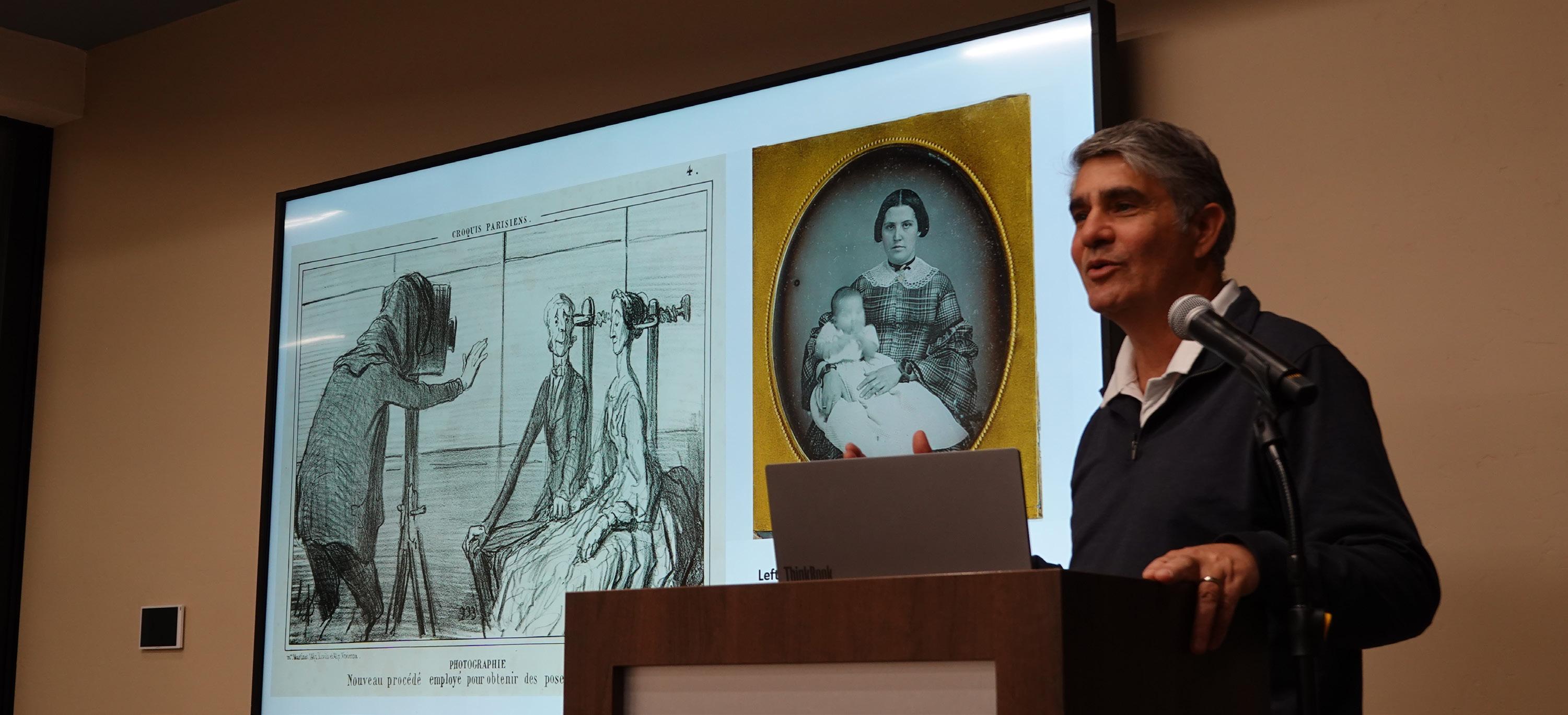
The ‘Spirit Photography’ exhibit showcases daguerreotype-style photography in Saints Hall.
Pilot Victor Schneider landed a Cessna 170 aircraft on Mission Beach on Oct. 21.
Plane engine fails over San Diego Pilot successfully lands on Mission Beach
From Mission, Page 1
Airport, Victor and Jennifer Schneider were unharmed and the plane reported no damages following the abrupt landing.
USD senior Griffin Gard, who lives on Mission Beach, talked about the beach as a runway option.
“It makes sense that you would try and land on Mission Beach if you’re flying over the area because it’s on a really long stretch of straight land and it’s hard to find that anywhere else,” Gard said.
The National Transportation Safety Board (NTSB) tracks reportable aviation incidents. Almost 1,000 general aviation
‘No
accidents have already occurred in the U.S. this year, with thousands more minor incidents happening that fall below the NTSB’s threshold.
Almost 80% of these crashes have been small private aircrafts, especially single-engine models, like the Cessna 170B that landed on Mission Beach.
Gard commented on the number of plane crashes recently.
“Yeah that’s scary,” Gard remarked. “I don’t like it. Because people gotta learn how to fly their planes and not fly into my stuff.”
In the San Diego area alone, there have been multiple aviation accidents in 2025. These

include the Cessna Citation II crash into the Murphy Canyon neighborhood in May and the Marine Corps helicopter crash in the Imperial Gables desert area in
October, both claiming fatalities.
Despite these recent plane crashes, commercial air travel remains one of the safest modes of transportation.
This recent increase in plane crashes is attributed mostly to general aviation — small private planes — which continue to be remodeled for safer travel.
Kings’ protests march across America
Tens of thousands of San Diegans take to the streets in protest
CADEN HAYNOR NEWS EDITOR
Over seven million people mobilized across the U.S. in the “No Kings” protest, including tens of thousands of San Diegans, on Oct. 18. These protesters rallied around multiple different San Diego areas, waving signs opposing what the protestors described as the authoritarian tendencies of President Trump’s administration.
USD senior Madison Gambon attended the “No Kings” protest in San Diego. She explained why she decided to demonstrate.
“I went to the ‘No Kings’ protest because I’m tired of seeing how the current administration has completely disregarded the checks and balances that are supposed to protect our democracy,” Gambon stated. “It feels like there’s this growing mindset that leadership means control rather than accountability, and that’s dangerous. The racism coming from ICE, the lack of compassion in policy decisions and the overall carelessness we see from those in power all point to a system that’s forgotten its purpose — to serve the people.”
The name of the protest, “No Kings,” is a move by the creators of the campaign to evoke a founding principle of the U.S., which is that it is a republic and not a monarchy. Some protesters believe that there is currently executive overreach in the federal government.
The protest is in support of certain ideas of democracy, such as checks and balances, judicial independence and congressional oversight. Many protestors at the events held signs, some depicting broken crowns, references to the Federalist Papers and slogans like “We the People, not the Palace.”
USD senior Sophia Skubic demonstrated at the “No Kings” protest and gave her

thoughts on why she was there.
“I went to the No Kings protest in San Diego to show my support for this country and my beliefs,” Skubic said. “I refuse to sit on the sidelines when there is so much negativity in our world right now and [I] strive to get involved however I can. I think protesting is a way to inspire and support others and show that there is hope even in the hardest times… I do think it can make a difference in the political sphere — when people get together like this they get harder and harder to silence and it will eventually show in the white house.”
The protest in October was not the first time groups of people protested against the Trump administration this year. The first “No Kings” protest was held on June 14, Trump’s birthday and the U.S. Army’s 250th anniversary. This nationwide protest had over five million participants.
USD junior Kian Drees shared his thoughts on the “No Kings” protests.
“I feel like the people doing these protests are calling Trump an authoritarian, which I think just isn’t true,” Drees said. “I think the name ‘No Kings’ is misleading because it’s implying that Trump is a king, but we’re in a democracy. It seems like they’re trying to scare people. There are definitely still checks and balances in place in America.”
The most recent protest included over 2,500 events across 50 states, including multiple California cities. The largest San Diego rally hosted 25,000 participants at Waterfront Park, which stood alongside smaller demonstrations in areas such as Ocean Beach, Chula Vista and San Diego State University.
USD first-year Soleyana Mussie attended the “No Kings” protest and talked about the actions of the federal government that drew her to the protest.
“The point of the presidency is that it’s supposed to enact and execute what essentially the people want through the legislative branch,” Mussie remarked. “The power of the president is to
execute, not to create his own laws or break laws because that’s unconstitutional… A lot of the things the Trump administration is doing is in direct contradiction to the Constitution and it’s also self-serving… I feel like Trump is praying on immigrants because it’s such an easy scapegoat to all the issues that are arising in the presidency. If the economy crashes, it’s immigrants trying to take our jobs. It’s really easy to put blame on this unknown entity.”
Gambon described the feeling of being amongst many people at the protest.
“The protest itself had this really powerful energy,” Gambon said. “People were frustrated, but it wasn’t just anger — it was solidarity. Everyone there cared deeply about the same issues, and there was this feeling that we weren’t alone in wanting change.”
Gambon went on to explain why peaceful demonstrations like “No Kings” are important for the American people.
“Protests like this matter because they show that people
are paying attention, that we’re not going to stay silent when we see injustice,” Gambon said. “Even if it doesn’t change things overnight, it sparks conversation, builds awareness and reminds those in power that their actions have consequences. To me, protesting is about reclaiming your voice and standing up for what’s right, especially when it feels like the people in charge aren’t listening.”
Peaceful protests have marked a significant portion of U.S. political history. The Montgomery Bus Boycott and march on Washington, during the civil rights movement, were two significant peaceful protests led by Martin Luther King Jr.
Taking inspiration from those peaceful protests, the organizers of the “No Kings” demonstrations had trained marshals responsible for crowd coordination. Participants were asked to sign or verbally commit to nonviolence pledges and, in some cities, protesters had trained groups of people present for conflict resolution and medical aid.
Mussie had a critique on the protest related to this self-policing.
“I feel like if we stop policing ourselves so much within our protests, then we would get more done,” Mussie said. “And I’m not necessarily saying, ‘let’s go pillage the streets.’ I’m just saying if there were demands, if there was maybe a speech, if there was some sort of interruption. And I feel like a really good way of doing this is interrupting consumerism, where you have workers completely walk out of facilities and walk with the protesters and actively not participating in that aspect of society to create a disturbance. I feel like people forget that a big part of protesting is disturbance.”
The USD community will continue to assess whether the Trump Administration’s decisions are executive overreach or furthering a democratic agenda.
After the emergency landing, the passengers and plane emerged unharmed.
Photo courtesy of @nbcsandiego/Instagram
Tens of thousands of San Diegans gathered to demonstrate in the ‘No Kings’ protest.
Photo courtesy of @dosandiego/Instagram
California votes on redistricting Newsom introduces Proposition 50 in a special election
EMMA PHILLIPS CONTRIBUTOR
This week, voting continued in California for a special election on Proposition 50.
The idea for the proposition began when Republican Governor of Texas, Greg Abbott, redrew the state’s congressional map to gain five additional Republican seats in Congress this past August. Democratic California Governor Gavin Newsom viewed this as a form of gerrymandering, which is the alteration of electoral boundaries within a state to favor a particular political party.
There are many factors that are taken into consideration when a state is redistricting.
Primarily, data from the census conducted every 10 years includes population shifts, specific demographics within communities such as race, age, partisan affiliation and religious beliefs.
In a response to protect the democratic majority in California, Newsom proposed Proposition 50 on a special election ballot. If Proposition 50 is passed, the Citizen Independent Redistricting Commission of California will redistrict its maps. By doing
so, the districts will reflect anywhere from three to five additional democratic seats, potentially offsetting measures that the Republican Party has taken as seen in Texas.
Dr. Evan Crawford, Associate Professor of Political Science and International Relations, hosted a seminar with Professor Casey Dominguez regarding the issue last week. In an interview, Crawford expressed the importance of this decision.
“It will affect next year’s elections, and they matter for representation and policy outcomes,” Crawford said. “If you are a registered voter in California, then it’s going to affect you for obvious reasons. Even if you are not a registered voter in California, we have evidence that other states may now pick up the scent of what Texas and California are doing, and they may seek to redraw their lines as well. No matter what we think, more informed citizenship is better to increase participation.”
If Proposition 50 is passed in November, the redrawn congressional maps will be in place for the 2026 midterms, 2028 primary and 2032 midterm
elections. USD sophomore Mazin Radwan, who attended the gerrymandering talk, voiced his opinion on why gerrymandering may be disadvantageous for members of minority communities.
“I think we have had things like Section 4(b) of the Voting Rights Act put into place to kind of prevent this,” Radwan stated. “[States] insist that their intention is more important than the effect which I do not agree with. I feel like it affects marginalized communities negatively.”
Every ten years, states are required to conduct a population census in order to redraw lines as
they see fit. Regardless of whether Proposition 50 is passed or not, the independent commission of California will return in 2031.
While some supporters believe that redistricting will help restore balance to the United States House of Representatives, opponents may argue that it sets forth a dangerous and biased precedent for partisan map-making.
Radwan communicated his initial concerns prior to reading the wording of the proposition.
“I did not want a butterfly effect,” Radwan said. “[If it is passed], I feel that it is
going to create a lot of tension in a country where there is already so much division.”
On the other hand, USD first-year Lexi Boyd highlighted why Proposition 50 being passed may be beneficial in the long run.
“Normally I would not support gerrymandering, but I feel like we have gotten to a point where the Trump Administration is trying to gain power,” Boyd said. “If California has the opportunity to balance the scales then they should take that.”
Americans eligible and registered to vote in California have until Nov. 4 to do so.
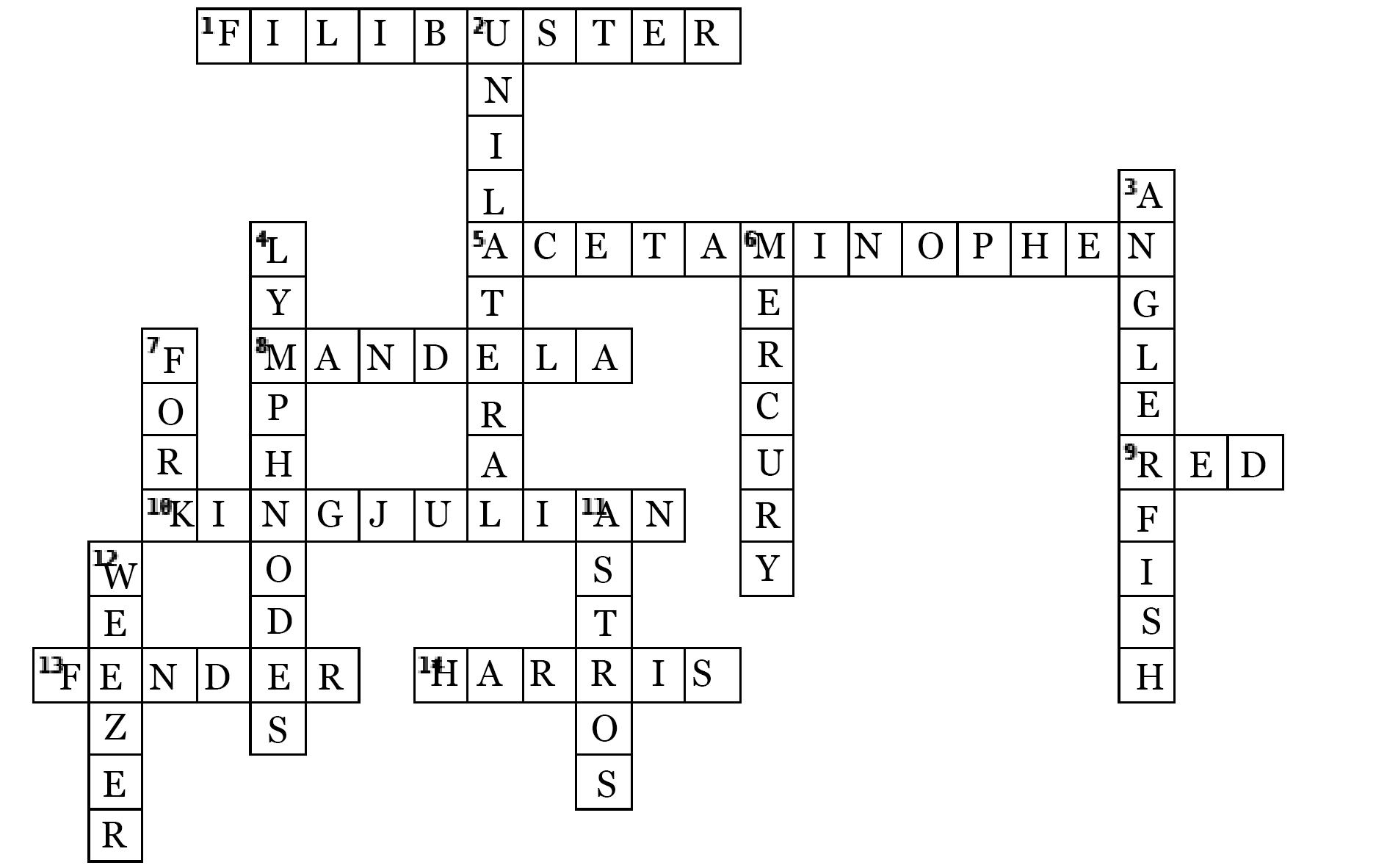
Last week’s crossword answers:
The USD Vista
Gina Lew - Student Media Advisor
Dr. Byron Howlett - Operations Advisor
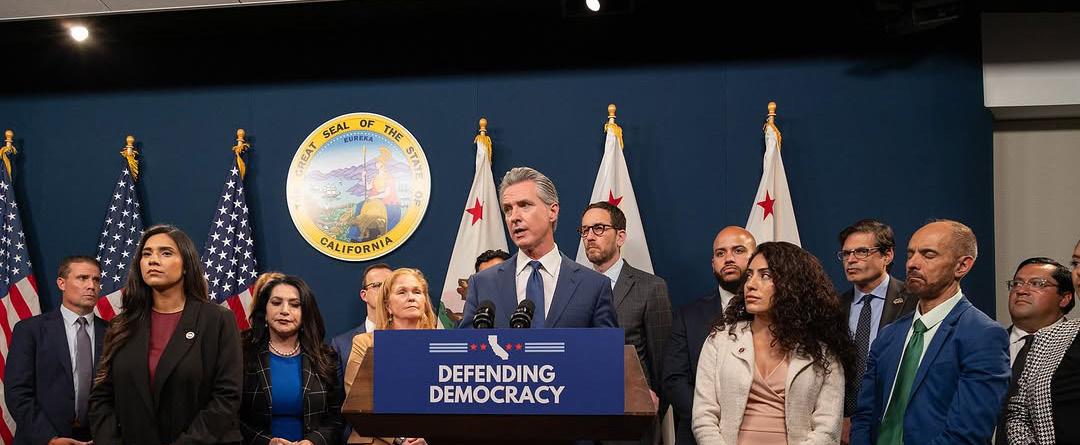
Governer Gavin Newsom addressed voters in August in support of Proposition 50.
Photo courtesy of
Ghosts glide through the gallery
by this unique history.”
Throughout the gallery, Toreros saw spooky photographs paired with a historical description of the particular time period. A picture of a man posed with his ghostly wife — “Family Portrait with Deceased Face in Cameo” by Max Erler and Thomas Foster — is placed next to the professors’ explanation of the effect capitalism had on spirit photography.
“As photographic technologies spread from professional studio spaces into the hands of amateurs, public fascination with spiritual manifestations broadened,” Clack and Cartwright wrote. “These strange inclusions — inexplicable flashes of light, phantom figures, ghostly blurs and emanations — were proof of spiritual activity. Today we might characterize these disappointments as nothing more than ‘photo bombs.’”
The suddenly popular art
form enticed viewers from the beginning. Spirit photography began capturing what the human eye could not. However, the uniquely spiritual images did not appeal to everyone — many were skeptical of the supernatural claims that artists were making.
William H. Mumber, who was discovered double-exposing a photography plate, was put on trial for fraud because he sold images he said contained ghosts and spirits. The spiritualist was later dropped from court: the judge claimed a lack of evidence.
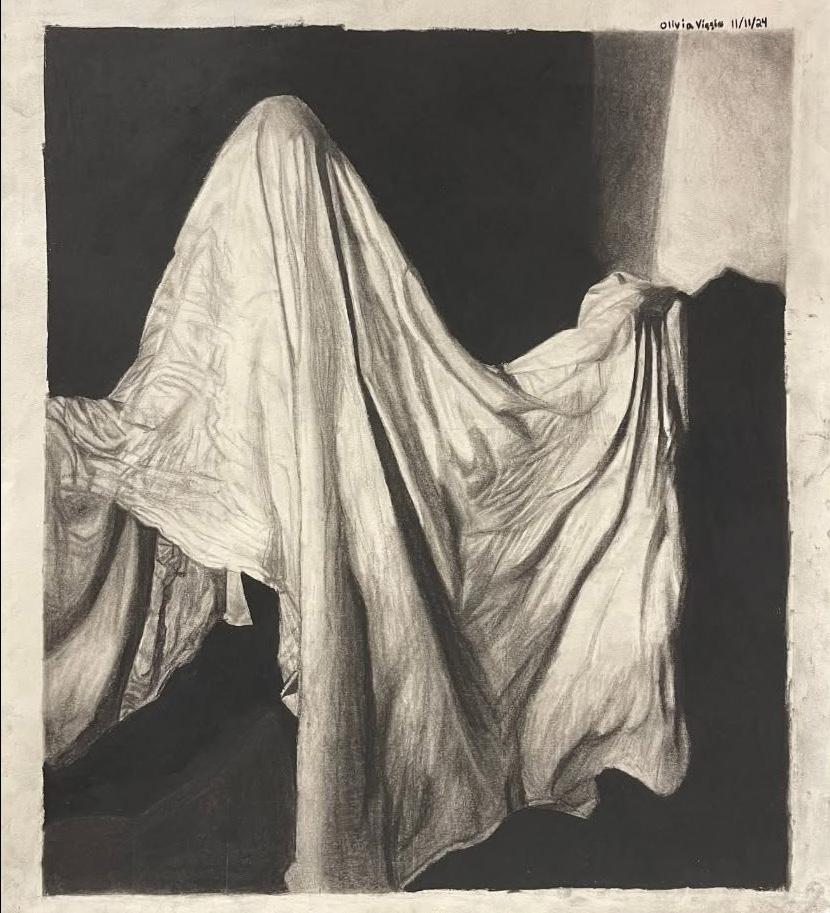
Alongside the gallery’s historical explanations and famous daguerreotypes, student work was displayed to show a modern take on spiritual art. USD junior and biology major Olivia Viggio created a charcoal piece, titled “Haunting Reflections,” in her Introduction to Drawing class, taught by Professor Remi Dalton. Viggio described her work.
“I wanted to capture something that felt eerie
and mysterious (a ghostly presence with no clear person underneath),” Viggio continued. “The assignment was technically a self-portrait and I approached it with introspection. By naming it ‘Haunted Reflection,’ I wanted to suggest that it’s not just about how ‘I’/the ghost looks, but about what lingers within, the parts of ourselves we confront in silence or don’t always reveal. I think there’s so much to learn through art about culture, history, people and yourself.”
The Humanities Center encouraged students from all backgrounds to explore visual arts, even pre-med students like Viggio. The exhibit was not created strictly for USD’s artists, but with the entire student body in mind. USD senior Audrey Koenig explained her impressions of the event.
“I’ve definitely heard of spirit photos before, you know, deep dive YouTube videos down the rabbit hole late at night,” Koenig said. “It is really cool because you’re sort of seeing the
photography science behind it. There is this ambiguous aspect, is it real? Is there something else? It’s just really cool.”
The Humanities Center
Crossword of the week:
has hosted the “Spirit Photography” exhibit in the Humanities Center gallery since Sept. 12, and it will remain open until Nov. 7.
LAUREN CEBALLOS EDITOR-IN-CHIEF
EMMA PIRHALA
MANAGING EDITOR
ANJALI DALAL-WHELAN ASSOCIATE EDITOR
“Double, double, toil and ____.” -William Shakespeare
Trick or ____
Beetlejuice, beetlejuice, _____.
Halloween originated from the ancient Celtic festival of ____.
This fictional character
This town in Massachusetts is especially spooky this time of year
The Halloween movie “Hocus Pocus” was originally going to be named ______.
2. Christian holiday season that includes Halloween, All Saints’ Day and All Souls’ Day.
3. Casper the ____ ghost
The daughter of Gomez and Morticia Addams
A large pot used by witches cooking up spells 6. The oldest sister in “Halloweentown” 7. “They played the monster ___ (The monster ___)” 10. Why are M&M’s coated with sugar and corn syrup? To prevent the candy from ____.
Olivia Viggio’s ‘Haunted Reflections’ is displayed in the Humanities Center. Photo courtesy of @usdhumanities/Instagram
LARA DOMINIQUE SOLANTE COPY EDITOR
USD gives Lukas Gage attention
In a discussion of his memoir ‘I Wrote This for Attention’
KATARINA MARIC ASST. FEATURE EDITOR
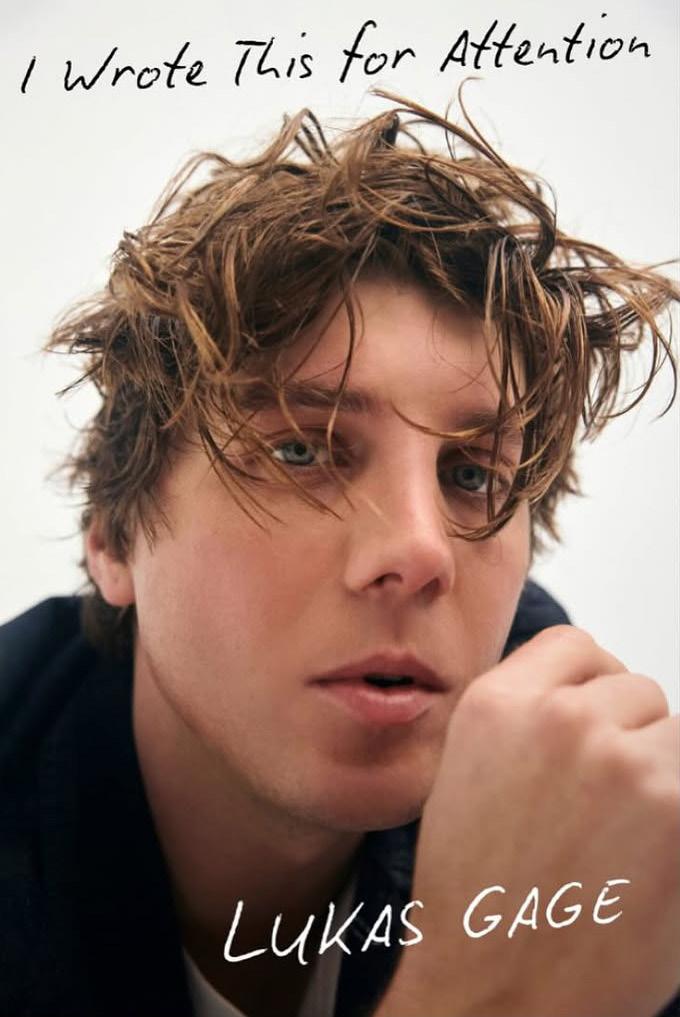
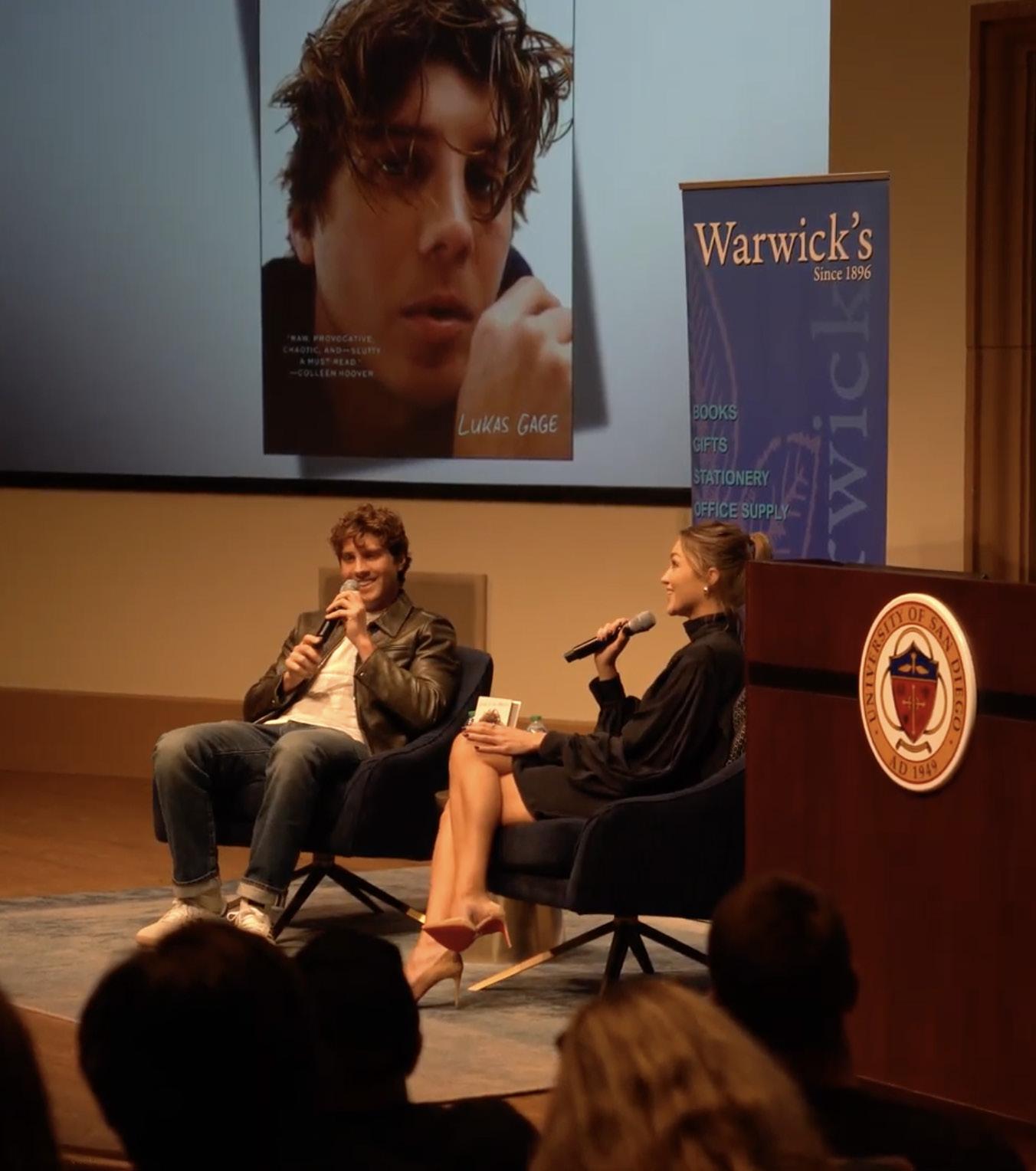
The College of Arts and Sciences Humanities Center with Warwick’s bookstore welcomed 30-year-old actor, writer and producer Lukas Gage to discuss his memoir, “I Wrote This for Attention,” alongside actor Lili Simmons, on Oct. 20.
Lukas Gage is known for his roles in Emmy Award-winning shows and movies such as “The White Lotus,” “Euphoria,” “Fargo” and feature-length films such as “Road House,” “Smile 2” and the highly anticipated “Rosebush Pruning.” In 2020, a recording of his Zoom audition was leaked online — where a director made classist remarks about Gage’s apartment. The video went viral, which brought more attention to Gage.
While some students at USD aren’t as familiar with Gage, others recall him from HBO. USD sophomore Jasmine Williams shared her take.
“Sometimes I don’t think I can escape him,” Williams said. “[Lukas Gage] is in so many popular TV shows, popping up as a side character out of nowhere. I like how unique the characters he portrays are and how genuine he is as an actor. I think he has a very good attitude with all the different spotlights he’s been under in the media.”
His memoir “I Wrote This for Attention” encapsulates the anxieties and emotional weight that Lukas Gage felt transitioning from innocence to adulthood: his childhood in Encinitas, Calif., struggles with a broken family, addiction, sex, bipolar personality disorder and his commitment to being the center of attention at all times. With alterations between self-deprecating confessions and revealing recollections, Gage spent his presentation discussing the deeper implications of the desire for attention, tying it to his past and the culture of stardom.
Becoming a young man, he felt a desperate desire for validation and to be seen, explaining that it was the only appropriate topic for his memoir.
“I think everyone wants attention, and I wanted to embody that,” Gage expressed during his presentation.
Gage further discussed the contradictions and tensions of seeking attention, yet fearing vulnerability — both through the lens of an actor and of a young adult.
“I thought I wanted attention for so long, but when I got it, then I was suddenly so scared of it and wanted to hide, and hated it,” Gage said. “That’s the whole contradiction of
wanting to be seen: wanting attention and running. It’s a classic actor thing. Look at me, then don’t look at me.”
It is the idea of wanting to be someone else, performing, wearing a mask — a desire to be looked at as another person, but not to be looked at authentically. The obsession with perception and how we are seen roams our society, dangerously shaping how we view ourselves and the decisions that we make.
For example, college students at USD and beyond may seek attention by making choices of participating in too many extracurriculars or choosing a certain major to gain validation from others, even though those decisions don’t reflect their passions or what they truly want to do with their time and lives.
“I wrote this book for attention, but I hope that people leave with a connection,” Gage continued. “I think that I hope people can get out of reading this that there’s good attention, and everyone wants to be seen and validated, but that there’s also bad attention in areas that you cannot look for external forces to feel good about yourself, especially in the culture that we’re living in, and internet, and everything. It’s okay to want attention. It’s okay to be
an attention wh---. But just do it for the right reasons.”
Gage argued that true selflove and self-esteem comes from the inside of a person, and it is not something that students or people in general should lean on others to develop. He reframed his validationseeking behaviors to point toward our discomfort with the uncomfortable — the things people don’t talk about — and highlighted the importance of being more vulnerable with one another to destigmatize mental health issues. In an interview with USDtv, Gage shared the ways in which he hopes to inspire USD students and youth in general.
“I think that in general getting rid of any stigma behind these conversations are the way that we move forward and don’t fill ourselves with shame and embarrassment about them,” Gage said. “For me, it was important to talk about all of those very vulnerable things, but at the end of the day, I think there’s a part of me that wanted to get rid of just the embarrassment of having those conversations.”
USD senior Dana Wright, who attended the presentation, reflected on his message.
“The contradiction between wanting attention, while also trying to be vulnerable really stood out to me because it highlights such a universal struggle,” Wright said. “The tension between craving recognition and staying authentic. It speaks to such a core paradox of modern life since we live in a world where we’re constantly encouraged to put ourselves out there, but at the same time, vulnerability requires us to be honest and unfiltered. Being vulnerable opens us up to judgment, criticism, and exploration. In a way, wanting to be vulnerable goes against the very instinct that drives us to seek approval, attention, and recognition.”
Gage argued that this stripping of facework is important to allow people to receive the support they need, and to decrease “the need” for negative attention, revealing our truths and carving a place where we can be as we are. This sentiment is especially true for college students during a great transition of uncertainty: hard truths and deep inner passions are essential to guiding them toward a happy career and future.
Gage encouraged students to authentically grow into themselves.
“I would say you don’t have to have it all figured out even though it feels like you do,” Gage stated. “I would say don’t try to fit a mold to be anything other than what is uniquely, authentically you because that’s the only thing you’ve got and lead with that. Don’t try to be anyone else for anybody. Just be you. Truly.”
After the presentation, Wright expressed her thoughts.
“I had a great time at the Lukas Gage Event,” Wright said. “I think he is an amazing person and is inspiring because he makes the best out of every situation. I have watched him since I was in 7th grade, so it was really a full circle moment because I have kept up with his current projects and stuff. I would say I personally got a lot of the presentation. It definitely inspired me because he’s achieved so much success at such a young age and has even written an early memoir. So I guess it inspires me to remind myself that anything is possible.”
Gage’s memoir “I Wrote This for Attention” argued self-care and self-reflection — points especially relevant for Toreros facing the uncertainty surrounding college life. Through lessons learned from his own experiences, Gage inspired students to tackle the unknown with courage.
Lukas Gage speaking with Lili Simmons about his memoir.
Photo courtesy of Cherishann Diamzon
Lukas Gage uses his personal experiences in ‘I Wrote This for Attention’ to relate to Toreros. Photo courtesy of @lukasgage/Instagram
HAPPY SU HALL
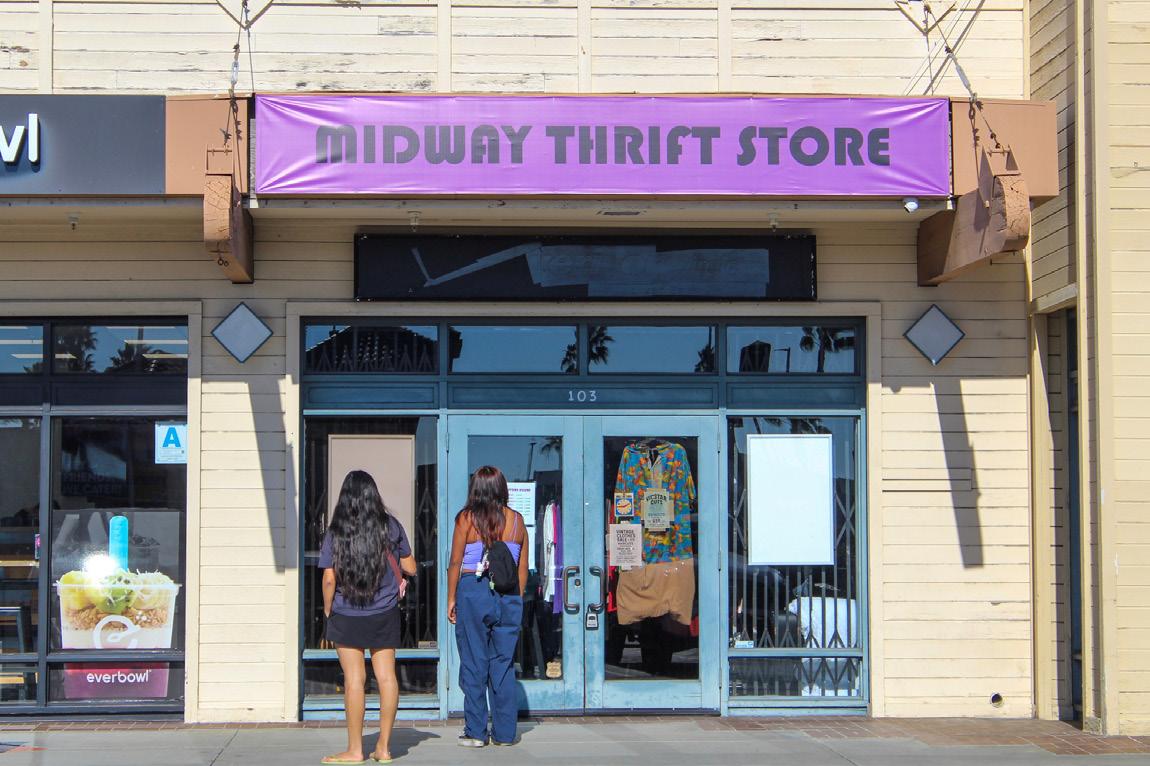
MIDWAY THRIFT STORE
3555 Rosecrans St #103, San Diego, CA 92110
Open Tuesday – Saturday: 12:30 to 8 p.m. Sunday: 1 to 6 p.m.
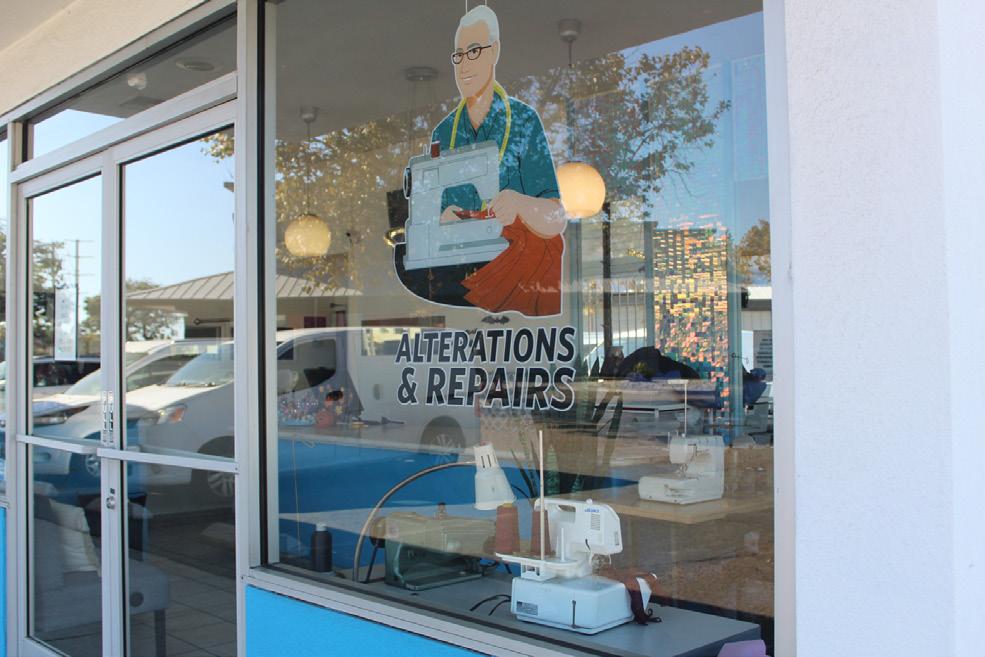
San Diego Dry Cleaners and Alterations
2147 Comstock Street
Monday - Friday: 7 a.m. - 7 p.m. Saturday: 9 a.m. - 4 p.m.
As Halloween approaches assemble their many cost may be tempting to order f pieces from fast-fashion b or Temu. This Halloween create their costumes mo borrowing from friends, us or crafting their own co
“Buy items secondhand creative with items and c own … Costume or item s repairs to existing garme at the Creative Zone! Crea construction paper and m wardrobe tailored. The m for you depends on how what you al
Sustainability
Hailey Howell/The USD Vista
Hailey Howell/The USD Vista
USTAINABLE LOWEEN
s and students scramble to tumes for Halloweekend, it final accessories or costume brands such as Shein, Amazon n, Toreros have decided to ore sustainably by thrifting, sing what they already have, ostumes and accessories.
from a thrift shop … Get lothing pieces you already swap with friends … Make ents you own … Get crafty ate designs and logos using markers. Get items in your most sustainable solution you want to dress up and lready own.”
aBarbiera, y Coordinator at SD
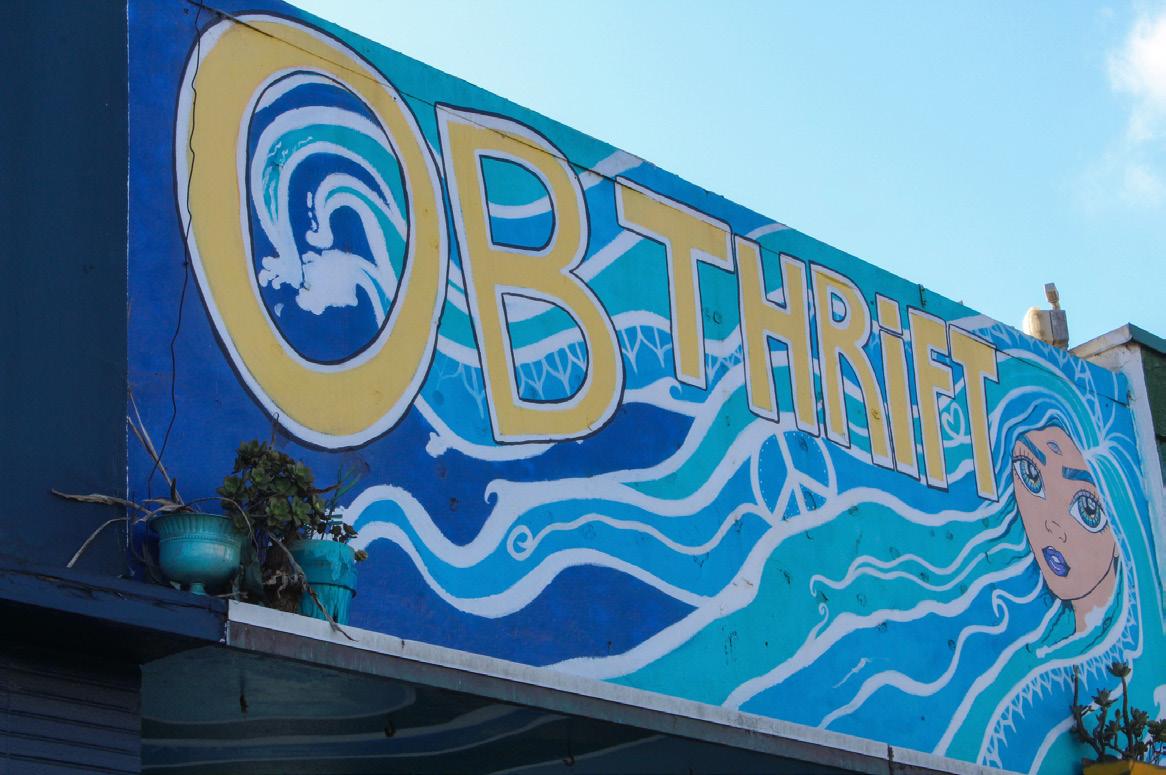
OB Thrift
Store
& Vintage Clothing 4927 Newport Ave, San Diego, CA 92107 Open every day but Wednesday 10 a.m. - 7 p.m.
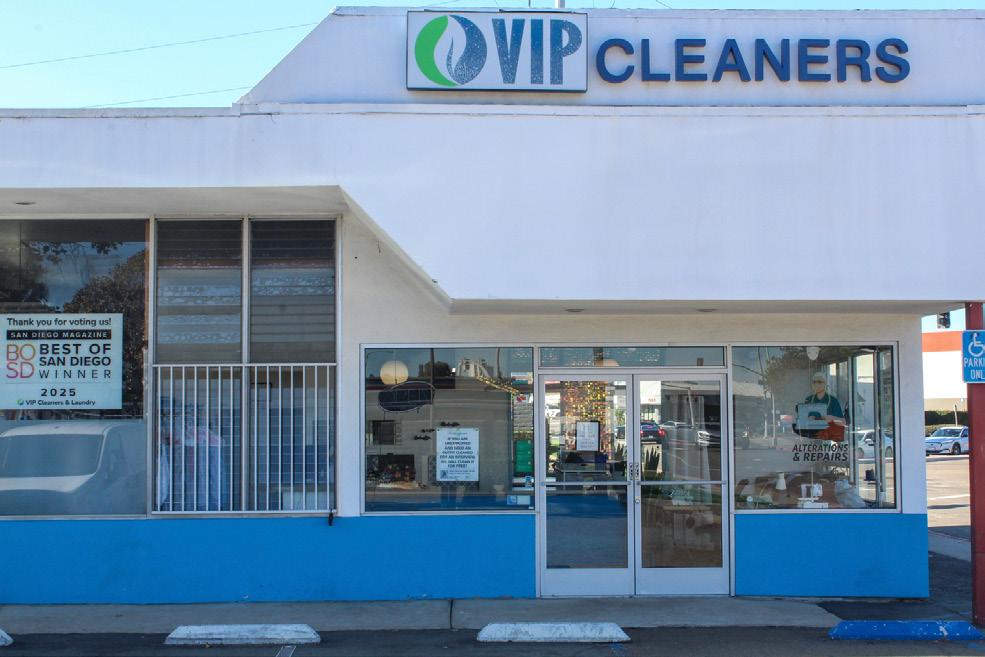
ve zone
iday: 9 a.m. - 7 p.m.
Hailey Howell/The USD Vista
Hailey Howell/The USD Vista
ARTS & Toreros learn about DVAM
October marks Domestic Violence Awareness Month
AMELIE SEDLACK
FEATURE EDITOR
October is Domestic Violence Awareness Month (DVAM), a national marker and a time to remember those who have experienced domestic abuse and to learn more about how to prevent it with ourselves and our loved ones. Continuing to the end of October, USD has hosted multiple events to raise awareness, support survivors and educate allies about support and prevention.
Sarah Diamond is the Associate Director of Prevention and Education, and a Campus Assault Resources and Education (CARE) Advocate. Diamond oversees all DVAM programming, introducing what DVAM is and what it looks like on USD’s campus.
“DVAM is an annual awareness month that is used to raise awareness about domestic violence, to raise support for survivors and to educate the community on what it looks like to actually prevent violence,” Diamond explained. “We like to choose a wide variety of activities or events for our campus community, a wide variety of events that kind of do all of those things. That raises awareness, shows support for survivors and also educates the community on what it looks like to prevent violence and what it looks like to be in a healthy relationship.”
The month started off with the event, “Cycle to End the Cycle,” a spin class to help heal and support survivors. Next was “Fostering a Culture of CARE: Supporting Students Impacted by Violence,” which encouraged faculty and staff specifically to attend and learn how to better support students who have experienced domestic violence and trauma.
“In that workshop, we provided some foundational knowledge about what intimate partner violence is,” Diamond shared. “We walked through how domestic violence or intimate partner violence is where one partner aims to have power and control over another and it’s an ongoing tactic … and how
that can show up for students in particular. Then we talked about what it looked like to approach a disclosure with trauma-informed care as well as what is their duty as responsible employees.”
Diamond continued to explain more about mandated reporters here on campus — differentiating between a mandated reporter and a confidential source. While a mandated reporter is obligated by law to file a report with Title IX about anything that they may be told about abuse and violence. A confidential source is not obligated by law to report any knowledge of violence or abuse disclosed to them by a survivor or ally.
“Essentially all staff and faculty hold a mandated reported status,” Diamond explained. “We taught them how to gently pause the conversation before a disclosure happens so that a person can have a fully informed decision in whether or not they share with a mandated reporter or if they want to get connected to a confidential person … All staff and faculty are considered mandated reporters with the exception of confidential CARE advocates, like myself, counselors — so folks that work in the counseling center or counselors that work in the student health center. But not medical staff. And then, full-time university ministry and pastoral staff. Think of the fathers on campus — the priests — as well as full-time resident ministers.
All three of those groups are considered confidential. So what is shared with that person is not documented to the University.”
USD sophomore Arianna Trette helped plan and lead the DVAM events this month as a Relationship and Sexual Violence Prevention (RSVP) peer educator.
She shared how her position as a student and leader helps her to understand both sides.
“It helps to understand the things that students my age may be struggling with, socially or relationship wise,” Trette explained. “Which I do think are different from [what] a middleaged person may experience. Domestic violence looks different sometimes in college-aged
students. Having students involved in this prevention is important because it brings attention to the issues that people in our demographic face.”
USD senior Devin Reyes, is also a student RSVP peer educator. She shared something she wants all Toreros to know about the DVAM events offered this month.
“While DVAM is designated to run for the month of October, the team at [Center for Health and Wellness Promotion] and RSVP is here for all students all year,” Reyes shared.
Some of the other spaces created for USD students this month were Healthy Relationship Circles in various residential areas around campus that aimed to build healthy relationships among the residents in each residential area on campus. The “Community Healing Night” also included art for attendees to create.
Another event, “Purple Thursday,” is a nationally recognized day to support survivors and raise awareness about domestic violence. On this day, USD invites all to wear something purple to show their support for those impacted by domestic violence.
“Purple Thursday is the national day of awareness for DVAM,” Diamond said. “So every school or DV organization tries to do programming on the third

Thursday of October which is considered Purple Thursday. We do that every year because that is the national day of awareness.”
The last event, “TraumaInformed Yoga” was a yoga session aimed to empower survivors with resources and strength and allies with knowledge to help and prevent further abuse and violence.
“Trauma-informed” is part of a vocabulary meant to actively support those with trauma by creating a way to give them knowledge of what is to come, such as trigger warnings.
“Trauma-informed means that a person recognizes a person might be coming to them having had a traumatic experience,” Diamond elaborated. “That doesn’t have to necessarily be domestic violence or sexual assault but that they’re essentially committing to not retraumatizing that individual and opperate in a way that gives that person agency — that helps them know that they are a strong person — that they have bravery and strength within them, and then to connect them with the referrals that are on campus. Trauma-informed approaches is more of a philosophy of how you approach different things. Recognizing that people may be coming to you with a variety of traumas. That’s why trigger warnings can be so helpful or why sometimes professors who assign a really sensitive topic or assignment, will provide alternatives to a student.”
Reyes shared her feelings toward student attendance across all the events.
“I absolutely wish more students could have experienced what we’ve created this month … I genuinely hope we can continue sharing experiences like those of this month with even more students in the future,” Reyes shared. “Ultimately, I’m so grateful and happy to see the difference we make, even for
smaller groups, and we’re all always eager to welcome more people into these experiences.”
Trette also expressed her thoughts on student attendance at the DVAM events this year.
“Turnout was something that we struggled with a lot,” Trette shared. “I think that if more students come out, perhaps the school would be able to shift to a culture that was really accepting and knowledgeable about these issues. It’s not that we’re not but it’s more that there isn’t as much awareness, especially among our age demographic. If more people came, they could learn how to support themselves [and] someone else.”
Diamond shared her thoughts on what she wanted all who are a part of the USD community to know through the DVAM events.
“My hope is that the USD community knows that we unequivocally stand with survivors,” Diamond said.
“That we believe a world free of violence is truly possible and that healing and prevention happens in community, together, and rarely through isolation … We want people, whether they’re a survivor or ally, to come to the events and to know that true prevention requires the entire community to come together.”
Trette gave one thing she wanted all students to know about the topic of domestic violence in general.
“Domestic violence is not one size fits all,” Trette said. “There’s a lot of different ways that someone might experience it and it doesn’t always occur in the way that it’s presented in media. There’s ways that you can help someone that you think is showing signs.” Diamond ended on a message for the whole USD community.
“It’s not just one group of people — everyone has to work to end violence,” Diamond said. “Violence prevention is everyone’s responsibility.”
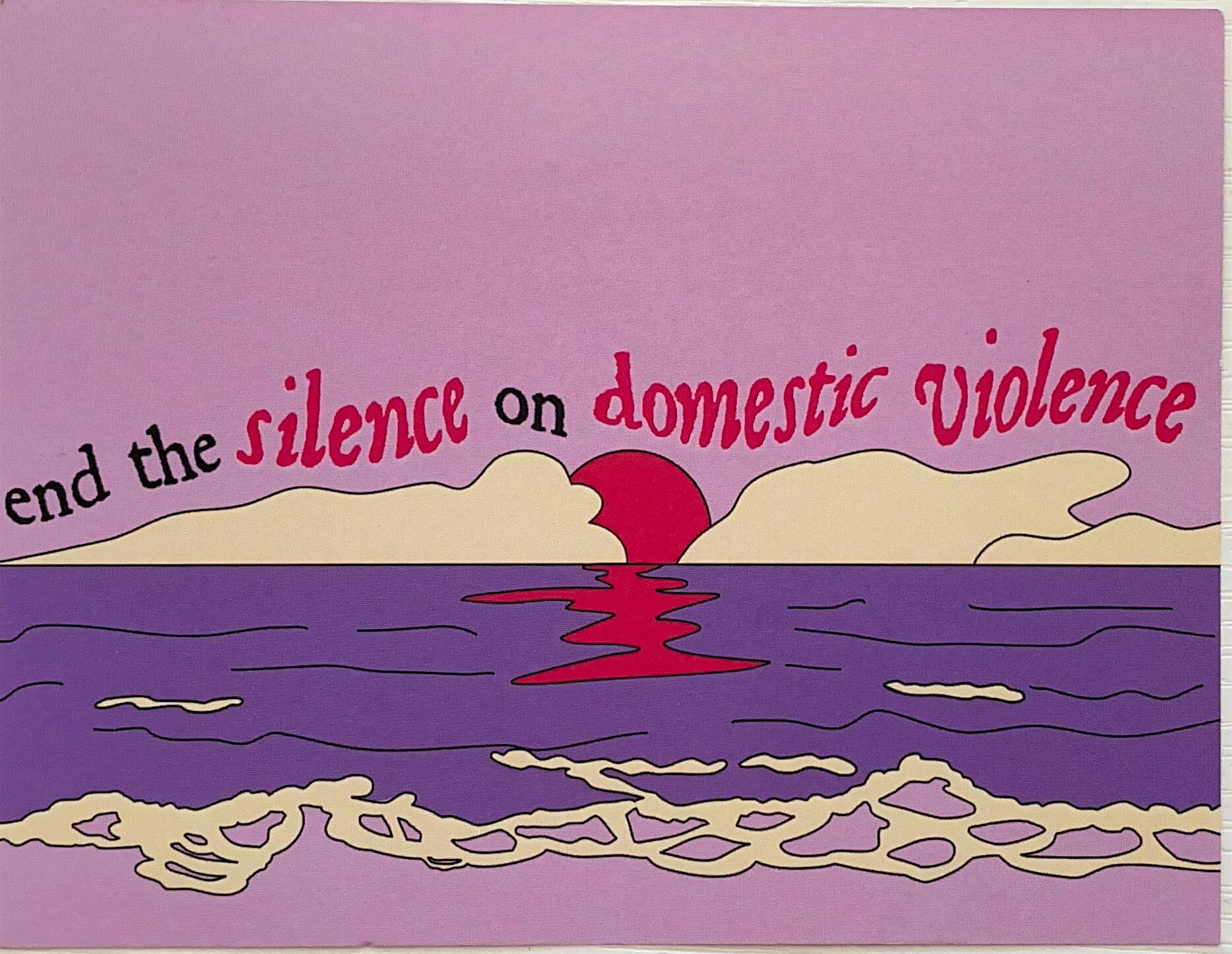
This graphic was used to advertise the Domestic Violence Awareness Month events to Toreros.
Photo courtesy of @usd_care/Instagram
This is a photo of a small flyer given out to Toreros at one of the DVAM events.
Amelie Sedlack/The USD Vista
Stop haunting other people’s fun
The
DAVID COOK OPINION EDITOR
Halloween is one of the best nights of the year. When you’re younger, it’s all about dressing up as your favorite movie character or princess and getting candy. Running around the streets with your best friends and a pillow case full of candy, all while wearing whichever hilarious or adorable costume I wanted, truly is the epitome of being young. The only stress of Halloween was whether or not I would be able to trade away my Almond Joys or not.
When you’re older, however, the purpose shifts. Halloween becomes a day of self-expression and exploring different versions of yourself. Maybe it’s the confident version, the funny version or the bold one. After all, there is one lesson that we learned from the movie “Mean Girls.”
“In Girl World, Halloween is the one night a year when a girl can dress like a total sl-- and no other girls can say anything about it,” Cady Heron said in “Mean Girls.”
Regardless of which version you pick, Halloween is an opportunity for everyone to
scariest thing about Halloween is judgement
express themselves in any way that they would like, ideally without judgement. Each year, though, there are always those who try to make rules anyway. You hear the same recycled statements every year: “That costume is too revealing,” or on the flip side, you might hear, “Look at that ugly costume!” Every year, it’s the most entitled people who are the ones that are ruining Halloween, not those who are simply exploring self-expression. Halloween is about transformation. It’s about becoming someone or something else for a night and stepping out of your own shoes. The ones who are always having the most fun and bringing the best vibes are always those who truly transformed into a bolder, funnier or more confident character.
There is something deeply ironic about complaining that people “don’t take Halloween too seriously,” when the entire point of Halloween is to quite literally not be serious.
It is the one day of the year when society allows you to completely transform yourself into anything or anyone you want. Who cares if, for that one night, someone decides to
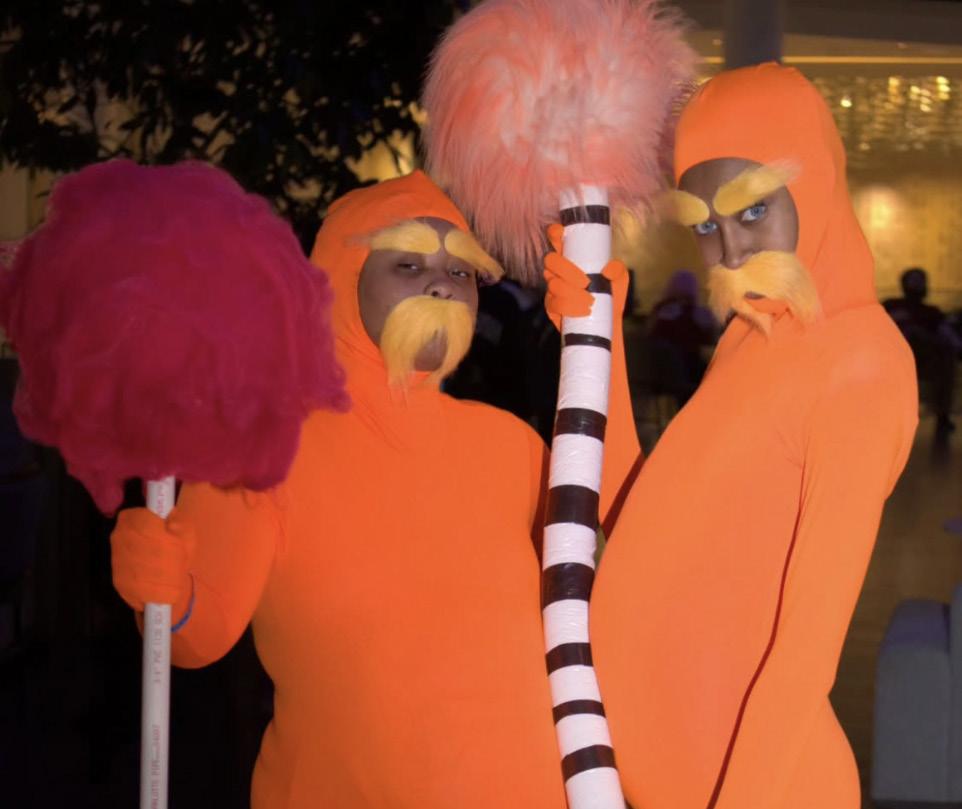
be an emboldened version of themselves and wear a bolder costume, or who cares if another person takes that day to dress up as their favorite orangemustached environmentalist.
So before you roll your eyes at someone’s “too much” costume, or look at a confidently dressed woman with a side-eye, just remember: Halloween is about expression, not approval.
Free the deodorant
The people who keep the holiday alive in college are those who express themselves the most. Meanwhile the real horror? The ones who are too busy judging to have fun.
Locking up basic necessities does more harm than good
ANJALI DALAL-WHELAN ASSOCIATE EDITOR
Walking into the Mission Valley Target, I had one goal: pick up a new deodorant and make it back to campus for my afternoon class. When I went to the aisle, I was met with a plastic wall separating me from the deodorant I longed for. Although I was annoyed, I sucked it up, and pressed the button on the case so an employee could come and unlock the door that was in between me and my products. In the time that I waited for the overworked Target employee to come to the case, I realized I could have ordered my product on Amazon, saving a trip for both myself and the Target employee. Once the employee unlocked the door from me, I had the uncomfortable experience of selecting a deodorant scent with the pressure of someone looking over my shoulder. “Nurturing Coconut” or “Light Ocean Breeze?” Should I ask
the employee what he thinks?
USD students and citizens across the country have been faced with the same issue the past few years. Products in many stores, especially in large cities, have become increasingly locked up. What used to be a simple task — shopping for hygiene products — has turned into an awkward and time-consuming event.
It’s not just deodorant. Oral care, hair products, lotions, contraceptives and more have been locked behind plastic cages in stores such as Target, CVS and Walgreens.
I understand that stores do this because of shoplifting, which is a real problem that can harm a store’s revenue. The products that are locked up are probably the ones that are most commonly stolen.
However, I believe that almost everyone who feels the need to steal hygiene products, deserves free access to them anyway. There are too many people, especially in San Diego, who struggle to afford housing and food. I
doubt that spending money on hygiene products is at the top of their concerns. While there are a few places in San Diego that offer free hygiene products, the city needs to do a better job of taking care of people who struggle to afford basic necessities.
According to good360, 34% of teachers have seen at least one student skip school due to hygiene issues. This statistic rises to 42% students in 9th grade and higher. Lack of access to hygiene products is a real issue, which may cause people to shoplift because they lack better options. Besides the occasional teenage kleptomaniac, the majority of people who risk arrest to steal deodorant or soap, really need them.
I try not to funnel all of my money directly to Jeff Bezos, but the locking up of hygiene products at stores has led me to start buying almost everything from Amazon. I’m not alone. Since the pandemic, brick-and-mortar stores have struggled to stay in business.
In 2021, CVS announced that it would be closing 900 stores. Target, Walgreens and the like have also shuttered many of their buildings.
If brick-and-mortar stores want to stay in business, they need to stop alienating their customers. Releasing products from their plastic cages, especially the cheap essentials such as deodorant and toothpaste, is just common sense. Opening up the shelves
would likely cause the occasional theft. However, there are worse things happening in the world than a huge company like Target losing out on $7 so that someone can feel more clean.
I’m not condoning shoplifting, but I think that stores need to reevaluate their priorities. Freeing the hygiene products from stores might actually make the world a better place, or at least, a less smelly one.

The views expressed in the editorial and op-ed sections are not necessarily those of The USD Vista staff, the University of San Diego, or its student body.
Two people humorously dress as the Lorax on Halloween, wearing matching outfits and holding Truffula trees.
Photo courtesy of @twizsilver/Instagram
Locked cabinets at Target in Mission Valley hold basic necessities. Sands Chipman/The USD Vista
The healthy side of horror
How a little fear can be good for your mind and body
A trademark part of the Halloween season is fear. Curling up with your friends, watching a scary monster or psycho-killer chase characters in a world that is often less fictional than we’d like to think, it’s perfect. For the non-horror enjoyers, this practice may seem deranged — why would you intentionally try to scare yourself? As it turns out though, watching scary movies can be good for you, and give your brain a break from mind-numbing, short form content. This fall, you should all give horror a try.
Despite the heart-stopping nature of these films, studies have shown that watching horror can actually be good for your nervous system. Watching scary content gives you a small adrenaline rush — your heart beats faster and you are ready to run. In short bursts, this can be really good for you because it helps your brain and body work quickly and can be a reset for your nervous system. It’s similar to going on rollercoasters, where your body gets pumped and ready to go, giving you a sense of euphoria and energy.
It is important to note that constant adrenaline rushes are bad for you, such as panic attacks or other high stress situations. However, a little kick of adrenaline is actually beneficial. I have found that if I’m having a particularly stressful day, watching a scary movie actually helps me to relax, by releasing all that stress through fear and adrenaline — essentially giving my nervous system a safe way to reset.
What’s great about movies is that what’s happening isn’t real. You can see and respond to scary

things that can’t actually hurt or harm you. In life, many scary things are beyond our control, so being able to watch movies or TV shows that are scary, but not real, is welcomed as relief.
Additionally, watching horror films can be a nice break from repeatable short-form content. Nowadays, many people are victims of doomscrolling, where you are constantly scrolling
through short form content, despite the negative effects it can have on your health. This content is often predictable, as it is chosen by an algorithm that wants to keep you watching — so it only shows us what we want to see. It doesn’t often challenge our interests or worldviews. Scary movies take the control out of our hands — we don’t know what’s going to happen next, but isn’t that
the fun part? It’s unpredictable, and that’s good for the health of our brains. A study on brain health for the NIH stated that varied experiences can have a positive effect on brain health.
“Participating in a variety of daily activities (i.e., activity diversity) requires people to adjust to a variety of situations and engage in a greater diversity of behaviors,” author

Dr. Soomi Lee said. “These experiences may, in turn, enhance cognitive functioning.”
There is definitely an important balance with watching scary movies, because if you do it too much you can become desensitized to it. Some like Dr. Ramnarine Boodoo, a child psychologist at Penn State Health, warns against too much exposure.
“Many studies have shown that consistent direct exposure – especially among young people – to graphic material, decreases empathy and increases aggression,” Boodoo said. “So, we really have to be careful with how much exposure we have to this kind of stimulus.”
In small doses, though, horror can have a positive effect on both our brains and lives. By exposing us to new and varied things, it gives us a break from the mundane and raises our adrenaline to safe levels.
Despite the name, horror movies can be fun and good for you, and everyone should give them a chance this Halloween season. So next time you’re looking for something to watch, consider a scary movie. If anyone asks you why, you can say it’s actually good for you.
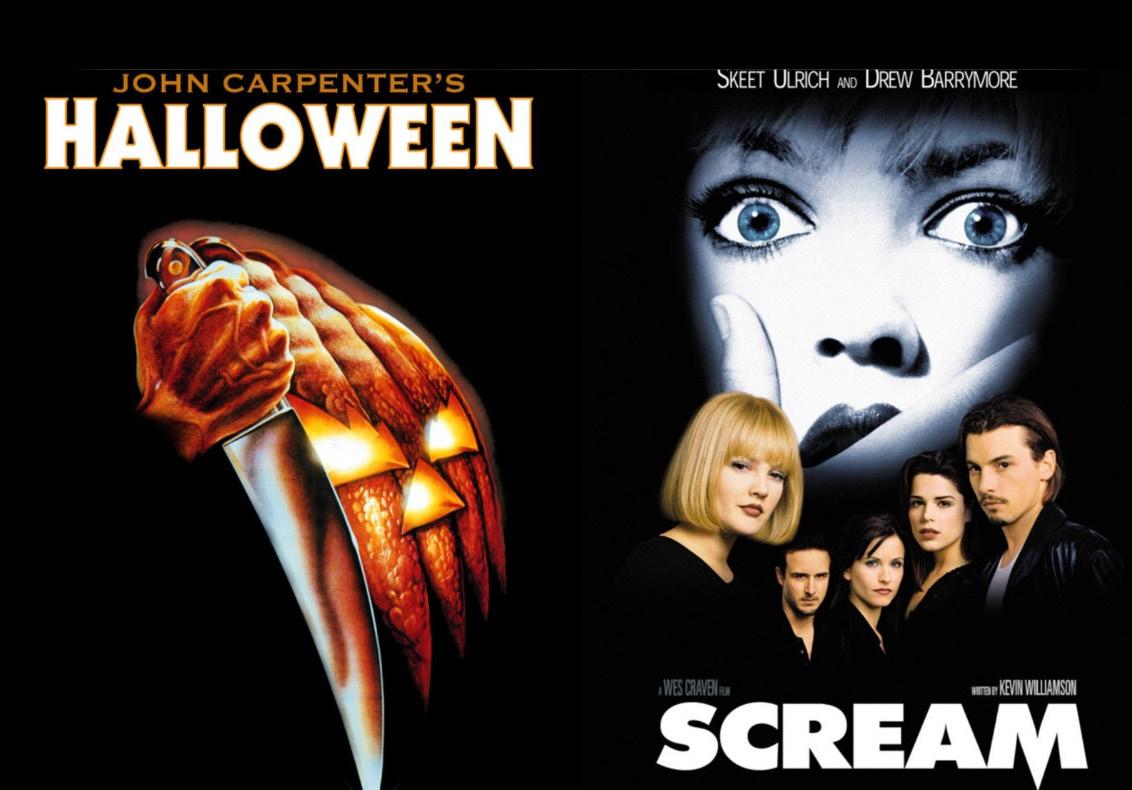
These three iconic Halloween movies — ‘Halloween,’ ‘Scream’ and ‘IT’ — are staple films of spooky season.
Photo
Jason Voorhees, a fictional serial killer from the movie ‘Friday the 13th,’ is one of the most renowned horror movie antagonists.
USD club hockey returns to the rink Team joins American Collegiate Hockey Association
While other USD students are getting ready for bed, stuck in the library studying for midterms or spending a late night out on the town, USD’s Club Hockey players are just warming up for their late night practices and games.
The team was originally formed in 2006 as a roller hockey team. It wasn’t until 2017 that they officially transitioned from hardwood floors to ice and joined the American Collegiate Hockey Association (ACHA).
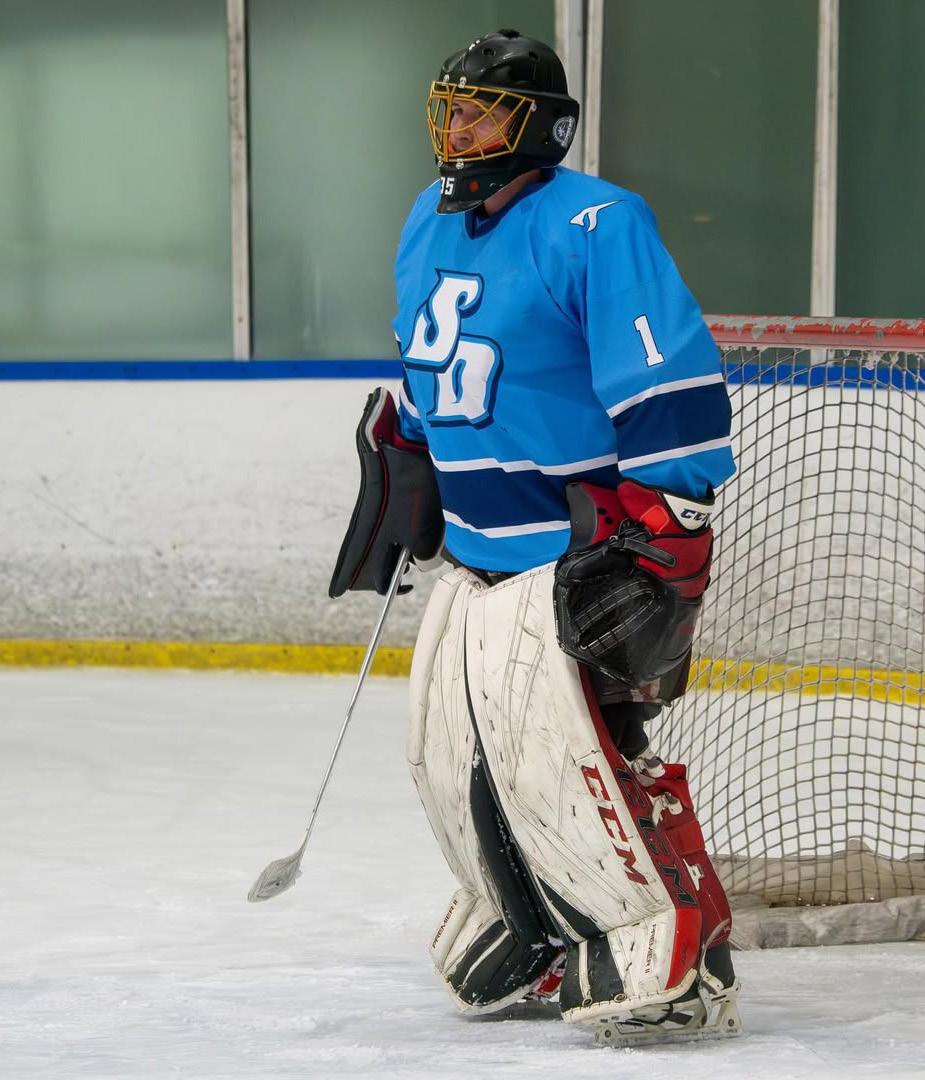
A few years later, the COVID-19 pandemic forced them to go on a hiatus. The team wasn’t re-established until 2023 by Peter Kilborn ‘25, John Montgomery ‘24 and Tristan Deetz ‘24. The team has slowly grown ever since, and even re-entered the ACHA last year. After the hiatus, Toreros had one goal: to just get on the ice and play. Currently the team is small, and is made up of twelve Toreros. During games, they typically run two lines of forwards and two lines of defense with one goalie.
Oftentimes, each player’s position is fluid, depending on how many of their members they have at each game. A variety of skill levels are represented, including people
who were on their varsity high school team, recreational players and even some who played semi-professionally.
The team belongs to the West Coast Hockey Conference and typically plays one or two games a week, on Friday and Saturday nights. They begin anywhere from 4 p.m. to midnight, depending on when they have ice to play against teams in the LA region and south.
Next semester, the club will also travel to play the University of Nevada, Reno to offer more diversity in competition. Their schedule also consists of mandatory practices every Tuesday night at 10:30 p.m. and optional practices on Wednesdays.
Being located in Southern California changes the culture surrounding hockey, and has been an adjustment for certain players on the team. USD senior David Candor shared his remarks.
“When I came to this school I wasn’t expecting I was going to play hockey.”
In the U.S., hockey has a more impactful presence in the Northeast and the Midwest, being a central part of tradition and community for many in those regions.
Candor transferred to USD from Indiana, where the sport was more popular and much more competitive. He contrasted the difference between hockey
culture in Indiana and San Diego.
“Out there you were fighting for a spot to play hockey there rather than just joining a club,” Candor said.
The lack of culture around the sport has made it difficult to get ice time, find skilled hockey players and even get people to know that USD has a hockey team.
Lainey Bradley, a USD first-year who moved from the midwest to San Diego two years ago, commented on the lack of hockey culture.
“Hockey just isn’t a thing here,” Bradley said. “I would never have expected us to have a team.”
USD junior Micah Hemenway discussed the difficulty of finding ice time.
“There’s only a few rinks in San Diego and they don’t have a lot of times so we’re playing super late,” Hemenway said.
The team rotates between three rinks and are often under prioritized based on limited availability. Usually, their games are at the San Diego Ice Arena and practices are at Poway or the UTC mall.
Although the mall is the most convenient of the three, in both distance
and schedule, it is almost always booked up.
While the team has not won a game yet, their main focus is building skill level and optimizing their teamwork.
Emmett Engle, a USD sophomore on the team, commented on how he thinks the team is progressing.
“I think we improved a lot from last year… We got a lot of new kids this year who are good, and I think we are definitely building up,” Engle said.
The team seems to be prioritizing getting better as a team and in building chemistry.
Despite every challenge in environment, accessibility and numbers, the team shows up at each late night practice and game with an evident love for the sport.
Hemenway shared his favorite part about the team.
“Just showing up and being on the ice at any time,” Hemenway said. “Game or practice, just being out there and being part of the team.”
The team plays a home game against UCSD this coming weekend before heading to LMU the following weekend.
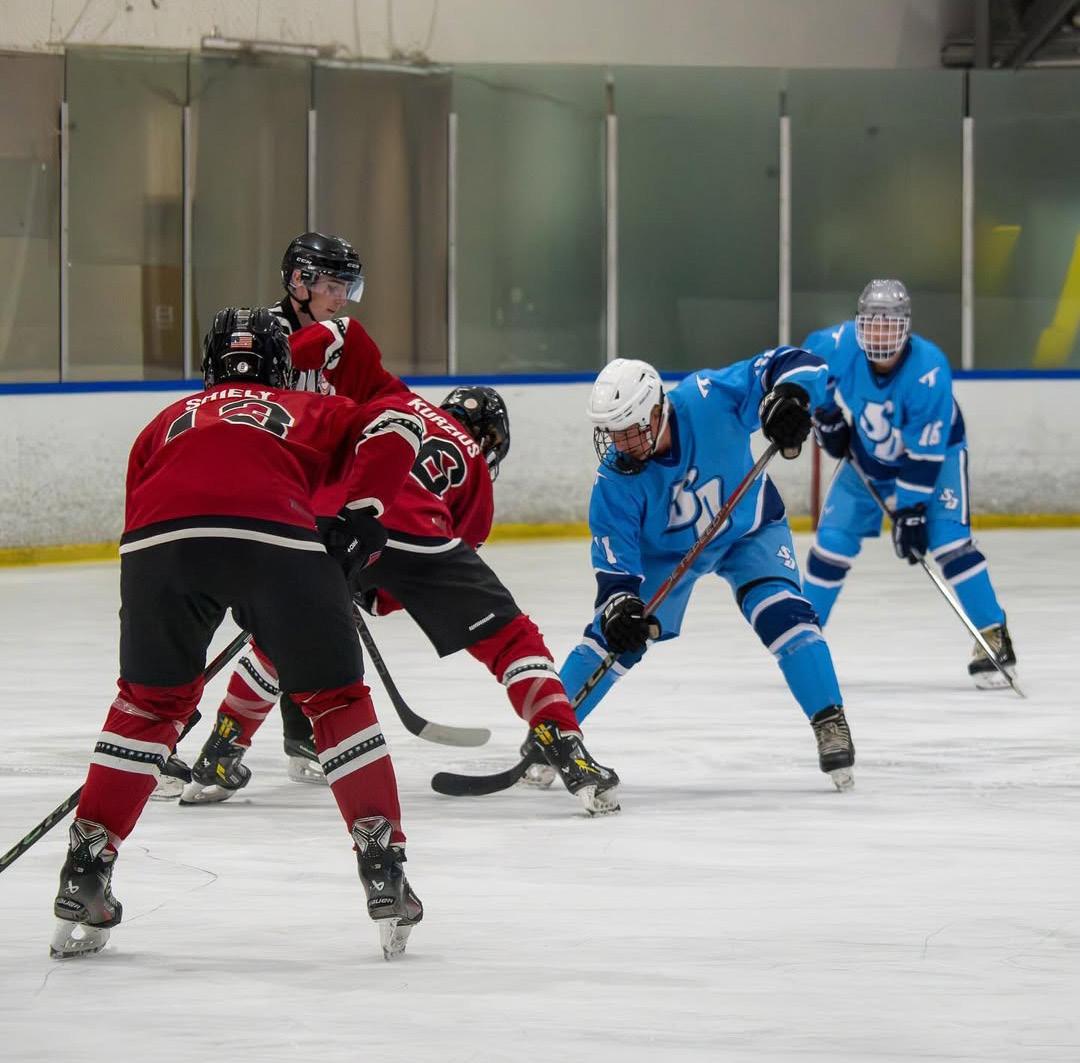
USD club hockey pictured playing during last year’s 2024 season.
Photo courtesy of @usdhockey/Instagram
The team played a previous game against LMU.
MACKENZIE SMITH CONTRIBUTOR
The strange world of athlete superstitions Game day rituals athletes swear
PRIYA COOPER SPORTS EDITOR
Spooky season is officially upon us, but some superstitions last all year round. Many athletes, including those at USD, have certain rituals and tricks that they do before every game — either as a good luck charm to ensure that they play to the best of their abilities or reach success throughout their games and during their season.
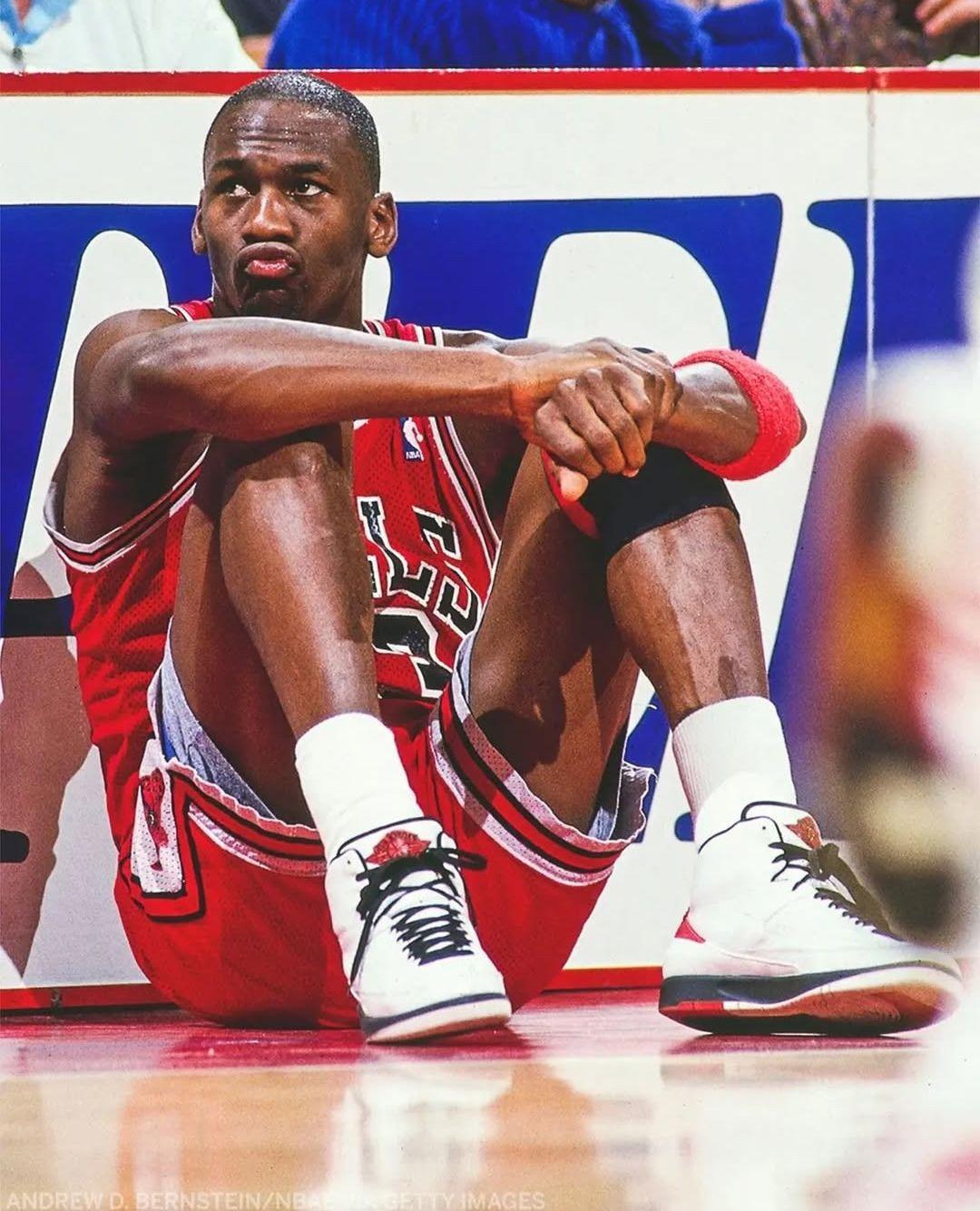
Even the greatest athletes of all time have certain tokens or superstitions that they stand by, in an attempt to manifest good luck during their games. Most basketball fans know that Michael Jordan played at the University of North Carolina before becoming one of the greatest players in NBA history.
Even after going pro, Jordan kept a piece of his Tar Heel roots with him and wore his UNC practice shorts under his uniform in every NBA game, a ritual that began during his college championship run.
While some rituals are more odd than others, both players and fans all have certain activities they perform to try and sway the game in their favor.
USD senior and player for the men’s tennis team Lambert Ruland explained what he does in preparation
for match days for good luck.
“On game day, I try not to do too much that deviates from my day-to-day rituals,” Ruland said. “My morning routine, with mobility and breakfast every morning, stays the same each day. My ritual before the game is journaling. Typically I write down what my intentions are and what I focus on. That’s something that’s specific for a match day. Also I wear specific underwear (compression shorts) on matchday. But don’t worry, I got several of those.”
Specific clothing items are a big part of the good luck culture. USD senior and member of the men’s cross country and track team William Gratke III shared similar rituals to Rudland.
“The morning of every race, I journal exactly how I want my race to go and then I touch base after to see how it went,” Gratke said. “I also always wear the same pair of socks, always have to have the same crew socks on.”
Clothes aside, there are many other rituals that people carry out in hopes of it giving them a stroke of luck, such as eating certain foods or meals on game day.
USD senior and member of the club lacrosse team Ethan Petrie talked about how certain foods are worked into his game day rituals.
“On game day I have three
by
things I usually do before every game ever since high school,”
Petrie said. “The first being, that day I always eat a turkey sub,

don’t ask me why, it just works. The other thing is I call or talk to my parents before the game, it helps me calm any nerves I have and finally I always listen to the same playlist heading to the game.”
While everyone has their methods for success, a lot of people are not superstitious and approach competitions the same way that they would any other day or practice. USD senior and softball player Kelsey Tadlock shared her team’s game-day rituals.
“I’m not that big on superstitions to be honest, but one thing our team does before every game is a prayer circle,” Tadlock said. “We all get together and say a little prayer for good luck and it always brings us good vibes.”
Whether it’s wearing lucky socks, eating a specific meal or setting clear intentions through journaling, these rituals highlight how much mental preparation and personal belief go into athletic performance. For some, superstitions are about finding control in an unpredictable game, while for others they are simply traditions that bring comfort and focus.
Michael Jordan is pictured wearing his UNC college shorts under his Bulls uniform for an NBA game. Photo courtesy of @meatpack/Instagram
Every athlete has a different game-day ritual which can even come down to how they tie their shoes. Photo courtesy of @engin akyurt/ Unsplash