
THE USD VISTA
EMMA PIRHALA MANAGING EDITOR
RILEY RAINS ARTS AND CULTURE EDITOR
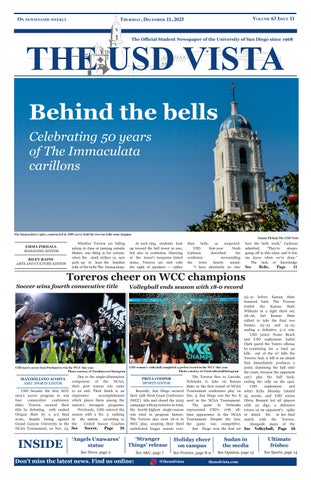
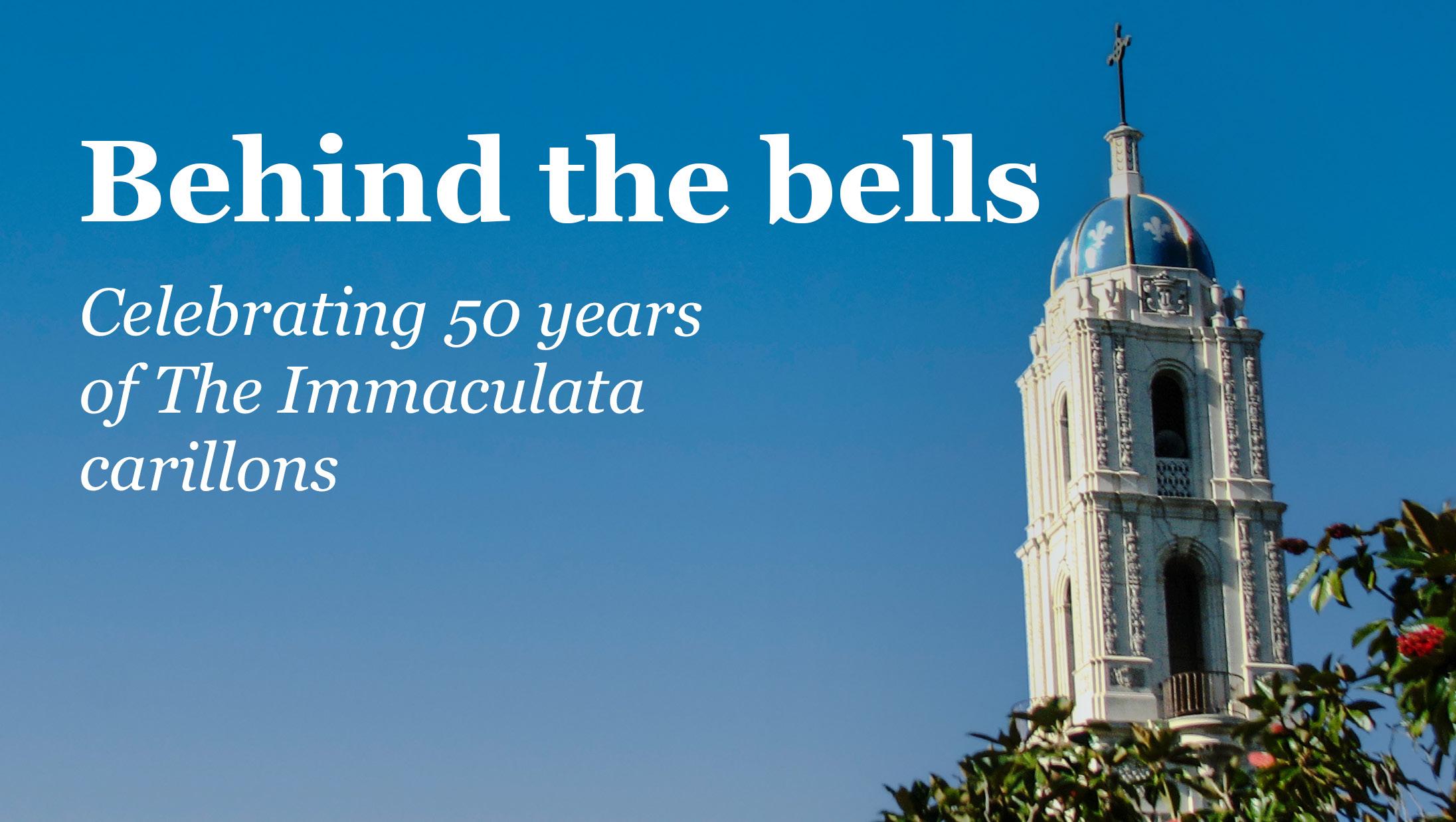
Whether Toreros are falling asleep in class or tanning outside Maher, one thing is for certain: when the clock strikes 12, ears perk up to hear the familiar tolls of the bells The Immaculata.
At each ring, students look up toward the bell tower in awe, but also in confusion. Glancing at the tower’s turquoise tinted dome, Toreros are met with the sight of speakers — rather
than bells, as suspected.
USD first-year Noah Carlsson described his confusion surrounding the twice hourly sound.
“I have absolutely no clue
Toreros cheer on WCC champions
Soccer wins fourth consecutive title Volleyball ends season with 18-0 record
MAXIMILIANO
ACOSTA ASST. SPORTS EDITOR
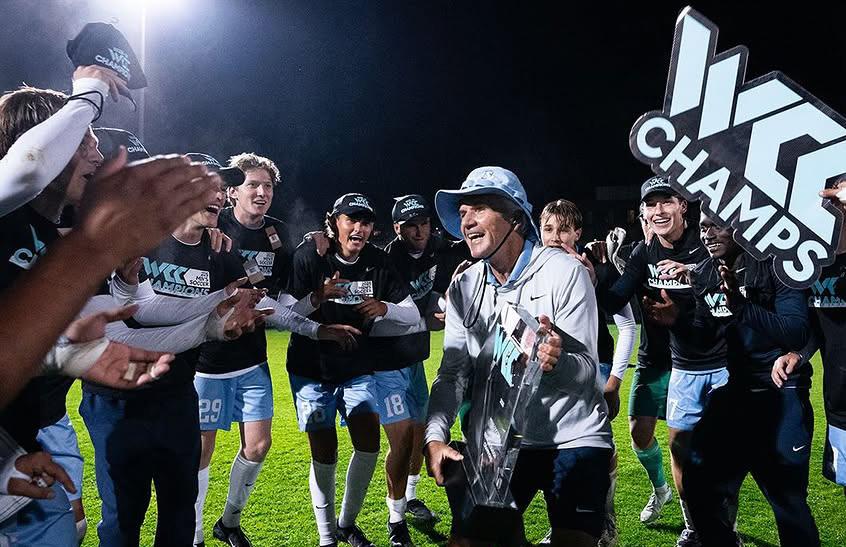
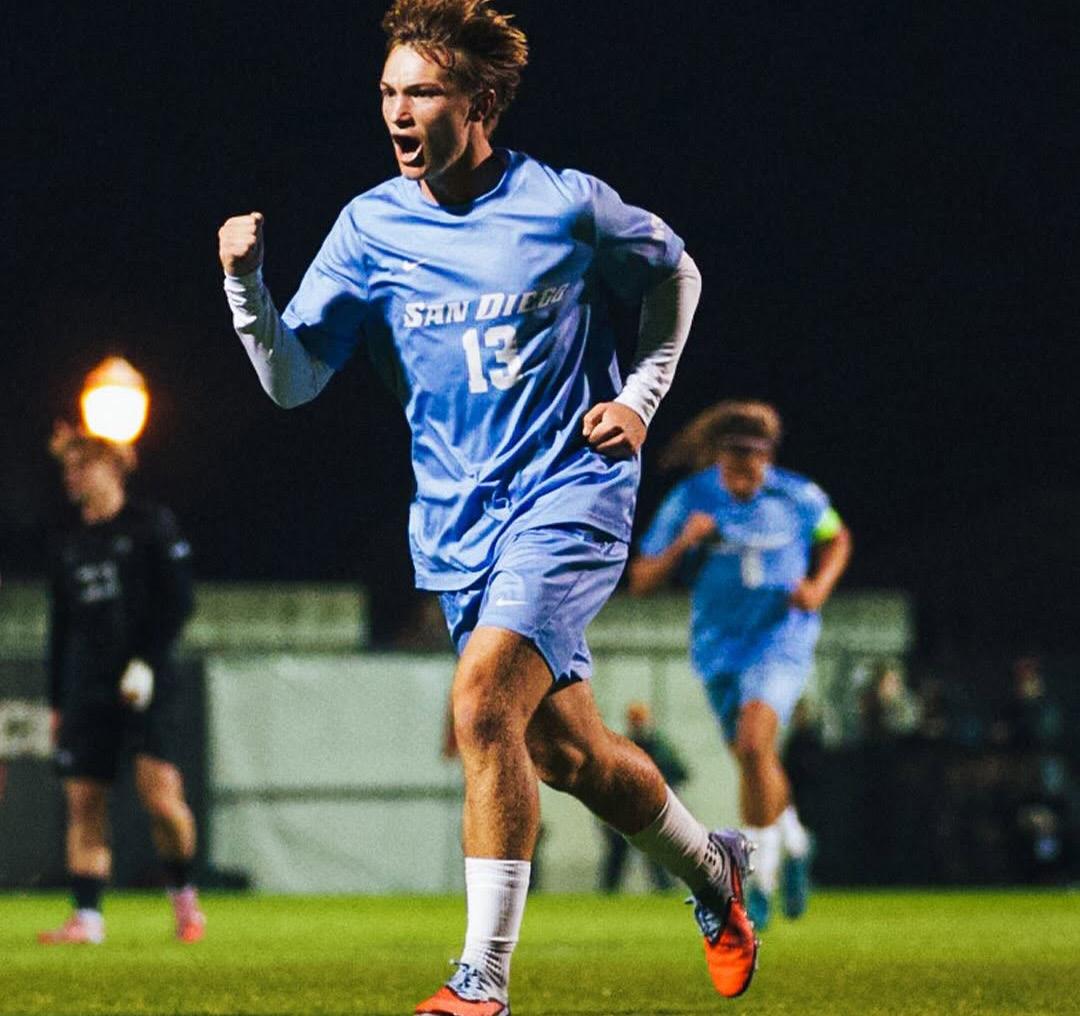
USD became the first WCC men’s soccer program to win four consecutive conference titles. Toreros secured their title by defeating 10th ranked Oregon State by a 4-2 final score, despite losing against Grand Canyon University in the NCAA Tournament, on Nov. 23.
Due to the single-elimination component of the NCAA, their post season run came to an end. Their finish is an impressive accomplishment which places them among the nation’s strongest programs.
Previously, USD entered the season with a No. 3 ranking in the nation, according to the United Soccer Coaches
See Soccer, Page 16
‘Angels Unawares’ statue
See News, page 2
PRIYA COOPER SPORTS EDITOR
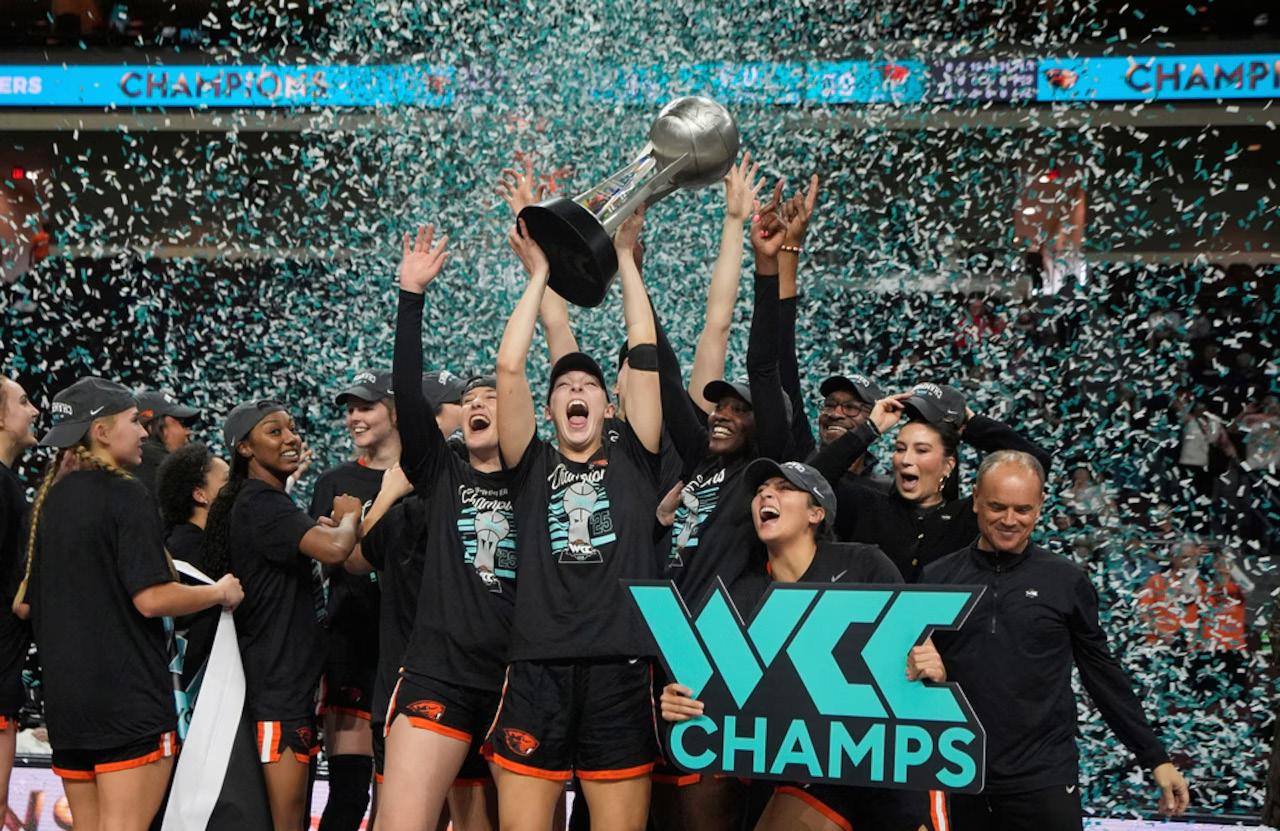
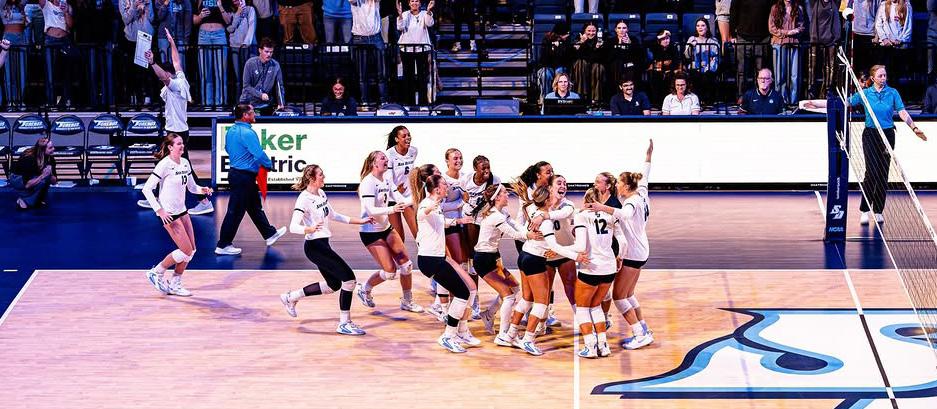
Recently, San Diego secured their 13th West Coast Conference (WCC) title and closed the 2025 campaign with 25 victories in total, the fourth-highest single-season win total in program history.
The Toreros also went 18–0 in WCC play, securing their third undefeated league season ever.
‘Stranger Things’ release
The Toreros flew to Lincoln, Nebraska to take on Kansas State in the first round of NCAA Tournament conference play on Dec. 5. San Diego was the No. 8 seed in the NCAA Tournament.
The game in Nebraska represented USD’s 27th alltime appearance in the NCAA Tournament. Despite the loss, the game was competitive.
San Diego won the first set
how the bells work,” Carlsson admitted. “They’re always going off in this class, and it lets me know when we’re done.”
The lack of knowledge
See Bells, Page 11
25–21 before Kansas State bounced back. The Toreros trailed the Kansas State Wildcats in a tight third set, 28–26, but Kansas State rallied to take the final two frames, 25–22 and 15–12, sealing a definitive 3–2 win. USD junior Nemo Beach and USD sophomore Isabel Clark paced the Torero offense by combining for a total 42 kills out of the 67 kills the Toreros had. A kill is an attack that immediately produces a point, slamming the ball onto the court, because the opponent can’t play the ball back, ending the rally on the spot.
USD sophomore and setter Kylie Munday totaled 55 assists, and USD senior Olivia Bennett led all players with 25 digs, a defensive return on an opponent’s spike or attack hit, in her final match with the Toreros.
Alongside many of the
See Volleyball, Page 16
See A&C, page 7 Sudan in the media Ultimate frisbee

See Feature, page 8-9 See Opinion, page 13
See Sports, page 14
USD men’s soccer beat Portland to win the WCC this year. Photo courtesy of @usdmsoccer/Instagram
USD women’s volleyball completed a perfect record in the WCC this year. Photo courtesy of @usdvolleyball/Instagram
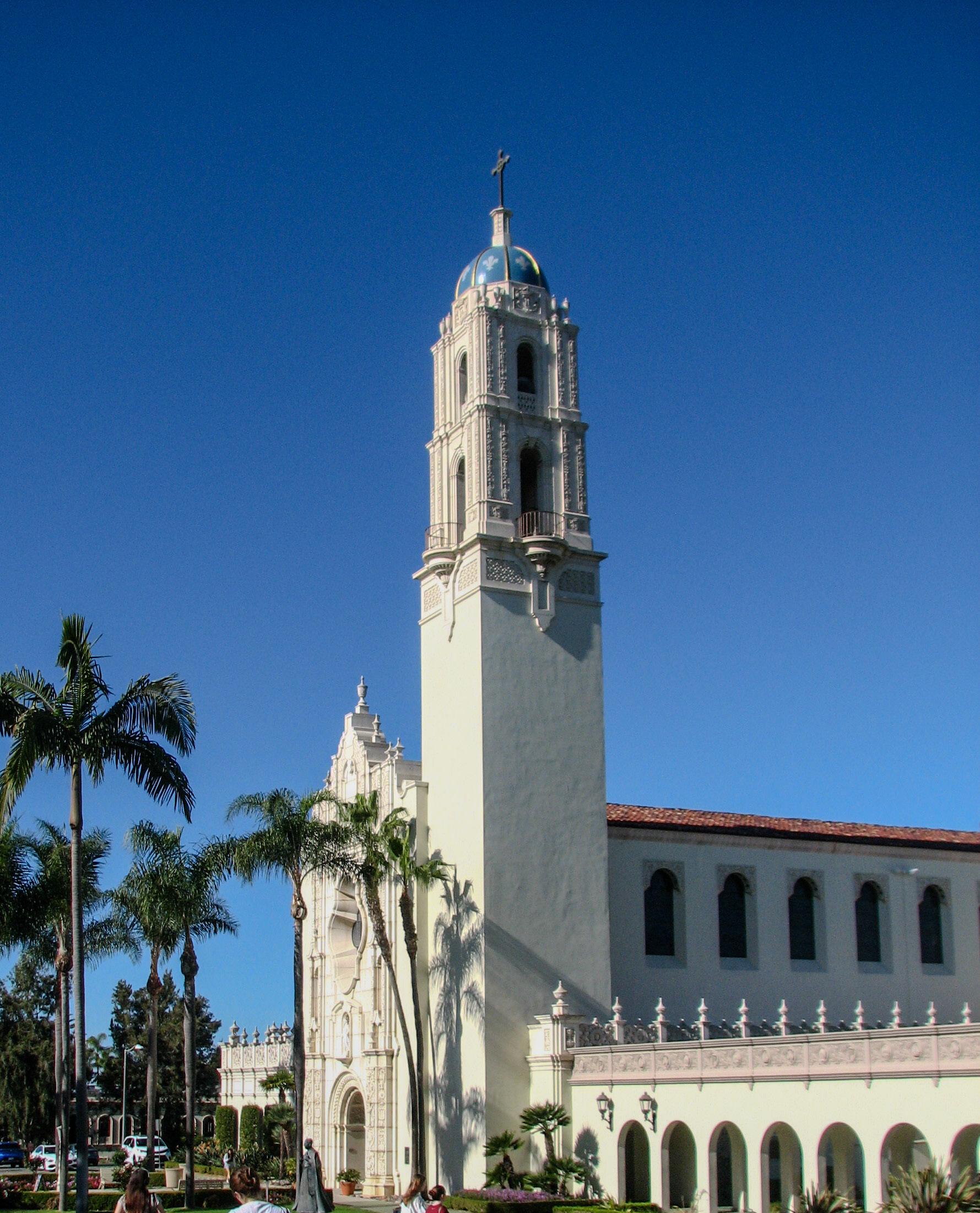
The Immaculata’s spire, constructed in 1959, never held the two-ton bells some imagine.
Emma Pirhala/The USD Vista
Currents ‘rip’ through San Diego coast Dangerous water conditions deter Southern California swimmers
CADEN HAYNOR NEWS EDITOR
The National Weather Service and other weather associations released beach hazards statements for the week of Dec. 1. These statements warned beachgoers about high tides and hazardous swimming conditions, advising people to stay out of the water the morning of Dec. 5.
USD sophomore Reece Elder, who regularly swims at the beach, shared an experience he had in San Diego when there were strong currents last year.
“It was at Ocean Beach, me and [my brother] were swimming because it was a huge swell day and we were trying to body surf,” Elder said. “A huge set came through and hit us, and all of a sudden, we couldn’t touch the bottom. [My brother] was yelling ‘Help! Help! Help!’ and a surfer came over and put him on his

board. Then another surfer caught a wave, and he put me on his board to help me out. The ambulance was going across the whole beach helping people. I definitely watch out when warnings come out.”
The beach hazard warning
was extended to include the entire San Diego coast up to Orange County, warning beachgoers of four to seven foot waves, rip currents and sneaker waves — large unexpected waves that surge up beaches.
USD junior Edie Rudisile, a regular San Diego surfer, reacted to these beach hazard statements.
“Four to six foot waves are sick,” Rudisile said. “Those are the perfect size because they aren’t too big, but just enough
that you can actually ride them without them dying on you. I’m not worried about rip currents, because I’m on a board. Like the worst case is I can just float out and then paddle to a better spot. Sneaker waves are evil though. I have a longer board, so I try to avoid the rips if I can, where waves are hitting at all angles.”
Rudisile explained the precautions she takes before going out on dangerous days.
“I do get nervous going out, but that’s why I never go alone and I check the conditions beforehand,” Rudisile explained. “Always go where there’s lifeguards and a buddy.” These beach advisories instruct people to stay out of the water during that time period and especially during high tides. On the morning of Dec. 5, La Jolla beaches experienced a high tide of over seven feet, higher than the average five feet.
New sculpture comes to campus
‘Angels Unawares’ unveiling and blessing later this month
EMMA PHILLIPS ASST. NEWS EDITOR
CADEN HAYNOR NEWS EDITOR
EMMA PIRHALA
MANAGING EDITOR
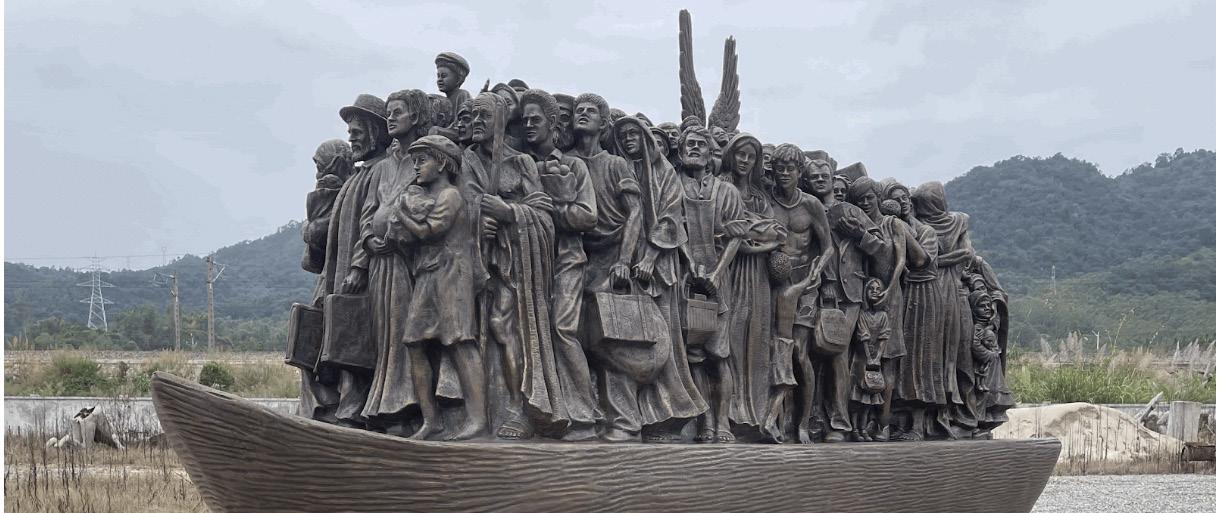
In November, the Office of the President announced that a new sculpture, named “Angels Unawares,” will be placed in the Garden of the Sky, in front of the Kroc Institute for Peace and Justice (KIPJ).
The sculpture is a scaled-down replica of one by artist Timothy Schmalz, which features over 140 migrants on a raft seeking refuge. The individuals depict various cultural and racial backgrounds standing together as one.
USD senior Nick Phillips shared his reaction to the statue.
“I think it is a very powerful sculpture and it looks very well done,” Phillips stated. “I like how the people represent different cultures and time periods. I think that it is really cool, after all they are all traveling on the same boat. For the religious aspect it is a reminder to welcome strangers because they have done good things for God.”
On Dec. 18, International Migrant’s Day, there will be a special mass and sculpture dedication. The sculpture was commissioned by Bishop Michael M. Pham of the Diocese of San Diego.
Bishop Pham is a refugee from Northern Vietnam. In 1980, Pham and his family fled the Northern Vietnamese Army on rice barges. They made their journey
to a refugee camp in Malaysia, before traveling to Minnesota and settling down in San Diego in 1985.
USD first-year Adriel Reomales shared his viewpoint on the matter.
“The fact that the Bishop is coming to dedicate it makes it seem as if this is a very important thing that should be recognized that is happening on our campus, whether or not you agree with it,” Reomales said. “[Regardless] of whatever your beliefs on immigration are, the fact that a high profile clergyman is coming to dedicate this statue is worthy of being noted.”
The location of the sculpture is creating some confusion among the student body as to whether or not there is adequate space for it. The Garden of the Sky currently includes a fountain and outdoor seating where some students study between classes.
USD first-year Eliana Pons explained her perspective on the placement of the statue in front of KIPJ.
“I just do not know where it would go because KIPJ is so
pretty,” Pons stated. “I would not want it to block anything, and I love the fountain in front of it and the setup so it depends on where it goes. I am not sure if it will receive a lot of love if it is right in the middle of a huge building that people go to everyday for their classes.”
This sculpture holds significance in the Catholic Church. The late Pope Francis commissioned the original sculpture in 2019.
Michael Lovette-Colyer, vice president of mission integration and theological and religious studies professor, commented on the ways that Catholic Social Teaching intersect with immigration.
“One of the most foundational aspects of the Judeo-Christian tradition is the conviction that all people are made in the image and likeness of God and thus possess intrinsic, inalienable dignity,” Lovette-Coyler said. “This belief has been central to USD as a Catholic university since our
founding. It calls us to pay attention to and study situations around the world in which human dignity is threatened or violated.
The struggle of immigrants and refugees is definitely one of those situations. Having the statue on our campus reflects our commitment to the dignity of all persons and is especially appropriate for us as a Contemporary Catholic university anchored along an international border.”
In front of the papal vacation residence outside Rome, the Pope made remarks to journalists on how the Trump administration has delt with immigration.
“When people have lived good lives — many of them for 10, 15, 20 years — treating them in a way that is, to say the least, extremely disrespectful, and with instances of violence, is troubling,” Pope Leo XIV stated.
In a written statement, Associate Director of Media Relations Elena Gomez expanded on the idea behind the statue.
“It began when James
T. Harris III, president of the University of San Diego, saw the original ‘Angels Unawares’ sculpture in St. Peter’s Square,” the statement read. “Harris was inspired by its message, especially how it aligned with USD’s Catholic mission and values, and worked with his USD colleagues to see if the artist would be interested in designing a similar sculpture for USD. A pair of angel wings emerge from the back of the sculpture, a reference to the Bible verse of ‘entertaining angels unawares’ by showing acts of hospitality to strangers (Hebrews 13:2). Thanks to an anonymous donor, and the artist’s willingness to recreate this piece, the 8 foot tall sculpture will now become a reality on campus.” This sculpture is unique on campus, featuring multiple individuals unlike any others currently at USD. Some sculptures around campus feature religious figures, including bishops of the Catholic faith. USD first-year Amelia Echeverry explained her thoughts on an immigrant-centered statue being placed on campus.
“I thought it was really cool, and it looks really well built,” Echeverry said. “I haven’t seen anything on campus like it. So I thought it was really interesting. USD values inclusion and there is a very diverse student population, so I feel that the image of the sculpture itself should be accepted by a majority of students. [However] the statue itself and the funding going toward it, maybe not so much.”
USD anticipates the response from the San Diego community as the statue is placed next week.
Rip currents and sneaker waves across San Diego pose a danger to swimmers. Photo courtesy of @huntington_beach_lifeguards/Instagram
The sculpture, which features over 140 migrants on a raft seeking refuge, will be placed in the Garden of the Sky. Photo courtesy of Timothy Schmalz
Trump administration faces criticism
Boat strikes, Epstein emails and pardons raise eyebrows
CADEN HAYNOR NEWS EDITOR
Recent actions by the Trump administration are causing bipartisan concern amongst students. These actions caused media investigations and legal questioning from the American public.
The President’s strikes on alleged cartel boats have turned out to be one of the most controversial aspects of his presidency. These actions have sparked international accusations of war crimes being thrown at the Trump administration.
The first strike was on Sept. 2, where a U.S. missile strike targeted a Venezuelan boat with multiple hits ordered by U.S. Defense Secretary Pete Hegseth. There have been 20 known strikes on boats suspected of carrying drugs in the Caribbean since the first strike, killing 77
people according to Hegseth.
USD sophomore Bryce Elder commented on these strikes.
“I was so shocked to see the President actually post attacks on ships,” Elder stated. “I don’t think it’s a good idea for him to do these things. I did not know that [the United States] ordered multiple hits when they saw survivors. That is crazy.”
In the past two months, Trump has also pardoned five high profile individuals with federal charges against them.
George Santos is a former U.S. representative who faced federal charges for wire fraud, money laundering and theft of public funds. Trump released Santos from prison, stating that he was mistreated in prison.
Trump granted clemency to founder and former CEO of crypto exchange company Binance Changpeng Zhao, who was convicted of money laundering
and violating U.S. financial laws. These laws were violated because he did not adequately implement an anti-money laundering program at Binance.
The President also pardoned a former member of his administration. Rudy Giuliani, former mayor of New York City and Trump’s personal lawyer during the 2020 election, faced multiple lawsuits and criminal investigations related to election interference and defamation.
Other pardoned officials include Henry Cuellar, the long-serving Democratic Representative from Texas, who was indicted alongside his wife on federal bribery and conspiracy charges after being accused of accepting bribes from foreign entities in exchange for political favors. Following this pardon, Cuellar ran for re-election as a Democrat, which Trump condemned. Another clemency
grant that shocked people was on Former President of Honduras Juan Orlando Hernández, who U.S. federal courts convicted of smuggling 400 tons of cocaine into the United States.
USD first-year Nathan Oshefsky shared his reaction to the Trump administration’s strikes and pardons.
“I think it’s good that he’s trying to get rid of the drugs that are being transported illegally, but I think it could definitely be done in a more humane way,” Oshefsky said. “We don’t even know what’s in those boats, so killing the people is not a good thing. I also think that it’s a bit hypocritical for Trump to pardon a drug trafficker and then say that he’s trying to stop them by blowing up ships. He has to pick a side.”
These pardons have sparked intense international backlash, with European media networks and politicians calling them a
breach of the international justice system. Some international law experts are considering researching the legality of the President creating the precedent of pardoning international crimes. Another event that caused national concern over the Trump administration was the release of the Epstein files, which mentioned the President multiple times in correspondence with Jeffery Epstein, who was charged with the sex trafficking of minors. Republicans have criticized Trump’s opposition and subsequent handling of the files, causing a fracture within the MAGA movement. There are ongoing investigations in multiple countries on the potential war crimes tied to the military strikes on suspected drug boats and the legality and political use of Trump’s pardons of high profile individuals.
Toreros reconsider their flying options
Southwest
CADEN HAYNOR NEWS EDITOR
USD students constantly weigh various pros and cons of each airline when deciding how to fly home for breaks. Each airline has shifted its policies over the years to adjust their flights’ structure, affordability and extra prices.
Southwest Airlines, which some USD students use to travel domestically, is undergoing changes that have not occurred during its 53 years of service.
These changes include ending the free checked bags program, eliminating open seating, adding assigned and premium seats and including a “plus sized tax” for passengers that need extra room.
The airline will also be adding and removing certain flights from their route network. Southwest plans to cancel 30 daily routes. Denver and St. Louis will each lose seven nonstop routes this March, and other various nonstop destinations will be permanently discontinued.
The flight redactions from Southwest allowed them to add multiple routes from San Diego to West Coast destinations.
Beginning August 2026, students traveling from San Diego can fly to Santa Barbara and will have more flight options from San Diego to Portland.
USD sophomore Kiera
Airlines undergoes major policy changes
Sheehan, a regular Southwest flier from Denver, reacted to these recent changes.
“Discontinuing seven nonstop flights is absurd granted, Denver is such a big airport,” Sheehan stated. “A lot of my flights that I have taken from San Diego to Denver have been really full, so I don’t really understand where they’re going with it from that perspective … I am finding that the ticket price for Southwest is more expensive than other airlines.”
Other airlines are undergoing similar changes. American Airlines has eliminated physical carry-on bag sizers at gates with the goal of streamlining the boarding process. Delta and WestJet are updating their carry-on size limits and personal item policies this year, tightening security and baggage rules.
In 2025, multiple airlines have reduced ticket prices, with average airfares down 7.4% over the year according to the Bureau of Transportation Statistics. Delta Airlines, United Airlines and Alaska Airlines are among many that offered lowered and discounted fares this year, contributing to the decline in average airfare prices over the past four years.
Southwest executives repeatedly called their trademarked “Bags Fly Free” policy a core part of the company’s identity,
The USD Vista
promising to never remove it for their customers. It gave each Southwest customer two free checked bags each. The policy changed in March 2025, charging all Southwest fliers $35 for a checked bag and $45 for the second. Southwest will also end its open seating system in May, adopting assigned seating and offering seats that are closer to the front of the plane and with extra leg room. The A, B and C boarding groups, which order Southwest passengers in a preboarding line, will be eliminated as a result and customers will have their seats assigned to them when they purchase their ticket.
USD sophomore Tate Schwerin, who flies various airlines, including Southwest, on his trips, explained what he thinks about
the seating structure.
“Assigned seating is better than what Southwest was offering beforehand,” Schwerin said. “The previous model was not a perfect, it was a lot more chaotic, but it’s also what Southwest was known for, so at that point what sets them apart? It was also difficult because, with the overhead baggage space, I would always have to sit separate from my overhead baggage. It’s a positive change I think.”
Additionally, the policy that used to allocate a full refund for a plus-sized passenger that bought an extra seat will be changed. Critics are calling this change a “plus-sized tax.”
Effective next month, any customer that does not fit within one seat’s armrests will have to buy a second seat up front without a guaranteed
refund. Currently, no other major U.S. airline is explicitly requiring larger passengers who cannot fit a single seat’s armrests to purchase an extra seat in advance.
Sheehan expressed her opinion about this new policy.
“Changing that policy that helps plus-sized people on planes is absurd,” Sheehan said. “I have family members who are plus sized and if they can’t get a refund for their extra seat, that really limits their travel. Companies need to be way more supportive of their customers because these changes are not going to help business.”
Policy alterations like that tax have shifted company earnings in the past. Airlines anticipate the customer reaction to the recent changes throughout this year.
Amelie Sedlack
Anahi Padilla
Emma Holliday -
Benjamin
Gina Lew - Student
Dr. Byron Howlett
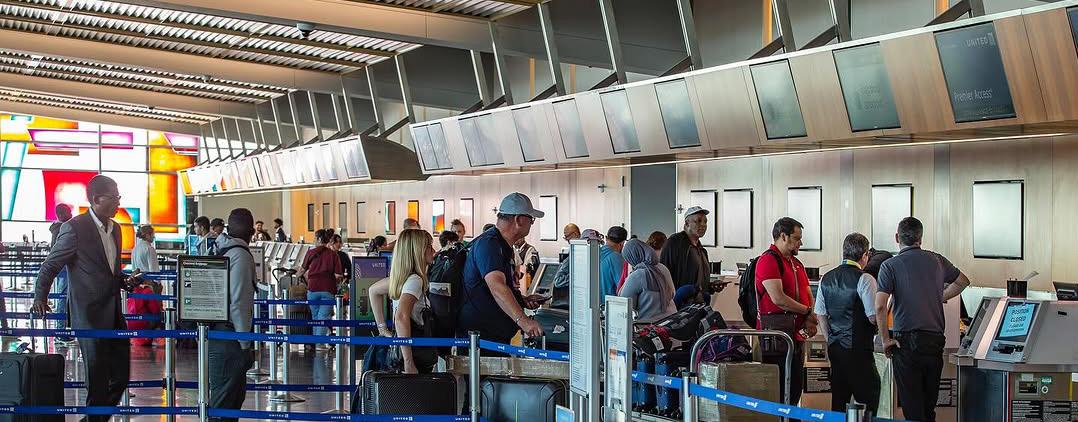
The San Diego International Airport is adding more flights to various areas across the West Coast.
Photo courtesy of @sandiegoairport/Instagram

From Toreros, with gratitude
Spread by Emma Pirhala/The USD Vista
As the holiday season approaches and many reflect upon their years, USD students shared letters of gratitude for those they are grateful for.
Trigger warning: This spread contains mentions of death and traumatic experiences.
Dear Dad,
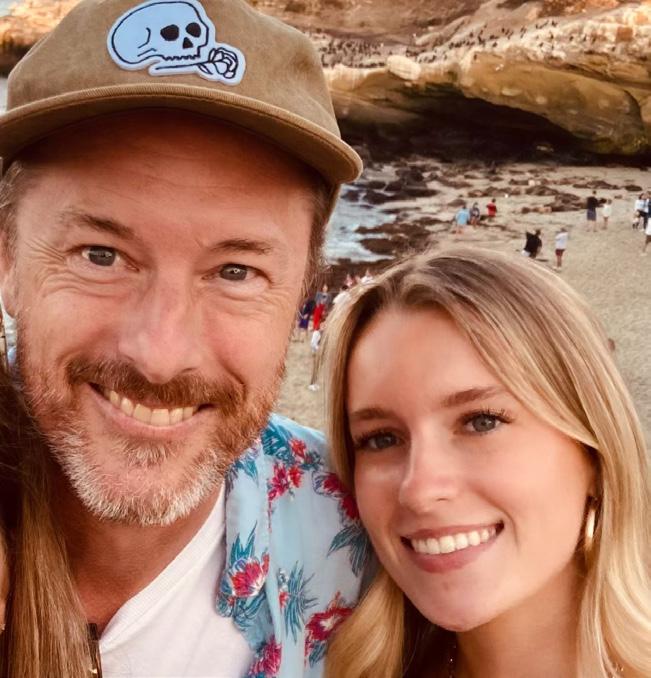
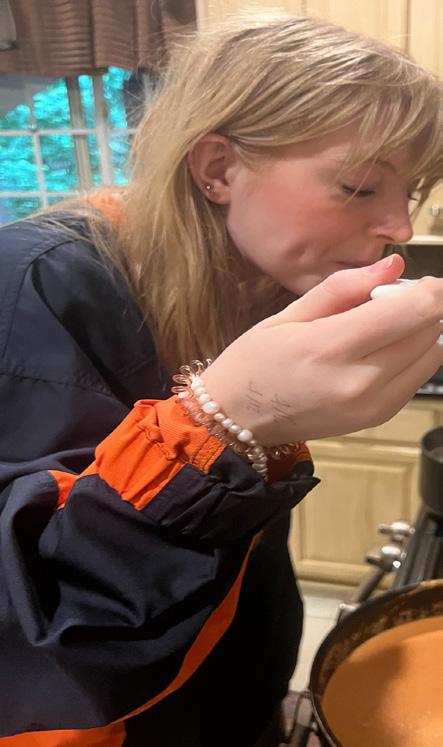
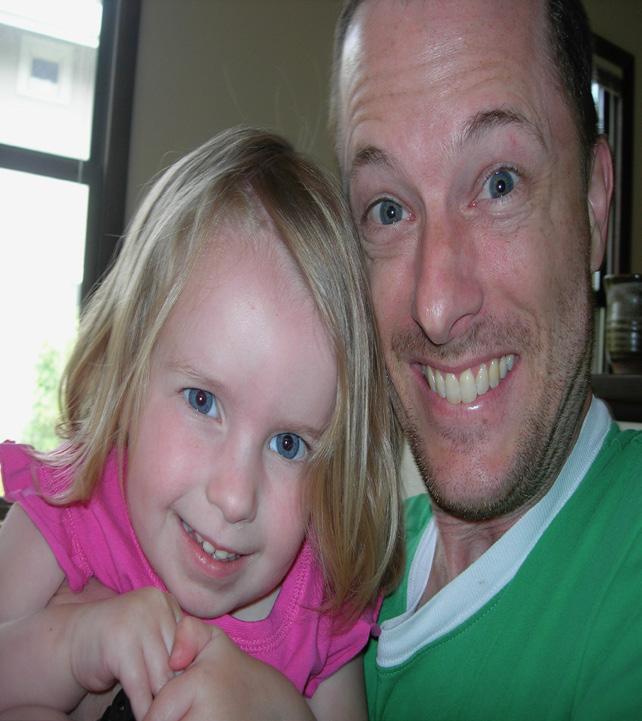
So much of who I am comes from you, your humor, your love for soccer and the way you make every day feel lighter. You’ve always been there for me and I don’t think I say “thank you” enough, so I want to say it now.
When I think about my favorite times with you, it’s not just one memory, it’s a tradition.
Watching the Premier League with you means more than you know. It isn’t just watching soccer, it’s the fact that it’s with you. We bond over Papa Murphy’s Pizza and soccer nights, and it’s still one of my favorite things to do when I’m home.
I love when we freak out over a crazy game and take a big sigh after the final whistle and say,
“That was insane.” I love the inside jokes we have about the players on our screen, our dramatic reactions and the way we analyze the game like we’re the coach. It’s our tradition, and it’s something I look forward to every single time I come home.
Another thing I’m grateful for is your sense of humor, because no one makes me laugh the way you do. You really know how to turn anything into a funny moment. Whether it’s the way you impersonate people or just because the delivery itself is funny, you always know how to make me laugh. And half the time you’re not even trying to be funny, it just comes naturally. Your humor makes everyone around you smile.
I truly admire the way you go through life. You have a mix of confidence and calmness that makes
everything feel less overwhelming. You don’t take things too seriously, but at the same time, you always take care of the people you love in a way that feels constant and reassuring.
I’ve learned so much just from watching you, like how you treat people, how you handle stress, and how you always find a reason to laugh. You’ve set an example that really sticks with me, and I hope you know how much I look up to you.
When I look at our memories, they’re filled with laughter, inside jokes, and the feeling of home when I’m with you. You’ve given me a childhood and now a young adulthood, full of laughter, support and moments that mean more to me than you probably realize. Thank you for showing up for me in
every way, for being the funniest person I know, and for giving me something as simple but as meaningful as our soccer tradition. I appreciate you, not just as my Dad, but as the person who makes everyday moments memorable.
Love,
Julia Waterbury, USD junior



Disclaimer:
Photocourtesy
PhotocourtesyofJulia Waterbury
PhotocourtesyofJulia Waterbury

Dear Phelix,

It was a sunny, warm Friday when you left. Typical for late June, though it had been raining the days leading up to that weekend; it was as if the world knew you would not be around much longer. Selfishly, I sat and thought about my own life when your absence was looming over me.
Through heartbreaks, tears, old friends, new friends, long nights, early mornings and the chaos of what my life was, for the last 11 years, you were the only constant I had. All 12 pounds of you curled up on the end of my bed was the one thing keeping me grounded. The memories are fleeting, so I wanted to write this letter to detail our moments. That way, they will never die.
A month prior to your
Dear Mrs. Jeanine,
I wanted to say thank you for everything you have done for me within the past two and a half years after Parker’s passing.
The night of his passing, he was on the way to see me, but when I didn’t hear from him 45 minutes after he said he was on the way. I felt incredibly uneasy. I heard ambulance sirens in the distance and thought the worst of course, but the possibility of him dying didn’t even compute in my brain.
When I finally got the call that he was in a motorcycle accident and he was pronounced dead on scene, my heart fell to my toes and my life changed forever.
Not only did my life
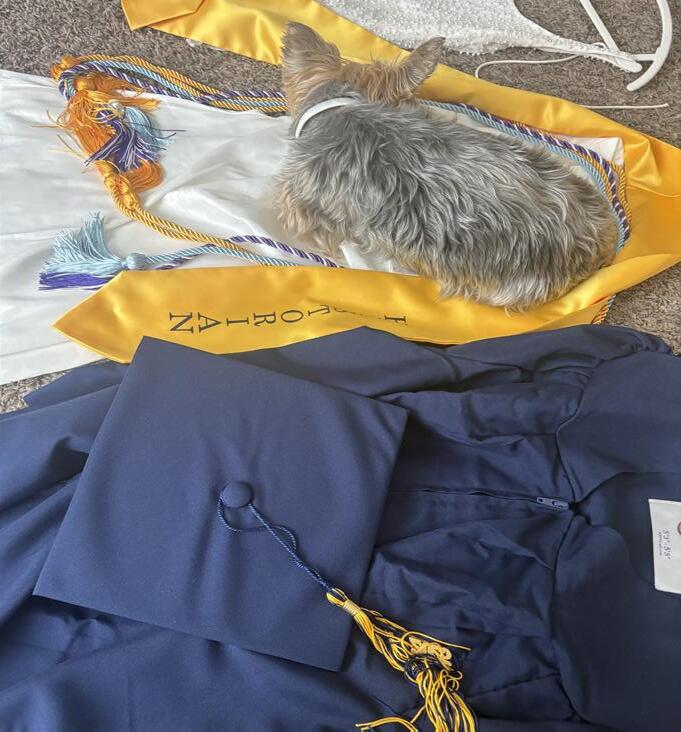
goodbye, we sat in my room together in our favorite spot. The sun came through the windows and bathed the floor in sunlight, where we laid. I was on the carpet, and you were curled up on my cap and gown that I had laid out to try for the first time.
There was so much excitement in this new chapter of my life, but when I saw you lying there, the 2,000 miles that would soon separate you from me felt unbearable.
That day, we had gone to the vet, per my request. Sure, you belonged legally to mom and dad, but you were my dog at the end of the day. The vet had no terrible news, just confirmed that blindness was catching up to you. I got you a pup-cup and we went home with the breeze in our hair. That was one of my favorite drives.
change, but more importantly, yours and your family’s lives changed. Still, through your grief, you welcomed me with open arms and made me feel a type of love I have never felt. As a 16-year-old, grief was a stranger to me, and you guided me along the journey with such grace and care that made the grieving process so much more comfortable than how I was assuming it would be. The time we spent together at your kitchen table sharing stories and shedding tears healed me in ways I needed so badly in that moment.
As the months went on and the grief never left, neither did your support which mattered more than anything during those times. It was a series of selfless acts that
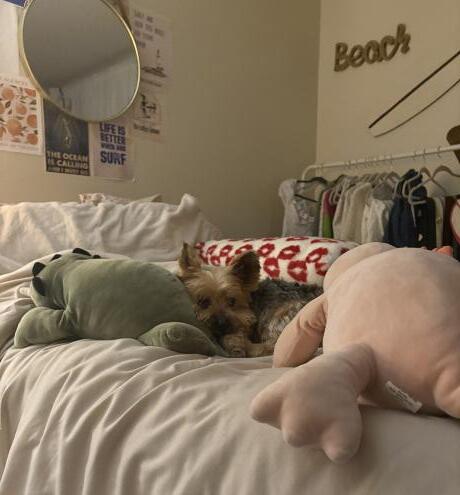
I was 15 when a boy left me crying and bedridden all day. The option of telling my parents was non-existent and my sisters were laughing and shaking their heads at me. The rain was pounding outside. I was not shocked to see you at the end of the bed, looking up at me, because that is where I could trust to find you. My secrets stayed between us, whether it was small or mighty. I knew you were sensing my hurt, and it was confirmed when you sniffed it out again.
Everything was a twoperson job for us. I had a terrible first shift at my first ever job, and I came home sobbing. It got confusing for my parents to handle, and more confusing for me to understand how I could work like this forever. You sat down and licked my tears while I laughed.
you performed again and again. Through the grief of your son, you still found time and energy to go out of your way to do things for me, like conjuring up one of the most meaningful birthday gifts I have ever received.
Receiving your famous vodka sauce recipe brought back the plentiful memories of eating it with Parker at your dinner table, and it meant the world to me that you shared that piece of family history with me. It allowed me to bring Parker into my outside life and share his legacy with many more people, and it’s something that would not be possible without you, your generosity, or the Nugent vodka pasta recipe.
Thank you for showing me how to care for others
This was not a normal Phelix activity, and you would typically be annoyed by now, but you stayed until I smiled consistently.
It was every smile that I did not deserve that you gave so easily — every sunspot that you flopped over and caught rays at any time you had the chance, every piece of food you would bark to get a bite of.
through the hardest times, and how to do it in such a selfless and beautiful way. It made that time of my life so much better than I thought it could have been, and I cherish those times we spent together. Thank you for birthing such a beautiful soul, and thank you for letting me into your space to keep his memory alive.
With so much love,
Rowan Amsler, USD sophomore
You helped me understand that the world needs to be loved selflessly, just like you did.
Sending hugs,
Anonymous, USD sophomore
ARTS & CULTURE
Toreros ‘wrapped’ up in their listening stats
Students discuss the annual 2025 ‘Spotify Wrapped’
EMMA O’CONNELL
ASST. A&C EDITOR
The annual release of “Spotify Wrapped” may be considered just as much a part of the holiday season as Thanksgiving, Christmas or New Year’s Eve. “Spotify Wrapped” is the result of one year of dedicated listening: it celebrates artist and genre allegiance, calculates minutes listened and even determines how a user’s listening habits may reflect their personality and age.
The anticipation and excitement surrounding the “Spotify Wrapped” release should not be underestimated.
USD sophomore Emmett Shinn described opening the music app to discover his year-end recap.
“Pure elation,” Shinn exclaimed. “I was so excited to play my daily morning music, and I was greeted with a lovely surprise of my ‘Wrapped’ being published.”
Each year, Spotify surprises users with a new set of engaging features and descriptive statistics to summarize their listening habits.
Toreros seemed to enjoy this year’s new “Listening Age” element. The “Listening Age” is based on what Spotify refers to as a “reminiscence bump,” or the tendency for a listener to connect most profoundly with music from their formative years (16-21 years). The “Listening Age” algorithm first identifies a five year span that a user listened to more heavily than other listeners of the same age. Then, Spotify playfully pretends that the five year music window corresponds to the listener’s own teen years. In other words, Spotify asks: “If someone’s formative years were when these songs came out, how old would they be today?”
the director for USD Radio, was a part of the “Spotify Wrapped” debut in 2015. She compared 2025 to 2015 and gave the “Listening Age”
“The age one was really cool,” Arslan said. “It’s like, what era do you listen to most? It gave you a music age which I haven’t seen before.”
While some Toreros, like Arslan, enjoy the lighthearted fun of “Spotify Wrapped,” others argue that this yearly musical celebration holds more weight. It prompts reflection, establishes a sense of community among listeners and helps them understand and communicate their interests.
For USD junior Lilly Dow, “Spotify Wrapped” acts as a small-scale time capsule.
“[The recap] reminds me of certain memories or certain times in my life,” Dow recalled.
“Or people that I associate the music with in a specific way.”
Spotify delivers a relatively thorough analysis of each user’s listening habits by always including “Top 5 Artists,”
“Top 5 Songs,” “Top Genres” and “Minutes Listened.” As such, “Spotify Wrapped” can flesh out musical interests and preferences. USD sophomore Oliver Dortmund described what the release means to him.
“I think ‘Wrapped’ is a pretty big deal for those who are seriously committed to music and its culture,” Dortmund said. “It allows people to dive into their interests and really express what they love and why they love it.”
Amidst the excitement surrounding “Spotify Wrapped” release, some Toreros have identified its negative underbelly. Certain features of this year’s recap invite competition and expose Gen Z’s obsession with “nicheness.”
makes Spotify users more aware of how their listening habits compare to those of their peers: it makes
though he was excited to see his recap, seconds Lange.
“It makes us disregard why songs are actually popular in the
believe “Spotify Wrapped” can make these musical moments externally focused. The annual “Spotify Wrapped” release is a Gen Z cultural staple and a celebration of every listener’s personal style, a reflection of their memories and, of course, an amusing way to connect. However, many Toreros can agree that these musical recaps can lead to a notable amount of competition between friends. At the end of the day, music is
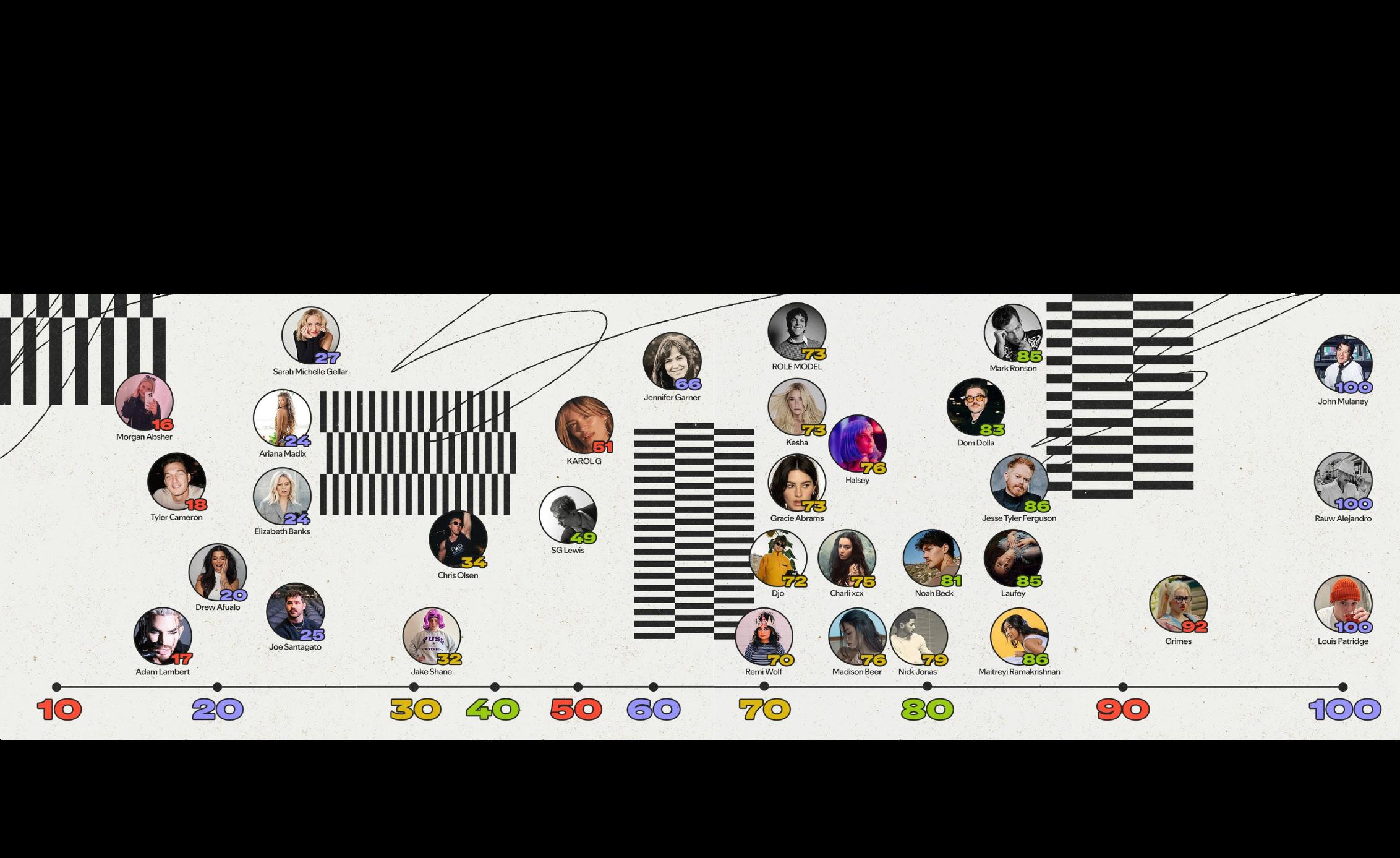
Wrapped”
Photo
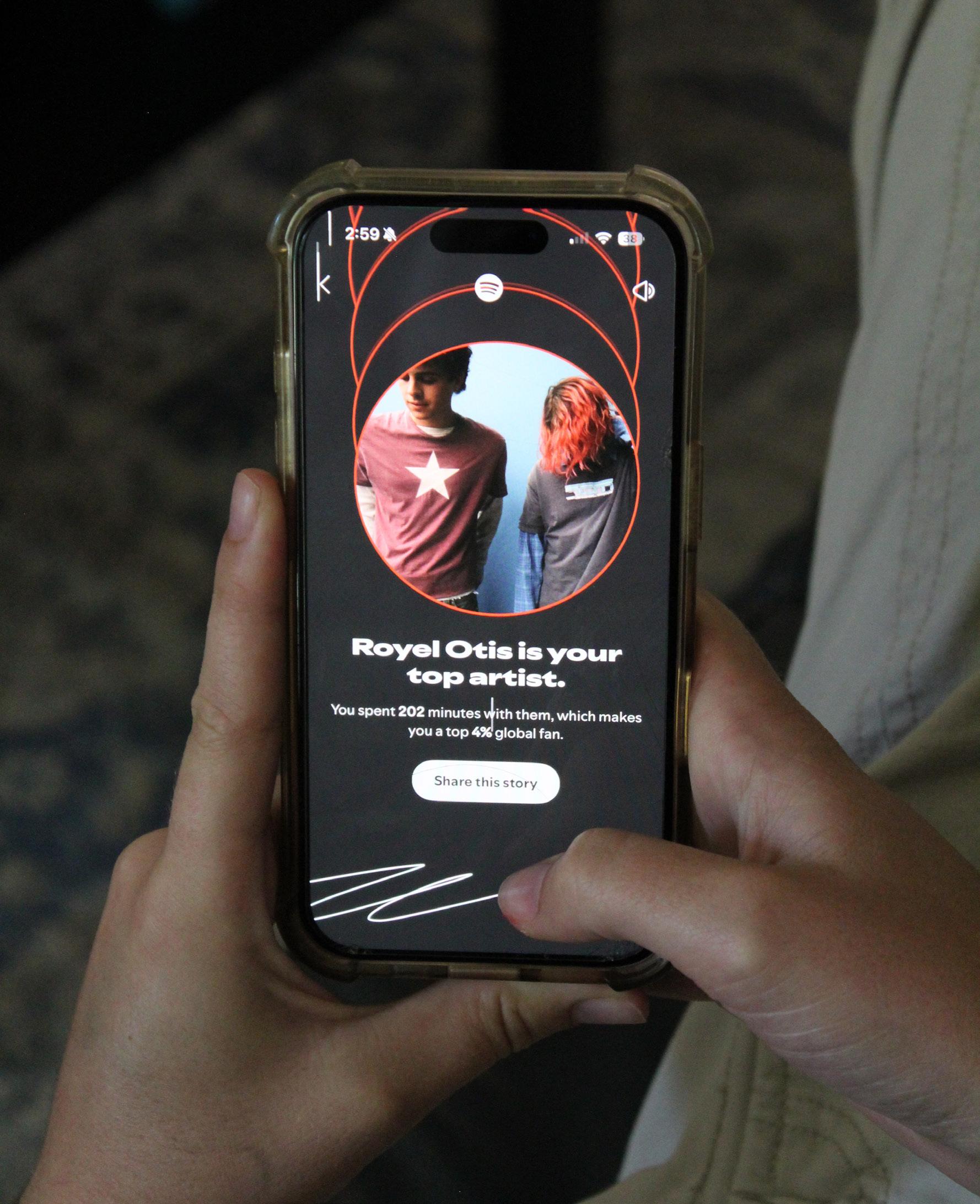
Spotify calculates listeners’ top artist and the percentage users fall within their global fanbase.
Hailey Howell/The USD Vista
‘Stranger Things’ siphons student attention
The number 001 show in Torero’s hearts approaches conclusion
RILEY RAINS
ARTS & CULTURE EDITOR
Spoiler Alert: This article contains spoilers for “Stranger Things” season five.
During Thanksgiving break, Netflix released volume one of the fifth and final season of “Stranger Things.” The fusion of nerdy ’80s culture, riveting Dungeons & Dragons adventures and modern media parallels have drawn students to “Stranger Things” since its debut in July of 2016. The series has grown up with students. The average USD first-year was nine or 10 when the first season was released.
The longevity of “Stranger Things” allowed many fans to grow up with Will Byers, Mike Wheeler, Lucas Sinclair, Dustin Henderson and Eleven, also known as “The Party.” The twin writers of the series — the Duffer Brothers — have put over 10 years of work into the show and encourage viewers to revisit earlier episodes in context with the recent release.
USD sophomore Luke Magturo shared his memories watching the first couple of seasons.
“I remember watching it for the first time,” Magturo recalled. “My friend put me on, back in sixth grade at summer camp. I ended up watching it every day, I would sneak it when I wasn’t supposed to be on my phone.”
Many Toreros, like Magturo, remember the excitement of the show in their younger years. However, with “Stranger Things” debuting when some students were still surfing single digits, a reminder of recent plot events is necessary for fans to stay engaged.
Season four ended with Max Mayfield in a coma and D&D enthusiast Eddie Munson sacrificing his life for Dustin, all while shredding Metallica in the Upside Down. Fans discovered Eleven’s involvement in sending Henry Creel, also known as Vecna or 001, into the Upside Down. Finally, the fragile divide between Hawkins and the Upside Down was flung open — placing the small Indiana town in a particularly vulnerable situation.
With a lot left unfinished in 2022, fans were eager for season five. However, Netflix took three years to film and
produce the final season, causing many USD students to forget the plot during the yawn. Magturo explained where his mind was during the lull.
“The show slipped my mind between seasons,” Magturo commented. “I haven’t thought about it much, only when there’s ads.”
Producers taking their time to release seasons is a trend that is not uncommon in 2025: series like “Severance,” “Game of Thrones” and “Euphoria” have taken a notable amount of years in between seasons or sequels — a move that affects actors’ appearances and viewer engagement. A big reason for the universal delay was the lasting effects of COVID-19 on production schedules.
The pandemic, along with the Screen Actors Guild – American Federation of Television and Radio Artists, or SAG-AFTRA, strike in 2023 considerably slowed writers and directors down. USD sophomore Olivia Sullivan commented on some differences she noticed in the newest season of “Stranger Things” in light of the gap.
“I was in sixth grade when the first season came out,” Sullivan recalled. “Now Millie Bobby Brown has a kid, and lip filler. It has just been so long.”
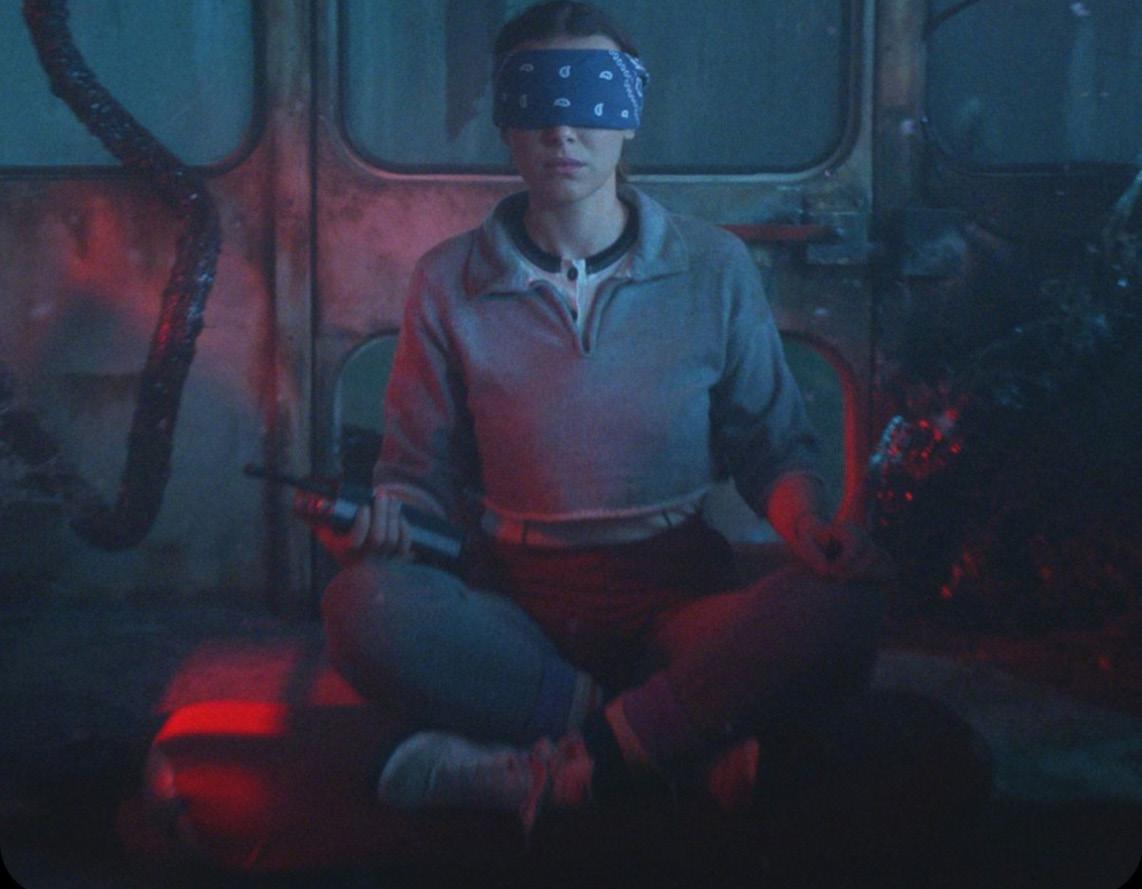
Millie Bobby Brown, who plays the character Eleven, was 12 in season one, and has since been in numerous films such as “Enola Holmes” and “Godzilla: King of the Monsters.” Most notably however, the 21-yearold recently adopted a child with her husband Jake Bongiovi. This fact sparked attention from many fans of “Stranger Things,” especially because she is playing a 16-year-old. Similar to Sullivan, USD sophomore Blaire Lynch also noticed aging, but not just with Eleven.
“Lucas looks really old to me and it kind of freaked me out,” Lynch joked. “However, I think the age thing is okay if they’re supposed to look older. Like Robin and Steve are doing great.”
The much anticipated volume begins with Robin Buckley and Steve Harrington — the two high-school graduates who refuse to be unemployed — working together at the WSQK 94.5 FM radio station, or “The Squawk.” The Party uses the
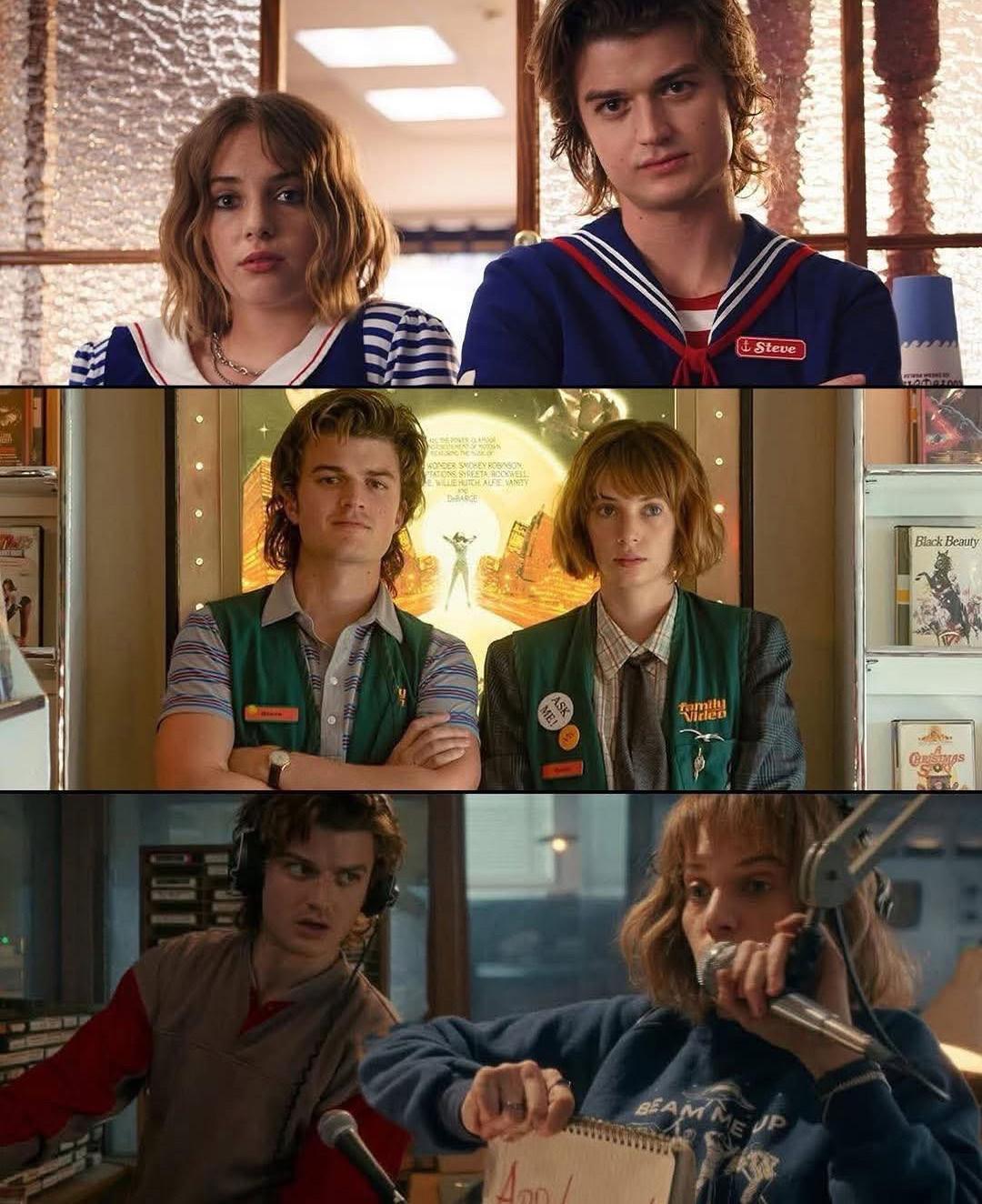
station to connect all characters in organizing “Crawls” to look for Vecna, the central antagonist in “Stranger Things.”
The military has put Hawkins under quarantine, and stationed troops in the Upside Down — the decaying mirror of Hawkins that is stuck in 1983. Their stations monitor supernatural behavior which the military has mistakenly attributed to Eleven. Lucas is crushed that Max is still in a coma and tensions rise between Steve and Jonathan Byers as they fight for Nancy’s affection.
The Duffer Brothers came full circle and revolved the story around vulnerable kids. Actors like Nell Fisher, playing Holly Wheeler, and Jake Connelly, playing Derek Turnbow, have pivotal roles in moving the
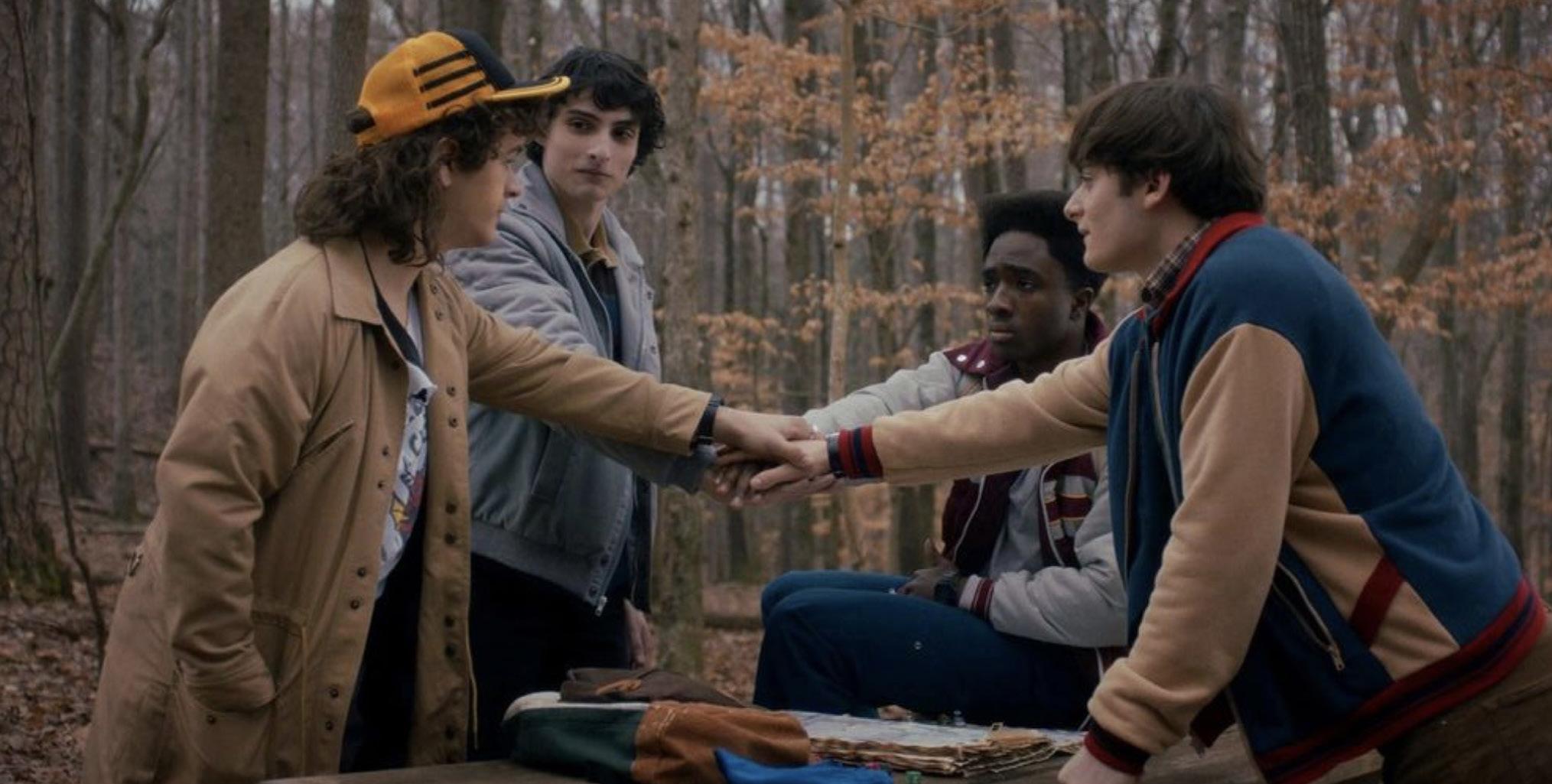
“Stranger Things” plot forward. Vecna targets young children to abduct into the Upside Down, for reasons currently unknown, reminding the audience of the once childish “Party” who just wanted to play D&D.
While the buzz around campus swells, surrounding the first volume of “Stranger Things,” the season is far from over. Netflix adopted a popular marketing strategy to release the remaining four episodes later, in this case, three on Dec. 25 and the finale on Dec. 31. Lynch does not enjoy waiting weeks for new episodes.
“I don’t like how the volumes come out a month apart,” Lynch complained. “I just want to watch them all right now.”
While Lynch doesn’t have the patience for the
split release, Sullivan appreciates the suspense.
“I like the volumes because the finale builds so much anticipation,” Sullivan argued. “It makes it more special, like I can’t stop thinking about Will. It’s fun when people come up with theories of what is going to happen.” Various theories of potential endings have been spreading around the internet as pervasively as the Mind Flayer. Everything from Mike and Will’s ship “Byler,” to potential time warping, has a place in fan musing. However, fans will not know until the last and final volume of “Stranger Things” is released in late December, concluding the Hawkins universe for good.
Steve ‘The Hair’ Harrington and Robin Buckley worked many jobs from seasons three through five.
Photo courtesy of @strangerthingsnetflix/Instagram
Dustin, Mike, Lucas and Will gear up for another ‘Crawl.’ Photo
Content
C h r i s t m a t a k e s o v e r
“I was inspired by Pinterest I love holiday decor I think it’s so awesome, and it makes me a lot happier especially during the season Every year, I get an advent calendar because I just like chocolate, and it's an excuse to eat it every day And I go to different events around campus and decorate ”
- USD first-year, Riya Tracy
Maher Christmas Lights

“We just put up lights because it was boring in here It was dead We weren’t inspired by anything We just saw other rooms so we put some stuff up Holiday decor is pretty dope We like it I think it's a good thing to add. It brings the spirit of Christmas.”
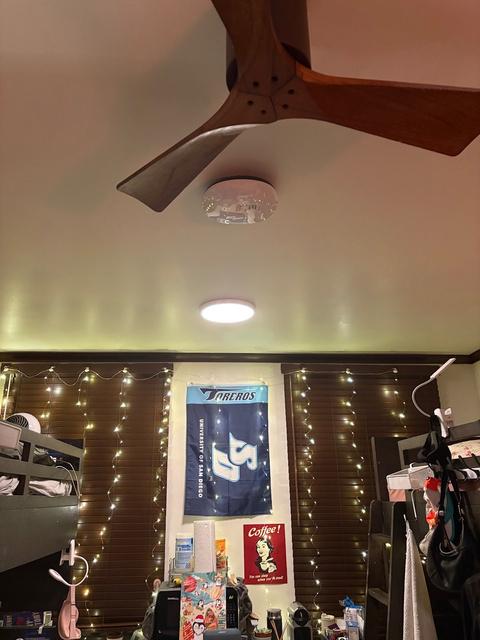
-USD first-year, Michael Rascon
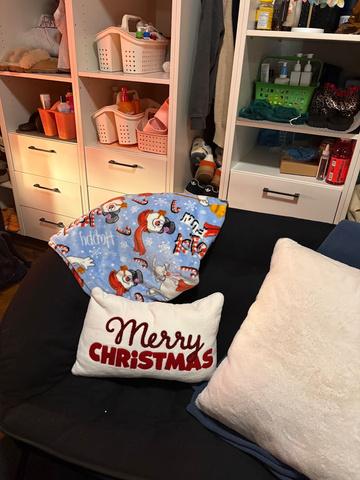
As the holiday season sh red leaves to shimmering canes, USD students ar garlands for Christmas tr in wrapping paper. Eve stretch, students are find and holiday cheer thro
Tree Lighting
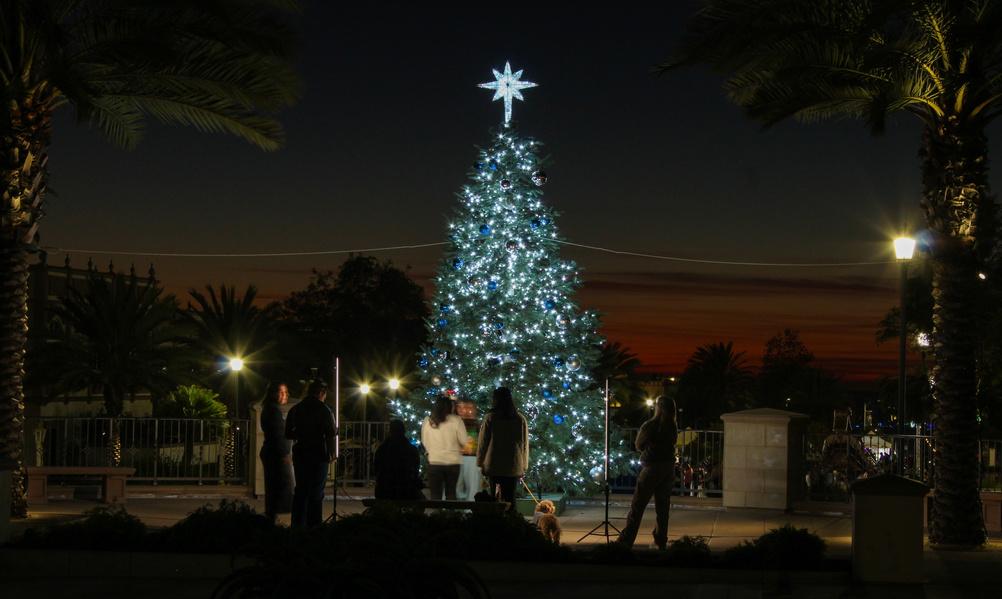
“The big tree in the center of cam see it, I really a -USD senior,
“They’re different I’ve acquire decorations from Target. I try to sta the spice of
-USD sophomore, G

by Katarina Maric: Des
Photo courtesy of Pia Kellems
Photo courtesy of Pia Kellems
Hailey Howell/ The USD Vista
ign by Alissa Abramovich
a s s p i r i t
r c a m p u s
hifts from orange and g snowflakes and candy re swapping their leaf rees and doors dressed en through the final ding ways to spread joy ugh the little things.
g Ceremony
mpus makes me happy When I appreciate it ” Kanan Levy
ed many housewarming ay budget friendly. It adds to life.”
Grayson Baldwin

“I drew inspiration from the nostalgia of Christmases spent with loved ones when deciding to decorate the dorm this year ”
-USD junior, Jackson Mann
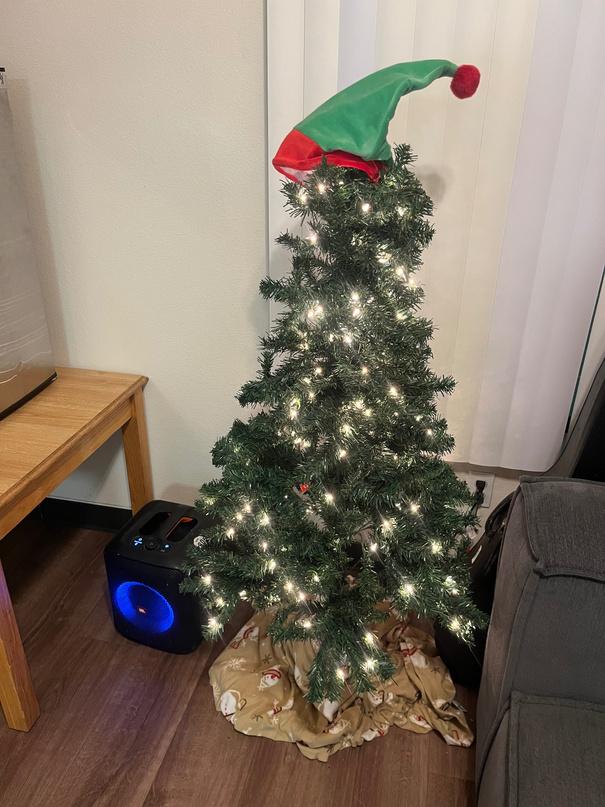
“Obviously, I put up the Christmas tree My mom and I always put up the tree, so I kept the tradition Christmas is my favorite holiday, so I just like to decorate I also love Christmas music ”
- USD first-year, Johnny Gilkison
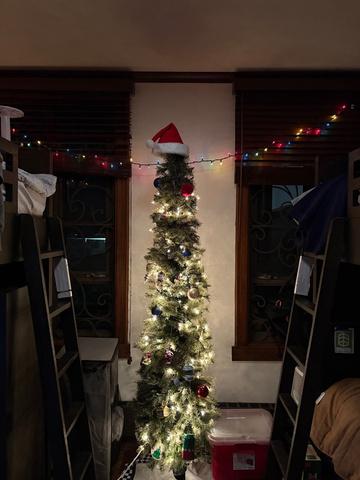
Hailey Howell/ The USD Vista
Photo courtesy of Pia Kellems
Photo courtesy of Jackson Mann
Toreros revive the rhyme
Alcalá Review hosts an ‘Open Poetry Night Revival’
Walking through Founders Hall last Thursday, Toreros might have overheard soft jazz drifting through hallways and poetry being read from the heart. Peppermint bark and hot chocolate filled students’ stomachs as laughter and conversation overflowed the Lindsay J. Cropper Center for Creative Writing. The Humanities Center Student Board and the Alcalá Review came together to put on an “Open Poetry Night Revival.”
The poetry reading was dismantled after a lack of interest after the pandemic. This was the first year that the event occurred since COVID-19.
USD senior and President of the Humanities Center Student Board Olivia Hines explained a bit about the history of night.
“This was a pre-COVID event, largely because it is in-person and interactive,” Hines shared. “So obviously, during COVID,
ARTS & CULTURE GAMES
attendance kind of plummeted and then [the Humanities Center] stopped offering it. We don’t have great documentation before COVID so we don’t know exactly how long it has been. Working with Anthony has been great. We were so excited for tonight.”
USD junior and Editorin-Chief of the Alcalá Review Anthony Walz worked closely with Hines to provide a space for campus creatives. The Alcalá Review is a student-led literary journal that annually publishes students’ creative work: poetry, fiction, non-fiction, visual art and any other medium students wish. Walz explained what the revival night meant to him.
“We’re just trying to bring back something that’s really cool, and I think necessary,” Walz said. “It’s fun to be able to share this with other people. This is something that people at the University used to do a lot, and I feel like it deserves to have that space again. The people here deserve to have that.”
Over 25 students gathered
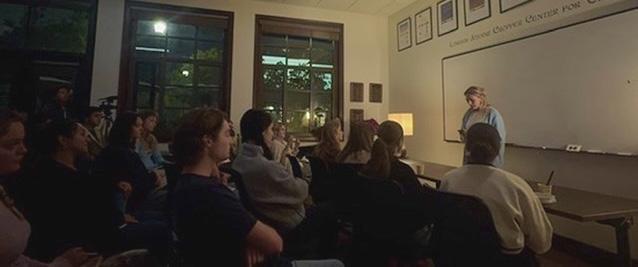
in the Cropper Center to share a variety of poetry: everything from William Blake’s “London” to Ray Bradbury’s “There Will Come Soft Rains.” Toreros also shared original work. USD junior Naomi Martinez read an original piece titled “The Ewe and the Lamb.” She shared her experience attending the “Open Poetry Night Revival.”
“This school giving us the opportunity to have spaces like this, where I can read what I’m
writing and show what I’ve been learning in my classes thus far, boosts my confidence,” Martinez exclaimed. “Sharing it made me cherish it a bit more than I normally would have because it is outside of an assignment. It’s like my baby now.”
Around halfway through the night, Walz paused the reading and invited conversation among students. Toreros basked in the warm lighting, laughing about haikus and snacking on
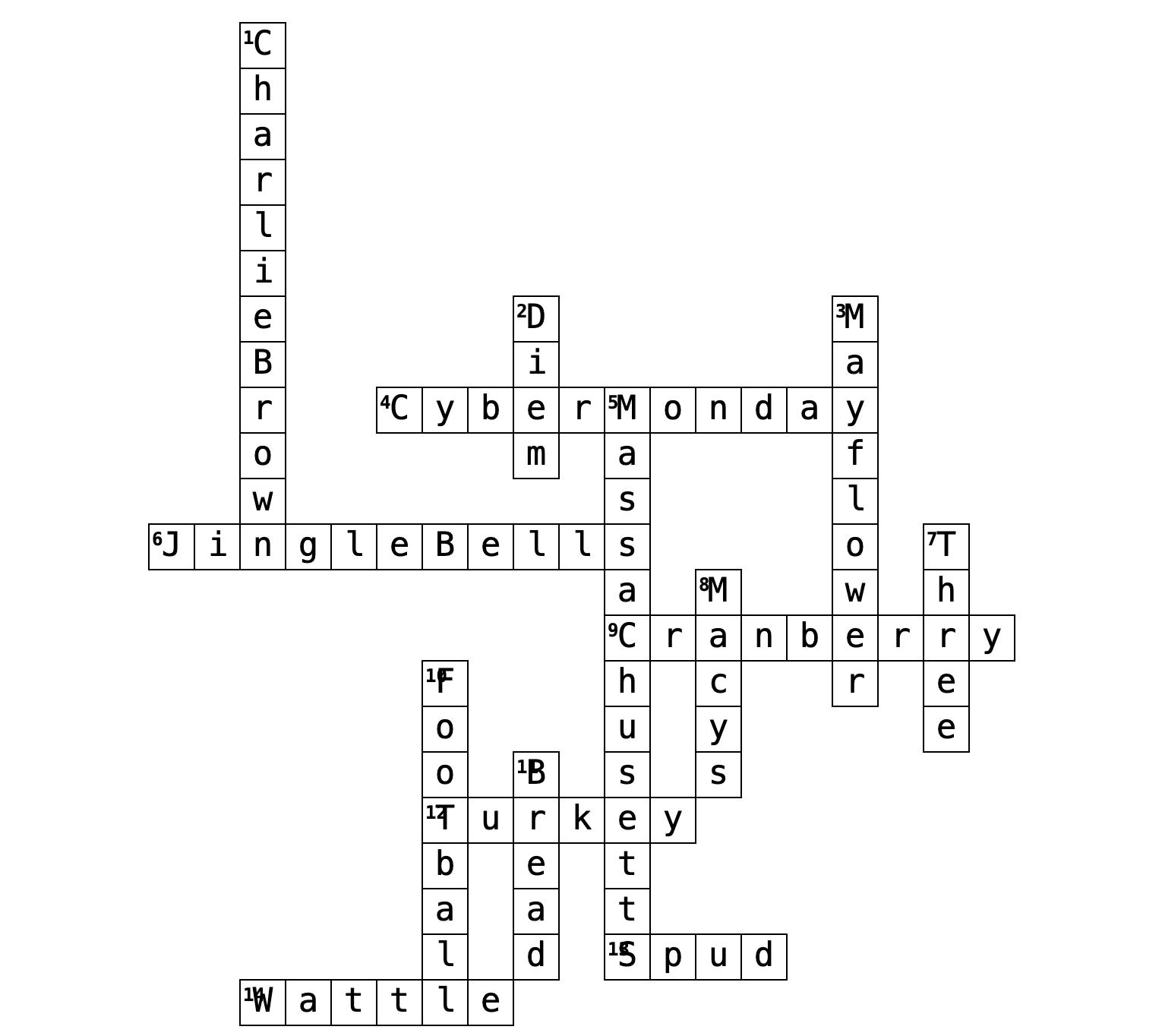
December 8 Crossword
2025 recap crossword:
popcorn. The floor opened back up and poets shared their work, sparking emotional reactions from some attendees. Next semester, the two organizations are hoping to host a similar event. The Humanities Center Student Board will support a studentcurated art gallery which will be silence themed. Before the art is revealed, they are looking to invite the Alcalá Review for another poetry reading.
former prime minister is dating Katy Perry?
Which ballerina retired from American Ballet Theatre this year?
Students gather in the Cropper Center for a night of food, discussion and poetry.
Photo courtesy of Emma Vertiz
ARTS & FEATURE
Ringing in 50 years of carillons
A glimpse into the history of The Immaculata bells
echoes beyond just first-years.
USD senior Quinn Edwards confessed her ignorance.
“I don’t really imagine a man up there ringing the bells,” Edwards joked. “If I really think about it, maybe it is digital? I don’t know the difference between any of the bells.”
Built in 1959, The Immaculata Chapel never held the large brass bells that many students assume are hoisted in the 167-foottall tower. For the first fifteen years of the chapel’s history, the bell tower was silent — until a donation from former trustee and builder of Pechanga Arena, A. Eugene Trepte, caused the University to make noise.
In a 1979 interview with The USD Vista, Monsignor John Portman — The Immaculata’s pastor at the time and founder of the theology and religious studies department — explained the significance of the sound of music across campus.
“Here we had a bell tower, a beautiful symbol of a Catholic university,” Portman commented. “But without bells, the tower simply was not fulfilling its function.”
The acquisition of the carillon system, Portman expressed, “added a great deal to the atmosphere” of the church and campus.
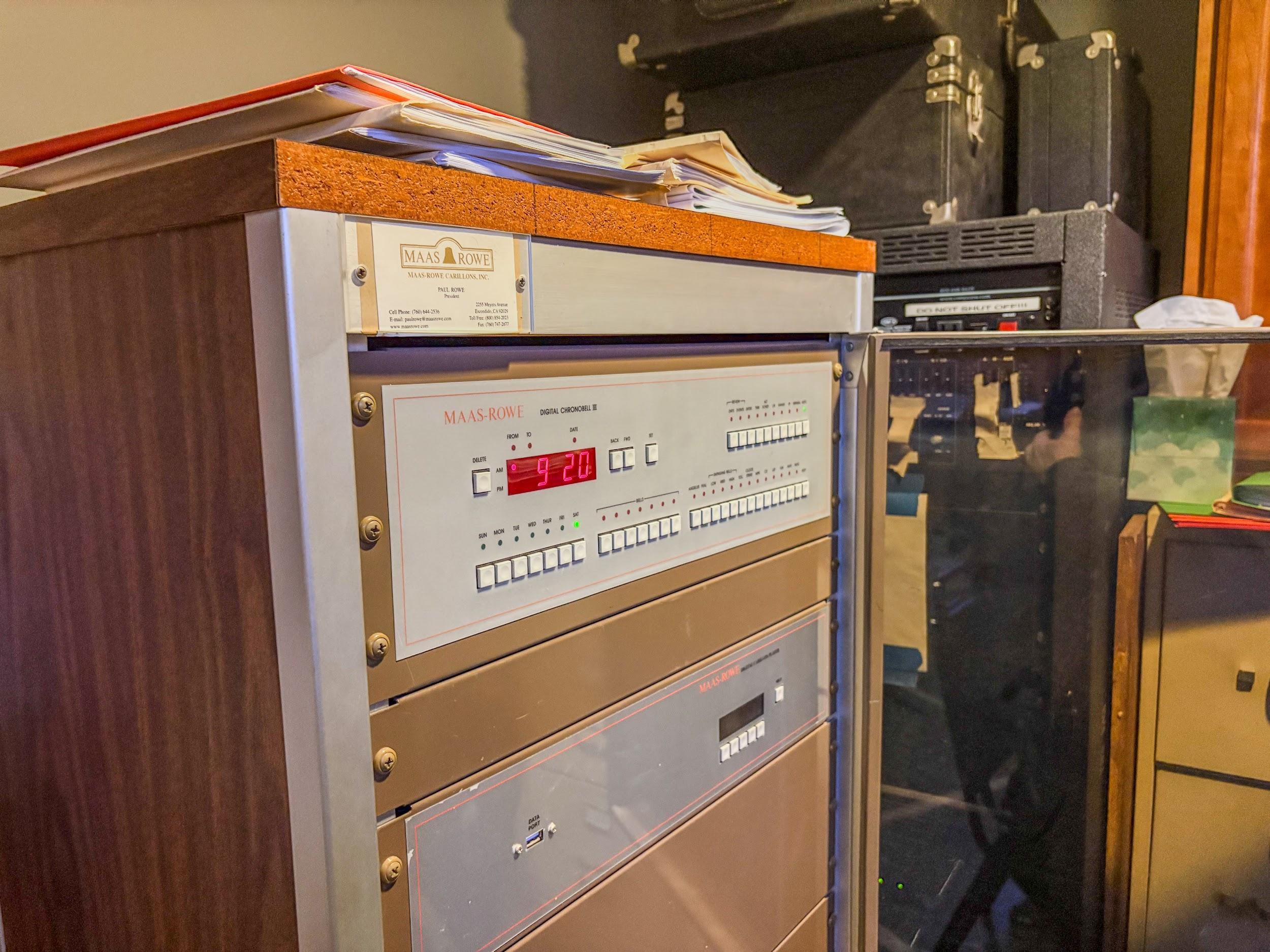
The parish opted for a digital system, since the structure could not support the two ton bells many might imagine. The current setup is a digital carillon system designed and implemented by Mass-Rowe Carillons on Dec. 19, 1975.
The company, headquartered in Escondido, Calif., developed an instrument which utilizes miniature bells that are then amplified and projected from
landmarks across the region such as Balboa Park’s California Tower and Old Mission San Luis Rey in Oceanside.
David Buckley, a Navy veteran and volunteer at the Immaculata Parish, operates the bells and is responsible for many of the technical aspects of running the system. Although he didn’t have any experience operating the digital carillon, Buckley took over the position and learned the process as he went along.
“I messed up a couple of times at first, but I learned,” Buckley explained. “I panicked the first time I had to change it. But I took out the manual and figured it out.”
The manual Buckley referred to is a hefty binder with hundreds of pages marked and sectioned between the six liturgical seasons and the corresponding hymns. Liturgical seasons mark six distinct periods within the Christian year which are defined by pivotal events in the lives of Jesus and Mary: Advent, Christmas, Ordinary Time, Lent, the Paschal Triduum and the 50 days of Easter. With each season, comes different hymns which are played from the bell tower after the alma mater at noon. The system comes pre-programmed with a full library of hymns, and Buckley updates the songs at the start of each season. USD sophomore Makenna Dase shared what she looks forward to each year.
“I love the seasonal hymns,” Dase exclaimed.
“Its good vibes with the Christmas season, you know.”
However fun the varied tunes are, Buckley explained the significance of silence in the times when the bells are not tolled.
“During the Triduum, the
said. “The bells are turned off completely. They don’t even ring. At the Easter Vigil, that’s when all the lights go on, we start everything, and we peal the bells manually. During those three days, there’s nothing … It’s part of the observance.”
Other traditions also take place where the bells ring at times that deviate from the normal thirty-minute rotation.
“We also toll a bell during funerals,” Buckley shared. “So, after Mass, as people come out, you can toll it from [the choir loft] for three to five minutes … It’s just tradition … If I turned [the toll] on, you’d just hear ‘boom, boom, boom.’ Anytime during the week when you hear that, it means a funeral.”
USD junior Almedina Hozdic appreciated the use of the bells in times of loss.
“I think the funeral aspect is respectful,” Hozdic said. “I don’t find any of the rule variations surprising.”
The booms of funeral tolls are just one of the many specialized sounds that come from Buckley’s handbook. As the bells have reverberated around campus for the past 50 years, students began to memorize and anticipate the tolling of
the carillon. USD sophomore Maeve Joyce shared her fond association with the bells.
“Personally I love The Immaculata bells,” Joyce expressed. “For me there’s a bit of a nostalgia factor … When I got here freshman year I taught all of my friends how to tell time using the bells, which is an awesome
life skill to have … I like the bells, I think it connects our University with the Catholic San Diego community which is special.”
Synonymous with USD culture, the bells are the heartbeat of Alcalá Park. Their harmonies heard from the Garden of the Sea to the Valley, stitch the campus together.
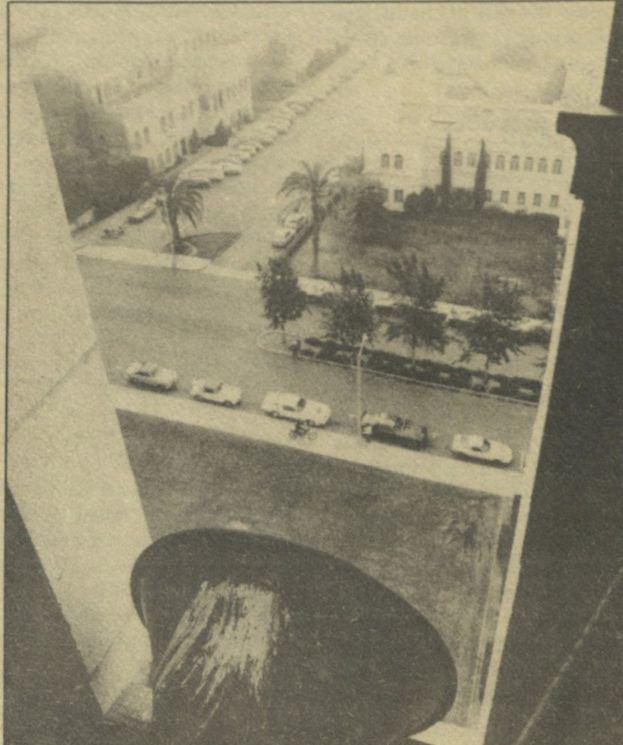
This photo was originally published in The USD Vista in 1979. Photo courtesy of The USD Vista Archives
From Bells, Page 1
The bell tower overlooks the whole campus, raining its melodies on all students.
Emma Pirhala/The USD Vista
Buckley uses a digital carillon to produce the sound of the bells. Emma Pirhala/The USD Vista
Chaotic college coaching carousel
The villain is the college football calendar, not Lane Kiffin
DAVID COOK OPINION EDITOR
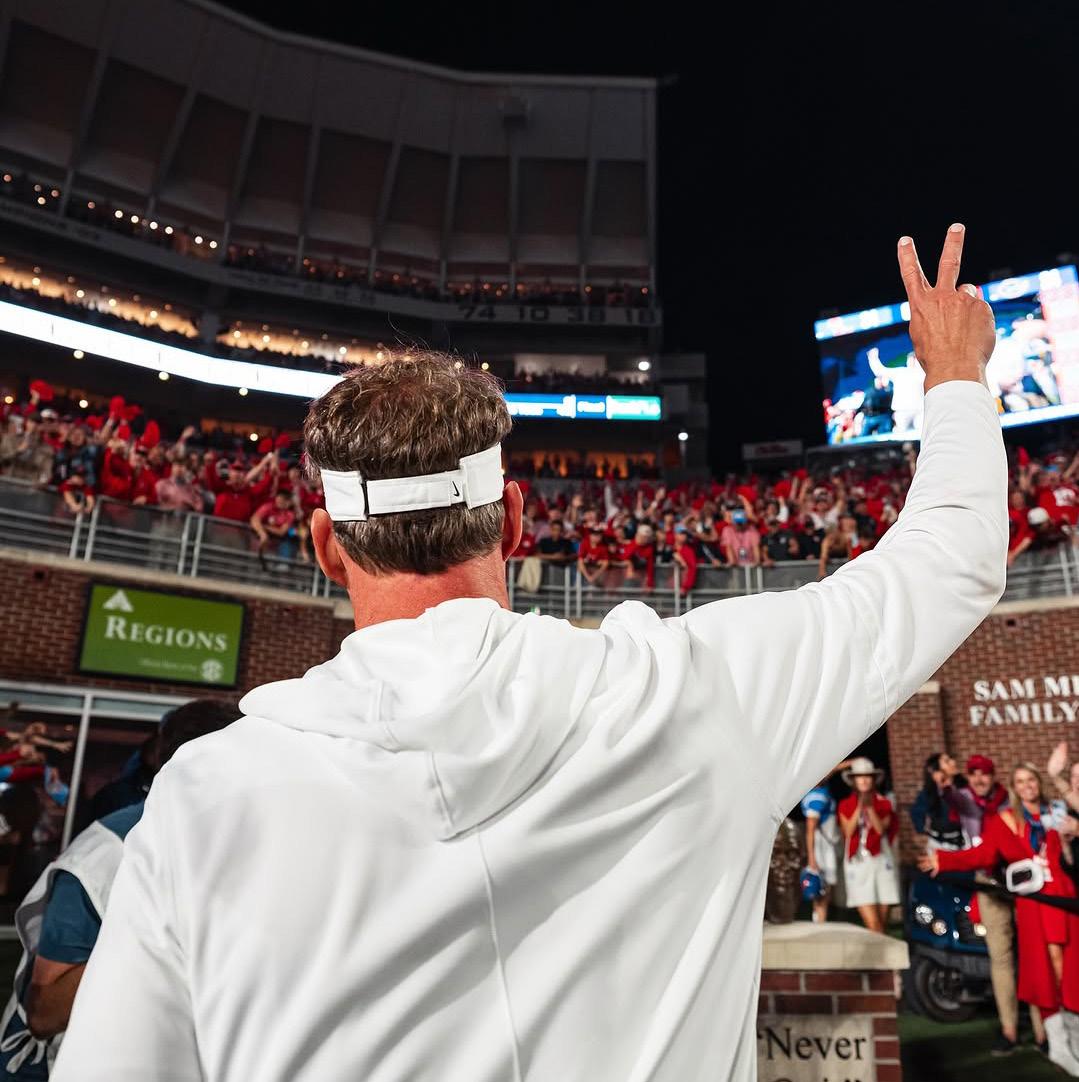
On Nov. 30, Ole Miss Head
Coach Lane Kiffin announced he was leaving the Rebels for LSU, and everything unfolded on cue. Fans accused him of abandoning a playoff team. College football fans across America called him a selfish sellout. Ole Miss Athletic Director Keith Carter responded by announcing he wouldn’t coach the program’s first trip to the College Football Playoff (CFP) — the best shot at a national title the school has ever had.
As dramatic as this looks, Lane Kiffin isn’t the only coach doing this. He’s just the one who happened to do it at a school with playoff implications and an in-conference destination.
Tulane’s coach, John Sumrall, left for Florida under the same compressed timeline.
A Group of Five program to an SEC giant is a massive upgrade in NIL resources, facilities and recruiting power, so no one blinked.
Unlike Kiffin, Sumrall is still coaching Tulane in the playoffs, attempting to do what many believe is impossible — win a national title as a Group of Five team.
Plenty of other coaches across the country have done the same in recent weeks, and no one has batted an eye.
What makes the Kiffin situation different is the internal dynamic at Ole Miss. Weeks before the announcement, Kiffin already knew the rule from Carter. If he accepted another job — especially to an SEC rival — he would not coach the Rebels in the CFP. Carter saw it as a conflict of interest. And whether fans agree or not, it’s not an unreasonable stance. From an administrator’s perspective, letting a departing coach gameplan with the players that he both recruited and coached is awkward at best. Carter made a call he believed protected his program’s interests.
Kiffin made a call that protected his best interests.
Leaving Ole Miss for LSU means more NIL backing, stronger recruiting classes, deeper institutional resources and thus, a much clearer path to competing for national championships. Coaches don’t get unlimited windows to make moves like that. If he stayed through the postseason and arrived at LSU three weeks late, he’d be starting his tenure with a gutted recruiting class and a roster already behind in portal negotiations. In today’s
college football economy, that’s a self-inflicted wound you may never recover from.
So, what is the reason for all of this chaos? Why is it possible for a coach to get up and leave their program right before a chance to play for a national championship?
The problem isn’t Kiffin nor Carter. The problem is college football’s calendar.
The entire sport is operating under a calendar that creates chaos by design. Before 2017, recruits signed in February. That gave everyone time to finish the season, hire coaches and make decisions with some level of stability. Then came the “early” signing period in late December. And last year, the date was moved up again, now landing in the first week of December, right in the dead center of the playoff chase.
This shift forces coaches to make job decisions before
their seasons are over. Athletic directors accelerate hiring to avoid losing recruiting classes.
Coaches juggle postseason game-planning with staff hires, NIL planning and keeping players from being poached in the portal. The system creates a situation where staying loyal to your current program almost guarantees falling behind at your next one.
Layer on the NIL era, and everything moves even faster.
Roster building now involves actual financial negotiations, collective coordination and constant communication with donors and boosters who expect their contributions to yield immediate results. A coach who shows up late, even by a week, risks losing the entire foundation of his first season.
One of the most significant factors in this flawed calendar is the influence of ESPN and other networks, which dictate
kickoff times, conference schedules, bowl slots and the postseason calendar. When the season stretches deep into late December, and the sport is locked into TV windows worth billions, it squeezes everything else into a smaller and smaller box. The coaching carousel, the transfer portal and early signing day, all collide because the broadcast partners say the games must be played when they’re played. It is indeed “just business,” but the unintended consequences shape every decision that follows.
Framing Kiffin as the singular villain in all this misses the point. While his departure was still full of unnecessary drama, Kiffin isn’t a villain. Neither are the other dozens of coaches who have made similar moves this month.
And Ole Miss Athletic Director Keith Carter isn’t wrong for holding firm on his policy, just
courtesy of @olemissfb/Instagram
as Kiffin isn’t wrong for wanting a better long-term opportunity. Both sides made decisions that make sense within the world of college football. If the sport wants to end these annual controversies, it needs to fix the structure that creates them. As long as early signing day occurs during the postseason, as long as NIL accelerates roster turnover and as long as ESPN’s broadcast calendar stretches the season into a logistical pretzel, coaches will keep leaving early. Athletic directors will keep creating boundaries around what happens next.
Lane Kiffin didn’t invent this problem, and he isn’t the only one making these decisions. He’s just the latest coach caught in a system where loyalty often loses to reality, and where the calendar, more than any individual choice, is the real source of all the chaos.
The views expressed in the editorial and op-ed sections are not necessarily those of The USD Vista staff, the University of San Diego, or its student body.
Ole Miss Coach Lane Kiffin says farewell to the fans in Oxford, Mississippi, departing for SEC rival LSU.
Photo
OPINION
The war America isn’t watching Sudan’s catastrophe grows while our media looks away
OWEN FUGIT ASST. OPINION EDITOR
The people of Sudan are, unfortunately, familiar with civil war. Since the nation’s independence in 1956, there have been three major civil conflicts. However, the past 30 years have seen a new issue spark and eventually boil over into the civil war that is playing out across southwestern Sudan today.
Both sides in this conflict have committed heinous atrocities against the civilian populations of Sudan, leaving almost 25 million people facing acute hunger and displacing 13 million people.
The United Nations (UN) estimates that it will take at least $6 billion in aid to meet the needs of tens of millions of at-risk Sudanese citizens. Critically, for a conflict with such a large impact, it seems the war in Sudan never makes headlines here in the United States.
UN-mandated aid programs receive only half their required funding, and the war shows no signs of stopping. It is imperative that students, governments and news organizations alike begin discussing this crisis and expand their efforts to bring peace to Sudan.
There are many competing views on how this war came to be. But to state it simply, this war is a power struggle between two former — but unlikely — allies.
For 30 years, Sudan was ruled by an authoritarian general named Omar alBashir. In 2003, to combat a rebellion arising in the western region of Darfur, Bashir sent weapons and money to Arab militias in the area, known as the Janjaweed.
Over time, the Janjaweed restructured into the Rapid Support Forces (RSF) — a paramilitary group headed by the infamous Muhammad Hamdan Dagalo, better known as Hemedti.
Hemedti and the head of the Sudanese Armed Forces (SAF), Abdel Fattah al-Burhan, joined forces in 2019 to oust Omar al-Bashir from power. A transitional civilian government panel was established. However, in 2023, after a dispute over integrating the RSF into the larger SAF, Hemedti and Burhan’s power struggle snowballed into the civil war rocking the nation today.
With so many millions of lives now at risk, one might imagine that this conflict would take center stage in the media here at home. Anywhere from 150 to 400 thousand people have been killed as a direct result of the war, with tens of millions more displaced and starving. As so many other important international conflicts rage, Sudan seems to be underrepresented in the national media by comparison.
Dr. Mary Brinson, an adjunct assistant professor of communication here at USD, revealed the driving forces of news in the United States.
“U.S. journalism is a forprofit industry, therefore news editors are going to feel pressure to air stories that will keep viewers watching/ listening/reading,” Brinson said. “This is usually driven by some key elements of what makes something ‘newsworthy’ in the US that are related to the ego-centric characteristics of the US press: proximity, relevance, drama/conflict.”
Leilani Youmans, a USD junior studying international relations sympathized with Brinson’s explanation.
“I feel like with Ukraine, there’s a clear villain and clear victim,” Youmans said. “But in the Middle East, there’s so many different narratives and so many different sides that it’s hard to get a clear scope of everything.”
Many media personalities have been quick to point out that the gravity of the situation should warrant protests and public discourse, but clearly, that has not manifested.
Both Youmans and several other students claim the media outlets responsible for informing the public are not doing their job correctly. Brinson — whose research covers areas of anti-Muslim bias in American news — explains how Americans may have avoided the conflict in a Muslim-majority country.
“In terms of national interest, the conflict does not involve our allies and it does not pose a direct threat to the United States,” Brinson said.
“In terms of proximity and relevance, we can look at this as an example of a country that is geographically far but more importantly — culturally distant from us. Since 9/11, Muslims have been portrayed in the news as being the ‘other.’ They have been portrayed as too different from us in terms of language, culture, beliefs, ways of
praying, etc… If Americans see them as terrorists, then it is understandable why we would not care if they are destroying each other.”
As college students at a school widely recognized for its outstanding global impact and commitment to peace, we have a unique insight and responsibility to advocate for causes that would otherwise go unnoticed. When it comes to Sudan, we have a clear obligation to at least stay informed. Brinson explained why it is imperative that students learn about foreign affairs.
“We live in a globalized world,” Brinson said. “We should have political knowledge of global humanitarian crises and atrocities that other humans experience. This would make us less ego-centric, and would help us acquire more empathy for groups of people that are dissimilar. By not covering these events, we are saying that they are less human or less deserving of our
attention. This contributes to the cycle of in-group and outgroup conflict.”
With so much at stake in Sudan, there is one major question we must ask ourselves: how can we fix the problems in Sudan as students here at USD? It starts by understanding precisely what is happening. Once we know this, then we can begin to fight for humanitarian aid and assistance for the victims of the war.
Brinson suggested ways that students at USD can stay informed on the war in Sudan.
“Avoid cable news,” Brinson stated. “Rely on sources such as Reuters, The Associated Press or New York Times. Also try to add some international sources to your media diet, such as BBC or Al Jazeera.”
We know that this conflict will end one way or another. But, as Americans, we must understand how much influence and power we possess in this region. If the United States fully commits
to peace and democracy for the Sudanese people, while stripping power from the men responsible for this war, I believe that this conflict could be resolved expeditiously. But it will require engagement with a subject that has no direct bearing on our best national interests, save for global peace. This is why it is so important for students to advocate for Sudan and engage with their representatives in Congress and the Senate.
The war in Sudan is quite complex in its beginnings, but we have the chance to bring a decisive end. By educating ourselves further on the history and context of the war, by choosing to discuss this underrepresented topic with people in power and by donating to organizations like UNICEF, we can do our part as changemakers to bring relief and an eventual end to this devastating conflict. Read the full article at theusdvista.com
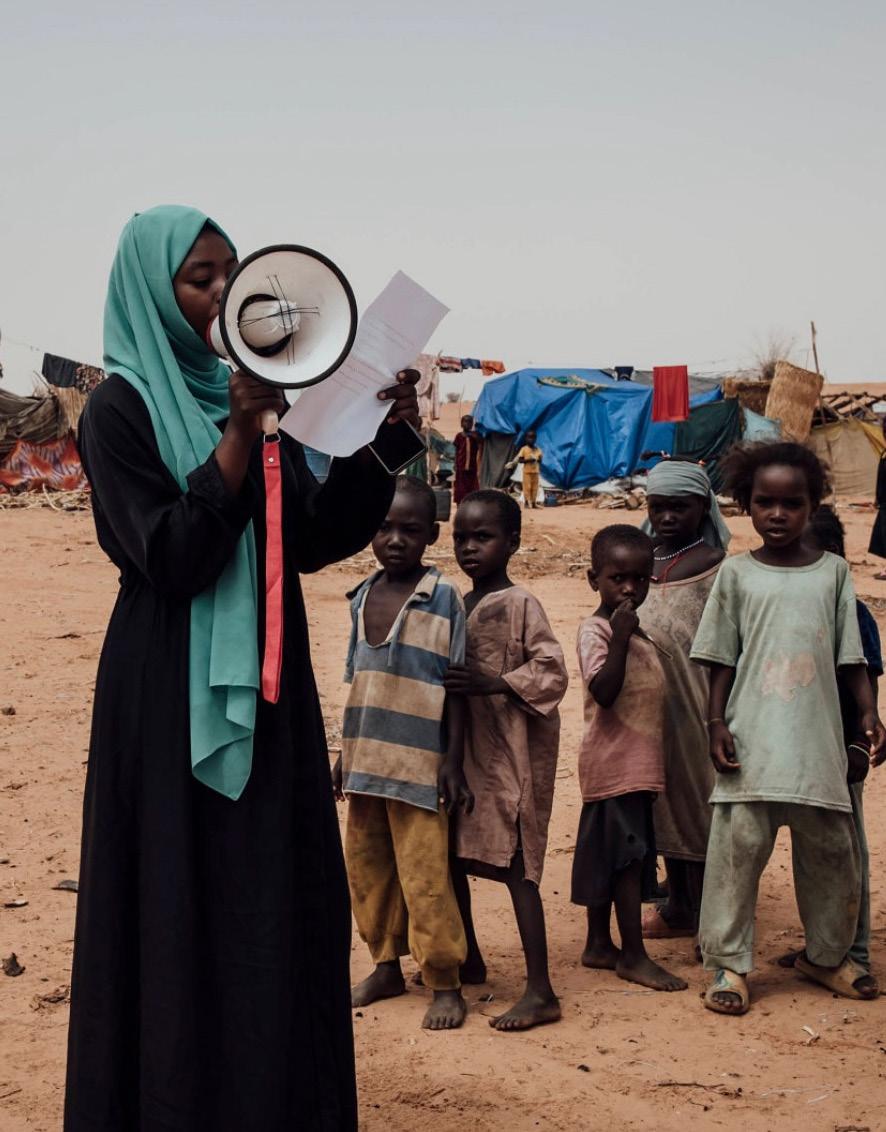
Sudanese children follow a woman in their attempts to flee the ongoing civil war in their country.
SPORTS
Ultimate frisbee flies into action
Club team hosts tournament at Manchester Field
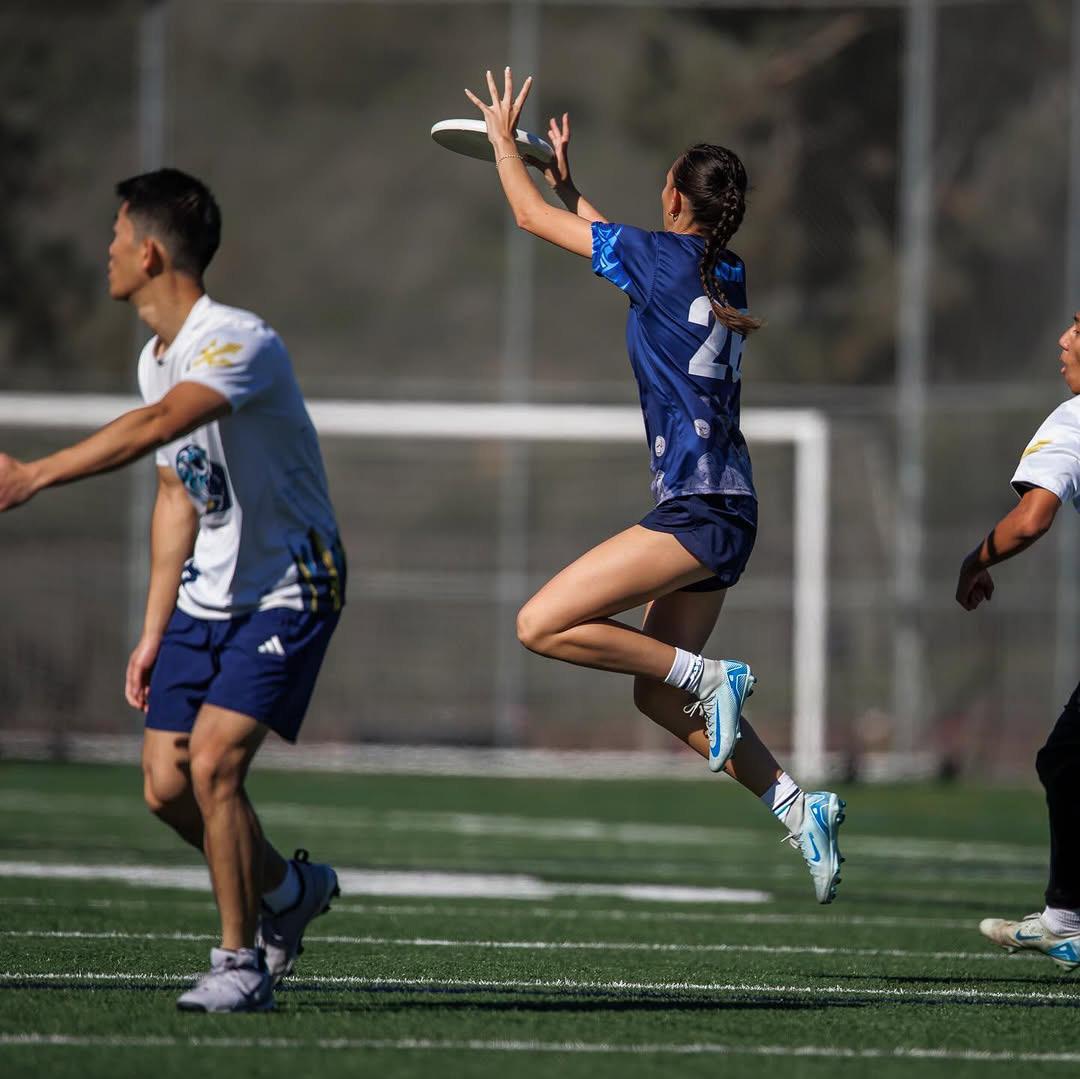
USD club frisbee took to the field this past weekend on Sunday, Dec. 7 at Manchester Field and competed against local collegiate teams. The participating teams were USD, UCSD, UCI, Point Loma and California Polytechnic State University - Pomona.
The frisbee team, who officially go by The Flat Tax Ballers, played four games total. The team placed fourth overall and scored 28 points across all the games.
Frisbee, technically known as ultimate frisbee, is a noncontact team sport where players score points by passing the disc from athlete to athlete to the opposite end zone. Athletes cannot move while holding the frisbee and must maneuver to get open and play defense. Games are won by being the first team to thirteen points or the team with the most points when the time runs out. One point is scored each time a team makes it into the other end zone.
Frisbee is unique from other sports in a few ways. Nicknames are a large part of ultimate frisbee culture. They are funny and tend to stick harder than a player’s real name at times.
USD sophomore Gabriel Ambrose, his nickname Blade, explained the significance of the nicknames and how you get one part of the team.
“When you come on to this field, there is a kind of unified ideology that this is a space for everyone to be included,” Ambrose said. “We are a team of boys and girls, a mixed gender team playing together, and that’s very rare. So being able to have our unique traditions, like naming, is something special to the Flat
Tax Ballers. Every player is given a name about a story that another player, an older player, has of them. And then after that, we have, like a naming party to kind of decide who gets what name, and then it gets revealed at their first game.”
Ambrose explained how the names create instant camaraderie and are special because a player does not discover the meaning behind their name till their final year.
“It’s chosen for you by the frisbee gods,” Ambrose said.
“And then, you don’t get to find out why that’s your name, until four years later, when you graduate, you’re just kind of always wondering why.
And you come to practice every day to partially figure out your own identity. It’s actually really cool.”
USD sophomore Liam Edwards, who goes by Camo on the turf, also commented on what he thought sets the frisbee team apart from other club teams at USD.
“I think what sets frisbee apart is the welcoming culture that has been built and regardless of previous experience or background in any sport you will feel welcomed and like you belong,” Edwards said.
“It creates a community of people that otherwise wouldn’t find themselves interacting with each other, but since we share this team and sport we can build friendships on that one shared interest.”
USD senior Nick Crozat, whose frisbee name is Chef, shared similar thoughts to Edwards on the frisbee team culture and what is embodied for the Flat Tax Ballers.
“I think that frisbee team culture is like, it’s still athletic, but it’s kind of like a different take on athletics, because we try to make it a
lot more casual,” Crozat said. “We try to make it a lot more inclusive for anybody, all skill levels. So I think that it’s unique from other sports on campus. We like to prioritize what’s called the spirit of the game. So, like, we like to play kind of like this idea that the other team are friends and not like our enemies, basically. So we play a lot of cool teams.”
USD sophomore Rebecca Demonteverde, who goes by Rain, is also the assistant general manager for the team. She explained some of the goals for the team in their tournament.
“For this Sunday, I really just want to play well,”
DeMonteverde exclaimed. “For us, it’s less about winning in total. As long as we make some good plays then we’re pretty happy at the end of the day, and I’d consider that a win for us.”
Demonteverde’s mindset reflects how the team measures progress, but players also recognize how far they’ve come. Crozat noted that early in the season the focus was simply getting comfortable together on the field.
“We spent a lot of the season getting into a place where everybody feels comfortable in the field, because we have a lot of new people,” Crozat explained. “I think now we can focus a little more on winning
since we’re, like, capable of winning games now. It would definitely be super cool to start to win again some of these teams that we’ve played so well again. So we just need to tighten up some screws and I think we will do great.” Although the team finished fourth out of the five competing teams in the tournament, they had a lot of success as a team playing their final games on their home turf. Despite being a lesser-known sport to many students, the team has steadily grown in numbers and competitiveness, bringing a fast-paced and inclusive energy to campus athletics.
PRIYA COOPER SPORTS EDITOR
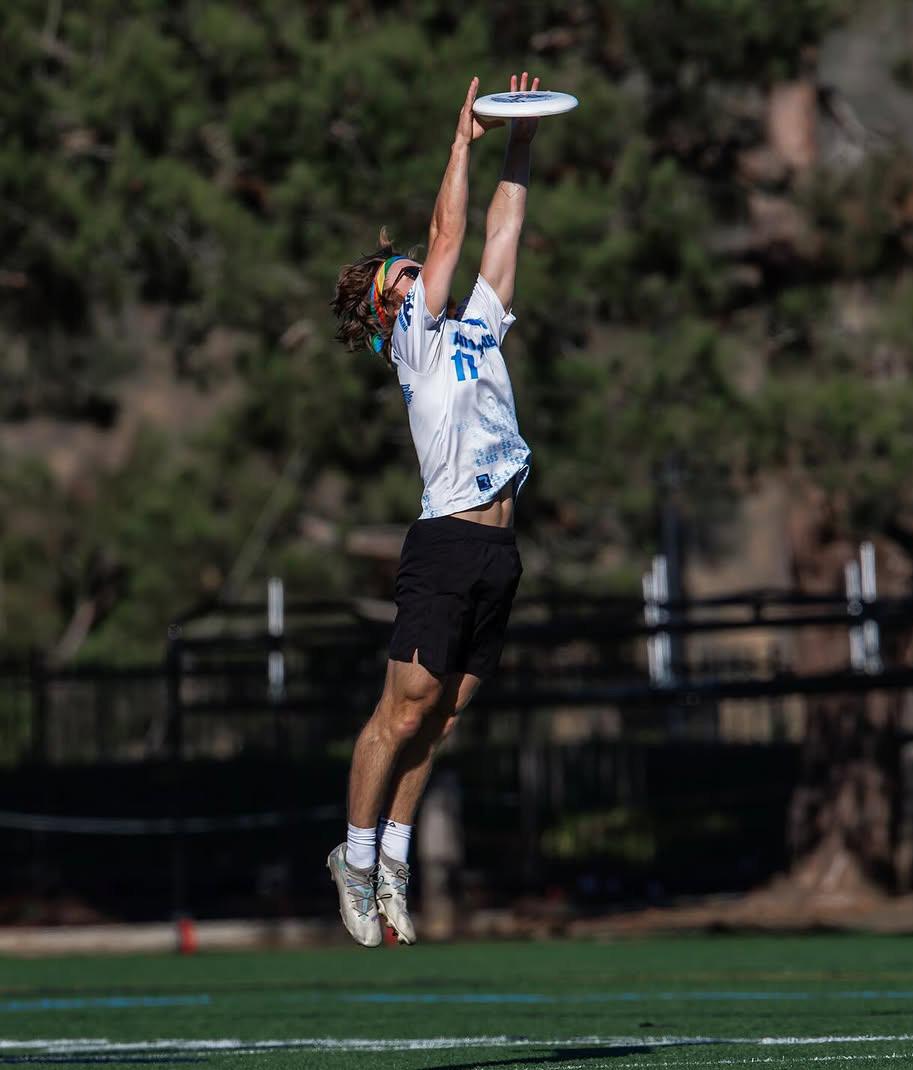
USD sophomore Rebecca Demonteverde jumps up to catch the frisbee.
Photo courtesy of @jenniwebberphotography/Instagram
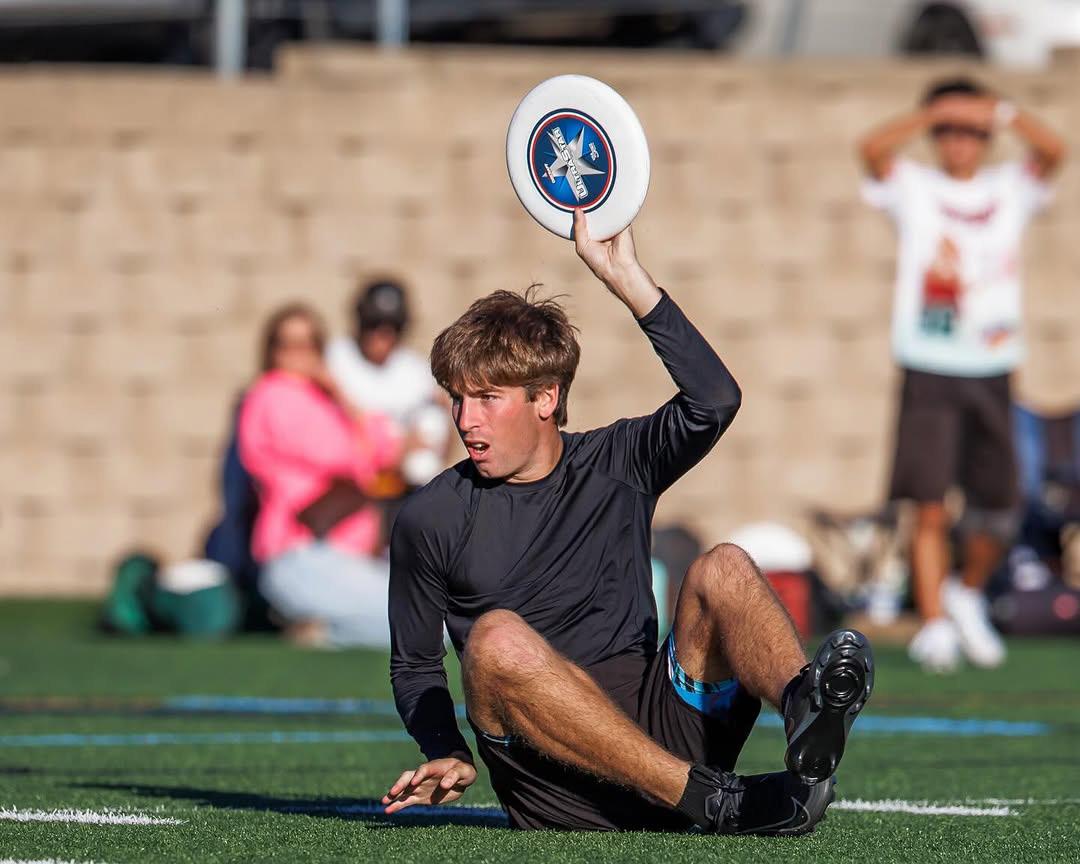
USD senior Nick Crozat makes an impressive catch. Photo courtesy of @jenniwebberphotography/Instagram
USD first-year Parker Brown slides for a catch.
SPORTS USD athletes serve globally Toreros ‘Go Global’ to Jamaica to support Hurricane Melissa
MAXIMILIANO ACOSTA ASST. SPORTS EDITOR
The “Torero Go Global” initiative is an immersive program for scholar-athletes at USD that paved the way for eight student-athletes to be selected for a unique trip to Jamaica. The trip is to support long-term rebuilding and community-strengthening efforts following Hurricane Melissa. This new cohort plans to travel during the upcoming summer from May 25 through June 2.
Hurricane Melissa roared through southwest Jamaica on Oct. 28 as a category five Atlantic hurricane with sustained winds of up to 185 mph. A category five hurricane is the worst possible class and is considered catastrophic. It was one of the strongest hurricanes on record for Jamaica and for the whole Atlantic basin.
Hurricane Melissa caused extreme damage and had a significant death toll. Though initial reports varied, death tolls in Jamaica estimated around 45 people, with 15 people considered missing and hundreds of thousands injured and displaced. Authorities reported that around 100,000 structures were damaged, leaving thousands without homes.
Jamaica wasn’t the only country affected in the Caribbean: Haiti, the Dominican Republic, Cuba and parts of the Bahamas affected.
In June, the Global Center in the School of Leadership and Education Sciences hosted a 20-year anniversary celebration to honor its partnership with the community of Duncans.
The Duncans are a small coastal community of local schools, community centers and families who have partnered with USD students since 2006.
So far, hundreds of USD students have traveled and engaged in communitybased learning, schoolbased service and economic projects with the Duncans.
An Instagram post by “ToreroEdge” featured USD junior Nemo Beach from the women’s volleyball team who will be traveling with the cohort this summer. Beach described what serving in Jamaica means to her.
“I love learning, as well as doing a service to my community and different communities,” Beach said. “It helps because I have family from Jamaica, and it’s basically my community as well. I want to learn how to help in service with my athletic community and my family’s community.”
In an article published
by USD, Angella Stewart, one of the directors of the Jamaican international program, described their close relationship with USD.
“Over the years, the program has evolved into more than just another study abroad program,” Stewart said. “To myself and the community, the University of San Diego has become our family.”
Around thirty students applied, only eight were selected. USD sophomore and member of the men’s soccer team, Mathi Bauer was one of the applicants that stuck out and is now planning to travel. Bauer explained that the cohort was already planning to go, but it just happened that there was a Hurricane that erupted.
“It’s going to be kind of a freestyle trip because we don’t really know what to expect,” Bauer said. “There’s no chance everything we’re going to do is by plan. We go there, see what we find, and then we take it from there. At the end of the day, when we travel back from Jamaica, I just want to look back and be proud of what we did and know we left a mark in Jamaica, that we made their lives a little better.”
Bauer detailed how when he was younger he valued his role models and he hoped he could do the same for
the kids who are passionate about sports in Jamaica.
“If you go there as a studentathlete, you know how it is when you talk to kids that are way younger than you,” Bauer said. “They see, ‘Oh, you’re playing soccer, you’re playing basketball, you’re playing football,’ and you’re this big, tall guy who’s ten years older. All of a sudden you’re a role model for them, even though I don’t feel like a role
Last issue’s crossword answers
model. I feel like that’s something else we have to do as well: stay in touch with some of the people there. Not just go there and disappear after a week — go there and actually make connections with them, with the teenagers or the adults or whoever is there.”
Although the trip is not until summer of 2026, Toreros are excited about the impact they will be able to make on these communities abroad.
USD athletes are going to Jamaica in the summer of 2026. Photo courtesy of @toreroedge/Instagram
USD women’s volleyball wins WCC
Toreros eliminated in the first round of NCAA tournament
From Volleyball, Page 1 players’ feats, coach Jennifer Petrie was recognized as the 2025 WCC Coach of the Year. Petrie has coached the Toreros for the past 26 years and shared her thoughts on the season’s end after the game in Nebraska with USD Athletics.
“This has been an outstanding run for this program,” Petrie added. “I’m so proud of the way they’ve worked, and the
culture they’ve built, and the leadership we’ve had.”
The loss to Kansas State ended the 18-game win streak for USD, which was the sixth-longest active streak of consecutive wins in the U.S. in 2025. Petrie commended both teams on their efforts in a postgame interview published by USD Athletics.
“What an outstanding, brave match that was, on both sides,” Petrie said. “So many lead
changes, so many moments where (the Toreros) had to stand up and be confident and strong … it was an epic battle.”
Despite the early postseason exit, the Toreros’ 2025 season stands as one of the most successful in program history. With another conference championship, and a top-10 tournament seed, San Diego remains one of the country’s consistent volleyball programs.
Toreros win fourth WCC title in a row USD men’s soccer team falls to Grand Canyon University
From Soccer, Page 1
Poll the Toreros put together a 7-1-1 record in the WCC, drawing a tie with Santa Clara, and losing to Portland on their home field.
The Toreros took advantage early in the game, with USD senior and midfielder Josh Martinez’s free-kick goal. Following this momentum, there were three goals in the second half.
With the post-season coming to a finish, it also means seniors’ college careers also come to an end. Martinez had to fill in a different role by playing center back instead of his primary position as a midfielder. His performance this year granted him an All WCC Honorable Mention. Being a part of the group of 11 seniors who now have four rings, highlighted his point of view from the last four seasons and how the team has developed.
“The way I play I like to have the ball and play longer passes,” Martinez said. “And at center back that was a lot of the job so I stepped in there. Especially because Owen Walz and Ethan Warne, who played center back next to me, were very helpful. As a team I think our depth was unparalleled and really any guy on the roster could step up and play a role.”
Martinez also commented on how the team has grown during his time at USD.
“I think the one thing that was consistent over all four years was our emphasis on wanting our team to be a family,” Martinez said. “Coming in my freshman year, our team was not following up a great season, and the team was very new and very young. This season, we felt we were proving ourselves to the rest of the country that we are a top 10 program in the country.”
USD sophomore Mathias Bauer added how one of the main reasons why he
sees his team improve every year is because his coaching staff strategically schedules games with top teams before the season starts.
“In the beginning of the season it was all about finding the rhythm again,” Bauer said. “We managed to win hard games against tough opponents, and that gives the whole team experience and confidence. Playing those early games, being part of that, reinforces what’s possible and just makes you want it even more.”
San Diego had nine student athletes who were selected to the leagues All Conference Team, from first team, second team and all WCC Honorable Mention Selections. Brian Quinn, Torero head coach since 2018,
also earned the conference’s Coach of the Year award.
In his coach profile on the USD Athletics website, he stated what his intentions were.
“It’s a place where I feel like being a coach, it’s more like a vacation,” Quinn said. “I want to leave USD a better place than when I started.”
This type of a mindset could actually be the difference between the winning and losing team. And when it is consistent across the team, it is a literal game changer.
Iain Wagner, a USD sophomore, was nominated for WCC Offensive Player of the Week in November and went on to earn All-WCC First Team honors by season’s end. In the game against Grand Canyon, Wagner attained
his ninth goal of the season.
Building upon Bauer and Wagner, USD sophomore and wingback Luka Fava pointed to how the WCC Conference is a much harder conference than the nation believes it to be, and how it felt to win.
“We had a moment when we got back to the hotel that I will never forget,” Fava shared.
“We didn’t have a locker room at the field so we went back to the hotel still in our gear, and we all rushed into the indoor pool and jumped in with our entire kit on. It was super special and it’s a moment we deserved to have and many of us will never forget.”
Fava described what keeps him motivated despite the high pressure from fans, coaches and his team.
“Time flies by when we are in season so there is not much time to dwell on the last game or last practice, so it is very motivating to know you have the next day to be better and the next game to improve on the last every week,” Fava said. “I try to put in the maximal effort to help the team be successful because for me there is nothing better than seeing and hearing all the happiness and joy around the locker room and team post win.” Fava continued to reflect on the differences between this year and last, emphasizing that despite the changes, this tightknit group has yet to skip a beat because of the great additions that fit the tone of the team.
“Being on the road together has helped our team grow and build even stronger bonds between us all,” Fava said. “I feel like our coaches did an immaculate job setting up a great schedule of games for us, which allowed us to play teams that are at the top of their conference, which in the end, helped us build a great RPI (Rating Percentage Index) up ‘til the last game of the season, where we ended up in the top five teams in the nation.”
As the season comes to a close, Fava seems to not be worried about what is to come.
“It will be different next year since a large group of the guys who set the culture are seniors and will be leaving us, but they have laid the foundation for us,” Fava said. “And there is a junior class who has won three years in a row and my sophomore class, now two years in succession, so we have the experience and understand what it takes to carry on the success of the program.”
Despite USD losing in the NCAA round, USD men’s soccer hopes to build on their four year win streak and use the accomplishments they have achieved so far to go further in NCAA conference play.
USD sophomore No. 13, Iain Wagner, celebrates on the field.
Photo courtesy of @usdmsoccer/Instagram
Toreros stormed the court after winning the WCC title.
Photo courtesy of @usdvolleyball/Instagram