Annual Report | 2025
Fiscal Year
Welcome MESSAGE from the Chair MESSAGE from the President
This year, we unveiled our new strategic plan—a bold vision that honors our 134-year mission to protect special places for everyone, forever, while meeting today’s urgent challenges. The public response has been heartwarming and inspiring.
The plan doesn’t ask us to do incrementally more. It demands we accelerate land conservation and doubles down on stewardship, ensuring every property we protect receives the devoted care it deserves.
We’re already making remarkable progress. This year, we closed on 12 land conservation projects, protecting nearly 3,000 acres—more than a sixfold increase from our historical pace of saving 400 acres annually. We’ve safeguarded iconic vistas and landscapes while forging partnerships that multiply our impact.
Meanwhile, our approach injects hope into the climate crisis by recognizing that land, forests, farms, and coastlines aren’t merely threatened by climate change—they’re critical solutions to addressing it. The plan insists that access to open space, beauty, and community isn’t simply a luxury, it is essential to our collective wellbeing.
Our strategic priorities emerged from asking ourselves a fundamental question: In these times, what does our founding mission call us to do today? The answer is clear—we must act with unprecedented urgency and scale while maintaining our commitment to stewardship and accessibility.
Together, we have the opportunity to create lasting impact for generations to come. We are grateful for your encouragement and support.

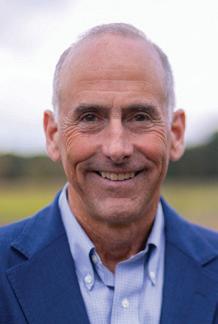
Tom French Chair, Board of Directors
I’m pleased to present The Trustees’ 2025 Annual Report— a snapshot of the rich and wonderful stories that unfolded across our properties this year. Stories are important. They’re what connect us to the land we steward, to each other, and to the future we’re building together. Behind every metric in this report is a story worth telling.
This year, as I’ve traveled across our properties—from the windswept beaches of the North Shore to the quiet pine forests of the Berkshires—I’ve been reminded that every landscape holds countless stories of resilience, of hope, and of communities coming together to protect what matters most.
I think of the family who visits the same trail every autumn, teaching their children the names of trees their grandparents taught them. I think of the volunteers who arrive before dawn to restore habitats, driven by a conviction that this work matters. I think of the young person who discovers, perhaps for the first time, that nature isn’t something separate from them—it’s where they belong.
These stories inspire us to keep going, especially when the challenges feel daunting. Climate change, biodiversity loss, and inequitable access to nature demand urgent action. But within the work of overcoming these challenges, we find strength: in the dedication of our staff, in the generosity of our supporters, and in the determination of communities who refuse to let their special landscapes fade.
In all of 2025, your support has enabled us to deepen our commitment to making nature accessible to everyone, protect nearly 3,000 acres of open space, and welcome more than 1.8 million visitors to our properties. But numbers alone don’t capture what we’ve accomplished together. The real measure is in the moments of wonder, the connections forged, the hope renewed.
Thank you for ensuring these places, and the stories they hold, endure.

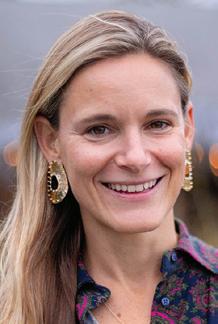
Katie Theoharides President & CEO
1,800,000
02 16 07 04 18 10 13
Financial Report
Land Conservation Renewing Our Focus
Climate Hope Leading by Example
By the Numbers Organizational Highlights
Milestone
Celebrating 75 Years of deCordova Sculpture Park and Museum
Welcome & Connect Planting the Seeds for Success Governance Volunteers
The 2025 Annual Report documents the Trustees’ 2025 Fiscal Year— April 1, 2024 through March 31, 2025—and events throughout 2025
Financial Report
CONSOLIDATED STATEMENT OF FINANCIAL POSITION
(in thousands of dollars)
Iam pleased to report that The Trustees continues to demonstrate fiscal strength. In Fiscal Year 2025, our organization continued on a financially sustainable path, generating $61 million in unrestricted revenue, and solidly exceeding expenses of approximately $57 million. This performance reflects our commitment to living within our means through steady unrestricted revenue and prudent expense management. Meanwhile, our robust balance sheet continues to grow.
The Trustees’ solid financial foundation positions us well as we embark on our new strategic plan, For Everyone, Forever. While we anticipate the early years of the plan will require significant investment in staff and infrastructure to achieve our ambitious goals, our current fiscal health provides the stability necessary for this transformative work.
Our long-term financial success remains premised on continued discipline and care to meet our forever stewardship obligation tied to each of our reservations. Thankfully, our new strategic plan explicitly empowers and enables us to preserve exceptional landscapes, cultural wonders, and natural resources for generations to come.
Thank you for your continued generosity and commitment.
Andrew P. Borggaard Chair, Finance and Audit Committee
LIABILITIES AND NET ASSETS
Fiscal Year 2025
CONSOLIDATED STATEMENT OF ACTIVITIES AND CHANGES IN NET ASSETS (in thousands of dollars) OPERATING ACTIVITIES
ACTIVITIES
RENEWING OUR FOCUS
BY JOSEPHINE BRENNAN, TRUSTEES STAFF
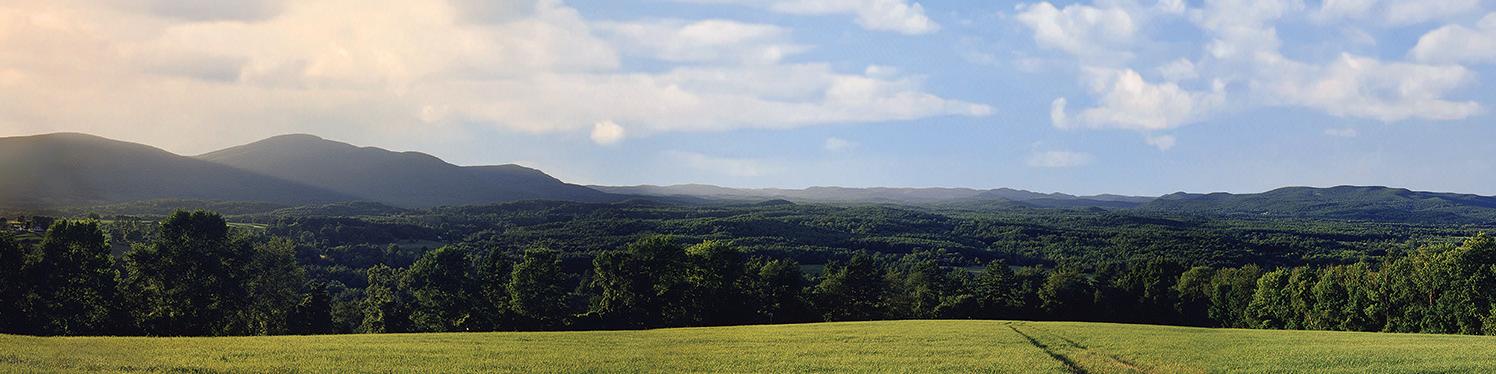
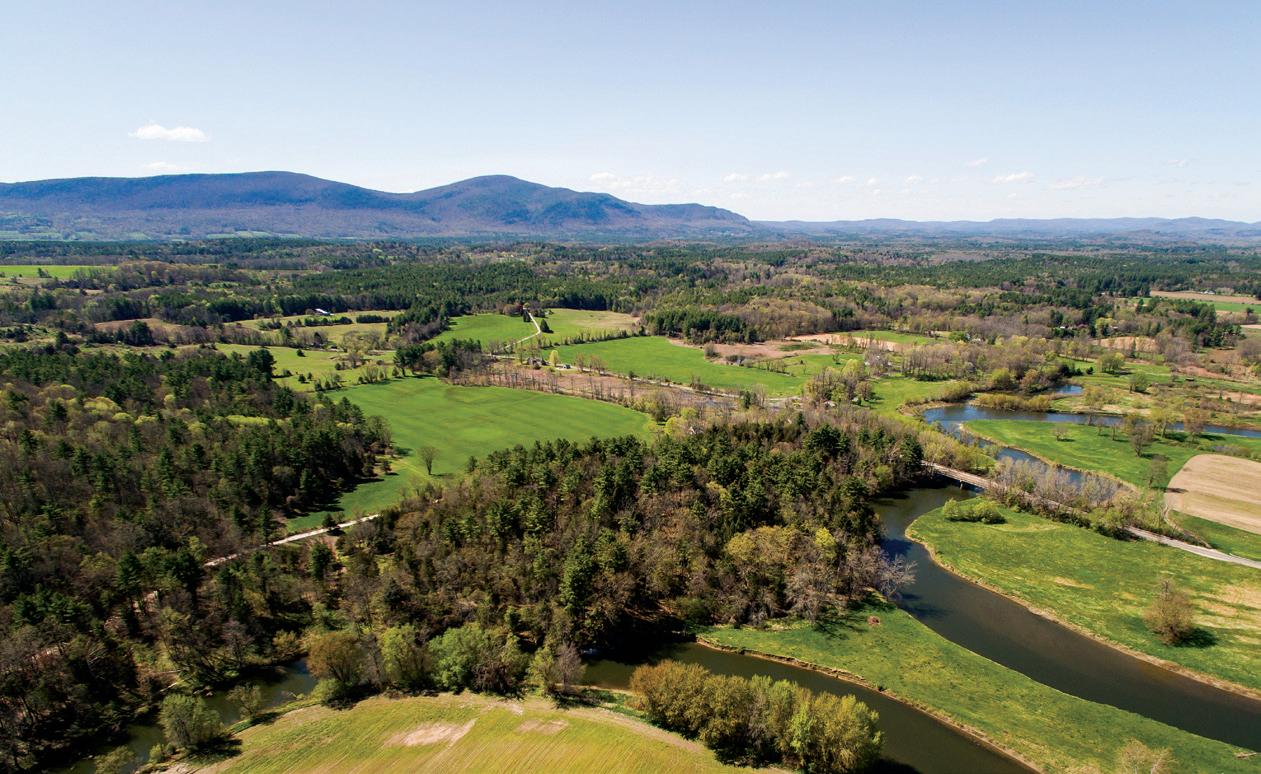
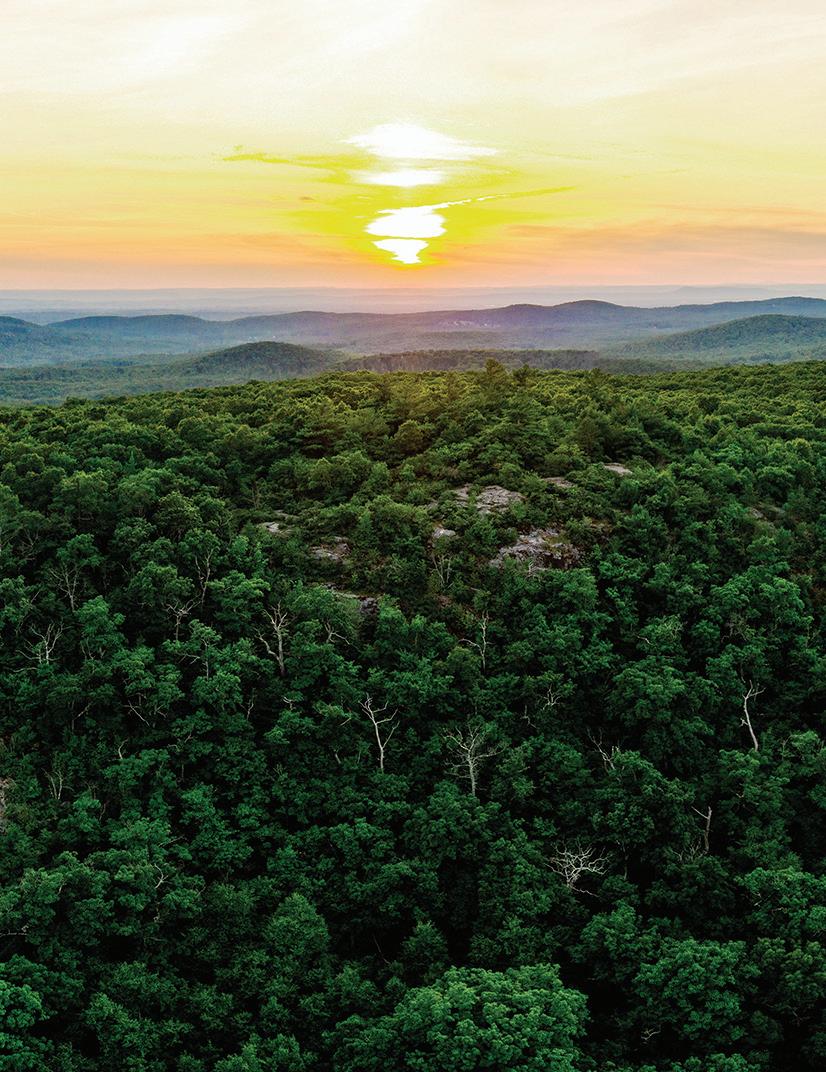
COOPER HILL SHEFFIELD, MA & SALISBURY, CT ©TRUSTEES
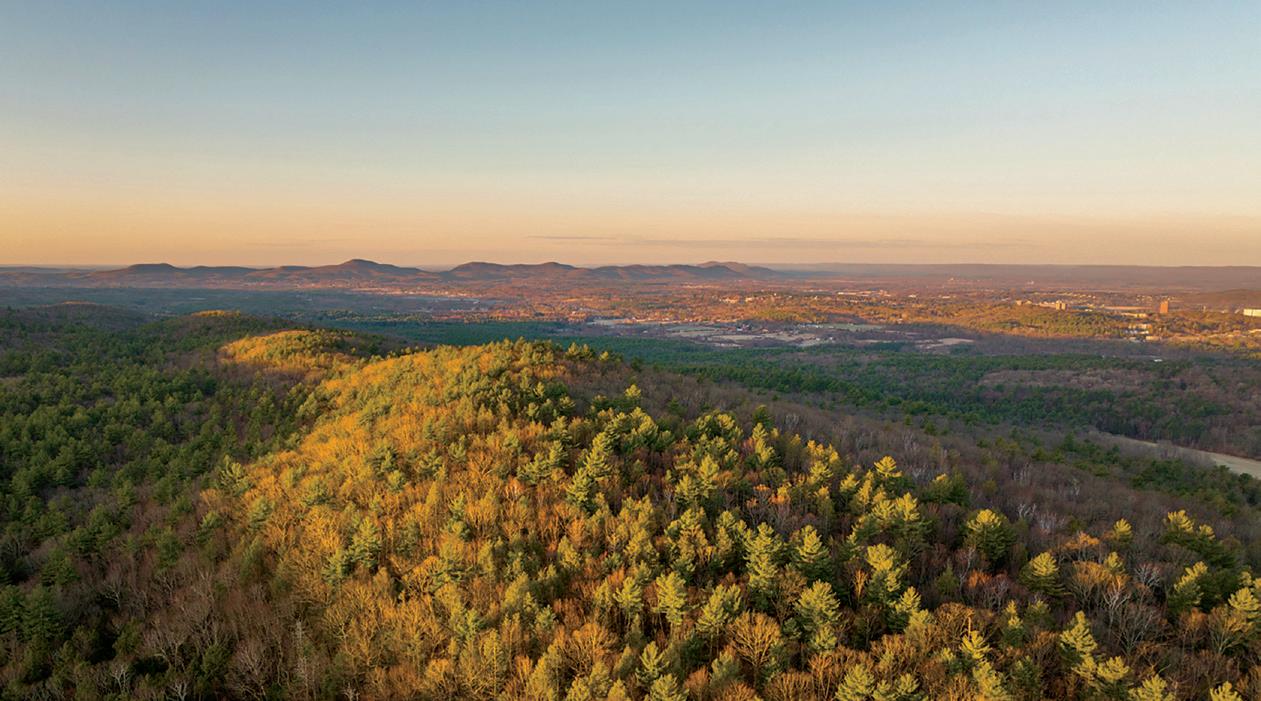
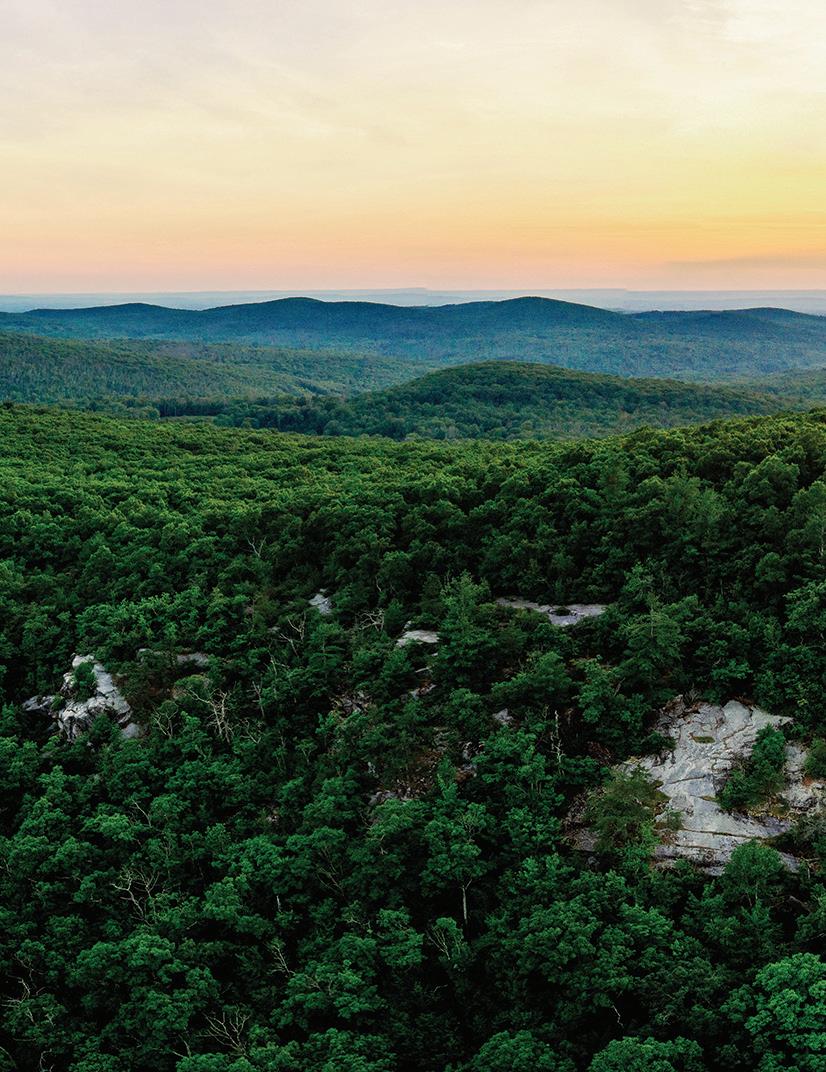
PELHAM HILLS
PELHAM
PHOTO BY JAMIE MALCOLM BROWN
2025 Marks the First of Many Years of Accelerated Land Conservation
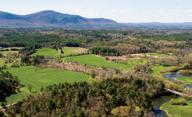
If there is one word to describe the Trustees land conservation team this past year, it is “productive.” In the 2025 calendar year, the team conserved more than 3,000 acres of land, a sixfold increase over past averages of approximately 400 acres annually. Major acquisitions in 2025 include Beaver Brook in Williamsburg and Northampton, two properties in Pelham and Belchertown conserved in partnership with Kestrel Land Trust, and finalizing the Cooper Hill Land Conservation project in Sheffield, a multi-year partnership with nine other conservation organizations.
This increase in conservation is indicative of the Trustees’ bold land protection goals in the For Everyone, Forever strategic plan launched this year. The plan outlines ambitious goals including strengthening the land conservation community, conserving more than 12,000 acres in the next five years, and activating at least eight new reservations.
In preparing for the challenge laid out for the Land Conservation team, Vice President of Land Conservation Jennifer Dubois said, “We have to move fast, be bold, and think bigger. We need to partner with other organizations, support their work, and be creative in finding conservation solutions that work for landowners and for communities.”
Move fast, be bold, and think bigger, they have. Major acquisitions and conservation projects completed in calendar year 2025 highlight the importance of what Dubois shared: the power in partnership, support, and conservation solutions that work for many.
Cooper Hill
Just over two years ago, The Trustees partnered with nine other conservation organizations in Massachusetts and Connecticut to create the Cooper Hill Conservation Alliance, which had a goal to protect more than 1,000 acres surrounding Bartholomew’s Cobble in Sheffield and into Salisbury, CT. This multi-state landscape-scale effort resulted in 160 acres acquired by The Trustees to be added to the Cobble, the 444-acre Pine Island Farm protected and sold to a new farmer, and two additional land areas acquired for conservation just over the border in Connecticut. Through three phases of this project, land was protected in 2024 and 2025, with the last land area to be protected in Connecticut coming in 2026.
The Commonwealth of Massachusetts was a key partner in this landscape-scale project. The Healey-Driscoll Administration dedicated more than $4 million in Agricultural Preservation Restriction (APR) funding through the Massachusetts Department of Agricultural Resources and a $1.25 million Landscape Partnership Grant through the Executive Office of Energy and Environmental Affairs. “This project is a wonderful example of the way that we can work together with other organizations, including the state, in public-private partnerships to achieve greater impact on a larger scale,” says Dubois.
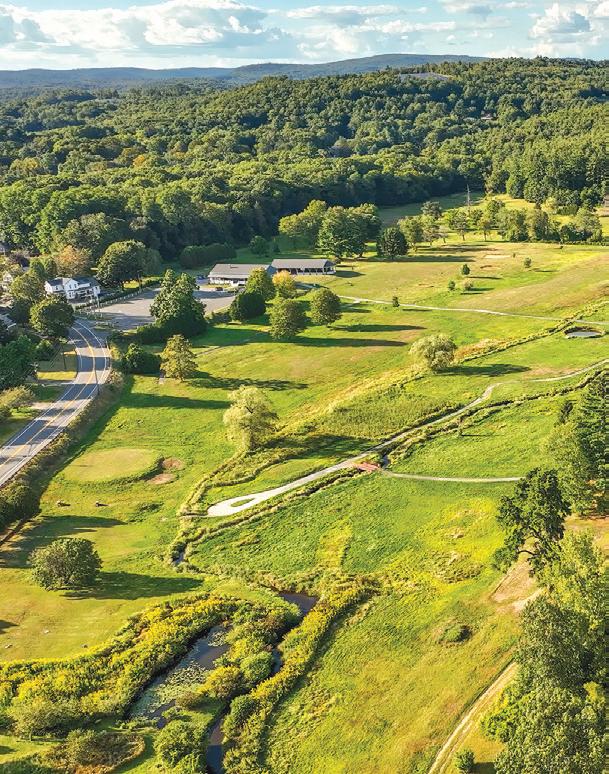
Beaver Brook
In July, The Trustees acquired the Beaver Brook property, a former golf course, in Williamsburg and Northampton. Just one month later, The Trustees also acquired a 10.8-acre inholding that features a beaver pond and trail connections, bringing the total acreage conserved to 260 acres.
Stewardship staff are now working on “rewilding” and transforming the golf course into protected open space for public access by restoring wetlands and floodplains to make the property more climate resilient. This is the organization’s first golf course restoration project.
The Commonwealth awarded the Town of Williamsburg a Municipal Vulnerability Preparedness grant of $1,194,255 toward local flood resilience and the restoration of the brook—funding which directly supports the acquisition of the land and preliminary assessments for the wetland and floodplain restoration that The Trustees will implement at the reservation.
Work started on the property in the summer of 2025, including cleaning out buildings, weed trimming, and control of invasive plants, with 50 Trustees staff members from all over the state pitching in.
A consultant will delineate the wetlands on the property, to help shape trail and restoration planning, among other objectives. New planting—including native trees, shrubs, and flowers—begins in 2026.
“Beaver Brook illustrates the work we do in land conservation to bring special places to the public,” shares Dubois. “Adding a reservation in this area of western Massachusetts will make a direct impact on the local community, through offering passive recreation opportunities, and even will benefit those who don’t visit,” she continues. “The rewilding of this land directly benefits the neighborhoods surrounding
BEAVER BROOK
WILLIAMSBURG & NORTHAMPTON
PHOTO BY DOUGLAS MASON
it and downstream communities as we work to mitigate flooding risks by restoring natural features of the land.”
Beaver Brook is planned to open to the public by summer 2026, providing opportunities for hiking, dog walking, snowshoeing, cross-country skiing, and more.
Pelham and Belchertown
In October, The Trustees and Kestrel Land Trust announced the permanent protection of more than 2,000 acres of forest in Pelham and Belchertown, which contain two of the largest contiguously forested tracts in the Connecticut River Valley. This represents an important step in The Trustees’ stewardship of “forests for the future,” as highlighted in the strategic plan.
In Pelham and Shutesbury, 1,094 acres of contiguous forest, donated by timberland management company W.D. Cowls, Inc. (Cowls) is now owned by The Trustees and stewarded in partnership with the Kestrel Land Trust, which holds a Conservation Restriction over this land. To be known as Sarah Cowls Forest at Pelham Hills, in honor of Cowls’ 6th-generation leader, the property will encompass an additional 150 acres (including Poverty Mountain in Shutesbury) that were donated by Cowls to The Trustees in December of this year.
In Belchertown, the 1,050 acres of conserved forest will be named Hop Brook Forest, adding to over 800 acres that Kestrel previously conserved with the Town of Belchertown. These reservations will be conserved for the benefit of wildlife and water quality, with guaranteed public access to sections of the Robert Frost Trail in Pelham and the New England Scenic Trail in Belchertown. Over the next year, The Trustees and Kestrel will be working with the Towns of Belchertown, Pelham, and Amherst to integrate these newly conserved lands and trails with other town conservation areas into a wholly protected landscape—with improved trailheads at Amethyst Brook Conservation Area in Amherst and Holland Glen Conservation Area in Belchertown.
“This conservation win in Pelham and Belchertown is yet another example of the power of partnership in land conservation,” says Dubois. “We are knitting together large contiguous tracts of conserved land, with important public access and ecological benefits,” she continues. “The regional trail connections are especially exciting. We are thrilled to reroute the New England Scenic Trail off of main roads and into Hop Brook Forest. If you continue north along the trail, it also connects to The Trustees’ Royalston Falls property over 30 miles away.”
Fiscal Year 2025 in Land Conservation
Each year, in our annual report, The Trustees reports on the many different types of land conservation projects completed in the last fiscal year. In Fiscal Year 2025 (April 1, 2024-March 31, 2025), The Trustees protected, or helped protect, 12 properties totaling 223 acres, as follows:
Project | NEWLY PROTECTED ACREAGE | PARTNERS | CITY/TOWN
ACQUISITIONS
The Island (addition to Gov. Oliver Ames Estate) 5.76 acres Easton
Goose Pond Trail Easement 0 acres Lee Land Trust Lee
Holt Farm* (addition to Charles W. Ward Reservation) 4.4 acres Andover
Mercure Bequest (addition to Tantiusques Reservation) 12.91 acres Sturbridge
Rand (addition to Bartholomew’s Cobble) 85 acres Sheffield
CONSERVATION RESTRICTIONS
Adirondack Farm—CR
Homer Watcha—Conservation Area 1 CR
Homer Watcha—Conservation Area 2 CR 21.4 acres West Tisbury
Historic New England—Jeffries CR 54.11 acres Milton
ASSISTS
MacLachlan—Caplis CR 19.5 acres Hilltown Land Trust Williamsburg
Messier Pre-Acquisition**
Silvia Pre-Acquisition**
acres
*This property’s 4.4 acres were previously recorded in 2000, when it was placed in a Conservation Restriction held by The Trustees. **Acreage will be counted in FY26, when The Trustees acquires Conservation Restrictions over this land.
2025 was a year of record growth for Trustees climate resilience and decarbonization efforts Leading By Example
BY BETH MOORE, TRUSTEES STAFF
2025 saw unprecedented strides forward for climate resilience work at The Trustees, particularly in forest stewardship, coastal resilience and protection work, and decarbonization efforts. Using nature- and science-based solutions to increase climate resiliency, these efforts, as well as those from previous years, have begun to bear fruit—healing local landscapes, strengthening communities, and bolstering climate hope throughout the state.
There has never been a more urgent need for climate resilience work across the Commonwealth. As Decarbonization Project Manager Amy Dorfman notes, “Climate change is happening. Reducing our emissions is like taking our foot off the gas, and carbon sequestration is like stepping on the brake. We can help slow and lessen the impacts of climate change.”
In 2025, Trustees staff, volunteers, and partners came together in the following bold new ways to rise to this challenge of our time.
Forests for the Future
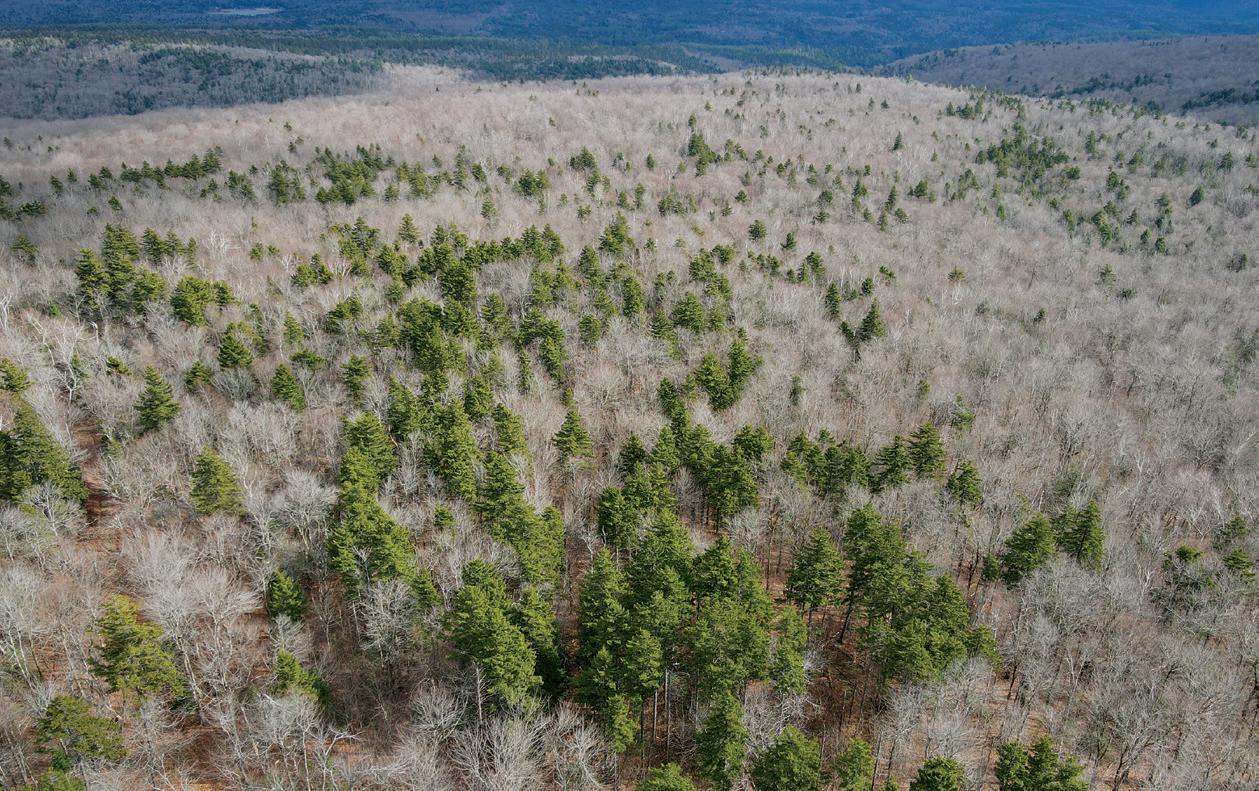
Notchview, the Trustees’ popular cross-country ski and snowshoe center in the Berkshires, boasts more than 3,100 acres of dense forests and scenic grasslands. But the forest at Notchview primarily comprises tree species—such as red spruce and balsam fir—that are predicted to decline in Massachusetts as the climate warms, placing local forest ecosystems at risk. Native hardwood trees like red oak and hickory, however, are projected to adapt well, throughout New
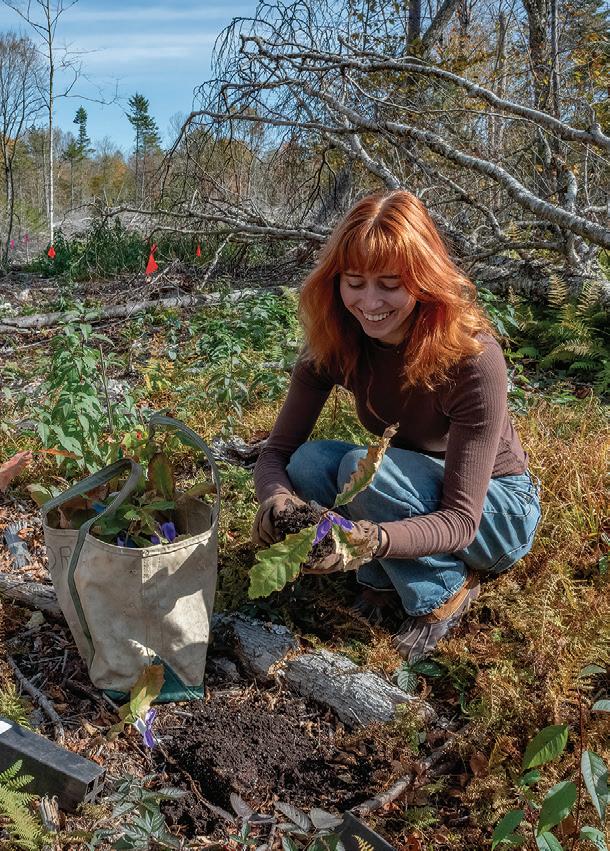
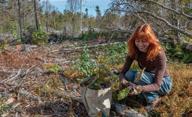
Students from UMass Amherst joined Trustees staff and volunteers to plant 1,500 southern hardwood tree seedlings at Notchview in Windsor.
PHOTO BY NINA DUGGIN
England—a fact not lost on the Notchview climate resilience team. Seeking solutions that can support the forest into the future, Trustees Natural Resources staff and nearly 40 volunteers and TerraCorps Service Members planted approximately 1,500 southern hardwood tree seedlings which will then provide for the next generation of trees at Notchview.
This initiative to encourage species that are better able to adapt to the changing climate conditions first required the creation of a slashwall—a barrier made of cut trees and their branches—in order to keep deer from feasting on the tender saplings. Created last year, the slashwall has already begun to yield significant results. Climate Resilience Project Manager Kate Conlin notes, “In just one growing season (pre-planting!), the conditions inside the slashwall and outside are noticeably different, with natural regeneration occurring inside and lacking outside.” In coming years, staff and volunteers will continue to monitor the regeneration in hopes that they will build resilience into the Notchview forest.
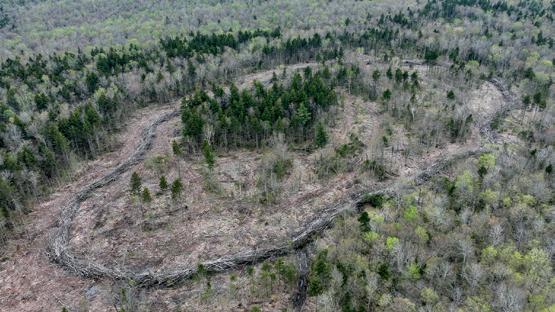
As part of the For Everyone, Forever strategic plan, The Trustees is also launching a new Forests for the Future initiative, intended to increase forest resilience to climate change statewide and protecting carbon stores and biodiversity on our more than 18,000 acres of forestland. Most recently, The Trustees announced—with Kestrel Land Trust—the permanent protection of more than 2,000 acres of forest in Pelham and Belchertown as part of this initiative (see Land Conservation, page 6).
Advancing Coastal Resilience
New England faces a more accelerated rate of sea level rise than anywhere else in the world, threatening coastal towns and habitats. The Trustees’ nature-based solutions, designed and implemented to help build climate resilience and protect local communities, were expanded in 2025. In the Great Marsh Project, staff and volunteers completed a third year of nature-based treatment on 273 acres of salt marsh (Phase II of the project) and acquired all necessary permits to begin Phase III.
In partnership with various local organizations and landowners, The Trustees also completed feasibility studies and preliminary designs for salt marsh restoration and barrier beach resilience on the Islands, including the barrier beach system at Coskata-Coatue Wildlife Refuge (Nantucket) and more than 200 acres of salt marsh within Cape Poge and Poucha Pond on Chappaquiddick Island (Martha’s Vineyard).
“Nature is resilient and ever-changing, and it can also be our greatest teacher,” says Vice President of Natural Resources Cynthia Dittbrenner. “The Trustees is learning to work with nature to increase the resilience of our ecosystems to climate change. At Coskata-Coatue Wildlife Refuge, for example, instead of building a wall, we are building a marsh.”
Plans for the coming year include expanded efforts in the Great Marsh to restore an additional 1,000 acres—the largest restoration project in Trustees history—and the organization will apply $200,000 in funding to advance designs and permitting for restoration and resilience work on Chappaquiddick and Coskata-Coatue.
Bringing Decarbonization Home
Recent progress has also been made on internal decarbonization efforts, bringing climate resilience work “home” to Trustees buildings and facilities more than ever before. “2025 brought our building decarbonization initiatives from plans into action,” notes Dorfman. “With the goal of significantly reducing our greenhouse gas emissions by 2030, we are aiming to complete energy retrofits on roughly 30 buildings a year for the next five years. Once completed, this will reduce our internal emissions by roughly 50%.”
In Fiscal Year 2025, The Trustees launched twelve energy retrofits and completed three—installing electric HVAC systems and improving building insulation and air sealing. The initiative expanded to 21 buildings as 2025 progressed, with six being fully completed by the end of the year. This work, completed in partnership with PowerOptions—a New England-based nonprofit that assists other nonprofits and municipalities with energy procurement and decarbonization efforts—and partially supported by rebates and incentives from the Mass Save program, is the beginning of a larger effort to bring decarbonization to scale across the organization.
Within the next year, The Trustees plans to onboard its full utility portfolio into a digital tracking system facilitated by PowerOptions, in order to accurately report decarbonization success to date, with a larger goal of reducing operational emissions by 50% by 2030 and fully eliminating them by 2050.
Leading By Example
Climate resilience and decarbonization are central to The Trustees’ For Everyone, Forever strategic plan, supporting and aligning with each of its five pillars. Thoughtful, future-focused stewardship of forests and coastal landscapes using nature- and science-based solutions reflects an elevation of stewardship and inspires climate hope, while decarbonization work similarly inspires hope by serving as an organizational example of what is possible.
Both ventures welcome and connect people to Trustees spaces and each other by increasing accessibility to beloved landscapes and protecting communities, and by bolstering a sense of shared purpose through connection to nature. Finally, they evolve the organization to create more energy-efficient (and energizing) spaces for staff and visitors to enjoy. Now more than ever, The Trustees is poised to set an example for organizations and individuals following in this work.
“With our broad-reaching and diverse member base, our sphere of influence is large—meaning we have an opportunity and responsibility to lead by example,” says Dorfman. “Every bit of emissions we can reduce is one step closer to a low carbon future for us all.”
The completed ten-foot-high slashwall surrounds the twelve Notchview acres where tree seedlings are being planted, in order to prevent deer browse.
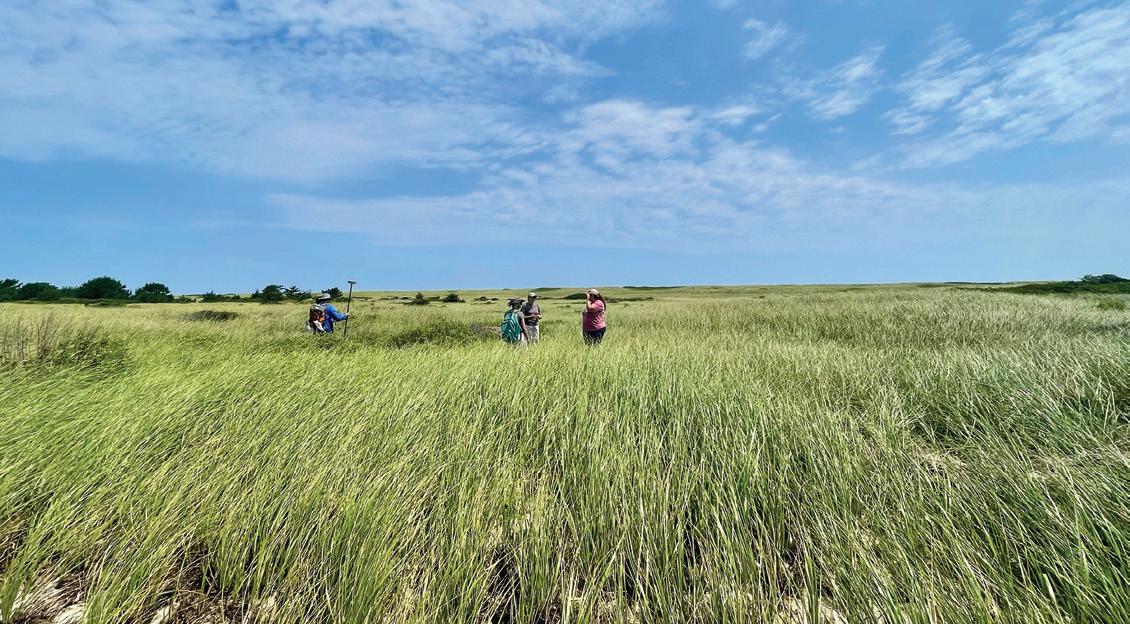
Trustees Ecology staffers continue to expand our nature-based efforts to heal and build climate resilience for the Great Marsh in Ipswich, Essex, and Newbury.
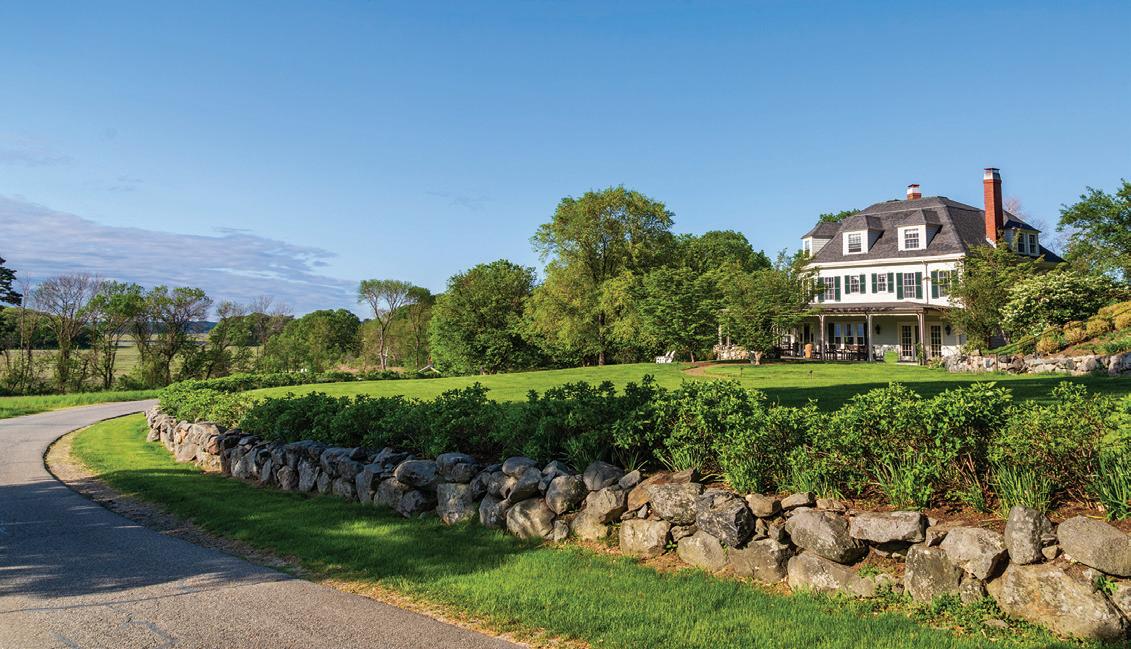
Inn
was one of the first Trustees buildings to undergo an energy retrofit. After a multi-year process that included new insulation and the installation of heat pump heads in the guest rooms, guests can now set the temperature in their room to their individual preference—a welcome improvement in the guest experience.
The
at Castle Hill
PHOTO BY JUMPING ROCKS.
By the Numbers
The following provides a glimpse into the accomplishments of many Trustees departments in Fiscal Year 2025.
BUILDINGS UNDERGOING ENERGY RETROFITS
The For Everyone, Forever strategic plan calls The Trustees to find sustainable, energy-efficient ways to usher historic buildings into the modern era. Our work to retrofit nearly 150 buildings—including energy audits, installation of new insulation and HVAC systems, and more—started in Fiscal Year 2025, with 12 projects in progress and an additional three buildings completed.
(See Climate Hope, page 7, for more information.)
SPECIES SAFEGUARDED 124
Throughout the nearly 52,000 acres we care for across the Commonwealth— which includes both publicly accessible land and private property under conservation restrictions held by The Trustees—we research and restore critical habitats so wildlife and nature can thrive and withstand the impacts of climate change for generations to come.
2,883
CAMPERS PARTICIPATING IN 7 TRUSTEES SUMMER DAY CAMPS
Kids from ages 4-17 experienced Trustees camps in 2025, exploring themes of art, agriculture, tidal ecosystems, cooking, and invaluable time outside at some of our most beloved reservations—from the Crane Estate in Ipswich to World’s End in Hingham to The FARM Institute on Martha’s Vineyard, and beyond.
$52,000
FINANCIAL ASSISTANCE FOR CAMPERS
As part of our efforts to provide more equitable and inclusive access to nature and the outdoors, The Trustees provided $52,000 of scholarships that supported tuition for campers in 136 of our summer day camp sessions.
70,292 HOURS VOLUNTEERED
Stewarding 27,000 acres of publicly accessible conserved land and maintaining Trustees stewardship standards requires many more hours than staff have available. Thanks to our volunteers across the Commonwealth, we are able to care for our 375+ miles of ski and hiking trails and 76 miles of accessible shoreline, tend and cultivate our twelve public gardens, set up and run hundreds of special events, and help our visitors feel welcomed at all of our 120+ special places.
85,000
MEMBER HOUSEHOLDS
Trustees Members support our mission and enjoy numerous benefits, from free or reduced admissions and parking, to advance ticketing, to signature events, discounts for programs, summer camp registrations, and at our retail stores, inns, and campgrounds, and more. An industry-leading percentage of Trustees Members have maintained their support for multiple decades.
1,800,000
VISITORS
Each year, The Trustees welcomes nearly two million visitors to explore our treasured landscapes and experience thousands of programs and events throughout the state. In recent years, we have made meaningful strides to increase the accessibility of our properties, with the goal to ensure that everyone who visits a Trustees property knows they are at a place where they belong.
$14,601,073 MEMBERSHIP REVENUE
Since our founding in 1891, The Trustees has been supported through the generosity of Members. In Fiscal Year 2025, our Members increased their average gift size, taking advantage of program benefits like reciprocal museum access and discounted beach access.
Note: This figure includes both general Membership revenue and contributions made at the Founders Circle level.
Celebrating 75 Years of deCordova Sculpture Park and Museum
A cornerstone of contemporary art in New England since 1950
BY KYLE DAVI, TRUSTEES STAFF
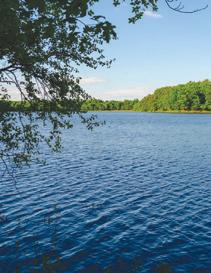
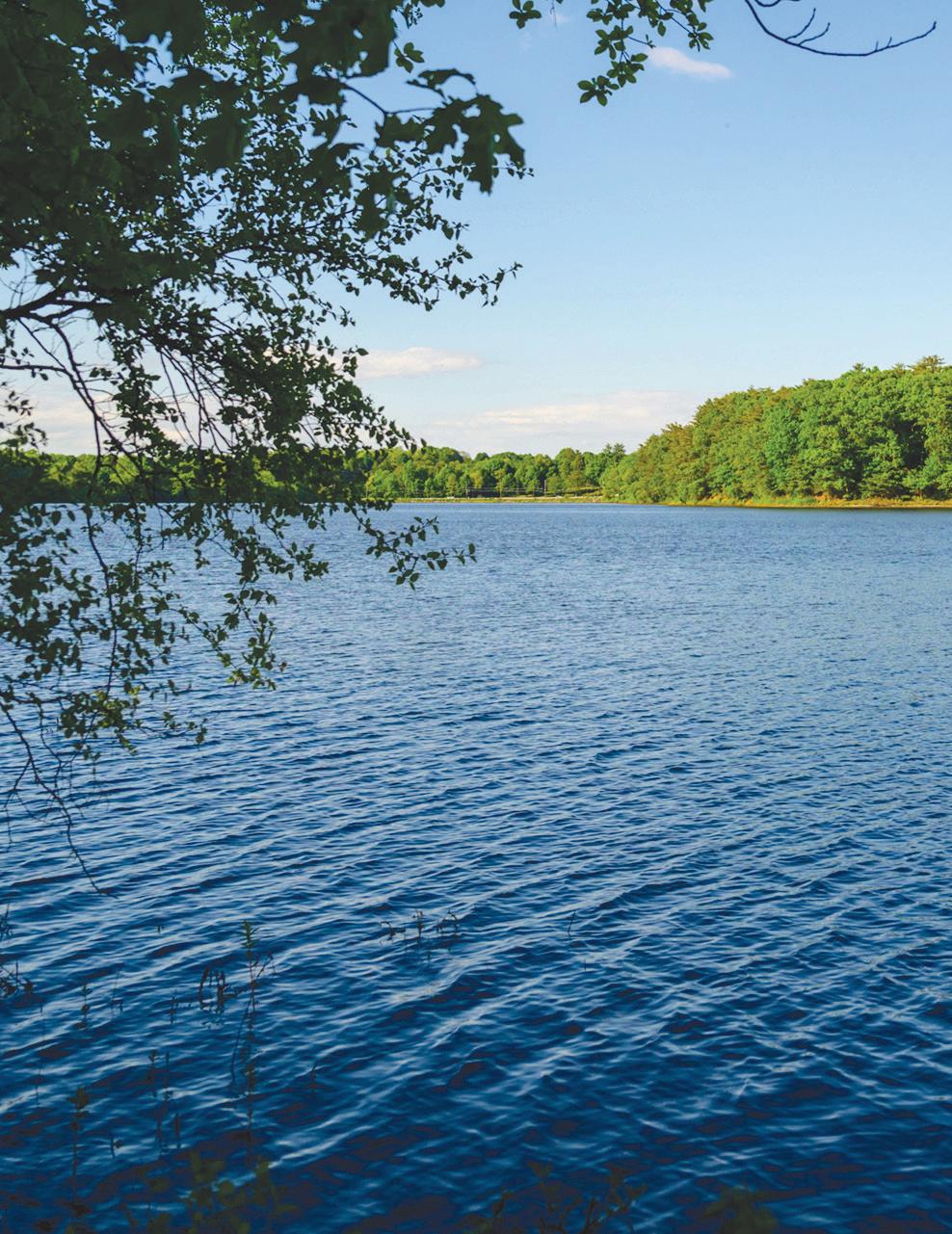
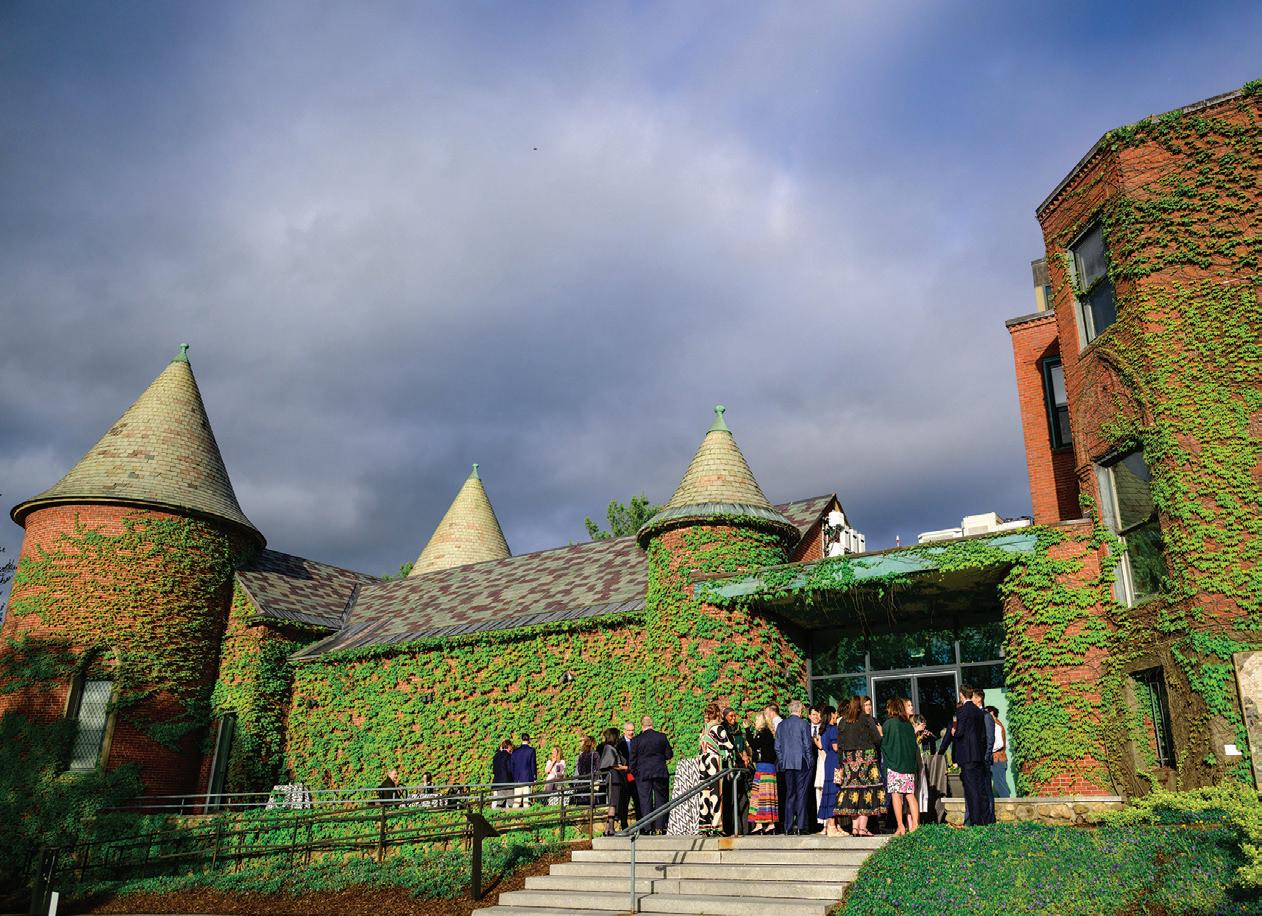
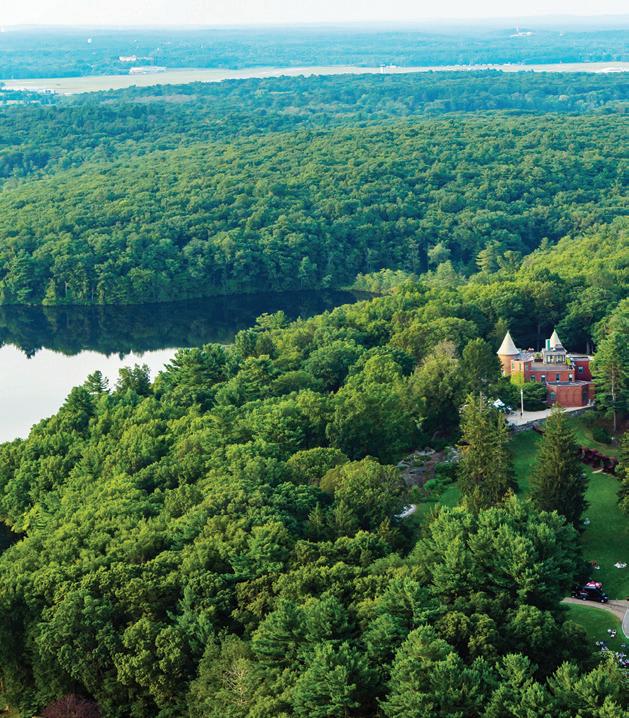
On the banks of Flint’s Pond in Lincoln 75 years ago, a family home resembling a European castle began its transformation into a vital space for contemporary art in New England. This converted residence has since become a beloved 30-acre landscape steeped in diverse artworks and ecology. As deCordova Sculpture Park and Museum commemorates its milestone anniversary in 2025, this special place is celebrating the way it knows best: with art, nature, and community.
Cue the Celebration
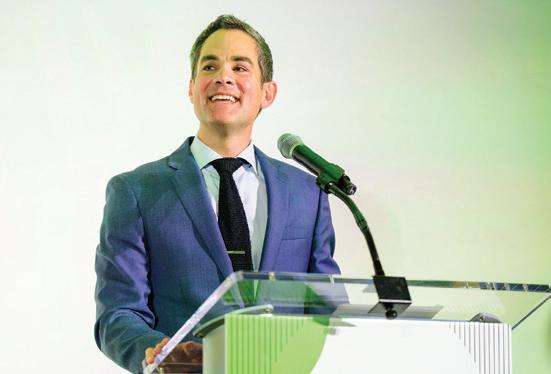
Kicking off the celebrations in May, deCordova hosted the sold-out Party for the Sculpture Park. Guests glimpsed back in time to the museum’s opening when innovative modern art fueled its rapid rise to popularity. The unforgettable evening toasted decades of artists and supporters, reflecting the deep community ties deCordova has cultivated for 75 years.
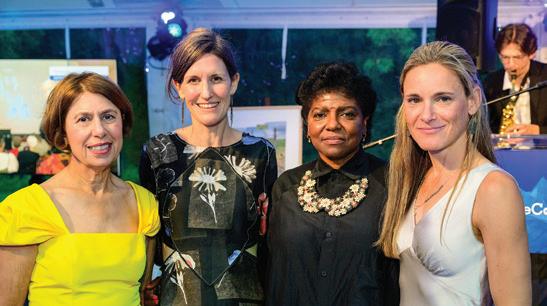
“We were delighted to recognize Jared Bowen, GBH Executive Arts Editor and Host of The Culture Show, as our Honorary Chair,” says Sarah Montross, Museum Director and Chief Curator. “He spoke on the importance our museum has played over its 75-year history in nurturing the careers of visionary artists such as María Magdalena Campos-Pons, Jeffrey Gibson, and so many others whose work we’ve exhibited.”
Aerial view of deCordova Sculpture Park and Museum, overlooking Flint’s Pond.
PHOTO BY ABOVE SUMMIT
©KRISTA GUENIN
The event wasn’t just a party; it was a tribute to deCordova’s legacy of opening the door to contemporary art through exhibition and education. Since 1950—when the museum first spotlighted Pop Art and Boston’s post-war expressionist movement—it has consistently also served as a launchpad for local voices with comprehensive arts instructional programs to educate future generations of artists.
Back to the Foundations
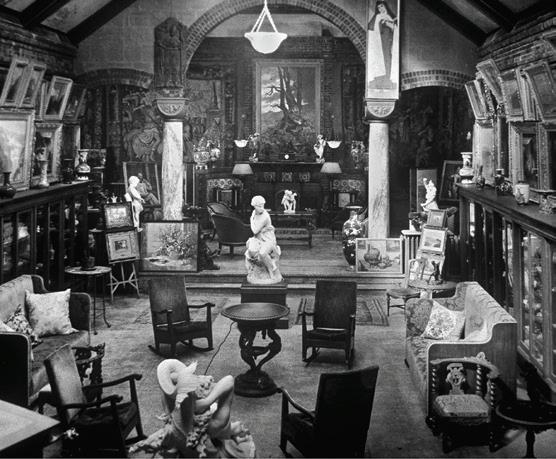
It all began thanks to Julian (1851–1945) and Elizabeth “Lizzie” (née Dana, 1846–1922) de Cordova, two world-travelers who were passionate about collecting art. After the deaths of Lizzie and their son Dana, Julian gifted his estate to the Town of Lincoln with the stipulation that it would become a public art museum when he passed. Appraisers deemed Julian and Lizzie’s collection not of substantial interest or value, so it was eventually sold to fund the groundwork of today’s museum.
That foundation was shaped by deCordova’s establishing committee who saw a near absence of exhibitions of modern art in the Boston area. They took the innovative step to launch a regional
contemporary art museum that, when it opened, was the only museum to focus its exhibitions and collecting activities on living New England artists, while adopting a broad educational program in the visual arts.
“We quickly established a reputation for supporting groundbreaking artworks with a robust schedule of exhibitions and innovative arts education programs,” says Montross. “That dedication continues today with our new exhibits, our renowned outdoor sculptures, and educational programs like The Hive Summer Camp and our recently renewed partnership with The Lincoln Nursery School.”
A New Trustees Chapter
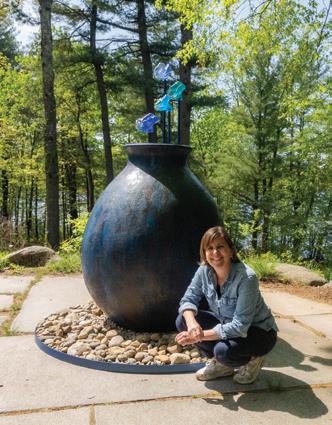
Since deCordova Sculpture Park and Museum officially integrated with The Trustees in July of 2019, the museum’s mission of celebrating contemporary art and diverse voices has endured. Exhibitions and original commissions continue to span the Sculpture Park’s front lawn and beyond, like Nature Sanctuary which opened in June of 2025. Site-inspired commissions and loans by six women artists—Venetia Dale, Kapwani Kiwanga, Joiri Minaya, Zohra Opoku, Kathy Ruttenberg, and Evelyn Rydz—are reimagining the relationship between art, nature, and home.
“Nature Sanctuary links deCordova’s ecological resources, its past as a family home, and its present as part of a land conservation organization,” says Montross. “Together the artworks echo our mission to inspire through art that engages with the land, history, and community.”
This fusion of art and nature opens a gateway to connect audiences—both new and returning—with The Trustees as a larger organization. Those who might not otherwise seek out land conservation sites are drawn into a dialogue with nature by thought-provoking artworks embedded in the Sculpture Park’s bucolic landscape. These encounters stir curiosity and emotion, initiating meaningful engagement with the land, its stories, and the Trustees mission behind its protection.
Jared Bowen speaks at Party for the Sculpture Park on May 10, 2025.
©KRISTA GUENIN
Julian and Lizzie de Cordova’s vast collection on display in their Lincoln estate.
THE TRUSTEES ARCHIVES & RESEARCH CENTER
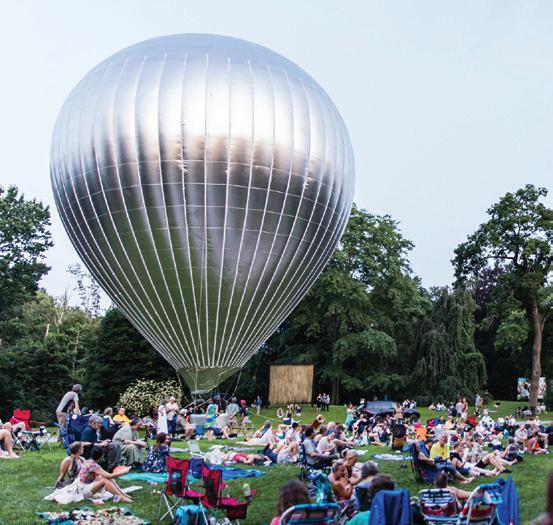
Doug Aitken, “New Horizon” (the 2019 Art & the Landscape installation) taking flight on deCordova’s front lawn.
PHOTO BY ABOVE SUMMIT
Looking to the Future
As it celebrates 75 years, deCordova isn’t only looking back; it’s looking forward. New outdoor sculptures continue to rotate through the Park, including a commission debuting in 2026 by acclaimed Boston-based mural artist Silvia López Chavez. Inspired by deCordova’s natural features, her artwork will be a wondrous portal into the landscape for the wider Trustees community; and a first-of-its-kind for Chavez.
“Many of us have encountered Silvia’s vibrant and communityfocused murals throughout Boston and beyond,” says Montross. “She is a vital artist to Boston’s arts ecosystem, and we are thrilled to share her bold and stunning artistry here at deCordova.”
Planning is also underway to implement deCordova’s next chapter, which will elevate its role as a portal to art and nature. Rejuvenating upgrades will be made to the museum’s galleries and indoor spaces for education and events. Portions of deCordova’s outdoor landscape will be also refreshed with plantings, art, and improvements for visitor experience.
With events honoring its history, new exhibits connecting visitors to nature, and a strong vision for the future, deCordova Sculpture Park and Museum is reaffirming its place as a cultural cornerstone. This special place is a living canvas where art, nature, and people meet, and where the next 75 years promise to be just as innovative and inspiring as the last.
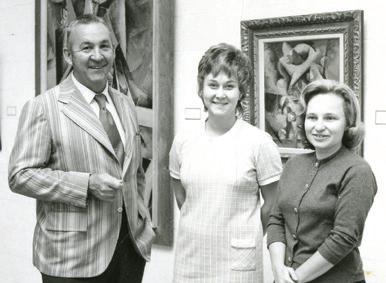


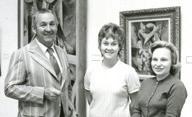
deCordova’s first Director, Frederick P. Walkey (left).
Jeffrey Gibson, “Infinite Indigenous Queer Love,” 2021.
Artist Evelyn Rydz with “Holding Water,” 2025, outdoor exhibition Nature Sanctuary
From left to right: Phyllis Rappaport, deCordova Director Sarah Montross, artist María Magdalena Campos-Pons, Trustees President & CEO Katie Theoharides; 2024.
The Hive Summer Camp, 2023.
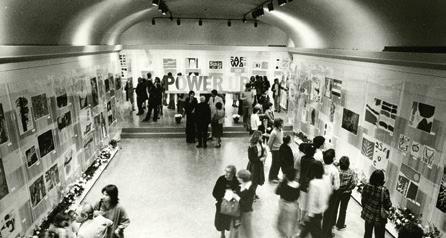
Exhibition view of “Corita,” the first retrospective of artist Corita Kent, Dewey Gallery, 1980.
PHOTO BY JULIA FEATHERINGILL
PHOTO BY RAFAEL MEDINA
©KRISTA GUENIN
PHOTO BY JAKE BELCHER
THE TRUSTEES ARCHIVES & RESEARCH CENTER
THE TRUSTEES ARCHIVES & RESEARCH CENTER
BY MEAGHAN FLAHERTY TRUSTEES STAFF
PLANTING THE Seeds for Success
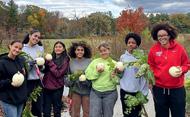
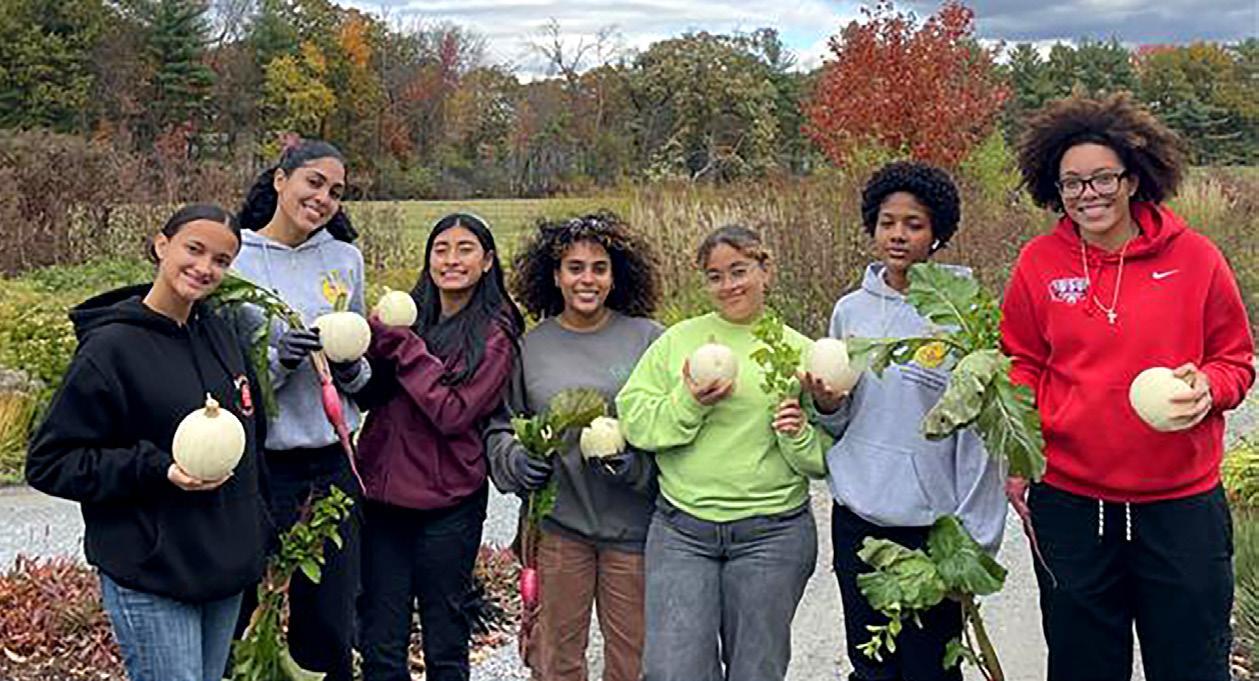
On a crisp October day, eight students from the Greater Lawrence Technical School (GLTS) gathered with Stevens-Coolidge House & Gardens Horticulturist Kaela Robinson to launch the 2025-26 Landscape & Sustainable Horticulture Program in Residence. In what is now the second year of the program, juniors and seniors from GLTS visit Stevens-Coolidge House & Gardens in North Andover every other week to work side-by-side with Kaela and Horticulture Assistant Jan Wirth to tend, nourish, and learn from the property’s gardens, plants, trees, and more.
“The majority of GLTS students will go right into the work force after school and
this program provides them with on-the-ground horticulture experience, in everything from planting bulbs to practicing winter pruning,” says Kaela. Additionally, she notes, “These students are our neighbors and visiting StevensCoolidge doesn’t always feel accessible or welcoming to them. It’s really important to help them feel comfortable and welcomed—which is something we want to see much more of in general.”
The GLTS group gathered at the vibrant Garden Gateway building, surrounded by late season wildflowers, to hear from property staff and discuss what is expected of this student cohort this year. They then
New horticulture program is a model for building valuable community connections
began a tour of the gardens with a visit to a hedgerow planted by this group last spring, which had been funded through a Future Farmers of America Grant. Kaela noted how proud the students were of the progress the shrubs had made.
Next, the students visited the various garden “rooms” that Stevens-Coolidge is so well known for, including a parade of herbs to taste in the French Garden, along with mustard greens and some “Purple Perfume” Brazilian peppers that packed a nice punch. At the end of their tour, the budding horticulture professionals were able to harvest radishes and pumpkins to take home (see photo, above).
Origin Story
Kaela has served on the advisory board of GLTS’s horticulture program for two years and, in this capacity, provides insights and industry trends to help guide the students. The program at StevensCoolidge grew out of her advisory board work, as well as from her understanding of the importance of real-world experience in the horticulture field.
After starting with a trial program at the end of the last school year, Kaela is excited to run the program as a full-year program for the first time this year. Just seeing the pride of ownership these students exhibited as they checked in on the hedgerow the seniors had planted as juniors last year brings home the need for this program to continue to grow. “We are excited about this program for many different reasons but certainly one of them is that horticulture can be very difficult to break into as a career, and this gives the students a great head start,” says Kaela.
Having hands-on job experience in high school not only sets these students up with specific skills but also helps them form soft skills like working as a team, problem solving, time management, and more. And, Kaela notes, “Working outside every day is a healthy lifestyle that I feel very passionately about, as well.”
Noting that the group is comprised entirely of young women, Kaela eagerly adds, “There has been more interest in this program from women. They may not be as interested in program schoolwork or opportunities that are focused on masonry or turf management, but they are drawn to the chance to learn more about horticulture in a public garden setting.”
Expanding Access for All
As part of the For Everyone, Forever strategic plan, The Trustees is working to expand access for visitors of all needs and backgrounds. Programs like the Claire Saltonstall Education Program on Martha’s Vineyard, partnering with Outdoor Afro to run outdoor hiking and engagement programs at a variety of properties in the Greater Boston area, and the MGH Lurie Center for Autism hosting ASPIRE campers at Powisset Farm in Dover are examples and models of Trustees work that strengthens relationships and provides deeper connections to nature for underresourced communities throughout the Commonwealth.
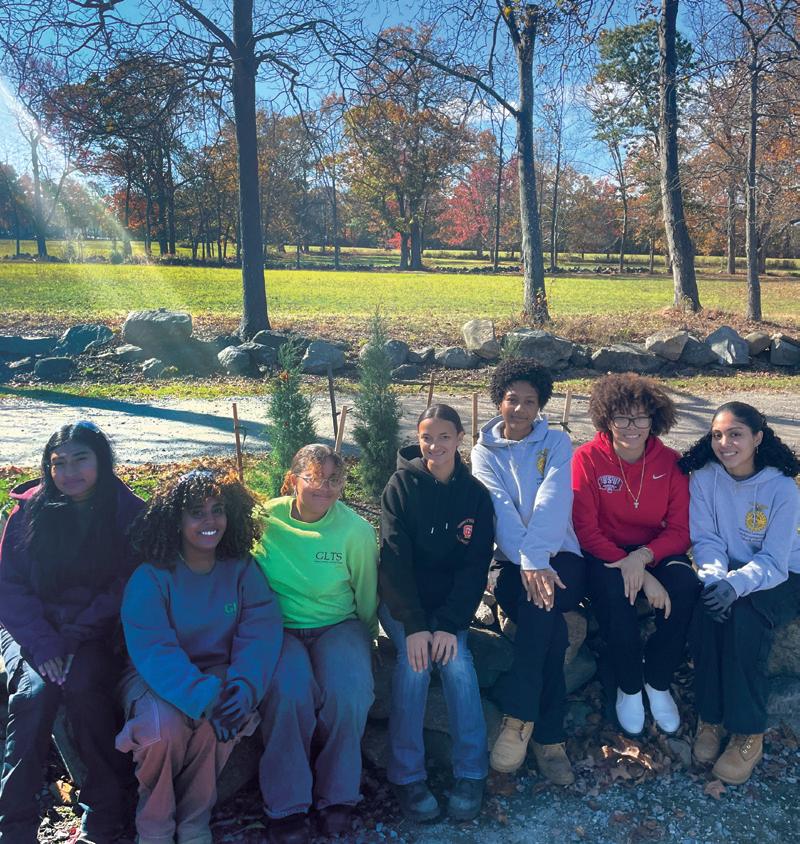
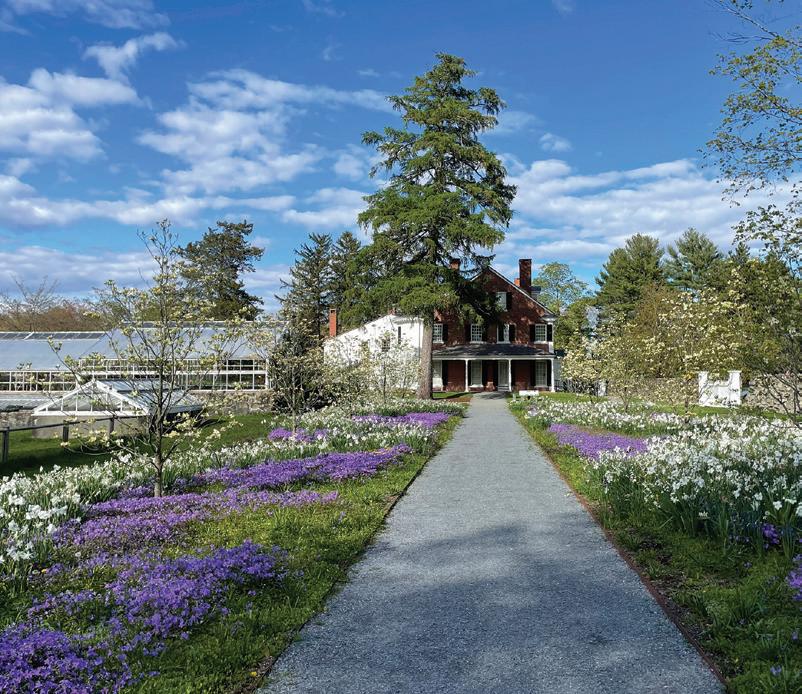
ABOVE: Not only did the Greater Lawrence Technical School students plant the hedgerow (behind them, in this photo), they wrote the grant application that funded it. BELOW: StevensCoolidge House & Gardens in North Andover neighbors the City of Lawrence, just two miles away.
Governance Volunteers
BOARD OF DIRECTORS
Directors serve as the governing board of The Trustees, charged with the ultimate responsibility for the organization’s operations.
Thomas D. French, Chair
Cyrus Taraporevala, Co-Vice Chair
Phyllis R. Yale, Co-Vice Chair
Elizabeth de Montrichard, Secretary
Robert H. Mason, Assistant Secretary
Priscilla J. Bender
Andrew P. Borggaard
Peter B. Coffin
Richard M. Coffman
David D. Croll, ex officio
Philip J. Edmundson
Uzochi C. Erlingsson
Edward G. Garmey
Timothy G. Healy
Roland E. Hoch
Bradley C. Irwin
Elizabeth L. Johnson
Julia G. Krapf
John D. Laupheimer, Jr.
Martin Lempres
Andrea Miano
Ruth Kennedy H. Sudduth
ADVISORY BOARD
This governance body advises the Board of Directors and staff on key issues, bringing diverse viewpoints and expertise to its decision-making process.
Michelle M. Abel
Marcela Aldaz-Matos
James M. Alden
Olivier J. Aries
Margaret G. Bailey
Joanna Ballantine
Deborah J. Barker
David Bechhofer
Jeffrey Bellows
Jennifer Bender
Rebecca Bermont
Ross Bloom
Richard M. Burnes, Jr.
John Chartier
Richard M. Coffman
Katherine Collins
Karen S. Conway
Lisette S. Cooper
Brendan Coughlin
Stephanie Danhakl
Laura DeBonis
Natalie R DeNormandie
Kathy Fallon
David A. Fleischner
Jade T. Gedeon
Steve D. Goodwin
Christopher J Goolgasian
Daniel A. Grady
Trevor C. Graham
Jill Hai
Linda Hammett Ory
James H. Hammons, Jr.
Alexandra C. Hastings
Gregory Herrema
Onyinyechi Ibeneche
Nicholas Iselin
James F. Kane
Frederick N. Khedouri
Joshua A. Klevens
Nushin Kormi
Ann W. Lambertus
Peter K. Lambertus
Robert A. Larsen
Alexander Leventhal
Peter Lorenz
Laurie MacNamara
Adam J. Margolin
Erica A. Mason
Virginia McCourt
Andrea Miano
Todd Millay
Bruce H. Mitlak
Katherine M. Morris
Albert A. Nierenberg
Christopher Oddleifson
Jeryl Oristaglio
Eunice Panetta
Glenn P. Parker
Bradford J. Paul
Kirsten Poler
Michael T. Prior
Jonathan Rapaport
Lisa Robinson
Carter S. Romansky
Marc Rubenstein
Robert A. Seaver
Kearney Shanahan
Sukanya L. Soderland
Anne Stetson
Susan Stevens
Richard Taggart
Caroline Tall
Melissa A. Tully
Mark F. Vassallo
Bradford B. Wakeman
Catherine Walkey
Andrew S. West
Janney Wilson
Lily Wound
Lily Zarrella
Marc Zawel
TRUSTEES COUNCIL
Established in 1995, this Council was created to honor former members of the Standing Committee, Board of Directors, and Advisory Board. It provides the opportunity for The Trustees to continue to benefit from their advice and deep institutional knowledge.
Amy L. Auerbach
Clement C. Benenson
Steven A. Bercu
Tatiana Bezamat
Laura D. Bibler
Sarah H. Broughel
Ronald Brown
Lalor Burdick
Rebecca G. Campbell
Robert A. Clark
William C. Clendaniel
Frances H. Colburn
Susanna Colloredo-Mansfeld
William G. Constable
Mary C. Cooper
David L. Costello
Peter H. Creighton
Andrew O. Davis
John P. DeVillars
Walter C. Donovan
James V. Ellard, Jr.
Jeffrey B. Fager
Ronald L. Fleming
Allen W. Fletcher
David R. Foster
Ann C. Galt
Martha L. Gangemi
Elizabeth W. Gordon
Marjorie D. Greville
Gale R. Guild
Douglas B. Harding
Carter H. Harrison
Nathan Hayward, III
John K. Herbert, III
Eloise W. Hodges
Paul S. Horovitz
James S. Hoyte
Stephen B. Jeffries
Elizabeth B. Johnson
Charles F. Kane, Jr.
Jonathan M. Keyes
Brian M. Kinney
Edward H. Ladd
Theodore C. Landsmark
David I. Lewis
Alexandra C. Liftman
Deborah Logan
Charles R. Longsworth
Caleb Loring, III *
Jonathan B. Loring
Peter E. Madsen
Eli Manchester, Jr.
Katherine J. McMillan
Wilhelm M. Merck
Pauline C. Metcalf
Sara Molyneaux
Brian W. Monnich
Amey D. Moot
W. Hugh M. Morton
Virginia M. Murray
Scott A. Nathan
Thomas H. Nicholson
Nicholas W. Noon
Thomas L. O’Donnell
Ronald P. O’Hanley, III
Kathryn P. O’Neil
Carolyn M. Osteen
Russell J. Peotter
Richard F. Perkins
Samuel Plimpton
Beatrice A. Porter
Margaret L. Poutasse
Hillary H. Rayport
Gene E. Record, Jr.
Henry S. Reeder, Jr.
Lily Rice Hsia
G. N. Ryland
Stanley L. Schantz
David W. Scudder
Christopher A. Shepherd
Norton Q. Sloan, Jr.
F. S. Smithers, IV
Jonathan A. Soroff
Caroline D. Standley
Augusta P. Stanislaw
Arthur K. Steinert
Elliot M. Surkin
Hope E. Suttin
Jane M. Talcott
John E. Thomas *
Yanni Tsipis
Natalia K. Wainwright
William F. Weld
R. A. West
Susan S. Winthrop
LIFE TRUSTEES
Honoring those who have made extraordinary gifts of property, financial assets, or service to The Trustees.
Lee Albright
Elsie J. Apthorp
Amy L. Auerbach
Wilhelmina V. Batchelder-Brown
Nancy B. Bates
Frances H. Colburn
Susanna Colloredo-Mansfeld
William G. Constable
Hilary Creighton *
John Fiske
Alan F. French
Dorothy C. Fullam
Elizabeth W. Gordon
Ralph D. Gordon
Gale R. Guild
Roslyn E. Harrington
Nathan Hayward, III
Elizabeth B. Johnson
Andrew W. Kendall
John W. Kimball *
Brian M. Kinney
Edward H. Ladd
Catherine C. Lastavica
Edward P. Lawrence
Robert P. Lawrence
Pamela F. Lohmann
W. Hugh M. Morton
Thomas H. Nicholson
Nicholas W. Noon
Thomas L. O’Donnell
Eunice Panetta
May H. Pierce
Rebekah Richardson
David W. Scudder
Norton Q. Sloan, Jr.
F. S. Smithers, IV
Caroline D. Standley
Elliot M. Surkin
Wesley T. Ward
Pamela B. Weatherbee
R. A. West
Frederic Winthrop, Jr.
CORPORATE TRUSTEES
Corporate Trustees, along with Life Trustees, are the voting members of the organization. Each year at the Annual Meeting, they elect Board of Directors and Advisory Board, as well as new Corporate Trustees and Life Trustees. For the list of Corporate Trustees, please visit our website at TheTrustees.org/Governance Trustees Governance, as elected at the 134th Annual Meeting, November 6, 2025.
* Deceased
Planned gifts have allowed The Trustees to advance its mission for more than 100 years. You can be part of that legacy and help ensure our work continues far into the future.
Contact Julie Lazarus, at 978.338.1172 or MyLegacy@TheTrustees.org, to learn more about how these gifts can help you meet your financial and philanthropic goals. If you have already named us in your estate plans, please let us know so we can honor your generosity through The Semper Virens Society.
TheTrustees.org/SVS
FRUITLANDS MUSEUM
HARVARD
PHOTO BY JAKE BELCHER
MILLBORN FARM SHERBORN & MILLIS
PHOTO ©KRISTA GUENIN
The Trustees is Massachusetts’ largest, and the nation's first, conservation and preservation nonprofit. We are supported by members, friends, and donors. Explore more than 120 amazing places across Massachusetts, from beaches, farms, and woodlands, to historic homes, museums, urban gardens, and more.
Katie Theoharides President & CEO
Nathan Hutto Chief Operating Officer
Noah Matson Chief Conservation & Climate Officer
Gerben Scherpbier Chief of Staff and Senior Advisor to the President & CEO
Janetta Stringfellow Chief Development Officer
Brian Therrien Chief Financial Officer
Janelle Woods-McNish Chief Marketing & Diversity Officer
EDITORIAL
Wayne Wilkins Director, Brand & Content Editor
Sarah Cassell Managing Director, Marketing & Communications
Chris Costello
Gina Janovitz
Graphic Design
Meaghan Flaherty
Josephine Brennan
Kyle Davi
Beth Moore
Contributing Writers