
“We



“We
By LYNAIRE MUNNINGS Tribune Staff Reporter lmunnings@tribunemedia.net
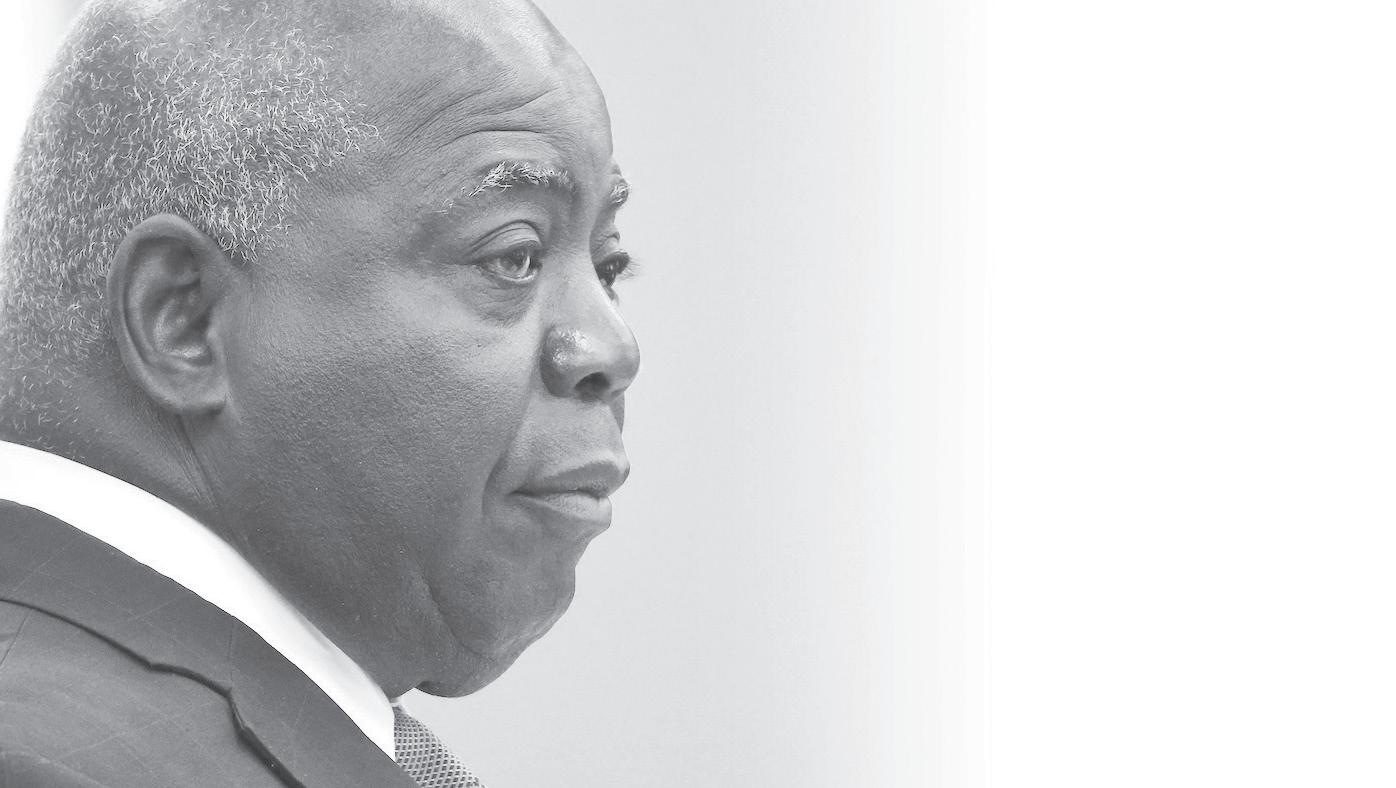
PRIME Minister Philip Davis accused the Free National Movement of preparing excuses for defeat after the party raised new complaints about the voters register, calling the allegations “nothing but hot air”.
His response followed claims by FNM chairman Dr Duane Sands that the party found serious

By KEILE CAMPBELL Tribune Staff Reporter kcampbell@tribunemedia.net
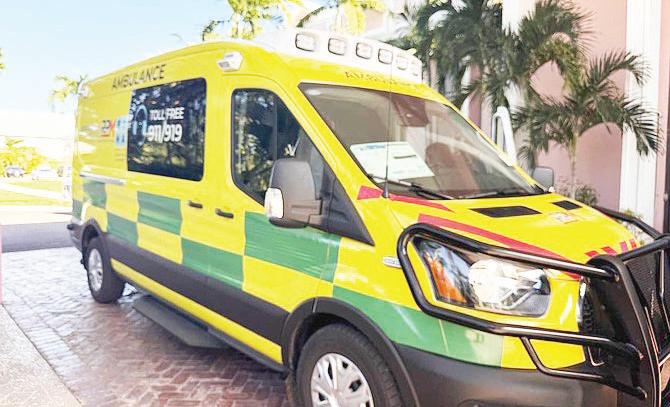
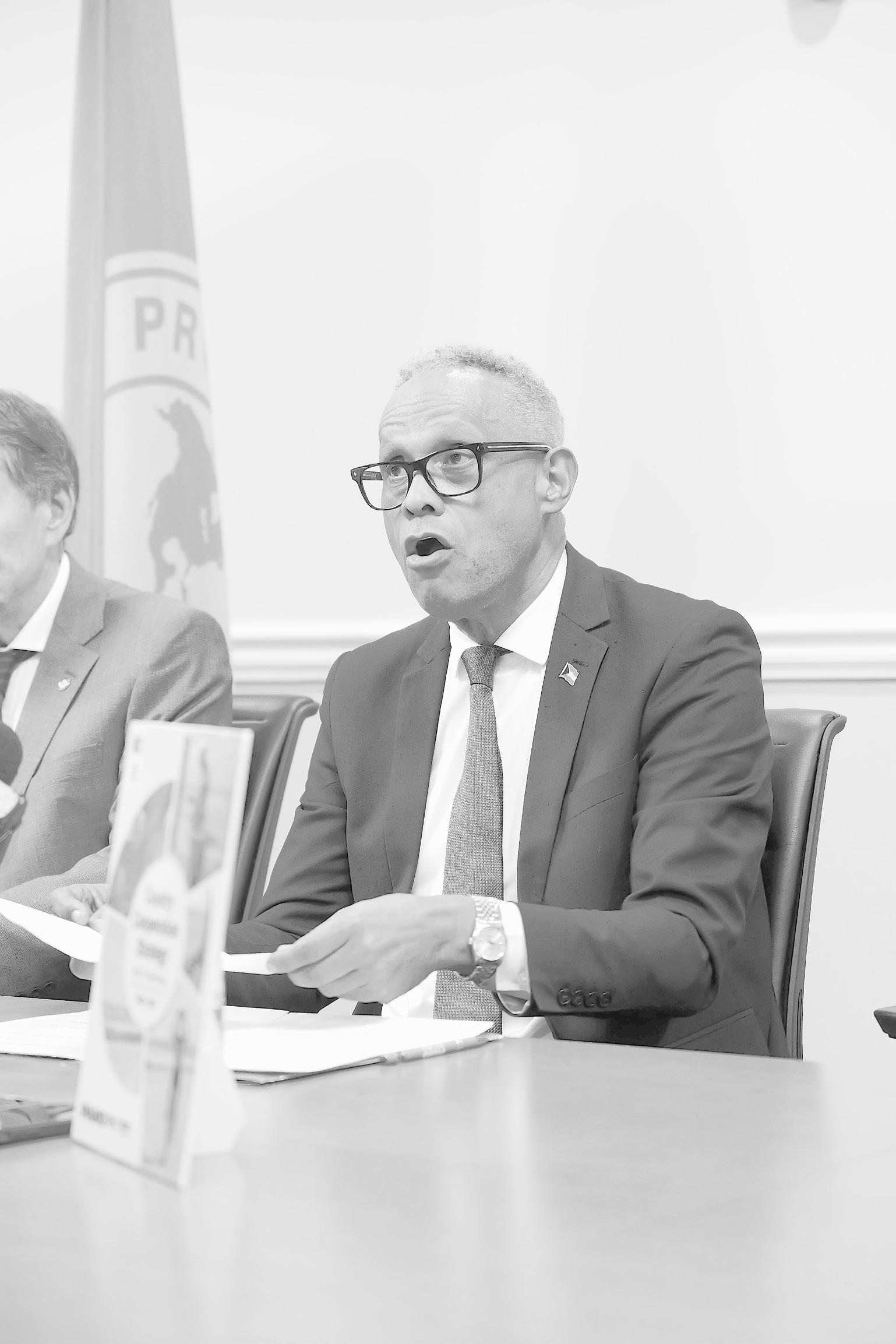
THE government plans to acquire about 15 new ambulances for Princess Margaret Hospital and Rand Memorial Hospital, Health Minister Dr Michael Darville said yesterday, as officials move to stabilise emergency response following operational problems. He said the vehicles are being
problems in the revised register, including empty polling divisions, duplicate entries and deceased people still listed.
Mr Davis dismissed concern that the FNM’s frequent complaints could undermine confidence in Bahamian elections.
“I think this is nothing but hot air, nothing more than grandstanding, nothing more than fostering and perhaps making
sourced from an overseas vendor but could not say where the procurement process stands.
Dr Darville said recent disruptions at the two hospitals were not caused by too few ambulances but by delays transferring patients off stretcher systems inside the vehicles.
“It was because the stretchers that are in the ambulance

‘Technical glitch responsible for nurses overtime pay delay’
By KEILE CAMPBELL Tribune Staff Reporter kcampbell@tribunemedia.net
HEALTH Minister
Dr Michael Darville said nurses caught up in last month’s pay dispute have now received overtime compensation, attributing the delay to a “technical glitch” now under review after a sick-out disrupted
care across public facilities. The protest erupted late January when nurses, frustrated over delayed overtime and holiday pay dating back to October 2025 in some cases, stayed home en masse, leaving departments short-staffed, patients waiting for hours and some turned away.
Dr Darville said the payments were resolved quickly but acknowledged uncertainty about what failed inside the system.
“It’s very unfortunate how it happened,” Dr Darville said. “I’m still getting into the nuts and bolts of what went wrong, and so we’re looking at some forensic analysis.” He said finance officers


PRIME
By LYNAIRE MUNNINGS
Tribune Staff Reporter
lmunnings@tribuenemdia.net
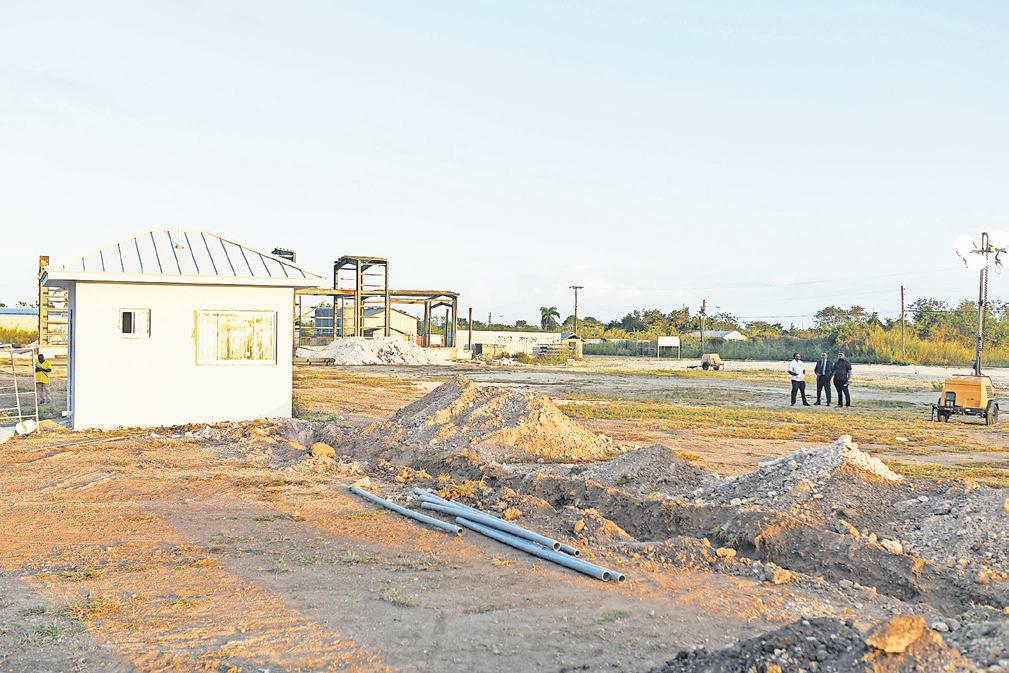
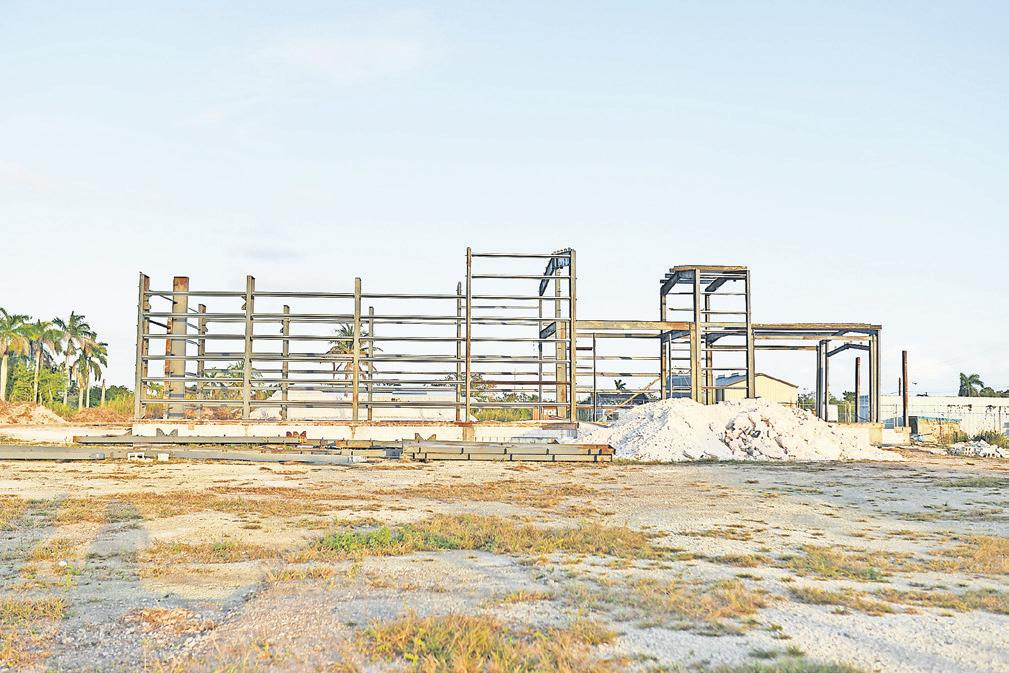
THE long-awaited Golden Yolk Programme is expected to begin production by the end of April, with 10,000 chickens already in country and officials projecting daily output of approximately 8,000 eggs as the government moves to cut the nation’s $12 million annual egg import bill and restore self-sufficiency.
The update came yesterday during a Ministry of Agriculture and Marine Resources project advancement tour for members of the media. The Golden Yolk facility was one of three stops on the tour, which also included the Department of Marine Resources’ new facility and the cultivation centre on Gladstone Road. The delegation additionally toured the new passenger terminal at Potter’s Cay Dock.
At the Golden Yolk site, Justin Taylor, Animal Consultant for the programme, said 10,000 chickens will be placed in House Two by the end of April, with production expected soon after.
“These chickens are very well what we call, dorsal, they are very prolific, so we expect to have 8000 eggs per day,” he said yesterday.
Mr Taylor said the birds have already undergone vaccination and health checks to ensure they are free from pathogens before being housed. He explained that the poultry houses
are designed to support bird health and consistent output, with wood shavings lining the floors, automated feeding and drinking systems, and climate control technology to regulate temperature and reduce disease risks.
“The house is actually resilient against diseases,” he said, noting that proper environmental management is critical to maintaining steady production levels.
Mr Taylor said the Ministry of Agriculture has developed the product logo and confirmed that eggs will be packaged in biodegradable cardboard cartons rather than hard plastic.
He said the government’s goal is for The Bahamas to achieve egg self-sufficiency within two years, as currently, the country imports approximately $12m worth of eggs annually.
The wider Golden Yolk project includes seven poultry houses in New Providence and 34 houses throughout the Family Islands to decentralise production and strengthen national food security.
The Golden Yolk Programme was first announced in 2023 as part of the government’s broader food security strategy amid global supply chain disruptions and rising food prices that led to increased egg costs locally.
At the time, officials said the initiative would stabilise supply, reduce import dependence and create opportunities for Bahamian farmers and entrepreneurs.


The project has faced scrutiny over delays and costs, with opposition voices previously questioning its timeline and expenditure.
Agriculture Minister Jomo Campbell said the first laying house is about 98 percent complete and will be ready to receive birds once the wood shavings are in place, noting that proper flooring materials, hygiene controls and calcium treatments are essential to bird comfort and productivity over an estimated 12-month laying cycle.
Addressing concerns about high egg prices, Mr Campbell said the programme aims to remain competitive while providing certified quality Grade A eggs.
“As it stands now, as a result of everything that has transpired since then, we have now seen commercials where eggs are on the shelf in certain stores at under $1.50 a dozen,” he said yesterday.
“And so we want to remain competitive at the same time making the Bahamian public aware that they will be having certified quality grade A eggs, and it’s essential and important for them to know that the class of eggs is a classics, and the processing plant that we went in the last smaller building is a certified processing plant meeting international standards to guarantee that certification.”
On the issue of costs, Mr Campbell was unable to say. He noted that construction was affected by external factors, including equipment delays and international
shipping disruptions that required rerouting around the Middle East.
Prime Minister Philip “Brave” Davis acknowledged that the project had encountered delays but said it is now nearing completion.
“I guess the scrutiny is because of some of the delays that we encountered in getting it to where it is, but I’ve always said a word to the wise, has always been sufficient. For me, my grandparents always taught me that it is always better late than never, and we will never have a never here,” he said yesterday.
During the wider tour, officials first visited the Department of Marine Resources’ new facility, which includes four office spaces, a storeroom, a confiscation room and designated space for security personnel. The facility is intended to strengthen regulatory oversight and enforcement capacity within the fisheries sector.
The delegation also toured the cultivation centre on Gladstone Road, which officials said will facilitate the modernisation of food production through improved technology and farming practices. Another stop was the new passenger terminal at Potter’s Cay Dock, part of ongoing infrastructure upgrades in that area.
Officials said the projects collectively form part of a broader national strategy to enhance food security, modernise agricultural and marine operations, and reduce the country’s heavy dependence on imports.



By LEANDRA ROLLE Tribune Chief Reporter lrolle@tribunemedia.net
MARRIED women in The Bahamas who have outside partners are more likely than married men to say the other partner is the better lover, a finding that demonstrates how strongly sexual satisfaction can drive so-called “sweethearting” relationships.
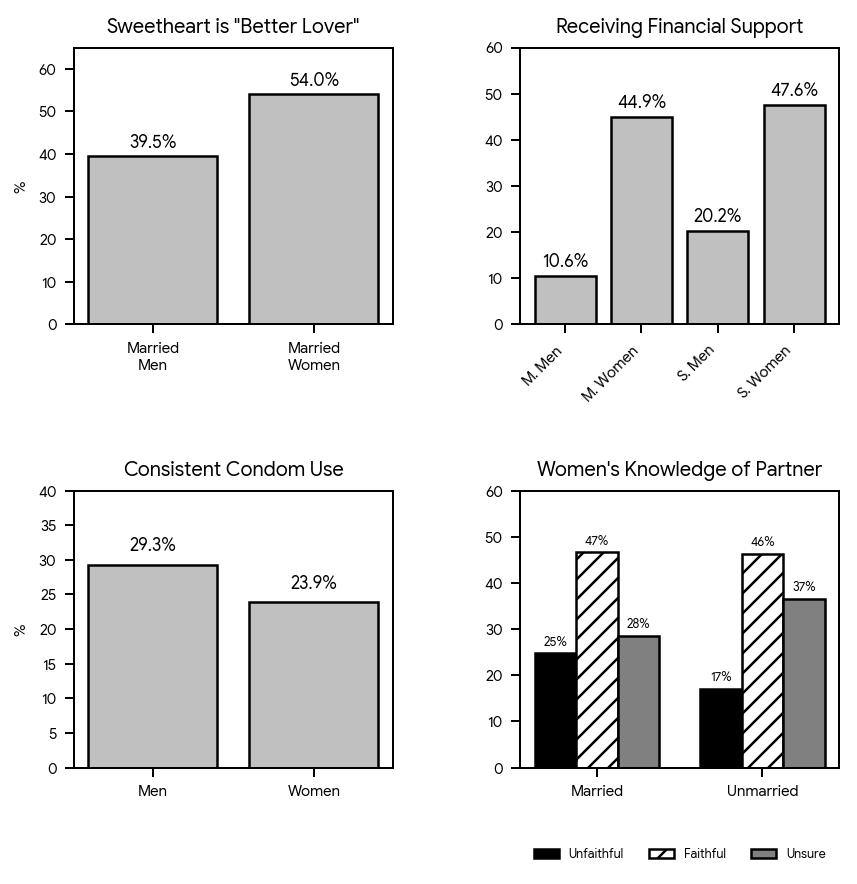
A University of The Bahamas study found 54 percent of married women described a sweetheart as superior sexually compared with 39.5 percent of married men. One participant called the experience a “guaranteed orgasm” while another said it was “awesome sex.” The research, “A Description of Sweethearting in The Bahamas,” analysed online responses from 6,714 adults and suggests that even as marriages remain intact, some partners seek intimacy
elsewhere to meet specific unmet needs. Age gaps were common. Older men tended to have younger sweethearts, while younger women often partnered with older men. About 4.2 percent of sweethearts were 19 or younger.
Researchers also identified health risks. Condom use was low — “Among the 273 male respondents, 29.3 per cent reported consistent condom use, while among the 469 females, the corresponding figure was 23.9 per cent,” the study added.
One in five respondents reported more than one sexual partner in the previous six months. Among them, 77 percent said at least one partner was a sexual sweetheart. Men reported more partners overall.
Financial support was another common feature. Women were far more likely than men to receive
money, gifts or assistance.
One married woman with two partners said, “There is no need for me to work.”
Overall, 44.9 percent of married women and 47.6 percent of never-married women reported receiving money from a sweetheart, compared with 10.6 percent of married men and 20.2 percent of never-married men.
Emotional reassurance also featured prominently. Many respondents said a sweetheart made them feel “needed,” which researchers linked to better sexual experiences.
Despite these advantages, most participants showed little desire to replace their primary partner. The report concluded. “Instead, sweet-hearting appears to be driven by immediate personal benefits, such as financial support, sexual gratification, or emotional validation, rather than aspirations for future

permanence,” the report said.
The survey skewed female and young; just over half had never been married, and 31 percent were married. Among married or common-law respondents with multiple partners, 72.3 percent said at least one was a sweetheart.
Lead researcher William J Fielding warned this could affect spouses. “So there's the risk of bringing diseases into a family relationship, and that might be a concern for us to be to be aware of,” he said.
Encounters often occurred away from either partner’s home. Mr Fielding said meeting at a sweetheart’s residence increased vulnerability: “This now puts them in a place over which they have less control because in a sense, they’re playing away right so this might
open them up to a greater chance of being abused because they’re not within their own comfort zone.”
The study also recorded sexual coercion, with men more likely to report committing non-consensual sex and women more likely to report experiencing it.
“For example, Bahamian media portrayals often frame females exclusively as victims of intimate partner violence; however, our findings reveal a more nuanced reality in which both males and females can be perpetrators and victims,” the study added.
Researchers cautioned that the survey used non-probabilistic sampling and allowed skipped questions, meaning results should not be treated as nationally representative.
Still, they said the findings help explain why the relationships persist. “The
study’s results help to show that, despite the publicised negative aspects of sweethearting, for those who participate in such relationships, there are both potential benefits as well as risks, some of which may extend beyond the sweethearts. As such, the data provide insights about the motivation driving sweethearting and the associated consequences of sweethearting.” Nonetheless, researchers cautioned that all the data is self-reported, meaning respondents may present a more idealised version of themselves. This suggests actual rates of infidelity could be higher than reported, particularly among women, who may be less willing to disclose such behaviour due to social stigma, whereas men often report it more openly.
By LEANDRA ROLLE
Chief Reporter
dependence on extramarital partners, or “sweethearts,” was high for both unfaithful husbands and wives, a new study has found, concluding that such dependency may be a key factor influencing infidelity and could carry potential mental health consequences
The research, conducted by Shamel Yvonne Rolle-Sands and colleagues, offered fresh insights into marital infidelity and emotional reliance among Bahamian couples. It is one of several studies released by the University of The Bahamas yesterday examining “sweethearting” – which has been described as a national pastime in The Bahamas – and its broader social and emotional impacts. The study found that emotional dependence on an extramarital partner — regardless of whether that partner was labelled a “sweetheart” or something else — was significantly higher among unfaithful spouses than among
faithful ones. More than half of respondents reported high or severe emotional dependency.
Wives who were unfaithful showed a sharper increase in emotional dependency when compared with husbands.
Dr Rolle-Sands explained yesterday that researchers measured emotional dependence using a scale ranging from 0 to 88.
Scores below 10 suggested low dependence, 11–22 moderate, 23–33 high, and above 37 severe emotional dependence.
“So, when we look at it, 51 per cent, more than half of these married people who responded, their scores indicated that they have either high or severe emotional dependency,” she said. There was also a notable difference in how men and women defined their primary partner when multiple relationships existed.
Wives (21.6 percent) were more likely than husbands (8.8 percent) to consider their sweetheart their primary partner.
Dr Rolle-Sands called this data interesting, concluding that “ higher dependency was linked to all of these things.”

Researchers also found emotional dependence increased alongside the frequency of sexual encounters outside the marriage. “Whether we believe it or not, most of us think of sex as transactional,
but that is actually that can be a very emotional. It's more than just physical in many cases,” said Dr Rolle-Sands. She concluded that high emotional dependency can heighten personal risk, making
individuals more susceptible to “ certain domestic violence risks.”
“The scores indicate to us that, and it's not just men or women, and it's not just victims or the perpetrators, but both victims and perpetrators,
once their emotional dependency scores are high, as they increase, that also increase their risk of becoming either a perpetrator of a domestic violence or becoming the recipient of domestic violence.”
REGISTER from page one
excuses now for the loss that they’re expecting,” he said.
He said safeguarding the register is a shared democratic responsibility, not solely the job of election officials.
“Very often, all the burden is put on parliamentary office,” he said. “It is for all of us who are participatory members of this democracy to keep an eye on the registry, to help it, to ensure its integrity.”
He emphasised that irregularities, if found, should first be reported to authorities rather than immediately publicised.
“Instead of going to the press, what I recommend he does is, wherever he finds there’s some irregularity, draw it to his attention and make sure that they correct it and if it’s not corrected, then that’s when he may want to make noise,” Mr Davis said. “But to discover an irregularity, if there were one, and to just go straight to the public with it, it’s an unnecessary irritant to the process.”
He said the registration system remains largely manual and therefore prone to human error.
“What is required is for us as responsible citizens, and we do see, don’t forget, the process at the moment, is still very much
manual,” he said. “People are dealing with it, and as we are humans and we are prone to make mistakes, it doesn’t mean that the mistakes are deliberate or intentional, and when we find them, we bring it to the attention for it to be corrected.”
Nonetheless, Dr Sands has said the FNM formally wrote the Parliamentary Registration Department after reviewing the updated list.
“In its review, the FNM found polling divisions with no voters assigned, including Killarney Polling Division 3, Southern Shores Polling Division 4, and Tall Pines Polling Division 4. It is not normal for polling divisions to be skipped in this manner,” he said.
He also cited missing voters, flawed transfers after boundary changes and inconsistent application of registration rules, and called for a full audit and reconciliation of the register.
The complaints add to earlier FNM allegations that young voters were discouraged from registering and that campaigning occurred inside a registration office. Parliamentary Commissioner Harrison Thompson previously rejected those accusations and said concerns brought to administrators were addressed.
By JADE RUSSELL Tribune Staff Reporter
jrussell@tribunemedia.net
FREE National Movement leader Michael Pintard said his party will delay ratifying its candidate for the MICAL constituency until the person formally leaves the public service to avoid jeopardising pension benefits.
Mr Pintard said government employees who run for office while still technically employed — even if on accumulated vacation leave — risk complications with retirement entitlements. He
“The time that they would have to have one rule apply to them and another for everybody else is running out,” he said, referring to the Progressive Liberal Party.
FNM chairman Dr
said the party advised some potential candidates to wait until they were fully separated from the system before nomination. He confirmed the prospective candidate is retiring to enter frontline politics and will be ratified after the leave period ends. He also suggested past elections did not apply the same standards across parties.
Duane Sands said the concern reflects what he described as victimisation within the public service.
“Don’t mind if someone has worked for 40 years giving incredible service,” he said, adding that if a public servant is identified as an FNM supporter they are targeted.
Mr Pintard, speaking on Guardian Radio’s “Talking Heads,” confirmed the candidate remains a public servant and is waiting to ensure pension benefits are secure before ratification. He said the party expects to proceed in March after legal advice.
By EARYEL BOWLEG Tribune Staff Reporter ebowleg@tribunemedia.net
CARNIVAL band
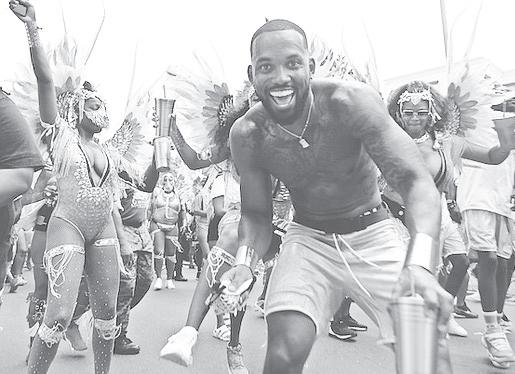
leaders say they want government funding restored to revive a flagship music competition they argue could turn The Bahamas into a stronger regional festival destination.
Bahamas Carnival Band Owners Association chairman Dario Tirelli said
organisers hope to meet with officials within weeks as preparations intensify for the June 3–7 celebrations in New Providence.
“Within 15-30 days, we should sort of have a meeting, hopefully,” Mr Tirelli said. “We know this is election year so they tend to sit down with everybody, but that's not are concern no more. We’ve done it without them for numerous of years.”
He said no discussions about funding have yet taken place even as regional carnival season begins, with Trinidad and Tobago already hosting events this month.
Promoters have begun ground promotion in New Providence, with broader marketing expected to accelerate once costumes are ready. Organisers said overseas inquiries have been arriving since

December.
Mr Tirelli said the event’s biggest gap is the “Music Masters” programme — a competition for Bahamian soca songs that once linked local artists to a major regional stage.
“Music Masters was the biggest failure of when the government didn't support,” he said. “If we could get them to fund again, the Music Masters is a big plus
for the country. If we could get them to get marketing for the country, for the carnival as a destination, it's huge.”
The programme lost support after government cut its carnival subsidy by half in 2017 and withdrew funding entirely the following year.
Mr Tirelli said at least $1.5 million is required to mount the production and market the festival
internationally.
“They can cover all expenses,” he said. “The promoters will fill in. Most of band owners are tied in with that promotional aspect of the events or busy with the costume. But if they could cover that part of it, that's a big plus, because our sponsorship have dried up, not only for Carnival, for many, many of the cultural activities in this country.”

that carry the patient, we were so swamped that we could not take them off the stretcher, but that is being resolved, and I think we are back to normal as we speak,” he said.
He estimated new ambulances typically cost between $150,000 and $180,000.
“Ambulances are very expensive, brand new ambulances. You can’t find an ambulance below 150,000 — some go as much as 180,000,” he said.
The incoming units will be larger models intended for New Providence and Grand Bahama. Previously acquired vehicles are being deployed across the Family Islands through the emergency medical technician programme.
“The ambulances that are being procured for the PHA and the Rand Memorial Hospital is a larger version that we believe is best suited for Grand Bahama and New Providence.”
Several islands already have units, including three
in Andros and others in Cat Island, Long Island and Bimini, with additional services expected once trainees complete certification.
“We are about to activate that EMT service as a result of our graduates from the EMT programme, from the PHA Academy,” he said.
Separately, ambulances provided uner the Bahamas Aviation, Climate and Severe Weather Network (BACSWN) $427million Heads of Agreemnent, will expand EMS pre-hospital clear and dedicated aviation medical services in Nassau and throughtout the Family Islands once the memorandum of understanding is signed with the PHA and the Department of Public Health. These are highly-specialised in catering to EMS services for aviation-related incidents costing $300,000-plus each.
“I believe we have a meeting this week with them to look at the MOU and how this will play out,” he said. “But that’s another avenue where the residents in the southern Bahamas will have access to quality EMT
services, along with my EMT programme, making it reasonable for our residents not to go through the trauma being placed on a back of a vehicle.”
Michael Strachan, BACSWN’s chief operating officer, said the agreement is nearly complete.
“We’re currently in the final stages of the MOU being done and signed,” Mr Strachan said. “We expect that to be done before the week is out.”
He said once approvals are completed, deployment will begin quickly.
“So once all of the relevant agreements are signed with the Department of Public Health, Public Hospitals Authority and Bahamas First Alert project management company — which is a joint venture between the government of The Bahamas and BACSWN, those ambulances are going to be deployed,” he said.
“We expect the estimated deployment of those ambulances to be fully first areas should be by March 15.”
are expected to warn when budget lines are nearing exhaustion and escalate urgent funding needs.
“It’s important for the finance officers to red flag and say, ‘Hey, we having a problem here,’” he said.
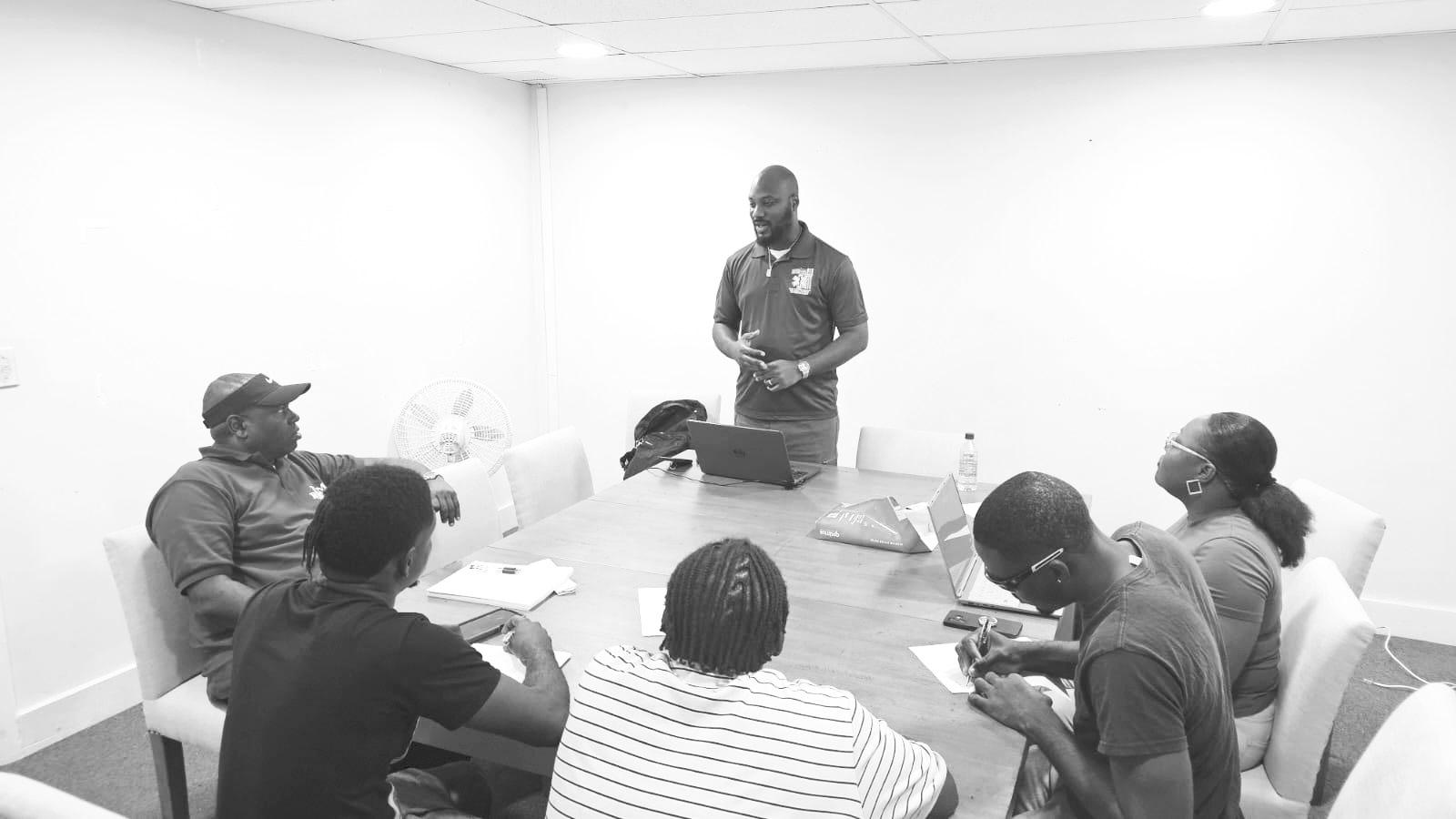
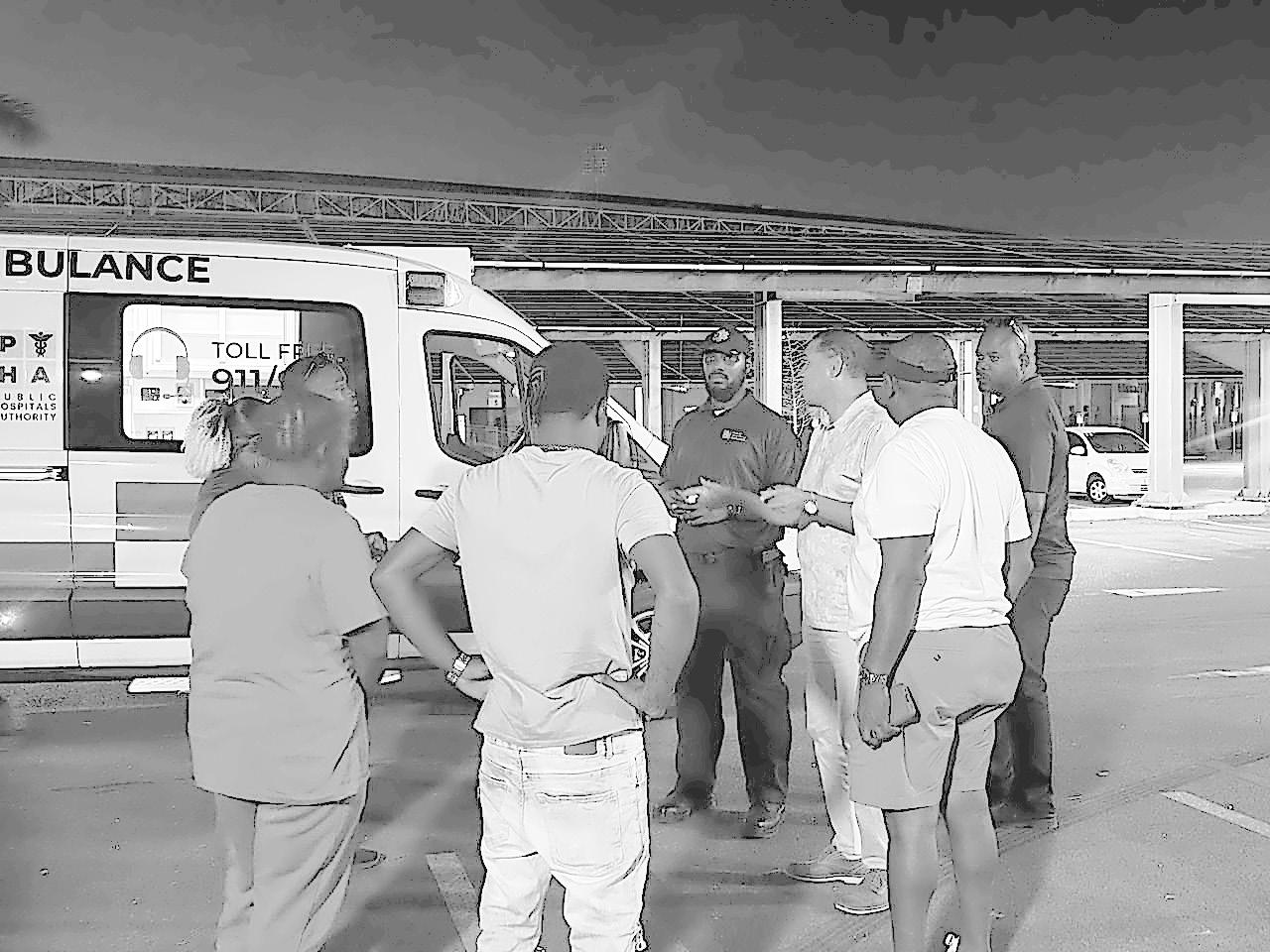
IN keeping with the terms of a Heads of Agreement between The Government of The Bahamas and BACSWN, its affiliated company, Bahamas First Alert Project Manager Limited (BFAPM) has completed training of its first two cohorts of Emergency Vehicle Operators to man the initial six ambulances to be deployed to the southern islands of Cat Island, MICAL, and Long Island, along with the shipment of an additional ambulance to Abaco.
This initiative is part of a broader project to substantially improve aviation emergency services throughout the nation’s international airport locations through a Public Private Partnership arrangement.
Initial recruits were sourced from the islands of Acklins, Crooked Island, Inagua, and Cat Island. The intense four day training course was conducted by Richardo Woodside of First Response Medical and Training Services and consisted of theoretical and practical elements to indoctrinate trainees in all aspects of Emergency Vehicle Operations (EVOC).
Lyrone Burrows, President and CEO of BFAPM expressed pride in the fact that the drivers identified for operating these ambulances were all sourced from the islands to which they were destined, a move that will begin the transformation of emergency medical services across these islands who, up to now, have had to take a backseat to their sister islands to the north.
By KEILE CAMPBELL Tribune Staff Reporter kcampbell@tribunemedia.net
NATIONAL Health Insurance payment delays are being driven in part by problems with laboratory claims and weak pre-clearance controls, Health Minister Dr Michael Darville said, as tensions continue between the government and healthcare providers over whether billing practices are contributing to the backlog.
“We did have some challenges, not so much with the physicians, but with the labs,” he said. “Sometimes there are discrepancies.”
“Sometimes we find that there may be some irregularities on how that’s calculated,” Dr Darville said. “We need to be more efficient on how to do that, so that the system becomes a smooth operation.”
He said the pre-clearance process needs to be strengthened before certain lab tests are carried out.
“There is some challenges that we need to strengthen so that we could get pre-clearance before the labs are done,” Dr Darville said.
Dr Darville said the NHI framework sets out what services are covered, but said gaps in communication can lead to repeat testing.
reputations after his comments about irregularities.
Dr Darville acknowledged the pressure on smaller providers waiting months for payments, but said he had raised the issue with the Ministry of Finance.
“I’ve spoken to finance for it, the response has been excellent,” Dr Darville said. He defended the programme’s financial controls, saying firm limits are necessary to prevent costs spiralling.
“The programme is very tight and very structured, because if you do not have caps and riders on it, you will definitely have a program that is unsustainable,” he said.
“When that’s not available, go to finance on an emergency basis.”
Normally, he said, ministries shift allocations internally or send emergency requests to the Ministry of Finance when funds run low.
“It was a technical glitch, and we worked it out very quickly,” he said. The minister added that new digital monitoring systems should detect shortfalls earlier and prevent a repeat.
Dr Darville’s comments came days after Prime Minister Philip Davis said the Ministry of Finance had flagged billing irregularities within the NHI programme and confirmed that a reconciliation exercise is underway.
“I do it every day in my ministry, the PHA does it. Something happened, that’s water under the bridge, but there was never intention not to pay people what they deserve,” Dr Darville said.
The minister said irregularities sometimes emerge in how claims are calculated, and argued the system needs tighter, more efficient processing.
“And it’s very clear on the NHI what can be done,” he said. “But sometimes there’s a lack of communication, where people think that you can just keep repeating labs.”
His remarks follow criticism from the newly formed National Health Insurance Providers Association, whose members accused the Prime Minister of casting doubt on doctors’
The Tribune previously reported that doctors in NHI are paid through capitation and do not submit individual billing claims, while laboratory providers invoice through a separate system.
Dr Darville said work is continuing to make the process more efficient and ensure claims move through the system in a more structured way.
Busy, well-established small animal veterinary clinic seeking a Veterinary Assistant with 3–6 years of hands-on clinical experience to join our dedicated team.
The ideal candidate should be confident, reliable, and skilled in: •Animal handling, restraint, exams & procedures, surgical prep, anesthesia monitoring, laboratory work, client communication and patient care.
•Professionalism, compassion, strong work ethic, team spirit, and the ability to think independently are preferred.
Wages commensurate with experience. Please send resume and references
NULLIUS ADDICTUS JURARE IN VERBA MAGISTRI
“Being Bound to Swear to The Dogmas of No Master”
LEON E. H. DUPUCH,
Publisher/Editor 1903-1914
SIR ETIENNE DUPUCH, Kt., O.B.E., K.M., K.C.S.G., (Hon.) LL.D., D.Litt .
Publisher/Editor 1919-1972
Contributing Editor 1972-1991
RT HON EILEEN DUPUCH CARRON, C.M.G., M.S., B.A., LL.B.
Publisher/Editor 1972-
Published daily Monday to Friday Shirley & Deveaux Streets, Nassau, Bahamas N3207
TELEPHONES
News & General Information (242) 502-2350
Advertising Manager (242) 502-2394
Circulation Department (242) 502-2386
Nassau fax (242) 328-2398
Freeport, Grand Bahama (242)-352-6608
Freeport fax (242) 352-9348
WEBSITE, TWITTER & FACEBOOK
www.tribune242.com

@tribune242

IN recent times, issues with our healthcare system have been front and centre in the public eye – whether it is a block on overtime payments to nurses, or physicians not receiving payments for their involvement in the National Health Insurance scheme. Yesterday, Health Minister Dr Michael Darville seemed to find his way to an answer on the issues –that it is not his fault.
Let us start with the overtime payments to nurses. In January, the Public Hospitals Authority (PHA) sent out a memo warning that all overtime payments had to be approved by the managing director’s office.
This left nurses waiting for overtime they had already worked – and concerns over where the funding had gone so quickly in the budget cycle already.
PHA officials said the directive was necessary to preserve funding for future priorities, including critical hires and to strengthen oversight after the authority exhausted its overtime allocation.
At the time, Dr Darville expressed concern over why the government was not notified earlier over funds being exhausted – which frankly as the minister responsible, he should have known all about through the whole process. It raised into question how aware he was of his portfolio.
Yesterday, he still showed he does not have a close eye on the healthcare system.
He said nurses have finally received their overtime payments, after a delay he attributed to a “technical glitch”.
As for how we got there in the first place, he said: “I’m still getting into the nuts and bolts of what went wrong, and so we’re looking at some forensic analysis.”
The “nuts and bolts” seem fairly simple. Either not enough money was allocated initially, or the shortage of staff led to an excess of overtime, including increased payments. Regardless, Dr Darville ought to be well aware of the state of the budget, the staffing levels, and approximate levels of overtime demands. After all, overtime is not just about payments, it is about ensuring you have adequate staff, properly rested, to ensure good patient service.
He pointed at finance officers instead saying it is up to them to “red flag and say, ‘Hey, we having a problem here’.”
He also said there was “never intention not to pay people what they deserve”, despite a whole memo from the PHA stipulating new approvals needed to pay people what they deserve.
Not content with sounding disconnected in just one area, Dr Darville then spoke about another area of payment delays – those done as part of the NHI scheme.
tribune news network
It should be noted that The Tribune has written repeatedly about delays to NHI providers, and many doctors speaking both on and off the record have expressed frustrations with the slow payment from government.
Dr Darville yesterday blamed delays on “not so much with the physicians, but with the labs”, adding “sometimes there are discrepancies”.
That of course does not explain why physicians are not getting paid on time as they should be. For clarity, the NHI payment process for doctors is a fairly simple one. Doctors are not submitting individual bills for treatment – this patient needs this treatment, that one needs another. Instead, they are paid a set monthly sum per patient, regardless of how many times they are seen or how much treatment they require.
So if there are any “irregularities” with the system, the doctors should not be made to pay for it. Dr Darville said there were sometimes irregularities with how claims are calculated, and that “we need to be more efficient” and the pre-clearance process needs to be strengthened.
Now, of course, we all want our healthcare system to be as efficient as possible – although we would probably be comforted in the possibility of that if the minister seemed to have a better idea of what was going on.
Perhaps indeed there are areas with the laboratories that need to be resolved – but Dr Darville has not explained why that leaves doctors waiting for months for payments that are done on a simple headcount basis.
And while he figures out the “nuts and bolts” of what went wrong with overtime payments to nurses, he has not presented a solution to the overtime needs or an explanation of why he was waiting for finance officials to wave a red flag rather than keeping a close eye on the funds and expenditures himself.
Dr Darville has also been at the forefront of government messaging over the need for the planned new hospital that will be funded by Chinese investment –although he did not know the detail of the funding that included Chinese courts having authority over any disputes in the deal.
Put all those together and it does not paint a picture of a minister paying close to his portfolio.
Perhaps he can prove us wrong by adding the explanations for those nuts and bolts, and for those delayed payments to doctors. Perhaps he can promise such delays will not happen again. But if they do, what then?
EDITOR, The Tribune.
I AM writing in response to the letter titled “Folly of Bahamian leadership” published in The Tribune on February 12, 2026. The frustration expressed in that piece reflects the growing concern of many ordinary Bahamians who feel increasingly disconnected from decisions being made in their name. There is no denying that our country faces serious challenges. From strained public health services to economic vulnerability and complex geopolitical choices, leadership today demands competence, foresight, and humility. When major decisions appear rushed, opaque, or dismissive of public concern, public confidence erodes and cynicism takes root. While strong criticism can awaken attention, criticism alone cannot move a nation forward. What The Bahamas now urgently requires is not only the identification of folly, but a commitment to corrective action. Transparency must become standard practice rather than an afterthought. Significant national projects and international agreements should be accompanied by clear public disclosures, independent assessments, and open parliamentary debate. Bahamians deserve to understand not just what decisions are made, but why they are made and who ultimately benefits. Governance must also be guided by expertise rather than political convenience. Our nation has no shortage of qualified professionals whose insights could strengthen policy outcomes if genuinely consulted. Meaningful engagement with such expertise would help restore public trust and improve decision-making. Equally important is accountability. Ministers and senior officials should be measured against clear performance benchmarks tied to national outcomes, not political allegiance. Where projects
EDITOR, The Tribune.
FEBRUARY of any year that The Lord continues to tarry, is regarded as the month of Love. It’s a time of the celebration of strong and sustainable relationships in all spheres of national: personal and corporate relationships all over the world. One of my favorite Scripture regarding Love is found in the Book of John 15v13 where it reads: ‘ Greater love hath no man than this, that a man should lay down his life for his friends....’The Apostle Paul, formerly known as Saul, that great proponent of The Gospel of The Lord, Jesus Christ, also wrote in 1 Corinthians 13 vs.1-3: ‘Though I speak with the tongues of men and of Angels, and have not Charity, I am become as sounding brass...’
The other day, there were several reports in the print and other media, attributed to so-called Senior members of the crumbling FNM who were elevated and politically protected by Doctor Minnis when he held sway. I attribute the most unkindness cut to former Deputy Prime Minister and MP for East End, Grand Bahama. This man sat at the very feet of Minnis and was afford the opportunity on several occasion to sit in the actual seat of the Prime Minister. Peter Turnquest is the last person whom I would have expected to Chop Minnis, with a dead rusty cutlass, plump in his back!! Minnis, to my knowledge, never did anything that would have negatively impacted their personal and political connection. As far as I am able to recall, Turnquest and another individual, outside of the House of Assembly, became embroiled in contentious litigation with a USA investor in an airline that they ‘owned’. Turnquest felt duty bound to step down as DPM and, eventually, the HOA. Minnis had absolutely nothing to do with Turnquest’s private businesses.
Shortly before coming to office in 2017, if I am not mistaken, Pintard who at one point was National Chairman of the FNM, was obliged to resign as National Chairman. Again, Minnis had absolutely nothing to do with those events which led to Pintard’s demitting office. During the height of the pandemic Dr Duane Sands admitted that he gave ‘approval; for an aircraft bearing vital medical supplies to land at the airport here in New Providence, without first obtaining the ‘approval’ of The Competent Authority (Dr Minnis).
Following those events, it would seem that ‘bad blood’ evolved between those three FNM party members. It was after the loss of the 2021 general elections that the animosity publicly erupted. Dr Minnis was ‘rejected’ by a subsequent National Convention of the FNM while Pintard was voted in as the putative Leader while Sands became National Chairman. My good friend the Hon Shannendon Cartwright (FNM-St Barnabas) swept into office as Deputy Leader.
And so, the question is now that Minnis has indicated that he intends to offer in Killarney as an ‘Independent’ despite the fact that the FNM has ratified someone else as its preferred candidate. Once general elections are called and if he actually contests Killarney, Minnis will, automatically, be expelled from the FNM. What would be outcome of all of this?
If, as it now appears to be the case, four or more candidates offer in Killarney, the outcome would be difficult to calculate. Minnis has represented that constituency for decades. For anyone to ‘beat’ him will be very difficult and with the splitting of potential votes, Minnis could slip back in, albeit with a reduced plurality. A win, however, is a win. It is interesting to read and hear senior members of the FNM, including two former Deputy Prime Ministers in FNM led cabinets that Minnis era is over and that he should be mindful of his legacy and fracturing the so-called unity within the FNM! All of this comes about after those same senior members of the FNM lambasted Minnis publicly during and after conventions and within the very halls of that party’s headquarters up at Mackey Street!
This, of course, was all part and parcel of those same senior members getting pure revenge and retaliation....no more... no less. It must also be clear that there is a hidden political hand in all of this spectacle. I submit that former FNM Prime Minister, the Rt Hon Hubert A Ingraham, though out of elective office, is the political Puppet Master. When Ingraham led the FNM into a massive defeat some years ago, Minnis, et al, did say that: ‘The Ingraham era is over!!!’. I have known both
of these men, et al, all of my adult life.
I suspect that Doctor Minnis is not going to roll over and play dead. The FNMs ratified candidates will face a slew of so called ‘Independent’ candidates, led by Minnis. In Bamboo Town, I have absolutely no doubt that former MP for that constituency, Renward Wells, will offer. In Carmichael, it is likely that the Hon Desmond Bannister will offer. There will be at least Seven (7) other constituencies which the Minnis led caucus will challenge. The outcome of those particular constituencies will be critical to the FNM’s performance. Indeed, if enough ‘independent’ candidates running with Doc, were to deny the FNM a plausible chance of securing enough seats to form a government; the Davis led PLP will emerge victorious and serve a second consecutive term, pure and simple. The Minnis Factor will be large and in charge, thanks to the disgraceful treatment and the attempted juvenile political humiliation of Minnis..
In my view, it is Not Too Late for Messrs Pintard, Sands & Company to seek an ‘understanding’ with Minnis. Withdraw the ratified FNM candidate over in Killarney and publicly apologise to the man who caused All of them be in prominent positions, bar none. Of course, Pintard would Never again take a back seat to Minnis and I’d not believe that Minnis would accept anything less than become de facto and de jure supreme leader of the shaky looking FNM!! So, how will the Minnis Factor play out? If I were an advisor to Minnis, I would strongly advise him to seek a workable ‘understanding’ with the iconic Davis PLP before the general elections. I have no clue how that would play out But what has Doc to lose ? The PLP has a Big Tent and, to my personal knowledge, he was a PLP supporter way back in the day. His return home would be the icing on the cake to ensure his continued and meaningful political relevancy. He, of course, could not expect to become PM under a return PLP administration. Our beloved current PM would no doubt find a place for Minnis within his second cabinet. Stranger things have always happened. To God then, in all things, be the glory.
ORTLAND H BODIE, Jr Nassau, February 13, 2026.
EDITOR, The Tribune.
fail or public resources are mismanaged, responsibility must follow authority. Finally, leadership must reconnect with the lived reality of the Bahamian people. Rising costs of living, under-resourced services, and uncertainty about national direction are not abstract issues — they affect families daily. Governance that listens, explains, and adjusts is governance that earns legitimacy. The Bahamas stands at a crossroads. We can continue trading in frustration and despair, or we can insist — respectfully and persistently — on higher standards of leadership. As citizens, our role is not merely to criticise those in power, but to demand better and remain engaged in shaping the future of our nation. A concerned Bahamian reader.
ROLAND E ANDREWS Sr Nassau, February 12, 2026.
I WRITE to express profound concern regarding the disturbing video circulating from the Mardi Gras event at St John’s College, which appears to show the principal physically handling a young female attendee by the throat. It has been suggested that the young lady in question was unruly and may have assaulted other patrons at the dance. If that is so, then appropriate disciplinary measures should certainly follow. However, what the video seems to depict is a moment after the situation had already been brought under control. The principal appears to have the student under his command and supervision. It is only after surrounding students identify her — shouting “it was her” — that he reaches for her throat. The critical question, therefore, is not whether she had misbehaved, but whether such force was necessary at that moment.
Reasonable restraint to prevent harm is one thing; placing hands around the
neck of a young woman is another entirely. The optics are troubling. The implications are worse. This incident also raises legitimate questions about leadership and suitability. The principal, a former police officer whose prior experience in education reportedly consisted primarily of serving as a school board president, previously held appointments at St Anne’s School. His transition into educational leadership was debated at the time. Those concerns now resurface with renewed urgency.
Equally concerning is the silence from the Anglican Central Education Authority (ACEA), and in particular from Laish Boyd, who has in recent times positioned himself as a moral authority in national discourse. Bishop Boyd has not hesitated to chastise members of the judiciary and legislature from his pulpit when he perceives moral decline. Yet, when an incident arises involving the physical handling of a young woman within one
of the institutions under his authority, there is an unsettling quiet.
In a country such as The Bahamas, where the struggles of women and girls — including the pervasive reality of misogyny and gender-based violence — are well documented, this silence is deafening. If we are to speak boldly about morality, justice, and righteousness, then that standard must apply consistently, especially when authority is exercised over the vulnerable. This matter transcends a single school event. It is about proportionality of force, accountability in leadership, and whether institutions entrusted with our children model the very values they claim to uphold. The public deserves transparency. Parents deserve reassurance. And our young women deserve protection — not intimidation.
A Concerned and Devoted Anglican Woman. CONCERNED Nassau, February 16, 2026.
By EARYEL BOWLEG Tribune Staff Reporter ebowleg@tribunemedia.net
NEARLY two weeks of unreliable water in Tarpum Bay, Eleuthera, has forced residents to fetch water from relatives, disrupted school hours and strained small businesses, residents said, as utility failures again expose the island’s fragile infrastructure.
Cassandra Johnson said outages begin when electricity fails, shutting down pumps and draining system pressure.
“Without power we’re
really handicapped,” she said. “There’s no water, because at some point there’s only so much pressure pushing that happens whether you have a well or not, you know what I mean. It plays a vital role in the business model, in the employment model and the scholastic model of our economy. Students can go to school if they can wash their hands.”
She said morning power cuts lasting about two hours in recent days have repeatedly halted pumping.
Sterlene Carey said she
drove five minutes to a relative’s well for water after supply stopped for three days, forcing early school closures.
“Business on the whole it was a big impact because you know a lot of people depend on it for their business. And then school have to came out early,” she said.
A local business operator said operations had to be rearranged so staff could obtain water for basic sanitation, though he described the electricity interruptions themselves as less severe than the
water shortage.
Free National Movement candidate for Central and South Eleuthera Philippa Kelly blamed the Davis administration for the prolonged disruption, citing repeated system failures in Tarpum Bay and Rock Sound.
“The government has stated that frequent power outages at the Tarpum Bay plant triggered a pump failure. Temporary fixes did not work, and that spare parts had to be flown in from another island. This is the same pattern every time the system breaks
down. Excuses are offered, emergency patches are applied, and residents are left waiting. These explanations do not reassure residents,” she said.
“They confirm that the system is fragile and that there is no reliable contingency plan in place.
Restoring water after nearly two weeks is not progress. It is the bare minimum. True progress would mean modern infrastructure, backup systems that prevent total collapse, timely maintenance, and a long-term plan that ends this recurring crisis
once and for all. True progress would mean families waking up confident that clean, reliable water will flow from their taps every day without interruption.” Bahamas Power and Light technicians last Wednesday addressed an emergency outage affecting the Rock Sound feeder and later reported an early morning blackout at the Rock Sound Power Station.
Water and Sewerage Corporation officials did not respond to requests for comment up to press time.
THE Lyford Cay Foundations have launched a new scholarship in honour of the late Timothy Unwin, a longtime board member and former chairman of the Canadian Lyford Cay Foundation.
The Tim N Unwin Memorial Scholarship for Specialised Legal Studies
will award CA$10,000 to a Bahamian student pursuing postgraduate studies in arbitration, negotiation or mediation. Applications are open until March 15, with the first award set for August 2026. Officials said the programme recognises Unwin’s decades of service to the organisation and his commitment to expanding educational opportunities for Bahamians.
For nearly 20 years, Unwin played a leading role in shaping the foundations’ scholarship programmes and broader initiatives, the Foundation said in a statement. The organisation said he also helped mobilise support for relief efforts following Hurricane Dorian and during the COVID-19 pandemic. Outside his philanthropic
By PAVEL BAILEY
Tribune Staff Reporter
A HAITIAN national who attempted to travel with a fake Bahamian passport was sentenced to two years in prison on fraud charges yesterday.
Wakens Saint-Matin, 26, pleaded guilty to nine fraud offences, including possession and uttering of a false document and fraud by false pretences, before Senior Magistrate Anishka Isaacs. He entered the plea with
the assistance of a Creole interpreter. Saint-Matin was stopped at Lynden Pindling International Airport after travelling from the United States on what appeared to be a duly issued Bahamian passport. An immigration officer became suspicious and reported the matter to police, suspecting the passport was forged. Investigators later determined that Saint-Matin used a forged
Bahamas Certificate of Registration to fraudulently obtain the passport. He also obtained a Bahamian voter’s card by fraudulent means. All fraudulent documents were ordered destroyed, except for his Haitian birth certificate, which was returned to him. After completing his sentence, he will be transferred to the Department of Immigration for deportation. Inspector S Coakley was the prosecutor.
work, Unwin spent more than 40 years at the law firm Blake, Cassels & Graydon LLP, where he helped build its finance, securities and mergers and acquisitions practice and oversaw the opening of offices in London and New York.
Executive director Dr Nicola Virgill-Rolle said the scholarship reflects his focus on strengthening professional capacity in The Bahamas.
By PAVEL BAILEY Tribune Staff Reporter pbailey@tribunemedia.net
A MAN was sentenced to two years in prison yesterday for stealing a car in North Andros last week. Brandon Baker, 27,
By PAVEL BAILEY Tribune Staff Reporter pbailey@tribunemedia.net
A MAN was sentenced to three years in prison yesterday for robbing someone at knifepoint on Carew Street and Mount Royal Avenue last
“Tim Unwin was deeply committed to creating educational opportunities that shape lives and strengthen communities,” she said.
“This scholarship honours his remarkable legacy by investing in the next generation of Bahamian legal professionals who will help advance the country’s capacity in arbitration and commercial law.” The foundations said the specialised fields supported by the scholarship align with efforts to position The Bahamas as a regional centre for commercial law and dispute resolution. The application portal for 2026 financial aid opportunities opened February 14 and closes March 15.
stole a grey 2008 Honda Inspire belonging to Bethany Martin from Queen’s Highway, North Andros, on February 11. Baker pleaded guilty to stealing and apologised for his actions before Senior Magistrate Raquel
February. Matthew Butterfield, 44, was sentenced as part of a plea deal for armed robbery before Justice Franklyn Williams. The three-year prison term will run retroactively from February 25, 2025. Butterfield, while
Whyms. Magistrate Whyms scolded the defendant over the seriousness of the offence and sentenced him to two years in prison. Sergeant 2257 Wilkinson was the prosecutor.
armed with a knife, pushed Wesley Rolle off his bike and stole $100 from him on February 19, 2025. Authorities apprehended him within a week of the incident. Walton Bain represented the convict.
By ED WHITE Associated Press
DNA from gloves found a few miles from the Arizona home of Nancy Guthrie did not match any entries in a national database, authorities said Tuesday, the 17th day of her disappearance.
“There were no DNA hits in CODIS,” the Pima County Sheriff’s Department said, referring to the national Combined DNA Index System.
“At this point, there have been no confirmed CODIS matches in this investigation,” the department said, suggesting that other DNA samples had been put through the system.
CODIS is a storehouse of DNA taken from crime suspects or people with convictions. Any hits could identify possible suspects in Guthrie’s disappearance. The sheriff’s department said it’s looking to feed DNA evidence into other “genetic genealogy” databases. It did not elaborate. Investigators, meanwhile, were seen inspecting exterior cameras at a neighbour’s house Tuesday. Vehicles were also arriving and departing from Guthrie’s Tucson-area home while a thick line of news media watched from the street.
The 84-year-old mother of NBC “Today” co-anchor Savannah Guthrie was reported missing from her home on Feb.
1 after spending the previous night with family,

police said. Her blood was detected on the porch. A porch camera recorded video of a man with a backpack who was wearing a ski mask, long
pants, a jacket and gloves. The FBI said the suspect is about 5 feet, 9 inches (1.75 meters) tall with a medium build. Gloves were found about 2 miles (3.2

kilometers) from Guthrie’s home. The FBI has said that the gloves appeared to match those worn by the man in the video.
“There is additional DNA evidence that was found at the residence, and that is also being analysed,” the sheriff’s department said.
In addition, the department said it’s working with experts to try to locate Guthrie by detecting her heart pacemaker.
Parsons Corp. said its BlueFly device, which
weighs less than a pound (.45 kilograms) and has a range of up to 218 yards (200 meters), can detect signals from wearable electronics and medical devices. The company said the technology has been used from the air and on the ground in Arizona. It declined further comment about the search.
The sheriff’s department released numbers to show how the public is reacting to Guthrie’s disappearance and the appeal for any information. There were 28,000
phone calls from Feb. 1-16, a 54% increase over the same period a year ago. Not all calls were tips.
Savannah Guthrie posted an Instagram video Sunday in which she issued an appeal to anyone with information about what happened to her mother.
“It is never too late to do the right thing,” she said. “And we are here. And we believe in the essential goodness of every human being, that it’s never too late.”


THE Progressive Liberal Party (PLP) launched its general electioncampaign on Monday night,starting the countdown to thenext general election in The Bahamas. The candidateswere announced, speeches were made, music was played, peoplewere entertained,and we have little more information about the intentions of the PLP, should it win again. For decades, political parties havebeen allowedto lead the conversation and set theagenda aheadofgeneral elections,leaving thepeople to waitfor partypropaganda and, ultimately,choose the party(and notnecessarily candidate) they believeto be the lesser ofthe two evils. The two major political
Thecurrent taxregimeis one that significantly burdens people experiencing poverty. ValueAdded Tax(VAT) isregressive, and thisis often overlooked bythose whoassumethe flat rate hasthe same effect on everyone. Though thedisproportionate impacton peopleexperiencing poverty has been publicly discussed, little has been done to bring relief. Why might government administrations choose to implement systems of taxationthat harm peopleexperiencing poverty by significantly reducing theirpurchasing power? Howcantaxes bedesignedto support people insituations of vulnerability? Which products and services needs to be taxfreetosupport thehealthand wellbeing of all people?
Thereare manyissuesthat needour attention.Thereare many problems that we look to politicians to solve. There is no shortageof tasks left undone orpromises broken by political parties and candidates. Withouta national development plan,it canbe difficult totrack theagreements,commitments,andactions.
The lack of a plan also feeds thedysfunction weexperienceevery fiveyears, with oneparty insistingit needs another fiveyears to “complete” its work (fearing the “stop,review, and cancel thatisalmostguaranteed),while theotherparty campaigns on notbeing the one responsible forthe frustrations of the day.
It’s clear that there’s an education crisis inThe Bahamas. Students are notbeing prepared for life in the real world. There s amarked difference among schools basedon the raceand classof students,tuition, and philosophy, which is related to the aforementioned factors.Some childrenare clearlybeing trainedtobe obedientworkers whileothers are being preparedto self-actualised employers. If it is our intention to develop acountry, whatmight be the reasons that students are trained to receive information without question? Who might benefit from the lack of critical thinking skills ina population?How mightwe changethe cultureofeducation to encourage questions, teach critical thinking, and develop active citizens?
We,the people,haveto take the lead. We,the people,haveto takeourplace asthegovernment.
We,thepeople,havetosee political candidatesas potential representatives and employees. We haveto assessthem based, notonly ontheir glossy photosand largebanners,butthe partiestheyare in, theplatforms they present, their abilityto listen and respondto ourconcerns, and theirunderstanding of theissues mostimportantto us. We haveto knowwhat we want them to doon our behalf,and wehaveto beprepared to ask clear, direct questions.We havetohear whatthey sayand whatthey
parties have not effectively differentiated themselves with ideologicalpositions, and it s becoming increasingly difficult tofind reasons to castballots insupport of any party, as opposed to voting against theother. We need to demonstrateto political partiesand candidates that--rather than engaging in theusualsillyback-and-forth zingers--we value substantive plans based on our needs, ascommunicated by usand notjustassumed bya small group.
Hereare 5issues forconsiderationby theelectorate and those vying for our votes:
It s difficultto access quality healthcarein TheBahamas. Those who have the financial means opt outof public systems,paying premiums for private healthcare. Inmany cases,they travelto othercountries,including but notlimited the US,toreceive carethatis more comprehensive, reliable, and deliveredquickly. People in theFamily Islandsface compounded issues, having insufficient infrastructure, medical professionals, and other resources. Why is itoften necessary for people toraise money to receive criticalhealthcare? What systems needto be developed for public clinics to meet primaryhealthcare needs? Where arethe gaps in National HealthInsurance (NHI)?How canweensure thatpeople haveequitableaccessto healthcare,regardless of ability to pay?
donot say,andrecognise avoidance.We havetodemandthat theydemonstrate their abilityto trulyrepresent before wegive themour votes. Where isthe constituency office and whenis it open? What are thebest ways to reachthem?Whenandwhere do they hold constituency meetings? Howdo they managedifferingopinionson issues ofnational concern? How will they navigate challenging circumstances such as constituentsrejecting an action proposedby their party?
We,the people,needto know, and we, the people, needto makeourdecisions on thisbasis. It snot enough tothrowaparty,shoutcatchy slogans, and play the latest

By TODD RICHMOND Associated Press MADISON,Wis. (AP)
Searchers have discovered the wreck of a luxury steamerthat sankin aLake Michigan galein thelate 19thcentury, completinga quest thatbegan almost60 years ago. Shipwreck World, a group thatworks to locate shipwrecks around theglobe,announced Friday that a team led by Illinois shipwreck hunter PaulEhorn foundthe LacLa Belleabout 20miles (32 kilometres)offshore between Racineand Kenosha, Wisconsin,in October 2022.
Ehorntold TheAssociated Press in a phone interview on Sundaythat theannouncement was delayed because his teamwanted toinclude a three-dimensional video model ofthe ship withit, but poor weather and other commitments kepthis diveteam fromgoing backdown tothe

Photo: Freepik
Thereis noargument tobehad aboutthe impossibilityof attainingan appropriatestandard ofliving withminimum wage.The monthlysalaryof apersonbeing paidminimum wage isnot sufficient for therental of aone-bedroom apartment, much less utilities, grocery, and transportation. The low wagesare directlyrelatedtothe healthissuesweface asour ability to make healthy choices is limited by income. How do the ways we think about work relate to our history of slavery? Why does theprivate sector resist increases in minimumwage?Howcan profit-drivenentitiesvaluethe workers as human beings (andnot merely factors of production)?Whatareconsumersprepared todotostandinsolidarity with workers? At whichpoint do business owners face the fact that they cannot afford to be in business if they cannot afford to pay liveable wages?
music. We need meaningful, substantive engagement, and we candriveit ourselvesascandidates come to our doors.
Recommendations
1.The RunnerStumbles TheboxofficeatTheDundas is now openfor the 2026 Ringplayseason.TheRunner Stumbles will beon stage February19to 21and26to 28.Tickets are$37.50online at tickettailor.com/events/shakespeareinparadise.
2.Ring Shout by P.Djèlí Clark.Join FeministBook Club, hosted by Equality Bahamas and PoincianaPaper Press, inreading RingShout thismonth.Thepublisherdescribed it as “a dark fantasy historicalnovella thatgivesa
supernaturaltwist totheKu Klux Klan's reign of terror. A reviewer said, “Underpinning the novella is an intense discussionabout whatturns ordinary peopleinto monsters, and howeveryone is grapplingwith theirown demons, bothpersonal and institutional. The discussion will take place at 6pmTo join the cluband receiveemail updates, go to tiny.cc/fbc2026.
3.The EarthBreathes Every Season.This exhibition at PoincianaPaper Press features work by Tracy Assing, CandidaCash, Lisa Codella, SoniaFarmer, Erin Greene, MoniqueJohnson, Carol Sorhaindo, and Natalie WillisWhylly. Itopenedon Saturday, February 14 and
While violence against women haslong beenrecognised asa pressingissue, therecontinuesto be a harmful tiering and categorisationof womento limitaccess to human rights. Marriage is one of themechanisms ofcontrol over women, and marital status is used as adetermining factor of rights, includingto ourown bodies. Whatdo governmentadministrations gain by maintaining laws that excludemarried women fromaccess tojusticewhen raped by their husbands? Why are women easilysacrificed for political gain(or theprevention of assumed political loss)?
the workwill remainon displayforthenextthreeweeks, open tothe publicThursdays through Saturdaysfrom 11am to3pm. Inthe latest exhibitionatPoincianaPaper Press, sevenartists contend with the tethers and portals foundin thelandscape around them, creating connections betweeneras, islands, andeach other. Whether floatingbetween worlds, excavating a wound, orsitting withthe stillnessof a breakingheadline, each artiststandsin thegapof whatisunsaid tomidwifeits exhale. Experimentalpoems, prints,and bookschannel these encounters, collapsing wisdom andwonder into powerful play and embodied insight.”
By MIKE STOBBE AP Medical Writer
NEWYORK(AP) Daniel Moore was about 30 thefirst time it happened.At the end of a long, hot, stressful day, he chugged an icecold glass of milk.
It felt like a bunny rabbit trying to jump out of my chest," said Moore, now 60. Moore,a radiologist,knew whatit was:Afib. Short for atrial fibrillation, A-fib is a quivering or irregular heartbeat that is a worrisome stage-setterfor bloodclots,stroke andheart failure. Some researchers believe more than 10 million Americanshave it mostof them older.And it'sexpectedtobecome evenmore common in the years ahead.
Yet, University of Utahheart researcher Dr. T. Jared Bunch sees reason for optimism.
wreck until last summer. Ehorn, 80,has been searching forshipwrecks since he was 15 years old. He saidthathe's beentryingto pinpoint theLac LaBelle's location since 1965.He used aclue fromfellowwreck hunter and author Ross Richardson in2022 to narrow down hissearch grid and found theship using side-scan sonar after just two hours on the lake, he said. It s kind ofa game, like solve thepuzzle. Sometimes you don’t havemany pieces to put the puzzle together but thisoneworked outandwe foundit rightaway," hesaid. Thefinding lefthim super elated.”
Ehorndeclined todiscuss thecluethat ledtothediscovery. Richardson saidin a short telephoneinterview Sunday that he learned that a commercial fishermanat a “certain location” had snagged whatRichardson called an itemspecific to steam ships fromthe 1800s.
He declined to elaborate furtherhow competitiveshipwreck hunting has become and saidthe information couldalert searcherstoanother way to conduct research.
Accordingto anaccount on Shipwreck World, the Lac La Belle was built in 1864, in Cleveland,Ohio. The217foot(66-meter) steamerran betweenCleveland andLake Superior but sank in the St. Clair River in 1866 after a collision. The ship was raised in 1869,and reconditioned.
Theship leftMilwaukee forGrand Haven,Michigan, in a gale onthe night of Oct, 13, 1872, with 53 passengers and crewand acargo of barley, pork, flour and whiskey. About two hours intothetrip, theshipbegan to takeon wateruncontrollably.Around5a.m.,thecaptain orderedlifeboats lowered andthe shipwent down stern-first.
"Eventhough weseemoreof thedisease, we're better at treating it, said Bunch, who coauthored a book on A-fib.
Symptomscan includeshortnessof breath
A-fiboccurswhen theheart s upper chambers, called the atria, beatout of syncwith the lower chambers, the ventricles. Not everyone is awaresomething iswrong,but somepeople suffer alarmingsymptoms likea pounding heartbeat and shortness of breath.
I definitely have no exercise tolerance when I m in it, Moore said. I can t run. Walking is tiringfaster. Iget alittle light-headedstanding up. The heart can surpass 200 beats per minute forsomeonewithA-fib, morethandoublethe 60to 100beatstypicalfor ahealthyadult's resting heart rate. Symptoms can come and go, and it's not usuallylife-threatening byitself.But theerratic beatingcan leadto bloodpoolingin theheart that can become clots in days or even hours. Thoseclots,inturn,can traveltothebrainand cause strokes.
A-fibalsocanincreasetheriskofdeveloping ventricular fibrillation a more serious condition.
Diagnosis is becoming more common
Experts saysmartwatches andother devices that can detect erratic heartbeats are one reason A-fib diagnoses are increasing.
Many peoplewho experiencesymptoms don’t understand what is happening.
TheAmericanHeart Associationfoundthat more thanhalf of people withA-fib didn't
know about the condition before they were diagnosed.
Studies havesuggested 15% ormore of strokes can be tied to A-fib, and that the percentagerises inolder people.The conditionis onereason thatU.S. strokedeaths rose in the lastdecade, althoughthe strokedeath ratehas dipped in the last few years.
What causes A-fib?
Researchers attributeA-fib to damagein the heart's upper chambers andits electrical signalling. Genetics can play a role, but other contributors include highblood pressure, diabetes, stress, sleep apnoea, smoking and alcohol. Those harms accumulate over time, which is onereason whythe conditiontendsto hitolder adults. About 70% of A-fib cases are people 65 and older, Bunch said.
Viruses canalso posea threatbecause they can affect the proteins behind the heart's electricalsignals orpromptan immuneresponse that damages heart tissue. COVID-19 is among thelist ofviralculprits,and likelycontributed to A-fib in some patients, experts say.
Studies have found nolink to COVID-19 shots, said Dr. JoseJoglar, a Dallas-based expert whohelped authorAmerican HeartAssociation guidelines on A-fib diagnosis and management.
Doctors have a range oftreatment options There’s nocure, but a numberof therapies can help manage the problem.
“We’remiles beyondwhere weused tobe” in treating A-fib,saidDr.Laurence Epstein,of Hofstra University and Northwell Health. “The technology has really evolved.”
One initial treatment isa cardioversion, which involvesusing a defibrillatorto deliver an electric shock to the heart to restore rhythm. It'softensuccessful, butsometimesonlytemporarily. For some patients, doctors may recommend implanted devices. Pacemakers can regulate heartrhythm, andadevicecalled aWatchman can close offa clot-prone area ofthe upper heart. Andthen there'sablation. It'sa procedurein which a doctor uses heat, cold or electric pulses tozap certainareas oftheheart, creatingscars that blockfaulty electricsignals. Traditionally, ablationwasused whenotherapproaches failed,but inrecentyears ablationtechniques have become more advanced and it has become a firstchoice forcertain patients,including those with heart failure.

By ANDREW DAMPF and STEVE DOUGLAS AP Sports Writers
CORTINA D AMPEZZO, Italy (AP) Standingon a tower overlooking the cliffs of the Cortinadownhill course, thereissomeonewhoisjustas involved inthe biggestskiing races of the Winter Olympics as Mikaela Shiffrin and Breezy Johnson MartinBochatay isthe drone cam pilot for the money shots insidethe iconicTofana schuss,the narrowchute betweentwo wallsofDolomite rock.
He is part ofa team in control of the buzzing machines thatare flyingrightbehind Olympians as they go for gold at the MilanCortina Games, offeringstunning andhighpacevisuals toTVviewers back home.
In my mind, I m not flying a drone. I’m flyingwiththe skiers, Bochatay toldThe Associated Press before the Olympics. It san immersive thing. ... The skiersdon t see us. But I’m right there with them. You become the drone.”
Dronecams havebecome ubiquitousin showcasingthe speeds and angles of skiers, lugers, snowboarders,ski jumpersand otherWinter Olympians at these Games. The skill of those drone pilotsis justphenomenal,” U.S. bobsledder and flag bearer Frank Del Ducasaid. “It gets a really unique perspective.”
Viewershave notedthe humming noisecoming from the machines, sparking the question: Is itputting off the Olympians in thebiggest moment of theirlives? Norwegian downhiller KajsaVickhoffLiesays that'snotan issue.
No, you justmaybe hear them onthe start,but you don’t hear themwhen you ski, she said.
The drones aretiny and zoom beyond 100 mph Drone cams madein inauspiciousimpact onAlpine skiing 11 yearsago when a primitive, massivemachine came crashing downfrom the sky and nearly smashed into Austrian great Marcel Hirscher during a slalom race.


These days, the drones are agile,tiny they weigh around half a pound (250 grams) andcan easilyaccelerateto speedsbeyond100 mph (more than 170 kph).
Inall thesports, thereare rulespreventing thedrones fromovertaking theathletes, and they must keepa safe distance behind the competitors.
Pitch,roll andyaw:how to fly a drone
The dronesactually contain two cameras. There’sa highqualitycamera forbroadcast purposes thatis actuallycontrolled bythe TVproduction unit in a truck below the course.
They can adjust whether it’s toobright, thebalance, without us doing anything,” Bochatay said.
Then there’s a lower-quality camera thatthe pilotsuse to see where theyare going. Thosearethe imagesthatthe pilotssee inthe gogglesthey wear to fly the drones.
The pilotshave aremote control thatrequires two handsto hold,andcontains two main switches to input the flyingcommands ofpitch (front-to-back), roll(side-toside) and yaw (vertical axis); plusthrottle (up/downoraltitude control).
“There’s alwaysthese four, Bochatay said. It s not like you move one then the other. It’s everythingat the same time.
There’s alsoa low-tech issue: the batteries for the dronesneed tobechanged constantly andkept in warmingcasesdue tothecold temperatures requiring a “pit stopcrew” toquickly sub in new batteries between runs.
Flyingfootage canbe ‘nauseating’ but beautiful
Two things were important to Olympicbroadcasting officials: Showing off both the beauty of the venues and the point of view of the athlete.
And the International OlympicCommittee isdelighted with the results as they look to bring viewers closer to the action. Maybe too close.
“Lookingat thescreenin the downhill, I almost feel motion sickness, said Pierre Ducrey,the IOC’s sports director. That s howmuch we areable toprojectourselves thanks tothis newway of broadcasting the sport.
U.S. bobsledderElana Meyers Taylor agreed.
I mnot concernedabout the droneor anythinglike that,” she said, “but I will say I was watching the luge footage the otherday and Iwas like, ‘Thisis slightlynauseating.’ I don tknowif Icouldwatch this all the way down the run.”
Lie, the Norwegian skier, likes howthe dronesshowcase a key aspect of skiing: It scoolto seethespeeda little bit more for the spectators.”

2 Israelis charged with using classified military information to place bets
TEL AVIV (AP)

Two Israelishave beenchargedwith usingclassifiedmilitaryinformation to place betson how future events willunfold, Israeli authorities saidThursday, accusing the individuals of “serious security offenses.”
A jointstatement bythe Israeli Ministry ofDefense, domesticsecurity serviceShin Bet andpolice said that acivilian and a reservistare suspected ofplacing bets onthe U.S.-basedprediction market Polymarket on future military operations based on information that the reservist had access to.
Israel’sAttorney General’sOfficedecided toprosecute the two individuals following a joint investigation by police,militaryintelligenceand othersecurityagenciesthat resulted in several arrests. The two face charges including bribery and obstruction of justice.
UN approves 40-member scientific panel on the impact of artificial intelligence over US objections
By EDITH M. LEDERER Associated Press
UNITED NATIONS (AP) The UN General Assembly voted overwhelminglyThursday toapprove a40-member global scientific panel on theimpacts and risks of artificial intelligence,with theUnitedStates stronglyobjecting. U.N. Secretary-General Antonio Guterres, who established the panel, called the adoption “a foundational step toward global scientific understanding of AI ” He hasdescribed it asthe first fullyindependent global scientificbody dedicatedtobridgingthe knowledgegapin AIand assessingits real-worldeconomicand socialimpacts. The votein the 193-memberassembly was117-2, with theUnited Statesand Paraguayvoting no and Tunisia and Ukraineabstaining. America’sallies inEurope, Asia and elsewhere voted in favoralong with Russia, China and many developing countries.
U.S. Mission counselor Lauren Lovelace called the panel a significant overreach of the U.N. s mandate and competence” and said “AI governance is not a matter for the U.N. to dictate.
WhatsApp says Russia has tried to fully block the messaging app
By The Associated Press
Russia hasattempted tofully block WhatsApp in the country, thecompany said,thelatest movein anongoinggovernment effort totighten control over the internet

A WhatsApp spokesperson said late Wednesday that the Russian authorities' action was intended to drive users to a state-owned surveillance app,” areference to Russia's own state-supported MAXmessaging appthat's seenby critics as a surveillance tool.
Russia'sgovernmenthas already blocked major social media like Twitter, Facebook and Instagram and ramped up other onlinerestrictions sinceRussia’s full-scale invasion of Ukraine in 2022.
Actor takes legal action to stop Albania's government from using her image for 'AI minister'
By ZANA CIMILI Associated Press

PRISTINA, Kosovo (AP) Albaniaintroduced whatit called the world s first artificial intelligenceminister last year.Turns outshe wasn t entirely artificial at least not her face andvoice. Albanian actor Anila Bishasays those belongto her andshe neverimagined thegovernment would use her image so prominently.
Now Bisha, a popular filmand theater actor in Albania, is demandingher faceand voicebe strippedfrom thesocalled virtual minister named Diella.
Citinga violationof herpersonal data,Bisha fileda formal request through an administrative court in Albania this weekdemanding thegovernment immediatelystop using her voice and image for Diella.

By AVA TURNQUEST
Tribune Digital Editor aturnquest@tribunemedia.net
THE Rev Jesse Jackson, a defining figure of the US civil rights movement and two-time presidential candidate, has died at the age of 84. A protégé of the Rev Martin Luther King Jr and founder of the Rainbow PUSH Coalition, Rev Jackson died at his home in Chicago surrounded by family on Tuesday, according to international reports.
He championed voting rights, economic justice, education and healthcare access for more than five decades, and became one of the most recognisable civil rights leaders in America after King’s assassination. His “I am Somebody” message became a rallying cry for dignity and self-worth across racial and economic lines.
Prime Minister Philip Davis yesterday extended condolences on behalf of The Bahamas, describing Rev Jackson as “a giant of the civil rights era” whose influence reached beyond US borders.
“Today, on behalf of the Government and people of the Commonwealth of The Bahamas, I extend our deepest condolences to the family of Reverend Jesse Jackson, to the Rainbow PUSH family, and to all who
counted him as a teacher, pastor and friend,” Mr Davis said.
“From the marches of the 1960s, through his presidential campaigns in the 1980s, to his decades of advocacy through the Rainbow PUSH Coalition, he helped bend public policy toward fairness and opened doors that had been closed for generations.”
Rev Jackson’s activism spanned domestic and international causes, including diplomatic interventions abroad and continued protests against racial injustice in his later years despite serious health challenges. Mr Davis underscored
Rev Jackson’s influence was not confined to the United States.
“Reverend Jackson used his pulpit and his platform to speak up for oppressed and overlooked people across the world. He reminded leaders everywhere that democracy has meaning only when it delivers dignity and opportunity to those at the margins of society.”
The Prime Minister highlighted Rev Jackson’s ties to The Bahamas, including his visit to Nassau for the Progressive National Baptist Convention Mid-Winter Board Meeting in 2018,
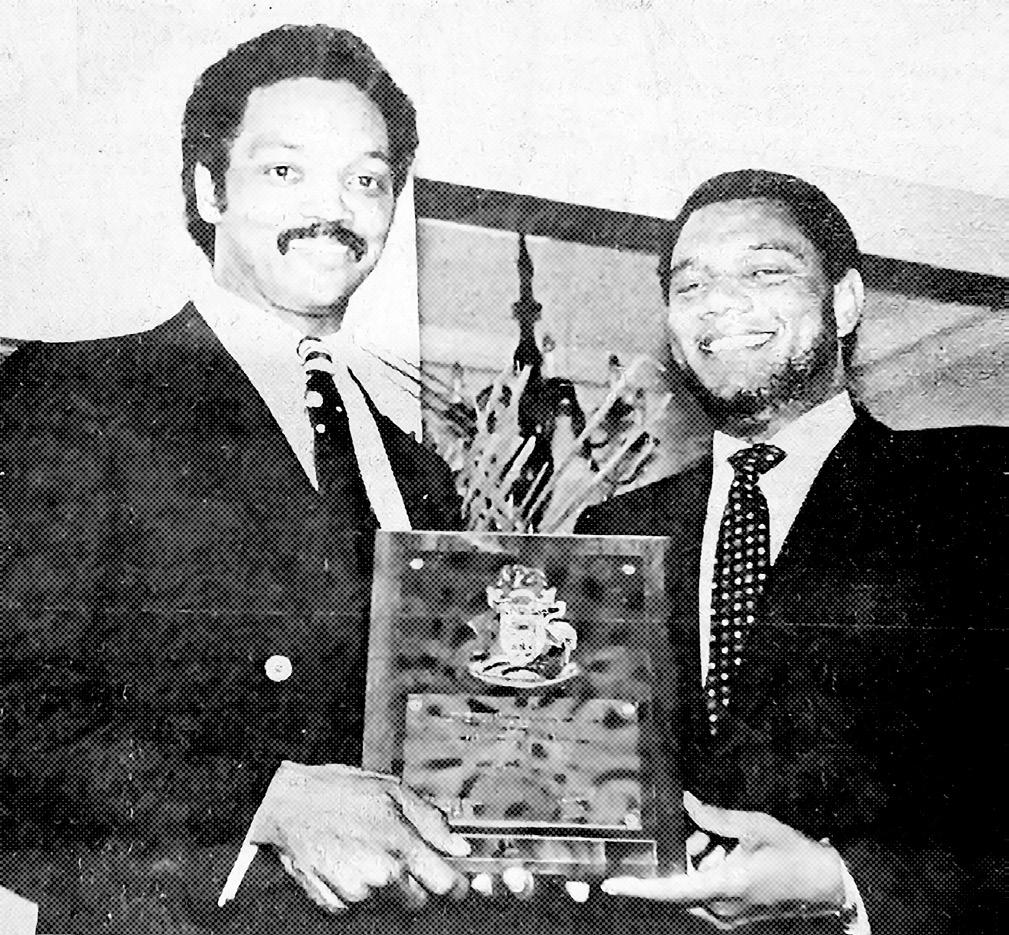
where he joined church and community leaders in reflecting on Dr King’s connection to Bimini.
Rev Jackson also visited The Bahamas in 1983, when he was invited to be a guest speaker at Cornerstone Baptist Church’s first annual banquet benefitting the Children’s Emergency Hostel. He would return numerous times over the years, notably participating in independence celebrations and attending a ball marking former prime minister Sir Lynden Pindling’s 30 years in Parliament in 1986.
Speaking at the Cable Beach Hotel venue, Rev Jackson proclaimed the world was looking to The Bahamas for “moral and political leadership” to bring the battle against apartheid in South Africa to a “successful conclusion”.
“We need you!” Rev Jackson told the packed hall, “In an hour such as this, God has always used small nations and great men for critical hours. Jerusalem was a small place – Jesus, a big man. Montgomery a small place, Dr King a big man. The Bahamas is a small place, Sir Pindling you’re a big man.”
The Bahamas championed the international campaign against apartheid, backing economic sanctions and diplomatic pressure on South Africa’s white minority regime through regional,

the example small nations can set when we choose justice and compassion as guiding principles.”
Mr Davis also noted that the “I am somebody” message was adopted locally as the name and spirit of a programme for persons with disabilities.
“In that way, his voice echoed in our communities even when he was far from our shores,” he said.
Mr Davis added that after Hurricane Dorian, Rev Jackson and the Rainbow PUSH Coalition helped mobilise relief efforts, raising donations and supplies for affected families.
“In our darkest hours, he chose to act, and we remain grateful,” he said.
Commonwealth and United Nations platforms. Then–Permanent Representative to the United Nations Beryl Hanna, wife of former Deputy Prime Minister Arthur Hanna played a key role in advancing that position internationally, reinforcing calls for majority rule and the release of political prisoners, including Nelson Mandela.
In his statement yesterday, Mr Davis continued: “On those visits he spoke warmly of our country, of our faith traditions, and of
Reflecting on Rev Jackson’s well-known call to “keep hope alive”, the prime minister said hope was not an excuse for inaction but “a call to organise, to vote, to stand together, and to build societies where race, class and background do not determine destiny”.
“May Reverend Jesse Jackson rest in peace. May his family be comforted. And may we honour his memory by defending human dignity, fighting discrimination in all its forms, and keeping hope alive in our own time,” Mr Davis said.
Key quotes from the Rev Jesse Jackson that define his politics and legacy
THE Rev. Jesse Jackson, who died Tuesday at the age of 84, was known not just as a tireless advocate for the Civil Rights Movement but as one of its most dynamic orators. He spoke tirelessly for the poor and marginalized on issues from voting rights to housing. Jackson also gave numerous speeches as the leader of the Rainbow/PUSH Coalition and as a presidential candidate in the 1980s. Later, he did the same for the Black Lives Matter movement. Here are some notable and defining words from Jackson.
‘I Am — Somebody’
Though not written by Jackson, this poem became synonymous with him. He turned a verse into a rallying cry at rallies in the 1960s and even on a 1972 episode of “Sesame Street.” The poem goes:
“I may be poor, / But I am Somebody. / I may be young, / But I am Somebody. / I may be on welfare, / But I am Somebody.”
Diploma in one hand, voter registration in the other
With his PUSH Excel education initiative, Jackson gave a speech in Chicago in the 1970s on equity in education and voting rights.
“Senior high school graduation must be seen as a passage of rites into adulthood. On that graduation day or night, we must put a diploma in one hand symbolizing knowledge and wisdom, and put a voter registration card in that other hand symbolizing power and responsibility.”
Tears vs sweat
“Both tears and sweat are salty, but they render a different result. Tears will get you sympathy; sweat will get you change.”
America as a patchwork quilt Jackson told the Democratic National Convention in 1984 during his first run for president:
“America is not like a blanket — one piece of unbroken cloth, the same colour, the same texture, the same size. America is more like a quilt: many patches, many pieces, many colours, many sizes, all woven and held together by a common thread.”
‘Keep hope alive’ When he nearly captured the Democratic nomination in 1988, he told the party convention:
“You must not surrender. You may or may not get there, but just know that you’re qualified and you hold on and hold out. We must never surrender. America will get better and better. Keep hope alive. Keep hope alive. Keep hope alive. On tomorrow night and beyond, keep hope alive.”
Crime in the ‘90s To students at Kansas State University in November 1993, he said:
“At this stage we are on the defensive as a struggle, as a humane struggle. Fear: it is pushing hope back. Cowardice is pushing courage back. Death is taking the joy of life. Dope is outdistancing hope. Escapism is outdistancing embrace. When youth come alive, you have the energy, the strength, the need, and the moral authority to make America better and the whole world more secure.”
‘From racial battleground to economic common ground’
In Virginia, at the dedication of the Martin Luther King Jr. Bridge in September 2008, he said of the new span:
“It must lead to more futures and fewer young funerals. It must embrace Dr. King’s last dream, a poor people’s campaign, where all could come together with a job, income, education, and health care. A bridge that leads us from racial battleground to economic common ground. It leads us to healing.”
Dare to dream big
To students at the Cambridge Union Society in England in December 2013, he said:
“Common ground leads to coalition, to cooperation, to reconciliation and redemption, and to higher moral and economic ground. ... I want to say to you young people especially — keep reaching beyond your grasp, keep dreaming beyond your circumstances, keep dreaming of a new Europe. When young people move, the world changes.”.”
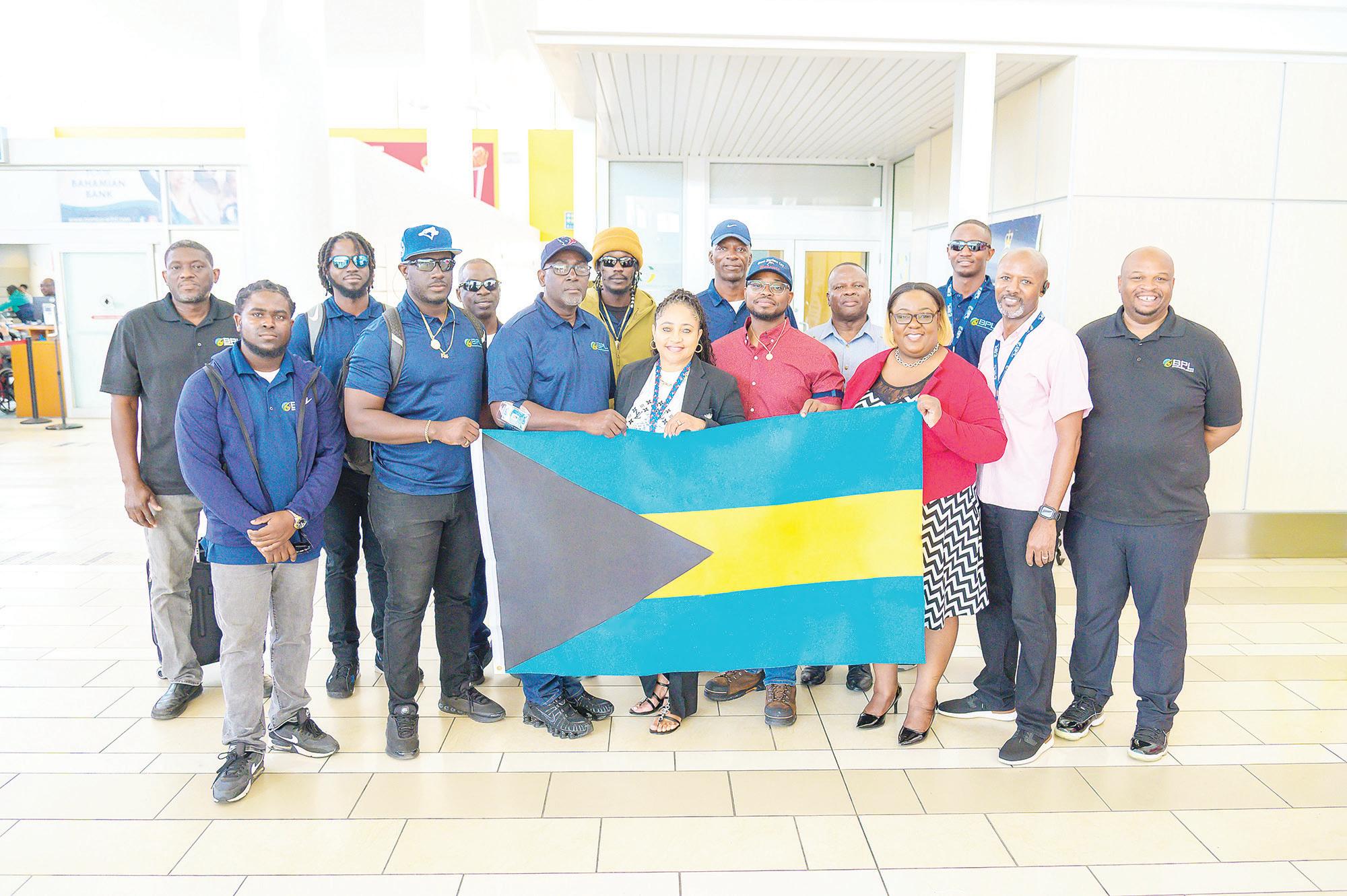
BAHAMAS Power and Light
has sent another team of workers to Jamaica to assist with power restoration after Hurricane Melissa, the company said yesterday.
The eight-member crew, drawn from New Providence and the Family Islands, includes line workers and technical staff. Two members previously deployed to Jamaica are also returning as
part of the effort. The deployment was organised through the Caribbean Electric Utility Services Corporation (CARILEC), a regional mutual aid network that allows utilities to share personnel and resources after major outages and natural disasters.
BPL Chief Operating Officer Anthony Christie said the team would support ongoing
restoration work while gaining experience in the process.
“We are sending some of our best people, our experts, to support Jamaica in their restoration efforts,” Mr Christie said in a press statement. He noted that Caribbean utilities have historically assisted each other during emergencies, including previous situations affecting The Bahamas.

Team leader Kendal Rolle said the workers understood the importance of the assignment.
“People are depending on us to restore light to their lives, and we do not take that lightly,” he said.
“When you go there, you have to adjust to their systems and their way of doing things,” he said, adding that safety standards remain a priority.
BPL said the effort forms part of its continued regional collaboration with Caribbean utilities to help restore electricity as quickly as possible after major storms.
BPL foreman Paul Curry, who also worked on the earlier deployment, said crews must adapt to local operating procedures but the underlying technical work remains consistent.
TEN young men at the Simpson Penn Centre for Boys have successfully completed an intensive agricultural training initiative, a milestone Prime Minister Philip “Brave” Davis called “something every Bahamian should be proud of.”
Speaking at the graduation ceremony on February 11, Mr Davis commended the graduates for their discipline in cultivating the garden. The programme, a collaboration between the Bahamas Agricultural and Marine Science Institute (BAMSI) and the Simpson Penn Centre, provided at-risk youth with hands-on training in sustainable agriculture, from soil preparation to harvesting without harsh chemicals.
“You have learned real, practical skills that will serve you for the rest of your lives,” Mr Davis told the graduates. “You have learned how to prepare and cultivate a garden from the ground up.”
The Prime Minister placed the initiative within his administration’s broader push to create opportunity pathways for young men, highlighting the national “Upskill” programme which now has over 11,000 registrants.
Looking ahead, the government has committed to funding Phase 2 beginning in March. This expansion will include a larger garden, advanced management training, and the introduction of backyard poultry farming and entrepreneurship courses.
The initiative was supported by a coalition of agencies, including the Parenting and Crime Group and various ministries. Family members also participated in capacity-building activities designed to strengthen family bonds.
“Young men, what you have accomplished here is yours. No one can take it from you,” Mr Davis said. “Now we are going to help you keep growing.”