
THE TEMPLE NEWS
WHAT KEEPS YOU GOING?
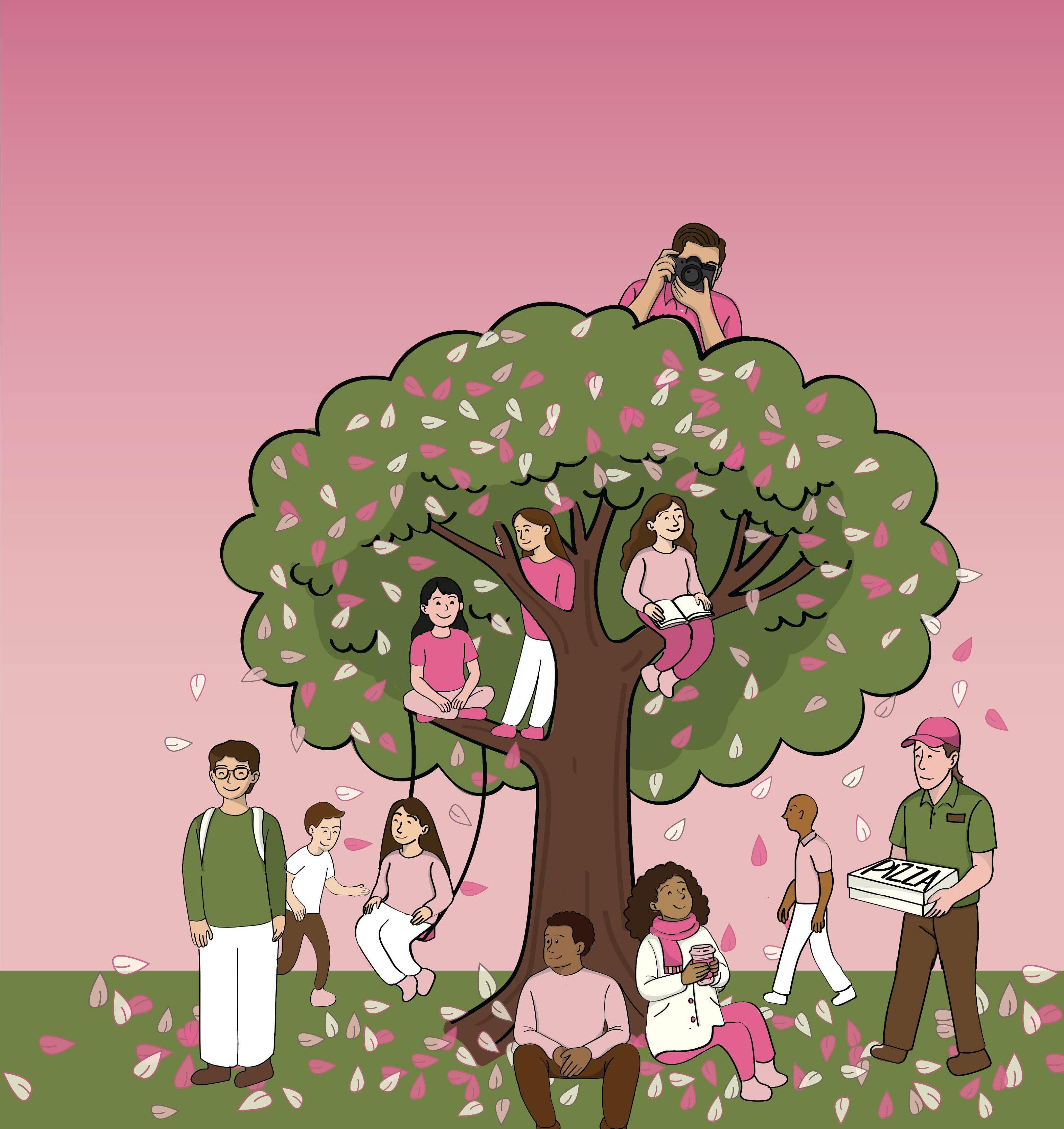
Hand-me-down clothes, the fall season and a cabin in the woods inspire Temple students in this year’s Essayist. Read more on Pages 8-21.
WHAT’S INSIDE
NEWS, Page 5
A revamped office is likely to lead to another historic fundraising year.
FEATURES, Page 24
A class based on Kendrick Lamar is in high demand.
THE TEMPLE NEWS
Sidney Rochnik Editor-in-Chief
Valeria Uribe Managing Editor
Anna Augustine Managing Editor
Ryan Mack Copy Editor
Bradley McEntee Copy Editor
Nathan Horwitz Co-News Editor
Connor Pugh Co-News Editor
Logan Alana Opinion Editor
Madelynne Ferro Features Editor
Benjamin DiPalma Assistant Features Editor
Sienna Conaghan Co-Sports Editor
Colin Schofield Co-Sports Editor
Jacob Moreno Assistant Sports Editor
Leah Duffy Investigations Editor
Tellicia Walker Investigative Reporter
Julia Anderson Director of Audience Engagement
Nathaniel Thrush Co-Community Engagement Coordinator
Kayla McMonagle Co-Community Engagement Coordinator
Isabella Farrow Audience Engagement Editor
Nalani Chiles Audience Engagement Editor
Xavier Johnson Sports Engagement Editor
Brian Nelson Photo Editor
Lillian Prieto Assistant Photo Editor
Aidan Gallo Assistant Photo Editor
Ava Campbell Multimedia Editor
Jeremy Shover Assistant Multimedia Editor
Jack Larson Print Design Editor
Daniya Eggleston Graphic Design Editor
Chili Ramgolam Data Editor
Ariana Droz Podcast Editor
Sage Spohn Newsletter Editor
Nadia Bodnari Web Editor
Maria Lombana Advertising Manager
Aaliyah Abdur-Rashid Advertising Manager
Calista Aguinaldo Business Manager
ON THE COVER
The Temple News is an editorially independent weekly publication serving the Temple University community.
Unsigned editorial content represents the opinion of The Temple News.
Adjacent commentary is reflective of their authors, not The Temple News.
The Editorial Board is made up of The Temple News’ Editor-inChief, Managing Editors, Chief Copy Editor, Deputy Copy Editor, News Editor and Opinion Editors. The views expressed in editorials only reflect those of the Board, and not of the entire Temple News staff.
DANIYA EGGLESTON / THE TEMPLE NEWS
Contacts
Email section staff tnnews@temple.edu ttnopinion@temple.edu ttnfeatures@temple.edu tnsports@temple.edu
The Temple News is located at: Student Center, Room 243 1755 N. 13th St. Philadelphia, PA 19122
CORRECTIONS
Accuracy is our business, so when a mistake is made, we’ll correct it as soon as possible. Anyone with inquiries about content in this newspaper can contact Editor-in-Chief Sidney Rochnik at sidney.rochnik@temple.edu.
CAMPUS
Kornberg posits plan for rural dentistry program
The clinic and new track program in Tamaqua would host 20 students.
BY CONNOR PUGH Co-News Editor
Kornberg School of Dentistry plans to create a rural dentistry education center and clinic in Tamaqua, Pennsylvania, State Sen. Dave Argall and Rep. Jamie Barton announced at the Pennsylvania Oral Health Summit on Nov. 12 and 13.
These plans follow Kornberg’s July announcement that it would create a new rural dentistry track, which will be piloted at the Tamaqua clinic. The program, which is expected to launch September 2026, will accommodate around 20 students, serve patients on Medicaid and provide affordable service to the surrounding community, WVIA reported.
The proposed plans for the building are pending approval from Temple’s Board of Trustees and include construction on the site of a former Rite Aid building in downtown Tamaqua.
The clinic was planned in association with the Tamaqua Area Community Partnership, a nonprofit organization founded in 1994 to create charitable projects for community and economic development of the Tamaqua area.
A rural dentistry clinic like the one proposed in Tamaqua is a one-of-a-kind project that would be key to providing increased dental care access to rural communities, said Micah Gursky, executive director of TACP.
“What we’re building doesn’t exist right now, which is a place where a cohort or class of dentists can all train in the same clinic with the same faculty and live in the same dormitory type of setting that they would have if they were at an urban dental program.” Gursky said.
The planned 24-chair clinic will offer comprehensive dental services, Kornberg Dean Amid Ismail said in the July announcement.
Elise Fellerman, a third-year den-
tal student at Kornberg, believes that the rural dentistry track and clinic will provide valuable chances for students to pursue dental education in underserved areas.
“I think it’s a great opportunity for some students who would like to branch out and work in different areas other than Philadelphia,” Fellerman said.
Temple would also renovate dormitory-style housing near the clinic at the location of a former department store to accommodate the program’s students.
The new clinic and rural dentistry program is designed to respond to the lack of affordable dental healthcare for residents of rural areas of Pennsylvania far from most dental clinics.
In a State Senate public hearing in June, Senator Argall and representatives from oral health organizations expressed the need to establish a dentistry school in rural Pennsylvania away from urban areas to address service shortages. Thirty seven of sixty seven counties in Pennsylvania are designated as shortage areas for health professionals for dental care, according to the PA Senate Republicans.
The new clinic will be funded through Temple investment and private donations alongside funds from the City Revitalization and Improvement Zone Program.
The CRIZ program is administered by the Pennsylvania Department of Community and Economic Development to support economy and business development by using tax dollars to assist in real estate development.
The St. Luke’s Tamaqua Medical Center has a Dental Care Planning Network as part of its strategy to develop the business relationships and infrastructure of Tamaqua and the surrounding counties for dental care.
St. Luke’s also has two rural residency programs for psychiatry and viral family medicine with 20 learners, Gursky said.
“The clinic itself is going to provide access for patients in our community and our region who currently don’t have access,” Gursky said.
Gursky hopes that with a new clinic, Tamaqua can expand opportunities for rural based education.
Kornberg also plans to collaborate with Lehigh Carbon Community College as part of the new program to train six to ten dentistry students.
LCCC has not yet made any commitments to concrete plans, a spokesperson for the college wrote in an email to The Temple News.
“At this very early stage, Lehigh Carbon Community College has not made any firm commitments or developed definite plans regarding timelines or location specifics,” the spokesperson wrote.
connor.pugh@temple.edu
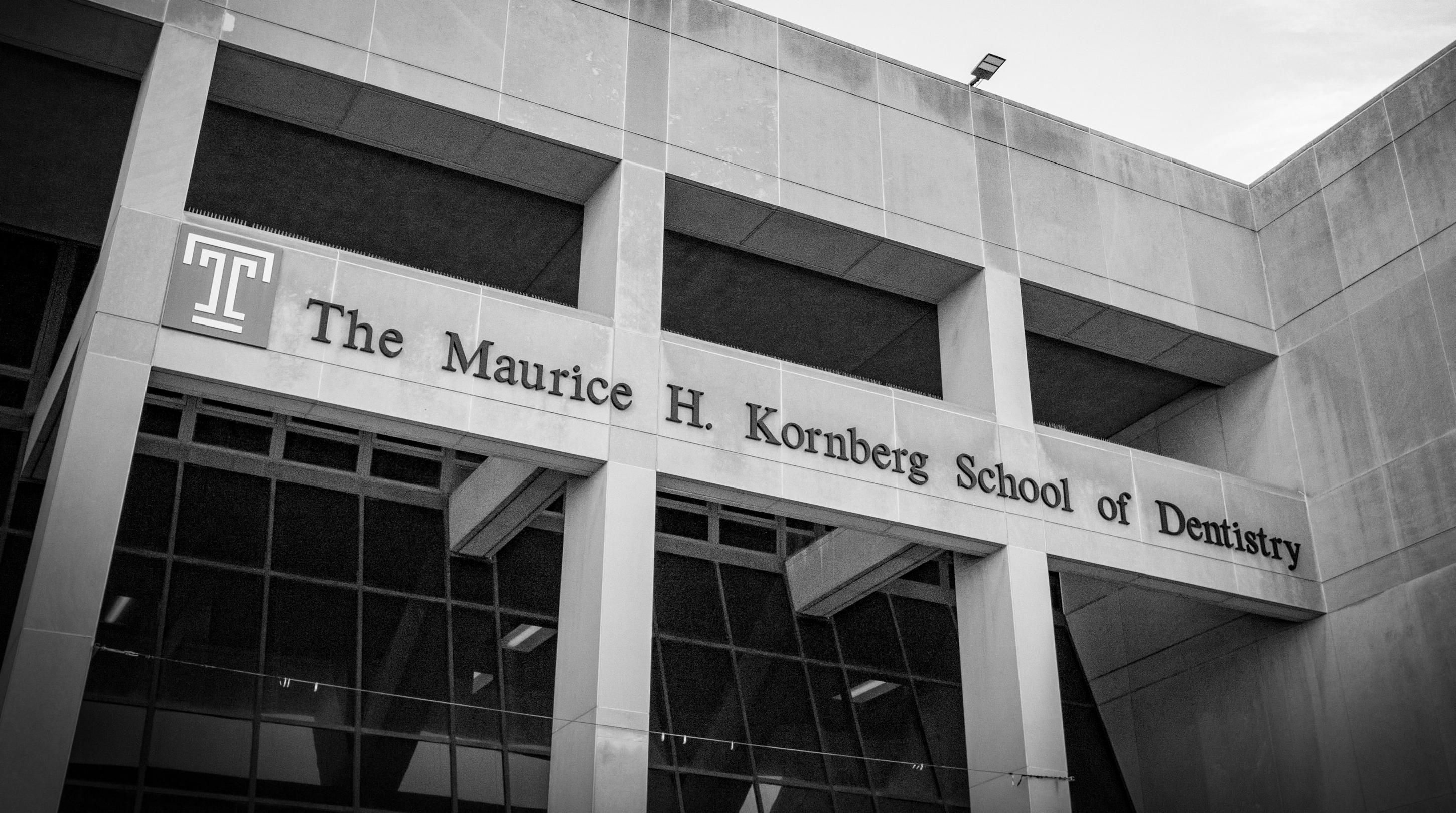
AIDAN GALLO / THE TEMPLE NEWS The Kornberg School of Dentistry located on North Broad Street.
POLITICS
State passes budget, keeps Temple’s funding flat
Temple received $158.2 million, marking the seventh year of flat state funding.
BY CLARISSA JETT Assistant News Editor
Temple received $158.2 million in state funding after Pennsylvania lawmakers passed the nonpreferred appropriations bill on Nov. 19, marking the seventh consecutive year the university’s appropriation remained flat.
The $50.1 billion state budget was signed on Nov. 12, 135 days past the June 30 deadline.
The university relies on 12 monthly installments and is currently invoicing the state for five months’ worth of missed payments, totaling around $65 million. The delay raised cash-flow concerns but legislative support for the appropriation remained consistent throughout negotiations, said Brian Keech, vice president for government and community relations.
“The delay did present a concern for us, but there was never any doubt that we had some very strong support in the general assembly and from the governor,” said Dennis Lynch, assistant vice president of government relations. “It was just a matter of the entire budget being reconciled, and then our piece followed the way it did.”
The Pennsylvania House and Senate are currently divided, with Democrats controlling the House and Republicans controlling the Senate, causing the delay to persist into fall due to the lack of bipartisan agreement.
“Unfortunately, the states closely divided nature contributes to the budgets delay,” said Michael Sances, a professor of political science. “For example, Democrats pushed for more money in higher education, and Republicans refused to tap into the rainy-day fund or raise taxes.”
University officials, including Tem-
ple President John Fry and members of the government relations staff, made repeated trips to Harrisburg this year to testify before committees and meet with legislators during negotiations.
Appropriations for Temple, Pennsylvania State University, the University of Pittsburgh and Lincoln University must receive a two-thirds approval vote from the General Assembly each year, a process that often prolongs funding discussions.
The appropriation, which is separate from the state’s main budget, supports in-state tuition discounts for Pennsylvania residents and contributes to Temple’s academic operations and student services.
This year’s tuition was based on the current $158.2 million allocation. Next year’s tuition will depend on the 202526 appropriation; decisions made in the state budget next spring will directly affect what students pay in the fall, Keech said.
In February, Gov. Josh Shapiro proposed $60 million for Performance-based Funding for Penn State, Pitt and Temple to be governed by Act No. 90 of 2024.
The funding did not make it into the final budget, but legislators authorized the new performance-based allocation system. State agencies will begin collecting Temple’s institutional data this year to prepare the model’s rollout.
This newly approved system will most likely be included in the next fiscal year, Lynch said.
“Our focus has always been on student success, attainment, and affordability at Temple,” Lynch said. “Having the opportunity to take a holistic look at all these pieces and how they work together will help us understand success.”
Representatives from Temple, including former Chief Financial Officer Ken Kaiser, served on the statewide council that designed the new metrics throughout the past year and a half. The council began meeting in January this
year and held hearings in Harrisburg and at each of the three universities to discuss goals and meet with budget experts, university officials and student voices.
Temple plans to receive $13.7 million of the $60 million from the funding, according to the Performance-based Funding final report.
The next budget cycle will begin in February, when Shapiro is expected to release his 2025-26 budget proposal. The budget will likely include the first round of performance-based funding.
“We are already working ahead on next year’s budget,” Keech said. “Part of what our responsibility is to represent Temple before the General Assembly and the governor’s office and try to find opportunities and really turn over every stone that we can to drive resources back to the institution, to help students, faculty and staff, and frankly, the community around us as well.”
clarissa.jett@temple.edu
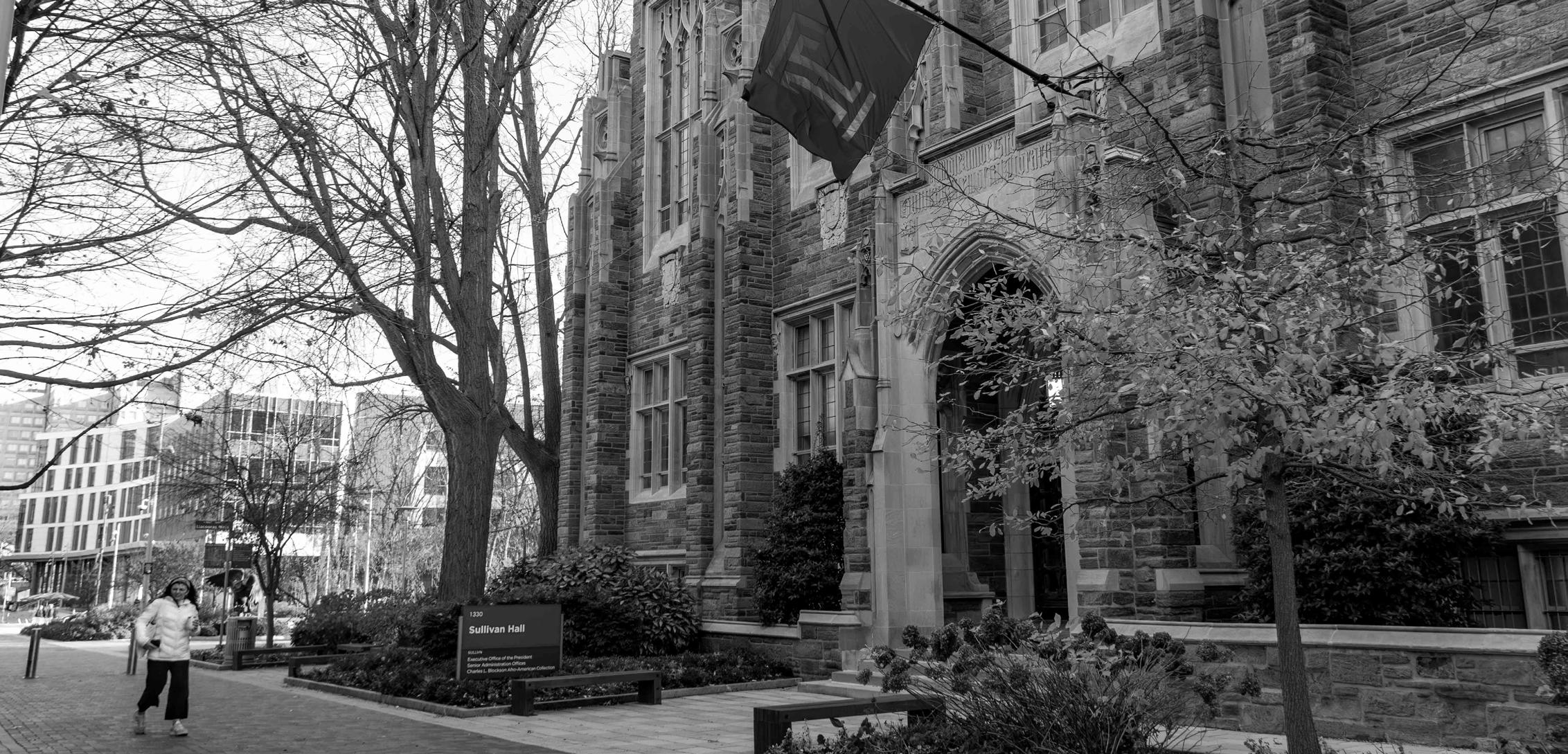
JUSTIN ALEX / THE TEMPLE NEWS A pedestrian walking by Sullivan Hall.
ADMINISTRATION
Temple projected to surpass 2025 fundraising
Institutional Advancement has improved fundraising following the office’s March restructuring.
BY NATHAN HORWITZ Co-News Editor
Temple’s Institutional Advancement Office increased its interactions with alumni and partnered with deans to improve fundraising and philanthropic efforts under President John Fry and Senior Vice President of Institutional Advancement Al Checcio, who was appointed in September.
The university received more than $133 million in gifts during fiscal year 2025, the most Temple has recorded in a single fiscal year.
“Last year was the best year in the history of the university,” Checcio said. “We’ll probably exceed that by a lot this year.”
Temple raised $93 million as of Nov. 18, triple the $31 million raised by the same date in fiscal year 2025. Checcio expects Temple to be in the $160-$180 million range for fiscal year 2026 and predicts the university can raise $200 million in 2027.
In 2024, Temple failed to reach its fundraising goal by only raising around $102 million, The Temple News reported in February. Mary Burke, former vice president of institutional advancement, resigned a month later.
Three months before Burke’s resignation, Fry began an evaluation of the office ahead of a fundraising campaign for Temple’s 150-year anniversary. Checcio initiated the review in January and took control of university fundraising and philanthropic efforts in an interim capacity in March.
“I found a program that was not as productive as our peer institutions, and didn’t have the direction that it needed,” Checcio said.
In his review, Checcio uncovered weak collaboration between Temple deans and central administration. He’s since heightened communication between the offices, regularly meeting with the council of deans and conferring with them individually.
Christopher M. Barnett gifted $55 million to the College of Public Health in October, the largest donation in Temple’s history. Barnett also gifted an endowed deanship to the College of Liberal Arts, where he earned his bachelor’s degree in 2010.
Jennifer Ibrahim, dean of the Barnett College of Public Health, cultivated a relationship with the Barnett family for several years, which informed Temple’s fundraising strategy and helped obtain the historic gift for CPH.
“I think Advancement is doing a really good job of looking at that fit, being respectful of what a donor wants to invest in,” Ibrahim said.
The central Institutional Advancement Office is also coordinating more with the Temple Health network’s advancement offices. In November, lead fundraisers from Temple Hospital and medical schools began reporting to Checcio directly, a common practice for major research institutions.
Temple has received 11 gifts of $1 million or more as of Nov. 18 compared to eight such gifts at the same time last year.
Temple’s alumni giving participation rate was 3% in 2025, which falls
short compared to Temple’s peer universities. The national average for alumni giving participation was 7.7% in 202223, according to U.S. News and World Report.
Checcio believes Temple can raise its alumni giving participation to 7-10% in about five years.
Khadijah Butler, a 2003 kinesiology alumna and founder of the Craig Butler Scholarship Foundation, receives frequent donation requests from Temple in her email inbox.
“None of it really feels personal because it’s either telling you about an event that’s coming up or asking you for money,” Butler said.
Alumni previously told The Temple News that they feel both disconnected from the university and unable to financially contribute.
Each year, Temple hosts events like Giving Tuesday and Temple Giving Days to engage its more than 380,000 alumni across the globe.
Alumni interactions have increased since Fry joined the university, Checcio said.
Fry hosted eight town hall-style events, with a total of 1,800 alumni attendees, as part of their fundraising
strategy, Senior Associate Vice President of Institutional Advancement Christopher Brittin wrote in an email to The Temple News.
Fry announced during his April investiture address that Temple would soon begin an extensive advancement campaign.
Checcio will assist in planning and launching this campaign, which he believes will be the largest by far in Temple’s history. He estimates the campaign could publicly commence in three years and be completed by 2034, when Temple reaches its 150-year milestone.
Interim Provost David Boardman is conducting the Refresh of the University Plan, which will be the basis for the capital campaign’s fundraising vision. This strategic plan will be unveiled in January 2026.
“We’re well along in the planning process,” Checcio said. “We’re in what we call the quiet phase of a campaign, when you talk to some of your biggest supporters and try to generate a number of big gifts early in the campaign.”
nathan.horwitz@temple.edu
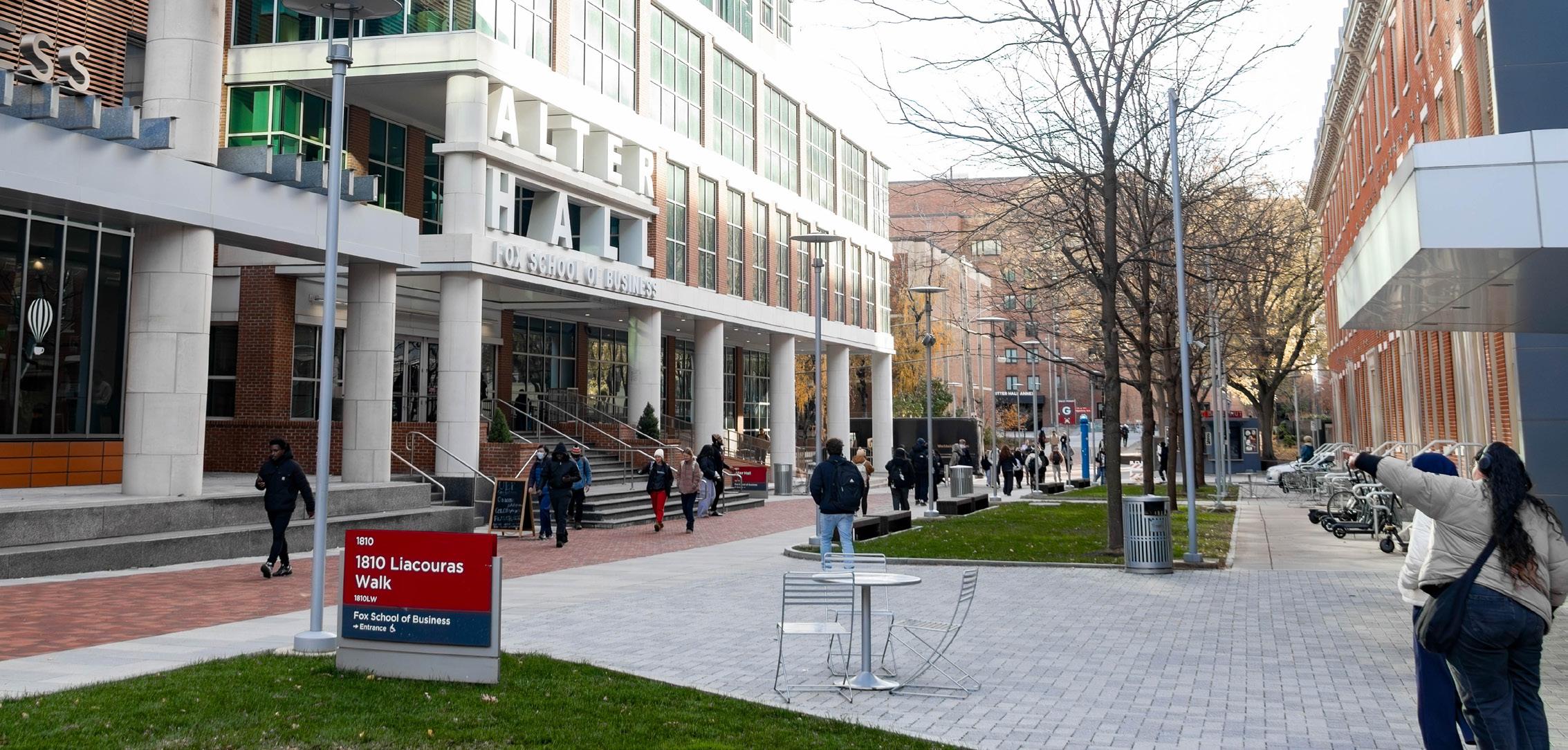
JUSTIN ALEX / THE TEMPLE NEWS Students on Liacouras Walk on Dec. 1.
TEMPLE UNIVERSITY HOSPITAL
Temple hospitals receive Fall 2025 safety grade
A national healthcare advocacy group rated three Temple hospitals.
BY CLARISSA JETT Assistant News Editor
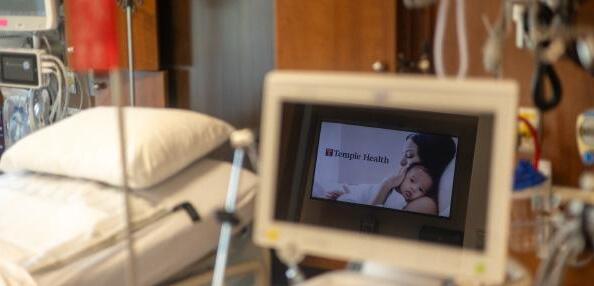
Temple’s Chestnut Hill Hospital improved its Fall 2025 Leapfrog Hospital Safety Grade, while Jeanes Campus and Main Campus hospitals saw declines in their ratings, amid Temple University Hospital unions working to get more safety precautions in the hospital in recent contract negotiations.
Main and Jeanes campus hospitals received B ratings, down from As in the spring. Chestnut Hill Hospital received a C rating, up from a D in the spring.
“The ratings make it clear that we have more work to do, particularly around areas like communication during transitions of care and making the hospital experience safer and easier to navigate for patients and families,” wrote Mark Meyers, Vice President of Performance Excellence for Temple Health in an email to the Temple News.
The Leapfrog Group is a national organization that promotes transparency and accountability in healthcare. In the spring and fall of each year, the organization grades more than 3,000 hospitals with a letter grade from A to F based on how well they prevent medical errors, injuries, accidents and infections. Forty-one hospitals in Philadelphia and surrounding counties were rated in the Fall 2025 cycle.
Leapfrog uses up to 22 evidence-based safety indicators, combining government-reported data from the Centers for Medicare & Medicaid Services with results from its own hospital surveys. The data they consider includes hospital-acquired infections, Intensive Care Unit staffing levels, patient feedback on communication with clinicians and responsiveness of staff.
“The majority of data used to calcu-
late a safety grade comes from [Centers for Medicare & Medicaid Services,]” wrote Lauren Bailey, director of communications for the Leapfrog Group, in an email to the Temple News. “If a hospital voluntarily reports to the Leapfrog Hospital Survey, some of that data is used to calculate their grade.”
Jeanes and Main Campus Hospitals scored a 78 out of 100 for patients’ perspective on responsiveness of hospital staff, which is slightly below the average national hospital rating of 81.81. The rating measures patients’ feedback on staff response times to patient emergencies.
The two hospitals received an 89 out of 100 for communication with nurses, below the national average of 90.37. Leapfrog measures this by conducting a survey of patients on how clearly nurses explain themselves and treat their patients with respect.
Anna Klein, a junior nursing major, completed her five-week clinical rotation at Temple’s Main Campus Hospital this past November.
“I have noticed that some managing nurses are more vigilant in some places in the hospital than others with safety concerns, such as taking care of bed alarms, making sure nothing is on the windowsills, and simple stuff like that which may seem small, but can prevent accidents from happening,” Klein said.
Chestnut Hill went up in their score from previous ratings because they improved areas such as total nursing care hours, hand hygiene and surgical site infections after colon surgery. In the spring 2025 rating, Chestnut Hill measured 40 out of 100 for hand hygiene, compared to a ranking of 100 this fall.
Some ratings in the report were not used to calculate the overall safety grade. These include in-hospital falls with hip fracture rate and postoperative respiratory failure rate. In hospitals, hip fracture rates increased marginally from fall 2024 to fall 2025. Postoperative respiratory failure rate increased substantially from 2024 to 2025.
Their score for nursing and bedside
care was a 100 this fall compared to their score of 15 in the past three reports. Hospitals can earn up to 100 points for this measure by staffing their hospitals with enough nurses, licensed practical nurses and unlicensed assistive personnel.
Temple Health recently reached a three-year agreement with the Temple University Hospital and Nurses Association and the Temple University Hospital Allied Professionals agreeing to add new weapons detectors, panic buttons and surveillance systems.
“Across our hospitals, we’re sharing what works—through daily safety huddles, checklists, and follow-up after serious events—so that when we improve care in one unit, patients and families feel that benefits everywhere in the system,” Meyers wrote.
Nathan Horwitz contributed reporting. clarissa.jett@temple.edu
Constellation Word Search
ALL IN GOOD FUN Cosmo


Crossword
COSMOS CROSSWORD CONSTELLATION WORD SEARCH


Across
4. The largest space telescope launched on Christmas 2021
6. The planet with the most moons at 274

4. The largest space telescope launched on Christmas 2021 6. The planet with the most moons at 274 9. A theoretical tunnel through space that shortcuts through light years Down
1. The first American woman to fly in space
Down
1. The first woman to fly in space
2. What occurs when a star explodes
3. The planet that spins in the reverse direction
2. What occurs when a star explodes

3. The planet that spins in the reverse direction
5. The galaxy that will collide with the Milky ears
The galaxy that will collide with the Milky Way in 4.5
The planet that Luke Skywalker grew
Musician who performs 1969 hit Space
The planet that Luke Skywalker
The planet named after the Roman god ernment agency responsible
Musician who performs the 1969 hit “Space Oddity”
space program, also an Ariana Grande
The planet named after the Roman god of war
U.S. government agency responsible for the civil space program, also an Ariana Grande
THE ESSAYIST
From the editors
This year’s Essayist is a rumination on the things, people and events that inspire our student writers to hone their craft or grow as individuals.
When people think of inspiration, they think of creativity. Artists need inspiration, whether it’s to find something to muse about when writing a story, painting a picture or composing a piece of music. But inspiration exists in everybody: it’s a necessary force that drives how we live.
College students need inspiration most of all. As they weave through the tumult of university life, the academics and coming-of-age, they cling to anything that helps them make it through in one piece. Students find inspiration in the most unexpected corners, whether it’s the picture of a distant dream that facilitates the final push to finish a backlog of assignments or a familial legacy that inspires greatness. Some students are inspired by their families, parents, siblings and grandparents who lead by example and motivate them to push themselves to be the best they can. Another student reflects on the inspiration he gets from service and retail workers, who are essential to keep the world spinning and yet are often overlooked.
Inspiration can come in all shapes and forms, it can come from sources ordinary or obscure, but what matters is that everyone has something that helps them move forward. It’s important to take a moment to recognize the people, places and dreams that motivate our students to be the best versions of themselves.
Sincerely,
Bradley McEntee and Valeria Uribe Copy Editor, Managing Editor


THE ESSAYIST
Value of my family’s name
A student shares the meaning behind her surname it has shaped who she’s becoming.
BY LOGAN THOMPSON Assistant Opinion Editor
There is a quote that has been ingrained in our family and reflects what it means to be a Thompson: “It’s the responsibility of every generation to make it better for the next generation.” The quote is carved into my great-grandmother’s headstone, resting beside my grandfather.
He passed those words down to me when I spent the summers in South Carolina with him and my grandmother when I was around nine years old. Every time he said them, I felt proud, but also a little overwhelmed. It was like he saw something in me I had yet to grow into.
He was the oldest of five and always embodied the values he preached: family first, hard work and the belief that education could change a life. After our daily walks, he sat with me at the kitchen table, and we worked on algebra worksheets he made himself — knowing math was not my strong suit.
Those small moments showed the depth of his love and made me understand that he didn’t push me to frustrate me; he pushed me because he saw potential in me long before I saw it in myself.
His energy was like no one else’s. He was quiet and serious when needed, but always ready with a joke.
He’d tease my grandmother, host family gatherings, cook huge meals for every occasion and sit in the backyard watching my cousins and me run around. He was the anchor of our family. To the community, he was someone people could count on whether they shared blood or not.
On Sundays after cooking, he’d drive us to my great-grandmother’s house to bring her a plate. He would often stop to drop off a gallon of sweet tea to a family friend who loved it on the way.
He was constantly giving, always putting others first. That generosity, along with his dedication and quiet strength, inspires me today more than anything.
After my grandfather’s passing, our family
had to adjust in ways that made the weight of our name feel even clearer. My dad naturally stepped into a leadership role, doing everything he could to continue both the Thompson legacy and the spirit of “Wolf,” my grandfather’s nickname.
He took care of my grandmother, driving to South Carolina for her appointments, while simultaneously working hard to provide our family. Watching him showed me that being a Thompson has always meant responsibility, family and pride.
Being the oldest girl and cousin in the family, I was pushed to grow as a Thompson. I naturally stepped into the role of setting an example, making sure my younger cousins stayed connected at family gatherings, guiding them through the memorial services for my grandfather and showing them what it means to put family first.
The values my grandfather and father taught me have stayed with me as I’ve grown older, especially since I started college. Even on days when I feel unmotivated or tired, I remind myself of the name I carry and the lineage of strong, hardworking people I come from. I never want to let them down.
Being a Thompson is more than just having the name; it’s carrying the weight of those values, honoring the people who built the foundation beneath me and learning how to grow into my own branch of the family tree.
When I think about my family, I picture a tree. My grandfather and the generations before him form deep roots steady, grounding and full of history. My father and the relatives who continue to uphold our values are the trunk, holding everything upright. And I am one of the new branches, growing outward in my own direction while still being supported by the roots that built me.
Carrying the Thompson name means honoring the ones who came before me while learning how to shape my own path. As I grow, I understand more clearly what my grandfather meant about making life better for the next generation. His lessons, my father’s example, and the legacy of our family guide me forward. Being a Thompson isn’t just part of my identity, it’s the future I’m working to build.
logan.thompson.thompson@temple.edu
THE ESSAYIST
Juan and Cristina taught me anything is possible
A student shares her parents’ teachings and how those words inspire her to follow her dreams.
BY VALERIA URIBE Managing Editor
My parents never told me I couldn’t do something. They have always been my biggest cheerleaders and the only people who have believed in me unconditionally, especially in the moments when I doubt myself.
Every time I share my goals with my parents they simply smile and stand by my side every step of the way. They have never questioned the plausibility of my dreams or whether I have what it takes to achieve the big dreams I have.
I wanted to be a singer when I was five, so my parents, Juan and Cristina, signed me up for music lessons in the best music school they could find and drove me to every class until I decided to move on. I thought I wanted to be a writer at 13, so my dad printed hard copies of the book I wrote and tried to get my foolish story published.
When I was 15, I declared I didn’t want to go to college in my home country, Colombia, so my parents worked hard to ensure I could follow my dreams, even though my departure from home broke their hearts.
My parents have loved me as all parents should, never letting me see how much they struggle and without expecting anything other than love in return. No matter how unachievable my dreams seem, they have found a way to help me get through any barrier.
It hasn’t always been easy for them; they have had to work for everything we have. Their sweat, blood and tears

are the foundation of everything I’ve achieved in my life, and yet they have never said no to my big plans or complained about the challenges they overcame to support me.
I wasn’t always aware of how lucky I was to have them as my parents until I got to college and looked back at the crucial moments in my life that led me to where I am today. I remembered all the times my friends told me their parents shut down their dreams because they were nonsensical or unreasonable. The word “impossible” was not a word I heard often, as my parents made sure I believed I could achieve anything I set my mind to.
Eventually, I realized the reason they never said no to me wasn’t because they had endless resources and the means to support every dream I had, but because they were willing to break their backs to guarantee I had a chance at achieving anything and everything I ever wanted.
Words can’t explain how grateful I am for the sacrifices they make every single day: the long work days they endure, even though they could retire if it
wasn’t for me, and the sleepless nights they spend trying to come up with the money to put me through college.
“If you can envision it, you can achieve it,” are words I’ve heard more times than I can count, but they have also been a source of inspiration for me throughout my entire life.
Those words gave me the strength I needed to go on stage when I was nine and had to perform in the school’s talent show. They helped me believe in my skills the night before my mock trial debate in the ninth grade. They even supported me through the scariest decision I’ve ever made when I chose to go to college in Philadelphia on my own.
Ever since I was a little girl, I was showered with words of encouragement that seemed to carry the courage I needed to face any obstacle. Now that I’m 22, I still hear their voices clearly in my mind when it’s late, and I lie in bed thinking about all the things that concern me. They still carry the same weight they did when I was a teenage girl, sitting between them, wondering if my future would pan out as I planned.
I’ve questioned my ability to follow my dreams a fair number of times. I often wonder if I made the right decision in moving 2,316 miles away from home or if I have what is necessary to achieve the goals I’ve set for myself. But their unbreakable faith in me is what helps me get through the tumultuous moments in my life.
My dad’s determination and my mom’s loyalty are ingrained in my heart, and they guide every decision I make, every step I take. Their strength and love inspire me every single day. It motivates me to work hard and take advantage of every single opportunity.
My parents made me believe everything is possible and now I wake up every morning inspired by their love and perseverance, hoping that someday I’ll somehow be able to repay them for all their sacrifices.
valeria.uribe@temple.edu
DANIYA EGGLESTON / THE TEMPLE NEWS
THE ESSAYIST
Living and dancing freely wearing Tim’s t-shirt
A student reflects on how wearing hand-me-downs inspires them to be open when partying.
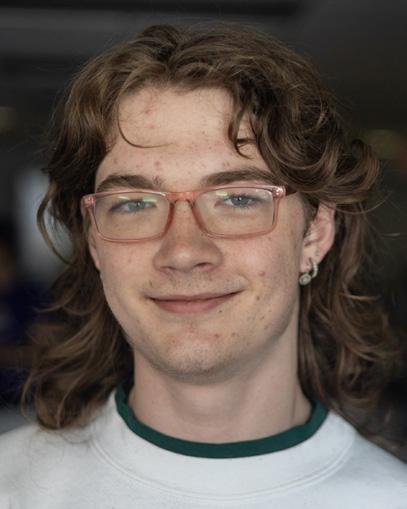
BY BRADLEY MCENTEE Copy Editor
The first night I graced the dance floor of Franky Bradley’s Saturday after my 21st birthday, I wore a black Janet Jackson t-shirt, jean shorts and a pair of Oxfords. It was an intentionally simple outfit, one that both satisfied the necessary wardrobe for dinner with my father hours before and the night of dancing ahead of me.
The simplicity of the ensemble was deliberate, because going out that night I knew the shirt had to be on display. I needed Janet’s face to smile at my neighbors on the dance floor as we jostled elbows and her flirtatious gaze on the shirt to pierce through the crowd.
Most importantly, it needed to be seen because it was Tim’s.
Tim died two years ago, just before Thanksgiving. I never met him, but I quickly became the recipient of many of his belongings. Among the relics bequeathed to me after his passing were two Woody’s shirts, one black and one red, two Janet Jackson posters and yet another shirt with Jackson’s face.
He was my stepdad’s brother, who lived much of his early life entrenched in Philadelphia’s queer nightlife. Receiving his clothing and posters that felt so ingrained with his identity made me feel like a spiritual successor of sorts. It was like family heirlooms being passed from one generation of queerness to the next. After his death, I made a vow to wear his clothes the first time I went to a gay bar after I turned 21. That night

at Franky Bradley’s I made sure to fulfill that promise.
The act of dancing through a crowd of strangers fascinated me since I was a teenager, as there seemed to be a sense of community in clubbing. It helped that I was always into the type of music played on a dance floor: compressed kick drums and blaring synth patches. But the physicality of it was always top of my mind.
I went to Concourse the night before Franky’s with some of my friends, but since it was a straight bar, I left Tim at home. I had fun without him, but there was something missing throughout the night that I just couldn’t place.
What I yearned for the night before became evident the second I walked into Franky’s when I saw a trans woman, chest bare, order a vodka cranberry from a bartender scantily clad in a pair of white briefs. There was a grit there, a sense that you could come as you are and be invited with open arms into the writhing cell of bodies bouncing to the music blaring from the speakers.
That initial night, having Tim on
my chest served a duplicitous purpose. Having him in the clothes I wore made me feel like I belonged in foreign environment. But it also made me feel like I was keeping him alive, even for just a little bit longer.
I flirted with a few guys that first night, got too drunk and laid my body out on the pavement waiting for a Lyft. But as long as Tim was with me, I was having fun for the both of us.
In later excursions to bars, I found additional ways to include him in my weekend outings without his clothes. I wore his cologne, listened to Janet’s “All for You” as I pre-gamed or waved goodbye to one of his posters as I ran out the door.
Sometimes I forget to include him, like the nights I change my clothes at red lights after work. I’ve realized I unintentionally suppress myself when Tim is absent like a subconscious mental block. It takes me longer to open up to strangers or start a rapport with the bartenders.
But when I have his spirit with me, I am inclined to shake free my real-world
stressors at the door. Together, we run towards salvation in the form of house music and cheap vodka.
When I wore his clothes I made meaningful connections with people I met taking shots in the bathrooms. I made out with boys I’ve never met with his cologne on my neck and kissed others after listening to “Rhythm Nation” in the Lyft.
Sometimes I wake up with sticky legs from a drink that spilled down my leg after dancing skin to skin or with the taste of another person’s spit in my mouth, I’m instantly flooded with regret. But when I lock eyes with the Janet poster across from my bed, a smile creeps across my face.
My stepdad always tells me Tim and I would get along, and if he was anything like the fun his hand-me-downs inspire me to have, then I’m positive we would.
bradley.mcentee@temple.edu
DANIYA EGGLESTON / THE TEMPLE NEWS
THE ESSAYIST
How the power of prose attracts me to authorship
A student reflects on the impact of literature on her personal life, relationships and future.
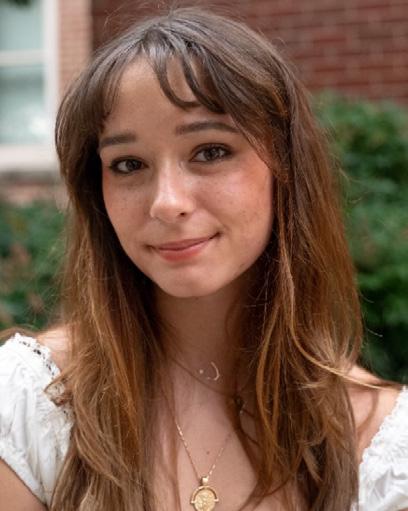
BY RACHEL KEALEY
For The Temple News
As a kid, I used to stay up later than my established bedtime with a book and a flashlight under my blanket. The warm glow of the light on the pages was my midnight companion untiI saw the first blaze of sunrise coloring the horizon.
I had school in the morning, but it never stopped me. My solitude, the ink on the pages and my flashlight in the darkened room were the only things that mattered.
When I was in elementary school, I read my beat-up paperback of “Harry Potter and the Sorcerer’s Stone” sitting criss-cross on the curb during recess. Teachers thought I was unhappy because I didn’t play with my peers and went to my parents with their concerns. But I couldn’t have been more content. I didn’t need basketballs, jump ropes or hula hoops if I had what I considered to be magic: books.
I went on adventures with the characters. I admired the ability of the words on the paper to transport me into another world, place and life and it was something I sought to replicate.
I experienced love, loss, sadness, happiness, loneliness and hope in the span of minutes or hours. I felt like I had unlocked something that was simultaneously universal and individual, and available exclusively to me. The thoughts, feelings and ideas that I discovered through literature were unattainable through any other means.
My mother was the one who in-

troduced me to the stories I would later idolize. We always read the same books during my childhood, trading paper copies and thoughts over the dinner table. She introduced me to Roald Dahl, Louisa May Alcott and Virginia Woolf.
She smiled whenever she saw me sitting by our fireplace in the winter, flipping through the same pages she read 40 years prior. She inspired me to give my books to friends and family alike to form meaningful conversations and shared interest. It felt like a bearing of my soul and a window into my inner life whenever I did so.
The chicken-scratched, dog-eared, underlined and highlighted pages were like my diary, given to those close to me for safe-keeping with the hope they would somehow understand me through the words of another.
I idolized the authors I read. To me, they were the gods other people pray to or speak of in churches and graveyards. Joan Didion, James Baldwin and Jane Austen were the celebrities of my youth. I treated their words like infallible gospel and followed them like commandments.
Their talents, though undoubtedly human, felt foreign and worthy of worship to me as a young teenager.
Reading their books almost felt like learning to read for the first time, a feeling I thought was long forgotten by the age of fifteen. I finally realized later in my life that I had one crucial thing in common with them: I, too, was human. I felt the same things they felt, saw the same things they saw. They just chose to write about it.
I read “The Secret History” by Donna Tartt during my freshman year of high school. I read it time after time, memorizing the pages, studying each word with vigorous intent. The detail, care and sheer beauty of the novel was nothing like I ever read, despite the many reading escapades of my adolescence.
It shifted something in me; I no longer craved to be the heroine, like in the escapist fantasies of my childhood, but the author.
It is simple to become something when one is so inspired and readily available to do so. All I needed was paper, a pen and thoughts that I could translate
into words.
Since then, I have accumulated a series of notebooks and messy typewritten pages filled with the stories I’ve created. I became known as the writer by almost everyone in my life.
Friends, teachers and parents alike recognized what I was and what I wanted to be. When a teacher announced an essay, I smiled while the entire class groaned in displeasure.
The books I consumed as a child were not just books to me. They still aren’t. They are windows into different areas of my soul. The love I have for these stories is just as real as the love a viewer has for a painting or an audience has for a movie. Books are essential to humanity.
The stories we tell are not just ours alone. They are an inspiration and a testimony to the life I have chosen for myself as a writer, which may not guarantee me money, but will certainly guarantee fulfillment.
rachel.kealey@temple.edu
DANIYA EGGLESTON / THE TEMPLE NEWS
THE ESSAYIST
Running away from burnout toward my creativity
A student reflects on how physical exercise became the bedrock to his creative process.
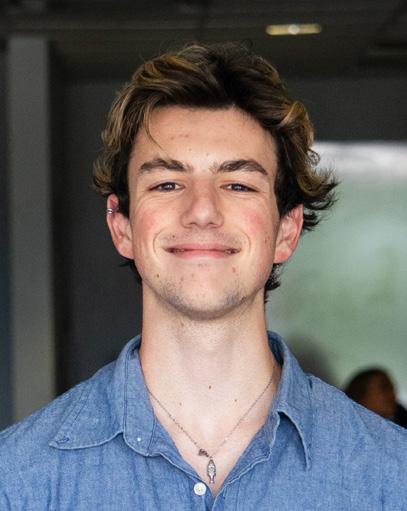
BY JACK LARSON Print Design Editor
Growing up as the son of a physical education teacher, I learned that exercise was the solution to every problem. If I had a terrible day, my mom told me to go outside and play. If I was stuck on my homework, then I should just run a mile and get back to it later.
When I started seeing therapists for childhood anger management issues and for anxiety as a teenager, I was always told to channel my negative emotional energy into something healthy. With exercise at the forefront of my family’s values, running naturally became my outlet.
I eventually started to depend on it by the time I joined my middle school and high school cross country and track teams. From the age of 11, I used each run to channel my day-to-day emotions. When running becomes routine, it feels like turning on autopilot. Each run is a personal mental health check-in. When I run my mind wanders, filtering through my frustrations and worries.
Running after school was my daily reset. All the stresses from my classes disappeared when I ran through the forest trails at the Ferguson Reservoir down the street. The serene woods drew a stark difference to the overwhelming chatter of school hallways from hours prior.
Initially, running inspired me to be healthy. I developed a schedule to keep myself on track each week, and I ate foods that supported my body and well-being. My motivation for running changed

when I entered college. I began to channel more of my creative side with an art direction concentration in advertising and a minor in art. College brought an entirely new set of challenges in the wake of multitasking multiple projects at once and channeling enough creative energy and self-confidence to create them.
I also pursued my passion for photography and design through many on-campus creative positions, including the Photo Editor and the Print Design Editor for The Temple News. But as if that weren’t enough, I was always game for a photography side project, like a photoshoot promoting my best friend Jill Baldassari’s music or capturing seniors in caps and gowns showering Liacouras in champagne.
I felt burnt out with several creative projects simultaneously demanding my attention every semester. The creative process is vulnerable; it feels like taking something that is a part of me and making it into something visual for others to judge.
There was a constant need to draw inspiration to satisfy the overload of
creative projects I juggled. When I am having a difficult day, my inspiration is nowhere to be found, and there isn’t an ounce of creative juice left. But when I need new ideas, running helps me find something fresh.
Running allowed me to exercise and check-in with myself. The daily sweat and discomfort allowed me a moment to process my emotions through physical exercise, just like when I was younger and my mom made me go outside.
Running in Philadelphia looks different than running through my hometown after school. Blaring the most upbeat pop music into my earbuds, I explore neighborhoods and trails on each run. Exploring allows me to notice details like the architecture of a townhome or the blip I catch of someone’s personality as I jog by.
These fragments of life inspire the details I incorporate into my creative work. The orange and yellow leaves in the trees beside the Philadelphia Art Museum inspired the warm tones I incorporated into Jill’s next single cover. The publicly affectionate couple on the
Schuylkill River park bench became infatuated illustrated characters in a poster project for my art direction class.
Running has taught me the importance of pacing. Just like running, a consistent pace is vital to keep the inspiration flowing. Patience is essential with creative thinking; the first idea is rarely the best.
I also strengthened my self-dependency through running. I am the only person getting myself across the finish line at the 7:30 mile split I trained for. Working on my own creative projects feels the same when I realize that I am the only one who can source the finished design. It inspires me to keep going, even when my work makes me feel lost and burnt out.
Running inspires me to keep my creativity flowing and pursue my passions. It keeps me grounded when I need support. Bringing my creative vision to life, whether it is taking the right photo or designing a brand, requires the grit that I learn from running.
jack.larson@temple.edu
JACK LARSON / THE TEMPLE NEWS
THE ESSAYIST
Finding fresh views by looking through a new lens
A student shares how photography helps her take closer looks at her environment.

BY KYLIE GALLAGHER For The
Cameras can capture moments only a select few witness firsthand.
Most people can capture photographs, but only a few have the vision required to make them special. From iPod Touches with cracked screens, to cheap disposable cameras whose film gets lost at the local CVS, all the way down to the expensive DSLRs that overheat a little too easily.
The settings on every camera, or the lack thereof, can expand or limit creative choices. When limited, creativity must become more abstract, and that can be the most interesting part. The necessary adaptation for many aspects of photography is what keeps me on my toes and makes taking photos so enticing.
My dad gave me my first camera after his coworker left it in the break room for anyone to take home.
I never used a camera before, but I spent all of middle school learning how to use it. These photos were not my best, nor did I think they were good at the time, but photography was something I did for myself, not for someone else. Through the years I expanded the subjects of my photography. I went from capturing my own pets to everything that surrounded me when I stepped outside.
For years, my SD cards and film rolls were covered in photos of forests, parks and unique trees. Before coming to Temple, I lived in a Pennsylvania suburb with easy access to nature. Because of the

proximity, nature was my constant muse for the photos I took.
I moved to Philadelphia three months ago and since then I have lost my connection to the outdoors I used to photograph. While I can no longer actively capture those types of photos, the collection grew through years keeps me inspired to grow as a photographer. I have started to capture more of the city views instead of the natural landscapes I was used to.
My photos take me through the long stretches and I often go without seeing more than one tree at a time. But even though I go through long periods without the original muse, it remains the inspiration of my photography. I view life through the lenses to capture it. Each lens holds a different sentiment to me, as does every photo. Film rolls remind me to be patient, and that the result will be worth the time spent.
Digital raw images drive me to improve and stay competitive with the best in the field. Even my phone camera proves it is possible to catch real-time art, as the portability allows for photog-
raphy within seconds.
There is an unmatched feeling of comfort that takes control of my body when I am looking through a viewfinder. With each photo I take, I feel the push to capture more.
As I’ve trained my photographic eye, I walk around campus and envision photos all around me. I am starting to see increasingly more beauty in Philadelphia, even though the landscapes aren’t the same as the ones I first gained inspiration from.
I see art in places I never expected as I walk the streets around campus, like the walls that line the subway stations. Photography allows me to remember the nature that surrounded my childhood home while I learn to appreciate the place I now call home.
Photography is the most effective tool to memorialize moments forever. Photos trap instances exactly as they were for the future, but they also make beautiful tributes out of events or items that might be seen as ordinary.
The ordinary can easily be made into something extraordinary through a
camera lens. This inspires me constantly, as the small beauties of life get me through any troubles I may have to face.
Whenever older people see a camera in my hand, they look at me and say, “You need to live in the moment.” However, photography inspires me to live in the moment while also appreciating the art in every second of it.
Without the ability to capture some of life’s greatest gifts, they lose importance. Living in the moment does not require memory to be lost with time.
Choosing to take a photo does not take away from living in the moment; it only enhances the experience. Photography allows people to capture art in the form of still photographs of life that constantly surrounds them.
Inspiration typically comes from something that fuels a love, a drive or worldview — photography encapsulates all those feelings.
kylie.gallagher0001@temple.edu
Temple News
DANIYA EGGLESTON / THE TEMPLE NEWS
LIVE in Philly
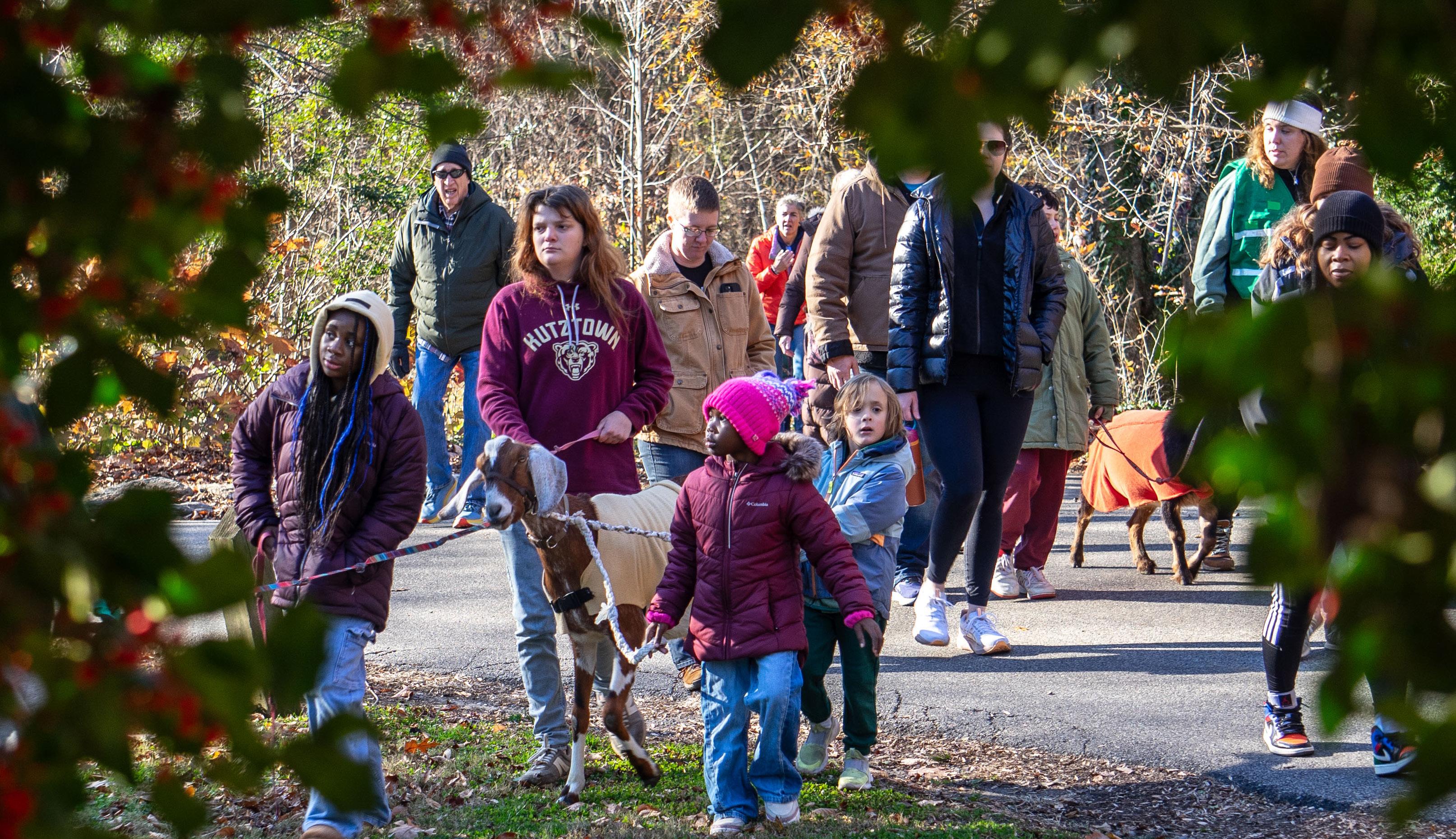
Goat-guided tour traverses through Lenape lands
More than 100 people gathered at Awbury Agricultural Village honoring indigenous ancestry.
BY BRIAN NELSON
For The Temple News
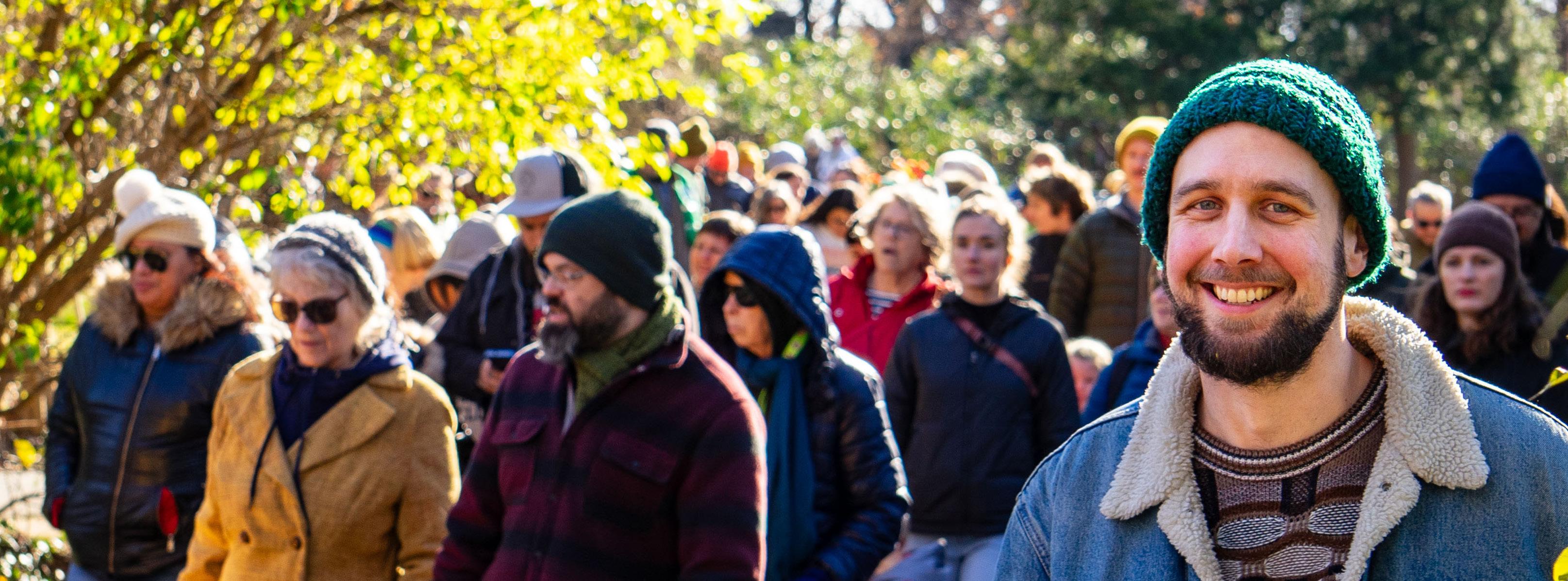
As the sun reached its high peak on Saturday — golden, watchful, almost ceremonial — the air settled into a crisp autumn sweetness. About 100 people gathered at the Awbury Agricultural Village grounds, wrapped in scarves and kept warm by boots that crunched leaves with each step.
Fingerless, fleece, woolen and mismatched gloves held fast to the promise of warmth, adventure and goat-induced
mischief.
The third annual Philly GOAT Walk, hosted by the Philly Goat Project and Lenape Nation Talk, invited attendees to walk on grounds layered with the footsteps of Lenape lineage. The procession began at Awbury Agricultural Village grounds and made its way back towards herding grounds after a session of cultural insight at the Arboretum.
“An event like this teaches us to appreciate the importance and merit of diverse stories and histories,” said Leslie Jackson, Philly Goat Project’s director of operations.
The afternoon opened with words from the Philly Goat Project team before a lively meet-and-bleat session.
Then Barbara BlueJay Michals-
ki, Chief and Keeper of Culture of the Lenape Nation of Pennsylvania shared a brief message setting the tone for the journey ahead. “If one person leaves with a little more knowledge about what happened to our people, my job is done,” Michalski said.
During the journey, Michalski offered Lenape folk stories and facts, stitching the past and present together with each tale. Conversations bloomed between neighbors and strangers alike, a connection through shared curiosity and rediscovering heritage.
The journey crossed Washington Lane, where stories deepened. One story shared was of the Pine Tree and Sparrow, a legend that explains why pine trees stay green and full year-round.
The group paused by a pond where geese honked their hellos and looped around the Arboretum. Shadows lengthened as the procession returned to the herding grounds, where Michalski and Jackson offered closing reflections.
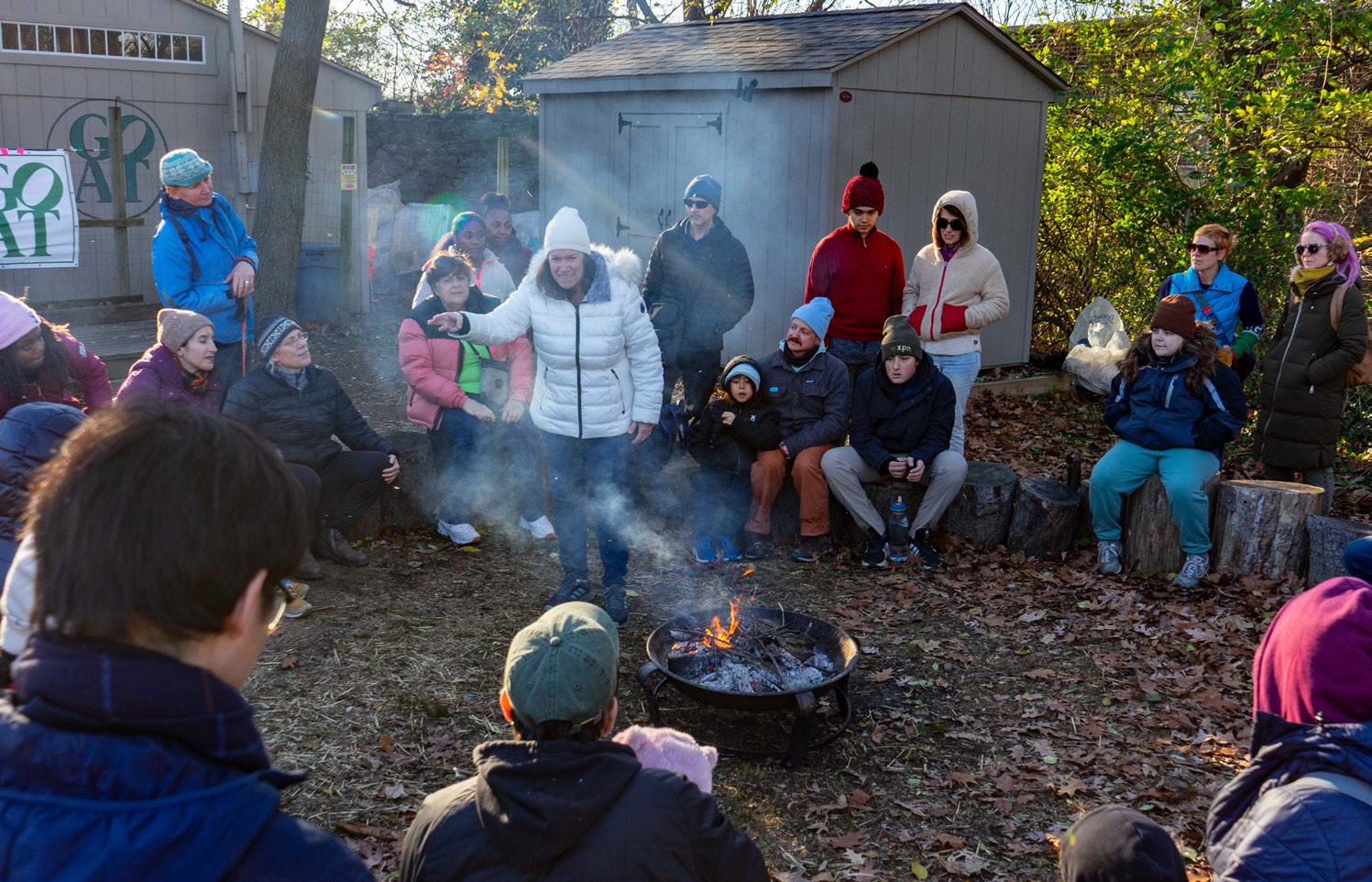
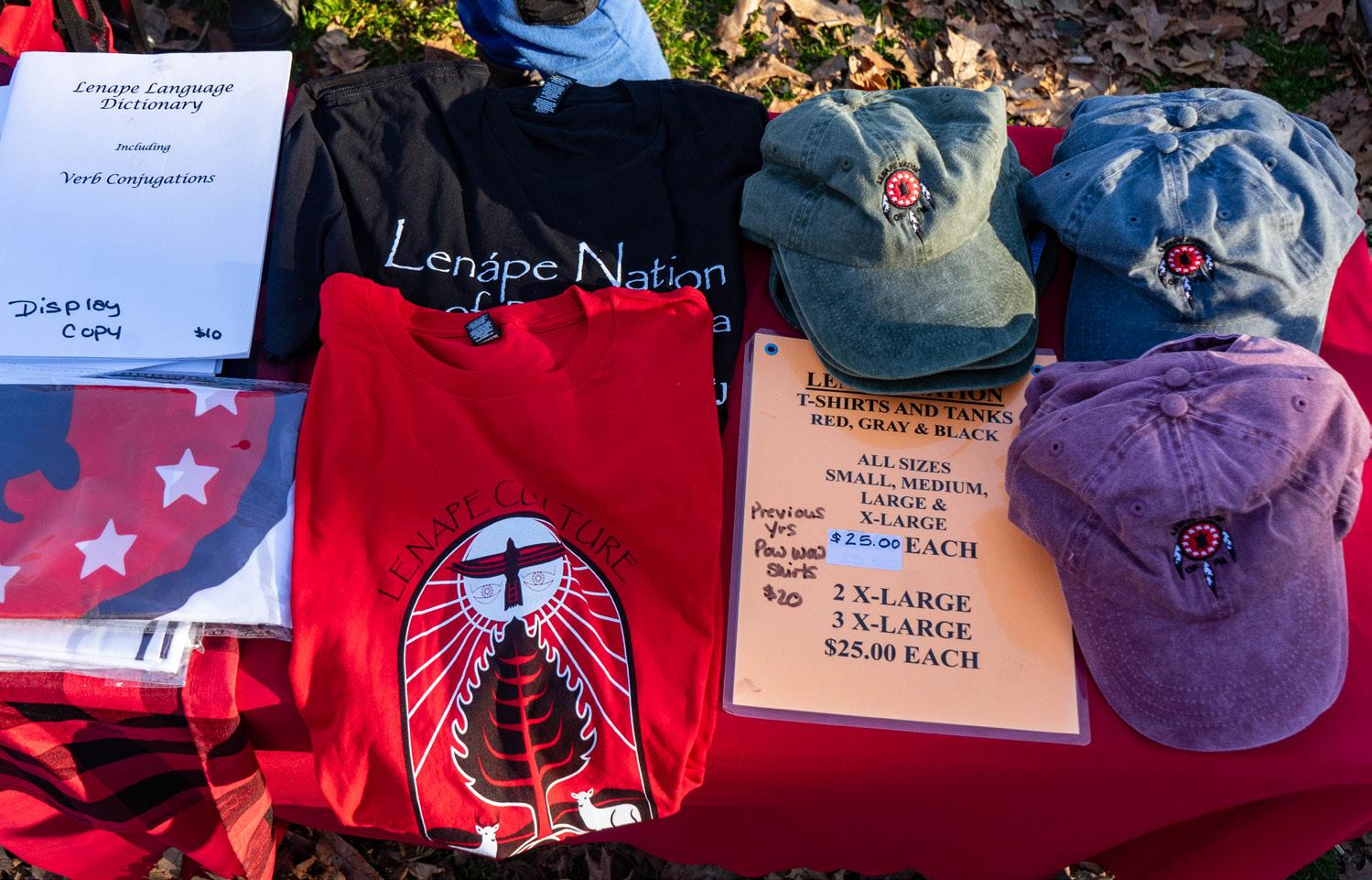
As the sun bowed toward evening, some attendees gathered by the crackling fire, soaking in laughter and old tales retold while others shared goodbyes with the goats or browsed merchandise from the Lenape and Philly Goat Project tables.
“Barbara had a lot to share, and it made me want to do some more research on my own,” said Ann, a New York native and Mount Airy resident.
brian.nelson0003@temple.edu
BRIAN NELSON / THE TEMPLE NEWS Attendees arrive at the Awbury Arboretum.
BRIAN NELSON / THE TEMPLE NEWS
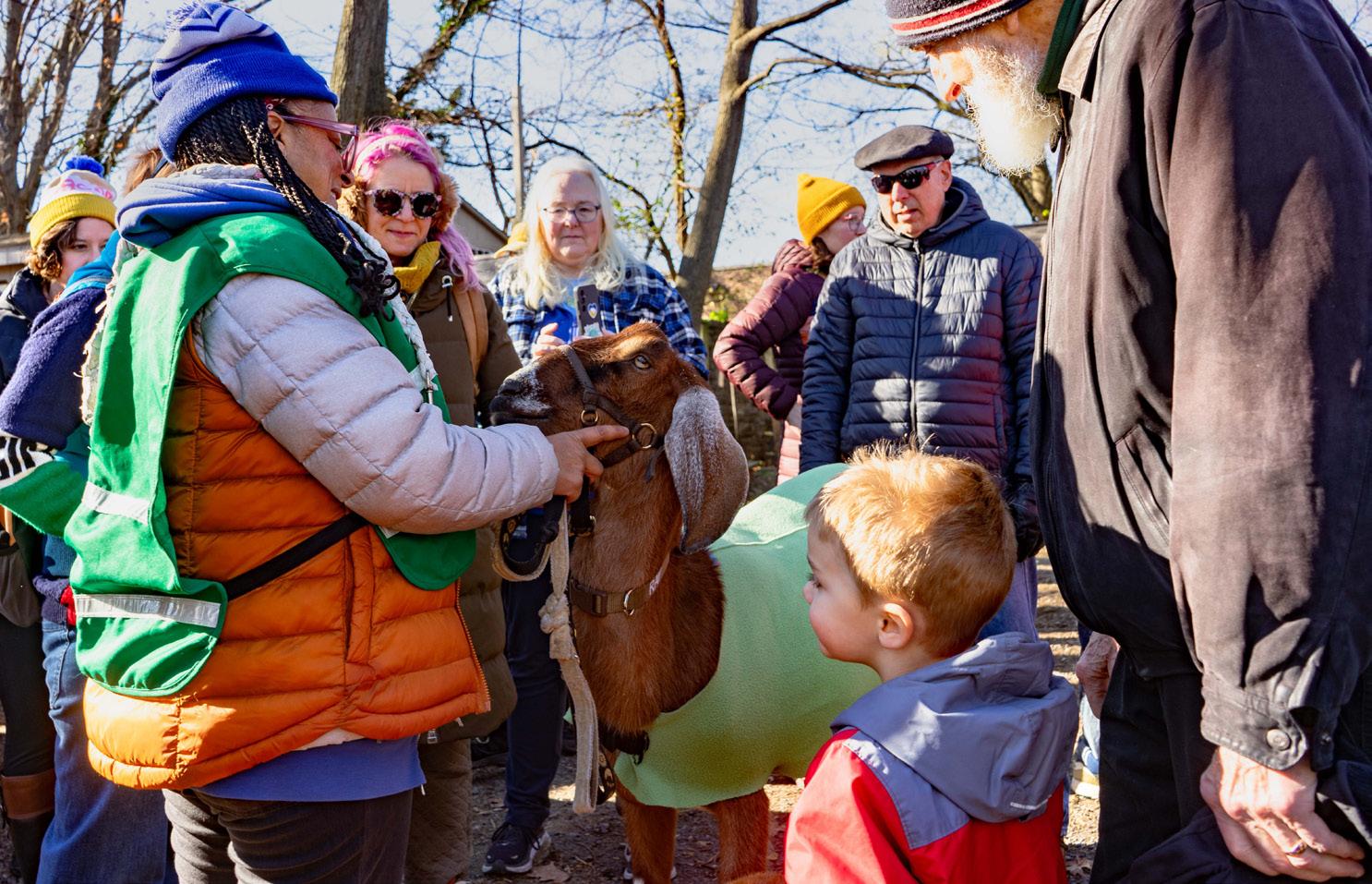
Angel Hogan, volunteer with the Philly Goat Project, introduces Goat Ray.
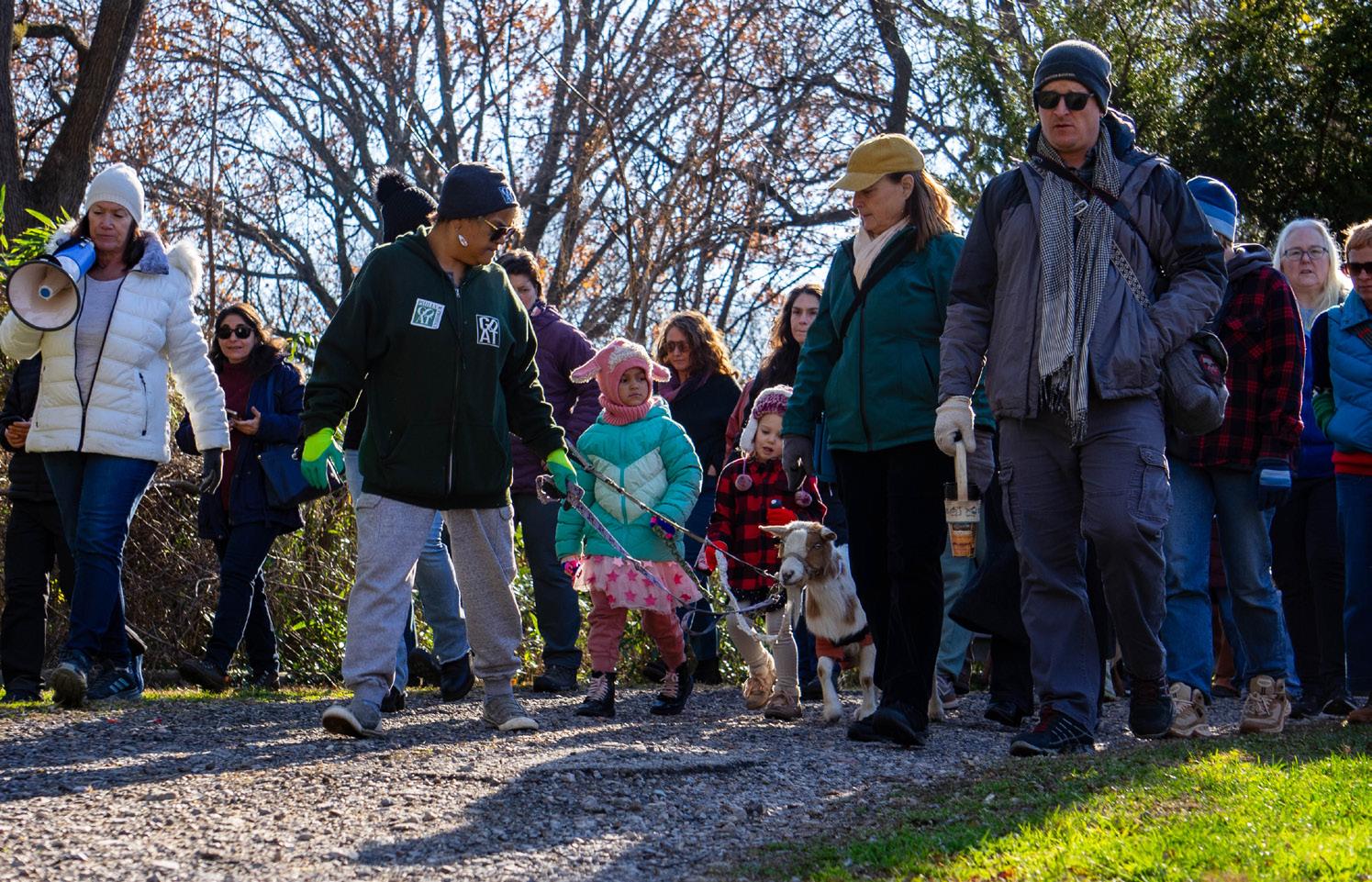
BRIAN NELSON / THE TEMPLE NEWS Attendees walk through the Awbury Agricultural Village toward the Arboretum.
BRIAN NELSON / THE TEMPLE NEWS
Chief Barbara BlueJay Michalski tells stories by a crackling fire.
BRIAN NELSON / THE TEMPLE NEWS Merchandise at the Lenape Nation of Pennsylvania stand.
BRIAN NELSON / THE TEMPLE NEWS
Leslie Jackson and Chief Barbara BlueJay Michalski lead the group through the Awbury Agricultural Village.
THE ESSAYIST
Silencing the city noise and learning quiet growth
BY
I have always wondered where I’ll end up. Not just after college, but after my entire career is finished.
I believe my goal in life is to end up writing in a cabin in the woods, away from the noise of the city and surrounded by nature and loved ones.
Growing up in Philadelphia surrounded by the noise of trains, trucks and turnpikes, I’m accustomed to loud background noise. When I’m away from the city in different Pennsylvania suburbs, I’ve often caught myself thinking, “This place is way too quiet.”
I ended up playing loud music or started making loud noises to destress myself even though nothing is happening.
Even when I was a first-year student coming into Temple, the sounds of the university and the surrounding communities gave me comfort, which I now believe caused me a lot of distractions academically. Noise has become an interruption when I am trying to focus or learn new things.
I constantly wonder if I really work better with constant noise or if I should spend more time in silence. I think about my articles and where I can write to give me inspiration and sometimes comfort.
I’ve been told I am a loud person, but I’m on a journey to become quieter and more reserved as a young man navigating life.
I asked my friends if I was loud and what that meant for them. The majority

said yes, a few unexpectedly said no. It was followed by stories of how I chose not to speak, yet was still in control of conversations.
In that moment I fully understood the person I wanted to be — someone who didn’t have to be loud to be heard, but someone who could be quiet and still have a major impact in the world.
I constantly question whether I am doing enough or if the things that I aspire to do are within my grasps. The answers are always yes, but that doesn’t take away the thoughts that run through my head.
As I entered my junior year, I foresaw myself fully immersed in my academic studies, but also extracurricular activities that have helped me silence the noise, like becoming a secretary for the Pi Rho Chapter of Alpha Phi Alpha Fraternity Inc and a member for the Temple Association of Black Journalists.
I focused on amplifying my voice, but didn’t realize that my growth would come on a downward curve, before reaching upward for the canopies of my success.
My motivation, as I realized, had stemmed from wanting to be quieter and being able to operate in a space that is actually comfortable for me. Being intentional with my quietness, remembering that it’s a strength and how I should be able to live in it comfortably.
Cabins are scary for some because they are away from the city and far from the distractions that hold them back. In many ways the cabin represents a lifelong promise I have made to myself about always chasing my better self and it allows me to thrive in any given environment.
As I reflect on my journey from the city to the cabin, I am thankful for the noise that has graced my ears through the years. People who always embrace the noise may have the same perspective as me, and I encourage them to find their own cabins and to embrace the quietness.
Writing this feels like a letter to my future and past self in the same moment, understanding that the things I once
wanted are in my grasp, not because I was loudest, but because I was quiet in search of my cabin in the woods.
gregorycjackson@temple.edu @realjacksgreg
A student shares his joruney embracing silence and following his dream.
GREGORY JACKSON For The Temple News
DANIYA EGGLESTON / THE TEMPLE NEWS
THE ESSAYIST
More than a role model: Sporting a new purpose
BY COLIN SCHOFIELD Co-Sports Editor
Most of my childhood memories are set in the Xfinity Center and Camden Yards, home to Maryland Basketball and the Baltimore Orioles. Going to those games was the highlight of my pre-college life and there was always one constant: my dad.
It was always the two of us at those games. We complained about the idiots sitting behind us or debated about the ways our favorite team was going to find a way to lose a winnable game. My love for sports was crafted sitting in the stands with my dad, where it shaped my eventual career goals.
My dad always had the answer to seemingly all of my sports questions. He knew everything about our favorite teams and I thought it was the coolest thing ever. I wanted to be just like that, so I intensely studied sports.
I became something of a sports know-it-all during middle school and high school. I read the back of every baseball card, watched every basketball game on TV and cared more about checking box scores than doing my homework. I took pride in the process of learning because I wanted to show my dad how much I cared.
Obsessing about sports to impress my dad eventually led me to stumble into my next chapter: sports journalism. I was always a strong writer in high school but I wanted to somehow remain involved with sports.
I found a way to blend my love for

sports and my writing abilities into a skill set for storytelling. As I found my footing in the sports media field, I once again looked up to my dad. This time, it was more in professional admiration.
For as long as I can remember, it has been impossible for my dad to go somewhere and not bump into someone he knows. He had a connection in virtually every job industry and it was easy to see why.
My dad is a master of small talk and gets along incredibly well with everyone. He has a unique ability to find small things in common with strangers and build them into a 20-minute conversation. As a kid, I hated when this happened because it meant an extra 20 minutes before we could go home. But now, I try to join in on the conversation.
I knew I was trying to get into a field where talking to people was crucial. I marveled at how easily he could strike up a conversation. Watching him inspired me to figure out how to talk to random people, something that is still a work in progress.
Watching my dad the last few years has helped me recognize something else about him: the work ethic that has guided him to where he is today.
My dad has been defined by hard work. He spent 21 years in the Navy and when he retired, he jumped right into the workforce. He built his own PR company, Provision Advisors, and created his own Naval Academy podcast, Sing Second Sports, which has soared in popularity.
I strive to have his motivation and dedicated mindset.
Every time I visited home in the last four years, I looked at how hard my dad works from a new lense. I used to not understand why he worked so late, always made phone calls or wrote random things on loose pieces of paper. As I grew as a journalist, it clicked that his hard work not only made him successful but also helped him build the family that he cherishes more than anything.
That inspired me to push myself to levels that will help my career. In moments of frustration or self-doubt, my
dad always had the answer. I want to be just like him, so as I build my career I want to show him how hard I have worked to make him proud of me.
I sat in the press box of Lincoln Financial Field during Temple Football’s game against Navy on Oct. 11 and felt a hand clasp my shoulder. It was my dad, standing there with the “proud father” look on his face.
I am his oldest son and have felt the weight of impressing him my entire life. So, seeing that look come across his face, I was fulfilled. He saw me making strides toward my dream, a dream fueled by watching him. I look at how he carries himself — the motivation, respect for others and success he has found — and know that’s where I want to be someday.
colin.schofield@temple.edu
A student reflects on how his dad inspired him at each step of his life.
DANIYA EGGLESTON / THE TEMPLE NEWS
THE ESSAYIST
The jubilant journey from sisters to best friends
A student reflects on how her relationship with her older sister has evolved through the years.
BY SAGE SPOHN Newsletter Editor
My older sister Jordan and I are four years apart, and she has been my best friend for my whole life. She has been there for me in ways no one else has, and I can confidently say no one knows me as well as she does.
She is a role model, a shoulder to cry on and my go-to for advice. She is the most caring person I know, constantly making sure everyone she loves is happy before worrying about herself. She’s also honest, sometimes brutally, and stands up for what she believes in, which I have always commended her for.
Growing up, I wanted to follow every one of her footsteps. Although it frustrated her when I copied her every move, it was a reflection of my admiration for her.
I wanted to do everything with Jordan. I copied her hairstyles, loved the same Taylor Swift and Justin Bieber CDs she did and enthusiastically wore her hand-me-downs. I even loved the same movies she loved, most memorably “Barbie as the Princess and the Pauper.”
In school, I enjoyed having class with her past teachers because they knew me as an extension of her, and there was nothing better than being known as Jordan’s younger sister.
We used to drive to school together after she got her driver’s license. On mornings when we were late and didn’t have time to go to the middle school drop off, I walked through the high school hallways with her until we went

our separate ways. I was terrified of her classmates, but being around her made me feel so cool.
One of the best things about growing up with an older sister was watching our relationship change. As with many siblings, we fought a lot more as kids and only got close when she went to college.
I first felt this shift when my family visited her after she started at West Chester University. We were both so excited to see each other, and we ran into an embrace. I don’t know how to describe it, but at that moment I knew our relationship was different; it felt like we finally moved from being siblings to being best friends.
At this point, I was just entering high school and our age gap still caused some differences between us. But it never changed how much I looked up to her.
I always admired her confidence and shamelessly goofy nature, which blossomed when she was in college. There was nothing more inspiring than watching her grow into her personality.
Throughout high school, Jordan
was always there for me. She gave me friendship advice, helped me through breakups and gave me helpful insight for everything in between.
I would not have made it through some of my hardest moments during this time if it hadn’t been for Jordan. I realized she never had an older sibling to fall back on like I did, and I hated I couldn’t do everything for her that she had always done for me.
Now that we are both in our 20s, we relate more, have similar life experiences and share hobbies like reading. I loved reaching this point in our relationship because it allowed me to support her the way she has always supported me. And I am more than happy to return the favor.
Someone who was an inspiration to me throughout my life started turning to me for the same things I always needed, and I couldn’t be happier about it.
One of her friends recently told me that she speaks novels about me. I always knew that we shared sisterly love, but in that moment I realized she looks up to me just as much as I look up to her.
My friends are probably tired of hearing me mention my sister all the time, but she plays such a big role in my life. We talk every single week, sometimes almost daily, and we tell each other everything.
I love the person I am around Jordan; she brings out the best in me. We bring out different sides of each other when we are together that no one else can.
I am truly myself when we are together, and I love that version of me. Seeing how much she loves me at my best and worst pushes me to be my truest self around everyone else.
Any girl who has a sister knows it is a most cherished relationship. Growing up, I thought it was only me who felt this way, but now I’m sure that inspiration is mutual. I always have and always will want to be just like her.
sage.spohn@temple.edu
DANIYA EGGLESTON / THE TEMPLE NEWS
THE ESSAYIST
Praising the power of workers in company attire
A student shares how the effort of workers in retail and service industries inspires him.
BY CONNOR PUGH Co-News Editor
I have a tendency to stay up late or wake up early at wildly inconsistent hours, as a college student with numerous obligations and not nearly enough time or resolve. Regardless of the time, I usually find myself making the hike to a nearby 7-Eleven to select my weapon of choice to help me undertake whatever task needs to get done.
There is always someone behind the counter ready to scan my drink or snack, working arduous hours to provide a small convenience to me, which I endlessly appreciate.
Working in any sort of service or retail job — a stocker at a grocery store, a waiter or a clerk — is a valuable act of service to communities across the globe.
These types of jobs are unique because almost everyone, regardless of their profession, age or future career plans, has worked behind the counter at some point. They serve as entry level jobs that can provide a somewhat steady income for younger people and students and build up experience for a resume.
Nearly every single person I’ve met in college, including myself, has worked in service or retail alongside their academic careers at some point, taking shifts after classes or returning to work during breaks. Whether they dipped their toes or were forcefully plunged, these sorts of jobs are a common experience for most college students, especially at a public institution like Temple.
The collective labor of all of these workers to keep the lights on, despite

the laundry list of hardships associated with any job, truly inspires me.
I worked as a pizza delivery driver for Papa John’s during the summer, taking evening and night shifts, navigating the winding mazes of copy-paste households that comprise suburban Maryland.
The hours were long and unnecessarily grueling, and I typically had to stuff my face with granola bars and bags of Cheez-Its in between deliveries. Dinners at 1 a.m. after closing were a common occurrence. Keeping my car in good shape and getting orders together on top of navigating sometimes unfamiliar areas were regular stressors.
Nevertheless, I was grateful to be able to take this job and manage to earn some money for myself and save it for the future, rather than dedicating nearly all of my income to cover bills, rent or tuition every month. I did not have to worry about whether my earned tips would pay for groceries in a given week.
Service and retail workers are often subjected to cruel treatments and have to endure it just to maintain steady em-
ployment and find a job. I’ve personally experienced the soul-draining rat race of scouring websites, constant emails, building resumes just to stock shelves and putting my life at the hands of a random corporate conglomerate just to get employment.
Even if people get the job, benefits can be slim or arbitrarily dispersed. Exceptions to policies briefly mentioned at orientation can come back with a vengeance months after they have been forgotten, constantly putting job security and comfort at risk in many circumstances.
Despite these shared difficulties and experiences working in these industries, people still collectively do it anyways. Even if out of necessity, the courage and effort it takes to work is a tremendous achievement and should be treated as such.
Taking any sort of job is never an easy decision, and even if it’s just a dishwasher or a clerk, the impact of their work cannot be overstated. More specialized careers that require long years
of education and training are often more desirable to many and can be the ultimate end goal for some, but this does not minimize the importance of these simple jobs that keep the world spinning.
Ultimately, it’s the simple fact that people continue to work despite all the individual challenges they may face that inspires me. When I bite into a slice of pizza that is still warm from the comfort of my own home or get a nice conversation with a waiter at a restaurant, I can value the labor that is put into such simple conveniences and appreciate the people who took the time and effort to accomplish it.
connor.pugh@temple.edu
DANIYA EGGLESTON / THE TEMPLE NEWS
THE ESSAYIST
Decay and metamorphosis: Lessons from autumn
A student reflects on how the atmosphere of the Fall season inspires internal reflection.
Every year I find myself waiting for autumn, the season of dying.
There is something sacred in the natural ability to die. Much beauty lies in the metaphorical and nonphysical deaths that occur at any point in our short time on earth. The mysterious and familiar aspects of life stir emotion inside me; those feelings that have connected humans across ages and eras. The systems and sensations that whisper to us in a dialect much older than memory.
Autumn is also the season of transition, wisdom and the harvest. The time of year where leaves on trees become hues of gold and red in their decay and moths cocoon to liquify their physical form so that they might later become anew.
I find comfort in the truth that we do not have to be stagnant, that we experience various kinds of transitions that are comparable to death. We have never and will never be immune to any kind of mortality. It’s in the literature we read, the films we watch and the earth we inhabit.
I am inspired endlessly by this season of change and release, the kind that is slow and willful. The time of year that serves as a perfect backdrop for communing with the ghosts and monsters in the castles of gothic horror. A period that gifts opportunity to confront the quieter phantoms within myself like doubt, fear, habits and illusions that haunt long after they’ve outlived their reason.

When the breeze begins to pick up, I enjoy a warm beverage and adorn my wardrobe with more layers and textures. I am called to steep myself in poetry soaked in early evening candlelight. I make room to explore forgotten interests, to discover new habits and hobbies to pursue.
I take long walks on wooded trails surrounded by a shifting color palette of the dying leaves that prompt feelings of gratitude, and I am filled with musings of detachment and bouts of introspection.
The nostalgia brought by the season recalls the warmth of memories of my youth when going back to school or getting excited for spooky antics and cinnamon-spiced sweets. It is the perfect setting to reflect amongst the quiet, breathtaking decay of nature.
What I love most is that autumn is honest in its gentle display of quietude. It’s a reminder that I, too, am decomposable. I can let go of parts of myself and encounter or reintroduce others. There is immense power in being able to let go, surrender or sit in stillness long enough
to allow creeping thoughts of metamorphosis to take root.
I savor the notion that in death there lies hope. I romanticize the somber atmosphere of gloomy skies and hold onto the profound impermanence that roams in the fog. Romantic poets of the nineteenth century, composers across many eras and impressionist painters all found inspiration in these same shades of mother nature in decomposition.
Autumn is not merely a setting, but a mirror that reveals truths about what it means to change with intention and in correspondence with the earth. We are shown that letting go and slowing down can be a divine process — that these practices are rituals, and they are natural aspects of human existence.
Each of us carries the essence of Fall inside us as we move through life’s transitional ebbs and flows.
The season of burnt oranges and reds serves as a reminder that we always could let go and start again, no matter how many times we shed our skin. Autumn inspires me to see the world and
myself through endless potential. It hints that transformation is not always loud or sudden, but many times slow, subtle, patient and sometimes exciting.
I cherish the reminder that I, like the trees, have the ability to release and be reborn season after season, cycle after cycle, at any point in life.
There is a deep solace in knowing that even in decay, there is beauty. Even in endings, there is promise. Even in stillness, there is the possibility of becoming.
ariana.droz@temple.edu
BY ARIANA DROZ Podcast Editor
DANIYA EGGLESTON / THE TEMPLE NEWS
THE ESSAYIST
Piecing together the relationship with my father
A student reflects on his relationship with his father and how their bond has evolved.
BY RYAN MACK Copy Editor
I always admired my father growing up. I anticipated whenever he showed up at school for class parties and even begged him to chaperone for my class field trips. I went to the same elementary school that my mother taught at, while my dad worked an hour away.
I never saw him much during the week, so any extra time meant the world to me. That golden image faded once I hit fourth grade.
My dad struggled with alcoholism for much of my childhood and his absence began to increase. He would leave for two weeks at a time to Los Angeles for work or various business trips.
He even missed my 10th birthday. It was for work, something he couldn’t control, but it was a recurring theme. Eventually, my emotions boiled and I broke down in class with just one thought in my mind — my dad hates me.
Our relationship never really recovered after that. Between the times we’d listen to David Bowie or Pearl Jam together in the car, watch a cheesy 80s action movie or football on Sunday, there were constant screaming matches between the two of us.
I begged him for one-on-one time together when I was 11. I grew up with two brothers, one older and another younger, who both spent quality time with him, and I wanted the same. My father said yes, but it never happened. He was always busy; I gave up after a few years.
My once deeply held adoration for my dad soon turned to resentment. He is a larger-than-life character. Anyone who crosses his path ends up loving him

on the spot, laughing at every joke, but that sparkle vanished for me.
Those car rides together eventually turned into silent awkward torture chambers for nearly a decade. We wouldn’t speak to each other unless it was about football. If the conversation went any deeper, there was a chance it would end with someone would leave the room screaming or his anger taken out on me.
Once I hit middle and high school, the words “You look just like you father” made my stomach curl. It wasn’t wrong. If you put a picture of me as a child next to a picture of my dad the same age, they were identical. We even have the same mannerisms, sit on the couch similarly and even crack the same jokes.
But I hated the fact that I was going to be like him. I was scared of how his anger turned into seething. I couldn’t stop the slight flinch I had whenever his voice raised or his hand heightened. Picturing myself turning into that same person made me uneasy. Instead of looking up to my dad, I started to stray away.
That resentment stayed with me and only got worse, even when my dad started to right his wrongs. He stopped
drinking when I started middle school and stopped smoking a few years later. When I was a junior in high school, he made a constant effort to be present.
He went to every lacrosse game I had and started talking to me about life. But it felt like more of a soulless facade, an effort to show other people’s parents he cared. Those attempts were met by a quick rebuttal from me, who was too stubborn to accept that people could change. To me, a decade of discontent trumped whatever revelation my dad was going through.
My bitterness faded during those years, but there was an obvious strain on our relationship. Those surface level talks persisted, but I saw he was doing better. Arguments didn’t turn into screaming matches right away, yet it was still like walking on eggshells.
College helped the issues go away through time. I saw my dad taking the steps to connect with me and, after being scared to make the initial jump, I pushed myself to do the same. We planned to start calling once a week, which turned into calling randomly. Sometimes it was as simple as me trash talking him when the Steelers lost. Other times, I did so
just because I missed him. It’s brought back the person that I looked up to.
I think sometimes we see our parents in rose tinted glasses, for obvious reasons — they are like superheroes to us. What I admire about my dad is he’s human. While he has had his faults, he has been able to get past them. He has been able to teach me that healing takes time but it’s possible to improve as a person.
So, that’s what I strive to be like; I want to be just like my dad.
ryanmack.0001@temple.edu @Ryan_mack18
DANIYA EGGLESTON / THE TEMPLE NEWS
FEATURES
Alumna awarded at Independent Shorts Festival
ALUMNI Samantha Tan’s “F*ck Feelings” won the Bronze Award for Best First Time Female Director.
BY MADELYNNE FERRO Features Editor
Samantha Tan prides herself on making films that represent and uplift her community. But her directorial debut, “F*ck Feelings,” wasn’t just inspired by the experiences of others: Tan drew directly from her own life.
“Art is to be vulnerable, and vulnerability makes you stronger,” said Tan, a 2020 film and media arts alumna. “I still had a tough time, F*ck Feelings was actually a placeholder title. It’s all I kept thinking while writing the script.”
Tan premiered “F*ck Feelings” July 21 at LA Shorts International Film Festival. The story, which is semi-biographical of Tan’s life, follows a Vietnamese painter’s preparation for her gallery debut as it’s derailed by news of her abusive ex-boyfriend’s engagement.
Tan wrote, directed and produced the film, which won the Bronze Award for Best First Time Female Director at the November Independent Shorts Awards on Nov. 22.
Tan’s filmmaking journey began when she applied to Temple as a business major to appease her parents.
When she realized she couldn’t ignore her true calling, she enlisted friends, friends’ parents and teachers to write letters to her parents about how she would make a great filmmaker. Long train rides from Tan’s hometown of Lansdale, Pennsylvania to Philly and summers of couchsurfing legitimatized her choice in her parents’ eyes.
“Around sophomore year, I realized I really wanted to produce BIPOC and women’s stories,” Tan said. “I think that meant a lot to my mom to see how passionate I was.”
Tan co-produced and co-created “Ambitious,” a six-episode drama-comedy series, in her sophomore year and nonstop produced short films, pilot epi-
sodes and music videos through her time at Temple.
Tan moved to LA after graduating in 2020 and in the summer of 2023, Tan began writing the script for “F*ck Feelings”.
“When I first wrote the short, I wasn’t sure if I should make it,” Tan said. “I didn’t want it to be a triggering [experience]. But I shared it with so many other people and I had an overwhelming response.”
Kemi Jackson, a 2020 film and media arts alumna, worked with Tan through their time at Temple. When Tan finished the script in October 2023, Jackson was one of the first people to read it.
Unbeknownst to Jackson, she was already familiar with the story.
“I immediately knew the characters,” Jackson said. “I was like, ‘Girl, is this me?’ But I loved it, and we would be producing it together.”
With massive support, Tan final-
ized her cast and crew, with Jackson as a co-producer and herself as writer, director and co-producer. The lead, Shirley Kim Nguyen, had previously worked with Tan and Jackson on “Ambitious.”
From her first day in the director’s chair, Tan hosted chemistry exercises, photo shoots and cooked meals for table readings to nurture trust within the cast.
“I asked my actors if there was anything I could improve,” Tan said. “I think a lot of them appreciated that I trusted them.”
Tan produced a rough cut five days after shooting wrapped in August 2024 and finished editing in January. With the final cut in hand, Tan has spent the last half of 2025 displaying her work.
The Viet Film Fest on Oct. 12 was a point of pride for both Tan and Nguyen, but after a red-carpet interview with an older Vietnamese journalist, Nguyen was reminded of generational barriers she experienced in Asian American
communities.
“The older generations, especially for Asians, they just repress it all and say you’ve got to toughen up,” Nguyen said.
The film officially premiered in July and Tan plans to release the film after a year in festivals.
“I’m already a winner, all I want is for people to feel seen,” Tan said. “I just really wanted to empower survivors.”
madelynne.ferro@temple.edu
COURTESTY / SAMANTHA TRAN
AROUND CAMPUS
Tyler’s Pyramid Club gallery enters final month
The art exhibit engages students with the world of the historic Pyramid Club.
BY BENJAMIN DIPALMA Assistant Features Editor
Students passing through the Tyler Contemporary Art Gallery are transported to twentieth century North Philadelphia, into the world of the Pyramid Club. Portraits of prominent Black Americans line the walls, coupled with artwork and photos from various Black artists.
The Pyramid Club was an influential cultural hub for Black professionals during segregation from 1937-1963. Located at Girard Avenue and 16th Street, it hosted artists and leaders like Duke Ellington, Marian Anderson and Martin Luther King, Jr. while it was active.
On Sept. 5, the university opened an archive, curated by Matthew Jordan-Miller Kenyatta, the Director and Curator of Exhibitions and Public Programming at Temple Contemporary, showcasing photos of the club. The exhibit features 34 paintings and 35 pictures by the renowned photographer John Mosely.
Kenyatta designed the exhibition to explore the curatorial question of “What if the club hadn’t closed?” by including work from artists who are currently prominent in the art world, like interdisciplinary artist Shawn Theodore, alongside those involved in the original Pyramid Club.
The exhibit has garnered attention from both Philly residents and students and has seen more than 200 attendees at events hosted by Kenyatta between its launch and November.
“We’ve had such an incredible response to being a show that a lot of people couldn’t tell you what we were gonna do before it opened,” Kenyatta said.
Kenyatta hosted events focused on platforming those close to the Pyramid Clubs’ historical and cultural impact on the North Philadelphia community, like archivist William Dodd and North Phil-
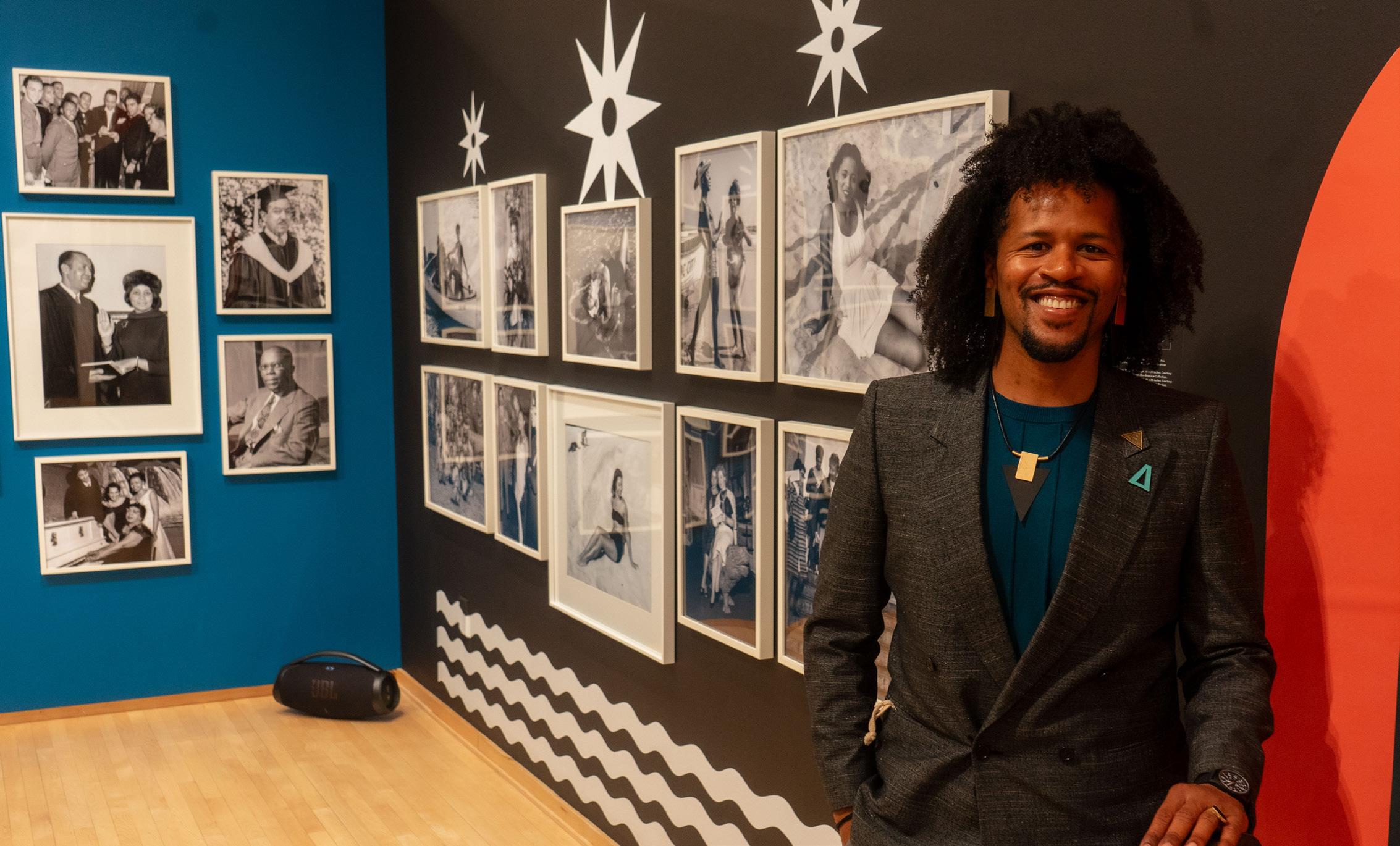
adelphia residents from the area where the club was active.
The exhibit presents art and photos originally archived by Dodd, Leslie Willis-Lowry and the Charles L. Blockson Afro-American Collection, the university’s African American culture and history research facility. Dodd began archiving the Pyramid Club nearly 20 years ago when he decided to focus on collecting work from Philadelphia artists as a passion project.
For Dodd, the archive represents the culmination of his work throughout those years, 15 of which were spent working with Willis-Lowry to research the Pyramid Club. They identified artworks and pulled thousands of prints and negatives from the John W. Mosley archive.
“It’s a blessing for me to see the collection be presented in a tightknit presentation that’s open for people to see,”
Dodd said.
Since the exhibit debuted, several faculty members have begun incorporating the Pyramid Club into lessons on archival practices and Black art history, Kenyatta said.
Alicia Link, an adjunct professor in art, had students create flags to represent individuals associated with the Pyramid Club. The project, titled “Flags for the Forgotten and Formidable Pyramidions,” is meant to honor artists featured in the show, including John W. Mosley, Jacob Lawrence and Elizabeth Catlett.
Willis-Lowry is excited about the next chapter in the Pyramid Club archive and working on the book project, which is tentatively titled “Art for Race: The Pyramid Club.”
The book, which draws from Willis-Lowrey and Dodd’s archival work, will provide a more in-depth overview of the history and cultural significance of
the Pyramid club, including significant details that weren’t included in the Tyler art exhibit.
“I think it’s important to talk about the exhibit and about the artists and the experience of Black joy,” Willis-Lowry said.
Those involved in the exhibit feel that this is a significant step forward for Temple’s art program. Kenyatta hopes the exhibit’s premiere will define Temple Contemporary in the coming years by creating a bridge between archivists and the contemporary artists who helped reimagine the space.
“I think that this show is a bit of a blueprint for how art can really help bring history alive and help shape how we think about the future,” Kenyatta said.
ben.dipalma@temple.edu
BRIAN NELSON / THE TEMPLE NEWS
Matthew Jordan-Miller Kenyatta in front of the curated images at the Tyler School of Architecture.
The
AROUND CAMPUS
Course on Kendrick Lamar renewed for Spring
“Kendrick Lamar and the Morale of M.A.A.D. City” debuted with mass student interest.
BY MADELYNNE FERRO Features Editor
Timothy Welbeck taught “Hip Hop and Black Culture” for more than 12 years. Despite the various artists Welbeck included in his material, the professor continuously returned to Kendrick Lamar’s music as a window into the Black experience.
This semester, Welbeck taught a course solely focused on Lamar.
“Kendrick’s work helps articulate the lived experiences of people who came of age in the time and place that he did,” Welbeck said. “But it’s also a way to help articulate various components of Black life.”
“Kendrick Lamar and the Morale of M.A.A.D. City,” a one-credit elective, debuted in the fall semester through the Department of Africology and African American Studies and was renewed for the Spring 2026 semester after over-
V O I C E S
whelming student interest. The course was originally budgeted for 40 students but ultimately hosted 87.
The course syllabus includes dissecting Lamar’s life, legacy and art through the lens of urban policy, Lamar’s music and various texts, including a biography on Lamar. Welbeck uses music videos, guest speakers who have collaborated with Lamar and even Lamar’s legal battle with Drake to understand the artist.
“Kendrick lets his art speak for him,” said Kania Sullivan-Lee, a freshman media studies and production major who is currently in the class. “I like the discipline and mental fortitude it takes to ignore the outside noise and focus on [his] craft.”
Sullivan-Lee, a self-described Kendrick Lamar enthusiast, expected a class centered around Lamar’s career but soon found the teachings going beyond his music.
She recalls discussions about artists’ responsibility to speak out on social justice issues, like the Black Lives Matter movement, and reading “The Case for Reparations” by Ta-Nehisi Coates as distinguishing the class for her.
“The class went beyond my expectations because it was more than the music,” Sullivan-Lee said Welbeck tackled varied foundational knowledge through listening to Lamar’s music in class and hosting guest speakers like Curtiss King, who worked with Lamar early in his career.
Once students had foundational knowledge of Lamar’s music, Welbeck could dive into the culture that created the artist.
“Early in the semester we read some literature about housing discrimination and how that led to segregated ghettos across American,” Welbeck said. “Kendrick’s work is an illustration of what it means to live in that environment, and I think that really jumped out to several of the students.”
Jayson Harris, a freshman film and media arts major, is an avid fan of Lamar who enjoyed American history in high school. The class served as an elective, with Harris’ previous interest in Africology lingering in the background of his scheduling decisions.
After three months in Welbeck’s course, Harris officially added an Af-
WHICH CLASSES DID YOU ENJOY THE MOST THIS SEMESTER?
Freshman, audio live entertainment major
“ I took Intro to media. I think that was my favorite class this year, and it was cool to get my foot in the door with live audio and video editing software. ”
NATALIE PACE
Freshman, undeclared
“ My favorite class is called the environment. It’s really stupid and I don’t learn anything but it’s a lot of fun, and we all laugh. Everyone dropped out of the class.”
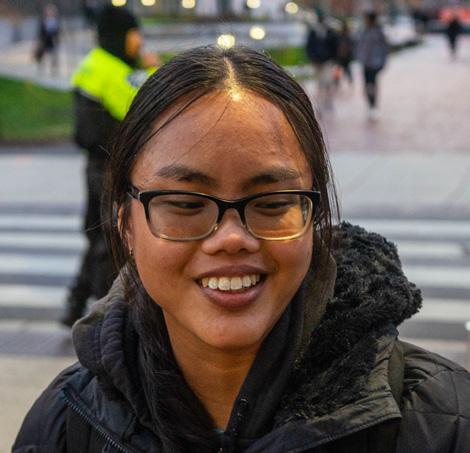
ricology minor.
“I knew we were going to be studying his music and doing some lyric analysis, but we also talked on broader historical themes and social injustices that created the deep, rich history of hiphop,” Harris said.
Since Mazama became chair three years ago, she’s aimed to reinvigorate the department through topics on current student interests and issues, like courses on medical racism and Black hair identity.
The Department of Africology also lost faculty during the summer, with no rehires, Mazama said, so she is thrilled that the course is getting renewed as one step closer to revitalizing the department.
“I saw some comments saying they’re going to come to Temple to study [because] only a very cool university can offer a course on Kendrick Lamar,” Mazama said.
madelynne.ferro@temple.edu
Freshman, management information systems
“ MIS data science with Professor Gutierrez. He’s a great professor: so, so nice, very encouraging and engaging, and I like all my classmates. ”
KATIE NAVEA
Freshman, undeclared
“ My favorite class this semester was honors calculus. I really liked it because my professor was super engaging and made learning more fun, and I don’t mind math. ”
BLAKE CHERNICKY
JAMES MONKLEY
The Temple News
SPORTS Conference woes cause Owls to miss postseason
VOLLEYBALL Temple missed the postseason after recording just five American Conference wins.
BY SIENNA CONAGHAN Co-Sports Editor
Head coach Linda Hampton-Keith increased Temple’s American Conference win percentage in her first three seasons, but missed the conference tournament each year due to conference play mishaps. The Owls aimed to continue their growth, but this time they hoped to qualify for the American tournament.
Instead, the same conference downfall persisted. The Owls picked up a win against Rice on Sept. 26 for their first conference-opening victory since 2018. But instead of moving forward, they took three steps back after the victory.
Temple lost seven straight games as its postseason hopes dwindled. It ended with five conference wins, the fewest since Hampton-Keith’s first season. Temple finished the season 10th in the American, missing the American tournament again.
“Obviously, we set goals and expectations, but at the same time, we also have to go with how things develop,” Hampton-Keith said. “It was a journey. We were committed to go on the journey together and we did.”
Hampton-Keith scheduled 10 away nonconference games after the Owls won just five road matches in 2024. The strategy worked at first as Temple picked up seven nonconference wins away from McGonigle Hall. The first conference matchup against Rice was on the road, so the win seemingly ended the Owls’ woes. However, that success was temporary.
Temple only had one more road conference win: a 3-1 win against East Carolina on Nov. 2. The Owls’ dreams of a playoff berth vanished and they ended the year going 5-11 in the American.
“We’re fighting for our best volleyball,” Hampton-Keith said. “It’s not about beating the other team, it’s not about the scoreboard. We are just fight-
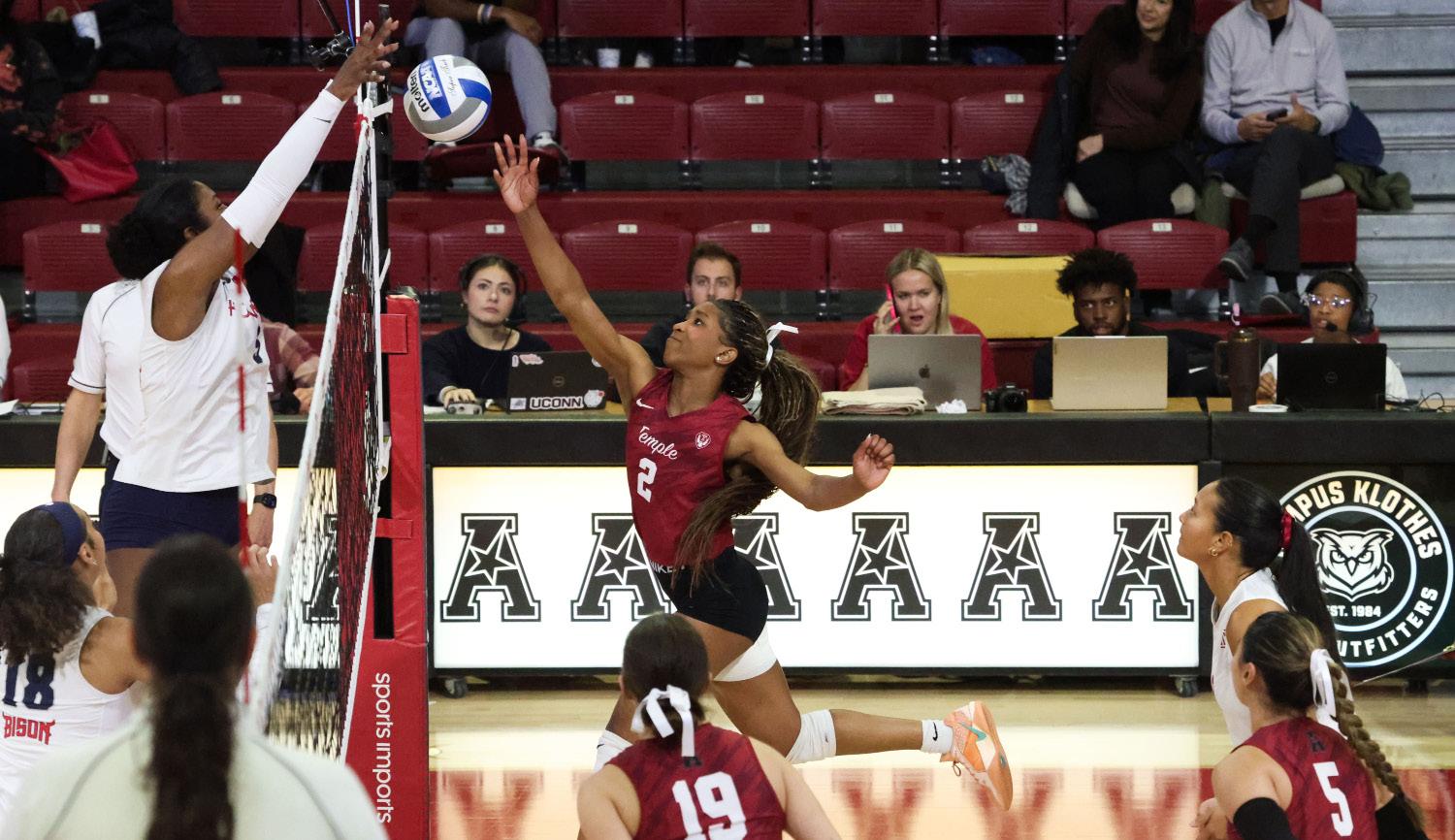
ing to play our best volleyball and if we can do that, we’ll live with the outcome.”
Although Temple didn’t rack up wins, it finished first in the conference in digs with 1,852 and fourth in kills with 1,496. The defense struggled, allowing a league-high 1,529 kills.
Outside hitter Christiana Greene led the Owls’ offense. Her 404 kills led the team and marked the 10th most in a single season in program history. She was crucial on defense too, ranking third on the team with 69 blocks and adding 134 digs.
Greene notched double digit kills in 25 matches, including the final 19 of the season. Her performance earned her a Second Team All-Conference nod.
Outside hitters Leia Harper, Olivia Hummel and middle blocker Alyssa Finister were also pivotal. Harper transferred to Temple from Georgia Tech and recorded 344 kills, nearly five times more than she had during her four years as a Yellow Jacket. Finister’s 99 blocks
led the team while Hummel’s 299 digs were second among the Owls.
Four Owls played their last game in McGonigle Hall, headlined by defensive specialist Qairo Bentley, who led the team in digs with 324. Harper, Finister and middle blocker Kaitie Hickey, who had made an impact with 72 blocks and 66 kills, will also graduate in the offseason.
“I was just out there playing for my team,” Finister said. “It’s the last time, just enjoying it and soaking in all of the moments.”
Despite the departures, the bulk of the roster could stay intact. The setting duo of Lexi Yoza and Daniella Gonzalez Murati will return next season. Temple ranked fifth in the American in assists with 1,379, with Yoza’s 635 and Murati’s 518 making up most of them.
Liberos Maddie Metcalf and Claudia Rivera are positioned for larger roles after spending the season splitting time and learning from Bentley.
“I feel like we are a very resilient team,” Murati said. “We fight it out to the last point and that’s a big part of our mission as a team.”
Hampton-Keith aims to continue her recruiting success using the transfer portal that got Harper, Finister and Hickey. Temple showed its development throughout the season, which it will build on heading into the offseason.
“We have two freshmen coming in the spring that are going to fill in quite a bit and two freshmen coming later, and we’ll see what happens with the transfer portal,” Hampton-Keith said. “Overall, when you look at what we’ve done as a team. Given that we had eight freshmen and 11 underclassmen, I think that we are set up for the future very, very nicely.”
Austin Boynes contributed reporting sienna.conaghan@temple.edu @Sienna_Paige2
MARIA MAZA RION / THE TEMPLE NEWS Outside Hitter Christiana Greene hits the ball over the net to Howard on Nov. 12.
Owls have positive campaign despite poor end
FOOTBALL Temple lost its final four games but made progress, recording its most wins since 2019.
BY COLIN SCHOFIELD Co-Sports Editor
Temple was on top of the world on Oct. 25 after beating Tulsa by one point during an overtime shootout for its fifth win of the season. The Owls only needed one more win to be eligible for a bowl game for the first time since 2019.
The Owls weren’t expected to reach bowl eligibility when the season started. Temple had not won more than three games or an American Conference road game since 2019. It was winless on the road since 2021. But K.C. Keeler took the reins in December and made that thought realistic.
“I told our team today, don’t think we’re going to rebuild here,” Keeler said at his introductory press conference on Dec. 3, 2024. “We’re gonna get this done now. There’s no reason we can’t be fighting for conference championships. So that’s the expectation and if [my players] are realistic, they should not be playing for me.”
However, the Owls collapsed after beating Tulsa.
Temple lost its final four games and a 52-25 pummeling from North Texas on Nov. 28 concluded a 5-7 season with a 3-5 mark in conference play. The offense, which vastly improved this season, vanished and the defense couldn’t stay healthy.
The end of the season spoiled Temple’s best campaign since 2019. Keeler nearly took a lost program to a bowl game in his first season. The offense was revitalized, players broke records and future contributors emerged. Even though the Owls did not achieve their goals, there is hope for the first time in years.
“This is what Temple is going to be,” said tight end Peter Clarke. “We’re gonna play tough, hard football for four quarters and we signed up for 12 games and we’re going to play like that for 12 games.”
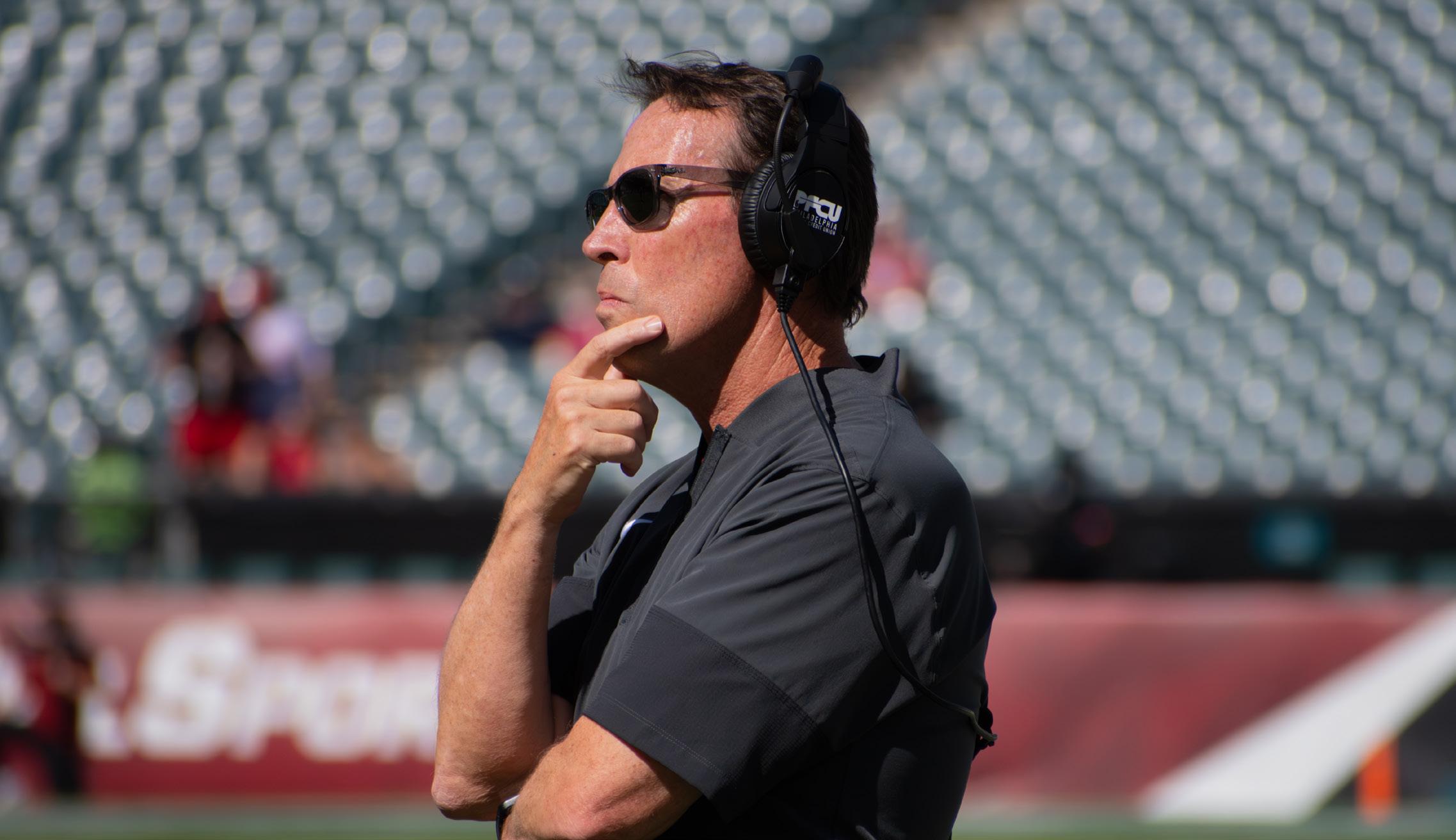
SIMON AND RUN GAME LEAD FRESH OFFENSIVE SUCCESS
Temple’s improvement stems from two offensive factors: quarterback Evan Simon’s growth and a recharged run game. The Owls averaged 27.8 points per game, the most since 2018, under first-year offensive coordinator Tyler Walker.
Simon entered the season in a battle with Oregon State transfer Gevani McCoy. Simon beat McCoy for the starting role before putting together a historic season.
He threw 21 touchdown passes before recording his first interception, the second-longest streak in the country. Simon ended the year with Temple’s single-season record of 25 touchdown passes and just two interceptions with 2,097 yards.
“I think Evan has exceeded everyone’s expectations,” Keeler said. “You knew [coming in] you’ve got this great human being. You’re just not sure if he
was going to rise up to the level that could win games in this conference. I’m just being honest. And he has and that’s such a great testament to him.”
However, Simon’s play dwindled during the losing streak. He threw just four touchdowns in the final four games and constantly sailed passes over receivers and missed passes that he made earlier in the season. It was evident against ECU, when he threw his first interception and had two other passes nearly picked off.
Despite the poor ending, Simon’s season was one of the best for a Temple quarterback due to an improved supporting cast.
Wide receiver Kajiya Hollawayne and Clarke stepped up recording 489 and 483 receiving yards, respectively, and tied for the team-leading six touchdowns. Clarke was routinely open while Hollawayne became Simon’s safety valve. Clarke’s six touchdowns are the most for a Temple tight end in a season, surpass-
ing NFL tight end Kenny Yeboah.
Wide receivers JoJo Bermudez and Colin Chase transferred in during the spring and were also crucial to the pass game. Bermudez led the team with 500 receiving yards — his speed making him a threat — and Chase compiled 414 yards.
Much of Temple’s success in the air can be attributed to a run game that finally found its legs under Walker. The Owls had not averaged more than 100 rushing yards per game since 2021 but averaged 147.4 this season.
Jay Ducker led the rushing attack with 809 yards on 5.20 yards per carry and seven touchdowns. His rushing yards were the most by a Temple player since Ray Davis had 936 in 2019. Temple’s success relied on its run game, recording at least 100 rushing yards in every game except for three, which were all losses.
LILLIAN PRIETO / THE TEMPLE NEWS Head coach K.C. Keeler viewing a replay against UTSA on Oct. 4.
CONTINUED FROM 26
INJURY PLAGUED DEFENSE
While Temple’s defense showed it had solid talent with 15 forced turnovers, it ultimately became the Owls’ Achilles Heel, largely due to injuries. The Owls’ defense struggled, but their main difficulties came stopping the run. They improved after allowing 226.5 rushing yards per game last season, but the 197.3 yards allowed per game was the fourthworst in the American. Temple allowed at least 200 rushing yards six times, including in three of the final four games.
“We gotta stop the run. We can’t stop running if we can’t stop first and second down,” said defensive tackle Allan Haye. “We can’t let guys get four or five yards on first down. You gotta make sure the offense stays off schedule, so we can be able to stop the run and get our pass rushers out there on third down.”
Overall, Temple allowed 29.7 points per game, a six-point improvement
CONTINUED FROM 28
But he entered the transfer portal and a Zoom call with Fisher gave Ford all the clarity he needed to determine his next step.
“He just was straight up about everything with me,” Ford said. “He told me where he could see me fit into the system and he told me I was gonna have to come in and work. Nothing’s been given to me. He told me I would have to work for everything and he stayed true to his word and never just let me be satisfied.” When Fisher was recruiting in the transfer portal during the offseason, he was impressed with Ford’s scoring capability by creating his own shot or moving without the ball. The guard’s experience also intrigued Fisher, having played his freshman season at Arkansas in 2022-23 before spending the last two years at Arkansas State.
from last season, but injuries held the unit back.
Temple’s front seven mostly remained healthy but lost lineman Sekou Kromah midway through the year. Kromah missed four of Temple’s last five games due to shoulder and oblique injuries. When Kromah was healthy, he had three sacks and was a constant presence in the backfield.
On the other hand, injuries hindered the Owl’s secondary Temple allowed the second least passing yards per game in the American with 199.5, but their opponents thrived off big plays downfield.
Cornerbacks Ben Osueke and Jaylen Castleberry struggled in coverage during the season and their backups, Denzel Chavis and Adrian Laing, had sparse experience. The safeties backing them up turned into a revolving door.
Avery Powell, Dontae Pollard, Louis Frye, Jamere Jones and Javier Morton all dealt with injuries during the season. Only Powell played in all 12 games, but he was a regular on the injury report and left multiple games early due to injuries.
“Defensively, we’re a MASH unit,” Keeler said. “I don’t know a whole lot of people who lose their two starting safeties in the first series and then lose their starting corner and the other starting corner’s already out for the game. So, we have a lot of moving parts.”
WHAT’S TO COME?
Temple enters the offseason expecting changes to its roster as it aims to build on its successful campaign. Keeler’s first full offseason at the helm starts with National Signing Day on Dec. 3, where the Owls could welcome as many as 24 new players.
However, new NCAA rules might have a looming impact. The transfer portal opens Jan. 2 and players have two weeks to enter and find a new school. Keeler and general manager Clayton Barnes will simultaneously replenish the roster while retaining key pieces.
“We always want to be proactive with it,” Barnes said. “So having one window, it makes it where we have a target that we have to get through and we
got to get through that 15-day window unscathed. That’s the goal. Once you get through that, now you know going to next year, these are the guys we’re going to have.”
Tight end Ryder Kusch, Clarke, Bermudez and Chase might return to Temple but could also be commodities in the portal. Temple will also have to find a new signal caller and remake the defense as Simon, McCoy and multiple defensive players will graduate.
Keeler’s first year was a step in the right direction. Now, he and his staff have to make the right decisions during the offseason to finally reach a bowl game.
“I know we’re a work in progress,” Keeler said. “I know we’re not a complete picture yet, but I still like the team I have that’s going to be playing and the people that are going to be playing.”
colin.schofield@temple.edu @ColinSchofield9
In just seven games as an Owl, Ford has lived up to Fisher’s hopes, displaying the traits on North Broad Street that Fisher desired.
“You saw it on film, [Ford] comes from two really well-coached programs before coming here,” Fisher said. “He’s got great size, he’s older. I always say you see a guy as a freshman or a sophomore, now you see him as a senior, the difference that can make.”
Having lived in Arkansas his entire life, Ford wanted to broaden his horizons and he felt Philadelphia was the best place to do so. The first time the senior visited Fisher’s office, he mentioned how surprised he was that the city had both Target and Walmart.
Ford adjusted to his new environment by spending time with his teammates during the offseason. The team went to see the Phillies, where they met Phillies owner Stan Middleman during
Ford’s first-ever baseball game. They frequently went to Center City for dinner and walked around campus doing what guard Aiden Tobiason described as “side quests.”
“[Ford is] from the South, so hearing his accent was different and stuff like that,” Tobiason said. “But he’s a cool dude, positive and everything, very funny. I think he adapts to this environment well, being at Arkansas his whole college career and everything. But he’s a great dude.”
The camaraderie Ford built with his teammates translated onto the court. He is averaging 16.2 points on 42.7% shooting from the field, 4.1 rebounds, 1.8 assists and 0.8 steals per game.
All his success traces back to his Christian roots, something Ford cherishes deeply and has guided him through the highs and lows of his career. He is determined to always have his faith, which he believes will serve him well through
his final collegiate season and beyond.
“I was born into a household where God is first in everything we do,” Ford said. “So, without him, none of this would be possible. I grew up going to church and there’s a lot of ups and downs in basketball that you have, but if you got God on your side, you can get through it and get through anything.”
jacob.moreno0001@temple.edu @jmoreno76ers
Ford’s energy stands out
Assistant Sports Editor Temple guard Derrian Ford has been a crucial presence this season.
BYJACOB MORENO
If someone saw Derrian Ford strolling around Temple’s facility, they would be greeted with a smile. It’s a habit he’s had since childhood, something head coach Adam Fisher noticed when they met in the summer. His gracious attitude applies to Fisher and the coaching staff, all the way to the janitors.
The reason is simple; he believes it takes everyone to be successful. The guard addresses everyone by “sir” and “ma’am,” always thankful

for the food provided after games. His humility has helped him become one of Temple’s key players on and off the court after transferring from Arkansas State in March
Ford secured a starting spot on an Owls roster that features 10 guards and quickly established his presence. He leads the team in scoring through eight games and became an essential locker room figure in his fourth collegiate season. The senior’s dynamic scoring ability and positive energy have been crucial to the Owls’ 2025-26 campaign.
“Every day, I don’t come in here and know I’m gonna start the next game,” Ford said. “I come here like I’m trying to still work to get that spot on the court and to be in the
rotation to play a lot of minutes. So, there’s nothing I take for granted, but I’m very grateful to have that opportunity.”
Even though Ford is currently seeing success on the court, his collegiate career didn’t begin the way he intended.
Ford transferred to Arkansas State for his sophomore season, in search of a larger role. Ford became a mainstay in the Red Wolves’ rotations, averaging 9.2 points through two seasons.
MEN’S BASKETBALL | 27
LILLIAN PRIETO/ THE TEMPLE NEWS Derrian Ford drives to the basket against La Salle on Nov. 11.