Oracle the
LETTER FROM THE EDITOR
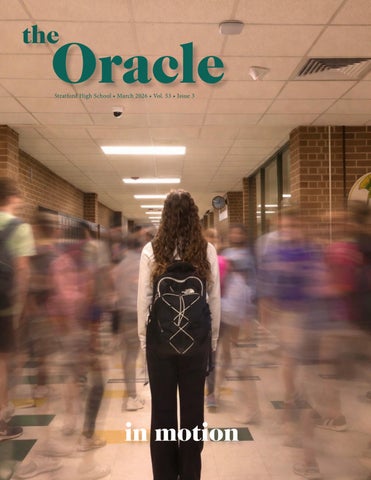
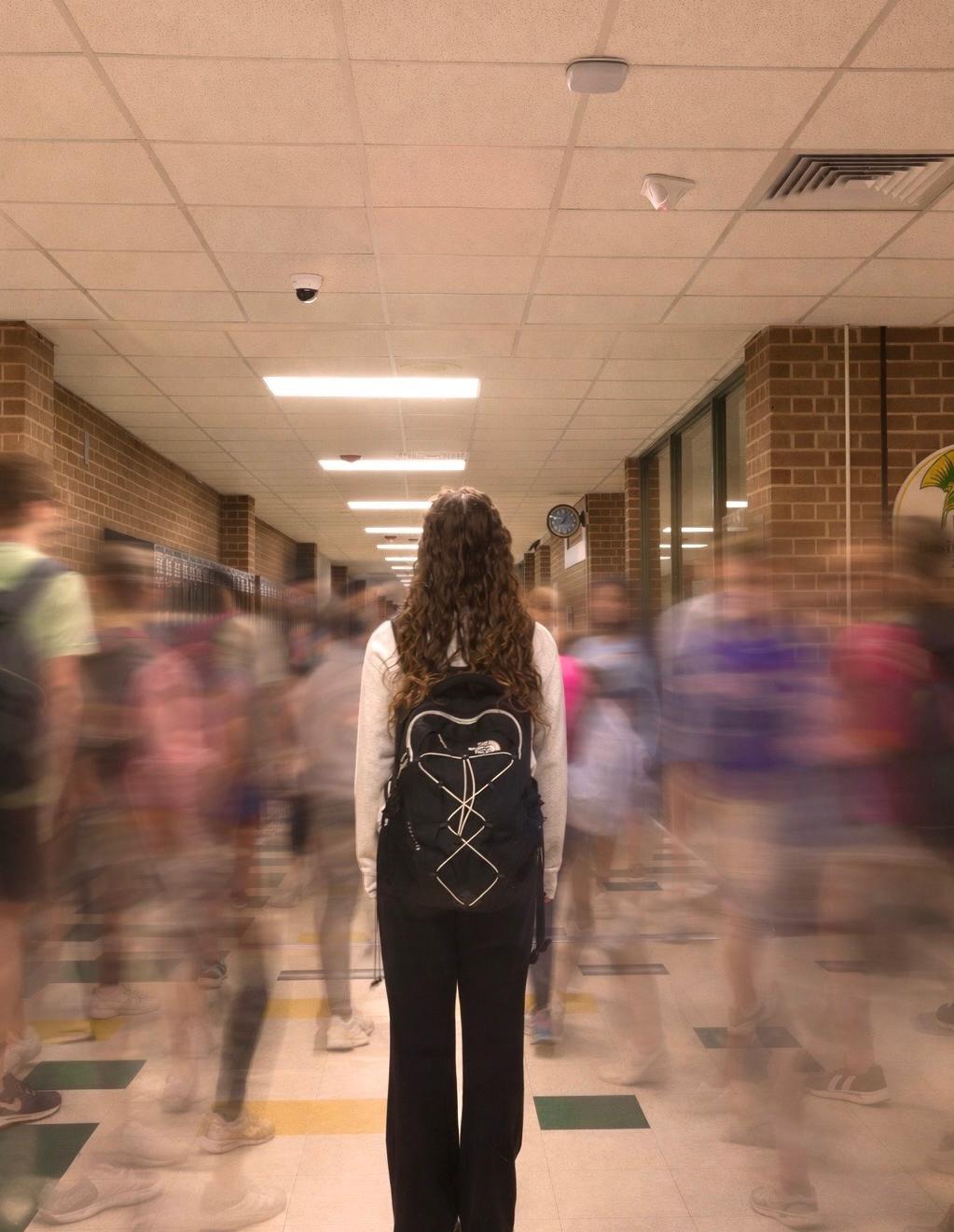
There is something unmistakable about Stratford in motion. Often, hallways blur between classes, and after-school hours stretch long past the final bell. Ice skates carve across the rink, speeches are rehearsed one more time, cameras roll on student-produced films and auditoriums fill for yet another event. Everywhere you look, something is happening.
This issue, In Motion, reflects that constant movement. Stratford is not defined by a single activity, achievement or title. It is a place where creativity, competition, collaboration and passion exist all at once.
Stratford is a community driven by energy and possibility, a melting pot of ideas and talents shaping one another. The movement you see is not chaos; it is growth. It is students and staff discovering what they love and pushing themselves.
In this issue, we invite you to pause within the motion and to look closely at the moving parts that make Stratford what it is. Stratford is never just one thing; it is everything happening at once.

STAFF
Editor-in-Chief*
Natalie Patranella
Associate Editors*
Bella Smith
Sophia Yarborough
Online Editors*
Jacob Cobb
Hailey Wisdom
Photo Editor*
Molly Kate Minyard
Creative Director*
Reese Spradling
Reporters
Melina Banan
Foster Burton
Ryann Calvert
Aubury Craff
James Gardner
Happy reading, Natalie Patranella
03 - 09
STUDENT LIFE
Beyond the Argument
How the speech and debate team prepares for competition
Waving Flags
Two color guard seniors explain the program
Post-Class Pit Stops
Our favorite “third places” around the Stratford area
Rodeo Bingo
Complete the Houston Rodeo-themed bingo card
Overheard
Hear what Spartans are saying in the hallways
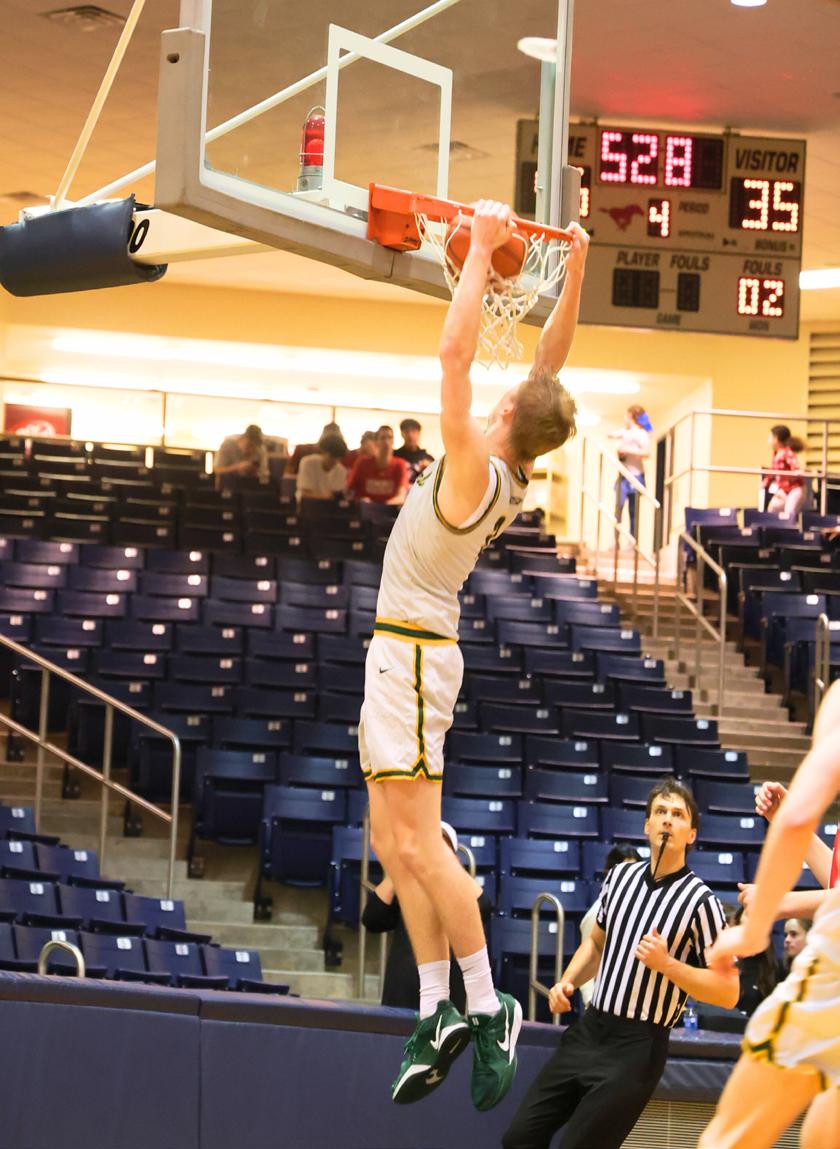
Winter Recap
A collection of photos from the third nine weeks
11

Zoe Greene
Olivia Henderson
Jackson Hiler
Ryan McDowell
Ava McKenzie
Sebastian Mendoza
Michelle Moon
Anastasiia Petrenko
Rhea Roy
Sara Roy
Caden Stone
Claire Whalen
Adviser
Sara Boyle
*Editorial Board
EDITORIAL
Oracle Outlook
Teacher censorship harms students’ overall education
12 - 15
FEATURE
Breaking the Ice
Two students give insight into competitive ice skating
The Final Showdown
Two filmmakers detail different ideas and aspirations
Elmore than Meets the Eye

Business teacher Scott Elmore discusses his involvement on campus @shsoracle issuu.com/thestratfordoracle
ARGUMENTBeyond the W
How the speech and debate team prepares for competition
hen you hear the term “speech and debate,” what do you think of? You may imagine students in professional attire standing behind lecterns on an illuminated stage as everyone discusses the topic with varying degrees of interest. While those assumptions may be true, there is more to the activity than just discussing a topic.
“Whenever you are signing up to take the class, you’re also signing up to become part of a team,” speech and debate teacher Carlos Diaz said. “We go to tournaments throughout the spring and fall semesters. For Debate I, specifically, the fall semester is spent on learning what speech and debate is and learning about all the events that are offered.”
One event the Stratford debate team is involved in is Congressional Debate, where students compete in rounds, acting as representatives and debate whether a bill should pass or fail. For each tournament, there’s a preset list of five bills they need to debate, and they generally write speeches on the first three.
“Based on what the bill is doing, we research how it’s going to affect Americans, how it’s going to affect economics and society and usually we pick a side then we write a speech from there,” sophomore Fabian Maldonado said.
Not all speech and debate events center around policy and argument. Some events allow students to express themselves through storytelling and imagination, one of those events being Program of Oral Interpretation, or POI. POI is an event where the speaker performs a speech with a group of lit erary pieces, such as poems,
prose or drama, that all connect to one theme. The speaker uses their voice and expressions to bring the pieces to life, but does not use memorization or props.
“When I go about choosing a topic, I go off of either things that are going on in the current world or personal experiences that I’ve gone through,” senior Hampton Bonnette said. “Then I take a bunch of pieces that I know will hit hard for some people and I put them all together, and I make them into one piece and think about how I’m going to give the audience emotion.”
Competition season may look a little different for Diaz, as the coach for the team. There are a few technical matters that he must consider, such as ordering the bus, looking at the calendars, scheduling to ensure there are no conflicts and figuring out if the team needs a bus or if they could drive themselves to the tournament.
“Preparing for debate takes a lot of in class work,” Diaz said. “I, thankfully, also have my Spartan Time, which I like to use for debate. Fortunately, I have a lot of my varsity members during that time, and once the novices start competing, they start coming in during Spartan Time as well so we can all collaborate.”
Many people see speech and debate as simply arguing over a topic, but it’s much more than that. The deeper people delve into debate, the more they learn not only about the subject but also about themselves.



Speech & Debate teacher
Mr. Diaz

so much to me and know that my voice is going to impact so many people,” Bonnette said. “It helps with public speaking and gets you out of your comfort zone, and I found so many lifelong friends along the way.”
PHOTOS BY NATALIE PATRANELLA (12) AND CADEN STONE (11)
ILLUSTRATED BY MELINA BANAN (12)
Nicolas Alonso (10)
Carly Morua (10)
Waving Flags
Two color guard seniors explain the program
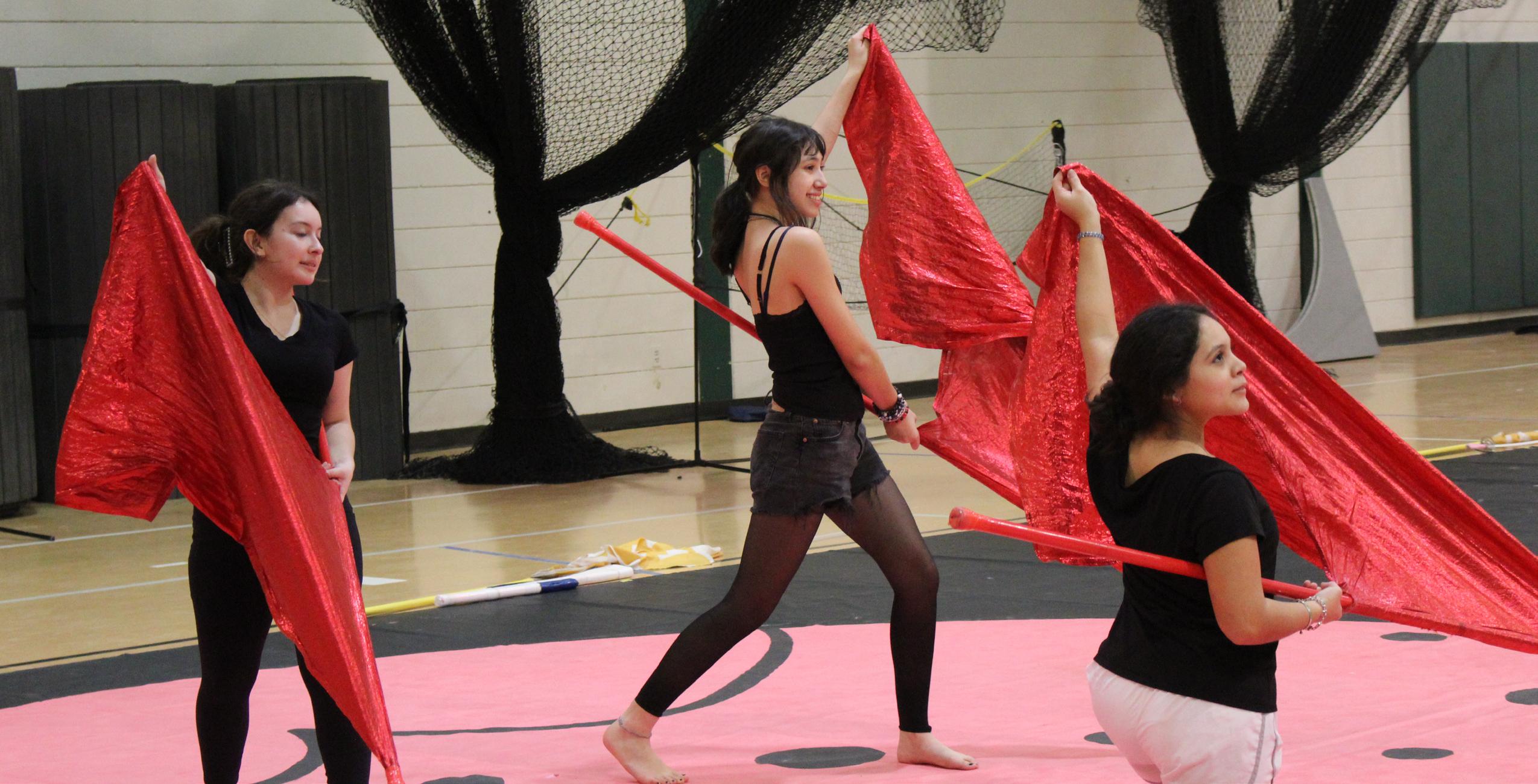
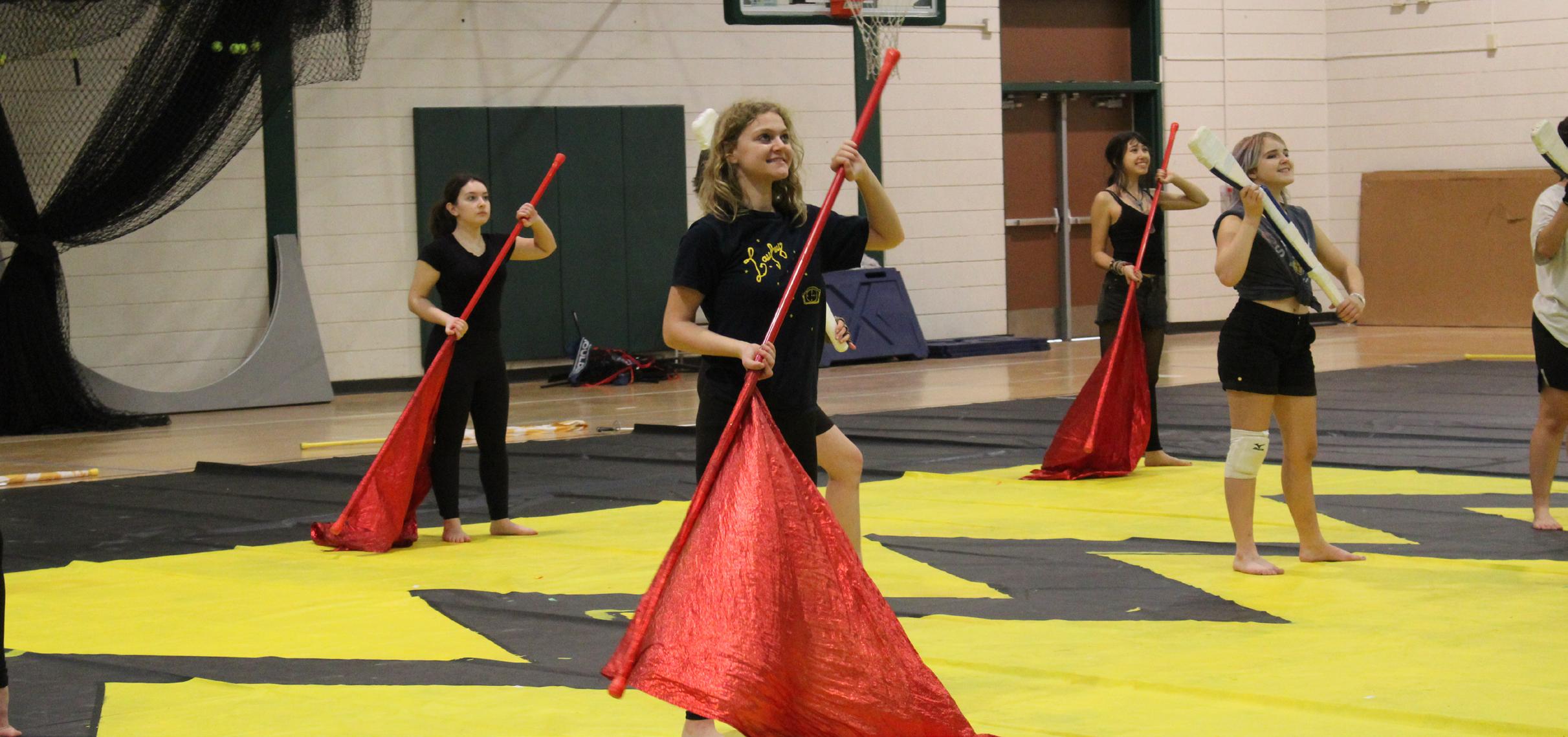
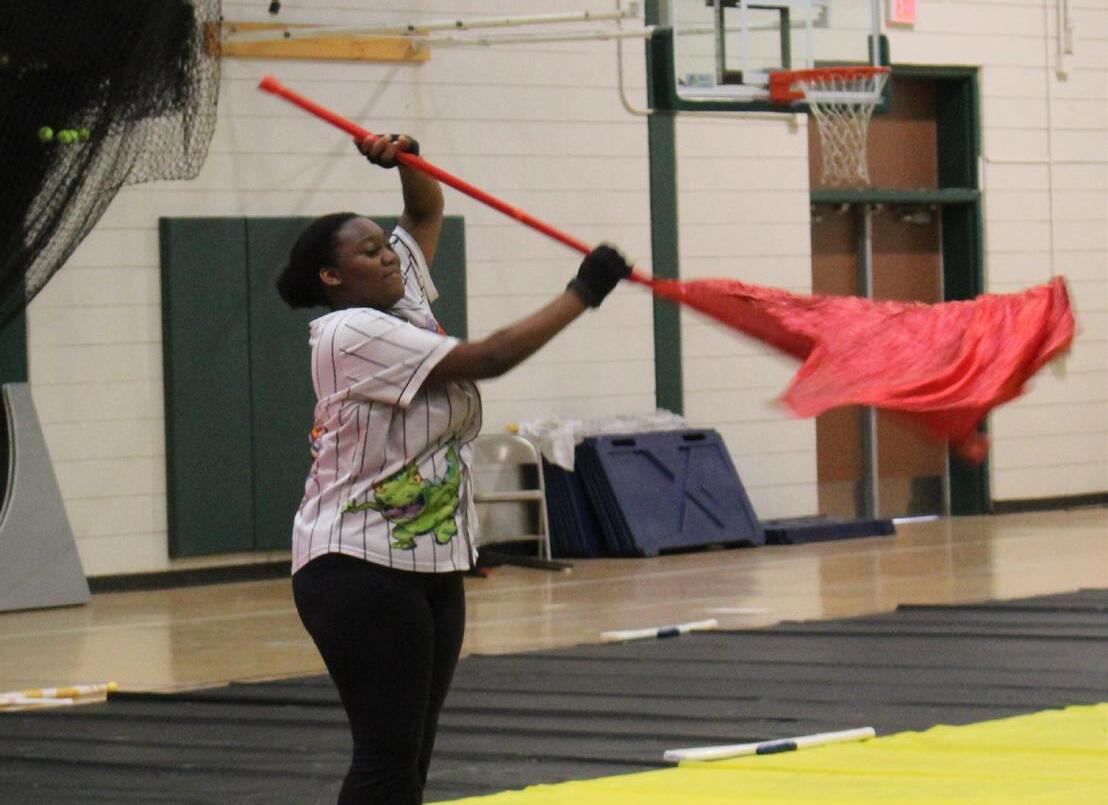
While band is associated with music and instruments, it’s not the full story. During marching season, the fall show that band performs during half time, the band is not only judged on its musicality but its visual performance. This visual performance is enhanced by the color guard, a section of band consisting of dancers using flags, rifles and sabres. While color guard is a section of band and performs with the band during marching season, colorguard is distinctly different from the rest of band.
“Color guard is an exclusively visual art form,” Captain Georgia Mustachio expands, “while you can close your eyes and listen to a band, you have to watch color guard to see our technique.”
During the fall semester, color guard performs with the rest of band in their UIL Marching show. During the spring semester, however, color guard performs separately from band. Each year, color guard puts on its own show to bring to competition, called winter guard. Each year, the winter guard show takes on a different theme; previous years include Bottom of The Deep Blue, Home and Wayfaring Strangers. This year the show is called Good Grief, and they’re taking their inspiration from The Peanuts Cartoon.
“Our song this year is a remixed version of the song from ‘A Charlie Brown Christmas,’” Mustachio explains, “We’re not necessarily performing as the characters themselves but as the background dancers.”
This year’s show will be different from past years’ shows, as its new color guard director Clarisa Centamore’s first show.
“Throughout my time in color guard, I’ve been under three different directors,” Mustachio explains, “It’s been really interesting seeing how each director choreographs.”
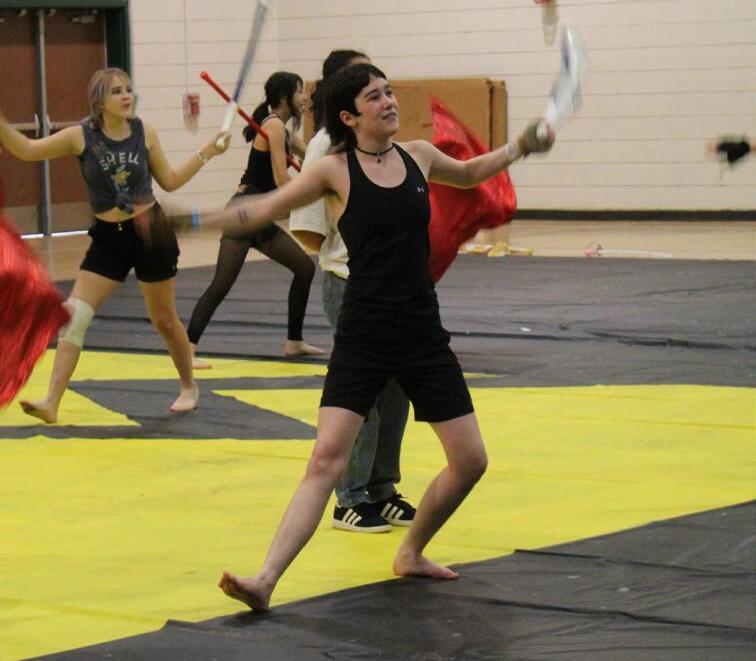
Winter guard is color guard’s solo competition and functions completely differently from marching band competition. For one, competitions happen inside instead of outside in a stadium. This
difference means that there’s a bigger emphasis put on technique.
“You’ll see a lot more focus on dance technique than you do during marching season,” Mustachio explains, “You’ll also see more complicated tosses since there isn’t wind.”
Winter guard performances are also typically smaller, creating a more intimate environment among team members.
“While entire bands can be 100 plus members, winter guard can be as big as 40 members and as small as 12 members,” Mustachio explains, “It means that winter guard is a more tight-knit group when compared to marching season.”
While the guard will spend months preparing for competition, this one performance is the only one that the judges get to see.
“Teams perform in front of judges and are scored on equipment, movement and overall effect,” senior Tania Lopez describes.
When the competition day comes, it’s an all-day ordeal.
“I’ve had call times as early as 5 a.m. and as late as 9 a.m.” Mustachio explains, “If you’re lucky, you’ll get back at 10 p.m. but it’s typically closer to 11 p.m. I’ve gotten home at midnight multiple times.”
When the team reaches campus on competition day, the members load up the bus with their equipment and head over to the
competition, which is typically at another high school. Once they get there, they get into warmups.
“Warmups start with a group dance warmup,” Mustachio said. “Afterwards, you have time to do whatever prep you need to do before the performance.”
Once it’s their time to perform, they enter the gym with their floor, a tarp with a design matching the theme of the show and equipment and wait behind the time line, a line on the floor that once they cross starts their competition time, and wait for the previous team to leave.
“If you cross the time line before the other team leaves, you get a time penalty.” Mustachio explains. “You only have at least four and a half minutes to lay down your floor, actually perform your show and get out of the gym.”
Crossing the time line too early isn’t the only penalty that they have to worry about. Having equipment that isn’t taped properly, having the director too close to the performance or going out of bounds along with other penalties can take off anything from a
tenth of a point to multiple off the final score, depending on the penalty.
Following its performance, the team has time to rest until the awards ceremonies starts.
“The big part of awards is finding out whether or not we advanced to the next round,” Mustachio explains.
The team has had a successful track record in competition, making it to state the last two years. Last year, the team finished their season placing second at state, and hopes are high going into this season, especially for the seniors on the team.
“It feels exciting and emotional,” Lopez shares, “since it’s my last season, so every performance feels special.”
For Mustachio, having more people aware of what color guard is is incredibly important to her.
“It’s a great program,” Mustachio explains. “Unless you came from a middle school with a color guard program, you [are] most likely going into high school [and haven’t] even heard of color guard. Color guard has been like a second family to me and I wish that more people got to experience it.”
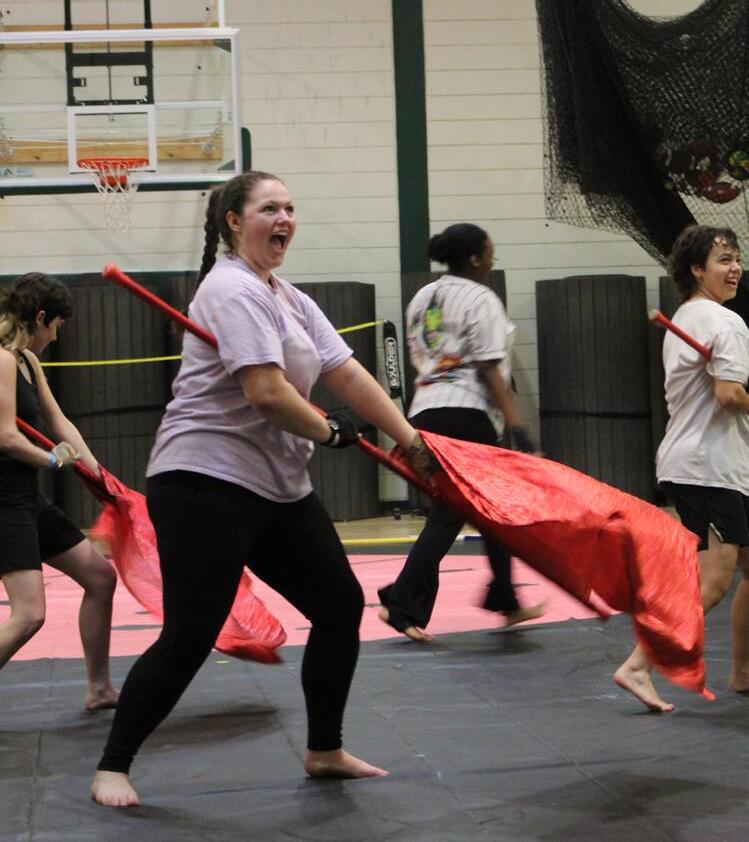
Georgia Mustachio (12) practices her routine
Post-Class PIT STOPS
PIT STOPS
Our favorite “third places” around the Stratford area
TREE HOUSE
Tree House is a lovely little café less than two miles away from the school, making it a five-minute drive and a half hour’s walk. There, they serve up frozen yogurt, drinks and a guaranteed great time.
“The vibes are really cozy and warm,” sophomore Amiyah Foreman said. “You can add any toppings on your yogurt; the wide variety is really nice to have, especially if you’re a picky eater like me.”
New flavors are introduced monthly to ensure a fun visit every time. Not only that, but they have non-fat, syrup-free and kosher flavors available abundantly. Tree House offers a lot of comfy seating and even board games, which is perfect for after-school studying or a hangout with friends. Whether it’s cinnamon apple tea in the winter or hand-shaken Vietnamese iced tea in the summer, Tree House is an exquisite option to hang out with friends.

BOBO TEA
Just down the road from school, Bobo Tea is a frequent choice for students who want a place to sit, get a drink and stay for a while after the school day ends.
“The vibes are really chill there, and I know all the staff,” freshman Kaylee Weisenhorn said, who enjoys getting drinks there to hang out with her best friends.
The menu features a massive selection of flavors and styles to choose from. Popular choices like their classic brown sugar milk tea or fruit freshers keep the menu interesting for regular visitors, and the customizable topping options allow for a different drink every time.
Beyond the menu, the shop is stocked with entertainment to keep friend groups busy.
“They have board games and delicious beverages,” sophomore Caroline Ussher said.
Whether you’re meeting up with a large group or just want to play a game while you finish your tea, Bobo Tea is a great local option for an afternoon hangout.
WRITTEN BY
RHEA ROY (9), SARA ROY (9) AND HAILEY WISDOM (12)
PHOTOS BY RHEA ROY (9), SARA ROY (9), BELLA SMITH (12) AND SOPHIA YARBOROUGH (11)
CHEZ KOBAYASHI
If you’re looking for a quick little stop after school to pick up delicious and one-of-a-kind sweet treats, Chez Kobayashi is the place for you!
A quaint pastry spot just three minutes from school, Chez Kobayashi Pastries is family-run, warmly staffed and carries an innovative variety of French dishes, cooked with a unique Japanese spin. Every dessert is Instagram-worthy, whether it’s their signature tropical fresh fruit tarts or sophisticated strawberry shortcake.
These delicious pastries are also decorated exquisitely with powdered sugar, fruit and herb garnishes, so get your camera ready! It isn’t just savory food either; for lunch options, they have sandwiches, savory quiches and crepes. This eatery is a truly must-visit for all sweet tooths and fusion-lovers at school.


BLUE WILLOW
Just three minutes away from campus is the charming little Blue Willow Bookshop, perfect for browsing.
“Blue Willow is cute and has so many cool events,” freshman Reilly Tran said.
While the shop has more of a boutique feel than a typical bookstore, the staff ensure you can get whatever you need.
“Their actual physical selection is lacking, but you can have them order a book for you,” Tran said.
The shop is known for being welcoming and easy to navigate, regardless of what you’re looking for.
“You never feel like there’s not a lot of books or options,” freshman Anne Larrabee said. “They do a great job of accommodating all different age groups.”
Whether you’re meeting up with friends or just want to see what’s on the shelves, Blue Willow is a solid local option for students. Many staff there are also students or former students, which makes every experience there personal. They also have frequent book signings, festivals and author visits for special events.

OVERHEARD
Hear what Spartans are saying in the hallways
COMPILED BY NATALIE PATRANELLA (12)

I can’t be responsible for what I said before 8:00 a.m.

I just watched a kid chase a grape down the hallway.

Just hear me out. What if squirrels are secretly government spies, and that is why they are all over the place?

I can totally see Mr. Barnes using roller blades.

If a hotdog came up to me and started speaking in a high-pitched voice, I would step on it.

That’s it. I’m quitting school and joining the circus.
RODEO BINGO
CREATED BY ZOE GREENE (9) AND MICHELLE MOON (12)
Watch a Mutton bustin’ competition
Eat a fried Oreo
Watch bull riding Buy rodeo merchandise
Eat a turkey leg
Watch a concert at the rodeo
Ride the Ferris wheel Eat a funnel cake
Pet a farm animal
Win a carnival game









WINTER





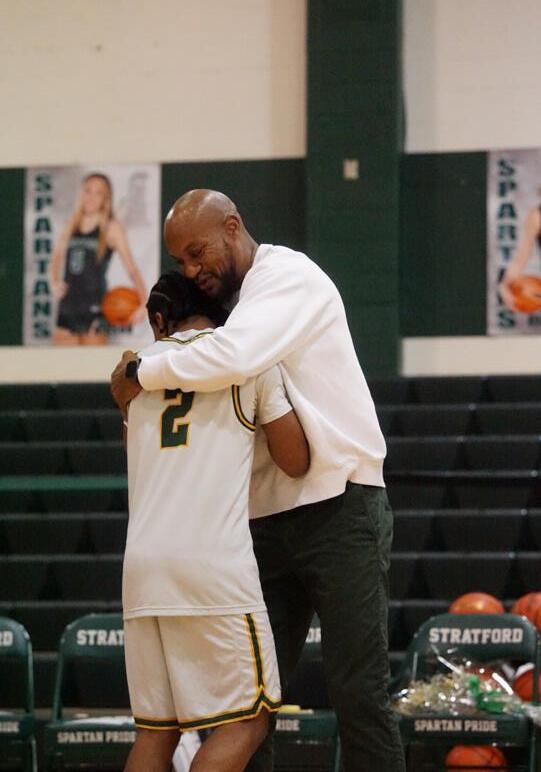
PHOTOS BY: SCOTT ELMORE, SCARLETT GLAZNER (12), BRENNA LADERER (12), LANCE MOSBY,







RECAP
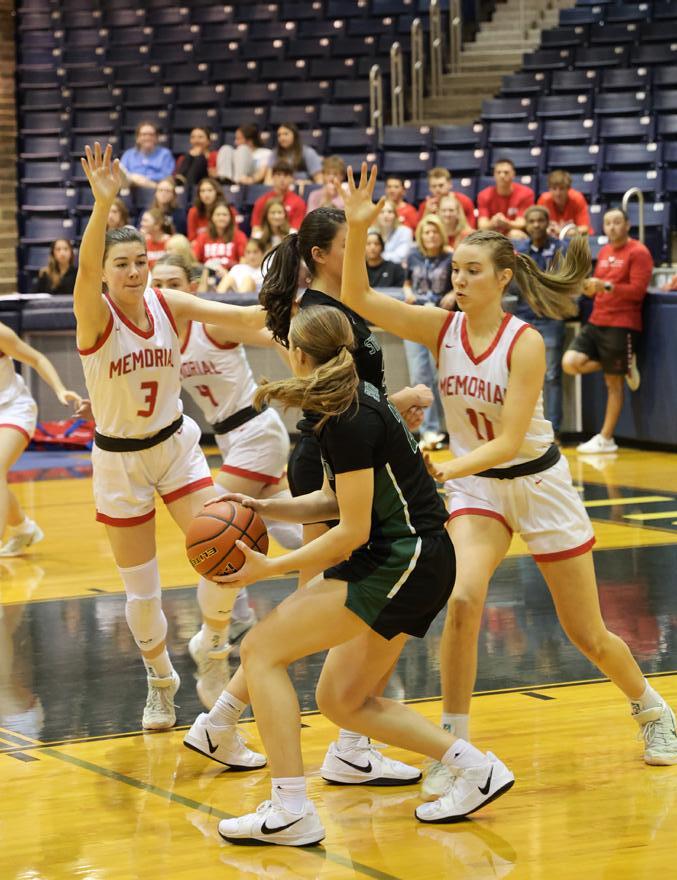

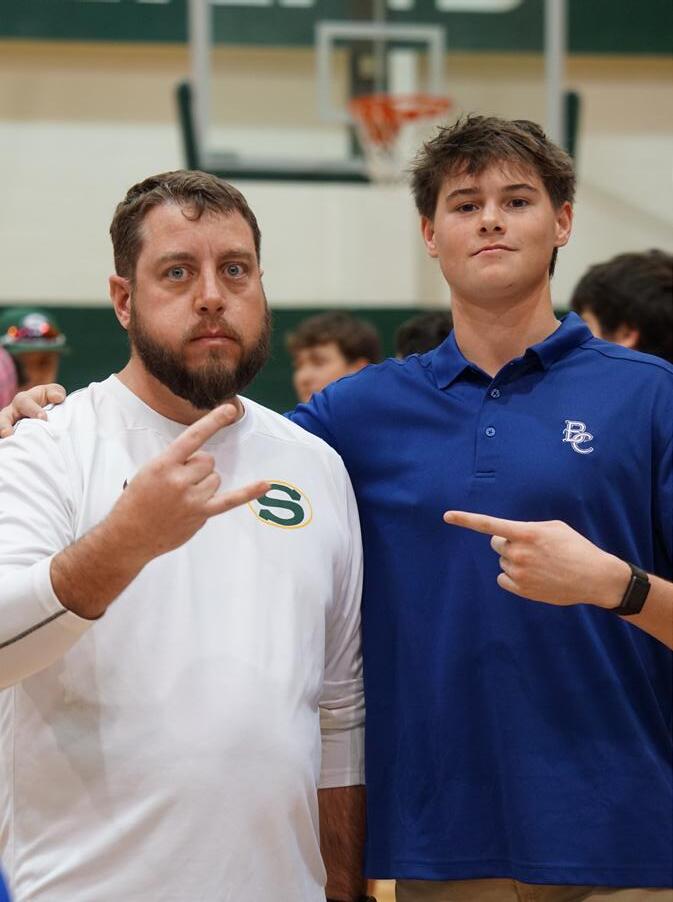

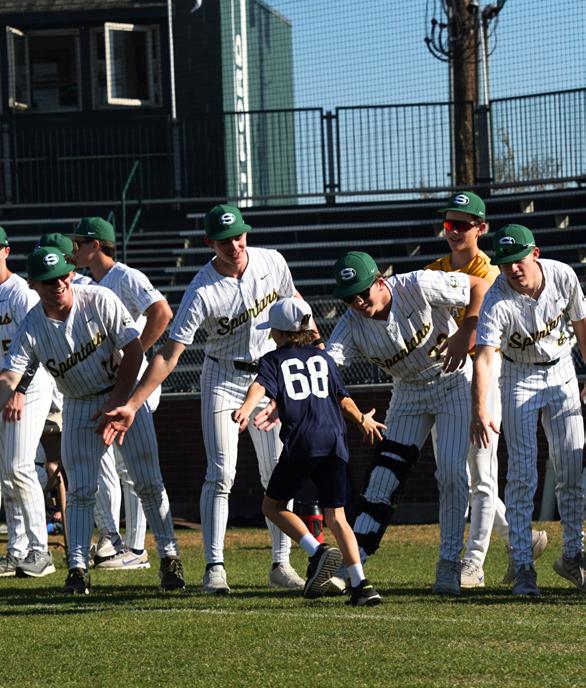



Student Life
LEAH CLAIRE NALL (12), REESE SPRADLING (12), CADEN STONE (11), KENDALL TERRY AND CHRISTI TULLOS



ILLUSTRATED BY SOPHIA YARBOROUGH (11)
Teacher censorship harms students’ overall education
WRITTEN
BY
SOPHIA YARBOROUGH (11) AND AVA McKENZIE (12)
In early February, the Texas Education Agency released a warning that detailed consequences as a result of any help or participation in anti-ICE student walkouts and protests during the school day.
In addition, Texas A&M is set to terminate its women’s and gender studies degrees due to a new policy that restricts professors from discussing certain topics relating to race and gender.
And on top of all of that, the country is facing unprecedented mass book bans that have led to drastic changes in English class curricula.
It seems as though teachers across America are left with one big question ringing through their minds: Is this all fair?
Many would agree that the role of a teacher is imperative to the developmental success of every student. They provide students with skills in critical thinking and complex understanding, allowing students to form their own opinions and develop an original viewpoint. However, the recent critics of modern teaching methods beg to differ. Critics believe these “difficult” or “uncomfortable” ways of learning are harmful to students, even going as far as to claim them as indoctrination.
In reality, these learning methods are quite the opposite. Looking through banned books lists, we can’t help but notice that most titles include topics having to do with marginalized races or genders, and this is by no
means a coincidence.
There have been many instances of educators being directed to remove certain books from their libraries or vet “controversial” titles based on vague state criteria. This doesn’t just purge books; it eliminates the necessary learning experiences that come from discovery. Exposure is important. Understanding people who are different from you is important. Most people don’t get that until they go to school and are taught about it by their teachers.
Whether it be a book by Toni Morrison read in English class or a history lesson about the U.S. and its treatment of Native Americans - teachers strive to help their students learn about different people. Exposure brings understanding which leads to compassion.
Additionally, teachers are increasingly being forced to self-censor for fear of losing their jobs. They avoid speaking about anything that could be seen as a political statement. When a teacher is too fearful to voice their civil opinions, the classroom is less of a breeding ground for critical thinking and becomes a place of uniformity.
Critics should prioritize student growth over comfort to prevent a hollow future for the next generation. We must trust teachers to foster truthful conversations and build leaders that are capable of understanding the world they’re leading.
Oracle Outlook is a recurring section featuring a student opinion that the Editorial Board believes to reflect the majority of the Oracle staff’s opinion. All opinions are our own and do not attempt to express an official school stance. The Oracle values readers’ opinions and welcomes letters to the editor, which may be submitted through our Instagram @shsoracle or in person to room 231.
Oracle Outlook
Breaking the Ice
Two students give insight into competitive ice skating
In a state better known for its hot summers and Friday night football, ice skating might seem a bit out of place in the athletic world. Despite this fact, Stratford has found students who compete and most importantly thrive in figure skating. We interviewed two girls, juniors Claudia Jones and Kaitlyn Silva, on how they came to the sport and manage it amongst school. Figure skating is often seen as a graceful performance set to music, gliding angelically on the ice. But, behind every routine is years of discipline, early morning and relentless practice.
Jones started her journey of ice skating at five years old. She participated in the Learn-to Skate program at Memorial City Ice Rink right here in Houston. Even though she had to quit when moving to Miami Beach, she came back after COVID and continued pursuing the sport.
“Ice skating stood out to me because of how the sport blends strength and balance with artistic expression,” Jones said. “I enjoy being part of a sport that is different from more common sports and allows me to express creativity while challenging myself.”
Jones joined a Theatre on Ice team, and two years later her team was selected to represent U.S Figure Skating in France, where they earned a bronze medal in the Open Division. She practices four to five times a week for about three hours each session while balancing school. Jones

Kaitlyn

WRITTEN BY OLIVIA HENDERSON (9) AND CLAIRE WHALEN (9)
has three skating coaches and one dance skating coach.
“I value the support of my coaches, especially my main coach Yulia, who is one of my biggest role models and someone I turn to for guidance and encouragement,” Jones said.
A typical practice for Jones includes off-ice stretching, onice warmups, moves in the field, spin training, jump practice, working on her free skate program and ice dancing with her coach as a partner. Jones has competed individually and with her team, but has taken time to better her skating for performing and being a part of figure skating in college. Silva started her ice skating journey with every little girl’s favorite
movie, Frozen. What started as an innocent Frozen dream soon grew into a passion, and talent Silva naturally embraced.
“Everyone is always there for each other and lifts each other’s spirits up [at the rink],” Silva said.
Silva’s dream became reality at the ripe age of 9 when she became regional champ in her level. Silva’s accomplishments didn’t stop there; she also earned a gold medal for skating moves, competing nationally against many skaters all over the U.S. Silva took the saying “practice makes perfect” to heart.
“I practiced three to four times a week [while] juggling cross country practice in the mornings and skating practice after school,” Silva said.
But there are some cons to falling in love with an uncommon sport.
“I compete four times a year, and most of the competitions are out of state,” Silva said.
Still, Silva is a shining example of determination and grit in an uncommon sport. Through interviewing with two Stratford students involved in figure skating, it became clear that this sport is far more than competition. Both of the skaters spoke about the dedication required to balance school, early practices and personal goals, as well as the perseverance it takes to love an uncommon sport. Their experiences highlight their passion and dedication to ice skating. Figure skating may not be common in Houston, but these skaters show that talent doesn’t melt just because the weather’s warm. While ice is rare in Houston, dedication like theirs is even rarer, and that’s what makes their skating journey even more special.
Silva (11) does a Biellmann spin during a performance
PHOTO COURTESY OF KAITLYN SILVA (11)



THE FINAL
SHOWDOWN
Two filmmakers detail different ideas and aspirations

SEBASTIAN MENDOZA XAVIER ALEXANDER
In Stratford/Guthrie’s film program, creativity is shaped by competition, collaboration and the strive to make your mark. Seniors Sebastian Mendoza and Xavier Alexander display this quality well. These two student filmmakers have differing film philosophies, and their close proximity has pitted them against each other, but they don’t see it that way.
Mendoza describes himself as someone still working out what he wants. That sense of exploration is evident in his work, in which he leans heavily on emotion and comical turns rather than strict rules or stylistic boundaries.
Alexander, on the other hand, gravitates toward simplicity and authenticity. His favorite movie, “Ratatouille”, displays this mindset.
“I grew up with that film. It was my quarantine movie,” Alexander said. “[‘Ratatouille’] had comedy, drama, and it just always made me feel good by the end.”
For Alexander, filmmaking is about comfort, clarity, and honest expression; he wants to create something that feels genuine without overcomplicating it.
Those differences fuel what both students describe as a competitive but ‘friendly’ relationship.
“It’s a competitive relationship, but it’s more about motivation than rivalry,” Mendoza said.
Instead of trying to outdo one another, both filmmakers push themselves to be better simply because the other exists. Alexander’s philosophy centers on originality and risk-taking.
“I feel like whenever you’re inspired by another person’s piece, that can rub off on you,” Alexander said. “I really want to have as free of an expression as possible.”
Because of that, he avoids copying styles, choosing instead to experiment; even if it means failing.
“Because of Guthrie and Stratford, I have access to equipment,” Alexander explains. “It gave me an opportunity to fail, which is great.”
That access has been crucial to his growth. Stratford and Guthrie’s equipment and production tools gave him the freedom to test ideas without fear; acting
WRITTEN BY FOSTER BURTON (12), JACKSON HILER (12) AND RYAN MCDOWELL (12)
BY
AND

as a safety net, helping him develop confidence in his own voice, of which he has plenty.
Mendoza approaches inspiration differently. His favorite movie, “Phantom Thread” by Paul Thomas Anderson, resonates with him because of its emotional depth.
“It holds emotion really well and resonates with different parts of my life depending on where I am,” Mendoza said.
While he admits the film doesn’t directly shape his style, it reinforces the core value he has when creating: making what you love.
“My philosophy is really just to make something I enjoy and find entertaining,” Mendoza said.
That mindset carries into his projects, especially his favorite one so far. Mendoza describes it as “the most collaborative project I’ve done,” adding that “everyone was genuinely trying to make it better.”
Rather than focusing on competition or personal credit, he wanted to create something enjoyable for both the cast and crew; a film being driven by shared passion.
Mendoza credits much of his growth to mentorship.
“Mr. Rodriguez helped me a lot with the technical aspects of filmmaking,” Mendoza said.
While Alexander benefited heavily from access to equipment, Mendoza gained guidance; learning how to refine ideas, solve problems, and turn raw concepts into finished films.
Both students trace their love of filmmaking back to early creativity. Mendoza says he’s “always wanted to work in entertainment,” starting out with YouTube videos and Lego stop-motion films as a kid. That early experimentation laid the groundwork for the filmmaker he’s becoming now.
In the end, the rivalry between Mendoza and Alexander isn’t about who would win in a fight or whose films are better. It’s about how two different philosophies can coexist, and even thrive, within the same program. One values emotional resonance and enjoyment; the other prioritizes authenticity and risk. Together, they represent what Stratford does best: cultivating motivated creatives, giving them room to fail and helping them discover their own style and path.

PHOTOS
JACKSON HILER (12)
BELLA SMITH (12)
MORE than meets the eye
Business teacher Scott Elmore discusses his involvement on campus
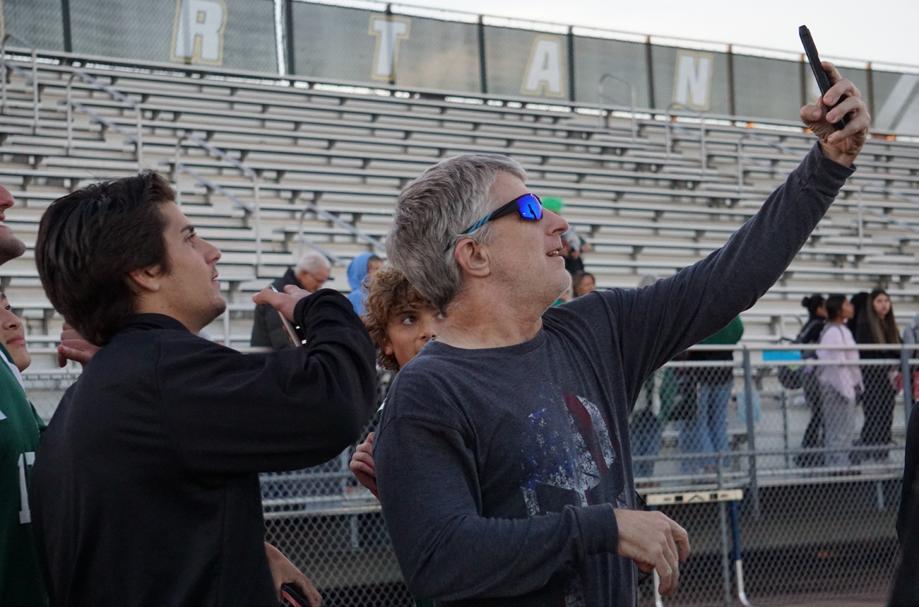
You have probably seen business teacher Scott Elmore on the field at a game, at a performance or walking through the halls on a dress-up day fully committed to the theme. Known for his energy, school spirit and constant support of students, he has become one of the most recognizable and involved staff members on campus. But the path that led him to this role started in a much simpler, unexpected way.
Elmore grew up going to school in the SBISD district and attended Memorial High School. He later went to Baylor University, where he double majored in marketing and real estate. When he decided to pursue education, the University of Houston reviewed his transcript and placed him on a deficiency plan, outlining the courses he needed to complete to become certified.
“The fastest way into the classroom was to teach business,” Elmore said.
Elmore began teaching immediately after college as a substitute and officially became a full-time teacher about six years later. Over the years, Elmore has taught nearly every course imaginable in the Career and Technical Education world.
“I’ve taught everything under the sun, and when they told me to do it, I did it,” Elmore said.
Among all the classes he has taught, one that stood out as a favorite was Multimedia, before it was absorbed by the technology department. His resume includes a handful classes like Accounting, Business Information Management, Dollars and Cents, Emerging Technology for 6th graders and PE classes at Westchester, to name a few.
He later spent ten years teaching at Westchester before eventually making his way to Stratford, where he is now in his thirteenth year and continues to be a strong presence in school life. For Elmore, refereeing was never part of

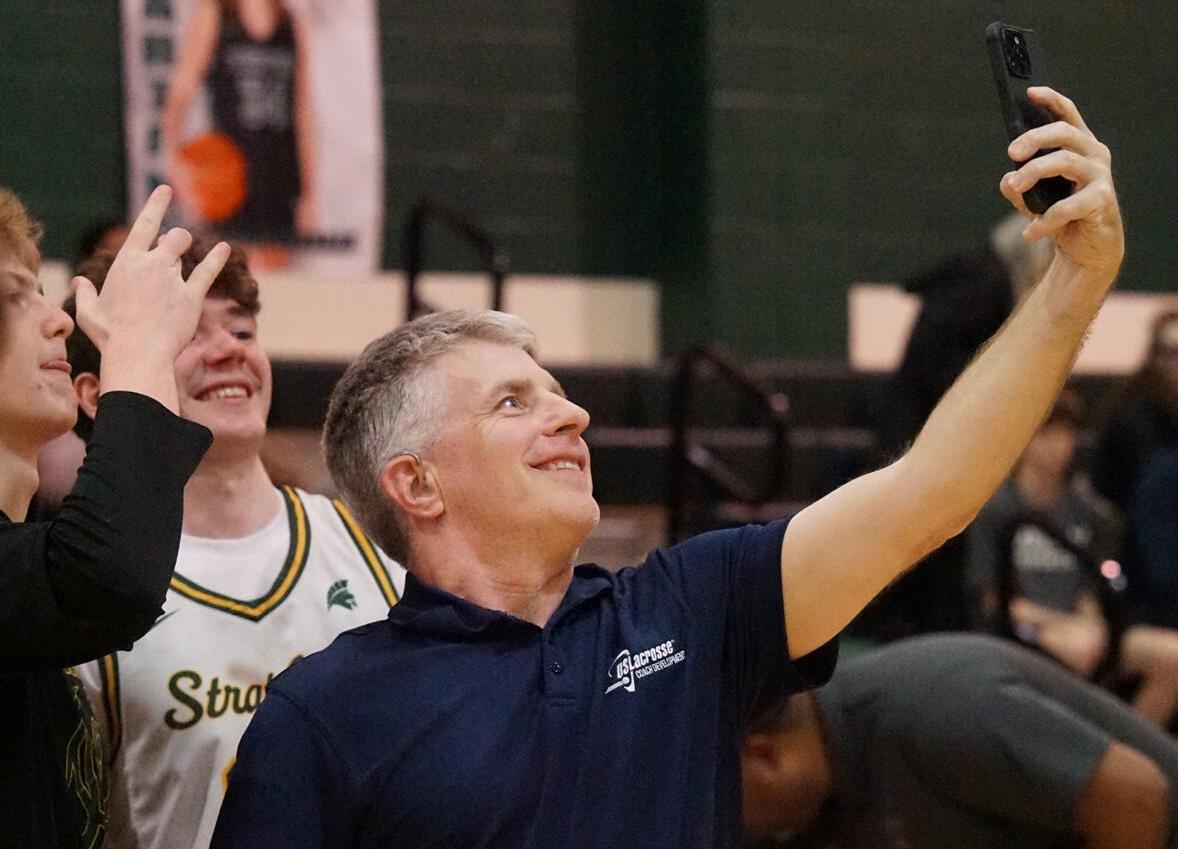
some grand plan. It simply grew out of circumstance. While working as a substitute teacher, he began officiating basketball games as a way to stay involved and learn a different side of life. Over time, that opportunity opened the door to lacrosse refereeing as well.
“[My teaching and coaching career] kind of just took off from there,” Elmore said.
What began as a side job eventually turned into decades of experience. He officiated lacrosse for about 25 years and basketball roughly 22, before taking time off during the pandemic. That break led him to an unexpected realization: he didn’t miss officiating basketball as much as he thought he would, which prompted him to self-retire from the sport.
One of Elmore’s favorite memories comes from coaching. While coaching a freshman girls basketball game before attending a varsity match right after, he earned a technical foul after complaining about missed calls that the refs made. One referee casually asked Elmore if he was officiating later that night. When Elmore replied “yes” at a 7 p.m. game at Clear Springs, the referee immediately called a technical foul. Looking back, Elmore laughs about the moment.
“I totally deserved it,” Elmore admitted, calling it one of his funniest coaching stories.
Elmore’s presence at Stratford events is intentional. Having spent years at a school without sport programs, he understands how important extracurriculars are to student life. Many of the students he has taught have been involved in athletics or fine arts, and attending their events is his way of showing support beyond the classroom.
“It’s a way to show [students] that I do care about all the things that they do,” Elmore said.
Above all, Elmore believes in school spirit, and he lives it one game, performance and student at a time.
WRITTEN
RYANN CALVERT (12) AND JAMES GARDNER (11)
PHOTOS BY
CADEN STONE (11) AND BELLA SMITH (12)