

STATE BAR OF SOUTH DAKOTA





EVEN SUPERHEROES ARE BETTER WITH A TEAM

2 Cir- Emily Maurice, emilym@halbachlawfirm.com
3 Cir- Anthony Teesdale, tony@teesdalelaw.com
4 Cir- Kimberly Kinney, kim@kinney-law.com
5 Cir- Gerald McCabe, jerry.mccabe@state.sd.us
6 Cir- Ellie Bailey, e.bailey@riterlaw.com
7 Cir- Matthew Naasz, mnaasz@gpna.com
At Large: 1 Cir- Teramie Hill, teramie.hill@usd.edu
2 Cir- Amber Mulder, amber.mulder@siouxfalls.gov
4 Cir- Sarah Covington, sarah.covington@westriverlawandmediation.com
5 Cir- Stacy Johnson, sjohnson@rwwsh.com
6 Cir- Kristen Edwards, kristen.edwards@state.sd.us
7 Cir- Steven Blair, steven.blair@state.sd.us


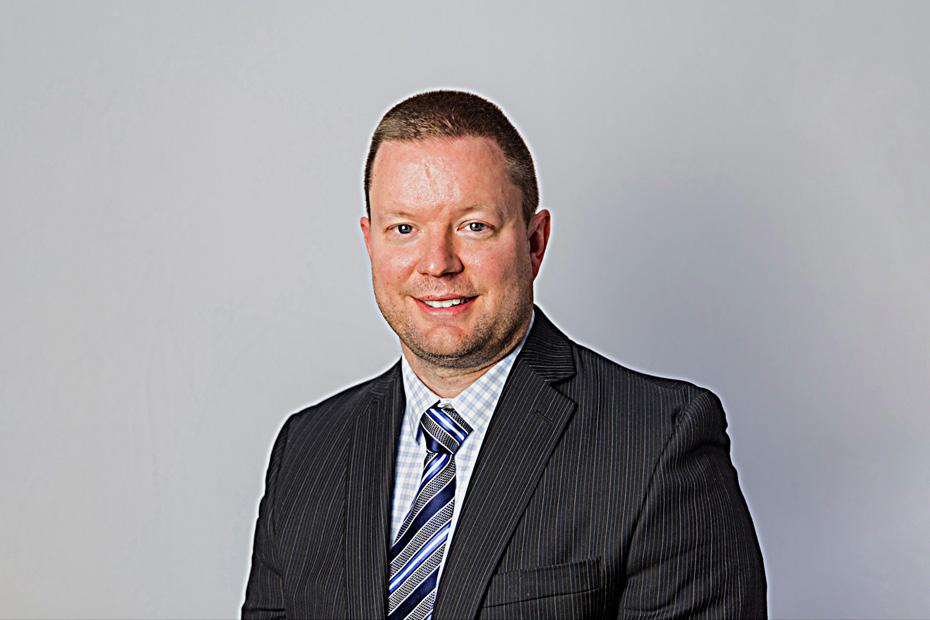
A Season of Gratitude, Reflection, and Service
From John Richter, President of the State Bar of South Dakota
Dear Members of the State Bar,
As we approach the close of the year and prepare to gather with loved ones, I find myself reflecting on the many moments, both big and small, that have defined our work in 2025.
This year, we’ve centered our efforts around the theme of Connection. In doing so, it has become abundantly clear that meaningful relationships shape the culture of our profession. I’m grateful to each of you who showed up, shared your voice, and helped build a more inclusive and engaged Bar. Whether you attended a mixer, mentored a young lawyer, served on a committee, or reconnected with a colleague, your contributions mattered.
I don’t think this is said enough. Still, I’m especially thankful for the many public and private employers across our state who support their attorneys and their attorneys’ participation in Bar activities. This support often goes unrecognized, but it is foundational to the strength of our organization and the development of our leaders. Thank you.
The Power of Pause
In a profession that often prizes urgency and output, rest can feel like a luxury; however, it’s not. It is essential. One of the takeaways from this year, particularly through
President s' CORNER
John T. Richter
conversations about well-being, is that resilience is built in quiet moments. As Commissioner Tony Teesdale stated:
“Wellness built early, through connection and intention, is what keeps us showing up as our best selves for the long haul.”
This message has also been echoed in the work of our Strategic Planning Committee (SPC). At our October Commission meeting, the SPC presented a clear recommendation: that the State Bar prioritize Goal 2, Strategy 3 of our strategic plan, supporting attorney well-being, and take steps to make those efforts more sustainable. The Commission unanimously approved that recommendation.
To carry this work forward, the SPC formed a work group consisting of Judge Francy Foral, Stacy Johnson, Sam Kerr, and Alison Ramsdell, with Stephanie Pochop and Becky Porter serving as resources. Based on discussions that I’ve had, we anticipate seeing thoughtful recommendations emerge in early 2026. I want to thank the SPC for fast-tracking this initiative and for recognizing that well-being is not a secondary issue. To reiterate last month’s message, well-being must be a foundational priority, not an afterthought.
So, as you close out your year, I hope you’ll permit yourself to slow down, celebrate what you’ve accomplished, and find a way to use those experiences to make next year even better.
Looking Ahead: Exploring Opportunities
While this is a time for reflection, it’s also a time for vision. As we look ahead to 2026, I’m excited about the opportunities before us—not only to continue the work we’ve started, but to build something lasting. As John C. Maxwell stated:
“Nothing of significance was ever achieved by an individual acting alone. Look below the surface, and you’ll find that all seemingly solo acts are really team efforts.”
That’s why, rather than launching a traditional
6. Financial Wellness. Promoting financial literacy and sustainable practice models.
7. Professional Civility & Culture. Upholding respect, inclusion, and trust within the profession.
Each of these pillars reflects a distinct dimension of what it means to be a connected and thriving attorney. And each one ties directly back to our theme of Connection - to ourselves, to one another, and to the profession we serve.
Regardless of whether we formally pursue the development of this framework, the pillars themselves


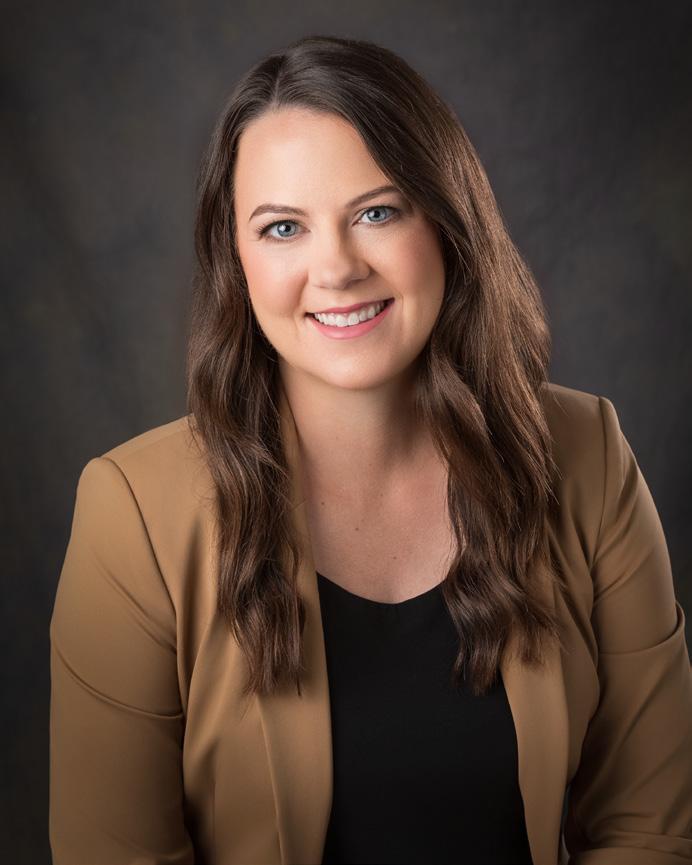
Mae Pochop

As I write this month’s article, I’m in the middle of preparing for maternity leave. I’m scouring Black Friday deals for any last-minute baby essentials and working through as many tasks as possible before stepping away from practice for a short time. Like anyone approaching a major life change, I’m feeling a mix of excitement, nerves, and the hope that I’ve prepared enough. But my predominant emotions are excitement and appreciation. I am grateful for the chance to take meaningful leave and for the support I’ve received from colleagues, clients, and bar leadership.
Lately, I’ve been reflecting on how far our profession has come in recognizing the importance of parental leave for all new parents. I’m fortunate to practice during a time when leave is increasingly understood as necessary, healthy, and compatible with a thriving legal career. But that progress is relatively recent, not universal, and built on the resilience of lawyers—especially women—who pushed forward without the support many of us enjoy today.
New parents in law have often returned to work well before they were physically or emotionally ready. Many hid pregnancies, worked through recovery, or feared their careers would suffer if they stepped back. While much has improved, echoes of that culture remain. Many new parents still feel guilt about taking time away, worry about burdening colleagues, or fear losing professional momentum.
I felt that guilt myself, particularly when I realized I would be pregnant during my year as YLS President. There is never a perfect time to have a baby, but this seemed like a particularly untimely one. Still, when I shared the news, I was met with nothing but encouragement. Together, we made a plan for my upcoming leave, and I’m confident our board—full of thoughtful, committed leaders—will continue our work seamlessly. I am especially grateful to President-Elect Lora Waekerle, Secretary/Treasurer Rebecca Ronayne, and each member of our board for their support and dedication to our programming.
Meet your
Board Members


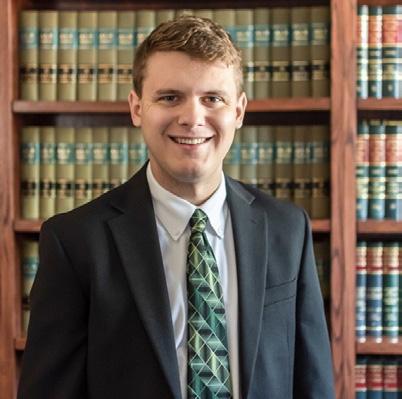
John Noyes 5th Circuit Representative
Board Member Introduction: John Noyes, 5th Circuit
1. Where you grew up: Redfield, South Dakota
2. Where you went to undergrad and law school:
I got my undergraduate degree at the University of Sioux Falls. I attended law school at University of South Dakota Knudson School of Law.
3. Where you work: I work with the law firm Bantz, Gosch & Cremer in Aberdeen.
4. Practice area: I practice primarily in the areas of criminal defense and civil litigation.
5. What is your favorite local restaurant or café? Leo’s Good Food in Redfield. I should admit I’m a little biased as my family owns the place.
6. Tell us about your family: My family consists of my parents, Lee and Carla, my two older brothers, Joe and Jared, their wives, and their children. I am fortunate to be the uncle to six nephews and one niece.
7. Favorite book, movie, or TV show? Favorite movie is Martin Scorsese’s Goodfellas, favorite book Once a Runner by John L. Parker jr.
9. What’s your hidden talent or favorite hobbies? I really enjoy cooking. I like to make new recipes and try things I normally wouldn’t eat otherwise. I especially enjoy cooking meals for family and friends.
11. What’s the most rewarding part of your practice
so far? Helping people through difficult circumstances. Doing a lot of criminal defense work I have to help people through what is often the most challenging time in their lives. Being able to reduce my client’s stress and anxiety in these difficult moments is greatly rewarding.
12. What do you enjoy most about being part of the legal community in South Dakota? The collegiality. In my experience the other lawyers I have had the opportunity to work with are generally easy to get along with, considerate, and professional. That has made the transition into the practice of law much less daunting and more enjoyable.
13. Why do you think YLS is important for young attorneys? YLS offers young lawyers opportunities to network and to expand their knowledge through quality CLEs. Speaking from experience, I did not take advantage of what YLS had to offer my first year or two in practice however since joining the board and becoming more involved in YLS I can say the benefits of getting involved have been tremendous. I would encourage any young lawyer to get involved in YLS.
Fred & Luella Cozad
Diamond Fe�lows - $10,000 plus
Thomas C. Barnett, Jr.
P.Daniel Donohue
Dale E. Froehlick
Robert E. Hayes
Scott N. Heidepriem
Andrew J. Knutson
David L. Knudson
Robert A. Martin
Kimberley A. Mortenson
Platinum Fe�lows - $10,000
Hon. Richard H. Battey
Melissa Nicholson Breit
Dana J. Frohling
Chet Groseclose
Hon. John B. Jones
Jerome B. Lammers
Scott C. Moses
Charles L. Riter
William Spiry
Hon. Jack R. Von Wald
Gold Fe�lows - $5,000
Renee H. Christensen
Richard A. Cutler
William F. Day, Jr.
David J. King
Richard L. Kolker
Kimberley A. Mortenson
Timothy J. Rensch
Michael Sharp
Silver Fe�lows - $1,000 (per year)
Neil Fulton
Hon. Bobbi J. Rank
Timothy J. Rensch
Lori D. Skibbie
Life Fe�low - $25,000 plus
Frank L. Farrar
Gregory A. Yates
John P. Blackburn
Sustaining Life Fe�low - $50,000 plus Fe�lows of the South Dakota Bar Foundation
Presidential Fe�lows - $10,000
Heather Lammers Bogard
Richard D. Casey
Hon. Michael Day
Robert B. Frieberg
Thomas H. Frieberg
Thomas G. Fritz
William C. Garry
David A. Gerdes
Hon. David R. Gienapp
Patrick G. Goetzinger
G.Verne Goodsell
Robert E. Hayes
Terry L. Hofer
Carleton R. “Tex” Hoy
Steven K. Huff
Hon. Charles B. Kornmann
Lisa Hansen Marso
Bob Morris
Thomas J. Nicholson
Gary J. Pashby
Stephanie E. Pochop
Reed A. Rasmussen
Pamela R. Reiter
Robert C. Riter, Jr.
Eric C. Schulte
Jeffrey T. Sveen
Charles M. Thompson
Richard L. Travis
Thomas J. Welk
Terry G. Westergaard
Fe�lows - $500 (per year)
Hon. John Bastian
Hon. John L. Brown
Mary Jane Cleary
Paul L. Cremer
Andrew L. Fergel
Michael S. Fischer
Tom E. Geu
Craig A. Kennedy

Denise Langley
Hon. Judith K. Meierhenry
Hon. Robert A. Miller
Robert C. Riter, Jr.
Jason R.F. Sutton
Rodrick L. Tobin
Lea Wroblewski
Raising the Bar: Our Profession. Our Responsibility.



There is a lot going on at the Law School most months. November was no exception. We welcomed some fantastic speakers, saw classes wrap up, sent students off for a study week and Thanksgiving break, and then started final exams. It was a big month.
One of the biggest events was the new tradition of our intramural trial competition. Just like 1L’s get to compete in the Sam Masten Moot Court competition in the spring, 2L’s now compete against each other at the trial level in the fall. I have gotten to judge at least one round each year. I am incredibly impressed by the level of professionalism and advocacy the students demonstrate before they have even finished evidence. Their future is bright. I am also incredibly proud and grateful for the creativity and energy that Professor Laura Rose brings to our trial advocacy programs. As holder of the Heidepriem Trial Advocacy Fellowship, she continues a great tradition of trial advocacy instruction at the Law School. She has worked closely with Professor Chris Schmidt and Professor Alex Hagen to expand our practical advocacy offerings. We have refined and expanded our classes in discovery practice, advanced litigation (with a focus on expert witnesses and pretrial practice), evidence (to use a case file across the semester to use the rules of evidence), and trial techniques. We deeply appreciate the support of the alumni who come back to assist with delivery of these classes.
Professor Rose is doing wonderful work to build out exceptional advocacy instruction here at the Law School. The 2L Intramural Competition is a key part of that. I have invited Professor Rose to share her insights
into this year’s competition in this month’s column. I know that Professor Rose is happy to talk to anyone about advocacy instruction, so please feel free to reach out to her. Here is her rundown on this year’s intramural competition.
The University of South Dakota Knudson School of Law Trial Team recently hosted our Third Annual Intramural Competition. I am proud to report on the result of that competition. We had forty 2L students step up and compete. This year’s case involved criminal charges against a doctor who was alleged to have caused the death of a patient by prescribing him a trio of drugs with effects like heroin. The students put themselves into team of four, and from Thursday through Saturday competed in four preliminary rounds. In those rounds, each student conducted either an opening statement or a closing argument, and all students conducted one direct examination and one cross examination per round. South Dakota Bar members graciously showed up and showed out to judge the event, with every round having three judges present to evaluate the students on their skills. This meant that our bar members not only got to witness some great advocacy, but they got to offer feedback to the students to help them hone their craft for the future.
At the conclusion of the preliminary rounds, the Trial Team gave out cash prizes to several students for exceptional advocacy thanks to the generosity of the South Dakota Chapter of the American Board of Trial Advocates. Caleb Fowler took home the prize for Best Opening Statement. RyLeigh Christopherson received
the award for Best Direct Examination and Ezra Miller took home the award for Best Cross Examination. Tim Morgan found that quoting the Founders has advantages, earning the award for best Closing Argument, coming within one point of perfect marks. The competition provides an important learning opportunity, and that was reflected in Ansel Anderson winning Most Improved Advocate. Finally, Ezra Miller was selected as Best Overall Advocate in the preliminary rounds.
After four rounds of intense competition, four teams advanced to the semi-final round Sunday morning, and the field narrowed again for the finals on Sunday afternoon. When the dust had settled, the team of Ryleigh Christopherson, Karena Verbitsky,






Brooke Stivers and Alex Arndt took home the win—the second year in a row an all-female squad has won the intramural competition!
Along with the Trial Team students, I want to thank everyone who helped make this tournament a success. Our intramural competition involves as many advocates and judges as larger schools attract to national competitions for schools across the country. The unwavering support we receive from the State Bar, students, and the faculty and staff of USD Knudson Law allows us to provide this level of phenomenal opportunity right here at home. Circle mid-November 2026 on your calendar, we will be back again next year and would love to see you!




World-Class Legal Research at No Cost


As a State Bar of South Dakota member, you now have complimentary access to Fastcase—one of the most powerful legal research platforms available.
What You Get:
Comprehensive case law, statutes, and regulations
AI-powered research tools to find relevant authorities faster Advanced citation analysis and authority checking
Unlimited printing and document sharing No subscription fees. No usage limits. No hidden costs.
Access Fastcase:
Log in to the Member Hub at statebarofsouthdakota.com, scroll to the bottom of the left-hand menu, and click on Fastcase.
Questions?
Contact the State Bar office at (605) 224-7554 or info@sdbar.net


NEW FEATURE AVAILABLE!

Members can now indicate on their profile if they would like to serve as a mentor. If you’re interested in supporting and guiding other members, simply update your profile to let us know! USD Knudson School of Law 2025-26 Career Events



• All fall and spring OCIs will take place at the ID Weeks Library due to renovations. Scan the QR code above or visit HERE to register for any OCI. You may need to create an account first. Watch THIS VIDEO to help you post your position(s). • Email Teramie.Hill@usd.edu with any questions.
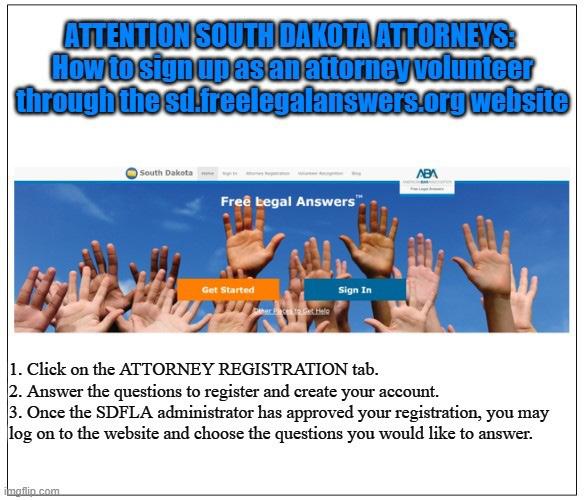
JUSTICE SQUAD


Application for Pro Bono Emeritus Status
I, ________________________________________________, an active member of the State Bar of South Dakota, do hereby apply for Pro Bono Emeritus Status, for the year 2026
I understand that if approved, rather than pay regular dues for the year 2026, I will only be required to tender the sum of $125 (same as inactive dues) but I will be entitled to all the rights and privileges of an active member of the State Bar.
Further, I recognize that this status means that I will be requested from time to time to take a referral from East River Legal Services, Dakota Plains Legal Services, or Access to Justice, and I am willing to accept at least one referral in the year 2026
Finally, I acknowledge that pursuant to the Pro Bono Emeritus Status, I have retired from the active practice of law and I cannot accept private clients, cases for friends or relatives (even if no fee is charged) and that my practice is limited to such referral cases as I accept from the Legal Services Programs, Access to Justice or a non-profit specifically approved by the State Bar. In the event that I decide to accept cases other than those referred to me and which I accept, that I will tender regular active dues and withdraw from the Pro Bono Emeritus Status Program.
Dated this _________ day of _______________________________, 20__

ATTORNEY HEALTH & WELLNESS
SOUTH DAKOTA LAWERS ASSISTANCE
Almost everyone, even lawyers and law students have experienced a time when a personal problem or crisis affected their life. Recognizing this, your State Bar, over the past several years, has instituted a variety of ways to support our members when they may need it most. Go to https://www.sdlawyerwellness.com/, which is dedicated to providing you with the information you need about the programs and resources available to the members of our South Dakota legal community and their families.

TAX UPDATE Law for Lunch Law for Lunch

January 20, 2026
12:30 P.M. -1:30 P.M.
ONE BIG BEAUTIFUL BILL ONE BIG BEAUTIFUL BILL
Details
Whether you’re a tax pro, litigator, young lawyer, paralegal, firm leader, or in financial services, this program is for you. Learn how the One Big Beautiful Bill and other new laws will impact your practice, your business, and your clients.
Join us and stay informed.
Carrie Christensen, CPA, MBA, Partner at Ketel Thorstensen CPA’s and Avisors Speakers
Hannah Sheffield, CPA, Manager - Tax Expertise, Ketel Thorstensen CPA’s and Avisors
Program Chair
Stanton Anker, Anker Law Group, Rapid City

Legacy Law Firm, P.C. is pleased to announce
Carissa Crockett and Madelyn Kline have become associated with the firm.
Legacy Law Firm, P.C. 7404 S. Bitterroot Place Sioux Falls, SD 57108
Phone: 605-275-5665
carissa@legacylawfirmpc.com madelyn@legacylawfirmpc.com www.legacylawfirmpc.com
Maslon LLP of Minneapolis is pleased to announce trust & estate litigation Partner
Julian Zebot is now licensed to practice law in SD.
Maslon LLP of Minneapolis 225 South Sixth Street, Suite 2900 Minneapolis MN, 55402
Phone: (612) 672-8392
Email: Julian.Zebot@maslon.com www.maslon.com/jzebot
Lammers, Kleibacker, Dawson & Miller, LLP is pleased to announce Connor Hickman as an associate attorney.
Lammers, Kleibacker, Dawson & Miller, LLP 108 N. Egan Ave. Madison, SD 57042
Phone: (605) 256-6677
Email: connor@lkdmlaw.com
Hustead Law Office is pleased to announce Kaleb D. Peterson as an associate attorney.
Hustead Law Office 145 N Chicago St Hot Springs SD, 57747
Phone: (605) 745-5161
Email: kpeterson@husteadlaw.com
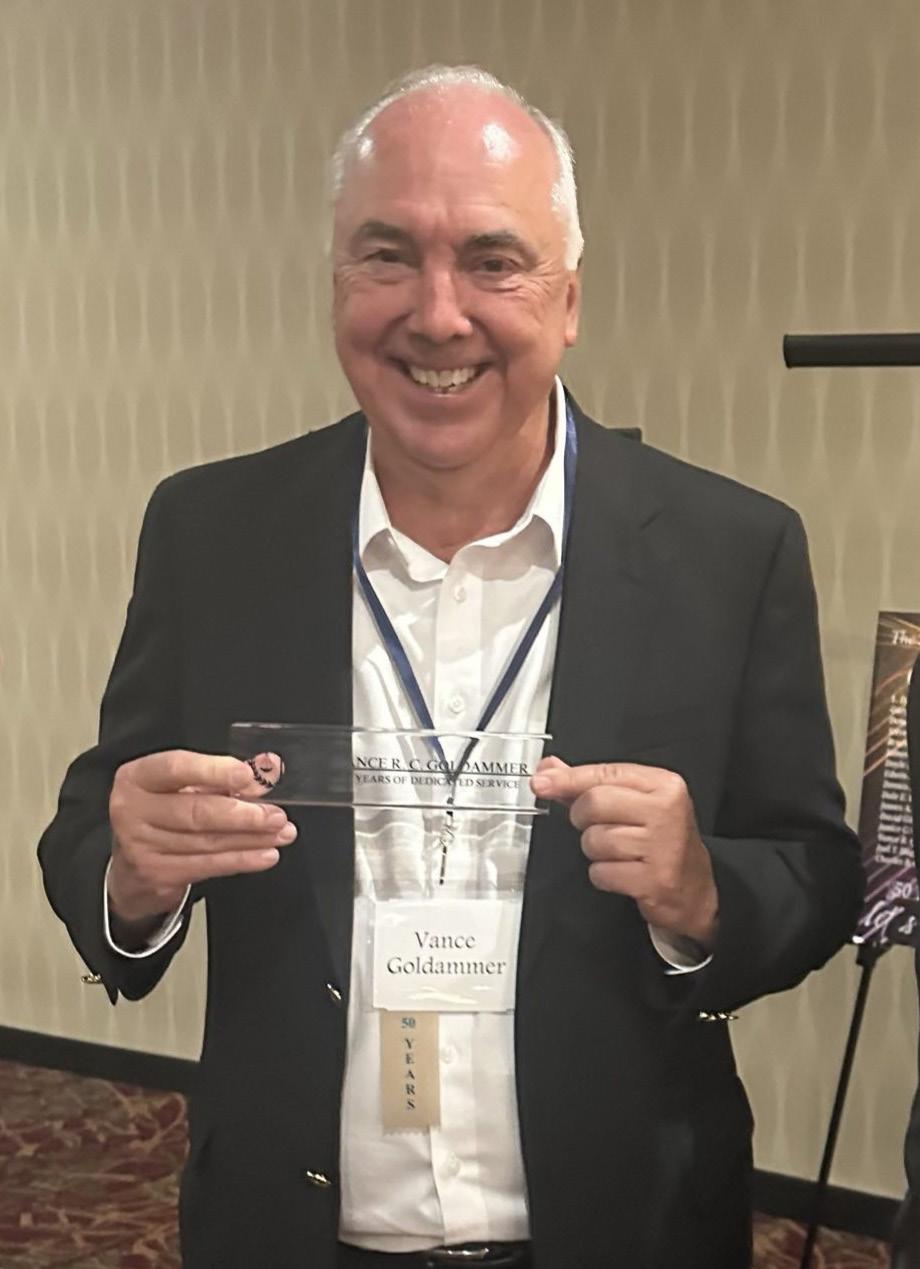
Vance Goldammer
Recognized by State Bar of South Dakota for Over 50 Years of Legal Service
The team at Redstone Law Firm is proud to recognize and celebrate the incredible legal career of Vance Goldammer, who has recently been honored by the State Bar of South Dakota for his remarkable achievement of practicing law for over 50 years. This recognition is a testament not only to his longevity in the legal profession but also to the integrity, dedication, and deep legal expertise that have defined his career.
Vance began practicing law in 1975, and over the past five decades, he has become a trusted advisor, skilled advocate, and respected member of the South Dakota legal community. His experience spans a wide range of legal areas, including business transactions and negotiations, real estate and family and estate and business planning. His thoughtful counsel has earned the confidence of generations of clients.

Attention Members!
Throughout his career, Vance has remained committed to the highest standards of professionalism. Whether representing individuals, businesses, or community organizations, he has consistently brought a steady hand, sound judgment, and unwavering commitment to justice.
The recognition by the State Bar is more than a milestone—it’s a reflection of a career built on service, leadership, and a genuine dedication to the law and those it protects.
A lifelong South Dakotan, Vance grew up in Mitchell, before marrying and settling in Sioux Falls. He has spent his entire life giving back to the communities he calls home. He and his wife of over 53 years, Sherry, raised their two children here, and they are proud grandparents to four grandchildren.
We are honored to have Vance Goldammer as a part of our team and congratulate him on this well-deserved recognition. His career continues to inspire colleagues and clients alike, and we look forward to the continued impact of his wisdom, experience and frequent stories in the years to come.
Congratulations, Vance, on this well-deserved recognition and thank you for 50 years of excellence in the legal profession.
Reminder that inactive members who do not pay active dues for more than five calendar years lose the right to practice law in South Dakota, absent taking the Bar Examination, unless you meet one of the exceptions set forth in section 4.3 of the State Bar Bylaws.
Example 1: inactive members who have not paid active dues during the years 2022-2025 should pay active dues for the 2026 calendar year (due December 31, 2025). Your invoice for 2026 will reflect the active dues amount.
Example 2: inactive members who have not paid active dues during the years 2021-2025 have until December 31, 2025 to change from inactive to active status for the calendar year 2025.
If you are uncertain when you last paid active bar dues, call the State Bar office at 605-224-7554 Option 1 or email tailynn.bradford@sdbar.net.
CERTIFICATE OF COMPLIANCE
INSTRUCTIONS
The certificate of compliance for calendar year 2025 must be submitted to the State Bar of South Dakota by January 31, 2026.
IMPORTANT INFORMATION concerning compliance with trust accounting records and procedures, including the reporting form, appear immediately following this notice. All attorneys who were “ACTIVE members” of the State Bar of South Dakota in 2025 must file the compliance form with the State Bar no later than January 31, 2026. This rule includes retired lawyers, lawyers engaged in teaching, banking, insurance, full-time government employees, etc. This reporting requirement does NOT include those who were “inactive members” in 2025, nor does it include Judges (Federal or Unified Judicial System) who are full time and did not have private clients. Thank you.
State Bar of South Dakota
TRUST ACCOUNT
COMPLIANCE FORM INSTRUCTIONS
Immediately following these instructions, a model form has been reproduced. The form may be modified to accommodate multiple signatures where a number of or all partners in a law firm utilize a single trust account. Please type the name of the sole practitioner or, if using a common firm trust account, the names of all lawyers utilizing the trust account. For the balance of the form, fill in the blanks, check the spaces, or leave blank or mark n/a where appropriate.
1 - check (a), (b), or (c) if applicable
2 - self explanatory (usually appropriate for inactive or retired members)
3 - self explanatory (usually exclusive or full-time corporate, legal aid, or public sector lawyer. Please identify the employer.)
3(a)- self explanatory (usually appropriate for part-time Bankruptcy trustees)
4 - self explanatory (usually appropriate for the employee or associate of a law firm who does not have trust account writing authority.) At this point, inactive, retired, full-time corporate, legal aid, or public sector lawyers, and associates without trust account check writing authority may sign the form and stop.
All others should have trust accounts and must provide the following information:
5 - state the name, address, and account number of trust account financial institution.
6 - the blanks should be completed with the most recent monthly trust account reconciliation. Keep in mind monthly reconciliations are required. For example, if this form were completed on 1-15-25, you would insert the closing date of the most recent bank statement (i.e. 12-31-24).
6(a)-(h), and 7 - type or print yes or no in space provided. If you can answer "yes" to each of these questions, you are in compliance with SDCL 16-18-20.2. If you must answer any of these in the negative, you need to make changes in your trust accounting system. A negative answer will result in further inquiry.
8 - This question merely requires you to confirm that a monthly reconciliation was performed and if there were errors/inconsistencies in the reconciliation, to explain the same. It is not too late to perform monthly reconciliations through the date of completion of this form and monthly reconciliations must be performed prospectively. Occasionally, trust accounts have an odd amount, such as $4.54, which has been in the account for years and the client has disappeared. The compliance report should so note the amount and reason (lawyer unable to disperse the sum of $4.54 belonging to a client because the client is not able to be located).
Thereafter, if the amount remains constant ($4.54 as in this example), no further explanation is necessary in subsequent compliance forms.
The rule does not require, nor do we want, the amounts held in trust, the identities of clients, or any other confidential information. If all partners in a law firm use a common trust account, one form may be submitted provided all partners sign the form. Please type your name under your signature. This will avoid phone calls or letters trying to ascertain who signed the forms.
All lawyers must submit the compliance form no later than January 31, 2026. Please submit compliance forms after reviewing your December bank statements. If you have questions, please give us a call. Thank you.
2025 CERTIFICATE OF COMPLIANCE
TO: The Secretary-Treasurer, The State Bar of South Dakota, 111 West Capitol Avenue, Suite 1, Pierre, SD 57501
Dear Sir: I/we (Please list all persons signing the form here)
member(s) of the State Bar of South Dakota certify that during the 12-month period preceding the date of this report: (Check the following items where applicable and/or fill in the blanks.)
1. I (we) have engaged in the private practice of law in South Dakota as:
(a) a sole practitioner;
(b) a partner or shareholder of a firm practicing under the name of; ;
(c) an associate of a sole practitioner or of a firm, as the case may be, practicing under the name of and I maintain separate books, records, and accounts showing all legal business performed by me.
2. I have not engaged in the practice of law in South Dakota, and I have neither handled nor been responsible for either clients' trust funds or clients' trust property in South Dakota.
3. I have practiced law in South Dakota exclusively as an employee of (designate name of government agency, corporation, or other non-member of the Bar) and I do not handle or become responsible for money or property in a lawyer-client relationship, other than money or property received in the course of official duties and disposed of in accordance with regulations and practices of (designate name of government agency).
a. I have served as a trustee in one or more cases under Title 11 of the United States Code, and I am accountable for all funds I handled in connection therewith to the Office of the United States Trustee, which office is statutorily charged with the responsibility for reviewing and supervising my trust operations; therefore, my handling of such funds is not separately accounted for herein in connection with my private practice of law, and I further certify that I am in compliance with all such accounting requirements of said Office.
4. I have engaged in the practice of law in South Dakota as an employee or as an associate of a sole practitioner or of a firm, as the case may be, practicing under the name of and to the best of my knowledge all legal business performed by me is shown in the books, records and accounts of such sole practitioner or firm.
(Only lawyers checking categories 2, 3, 3a, or 4 may sign below. See instructions.)
(Signature)
Full Name (Print or Type)
Business Address City, State, Zip
Date , 2026
Please state the total number of hours of pro bono service, as defined by the South Dakota Rules of Professional Conduct 6.1, that you (or the whole firm) provided in 2025. Enter 0 if none. Total Hours: .
Rule 6.1. Voluntary Pro Bono Public Service
A lawyer should render public interest legal service.
A lawyer may discharge this responsibility by: (a) providing professional services at no fee or a reduced fee to persons of limited means or to public service or charitable groups or organizations; or (b) by service without compensation in public interest activities that improve the law, the legal system or the legal profession; or (c) by financial support for organizations that provide legal services to persons of limited means.
(Attorneys checking categories 1a, 1b, or 1c must answer the following questions. See instructions.)
5. My (our) trust account(s) or the trust account(s) of the firm or association of which I am a partner or shareholder is (are) at the (name and address of banking institution)
(and bears the following name(s) and number(s))
6. During the fiscal period ended December 31, 2025, to the best of my (our) knowledge I (we), or the firm of which I am a member, as the case may be, maintained books, records and accounts to record all money and trust property received and disbursed in connection with my/our practice, and as a minimum I/we maintained:
a. A separate bank account or accounts located in South Dakota, in the name of the lawyer or law firm and clearly labeled and designated a "trust account." (Yes or No) (An out of state member may strike "South Dakota" and insert the state where his/her trust account is located.)
b. Original or duplicate deposit slips and, in the case of currency or coin, an additional cash receipts book, clearly identifying the date and source of all trust funds received, and specific identification of the client or matter for whom the funds were received. (Yes or No)
c. Original canceled checks or copies of both sides of the original checks produced through truncation or check imaging or the equivalent, for all trust disbursements. (Yes or No)
d. Other documentary support for all disbursements and transfers from the trust account. (Yes or No)
e. A separate trust account receipts and disbursements journal, including columns for receipts, disbursements, and the account balance, disclosing the client, check number, and reason for which the funds were received, disbursed or transferred. (Yes or No)
f. A separate file or ledger, with an individual card or page for each client and matter, showing all individual receipts, disbursements and any unexpended balance. (Yes or No)
g. All bank statements for all trust accounts. (Yes or No)
h. Complete records of all funds, securities and other properties of a client coming into my/our possession, and rendered appropriate accounts to my/our clients regarding them. (Yes or No)
7. During the same fiscal period identified in section 6 above, I, or the firm of which I am a member, complied with the required trust accounting procedures, and as a minimum I/we prepared monthly trust comparisons, including bank reconciliations and an annual detailed listing identifying the balance of the unexpended trust money held for each client or matter. (Yes or No)
8. In connection with section 7 above, I or the firm of which I am a member, have completed the following procedures during the fiscal period herein: compared each month the total of trust liabilities and the total of each trust bank reconciliation, and there were (check one of the following) no differences between the totals, excepting those determined to be the result of bank error; differences. (Give full particulars below, identifying the months in which there were differences, the amounts involved, and the reason for each item contributing to a difference. Attach additional pages if necessary.)
9. a. ___The undersigned lawyer(s) do not have professional liability insurance; (If you checked box 9(A), you must attach a representative copy of the letterhead you used to disclose the lack of insurance to your clients.) or b. The undersigned lawyer(s) have professional liability insurance, the name of the insurance carrier, policy number and limits are as follows:
10. If you are a solo practitioner, have you made arrangements with another lawyer to secure your files and trust account and protect your clients in the event of your death or disability? Yes No (This is not currently a requirement, but very much encouraged. Please check out the state bar website for checklists and forms for solo practitioners planning for unexpected death or disability.)
I am a member of the State Bar of South Dakota filing this report, and to the best of my knowledge and belief the facts as reported herein are accurate, and I certify that I have at all material times been in compliance with Rule 1.15 of the Rules of Professional Conduct entitled Safekeeping Property and SDCL 16-18-20.1 and 16-18-20.2.
(All partners, shareholders, or associates checking categories 1a, 1b, or 1c must sign here. Attach additional signature pages if necessary.)
(Signatures) (Printed Name)
, 2026
Date
Additional signature and attachment is needed if responding lawyer checked box 9(A) : The undersigned lawyer(s) not having insurance, do hereby certify that pursuant to Rule 1.4(c), I have advised my clients of the lack of professional liability insurance during the reporting period and I have attached hereto a copy of my law office letterhead disclosing the lack of insurance, in the required format, pursuant to Rule 7.5 of the Rules of Professional Responsibility.
All Responding Lawyer Signatures: , 2026
Date

BAR STAR SERIES
Clair Gerry
This month’s Bar Star is honored for their dedication and impact in the profession and community:
Clair Gerry, Attorney at Gerry Law Firm, Prof. LLC in Sioux Falls, is recognized for his impact on bankruptcy education and practice in South Dakota. He is a guest lecturer for the Bankruptcy Practicum, presents at statewide programs, mentors interns who handle full bankruptcy files, and contributes to improving local bankruptcy rules. His most recent intern, Ryan Kroger, will also be Judge Kulm Ask's 2026 term law clerk, demonstrating how Clair’s mentorship is not only educating students but helping drive long-term interest in this field. He is also known for generously assisting attorneys and clients with complex bankruptcy matters. Clair’s dedication to teaching, mentorship, and service continues to strengthen the profession.
What legacy do you want to leave through your service?
EXCITING NEWS FOR OUR MEMBERS!

We’re thrilled to announce that vLex | Fastcase, formally known as DakotaDisk, is now available as a free member benefit to all active members, inactive members, and law students.
You now have complimentary access to one of the most powerful legal research platforms available, combining cutting-edge AI tools with comprehensive legal content to support your work and studies.
A special thank you to the South Dakota Bar Foundation for their generous donation that made this valuable resource possible for our members.
Log in to the Member Hub, scroll to the bottom of the left-hand menu, and click on Fastcase. If you’re new to Fastcase, you’ll be prompted to set up your account once you reach their website.
PUBLIC NOTICE
REAPPOINTMENT OF INCUMBENT MAGISTRATE JUDGE
The current appointment of Magistrate Judge N. Bob Pesall is due to expire on April 19, 2026. Magistrate Judge Pesall serves in the Third Judicial Circuit.
The duties of a magistrate judge include conducting preliminary hearings in all criminal cases, acting as committing magistrate for all purposes and conducting misdemeanor trials. Magistrate judges may also perform marriages, receive depositions, decide temporary protection orders and hear civil cases within their jurisdictional limit.
Pursuant to UJS policy members of the bar and the public are invited to comment as to whether Magistrate Judge N. Bob Pesall should be reappointed to another four-year term. Written comments should be directed to:
Chief Justice Steven R. Jensen
Supreme Court
500 East Capitol Pierre, SD 57501
Comments must be received by January 18, 2026.
Lawyers Assistance Program Leadership Transition Announcement
We are pleased to share an important update regarding the future of the State Bar Lawyers Assistance Program (LAP).
As part of our ongoing commitment to supporting the well-being, resilience, and professional success of our members, the State Bar will soon begin the search for new leadership of the Lawyers Assistance Program.
This search reflects our dedication to ensuring the continued strength and sustainability of the work and services provided by our current LAP Director, Becky Porter.
Becky plans to continue to serve in her role during the transition and will play an integral role in mentoring and training.
This thoughtful, collaborative transition plan is designed to maintain continuity of services, program stability, and the high standard of care that Becky has provided to members over the years.
With Becky’s continued leadership through the transition, we are confident that the Lawyers Assistance Program will remain a strong and trusted resource for those seeking support and guidance.
We extend our sincere appreciation to Becky for her ongoing dedication and for helping to ensure a smooth and successful transition.
Additional updates will be shared in the coming weeks.
State Bar of South Dakota

Judicial Qualifications Com mission
St ate of South D akot a
500 East Capitol Avenue
Pierre, SD 57501
Telephone 605-773-2099
Robert Morris, Chair
Timothy Engel, Vice Chair
Hon. Cheryle Gering, Secretary
Rory King
Raleigh E. Hansman
Hon. Bobbi J. Rank
Eric DeNure
November 10, 2025
Lori Grode, Executive Assistant
Email: Lori.Grode@ujs.state.sd.us
Notice of Judicial Vacancy
TO: All Active Members of the State Bar of South Dakota
FROM: Cheryle Gering, Secretary, Judicial Qualifications Commission
With the announced retirement of Supreme Court Justice Janine Kern effective on or about December 8, 2025, and the appointment of the Hon. Robert Gusinsky to the South Dakota Supreme Court to fill her vacancy, such will create a vacancy for a Circuit Court Judge (Position G) in the Seventh Judicial Circuit. The duty station for this position shall be located in Rapid City, SD. As of July 1, 2025, the salary for a circuit court judge position in South Dakota is $183,694.13. In addition, circuit court judges and their dependents are eligible to participate in the State of South Dakota’s health insurance plan; circuit court judges participate in the State’s defined benefit retirement plan. The Judicial Qualifications Commission is now taking applications for this position.
All lawyers and judges interested in applying should obtain the application form at http://ujs.sd.gov/, or contact Lori Grode at the State Court Administrator’s Office The application must be returned to the Administrator’s Office and must be postmarked no later than 5:00 PM on Tuesday, December 23, 2025. Applicants should make sure the application submitted is the 2018 revision.
You may also obtain the application form by writing or telephoning: Lori Grode
State Court Administrator’s Office
500 East Capitol Avenue
Pierre, SD 57501
Telephone: 605-773-3474
Email: lori.grode@ujs.state.sd.us
Or, visit http://ujs.sd.gov/ for current job openings.
The Seventh Circuit is comprised of the following counties: Pennington, Custer, Fall River and Oglala Lakota.
Question Presented: May a lawyer, who has been appointed to represent one criminal defendant regarding a habeas petition, represent a co-defendant regarding other post-conviction matters related to the same case?
Short Answer: The representation is not per se impermissible but is so likely to result in a concurrent conflict, either now or in the future, that the lawyer should decline the second representation.
Rules Implicated: 1.7
FACTS
Lawyer has been appointed to represent a convicted Defendant on a habeas petition. The Defendant’s Co-Defendant has approached Lawyer about representing Co-Defendant on a motion related to Co-Defendant’s sentence. Lawyer inquires whether this is a conflict under Rule 1.7 of the South Dakota Rules of Professional Conduct, or whether the fact the representations would occur post-conviction would eliminate any potential conflict.
ANALYSIS
Rule 1.7(a) of the South Dakota Rules of Professional Conduct provides that a Lawyer may not, without a conflict waiver as defined by Rule 1.7(b), represent a client if it will result in a concurrent conflict. A concurrent conflict arises when either (1) the representation of one client will be directly adverse to another client; or (2) there is a significant risk that the representation of one or more clients will be materially limited by the lawyer's responsibilities to another client.
Comment [23] to Rule 1.7 states that the “potential for conflict of interest in representing multiple defendants in a criminal case is so grave that ordinarily a lawyer should decline to represent more than one codefendant.” An oft-cited reason for this policy is the risk that one codefendant may turn against another. Another is that the co-defendants may have differing levels of culpability.
The Committee does not believe this grave potential for conflict has dissipated because the case is now in the post-conviction stage. The Committee does not know what potential arguments the two clients are planning to marshal in favor of their positions, but it seems likely, if not inevitable, that the Defendant and Co-Defendant would each want to at least consider pointing to the other as being either solely or more culpable for whatever events led to their prosecutions and convictions. This would place the Lawyer in an impossible conflict situation that would likely not be waivable under Rule 1.7(b)(1). The Lawyer would not be able to reasonably believe that the Lawyer could provide competent and diligent representation to both Defendant and CoDefendant in that circumstance
Consequently, although the Rules do not strictly prohibit the concurrent representation presented by Lawyer’s inquiry, the Committee strongly urges the Lawyer not to represent the CoDefendant. That representation would present an unreasonably high risk of an unwaivable conflict of interest.
Question Presented: May a lawyer use the lawyer’s first name only (together with other words such as “Law Firm” or “Law Office”) as the name of the lawyer’s firm?
Short Answer: The use of a first name or any other trade name as a firm name is not strictly prohibited, but any trade name must not mislead the public regarding the number of attorneys in the firm or otherwise mislead the public.
Rules Implicated: Rules 7.1 and 7.5.
FACTS
Lawyer has a unique name, and wishes to use Lawyer’s first name only, together with other common phrasing used by law firms, such as “[first name] Law Firm, PC,” “[first name] Law” or “[first name] Law Office.” Lawyer inquires whether this is acceptable under Rules 7.1 and 7.5 of the South Dakota Rules of Professional Conduct.
ANALYSIS
Rule 7.1 generally prohibits lawyers from making false or misleading communications about their services. Rule 7.5(a) specifically permits the use of trade names by law firms, so long as the trade names otherwise comply with Rule 7.1 and do not violate other ethical or legal constraints.
Lawyer’s proposed use of Lawyer’s first name alone in Lawyer’s firm name, instead of using Lawyer’s surname, which is more common, is use of that first name as a “trade name,” and is therefore not strictly prohibited under Rule 7.5. Whether Lawyer’s use of Lawyer’s first name as a trade name is clearly permissible, however, is fact dependent. For example, if the Lawyer were to use the name “[first name] Attorneys at Law,” but there was only one lawyer in the firm, the name would likely be misleading. Likewise, if Lawyer’s first name was unique, but either identical or similar to the first (or especially last) name of another attorney in the jurisdiction, this might be misleading. These are only examples. The Committee cannot identify all of the ways that a given first name might be misleading if used as a law firm’s trade name.
CONCLUSION
Lawyer is not strictly prohibited from using Lawyer’s first name as a firm trade name, as referenced, above. However, Lawyer, and any other lawyer seeking to use any type of trade name, must independently verify that the use of the trade name will not create a false impression regarding the firm’s structure or affiliations, create confusion with another law firm’s name, or otherwise mislead the public
Question Presented: May a state’s attorney prosecute a former client whom the state’s attorney represented in multiple criminal matters, if there is commonality among the crimes alleged and persons involved in the previous and current representations?
Short Answer: Absent a written waiver and consent by the former client, no, because the current prosecution and the former representations concern “substantially related” matters. The conflict will not be imputed to the rest of the state’s attorney’s office if the state’s attorney is properly screened from the prosecution.
Rules Implicated: 1.9, 1.10, and 1.11.
FACTS
Lawyer is a State’s Attorney. State’s Attorney’s office is prosecuting State’s Attorney’s Former Client. State’s Attorney represented Former Client in multiple criminal matters. The alleged victim in the current prosecution was an alleged victim or at least a witness in those earlier matters. There is similarity between the wrongdoing asserted against Former Client in the previous representations and the wrongdoing alleged in current prosecution. State’s Attorney’s last representation of Former Client concluded at least five years ago. State’s Attorney does not believe that State’s Attorney has confidential information that could be used against Former Client. Former Client is objecting to State’s Attorney prosecuting him in the case.
ANALYSIS
Under Rule 1.9(a) of the South Dakota Rules of Professional Conduct, an attorney may not represent a client adversely to a former client if the current representation and earlier representation concern matters that are “substantially related.” This prohibition is animated primarily by concerns that the attorney would have obtained confidential information in the prior representation that could be used to the detriment of the former client in the current matter.
However, Comment [3] to Rule 1.9 clarifies that whether a former representation and current representation are “substantially related” is not based on the attorney’s subjective understanding of whether the attorney possesses confidential information that could be used to the detriment of the former client. Instead, it is an objective consideration of the “substantial risk that confidential factual information as would normally have been obtained in the prior representation would materially advance the client’s position in the subsequent matter.” (Emphasis added). Comment [3] further provides:
“[a] former client is not required to reveal the confidential information learned by the lawyer in order to establish a substantial risk that the lawyer has confidential information to use in the subsequent matter. A conclusion about the possession of such information may be based on the nature of the services the lawyer provided the former client and information that would in ordinary practice be learned by a lawyer providing such services.”
This does not mean a state’s attorney is per se prohibited from prosecuting a former client. For example, in Opinion 03-02, the South Carolina Bar Ethics Advisory Committee advised that a prosecutor’s previous estate planning representation was not substantially related to and did not bar the lawyer from prosecuting a former client.
{05309849.1}
This inquiry presents a far different circumstance. Regardless of State’s Attorney’s subjective belief, the fact that the alleged victim of Former Client in the current prosecution was an alleged victim or witness in previous similar criminal matters where State’s Attorney represented Former Client is the type of situation Comment [3] contemplates. There is an objectively substantial risk that State’s Attorney learned confidential information from the prior representation that could be used against Former Client now.
The Committee’s conclusion is further informed by the Arizona Supreme Court’s decision in In re Ockrassa . There, a prosecutor was sanctioned for prosecuting a former client for a third DUI in five years when the prosecutor had represented the same defendant in two prior DUI cases. In re Ockrassa , 799 P.2d 1350, 1352 (Ariz. 1990). The Arizona Supreme Court considered but disregarded the prosecutor’s assertion that he did not remember any confidential discussions with the former client. Id. The similar nature of the matters, and the resulting high likelihood that confidential information was shared, was sufficient to bar the prosecutor’s participation. Id.
In short, absent a waiver of the conflict, State’s Attorney may not prosecute this Former Client under these circumstances, i.e., where the previous and current representations concern similar alleged crimes and the same alleged victim.
State’s Attorney has indicated that for the moment, another member of the State’s Attorney’s office is managing the matter. The conflict, above, is not imputed to the entire State’s Attorney’s office if the State’s Attorney has been and continues to be properly screened. Rule 1.11(d)(1) provides that a lawyer currently serving as a public officer or employee is subject to Rule 1.9. Rule 1.10(a)(2) regarding imputation of conflicts provides that a prohibition of a lawyer’s representation under Rule 1.9 is not imputed to the rest of the lawyer’s office if :
the disqualified lawyer is timely screened from participating in the matter or sharing any fee from it;
the former client is provided written notice that includes a written description of the screening procedures employed, a statement of the firm’s and screened lawyer’s compliance with the Rules, a statement that the former client may obtain review of the procedures before a tribunal, and an agreement to respond promptly to the former client’s written inquiries or objections about the screening procedures; and
the lawyer and one of the lawyer’s partners provide the former client with certifications of compliance with the Rules at reasonable intervals on formal written request.
In other words, so long as the State’s Attorney and State’s Attorney’s office have complied and continue to comply with Rule 1.10(a)(2) by promptly and properly screening State’s Attorney from the prosecution, someone else from the State’s Attorney’s office may continue the prosecution.
As an additional note, in Matter of R.B., the South Dakota Supreme Court described in detail various screening procedures it considered “extensive” and sufficient to warrant not disqualifying an entire state’s attorney’s office in this situation. 1998 S.D. 105, ¶ 10, 583 N.W.2d 839, 841. The Committee is not opining that the State’s Attorney’s office in this inquiry must employ all of those procedures to satisfy Rule 1.10(a)(2) but does recommend that the State’s Attorney and State’s Attorney’s office review those procedures for guidance.
{05309849.1}
Question Presented: When must an attorney report another attorney’s conduct in violation of the Rules of Professional Conduct?
Short Answer: Only when the attorney has actual knowledge of facts supporting the conclusion that the other attorney has engaged in conduct that raises a substantial question regarding the other attorney’s honesty, trustworthiness, or fitness as a lawyer in other respects.
Rules Implicated: 8.3
FACTS
Lawyer is involved in a case where the proceedings and evidence are strictly confidential. During the course of the case, the Opposing Attorney has pursued a strategy that leads Lawyer to believe that the Opposing Attorney improperly obtained information by first disclosing confidential information known only through the proceeding to unauthorized third parties. Lawyer does not have any actual knowledge this is so. Lawyer’s suspicion is based on circumstantial evidence. Lawyer inquires whether Lawyer is obligated to report the Opposing Attorney’s alleged potential conduct to the bar as contemplated by Rule 8.3.
ANALYSIS
Rule 8.3 of the South Dakota Rules of Professional Conduct provides that “[a] lawyer having knowledge that another lawyer has committed a violation of the Rules of Professional Conduct that raises a substantial question as to that lawyer's honesty, trustworthiness or fitness as a lawyer in other respects, shall inform the appropriate professional authority.” Importantly, Rule 1.0(f) clarifies that to “know” something means to have actual knowledge, not notice or constructive knowledge.
The Committee is often not in a position to provide material assistance in a situation implicating Rule 8.3. By its terms, the Rule concerns a lawyer’s subjective knowledge. However, this inquiry provides an opportunity to highlight the fact that Rule 8.3 presents a two-pronged question: (1) does the lawyer have actual knowledge –not suspicion or belief—that another attorney has engaged in conduct in violation of the rules; and (2) assuming the answer to the first question is “yes,” does the violation raise a substantial question as to the lawyer’s honesty, trustworthiness, or fitness as a lawyer in other respects? The obligation to report is triggered only if the answer to both of these questions is “yes.”
In this inquiry, Lawyer has stated that Lawyer has a belief based solely on circumstantial evidence that a violation has potentially occurred but has no actual knowledge or proof that one has. If that is true, then Lawyer has no obligation to report the potential conduct.
GALA
Why You Need to Use Two-Factor Authentication (and Why It’s Not Enough on Its Own)
Authored by: Mark Bassingthwaighte, Risk Manager
Let me be clear, cybersecurity isn’t just a “big firm” problem. Solo and small firm lawyers are targeted by bad actors because they know that smaller firms often lack the more robust defenses that big law can afford to deploy. And yet surprisingly, two-factor authentication (2FA), which is one of the most important cybersecurity defenses available, remains underutilized.
In the legal profession, trust is a lawyer’s currency. Your clients entrust you with their most sensitive data, to include personally identifiable information, financial records, medical histories, family secrets, and business strategies. In the solo and small firm space, where the cybersecurity tech stack may be lean and IT support minimal, protecting that trust means you need to do all you can to secure every digital doorway. This is where 2FA comes in. Just know that while 2FA can be a critical step forward in preventing the unauthorized access to the sensitive digital data stored on your firm’s network, it isn’t a silver bullet. So, let’s explore why it matters, how it works, and where its problems lie.
What Is Two-Factor Authentication?
Two-factor authentication adds an extra layer of security on top of your password. Instead of logging in with just a username and password, 2FA requires an additional form of verification, such as:
• A one-time use code sent via text message or email,
• A push notification to an authentication app (like Microsoft Authenticator or Google Authenticator),
• A hardware token (such as a YubiKey), or
• A biometric factor (fingerprint or face scan).
It’s rather simple. Even if a bad actor manages to steal your password, they can’t get through the door without that second factor.
Why is 2FA crucial for lawyers?
Because the stakes are high. You’re not just protecting your firm’s data; you’re protecting confidential client information. A breach could result in malpractice exposure, disciplinary complaints, and a potentially devastating loss of client trust. In addition, understand that:
• Passwords are weak - Far too often, people choose easy-to-remember passwords and reuse them across multiple platforms. Bad Actors can crack or steal them with relative ease.
• Phishing is rampant - Bad actors trick users into entering credentials into fake login pages every day. 2FA can stop those stolen passwords from being enough to open the door.
• Remote work increases risk - With cloud-based case management, email, and billing tools, lawyers and firm staff are logging in from more devices and locations. 2FA adds an extra layer of protection regardless of where one is signing in from.
• And you are subject to regulations and client expectations - Regulations like HIPAA, GDPR, and PCI DSS increasingly require multifactor authentication. And many corporate and government clients now expect, and some require, their outside lawyers to have 2FA in place as a basic cybersecurity safeguard. The reason why is it blocks most automated attacks. In fact, Microsoft has reported that 2FA can prevent 99.9% of automated credential attacks. This includes phishing, keylogging, and brute-force attacks, all of which are common threats.
What are the weaknesses of 2FA?
While 2FA is effective, it’s not a panacea. You do need to understand its limits. The following are just a few of the ways 2FA can be defeated:
• Users are still vulnerable to phishing attacksSophisticated phishing attacks can trick users into entering both their password and their secondfactor code. Some attackers even use real-time phishing kits which now mimic login pages and prompt users for 2FA codes that are forwarded directly to the genuine site.
• SIM-Swapping Attacks - If your 2FA relies on text messages, hackers may try to hijack your phone number through social engineering with your wireless carrier. Should they succeed, they will have control of your number thus enabling them to intercept your SMS codes and successfully log in.
• Device Loss or Theft - If your second factor is stored on your phone and that phone is stolen, an attacker could potentially gain access, especially if the device isn’t locked down.
• User Fatigue. Numerous repeated login prompts sent to one’s smartphone can lead lawyers (and staff) to approve fraudulent push notifications just to stop the notifications from coming. Once the push is approved, however, the bad actor is in. Push notification fatigue is very real. This is why training is just as important as technology. If something looks suspicious, like a login approval request that you didn’t initiate, never click “Approve.”
So, how can we get the most out of 2FA while minimizing its weaknesses?
• Avoid relying on SMS codes as much as possible. Use authenticator apps or hardware tokens, which are much harder to compromise.
• Train your team. Social engineering awareness training should never be viewed as optional. At a minimum, make sure everyone, including you, understands phishing risks and knows not to approve unexpected 2FA prompts.
• Secure your devices. Enable strong passwords, biometrics, and remote wipe capabilities on all phones and laptops used for work.
• Layer your defenses. 2FA is important, but it should be combined with other safeguards to include strong password hygiene, endpoint protection, and encryption.
• Have a recovery plan. Ensure you can still access accounts if you lose your phone or authentication device.
Final Thoughts
For solo and small firm lawyers, 2FA isn’t optional. It should be viewed as a baseline requirement for protecting your practice and your clients. Just don’t fall into the trap of believing it will make you bulletproof. It won’t. The best security posture comes from a layered approach that acknowledges both the power and the limits of any single tool. Think of twofactor authentication as locking your office door at night. It will make you a far less attractive target, but it doesn’t mean no one will ever try to break in.
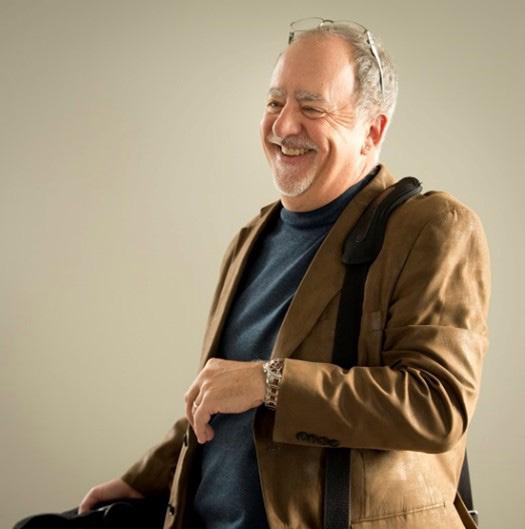
Authored by: Mark Bassingthwaighte, ALPS Risk Manager
Since 1998, Mark Bassingthwaighte, Esq. has been a Risk Manager with ALPS, an attorney’s professional liability insurance carrier. In his tenure with the company, Mr. Bassingthwaighte has conducted over 1200 law firm risk management assessment visits, presented over 400 continuing legal education seminars throughout the United States, and written extensively on risk management, ethics, and technology. Mr. Bassingthwaighte is a member of the State Bar of Montana as well as the American Bar Association where he currently sits on the ABA Center for Professional Responsibility’s Conference Planning Committee. He received his J.D. from Drake University Law School.
THE HAGEMANN-MORRIS YOUNG LAWYER MENTORSHIP COIN PROGRAM
THE STATE BAR OF SOUTH DAKOTA YOUNG LAWYERS SECTION
I. PROGRAM OBJECTIVE
The Hagemann-Morris Young Lawyer Mentorship Coin Program strives to foster mentorship within the State Bar by pairing members of the Young Lawyers Section with Mentors who can provide candid and insightful guidance to Young Lawyers as they navigate the beginning stages of their legal career. The Program hopes to:
• Foster the development of the Young Lawyers practical skills and their knowledge of legal customs;
• Create a sense of pride and integrity in the legal profession;
• Promote collegial relationships among legal professionals;
• Improve legal ability and professional judgment; and
• Encourage the use of best practices and highest ideals in the practice of law.
State Bar members are members of the Young Lawyers Section until they reach age 40 or have practiced law for ten years, whichever occurs later.
II. HOW IT WORKS
1. Young Lawyers and Mentors sign up with the State Bar by completing the online forms linked below
2. The YLS Board establishes a compatible mentorship pair.
- The YLS Board creates mentorship pairs using the information provided in the applications and reaching out to attorneys believed to be a good fit for the Young Lawyer.
- Young Lawyers may also request specific mentors or request Mentor Coins for an alreadyestablished mentorship.
3. The YLS Board will send the Young Lawyer and Mentor an informational packet with suggested conversations and activities. The Young Lawyer will also receive Mentor Coins.
4. The Young Lawyer may present a Mentor Coin to their Mentor as an invitation for mentorship and acknowledge their trust in such Mentor.

Don’t Lose Clients to Bad Tech
Clio integrates with 300+ apps like Google and Microsoft 365 to provide the seamless experience clients demand. Get 10% off as a South Dakota Bar Member. Book a Demo


OATH OF ATTORNEY
I DO SOLEMNLY SWEAR, OR AFFIRM, THAT:
I WILL SUPPORT THE CONSTITUTION OF THE UNITED STATES AND THE CONSTITUTION OF THE STATE OF SOUTH DAKOTA;
I WILL MAINTAIN THE RESPECT DUE TO COURTS OF JUSTICE AND JUDICIAL OFFICERS;
I WILL NOT COUNSEL OR MAINTAIN ANY SUIT OR PROCEEDING WHICH SHALL APPEAR TO ME TO BE UNJUST, NOR ANY DEFENSE EXCEPT SUCH AS I BELIEVE TO BE HONESTLY DEBATABLE UNDER THE LAW OF THE LAND;
I WILL EMPLOY FOR THE PURPOSE OF MAINTAINING THE CAUSES CONFIDED TO ME SUCH MEANS ONLY AS ARE CONSISTENT WITH TRUTH AND HONOR, AND WILL NEVER SEEK TO MISLEAD THE JUDGE OR JURY BY ANY ARTIFICE OR FALSE STATEMENT OF FACT OR LAW;
I WILL MAINTAIN THE CONFIDENCE AND PRESERVE INVIOLATE THE SECRETS OF MY CLIENT, AND WILL ACCEPT NO COMPENSATION IN CONNECTION WITH A CLIENT'S BUSINESS EXCEPT FROM THAT CLIENT OR WITH THE CLIENT'S KNOWLEDGE OR APPROVAL;
I WILL ABSTAIN FROM ALL OFFENSIVE PERSONALITY, AND ADVANCE NO FACT PREJUDICIAL TO THE HONOR OR REPUTATION OF A PARTY OR WITNESS, UNLESS REQUIRED BY THE JUSTICE OF THE CAUSE WITH WHICH I AM CHARGED;
I WILL NEVER REJECT, FROM ANY CONSIDERATION PERSONAL TO MYSELF, THE CAUSE OF THE DEFENSELESS OR OPPRESSED, OR DELAY ANY PERSON'S CAUSE FOR LUCRE OR MALICE.
Preamble
A lawyer should demonstrate civility, personal courtesy, dignity, respect and professional integrity when interacting with the public and participating in the legal system. As we vigorously represent our clients, we must honor our obligations to the administration of justice, resolving disputes in a rational, diplomatic, and efficient manner. We must remain committed to the rule of law as the foundation for a fair and peaceful society.
While our State’s Rules of Professional Conduct are instructive, they cannot address all of the various circumstances and conflicts that arise. The following standards are designed as a guide for lawyers and judges when interacting with each other, with litigants and with the public. Lawyers are expected to adhere to these standards as a commitment to justice and the rule of law.
Creed
As lawyers licensed to practice in South Dakota, admitted to the State Bar of South Dakota and/or admitted pro hac vice to appear in a matter before any Court in South Dakota, we will at all times adhere to the following:
1. We will treat participants of the legal system with civility, dignity and courtesy in court, as well as in all communication.
2. We will refrain from using hostile, demeaning or humiliating words in written and oral communications with adversaries.
3. We will continue to prioritize the inclusion and active participation of lawyers (and law students) from all backgrounds, identities and circumstances.
4. We will avoid impermissible ex parte communications with the court.
5. We will not intentionally mislead the court in oral or written communications.
6. In court, we will be punctual and prepared. We will not engage in conduct that is disorderly or disruptive and will instruct our clients and witnesses to act accordingly.
7. We will consult with other counsel concerning scheduling and deadlines prior to bringing such issues to the court. We will not unilaterally schedule hearings, depositions or similar matters.
8. We will not assert improper conduct on the part of other counsel without good cause and an adequate factual basis.
9. When agreements are reached, we will adhere to the agreement and accurately and in good faith memorialize the agreement in writing.
10. We will draft orders that accurately and completely reflect the court’s ruling.
11. We will not time the filing or service of motions or pleadings with an attempt to unfairly limit another party’s ability to respond.
12. We will explain to our clients that cooperation, civility and fair dealing are expected in the legal system.
13. We will advise our clients that we reserve the right to grant accommodations to other counsel in matters not directly affecting the merits of the case or prejudicing their rights.
14. Discovery requests will be drafted without harassment or placing undue burden on the other party. Further, we will instruct our clients that they must fully and honestly respond to discovery requests.
15. When there is a potential for settlement, we will timely confer with our client and other counsel and not purposefully delay negotiations.
16. We will in good faith stipulate to undisputed matters.
17. We will strive to abide by previously scheduled dates for trials, hearings, depositions, meetings and conferences.

State Bar of South Dakota: Association Group Health Plan
The South Dakota Bar Association offers a special group insurance plan for bar members and their employees through Avera Health Plans.
Who Qualifies?
Organizations with employees who are active members of the South Dakota Bar Association qualify
Available Network Options
The following networks are available:
• Standard Network – Avera and other independent providers across South Dakota and northwest Iowa
• Direct Network – Avera-owned, -managed and -leased providers. Available to employers headquartered in Brown, Lincoln and Minnehaha counties.
• Extended Network – Along with our Standard network, members can take advantage of a Nationwide PPO network that offers access to a range of health care providers and facilities like Mayo Clinic.
Why Enroll?
The plan offers the following benefits:
• Lower premiums
• Options not available on small group plans, such as the more comprehensive “Ultra” plans
• The Nationwide PPO network provides access to a broad range of services at lower costs than out-of-network options.
Additional Details
• The SD Bar Association plan does not include pediatric dental and vision. If you have questions about how to get these benefits, an Avera Health Plans representative can explain your options.
• The Bar Association health plan renews annually on Sept. 1, but benefits follow a calendar year (January–December). If you enroll on April 1, your plan will follow 2024-2025 pricing until the next renewal on Sept. 1. If a member signs up for the plan mid-year, they will receive a credit for deductible and out-of-pocket expenses to cover them until the renewal date (Sept. 1).
• Prices and benefits are subject to change.
Learn More by Reaching Out

Purpose-built for your path forward
Designed specifically for legal, accounting, and client-focused professionals
Optimized for clarity and control
Smarter workflows that drive efficiency and deliver the insights you need to succeed
Supported by experts you can trust
From onboarding to live support, our team is here to help you—every step of the way
One platform, many possibilities
Powerful solutions built to support every part of your business and simplify your day


State Bar of South Dakota Association
Avera Healthcare Plans
The following agents or agencies that are authorized to sell the State Bar Association Health Plan.
EASTERN SOUTH DAKOTA
Office Location
Mitchell & Yankton Area
Aberdeen Area
Sioux Falls Area
Sioux Falls & Brookings Area
Pierre, Mitchell & Sioux Falls Area
Watertown Area
WESTERN SOUTH DAKOTA
Dice Financial
Mark Mehlhoff
Midwest Employee Benefits
McGreevy & Associates
Fisher Rounds & Associates
Freimark & Associates
Office Location Agency Agency Contact Contact
West River
Black Hills Insurance Agency
Black Hills Insurance Agency
Carver Insurance
Jacquelyn Johnson
Mark Mehlhoff
Dawn Knutson
John Lawler
Josh Gilkerson
Todd Freimark
Dan Maguire
Everett Strong
Lisa Knutson
Questions on Eligibility, Rates, and Services?
Please contact the agency listed above based on your office location within the state for questions related to the Association Healthcare Plan.


Life is often busy, and responsibilities can feel overwhelming. Your Assistance Program is here to help save time and clear your mind with personal assistant referrals.
Our personal assistant team listens to your requests, conducts research, and provides comprehensive referrals, resources, and information to help with your needs. Personal Assistant referrals can include:
• Home care, renovation, and repair services
• Grocery and meal delivery services
• Transportation, car maintenance and repair
• Travel research, planning and itineraries

• Self-care, spas, gyms, and local services
• Theatre, concerts, and sporting events referrals
• Children's sports, programs, and activities
• Donations and volunteer opportunities
Personal Assistant referrals are non-transactional. Your Assistance Program is free to use, confidential, and open to family members.
Contact AllOne Health
Call: 888-243-5744 Visit: sandcreekeap.com

Dear State Bar Members,
We want to alert you about recent scams targeting attorneys through fabricated business disputes and forged cashier’s checks.
In recent incidents, scammers posed as parties to an alleged arbitration and attempted to route “settlement funds” through an attorney’s trust account.
The scheme involved convincing documentation, urgent demands for disbursement, and forged cashier’s checks that initially appeared to clear the bank, i.e., the funds initially appeared as available in the attorney’s account.
Attorneys worked with their banks and were able to determine that the cashier's checks were fraudulent before transferring funds to the scammers. If the attorneys had transferred the funds as requested by the scammers, the attorneys would have been personally liable for the funds.
Key red flags to watch for:
• Initial contact from generic email accounts followed by quickly created “official” domains
• Inconsistent or unverifiable company names, principals, or DBAs
• Pressure to route large payments through your trust account before verification
• “Cleared” cashier’s checks that have not actually settled – see below
• Urgency around disbursing funds to the purported client or opposing party
Recommended precautions:
• Independently verify all parties, businesses, and DBAs through official state registries
• Confirm actual settlement of funds—not just availability—with your bank
• Be cautious of unsolicited disputes involving rapid payment timelines
• Pause all activity if anything seems inconsistent or overly urgent
In most U.S. banks, “actual settlement” of a cashier’s check can take 7–10 business days, and sometimes longer.
Typical Timing
• Availability of funds: Often shows within 1–3 days — this does NOT mean the funds are real.
• Actual settlement/verification (i.e., the money is truly there): 7–10 business days is common.
• If the bank must verify the issuing bank or investigate anomalies: Up to 14 business days or more.
Why the delay?
Because even cashier’s checks can be forged, banks often release provisional credit before the check truly clears. If it later turns out to be fake, the credit is reversed — and the account holder / attorney is liable.
Best practice for lawyers handling trust accounts
Ask your bank specifically:
• “Has this cashier’s check finally settled, not just become available?”
• Request written confirmation, if possible.
Please remain vigilant these scams are increasingly sophisticated, and even experienced practitioners may be targeted.
Sincerely,
26th of each month next
Emailyouremploymentannouncement to tracie.bradford@sdbar.net by to haveitincludedinthe newsletter.Pleasebesure to include a closingdate. To seemorejobslistings,visit www.statebarofsouthdakota.com
Brown County Deputy Public Defender
Deputy Public Defender
Public Defender’s Office
Opening date: 11/01/2025
Wage: $3020.15 to $4038.46, bi-weekly for 2025, DOE
Closing date: Open until filled

handling your own cases with minimal micro-managing, as we support you each step of the way! The Public Defender’s Office also values your opinion, and we encourage you to provide alternative solutions to current practices which help keep us on the path of continued improvement.
The Brown County Public Defender’s Office is looking for Deputy Public Defenders with varying levels of experience to help create its brand-new office. We are considering newly admitted attorneys, attorneys with 20 or more years of experience and everyone in between. (Admission to practice law with the State Bar of South Dakota or ability to obtain admission is required.) This office handles felony and misdemeanor criminal cases; abused and neglected child(ren) cases, juvenile delinquency cases, mental health and involuntary alcohol committal cases.
Do not let lack of experience in criminal law deter you from applying. We are dedicated to providing training opportunities both internal and external that will include handling these types of cases. We offer on-the-job training that includes proper etiquette in court, negotiation tactics, conducting jury trials, drafting motions, meeting with clients, filing appeals, plus more. You will learn valuable skills at no cost to you that will benefit you for your entire career! With that being said, we hope that is with Brown County.
The Brown County Public Defender’s Office promotes a team-focused environment where we strive to create a fun and inviting atmosphere while dealing with a difficult but important job, the only one mentioned in the Constitution. (Please see the Sixth Amendment.) We work hard to create a healthy work/life balance by monitoring caseloads and using technology to help streamline case management. Our goal is for you to be at your best while feeling confident in
We offer competitive starting salaries based on experience and qualifications, ranging from $78,500 - $105,000 per year for 2025, and negotiable, depending on experience. We provide employer paid premiums on employee health, dental, and life insurance, while offering cost options for employee dependent plans and supplemental insurance. We are part of the South Dakota State Retirement system which offers a 6% employee match for eligible employees. In addition, we provide a generous paid time off and extended sick leave package, while observing 13 paid holidays throughout the year.
Excited by what you’ve read? Don’t wait- apply now and join our team!
JOB SUMMARY
This position is responsible for the representation of individuals who cannot afford legal representation in criminal cases, abuse and neglect cases, juvenile cases, mental health and involuntary committal cases where the new Brown County Public Defender’s Office has been appointed to represent them. Candidates for this position may be designated “Senior Deputy Public Defender”, depending upon education and experience.
MAJOR DUTIES
• Zealous representation of clients in criminal, abuse and neglect, juvenile, mental health and involuntary committal proceedings. Representation of clients in criminal and juvenile cases happens at all phases of the criminal justice system including initial appearances, arraignments, motions hearings and trials.
• Coordinates with and assists the Chief Public Defender and other staff members in providing information to the Courts, Court Administration, Clerk of Courts, County Auditor and County Commission as requested.
EDUCATION/AND OR EXPERIENCE REQUIRED
• Professional degree (Juris Doctor) Graduation from a college of law and attainment of JD or LLB.
• 0-10 years of experience.
• Admitted or eligible to be admitted to the South Dakota Bar Association.
KNOWLEDGE REQUIRED BY THE POSITION
• Knowledge of local, state, and federal law.
• Knowledge of investigative tools and techniques.
• Knowledge of trial proceedings.
• Knowledge of computers and job-related software programs.
• Skill in the completion of legal research.
• Skill in producing persuasive legal arguments.
• Skill in the analysis of problems and the development and implementation of solutions.
• Skill in oral and written communication.
SUPERVISORY CONTROLS
The Chief Public Defender assigns work according to department goals and objectives. The supervisor reviews work through conferences, reports, and observation of department activities.
GUIDELINES
Guidelines include rules of professional conduct, rules of ethics, South Dakota Supreme Court rules, South Dakota codified law, rules of evidence, and county and department policies and procedure. These guidelines require judgment, selection, and interpretation in application.
COMPLEXITY/SCOPE OF WORK
• The work consists of varied legal duties. The variety of tasks to be performed contributes to the complexity of the position.
• The fast pace of the working environment contributes to the complexity of the position.
CONTACTS
• Contacts are typically with co-workers, legal assistants, other county employees, other attorneys, law enforcement personnel, judges, victims, witnesses, defendants, and members of the general public.
• Contacts are typically to provide services; to give or exchange information; to resolve problems; to motivate or influence people; or to justify, defend or negotiate matters.
PHYSICAL DEMANDS/ WORK ENVIRONMENT
• The work is typically performed while sitting at a desk or table or while intermittently sitting, standing, or stooping. The employee occasionally lifts light objects.
• The work is typically performed in an office or courtroom.
SUPERVISORY AND MANAGEMENT RESPONSIBILITY
• This position may supervise assigned personnel.
• APPLY BY
Submit Brown County application or resume to:
Brown County Human Resources 25 Market St Aberdeen, SD 57401
Fax: 605-725-2355
Email: Humanresources@browncounty.sd.gov
Email: Allison.Tunheim@browncounty.sd.gov
Family Law Associate
Goosmann Law Firm is seeking a highly motivated and deeply passionate Family Law Attorney to join our Sioux Falls office and overall practice area team. The ideal candidate will demonstrate an entrepreneurial spirit, a curious and inquisitive mindset, and exceptional attention to detail. This is an extraordinary opportunity for a legal professional who thrives in a collaborative, fast-paced environment and is passionate about making a difference in the lives of families.
Required Skills and Qualifications:
• Juris Doctor (JD) from an accredited law school.
• Active license (or ability to become licensed) to practice law in South Dakota. Additional licensure or willingness to be licensed in Nebraska and/or Iowa is a significant advantage.
• 2–5+ years of experience practicing family law
• Demonstrated litigation and courtroom experience. First chair trial experience preferred.
• Excellent written and oral communication skills, with the ability to explain complex legal matters clearly and concisely.
• Exceptional interpersonal skills, professionalism, and client service capabilities.
• Strong legal research, analytical, and problem-solving abilities.
To Apply: Please email a resume to Holly Snider at sniderh@goosmannlaw.com or go to https://goosmannlaw. bamboohr.com/careers
Senior Counsel Family Law
Goosmann Law Firm is seeking an accomplished Senior Counsel to expand our Sioux Falls family law practice. We’re looking for a driven attorney with the vision to build a book of business, mentor team members, and help shape the family law practice in Sioux Falls. Backed by Goosmann’s strong brand, business development tools, and collaborative culture, you’ll have the resources to build your practice and make a lasting impact for families in the region.
Required Skills and Qualifications:
• Juris Doctor (JD) from an accredited law school.
• Active license (or eligibility) to practice law in South Dakota. Additional licensure in Nebraska and/or Iowa is highly valued.
• 5–7+ years of experience practicing family law
• Demonstrated ability to develop and manage client relationships and a growing book of business
To Apply: Please email a resume to Holly Snider at sniderh@goosmannlaw.com or go to https://goosmannlaw. bamboohr.com/careers
Federal Public Defender - Districts of SD and ND
POSITION ANNOUNCEMENT ASSISTANT FEDERAL PUBLIC DEFENDER
The Federal Public Defender for the Districts of South Dakota and North Dakota seeks an attorney to join our branch office in Bismarck, North Dakota. Our office provides high-quality representation to people charged with federal crimes who cannot afford to hire an attorney. We operate under the authority of the Criminal Justice Act.
Position Description: Assistant Federal Public Defenders zealously and professionally represent clients in a fast-paced, challenging, diverse, and rewarding work environment. Responsibilities include managing a caseload; working with clients; interviewing witnesses and family members; developing release plans; reviewing discovery; preparing pleadings, motions, and briefs; developing litigation strategies; working with experts; advising CJA panel attorneys; and in- court litigation through all stages of a criminal case. Some travel is necessary. Attorneys in our
office may not engage in the private practice of law.
Qualifications: Required: (1) graduation from an accredited law school; (2) admission to practice in good standing before the highest court of a state or the District of Columbia; (3) admission to practice in the US District Court for the District of North Dakota by the time of entrance on duty; and (4) US citizenship or work authorization.
Above all we are looking for applicants with a demonstrated commitment to indigent defense, and an ability to work well in a team environment. We value court experience, creativity, and superior research and writing skills.
Salary and Benefits: The salary range is commensurate with experience within a range of $73,939 - $173,485. The position is full-time with federal benefits, including health and life insurance, retirement, and the Thrift Savings Plan. Salary is paid bi-weekly and only by direct deposit. A final offer of employment is subject to funding and a background check.
About Bismarck: Bismarck, North Dakota’s capital city, surprises many first-time visitors with its balance of opportunity and livability. Set along the Missouri River, the community offers a strong civic culture, affordable housing, excellent schools, and an active arts and food scene. It’s a place where you can build a meaningful federal practice while enjoying the space, pace, and connection that make the northern plains such a rewarding place to live.
How to Apply: Apply by emailing a letter of interest, resume, three references, and a recent writing sample in a single pdf document to NDX_JOBS@fd.org. Position is open until filled. Applications will be evaluated as they are received.
The Federal Public Defender for the Districts of South Dakota and North Dakota is an Equal Opportunity Employer. Women and minorities encouraged to apply.
Position Announcement #26-01
Deputy Public Defender, Pennington County
POSITION TITLE: Deputy Public Defender DEPARTMENT: Public Defender’s Office
REPORTS TO: Director *Full-Time *Exempt
POSITION OBJECTIVE:
Zealous representation of defense of indigent clients in Magistrate and Circuit Court criminal cases, appeals, and certain civil matters
This position’s duties are directly related to the management and general operations of the Pennington County Public Defender’s Office.
ESSENTIAL FUNCTIONS:
• Represent clients at all phases of the criminal justice system including initial appearances, arraignments motions hearing and trials.
• Perform related duties as assigned by supervisor.
• Maintain compliance with all County policies and procedures
EDUCATION AND/OR EXPERIENCE REQUIRED:
• Professional degree (Juris Doctor) from a college of law
• 0 - 5 years of experience
• Be an active member of the South Dakota Bar Association or willing to take the next bar exam.
WORKING ENVIRONMENT:
• Most work is performed indoors in a professional office environment, or in the courtroom.
• Meetings with clients often take place at the County jail.
• Overtime hours may be required.
• Some travel may be required for training and meetings.
• Outdoor walk to the Courthouse for hearings or meetings.
PHYSICAL REQUIREMENTS:
• Ability to safely and successfully perform the essential job functions consistent with the ADA, FMLA, and other federal, state and local standards, including meeting qualitative and quantitative productivity standards
• Ability to maintain regular, punctual attendance consistent with the ADA, FMLA, and other federal, state and local standards
• This position frequently remains stationary for long periods of time and needs to occasionally move about inside the office to access file cabinets, office machinery, etc.
• Constantly operates a computer and other office productivity machinery such as a calculator, copy
machine and printer.
• Must be able to communicate clearly and effectively on telephone, in-person and in writing.
• Ability to move a maximum of 20 lbs. unassisted; and move a maximum of 50 lbs. with assistance.
Additional Duties in support of County (Department) Essential Functions
• Not Applied
This position specification should not be construed to imply that these requirements are the exclusive duties of the position. Incumbents may be required to follow any other instructions, and to perform any other related duties, as may be required.
Performance Standards: (Example)
• Quality
• Safety
• Attendance
• Customer Service
• Productivity
Major Crimes Deputy Public Defender, Pennington County
POSITION TITLE: Deputy Public Defender DEPARTMENT: Public Defender’s Office REPORTS TO: Director *Full-Time *Exempt Rating: P43
POSITION OBJECTIVE:
Zealous representation of defense of indigent clients in Circuit Court major crimes criminal cases, appeals, and certain civil matters
This position’s duties are directly related to the management and general operations of the Pennington County Public Defender’s Office.
ESSENTIAL FUNCTIONS:
• Manage a caseload consisting major crime cases.
• Represent clients at all phases of the criminal justice system including initial appearances, arraignments motions hearing and trials.
• Represent Clients in major crimes/felony matters (crimes ranging in punishment from two years in the State Penitentiary to life imprisonment/death)
• Review law enforcement reports.
• Make criminal defense decisions.
• Conduct legal research and writing, and motion preparation.
• Prepare client and possible witnesses for courtroom testimony.
• Answer telephone calls from citizens and interested parties about criminal defense.
• Train and mentor non-senior attorneys.
• Perform any related duties as assigned by supervisor.
• Maintain compliance with all County policies and procedures.
EDUCATION AND/OR EXPERIENCE REQUIRED:
• Professional degree (Juris Doctor) Graduation from a college of law and attainment of JD or LLB.
• Minimum of seven years of experience in criminal law
• Have substantial felony jury trial experience
• Have experience handling high level criminal cases and ability to be appointed any level of case; including homicide and require little or no supervision
• Admitted to the South Dakota Bar Association or eligible to waive into the South Dakota State Bar
WORKING ENVIRONMENT:
• Most work is performed indoors in an office where noise and interruptions often occur.
• Overtime hours may be required to meet project deadlines
PHYSICAL REQUIREMENTS:
• Ability to safely and successfully perform the essential job functions consistent with the ADA, FMLA, and other federal, state and local standards, including meeting qualitative and quantitative productivity standards
• Ability to maintain regular, punctual attendance consistent with the ADA, FMLA, and other federal, state and local standards
• This position frequently remains stationary for long periods of time and needs to occasionally move about inside the office to access file cabinets, office machinery, etc.
• Constantly operates a computer and other office productivity machinery such as a calculator, copy machine and printer.
• Must be able to communicate clearly and effectively on telephone, in-person and in writing.
• Ability to move a maximum of 20 lbs. unassisted; and move a maximum of 50 lbs. with assistance.
Additional Duties in support of County (Department) Essential Functions
• Not Applied
This position specification should not be construed to imply that these requirements are the exclusive duties of the position. Incumbents may be required to follow any other
instructions, and to perform any other related duties, as may be required.
Performance Standards: (Example)
• Quality
• Safety
• Attendance
• Customer Service
• Productivity
Deputy State’s Attorney Position, Hughes County
Full-time permanent position now open for a Deputy State’s Attorney in the Hughes County Office of the State’s Attorney in Pierre, South Dakota.
The Hughes County State’s Attorney’s Office is looking for an attorney to handle all juvenile matters including delinquency proceedings, CHINS petitions, and abuse and neglect matters, present those cases for legal proceedings, perform legal research, and prepare, draft and file legal documents and correspondence. Additional responsibilities include but are not limited to: covering felony and misdemeanor hearings when required, advising local law enforcement agencies and working with DSS, dealing with juvenile justice issues, providing information to victims and witnesses and helping to fulfill the statutory responsibilities of the office.
Applicants must be able to: manage a large case volume and respond quickly and effectively to changing circumstances; speak and write effectively; establish and maintain effective working relationships with coworkers, other agencies, and the public; maintain professional appearance and demeanor.
Minimum Qualifications: Applicants must possess a J.D. and be an active member in good standing of the State Bar of South Dakota or be admitted within one year of hiring.
Preferred Qualifications: One or more years’ experience is highly preferred. The ideal candidate would have 2 to 5 years’ experience in the abuse and neglect area but will consider all applicants with a strong desire to work on behalf of and ensure the safety of children.
Hughes County offers a comprehensive benefits package for employees including health and dental insurance, participation in the SD Retirement System, and paid time off. Salary range is $72,580.31 to $90,255.04 and is determined in part based on years of professional experience.
Please send a resume and cover letter to Casey Jo Deibert,
Hughes County State’s Attorney, 104 E. Capitol, Pierre, SD 57501. Resumes and cover letters will also be accepted via email at casey.deibert@co.hughes.sd.us.
Posting to remain open until the position is filled. All inquiries are confidential. Hughes County is an Equal Opportunity Employer.
Assistant U.S. Attorney (Criminal)
Hiring Organization- USAO District of South Dakota
Hiring Office- Sioux Falls
Attorney Appointment Type- Attorney Permanent
Job ID- 25-SD-128415409-AUSA
Location: 515 Ninth Street
Suite 201
Rapid City, SD 57701 - United States
Application Deadline: Monday, December 15, 2025
About the Office
The U.S. Attorney’s Office, District of South Dakota, is seeking an exceptional, motivated prosecuting attorney to join our Criminal Division in Rapid City, SD.
In all matters, our mission is to represent the people of the United States in a manner that instills confidence in the fairness and integrity of our office and the judicial system, and to conduct our work with the highest integrity.
More information about the U.S. Attorney’s Office, SD can be found at: http://www.justice.gov/usao/sd/
Job Description
As a Criminal Assistant U.S. Attorney for the District of South Dakota, attorneys are responsible for prosecuting a variety of violations of federal law including, but not limited to, drug trafficking and smuggling; child exploitation; gang activity and violence; illegal immigration; firearms offenses; national security and border security, and cybercrime. Work includes partnering with law enforcement agencies to investigate crimes, research and brief legal issues, representing the United States before the United States District Court, hearings, trials, and appeals, and presenting criminal cases to a grand jury. Candidates should also be capable of litigating criminal prosecutions involving Major Crimes Act violations in Indian Country including murder, child sex abuse, rape and other violent crimes.
Responsibilities will increase and assignments will become more complex as training and experience progress.
Initial appointments are conditioned upon a satisfactory
pre-employment background adjudication including fingerprint, credit and tax checks, and drug testing. In addition, continued employment is subject to a favorable adjudication of a background investigation.
Qualifications
-Applicants must be a United States Citizen or National.
-Applicants must be registered for Selective Service, if applicable.
-Applicants must reside in the district to which appointed or within 25 miles thereof. See 28 U.S.C. 545 for district specific information.
-Initial appointment is conditioned upon a satisfactory preemployment adjudication. This includes fingerprint, credit and tax checks, and drug testing. Continued employment is subject to a favorable adjudication of a background investigation.
-Applicants must possess a J.D. degree, be an active member of the bar (any jurisdiction), and have at least one year post-J.D. experience. If not already an active member of the South Dakota bar, any applicant hired will be required to take (prior to their entry on duty date) and subsequently pass the South Dakota bar exam. AUSAs must become active members of the South Dakota bar and maintain South Dakota bar membership.
-Applicant must be a member, or be eligible to become a member, of the federal district court bar.
• Note: The U.S. District Court for the District of South Dakota requires that all Assistant U.S. Attorneys be admitted to the State Bar of South Dakota within 12 months from the date of an attorney’s oath of office for the position in South Dakota. See Local Rule (Criminal) 44.1(F)(1)(a). Accordingly, if the successful candidate is not a member of the South Dakota Bar, he/she must become a member within one year from entry on duty.
Preferred qualifications: Hiring for Assistant U.S. Attorney positions is highly competitive. The USAO seeks a diverse complement of lawyers with a wide range of exceptional skills and experience, unified by keen intelligence and sincere commitment to public interest. Litigation experience, superior academic record, excellent writing skills, impeccable character, demonstrated interest in public service, courtroom presence, and the ability to work with and relate to a wide variety of people are all taken into account. Most attorneys hired have several years of experience, although highly qualified recent graduates with some experience in practice or as a judicial clerk will also be considered.
You must meet all qualification requirements upon the closing date of this announcement.
Application Process
A complete Application Package including:
Required: Your responses to the Online Occupational Questionnaire. This is completed automatically during the apply online process and can be obtained here: https://www.usajobs.gov/job/850963100
Required: Cover letter
Required: Writing sample, not to exceed 20 pages
Required: 3 References that includes name, title, email and phone for each
Required: Resume. Your resume cannot exceed two pages - you will be deemed ineligible and receive no further consideration if your resume exceeds two pages - see USAJOBS for formatting requirements. Include relevant employment history as outlined below for each job:
• Official position title (if Federal, include series/grade),
• Employer name and contact information,
• Start and end dates (for full consideration you must include month, day, and year),
• Indicate full-time or number of hours worked per week if part-time, and
• A list of duties performed and accomplishments.
Experience refers to paid and unpaid experience, including volunteer work done through National Service programs (e.g., Peace Corps, AmeriCorps) and other organizations (e.g., professional; philanthropic; religious; spiritual; community, student, social). Volunteer work helps build critical competencies, knowledge, and skills and can provide valuable training and experience that translates directly to paid employment. You will receive credit for all qualifying experience, including volunteer experience.
Required, if applicable: To get Veterans’ Preference, you must indicate your preference in response to the appropriate question in your assessment questionnaire and you must submit the appropriate supporting documentation. See the “How you will be Evaluated” section for details regarding what is appropriate Veterans’ Preference documentation. It is also recommended that you include veterans’ preference information in your cover letter or resume.
Outreach and Recruitment for Qualified Applicants
with Disabilities: The Department encourages qualified applicants with disabilities, including individuals with targeted/severe disabilities to apply in response to posted
vacancy announcements. Qualified applicants with targeted/severe disabilities may be eligible for direct hire, non-competitive appointment under Schedule A (5 C.F.R. § 213.3102(u)) hiring authority. Individuals with targeted/ severe disabilities are encouraged to contact one of the Department’s Disability Points of Contact (DPOC) to express an interest in being considered for a position.
Suitability and Citizenship: It is the policy of the Department to achieve a drug-free workplace and persons selected for employment will be required to pass a drug test which screens for illegal drug use prior to final appointment. Employment is also contingent upon the completion and satisfactory adjudication of a background investigation. Congress generally prohibits agencies from employing non-citizens within the United States, except for a few narrow exceptions as set forth in the annual Appropriations Act (see, https://www.usajobs.gov/Help/ working-in-government/non-citizens/). Pursuant to DOJ component policies, only U.S. citizens are eligible for employment with the Executive Office for Immigration Review, U.S. Trustee’s Offices, and the Federal Bureau of Investigation. Unless otherwise indicated in a particular job advertisement, qualifying non-U.S. citizens meeting immigration and appropriations law criteria may apply for employment with other DOJ organizations. However, please be advised that the appointment of non-U.S. citizens is extremely rare; such appointments would be possible only if necessary to accomplish the Department’s mission and would be subject to strict security requirements. Applicants who hold dual citizenship in the U.S. and another country will be considered on a case-by-case basis. All DOJ employees are subject to a residency requirement. Candidates who have lived outside the United States for two or more of the past five years will likely have difficulty being approved for appointments by the Department Security Staff. The two-year period is cumulative, not necessarily consecutive. Federal or military employees, or dependents of federal or military employees serving overseas, are excepted from this requirement.
Current or Former Political Appointees: The Office of Personnel Management (OPM) must authorize employment offers made to current or former political appointees. If you are currently, or have been within the last 5 years, a political Schedule A, Schedule C, Non-career SES or Presidential Appointee employee in the Executive Branch, you must disclose this information to the Human Resources Office by providing a copy of your applicable SF-50, along with a statement that provides the following information regarding your most recent political appointment:
• Position title;
• Type of appointment (Schedule A, Schedule C, Noncareer SES, or Presidential Appointee);
• Agency; and
• Beginning and ending dates of appointment.
Applicants should familiarize themselves and comply with the relevant rules of professional conduct regarding any possible conflicts of interest in connection with their applications. In particular, please notify this Office if you currently represent clients or adjudicate matters in which this Office is involved and/or you have a family member who is representing clients or adjudicating matters in which this Office is involved so that we can evaluate any potential conflicts of interest or disqualification issues that may need to be addressed under those circumstances.
Salary
Assistant United States Attorney’s pay is administratively determined based, in part, on the number of years of professional attorney experience. The range of annual basic pay is $73,939 to $193,394, which includes 17.06% locality pay.
The Department of Justice offers a comprehensive benefits package that includes, in part, paid vacation; sick leave; holidays; telework; life insurance; health benefits; and participation in the Federal Employees Retirement System.
The Benefits link provides an overview of the benefits currently offered to Federal Employees.
Relocation expenses are not authorized.
Number of Positions 1
Travel
Occasional travel to court at designated sites within and outside the District of South Dakota. Travel is also required for witness interviews, preparation for court hearings, and training, including to the Department of Justice’s training center in South Relocation Expenses
Relocation Expenses are not authorized.
This and other vacancy announcements can be found under Attorney Vacancies and Volunteer Legal Internships. The Department of Justice cannot control further dissemination and/or posting of information contained in this vacancy announcement. Such posting and/or dissemination is not an endorsement by the Department of the organization or group disseminating and/or posting the information.