



By Charles Dantes,
Maricel V. Cruz and Othel V. Campos
By Alena Mae S. Flores, Charles Dantes and Ram Superable
By Darwin G. Amojelar and Alena Mae S. Flores
Presidential Communications Office
Undersecretary Claire Castro said the Office of the Executive Secretary, the Department of Finance, and the Office of the President are coordinating to move the legislative process forward.
“Once it is completed and a commit-
PRESIDENT Ferdinand Marcos Jr. will certify as urgent a proposed emergency measure to slash fuel excise taxes to shield Filipinos from surging global oil prices amid escalating tensions in the Middle East. This as the House Committee on Ways and Means on Tuesday approved a substitute bill authorizing the President to suspend or reduce excise taxes.
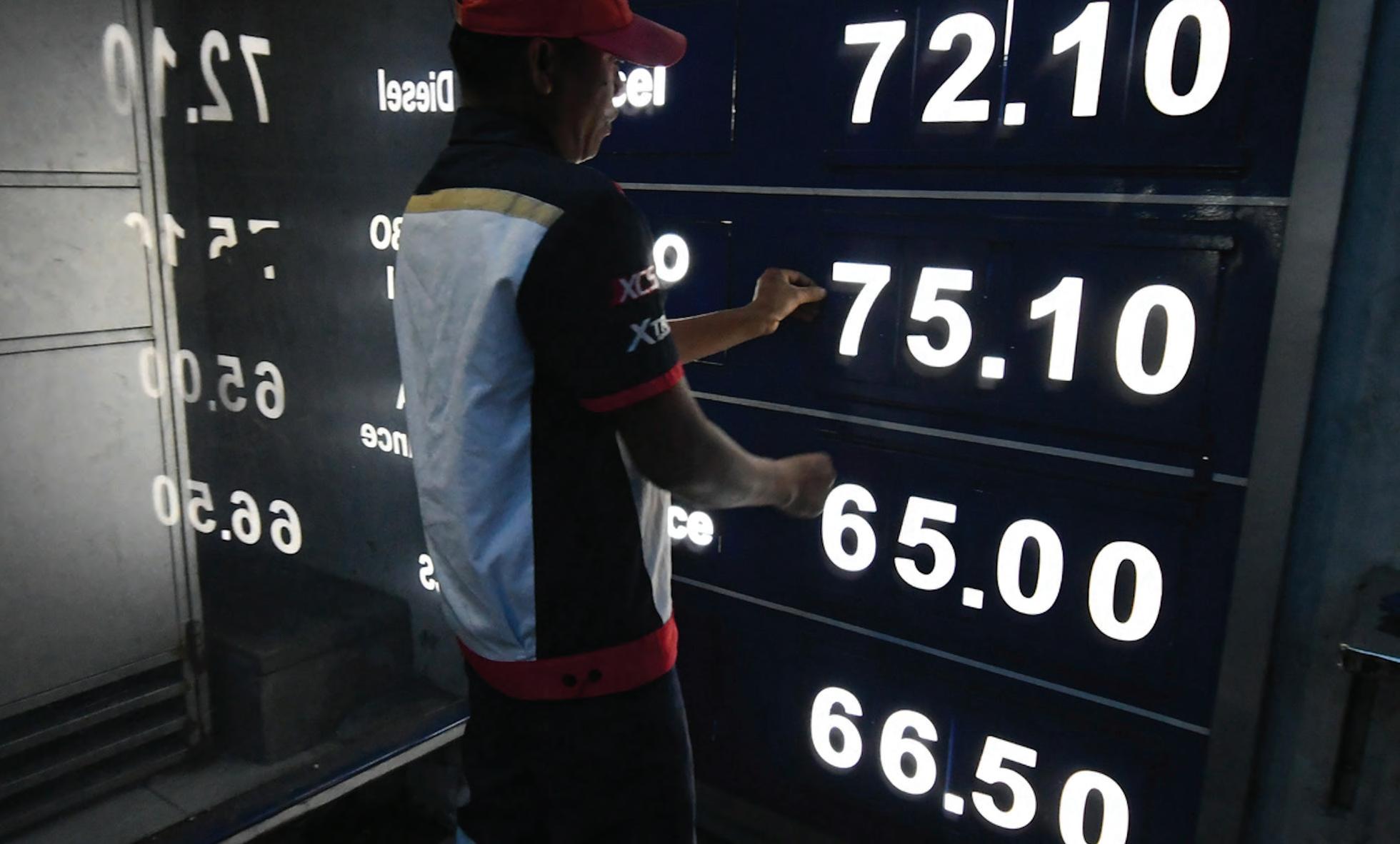
IESEL prices will likely breach the P100 per liter mark next week with another round of fuel price hikes of as much as P21 per liter, industry

“Our
impact of the war on the global economy and the welfare of our fellow Filipinos in the Middle East
By Charles Dantes and Vito Barcelo
MALACAÑANG on Tuesday said the Marcos administration is arranging chartered flights to fetch overseas Filipino workers (OFWs) from the Middle East, with one flight from Saudi Arabia expected to depart as early as Saturday, March 14.
Meanwhile, the Department of Migrant Workers (DMW) warned its personnel abroad to properly assist overseas Filipino workers (OFWs). The warning was raised after recalling one of its staff from the Philippine Embassy in Bahrain over a viral video showing the employee shooing away Filipinos asking for assistance. Presidential Communications Office

(PCO) Undersecretary Claire Castro said authorities are coordinating chartered repatriation flights for OFWs stranded in the region, including one departing from Riyadh and another from the United Arab Emirates that is still being finalized. According to Castro, another chartered repatriation flight is being ar-
ranged from the United Arab Emirates as part of the government’s continuing efforts to bring home Filipinos affected by travel disruptions and security concerns in parts of the Middle East. She added that the chartered operations will be financed through the Emergency Repatriation Fund being
By Charles Dantes
PRESIDENT Ferdinand Marcos Jr. on Monday called for stronger global action to advance gender equality, emphasizing that empowering women is essential to national development and addressing the
world’s most pressing challenges. Speaking at the 70th session of the United Nations Commission on the Status of Women at the United Nations headquarters, Mr. Marcos said the status of women remains “one of the most fundamental
NUP denies talks with House leaders on VP impeachment
By Maricel V. Cruz
President Sara Duterte.
“Press reports regarding supposed meetings between the National Unity Party (NUP) and the Speaker or Majority Leader Sandro Marcos are not true,” the NUP, chaired by Senior Deputy Speaker Ronaldo Puno of Antipolo City, said. The NUP said it has not had any talks with the House leadership regarding impeachment, projects, or anything related to such. The Standard has reached out to both House leaders
By Maricel V. Cruz and Alena Mae Flores
ABILL has been filed in the House of Representatives prohibiting individuals aged 16 and below from accessing social media platforms in the Philippines.
House Bill 8262, or the “Social Media Protection for Minors Act,” responds to growing global concern over the impact of social media on children’s mental health, safety, and development, according to its author, CIBAC party-list Rep. Eddie Villanueva.
Villanueva noted that several countries, including Australia, Spain, and France, have introduced restrictions on minors’
social media use, while Indonesia has begun preparing similar measures.
“These global initiatives highlight the need for governments to adopt a stronger role in ensuring safe digital spaces for young people,” he said.
Under the bill, social media platforms—not minors or their parents— would bear primary responsibility for preventing underage access.
rebuke to President Donald Trump’s boast that the conflict was all but over.
worst “because it’s better we are prepared” even as she assured the public the Philippines has a two-month fuel supply.
“We have other countries that we are talking with. We have to look for options now,” Garin said.
Garin also rejected fuel rationing proposals, calling them “disruptive” but expressed support to the removal of the VAT and excise tax to mitigate the impact to consumers.
Iran vowed on Tuesday that not one liter of oil would be exported from the Gulf while its war with the United States and Israel continues, in a stark
measures of a nation’s progress.”
“How are the women doing?” the President said. “If women are educated, safe, able to work, able to lead, and able to decide the course of their own lives, then a society is moving forward.”
Mr. Marcos said the Philippines has long viewed women’s empowerment as central to nation-building, citing the role of Filipina women as leaders in government, business, education, health care, and community life.
Despite progress, he said the global pursuit of gender equality remains unfinished, pointing to persistent discrimination, violence against women, and lack of access to education for many girls.
He urged governments to address violence against women and confront cultural attitudes that limit women’s roles, stressing that true equality requires both policy and cultural change.
Mr. Marcos also emphasized the importance of educating girls and promoting women’s economic empowerment through greater access to jobs, finance, entrepreneurship, and leadership opportunities.
He said global challenges such as conflict, climate change, economic uncertainty, and technological change make women’s participation in decision-making even more important, adding that the Philippines is ready to work with other nations to advance gender equality worldwide.
Iran’s Revolutionary Guards Corps (IRGC) mocked Trump’s bid to lessen the economic impact of the war, warning: “The Iranian armed forces... will not allow the export of a single liter of oil from the region to the hostile side and its partners until further notice.”
“It is we who will determine the end of the war,” the IRGC said.
Qatar, which has suspended LNG exports and sent European energy prices sky-high, said Iranian attacks on its civilian infrastructure were continuing, and the Israeli military announced a new wave of attacks on Tehran.
“There would be catastrophic conse-
Platforms would be required to deploy age-assurance technologies, remove accounts suspected to belong to minors, and submit periodic transparency reports on their compliance.
Villanueva cited risks such as algorithm-driven addiction, exposure to violent or sexual content, and online exploitation as reasons for the proposed law.
“Protecting minors from unfiltered and harmful social media exposure is a moral and national responsibility,” he said.
In a statement sent to the Standard, Globe chief sustainability and corporate communications officer Yolanda Crisanto said similar policies have been implemented in countries such as Australia.
quences for the world’s oil markets the longer the disruption goes on, and the more drastic the consequences for the global economy,” Saudi oil giant Aramco’s president and CEO Amin H. Nasser told journalists. “It’s absolutely critical that shipping resumes in the Strait of Hormuz.” Malacañang, for its part, urged the public to avoid panic buying of fuel and basic commodities amid concerns about price increases as the Middle East crisis shows no signs of letup.
Presidential Communications Office Undersecretary Claire Castro said there has been no unusual movement in the prices of basic goods in Metro Manila and other regions, based on information from the Department of Trade and Industry.
up to six months and may be extended for a maximum aggregate period of one year, subject to congressional action.
tee report has been issued, there will be a certification of urgency,” she said.
The certification will allow the approval of the measure on second and third reading on the same day, effectively waiving the Constitutional requirement of having three separate days for readings.
The measure approved by the House panel consolidates 15 bills and two joint resolutions, including those filed by Speaker Faustino Dy III, Ilocos Norte Rep. Sandro Marcos, and Leyte Rep. Martin Romualdez.
Under the measure, which seeks to amend the National Internal Revenue Code, the President may suspend or reduce the excise tax on petroleum products upon the recommendation of the Development Budget Coordination Committee, in coordination with the Department of Energy.
The authority may be exercised if the average Dubai crude oil price, based on the Mean of Platts Singapore, reaches or exceeds $80 per barrel for one month immediately preceding the suspension order.
It may also be triggered if the President declares a national emergency or calamity that results in extraordinary increases in domestic pump prices of petroleum products, as certified by the Energy Secretary.
The suspension or reduction may apply to specific petroleum products and may be implemented either as a full suspension or partial reduction of the applicable excise tax rates.
Any suspension will be effective for
potential airfare increases will be discussed within the week.
and around the world,” Jose Enriquez Perez de Tagle, executive director of Air Carriers Association of the Philippines (ACAP) told the Manila Standard in a text message.
“In recent days, we have seen the cost of jet fuel rise sharply by over 90 percent, and this will have a significant impact on the cost of flying and consequently pressure on air fares,” he added. According to the International Air Transport Association (IATA), fuel prices went up 64.4 percent to $157.41 per barrel as of March 6, 2026 and 74.8 percent compared to the same period in 2025.
De Tagle also said the airlines were closely monitoring the evolving situation and remained focused on prioritizing safety “as we evaluate the resumption of regular operations to the affected regions.” Philippine Airlines earlier canceled its flights to Dubai, Doha, and Riyadh, while Cebu Pacific suspended services to Dubai and Riyadh.
Carmelo Arcilla, executive director of the Civil Aeronautics Board (CAB), said
“We announce the fuel surcharge level on the 15th of every month. Currently, we are at Level 4,” Arcilla said.
Under Level 4, the fuel surcharge for domestic flights ranges from P117 and P342, depending on the distance, while for international flights, the fuel surcharge may range from P385.70 and P2,867.82.
The CAB said for the cargo fuel surcharge, airlines are allowed to charge P0.60 to P1.76 per kilogram for domestic flights under Level 4 and P1.98 to P14.74 per kg. for international flights.
Airline fuel surcharge is an optional fee, imposed and collected by airlines to recover fuel costs and stem losses caused by upward spikes in fuel cost.
Arcilla added that the Department of Transportation (DOTr) and the aviation sector will convene to address any “extraordinary increases” in jet fuel prices resulting from the regional conflict.
Data from CAB showed that domestic passenger traffic rose to 33.24 million in 2025, surpassing the 32.13 million recorded in 2024. This recovery brings the industry back to its pre-pandemic level, ending the five-year slump that began in 2020.
She added that social media use is widespread in the Philippines, where many users are young.
“As a telco, we are partners in child safety, which is why we promote digital awareness programs and safe internet use,” Crisanto said, noting Globe’s support for initiatives against online sexual abuse and child sexual exploitation materials.
Villanueva said the bill also recognizes the roles of parents, schools, and digital platforms in protecting minors online.
He added that safeguards must be carefully designed so that restrictions do not push minors toward less regulated online spaces.
“There is no need for panic buying because supply is adequate and even more than enough, especially for our fuel and basic commodities,” Castro said. Senator Francis Escudero also called for strict enforcement of laws against fuel hoarding and profiteering.
“Enforcement must be swift, decisive, and unforgiving to send a strong message that economic sabotage will not be tolerated,” Escudero said.
“Every peso added through profiteering is a peso stolen from jeepney drivers, market vendors, and wage earners who already struggle to make ends meet. We must protect the most vulnerable from opportunists who exploit crises for private gain,” he added. With AFP
The measure also requires the President, through the Finance Secretary, to submit a report to Congress within 15 days from the issuance of the suspension order and every month thereafter detailing the factual basis for the move, the estimated foregone revenues, and the expected impact on inflation, fuel prices, and economic activity.
Romualdez said the bill would give the President flexibility in responding to the oil crisis and price volatility and help the people, especially the poor and the vulnerable.
“An excise tax suspension or reduction will be a big relief to our people at this time of soaring fuel prices,” Romualdez said.
Representatives of oil firms, however, told lawmakers pump prices of oil products like diesel and gasoline will not go down immediately even if the excise tax is suspended or reduced.
House committee chairman Miro Quimbo asked representatives of oil companies if retail prices will go down immediately once the President suspends or removes the excise tax of P6 to P10 per liter.
Tanya Samillano, who represented the Independent Petroleum Companies Association, responded: “No, your honor, it will not be immediately reflected.”
Samillano explained that oil companies have inventories, on which they have already paid excise levies.
“Once the products reach our shores, we pay the excise taxes. It is the products that have not reached our shores that are not yet subject to excise taxes,” she said.
International passenger traffic, on the other hand, grew to 29.1 million, up from 27.78 million in 2024.
Meanwhile, Meralco warned that the conflict in the Middle East will affect future power rates, though the exact impact on the next billing cycle remains undetermined.
Meralco sources 60 percent of its supply from power generators who supply natural gas (indigenous and imported), 20 percent coal, 10 percent renewable energy and 10 percent from the spot market.
Meralco vice president and head of corporate communications Joe Zaldarriaga said the March rate hike does not yet factor in the Middle East crisis, which is expected to impact consumers starting in April.
“Based on the directive of our chairman, Manuel V. Pangilinan, we are looking at our fuel sourcing, making sure that we have adequate fuel from our suppliers and from our generation arm,” Zaldarriaga said.
Meralco executive vice president and chief operating officer Ronnie Aperocho said that amid heightened geopolitical tensions in the Middle East and the potential ripple effects on global fuel markets, Meralco is proactively implementing all necessary measures to shield customers from possible supply disruptions and up-
administered by the Overseas Workers Welfare Administration.
Meanwhile, officials have yet to determine how many Filipinos will be accommodated in the chartered flights.
Castro said the government was still coordinating with the Department of Migrant Workers regarding the number of passengers for the March 14 flight.
Meanwhile, the Philippine Embassy in Riyadh on Monday urged Filipinos to stay calm and follow official guidance after sharing safety tips from the Saudi Civil Defense on responding to alerts from the National Early Warning Platform amid ongoing tensions in the Middle East.
In an advisory, the embassy advised the public that when receiving a warning message while driving, they should pull over to the side of the road away from bridges and tall buildings.
“Immediately proceed to the nearest safe place (inside a building or an interior room away from windows) and stay there until the danger has passed,” the statement read.
“If you are outdoors, enter the nearest building or take shelter behind a solid barrier,” it added.
The embassy also recommended calling the emergency number (911) in the regions of Makkah, Madinah, Riyadh, and the Eastern Province, and (988) in other parts of the Kingdom if danger is spotted.
It urged the public to follow instructions from relevant authorities through official channels and advised Filipinos to keep monitoring news and updates from official sources, including the Philippine Embassy in Riyadh and the Philippine Consulate General in Jeddah.
For its part, the Philippine Chamber of Commerce and Industry backed calls to grant emergency powers to the President to help cushion the impact of fuel price spikes.
PCCI president Perry Ferrer said the business sector supports government action that would help stabilize prices.
“We support whatever means – whether reducing excise tax, VAT, or tapping other funding sources – because we are in a crisis. If the market cannot absorb these pending price increases, the economy will slow down,” he said.
He warned that higher fuel prices would immediately raise logistics and transportation costs, which would eventually push up the prices of goods.
“We are shocked when we hear estimates of P17 to P20 or more increase in fuel transportation costs. When fuel prices go up, the cost of moving goods rises immediately, and so do the prices of transporting goods,” he said.
“Our request to the government is to absorb the fuel price increases temporarily. Hopefully, the President can be given the authority to use other means that will help cushion potential shocks this week or next week,” Ferrer added.
He also urged the government to coordinate with key regional suppliers such as Singapore, Malaysia, and South Korea, where most of the Philippines’ refined fuel products are sourced, to ensure sufficient supply and help stabilize prices in the coming weeks.
“We certainly need to put temporary measures in place immediately to minimize the impact of fuel hikes,” he said.
ward pressure on electricity prices.
“We are closely coordinating with our power suppliers to keep generation charges at least-cost while prioritizing reliability across our system. We are optimizing our energy mix and fully leveraging cost-efficient sources, regardless of technology. In addition, we are carefully managing our exposure to the Wholesale Electricity Spot Market (WESM), where price volatility is high. We will also secure lower-cost replacement power whenever needed,” Aperocho said.
For residential customers, Meralco is intensifying our efforts to share simple, actionable tips so households can better manage their electricity consumption.
“The Lifeline Rate Subsidy is also being fully implemented. Meralco has automatically registered customers whose records belong to the Department of Social Welfare and Development’s (DSWD) 4Ps program. We encourage other eligible Meralco customers to apply so they can maximize the subsidy for low-income and marginalized households with monthly consumption of 100 kWh and below,” Aperocho said.
Meanwhile, Meralco said that for a residential customer with a typical con-
but has not recieved any response as of press time.
“There are likewise no such talks being planned,” the party said.
The NUP maintained its position that it will support the Duterte impeachment case only if there are compelling reasons and new pieces of evidence to be presented against the Vice President.
“Any position to be taken by the NUP on the impeachment will be arrived at only after a discussion among its members and after carefully evaluating the evidence presented,” the party said.
“It will never be the result of any influence or pressure from anyone,” the second-largest political party in the House of Representatives added.
The National Unity Party (NUP) earlier urged the House committee on justice to present new pieces of evidence against the Vice President after it declared last week that the complaint was sufficient in substance.
The NUP members were among the at least 215 members of the House who voted to impeach of Vice President in February 2025, a case dismissed by the Supreme Court as illegal due to technicalities of violating the one-year bar rule and violation of the Vice President’s right to due process.
Puno acknowledged that in the absence of such evidence, it will be very difficult for the NUP members to vote in favor of transmitting the impeachment complaints to the Senate for trial.
sumption of 200 kWh, the increase for March translates to approximately P129 on their total bill.
The primary driver of this month’s increase was a P0.2880 per-kWh hike in the transmission charge for residential customers.
As the country enters the dry season and the worsening Middle East crisis, when demand traditionally peaks, Meralco is urging customers to practice energy efficiency to help manage consumption. Energy-saving tips from the company include unplugging appliances when not in use, utilizing natural light, ironing large batches of clothing at once, setting air conditioners to 25°C, and performing regular refrigerator maintenance. Some shipping companies have increased fares for sea travel as ongoing tensions in the Middle East affect global crude oil supply.
According to Darlene Cay’s report on “24 Oras Weekend” on Sunday, some shipping firms have also canceled certain trips to reduce fuel consumption.
The Maritime Industry Authority (MARINA), however, said ship operators may raise fares by up to 20% only during a crisis and must notify the public in advance.

THE Bureau of Customs (BOC) conducted a symbolic turnover of proceeds from the public auction of luxury vehicles registered to the Discaya family and their companies to the Bureau of the Treasury (BTr), reaffirming the government’s commitment to transparency, accountability, and the restitution of unlawfully acquired assets.
The activity forms part of the administration’s intensified efforts under President Ferdinand Marcos Jr. to strengthen enforcement against smuggling and other customs violations while ensuring confiscated assets are properly accounted for and converted into resources that support national development.
The BOC confiscated the unlawfully imported luxury vehicles for violating the Customs Modernization and Tariff Act (CMTA). Thirteen high-value vehicles were seized, including units from Rolls-Royce, Mercedes-Benz, Bentley, Cadillac, Lincoln, Toyota, GMC, and Maserati.
The bureau conducted a series of public auctions. The first, held Nov. 20, 2025, sold three vehicles for P38.21 million, while the second auction on Dec. 5, 2025 generated P9.48 million from two vehicles.
A third auction on Feb. 11, 2026 sold a 2023 Rolls-Royce Cullinan for P29.02 million. The fourth auction on Feb. 25, 2026 generated P25.75 million from three more vehicles.
So far, nine of the 13 seized vehicles have been sold, generating total proceeds of P102,468,884.15, which will be turned over to the Bureau of the Treasury.
Four vehicles remain unsold and may be offered in future auctions, including a GMC Yukon Denali, Cadillac Escalade, Maserati Levante Modena, and GMC Yukon XL Denali. Vito Barcelo

By Rex Espiritu
ESPIONAGE activities linked to the Chinese Communist Party are part of a broader global trend aimed at gathering sensitive information through covert means.
In a press briefing at Camp Aguinaldo, Navy spokesperson for the West Philippine Sea Rear Admiral Roy Vincent Trinidad said intelligence operations conducted
By Pot Chavez
THE Office of the Solicitor General (OSG) on Tuesday said it recommended to the Supreme Court the acquittal of Rappler CEO Maria Ressa and journalist Reynaldo Santos in the cyberlibel complaint filed against them. In its Manifestation and Motion filed Monday, the OSG said the filing of the complaint has already prescribed.
“In its filing, the OSG relied on the Supreme Court’s earlier ruling in Berteni Cataluña Causing v. People, which shortened the prescription period for cyberlibel offenses to one year,” the OSG said. Applying this doctrine, the filing of the criminal information against Ressa and Santos in early 2019 for an article republished in 2014 and discovered by the complainant in 2016 is time-barred, it added.
The Causing case was decided in October 2023 and published in January 2024. The Supreme Court ruled that cyberlibel prescribes in one year, consistent with provisions of the Revised Penal Code.
However, the OSG stressed that cyberlibel is not protected speech and that its penal sanction under existing law remains important.

discreetly or surreptitiously allow foreign actors to obtain information outside established channels or open sources.
“This is a global trend by the Chinese Communist Party to get information through discreet or surreptitious means,” Trinidad said. According to the military, such efforts could enable China to strengthen and advance its capabilities beyond those of other countries.
Trinidad added that espionage activities may also provide strategic advantages by allowing a country to learn the plans and strategies of potential adversaries.
The Armed Forces of the Philippines earlier said it continues to strengthen its counterintelligence and security measures to protect sensitive information and safeguard national security.
Defense Secretary Gilberto Teodoro Jr. warned that espionage poses a “very real” security threat to the Philippines, saying authorities are actively working to uncover and counter foreign intelligence networks operating in the country.
Teodoro said the government has intensified efforts to address the issue, including conducting operations to dismantle espionage activities and pushing for stronger legal protections against spying.


A STUDY showed that Filipinos continue to lose thousands of pesos annually due to obesity, a condition characterized by excessive body weight.
Findings from the Epidemiological Burden and Cost of Obesity in the Philippines (EpicCOb-PH) estimated that individuals spend about P66,696 each year to manage their weight. The total cost includes direct medical expenses such as checkups and counseling sessions, as well as alternative treatments and productivity losses.
Dr. Paul delos Trinos of metaHealth explained that early mortality and absenteeism due to weight-
related complications account for these indirect costs.
“The demographic dividend shows that you have productive people. But if you have significant productivity losses, that will be a concern,” delos Trinos said Monday.
The Philippines has spent about P551 billion on medical costs related to obesity, equivalent to 2.12 percent of the country’s gross domestic product.
Productivity losses were estimated at P1.167 trillion, bringing the total economic impact to about P1.9 trillion. Delos Trinos said obesity deserves greater attention as a public health issue, noting that weight-related concerns are often not prioritized.
7th frat member in hazing surrenders
ANOTHER member of the Tau Gamma Phi fraternity has surrendered to authorities in connection with the alleged fatal hazing of a 19-year-old maritime student, Mark Kenneth Alcedo, in Cavite, the Philippine National Police (PNP) said Tuesday. A total of seven suspects have surrendered while 11 others remain at large in connection with the case. Col. John Guiagui, chief of the Criminal Investigation and Detection Group–National Capital Region (CIDG-NCR), confirmed that the suspect turned himself in with his legal counsel. The suspect was identified as 26-yearold maritime school alumnus Dar Sabilona. His lawyer, Jayve Grospe, said his client surrendered at Camp Crame after being advised it would be safer and would show respect for the justice system and the rule of law. Vince Lopez
More Pinoys abroad registering to vote
THE Commission on Elections (Comelec) reported a growing number of overseas Filipinos registering to vote, with the registration center at the Commission on Filipinos Overseas (CFO) recording the highest number of new registrants among government registration sites. During the “Votes That Count: Overseas Voting Dialogue with the Filipino Diaspora” held Feb. 26 at the CFO main office in Pasay City, Jan Jordan Poon said the CFO-based registration center has logged the largest number of applicants so far.
Poon said the strong turnout shows the growing interest of Filipinos abroad in participating in the country’s elections, noting their significant contributions to the economy through remittances and investments. Vito Barcelo Show cause orders vs. 12 driving schools
THE Land Transportation Office (LTO) has issued show cause orders to 12 accredited driving schools in Metro Manila and their instructors over alleged irregularities in the issuance of practical driving course certificates. The LTO’s Central Accreditation Committee on Driving Schools and Medical Clinics directed the schools and instructors to submit written explanations and supporting documents within five calendar days upon receipt of the orders.
Pending investigation, the 12 schools and their instructors have been placed under preventive suspension for up to 30


WEDNESDAY, MARCH 11, 2026

BOC modernizes car import processing
THE Bureau of Customs (BOC) has launched a new electronic Certificate of Payment (e-CP) system that uses modern digital technology to speed up the processing of vehicle import payments and registration data.
The upgraded platform replaces the previous e-CP process that relied on manual validation and limited automation, the BOC said.
BOC chief Ariel Nepomuceno said the new system is fully automated and allows real-time data sharing between the BOC and the Land Transportation Office (LTO).
He said the technology will significantly reduce processing time, improve data accuracy, and enhance service delivery for both government agencies and stakeholders in the automotive industry. Vito Barcelo
TWG set to present draft RTI bill to Info committee
THE Right To Information (RTI) Bill has inched closer to committee approval in the House of Representatives after the Technical Working Group (TWG) tasked with consolidating its various versions and finetuning its provisions concluded deliberations on the measure, Parañaque 2nd District Rep. Brian Raymund Yamsuan said Tuesday. Yamsuan has instructed the secretariat of the House Committee on Public Information to draft the substitute bill incorporating all the approved provisions so that the committee report could be endorsed to the panel next week for final consideration and approval.
“To all our resource persons from the different government agencies and to all freedom of information advocates who took part in the TWG, thank you very much and congratulations,” Yamsuan said. Maricel V. Cruz
DepEd looks into death of Taguig City student
THE Department of Education (DepEd) has ordered an inquiry into the mysterious death of a student from Taguig City, but dropped broad hints it could have been due to mental health.
In a statement, the DepEd said it has directed an executive team to visit the school, assess the situation, and interview the victim’s family.
“DepEd recognizes that this incident is a sensitive issue and underscores the importance of providing timely interventions for learners and teachers who may be experiencing mental health challenges,” the statement read.
DepEd did not provide details of the incident, but gave assurance that programs on mental health were being mechanized to enhance assistance to the students.
“The Department remains committed to strengthening and implementing mental health programs to ensure that our schools remain safe and supportive environments for our learners,” DepEd said. Rolando Ng III
By Rex Espiritu
THE National Amnesty Commission (NAC) urges former members of the Communist Party of the Philippines-New People’s Army-National Democratic Front to submit their amnesty applications before the March 13, 2026 deadline.
In an advisory, the commission called on applicants to coordinate with their respective local amnesty boards to facilitate the submission and processing of the applications.
Local amnesty boards have been set up across country, including special sites in Luzon such as Albay, Baguio, Isabela, La Union, Pampanga, Quezon Province, and the National Capital Region based in Quezon City.
In the Visayas, application centers are located in Bacolod, Bohol, Catbalogan, Iloilo, and Tacloban.
Meanwhile, several sites in Mindanao are accepting applications, including in Basilan, Butuan, Cagayan de Oro, Cotabato,
By Maricel V. Cruz
THE House Committee on Agriculture and Food has approved a bill establishing a Congressional Commission on Agriculture (AGRICOM), that will undertake a comprehensive national review of the country’s agricultural sector, and recommend long-term reforms to strengthen food security, rural livelihoods, and agricultural productivity.
House Bill 6689, also known as the AGRICOM Act, was introduced by Leyte 1st District Rep. Ferdinand Martin Romualdez, together with TINGOG Party-list Reps. Yedda Marie Romualdez, Andrew Julian Romualdez, and Jude Acidre.
The measure aims to create an independent, multisectoral congressional body tasked with reviewing, assessing, and evaluating the state of Philippine agriculture and agrifood systems, and developing targeted policy recommendations to guide long-term agricultural transformation.
In his sponsorship speech, Acidre said the proposed commission is guided by three core principles: comprehensiveness, honesty in assessment, and clarity of purpose.
“What this bill seeks is a comprehensive assessment of the entire agricultural industry so we can finally see, with clarity, where we truly stand,” Acidre said.
He also said the proposed law draws lessons from the experience of the Second Congressional Commission on Education (EDCOM II), which undertook a nationwide assessment of the education sector to guide long-term reforms.
Davao City, Koronadal, Pagadian, and Jolo.
The NAC said applicants are encouraged to file their documents early to ensure they are processed before the deadline.
As of March 6, the NAC has received 12,646 amnesty applications.
The amnesty program aims to provide qualified former rebels the opportunity to reintegrate into mainstream society and support the government’s efforts toward lasting peace and reconciliation.
By Katrina Manubay
THE Department of Foreign Affairs (DFA) on Monday said it is monitoring the case of 78 overseas Filipinos previously rescued from a scam compound in Myawaddy and currently held in Hpa-An for alleged immigration violations.
In a statement, the DFA said the Philippine Embassy in Yangon has conducted two welfare checks on the victims being detained in Hpa-An, Myanmar, some 300 kilometers from the capital Yangon.
“The Embassy is actively coordinating continued access to provide welfare and legal assistance as approved by the host authorities,” the statement read.
“Communication with the families of the affected Filipinos is ongoing based on verified Embassy updates,” it added.
On February 23, the Deputy Governor of Tak Province in Thailand confirmed that 78 individuals—27 females and 51 males who were rescued from scam centers in Myawaddy were being detained for “illegal entry.”
The DFA emphasized that protecting Filipinos, especially those reported as victims of illegal recruitment and human trafficking, remains a top priority. It said the initiative is a key aspect of its ongoing diplomatic engagements with overseas authorities.
The DFA also committed to collaborating closely with the Department of Migrant Workers (DMW) office in Bangkok and other government agencies to resolve the case.
In October 2025, the DFA reported that the Philippine Embassy in Yangon received 222 repatriation requests from Filipinos in scam hub areas.
In response, the DMW confirmed that 71 Filipinos rescued from human trafficking rings in Myanmar safely returned to the Philippines in December. Reports indicated that nearly 1,000 foreigners, 66 of them Filipinos, successfully escaped Myanmar and crossed into Thailand following a military operation against the Chinesebacked KK Park, a known cybercrime compound.


By Vince Lopez and Rolando Ng III

IN JULY 2017, Enrique Manas Sr. was killed in an ambush in Sta. Margarita, Samar. That same year, a criminal complaint for murder was filed against Emilio Zosa, Joel Calagos, Sofronio Meduranda Jr., Arturo Deborbon, and Reymart Antivo.
Today, almost nine years later, the case has yet to reach trial.
On January 16, 2025, then Justice Secretary Jesus Crispin Remulla issued a clear and categorical Resolution directing the Office of the Prosecutor General to file the necessary Information in court within ten days. Ten days. More than 400 days later, that directive remains unimplemented.
The issue raised by this situation goes beyond the details of a single criminal case. It raises a larger institutional question: when the Secretary of Justice issues a formal directive, does that order carry continuing authority, or does it quietly expire when leadership changes?
At the time the directive was issued, Fredderick Vida was serving as undersecretary at the Department of Justice. Today, he serves as Acting Justice Secretary and oversees the same department responsible for carrying out the order.
This places the matter squarely within his institutional responsibility.
To be clear, the question is not about guilt or innocence. That determination belongs exclusively to the courts. The DOJ conducts preliminary investigation only to determine whether probable cause exists and whether the case should proceed to trial.
In the Manas, Sr. case, the DOJ itself had already reached that point. The Remulla Resolution explicitly reinstated an earlier prosecutorial finding and directed that the case be filed in court.
The 2025 Resolution also emphasized that evidentiary questions, including alibis, denials, and technical rules, are matters best resolved during trial, not during preliminary investigation.
In other words, the DOJ had already determined that the proper forum for resolving the case was a courtroom.
It is worth recalling that during his tenure as Justice Secretary Remulla raised the internal standards of prosecution.
Prosecutors were instructed not to rely on bare probable cause alone but to assess whether the available evidence could reasonably lead to conviction in court. The intention was to avoid weak cases and restore confidence in the prosecutorial process.
In that context, the Remulla Resolution carried more than routine administrative weight. It meant that the Department’s top official, applying a higher prosecutorial threshold, believed the evidence warranted a full trial.
If that directive now remains unimplemented, the institutional question becomes
unavoidable: does the present leadership of the DOJ, now headed by Vida, share that assessment—or has the Department quietly stepped back from the judgment reached under Remulla’s watch?
Across the country, thousands of criminal complaints move slowly through the justice system. Many families lack the resources to sustain years of litigation.
—“—
If there is a lawful reason why the directive cannot yet be implemented, the DOJ can simply explain it
That is why the implementation of departmental orders matters. When a formal directive remains unexecuted for long periods without explanation, it creates uncertainty not only for the parties directly involved but also for the broader public that depends on the credibility of institutions.
Human nature understands that legal processes take time. But delay that occurs after a final administrative directive is more difficult to understand.
At that point, the question naturally arises: what exactly is preventing movement? Is there a legal impediment? A procedural obstacle? Or something else?
In the absence of a clear explanation, speculation inevitably fills the vacuum.
People begin to wonder whether unseen pressures, political sensitivities, or influential interests might be at play. Whether such suspicions are justified or not, they thrive whenever institutions fail to communicate openly about their actions.
Transparency, therefore, becomes essential.
If there is a lawful reason why the directive cannot yet be implemented, the DOJ can simply explain it.
Public institutions strengthen credibility when they clarify their processes. But if there is no legal barrier, then the responsibility becomes equally straightforward: the order must be carried out.
The family of Enrique Manas Sr. is not asking the DOJ to declare anyone guilty. What they are asking is far more basic: that the DOJ follow through on its own directive.
The question now confronting the Department is simple but important.
Do departmental orders continue to carry force after they are issued? Or do they quietly expire with the secretaries who sign them?
Institutions are ultimately judged not by the resolutions they write, but by the resolutions they implement. (Email: ernhil@ yahoo.com)

LATELY, conversations in our country feel heavier than they used to. A simple political topic can turn a family dinner quiet. A group chat suddenly becomes tense. Friendships grow careful. We now carry labels before we even carry names — loyalist, DDS, kakampink — as if identity has become shorthand for character. Yet the truth is simpler than our categories. Before anything else, we are Filipino. We share the same traffic, the same rising prices, the same worries about our children’s future. We line up in the same government offices. We pray in the same churches. And still, we talk to each other as if we live in different countries. Democracy allows disagreement. In fact, it needs it. A nation without debate is a nation without freedom.
But there is a thin line between discord and democracy, and that line is civility. When disagreement stops being about ideas and starts being about humiliation, something breaks. We no longer try to understand. We try to win.
Many ordinary Filipinos feel tired of it. You can hear it in tricycle conversations, sari-sari store chats, even in quiet remarks after Mass. People want solutions, yet public discussion often produces noise instead of clarity. Somewhere along the way, we forgot how to persuade without turning each other into enemies.
So how do we disagree better?
First, respect. Respect does not mean agreement. It means remembering there is a human being in front of you.
Every opinion has a story behind it — a family history, a personal struggle, a hope
for security or dignity. When we mock people, we stop listening. And once listening ends, learning ends. A respectful conversation does not weaken conviction; it strengthens it because it forces us to explain rather than attack. Second, restraint. Not every thought needs to be posted. Not every insult deserves a reply.
A respectful conversation does not weaken conviction; it strengthens it because it forces us to explain rather than attack
Social media rewards speed and anger, but wisdom grows in pauses. Restraint is the quiet decision to step back before words become wounds.
Many arguments escalate not because issues are impossible to resolve, but because pride refuses to slow down. Sometimes the most patriotic act is choosing silence for a moment so dialogue can survive tomorrow.
Third, reason. We have slowly replaced arguments with slogans. We forward headlines without reading, share claims without checking, and defend positions we never fully examined. Reason asks us to care about truth more than winning. It asks: Is this accurate? Is this fair? Could I be mistaken? A democracy
HERE is a special place in hell for those who profit off their fellow citizens during the most unsettling times.
We have seen this in the past. During the pandemic, precious taxpayers’ money was squandered on items procured through a company with neither financial muscle nor track record in undertaking COVID-related transactions with the government. The goods were found to be either of shoddy quality or downright unnecessary. These were grossly insulting to the healthcare professionals who risked their own safety in order to serve the public.
Another example is the widespread and deeply rooted flood-control scandal, which erupted last year but has likely been happening for many years. While a few people have gone to jail, only a formerly jailed former senator is the biggest name among those facing charges. The Senate Blue Ribbon Committee has yet to get all committee members to sign the report’s draft. Meanwhile, the lives and livelihoods of millions of Filipinos in flood-prone areas remain threatened every time there is a typhoon or even an erratic weather pattern. Contrasting these deplorable conditions with the opulent lifestyles and unapologetic behavior of
those who raked in billions would make one wonder: where is the conscience, the humanity?
It is difficult to tell whether the figures being cited are sound approximations or frantic estimates
These days, the raging war in the Middle East has yet another consequence aside from the death, destruction, and displacement of ordinary citizens including our overseas workers there. Uncertainty is spooking the oil markets, with a crucial passageway for the global supply figuring in the conflict. Prices have started shooting up. It is difficult to tell whether the figures being cited are sound approximations or frantic estimates. Fear and greed are also making themselves felt in more tangible ways. Fearing significant increases in the price of

By Melandrew Velasco
MARCH is celebrated around the world as Women’s Month, a time to recognize the profound contributions of women in shaping societies, nurturing communities, and guiding nations toward a more compassionate and equitable future.
In the Philippines, the story of nationbuilding has always included women whose strength, intellect, and quiet resolve helped define our collective destiny.
Their leadership may take many forms— public service, diplomacy, education, social work, the arts, sports, and community development—but their common thread is a deep commitment to service and excellence.
Over the years, I have had the privilege of writing and publishing several biographical works honoring remarkable Filipino women whose lives illuminate this enduring legacy.
One such work is “Simply Ming,” which tells the story of Amelita “Ming” Martinez Ramos, the gracious spouse of former President Fidel V. Ramos.
Known affectionately as “Ming,” she exemplified dignity and humility in public life. While her husband steered the ship of state, she quietly championed causes that uplifted women, children, the elderly and the environment with her Clean and Green and PISO Para sa Pasig Projects.
Her presence in Malacañang reflected the understated yet powerful influence of a woman deeply devoted to service. Another inspiring figure is Ming’s mother, Josefa Jara Martinez, whose story I chronicled in “The Pillar of Social Work.”
Widely recognized as one of the pioneers of professional social work in the Philippines, Martinez devoted her life to building institutions that would care for the country’s most vulnerable sectors, most notably the establishment of Socsargen - South Cotabato, Sarangani and General Santos with the late Senator Juan C Flavier under the auspices of the Philippine Rural Reconstruction Movement. Her legacy continues to guide generations of social workers who carry forward her mission of compassion and public service.
In “In a Class of Her Own,” I shared the life journey of FVR’s mother Angela Valdez Ramos, whose life embodies resilience, strength of character, and intellectual grace.
stands on informed citizens, not merely passionate ones. Respect, restraint, and reason — they work together. Respect keeps the conversation human. Restraint keeps it calm. Reason keeps it meaningful. When even one is missing, discussion collapses into shouting. In the end, the goal of disagreement is not endless debate. It is solutions. Roads get built, schools improve, jobs grow, and communities become safer only when people who think differently still decide to work together.
A nation cannot solve problems if its citizens refuse to sit at the same table.
I sometimes wonder how many opportu-
gas, motorists lined up to fill up, as some retailers jacked up their prices in anticipation of the higher demand and uncertain supply. But they did so before they were authorized to hike prices. As a result, the Energy Department issued show cause orders to 55 retailers out of the 87 inspected. Adjustments could only be made beginning Tuesday, March 10, even as increases should be made on a staggered basis over succeeding days. Measures to curb fuel demand are in place, as the world faces the consequences of a war that only a handful of individuals started. The next few days will determine whether the war will end soon, bringing things – and the prices of oil – back to normal. If it does, it will have taught us a lesson of being prepared to deal with the fallout of things we did not even have a hand on. And if it does not end soon – then we will have to take in yet another crisis in our country’s already-difficult condition. The prolonged effects of war will certainly negate all the gains we have managed to eke out in the past few years. The government should prepare to protect the people over the long term, from the logical consequences of a disrupted supply chain, and from those who feel they must take advantage of others just to survive.
Women who lead, women who inspire
An educator, suffragette and World War II heroine, her story reflects the quiet yet powerful leadership of Filipino women who excel in both public life and family life. Another inspiring narrative is found in “Colors of Light,” which recounts the life of Auntie Lucing or Lucila Najera Valdez, wife of the late Ambassador Marcos Valdez whose story reflects faith, perseverance, and the power of family and community.
As our nation moves ahead toward the future we all dream of, the Filipino woman remains—now and always—a guiding light
I also had the privilege of writing contributing chapters on the late Senator Leticia Ramos Shahani, a distinguished diplomat, legislator, and global advocate for human rights and women’s empowerment. Her work in the United Nations and the Philippine Senate helped elevate the voice of Filipino women on the world stage.
While history remembers these remarkable women, it is equally important to celebrate the present generation of women leaders who continue to shape our country today.
Among them is former Vice President now Naga City Mayor Leni Robredo whose grassroots initiatives have empowered communities across the country. In the legislative arena - Grace Poe and Rosa Hontiveros - continue to demonstrate the vital role of women in shaping national policies.
In local governance, Mayor Joy Belmonte has emerged as one of the country’s most dynamic local leaders. Under her stewardship, Quezon City has advanced progressive programs in environmental protection, health care, gender equality, and inclusive governance. Her leadership reflects how women at the helm of local government can drive transformative change in urban communities.
In the world of business, leaders such as
nities for progress we have lost simply because we chose arguments over understanding. How many policies never improved because criticism sounded like contempt. How many good ideas were ignored because they came from the “other side.” We do not have to think alike to move forward together. Perhaps the first step is small and personal.
Listen longer than you speak. Ask one sincere question before giving one opinion. Resist the urge to label. When a conversation turns political, pause and look past the label. Give the other person a moment to explain where their
Teresita Sy-Coson and Robina GokongweiPe demonstrate that women can lead major institutions while contributing to economic growth and social responsibility.
The new generation of Filipino women is also making its mark in the global arena of sports. Among the most inspiring is Alex Eala, the young tennis sensation who continues to raise the Philippine flag in international competitions.
Trained at the Rafa Nadal Academy in Spain, Eala has already captured junior Grand Slam titles and is now competing on the professional stage.
Her discipline, talent, and determination symbolize the rising confidence of a new generation of Filipina athletes who are proving that the Philippines can excel on the world stage.
What unites these women—past and present—is the understanding that leadership is not merely about authority but about purpose.
Their lives remind us that true leadership often begins with compassion, courage, and a deep sense of responsibility to others.
As we celebrate Women’s Month, we honor not only the distinguished names recorded in history but also the countless mothers, daughters, teachers, entrepreneurs, and community leaders whose daily acts of dedication sustain the fabric of our society.
On a more personal note, I am reminded daily of the strength and grace of the women in my own life— my late mother Marcela who raised and nurtured five boys and my wife Tess, our daughters Angel, Magi and Me-Anne, and our granddaughters—who continue to inspire hope for the future. They represent the same quiet courage and resilience that define the Filipino woman. Indeed, in homes, communities, institutions, and even on the global stage, women continue to light the path forward.
And as our nation moves ahead toward the future we all dream of, the Filipino woman remains—now and always—a guiding light.
(The writer, president/chief executive officer of Media Touchstone Ventures, Inc. and president/executive director of the Million Trees Foundation Inc., a non-government outfit advocating tree-planting and environmental protection, is the official biographer of President Fidel V. Ramos.)
convictions come from, not just what they believe. Sometimes what sounds like stubbornness is actually worry, or memory, or fear shaped by experience very different from our own. The disagreement may remain, and that is all right. What changes is the distance between you. Understanding softens tone, and tone keeps relationships intact. And in a divided time, keeping the relationship may be the first real step toward repair. And when you look past the label, you may just find another Filipino, shaped by a different life, trying in an imperfect way to love the same country you do.

GENEVA—While ramping up its repression at home, Nicaragua’s government is also going after exiles abroad, with hundreds if not thousands of people affected, UN investigators said Tuesday.
In a fresh report to be presented to the United Nations Human Rights Council next week, the experts also concluded that husband-and-wife co-presidents Daniel Ortega and Rosario Murillo, and other top officials, were “responsible for serious, systematic and widespread human rights violations.”
Those violations, including “some amounting to crimes against humanity”, were being committed “against a broadening segment of the population”, the report warned.
The Nicaraguan government “has formalized repression through constitutional and legislative reforms, enabling generalized impunity by blocking any form of accountability and exposing victims and justiceseekers to severe reprisals”, it said.
The independent UN Group of Human Rights Experts on Nicaragua, which was created by the rights council in 2022 to investigate allegations of widespread abuses in the country, highlighted the growing targeting of Nicaraguans in exile.
“The extension of the repression beyond the borders of Nicaragua has affected the lives of hundreds—if not thousands—of exiled Nicaraguans and their in-country relatives and associates,” the report said. AFP
WASHINGTON, DC—Anthropic filed suit Monday (Tuesday, Manila time) against the Trump administration, alleging the US government retaliated against the company for refusing to let its Claude AI model be used for autonomous lethal warfare and mass surveillance of Americans.
In the 48-page complaint, filed in federal court in San Francisco, Anthropic seeks to have its designation as a national security supply-chain risk declared unlawful and blocked.
In its lawsuit, Anthropic said it was founded on the belief that its AI should be “used in a way that maxi-
Partial US gov’t shutdown pushes staffing shortage at many airports
WASHINTON, DC—Airports across the United States are feeling the strain of a partial government shutdown causing a shortage of travel safety agents, leading to extended travel delays for air passengers.
“Please plan to arrive to the Airport 3 hours early if you have travel scheduled,” the New Orleans Airport posted Monday (Tuesday, Manila time) on social media, the latest transportation hub snarled by extended wait times due to short-staffing.
Since February 14, the Department of Homeland Security (DHS), which oversees US air travel security, has had funding frozen due to ongoing disagreements between Congressional Democrats and Republicans over another agency overseen by the department, Immigration and Customs Enforcement (ICE).
Thousands of federal DHS employees have been furloughed, while others have been asked to keep working without pay until Congress passes a budget.
Some Transportation Security Administration agents opt to call in sick rather than work without pay, leading to staffing shortages and delaying travelers.
Major airline hub airports—Atlanta in the southeastern state of Georgia and Houston in the southern state of Texas—have also faced hours-long waits due to low TSA staffing. AFP
mizes positive outcomes for humanity” and should “be the safest and the most responsible.”
“Anthropic brings this suit because the federal government has retaliated against it for expressing that principle,” the lawsuit says.
Anthropic is the first US company
ever to have been publicly punished with such a designation, a label typically reserved for organizations from foreign adversary countries, such as Chinese tech giant Huawei.
The label not only blocks use of the company’s technology by the Pentagon, but also requires all defense vendors and contractors to certify that they do not use Anthropic’s models in their work with the department.
“The consequences of this case are enormous,” the lawsuit states, with the government “seeking to destroy the economic value created by one of the world’s fastest-growing private companies.”

The suit names more than a dozen federal agencies and cabinet officials as defendants.
The dispute erupted after Anthropic infuriated Pentagon chief Pete Hegseth by insisting its technology should not be used for mass surveillance or fully autonomous weapons systems.
President Donald Trump subsequently ordered every federal agency to cease all use of Anthropic’s technology.
Hours later, Hegseth designated Anthropic a “Supply-Chain Risk to National Security” and ordered that no military contractor, supplier or partner “may conduct any commer-
cial activity with Anthropic,” while allowing a six-month transition period for the Pentagon itself.
The row erupted days before the US military strike on Iran. Claude is the Pentagon’s most widely deployed frontier AI model and the only such model currently operating on the Defense Department’s classified systems. In its lawsuit, Anthropic argues the actions taken against it violate the First Amendment by punishing the company for protected speech on AI safety policy, exceed the Pentagon’s statutory authority, and deprive it of due process under the Fifth Amendment. AFP
Thailand, Vietnam push remote work or work from home to conserve energy
BANGKOK—Thailand and Vietnam encouraged public employees on Tuesday to work from home and take up other energy-saving measures as the Middle East war disrupted oil supplies and sent fuel prices swinging.
Thai authorities said government workers should shift to remote work where possible and asked that government offices set their air conditioners to 26C to conserve energy.
“The government wants all sectors to use resources wisely and effectively,” it said in a statement.
It also urged officials to avoid overseas trips.
Thailand said last week it had secured two months’ worth of oil supplies but was suspending exports to conserve its holdings.
It also capped the price of diesel at just under 30 baht ($0.94) per litre for a 15-day period.
In neighboring Vietnam, the gov-
ernment scrapped duties on Monday on many imported petroleum products in an effort to prevent fuel shortages and stabilise the domestic market.
It also encouraged companies to allow employees to work from home “whenever feasible” to alleviate demand for fuel, the government said on its website.
Hanoi also recommended the public limit the use of personal vehicles, and instead opt for public transit, cycling or carpooling.
But thousands of motorbike riders queued for petrol on Tuesday at stations across the Southeast Asian nation, where prices for unleaded gasoline have surged more than 20 percent since the start of the US-Israel war against Iran more than one week ago. A 57-year-old who gave his name as Tuan told AFP at a Hanoi petrol station that he was furious after waiting for almost an hour to gas up. AFP
MAE AI, Thailnd—Hundreds of thousands of people in northern Thailand have become collateral damage from the civil war in neighboring Myanmar, turning to drugs as supply through the area rockets on the back of the conflict.
The area is part of the Golden Triangle—where the two countries’ borders meet Laos—once the world’s biggest opium hub when wars raged across Indochina in the 1960s and 70s.
When peace came to much of Southeast Asia the title moved to Afghanistan, but it was taken by Myanmar after the 2021 military

coup and subsequent civil war, with a thriving methamphetamine industry alongside.
Drugs are smuggled into Thailand on their way to market, and research shows usage rates in its northern regions have tripled in five years.
The poorest and most vulnerable are hardest hit, among them the area’s hill tribes such as the Lahu, around 300,000 of whom live along the frontier, mostly in Myanmar’s Shan state but around one-third in Thailand.
Researchers say that with few opportunities available to them, individual Lahu also often become
involved with drugs as opium field labourers or as low-level smugglers.
Jawa Jabo, 70, relapsed into opium in the face of gruelling work on his coffee farm and marital tensions, before turning to religion to try to tackle his addiction.
At a cleansing ceremony in Mae Ai, just 10 kilometres (six miles) from the border, a spiritual leader cupped his hand over a candle before gripping Jawa’s legs and body to drive out the toxins.
“May all that is bad dissolve into the river and never return,” the shaman chanted.
PARIS—A summit aiming to boost the use of civilian nuclear power opened in Paris on Tuesday, as the US-Israeli conflict against Iran highlights the dangers of reliance on fossil fuels.
Representatives from about 40 countries and international organizations are expected at the meeting to be opened by President Emmanuel Macron. The United States and China will be present, but Russia, another key nuclear power, will be missing because of its invasion of Ukraine. Nuclear energy fell into crisis after the Fukushima disaster in Japan in 2011, which reinforced fears highlighted by the
Chernobyl disaster. But interest has been reignited by the
international focus on energy sovereignty and the search for clean energies to counter global warming. Nuclear power accounts for about nine percent of electricity produced in the world, and there are some 440 reactors in about 30 countries, according to the World Nuclear Association. The UN’s International Atomic Energy Agency, a co-sponsor of the conference with the International Energy Agency (IEA), has said that
At the culmination of the ritual Jawa burned through a sacred white cord to tie around his wrist for protection, and as a reminder of his promises.
“After the ritual, the pain eased— and from today, I must quit opium,” said Jawa.
On a foggy winter morning captain
Khetsopon Nopsiri led a six-strong Thai army patrol along dirt tracks through the forest, assault rifles at the ready. His unit monitors cross-border drug smuggling routes from Myanmar and regularly clashes with suspected traffickers, four times in November alone. AFP
summit.
Trump has made combatting drug trafficking a cornerstone of his Americas policy AFP
By Peter Atencio
MEMBERS of the Philippine national women’s football team prayed for a miracle in the Asian Football Confederation (AFC) Women’s Asian Cup Australia 2026.
On Tuesday, their prayer was answered.
The Filipinas unexpectedly qualified to the quarterfinals when Japan won over Vietnam, 4-0, on Tuesday in the Group C action at Perth Rectangular Stadium.
Coach Mark Torcaso hoped for a miracle after the Filipinas finished Group A with a 2-0 victory over Iran and a 1-0-2 win-draw-loss card in their bracket.
“Will just give the girls a welldeserved rest. Let them enjoy their visit to the country, then just pray. I know God will be on our side,” said Torcaso on Sunday at the Cbus Super Stadium in the suburbs of Robina, in Gold Coast, Queensland.
With Japan’s win, the Filipinas overtook Vietnam with a better tiebreak record for the best third-placed team as they joined Uzbekistan into the next phase.
Having a -2 goal difference with the Philippines and Uzbekistan in the quarterfinals are South Korea, Australia, China, North Korea, Japan and Chinese-Taipei.
Vietnam finished with a -4 goal difference.
The participation of the Filipinas is supported by the Philippine Football Federation and Philippine Sports Commission.
Games Wednesday 3 p.m. – 3B vs VNS
5 p.m. – Criss Cross vs Alpha Insurance
BRIMMING with confidence, Criss Cross heads into the second round of the 2026 Spikers’ Turf Open Conference aiming not just for another winning start, but for another sweep of the eliminations.
After dominating the first round with a clean sweep, the King Crunchers now shift their focus to sustaining their blistering pace as the rest of the six-team field ramps up efforts to halt their looming rampage in the tournament organized by Sports Vision. Standing in their way at the start of the next phase is an Alpha Insurance side that appears to be finding its rhythm. The Protectors are coming off back-to-back victories to close out their first round campaign and are eager to extend their run while attempting to derail the King Crunchers in their 5 p.m. showdown at the FilOil Playtime Centre.
But it will take more than determination to stop Criss Cross, led by the ever-consistent Jude Garcia and rookie sensation Alche Gupiteo. Their steady presence on both ends has been instrumental in keeping the King Crunchers sharp throughout their dominant firstround run, capped by a sweep of fellow title contender Savouge Spin Doctors last Sunday.
The team’s depth is further bolstered by wing attackers Noel Kampton, Jaron Requinton and Nico Almendras, all capable of stepping up and delivering at crucial moments.
What truly makes Criss Cross formidable is its imposing frontline, arguably the league’s most dominant middle rotation. Lloyd Josafat, Kim Malabunga, Gian Glorioso and Poy Colinares form the core that provides a strong wall at the net on both offense and defense. On the defensive end, the King Crunchers are also among the league’s best, anchored by liberos John Pepito and Menard Guerrero.
At the center of it all is setter Adrian Villados, who has been orchestrating Criss Cross’ attack with remarkable precision while ensuring the offense flows with rhythm and balance.




The Philippines will clash with Japan in the quarterfinals on March 15 in Sydney.
The top four quarterfinal winners will qualify directly to the 2027 Women’s World Cup, while the four quarterfinal losers will compete in the play-in matches.
The Filipinas defeated Iran behind goals from Sara Eggesvik and Chandler McDaniel at Cbus Super Stadium in Robina during their last elimination playing day.
“We’re glad we got the win,” said Eggesvik, who scored one of the Philippines’ two goals. “We went into



the game not knowing how many goals were needed, so maybe we could have been more clinical.”
The Filipinas drew positives from their final performance, with Eggesvik noting that the victory over Iran showed the team’s fighting spirit even.
By Randy M. Caluag
NATIONAL team fencer Samantha
Kyle Catantan captured the women’s foil title in the NCAA Mid-Atlantic/ South Regional Championships held recently in Haverford, Pennsylvania.
The 24-year-old Catantan, who recently earned her Master’s degree in Accounting from Penn State University, posted an impressive 9–2 record in the final round to secure the regional gold medal and further cement her status as one of the Philippines’ top fencing talents competing in the United States collegiate circuit.
After absorbing a narrow 4–5 loss to Sophia Shen of Duke University in her second bout, the Filipina quickly regained her rhythm, reeling off five consecutive victories to climb back into contention in the tightly contested field.
She sealed her dominant campaign by winning her final three matches, highlighted by a decisive 5–3 victory over Lydia Shen of Princeton University to clinch the regional crown. Shen of Duke finished with the silver medal, while Princeton’s Shen

settled for the bronze in the prestigious regional meet that features some of the strongest collegiate fencers in the
United States. Catantan represented the Philippines in the 2024 Summer Olympics.
QUEZON Province leaned on a fourth-quarter outburst to down San Juan, 72-69, on Monday and clinch a playoff spot in the 2026 MPBL (Maharlika Pilipinas Basketball League) Preseason Invitational at the Caloocan Sports Complex. Cyrus Tabi poured in seven points in a pivotal 10-1 run that helped the Quezon Huskers repel the San Juan Knights’ final assault and raise their record to 6-1 in Group B of the 18-team event preceding the MPBL Eighth Season. The Knights closed in at 67-69, following five straight points by Patrick Sleat and a triple by Harold Alarcon, and threatened at 69-70 following two charities by Mike Calisaan against a split by Quezon’s Judel Fuentes. San Juan, however, muffed two scoring opportunities and fell into a tie with its tormentor.
Tabi finished with 11 points, eight in the last 5 minutes and 33 seconds, 5 rebounds and 3 assists to clinch best player honors over Christian Pagaran, with 13 points and 5 rebounds, and Will McAloney with 10 points and 6 rebounds.
The Knights, who bunched 10 points to surge ahead, 54-44, got 15 points and 6 rebounds from Harold Alarcon and 13 points plus 8 rebounds from Calisaan.
Caloocan trounced the Junior MPBL D-League Selection, 80-63, in the second game to wind up with a 6-2 record and head to the playoffs.
Eric Camson led Caloocan with 18 points and 5 rebounds, followed by Jeramer Cabanag with 14 points, 6 rebounds and 3 steals, Jielo Razon with 11 points, 4 rebounds and 3 assists, and Paul Casin with 10 points.
The D-League youngsters suffered their seventh straight defeat despite Yhano Lacsarum’s 18 points and Vhon Roldan’s 16.
The Pasay Voyagers rode on Christian Fajarito and Cyril Gonzales to thwart the Marikina Shoemasters, 75-69, in the opener and keep their playoff hopes.
Fajarito posted 15 points and 11 rebounds, and Gonzales 15 points and 2 steals to lift Pasay to a 4-2 card and pull down Marikina to 1-7.
By Nissi Icasiano
THE Philippine flag could once again wave proudly inside the BRAVE Combat Federation cage as Stephen Loman and Drex Zamboanga move
closer to a moment they have long hoped to share.
Now signed to the Bahrain-based promotion, the two seasoned mixed martial artists are aiming for the same stage, the same night, and the

same mission: to carry Filipino pride before a global audience.
Both men were among the biggest Filipino signings announced by BRAVE CF in 2025, a development that renewed attention on the organization’s deep connection with the Philippine MMA scene.
For Loman, the possibility of competing alongside a compatriot adds an extra layer of excitement to his return.
“We have been in the same promotion before, but we never fought on the same card,” Loman said in an interview with the article’s author.
“Now that we are both in BRAVE CF, I hope that chance comes. It will be special if we can represent the Philippines together and show everyone the pride that Filipino fighters bring.” Loman is no stranger to the BRAVE CF banner. He competed on the promotion’s inaugural card in September 2016 and built an unblemished 6-0 record during his initial run. His most memorable moment came in November 2017 when he captured the inaugural BRAVE CF Bantamweight World Championship with a first-round technical knockout victory over Gurdarshan Mangat.
The reign lasted 1,179 days and featured four successful defenses, including a fourth-round stoppage of former featherweight king Elias Boudegzdame before a packed crowd at Mall of Asia Arena in March 2019.
After a four-year stint with ONE Championship, the 30-year-old Ifugao native returned to BRAVE CF before the end of 2025 in what felt like a fullcircle moment.
“I am very happy to write a new chapter of my career in BRAVE CF,” Loman stated. “This is also the start of restoring a strong Filipino presence in the promotion.” Filipino athletes once flourished in the organization, with names such as Jeremy Pacatiw, Rolando Gabriel Dy, Jenel Lausa, Jomar Pa-ac, and Harold Banario showcasing their skills on the international stage.
Representation gradually slowed after 2021, though the signing of Zamboanga in February 2025 signaled renewed interest in Filipino talent.
Zamboanga’s move surprised many observers, considering his status as one of the country’s most accomplished competitors.

WEDNESDAY, MARCH 11, 2026

RIERA U. MALLARI, Editor
RANDY M. CALUAG, Asst. Editor




Adamson rallies to edge La Salle, forces 3-way tie
ADAMSON University relied on a timely fourthinning surge to defeat De La Salle University, 3–1, securing a bounce-back win and creating a three-way tie atop the UAAP Season 88 Softball standings after Round 1, Tuesday at the Rizal Memorial Baseball Stadium in Malate, Manila.
The Lady Falcons absorbed their first loss since Game 1 of the Season 86 (2024) Finals last Saturday against the same University of the Philippines squad, but this victory forced a three-way tie at the top of the standings at 3–1 in this tournament held in partnership with the Philippine Sports Commission.
Adamson climbed to the top after the first round thanks to a superior total quality balance tiebreaker over University of Santo Tomas and UP, needing a three-run response in the fourth inning after conceding a run to DLSU at the top of the frame.
Last year’s Rookie of the Year, Jhaycel Roldan, sparked the rally with her second hit of the game in the bottom of the fourth. A throwing error by Lady Batters shortstop Daniela Cabangon on a Mae Langga hit advanced Roldan into scoring position.
A passed ball and a Jeelyn Pajotal hit later drove in three runs — Roldan, Langga, and Neomay Mahinay — giving Adamson a 3–1 lead that held as the final score.
“Sinabi ko lang sa kanila na despite the loss, hindi pa rin kami out sa tournament. Pero kailangan naming mag-double time ngayon kasi ang tournament format naman is top two ang pasok sa Finals. Lahat naman kami nag-e-aim para do’n,” said long-time head coach Ana Santiago.
“One game at a time; kailangan lang namin na hindi masyadong damdamin ang pagkatalo. Kailangan every game, ma-switch kung paano tayo babalik. Whatever happened naman sa last game, ‘yung next game is a different story; so, training lang tayo uli, focus lang uli tayo, and forget the loss but learn from that.”









THE National Academy for Sports is eyeing to do the same for promising young Filipino athletes what the Rafael Nadal Sports Academy did for rising tennis sensation Alex Eala.
Newly-appointed NAS executive director Francis Carlos ‘Kiko’ Diaz stressed this point on Tuesday, saying he underscored the idea of thinking globally at this time when he talked to the different program heads of the governmentrun academy upon assuming office last week.
“Alex Eala was an example of an athlete who was groomed and taught by a sports academy – the Rafael Nadal Academy with an academic program na nakaimbed dun sa program niya,” said Diaz, appearing in the first session for 2026 of the Philippine Sportswriters Association Forum at the PSC media room.
“And kita naman natin si Alex Eala kung gaano kalaki ‘yung kanyang tinatamasa at ini-enjoy na success sa ngayon.”
A former Dean at the University of the Philippines College of Human Kinetics, Diaz said the NAS is stepping towards that same direction as the Nadal Academy, founded by former no. 1 and retired Spanish tennis player Rafael Nadal in 2016.
“Ganyan na rin ang ginagawa natin sa NAS actually. So it can be likened to that,” Diaz added in the same public sports program presented by San Miguel Corporation, Philippine Sports Commission, Philippine Olympic Committee, MILO, and the country’s only 24/7 app ArenaPlus. New NAS chief looks up to




By Randy M. Caluag


FILIPINA tennis star Alex Eala will need to dig deeper once again as she faces World No. 14 Linda Noskova on Wednesday (Philippine time) in the fourth round of the Indian Wells Open in California.
Eala heads into the clash after surviving a pair of tough outings — a three-hour battle against Ukraine’s Dayana Yastremska and an abbreviated victory over World No. 4 Coco Gauff. The highly anticipated matchup has been









scheduled at the main stadium court at Indian Wells as the final match of the night on Tuesday in the United States, which translates to around 11 a.m. to 12 noon on Wednesday (March 11), Philippine time.
The 20-year-old Filipino standout will be aiming for a quarterfinal berth in the prestigious WTA 1000 tournament when she takes on the Czech star in their first meeting in the professional ranks. Interestingly, Eala holds a winning record over Noskova during their junior days.
She defeated the Czech player in the quarterfinals of the 2020 French Open girls’ tournament, 4-6, 6-3, 6-2, and earlier prevailed in their first encounter at the 2018 Les Petits As tournament, 5-7, 6-3, 7-6.
Eala, who recently climbed to a career-high live world ranking of No. 28, advanced to the Round of
16 after Gauff retired due to a left arm injury while trailing 6-2, 2-0 in their third-round match. Before that, the Filipino ace showed grit in her tournament debut, outlasting Yastremska 7-5, 4-6, 7-5. Now playing in her third straight WTA 1000 event this season, Eala is looking to reach her second quarterfinal appearance at this level. Noskova arranged the showdown with Eala after defeating Romania’s Sorana Cirstea, 6(5)-7, 6-4, 6-4. The victory also avenged her earlier loss to Cirstea in the Dubai Tennis Championships.
The 21-year-old Czech is no stranger to big stages. She captured the 2021 French Open girls’ title, reached the quarterfinals of the 2024 Australian Open, and finished runnerup at last year’s China Open.
PICKLEBALL returns to its Philippine roots starting today (Wednesday) as the Kosmas Pickle Fest 2026 fires off at the Net and Paddle courts in Cebu City, gathering a banner field of young standouts and seasoned competitors in a five-day celebration of one of the country’s fastest-growing sports.
Organized by Kosmas Athletic Ventures Corp. and Sunrise Events, Inc., the tournament serves as both a competitive battleground and a development platform aimed at discovering and nurturing the next generation of Filipino pickleball talents.
Action begins with the Novice division before the tournament intensifies with matches in the Low Intermediate, High Intermediate and Open categories over the next three days. The event culminates with the centerpiece Rising Stars U19 Sectional Tournament on March 14-15, where the region’s most promising junior

players will battle for a coveted ticket to the Asian stage. While the U19 division takes the spotlight, the adult categories promise intense rivalries in men’s, women’s and mixed doubles – further proof of the sport’s rapidly expanding reach across all age groups. For details, visit the official Pickle Fest 2026 page. The tournament is supported by Milo, Summit and Pocari Sweat, as organizers continue their push to bring pickleball deeper into the Philippine sporting mainstream. More than just another stop on the expanding pickleball calendar, the Cebu leg holds special symbolic value. It was in Cebu where pickleball was first introduced to the Philippines during a clinic in 2016. After 10 years, the sport has flourished across the country, now counting more than 320 registered clubs and a fast-growing grassroots community.
By Caesar Julius Cortez
AFTER leading Team Liquid Philippines to a historic year with MPL PH, MSC, and SEA Games victories across 2025, seasoned coach Rodel ‘Arsy’ Cruz is now looking to bring his skills and expertise to new horizons.
The two-time MPL PH champion’s departure was recently announced by the team and he is now overseas to prepare for his next journey in the ML:BB professional scene.
Before leaving, Cruz cheerfully shared a few behind-the-stage stories in an exclusive interview with Manila Standard Sports.
The joy of winning

pable run began showing up.
When he joined the team back in January 2025, he expected that it would be difficult for him to lead a roster filled with superstars and world champions since he hasn’t won a championship trophy himself yet.
But when Season 15 began, he saw the connection between Kiel ‘Oheb’ Soriano and Karl ‘Karltzy’ Nepomuceno throughout the regular season. He started to believe that winning a championship isn’t as impossible as he initially thought.
“Hindi pa kami nagcha-champion sa Season 15, noong nakita ko ‘yung chemistry ng team na kumo-connect din sa akin, sabi ko: ‘Sobrang nakakatakot ‘yung TLPH. Sa lahat ng bagay, nagkaka-sundo kami.’”
However, their dominant charge started to slow down as the cracks in what seemed like an unstop-
Sure enough, they overcame the defending world champions back then, ONIC Philippines, where he got his first MPL trophy.
“Kumain kami noon sa labas pagkatapos. Ako lang ‘yung bukod tanging tao na nakasuot ‘nung acrylic namin na medal. Habang kumakain, inaangat ko pa ‘yun,” Arsy recalled. “First time ko, eh. Ang sarap sa feeling mag-champion sa MPL.”
After that, the team went on to represent the Philippines at the Esports World Cup for the MSC 2026 tournament. TLPH overcame teams from all over the world to defend the honor of PH as the strongest in ML:BB.
Like a rampaging cavalry, they were able to build a winning momentum from there to win Season 16 and snag a gold medal as the country’s representatives at the 2025 SEA Games ML:BB category.
But more than the life-changing prize money and recognition that came with being a world champion, for Arsy, his biggest win after that day was his family.
Coming from a broken family, Arsy learned to grew up living alone at an early age. Yet, his father made it sure to be still there for him throughout his life, even before he started his journey in esports.
But at the height of the COVID-19 pandemic, back when he struggled harder to make ends meet, his beloved “papa” passed away. Arsy recalled it as one of the hardest challenges has ever faced.
“Siguro, isa ‘yun sa pinaka-masakit na part, dahil wala kong magawa kasi quarantine that time. Gusto ko siyang yakapin kasi ako ‘yung huling tao na gusto niyang makasama, na hindi ako nakapunta ni isang beses sa hospital,” he said. So he made it a promise upon to himself, that if they win the MSC, he will have his “papa” buried properly with the prize money. “Ang saya ko noon kasi sabi ko ‘ang makakuha ng MSC, sobrang life-changing noon, eh. Sabi ko pa naman, ‘pag nakuha ko yung MSC, kaya ko nang ipa-libing si Papa,’”


opens Madrid hotel to start global expansion
By Jenniffer B. Austria
DOUBLEDRAGON
Corp.’s
subsidiary Hotel101 Global Holdings Corp. opened Hotel101-Madrid on Tuesday, the first time a homegrown Filipino hotel brand has launched operations outside the Philippines.
The 680-room property is located in the Valdebebas district, situated near the Ciudad Real Madrid training complex and the planned Formula 1 Madrid Grand Prix circuit.
The company said in a disclosure to the Philippine Stock Exchange that the hotel is now open for bookings and ranks among the five largest hotels in Spain by room count. Hotel101 Global, which trades on the NASDAQ under the ticker HBNB, said the project is a cornerstone of its strategy to export its standardized “condotel” model to international markets.
The property is located minutes from Adolfo Suárez Madrid–Barajas Airport and the IFEMA Madrid convention center.
The hotel features the brand’s signature “HappyRoom” units, which include kitchenettes. Available amenities include swimming pools, function rooms, a business center, a gym, a restaurant, a convenience store, laundry facilities and more than 200 parking spaces.
DoubleDragon said the Madrid site is expected to begin generating recurring revenue immediately as part of a broader international growth plan.
Beyond Spain, the company has ongoing developments in Japan, Italy, Cambodia, Saudi Arabia and Australia.
The firm aims to establish a presence in 25 countries within the next three years. Its long-term goal includes developing 1 million rooms across 100 markets globally. In the Philippines, Hotel101 operates locations in Mall of Asia, Pasay and Bonifacio Global City. Future domestic projects are planned for Libis, Davao, Cebu, Bohol and

LOANS by universal and commercial banks grew at a slower pace of 9.3 percent year-on-year in January 2026 compared to a revised 9.6-percent expansion in December, according to preliminary data released by the Bangko Sentral ng Pilipinas.
The BSP said that on a month-onmonth basis, outstanding loans from these large banks increased by 1.0 percent after adjusting for seasonal fluctuations.
The BSP said outstanding loans to residents expanded by 9.9 percent in January compared to a revised 10.1-percent in the previous month. Lending to non-residents fell by 10.4 percent, deepening the 8.0 percent
of
(DOE) and the
of the
decline recorded in December.
Loans for production activities increased by 8.2 percent during the month. Growth was led by several key sectors, including a 20.3-percent rise in lending for electricity, gas, steam and air-conditioning supply and a 19.1 percent jump for transportation and storage.
Other sectors showing growth included real estate activities at
9.1 percent, wholesale and retail trade at 8.3 percent, financial and insurance activities at 5.5 percent and information and communication at 4.9 percent.
Consumer lending to residents, which includes credit cards and motor vehicle loans, remained a strong driver of credit growth with a 21.3-percent expansion, slightly down from the revised 21.5 percent seen in December.
The BSP said it monitors these figures as a primary channel for monetary policy transmission. It vowed to ensure domestic liquidity and lending conditions remain consistent with its price and financial stability mandates.

THE Securities and Exchange Commission (SEC) has relaxed regulations for companies seeking to hold annual stockholders’ meetings earlier than the dates specified in their bylaws.
The the SEC Markets and Securities Regulation Department issued a notice on March 9, 2026 stating that publicly-listed companies and other firms with registered securities no longer require prior approval from the commission to hold an early meeting.
Instead, these firms should submit a written notice to the regulator at least 32 business days before the scheduled date.
The updated guidelines are de-
signed to help firms meet deadlines for filing the Preliminary Information Statement and the Definitive Information Statement under Republic Act No. 8799, also known as the Securities Regulation Code.
Under the new rules, the written notice should explain the reason for the earlier schedule and confirm that the board of directors has approved the move.
Companies are required to disclose the early meeting on their official websites, while publicly listed firms must also post the announcement on the Philippine Stock Exchange Edge platform.

The regulator said companies should protect the rights of stockholders and encourage minority investors to attend the sessions. Firms should also strictly adhere to deadlines for the filing and distribution of information statements, it said.
“The SEC said this step will help ensure firms meet the deadlines for filing the Preliminary Information Statement and the Definitive Information Statement under Republic Act No. 8799, or the Securities Regulation Code,” the notice read. Jenniffer B. Austria
San Miguel Food’s 2025 profit grew 13% to P46.3b
SAN Miguel Food and Beverage Inc. on Tuesday reported a 13-percent increase in consolidated net income to P46.3 billion in 2025 on the back of record results from its food division and growth in international beer sales.
The company said Tuesday in a stock exchange disclosure that consolidated revenues reached P419.1 billion, up 5 percent from the prior year. Net income attributable to equity holders of the parent rose 17 percent during the period. “2025 was a strong year for SMFB, and that is a credit to our people across the organization,” SMFB chairman Ramon Ang said.
“We will continue investing in our brands and operations so we can serve more Filipino families and deliver long-term value to our shareholders,” he said.
Financial reports showed gross profit climbed 8 percent to P120.4 billion, while operating income rose 9 percent to P61.0 billion.
The company’s food business delivered record results as net income increased 28 percent to P11.6 billion and revenues improved 6 percent to P196.3 billion. Operating income for the food segment jumped 30 percent to P17.3 billion.
Growth in the food sector was led by improved performance in feeds and sustained demand for poultry. Branded businesses, including Magnolia dairy and coffee and Purefoods meats, posted solid results supported by sales of corned beef, luncheon meat, ham, bacon, longanisa and tocino.
The beer business recorded consolidated revenues of P155.4 billion. International operations grew 3 percent to $285 million on higher sales volumes. Domestic beer revenues reached P139.1 billion despite pressure on consumer spending from successive annual excise tax increases since 2020. Through cost management and portfolio optimization, the beer unit maintained an operating income of P32.9 billion and a net income of P26.5 billion.
Jenniffer B. Austria
By Darwin G. Amojelar
THE government has launched a new digital platform to streamline motor vehicle importation, a move officials say will strengthen transparency and effectively eliminate vehicle smuggling, according to the Department of Transportation (DOTr). The Bureau of Customs (BOC) Electronic Certificate Payment System (ECPS) integrates the submission, validation and processing of vehicle registrations into a single automated workflow. The system ensures that only validated and tax-compliant vehicle
said President Ferdinand Marcos Jr. directed a whole-of-government approach to digitalization to ensure efficiency across state agencies. “With this initiative and program, we can say that at
First Gen cuts stake in Prime Infra hydro projects to 33%
By Alena Mae S. Flores
ocal shares bounced back Tuesday, rising more than 2 percent after the previous day’s slump, as U.S. President Donald Trump signaled a possible end to the war against Iran. WEDNESDAY,
FIRST Gen Corp. has reduced its planned equity stake in Prime Infrastructure Capital Inc.’s 2,000-megawatt pumped storage hydroelectric power assets to 33 percent from 40 percent, lowering the acquisition cost to P61.875 billion.
The power producer said in a disclosure to the Philippine Stock Exchange that its subsidiary, FGEN Aqua Power Holdings Inc., executed definitive agreements for the purchase of the interest in Prime Hydropower Energy Inc. (PHEI). The revised deal follows a previously announced P75 billion price tag for a larger share.
Upon completion of a corporate restructuring, PHEI will own the holding companies developing the 1,400-megawatt Pakil and 600-megawatt Wawa hydroelectric power projects. Of the P61.875 billion total cost, about P49.375 billion is earmarked for construction and equity requirements, while the remaining balance covers the share purchase.
“First Gen’s investment in the 2,000-MW Wawa and Pakil pumped storage hydroelectric power projects expands the company’s partnership with Prime Infra and embodies First Gen’s mission to forge collaborative pathways for a decarbonized and regenerative future,” the company said.
By Jenniffer B. Austria
LThe benchmark Philippine Stock Exchange index (PSEi) rallied 120.44 points, or 2.01 percent, to close at 6,126.66, while the broader all shares index surged 60.86 points, or 1.82 percent, to 3,407.61.
Oil prices closed lower after spiking above $100 a barrel as Trump said the U.S. war against Iran would end
SOLAR ROOFTOP. Representatives of Advent Upgrade Solar Inc. (AUSI), a joint venture between Aboitiz Power Distributed Renewables Inc. (APx) and Upgrade Energy Philippines (UGEP), join officials from Marcel FoodSciences to mark the energization of the latter’s manufacturing facility in Cebu. UGEP chief operating officer and AUSI director Pieterjan Vanbuggenhout and AdventEnergy VP for retail sales and services Catherine Del Villar-Pasilaban hand over a certificate of installation to Marcel FoodSciences VP for operations Melvin Tan and plant manager Philip Parado for their 793.6 kWp rooftop solar PV system.
“very soon.”
AB Capital Securities said the local market tracked a regional rebound as bargain hunters stepped in following Monday’s sell-off.
All indices ended in positive territory, led by mining and oil, which advanced 3.23 percent, and services, which rose 2.88 percent.
Value turnover reached P7.49 billion even as investors remained cautiously optimistic.
Market breadth improved as advancers beat losers, 147 to 58, while 64 stocks closed unchanged. Foreign investors, however, remained net sellers with outflows of P498 million.
The top index gainer was Century Pacific Food Inc., with its share price rising 6.25 percent to P34. San Miguel Corp. was the main index laggard, with its share price declining 0.99 percent to P69.75.
The peso also closed stronger Tuesday at 58.90 to the U.S. dollar from 59.50 on Monday.
Oil prices sank and equities rallied Tuesday following a wild day of swings that came after Donald Trump said the US-Israel war on Iran would be ending earlier than thought.
As the crisis in the crude-rich Middle East continued into a second week, with seemingly little sign of a conclusion on the horizon, the US president said the campaign was far ahead of his initial timeline of around a month.
“I think the war is very complete, pretty much. They have no navy, no communications, they’ve got no air force,” Trump told CBS News by phone. With AFP

Maya, IBPAP to provide credit access to 1.9m BPO workers
By Darwin G. Amojelar
MAYA and the IT and Business Process
Association of the Philippines (IBPAP) have launched a program to help nearly 1.9 million digital Filipino workers gain access to credit cards and banking services.
Under the initiative, IBPAP and Maya will make formal financial tools— including savings products and responsibly underwritten credit cards—accessible to qualified workers across the sector.
The goal is to promote disciplined, structured credit that builds formal credit histories and reduces reliance on informal or high-cost lending.
By Alejandro S. Mañalac
TOURISM is once again emerging as a powerful driver of economic activity across Southeast Asia. Countries such as Thailand, Malaysia and Vietnam have reported strong rebounds in visitor arrivals, with millions of tourists returning to the region as global travel continues to recover.
Yet behind these headline numbers lies a deeper story—one that highlights the Philippines’ unique tourism structure and its long-term economic significance.
Recent estimates place the Philippine tourism sector’s total economic contribution at $91.8 billion in 2025. This figure is particularly important because it reflects the total tourism economic impact, not just international tourism receipts. It includes direct spending by travelers as well as the broader ripple effects of tourism across the domestic economy—hotels, restaurants, airlines, transport services, tourism-linked enterprises and the many supply chains that support them.
In contrast, the tourism figures commonly cited for many neighboring countries often refer primarily to international tourism receipts, which measure spending by foreign visitors alone.
This difference in measurement reveals an important characteristic of the Philippine tourism industry: tourism in the country is deeply integrated into the domestic economy.
A comparison of visitor arrivals illustrates the regional landscape.
Malaysia welcomed roughly 42 million visitors in 2025, while Thailand received about 33 million international tourists.
Vietnam attracted more than 21 million travelers, and Indonesia recorded around
The IT-BPM sector contributes 8 percent of the country’s gross domestic product, generates over $40 billion in annual revenue, and employs a predominantly young and digitally native workforce. A significant portion of employees are under 35, placing them among the country’s most economically active demographics.
“Financial resilience is directly linked to workforce stability and industry competitiveness,” said Jack Madrid, president of IBPAP.
“By strengthening access to structured financial tools, we support retention, engagement and long-term economic mobility within one of the country’s most important growth sectors,” he added.
15 million foreign visitors.
The Philippines, by comparison, reported approximately 6.48 million inbound travelers, including both foreign tourists and returning overseas Filipinos.
Measured purely by arrival numbers, the Philippines appears smaller than its regional peers. However, the economic footprint of tourism in the Philippines is far larger than these arrival statistics alone might suggest.
Maya Group chief executive and founder Orlando Vea underscored the broader economic significance of the initiative during the association’s oathtaking ceremony.
“Millions of Filipino digital workers support customers around the world in managing their financial transactions every day,” Vea said. “Yet many of these same workers have historically had limited access to formal financial tools themselves. When we equip digital workers with savings tools and responsibly structured credit, we enable them to build real financial footprints—opening doors to housing, mobility, insurance and longterm asset building.”
the country.
Geography further reinforces this dynamic. With more than 7,600 islands, travel within the Philippines naturally generates demand for transportation, accommodation and tourism services. Even relatively short domestic trips often involve flights or ferry travel, which amplifies tourism-related economic activity. These structural characteristics position the Philippine tourism sector as a resilient and sustainable component of the national economy.
While the country may not yet match its ASEAN neighbors in terms of visitor volume, tourism’s integration into the broader domestic economy provides a strong foundation for long-term growth.
One major reason is the strength of domestic travel demand. With a population exceeding 116 million people and a median age of about 26 years, the Philippines has one of the youngest populations in Asia. Younger populations typically travel more frequently and spend more on lifestyle experiences such as leisure trips, island vacations, food tourism and wellness travel.
This demographic advantage creates a strong domestic tourism base that sustains the industry even when global travel conditions fluctuate.
Domestic tourism has therefore become a stabilizing force within the Philippine tourism ecosystem. During periods when international travel slows due to economic uncertainty, geopolitical tensions or health crises, local travelers continue to support hotels, resorts, airlines and tourism destinations across
The $91.8-billion tourism economy therefore reflects more than the size of the industry. It highlights the depth of tourism’s role in supporting businesses, employment and regional development across the archipelago.
In the long run, the strength of the Philippine tourism sector may lie not only in attracting more visitors from abroad, but also in the continued expansion of domestic tourism driven by demographics, geography and a growing culture of travel among Filipinos. And in an increasingly uncertain global travel environment, that foundation may prove to be one of the country’s greatest economic advantages.
(Alejandro S. Mañalac is the chairman and co-founder at Havitas Developments Corp. and vice president for international affairs of the Chamber of Real Estate and Builders’ Associations Inc. He is also the recipient of the 2025 PRC Outstanding Professional of the Year award in Real Estate Service.)

FARMERS are gaining faster access to government-backed financing as the Department of Agriculture’s Agricultural Credit Policy Council (ACPC) rolls out an upgraded digital platform to speed up agricultural loan applications.
The enhanced Agri-Credit e-Portal, or ACE Portal 2.0, streamlines loan processing under the Agri-Puhunan at Pantawid (APP) Program, allowing farmers to submit applications and complete requirements during field onboarding activities.
At a recent orientation in Bayawan City, about 230 farmers applied for loans on the spot with assistance from the Cooperative Bank of Negros Oriental, one of the ACPC’s partner lending conduits.
“This onboarding is a great opportunity because government agencies
are reaching out directly to communities to bring programs and services to our farmers,” said ACPC executive director Rallen Verdadero.
About 3,808 farmers have enrolled in the APP program nationwide, as digital platforms continue to evolve as an effective tool for accessing government financial services.
ACE Portal 2.0 streamlines data encoding, verification and processing, reducing paperwork and accelerating approvals that previously required lengthy procedures. It also improves coordination between farmers and partner lenders responsible for releasing the funds.
The platform is linked to the DA’s Registry System for Basic Sectors in Agriculture to quickly verify farmer eligibility. It is also integrated with
PCC clears A Brown’s investment for 40% of Tanay,
ALTERNERGY Holdings Corp.
and ABC Energy Inc., a subsidiary of A Brown Co., have obtained clearance from the Philippine Competition Commission (PCC) to jointly develop the 128-megawatt Tanay Wind Power Project in Rizal and the 64-megawatt Alabat Wind Power Project in Quezon.
In a certification, the commission cleared the investment by ABC Energy Inc. of a 40 percent equity stake in Alternergy’s two wind units—Alternergy Tanay Wind Corp. and Alabat Wind Power Corp.—for P2.4 billion. Alternergy remains the majority shareholder in both companies at 60 percent.
“The PCC clearance affirms the partnership between Alternergy and ABC Energy as aboveboard, transparent and free of any unfair market manipulation or practices,” said Gerry Magbanua, president of Alternergy.
Magbanua said the agreement will help move the construction of the Tanay and Alabat projects toward commercial operation.
The Tanay and Alabat wind projects, both in advanced con-
struction stages, are set for completion this year.
Alternergy previously said proceeds from the co-investment will be used to fund its project pipeline in wind, solar, run-of-river and battery storage.
“The approval by the PCC seals our partnership with Alternergy. This is our single largest investment to date, and we are looking forward to this partnership as we accelerate the ABC Group’s own green energy initiatives,” said Paul Juat, president of ABC Energy.
Alternergy and ABC Energy signed the partnership in October 2025, subject to regulatory review and approval by the commission.
The application was submitted in December.
AlphaPrimus Advisors and Astris Finance acted as joint financial advisers to Alternergy, while Mabuhay Capital acted as financial adviser to ABC Energy.
Romulo Mabanta Buenaventura Sayoc & de los Angeles served as legal counsel for Alternergy, while Picazo Buyco Tan Fider Santos & Dee acted as legal counsel for ABC Energy.
Alena Mae S. Flores

the Interventions Monitoring Card of Universal Storefront Services Corp., a debit card through which rice farmers receive their loan proceeds.
Under the APP program, rice farmers cultivating 0.7 to 7 hectares may borrow up to P60,000 per hectare as working capital, with free crop insurance and government-backed purchase of harvests.
A house-to-house information campaign is ongoing in Negros Oriental, with additional onboarding scheduled in the municipalities of Tayasan and Ayungon.
Agriculture Secretary Francisco Tiu Laurel Jr. said digital tools such as the ACE Portal 2.0 support the government’s push to modernize agriculture and make financial services more accessible to farmers.
Othel V. Campos
By Othel V. Campos
ATHAI stevia processing company is eyeing the Philippines for a plantation and processing facility, evaluating a potential 1,000-hectare site within the ASEAN region for its proposed expansion, the Philippine Economic Zone Authority (PEZA) said.
The potential investment, estimated at $30 million, was discussed during a PEZA briefing in Bangkok aimed at showcasing the Philippines as a competitive and reliable base for regional expansion amid strengthening Philippines-Thailand economic ties.
The briefing, organized by the Asian Consulting Group, was attended by 32 C-level executives from industries including garments, ceramics, renewables, agro-processing, IT-BPM and construction.
PEZA director general Tereso Panga highlighted the country’s strong investment fundamentals and fiscal incentives under the CREATE MORE Law, emphasizing the Philippines’ cost-competitive and policy-supportive environment.
Thai World Group also shared its positive experience investing in the Philippines, highlighting its 5.5-hectare PhilCo Food Processing facility in the PHIVIDEC Industrial Estate Special Economic Zone, which is expected to generate up to 2,500 jobs.
PEZA also met with FiberHome

Thailand to benchmark its optical fiber and ICT operations, building on a 2025 memorandum of understanding to explore smart industrial communities in ecozones.
“Thai companies have shown that investing in the Philippines provides more than market access—you gain a partner that values speed, stability and sustained support,” Panga said. PEZA said it remains open to Thai investment across priority sectors, assisting investors from project exploration to registration and operations.

THE Bases Conversion and Development Authority (BCDA) and Hann Foundation Inc. kicked off construction of the Ayta Ethno Botanical Center’s (AEBC) multipurpose pavilion in New Clark City with a ceremonial concrete pouring, launching a project to boost indigenous livelihoods and promote sustainable development.
Mark Torres, BCDA officer-incharge for the Office of the Senior Vice President for the Conversion and Development Group, said the agency would work to secure additional funding to support the project.
“The BCDA will collaborate to allocate additional funding for the project. Through this initiative, products that build a strong foundation for the
community will be showcased and promoted with pride, further driving the growth of the economies of Pampanga and Tarlac,” Torres said.
The 10-hectare AEBC pavilion will serve as the center’s main facility, hosting meetings, consultations, training sessions, seminars and community activities. The project is designed to enhance the agricultural skills of farmers and fisherfolk, particularly Aeta communities in Pampanga and Tarlac.
The center will also feature food forest models that could be replicated in other green areas of New Clark City to boost food security, generate livelihoods and strengthen ecosystem protection in the Clark area.
ALSONS Consolidated Resources Inc. has decided to participate in a tender offer from Seafront Resources Corp., tendering its entire stake in the company for P2.70 per share, totaling P41.97 million.
Alsons disclosed to the stock exchange Tuesday that Seafront Resources is conducting a voluntary tender offer to acquire up to 34.58 million common shares. The offer represents 21.21 percent of the issued and outstanding shares of Seafront Resources, pursuant to Section 19 of the Securities Regulation Code.
Alsons, which owns 15,544,911 common shares—representing 9.54 percent of Seafront Resources’ issued and outstanding shares—elected to participate in the offer and applied to tender all its shares. Payment is scheduled
The AEBC will be developed in three phases. Phase one includes the multipurpose pavilion, ceremonial grounds, market area, coffee shop, tamarind orchard, coffee farm and pond. Phase two will add a mango orchard, picnic areas and nature trails, while phase three will feature rice terraces, a bamboo grove, dormitory and viewing deck.
Hann Foundation executive director Ana Christi Galura said the project shows how economic development and cultural preservation can move forward together.
“I hope that this will create a space for sharing knowledge and skills so that these can be passed on to future generations,” she said. Othel V. Campos
for March 12.
The transaction is part of Alsons’ portfolio management strategy, allowing the company to convert its investment in Seafront Resources into liquid funds.
“The proceeds from the disposition are expected to strengthen ACR’s liquidity position and may be redeployed to support other investments, capital requirements and strategic initiatives of the company,” Alsons said.
The transaction is expected to have no material adverse effect on Alsons’ business or operations.
“The proceeds from the disposition will increase the company’s cash position and may be utilized for general corporate purposes and future investment opportunities,” Alsons said. Alena Mae S. Flores
WEDNESDAY, MARCH 11, 2026 extrastory2000@gmail.com RODERICK T. DELA CRUZ, Editor ALENA MAE S. FLORES, Asst. Editor
By Jenniffer B. Austria
FAST-FOOD chain operator Jollibee Foods Corp. plans to spend between P13 billion and P16 billion in capital expenditures for 2026 to support the opening of 1,200 to 1,300 new stores across domestic and international markets.
of 15 percent to 18 percent for the
come rise 5.4 percent to P10.87 billion from P10.31 billion the previous year. Consolidated revenues in 2025 climbed 13 percent to P305.1 billion as consumer demand remained resilient. The company reported its
highest-ever fourth-quarter operating income during the period, which jumped 41.9 percent to P4.14 billion, while net income for the quarter rose 20 percent to P2.22 billion.
“We are pleased with the strong finish to 2025, with fourth quarter operating income reaching the highest level in JFC’s history and delivering solid year-on-year growth for both the quarter and the full year. These results reflect the strength of our operating model,” Jollibee Foods Corp. chief financial and risk officer Richard Shin said in a disclosure on Tuesday.
The group’s same-store-sales

partnership
the international tea brand, through a ceremonial lease signing that reinforces its continued focus on curated, futureready commercial spaces. Signing the agreement on March 9, 2027 at the PNB Makati Center are (from left) PHC chief finance officer Ponciano Carreon, Jr., president Karlu Say, CHAGEE Philippines country general-manager Sonny Tiong and deputy general manager Ollie Rabatan. The addition of CHAGEE strengthens the property’s tenant mix with a brand that combines experiential relevance and commercial appeal, an increasingly important factor in sustaining long-term asset value.
BANK of the Philippine Islands (BPI) has extended a P6.1-billion project finance facility to renewable energy developer Cornerstone Energy Development Inc. (CEDI) to support a wind power project in Libmanan, Camarines Sur.
CEDI is a subsidiary of Aboitiz Renewables Inc (ARI), the holding company for Aboitiz Power Corp.’s renewable energy portfolio. BPI said in a statement Tuesday the financing would fund the 58.5-megawatt onshore Camarines Sur Wind Power
By Othel V. Campos
THE Philippine Competition Commission (PCC) said Tuesday it approved the proposed acquisition by Engelmann Capital Pty. Ltd. of shares in Cloudstaff Holdings Pty. Ltd., clearing the transaction on Feb. 12 before the completion of its phase 1 review.
The PCC said in a decision its review found no competition concerns arising from the deal because the parties operate in different markets and do not have a supplier-customer relationship.
The commission Mergers and Acquisitions Office (MAO) determined that Engelmann and its related entities maintain a diversified investment portfolio across several industries.
Project, which marks AboitizPower’s first venture into wind energy. The project is expected to boost the share of renewable energy in the national power mix in line with Department of Energy targets. Once operational, the facility will supply electricity to the grid and reduce greenhouse gas emissions.
BPI institutional banking head Louie Cruz said the project reflects the lender’s role in supporting the transition to a more sustainable energy mix.
Cloudstaff and its group focus on providing business process outsourcing (BPO) and remote workforce services.
The PCC review team said the companies neither compete in the same market, known as a horizontal overlap, nor maintain a vertical relationship that could affect supply chains.
“Absent any horizontal overlap or vertical relationship, the transaction does not affect market structure or competitive dynamics,” the commission said.
Because the deal does not raise competition issues, the PCC cleared the transaction within the initial phase 1 review period, allowing the investment to proceed under the Philippine Competition Act.

growth improved by 4.8 percent for the full year. The Philippine segment led the increase at 5.2 percent, while international markets rose 4.2 percent. Growth abroad was led by a 10.2-percent increase in North America and a 9-percent rise in the Europe, Middle East and Africa.
The company expanded its footprint significantly last year by opening 1,126 outlets.
“Throughout 2025, we continued to scale across our key markets, reinforcing the depth and resilience of our global platform. We opened 1,126 stores during the year, the highest an-
FILIPINO women are finishing generative artificial intelligence (GenAI) courses at higher rates than men despite trailing in overall enrollment, according to a report released by Coursera Inc. The study, titled “One Year Later: The Gender Gap in GenAI,” found that women accounted for 39.1 percent of GenAI course enrollments in the Philippines in 2025, a slight increase from 38.4 percent in 2024. Although fewer women are signing up for these programs, their completion rates were 0.3 percent higher than those of their male counterparts. Experts suggest the data indicate that access barriers, rather than a lack of capability or interest, remain the primary obstacle for women entering the AI sector. The findings signal a strong persistence among female learners once they are provided with high-quality educational opportunities. Participation is notably higher when AI is presented as a tool for practical productivity. Coursera noted that Meta’s Social Media Management course saw 65.4 percent female enrollment in the Philippines. Filipino women are also focusing on human-centric skills, representing 46.5 percent of enrollments in critical thinking courses. Othel V. Campos
“Our collaboration with CEDI and the Aboitiz Group underscores our commitment to financing projects that deliver long-term environmental, social, and economic impact. We are proud to support initiatives for clean energy development,” Cruz said.
Construction of the wind facility began in 2025 and is expected to benefit seven communities in Libmanan through job generation, infrastructure improvements and community programs.
Jenniffer B. Austria
JICA PROJECTS. Department of Budget and Management (DBM) Secretary Rolando Toledo welcomes Japan International Cooperation Agency (JICA) Philippines Chief Representative Baba Takashi to the DBM Central Office during a meeting on March 4, 2026. Toledo and Takashi discussed updates on JICA-supported development projects, including projects for the Bangsamoro Autonomous Region in Muslim Mindanao (BARMM).
ALTERNERGY Holdings Corp.
announced Tuesday the installation of its first 8-megawatt (MW) wind turbine generator, the largest commercial wind turbine in operation outside China. The unit is the first of eight turbines planned for the 64-MW Alabat Wind Power Project in Quezon province. Supplied by Envision Energy, the turbine features a 182-meter rotor diameter, a

THE Philippines is scheduled to sign the ASEAN Digital Economy Framework Agreement (DEFA) in November to accelerate regional digital integration during the country’s 2026 chairship of the bloc. Department of Trade and IndustryBureau of International Trade Relations director Marie Sherylyn Aquia said the signing will be performed by Trade Secretary Ma. Cristina Roque and witnessed by President Ferdinand Marcos Jr. on the sidelines of the ASEAN Summit. Once signed, the agreement will move to domestic ratification, which may require either executive or Senate approval in 2027.
The DEFA stands as 1 of 19 priority economic deliverables for the Philippine chairship. The framework is designed to enable interoperable digital payments and e-wallet systems across the region while establishing a secure environment for e-commerce.
“This meeting targets the endorse-
nual store opening level in our company’s history, further strengthening our long-term growth runway,” Jollibee Foods Corp. chief executive Ernesto Tanmantiong said.
The expansion strategy includes a move into the South Korean market.
The company recently announced plans to acquire All Day Fresh Co. Ltd., which operates the Seoul-based hot pot brand Shabu All Day. “As we enter 2026, we remain focused on sustaining profitable growth, enhancing operational efficiency and creating long-term value for our stakeholders,” Tanmantiong said.
project uses a typhoon-resistant design and segmented tower installation, representing an industry first. Completion of the initial turbine followed logistical hurdles including offshore transport and inland installation.
Alternergy Wind Holdings Corp.
president Knud Hedeager said the first generator is a significant milestone despite numerous challenges ranging from direct shipment using specialized barges to constructing a special jetty on the island. “There were numerous challenges, from direct shipment using a
IP office teams up with licensing group
THE Intellectual Property Office of the Philippines
ment of all priority economic deliverables, particularly the DEFA. Once approved by ASEAN ministers, implementation will begin, with some activities coordinated through the Bangko Sentral ng Pilipinas,” Aquia said during a briefing for the ASEAN Senior Economic Officials’ Meeting on Tuesday. The agreement aims to bolster regional trust by implementing measures for online consumer protection, personal data security, and safeguards against online scams. It is specifically expected to assist micro, small and medium enterprises by streamlining electronic documentation and crossborder digital payments. Technical preparations are underway in the Philippines through March 13. These sessions include the DEFA Negotiating Committee Meeting and a gathering of legal experts tasked with “scrubbing” the text to ensure clarity before the November deadline. Othel V. Campos
PH liquidity grew 8.6% in January
PHILIPPINE domestic liquidity grew by 8.6 percent year-on-year to P19.7 trillion in January 2026, according to preliminary data released by the Bangko Sentral ng Pilipinas (BSP).
The growth of domestic liquidity, also known as M3, accelerated in January compared to the revised 7.2 percent increase recorded in December. On a month-on-month seasonally adjusted basis, M3 rose by 0.8 percent.
Claims on the domestic sector, a primary driver of the money supply that includes both private and government entities, increased by 10 percent in January. This represents a slight moderation from the revised 10.5-percent growth seen in the previous month.
Within this sector, claims on the private sector grew by 10.6 percent, down from 10.7 percent in December.
The BSP attributed this steady growth to the continued expansion in bank lending to households and nonfinancial private corporations.
Net claims on the central government rose by 8.9 percent in January, compared to 10.8 percent in December, fueled primarily by increased government borrowings.
Net foreign assets (NFA) in peso terms surged by 10.2 percent yearon-year, a significant jump from the revised 5.9 percent growth in December.
The NFA of the central bank grew by 9.2 percent, while the NFA of commercial banks increased largely due to lower foreign currency-denominated bills payable.
The BSP said it would continue to ensure that domestic liquidity conditions remain consistent with its price and financial stability objectives.

By Tet Defensor
THE workroom is straight out of Gordon Ramsay’s hit TV series “MasterChef”. Each individual workstation is a complete kitchen, with its own cooking, cooling, water supply and waste disposal facility.
The workroom has a huge monitor upfront, that shows every activity in each station. The oven temperature, water consumption and weight of food waste are all flashed on screen.
The state-of-the art equipment at the newly-opened IFC training & Hospitality Facility in Paranaque mirrors the most advanced galley technology of notable passenger vessels including AIsupported training tools.
IFS was founded by Michel Pradolini of Belgium. It started in Antwerp in 2000, as a small enterprise and grew to be a global leader in maritime cater-
ing. The company operates in Belgium, Singapore, Poland, Africa, and the Philippines.
The 4,200 sq. meter training facility is a testament to Michel’s faith in the Filipino talent. “Around 70–80% of the global fleet is manned by Filipino seafarers. Renowned for their exceptional seamanship and service, Filipino crew are top-notch. They consistently stand at the forefront of the maritime industry. Their professionalism and dedication are unmatched. I also love the Philippines,” he happily said. The training facility in Paranaque

By Lyschelle Joy Armijo
EVERY summer, Filipinos search for the next beautiful destination—clear waters, hidden beaches, and places perfect for photos. Social media often turns these quiet locations into viral travel spots overnight. But not every breathtaking place in the Philippines is meant to become a tourist destination. One example is the Maragondon Fish Sanctuary, a coastal area that recently gained attention online for its crystal-clear waters and scenic rock formations. Videos and photos circulating on social media portrayed it as a hidden paradise where visitors could swim and explore. However, the Municipal Government of Maragondon clarified in a statement released on March 27, 2024, that the sanctuary is not intended as a tourist attraction. According to the local government, activities promoted online—such as swimming or recreational visits—may fall under prohibited acts stated in the municipal ordinance protecting the sanctuary. These actions can disturb marine life and damage the protected ecosystem. The sanctuary exists primarily to protect marine biodiversity. Fish sanctuaries are designated areas where marine organisms can grow, reproduce, and thrive without disturbance from human activity. When people enter these areas for leisure, even unintentionally, the delicate balance of the ecosystem can be disrupted.
This raises a broader question about tourism in the digital age. While discov-
ering new destinations can be exciting, responsible travel requires more than simply following trending locations online. It requires awareness, respect for local laws, and understanding that some places exist not for recreation, but for conservation. As the summer of 2026 approaches, travelers are once again planning beach trips and nature adventures across the country. Yet moments like this serve as an important reminder that enjoying nature also means protecting it. Not every clear water is meant for swimming, and not every untouched place is meant for visitors. Sometimes, the most responsible thing we can do as travelers is simply admire a place from afar and allow nature to remain undisturbed. After all, the beauty of the environment does not exist solely for human enjoyment—it exists for the countless living organisms that call it home.
In the end, respecting nature and following environmental laws is not only about protecting a single sanctuary in Cavite. It is about ensuring that the Philippines’ natural treasures remain alive and thriving for generations to come.

combines hands-on culinary and hospitality training, artificial intelligence learning, and sustainability practices with a strong focus on the crew’s overall well-being.
“We have integrated advanced technology into the learning experience, including the use of artificial intelligence. Trainees undergo a three-hour cooking exercise where they prepare soup, multiple main courses, and bread—replicating the demands of life onboard a vessel.”
“Throughout the process, their actions are monitored and recorded using sensors and cameras. Heat levels, water usage, and wastage are tracked by sensors, while cameras capture movement. AI then transcribes and analyzes all recorded data, providing valuable insights to further enhance training outcomes.”
The trainees are likewise monitored by the headquarters in Belgium. Hence, the exchange of best practices is consistent and executed in real time. Aside from expertise and innovation, IFS also
embodies the company’s social commitment.
IFS extends the training to the less fortunate in partnership with ANAK Tulay ng Kabataan (TNK) Foundation under the guidance of Executive Director Matthieu Dauchez.
Qualified individuals take part in food courses to develop their skills and gain employment. Michel proudly shared that four beneficiaries from the foundation are now employed with an international shipping company.
Franshell Garcia, another beneficiary from ANAK Tulay ng Kabataan (TNK) Foundation, currently works as an executive secretary for IFS. “The training was challenging at first but I learned many things about accounting, administrative tasks, and the training process.
I am very happy I was given a job opportunity. I feel grateful and very happy to be working professionally, “ she said.
The opening was led by Ambassador Vladislava Lordanova of the Embassy of the Kingdom of Belgium in Manila.

A minute that adds seven
By Robert Harland
THERE are moments when science and circumstance collide, creating a powerful incentive to change. For me, that moment came with the realization that I am becoming a father again, late in life. The joy of welcoming a new child is matched by a profound responsibility: I want to live long enough to see this child grow, thrive and step into adulthood. Longevity, then, is no longer abstract — it is a daily practice.
Research offers a striking perspective. A study by the US National Cancer Institute and Harvard School of Public Health, analyzing nearly 650,000 individuals over 40, suggests that every minute of moderate to vigorous exercise can extend life by roughly seven minutes. This “1-to-7” ratio is more than a statistic; it is a reminder that small, consistent actions compound into something extraordinary. A brisk walk, a short swim or climbing stairs with intent can translate into years of added life. The science links this effect to reduced risks of chronic disease, particularly cardiovascular issues — still among the leading causes of premature death worldwide.
Dr. Elaine Matthews, cardiologist at St. Luke’s Medical Center, explains: “Exercise improves circulation, lowers blood pressure and enhances metabolic health. Over time, these benefits compound, reducing the likelihood of heart disease, diabetes and even certain cancers. The beauty of the 1-to-7 ratio is that it shows how modest effort pays extraordinary dividends.”
If ten minutes of exercise can add over an hour to my lifespan, then a daily half-hour routine could, in theory, gift me an extra day every week. Over years, that becomes months, even years — time enough to witness milestones that matter: first steps, first words, graduations and the countless small joys of parenthood. But longevity is not just about numbers. It is about presence. Exercise sharpens the mind, lifts mood and strengthens resilience. It means being able to kneel to tie a shoelace, chase a ball across the garden or carry a sleepy child to bed without strain. These are the everyday acts of fatherhood, and they demand vitality.
The beauty of the “1-to-7” principle is its accessibility. It does not require marathon training or expensive memberships. It celebrates modest, sustainable movement — weaving activity into daily routines: walking instead of driving short distances, gardening with vigor or taking stairs instead of elevators.
Of course, no one can control every variable of health or fate. But we can tilt the odds. We can choose habits that stack the deck in favor of longevity.
OVER 120 scholars and more than 70 AIfocused studies from researchers and academic leaders of Jesuit universities around the world come together this week at the Ateneo de Manila University for the Inaugural Symposium of the Global Research Alliance of Jesuit Universities (GRAJU), marking a major milestone in global collaboration among Jesuit institutions of higher education.
Held from March 9 to 12, 2026, the symposium brings together scholars from leading Jesuit universities across Asia, Europe, and the Americas to explore the theme “The AI Frontier and the Distinctives of Global Jesuit Higher Education.”
The gathering aims to foster dialogue on how emerging technologies, particularly artificial intelligence, are reshaping higher education, research, and the formation of future leaders.
“Artificial intelligence has redefined the way we learn, communicate, and interact with the world around us… It holds potential for human flourishing, but also carries risks of isolation, loss of work, and new forms of manipulation,” said Fr. Roberto C. Yap SJ, Ateneo de Manila University President in his opening remarks.
The first day of the symposium was highlighted by a visit to the Quezon City Hall and a courtesy call on Mayor Ma. Josefina “Joy” G. Belmonte—herself an alumna of Ateneo de Manila University.
“The tradition that unites our universities has always insisted that knowledge is not neutral; that it carries moral weight, and that it must be projected toward human dignity and the common good: Cura personalis—care for the whole person. That principle does not become less rel-
evant in the age of AI. If anything, it becomes more necessary,” Belmonte said to the gathered guests.
The symposium provides a platform for participants to present research, exchange ideas, and develop collaborative initiatives addressing the opportunities and challenges posed by artificial intelligence in higher education. Discussions will span topics such as AI in Ignatian pedagogy,

ethical and policy implications of emerging technologies, AI-enabled research and innovation, and new models of global academic collaboration.
Beyond academic presentations, the program includes research dialogues, networking sessions, and opportunities for scholars to explore future partnerships across institutions. Organizers hope the symposium will lead to joint research projects, collaborative publications, and new initiatives that deepen cooperation among Jesuit universities worldwide. The Global Research Alliance of Jesuit Universities is an international research network established in 2025 to strengthen scholarly collaboration among Jesuit universities worldwide. Founding institutions include Ateneo de Manila University, Fordham University, Georgetown University, ITESO, Universidad Jesuita de Guadalajara, Sogang University, University of Deusto, and the University of Namur, united by a shared commitment to academic excellence, social justice, and research that serves the global common good.
By hosting the inaugural gathering, Ateneo de Manila University underscores its commitment to advancing global research collaboration while ensuring that technological innovation in higher education remains grounded in human dignity, ethical reflection, and service to society.
As the first major convening of the alliance, the GRAJU Symposium represents the beginning of a new chapter in Jesuit higher education, one that seeks to harness global scholarship and emerging technologies in pursuit of a more just, humane, and hopeful future.
WEDNESDAY, JULY 16, 2025
MARCH 11, 2026
lifeandshow.manilastandard@gmail.com
NICKIE WANG, Editor
ANGELICA Writer Writer
ANGELICA VILLANUEVA, Writer
JASPER VALDEZ, Writer

By Angelica Villanueva
Universe 2026 3rd runner-up Ahtisa
Manalo officially joined Sparkle GMA Artist Center, marking her debut in the showbiz industry after years on the pageant stage.
On Tuesday, March 10, the beauty queen was welcomed by GMA executives, including senior vice president Attorney Annette Gozon-Valdes, Sparkle first vice president Joy Marcelo, and senior talent manager Tracy Garcia
“I’m very thankful for the very warm welcome of GMA. Even before I signed, I already felt the love and care from GMA. I can’t ask for a better family than GMA,” said Ahtisa.
The reigning Miss Universe Philippines also said the timing of her move felt right as she begins a new chapter following her international pageant stint.
“I was actually supposed to sign last year, but I decided to do Miss Universe Philippines. It feels like the perfect timing because now I’m opening my doors to new opportunities and new things since I’m done with my pageant journey. And I can’t ask for a better family than GMA,” she continued.
Ahtisa represented the Philippines at Miss Universe 2025 in Bangkok, where she finished as third runner-up.
Asked about her plans in her career as an artist, Ahtisa said she hopes to explore action roles.
“I’ve always been fascinated with action movies. I wanted to be a Charlie’s Angel when I was a kid. So if I were given the opportunity, I’d love to do that. You know, it’s time to adventure. It’s time to see what I can do and not,” she shared.
She also named Alden Richards as her dream leading man.
“I used to watch Eat Bulaga before, and my crush back then… there was a segment there. It’s Alden Richards. He was my leading man,” Ahtisa revealed.
“He has a maamo face. A face that looks like he’s very kind,” she added.
Ahtisa said she is also open to acting, hosting, and workshops as she begins her career as a Kapuso artist.
“This is a point in my life where I’m willing to explore again what I want to do. So I’m open to anything,” she stated.



‘Midnight Girls’ reveals hidden lives of Filipina entertainers in Japan
AI offers hope for young filmmakers dreaming of an Oscar
STUDYING at the film school where Oscarnominated Sinners director Ryan Coogler honed his craft, SiJia Zheng dreams of winning an Academy Award.
Now with the recent developments in artificial intelligence, he can see a shortcut to achieving his ambition.
“That’s a chance for beginners like me who can use AI to just make a film and to announce to the world that I have the ability to be a director,” he told AFP Zheng, 29, who hails from China, is one of a burgeoning class of students at USC’s School of Cinematic Arts, studying animation in a place that has long been a training ground for future Pixar and DreamWorks talent.
He has used his time at the Los Angeles university to learn about the emerging field of AI animation. That has included producing his sevenminute short film “Torment” about a masked killer terrorizing a high school. The film, which was recognized at the LA Shorts festival, was generated entirely by AI–in just one week.
Zheng recorded himself in front of a green screen and then asked the software to modify his
face to make him into all the different characters in the movie.
The technology also allowed him to set his story in an Asian school and have scenes in a swimming pool—two things that would have cost a fortune if he had filmed them traditionally.
“As a student, it’s impossible to have that much money” to produce a film, he said.
Not everyone in Hollywood feels so positively about AI. The technology was one of the key sticking points in the writers’ and actors’ strikes that paralyzed Hollywood in 2023.
Guillermo del Toro, the director of Frankenstein, which will compete for the best picture Oscar on Sunday, is notoriously anti-AI, insisting he would “rather die” than use it.
Zheng said he had been impressed by the Mexican director’s “amazing” film, particularly the opening scene where the monster attacks a 19thcentury three-masted ship, which del Toro’s prop department constructed specially for the movie.
But “when I watched the film...I was just thinking: ‘Oh, using AI to do that would be much cheaper and... make something pretty similar.’”

He insists, however, that it doesn’t replace the filmmaking spark.
“AI is just a tool, and people can use it to become even better.”
The Academy of Motion Picture Arts and Sciences, the body that will hand out the Oscars in Hollywood on March 15, seems to agree—last year the body updated its rules to say it was neutral on the technology.
“Generative Artificial Intelligence and other digital tools...neither help nor harm the chances of achieving a nomination,” it said last April. AFP

By Nickie Wang
IN the neon-lit nightlife of Nagoya, four Filipina women forge bonds that go beyond the dance floor in the drama Midnight Girls, directed by Irene Emma Villamor
The film follows Vicky ( Jodi Sta. Maria ), Paris ( Sanya Lopez ), Wanna ( Loisa Andalio ), and Saki (Jane Oineza ) as they face the emotional toll of working as entertainers abroad. While their job puts them in the spotlight for Japanese clients, it is their friendship and shared struggles that define them.

Vicky has built a stable life overseas but remains haunted by the distance from her son back home. Mentoring Wanna, a newcomer from the province, forces her to confront the sacrifices she has made for financial security. Paris wrestles with the complexities of love and the illusions her job casts on relationships. Saki faces her own hidden struggles with gender identity and suppressed feelings for a fellow sister, fearing rejection from the only family she has left.
The film explores themes familiar to many
By Angelica Villanueva
THIS March, Admiral Hotel
Manila–MGallery Collection is celebrating women as creators, storytellers, and cultural voices through its In Her Element art exhibit, located at El Atrio.
The exhibit went beyond displaying art, creating a space where form, voice, and vision came together, each work showing a harmony of craft, identity, and intention.
“Being ‘in her element’ is not about comfort. It is about alignment. It is about knowing who you are, what you stand for, and daring to take up space with intention,” said Admiral Hotel Manila general manager Janine Taylor
The exhibition featured works by three contemporary artists, each bringing a distinct perspective.


Coeli Manese creates abstract expressionist paintings that explore reflection and spirituality, treating each work as an act of devotion. Her oil, acrylic, and mixed-media pieces reveal a personal journey grounded in faith and thoughtfully layered with intention.
“There is movement in her canvases, but also stillness. Discipline, yet surrender. For Coeli, painting is more than technique. It is worship,” said Admiral Hotel Manila–MGallery rooms division manager Jane Calugay
Meanwhile, Chery Faye “Kyle” Legaspi offers a gentler contrast through watercolor. Her luminous compositions convey emotion with flowing washes of color, combining delicacy and depth.
Since starting her practice in 2016, Kyle has gained recognition in both national and international competitions, including the International Watercolour Masters, and has created illustrations for Philippine Airlines’ Mabuhay Magazine. Working from her Taguig
City studio, she demonstrates how quiet persistence and control can create intimacy and depth in her art.
Bea Policarpio brings viewers into the subconscious, transforming unseen experiences into dynamic abstract landscapes. Her art pieces, marked by vivid palettes and dreamlike compositions, channel memory,
empathy, and introspection.
“Each canvas carries a delicate balance of lightness and gravity. Her works invite us inward, gently asking us to reflect on human nature and our own inner worlds,” Calugay shared.
At El Atrio, within the hotel’s heritage-rich space, each artwork was displayed clearly while contributing to a shared story of women’s voices. Pieces from luxury jewelry house Jewelmer were also featured, emphasizing another aspect of women’s creativity and impact.
Taylor emphasized that women’s empowerment is central to the hotel’s mission.
“Women empowerment is not a seasonal theme for us; it is a responsibility. Supporting this exhibition is our way of amplifying voices that deserve to be seen, heard, and valued,” she stated.
In Her Element runs throughout March, offering visitors a chance to experience art that blends personal truth with universal resonance.


IN an 18-square-meter room tucked away along Ortigas Avenue Extension, a small gallery is making a big impact. Thumbnail Gallery, founded in 2024 by Miles Villanueva and Gab Baez , has expanded from an intimate circle of 35 artists to a thriving community of 100, all showcasing works that measure just 4 x 4 inches. The gallery opened its doors on Feb. 28, 2025, with its inaugural show, Inching Forward , which challenged artists to present miniature versions of their practice.
“We thought since it’s a small space, why not make that the theme?” said Baez. The concept quickly struck a chord.
A year later, Inching Forward 2 marked the gallery’s first anniversary, featuring over 200 tiny works. Each piece, reminiscent of a human nail or a digital preview image, is arranged to form Villanueva’s interpretation of the Sierra Madre mountains. Raised in Antipolo, Villanueva said the layout reflects both memory and geography: a personal map of the city and its surroundings.
The exhibition includes works by emerging artists such as Indya Gokita, Cris Villanueva Jr., JC Jacinto, Mark Bardinas, and Mel Vera Cruz . For those unable to visit in person, the show is accessible online through Instagram and Facebook ( @thumbnailgalleryph ).
The gallery plans a packed 2026 calendar, with solo

VOLUNTEER student-artists at De La Salle-College of Saint Benilde opened the National Women’s Month celebration with the launch of Draw the Line, an art exhibition promoting safe, inclusive learning environments.
The exhibit features digital and printed posters, interactive installations, and creative outputs from student volunteers responding to the Safe Spaces Act (Republic Act No. 11313), also known as the “Bawal Bastos Law.” The law penalizes gender-based sexual harassment (GBSH) in public spaces, workplaces, schools, and online, protecting individuals of all genders from unwanted sexual acts or remarks.
Now in its second year, Draw the Line was organized by Benilde’s Office of the Vice President for Lasallian Mission and Student Life, the Center for Restorative Discipline, and the Center for Social Action (CSA). The exhibition gives young artists a platform to turn messages of consent, respect, and accountability into visual storytelling.
“The exhibition situates art as both reflection and resistance,” said Christine Alvarez, head of Benilde CSA’s Advocacy and Communications Unit. “Each poster, illustration, and statement becomes a line drawn


responsibility, strengthening a culture of dignity, harm accountability, and Lasallian values.
The exhibition features works from students across disciplines, including Cindy Nicole Amigo (Business Management); Hannah Mei Sarmiento (Production Design); Melissa Pasoquin Abigail Dalmacio, Elizabeth Gabrielle Solidum, Aldea Julyannah Cañon, and Julia Meraña (Multimedia Arts); Anne Clarisse Arabit and Sciezcka Bulilan (Game Design and Development); and Czarina Marie Peradilla, Shamella Nicole Ortiz, and Ysabel Maxine Ramano (Animation).
The launch at the Atrium @ Benilde marked the start of the college’s National Women’s Month program, themed Breaking Bias, Building Balance, which aims to raise awareness of women’s rights, gender equality, and inclusive practices.
Nicole Trisha Panganiban, Benilde Gender and Development (GAD) focal person, said the celebration emphasizes the need for sustained action to address discrimination, bias, and gender-based violence in everyday spaces. “This aligns with the college’s ongoing commitment to promote safe and inclusive environments,” she said. Events scheduled for the month include a seminar on Violence Against Women and Children, self-defense training for students and staff, and a workshop for student leaders on fostering gender-fair environments. Students from the School of Deaf Education and Applied Studies will stage a short play highlighting safe spaces and gender equality in the Deaf community.
Other activities feature book talks on women authors, experiential games, and interactive exhibits designed to advance advocacy on consent, respect, and shared accountability.
“Through learning sessions, forums, and exhibits, the college encourages dialogue and empowers the Benildean community to build a culture rooted in respect, dignity, and accountability,” Panganiban said.

WEDNESDAY, MARCH 11, 2026
lifeandshow.manilastandard@gmail.com
NICKIE WANG, Editor
ANGELICA VILLANUEVA, Writer
JASPER VALDEZ, Writer
By Nickie Wang
MUSEUMS often feel like portals to the past, which is why I try to visit one whenever I travel abroad.
During my recent trip to Chiayi for the Taiwan Lantern Festival, I found another museum that left a lasting impression.

About 75 kilometers away in Tainan stands the Chimei Museum, roughly an hour’s drive from Chiayi and even less by train. Since the lantern festival was the main reason I was in the area, the short trip south felt like an easy and worthwhile detour.
Taiwan may be small in size, but its museums often rival those in much larger countries. I first noticed this when I visited the National Palace Museum Southern Branch in Chiayi eight years ago. The Chimei Museum easily joins that list.
From a distance, the museum looks less like a typical Asian institution and more like a grand European palace placed in southern Taiwan. The design draws from Western classical architecture, with symmetrical lines, wide approaches, and a monumental façade that resembles a European estate.
The approach to the museum adds to the sense of drama. Visitors walk through landscaped gardens and pass statues and water features that guide them toward the building. Before reaching the entrance, they cross the Olympus Bridge, a broad walkway lined with sculptures inspired by Greek mythology. Figures of gods and heroes stand on both sides, creating a ceremonial path toward the museum.
At the center of the plaza stands the Apollo Fountain, one of the most photographed features of the complex. Modeled after a famous fountain in France, it shows the sun god Apollo rising from the sea in a chariot pulled by powerful horses, with water jets surrounding the sculpture.
The museum traces its origins to Taiwanese entrepreneur Shi Wen-long, founder of the CHIMEI Group. Inspired by childhood visits to a local museum, Shi wanted to build a place
LONG before I grasped the nuance of dining etiquette, I was already captivated by the quiet elegance of napkins. I first learned the art of napkin folding in high school, during my Home Economics class. I still remember the feel of linen beneath my palms, the focus it took to align each corner precisely, and the quiet satisfaction of transforming a simple square into something sculptural.
What began as a practical lesson in table setting and etiquette became far more than an assignment to pass the subject. It has lived with me at the intersection of memory and mastery. Those careful folds lingered, resurfacing in every restaurant review I write and at every elegantly set table I encounter. As I move through refined spaces, I am reminded that a simple napkin can be both humble and powerful.
While ambiance sets the mood for a dining experience, the napkin is the first tactile detail a guest encounters upon taking a seat at the table. Before a dish is tasted or a toast is raised, there is the quiet ritual of unfolding the linen. The weight of the fabric, the crispness of its press, and the intention behind its shape all communicate care. A thoughtfully folded napkin sends a subtle but unmistakable message: “You matter, and this moment matters.” And yet, the opposite is just as true.
A napkin that is wrinkled, stained, or poorly pressed quietly unsettles the whole dining experience. Instead of comfort, there is that fleeting doubt about the standards of the restaurant and the respect for the dining experience. The



Music holds a central place in the Chimei Museum, whose galleries feature instruments that trace sound, design, and craftsmanship across cultures where people in Taiwan could experience global culture without traveling abroad.
The collection first opened in 1992 inside the administrative building of Chimei Corporation. It later moved to Tainan Metropolitan Park, where the current museum complex opened in 2014 and reopened fully to the public in 2015.
Today the museum displays around 4,000 objects, about one-

by his teachers and contemporaries.
Other galleries display sculptures from the ancient Greco Roman period to the 20th century, while the natural history section features animal taxidermy and fossils collected from five continents. Music also plays a major role in the museum. Visitors can explore galleries dedicated to musical instruments, including mechanical instruments that can perform music without a player. Another room displays selected pieces from the museum’s violin collection.
One of the most striking sections houses the arms and armor collection, with more than 1,600 pieces from Europe, Asia, the Middle East and Africa. Displays include medieval European knight armor, Japanese samurai armor, swords, shields, polearms and early firearms such as matchlock and flintlock guns.
third of the full Chimei collection. The exhibits focus mainly on Western art, musical instruments, arms and armor, and natural history specimens.
The fine arts galleries feature paintings from the 13th to the 20th century, tracing the development of Western art across several centuries. Another section presents works connected to the French sculptor Auguste Rodin, along with pieces


illusion of refinement. In dining, where every element works together to create atmosphere, even a single crease out of place can shift perception. In his book The Home Life of the Ancient Greeks archaeologist Hugo Blümner recounts that the earliest precursor to the modern napkin was, surprisingly, edible. The ancient Greeks used apomagdalie, a soft dough, to rub their fingers clean. In ancient Rome, diners used two kinds of cloths that

Glaiza Lee
foreshadowed the modern napkin. The sudarium, or sweat cloth, was used to wipe the face and hands, while the mappa was a larger cloth used during meals and sometimes to wrap leftover food to take home after a banquet.

Shi once explained the purpose of the collection simply: art should not remain hidden in private hands but be shared with the public so that people from different backgrounds can appreciate it. Walking through the

Museum, that idea becomes clear. The
stands quietly in southern Taiwan, yet
it offers visitors a journey through centuries
and craftsmanship.
In early Europe, however, personal napkins were not yet common. Diners often wiped their hands on pieces of bread, their sleeves, or whatever cloth happened to be nearby. As dining customs gradually became more refined, napkins found their place at the table. Among the nobility, guests were sometimes provided with a surnappe, a linen cloth laid over the tablecloth, marking an early step toward the napkins we recognize today.
When the fork entered the dining scene, napkins momentarily lost their spotlight. Utensils allowed diners to eat with greater precision and cleanliness, reducing the need for constant wiping. Their purpose shifted from utilitarian to mere ornament.
During the Renaissance in the 16th century, napkins became an expression of artistry and status. Stewards and table attendants started learning napkin folding techniques, resulting in more elaborate banquet tables for the nobility. Napkin folding became increasingly elaborate, with some designs as outrageous as they were elegant.
As social norms changed in the 18th century, fresh, crisp, and carefully pressed napkins symbolized proper etiquette with less flamboyance.
During the Industrial Revolution, advances in textile manufacturing made linen napkins more accessible beyond aristocratic households. Disposable paper napkins appeared later in the late nineteenth century, eventually gaining widespread popularity in the twentieth century as convenience and hygiene became increasingly valued.

In every era, the napkin has done more than protect a lap or wipe a fingertip. It reflects the way people dine and welcome their guests. Through centuries of changing tastes and customs, it has remained a small but meaningful detail at the dining table.
Recently, I attended a delightful, intimate dinner hosted by Champion, billed as The Art of Dining. The Sala Restaurant dining area was transformed into a gallery, with 20 table napkins masterfully crafted into miniature outfits worn through history such as the Filipino barong, Japanese kimono, Chinese cheongsam, and Spanish traje de flamenca, among others.
Champion curated the event in collaboration with Eleven, the new public relations division of awardwinning agency TBWA/SMP, to highlight a value that is often lost in the modern world: integrity.
“We provide consumer-first solutions as they need to be — without the need to overclaim. We don’t build products on false beliefs; we challenge myths to create better ones. Because for us, real quality begins with truth. And truth is what makes something beautiful — just like art. Artists are truth tellers,” said Champion VP for sales and marketing Jasper Tiu
The evening started with a communal unfolding of the table napkins, led by Tiu himself, revealing the pristine, honest fabric on top of the plate.
“Each piece was thoughtfully handfolded, hand-sewn, and embellished by young creatives, celebrating global influences while honoring the integrity, richness, and unmistakable spirit of Filipino creativity,” shared TBWA executive creative director Billy Samson. TBWA creative director Ryan Rubillar noted that the “ordinary napkins were elevated into beautiful ‘table clothes’ inspired by the many cultures that have shaped Filipino design and artistry, a fitting tribute to Champion Detergent’s Filipino roots.”
After the event, Champion handed out a napkin-folding kit containing some of the company’s innovative cleaning products, along with a fresh set of six linen napkins and a step-by-step styling manual. Naturally, I found myself eager to try the folds at home and see if those lessons from my Home Economics class would come back to me.