



By Pot Chavez

By Pot Chavez

By Rio N. Araja
By Katrina Manubay, Ram Superable, Maricel Cruz and Rex Espiritu
TSHE Philippine National Police (PNP) is reopening its investigation into the 2020 murder of Philippine Charity Sweepstakes Office (PCSO) board secretary Wesley Barayuga.
ENATE President Vicente Sotto III on Tuesday berated the spokesperson of the Chinese Embassy in the Philippines for being disrespectful and knowing little about how diplomacy works.
Sotto issued the strongly worded statement after Chinese embassy spokesperson Ji Lingpeng belittled a Senate resolution condemn





• As China exec slams ‘ignorant, hypocrite’ senators • Embassy declares Kalayaan officials persona non grata
On Sunday, PNP Chief Police General Rommel Francisco Marbil said he ordered the reopening of the cold case after whistleblower Police Lt. Col. Santie Mendoza told the House Quad Committee that he helped carry out the killing at the behest of ex-PCSO general manager Royina Garma. Mendoza narrated before congressmen how Garma allegedly facilitated the PCSO official’s roadside assassination on July 30, 2020 by providing the necessary information about his schedule, details about his vehicle and the funding necessary to carry it out.
incumbent National Police Com missioner Edilberto Leonardo in the planning of the murder.
general and lawyer who supposedly threatened to expose corruption with in the PCSO shortly before he was shot dead in Mandaluyong City.
Colonel, allegedly gained the top spot at the PCSO because of her in












By Charles Dantes
By Darwin Amojelar


THE legal counsel of Chinese businessman Tony Yang sought to disparage lawmakers’ conclusions about his client’s supposedly sketchy past and his alleged ties with Philippine Overseas Gaming Operators (POGOs) and even Lawyer Raymond Fortun questioned the House Quad Committee’s impartiality and its ability to pin Chinese national Yang down for ay wrongdoing in a real

“I am very interested in how they [Quad Comm members] can prove this criminal network in court. In Congress, lawmakers act as both prosecutor and judge,” he said. Yang, who already admitted having a fake Philippine birth certificate, is the brother of Michael Yang, a presidential economic

By Rex Espiritu

adviser of former President Rodrigo Duterte.

Fortun, a lawyer who often finds himself at the center high-profile cases, apparently sought to mock congressmen, calling their probe “unacceptable.”
of illegal drugs and illegal activities associated with POGOs,” Suarez said in a mixture of Filipino and English.

However, House members argued they did not come by their suspicions about Yang recklessly.
On Friday, Senior Deputy Speaker Aurelio Gonzales Jr. of Pampanga and Deputy Speaker David Suarez of Quezon presented a matrix showing Yang’s first appearance and his subsequent activities at the Quad Comm hearing.

“We saw a pattern, and we tracked it to the top of these corporations... we stripped it of its layers , to get to the top and through it all, we have discovered and identified at least two main actors or players in the issue
The solons explained how the matrix details Yang’s connections to other individuals involved in illicit activities, including the operations of illegal POGOs.
Among the companies implicated are Brickhartz Technology Inc. and Xionwei Technology Co. Ltd., which are being linked to alleged kidnapping.
The two firms supposedly have connections with the Baofu Compound in Bamban, Tarlac, which, in turn, can be directly traced to disgraced ex-mayor Alice Guo.
By Maricel V. Cruz
During Friday’s Quad Comm hearing, lawmakers cited Tony Yang in contempt for “lying” to about his businesses and business partners.
By Charles Dantes




By Pot Chavez
SAME-SEX couples who live together may be recognized as co-owners of property if there is proof of actual contribution, the Supreme Court (SC) ruled on Tuesday.
In a decision penned by the court’s Second Division, the SC cited Article 148 of the Family Code, which governs property relations of couples
From A1
wanted to silence this august chamber by calling us hypocrites and ignorant by issuing our stand through this resolution,” Sotto said.
“He is claiming that we are intimidating Chinese diplomats, yet he continues to speak disrespectfully against us and calling the Senate resolution a mere political stunt. I can say the same thing to him that he knows little about how diplomacy works,” the Senate President added.
Senate Resolution 37, signed by 15 senators, said that the language used by Chinese Embassy officials departed from the restraint and courtesy expected in diplomatic exchanges and ran counter to principles of mutual respect and noninterference among states.
Ji labeled the measure anti-China and accused certain lawmakers of distorting facts, intimidating Chinese
From A1
who live together but are not legally allowed to marry. The Court explained that while Article 147 applies to unmarried
diplomats and stirring hostility that could undermine efforts to improve bilateral relations.
In response, Sotto reminded the Chinese embassy official that respect goes both ways.
“Respect begets respect," he said.
Senator Risa Hontiveros, for her part, renewed her call for the passage of the proposed West Philippine Sea Mandatory Education Act, saying Filipinos must be equipped with knowledge about their territorial rights and the importance of sovereignty.
"Defending Philippine sovereignty requires not only legal and diplomatic action, but also a sustained effort to build awareness and civic responsibility, especially among the youth," she said.
At the House of Representatives, Akbayan party-list Rep. Chel Diokno also pushed for the passage of the measure.
Diokno called on President Ferdinand Marcos Jr. to certify the measure as urgent and urged his colleagues in
of its members, Ombudsman Jesus Crispin Remulla said Tuesday.
In a press briefing during the Ombudsman’s strategic planning session in Baguio City, Remulla told reporters that his office requested the SALNs through the Office of the Secretary General.
‘‘I will know the results by the end of this week or possibly next week. However, many have already indicated that they will comply,’’ he said.
‘‘The office we requested from is the Secretary General’s Office because it is responsible for processing the SALNs, and some people in the House leadership have already told us that they will comply,’’ he added.
Last week, Remulla said his team of investigators had a ‘‘hard time’’ accessing the SALNs of lawmakers being probed for alleged involvement in flood control anomalies.
At present, lawyer Cheloy Velicaria-Garafil is the Secretary General of the House.
Under the Code of Conduct and Ethical Standards for Public Officials and Employees, public officials and employees are required to submit declarations, and the public has the right to know their assets, liabilities, net worth, and financial and business interests.
The Code also requires officials to file under oath their SALNs and a disclosure of business interests and financial connections, as well as those of their spouses and unmarried children under 18 years old living in their households.
PBBM...
From A1
property, or industry.
couples who are legally capacitated to marry each other, Article 148 covers relationships where the parties are prohibited from marrying.
Since Philippine law recognizes marriage only between a man and a woman, the High Tribunal held that same-sex couples necessarily fall under Article 148.
Under this provision, ownership of property is based on each party’s actual contribution, whether in money,
the House and the Senate to act without delay.
“Now that we are facing increasingly pressing concerns regarding the West Philippine Sea and our maritime boundaries, it is more important than ever that Filipinos—especially the youth—fully understand our rights, our history, and the truth grounded, not only in well-documented history of territorial ownership, but also in international law,” Diokno said.
“We need to prioritize the passage of this proposal to ensure that future generations are equipped with factual knowledge about the West Philippine Sea, including the Philippines’ sovereign rights and the significance of our legal victory against China in the 2016 arbitral ruling,” he added.
As this developed, the Chinese embassy also pushed back against local government officials of the Kalayaan Island Group in Palawan who passed a resolution declaring Chinese Ambassador Jing Quan as persona
From A1
b uilding, in particular from the United States through our comprehensive strategic partnership, and we hope to welcome President Trump once again in Manila for the ASEAN Summit later this year,” Mr. Marcos said.
The President is also expected to travel next month to New York for a working visit to the United States, where he will deliver a message at a special session of the United Nations General Assembly.
Mr. Marcos said the milestone anniversary highlights the strength of the Philippines-US alliance.
He described it as broad and comprehensive, covering defense, maritime security, law enforcement, trade and investment, energy, agriculture, health, education, disaster response, and emerging areas such as cyber and outer space.
He noted that the anniversary coincides with the 75th year of the Phil-
The SC, however, stressed that broader issues involving the rights of same-sex couples cannot be resolved by the judiciary alone and must be addressed by Congress and other political branches of government.
“This Court does not have the monopoly to assure the freedom and rights of homosexual couples,” the Court said.
“With the political, moral, and cul-
non grata within its municipal jurisdiction.
“The so-called ‘Kalayaan Municipality’ council of the Philippines adopted resolutions in 2023 and 2026 declaring the Chinese ambassador to be a ‘persona non grata’ in the municipality. Based on the principle of reciprocity, the individuals involved in fabricating the said resolutions are not welcome to enter China (including Hong Kong and Macao),” the embassy said.
Kalayaan is the country’s only municipality located in the West Philippine Sea.
Malacañang on Monday doubled down on its position that not an inch of the country’s territory will be given up to any foreign power under the Marcos administration.
“The President’s position remains the same: No part of our territory nor any of our interests will be surrendered to any foreign power,” Presidential Communications Office Undersecretary Claire Castro said.
ippine–US Mutual Defense Treaty, which continues to guide defense and security relations between the two allies.
Mr. Marcos also recalled his visit to the White House last year at the invitation of Trump during the latter’s second term, saying the engagement gave renewed momentum to highlevel exchanges and reaffirmed the foundations of the alliance.
A series of activities will be held throughout the year to mark the 80th anniversary of diplomatic relations, highlighting “eight decades of shared history and cooperation,” the President said.
The logo presentation, held at the President’s Hall in Malacañan Palace, was attended by Cabinet officials, diplomats, and representatives of the US-Philippine Society.
Marcos said he is confident the Philippines–US alliance will continue to strengthen in support of regional peace, security, and prosperity, particularly within ASEAN, as Manila hosts key regional meetings later this year. WEDNESDAY, FEBRUARY 11, 2026
on fellow Lakas-Christian Muslim Democrats (CMD) members to close ranks and actively push the priority legislative agenda of the President in close partnership with leaders of all political parties in the House of Representatives. Presidential Communications Office (PCO) Undersecretary Claire Castro said the President reaffirmed his legislative priorities during a LEDAC meeting held Tuesday morning, emphasizing bills aimed at improving livelihoods, strengthening governance, and boosting economic activity. Among the measures that Mr. Marcos wants enacted before the June break are the proposed abolition of the travel tax, expanded legislation against online
Jose...
From A1
Former Speaker and Leyte 1st District
Rep. Martin Romualdez described De Venecia as “one of the greatest pillars of Philippine democracy and the political father” of their coalition.
"Speaker Joe was more than a public servant; he was a statesman in the truest sense of the word. He possessed the rare gift of seeing far beyond the horizon, and even rarer, the wisdom to bring others with him,” said Romualdez, the incumbent president of Lakas-CMD.
“As one of the founding fathers of Lakas—then popularly known as Lakas-
sexual abuse and exploitation of minors, a bill targeting fake news and digital disinformation, and measures related to the Bangsamoro Autonomous Region in Muslim Mindanao elections.
The President also sought updates on the proposed anti-political dynasty law, which he has repeatedly identified as a priority of both his administration and the public.
Senator Risa Hontiveros said during the meeting that the Senate has begun public consultations on the measure, starting in Pasig City, with additional consultations planned across Luzon, Visayas, and Mindanao.
Speaker Faustino Dy III said the House of Representatives will likewise conduct nationwide consultations on the proposal.
Castro said the Chief Executive underscored the urgency of passing the
NUCD—he helped build not just a political party, but a national movement rooted in unity, peace, and inclusive leadership," Romualdez said in a statement on Tuesday.
Speaker Faustino Dy III described De Venecia as a respected statesman whose vision helped shape modern Philippine democracy and whose leadership left an enduring imprint on the institution he once led.
"Manong Joe not only became Speaker of the House; he was a pillar of the institution and defender of democracy in times when our country was challenged by severe trials. His legacy lives on in the reforms he promoted, the diplomacy he practiced, and the public servants he
anti-dynasty bill and reiterated support for other key reforms, including the Citizen Access and Disclosure of Expenditures for National Accountability (CADENA) Act, the Independent People’s Commission Act, and the Partylist System Reform Act.
Marcos also highlighted the economic rationale behind the proposed abolition of the travel tax, noting its potential to ease the financial burden on both tourists and Filipinos traveling for work or emergencies.
During the meeting, economic managers discussed the measure’s expected contribution to economic activity, though specific figures on revenue losses or funding adjustments for the Tourism Infrastructure and Enterprise Zone Authority were not yet presented.
“The details will be discussed once the bill is formally drafted. For now, it
shaped and inspired. He taught us that serving the people is a sacred vow that demands humility, readiness, and honesty for the sake of the people," Dy added.
"On behalf of the House of Representatives, we extend our heartfelt condolences to the De Venecia family and to all those who were shaped by his wisdom and example," he said.
For his part, Senator Francis Escudero said de Venecia Jr. was a “towering figure in Philippine politics,” remembered for his vision, diplomacy, and dedication to public service.
“As a five-term Speaker, he helped shape the nation’s democratic institutions and championed peace, dialogue, and cooperation both at home and abroad. His voice car-
tural questions that surround the issue concerning the rights of same-sex couples, political departments especially the Congress must be involved to quest for solutions, which balance interests while maintaining fealty to fundamental freedoms,” it added.
“The process of legislation exposes the experiences of homosexuals who have been oppressed, ensuring that they are understood by those who stand with the majority,” it added.
Panfilo Lacson said the updated draft now proposes the three incumbent senators undergo preliminary investigation for possible plunder, bribery and graft, among other offenses.
“In the draft that was initially routed, there was a word there – charged. When you say charged to a layman, it sounds like the person is already in court. So, we specified that instead of using the word charged or to be charged, it should say to undergo preliminary investigation, to undergo fact-finding investigation, or to undergo case build-up,” Lacson said.
He said the word charge “touched the sensitivity of some of our colleagues.”
“My own colleagues in the majority suggested that maybe we could soften it without sacrificing the intent," Lacson said. “Nothing has changed. No substantive revisions were made. Everything is still the same; only the language was adjusted.”
“We can’t recommend to the court that someone be charged, because only the Department of Justice and the Ombudsman are authorized to file the information for any person to be charged before the court,” the Blue Ribbon panel chief added.
For his part, Ombudsman Jesus Crispin Remulla said the “running joke” that authorities are prepared to arrest incumbent senators is factual even if said in jest.
“It is a running joke, but it is not really a joke. Of course, if there is a warrant of arrest, then we will arrest them. We have arresting teams. That is factual – if there is someone who needs to be arrested under our legal system,” Remulla said in an interview in Baguio City yesterday during the Ombudsman’s Strategic and Operational Planning event.
Remulla said the Blue Ribbon report will be crucial to the investigation of the Ombudsman.
“It guides us in the proper direction. It gives us clues on what more questions to ask, and of course, it makes us think of how we can present them as evidence,” the Ombudsman said.
is a priority measure,” Castro said. Addressing concerns over the proposed anti-fake news legislation, Castro said Marcos stressed the need to strike a balance between combating disinformation and protecting freedom of expression.
“The President was clear that freedom of speech and expression must not be compromised,” Castro said, adding that any measure must clearly define fake news and disinformation to avoid abuse.
On the anti-dynasty bill, she said the President will assess which version to support once Congress finalizes its proposals following consultations.
Castro added that the President expressed satisfaction with the progress of the LEDAC priorities and remains optimistic that several of the measures will be passed before June. With Maricel Cruz
ried weight not only in Congress but across Asia and the global stage,” he said. Dagupan City Mayor Belen Fernandez also expressed deep sorrow and profound gratitude as she bid farewell to de Venecia Jr. whom she referred to as a “five-time Speaker of the House, a statesman of national stature, and above all, the foremost son of Dagupan.” De Venecia served as Speaker of the House from 1992 to 1998 and from 2001 to 2008. He was also the head of the Lakas-CMD. He ran for President in the 1998 election, but lost to then Vice President Joseph Estrada. Prior to his political career, De Venecia was a journalist. He first served as
“It was during their hearings that a lot of facts and testimonies came to light, so the Blue Ribbon should really be respected when it comes to that. I congratulate Senator Ping Lacson for being a great chairman,” he added.
Remulla said the revised wording of the report was “just politics.”
“Of course, some of them are friends. There will be negotiations. There will be compromises. But the important thing is that those who were named in the report have been retained. Their records are intact,” Remulla added.
He said more witnesses have expressed feelers, but immunity is out of the question if they are not forthcoming or are evading a certain topic or subject.
Aside from the Blue Ribbon draft report, the Independent Commission for Infrastructure also previously recommended plunder and graft charges against Villanueva and Estrada for their alleged involvement in questionable flood control projects.
congressman of the Second District of Pangasinan from 1969 to 1972. In 1987, he ran and won as congressman of the Fourth District of the province. "For more than six decades, Speaker de Venecia devoted his life to public service — as journalist, diplomat, entrepreneur, legislator, Speaker of the House, and global advocate for peace. He served seven terms in the House of Representatives, five of them as Speaker — the longest-serving Speaker in the postwar Congress — during which he championed landmark legislation that transformed the Philippine economy, strengthened democratic institutions, and uplifted millions of Filipino families, including overseas workers," the De Venecia family said.


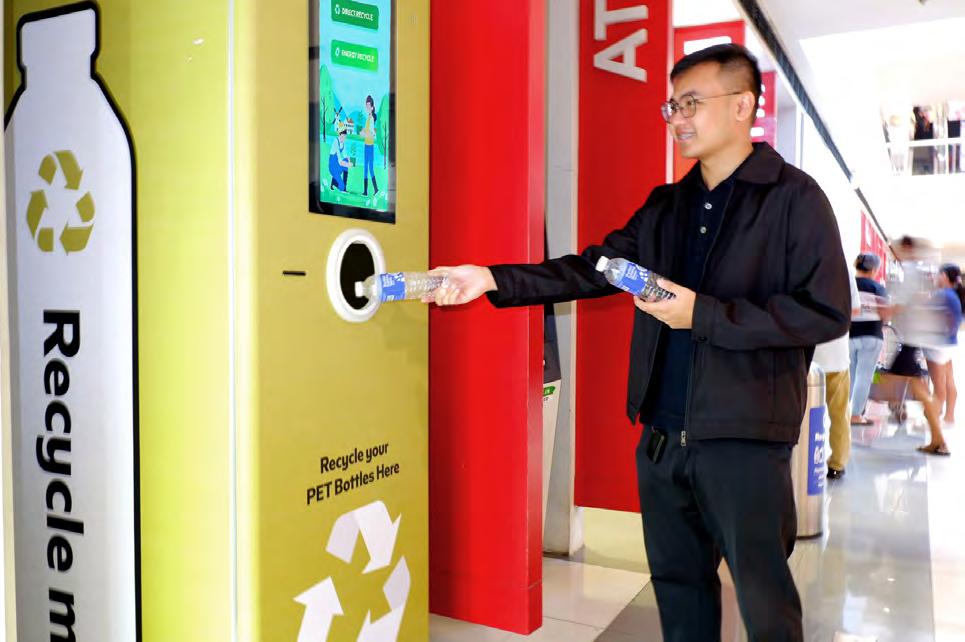
YOUR empty PET bottles have somewhere better to go than landfills—and SM is taking them there.
Through the newly-deployed Green Recycling Machines (GR Machines), SM Prime Holdings Inc. (SM Prime) uses the nationwide reach of SM Supermalls to make sustainable action easy, accessible, and rewarding for mallgoers all over the country.
“The GR Machines enrich the SM Group’s existing waste management efforts under the SM Green Movement,” said SM Supermalls President, Steven Tan. “Through the deployment of these machines, we hope to collaborate with our customers in caring for the environment by helping recycle PET bottles whenever they enter their most loved SM Supermalls.”
Each GR Machine can be operated with ease by any user and can accept PET bottles up to two liters. Together, the GR Machines nationwide can collectively hold up to 5,000 bottles in one collection cycle which are compressed in-machine. The compressed PET blocks are then collected and given a second life by SM’s hauling partner Sentinel which transforms the blocks into reusable items such as food trays.
Little makes much:
Preserving the environment one diverted bottle at a time
According to the World Bank, the Philippines leaks more than 300 million metric tons of plastic waste into the sea annually—equivalent to around 9 percent of its improperly handled plastic waste. The Philippines was also noted as one of East Asia and the Pacific region’s top contributors to ocean plastic pollution.
Recognizing that sustainability and protecting the environment is beyond the effort of one entity, SM has leveraged its presence nationwide through its properties to engage its customers and surrounding communities in maximizing the collection of recyclables especially plastics.
—“—
The GR Machines enrich the SM Group’s existing waste management efforts under the SM Green Movement
— SM Supermalls
President Steven Tan
Through SM Cares, its Corporate Social Responsibility arm, SM empowers communities to adopting sustainable practices through simple and accessible ways to take part in protecting the environment. Arresting the growing issue on pollution, the SM Group has enhanced waste segregation efforts to increase its collection and diversion of plastics from the environment since 2007 with its pioneer program, the Trash to Cash recycling market.
SM Group’s Trash to Cash initiative was organized by SM Cares as the pilot community program that encouraged customers to segregate
recyclables like metal, paper, and plastic and exchange these for cash on a monthly basis. SM Supermalls also followed up this effort with the launch of two Reverse Vending Machines in SM Mall of Asia and SM Megamall which empowered customers to segregate aluminum cans and empty PETs in exchange for discounts on sports and leisure attractions. On top of these, SM also hosts nationwide coastal clean-up drives annually through the strength and effort of its workforce volunteers.
With the latest in mobile recycling technology, SM’s GR Machines encourage customers to turn good intentions into daily environmentally-conscious actions in three easy steps:
1. Feed any PET bottle up to 2 liters into the machine
2. Confirm your deposit by pressing the prompt on the screen
3. Await your reward
“This is just a glimpse into how SM aims to enrich the Circular Economy through the elevated role we play in integrating seamless waste management efforts, all for Filipinos. We are hopeful that with the addition of the SM GR Machines, our continued partnership with our customers in protecting the environment yields a more sustainable future” said Tan.
Customers can start depositing their plastic bottles in SM GR Machines across the following malls: SM North EDSA, SM City San Lazaro, SM Megamall, SM The Podium, SM Aura, SM Southmall, SM Mall of Asia, S’Maison, SM Seaside City Cebu and SM Lanang.




APPROVED. President Ferdinand R. Marcos Jr. approves 21 priority measures during the 3rd LEDAC full meeting of the 20th Congress, targeting passage before June to ease public burden and strengthen government transparency and accountability.
By Charles Dantes
PRESIDENT Ferdinand Marcos Jr. congratulated Japan’s Prime Minister Sanae Takaichi on her landslide election victory, calling it a historic win that strengthens the longstanding partnership between the two countries.
In a statement, the President described Japan as a close friend and trusted partner whose leadership plays a vital role in regional stability.
PHILIPPINE National Police (PNP) chief Gen. Jose Melencio Nartatez Jr. ordered a thorough investigation after a viral video showed a fistfight between private security guards and a teenager in Intramuros, Manila. Nartatez directed the Supervisory Office for Security and Investigation Agencies to conduct a parallel audit of the security firm to verify its License to Operate and the individual licenses of the guards involved.
“We are already looking into this incident, particularly training, proper conduct, and compliance with licensing rules,” Nartatez said.
Manila Mayor Francisco “Isko Moreno” Domagoso also called for an urgent probe into the February 8 incident at Riverside Plaza Mexico Esplanade, which began when a 17-year-old boy refused to follow instructions not to ride his bicycle in the area.
The boy was injured and remains hospitalized, while the two guards face charges under Republic Act 7610 for physical abuse of a minor. The security agency was ordered to submit incident reports and training records. Vince Lopez
THE Philippine Coast Guard said five more bodies were recovered Tuesday from waters off Baluk-Baluk Island in Basilan, raising the death toll from the sinking of M/V Trisha Kerstin 3 to 51.
Four PCG technical divers conducted search and dive operations at a depth of about 180 feet, focusing on the vessel’s first-deck economy accommodation area.
The PCG said the remains were secured and transported to Zamboanga City Port for identification and proper disposition in coordination with local authorities.
The number of survivors from the maritime tragedy remains at 316.
M/V Trisha Kerstin 3 left Zamboanga City for Jolo, Sulu, on January 25 and sank in Basilan waters the following morning. Rex Espiritu
AS THE country marks National Press Week from February 8 to 14, the Commission on Human Rights called for stronger and sustained protection of journalists and media workers amid continuing threats and harassment.
The CHR said a free and independent press is essential to upholding the public’s right to truth and accountability in a democratic society.
It noted that intimidation, surveillance, attacks, and the misuse of laws continue to undermine press freedom and restrict access to truthful information.
The commission stressed that journalists are human rights defenders and that protecting them is part of the State’s duty under the Philippine Plan of Action for the Safety of Journalists.
It also urged Congress to decriminalize libel and cyberlibel and said it will continue addressing legal, digital, and gender-related risks faced by media workers. Rio N. Araja
By Maricel V. Cruz
VOTING 284 against eight, with four abstentions, the House of Representatives on Tuesday affirmed the recommendation of the House Committee on Justice to dismiss two impeachment complaints against President Ferdinand R. Marcos Jr. for lack of substance.
The House plenary adopted Committee Report No. 111 and House Resolution No. 746, dismissing the impeachment complaints filed by lawyer Andre de Jesus and by Liza Maza, Teodoro Casiño, Renato Reyes Jr., lawyer Neri Colmenares, and others.
“A landslide victory and a powerful mandate from the Japanese people. Congratulations to Prime Minister Sanae Takaichi on this historic win,” Mr. Marcos said.
“As ASEAN Chair, we look forward to working closely with your government to strengthen our partnership and move forward together in advancing stability, cooperation, and shared growth across the Indo-Pacific,” he added.
Japan’s leadership is seen as critical in reinforcing regional security and economic collaboration, with Mr. Marcos’ statement signaling Manila’s intent to deepen cooperation under Takaichi’s administration.
The Philippines and Japan have maintained decades-long diplomatic, economic, and strategic ties, including joint initiatives on infrastructure, disaster response, and maritime security in Southeast Asia
“I rise today to sponsor the Committee Report formally recommending the dismissal of the two impeachment complaints filed against President Ferdinand R. Marcos Jr.,” said House Committee on Justice Chairperson Jerville Luistro of Batangas.
“Complaints that are fundamentally insufficient in substance must be dismissed. To do otherwise is to degrade impeachment from a constitutional safeguard into a weapon of harassment,” she added.

COMMODORE Jay Tarriela, Philippine Coast Guard spokesperson for the West Philippine Sea (WPS), on Tuesday criticized Senate Minority Leader Alan Peter Cayetano over remarks made against him during the interpellation of proposed Senate Resolution No. 256.
“I don’t think I have done anything wrong in the interest of the people to deserve being insulted and maligned,” Tarriela said in an interview on Unang Balita.
“He said I should take off my uniform. That’s fine—I can take off my uniform. Let’s debate and talk, but it should be no holds barred,” Tarriela said.
The exchange followed criticism over Tarriela’s use of a caricature depicting Chinese President Xi Jinping during a lecture on West Philippine Sea incidents.
Tarriela said Cayetano suggested during the plenary debate that he remove his uniform, a remark he described as unnecessary.
“We cannot pass this resolution saying that Commodore Tarriela is correct because he’s wrong,” Cayetano said, adding that officials must observe diplomatic decorum.
Tarriela questioned the senator’s stance, saying the caricature was shown in an academic setting.
“There was no international audience. It was purely an academic discussion at a university,” he said. Rex Espiritu
Cayetano argued that the Senate resolution should not be adopted if it appeared to support Tarriela’s actions.


By Vince Lopez
THE National Police Commission (Napolcom) on Tuesday presented a victim of a police extortion scheme in Angono, Rizal, who filed administrative charges against 10 police officers from the Angono Police Station. Napolcom Vice Chairperson and Executive Officer Rafael Vicente Calinisan presented alias “Momoy,” who accused members of the station’s Drug Enforcement Unit of robbery, extortion, and planting of evidence.
victim said operatives stopped him while riding



Procedural scrutiny and the real cost to the economy
THE country’s infrastructure sector continues to be a cornerstone of growth, yet recent developments highlight how even well-managed and legitimate projects can face significant operational challenges when procedural oversight intensifies.
Recent data from the government illustrate how oversight dynamics can translate into real economic friction.
Infrastructure and capital outlay disbursements have slowed markedly, not because projects have ceased to exist, but because implementation, validation, and payment processes have become more cautious and, in many cases, prolonged.
Tighter scrutiny and procedural delays ripple through the construction ecosystem.
Slower disbursements affect cash flow, disrupt construction schedules, delay procurement of materials, and create uncertainty for workers and suppliers who depend on predictable project timelines.
Government agencies have attributed the slowdown to intensified oversight and validation by multiple institutions, including the Commission on Audit, Bureau of Internal Revenue, DPWH, and the Anti Money Laundering Council or AMLC.
Reviews of project status, quality, and completion, along with temporary freezes on certain accounts, have slowed the processing of billings and payments.
Weather disruptions and the redeployment of funds to social programs have further tempered infrastructure spending.
For firms engaged in legitimate public works, these developments present operational realities that are often invisible in headline reporting.
Infrastructure projects typically involve complex sites, phased construction, joint ventures, and layers of subcontracting.
Administrative mismatches such as delayed documentation, reporting gaps, or inaccurately recorded project data can trigger audits or payment holds even when physical work has been delivered.
While compliance measures are essential for safeguarding public funds, they should not be weaponized against responsible firms.
The financial strain of delayed payments is compounded by reputational risks when preliminary findings are interpreted as conclusions rather than part of an ongoing process.
Recent field inspections underscore this point. During a joint verification of flood control projects in Bulacan involving DPWH and private contractors, several projects initially flagged in reports were found not to be ghost projects.
The discrepancies stemmed largely from incorrect coordinates submitted by DPWH and reflected in official records, an issue publicly acknowledged by DPWH Secretary Vince Dizon.
The projects existed on the ground, but flawed data distorted their visibility. Such cases illustrate how technical or administrative errors, when amplified prematurely, can unfairly affect businesses that are performing legitimate work.
Once narratives take hold, the resulting delays, scrutiny, and public doubt can impose costs far beyond the original data
issue.
At the same time, allegations linked to certain infrastructure projects are now under investigation by the Department of Justice and the Office of the Ombudsman.
These processes are precisely why due process exists. Initial findings are not a determination of guilt, and conclusions should be reserved until investigations are completed and evidence is fully evaluated.
It is our hope that investigating bodies will take these operational realities and context into consideration as they conduct their reviews.
Tighter scrutiny and procedural delays ripple through the construction ecosystem
Beyond individual firms, prolonged uncertainty affects jobs and local economies.
Public infrastructure projects support thousands of workers, small suppliers, logistics providers, and provincial enterprises that depend on steady implementation and timely disbursements.
When reviews extend indefinitely or payments remain frozen pending clarification, the slowdown spreads outward, delaying material deliveries, reducing workdays, and affecting livelihoods.
The broader economic implications are significant. Infrastructure spending stabilizes supply chains and underpins growth in related industries.
Slow payments and procedural bottlenecks ripple through communities, affecting access to roads, flood control, and public facilities.
Oversight is crucial, but it should not be weaponized in ways that undermine the very economic activity it is meant to protect.
Companies that maintain strong governance, complete documentation, and accurate project records are better positioned to navigate intensified scrutiny.
Clear milestone tracking, verified site data, and disciplined compliance processes help demonstrate legitimacy even amid extensive reviews.
These practices allow firms to focus on execution rather than constant remediation.
Ultimately, the broader lesson is one of balance.
Strong institutions, rigorous validation, and disciplined due process strengthen public trust, but so does ensuring that compliance mechanisms do not unintentionally harm lawful enterprise. Infrastructure delivery depends not only on integrity, but also on clarity, fairness, and an appreciation of operational realities on the ground.
Responsible scrutiny and responsible reporting should move in tandem. Together, they protect public interest while allowing legitimate projects and the economy they support to move forward.
(Email: ernhil@yahoo.com)

WE HEAR the same criticisms over and over again.
“Ayuda na naman.”
“They’re just waiting for handouts.”
“It’s always the same people benefiting.”
The programs people love to complain about — AICS, AKAP, MAIFIP — have become lightning rods for public skepticism.
In neighborhood conversations and family dinner tables, in comment sections and political talk shows, they are painted as wasteful, unsustainable, and enabling. We throw around words like dole-out or bandaid, as if those who receive them are somehow to blame for needing them in the first place.
But maybe we’ve misunderstood what these programs are doing.
Maybe we’re missing the deeper lesson behind the long lines and humble thankyous. Maybe what we’re really seeing is a
glimpse of something our country has long needed but never quite named — a more trusting safety net.
Unconditional cash transfers are built on the belief that people, even in poverty, know best what they need
We often talk about poverty as if it were a fixed identity. A statistic. A problem to solve.
But anyone who has walked through our poorest communities knows that poverty is rarely static. It moves. It returns. It hides behind the decent-looking house with bare cupboards.
SENATOR of the republic said we should just give up our claims on the Kalayaan Island Group. He does not see the sense in laying down lives and endangering our future when the KIG is outside of our Exclusive Economic Zone, anyway.
Senator Rodante Marcoleta is one of the nine in the Upper Chamber who refused to sign a resolution condemning the statements of Chinese Embassy officials who insulted Philippine officials defending our established jurisdiction over the West Philippine Sea.
On social media, Philippine Coast Guard spokesperson Commodore Jay Tarriela said: “Every member of the uniformed services stationed in the KIG stands ready to lay down our lives and fight to the last drop of blood for these future generations and the people of the Municipality of Kalayaan.”
Tarriela took a swipe at Marcoleta: “If you are unwilling to defend it and are prepared to give it up—especially if you hold public office—you should remember the oath you swore when you assumed your position,” he wrote.
The PCG spokesman suggested Marcoleta join him in a Maritime Domain Awareness flight or sovereign patrol for a full experience in KIG. Tarriela extended the invitation to Marcoleta’s con-
gressman son.
In response, Marcoleta challenged Tarriela to a “friendly debate” on the matter, even suggesting that former Supreme Court Justice Antonio Carpio and maritime law expert Jay Batongbacal be present.
Only the Chinese would be thrilled
Tarriela turned down this invitation. “I believe that Justice Antonio Carpio, Professor Jay Batongbacal, and any Filipino who fully understands our strong legal position will likewise refuse to participate in such a debate. For us, this is not a debatable proposition; it is a matter of settled law, national interest, and patriotic duty. “The basis of Philippine sovereignty and sovereign rights in the West Philippine Sea—firmly established

WHAT many Filipinos saw and heard on Feb. 8 – in Manila as well as Mindanao and the Visayas – endorsed the theme of the National Arts Month, pushed by the Cultural Center of the Philippines and the National Commission for Culture and the Arts.
It underlined the ability of arts to speak the truth, inspire courage, and contribute to peace and development – but properly, in the many activities watched by an expected 50,000 attendees who are well within the rink of the country’s cultural heritage.
We saw this in the presentation of performance artists from GUMI Filipinas – the dallot or chanted poetry by Benn Cabacungan of Ilocos Norte; the dramatic reading of the Ilokano mythology Angalo ken Aran by Anna Lisa Gaspar of Ilocos Norte; and the daniweng (Ilokano acronym for poetry and song) by Joker Maranion (rhythm guitar) and Ariel Sotelo Tabag (base guitar) of Cagayan, and Rene Boy Abiva of Nueva Ecija (cajon) at the CCP Complex on Sunday.
The GUMIL participants and others, in Metro Manila and elsewhere, suggested a rich linguistic landscape, which encompasses Filipino and English as the Constitutionally mandated official languages and major regional languages – Cebuano, Ilokano, Hiligaynon, Waray, Pangasinense, Kapampangan, Bikolnon, Ybanag, the unique Spanish-based Chavacano creole, widespread Taglish code-switching, and 170 plus other languages, including critically endangered indigenous tongues.
We doff our cap to the CCP and the NCCA, where we were once a part of its Committee on Literary Arts before and shortly after the millennium rollover, for the celebration to honor Filipino artistry, preserve cultural heritage, and promote the role of arts in nation-building.
This year’s theme – “Ani ng Sining: Katotohanan at Giting” (Fruits of the Arts: Truth
It clings to the family that looks okay on paper but is just one bad week away from unraveling.
Most poor families are not passive. They work, they adapt, they survive. They are not waiting for help. They are trying to make do until help arrives. The tragedy is that by the time it does, it usually comes with strings.
We have built systems that see assistance as something to be earned.
Conditional programs like 4Ps have proven benefits. They keep children in school and promote access to healthcare.
But they also require people to fit into rigid molds. One missed checkup, one missed class, one missing document — and the support is reduced or delayed.
Too often, those who fall short are not irresponsible, but overwhelmed.
And then there are those who don’t qualify at all.
The elderly without dependents.
The solo parents of children with disabilities. The informal worker whose job was lost in a flood. They are not seen by the system. Their needs are just as urgent, but their eligibility
by the 2016 Arbitral Award, our Constitution, and domestic laws—is not open to negotiation or spectacle,” he wrote. It is a wonder why Marcoleta, who as a senator should be one of the staunchest defenders of what is ours, is not in trouble already for his wrong and treasonous pronouncements on the WPS. We agree with Tarriela who said that by framing the WPS issue as debatable, Marcoleta “risks undermining the very oath he took to preserve true faith and allegiance to the Republic and to support its Constitution and laws.” Our sovereignty over the WPS has been established by international law including the 2016 ruling of the Permanent Court of Arbitration. It is a fact. There is no more room for debate. A senator must, of all people, be among the first to uphold this. What a debate would achieve is to send the Chinese laughing in self-congratulation for sowing division among Filipinos instead. That we are divided on the issue would only embolden them to commit more transgressions of international law, because we would appear too busy quarreling among ourselves instead of facing their threats in a unified stance.
Someone tell Marcoleta to have some shame and stop collecting his salary from Filipinos, whom he betrays at every turn.
PH’s ‘rapid, slow-motion language crisis’
and Bravery) – symbolizes the role of Filipi-
no art as a powerful, courageous, and honest expression of national identity and signifies the utilization of creative works to champion truth, inspire courage, and foster collaborative efforts towards a more just, progressive, and sustainable society. That different regions have been asked to participate underlines the strategic effort to ensure inclusivity, decentralize art, and showcase the diversity of Filipino culture beyond Manila.
The National Arts Month celebration provides local artists with opportunities for visibility
Appropriately, the celebration moves beyond traditional metropolitan settings to bring art to all corners of society, ensuring that regional artists have a platform to showcase their talents.
The diverse heritage has been raised by the regional participation which highlights the unique cultural expressions, indigenous roots, and local traditions that contribute to the national identity, rather than a singular, unified narrative.
By bringing arts closer to local communities, the organizers aim to spark curiosity and cultivate a new generation of artists and audiences who will carry forward Filipino cultural traditions.
The celebration provides local artists with opportunities for visibility, which helps sustain their livelihoods and promotes the creative economy.
is unclear. What if we began from a different place?
What if we started with trust?
Unconditional cash transfers are built on the belief that people, even in poverty, know best what they need. That a mother can decide whether her child needs food or medicine. That a driver can choose between buying fuel or paying off a loan. That people are not puzzles to solve, but lives to understand. In Eastern Visayas, I’ve seen how trust transforms communities. When the government scaled up programs like AICS and AKAP, something shifted. Markets moved. Stores reopened. Children stayed in school. People got through illness without pawning their phones. The economy didn’t recover from the top. It recovered from the street corner, the sari-sari store, the market stall. It came alive from the ground up. When cash flows to the poor, it doesn’t sit still. It circulates. It uplifts. It generates not just spending, but stability. It allows people to stop living crisis to crisis and start planning for tomorrow. We will, of course, be asked the usual question: can we afford this?
The Pasinaya, the collaborative artistic exchange, will show as it has started to show a networking initiative which fosters collaboration between local, national, and even international artists, enabling exchange programs that enrich the local art scene. Essentially, the National Arts Month acts as a “call to action” to invest in Filipino creativity, ensuring that cultural development is inclusive, relevant to the times, and reflective of the entire nation’s diverse experiences.
And we ask, how urgent is the need for scholars and linguists to gather their act together to translate oral traditions of a multilingual country like the Philippines?
We have had sessions with some of them, and they chorus the urgent thought as the country faces what they call “a rapid, slowmotion crisis” where dozens of languages – and the oral traditions they carry – are in danger of disappearing due to modernization, globalization, and a shift toward dominant languages.
This refers to a paradoxical, if continuing, collapse of linguistic proficiency and diversity happening slowly enough to be overlooked, yet quickly enough to threaten cultural identity and national development.
This scenario implies a silent, deep-seated educational failure, a shift toward dominant languages, and a profound erosion of local heritage.
As the 47-year-old Tabag, president of the 57-year-old GUMIL Filipinas, told us: “I believe regional languages have much to contribute to a country’s development. That is why translation is important.
“Some ideas may not be fully articulated in Filipino, but in regional languages, they have long been preserved as tradition.” Tabag nailed a perfect argument for nation-building which we feel scholars and other language experts cannot ignore.
But the better question is: what do we choose to afford?
We pour billions into roads, intelligence funds, offices, and subsidies for those already thriving. We let budgeted money go unused year after year. So perhaps the real issue isn’t fiscal space. It’s political will. Building a more trusting safety net does not mean abandoning rules. It means making room for reality. It means recognizing that help should not humiliate. That support should not feel like a test. That assistance, when delivered with respect, can do more than relieve suffering. It can restore agency. It can spark recovery. Governance is not just about control. It is also about care. And perhaps that is what unconditional cash transfers truly offer. Not charity. Not indulgence. But justice. A quiet recognition that dignity should never be conditional. If we are to build a nation where no one falls too far, we must stop treating the poor as suspects. We must stop designing systems around fear. We must build on trust. Because a more trusting safety net does not make people dependent. It helps them rise.
WASHINGTON, DC – Convicted sex offender Jeffrey Epstein’s accomplice Ghislaine Maxwell refused Monday to answer questions from US lawmakers but her attorney said she was prepared to speak if granted clemency by US President Donald Trump.
Maxwell, 64, who is serving a 20year prison sentence for sex trafficking, was subpoenaed by the House Oversight Committee to discuss her relations with Epstein.
Rather than answer the committee’s questions, however, the former British socialite invoked her Fifth Amendment right to not incriminate herself.
A recording of the deposition released by the committee showed Maxwell
speaking via video link, her eyes cast down at the table she was seated at in a Texas prison.
She was asked about her and Epstein’s co-conspirators, whether they surrounded themselves with the rich and famous in order to “curry favor” and avoid scrutiny, and whether Trump ever engaged “in sexual activity with an individual introduced to him by you or Jeffrey Epstein.”
SEOUL – Investigators raided South Korea’s spy agency on Tuesday as they probed possible government links to a drone shot down over North Korea earlier this year.
Pyongyang accused Seoul of flying a drone into Kaesong in January, releasing images that purported to show debris from the downed aircraft.
Seoul initially denied the government was involved, with President Lee Jae Myung saying it would be akin to “firing a shot into the North”. scandal. One of them has publicly claimed responsibility, saying he acted to detect radiation levels from North Korea’s Pyongsan uranium processing facility. Disgraced ex-president Yoon Suk Yeol is currently standing trial on charges he illegally sent drones into North Korea to help create the pretext for declaring martial law in late 2024. His attempt to overturn civilian rule failed, and Yoon was impeached and ousted from office in April last year.
Wearing a drab, beige uniform, Maxwell repeated the phrase “I invoke my Fifth Amendment right to silence” until the committee gave up and called off their questioning early.
Maxwell’s attorney, David Markus, said she would be prepared to speak publicly if granted clemency by Trump.
“If this Committee and the American public truly want to hear the unfiltered truth about what happened, there is a straightforward path,” Markus said in a statement.
Markus also said that Trump and former president Bill Clinton -- both of whom were once friendly with Epstein -are “innocent of any wrongdoing.”
“Ms Maxwell alone can explain why, and the public is entitled to that explanation,” he said.
Maxwell is the only person con-
victed of a crime in connection with Epstein, who died in a New York jail cell in 2019 while awaiting trial for sex trafficking. She was convicted in 2021 of supplying underage girls to Epstein, who had ties to powerful business executives, politicians, celebrities and academics.
Her deposition comes amid the recent release by the Justice Department of millions of documents related to the government’s investigation into Epstein, many of which have been heavily redacted.
The Epstein Files Transparency Act (EFTA) passed by Congress in November compelled the Justice Department to release all of the records in its possession related to Epstein. It required the redaction of the names

or personal identifying information about Epstein’s victims, who numbered more than 1,000 according to the FBI. But the EFTA said no records could be “withheld, delayed, or redacted on the basis of embarrassment, reputational harm, or political sensitivity, including to any government official, public figure, or foreign dignitary.”
Members of Congress were given access to unredacted versions of the files Monday, though only under strict, inperson visits at secure Justice Department viewing locations.
“I saw the names of lots of people who were redacted for mysterious or baffling or inscrutable reasons,” Representative Jamie Raskin, a Democrat, told reporters, including “people who were enablers and cooperators.” AFP


BERLIN – Anti-graft watchdog Transparency International warned Tuesday of worsening corruption in democracies worldwide and said the United States had slid to the lowest-ever score on its 2025 Corruption Perceptions Index. Berlin-based TI also said the average global score had hit its worst level in more than a decade.
US President Donald Trump, since return-
ing to the White House early last year, has upended domestic and foreign politics while ramping up pressure on institutions ranging from universities to the Federal Reserve. Fed Chairman Jerome Powell is currently under investigation by Trump’s Department of Justice after resisting pressure from the president to reduce interest rates. TI raised concerns over “actions targeting
independent voices and undermining judicial independence” in the US.
“The temporary freeze and weakening of enforcement of the Foreign Corrupt Practices Act signal tolerance for corrupt business practices,” the watchdog said.
The Trump administration’s gutting of overseas aid has also “weakened global anticorruption efforts”, it said. AFP
PM ‘devastated’ by violence at rally vs. Israel president
SYDNEY – Australia’s Prime Minister said Tuesday he was “devastated” by scenes of clashes at a Sydney rally against a visit by Israeli President Isaac Herzog but defended the police’s actions against protesters. Herzog’s tightly secured, four-day trip aims to console Australia’s Jewish community after the December shooting at Sydney’s Bondi Beach that killed 15 people at a Hanukkah festival.
But chaos erupted on Monday evening in the heart of Australia’s largest city as police tried to prevent a rally from marching into an area designated off-limits.
Law enforcement hit protesters and members of the media, including AFP, with pepper spray in rarely seen violent scuffles in Sydney’s central business district. Asked about the scenes, Prime Minister Anthony Albanese told local radio he was “devastated” to see the violence.
“These are really scenes that I think shouldn’t be taking place,” he said.
“People should be able to express their views peacefully, but the police were very clear about the routes that were required if people wanted to march,” he added. New South Wales Premier Chris Minns said the police had been placed in “incredibly difficult circumstances”.
Not far from the protests, he noted, Herzog had been taking part in an event for the victims of the December 14 killings alongside thousands of mourners. AFP

PNP regional battalion relieved over hazing
THE entire Philippine National Police (PNP) Regional Mobile Force Battalion (RMFB) 14-B assigned in Basilan has been relieved over complaints of physical harm on recruits allegedly as part of the welcome rites. Photos and videos of the incident were posted and went viral on social media.
PNP chief Gen. Jose Melencio Nartatez Jr. said zero tolerance on hazing must be observed at all times in compliance with the existing law and rules and regulations that ban and punish all forms of hazing activities in the country.
Nartatez warned all police personnel against engaging in any initiation rites and other hazing-like activities that put the lives of police trainees and new recruits at risk.
“The Philippine National Police has its own share of sad and unpleasant stories of hazing activities. We must all learn from those lessons as our own contribution to uphold the dignity and professionalism of our organization,” said Nartatez. He said investigation is now being conducted against all those involved in the hazing incident. Vince Lopez
4PH housing project takes shape in GenSan THOUSANDS of indigent families stand to benefit from a socialized housing project under the Expanded Pambansang Pabahay Para sa Pilipino (4PH) program in General Santos City, South Cotabato.
On Tuesday, housing Secretary Jose Ramon Aliling inspected the first batch of houses and lot units ready for turnover in a subdivisiontype socialized housing project in the city under the Expanded 4PH.
“This is in accordance with the directive of President Ferdinand Marcos Jr. for a more inclusive housing program, especially for the working class. In Expanded 4PH, there are modalities for everyone, from the working class to the informal sectors. And it›s not just the coverage of beneficiaries that we have expanded, but also the areas where we have projects from Luzon, the Visayas and Mindanao. Expect us to have more projects like this in the coming months,” he said.
Located in Barangay Apopong, the Deca Homes Gensan 2 will have 7,430 house-and-lot units once completed, offered under the Pag-IBIG Fund’s subsidized home loan, making homeownership more accessible to the middle and working class in the region. Rio N. Araja
Unmask agri-smuggling financiers—Pangilinan
SENATOR Francis Pangilinan on Tuesday called for the identification of financiers behind the large-scale smuggling of agricultural products as he presided over a public hearing of the Senate Committee on Agriculture, Food, and Agrarian Reform.
Pangilinan said agricultural smuggling reflected other corruption scandals that involved accomplices in government, the private sector, and politics.
“The flood control scandal has accomplices in government, accomplices in the private sector, and accomplices in politics. It’s not far-fetched to think the same might happen here,” Pangilinan said, citing the anomalous entry of smuggled mackerel and onions valued at P133 million.

By Nash Maulana
TWO petitioners have questioned the constitutionality of six appointments made by President Ferdinand Marcos Jr. to the Bangsamoro Autonomous Region in Muslim Mindanao (BARMM) in 2024, adding to a growing list of unresolved cases affecting the region.
Petitioners Saiden Abdulwahab and Zacaria Tuan challenged the legality of the presidential appointments, naming as respondents Bangsamoro Chief Minister Abdulraof
Macacua and six other appointees to the Parliament of the Bangsamoro Transition Authority (BTA).
As of posting time, the petition has not been docketed by the Supreme
Court ,and therefore not covered by the sub judice rule, according to a lawyer familiar with the matter.
Amid the development, constitutionalist Michael Mastura called for oral arguments among “Friends of the Court” (amicus curiae) to assist the Supreme Court in resolving a series of pending cases involving BARMM.
Mastura is a former member of the 1971 Constitutional Convention and a recognized amicus curiae.
His son, Bangsamoro Member of Parliament Ishak Veloso Mastura, who is also a lawyer and one of the

By Katrina Manubay
THE Philippines and Oman have highlighted the importance of a second Oman-Cebu Investment Forum on Monday, viewing it as a catalyst for expanding partnerships aligned with changing economic priorities and identifying key sectors for cooperation. In a joint statement, both countries emphasized that the forum serves as a “dedicated platform for advancing dia-
logue, partnership, and collaboration in business and commerce.”
“We particularly emphasize key sectors, namely: trade and investment; tourism, hospitality and cultural ties; logistics and connectivity; renewable energy; digital economy, innovation; agriculture, healthcare; vocational and technical cooperation; education; and sustainable development,” the statement read.
It urged the private sectors of both
nations to use the Forum as a gateway for building partnerships, facilitating business matching, and exchanging market insights, aiming to foster mutually beneficial and sustainable economic engagement.
It also expressed support for continuing the Forum as an essential platform and welcomed initiatives arising from these discussions that promote further dialogue, engagement, and future exchanges among relevant institutions and stakeholders.
respondents in the latest petition, said several cases affecting BARMM governance have remained unresolved.
Among these is Macapaar et al. vs. the Commission on Elections and the Bangsamoro Transition Authority, which continues to await resolution.
“This should not be happening. Ideally, dapat smooth na ang takbo ng pamamahala. Too many controversies only show disunity, not justice,” said Johar Sambolawan, a law graduate. Sambolawan added that the unresolved disputes have broader consequences.
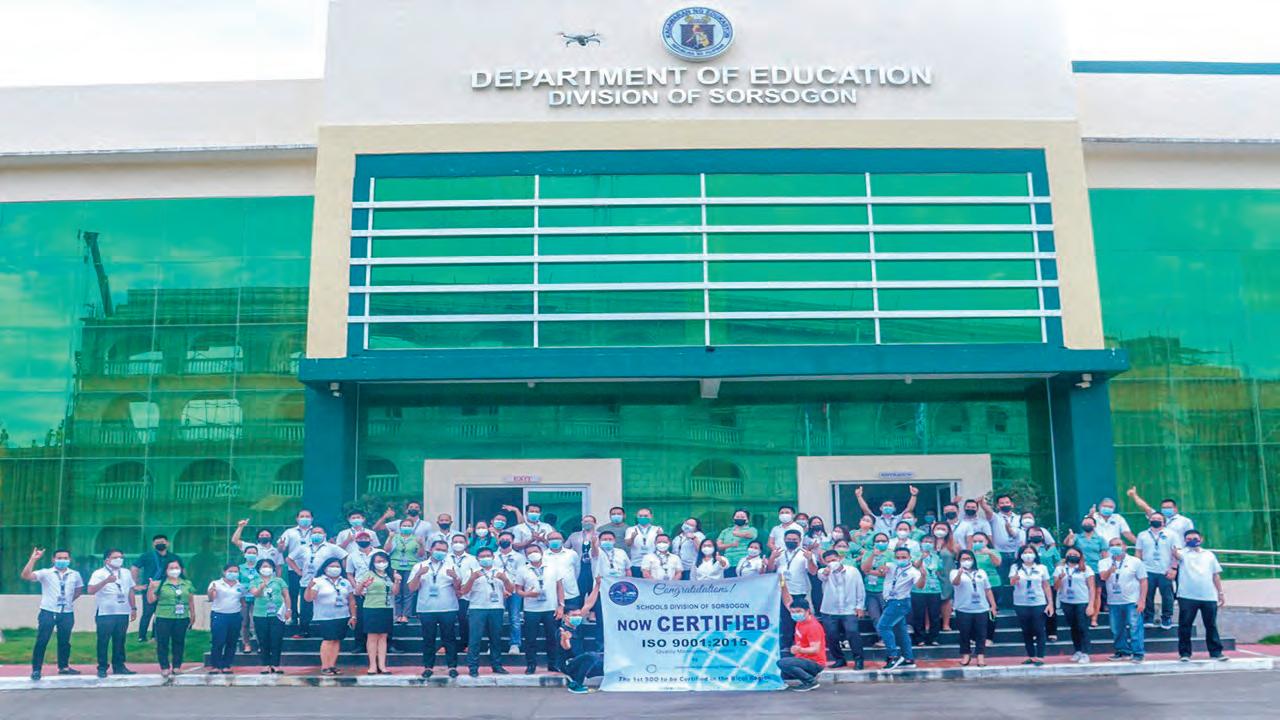
DepEd to launch classroom dev’t in Sorsogon
By Ram Superable
THE Department of Education (DepEd) has designated Sorsogon as a pilot site for its expanded classroom construction program, a move welcomed by Senator Francis Escudero on Tuesday.
Escudero said the selection affirmed the role of capable local government units (LGUs) in driving faster development when supported by national agencies.
“This collaboration reflects the same framework that I advocated recently about national agencies partnering with LGUs that have proven capacity and stability,” Escudero said.
“DepEd’s confidence in Sorsogon shows how this model can deliver faster, more accountable results,” he added.
The lawmaker reiterated his earlier proposal for a tripartite arrangement among DepEd, the Department of Public Works and Highways, and the Department of Agriculture to empower qualified local governments to speed up infrastructure development, strengthen rural connectivity, and upgrade school facilities.
By Minerva Newman
GOVERNMENT leaders and lawmakers from Central Visayas convened at the Batasang Pambansa Complex in Quezon City on Feb. 9 to align the region’s development priorities with the proposed 2027 national budget.
The consultation, organized by the Regional Development Council (RDC)-Central Visayas, brought together members of the Joint RDC executive and advisory committees, regional line agencies, local chief executives, and district representatives for a technical review of the region’s annual development budget alignment.
The meeting marked the first time the House of Representatives conducted a high-
level consultation of this kind in coordination with the Department of Economy, Planning, and Development (DepDev) and RDC-7. The agencies are now working to institutionalize the process.
“We gather today not only to review numbers and proposals, but more importantly, to shape the development direction of Central Visayas for fiscal year 2027 and beyond,” Cebu Gov. Pamela Baricuatro, RDC-7 chair, said in her opening message.
“This consultation provides a vital platform for aligning our local and regional priorities with the national budget, ensuring that our plans translate into real, tangible outcomes for the people we serve,” she added.
WEDNESDAY, FEBRUARY 11, 2026
mst.daydesk@gmail.com

EXEMPLIFYING purposeful storytelling of impactful initiatives, Manuel V. Pangilinan- led Manila Electric Company (Meralco) has once set the benchmark for communications excellence as it clinched multiple recognitions and emerged as a finalist for the Company of the Year at the recently concluded 61st Anvil Awards.
Alongside One Meralco Foundation (OMF), Meralco PowerGen Corporation (MGEN) and Meralco Power Academy (MPA), the company took home 20 Anvils in recognition of its exceptional public relations (PR) programs and tools that effectively engaged and served its diverse stakeholders.
Meralco’s campaign on reliable service communications, effective utilization of digital platform, media & information literacy and electrification program merited five (5) Gold Anvils.
“Tulung-tulong para sa mas Ligtas na Kinabukasan: Meralco’s Communications Campaign to Combat Illegal Service Connection” won a gold trophy for its proactive public information drive to address illegal service connection commonly known as “jumpers” and power pilferage. This core public safety program, which is implemented in partnership with law enforcement agencies and local government units, utilizes traditional and digital media to heighten awareness on what Meralco is doing to address illegal acts and promote safety of the communities that the company serves.
“From Fake News to Fact: Strengthening Public Discernment with Manong Joe” also

cy nationwide through the social media platforms of Manong Joe – Meralco’s Spokesperson with an ultimate aim to contribute to a more informed and digitally discerning Filipino public. Guided by data-driven insights and Meralco’s humanized communication approach, the campaign produced targeted and accessible content that addressed widespread misinformation.
“Through the Rain: How Meralco Newsroom Powered PR on Meralco’s Readiness and Response During the July 2025 Habagat Onslaught” snagged another gold award as it showcased Meralco Newsroom transformed social media into the company’s front line of public engagement and crisis storytelling. It also amplified PR reach, cemented trust, and showcased Meralco’s readiness and compassion when communities needed it most.
Another Gold Anvil was bestowed on “The Next 25: Meralco’s Commitment to Nation-Building, Sustainable Growth, and Power Innovation” which highlighted the company’s proactive campaign to secure its


legislative franchise renewal. The campaign strategically positioned Meralco as a nationbuilding partner essential to energy security and economic growth.
OMF’s “From Sun to Safe Water: Water Access Electrification in South Cotabato” completed the gold haul as it was recognized for energizing the community’s water system and improving the distribution of water to households through solar technology. One Meralco’s programs promoting cybersecurity, internal audit, animal welfare advocacy, renewable energy advancement and corporate social responsibility amassed 15 Silver Anvils.
“E-lluminating the Media through Meralco Newsroom
Omnichannels: Expanding the Digital Reach of Meralco’s Communications Program for its Monthly Rates Adjustment” was recognized for enabling a fast and effective distribution of information regarding Meralco’s rate adjustments, ensuring that the media receive real-time and accurate information and increased transparency and accessibility of information for the public. Meanwhile, “Restoring Trust: How Credible Channels Renewed Public Confidence in Meralco” highlighted Meralco’s successful collaboration with reputable companies and entities to frame just narratives and reshape how the public perceive Meralco.
Meralco’s newly launched “Wavemaker Community Program: Empowering Educators for a Safer Digital Future in Schools” also won a Silver Anvil for demonstrating the company’s commitment to championing cyber security awareness by empowering educators with the knowledge to safely navigate the digital landscape; while “Sparking Internal Audit Literacy: A Professional & Student Exchange Forum” was honored for raising awareness about internal audit, bridging the gap between the academe and the professional world.
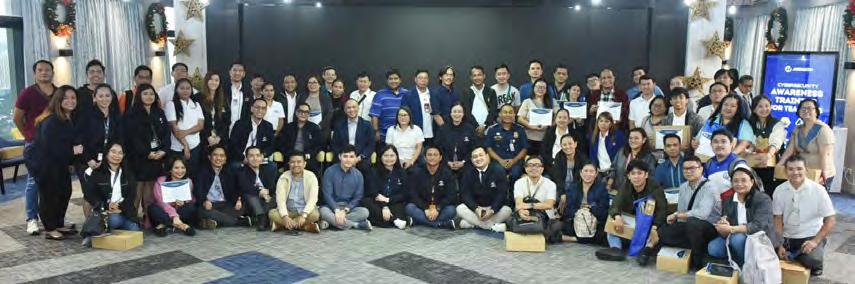

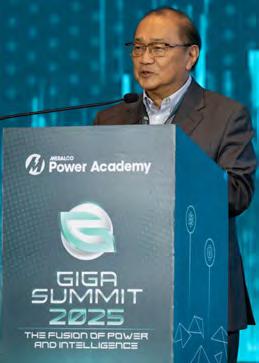

MPA, the educational arm of Meralco also won for its summer internship program- “Meralco PowerCamp – Illuminating a Just Energy Transition” for providing an intensive learning experience for the students by strengthening their leadership skills and expanding their technical expertise.
The power distributor’s “Energizing Minds: Meralco’s Journey Toward Nuclear Energy Leadership” showcased its integrated nuclear communications campaign combining education, thought leadership, and stakeholder engagement, positioning the company at the forefront of the nation’s nuclear discourse.
Another advocacy that the company has been pursuing that won a Silver Anvil was the “Paw-ering Compassion: Meralco’s CATropa Animal Welfare Program” that addresses the growing population of community animals within company facilities that has evolved into a company-wide, community-driven movement.
MGEN, the power generation arm of Meralco also took home multiple accolades for their innovation in renewable energy. “ MTerra Solar Groundbreaking Ceremony” positioned the project as a transformational milestone in the Philippines’ clean energy transition, while “A Global Breakthrough in Sustainable Energy: MTerra Solar, the world’s largest solar integrated and battery energy storage”— produced in partnership with Meralco—showcased the benefits of the project that will soon supply clean energy to an estimated 2.4 million Filipino households.
MGEN’s recent rebranding efforts also earned another Silver Anvil for the “MGEN’s New Vision – Mission – Values Rollout” which fostered a shared culture that inspires employees
to put organizational priorities into action.
OMF, the corporate social responsibility arm of Meralco received five more Silver Anvils for its corporate social responsibility initiatives including; “Empowering low-income households through One Meralco Foundation’s Household Electrification Program 2024” – a flagship initiative designed to provide communities with an easier and more affordable way to access electricity; while its “From Darkness to Dreams: Energizing Education” campaign narrates how they provide solar-powered energy access to off-grid public schools, enabling teachers to teach effectively and students to learn in safe and well-lit classrooms. The entry “The Voices of Change: Empowered Filipinos Transformed One Meralco Foundation’s Social Media Reporting into Organic Community Advocacy” details how the organization strategically shifted its narrative power on its Facebook page to the empowered Filipinos who experienced its programs’ impact firsthand. Completing Meralco’s haul, the entry “One Meralco Balik Eskwela 2025:
Empowering Young Learners through Literacy Kits” received two Silver Anvils for addressing the foundational literacy gaps among kindergarten students in underserved public schools nationwide.
“Meralco’s commitment to delivering affordable, safe, and reliable electric service has long been deeply rooted in our culture—and we strive to go beyond this mandate. This is why – along with our partners, subsidiaries and affiliates – we ensure that our initiatives do not merely reach our stakeholders, but are truly felt by them,” said Meralco Vice President and Head of Corporate Communications Joe R. Zaldarriaga.
“These recognitions affirm the impact of One Meralco’s programs and initiatives that promote sustainability and energy literacy, while delivering meaningful benefits to communities and the nation. We remain steadfast in our commitment to pursue purposeful initiatives that help build a better and brighter future—not only for our 8.2 million customers, but for all Filipinos,” he concluded.
Organized by the Public Relations Society of the Philippines (PRSP), the Anvil Awards, dubbed as “the Oscars” of Philippine public relations, honors outstanding public relations programs, campaigns, and tools that exemplify the highest standards of public relations practice in the country.# OMF and Meralco Chairman Manuel V. Pangilinan (middle), together with the heads of Meralco departments, offices and its subsidiaries, show their full support for the Balik Eskwela project.





MELQUIADES A. ROBLES GENERAL MANAGER
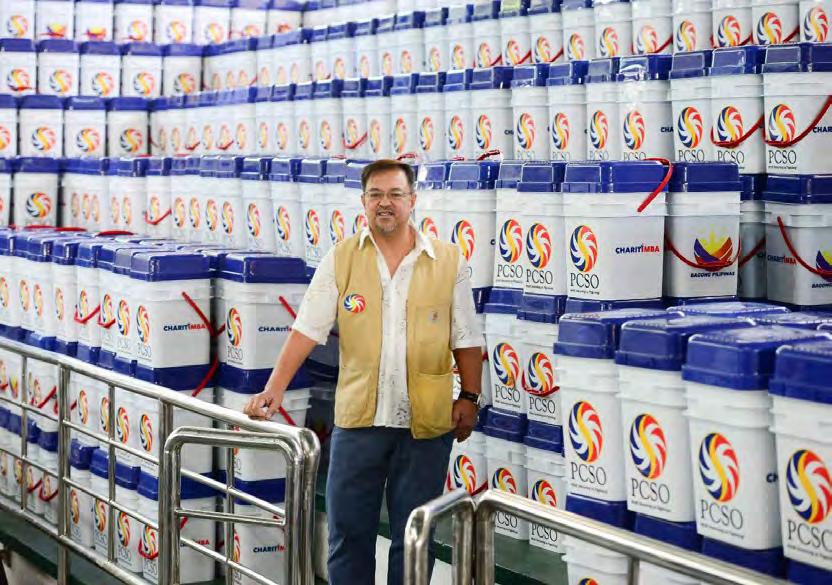
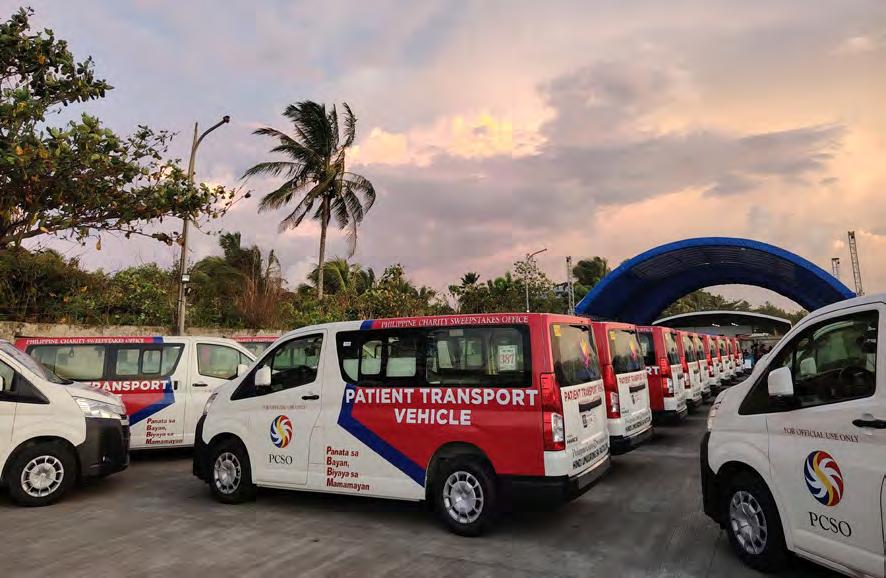
ON behalf of the Philippine Charity Sweepstakes Office, I extend my warmest congratulations to the Manila Standard on the celebration of your 39th Anniversary.
Reaching nearly four decades of excellence is a testament to your unwavering commitment to truth and the Filipino people. This year’s theme, MS39: Page to the Future, perfectly captures the essence of a modern news organization that honors its storied past while embracing the innovations of the digital age. Like a page turning toward a new chapter, your publication continues to illuminate the path for our nation through insightful journalism and bold storytelling.
At the PCSO, we share this forward-looking vision. As we gallop into the Year of the Fire Horse, we are also modernizing our efforts to better serve the public. Much like the Manila Standard, we strive to evolve with the times to ensure that our mission of charity reaches every corner of the archipelago, from the printed page to the digital screen.
We commend the publishers, editors, and staff of the Manila Standard for being a reliable partner in nation-building. By keeping the public informed, you empower our citizens and help foster a society that values transparency and progress.
May this anniversary inspire you to reach even greater heights as you write the stories of our collective future.
Congratulations and more power to the Manila Standard.


WEDNESDAY, FEBRUARY 11, 2026 mst.daydesk@gmail.com
RIERA U. MALLARI, Editor
RANDY M. CALUAG, Asst. Editor
EDGARD HILARIO, Asst. Editor







By Randy M. Caluag


VETERAN Filipino
cyclist Mark John
Lexer Galedo shone at the ACC Asian Road Cycling Championships in Saudi Arabia, capturing the gold medal in the Individual Time Trial and settling for silver in the Masters road race.
The 41-year-old Galedo ruled the 20-kilometer ITT in the men’s 40–44 age bracket, clocking 26 minutes and 23 seconds to outpace 13 rivals, including riders from host Saudi Arabia who settled for the silver and bronze medals.
Galedo braved harsh heat and dusty conditions to improve on his silver medal finish in the same event at last year’s Asian Championships in Thailand.
“I’m thankful to PhilCycling for giving me the opportunity to represent the country,” Galedo told Sports Radio, adding that he hopes his ITT victory will spark more wins for Team Philippines in the meet.
Galedo later added another medal to his haul by securing silver in the Masters road race, finishing second in the 62-kilometer event. Saudi Arabia’s Ahmed Al Ohrani broke away for a solo victory in 1:28:48, crossing the line three minutes ahead of the chase group led by Galedo. A rider from Bahrain completed the podium.

CIGNAL leaned on grit, poise and an unflinching endgame mindset to survive the Farm Fresh Foxies’ relentless challenge, grinding out a tense 25-17, 26-24, 20-25, 30-28 victory Tuesday night before a packed Mall of Asia Arena crowd to seize solo command of the Premier Volleyball League All-Filipino Conference eliminations.
The Super Spikers erased a fivepoint deficit in the second set, absorbed a third-set setback, then dug deep in a nerve-racking fourth frame – saving
two set points and trading blows through a series of heart-stopping 1-2 plays – before finally breaking through in a two-hour, 10-minute war of nerves.
Vanie Gandler anchored that resolve, exploding for 25 points while delivering a masterclass in all-around play. The Alas Pilipinas standout piled up 17 excellent digs and 15 receptions, sealing a superb tripledouble performance that earned her Best Player of the Game honors.
“Everything we trained for showed today,” said Gandler. “I’m happy I was


JANELLE Mae Frayna found teener
Kate Ordizo a tough nut to crack and ended up splitting their duel in 35 moves of a Gruenfeld to keep her iron grip oN the lead after 13 rounds of the Philippine National Women’s Chess Championship in Malolos, Bulacan yesterday. Frayna, 29, hiked her total to 10 points, or just half a point ahead of Ruelle Canino, who likewise drew her match against Apple Rubin in 62 moves of a Sicilian Defense with two rounds left in this event bankrolled by host city Mayor Christian Natividad and the PSC.
Also in hot pursuit were Jan Jodilyn Fronda and Bernadette Galas, who hurdled their respective assignments to close in at joint third with nine points each.
Fronda used her queenside passed pawn to outlast Bonjoure Suyamin in 86 moves while Galas made the most out of her pawn advantage to turn back Mhage Sebastian in 64 moves in a pair of razor-sharp Sicilian showdowns. The four are expected to go for nothing less than victories in the last two rounds in the race for the three outright berths to this September’s World Chess Olympiad in Samarkand, Uzbekistan.
Mae
able to help the team get this win.” She was quick to deflect individual credit, underscoring the collective toughness forged after earlier wins over Galeries Tower and Choco Mucho. Cignal’s depth and calm under pressure surfaced again in the closing stretch of the fourth set. Erika Santos poured in 15 points, including clutch conversions amid the late chaos, while playmaker Gel Cayuna steadied the offense with 19 excellent sets and timely 1-2 plays that repeatedly kept Farm Fresh guessing.





ELITE female hoopers lit up the SM Mall of Asia Music Hall as Manila Hustle 3x3 Season 4 delivered high drama, fierce battles, and a clear vision: the road to the Los Angeles 2028 Olympics.
Philippines’ Uratex Dream made waves with a stunning 18–16 upset of reigning champions ZOOS Tokyo, before finishing runner-up to Japan’s Flowlish Gunma in the FIBA 3x3 Women’s Series Qualifier.
Led by Afril Bernardino, Kaye Pingol, Sam Harada, and Li Renzhu, the Dream fought valiantly, rallying from a 13–6 deficit in the finals before bowing, 17–11. Bernardino’s eightpoint explosion earned her a spot in the Mythical Three alongside CT Tigers’ Supavadee Kunchuan.
“Basketball is close to my heart. The players are my inspiration. We will continue this program until hopefully we reach the LA Olympics,’’ said Tournament director Peachy Medina, underscoring the bigger mission.
The event drew strong backing, with
PSC Chairman Patrick C. Gregorio, SBP Executive Director Erika Dy, and Gilas Pilipinas 3x3 Program Coordinator Ryan Gregorio all present to champion the cause. Canadian Olympian Saicha GrantAllen powered Flowlish Gunma with an MVP performance—eight points, four rebounds, and three assists, capped by a clutch layup in the dying seconds. Teammate Misa Yokoi added seven points as the Japanese squad pocketed the $4,000 prize and secured a ticket to the FIBA 3x3 Women’s Series Shanghai stop in May.
Uratex Dream, meanwhile, claimed $2,500 for their runner-up finish, while CT Tigers bagged $1,500 after a 21–11 win over Gilas Pilipinas Stars for third place. With back-to-back runner-up finishes and a growing reputation on the international stage, Uratex Dream and Philippine women’s basketball are proving they belong in the global conversation.



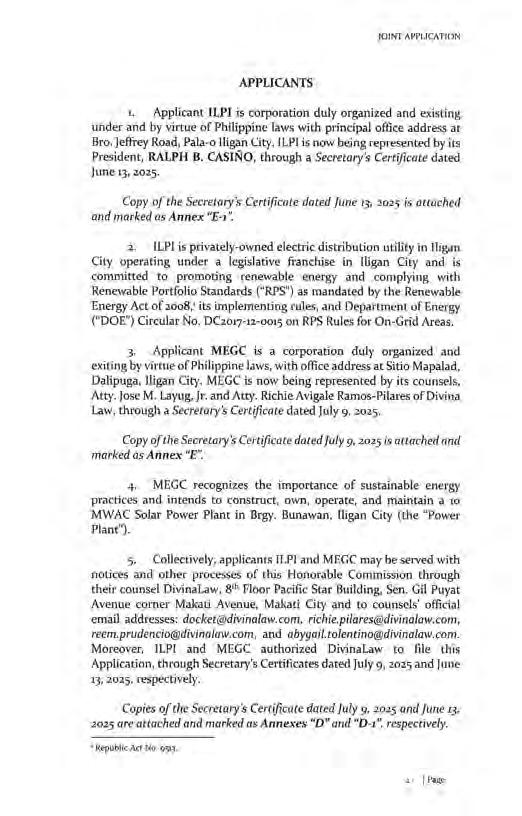

of the ERC Revised Rules of Practice and Procedure, indicating therein the docket number and title of the case, and state the following:
1) The petitioner’s name, mailing address, and e address;

2) The nature of petitioner’s interest in the subject matter of the proceeding and the way and manner in which such interest is affected by the issues involved in the proceeding; and 3) A statement of the



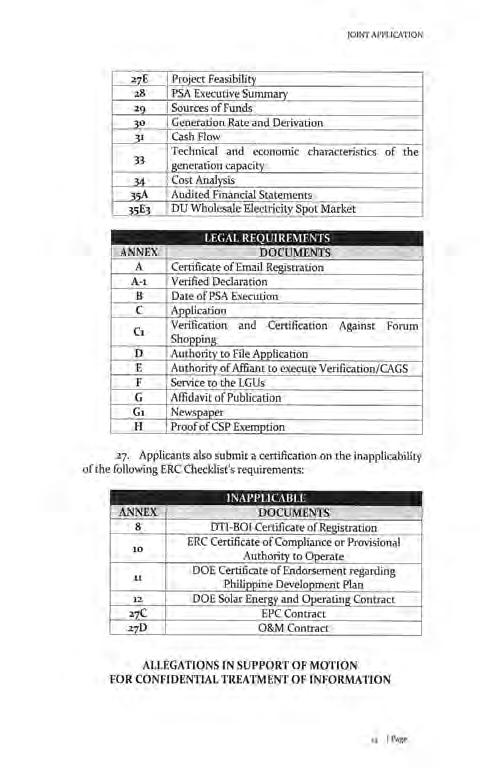





















By Othel V. Campos
Manila Standard TODAY
PERC CASE NO. 2025-054 MC ORDER PAGE 3 OF 7
HILIPPINE agriculture is entering 2026 on firmer ground after posting its strongest growth in eight years, signaling new opportunities for expansion and modernization, Department of Agriculture Secretary Francisco Tiu Laurel Jr. said Monday night.
Speaking during the induction of new Economic Journalists Association of the Philippines officers on Feb. 9, 2026, Tiu Laurel said the sector’s 3.1-percent growth in 2025 reflected the early impact of policy reforms.
ERC CASE NO. 2025-054 MC ORDER PAGE 5 OF 7
The expansion occurred despite the country facing 23 storms last year, 22 of which hit during the crucial second half of the harvest season.
The growth coincided with a rebound in agricultural exports led by
Republic of the Philippines
ENERGY REGULATORY COMMISSION Pasig City
IN THE MATTER OF THE APPLICATION FOR AUTHORITY TO DEVELOP, OWN AND/OR OPERATE ASSETS INCLUDING THE DEDICATED POINT-TOPOINT LIMITED DISTRIBUTION FACILITIES TO CONNECT THE 6.006 MWP/ 5.013MWAC LIMBAUAN SOLAR POWER PLANT PHASE 1 TO THE LUZON GRID VIA ISABELA II ELECTRIC COOPERATIVE (ISELCO II)-OWNED MVA SUBSTATION WITH PRAYER FOR PROVISIONAL AUTHORITY AND/OR INTERIM RELIEF AND MOTION FOR CONFIDENTIAL TREATMENT OF INFORMATION
January 28, 2026

ERC CASE NO. 2025-054 MC
BKS GREEN ENERGY CORPORATION (BKSGEC), Applicant. x --x ORDER
ERC CASE NO. 2025-054 MC
ORDER PAGE 2 OF 7
On 26 December 2025, the BKS Green Energy Corporation (BKSGEC) filed, through the Energy Virtual One -Stop Shop (EVOSS) portal, an Application dated 16 December 2025, seeking the Commission’s approval of its authority to develop, own and/or operate assets, including the dedicated point -to-point limited distribution
facilities to connect the 6.006 MWP/5.013 MWAC Limbauan Solar Power Plant Phase 1 to the Luzon Grid via the Isabela II Electric Cooperative (ISELCO II)-owned MVA Substation, with prayer for the issuance of provisional authority and/or interim relief and motion for confidential treatment of information.
The docketed copy of the Application, excluding its annexes, is attached as Annex “A” of the Notice of Virtual Hearing.
Finding the said Application to be sufficient in form and with the required fees having been paid, the Commission hereby sets the same for hearing for the determination of compliance with the jurisdictional requirements, expository presentation, and Pre -Trial Conference 1 on 02 March 2026 (Monday), at two o’clock in the afternoon (2:00 P.M.), through MS Teams Application as the online platform for the conduct thereof, pursuant to Resolution No. 09, Series 0f 20202 and Resolution No. 01, Series of 2021 (ERC Revised Rules of Practice and Procedure). 3
RELATIVE THERETO BKSGEC is hereby directed to:
1) Cause the publication of the attached Notice of Virtual Hearing, including Annex “A” thereof, once (1x) in a newspaper of nationwide circulation in the Philippines at its own expense, at least ten (10) days before the date of the scheduled virtual hearing;
2) Furnish with copies of this Order and the attached Notice of Virtual Hearing, including Annex “A” thereof, the Offices of the Provincial Governor, the Municipal Mayor, and Local Government Unit (LGU) legislative bodies of the area affected by the project, for the appropriate posting thereof on their respective bulletin boards;
ERC CASE NO. 2025-054 MC ORDER PAGE 3 OF 7
3) Inform the consumers within the affected area, by any other means available and appropriate, of the filing of the Application, its reasons therefor, and of the scheduled hearing thereon;
In the Commission’s Resolution No. 16, Series of 2025, the Commission adopted the Summary Proceedings in accordance with Rule 17 of the Commission’s
Filings and Virtual Hearings Before the Energy Regulatory Commission. 3 A Resolution Adopting the Revised Rules of Practice and Procedure of the Energy Regulatory Commission
4) Furnish with copies of this Order and the attached Notice of Virtual Hearing, including Annex “A” thereof, the Office of the Solicitor General (OSG), the Commission on Audit (COA), and the Committees on Energy of both Houses of Congress. They are hereby requested, if they so desire , to send their duly authorized representatives and attend the scheduled hearing; and
5) Furnish with copies of the Application and its attachments, except those subject of a motion for confidential treatment of information, all those making requests therefor, subject to reimbursement of reasonable photocopying costs.
No later than ten (10) calendar days prior to the date of the scheduled virtual hearing, BKSGEC must submit to the Commission through the EVOSS portal and via electronic mail (e -mail) at docket@erc.ph copy furnish the Legal Service through legal@erc.ph
4) Furnish with copies of this and the attached Notice of Virtual Hearing including Annex “A” thereof, the Office of the Solicitor General (OSG), the Commission on Audit (COA), and the Committees on Energy of both Houses of Congress. They are hereby requested, if they so desire , to send their duly authorized representatives and attend the scheduled hearing; and
bananas and other tropical fruits. Philippine avocados reached the Japanese market for the first time, while durian gained access to new export destinations. Domestically, onion prices stabilized after years of sharp volatility.
Applicant must also be prepared to make an expository presentation of the instant Application, aided by whatever communication medium that it may deem appropriate for the purpose, in order to put in plain words and explain, for the benefit of the consumers and other concerned parties, the nature of the Application Relevant information and pertinent details substantiating the reasons and justifications for the Application must be cited in support thereof.
“These are early gains from a deliberate reset of the sector. Agriculture must reclaim its role as a serious economic driver, offering hope and opportunity to the next generation,” Tiu Laurel said.
5) Furnish with copies of the and its attachments, except those subject of a motion for confidential treatment of information, all those making requests therefor, subject to reimbursement of reasonable photocopying costs.

To support growth, the administration of President Ferdinand Marcos Jr. allocated one of the largest agriculture budgets in history.
No later than ten (10) calendar days prior to the date of the scheduled virtual hearing, BKSGEC must submit to the Commission through the EVOSS portal and via electronic mail (e -mail) at docket@erc.ph, copy furnish the Legal Service through legal@erc.ph, the scanned copies of its written compliance with the aforementioned jurisdictional requirements attaching the following methodically arranged and duly marked:
1) The evidence of publication of the attached Notice of Virtual Hearing, including Annex “A” thereof, consisting of affidavit of the Editor or Business Manager of the newspaper where the said Notice of Virtual Hearing was published, and the complete issue of the said newspaper;
2) The evidence of actual posting of this Order and the attached Notice of Virtual Hearing, including Annex “A” thereof, consisting of certifications issued to that effect, signed by the aforementioned Governor, Mayor, and LGU legislative bodies or their duly authorized representatives, bearing the seals of their offices;
3) The evidence of other means employed by the Applicant to inform the consumers within the affected area of the filing of the Application, its reasons therefor, and of the scheduled hearing thereon;
ERC CASE NO. 2025-054 MC
ORDER
PAGE 4 OF 7
4) The evidence of receipt of copies of this Order and the attached Notice of Virtual Hearing, including Annex “A” thereof, by the OSG, the COA, and the Committees on Energy of both Houses of Congress;
5) The evidence of receipt of copies of the Application and its attachments, except those subject of a motion for confidential treatment of information, by all those making requests therefor, if any; and
6) Such other proofs of compliance with the requirements of the Commission.
Moreover, Applicant is hereby required to post on its bulletin boards, the scanned copies of the foregoing jurisdictional requirements, together with the newspaper publication and certifications issued by the concerned Offices of the Governor, Mayor, and LGU legislative bodies, and to submit proof of posting thereof.
Applicant and all interested parties are also required to submit via e-mail at docket@erc.ph copy furnish the Legal Service through legal@erc.ph, at least five (5) calendar days before the date of the scheduled virtual hearing and Pre -Trial Conference, their respective Pre-Trial Briefs containing, among others:
1) A summary of admitted facts and proposed stipulation of facts;
2) The issues to be tried or resolved;
3) The documents or exhibits to be presented, stating the purposes and proposed markings therefor, which should also be attached to the Pre-Trial Brief; and
4) The number and names of the witnesses, with their written testimonies in a Judicial Affidavit form attached to the PreTrial Brief.
Applicant must ensure that all the documents or exhibits proposed to be presented have already been duly submitted to the Commission at least five (5) calendar days before the date of the scheduled virtual hearing and Pre -Trial Conference, pursuant to the preceding paragraph.
Applicant is hereby directed to file a copy of its Expository Presentation via e-mail at docket@erc.ph, and copy furnish the Legal Service through legal@erc.ph at least five (5) calendar days prior to the scheduled virtual hearing. Applicant shall also be required, upon the request of any stakeholder, to provide an advance copy of its expository presentation, at least five (5) calendar days prior to the scheduled virtual hearing.
The funds financed farm-to-market roads, warehouses, post-harvest facilities, food hubs, dryers and a national command center to strengthen coordination. He acknowledged that current spending still falls short of fully addressing structural challenges. The Department of Agriculture estimates annual funding needs of P400 billion to P500 billion, sustained over two administrations, to reverse decades of underinvestment.
Tiu Laurel said this level of funding is required to rebuild institutions like the National Food Authority and bolster resilience against external shocks.
Applicant is further directed to submit, through personal service, registered mail, or ordinary mail/private courier, one (1) set of the original or certified true hard copies of its Jurisdictional Compliance, Expository Presentation, Pre-Trial Brief, and Judicial Affi davits of witnesses, within five (5) working days from the date that the same were electronically submitted, as reflected in the acknowledgment receipt e-mail sent by the Commission.
their email addresses upon receipt of this Order. The Commission will send the access link to the aforementioned hearing platform within five (5) working days prior to the scheduled hearing.
SO ORDERED.
Moreover, the National Grid Corporation of the Philippines (NGCP) and Isabela II Electric Cooperative (ISELCO II) are hereby impleaded as necessary parties to this Application. Accordingly, NGCP and ISELCO II are hereby directed to submit their respective Verified Comment via e-mail at docket@erc.ph , copy furnish the Legal Service through legal@erc.ph, at least five (5) calendar days before the date of the scheduled virtual hearing.
ERC CASE NO. 2025-054 MC ORDER PAGE 6 OF 7
NGCP and ISELCO II are further directed to submit, through personal service, registered mail, or ordinary mail/private courier, one (1) set of the original or certified true hard copies of their respective Verified Comment, within five (5) working days from the date that the same were electronically submitted, as reflected in the acknowledgment receipt e-mail sent by the Commission.
Pasig City FOR AND BY AUTHORITY OF THE COMMISSION: ATTY. MARIA CORAZON C. GINES Director III, Legal Service
LS: JPS/ARG
Finally, BKSGEC, NGCP and ISELCO II, including their authorized representatives and witnesses, are hereby directed to provide the Commission, thru legal.virtualhearings@erc.ph, their email addresses upon receipt of this Order. The Commission will send the access link to the aforementioned hearing platform within five (5) working days prior to the scheduled hearing.
(This space is intentionally left blank .)
SO ORDERED.
Pasig City.
LS: JPS/ARG

FOR AND BY AUTHORITY OF THE COMMISSION:

ATTY. MARIA CORAZON C. GINES Director III, Legal Service



1. BKS Green Energy Corporation (BKSGEC) Applicant 7th Floor, JMT Building, ADB Avenue Ortigas Center, Pasig City
2. ALPA Law Offices Counsel for Applicant BKSGEC Unit 301 Blupoint Building 106 Kamuning Road, Quezon City admin@alpalawoffices.com
3. The Office of the Solicitor General (OSG) Amorsolo St., Legaspi Village, Makati City docket@osg.gov.ph
4. The Commission on Audit (COA) Don Mariano Marcos Avenue, Diliman, Quezon City citizensdesk@coa.gov.ph
Authority granted pursuant to Office Order No. 71, Series of 2025.
5. The Senate Committee on Energy Senate of the Philippine GSIS Bldg., Roxas Blvd., Pasay City senateenergycommittee@gmail.com
6. The House Committee on Energy House of Representatives Batasan Hills, Quezon City Committee.energy@house.gov.ph
7. Isabela II Electric Cooperative (ISELCO II) Government Center, Alibagu City of Ilagan, Isabela iselco2@yahoo.com
Failure of Applicant to comply with the above requirements within the prescribed period shall be a ground for cancellation of the scheduled hearing.
ERC CASE NO. 2025-054 MC ORDER PAGE 5 OF 7
Applicant must also be prepared to make an expository presentation of the instant Application, aided by whatever communication medium that it may deem appropriate for the purpose, in order to put in plain words and explain, for the benefit of the consumers and other concerned parties, the nature of the Application Relevant information and pertinent details substantiating the reasons and justifications for the Application must be cited in support thereof.
Applicant is hereby directed to file a copy of its Expository Presentation via e-mail at docket@erc.ph, and copy furnish the Legal Service through legal@erc.ph, at least five (5) calendar days prior to the scheduled virtual hearing. Applicant shall also be required, upon the request of any stakeholder, to provide an advance copy of its expository presentation, at least five (5) calendar days prior to the scheduled virtual hearing.
Applicant is further directed to submit, through personal service, registered mail, or ordinary mail/private courier, one (1) set of the original or certified true hard copies of its Jurisdictional Compliance, Expository Presentation, Pre Trial Brief, and Judicial Affi davits of
8. National Grid Corporation of the Philippines (NGCP) NGCP Building, Quezon Avenue cor. BIR Road Diliman, Quezon City litigation®ulatory@ngcp.ph; corpcom@ngcp.com.ph
9. Office of the Provincial Governor Province of Isabela
10. Office of the Local Government Unit (LGU) Legislative Body Province of Isabela
11.
12.
13.
By Vito Barcelo
THE Bureau of Customs and the Philippine Drug Enforcement Agency seized an estimated P278 million worth of methamphetamine hydrochloride, locally known as shabu, at the Manila International Container Port.
PH stocks rally on Wall Street cues, steadying peso
By Jenniffer B. Austria
PHILIPPINE shares rallied nearly 2 percent Tuesday on positive cues from Wall Street and a steadying peso. The 30-company Philippine Stock Exchange index surged 125.44 points, or 1.98 percent, to close at 6,474.60, while the broader all shares index jumped 31.63 points, or 0.89 percent, to 3,593.10.
“The PSEi ended sharply higher, rebounding from yesterday’s decline as buying interest returned to the market,” said Luis Limlingan, Regina Capital Development Corp. head of sales. “Sentiment was supported by the peso holding against the U.S. dollar, which encouraged renewed foreign inflows during today’s session,” he added.
The peso closed at 58.53 per U.S. dollar Tuesday, compared to Monday’s close of 58.46. Wall Street also tipped higher as technology stocks rebounded. Services outperformed all sectors, rising 4.4 percent. Financials rose 1.43 percent, while holding firms advanced 1.18 percent. Value turnover amounted to P5.9 billion, below the year-to-date average of P6.4 billion, as investors remained cautious. Foreign investors were net buyers with inflows of P1.01 billion.
International Container Terminal Services Inc. shares rebounded to emerge as the top index gainer, rising 6.35 percent to P670. Universal Robina Corp. was the main index laggard, declining 1.47 percent to P73.75.
We’re
The operation followed an intelligence report regarding a shipment from Afghanistan suspected of containing illegal drugs. The shipment, declared as “marble,” arrived at the port Dec. 31.
Authorities subjected the container to a non-intrusive inspection, K9 sniffing, and a physical examination after the cargo was declared abandoned.
X-ray scanning showed suspicious im-
ages in the container’s top rail, and a narcotics detection dog later gave a positive indication for the presence of illegal drugs.
The seized drugs were valued at approximately P6.8 million per kilogram.
Customs and PDEA officials said they will continue strengthening intelligence sharing and joint enforcement efforts to prevent the entry of illegal drugs into the country.



By Othel V. Campos
The Philippines and the United States are expected to release more details of a newly signed critical minerals agreement during an upcoming bilateral strategic dialogue, as Manila anticipates the partnership will unlock high-value investments and strengthen domestic industries.
Philippine Ambassador to the U.S. Jose Manuel Romualdez said the memorandum of understanding signed in Washington last week is part of broader efforts to integrate the Philippines into the U.S.-led critical minerals supply chain.
“We’re going to have a bilateral strategic dialogue with the United States and the Philippines in the coming weeks. I think it’s during that time that we will have more information regarding the critical minerals agreement,” Romualdez said during the annual U.S.Philippine Society briefing in Manila.
The agreement was signed Feb. 4 during the 2026 Critical Minerals Ministerial. It puts into motion a government initiative to transition the country from exporting raw mineral ores to producing processed minerals, refined metals, and downstream manufactured products.
Trade Secretary Cristina Roque said the partnership is expected to deliver significant economic gains by attracting investments in mineral processing, refining, and value-added manufacturing.
“The MOU allows the Philippines to move beyond simply supplying raw ores,” Roque said. “It will create high-skilled jobs, expand local industries, and position us as a key player in global supply chains for semiconductors, defense, and clean energy.”
Despite being one of the world’s leading nickel producers, the Philippines has long relied on exporting unprocessed ores, limiting industrial expansion. Government officials said the agreement could help the country capture greater value from its resources while diversifying export markets.
Romualdez said strengthening mineral processing capacity will likely be a key area of cooperation, noting that nearly 90 percent of the country’s nickel output is currently shipped to China due to limited refining capability.
































10.8 percent, while financial and insurance activities grew 3.9 percent.
Consumer loan growth, which includes credit card, motor vehicle and salary loans, slowed to 21.4 percent to reach P1.93 trillion. The BSP said it continues to monitor bank loans as they are a key transmission channel of monetary policy.

Loans extended by universal and commercial banks rose 9.2 percent to P14.35 trillion in December 2025, according to the BSP.
This followed a period of stronger expansion earlier in the year. Bank lending to residents grew 9.7 percent to P14.05 trillion, decelerating from a 10.7 percent increase in November.
Lending to nonresidents rose 8.1 percent to P303.21 billion, recovering from a 4.5-percent contraction in the

previous month.
Loans for business activities increased 8.0 percent to P12.11 trillion, down from the 9.0 percent growth seen in November.
The BSP said lending increased across key industries, including real estate activities at 8.3 percent and electricity, gas, steam and airconditioning supply at 26.8 percent.
Wholesale and retail trade, repair of motor vehicles and motorcycles rose
Money supply, or M3, grew 7.0 percent to P20.11 trillion in December, easing from a 7.6-percent increase in November. M3 is a broad measure of money circulating in the economy and includes currency in circulation, bank deposits and other financial assets easily convertible to cash.
Domestic claims expanded 10.1 percent to P22.59 trillion, led by higher claims on both the government and private entities.
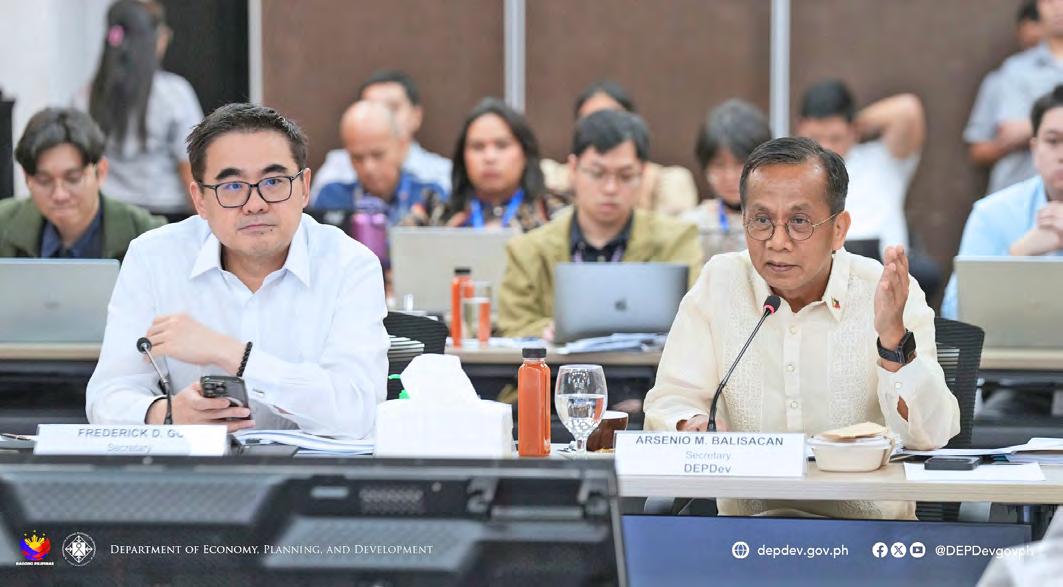


By Robert Harland
WEDNESDAY, FEBRUARY 11, 2026
For London, this is a rare chance to see treasures from Japan in dialogue with global culture. For visitors, it is a reminder that the samurai are not relics. They are symbols — of identity, honour, resilience — constantly reinterpreted. Sto
THE samurai are taking center stage in London, as the British Museum unveils its first major exhibition dedicated entirely to Japan’s legendary warrior class. Armour, swords, scrolls, prints — 280 objects in all — tell the story of warriors who were as much myth as reality. The samurai image is familiar: men in lacquered armor, bound by honour, locked in duels. But the exhibition insists on nuance. These figures were shaped by politics, literature and later pop culture. Medieval Japan forged them. Nationalism re-forged them. Hollywood and anime re-imagined them. What we see today is not a single truth but a shifting construct. And then there are the women. Too often erased, they were central to the samurai world. Some fought. Tomoe Gozen, the 12th-century warrior, remains legendary. Others trained with the naginata, defending homes during siege. Many more shaped culture — through poetry, calligraphy, ritual. They kept households intact, raised children and carried the code of resilience. In modern retellings, female samurai have become icons of empowerment, breaking the stereotype of a male-only tradition. The exhibition is not just spectacle. It is a reckoning. By placing women alongside armour and blades, curators challenge the old narrative. History is not only about who fought, but who endured. The samurai legacy was sustained in kitchens and classrooms as much as on battlefields.
The British Museum’s Samurai exhibition will be one of Britain’s 2026 cultural highlights. It dazzles with artifacts, but more importantly, it asks us to rethink. The samurai were never just men with swords. They were families, communities, myths. They were women too. And that truth, finally, is being told. Staged at the British Museum on Great Russell Street, the exhibition runs to 4 May 2026, with tickets starting at £17 (Php1,300).

From reforestation and livelihood support to health assistance and education, Social Development and Management Programs of COMP-member firms support host communities through tree planting in mined-out areas, aid for senior citizens, and the construction of school facilities.
By Rocky Dimaculangan
IN THE mining communities of Surigao and Palawan, three members of the Chamber of Mines of the Philippines (COMP) are demonstrating that responsible mining extends well beyond mineral extraction.
CTP Construction and Mining Corporation (CTPCMC), Rio Tuba Nickel Mining Corporation (RTN), and Taganito Mining Corporation (TMC) are earning recognition for their strong performance in Community and Indigenous Peoples (IP) Outreach and Social Development, one of the core pillars of COMP’s Towards Sustainable Mining (TSM) initiative. Through robust Social Development and Management Programs (SDMPs), these companies actively involve host communities, IPs, and local government units (LGUs) in development planning – from program identification to implementation – via structured consultations and inclusive stakeholder engagement. The result is a partnership-based approach that positions mining not merely as an economic activity, but as a longterm community development partner. A core pillar of sustainable mining “Community and IP Outreach and Social Development is central to the
integrity and credibility of TSM implementation,” says COMP Chairman Michael Toledo, noting that it is one of eight protocols used to assess member companies’ performance.
The protocol, he explains, reflects the principle that mining is a long-term social presence in host communities.
“Sustainable mining cannot exist without trust, legitimacy, and shared value with host communities and Indigenous Peoples. This protocol ensures engagement is structured, continuous, and outcomes-based, focused not merely on consultation, but on co-designing development priorities, shared decisionmaking, and long-term community resilience,” Toledo says.
“In this sense, it is not a support pillar of TSM. It is a core pillar.”
He adds that compliance with the law alone no longer defines responsible mining.
“Social legitimacy, community confidence, and operational stability now
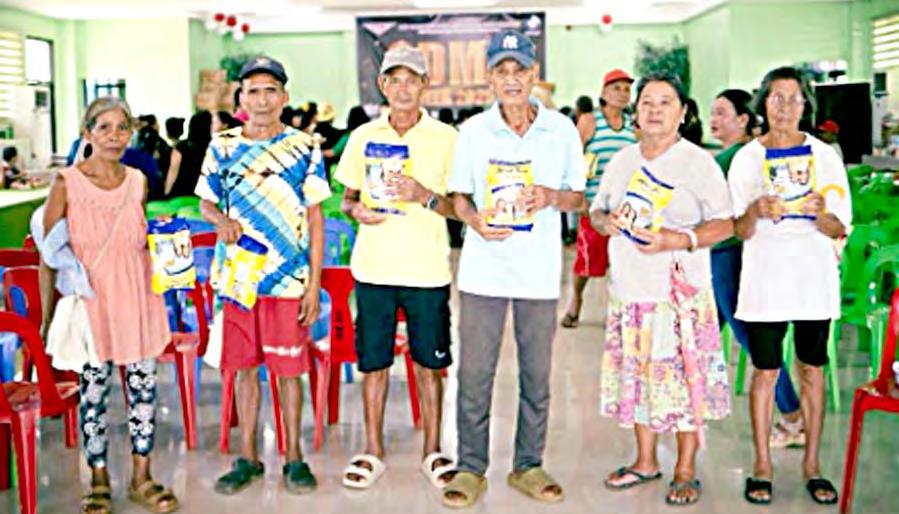
depend on performance, not paperwork. Companies that excel under this protocol are not just compliant—they are resilient, credible, and future-ready.”
CTP Construction and Mining Corporation For CTPCMC, the protocol strengthens community relations, reduces conflict risks, and aligns mining operations with Philippine legal and cultural expectations.
“This isn’t just a reporting requirement—it’s a strategic tool that supports sustainable operations and shared value creation between the company and its host communities,” says CTPCMC President Ross Romanillos.
The company’s SDMP supports Ba-
LANAO del Sur and Lanao del Norte — The Department of Science and Technology (DOST) has strengthened its peacebuilding efforts in Mindanao through the delivery of science- and technologybased interventions in six previously acknowledged Moro Islamic Liberation Front (MILF) camps. This initiative underscores the government’s commitment to inclusive development in former conflictaffected areas.
Led by DOST Secretary Renato U. Solidum Jr., the program was formalized through the ceremonial turnover of technologies and the signing of a Memorandum of Agreement for the project titled “Empowering the Six Previously Acknowledged MILF Camps in Mindanao through the Provision of Science and Technology Interventions.” Activities were held at Camp Bushra in Butig, Lanao del Sur, and Camp Bilal in Tangcal, Lanao del Norte. The initiative is implemented in partnership with Member of Parliament Basit “Jannati Mimbatas” Abbas, MILF Chairman of Camp Bushra and representative of the Joint Task Forces on Camps Transformation, and the Office of the Presidential Adviser on Peace, Reconciliation and Unity (OPAPRU), headed by Secretary Carlito G. Galvez Jr., who was represented during the event by Presidential Assistant David B. Diciano.
MP Abbas shared that beneficiaries expressed happiness upon learning about the initiative and warmly welcomed the support. He described the program as distinct from other government interventions because of its strong grassroots reach and the personal presence of DOST leadership, which helped strengthen trust and partnership within the communities. The activity was attended by DOST Undersecretary for Regional Operations Engr. Sancho A. Mabborang, Undersecretary for Special Concerns Dr. Teodoro M. Gatchalian, and DOST SOCCSKSARGEN Regional Director and Project Leader Engr. Sammy P. Malawan, reflecting the Department’s unified support for peace-oriented development.

rangays Adlay and Dahican and the municipality of Carrascal through health, education, and livelihood initiatives.
CTPCMC has established a Community Information Center and a Community Relations Satellite Office to address local concerns and requests. In 2024, the company allocated nearly ₱41 million for SDMP projects, benefiting 8,405 residents through free medicines, vitamins, food packs, and scholarships for 117 students. Livelihood support includes training and enterprise development for six people’s organizations, with projects ranging from bamboo production to garments and food processing, particularly supporting women’s associations
By Lyschelle Joy Armijo
MUSIC is truly timeless, and for The Bloomfields, it continues to serve as a bridge between memory and the present. In their latest release, the band leans into a sound that feels sincere and lived-in, proving that meaningful music can resonate across generations.
Carried by warm melodies and an unforced rhythm, the track captures the beauty of ordinary moments—the kind that quietly linger. Its strength lies in restraint, allowing the arrangement to breathe and giving listeners space to connect their own experiences to the music. Rather than leaning on heavy production, the band keeps the sound grounded and intimate.
Interestingly, the song has found a strong following among Gen Z listeners, who have been openly jamming to it across digital platforms. Its relatability, laid-back feel, and emotional honesty appear to strike a chord with younger audiences, showing that music rooted in authenticity can transcend age and trend. For a generation often defined by fast-paced content, the song’s calm confidence offers a refreshing pause. Lyrically, the piece reflects moments of connection and reflection, echoing experiences that feel universally familiar. There is a noticeable maturity in how the story unfolds—suggesting growth shaped by time, collaboration, and creative confidence. The Bloomfields’ identity remains clear, yet there is an openness that signals an evolution in their sound.
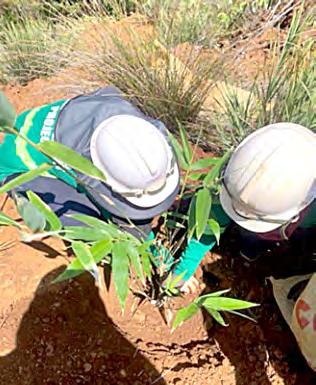
in Dahican. Prior to mining operations, most residents relied mainly on fishing, farming, and traditional hunting for income.
Rio Tuba Nickel Mining Corporation
RTN Resident Mine Manager Ronelbert Suguitan underscores that Community and IP Outreach and Social Development “extends beyond regulatory compliance, directly influencing a company’s social license to operate, risk profile, financial performance, and reputation.”
RTN earned a perfect “AAA” rating under the protocol, with its scholarship program standing out for delivering long-term impact that extends beyond the life of the mine.
The balance between nostalgia and modernity is subtle but effective. Elements of the band’s signature style blend seamlessly with contemporary influences, creating a sound that feels current without losing its emotional core. Each musical layer complements the other, reinforcing cohesion rather than complexity. More than just a release, the song serves as an invitation to slow down and listen—to recognize how music mirrors everyday life. Through this work, The Bloomfields reaffirm that music endures when it remains honest, relatable, and open to new generations who continue to find their own meaning in sound.

WEDNESDAY, FEBRUARY 11, 2026
lifeandshow.manilastandard@gmail.com
NICKIE WANG, Editor / ANGELICA VILLANUEVA, Writer / JASPER VALDEZ, Writer
By Nickie Wang
THE University of Santo Tomas Conservatory of Music marks its 80th anniversary with a staging of the classic musical South Pacific on Feb. 21 and 22 at the Proscenium Theater in Rockwell, Makati.
The production revives the work of Richard Rodgers and Oscar Hammerstein II, the legendary duo behind The Sound of Music, The King and I, Carousel, and Oklahoma
Based on James Michener’s stories, South Pacific follows American GIs on a South Pacific island during World War II, exploring racial prejudice through the love stories of Ensign Nellie Forbush, a nurse drawn to French plantation owner Emile De Becque despite his mixed-race children, and Lt. Joseph Cable, who falls for the local girl Liat.
The original 1949 Broadway production won several Tony Awards and introduced some of Rodgers and Hammerstein’s bestloved songs, including “Some Enchanted Evening,” “Bali Hai,” “Younger Than Springtime,”
“Happy Talk,” and “I’m in Love with a Wonderful Guy.”
The UST production stars singer-actress Ciara Sotto as Forbush and US-based performer Jose Vera Perez as De Becque. Conservatory performers Sean Nolasco, Nenen Espina, and Erika Salas take on the roles of Lt. Cable, Bloody Mary, and Liat, respectively.
Paolo O’Hara directs, with Daniel Bartolome as musical director alongside the UST Symphony Orchestra Tickets are available at www.ticket2me.net and at the UST Conservatory of Music.


US-based performer Jose Vera Perez as De Becque
FOR the past seven years, Miss Universe 2018 Catriona Gray has been the face of the National Commission for Culture and the Arts (NCCA). As its Ambassador for the Arts, Catriona has advocated active engagement in promoting Philippine arts and culture.
“My love for our arts and culture was not something I was born into due to my mixed heritage. It was something that has grown, learned, and embodied,” said the beauty queen in 2020 when she was named as one of the ambassadors, joining fellow artists KZ Tandingan and Julie Anne San Jose
During the pandemic years, Gray sustained her support for Philippine arts and culture by lending her voice to initiatives that highlighted Filipino creativity and artistic resilience. She appeared in several NCCA promotional materials and programs, including KULTURA 101 with Catriona, The Grand Reveal featuring the Metropolitan Theater, and Padayon: The NCCA Hour where she became one of the first and most viewed guests. She also participated in the Quincentennial Commemorations in the Philippines.
When COVID-19 restrictions eased and in-person cultural activities resumed from 2023 to 2024, her role expanded, championing programs like the Sayaw Pinoy Touring Performances and Workshops, which highlighted regional talents and creative collaboration across the Philippines and abroad.
In her seventh year as NCCA Ambassador, Catriona continues to witness the arts’ power to inspire truth, courage, and creativity. Her partnership with the NCCA underscores the responsibility to foster public appreciation for
Philippine arts, keeping culture a living, evolving force for today and future generations.
“I think it is poignant to say that the creation process, or pursuing creativity, is something that feeds the soul but also inspires others to create—to push what we think is possible. Art inspires, art uplifts,” said Catriona.
Catriona attended the National Arts Month 2026 press conference held recently at the Centro de Turismo, where she encouraged everyone to participate in the celebration and continue the passion for artmaking.
As February nears, the National Commission for Culture and the Arts leads National Arts Month (NAM) 2026 under the theme “Ani ng Sining: Katotohanan at Giting,” highlighting the arts as a force for truth, courage, peace, and development. Anchored on the Philippine Development Plan for Culture and the Arts and aligned with the Sustainable Development Goals, the theme shows how artistic expression mirrors shared realities and Filipino aspirations. NAM 2026 opened with the Ani

Til death do you part, and then some
GREAT romantic comedies rarely revolve around death. Yet Eternity (2024), directed by David Freyne , makes death the explicit reality that drives its characters into hard choices and frustrations—even in the afterlife.
This quirky film is set at the juncture between death and what comes after.
Newly departed souls arrive at a hub where they must choose how they will “live” their eternity.
The film’s most inventive gesture is staging this decision in a train station beside a massive conference hall, where booths hawk entire eternities as if they were products at a convention. Do you want to spend eternity inside a television show? On a beach? In a cabin in the woods? Even in the afterlife, you are marked as a consumer—or at least a client. In this sense, the concept is the film’s clear winner.
The romantic comedy element is carried by a strong cast: Miles Teller, Elizabeth Olsen , and the wonderful Oscar winner Da’Vine Joy Randolph who plays an earnest but exhausted afterlife coordinator.

ng Sining: Konsyerto ng Katotohanan at Giting on Feb. 1 at the Rizal Park Open Air Auditorium in Luneta. The program began with a Grand Parade, followed by performances, music, and storytelling tracing Filipino creativity, identity, and social responsibility. Ceremonial segments “Pagdating ng Ilaw” and “Pagpasa ng Liwanag sa Kabataan” symbolized passing cultural heritage,


The film asks a deceptively simple question: What would you do in the afterlife if you were confronted with two of your greatest loves?
Looked at this way, Eternity is a philosophical tract disguised as a romantic comedy. Its dialogue is snappy, and even its physical comedy avoids the gratuitous or the insipid.
What ultimately holds the film together is the singular choice each soul is given. This is a film about what the soul plainly is. “It’s just you,” Randolph’s character explains simply. But this “you” is a dense network of confusion and longing, standing at the edge of eternity. The moment before choosing—this pause before the leap—is life still catching up with itself. You must decide who the ultimate “you” will be and, more importantly, with whom.


alongside monologues “Ang Binhi ng Sining,” “Sining Bilang Ugat at Alaala,” “Sining at Giting ng Bayan,” and “Ang Pananagutan ng Ilaw.” Performances included UST Salinggawi Dance Troupe’s Pitong Alay ng Sining, UST Coro Tomasino, Yogad Cultural Dance Group, Indak Guiguintenyo Folkloric Group, Philippine Ballet Theatre, and Anak Bale-Balayan A fashion show highlighted creative industries, followed by The Addlib, The O Divas, and appearances by Miss Grand International 2025 Emma Tiglao, Monica Gana, Lucky G., and Elaiza Jem. The night closed with a
collective performance of the NAM theme song “Ani ng Sining.” Nationwide celebrations continue. Los Baños, Laguna hosts workshops at ART Center (Feb. 18) and a theater performance at D.L. Umali Hall, UP Los Baños (Feb. 19), with ARTIST, Inc. In Palo, Leyte, the Climate Justice-themed activities opened with a symposium on Jan. 12 and will conclude with a workshop on Feb. 18. In Mindanao, Butuan City hosts events Feb. 12 to 14, 21 to 22, and 24 to 26 under “Lawig Mindanaw: Kalinaw ug Kahigayunan,” focusing on dance, music, and film for inclusion and dialogue.
New this year is “ART FriDates,” a weekly platform for artists every Friday of February at Blackbox Theater, Likhang Pilipino Complex, CITEM, World Trade Center, Pasay. Open house begins at 2:00 p.m., performances at 4:00 p.m. Six LGUs will also mount showcases: Angono, Rizal (Feb. 6); Bulacan (Feb. 13); Biñan, Laguna (Feb. 20); Quezon Province (Feb. 27); and Muntinlupa City (March 6),


By Rolando Ng III
THE push for Artificial Intelligence is, by no means, an inevitable strategy.
The post-pandemic scenario has provided tools for newsrooms to adapt and survive with the use of AI. The systematic and codified nature of generating ideas to texts
and images is the trend that many newsmen—correspondents and reporters alike – seem to grapple with uncertainty. A Reuters Institute study showed that, while more than half of British journalists have used its applications, they felt the restraint in its results.
But for Manila Standard publisher and veteran journalist Rolando G. Estabillo, AI is now an inescapable zone.
“Don’t ever deny its benefits to our profession,” he said, adding that
journalism has seen its growth in the presence of technology through its years of advancements, including AI. Sir Rollie, or RGE as he is fondly called in the newsroom, has seen technology in the face, with his decades of experience as a newsman and editor.
He started out with BusinessDay, then the country’s innovative daily in the 60s. While serving as a writer-researcher, he was acing up his stories with his old and trusty Turn to D4



typewriter. Every single story was done manually, bearing the noise of its heavy keys and clicks. Computers only came in the 1970s. “Nagsimula lang ang computerization, yung word processor sa editorial…mga late 70s. Naiingit nga kami. Pero sinabi namin, di nga naman namin alam kung paano gamitin yan,” he recalled, adding that he only had to respond to the changes under management’s orders.
Despite his advanced age, sir Rollie believed that technology is the driving force for many industries, media included. He has since looked into the potential brought by the elements present in various tools. It is the only way to go for most journalists, he stresses, should they long to thrive in today’s times.
“I know the trend, although I am not techie. I know what must be adopted, and the future looks toward the new technology. It is an evolving wall for newspapers and even the media. Otherwise, you’d be

left behind,” he explained.
Despite the push, sir Rollie keeps his faith in the old practices of journalism. The ethical standard set by reporters – fairness, accuracy, and credibility – remain an important foundation amid the expansion of AI. The human touch is still a must as the business needs its own practice of integrity.
“You simply have to adapt with the new ways, how the world evolves. But at the same time, you must remember the old ethical values. That’s constant – it never changes,” he said, adding that journalists ought to be guided on the best of these two worlds.
He also expressed hope for the future of AI in the operations of Manila Standard, noting how it could infuse revenues for the group in lieu of print’s waning influence.
“The opportunity is already there. I am encouraging everyone to put emphasis on the online (space).
While the bulk of our income still comes from print editions, it’s not the growth area anymore,” he said.
By Emil Jurado
IHAVE been part of Manila Standard since it came out of the press, first in tabloid form and eventually a broadsheet. My congratulations to everybody at the Standard, past and present.
I started as chairman of the editorial board and I am now chairman emeritus and columnist. I saw the Standard pass from one owner to another, always with the same vision to tell the truth without fear or favor.
It was the late Manda Elizalde who conceptualized the Standard upon his return from self-exile to Costa Rica, of which his friend and former Harvard classmate was president.
Manda moved to Miami, Florida and there called upon Rod Reyes to put up a newspaper upon his return. Manda said he wanted me to be part of the organization. And so I joined Rod.
The Standard’s first office was at the Tanduay Building on Ayala Avenue. How Elizalde returned to the Philippines despite his warrant of arrest, and how he passed through Customs and Immigration without a hitch, is of course another story.
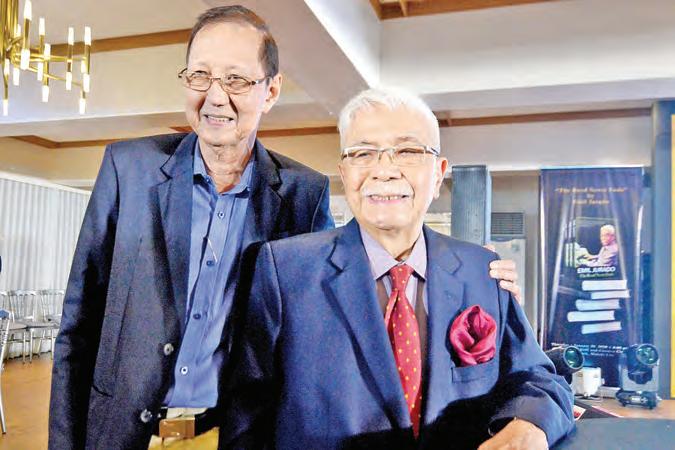
have
Jullie Yap Daza, Jojo Robles. The Standard is now under publisher Rollie Estabillo.
One of the reasons I have not left the Standard is that I have always liked working with all its publishers and editors-in-chief.
When I was in trouble with the Supreme Court, who cited me in contempt for exposing a decision that has not yet been promulgated, the Standard stood by me. I argued that I had no fault because
I was doing my job as a journalist. But the court cited me in contempt, anyway, as a lawyer and officer of the court. What a strange decision that was. I also remember that former Chief Justice Reynato Puno, who was then only an associate justice, wrote a dissenting opinion on my behalf, where he upheld press freedom. Nonetheless, the Standard’s support meant a lot to me. And this is also one of the reasons I am still here.
* This portion of Mr. Jurado’s column was first published on February 12, 2019.
TWENTY-FIVE-YEAR-
OLD mother Angel Mae Alfante of Barangay Lanas in Naga City, Cebu, knows all too well the difficulties of living without electricity, especially at night when caring for her four-yearold child. With this understanding, she conveyed her deep appreciation for a free house-wiring electrification project that reached their home.
“We’re so thankful we had our electricity connection installed for free. If it had not been free of charge, this wouldn’t have been possible because our income is just enough, if not less,” she said.
House wiring—requiring equipment like outlets, switches, insulation or electrical conduits, wires, circuit breakers, and the like, plus labor—typically costs around P12,000 to P13,000 if done privately. Fortunately, Angel is one of the very first beneficiaries of the Visayan Electric Company, Inc. (Visayan Electric) project, which launched in September 2025 to provide free professional housewiring services to indigent households in its franchise area— those who need it but can’t afford it.
Cognizant of the transformative effect of having access to electricity, the AboitizPower distribution utility deployed accredited electricians to professionally install electrical systems and ensure safety and compliance with electrical codes. The project is seen as an investment in the longterm well being and safety of families, considering how electrical issues remain the most common cause of fire in the Philippines.
A Visayan Electric survey identified 3,933 households as potential beneficiaries.
AboitizPower’s Visayan Electric brings the promise of ER 1-94 to light
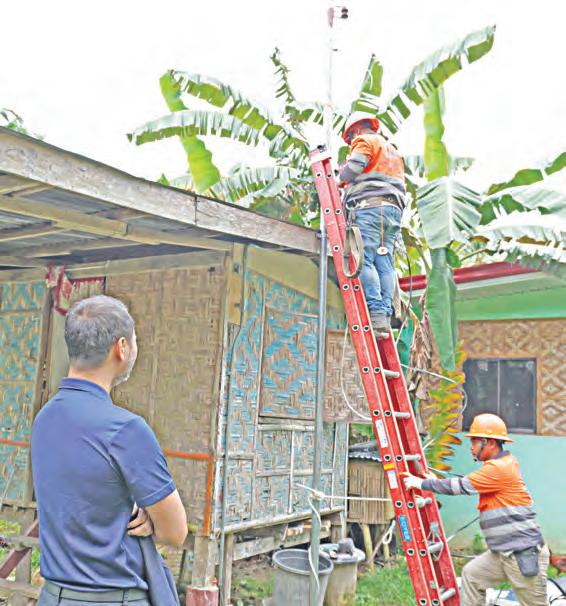

Broken into phases, the first part will cover 2,013 homes in Naga City and 718 in the Municipality of San Fernando. Since many families also struggle with the high cost of requirements and securing permits, Visayan Electric also partnered with local governments and other public offices to assist these families.
“Many of the residents did not have their own electricity supply, especially those from
Sitio Langsub. Although we’ve put up utility poles in the area, connection expenses are quite high, which kept them from having electricity—until now,” said Barangay Captain Emily Baricuatros. “We’re immensely grateful that our barangay was chosen as a beneficiary of this electrification program.”
The project is funded by an electrification fund—initially amounting P28-million—
derived from the Department of Energy’s (DOE) Energy Regulations No. 1-94 (ER 1-94) program which allocates to the host community a financial benefit of P0.01/kWh (eventually, P0.03/kWh in 2026)
monitoring data and the Philippine Statistics Authority’s household survey showed a “strong and progressive link” between electricity access and household income. With just 8 hours of electricity per day,


of electricity sales for hosting energy-generating facilities and/or energy resources. In Naga City, the Korea Electric Power Corp. (KEPCO) is one of the main contributors to the electrification fund, which was then remitted to Visayan Electric as the power distribution utility in the area to implement electrification projects, covering labor and material costs.
The March 2024 DOE
income rises by 15.8 percent and spending by 14.8 percent. At 16 hours, income increases by 33.4 percent and spending by 32.7 percent. With full 24hour access, income grows by 56.3 percent and spending rises by 59.4 percent. Access to consistent and reliable electricity does change lives and livelihoods for the better. Visayan Electric’s free housewiring electrification project is
aligned with the Philippine national government’s push to energize the three-million Filipino households that still live without electricity. Apart from the free house-wiring project, Visayan Electric has long been implementing wiring projects like the replacement of electrical components in public schools. Since 2010, Visayan Electric has also been doing this project together with the Aboitiz Foundation to replace outdated electrical wiring systems in public schools within its franchise area. For over a decade, Visayan Electric’s own engineers have allocated at least two weekends every year to do the rewiring themselves, conforming with industry standards and significantly reducing the risk of fire hazards and electrocution accidents. Over 5,300 classrooms and school facilities have been fully rewired to modern standards.
In elementary schools, energized ones performed 12 percent better on the National Achievement Test than unenergized schools, according to a study from the University of the Philippines Center for Integrative and Development Studies. It was also found that secondary schools with electricity also performed 10 percent better than those ones without. Visayan Electric is a distribution utility operated by AboitizPower, serving the cities of Cebu, Mandaue, Talisay, Naga, and the municipalities of Liloan, Consolacion, Minglanilla, and San Fernando. It is the second largest privately-owned distribution utility in the Philippines. As of end-2024, it has energized 100 percent of the barangays, and electrified 99.37 percent of all households within its franchise area.
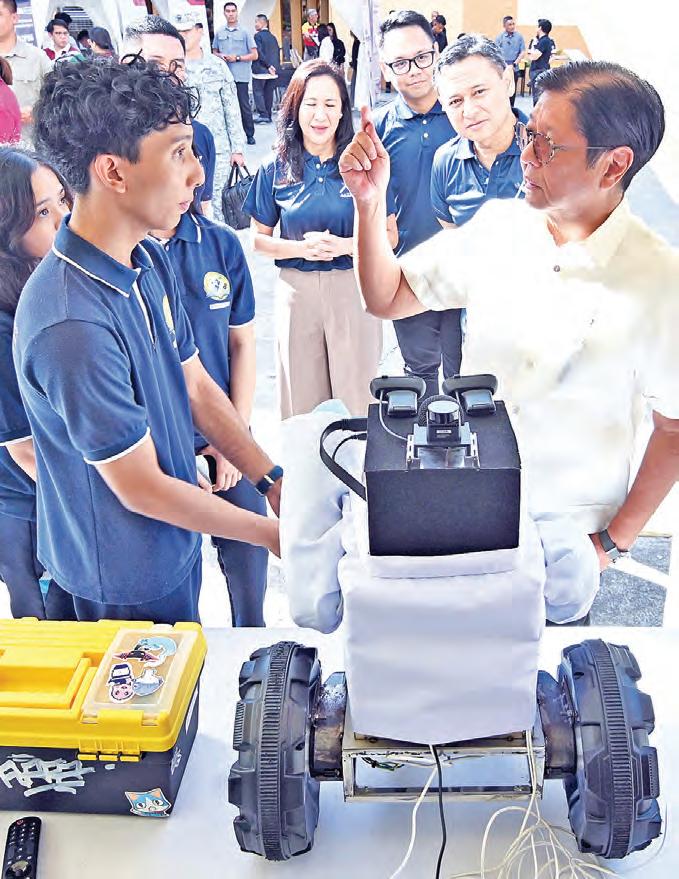
By Charles Dantes
PRESIDENT
Ferdinand Marcos
Jr. is accelerating the rollout of a national artificial intelligence policy aimed at modernizing government, strengthening education, and driving economic growth, positioning the Philippines as a proponent of responsible and ethical AI adoption.
President Marcos has framed AI as a transformative force that will shape the country’s competitiveness and public institutions, while stressing that innovation must be matched with ethical safeguards and informed regulation.
The administration’s policy direction centers on building infrastructure, developing human capital, and ensuring that AI adoption remains human-centered and responsible.
National AI Program Framework
The Marcos administration is advancing a Philippine AI Program Framework that aims to future-
You’re missing a chance if you wait. AI is going to come like a wave – whatever you do, you’ll still get hit. And if you don’t learn how to swim, you will be left behind.
– President Ferdinand Marcos Jr.
proof the economy by integrating AI across key sectors, including education, agriculture, finance, health care, and manufacturing.
“You’re missing a chance if you wait. AI is going to come like a wave – whatever you do, you’ll still get hit. And if you don’t learn how to swim, you will be left behind,” the President said.
“What AI can do one month ago is different from what AI will be able to do one month from now. It’s such a powerful tool, and you must take advantage of it as quickly as possible,” he added.
The Department of Science and Technology said the framework emphasizes investments in digital infrastructure, research and development, and largescale skills training to prepare the workforce for an AI-enabled economy.
President Marcos has acknowledged that legislation often lags behind tech-
nological change, calling on policymakers to deepen their understanding of AI to craft responsive laws that protect the public while allowing innovation to flourish.
He has warned that without clear guardrails, AI could worsen problems such as misinformation, disinformation, and digital inequality. Education at the Core of AI Policy Education remains a central pillar of the government’s AI strategy. In January, the administration, through the Department of Education, launched Project Accelerating Governance and Adaptive Pedagogy through Artificial Intelligence (AGAP.AI), which seeks to integrate AI into basic education and teacher training nationwide.
The program includes the development of Foundational Guidelines on AI in Basic Education, envisioned as the country’s first national framework governing ethical AI use in schools.
The initiative aims to strengthen AI literacy among students, educators and parents while addressing concerns related to data privacy, transparency, and appropriate classroom use.
“This means that students will learn how AI works, teachers can learn how to integrate AI into their lessons, and parents can guide their children in using AI safely and wisely at home,” the President said.

SOME 143 students from different colleges and universities in Metro Manila and nearby areas learned the basics of journalism in the first three sessions of the Manila Standard Masterclass Series.
Manila Standard managing editor Joyce Babe Pañares talked about fact-checking and digital hygiene while columnist, editorial writer, and former opinion editor Adelle Chua covered opinion writing, feature writing, and column writing.
In his opening remarks, Manila Standard publisher Rolando Estabillo challenged the students with a question: So, you want to be a journalist?
“Are you curious enough to keep digging?” he asked. “Are you patient enough to get it right? Are you brave enough to speak up? Are you humble enough to listen?”
“If the answer is yes—then welcome,” Estabillo said.
Reaching out to readers
“The Manila Standard Masterclass is a key part of our overall marketing strategy—strengthening our connection with readers and partners while positioning the newspaper as a platform not just for news, but for learning and thought leadership,” said Paula Reynoso, supplement head of Manila Standard.
The first masterclass was held October 25, 2025 at the Luxent Hotel in Quezon City with 50 students from Rizal Technological University, Pamantasan ng Lungsod ng Maynila, Far Eastern University, and National University participating. Luxent Hotel, SM Foundation, and Universal Robina Corporation were the sponsors.
Meanwhile, 48 students from RTU, La Verdad Colleges, NU, and Polytechnic University of the Philippines participated in the second masterclass held at Eurotel Vivaldi Cubao on November 22. They were sponsored by EUROTEL, SM Foundation, Infinix, Henry & Sons, Vital Water.
The third session, held January 25, 2026 again at the Luxent Hotel, brought together 45 students from PUP, La Verdad, Emilio Aguinaldo College, Eulogio “Amang” Rodriguez Institute of Science and Technology, and PLM. Luxent Hotel, Vital Water, Cat PR, and Kitkat ice cream sponsored the day’s event. Facts first
“I believe everyone can be factcheckers,” said Pañares, who is also a senior lecturer at UP Diliman’s Department of Journalism.
“More than simply telling people that they are misinformed or that they shared false information, I think it would be better to empower them to do the fact-checking themselves. This way we help them become more critical consumers of information, equipped with a healthy dose of skepticism,” she added.
Pañares’ lecture included practical exercises on checking whether a website is legitimate, ensuring that one’s password is secure, and examples of misleading or false content that gained attention on the internet.
Chua, who is an assistant professor of journalism at UP Diliman, emphasized that fact is not the opposite of opinion but its very foundation, and that in the age of artificial intelligence, the adage “To see is to believe” no longer holds true. She said the most important purpose of opinion writing is not necessarily to persuade others to think a certain way, but to occasion critical thinking and open discourse.
“Today when it is so easy to have an opinion on anything, we have to make sure that ours stand on firm ground and add value to the existing conversation.”


In her feature writing lecture, she highlighted the need to always find a novel angle and to draw out the human interest aspect in the stories.
Eager learners Student participants provided feedback on the sessions they attended.
Said Rizlene Balbontin of RTU, who attended the first masterclasses: “Yung mga fake news na kumakalat (the fake news that is spreading), it’s really bothering me. This masterclass helped me to know the boundaries or how to [spot] misinformation in social media.”
For the second session, Henry Aaron of the same school said: “Sobrang ganda po masterclass na ito dahil marami po akong knowledge na nakuha. Malaking bagay sakin kasi pwede ko rin ‘tong ishare sa family at mga friends ko (This masterclass is great because I gained so much knowledge. It’s a big thing for me because I can share it with my family and friends).”
Kennah Surita added: “Relatable po talaga ito kahit hindi masyadong aligned sa course namin (It’s relatable although it’s not aligned to our course). Nakakainspire po magsulat (It inspires us to write).”
Of the third session, Trisha Orit, a journalism student from Cavite State University, said:
“The initiative of Manila Standard to conduct a masterclass series is truly helpful and commendable, especially in today’s modern and fast-paced media environment. With the constant flow of information online, it has

become increasingly difficult to distinguish between real news and misinformation.”
“Ma’am Adelle’s discussion on column writing provided valuable insights on how opinions should be grounded in facts, clarity, and responsibility, while still allowing writers to express strong and informed perspectives. Meanwhile, Ma’am Joyce’s

discussion on news writing emphasized the importance of accuracy, verification, and ethical reporting in delivering information to the public. Together, their discussions reinforced the vital role of journalists in ensuring credibility and truth in today’s media landscape.”
Turn to E4

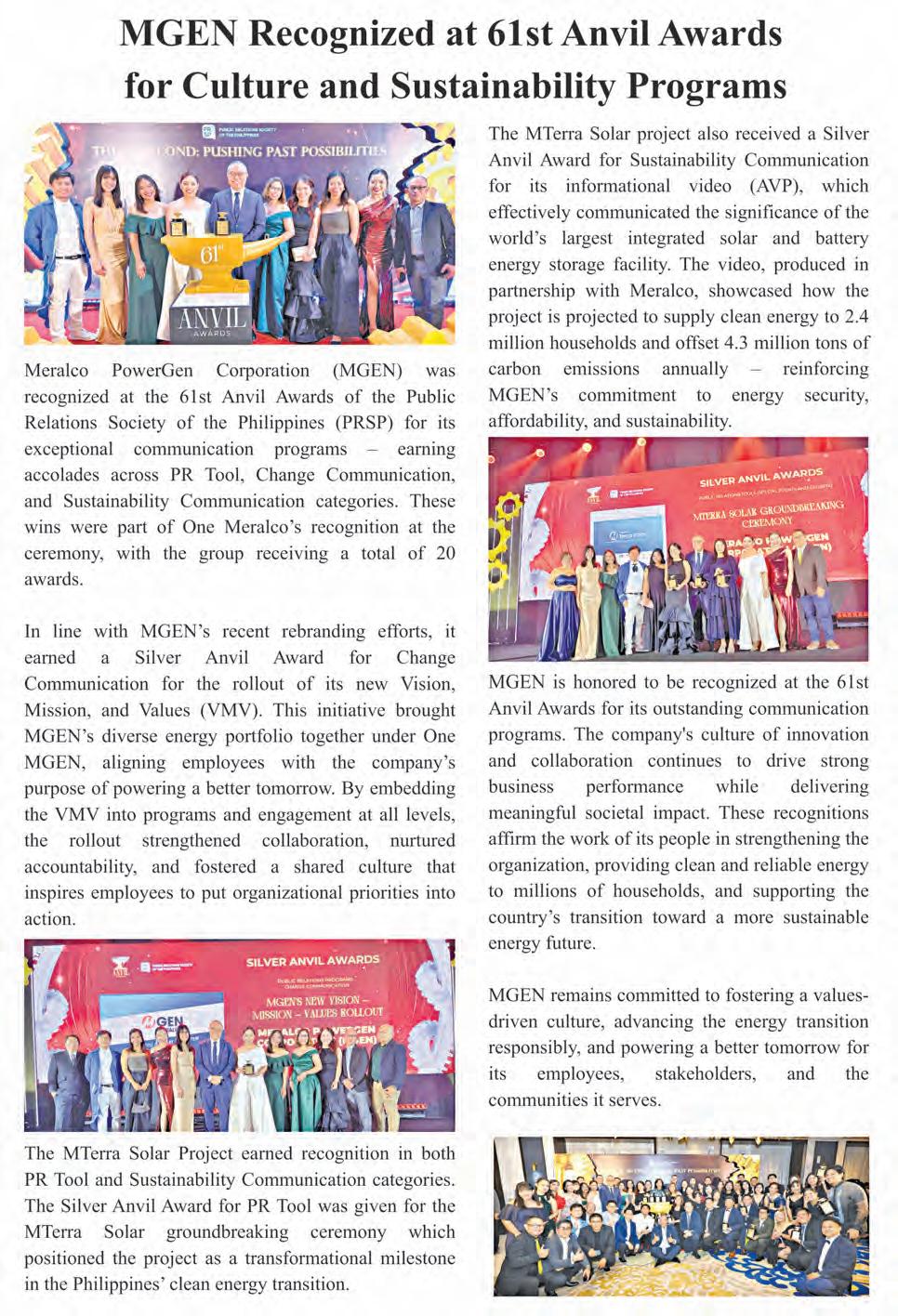


By Ratziel San Juan
THE effect of hybrid work setups on employee productivity can be debated any which way, for better or worse.
What everyone can agree upon is that these post-pandemic work arrangements have changed the workplace for good.
There is simply no going back, even for return-to-office contexts, without incorporating work-from-home (WFH) in some form.
Infinite possibilities
According to the “Future of Recruitment” report by leading online job portal JobStreet by SEEK, key benefits of hybrid work include flexible work schedules, expanded talent pool, and empowerment and diversity.
In a hybrid setup, employees typically alternate between remote work and on-site reporting. This allows workers to balance their professional and personal lives, leading to higher job satisfaction and increased productivity.
This approach also enables companies to tap into talent from rural areas and broaden their talent pool beyond their
main office locations for a more diverse workforce.
“Many companies are based in major cities like Manila, Cebu, or Davao, limiting opportunities for talent from rural areas,” JobStreet by SEEK Philippines managing director Dannah Majarocon said.
“Remote work allows companies to recruit skilled workers who might not otherwise have the opportunity to live and work near an office site,” she added.
Similarly, WFH arrangements create opportunities for individuals who may face challenges working in a traditional office environment, such as persons with disabilities or single mothers.
Results of JobStreet by SEEK’s Global Talent Survey indicate that 80 percent of Filipinos prefer jobs that are either remote or hybrid.
The downside to hybrid work is its potential to lead to the “infinite workday” Turn to E3
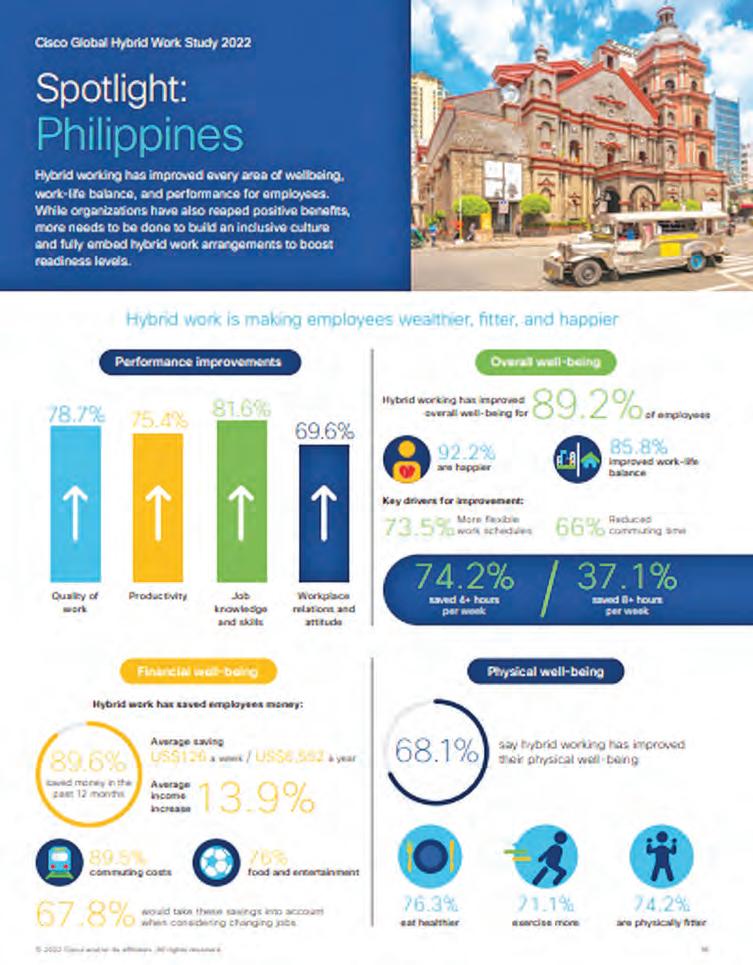
By Angelica Villanueva
FOR generations, evening broadcasts and the morning paper were once staples of daily life. Today, people get their news through scrolling feeds, short videos, and even AI tools, changing not just how they find information, but also which news they trust and care about.

Around the world, digital platforms have overtaken legacy media in importance. Once dominated by television broadcasts, newspapers and radio, the Philippine news diet has moved decisively online.
Surveys show that a large majority of Filipinos now turn to the internet and social platforms for updates on politics, local events and everyday life, a transformation with both promise and pitfalls for the country’s media ecosystem.
A digital majority
According to a Publicus Asia survey, 65 per cent of Filipino adults say they use the internet as their main source for political news and current events, with about 61 per cent relying on Facebook and roughly the same share watching television for updates. Social media has even surpassed television in terms of daily news consumption, signaling a shift in how audiences engage with headlines.
The Reuters Institute’s Digital News
How hybrid work...
From E2 by removing work-life boundaries in favor of digital workstreams.
Microsoft’s Work Trend Index special report spotlights this phenomenon as seen in employees who are interrupted as frequently as every two minutes during core work hours by meetings, emails, or chats, based on Microsoft 365 signals.
Hybrid workaround
An alternative found by some workers is to rely on the presence of flexible workspaces where they can execute tasks away from home, but also separately from the office.
According to the Philippines country manager Rowena Natividad of global office space provider International Workplace Group, such a setup supports
is an AI-generated
the

Report shows the same pattern that since 2020, Filipinos have mostly relied on online sources, including social media, to get their news. Traditional outlets lag behind, with only one in four respondents saying they go directly to a news website or news app, while a majority use social media (61 percent) or search engines (52 percent) as gateways to information.
According to the same Reuters news report, Filipinos are cautiously open to using AI for news. Only about 21 percent are okay with news mostly written by AI, but about 35 percent prefer articles written by people with some help from AI tools. Many find AI useful for things like summarizing stories, giving personalized news suggestions, or translating content, showing a future where humans and technology work together to deliver news.
But the rise of AI also brings worries. People are concerned that
the “third dimension” of hybrid work.
“Many Filipinos live in multigenerational homes, and working from home isn’t always feasible,” Natividad said. In fact, Manila has emerged as the fastestgrowing market for flexible workspace in the Asia-Pacific region in 2025, according to a report by The Instant Group. Demand in the Philippine capital surged 51 percent year-on-year, led by a significant increase in requirements from multinational companies and the business process outsourcing sector. Flexible workspaces are effectively designed as a “work near home” solution that caters to hybrid workers, freelancers, and startups, and a diverse market adapting to the new normal.

WASHINGTON—Meet OpenClaw: the AI assistant that promised to be your dream intern, terrified cybersecurity experts, and now thrives on chatbot-only social media – all in just a few weeks.
The perfect assistant?
At the heart of the tech world’s latest come-out-of-nowhere fascination is an AI tool built by Austrian researcher Peter Steinberger in November to help organize his digital life.
After he called his creation Clawdbot, Anthropic asked the computer scientist to rename it because the name was too similar to its AI assistant, Claude.
Steinberger renamed it Moltbot and then OpenClaw. OpenClaw surpassed 150,000 stars within days on the GitHub computer development platform, a symbol of its exponential popularity.
Users download OpenClaw and connect it to a generative AI model (such as Anthropic’s Claude or OpenAI’s ChatGPT),
then communicate with it through WhatsApp or Telegram as they would with a friend or colleague.
Early adopters gushed over OpenClaw’s abilities, claiming the tool could handle everyday life’s most tedious chores—sending emails, scouring the internet for specific research, even making web purchases.
Some users went further, saying their new AI assistant was taking on a life of its own, behaving like a dream intern who proposes useful projects and anticipates problems before they arise.
In other words, OpenClaw appeared to be delivering on the promise of an AI agent—one of Silicon Valley’s most frequently hyped buzzwords.
Facts... From E1 discussed inside the classroom.”
Gracy Mendoza from the same school said: “The discussions made the Manila Standard Masterclass truly excellent and meaningful. The topics presented were not only engaging but also highly relevant to today’s media environment. The speakers shared practical insights and real-world experiences that helped deepen my understanding of journalism beyond what is
“This masterclass is especially helpful to my college program, as I am a graduating student who needs more exposure to professional seminars like this. Activities such as this bridge the gap between theory and practice, allowing students to better prepare for the demands and responsibilities of the media industry.Through this experience, I gained a clearer perspective on ethical journalism, responsible storytelling, and the importance of continuous learning
Agents represent the next logical step in AI deployment: doing the work of clicking around to execute tasks online instead of humans doing it themselves.
Others remain skeptical. Reports of mistakes, breakdowns, and an overall chaotic experience have prompted many to quickly abandon their experiments.
OpenClaw is open-source, meaning anyone can modify it. According to analysts, developers across the globe are doing exactly that.
But open-source also means users are especially vulnerable from a cybersecurity perspective. Most cybersecurity analysts agree that connecting the app to your computer, personal data, and communications is a bad idea.
Even Steinberger urges users to proceed with extreme caution, and he advises non-experts to avoid the tool entirely.
When up and running, OpenClaw has the ability to read and write files, run commands, and execute scripts on your PC.AFP
as a future media professional,” she added.
Reynoso said there is more to expect from the masterclass series.
“Looking ahead, we’re excited to expand these engagements and create more meaningful conversations with our community.”
The world will always need journalists, Estabillo said in his remarks. “Not perfect ones. Not fearless ones. But honest, thoughtful, and committed ones.”

using AI could make news less clear, less accurate, and harder to trust, even though it is faster and cheaper for news organizations and readers.
Striving for credibility amid disinformation
The rapid shift online has also heightened concerns about misinformation. Filipinos’ concern over online disinformation has reached record levels, reflecting anxieties about political polarization and the spread of falsehoods ahead of recent elections.
To deal with confusing or misleading news online, many Filipinos are learning to verify through multiple sources and embrace news literacy training at higher rates than many other countries, a sign that audiences are becoming more discerning, even as their consumption habits diversify.
A story still unfolding
As the Philippines becomes more digital, people getting the news face a choice. They want fast updates, local stories, and content that grabs their attention, but they also want news they can trust and understand, even with so many feeds, algorithms, and competing stories online.
For journalists and news organizations, the challenge is clear, that is to adapt to changing behaviors without compromising on quality, a task made all the more urgent in an era where the next headline is just a scroll away.

THE Department of Information and Communications
Technology (DICT) is championing a unified front, calling on the public, private and civil sectors to bridge the digital divide.
By working together, the agency envisions a future where seamless connectivity reaches every corner of the archipelago, empowering all Filipinos in the digital age.
DICT Secretary Henry Aguda has called for collective action from the private, public and civil sectors to ensure digital connectivity across the country.
Speaking at the Philippine Telecom Summit 2026, Aguda introduced the “Digital Bayanihan” initiative. The program aligns with President Ferdinand R. Marcos Jr.’s directive to ensure no Filipino remains offline by fostering cooperation between the state and private industry.
“Government, telcos, investors, innovators, and local communities [must] work together, ensuring that every Filipino, from the highest mountains to the farthest islands, is connected,” Aguda said.

He said that connectivity has evolved beyond a technological requirement to become a pillar of the national economy. He noted that internet access now dictates the trajectory of the job market, education, investment and the
growth of micro, small and medium enterprises.
The Digital Bayanihan program is anchored by Republic Act 12234, also known as the “Konektadong Pinoy” law. It is supported by the ongoing construction of the
National Fiber Backbone, a flagship infrastructure project designed to expand the country’s digital reach.
National Telecommunications Commissioner Ella Blanca Lopez said during the summit that multisectoral cooperation and the
—“—
Government, telcos, investors, innovators, and local communities [must] work together, ensuring that every Filipino, from the highest mountains to the farthest islands, is connected.
—DICT Secretary Henry Aguda
backbone project are the primary drivers for bringing reliable service to remote areas.
“A true konektadong pinoy [connected Filipino] is achieved not by policy alone, but through sustained cooperation and collective responsibility,” Lopez said.
The summit convened top-ranking telecommunications executives and government officials to discuss the theme of aligning policy, infrastructure and investment. The event cited the need for shared responsibility in delivering accessible digital services to 100-percent of the population.

WEDNESDAY, FEBRUARY 11, 2026 advertise@manilastandard.net

By Othel V. Campos
Snack na swak tips for moms who want to start wellbeing habits this 2026
THE start of a new year always comes with good intentions—eating better, taking care of the family, and building healthier routines at home. But for many Filipino moms, one daily challenge keeps coming up: What is the mindful way to snack?
Between school baon, afternoon merienda, and late-night cravings, snacks are part of everyday life. The Food and Nutrition Research Institute of the Department of Science and Technology (FNRI-DOST) recommend about 220-250 calories for a snack based on their 2023 menu guide for snacks. While this guideline is clear, most moms admit they do not really know what that looks like in real life.
That’s where mindful snacking comes in.
Mindful snacking isn’t about cutting out treats or being overly strict. It is about eating with attention and intention. Slowing down, checking labels, understanding portions, and making informed choices—so moms can feel confident about what they are serving their families (and enjoying themselves).
At the heart of this advocacy is Mondelēz International, which encourages moms to enjoy snacks mindfully while building simple habits that support balanced wellbeing. The snacks company is the maker of beloved snacks that have been part of many merienda and baon moments for generations of Filipinos, including Oreo cookies, Cadbury Dairy Milk chocolates, Tiger biscuits and Eden cheese.
“Mindful snacking is about awareness,” shared Caitlin Punzalan, Corporate and Government Affairs
Lead of Mondelēz International in the Philippines.
“When moms learn how to read labels and manage portions, they feel more empowered to make everyday choices that work for their family. Research has shown that snacking mindfully can help reduce overindulgence and lead to more fulfilling snack moments.”


Snack Mindfully, Understand the Labels
For many moms, nutrition labels can feel overwhelming. But they don’t have to be.
A quick glance at the serving size, calories, and nutrient content — both front and back of the pack — already goes a long way. It helps moms visualize how snacks fit into the day and helps prevent overindulgence.
To help turn good intentions into everyday habits, Mondelēz International shares easy, mom-friendly tips anyone can start today:
1. Start with the label. Check serving size and calories before opening the pack. This helps you stay closer to the recommended 220-250-calorie snack guideline.
2. Portion first, then enjoy. Instead of eating straight from the pack, place the amount of snacks you want to eat on a plate or bowl. It’s a slight change that makes a significant difference.
3. Pair treats with food functional nutrients. Chocolate or biscuits can be balanced with fruit, nuts, or milk for a more satisfying snack and added nutrition like fiber, calcium, and protein.
4. Slow down and savor. Eating mindfully—even for just a few minutes—helps you enjoy your food more and avoid overeating. Don’t forget to remove distractions when snacking!
5. Share when you can. Sharing snacks with kids or family supports portion control and turns snack time into bonding time.
6. Plan snack moments. Having set snack breaks helps avoid mindless grazing throughout the day.
For moms juggling work, school runs, and household responsibilities, mindful snacking offers a realistic way to care for the family—without guilt or pressure.
In 2026, it’s not about being perfect. It is about being informed. Because when moms snack mindfully and understand the labels, every snack becomes a chance to build better eating habits—one small choice at a time. Enjoy #MindfulSnacking of your favorite treats with balance and intention dahil with Mondelēz International, siguradong #SnackNaSwak!
Visit https://www.snackmindful.com/ for more Mindful Snacking information.
HE Philippines is preparing to steer the Association of Southeast Asian Nations (ASEAN) through a pivotal year of economic transformation as it assumes the rotating chairmanship of the bloc for 2026.
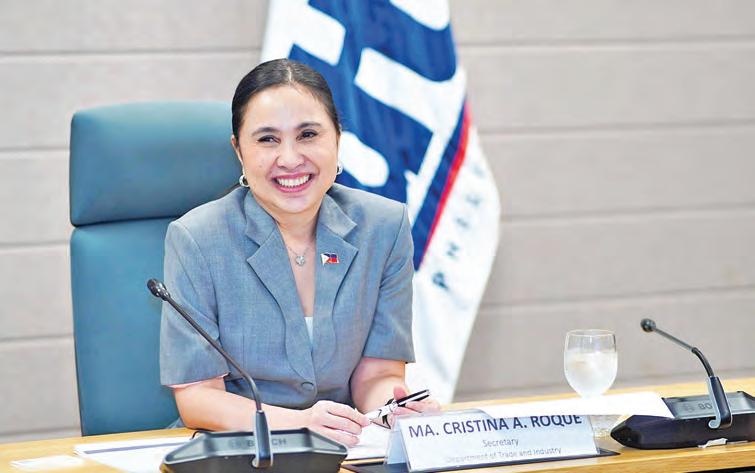
The country aims to use the platform, which culminates in the 44th ASEAN Summit, to advance regional unity and strengthen commercial linkages between member states and external partners.
Department of Trade and Industry (DTI)
Secretary Ma. Cristina Roque, who chairs the ASEAN Economic Ministers for 2026 following a formal handover in Kuala Lumpur, has launched a strategy focused on export promotion and business matching.
The department views the chairmanship as a massive networking initiative to connect ASEAN companies and investors during ministerial meetings. This effort is designed to generate crossborder deals in sectors such as renewable energy, semiconductors, minerals, and digital services.
“The chairmanship allows ASEAN partners to gain a closer look at the country’s business landscape and regulatory environment,” Roque said.
She said these engagements serve as platforms to boost regional integration and place Filipino products at the
forefront of regional supply chains.
Under the theme “Navigating Our Future, Together,” the Philippine agenda aligns with broader goals to reduce trade barriers and accelerate the ASEAN Digital Economy Framework Agreement.
The initiative seeks to harmonize e-commerce and cross-border data governance while establishing centers of excellence to help small businesses integrate into the global market.
The chairmanship coincides with a broader push by the Department of Trade and Industry to finalize free-trade agreements with the European Union and Chile. These deals are expected to expand market access for Philippine exporters and their regional partners throughout 2026.
By blending diplomatic outreach with economic pragmatism, Manila intends to secure substantive investment outcomes that will influence the region for years. The government remains focused on promoting innovation in artificial intelligence and sustainable growth to ensure the 10 member states remain competitive in a shifting global economy.
DEPARTMENT of Economy, Planning, and Development Secretary Arsenio Balisacan believes that strengthening competition policy is essential to ensuring fair pricing and inclusive growth as the Philippine economy shifts toward digital and datadriven markets.
Speaking at the 2026 Manila Forum on Competition in Developing Countries, DEPDev Secretary Balisacan said proactive government interventions are necessary to enforce competition rules amid the rapid development of disruptive technologies.
He said that well-implemented competition policy is a cornerstone of broader reform agendas that lead to stronger economic performance over time.
The chief economist acknowledged that the digital transformation of the market requires significant improvements to the local competition landscape. Digital-facing markets will increasingly determine productivity and consumer welfare as more services move online, according to DEPDev Secretary Balisacan.
Balisacan pointed to the Konektadong Pinoy Act as a landmark reform for the telecommunications industry. The law
aims to provide reliable connectivity to underserved areas while improving investment conditions to allow for broader participation in the digital economy.
Reflecting on his tenure as the inaugural Philippine Competition Commission Chairperson from 2016 to 2022, Balisacan said that while the economy has shown strong macroeconomic performance for 2 decades, anticompetitive practices have historically hindered growth.
“While poverty did decline, persistent barriers to competition remained. Part of the explanation lies in the weak state of competition in industries and sectors that matter most to the poor. In response, the Philippine Competition Act was enacted after decades of legislative effort, reflecting a clear recognition that vibrant competition is essential to a more dynamic economy and more inclusive growth,” he said.
The Philippine Competition Commission was established under Republic Act No. 10667 to integrate competition policy into the national development agenda. The 2026 forum serves as a platform for regulators and experts to discuss antitrust enforcement and innovation in the digital age.
By Darwin G. Amojelar
THE country’s major telecommunications providers are locked in a high-stakes race toward net-zero emissions, transforming the digital landscape through multibillion-peso green loans and massive shifts to renewable energy.
As PLDT Inc. and Globe Telecom Inc. aggressivey pivot away from traditional power sources, their competition is moving beyond 5G coverage and into the realm of radical sustainability—integrating artificial intelligence and climate-resilient infrastructure to future-proof the nation’s connectivity.
Smart Communications, the wireless unit of PLDT Inc., recently secured a P2billion green loan facility to fund the continuous upgrade and expansion of its network infrastructure.
The initiative focuses on enhancing energy efficiency and customer experience while following internationally recognized Green Loan Principles. The funding builds on momentum from 2024, when parent company PLDT secured a P4-billion green loan from Metrobank to expand fiber infrastructure and energysaving systems.
PLDT and Smart chief sustainability officer Melissa Vergel de Dios said the facility aligns with the company’s material topics by addressing stakeholder expectations through innovation and resource efficiency. Financing is vital to achieving the company’s business and sustainability goals “and in our pursuit of initiatives that contribute to our long-term growth and create value for the planet and the future generations,” Vergel de Dios said.
The group is also aggressively shifting its ground operations to cleaner power. Through a partnership with MPower, PLDT and Smart activated 144 cell sites and nine facilities under the Energy Regulatory Commission’s Retail Aggregation Program.
The transition covers a total demand of over 2,500 kW across the integrated network, with additional implementations planned for Visayas and Mindanao before the end of the year.
The commitment to sustainability has improved the group’s global standing, with its S&P Global Corporate Sustainability Assessment score rising to 77 out of 100. MSCI also upgraded the rating for PLDT to BBB, citing advancements in carbon management and data security.

Globe Telecom has also ramped up its environmental efforts, achieving an A- rating from the Carbon Disclosure Project, the highest among Philippine telecommunications firms. The company has transitioned over 171
sites to renewable energy and is pioneering Green Network solutions that use artificial intelligence to put idle equipment into sleep mode during low-traffic hours.
Globe has deployed more than 38,000 green network solutions,
including fuel cell systems, hybrid generators, and lithium-ion batteries. These technologies reduce emissions while strengthening network resilience against natural disasters.

Globe chief sustainability and corporate communications officer Yoly Crisanto said the climate leader rating reflects disciplined action and strong governance. “It confirms that our climate strategy is both credible and measurable,” Crisanto said.
Sustainability is also being integrated into consumer products through the use of EcoSIM cards made from recycled materials. In 2024, all postpaid SIMs procured by Globe were EcoSIMs, helping avoid the use of over 1,200 kilograms of virgin plastic.
For water stewardship, Globe earned a B score from the CDP. Its headquarters, The Globe Tower, reused
more than 33,500 cubic meters of graywater in 2024 through rainwater harvesting and recycling systems.
The company is now embarking on a plan to transition over 3,000 cell sites and low-energy facilities in Metro Manila and Region IV-A to renewable energy by 2028. This move is expected to avoid an estimated 5.5 million kilograms of carbon dioxide equivalent emissions per year.
To maintain connectivity during calamities, Globe deployed sustainable battery charging hubs in typhoon-prone regions like South Luzon and Bicol.
Globe network planning and engineering senior vice president Joel Agustin said connectivity is a vital part of everyday life.
“That is why we strive to keep our cell sites operational, especially when disasters strike. We’re making sure that communities can count on Globe to stay connected no matter the situation,” Agustin said.

MOVE IT rolls out ‘Keep Moving’ pledge, leverages intelligent routing, in-ride tech

By Darwin G. Amojelar
PHILIPPINE carriers are accelerating their decarbonization efforts through massive fleet investments and artificial intelligence as the industry faces mounting pressure to reduce its environmental impact.
Cebu Pacific made regional history in early 2025 by securing Southeast Asia’s first Sustainability-Linked Loan for a low-cost carrier. The financing facilitated the acquisition of a brand-new Airbus A321neo delivered on Dec. 23, 2024. This new engine option aircraft provides improved fuel efficiency that supports the airline’s goal to transition to an all-NEO fleet by 2028.
Under the terms of the loan, Cebu Pacific has committed to specific performance targets to reduce carbon emission intensity. Meeting these benchmarks will trigger financial incentives for the carrier.
Moving’.

MOTORCYCLE taxi platform MOVE IT is rolling out its new brand promise, “Keep Moving,” underscoring a peopleled, technology-enabled approach to reliable bookings, safe rides, and professional moto-taxi standards for rider-partners and commuters navigating daily gridlock in the metro. The brand promise is rooted in a reality many commuters know too well: time lost on the road due to traffic. Based on TomTom’s traffic data for Manila in 2025, drivers and commuters can lose around 143 hours a year in rush-hour traffic, which is equivalent to more than five days spent waiting.
rider-partner productivity on the road.
The platform is powered by GrabMaps and Navigation, which helps deliver accurate ETAs, smarter pick-up and drop-off points, and routing that adapts to real-time road conditions. MOVE IT also uses Back-to-Back Bookings, which search for and assign a rider’s next booking before the current trip is completed to reduce idle time between rides.
“When rider-partners can operate more efficiently, it supports demand more consistently. Productive rider-partners mean more commuters get to keep moving,” Jacinto adds.
Keep Moving Safely: in-app tools designed for real-life moments on the road
share trip details, request help, or report issues in a few taps; and Share Your Ride links that let trusted contacts track live trip details and GPS location.
The homegrown motorcycle taxi platform also touts platform-exclusive safety features such as Trip Monitoring, which uses GPS and telematics to flag risk signals such as unplanned stops, route deviations, crashes, unusual terminations, or extended delays. These prompt proactive checks and, when needed, manual intervention by safety teams.
Another MOVE IT exclusive is AudioProtect, an opt-in inride audio recording feature. Recordings are encrypted and accessed only when a safety-related report is filed to support investigations and dispute resolution.
Separately, MOVE IT is leaning on mutual ratings and reporting flows via the “Report an Issue” function and the “Activity Tab” to surface feedback that can trigger retraining, restrictions, or suspensions when warranted. Keep Moving with Professional Riders: Moto-Taxi Standards Reinforced by Rider-Partners
MOVE IT also continues to implement high standards for professional service that cover screening, training, and continuous reinforcement on road discipline, service quality, and passenger courtesy.
At the launch event, MOVE IT recognized the role of the rider-partner community in reinforcing everyday professional standards on the road, from compliance requirements and protective gear to defensive driving and passenger courtesy.
“Sinisigurado ko po na ang aming komunidad ay lubos na nakatuon sa paghahatid ng propesyonal na serbisyo, na ginagabayan ng aming pamantayan sa MOVE IT. Tatlong bagay lang po: Maingat, Marespeto sa Pasahero, Malinis,” highlights MOVE IT rider community leader Racma Macato-on Talib.
The budget airline ranks 18th among global airlines with the lowest emissions according to the Cirium Flight Emissions Review. It is the only Philippine carrier to make the list, reporting 62.4 grams of CO2 per Available Seat Kilometer in 2024.
Cebu Pacific attributed its ranking to a strategy centered on modernization. In 2024, the company placed the largest aircraft order in Philippine history for up to 152 A320neo family aircraft.
The NEO fleet helped the carrier avoid an estimated 157,000 tonnes of CO2 emissions last year, with each plane delivering up to 20 percent fuel savings.
The airline has also transitioned its ground operations by deploying electric ground support equipment at Ninoy Aquino International Airport.
In May 2025, the carrier completed the first all-electric aircraft turnaround at Mactan-Cebu International Airport using electric units and bridge-mounted equipment. These initiatives contributed to the airline receiving an ESG score of 46 from S&P Global in 2024.
Philippine Airlines is also pursuing a different roadmap toward net zero emissions by 2050, aligning its targets with the Paris Climate Agreement. The flag carrier is collaborating with industry leaders to optimize fuel consumption through digital innovation.
PAL became the first Asian carrier to adopt SkyBreathe OnBoard, an AI-driven fuel management tool developed with OpenAirlines. The system provides pilots with real-time notifications to identify shortcuts and fuel-saving routes. Since its June 2024 launch, the technology has prevented 252 tonnes of CO2e from entering the atmosphere.
a better
“Traffic steals time we never get back. This is time that should have gone to work, family, rest, and
said Wayne Jacinto, General Manager of MOVE IT. “Our Keep Moving promise reflects a deeper commitment to commuters. It’s not just about getting you from point A to point B, but about giving you reassurance that when you need to be somewhere, you’re no longer bracing for a standstill. Keep Moving is the confidence that you’ll get there.” MOVE IT’s “Keep Moving” promise is powered by a combination of industryleading and platform-exclusive reliability tools — like intelligent trip routing and rider matching, in-app safety safeguards, and a community of professional riderpartners. Together, these help commuters navigate the gridlock in metro cities with greater confidence. Keep Moving Reliably: navigation and booking efficiency to reduce waiting time MOVE IT highlighted reliability features designed to help commuters get served
MOVE IT is also leaning on a suite of in-app safety tools designed to make incidents easier to prevent, detect, and investigate. These include a Safety Center where users can add emergency contacts,
“Ang standards ng MOVE IT ay tungkol sa mahusay na kasanayan sa pagmamaneho, defensive driving, at mga bagay na bumubuo sa 5-star na serbisyo — kagandahang-asal, paggalang, at at pagiging professional sa pakikisalamuha,” Talib adds.

Community
While the group currently uses biofuel-blended diesel and gasoline for ground operations, it is exploring the procurement of Sustainable Aviation Fuel for its long-haul fleet. Both carriers maintain that these sustainability investments are critical as they continue to service dozens of domestic and international destinations across Asia, Australia and the Middle East.

By Thony Rose Lesaca
THE Bangko Sentral
ng Pilipinas (BSP) is shifting its strategy from simple account ownership to improving the overall financial health of Filipinos, targeting better resilience against economic shocks and expanded digital payment access.
While previous efforts focused primarily on financial inclusion and expanding access, BSP Deputy Governor Bernadette RomuloPuyat said the bank now prioritizes the ability of citizens to meet daily expenses and recover from financial setbacks.
“For many years, our focus was mainly on financial inclusion, opening accounts, expanding access. Of course, that work mattered and it delivered results. However, financial inclusion is not enough,” Romulo-Puyat said.
According to the 2021 National Financial Inclusion Survey and the 2025 Global Findex, significant gaps

remain in how Filipinos manage daily needs and prepare for financial emergencies, particularly among lower-income households. To address this, the BSP has adopted a framework combining inclusion, literacy and consumer protection.
Romulo-Puyat said expanding account ownership among the unbanked and underserved remains a priority. A major part of the effort is the Paleng-QR Ph Plus program—a joint initiative with the Department of the Interior and Local Government designed to build a digital payments ecosystem in public markets and local transportation.
Adoption of the program has increased significantly, with 922 local government units participating in 2025 compared with 408 localities in 2024. Despite this growth, internet connectivity remains a major hurdle for digital payment acceptance in remote areas.
“We need the help of DICT. Because even if we launch, if there is no connectivity, it’s kind of lacking,” Romulo-Puyat said, referring to the Department of Information and Communications Technology.
The DICT has requested a list of markets with limited internet access to provide satellite connectivity.
Romulo-Puyat said the partnership will support the expansion of the Paleng-QR Ph Plus program into underserved regions.
Beyond digital payments, the BSP is collaborating with the Department of Agriculture to bring farmers into the formal financial system.
The BSP also wants to reach younger demographics and the poorer segments of society.
“We are also working with the National Youth Commission because our underserved are also the youth. And we are likewise working with the DSWD to deliver financial assistance digitally,” she said.


NAGA City is officially stepping into the future of urban design. Through a groundbreaking partnership with the Department of Economy, Planning and Development (DEPDev), the city is launching the Naga City AI Planner—a cutting-edge platform designed to transform chaotic commutes into a seamless, walkable urban experience.
Backed by a P6.79-million National Innovation Council grant, the project isn’t just about traffic; it’s a digital nervous system for the city. By fusing real-time data on transport, land use, tourism and local commerce, Naga City is leveraging artificial intelligence to build a smarter, more human-centric capital.
It uses AI image recognition and mobile data collection to automate analytics, helping local officials create evidence-based interventions for city mobility.
DEPDev Undersecretary Rosemarie Edillon and Naga City Mayor Maria Leonor Robredo signed the memorandum of agreement on Jan. 31, 2-026 during a transport summit at the Bicol State College of Applied Sciences and Technology.
The initiative utilizes Seermo—a sustainable mobility solution, to help the local government and the Naga People’s Council make faster, data-driven decisions. The digital platform also allows citizens to report road crashes or illegal parking via a mobile application, which officials say will accelerate the updating of public transport routes and land use plans.

The application of AI in transport management aligns with the National Innovation Agenda and Strategy Document 2023–2028.
Beyond the initial funding, the DEPDev will provide regular monitoring and field evaluations to address implementation challenges. The agency also intends to promote the project as a model for other local government units to adopt AI for public service efficiency.
“We share the goal of Naga People’s Council to attain a walkable, orderly, and secure city through people-centered, evidence-based transportation planning and monitoring and evaluation,” Edillon said.
“By supporting this project, we want to raise awareness among LGUs across the country that AI can help make the delivery of their services to the people more efficient,” she said.
Officials said the project serves as a precedent for using technology to harmonize fragmented development efforts and increase public engagement in local governance.
“We want to build a dynamic innovation ecosystem through these grants, by supporting projects like this that promote multi-stakeholder collaboration,” Edillon said.
The Naga City AI City Planner is one of 11 projects approved in Nov. 2025 to receive grants of up to P7.5 million under the Philippine Innovation Act.
The DEPDev serves as the secretariat for the National Innovation Council, which evaluates these proposals annually to foster technological growth across the country.
By Jenniffer B. Austria
A MAJOR property developer is introducing artificial intelligencepowered homes in the Philippines this year through a partnership with tech giant Samsung to automate residential spaces.
The project of Megaworld Corp. will debut at Park McKinley West in Taguig City before expanding to other select properties throughout the country.
The system integrates the Samsung SmartThings platform, allowing residents to manage their homes via a single application that adjusts settings based on weather, time and personal routines.
The AI ecosystem includes adaptive lighting, smart climate control and voiceactivated command centers designed to optimize energy consumption while enhancing resident comfort and security.
Megaworld business innovation and transformation head Francis Viernes said the initiative is a central part of the company’s vision to shape future-ready communities.
“Through our AI-powered homes initiative, we are redefining residential living by creating intelligent spaces that enhance comfort, safety, and sustainability across our townships,” Viernes said.
“This marks an important step in how we continue to elevate the living experience and set new standards for modern township developments,” Viernes said.
Condominium buyers can opt to upgrade their units by connecting Samsung appliances such as washing machines, air-conditioning units and televisions to the centralized system.
While Megaworld introduced basic smart home features nearly 10 years ago, the company said the new phase utilizes advanced AI to further refine how residents live and work.
Megaworld continues to expand its township portfolio as demand for techintegrated residential units grows among urban professionals.
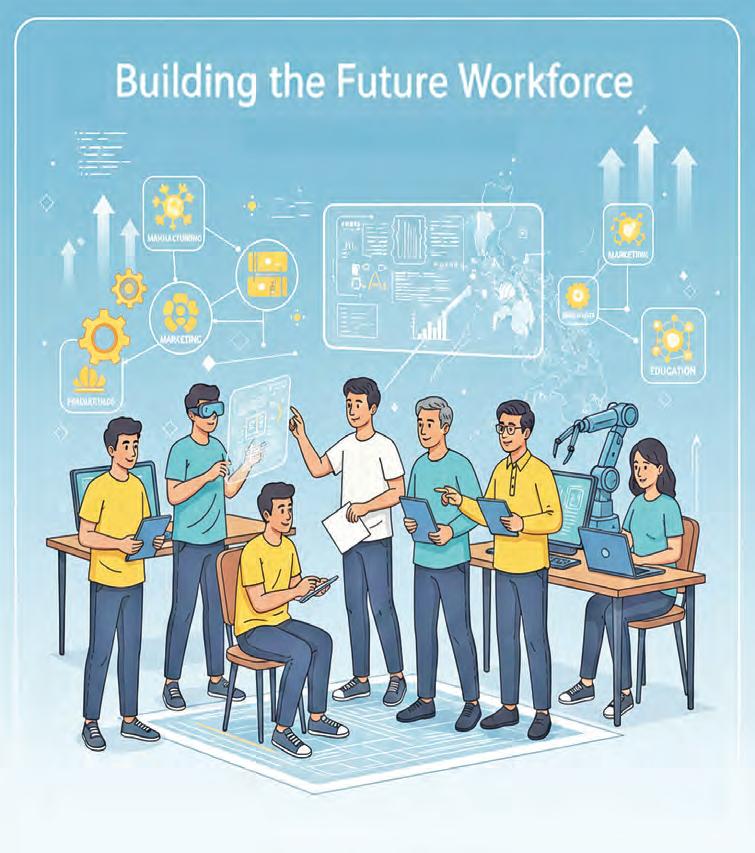
By Othel V. Campos
ABUSINESS group is pushing to classify AI roles as “apprenticeable,” a strategic move to transform the national workforce into a global tech powerhouse.
By moving AI out of the classroom and into the workplace, Philippine Chamber of Commerce and Industry president Ferdinand Ferrer said the Philippines can build a high-octane talent pipeline that keeps pace with the rapid automation of global industry.
The proposal aligns with the swift adoption of AI in manufacturing, finance, marketing and education as companies increasingly deploy the technology to enhance efficiency, decision-making and data utilization.
PCCI president Ferdinand Ferrer said the move would enable companies to train young Filipinos in actual workplace settings at a lower cost while developing a necessary talent pipeline. Ferrer noted that the mindset of society should evolve beyond basic skills to remain competitive in the global market.
The expanded role of AI was a central theme in a recent dialogue between the
chamber and AI4PH, a network of policy experts and industry leaders. These discussions focused on strengthening national competitiveness and ensuring Filipino workers remain relevant as the technology moves beyond its initial concentration in manufacturing and back-office automation.
The chamber said the reach of AI now extends to customer service, creative industries, education and research and development.
By formalizing these roles through apprenticeship programs, the group aims to address the growing demand for specialized skills as businesses shift toward high-tech data utilization.
If successfully implemented, the initiative will ensure that Filipino workers remain the backbone of the global digital economy, transforming the “rapid automation” of industry from a threat into a significant national advantage.





By Othel V. Campos
THE Department of Agriculture is rolling out a broad food security strategy anchored on affordability and supply chain modernization, supported by sustained government investments programmed for 2026 and beyond.

With roughly P256.5 billion allocated to the agriculture sector under the 2026 national budget, the agency is accelerating initiatives designed to strengthen domestic food production while shielding consumers from price volatility and supply disruptions.
Agriculture Secretary Francisco Tiu Laurel Jr. said the country’s food security agenda is shifting toward a systemwide transformation that links farmers, infrastructure, logistics and markets.
“Food security today is not just about producing more. It is about ensuring that food moves efficiently from farms to Filipino tables at prices families can afford while farmers earn fairly,” Tiu Laurel said.
Central to the food access program is the expansion of the P20-per-kilogram rice initiative, a flagship measure to make the staple food accessible while providing a stable market for locally produced palay. The “Benteng Bigas, Meron Na!” program is projected to benefit up to 15 million households, or about 60 million Filipinos, including low-income families, senior citizens and minimum-wage earners.
“Affordable rice is a direct intervention that protects consumers while strengthening local procurement. We want stability in both retail prices and farmgate prices,” Tiu Laurel said.
To address supply chain inefficiencies, the agency is investing in a network of large-scale agri-logistics facilities.
Key projects include the nearly P2billion Bukidnon Food Hub and the P3.6 billion Clark Food Hub. The broader national food hub system could require total investments of around P14 billion once complementary hubs in strategic production corridors are completed.
The department is also ramping up investments in farm-level modernization to reduce post-harvest losses through the Masagana Agri-Food Infrastructure Modernization Program. Priority projects include farm-to-market roads, irrigation expansion, cold storage systems and rice dryers.
While pushing for higher domestic output, the agency maintains that a calibrated rice importation policy remains necessary to address temporary supply gaps.
“Imports are not a replacement for local production. They are a safety valve to ensure supply stability, especially when climate and global market conditions affect harvests,” Tiu Laurel said. The roadmap undescores climate resilience through the development of adaptive crop varieties and disasterresistant infrastructure to meet growing population demand and global market uncertainties.



By Alena Mae S. Flores
THE Philippines is prioritizing the energy and transport sectors in its decarbonization strategy under a draft Just Transition Framework released this month by the Department of Environment and Natural Resources.
The draft report defines a just transition as a deliberate, inclusive and rights-based process toward a lowcarbon and climate-resilient society. It warns that failing to keep pace with the global shift could have socio-economic consequences far beyond environmental damage.
Domestic inaction could cut estimated gross domestic product growth by up to 3 percentage points and raise unemployment by 2 percentage points by 2040.
As international markets increasingly favor low-carbon products, the report notes the Philippines could face risks in market access, financial flexibility and overall competitiveness. The country could also face larger fiscal deficits and growing debt due to disasters triggered by natural hazards, which may delay the Philippines’ path toward high-income status.
A primary concern remains the country’s dependency on coal, which accounted for 60 percent of electricity
generation in 2022.
The report states that continued reliance on fossil fuels perpetuates energy insecurity and exposes the economy to price volatility and global supply shocks.
Department of Environment and Natural Resources officials noted in the report that “a managed phaseout of coal-fired power generation with clear timelines aligned with ambitious renewable energy deployment should form the backbone of a low-carbon, decentralized and inclusive energy system.”
The framework calls for the gradual retirement of coal plants alongside comprehensive support for affected parties.
Proposed measures include worker upskilling, social protection for vulnerable households and financing for small enterprises in carbon-intensive communities. Beyond energy, the report identifies transport as a major risk Turn to H3




By Jenniffer B. Austria
TWO of the biggest lenders in the Philippines are leading a surge in the sustainability bond market as they ramp up capital raising through themed offerings, signaling a shift toward green and inclusive investments.

BDO Unibank Inc., led by the Sy family, launched its fifth peso-denominated ASEAN Sustainability Bond last month.
While the bank initially planned to raise at least P5 billion, the offering was 20-times oversubscribed. The massive demand forced an early close in midJanuary and generated P100 billion in proceeds.
The three-year bonds are designed to support BDO’s sustainable lending activities and diversify funding sources under its Sustainable Finance Framework.
The bank continues to mobilize capital toward projects that provide environmental and social benefits. The latest offering is part of a series that has raised nearly P300 billion since 2022, reflecting a broad appetite for fixedincome products tied to ESG objectives.
Bank of the Philippine Islands (BPI) also marked a milestone in the local market with its BPI SIGLA Bonds, which stands for Supporting Inclusion, Growth and Lending for All.
The two-year bonds carry the
“ASEAN Social Bond” label and will fund sustainable and social development projects. Analysts say the SIGLA issuance is a key part of the bank’s strategy to channel funds toward community and environmental projects.
The landmark deals highlight a deepening commitment among Philippine banks to integrate environmental, social and governance principles into core business strategies.
The strong uptake of both issues underscores rising local investor interest in instruments that promise financial returns alongside measurable impact.
Other financial institutions are following suit. Banks such as Rizal Commercial Banking Corp. and Land Bank of the Philippines are lining up their own sustainability-linked bond offerings.
Market analysts suggest that as Philippine banks pioneer these financing tools, the trend could spur more impactoriented capital market activity. This movement aims to bridge the gap between traditional finance and longterm societal goals.
THE Bureau of Customs is moving to fully digitalize its operations with the introduction of the New Customs Processing System—a platform designed to streamline import and export workflows while reducing human discretion in trade transactions.
Management Information System technology group deputy commissioner Revsee Escobedo led a public consultation recently to evaluate the proposed system. The initiative aims to standardize procedures and focus enforcement resources on high-risk shipments while allowing faster clearance for compliant traders.
The rollout follows a year of accelerated digital reforms in 2025 under the leadership of Bureau of Customs Commissioner Ariel Nepomuceno. The agency reported that these efforts align with President Ferdinand Marcos Jr.’s mandate to modernize border protection and facilitate smoother trade through higher ethical standards.
“The reforms pursued under Commissioner Nepomuceno’s leadership are guided by a clear vision: a modern, transparent, and trustworthy Bureau of Customs - one that facilitates trade, safeguards revenue, protects our borders, and serves the Filipino people with
integrity and accountability,” Escobedo said.
The agency’s 2025 digital push included an upgraded Online Tax Estimator to help importers calculate duties more accurately and the launch of the Origin Management System.
The latter automates the Product Evaluation Report required for exports under Free Trade Agreements. The bureau also integrated the ASEAN Electronic Document Exchange to enable faster cross-border verification of trade papers within the region.
Policy reforms complemented these technical upgrades. The bureau extended the validity of importer accreditations from one year to three years to provide businesses with more operational stability. It also standardized off-dock tariffs nationwide and streamlined clearance for e-commerce goods and aircraft parts. To reward high-compliance businesses, the agency expanded its trustbased programs. In 2025, 11 companies including Sony Philippines, Coca-Cola Europacific, Toyota Motor Philippines, Brother’s Industries and Aboitiz Philippines received accreditation under the Authorized Economic Operator program. Membership in the Super Green Lane program grew to 273 companies.

PH... From H1
channel because the sector remains dominated by fossil-fuel-powered road vehicles, contributing to severe congestion and public health issues.
The report says that modernizing transport through e-mobility and cleaner public options is critical to meeting climate targets and reducing economic losses from traffic.
However, the transition in transport involves a “deep social transition” because jeepneys and other traditional public utility vehicles play vital cultural and economic roles. The report states that “advancing this shift will require strong political will and broad public support, which can only be secured if drivers, operators and their families are provided with adequate opportunities [and] compensation for losses.”
The framework suggests that the shift to e-mobility should include establishing domestic electric vehicle assembly and integrated urban planning to ensure the efficient movement of people and goods.
A well-designed transition could turn these vulnerabilities into “strategic national strengths” by reducing reliance on expensive fuel imports and improving price stability.
By Alena Mae S. Flores
THE energy regulator will lower the threshold for consumer choice in the electricity market to 100 kilowatts in June 2026 to allow thousands of medium-sized enterprises to select their own power suppliers.
The Energy Regulatory Commission (ERC) announced that the threshold for the Competitive Retail Electricity Market will decrease from the current 500 kW average monthly peak demand effective June 26. The expansion follows the mandate of the Electric Power Industry Reform Act of 2001 to deregulate the power industry and empower consumers.
As of August 2025, the commission identified about 12,115 eligible endusers across Luzon, Visayas and Mindanao within the 100 kW to 499 kW range. The shift has prompted power generators and retail electricity suppliers to prepare for a surge in new customers.
ERC chairperson Francis Saturnino Juan said the initiative aims to foster a fair and transparent market. “By expanding retail access to more endusers, we are promoting genuine consumer choice and driving competition that can lead to better prices, improved service quality and
Jan. 30. Those who miss the January deadline may still file until June, but their switch date will be delayed by at least 90 days.
Industry leaders expressed optimism regarding the expansion.
Meralco senior vice-president and head of MPower Redel Domingo called the lower threshold a
Sarmiento said the change would “open up the space dramatically.” The commission is coordinating with the Department of Energy and the Independent Electricity Market Operator of the Philippines to ensure billing and settlement systems can handle the increased transaction volume.
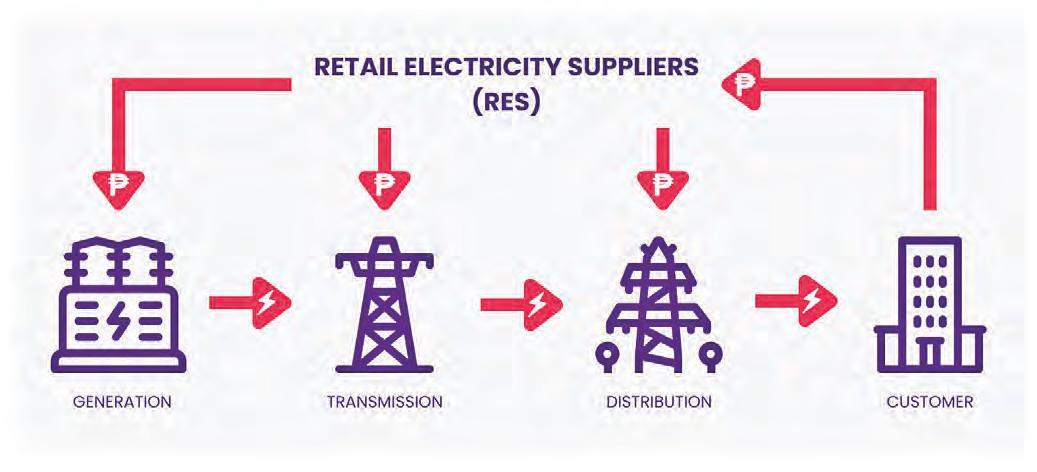
innovation in the power sector,” Juan said. The transition includes strict administrative deadlines for those looking to switch providers. The ERC stated that any end-users or aggregated groups intending to switch by the June 26 start date must submit a letter of intent by
“major step” in giving businesses greater flexibility over their energy strategies.
MPower, the retail supply arm of Manila Electric Co., leads the market and supplies 651 competitive endusers, representing roughly 27 percent of the total market.
COREnergy head of sales Marko
The retail market includes more than 2,300 customers and 37 retail aggregated groups with a combined demand of nearly 31 megawatts. The ERC plans to publish a roadmap detailing future phases of the program, which may eventually include participation at the household level.
THE Filinvest Group continues to reaffirm its enduring mission: to enable Filipinos to achieve their dreams.
From financing second-hand cars and appliances to pioneering affordable housing, banking solutions, power, hospitality, sugar, and infrastructure projects, Filinvest Group has remained committed to making quality living more accessible to Filipinos.
Shaping the Future
A key driver of Filinvest Group’s longevity has been its well-balanced business portfolio that is built to last future generations.
While its real estate, banking, and infrastructure segments capitalize on periods of economic growth, its investments in essential services such as power, utilities and sugar provide a steady foundation, making the Group resilient in the face of market fluctuations and positioning it for sustainable expansion.
“We are building to sustain our growth, staying profitable in a competitive environment while sharing the benefits with all our stakeholders,” shared Josephine Gotianun Yap, Vice Chairperson of Filinvest Development Corporation.
Last year, Filinvest marked its 70th anniversary, continuing to contribute actively to the nation and bring progress to the Filipino people. As the company steps into its next chapter, it remains committed to creating

lasting impact for
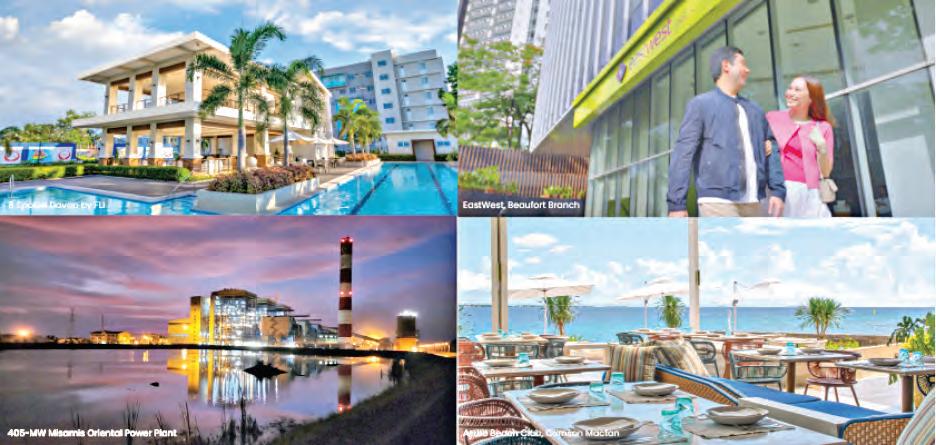
Awards 2025 – Philippines Chapter: the Diversity, Equity, and Inclusion (DEI) Award and the HR Asia Best Companies to Work for in Asia Award. Francis Gotianun, Director of FDC said: “These milestone recognitions are a reflection of our people and the culture we’ve built together. At Filinvest, diversity, equity, and inclusion are not checkboxes—they are the drivers of our growth and our ability to adapt to change.”
HR Asia recognized the Group for its strong policies and culture that promote equity, gender balance, and a safe, inclusive environment through DEI Award. In addition, Filinvest was honored with the HR Asia Best Companies to Work for in Asia Award 2025 – Philippines Chapter for excelling in the organization’s proprietary survey that measures employee engagement, workplace culture, and organizational excellence—further affirming the trust and positive experience of its workforce.
Beyond accolades, Filinvest remains committed to building sustainable communities, promoting financial inclusion, advancing nation-building efforts, and creating opportunities that uplift generations. As the Group moves into its next chapter, these recognitions reinforce the belief that an inclusive workplace is essential to shaping a stronger, more resilient future for all.

WEDNESDAY, FEBRUARY 11, 2026
advertise@manilastandard.net
THE Securities and Exchange Commission (SEC) is raising the bar on how domestic companies report environmental and social impacts by adopting new sustainability disclosure standards intended to bridge the gap between local practices and global norms.
SEC Memorandum Circular No.
16, Series of 2025, issued on Dec. 22, adopts the Philippine Financial Reporting Standards (PFRS) on Sustainability Disclosures.
The guidelines aim to assist covered firms in producing reports that investors and stakeholders can compare across international markets.
The circular specifically adopts PFRS S1 for general sustainability-related financial disclosures and PFRS S2 for climate-related disclosures, replacing a 2019 mandate that only applied to publicly listed companies.
The new standards align with International Financial Reporting Standards developed by the International Sustainability Standards Board. The move follows similar regulatory shifts in Southeast Asian markets including Singapore, Thailand, Malaysia and Indonesia.
SEC chairperson Francis Lim said the adoption of the PFRS on Sustainability Disclosures underscores
a commitment to high-quality, comparable and globally aligned reporting.
“By elevating the standards of sustainability reporting in the Philippines, we hope to enable more companies and stakeholders to better understand the financial impacts of sustainability-related risks and opportunities, supporting long-term value creation and improved capital allocation decisions,” Lim said.
Implementation will follow a tiered schedule beginning in fiscal year 2026. Tier 1 includes large listed firms with market capitalization above P50 billion as of Dec. 31, 2025.
These entities will begin reporting in 2027 to cover the 2026 fiscal year.
Tier 2 consists of listed companies with market capitalization between P3 billion and P50 billion, with adoption starting for fiscal years beginning Jan. 1, 2027. Tier 3 covers smaller listed firms, companies with only debt securities

listed and large nonlisted entities with annual revenue exceeding P15 billion. This group will begin adoption in 2028. Publicly listed companies and large nonlisted entities covered by the Securities Regulation Code must submit board-approved sustainability reports alongside annual reports, while other large companies must attach them to audited financial statements.
To ease the transition, the regulator is maintaining some flexibility. Existing rules will remain in effect until companies reach their specific adoption year, and firms may con-
tinue using recognized frameworks for fiscal year 2025 reports.
Tier 1 and Tier 2 companies may focus exclusively on climate-related risks and opportunities for 1 year, while Tier 3 firms are granted 2 years for this focus. Companies will have up to 9 months from the end of a reporting period to submit sustainability reports if no interim financial statements are issued.
Comparative disclosures are not
required initially. Companies may use alternative emissions accounting methods for 1 year and delay reporting Scope 3 greenhouse gas emissions for 2 years.
The SEC said the framework is intended to strengthen transparency and help investors assess sustainability risks as global standards evolve.


By Nickie Wang
THE clock ticks, and suddenly you are 39. It happens quietly, with a phone already in hand, refreshing your notifications on your social media account.
Psychologists describe ages ending in nine as natural pause points, and 39 is somewhat a bit odd, both positively and negatively. It is not simply the last year of the thirties but a psychological threshold where people begin taking stock with unusual honesty.
A UCLA and NYU research shows that at this age, individuals are more likely to question direction, reassess priorities, and consider meaningful changes. The urgency of youth softens, and it is replaced by a clearer sense of what deserves attention.
Most people agree that life at 39 sits in a narrow space between discovering meaning and building momentum. Social media trends still interest you, but they most likely take a backseat because your ability to make thoughtful choices is much stronger. People in this stage of life have evolving ambitions, too. Their career moves focus on sustainability, and they measure success by balance and slow, steady growth.
Studies suggest this period marks the end of early adulthood and the beginning of a more deliberate stage, where stability replaces constant experimentation.
Emotionally, 39 is steadier than
earlier decades. The same research mentioned above shows that emotional well-being improves with age, and many people feel more comfortable with themselves in their late thirties than they did in their twenties. Setbacks feel less permanent. Perspective tempers panic. Experience teaches that most challenges are survivable.
In this era when youth culture dominates online spaces, turning 39 often weakens the pressure to perform. Filters lose their appeal. Trends feel optional. There is less interest in reinvention for applause and more focus on authenticity. Aging becomes less of a threat and more of a process.
Social lives also change. Friend circles may grow smaller, but they deepen. Time becomes more valuable, and relationships require intention.
For many, 39 also brings the weight of responsibility. This is the age where people often find themselves caring for children while supporting aging parents. The so-called sandwich generation faces emotional and logistical demands that require patience and adaptability. Technology helps manage schedules and tasks, but it

cannot replace empathy or rest. Financial awareness sharpens as well. Studies suggest these are often peak earning years, paired with the wisdom to make better decisions. Retirement planning, health considerations, and long-term security become more immediate. The focus shifts from chasing to preparing. Physically, the body changes, and so does the relationship with
it. Research shows that self-esteem continues to rise with age, and positive views on aging are linked to better health outcomes. At 39, confidence often comes from acceptance. Hence, this stage is not a crisis, despite how the number is framed. It is a checkpoint. A year of recalibration. A moment where experience and possibility meet without competing.
In earlier years, life was often driven by speed, youth, and visibility. Being 39 offers something different. It is a bridge to a renewed phase before turning 40, when people seek greater clarity and discernment, focusing less on keeping up and more on knowing what matters and choosing it deliberately. In short, this is when people begin to choose their battles.

WEDNESDAY, FEBRUARY 11, 2026
By Angelica Villanueva
ARTIFICIAL intelligence is now a part of daily work activities, including automated customer service, predictive analytics, and content creation.
As adoption accelerates, employers and labor analysts are rethinking what it means to be prepared for the future. The advantage is no longer solely about technical skills. Increasingly, it relies on human abilities that machines struggle to replicate.
Global workforce studies reflect the scale of change ahead. The World Economic Forum predicts that by 2030, 39 percent of the main skills workers use will change because automation, artificial intelligence, and digital systems are altering how jobs are structured.
Positions related to data, technology, and digital platforms are growing, whereas jobs involving routine and repetitive tasks are decreasing.
Human advantage in automated workplaces
As machines take over process-driven tasks, human contribution is moving upward into areas requiring judgment, context, and originality. Workplace analysts describe this as a transition toward “shared intelligence,” where AI handles scale and speed while people lead interpretation and decision-making. This shift is redefining productivity. Success is now not just about completing tasks, but also about understanding issues, generating new ideas, and managing automated systems responsibly.
Upskilling the Filipino workforce
For the Philippines, this transformation carries urgency.
A World Economic Forum–cited analysis estimates that 68 percent of Filipino workers will require reskilling or upskilling by the end of the decade—higher than the global average. Training initiatives across government and industry are
expanding to include AI literacy, digital systems training, and micro-credential programs.
The country’s significant business process outsourcing sector is receiving special attention. Rather than replacing workers entirely, many companies are using AI to enhance productivity. This is enabling employees to move into roles involving supervision, analysis, and client interaction.
Where human strengths remain essential
In this environment, long-recognized Filipino strengths such as communication, empathy, and service orientation are gaining renewed value. Human interaction remains central in sectors that rely on trust, negotiation, and emotional intelligence.
Even as chatbots handle first-line inquiries, complex problem resolution and relationship management still depend on people. Employers increasingly see interpersonal capability as a differentiator rather than a soft add-on.
Creativity with AI
Generative platforms have expanded how creative work begins, but not how it ends. Designers, writers, and content producers use AI to accelerate brainstorming and prototyping, while human direction shapes narrative, cultural nuance, and originality.
Research on AI-assisted creative workflows shows that technology can broaden ideation but still relies on human curation to ensure relevance and authenticity. For the Philippine creative industries, this collaboration is becoming standard practice rather than the exception.
Judgment over automation
As AI outputs scale, so does the need for scrutiny. Critical thinking functions as a workplace safeguard, ensuring data accuracy, ethical use, and contextual interpretation.
Employers are focusing more on analytical reasoning and problem-solving skills, especially in roles managing automated systems. The ability to challenge results, spot bias, and improve outputs is becoming a key professional skill.
Everyday tech literacy
Technical fluency is evolving. Coding remains valuable,


but baseline literacy now includes understanding AI tools, analytics dashboards, and digital collaboration systems.
Tracking skills worldwide shows that understanding AI and big data is one of the fastest-growing abilities. Economists say increasing digital education is crucial for countries such as the Philippines to fully benefit from the productivity gains that automation brings.
Adaptability for 2030 and beyond
If there is one skill that supports all others, it is adaptability. Employees are expected to learn new skills repeatedly as industries evolve and new roles combining creative, technical, and strategic tasks emerge.
Ongoing learning is now essential for a long-lasting career. Professionals who can adapt to different tools, platforms, and responsibilities will be best prepared to handle change.
In an economy driven by artificial intelligence, machines might process information on a scale never seen before. However, humans will continue to create meaning, form connections, and envision the future.
In the workplace of 2030 and beyond, these human skills may prove to be the most future-proof asset of all.
THE Bank of the Philippine Islands (BPI), through its social development arm, BPI Foundation (BPIF), has formalized a partnership with Mapúa Malayan Colleges Laguna (MMCL) through the signing of a Memorandum of Agreement (MOA) for its FinEd Unboxed Program.
The program is designed to elevate the financial literacy of various groups, including farmers, fisherfolk, low-income families, migrant domestic workers, young learners, financially excluded sectors, teachers, and uniformed personnel by teaching practical skills in saving, budgeting, credit management, investing, insurance, retirement planning, and fraud prevention. The collaboration seeks to expand access to quality education and strengthen financial empowerment in underserved communities, underscoring both institutions’ shared commitment to inclusive and sustainable development.
Under the partnership, BPIF and MMCL will also implement the “Train the Trainers” initiative, equipping students and volunteer faculty members to become effective financial education resource speakers. Once trained by BPIF, members of the Mapúa community will, in turn, conduct financial wellness sessions for partner communities. This approach ensures that financial literacy knowledge is cascaded widely and sustainably.
Key activities include:
•Training sessions for students and faculty on financial concepts
• Use of FinEd Unboxed materials and toolkits to support communitybased workshops
• Organization of financial wellness sessions led by trained participants, who conduct their own financial education workshops
• Ongoing mentorship and monitoring to ensure effective delivery and engagement
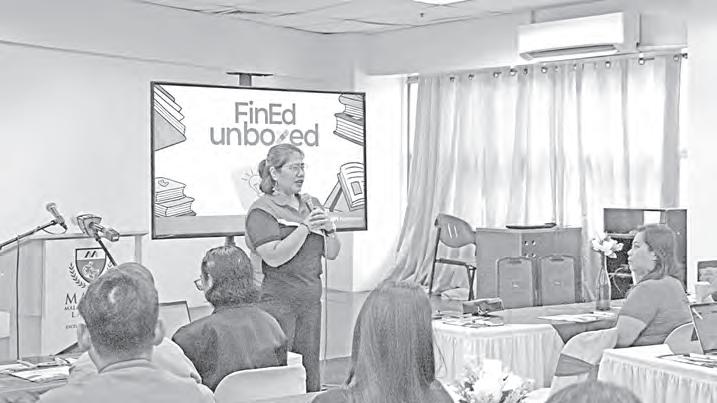
BPIF’s financial
students and faculty members
budgeting, saving, and responsible money
“For BPI Foundation, financial education is a critical enabler of inclusive growth,” said Carmina Marquez, Executive Director of BPIF.
“As we celebrate BPI’s 175th Anniversary this year, we are committed to scaling access to practical and relevant financial education. By partnering with institutions like Mapúa Malayan Colleges Laguna, we bring these opportunities closer to communities, empowering individuals to make informed decisions and build a more secure future for themselves and their families,” she added.
In the next two years, the program is projected to benefit over 10,000 individuals from MMCL’s adopted communities in Laguna, Cavite, and Pampanga.
The collaboration builds on the success of a similar implementation at Mapúa Malayan Colleges Mindanao (MMCM) in Davao City early last year. To date, MMCM has reached over 2,000 beneficiaries and continues to expand access to quality education across Davao City and nearby areas.
“The FinEd Unboxed Program aligns strongly with Mapúa’s mission to serve communities beyond the classroom,” said Dr. Dodjie Maestrecampo, President of Mapúa Malayan Colleges


Laguna. “Through this partnership with BPI Foundation, we are able to mobilize our academic resources, faculty, and students to help address real-world challenges, particularly in communities with limited access to education and financial literacy.”
The Mapúan community has consistently demonstrated its
commitment to social responsibility, particularly in underserved areas. Through this partnership, support will be extended to adopted communities in Brgy. Banay-Banay, Brgy. Bigaa, Brgy. Marinig, Brgy. Banlic, and Sta. Maria in Laguna; Sitio Cuyucot and Sitio
Timbao, Biñan, with the shared goal of uplifting marginalized sectors through education.
With this collaboration, Mapúa Malayan Colleges Laguna becomes the first educational institution in 2026 to partner with BPI Foundation, reflecting its strong alignment with the Foundation’s mission and vision of promoting inclusive and sustainable development. The partnership supports three United Nations Sustainable Development Goals (SDGs): SDG 4 (Quality Education), SDG 8 (Decent Work and Economic Growth), and SDG 17 (Partnerships for the Goals).
As BPI celebrates 175 years of service, the Bank reaffirms its enduring commitment to financial inclusion—a cornerstone of its mission since 1851. Guided by its purpose to build a better Philippines, BPI continues to expand access to secure, convenient, and affordable financial solutions for every Filipino, wherever they may be.
To learn more about BPIF’s financial education programs, visit www.bpifoundation.org or follow BPI Foundation on Facebook ( @ BPIFoundation ) and Instagram ( @ bpifoundationinc).



By Jasper Valdez
FWhile it offers flexibility and resources for some, disparities in digital access continue to create learning gaps for others
OR many Filipino students, the return to face-to-face classes did not mean a full return to pre-pandemic routines.
Lessons may once again happen inside classrooms, but requirements, announcements, and submissions often live online. Suspensions no longer automatically translate to free days, and group work can unfold as much in chat threads as in school corridors.
Hybrid learning, once a crisis response, has settled into everyday academic life. The new academic operating model Education authorities now treat blended delivery as a continuity tool rather than an emergency measure. Updated Department of Education guidelines released in 2024 outline how schools can shift to alternative learning modes when in-person classes are suspended due to extreme weather and other disruptions, reinforcing hybrid systems as part of regular school operations.
Not all hybrid experiences are equal Education system reviews released in 2024 by the World Bank and the Second Congressional Commission on Education (EDCOM II) warn that learning gaps widened during and after the pandemic, particularly among students with limited access to devices and stable internet. UNICEF Philippines has similarly flagged disparities in digital access as a continuing barrier to equitable learning outcomes. These structural gaps shape how hybrid education plays out on the ground. For some students, online platforms offer flexibility and extended learning resources. For others, device sharing, data costs, and unstable connections complicate even routine submissions.
Turn to I4




The rise of digitally driven study habits
Hybrid learning has also shifted the skills students are expected to develop.
Managing digital portals, tracking deadlines across platforms, and submitting coursework electronically have become routine academic tasks.
The rollout of the MATATAG curriculum beginning in the 2024–2025 school year signals a broader shift toward strengthening reading, math, and other core skills, while adjusting teaching methods to fit how students now move between in-person and digital learning spaces.
AI and digital tools enter the classroom
Technology’s role in hybrid learning now shows up in everyday schoolwork. Even with in-person classes back, lessons, announcements, and submissions often run through digital platforms. DepEd’s 2024 guidelines on computer-based testing reflect a broader move to make digital assessment part of regular school systems.
These tools make it easier to distribute materials and track outputs, especially during disruptions. But they also highlight access gaps, as reliable devices and connectivity remain uneven across schools. A 2024 UNESCO assessment notes that as AI and education technology expand, schools must also address issues like data privacy, responsible use, and academic integrity.
Bridging the operational gaps
This evolution places new demands on schools and families alike. Clearer platform systems, offline learning options, and digital literacy support are increasingly viewed as necessary complements to classroom instruction.
As campuses remain open, hybrid learning persists in the background— activated during disruptions, embedded in coursework, and shaping how students organize their academic lives.
The Filipino classroom today exists in two spaces at once, and the task ahead lies in making that dual system work more fairly and effectively for every learner.

By Jasper Valdez
THE jobs many young Filipinos will hold a decade from now may still be unnamed, but the preparation for them is already underway.
Across classrooms and corporate offices, workforce development is shifting from role-specific training to skills that can adapt to fast-changing industries shaped by artificial intelligence, automation, and digital platforms.
A 2025 global jobs study by the World Economic Forum’s Future of Jobs Report found that 68 percent of Filipino workers will need to upskill or reskill by 2030, higher than the global average. Employers are already feeling the pressure: two-thirds say skills gaps will disrupt business growth within the decade, according to labor market analyses cited in regional workforce studies.
Education is moving first Basic and higher education institutions are expanding digital and AI learning tracks, recognizing that tech literacy is becoming foundational rather than specialized. The Department of Education’s launch of the Education Center for Artificial Intelligence Research (ECAIR) in 2025 signals how seriously schools are treating emerging technologies as part of long-term learning reform.
Industry partnerships are also shaping the curriculum. Universities are embedding data analytics, coding, and design thinking into nontechnical courses, reflecting a broader push toward lifelong learning.
Education technology insights from global learning platform Instructure note that Philippine universities are increasingly prioritizing AI integration and continuous skills training as part of employability strategies.
Corporate training is evolving just as quickly
In the Philippines’ IT and Business Process Management sector, one of the country’s largest employers, AI is transforming job scopes rather than eliminating roles outright. Industry data from the IT and Business Process Association of the Philippines (IBPAP) shows the sector employed around 1.8 million workers in 2024 while expanding into higher-value digital services.
To stay competitive, firms are investing in reskilling programs focused on data analytics, cybersecurity, and AI-assisted operations. Labor and wage studies

released through the Philippine Institute for Development Studies (PIDS) highlight how AI-related skills can significantly improve salary potential and long-term employability.
Hiring patterns are shifting as well, with employer surveys showing most companies now consider AI knowledge when evaluating candidates.
Government and industry roadmaps are reinforcing the transition. National strategies such as the country’s National Artificial Intelligence Strategy Roadmap identify workforce development as a core pillar, aligning education outputs with future labor demands.
Still, readiness remains uneven
Skills mismatches continue to slow
growth, while shortages in advanced tech roles—from AI to cybersecurity—highlight the gap between training and industry needs, according to labor market research monitored by PIDS.
Future-proofing focuses on closing that gap
Labor analysts say the next wave of workforce preparation will focus less on single expertise and more on blended capabilities and the ability to work alongside intelligent systems.
opportunities or widens employment gaps. For Filipino workers, adaptability has long been a strength. In the coming decade, it may become the country’s most valuable economic asset—one shaped as much by classrooms and corporate training rooms as by the jobs still waiting to be invented.

Global labor projections published by the International Monetary Fund note that sustained investments in education and training will determine whether automation creates new

WEDNESDAY, FEBRUARY 11, 2026 lifeandshow.manilastandard@gmail.com



By Angelica Villanueva
YOUNGER founders and innovators are at the forefront of sustainability initiatives. These enthusiastic individuals are raising awareness about climate change and transforming it into practical projects that address environmental issues.
In the fields of fashion, waste innovation, and social enterprise, leaders from Generation Z are creating projects that challenge traditional methods of production, usage, and recycling of products.
Here are some of the youth-led sustainability initiatives shaping the Philippines’ green transition.
Circular fashion through clothing rental
Started in 2024 by Gen Z entrepreneurs Ina Cruz, Rocio Escaño, and Sam Villavicencio, Continuiti offers a fashion rental service in the Philippines that encourages people to access clothes rather than own them.
Rather than purchasing new items for single use, consumers have the option to borrow clothes. This helps prolong the life of the products and promotes wearing them multiple times, serving as an alternative to frequently buying new items.

Building regional ecosystems for youth-led green ventures
Beyond individual startups, platforms are being created to help young leaders in sustainability.
Upcycling discarded textiles into new products
Circularity is significant for the brand REPAMANA, a social enterprise founded by Alessandra Gutierrez
The organization transforms used hotel textiles into new clothing and items, promoting the reuse of textiles as a method to reduce waste and as a communityoriented production approach.
Turning unconventional waste into eco-solutions
Youth-led business Capilli has been acknowledged within the UNDP/Youth Co:Lab Youth Social Innovation Lab (YSIL) ecosystem and was featured as one of the projects showcased at the program’s final pitch event in 2024.
Founded by John Laborte, the project explores the use of discarded human hair for environmental advantages, such as addressing pollution, and extends circular thinking beyond typical recycling methods.
Recycled plastics for urban infrastructure
Student innovators are increasingly getting involved in sustainability efforts. The team behind Plastipave, a project linked to Ateneo de Manila University, created paving blocks using recycled plastic and received recognition at Quezon City’s Startup QC student innovation showcase.
The concept highlights a practical link between waste diversion and climateresilient urban materials.
The Philippines organized the Youth Co:Lab Summit 2024 at the Asian Development Bank headquarters in Manila, bringing together young social entrepreneurs from the AsiaPacific region and highlighting solutions that focus on climate and include inclusive business models.
Youth activism pushing plastic and ocean action
Youth environmental work also shows up through organizing and advocacy. The Break Free From Plastic Youth Ambassador Program trains young people to lead campaigns against plastic pollution, with a 2024 intake expanding the program’s youth network.
Mary Jane Lamoste has been recognized in materials about young leaders in ocean conservation as a young ocean leader from the Philippines and as a representative for the Asia region connected to the Sustainable Ocean Alliance. This shows how young people from the Philippines are also gaining influence in areas related to protecting the ocean.
From rental fashion and textile upcycling to recycled infrastructure and plastic activism, Gen Z sustainability leaders are redefining how environmental action takes shape.
In today’s generation, efforts to address climate change are more often integrated into how businesses operate and how communities come together, changing the way people consume goods, produce items, and participate in civic activities.

Adaptability
By Jasper Valdez
FOR many Gen Z leaders, credibility isn’t tied to age. It’s tied to follow-through—whether that means sustaining a campus initiative beyond one semester, managing a small online business day to day, or organizing volunteers without institutional backing.
Older generations often describe Gen Z in extremes—too soft, too online, too impatient—or, on the flip side, unusually outspoken and socially aware. Much of that perception comes from how
visible their leadership is. Projects are documented in real time, decisions are discussed publicly, and accountability plays out where everyone can see it. In that environment, influence
depends less on position and more on execution—communicating plans clearly, keeping communities engaged, and delivering results despite limited resources.
The leaders who manage to sustain that trust often rely on the same core abilities. Here are six skills shaping how Gen Z leaders work today.
Digital fluency
Raised in fully networked environments, Gen Z leaders treat digital platforms as operational spaces, not just communication

New leadership norms lean on transparency, collaboration, and values-driven decisions as influence depends more on trust than titles

tools. Campaigns are launched online, communities are managed in group chats and servers, and business visibility is built through content. This fluency allows them to scale ideas quickly and sustain engagement across borders.
Adaptability & agility
Coming of age during economic shifts, a pandemic, and rapid tech change has made flexibility a default setting. Many young leaders juggle multiple roles—freelancers, founders, organizers—while pivoting projects as conditions shift. The ability to adjust quickly has become central to how they lead teams and initiatives.
Community building Influence is often measured by the strength of networks rather than titles. From campus collectives to creative circles, Gen Z leaders focus on building safe, participatory spaces. These communities function as support systems, mobilization hubs, and idea incubators all at once.
Values-driven decision making Ethics play a visible role in how
decisions are made. Sustainability, inclusivity, and mental well-being are not side conversations but operational priorities. Whether launching brands or leading advocacy work, many young leaders align projects with causes that reflect personal and generational values.
Transparency & accountability
Operating in a culture that expects openness, Gen Z leaders tend to document processes, acknowledge missteps, and communicate decisions publicly. Trust is built through visibility—whether through financial disclosures, public statements, or real-time updates during campaigns and initiatives. Storytelling & personal branding Narrative has become a leadership tool. The ability to articulate missions, frame issues, and humanize movements helps young leaders mobilize support. Through video, writing, and visual platforms, storytelling turns advocacy, business ideas, and cultural projects into shared experiences.
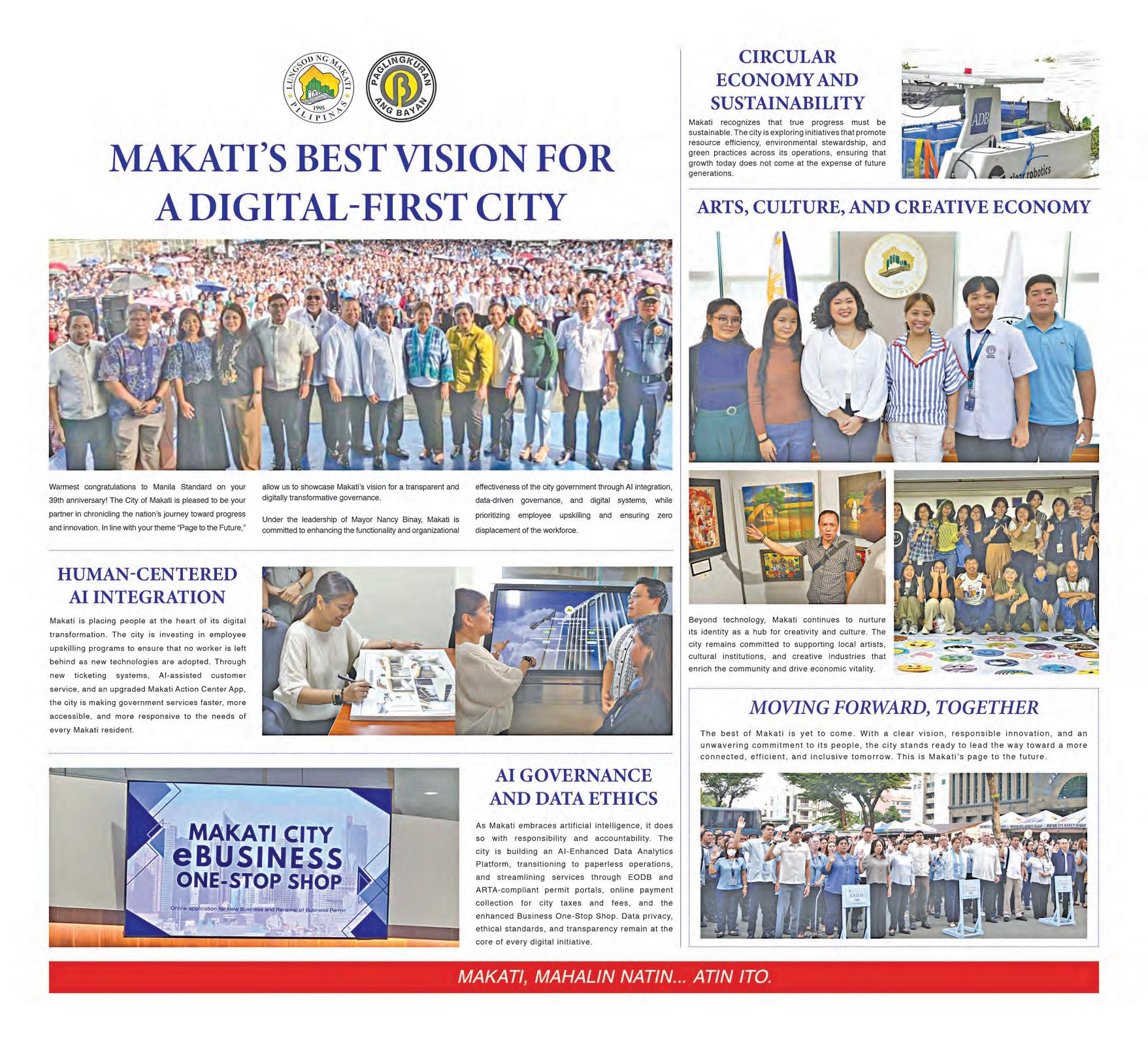
By Angelica Villanueva
WITH digital classrooms becoming a regular part of education, digital teaching is adding new demands on teachers, including keeping up with platforms, analytics dashboards, and emerging tools such as artificial intelligence.
The change did not happen suddenly, but the move to remote learning during the pandemic sped up a transformation that had been developing for a while.
With classes largely back on campus, hybrid arrangements, learning management systems, and digital assessment tools remain part of day-to-day teaching in many schools.
This reality is pushing educators to retrain not only in technical skills but also in how they design, deliver, and evaluate learning itself.
According to the Philippine Statistics Authority’s 2024 National ICT Household Survey, about 48.8 percent of households in the Philippines had internet access at home in 2024. Additionally, 67.3 percent of Filipinos aged 10 and older accessed the internet in 2024.
DataReportal also estimated 86.98 million internet users in the Philippines at the start of 2024, with internet penetration at 73.6 percent. These figures help explain why online tools can expand learning options for some students, while others may be left out where access is limited.
Globally, expectations for teachers have expanded. UNESCO’s 2024 AI competency framework for teachers outlines 15 competencies across five dimensions, including ethics, pedagogy, and professional learning—an attempt to define what educators need as AI tools begin appearing in routine classroom work.
In the Philippines, training and support efforts are increasingly tied to infrastructure and platform adoption.
The Department of Education (DepEd) said it is moving forward with deliveries under its computerization program, including 64,816 laptop

Teachers retrain for hybrid learning as platforms, analytics, and emerging AI tools become part of day-to-day instruction
and smart TV packages intended for distribution across regions, after reports that 39,972 schools had below-ideal student-to-device ratios.
Teacher development programs are being introduced in specific areas. In January 2024, DepEd and the World Bank introduced the Teacher Effectiveness and Competencies Enhancement Project (TEACEP).
DepEd stated that this project is intended to improve professional development and competency standards, focusing on early grades in Region IX, Region XII, and the Bangsamoro Autonomous Region in Muslim Mindanao (BARMM).
Moreover, DepEd has expanded digital capacity programs, including partnerships that bring online learning platforms and content into public school systems. One 2024 collaboration between DepEd and Khan Academy Philippines aims to support foundational
skills through digital courseware, while also familiarizing teachers with platform-supported instruction and progress tracking.
Retraining, though, is not only about learning new software. What is emerging is a redefined teaching role that goes beyond delivering lessons.
Teachers still function as subject instructors, but digital classrooms have added new responsibilities. In hybrid setups, they move between leading discussions, guiding self-paced work, and monitoring activities hosted on learning platforms. Lessons now combine lectures with recorded materials, interactive tools, and online submissions that require review.
Educators are also navigating learning management systems, tracking progress, and managing digital outputs alongside traditional work. As technology becomes routine in schools, effectiveness increasingly depends on how well teachers balance instruction with the demands of platform-based learning.
A 2024 World Bank report on digital skills development in East Asia and the Pacific emphasizes the significance of continuous teacher training in enhancing learning through technology. The report underscores the importance of using a mix of training methods, including refresher courses and peer mentorship programs, to strengthen both digital and teaching skills.
For many Filipino educators, adaptability has become part of the profession’s new baseline.
Digital tools can help with routine tasks such as organizing submissions and monitoring learning progress, depending on connectivity and platform access. At the same time, teachers are recalibrating how they maintain engagement in hybrid classrooms, where attention is divided between screens and seats.
The retraining process is ongoing rather than finite. As platforms update and new technologies enter schools, professional development is becoming continuous, built into in-service training cycles rather than treated as one-time certification.
In today’s changing classroom, being a successful teacher means not only knowing the subject well, but also delivering it clearly across in-person and online settings so students can build skills that match a world that is becoming more digital.


TRAVEL today isn’t about rushing from one destination to the next. It’s about lingering a little longer, noticing more, and letting moments unfold. As Filipinos embrace slower, more intentional ways of exploring, the way we capture travel has evolved too straight from the palm of our hands.
Designed for this new rhythm, the OPPO Reno Series invites travelers to truly Make Your Moment with the introduction of the OPPO Reno15 Series 5G. Built to move with you, it helps transform everyday experiences


into beautifully told stories, capturing emotion, atmosphere, and connection as they naturally unfold.
The OPPO Reno15 Series 5G travels the country, to capture more reasons why people should #LoveThePhilippines, through the lens of its 4K HDR UltraSteady Video, 50MP Ultra Wide Selfie Camera, AI Motion Photo Popout, and 3.5x Telephoto Vibe portrait. The first leg of this journey begins in Bukidnon’s misty highlands to the country’s crystal-clear seas—helping travelers stay present and turn fleeting moments into lasting memories.
Steady Scenes, Even on the Move
Travel rarely happens standing still. It unfolds while walking through unfamiliar streets, riding along winding roads, or moving with the rhythm of a place. With 4K Ultra-Steady Video, the OPPO Reno15
Series 5G is built to keep up with that motion, able to capture smooth, stable footage even when you’re constantly on the go. This makes the OPPO Reno15 Series 5G a natural companion for quick vlogs, scenic cutaways, and everyday travel updates that feel immediate and authentic.
Wider Selfies, Better Group Shots
From barkada trips to multigenerational family getaways, the best travel moments are shared and no one should be left out.
With the 50MP Ultra Wide Selfie Camera, the OPPO Reno15 Series 5G captures everyone in one shot, scenery included, for a more natural way to document every face, laugh, and moment together.
Turning Moments into Shareable Motion
Travel photos don’t always tell the full story, and that’s where AI Motion Photo Popout of the OPPO Reno15 Series 5G comes in. With this feature, still images can take on a more dynamic feel, letting subjects stand out and move beyond the frame. It’s a subtle but playful way to turn everyday travel shots into eye-catching


content. Designed for easy sharing, it adds energy to memories without needing extra editing apps.
Smart Tools for Creative Travel
Content
The OPPO Reno15 Series 5G also hints at a more creative side of mobile storytelling. Features like AI Motion Photo and 3.5x Telephoto Vibe Portrait allow users to add motion, depth, and focus to their photos. These features are useful for capturing details, portraits, or standout travel moments worth sharing.
A Design That Fits the Journey
Finished with OPPO’s Dancing Aurora Design, the OPPO Reno15 Series 5G brings a look that feels modern and expressive without trying too hard. It’s designed to move easily from travel days to everyday use, fitting naturally into a lifestyle that’s always on the go.
Coming Soon in the Philippines on February 13
The OPPO Reno15 Series 5G is shaping up to be a device made for discovery, helping Filipinos Make Your Moment as they explore more places, capture more stories, and share experiences in a way that feels simple, personal, and current. Stay tuned for more information about the OPPO Reno15 Series 5G, including its specs, price, and promos. Visit OPPO Philippines’ official website at www. oppo.com/ph/ or OPPO Philippines’ official social media pages on Facebook, YouTube, and TikTok.
WEDNESDAY, FEBRUARY 11, 2026 advertise@manilastandard.net
By Patricia Taculao-Deligero
THE Philippine workforce is undergoing a profound transformation driven not merely by technological advancement but by the seamless integration of digital intelligence into daily operations. Artificial Intelligence is no longer a futuristic concept confined to science fiction movies; it has firmly planted itself in the present day as a digital colleague sitting beside human workers.
For the everyday Filipino employee, from the entrylevel call center agent navigating complex customer queries to the experienced corporate manager analyzing market trends, this shift represents a fundamental change in daily tasks, career trajectories, and the very definition of productivity. As businesses
strive to remain competitive in an increasingly globalized economy, they are leveraging AI-driven automation, sophisticated copilots, and smart analytical tools to streamline operations and enhance efficiency. This rapid adoption is not just about doing things faster; it is about fundamentally rethinking how work gets


done and recognizing that the traditional boundaries between human labor and machine capability are blurring faster than previously anticipated by industry experts.
Artificial Intelligence, popularly known as AI, has evolved over recent years, shaping the future of technology. With its ability to predict trends and behavior and generate images and content from scratch, people in the workforce look to AI accomplish many of their menial tasks, such as summarization, research, and sometimes even computation.
Despite some resistance to AI due to the risks its unethical use poses, it’s undeniable that when used properly and fact-checked, it can provide meaningful assistance. As businesses strive to remain competitive in a global economy, they are increasingly adopting AI-driven automation, sophisticated co-pilots, and advanced analytical tools to streamline operations and improve efficiency.
Common uses of AI across industries
Perhaps the impact of AI adoption is most evident in the Philippines’ massive Business Process Outsourcing (BPO) sector, which has long been the backbone of the local service economy. For decades, the industry relied heavily on a large workforce to handle repetitive tasks such as basic customer inquiries, data entry, and simple technical support.
However, the rise of automated chatbots and voice assistants capable of understanding and responding to natural human language has begun to significantly alter this model. These AI systems can manage high volumes of routine inquiries simultaneously, providing instant responses to customers around the clock without human intervention. While this change brings undeniable efficiency gains for companies, it also raises legitimate concerns among workers regarding job security, particularly for those in entrylevel roles focused solely on rote tasks.
Yet there’s more to the picture than outright replacement brought by AI adoption. Instead of eliminating roles, many organizations are adopting a hybrid model where AI serves as a powerful assistant, or “copilot,” to the human worker. In this scenario, the agent is not replaced but is instead empowered to handle more complex, emotionally nuanced, and highvalue customer interactions that require human judgment and empathy.

For example, while an AI chatbot might handle a simple billing query, a human agent will step in to resolve an angry customer’s complicated dispute, navigating emotional volatility and building rapport in a way
machines cannot currently emulate. This requires a shift in skills, where employees must learn to operate alongside technology, using it to gather information quickly or suggest solutions while focusing on the interpersonal aspects of the job.
The adoption of these AI technologies extends far beyond the BPO sector, deeply influencing traditional industries such as manufacturing and retail. In manufacturing plants, smart tools are useful for predictive maintenance, analyzing data from machinery to predict failures before they happen, thereby reducing costly downtime and improving safety. Similarly, in the retail sector, AI algorithms analyze consumer purchasing behavior to optimize inventory management, ensuring that popular products are always in stock while minimizing waste.
Having these advancements allows Filipino businesses to optimize their operations in real-time, adapting quickly to market changes and consumer demands. The result is a more dynamic business environment where data-driven decisionmaking replaces traditional methods based solely on intuition or historical trends.
Partnering AI adoption with ethical use As routine tasks become increasingly automated, the demand for workers with technical fluency and soft skills such as critical thinking, creativity, and emotional intelligence is rising.
However, the digital divide poses a significant challenge, as workers in rural areas or those with limited access to technological training may struggle to keep pace with these rapid developments. Both the government and private sector must invest in comprehensive training programs that equip employees with the skills necessary to thrive in an AI-augmented economy. This includes training in basic data literacy, understanding how to interact with AI systems, and enhancing the unique human skills that machines cannot easily replicate.
Furthermore, the integration of AI tools necessitates a careful consideration of ethical implications, particularly regarding data privacy and algorithmic bias. As Philippine businesses collect and analyze vast amounts of customer data, they must ensure that this information is handled responsibly and in compliance with local regulations such as the Data Privacy Act. There is also the risk that AI systems, if trained on flawed or biased data, could reinforce existing inequalities in hiring, promotion, or customer service delivery.
Establishing robust ethical guidelines and ensuring transparency in how AI systems make decisions is crucial for maintaining trust among employees and customers alike.
Despite the challenges, the adoption of AI offers tremendous opportunities for economic growth and innovation in the Philippines. By enhancing productivity and enabling new service types, AI can contribute significantly to the country’s GDP and enhance the global competitiveness of Filipino businesses.
By Marielle Jan Erika L. Reyes
EVERYONE is a mosaic of intertwined experiences, aspirations and challenges. From a young age, I’ve been endlessly curious about the world, especially about how I could contribute to it.

I was always aware that creativity came naturally to me, whether it be literature, art, or any form of media, yet I was still navigating how to transform that passion into a career. I was born in the Philippines, but I spent most of my childhood and adolescence in the United Arab Emirates, from age 3 to 18, which shaped my perspective on the importance of diversity. Living in a multicultural environment definitely taught me to admire and respect everybody’s differences. It pushed me beyond my comfort zone, helping me become independent at an early age, while learning how to build connections across cultures. Experiencing life from more than
one cultural lens has not only broadened my worldview, but also strengthened my sense of identity, allowing me to appreciate where I come from, while embracing the global community around me.
My passion for writing started with childhood diaries, and I’ve always cherished the tangible nature of physical media, a way to preserve and hold memories. Camera in hand, I would always be spotted at every gathering trying to capture the moment, it became my way of turning moments into lasting keepsakes, and sharpening my eye for detail and narratives.
Throughout high school, I would always excel in literature classes and participate in film competitions. Writing always came as second nature to me. Beyond the classroom, I found myself drawn to storytelling in all its forms like crafting short films, scripting school projects, and exploring various creative ideas. Each project challenged my creativity, and developed my skills in communication and visual storytelling, all of which reinforced my passion for a career in the media.
At 18, I was still navigating life, questioning which career I could pursue, one that I would genuinely enjoy and feel passionate about. That’s when I discovered a media and communications course that captured everything I wanted to do: writing, filmmaking, and using my creativity to pitch ideas and craft compelling campaigns. The opportunity to bring ideas to life every day made it clear that this was the direction I wanted to explore.
Although I considered Dubai as my home away from home, I knew that choosing to study abroad was an experience I didn’t want to regret not taking a chance on, so I took up my course in Glasgow, Scotland. I met people who have shaped my early 20s in countless ways, inspiring me with their perspectives, ambitions, and experiences. Immersed in a whole new cultural environment, the experience taught me to embrace change, and appreciate the richness of so many different perspectives.
Studying abroad, and not only being away from my mother, but the life I knew in Dubai as well, it definitely came with its struggle of learning to adjust to yet another new environment. However, I kept reminding myself that with no change, there would be no room for me to grow as an individual. I always considered myself as an

independent person growing up. Being the only child of a single mother, who is my greatest role model, certainly taught me that perseverance, determination and resilience is an important trait to carry in your day-to-day life.
With her being the center focus of everything that I do, I knew that I had to dedicate myself to everything I worked on in hopes of securing a career in the media industry. Towards the last year of my course and with only a couple months left until graduating, my biggest challenge was to initially get a job in the UK. But with the media industry being oversaturated there, my other option was to move back to the Philippines. Having spent just the first 3 years of my life there, coming back in my 20s was another culture shock to adjust to, a place that felt both familiar and new.
It’s often said that “ rejection is only redirection.” As my hopes slightly dimmed over time, I fortunately landed a job with Manila Standard.
Now, a year into this career, I have been given the privilege of traveling to many different countries and places, such as Taiwan, several islands in my motherland, and attending numerous events. Working as a writer for Manila Standard has exposed me to a variety of working styles, helping me grow as a professional in the media industry. It has taught me the complexity of the field and allowed me to appreciate all forms of media on a whole new level, all whilst gaining a deeper perspective from being part of the people who create and deliver that media to the public. Working for the Manila Standard has been a constant learning experience. From researching stories to writing articles under tight deadlines, I’ve developed not just technical skills but also discipline, adaptability and grit. Each task challenges me to think critically and creatively, whether I’m covering tech innovations, lifestyle trends, or cultural events. Being part of the newsroom has shown me the behind-the-scenes effort that goes into producing content that informs, engages, and inspires readers.
Experiencing different cultures through my coverage of events abroad, has led me to meeting people from various backgrounds. Being given the opportunity to see the stories behind headlines firsthand, has given me a richer perspective on the world. It has reminded me that media is not just about reporting, it’s about connecting with people, sharing experiences, and creating content that reflects the depth and complexity of life. As I reflect on my journey from growing up abroad and returning to the Philippines, to moving from childhood diaries to writing for the Manila Standard, it has been one of growth, exploration, and discovery. Each experience has shaped not only my skills as a writer and media professional but also my perspective as a person: curious, adaptable, and driven by a desire to connect with others through storytelling. Working in media has shown me the power of stories to inform, inspire, and bring people together, and it has reinforced my passion for creating content that matters. As I continue to grow in this field, I carry with me the lessons, challenges, and connections that have defined my path so far, eager for the stories still to come.
(Marielle Jan Erika L. Reyes is a multi-media contributor for the Manila Standard’s Tech and Mobility Section)

The CEO and Co-Founder of Converge lauded the student ambassadors for their passion for gaming and technology, encouraging them to stay active in their respective digital communities.
CONVERGE ICT Solutions Inc. continues to sustain support for young Philippine gamers, particularly ‘model students’ in their own right, as it organized a recognition session recently and gave them the opportunity to gain meaningful insight from the CEO and Co-Founder of the company himself, Dennis Anthony Uy.
Ten exceptional student-gamers from Metro and Mega Manila gathered in the Converge Global Headquarters for an exclusive meet and greet with Uy himself. These ten youngsters were chosen through the Converge program called the FiberX Student League Ambassadors that was conducted throughout 2025.
“We laid the foundations for this ecosystem as far back as 2021, through sponsoring games first such as Dota 2 and PUBG Mobile, and then launching a product catering to gamers : the Converge GameChanger. To further strengthen support, last year, we were able to reach out to universities - as many as 60 schools - and mounted 13 roadshows. From as many as 100 student-gamers, we chose ten who have shown strength academically, in leadership, and of course those who are deep into

their digital lifestyle. They are called ‘ambassadors’ because they are now the ambassadors for the gaming and esports lifestyle in their schools and carry a vital role of working with us and the community to uncover the real needs of gamers and the youth”, said Orange Ramirez, Vice President and Head of Brand and Marketing, during the event.
Uy, in a session with the ten student ambassadors, shared how he, in his youth also engaged in buying and selling games such as the likes of PacMan and Atari on analog consoles, and saw how gaming evolved to online and eventually mobile-capable games such as the ones developed by Tencent. Going beyond gaming, Uy sees the technology-enabled horizon as full of opportunities for digital natives, saying: “With our digital infrastructure in
place, we have enabled and continue to enable Filipinos to build their careers and livelihoods. Many young people have become content creators and have built their careers on Tiktok and other platforms. Philippine gamers can now compete globally and if you’re particularly innovative, you can launch your own start-up with the right digital tools. If you’re entrepreneurial, you can launch your own online business and having brick and mortar space is now entirely optional.”
“The future for the Philippines is bright because of you, our youth. The talent is incredible, you just need the right ecosystem to tap into your potential. For us at Converge, we can mentor you with our experts, bridge you with global tech companies, and give you the tools to create digital
solutions that answer real problems,” ended Uy.
In 2025, Converge, in collaboration with the Philippine Chamber of Commerce and Industry (PCCI) staged a competitive hackathon, called ‘Byte Forward’. This ran alongside PCCI’s regional business conferences held throughout 2025 in North Luzon, Visayas, National Capital Region, Mindanao, and South Luzon. In this nationwide hackathon, Converge and Rev21 engaged universities to tap their tech-savvy and digital-forward students for a competition that aimed to solve SMEs’ pain points using technology. The winning solutions targeted specific problems of SMEs ranging from inventory management to supply chain issues.
The “Chosen X” FiberX Student League Ambassadors are divided into two groups : the Golden X winners, which were flown to Thailand for an exposure trip to the country’s gaming community and industry, and the Battlestation Winners who had their gaming stations upgraded care of Converge. The student-gamers are attendees of universities in Metro and Mega Manila, from University of Asia and the Pacific, World Citi Colleges, New Era University, Technological University of the Philippines, among others.

WEDNESDAY, FEBRUARY 11, 2026
advertise@manilastandard.net

BYD Cars Philippines, a subsidiary of ACMobility, concluded 2025 with its strongest performance to date. The brand recorded 26,122 units in retail sales, making it the fastest-growing automotive brand in the country. This 446% year-on-year increase in volume solidifies BYD’s position as the leader in the New Energy Vehicle (NEV) market.
This momentum was fueled by high consumer demand across the brand’s diverse lineup. The BYD Seagull leads the brand’s 4,608 BEV (battery electric vehicle) sales as the top-selling vehicle. Meanwhile, the brand’s Plug-in Hybrid Electric Vehicle (PHEV) offerings saw massive success, spearheaded by the Sealion 6 DMi, which continues to lead the DM-i range. The recent introduction of the Shark 6 DMO further bolsters this lineup, reflecting a growing Filipino preference for sustainable
mobility that does not compromise on performance or utility.
“2025 marked a significant milestone in the advancement and broader adoption of New Energy Vehicles in the country,” said Bob Palanca, Managing Director of BYD Cars Philippines. “BYD’s strong growth, driven by favorites like the Sealion 6 DM-i and the rugged Shark 6 DMO, underscores our sustained commitment to democratizing electrified mobility. It demonstrates that when innovation is paired with accessibility, the market responds
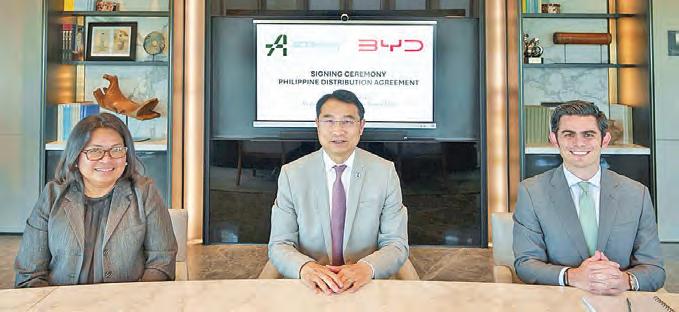
positively. We remain firmly focused on making electric vehicles attainable for Filipino households nationwide.”
Building on this success, BYD and ACMobility have officially renewed their distribution partnership for passenger cars in the Philippines,
reaffirming a long-term commitment to the Philippine market. The alliance, which began in August 2023, assures a steady pipeline of innovative technologies backed by a comprehensive ecosystem of charging infrastructure and aftersales support.
This strategic foundation paved the way for BYD’s rapid expansion across the country. By the end of 2025, the brand achieved its target of 79 operational dealerships nationwide, a massive increase from just 25 locations at the close of 2024. Moving forward, both companies remain focused on scaling their network and enhancing the ownership experience for the thousands of Filipinos now choosing the BYD brand. “These milestones are a clear signal of our unwavering, long-term commitment to the Philippine market,” says Adam Hu, Country Head of BYD Philippines. “Together with ACMobility, we are committed to fueling this momentum and making new energy vehicles the standard, not the exception, for Filipino drivers.”
For more information on the existing vehicle lineup of BYD Cars Philippines, visit bydcarsphilippines. com.



LEADING global AI smart devices provider HONOR Philippines had a fantastic start to the year with the launch of its newest smartphone, the HONOR X9d 5G. The brand kicked things off on January 1 with its viral drop tests, followed by the starstudded HONOR X9d 5G vs. Tesla Cybertruck experiential event, culminating in its grand launch at the Grand Hyatt. On January 24, the HONOR X9d 5G officially hit stores nationwide with a record-breaking first-day sales performance, posting a 160% increase compared to its predecessor, the HONOR X9c 5G.
“On behalf of HONOR Philippines, I thank our loyal HONOR fans, partners, and media friends for the overwhelming support for the HONOR X9d 5G. This success would not have been possible without your trust and belief in us. We are truly grateful, and we promise to continue bringing you tougher, smarter, and more exciting innovations,” said HONOR Philippines Vice President Stephen Cheng.

Celebrating HONOR X9d 5G
Positioned as the most durable smartphone in the market, the latest HONOR X9d 5G showcases all-around drop, water, and dust resistance, ensuring it can withstand drops from heights of up to 2.5 meters onto certain surfaces. Reinforced by
HONOR Ultra-Bounce Anti-Drop Technology, Non-Newtonian fluid, and new ultra-tough deeptempered glass, the device is safeguarded against 10 more types of stone-ground impact and even air-gun shooting.
On January 24, a grand fan fest was held at SM Megamall Fashion

Hall, bringing together OPM icons Sponge Cola, HORI7ON, Fitterkarma, Shanne Dandan, Figvres, and Pommelo. To the delight of pre-order buyers, HONOR gave away exclusive collaboration shirts with LinyaLinya, along with other exciting prizes throughout the day.


HONOR X9d 5G is now available nationwide!
Coming in three exciting colors, Reddish Brown, Midnight Black, and Sunrise Gold, HONOR X9d 5G if priced at Php 18,999 with FREE HONOR Gift Box and Jisulife Life Fan5. Head to any HONOR Experience or Partner Store, or shop online via Lazada ( https://bit.ly/Laz_X9d_PR ), Shopee (https://bit.ly/Shop_X9d_ Media), or TikTok Shop (https:// bit.ly/TikTok_X9d_Media). With Home Credit, you can get the HONOR X9d 5G for as low as Php 24 per day with an additional Php 1,000 discount, payable for up to 18 months. The promo runs until February 15, 2026. Apply here: https://bit.ly/HomeCredit_ X9d_FB.
For more exciting announcements, visit HONOR’s website www.hihonor.com, and follow HONOR Philippines on Facebook (Facebook.com/ HonorPhilippines), Instagram ( Instagram.com/honorph/ ) and TikTok: (Tiktok.com/@ honorphilippines) for exclusive teasers, launch updates, and big reveal.


WEDNESDAY, FEBRUARY 11, 2026
advertise@manilastandard.net
By Patricia Taculao-Deligero
IN the face of intensifying climate change, nations across the globe are turning toward innovation to forge a sustainable future, and in the Philippines, this transition is taking on a distinct and urgent character.
As an archipelago uniquely vulnerable to rising sea levels, stronger typhoons, and erratic weather patterns, the country is increasingly leveraging cutting-edge technology not merely to mitigate environmental damage but to adapt its core industries and protect its population. This fusion of climate tech with local resilience strategies is transforming how Filipinos engage with their environment, turning data points into lifelines and renewable resources into engines of economic growth.
The nation is moving beyond traditional conservation methods, embracing a multifaceted approach that integrates advanced data analytics, space technology, and sustainable engineering to combat the escalating crisis. This shift is not just about adopting new tools but about fundamentally rethinking how infrastructure, agriculture, and disaster management function in a rapidly changing world.
Switching to sustainable energy
At the forefront of this technological shift is the modernization of the energy sector, which is crucial for reducing carbon emissions while ensuring stability. The Philippines has set ambitious targets to increase the share of renewable energy in its power mix, aiming for 35 percent by 2030 and 50 percent by 2040.
To achieve this, investments are pouring into solar and wind projects, particularly through innovative approaches that address the intermittency of these power sources. A significant development in this area is the deployment of large-scale battery energy storage systems, which allow excess energy generated during sunny or windy periods to be stored and utilized when demand spikes or generation drops. This technological integration is essential for grid stability, especially in remote, offgrid island communities that have historically relied on expensive and polluting diesel generators.
Moving away from fossil fuels is bolstered by the democratization of energy production, where localized grids empower communities to manage their own power needs. Furthermore, the government has passed legislation to create a clear national framework for energy storage systems, streamlining the process for developers and encouraging further investment in these crucial technologies.

By Lionell Go Macahilig
WITH industries such as banking, telecommunications, healthcare, government, and media facing unprecedented data demands, Seagate aims to highlight how its Exos Enterprise Data Storage Systems and Drives deliver reliability, scalability, and compliance for mission-critical workloads. The increasing reliance on cloud services, AI-driven analytics, and remote operations has made data availability and security non-negotiable for enterprises. In this landscape, infrastructure failures or data bottlenecks can translate to real financial and operational risk.

To address these realities, Seagate Exos Enterprise Data Storage Systems are rackmount-ready, modular platforms designed for hybrid cloud, backup, archival, and edge infrastructure. Meanwhile, Seagate Exos Drives reach up to 32TB capacities and are engineered for workloads of up to 550TB per year—reflecting how storage vendors are pushing density to keep pace with soaring data footprints. Together, Seagate’s Exos portfolio provides a range of storage solutions meant to balance performance, efficiency, and regulatory compliance across diverse enterprise environments. Within the lineup, the Exos CORVAULT delivers self-healing block storage in 4U106 and 5U84 configurations, reducing drive replacement cycles and minimizing manual intervention—an increasingly important capability as data centers face staffing and operational constraints. Exos storage servers, including the 2U12 and 2U24 models, integrate compute and storage to simplify deployment at the edge, where enterprises need processing power closer to where data is generated. For organizations requiring flexible data management, Exos storage systems offer RAID arrays that support all-flash, hybrid, and disk configurations, enabling mixed workloads without costly overprovisioning. Finally, expansion enclosures and JBOD options support scalable growth and seamless capacity expansion as data volumes continue to increase.
Whether for SMBs or Tier 1 enterprises, Seagate storage solutions scale without forcing organizations to overhaul

Meanwhile, in agriculture, a sector that accounts for a significant portion of Philippine employment and is highly susceptible to climate shocks, is undergoing a profound transformation through smart farming techniques.
The Department of Agriculture is proactively scaling up initiatives focused on climate-resilient farming for highvalue crops such as vegetables, utilizing greenhouses, drip irrigation systems, and water-impounding facilities to protect yields from extreme heat and flooding. These technologies empower farmers to control the microclimate surrounding their crops, ensuring consistent production regardless of the erratic weather.
Additionally, data-driven tools are being employed to monitor soil health and weather patterns, enabling farmers to make informed decisions about planting schedules and resource allocation. This shift toward precision agriculture reduces reliance on harmful synthetic fertilizers and pesticides, fostering a more regenerative approach to farming that strengthens the resilience of local food systems.
Investing in risk reduction
Beyond the fields and power plants, technology is bridging the gap between climate science and disaster risk reduction, playing a pivotal role in anticipating and mitigating the impacts of natural calamities.
For instace, the Philippine Space Agency is harnessing satellite
Exos 5U84
existing infrastructure. With verified reseller networks and flexible configurations—JBOD, RAID, or full storage servers—IT teams can tailor deployments to operational realities rather than redesigning around vendor constraints. Beyond performance, Seagate’s Exos enterprise portfolio is backed by a 2-million-hour MTBF, a 5-year warranty, and SED/FIPS compliance—features that matter to sectors governed by strict regulatory and audit requirements.
In the Philippine market, these capabilities arrive at a relevant moment. As digital modernization initiatives accelerate across both government and private sectors, storage is quietly becoming a foundational pillar for cloud adoption, AI workflows, disaster recovery, and national data resilience. While much of the industry conversation focuses on software platforms, cybersecurity, and cloud services, the underlying storage layer determines whether those investments deliver sustained value.

Seagate’s positioning suggests it is not merely responding to increased data demand, but preparing for a future where infrastructure reliability, compliance, and density become competitive differentiators. In this sense, Seagate is not just storing data—it is storing the operational continuity and digital potential of organizations navigating the next decade.
To explore Seagate Exos Enterprise Data Storage Systems and Drives, CIOs, IT managers, CXOs, cloud architects, and LGU modernization leads may visit Seagate’s Talk to an Expert page.
technology to monitor environmental changes, track typhoon movements, and assess damage from climate hazards with unprecedented precision. Satellites like Diwata-1 and Diwata-2, along with upcoming projects like the Multispectral Unit for Land Assessment satellite, provide crucial data for environmental protection and climate adaptation.
This space-based observation allows authorities to identify areas vulnerable to deforestation, monitor marine resources, and map flood risks, enabling more effective disaster preparedness and response strategies. The integration of this high-level data into local disaster management plans ensures that communities are better prepared for impending hazards, ultimately saving lives and protecting infrastructure.
The concept of these anticipatory technologies is also being deployed in disaster-prone areas to create selfsustaining safe zones. These centers are designed not only as temporary shelters but as hubs of resilience, featuring solarpowered water filtration systems, satellite communications, and hydroponic farming units. This approach ensures that even when traditional infrastructure fails during a disaster, communities can maintain access to clean water, food, and communication channels. This technological resilience is particularly vital for the most vulnerable populations, who often bear the brunt of climaterelated disasters and have limited access to conventional emergency services.
By Paola Navarette
CAN something still be called work if it’s something you naturally return to, again and again?
Before I worked full-time in marketing in December 2024, I was already writing and covering stories for Manila Standard Tech. Technology stories felt exciting because they were always about what’s next: new innovations and new ways of seeing the world.
I cannot thank the Manila Standard Tech editors and the whole team enough for guiding me—for always being warm, for giving me feedback, for guiding me through coverages, and for connecting me with people from the industry. I may be chasing other things, yet the dream goes on.
Every time I write for the section, I’m reminded why writing is something I can’t take out of my system. Marketing and content creation, fields of which I’ve been part of for a little over two years, are important—but for me, authenticity, a deep connection to the world, and curiosity matter even more.
In fact, AI and emerging technologies have made the tech beat even more fascinating. There’s always something new to read and research about, whether it’s how startups are solving everyday problems or how digital tools are changing the way people connect.
Writing about these developments truly doesn’t feel like a task on a checklist.
And that’s what makes contributing to the section special, because it doesn’t feel like a second job—it feels like a sideline fueled by curiosity.
Tech media today is also no longer just for engineers or developers: understanding it is open to anyone curious enough to listen. You can attend a panel discussion, interview an expert, and suddenly tech isn’t just “specs,” it’s stories you can actually relate to. And for someone who simply wants to keep growing, meeting people, and seeing the world through different perspectives, being part of the Manila Standard Tech will always feel less like work, and more like something I genuinely enjoy doing.


By Millie Manahan
WORKING in sports—whether as a team manager, a writer, or an aspiring content creator—means learning to move fast and think faster. From pre-Games preparations for the Olympics to the excitement of the SEA Games and beyond, the job often takes you to cities, countries, and stadiums you’ve never seen before.
In a world that moves as quickly as sports, preparation isn’t about carrying everything; it’s about carrying what you can trust.

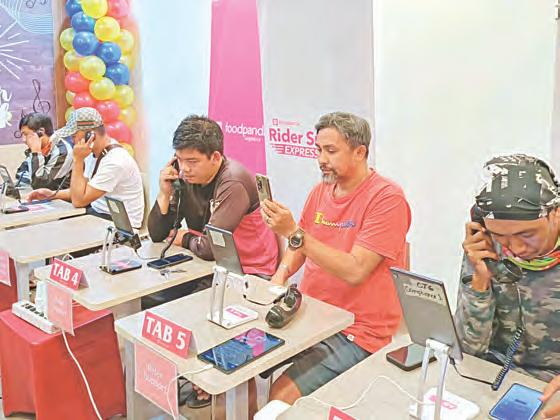

Travel has a way of showing you what really matters. When you’re moving from one city or stadium to the next, you realize you can’t carry everything. What you actually bring to work when you need it. It’s not about the brand or how fancy it is. It’s about being able to rely on it when the moment hits. Because in fast-paced sports, the story won’t wait for you.
I learned this most vividly while covering the Asia Rugby Sevens in Sri Lanka last year. I had travelled without my usual gear—no camera kit, no lenses, none of the equipment I had relied on for years. I brought just two smartphones and a lot of nerves.
Rugby Sevens is intense; decisive moments happen in seconds, and once they’re gone, they’re gone. Yet, despite my initial worry, the devices held up.
From capturing fast action on the field to quiet, human moments off it, I realized that what mattered most wasn’t complexity or sophistication— it was dependability.
No matter where the job takes me, prepping for the Olympics, covering the SEA Games, or chasing stories across the globe, moments don’t wait. A dependable device isn’t just a tool; it’s your notebook, your camera, your editor, and often your lifeline. It supports you when schedules shift, deadlines loom, and

split-second decisions matter, so you can focus on what really counts: capturing the story as it unfolds.
For anyone working in a fastpaced field—or hoping to enter one—this is a simple truth: you don’t need the flashiest gear to tell compelling stories. You need something that works, adapts, and keeps pace with you. Just as athletes rely on trust between teammates and coaches, professionals rely on their tools. When the work moves fast, when travel is constant, and when moments are fleeting, having a device you can count on makes all the difference. Because the story is always moving—and you have to be ready to move with it.

IN 2025, foodpanda Philippines strengthened its commitment to rider welfare through programs that addressed both everyday needs and extraordinary circumstances—recognizing Ka-panda riders as delivery partners and vital members of the communities they serve.
Easing Everyday Rider Concerns
For many Ka-panda riders, daily realities such as rising fuel costs, account-related concerns, and access to timely support are important to their delivery experience and livelihood. To help address these everyday challenges, foodpanda rolled out programs focused on cost relief, accessibility, and onground assistance.
A key initiative was the year-long fuel subsidy program in partnership with Caltex, the Ka-panda Gasolinahan, which offered P10 per liter discounts at participating stations nationwide. By shouldering a significant portion of the subsidy, foodpanda helped ease the impact of fluctuating fuel prices and supported riders in managing their day-to-day expenses.
Complementing this effort is the Rider Support Express (RSE), a mobile, on-ground

support initiative rolled out across key cities and provinces, which helped thousands of Ka-panda partner riders over the past year by bringing assistance directly to rider communities. Through RSE, existing partner riders are able to raise and resolve account-related concerns face-toface, while aspiring riders receive guidance on onboarding and joining the fleet. Each RSE run is conducted in coordination with government agencies such as SSS, Pag-IBIG, and PhilHealth, allowing riders to access information on social protection and benefits.
Standing by Ka-panda Riders in Times of Crisis Filipinos faced heightened risks as the country experienced multiple natural disasters, including typhoons, widespread flooding, and earthquakes, which disrupted mobility, livelihoods, and daily operations across several regions throughout the year.
In response, foodpanda prioritized rider safety and welfare through immediate and targeted interventions. During periods of severe flooding and successive tropical cyclones, the company activated its Panda Pag-asa Program, providing over P4.8 million

in relief assistance to thousands of Ka-panda riders in affected areas nationwide, in the form of ready-to-eat meals, family food packs, and hygiene kits, along with vouchers and cash assistance.
When an earthquake struck Cebu City, foodpanda swiftly mobilized similar relief support for affected partner riders on the ground. Working with Local Disaster Risk Reduction and Management Offices in Cebu and Bogo City, the company ensured that assistance reached riders impacted by the disaster.
Celebrating, Recognizing, and Building Community
Beyond protection and day-to-day support, foodpanda invested in initiatives that recognized riders’ contributions and strengthened community ties, reinforcing a sense of belonging among Ka-panda partners nationwide.
Community-building also extended beyond the road through Panda Legends: Ride & Conquer, a nationwide Mobile Legends tournament that gave riders a space to bond, unwind, and compete. This focus on recognition

carried through milestone celebrations, including foodpanda’s 11th anniversary in the Philippines, which distributed over P1.3 million worth of prizes, with motorcycles awarded to partner riders from Luzon, Visayas, and Mindanao.
Ka-panda riders were further honored as modern-day heroes during National Heroes Day through a special guesting on It’s Showtime, where their role in sustaining everyday life was recognized on national television. As a gesture of appreciation, all in-app tips given that day were doubled!
To cap 2025, foodpanda brought riders together through large-scale, multi-city engagement activities such as the Pautastic Party ng Taon, a nationwide year-end roadshow that gathered riders from major cities for performances, games, and livelihoodenhancing prizes.
Taken together, these initiatives reflect foodpanda’s sustained approach to rider welfare by addressing everyday concerns, protecting riders during calamities, and recognizing their contributions through meaningful community engagement.

WEDNESDAY, FEBRUARY 11, 2026
advertise@manilastandard.net
PROGRESS in national infrastructure and enabling policies, supported by digital banking, can help accelerate access to financing for micro, small and medium enterprises (MSMEs), Maya Bank President Angelo Madrid said at the Money20/20 Philippines Summit.
Madrid shared these views during a panel discussion on“Open Banking and Embedded Finance Empowering SMEs,” which examined how financial services can be delivered more efficiently when they are integrated directly into the platforms businesses already use—helping reduce friction, shorten approval timelines and improve access to capital for small enterprises.
“MSMEs are the backbone of the Philippine economy, but many still face challenges when it comes to accessing timely financing,” Madrid said. “Digital banking plays an important role, but it works best when supported by the right national infrastructure—simpler processes, streamlined requirements and digitized systems that make it easier for businesses to operate and grow.”
MSMEs account for nearly 99.6% of all businesses in the Philippines, employ about two-thirds of the workforce and contribute roughly 40% of GDP. Yet access to formal financing remains uneven—often constrained by limited collateral, fragmented records and lengthy application processes that do not always reflect how small businesses operate.
Madrid emphasized the importance of continued progress in national digital infrastructure and in enabling policies that reduce friction for MSMEs—such as simpler business registration processes, more standardized documentation and greater use of digital records across government and financial institutions. He also highlighted the role of know-your-business (KYB) processes in helping financial institutions verify and better understand MSMEs.
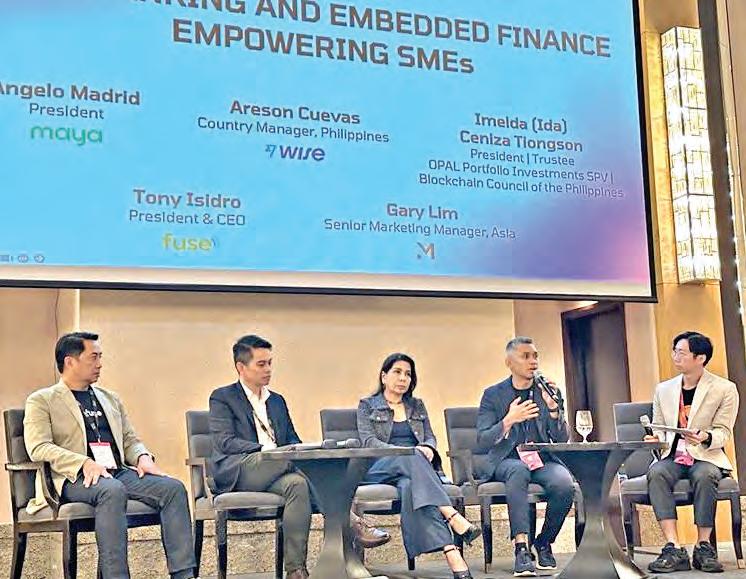
Madrid said sustained collaboration among regulators, industry players and government agencies— including the Bangko Sentral ng Pilipinas (BSP), the Department of Trade and Industry (DTI) and the Securities and Exchange Commission (SEC)—is key to improving the ease of doing business and expanding credit access for MSMEs.
Panel discussions highlighted how embedded finance—where payments, banking and credit are integrated directly into business platforms—can help close financing gaps for MSMEs by delivering financial services within the flow of everyday operations. Instead of navigating separate applications or physical branches, MSMEs can access payments, accounts and financing tools in one place, enabling faster time-to-cash and reducing friction at moments of need, such as inventory
restocking or seasonal demand.
Drawing on Maya’s experience serving MSMEs, Madrid highlighted how this model works in practice through Maya’s integrated ecosystem. Through the Maya Business app, MSMEs can accept digital payments, manage funds and access banking services in a single interface, while AI-powered credit assessment is informed by actual transaction data and cash-flow activity rather than

fixed collateral alone. This allows working capital to be offered more quickly and in amounts aligned with real business performance—making credit more accessible and practical for small enterprises.
Madrid noted that progress toward open finance, including secure data-sharing frameworks, can further enhance how financial institutions assess MSME needs over time. However, he emphasized that near-term impact comes from strengthening foundational systems and collaboration across government and industry players to ensure digital tools translate into real improvements for businesses on the ground.
“Improving access to finance isn’t just about new products,” Madrid said.
“It’s about making the overall experience simpler and more intuitive— from onboarding and verification to disbursement and daily use.”
The Money20/20 Philippines Summit brings together leaders from across banking, payments, fintech, and policy to discuss the future of financial services and how technology can support inclusive and sustainable economic growth.
SAVING money usually feels quiet and delayed. You set aside funds and trust that it’ll matter someday. But when nothing feels different right away, it’s easy to forget or stop altogether.
That’s exactly what Maya, the #1 Digital Bank and leading all-in-one fintech platform in the Philippines, is calling out in its latest video starring Julia Barretto and Maris Racal. It’s a wake-up call for Filipinos: your savings can reward you daily — if you put it where it earns.
The Filipino Dream: ‘Masampal ng Pera’
Let’s be real: every Filipino has joked about it at least once.“Sana masampal ng pera.”Not out of drama, but out of desire. Because money hitting you means money finally showing up.
Maya taps into that very Filipino fantasy and brings it to life through a playful sampalan. In the video, Julia and Maris literally slap each other with money, turning a familiar popculture moment into a metaphor for what daily interest feels like when your savings is actually working.
Watch what went down in the sampalan showdown of Maris and Julia: [Embed Youtube Video: https://www.youtube.com/watch?v=bgljNn07qI4]


Every Day Instead of progress you only notice months later, Maya Savings makes growth immediate. With interest credited daily, your money doesn’t just sit there, it moves consistently and visibly. That’s the real sampal. Not the painful kind, but the moment you realize your balance is growing day after day. Saving stops feeling passive and starts feeling rewarding, because something is actually happening.
Saving That Hits Different
Julia and Maris show that saving doesn’t have to feel heavy, complicated, or purely long-term. It can be fun, rewarding, and culturally familiar, the kind of saving that slaps, literally and figuratively. With Maya Savings, users can earn up to 15% interest per annum, credited daily. That daily payout turns saving from something you wait on into something you feel, as your balance grows every day just by using Maya for your everyday transactions.
Once saving feels rewarding, it’s easier to keep going. And for today’s savers, waiting for “someday” isn’t motivating anymore. They want results they can see — and feel — today. Visit maya.ph or mayabank.ph, and follow @mayaiseverything on Facebook, Instagram, YouTube, and TikTok to stay updated. Maya Philippines, Inc. and Maya Bank, Inc. are regulated by the
By Millie Manahan
IN
hours online easily eclipse hours of physical activity. The adage “sedentary living is the new smoking” now feels literal. I remember Dr. Palma’s advice echoes this modern truth: limit inactivity and make your body move. Even while binge-watching your favourite series, simple actions like stretching or light movement can help keep your heart engaged and happy.
Of course, technology isn’t all bad for the heart. In fact, it has made us more healthconscious than ever. From apps that track calories and nutrition, to smartwatches that monitor steps, heart rate, and sleep,
we now have tools that make it easier to maintain a healthy lifestyle. Even doctors find technology increasingly helpful: AI-assisted diagnostics, telemedicine consultations, and wearable data allow people in the medical industry to detect issues earlier and personalize care more effectively.
In other words? Your heart appreciates it when you move more than when your finger scrolls endlessly.
5-2-1-0-0: The Heart-Healthy Tech
Translation
During my interview before, Dr. Palma’s mantra — 5-2-1-0-0 — sounds like a Netflix password but is actually a practical heart formula:
5: Five servings of fruits and veggies daily. Colourful food is good food — and your heart loves colour just as much as your Instagram feed does.
2: Two hours max of sedentary screen time. Stand up, stretch, shake it off!
1: One hour of exercise. Think brisk walking, dancing, or even VR fitness challenges — whatever fits your vibe.
0 sugary drinks. That latte GIF might look cute, but excess sugar is heart kryptonite.
0 smoking. Yes, even virtual smoke rings in mobile games can’t deceive your real lungs and heart.
Simple, practical, and more fun when

gamified just like any challenging app or fitness tracker goal.
Broken Heart Syndrome: Not Just a Meme
We’ve all joked about “dying of a broken heart” after a brutal breakup. But Broken Heart Syndrome is medically real and surprisingly connected to stress responses in our bodies. Its medical name is Takotsubo cardiomyopathy, a temporary weakening of the heart muscle that can mimic heart attack symptoms like chest pain and shortness of breath, usually triggered by intense emotional or physical stress.
Here’s the twist: emotional stress isn’t just about heartbreak — it can come from constant notifications, fear of missing out (FOMO), comparison culture, and relentless social media scrolling. When stress hormones surge, the heart can weaken temporarily, even in otherwise healthy people. So that “Why didn’t they text back?” anxiety? It’s not just dramatic, your body feels it. From Heartbreak to Heart Care While Broken Heart Syndrome is treatable and often reversible with proper care, recognising it matters. The symptoms feel a lot like a heart attack, so
anyone experiencing intense chest pain or breathing difficulties should seek medical attention immediately. Early diagnosis can involve ECGs, blood tests, and stress tests. But more importantly, don’t wait until heartbreak—emotional or physical —turns into a medical episode. Use technology to your advantage: apps for meditation, stress reduction, sleep tracking, and community support can subtly support heart health. Since my husband experienced a mild heart attack and underwent angiogram tests, I’ve become even more conscious about protecting our hearts—both physically and emotionally.
Love Your Heart Like You Love Your Feed In a culture obsessed with instant gratification, we often forget that real life and real love aren’t a highlight reel. Heart health isn’t about perfect diets or flawless workouts; it’s about consistency, self-awareness, and balance, the same things we crave in relationships, career, and digital interactions.
This February, let your heart be more than a symbol you send via emoji. Let it be something you protect, nourish, and celebrate—both in the biological sense and the emotional one.
Tech can help—from fitness trackers to stress-management apps — but it shouldn’t replace the basics: moving your body, eating well, and spending quality time with real people. After all, even in a world mediated by screens, nothing compares to the real beat under your ribs. Dr. Rex Palma has been our family cardiologist for over 10 years, providing expert insights and care.

WEDNESDAY, FEBRUARY 11, 2026 advertise@manilastandard.net

By Earl Maghirang
HERE’S a thought for you: The technology that we use is growing together with our kids. It has impacted their lives more than we anticipated.
Let me preface this with a fact. My daughter is now 10 years old. It’s been 10 years since she came into our lives, and she’s growing up to be an independent young girl with moderate exposure to technology. She has also become aware of the life I lead as an online media and digital content creator.
The funny thing about our kids growing up is that I suddenly realized they are growing, and so is the technology we utilize for our daily lives.
There has been significant growth in technology in our lives over the past decade. This is especially true for our kids.
For us grown-ups, there are some things we didn’t use in 2016 that we have now fully embraced in 2026. EVs or Electric Vehicles have become staples on our roads in that span of time. We’ve seen big EV brands gaining momentum and popping up all over the streets and even on social media.
A certain blue superhero even had an EV company sponsor their appearance in the Philippines last year. That’s how big electric vehicles have become.
In 2016, this was very rare. The country knows of EVs, but there are hardly any electric cars, and now look at us. We even have eco-friendly taxis joining the traffic on our roads.
But for me, the most prevalent technology that has grown tremendously is Artificial Intelligence or AI.
AI started as a Terminator-related joke in 2016 and has become both a bane and a boon. There are tons of practical uses for AI in our daily lives, and we’ve seen the technology prosper in our mobile phones and editing software.
In 2016, there weren’t “AI-powered cameras” or “AI-editing software” on our smartphones. But in today’s market, buying just about any phone, you’ll see that there’s a hint of AI.
AI has also become a huge help and problem in the education system globally and locally. Students have become so used to getting the answers they need for schoolwork from AI.
Parents are also getting help in understanding their kids’ lessons through AI.
I could cover the entire page with talks of A.I. and the good

HUAWEI Philippines continues to redefine foldable innovation with the upcoming launch of the HUAWEI Mate X7, its most advanced foldable smartphone yet. Building on years of industry-first breakthroughs, HUAWEI once again pushes the boundaries of design, durability, photography, and performance. Set to debut in the Philippines on February 19, 2026, the HUAWEI Mate X7 represents the next evolution in foldable technology.
Unfolding the Future of Foldables
From the groundbreaking HUAWEI Mate X in 2019 to the world’s first commercial tri-fold smartphone, the Mate XT, HUAWEI has consistently led the foldable category with bold engineering and visionary design. These innovations pave the way for the HUAWEI Mate X7, now crowned as the “King of Foldables.”


Ultra Durability, Engineered for Resilience
Sleek yet robust, the HUAWEI Mate X7 features a slim profile wrapped in premium vegan leather and the new Time-Space Gate camera design, available in Nebula Red and Black. Its 360° Protection system combines Crystal Armour Kunlun Glass on the outer display, a 3-layer ultra-tough inner screen structure, an Advanced Precision Hinge, and an aviationgrade aluminum frame. With IP59 and IP58 water and dust resistance ratings, the Mate X7 is built to withstand splashes, submersion, and everyday wear—folded or unfolded.
Unrivaled Camera Capabilities
The HUAWEI Mate X7 delivers flagship-level photography, becoming the first foldable to rival traditional bar phones in camera performance. Its True-to-Colour Camera achieves up to 43% improved color accuracy, while the 50MP Ultra Lighting HDR Camera ensures clarity and balance in any lighting condition. A 50MP Telephoto Macro Camera adds powerful zoom and close-up versatility. Brilliant Performance, Unfolded
Powered by X-True™ Display technology, the Mate X7 features a 6.49inch LTPO outer display and an expansive 8-inch inner screen, enabling immersive viewing and Live Multitask with up to three apps running simultaneously.
The device is backed by a 5,600mAh Silicon-Carbon Anode Battery with 66W wired and 50W wireless SuperCharge, while HUAWEI AppGallery provides access to essential apps including GCash, BPI, BDO, Facebook, YouTube, and more. Prepare to Unfold the Next Chapter
With uncompromising durability, powerful cameras, and premium performance, the HUAWEI Mate X7 is poised to reshape the foldable smartphone landscape once again.
The HUAWEI Mate X7 officially launches on February 19, 2026, alongside the HUAWEI MatePad 11.5 S 2026, HUAWEI FreeClip 2, and other innovative products. Exclusive previews, early-bird offers, and pre-order deals are available starting February 9.
To learn more, visit your nearest HUAWEI Experience Store or follow HUAWEI Philippines on Facebook and Instagram.

The author and his kid Aeriel
and bad, but the main point is still that it continues to grow. And I appreciate how kids are leaning hard into technology. My daughter joins me in covering events from time to time. She’s become a capable assistant at taking photos and videos when I cover events. She can easily edit videos and crop photos, too. Her classmates and peers are on the same level when it comes to using devices. These kids know their memes and have their own slang, just like we did years ago. They are smart enough to operate complex games and apps and communicate proficiently through smartphones and tablets. They know how to operate Smart TVs and Smartwatches. They know their anime and are familiar with concepts of comic conventions and cosplay, even at an early age. They also know A.I. They are more attuned to how to use it and how to get results. Its a crazy idea to think that by the time these kids reach adulthood, artificial intelligence might just have grown up with them. Growing together with technology has its ups and downs. It’s like the neverending battle between good and evil. But for every dark, there’s the light, and that light is the promise that the future generation will have capable leaders and personnel who can steer technology and mankind’s usage in the right direction.
By Jessica Luna
THE Philippines’ slow but steady shift toward electric vehicles (EVs) is beginning to reshape not just how people move, but how they work. From jeepney drivers and mechanics to engineers and software technicians, the rise of EVs is transforming jobs across the country’s mobility ecosystem.
Once seen as a niche or luxury option, EVs are now becoming part of daily transport planning, driven by rising fuel costs, climate concerns, and governmentbacked modernization efforts.
Jeepney Modernization and the EV Transition
At the center of the transition is the Public Utility Vehicle Modernization Program (PUVMP), which has opened the door for electric jeepneys to replace aging diesel units. Local manufacturers such as GET Philippines (Global Electric Transport) and Tojo Motors are already supplying e-jeepneys for routes in Metro Manila, Laguna, and Cebu.
For drivers, the change goes beyond the vehicle itself. EVs require different driving habits, charging schedules, and basic technical understanding. Drivers are being retrained to manage battery range, regenerative braking, and digital dashboards—skills that didn’t exist in the traditional jeepney era.
New Jobs Under the Hood
The EV shift is also changing the role of mechanics. Traditional engine repair is giving way to battery diagnostics, software updates, and electrical systems maintenance.
Companies like AC Motors’ BYD Philippines, Nissan Philippines, and Hyundai Motor Philippines have rolled out EV and hybrid models locally, supported by dealer networks that now require EV-certified technicians. Training programs focus on high-voltage safety, battery health management, and electronic control systems.
This shift has created demand for a new type of automotive worker—part electrician, part IT specialist.
Charging Infrastructure:
A New Industry Emerges
An EV ecosystem cannot exist without charging infrastructure, and this has sparked another wave of job creation.
Ayala-led ACMobility has been expanding charging stations through partnerships with Shell Pilipinas, Pilipinas Shell Mobility, and property developers like Ayala Land. MERALCO, through eSakay and Meralco EV initiatives, has been developing charging solutions for fleets and public transport.
These projects require engineers, site planners, software developers, and maintenance teams—roles that barely existed a decade ago.
Fleets, Logistics, and Corporate Transport
EVs are also entering the commercial and logistics space.
eSakay, MERALCO’s electric bus service, operates in select business districts and campuses, employing drivers trained specifically for electric buses and fleet managers who monitor energy use and efficiency through digital platforms.
Logistics companies are beginning to pilot electric delivery vehicles for lastmile transport, particularly in urban centers where fuel and maintenance costs are high. Fleet managers now rely on data analytics to track charging cycles, routes, and vehicle performance. Government Policy Shapes the Road Ahead
The Electric Vehicle Industry Development Act (EVIDA) has provided incentives for EV adoption, manufacturing, and charging infrastructure development. As implementation expands, demand is expected to grow for compliance specialists, urban planners, and transport policy experts who understand both mobility and technology.
From Fuel to Software
The “before” picture of transport work in the Philippines was centered on fuel, engines, and manual labor. The “after” picture is increasingly digital—defined by batteries, software, and data.


IN AN increasingly digital-first nation, Globe is shifting the connectivity conversation from peak speeds to the true measure of quality: Quality of Experience (QoE) and Quality of Service (QoS). Following a landmark year of investments in infrastructure in 2025, Globe continues to refine its network apart from pure functional connectivity, to one that’s empowering through jobs and livelihood, education and financial services, requiring reliable, always on services, and inclusive access.
While “speed” often dominates headlines, Globe has focused its network strategy on consistency, the ability to deliver stable, high-quality connections during the moments that matter most. This commitment was recently validated on the global stage when Globe received major accolades at Mobile World Congress (MWC) 2025 for network consistency, based on real-world data from userinitiated tests.
Globe has maintained its leadership in network consistency for nine consecutive quarters with Ookla, reflecting a disciplined investment in “everyday reliability.” This focus is personal for the brand, ensuring that whether a student is in a virtual classroom or a small business
that’s processing a digital payment, the connection holds.
This recognition also places Globe among the top selected Mobile and Fixed Operators in Southeast Asia to achieve national-level consistency awards across both fixed broadband and mobile networks.
“What matters is how consistently our customers stay connected in their daily lives, even if they are at work, at home, and on the move. Our focus remains on building a network that is resilient and designed around real experiences,” said Carl Cruz, Globe President and CEO.
Bridging the 4% Gap:
From Terrestrial to Space
Globe’s pursuit of quality extends to the most remote corners of the archipelago. In 2025, the company successfully reached 100 more Geographically Isolated and Disadvantaged Areas (GIDAs), pushing its national coverage to approximately 96%. To address the remaining 4%, Globe recently finalized a historic partnership with Starlink to deploy Direct-to-Cell (DTC) technology.
A first in Southeast Asia, this allows standard LTE mobile phones to connect directly to satellites, acting as “cell towers in space.” This ensures that even in “dead zones” or during natural disasters

Brand expresses gratitude to partners, employees, and Filipino customers
SUZUKI Philippines extends its heartfelt appreciation to its dealer partners, bank partners, media friends, employees, and most importantly, its customers and the Filipino people, following its first-ever 3rd place ranking in overall automotive industry sales for 2025, based on official data released by the Chamber of Automotive Manufacturers of the Philippines, Inc. (CAMPI).
With total sales of 21,984 units, this milestone marks a historic first for Suzuki Automobile in the Philippines and reflects the shared trust and collective effort of Suzuki’s nationwide dealer network, supportive financial partners, dedicated employees, and loyal customers. More than a sales result, it highlights Suzuki’s role in supporting everyday mobility, livelihoods, and family journeys across the country.
Guided by its corporate slogan, “By Your Side,” Suzuki Philippines continues to focus on vehicles that are practical, reliable, and accessible for real-world Filipino needs. The launch of the Suzuki Fronx strengthened the lineup with a modern crossover that offers everyday comfort, smart safety, and efficient performance for urban driving. The S-Presso remains a popular choice for first-time car owners, valued for its compact size, ease of use, and fuel efficiency.
For families, the Ertiga Hybrid and XL7 Hybrid provide spaciousness and improved fuel efficiency, while the Swift and Dzire offer stylish, dependable solutions for daily city travel. The Jimny delivers authentic off-road capability
for adventure seekers, while the APV and Suzuki Carry continue to support businesses as reliable partners for transport and delivery needs.
“Suzuki Philippines’ performance in 2025 is a result of shared effort,” said Koichiro Hirao, President of Suzuki Philippines Incorporated. “We sincerely thank our dealer partners, employees, bank partners, media, and especially our customers. This historic achievement belongs to all of them.”
Suzuki Philippines ended 2025 with 80 dealerships nationwide, strengthening customer access to sales and aftersales services across key regions.
Looking ahead to 2026, Suzuki Philippines remains committed to sustainable growth and customerfocused innovation, with new products planned to further support the evolving needs of Filipino motorists and businesses.
“This milestone reflects the trust placed in our brand,” said Norihide Takei, Director and General Manager of the Automobile Division, Suzuki Philippines.
“We will continue to be By Your Side, supporting the journeys and aspirations of Filipinos nationwide.”
For more information, you may check out any authorized Suzuki Auto dealerships nationwide or visit http:// suzuki.com.ph/auto/. For daily updates on Suzuki, please like Suzuki Auto PH’s Facebook page at https://www.facebook. com/SuzukiAutoPH, follow them on X at https://x.com/SuzukiAutoPH and Instagram at @suzukiautoph
when land-based towers might be compromised, essential communication remains active.
Speaking at the DICT Kapihan Session on January 21, 2026, DICT Secretary Henry Aguda lauded these advancements:
“The entry of new technologies like direct-to-cell service is a game-changer for our digital economy. It ensures that no Filipino is left offline, regardless of their location. This is the kind of meaningful connectivity that spurs growth in the countryside and brings government services closer to every citizen.”
A Future Built on Reliability and Trust
Globe saw mobile data traffic grow to over 3,100 petabytes, a testament to the heavy reliance Filipinos place on the network. To support this, Globe has deployed AI-ready, all-optical network infrastructure to improve energy efficiency while maintaining service quality.
By moving beyond the “speed” race and focusing on the quality of experience and service, Globe is ensuring that its use of advanced technology supports real life needs that is sustainable, dependable connectivity for every Filipino.
For more information about Globe, visit www.globe.com.ph.
Infinix unveils XPAD Edge, its first 13.2-inch PC-Level Tablet redefining workplace productivity
INFINIX today announced the launch of its first 13.2-inch ultraslim productivity tablet, Infinix XPAD Edge. Featuring a 13.2-inch FHD+ (Full High Definition Plus) display, a sleek 6.19 mm metallic body, and a lightweight 588g design, XPAD Edge delivers the ideal balance of mobility and performance.With allscenario 4G connectivity, the tablet redefines mobile productivity for modern creators, professionals, and learners. Its detachable keyboard with touchpad transforms it into a true PC-level device, delivering a seamless workplace productivity experience, while combining cutting-edge technology and accessibility to give users greater freedom and efficiency everywhere. Large Display, Ultra-Slim Design, and Productivity on the Go Designed for today’s dynamic hybrid workforce, XPAD Edge enables users to work and learn efficiently anywhere. Measuring only 6.19mm thin and weighing 588g, it slips easily into a backpack or briefcase. Its 8000 mAh battery and all-scenario 4G connectivity provide lasting power and reliable access whether in a café, during travel, or at a remote worksite.
Furthermore, the expansive 13.2inch 3:2 aspect-ratio display mirrors the proportions of a traditional PC screen, offering a broad workspace for documents, presentations, and spreadsheets. With rich color reproduction and optimized contrast, every detail appears vivid and clear. Certified by TÜV Rheinland for low blue light and flicker-free performance, the XPAD Edge display filters up to 70% of harmful shortwave blue light and addresses the often-overlooked issue of screen flicker—helping to reduce eye fatigue during long working hours. Inspired by the colors and light of the cosmos, the XPAD Edge is presented in the “Celestial Ink” colorway, refined metallic finish combines deep hues with a matte texture, blending technology with elegance in a minimalist design

that suits both professional and personal settings.
PC-Level Experience for Smarter Workflows
Building on its ultra-slim design, XPAD Edge transforms mobile work into a truly PClevel experience. Designed as a versatile productivity hub, it brings together portability and power for efficient hybrid work and learning. Pre-installed WPS Office and an optimized task interface allow users to edit documents, manage files, and collaborate with ease. Whether preparing presentations, reviewing reports, or managing creative projects, XPAD Edge delivers a fast, intuitive, and professional workflow in every environment.
XPAD Edge supports splitscreen, Parallel Windows, and multi-task drag-and-drop operations, maximizing the 13.2inch large display for parallel applications. Within a single interface, users can browse data, take notes, and edit webpages effortlessly.
For external productivity, XPAD Edge supports Wireless Second Screen for PC*, enabling content mirroring or extension for meetings, design work, or entertainment. Users can also connect keyboards, mice, and other peripherals for a smooth, desktop-like experience that enhances both comfort and control.
In addition, XPAD Edge pairs seamlessly with the X Keyboard 20 to provide a flexible and natural writing experience. The magnetic keyboard and stylus combine precision with comfort, allowing users to take notes, sketch, or edit content with accuracy. Whether working in a café, classroom, or creative studio, XPAD Edge enables users to enjoy the freedom and efficiency of a complete mobile office anywhere.
AI-Enhanced Efficiency
Powered by Infinix AI, XPAD Edge integrates intelligent features that make work, study, and creation smarter and more intuitive. Whether researching materials, translating text, organizing notes, or generating content, AI delivers fast and accurate responses across every scenario. The tablet features the Folax Voice Assistant*, enabling users to complete tasks effortlessly through natural voice interaction. With simple spoken commands, users can search information, translate languages, capture and convert text from images, or even generate summaries and notes—all within seconds. Complementing this, the AI Screen Recognition* feature can intelligently extract text, translate content, and generate notes, helping students and professionals process information more efficiently.

Titan Tough, Everyday Ready: How the REDMI Note 15 Series is built for real life
SMARTPHONES are often discussed in controlled environments— perfect lighting, clean benchmarks, ideal conditions. Real life rarely looks like that, especially outside controlled demos and reviews. Days overlap, plans shift, and devices are expected to work quietly in the background without constant care.
That expectation clearly resonated with consumers. On its first day of sale, Xiaomi recorded a 137% increase in units sold versus the previous generation, underscoring strong real-world demand rather than lab-driven hype.

Launched recently, the REDMI Note 15 Series, together with the REDMI Buds 8 Lite and Mijia Smart Audio Glasses, reflects how Xiaomi approaches everyday technology. The focus is not luxury for display, but Titan Tough reliability for daily use— durable enough for everyday wear, dependable in power, and flexible for how people actually move through the day.
A Smartphone That Keeps Up At the center of the ecosystem is the REDMI Note 15 Series, built for users to move seamlessly between contexts throughout the day. Its AI-powered photography adapts automatically through features such as AI Scene Detection, AI Portrait Mode, AI Night Mode, and Pro Mode.
High-resolution capture, improved low-light performance, and AI stabilization deliver sharp photos and stable video even when users are moving, resulting in output ready for vlogging, social media, and travel without extra equipment.
Physically, the device holds up through long days of use in any season. A durable frame paired

with Corning® Gorilla® Glass with splash and dust resistance allows it to withstand extreme weather (from -20 to 55 degrees Celcius) when you’re traveling, daily wear, and crowded commutes.
Smooth performance supports multitasking, gaming, and streaming, while high RAM and storage options accommodate heavier use. Long battery life, fast charging, and smart battery management reduce users’ power anxiety and keep routines moving.
Audio That Adjusts to the Moment
Not every situation calls for the same level of immersion. The ecosystem offers two complementary audio experiences, shaped around real-world use.
The REDMI Buds 8 Lite are built for focus. Their lightweight, ergonomic fit supports all-day wear, while clear, balanced sound and stable connectivity make them reliable for calls, music, and video in busy environments. One-tap pairing with the REDMI Note 15 Series keeps transitions simple.
For moments when awareness matters, the Mijia Smart Audio Glasses take a different approach. Using wearable speaker technology, they provide hands-free audio without blocking the ears, allowing users to take calls, listen to music, or access voice assistants while staying aware of their surroundings. The lightweight yet durable frame suits walking, commuting, and quick outdoor tasks.
One Ecosystem, One Lifestyle
Titan Tough shows up in how the devices work together throughout the day. Rather than isolated use, the ecosystem supports a continuous daily flow across work, movement, and downtime—one ecosystem, one lifestyle.
The REDMI Note 15 Series, REDMI Buds 8 Lite, and Mijia Smart Audio Glasses are available through official
on Shopee and Lazada.
By Lionell Go Macahilig
STORYTELLING has always been at the heart of human culture, shaping how we share experiences, preserve history, and spark imagination.

From oral traditions to printed literature, movies, and interactive games, the way stories are told has continually evolved alongside technology.
Today, artificial intelligence (AI) is accelerating this evolution, entering the creative process not only as a tool but also as a collaborator. In digital media, AI-powered storytelling is redefining how narratives are written, visualized, and experienced, unlocking new creative possibilities while raising important ethical concerns.
Generative AI has progressed from its early roles in data processing and recommendation systems. It can now draft scripts, generate dialogue, design characters, and even compose music. Text-to-image platforms produce concept art within seconds, while AI-assisted editing tools streamline video production. In gaming, machine learning enables non-player characters (NPCs) to respond intelligently to player behavior, resulting in narratives that feel dynamic and unpredictable. Together, these technologies enable creators to prototype more quickly, explore experimental formats, and push the boundaries of creative expression.
Rather than replacing human creativity, AI increasingly functions as a co-creator. Writers use it to break through creative blocks, filmmakers rely on it to pre-visualize scenes, and musicians collaborate with algorithms to craft distinctive soundscapes. This convergence of human vision and machine efficiency is giving rise to a hybrid form of storytelling—one that blends intuition, emotion, and computational power.
One of AI’s most transformative contributions is personalization. Traditional storytelling delivers a single, fixed narrative, but AI enables adaptive experiences shaped by individual preferences. Streaming platforms are beginning to explore branching storylines that respond to viewer choices, while interactive games already adjust difficulty levels and plot developments in real time. Each audience member can experience a story that feels uniquely their own.
In advertising and marketing, AI-driven storytelling enables brands to create personalized narratives that resonate with specific audiences, increasing
relevance and engagement. This shift toward individualized experiences points to a future in which no two people encounter the same version of a story.
Despite its potential, AI-powered storytelling introduces significant challenges.
Questions of authorship and ownership remain unresolved: who holds the rights to AI-generated content—the developer, the user, or the system itself? Bias embedded in training data can perpetuate stereotypes or marginalize certain perspectives.
Meanwhile, deepfake technology complicates issues of trust, blurring the boundary between creative fiction and misinformation.
To address these concerns, creators and platforms must adopt responsible practices that ensure AI strengthens rather than compromises storytelling. Transparency, ethical frameworks, and continued human oversight will be essential to maintaining credibility, inclusivity, and authenticity.
Looking ahead, AI is likely to become a standard component of digital media production. Future narratives may adapt in real time to an individual’s emotions, cultural background, and preferences. Within emerging spaces such as the metaverse, AI-driven characters and environments could evolve dynamically, creating immersive worlds that feel alive and responsive. Yet even as technology expands what is possible, human imagination remains irreplaceable. AI may generate content, but it is human creativity that gives stories meaning, emotional resonance, and cultural context.
Ultimately, AI-powered storytelling is not about replacing human creativity— it is about extending it. By automating routine tasks and inspiring new ideas, AI allows creators to focus on innovation and imagination.
The real challenge lies in using these tools thoughtfully and ethically, ensuring that technology amplifies rather than diminishes the human spirit of storytelling.
As digital media continues to evolve, AI will help us tell stories in remarkable new ways, but the heart of storytelling will always remain human.



By Jessica Luna
ARTIFICIAL intelligence has become the latest source of anxiety in workplaces worldwide, but in the Philippines, its impact is proving to be more evolutionary than disruptive. Across local telcos, homegrown tech firms, and multinational companies with Philippine operations, AI is already embedded in daily work—changing how jobs are done, not erasing them.
How Telcos Are Using AI on the Ground
At PLDT and its wireless arm Smart Communications, AI is now a core part of network operations. The company uses AI-driven analytics to monitor network traffic, detect faults, and predict outages before they affect customers. Tasks that once required engineers to manually analyze thousands of data points are now flagged automatically by intelligent systems, allowing engineers to focus on higher-level planning and faster response. Globe Telecom, meanwhile, has integrated AI into both network optimization and customer experience. Its digital platforms use AI-powered chatbots and virtual assistants to handle routine inquiries, such as billing concerns and service requests.

By Caezar Julius Cortez
AUDIENCES of all ages were treated to a free night of vibe and hype as the JBL Party Box Fest Truck Fest brought its party to Taytayenos present at the SM Taytay Open Parking last February 7.
Celebrating the HaMaKa Festival with hard-hitting bass and alluring beats from its JBL PartyBox speakers, attendees from all over Taytay partied all night to the sound of non-stop fun and excitement.
Rolling for the first time this year, the JBL PartyBox Fest Truck featured live performances from crowd-favorite artists. The night started with DJ Sophia warming up the crowd with her party playlist mix to get the party going.
As the excitement started to build up, Main Band then took over the stage, having the crowd sing along to their covers of classic songs such as Sweet Child of Mine by Guns N’ Roses, Heaven Knows by Rick Price, and other OPM songs from the 2000s. The crowd then erupted when Al James filled the stage with his charisma and hard-hitting rap bars. Performing his latest released song, “2G”, crowd faves “Pahinga”, “Ngayong Gabi”, “PSG” and “Latina”, everyone had their hands up as he commanded the crowd with his swag and performance.
Perfectly capping the night was one of the all-time OPM band favorites, Mayonnaise. Everyone sang along to the band’s songs “Bakit Part 2”, “Synesthesia”, “Kapag Lasing Malambing”, “Ipagpatawad Mo”, and “Tayo na Lang Dalawa”.
Aside from a wonderful performance, some lucky fans were also treated to picks and caps used during Mayonnaise’s set, thrown by the band’s frontman, Monty Macalino. The night ended with everyone singing along to the tune of “Jopay”.
Social media personalities Lenie and Hajie Alejandro and “Asian Cutie” Albert Nicolas were seen at the event vibing with the crowd. Mayor Allan de Leon and Vice Mayor JV Cabitac were also at the event to vibe and party with Taytayeños.
Aside from the live performances, discounted JBL products with deals up to 70% off on JBL earbuds, headphones, and speakers were also scored by some of the people who visited the JBL booth.
After the event, JBL Philippines Country Head Larry Secreto assured that Taytay won’t be the only place the JBL PartyBox Fest Truck will visit this year as he encouraged everyone to watch out for the truck’s next stopover.
The JBL PartyBox Fest Truck is rolling through cities and festivals across the country. Where do you think the PartyBox Fest Truck should go next? Stay tuned and don’t miss when the party rolls into your city. Keep up with the latest PartyBox Fest Truck updates, exclusive deals, and upcoming locations by following JBL Philippines on Facebook (@JBLPhilippines), Instagram (@jblph), and TikTok (@jblph_official).Facebook, and Instagram pages.













become a daily co-worker.
Human agents step in only when cases require deeper technical or emotional handling—shifting their roles from repetitive responders to problem-solvers and relationship managers.
DITO Telecommunity has also adopted AI-based network management tools as it continues to expand coverage. These systems help optimize cell site performance and allocate resources efficiently, enabling smaller engineering teams to manage rapidly growing infrastructure.
Local Tech Firms Building with AI In the local tech ecosystem, companies are not just using AI—they are building with it.
Voyager Innovations, the company behind Maya, uses AI for fraud detection, credit scoring, and personalized financial services.
Data scientists and engineers train machine-learning models to spot suspicious transactions in real time, a task that would be nearly impossible to do manually at scale.
At GCash, AI supports risk management, customer support automation, and data analytics. Chatbots handle basic user concerns, while human teams focus on system improvements, complex disputes, and regulatory compliance. The rise of AI has expanded demand for data analysts, cybersecurity specialists, and product managers rather than reducing staff.
Local software companies like Yondu and Sprout Solutions use AI-assisted tools to speed up development, testing, and human resource analytics. In HR tech, AI helps screen resumes, analyze workforce trends, and forecast hiring needs— allowing recruiters to spend more time on interviews and talent development.
The Changing Filipino Workday
For the Filipino employee, AI has
A network engineer at a telco now begins the day reviewing AI-generated alerts instead of manually scanning logs. A customer service agent supervises chatbot performance and handles escalations rather than answering the same questions repeatedly. A software developer uses AI-assisted coding tools to debug faster and focus on architecture and design.
The difference between “before” and “after” AI is not fewer jobs, but different responsibilities. Repetitive tasks are increasingly automated, while analytical, creative, and decision-based work takes center stage.
Upskilling Becomes a Business Priority
Recognizing the shift, companies are investing heavily in training. PLDT and Globe have launched internal digital upskilling programs focused on data analytics, cloud computing, cybersecurity, and AI fundamentals. Employees are encouraged to reskill, not replace. In the startup sector, adaptability is already a requirement. Workers are expected to understand data, collaborate with automation tools, and continuously learn new platforms. The demand is less about formal degrees and more about digital fluency.
A Human-Centered Future of Work AI’s role in the Philippine workplace is becoming clear: it amplifies human capability rather than eliminates it. Machines handle speed, scale, and repetition; people handle judgment, creativity, and accountability.
For a country whose workforce is known for adaptability—whether in global BPOs, tech startups, or telco operations—AI represents another evolution. Jobs will change. Skills will shift. But work itself remains deeply human.



By Thony Rose Lesaca
SOCIAL engineering and identity theft accounted for 76 percent of cyber fraud losses in the Philippines during the first half of 2025, prompting the central bank to call for a unified national strategy to protect the digital financial system.
Bangko Sentral ng Pilipinas (bsp) Deputy Governor Lyn Javier said cybersurveillance data show that human-centered attacks are now the primary driver of financial crime. While social engineering led the surge, hacking followed at 13 percent and card-notpresent fraud at 8 percent.
Javier warned that the highly interconnected nature of modern banking means a single breach can ripple across the entire economy. Banks are increasingly linked to third-party providers and fintech firms, expanding the “attack surface” for criminals.
“An attack on one financial institution does not necessarily mean that it will be confined to that institution. It could affect other financial institutions connected, let’s say, to that bank. So, it may disrupt services being offered to businesses and households,” Javier said.
The deputy governor noted that attacks on critical market infrastructure pose the highest risk because they could undermine public confidence and trigger massive withdrawals. Because no defense is foolproof, she emphasized that the central bank must constantly adapt its strategies.
“Our strategies should also continue to evolve, and the approach that we are taking should also continue to evolve. So, we have to anticipate, respond, continuously learn, and adapt,” she said.
To combat these evolving threats, the BSP is implementing the Financial Services Cyber Resilience Plan. This roadmap includes policy reforms and increased collaboration with industry stakeholders.
One key initiative currently under development is a “Money Mule” database designed to help banks detect and flag suspicious accounts used in scams.
Javier SAID a “whole-of-nation” approach is necessary because individual players only see a “slice” of any given attack. While banks track financial losses and customers feel the personal impact, telecommunications companies trace scam origins and law enforcement agencies monitor criminal networks.
“It would take a whole-of-nation approach because we also have the law enforcement agencies, which, they see the criminal networks behind these schemes. So, it’s important that we have a platform for collaboration and contribute to addressing this issue,” Javier said.



By Jessica Luna
Y 2035, the Filipino workplace is expected to look very different from the rows of desks and daily commutes that once defined office life.
While the traditional office is unlikely to disappear, it is no longer seen as the center of work—but as one option among many.
Across industries such as business process outsourcing, media, tech, and professional services, hybrid work arrangements have become the norm.
Advances in cloud computing, artificial intelligence, and secure digital platforms now allow Filipino workers to collaborate globally without being physically present in Metro Manila or major business hubs.
For employers, flexible work has helped ease congestion, reduce operating costs, and expand hiring beyond urban centers.
For workers, it has opened opportunities for better work-life balance, especially for those in the provinces who once had to relocate for office-based jobs.
Still, companies are keeping offices— but with a new purpose.
By 2035, physical workspaces are expected to function mainly as collaboration centers, training venues, and spaces for innovation, rather than daily reporting stations. Smart offices equipped with AI-driven systems, energyefficient designs, and shared work areas are becoming more common.
The evolving workplace is also reshaping careers. Output-based performance, digital skills, and continuous reskilling are becoming more important than time spent at a desk. As automation handles routine tasks, Filipino workers are increasingly expected to move into higher-value, creative, and analytical roles.
As the country adapts to this shift, one thing is clear: the future of work in the Philippines is less about where employees log in—and more about how technology, flexibility, and trust redefine productivity in the years ahead.


GLOBAL AI-first cloud communications platform Infobip, celebrating two decades of innovation, predicts an imminent and seismic shift in brand-consumer engagement. Moving away from the current application-to-person (A2P) messaging, Infobip forecasts a widespread shift to an agent-to-person model, eventually leading to a fully autonomous agent-toagent future by 2030.
The Evolution of Engagement
Swift AI adoption is driving enterprises toward agentic AI communication models, which drive autonomous customer communications across all touchpoints. This technology enables hyper-personalization across multiple channels, creating highly engaging content tailored to individual needs.
Silvio Kutić, Infobip CEO, comments: “How we communicate with brands is constantly evolving. In this new agentic AI world, brands must seize the opportunity to take a holistic approach to communication. They must capitalize on the hyper-personalization made available through agentic AI and rich communication channels like RCS and WhatsApp.”
The Agent-to-Agent Future
Looking ahead to 2030, Infobip envisions personal AI assistants embedded in smartphones handling complex tasks independently. For example, a user’s personal AI could autonomously negotiate with a travel company’s AI to research, book, and purchase a holiday based on the user’s digital habits and preferences.
The Challenge for Brands
To succeed in this new landscape, businesses must eliminate data silos. Effective AI agents require a unified view of customer touchpoints – from marketing to support – to deliver the personalized experience consumers will become accustomed to. Currently, business readiness is low, with only about 5% of enterprise AI agent projects reaching production due to unstructured data and internal barriers.
“Enterprises must act now,” Kutić emphasizes . “Organizational structures that facilitate seamless data sharing will be the key to successful AI agent adoption. While a personal AI agent booking a holiday might seem futuristic today, brands unable to meet this future will risk losing their competitive edge.”
Find out more about 20 years of Infobip: https://www. infobip.com/20-years-anniversary