
By HENRY CRAIG Reporter
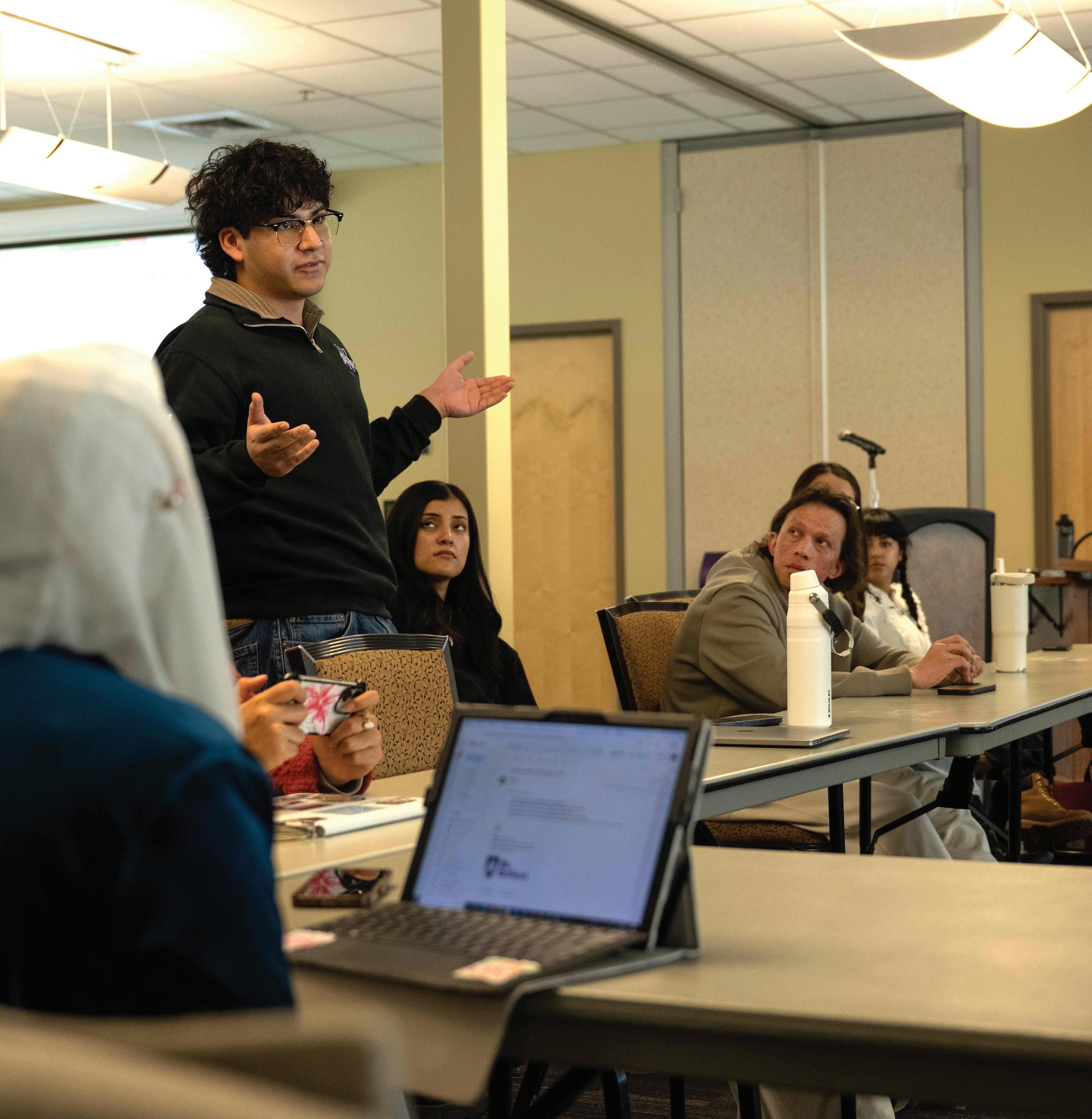
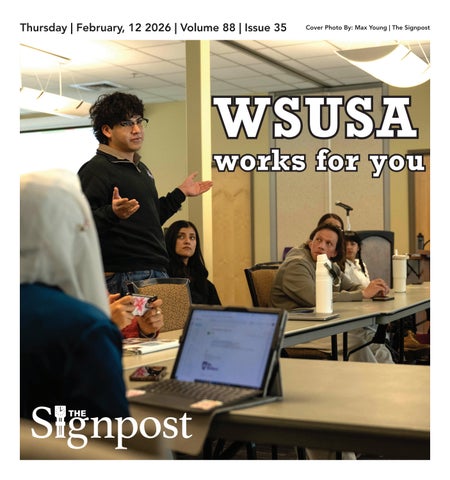
Every fee paying student that attends Weber State University is a part of the Weber State University Student Association. Despite this, many students know very little about how the WSUSA leadership is organized, leading some to wonder “What do WSUSA leadership even do?”
WSUSA is broken into three branches: the judicial, executive and legislative. The judicial system exists to ensure everyone is following the rules, the executive is in charge of making sure everything runs smoothly and the legislative is responsible for appropriating student funds and passing resolutions.
“Those students who are serving in leadership roles on the various teams try to make sure they are planning and providing enjoyable experiences for students throughout the year,” said Tara Peris, director of Student Involvement and Leadership and coordinator of Risk Management.
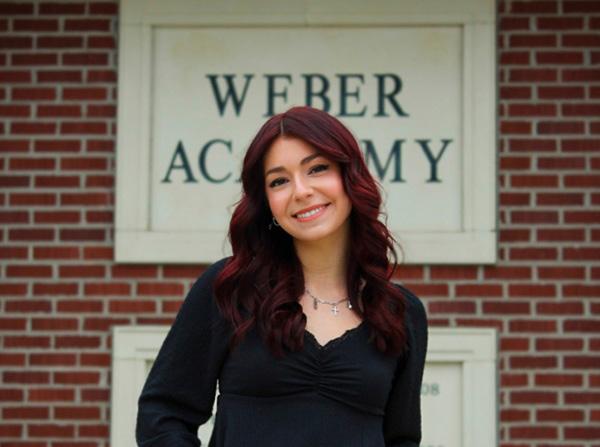
WSUSA is the group in charge of planning events for students as well. Student Body President Mia Foster talked about an upcoming silent disco event on Feb. 20 at 6:30 p.m. “That’s a fun one that we’re working on … Last semester, we had some great success.”
Beyond approving funding for student events, clubs and projects, WSUSA also represents the interest of the student body. WSUSA’s legislative body is made up of 20 senators each representing different interests within Weber State.
“Every college has a different senator that represents them, as well as different diverse populations of people have a senator that represents them,” WSUSA Executive Vice President Landon Coombs said. “So between all of us, we come together in our senate meetings every Monday at two, and we discuss things, we bring up activities or initiatives we’re working on. We try to just make the lives of students a little bit better.”
The senators are responsible for working with Weber State’s different departments to support the students they represent. Shasanka Gautam, the international student senator, for example, has been working with the Career Services department to help international students access better opportunities.
“So right now, a lot of the problems that
(International students) been concerning and they’ve been telling to me is, they are not getting good job opportunities on campus because as an international student, we are limited to work on campus. We cannot work outside. So that’s the major concern,” Gautam said.
The senators are not the only ones who represent the students of Weber State. In the executive wing, WSUSA’s president also serves as a representative. “I get to sit on the board of trustees, which is huge, and in those meetings, I have a report that I give every single month,” Foster said.
Not only does WSUSA work within Weber to represent students on a small scale, but it also works to represent the interests of students statewide being part of the Utah Student Association.
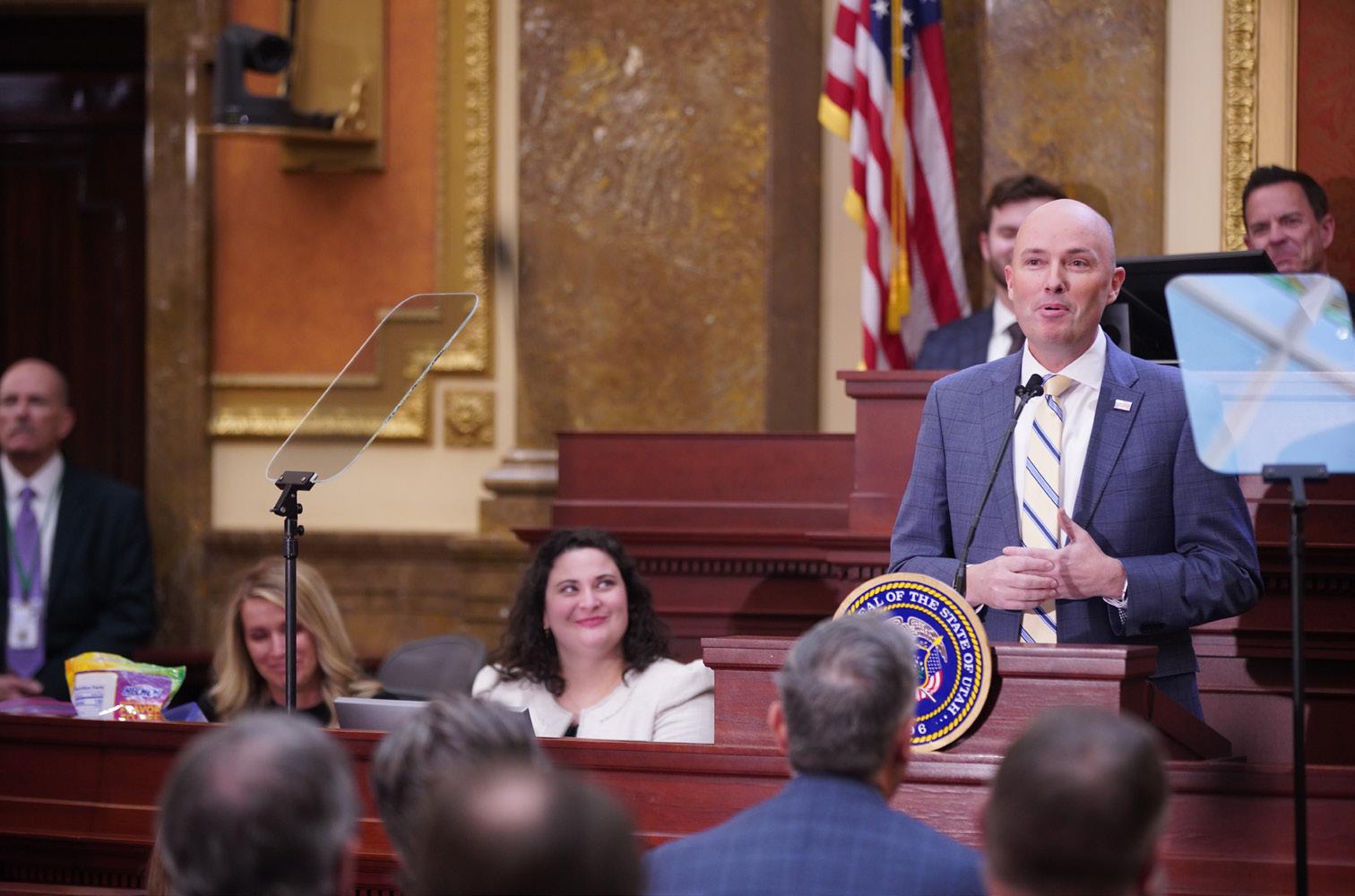
“When we find out things are happening in the legislative session. Last year, for example, it was HB265 and the talk on student fees. The student body presidents get to basically all in Utah, get to talk to our legislators and give guidance about how we feel about it. And we collect information from students,” Foster said.
This cooperation with the legislature gives WSUSA the opportunity to communicate with the legislators regarding some of the most controversial issues related to higher education.
“(The legislature is) seeing from HB261, which was the anti-DEI bill, saying that there’s actually a lot of things that they learned from it, that they saw programs on college campuses that did make sense, that did align with what we should be doing institutionally,” Foster said. “That bill caused a restriction on some of those things. So that was a conversation we had that was interesting.”
Despite the occasional contentious issues that WSUSA deals with, the leadership overwhelmingly enjoys the experience.
“Get involved. There’s so much good with getting involved. It’s such a great experience and something that has shaped my life and shaped many other people’s lives. I’m excited to see the future of WSUSA, and I’m excited to go from there,” Foster said.
Getting involved in WSUSA is easier than some might expect. “Students who are not in leadership positions can participate by simply getting involved in these different experiences by showing up and take advantage of the
opportunities being provided,” Peris said.
There are elections that students can also participate in to decide who represents them.
“I recommend that all students just get involved as soon as they can because truly getting involved at Weber has changed everything for me, opened up a lot of relationships to me, and just a ton of cool dynamics and experiences that I would have never had if I didn’t get involved,” Coombs said.
Traducido por
VICTORIA HERNANDEZ Co-Editora
Por HENRY CRAIG Reportero
Todos los estudiantes que pagan matrícula y asisten a la Universidad de Weber State forman parte de la Asociación de Estudiantes de la Universidad de Weber State. A pesar de ello, muchos estudiantes saben muy poco sobre cómo está organizada el liderazgo de WSUSA, lo que lleva a algunos a preguntarse: “Qué hace realmente el liderazgo de WSUSA”.
WSUSA tiene tres ramas principales: la judicial, la ejecutiva y la legislativa. El sistema judicial existe para asegurarse que todos estén siguiendo las reglas, el poder ejecutivo está a cargo de que todo corra apropiadamente y el poder legislativo es responsable de asignar los fondos destinados a los estudiantes y de aprobar resoluciones.
“Esos estudiantes que están sirviendo los roles de liderazgo en los distintos equipos se esfuerzan por planificar y ofrecer experiencias agradables a los estudiantes a lo largo de todo el año”, afirma Tara Peris, directora de Participación y Liderazgo Estudiantil y coordinadora de Gestión de Riesgos.
WSUSA es el grupo encargado de planear eventos para estudiantes también. La presidenta del cuerpo estudiantil, Mia Foster, habló sobre un próximo evento de discoteca silenciosa que será el 20 de febrero a las 6:30 pm. “Es algo divertido en lo que estamos trabajando… El semestre pasado tuvimos un gran éxito”.
Además de aprobar la financiación de eventos, clubes y proyectos estudiantiles, la WSUSA también representa los intereses del cuerpo estudiantil. El cuerpo legislativo de la WSUSA está compuesto por 20 senadores, cada uno de los cuales representan diferentes intereses dentro de la Universidad de Weber State.
“Cada facultad tiene un senator diferente que la representa, al igual que las diferentes poblaciones diversas tienen un senador que las representa”, dijo el vicepresidente ejecutivo de WSUSA, Landon Coombs. “Así que entre todos nos reunimos en nuestras reuniones del
senado todos los lunes a las 2 pm, y discutimos cosas, planteamos actividades o iniciativas en las que estamos trabajando. Intentamos simplemente mejorar un poco la vida de los estudiantes”.
Los senadores son responsables de colaborar con los diferentes apartamentos de la Universidad de Weber State para apoyar a los estudiantes a los que representan. Shasanka Gautam, la senadora de estudiantes internacionales, por ejemplo, ha estado trabajando con el departamento de Servicios Profesionales para ayudar a los estudiantes internacionales a acceder a mejores oportunidades.
“En este momento, muchos de los problemas que preocupan a los estudiantes internacionales y que me han comentado es que no están consiguiendo buenas oportunidades de trabajo en el campus porque, como estudiantes internacionales, estamos limitados a trabajar en el campus. No podemos trabajar afuera. Esa es la preocupación principal”, dijo Gautam.
Los senadores no son los únicos que representan a los estudiantes de la Universidad de Weber State. En el ala ejecutiva, la presidenta de WSUSA también ejerce como representante. “Tengo la oportunidad de formar parte del consejo de administración, lo cual es muy importante, y en esas reuniones presento un
informe cada mes”, explica Foster.
WSUSA no solo trabaja dentro de Weber para representar a los estudiantes a pequeña escala, sino que también trabaja para representar los intereses de los estudiantes de todo el estado como parte de la Asociación de Estudiantes de Utah.
“Cuando nos enteramos de que están sucediendo cosas en la sesión legislativa. El año pasado, por ejemplo, fue la HB265 y el debate sobre las tasas estudiantiles. Los presidentes de los cuerpos estudiantiles de prácticamente todo Utah pueden hablar con nuestros legisladores y darles nuestra opinión al respecto. Y recopilamos información de los estudiantes”, explicó Foster.
Esta cooperación con la legislatura brinda a la WSUSA la oportunidad de comunicarse con los legisladores sobre algunos de los temas más controvertidos relacionados con la educación superior.
“(La legislatura) está viendo a partir de la HB261, que era la ley contra la DEI, que en realidad hay muchas cosas que han aprendido de ella, que han visto programas en los campus universitarios que tenían sentido, que se alineaban con lo que deberíamos estar haciendo institucionalmente”, dijo Foster. “Esa ley causó una restricción en algunas de esas cosas. Así que esa fue una conversación inte-
vicepresidente ejecutivo
resante que tuvimos”.
A pesar de los ocasionales temas polémicos que aborda la WSUSA, los líderes disfrutan enormemente de la experiencia.
“Participa. Participar tiene muchas ventajas. Es una experiencia fantástica que ha marcado mi vida y la de muchas otras personas. Estoy encantada de ver el futuro de la WSUSA y de seguir adelante desde ahí”, afirmó Foster.
Participar en WSUSA es más fácil de lo que algunos podrían pensar. “Los estudiantes que no ocupan puestos de liderazgo pueden participar simplemente involucrándose en estas diferentes experiencias, asistiendo y aprovechando las oportunidades que se les ofrecen”, dijo Peris.
Hay elecciones en las que los estudiantes también pueden participar para decidir quién los representa. “Recomiendo a todos los estudiantes que se involucren tan pronto como puedan, porque involucrarse de verdad en Weber lo ha cambiado todo para mí, me ha abierto muchas relaciones y me ha proporcionado un montón de dinámicas y experiencias geniales que nunca habría tenido si no me hubiera involucrado”, dijo Coombs.
By KAYLI JACOB Reporter
News:
Elections for senate positions will be held on Feb. 23. Truth and Tuition will also be held on Feb. 23 at 1:30 p.m. where the senate and other faculty will discuss tuition with the senators. Tuition will likely be raised, said Mia Foster, Weber State University Student Association student body president.
Events:
The College of Science will be holding a club fair on Feb. 20 with a goal of promoting science clubs. The Student Success Center opening will be Feb. 11 from 11 a.m. to 2 p.m.
The women’s basketball team will have a game Feb. 12 against the University of Idaho. They will have another game Feb. 14 at 2 p.m. The hockey team’s senior night will be at 7:15 p.m. on Feb. 14.
The Senate broke into committees to cover the four issues decided upon last week. They are “Issues in the University,” “Service Project,” “Advocate for Students” and “Constitution.”
The current budget is near $10,000. A budget request was made by a group of engineering students working on a senior project. They
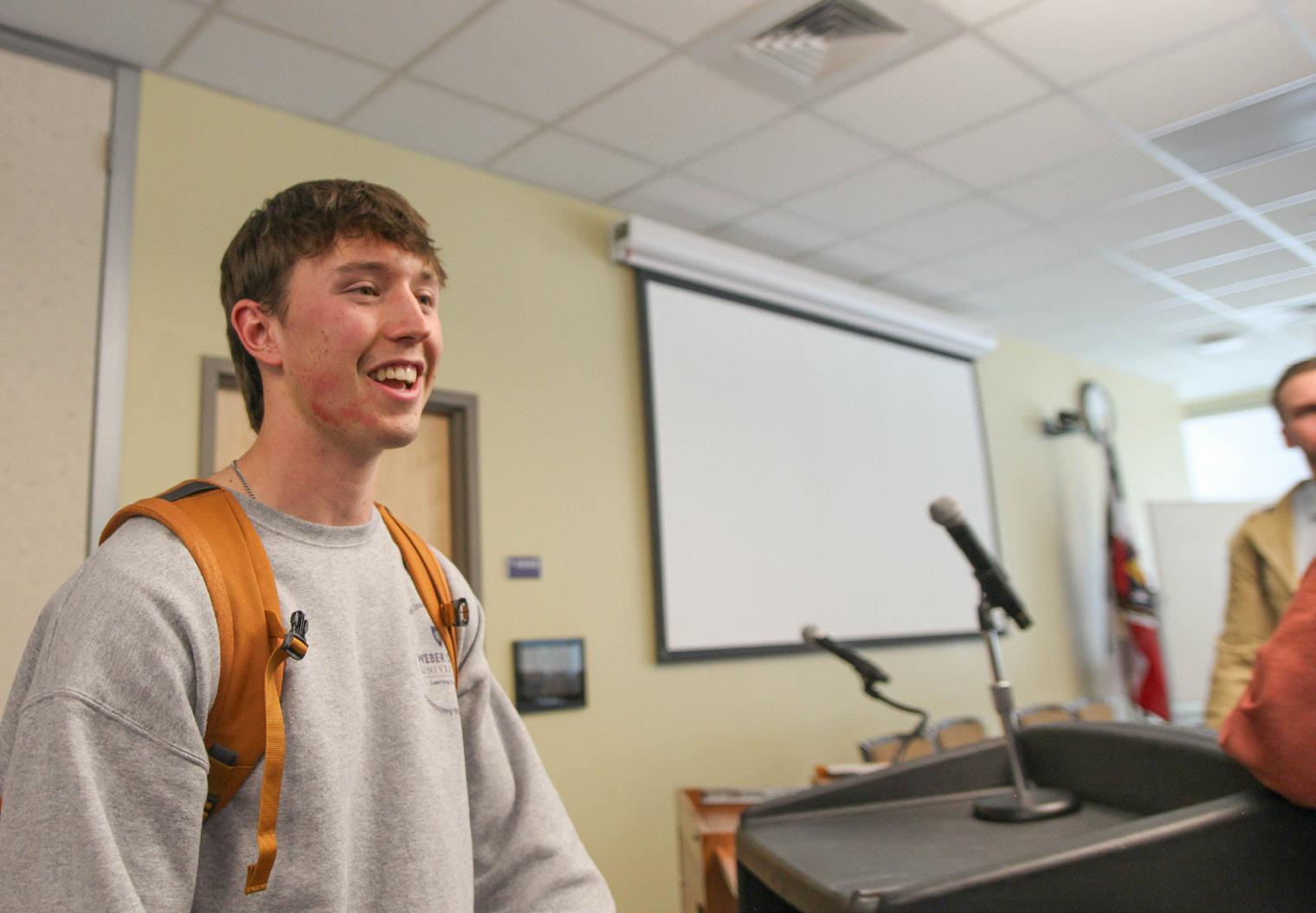
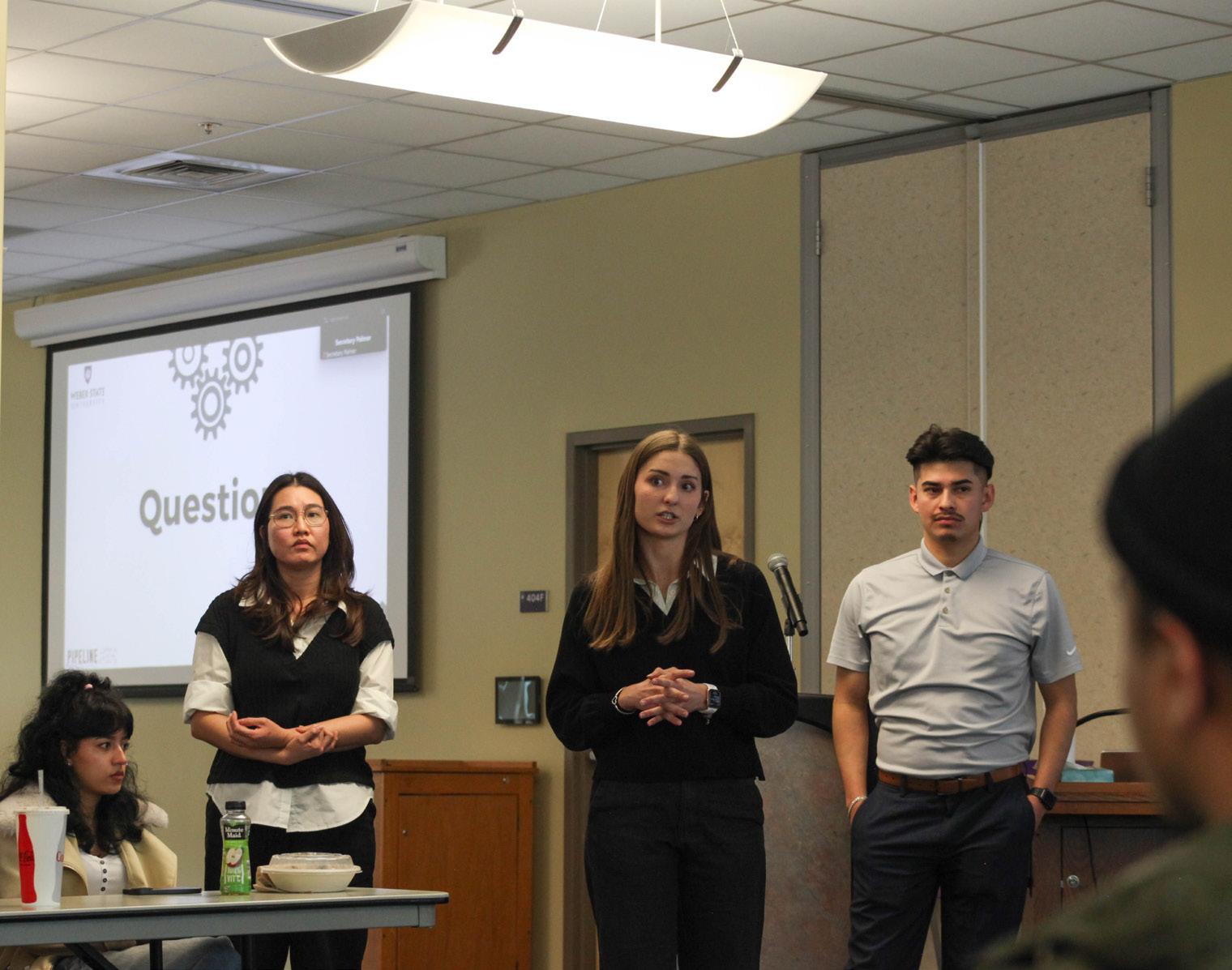
TOP: Landon Coombs smiles after the Senate meeting on Feb. 2. BOTTOM: Presenters pitch
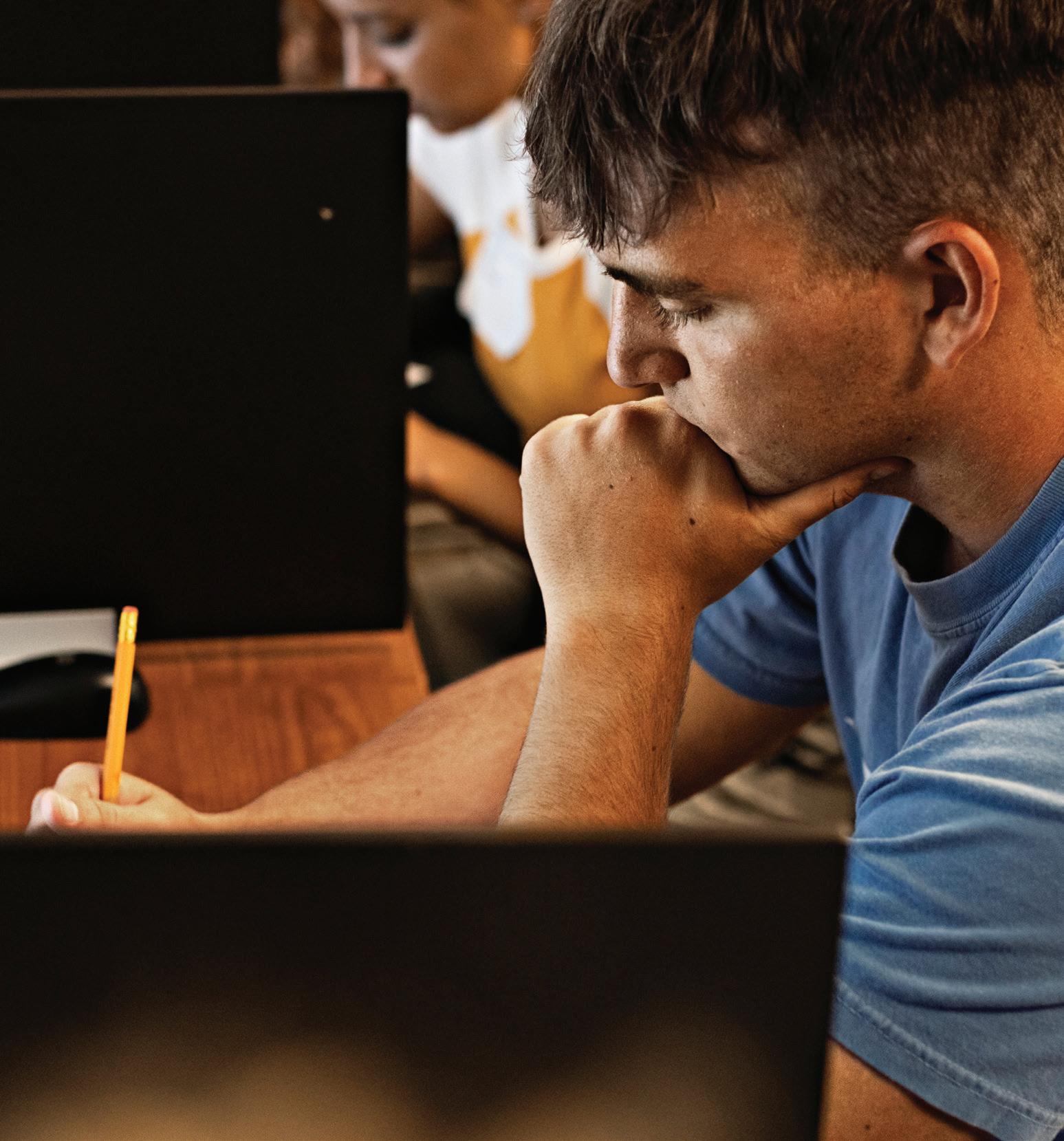
requested $2,400 to attend a conference in Egypt held by the Institute of Electrical and Electronics Engineers. They would be representing Weber State University while presenting on communication. They hope this presentation will lead to more interdisciplinary practices within the engineering department. The request was granted for the full amount. Senate meetings are held every Monday
from 2 p.m. until around 3 p.m. on the fourth floor of the Shepherd Union. Students are welcome to participate and voice their concerns or opinions.
Por KAYLI JACOB Reportera Traducido por DAVID ROMAN AROS Co-Editor
Noticias:
Las elecciones para los puestos del senado se celebrarán el 23 de febrero. Truth and Tuition también se celebrará el 23 de febrero a la 1:30 p.m., donde el senado y otros miembros del cuerpo docente debatirán con los senadores sobre las tasas académicas. Es probable que se aumenten las tasas académicas, según Mia Foster, presidenta del cuerpo estudiantil de la Asociación de Estudiantes de
la Universidad Estatal de Weber.
Eventos:
La Facultad de Ciencias celebrará una feria de clubes el 20 de febrero con el objetivo de promover los clubes científicos. La inauguración del Centro de Éxito Estudiantil tendrá lugar el 11 de febrero, de 11:00 a.m. a 2:00 p.m.
Deportes:
El equipo femenino de baloncesto jugará un partido el 12 de febrero contra la Universidad de Idaho. Tendrá otro partido el 14 de febrero a las 2 p.m. La noche de los seniors del equipo de hockey será el 14 de febrero a las 7:15 p.m.
Informe del comité:
El Senado se dividió en comités para tratar los cuatro temas decididos la semana pasada. Estos son “Temas de la universidad”, “Proyecto de servicio”, “Defensa de los estudiantes” y “Constitución”.
Presupuesto:
El presupuesto actual es de casi 10.000 dólares. Un grupo de estudiantes de ingeniería que trabajan en un proyecto de fin de carrera presentó una solicitud de presupuesto. Solicitaron 2400 dólares para asistir a una con-
ferencia en Egipto organizada por el Instituto de Ingenieros Eléctricos y Electrónicos. Representarán a la Universidad Estatal de Weber y harán una presentación sobre comunicación. Esperan que esta presentación dé lugar a más prácticas interdisciplinarias dentro del departamento de ingeniería. La solicitud fue concedida por el importe total.
Las reuniones del Senado se celebran todos los lunes de 2 p. m. a 3 p. m. aproximadamente en la cuarta planta del Shepherd Union. Los estudiantes pueden participar y expresar sus inquietudes u opiniones.
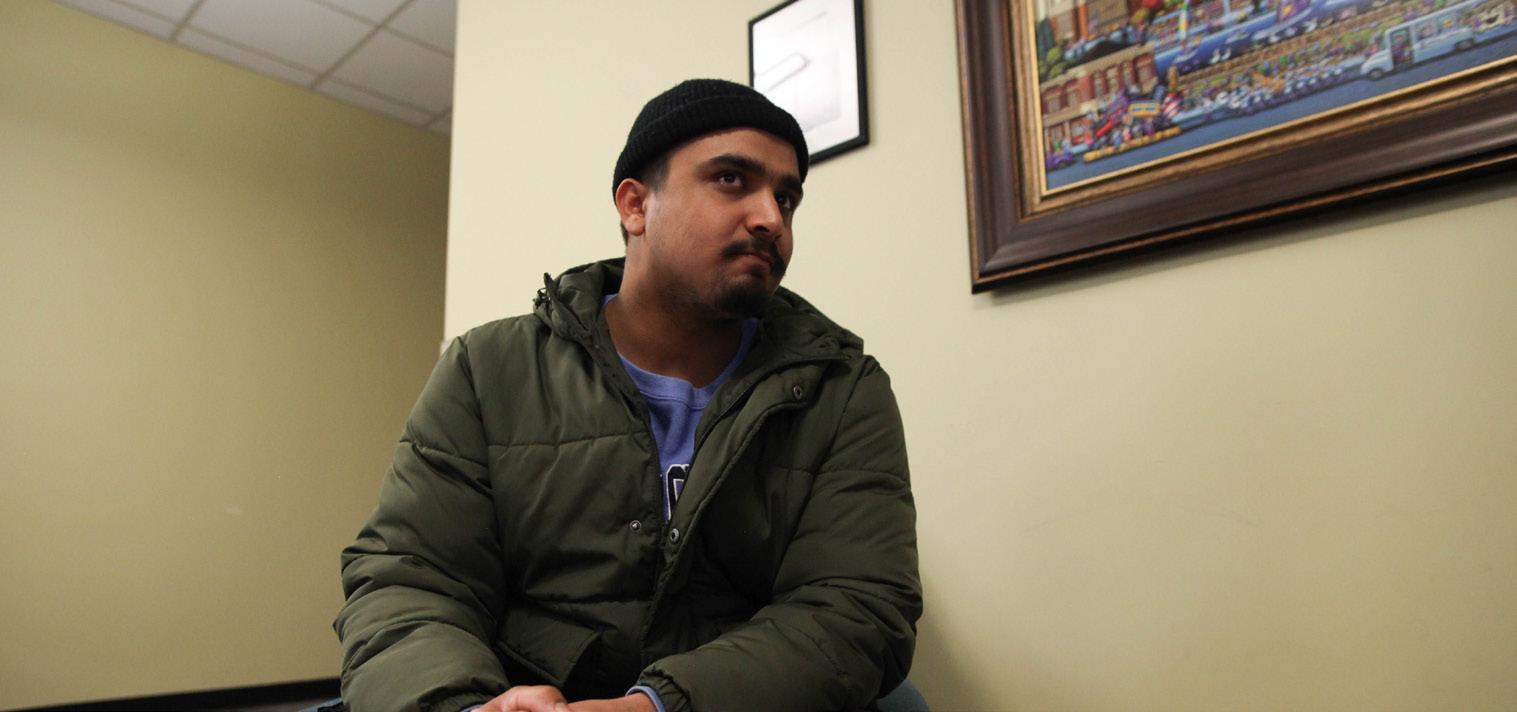
ARRIBA: Shasanka Gautam reflexiona en el vestíbulo tras la reunión del Senado el 2 de febrero de.
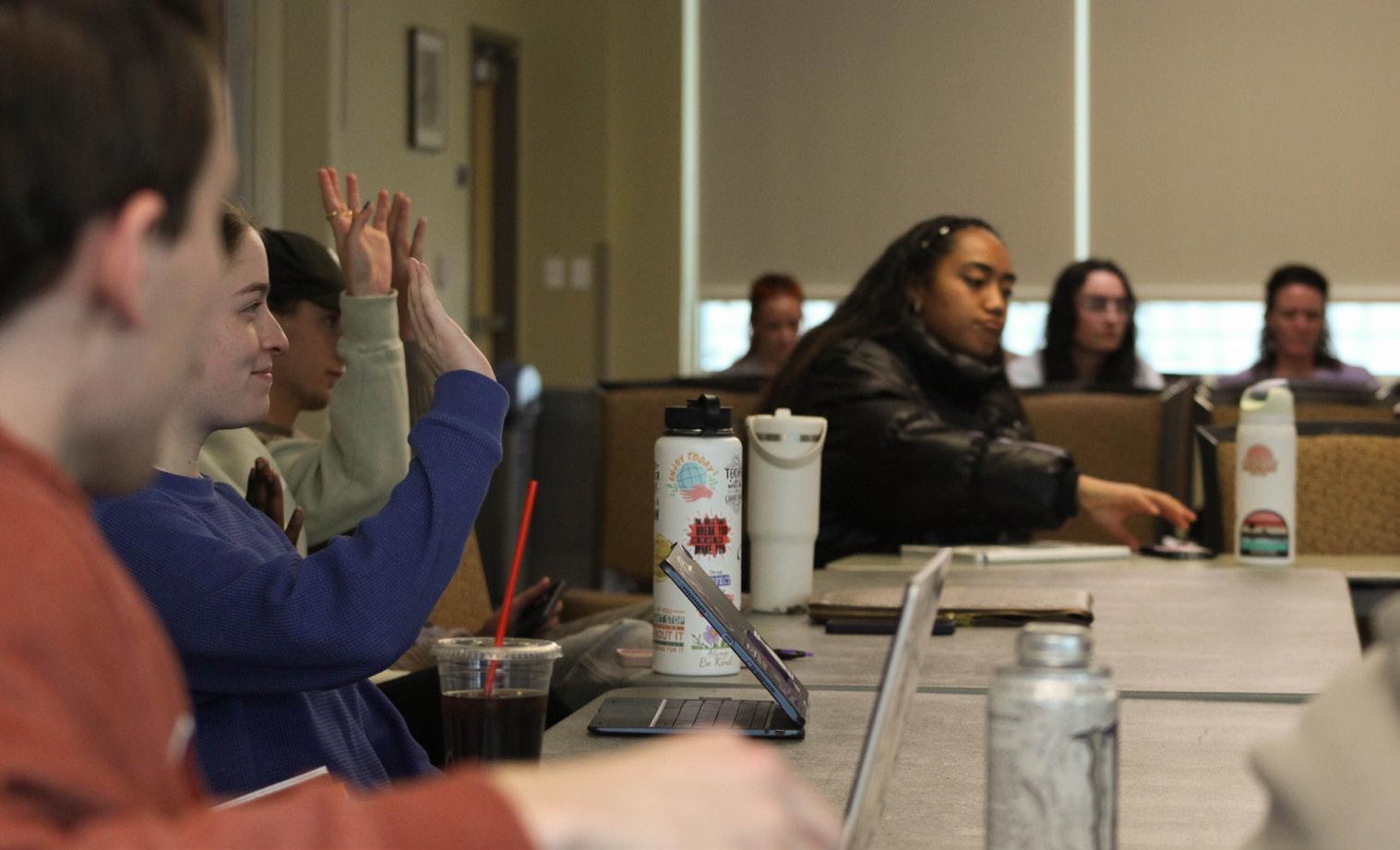
ABAJO: El Senado solicita un aplazamiento y vota sobre la financiación durante una reunión del Senado en la sala 404 el 2 de febrero de.




Weber State University is proposing a tuition increase of 2.5 - 3.5%, meaning an additional $0 to $101 per semester for a full-time resident in the associate tuition bracket, and $74 - $103 in the upper division tuition bracket for the upcoming school year. It is proposed this tuition increase be used for the following:
· Required Legislative Match: $1,810,333.70
· Mandated Costs: $476,800
· Eliminating Development Math Course Fee: $250,000 A student fee increase of 2.5 - 3.5%, meaning an additional $9.86 - $13.80 per semester, has also been proposed.
MONDAY, FEB. 23
2 - 3 p.m., Weber State University Shepherd Union Room 404 or via Zoom: https://weber.zoom.us/j/88275011452 A public hearing on the proposed increase will be held on:
By JAMES GORDON Managing Editor
As students juggle classes, jobs and stress, many at Weber State University are turning to Christian groups as a pathway to friendships and support in a fast-paced college environment.
In a recent study by Pew Research Center, a national survey found more U.S. adults say religion influences American life now than in years prior.
Chip Rotolo, who wrote the report for the recent study, said the poll found that 18% of adults in the United States felt that religious influence in American life was growing in 2024 — the lowest in two decades. However, a year later, that number jumped to 31%, the highest percentage seen in 15 years.
Rotolo also noted that while older adults have been more likely to express a positive view of religion than young adults, the latest findings show that may be shifting.
“Between 2024 and 2025, nearly all large U.S. religious groups have become more likely to say religion is gaining influence,” Rotolo said.
At Weber State, Christian student groups say the trend isn’t just about faith but also about finding community.
Karmyn Fernandez, a member of Weber State’s InterVarsity chapter, said she joined InterVarsity in hopes of joining a community.
InterVarsity is a Christian fellowship with chapters on college campuses nationwide. Along with Bible studies and small groups, the student ministry incorporates games, activities and weekly gatherings into its programming.
“I didn’t feel like I really knew who I was,” Fernandez said. “The only thing I would ever do was pray, which is weird because I didn’t go to church, I didn’t do anything, read the Bible, anything like that.”
Fernandez said connecting with InterVarsity helped her build a sense of community that can’t be found elsewhere on campus.
“I think just practicing your faith is also just so different from other clubs in general,” she said. “You don’t really have that kind of community when you’re in other clubs.”
She said the group’s focus on vulnerability and shared faith has helped her form close relationships.
“You get into these intimate friendships and relationships very fast,” Fernandez said.
“Being able to share who you are, what’s going on in your lives, hear about other people’s lives and then just getting to know tons of new people each year.”
That sense of community is echoed among students involved in other Christian groups on campus.
“I’ve grown up Catholic all my life,” Eli Bravo said, who attended the Bible study on Wednesday night. “But the last two years, I really wanted to get deeper in my faith.”
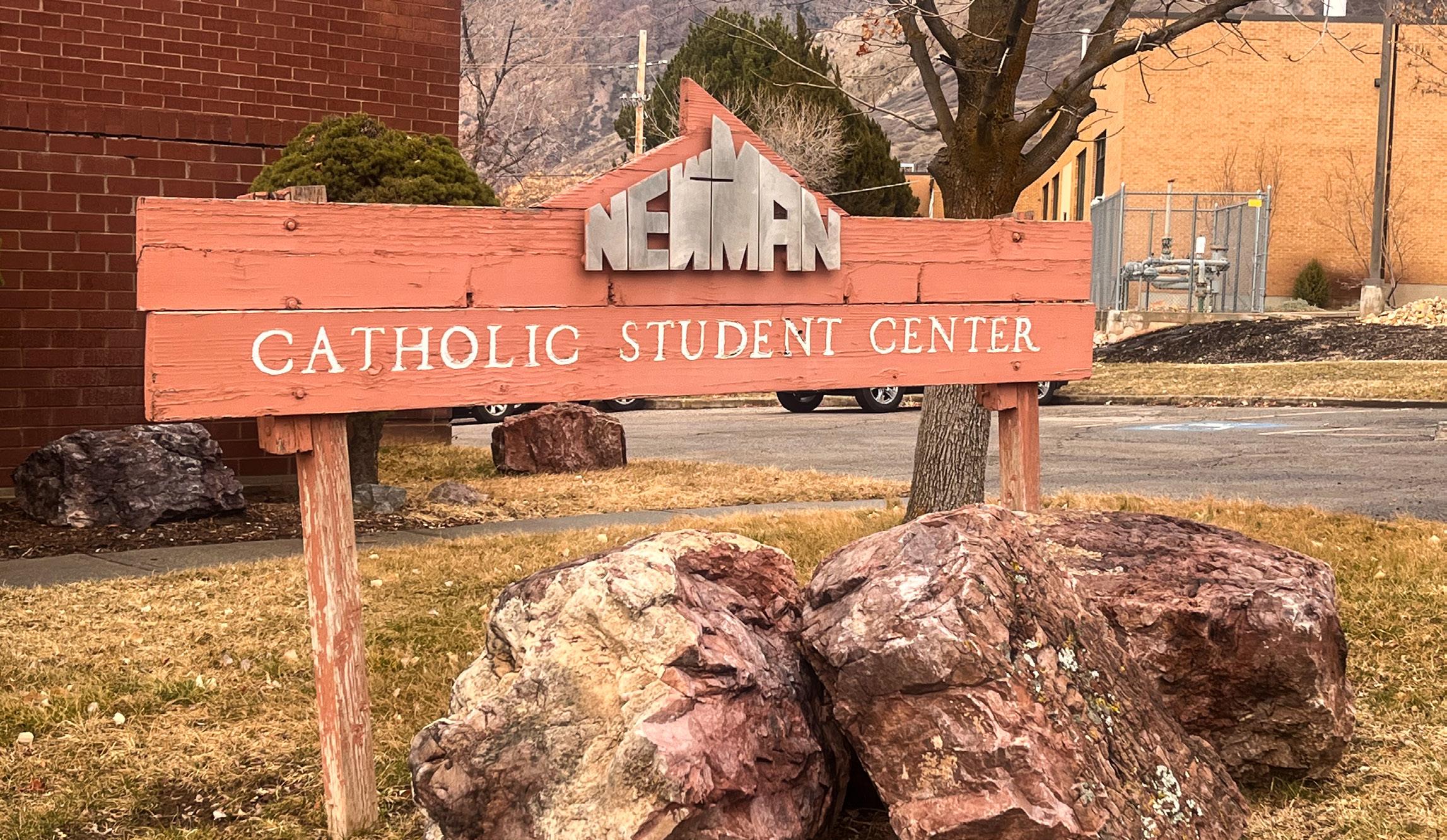
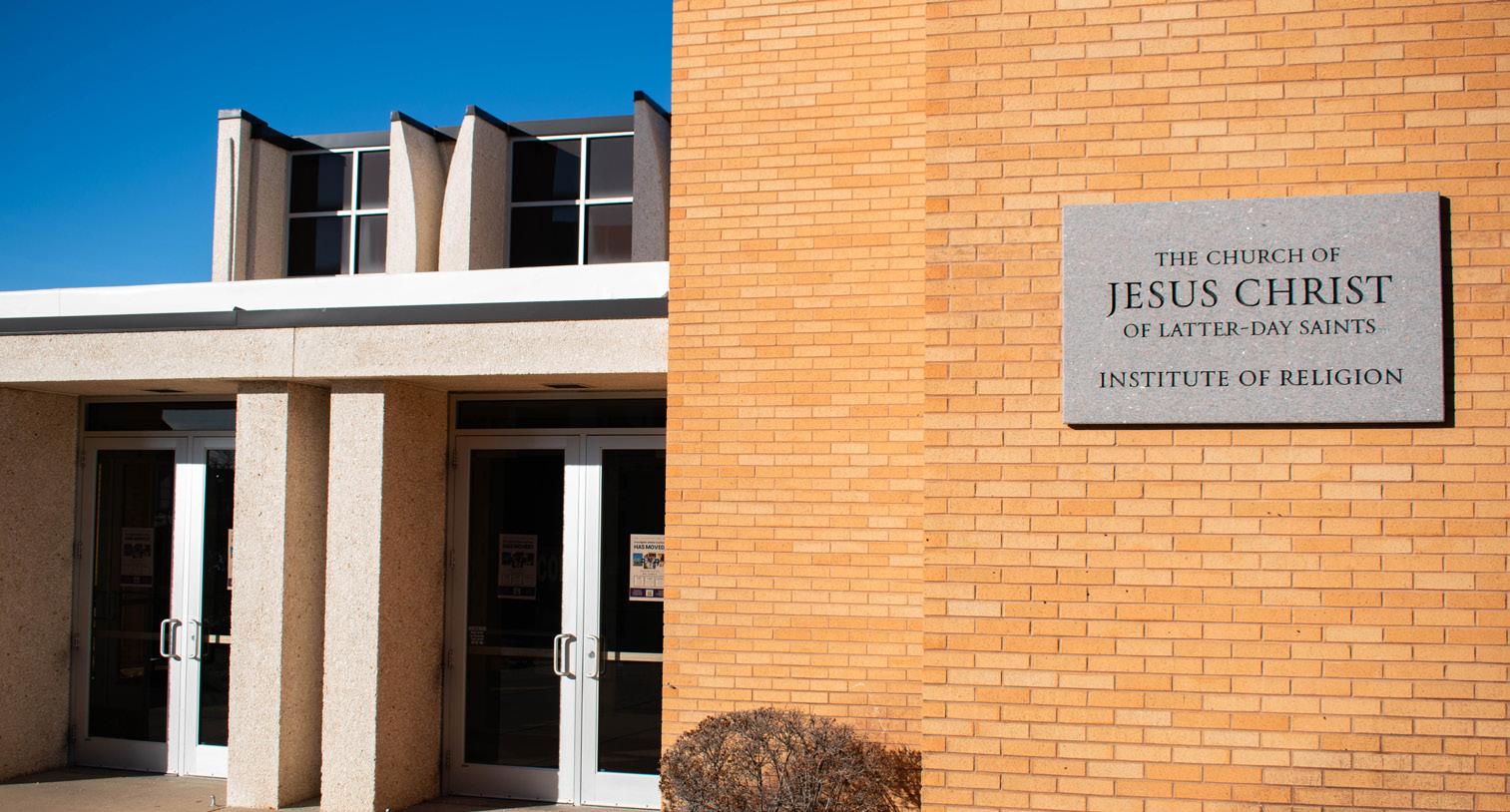
Bravo attends the Newman Center, a Catholic campus ministry at Weber State. Every Wednesday, students can meet there to pray, study the Bible with the local priest or connect with other students who share their faith.
“I’ve felt like here in the state of Utah, the Catholic population is super big,” Bravo said.
“Having the space where I can meet with people around my same age and discuss the shared faith that we have and help each other become close to Christ is a pretty big motivation why I’m coming here.”
Many students like Bravo say these meetings help them navigate questions about identity, pressure and belonging.
During a Wednesday night Bible study
on Nov. 12, 2025, students sat in chairs and couches around a table eating pizza as the priest guided them through a reading. Throughout the discussion, he paused to ask questions about faith, morals and problem solving.
Wes Sowelo, who attended that Wednesday night Bible study, said meetings like this help him to dig deeper into his beliefs. At the end of Bible studies, the priest gives students a challenge for the week where they apply lessons from the reading into their daily lives.
“Coming here and really trying to explore and expand, especially understanding now that there are other people on campus that are experiencing what I’m kind of going through, is great to know that we’re all not perfect and we’re all not struggling alone,” Sowolo said. “I feel like that lack, with the youth, of knowing that you’re not alone, is what drives people away from religion because everybody thinks there’s not that much aspect of actually socially interacting with people.”
To reach more students, some groups have taken their efforts to social media.
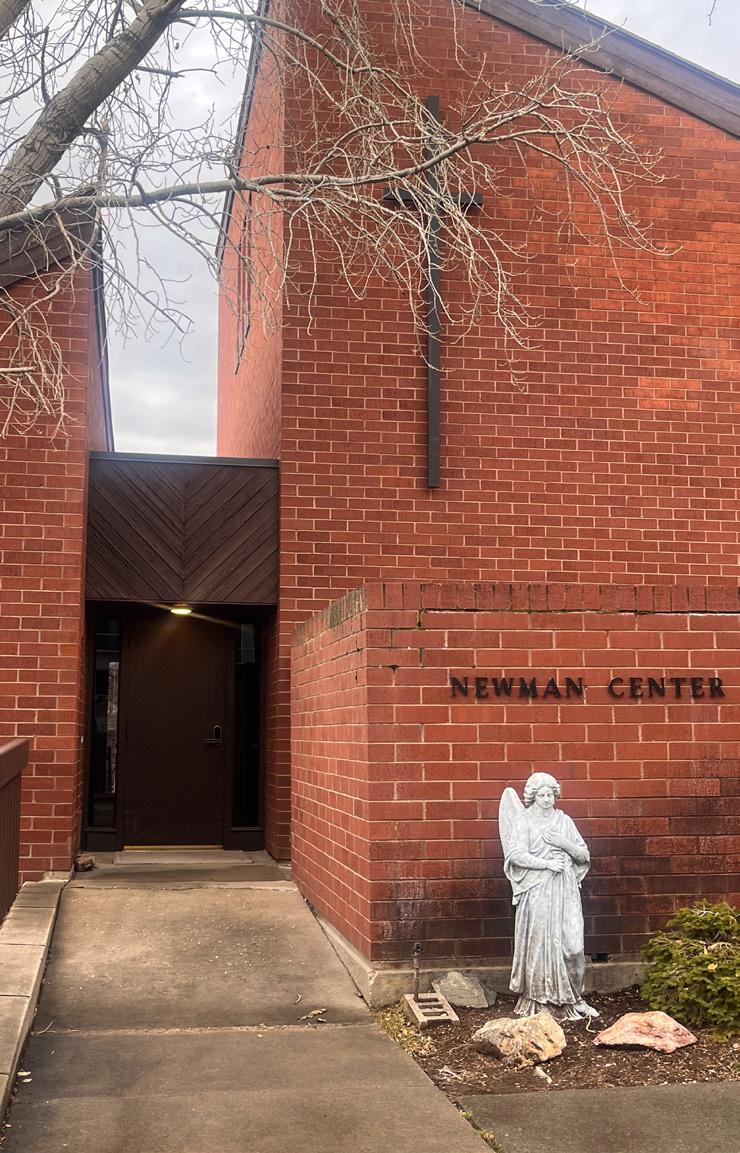
Jonah Isom, who regularly attended institute classes for The Church of Jesus Christ of
Latter-day Saints on campus before its renovation, said they have begun posting entertaining content and event announcements to attract more students.
“We’ve definitely seen a huge increase in followers and engagement in our social media,” Isom said. “And I think that’s been drawing more people.”
Before the temporary closing of the Institute of Religion building, Isom said the Institute’s attendance surged on Tuesday nights, when multiple classes run at once and hundreds of students gather. He added that many come with friends, stay for food afterward and take part in rotating activities such as swing dancing, line dancing or other group events.
Along with entertaining activities, Isom said connecting to faith on campus gives students a sense of relief between their busy schedules.
“It gives me a clearer mind in some of the aspects,” Isom said. “I really find it beneficial. I think a lot of people feel the same way, which is why they’re willing to take time out of their busy days to go because they can feel that spiritual boost that it’s giving them, which benefits them in really every aspect of their life.”
Traducido
Traductora
Por JAMES GORDON Director Editoral
Mientras los estudiantes compaginan clases, trabajos y estrés, muchos en la Universidad de Weber State están recurriendo a grupos cristianos como vía para entablar amistades y obtener apoyo en un entorno universitario acelerado.
En un estudio reciente por Pew Research Center, una encuesta nacional, se encontró que más adultos estadounidenses dicen que la religión influye más en la vida estadounidense hoy en día que en años anteriores.
Chip Rotolo, quien escribió el reporte del estudio reciente, dijo que la encuesta reveló que el 18% de adultos en los Estados Unidos sienten que la influencia religiosa en la vida estadounidense estaba creciendo en 2024el porcentaje más bajo en dos décadas. Sin embargo, un año después, la cifra aumentó al 31%, el porcentaje más alto registrado en 15 años.
Rotolo también observó que, mientras los adultos mayores han sido más propensos a expresar una opinión positiva sobre la religión que los adultos jóvenes, los últimos hallazgos muestran que eso podría estar cambiando.
“Entre 2024 y 2025, casi todos los grandes grupos religiosos de EE.UU., se han vuelto más propensos a mencionar que la religión está ganando influencia”, dijo Rotolo. En Weber State, los grupos de estudiantes cristianos afirman que la tendencia no solo tiene que ver con la fe, sino también con la
búsqueda de una comunidad.
Karmyn Fernandez, miembro de la sección de InterVarsity de la Universidad de Weber State, mencionó que se unió a InterVarsity con la esperanza de unirse a una comunidad.
InterVarsity es una comunidad cristiana con secciones en campus universitarios por todo el país. Además de los estudios bíblicos y los grupos pequeños, el ministerio estudiantil incorpora juegos, actividades y reuniones semanales en su programación.
“No sentía que realmente supiera quien era”, dijo Fernandez. “Lo único que hacía era rezar, lo cual es extraño porque no iba a la iglesia, no hacía nada, no leía la biblia ni nada por el estilo”.
Fernandez dijo que conectar con InterVarsity la ayudó a crear un sentido de comunidad que no se puede encontrar en ningún otro lugar del campus.
“Creo que el simple hecho de practicar tu fe es muy diferente de lo que hacen otros clubes en general”, dijo ella. “En otros clubes no existe realmente ese tipo de comunidad”.
Ella dijo que el enfoque del grupo es la vulnerabilidad y la fe compartida, esto la ha ayudado en sus relaciones cercanas.
“Entras en estas amistades y relaciones íntimas muy rápido”, dijo Fernandez. “Poder compartir quién eres, lo que está pasando en tu vida, escuchar la vida de otras personas y conocer a montones de personas nuevas cada año”.
Esa sensación de comunidad se refleja entre los estudiantes que participan en otros grupos cristianos del campus.
“He crecido como catolico toda mi vida”, dijo Eli Bravo, quien asistió al estudio bíblico el miércoles por la noche. “Pero en los últimos
dos años, he querido profundizar en mi fe”.
Bravo asiste al Newman Center, un ministerio catolico universitario en Weber State. Cada miércoles los estudiantes pueden reunirse allí para rezar, estudiar la biblia con el sacerdote local o relacionarse con otros estudiantes que comparten su fe.
“He sentido que aquí, en el estado de Utah, la población católica es muy grande”, dijo Bravo. “Tener un espacio donde puedo reunirme con gente de mi edad, hablar sobre la fe que compartimos y ayudarnos mutuamente a acercarnos a Cristo es una gran motivación para venir aquí”.
Muchos estudiantes como Bravo, dicen que estas reuniones los ayudaron a abordar cuestiones relacionadas con la identidad, la presión y el sentido de pertenencia.
Durante un estudio bíblico llevado la noche del miércoles 12 de noviembre de 2025, los estudiantes se sentaron en sillas y sofás alrededor de una mesa comiendo pizza mientras el sacerdote los guiaba a través de una lectura. A lo largo de la discusión, hizo una pausa para plantear preguntas sobre la fe, la moral y la resolución de problemas.
Wes Sowelo, quien asistió al estudio bíblico del miércoles por la noche, dijo que reuniones como estas le ayudan a profundizar en sus creencias. Al final de los estudios bíblicos, el sacerdote les propone a los estudiantes un reto para la semana en el que deben aplicar las lecciones de la lectura a su vida cotidiana.
“Venir aquí y tratar realmente de explorar y expandirse, especialmente ahora que comprendo que hay otras personas en el campus que están pasando por lo mismo que yo, es fantástico saber que ninguno de nosotros es perfecto y que no estamos luchando solos”, dijo Sowolo. “Creo que esa falta, entre los jóvenes, de saber que no estás solo, es lo que aleja a la gente de la religión porque todo el mundo piensa que no hay mucho aspecto de interacción social con otras personas”.
Para llegar a más estudiantes, algunos grupos han trasladado sus esfuerzos a las redes sociales.
IZQUIERDA: La entrada sur del Instituto de los Santos de los Últimos Días en un día soleado, el 2 de febrero.
DERECHA: La entrada al Centro Católico Newman en el campus de Ogden, situado frente al edificio David O. McKay Education.
Jonah Isom, quien asistió regularmente a las clases del instituto de La Iglesia de Jesucristo de los Santos de los Últimos Días en el campus antes de su renovación, dijo que han comenzado a publicar contenido de entretenimiento y anuncios de eventos para atraer a más estudiantes.
“Definitivamente hemos visto un gran aumento de seguidores y participación en nuestras redes sociales”, dijo Isom. “Y creo que eso ha atraído a más gente”.
Antes del cierre temporal del edificio del Instituto de Religión, Isom mencionó que la asistencia al Instituto aumentaba los martes por la noche, cuando se daban varias clases a la vez y se reunían cientos de estudiantes. Añadió que muchos venían con amigos, se quedaban a comer después y participaban en actividades rotativas como baile swing, baile en línea u otros eventos grupales.
Además de las actividades de entretenimiento, Isom dijo que conectarse con la fe en el campus les brinda a los estudiantes una sensación de alivio entre sus agendas apretat. “Me aclara la mente en algunos aspectos”, dijo Isom. “Realmente lo encuentro beneficioso. Creo que mucha gente piensa lo mismo y por eso están dispuestos a sacar tiempo de sus ajetreadas jornadas para acudir, porque pueden sentir ese impulso espiritual que les proporciona, lo que les beneficia en todos los aspectos de su vida”.
By GAVIN NELSON Editor
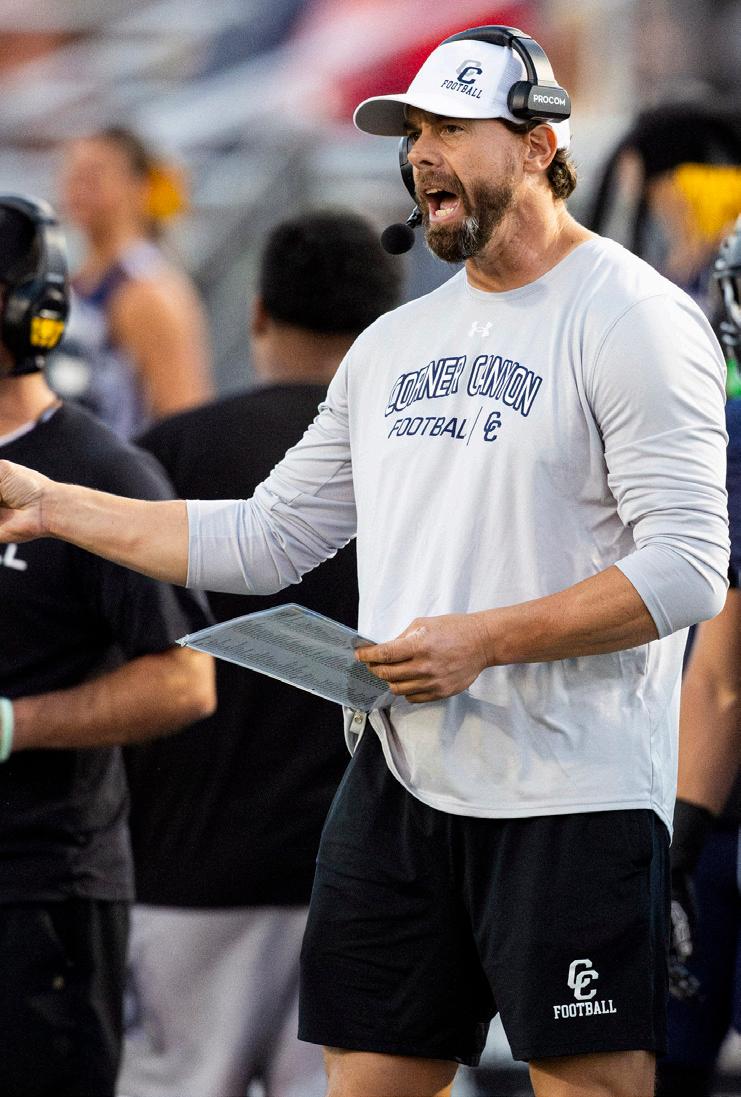
Weber State University announced the hiring of Eric Kjar as the new football head coach on Dec. 16, 2025. Kjar will be coming from Corner Canyon High School where he was head football coach.
Kjar immediately began rebuilding a program that had its worst season since 2014. In taking over a new program, there are two paramount concerns. First, replacing players that have transferred because of the absence of the previous coach who recruited them.
Second, new head coaches tend to prefer their own staff rather than the previous coach’s, so a high turnover in assistant coaches is inevitable.
Of the 2025 team’s coaches, Kjar retained only four, but three will coach in the upcoming season.
Defensive Ends Coach James Cowser and Quarterbacks Coach Zach Larson will remain in their roles, while Defensive Graduate Assistant Jace Campbell has been promoted to assistant coach.
Wide Receivers Coach and Special Teams Coordinator Skyler Ridley was retained and promoted to associate head coach, but shortly thereafter was hired as the wide receivers coach at Utah State University by his former college head coach, Bronco Mendenhall.
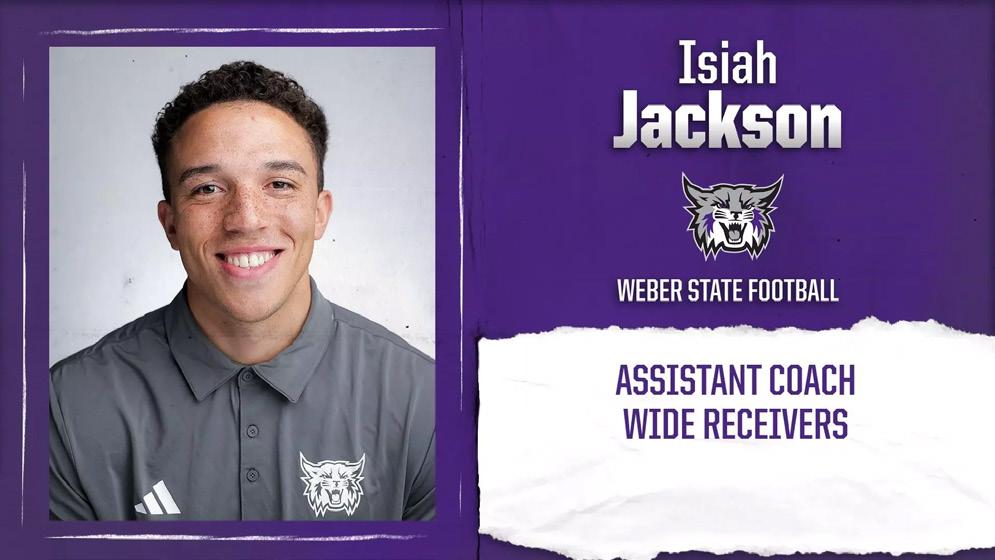
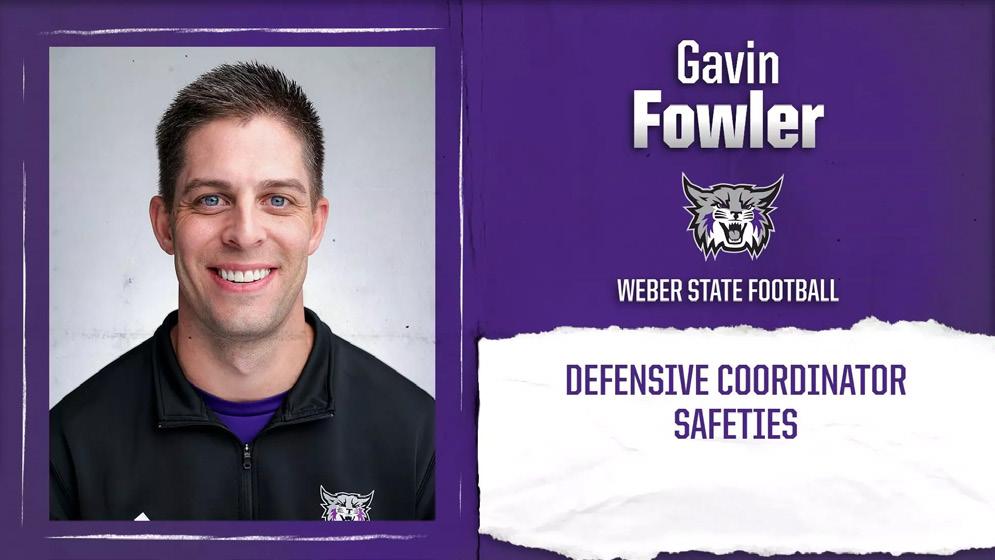
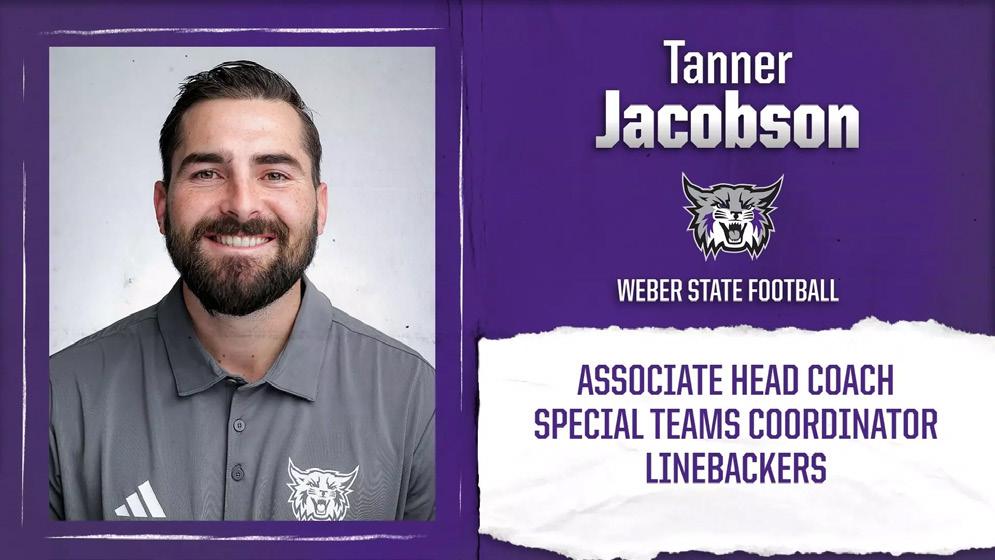
Kjar brought in seven new coaches to Ogden, including former Tyler Junior College head coach Tanner Jacobson, who will serve as associate head coach, special teams coordinator and linebackers coach; and former assistant safeties coach at Brigham Young University Gavin Fowler, who will serve as defensive coordinator and safeties coach.
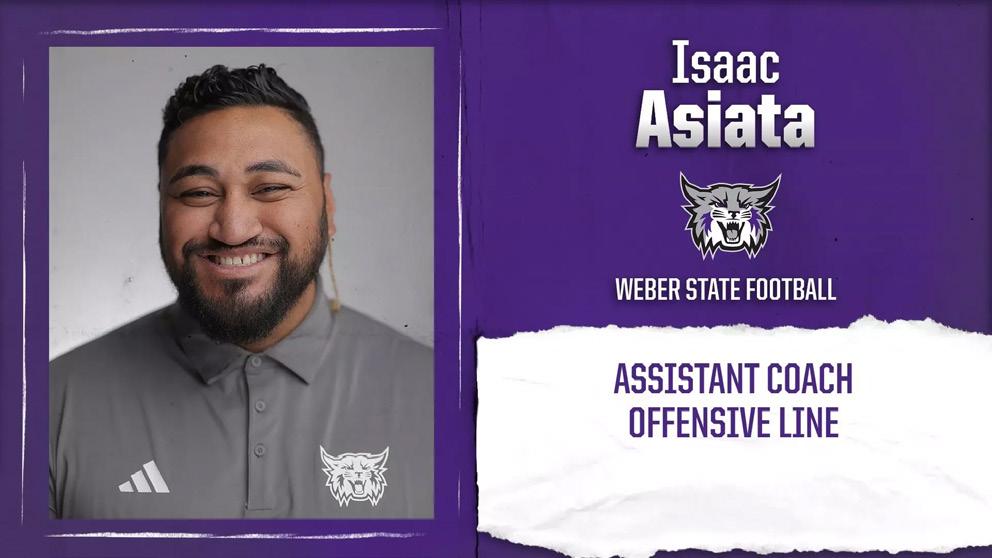
Former University of Utah assistant offensive line coach Isaac Asiata, who played in the NFL for two seasons, will serve as offensive line
coach. Former Wildcat players Kam Garrett and Isiah Jackson will serve as cornerbacks and wide receivers coaches, respectively.
Former Weber State All-American cornerback Eddie Heckard was hired as the cornerbacks coach. However, former Weber State Head Coach Jay Hill, who is now the defensive coordinator at the University of Michigan, also hired Heckard and he chose to work at Michigan.
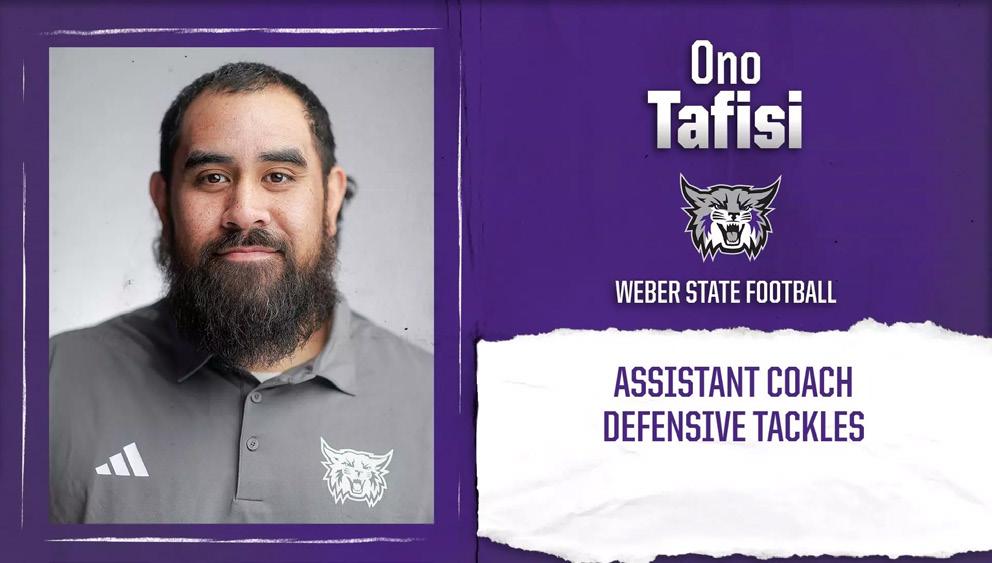
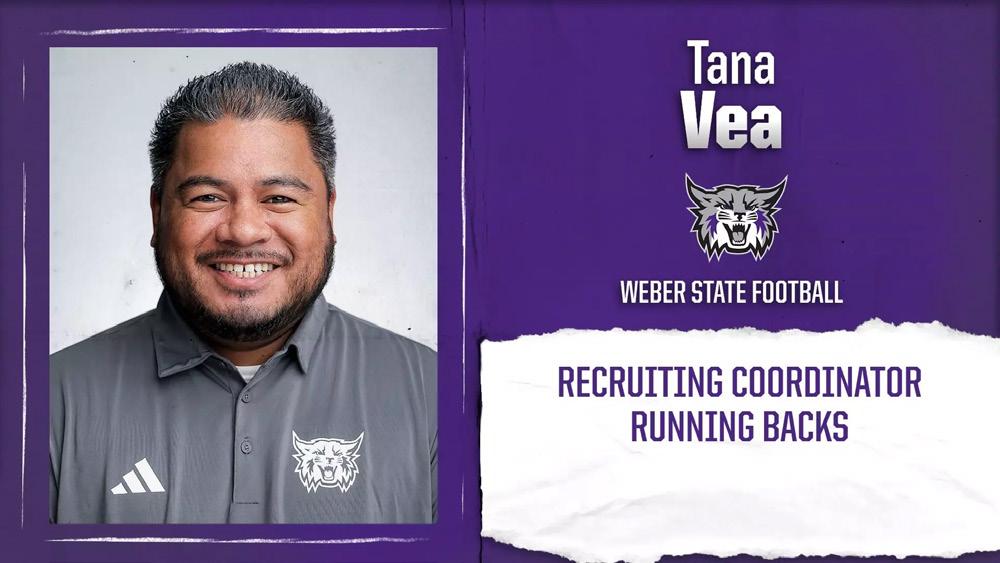
Jacobson’s defensive line coach at Tyler Junior College, Ono Tafisi, will serve in a similar role at Weber State as the defensive tackles coach. Finally, former Weber State graduate assistant Tana Vea will serve as running backs coach and recruiting coordinator.
After losing nearly 30 players to the transfer portal, Kjar and his staff took on the monumental task of replacing them.
One unit that was gutted by transfer portal departures was the offensive line, as longtime Offensive Line Coach Brent Myers was let go by Kjar, thus leading to many offensive linemen leaving.
“There needed to be a little bit of change and more guys on the roster, too, especially offensive line,” Kjar said. “We had to add a bunch there, and I think we’ll try to carry at least 18 to 20 offensive linemen into spring — into fall next year.”
One of the biggest pickups in the transfer portal was Devin Brown, who transferred from the University of California, Berkeley. Brown played his senior season at Corner Canyon and holds the state record for passing yards in a season. Brown was a 4-star prospect coming out of high school, ranked second-best in the state by 247Sports. He committed to Ohio State University, where he appeared in 17 games over three years and threw three touchdown passes. After his redshirt-sophomore season, Brown transferred to Cal, where he sat behind true freshman Jaron-Keawe Sagapo-
lutele.
“His story to come here is probably the opposite of what you’re seeing in the modern era of college football, where he turned down a lot of money to come here,” Kjar said. “(He) wanted to be back in a scheme where he felt like it’s a lot of fun to be a quarterback in and just build something.”
Jackson Gilkey and Dijon Jennings, the two quarterbacks who played the most last season, both entered the transfer portal. However, with Brown and the two returning quarterbacks, Cash McCollum and Kingston Tisdell, Kjar is optimistic about the quarterback room.
“I think there’s a lot of assumptions that it’s just Devin’s to go, but it’s not,” Kjar said. “I love the other two guys that are here right now already and felt strongly about them both from watching last year.”
Kjar, who coached Utah high school football for 22 years, knew the importance of bringing in local players to the program.
“It’s one of the deepest states per capita,” Kjar said. “The Utah thing matters, but it’s not like the kids here are doing something different than like in other states where they are recruiting kids from.”
One problem Weber State football has faced over the past few years is a lack of an explosive offense, something Kjar wants to change.
“I’m excited to put … an explosive offensive out on the field,” Kjar said.
However, Kjar understands that football is a three-faceted game, and a team cannot be great in just one facet and win games.
“I don’t think a coach ever sets out to be, ‘We’re going to be good on defense, crappy on offense and really good on special teams, and we’re going to win football games.’ It should be, ‘We’re going to be good in all three phases.”
Weber State football begins its spring practices on March 9, and will begin its 2026 cam-
paign on Aug. 29 in Greeley, Colorado, against the University of Northern Colorado.
LEFT: Ono Tafisi has been named as the new assistant coach over defensive tackles.
MIDDLE: Tana Vea has been named the recruiting coordinator and running back coach.
RIGHT: Isaac Asiata has been named the new assistant coach over the offensive line
Por GAVIN NELSON Editor Traducido por LUNA MALAGON SOLORZANO Traductora
La Universidad de Weber State anunció la contratación de Eric Kjar como el nuevo entrenador en jefe de fútbol americano el 16 de diciembre de 2025. Kjar llega desde la escuela secundaria Corner Canyon, donde se desempeñaba como entrenador principal.
Kjar comenzó de inmediato a reconstruir un programa que tuvo su peor temporada desde 2014.
Al hacerse cargo de un nuevo programa, existen dos preocupaciones fundamentales. Primero, reemplazar a los jugadores que se han transferido debido a la ausencia del entrenador anterior que los había reclutado.
Segundo, los nuevos entrenadores en jefe tienden a preferir a su propio personal en lugar del equipo del entrenador previo, por lo que una alta rotación de asistentes es inevitable.
De los entrenadores del equipo de 2025, Kjar dejó sólo a cuatro, pero tres entrenarán la próxima temporada.
El entrenador de defensive ends James Cowser y el entrenador de quarterbacks Zach Larson permanecerán en sus puestos, mientras que el Asistente Técnico Defensivo Jace Campbell fue promovido a entrenador asistente.
El entrenador de wide receivers y coordinador de special teams Skyler Ridley fue retenido y ascendido a entrenador en jefe asociado, pero poco después fue contratado como entrenador de wide receivers en la Universidad de Utah State por su antiguo entrenador universitario, Bronco Mendenhall.
Kjar trajo a siete nuevos entrenadores a Ogden, incluyendo al ex entrenador en jefe de Tyler Junior College, Tanner Jacobson, quien será entrenador en jefe asociado, coordinador de special teams y entrenador de linebackers; y al ex asistente de safeties en la Universidad Brigham Young, Gavin Fowler, quien será coordinador defensivo y entrenador de safeties.
El ex asistente de offensive line de la Universidad de Utah, Isaac Asiata, quien jugó dos temporadas en la NFL, será el entrenador de la offensive line. Los ex jugadores de los Wildcats Kam Garrett e Isiah Jackson serán entrenadores de cornerbacks y de wide receivers, respectivamente.
El ex cornerback All-American de Weber State, Eddie Heckard, fue contratado como entrenador de cornerbacks. Sin embargo, el ex entrenador en jefe de Weber State, Jay Hill, ahora coordinador defensivo en la Universidad de Michigan, también contrató a Heckard, y este decidió trabajar en Michigan.
El entrenador de la defensive line de Jacobson en Tyler Junior College, Ono Tafisi, desempeñará un rol similar en Weber State como entrenador de defensive tackles. Finalmente, el ex asistente graduado de Weber State, Tana Vea, será el entrenador de running backs y coordinador de reclutamiento.
Tras perder a casi 30 jugadores en el portal de transferencias, Kjar y su personal asumieron la monumental tarea de reemplazarlos.
Una unidad que quedó especialmente afectada por las salidas fue la línea ofensiva, ya que el veterano entrenador de línea ofensiva Brent Myers fue despedido por Kjar, lo que llevó a que muchos linieros ofensivos se marcharan.
“Necesitábamos un poco de cambio y también más jugadores en el roster, especialmente en la línea ofensiva”, dijo Kjar. “Tuvimos que añadir bastantes ahí, y creo que intentaremos tener al menos entre 18 y 20 linieros
ofensivos para la primavera — y para el otoño del próximo año”.
Uno de los fichajes más importantes en el portal de transferencias fue Devin Brown, quien llegó desde la Universidad de California, Berkeley. Brown jugó su última temporada de secundaria en Corner Canyon y posee el récord estatal en pase de yardas en una temporada. Fue un prospecto de cuatro estrellas al salir de la escuela secundaria, clasificado como el segundo mejor del estado por 247Sports. Se comprometió con la Universidad de Ohio State, donde participó en 17 partidos durante tres años y lanzó tres pases de touchdown. Después de su temporada como redshirt-sophomore, Brown se transfirió a Cal, donde quedó detrás del verdadero novato Jaron-Keawe Sagapolutele.
“Su historia para venir aquí es probablemente lo opuesto a lo que se está viendo en la era moderna del fútbol universitario, donde rechazó mucho dinero para venir”, dijo Kjar. “Quería estar nuevamente en un esquema donde sintiera que es muy divertido ser quarterback y simplemente construir algo”.
Jackson Gilkey y Dijon Jennings, los dos quarterbacks que más jugaron la temporada pasada, entraron al portal de transferencias. Sin embargo, con Brown y los dos quarterbacks que regresan, Cash McCollum y Kingston Tisdell, Kjar es optimista sobre el grupo.
“Creo que hay muchas suposiciones de que el puesto es simplemente de Devin, pero no es así”, dijo Kjar. “Me encantan los otros dos chicos que ya están aquí y me sentí muy bien con ambos al verlos el año pasado”.
Kjar, quien entrenó fútbol americano de secundaria en Utah durante 22 años, conocía la importancia de incorporar jugadores locales al programa.
“Es uno de los estados más profundos por cápita”, dijo Kjar. “Lo de Utah importa, pero no es que los chicos aquí están haciendo algo
diferente a lo que hacen en otros estados de donde se reclutan jugadores”.
Uno de los problemas que ha enfrentado el fútbol de Weber State en los últimos años es la falta de una ofensiva explosiva, algo que Kjar quiere cambiar.
“Estoy emocionado de poner una ofensiva explosiva en el campo”, dijo Kjar.
Sin embargo, Kjar entiende que el fútbol es un juego de tres facetas, y un equipo no puede ser excelente en solo una y ganar partidos.
“No creo que un entrenador se proponga decir: ‘Vamos a ser buenos en defensa, malos en ofensiva y muy buenos en equipos especiales, y vamos a ganar partidos’. Debería ser: ‘Vamos a ser buenos en las tres fases’”.
El fútbol de Weber State comienza sus prácticas de primavera el 9 de marzo y arrancará su campaña 2026 el 29 de agosto en Greeley, Colorado, contra la Universidad de Northern Colorado.
IZQUIERDA: El exjugador de fútbol americano de la Universidad Weber State, Isiah Jackson, ha sido nombrado nuevo entrenador asistente de los wide receivers.
MEDIO: Gavin Fowler ha sido nombrado coordinador defensivo y responsable de los safeties.
DERECHA: Tanner Jacobson ha sido nombrado nuevo entrenador jefe adjunto, así como coordinador del special teams sobre los linebackers.
By GRAYSON FREESTONE Asst. Editor
Weber State University’s women’s softball started its season in Phoenix for the Kickoff Classic on Feb. 6.
Starting with a matchup against Santa Clara University, the Wildcats were in an early hole after giving up two runs in the first inning and one in the third. They fought back with Taegan Smith’s Runs Batted In single in the fourth, Sadie Kirk’s two-RBI double and Apollonia Maldonado’s RBI single in the fifth, to take a 4–3 lead. They allowed three runs in the sixth and lost 6–4
Weber’s offense struggled in their next game against Grand Canyon University. They totaled four hits, one walk and struck out eight times, losing 3–0.
The offense would break through in another game against Santa Clara. The Broncos scored three runs from Hazyl Gray and Rebecca Rubio’s RBIs. Their pitching struggled two innings later, allowing six runs, followed by another run in the fifth, leading to an 8–3 loss.
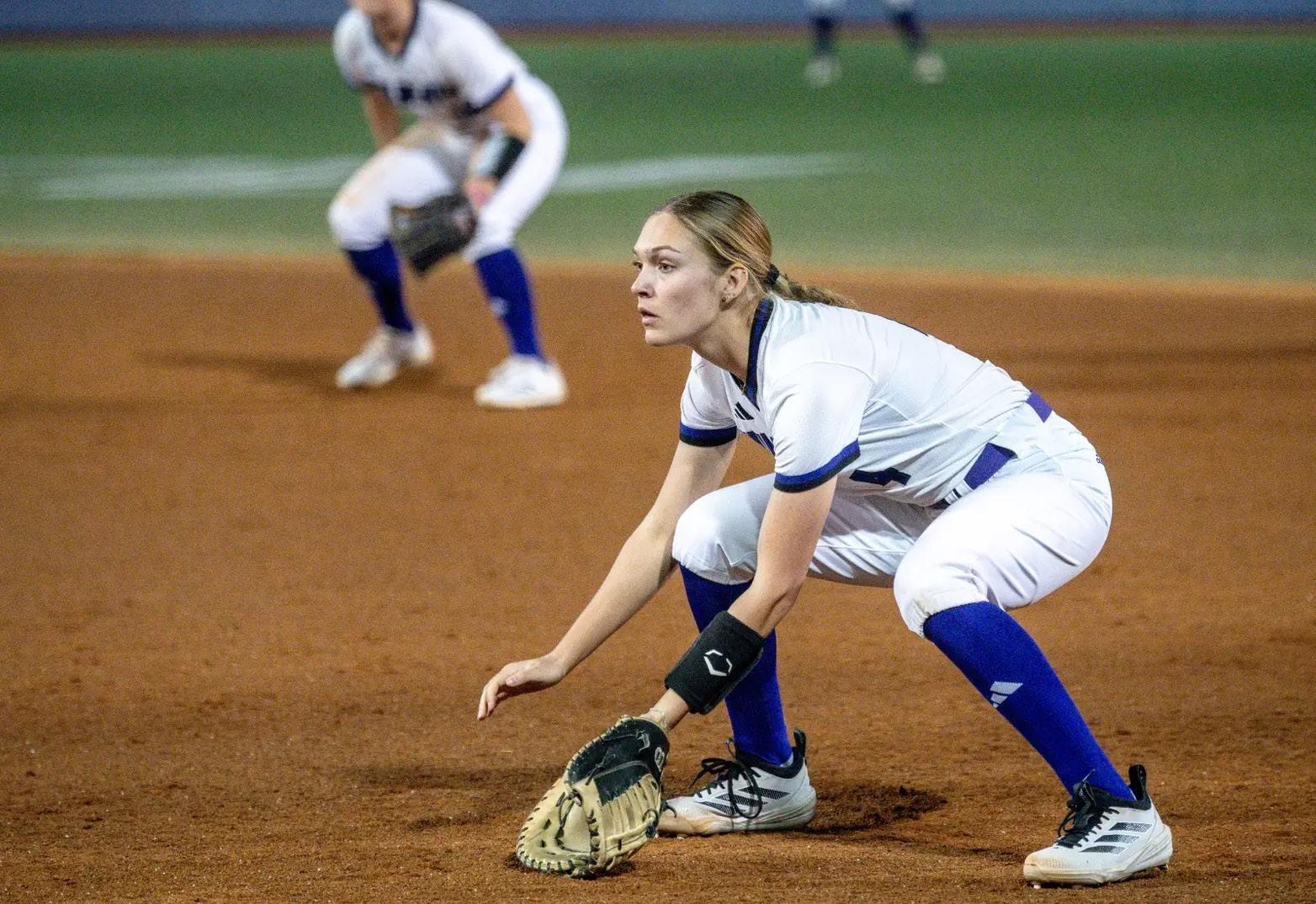
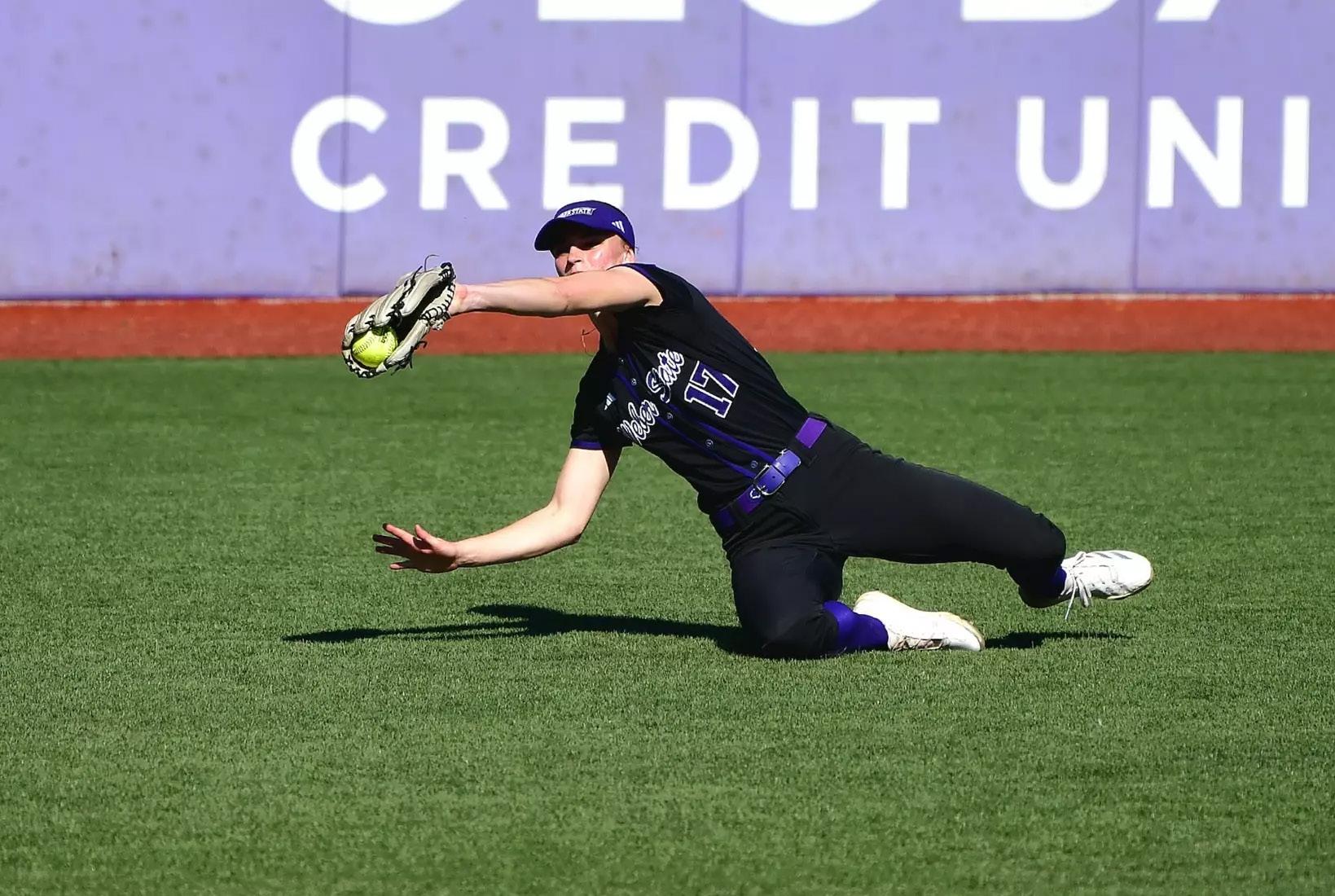
Weber State University softball pitcher Mariyah Delgado (#4), gets into position to catch the ball during the final game of the Kickoff Classic in Phoenix, Arizona on Sunday, Feb. 8.
The Wildcats shifted their focus to two games against Southern Utah University to wrap up the tournament.
Weber struggled out of the gate again, giving up three runs in the first. They made another comeback with a Mariyah Delgado run and singles to drive in a run by Delgado and Sammy Gallegos. Their tie evaporated with three Southern Utah runs in the sixth inning, leading to a 6–3 loss.
Their early struggles continued in the following game; they allowed two runs in the`first and second innings, followed by another in the third. The Wildcats chipped away at the 4–0 deficit with Smith’s RBI single in the fifth inning and Gallegos’ RBI single in the sixth.
The Wildcats and Thunderbirds scored single runs in the seventh, with Weber’s coming from Abby Grundy’s RBI. The 6–3 loss drops the Wildcats to 0–5 to start the non-conference play.
They travel to San Diego, California, for the San Diego Tournament.

Traducido por
VICTORIA HERNANDEZ
Co-Editora
By GRAYSON FREESTONE Editor Assistente
El equipo femenino de softball de la Universidad de Weber State comenzó la temporada en Phoenix para el Kickoff Classic el 6 de febrero.
Comenzando con un juego contra la Universidad de Santa Clara, las Wildcats se encontraron en una situación complicada tras encajar dos corridas en la primera entrada y una en la tercera. Respondieron con una carrera impulsada sencilla de Teagan Smith en la cuarta, una carrera doble impulsada de Sadie Kirk y una carrera impulsada sencilla de Apollonia Maldonado en la quinta, para ponerse por delante en el marcador de 4-3. En la sexta entrada encajaron tres carreras y acabaron perdiendo 6-4.
La ofensiva de Weber State tuvo dificultades en su siguiente partido contra la Universidad de Grand Canyon. Sumaron un total de cuatro hits, una base por bola y ocho strikeouts, perdiendo por 3-0.
Editor-in-Chief
Nelly Hernandez Tejada nhernandeztejada@mail.weber.edu
Managing Editor
James Gordon jamesgordon@mail.weber.edu
Collaboration Editor
Bryce Odenthal bryceodenthal@mail.weber.edu
Design & Graphics Editor
Izabelle Cordeiro icorderio@mail.weber.edu
Assistant Design & Graphics Editor
Sydnie Parkinson sydniepalmer@mail.weber.edu
La ofensiva se impuso en otro partido contra Santa Clara. Las Broncos anotaron tres carreras gracias a los RBI de Hazel Gray y Rebecca Rubio. Su pitcheo tuvo dificultades dos entradas más tarde, permitiendo seis carreras, seguidas de otra carreras en la quinta, lo que llevo a una derrota 8-3.
Las Wildcats centraron su atención en dos partidos contra la Universidad de Southern Utah para cerrar el torneo.
Weber volvió a tener dificultades desde el principio, cediendo tres carreras en la primera entrada. Volvieron a remontar con una carrera de Mariyah Delgado y sencillos que impulsaron una carrera de Delgado y Sammy Gallegos. Su empate se esfumó con tres carreras de Southern Utah en la sexta entrada, lo que les llevó a una derrota por 6-3.
Sus dificultades iniciales continuaron en el siguiente partido: permitieron dos carreras en la primera y segunda entrada, seguidas de otra en la tercera. Las Wildcats recortaron la desventaja de 4-0 con una carrera sencilla impulsadora de Smith en la quinta entrada y otra carrera sencilla impulsadora de Gallegos en la sexta.
Las Wildcats y las Thunderbirds anotaron una carrera cada uno en la séptima entrada,
Photography Editor Anna Kuglar briannakuglar@mail.weber.edu
Assistant Photography Editor Gavin Olson gavinolson1@mail.weber.edu
News Co-Editor
Kyle Greenawalt kylegreenawalt@mail.weber.edu
News Co-Editor
Aisha Rucker aisharucker@mail.weber.edu
Sports Editor Gavin Nelson gavinnelson1@mail.weber.edu
la de Weber gracias a una carrera sencilla impulsadora de Abby Grundy. La derrota por 6-3 deja a los Wildcats con un balance de 0-5 al inicio de la temporada fuera de conferencia. Viajan a San Diego, California, para participar en el Torneo de San Diego.
Assistant Sports Editor Grayson Freestone graysonfreestone@mail.weber.edu
Culture Editor
Jared Mitchell jaredmitchell@mail.weber.edu
Assistant Culture Editor Hannah Richards hannahrichards1@mail.weber.edu
Chief Copy Editor
Mindy Brown mindybrown1@mail.weber.edu
Assistant Chief Copy Editor Sloane Ostler aostler@mail.weber.edu
Translation Co-Editor Victoria Hernandez victoriahernandez1@mail.weber.edu
Translation Co-Editor
David Roman Aros davidromanaros@mail.weber.edu
Business Manager
Rob Steedley robertsteedley@weber.edu
Adviser
Jean Norman jeannorman@weber.edu