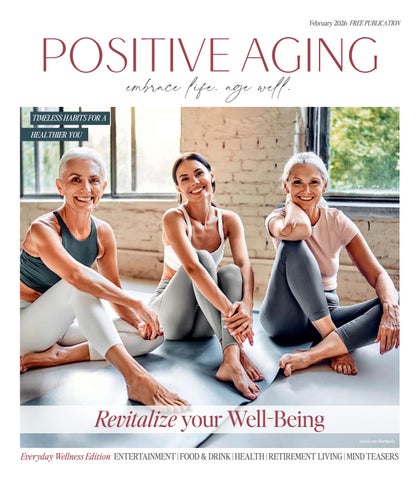
Everyday wellness isn’t about perfection, trends, or the latest superfood—it’s about the small choices we make when no one is watching. It’s how we start our mornings, how we pause (or don’t) during the day, and how we listen to our bodies when they’re quietly asking for care. Lately, I’ve been reminded that wellness doesn’t live in grand gestures. It lives in ordinary moments: a deep breath before a busy day, a walk around the block instead of scrolling, a glass of water before another cup of coffee.
What I’ve learned is that wellness looks different for everyone—and that’s not just okay, it’s necessary. Some days it’s movement and energy; other days it’s rest and saying no without guilt. Real wellness allows space for life as it actually is, not as we think it should be. It meets us in the middle of responsibilities, relationships, aging, healing, and growth. And most importantly, it’s flexible. It evolves with us.
There’s a quiet power in choosing consistency over intensity. Making time for sleep. Eating foods that nourish instead of restrict. Finding joy in connection. Wellness isn’t a destination; it’s a relationship we build with ourselves, one day at a time.
As we move forward, my hope is that we all give ourselves permission to redefine what “healthy” truly means. Not perfect. Not polished. Just honest, sustainable, and kind. Because everyday wellness isn’t about doing more—it’s about doing what matters, consistently, with intention. And that, in itself, is powerful.
POSITIVE AGING is published on the first of each month . The articles in this publication are in no way intended to replace the knowledge or diagnosis of your doctor. We advise seeing a physician whenever a health problem arises requiring an expert’s care. -Amanda Editor-in-chief
EMBRACE LIFE. AGE WELL. KEEP READING.
Contact
For information on advertising or to submit articles call, 262-343-5163, or Email: positiveaging@wi.rr.com.
Disclaimer
Images - istock.com
Special Thanks -To all the local professionals that provide us with articles containing new information and keeping all our readers informed of the latest in positive living. And to all our advertisers, and you the readers!
MyPositiveAging.com
Positive Aging is distributed throughout the Milwaukee, Waukesha, Ozauakee and Washington county.
Tapestry Of Health:
Weaving Wellness into Your Life Through the New Science of Integrative Medicine
Phothocredit: istock.com/ Kesu01
Daniel A. Monti, MD and Anthony J. Bazzan, MD artfully synthesizes the complex world of healthy living into a set of clear principles in guiding you to feel your best. This requires a healthcare approach that integrates all aspects of your well-being, including physical, emotional, intellectual, spiritual, and social. Doctors Monti and Bazzan lay out how to gain and maintain long-term vitality by integrating practices from restorative medicine and nutritional science. They believe the parts cannot be well unless the whole is well.
As clinical and academic leaders in the emerging medical specialty of in-
tegrative medicine, Drs. Monti and Bazzan have devoted their careers to developing wellness strategies that can transform the way you feel, think, and function in order to thrive. They write, “Food is at the foundation of our integrative approach. The right nutrition is crucial to you feeling your best, thinking your best, performing your best and looking your best. What we eat can feed and nourish the cells of the body or pollute them and create diseases.”
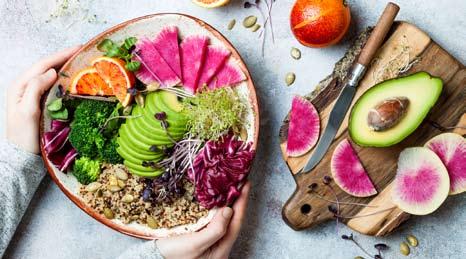
Here are some pointers for getting started with their plant-based Health Tapestry Meal Plan:
Practice mindful eating.
Drink 5-8 glasses of water each day.
Eat breakfast every day.
Eat plenty of fruits and veggies at lunch and dinner (3/4 of your plate).
Listen to your gut. If a food makes you feel bad, it is probably bad for you.
Enjoy 1 or 2 healthy snacks a day.
Eat fresh fruits such as plums and berries.
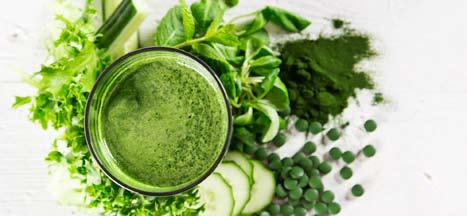
Eat fresh sprouts and drink wheatgrass juice.
Blend veggie smoothies.
Eat only whole, unprocessed grains.
Avoid fried foods.
Avoid processed commercial deli meats.
Choose condiments low in sugar and salt.
Combining her passion for food and a lifelong commitment to promoting a healthy lifestyle, Grace O has created FoodTrients, a unique program for optimizing wellness. Grace O is a fusion chef with a mission: to cook up recipes for sustaining a long and joyful life that are built on a foundation of anti-aging science and her work in the health care industry. Mixing foods and unique flavors culled from a lifetime of travels from Asia to Europe and America, Grace O encourages young and old to celebrate a full life that embraces diversity. Lifestyle tips, age-defying recipes, and secrets of the healing properties of food are the centerpiece of FoodTrients-–all available through cookbooks, e-newsletters, and this website. For more information visit www. foodtrients.com.
Yoga for Health and Wellness
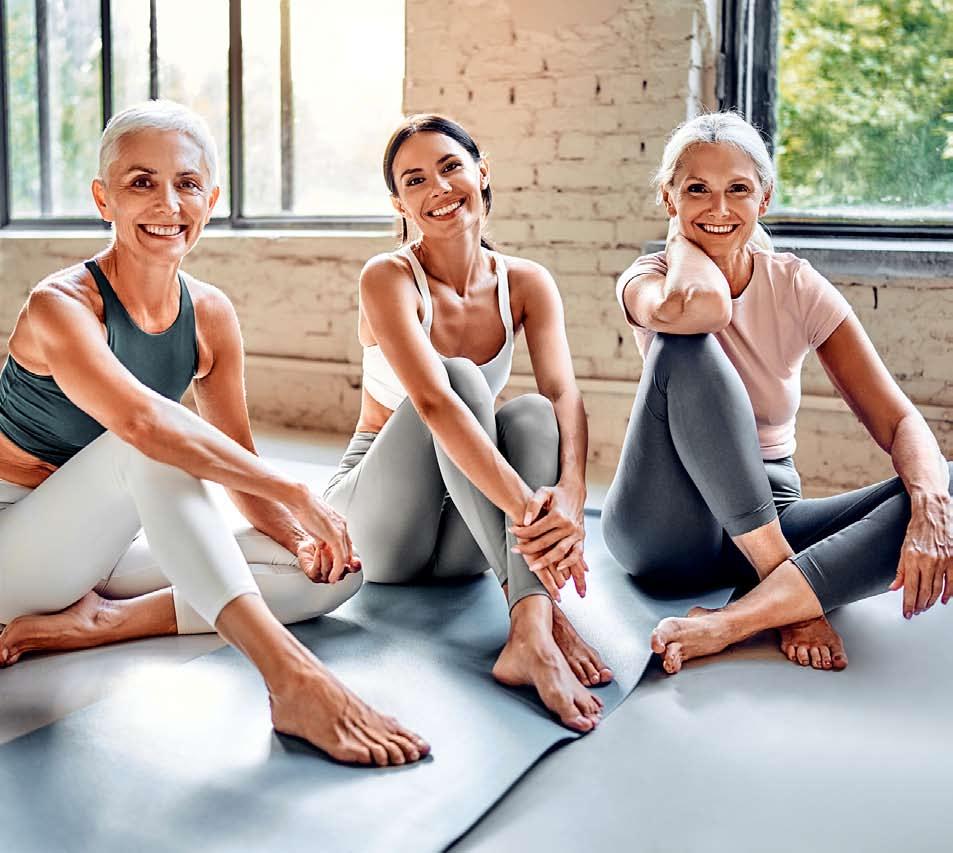
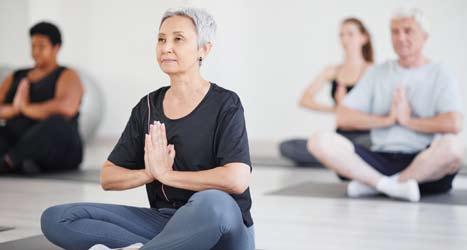
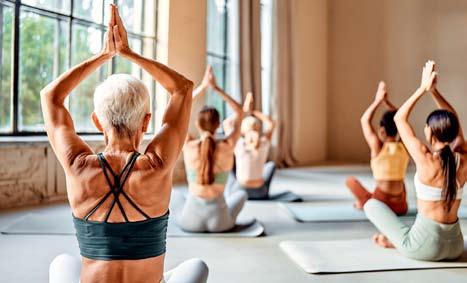
The benefits of staying fit as you age are numerous. According to the National Institute on Aging, regular exercise can help minimize the effects of aging and strengthen physical and mental health. One type of exercise proven to be beneficial for seniors is yoga. Any type of gentle stretching can help maintain overall health and physical acumen, but yoga poses can be especially beneficial when incorporated into your daily life.
Stretching your way to better health
Yoga is one of the best ways to remain active as you age. It can increase muscle strength and improve your flexibility, among other benefits. Yoga has
also been shown to be good for your heart. In fact, a 2007 study published in the Journal of Clinical Hypertension showed patients age 35 to 65 who practiced yoga for 11 weeks lowered their systolic blood pressure 33 points. A different study from 1999 found different types of exercise, including yoga, can help increase balance in older adults. With all these benefits, it’s no wonder yoga has been touted by health professionals as a great way for seniors to stay in shape and strengthen their bodies.
The beauty of yoga is that it is non competitive. During a yoga class, students and practitioners do poses at their own pace. If you’re not comfortable with something, you can take a rest without feeling pressured.
Weight loss
, 2025
The findings from a 2012 study published in the International Journal of Yoga Therapy indicate a weight-loss program based around yoga is beneficial for psychological well-being and weight loss. Researchers also cited a “mindfulness” component, suggesting the importance of conscientiousness in diet and fitness on a person’s quality of life.
Arthritis
According to Johns Hopkins Medicine, yoga is a good way to assist arthritis patients with relief from symptoms of pain and discomfort. Physical activity is a crucial part of the treatment guidelines for osteoarthritis and rheumatoid arthritis set forth by the American College of Rheumatology, according to Johns Hopkins Medicine. Arthritis pain can be amplified by remaining still; doing simple yoga poses and stretches can be an easy way to alleviate or minimize that pain.
Some easy yoga poses for seniors
The kind of nonimpact stretching done in yoga is something easy and fun to do in groups or alone. The real benefit comes from the actual poses themselves. Here are a couple poses that will help stretch your muscles and soothe your joints.
Gina Ensslin a certified yoga teacher will be teaching gentle yoga at the Menonomee Falls Community Center starting in March. Visit www.fallsrec. org. Photo Credit: istock.com/ SeventyFour.
Gina Ensslin
The Power of Starting Slow This New Year
Photo Credit: istock.com/Harbucks
With a new year underway, we may feel motivated to make big changes — but when it comes to weight loss, starting slow is often the smartest move.
Rather than chasing quick results that are hard to maintain, TOPS Club, Inc. (Take Off Pounds Sensibly SM), the nonprofit weight-loss support organization, with a “Real People. Real Weight Loss.®” philosophy, suggests a gradual approach that focuses on building realistic habits that fit into everyday life. In the long run, slow and consistent effort is far more effective than an all-or-nothing start that often fades quickly.
The following are key reasons why starting slow is most effective when it comes to long-term weight loss:
It supports sustainable habits and improves long-term maintenance.
We are constantly juggling work, family, and stress. Slow, healthy changes — like watching your portions, taking a walk a few days a week, or cooking at home more often — fit into real routines.
We can regain weight after fast loss because the methods we used weren’t sustainable. Slow weight loss is tied to routines, gradual habit building, and lifestyle changes, which makes maintaining weight loss progress far more realistic.
It helps protect your metabolism.
When you lose weight quickly, your body reacts to it as a signal that energy is scarce, so it automatically adapts by conserving energy. This means that your body burns fewer calories at rest, it learns to do tasks using less energy, which reduces overall calorie burn, and the hormones that regulate your appetite may shift, making you feel more focused on food.
Even with continued effort, weight loss may slow or stall because your body is trying to hold onto energy. Starting slow allows weight loss to happen without triggering strong metabolic slowdowns, making it easier to continue losing and maintaining weight over time.
It reduces burnout and frustration.
Extreme plans to lose weight demand high effort and willpower, which often leads to exhaustion or quitting. A slower pace feels manageable, helping you stay consistent and motivated instead of swinging between “all in” and “giving up.”
It preserves muscle and strength.
Gradual weight loss — especially when paired with regular movement
START continued on page 8
For 75 years, TOPS Club has helped people take off, and keep off, the weight.
— helps maintain muscle mass. When weight changes are slow, the body is more likely to use stored fat for fuel instead of breaking down muscle, and the hormones that protect the muscles stay more balanced.
This is important because muscle supports metabolism, daily function, and long-term health.
It encourages a healthier relationship with food.
Starting weight loss slowly moves the focus away from strict restriction and toward awareness and flexibility. Instead of labeling foods as “good” or “bad,” we can choose to eat in a way that supports energy, enjoyment, and health, making weight loss feel less stressful.
It prioritizes overall health — not just the scale.
Healthy habits tied to weight loss also often improve sleep, energy levels, mood, and stress management. These benefits make it easier to continue healthy behaviors long after the initial goal weight is reached.
Weight loss isn’t about speed — it’s about consistency, balance, and sustainability. Starting slow builds a foundation that supports lasting results, better health, and a lifestyle you can maintain for years.
About TOPS®
TOPS Club, Inc. (Take Off Pounds Sensibly) is the original weight-loss support and wellness education organization. Founded in 1948, TOPS is the only nonprofit, noncommercial weight-loss organization of its kind. TOPS promotes successful weight management with a “Real People. Real Weight Loss.®” philosophy that combines support from others at weekly chapter meetings, healthy eating, regular exercise, and wellness information.
Today, there are about 65,000 members, including men, women, and international members who join chapter meetings in person or online, with thousands of chapters in all 50 states and across Canada. TOPS’ online program is for people who might prefer that model or who live too far to attend in-person chapter meetings. Online resources include news and information from the health and inspirational community, meal planning ideas, workouts, chapter resources, and more.
Visitors are welcome to attend their first TOPS meeting free of charge. Membership is affordable, starting at $70 USD per year, plus nominal chapter fees. The longer you’re a TOPS member, the more you save through reduced renewal rates. Visit www.tops.org or call 800-932-8677 to learn more about TOPS and to find a local chapter.
It seems like everyone is obsessed with looking young these days. And hey, who can blame them? We all want to look young for our age. But the truth is, there’s only one thing better than looking young: feeling young and living young longer.
Consider this: 61% of men describe their current energy level as lower than their energy level 5 years ago, and 65% of men say that they experience brain fog and think their mind is not as sharp as it used to be.
Once thought to be hard-wired after early childhood, the brain actually has a remarkable ability to change and heal itself. Known as neuroplasticity, this remodeling due to our environment, behavior, and feelings happen throughout our lives. Given the flexibility of your brain, how will you rewire it to help you live younger longer?
Dr. Myles Spar, Chief Medical Officer of Vault Health, is an expert when it comes to men’s physical, emotional, and sexual health. He has shared 13 ways you can keep your mind, spirit, and body youthful regardless of your age. Here are his 13 tips to live younger longer:
1.Meditate
When it comes to keeping you young, meditation has been shown to actually change the brain. Sara Lazar, a neuroscientist at Harvard Medical School and Massachusetts General Hospital, conducted studies involving brain scans of meditators. She found that people who had been meditating for a long time had increased grey matter in the auditory and sensory cortex, which she attributes to the mindful attention paid to breathing, sounds, and other stimuli during meditation. She also discovered more grey matter in the frontal cortex, the part of the brain associated with memory and decision making. According to Lazar, meditators in their fifties had the same amount of gray matter in one part of the prefrontal cortex as people in their twenties in spite of the fact that the cortex is known to shrink as we age.
A Nickel for Your Thoughts Really?
By Doreen Giesfeldt - Photo Credit: istock.com/ LightFieldStudios
Do you realize how important a penny is other than currency? Think of all the songs like Pennies from Heaven – Bing Crosby, or Penny Lane-Beatles, or Penny Arcade-Lionel Richie. “Find a penny, pick it up all day long you’ll have good luck,” or how about “if you find a penny it means someone in heaven is thinking about you.” Folklore? I think not. Finding a penny is akin to having someone that always has your back. Think about it. Anybody ever say to you, “a nickel for your thoughts?”
What other coin makes you sentimental? Do people think of a lucky nickel or dime – no, it’s that lucky penny in your pocket. And what about Auntie giving you a penny for your purse so you are never broke? Also, pennies are distinctive. A little masterpiece made up of 97.5% zinc and 2.5% percent of copper. Think about this – a penny is of value to everyone, albeit not as money. It
doesn’t matter about your station in life; you will pick up a penny because of what you learned as a child.
While we’re at it what about all the people named Penney or Penny. Are they now going to have to admit they are named after a discontinued useless coin? Perhaps using a different coin for a nickname? “Will Dime please return to gift wrapping?”
Let’s see what kind of truism has caused this turn of events.
A U.S. penny is made of copper-plated zinc, a core of 97.5% zinc, with a thin outer layer of 2.5% copper, a change made in 1982 due to rising copper costs. Before 1982, pennies were primarily 95% copper and 5% zinc. During WWII, some were even made from steel to save copper for munitions. The reason is economic; zinc is by far the cheaper metal. The thin coating of copper is necessary, so we don’t confuse pennies with dimes; they’re about the same size. Zinc was also used to make pennies during the Second World War when copper was needed for the war effort. (Source: Uses of Zinc — www. The Sterling Hill Mining Museum ) (Source: the Associated Press)
Penny: Unit cost $0.04, Nickel: Unit cost $0.14. Note: the penny and the nickel have remained above face value for 19 consecutive years. The Dime: Unit cost $0.06 to make and distribute and the Quarter: Unit cost $0.15. (Source: the Associated Press)
In total, America’s coin manufacturer said it shipped more than 3.17 billion pennies throughout its 2024 fiscal year. (Source: the Associated Press).
Recovery Value: The metallurgical value of post-1982 zinc pennies are significantly less than their face value, making large-scale recovery challenging with significant added costs for separation and refining. So, will they languish in a deep dark tunnel? (Source: AI overview)
Do you know where this is headed people? First, get rid of the endearing quality of a penny. Next, they will be coming for my rotary phone, which I currently am having problems getting a dial tone. I seldom make a call so I will just wait it out. Then what, how about S&H green stamps. I almost have a book filled. And what about free dishes in laundry soap. I’m telling you, society is going mad. Farewell dear penny.
OASIS COMMUNITY CENTER
ACTIVE OLDER ADULTS PROGRAM
Enrich your life at the OASIS Community Center! Designed for adults fifty years and older, we offer a wide range of engaging programs including arts and crafts, cooking, fitness, health and wellness, yoga, dance, language skills, outdoor education, sports and recreation, and special events. Join our friendly, supportive community and find endless opportunities to learn, stay active, and connect.
COFFEE BAR
2414 W. Mitchell Street, Milwaukee, WI 53204 STAY ACTIVE AND BECOME
COMPUTER LAB
Open Monday through Friday 8:00AM-11:00AM Coffee and assorted teas, occasional bakery items.
Open Monday through Friday 8:00AM - 3:00PM
Become an OASIS Fitness Center Member for $15 for City of Milwaukee Residents and $25 for Non-Residents. Membership fee is valid for one year from purchase date. Fitness Center equipment includes compressed air resistance machines, treadmills, ellipticals, exercise bicycles, rowing machines, and free weights.
Open Monday through Friday, 8:00AM-3:00PM.
Questions? Contact:
Solo Water Aerobic Workouts
These solo water aerobic workouts can help build muscle and improve cardio while being easy on your joints.
Finding the perfect workout routine that balances cardiovascular health with joint protection can be challenging. High-impact activities, like running or traditional aerobics, can be uncomfortable on knees, hips, and backs. Water aerobics offers a fantastic solution, providing a resistance-based workout that supports your body’s weight, helping to reduce the impact on your joints while still giving you a great cardio workout. Be sure to talk with your doctor before starting a new exercise.
Water Walking and Marching
Walking in water is one of the most effective ways to warm up and increase your heart rate. Because water is significantly denser than air, every step requires more effort than walking on land, engaging your muscles in a new way. The resistance of the water against your legs and arms while you walk turns this simple motion into a full-body workout. For an added challenge, try walking backward or sideways to engage different muscle groups and improve your balance and coordination. Be sure to start walking in thigh or waist-deep water, and slowly graduate to slightly deeper parts of the pool. Walking and marching are also good transition exercises during your routine to keep your heart rate up and muscles warm while you catch your breath from other movements.
Pool Edge Push-Ups
Building upper body strength doesn’t require heavy weights; you can use the pool wall and your own body weight. Standing push-ups in the water are excellent for strengthening the chest, shoulders, and arms without the strain that traditional floor push-ups place on the wrists and lower back. You can do this in the shallow end of the pool. Standing in the water, place your hands on the deck or gutter in a push-up position. Then, keeping your back straight, you can do a pushup. It can help build muscle while keeping your joints free from excess stress and strain. Try moving closer or further from the wall until you find an ideal spot for your comfort level.
Leg Swings and Lifts
The water provides a safe environment to work on hip mobility and lower body strength without the fear of falling. Using the wall for support allows you to isolate specific muscle groups effectively. Photo Credit: istock.com/Halfpoint
The Specialized Realtors You Need.
As Certified Senior Real Estate Specialists, we are dedicated to providing the best possible customer experience, whether you are buying or selling a home!(or both). With a combined 35+ years of experience in the real estate industry, we understand that this is more than a transaction it’s personal.
If you are contemplating if the time is right to make a move, give us a call and lets have a conversation.
Recipients of the 2024 Realtor Service Award
Under a single spotlight, a man steps onto the stage—not to imitate a legend, but to channel a spirit.
Tony nominee Sidney DuPont opens I’ve Got to Be Me with a quiet confidence that quickly ignites into electricity. As the first notes ring out, the audience is transported into the world of Sammy Davis Jr.,the risk-taker, the rule-breaker, the man who refused to be boxed in. From the soul-stirring sway of Mr. Bojangles to the irresistible charm of The Candy Man, DuPont doesn’t just sing the songs—he tells the story behind them.
Between melodies, moments of struggle and triumph surface: a young Sammy fighting for space on stages that didn’t always want him, then dazzling them anyway. With the vocal power honed on Broadway stages like Paradise Square and Beautiful: The Carole King Musical, DuPont brings grit, grace, and humanity to the performance.
By the final note, it’s clear,I’ve Got to Be Me isn’t just a concert. It’s a love letter to a trailblazer who changed entertainment forever, and a reminder that being yourself—fully, unapologetically—is the greatest performance of all.
Sidney DuPont
Sidney DuPont is a 2022 Tony Award nominee, originating the role of Washington Henry in Paradise Square at the Barrymore Theater. Originally from Philadelphia he began his training at the Creative & Performing Arts High school (2009) and continued at the University of the Arts (2013). He made his Broadway debut in Beautiful: The Carole King Musical in 2015 and continued with the 1st National Tour and Australian Company. Other National Tours include Memphis: the Musical and A Chorus Line. Regional: The World premiere of Hippest Trip: The Soul Train Musical (A.C.T). Paradise Square at Berkeley Repertory Theatre (TBA nomination), Man of La Mancha (The Shakespeare Theater), In the Heights (The Geva Theater), and Gypsy (North Carolina Theater). Television/ Commercial: FBI: Most Wanted (CBS) & Cartier. DuPont has also stepped behind the scenes as a director, choreographer, cinematographer, and award-winning screenwriter. “Who am I?…I am the conclusion of my Ancestors’ story and I am the prologue to my descendants wildest dreams.”
CELEBRATE 100 YEARS OF A LEGEND
MATINEE CONCERT ON WEDNESDAY, MARCH 11 AT 2PM
Tony nominee Sidney DuPont (Paradise Square, Beautiful) stars in I’ve Got to Be Me, a dynamic tribute to Sammy Davis Jr. – one of entertainment ’s most influential icons. With show-stopping vocals and undeniable charisma , DuPont brings Sammy ’s timeless hits— Mr. Bojangles, The Candy Man, and more to life, honoring the legacy of a fearless performer who broke barriers and defined an era .
THANKS TO OUR PERFORMANCE SPONSOR:
Scan the QR code for details or visit our website at www.wilson-center.com
3270 Mitchell Park Drive, Brookfield
Free and accessible parking and accessible theater seating.
Box Office is open Tuesday-Friday 11am to 6pm.
Go online to purchase tickets at www.wilson-center.com or call 262-781-9520
Community Living Offers a Warm Winter Welcome
Less daylight, colder weather, and the approaching holidays can create the perfect recipe for seasonal depression, falls, and loneliness for older adults. This is especially true for seniors who may live alone with limited access to transportation or less of a comfort level as it relates to getting out and about on their own when the weather is bad.
If the thought of spending another winter alone with the worry of shoveling, shopping, and seclusion is concerning for you as an older adult or as an adult child of an aging parent, then it may be time to consider a lifestyle change.
“Residents who live in senior living communities tend to feel less ‘cooped up’ in the winter and throughout the year,” says Becky Pergande, regional director of sales and marketing for Hickory Park Senior Living in Greenfield. “With senior living, they enjoy their own private apartment home. For example, at Hickory Park, we offer studios, one-bedrooms, and even two-bedroom
apartments, plus a social and secure setting with various amenities.”
In addition, senior living communities provide many services, including, but not limited to, restaurant-style dining, housekeeping, laundry, maintenance, access to care and support as needed, social events, health, and wellness programming, and transportation.
“Residents who live in senior living communities can be as social as they want to be,” says Pergande. “Many choose to schedule lunch and coffee dates with family and new neighbors, attend social events hosted at the community, and take advantage of bus trips and transportation services provided by the community.”
Most senior living communities offer exercise classes to improve mobility, prevent falls, get fit, and provide an opportunity to visit with friends.
People who live in senior communities also have access to a well-balanced diet that includes the right amount of protein, carbohydrates, dairy, fruits, and vegetables to boost mood and energy and promote good health. Plus, all the shopping and food preparation is done on their behalf, so they don’t have to deal with the work and worry!
With senior living, residents never need to eat alone (unless they want to). “Camaraderie and connection over meals are among the greatest joys that senior living offers,” says Pergande.
Most importantly, access to around-the-clock help, were it ever needed, offers senior living residents and their adult kids great comfort.
This added peace of mind can be especially reassuring during winter storms, icy conditions, or unexpected health concerns, when help is immediately available. For adult children, knowing their loved one is safe, supported, and socially connected eases the constant worry that often comes with winter months. Ultimately, senior living offers not just comfort and convenience, but a warmer, more connected way to thrive all year long. Staying socially connected and feeling engaged with life becomes more important as we grow older, and not just for mental health reasons. Isolation is a serious health risk for older adults.
For more information about senior living or to schedule a tour of Hickory Park Senior Living, call 414-327-2800 or visit hickoryparkcares.com
Timeless Habits for a Healthier You
Photo Credit: istock.com/ Deagreez
People are living longer. In 1970, the average life expectancy at birth was 70.8 years; in 2000, it was 76.9 years; and by 2030 is it estimated that the “oldest-old,” age 85 and older, could grow to 10 million people.
Views on aging are also changing. It no longer necessarily means physical decline and illness—in the last two decades, the rate of disability among older people has declined dramatically.
The National Institute on Aging (NIA), part of the Federal Government’s National Institutes of Health (NIH), investigates ways to support healthy aging and prevent or delay the onset of diseases that disproportionately affect us as we age. These studies not only may increase what is known as “active life expectancy”—the time of advancing years free of disability—but also may promote longevity. NIA’s research includes hormone and dietary approaches, including calorie restriction.
Results from NIA-sponsored studies and others are likely to improve our understanding of the benefits and risks of hormone supplements, calorie restriction, and other interventions to promote healthy aging. This tip sheet provides an overview of what we know about hormone supplements and calorie restriction and the research needed to learn more. Until we have a better understanding, it is a good idea to be skeptical of claims that hormone or other supplements can solve your age-related problems. Instead, focus on what is known to help promote healthy aging: healthy eating and physical activity.
What Is a Hormone?
The word “hormone” comes from the Greek word, hormo, meaning to set in motion. Hormones are chemical messengers that set in motion different processes to keep our bodies working properly. For example, they are involved in our metabolism, immune function, sexual reproduction, and growth. Hormones are made by specialized groups of cells within the body’s glands. The glands—such as the pituitary, thyroid, adrenals, ovaries, and testes—release hormones into the body as needed to stimulate, regulate, and control the function of other various tissues and organs involved in biological processes.
We cannot survive without hormones. As children, hormones help us “grow up.” In teenagers, they drive puberty. As we get older, some of our hormone levels naturally decline. But what does that mean? Scientists do not know exactly. In order to know more, NIA investigates how replenishing hormones in older people affects frailty and function. Many of these studies focus on hormones that decline with age, including:
Growth hormone
Melatonin
Dehydroepiandrosterone (DHEA)
Testosterone
Estrogen and progesterone (as part of menopausal hormone therapy)
How Hormones Work
Most hormones are typically found in very low concentrations in the bloodstream. But a hormone’s concentration will fluctuate depending on the body’s activity. Like a key that unlocks a door, a hormone molecule is released by a gland and travels through the blood until it finds a cell with the right fit, a “receptor.” The hormone latches onto a cell’s receptor and a signal is sent into the cell. These signals may instruct the cell to multiply, make proteins or enzymes, or perform other vital tasks. Some hormones can even cause a cell to release other hormones.
One hormone may fit with many types of cells but may not affect all cells in the same way. For example, one hormone may stimulate one cell to perform a task but it might also turn off a different cell. Additionally, how a cell responds to a hormone may change throughout life.
Pay Attention to Weight and Shape
istock.com/simonapilolla
Three rocks of increasing size balanced one on top of the otherWeight is a very complex issue. For older people, the health problems associated with obesity may take a back seat to problems associated with body composition (fat-to-muscle ratio) and location of fat (hip or waist) on the body.
Many health problems are connected to being overweight or obese. People who are overweight or obese are at greater risk for type 2 diabetes, high blood pressure, heart disease, stroke, some types of cancer, sleep apnea, and osteoarthritis. But data show that for older adults, thinner is not always healthier, either. In one study, researchers found that older adults who are thin (a bodymass index or BMI of less than 19) have a higher mortality rate compared with those who are obese or of normal weight. In another study, women with low BMI had an increased risk of mortality. Being, or becoming, thin as an
older adult can be a symptom of disease or an indication of developing frailty. Those are possible reasons why some scientists think maintaining a higher BMI may not necessarily be bad as we age.
Red apple and green pearBody-fat distribution, specifically waist circumference and waist-to-hip ratio, can also be a serious problem for older adults. We know that the “pear” shape, with body fat in peripheral areas such as the hips and thighs, is generally healthier than the “apple” shape, with fat around the waist. Being apple-shaped can increase risk for heart disease and possibly breast cancer. With age, the pattern for body fat can shift from safer peripheral areas to the abdominal area of the body. BLSA researchers examined 547 men and women over a 5-year period to observe body measurement changes. They found that men predominantly shifted in waist size, while women showed nearly equal changes in waist and hip measurements. The men developed a more dangerous body-fat distribution, even though women carried more total body fat. This may help explain why men generally have a higher incidence of certain diseases and a shorter lifespan.
So, is there a “normal” weight range or pattern for healthy aging? For older adults, one size does not fit all. Although we have learned a lot about patterns of weight and aging, watching your weight as you age is very much an individual matter. Talk with your doctor about any weight concerns, including decisions to lose weight or any unexplained weight changes.
Get Moving: Exercise and Physical Activity
SneakersSome people love it, some people hate it, but regardless of your personal feelings, exercise and physical activity are good for you—period. In fact, exercise and physical activity are considered a cornerstone of almost every healthy aging program. Scientific evidence suggests that people who exercise regularly not only live longer, they live better. And, being physically active—doing everyday activities that keep your body moving, such as gardening, walking the dog, and taking the stairs instead of the elevator—can help you continue to do the things you enjoy and stay independent as you age.
Tudor Oaks Senior Living Community
Home Care Services!
Tudor Oaks Senior Living Community, a trusted name in the Muskego area for over 40 years, is now offering Home Care Services to area residents! Tudor Oaks Home Care Services provide a variety of supportive options to assist seniors who wish to remain in their own home.
Navigating Solo Aging: Building Community, Purpose
By Steve Gurney, Founder of Positive Aging Community
As more of us face the prospect of aging without the traditional support of nearby family or children, the concept of solo aging has never been more relevant. Over the years, I’ve had the privilege of speaking on this topic with hundreds of members of the Positive Aging Community. These conversations have affirmed a powerful truth: While each aging journey is deeply personal and unique, it doesn’t have to be isolating or uncertain. With proactive planning and intentional connection, solo aging can become a chapter defined by community, purpose and peace of mind.
The Power of Planning Ahead
One of the most valuable insights I’ve gained is that solo agers—those navigating life without immediate family—are often among the most proactive planners. This forward-thinking mindset helps prevent crises, avoiding the last-minute scramble often left to neighbors or distant relatives. Embracing the identity of a solo ager is empowering. It encourages us to take ownership of our path and intentionally build the support systems we need.
Building Your Personal Village
A cornerstone of thriving as a solo ager is cultivating a personal village—a supportive network of relationships and resources that provide companionship, assistance and a sense of belonging. Here’s how to begin:
Take Inventory: Identify the family, friends, neighbors and professionals already in your life.
Define Your Purpose: Reflect on what brings you fulfillment, and seek out opportunities that align with your values and interests.
Nurture Relationships: Strengthen existing bonds and offer support to others—reciprocity is key.
Expand Your Network: Engage with clubs, volunteer opportunities or community groups that resonate with you.
Set Boundaries, and Be Authentic: Share openly, but maintain healthy limits to safeguard your well-being.
Celebrate Growth: Recognize and honor the evolving nature of your village— welcome new connections while cherishing longstanding ones.
Importantly, a strong personal village can also contribute to affordability. When friends, neighbors, volunteers and community organizations offer assistance, it reduces the need to rely solely on paid service providers—preserving valuable resources in your budget for other priorities.
Embracing Positive Aging
Solo aging isn’t about going it alone—it’s about designing a life filled with connection, meaning and security. Through thoughtful planning, intentional relationships and openness to new opportunities, solo agers can navigate this phase of life with confidence, optimism and peace of mind.
At Charter Senior Living, we understand that heart health is a top priority. For more information visit Charter West Bend at hwww.charterofwestbend. com or call 262.468.9743, Charter Hasmer Lake www.charterofhasmerlake. com or call 262.854.0396, Charter Mequon /www.charterofmequon.com or call 262.324.6670
CARE YOU CAN TRUST. Support You Can Feel.
Uplifting spirit is at the heart of everything we do at Charter Senior Living. We go beyond simply caring for your loved one – we help them feel seen, heard and valued through personalized care, an engaging lifestyle and a compassionate team.
With clear communication and a welcoming, homelike atmosphere, we make the transition as smooth as possible for both your loved one and your family. Whether it’s Independent Living, Assisted Living or Memory Care, you can trust that your loved one is in good hands.
Charter is more than just a place to live – it’s a true home where we strive to enhance the human spirit every day.
Are You Eating Superfoods For Your Brain?
As a Naturopathic Nutritional Therapist and Neurofeedback Clinician, I love to nudge my clients into healthier eating habits, especially when it comes to protecting their brains. Who likes living with brain fog, memory lapses, poor attention, and focus? But that’s exactly what the SAD (Standard American Diet) diet leads to an inflamed brain, leaving you feel-
ing exhausted, with little or no motivation to do anything. Sugar, processed foods, gluten grains, and damaged man-altered fats lead not only to diabetes in the body but can also mess up your blood sugars in the brain.
Many doctors now consider Alzheimer’s to be Type III diabetes or diabetes of the brain. Crazy to think you may actually slowly be poisoning your noggin (as my boss likes to say), with your food choices!
Changing your diet is hard, but instead of thinking of having to eliminate foods, first focus on adding brain-healthy foods into your diet. I’m going to give you a list of brain superfoods, and I challenge you to add just 1, maybe 2 each day. And no, you don’t have to run to the ends of the earth to get these foods! Check out your local supermarket, but go organic as much as you can!
1. Wild Caught Salmon
Salmon is rich in the healthy fats called Omega 3 fatty acids, typically DHA and EPA. These wonderful fats serve as building blocks for the brain but are also associated with a decrease in inflammation, depression, and cognitive impairment. They are my first go-to when I see a client with high inflammation levels on their brain map. We can also test for a person’s Omega status through a simple blood prick. Check out our Omega Quant Plus test.
Salmon also contains selenium, antioxidants, potassium, and B12. So instead of your normal fish fry, make Friday night Salmon night!
2. Wild Organic BlueBerries
They provide powerful antioxidants galore! These beautiful berries have been shown to reduce the risk of memory decline by preventing age-related degenerative processes in the brain. Research indicates that blueberries may have beneficial effects on spatial learning and memory abilities, reducing your risk for Alzheimer’s. Go on, throw a cup of organic wild blueberries into your breakfast smoothie. They are readily available in Costco and Trader Joe’s.
3. Organic Leafy Green Veggies and Herbs
I know, not your favorite, but these are the most nutrient-dense foods on the planet, and should adorn your meals daily. These are packed with brain-
healthy vitamins and minerals. When it comes to the brain, reducing inflammation is your number one goal, and that’s exactly what greens do.
One of my heroes is the humble cabbage, which protects the gut and bowel lining and thus supports the brain. But whatever green you like, whether it’s kale, broccoli (broccoli sprouts are the ultimate superhero), spinach, arugula, bok choi, chard, parsley, or cilantro, chow down!!!
4. Nuts and Seeds
Nuts and seeds are brain-boosting powerhouses. They make the most perfect snack! I like to mix a large variety of nuts and seeds, which I then store in glass jars in the freezer for easy use and exact portioning. I use a small glass container which I fill with my nut mix and carry it with me for a healthy brain snack. But you can also throw them on salads, into shakes, make pesto, or use them as nut/seed butter.
Nuts contain brain-healthy fats and proteins. They protect the brain, improve cognitive performance, and can even lower blood sugar levels. Some of the superstars include macadamia nuts, walnuts, and pecans. Just look, walnuts actually look like the brain!
5. Avocados
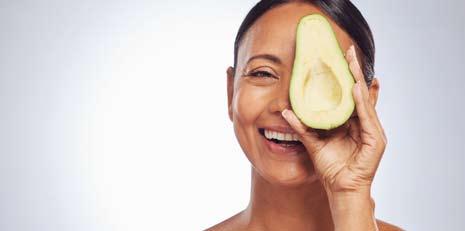
Avocados are rich in folate, a B vitamin necessary for making neurotransmitters like serotonin and dopamine, that help you feel good! Not only do they decrease the risk of depression, but they also promote cellular detoxification and ensure proper nervous system development. The lutein in avocados improves cognition, spatial working memory, and problem-solving skills. Avocados are rich in monounsaturated fats, which facilitate healthy blood flow throughout the body and brain.
6. Fermented Foods
With the huge rise in probiotic sales, most people are now aware of the importance of good bacteria and the connection to overall health. Did you know that many refer to the gut as the second brain? You can’t have a healthy brain if you have gut troubles and a simple place to start shifting your gut health is by consuming fermented foods naturally teeming with good bacteria: raw fermented sauerkraut (found in the refrigerated section), kimchi,
and kefir. These foods lead to clearer thinking and improve mood, depression, and anxiety. They also kick immune function up a notch! If the thought of eating something sour does your head in, start with kefir. We sell fabulous coconut kefir in our store, made right here in lovely Wisconsin. You and the kids will love it!
Just 2 tablespoons a day is a good place to start.
7. Prebiotic Foods
In order to keep your gut bacteria happy, you need to feed them, so they hang out with you! Turns out, they love fiber-rich vegetables, such as chicory root, Jerusalem artichokes, garlic, onions, apples, asparagus, leeks, and yes, greens.
So what do you think? Can befriend some of these foods? Start with one a day and see where you can go, and just maybe, they will displace some of the junk foods you’ve been eating.
If you would like to know more about how to improve your brain health and would like to measure your brain inflammation with a QEEG brain map, please contact me at 262 251 2929. Let’s get your brain working better!
Authored by: Mona Eberle, Naturopathic Practitioner, Nutritional Therapist and Neurofeedback Clinician - Photo Credit: istock.com/ miya227 February
Blueberry–Walnut Brain Boost Bowl
Fast, gentle on digestion, and packed with memory-supporting nutrients
Ingredients
½ cup blueberries (fresh or frozen)
2 tbsp chopped walnuts
½ cup plain Greek yogurt (or dairy-free yogurt)
1 tsp honey (optional)
Pinch of cinnamon
Directions
Spoon yogurt into a small bowl.
Top with blueberries and walnuts.
Drizzle honey and sprinkle cinnamon.
Enjoy chilled or at room temperature.
Experiencing Blurry Vision?
By Cheryl L. Dejewski
According to the National Eye Institute, approximately 4.2 million Americans ages 40 and older are visually impaired. By 2030, when the last baby boomers turn 65, the number of Americans who have visual impairments is projected to reach 7.2 million. With impaired vision, daily activities that used to be simple can become challenging, such as reading, shopping, cooking, writing, and watching TV. Blurriness is one form of visual impairment. The good news is that there is help with proper diagnosis and treatment.
Blurred vision is often a sign of a cataract. “A cataract is the clouding of the natural lens located inside the eye behind the pupil. This lens is made mostly
of water and protein and works like a camera lens—focusing light onto the retina at the back of the eye to form the images you see. As you age, some of the protein may clump together and start to cloud an area of the lens. This is called a ‘cataract.’ As the clouding advances, it can blur and glare vision to the point of inhibiting day-to-day functioning. Depending on the type of cataract, the clouding may take years or just months to progress,” states Daniel Paskowitz, MD, PhD, a renowned lecturer at continuing education conferences for southeastern Wisconsin eye doctors. “The only effective treatment is to make an opening in the eye, surgically remove the cloudy lens (cataract), and replace it with an intraocular lens implant (IOL) to once again focus light rays onto the retina. Acting like miniature internal contact lenses, IOLs not only provide sharper vision, but often improve sight to levels not seen in years.” If you are a diabetic, blurred vision could be a complication of your disease. Of the more than 30 million Americans diagnosed with diabetes, up to 45 percent have some degree of diabetic retinopathy (damage to the sensitive retina in the back of the eye), which can lead to vision loss and blindness. Eye care specialist Michael Raciti, MD, explains, “With diabetes, high blood sugar levels can weaken blood vessels in the eye, causing them to leak. Blood sugar fluctuations can also promote the growth of new, fragile blood vessels on the retina, which can sometimes leak blood into the vitreous (the clear, jelly-like substance that fills the eyeball). This diabetes-related retinal blood vessel damage, or retinopathy, can blur vision and lead to permanent sight impairment. And, all diabetics—type 1 or 2, insulin-dependent or not, newly diagnosed or longtime sufferers—are at increased risk with each year that passes.”
Fortunately, diabetes-related sight loss is often preventable with yearly exams and early intervention. “We have been very pleased with the success of medications that can be painlessly injected directly into the eye to stave off progression of the disease by inhibiting the growth of the abnormal blood vessels related to diabetic retinopathy. We have seen some amazing results
SIGHT continued on page 22
HEALTH
with these medications, including not only stabilization of vision, but in some cases, improvement in sight,” reports Raciti, who performs injection treatments for both diabetes and AMD on a daily basis.
“Blurriness in the center of your vision may be a sign of age-related macular degeneration or ‘AMD.’ This is a condition in which the macula, a tiny highly sensitive area of the retina responsible for central and detail vision, is damaged. There are two forms of AMD. Both cause loss of central or straightahead vision (as needed for driving, reading, and recognizing faces) but, fortunately, not side vision,” explains Brett Rhode, MD, senior partner at Eye Care Specialists ophthalmology practice, where thousands of AMD patients are diagnosed and treated each year. “‘Dry’ AMD is more common (90% of cases), progresses slowly, and is caused by a thinning of macular tissue. Many dry AMD patients retain good sight throughout life; others may need to use magnifiers and aids. ‘Wet’ AMD is less common, can progress quickly, and is marked by the growth of abnormal new blood vessels under the macula, which leak fluid and blood causing blind spots and profound loss of central vision. The earlier wet AMD is detected, the better the chances of preserving vision. Without treatment, about 70% of wet AMD patients become legally blind within two years.”
Daniel Ferguson, MD, an eye care specialist who utilizes the latest advances in ophthalmology diagnosis and treatment, explains, “If we detect dry AMD, we often recommend vitamin supplements, healthy omega fatty acid intake, sun protection, and avoidance of smoking, as measures to prevent or slow progression. If wet AMD is diagnosed, we review the risks, benefits and candidacy for injections of special medications that inhibit growth of the abnormal blood vessels that cause wet AMD.” He adds, “Although there are NO guarantees, we have seen remarkable results. With regular injections (about every 4-12 weeks), we are able to stop the progression of wet AMD in 90% of our patients and even have up to 30% gain improvement in vision.”
“Sight-robbing conditions, like AMD, cataracts and diabetic eye disease
often develop gradually and painlessly, and good vision in one eye can mask problems in the other. If you notice a problem with your vision (especially straight lines appearing wavy; blind or dark spots; and/or blurriness of faces, clocks and printed words) don’t ignore it. Call your eye care specialist immediately,” advises medical optometrist David Scheidt, OD, a founding member of the Wisconsin Diabetes Advisory Group and co-author of its diabetic eye care guidelines for physicians. “Don’t assume you simply need new glasses and then wait to make an appointment. A professional eye exam is the only way to accurately detect eye diseases. People age 40-64 should have a thorough dilated eye exam every 2-4 years and every 1-2 years after age 65 to check for AMD and other conditions.”
The doctors quoted above are part of the team at Eye Care Specialists, an ophthalmology practice that has provided medical, surgical and laser services to more than 200,000 area residents at offices in West Allis, Wauwatosa, and downtown Milwaukee. They have also had the honor of being named “Top Doctors” by both Milwaukee and MKElifestyle magazines. Visit their extensive educational website at www.eyecarespecialists.net for more information or to order free booklets about any of the conditions mentioned above or to learn about their credentials and services.
What to Consider
Your vision is priceless. When you need anything from a routine eye exam to a complicated eye surgery procedure, how do you decide whom to trust? First, educate yourself. Ask questions. We suggest the following: How long has the doctor or clinic been in practice?
Look at the individual doctor’s years of experience, when the entire practice was founded, and its size. For example, Eye Care Specialists was founded in 1985 by cataract surgery pioneers Drs. Norman Cohen and Robert Sucher who brought the practice to national recognition before their retirement in 2012. Over the years, our medical team has expanded to include Drs. Mark Freedman (retired 2022), Brett Rhode, Daniel Ferguson, Daniel Paskowitz, Michael Raciti and David Scheidt. Together, our doctors provide care for nearly every eye condition to more than 200,000 people at three locations.
istock.com/Ilija Erceg
stock.adobe.com/peopleimages.
Finding Calm: Easy Meditation Routines for Seniors
Afind comfort in quiet moments and strength in stillness.
The Life-Enhancing Benefits of Meditation for Seniors
When seniors take time to sit quietly, focus on the breath, and engage with the present moment, they often experience real improvements in emotional, physical, and cognitive health. Meditation gently supports both the mind and body in ways that are meaningful and lasting.
Mental Health and Emotional Health
Many older adults face emotional challenges that can include anxiety, sadness, or worry. Mindfulness meditation offers relief by encouraging a gentle focus on the here and now. When residents practice mindfulness, they begin to feel more at ease with their emotions and environment.
Meditation improves mental health by calming the nervous system and supporting emotional resilience. It has also been shown to support cognitive function, improve focus, and even help reduce the likelihood of memory loss. Through these benefits, meditation becomes a powerful tool for enhancing mental well-being and day-to-day clarity.
Physical Health and Body Awareness
s we move through different stages of life, the desire for peace, clarity, and comfort becomes more meaningful. At The Westerly Pewaukee, we recognize that true wellness includes caring for the body, the mind, and the spirit. One of the most effective and gentle ways to nurture overall well-being is through meditation.
Meditation for seniors at home offers a practical and peaceful method for improving health and enhancing daily life. For many older adults, beginning a meditation routine brings a sense of calm, stability, and deeper connection with their surroundings. In our warm and supportive community, residents
Meditation is also a proven method for improving physical health. Older adults who take part in daily breathing exercises often experience a lowering of blood pressure and improved circulation. These quiet practices reduce inflammation and muscle tension, promoting overall wellness and comfort.
Guided Meditation and Breathing Practice
Many residents enjoy starting with guided meditation. These sessions, often found on YouTube or wellness apps, walk you through gentle steps like focused breath work, repeating a motivational phrase, or releasing areas of tightness. These sessions are especially helpful for those who are just beginning to meditate or for those looking for a sense of companionship while doing so.
CALM continued on page 25
Complete Care specializes in short term rehabilitation to get you back home safely, and long term care. Be at peace knowing your loved one is receiving outstanding care with the amenities of home in a serene setting.
OUR CARE SERVICES
Complete Care specializes in short term rehabilitation to get you back home safely, and long term care. Be at peace knowing your loved one is receiving outstanding care with the amenities of home in a serene setting.
Find a Complete Care center near you to learn more and schedule a tour!
Find a Complete Care center near you to learn more and schedule a tour!
OUR CARE SERVICES
• Inpatient Dialysis
• Inpatient Dialysis
• Physical, Occupational, and Speech Therapy
• Physical, Occupational, and Speech Therapy
• Wound Care
• Wound Care
• Behavioral Health
• Behavioral Health
• Respite Care
• VA Contracting
• Respite Care
GLENDALE CARE AND REHAB CENTER
HALES CORNERS CARE CENTER
6263 N Green Bay Avenue, Glendale, WI 53209
9449 W Forest Home Ave, Hales Corners, WI 53130
414.351.0543 | glendalecrc.com
414.529-6888 | halescornerscarecenter.com
GLENDALE CARE AND REHAB CENTER
6263 N Green Bay Avenue, Glendale, WI 53209
GRANDE PRAIRIE CARE AND REHAB CENTER
GLENDALE CARE AND REHAB
414.351.0543 | glendalecrc.com
10330 Prairie Ridge Blvd, Pleasant Prairie, WI 53158
262.612.2800 | grandeprairiecrc.com
6263 N Green Bay Avenue, Glendale WI 53209
414.351-0543 | glendalecrc.com
GRANDE PRAIRIE CARE AND REHAB CENTER
KENSINGTON CARE AND REHAB CENTER
10330 Prairie Ridge Blvd, Pleasant Prairie, WI 53158
1810 Kensington Drive, Waukesha, WI 53188
GRANDE PRAIRIE CARE AND REHABE CENTER
262.612.2800 | grandeprairiecrc.com
262.548.1400 | kensingtoncareandrehab.com
10330 Prairie Ridge Blvd. Pleasant Prairie, WI 53158
262.612.2800 | grandeprairiecrc.com
KENSINGTON CARE AND REHAB CENTER
1810 Kensington Drive, Waukesha, WI 53188
KENSINGTON CARE AND REHAB
262.548.1400 | kensingtoncareandrehab.com
1810 Kensington Drive, Waukesha, WI 53188
262-548-1400 | kensingtoncareandrehab.com
• VA Contracting
• And Much More
CARE-AGE OF BROOKFIELD
RIDGEWOOD CARE CENTER
3205 Wood Road, Racine, WI 53406
1755 N. Barker Rd Brookfield, WI 53045
262.554.6440 | ridgewoodcarecenter.com
262.821.3939 | care-age.com
RIDGEWOOD CARE CENTER
3205 Wood Road, Racine, WI 53406
RIDGEWOOD CARE CENTER
SOUTHPOINTE CARE AND REHAB CENTER
4500 West Loomis Road, Green�ield, WI 53220
414.325.5300 | southpointecrc.com
3205 Wood Road, Racine, WI 53406
262.554.6440 | ridgewoodcarecenter.com
262.554.6440 | ridgewoodcarecenter.com
SOUTHPOINTE CARE AND REHAB CENTER
VIRGINIA HIGHLANDS CARE AND REHAB CENTER
W173 N 10915 Bernie’s Way, Germantown, WI 53022
4500 West Loomis Road, Green�ield, WI 53220
262.509.3300 | virginiahighlandscrc.com
414.325.5300 | southpointecrc.com
SOUTHPOINTE CARE AND REHAB CENTER
4500 West Loomis Road, Greenfield WI 53220
414.325.5300 | southpointecrc.com
VIRGINIA HIGHLANDS CARE AND REHAB CENTER
W173 N 10915 Bernie’s Way, Germantown, WI 53022
VIRGINIA HIGHLANDS CARE AND REHAB
262.509.3300 | virginiahighlandscrc.com
W173 N 10915 Berniew’s Way, Germantown, WI 53022
262.509.3300 | virginiahighlandscrc.com
• And Much More Scan to Learn More
Scan to Learn More
Deep breathing is one of the most accessible forms of meditation. Slow, steady inhaling and exhaling encourages the body to relax. Blood flow improves, stress begins to ease, and the mind becomes clearer. Even five minutes of quiet breathing can be enough to begin to feel the benefits of meditation.
Meditation Techniques Tailored to Older Adults
Meditation does not need to be done on the floor. Many seniors are more comfortable sitting in a supportive chair or even lying back with cushions for extra comfort. These different postures allow for ease of movement and support without discomfort. Adjusting posture to suit individual needs allows residents to focus fully on their awareness and inner stillness.
Combining Prayer and Meditation
For some residents, prayer is already a meaningful part of daily life. Combining prayer with meditation can deepen spiritual connection and emotional peace. Repeating a motivational phrase, scripture, or simply focusing on feelings of gratitude can transform a quiet moment into something sacred. This blending of practices supports both spiritual and emotional well-being.
Mindful Movement and Community-Based Meditation
Meditation does not have to be still. In fact, at The Westerly Pewaukee, we offer many classes and activities that combine movement with intention. These experiences support the mind-body connection and allow residents to engage in mindful movement while staying active.
Tai Chi and Yoga
Gentle forms of exercise like tai chi and yoga are often considered moving meditations. These practices build strength, improve balance, and help prevent falls. More importantly, they encourage slow breathing and purposeful movement, which grounds residents in the present and improves both mental and physical health.
Group Fitness and Emotional Connection
Meditation for seniors here is not just about stillness. It is about finding your center, letting go of what no longer serves you, and embracing the present with openness. Whether through guided practices, mindful movement, or personal reflection, our residents are encouraged to explore all the benefits of meditation in a way that feels natural and affirming.
Begin Your Journey to Calm with The Westerly Pewaukee Meditation is a gift you can give yourself at any stage of life. At The Westerly Pewaukee, we are here to help you find that gift through community, compassion, and care. Whether you are interested in learning more about relaxation techniques, taking part in wellness programming, or simply finding more moments of peace in your day, we are here to walk beside you.
meditation, join a yoga or tai chi class, or simply sit quietly and notice your breath. Our team is here to support your journey toward a more peaceful and present life.
The Hidden Benefits of Embracing Life as It Comes
Paying attention to what’s going on right this second can be hard. We often spend more time thinking about what’s coming up in the future. Or dwelling on things in the past we can’t change. We can miss out on experiencing the present.
It’s possible to train yourself to focus on the present moment. You become aware of what’s going on inside and around you—your thoughts, feelings, sensations, and environment. You observe these moments without judgment. This is called mindfulness.
“We’re looking at our thoughts and feelings with curiosity, gentleness, and kindness,” explains Dr. Eric Loucks, director of the Mindfulness Center at Brown University.
Mindfulness has its roots in Buddhist meditation. Meditation is a practice that aims to increase awareness of the mind and concentration.
In recent years, mindfulness has become a household term. Mindfulness programs are now commonly found in schools, workplaces, and hospitals.
Mindfulness can involve a sitting meditation that’s practiced in a quiet space. In this practice, you focus on your breathing or sensations in your body. If your mind wanders—like thoughts popping in about things you need to do—you try to return your mind to the present moment.
But mindfulness doesn’t have to be done sitting still or in silence. You can integrate the practice into things you do every day, like walking or eating. You can also be mindful while interacting with others.
Health Benefits of Mindfulness
Studies suggest that focusing on the present can have a positive impact on health and well-being.
Mindfulness-based treatments have been shown to reduce anxiety and depression. There’s also evidence that mindfulness can lower blood pressure and improve sleep. It may even help people cope with pain.
“For many chronic illnesses, mindfulness meditation seems to improve quality of life and reduce mental health symptoms,” says Dr. Zev SchumanOlivier of Harvard University.
One of the first mindfulness-based therapies was used for depression. Many studies have shown that it can be effective for some people.
Mindfulness appears to help with depression in two ways. First, it helps you develop the ability to stay grounded in the present, explains Dr. Sona Dimidjian of the University of Colorado Boulder. She studies the use of mindfulness-based treatments to prevent relapse of depression, including among pregnant women.
With depression, “your attention can get hijacked into the past or future,” she explains. You spend time focusing on past negative experiences or worrying about things to come.
Second, mindfulness can help you “de-center” from such thoughts. “It’s like being able to sit on the riverbank and watch thoughts floating by like leaves on a stream,” Dimidjian says. “Developing the skill of mindfulness can help stop you from being pulled into any one thought and carried down the stream. People often experience thoughts like, ‘nothing ever works out for me,’ or ‘it’s always going to be this way. Over time, and with practice, you can
The CapTel® Captioned Telephone shows word-for-word captions of everything a caller says, letting you read anything you cannot hear over the phone. CapTel is a NO-COST, federally funded technology available under the Americans with Disabilities Act To qualify, users need:
Hearing loss • Internet connection
• Landline telephone service
develop the ability to stand back from these painful thought patterns.”
Researchers are now studying whether mindfulness training can help with a variety of other conditions, including PTSD, eating disorders, and addiction. Schuman-Olivier is looking at whether mindfulness can help reduce anxiety among people being treated for opioid use. This could help prevent relapse.
Developing Healthy Habits
Being mindful may also help you make healthier choices. Loucks’s team at Brown created an eight-week mindfulness program for people with high blood pressure.
They studied whether the program increased participants’ awareness of their habits. This included how they ate. The study found that participants chose a healthier diet after taking the course.
You can bring mindfulness to your eating habits, too. Studies suggest that it can help reduce binge eating and emotional eating. Paying closer attention to your body can help you notice signals that you’re full and help you better enjoy your food.
This body awareness seems to be one part of how mindfulness helps people adopt healthier habits. If you’ve just eaten a jelly donut, you may be more likely to notice an unpleasant sugar crash, Loucks explains. Remembering this can help you to make better food choices in the future.
This goes for positive feelings too. “With physical activity, just about everybody feels better afterwards. So, with mindfulness training we’re aware of it improving our mood, and then we can use that reward to actually train ourselves,” Loucks says.
Mindfulness may also help with setting a goal. “We can place our mind on being more active or eating more fruits and vegetables. And if we place our intention there, it may be more likely that we’re going to carry through and make it happen,” Loucks explains.
Learning To Be Mindful
If you want to practice mindfulness, there are many online programs and apps. But they’re not all created equal. Experts suggest looking for resources from medical schools and universities. Check to see if they’re evidencebased.
Dimidjian’s team developed an eight-week self-guided online mindfulness program. Her studies showed that the program helped reduce symptoms of depression more than a standard treatment alone.
“If you end up having difficulty with an app, though, don’t take it personally or think that you’re somehow bad at mindfulness, or it’s not meant for you,” Schuman-Olivier says. You can also try finding a teacher or someone with the skills to guide you in mindfulness training.
And just like any skill, mindfulness takes practice. “Just because something is simple, doesn’t mean that it’s easy,” Dimidjian says.
Mental training can take time and dedication. Aim for a few minutes of mindfulness each day to start.
A body scan meditation can be a good way to connect with your body. It helps make you aware of how your body feels as you mentally scan from head to toe.
Start in a comfortable position with your eyes closed. Take several deep breaths. Then, notice your feet. How do they feel?
Let your scan travel up your body—legs, stomach, arms, hands, neck, and finally, head. Notice any sensations or discomfort. Try not to change or judge these feelings—you’re simply checking in. Doing body scans on a regular basis can help increase mindfulness.
Meditation has been around for thousands of years. Early meditation was meant to help deepen understanding of the sacred and mystical forces of life. These days, meditation is most often used to relax and lower stress.
Meditation is a type of mind-body complementary medicine. Meditation can help you relax deeply and calm your mind.
During meditation, you focus on one thing. You get rid of the stream of thoughts that may be crowding your mind and causing stress. This process can lead to better physical and emotional well-being.
Benefits of meditation
Meditation can give you a sense of calm, peace and balance that can benefit your emotional well-being and your overall health. You also can use it to relax and cope with stress by focusing on something that calms you. Meditation can help you learn to stay centered and keep inner peace.
Winter Nutrition as You Age
When the temperature drops, healthy eating can become less of a priority. As winter settles in, staying inside and piling extra cheese on a chilidog may sound more inviting than squeezing fresh lemon on an arugula salad. Keeping a healthy diet in winter can be a challenge, especially if you are an older adult.
With age, the body naturally starts to become less efficient in absorbing essential nutrients. Some seniors also face chewing, swallowing and digestion challenges or experience a decreased appetite from diminished taste buds. Certain health conditions and medications also can interfere with the elderly consuming nutritious foods and the right amount of calories. Add in wintertime cocooning and decreased activity, and many seniors opt for a diet of convenient, comfort foods laden with empty calories.
“As adult home care providers, we see the importance of ensuring that the elderly are eating well and eating enough every day,” said Jon Bain, Owner –
Right at Home-Waukesha-West Allis. “Winter is tough on seniors because the harsh weather limits them from getting out to buy fresh foods or to exercise. Families want to know that their aging loved ones are adequately nourished, so our caregivers often assist with grocery shopping, cooking well-balanced meals and monitoring eating habits. Sometimes a few simple dietary adjustments are all that is needed to keep older adults enjoying healthier foods.”
During winter, seniors benefit from better nutrition through resistance to illness, an emotional boost against “cabin fever” and better management of overall health conditions. Bain recommends that wintertime nutrition includes the following:
• Dark, leafy green vegetables. Choose antioxidant-rich, dark greens such as spinach, broccoli, kale and chard, and select yellow and orange vegetables including yams, carrots and squash.
• Citrus fruits. Oranges, lemons, grapefruit and limes are popular vitamin C-packed citrus fruits also rich in flavonoids that promote good HDL cholesterol. For greater health benefits, it is best to consume whole fruits instead of processed juices, which often contain extra sugars.
• Protein. Eating protein sources at meals and snacks throughout the day helps with blood sugar and energy levels. Beyond red meat, seniors can vary protein sources with eggs, fish, dairy and nuts.
• Soups and stews. Adding vegetables, beans and lentils to stews and soups is an easy, inexpensive way to increase fiber and nutrients. Cook a larger pot of a recipe and divide into smaller portions to freeze.
• Vitamin D. With less sunshine in winter, the body needs other sources of vitamin D to help absorb calcium and strengthen muscles. Foods naturally higher in vitamin D include egg yolks, seafood, grains and fortified milk. As a general nutrition guideline, older adults are advised to consume most of their daily calories from plant-based foods—grains, nuts and greens—closer to their whole or natural state. For seniors who rarely cook, in-home care assistance or local delivered meals are a plus. If elders want to purchase frozen or ready-to-eat meals, be selective by reading labels for nutrition content. For more information contact Right at Home at 262-347-3005.
istock.com/jacoblund
Age Beautifully with FoodTrients
Published by Grace O
As I’ve been telling my story these past few years about how I developed an anti-aging cookbook based on the food-is-medicine principle called FoodTrients, I’ve expanded my method for creating delicious, comforting recipes designed to keep you young, healthy and beautiful. It’s a lot easier than I imagined, and it’s the focus of The AGE BEAUTIFULLY COOKBOOK: Easy and Exotic Longevity Secrets from Around the World. The recipes are mainly quick and easy to make, and will introduce readers to age-defying foods and flavors from around the world, with a focus on beauty that emanates from the inside. As I have said many times, even the most expensive creams on the market can’t do as much for your health as feeding your body the right nutrients can.
What foods can you eat to help keep you looking younger and promote healthy smooth skin, strong nails, and shiny hair? Fruits, vegetables, melons, peppers, grains, nuts, mushrooms, and fish containing the FoodTrients anthocyanins, carotenoids, omega-3 fatty acids, selenium, and vitamins C and E, as well as copper, silica, and Superoxide Dismutase (SOD). Let’s explore these one at a time and see why they’re so good for our complexion, nails, and hair.
Anthocyanins improve capillary function. Your capillaries bring blood to your skin and are therefore very important for optimum skin health. You can get anthocyanins in your diet by eating red, blue, and purple fruits and vegetables. Berries are an excellent source. Plums, pomegranates, and grapes are, too.
Vegetable sources include eggplant, blue corn, blue potatoes, and tomatoes.
Papaya exotic fruits.
Carotenoids convert to vitamin A inside our bodies. Vitamin A boosts the production of collagen, which strengthens skin and hair. Orange and yellow fruits and veggies are rich sources of carotenoids. I love mangos, papayas, jackfruit, and sweet potatoes. In both of my cookbooks, I developed recipes that help build collagen and keep your skin young.
Kale, spinach, and moringa leaves are also good sources of carotenoids. Omega-3 fatty acids are the best possible way to give skin the fat it needs to stay hydrated and elastic, and therefore wrinkle-free. Oily fish such as salmon and sardines from the ocean contain plenty of this good fat.
Walnuts
Whole grains also provide omega-3s, as do seeds and nuts,-especially flaxseeds and walnuts.
Selenium helps skin stay elastic, allowing it to bounce back from all those facial expressions we use every day. Mushrooms and Brazil nuts are a great source of this mineral.
Vitamin C aids tissue regeneration, which is especially helpful after a facial, dermabrasion, or an acid peel. Citrus fruits, berries, melons, and peppers are all good sources. A spicy salsa with hot peppers and lime juice can be a real skin saver.
Sea buckthorn. Ripe fresh berries in bowl on black concrete background. Top view
Vitamin E strengthens skin and hair, whether taken internally or used topically. Add vitamin E to your diet by snacking on nuts and seeds or even sea buckthorn berries. Whole grains and vegetable oils also contain good amounts of vitamin E.
Copper forms collagen to promote strong and youthful-looking skin. Buckwheat, beans, nuts, eggs, dark green leafy vegetables, red meat, poultry, and liver all contain copper.
Silica improves the structure of collagen, elastin, and connective tissues in general. Believe it or not, beer is a good source of this mineral. Coffee and water also contain silica. Unrefined whole grains, seeds, cucumbers, onions and alfalfa sprouts do, too.
Green barley grass shot
Superoxide dismutase, also known as SOD, fights free-radical damage in your skin cells. We all need that, no matter how old we are. Melons, such as honeydew and cantaloupe, are great sources of SOD, along with barley grass and wheatgrass. The next time you’re in a juice bar, ask for a glass of melon juice with a wheatgrass shooter. It will do your skin good. You can also eat Brussels sprouts, broccoli, cabbage, corn, and soy.
Of all the antioxidants we know about, the components of green tea are some of the most potent. So drink up, and fight those wrinkle-producing free radicals.
Grace O
GRACE O is the creator of FoodTrients, a unique program for optimizing wellness and longevity. She is the author of three award-winning cookbooks – The Age Gracefully Cookbook, The Age Beautifully Cookbook, and Anti-Aging Dishes From Around the World. She is a fusion chef with a mission to deliver delicious recipes built on a foundation of anti-aging science and her 30 years in the healthcare industry.
Frank Lipman, MD, opens his new book The New Rules of Aging Well with, “In my medical practice, there’s something I see again and again: patients in their 40s and 50s who feel as if they’ve been betrayed by their bodies. They’re gaining weight, feeling exhausted, experiencing aches and pains, generally going south. They find that they’re getting sick more often, catching everything they’re exposed to and taking longer to recover.” If that sounds familiar, The New Rules of Aging Well: A Simple Program for Immune Resilience, Strength and Vitality by Dr. Lipman and Danielle Clara, is a must-read for you.
He goes on to write, “People come to me assuming that these ‘symptoms of aging’ are unavoidable. I tell them what I’m going to tell you now: These problems—losing mental sharpness, looking puffy, feeling generally lousy— are absolutely not a given of aging. They’re a call to action, a sign that you need to change your lifestyle. When patients follow my advice—when they improve their lifestyle—the impact is often immediate.”
Dr. Lipman tells us that there’s no magic pill for health and immunity, but there is a lifestyle that makes your immune system—and all the other systems in your body your body—stronger. Thank goodness for that. So what does he recommend?
Here’s the short list on what to do:
1. Just. Eat. Less.
2. Sleep more and sleep better.
3. Lots of everyday physical activity.
4. Watch the alcohol and other toxins (use CBD instead).
5. Four big glasses of water a day.
6. Have a sense of humor about aging.
He also gives us a handful of simple tweaks we can use to profound effect, such as taking a cold rinse after a hot shower, using a foam roller to relieve muscle aches, and eating medicinal mushrooms.
Just remember that the science behind these ideas is important, but what it looks like in real life is simple everyday choices.
Memory Care at Tudor Oaks
Ten Overrated Restaurant Items
Photo Credit: istock.com/ jacoblund
1. Salad - A plate packed with dark leafy greens, vegetables, and even fruit can be very nutritious. Avoid salads featuring heavy dressing and cheese, which easily adds on extra calories and fat.
2. Fish - Baked or grilled fish with lemon is an ideal choice, but a fried fish platter can quickly top 2,000 calories. Also steer clear of fish with butter or cream sauces.
3. Smoothies - A blend of low-fat yogurt and fresh or frozen fruit that you prepare yourself in a blender can be a healthy way to start your day. Smoothies found in the mall food court are a quick way to tack on calories, due to the
added sugar – aside from the sugars that occur naturally in fruit – the use of full-fat milk, and commonly-found super-sizes.
4. Wraps - Depending on the type of sauce and amount of cheese used, these wraps can top upwards of 1,000 calories. For a healthy wrap, stick with one containing lean meats, plenty of veggies, small amounts of cheese, and no mayo or creamy sauces.
5. Coffee drinks - A regular cup of coffee with no “add-ins” has zero calories and fat. However, many flavored coffee drinks contain more calories than a large burger, due to the cream and flavored syrups added to them. Aim for skim milk, ask for sugar-free syrups, and withhold the whipped cream for a lighter pick-me-up.
6. Muffins - Many muffins found in bakeries and cafes are equivalent to a piece of cake in fat and calories. Think of these muffins as oversized cupcakes and avoid indulging.
7. Fried veggies - How do you make vegetables unhealthy? Be it sweet potatoes or broccoli, this growing, trendy menu option of frying veggies is a “don’t.”
8. Multi-grain breads/buns - “Multi-grain” can often be misinterpreted as being whole-grain. Multi-grained breads contain a variety of grains, but they are often refined, stripped of protein, nutrients, and antioxidants. 100% whole-grain breads are higher in nutrients and fiber and are a more well-balanced choice.
9. Chicken - A grilled chicken breast is a great option until condiments like cheese, mayo, and bacon are added. Top your sandwich with lettuce, onion, tomato, and other veggies, plus a low-calorie sauce or mustard for added flavor.
10. Salad bar - Just because a food item is included on the salad bar doesn’t necessarily mean it’s healthy. Avoid creamy, macaroni-and-pea-type salads, and watch the amount of shredded cheese you add. To build a healthy salad, stick to a variety of veggies and lean protein, like meats or hard-boiled eggs, and use light dressing or oil and vinegar.
TGauge Your Wellness Age
here are many ways to determine your age. For most, it is simply looking at the calendar and marking it chronologically. However, not everyone ages in the same way. Age depends on more than just how many birthdays you mark. True age depends on your attitude, sense of purpose, activity level, eating and sleeping habits and much more. Medical science is now using lifestyle habits and other biomarkers to measure one’s age. To help you determine your “wellness age”, here are 10 markers:
• Be physically active: People who exercise moderately for 20-30 minutes daily improve their wellness age by 3-6 years.
• Be smoke and tobacco free: Smoking and using other tobacco products can reduce your wellness age 3-6 years. Nicotine damages the epithelial lining of your arteries and carbon monoxide in smoke suffocates the cells and cause premature cellular death.
• Improve bone density: Increasing the strength of your bones adds 2-3 years to your wellness. Participating in walking, running, lifting, and other weight bearing activities helps bones absorb more calcium and other vital bone-building nutrients thereby strengthening your bones.
• Reduce body fat levels and staying lean: As people age chronologically, body fat levels increase as much as 5% per decade. Accumulating extra fat especially around the mid-section disrupts the hormonal balance and ages the cells more rapidly. Carrying 5-10 extra pounds can reduce your wellness age by 2-3 years. An extra 30- 50 pounds can reduce as much as 6-8 from your wellness age.
• Have a healthy blood sugar tolerance: Elevated fasting blood sugar levels greater than 110 ml/dl can reduce 3-4 years from your wellness age. Increased fasting blood sugar levels indicate the breakdown of the insulin sugar system which affects every other biological system in the body. Your goal is to strive for between a 70-90 fasting blood sugar level without medication. Exercise, healthy eating and embracing effective stress management are the best ways to improve blood sugar tolerance.
• Improve cholesterol ratio: Having plenty of whole grains, fruits and vegetables, and refraining from animal products greatly improves LDL levels. Moderate physical exercise is the best way to improve HDL levels.
• Improve blood pressure: Having a blood pressure of less than 120 over 80 without medication can add 4 to 5 years to your wellness age.
• Get at least 7 hours of sleep a night: Add 5-8 years to your wellness age by going to bed and getting up at the same time every day and achieving 7 or more hours of sleep. Optimal sleep allows the body and mind to rejuvenate and regenerate. On of the quickest ways to age your body is to short change your sleep.
• Practice meditation and other stress management skills: Taking time to meditate and practice mindfulness on a daily basis can add up to 8 years to your wellness age. Prayer, deep breathing, visualization and practicing faith are the best ways to combat negative stress.
Rebuild Strength After Winter
By Kim Lima
Winter often brings reduced activity, limited mobility, and longer periods indoors for many older adults. As spring arrives, it presents a valuable opportunity for seniors to reset their routines, restore strength, and regain confidence in daily movement. A thoughtful spring health reset focuses on gradual physical reconditioning, safe mobility, and renewed engagement with healthy habits after months of seasonal slowdown.
Why Winter Takes a Toll on Strength
Cold weather, slippery surfaces, and shorter days naturally limit outdoor activity. For seniors, this often results in fewer steps, less stretching, and prolonged sitting. Over time, muscle mass can decline, joints may stiffen, and balance can weaken. These changes increase fatigue and elevate fall risk, making it harder to return to normal routines once warmer weather arrives. Spring is the ideal time to address these effects before they become longterm limitations. With proper guidance and consistency, seniors can reverse much of the deconditioning that occurs during winter.
The Importance of a Gradual Physical ResetA spring health reset should emphasize progress, not intensity. Sudden bursts of activity can lead to strain or injury, particularly for older adults who have been less active for several months. Rebuilding strength works best when movement is introduced slowly and increased in manageable steps.
Simple activities such as short walks, seated exercises, or light resistance training help reawaken muscles and improve circulation. Consistency matters more than duration. Even 10 to 15 minutes of daily movement can create meaningful improvements over time.
Rebuilding Muscle Strength Safely
Muscle strength plays a critical role in independence. Strong legs support walking, stair climbing, and standing from a seated position, while upperbody strength aids in balance and daily tasks such as carrying groceries or opening doors.
Spring strength rebuilding should focus on functional movements. Chair rises, gentle leg lifts, wall push-ups, and resistance band exercises are effective and low-impact. These exercises strengthen muscles used in everyday life, reducing the likelihood of falls and improving overall stability.
Seniors should be encouraged to listen to their bodies and rest as needed. Mild soreness is normal when restarting activity, but sharp pain or dizziness should always be addressed promptly.
Improving Balance and Coordination
Balance often declines during winter due to inactivity and limited movement variety. Spring is an excellent time to reintroduce balance-focused activities in a controlled and safe manner.
Simple practices such as standing on one foot while holding a sturdy surface, slow heel-to-toe walking, or gentle weight shifting can significantly improve coordination. Better balance not only reduces fall risk but also restores confidence in moving freely around the home and outdoors.
Flexibility and Joint Health After Cold Months
Cold weather can increase joint stiffness, especially for seniors with arthritis or chronic conditions.
Want to Age Well? Eat This One Fruit Every Day
By Jaime Osnato - Photo Credit: istock.com/ Jacob Wackerhausen
Toss a third of an avocado into your morning smoothie for extra creaminess and longevity-supporting nutrients.
They say an apple a day keeps the doctor away, but what about an avocado? Turns out, incorporating this fantastic fruit (yes, avocado is technically a fruit) into your daily diet can support your health today, tomorrow and in the long term.
Here, Phyllis Famularo, DCN, RD, CSG, a dietitian with a specialty in gerontology, explains why eating avocado is amazing for longevity (good news
for you guac lovers!).
Benefits of Avocado for Longevity
1. It’s Good for Your Heart
Avocados are terrific for your ticker: That’s because they’re heaping with heart-protective monounsaturated fats.
“Research indicates that individuals who consume avocados (as well as a diet high in other fruits and vegetables) have healthier lipid profiles, including higher HDL, which is the good cholesterol,” Famularo says.
Indeed, a small study found that swapping avocado oil for butter improved total cholesterol, LDL cholesterol (“bad cholesterol”), triglycerides levels and insulin, per a June 2019 review in Molecules
And a healthy heart helps your odds of enjoying a longer life.
2. It Supports Brain Function
For a sharper mind, add an avocado to your plate.
Raw Spinach Is Packed With Nutrients to Make You Strong
The fruit’s heart-protective properties play a role in brain health, too. Here’s why: “Many dementias are vascular in nature,” meaning that they’re related to a problem with your blood vessels, Famularo says.
Think of it like this: When your blood vessels are working at their best, they can supply your brain with the oxygen and nutrients it needs to perform at its peak.
So, foods like avocado — which promote heart health and healthy blood flow — can also aid in brain function, she says. Plus, avocados are ample in antioxidants, including a carotenoid (or pigment) called lutein, Famularo says.
In fact, an August 2017 study in Nutrients found that eating avocado increased lutein levels in the brain and improved cognition (including working memory and problem-solving skills) in older adults.
3. It Promotes Healthy Eyes
“Because avocados contain antioxidants like carotenoids [such as lutein], they can be beneficial to eye health,” Famularo says.
Are you in need of new assistive technology, such as an iPad, smart phone (iPhone or Samsung), and want to learn how you can purchase them at a reduced cost with the TEPP Voucher?
Visit our state-of-the-art, beautifully renovated Assistive Technology Center and meet at no charge with technology experts to determine your needs for the latest assistive devices. Appointment is preferred. Walk-ins Welcome!
info@hearwi.org
Audiology on Wheels? That’s Right!
HEAR Wisconsin’s new Moblie Audiology Clinic is hitting the road in Wisconsin communities! Learn more at www.hearwi.org
Embracing The Journey Into Your Later Years
In a society that idolizes youth, growing older can feel like swimming against the tide. It’s no secret that many aging citizens feel inclined to hide their grays or cover up their dark spots with makeup. But we’ve also noticed a rising trend of folks embracing their silver strands and opting for a more natural look!
StyleSeat surveyed over 2,000 Americans on their perceptions and experiences with getting older. We found that in some corners of America, people are not just accepting but embracing the journey into their later years.
From redefining beauty standards with gray hair and wrinkles, to celebrating an evolving personal style, residents of certain states are rewriting the rules on aging. Read on to discover where in the U.S. the golden years are truly seen as golden.
When it comes to grays, 2 in 5 embrace them and forego dyes to cover them up. By not using makeup to cover signs of aging, 54% embrace their aging skin.
How We Measured Who Embraces Aging
The prospect of growing older and exhibiting signs of aging is a concept that carries varying degrees of acceptance across the U.S. population. Our survey revealed that 63% of Americans are receptive to the idea of aging and the changes it brings to their appearance.
However, a deeper look into the data shows that societal perceptions and pressures differ for men and women. Men, at 70%, seem more comfortable with the aging process than women, with only 57% of them embracing it. This disparity speaks volumes about the beauty standards women encounter, often emphasizing youthful looks over the natural aging process.
To capture these insights, our state-by-state survey posed a series of questions to respondents, such as: “If you have gray hair, do you dye it to cover it up?”; “Have you ever undergone cosmetic surgery to retain a youthful appearance?”; and “How do you feel about the idea of aging and looking older?”
Based on the responses to these queries, we allocated a score out of 100 for each state, offering a unique perspective on how regions differ in their attitudes towards aging.
Gray Is Beautiful
The graying of hair, an undeniable symbol of the passage of time, is being embraced by a growing number of Americans. Two out of every five in the country who have gray hair choose not to hide behind hair dyes, letting their grays shine through.
However, a gender divide is evident: Men, at 54%, are more than twice as likely as women (25%) to celebrate their silver strands.
To appear younger, 1 in 5 Americans alters their hairstyle. Looking deeper into the gender specifics, 24% of women opt for these youthful hairdos compared to 17% of men, again spotlighting the gender-based beauty pressures.
In a surprising twist, nearly a tenth of Americans have intentionally dyed their hair gray as a style choice even before time could turn it that shade. Leading this trend are the boomers with 12%, followed closely by Gen X at 10%, while millennials and Gen Z are neck and neck at 7%.
Stair Crest
S67W14765 Janesville Road Muskego, WI
414-367-2400
StairCrest.org
Fairway Knoll
N112W17500 Mequon Road Germantown, WI
262-735-7900
FairwayKnoll.org
Avalon Square
222 Park Place Waukesha, WI
262-446-9300
AvalonSquare.org
Kirkland Crossings*
700 Quinlan Drive Pewaukee, WI
262-695-5800
KirklandCrossings.org
Dickson Hollow W156N4881Pilgrim Road Menomonee Falls, WI