










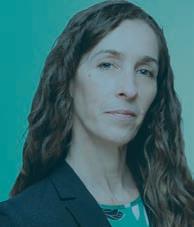


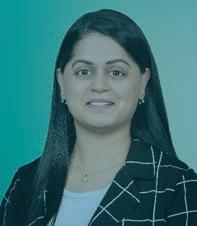




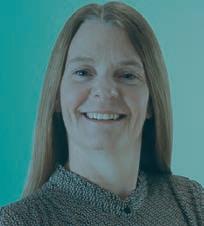


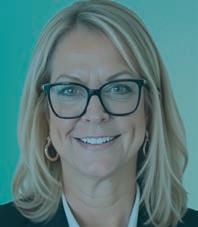





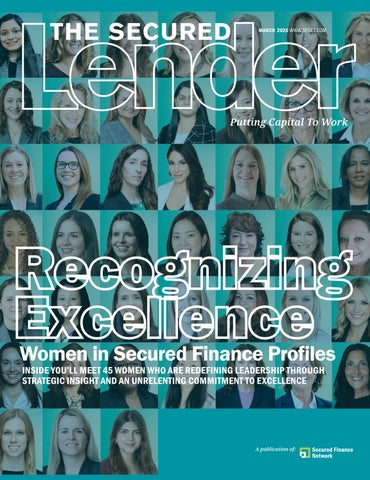








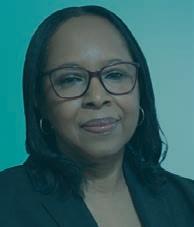



INSIDE YOU’LL MEET 45 WOMEN WHO ARE REDEFINING LEADERSHIP THROUGH STRATEGIC INSIGHT AND AN UNRELENTING COMMITMENT TO EXCELLENCE


At SFNet, we blend tradition with forwardthinking innovat ion. Meet Alfred—your new AI-as sisted website search as sistant.
Named in honor of Alfred Sachs, one of our founders and the rst Chairman of our association, Alfred is your key to unlock SFNet’s re sources and insights—offering you clari ty and guidance.
✔ Personalized search power
✔ Knowledge when you need it
✔ Based in legacy, built for the future
✔ Quickly nd industry insights and data
✔ Connect to relevant programs and events
✔ Navigate seamlessly to what matter s most to you


It is a privilege to welcome you to our annual Women in Secured Finance issue of The Secured Lender . Each year, this edition allows us to recognize outstanding women across the secured finance ecosystem. This year, it also highlights something especially timely: the critical role women are playing as the industry navigates greater complexity, heightened risk awareness, and continued change.
On the following pages, you will meet more than 40 professionals who are excelling in their roles by helping their institutions adapt, make sound decisions, and move forward with confidence. At a time when experience, judgment, and discipline matter more than ever, their leadership is shaping how secured finance responds to new challenges and opportunities.
The women featured here are builders and problem solvers. They are leading platforms, advising clients through uncertainty, managing risk, strengthening controls, and developing teams that can perform in demanding environments. Their accomplishments reflect individual drive, but also the increasing influence of leadership styles grounded in preparation, collaboration, and long term thinking.
At SFNet, we believe a strong industry depends on a strong pipeline of leaders, and that responsibility is shared. This issue celebrates achievement while reinforcing the importance of cultivating an inclusive, resilient, and forward looking profession.
This issue of The Secured Lender is just one of many ways SFNet recognizes excellence. In April, nominations will open for our Hall of Fame and IMPACT Awards, honoring individuals and organizations whose contributions have meaningfully shaped the industry. In June, we will host our annual 40 Under 40 Gala, celebrating emerging leaders whose talent and ambition are defining secured finance’s next chapter.
In addition to the profiles in this issue, our related content highlightsthe growing contributions of women in secured finance. In Navigating Career Transitions on page 76, Lena Surilov of Otterbourg explores how rapid change in finance— driven by technology, regulation, and cultural shifts—is creating new pathways for women to move into leadership, specialized roles, entrepreneurship, and emerging sectors, reshaping both their careers and the industry.
On page 86, in Celebrating Women in Credit , Michele Ocejo speaks with three remarkable women credit professionals who have made significant strides in their careers.
A new generation of leaders is redefining what success
looks like in secured finance. On page 82, Eileen Wubbe sits down with five former SFNet 40 Under 40 Award recipients who share the pivotal choices, lessons, and relationships that shaped their careers—from building confidence and credibility to navigating change and seizing opportunity.
We are also introducing a new legal column in this issue. In The Mirage of Gross Receivables in Lender Finance , Jim Cretella and Narbeh Grigorian argue that in lender finance facilities to factoring companies, the real risk isn’t just eligibility criteria, but whether the borrowing base is improperly calculated on gross receivables rather than the true net receivable exposure, potentially overstating collateral and availability.

RICHARD D. GUMBRECHT
SFNet Chief Executive Officer
I encourage you to join us at the Women in Secured Finance Conference on June 10–11, 2026, in New York City. The program will feature market insights, career-focused discussions and interactive roundtables designed to inform, connect and inspire.
Thank you for being part of our vibrant community. I look forward to celebrating with you in the months ahead.
RECOGNIZING EXCELLENCE:
Excellence:
On the following pages, you will meet 45 women who are redefining leadership through strategic insight and an unrelenting commitment to excellence. 8
In the last couple of years, the finance industry has been undergoing a profound transformation, which has been driven by technology, globalization, evolving regulation, and shifting cultural expectations. At the center of this change is another powerful movement: the rise of women transitioning into new roles. 76 LENA SURILOV

A new generation of leaders is redefining what success looks like in secured finance. In this feature, five former SFNet 40 Under 40 Award recipients share the pivotal choices, lessons, and relationships that shaped their careers. 82 BY
EILEEN WUBBE
In this insightful Q&A, we feature three remarkable women credit professionals who have made significant strides in their careers. Betty Hernandez, executive vice president/chief credit officer at SLR Business Credit; Mignon Winston, vice president/underwriting team leader at Great Rock Capital, and Hailee Ledford, vice president of client relations at AmeriFactors, share their experiences, challenges, and successes. 86
BY MICHELE OCEJO
LENDER’S EDGE
A lender extends a $70mm “lender finance” revolving loan facility to a factoring company. Availability under the facility is governed by a borrowing base, calculated generally as 75% of eligible receivables. The eligibility criteria include the standard and customary exclusions and limitations. But that is not the issue here. The issue here concerns a much simpler, yet more fundamental, question: What is the “receivable” that is used to build the borrowing base in the first instance? 91
BY JIM CRETELLA AND NARBEH GRIGORIAN
Frost Brown Todd LLP (FBT) and Gibbons P.C. finalized their combination, effective, January 1, 2026. The combined firm, FBT Gibbons LLP, creates a midmarket legal powerhouse with approximately 800 attorneys across 25 offices nationwide. 94
BY EILEEN WUBBE
TOUCHING BASE 1
NETWORK NOTES 4
The Secured Finance Network is the trade group for the asset-based lending arms of domestic and foreign commercial banks, small and large independent finance companies, floor plan financing organizations, factoring organizations and financing subsidiaries of major industrial corporations.
The objectives of the Association are to provide, through discussion and publication, a forum for the consideration of inter- and intra-industry ideas and opportunities; to make available current information on legislation and court decisions relating to asset-based financial services; to improve legal and operational procedures employed by the industry; to furnish to the general public information on the function and significance of the industry in the credit structure of the country; to encourage the Association’s members, and their personnel, in the performance of their social and community responsibilities; and to promote, through education, the sound development of asset-based financial services.
The opinions and views expressed by The Secured Lender’s contributing editors and authors are their own and do not necessarily express the magazine’s viewpoint or position. Reprinting of any material is prohibited without the express written permission of The Secured Lender
The Secured Lender, magazine of the asset-based financial services industry (ISSN 0888-255X), is published 6 times per year (Jan/Feb, March, June, July/Aug, Sept and Nov) $65 per year non-member rate, and $105 for two years non-member rate. SFNet members are complimentary.
Secured Finance Network
370 Seventh Avenue, Suite 1801, New York, NY 10001. (212) 792 -9390 Email: tsl@sfnet.com www.SFNet.com
Periodicals postage paid at New York, NY, and at additional mailing offices. Postmaster, send address changes to The Secured Lender, c/o Secured Finance Network, 370 Seventh Avenue, Suite 1801, New York, NY 10001
Editorial Staff
Michele Ocejo Editor-in-Chief and SFNet Communications Director mocejo@sfnet.com
Eileen Wubbe Senior Editor ewubbe@sfnet.com
Aydan Savaser
Art Director asavaser@sfnet.com
Advertising Contact: James Kravitz
Chief Business Development Director
T: 646-839-6080 jkravitz@sfnet.com
Aequum Capital Finance LLC Promotes Eric Weisheit and Geno Ruggles to Partner
Eric Weisheit has played a critical role in originating, structuring, and executing complex asset-based and cash-flow transactions, consistently delivering creative, disciplined solutions for middlemarket borrowers across the US.
Geno Ruggles has been a driving force in portfolio management, underwriting excellence, and strategic growth initiatives.
Archway Welcomes George Vartanov as Underwriter
Archway announced that George Vartanov has joined the firm as a director serving in the capacity of underwriter. In his role, Vartanov will support Archway’s underwriting team by evaluating transactions, collaborating across teams, and helping ensure clients receive financing solutions that are both sound and strategic.
Gabriela Lee Joins Austin Financial Services as Relationship Manager
In this role, Gabriela Lee will play a key role in delivering an exceptional client experience by building and maintaining strong relationships with clients while actively managing portfolio risk. Lee brings more than 13 years of industry experience, with a background spanning field examination, portfolio management, and relationship management.
Blank Rome LLP Expands Dallas Litigation Bench with Addition of Trial Lawyer Mark L. Johansen in Dallas
A seasoned commercial litigator with more than 35 years of experience, Mark Johansen represents Texas-based and national clients in high-stakes disputes involving financial services, energy, healthcare, real estate, private equity, technology, and early-stage companies.
Blank Rome LLP Welcomes Leading Finance and Derivatives Attorney
David H. Kaufman as Senior Counsel in New York
David H. Kaufman has joined the firm’s New York office as senior counsel in the Finance, Restructuring, and Bankruptcy group. Kaufman will also be a member of the Financial Services and Energy industry teams, drawing from extensive experience in U.S. derivatives, financial, and energy matters.
Cahill Announces Election of Five New Partners and Two New Counsel
Cahill Gordon & Reindel LLP announced that Jonathan Galea, Mark Gelman, James Mandolfo, Biagio Marino, and Jordan Wishnew have been elected to the partnership. In addition, Eric Scher and Lynn Schmidt have been promoted to counsel.
Celtic Capital Corporation Expands Client Development Team
Stephen (Steve) Trefzger and Michael (Mike) Haas have joined as senior vice presidents. Each has extensive experience and expertise in the industry and strong relationships in the communities in which they serve. Trefzger covers Celtic’s Pacific Northwest region that includes WA, OR, ID, MT, and Haas handles the Mountain West region consisting of AZ, CO, NM and UT.
Mostofi
Capital LLC (EBC) as Chief Executive Marketing Officer
In this role, John Mostofi will oversee the business development team and play a vital role in the firm’s strategic initiatives. Mostofi brings over 30 years of executive leadership and expertise in banking and financial services and most recently served as the chief operating officer for the Armory Group.
Jarrad Herzog Joins Eastern Bank as Senior Vice President, Asset-Based Lending Relationship Manager
Jarrad Herzog brings more than a
decade of experience financing middlemarket companies through a variety of lending solutions, including Commercial & Industrial and Asset-Based Lending. Most recently, Herzog served as senior vice president, relationship manager at Beacon Bank & Trust (formerly Berkshire Bank).
Fifth Third Bancorp announced a planned leadership transition within its Credit organization following the upcoming retirement of Greg Schroeck, chief credit officer, after nearly 40 years of distinguished service. Kristof Schneider, currently deputy chief credit officer, will succeed Schroeck. Schneider will join Fifth Third’s Enterprise management team, the Bank’s senior-most governing body, and report to Bob Shaffer, chief risk officer. Schroeck will stay on in an advisory capacity through the second quarter of this year to ensure a smooth transition.
Flagstar Bank Opens Private Client Office on Park Avenue in New York City
Flagstar Bank, N.A. announced the opening of its newest Private Client Office at 320 Park Avenue in New York City. The new location marks a major milestone in the Private Bank’s strategic expansion and is designed to foster collaboration and strengthen client relationships with affluent and high-net-worth individuals, family offices, and professional service firms and their owners.
Hilco Global Hires Henry Jackson to Support Growth of its Two Divisions, Hilco Global Capital Solutions and Hilco Global Professional Services
Hilco Global announced that Henry Jackson has joined the firm, based in its New York City office. Jackson has joined as an executive director – Originations and Transactions and will focus on growing the Hilco Global Capital Solutions and Hilco Global Professional Services divisions, with an emphasis on client relationship development across the private investment (both debt and equity)
space. He will serve as a senior member of the Hilco Global growth team.
Holland & Knight’s Financial Services Group Welcomes Adam Jachimowski in New York
Holland & Knight has bolstered its national Financial Services Practice Group with the addition of corporate trust partner Adam Jachimowski in New York. Jachimowski was previously a partner with Troutman Pepper Locke and represents financial institutions and investment funds serving as trustees, collateral agents, depositaries and escrow agents in a broad range of financing and restructuring transactions.
IDB Bank Appoints David Park as President of Commercial Banking
In this newly unified role, David Park will lead IDB Bank’s Commercial Banking business nationwide, aligning the Bank’s regional platforms under a single national structure to enhance service offerings, consistency and collaboration, while preserving IDB’s relationship-driven approach. He will report directly to Avner Mendelson, president & CEO of IDB Bank.
Iron Horse Credit Welcomes Daren Demcsik as Senior Vice President, Senior Underwriter
Daren Demcsik brings a wealth of credit expertise spanning his more than 30 years in the commercial finance industry. His distinguished career includes roles at financial institutions such as Access Capital, Wells Fargo, Bank of America and The CIT Group.
UK Infrastructure Partners Caroline Gregson and Nath Curtis Join Jones Day’s Financial Markets Practice
Caroline Gregson and Nath Curtis are based in the Firm’s London office and join a team of nearly 320 lawyers worldwide in the Financial Markets Practice who advise clients on the full range of complex crossborder financial transactions, including cutting edge advice on energy transition and infrastructure transactions, as well as regulatory matters, investigations and litigation.
Karen Marino Joins JPalmer Collective as Head of Risk Management
Karen Marino will work closely with JPC’s credit teams to underwrite and manage client relationships, helping the firm thoughtfully identify, assess, and mitigate risk as it continues to grow. With more than 20 years of experience in underwriting, portfolio management, and credit risk, Marino has built a reputation in the industry for disciplined credit judgment, collaborative leadership, and a deep understanding of borrowers’ needs throughout the lending cycle.
JPalmer Collective Expands Leadership Team with Appointment of Elena Goynatsky as Senior Vice President, Portfolio Manager
Elena Goynatsky will oversee the strategic management and performance of JPC’s portfolio, with a focus on supporting sustainable growth while maintaining disciplined risk management. She will work closely with JPC’s executive leadership and external partners to guide lending decisions, support portfolio companies, and ensure operational excellence across the platform.
David Weinhoffer, Seasoned Turnaround and Restructuring Expert, Joins J.S. Held
Based in Houston, TX, David Weinhoffer brings deep local knowledge that enhances the team’s ability to provide support on engagements in the region, further strengthening J.S. Held’s coastto-coast solutions for businesses facing complex financial and operational challenges.
Latham Adds Experienced Finance Partner in New York, Further Expanding Top-Ranked Practice
Latham & Watkins LLP is pleased to announce that Max Silverstein has joined the firm’s New York office as a partner in the Capital Markets Practice. Silverstein has substantial experience representing sponsors, corporates, and credit funds in their most complex financing and liability management transactions.
Lendscape Appoints Brett Promisel as Chief Executive Officer
Brett Promisel joined Lendscape with more than 30 years’ experience leading global technology and financial services organizations, with a strong track record of driving growth, operational excellence, and transformational change. Most recently, he was head of the Investor Services business at FIS Global.
Loeb Promotes Eric Schwartz to President
In this role, Eric Schwartz will lead the company’s strategic direction, support growth across all business lines, and continue to advance a team-oriented culture rooted in Loeb’s 146-year history.
M&T Bank Appoints Jeff Carpenter Regional President for Massachusetts With more than two decades of corporate and specialty banking experience, Jeff Carpenter brings deep regional knowledge, financial expertise and a strong record of leadership to this role, reinforcing M&T’s commitment to delivering exceptional service to its customers.
Norton Rose Fulbright Expands Business Practice with Five Partners in Two Cities
Global law firm Norton Rose Fulbright announced a powerful expansion of its business practice with the addition of an impressive group of corporate, private equity, healthcare, finance and tax lawyers who further enhance the firm’s robust transactional capabilities. Andrew Smolik and Michael Flood join Norton Rose Fulbright’s St. Louis office, as Seth Aigner, Virginia Duong and Gordon Klein arrive in Chicago.
Peapack Private Appoints Elizabeth Martone as Senior Managing Director
Peapack-Gladstone Financial Corporation and Peapack Private Bank & Trust are pleased to announce that Elizabeth “Liz” Martone has joined the organization as senior managing director, group director. Operating from the Bank’s Park Avenue Office in New York City, she will play a
pivotal role as a part of James Handal’s leadership team
RelPro Marks 10-Year Anniversary with Leadership Transition as Rajmangal Named CEO
RelPro announced the appointment of Raaj Rajmangal as chief executive officer as the company celebrates its 10th anniversary. Founder Martin Wise will transition from CEO to Executive Chairman of the Board, providing strategic guidance as RelPro enters its next phase of growth.
Sidley Continues Global Finance Group Growth With Partner Ji Hye You in New York
Ji Hye You was previously a Private Credit Group partner at Proskauer Rose. You represents alternative lenders, financial institutions, corporate borrowers, financial sponsors and their portfolio companies in a broad range of sophisticated debt and equity financing transactions.
Solifi Appoints Sarah Glass as Chief Customer Officer to Accelerate Customer Outcomes and Global Growth
In this role, Sarah Glass will lead Solifi’s global customer organization, including customer success, support, services, education, and customer experience operations, with a mandate to deepen adoption, increase customer value, and expand long-term partnerships across Solifi’s global customer base.
Tiger Group Launches Investment Banking Division Led by Special Situations Veteran Jamie Lisac
Tiger Group announced the launch of Tiger Investment Banking, a new division focused on distressed and special situations transactions. Jamie Lisac, who brings 25 years of experience to the firm, will serve as group head and senior managing director.
Truist Announces New Head of Structured Credit Truist Financial Corporation announced
that Mark Cuccinello has joined as head of Structured Credit, overseeing Asset-Based Lending, Working Capital Solutions, and Equipment Finance. In this role, Cuccinello will help advance Truist’s structured credit strategy by aligning more closely with the corporate and commercial banking teams to deepen industry relationships and help businesses grow, manage liquidity, and invest in their operations.
US Capital Global Strengthens Texas Presence with Appointment of Chris Ragland to Senior Leadership Team
Chris Ragland has joined the firm as senior vice president, marking a significant expansion of the firm’s leadership team and its presence in Texas. Based in Austin, Ragland will play a senior role in advancing the firm’s middlemarket capital formation activities across Texas and Mexico.
Wells Fargo & Company Names Faraz Shafiq as Head of AI Products and Solutions
This move demonstrates the bank’s commitment to leveraging artificial intelligence (AI) to shape the future of financial services and transform how it works to deliver for employees, customers, and communities. Faraz Shafiq will report to Saul Van Beurden, head of AI and Co-CEO of Consumer Banking and Lending and work out of San Francisco.
Western Alliance Bank Expands Note Finance Team in New York with Addition of Market Manager Ian Hawk
In this role, Ian Hawk provides Western Alliance Bank’s differentiated leverage solutions to New York-based private credit platforms, offering clients nearly a decade of experience across public and private real estate, capital markets, origination and AI-driven financial analysis to deliver deep data-driven insights to facilitate informed decision-making.
Western Alliance Appoints Stephen McMaster as Chief Information Security Officer
Stephen McMaster is a seasoned financial services technology and security executive with more than 25 years of experience leading cybersecurity, risk management and technology control functions at large, complex financial institutions. He will be based in Phoenix.
Winston & Strawn Names Managing Partners for Key Firm Offices
Winston & Strawn LLP has elevated three proven leaders to managing partner roles in Charlotte and Dallas, underscoring the firm’s continued strategic growth. Kobi Brinson will serve as managing partner of the firm’s Charlotte office, while Brett Johnson and Jordan Klein have been appointed co-managing partners of the Dallas office.
Winston & Strawn Appoints Brett Johnson as Co-Chair of Litigation Department
Winston & Strawn LLP announced the appointment of Brett Johnson as co-chair of the firm’s Litigation Department, serving alongside Linda Coberly, who assumed the role in 2024. Together, they will guide the continued growth and strategic direction of the firm’s worldclass litigation practice.
Winston & Strawn Adds Partner David Love to Growing Leveraged Finance Team
Winston & Strawn LLP announced the addition of David Love to the firm’s Chicago office. He joins the firm’s Transactions Department as a partner in the Finance practice
SFNet Created (as The National Conference of Accounts Receivable Companies, Inc.): 1944
SFNet’s WISF Committee Founded: 2013

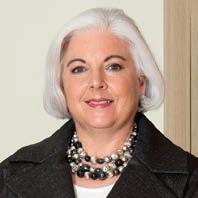



Debbie Monosson Becomes First Female President
Andrea Petro Becomes Second Female President
Bobbi Acord Noland Becomes First Female Co-General Counsel
Jennifer Palmer Becomes Third Female President
Betty Hernandez Becomes Fourth Female President
On the following pages, you will meet 45 women who are redefining leadership through strategic insight and an unrelenting commitment to excellence.

Shreya Ramesh is a product and services manager at ABLSoft, a provider of collateral and loan management software. She has been with ABLSoft for seven years, partnering closely with clients to deliver complex, high-impact initiatives and ensuring their needs shape the product experience.
In her role, Shreya applies product expertise to translate customer feedback and requirements into meaningful, user-focused outcomes. She is actively involved in product releases, data analysis, and pricing models, which gives her a comprehensive perspective on aligning product strategy with both customer success and practical, real-world use cases. With over a decade of experience spanning telecom, retail, and FinTech, she has developed a well-rounded skill set that bridges technical knowledge and business impact.
Shreya holds an engineering degree in Information Science and has over a decade of experience spanning telecom, retail, and fintech. She relocated to San Francisco and has since embraced exploring the city and its surrounding areas. Outside of work, she enjoys home improvement projects, friendly board-game competitions, wildlife and discovering new places. Her approach to both work and leisure is marked by a passion for improvement and creativity.
What advice would you offer to women just starting out in the industry? What is the best advice you ever received?
Be curious, take initiative, and don’t fear complex problems. Early on, focus on understanding the business, how your work creates impact, and building relationships with people from different perspectives.
The best advice came from my dad: there is no shortcut to success; work hard, stay consistent, and take pride in what you do. That mindset has shaped how I approach every opportunity and challenge.
What do you know now that you wish you knew at the beginning of your career?
I wish I had recognized the importance of building a strong network earlier. Engaging with colleagues opens doors and provides support through challenges. I hesitated to take risks early on, but stepping outside my comfort zone led to growth and new possibilities.
How did you approach making a big decision in your career, either moving onto a new organization or role?
Moving from a career in India to explore opportunities in the US was a big decision. Despite working on US projects, cultural differences, new processes, language nuances, and entering the asset-based lending space represented a significant transition. I approached it with patience, asking questions, observing carefully, and acknowledging what I didn’t know. This openness allowed me to adapt and thrive. The journey was rewarding, made even better by my husband, who was going through a similar transition.
What role has mentorship or sponsorship played in your career?
For me, mentorship is about gaining insights from those I respect, drawing inspiration from their successes, and applying those lessons to grow. My mother, who has a successful career in education, has been a guiding influence. Watching her positively impact students taught me patience, encouragement, and the value of leading by example. I have benefited from strong leadership mentorship, including guidance from our CEO, whose honesty and strategic perspective have shaped how I approach situations.
What would you like to achieve this year, either personally or professionally?
I want to explore how AI and emerging technologies can drive smarter, more efficient workflows, enhance decision-making, and deliver meaningful outcomes for clients. I am evaluating tools to optimize processes and experimenting with innovative approaches to create tangible value. Personally, I hope to visit a few more national parks and immerse myself in nature.
What skills or experiences have been most critical in helping you succeed?
Solving customer problems and using data to inform decisions have been central to my success. I have evolved from relying on gut instincts to taking an analytical approach, assessing situations using available data, triangulating with other sources, and building insights to shape strategy. Additionally, hands-on experience in a startup, where I wore multiple hats and tackled diverse responsibilities, has strengthened my versatility.
How do you stay resilient and motivated during periods of uncertainty or industry transformation?
I stay resilient by embracing change and treating challenges as learning opportunities. I focus on controlling the controllables, doing the basics well, and maintaining a laser focus on delivering value for customers. Support from my family and organization keeps me grounded and motivated.
What is one misconception about secured finance that you believe women entering the field should rethink?
A common misconception is that secured finance is purely transactional and numbers driven. It requires understanding clients’ businesses, managing risk thoughtfully, and crafting solutions that support growth. Strong collaboration and strategic thinking are as critical as analytical skills. Especially in a shifting economy, secured finance delivers resilience by combining expertise with client insight.

As a partner of the firm and head of Diligence, Meghan oversees all aspects of asset management, including team leadership, portfolio oversight, and risk mitigation, while also participating actively on the Investment Team and Investment Committee.
Meghan joined Altriarch in 2021 and has worked in specialty finance for nearly 15 years. Before joining Altriarch, she served as senior vice president at SouthStar Capital from 2011 to 2017 and again from 2019 to 2021. As senior portfolio manager, she managed an $80M portfolio purchasing over $250M in invoices annually. From 2017 to 2019, she was senior vice president of Operations and co-founder at inFactor Capital, where she grew the portfolio to more than $100M in annual invoice purchases before selling the portfolio.
Earlier in her career, Meghan worked at Cambridge Associates in Boston and began her finance career at State Street Corporation. She earned her B.A. in International Relations and Spanish / Hispanic Studies from Hobart and William Smith Colleges.
What advice would you offer to women just starting out in the industry? What is the best advice you ever received? Stay true to your values and who you are. That might sound simple, but it can be one of the hardest things to maintain, especially early in your career when you’re still finding your footing. There will be moments when your values get tested by peers, colleagues, and sometimes even leaders you respect. In those situations, it’s easy to start molding yourself into what you think others want or expect from you. But the best advice I ever received was to remain anchored in who I am. At the end of the day, authenticity outweighs anything else you can bring into a conference room.
Another piece of advice I share often is to never stop learning. We’re living through a period of major digital transformation, and the pace of change isn’t slowing down anytime soon. Whether it’s new systems, emerging technology, or entirely new ways of thinking, always stay curious. Be willing to dive into things that feel unfamiliar or uncomfortable at first. Continuous learning is one of the most valuable habits you can build.
Don’t be afraid to ask questions or share your point of view. Some of the most pivotal moments in my career happened because I raised my hand or challenged something that didn’t sit right with me. Taking the time to do your research and prepare thoughtfully gives you the confidence to speak up. I think most people would be surprised by how often that courage opens doors you didn’t even realize were there.
How did you approach making a big decision in your career, either moving onto a new organization or role?
When I’m facing a big career decision, I rely on a combination of intuition and thoughtful analysis. My gut instinct has always been a strong guide for me. Typically, my initial reaction tells me far more than I realize in the moment. I also turn to the people who know me best like my husband, my family, and my
business partner, Danielle Brown. Their support and honesty help me see things from angles I might miss on my own.
Given my background in risk and portfolio management, I naturally approach decisions by breaking them down into pros and cons, along with a sort of informal risk matrix. I look at what I’m gaining, what I might be giving up, and how each option aligns with my long-term goals and values. One of the biggest lessons I’ve learned is not to rush these moments. I give myself time to sit with the emotional, personal, and practical sides of the decision before inviting in outside feedback. Some of the most important decisions I’ve made, especially the ones that pushed me outside my comfort zone, were also the ones that ultimately helped me grow the most. Those experiences taught me who I am, what I want, and what I’m capable of. Growth almost never feels comfortable, but it’s always worthwhile.

CHRISTY BOWEN Bank of America Business Capital (BABC)
Christy Bowen is a senior vice president and portfolio manager for Bank of America Business Capital (BABC), bringing more than 20 years of experience in asset-based lending. She leads a team of credit professionals overseeing a $5 billion portfolio of commitments and related products and solutions, working with clients across a wide range of industries, primarily in the middle market and large corporate space. Based in Philadelphia, Christy mainly supports clients across the New York tri-state region.
Christy began her ABL career in 2004 with GE Capital’s Corporate Finance group. She later joined LaSalle Bank, which subsequently merged into Bank of America Business Capital. Over the course of her career, she has held diverse roles across field examination and portfolio management, giving her a comprehensive view of risk, operational execution, and client needs.
A graduate of Fairfield University, Christy holds bachelor’s degrees in both finance and marketing, as well as Series 7 and Series 63 securities licenses. She is an active advocate for advancing women in the workplace and has served for several years on the board of the Philadelphia chapter of LEAD (Leadership, Education, Advocacy and Development) for Women. Christy lives in Media, PA with her wife and two children.
What advice would you offer to women just starting out in the industry? What is the best advice you ever received? For women just starting out in the industry, my advice is to take ownership of your career from the very beginning. Be engaged, ask questions, and stay curious—so much of what we learn happens on the job, through exposure to different people, situations, and challenges. Seek out opportunities to contribute, build strong relationships, and develop a network of mentors and peers who genuinely support your growth.
One of the most impactful pieces of advice I’ve received is to never doubt that you belong at the table. Developing confidence takes time. I still face moments where I question myself, but I’ve come to understand that confidence is something that evolves through experience and continued growth. With each new challenge and each success, your sense of belonging and your voice become stronger.
Another piece of guidance that has shaped me is the importance of taking responsibility for what you do, both in work and in life. When you truly own something, you invest in it. You care more deeply, you put in the extra effort, and you show up with intention. Stay curious, stay engaged, trust your instincts—and don’t be afraid to take your seat at the table.
What role has mentorship played in your career?
Mentorship has been one of the most influential forces in my career. Early on, formal mentorship programs were not as common as they are today, so I learned by observing the people who inspired me—watching how they led, made decisions, and handled challenges. As my career progressed, I was fortunate to cross paths with exceptional leaders who offered guidance, opened doors, and helped shape my professional growth in meaningful ways.
I’ve benefited from both formal and informal mentors, and each has played a distinct and invaluable role. Mentorship is often viewed
as something most useful early in one’s career, but I believe its importance only grows over time. As responsibilities expand and decisions become more complex, having trusted voices to lean on becomes even more critical. The encouragement, perspective, and honest feedback I’ve received have motivated me to stretch further and approach challenges with greater confidence.
There is no handbook for the work we do; much of our learning comes from shared experience. Because of that, I believe in paying forward the support I have received. I strive to be someone others can come to for guidance, advice, and encouragement. I consider myself incredibly fortunate for the mentors who have shaped both my professional and personal growth, and I hope to do the same for others.
Studies have shown women are more reluctant to tout their accomplishments in the workplace. What advice would you give to help women be more comfortable speaking up?
Being yourself and showing confidence goes a long way. Celebrate your successes — you worked hard for them! While hard work often does speak for itself, people cannot recognize what they don’t know — so get comfortable conveying your contributions while acknowledging the team effort behind them.
Speak up thoughtfully, genuinely and clearly so people hear and remember your voice. Surround yourself with people who lift you up, who champion you and who commit to championing others as well. Creating a culture where women promote each other’s ideas and recognize achievements makes it easier for everyone to speak up and recognize the value they bring.
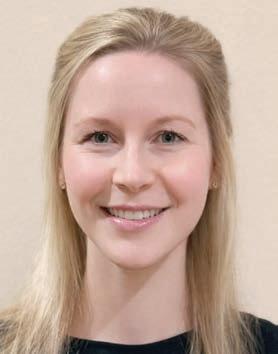
LAUREN TRUSSELL CHEVALIER Bank of America Business Capital (BABC)
Lauren Trussell Chevalier is a senior business development officer at Bank of America Business Capital, where she is responsible for originating new asset-based structured lending opportunities across the Southwest. Lauren originates ABL solutions for public and private companies, as well as M&A transactions. Bank of America Business Capital provides financing solutions ranging from $15 million to more than $1 billion, including both sole lender and syndicated structures. Lauren’s coverage territory includes Austin, San Antonio, Dallas–Fort Worth, Amarillo, El Paso, Oklahoma, and New Mexico.
In recognition of her performance and leadership, Lauren received Bank of America’s Apex Award and Wholesale Credit All Star Award in 2019. In 2020, she was also named a recipient of SFNet’s 40 Under 40 Award, honoring emerging leaders in the secured finance industry.
Lauren resides in Dallas, Texas, with her husband and children.
What advice would you offer to women just starting out in the industry? What is the best advice you ever received?
Early in your career, focus on building a strong technical foundation and—just as importantly—do not be afraid to ask questions. Invest the time to develop a deep understanding of credit structures, collateral, and risk analysis. One of the best pieces of advice I ever received was to focus on understanding the “why” behind the work, rather than simply producing an outcome. That mindset requires humility—being willing to admit you do not know everything—and the ability to listen.
As your career progresses, you will find yourself explaining the nuances of secured lending to clients, prospects, or internal stakeholders. Even then, it is critical to continue asking questions and seeking opportunities to learn. Curiosity and continuous education are what separate competent professionals from trusted advisors.
How did you approach making a big decision in your career, such as moving to a new organization or role?
When evaluating a major career decision, I focus on three primary factors: the learning opportunity, the people and culture, and alignment with my long term goals. While short term compensation matters, the opportunity to broaden my skill set, gain exposure to complex transactions, and build meaningful relationships has ultimately been far more valuable to my long term career growth and personal fulfillment.
In almost every case, choosing growth means stepping into the unknown, which can be uncomfortable. When I moved from underwriting into business development, I initially felt uneasy being the one “out front.” Business development professionals do not have the luxury of pulling up reference files on a laptop during an in person meeting. I questioned whether spending additional years in underwriting would help me feel more prepared.
Ultimately, I took the leap and learned that comfort only comes through experience. You learn to be confident out front by being out front. Taking on a new role almost always involves a period of discomfort and self doubt until you gain enough repetition to build confidence. Holding on too tightly to the need to appear polished or perfect often means staying in roles where we are already comfortable and limiting our growth as a result.
What skills or experiences have been most critical in helping you succeed?
Strong analytical skills and attention to detail are essential, but communication is equally important and often underestimated. The ability to listen with the intent to understand—and to clearly articulate complex concepts to a wide range of stakeholders, both internal and external—builds credibility and trust. Communication skills are often what transform technical expertise into real influence and impact.
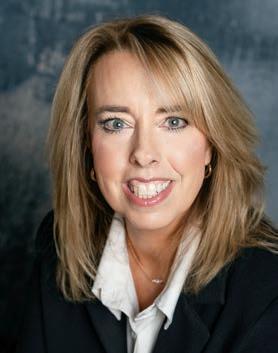
Tina Krasovec is the senior field examiner with Cambridge Savings Bank (CSB) and is responsible for conducting field examinations on existing clients and new prospects exclusively for the bank’s Asset Based Lending Group. Tina has over thirty years of experience in the banking industry including field exam and underwriting. Tina has developed in-depth knowledge across diverse sectors such as manufacturing, distribution, retail, healthcare, automotive, transportation, staffing, and service providers that has proven invaluable in establishing well-structured credit facilities. Tina supports the team by providing critical analysis on credit risk, identifying various types of collateral exposures and providing recommendations to mitigate risk, which is instrumental in structuring ABL lending deals. Over the years, Tina has mentored her colleagues through educational and training opportunities.
Prior to joining Cambridge Savings Bank, Tina worked for Shawmut Bank, Fleet Bank, M&T Bank (formally, People’s United Bank), North Shore Bank, and Hollis Meddings Group, a turnaround consulting firm that provided field exam services for various financial institutions. Tina is a graduate of Merrimack College with a Bachelor of Science in Accounting. She resides in Danvers, MA and enjoys spending time with her husband and two sons and extended family and friends.
What advice would you offer to women just starting out in the industry?
Dedicate yourself to learning all the facets of asset-based lending. This would include taking advantage of opportunities to be involved in examinations diverse in various industries, networking with your peers in effort to build a foundation of knowledge-based experience. Most importantly, ask questions and collaborate with those well-established in the field of ABL. Collaboration leads to conversations and key insights as well as perspectives in addressing collateral issues and mitigating risks. In addition, seek feedback and view it as a learning tool to grow professionally. Knowledge is a means to build confidence when you are just starting out in your career.
Studies have shown women are more reluctant to tout their accomplishments in the workplace. What advice would you give to help women be more comfortable with speaking up?
That is more of a reason for women in this field to have self-confidence in their accomplishments. I would advise women to recognize and take pride in their professional achievements no matter how big or small. Throughout the year, keeping a list of your successes will serve as a foundation for your growth in a successful career in this field of work.
What do you know now that you wish you knew in the beginning of your career?
Be confident in accepting challenges and be open to changes whether it is to take on additional responsibilities in a current role, accept a new position or move to a new company. It is easy to become complacent; however, change brings growth and new opportunities. While expected outcomes may not materialize, it still leaves you with the experience and confidence to move forward.
How did you approach making a big decision in your career, either moving onto a new organization or role?
My approach is to be well informed as you make significant career changes. I would ensure my understanding of the opportunity aligns with my personal and professional goals. In my career, there have been two pivotal decisions, 1) to leave consulting work and to go back to corporate banking and 2) to leave the bank where I had been for approximately 10 years to move to my current position with CSB. The move from consulting to corporate banking presented challenges because the position would be more demanding and I was accustomed to a flexible schedule while balancing the demands of a family, however this was an important step in my career growth. The move to CSB offered a much-needed challenge and fulfilling position at a time when I was prepared to take on this role and utilize my field examiner experience and as it turns out all my expectations have been met. In both instances, I considered the impact on my professional growth and my home life. I believe that it is very important to have a work/life balance when making a professional change, be intentional and confident, and make decisions that allow you to continue to grow at every stage in your career.
What skills or experiences have been most critical in helping you succeed?
Key skills are strong analytics, attention to detail, critical thinking, communication skills, and relationship building skills. Interacting with business owners, executives and other key personnel and observing and obtaining firsthand knowledge of business operations have been critical in developing experience in validating collateral and identifying inherent risks in lending. These on-site experiences have been essential to conducting successful exams, presenting recommendations to mitigate collateral risks and assisting ABL to make informed credit decisions.

Jillian Zvolensky is a partner in Blank Rome LLP’s Finance, Restructuring, and Bankruptcy practice group. She represents commercial banks, nonbank lenders, private equity sponsors and corporate borrowers in a wide range of complex commercial finance transactions, including acquisition and leveraged buyout financings, asset based and cash flow credit facilities, secured transactions, and restructurings and workouts as well as first out/last out, split lien, first lien/second lien and other forms of multi-tranche financings. Jillian is recognized for her strategic approach, practical judgment, and ability to guide clients through sophisticated matters across diverse industries. In addition to her client work, Jillian serves on Blank Rome’s Recruiting Committee, contributing to the firm’s talent development and hiring initiatives. Her professional achievements have earned notable recognition, including being named Best Lawyers in America® 2026 “Ones to Watch” in Bankruptcy and Creditor Debtor Rights / Insolvency and Reorganization Law and one of SFNet’s 2021 “40 Under 40”. Jillian is also dedicated to community service. She serves on the Finance and Governance Committees of the Board of Directors for Pathways PA, a nonprofit supporting women, children, and families, and she regularly volunteers at the Philadelphia Family Court Help Center.
What advice would you offer to women just starting out in the industry? What is the best advice you ever received?
Meaningful advice I received early on was: whatever you can do now, do. It helps me knock out small tasks on my to-do list which creates space for new opportunities and prevents backlog that can lead to procrastination. On a higher level, it encourages me to step into roles or take on projects before I feel completely “ready” rather than waiting for the perfect moment to begin.
Studies have shown women are more reluctant to tout their accomplishments in the workplace. What advice would you give to help women be more comfortable with speaking up?
Framing our accomplishments as a way to encourage and support other women rather than self-promotion can make speaking up more comfortable and meaningful. Throughout my career, I’ve been inspired by the achievements of the exceptional women I’ve worked with. Sharing our successes opens doors for others and benefits all of us.
What do you know now that you wish you knew in the beginning of your career?
That value is in the process and the learning that comes with it. Early in my career, I often rushed toward outcomes, but I now appreciate that development happens in real time and each step in the process helps deepen your expertise. It reminds me to slow down and be present which enriches both the result and the journey.
What role has mentorship/sponsorship played in your career?
Mentorship has been instrumental in my career, and I’m deeply grateful for it. I’ve been guided by generous mentors who not only helped me learn the practice of law but also advocated for my growth. Their leadership, kindness, and willingness to invest in my success shaped the way I approach my work and how I support others.
What skills or experiences have been most critical in helping you succeed?
Curiosity and the instinct to investigate when something feels off have been essential. These skills can create the moments where you stand out to clients and colleagues alike. They are also key to building expertise, which is critical for a lawyer in this industry.
Looking back, what moment or project most shifted your perspective on leadership in secured finance, and why?
Good leadership is softer than I had imagined early on in my career. Strong leaders listen before acting, rely on trust rather than authority, and create an environment where people feel comfortable contributing their ideas. Throughout my career, the leaders who took the time to ask for my perspective or acknowledge my work inspired me to give them my best in return.
How do you stay resilient and motivated during periods of uncertainty or industry transformation?
I remind myself that everything moves in cycles. Zooming out and maintaining perspective helps prevent temporary challenges from feeling permanent. By staying grounded, adaptable, and focused on the long view, it becomes easier to navigate uncertainty with steadiness and clarity.
What is one misconception about secured finance that you believe women entering the field should rethink?
A misconception is that being a woman in this field is a disadvantage. It can be an asset. With fewer women, it’s easier to connect and build strong networks. My Firm has long supported women in secured finance by curating women-focused events which early on introduced me to a close community of outstanding women—one I’m proud to help expand for those coming after me.



Congratulations to our partner and friend Jillian Zvolensky on being featured in The Secured Lender magazine’s “Women in Secured Finance.” Jillian is a pillar of leadership and professional excellence within the financial and legal communities at large. Her outstanding generosity and kindness towards her colleagues, team, and community are experienced by everyone she encounters in her professional and personal lives.
We are very proud of Jillian for being recognized by The Secured Lender.
Blank Rome is an Am Law 100 firm with 16 offices and 800 attorneys and principals who provide comprehensive legal and advocacy services to clients operating in the United States and around the world. Our professionals have built a reputation for their leading knowledge and experience across a spectrum of industries and are recognized for their commitment to pro bono work in their communities. For more information, please visit blankrome.com.

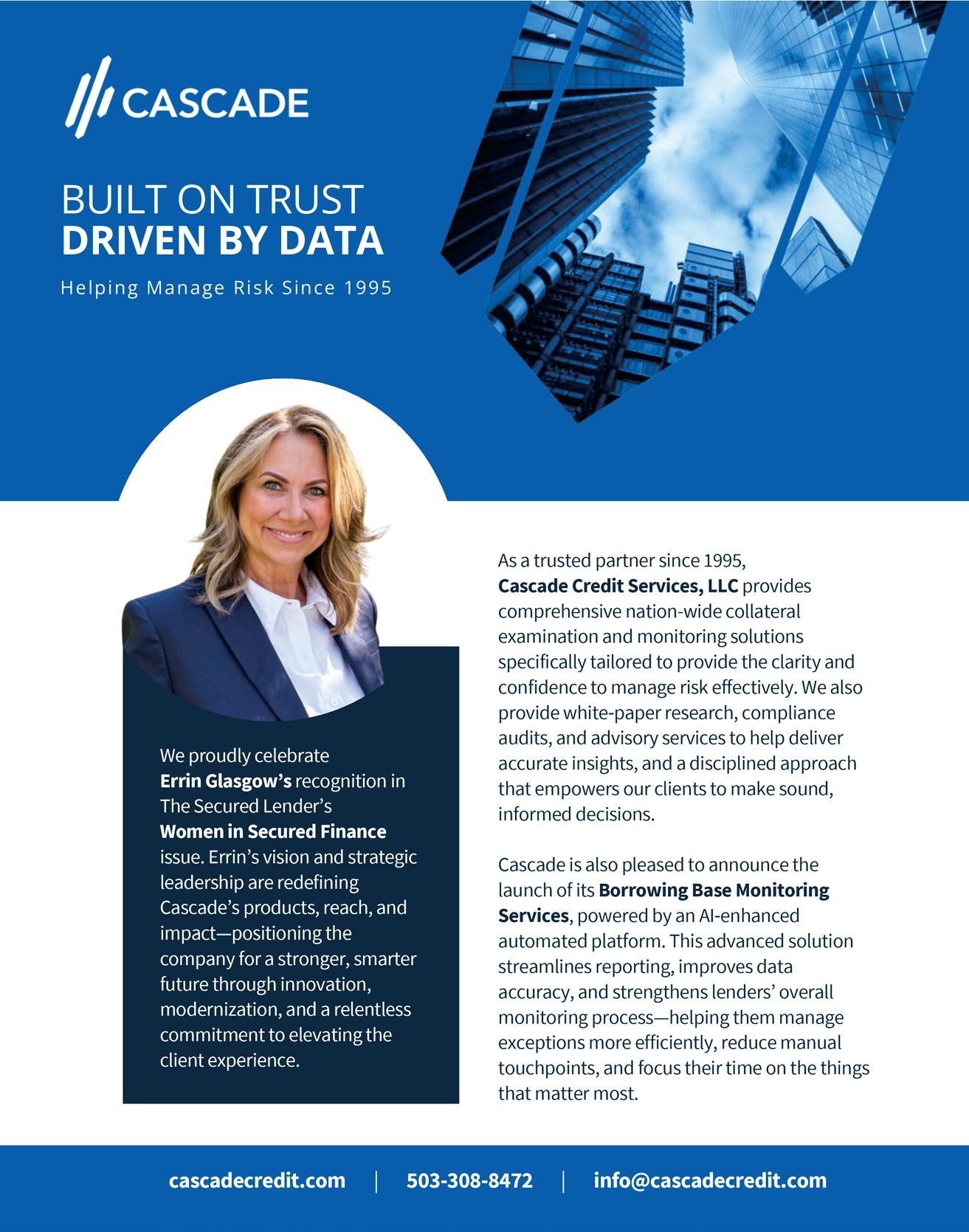
Errin Glasgow recently joined Cascade Credit Services, a nationwide leader in collateral and field examinations, collateral monitoring, and transaction diligence serving asset based lenders, commercial banks, and private credit funds since 1995. Errin came to Cascade following a distinguished tenure as director of Asset Based Lending at Columbia Bank from 2005 to 2025. At Columbia Bank she played a pivotal role in expanding the bank’s C&I portfolio by streamlining collateral risk strategies. Under her leadership, the C&I ABL portfolio grew to upwards 150 credits with over $850MM in commitments monitored by an experienced team of collateral analysts, collateral examiners, and support staff. Errin’s personalized approach to structuring ABL deals, coupled with a tiered risk-based approach to monitoring, helped set Columbia Bank apart from peers.
Errin began her banking career with Key Bank (former Puget Sound Bank) and Washington Mutual Bank. Errin holds a BS in Accounting from Eastern Washington University. She is a Senior Fellow of the American Leadership Forum of Pierce County; and enjoys giving back to the community. Errin lives in the Pacific Northwest with her husband and enjoys being active with her three adult kids.
How did you approach making a big decision in your career, either moving onto a new organization or role?
A career in asset-based lending (ABL) is something many professionals discover by chance, as it remains one of the lesser-known areas within commercial finance. Yet ABL serves as a critical foundation for the operational success of countless businesses. Because of this, working in ABL offers a unique opportunity to gain a deep understanding of the operating cycles, financial drivers, and risk profiles of a wide range of industries, both across the country and around the world.
My entrance into ABL began with a bank merger hiring collateral examiners. The examiner role provided a large audience and network of lenders, credit administrators, and support staff within commercial lending. Through these connections we built trust, teamwork and earned respect. These alliances helped advance my career to a director role in ABL.
I had not considered leaving banking, but when an opportunity presented itself to lead a well-known private collateral exam firm, I was instantly intrigued. As a banker, I was focused on analysis, risk evaluation and decision-making; but as a president, I would be able to focus on the vision, cultural leadership, and owning company-wide outcomes. I knew I was ready for a new path when everything seemed to align at the same time professionally, mentally and personally. I got the confidence to take this step through experience, but it came through years of doing the work, solving the problems, and navigating complex situations.
If you are contemplating a new role or organization, trust your experience as it has gotten you this far. Women oftentimes want to feel more prepared before they jump, whereas men on average express confidence earlier. Therefore, you can’t wait to be 100% ready.
What skills or experiences have been most critical in helping you succeed?
I’ve spent more than 25 years with one organization, and at times
I’ve wondered whether that was the right choice in a world where many people change jobs every three to five years. I understand the advantages of moving frequently; however, staying with one company gave me something different and incredibly valuable. It allowed me to experiment with processes, pivot quickly when the business needed it, introduce new products and services, and collaborate across teams to create real efficiencies. My success has come from investing the time and effort to grow alongside the organization, working together toward shared goals and building something meaningful over the long term.
Looking back, what moment or project most shifted your perspective on leadership in secured finance, and why?
When I first started in ABL, portfolio monitoring was fairly uniform across the board. A smaller, low risk facility was often monitored in the same way as a larger, more complex one, simply because the thresholds were limited and broadly applied. To improve efficiency while still appropriately addressing risk, we developed an assessment tool that established monitoring requirements based on the specific characteristics of the operating assets. This allowed us to tailor oversight to the true risk profile of each facility, rather than relying on one size fits all criteria.
The ability to scale the scope of a collateral exam has also become a vital part of our ongoing exam process because it allows us to tailor our review to each client’s actual operating risks. By aligning specific characteristics of their assets, we provide clients with more accurate insights, more meaningful feedback, and a more efficient exam process overall. It ensures we’re focusing on what truly matters to protect both the lender and the borrower.

Jessica Bates is managing director and head of business development at Dwight Funding, a modern asset-based lender serving growth-stage and middle-market companies across DTC, CPG, and other high-growth sectors. Jessica leads origination efforts and manages key relationships across Dwight’s borrower and referral network. Prior to her work at Dwight, Jessica was director of Strategy and Partnerships at a fintech lender, while previously she raised private debt and equity capital for companies globally in the Investment Banking Division of Barclays Capital. Jessica graduated with a B.S. in Finance and Accounting from the University of Virginia’s McIntire School of Commerce.
What advice would you offer to women just starting out in the industry? What is the best advice you ever received?
The best advice I’ve received is the best advice I can offer: be bold and ask for what you want. Whether it’s internally at your organization, in deal discussions, or navigating a credit or underwriting process, you are always your biggest advocate. Opportunities are rarely handed to you - more often, they follow when you speak up, articulate value, and lead with confidence.
Equally important is recognizing that hearing “no” shouldn’t be intimidating. It may not be the answer you are looking for, but “no” often comes with information, and information is power. Use it to refine your approach and come back stronger.
What skills or experiences have been most critical in helping you succeed?
One skill that has been central to my success is relationship building. In this industry, a strong network is your most valuable asset. The relationships you build with colleagues, clients, investors, and even other service providers have the power to shape your career. Investing in those relationships authentically creates trust and opens doors at every stage.
Resilience has also been critical. Commercial finance is cyclical by nature and deeply relationship-driven, which means working across shifting priorities and a myriad of personalities. Long-term success requires the ability to stay steady through change and adversity by building on positive momentum when you have it and recovering quickly when things don’t go as planned.
How do you stay resilient and motivated during periods of uncertainty or industry transformation?
By staying consistent. Consistency in the face of uncertainty is key to building a successful career in secured finance. The market
is cyclical and reactive. Maintaining your work ethic, especially in tougher macro environments, helps keep you focused and positions you to benefit when the market inevitably turns back in your favor.
What is one misconception about secured finance that you believe women entering the field should rethink?
A common misconception is that commercial finance is male dominated and therefore harder for women to succeed. While the industry is still largely male dominated, that does not mean women cannot thrive in it. In fact, this dynamic can create an opportunity to stand out rather than fall into the shadows.
Women hold tremendous power in the industry precisely because we offer something different. Our presence alone can shift the tone of an interaction, and we bring a fresh perspective that is often welcomed (at times even preferred) in client conversations and internal discussions.
Rather than letting demographics feel intimidating, it can be helpful to view that distinction as an advantage. From there, the quality of your work speaks for itself.

Meredith Campbell joined FGI in 2021 and currently serves as director, FGI Risk. With over five years at the firm, she has worked across multiple divisions, initially beginning with FGI Tech as a customer success manager, where she focused on helping clients maximize their use of FGI’s flagship credit insurance monitoring platform, TRUST™, and better understand how credit insurance supports broader risk and financing strategies.
Meredith later transitioned into the Risk division as a relationship manager, overseeing a national portfolio of brokerage clients and working closely with lenders, carriers, and insureds to structure effective and commercially sound credit insurance programs. This experience gave her a strong technical foundation and a comprehensive view of the credit insurance market.
More recently, Meredith expanded her role to full-time business development, leading deal origination for FGI Risk in the Northeast while continuing to manage client relationships. She currently grows and maintains a multimillion-dollar book of business with a strong focus on retention, long-term relationships, and practical risk solutions. She approaches business development as a problem-solving exercise rather than a transaction.
Meredith is actively involved in the secured finance community through her service on the SFNet Marketing Committee and participation in the SFNet Mentoring Program.
What do you know now that you wish you knew in the beginning of your career?
Early in my career, I thought success meant staying in one lane and becoming a technical expert. I wish I had known sooner that confidence isn’t about having all the answers. It’s about understanding your value and being willing to speak up, even when you’re still figuring things out. I also didn’t realize how transferable skills really are. I assumed certain paths, like sales or business development, required a personality type I didn’t have. Looking back, many of the skills I was building early on laid the foundation for roles I never imagined I would take later in my career.
How did you approach making a big decision in your career, either moving onto a new organization or role?
When I moved from Allianz to FGI in 2021, I wasn’t chasing a specific title or function. I was looking for broader exposure and a better understanding of the full client lifecycle. I stayed in portfolio-based roles and deepened my understanding of how clients, lenders, and insurance markets intersect. When the opportunity came to move into a full-time business development role, it felt like a major step outside my comfort zone. What I’ve learned is that the right moves aren’t always the comfortable ones. They’re the ones that push you to rethink what you’re capable of.
What role has mentorship/sponsorship played in your career?
Mentorship has always mattered, but sponsorship is what truly changed the direction of my career. Many people helped me build a technical foundation early on, but it was the leadership at FGI, especially Sami Altaher and Nikki Rangra, that changed
how I saw my own potential. They saw strengths in me that I didn’t recognize at the time and gave me the confidence to step into a role I never imagined for myself. Being encouraged to take risks, and feeling supported while doing so, has made all the difference.
What skills or experiences have been most critical in helping you succeed?
A deep technical foundation has been critical to my success. Spending years in underwriting and portfolio roles has given me credibility and the ability to speak fluently across stakeholders. Just as important has been learning how to communicate complex ideas in a simple, practical way. Relationship-building, active listening, and follow-through have also been key. Because I came from non-sales roles, I approach business development as problem-solving rather than a transaction, and that perspective has been a real advantage.
How do you stay resilient and motivated during periods of uncertainty or industry transformation?
I stay resilient by staying close to the work and the people doing it. Credit insurance and financial markets are constantly evolving, and uncertainty is just part of the job. During those periods, I focus on preparation, consistency, and relationships which are things I can control. I also remind myself that growth often comes from change. Transitioning into sales later in my career reinforced that it’s never too late to challenge your own assumptions. That mindset keeps me motivated, even as the industry continues to shift.

Kristine brings more than 15 years of experience across commercial finance, business development, and strategic marketing to her work with middle market companies. She focuses on one of their most critical challenges: maintaining consistent access to working capital to support stability, growth, and long-term competitiveness.
Her career spans both client-facing finance roles and senior marketing leadership, giving her a distinctive blend of analytical capability and commercial insight. At eCapital, she has progressed through roles including senior marketing manager, SVP of Business Development in Commercial Finance, and, most recently, SVP, business development officer in Healthcare ABL, where she partners closely with companies to structure flexible, relationship-driven financing solutions.
Earlier in her career, Kristine gained firsthand perspective as an entrepreneur, building a business from the ground up. That experience strengthened her understanding of the realities business owners face, from managing cash flow to balancing growth with operational discipline, and continues to inform her approach to client relationships.
Rather than focusing solely on individual transactions, Kristine prioritizes durable partnerships grounded in collaboration and trust. She aligns financing structures with each client’s strategic objectives and develops flexible solutions that support sustainable performance and long-term success.
What advice would you offer to women just starting out in the industry? What is the best advice you ever received?
I always encourage prioritizing learning and relationship building. Take the time to understand the business beyond what your role requires and learn from more experienced colleagues by listening and asking thoughtful questions. Curiosity shows respect for the work, while follow-through and responsiveness build trust. Simply letting people know you are on it matters more than many realize.
The best advice I ever received was simple: be curious and be dependable. Show people that you are committed to learning, be respectful of their time, and consistently do what you say.
How did you approach making a big decision in your career, either moving onto a new organization or role?
This is very relevant as I transitioned into my current business development role at eCapital last year. I approached the decision by being honest with myself about where I could add the most value and what kind of work I wanted to be doing day to day. Experience, both professional and personal, has led to a better understanding of my strengths and the environments where I do my best work, which made the transition into a business development role feel like a natural progression rather than a leap. I also paid close attention to alignment, specifically whether the company’s values matched my own and whether I believed in the people and the direction of the organization. It mattered that the work felt purposeful and that I was excited about contributing to the company’s success in a new way.
Studies have shown women are more reluctant to tout their accomplishments in the workplace. What advice would you give to help women be more comfortable with speaking up?
I think part of the hesitation comes from assuming that our work will speak for itself, or that others will recognize our contributions the way we would recognize theirs. In my experience, women are quick to credit the team and slow to use “I,” often out of a desire to be collaborative and not come across as self-focused.
What has helped me is reframing speaking up as clarity, not selfpromotion. Decision-makers cannot advocate for work they do not see. Being specific about your impact makes your value visible and keeps the focus on outcomes rather than ego. It is okay to say “I” and to own your contributions. Knowing your worth and articulating it clearly is not offensive, it is necessary.
How do you stay resilient and motivated during periods of uncertainty or industry transformation?
I focus on the opportunities within change rather than the uncertainty itself. Periods of transformation offer a chance to grow, improve processes, or try a new approach.
I also lean on conversations with colleagues and peers. Discussing different perspectives often sparks new ideas and helps me navigate challenges more effectively.
Finally, I remind myself that nothing lasts forever. Every difficult period has an endpoint, and the lessons learned along the way strengthen your skills, perspective, and confidence. Viewing change as a chance to learn, adapt, and contribute keeps me motivated and focused, even when the path forward is not immediately clear.

Congratulations to Kristine Darroch
2026 Honoree


Kristine is known for the way she partners with leadership teams to solve complex cash flow challenges. She looks at the bigger picture of where a company wants to go and structures tailored capital solutions that help them get there.
Her approach is straightforward and relationship-driven. She understands both the day-to-day realities of a business and its long-term vision, bringing clarity and stability to complex environments. Clients value her not just for closing transactions, but for being a trusted partner invested in their success.
We are proud to celebrate Kristine’s well-earned recognition and congratulate this year’s outstanding class of honorees making a meaningful impact across secured finance.
Connect with Kristine Darroch, SVP Business Development Officer eCapital.com
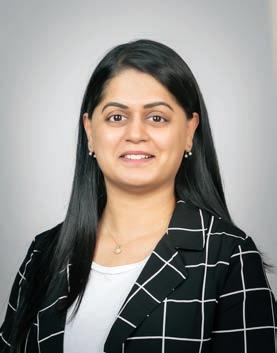
Ambika Sundaram is the manager of Credit & Underwriting at FundThrough, overseeing credit risk evaluation and regulatory compliance for secured working capital solutions. With over six years of experience in secured lending and fraud assessment, she leads the underwriting function, managing portfolio risk and credit policy execution.
Ambika’s background in compliance, underwriting, fraud, and team leadership provides a comprehensive perspective on risk governance and collateral-based financing. She has modernized the credit function through automation and updated rating models, significantly improving decision quality. By collaborating with Risk Analytics and Legal, she successfully accelerated the timeline from approval to funding while maintaining rigorous discipline and stable risk parameters.
Prior to joining FundThrough, Ambika strengthened her foundation in risk assessment and controls at DoorDash, where she conducted compliance and fraud checks. She holds a Bachelor of Technology in Computer Science and Engineering and the Certified Account Executive in Factoring (CAEF) designation. Her technical background drives the data-informed governance that keeps defaults at historically low levels, strengthening sustainable growth within secured finance.
What advice would you offer to women just starting out in the industry?
The most important thing you can do is lead with courage over certainty. Don’t stay in a silo; instead, explore the different facets of your industry and reach out to those around you. Remember that curiosity is a superpower—never stifle it. Everyone is learning as they go, so ask questions fearlessly. It isn’t a sign of weakness; it’s a shortcut to growth and a vital part of building your network.
What is the best advice you ever received?
It’s ok to be afraid. It is perfectly okay—and completely normal—if you don’t know everything on day one. “Real” confidence doesn’t come from having all the answers right now; it comes from the quiet certainty that you have the ability to find them.
What do you know now that you wish you knew in the beginning of your career?
Lead with the Golden Rule. Your reputation is your greatest asset. Treat everyone with respect and build connections at every level; these relationships will sustain your career.
Trust in Honesty. Stay committed and transparent. Authenticity builds the trust necessary for leadership, and when you are open and honest, the recognition you’ve earned will follow.
Choose Resilience over Perfection. A mistake isn’t an ending; it’s a lesson. Do your best, own your journey, and remember that failure is simply a stepping stone to moving forward stronger.
What role has mentorship/sponsorship played in your career?
Finding the right manager is the ultimate career catalyst. By “right,” I mean a leader who invests in you through both praise and constructive criticism. I’ve been fortunate to have mentors like Ali and JC, who
shaped my path by creating a safe space for me to ask questions and learn.
In my experience, great mentorship naturally unlocks sponsorship. When you prove your commitment and honesty, these leaders—and the companies you work for—will step up to advocate for you and sponsor your advancement. Ultimately, if you do your best and stay transparent, the right people will invest in your future.
What would you like to achieve this year, either personally or professionally?
Professionally: Expanding My Horizons I’m “spreading my wings” this year by mastering sales strategies and operational excellence. My goal is to steadily build my expertise in these new areas, using curiosity and honesty to drive the business forward.
Personally: Facing the Deep End I am committed to overcoming my fear of water and finally learning to swim. I’m taking my own advice: leaning into discomfort, being patient with the learning process, and proving that I can conquer my fears.
What skills or experiences have been most critical in helping you succeed?
The “See Something, Say Something” Mindset: At FundThrough, I succeed by being vocal—speaking up to improve processes while celebrating our wins. The key is balance: knowing exactly when to drive change and when to listen for perspective.
Continuous Evolution: I never stand still. I am committed to constant improvement, whether perfecting an existing skill or learning a new one to refine my craft every day.
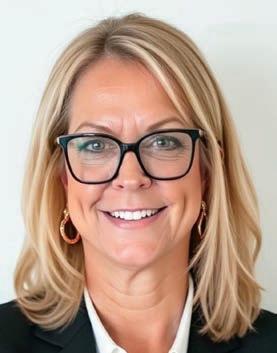
Janette Merritt brings more than two decades of experience in asset-based lending and accounts receivable financing. She joined Goodman Capital Finance in 2019 in a business development role, following a 20-year tenure at Vertex Financial, where she became widely known as the firm’s “construction lady.”
Throughout her career in factoring and secured finance, Janette has built a reputation for forming lasting, meaningful relationships grounded in trust, consistency, and deep industry knowledge. While she has a strong command of the operational and structural details of complex transactions, her true differentiator is her ability to connect with people and support their success over the long term. Many of the relationships she has built extend well beyond individual transactions or firms, reflecting her genuine commitment to the people and companies she works with. Her leadership, expertise, and passion for the industry are evident in how she shows up every day.
Janette has served on several boards throughout her career, supporting the professional growth and success of others in the industry. Outside of work, she enjoys travel, reading, painting, and spending time with her grandchildren.
Studies have shown women are more reluctant to tout their accomplishments in the workplace. What advice would you give to help women be more comfortable with speaking up? Early in my career, I was often the least experienced person in the room. I was surrounded by people with longer résumés, louder voices, and far more years behind them—and at first, I assumed that meant they had all the answers. But over time, I realized something important: experience alone doesn’t automatically translate to insight, clarity, or good judgment.
What actually matters is perspective. And perspective isn’t earned only through time—it’s shaped by curiosity, resilience, and the willingness to really pay attention. I learned that fresh eyes can spot things others overlook, and that asking the “obvious” question can sometimes cut straight to the heart of the issue. More than once, I saw decisions stall or go sideways simply because no one was willing to challenge the default thinking.
That’s when I started to speak up—carefully at first, then with more confidence. I learned that contributing thoughtfully, even without seniority, wasn’t a risk; it was a responsibility. The worst-case scenario was being wrong and learning something new. The best-case scenario was moving the conversation forward, influencing an outcome, or helping a team see a problem differently.
That mindset carried me through the harder cycles too—the stretches where effort didn’t immediately turn into results, where momentum felt stalled and doubt crept in. I came to understand that progress isn’t a straight line, and that consistency, hard work, and staying grounded in your own voice eventually compound. Things come back around if you keep showing up.
Looking back, those early moments taught me something lasting: confidence doesn’t come from knowing everything—it comes from trusting your perspective and being willing to put it on the table. When you do, you don’t lose credibility. You build it.
What skills or experiences have been most critical in helping you succeed?
The skills and experiences that have shaped my career most come down to two things: staying focused on what matters and putting in the work. Before I entered the factoring industry I held three very different roles across separate industries, and each one taught me something valuable. Beyond learning the job itself, I learned how to work with people: how to listen, adapt, and navigate different personalities and expectations. Those lessons stayed with me and continue to influence how I show up every day.
How do you stay resilient and motivated during period of uncertainty or industry transformation?
There were times when having no pipeline or watching deals not close really got to me. It was frustrating and honestly pretty discouraging. But after a while I realized it was just part of the cycle. Things always come back around. I didn’t need to change everything, I just needed to keep doing the work, stay positive, and trust that it would pay off. And eventually it did.
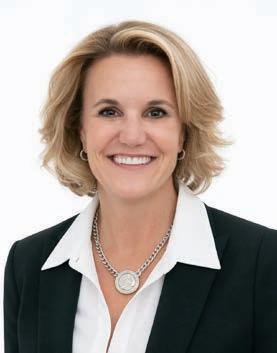
LAUREN
Goodman Capital Finance
Lauren Polek is a finance professional with over 25 years of experience helping business owners navigate cash-flow challenges and make informed financing decisions. She began her career with Olsten Staffing, (now known as Adecco), through a management development program that exposed her to a wide range of industries and provided early insight into the operational and cash-flow pressures companies face.
To deepen her financial expertise, Lauren worked at Grant Thornton LLP, strengthening her technical knowledge and understanding of financial strategy. She left public accounting and joined Oxford Capital, where she combined her financial background with staffing industry expertise and played a key role in creating and launching a new division that aligned workforce solutions with strategic financing.
Building on this experience, Lauren joined Capital Temps Funds to further hone her specialization in financing solutions. The firm was later acquired by Wells Fargo Bank, NA where she expanded her experience within a large, nationally recognized financial institution. Today, Lauren is a senior vice president at Goodman Capital Finance, a division of Independent Bank in Memphis, TN where she offers both accounts receivable financing and asset-based loans. Her matter-of-fact approach is rooted in integrity, transparency, and service.
Studies have shown women are more reluctant to tout their accomplishments in the workplace. What advice would you give to help women be more comfortable with speaking up?
Women need to believe in themselves and become their own best advocates. I often recommend the book Know Your Value by Mika Brzezinski and encourage participation in women-led conferences, which create powerful spaces for learning, connection, and support. Even small confidence-building tools—like the “Superwoman Pose”—can make a real difference in how women show up and feel. Never be afraid to speak your mind. Your opinion matters, and as a woman, you often bring a unique and valuable perspective to the conversation.
How did you approach making a big decision in your career, either moving onto a new organization or role?
The biggest career decision I’ve made was leaving a large, householdname bank to enter the world of boutique financing. I spent a great deal of time reflecting on my personal and professional priorities and determining which culture would best support me in the next chapter of my career. I wanted to align myself with a company that shared my values and empowered me to make decisions. I ultimately realized that my reputation is far more important than the logo behind me. While there are many benefits to working at a big bank, my priorities pointed me in a different direction. Goodman Capital had the people I trusted, the service I believed in, and an overall approach to financing that aligned with my values. Every major career move should be weighed carefully. My advice is to trust your gut, not be afraid of perceived risk, and be willing to step outside your comfort zone while believing in yourself.
What would you like to achieve this year, either personally or professionally?
Professionally in 2026, I want to reach a wider audience and help business owners solve cash-flow challenges while better understanding their financing options. I also want to reinforce the idea that a lending
partner should truly feel like a partner. To achieve these goals, it’s essential to work for a company whose philosophy aligns with your own—in my case, Goodman Capital. While money is often viewed as a commodity, service is not, and companies deserve more. This industry offers many solutions, and by maintaining my integrity and a client-first approach, I believe 2026 will be a record year for new business. When you strongly believe in the company you represent, you’re far more likely to achieve your goals.
How do you stay resilient and motivated during periods of uncertainty or industry transformation?
Our industry is constantly evolving and often filled with uncertainty. I believe that recognizing and accepting the circumstances is half the battle. To stay resilient and motivated, I rely on my process: maintaining consistent activity levels and refusing to compromise my standards.
I don’t take shortcuts. I remind myself that change is temporary and challenges will eventually subside, especially for those who remain disciplined and consistent. Most importantly, I trust myself and maintain the confidence needed to persevere.
What is one misconception about secured finance that you believe women entering the field should rethink?
One common misconception about secured finance is the belief that career paths must be linear. Women, in particular, often doubt themselves and struggle with imposter syndrome. It’s important to rethink this mindset and recognize that you don’t need to possess 100% of the required skills before stepping into a role. Be willing to learn new skills, lean into opportunities, and take calculated risks. Secured finance is not an industry designed only for men—there is ample space for women to succeed and lead. Women bring fresh perspectives that strengthen the industry overall. The more awareness we bring to this misconception, the more we can shift how people think—for the better.









Prisca Kim is a principal in Goldberg Kohn’s Bankruptcy & Creditors’ Rights and Commercial Finance practice groups. She represents lenders in the protection and enforcement of creditors’ rights in commercial workouts and bankruptcies, including in restructurings, reorganizations, sales, liquidations, receiverships, assignments for the benefit of creditors, and out-of-court workouts. She is experienced in the representation of creditors and purchasers in connection with the negotiation and documentation of debtor-in-possession financing orders, cash collateral orders, sale orders and plans of reorganization.
Prisca has extensive experience structuring, drafting, negotiating and enforcing intercreditor agreements, subordination agreements, and agreements among lenders in multi-lien and unitranche arrangements. In addition, she assists financial institutions in structuring, negotiating and documenting debt finance transactions, including asset-based and cash-flow secured loans, split collateral secured loans, unitranche financings, second liens and mezzanine loans. Prisca received her law degree from the University of Chicago and her undergraduate degree from UCLA.
What advice would you offer to women just starting out in the industry?
Jump into the deep end. It will be a steep learning curve but ask questions and learn as much as possible. Instead of narrowly focusing on discrete tasks assigned to you, try to understand the broader context and learn what others are doing on the matter. It will help you understand how your work fits into the specific deal but will also allow you to familiarize yourself with new concepts and issues so you can build up your confidence for new tasks and issues. Proactively asking questions will also communicate to others that you’re engaged, eager to learn and willing to take on more challenging work.
My other piece of advice would be to find ways to add value. It is a simple concept, but it can make a huge difference in the way you approach your work and the way others perceive you. This mentality helps you feel like you’re making a meaningful contribution and can lead to more job satisfaction over time.
Studies have shown women are more reluctant to tout their accomplishments in the workplace. What advice would you give to help women be more comfortable with speaking up?
I’ve certainly suffered from imposter syndrome, but I’ve learned that you have to be your own advocate. In the past, my reluctance to tout my accomplishments stemmed from the fear that I would be overselling myself or that I was inflating my contributions. I’ve found that it feels less like bragging when I can rely on facts so keep track of your wins.
What role has mentorship/sponsorship played in your career?
Mentorship has been one of the most important aspects of my professional development. I’ve been very fortunate to have the support and guidance of many amazing mentors. Apart from learning how to be an effective advocate for our clients, they’ve taught me all of the other skills that are necessary to be a well-rounded lawyer – how
to communicate with others, how to build your practice, and how to maintain relationships with clients.
Looking back, what moment or project most shifted your perspective on leadership in secured finance, and why?
It wasn’t a specific moment or project but observing my mentors’ everyday actions over time has shaped my view on how to be a good leader. I’ve realized leading from the top isn’t always effective. Instead, leaders should focus on building relationships and establishing trust by working collaboratively with others, demonstrating that they are willing to get in the trenches and remaining open to any negative feedback.







Kasey Fagan is director, business development, Midwest Region at Gordon Brothers responsible for driving the firm’s continued growth in the region.
Kasey provides integrated solutions across the firm’s expanded asset services, lending, financing and trading platform. She advises asset-based lending, investment banks, private equity professionals and restructuring firms in Illinois, Indiana, Iowa, Minnesota, Michigan, Wisconsin and northern Ohio.
She has over 10 years of experience in strategic business development, go-to-market strategy, lending and corporate finance.
Prior to joining Gordon Brothers, Kasey led the business development efforts in the Midwest for FGI Worldwide LLC. She was previously an asset-based lending originator at JPMorgan Chase & Co.
Kasey has a Bachelor of Business Administration and Finance from the University of Iowa. She is a member of the Association of Corporate Growth, Secured Finance Network and Turnaround Management Association. Kasey is based in Chicago.
What advice would you offer to women just starting out in the industry? What is the best advice you ever received? Attend networking events and be confident about starting a conversation with someone new. These events can be intimidating at first, especially in a male-dominated industry, but opportunities and relationships typically start with a simple hello.
During my first few networking events, I sat on the side with a couple good friends but did not actively engage anyone new. The events were always a good time, but I was not harvesting their full value. I specifically remember the first networking event in Chicago when none of my close friends could attend. It naturally pushed me outside of my comfort zone as I was forced to introduce myself to new people with a casual ‘Hi, I’m Kasey!’ Instantly, conversation started flowing and I realized that everyone was there to build connections. This small shift in my approach allowed me to take full advantage of the benefits and support the secured finance community offers. Now, I feel that if I can walk away from an event with even one new follow up or connection, it was a success.
How did you approach making a big decision in your career, either moving to a new organization or role?
I started my career at a bank, holding various positions within finance and asset management before finding my way onto their asset-based lending team. I spent a few more years of my career on the lending side, split between that bank and at a non-bank lender. I assumed this would be my long-term career path until an opportunity presented itself to move over to valuations. It was a shift I didn’t anticipate, but one that aligned with my strengths.
You can never be 100% sure that a new position will be the right move ahead of time. I think before you make a career change, you should try to understand what you enjoy most about your current role. That way, you can look for a new position that retains a majority of the ‘likes.’ For me, as someone in sales, it’s important
to ensure I believe in the product offering and the firm’s ability to execute on that offering. When you like what you do and believe in your product, you’re set up well for a successful career move.
What skills or experiences have been most critical in helping you succeed?
Leading with kindness is a skill that has played a much bigger role in my success than I originally realized. We typically attribute our success to curiosity or confidence, which of course are critical skills, but those skills only shine in an environment where we feel safe enough to speak up and ask questions. I attribute my success to the kindness of managers and mentors who have created a welcoming environment for me to develop my skills.
In the secured finance industry, we face many high stress situations. I’ve learned if you can treat someone with kindness throughout that storm, you’ve built a life-long relationship. Those relationships, built on trust, can open doors to future opportunities.

Samantha Findley























































































































































































































Congratulations to our colleagues, Samantha Findley and Kasey Fagan, and all of the women recognized in the Women in Secured Finance issue of The Secured Lender. You lead by example and we are proud of your significant contributions to the industry!








Managing Director, Capital Kasey Fagan Director, Business Development





































































Since 1903, Gordon Brothers has helped businesses maximize liquidity and asset values by providing the people, expertise and capital to solve business challenges.
Our team of asset experts deliver integrated, custom solutions across asset services, lending, financing and trading to give clients the insights, strategies and time to optimize values throughout the business cycle — all under one platform.























































































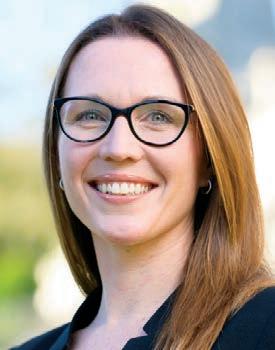
Samantha Findley is managing director, Capital at Gordon Brothers. Samantha oversees lending and investment opportunities across all industries in Australia, New Zealand and leads a team responsible for transactions throughout the structuring, execution and portfolio life cycle. She works closely with clients to monetize assets through recourse and non-recourse financing structures.
Samantha has over 20 years of experience delivering tailor-made financial and restructuring solutions for businesses facing complex liquidity and operational challenges. Prior to joining Gordon Brothers, Samantha led a national strategic business services team at National Australia Bank. Previously, she was an executive director at KordaMentha where she advised clients and stakeholders on financial and operational restructuring scenarios for some of Australia’s most high-profile restructuring engagements.
Samantha has a Bachelor of Economics and a Bachelor of Commerce from Australian National University. She is a Chartered Accountant, a board member of Turnaround Management Association (TMA) Australia and the chair of the TMA Australia Network of Women. Samantha is based in Sydney.
What advice would you offer to women just starting out in the industry? What is the best advice you ever received?
Build your internal and external networks. Finance careers depend on deal flow and relationships. Networking doesn’t need to feel like a chore or performance and works best when it’s consistent, low-pressure and rooted in real connection, not forced small talk.
Start by connecting with people you work with – deals flow more smoothly when you have easy rapport with teams around you. At industry events, it’s far more valuable to have one or two meaningful conversations than collecting a stack of business cards. Don’t underestimate the power of your peer group either. The analysts and associates you have coffee with today will grow into leaders of the future.
Best advice I’ve received: Always say yes and be open to any challenge, no matter how daunting. At first, it felt like an invitation to take on too much, but eventually I realized it’s about backing yourself and trusting you can rise to the challenge. You don’t have to know everything immediately; it’s about willingness to step into stretch moments and growing. I still heed this advice and continue to undertake opportunities outside my comfort zone.
Studies have shown women are more reluctant to tout their accomplishments in the workplace. What advice would you give to help women be more comfortable with speaking up?
What’s helped me is shifting my perspective. I don’t think of it as promoting myself, rather advocating for the impact my team and I have made. Highlighting outcomes and value feels less like self-promotion and more like ensuring important work is recognized.
Having a sponsor has also been invaluable. A good sponsor will advocate for you in rooms you’re not in and make sure your work gets the visibility it deserves. It doesn’t replace your voice, but reinforces it.
What do you know now that you wish you knew in the beginning of your career?
I wish I’d known careers aren’t linear. The career moves that seemed off track actually shaped how I operate today. Every restructuring file
I worked on taught me something about how businesses behave under pressure – lessons I now rely on when I’m underwriting risk.
How did you approach making a big decision in your career, either moving onto a new organization or role?
“A career is a marathon, not a sprint.” That perspective gave me the courage to shift from restructuring to banking in my late 30s.
I needed a new challenge to grow and when that moment for change arrived, I trusted myself and took the risk. Having the courage to embrace change and take risks often propels your career forward.
What role has mentorship/sponsorship played in your career?
I’ve been incredibly fortunate to have exceptional sponsors in every organization I’ve worked in. They advocated for me, ensured I was considered for big opportunities and celebrated my successes loudly. Their support opened doors and sped up my growth, demonstrating how powerful sponsorship is, and how important it is to pay it forward.
What skills or experiences have been most critical in helping you succeed?
For me, success has come from surrounding myself with driven, like-minded people I can rely on. Working with people who you genuinely trust makes a huge difference in how effectively you can perform and what you can achieve together.
What is one misconception about secured finance that you believe women entering the field should rethink?
A misconception is secured finance is purely technical and all about numbers. In reality, it’s just as much about judgment, relationships and understanding how businesses operate. Yes, you need commercial sharpness, but also strong communication, stakeholder management and confidence to ask the right questions.
Women often excel in these areas, and those strengths are incredibly valuable. It’s not just for technical experts – broad capability, curiosity and good instincts make real impact.





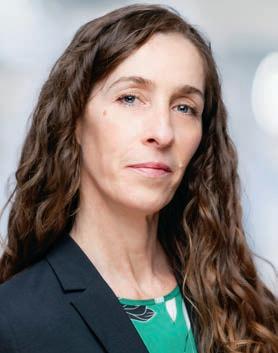
Christine joined Hilco Global in July 2020 in the midst of the COVID-19 pandemic. She is currently assistant general counsel.
As a true generalist, Christine serves various legal functions and works with leadership across the organization providing day-to-day legal support, including in a diverse array of corporate transactions, bankruptcy matters, compliance, litigation and human resources. Additionally, Christine structures, documents and closes transactions for the vigorous deal flow across the two operating divisions and over 20 practice areas ranging from professional engagements to asset acquisitions and monetizations. Christine has worked on numerous transactions involving a wide range of industries, including retail, real estate, lending, commercial, industrial, and intellectual property.
Throughout 2024 and 2025, Christine was one of the key members of the legal team responsible for various aspects of the transaction whereby Hilco’s equity owners sold a majority of the business to ORIX USA. Since then, Christine has been a key member of the legal team responsible for the vast array of integration across the Hilco platform. Christine graduated MagnaCumLaude from Widener University School of Law in Wilmington, Delaware.
Studies have shown women are more reluctant to tout their accomplishments in the workplace. What advice would you give to help women be more comfortable with speaking up?
I believe it is true that many women are more reluctant to discuss their accomplishments in the workplace. Frequently, this hesitation is closely tied to two fears: (1) the fear of being perceived as boastful; and (2) an underlying fear of not living up to those expectations, even when the woman has a track record of success. Rather than focusing on their successes, many women tend to focus on their mistakes or on perceived shortcomings.
To overcome this pattern, I recommend objectively examining your thoughts and behaviors as if you were evaluating someone else’s actions. By doing so, you remove any element of self-criticism, increasing the chance that you may be able to recognize the hesitation or fears for what they truly are—barriers rather than accurate reflections of your character and abilities. Ask yourself whether the negative thoughts or beliefs holding you back are actually true, or if they are simply a manifestation of fear. This process can help diminish the power of these doubts and encourage you to become more comfortable with speaking about your accomplishments.
As with many skills, practice is key. Start by speaking about smaller achievements, and you may be surprised by how quickly your confidence increases. Remember to trust yourself. You are unlikely to be seen as boastful—chances are, you are far from it.
What do you know now that you wish you knew in the beginning of your career?
Reflecting on my career journey, one of the most valuable insights I gained is the importance of stepping back to view the big picture. Early in my career, I often found myself getting caught up in the details, which could easily become distractions and hinder a deeper understanding of the work at hand. This tendency was especially pronounced as a perfectionist, making it tempting to focus extensively on minutiae.
While attention to detail is certainly crucial, it is equally important to maintain a broad perspective. Without this wider view, it is all too easy
to waste precious time and energy on aspects that may not significantly contribute to overall goals. By consciously stepping back, I learned to broaden my scope and keep priorities in focus. This approach not only enhances clarity and understanding but also leads to a more efficient use of time and resources.
How did you approach making a big decision in your career, either moving onto a new organization or role?
When faced with a significant decision in my career, such as moving to a new organization or taking on a new role, I prefer to adopt an “all in” approach. This mindset is rooted in confidence in my abilities and a willingness to embrace both the learning process and the possibility of making mistakes. Accepting a new role often means stepping out of your comfort zone and being prepared to develop new skills.
Approaching a new opportunity with an open mind is crucial. In the initial stages, I recommend focusing on observing and learning as much as possible. This will allow you to quickly identify colleagues who are natural mentors and from whom you can gain valuable insights into expectations and the workplace culture. Direct communication and making yourself available are especially important during this time.
In my experience, most people in the workplace are willing to share information about their roles and responsibilities. By taking the time to ask thoughtful, concise, and direct questions, you will often find that colleagues are open to providing guidance. This can help you better understand the history of the role, how it has developed over time, and what direction the role may take in the future. Gaining this deeper insight into your new position creates a strong foundation for you to build upon and allows you to bring your own unique perspective to the role.
As you adapt to a new work environment, make a deliberate effort to show your peers and managers that you are genuinely engaged and available. Demonstrating your interest and approachability not only helps you gain valuable knowledge about your new responsibilities but also fosters meaningful relationships with colleagues and supervisors. Establishing this rapport early on is essential for achieving success in a new setting.
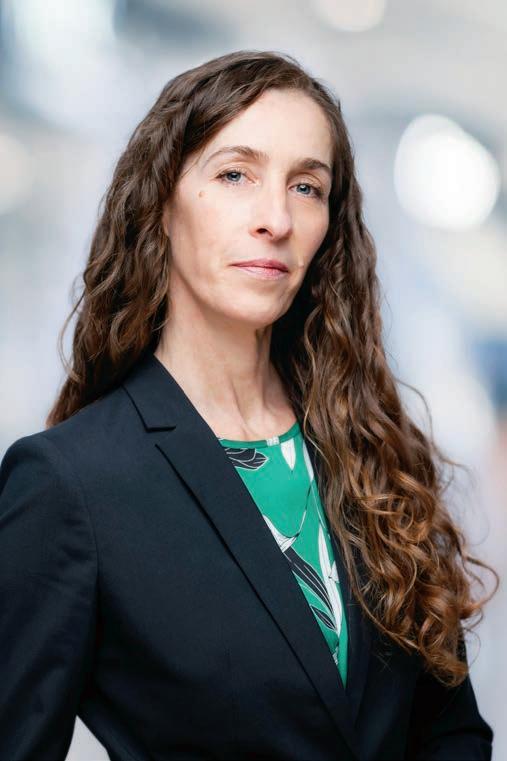


Hilco Global, a subsidiary of ORIX Corporation USA, is a diversified financial services company that delivers integrated professional services and capital solutions that help clients maximize value and drive performance across the retail, commercial and industrial, real estate, manufacturing, brand and intellectual property sectors, and more. Hilco Global provides a range of customized solutions to healthy, stressed, and distressed companies to resolve complex situations and enhance long-term enterprise value. Hilco Global works to deliver the best possible result by aligning interests with clients and providing strategic advice and, in many instances, the capital required to complete the deal. Hilco Global is based in Northbrook, Illinois and has more than 810 professionals operating on four continents.

Congratulations to the Secured Lender’s Women in Secured Finance!
Hilco Global proudly acknowledges Christine Fredericks for her professional achievements.
Christine Fredericks Assistant General Counsel






Kate Ferrara is a senior attorney in Holland & Knight LLP’s Los Angeles office and a member of the firm’s Financial Services Group. Her practice focuses on complex secured lending transactions, including asset-based loans, structured credit facilities, and other asset-backed financings, frequently in connection with acquisition financings and sponsor-backed borrowers. She primarily represents lenders, with deep experience advising national and international banks across a broad range of industries.
Kate is known for her practical, deal-driven approach to sophisticated finance matters and her ability to navigate multi-jurisdictional considerations and complex corporate structures. She regularly advises clients on collateral packages, transaction structures, and intercreditor arrangements, and is frequently called upon to support high-value, time-sensitive transactions where execution and judgment are critical.
Her practice is grounded in aligning legal execution with commercial objectives, managing risk across capital structures, and supporting clients operating in an increasingly complex secured finance landscape. Owing to her experience and reputation in the market, Kate was recently seconded to the legal department of one of the world’s largest global banks, where she worked closely with in-house teams on complex secured financing matters.
What do you know now that you wish you knew in the beginning of your career?
Early in my career, I underestimated how transferable non-legal skills could be if applied deliberately. As a former Division I athlete, I entered practice with a strong foundation in discipline, preparation, accountability, and teamwork, but it took time to recognize how directly those skills translated to complex deal work.
What I know now is that success in secured finance depends as much on execution under pressure as it does on technical knowledge. Transactions are rarely linear, timelines are compressed, and outcomes depend on coordination across multiple stakeholders. The ability to stay composed, communicate clearly, and perform consistently in high-stakes environments is critical.
Today, I approach transactions with that mindset front and center focusing on preparation, role clarity, and decisive communication so teams can move efficiently even when conditions change. I also learned that confidence is built through repetition and responsibility, not perfection. Being willing to take ownership, make judgment calls, and learn in real time accelerates growth far more than waiting until you feel completely ready.
What role has mentorship and sponsorship played in your career?
Mentorship and sponsorship have both played important but distinct roles in my development. Mentors helped me sharpen my legal judgment, understand how experienced practitioners think about risk, and navigate the complexities of sophisticated transactions. Those relationships were instrumental in building technical confidence and perspective.
Sponsorship, however, was what materially advanced
my career. Sponsors were the individuals who trusted me with responsibility, staffed me on challenging matters, and put my name forward when opportunities arose. That trust was earned over time through consistent performance, reliability under pressure, and a willingness to take accountability for outcomes.
As I have become more senior, this has shaped how I think about developing others. I believe the most meaningful support comes from giving people real responsibility, clear expectations, and exposure to challenging work, not shielding them from risk, but helping them manage it well. That approach builds judgment, confidence, and longterm credibility.
Looking back, what moment or project most shifted your perspective on leadership in secured finance, and why?
A defining moment in my career was my secondment to the legal department of one of the world’s largest global banks. Working in-house provided a fundamentally different perspective on how legal advice is evaluated within a business context. It reinforced that leadership in secured finance requires not only technical accuracy, but clarity, efficiency, and commercial awareness.
That experience reshaped how I think about leadership and client service. Effective leadership is not about eliminating risk or over-lawyering issues, but about helping teams understand risk, make informed decisions, and move forward decisively. Clients value advisors who can prioritize, communicate tradeoffs clearly, and keep transactions moving.
The experience also reinforced the importance of teamwork, a principle that traces back to my athletic background. High-performing teams succeed when individuals understand their roles, trust one another, and stay focused on the shared objective. That perspective continues to guide how I approach complex transactions and collaboration today.
www.hklaw.com








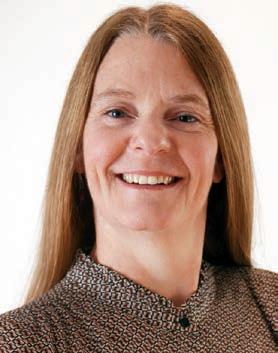
PAULINE
J D Factors Corporation
Pauline Young is a credit manager and underwriter at J D Factors Corporation with more than 30 years of experience in corporate and commercial finance. She specializes in credit management and underwriting, with extensive expertise in risk assessment, portfolio analysis, and supporting sound lending decisions across diverse industries throughout Canada.
Known for her disciplined credit approach, investigative nature, and strong relationship management skills, she looks beyond the surface to identify underlying risks and opportunities. She is committed to clear, strategic communication and principled leadership. She is a member of the National Credit & Financial Executives Forum and remains actively engaged in the evolving secured finance landscape. Her dedication to professional development includes completion of Dale Carnegie Leadership Training and NYU’s Leadership Training for High Potentials program. She has been recognized by her peers with both the Outstanding Communication Award and the Living by Our Values Award.
Beyond her professional achievements, she previously served as President of The Kidney Foundation’s Brampton Chapter, reflecting her commitment to community leadership and service. As a kidney donor herself, she also mentors and supports individuals considering organ donation. She continues to uphold the highest standards of integrity, collaboration, and excellence within the industry.
What do you know now that you wish you knew at the beginning?
I wish I had known that confidence really does come with time. You don’t have to have everything figured out right away. When I first started, I sometimes held back because I felt like I should already know all the answers. Looking back, that wasn’t necessary. It’s okay to ask questions, take your time to think things through, and trust your gut. You don’t have to be perfect to be capable.
I also wish I understood earlier how important relationships are. Your network really matters. The people you connect with, learn from, and support along the way can open doors, offer perspective, and help you grow. Building genuine relationships and staying connected is just as important as doing the work itself.
What role has mentorship played in your career?
Mentorship has been significant, both receiving and giving it. I’ve learned from leaders who modeled discipline and integrity, and I believe strongly in paying that forward. Tina Capobianco, in particular, has been a constant source of steady guidance throughout my career. She didn’t just offer direction; she invested in my growth, challenged me to think strategically, and demonstrated what it means to lead with both strength and empathy. Her example shaped not only how I approach my work, but how I show up for others. Whether mentoring colleagues or supporting kidney donors, guidance and encouragement can change someone’s trajectory.
What skills have been most critical to your success?
I’d say the most critical skills have been strong judgment, attention to detail, and transparency.
You’re constantly reviewing financial information and making risk decisions, so being able to analyze the numbers and spot red flags is essential. But just as important is being transparent, explaining why decisions are made, setting clear expectations, and having open conversations, even when the message isn’t easy.
Credit isn’t just about policies and limits; it’s about working with people, and finding solutions that protect the company while still supporting the business.
How do you stay resilient during uncertainty?
When things feel uncertain, I focus on staying grounded and centered in what I can control. I’m human, uncertainty can feel overwhelming at first, but I’ve learned not to stay in that space for long. I give myself a moment to process, and then I shift my energy toward the next right step.
I’m someone who really thrives on routine. Structure keeps me steady. Even when everything around me feels unpredictable, maintaining my daily habits and rhythms creates stability for me. It helps me refocus and move forward with clarity instead of getting stuck in the unknown.
For me, resilience isn’t about having all the answers, it’s about staying grounded, leaning into structure, and continuing to show up consistently, even when the path isn’t completely clear.



Angela Leake is a seasoned professional with over 30 years of experience in the asset-based lending (ABL) industry, having worked for both bank and non-bank lenders. Before joining JPMorgan Chase, Angela held key roles at Bank of America, CIT, Textron, and Truist, where she developed expertise in managing complex credit facilities for a diverse range of clients. She currently serves as a credit risk officer at JPMorgan Chase and has been a valued member of the organization for nearly a decade.
Angela is recognized for her sound judgment, collaborative leadership, and commitment to delivering tailored solutions that meet clients’ evolving needs. Her approach combines rigorous analysis with a practical understanding of market dynamics, enabling her to navigate complex transactions and drive successful outcomes. Angela is a proud graduate of Georgetown University, where she cultivated the analytical and interpersonal skills that have been instrumental to her professional success.
What do you know now that you wish you knew in the beginning of your career?
Looking back, I wish I had understood the importance of taking risks and raising my hand for opportunities, even when on paper, I didn’t have all the required skills. Early in my career, I hesitated to pursue roles or projects that seemed beyond my experience, worrying that I might not be fully qualified. Over time, I’ve learned that a strong work ethic and determination can bridge many gaps, and that stepping outside your comfort zone is essential for growth. Confidence in your ability to learn and adapt is just as important as technical expertise. By being proactive and embracing new challenges, you not only accelerate your development but also demonstrate initiative and resilience to others. I now encourage others to trust in their capabilities and seize opportunities, knowing that the willingness to learn and work hard often leads to success.
How did you approach making a big decision in your career, either moving onto a new organization or role?
Throughout my career, I have been fortunate enough to work with truly talented and good people at each institution, which has always made the decision to leave particularly difficult. I genuinely value the relationships I’ve built and have consistently enjoyed working with my colleagues. However, when faced with the choice to move to a new organization or take on a new role, I ultimately focus on my long-term career growth and the opportunity to continue learning. I carefully consider whether the new position will challenge me, expand my skill set, and align with my professional goals. While leaving a great team is never easy, I believe that embracing change is essential for ongoing development. This mindset has guided my decisions and allowed me to progress in my career while maintaining strong connections with former colleagues.
Studies have shown women are more reluctant to tout their accomplishments in the workplace. What advice would you give to help women be more comfortable with speaking up?
One practical piece of advice is to keep a success file of your accomplishments. This is especially helpful if you’re in a role without well-defined goals, where your contributions might not be easily quantifiable. I learned this strategy from a colleague and now regularly track the work I’m proud of, and compliments and positive feedback I receive. Having this record makes it much easier to prepare for year-end performance and compensation discussions, and it gives you concrete examples to share when advocating for yourself. Reviewing your achievements can also boost your confidence and remind you of the value you bring to your team. By consistently documenting your successes, you’ll feel more comfortable speaking up and ensuring your contributions are recognized.
What skills or experiences have been most critical in helping you succeed?
Strong interpersonal skills, intellectual curiosity, and analytical abilities have been the most critical factors in my success. I genuinely enjoy working with clients and learning about their businesses, which has helped me build relationships and understand their unique needs. I particularly enjoy working with a diverse portfolio of middle-market clients, as each company offers new insights and challenges. Whether conducted by the management team or other employees, I really enjoy plant tours. It’s interesting to see how products such as foam plates, pork rinds, glass, or aluminum are manufactured but more importantly the discussions that happen during these tours are an opportunity to learn more about the business and the culture of a company. These types of personal interactions broaden my perspective and enhance my ability to analyze situations and provide tailored solutions.

Brittany is an executive director in JPMorgan’s ABL group, serving Global Corporate clients as a senior originator. In this role, Brittany is responsible for driving new business and executing complex transactions for both public and private companies within the Commercial and Investment Bank. With over 15 years of experience, she has been instrumental in winning, structuring, negotiating, and syndicating ABL facilities ranging from $100 million to $4 billion. Her expertise spans leveraged buyouts, DIP and exit financings, as well as multi-jurisdictional deals across EMEA and APAC. Brittany is recognized for her strategic insight, collaborative approach, and ability to build trusted relationships with CFOs and treasurers.
Brittany began her career as an intern and credit analyst supporting field exam and portfolio teams for middle-market clients, later transitioning to originations within the Investment Bank. She is a passionate advocate for the next generation, volunteering with JPMorgan’s outreach programs and leading mentoring circles for Women in ABL. Brittany also serves on the Board of Directors for her church, demonstrating her commitment to community leadership. A lifelong New Yorker, she graduated cum laude from the University of Pennsylvania with a B.A. in Economics. Outside of work, she enjoys running along the East River, reading Toni Morrison novels, and traveling with her husband and two-year-old son.
Studies have shown women are more reluctant to tout their accomplishments in the workplace. What advice would you give to help women be more comfortable with speaking up?
Impostor syndrome is real! I recently led a mentoring circle where we discussed this very phenomenon and practical ways to quiet the inner critic that can hold us back. One tip we shared was to keep a “success folder” or “accomplishment journal”. Make it a habit to jot down your achievements, save emails with positive feedback, and note moments you are proud of. Keep this easily accessible so you can revisit it whenever self-doubt creeps in. Surrounding yourself with tangible evidence of your past successes will build confidence and make it easier to speak up in the present.
What do you know now that you wish you knew in the beginning of your career?
You will make mistakes and that’s okay. One of my most influential mentors once told me, “You’re never as bad as you think you are on your worst day, nor as extraordinary as you feel on your best day.” I wish I had known earlier that growth comes from both wins and setbacks. Embrace the learning process, ask for help when you need it, and remember that every experience adds to your toolkit.
Looking back, I realize how important it is to be patient with yourself and to trust the journey. Building a network of mentors and peers who support and challenge you is also crucial. Don’t hesitate to seek feedback and invest in relationships; the connections you make will be just as important as the skills you develop.
How did you approach making a big decision in your career, either moving onto a new organization or role?
Do your research and be honest with yourself about your strengths, weaknesses, and priorities. Ask: Will I thrive in this environment? Will my colleagues inspire and support me, or drain my motivation?
Does this organization share my values? I also recommend seeking advice from trusted mentors and listening to your intuition. Ultimately, choose the path that aligns with both your professional goals, family, and personal well-being.
What skills or experiences have been most critical in helping you succeed?
Seeing the best in everyone has been my baseline. You won’t always instantly connect with every colleague or client, but intentionally looking for at least one good quality in each person fosters stronger relationships and makes collaboration easier. Adaptability and a willingness to learn have also been essential.
How do you stay resilient and motivated during periods of uncertainty or industry transformation?
Maintaining a growth mindset is key to staying positive during change. Reframing challenges as opportunities helps. If I’m feeling stressed, I remind myself that my heightened energy can be channeled into focus and productivity. If I make a mistake, I treat it as a lesson for the future. I also prioritize self-care, whether that’s going on a run, intentionally putting my phone away when I play with my-two-year-old son, or reflecting on my faith. Having a strong sense of community and a firm foundation in my values helps me stay resilient, no matter what comes my way.
What would you like to achieve this year, either personally or professionally?
This year, my goal is to let go of mom guilt and exercise more consistently. As a working mom, it’s easy to feel pulled in many directions. I want to be more intentional about letting go of guilt and focusing on being present—whether at the office or at home.
Laura Newman is a finance leader known for combining strategic rigor with a practical, people-first approach. In her role as chief financial officer at JPalmer Collective LLC, she oversees financial strategy, capital planning, reporting, and operational execution—supporting sustainable growth and strong partnerships.
Over the course of her career, Laura has worked across finance, accounting, and corporate governance, building scalable processes and clear decision-making frameworks that help teams move faster with confidence. She is especially passionate about translating complex financial information into actionable insights for boards, investors, and operators, and she is committed to building high-trust organizations through transparency and accountability. Laura is also passionate about expanding access to capital and opportunity for female founders and leaders. She is recognized for balancing analytical depth with a collaborative leadership style, aligning stakeholders around shared goals and measurable outcomes. Outside of work, she is an engaged parent and community member who values education, mentorship, and giving back. She is honored to receive this recognition and grateful to the colleagues, partners, friends, and family who have supported her journey.
Studies have shown women are more reluctant to tout their accomplishments in the workplace. What advice would you give to help women be more comfortable with speaking up? I encourage women to reframe what it means to speak up. Sharing accomplishments isn’t bragging—it’s providing clarity about your impact and what you’re ready to do next. Think of it as telling your story: your results are the chapters that help others understand your value. If you don’t share them, people fill in the blanks, and assumptions rarely work in your favor. Confidence often follows preparation, and consistent, grounded communication is a form of leadership.
What do you know now that you wish you knew in the beginning of your career?
I wish I had known earlier that most careers aren’t linear. Leaning into the unexpected builds adaptability, and adaptability becomes a superpower. Some of my biggest growth came from taking on stretch responsibilities before I felt fully ready and asking questions early rather than waiting.
What would you like to achieve this year, either personally or professionally?
Professionally, JPalmer Collective had an incredible 2025, and we’re positioned to build on that momentum in 2026. This year, my focus is scaling thoughtfully—strengthening our core team with several key hires, improving systems and reporting, and maintaining disciplined risk management as we grow. Most importantly, we want to continue helping clients pursue their vision by providing the nondilutive capital they need to expand. Personally, I want to be intentional about balance—being fully present for my family, prioritizing health, and making time for mentorship and community involvement. For me, success is building something meaningful at work while staying grounded in what matters most at home.
What skills or experiences have been most critical in helping you succeed?
Two have mattered most: having a strong advocate and communicating clearly. A staunch advocate—someone who mentors you and also speaks up for you—can change your trajectory. They help you navigate tricky situations, interpret dynamics, and push you to take opportunities you might otherwise pass up.
Equally important is the ability to translate complex work into a simple narrative: the “why,” the “what,” and the “so what.” Whether you’re presenting to a board or partnering with operators, clarity builds trust and alignment. I’d add resilience—showing up consistently, learning quickly from mistakes, and staying steady through change.

to the outstanding women
recognized in the
Laura
CHIEF FINANCIAL OFFICER
JPalmer Collective
We are proud to congratulate Laura Newman for being featured in the SFNet Women in Secured Finance Issue.
This annual feature celebrates women whose leadership and expertise are advancing the secured f inance industry. Laura’s recognition is a testament to her dedication, insight, and lasting inf luence across the market.
Victoria Thompson is a finance partner in Mayer Brown’s London office. She advises all classes of lenders, including banks, financial institutions, private credit funds, alternative lenders and asset managers on domestic and cross-border finance and restructuring transactions, with a particular focus on asset-based lending.
Victoria is dual qualified in England and Wales and New York, and provides New York law advice on ABL transactions from London, a key selling point for many clients who operate in the cross-border space. Victoria’s expertise includes providing “cradle to grave” advice on all aspects of ABL transactions, including restructuring and insolvency and she also advises on borrowing base facilities, recurring revenue tech financings alongside more vanilla secured lending transactions. She acts for an array of leading domestic and international clients.
She is recognised as a leading partner for asset-based lending by Legal500, and regularly contributes to industry events and publications. She is a member of SFNet’s Women in Secured Finance Committee and is an active mentor to junior colleagues at Mayer Brown, in particular those returning to work after parental leave.
Victoria lives in London with her husband and two children.
What advice would you offer to women just starting out in the industry? What is the best advice you ever received? Treat your career as a long-distance race, not a sprint. Something I am frequently terrible at! Build credibility through excellent work, but also curate your network early and deliberately. Stay in touch with contacts as clients and peers move between roles and organisations; you never know where people will land. Some of my best clients are people who I got to know when I was a junior associate and they were in previous roles, and now they are in positions where they can instruct me on deals.
Studies have shown women are more reluctant to tout their accomplishments in the workplace. What advice would you give to help women be more comfortable with speaking up?
Just go for it! When you hesitate, ask yourself, what would a confident male colleague do in this situation? Then do the professional, fact-based version of that. Over time, as I’ve progressed in my career, I’ve cared less about how my words might be received and more about whether they add value –that doesn’t mean it’s always comfortable speaking up, but I force myself to do it when necessary.
What role has mentorship/sponsorship played in your career?
I’ve benefited from both formal mentor programmes and informal mentor relationships, and it’s the informal mentoring that I have often found the most useful. Having someone you trust as a sounding board—who will give you candid feedback, help you frame decisions, and remind you of your strengths when your confidence dips—can make all the difference. I always encourage junior associates in my team to seek out mentors (both within the firm and outside) and I am always
more than happy to share my time and experience if I am sought out as a mentor.
What skills or experiences have been most critical in helping you succeed?
Success as outside counsel starts with an unwavering commitment to the client. Technical excellence is the baseline; what differentiates the best advisers is the ability to translate complex issues into clear, actionable recommendations and to focus on what truly moves the dial for the client’s objectives, timelines and risk appetite. I’ve found that listening carefully, framing choices succinctly, and being commercially minded (anticipating concerns, not just reacting to them) builds trust and momentum.
Equally critical are judgment, prioritisation and stamina. Our work often involves multiple complex matters running in parallel, and the discipline to triage, communicate proactively, and keep execution tight is essential. Parenting two small children has sharpened those muscles: it has made me more efficient, more pragmatic about what really matters, and better at switching gears without dropping the ball.
How do you stay resilient and motivated during periods of uncertainty or industry transformation?
Resilience, for me, is about momentum and mindset. I try to keep going, one step at a time, while staying positive and focused on what I can control. I’m not saying I am positive all of the time (who is?), but trying to keep things in perspective helps!






Warmest congratulations to Victoria Thompson for being recognized as a “Woman in Secured Finance” by the Secured Finance Network.
Victoria is a committed advocate for women in law. In sharing her experience with junior lawyers — particularly those learning to balance family and career — she has helped normalize candid discussions about working parenthood, and serves as a role model for the next generation of lawyers.




Congratulations to Victoria from her friends and colleagues at Mayer Brown.
“Mayer Brown” and the Mayer Brown logo are the trademarks of Mayer Brown. © 2025 Mayer Brown. All rights reserved. Attorney Advertising. Prior results do not guarantee a similar outcome.




Brianna Oller, partner at Latham & Watkins, is a trusted advisor to financial institutions navigating today’s complex secured finance landscape. With more than a decade of experience across leveraged finance, direct lending, asset-based lending and cross border transactions, Brianna applies seasoned market insight to help clients structure solutions in an increasingly dynamic credit environment.
She draws on deep expertise to guide clients through syndicated leveraged finance and private credit transactions, asset-based loans, restructurings, and cross border deals. Brianna has advised on many billions of dollars in high profile financings and acquisitions for leading institutions including Ares Capital, Golub Capital, JP Morgan, Wells Fargo, Barclays, and Goldman Sachs. Her work spans industries such as industrials, retail, technology, and healthcare, where she is known for navigating complex capital structures and delivering thoughtful, commercially aligned solutions.
Clients value Brianna’s steady judgment, clarity in challenging situations, and collaborative leadership style. Beyond client work, she has strengthened Latham’s culture through her service on the firm’s Associates Committee, reflecting her commitment to mentorship, inclusion, and professional development.
Brianna earned her JD cumlaudefrom the University of Michigan Law School and her BS magna cum laude from the University of Scranton.
What advice would you offer to women just starting out in the industry? What is the best advice you ever received?
My biggest piece of advice for young lawyers is to trust yourself and your accomplishments. It’s common to feel some degree of imposter syndrome early in a career, but if you’re in the room, it’s because you’ve earned your place. That doesn’t mean you know everything — not by a long shot — and it can take time to find your footing. But it’s essential to give yourself permission to take a seat at the table, ask questions, and contribute.
That same advice helped me jumpstart my own career. When I was just starting out, a mentor encouraged me to speak up whenever I ever heard senior lawyers discussing an interesting or complex deal that appealed to me: “Hey, do you need a first year, a second year, somebody junior on that transaction?” Maybe you end up advising on just a small piece of a deal, but that’s how you learn — and how you get noticed.
What do you know now that you wish you knew in the beginning of your career?
That it’s okay for your practice to change. The types of transactions I worked on early in my career are different from what I focus on now. Asset-based lending is something I started thinking about slightly later in my career, thanks in large part to encouragement from mentors who helped me break into this space. Just because I started on one track and felt I had established my practice and my identity as a lawyer didn’t mean there was no more room to grow and develop.
What role has mentorship/sponsorship played in your career?
One of the great things about the many attorneys who have mentored me at Latham is that they’ve had different personalities, leadership styles, and approaches to legal
practice. I’ve learned something unique from each of them and pieced together an approach that works for me. There are countless ways to be a good lawyer, and I take pride in passing that outlook on to the associates I mentor. I try not just to impart skills but also to help young lawyers build the confidence to become the practitioners they aspire to be.
What skills or experiences have been most critical in helping you succeed?
First is clear, forward-thinking communication. Our work isn’t just about the deal at hand, but what comes next – what areas of concern might a client have two, three, five years down the road? It’s part of my job to make sure they have that perspective. I strive to take a strategic approach to all my work and ensure clients are set up for success in the long term.
Second is flexibility and a willingness to learn. Markets and client needs are constantly evolving, and truly successful lawyers evolve along with them. This is especially true within the asset-based lending space, which is often very bespoke. We have to fully understand the finer points of each company and each transaction, and there’s no single formula to getting a deal done. Our work also demands deep industry knowledge. For example, if you’re doing a healthcare deal, you may need a sophisticated understanding of Medicare and Medicaid receivables, or how healthcare payments systems work. In a grocery deal, what is the real-world impact of perishables on liquidation? In a rental equipment deal, what are the additional intercreditor considerations? That’s one of the big challenges of this space, and one of the reasons why I love it.

Hayoung Chung is an associate with McGuireWoods LLP. She concentrates her practice on bankruptcy, restructuring, and workout matters, with a focus on secured transactions, debtor-in-possession financing, cash collateral matters, and creditors’ rights and remedies. She regularly represents leading financial institutions and national banks as administrative agents in complex syndicated credit facilities and restructurings across a wide range of industries, including healthcare, food and beverage, real estate, agriculture, and technology.
Hayoung has advised financial institutions in numerous restructurings and bankruptcy proceedings, including matters involving hospital systems, national restaurant franchisees, manufacturers, and digital technology companies. Her experience spans asset-based lending facilities, bondholder representations, exit financings, and complex workouts, allowing her to provide practical, business-oriented guidance in various distressed situations.
She began her legal career as a law clerk to the Honorable Colleen A. Brown, U.S. Bankruptcy Judge for the District of Vermont. Hayoung received her J.D. from Boston College Law School and her B.A. from Dartmouth College. Since then, she has been recognized by BestLawyers: OnestoWatchand participates in national programs supporting the next generation of bankruptcy practitioners.
What advice would you offer to women just starting out in the industry?
I would advise them to learn as much as possible and remind them that learning is cumulative. What you work on and who you work with will likely change over the years, but every experience is an opportunity for you to add something to your professional toolkit (whether it is what to do, or what not to do). Paying attention to how others handle difficult situations is especially valuable.
I would also advise women just starting out in the industry to always put their best foot forward. Reputation matters.
What do you know now that you wish you knew in the beginning of your career?
Building your network yields long-term benefits, and it’s never too early to start. Maintaining your network is equally important.
While there is no substitute or shortcut to gaining subject matter expertise and technical excellence, the value those skills add to your career will depend on how junior or senior you are.
Perspective is also key. I would encourage others to see beyond everyday, immediate tasks and learn to place themselves and their goals within a bigger framework.
How did you approach making a big decision in your career, either moving onto a new organization or role?
When it comes to making big decisions, I usually seek advice from people I trust and respect, especially those who have traveled the same road and know me both professionally and personally. Listening to various perspectives is only a part of the decision-making process. Ultimately, every decision rests on what I determine is best for myself after weighing the pros
and cons.
There will always be an element of uncertainty and risk when you make a big decision, but I think it is important to know and trust yourself and your abilities and understand that the next position or role is never fixed or permanent.
What role has mentorship/sponsorship played in your career?
I’ve been fortunate to have great mentors who walked me through various stages of my career, from a law student to a judicial clerk and to an associate at a big law firm. I would not be where I am without them. They recognized my talents and strengths long before I did, encouraged me to pursue a career as a restructuring attorney and connected me to others in the industry.
Sponsorship is also critical to my career success. I’m grateful to have various partners who can personally attest to my abilities and reputation and vouch for me to take leading roles on complex matters.
What skills or experiences have been most critical in helping you succeed?
I’ve been told that I can navigate high-pressure environments with ease and calm. This has been incredibly helpful in my restructuring practice as I advise clients who regularly deal with emergency situations or face immediate liquidity needs.
How do you stay resilient and motivated during periods of uncertainty or industry transformation?
Acknowledging and accepting that certain things are beyond my control. I focus on the things that are within my control and do my best.

DOREEN DRISCOLL Merchant Financial Group
Doreen Driscoll serves as a senior vice president and team leader at Merchant Financial Group bringing more than 35 years of experience in asset-based and factoring lending. She leads a team of dedicated lenders responsible for managing asset- based credit facilities, with a strong focus on disciplined credit execution, collateral performance and sound risk management. In addition to her current role, she actively manages her own portfolio of factoring and asset-based relationships. Doreen is passionate about mentoring talent, strengthening relationships and navigating complex credit environments.
Doreen started her career in factoring at Associates Factors, moving shortly thereafter to Congress Talcott Corporation, where she advanced from the role of collector to account executive. Over the course of her career, she has built deep expertise as a lender across factoring, middle market, equipment and asset-based financing, holding like positions at Investors Bank, HSBC Bank, CIT Commercial Services and Finova Capital.
Besides her professional accomplishments, Doreen enjoys time at the Jersey Shore where she serves as the president at her homeowners association. She often refers to this as her happy place. She and her husband Khal are proud parents to their three amazing children, and love spending time with them, celebrating the people they have become.
What role has mentorship/sponsorship played in your career?
Mentorship and sponsorship have played a meaningful role in my career both in shaping my growth and reinforcing my commitment to giving back. Throughout my career, I have taken a genuine interest in the development and success of those I work with. Mentoring junior lenders has been a rewarding experience, where guidance, support and empowerment are key.
Serving as a mentor has allowed me to share lessons learned and provide perspective as challenges and opportunities arise. I am especially grateful to have supported several individuals who have achieved significant success. Seeing the positive and lasting impact of mentorship continues to inspire me to invest in others and support them as they build on their own careers and their unique paths forward.
What skills or experiences have been most critical in helping you succeed?
Skills that have been critical to my success include strong communication, problem-solving, adaptability and sound judgment. I pride myself on my ability to clearly articulate ideas, listen actively, and collaborate effectively, skills that help build trust, strengthen relationships and drive results.
Equally important is my commitment to staying closely aligned with rules and regulations. This ensures decisions are prudent, compliant and well grounded, maintaining a strong sense of risk awareness while enabling progress. My problemsolving skills allow me to analyze challenges thoughtfully and develop practical solutions even in unfamiliar or complex situations. Adaptability has also been critical, enabling me to learn quickly, respond effectively to change, and remain calm and focused under pressure.
How do you remain resilient and motivated during periods of uncertainty or industry transformation?
I remain resilient and motivated during times of uncertainty by focusing on what I can control and approaching challenges one step at a time. I remind myself that difficult periods are temporary and make a conscience effort to celebrate small wins, which helps keep my mindset positive.
When situations feel overwhelming, I also lean on perspective, adaptability and the support of people I trust. Staying committed to my goals and maintaining a positive attitude allows me to forge ahead with confidence, even when the path is uncertain and evolving.
What skills or experiences have been most critical in helping you succeed?
I have been fortunate to work across different organizations throughout my career, but my experience at Merchant Financial has been particularly impactful. It has provided me with a strong sense of belonging, introduced me to exceptional people and reinforced my confidence as a leader. This chapter of my career has shown me how strategic career decisions can unlock opportunities for growth, purpose and long-term success.
Feeling valued in a work environment comes from knowing that my contributions are recognized, respected and appreciated. It means being trusted to take on responsibilities, having my ideas heard, and getting feedback that actually helps me grow. When I feel valued, I’m more motivated, engaged, and confident in my work, which drives me to give my best every day. A supportive and inclusive environment allows collaboration to thrive and encourages everyone to work together sharing a sense of purpose, driving both individual and collective success.






Katie Davis is a director in the Financial Sponsors & Leveraged Finance group at MidCap Financial. She is responsible for underwriting senior capital transactions for middle market companies across sectors and helps manage sponsor relationships, having closed on ~$5.4B of transaction value since joining MidCap in 2022. Katie has over 10 years of experience in financial services. She previously spent nearly three years at TriLinc Global, an impact credit fund in Los Angeles where she was responsible for the sourcing, diligence and execution of senior investments in emerging markets. Prior to that she spent several years in investment banking as an MBA Associate in the Financial Sponsors Group at Barclays and Analyst in Corporate Client Banking and Leveraged Finance at J.P. Morgan. Katie received an MBA from the Tuck School of Business and a B.A. in Government and Spanish from Dartmouth College where she was a four-year member of the Women’s Soccer team. She is a strong proponent of mentorship and sponsorship, currently serving as a mentor for Synergist Los Angeles (focused on gender parity in investing, PE and VC) and as a Dartmouth Admissions Ambassador. Katie lives in Los Angeles with her husband, daughter, and dog.
What advice would you offer to women just starting out in the industry? What is the best advice you ever received?
At the start of any new role, all questions are fair game. Take advantage of that unique time and be curious. To that end, the advice that has most resonated with me over the years is that you don’t have to know everything, but you do have to know what you don’t know. Over-prepare so you have conviction in the facts at hand, but have a keen awareness of the gaps in your knowledge or experience. This helps you identify risks early, lay out a clear plan for getting the answers you need, and build trust within your team and with external stakeholders alike.
Studies have shown women are more reluctant to tout their accomplishments in the workplace. What advice would you give to help women be more comfortable with speaking up?
Self-promotion doesn’t come naturally to me, and it’s something I have to practice…as uncomfortable as it may feel. I recommend starting small with colleagues, friends, even family. I find I have more confidence to advocate for myself when I’ve built political capital and strong relationships internally, both within my team and across the organization. I also firmly believe (and have seen it play out time and time again) that the principle of a rising tide applies to people who elevate others, and you’ll never go wrong showcasing the broader team’s achievements as much as your own.
What do you know now that you wish you knew in the beginning of your career?
The notion of “having it all” is a myth, and that’s OK. Whatever “all” may mean to you, there will always be give-and-take. Rather than be discouraged by this, I found that accepting it alleviated immense pressure. It’s important to nurture your
relationships with those in both your personal and professional life who you can lean on when the scale tips one way, and eventually it will rebalance.
How did you approach making a big decision in your career, either moving onto a new organization or role?
First, I always ask myself if the path I’m considering will open more doors than it closes. Framing it in this simple way often makes the right choice clear. That said, becoming a mom added some complexities, so I overlay that prompt with what the opportunity means for my family as it has evolved and grown, and go from there. Lastly, any meaningful decision I make is vetted with a trusted circle comprised of a mix of family, mentors, friends, and current or former colleagues.
What role has mentorship/sponsorship played in your career?
Learning from role models who have achieved at the level I aspire to has been invaluable. I’ve found that it’s especially important to maintain these relationships through career changes and personal developments. As I think about the transition to being a working mom, acutely aware of the fact that my own mom only got three weeks of maternity leave at her law firm, I’m incredibly grateful for the support and advocacy of mentors through that delicate time. As I continue to progress in my career, I strive to pay it forward.

Jennifer Mendoza is senior vice president, underwriting, at nFusion Capital, responsible for structuring and underwriting asset-based facilities uniquely suited to each client’s business and situational needs. Mendoza works with nFusion’s portfolio managers and underwriters in underwriting requests for new and existing clients and conducting annual reviews on complex transactions. Based in the Houston office, she is a detail- and process-oriented professional as well as a skilled negotiator and strong communicator.
Prior to joining nFusion Capital, Mendoza was a vice president-credit officer at AmeriSource Business Capital where she managed loan performance for the asset-based lending, real estate and equipment loan portfolios. She was instrumental in creating a decision-making framework for reviewing credit facilities outside the Company’s normal lending practices and building a CRM system to improve efficiency, credibility and accountability for the sales and credit teams.
Jennifer is a member of the Secured Finance Network and the International Factoring Association. She earned her Bachelor of Science degree from Texas A&M University.
Studies have shown women are more reluctant to tout their accomplishments in the workplace. What advice would you give to help women be more comfortable with speaking up? You should always take pride in what you’ve accomplished and what you are working toward, but often we struggle to recognize our accomplishments in real time. One approach that’s worked well for me is writing down goals quarterly or annually, then checking in monthly to track progress. When you document outcomes, milestones, and impact, your accomplishments become concrete rather than abstract. That kind of tracking not only builds confidence, it makes it easier to advocate for yourself and less afraid to speak up. When you have facts and results top of mind, speaking up feels less like self-promotion and more like sharing data.
I also believe strongly in continuous learning. Seeking out training, webinars, and professional development signals that you take yourself and your career seriously. In today’s workplace, self-advocacy is essential. No one is going to do it for you, and no one else can tell your story as effectively as you can.
That said, organizational culture matters. At nFusion Capital, leadership is very intentional about recognizing employees, and that kind of recognition goes a long way in reinforcing confidence and engagement.
How did you approach making a big decision in your career, either moving onto a new organization or role?
One of the biggest career decisions I made was leaving my last job, an organization where I had spent 13 years and was very comfortable. I wasn’t actively looking to leave, so when the opportunity with nFusion Capital came along, it required serious reflection. It was a difficult decision—I questioned whether I was making the right move and even wrestled with whether I was being disloyal.
To work through it, I took a disciplined approach. I educated myself, did research, prayed on it, and made a detailed pros-and-cons list. At the top of that list were quality-of-life considerations—working remotely, having a more flexible schedule, and being able to spend more time with my family. Professionally, it was also a step up, moving from VP to SVP, which came with greater responsibility and leaner teams. Ultimately, I asked myself the “what if” question. If I didn’t take the opportunity, would I always wonder what might have been? I believe growth requires some level of risk, and there’s rarely reward without it. I chose to take that leap, and I’m happy to say it worked out better than I could have imagined. I would rather take a calculated risk than look back and wonder if I passed up the opportunity I was meant to pursue.
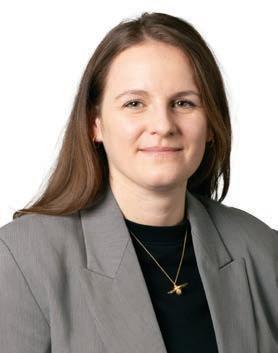
Lottie Hickman is based in London and is a partner in the Banking and Finance group at global law firm Norton Rose Fulbright. Lottie has experience in a broad range of commercial finance transactions, with a strong focus on secured corporate lending, particularly asset-based lending.
Lottie predominantly advises banks and other financial institutions on both transactional and general advisory matters, and is especially drawn to the challenges of complex, multi jurisdictional financing. She works closely with clients from initial structuring through to final documentation, ensuring a commercial, efficient and solutions focused approach.
Lottie is also an active contributor to Norton Rose Fulbright’s recruitment, training and mentorship initiatives, serving as a mentor and role model for junior professionals across the firm.
Lottie holds a BSc degree in psychology from the University of Manchester and a Graduate Diploma in Law from BPP University Law School.
What advice would you offer to women just starting out in the industry? What is the best advice you ever received? Be proactive about your development. When you are starting out in your career, take every opportunity to get involved in different projects and experience as many parts of the business as you can. If someone offers you an exciting opportunity, say yes, but equally don’t wait for those moments to come to you. You are in control of what you want to do and you are the best person to sell yourself.
Focus on building relationships with your peers, both internally and externally. Having a strong network can be invaluable, it opens doors, provides support and can present opportunities. Also, learn from others around you. You can gain so much simply by watching how senior colleagues handle client conversations, prepare for key meetings or navigate situations where they don’t yet have all the answers. Those insights often become the most practical lessons you’ll carry forward.
One of the most valuable pieces of advice I’ve received is that it’s okay to sometimes stand still and let events unfold around you. In a fast-paced industry, there is often an expectation to react immediately but taking a moment to pause can lead to better outcomes. Some challenges resolve themselves with time and many decisions become clearer when you give yourself space rather than forcing momentum. This applies in everyday situations, such as responding to an email. If you wait for a minute, often additional information arrives or the tone of the conversation becomes clearer. It is equally relevant when considering your longer-term career progression. By observing how a team evolves and what skills are genuinely needed, you can make a more informed and confident step toward promotion.
What skills or experiences have been most critical in helping you succeed?
Focusing on delivering an excellent work product has been absolutely critical to my success. Providing clear, accurate and commercial advice helps clients understand the issues quickly and move towards solutions with confidence.
Strong time and project management skills have also been essential. Secured finance transactions have many moving parts and clients want to know exactly where things stand at any point in the process. Being able to manage workstreams efficiently, stay organised and communicate progress clearly has built trust and strengthened my client relationships.
What is one misconception about secured finance that you believe women entering the field should rethink?
That a career in the secured finance industry is unvaried and inflexible. This has not been my experience. Every transaction involves a new set of issues that need to be considered and worked through meaning no two days are the same. The variety keeps the work engaging and constantly stretches you to think differently.
It’s also more flexible than many expect. I’ve recently had a daughter, and although balancing long hours with life as a parent is never easy, I’ve been able to make it work. That’s largely because I’ve had strong role models around me, women who have built successful careers while raising families. Their example has shown me what’s possible and I hope I can do the same for the junior women coming up behind me.

THE INDUSTRY CHANGES FAST. THE TSL EXPRESS SECURED FINANCE DEAL TABLE HELPS YOU KEEP PACE



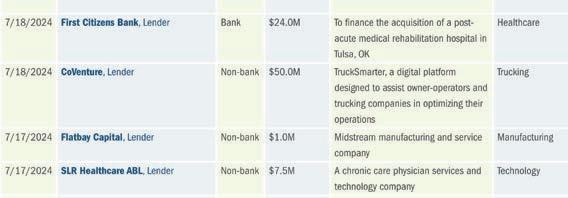

The Secured Finance Deal Table offers:
Comprehensive, interactive information that is fully sortable and downloadable
Detailed ABL, factoring and other senior secured transaction data on over 3400 deals, updated daily
Specifics including deal terms, structure, borrowers, industry, interest rates, contact information, and more
Join the ranks of industry leaders who trust the TSL Express Secured Finance Deal Table to navigate the complexities of secured finance.


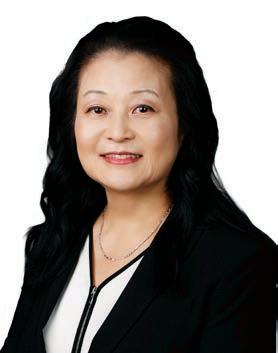
Wen Rittsteuer has spent more than three decades guiding stakeholders through complex organizational distress and strategic change. Her extensive experience in C-suite and advisory roles act as a unifying force, aligning lenders, financial sponsors, and distressed companies to drive successful outcomes. Having operated from multiple perspectives, she brings deep empathy to the challenges of recovery risk, cash flow volatility, and post-merger integration—ensuring seamless transitions and expedited timelines. She demonstrated exceptional leadership and strategic foresight during her first engagement, Epic!, at Novo Advisors. She recognized that maximizing sales value required addressing critical operational voids and issues stemming from lack of executive management, back-office functions, and severe underinvestment as well as strained partner relationships. Assuming executive oversight, she directed employees while simultaneously developing and executing a strategic, cost-effective plan prioritizing high-impact and long-lead initiatives. Her leadership in rebuilding these core functions directly enabled the company to secure a premium valuation that would have been unattainable without this operational turnaround. Wen brings extensive expertise, having advised more than 70 companies and has served in key leadership roles as interim CFO and CRO as well as treasurer for a $6+ billion distressed retailer with a footprint of over 300 locations.
What advice would you offer to women just starting out in the industry?
My early career in restructuring predated the robust support systems available today; mentoring, female peer groups, and formal training were not standard offerings. This experience highlighted the crucial role of proactive professional development. I strongly encourage emerging professionals to leverage the tools and support offered by your firm, such as dedicated training programs and professional organizations, and to actively seek a mentor. A mentor can be instrumental in guiding one’s career path. Both formal and on-the-job training are critical for developing deep industry expertise. I urge women in the field to be inquisitive: it is better to ask ‘why’ as a junior professional than to lack the answer as a senior leader. Furthermore, networking with peers is paramount—every connection counts, and today’s peers can easily become tomorrow’s industry leaders.
Studies have shown women are more reluctant to tout their accomplishments in the workplace. What advice would you give to help women be more comfortable with speaking up?
Be your own strongest advocate. While communicating your worth can feel awkward at first, it becomes a natural part of your professional identity. To ensure your impact and expertise are consistently recognized, be proactive in documenting and communicating your achievements. This practice is crucial as career paths are rarely linear; maintaining a detailed record ensures you are always equipped with the evidence needed to articulate your strategic value during reviews and networking opportunities. Embrace continuous learning, recognizing that every role offers unique insights that may eventually connect to build future success.
What do you know now that you wish you knew in the beginning of your career?
Don’t be afraid to ask questions and never let the fear of appearing inexperienced hinder your professional development. Regularly
seeking clarity and advocating for necessary resources demonstrates professional maturity, not a lack of knowledge. Leaders value this transparency because it mitigates risk and ensures projects remain on track. Embracing what you don’t know is the fastest way to accelerate both your personal growth and team success.
What skills or experiences have been most critical in helping you succeed?
I believe that my diverse career path has enabled me to cut through operational noise and apply strategic pragmatism to even the most complex restructurings. I learned the importance of cash flow management at an early age while working for a family business, a concept critical as a restructuring professional. My tenure as a lender and portfolio manager instilled a disciplined focus on asset recovery, transparent communication and the necessity of honest and objective assessments. Through partnerships with financial sponsors, I recognized the need for problem solving, executing in an expedited timeline and minimizing disruption during periods of change. Finally, my experience as a C-level executive solidified the importance of proactive liquidity management, making difficult decisions and leading diverse teams toward a common, value-maximizing objective.
How do you stay resilient and motivated during periods of uncertainty or industry transformation?
I witnessed my parents overcome significant obstacles. As firstgeneration entrepreneurs with limited resources, they worked tirelessly for over three decades to establish a thriving business. The early years, which predated social media and instant customer feedback, were especially challenging. Their unwavering commitment paved the way for my siblings and me to afford certain opportunities. Any obstacles that I encounter seem manageable and minor in comparison. Embracing change, while challenging, is essential for continuous learning and building resilience, a trait vital to the restructuring sector.
Novo Advisors specializes in business turnaround and performance improvement for middle-market companies. When businesses reach critical inflection points, Novo brings expertise and a fresh perspective to navigate these challenges. Through listening and analysis, our team immerses itself in the business to tailor solutions for sustainable change. We also provide interim management, value creation, transaction advisory, and forensic and dispute advisory services. Our deeply credentialed professionals work seamlessly with our turnaround and performance improvement teams. Drawn from top-tier firms, Novo Advisors’ professionals bring decades of experience in financial planning, data analytics, and operational leadership. With a commitment to collaboration and high standards, Novo Advisors consistently delivers optimal outcomes.


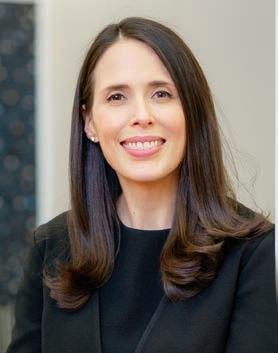
P.C.
Pauline is a partner in Otterbourg P.C.’s litigation and workout and restructuring groups, and is co-chair of the firm’s recruiting committee. As part of her wide-ranging practice, Pauline has extensive experience in dealing with the “back end” of commercial finance transactions, namely, out-of-court restructurings, bankruptcy and insolvency proceedings, and/or litigation. Pauline has represented banks, financial institutions, factors, equipment lessors, and other secured creditors in a variety of scenarios, including, among others, defending a post-payoff lender liability litigation alleging hundreds of millions of dollars in damages; representing secured lenders in bankruptcy, receivership, and litigation matters involving fraud by the borrower; pursuing actions against directors and officers and guarantors; and representing secured lenders in contested cash collateral disputes, including, most notably, facilitating an agreement that avoided liquidation of True Value Company and increased the syndicated bank group’s anticipated recovery by over $75 million. Understanding that litigation or court-assisted restructuring is not a one-size-fits-all solution, Pauline also leverages her expertise to advise secured lenders in out-of-court workouts, including Article 9 sales and orderly wind downs.
Pauline received her J.D., cumlaude, from the New York University School of Law in 2008, and a B.A. with Distinction from the University of Wisconsin-Madison.
Studies have shown women are more reluctant to tout their accomplishments in the workplace. What advice would you give to help women be more comfortable with speaking up?
For many of us, and women in particular, self-advocacy falls under the category of “easier said than done.” You have nothing to lose and everything to gain by putting yourself out there. Chances are that if you believe your contribution is valuable, others do too. In many ways, self-advocating in the workplace is similar to oral argument. You must be prepared and be concise. A concise statement of your goal or what you are asking for, supported by tangible examples of your attributes and achievements, goes a long way.
How did you approach making a big decision in your career, either moving onto a new organization or role?
While change can be scary, it can also be exciting and invigorating. When provided with an opportunity to expand my practice into an area that I had only limited prior experience with, I was nervous. Admittedly, some “imposter” syndrome crept in. However, I forced myself to shrug that off and embrace it. Much like I did earlier in my career as a junior associate, I learned all that I could, I asked questions, and I shadowed a mentor. Before I even realized it, I had grown into the role and molded it into something that was right for me. However, that would never have happened had I not taken the plunge in the first place.
What role has mentorship/sponsorship played in your career?
Both mentorship and sponsorship have played huge roles in my career. And yes, they are different, and I would not be in the position I am in today without either of them. My mentors have taught me how to practice with integrity and that there is no substitute for hard work and preparation. My sponsors,
who have not only been my mentors, but have also actively advocated for my success, have taught me that it is truly invaluable to have someone on your side of the ring. As a member of the firm and co-chair of recruiting, I have made sure to pay that forward to the younger generations of Otterbourg attorneys and hope they will do the same.
How do you stay resilient and motivated during periods of uncertainty or industry transformation?
In my experience, periods of uncertainty tend to come in waves. Sometimes they are cyclical, and thus more predictable. Sometimes they are due to a fundamental shift in the way that things are done. If it is the former, then my key to staying resilient is to ride the wave, using the phase as an opportunity to think outside the box and dive into a tangential area of my practice. If it is the latter, I try to learn everything I can about it and stay abreast of the sea change to see if shifting my practice accordingly makes sense on a case-by-case basis. I say case-by-case because sometimes it may make sense to lean into the change and sometimes it may make sense to reign in the buzz of the moment. One reason why Otterbourg, in particular, has been able to thrive for more than a century is because it has not only remained true to its “bread and butter” practice areas throughout all the ebbs and wanes over the decades, but it has also been nimble enough to expand into other practices and specialties that synergize with the firm’s practice along the way.

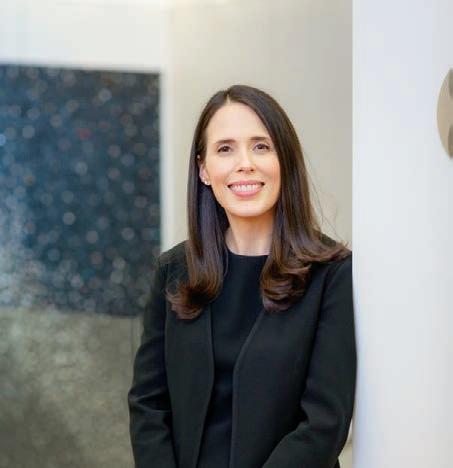

Madison Morrow Lee represents national and regional banks, private credit lenders, and commercial borrowers in syndicated and single-lender transactions, with a focus on middle market asset-based loans. Her creativity and skill allow her to efficiently represent clients’ legal interests. Madison’s practice involves structuring, negotiating, and documenting secured lending transactions for a variety of industries, and her experience includes acquisition financing, healthcare financing, and cross-border financing transactions. Additionally, Madison has a firm understanding of transactions involving unique structuring issues, complicated collateral packages, and complex intercreditor arrangements. Madison’s client-centered approach ensures that her clients receive invaluable and dedicated representation, and her exceptional interpersonal skills are advantageous in negotiating effectively on behalf of her clients.
Madison is a former SFNet 40 Under 40 Award honoree. She also serves as a member of the SFNet local Atlanta chapter emerging leaders board and as a member of the Rose Council Board for Wake Forest University School of Law. Madison has an undergraduate degree from Vanderbilt University and her J.D. from Wake Forest University School of Law.
What advice would you offer to women just starting out in the industry? What is the best advice you ever received? The best advice I ever received was to be willing to step outside of your comfort zone and push yourself in areas where you are still developing your skillset. I would impart this advice to women starting out in this industry too. Anyone beginning a career in the secured lending industry is not expected to automatically know all of the ins and outs. For women (including myself), this can often lead to the dreaded imposter syndrome or a hesitancy to take on new challenges. Instead, push yourself to face these challenges head on. Ask questions when you do not know the answer, learn from mistakes, and grow your knowledge base one step at a time. This is all a part of the process of building a successful career.
What do you know now that you wish you knew in the beginning of your career?
So much! Specifically, two thoughts jump to mind that I wish I had known at the outset. The first is that because someone is outspoken or appears confident does not necessarily mean that they are more knowledgeable or sophisticated than you. Often, hesitancy to immediately settle on a conclusion means that you are likely more considerate in your thought process. In fact, I find that the very best practitioners are not afraid to admit when faced with something new or if they do not immediately know the answer. This is not a weakness, but a sign of intelligence and good judgment. I think that women are, at times, more naturally inclined to question their abilities when confronted with a topic in which they lack confidence. Had I known that confidence does not always equate with skill, I would have felt more comfortable with my capabilities and approach.
Secondly, at the beginning of my career, I would frequently compare
myself to my peers. However, constantly measuring yourself and your career against others is not a helpful way to grow and can lead to unnecessary anxiety. Rather, I learned to focus on how to best develop my own experience and skillset and not to look to others for validation. To accomplish this, I recommend periodically taking time to consider your accomplishments (both major and minor). Allow yourself to appreciate your progress!
What role has mentorship/sponsorship played in your career?
Both mentorship and sponsorship have played critical roles in advancing my career. I have been lucky to have many mentors— colleagues and others in the secured lending industry whom I look up to. A mentor can provide you with guidance on how to build your ideal career. I am a firm believer that a good support system can take you places where you never even knew you were capable of going. Seek out guidance from others, and then, when the time comes, pay it forward by being willing to mentor others.
Sponsorship also is a key component of building a career, in particular as a woman in a male-dominated field like secured lending. I have had sponsors willing to advocate for me, which in turn enabled me to advocate for myself. Those who have sponsored me throughout my career have been vital to my career journey.


on being featured in The Secured Lender’s Women in Secured Finance Issue.
We celebrate Madison and all the women leaders recognized for their contributions to the secured finance industry.




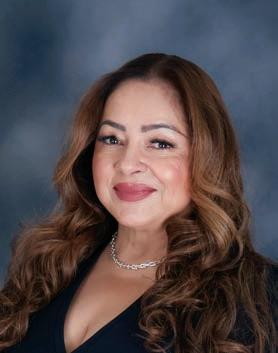
Mary Carrillo is a personable and reliable executive leader with over 25 years of in-depth expertise in the factoring and manufacturing industries. Currently serving as the customer credit manager at Republic Business Credit, managing and monitoring 1,200+ accounts, mary specializes in portfolio, credit, and collection management. Her career is uniquely informed by her early roots in garment manufacturing, providing her with understanding of accounts receivable and the operational realities her clients face every day.
Before joining Republic Business Credit, Mary built a professional history at Hana Commercial Finance, where she served as a client manager and team leader with an assigned portfolio of clients within the apparel, textile and transportation industries. Her extensive background also includes pivotal roles as a credit analyst at First Capital Western Region and GMAC Commercial Finance.
Having been born and raised in Los Angeles, Mary feels fortunate to have had the textile district and the garment industry right in her own backyard. Having friends in the industry provided her with a deep, lifelong connection to this community. Mary is fluent in Spanish and deeply values spending time with her family while upholding cultural traditions. She believes remaining positive, and embracing continuous learning are the keys to navigating industry transformation.
What advice would you offer to women just starting out in the industry?
When starting out, I highly suggest being curious and exploring how other departments operate. Early in my career, I was fascinated by the many moving parts of the business—from back-office operations to upper management. Understand how the business moves. Don’t be afraid to ask questions and soak in the wisdom of seasoned staff; observing the bigger picture will expand your interests and open doors to better opportunities. Additionally, stay connected with colleagues who move on, as they will become your most valuable networking resources. Above all, be yourself, stay focused on your goals, and remember to have some fun along the way.
What is the best advice you ever received?
The most impactful advice I ever received was to never leave a position on bad terms. In certain industries, word travels quickly and your reputation is your most valuable currency. I have seen colleagues leave a company under a bad exit, only for their new employer to be acquired by the very company they had just left. It was a powerful lesson that you truly never know what the future holds. Leading with integrity and maintaining a positive reputation ensures that no matter how the industry shifts, your path forward remains clear.
Studies have shown women are more reluctant to tout their accomplishments in the workplace. What advice would you give to help women be more comfortable with speaking up?
The saying ‘hard work pays off’ holds a lot of truth, but we often overlook how much effort and sacrifice goes into carving out a career path while simultaneously raising a family. Balancing those worlds is incredibly demanding. Because these ambitions are so hard-earned, you should feel fully entitled to celebrate your successes. My advice is to own your accomplishments and, just as importantly, to rally around the successes of the women around you. By building each other up and creating visible role models, we make it easier for every woman in the room to feel comfortable owning it all.
What role has mentorship/sponsorship played in your career?
Mentorship has been instrumental in my career, both from professional leaders and influences within my family. I remember being very vocal with my manager about my ambition to move up the corporate ladder. His response was a reality check: ‘Think about it, because you’re going to have to work for it.’ For me, that meant showing up every Thursday morning at 6:00 a.m. to listen in on credit committee presentations that were conducted from our New York office. It pushed me far out of my comfort zone, but I appreciated the honesty and the challenge. That high-level support and guidance was impactful to my growth, and today, I take great pride in being that same kind of mentor for younger staff—passing on what I have learned.
What skills or experiences have been most critical in helping you succeed?
The key to my success has been the ability to bridge the gap between finance and manufacturing. My early experience having worked in the garment industry gave me a ‘start-to-finish’ perspective that most in the factoring industry do not have. I recognize the lifecycle of my clients as well as having a genuine interest in the craftmanship of garment and textile. Today, that background is my most critical asset, because I understand the nuances of production and the logistical hurdles my clients face. I don’t just see a balance sheet; I see the entire production line behind it.
How do you stay resilient and motivated during periods of uncertainty or industry transformation?
For me, the key to staying motivated is simple: I truly enjoy my work. That passion provides a natural resilience against industry volatility. I’ve found that combining that enthusiasm with a disciplined sense of patience and a positive attitude goes a long way in this business. It’s about staying grounded in what you love doing while having the temperament to weather the cycles of change.













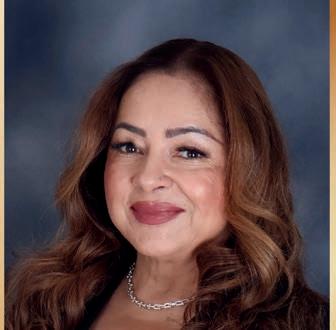

















Liz Burkel is an associate director in Riveron’s Lender Services practice, providing lender advisory support focused on asset-based lending and secured credit facilities. She has extensive experience leading collateral examinations across a wide range of industries, including detailed reviews of accounts receivable, inventory, and other collateral throughout North America and Europe. Liz is known for managing complex ABL engagements efficiently while delivering clear, reliable analyses that support lenders in assessing risk, ensuring compliance, and making informed credit decisions.
Since joining Riveron in 2022, Liz has emerged as both a technical specialist and a leader within the practice. She designed and implemented Riveron’s case study-based training program for ABL examiners, helping standardize methodology and elevate the quality of deliverables across engagements. In addition to her client and training responsibilities, Liz, who is the wife of a United States Marine Corps helicopter pilot, co-leads Riveron’s RiverMil employee resource group, supporting military families and related charitable organizations. She began her career at FTI Consulting and Mazars USA and holds a B.S. in finance from Arizona State University’s W. P. Carey School of Business.
Studies have shown women are more reluctant to tout their accomplishments in the workplace. What advice would you give to help women be more comfortable with speaking up?
You have to learn to be your own biggest advocate, which means owning your story and being comfortable not only sharing it with others, but also being explicit about how you arrived where you are today. All too often, women write off their achievements as luck and feel uncomfortable acknowledging the hard work behind them. Clear communication of accomplishments is essential for career advancement and helps ensure your contributions are understood in the broader context of team and organizational success. By sharing our accomplishments openly, we can begin to change this narrative and normalize self-advocacy so our sisters, daughters, and other young women entering the workforce feel empowered to do the same.
What role has mentorship/sponsorship played in your career?
I don’t think I’d be where I am today without the mentors I’ve encountered throughout my career, especially those I’ve met at Riveron. As a military spouse in a field that often expects extensive travel, client meetings, and networking events, there was a point early in my career when I believed this role simply wasn’t for me. It wasn’t until I joined Riveron that I found mentors who encouraged me to make this role my own by bringing skills to secured finance beyond the ability to travel constantly, and their support helped me reframe what success could look like. Having mentors who gave me permission to view my career differently has allowed me to grow in a way that works for me while also benefiting my employer.
What skills or experiences have been most critical in helping you succeed?
Staying curious has been one of the most critical factors in my success. Secured finance is a field full of nuance where there is always something new to learn, and I have found that a strong foundation paired with continuous learning has been key to my success. By leveraging the resources around me, whether that be networking with industry experts or taking SFNet Education On-Demand courses, I continue to expand my knowledge and experience and never feel stagnant in my growth.
What is one misconception about secured finance that you believe women entering the field should rethink?
Many women in college can look around their classrooms and immediately notice they are outnumbered by men entering this industry, which can sometimes lead to imposter syndrome. I want those women to know that their skills, experience, and perspectives are just as needed in secured finance. When they enter this field, they will find a strong sisterhood of women who have had similar doubts and experiences and who will become their biggest advocates and mentors. While there is still work to be done, I do not believe secured finance is a male-dominated field anymore. I encourage young women entering the industry to step into their first roles confident and ready to share their ideas and knowledge without hesitation.
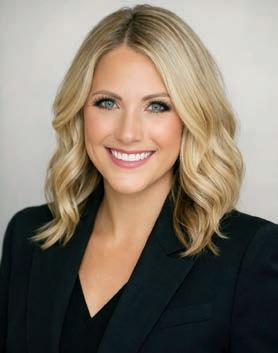
Lauren Hartmann is an associate director of Riveron’s Lender Services practice in the New York market. Lauren brings deep experience advising banks, private credit funds, and investment banks on secured asset backed and leveraged transactions. She specializes in leading credit-focused financial due diligence engagements, overseeing analyses related to asset coverage, liquidity, covenant compliance, debt capacity, and cash flow sustainability. As a trusted partner to her clients, Lauren is known for her ability to manage complex engagements while working collaboratively with lenders, sponsors, investment bankers, and legal counsel to identify transaction risks and support effective deal structuring.
Throughout her career, Lauren has played an integral role in developing and expanding client relationships, earning repeat business through her technical expertise, responsiveness, and practical insights. She is also deeply committed to training and mentoring the next generation of secured finance professionals, actively coaching junior team members and supporting their technical and professional development
Lauren began her career at Withum (formerly Freed Maxick CPAs). A Certified Public Accountant and Certified Fraud Examiner, she is active in professional and civic organizations, serving on multiple nonprofit boards. She resides in Buffalo with her husband and son.
What advice would you offer to women just starting out in the industry? What is the best advice you ever received?
The best advice I have received and would offer to women starting out in the industry is to not wait until you feel ready. Growth happens in the stretch. Take the meeting, raise your hand for the project, ask the questions, apply for the role. Confidence follows action.
Studies have shown women are more reluctant to tout their accomplishments in the workplace. What advice would you give to help women be more comfortable with speaking up?
I have had the privilege to work with several women leaders, who paved an excellent way to showcasing success and providing visibility into value. Speaking about your accomplishments provides others with detail on where you can make an impact.
I also remind women that their accomplishments are a kind of professional equity; they are your superpower. Titles can change, roles shift, organizations evolve, but results you have delivered, problems you have solved, the certifications you received are experiences no one can take away. Owning them isn’t ego, it is confidence grounded in evidence.
What do you know now that you wish you knew in the beginning of your career?
Building relationships matters just as much as the technical skills of the jobs. Early on I was focused on performing great work with high utilization target, which is important, but building relationships and trust turned good work into career momentum.
What role has mentorship/sponsorship played in your career?
Mentorship has played a significant role in my career by helping me deepen my understanding of industry norms, navigate challenges,
and build confidence at key moments. Having trusted mentors in my network has provided valuable perspective on risks and opportunities, enabling me to make more informed decisions and grow professionally. These relationships have also reinforced the importance of paying mentorship forward, as I have benefited from open dialogue, honest feedback, and encouragement. Mentors have challenged my assumptions, helped me articulate long-term goals, and provided reassurance during periods of change, ultimately strengthening my leadership skills and sense of accountability within complex professional environments today.
How do you stay resilient and motivated during periods of uncertainty or industry transformation?
During uncertainty I focus on what I can control. Continuing to be intentional in the day-to-day work and supporting and leaning on my team. The sense of forward motion really helps me feel settled when the bigger picture feels unclear. Additionally, connecting with my network to share perspectives is a great reminder that you are not the only one navigating uncertainty. It makes the challenges feel a lot more manageable.
What is one misconception about secured finance that you believe women entering the field should rethink?
One misconception is that secured finance is all numbers and spreadsheets and that success is purely about technical expertise. Yes, the technical side matters. However, so does communication, judgment, relationship building and being relatable. A lot more deals get done when all parties are collaborative.

Caroline Spitzer is a dedicated and forward thinking professional with more than 10 years of experience in project management. She currently serves as the director of project management for Rouse Appraisals, a key partner to the secured finance industry. Known for her ability to bring clarity and structure to complex challenges, Caroline has led initiatives that enhance operational efficiency, elevate client experiences, and strengthen internal processes across teams and functions. Throughout her career, she has earned a strong reputation for building resilient operational frameworks and championing innovative approaches that drive and support both organizational growth and industry advancement. Caroline is recognized for her steady and centered leadership style, fostering clarity, accountability, and momentum across every project she oversees. She encourages her team to think critically, grow confidently, and maintain high professional standards in all aspects of their work. Originally from Sao Paulo, Brazil, Caroline moved to the United States 15 years ago after earning her bachelor’s degree in business administration. She now resides in Long Beach, California, with her husband, their three year old son, and their beloved English bulldog, who is approaching 14 years old. Outside of work, Caroline enjoys playing the guitar, hanging out with friends and family, and Brazilian food.
What advice would you offer to women just starting out in the industry? What is the best advice you ever received?
My advice is to remain engaged and bring a high level of effort and thoughtfulness to every task you’re given. One of my managers taught me early on that applying critical thinking and delivering the same level of excellence in every task – no matter how small – sets you apart.
Studies have shown women are more reluctant to tout their accomplishments in the workplace. What advice would you give to help women be more comfortable with speaking up?
Part of becoming more comfortable speaking up is practice. Many women are conditioned early on to be agreeable and avoid self promotion, which can make advocating for us at work feel uncomfortable. I’m proud of the progress that’s been made over the course of my career, and spaces like the SFNet’s Women in Secured Finance Conference played a meaningful role in that growth for me. What’s helped was reframing self advocacy as a way to ensure my contributions were visible and valued, rather than as self promotion. I recommend starting small in a place that feels safe, practice articulating your impact, and remembering that your voice adds value. Confidence grows with repetition, and each time you speak up, it gets easier.
What role has mentorship/sponsorship played in your career?
Mentorship has played a pivotal role in my professional growth, sometimes in ways I didn’t fully appreciate at the time. I once had a manager who set a very high standard and provided consistent, detailed feedback. Initially, I found this challenging and often interpreted it as failure rather than progress. Over time, I learned to view feedback as constructive, not personal, and realized that growth depends on being open to coaching. By actively listening and applying that feedback, I became a stronger, more confident professional. That experience continues to shape how I work today, influencing the care,
critical thinking, and quality I bring to my work, as well as how I strive to support others through thoughtful, growth-oriented feedback.
Looking back, what moment or project most shifted your perspective on leadership in secured finance, and why?
One of the most pivotal moments that shifted my perspective on leadership in secured finance was attending my first SFNet Women in Secured Finance Conference. The experience had a profound impact on me. The moderators, speakers, and attendees created a strong sense of community and empowerment that I hadn’t experienced elsewhere in the industry. Seeing women openly share their experiences, challenges, and successes reframed how I thought about leadership – not just as individual achievement, but as collective growth and support. That conference was a turning point for me. It reinforced the importance of building relationships, investing in continuous learning, and lifting others as you grow. The connections I’ve made through the secured finance community have led to meaningful business opportunities, but just as importantly, they’ve provided encouragement, perspective, and the mindset to keep improving as a leader. I now look forward to attending the conference every year, as it continues to influence how I lead - with confidence, collaboration, and a strong commitment to developing both myself and those around me.
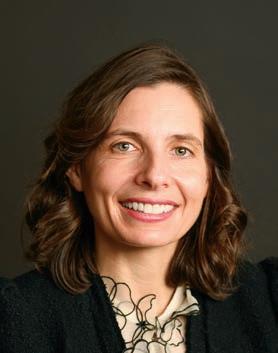
Elizabeth Tabas Carson is a partner with Sidley Austin LLP. She represents alternative lenders, investors, investment managers, insurance companies, hedge funds, traditional banks, and investment banks, as well as corporate borrowers, financial sponsors and their portfolio companies on a wide range of complex domestic and cross-border leveraged finance, asset-backed financing and special situations transactions. Liz has extensive experience in structuring and negotiating private financings, secured and unsecured lending transactions, cash flow and asset-backed leverage facilities, merger and acquisition financing, mezzanine and second lien financings, debt restructurings and workouts, recapitalizations, SPAC and de-SPAC support transactions, fund financings, private debt, and financings of alternative assets, including structuring financings and liquidity solutions for investment funds and asset managers, public and private companies, and notfor-profit institutions. Liz’s practice focuses on distressed debt, regulated and complex debt offerings in private and public markets with a particular focus on funds, insurance companies, asset managers, healthcare, life sciences, technology, intellectual property, complex NAV financings and other transactions involving regulated and esoteric asset classes.
Liz is the chair of the American Bar Association Fund Finance Sub-Committee and a Fellow of the American College of Commercial Finance Lawyers. Liz has been recognized by several industry publications, including ChambersGlobal(USA, 2025) and ChambersUSA(2021–2025) in Banking and Finance, and IFLR1000in Banking (2020–2021).
What advice would you offer to women just starting out in the industry? What is the best advice you ever received?
My advice to someone starting out is always to bring yourself into the room. It’s important to work hard and do good work, but at the end of the day, while it’s important to learn from others, it’s even more important not to lose yourself. Be confident enough to be yourself and ask educated questions--sometimes you will find that being confident enough to do so will result in amazing opportunities.
How did you approach making a big decision in your career, either moving onto a new organization or role?
I am fairly data driven--so it usually starts there. Then I talk to my husband and a few close friends who I trust and then I eventually jump. I am practical, but I am also comfortable trying new things. I embrace change. I take comfort in knowing that nothing is permanent. Finding things you hate might help you find things you love even more.
What role has mentorship/sponsorship played in your career?
I have been really lucky to have some great mentors. Rob Smith, Paul Hespel, Lee Vanderpool and Sarah Gelb encouraged me to think, ask questions and taught me what the practice of law could be. At Sidley, there are a number of people in Global Finance who inspire me and who push me to always learn. Without the giants who came before me and took the time to teach me, I wouldn’t be who I am today. I try to teach, publish and give back to others as a way to pay it forward. I am hoping I can be that bright light of inspiration for others over my career.
What skills or experiences have been most critical in helping you succeed?
I was a college rower and trained at an elite level and attribute the work ethic and ability to work as part of a team and get up and start fresh after a hard day to all the years of training as an athlete. A boat
only moves if a team can work together, and a great finance team only delivers a great product if they work as part of a harmonized team. It’s important to make sure that not only are you successful personally, but that your whole team has the skill to succeed.
How do you stay resilient and motivated during periods of uncertainty or industry transformation?
From a work perspective, I am a person who thrives in stressful times. I am a product builder. I like to learn new things, watch the case law and innovate. So, for me, uncertainty is opportunity and I just try be as prepared as I can by consuming as much information as I can.
From a personal perspective and to keep myself calm during those uncertain times-- work permitting--I will do lots of yoga, run with my husband and bake with my kids.
What is one misconception about secured finance that you believe women entering the field should rethink?
A lot of women think the odds are stacked against them and this is a man’s business. It’s not, it’s a people business and the life skills you bring to the table as a woman will serve you well. I am a mom of three kids and being a mom is the best training one could ever have for handling difficult counterparts and clients. Don’t get mad, be compassionate and slow down and explain things. I do this every day as a parent and every day on the job. One informs the other and I am better at both as a result.
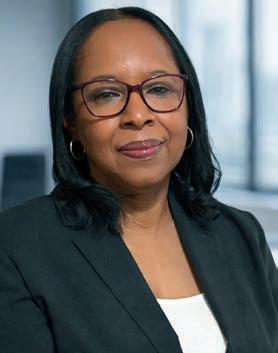
Dawn Eastman is currently an operations manager at SLR Business Credit, with over 30 years of experience in factoring finance accounts receivable. She manages the posting of cash receipts and invoices to ensure timely updates to clients’ accounts. Her background includes working on operational improvements, streamlining workflows, identifying gaps in processes, and implementing solutions that improve accuracy to elevate quality service to clients. She also collaborates with her team to ensure there is compliance with internal policies and procedures.
Before SLR, Dawn worked at Heller Financial, Finova Capital Corporation, GMAC Commercial Credit LLC, Sterling National Bank and Webster Bank.
During her time at GMAC Commercial Credit, she participated in the testing and implementation of the Stucky Nova CS accounts receivable system while serving as a project manager. This new system played an integral part in improving client satisfaction. She also participated in the testing of an imaging system using OCR technology at Heller Financial. Dawn also collaborated with other team members at Sterling National Bank to create department manual and productivity reports. When Dawn is not working, she enjoys reading, solving puzzles, trying new recipes, and travelling with her family.
What advice would you offer to women just starting out in the industry? What is the best advice you ever received?
My advice is to be confident in your abilities and do not be afraid to speak up in meetings. Share your ideas and take initiative when an opportunity presents itself. Mistakes will happen along the way, but taking responsibility and learning from them will only allow you to grow. Collaborating with others also helps you to develop skills you may not have known you needed.
The best advice I ever received was do not be afraid to share your ideas and ask for clarification if not clear on an answer someone has given to you. Being confident in expressing my views and sharing my ideas has helped me to grow and earn respect from my peers.
How did you approach making a big decision in your career, either moving onto a new organization or role?
I approached my decision to move to a new organization by researching the position to determine if the opportunity was the right move for me at the time and whether there was room for growth. I also took into consideration how it would affect my work-life balance. I reached out to colleagues and friends seeking their input. Once I weighed the pros and cons, I was able to determine that the move was right for me.
What role has mentorship/sponsorship played in your career?
Mentorship has played a meaningful role throughout my career. I am fortunate to have the opportunity to work with my current manager who believes in my abilities and offers regular guidance and thoughtful feedback. She challenges me in ways that forces me to use my critical thinking skills and continues to identify areas for improvement while providing the tools needed for my professional development. I’ve grown to appreciate the support I continue to receive and try to incorporate when supporting others.
What skills or experiences have been most critical in helping you succeed?
Communicating effectively, being adaptable to change, learning modern technologies are all critical components in being successful. Collaboration is also important since working with others brings diverse perspectives to the table that in turn helps to achieve the intended goal. I also believe in asking for help when needed. Being able to manage your time effectively by prioritizing tasks in order of importance is also helpful.
How do you stay resilient and motivated during periods of uncertainty or industry transformation?
During periods of uncertainty, I try to focus on the things I can control, such as the current tasks at hand. Staying motivated during uncertain times can be difficult. However, I do not let it overwhelm me. Discussing the possibility of changes with my colleagues is also helpful. Staying informed while preparing for the possibility that changes may be ahead allows me to be accepting of the situation. I do not think that worrying about things you cannot control is productive.

Winter Ma’s professional journey began in China, where she worked as a financial journalist after earning a degree in international finance. She remains deeply grateful for that investigative foundation, which instilled a detective’s mindset—a disciplined, analytical approach to uncovering the logic and root causes behind complex challenges.
After moving to the United States, Winter entered a period of reinvention. Like many newcomers building a new life, she took on a range of jobs while simultaneously enrolling in intensive computer programming courses. When the opportunity arose to join a re-factoring company as a bookkeeper, she made a deliberate decision to pivot and learn the business from the ground up. Those early, hands-on experiences provided an essential perspective that continues to shape her work today.
Her career path ultimately led to leadership roles at Sterling National Bank and Webster Bank. She currently serves as vice president of factoring operations at SLR Business Credit, where she leads her team with a strategic focus on operational excellence, cross-functional collaboration, and disciplined procedures—ensuring smooth business operations and consistent, reliable service for clients.
What advice would you offer to women just starting out in the industry? What is the best advice you ever received?
I encourage women to embrace curiosity. There is often a silent pressure to have all the answers, but real growth comes from the courage to ask, “Can you explain the logic behind this?” When you ask “why,” you aren’t just seeking information; you are uncovering the foundation of the business.
The best advice I ever received was: “Experience is simply the name we give to our mistakes.” Working in banking and factoring operations has taught me not to fear mistakes, but to learn from them. When something goes wrong, I focus on identifying the root cause and improving procedures to reduce human error. This mindset helps me remain calm, accountable, and thoughtful when handling complex operations.
What skills or experiences have been most critical in helping you succeed?
Success for me is rooted in the ability to listen—not just to data, but to the people behind it. My background as a journalist taught me that if a process isn’t working, the solution is rarely on the surface. You have to be a detective to find the truth.
Pairing that investigative mindset with my experience working various survival jobs taught me the value of every person’s contribution. A successful operation isn’t just about software; it’s about human empathy and resilience. By reaching across departments to listen and learn, I can lead more effectively. I believe that when you truly value others’ voices, you create a culture where everyone feels they belong.
Studies have shown women are more reluctant to tout their accomplishments in the workplace. What advice would you give to help women be more comfortable with speaking up?
We often hesitate to speak about our accomplishments because
we don’t want to appear as though we are “bragging.” However, I encourage women to reframe this: speaking up is not about selfpromotion; it is about sharing evidence of what is possible. When you articulate success, you provide both a roadmap and inspiration for others.
If highlighting personal achievements feels uncomfortable, anchor them in the broader impact. Speak about how your work supported the team, improved the process, or helped a client navigate a difficult challenge. Framing accomplishments through outcomes and solutions not only demonstrates leadership but also reinforces the value of collective contribution and shared success.
What would you like to achieve this year, either personally or professionally?
Professionally, I want to keep learning and growing. Even after many years in banking and factoring operations, I’m constantly reminded that there is always more to learn. This year, I aim to deepen and broaden my expertise in emerging operational strategies and stay current with market evolution, so I can better support my team and being a reliable, thoughtful resource.
Personally, I am committed to a path of self-fulfillment while remaining intentional about supporting others, particularly those who need it most. I have been helped by many people throughout my journey, and I hope to do the same for others in small but meaningful ways. If I can make someone’s path a little easier, or make the world feel a little kinder and more beautiful, that would be a true achievement for me.

Amanda Pawlowski serves as managing director and head of ABL Credit Delivery at Truist Bank, where she oversees the underwriting, execution, and portfolio management of asset-based lending transactions across the corporate and commercial client base. With more than 27 years of experience in ABL and factoring, Amanda brings deep credit expertise spanning commercial bilateral transactions, complex syndications and credit risk management.
During her 13 years with Truist, Amanda has held leadership roles including head of ABL Structuring and senior underwriting positions supporting diverse, credit intensive industries. Her earlier career at Wells Fargo and CIT Commercial Services helped build a strong foundation in underwriting, portfolio oversight, and collateral-focused evaluation.
Amanda has demonstrated a strong commitment to developing teams and leading them through the cyclical dynamics of ABL with balance and adaptability. She has served as a mentor by encouraging diverse skill development in underwriting, portfolio management, and credit judgment while maintaining a balanced focus on portfolio growth. Amanda holds a master’s degree in international business from High Point University and a bachelor’s degree from the University of South Carolina.
Studies have shown women are more reluctant to tout their accomplishments in the workplace. What advice would you give to help women be more comfortable with speaking up?
Women may hesitate to highlight their accomplishments, but providing clarity about your contributions is essential and not self-promotional. My advice is to view speaking up as part of responsible communication. Leaders need to understand your role in a transaction, how you evaluated risks, or how you influenced an outcome. When you ground your comments in facts, analytics, and results, it becomes easier to share your achievements with confidence. In ABL, where decisions rely heavily on credit judgment and disciplined structure, explaining your impact is not boasting. It demonstrates professionalism and accountability. Preparing concise descriptions of your work and communicating them professionally and confidently helps build visibility and credibility over time.
What do you know now that you wish you knew in the beginning of your career?
I wish I had understood earlier that stepping away for a moment often leads to the best clarity. ABL underwriters are by nature analytical and persistent. We like to dig into the details until we find the answer. That intensity can be a strength, but it can also lead to overthinking when you stay too deep in the weeds for too long. When your thought process becomes cluttered, the solution becomes harder to see. I have learned that a short walk or a brief change of scenery clears your thinking and often brings the answer that was not apparent before. I now encourage others to do the same. Stay committed to disciplined analysis, but recognize when you need a mental reset. Knowing when to pause is just as important as knowing how to dig in.
What role has mentorship and guidance played in your career?
Mentorship and steady guidance have played an essential role throughout my career. I have learned the most from leaders with deep experience in ABL originations, syndications, and credit risk, individuals who helped shape how I evaluate deals, manage complexity, and think strategically. Attorneys have been important teachers as well. Working alongside them during credit agreement negotiations taught me to remain confident in what I know about credit, to stay unemotional, and to remember that challenges from clients or counsel are not personal.
In addition to mentoring relationships, the people who work in ABL have been a significant reason I have enjoyed this career. ABL is a niche product with a relatively small community compared to other areas of banking. It is a close network where people genuinely care about one another. Over the years, staying connected with prior teammates and industry peers has strengthened my perspective and reinforced the importance of supporting others. The combination of technical learning, personal relationships, and guidance from experienced leaders has shaped my career and influenced how I lead and develop my own teams.
How do you stay resilient and motivated during periods of uncertainty or industry transformation?
Resilience in ABL comes from understanding that this industry is naturally cyclical. Collateral performance shifts with the economy. Industries rise and fall based on market conditions. Banks go through periods of merger activity and periods of stability. I have learned not to fear change but to view it as part of the rhythm of ABL. Each cycle teaches something important about risk evaluation, leadership, and adaptability. I stay motivated by keeping perspective, staying connected with colleagues across the industry, and remembering that challenges eventually bring insight. Remaining thoughtful and open to evolving conditions allows you to lead others with steadiness and confidence.

s the senior vice president of United Community’s Structured Finance Group, Julie assists companies with access to growth capital. She has always been interested in learning how companies build their brands, and she is passionate about helping them grow and succeed.
After receiving a Bachelor’s of Science degree from Florida State University in 1989, Julie embarked on a Commercial Banking & Finance career that expanded into various roles over the last 30+ years. She got her start in banking as a teller in college, and continued a career working for banks and alternative lenders throughout her financial career.
What advice would you offer to women just starting out in the industry? What is the best advice you ever received? Be passionate about what you want to achieve, seek out mentors to help guide you along the way, don’t be afraid of taking on challenges, and never give up. Most women leaders in the banking and finance industry recognize that a successful career in this industry is a marathon, not a sprint.
What skills or experiences have been most critical in helping you succeed?
Having been in commercial banking and finance for my entire career, it’s been a fascinating journey to go through the changes and challenges of the last 3 decades of economic cycles. What I’ve learned over the years is that there are no shortcuts to success. It takes perseverance, collaboration, and the understanding that we are all here in service to others. That’s the secret that drives win-win solutions.
What is one misconception about secured finance that you believe women entering the field should rethink?
The financial industry has been a predominantly male dominated industry. While it appears that more women are garnering opportunities and careers in leadership roles within the banking and finance industries, there’s still more room for gender equality. Women have always been good at handling money. Now that more women are in the workforce, they could explore that their personal finance skills could directly translate into professional financial careers. A few of the vital attributes that women naturally possess:
Integrity: Women in leadership roles are often the ones that bring the most collaborative and sensitive approaches to the negotiation table. They also tend to approach situations from a perspective of humility and open-mindedness. This helps them consider other
people’s perspectives, driving collaborative change, and improvements that drive company performance.
Clear Communication Skills: To be a great communicator, it’s critical to be mindful and give credit to others. Always listening and seeking to understand are attributes that help women in leadership roles enter into win-win situations. Women in leadership often use these types of techniques to empower others and drive meaningful conversations with customers, employees, colleagues, and business partners.
Collaboration: One of the greatest strengths women in business exude is the ability to elevate others by inspiring, motivating and leading by example. My personal mantra is: Teach, Train, Educate and Motivate! Women naturally tend to take the extra time to nurture, coach and mentor their subordinates. They tend to also be known to invest in their employees by building strong working relationships with employees, using feedback and direction to help people grow.
Confidence: Women seeking leadership roles have been known to hesitate if they aren’t sure of themselves. This, in turn, can cause them to hold themselves back – especially when it comes to considering themselves as ready for promotions. Don’t underestimate your abilities, put your success as the priority, and have the confidence to take a risk and go for it!

R. AVRIGIAN Wells Fargo Capital Finance
Jennifer R. Avrigian is a seasoned financial executive with over 30 years of experience in underwriting and managing asset-based lending solutions. As executive director at Wells Fargo Capital Finance, Jennifer leads a high-performing team of relationship managers in Philadelphia and New York. She is responsible for driving strategic credit initiatives, optimizing portfolio performance, and delivering tailored financial solutions to commercial clients.
Prior to her current role, Jennifer served as a senior underwriter, where she specialized in structuring, documenting, and closing complex credit facilities. Earlier in her career, she evaluated loan portfolios and lending practices across corporate and commercial banking groups. Jennifer holds a Bachelor of Science in business management from Gettysburg College. She is an active board member of the Secured Finance Network – Philadelphia, where she contributes her industry expertise and leadership to the regional asset-based finance community.
What is one misconception about secured finance that you believe women entering the field should rethink?
Early in my career I was advised that if I ventured into assetbased lending I would be pigeonholed, limiting my opportunities and marketability to explore other areas of finance. I often think back on that advice and believe the exact opposite to be true. Asset-based lenders develop unique abilities in managing diverse industries, life cycles, and risk profiles. The foundation of ABL lending is rooted in strong analytical skills, coupled with robust risk management practices. These core competencies are transferable across the financial sector, making the skills and knowledge gained from an ABL experience beneficial to any career in finance.
What advice would you offer to women just starting out in the industry?
Be willing to take risks. Have confidence in your expertise. Step outside your comfort zone and embrace that being uncomfortable is an opportunity for growth.
What skills or experiences have been most critical in helping you succeed?
A key element that has contributed to my success as an assetbased lender has been learning from the talent around me and leveraging their expertise. Whether you are just starting your career or a few years in, the lessons learned from observing credit discussions with business leaders and risk managers are invaluable. These discussions offer an opportunity to understand the key issues and risks that leaders focus on, and how the risks can be mitigated. Equally important are follow-up conversations with colleagues to ask questions and reinforce your understanding. These types of interactions have been instrumental in shaping my ability to structure and support deals and communicate effectively with business leaders and clients.
Studies have shown women are more reluctant to tout their accomplishments in the workplace. What advice would you give to help women be more comfortable with speaking up?
Act like you belong and others will view you that way. Make your presence known. Have the courage to share your thoughts and ideas and believe that your contributions matter. By demonstrating confidence, you can empower other women to speak up and help foster an inclusive and supportive environment in the workplace.
How do you stay resilient and motivated during periods of uncertainty or industry transformation?
Market uncertainty and shifting industry dynamics present both risks and opportunities. Asset-based lending, with its inherent flexibility, can provide financing solutions to support growth as well as volatility, and allow clients time to adapt and prosper during periods of change. By thinking outside the box and offering creative structures while recognizing and managing risks, assetbased lenders are able to help clients navigate uncertain times and build long-lasting relationships. This collaborative approach is the foundation of asset-based lending.
Leaders engage us, allow us to take chances, unite our voices, and focus our ideas into action.
We proudly congratulate the women of Wells Fargo who are featured in this month’s issue, and for all those in the industry, for their commitment to helping customers move their business forward.

Jennifer Avrigian Executive Director Wells Fargo Capital Finance

Allison Prosser Executive Director Wells Fargo Capital Finance

Allison Prosser is an executive director in Wells Fargo Capital Finance’s Loan Sales and Syndications group, where she is responsible for originating, structuring and executing syndicated asset-based loans. In this role, Allison works closely with internal partners across corporate and investment banking, commercial banking and leveraged finance to deliver tailored financing solutions for large corporate and middle-market clients. Allison has syndicated over 170 transactions totaling over $120 billion of volume for clients across a wide range of industries including retail, industrials, and lender finance.
Prior to her role with syndications, Allison was part of Wells Fargo Capital Finance’s portfolio management team. Allison began her career with KPMG’s public accounting division, covering financial services clients.
Allison is a two-time recipient of Wells Fargo’s commercial banking recognition award, which recognizes top performers in the business.
Allison holds a Bachelor of Science degree in accounting from Lehigh University. She is based in Charlotte, NC where she lives with her husband and dog.
What advice would you offer to women just starting out in the industry? What is the best advice you ever received?
Ask as many questions as you can! The beginning of your career is a great time to ask questions, so be curious because it truly is the best way to learn. Do your homework and show up prepared, but don’t be afraid to lean on the people around you. Surrounding yourself with smart people to learn from is the easiest and fastest way to accelerate your development, especially when you are new to the industry or your role.
What do you know now that you wish you knew in the beginning of your career?
Everyone tells you to network, which can feel daunting especially early in your career, but it really is important. I wish I had known then that there was a way to network and still remain authentic. The best way I’ve found to build strong relationships has been organically through work itself. Some of my strongest relationships have come from working side by side with colleagues and clients on deals. Start by being a reliable member of the team whether it be always lending a helping hand or being able to jump into complicated issues; this will earn you respect and help build an invaluable network.
How did you approach making a big decision in your career, either moving onto a new organization or role?
Always trust your instincts. Early in my career, when I transitioned from public accounting into banking, I admittedly did not know much about the industry yet, but I knew I was joining a team of smart, hardworking people that I respected. I’ve found that when you surround yourself with good people, things tend to work out. Strong teams provide support, challenge you to grow, and help you land on your feet when navigating change.
What role has mentorship/sponsorship played in your career?
I have been lucky enough to have several mentors and sponsors that have supported my career, which has given me the opportunity to expand my network, work on exciting transactions, and grow personally. My mentors have pulled me into complex deals, giving me increasingly more responsibilities throughout my career, providing me with the opportunity to stretch beyond my comfort zone while still being there to jump in with support when needed. Equally important, I’ve been fortunate to have sponsors who believed in me, advocated for my growth, and helped increase my visibility across the organization. Their support has played a meaningful role in both my professional and personal growth, and I cannot thank them enough.
How do you stay resilient and motivated during periods of uncertainty or industry transformation?
I have been lucky enough to work at Wells Fago for nine years and have seen several transitions in both the industry and organization during this time. The phrase “the only constant in life is change” is really true! During periods of change, I’ve tried to stay centered and focus on my work, rather than worrying about what was out of my control. In retrospect, these periods of uncertainty have been the biggest times of growth in my career, giving me opportunities I likely would not have otherwise had.
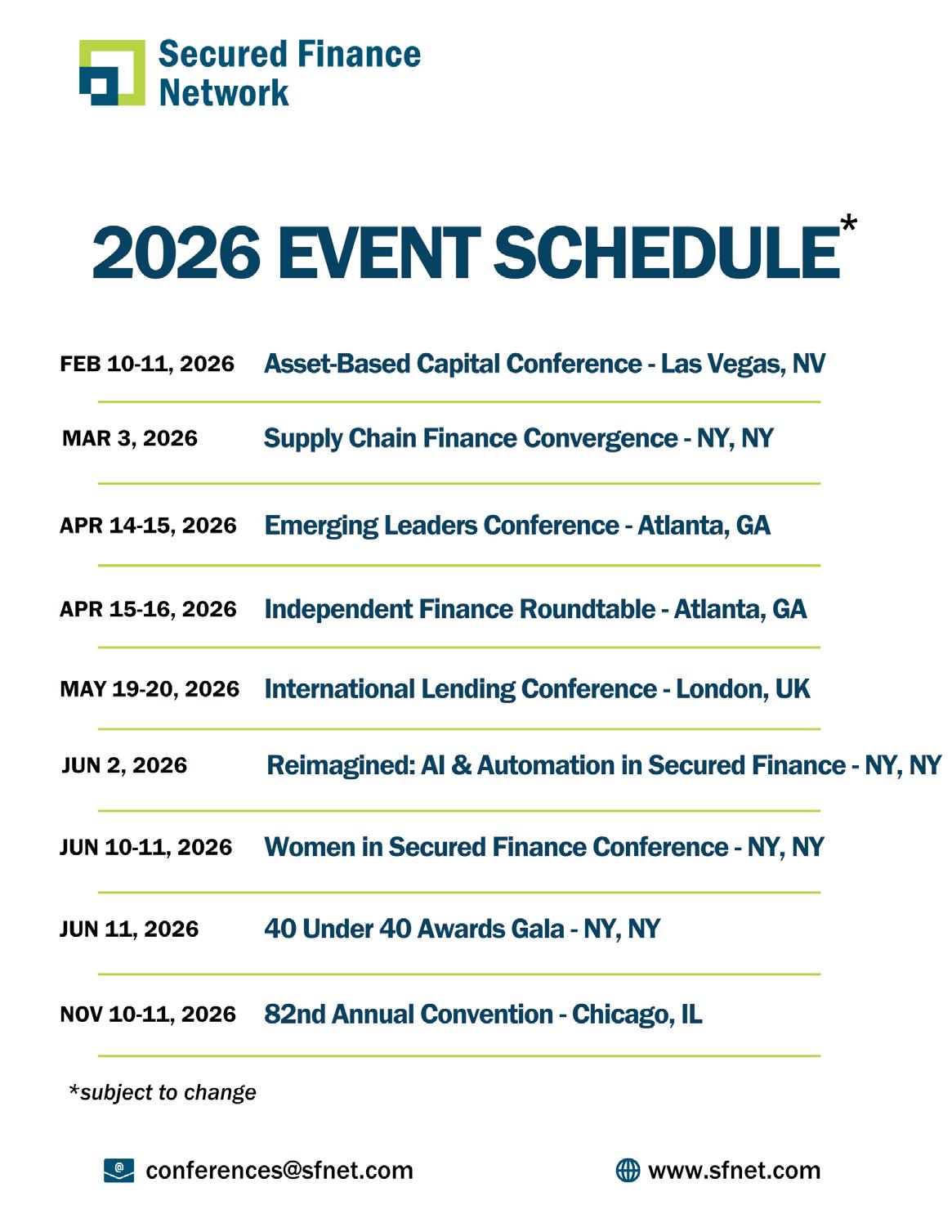




Meredith Fitz is executive vice president and head of portfolio at White Oak Commercial Finance, based in New York City. She leads the ABL and factoring account management team, overseeing $1B+ portfolio across the United States and the United Kingdom. She also serves on the firm’s Commercial Finance Credit Committee. With more than 25 years of ABL experience, Meredith brings deep expertise in portfolio management, operations, and underwriting. She is responsible for portfolio performance and strategic oversight, working closely with clients and partners across a wide range of industries.
Before joining White Oak in 2024, Meredith served as executive vice president and Northeast regional portfolio manager at PNC Business Credit, where she led the portfolio management team overseeing all portfolio actions across the Northeast ABL and Structured Finance book. Prior to that role, she served as EVP and chief operating officer of PNC Business Credit.
Meredith holds a degree in accounting from Lehigh University. She enjoys traveling, cheering on her favorite Philadelphia sports teams, and spending weekends with friends and family at the Jersey Shore.
What advice would you offer to women just starting out in the industry? What is the best advice you ever received? This is something I always come back to: No task is too small or meaningless if it contributes to the greater good and moves things forward. It’s a valuable mindset I’ve learned through experience over the years.
What do you know now that you wish you knew in the beginning of your career?
Speak up. Get your ideas out there. The truth is, there’s very little downside, especially in a collaborative work environment. Being wrong is part of the process. That’s something women should learn early in their careers: it’s okay to take that risk. I have been fortunate to work for firms that support this approach, which has provided me with many opportunities for growth.
How did you approach making a big decision in your career, either moving onto a new organization or role?
I always start with the assumption that I can do it. The real question for me is whether I want to. That mindset has served me well, even though I know it’s not the right approach for everyone. I’ve had women come to me unsure if they’re ready for the next step, and my advice is always the same: start by believing you can do it.
What would you like to achieve this year, either personally or professionally?
This year, I want to play a meaningful role in what I expect to be a major growth year for our organization. We are seeing significant opportunities in our market, and the goal is to scale materially. I’m excited to be part of that momentum and to help drive it forward alongside my team.
What skills or experiences have been most critical in helping you succeed?
An experience that’s come up more than once in my career is stepping into roles previously held by long-time leaders. In those situations, there’s often a lot of history to navigate, and earning trust takes time. I focus on staying transparent, keeping an open door, and being clear about what I’m trying to accomplish. I find that openness helps build trust and encourages people to buy in and feel part of the new strategy moving forward.
Something that has helped me succeed is my ability to stay calm and steady under pressure. I’m able to remain grounded and clearheaded in most situations, which helps me make thoughtful decisions even when things are moving quickly or feel uncertain. Being able to stay sane in this business is a real advantage.
How do you stay resilient and motivated during periods of uncertainty or industry transformation?
I focus on consistency and maintaining a positive mindset. Even in periods of uncertainty or change, there are always deals to be won, solutions to be found, and growth to be achieved. Succeeding in business is often a numbers game, so I try to keep my head down, stay focused on the work, and trust that steady effort and persistence will lead to results. There are ups and downs in every industry, but over time, that approach makes it possible to work through almost any challenge.
What is one misconception about secured finance that you believe women entering the field should rethink?
One common misconception about secured finance is that it’s simple or even a little boring. In reality, it’s a highly sophisticated, creative, and dynamic field that requires a lot of problem-solving and strategic thinking. I hope more women entering the industry recognize the many opportunities that secured finance offers.
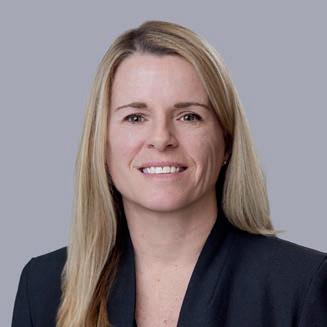

Shreyansi is a partner in Winston & Strawn’s New York office. She represents private credit funds, leading banks, private equity sponsors, and other financial institutions on a wide range of debt financing transactions. Shreyansi focuses her practice on leveraged buyouts, recapitalizations, and acquisition financings, and has extensive experience structuring solutions across the capital stack, including senior secured, subordinated, and unsecured credit facilities, unitranche facilities, first lien/second lien facilities, mezzanine financings, and hybrid facilities. Shreyansi is recognized in the 2026 edition of The Best Lawyers: Ones to Watch in America for Banking and Finance Law. In 2024, she was recognized as a Key Lawyer by TheLegal500US for Finance: Commercial Lending.
Shreyansi received her J.D. from the University of Pennsylvania Law School, where she was the executive editor for the JournalofInternationalLaw, and completed a management program to earn a Certificate in Management from the Wharton School of the University of Pennsylvania. She received her dual B.S. in economics and public management, withhonors, from Millsaps College.
What advice would you offer to women just starting out in the industry?
Invest in your relationships. People often limit their professional endeavors to just the actual work and, while mastering your craft is undeniably important, relationships are the cornerstone of longterm success. I believe this applies to all types of relationships – friends, family, colleagues, bosses, clients, extended networks –all play a key role in our overall success.
Studies have shown women are more reluctant to tout their accomplishments in the workplace. What advice would you give to help women be more comfortable with speaking up?
Ideally, if you have built good mentorship and other working relationships, you don’t need to tout your accomplishments. Others will do it for you, and you should do the same for them. One good way to share your achievements without it sounding like boastful self-promotion is to focus on how you successfully handled a specific issue. I’ve seen a colleague do this well by starting with “In case anyone else is dealing with something like this…” and then describing how they resolved the issue.
What skills or experiences have been most critical in helping you succeed?
Exercising executive judgment has been critical and most appreciated by my clients and supervisors. Although it is nice to have a safety net, we add the most value when we, as experts in our respective fields, make tough judgment calls. It can be a little scary in the beginning and is something you have to build, starting with technical expertise, earning the trust of your team and/or client, and ultimately developing the confidence to exercise judgment.
How did you approach making a big decision in your career, either moving onto a new organization or role?
For me, this is about listening to my gut instinct and giving equal weight to personal and professional goals. Ultimately, I believe that the follow-through on any decision is more important than the decision itself.
What role has mentorship/sponsorship played in your career?
Mentorship/sponsorship is the single most important factor in career growth. My mentors have guided me both in the practice of law and strategically. Whether addressing a thorny legal issue, managing a difficult client, navigating internal politics or anything in between, my mentors have been invaluable and generous with suggestions and support. My sponsors have gone even beyond that to actively champion me. Winston, where I have been since the start of my career, has a robust formal mentorship program and, for senior associates, a sponsorship program that pairs you with a member of the Winston Executive Committee. I have utilized both of those formal programs and, informally, built relationships with mentors, which have been integral to my success and recent promotion to Partner. I actively pay this forward by mentoring and championing other women in finance. I would advise everyone to seek out mentors early in their career.
How do you stay resilient and motivated during periods of uncertainty or industry transformation?
I focus on the things I can control by sharpening my skills and strengthening my network. When you take a long-term view and learn from those who have come before you, these periods of uncertainty start to look less daunting and more full of potential.

SFNet is pleased to offer what we believe are the most comprehensive guides to complying with the Disclosure Regulations for Commercial Finance Transactions for both New York, California and Florida/Georgia.

With these guides, we hope to provide greater clarity on how to comply with the new legislation and regulations.











We provide these guides to our members at no cost. Non-Members may purchase the guides on our website.
Visit Industry Data & Media on www.SFNet.com to learn about our continuing advocacy initiatives.
BY LENA SURILOV

In the last couple of years, the finance industry has been undergoing a profound transformation, which has been driven by technology, globalization, evolving regulation, and shifting cultural expectations. At the center of this change is another powerful movement: the rise of women transitioning into new roles, leadership positions, and specialized domains within finance.
Whether moving from operational roles into front-office positions, transitioning from corporate careers into entrepreneurship, moving from private practice into in-house positions, re-entering the workforce after career breaks, or shifting from traditional finance into fintech and other new types of assets, women are reshaping both their own trajectories and the industry itself.
Angela M. Fiorentino, General Counsel and CEO for AmeriFactors Financial Group, LLC
As general counsel, Angela handles all aspects of the company’s legal needs. She leverages that legal expertise in her role as CEO, driving innovative solutions that help clients secure the funding they need to grow and succeed. When necessary, she utilizes her litigation experience to develop and execute collection strategies aimed at recovering funds on behalf of clients and the company. Angela’s work provides benefits not only to her company, but to her clients in minimizing risk and increasing revenue.
Tell us about your career trajectory.
I began my career in the securities industry, working as a stockbroker for the first ten years of my professional life while simultaneously earning my degree in Accounting Information Systems from the University of Central Florida. During that time, I progressed from a receptionist to becoming a FINRAlicensed Supervisory Principal. That experience gave me an early foundation in financial markets, compliance, and clientfacing decision-making.
After that, I pursued law school and graduated cum laude with my Juris Doctor from the University of Miami in 2010. For the first seven years of my legal career, I focused on complex commercial and bankruptcy litigation, including class action banking defense matters. Working at a large law firm exposed me to high-stakes litigation and also reinforced the value of internal networking and collaboration within an organization.
Later, I assumed the role of general counsel and built the legal department for the subsidiaries and divisions of Gulf Coast Bank & Trust Company. In that position, I worked closely with business leaders across the organization, partnering with teams in sales, operations, credit, administration and executive leadership. That experience required clear, practical communication and the ability to adapt my approach to different personalities, priorities, and leadership styles.
In late 2023, I was appointed CEO and president of AmeriFactors Financial Group, LLC, while continuing to serve as general counsel of the civil litigation legal department at Gulf Coast Bank & Trust Company. That combination of financial, legal, and operational experience has shaped my leadership approach and continues to inform how I lead AmeriFactors today.

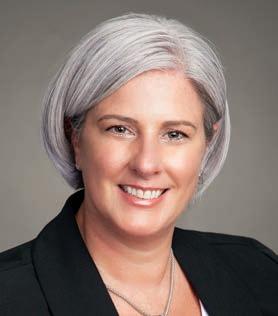

To what do you attribute your appointment as CEO?
I would attribute my appointment as CEO to a combination of problem-solving ability, strong people skills, and my background as a litigation attorney. My legal experience shaped the way I think and my pre-law business experience shaped the way I lead. My legal experience taught me how to quickly assess complex situations, understand risk from multiple angles, and make sound decisions under pressure. With that, I bring a collaborative leadership style that allows me to work seamlessly across organizational levels to unify diverse perspectives in strategic decision-making. These talents are all critical in the factoring business.
Tell us about the transition from the legal/lawyer role to the financial/executive role – what are some of the challenges you faced?
Making a large number of decisions very quickly, often in an ambiguous environment, was a challenging adjustment. In litigation, there is a defined process and a predictable framework. Decisions are easier to make when the possible
outcomes are identifiable and the end goal is clearly established.
In factoring, I often have limited time to make intuitive decisions using imperfect information. In those situations, I rely heavily on my legal training to analyze the data available, assess risk, and think through potential consequences. Even when decisions must be made quickly, I make sure that I can articulate the support for my decision.
While transitioning to CEO, I also had the opportunity to build an internal legal department for the Gulf Coast Bank subsidiaries. Balancing that responsibility alongside the CEO role has been challenging, as each requires a different mindset and set of priorities. On a basic level, I have learned to compartmentalize effectively to make sure each role receives the attention and dedication it deserves. More holistically, that dual perspective has strengthened my leadership by ensuring legal discipline is fully integrated into the company’s strategic decisions.
Factoring has traditionally been male-dominated. How have you navigated that environment?
Even though I have spent much of my career in male-dominated fields, it can still be unnerving to be the only woman in the room. Factoring has a reputation for being a tough, demanding business, and leadership in this industry requires resilience, confidence, and decisiveness. As a woman, that often means developing thicker skin, trusting your judgment, and being willing to stand firmly behind difficult decisions.
Many of the decisions I make carry significant financial risk and real consequences for the business or for third parties. You don’t always have perfect information, but you still have to act. In those moments, I rely on thoughtful analysis of available information, experience, risk analysis, and strategy. Once a decision is made, I own it and move forward with clarity and conviction, which can be difficult since those decisions often impact other people.
I also learned early on that the most effective approach was to be myself: open, honest and direct about my perspective, especially when delivering difficult news. Building trust through transparency and consistency ultimately helped strengthen relationships and allowed the team to work more effectively together.
At the same time, I believe strong leadership requires humility. I am comfortable admitting when I have made a mistake and adjusting course when necessary. This has allowed me to lead authentically, earn trust, and guide the company forward while staying focused on long-term stability and success.
When you were initially asked to be CEO, you agreed, but only on an interim basis. Why was that?
That is a difficult question to answer, because in many ways it truly was my dream job. I was acutely aware that stepping
into the CEO role meant having a significant number of people rely on me, not just professionally, but personally. That level of responsibility was intimidating. What changed for me was learning to trust my instincts. I began experimenting with doing things differently in accordance with my instincts and discovered that you can lead with strength while still being thoughtful and fair. You can build strong relationships, protect the company, and still achieve solid success.
I also built a strong internal network utilizing insight from the Gulf Coast Bank CEO and other divisional leaders. The collaborations reinforced that effective leadership does not require fitting a single mold. Ultimately, the interim role gave me the space to grow into the position and realize that my own leadership style could be both effective and sustainable.
Looking back, what advice would you give your newly appointed CEO self?
I would tell myself to believe in my abilities and trust the fact that someone else objectively saw me as the right fit for the role. That confidence does not always come naturally, especially when stepping into a position with so much responsibility, but it matters when people are looking to you for direction.
I would also remind myself that one of my strengths is navigating personalities. Being authentic, direct, and fair has always been part of who I am, and I did not need to change that to be an effective leader. Leading with authenticity builds trust and allows people to see that decisions are made thoughtfully and with integrity.
What advice would you give to other women who want to excel in the industry?
One of the most important skills you can develop is the ability to work effectively with people at every level of an organization; from entry-level employees to executive leadership. Strong leadership is rooted in communication, respect, and the ability to connect with different perspectives.
If you are transitioning into a new or significantly different role, humility is critical. Be willing to listen, ask questions, and learn from those around you. You do not have to have all the answers on day one, but you do need to be open to learning and receptive to input.
For anyone building a career, staying curious, communicating clearly, and engaging thoughtfully with partners and teams builds trust with a wide range of stakeholders. In a fast-paced, relationship-driven industry like factoring, that trust is essential. It helps align people around shared objectives and creates the foundation for long-term success.
What lessons did you learn during your transition from lawyer to executive?
One of the lessons I’ve learned in transitioning to CEO at
AmeriFactors is the importance of intentionally acknowledging the team. In fast-paced environments with constant deadlines, it’s easy to move quickly from one priority to the next and not always pause to recognize the people doing the work. I’ve learned that appreciation can’t be assumed and it has to be expressed. I make a deliberate effort to follow up and acknowledge the team through various touchpoints, whether that’s one-on-one conversations, group settings, or informal check-ins. I am always learning from my team, and their perspectives challenge me to grow and lead more effectively.
Kennedy Capin is the managing partner of Core Vision Strategies, a differentiated field exam and collateral monitoring firm serving secured lenders nationwide. With nearly 20 years of asset-based lending experience, including as a lender with JPMorgan, across credit, originations, structuring, and operations, she brings a comprehensive lender-informed perspective to the practice. Kennedy also leads AIO Vision, a modern platform that integrates technology and specialized services to enhance transparency, efficiency, and insight for secured finance institutions.
Tell us a bit about your career and the transition you made. For all intents and purposes, I was raised in asset-based lending. Right out of college, I joined a regional, investment bank credit training program that rotated analysts through different parts of the bank so you could figure out where you wanted to land. I chose ABL—and in many ways, ABL chose me.
Over the years, I’ve experienced just about every function that exists in an ABL shop. I’ve been junior and senior, on the sales side and the risk side, at headquarters and in emerging, or growth markets. I’ve worked domestically and internationally. Eventually, I became an executive. That breadth gave me a deep appreciation for how these platforms really work—and where the friction lives beneath the surface.
The transition came when I left JPMorgan to acquire and lead Core Vision. What has long been a boutique field exam business is evolving into a broader risk management services platform for secured lenders. It’s allowed me to take all those real-world experiences as a lender and apply them directly as an operator, building services I genuinely wish I had when I was sitting on the lender side of the table.
What prompted your decision to make a significant transition in your career?
Like many people, I had long toyed with the idea of doing something more entrepreneurial, but I always assumed that would mean leaving finance altogether. The opportunity itself came through a long-standing relationship with the prior owner of Core Vision and his team—I had been their client.
The timing mattered just as much as the opportunity. I was coming off a particularly intense stretch: COVID, repatriating to the U.S., having twins, moving from the Southeast to the Northeast and back again, and stepping into an executive role focused on driving change. For a period of time, it felt like I was simply surviving.
When the opportunity came to step into ownership and build something thoughtfully around the realities facing today’s lenders, it felt both terrifying and exactly right. Beyond the work itself, owning the platform gave me control over my time and priorities in a way that better fits my life and my family. Looking back, it’s as though one door was quietly closing—even as I desperately tried to hold it open—while another was opening to where I needed to go.
What was the most challenging part of the transition, and what skills or relationships proved most valuable in navigating it?
One of the biggest shocks was the sheer change of stimuli. I went from encountering people all day, every day—and waking up to a hundred emails each morning, a stacked calendar each day—to no people (I work from home or the road), no meetings, and maybe, five emails. I never thought I thrived on chaos, but apparently there’s a slightly unwell version of me that does.
What I learned, though, was to embrace that space for what it became: time to read, think, plan, and be intentional. Strategic planning and reflection were things I had underemphasized before as an executive, but they’re essential to creating real, positive change—and honestly, to my own wellbeing.
The most valuable asset through all of this has been my relationships. Colleagues, mentors, and friends showed up in ways that still surprise me—asking my opinion, making introductions, trusting me with business. I’m not exaggerating when I say I’ve cried on at least one or two people out of sheer gratitude. Those relationships made the transition not just possible, but meaningful.
How did taking this step reshape the way you think about leadership, risk-taking, or long-term career growth— particularly as a woman in the industry?
I’ve become much more comfortable in my own skin. I no longer feel the need to mirror someone else’s leadership style or prove myself in ways that don’t feel authentic. I feel—deep in my bones—that I’m in the right place at the right time. What energizes me most now is building alongside people who want to hustle with me and working with clients who genuinely see the value in what we’re doing—those moments when someone says, “That’s exactly what I need. When can we start?”
And while every day certainly isn’t sunshine and rainbows, my work supports my lifestyle better. As a mother of young children, having real control over my schedule matters. I can be present when I need to be and fully engaged at work when
it counts. That balance has made me a better leader, a better operator, and honestly, a happier person.
Looking back, what advice would you give to other women in secured finance who may be considering a similar pivot, but are hesitant to make the leap?
If the idea has entered your mind, don’t be quick to dismiss it. Marinate on it. The hesitation usually isn’t about capability— it’s about uncertainty. So get very clear on why you want to make the move and what problem you feel compelled to solve, or are solving with the move. Surround yourself with people who will be honest, not just supportive. And don’t wait for the moment to feel risk-free—it’ll never come. Confidence comes from execution.
Jennifer
Cann,
Managing Director, Head of Retail Finance Group, Bank of America
Jenn Cann is based in Boston and manages the ABL Retail Team responsible for credit, monitoring and strategic development of approximately 80 client relationships with over $25 billion in managed commitments. Jenn has significant experience in all aspects of secured lending including underwriting, credit & portfolio management along with workout & bankruptcy.
Tell us a bit about your career and the transition you made. I began my career at Gordon Brothers immediately after college, where I held a variety of roles over my tenure before transitioning into their lending platform. That shift introduced me to retail asset-based lending, an area I remained committed to as I continued my career at Wells Fargo, spending more than 20 years in the retail lending team. In early 2022, I joined Bank of America’s Retail Finance Group as head of portfolio, marking a significant and exciting new chapter in my professional journey.
What prompted the move?
The decision to make a change was not an easy one. I loved my role and the colleagues I worked closely with for many years. However, the COVID period reshaped many of my personal and professional priorities. As I approached 50 and my children were independent, I recognized it was the right moment to embrace new challenges. I didn’t want to look back and wonder whether I had missed an opportunity simply because I was hesitant to step outside my comfort zone.
What was the most challenging part of the transition, and what skills or relationships proved most valuable in navigating it?
Even though the role itself was similar, the biggest challenge was establishing my brand within a new organization. I needed to build trust and credibility with my new team, senior management, and our risk and operations partners,
demonstrating my leadership style and approach to managing risk. My longstanding relationships with third-party advisors and fellow ABL lenders proved invaluable. I rely on this network regularly for insights, problem solving, and perspective. These relationships continue to be essential, even small issues often benefit from trusted outside viewpoints.
How did the transition shape how you think about leadership, risk taking, or long-term growth—especially as a woman in the industry?
I am grateful that I took the leap. The move pushed me outside my comfort zone and ensured I would never have to wonder “what if”. Since joining Bank of America four years ago, I have advanced to Group Head of the Retail Finance Team and have become an active member of the broader leadership team. Having a seat at the table is vital not only to champion women’s advancement but to foster an inclusive environment that supports a wide range of individual needs and career paths. Taking that risk opened the door to new opportunities, deeper relationships, and a stronger sense of personal and professional fulfillment.
Any advice for women in secured finance who may be considering a similar pivot, but feeling on the fence? Many women carry significant responsibilities, both professionally and personally, which can make change feel even more daunting. We often prioritize the needs of others before our own. However, investing in our own growth is essential. My advice is to trust your abilities, embrace the opportunities that challenge you, and take the calculated risks that can propel your career forward. The reward often follows the willingness to take that first step.
Lena M. Surilov is a member of the Banking and Finance department at Otterbourg P.C. Ms. Surilov represents financial institutions and other commercial finance companies in structuring, negotiating and documenting domestic and cross-border complex debt financing transactions, with a focus on asset-based financing. Ms. Surilov represented single lenders and syndicates in revolving credit facilities, term loans, refinancings, acquisition financing, lender finance transactions, debtor-in-possession and bankruptcy exit credit financing transactions. Ms. Surilov works with companies in a variety of industries, including retail, manufacturing, technology, financial services, healthcare and service.



BY EILEEN WUBBE
A new generation of leaders is redefining what success looks like in secured finance. In this feature, five former SFNet 40 Under 40 Award recipients share the pivotal choices, lessons, and relationships that shaped their careers—from building confidence and credibility to navigating change and seizing opportunity. Their insights offer a candid look at leadership in the making.
Held each year in June, SFNet’s 40 Under 40 Awards gala honors rising professionals whose ideas, drive, and achievements shape the future of secured finance and set new standards for excellence. Here, we speak with five former SFNet 40 Under 40 winners and women in secured finance who share their career experiences and how they set themselves up for success: Eileen Frino, COO, CR3 Partners; Melanie Guzman, senior account executive, nFusion Capital; Viana Stanley, field examiner supervisor, PNC Business Credit; Diane Williams, FVP - senior relationship manager, Provident Bank; and Diane Wszalek, manager of external reporting, Renasant Bank, and controller, Republic Business Credit.
Remaining intellectually curious, seeking mentors and building a network is advice that serves people well in all industries. Like many in the secured finance industry, Diane Williams didn’t know much at first about the world of assetbased lending, so she was ready to learn every aspect, from credit and underwriting to closing a deal to continually monitoring the relationship.
“I was fortunate enough to start out at a small ABL shop and received one-on-one training from seasoned lenders,” Williams said. “I asked a lot of questions, took classes offered by the SFNet, and accompanied auditors on field examinations. I attended networking events where I was introduced to other industry professionals who I continue to go to for advice today.”
Diane Wszalek started out by being intentional about building a strong foundation, asking for exposure beyond her day-to-day responsibilities and seeking opportunities that required deeper analysis, clearer communication, and a broader understanding of the business.
“I wasn’t afraid to ask for more training or additional work, even when it felt intimidating,” Wszalek said. “Those experiences helped build competence and confidence, which became critical as I moved into roles with greater leadership expectations.”
Melanie Guzman of nFusion Capital said beyond mastering the technical side of her role, she focused on strengthening communication and relationships early on in her career.
“I cared deeply about understanding the human impact of decisions on clients, colleagues, and partners,” Guzman explained. “I also gravitated toward challenging situations that required quick thinking and composure. Learning to navigate pressure with clarity and confidence has shaped how I lead today.”
Eileen Frino, who graduated from Rutgers University with a B.S. in finance, said her degree provided the skills that have helped in every consulting role she has since had.
“As I’ve grown in my career, I’ve approached each choice that I’ve made by asking myself, ‘Am I interested in this and am I going to learn something?’ It was less about “the what” and more about the growth factor. I look for that perfect part of

EILEEN FRINO CR3 Partners 2023 Winner –Turnaround/Consulting
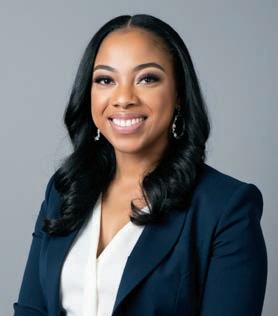
STANLEY PNC Business Credit 2025 Winner –External Field Exam
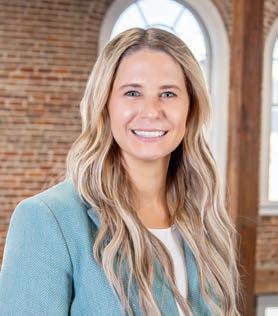
DIANE WSZALEK
Republic Business Credit 2023 Winner –Operations

nFusion Capital
2024 Winner –Portfolio/Risk Management
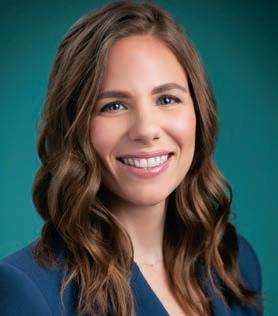
WILLIAMS Provident Bank
2024 Winner –Business Development
the Venn diagram where it’s something that I think I could be good at or know I’m good at, something that I’m interested in and something that can help me grow. I approach every choice looking at those three things and if it’s a yes, then I jump in and see what I’m going to learn.”
For Viana Stanley, field exam supervisor, PNC Business Credit, building her network began while still in college, when she signed up for Career Services at the University of Arkansas at Pine Bluff, where she later graduated summa cum laude. This jump started her opportunities to attend career fairs to network with various companies, interview for internships, and apply for scholarships.
“Participating in various events allowed me to build confidence to ask in-depth questions, as well as learn how to properly follow-up with management after completing an interview for potential positions,” said Stanley. “The relationships that ended up being most influential in my career progression were with my advisor as a college freshman, the staff within the Career Services office, and some of the experienced field examiners and field exam managers when I first began my career as an examiner in 2015, and a host of others over the years.”
Wszalek said networking didn’t come naturally or organically at the beginning of her career, especially when she was based in New Orleans, where there were fewer built-in networking opportunities. “I had to be very intentional. I leveraged relationships across other Republic Business Credit cities and made it a point to build connections beyond my immediate office,” she said. “I also joined external organizations like SFNet chapters in Chicago and Houston, which expanded my exposure and perspective. Those relationships, both internal and external, ended up being incredibly influential, not just for career advancement, but for learning how others approached leadership and growth.”
Frino found it important to build a professional network and peer group and to seek mentorship opportunities, especially at the beginning of a career.
“A peer group serves as a safe space to ask the ‘dumb’ questions that you might not feel comfortable asking your team or your bosses,” Frino explained. “More importantly, as everyone scatters through the workforce, it allows you to get exposure to different opportunities. For example, in my initial group of people that I started off with in my first banking job, two of us ended up in consulting, one ended back in industry, another ended up in corporate development. We were all able to talk about different experiences. I also find it invaluable to build relationships with a good mentor because they’re able to really help you see around the corner and think about opportunities in your career differently and help walk you through decision points.”
The old adage of stepping out of your comfort zone and offering to take on new responsibilities remains true and is credited as being part of a pivotal moment in careers. For Williams, taking on a new role at a different institution after working for a small community bank for 10 years was a turning point. When an opportunity was presented to help build out a new mid-Atlantic lending team for a regional bank, she knew she had to make the move.
“By making this transition, I was exposed to larger and more complex ABL transactions. My position at the prior bank was heavily focused on portfolio and relationship management, and although my new role also required maintaining a portfolio, there was more of a focus on new business development,” Williams explained. “It would have been comfortable to stay where I had spent my entire career, however, I recognized this opportunity would challenge me and help me to build other skills. Ultimately, many of the decisions that most accelerated my career were the ones that seemed scary and hard to make, but ended up shaping me into a more well-rounded lender.”
“One of the most pivotal shifts was learning to believe in myself early enough to raise my hand: for opportunities, for more responsibility, and for clarity when I needed it,” added Wszalek. “I realized that growth didn’t always come from being ‘ready,’ but from being willing. The moments that accelerated my career were often where I asked questions, requested additional training, or volunteered for work that stretched me beyond my current role. Those experiences put me in rooms and conversations I wouldn’t have accessed otherwise.”
Frino started her career off in banking and then switched to consulting. When she realized she wanted to get back to finance she left the workforce and moved to London to attend London Business School to get her MBA.
“I think that moment was so pivotal, not only because it brought me back to finance, but it introduced me to restructuring,” Frino said. “It gave me an understanding of the industry, and being in such an international school, in an international city really exposed me to a lot of different working styles and cultures, which has helped me in this industry because a lot of the companies that we work now are multinational. Getting that experience both in school and working in London afterwards changed the trajectory of my career.”
Leadership Potential Visibility: Letting the Results Speak Producing consistent, high-quality work, while continuously enhancing industry knowledge to be a resource in your role, are some key tips for demonstrating leadership potential.
Guzman stressed the importance of expanding the definition of how leadership is defined and that it doesn’t always have to be loud or traditional to be effective.
“Leadership can be steady, thoughtful, and deeply
collaborative,” Guzman said. “As more women step into leadership roles, there’s real strength in embracing authenticity and leading in a way that reflects who you truly are rather than who you think you’re expected to be.”
Guzman focused on letting her work results speak, while also being intentional about communication. That meant sharing not just outcomes, but progress, insights, and lessons learned.
“I asked thoughtful questions and offered solutions. Over time, visibility came from being consistent, prepared, and dependable rather than from self-promotion.”
Williams agreed that while there are certain times to selfpromote within your career, the right individuals will notice if you consistently produce high-quality results and exceed goals.
“In my experience, one of the best strategies for getting noticed is being a valuable resource to others,” Williams said. “When you are helpful to people, many times they will let others know about it. By building a good relationship with my customers and delivering results for them, they very often will let my superiors know the value I add.”
Job roles should ideally set the foundation for the next move in your career. If you’re looking to move on, continue to deliver good work in your current role, but understand additional effort will have to be made to achieve that next step, such as taking extra classes to learn new skills required.
“It’s important to consistently check in with yourself and assess where you are in your career and where you want to go. Having clearly defined goals and a strategy to hit them is imperative to position yourself for career advancement,” Williams said.
“I believed strongly that credibility comes first; delivering results in your current role is non-negotiable,” said Wszalek. “At the same time, I was intentional about positioning myself for what was next by asking for extra projects, additional responsibilities, and feedback on where I could grow. I made my goals known and stayed curious, which allowed me to evolve without losing focus on my day-to-day responsibilities.”
Guzman is currently preparing to step into her next role as a portfolio manager where she can broaden her strategic impact across client portfolios and contribute at a higher level to overall performance and growth.
“Delivering strong results was always my priority, but I also looked for ways to expand my impact through mentoring others, improving processes, and contributing beyond my immediate responsibilities,” said Guzman. “By committing to excellence where I was, rather than rushing toward what was next, I naturally built the skills and visibility that supported my future growth. As I continue advancing within the organization.”
“I’ve invested a lot in my professional growth and I’m very fortunate to work for a firm that is supportive of that. But I have
What is one piece of advice that has served you well in your career?
Eileen Frino: In my current role as COO, I often find myself being asked what to do next. Restructuring is a large term and could mean so many different things to different people. As a person who has jumped around quite a bit until I found a home at CR3, I encourage people to really follow what interests you. Think about what questions you’re asking yourself and then find a person that can answer those questions. If you stay inquisitive, you will ultimately find yourself in the right role for you.
Melanie Guzman: Trust your voice and speak up sooner than you think you should. Waiting to feel perfectly qualified or questioning whether you are “ready” can hold you back. Collaboration adds value.
Viana Stanley: Remain open to the opportunity for growth in any season of your life. Do not be afraid to take a step of faith towards your dreams, even if it does not make sense to anyone around you.
Diane Williams: Seek out a mentor early in your career. Mentors are an essential part of developing specific skills and are invaluable in providing constructive feedback, support, and encouragement.
Diane Wszalek: Believe in yourself before others do. Do not be afraid to ask questions, ask for more training, or ask for opportunities. You’re rarely the only one wondering, and curiosity is a strength. Also, be intentional about networking, especially if it doesn’t happen naturally in your environment.
also sought additional help through coaching on my own and I think that has allowed me to focus on my priorities to make sure that I’m using my time wisely and am clear on my goals and objectives and how I’m going to get there,” added Frino.
I would encourage anybody to seek those types of executive coaching opportunities, whether it’s on your own or through your firm.
Eileen Wubbe
is senior editor of The Secured Lender.
BY MICHELE OCEJO
In this insightful Q&A, we feature three remarkable women credit professionals who have made significant strides in their careers.
Betty Hernandez, executive vice president/chief credit officer at SLR Business Credit; Mignon Winston, vice president/underwriting team leader at Great Rock Capital, and Hailee Ledford, vice president of client relations at AmeriFactors, share their experiences, challenges, and successes.
Betty Hernandez Executive Vice President/Chief Credit Officer SLR Business Credit
Tell us about your career trajectory.
After graduating from Rutgers University, I started my career in a credit training program in New Jersey at First Fidelity Bank, a mid-sized regional bank. After nine months of classroom training, I was rotated through various departments to support lenders as an underwriter. There I was exposed to many different types of lending facilities and borrowers including non-profits, wholesalers, distributors, real estate and leasing. In July 1990, at the end of the two-year program, I was placed in the bank’s asset-based lending department. This department was headed by Ted Kompa, with Jeff Goldrich, Dan Tortoriello and Mike Coiley as team leaders. My role was account executive, but before I was given accounts to handle, Ted wanted me to get field exam experience. I was sent out with various field examiners under the tutelage of Ira Wolfe, the audit manager. I audited staffing companies as well as manufacturers and distributors prior to becoming an account executive.
In 1995, Ted and Jeff had an opportunity to leave First Fidelity (which was soon to become First Union and now Wells Fargo) to start up an independent finance company called Business Alliance Capital Corp. (BACC). I vividly remember Jeff’s farewell speech, as he had just turned 40 and I was about to have my second child. He discussed turning 40, leaving a stable bank job to start up a new independent finance company with no borrowers day one. I, too, had no idea what the future would hold as everything had been changing so rapidly.
After working briefly at PNC Business Credit, I re-joined my former colleagues at BACC as an underwriter. In 2005 BACC was sold to Sovereign Bank (later to become Santander Bank). Eventually Santander decided to exit the BACC portfolio, and I became a team leader in their workout department working for Tony Cortese and later Mike Maiorino. In 2010 Jeff and Dan had successfully raised equity and had obtained a leverage facility to re-start on their own again. I joined them, and a few others, to co-found North Mill Capital LLC and serve as the firm’s chief credit officer.
In 2017, we were acquired by SLR Investment Corp. (Nasdaq: SLRC). We were later re-branded to SLR Business Corp., and thanks to the support provided by our parent company, we’ve been able to grow our portfolio exponentially. In 2010, when we started, we had 16 loans with $19 million outstanding. Today, as a result of six acquisitions and organic growth, we have over 150 borrowers and $1 billion in credit facilities under management. I am responsible for credit quality and the performance of the portfolio. I oversee all new fundings. I enjoy meeting with customers face to face and touring their facilities. I really enjoy the team and culture we





have built. I am very fortunate to have been working with my mentors and friends for over 35 years.
Can you share a specific moment when you had to make a difficult credit or portfolio decision? How did you balance risk, instinct, and accountability in that call?
Each and every day, we are making credit and portfolio decisions and asking “Should I approve this advance today” It’s an easy decision if the borrower is “in formula” and there are no “red flags,” i.e. the collateral is performing well, the company’s collateral and financial reporting is adhering to the requirements outlined in our loan agreement, the field examinations have been “clean.” However, it is more complicated when a borrower is tight on availability and is asking for just “a little more.” For example, they could ask for a temporary reprieve of the cross-aging or other ineligible rules that we have agreed to. It always seems like those are the days that the borrower needs money for payroll or to pay a critical vendor. It is in those moments that I ask myself, “How am I going to get back into formula if I make this advance?”
Is the borrower’s response plausible? For example, can “more sales” or “collections of a specific account debtor payment” be achieved? I also ask: “For how long is this request going to be needed?”, “Is this a permanent situation where if I ‘bend this rule’ we will never be able to go back to the originally intended structure or is it truly temporary?”, “Do we have additional collateral or a block in availability that is effectively covering this request?”, and “Is this a constant request (and red flag)?” All these questions are contemplated and evaluated when making those tough daily decisions to lend.
Tell us about a challenging client situation. What was at stake, and how did you navigate the relationship while protecting your institution?
I treat every loan as if it was my money. I think most lenders do; no one ever wants to “make a bad loan” or “lose money.” When faced with a complex workout, you must navigate the situation carefully to minimize the potential loss. We often receive calls from borrowers that are losing money or tight on availability, need working capital, and have nowhere else to turn to. For smaller, privately owned businesses, owners are usually already “all in.” In the cases where business owners can come up with some cash to infuse or additional collateral to pledge, we will work cooperatively to resolve the temporary situation. We are always flexible and look for ways to help and provide time to the borrowers to present their plan to us. We are aware that things change due to various issues, including economic business conditions.
We are in business to support turnaround plans and have a high threshold of tolerance for borrowers’ struggles. However, often there is no more liquidity available to bridge the losses and we are asked to plug the hole. We are lenders, not owners. We lend money and we want it back with interest and all earned fees.
I recently had a situation where a business owner took bad advice from a family member to grow their business into other areas that he could not run. The founder was a truck driver who started his business making local deliveries from the port to its intended drop-off. As the years went on and his business grew, his wife also obtained her CDL license and began driving a truck. Once they had their second child, she decided to stay home and he began hiring drivers. His business kept growing and, eventually, his children became involved in the company. One of his children had visions of expanding the company nationwide with a brokerage and long-haul strategy. He hired an entire marketing department to make cold calls. To fulfill the new orders, he bought new trucks and his dad signed for these personally. He made his father buy land in the hope of building another hub. Essentially, he put the “cart before the horse.” We entered into an asset-based line of credit. The business started to wane and, unfortunately, the overhead burden was just too much to handle. His son left the business, and the founder was left to deal with the fallout.
In a situation like this, we don’t want to alienate the owner. We worked with the founder and the newly hired business manager. We requested weekly cashflow budgets depicting where our collateral was in relation to the receivables being created. This 13-week cashflow is key for us to determine how much liquidity the company will need in the upcoming weeks. It also tells us what sales and collections the borrower is expecting. We asked pertinent questions such as, “Are your payroll taxes current?” This is important as payroll taxes can prime our first lien. “Are the insurance payments, rent, leases and payroll up to date?” Internally we prepared a liquidation analysis and performed a legal file review. We projected how much cash we can realize from the existing collateral vs. the amount of our loan, including an estimate of legal fees (which is always a challenge to predict). We increased the number of verifications we performed and offered the company assistance with collection calls. We sent out a field examiner to review the books and records to ensure that we were receiving all collections. We communicated with the borrower frequently. In the end, the borrower was able to refinance our debt, and we were repaid our full balance including interest and fees.
Looking back on a tough deal or client outcome, what did the experience change about how you approach underwriting, portfolio monitoring, or leadership today?
I think tough deals provide good learning lessons. It is always easy to perform a postmortem and say to yourself, “This is what I should have done differently.” Lending to a tough client is always a learning experience. We just recently booked a loan where the business owner was with a bank and was not as familiar with our type of full-dominion asset-based lending. He wanted to do things a certain way and after speaking with our BDO and underwriter involved in the transaction, I knew that the monitoring of this loan would have to be assigned to the right person at our firm. It would have to be one of our team members who is particularly good at standing firm with requests and steadfast with follow-up reminders. It’s important to consider the work style of our account executives when matching them with borrowers, along with the borrower’s geographical location and industry expertise, to make the relationship as smooth and productive as possible. I take all of this into account to protect our portfolio when I assign a new deal to an account executive.
Mignon Winston Vice President/Underwriting Team Leader Great Rock Capital
Tell us about your career trajectory.
I spent my first nine years at a major money center bank doing middle-market cash-flow lending. I loved the rigor of middlemarket lending vs. lending to Fortune 500 companies. I valued being important to a mid-sized borrower’s business. During
my time with this bank, I realized that I preferred the credit side of the lending business to the relationship management or origination sides: I really like “geeking out” over determining middle-market borrower creditworthiness. I then sought out roles that were more credit intensive, which ultimately led me to join Heller Financial as a senior underwriter in its factoring group, marking my entry into secured finance. I entered the ABL realm at CIT in underwriting and portfolio management roles and subsequently worked at Wells Fargo Business Credit, First Capital (now part of Ares), and Sterling National Bank, now Webster Bank. I have enjoyed underwriting in the alternative lending space, most recently at White Oak Commercial Finance and, for the past three years, at Great Rock Capital (GRC), an asset-focused private credit firm that agents and co-lends with lending partners to fund RLOC, term loans, and full-solution financings.
Share a specific moment when you had to make a difficult credit or portfolio decision? How did you balance risk, instinct, and accountability in that call?
In my current role as an underwriting team leader at GRC, I am often called upon to synthesize large amounts of information quickly. For instance, on multiple occasions, our underwriting team has evaluated and closed co-lending transactions in several weeks to complete an agent’s syndication efforts. This quick turnaround strengthens relationships with agent lenders and positions GRC as a preferred co-lender for future transactions. As team leader, I manage the efforts of several team members to analyze extensive borrower information; enumerate all lending risks; articulate the terms under which GRC can join the credit facility to the agent; author a succinct credit approval memo; evaluate the closing documents to ensure compliance with GRC’s lending standards; and oversee the closing logistics.
Evaluating a prospective loan requires both experience and instinct. I have to understand the transaction’s risks and the borrower’s ability to comply with the proposed lending arrangement and promptly communicate any issues to GRC senior management.
During this process, I am first accountable to my firm to close transactions that will work for both GRC and the borrower. I am accountable to my team members to work together to meet all of the various deadlines—not only managing, but also serving as a player-coach. Finally, I am accountable to GRC’s goal of enhancing the relationship with the agent as a result of this transaction.
Tell us about a challenging client situation. What was at stake, and how did you navigate the relationship while protecting your institution?
In my first portfolio management role, I underwrote and managed a borrower with 100% receivable concentration: a government contractor selling exclusively to the U.S.
Department of Defense. As a growing company, the borrower really should have been working with an ABL lender. However, the bank’s senior management strongly wanted the transaction and approved a cash flow line of credit that required an annual 30-day clean-up and monthly reporting. This loan structure was the lending equivalent of putting a size 10 foot into a size 8 shoe!
Prior to closing the loan, I spoke with the company’s contract officer at the DoD, who referred to the company as “one of our stars.” Over and above the monthly reporting, I kept in constant contact with the CEO about the status of existing and potential new contracts, shipments, and receivable collections. I regularly reminded him of the requirement to repay the loan in full for 30 consecutive days to comply with the lending arrangement, which was challenging given that it was a growing, non-seasonal business. Senior management at the Bank was pleased and relieved when the company successfully completed its 30-day clean-up requirement.
Lessons learned: Independent of the reporting cadence, maintain consistent contact with your borrower as to the status of the underlying business and its implications for near-term liquidity and borrowing needs. Don’t rely solely on the loan documents to stipulate the lending requirements: engage directly with the borrower’s management about upcoming deal requirements and how the company intends to comply. Be in an anticipatory mode, not a reactive mode.
Looking back on a tough deal or client outcome, what did the experience change about how you approach underwriting, portfolio monitoring, or leadership today?
Lessons learned over the years on tough deals:
1) Asset based lenders focus a lot on collateral and may not focus sufficiently on the caliber of borrower management. The ability of borrower management to source/produce widgets and sell them at the right price to the right customers and collect the ensuing A/R is what gives the business its viability and the collateral its value. Borrower management should be assessed as strong, satisfactory, or weak.
2) If the borrower’s CFO resigns, call them directly and ask them if there is anything going on at the company that the lender should be aware of.
3) Overcommunication is always preferable to inadequate communication, both within your firm and with a borrower.
4) It is imperative to perform borrower site visits on a regular basis.
5) Independent of your firm’s performance review cadence, it is important to give team members ongoing feedback, both positive and constructive, so they can perform optimally in their role and meet your expectations going forward.
Hailee Ledford Vice President of Client Relations AmeriFactors
Tell us about your career trajectory.
Working from the ground up reflects my journey in the industry and, more specifically, at AmeriFactors Financial Group. I began my career as an account executive, inheriting a full client portfolio on my very first day. Within a few months, through dedication, hard work, and a commitment to mastering the nuances of factoring, I was promoted to senior account executive. As I took on greater responsibility and continued to deepen my industry knowledge, I earned the role of vice president of client relations. Now, eight years later, I continue to oversee daily client engagement and lead the team of account executives who support and service our entire client portfolio.
Can you share a specific moment when you had to make a difficult credit or portfolio decision? How did you balance risk, instinct, and accountability in that call?
At AmeriFactors, our mission is centered on empowering clients who may not fit the traditional bank financing model. We take pride in being a solution-driven partner, offering flexible support to help businesses grow and succeed. Many of our clients are not eligible for conventional credit facilities, but through thoughtful analysis, collaboration, and a genuine commitment to their success, we help them move forward with confidence in their funding. One example that stands out is a small business startup that handles cell tower maintenance. They approached us for invoice funding despite having limited operating history. Rather than viewing this as a barrier, we focused on the strength of the leadership, vision, and business plan including the credit worthy customers they were servicing. We structured a factoring agreement tailored to the client’s needs while responsibly addressing the additional risk associated with a new venture. This decision was rooted in the strong relationship cultivated by our Business Development team and reinforced through collaboration and ongoing trust, laying the foundation for a long-term partnership. Today, we continue to fund this client, and the relationship has proven to be a rewarding success for both the client’s growth and AmeriFactors’ original investment.
Tell us about a challenging client situation. What was at stake, and how did you navigate the relationship while protecting your institution?
Factoring is a specialized form of financing in which we underwrite our clients’ customers rather than the clients themselves, among other things. One of our current clients has developed into a relationship that has delivered meaningful value for both the client and AmeriFactors, even though the
engagement required careful evaluation in its early stages. With many of our utilities and construction-service clients, from the outset, there is a high level of trust involved, as our success depends on the client’s ability to consistently deliver on commitments, meet deadlines, and manage obligations responsibly. Through experience, we have established effective checks and balances that provide the confidence needed to fund our clients efficiently, support uninterrupted operations, and ensure the collectability of our advances. This process has allowed this client to stay on track for their commitments while increasing sales, and facilitating a diversified portfolio of accounts, allowing us to further manage risk by financing and closely tracking multiple projects across several creditworthy customers. The result is a collaborative partnership that reflects AmeriFactors disciplined approach to risk management and commitment to helping our clients succeed.
Looking back on a tough deal or client outcome, what did the experience change about how you approach underwriting, portfolio monitoring, or leadership today?
Looking back on challenging deals, the biggest change in my leadership approach has been a deeper appreciation for collaboration, creative problem-solving, and personalized client support. One of our clients joined us with years of net losses, although they were manufacturing parts for some of the most prestigious automobile makers in the world. After looking at their numbers and developing an approach that utilized their existing invoicing processes to confirm the validity of the accounts, we were able to increase their cash flow immediately based on an increase in sales, allowing them to timely grow and expand operations. These experiences have reinforced the importance of working closely across teams to explore tailored funding structures that align with client needs while remaining within our risk framework. Rather than viewing complexity as a limitation, I see it as an opportunity to design strategic solutions that support growth. These situations have also strengthened how I approach underwriting and portfolio monitoring. By combining analysis and open dialogue with internal teams, clients, and partners, we are able to structure agreements that leverage client legal protections, establish clear expectations, and mitigate risk on both sides. Providing hands-on, responsive support allows us to act as an extension of our clients’ businesses, helping them navigate challenges with confidence while maintaining strong safeguards. My experience across a wide range of industries has given me the knowledge to trust my intuition, resulting in well-structured partnerships that deliver long-term value for our clients and for AmeriFactors.
Michele Ocejo is SFNet director of communications and editor-in-chief of The Secured Lender.
BY JIM CRETELLA AND NARBEH GRIGORIAN
Picture this: A lender extends a $70mm “lender finance” revolving loan facility to a factoring company. Availability under the facility is governed by a borrowing base, calculated generally as 75% of eligible receivables. The eligibility criteria include the standard and customary exclusions and limitations. But that is not the issue here. The issue here concerns a much simpler, yet more fundamental, question: What is the “receivable” that is used to build the borrowing base in the first instance?
In most lender finance facilities to a factoring company, the “receivable” used to build the borrowing base is the amount advanced by the factor against receivables of its client, or the “net funds employed,” in factor-speak. The borrowing base is typically built on net funds employed to a factored client, rather than on the gross factored receivables of the factored client, because any portion of the factored receivables in excess of the net funds employed, or the “reserve,” in factor-speak, is ultimately payable back to the factored client. Said another way, even though the factoring agreement provides for a sale of the receivables from the client to the factor, the client retains the economic right to the reserve. For perspective, this is the same reason that the borrowing base for a lender finance facility to an inventory lender would not include the underlying inventory itself, but only the amounts advanced by the inventory lender against that inventory.
Yet, as a matter of practice, some lender finance facilities to factoring companies will build the borrowing base using gross factored receivables, rather than the net funds employed by the factor against those receivables.
Before we get into the potential ramifications of the “gross receivables” approach, let’s talk about why a lender might take this approach. While it could certainly be the result of a conceptual misunderstanding concerning the extent of the lender’s right to those receivables, it is often due more to practical than conceptual reasons.
Factors, by their nature, think in terms of gross receivables. Their software is built around gross receivables, they track gross receivable balances and those figures are easy to
report and reconcile. While factors can and do track net funds employed, doing so requires tighter systems and an overall more granular approach to operations. Some factors, particularly newer or smaller factors, may not have the capacity or systems to report with the frequency or detail required to build a borrowing base from the net funds employed. For these factors, a borrowing base built on gross factored receivables may be the most feasible option, or at least a concession they are able to extract when there are multiple lenders competing to win their business.

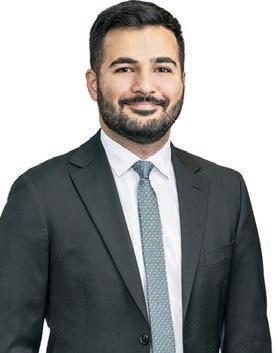
Whatever the reason may be for building a borrowing base to a factoring company with gross factored receivables rather than net funds employed, it does not change the potential ramifications for lenders who do so. Most notably, a borrowing base built using gross factored receivables will likely result in the lender’s effective advance being much higher, and its equity cushion being much smaller, than it expected.
By way of example, consider the following differences with respect to a $100 receivable for which the factor advances to its customer 80% or $80. If the borrowing base in the factor’s credit agreement with its lender is 75% of net funds employed, the factor’s availability with respect to such receivable is $60 (i.e., 75% of $80). Assuming the factor draws the full $60, the lender’s equity cushion of $20, or 25% of the $80 net funds employed, is exactly what it expected.
By contrast, if the borrowing base in the factor’s credit agreement with its lender is 75% of gross factored receivables, the factor’s availability with respect to such receivable is $75 (i.e., 75% of $100). Assuming the factor draws the full $75, the lender’s equity cushion is $5, or 6.25% of $80 gross factored
receivable. Clearly, this is not what the lender expected. Why is there such a huge difference? Because gross factored receivables include amounts that were never funded by the factor in the first place, the “reserve” in factor speak. The reserve is collateral security for, and can be applied against, the obligations of the client to the factor. However, once those obligations are repaid in full, the client has the right to receive any remaining reserve. As such, when gross factored receivables are included in the borrowing base, the borrowing base is artificially inflated by the amount of that reserve.
Obviously, building the borrowing base with gross factored receivables rather than net funds employed does not leave the lender with much margin for error in the event of a wind-down or liquidation of the factoring company borrower. It also does not leave the lender with much “dry powder” to help bridge even a temporary liquidity shortfall or plug an unexpected expense of the factoring company. Simply put, a lender who builds a borrowing base for a factoring company borrower with gross factored receivables rather than net funds employed will have less flexibility to navigate around any potential performance or collateral issues with its borrower.
Another potential risk of building the borrowing base with gross factored receivables rather than net funds employed is that it may make it more difficult to refinance the credit facility. Most lenders to a factoring company will require that the borrowing base be populated with net funds employed rather than gross factored receivables. However, as illustrated above, a borrowing base built on gross factored receivables will often result in an effective advance rate against net funds employed that is materially higher than the market will accept. As a result, when it comes time to refinance, there may not be enough availability under the replacement facility to repay, in full, the exiting lender. If not, the gap will need to be filled with equity or subordinated debt, potentially turning a routine refinancing into an unexpected capital event for the factoring company borrower.
Additional availability generated by a gross receivables borrowing base may address near-term liquidity needs. However, factoring companies and their lenders should evaluate how that structure performs across credit cycles and refinancing events. A structure that maximizes availability today can constrain flexibility tomorrow. Ultimately, clarity around what constitutes the true “receivable” being financed is essential to sound underwriting by lenders and to a borrower’s ability to plan for sustainable, long-term, growth.
We hope you enjoyed the column and, of course, are always interested in your feedback. As such, if you have any questions or comments, please let us know at james.cretella@blankrome. com or narbeh.grigorian@blankrome.com.
James “Jim” M. Cretella is a partner with Blank Rome in New York. He dedicates his practice to representing institutional and specialty lenders, banks,
and commercial finance, factoring, and specialty finance companies, as well as borrowers, in creating, negotiating, and documenting a variety of alternative and specialty finance products.
For middle- and upper-middle-market clients, Jim handles transactions, including traditional assetbacked lending (“ABL”) deals, larger factoring deals, channel (inventory) finance deals, supply chain finance deals, and other trade finance transactions such as off-balance sheet receivable purchase facilities and purchase order financings. For smaller, private lending clients he acts as outside in-house counsel, documenting all front-end transactions (e.g., smaller factoring, ABL, and recurring revenue deals) and provides counsel on other legal issues. Additionally, Jim represents smaller lenders as a borrower in negotiating their credit facilities and as buyer/seller in various portfolio acquisitions and sales.
Narbeh Grigorian is an associate with Blank Rome in Los Angeles. He concentrates his transactional practice in the areas of commercial lending and corporate finance. He primarily represents banks, commercial finance companies, and other institutional lenders and borrowers in connection with a wide range of financing transactions.
During law school, Narbeh served as a judicial extern to the Honorable Scott H. Yun and the Honorable Victoria S. Kaufman at the U.S. Bankruptcy Court for the Central District of California, interned at the Office of the City Attorney for the City of Glendale, and worked as a certified law student for the Consumer Law Clinic at the University of California, Irvine School of Law

BY EILEEN WUBBE
Frost Brown Todd LLP (FBT) and Gibbons P.C. finalized their combination, effective, January 1, 2026. The combined firm, FBT Gibbons LLP, creates a midmarket legal powerhouse with approximately 800 attorneys across 25 offices nationwide.

REBECCA MOORE
FBT Gibbons LLP

MICHAEL O’GRADY
FBT Gibbons LLP
“The merger has meaningfully expanded our platform in ways that directly benefit our lending clients,” said Michael O’Grady, a partner and lead of the FBT Gibbons ABL team. “While Frost Brown Todd already had a well-established finance practice, Gibbons brought highly regarded attorneys in finance as well as complementary areas in litigation, corporate, regulatory, financial restructuring and real estate that often intersect with complex lending transactions. In today’s market, finance transactions, in particular ABL financings, don’t exist in a vacuum. They often involve complex structuring issues, regulatory considerations, and industry-specific risks. Having deeper capabilities across those areas allows us to provide more comprehensive counsel and support for our clients throughout the full lifecycle of a transaction.”
The firm’s finance team also continues to grow organically across the country, for example, by adding Sarah Naseman, a partner in Houston. “The expanded geographic reach is also significant. With a broader presence in key markets, particularly in the Northeast, we’re better positioned to serve lenders and borrowers operating nationally while maintaining the relationship-driven approach that defines our practice. Ultimately, the merger strengthens our ability to deliver on seamless, coordinated service on transactions of all sizes.”
With over 30 years of experience doing ABL deals, FBT Gibbons offers a high-touch, niche, and custom approach with its clients.
“We start by trying to understand the customer’s business rather than simply relying on a credit approval or terms in an email,” said Rebecca Moore, partner and chair of the Commercial Finance Practice Group, FBT Gibbons LLP when talking about the firm’s custom approach with its clients.
“One of the first things we do on every ABL transaction is review the field exam and the audited financial statements of the customer,”
quality and high-touch client representation. “We generally staff an ABL deal with a partner and an associate rather than a large, segmented team, where one person handles a particular document, another one reviews org docs, and someone else handles third-party agreements,” O’Grady explained. “By keeping our teams lean, our attorneys are involved in the entire transaction from start to finish, which we believe leads to greater efficiency, stronger continuity, and a better overall experience for both the client and the customer.”

“You simply cannot properly document a deal without fully understanding the collateral and the underlying business issues that go along with the transaction. The field exam and the audited financial statements are both key to understanding that as counsel so you can document it correctly.”
O’Grady stressed. “You simply cannot properly document a deal without fully understanding the collateral and the underlying business issues that go along with the transaction. The field exam and the audited financial statements are both key to understanding that as counsel so you can document it correctly.”
“We also use our industry knowledge to add real value through thoughtful, informed advice. We like to say that we provide legal advice with context. We are leaders in industry sectors such as manufacturing, healthcare, technology and energy, and those are the areas where our work really shines.” Moore added. “With our footprint, our offices are often located in the same place as the customer, which further gives us a leg up in understanding the customer’s needs and what the lender may want to think about in the transaction.”
Their deals are also staffed leanly to ensure efficient, high-
FBT Gibbons’ high-touch model fits well with private credit, where there is a tendency for more stringent documentation. “In many cases, you see higher leverage in exchange for higher pricing, and more intercreditor issues where you have a private credit ABL lender and a separate term lender,” O’Grady added. “Those are some of the key distinctions we’re seeing in today’s market. When you are running a private credit deal, there is a focus on collateral, diligence, and structure planning and everything that goes along with that. So, we recognize that ABL is not one-size-fits all. You cannot treat a bank ABL deal the same way you treat private credit ABL. We see that as a strength for the market. Different borrowers are suited to different capital solutions. Some align well with private credit ABL structures, while others are better served by a bank-led facility. From our perspective, it is about identifying the right solution for the right borrower.”
The First Brands case has emphasized an increased focus on collateral risk, heightened monitoring and, in particular, field exams. O’Grady expects to continue to see both private credit and bank lenders focused on the quality of field exam work and a real understanding by the field examiner of what the industry is.
“Quality is key. There is a vast range of quality and detail in field exams,” O’Grady said. “Much like we have seen in our business where our clients are very focused on what our industry expertise is, lenders are also increasingly placing
greater emphasis on making sure their field examiners have specialized expertise in the specific industries they are evaluating. They do that now, but I think that is going to become more important. It’s hard to do a field exam on a company where you do not have an advanced understanding of that industry.”
To go along with the lean staffing and high-touch approach, members of FBT Gibbons are often cross-trained in certain disciplines. For instance, attorneys at FBT Gibbons in secured finance understand debtor-in-possession (DIP) financings, cash collateral disputes, and impact of Chapter 11 more generally on credit facilities, because many have represented clients in Chapter 11 bankruptcies. This allows the team to recognize key issues when documenting a deal and advise the client on how it will play out.
“If you haven’t been through that drill in a Chapter 11, it’s harder to understand on the front end what the key points are in the documentation with respect to cash collateral and things that can be done or not done to a lender,” O’Grady said. “We like to have people in both disciplines so when we work on an ABL deal, we can understand and plan for a worst-case scenario.”
“In this context, intercreditor agreements can be very important and you especially need to know what could happen if things go south,” Moore added. “We have been in situations where our team is explaining how an Article 9 sale goes and what will really happen. I think that experience is great to have. We also have attorneys on our team who handle other areas, such as real estate and corporate transactions, that provide similar expertise in support of our finance clients.”
FBT Gibbons makes sure clients’ interests are protected in a transaction, but understands that it’s an ongoing relationship with the customer and that the client needs to have a strong working relationship with its customer. The firm focuses on understanding clients’ needs, what their customers’ needs are, and making sure there is a personal touch to give everyone a positive experience.
“I always value the opportunity to meet the customer and their principals face-to-face,” O’Grady added. “Whether that happens at a closing dinner or in another setting after a deal is complete, those interactions are incredibly helpful. The transactions that tend to be the most successful, and the most satisfying for everyone involved, are the long-term relationships where clients and counsel have had the chance to connect on a personal level. When you’ve met the lawyer on the other side of the deal in person, it changes the dynamic. There’s a level of familiarity and trust that makes it easier to navigate through some of the more controversial parts of a transaction or an amendment to a transaction. That personal connection can
make all the difference.”
“Our clients span the entire country, so it’s been fun getting to travel to meet with our clients and their customers faceto-face. We are very team focused and we see ourselves as our client’s partner in the deal. We are intentional about leveraging our network, sharing ideas, and collaborating effectively. Our goals and the client’s goals are the same – to get the deal done in the right way and hopefully have a positive experience doing it too,” Moore added.
Eileen Wubbe is senior editor of The Secured Lender.

The industry’s most trusted resource for credible news published for over 30 years, with over 6000 readers per issue, SFNet’s The Secured Lender has an audience that is engaged, refers to the magazine often and 47% of respondents to a recent survey have taken action as a result of reading advertisements in the publication. The power of buzz is still alive in







7 out of 10 B2B readers say they spend more time with industry related print publications than with mainstream business or consumer print magazines, according to the Association of Business Information & Media Companies.

May 19-20, 2026 | London, UK | DLA Piper Of ces


Plan to join a dynamic community of global lenders, innovators, and dealmakers in the heart of London.
Network with in uential players, explore game-changing ideas, and access the intelligence you need to excel in the global market. SFNet’s International Lending Conference is your gateway to making meaningful connections and driving success across borders.


