Introduction
The Safari Collection was founded from a deep passion for Kenya’s wild landscapes and a desire to share their magic with the world while protecting them for generations to come. Each of our properties champions a distinct Kenyan ecosystem, rich in biodiversity and too valuable to lose.
Guided by The Long Run’s 4Cs sustainability framework - Conservation, Community, Culture and Commerce - we strive to achieve balance between people, nature and enterprise. When high-end tourism provides employment opportunities, uplifts local livelihoods, celebrates cultural heritage and creates tangible benefits, it inspires people to protect the natural world around them.
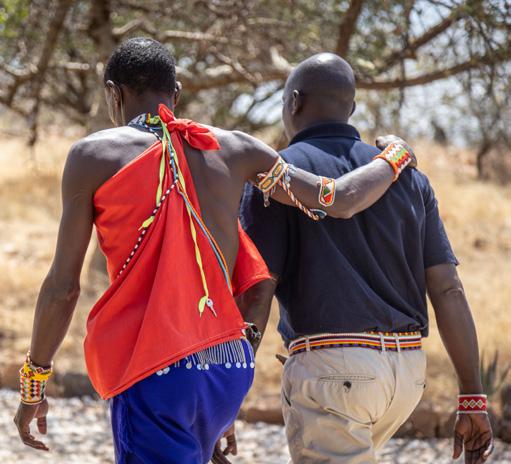
We believe that responsible tourism is one of the most powerful tools to ensure these wild places endure.
Across every location we operate, The Safari Collection, through our Footprint Trust, supports a variety of conservation and community programmes that safeguard endangered species and improve lives. Making a lasting, positive impact on people, wildlife and the environment is not just our Footprint ethos - it’s who we are.
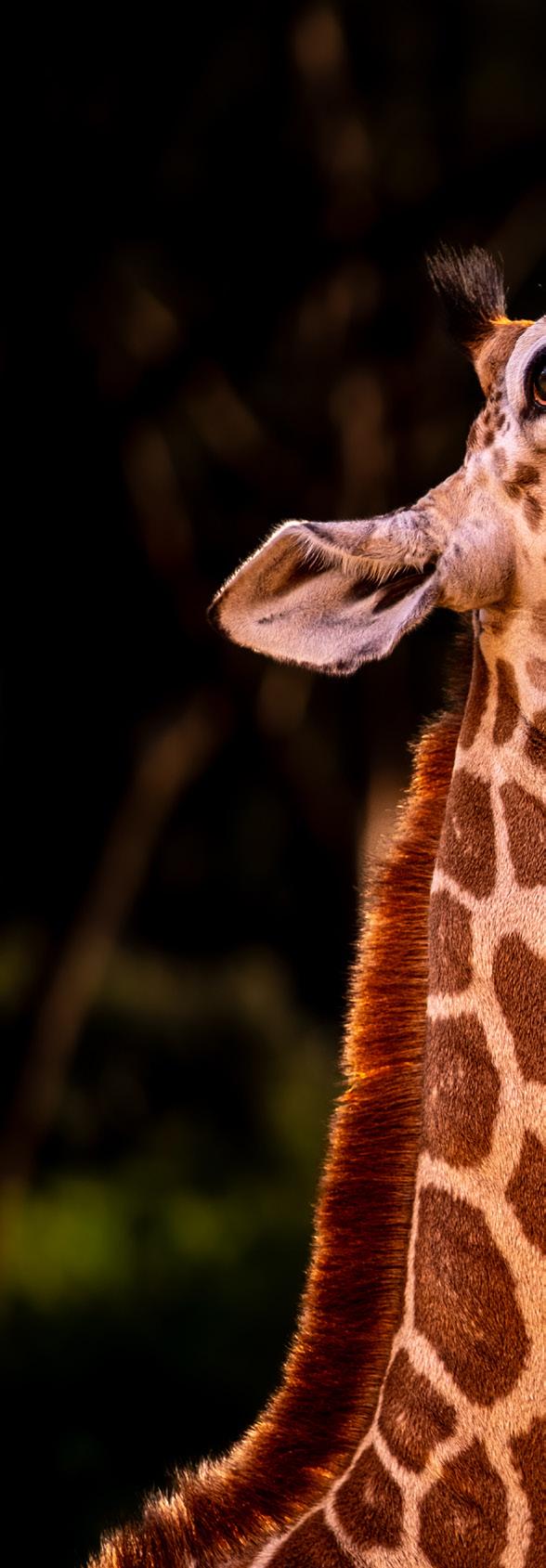
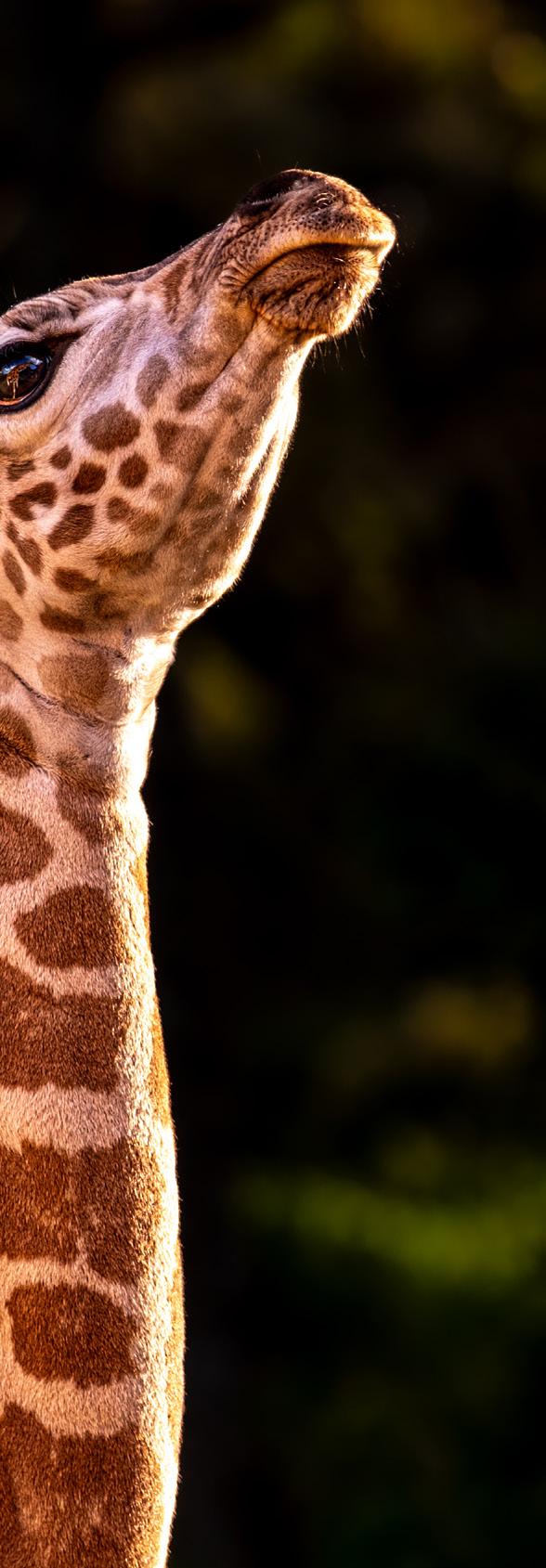
At the heart of The Safari Collection is a deep sense of family, purpose and connection - to Kenya, its people and its wild spaces. We founded the company in 2009 based on a shared love of nature and a desire to protect it. Our company roots run deep. From Nairobi to Samburu to Laikipia and the Maasai Mara, our lives have been shaped by wildlife, open landscapes and strong community values.
Today, that same spirit defines The Safari Collection’s culture; we’ve built a close-knit community grounded in hospitality, conservation and shared growth. Every guest experience is guided by our belief that people and wildlife can thrive together. Our mission has always been simple: to make travel a force for good.
More than a luxury safari company, we’re a family united by purpose: dedicated to nurturing Kenya’s beauty, empowering its communities and offering truly immersive, meaningful journeys that celebrate both the wild and the human heart of Africa.
A Word from our Directors
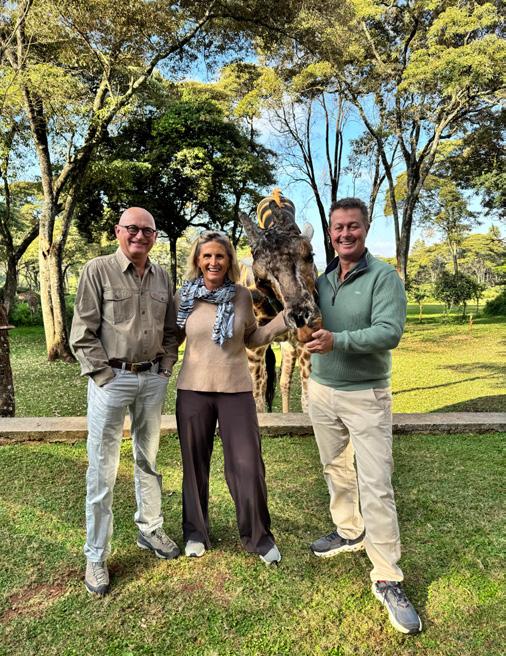
Michiel Hoogerwerf, Tanya & Mikey Carr-Hartley
The Safari Collection Directors
A Word from the Footprint Team
Our ethos is rooted in creating meaningful opportunities for people while protecting the natural world we all share. In 2024, The Safari Collection and our Footprint Trust have continued to expand their positive impact: from enhancing education and providing life-changing dental care, to embracing technology that improves wildlife protection and supporting vital giraffe conservation efforts.
Thanks to the generosity of our guests, donors and nonprofit partners, our Footprint Trust contributed over $400,000 towards conservation, education, healthcare and community development projects. From equipping two schools with new computer labs to providing 120,000 school meals and 41 conservation scholarships, we’ve witnessed how access to opportunity transforms lives.
Our conservation highlights this year included groundbreaking work with black rhinos, in conjunction with the introduction of cuttingedge conservation technology to the Maasai Mara, our continued support for Nubian giraffe conservation and community-led land restoration initiatives in Samburu.
None of this would be possible without our passionate team, inspired guests and generous supporters. Together, we’re proving that responsible tourism can protect wild spaces while empowering the people who call them home. We’re deeply grateful to everyone who joined us on this journey.
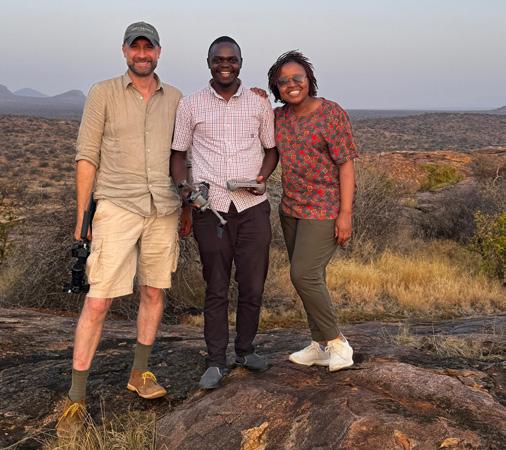
Oli Dreike, Mourice Barasa & Cecilia Mueni
The Safari Collection Footprint Team

GIRAFFE MANOR
SOLIO LODGE
SASAAB
SALA’S CAMP
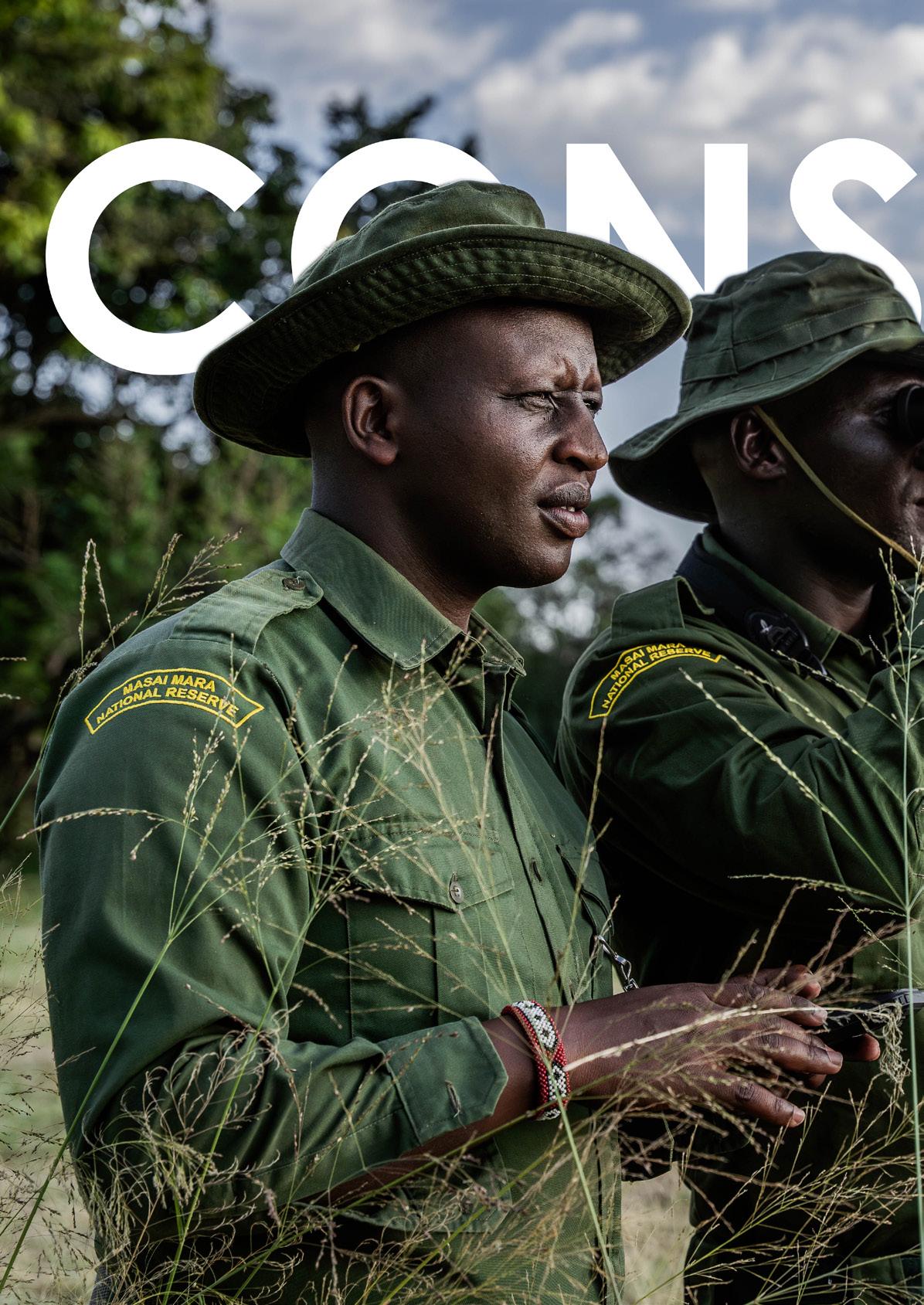
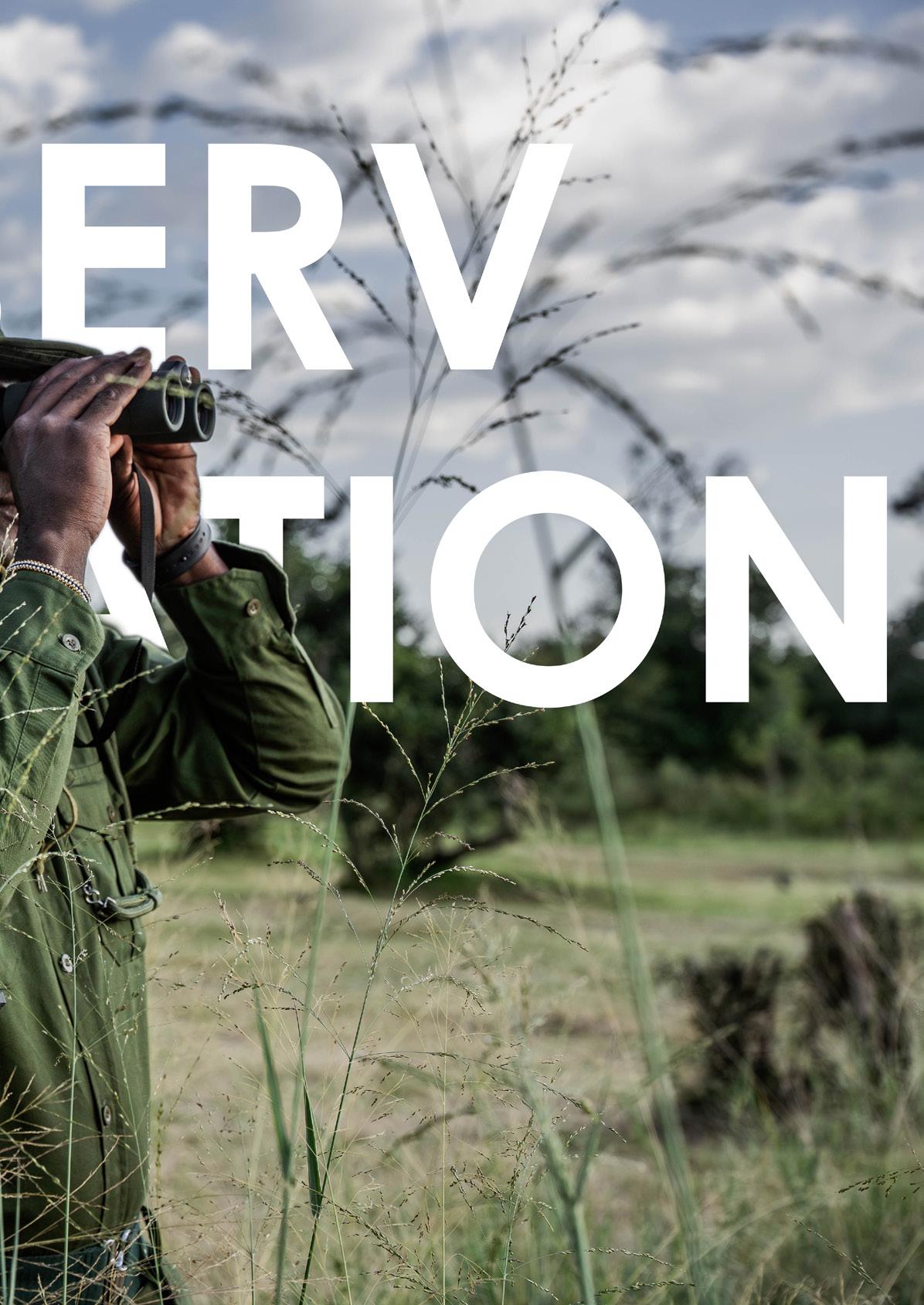
Healthy ecosystems and species diversity are essential for people and our planet. Conservation protects this biodiversity to meet global needs.
Our conservation efforts this year have centred around giraffe and rhino, with a focus on protecting and regenerating wild landscapes, and at the same time reducing our environmental impact.
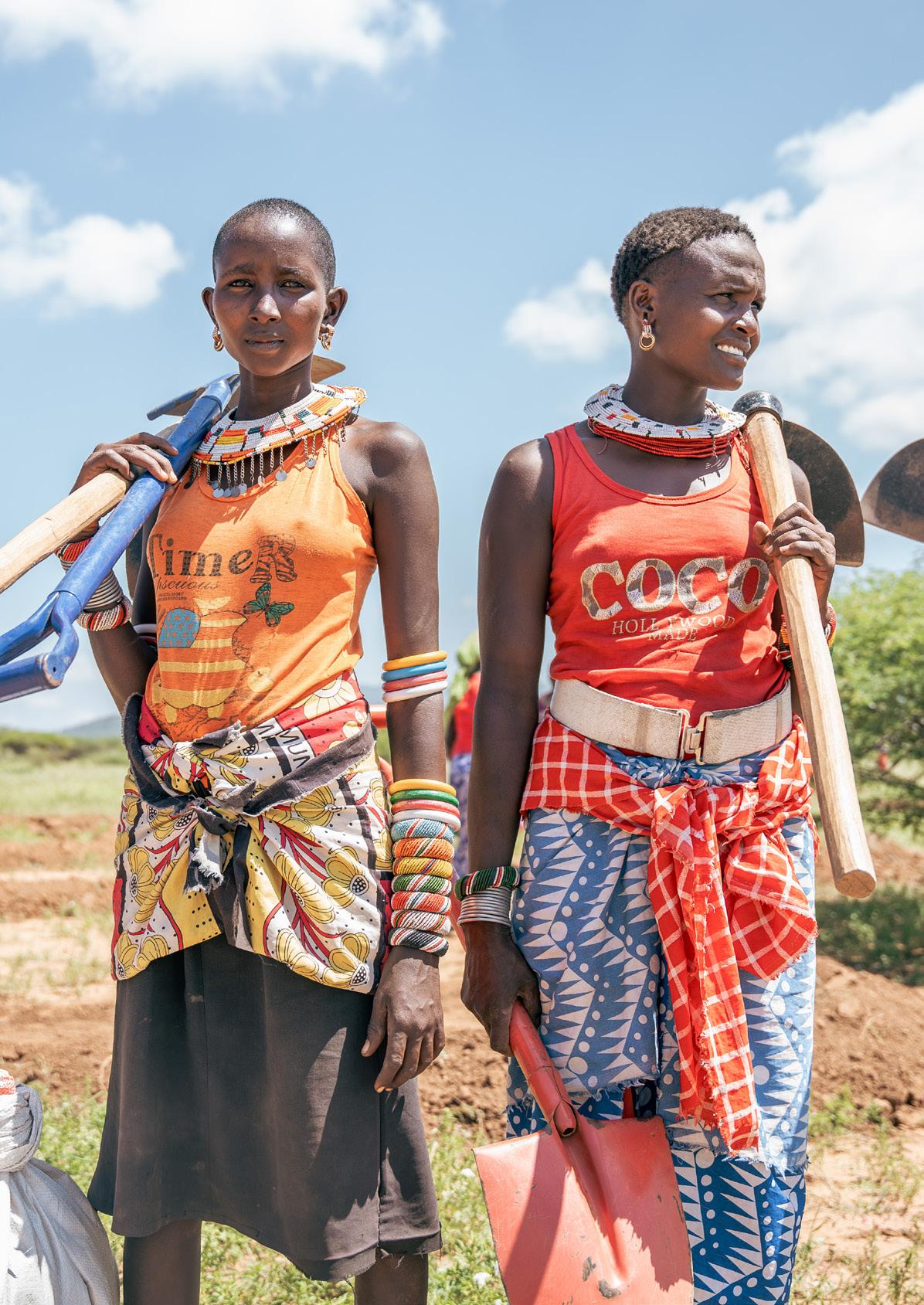
Earth Smiles: Regreening Samburu
We use nature-based solutions to regreen degraded landscapes… cooling down the planet … together
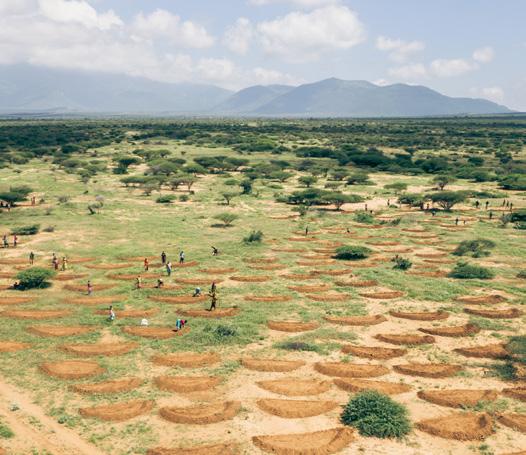
29,000
Earth Smiles dug since 2022
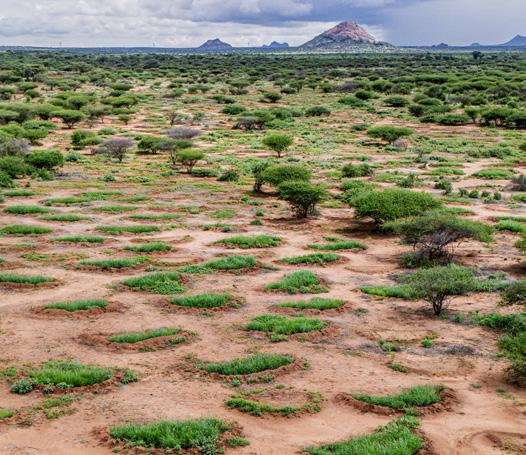
In an effort to restore degraded land in Samburu, Westgate Community Conservancy (WCC) have been pioneering JustDiggIt’s ‘Earth Smiles’ regeneration initiative in collaboration with the Grevy’s Zebra Trust, Ewaso Lions, Northern Rangelands Trust and The Safari Collection’s Footprint Trust. These semi-circular pits, or ‘water bunds’, capture rainwater, allowing it to soak into the soil instead of running off. This simple technique restores vegetation, reduces runoff and erosion, boosts groundwater, helps soil regenerate and turns degraded land into a thriving carbon sink, reviving overgrazed ecosystems while empowering local communities to protect their environment.
Since 2022, over 29,000 of these bunds have been dug by community members across nine sites in WCC, with an ambition of reaching 40,000 in 2025. Grass and plant growth in these areas have improved biodiversity, habitat resilience and soil health.
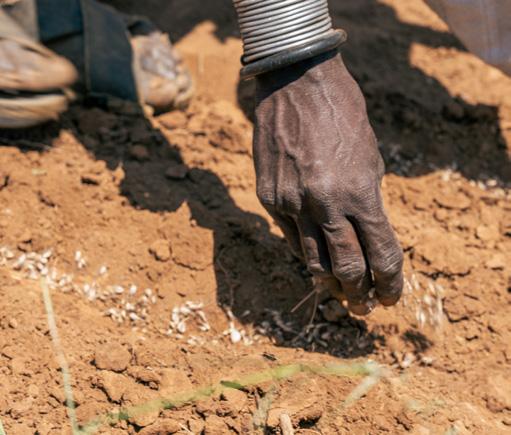
The project also uses holistic planned grazing, including zonal bunching - rotating livestock to allow rest and recovery of the land so that pastures can re-establish, which supports both livestock and wildlife. Beyond ecological benefits, these Earth Smiles are also empowering Samburu women: local women’s groups are managing grass seed banks and earning income by harvesting and selling grass seed and fostering community involvement.
Overall, Earth Smiles exemplifies how simple, scalable conservation tools combined with strong community engagement can regenerate landscapes, bolster wildlife habitats, and improve livelihoods.
JustDiggIt
A New Era for Mara Rhinos
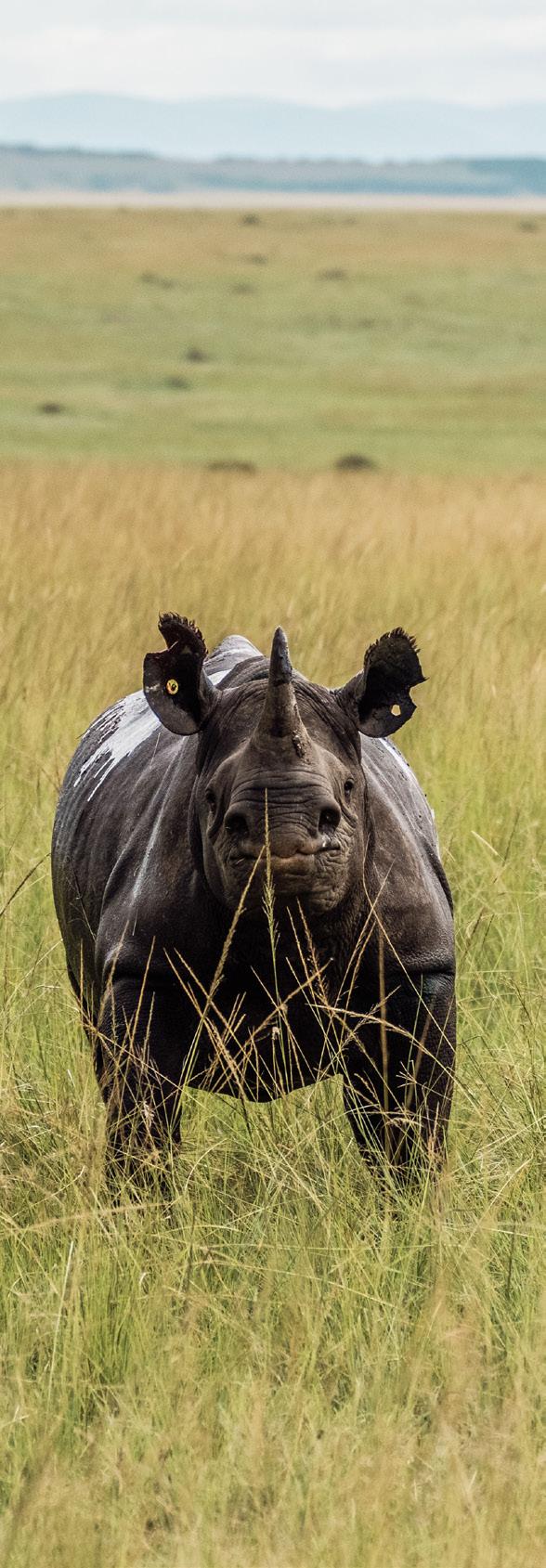
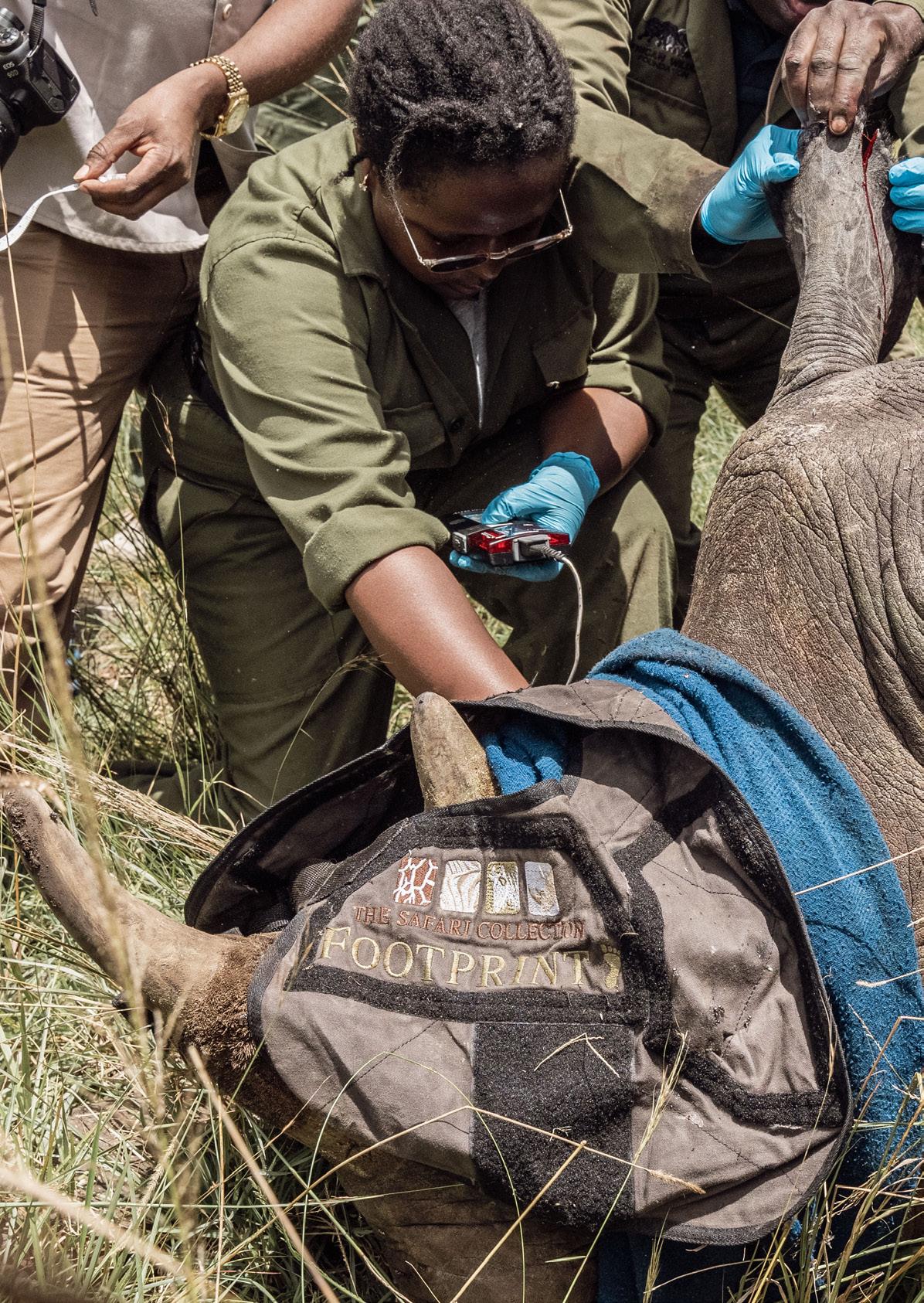
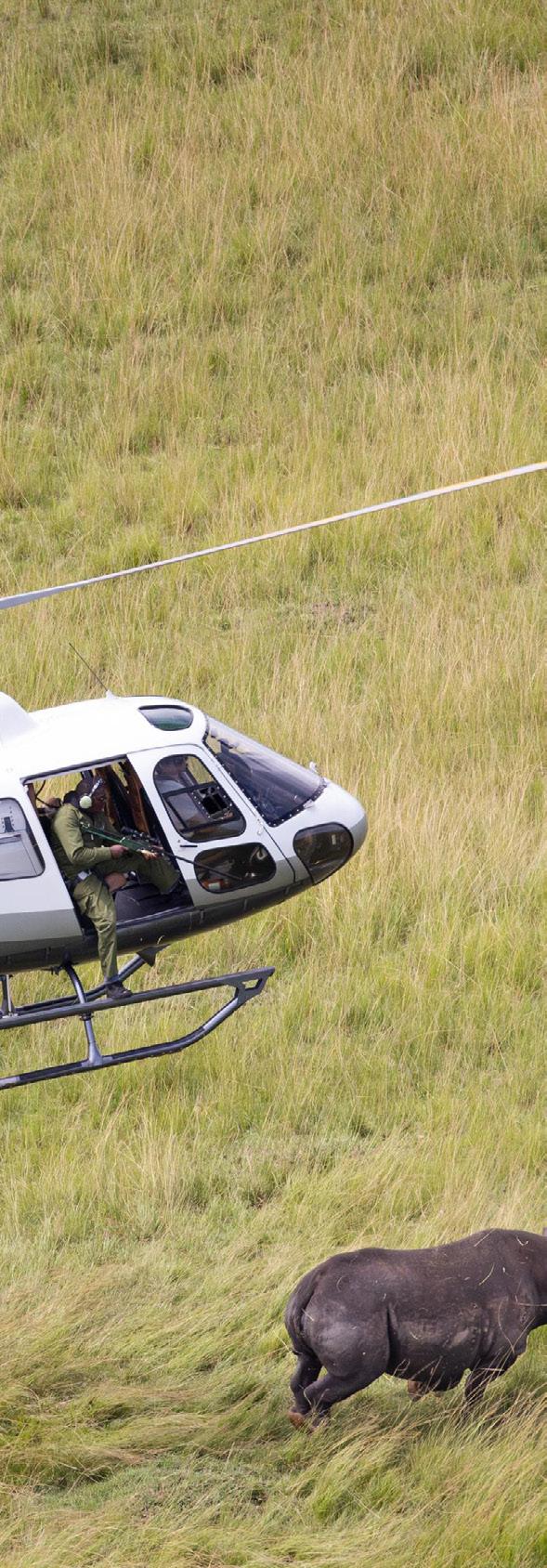
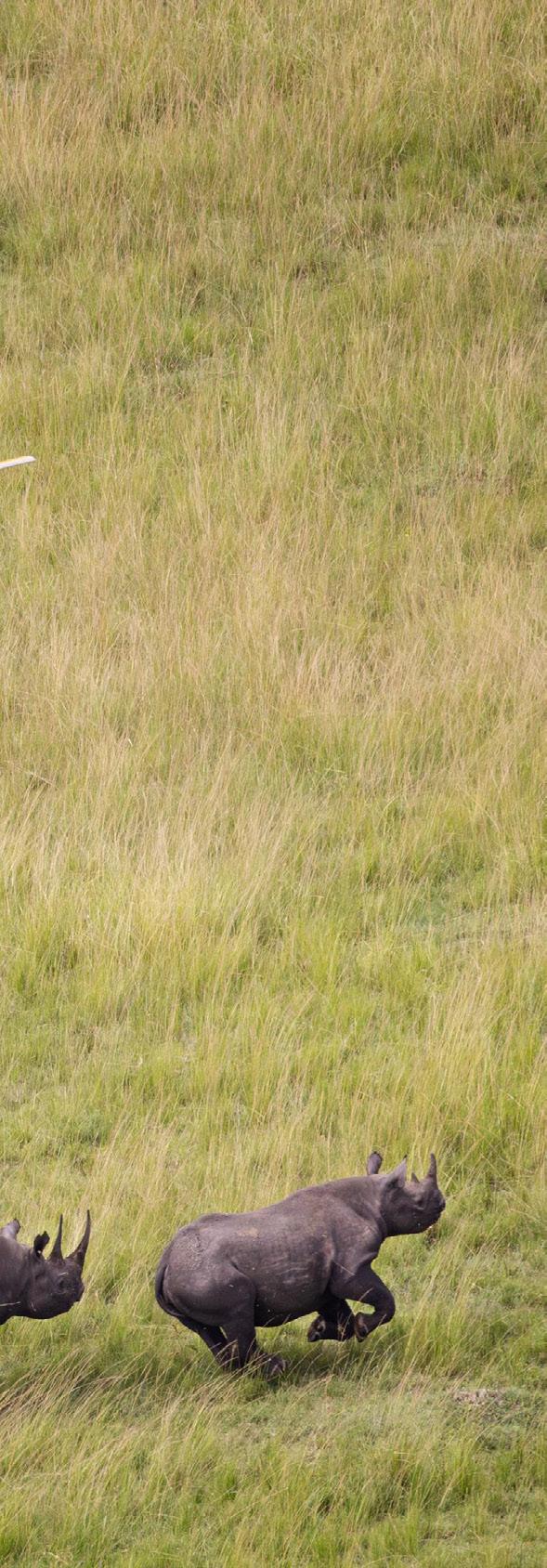
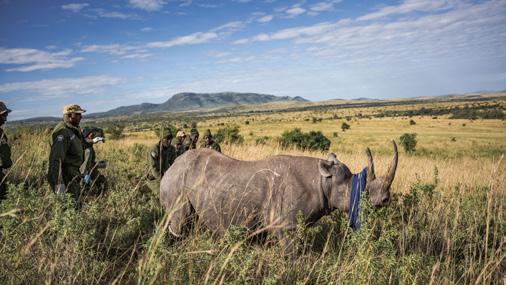
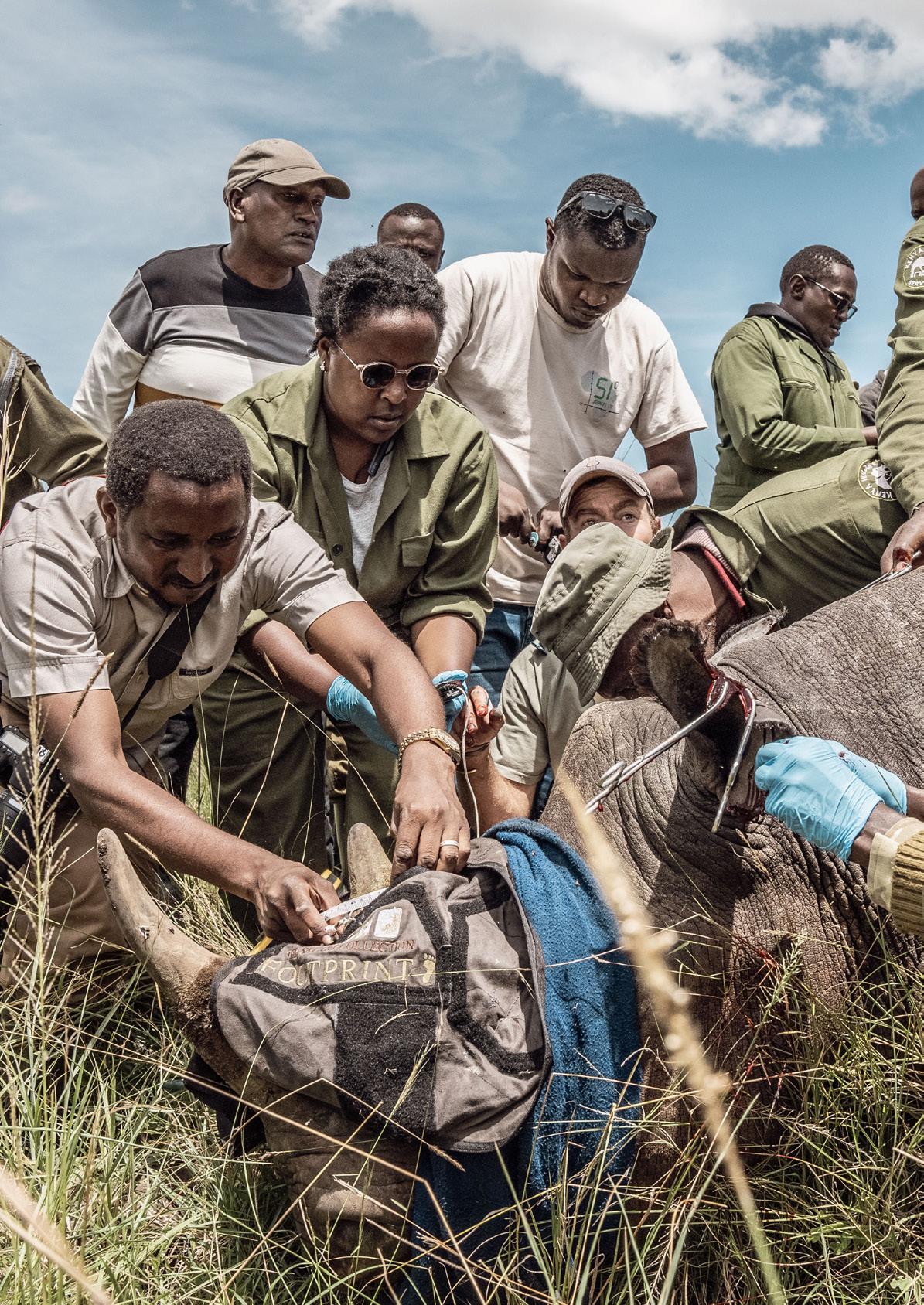
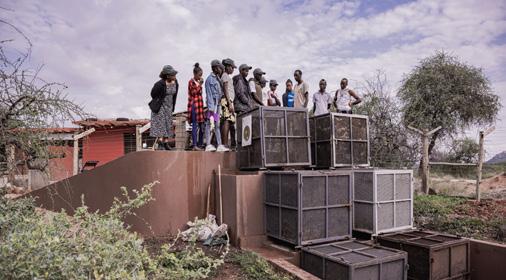
In March, our Footprint Trust spearheaded a critical new rhino-monitoring initiative in the Maasai Mara National Reserve aimed at safeguarding the eastern black rhino (Diceros bicornis michaelli). With support from Sala’s Camp, we worked in collaboration with the Narok County Government, the Kenya Wildlife Service, the Wildlife Research and Training Institute and local and international conservation organisations including the Sheldrick Wildlife Trust. In a seven-day operation, 13 free-roaming black rhinos were ear-notched and fitted with LoRaWAN GPS ear tags. This population is one of only two indigenous, free-ranging black rhino groups in Kenya, which makes their protection especially important.
These animals represent success and growth. After their steep decline in the 80s, we have put in a lot of work and a lot of resources to ensure that these animals have their population grow. When I see them out in the wild living and thriving, it makes my heart very happy. It reminds me that we can still do some good here on this earth.
Dr Mukami Ruoro-Oundo, KWS Senior Veterinary Officer
The tagging and notching allow the Rhino Ranger Unit to identify individuals, gather regular movement data and improve real-time monitoring across the Mara. Alongside the new EarthRanger software system and a LoRaWAN network, this technology strengthens anti-poaching, surveillance and overall management.
Black rhino numbers in the Mara have risen from as few as 11 in 1984 to around 55 to 70 today, though still far from their heights in the 1960s. Going forward, further notching/tagging operations are planned every 2-3 years. This project aligns with Kenya’s Black Rhino Action Plan and the Maasai Mara National Reserve Management Plan 202332, and showcases how collaboration among government bodies, conservation organizations and local teams can turn the tide for one of Kenya’s most endangered species.
Mara black rhinos ear-notched and LoRa GPS tagged
Tech for Wildlife: Enhancing Conservation through Innovation
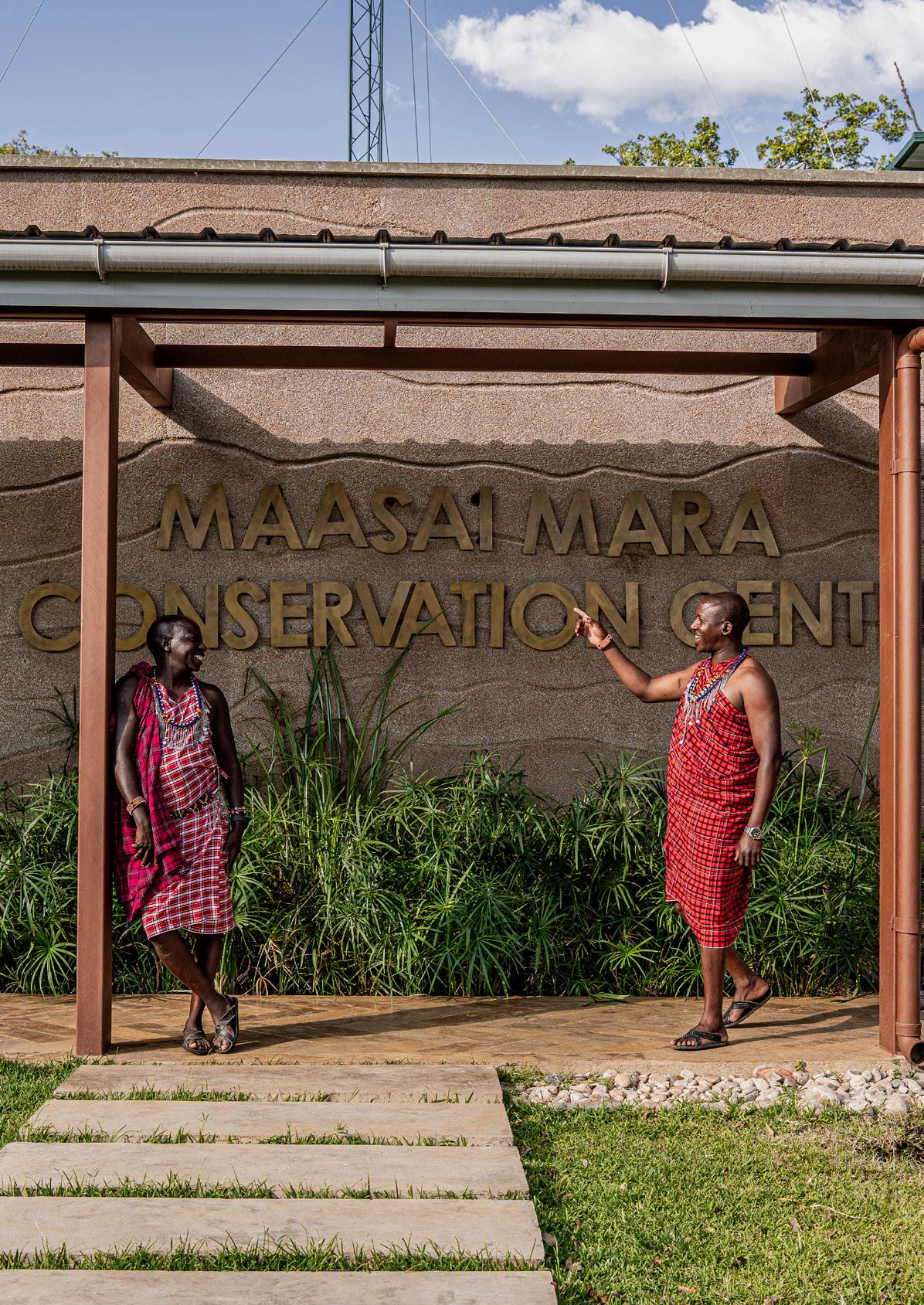
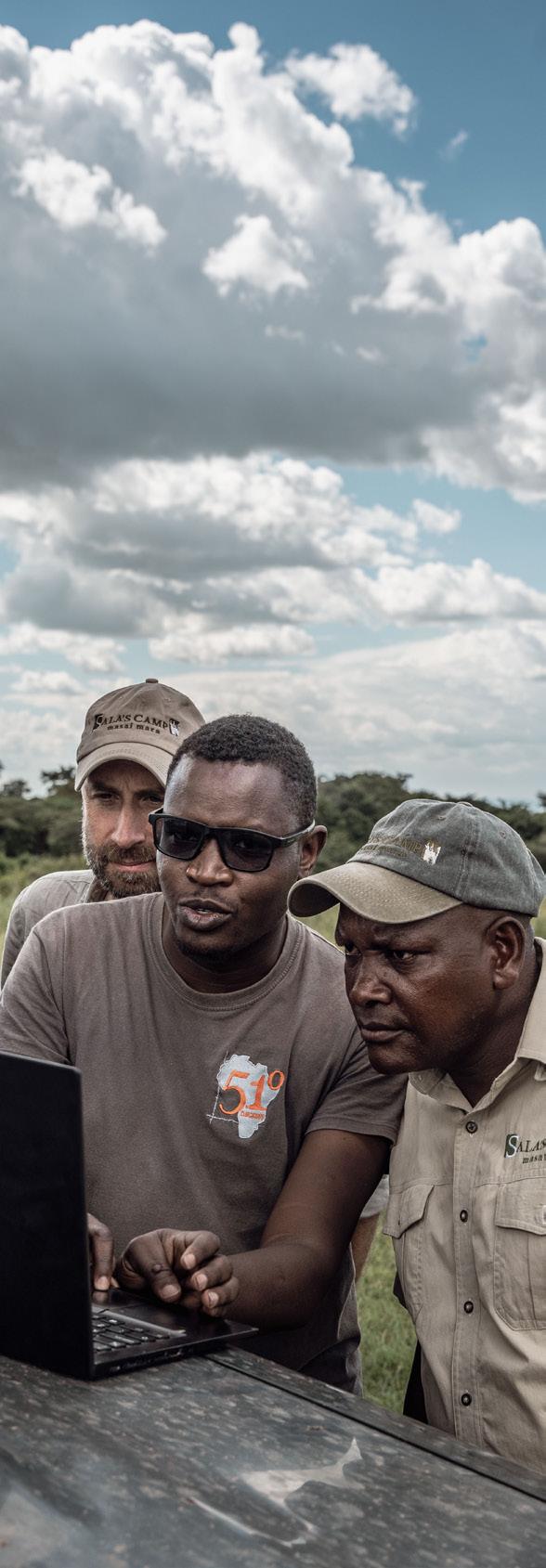
Over the past year, The Safari Collection’s Footprint Trust has played a pivotal role in equipping the Maasai Mara National Reserve (MMNR) with advanced technology to protect the landscape and threatened species more effectively. In collaboration with the Narok County Government, Sala’s Camp and partners like 51 Degrees Ltd, Connected Conservation Foundation and Fondation Segré, the Footprint Trust has launched a new Maasai Mara Conservation Centre (MMCC).
The MMCC, which became operational in October 2024, is powered off grid with 32 solar panels. It supports a trained ranger team, who operate from the Control Room and use EarthRanger: an AI-driven, real-time monitoring platform that collects and integrates data from wildlife tracking, ranger patrols, vehicle sensors, spatial data and poaching and other threat observations.
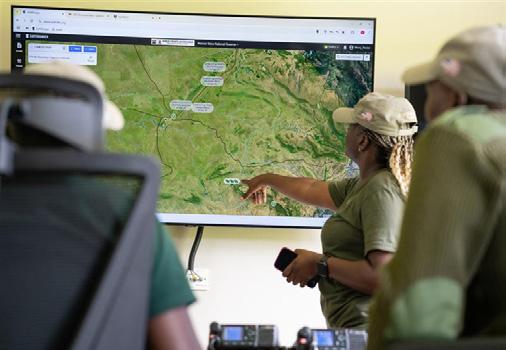
EarthRanger and the Conservation Centre have completely changed the game. We’ve moved from manual tracking to real-time monitoring –saving time, boosting security and making our conservation efforts sharper and more effective.
Marley Sianto, Narok County Government Assistant Director of Tourism and Wildlife
To enable coverage, four LoRaWAN gateways were installed across the Reserve, creating a network that now spans over 85% of the MMNR. Together, this technological infrastructure has already improved wildlife protection, especially for critically endangered black rhinos which can be tracked hourly via EarthRanger through LoRaWAN GPS ear-tags. It is already helping monitor antipoaching activities, with future plans to use it to manage visitors and over-tourism too.
new conservation centre constructed with EarthRanger and LoRaWAN network in the Masai Mara
Nubian Giraffe: A Conservation Success Story
Concerted efforts to save Kenya’s Nubian giraffe population has led to their steady increase since the 1970s and presents one of the most remarkable conservation success stories in the country.
Dr. Arthur Muneza, GCF East Africa Coordinator
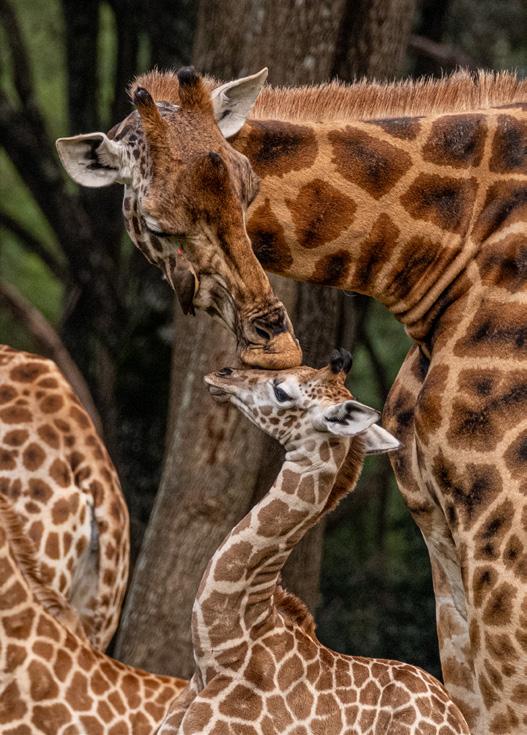
For decades, giraffes across Africa have been facing threats and population decline, with the Nubian giraffe subspecies (Giraffa camelopardalis camelopardalis) listed as critically endangered. Yet Kenya offers a remarkable conservation turnaround: the Nubian giraffe population has increased by over 700% since the mid-1970s, rising from approximately 130 individuals to over 1,000 today.
This recovery in Kenya, (which now holds nearly a quarter of the world’s remaining wild Nubian giraffes), is largely due to translocation efforts into protected habitats and strong measures to combat poaching. The African Fund for Endangered Wildlife (AFEW), Giraffe Manor, the Kenya Wildlife Service (KWS) and others have been central in breeding and relocating giraffes, with 27 individuals moved out of the breeding herd at Giraffe Manor and rewilded to new protected areas in recent years.
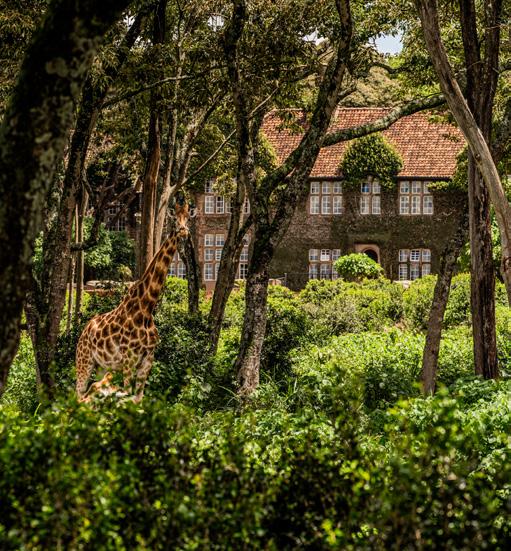
While the population resurgence is inspiring, threats persist. Out of an estimated 4,000 Nubian giraffes globally, substantial risk remains in Uganda, South Sudan and Ethiopia. Concerns such as habitat loss, illegal hunting and low genetic diversity are still urgent.
Lessons ahead include the importance of ongoing monitoring (using photographic surveys and GPS tracking) to ensure that Kenya’s Nubian giraffe success is sustained and replicated elsewhere.
3 Nubian giraffe calves born to the breeding herd at Giraffe Manor
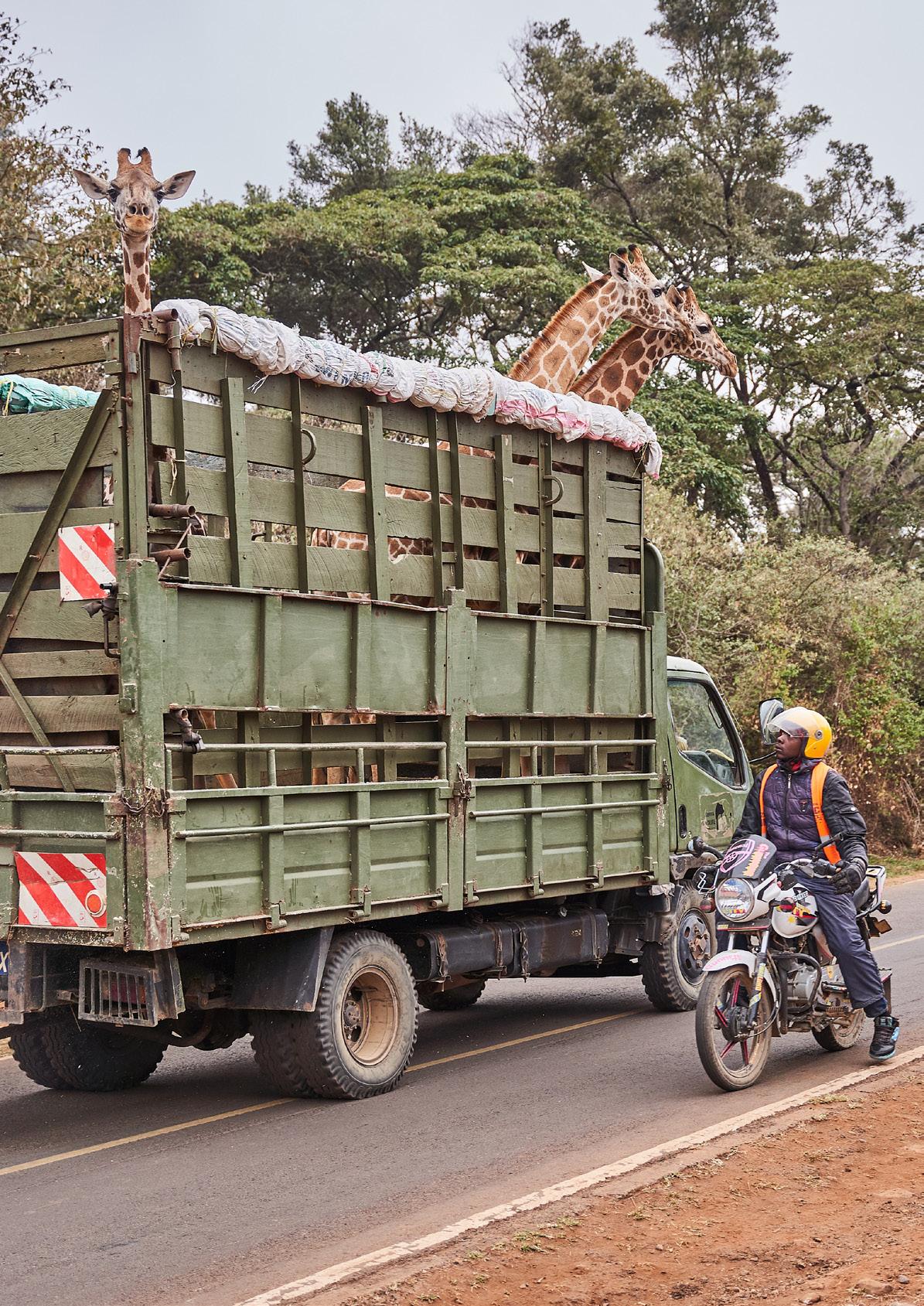
Young Nubian giraffes being translocated by KWS from the AFEW Giraffe Centre and Giraffe Manor breeding progamme for re-wilding
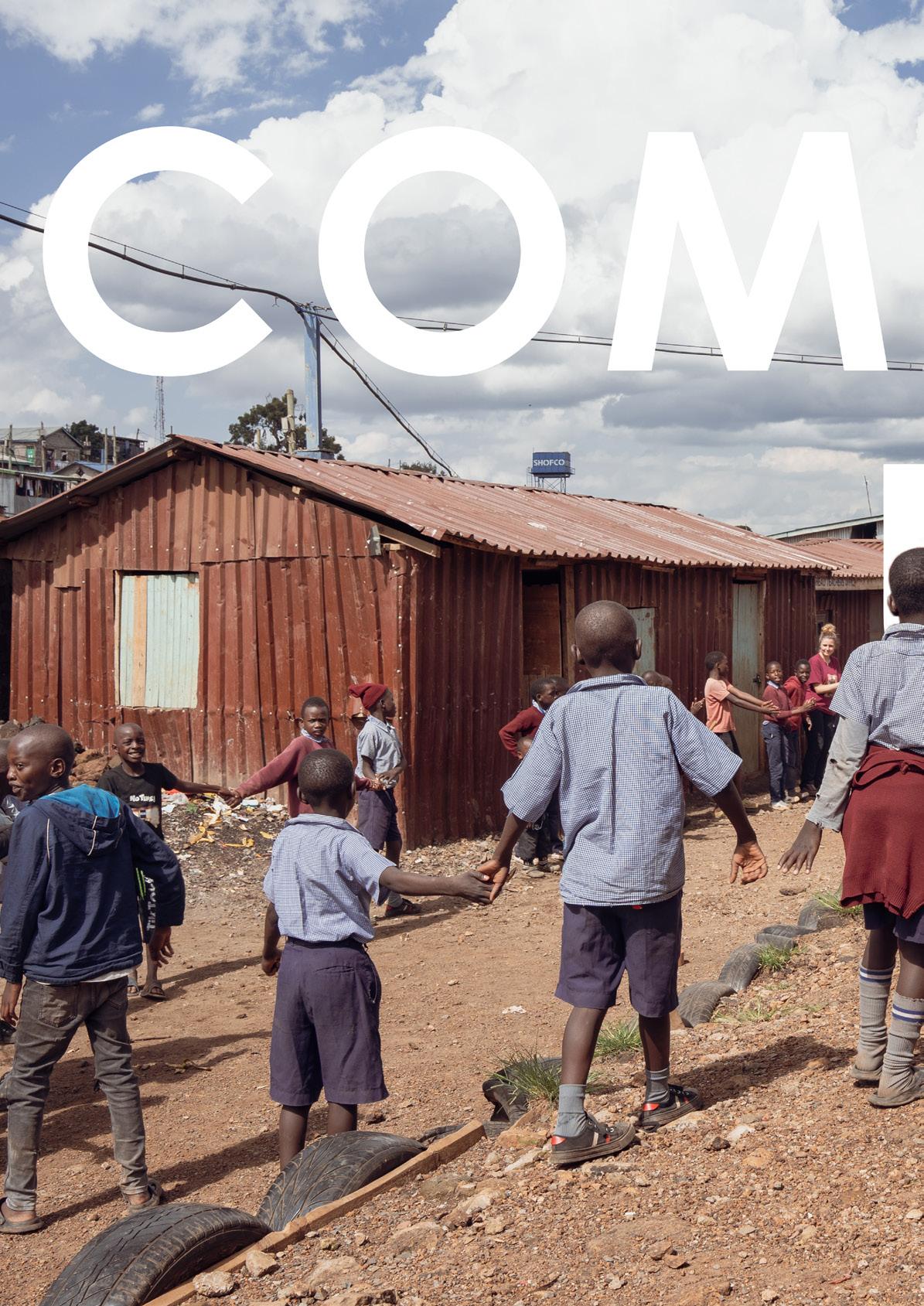
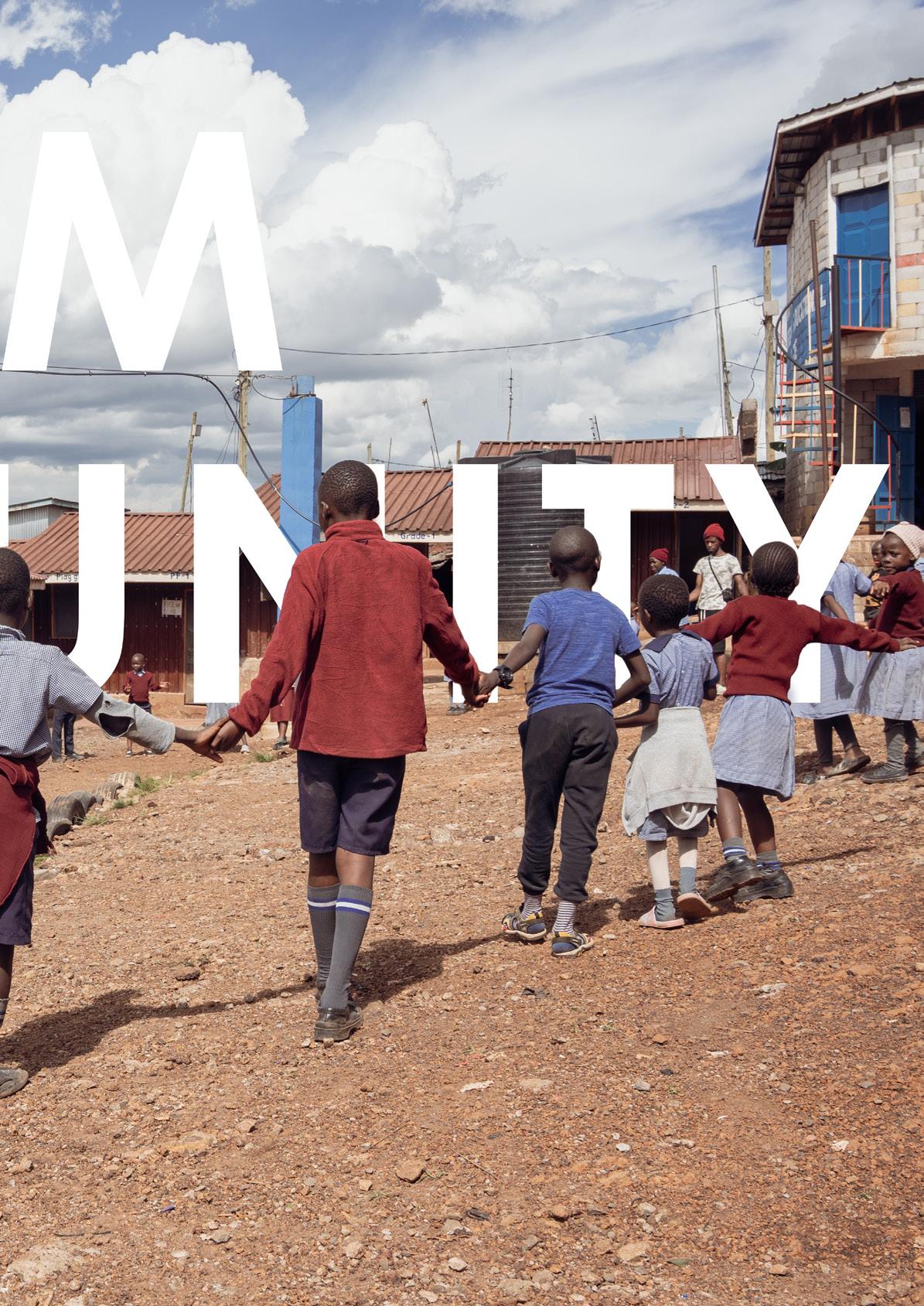
People matter; improving community well-being is a collective responsibility, as a thriving community is essential for a sustainable and healthy environment.
We believe that education plays a vital part in successful conservation. We also strive to improve the health and welfare of the communities around us.
Community Dental and Medical Clinic
Educating on good oral hygiene became paramount and we distributed many tubes of toothpaste and brushes.
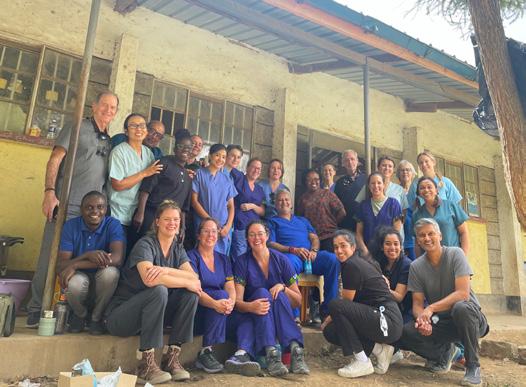
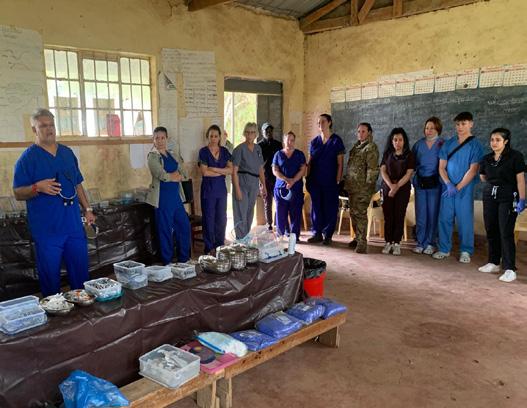
In November 2024, The Safari Collection Footprint Trust held its annual free Dental and Medical Clinic for communities neighbouring Solio Game Reserve in partnership with SmileStar UK Charity, Solio Lodge, Solio Game Reserve, Nanyuki Cottage Hospital, A.C.K Village 5 Church, BATUK and the Laikipia County Government. The four-day clinic, held from 11th to 14th November, involved six dentists, five SmileStar UK volunteers, four TSC team members and eight BATUK volunteers.
The outreach took place at Solio Village 5 and Kihato Dispensary, treating a total of 684 patients (393 receiving dental care and 291 receiving general medical check-ups). Services included dental extractions, oral health advice, medical examinations, prescriptions and referrals for longterm care.
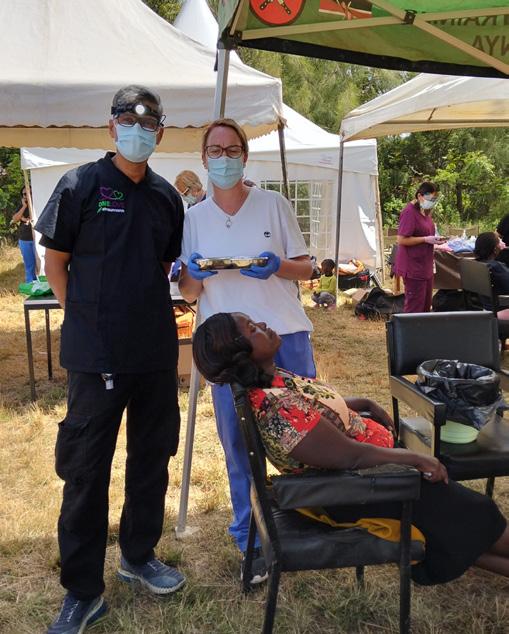
patients received free dental and medical treatments
The clinic provided vital support to disadvantaged community members who otherwise lack access to healthcare. Common issues treated included cavities, broken and sensitive teeth, as well as high blood pressure, eye infections, ear problems and back pain among the elderly. This initiative continues to relieve suffering, restore dignity and improve wellbeing in local communities around Solio, demonstrating the lasting social impact that tourism can have.
Jenin Khanam, SmileStar volunteer
ChangeMakers in the Making
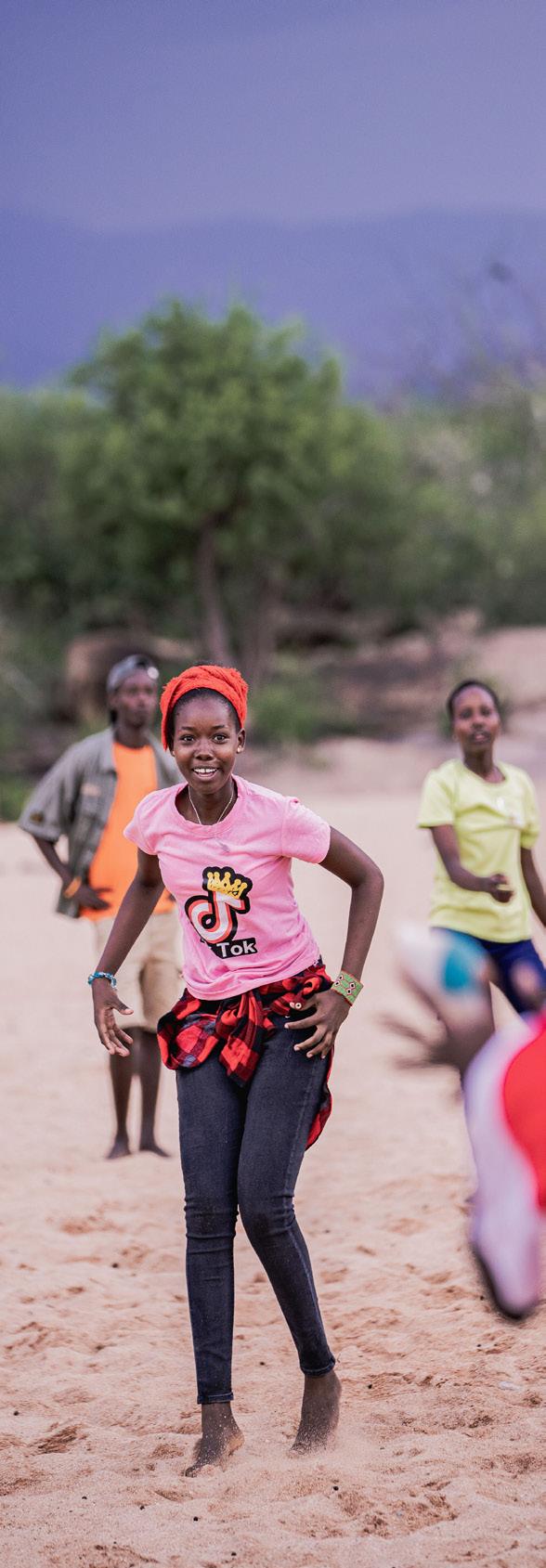
Our Conservation Scholarship Programme continues to nurture Kenya’s future conservation leaders. Now in its eighth year, it welcomed three new high school students in 2024 and celebrated nine graduates - seven pursuing higher education and two securing employment through internships. The rigorous week-long selection process ensures that bright, underprivileged students receive lifechanging opportunities, bringing immense joy to their families and the community at large.
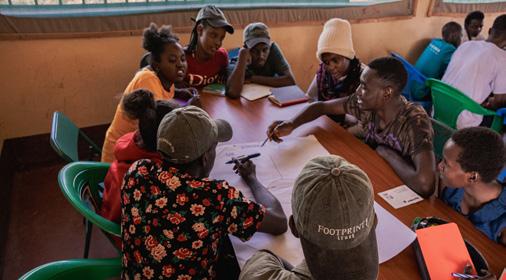
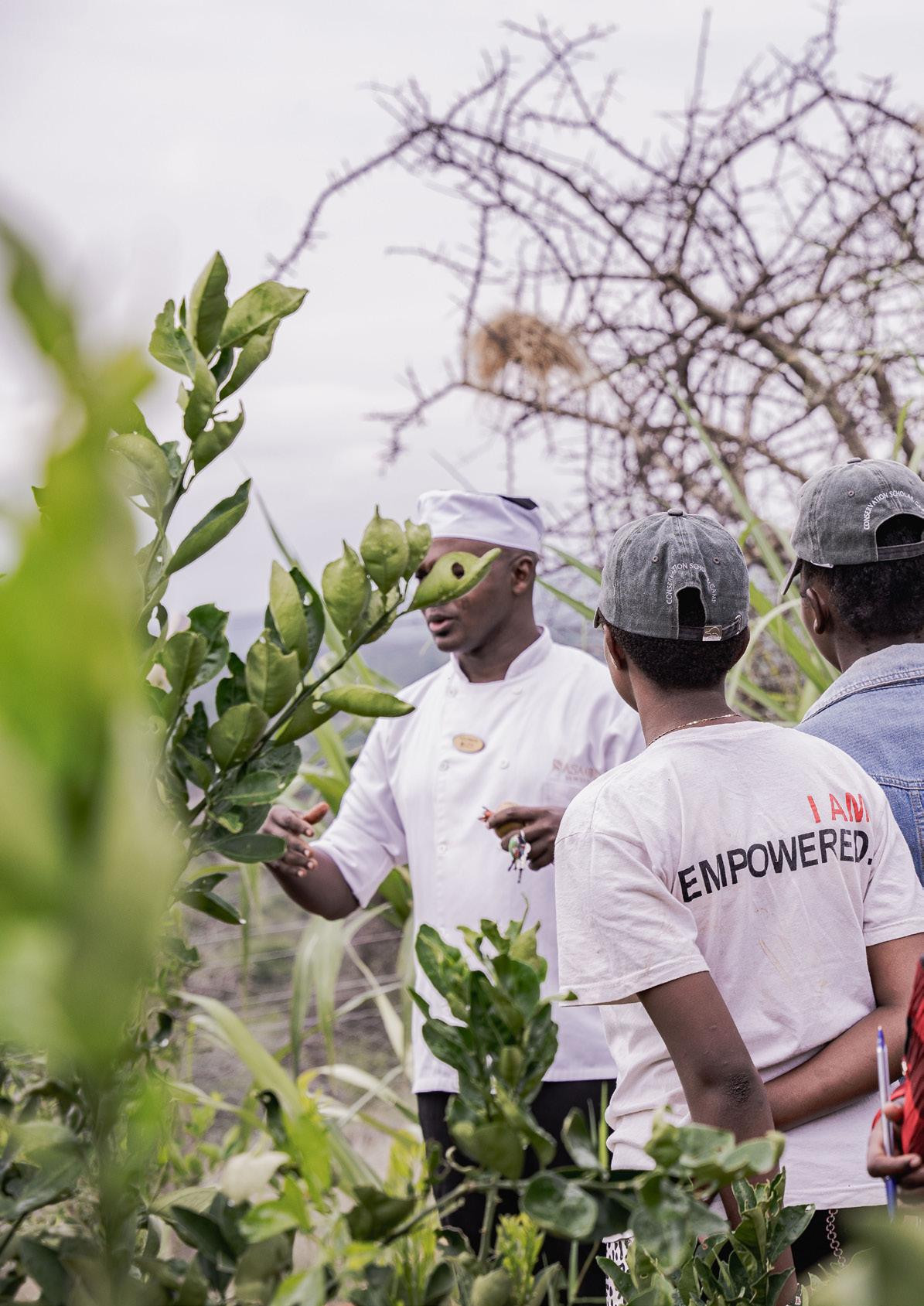
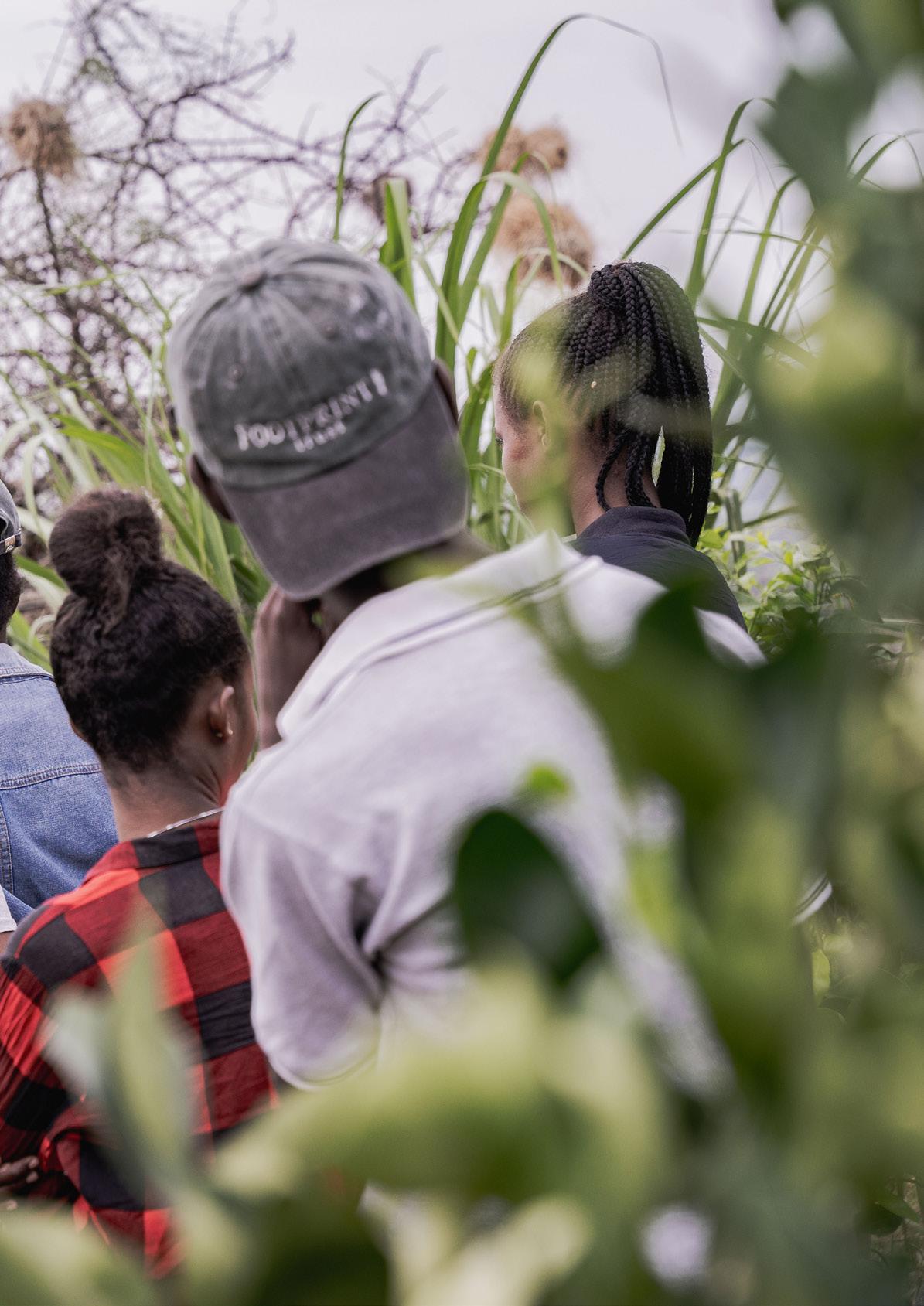
This year’s Conservation Scholars’ Camp brought together 26 of our scholars for a week of learning and inspiration at the new Westgate Community’s accommodation block near Sasaab. Under the theme “Building Life Skills for Entrepreneurship” students explored social enterprise, conservation, leadership and sustainability. The week included workshops, teamwork, partner presentations and field visits to Sasaab’s shamba (garden), 4C Centre, Rhodia Mann Museum and Westgate’s Earth Smile land restoration project.
Always remain determined & focus on your dream. Daniel Kasoo, Sasaab Guide
Guest speakers from conservation, tourism and community initiatives shared powerful personal stories, while evenings around the campfire encouraged open discussions on social challenges and empowerment. The programme continues to grow in impact, opening doors, building confidence and creating Kenya’s next generation of changemakers.
41 students on full scholarships in schools, colleges and universities across Kenya
Our People at The Safari Collection
2,194 hours dedicated to upskilling our team
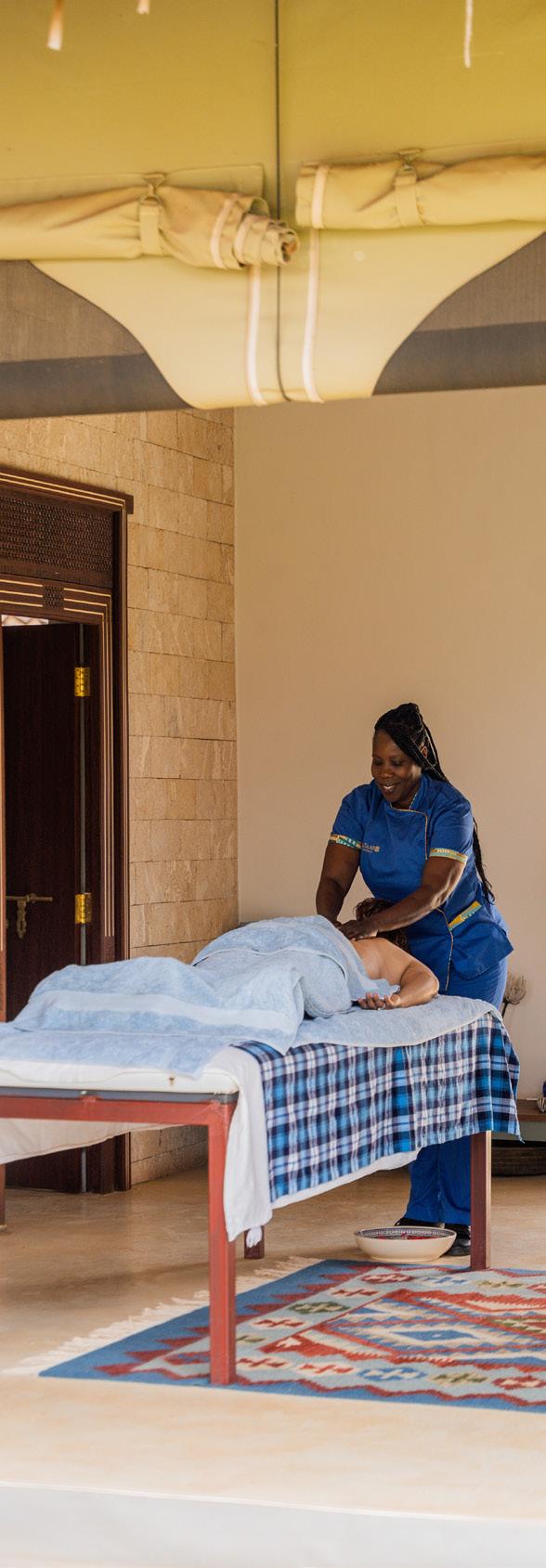
At The Safari Collection, our strength lies in our people; now with over 500 team members in properties across Kenya, we are proud to generate livelihoods that ripple through Kenya’s economy, from city offices to remote communities. Our safari experts, front of house teams, chefs, mechanics, builders, gardeners and guides share a deep passion for wildlife, hospitality and creating lifechanging guest experiences.
Being a sustainable business isn’t just about wildlife and the environment, it’s about people. Every safari supports families, wildlife protection and Kenya’s future - proof that together, we are stronger, wiser and more connected to the wild. Every guest experience is guided by our belief that people and wildlife can thrive together.
Kindness travels far - one of our managers quietly supports a children’s home in Mombasa each year.
Training is at the heart of developing talent and fostering strong, motivated teams; from wine appreciation and guiding excellence to hospitality mastery, each programme enhances skills, confidence and guest experience. Equally vital has been training on sustainability through the 4Cs framework, which empowers employees to align their daily work with a shared purpose of protecting people, wildlife and the planet.
‘Takataka Sunday’ brings the team together to clean up, care for nature and celebrate teamwork.
At The Safari Collection, fostering kindness and sustainability is integral, both within and beyond our workplace. We believe in nurturing compassion and environmental stewardship to drive positive change in our communities. To reinforce these values, acts of kindness and sustainability initiatives are integrated into our performance reviews. This motivates our team and underscores our commitment to community and conservation.
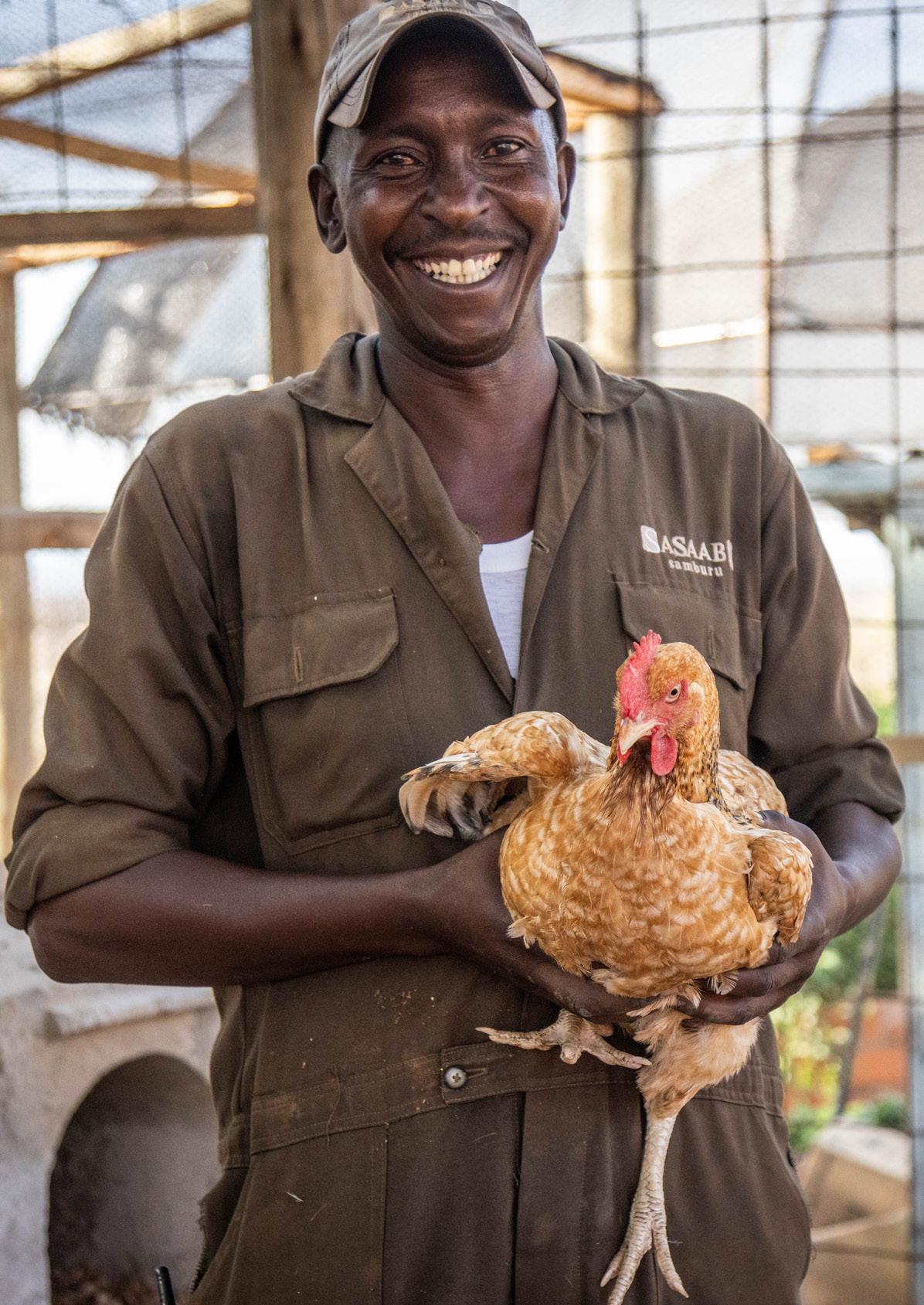
employees working at The Safari Collection
Feeding Young Minds
121,215
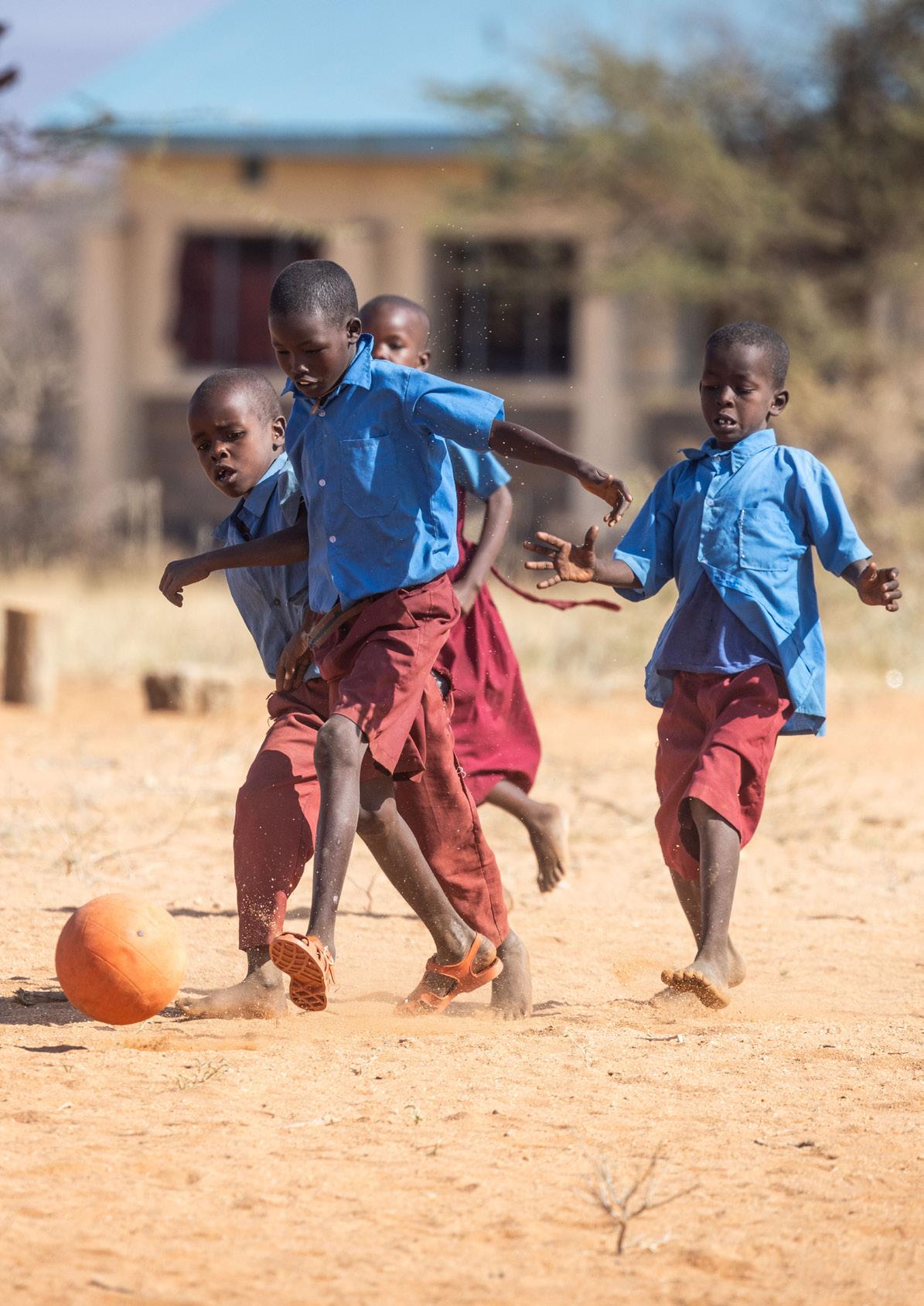
meals supplied to 12 schools
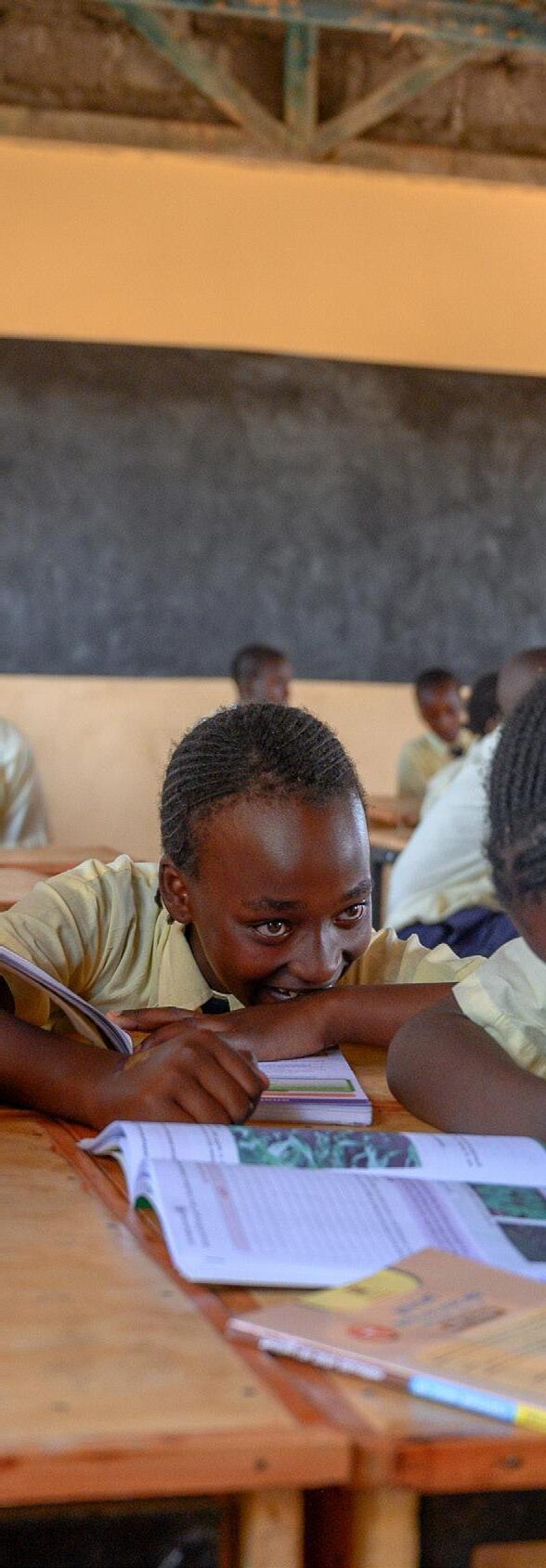
Good nutrition is one of the most powerful tools for improving a child’s education. In many of Kenya’s rural communities, food insecurity remains a daily struggle, with malnutrition often keeping children out of school. Through our Feeding Young Minds programme, we aim to change that by providing free, nutritious school lunches to children living near our lodges.
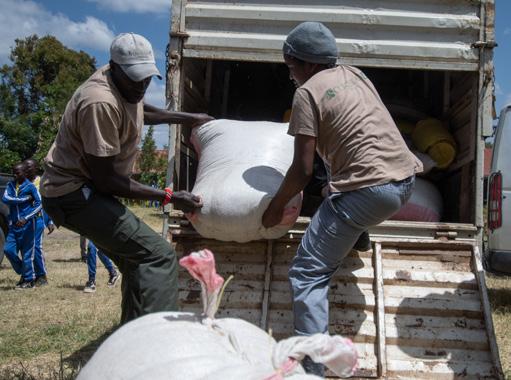
In 2024, we provided over 120,000 meals to more than 2,600 students across 12 schools in communities neighbouring Solio and Sasaab in Samburu. Each term, we deliver staples like maize, rice, beans, flour and oil, ensuring pupils have the energy to learn, grow and thrive.
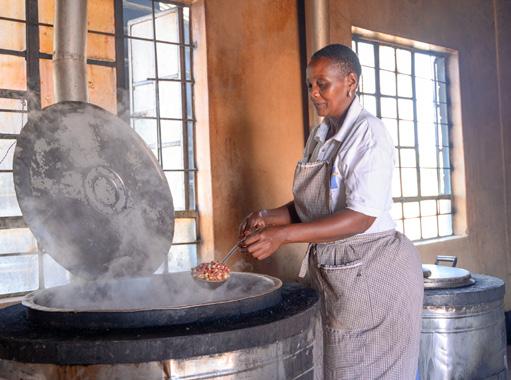
Since launching the programme in 2008, it has earned strong community support from parents and elders alike. The simple act of a shared meal continues to make a lasting difference, boosting school attendance, concentration and the hope of a brighter future for hundreds of children each year.
Smart Classrooms, Smarter Futures
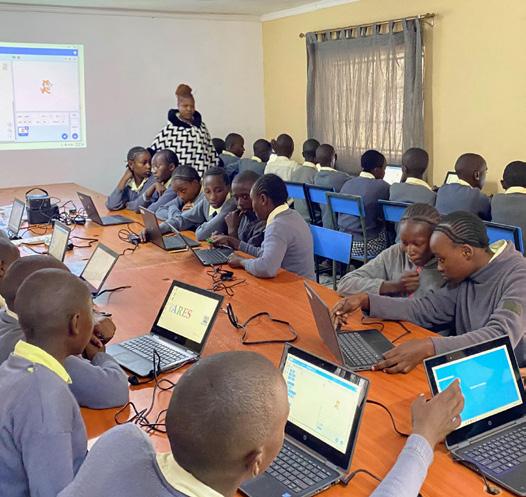
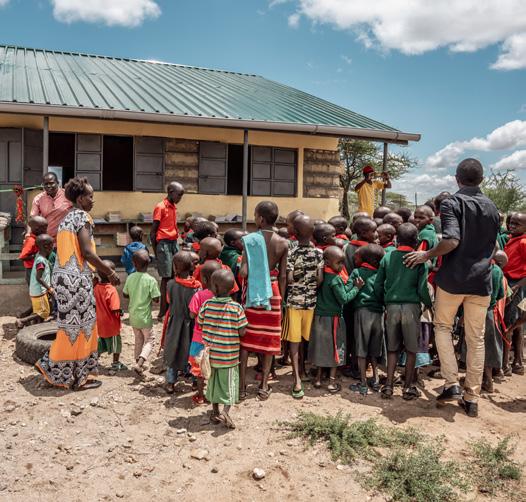
Education is at the heart of growth. Thanks to generous guest donations to our Footprint Trust, 2024 saw exciting developments at several of the local schools that we support: a new classroom was built at Sasaab Primary School and we were able to help open two computer labs – one at Laburra School near Solio Lodge and another at Gifted Hands School in Kibera. We also provided more than 250 new textbooks to support learning.
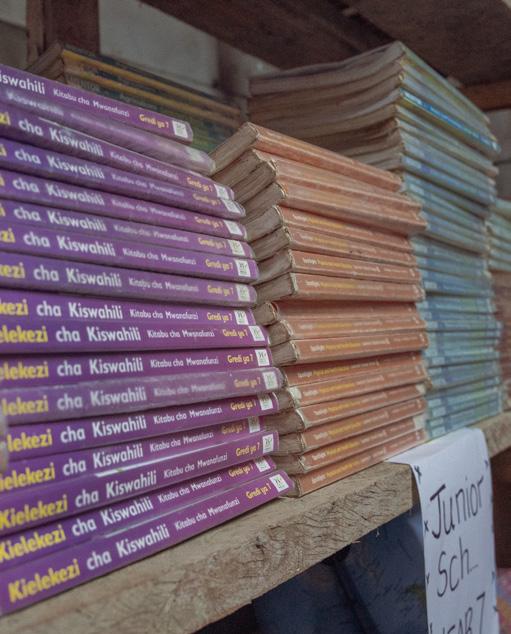
Beyond physical structures, these investments nurture curiosity, confidence and opportunity, bridging the gap between traditional and modern learning. Through collaboration with local schools, teachers and parents, we are helping to shape a generation ready to thrive in a changing world. By focusing on empowering communities through better infrastructure, teacher support and technology, and with the world becoming increasingly digital, giving children access to computers and IT training is vital for their future success - building brighter futures for Kenya’s children and stronger, more resilient communities.
textbooks provided; 2 computer labs set up and equipped
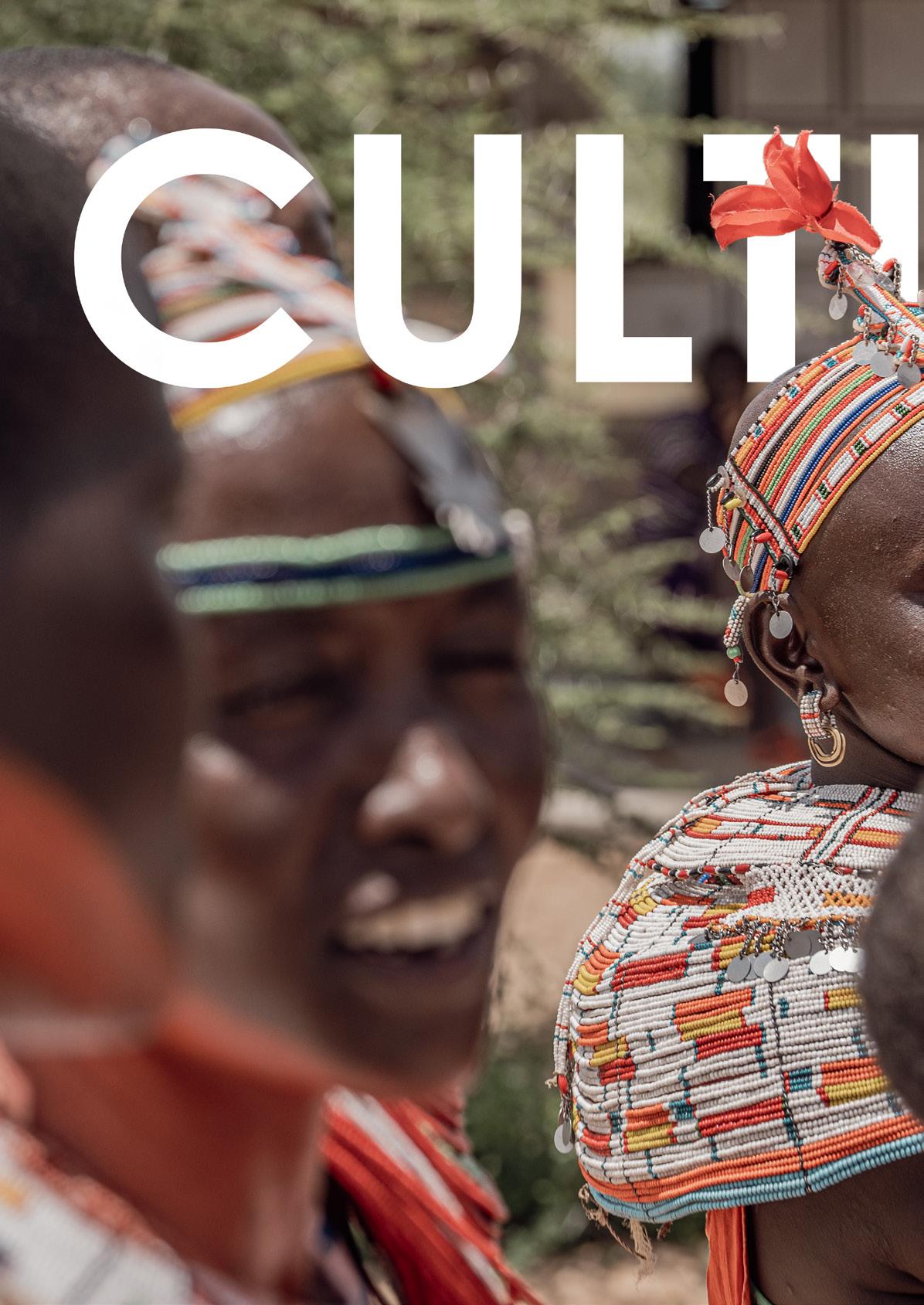
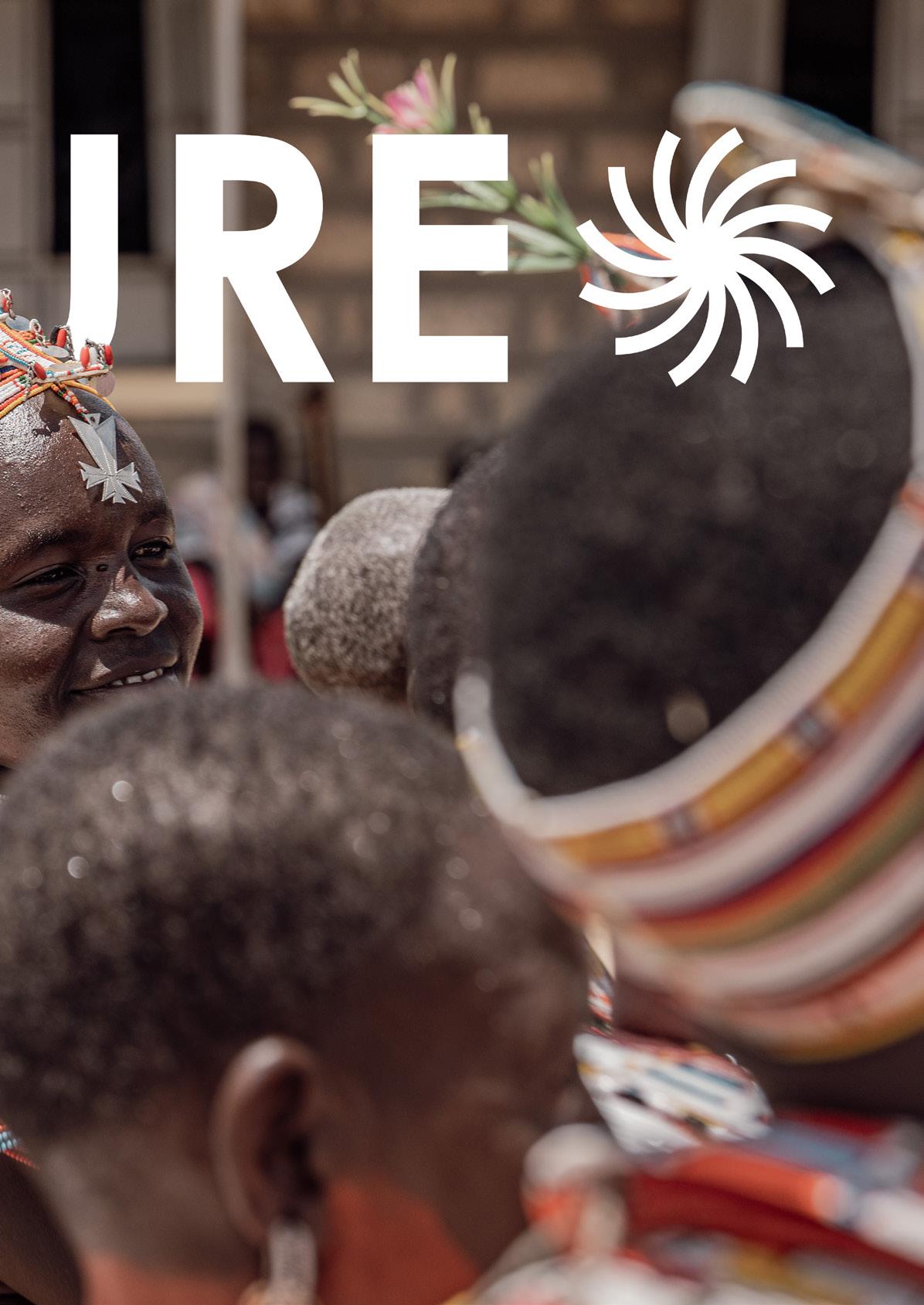
Celebrating cultural diversity builds understanding and connections. Respecting cultural differences is essential for our future.
We celebrate the rich cultural heritage and diverse talent of Kenya across our properties.
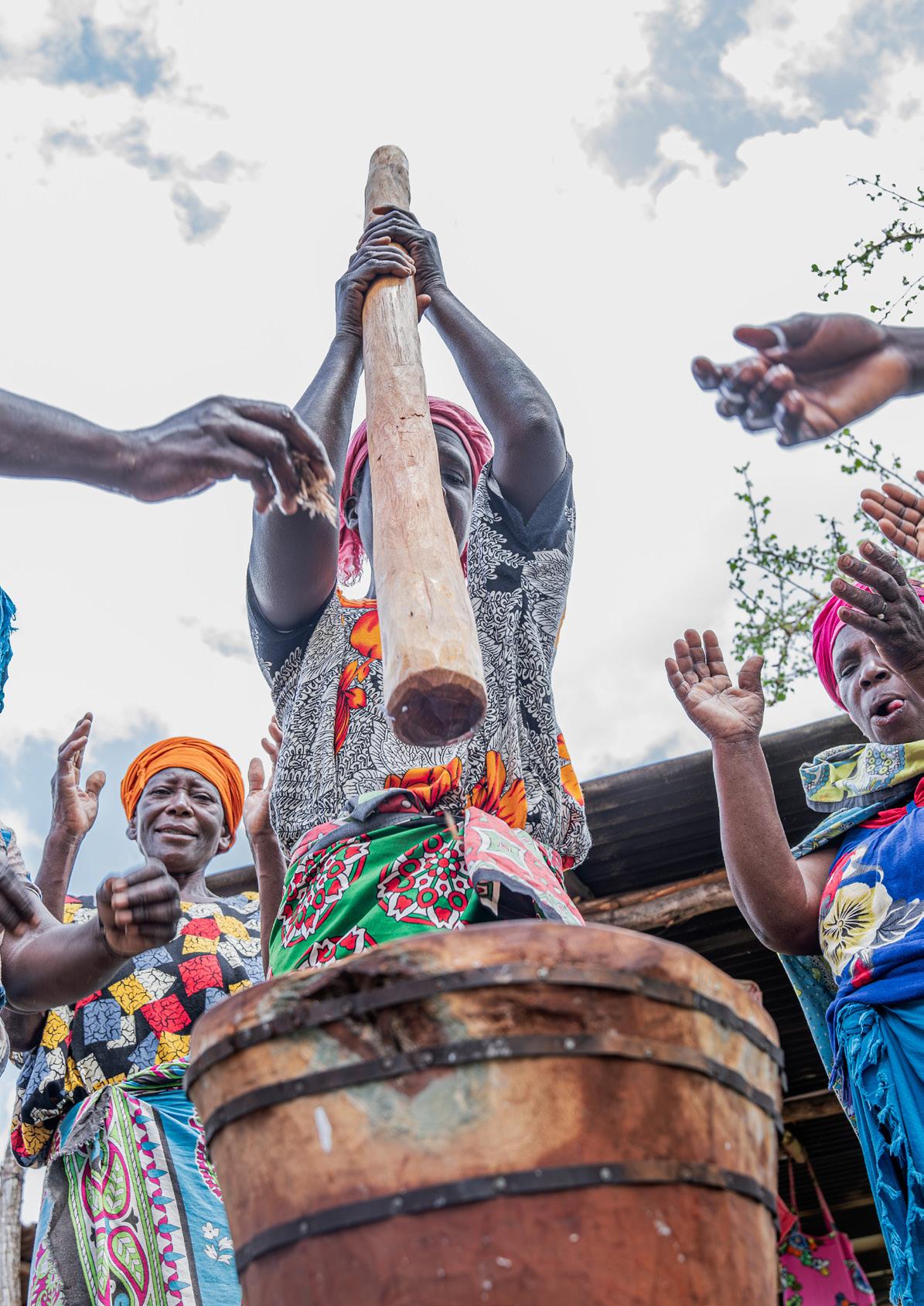
Mijikenda women singing and crafting paper from elephant dung at Kasigau, Taita Taveta by Klein Nettoh
Celebrating Kenyan Talent
I want to tell more conservation stories across Africa and the impact they’re creating on our continent
Klein Nettoh, photographer, filmmaker & visual impact storyteller
Kenya’s cultural landscape continues to shine with extraordinary homegrown talent, from visual storytelling and sport, to fashion and design. Across the country, creative and athletic excellence is being used to celebrate identity, preserve heritage and inspire positive change. From Samburu to the coast and beyond, Kenyans are redefining how culture connects people, community and conservation.
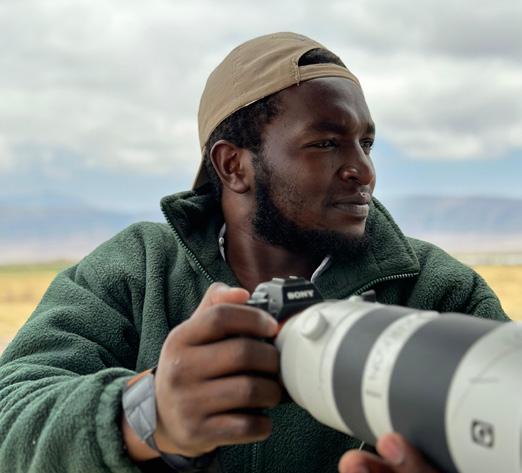
The Safari Collection’s content creator, photographer and filmmaker Klein Nettoh, is a powerful voice in Kenya’s visual storytelling. His work merges natural beauty with human emotion, portraying Samburu warriors, Giriama crafts and conservation efforts such as rhino tagging and giraffe translocations. Indeed, many of the stunning photos in this report were captured by him. Entirely self-taught, Klein uses his lens to share authentic Kenyan stories, reminding audiences that culture and conservation are deeply intertwined.
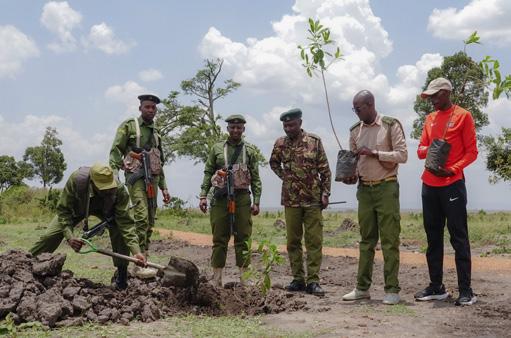
Team Kenya’s 1500 metre Olympic medallist, Timothy Cheruiyot embodies Kenya’s legacy of endurance, discipline and national pride. Following a remarkable athletics season, Sala’s Camp hosted him on a family safari, where he took the opportunity to visit the newly opened Maasai Mara Conservation Centre to meet rhino rangers, learn more about conservation technology and leave a legacy by planting a tree.
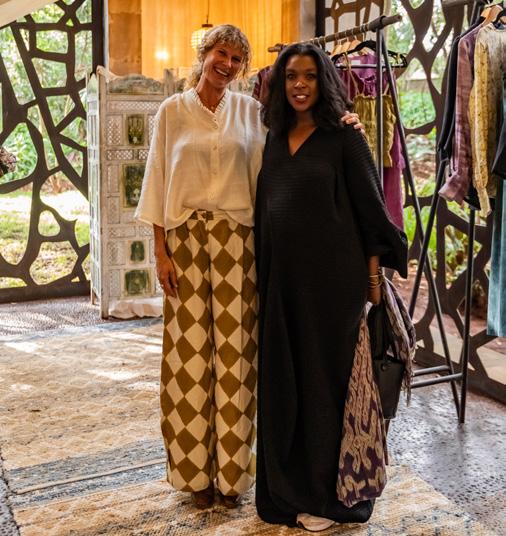
At this year’s Thanksgiving Dinner celebration, The Retreat at Giraffe Manor put on an exclusive fashion showcase of designs from Katush & Hamaji - two Kenyan brands that redefine style with purpose, crafted for a conscious, planetpositive future. Collaborating with local artisans to revive traditional crafts and natural textiles, their designs fuse global style with cultural authenticity, celebrating Kenyan craftsmanship and the artistry of sustainable fashion.
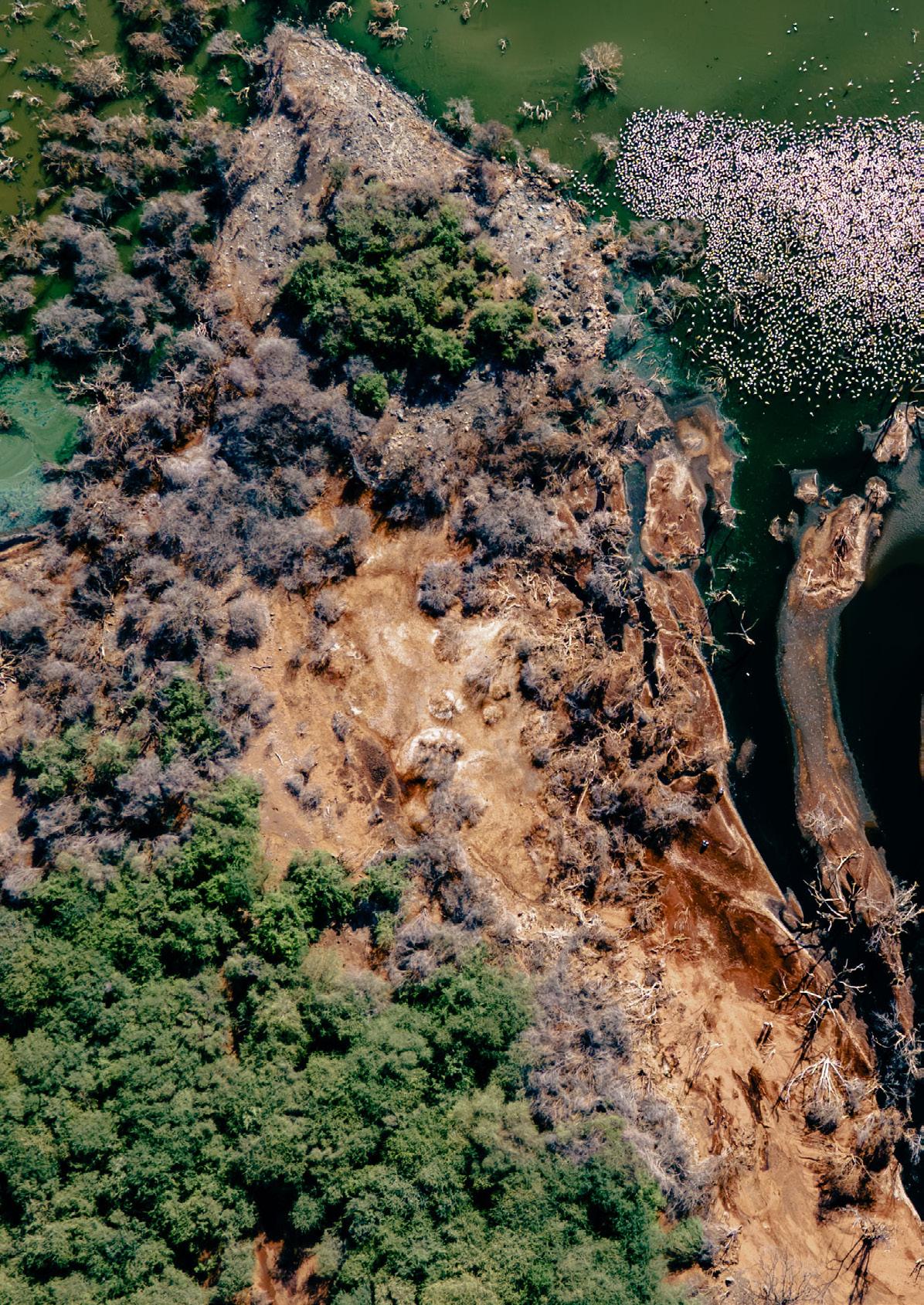
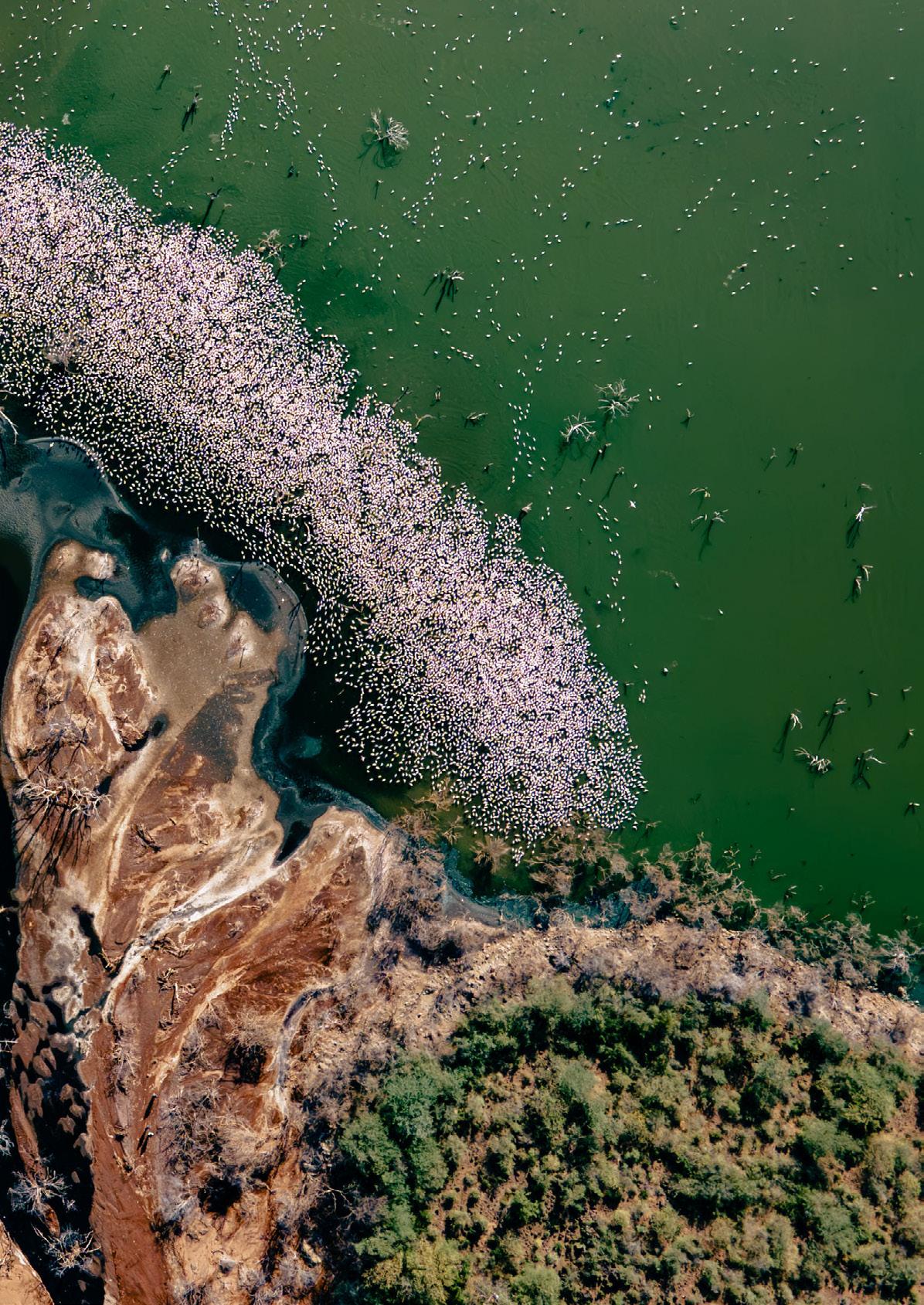
Heli experience above the flamingo-filled lakes of Northern Kenya by Klein Nettoh
Treasures of Samburu: Rhodia Mann Museum
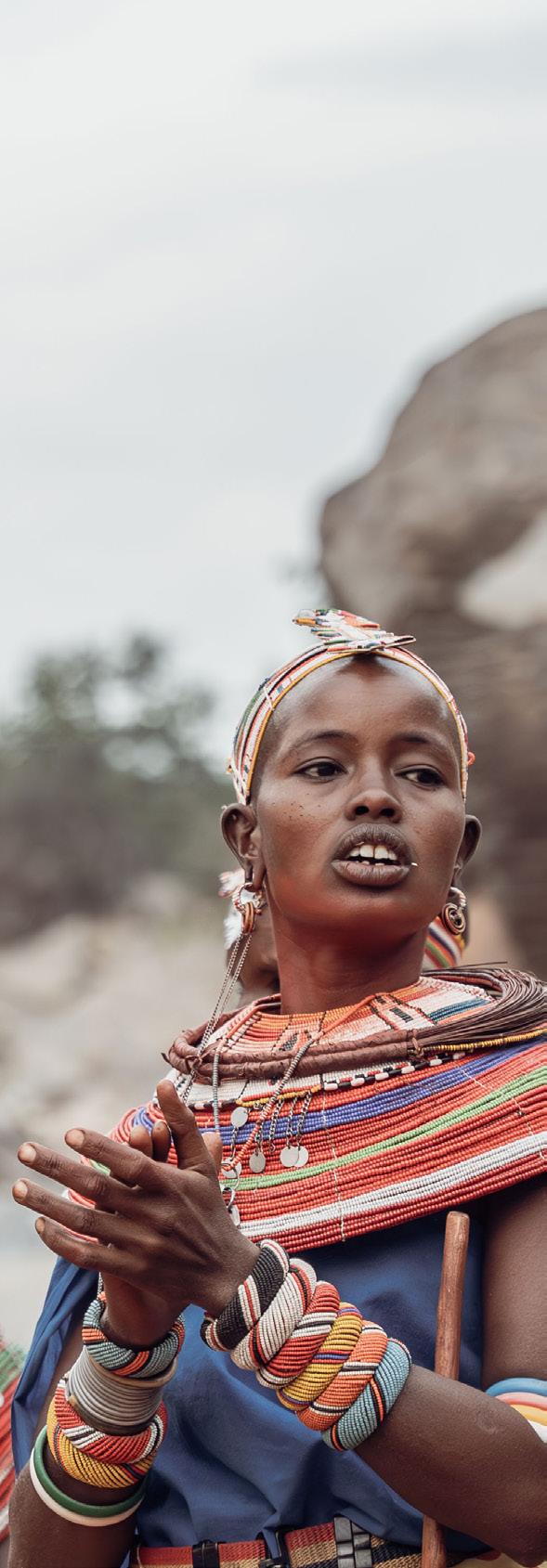
This year, Sasaab opened the Rhodia Mann Museum - a deeply meaningful tribute to Samburu traditions, culture and history. The museum hosts a lifelong collection of Samburu artefacts and beadwork gathered by Rhodia Mann: renowned author, researcher, designer and cultural advocate. Through her vision and partnership with Sasaab, these cultural treasures have been repatriated from Nairobi and are now showcased within Samburu land itself.
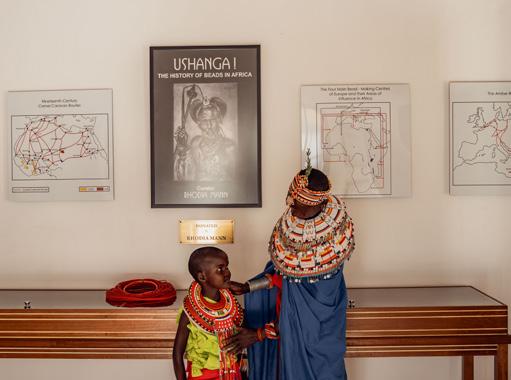
Designed to offer an immersive cultural experience, the exhibition space - located adjacent to Sasaab’s 4C Centre - presents over 50 artefacts across six thoughtfully themed displays. Visitors encounter everything from ceremonial spears and clay sculptures to personal items like a Samburu wedding necklace and a cowhide “samburr” bag. Rhodia’s beadwork collection is globally rich, including Venetian glass beads historically traded across continents.
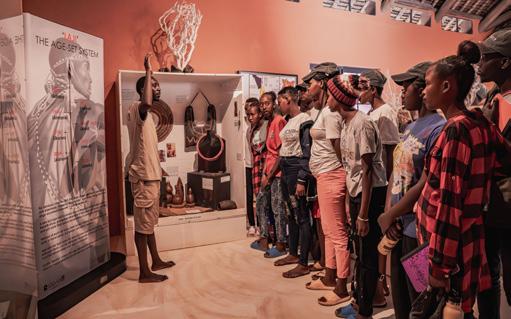
The museum amplifies cultural education and connection: guests, local schoolchildren and conservancy board members alike have embraced it as a gateway to understanding Samburu heritage. This museum stands as a living legacy of Rhodia Mann’s devotion to restoring and celebrating Samburu culture in its home soil.
Samburu artefacts on display
A Goal Beyond the Game
I am happy to see all of us coming together to change our community; this is just the beginning.
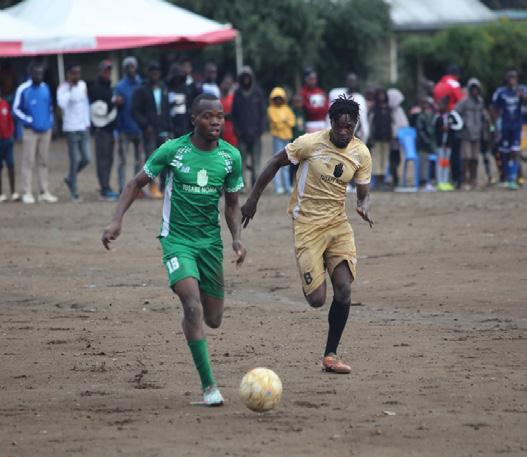
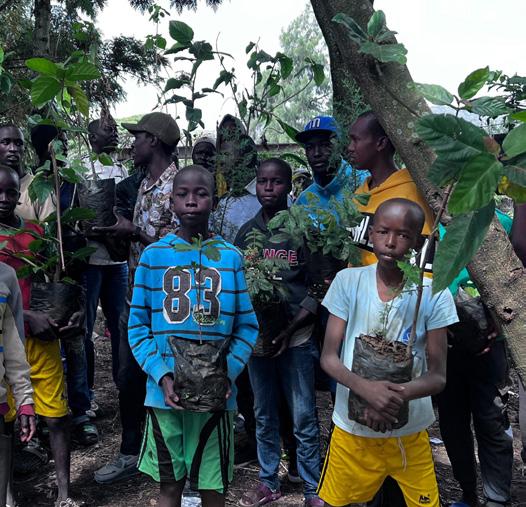
In October, Sala’s Camp head chef, Joseph Alunyei launched TUSARE NOMA ( Stay Away from Trouble) a three-day community sports event in Loldia, near Lake Naivasha. The tournament brought together local youth across eight football and two volleyball teams to promote unity and offer alternatives to social ills like gang violence and substance abuse.
Beyond the games, the event wove in acts of generosity and cultural enrichment: team kits and uniforms were donated, trees were planted and a mental health talk was offered by Naivasha District Hospital staff.
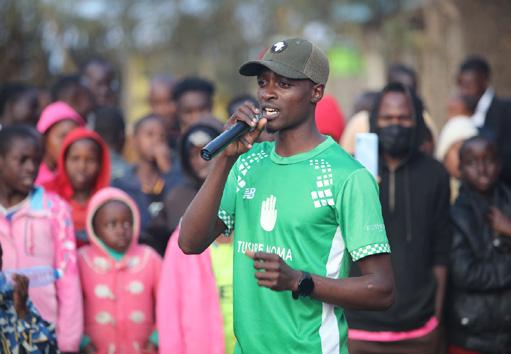
“I am humbled to announce that we had a very successful TUSARE NOMA tournament,” Joseph shared. “Shalimar FC took home the trophy, while Groove FC came in second. But the real victory was seeing our youth engaged and inspired.”
The Safari Collection supported the initiative through employee involvement, logistical support, community collaboration and by providing sports kit and equipment.
Joseph envisions making TUSARE NOMA an annual fixture, expanding to girls’ teams and nurturing culture, opportunity and community spirit. This initiative reflects the company’s belief that small acts of kindness - through sport, cultural connection and support - can heal, unite and empower communities in meaningful, lasting ways.
spectators from the community of Kasarani Village 5,000
Joseph Alunyei, Head Chef at Sala’s Camp
Commerce and trade have driven human progress for millennia. That’s why businesses must prioritise sustainability.
Every guest who stays with us makes an impact through paying conservation fees and providing employment.
Upcycling: Creativity Meets Sustainability
I was raised in and out of auction houses and valuations of old homes, understanding the value of a ‘good thing’ from a young age.
Tanya
Carr-Hartley, Director at The Safari Collection
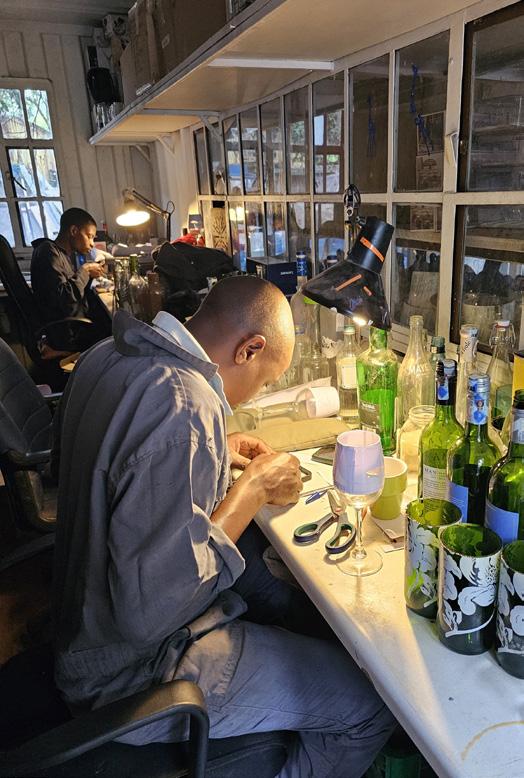
As part of our 4Cs approach, we integrate sustainability into every aspect of our operations. Upcycling is one of the ways we do this, with directors Tanya and Mikey Carr-Hartley leading by example. Their vision extends beyond furniture to building materials, vehicles and guest items, creating a distinctive and environmentally responsible experience.
At Giraffe Manor, the Garden Manor features repurposed roofing tiles from Nairobi, parquet floors from Mombasa auction yards and teak and mvuli doors reclaimed from old Swahili coastal homes. Reclaimed taps and cisterns preserve a vintage aesthetic while adding historic charm.
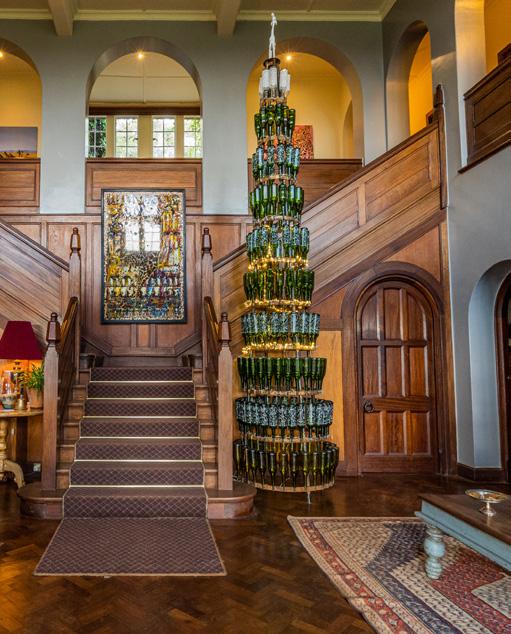
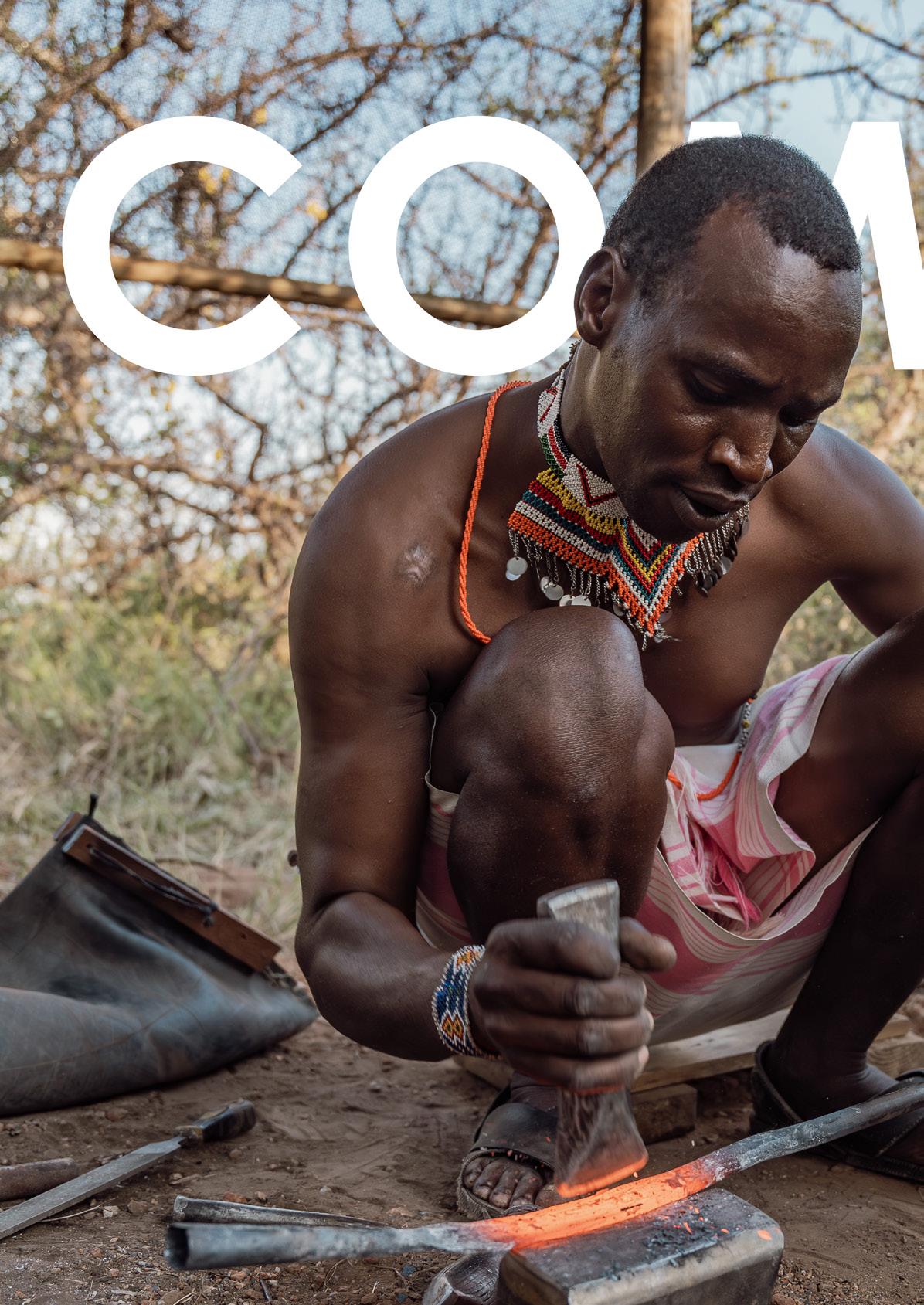
Across our properties, wine bottles become guest glasses or Christmas decorations, shipping containers are transformed into offices and old Land Cruisers converted into utility vehicles. An in-house blacksmith melts down vehicle parts to create knives and jewellery, while our gardens use upcycled fuel drums and pipes for sustainable farming. Local artisans craft napkin rings from scrap brass and bead reusable bottles, blending creativity with conservation.
95% of our waste is recycled, composted or upcycled
The Safari Collection’s commitment to upcycling not only reduces waste but also enhances guest experiences, demonstrating how sustainability and creativity can coexist harmoniously.
Powering a Greener Tomorrow
80% and more of our power sourced from renewable energy
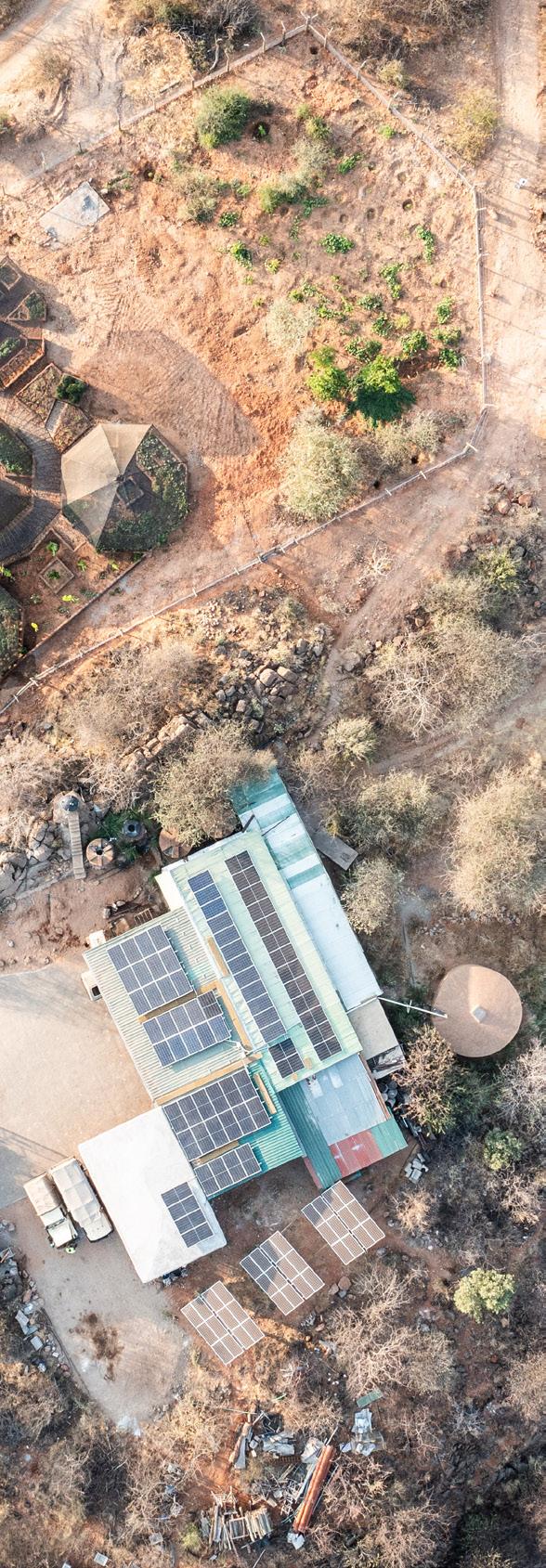
Our Footprint ethos means treading lightlyreducing our footprint while enhancing our positive impact. In 2024, we made significant strides in energy efficiency across our camps and lodges.
At our properties we use sustainable firewood from a forest regeneration project at Loldia-Eburru or bio-brickettes for campfires, but we wanted to reduce our carbon footprint even further. So, at Solio Lodge and Sala’s Camp we have replaced traditional wood-burning water boilers with thermodynamic water heaters, dramatically cutting firewood use, energy consumption, and emissions. At Sala’s Camp we also upgraded our entire solar power plant, installing an additional 24 solar panels, replacing old gel batteries with 20 new, lithium-ion batteries and increasing inverter capacity from 15 kVA to 30 kVA. This new 100 kWh battery system greatly improves energy storage, efficiency, and overall reliability.
These initiatives form part of our ongoing commitment to sustainability: where possible reducing resource use, sourcing locally and reducing our waste.
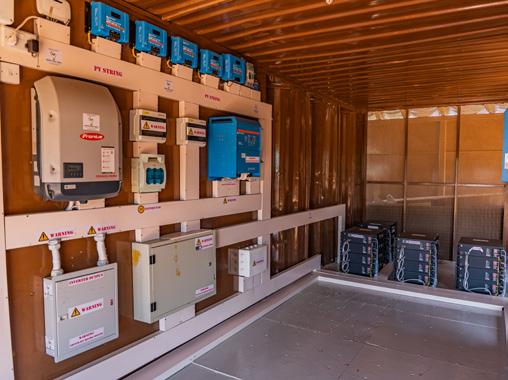
Kenya already generates over 90% of its mains electricity from renewable sources - including geothermal, hydro, wind and solar - making it one of the greenest energy grids in the world.
Both Giraffe Manor and Solio Lodge run off mains electricity - meaning they make use of these cleaner energy sources.
At all our properties we are always looking for ways to be more energy efficient and reduce our carbon footprint.
Recognition that Fuels Impact
AWARDS
Every accolade inspires us to continue striving for excellence while staying true to our values.
Top 15 Resorts in Central and East Africa
Sasaab - No.2
Sala's Camp - No.3
Top 5
and
We are honoured to have been recognised by some of the world’s leading hotel and resort awards this year. Each acknowledgment shines a light not only on Kenya’s wild beauty, but also on the warmth, creativity and dedication of the people who make our safaris possible.
For us, these achievements carry meaning far beyond hospitality. A thriving business allows us to deepen our support for conservation and community initiatives across Kenya, from protecting endangered species to empowering future generations through education.
We are also grateful to stand alongside leading environmental and responsible tourism organisations, working collectively towards a more sustainable future. Every award is a reminder that true success lies not in status, but in purpose: ensuring that Kenya’s landscapes, wildlife and cultures continue to flourish for generations to come.
MEMBERSHIP

Hôtel & Lodge
Sala’s Camp and Sasaab are members of The Long Run and Sasaab is a certified GER®
Best Resorts in the World in the ‘Rest of Africa’ Sasaab - No.12
Best Hotels in Eastern and Southern Africa Giraffe Manor - No.8
Solio Lodge - No.9
Hotels in Central
East Africa Giraffe Manor - No.2
100 Best Hotels in the World Sasaab - No.2
4-Star Rating Giraffe Manor
500 Best Hotels Giraffe Manor
Beyond the Safari: Fundraising with Purpose
$400,850 to Footprint Trust & partner projects
Every guest who stays with The Safari Collection helps drive meaningful change. Through conservation fees and generous donations to The Footprint Trust, we channel the power of tourism into tangible impact. In 2024, together we invested over $2,071,000 into conservation and community initiatives across Kenya, including $400,850 raised directly through kind-hearted guest contributions, giraffe sponsorships, fundraising events, and the incredible generosity of our non-profit partners.
From safeguarding giraffes with the Giraffe Conservation Foundation and supporting translocations with the Kenya Wildlife Service, to supporting AFEW-Giraffe Centre’s Nubian giraffe breeding and education programmes, our commitment to these gentle giants runs deep. Whether selling Giraffe Conservation Coffee, celebrating World Giraffe Day, raising awareness through our Giraffe Sponsorship Programme or hosting our much-loved fundraising teas at Giraffe Manor, every effort helps ensure a future for giraffes in the wild.
In the Maasai Mara, we joined hands with the Narok County Government, Fondation Segré, the Connected Conservation Foundation, The Sheldrick Wildlife Trust, and 51 Degrees to bring cutting-edge technology to wildlife protection - safeguarding black rhinos and strengthening ranger capacity through advanced monitoring and training via a landscape-wide LoRaWAN network and EarthRanger systems.
Our impact also extends to communities: from providing scholarships, school lunches, teacher support, textbooks and new computer labs for young learners, to delivering clean water with The Samburu Project and hosting free dental clinics with SmileStar Dental Charity UK. Beyond funding, our dedicated TSC team volunteers their time - mentoring students, helping dig EarthSmiles, driving scholars, planting gardens, beekeeping, translating, assisting in clinics and even donating blood.
We extend our heartfelt gratitude to every guest, partner and supporter who stood with us. Together, we are protecting Kenya’s wild heritage while empowering the people who call it home.
For more information, or to make a donation, please visit thesafaricollection.com/footprint or email footprint@thesafaricollection.com
$64,150 to Kenyan conservation programmes AFRICAN FUND FOR ENDANGERED WILDLIFE
$13,000 to protect giraffes across Africa GIRAFFE CONSERVATION FOUNDATION
$917,000 to support reserve management and community development MAASAI COMMUNITIES
$400,500 to support reserve management and community development SAMBURU COMMUNITIES
$215,900 to rhino conservation and reserve management SOLIO GAME RESERVE
$400,850 to Footprint Trust and partner projects FOOTPRINT TRUST
75% of the school budget supported; 17 teachers and support staff salaries paid GIFTED HANDS SCHOOL
new conservation centre constructed with EarthRanger and LoRaWAN network in the Masai Mara CONSERVATION TECHNOLOGY
$
13 black rhinos ear-notched and GPS tagged MARA RHINO CONSERVATION
3 Nubian giraffe calves born to the breeding herd at Giraffe Manor GIRAFFE BREEDING PROGRAMME
2,071,000
41 students on full scholarships in schools, colleges and universities across Kenya CONSERVATION SCHOLARSHIPS
1 classroom constructed, 2 school computer labs set up and equipped. 250 textbooks provided SCHOOL INFR ASTRUCTURE
331 students taken on educational excursions SAFARI KIDS
$18,775 for equipment and uniforms MARA RHINO RANGERS
MEDICAL & DENTAL CLINICS
30 units of blood donated by employees BLOOD DONATION
over 400 patients received free general medical consultations and 684 patients received free dental treatment SUSTAINABLE RESOURCE USE
95% of waste recycled, composted or upcycled. Over 80% of power from renewable energy sources
EMPLOYMENT
515 employees worked for The Safari Collection
121,215 meals for 2,626 students at 12 schools FEEDING YOUNG MINDS PROGRAMM E
2,194 hours dedicated to upskilling our team EMPLOYEE TRAINING