Introduction
The Safari Collection was born from one family’s enduring passion for the African wilderness, a desire to share Kenya’s most remarkable landscapes with the world and a deep responsibility to protect them for generations to come. Today, that founding purpose continues to guide everything we do. Each of our properties is rooted in a distinct Kenyan ecosystem, home to extraordinary biodiversity and cultural heritage that is both irreplaceable and under increasing pressure.
Working today for a better tomorrow
~The Long Run ~
We believe that tourism, when done responsibly, can be a powerful force for good. By investing in highquality, low-impact experiences, we create longterm value that supports conservation, strengthens communities and sustains livelihoods. Our approach is grounded in achieving a working balance of The Long Run’s 4C holistic sustainability framework: Conservation, Community, Culture and Commerce. These pillars shape our decision-making, ensuring that environmental stewardship, social responsibility and commercial viability are intrinsically linked.
Through our Footprint Trust, we support a wide range of conservation initiatives and community partnerships across the regions in which we operate, from protecting endangered and threatened species to investing in education and healthcare. When communities benefit directly from conservation and tourism, they become active custodians of the landscapes they call home.
This Impact Report reflects our continued commitment to people, wildlife and place, and our belief that safeguarding Kenya’s wild spaces must remain at the heart of sustainable tourism.
A Word from our Founders
A Word from the Footprint Team
Giraffe Conservation: Protecting Four Species, One Future
Wildlife Rescue: Acting When the Fences Close In
Beyond the Breakfast Table: A Future for the Nubian Giraffe
Giraffe Monitoring and Tagging for Long-Term Protection
Conservation Technology in the Maasai Mara: Where Data Meets the Wild
Smarter Monitoring for Black Rhinos in the Maasai Mara
Regreening Westgate Community Conservancy, One Smile at a Time
Safeguarding Wild Dogs in the Samburu–Laikipia Landscape
Backing the Front Line: Strengthening Ranger Skills and Welfare
Bringing Smiles Home: Community Dental Clinics
Kindness in Action: Community, From the Inside Out
Conservation Scholarships: Growing Bright Minds for a Changing World
From Scholars to Stewards: Shaping the Future of Westgate
Conservation Scholars’ Camp 2025: Learning, Laughter and the 4Cs
Building Bright Futures: From Smart Learning to School Meals
The Blessing of Clean Water at Westgate Dispensary
The Land Smiles Back
Legends of The Safari Collection
Investing in Our People Guides’ Tales
Coffee Culture
Giving Thanks for Art
Future-Focused, Wild at Heart
The Worms & The Bees
Sustainable Sourcing: Our Edible Ethos
Wellness in the Wilderness
Recognition that Fuels Impact
Our Impact Partners
Beyond the Safari: Fundraising with Purpose
A WORD FROM OUR FOUNDERS
Our world is facing unprecedented social and environmental challenges, and here in Kenya we see these realities daily in the bush. Species extinction is no longer an abstract threat; Kenya’s wildlife is under increasing pressure, and their survival depends on collective action. No single organisation can address these challenges alone.
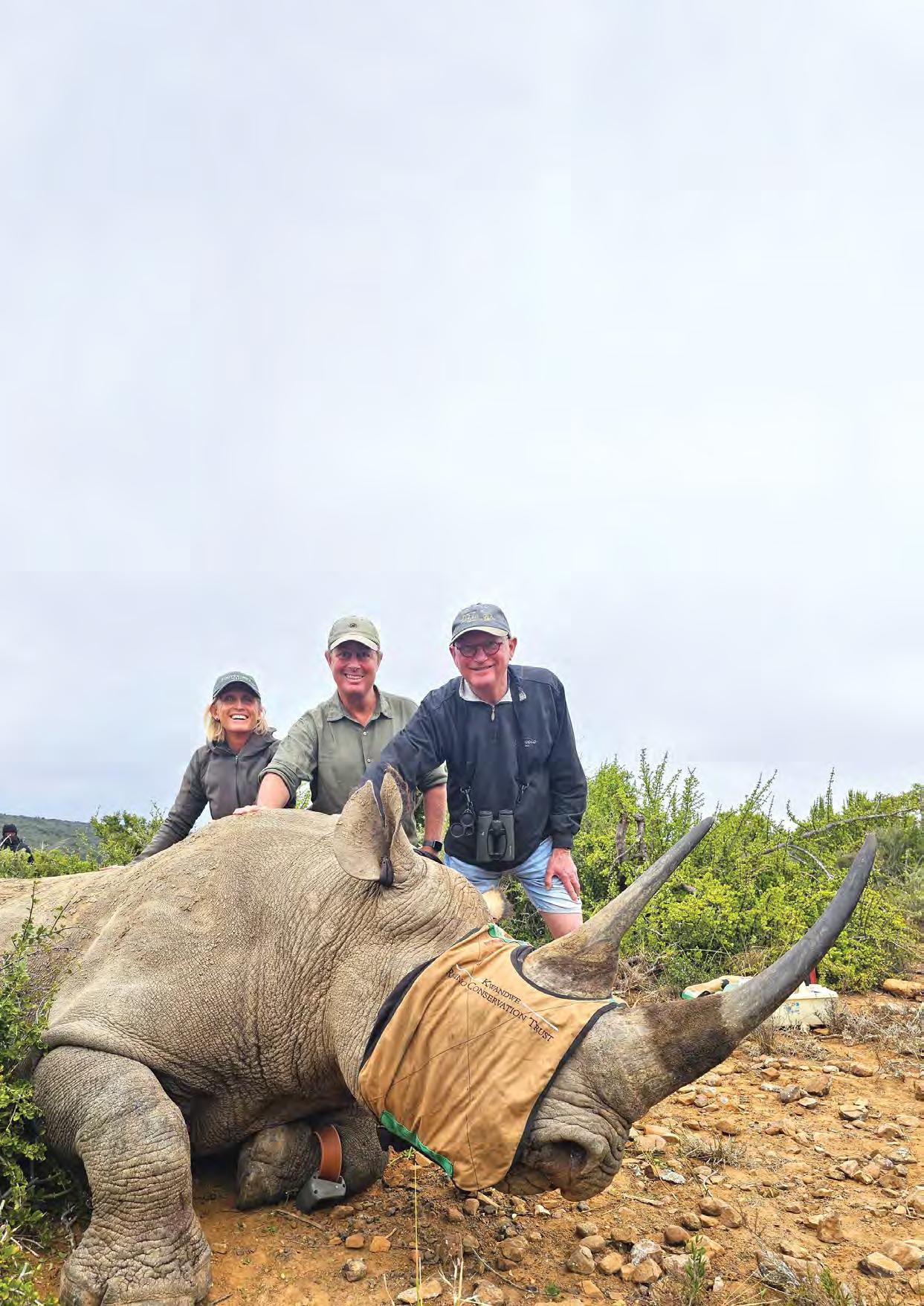
For us, tourism has never been just about hospitality. It is a practical tool for protecting wilderness and creating opportunity for the communities connected to it. The Safari Collection was founded on a vision to protect wilderness in perpetuity through a balanced approach rooted in The Long Run’s 4Cs – this philosophy continues to guide every decision we make.
Through our Footprint Trust, we work hand in hand with communities and conservation partners across Kenya to protect ecosystems, support education and livelihoods, and champion species that are too often overlooked. These partnerships are our greatest strength. Guests, staff, community members and conservation organisations together form the “village” needed to safeguard biodiversity for future generations.
Our commitment is long-term. Each Footprint project is designed to be innovative, measurable and impactful, ensuring lasting benefits for both people and wildlife. We remain deeply inspired by Kenya’s landscapes and driven by the responsibility to protect them. When we look to the future, our hope is simple: to leave a positive, enduring Footprint on the land, its people and its wildlife.
Tanya, Mikey Carr-Hartley & Michiel Hoogerwerf
(The Safari Collection Founders)
A WORD FROM THE FOOTPRINT TEAM
As the Footprint team, we are proud to share this Impact Report - a reflection of what is possible when conservation, community, culture, commerce and collaboration sit at the heart of everything we do. In a world facing the twin challenges of biodiversity loss and climate change, our commitment remains clear: to work alongside communities, partners and colleagues across Kenya to create lasting, positive impact for people, wildlife and landscapes.
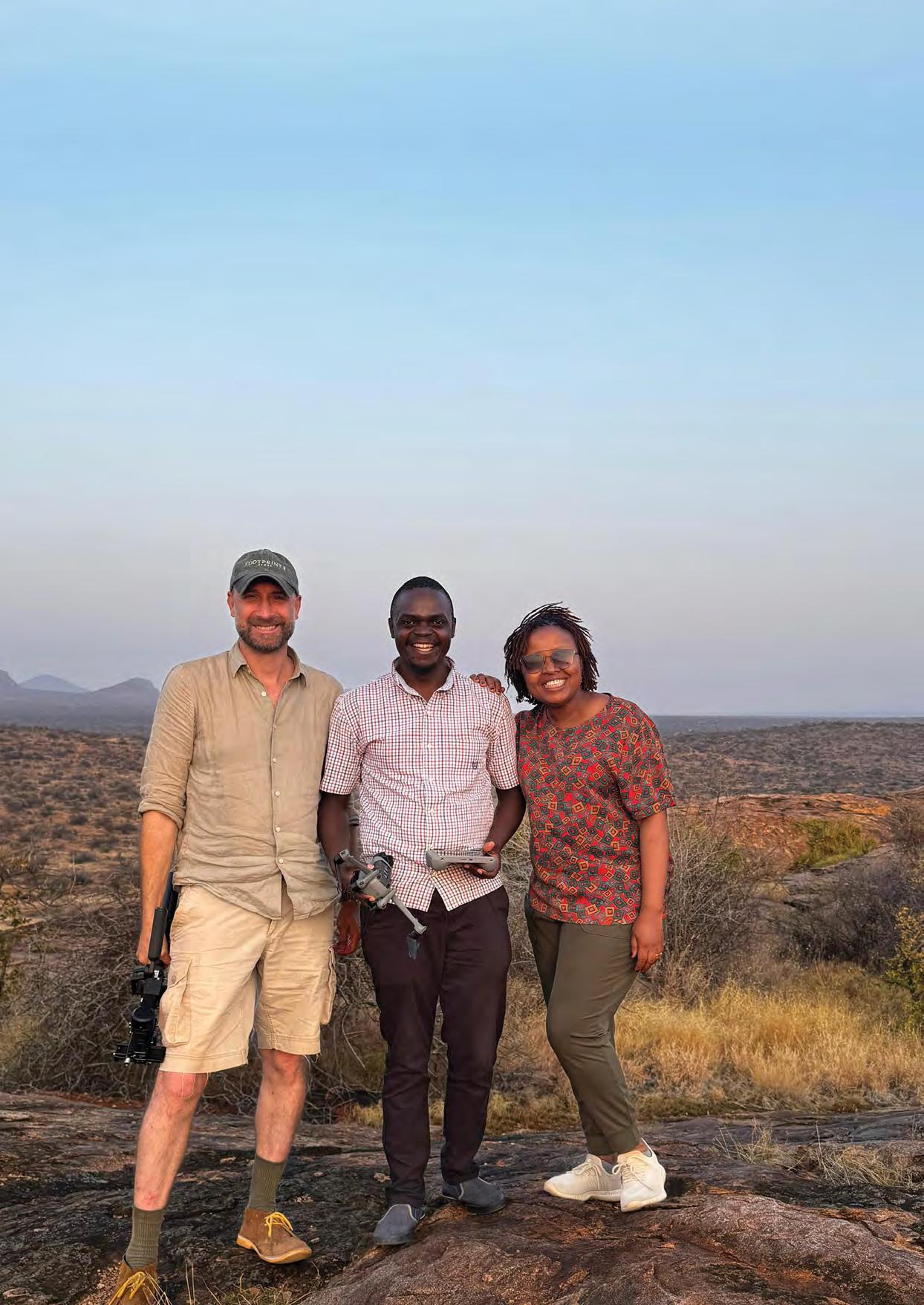
This year has seen growing support from our donors, partners and employees, whose belief in our shared mission continues to strengthen the reach and depth of our work. Various partners’ commitments have meaningfully complemented the work we do. Likewise, our passionate employees have embodied our ethos by integrating the 4Cs into their daily work. Every guest who stays with us contributes directly to conservation and community initiatives through the conservation fees they pay. Alongside generous donations to our Footprint Trust, this collective support enables meaningful action.
Technology is playing an increasingly important role in this journey. From conservation monitoring and data-driven decision making to improved access to education, healthcare and community development, innovation is helping us work smarter, faster and more collaboratively than ever before. None of this impact is achieved alone. We are deeply grateful to our dedicated colleagues, inspiring community partners, committed supporters and generous guests who make this work possible.
Oli Dreike, Mourice Barasa & Cecilia Mueni (The Safari Collection Footprint Team)
$ 59,715 to Kenyan conservation programmes
$ 15,500 for protecting giraffes across Africa
178
giraffe sponsorships
75% of the Gifted Hands School budget supported; 17 teachers and support staff salaries paid
+300
animals translocated to safer habitats
3 Nubian giraffe calves born to the breeding herd and 2 rewilded
SCHOOLS
1 science laboratory and 1 classroom constructed; 1,960 textbooks provided
+ $57,500
Footprint Trust impact
Our Year in Review

$ 837,670 to support reserve management and community development
$19,500 for Mara rhino rangers’ equipment and uniforms
+80 rangers and employees trained in wilderness first aid
+100 rangers and employees trained to use EarthRanger
black rhinos GPS ear-tagged
LoRaWAN
network expanded and Mara rhino camera trap network set up
10 black rhinos ear-notched
+ $85,000
Footprint Trust impact
GIRAFFE MANOR
SOLIO LODGE
SALA’S CAMP
Masai giraffe GPS tagged
$ 516,000 to support conservancy and reserve management and community development
2 African Painted Dogs fitted with GPS collars
107,200 meals for 2,096 students in 8 schools around Westgate Conservancy
SCHOOLS
2 classrooms constructed, 1 teacher’s house, 910 textbooks and 40 desks provided
240 patients received free dental treatment
1 award winning Samburu short film produced
OVER 1,500 people have access to clean water due to the new community solar borehole
38 students on full scholarships in schools, colleges and universities across Kenya with 3 graduating from university + $130,000
Footprint Trust impact
$ 260,100 to reserve management and rhino conservation
3 students on full scholarships in secondary schools
324 patients received free dental treatment
1 school science laboratory constructed
1 school computer laboratory constructed
65,400 meals for 1,108 students in 4 schools around Solio + $ 65,000
6,500 domestic dogs vaccinated to protect African Painted Dogs in Laikipia
Footprint Trust impact
CONSERVATION
Healthy ecosystems and species diversity are essential for people and our planet. Conservation protects this biodiversity to meet global needs.
Our conservation efforts in 2025 were again centred around giraffe and black r hino, with a focus on translocation and monitoring, as well as protecting and regenerating wild landscapes, whilst at the same time continuing our efforts to reduce our environmental impact.
Giraffe Conservation:
Protecting Four Species, One Future
In 2025, we deepened our commitment to giraffe conservation in Kenya, supporting science-led action, community engagement and national collaboration at a time of major change for giraffe protection across Africa.
A significant milestone came when Footprint’s Mourice Barasa joined a Giraffe Range Committee meeting in Naivasha, working alongside the Kenya Wildlife Service (KWS) and the Giraffe Conservation Foundation (GCF) to review Kenya’s Giraffe Conservation Action Plan and strengthen protection of Nubian (formerly Rothschild’s) giraffe rangelands. A key focus was ensuring local communities remain active participants in conservation decisions that shape both their land and livelihoods.
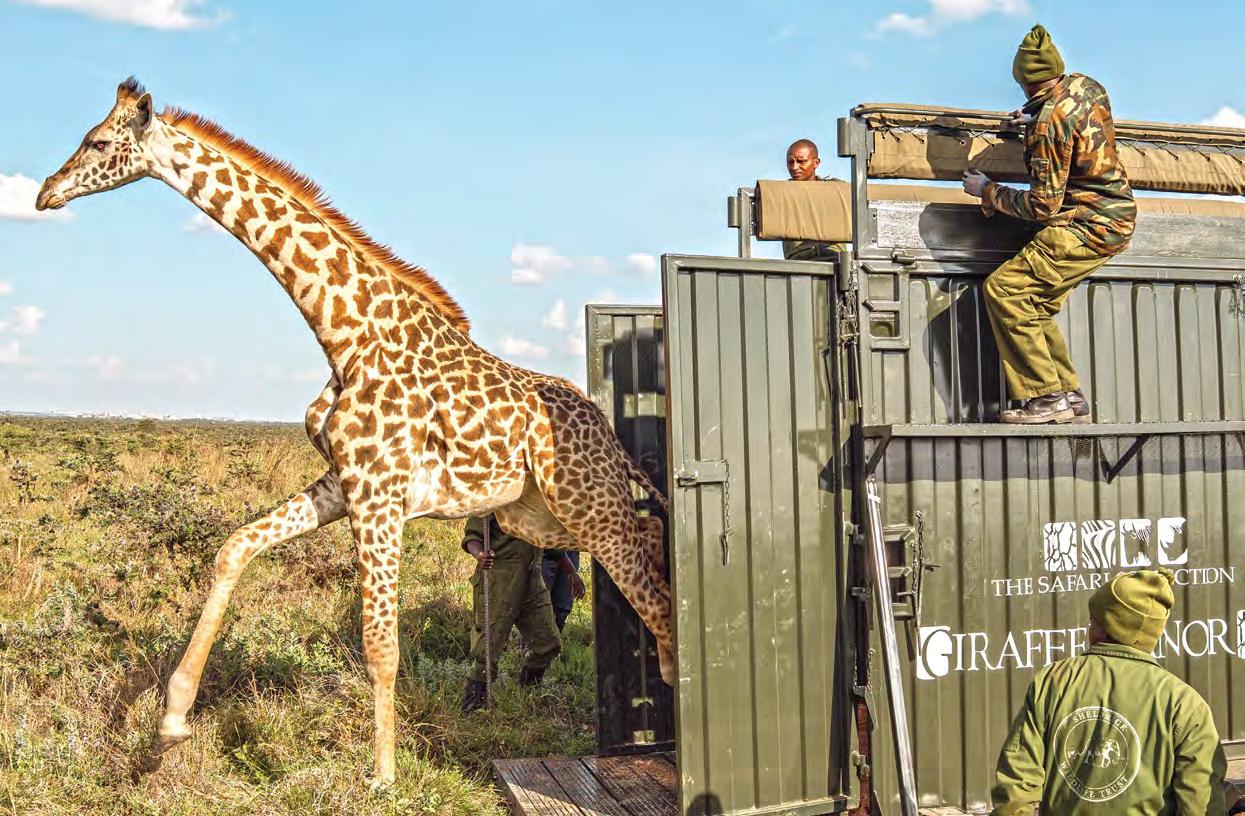
At Giraffe Manor, we also welcomed the GCF team to explore how technology can better support giraffe protection. This included tagging giraffes during translocations to improve longterm monitoring, refining translocation crate design, and planning monitoring and tagging exercises in the Maasai Mara.
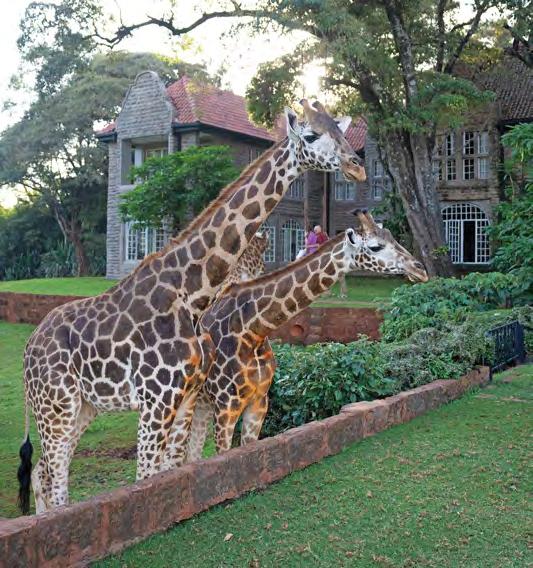
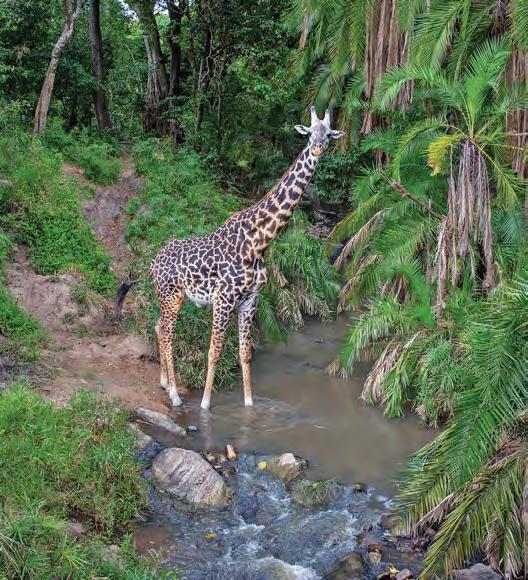
World Giraffe Day (21 June) offered a moment to pause and reflect, bringing together conservation partners and guests at Giraffe Manor for live giraffe-inspired artwork by Kenyan artist Adrian Nduma and thoughtful conversations about the future of giraffes. The year felt especially significant as the IUCN officially recognised giraffes as four distinct species, allowing conservation to become more targeted and effective. Encouragingly, GCF’s State of Giraffe 2025 report shows positive population trends for three of the four species, a direct result of effective conservation actions, dedicated research and growing global awareness.
Through partnerships, storytelling and engagement with our guests, The Safari Collection continues to play an active role in ensuring giraffes remain an enduring symbol of Africa’s wild landscapes, now, and for generations to come.
Not only are our conservation efforts paying off, but with the support of our partners, we are getting better at monitoring and protecting these iconic creatures
~Stephanie Fennessy, Executive Director, Giraffe Conservation Foundation
~
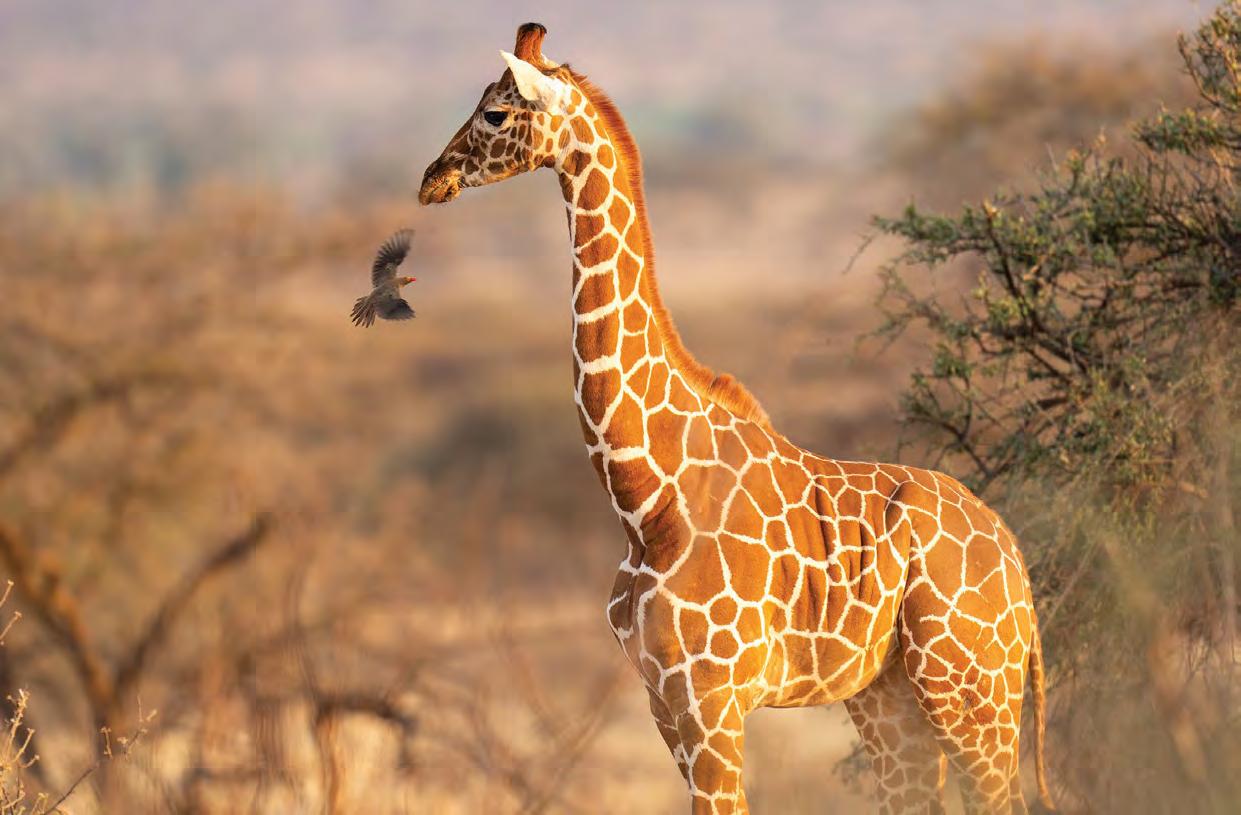
$15,500 to the Giraffe Conservation Foundation for protecting giraffes across Africa
Wildlife Rescue:
Acting When the Fences
Close In
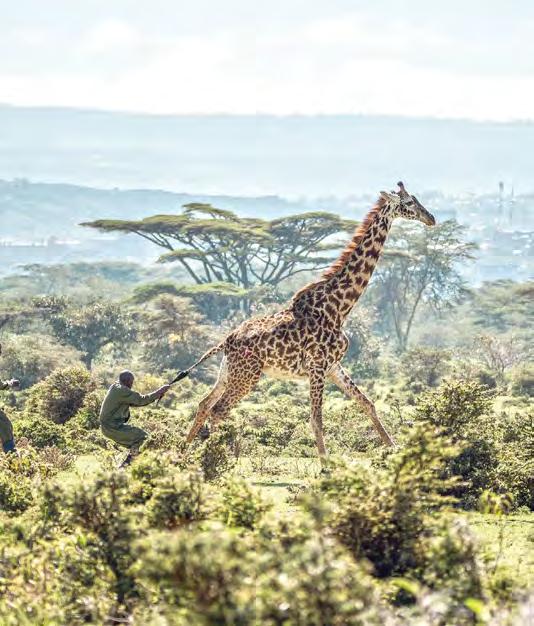
At Kedong Ranch, near Naivasha, the landscape is changing faster than wildlife can adapt. As fencing spread across once-open rangeland, urgent action became unavoidable.
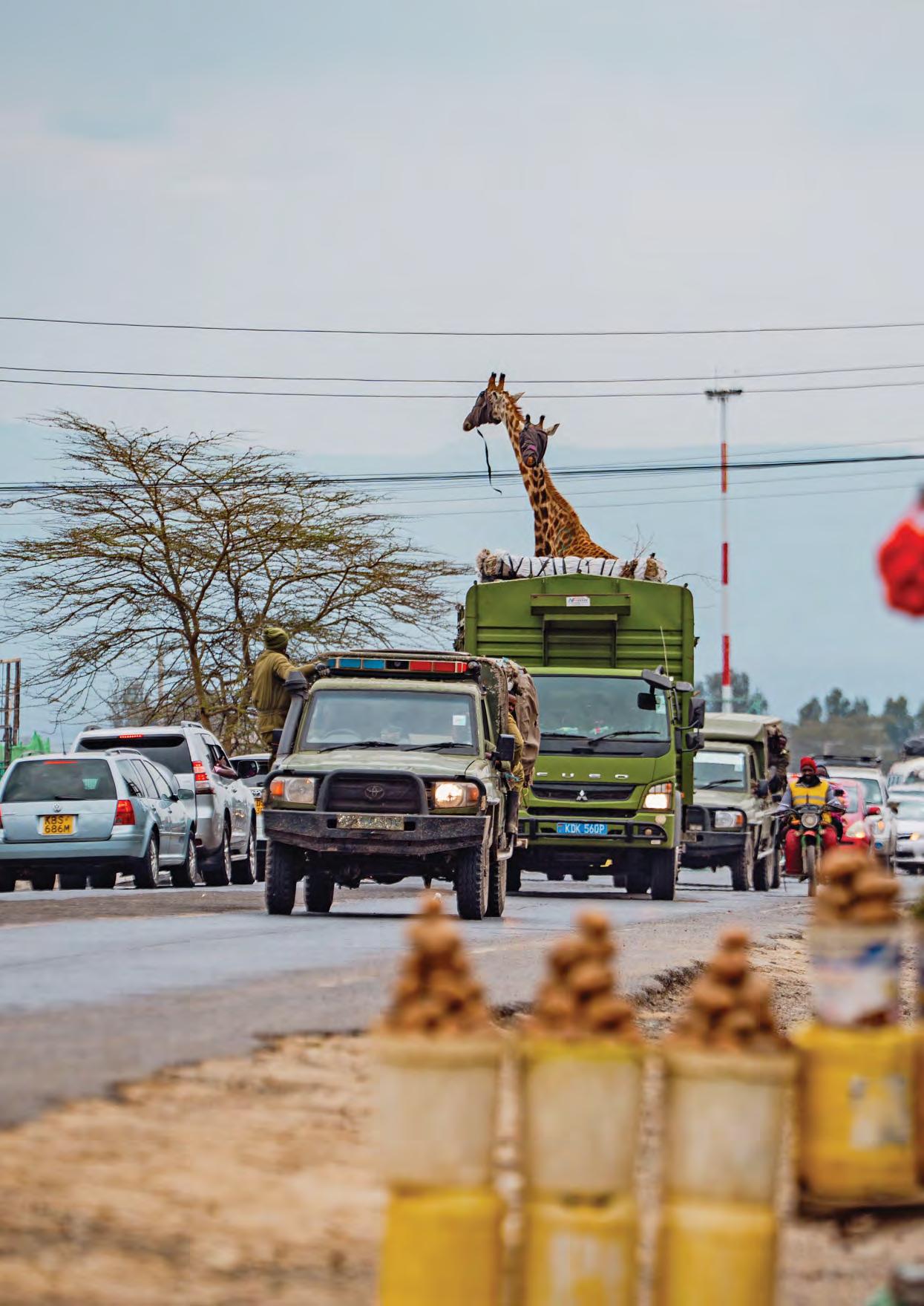
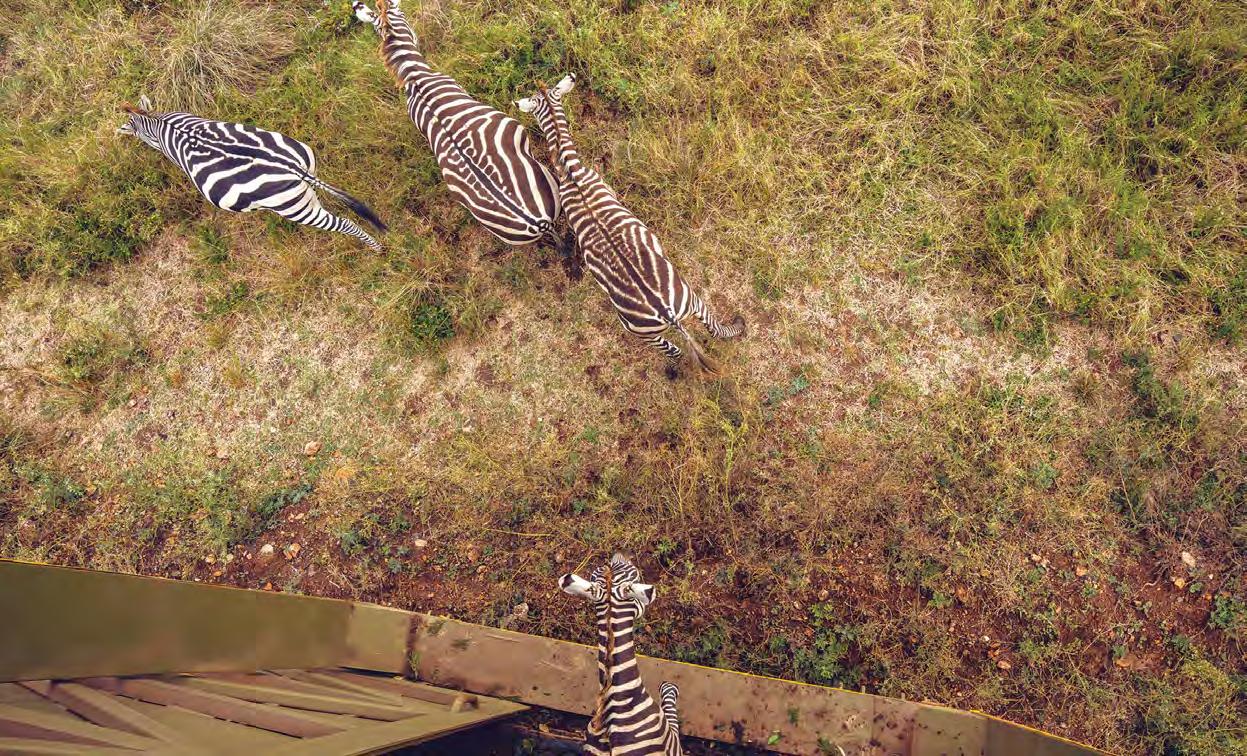
Kedong’s land has been carved into plots where wildlife is fenced in, cut off from water and poached. Our counts revealed over 1,500 animals, so we collaborated in one of Kenya’s largest wildlife rescues
~ Mikey Carr-Hartley, Director of The Safari Collection ~
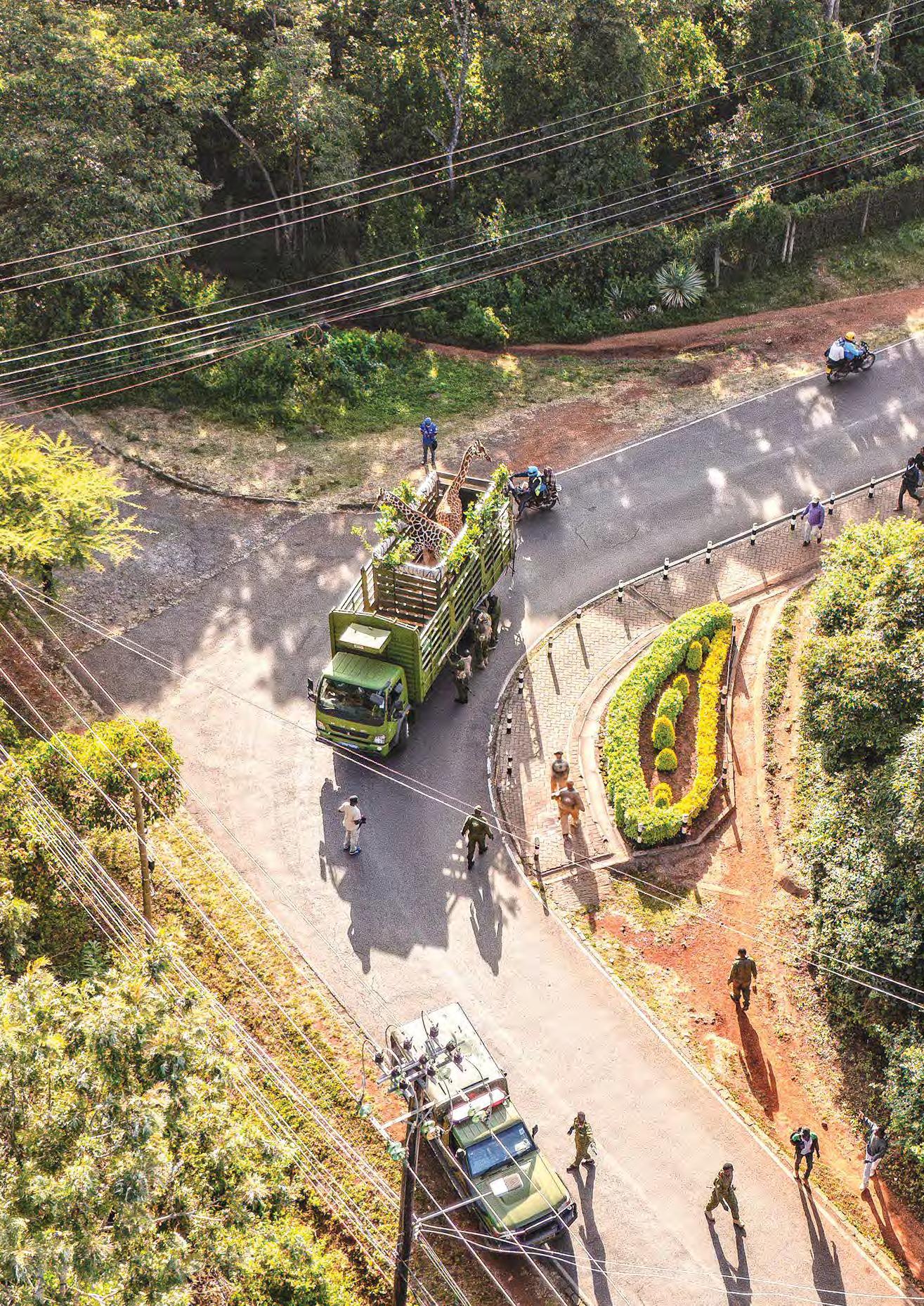
Working alongside the Kenya Wildlife Service (KWS), the Giraffe Conservation Foundation (GCF), Save Giraffes Now and Helicopter Charter EA, The Safari Collection supported a largescale wildlife rescue and translocation effort in September. To date, more than 300 animals have been rescued from the Kedong area, including 27 giraffes, 138 zebras, 116 hartebeest and 29 Grant’s gazelles. Seven giraffes were safely translocated to Nairobi National Park, while others were relocated to the Wildlife Research and Training Institute (WRTI) and protected sanctuaries around Naivasha.
Technology played a key role in ensuring longterm impact. Seven of the translocated giraffes were fitted with GPS tags and are now monitored using the EarthRanger platform, enabling realtime tracking and helping to inform conservation decision-making.
“The Kedong giraffe translocation is a vital step to secure a future for giraffe threatened by habitat loss and fragmentation. With tracking technology, we can now monitor how they adapt to their new homes.” Dr. Arthur Muneza, GCF East Africa Coordinator
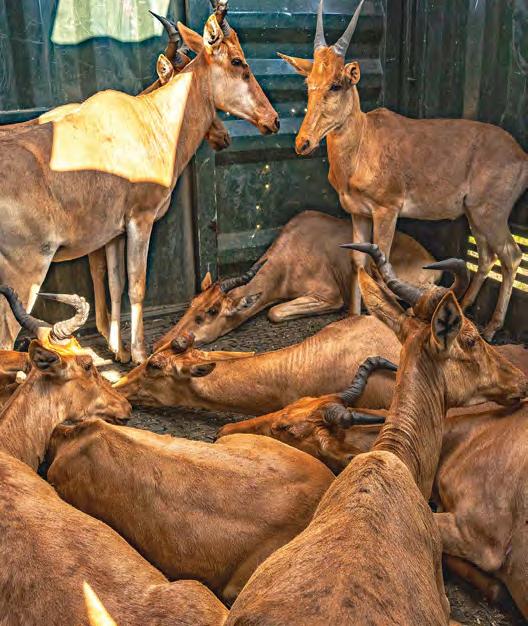
This large-scale intervention did more than move animals to safety. It relieved pressure on a rapidly changing landscape and bought time where it mattered most. When fences close in, decisive action counts and partnerships make it possible.
+300
animals, including 27 giraffes, translocated to safer habitats
SCAN TO WATCH
Beyond the Breakfast Table:
A Future for the Nubian Giraffe
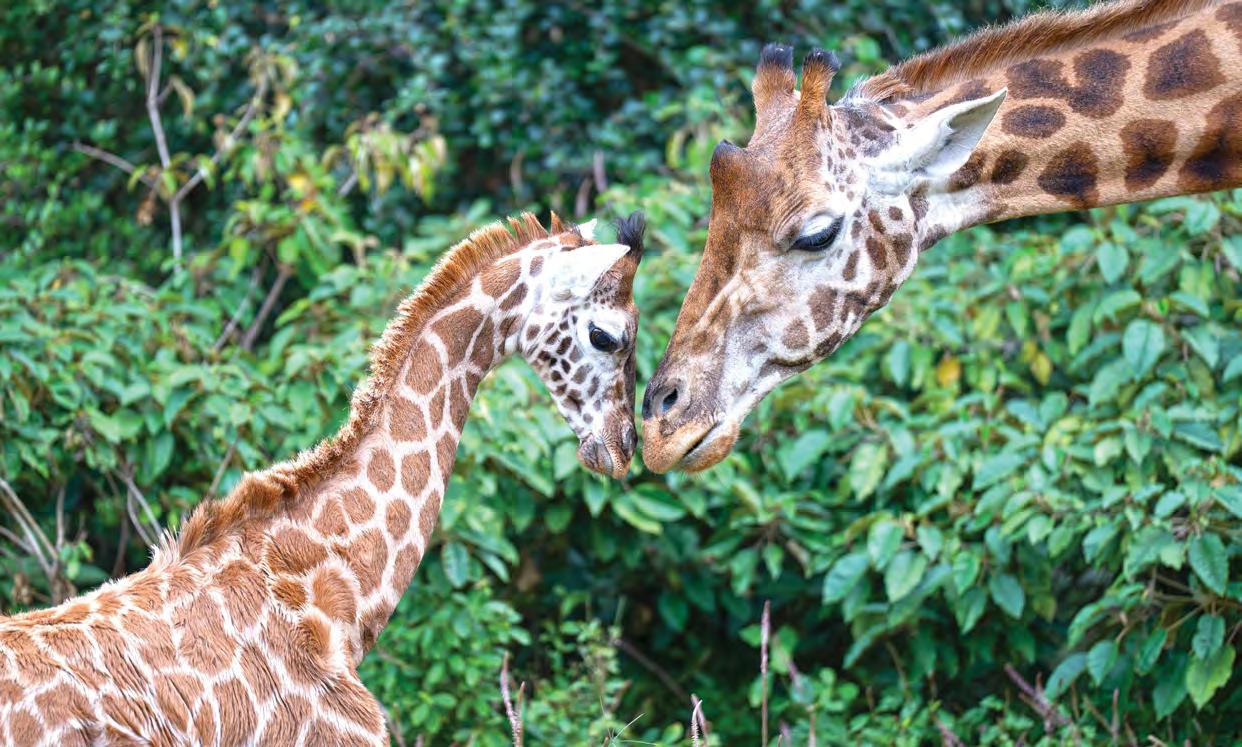
Giraffe Manor continues to play a vital role in securing the future of the endangered Nubian (formerly Rothschild’s) giraffe, combining longterm breeding success with active population management and hands-on conservation at the Nairobi Giraffe Sanctuary, in partnership with the African Fund for Endangered Wildlife (AFEW) and Kenya Wildlife Service (KWS).
On 22 January, we marked a significant milestone as Tururu and Jock IX were translocated by KWS from the Giraffe Sanctuary in Nairobi to Ruko Community Conservancy in Baringo. On 28 October, Mpopi and Gloria also said goodbye to the Giraffe Centre, as they headed to a new sanctuary. These carefully planned moves support the expansion of wild Nubian giraffe populations while preventing over-population and in-breeding within the sanctuary. Guests and team members gathered at Giraffe Manor to witness their departure, a quietly emotional reminder that good conservation sometimes means letting go.
The year also brought new life. In May, Salma delivered her seventh calf (Lilly II), filling the gap left by the departed Jock and Tururu. Lilly II has two unique marks on the right side of the neck: a hexagonal patch encircled by six smaller patches and a diamond-shape also framed by six patches. August brought more moments of celebration with the birth of two additional calves. On the 18th, our matriarch Kelly gave birth to a male calf (Jock XI), instantly recognisable by the distinctive oval patch on his neck. J ust days later, on the 31st, Daisy welcomed another calf, notable for its unique pentagon-shaped markings. These births raised the total number of giraffes successfully bred at Giraffe Manor to sixty-nine, with proud sire Edd now father to twenty-seven calves.
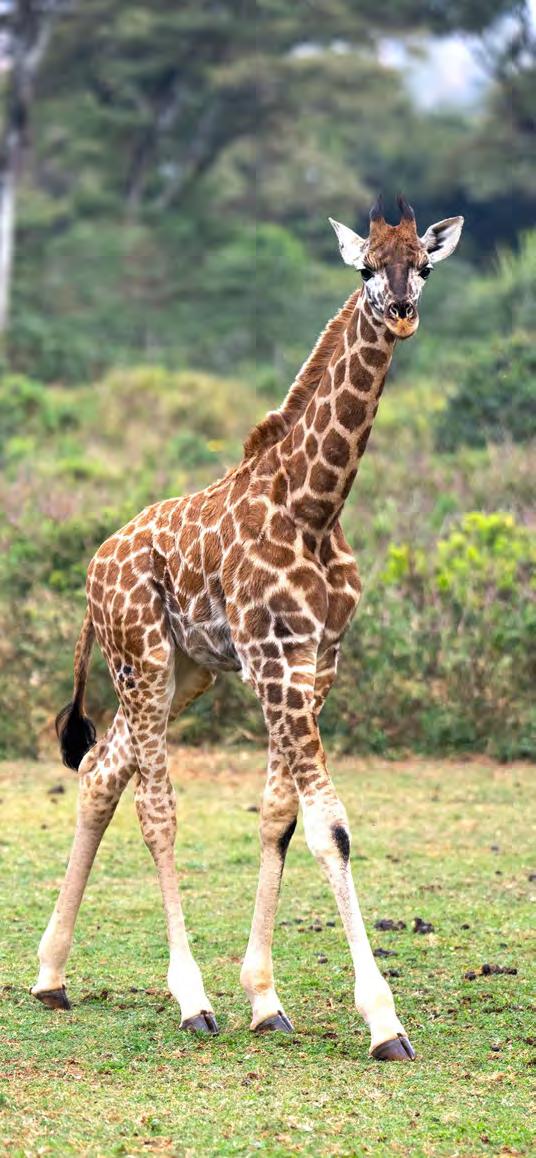
Seeing giraffes give birth, monitoring their growth, participating in rewilding, creating awareness and eventually witnessing the current steady population growth, gives us the motivation to work even harder and smarter
~Mourice Barasa, Footprint & Sustainability Educator, The Safari Collection ~
Nubian giraffe calves born to the breeding herd and 2 rewilded
Giraffe Monitoring & Tagging for
Long Term Protection
This year, our Footprint Trust expanded its support for the Giraffe Conservation Foundation (GCF), backing science-led giraffe conservation across two vital landscapes: the Maasai Mara and Mwea National Reserve. Working closely with Kenya Wildlife Service (KWS), the Wildlife Research and Training Institute (WRTI) and local authorities, the focus was simple but powerful: to know where giraffes are, understand the risks they face and act quickly when they need help.
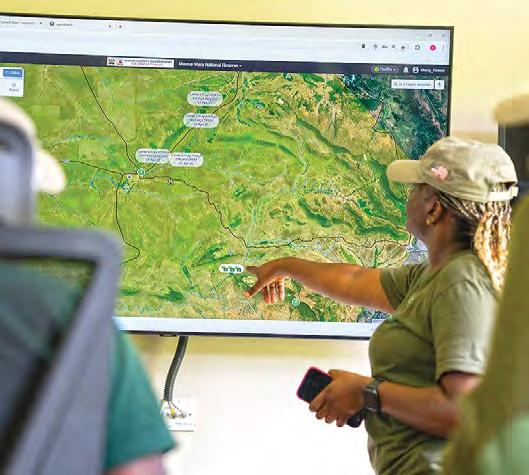
In June, Footprint’s Mourice Barasa and members of the Sala’s Camp guiding team supported a multi-day giraffe survey in the Maasai Mara led by GCF researcher Adam Kipchumba. Using GiraffeSpotter, an AI-powered platform that identifies giraffes by their unique coat patterns, individual animals were photographed and logged. These sightings were also recorded in EarthRanger, to build a detailed picture of giraffe movements, behaviour and population trends across the Mara ecosystem.
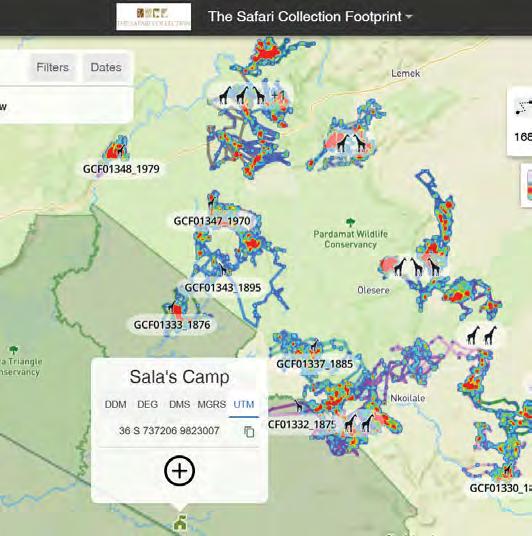
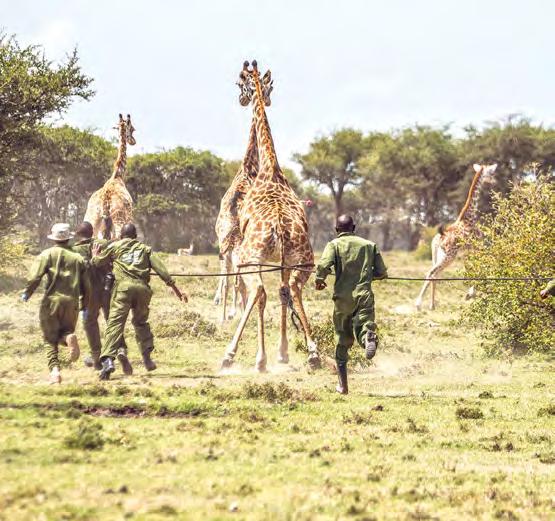
This work was complemented in September by a major giraffe tagging exercise led by GCF in collaboration the Narok County Government and KWS. A total of 23 Masai giraffes were fitted with GPS tail-tags, allowing near real-time monitoring through EarthRanger. This shared data supports and informs coordinated, real-time conservation decision-making across the landscape.
Mwea National Reserve, where Nubian giraffes from the AFEW and Giraffe Manor sanctuary have previously been rewilded, was the focus of the Footprint Trust’s support in August and again December. We provided financial assistance to conduct intensive monitoring and de-snaring operations alongside GCF, WRTI and KWS. Mourice joined field teams who recovered more than 160 snares and photographed 69 giraffes which were logged on EarthRanger and GiraffeSpotter, alongside aerial drone surveys to identify injured giraffe.
Together, these efforts reflect The Safari Collection’s commitment to protecting giraffes through collaboration, technology and decisive on-the-ground action, ensuring these iconic animals continue to move freely across Kenya’s wild spaces.
By carrying out both ground and drone surveys, we are able to understand snare-hotspot areas and make the right decisions to protect our wildlife
~ Faith Muchiri, Wildlife Research and Training Institute ~
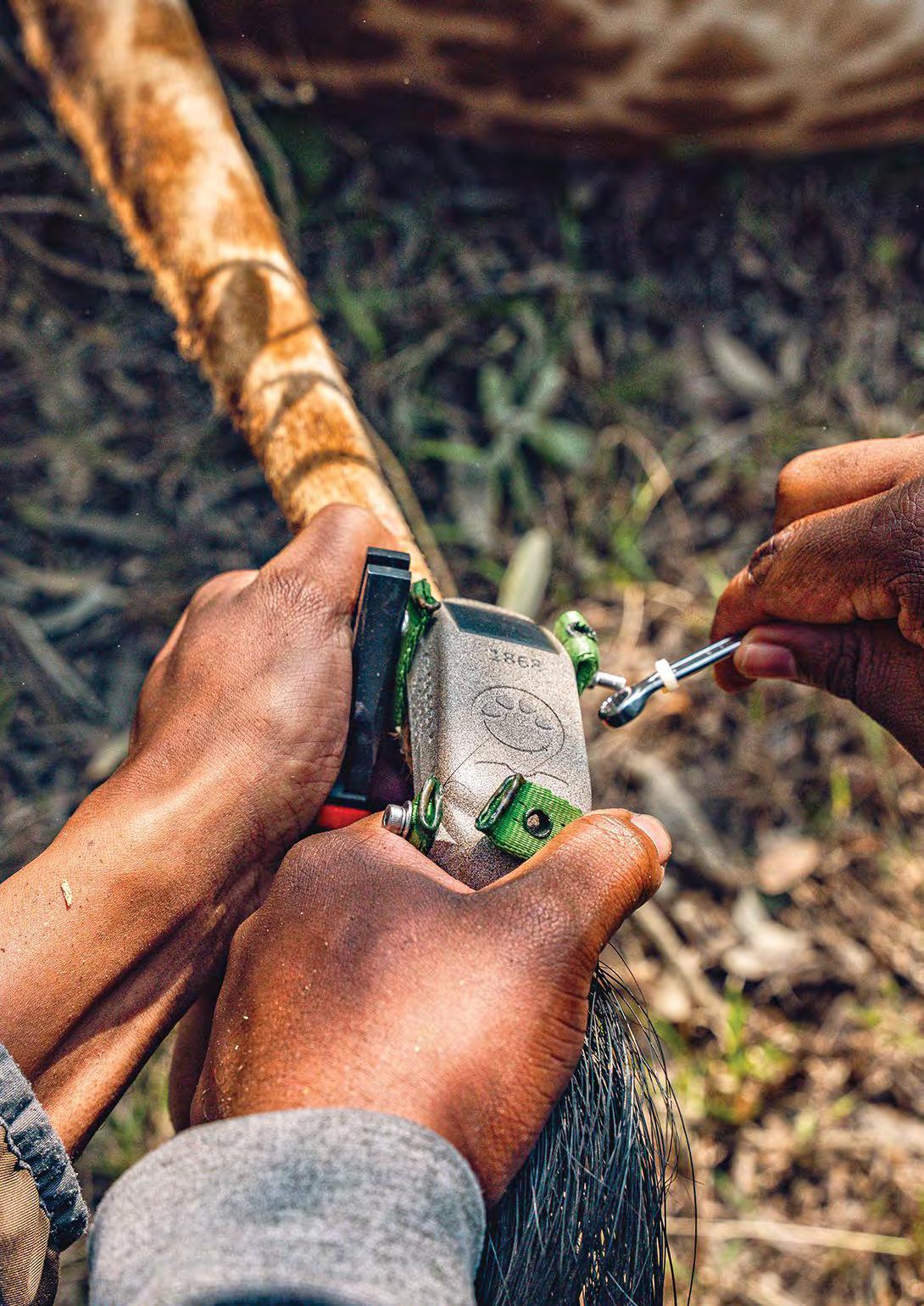
giraffe GPS tagged in the Maasai Mara, now appearing on EarthRanger
Conservation Technology in the Maasai Mara:
Where Data Meets the Wild
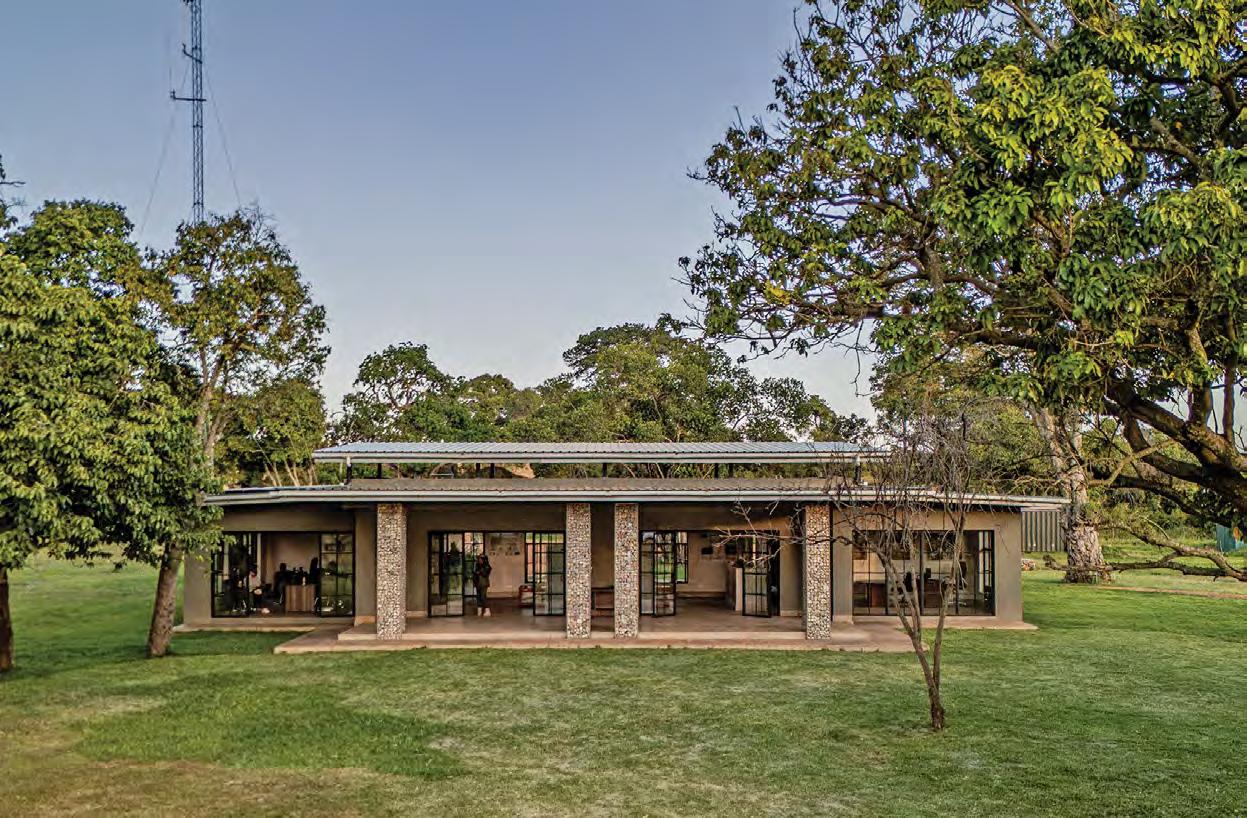
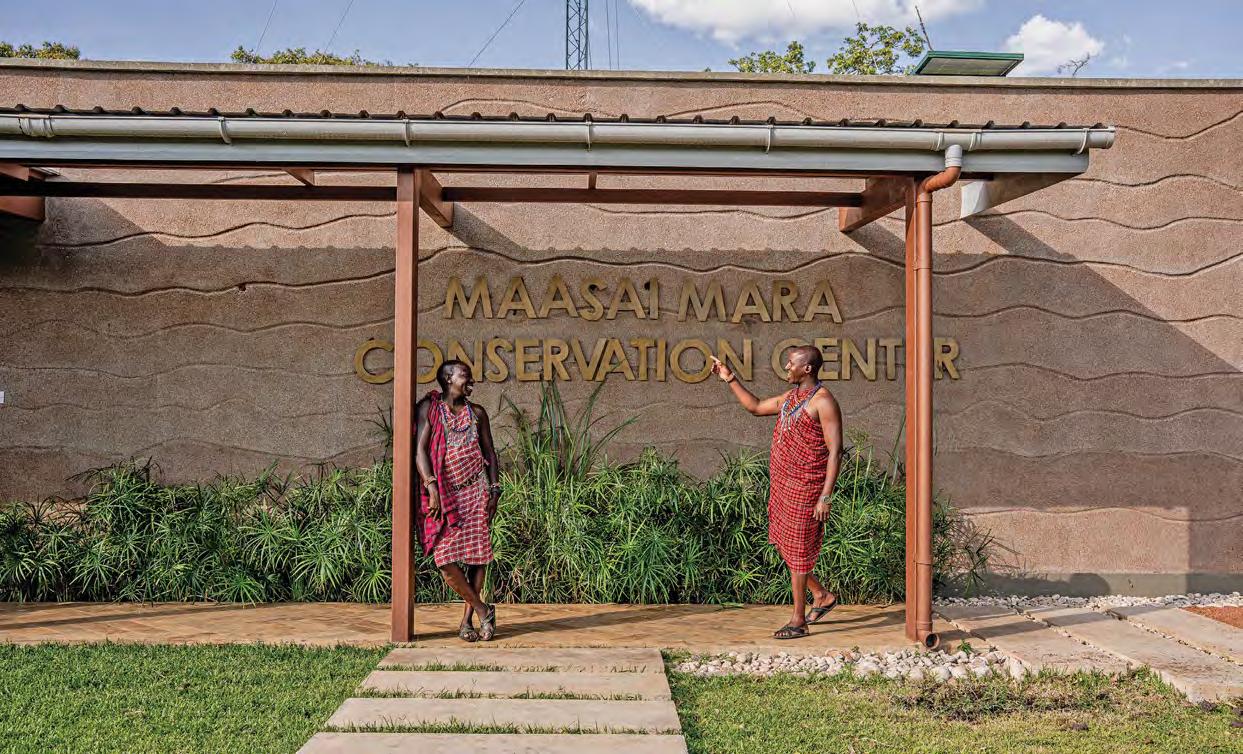
Over the year we increased our commitment to conservation through technology, placing data, connectivity and collaboration at the heart of wildlife protection in the Maasai Mara. Through our Footprint Trust, and in close partnership with the Narok County Government, the Maasai Mara Conservation Centre (MMCC) - which we opened in 2024 - continued to evolve as a hub for technology-driven, innovation-led conservation and protected area management.
Early in the year, six new weather stations were installed across the Mara, including one at Sala’s Camp, following the extension of the LoRaWAN network. These stations now feed live weather data directly into EarthRanger, giving MMCC management and research teams greater insight to support better-informed decisions on the ground.
August saw Sala’s Camp host key conservation technology donors whose support has been instrumental to the MMCC’s success. Connected Conservation Foundation’s donation of Cisco Meraki equipment to set up a LoRaWAN network has underpinned the Mara’s expanding digital infrastructure, while Fondation Segre’s continued backing has enabled the practical rollout of conservation technology across the ecosystem and supported capacity building. Seeing this impact first-hand reinforced the value of longterm, strategic partnerships.
Strengthening capacity remained central to this work. Rangers and conservation practitioners received training and mentorship from 51 Degrees Ltd, supported by the Footprint Trust.
In September members of the Footprint team and the Mara’s technical team attended the EarthRanger User Workshop at Lewa Conservancy,
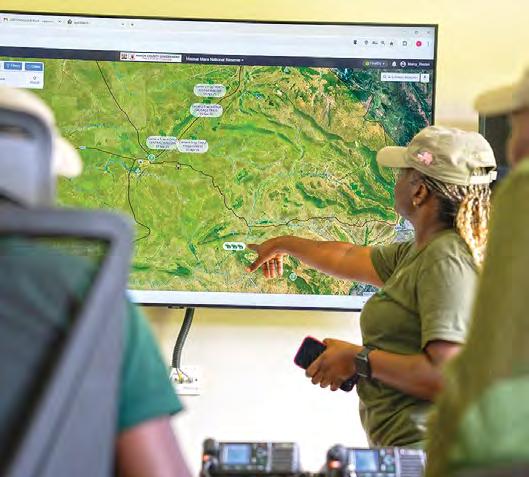
gaining hands-on training in data collection, analysis and protected area management.
In November, the Mara’s LoRaWAN network successfully migrated to a new national network and Kenya-based server. This milestone improved data security, local control and monitoring capability, strengthening the Mara’s ability to protect wildlife and manage tourism. Technology, when rooted in collaboration, can deliver lasting conservation impact.
This is a really exciting opportunity to maximise the use of the technology recently introduced into the Mara, helping rangers on the ground better monitor the Mara’s wildlife and tourism
~ Oli
Dreike, Footprint & Sustainability Director, The Safari Collection ~
LoRaWAN network expanded and Mara rhino camera trap network set up
SCAN TO WATCH
Smarter Monitoring for Black Rhinos in the Maasai Mara
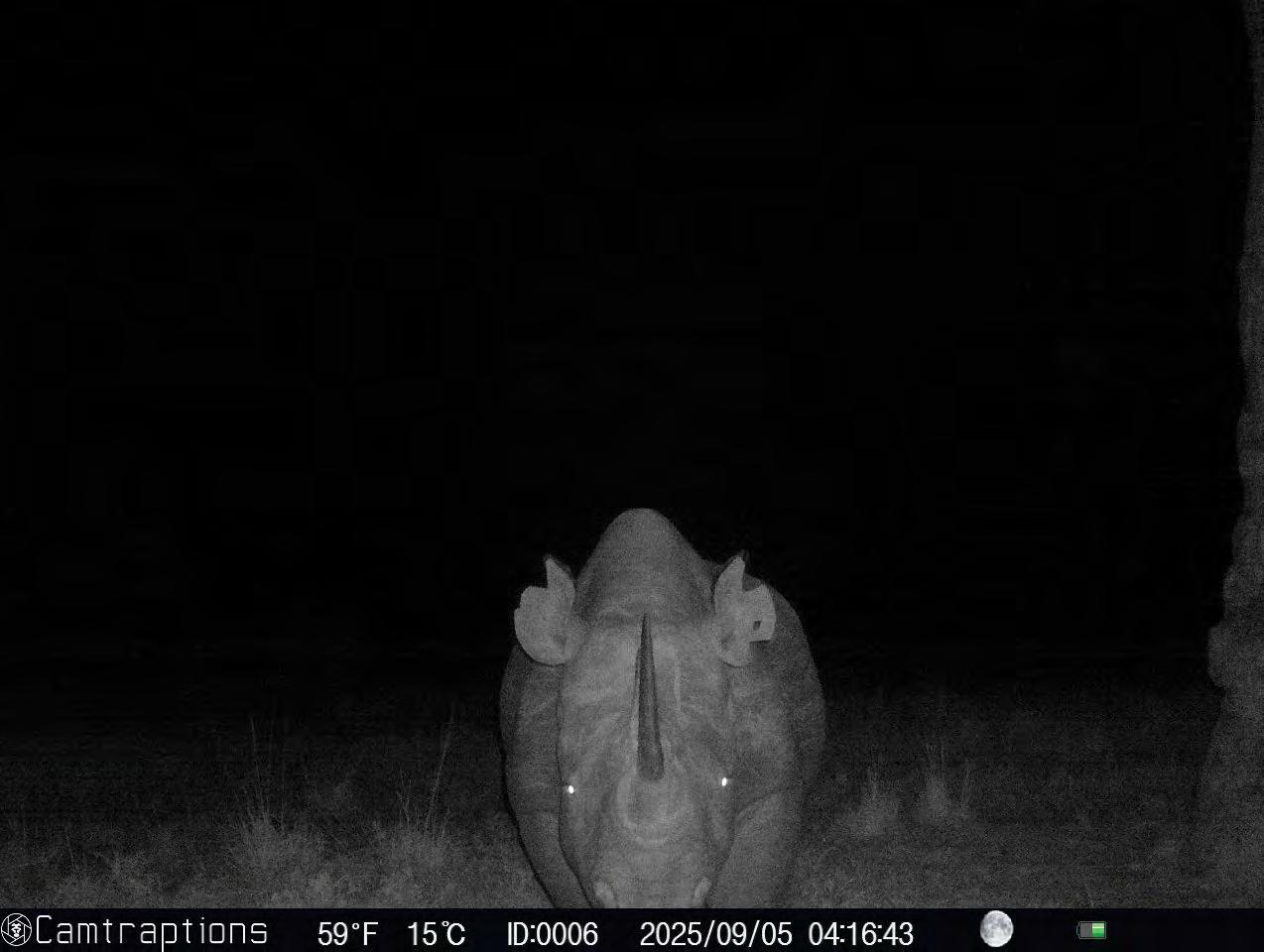
In the Maasai Mara, intensive field operations translated into stronger protection for the eastern black rhino, one of Africa’s most endangered species. In close partnership with the government and conservation organisations, we brought together technology and field expertise to safeguard this critically important population.
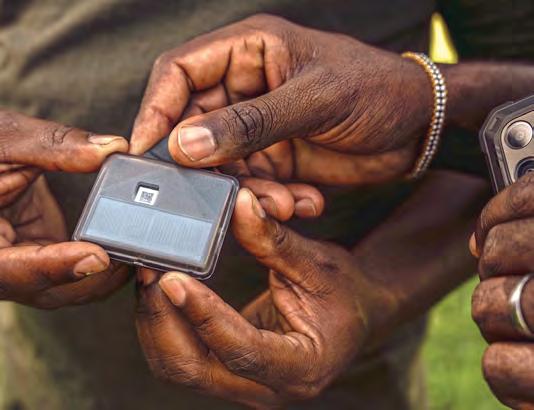
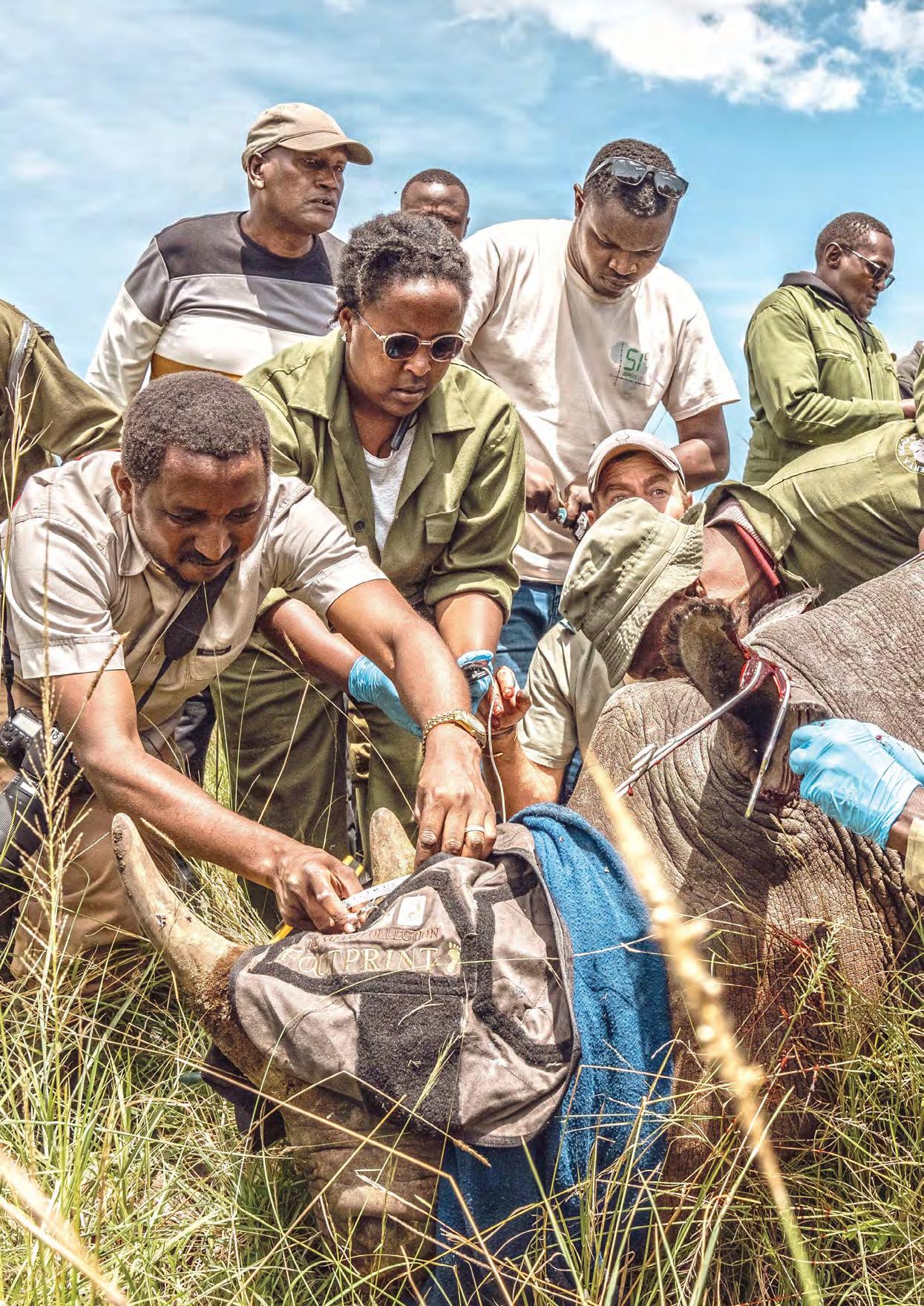
From 17 to 26 February, the Footprint Trust and Sala’s Camp supported a major black rhino ear-notching and LoRaWAN tagging exercise within the Maasai Mara National Reserve (MMNR). Led in collaboration with the Narok County Government, Kenya Wildlife Service, 51 Degrees Ltd, the Sheldrick Wildlife Trust, the Mara Conservancy and the Wildlife Research and Training Institute, the operation marked a significant conservation milestone. Over ten
days, teams successfully ear-notched ten rhinos from a pool of seventeen candidates, with fourteen individuals fitted with LoRaWAN eartags. In total, more than thirty-five individual rhinos were sighted during the operation.
These ear-tags transmit hourly location data via the LoRaWAN network to EarthRanger at the Maasai Mara Conservation Centre, enabling rangers to better understand home ranges and keep closer tabs on the tagged rhinos. This is vital in an ecosystem where many of the estimated 50 to 60 black rhinos move across the Kenya–Tanzania border. This work directly supports Kenya’s national goal of having at least 60% of the country’s black rhino population individually identifiable and aligns with rhino conservation
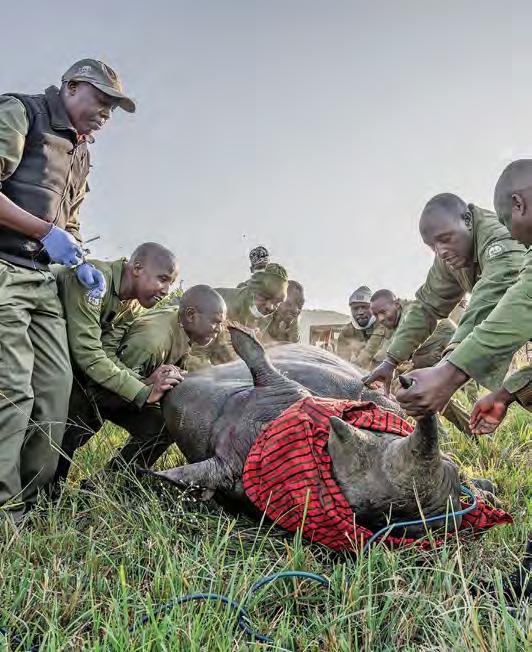
priorities within the MMNR’s Management Plan. Sala’s Camp also now has a specially designed vehicle available to support ranger teams in rhino monitoring and cheetah anti-harassment.
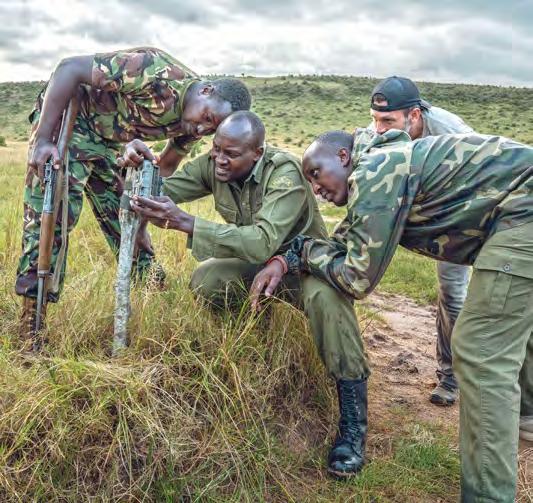
Innovation continued later in the year, with the launch of a pioneering rhino camera trapping initiative. Sala’s Camp hosted renowned wildlife photographer and camera trap expert Will Burrard-Lucas, who worked alongside the Mara Rhino Ranger Unit to pilot a network of strategically placed camera traps donated by Camtraptions. Designed to capture candid images of these elusive animals, the cameras provide a non-invasive way to photograph and identify individual rhinos. Images are uploaded into EarthRanger and KWS’s national rhino database, Kifaru, strengthening long-term monitoring and record-keeping. In the first six months of use, 27 individuals (approx. 50% of the Mara’s rhino population) were photographed by the camera traps, increasing rhino sighting reports by 30%.
When Will returned in June to refine and expand the network, the cameras captured five rhinos that had not been seen for over a year. This was a joyful moment that showed how collaboration and smart technology are reshaping rhino conservation in the Maasai Mara.
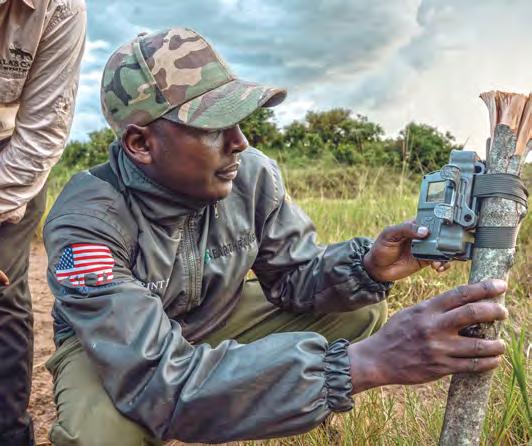
The rhino ear-notching exercises carried out in 2024 and 2025 have increased the number of notched rhinos in the Mara by 60%. The GPS tagging of rhinos alongside the notching is extremely helpful in tracking our rhinos on a daily basis, making monitoring easier
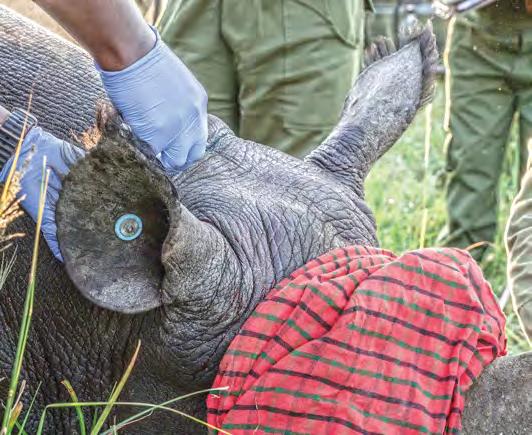
10 black rhinos ear-notched and 14 GPS ear-tagged
~Stephen Kenta, Rhino & Cheetah Warden, Maasai Mara National Resreve ~
SCAN TO WATCH
Regreening Westgate Community Conservancy
One Smile at a Time
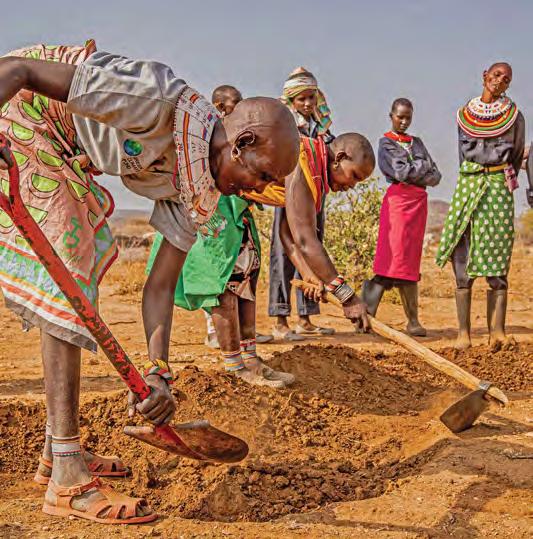
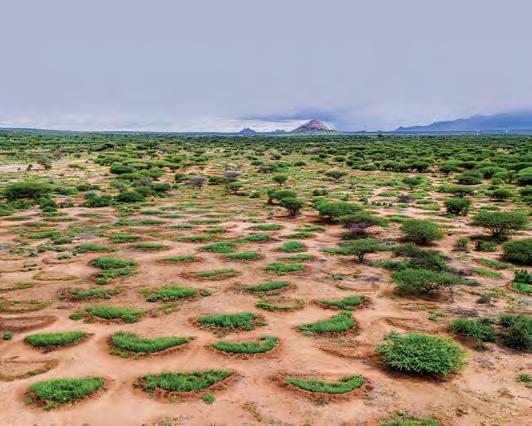
Westgate Community Conservancy (covering 400 km²) has emerged as a powerful example of how community leadership and conservation partnerships can work together to restore degraded rangelands. By embracing the digging of semi-circular water bunds (affectionately termed ‘Earth Smiles’) in partnership with Justdiggit, the Grevy’s Zebra Trust, Ewaso Lions and Sasaab, the Westgate community are applying locally led solutions that place people and culture at the centre of regeneration efforts.
In Samburu, cattle are more than livestock; they are central to identity, livelihoods and social cohesion. At Westgate, the Conservancy brings together young Samburu warriors (known as morans) to lead collective herding practices, or cattle bunching, which brings livestock together from multiple villages. This approach reduces overgrazing, supports pasture recovery and promotes peace between neighbouring communities. Recognising both
the environmental and social value of this system, Sasaab and our Footprint Trust partnered with the Westgate Conservancy to support zonal cattle bunching activities, providing food supplies to sustain herders.
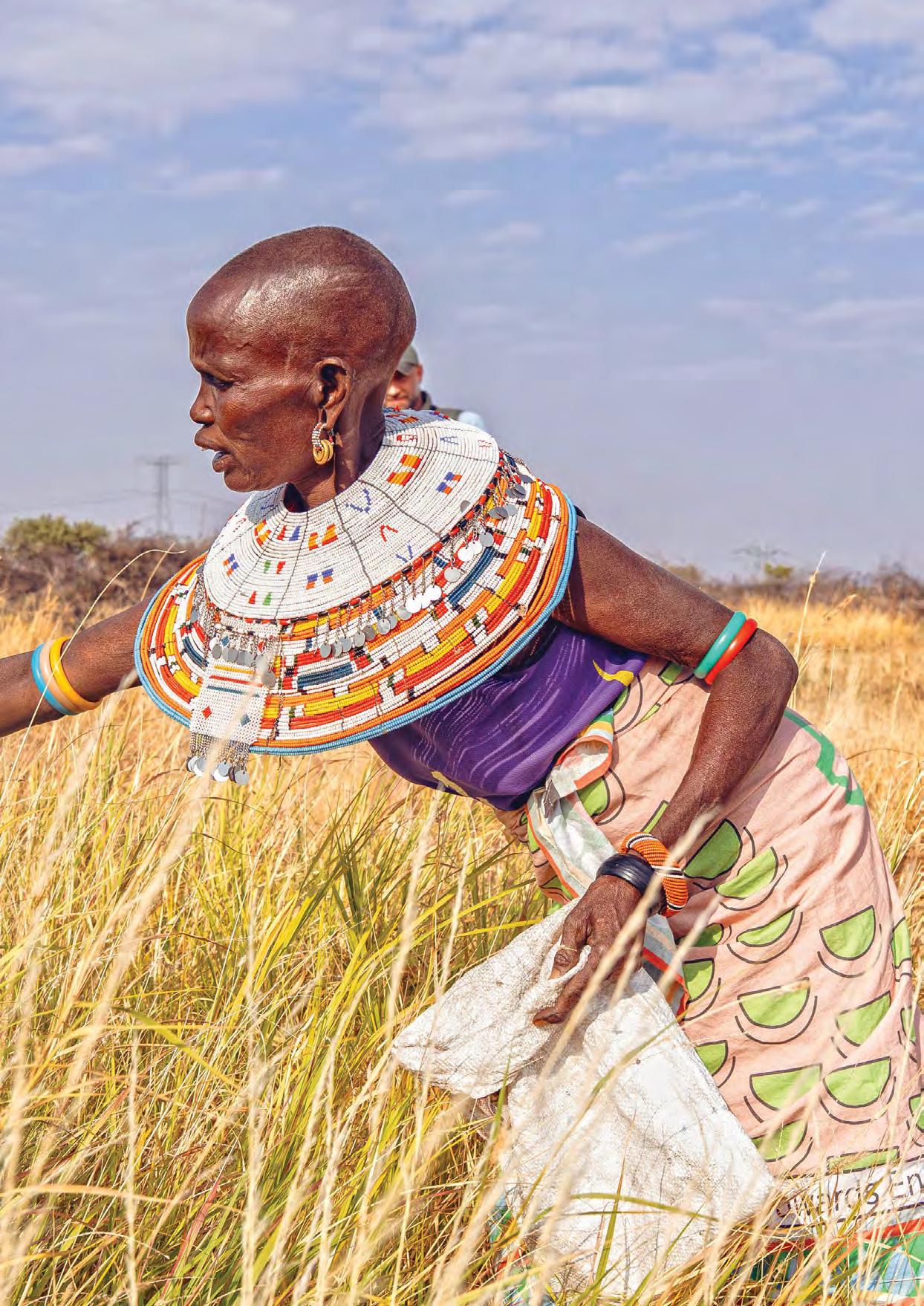
Alongside livestock management, the wider Westgate community have taken ownership to rehabilitate and regreen their land. Community members have come together to dig thousands of bunds - shallow, crescentshaped pits designed to capture rainwater, reduce erosion and encourage grass regrowth. Areas badly affected by gully erosion were prioritised, transforming once-degraded land into productive rangeland capable of supporting both wildlife and livestock. Women's groups are also leading community grass seed banks to restore degraded rangelands while harvesting grass seeds, generating income and strengthening their economic independence.
By the end of 2025, more than 80,000 bunds had been dug on the conservancy, with Grevy’s zebra and other wildlife already returning to previously barren areas - a remarkable achievement driven by local commitment and shared purpose, allowing the land, quite literally, to smile again.
The adoption of this simple, cost-effective soil and water conservation technique (semi-circular bunds) has increased water retention and reduced soil run off to promote pasture production that can support both wildlife and livestock and transform our community livelihoods
~Alex Lekalaile, WCC Rangelands Coordinator ~
+ 80,000
Earth Smiles dug by the Westgate community
Safeguarding Wild Dogs
in the Samburu–Laikipia Landscape
Through our Footprint Trust, the generous support of our guests and additional backing from The Safari Collection, we were able to provide vital funding to the Samburu-Laikipia Wild Dog Project. This is one of the most important initiatives protecting Kenya’s remaining African wild dog populations. Based at Mpala Research Centre and run in collaboration with the Zoological Society of London, the project works across community and private lands in Laikipia, Samburu and Isiolo to promote coexistence between people, livestock and carnivores, manage disease risks and maintain vital landscape connectivity.
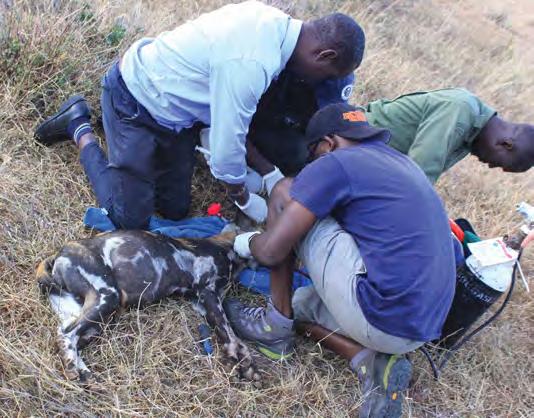
Before our support, this project was critically underfunded and close to shutting down. One very generous donation allowed immediate recovery, reinstating essential staff and covering fuel, vehicle maintenance and day-to-day monitoring and outreach. Two GPS collars were deployed, enabling continued tracking of the project’s two main wild dog packs, while a largescale rabies vaccination campaign reached over 6,500 domestic dogs, protecting people, livestock and wild dogs alike. Community education in local schools further strengthened long-term coexistence.
These efforts have reduced disease risk and human-wildlife conflict, helping ensure this endangered species continues its recovery in the Ewaso ecosystem.
$90,000 towards vaccinations, monitoring, outreach and operational costs in Samburu and Laikipia
We express our sincere gratitude and appreciation for the recent support towards our project. This support arrived at a time when we had completely run out of funds and urgently needed to find ways to keep the project running
~ Dr. Dedan Ngatia, Project Leader, Samburu-Laikipia Wild Dog Project ~
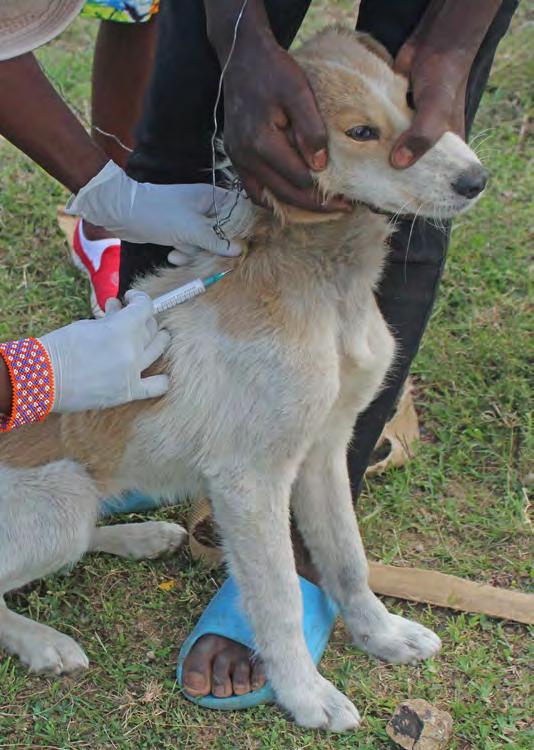
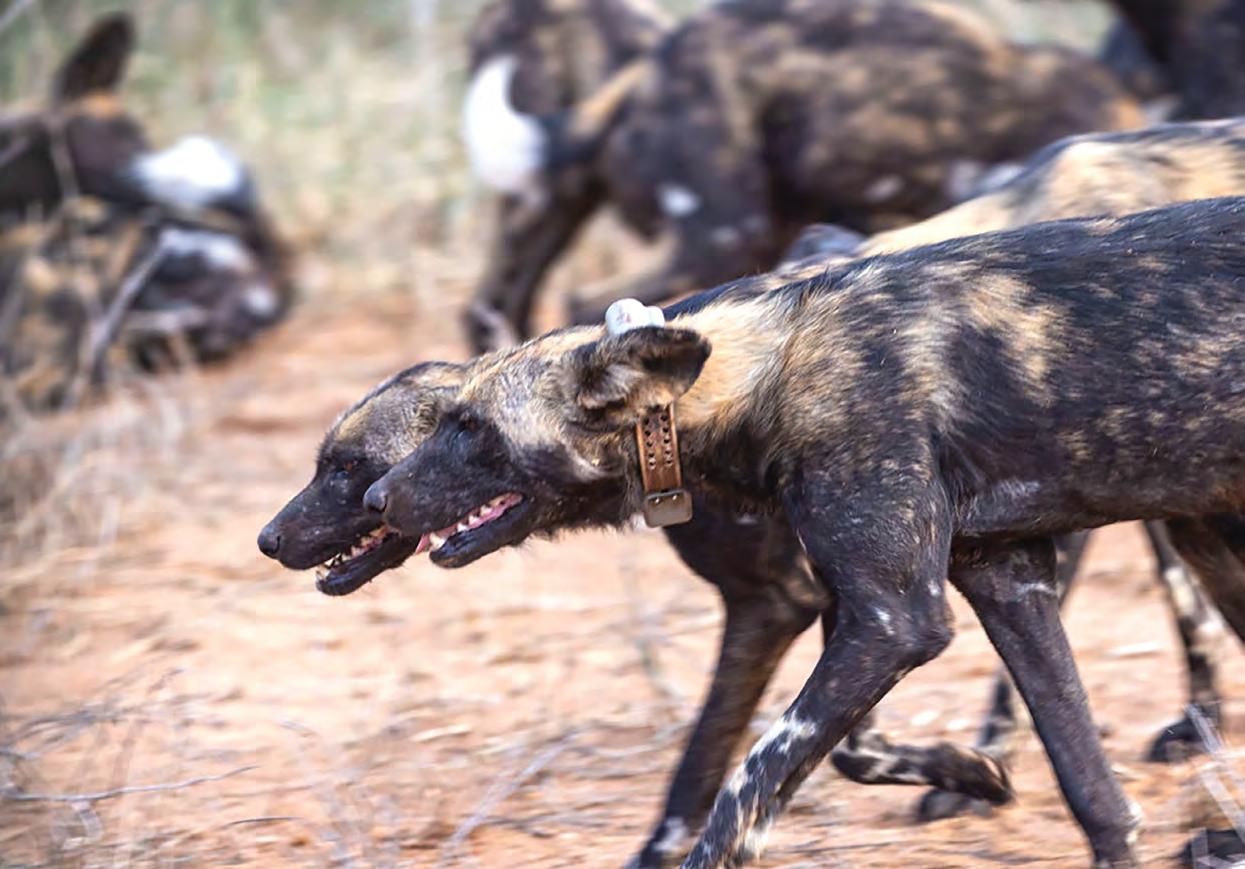
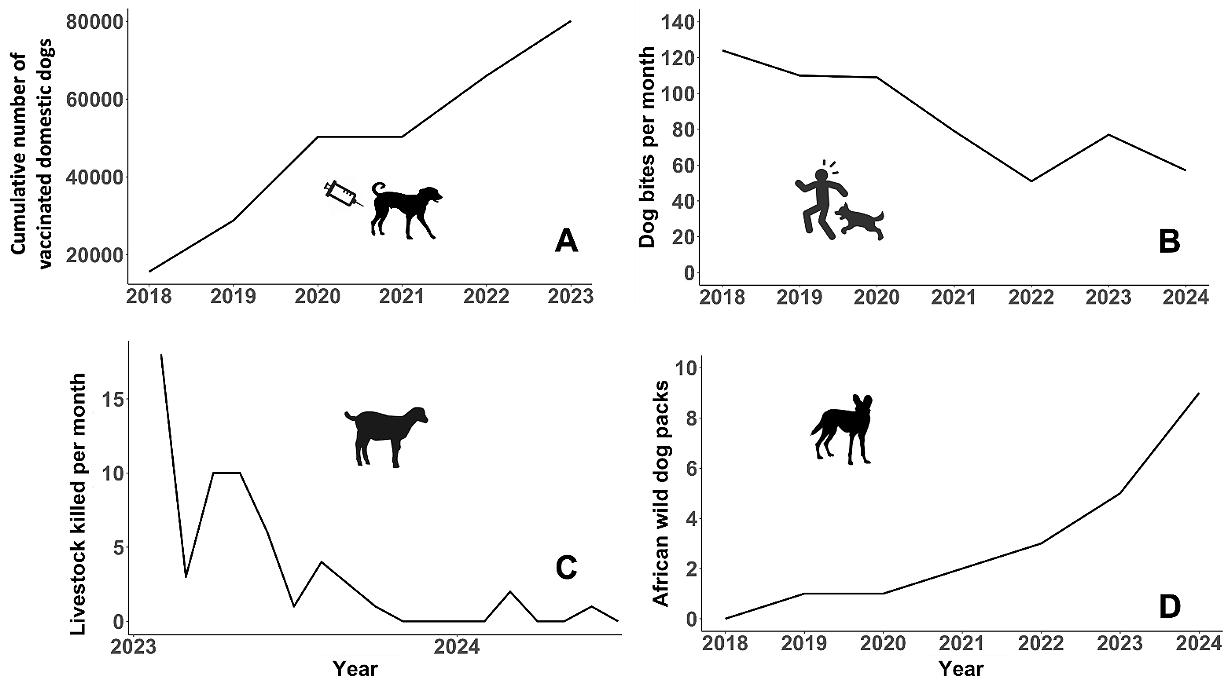
Figure 1. Key results from the wild dog project from 2018 to 2024. In central Kenya’s Ewaso ecosystem our activities to (i) control rabies through (A) domestic dog vaccination and to (ii) mitigate conflict with livestock farmers were associated with (B) falling incidence of human dog bite injuries (a widely-recognised indicator of human rabies risk); (C) declining incidence of reported livestock killed by wild dogs, and; (D) rising numbers of wild dog packs. The reported domestic dog bites occurred on an annual basis from 2018-2023 and are reported with monthly averages for comparison with 2024 data (which exists only from January to April)
COMMUNITY
Behind every protected landscape is a community. When people have opportunity, stability and support, conservation has the strongest chance of success.
Through focused investment in education and community health, we work to strengthen that foundation, supporting long-term resilience across the regions where we live and work.
Backing the Front Line:
Strengthening Ranger Skills and Welfare
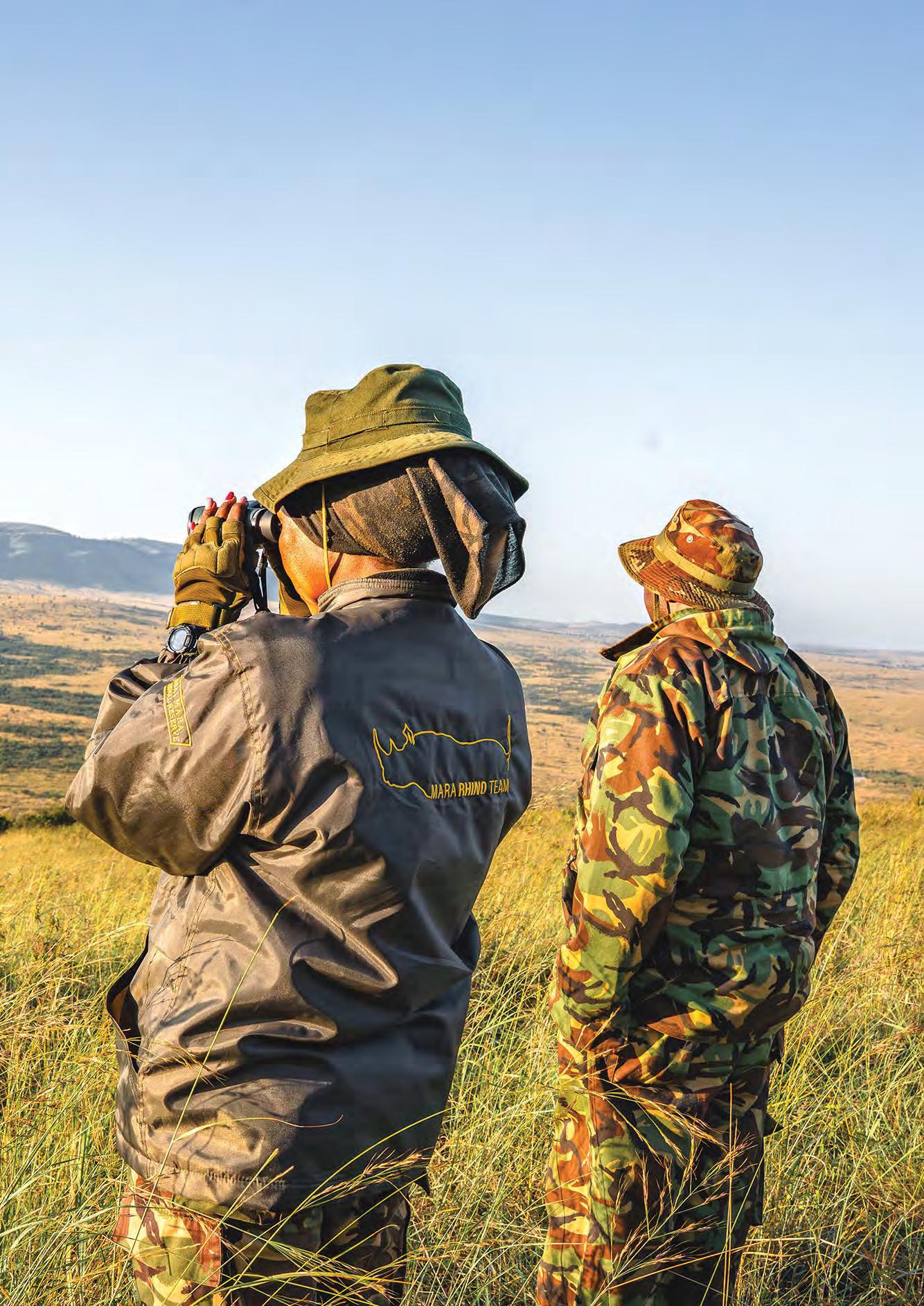
We continue to invest in the people at the heart of conservation in the 1,510 km² Maasai Mara National Reserve: the rangers. Through our Footprint Trust and Sala’s Camp, the year focused on practical training, ranger welfare and peer learning, recognising that well-supported and well-trained rangers are essential to effective wildlife protection.
Strengthening technical expertise continues to be a key focus. Supported by the Footprint Trust, Mara rangers and wardens received six months of EarthRanger training and conservation technology capacity building from experienced radio room operator and mentor John Tanui from 51 Degrees Ltd. Camera trap expert Will Burrard-Lucas returned to the Mara to work alongside MMCC rangers, expanding their ability to deploy and manage camera traps for monitoring black rhino and other key species. This work strengthened non-invasive monitoring and built ranger confidence in using technology to support conservation outcomes. Will and John also represented Sala’s Camp and Footprint at World Ranger Day in July, where Narok Governor H.E. Patrick Ole Ntutu publicly recognised The Safari Collection’s contribution to conserving the Mara through innovation and partnership.
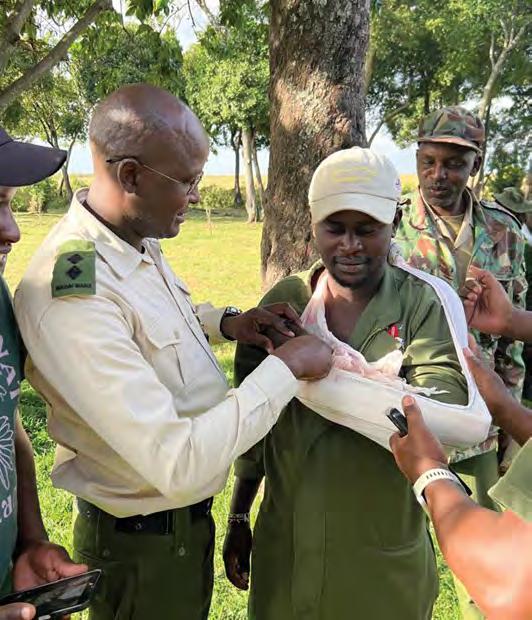
Ranger welfare was further strengthened in November, when over 70 Mara rangers and MMNR staff received Wilderness First Aid training and certification through SOLO Africa. This training equipped rangers with life-saving skills, empowering them to respond to medical emergencies both in the reserve and within their home communities.
In December, efforts turned to systems and shared standards; over 20 Mara rangers took part in a bench-marking exchange visit, to learn improved operations room procedures, EarthRanger workflows and best-practice from other conservancies and rhino sanctuaries, including Lewa, Segera and Ol Pejeta.
Together, these efforts strengthened skills, morale and collaboration across the ranger network, supporting long-term protection of the Mara through people, partnership and shared learning.
This new conservation technology has enabled us to gather both historical and current data, helping me make more informed decisions for the effective management of the Reserve
~ Stephen Minis, Maasai Mara National Reserve Chief Park Warden ~
+70
Mara rangers and employees trained in wilderness first aid
+100
Mara rangers and employees trained to use EarthRanger
Bringing Smiles Home:
Community Dental Clinics
Conservation and community wellbeing go hand in hand. That’s why, each year, we host free medical clinics for the communities neighbouring our safari properties.
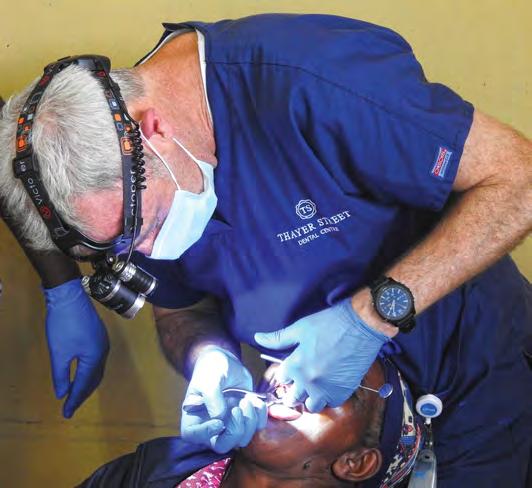
From 9 to 22 November, our Footprint Trust partnered with UK dental charity SmileStar, Apollo Dental Clinic and Ashnil Hotels Ltd to deliver free dental clinics in Laikipia and Samburu. The two-week programme brought essential care to remote communities living alongside key conservation landscapes near Solio Lodge and Sasaab.
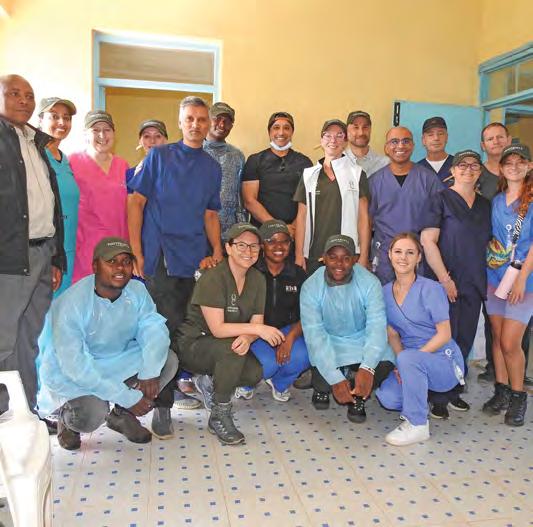
A team of 13 volunteer dentists and assistants from SmileStar worked alongside Kenyan medical professionals, county health teams and conservation partners, including Solio Game Reserve and Westgate Community Conservancy. Clinics were hosted at various local health facilities to ensure families could access treatment close to home. Services ranged from examinations and fillings to extractions, pain relief, oral health education and referrals for longer-term care.
This year’s clinic was particularly meaningful in its spirit of collaboration. Staff from across The Safari Collection including Giraffe Manor, Sala’s
564
patients around Solio and Sasaab received free dental treatment
Camp and our Nairobi workshop team, joined colleagues on the ground from Solio Lodge and Sasaab, gaining first-hand insight into the company’s community impact. This cross-team participation reinforced our deep commitment to strengthening our internal community as we support communities around us.
By the end of the programme, 564 patients had received free dental treatment: 324 in Laikipia and 240 in Samburu. For many, the clinic meant relief from chronic pain and the ability to eat, sleep and work without suffering. This was SmileStar's 16th trip to Kenya in collaboration with The Safari Collection, together having provided free dental treatment to well over 10,000 patients across the country since 2012.
Through long-standing partnerships and locally delivered care, The Safari Collection continues to invest in healthier, more resilient communities, recognising that thriving people are fundamental to thriving conservation landscapes.
Watching a child smile again, even after a difficult procedure, reminds you why this work matters
~ Heather Anderson, Volunteer Dentist, SmileStar ~
Kindness in Action:
Community, from the Inside Out
Our internal community is at the heart of everything we do. That commitment extends far beyond our camps and offices through a series of employee-led initiatives rooted in care, collaboration and shared responsibility.
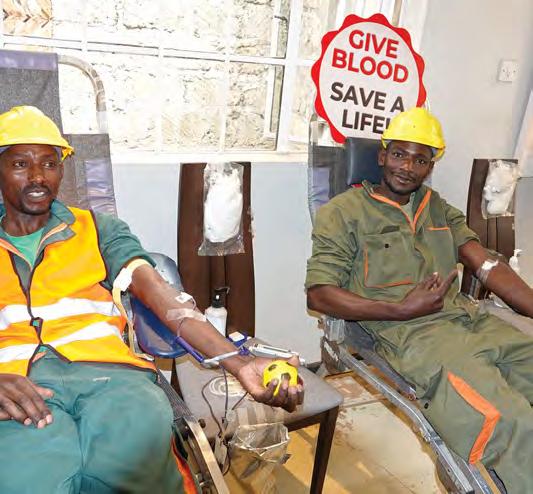
At our Nairobi headquarters, 51 team members participated in our third annual blood donation drive, held in partnership with the Kenya Tissue and Transplant Authority. Together, they donated 35 pints of blood, a life-saving contribution that also strengthened connection across departments.
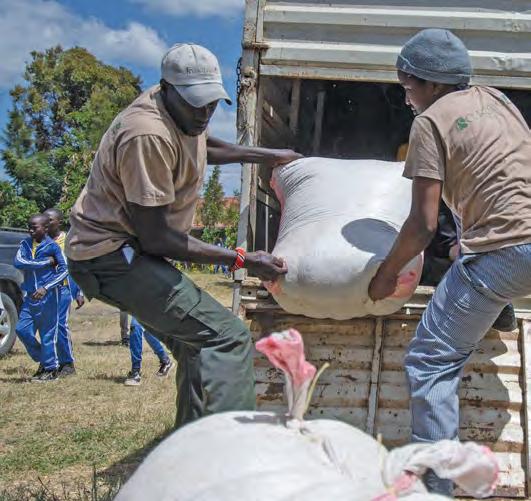
Across our properties, practical support continued. Teams at Sasaab and Solio Lodge helped distribute food to neighbouring schools, through our Feeding Young Minds Programme, ensuring local school children have daily meals.
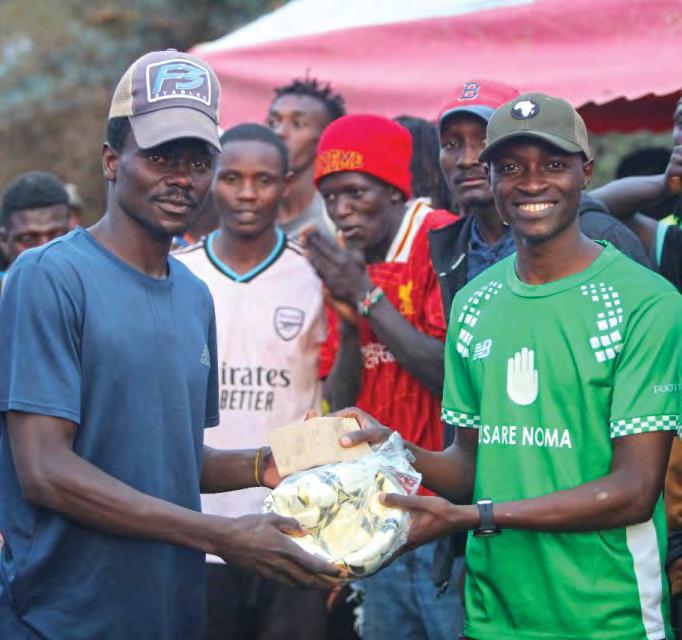
Community leadership also shone through the second Tusare Noma sports tournament, organised by Chef Joseph of Sala’s Camp. Over three days in December, more than 200 players and local leaders came together to raise awareness around drug abuse, early pregnancy and violence.
Colleagues from across the company took part in a charitable bowling competition in Nairobi supporting Gertrude’s Hospital Foundation. Raising funds towards paediatric cancer care, the event combined fundraising with meaningful team building.
The effect you have on others is the greatest currency in life
35 units of blood donated by employees
Conservation Scholarships:
Growing Bright Minds for a Changing World
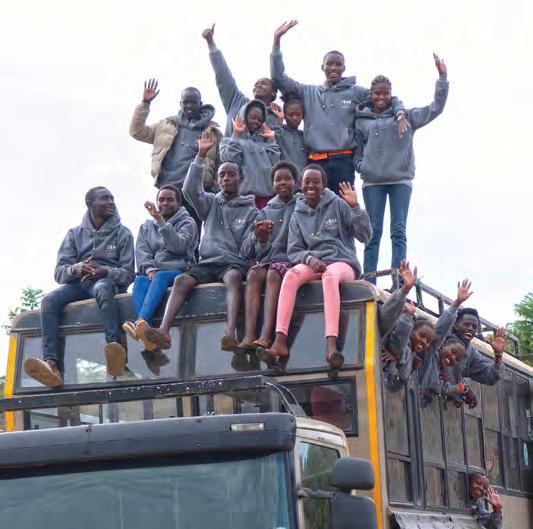
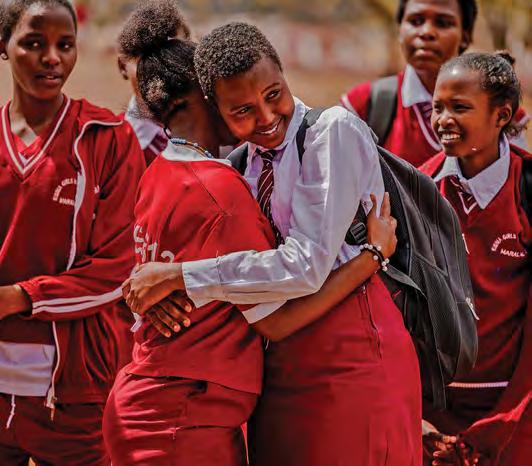
2025 was a defining year for our Conservation Scholars Programme. It was a year of transition, reflection and real achievement and a reminder that long-term investment in education builds resilient communities and future conservation leaders.
As Kenya transitioned from the 8-4-4 education system to the new Competency-Based Curriculum (CBC), the shift created a gap year in high school students’ intake. For the first time since the programme began in 2017, we did not admit a new cohort.
This unexpected pause allowed us to dedicate our full attention to the 41 scholars already in the programme, walking closely alongside them and providing steady support as they navigated this significant national transition. We also celebrate the 100% transition rate into tertiary education for our 2024 Form Four leavers.
Five scholars progressed to university: three enrolled at Jomo Kenyatta University of Agriculture and Technology, one at Kenyatta University and one at KCA University.
41 students on full scholarships in schools, colleges and universities
Not only did they secure enrolment, but they qualified for subsidized university places, an important milestone for families who often face barriers to higher education.
Their chosen fields of Computer Science, Environmental Science, Business Innovation and Education, reflect both personal ambition and the skills needed to support sustainable development within their home communities. Encouragingly, all three institutions are located within the same region of Nairobi, allowing peer support and connection to continue.
Behind every achievement is steady, holistic support: school fees, uniforms, transport, learning materials and consistent mentoring. Together, these moments make 2025 a year defined not by expansion, but by depth and progress rooted in patience, purpose and belief in the power of education to change lives.
This year reminded us that true impact is not measured only by growing numbers, but also by the growth of confident, capable young leaders
~ Cecilia Mueni, Footprint & Sustainability Assistant Director,
The Safari Collection ~
From Scholars to Stewards:
Shaping the Future of Westgate
The joy of any community lies in witnessing its young people grow into skilled, empowered individuals who contribute meaningfully to local development. For the Westgate community, our Conservation Scholarship Programme has become a beacon of hope and pride as young scholars who began in Footprint’s four-year high school programme step boldly from higher education and into the working world.
I am so proud of Footprint since it has helped us join school to pursue our dreams. We are really privileged and appreciate all the support we get
~ Alvaro Lengila, Conservation Scholar graduating in Wildlife Management from the Wildlife Research & Training Institute ~ 3 university graduates
Mary Yolanda Lekolii Raondi Lengunai
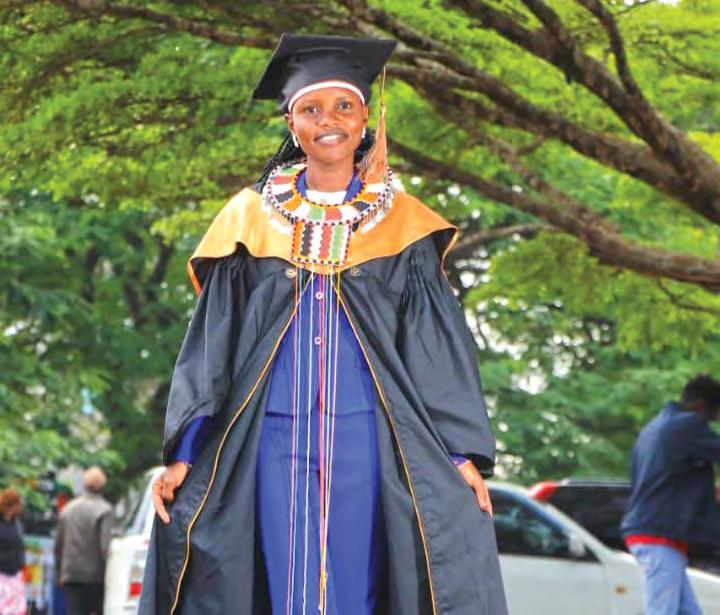
Mary graduated with First Class Honours in Bachelor of Commerce (Finance) from Pioneer International University, placing second in her class. She also completed her course attachment with The Safari Collection’s accounts department, bringing her talent home.
Bright Letoole
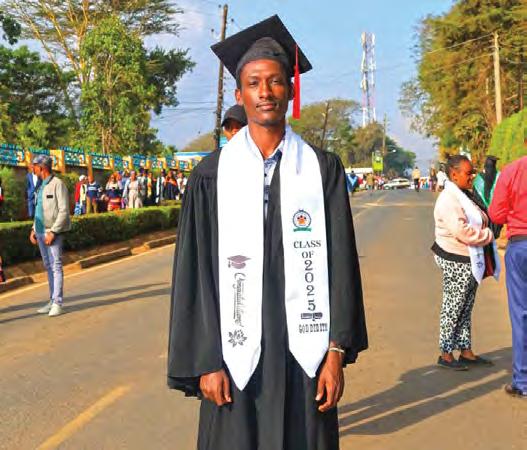
Bright became our first Diploma graduate, completing Environmental Science at The Co-operative University of Kenya. Through an internship with Northern Rangelands Trust, he gained hands-on conservation experience at Kalama Conservancy, protecting the landscapes he calls home.

Raondi earned a degree in Justice and Peace from The Catholic University of Eastern Africa, equipping him to support his Samburu community in areas of security and civic engagement.
Alvaro Lengila & Yvonne Lekuraiyo
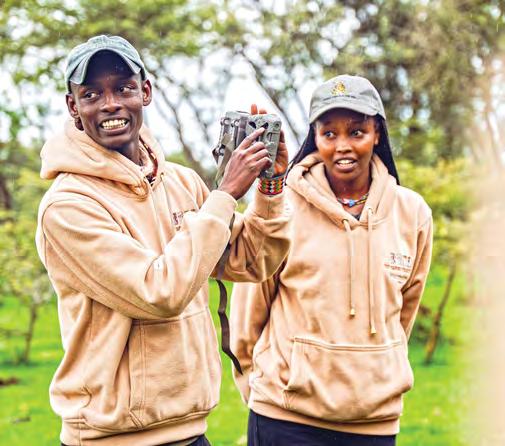
Alvaro and Yvonne, our two wildlife enthusiasts, have completed their training at Wildlife Research and Training Institute in Naivasha. Alvaro interned with Mara Predator Conservation Programme in the Maasai Mara, while Yvonne joined Reteti Elephant Sanctuary in northern Kenya. Both graduate in March 2026, ready for the frontline of conservation.
Through these achievements, the Westgate community is witnessing a new generation of leaders and environmental stewards, equipped not only with knowledge but with the dedication to safeguard Kenya’s rich heritage.
Conservation Scholars’ Camp 2025:
Learning, Laughter and the 4Cs
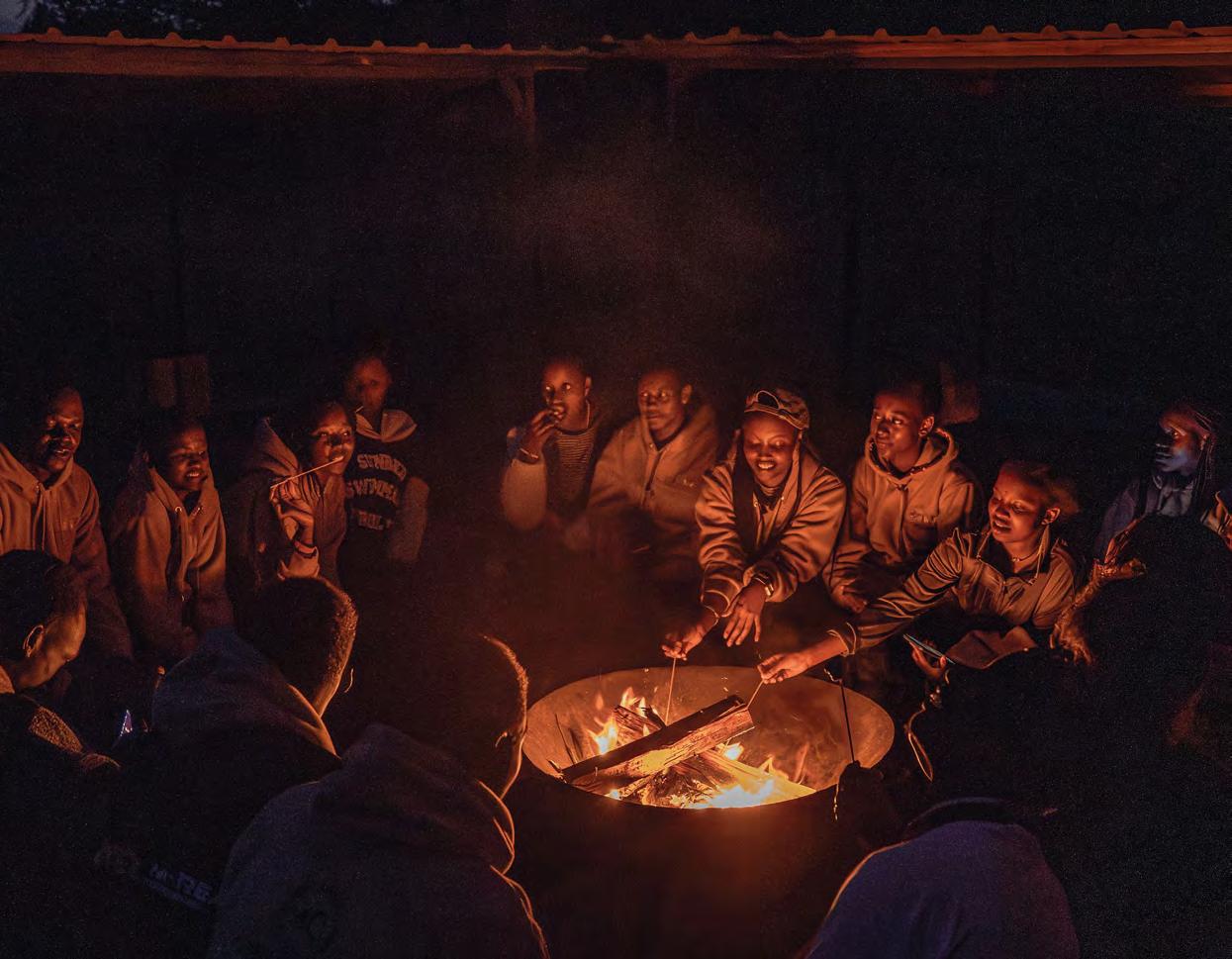
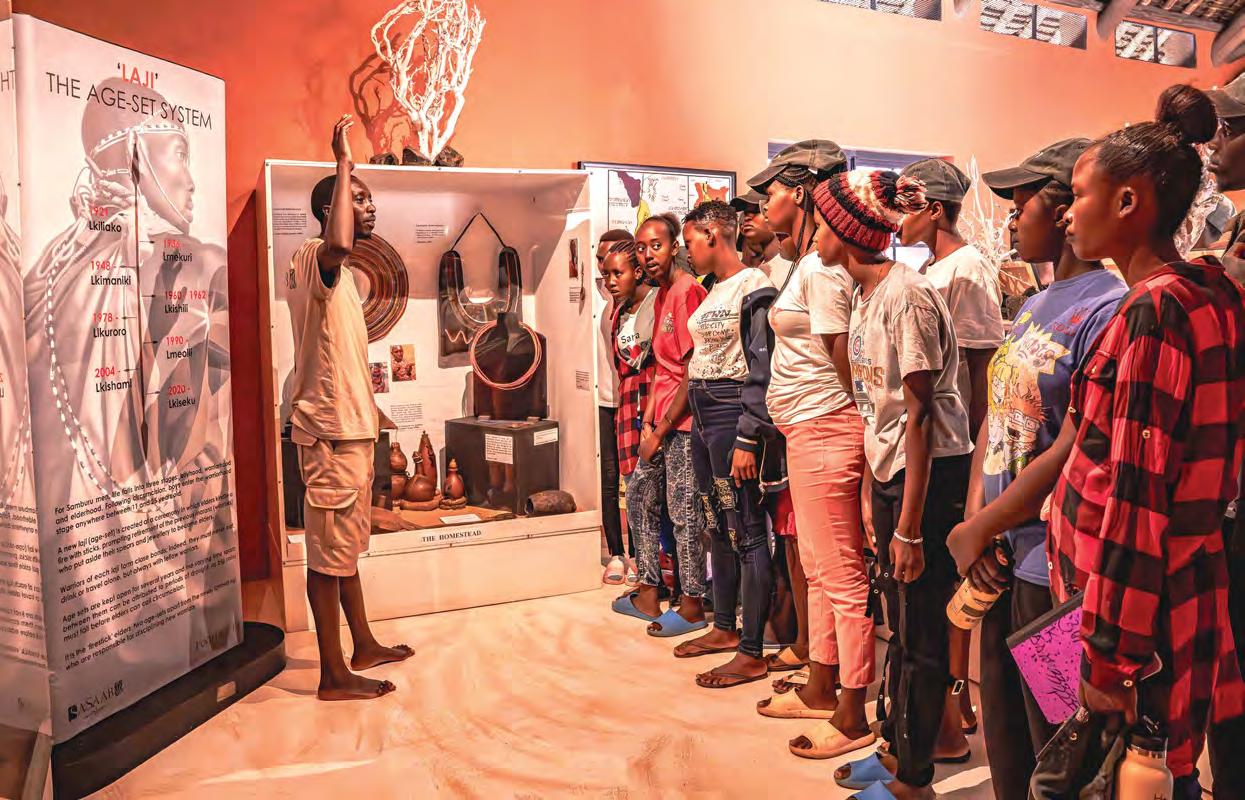
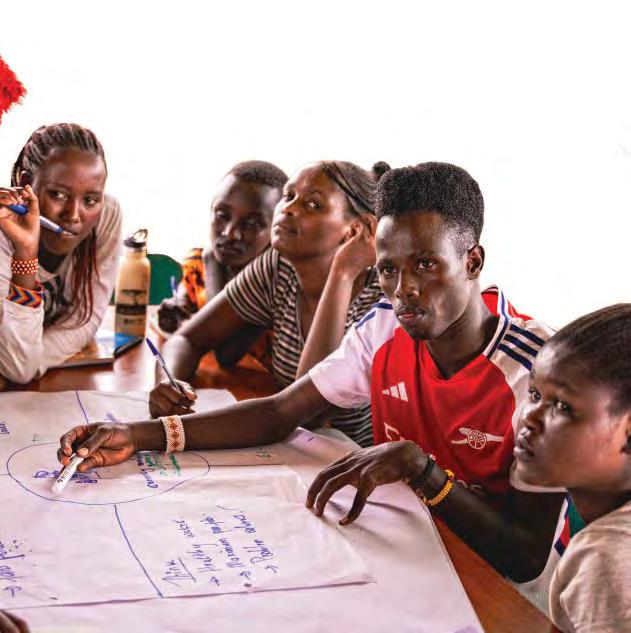
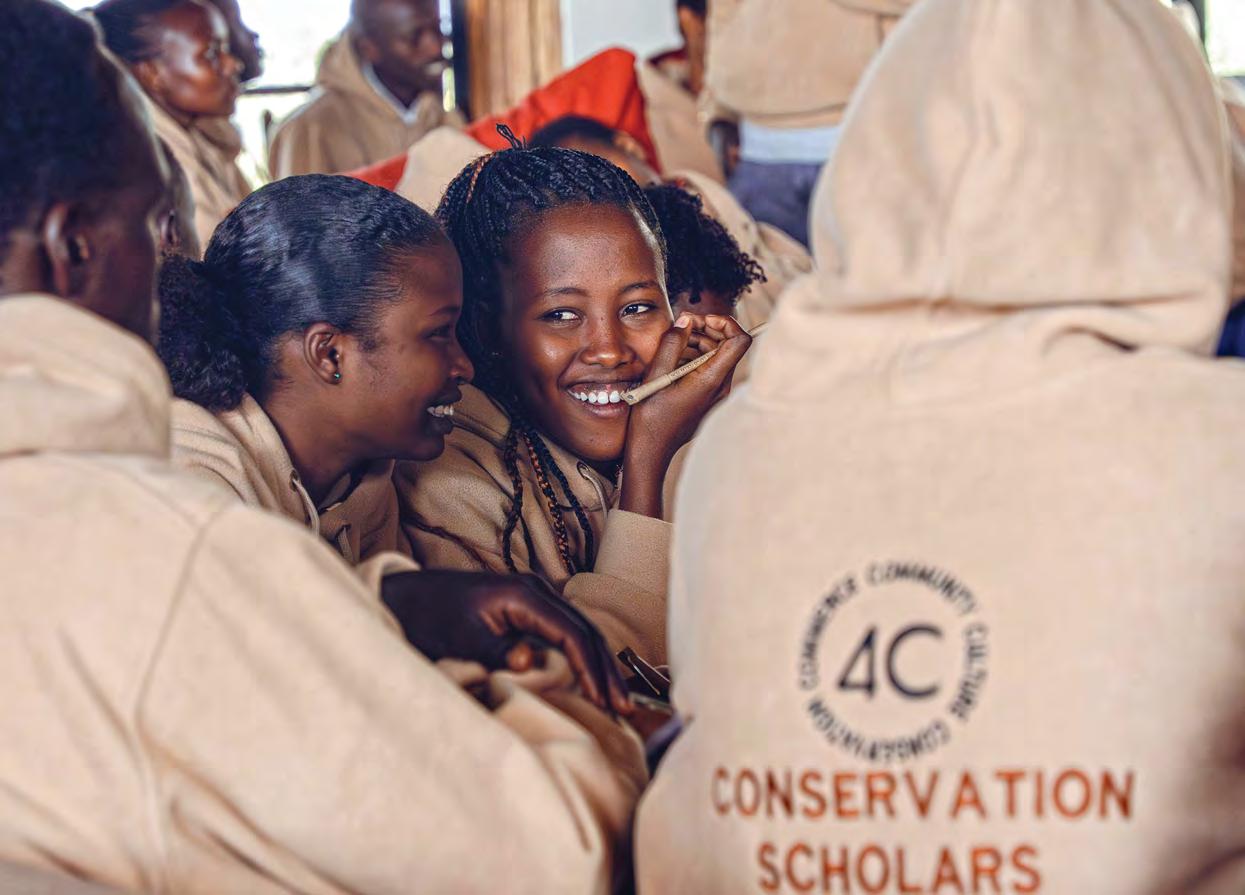
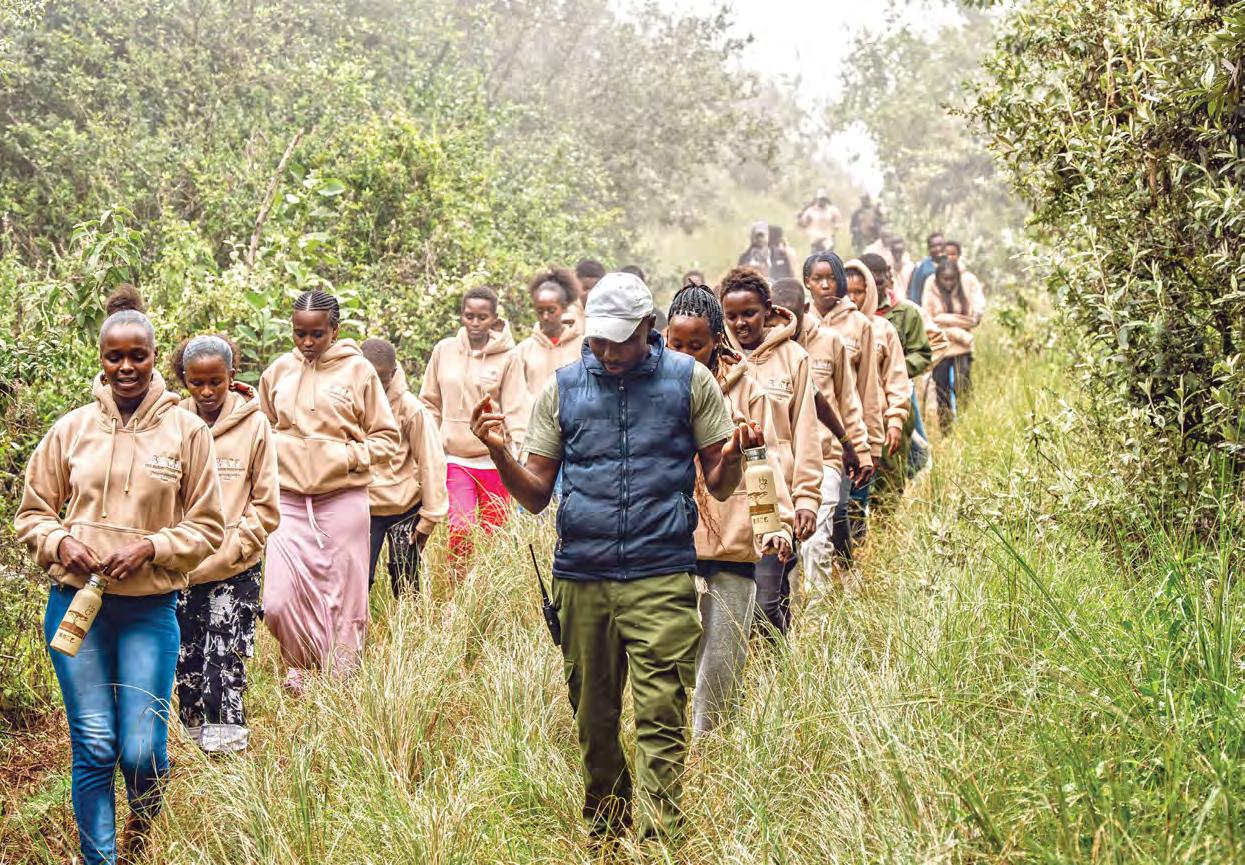
This year, our annual Conservation Scholars’ Camp brought 30 high-school and college scholars together for a transformative week at Loldia-Eburru EcoCamp on the highlands above Lake Naivasha. Set against fresh mountain air, the camp combined adventure with purpose: hiking, exploring geothermal geysers and a very different part of Kenya, all alongside peer learning and mentorship. The experience reinforced bonds and deepened their connection to conservation, leadership and the environment they are preparing to protect.
Under the theme of innovation, scholars explored how creative thinking can address challenges faced by communities living alongside wildlife. Daily workshops led by social entrepreneur Nduku Mutua helped students see innovation not just as technology, but as a mindset; one rooted in resilience, opportunity and community solutions.
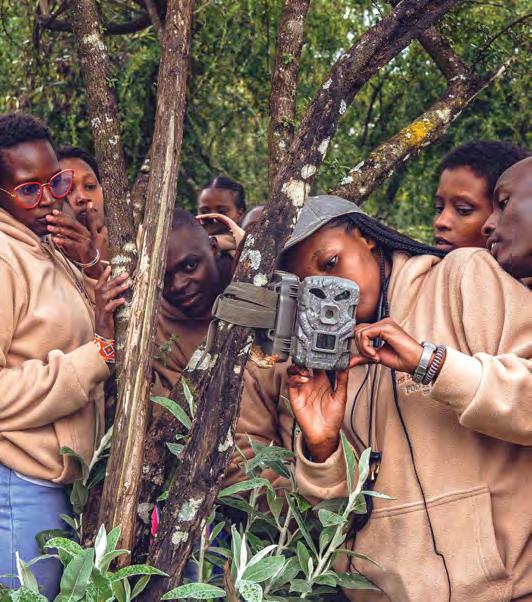
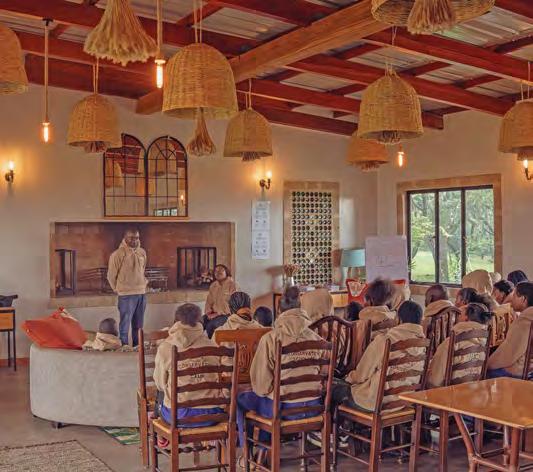
Each day was filled with engaging activities: teams learned to set camera traps and identify nocturnal wildlife, took guided walks through bird-rich forest and reflected around campfires under star-filled skies. These experiences brought to life the 4Cs - Conservation, Community, Culture and Commerce - showing how these principles work together to protect nature while uplifting people. The Eburru environment and the EcoCamp itself modelled sustainable solutions, from geothermal-powered facilities to restored olive groves and honey-producing forests that support both biodiversity and livelihoods.
By the end of the week, scholars returned home inspired not just to learn, but to lead.
For many, the camp was more than a break from school; it was a spark of possibility, equipping young minds with the confidence to innovate, protect their environments and strengthen the communities they call home.
The Safari Collection has helped educate girls from the Samburu community, which is the alternative approach for us to achieve our goals. Through these camping trips, I have been exposed to different environments and people
~ Florence Soyian, Conservation Scholar studying Medical Health Record Keeping at Kenya Medical Training College ~
Conservation Scholars attended our annual Footprint Scholars Camp
Building Bright Futures:
From Smart Learning to Feeding Young Minds
Strong schools build strong communities. This year, our partnerships with local schools continued to grow, helping young learners thrive.
As Kenya adapts to the Competency-Based Curriculum (CBC), schools now require more learning space, well-equipped science facilities and access to digital tools. Supporting this transition, particularly through investment in science and technology, remains central to our long-term partnerships.
In Samburu, guest-supported projects brought meaningful improvements. At Lempaute Comprehensive School, a new classroom funded by guests from Sasaab was completed, alongside new desks and more than 600 textbooks for Grades 4, 7 and 8. The school also received Grade 9 textbooks and sports equipment from one generous returning guest. Nearby, Sasaab Primary School received another classroom funded by a long-standing guest, as well as new teachers’ quarters built to strengthen staffing capacity. And at Gifted Hands School in Nairobi, as well as a new classroom and science lab,
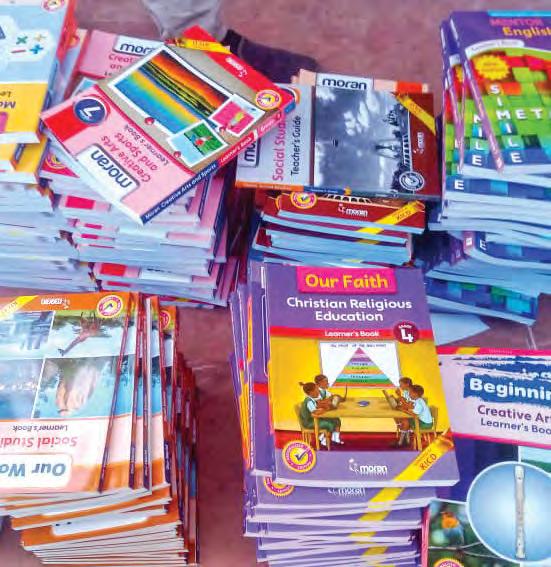
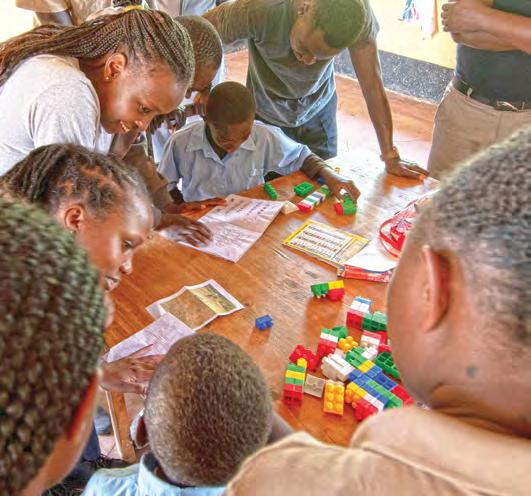
the Footprint Trust continues to support 75% of the operating budget, including teachers’ and support staff salaries.
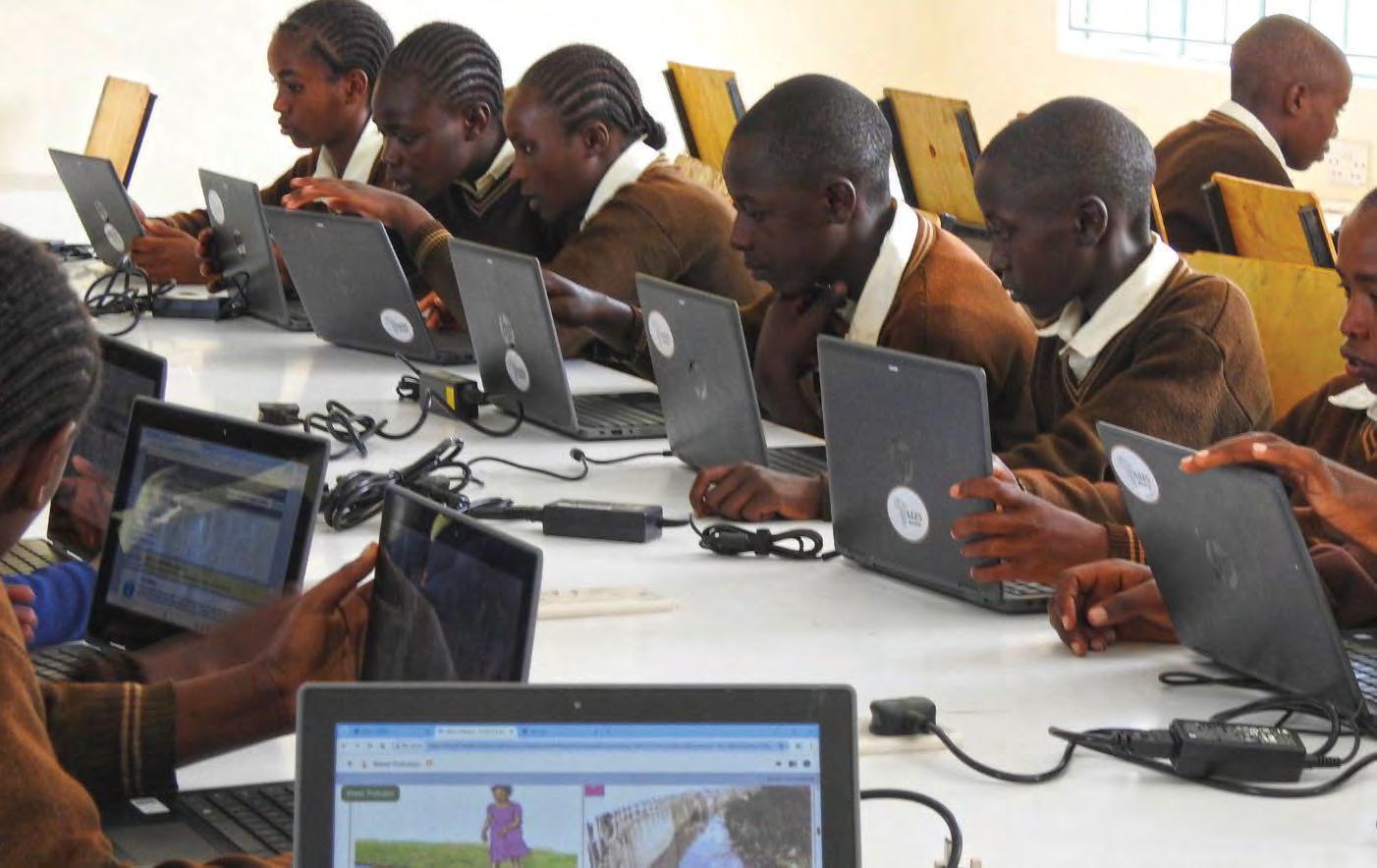
Further south, schools near Solio Lodge advanced digital and science learning. Honi School opened a new computer lab funded through the Footprint Trust by former Solio guests in celebration of a milestone birthday. The lab is equipped with 20 laptops and an ICT system installed by ARES Education Systems. At Laburra School, construction of a new science laboratory is underway, an exciting step toward hands-on, competency-based learning.
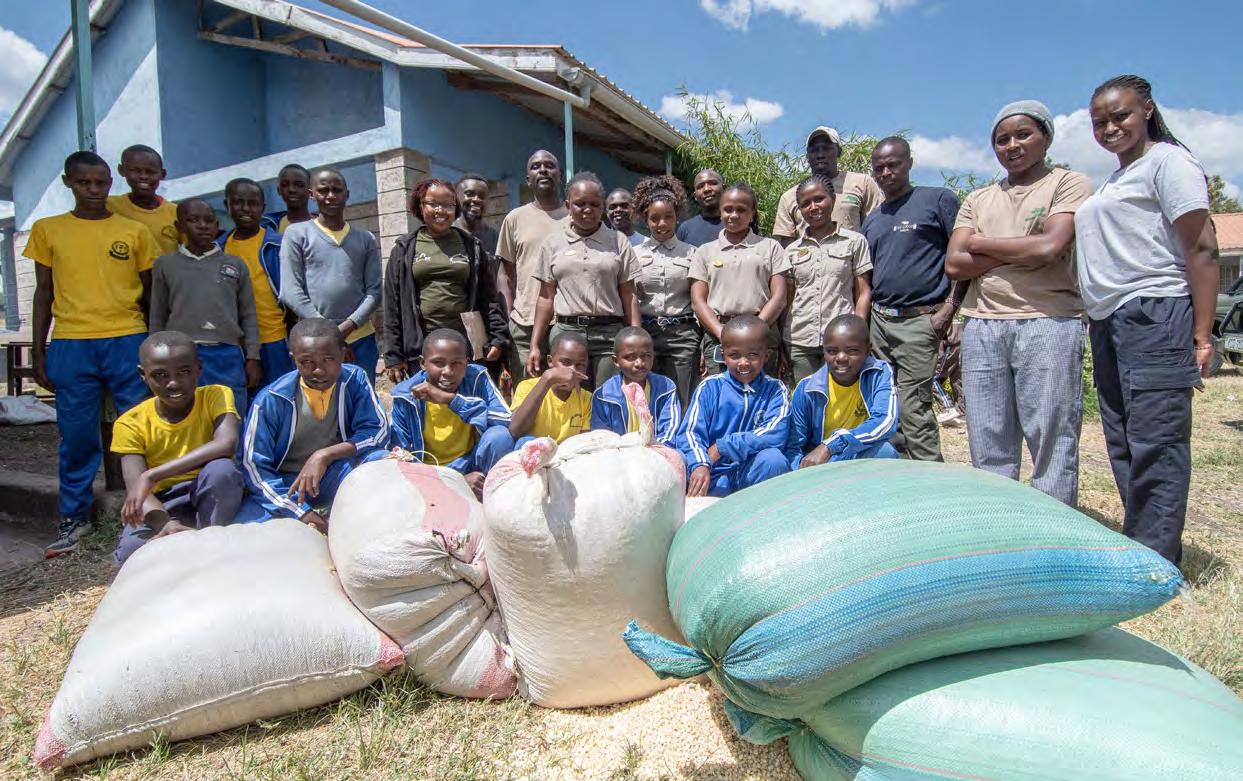
Alongside infrastructure, nutrition remains essential. Through our Feeding Young Minds programme, 172,600 meals were provided in 2025 to 3,204 students across 12 schools near Solio Lodge and Sasaab. Since 2008, the programme has strengthened attendance, concentration and wellbeing. Together, these efforts show what sustained partnership can achieve: meeting immediate needs while empowering young people within conservation landscapes.
Today, we're happy to receive GRADE 4,7 and 8 textbooks. On behalf of the teachers, parents and learners of Lempaute Comprehensive School, I wish to extend my sincere thanks to the Footprint Trust and entire fraternity of Sasaab Lodge for your continued support
~Julius Kaberia, Head Teacher, Lempaute Comprehensive School ~
172,600
meals provided for 3,204 students at 12 schools
3 classrooms, 1 computer lab and 2 science labs constructed. 2,890 textbooks, 40 desks and 50 uniforms provided
The Blessing of Clean Water
at Westgate Dispensary
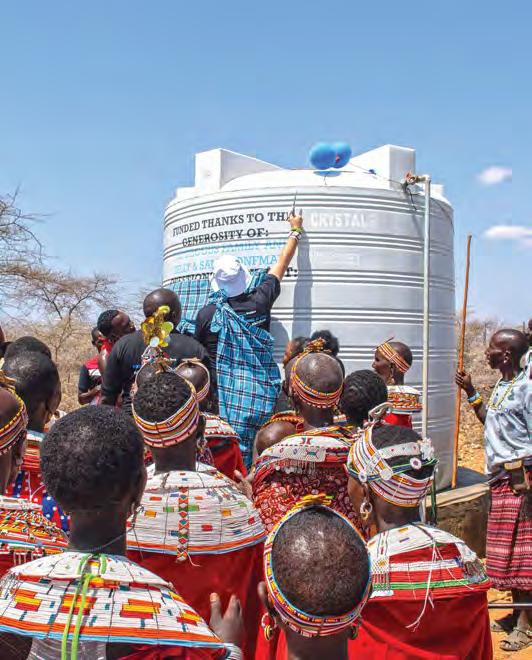
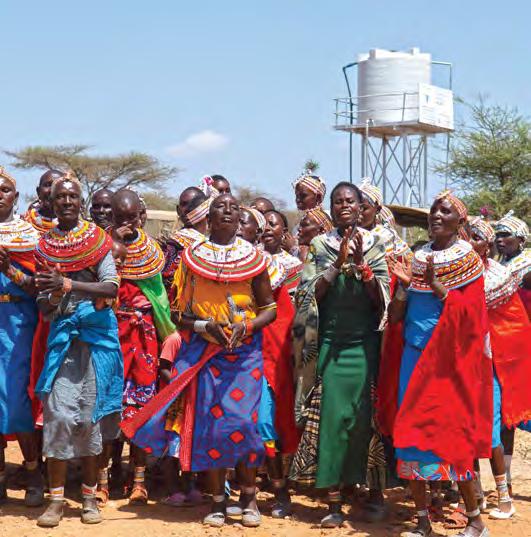
This year, clean and reliable water arrived at Westgate Dispensary in Lpus Leluai on Westgate Community Conservancy, a joyous moment marked with song, dance and deep gratitude.
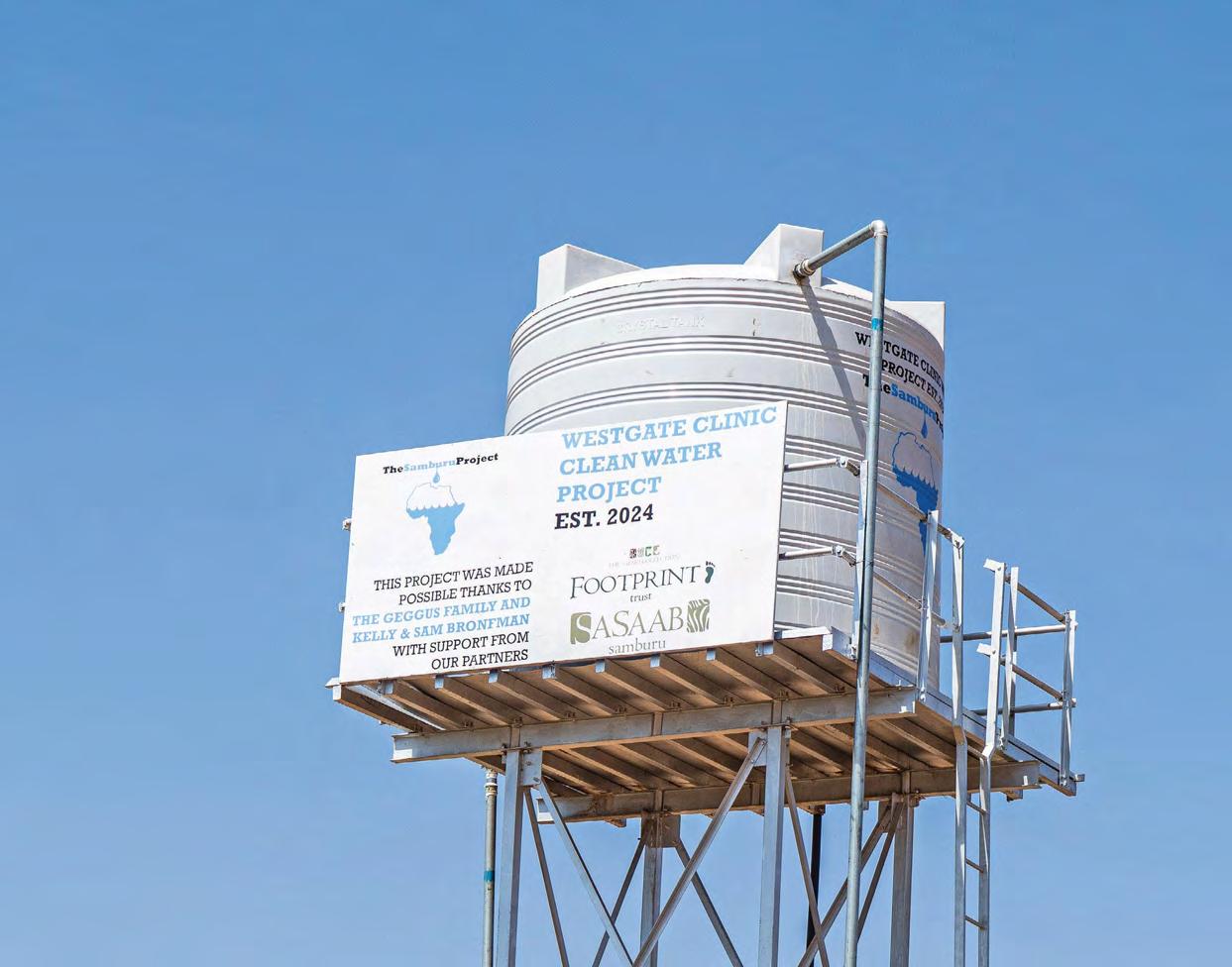
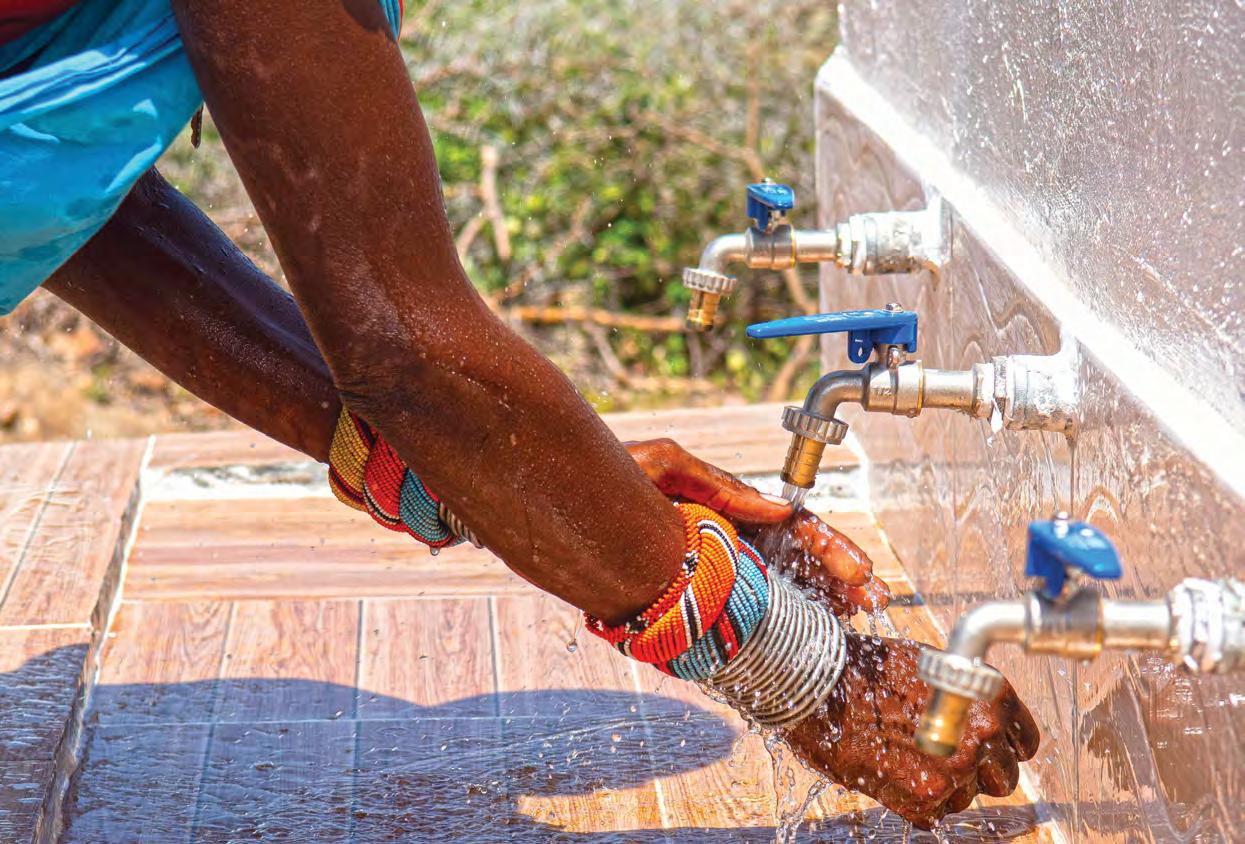
Delivered through a partnership between our Footprint Trust and The Samburu Project, the project included a new borehole, solar pump, water tanks, handwashing facilities and a community water kiosk. It is more than infrastructure. It is a transformation in daily life, dignity and health.
The project began in 2024, funded through donations to our Footprint Trust from two families who stayed at Sasaab and were inspired by their guides to give back. Implementation was led by The Samburu Project, whose community-rooted approach prioritises local leadership and longterm impact. Today, more than 1,500 people have access to safe water in an area where it was once scarce and unsafe.
The impact at the dispensary has been immediate. Since gaining clean water, nurse Anthony has reported a dramatic drop in waterrelated illnesses, particularly among children
With support from Sasaab’s gardener, Cyrus, a small vegetable garden now demonstrates improved nutrition and preventative health practices to visiting families.
For women, who often spent hours collecting contaminated water, the change is life-altering. Safe water close to home means more time for family, small businesses and keeping children, especially girls, in school. Hygiene, sanitation and maintenance training ensure the benefits endure.
This project is part of a broader legacy. Since 2006, more than 170 wells have been drilled across Samburu by The Samburu Project and partners including The Safari Collection, Sasaab and Footprint Trust, reducing waterborne illness and easing the daily burden for thousands of families.
Clean water is not just about health; it restores time, dignity and opportunity to an entire community
~ Anthony Odongo Orwaya KRCHN, Westgate Dispensary ~
people and local clinic have access to clean water due to the new community solar borehole + 1,500
CULTURE
Celebrating cultural diversity builds understanding and connections. Respecting cultural differences is essential for our future.
We celebrate the rich cultural heritage and diverse talent of Kenya across our properties.
The Land Smiles Back
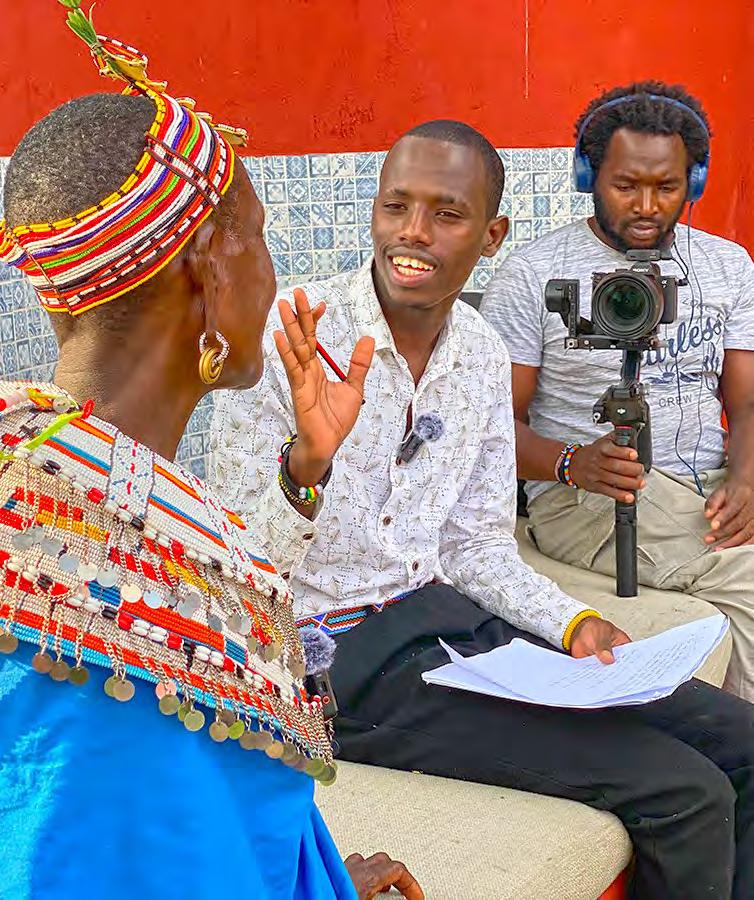
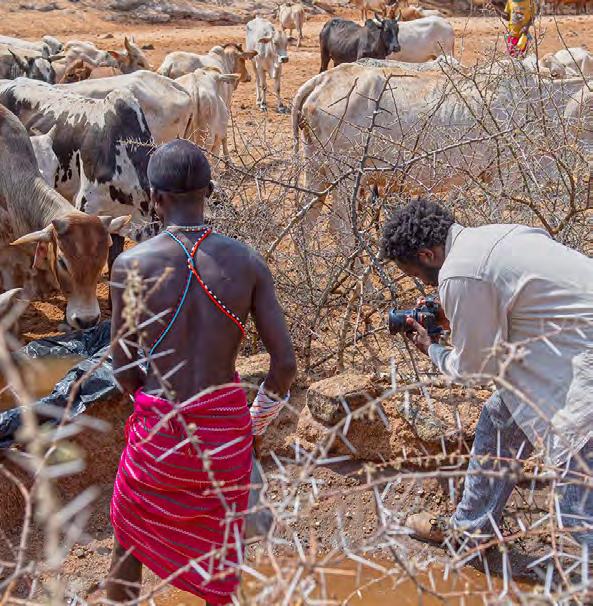
In Northern Kenya’s Westgate Community Conservancy (WCC), the Samburu people are turning drought-scarred rangelands into thriving landscapes - a story captured in the awardwinning short film T he Land Smiles Back, coproduced by The Safari Collection, Justdiggit and Westgate Community Conservancy and filmed by Kenyan videographer Klein Nettoh.
Between 2020 and 2023, the region faced its worst drought in 40 years, leaving wells dry and livestock and wildlife struggling to survive. The film showcases how the community is embracing ancient water-harvesting techniques, digging over 80,000 semi-circular ‘Earth Smiles’ or ‘water bunds’ to capture rainwater, prevent soil erosion and stimulate native grasses. With support from local conservation partners like the Grevy’s Zebra Trust and Ewaso Lions, Samburu women are managing grass seed banks, supporting both pastoral livelihoods and biodiversity. Collaborative training and digging events have fostered community unity while strengthening climate resilience.
Thank
you for putting Westgate Community Conservancy on the global stage; this inspirational film happened because of your efforts to support our community
~ Francis Lalampaa, Westgate Community Conservancy Manager ~
Sasaab, a GER® certified property, h as supported these initiatives and this film project, deepening The Safari Collection’s long-standing partnership with the local community. T he Land Smiles Back w on first place at the 2025 Water Film Prize out of 131 submissions from 45 countries, celebrating this inspiring story of sustainable land stewardship. It’s a reminder that safari experiences can connect guests not only with wildlife, but with the people and practices protecting the landscapes they explore.
1st PRIZE WINNER Water Film Prize: Back to Our Future: 2025
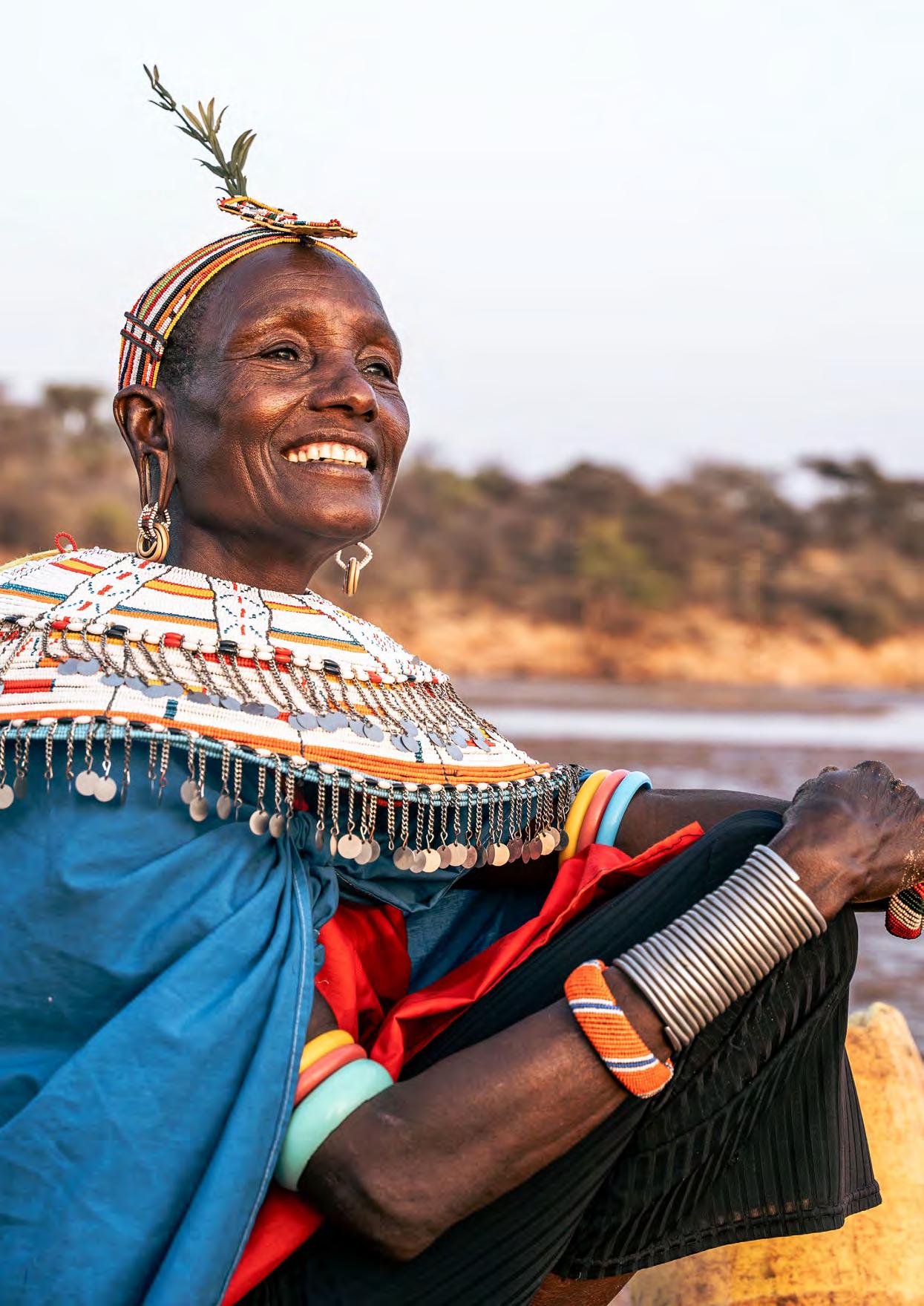
TO WATCH
SCAN
Legends of The Safari Collection
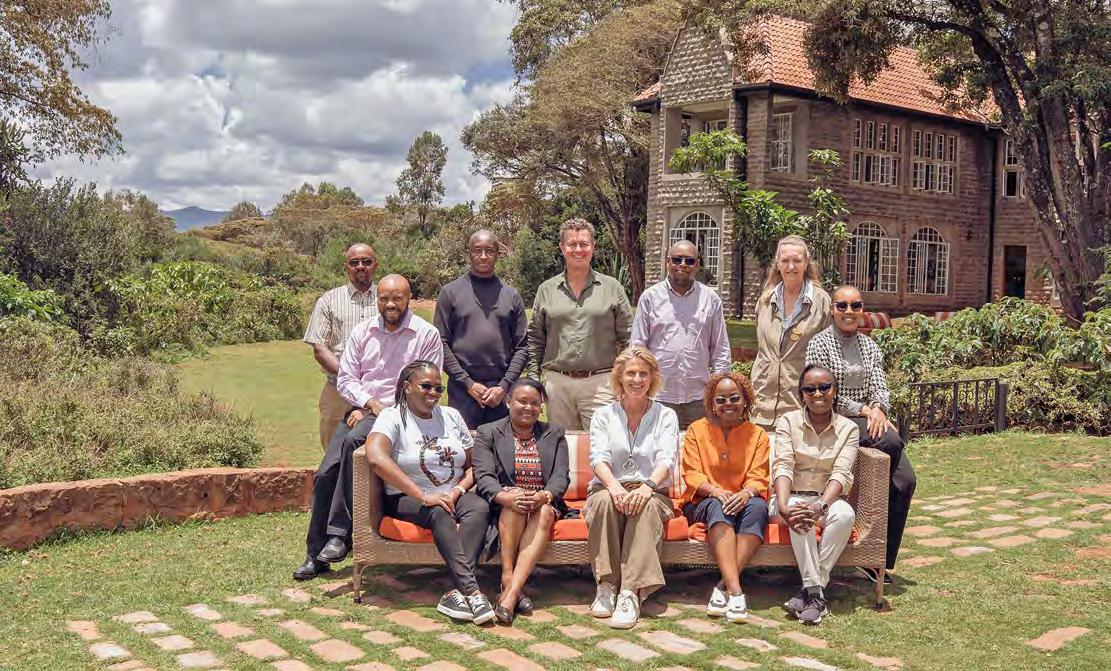
The Safari Collection celebrates the deeply rooted passion and long-term dedication of team members who have been integral to the company’s journey, embodying its values of community, conservation and connection over many years. These 'Legends' (staff who have spent a decade or more with us) illustrate a workplace culture grounded in loyalty, teamwork and a shared passion for sustainable tourism. Their stories reflect a family-like environment where colleagues support one another through challenges and milestones alike.
These familiar faces, who've been with The Safari Collection through thick and thin, highlight the company’s genuine commitment to people and planet: they describe growth opportunities, a sense of belonging and the pride that comes with contributing to meaningful work. Whether managing logistics, nurturing guest experiences or building community initiatives, these longserving team members have helped shape the ethos of the company and strengthen its impact.
Importantly, sustainability at The Safari Collection goes beyond ecological practices - it is woven into how the company nurtures its people. Our longest-standing team members emphasise that protecting wildlife, supporting communities (such as school feeding programmes, scholarships and outreach initiatives) and fostering personal growth are interconnected elements of sustainable tourism that create enduring legacy and stewardship.
As the company looks ahead, this culture of long-term commitment and shared purpose will continue to guide its contributions to conservation and community development across Kenya.
employees worked for The Safari Collection
Grace Kagendo, Office Manager
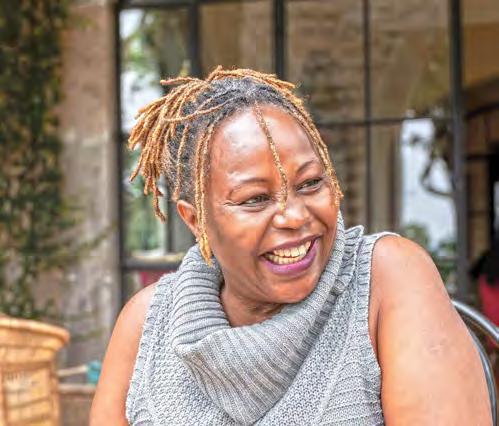
Edgar Orlando, Company Relief Manager
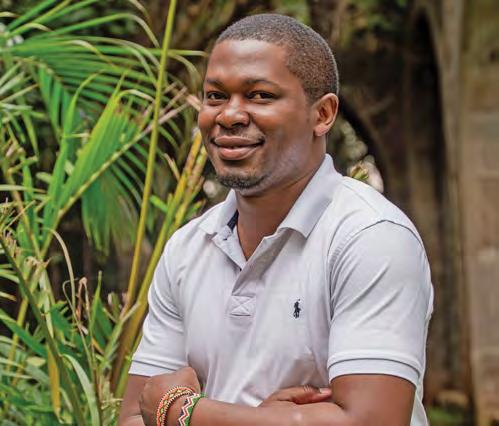
Rosemary Theuri, Head Office Accounts

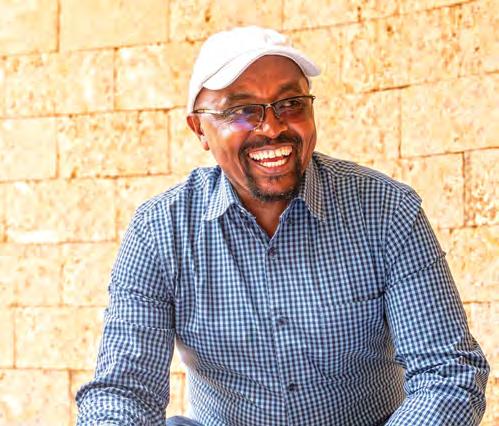
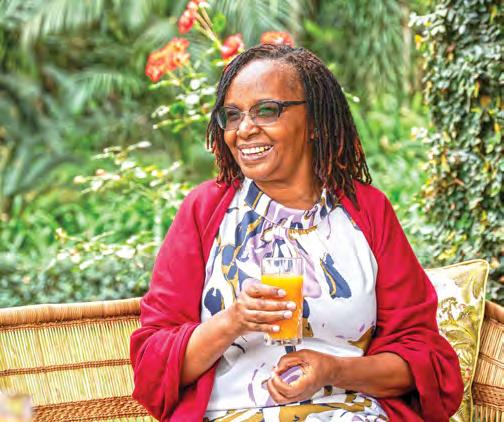
Githinji, Stores Manager
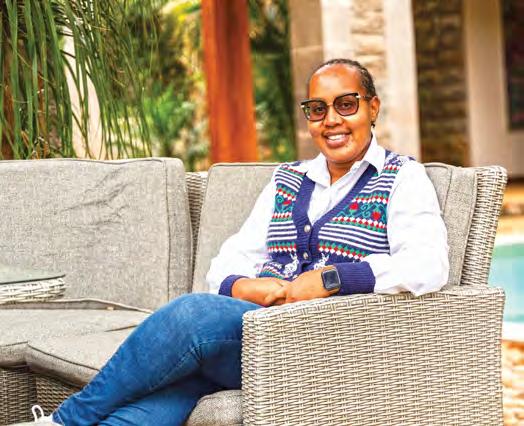
David Wanjohi, Head of Maintenance
Jane Gachiri, Accounts
Naomi
General Manager
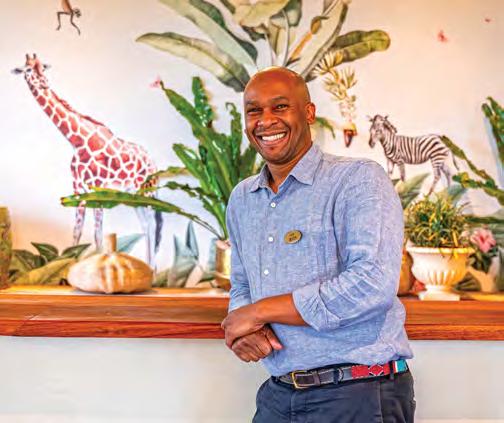

Toni Levi, Giraffe Manor Assistant
Elijah Somoine, Systems Manager
Beatrice Musomba, Sales Manager
Joyce Gitagia, Gift Shop Manager
Hildah Mumbi, Marketing Manager
Amos Omondi, Travel Specialist
Peter Karanja, Financial Controller
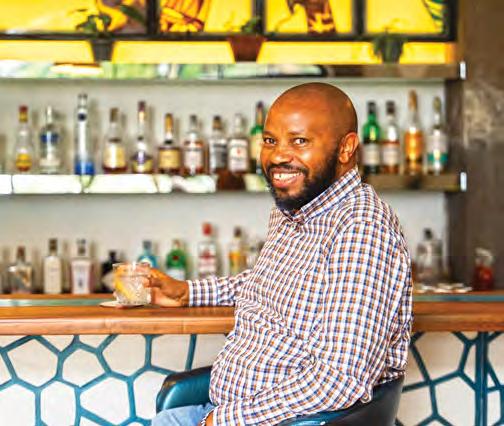
Ava Paton, The Retreat Manager
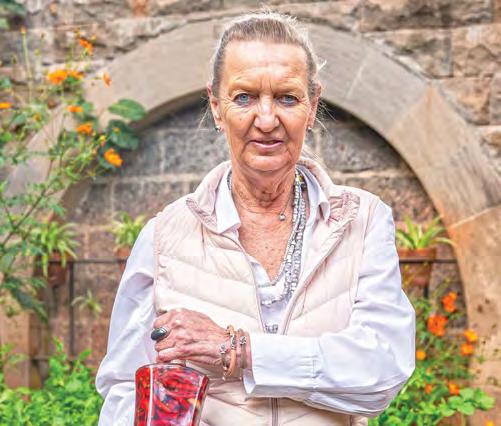
Agnes Kairu, Giraffe Manor Duty Manager

Peter Kibe, Senior Accountant
Sustainability isn’t just about solar panels and water filters, it’s about people. The ones who stay, who grow and who pass on what they’ve learned
~ Tanya and Mikey Carr-Hartley, Founders, The Safari Collection ~
Investing in Our People
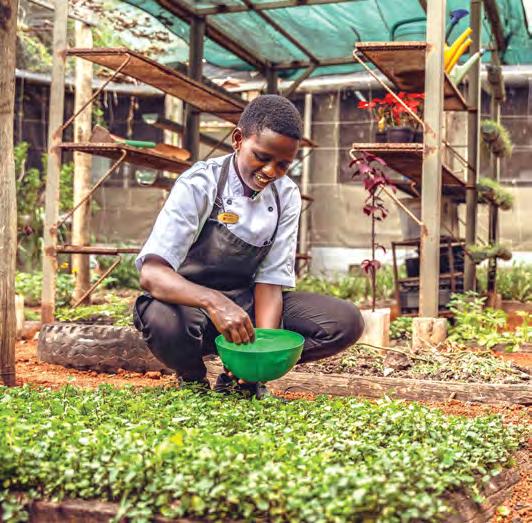
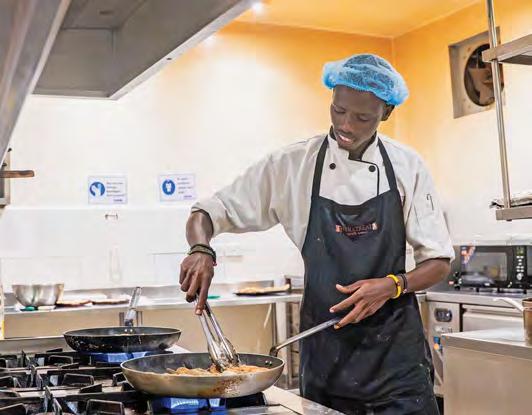
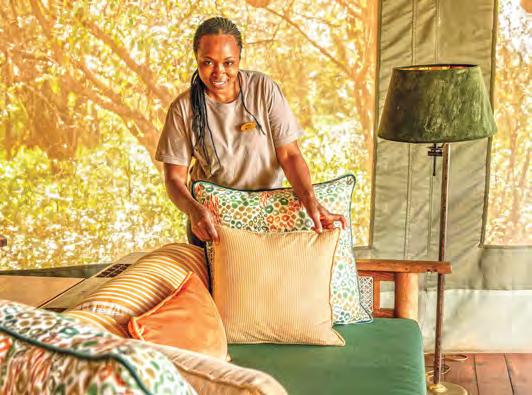
Year on year we continue to strengthen our internal community by investing in our people. We know that exceptional guest experiences and long-term sustainability are built by confident, skilled and value-driven teams. Training sits at the heart of this commitment, spanning hospitality excellence, guiding, wellness, systems and sustainability and reinforcing a shared sense of purpose across all properties.
Throughout the year, colleagues participated in a wide range of professional development programmes, from wine education, beverage intelligence, barista skills and chef-led culinary training to spa therapy refreshers, wilderness first aid and guiding excellence through tailored geology training. Practical, role-specific learning was complemented by training on new operational systems, ensuring teams are well equipped to deliver seamless service while adapting to evolving business needs. Crossexposure initiatives and assistant manager development programmes further encouraged knowledge sharing, leadership growth and a deeper understanding of lodge operations.
Equally important was sustainability training delivered through our Footprint team and grounded in The Long Run’s 4Cs. These were focused training sessions across our properties
which connected everyday roles to the broader impact of the business. Through guided walks, video learning and hands-on engagement, teams explored resource management, food production, waste reduction and conservation technology, including EarthRanger and citizen science initiatives led by our guides.
Underlying all training is a strong foundation of our service values - trust, respect, communication, teamwork, accountability, focus, generosity, consistency, conscious decision-making and attitude. These values shape how our teams work together and connect with our guests.
By investing in learning, shared values and internal collaboration, we continue to build an empowered, connected team - one that delivers meaningful experiences while advancing our sustainability commitments every day.
+5,965
hours dedicated to upskilling our team
Guides’ Tales
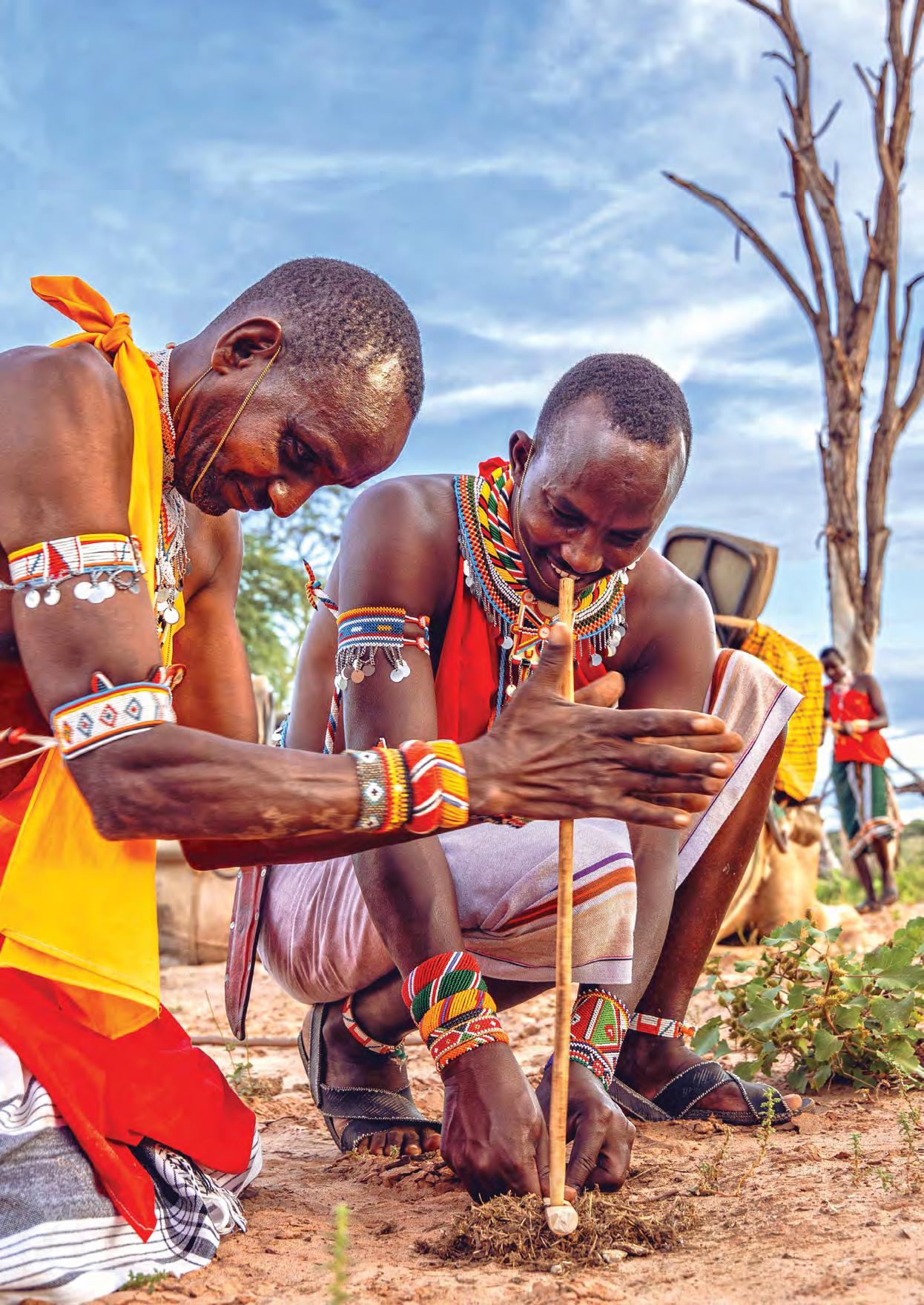
Your guide plays a key role on safari, not least as your storyteller, bringing the wonders of the African bush and the continent’s rich cultures to life. Each year, we ask our guides to share their favourite short story and encounters from their time in the wild. Here are the highlights of the year's winning Guides’ Tales:
1st Runner-up: Rashid Billow - Sala’s Camp
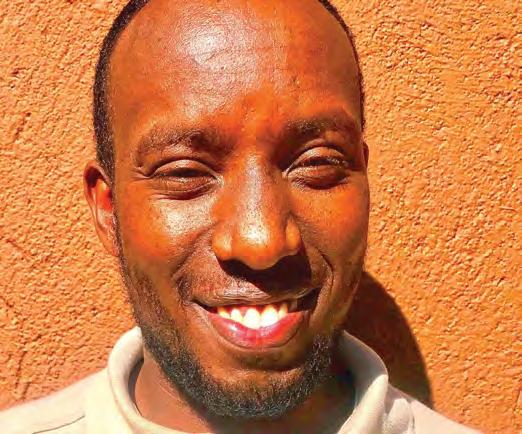
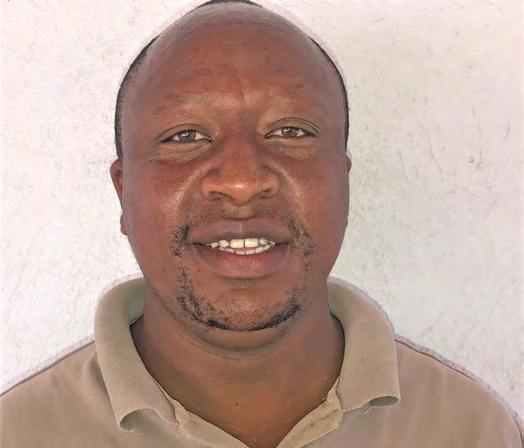
Winner: Peter Kiama - Solio Lodge
A Warthog Breakfast: At sunrise in the Aberdares, a normal wildlife sighting turned dramatic when a hyena targeted a warthog’s piglets. In a flash, the fearless mother flipped the predator skyward, sending it fleeing. For our guests, it was a powerful reminder that in the wild, courage comes in unexpected forms.
Dung Safari: The Wild Side of Nature An afternoon drive along Solio’s golden acacias delivered leopard sightings, rhinos and laughter. At sundowners beside a rhino midden, Rashid surprised his guest with a makeshift rhino dung ‘bush birthday cake’, before returning to the car where the real surprise, a beautifully decorated birthday cake, awaited her. The moment brought her to tears, making an unforgettable celebration in the wild.
2nd Runner-up: Dominic Lekango - Sala’s Camp
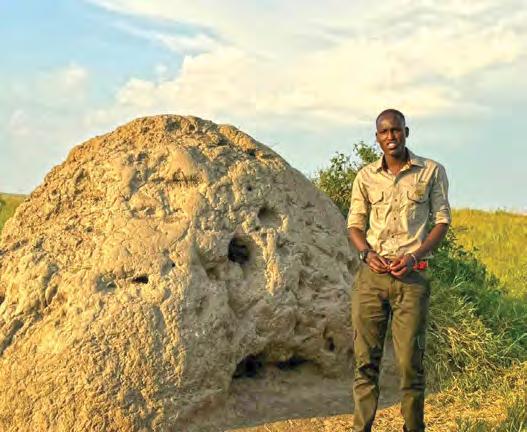
An Unexpected Encounter What began as a search for a leopard in the Maasai Mara became something far more sobering. Dominic discovered a lost man (a potential poacher) deep in the reserve. Thanks to our close relationship with the Mara’s rangers, swift action was taken and they took the man into custody. In the Mara, conservation vigilance protects wildlife and people alike.
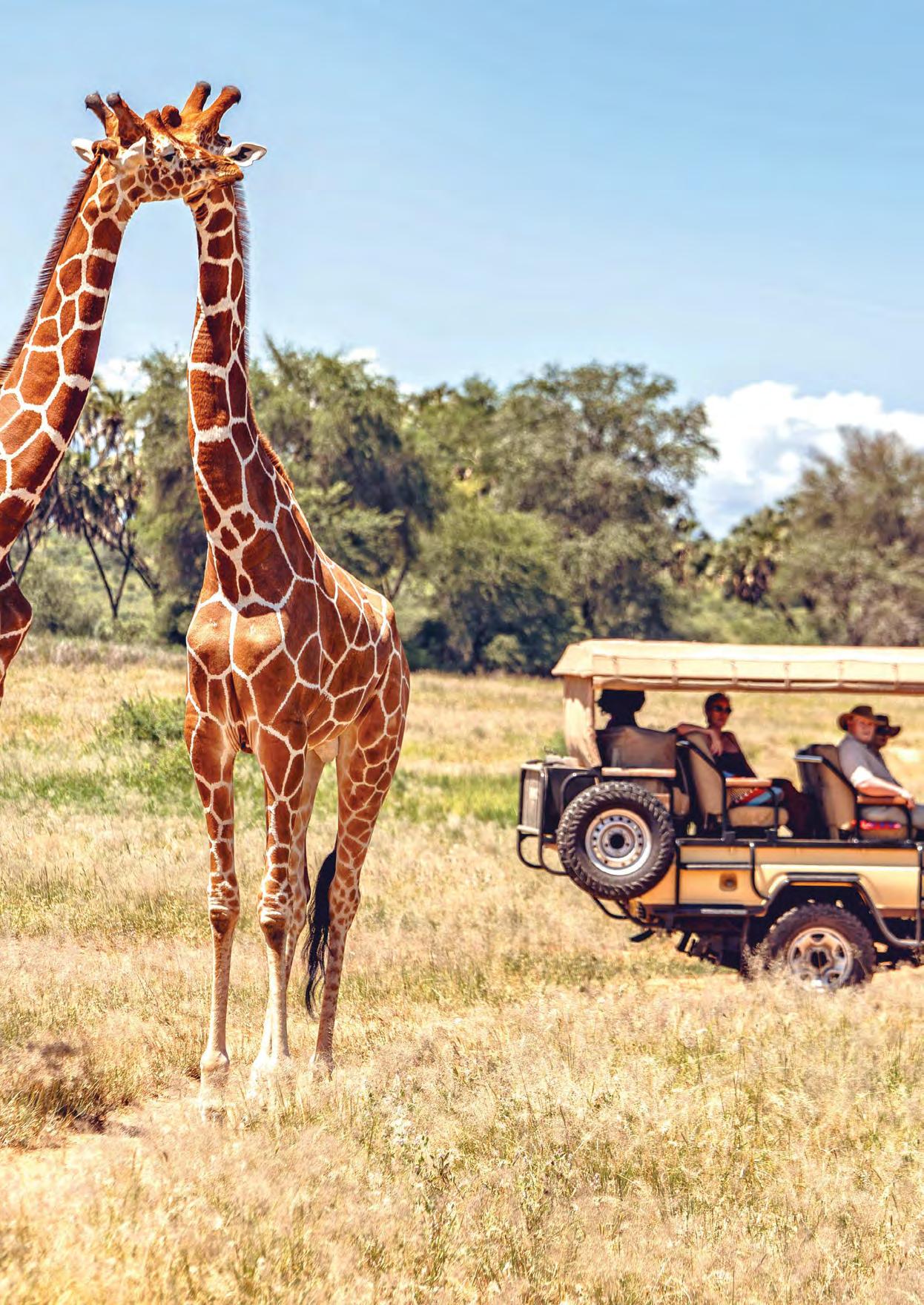
Coffee Culture
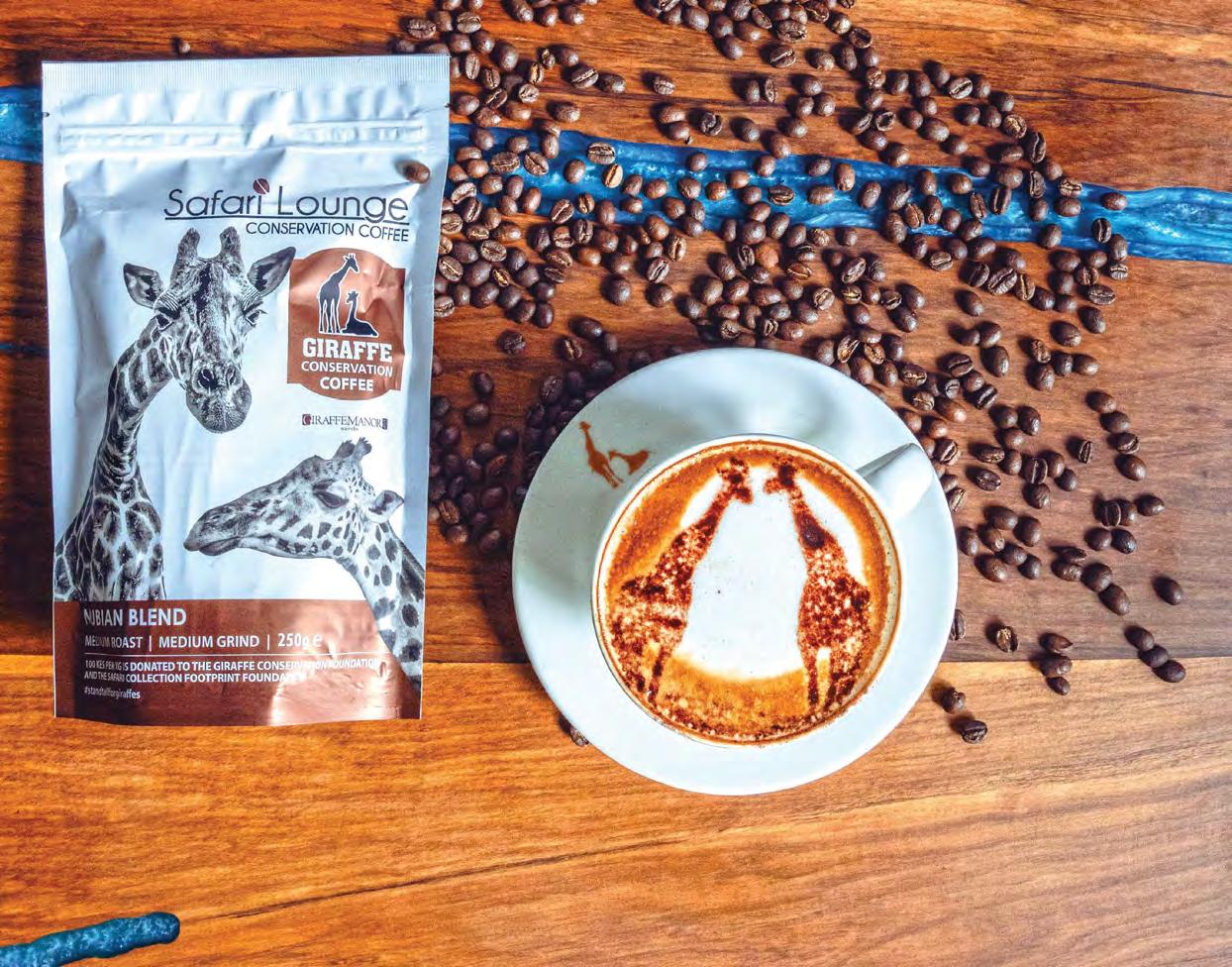
At Giraffe Manor, where conservation, heritage and hospitality have long intertwined, a new chapter has been added to the story this year with the opening of T he Orchid & Bean. More than a coffee shop, The Orchid & Bean is a celebration of Kenya’s rich coffee history and the cultures, landscapes and people that have shaped it for generations.
Kenya produces some of the world’s most distinctive coffees, grown in volcanic soils and nurtured by smallholder farmers whose knowledge has been passed down over decades. The Orchid & Bean honours this legacy by showcasing a carefully curated range of Kenyan coffees, from bright, floral single-origin brews to deeper, chocolate-toned roasts. Each cup tells a story of place, climate and craft.
Central to the experience is education and connection. O ur h ighly trained baristas guide guests through different brewing styles and flavour profiles, offering insights into Kenya’s, and East Africa’s, coffee-growing regions, traditional methods and modern innovations.
This creates space not only to enjoy exceptional coffee, but to understand its cultural significance and the livelihoods it supports in Kenya.
Thoughtfully designed to complement the historic character of Giraffe Manor, The Orchid & Bean invites guests to slow down, reflect and engage more deeply with Kenya beyond the safari. In doing so, it reinforces The Safari Collection’s commitment to c ulture-led tourism t hat values heritage, supports local economies and celebrates the stories rooted in the land. Through The Orchid & Bean, coffee becomes another meaningful way to connect people to Kenya’s natural and cultural legacy.
1,000
bags (250kg) of Giraffe Conservation Coffee sold
Giving Thanks for Art
As part of our ongoing commitment to celebrating East African creativity and culture, The Safari Collection hosted a special Thanksgiving fundraising art exhibition at The Retreat at Giraffe Manor, honouring the work of two exceptional regional artists: Ismael Kateregga from Uganda and Elias Mung’ora from Kenya. Guests enjoyed an evening of contemporary art, crafted gins, cocktails and canapés, alongside a screening of our award-winning short film The Land Smiles Back.
The exhibition highlighted the power of art to preserve stories, honour heritage and celebrate Africa’s wildlife.
Through my work, I’m hoping viewers can get something to build onto their own experiences
~ Elias Mung’ora, Kenyan Artist ~
Ismael Kateregga
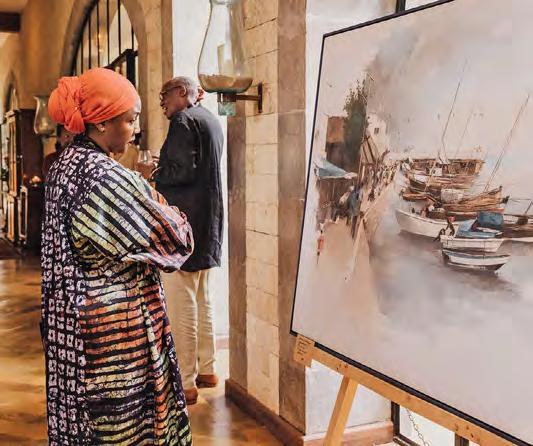
Kateregga’s luminous oil paintings capture everyday East African life - from Kampala’s bustling streets to the coastal tranquillity of Lamu - revealing the poetry woven into ordinary moments. His work is celebrated across the continent for its warmth, colour and cultural resonance.
Elias Mung’ora
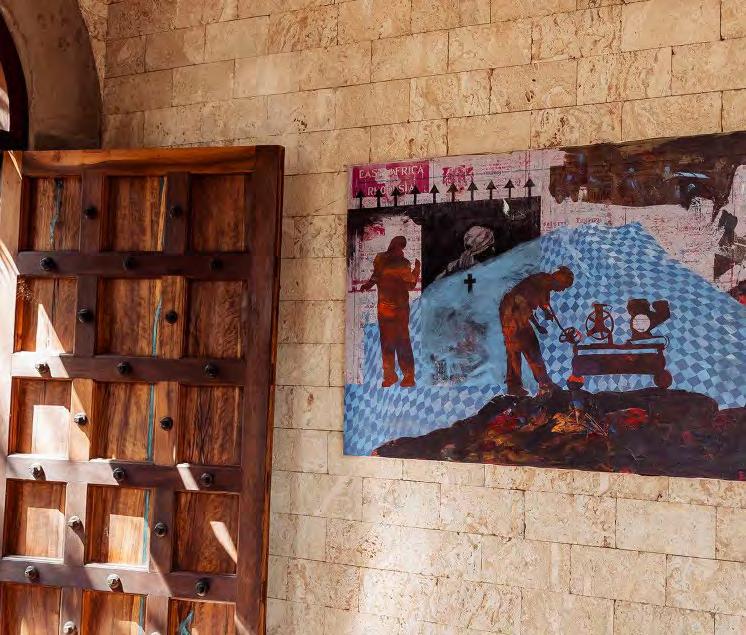
Known for his reflective depictions of Nairobi’s evolving urban landscape, Mung’ora presents evocative scenes that explore memory, identity and the beauty of change. Through layered brushstrokes and thoughtful detail, he invites us to rediscover the stories hidden within familiar streets.
This exhibition not only supported meaningful conservation and community initiatives, but also honoured the artists whose work keeps East Africa’s spirit alive.
East Africa paintings displayed. $6,785 raised for the Footprint Trust
COMMERCE
Commerce and trade have driven human progress for millennia. That’s why businesses must prioritise sustainability.
Every guest who stays with us makes an impact through paying conservation fees and providing employment.
FutureFocused, Wild at Heart
The Safari Collection continued to invest thoughtfully in its properties, guided by a simple belief: sustainability is not only about protecting wildlife and landscapes, but also about celebrating place.
This year saw meaningful innovation across our properties, enhancing both environmental performance and guest experience. At Sasaab, a significant solar upgrade strengthened our transition towards renewable energy, reducing reliance on fossil fuels while ensuring uninterrupted comfort in a remote setting. At Giraffe Manor and Sala’s Camp, the introduction of electric golf carts became a lower-impact way to move supplies around and support daily camp life.
At Sala’s Camp, we further enhanced the guest experience with a thoughtful expansion of our shop tent, creating a more spacious and inviting setting to showcase locally crafted pieces and meaningful keepsakes. In addition, new secluded spa and gym tents were built, offering guests private spaces for wellness and movement in the heart of the Maasai Mara.
Investment in our properties also celebrated Kenya’s rich cultural and natural heritage. The Garden Manor unveiled a beautiful new sunroom, creating a light-filled space that connects guests
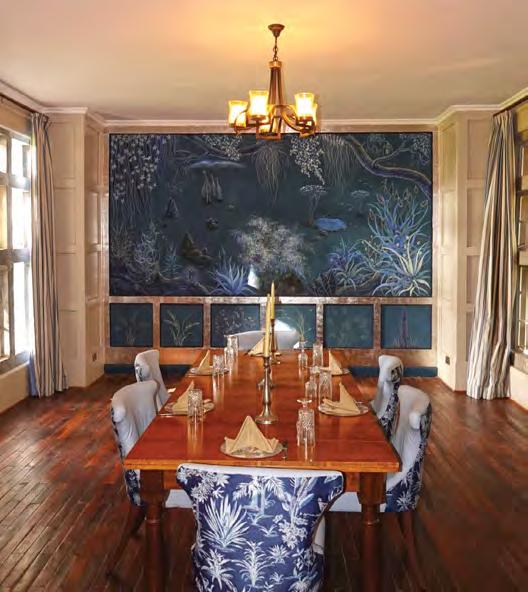
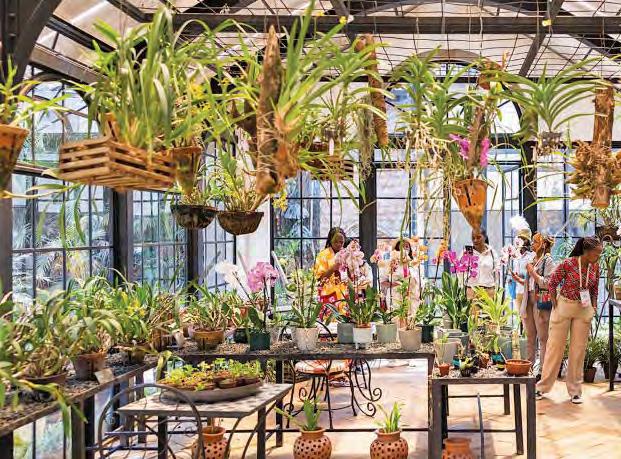
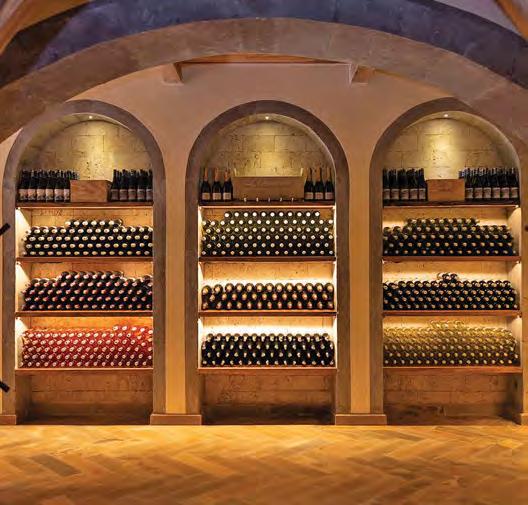
more deeply to the surrounding gardens as well as the giraffes at breakfast. A reimagined Finch Hatton Suite blends contemporary elegance with African character, elevating the sense of place while honouring safari tradition. At Giraffe Manor, a distinctive new wine cellar was designed to host private fine dining experiences, showcasing Kenya’s culinary creativity, locally sourced ingredients and a curated selection of exceptional South African wines. The addition of a stunningly redesigned orchid house further enriches the Manor’s botanical legacy.
Each development reflects our commitment to thoughtful, growth-enhancing comfort, deepening connection and reducing impact, whilst investing in innovation that celebrates Kenya and Africa.
In Kenya, tourism accounts for one in 13 jobs
~ World Travel & Tourism Council ~
The Worms & The Bees
They weigh less than a gram, yet bees quietly shape the landscapes we depend on. As essential pollinators, they support biodiversity, strengthen ecosystems and underpin food systems across Kenya and beyond, a reminder that small forces, working together, can sustain entire environments.
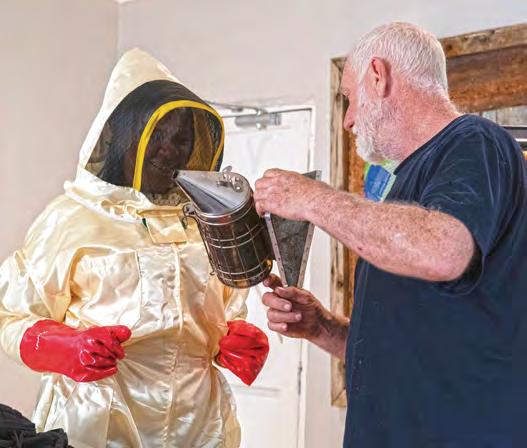
At Giraffe Manor, this philosophy has taken root through a growing beekeeping initiative. Five beehives now thrive among the Manor’s surrounding indigenous trees and flowering gardens, while eight members of The Safari Collection team have received hands-on training in beekeeping, including bee biology, hive management, health and safety and honey harvesting. The result is a locally led project that produces natural Kenyan honey while enhancing pollination across surrounding habitats.
The initiative also honours Kenya’s deep cultural connection to honey, captured in the Swahili proverb fuata nyuki ule asali - follow the bees to eat honey. From ancient honey-hunting traditions to the unique partnership between humans and honeyguide birds, bees have long linked people, nature and livelihoods.
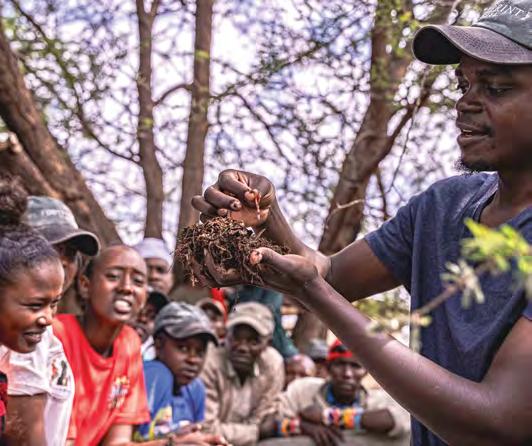
Beneath the soil, another quiet workforce is at play. Red wriggler worms transform kitchen scraps into nutrient-rich compost through vermicomposting, reducing landfill waste, cutting transport emissions and returning organic matter to the land. At Sasaab, a working worm farm closes the loop on food waste, while smaller systems at Giraffe Manor and Sala’s Camp support their vegetable shambas (gardens) and landscaped areas. Compact, low-impact and odour-free, these systems also create valuable opportunities for staff training and guest education.
Together, bees and worms demonstrate the power of nature-based solutions. By investing in these small yet mighty species, The Safari Collection nurtures healthier soils, stronger ecosystems and more resilient conservation landscapes where sustainability begins at ground level and flourishes outward.
worm farms at each of our properties
5 beehives at Giraffe Manor
Sustainable Sourcing: Our Edible Ethos
Sustainability is woven into the every-day decisions we make, including how we source, prepare and serve food. Guided by our Sustainable Sourcing and Procurement Policy, we ensure that our purchasing decisions, from ingredients and guest amenities to equipment and shop items are, wherever possible, environmentally responsible, socially ethical and economically viable.
We continued to strengthen our focus on reducing our 'foodprint' under the leadership of Executive Group Chef Tim du Preez and our procurement team. Menus and suppliers are carefully reviewed to prioritise seasonal, locally sourced ingredients, consolidate deliveries and shift toward bulk purchasing, reducing food miles and unnecessary packaging. Kitchen shambas (gardens) across our properties supply fresh produce grown only metres from our kitchens, complemented by longstanding partnerships with Kenyan farmers, growers and artisans. This commitment to local sourcing not only lowers emissions but also celebrates Kenya’s delicious produce. If it cannot be sourced in Kenya, we endeavour to source from our neighbours in East Africa and thereafter the wider continent.
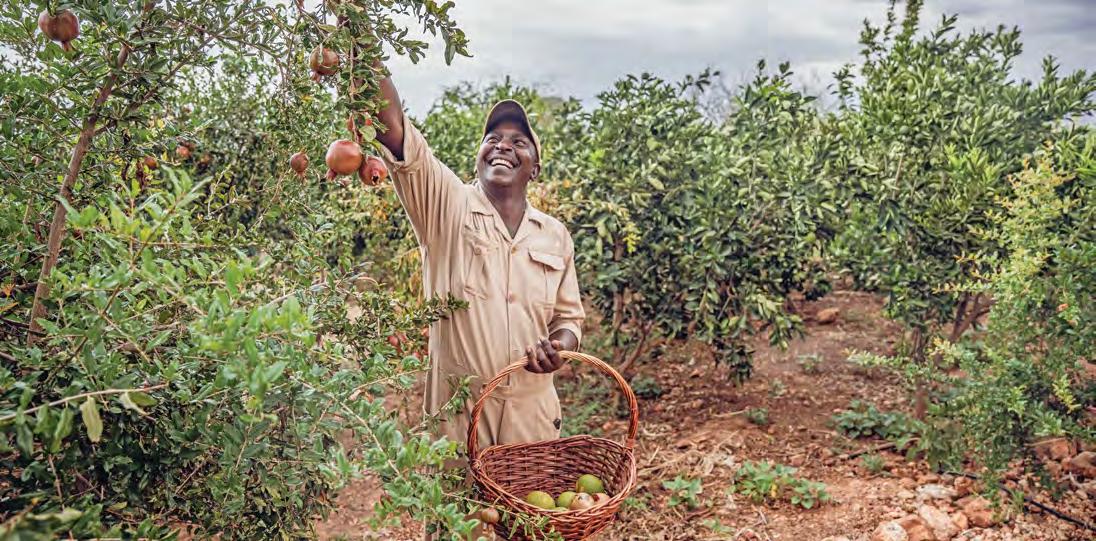
Our Edible Ethos is rooted in the belief that true luxury is defined not by excess, but by thoughtful, responsible and restorative intention. Much of what we serve is made from scratch using fresh, unpackaged ingredients, ranging from breads and granola to preserves and kombucha. Single-use plastics continue to be phased out, with refillable guest water bottles and filtered water stations at our camps and lodges. Kitchen food waste is composted and returned to the soil, closing the farmto-fork loop.
Through transparent supplier engagement and continuous monitoring and innovation, responsible procurement can help protect ecosystems, support communities and deliver a dining experience that nourishes both people and planet.
95% of waste recycled, composted or upcycled. Packaging reduced and single-use plastic almost eliminated
Wellness in the Wilderness
Wellness on safari is about more than rest and relaxation; it is a reconnection to nature, to self and to a slower, more intentional way of living. As global demand grows for holistic environments that support longevity, mental wellbeing and balance, we continue to embed wellness into the very fabric of our properties and guest experiences.
Across Kenya, wilderness provides the most powerful wellness setting of all. Our carefully curated Wellness and Wilderness safaris blend movement, mindfulness and nourishment with meaningful adventure, from yoga and Pilates in dry riverbeds to guided meditations overlooking vast landscapes. Home-grown produce and nutrient-rich menus reinforce the belief that food is medicine, while spa treatments, swimming pools and quiet spaces invite deep restoration. This philosophy extends beyond scheduled retreats - safari wellness is woven into daily experiences: early mornings, wide horizons, time spent walking, breathing and observing wildlife in its natural rhythm. At our spas we use premium organic African products by Healing Earth and Cinnabar Green to rebalance and rejuvenate.
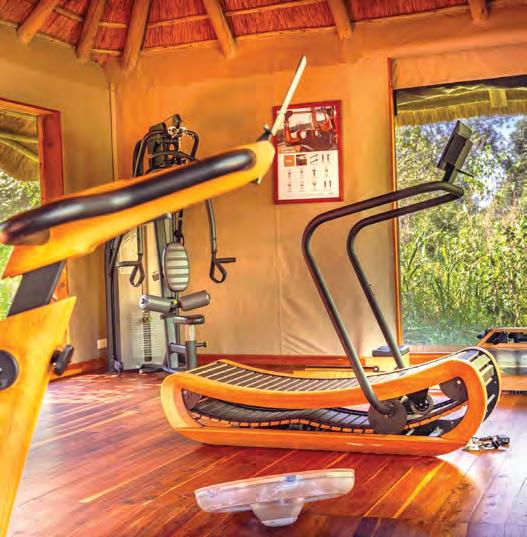
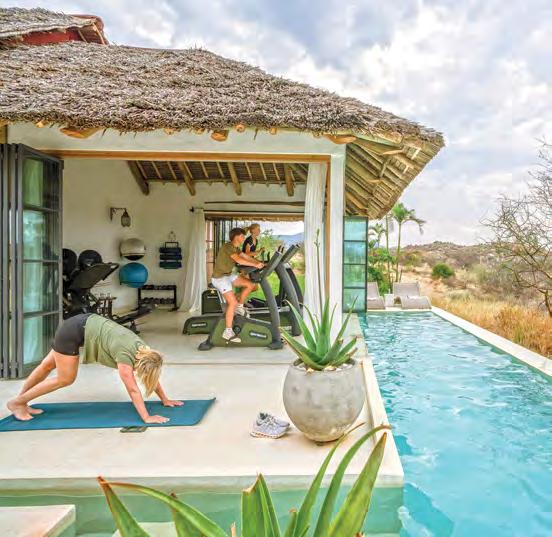
At Sasaab, architecture, light and open spaces are designed to calm the nervous system and encourage presence. At Sala’s Camp, we have elevated the guest experience with the addition of secluded spa and gym tents, creating private sanctuaries for massage, relaxation and mindful movement in the heart of the Maasai Mara. At Solio Lodge, wellness unfolds in the privacy of the guest cottages with restorative massages conducted beside the warmth of a crackling fire, whilst guests can further unwind in Solio’s custom-built wood sauna, with views towards the majestic Mount Kenya. In Nairobi, The Retreat at Giraffe Manor offers a gentle transition between wilderness and city. An infinity pool overlooking the giraffe sanctuary, gym and spa including sauna, steam room and hot tub create space to unwind, recover from travel and reflect.
our spas use premium organic African products by Healing Earth and Cinnabar Green
Recognition that Fuels Impact
Awards
Every accolade inspires us to continue striving for excellence while staying true to our values.
We are honoured to have been recognised by some of the world’s leading hotel and resort awards this year. Each acknowledgment shines a light not only on Kenya’s wild beauty, but also on the warmth, creativity and dedication of the people who make our safaris possible.
For us, these achievements carry meaning far beyond hospitality. A thriving business allows us to deepen our support for conservation and community initiatives across Kenya, from protecting endangered species to empowering future generations through education.
CONDE NAST USA READERS’ CHOICE AWARDS 2025
Giraffe Manor ranked No. 4 in the World Hotels - Africa
Sala’s Camp ranked No. 10 in the World Resorts - Central & Eastern Africa
Sasaab ranked No. 2 in the World ResortsCentral & Eastern Africa
Solio Lodge ranked No. 14 in the World Resorts - Central & Eastern Africa

CONDE NAST UK READERS’ CHOICE AWARDS
Giraffe Manor ranked No. 10 in Hotels category - Africa: Eastern & Central
Sala’s Camp ranked No. 11 in the Resorts category
Solio Lodge ranked No. 20 in the Resorts category
RECOGNISED ON THE FORBES TRAVEL GUIDE’S 2025 EDGE LIST
Manor and Solio Lodge
Giraffe Manor was ranked No.1 in Travel + Leisure’s ‘10 Favourite Hotels in Africa of 2025’
Solio Lodge ranked No.3 and Sasaab ranked No.5 in the ‘15 Favourite Safari Lodges and Safari Outfitters in Africa of 2025’
Giraffe
Giraffe Manor was awarded 3 Michelin Keys
RECOGNISED IN THE 2025 HOTEL & LODGE AWARDS
Sasaab was recognised in the 2025 Hotel & Lodge Awards
1st PRIZE WINNER
Water Film Prize: Back to Our Future: 2025
The Land Smiles Back, the short film co-produced by The Safari Collection, Justdiggit and Westgate Community Conservancy, won 1st Prize in the 'Water Film Prize'
Membership
We are grateful to stand alongside leading environmental and responsible tourism organisations, working collectively towards a more sustainable future.

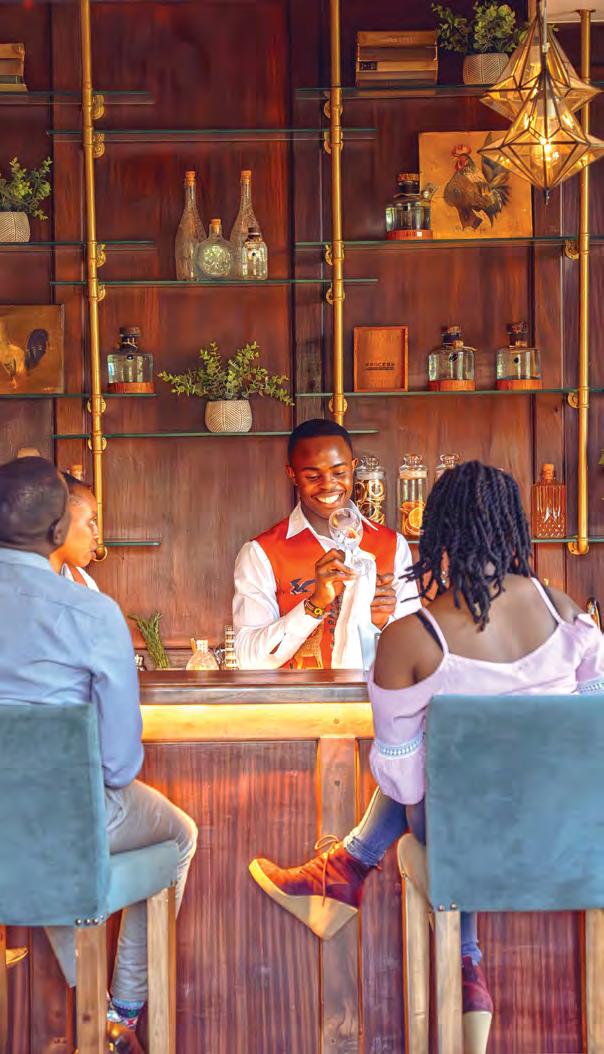
Sala’s Camp and Sasaab are members of The Long Run and Sasaab is a certified GER®
OUR IMPACT PARTNERS


Our work is never done in isolation. The Safari Collection and Footprint Trust are deeply grateful to our partners, whose collaboration makes it possible to conserve Kenya’s wild landscapes and invest in the communities connected to them.














Beyond the Safari: Fundraising with Purpose
The Safari Collection Footprint Trust 2024/5 Financial Summary
Through the incredible generosity of our guests and non-profit partners, during the fiscal year between 1st September 2024 to 31st August 2025 the Footprint Trust raised over $462,000 towards facilitating conservation and community projects across Kenya, of which:
•$381,000 was from guest donations
•$24,500 was from 193 giraffe sponsorships
•$56,500 was from fundraising events and institutional funding
FUNDRAISING & ADMINISTRATION
We also secured the equivalent of a further $300,000 in equipment, match-funding and in-kind support. We extend our heartfelt gratitude to every guest, donor, sponsor and partner who supported us.
$59,715 to Kenyan conservation programmes AFRICAN FUND FOR ENDANGERED WILDLIFE
GIRAFFE CONSERVATION
$15,500 to Giraffe Conservation Foundation.
3 Nubian giraffe calves born and 2 of the breeding herd rewilded
$837,670 to support reserve management and community development MAASAI COMMUNITIES
GIFTED HANDS SCHOOL
75% of the school budget supported; 17 teachers and support staff salaries paid
CONSERVATION TECHNOLOGY
LoRaWAN network expansion and cameratrap network set up for improved rhino monitoring in the Masai Mara
$516,000 to support conservancy and reserve management and community development SAMBURU COMMUNITIES
$260,100 to reserve management and rhino conservation SOLIO GAME RESERVE
$363,150 to Footprint Trust projects and partners FOOTPRINT TRUST
MARA RHINO CONSERVATION
$19,500 for equipment and uniforms to Mara rhino rangers.10 black rhinos ear-notched and 14 GPS ear-tagged in the Masai Mara
AFRICAN PAINTED DOGS
$90,000 towards vaccinations, monitoring, outreach and operational costs in Samburu and Laikipia
2,916,600
41 students on full scholarships in schools, colleges and universities across Kenya, with 3 graduating from university CONSERVATION SCHOLARSHIPS
3 classrooms, 1 computer lab and 2 science labs constructed. 2,890 textbooks, 40 desks and 50 uniforms provided SCHOOL INFR ASTRUCTURE
397 students taken on educational excursions SAFARI KIDS
over 300 animals translocated to safer habitats WILDLIFE RESCUE
DENTAL CLINICS
over 564 patients received free dental treatment
35 units of blood donated by employees BLOOD DONATION
SUSTAINABLE RESOURCE USE
95% of waste recycled, composted or upcycled. Packaging reduced, single-use plastic almost eliminated. Over 80% power from renewable sources
FRESH WATER
new community solar borehole providing clean water to local clinic and over 1,500 people
172,600 meals for 3,204 students at 12 schools FEEDING Y OUNG MINDS PROGRAM ME
531 employees worked for The Safari Collection. Over 5,965 hours dedicated to upskilling our team EMPLOYMENT
Every guest who stayed with us in 2025 made an impact through the conservation, bed night and park entry fees they paid, which combined with donations made to our Footprint Trust and other support, contributed a total of $2,916,600 towards community and conservation initiatives in Kenya.