VWe request the honour of your presence at the union of devotion and dissent, shadow and light.
A celebration of matrimony, in all its tenderness and contradiction, from the fever of first sight to the quiet haunt of subtle domestication.
You are cordially invited to witness this merging of mediums, a ceremony of concept, may it be ritual or rebellion.
Held on this day, in the spirit of creative communion, by those who believe that every stitch, stroke, and story is a vow in itself.
This is the marriage.
Salma Abu Hijleh
Ashley Hilbers &
Chapter One
The Preview
It was written before it started.
End Pictures
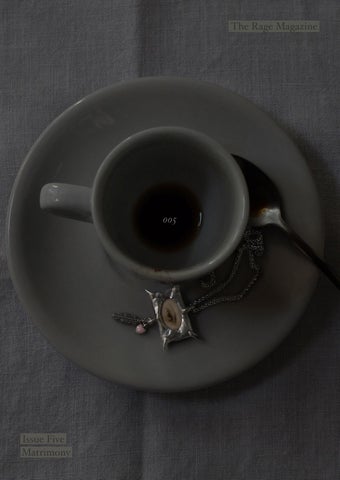
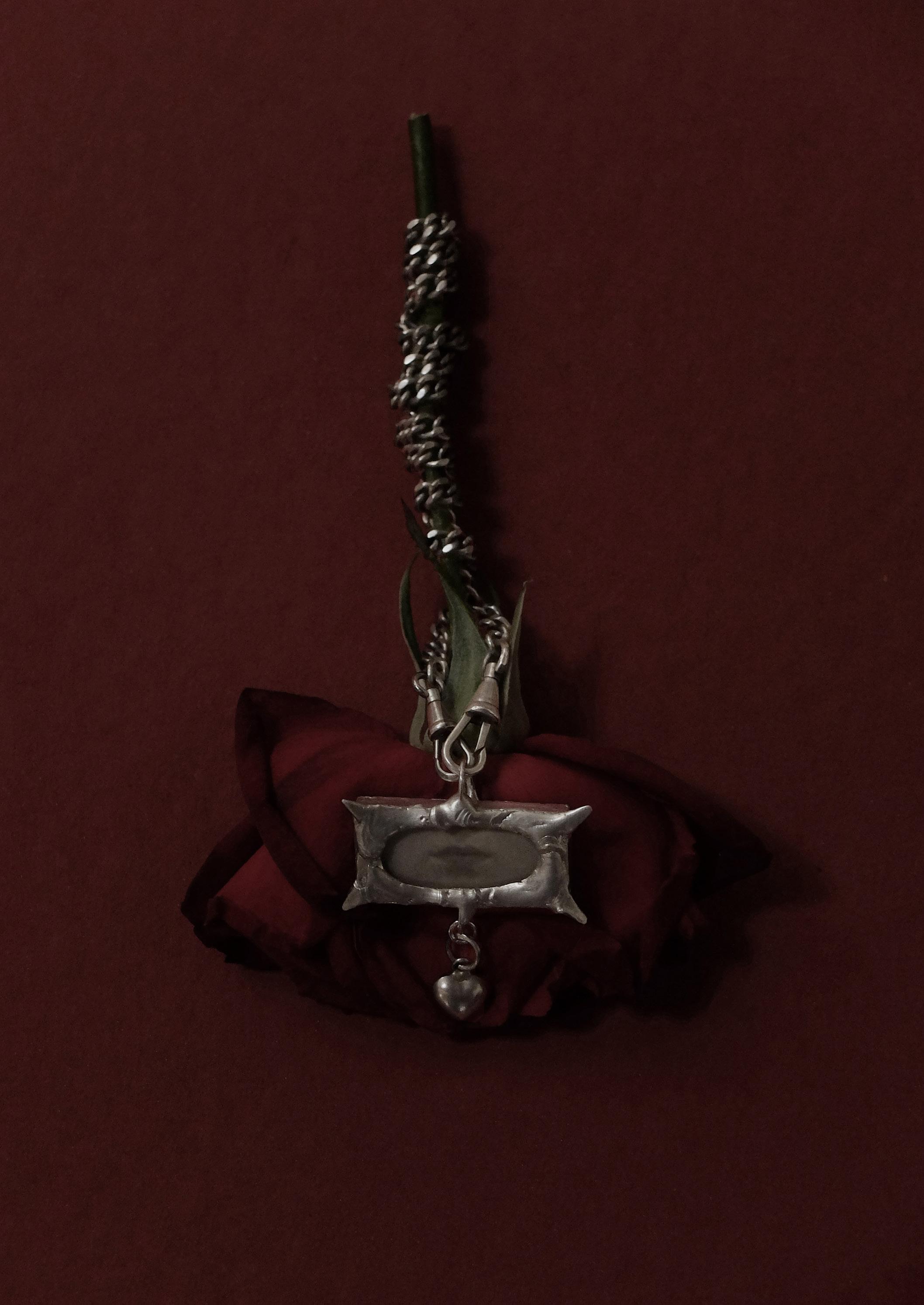
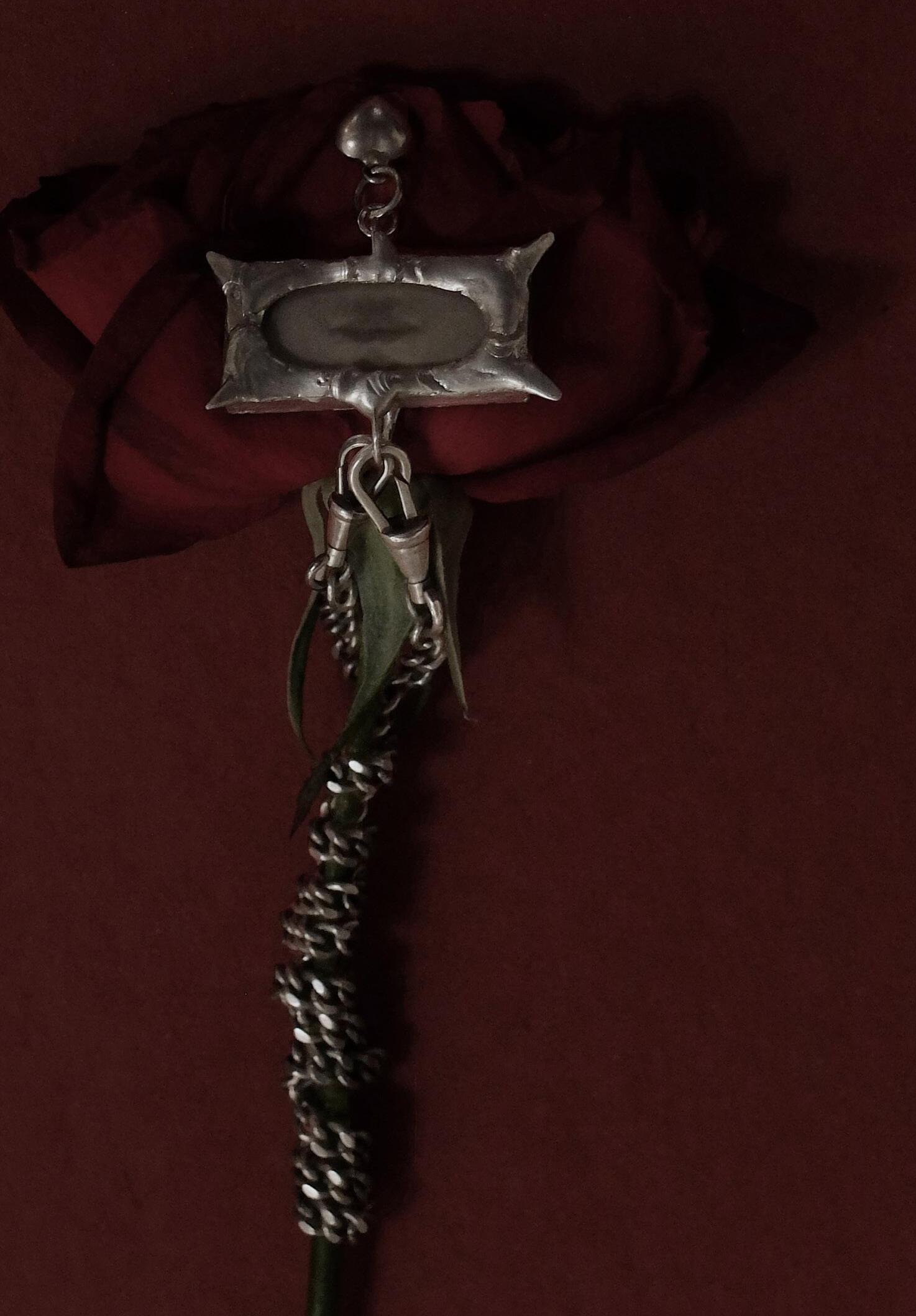
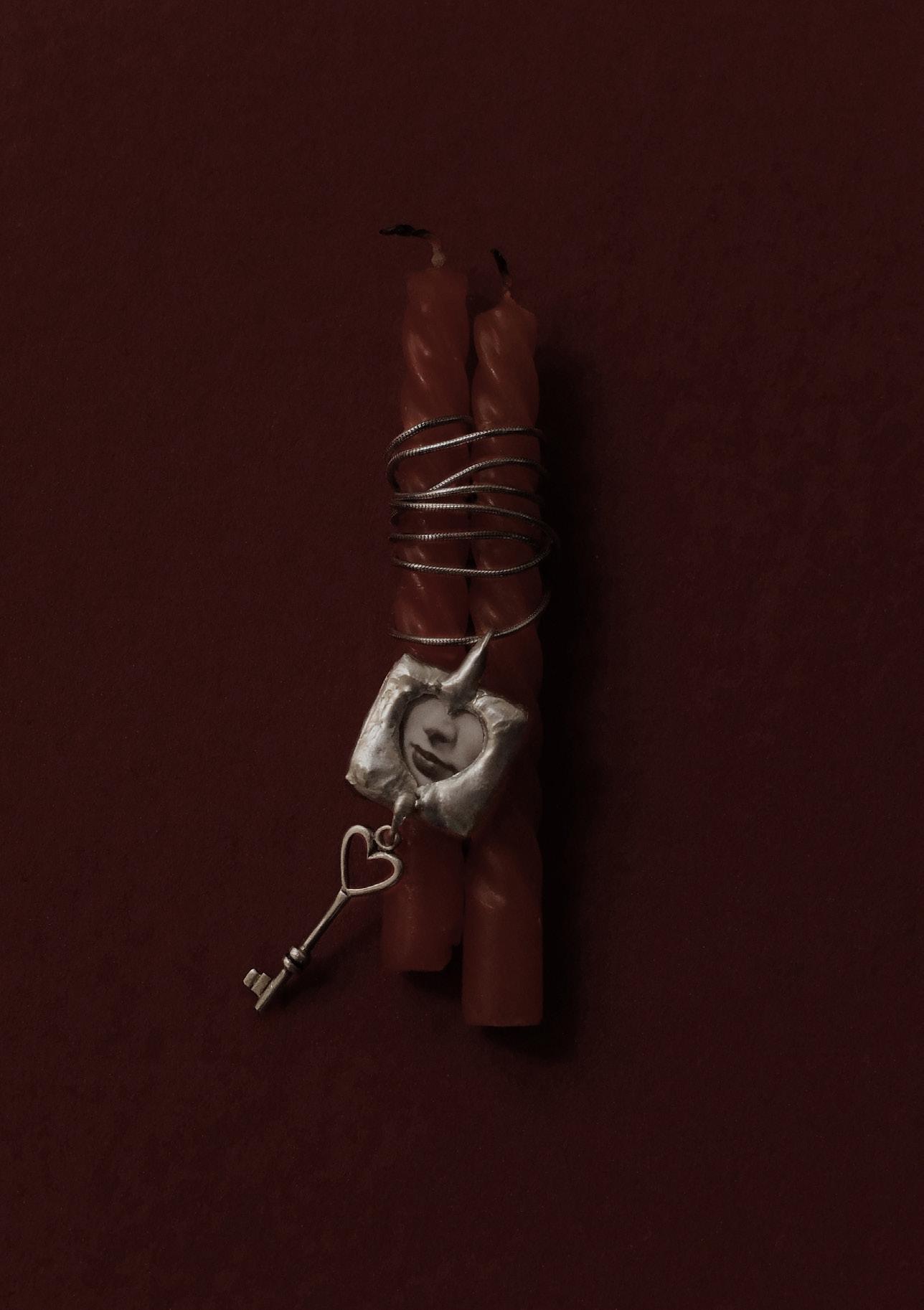
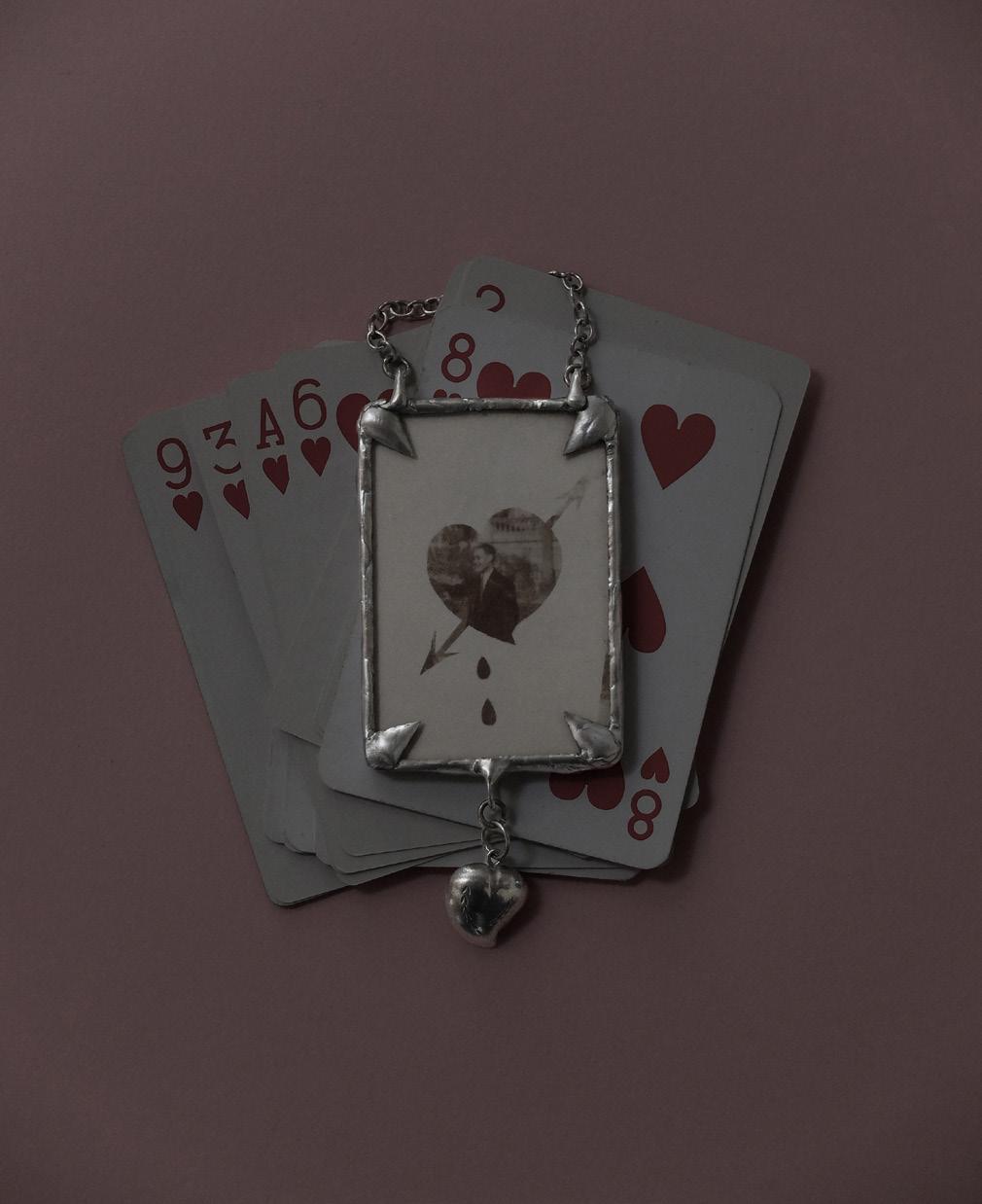
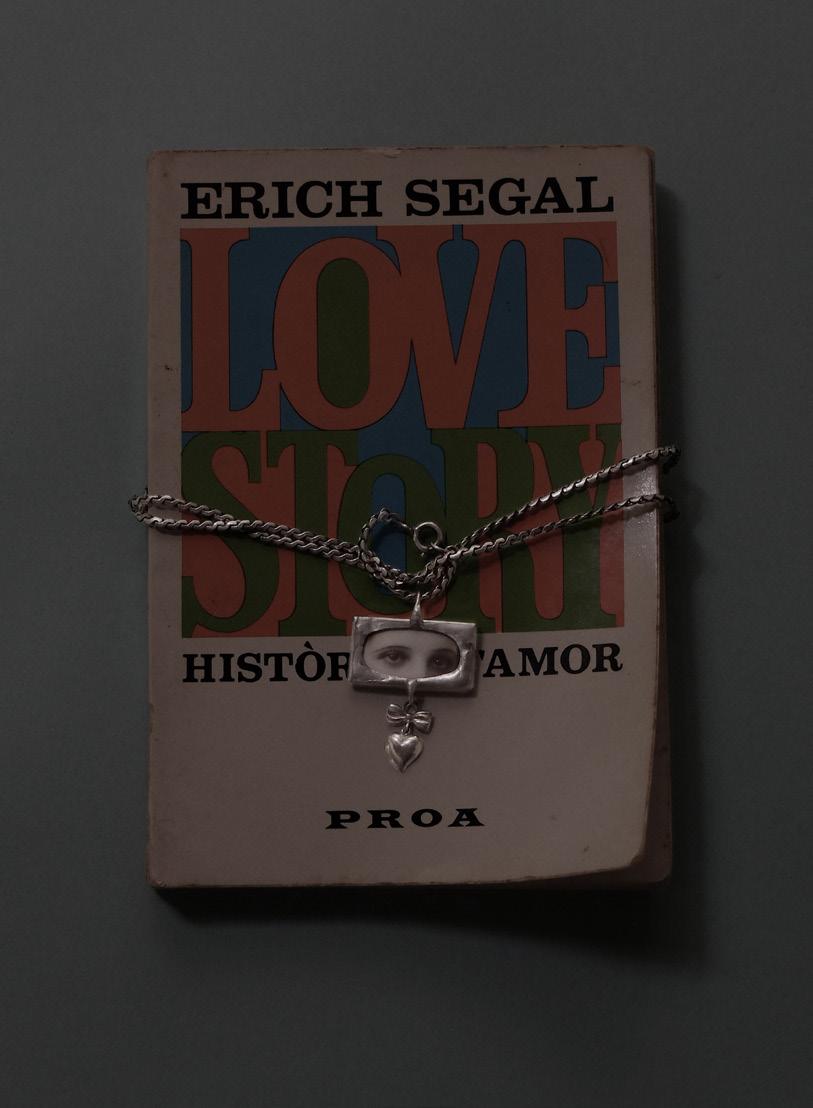
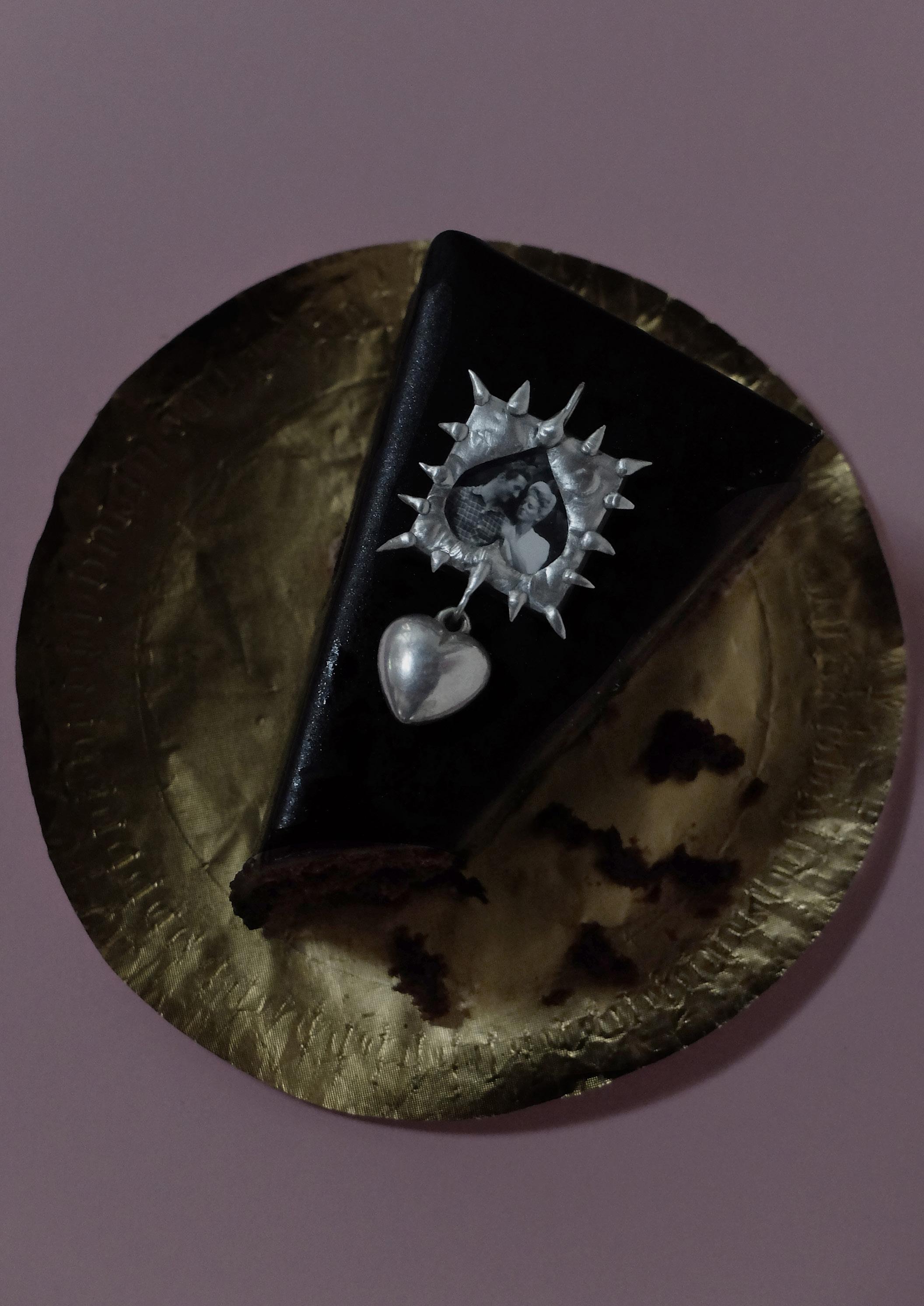
Jewelry and stylism by Carina Hemmings
Photographed by Joan C. Ponsa
Carina Hemmings is a visual artist, graphic designer, and jewelry maker based in Girona, Spain. This dossier features handcrafted jewelry and curated visuals that build a dialogue between ephemeral memory and wearable sculpture.
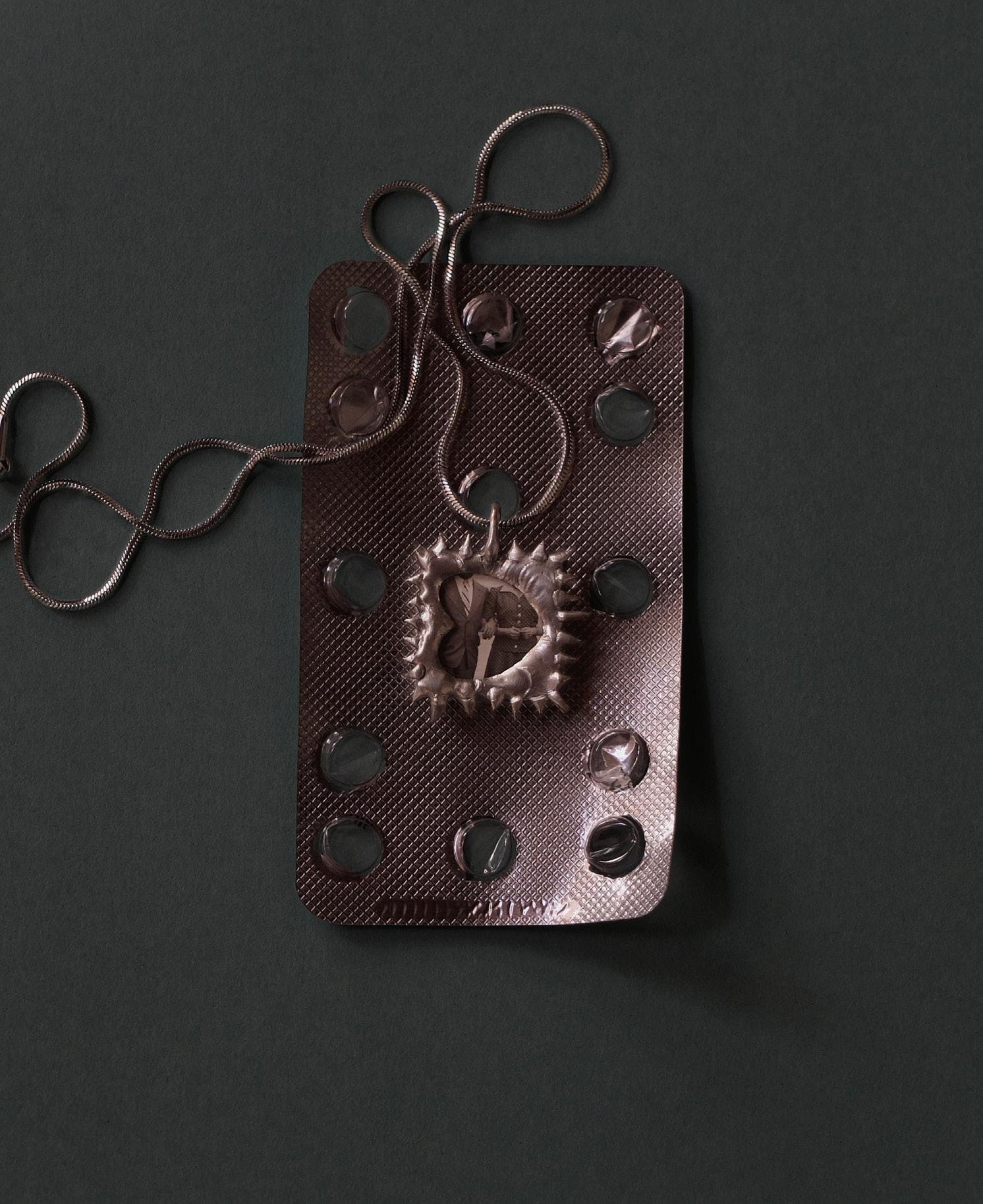
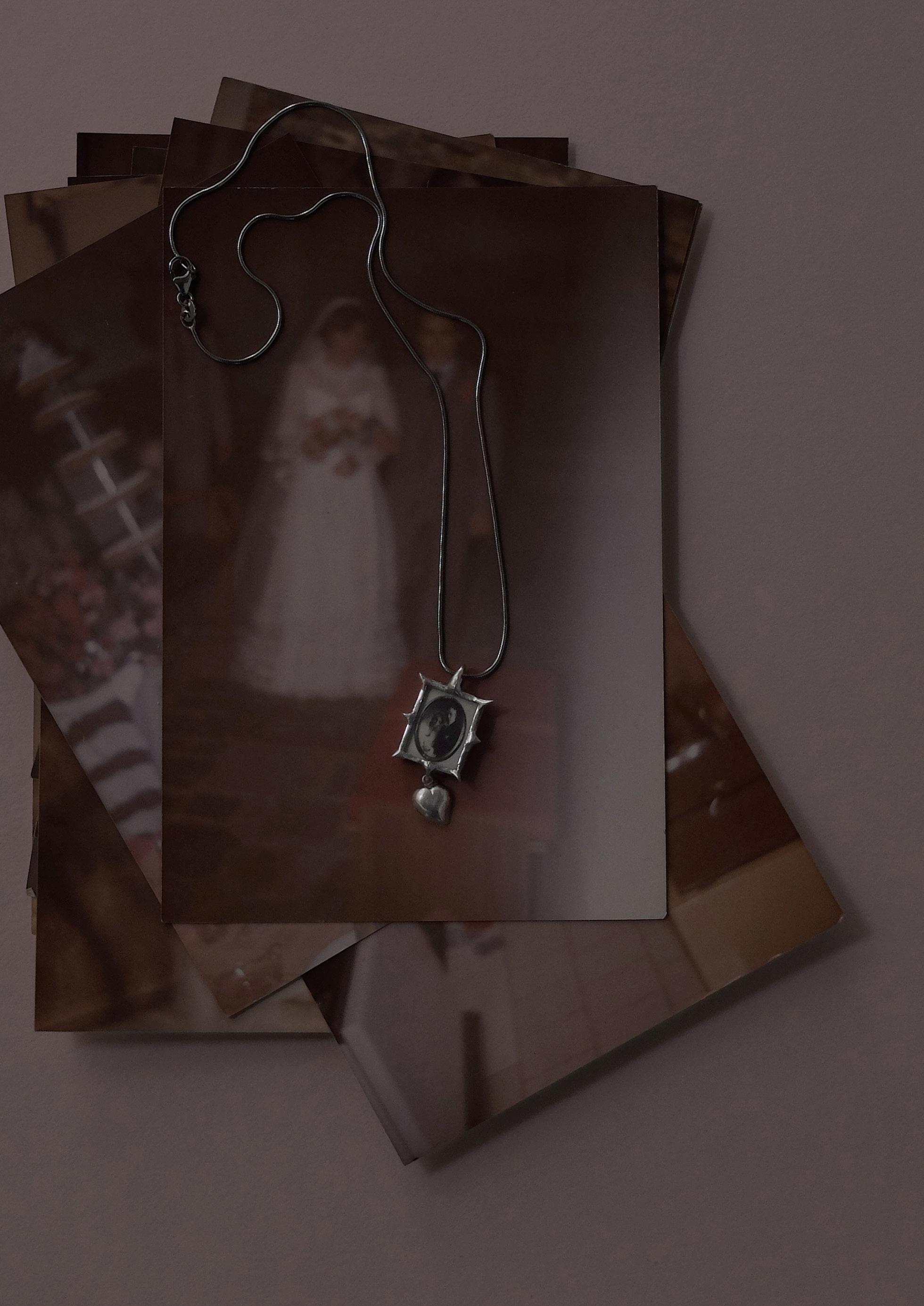
Through my jewelry, I explore “Matrimony” as both ritual and relic – something timeless yet constantly shifting. I reinterpret classic love tokens – 18th-century Lover’s Eyes, lockets, and keys to the heart-objects loaded with emotion, secrecy, and symbolism. These inimate gestures once promised total surrender, eternal happiness. But today, commitment wears a different face – often still passionate, but layered with irony, protection, and the complexities of modern love.
“Irony, protection, and the complexities of modern love”
My pieces echo these contradictions. I craft love pendants that evoke tenderness but disrupt it with spikes – ornamental defenses that hint at the ways love can wound. And when it wounds, we all cope differently, often in toxic ways that only deepen the crisis: prescription pill use, casino gambling, endless nostalgia, naive romanticism, even obsessive self-help rituals. We cling to the fantasy while trying to medicate the fallout.
“Who do we give our hearts to, and at what cost?”
There’s beauty in that vulnerability, but also danger, obsession, and escape. Love, to me, is still ceremonial, but it’s also charged with questions, Who do we give our hearts to, and at what cost? What does eternal happiness look like today, in a world where vows bend and meanings evolve?
My work embraces both devotion and doubt, nostalgia and critique. It honors the romantic and the real – with a wink, and a bit of armor.
WOUNDS when
Chapter Two
The Courtship
The dark romanticism of the chase.
Clare
Kramer
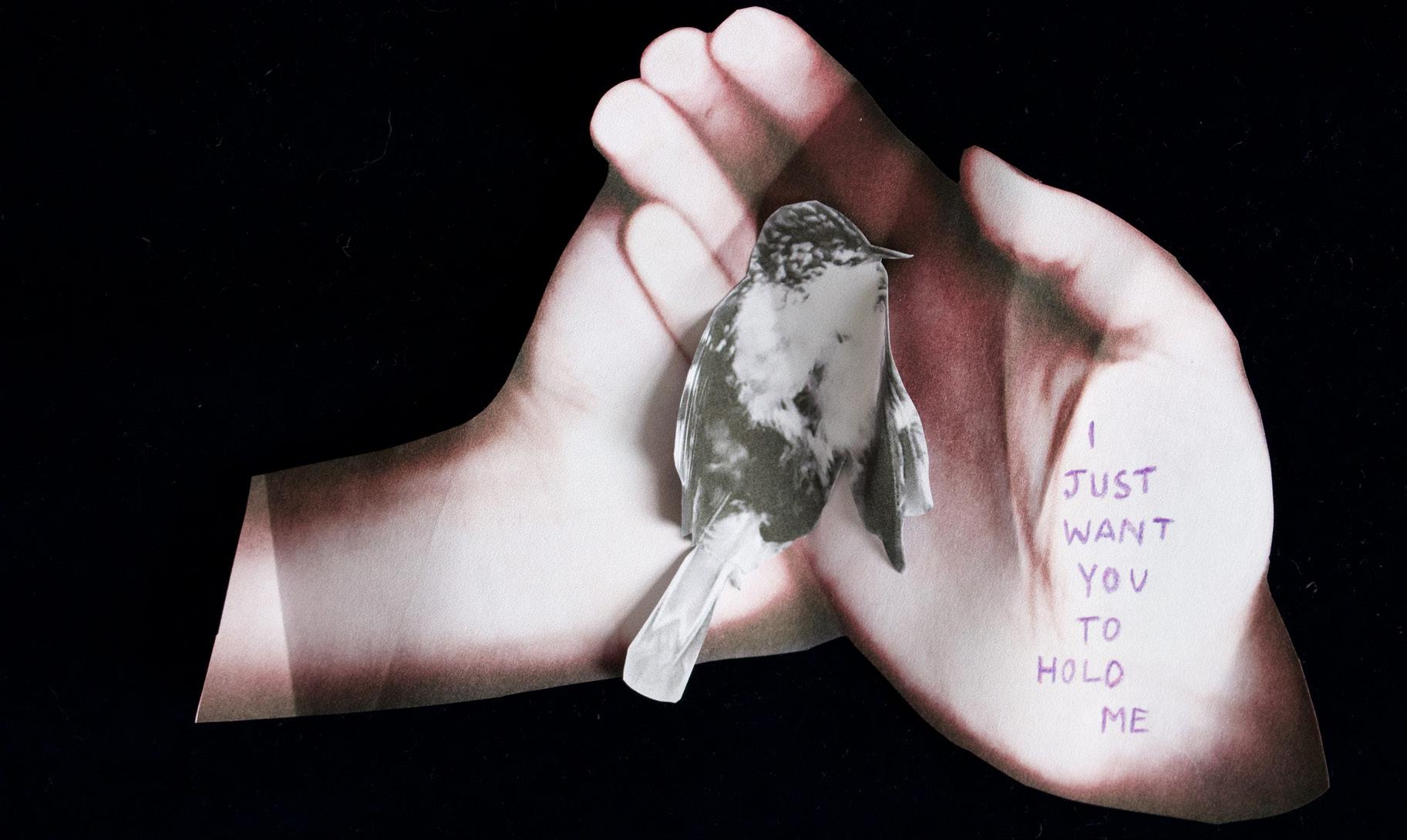
Clare Kramer is an interdisciplinary artist based in New York, whose work encompasses collage, textile art, sculpture, and bookmaking with an autobiographical focus. The following work explores memory, trauma, interpersonal violence, and isolation.
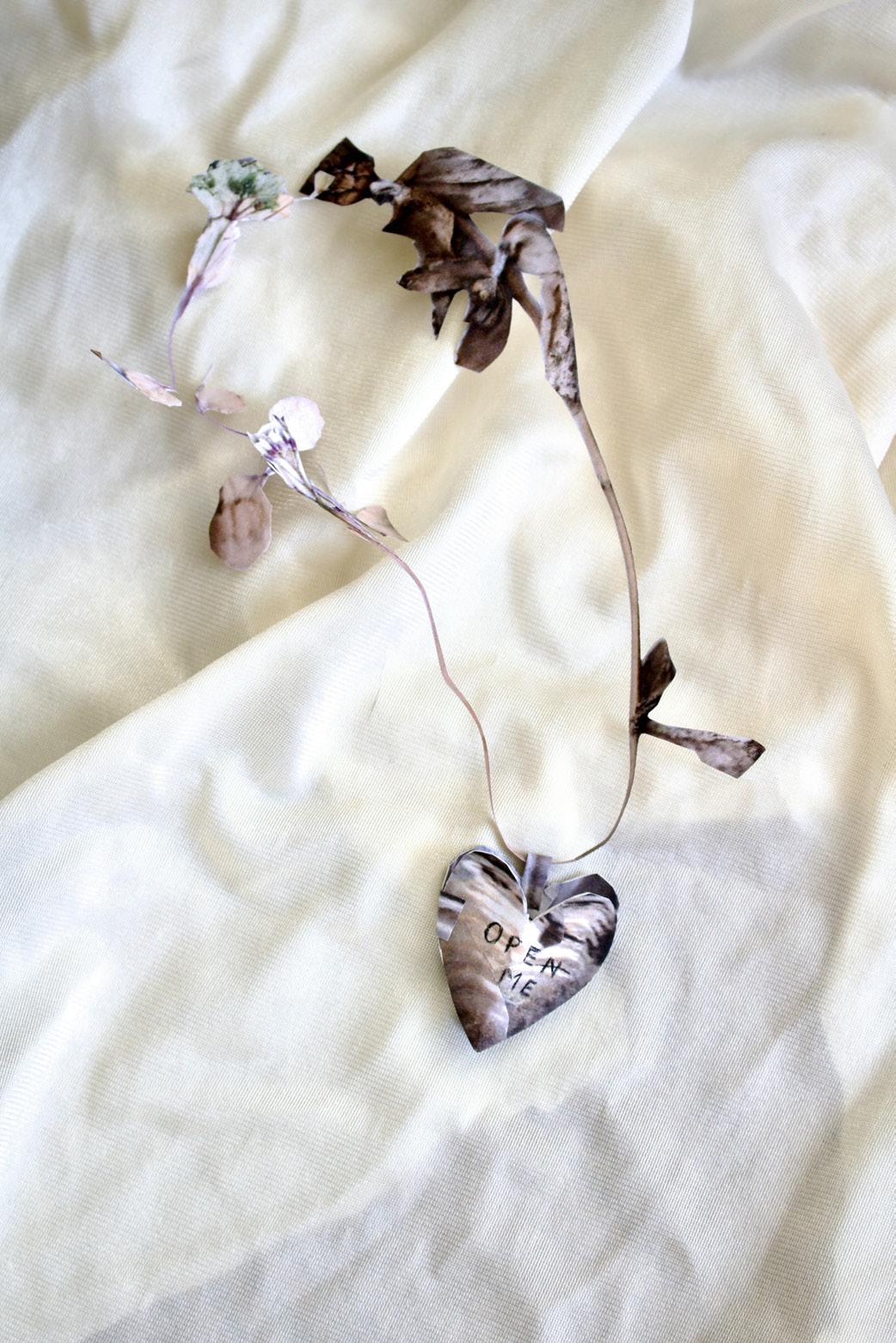
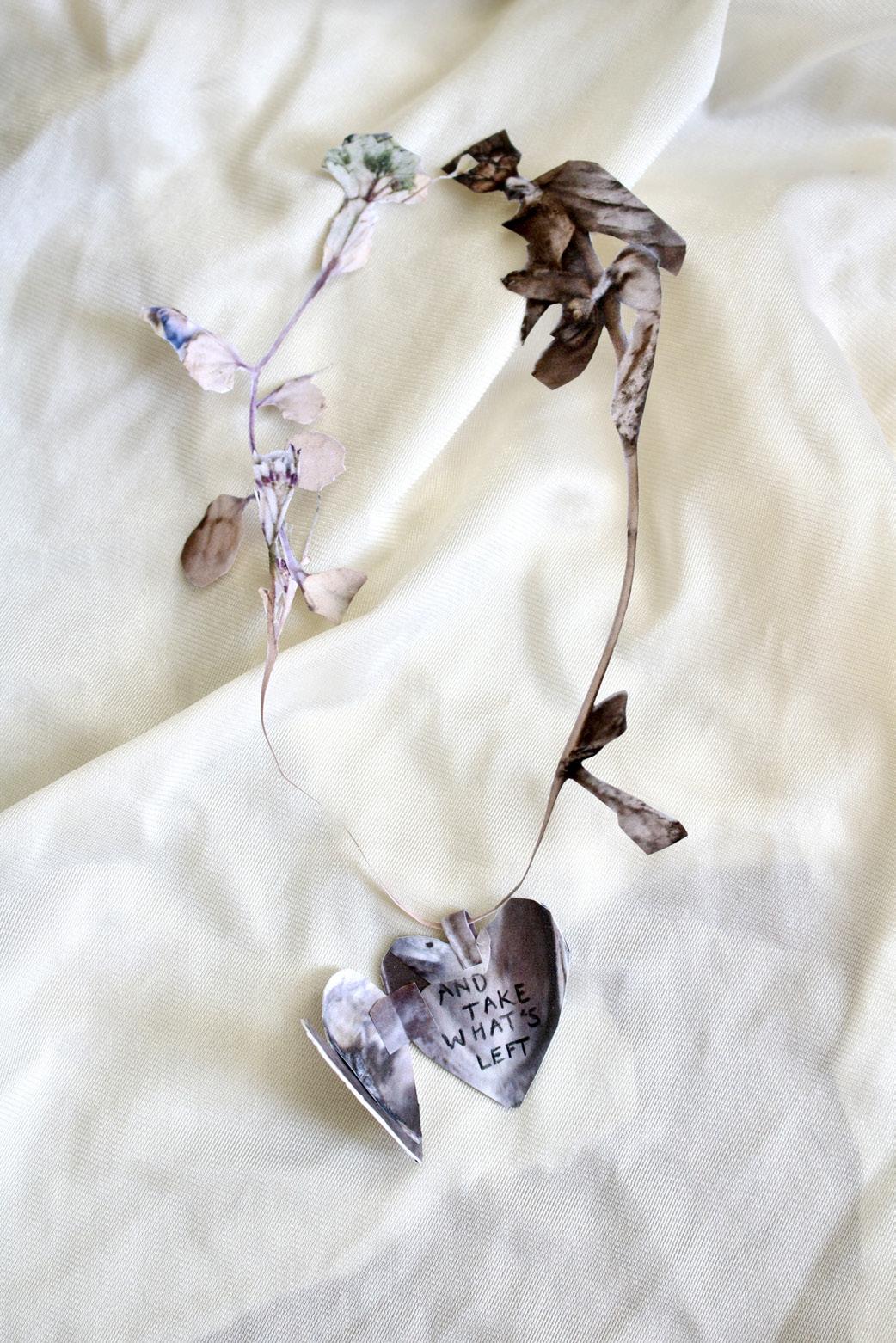
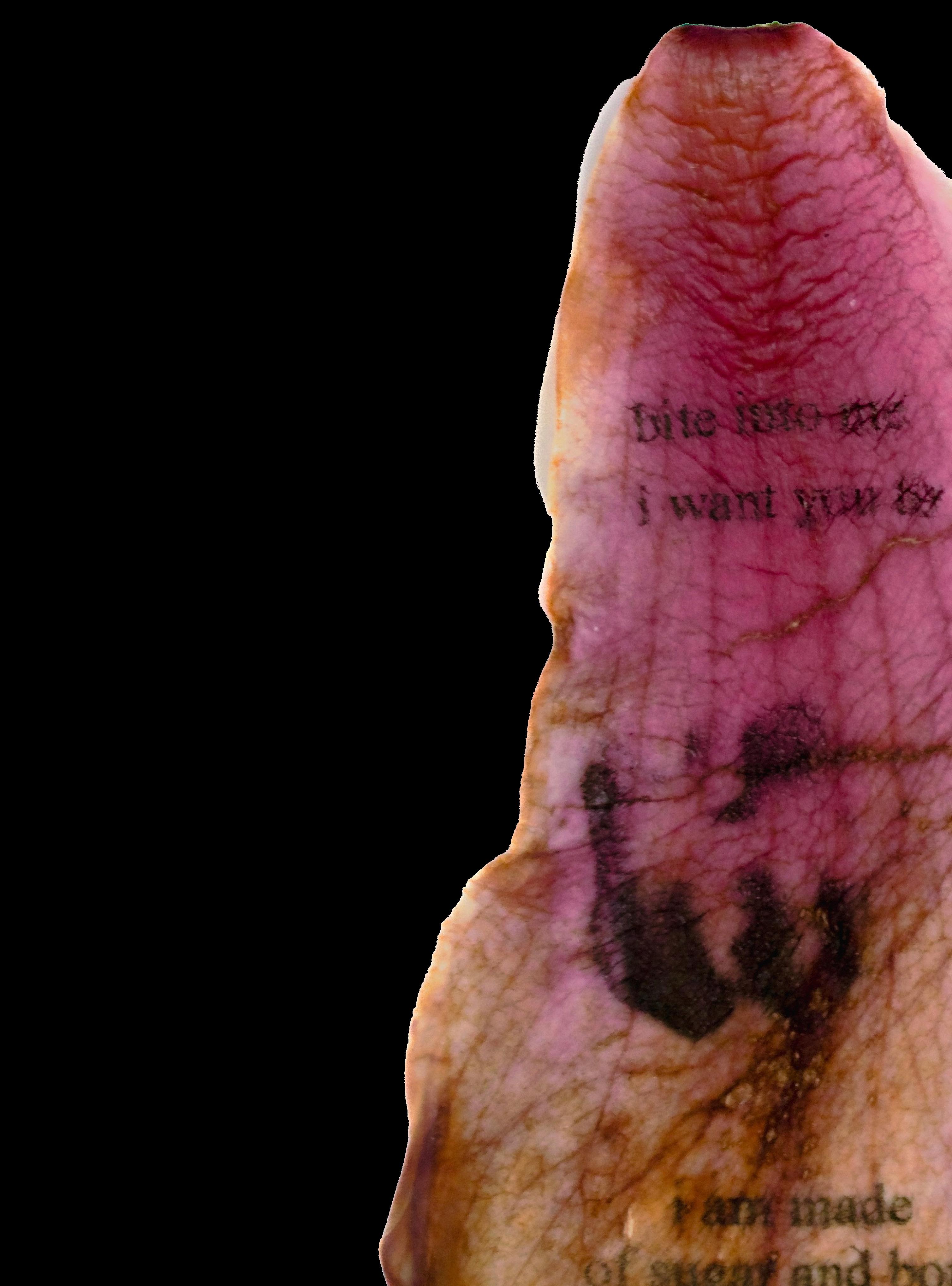
“Open Me”
Matrimony is best represented to me in the act of creating something entirely new out of two existing parts. My selected works wed medias and approaches, and all approach the ‘other’ with the desire to understand.
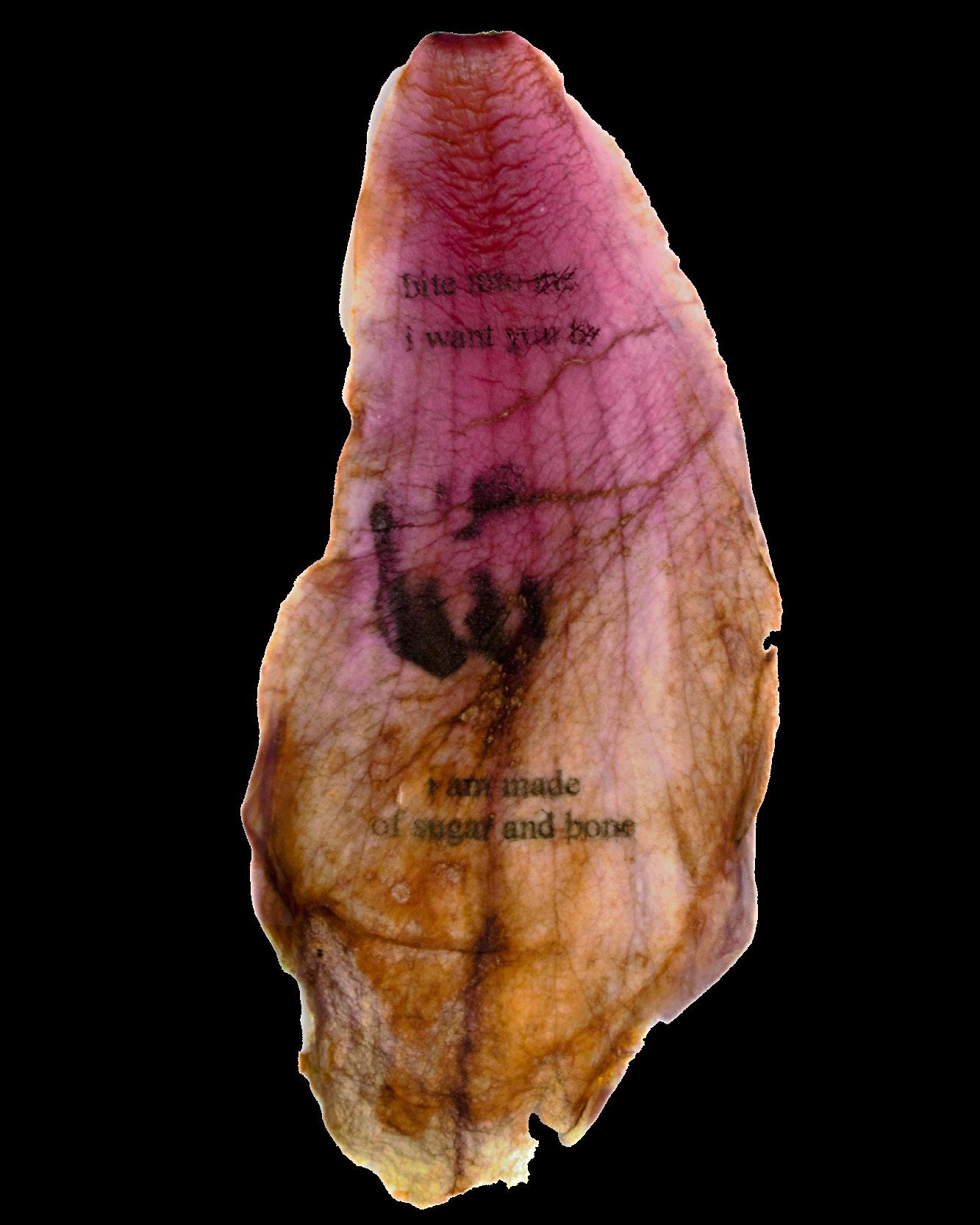
My locket paper sculpture is created from photographs of flowers and shells. It resembles a traditional locket necklace and features the inscriptions “open me” and “take what’s left.”
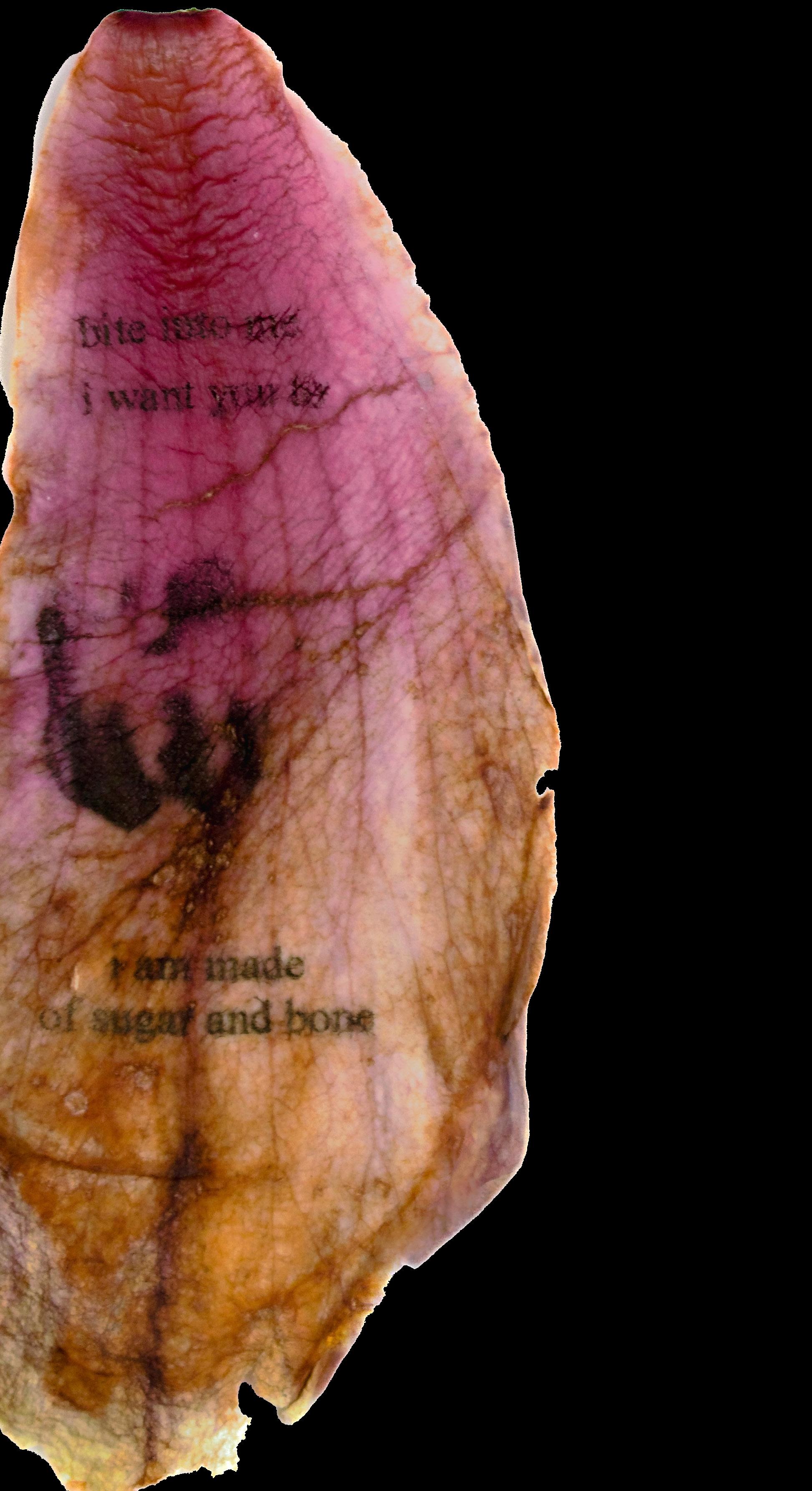
Inkjet on magnolia petal (left)
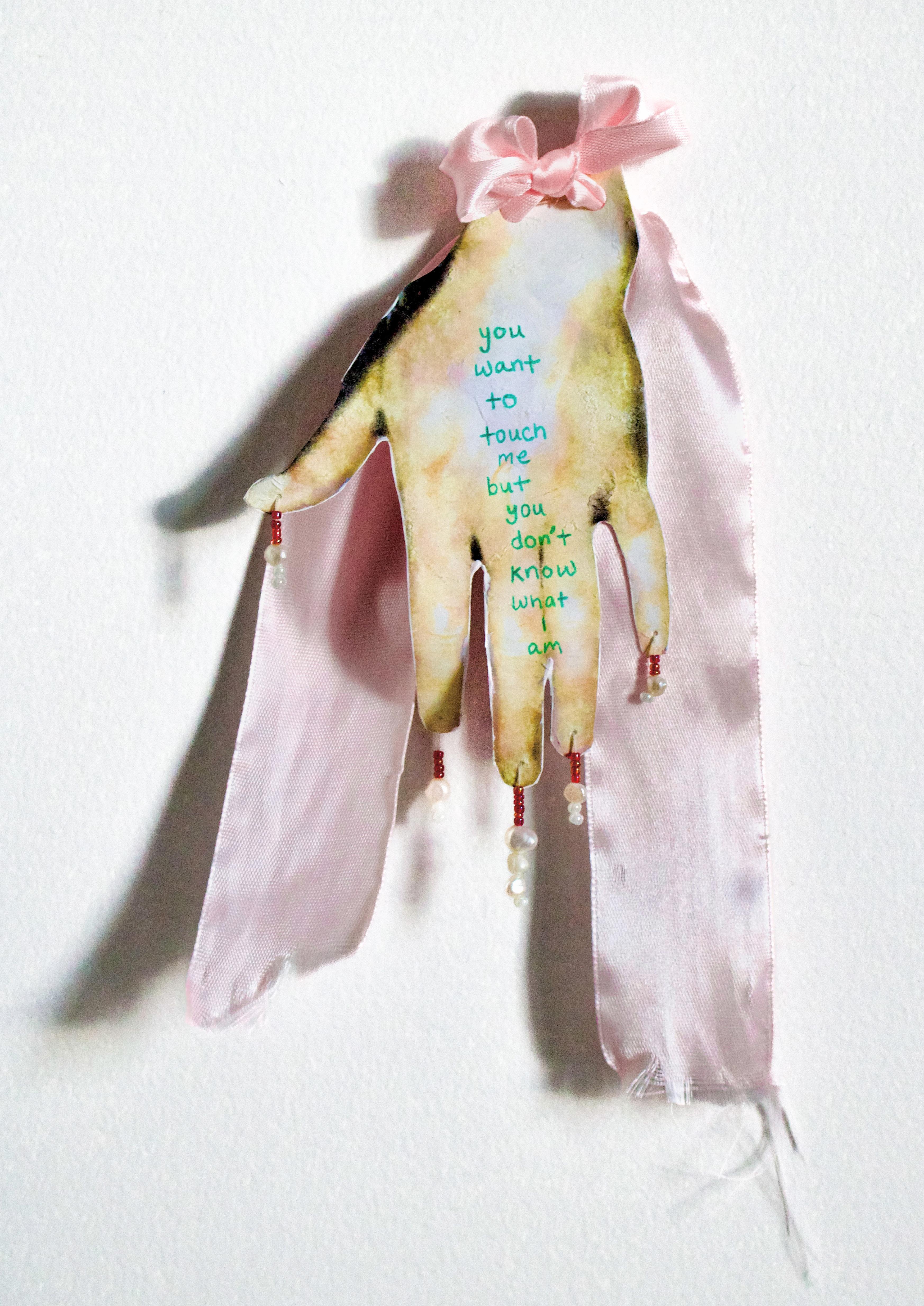
My procession of wall hangings begins with a hanging hand.
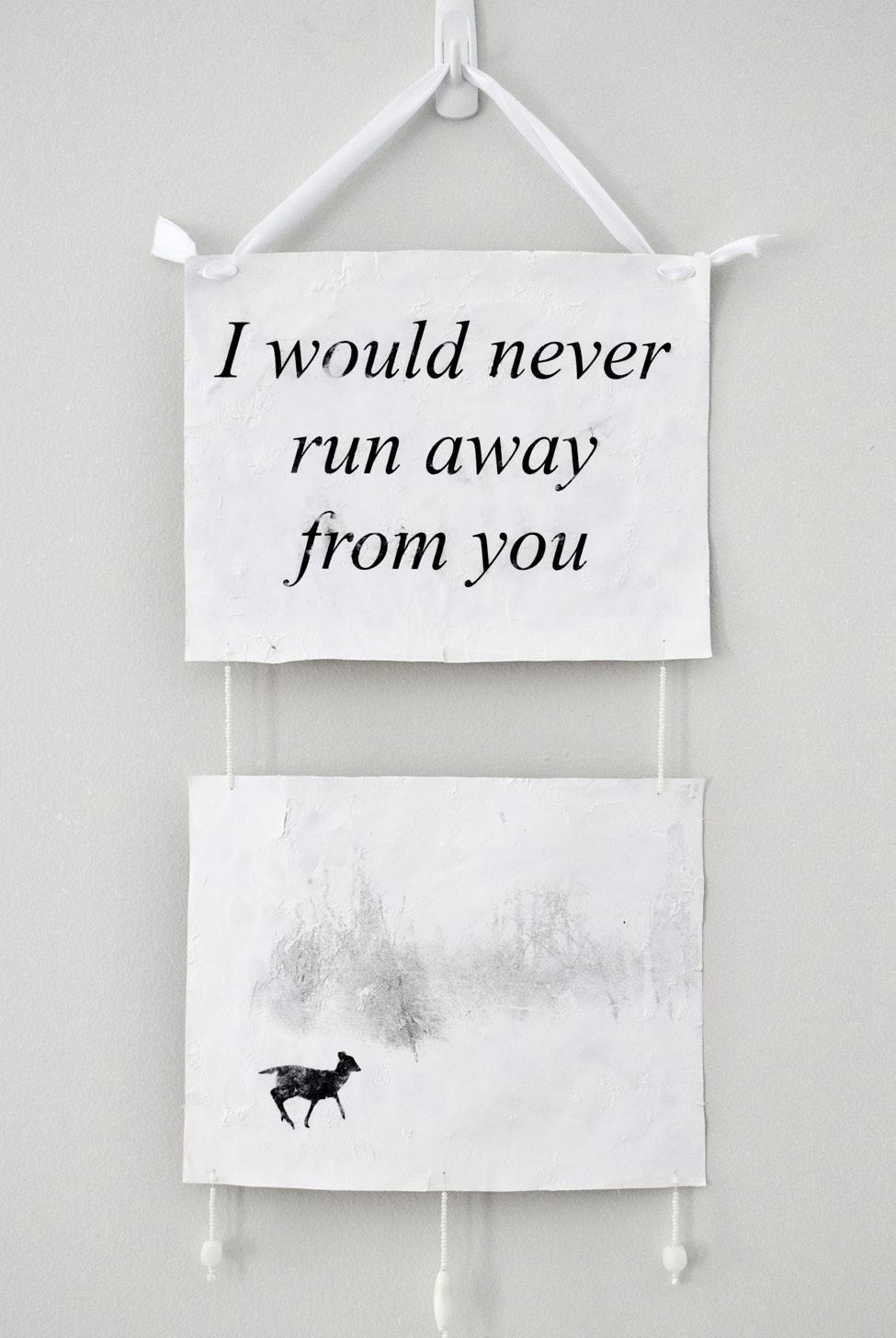
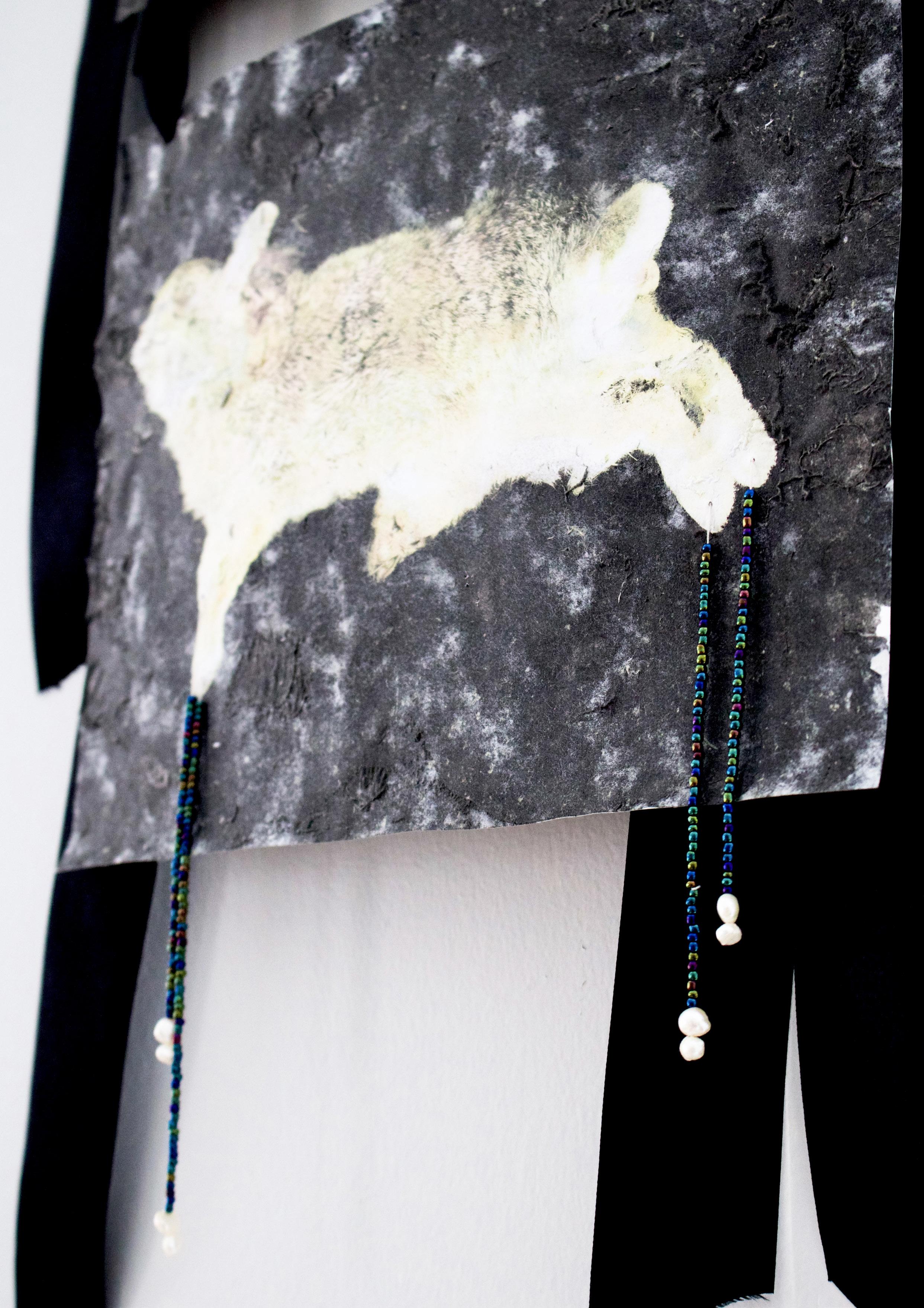
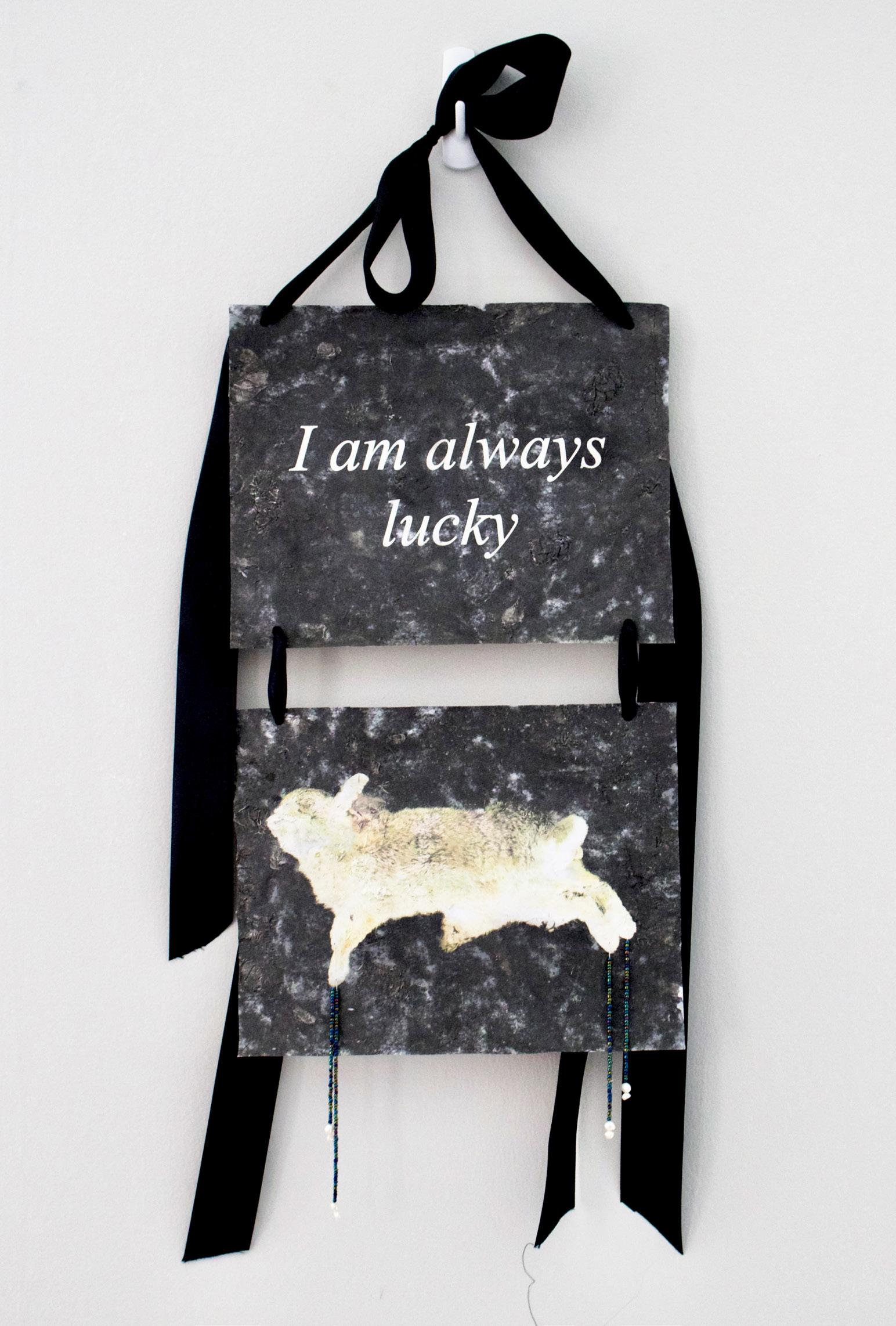
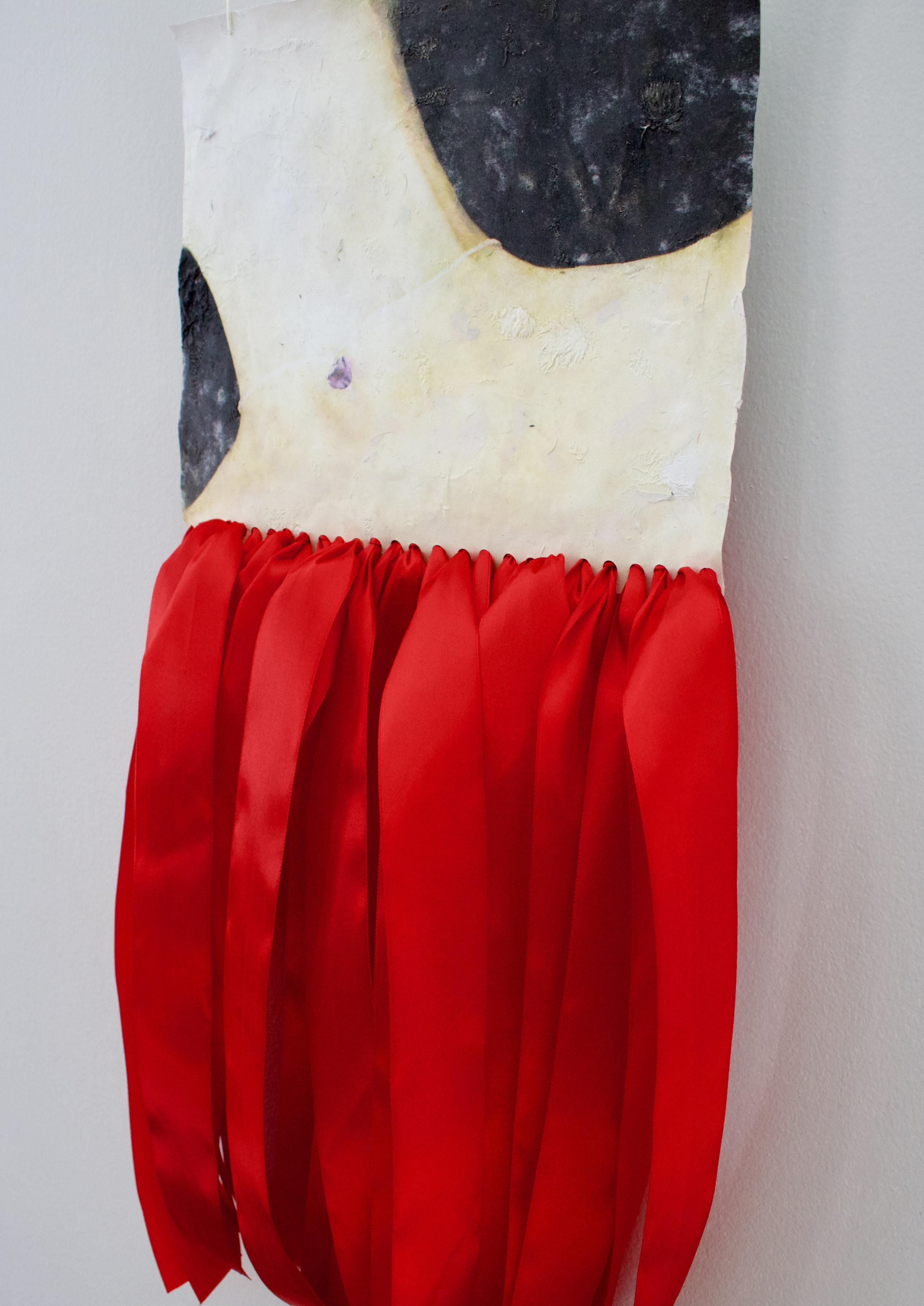
For these works, I create photo transfers using acrylic paint. With this technique, I alter the photographic materials in ways I cannot fully control, and make an image that is in a liminal state between painting and photo. I combine these photo transfers with beading and ribbons, melding traditional 2D work with textile art. The hand wall hanging, with the text, “you want to touch me but you don’t know what I am,” is intended as direct communication to a specific person, as well as to any viewer.
“I transform lies into wishes, and marry the truth with deceit.”
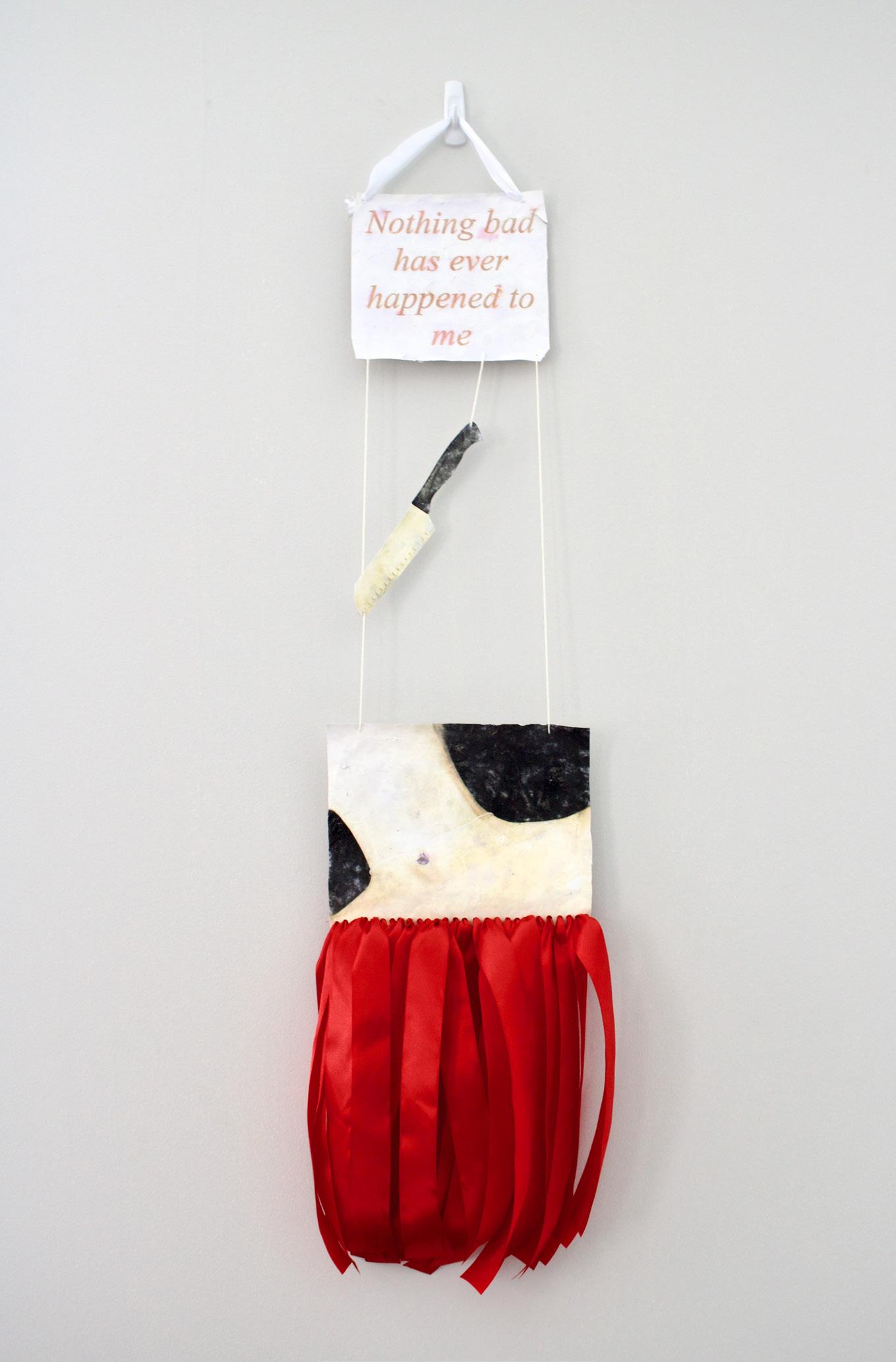
The trilogy of wall hangings are presented here in order. First, “I would never run away from you,” also speaks to a specific individual from my point of view, but is additionally an untrue statement meant to deceive another on how I function relationally. The second in the series, “I am always lucky,” reads both as an affirmation and as a lie. The final work states that “nothing bad has ever happened to me”, which is also a lie, like the previous two works. In these three pieces, I transform lies into wishes, and marry the truth with deceit.
Two
Three
Yuka Hirac is an avant-garde visual artist, makeup artist, and photographer from Tokyo.
Marriage Blue
“I became anxious and ran away. I ran and ran, but someone was chasing me and I couldn’t get away. You saved me… But I can’t remember your face.”
Yuka Hirac Marriage Blue
This refers to the mental state of someone about to get married who feels anxious, confused, or depressed about the wedding.
Sara Vieira
Sara Vieira is an interdisciplinary tattoo artist based in London.
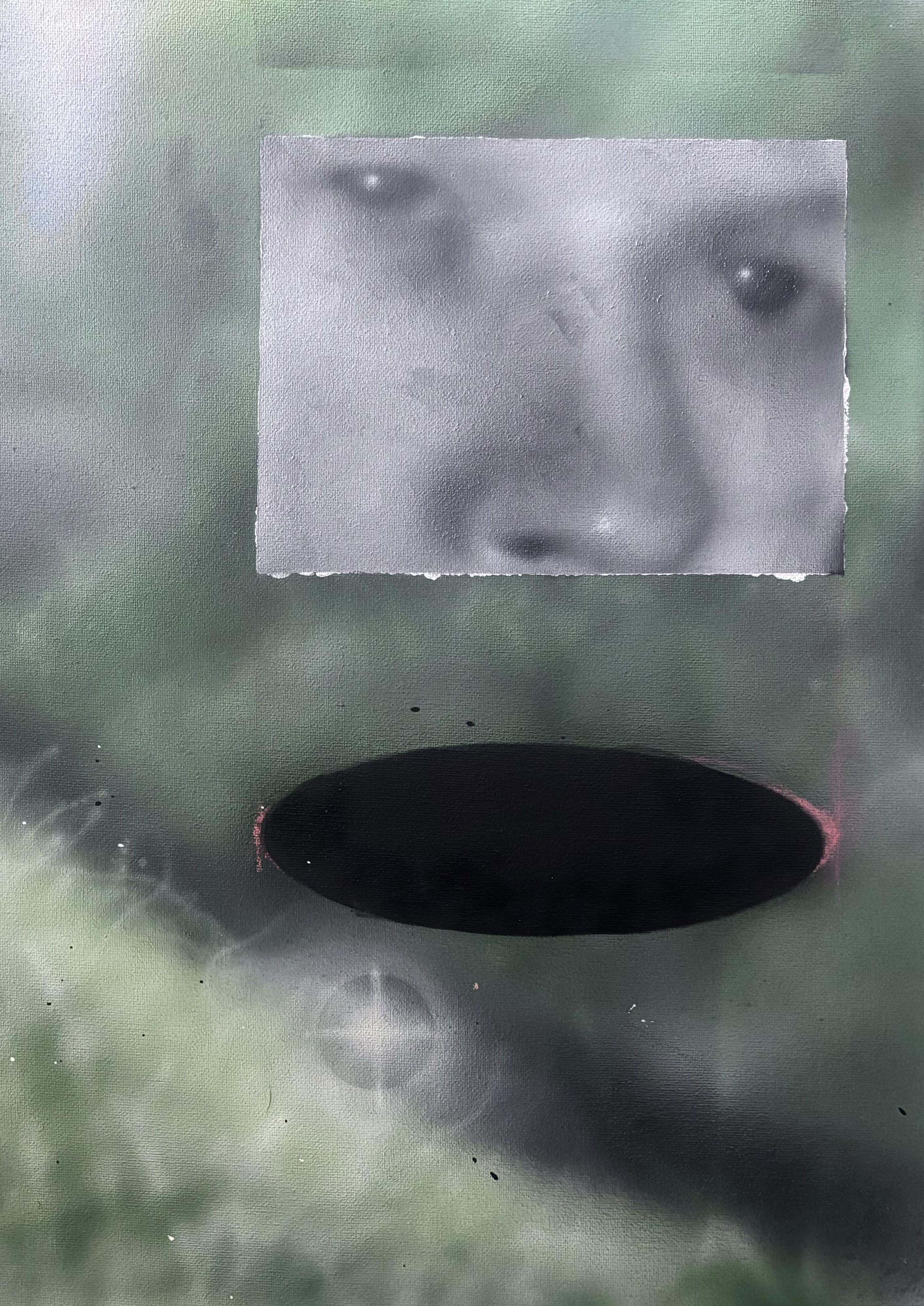
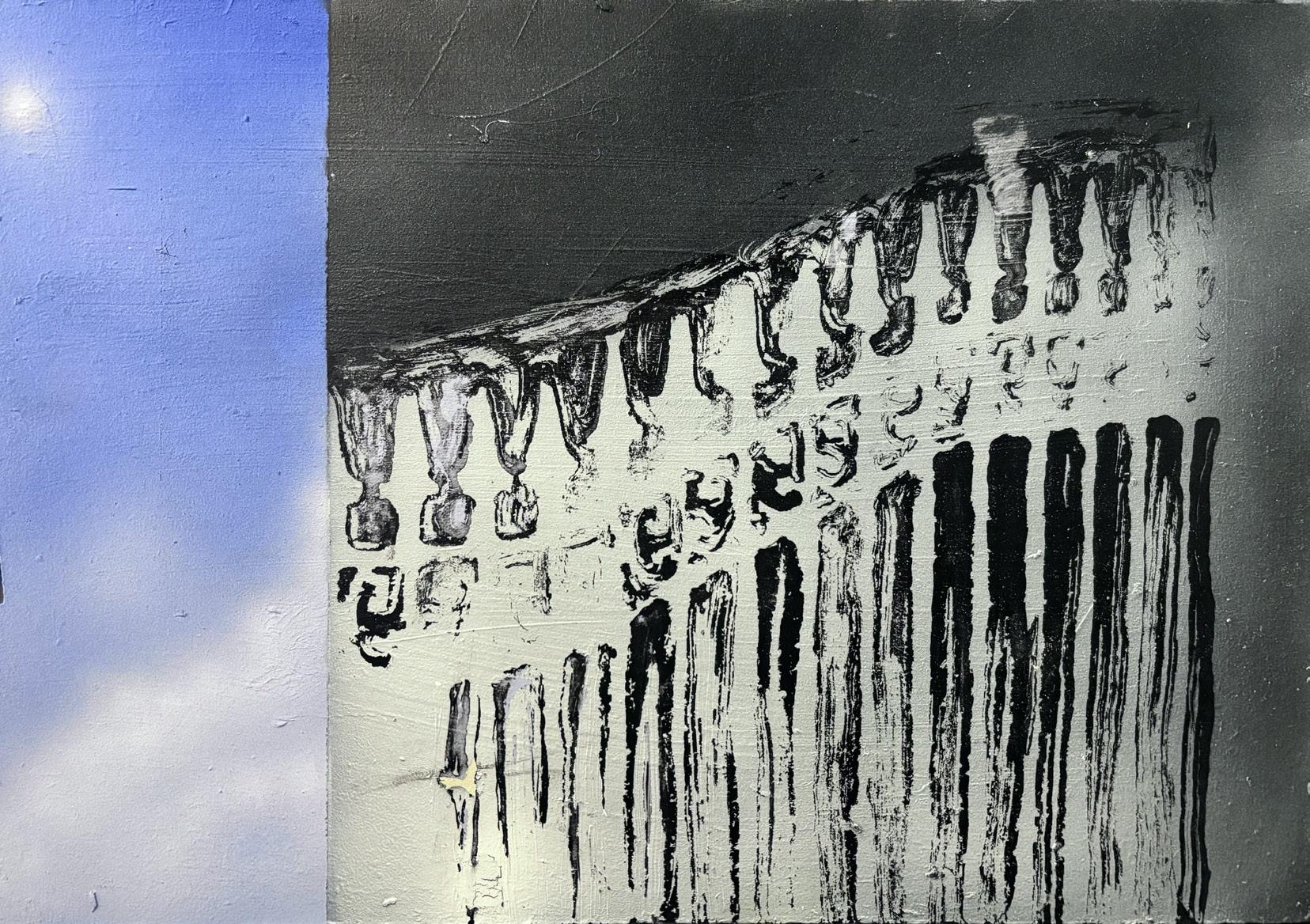
My recent work is focused on impermanence and ephemerality. As a tattoo artist, I’m constantly thinking about what it means to make something “forever”—even though, really, it only lasts as long as we do. Unlike oil paintings or sculptures that outlive us, tattoos are a kind of ephemeral forever, and there’s something really beautiful in that.
The theme of matrimony makes me think about how we try to hold onto things—commitments, definitions, permanence. My work pushes back on that a bit.
Impermanence ephermerality &
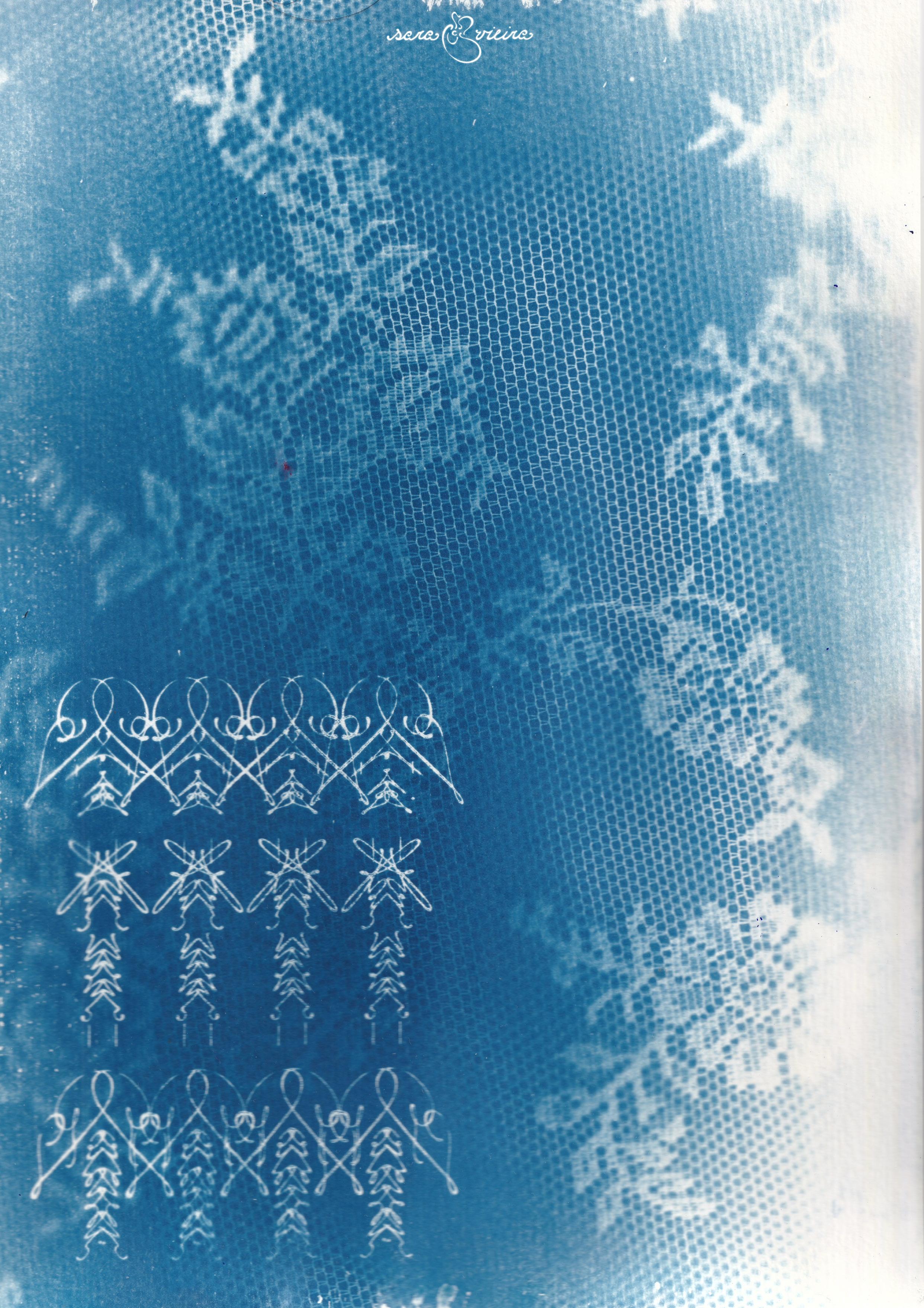
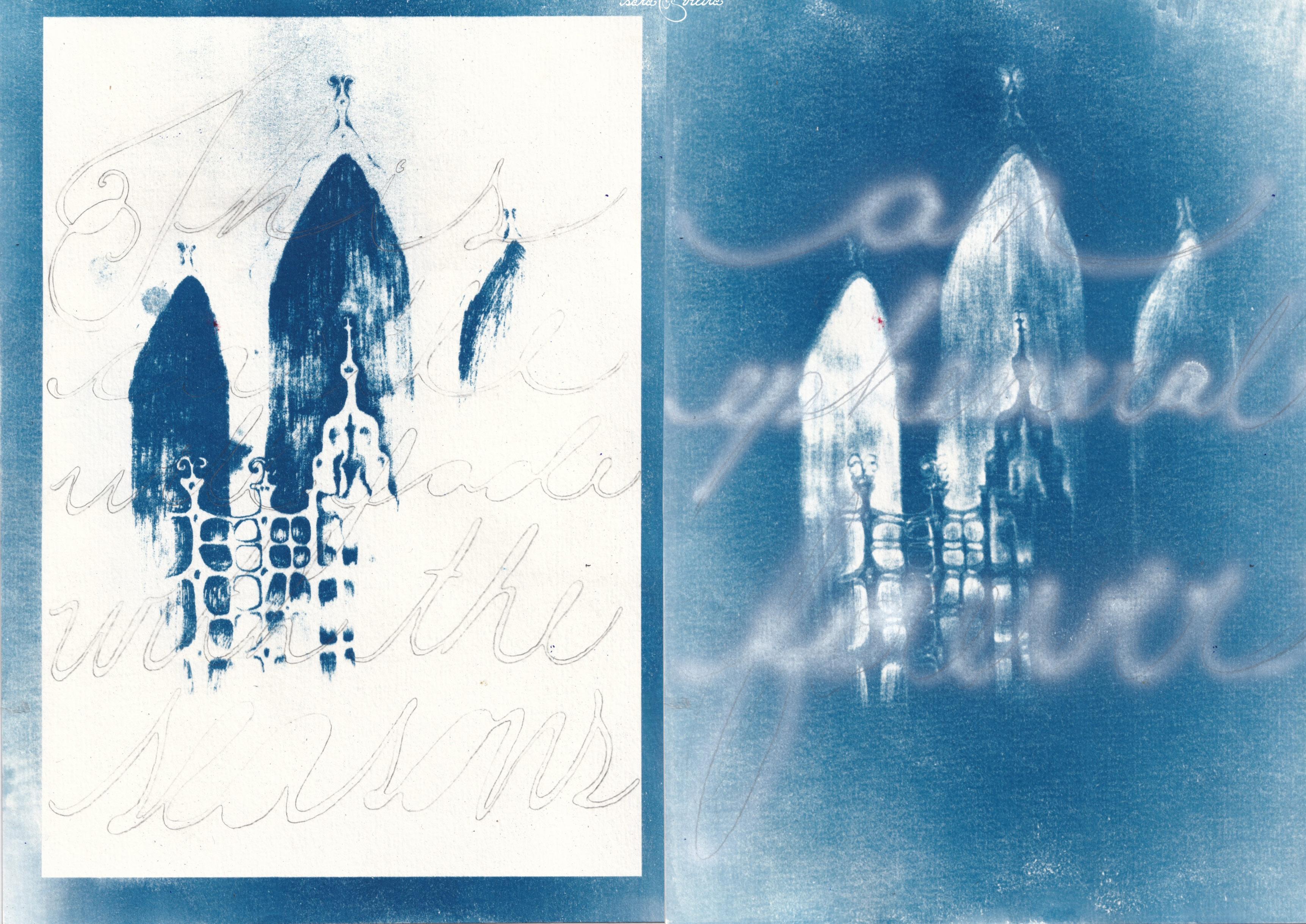
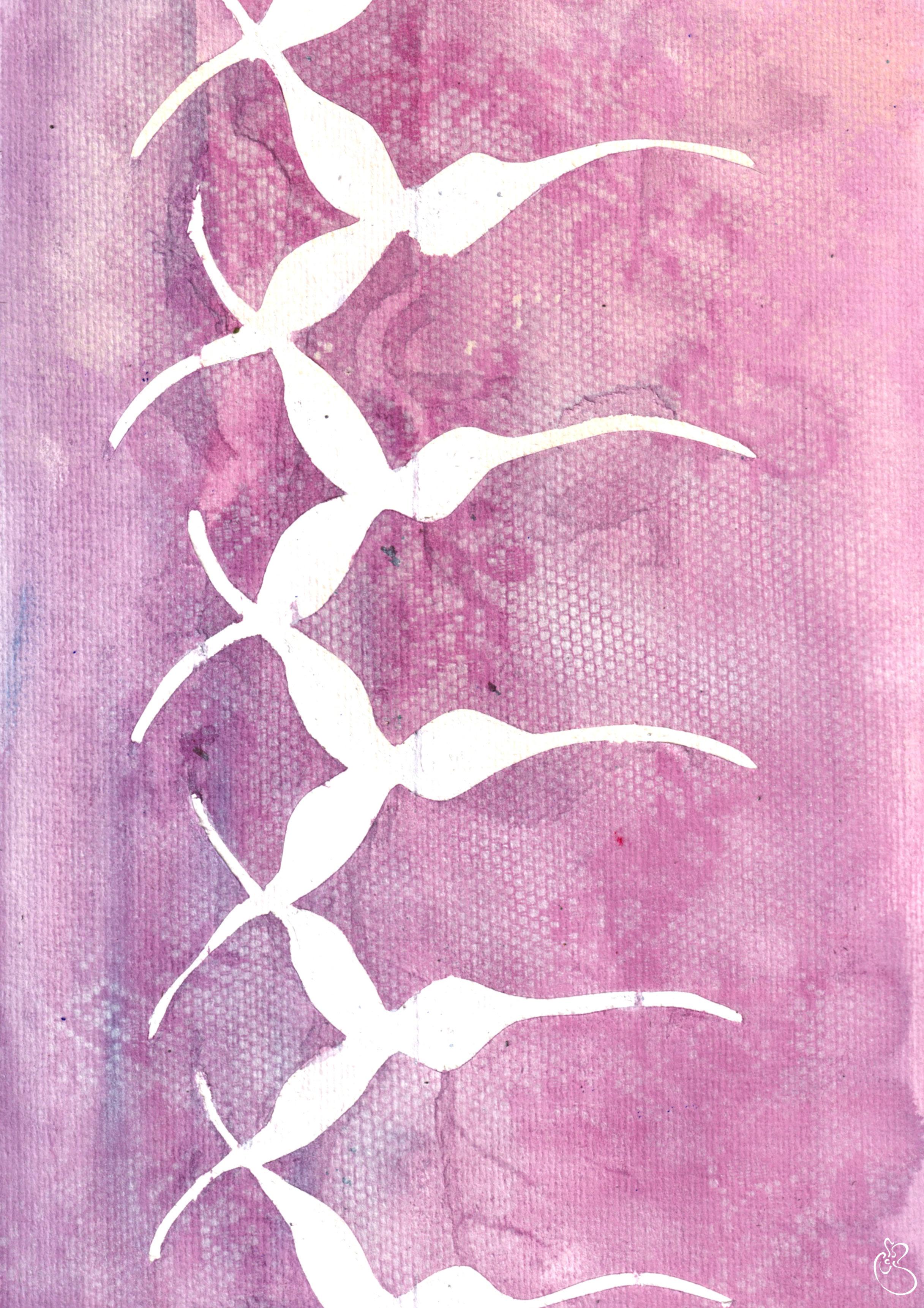
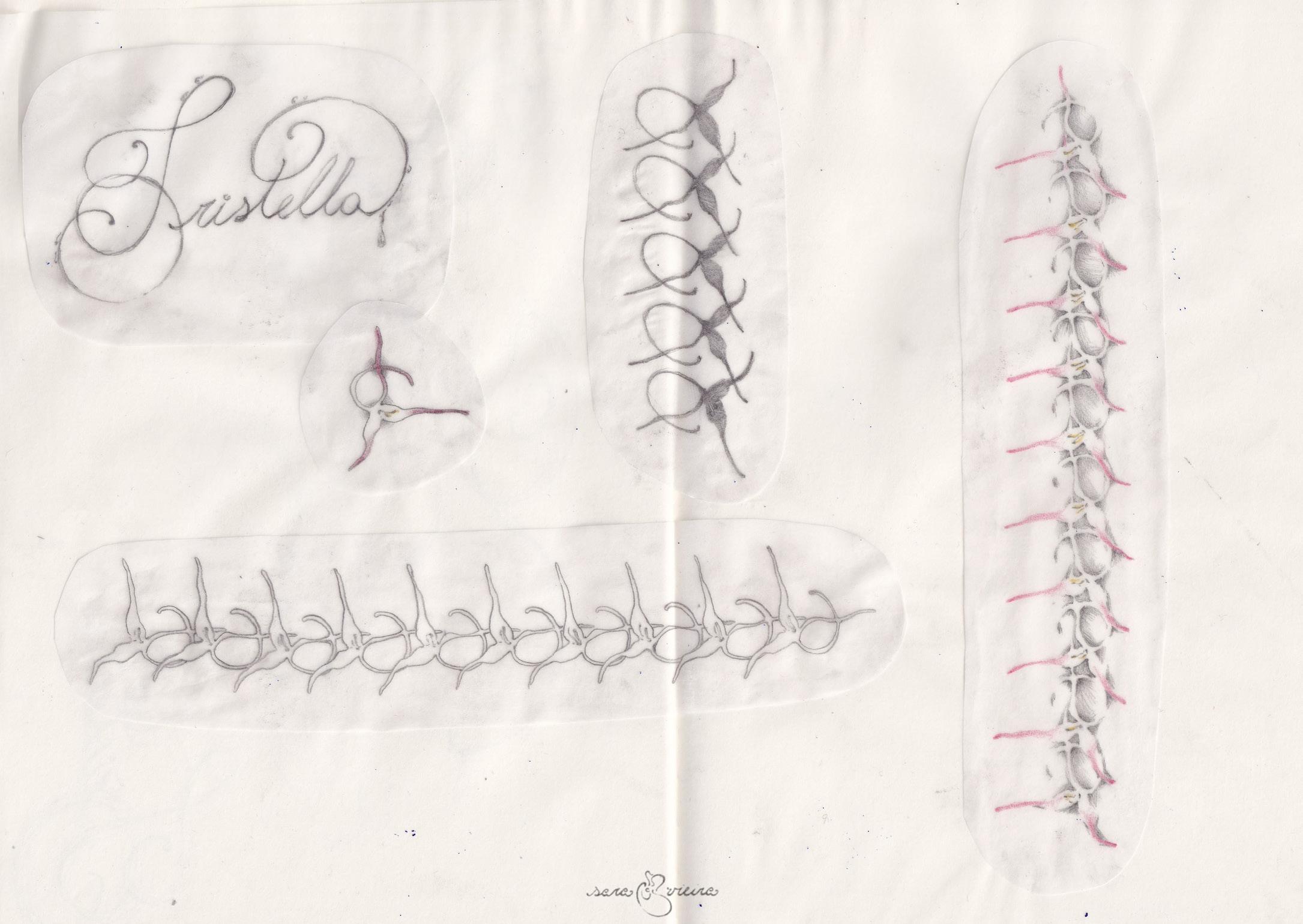
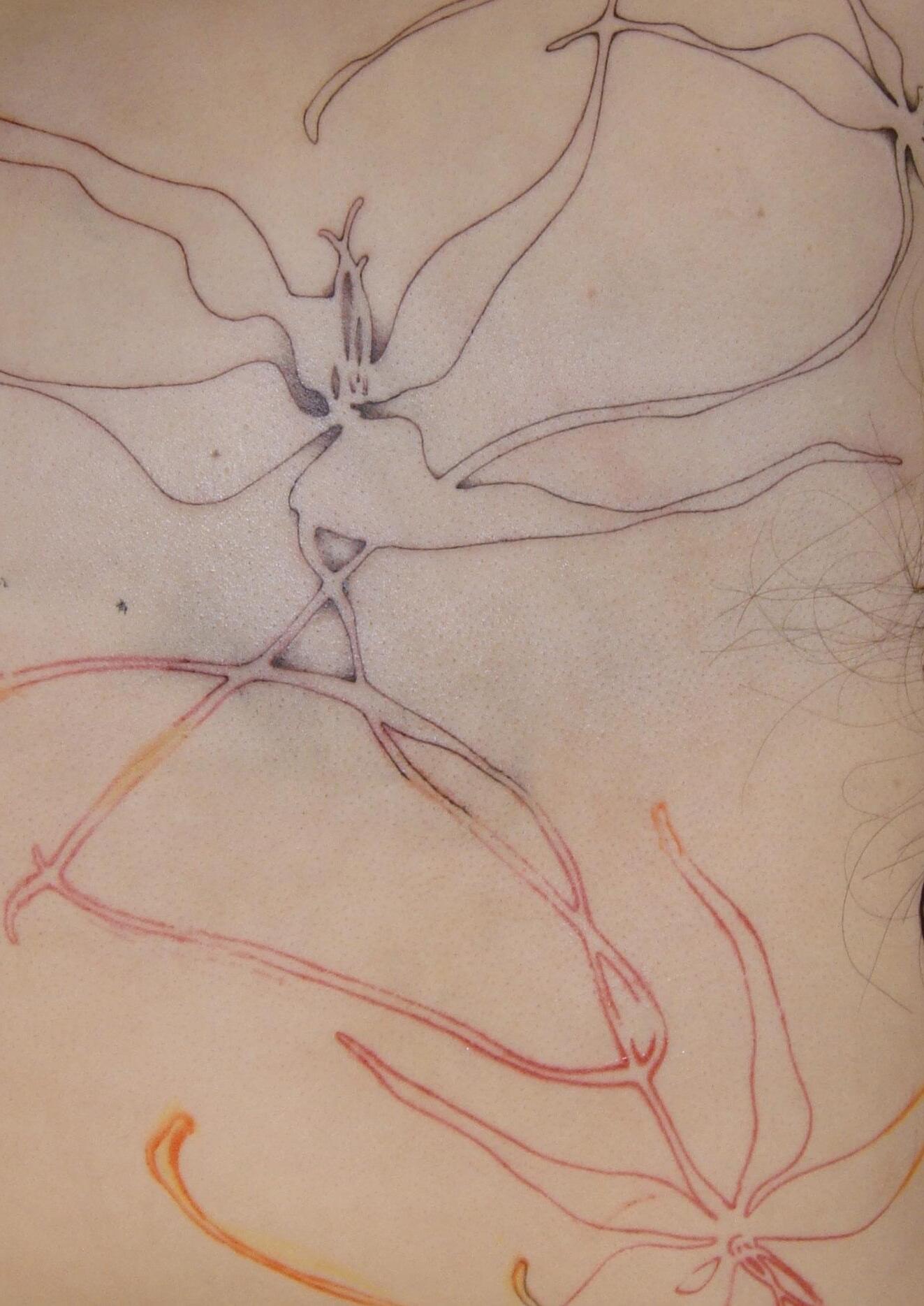
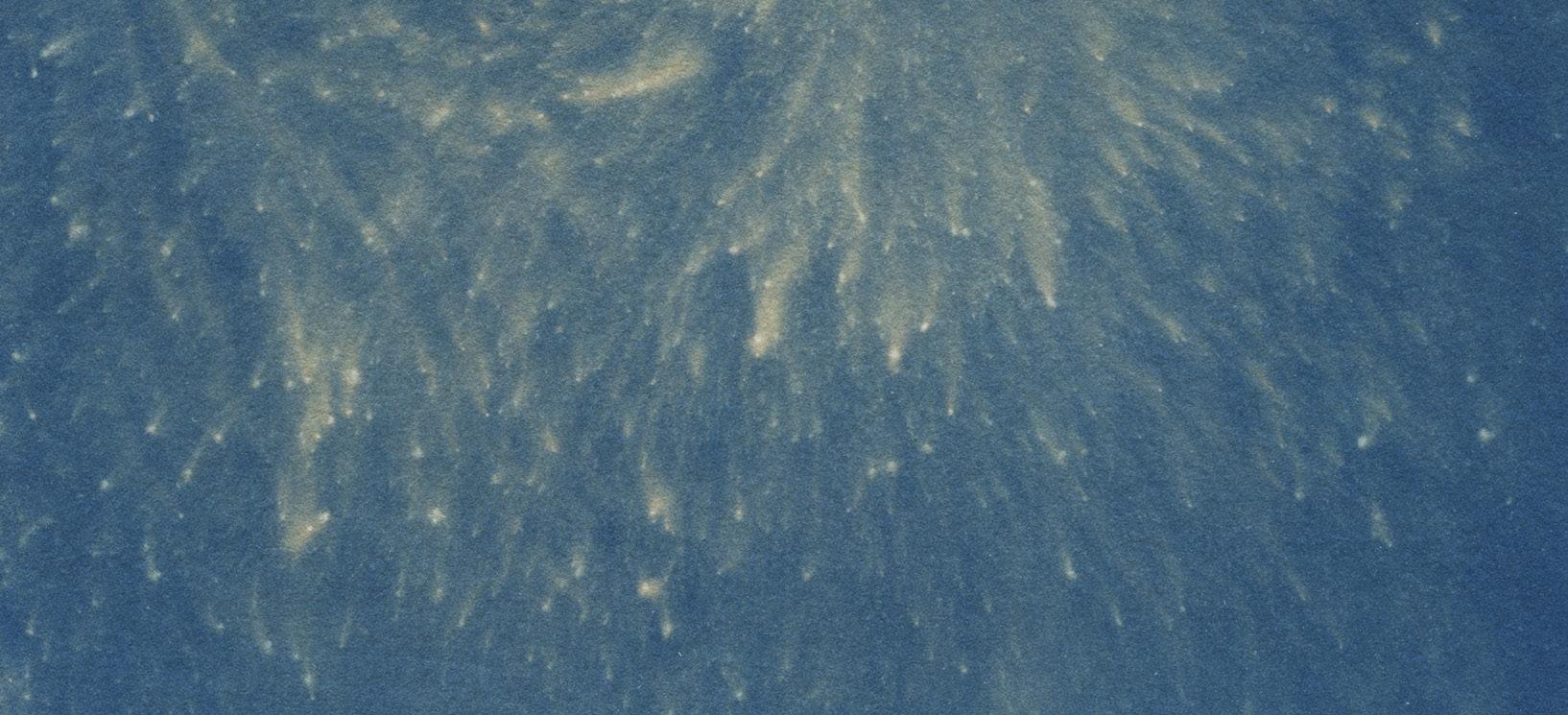
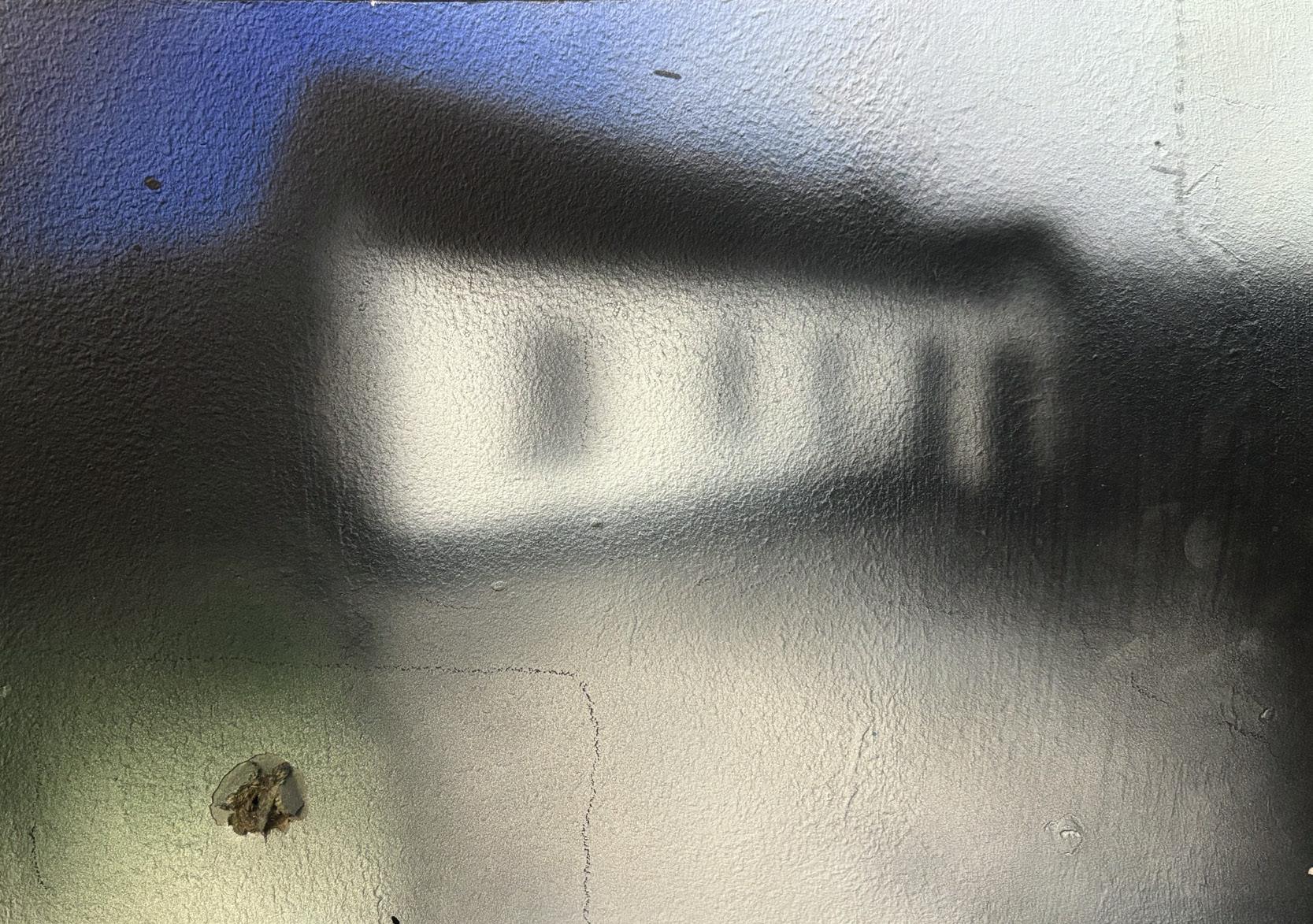
I use stencils—the most temporary part of the tattoo process—and turn them into something visual using airbrush and cyanotype. I also love marrying
opposing methods in my process. It’s a mix of softness and structure, old and new, permanent and fleeting. That contrast makes the work feel alive—it’s playful, but it’s also its own kind of matrimony, just less about fixing things in place and more about letting them shift.
For Now - Forever (left) Castle Ephermeral (above)
Sara Vieira
The most temporary part of the tattoo process
The most temporary part of the tattoo process
Tristella flash (above) Flash on skin (right)
Chapter Four
The Reception
Explore the duality as it unravels.
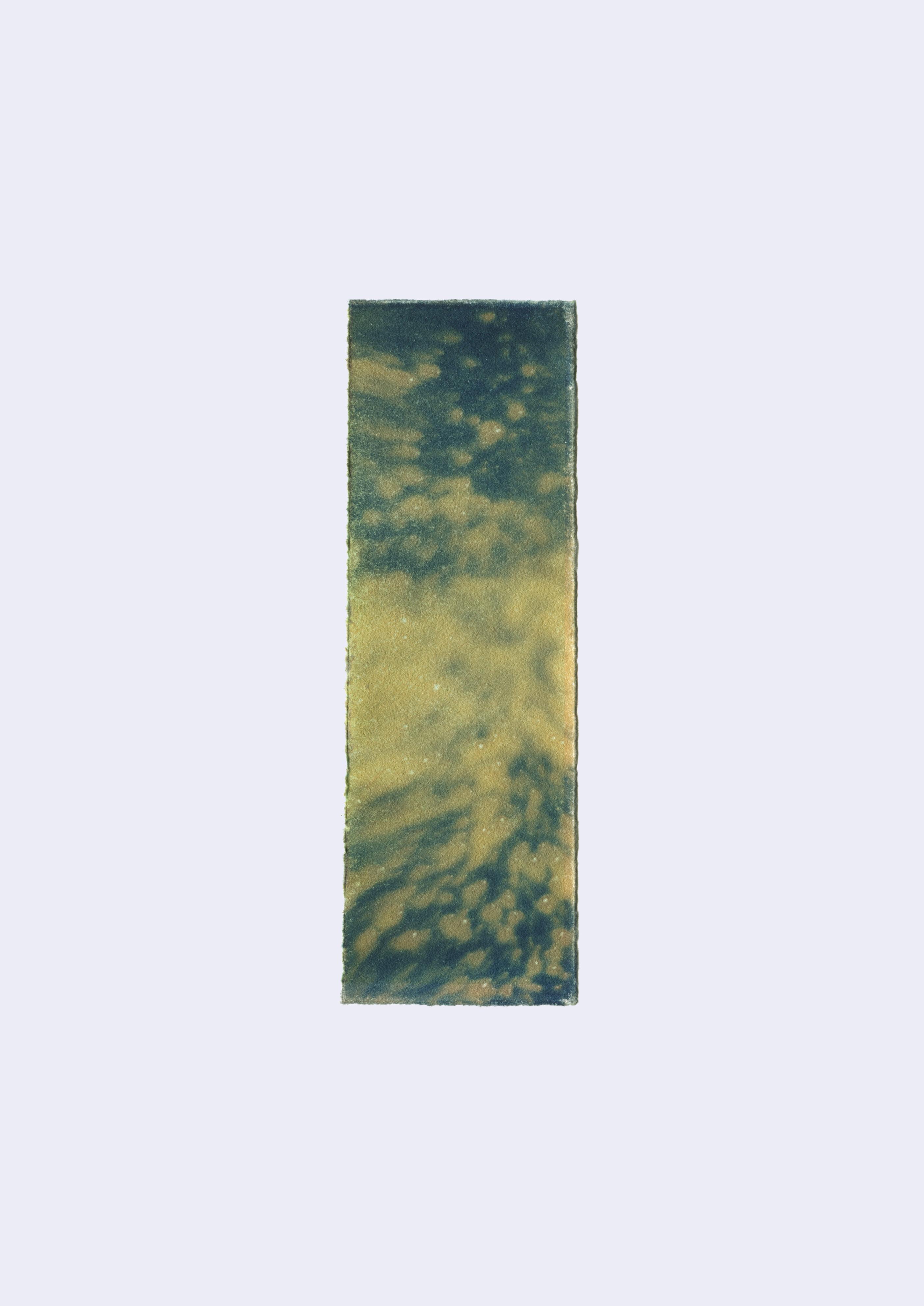
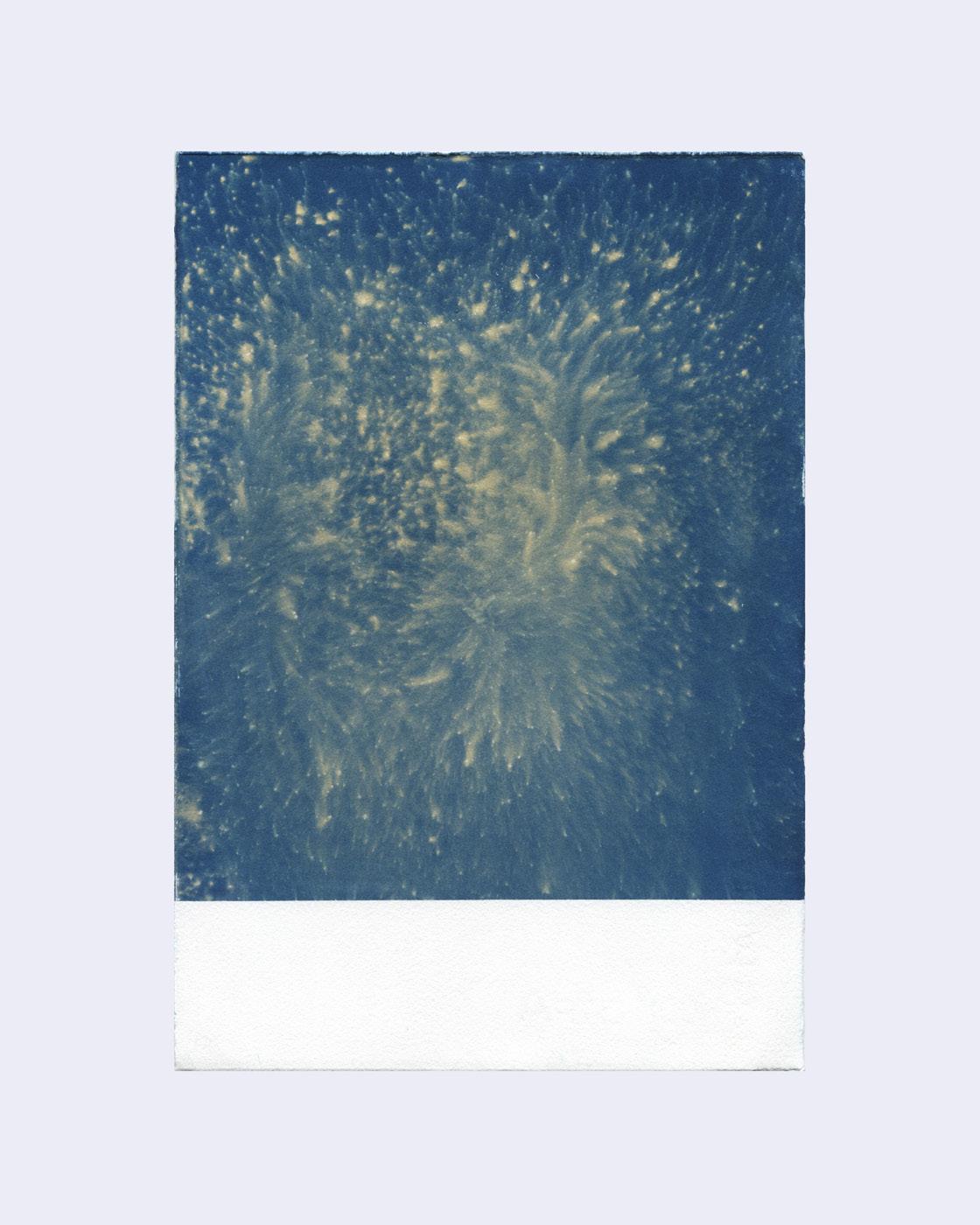
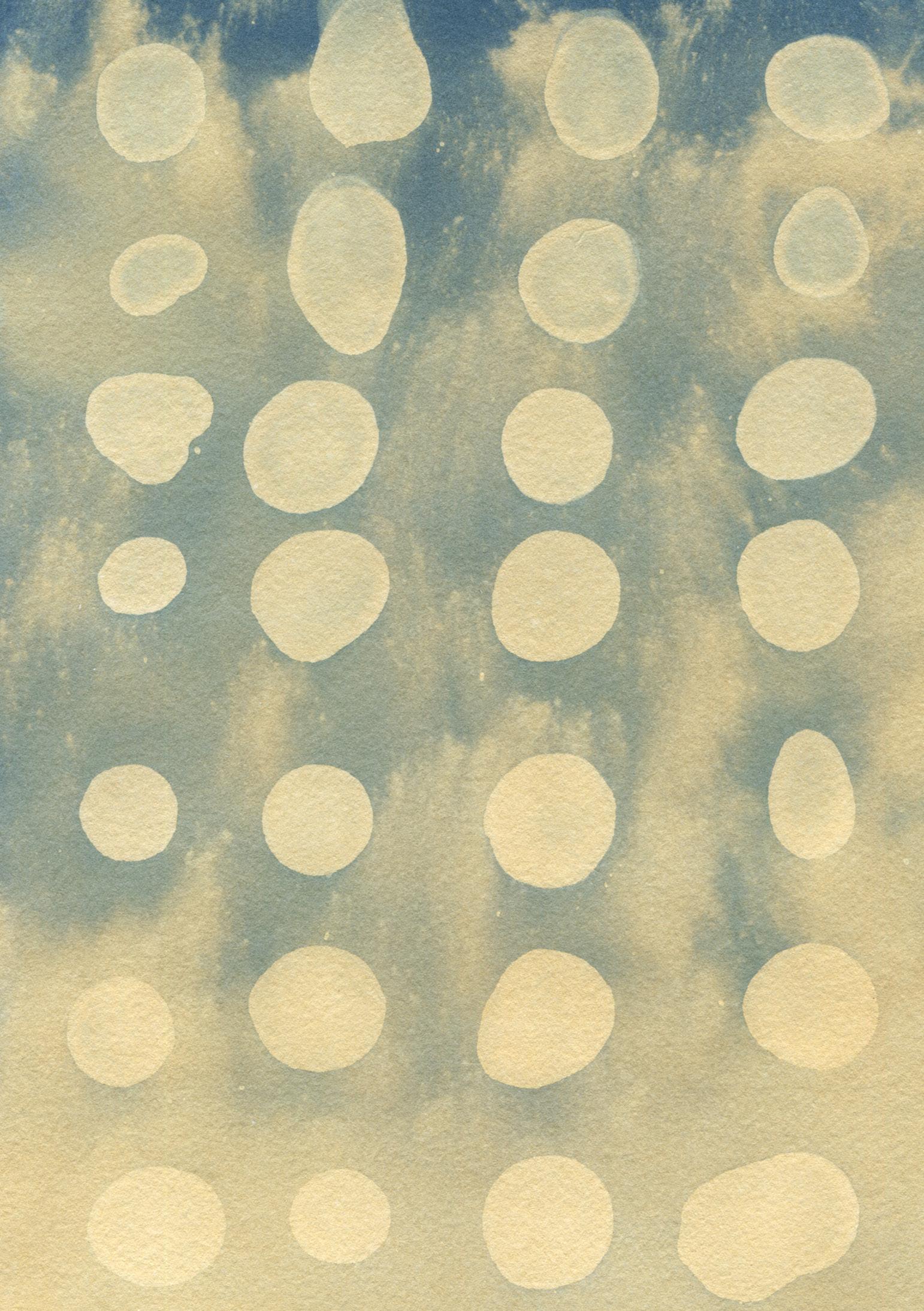
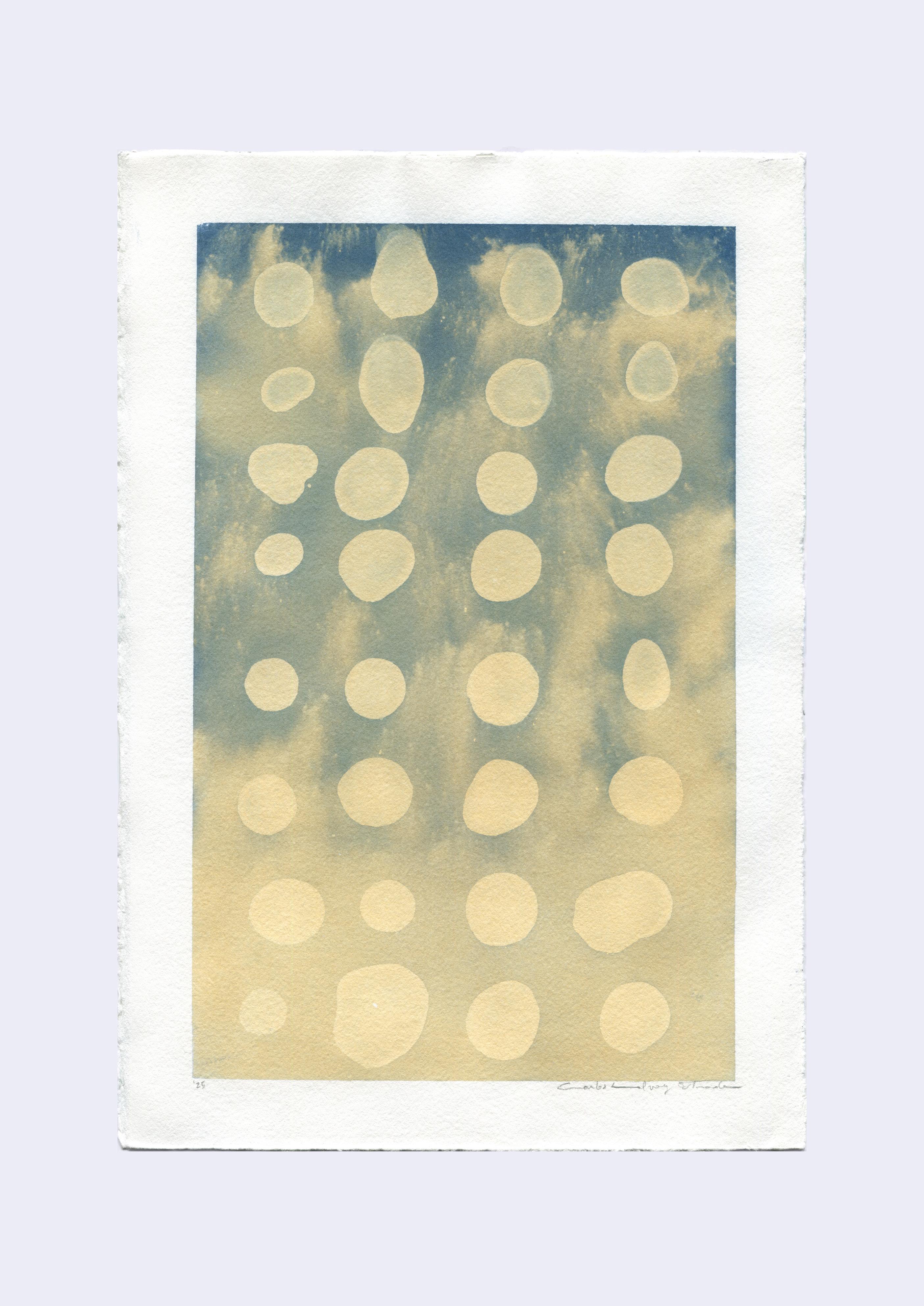
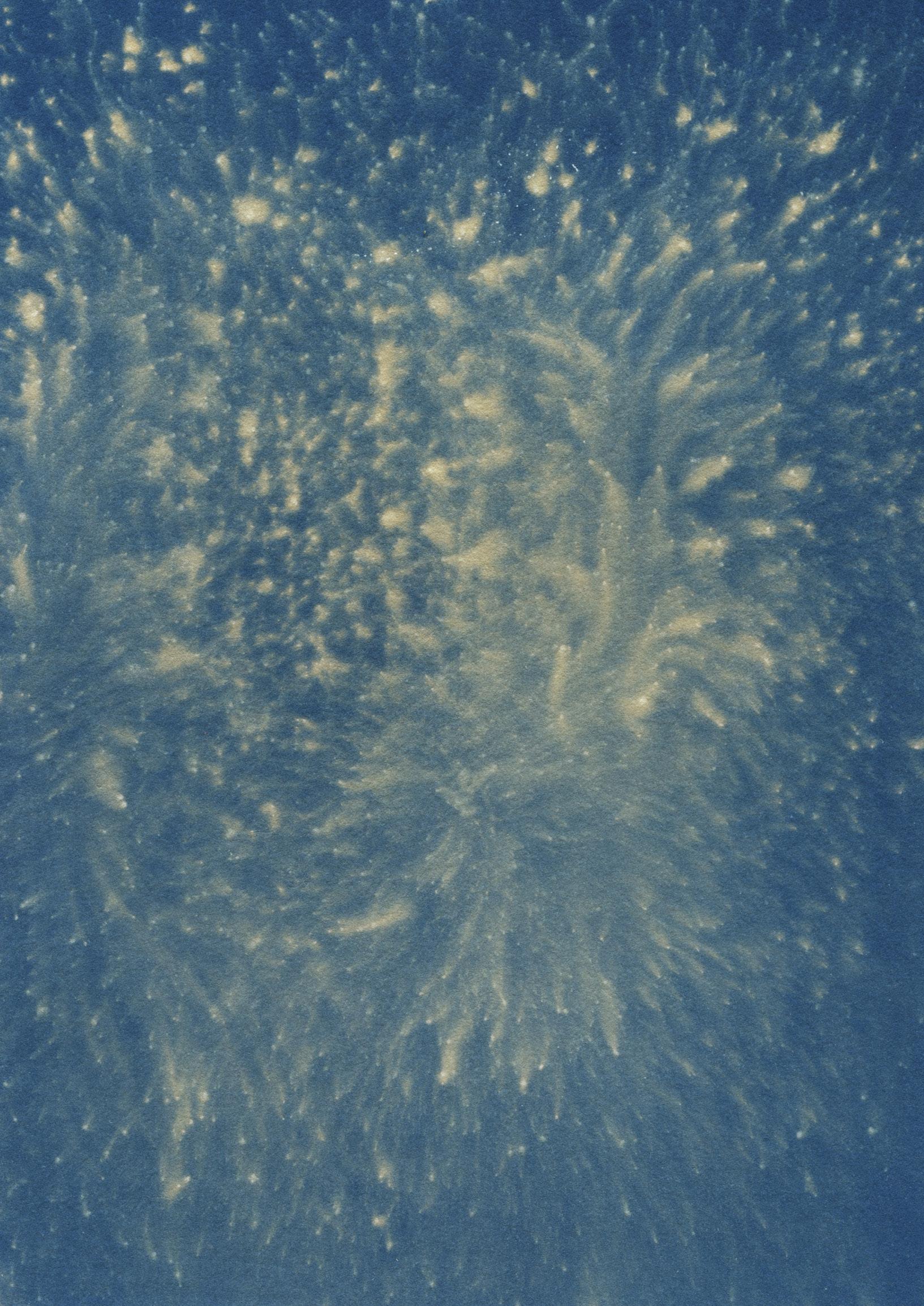
A SERIES OF CYANOTYPES
BEYOND BORDERS
MÁS ALLÁ DE LOS LÍMITES
Carlos Lalvay Estrada is a visual artist and founder of the Pica project, born in Ecuador and based in Genoa. The Pica project was established in Genoa in 2012.
My practice develops from an autobiographical investigation into memory, identity, and the concept of belonging. I use repeated gestures, error, and waiting as tools for reflection and as a method to construct visual and installationbased forms rooted in lived time and the affective layering of experience.
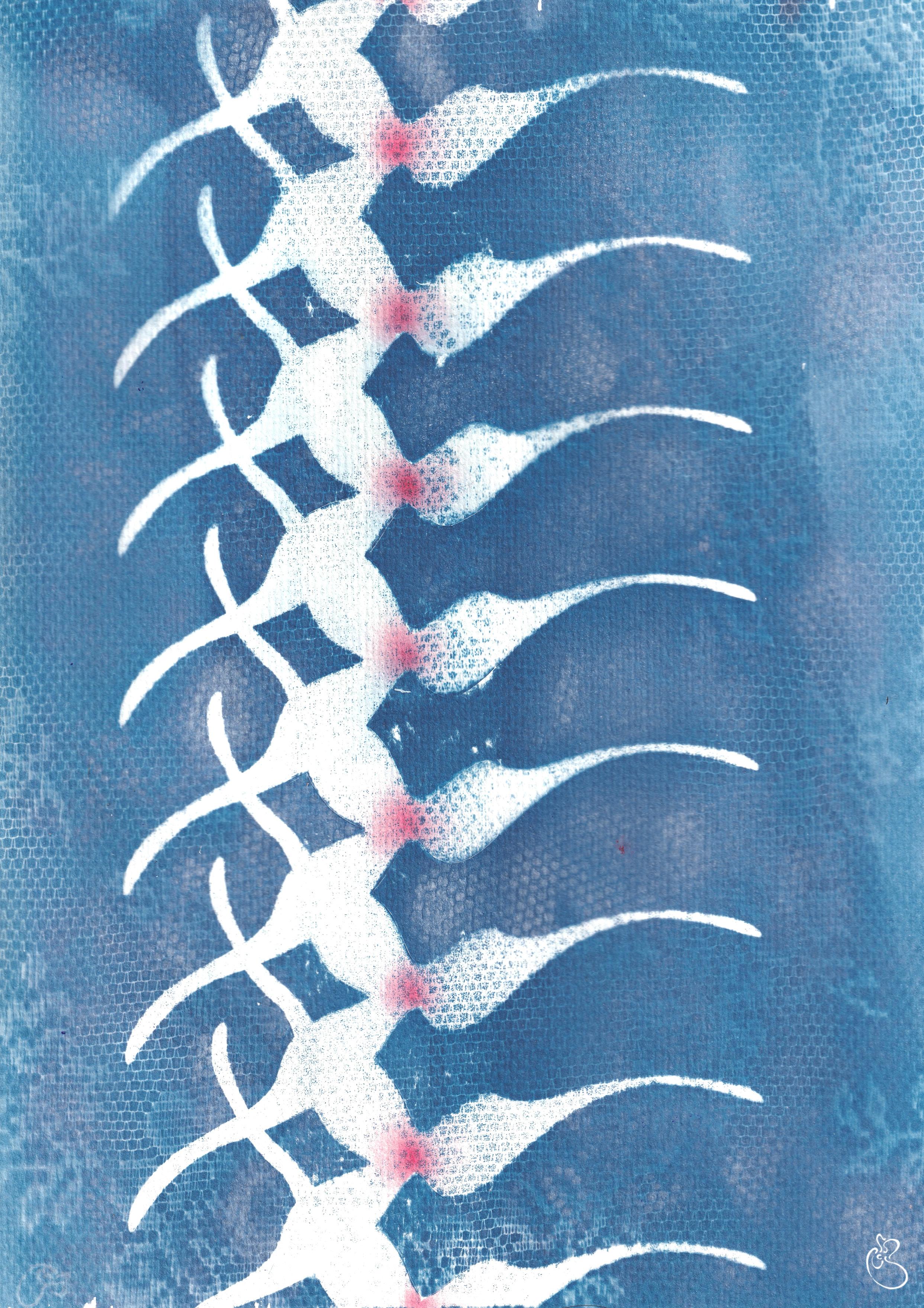
I work with fragile and process-based materials — paper, thread, rope, photosensitive emulsions — that react to time, light, and touch.
Cyanotype, for example,
is a technique I use as a meditative and temporal practice, in which exposure to light becomes a performative act and an imprinted memory. I record, sew, intertwine, repeat gestures that become devices for emotional recording and silent resistance.
My methodology is based on slow action, manual labor, and the construction of images that oscillate between the personal and the collective, between abstraction and narration.
The work is generated in time and space, often activated by intimate or shared rituals, in which the audience or loved ones become witnesses, co-authors, or implicit recipients.
Through this practice, I seek to transform memory into matter, experience into form, and trauma into a shareable language. Each project is an attempt to map affections, places, and absences, restoring visibility to that which resists in a non-linear, marginal, but deeply rooted way.
THE AUDIENCE OR LOVED ONES
BECOME
WITNESSES, CO-AUTHORS, OR IMPLICIT RECIPIENTS.
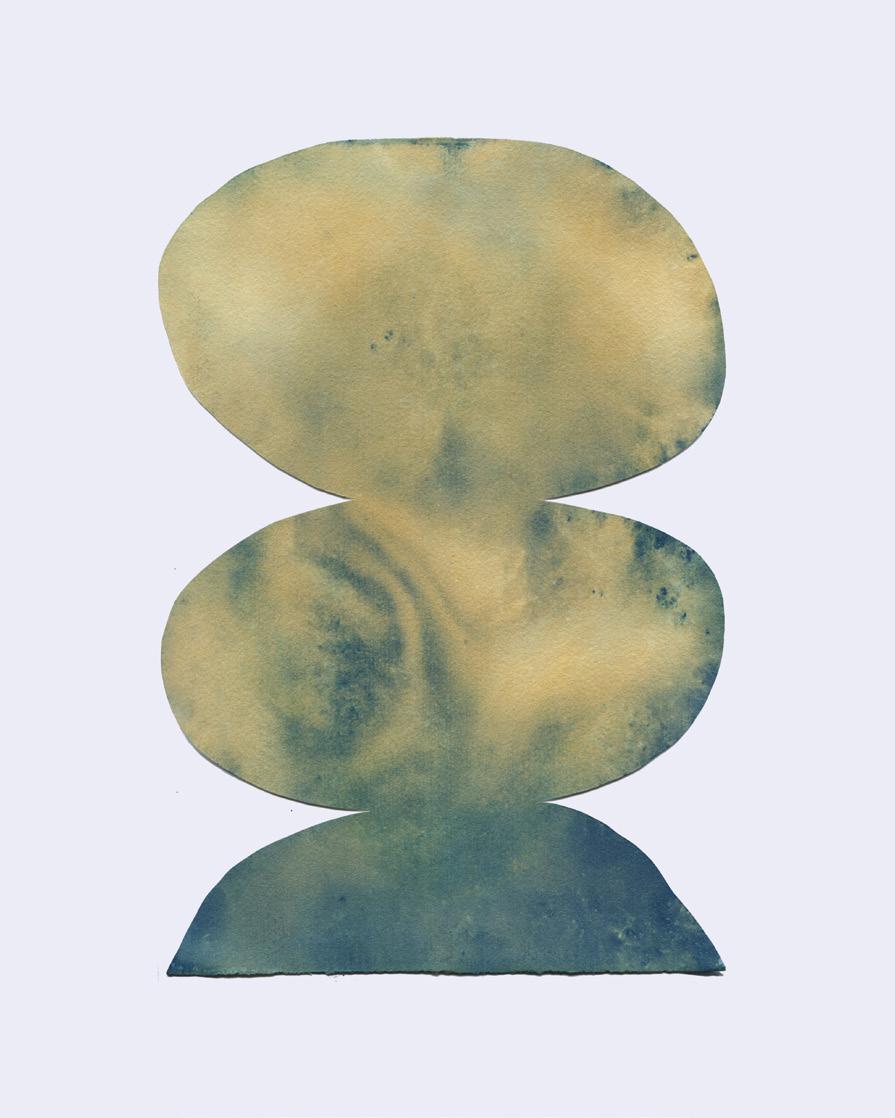
In this new series of cyanotypes, I explore the possibility of pushing the technique beyond its inherent limits. An almost physiological urgency has led me to transcend the traditional boundaries of the medium, venturing into a space that remains unexplored for me.
In a sort of alchemical marriage between time, matter, and gesture, the paper almost miraculously transforms into a threshold
and a revealing surface of uncoded, unbounded, and layered spaces.
The paper thus becomes a threedimensional body that, through cutouts, folds, and new modes of interacting with space, emancipates itself from the wall, surpasses its margins, and seeks new forms of existence.
In a historical moment where borders and territories appear increasingly rigidly defined, I feel the need to imagine a possible escape, a symbolic crossing: to go
“más allá de los límites”.
A significant precedent in this journey was the creation of a 9 by 3 meter mural in Cagliari, entirely made using the cyanotype technique. This work, conceived for a public space, represented a first concrete step in pushing the technique beyond traditional limits, opening new possibilities for interaction with space and audience.
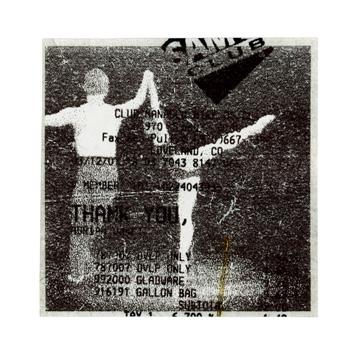
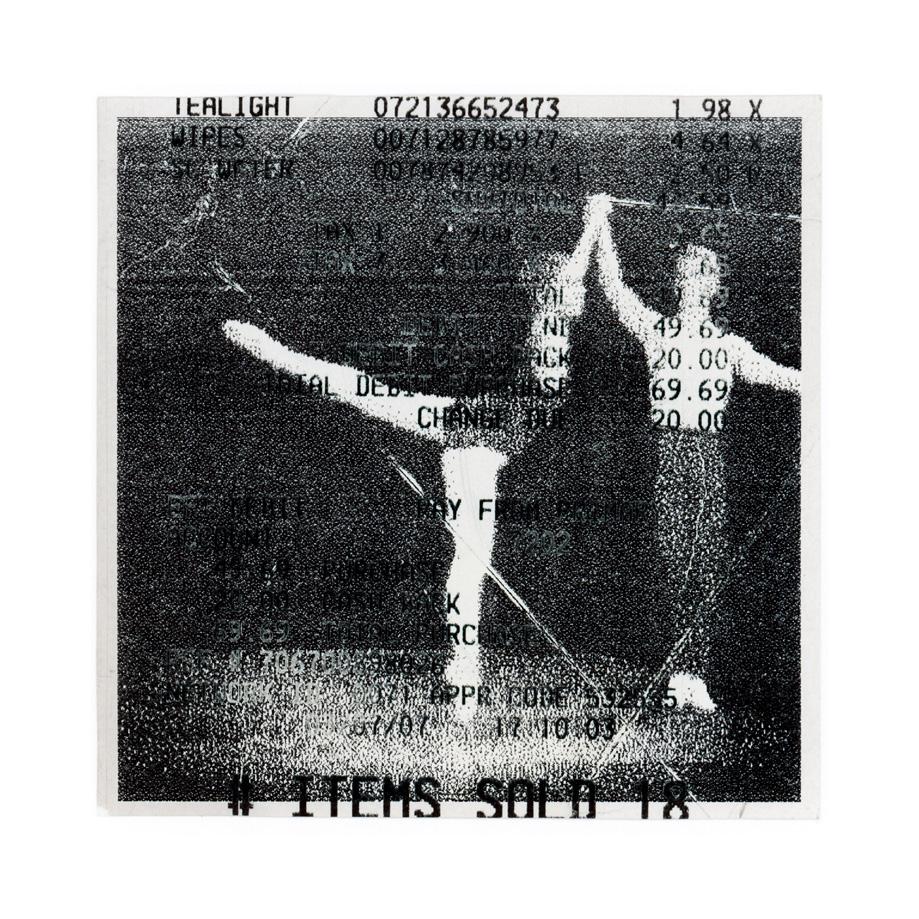
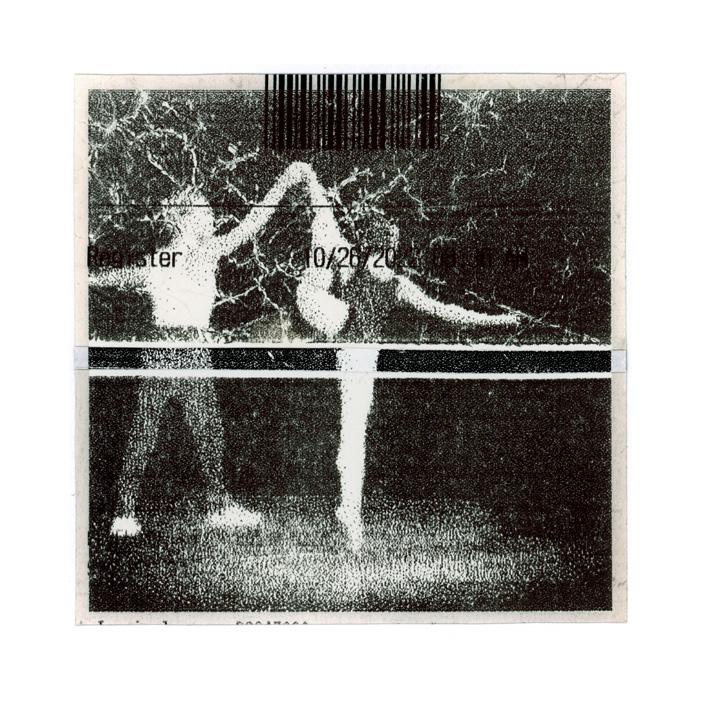
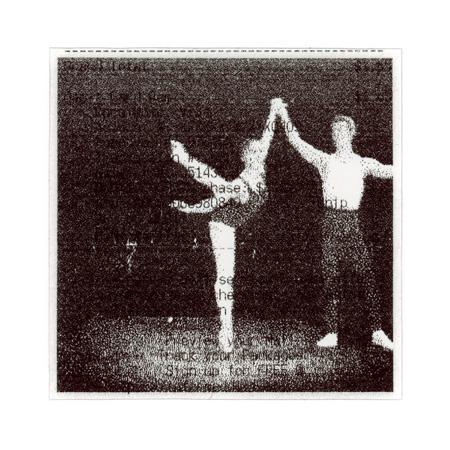
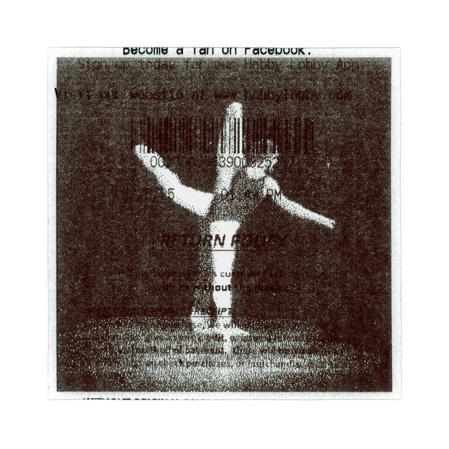
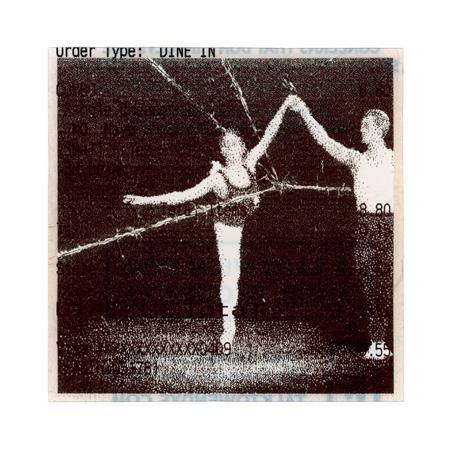
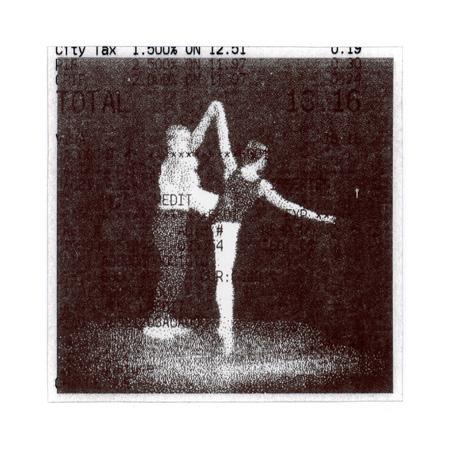
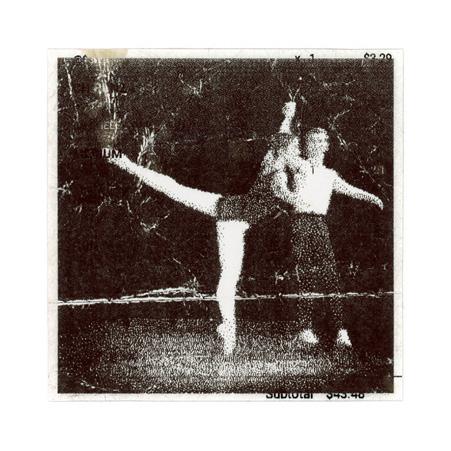
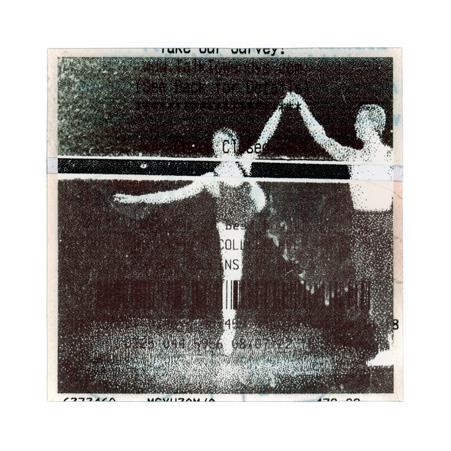
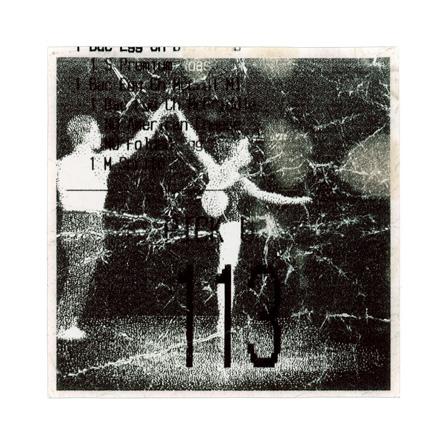
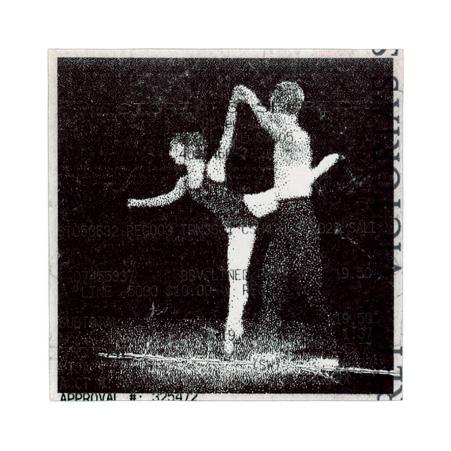
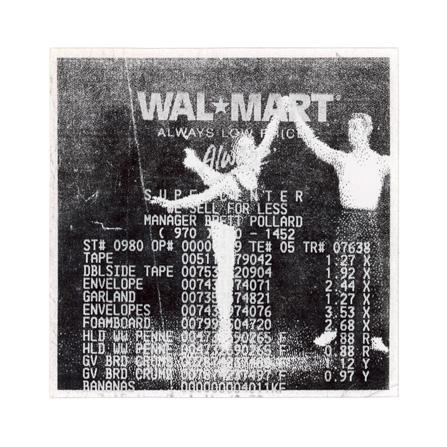
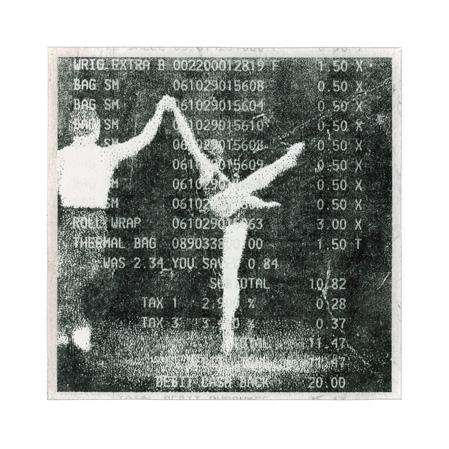
Ballerina
on receipts
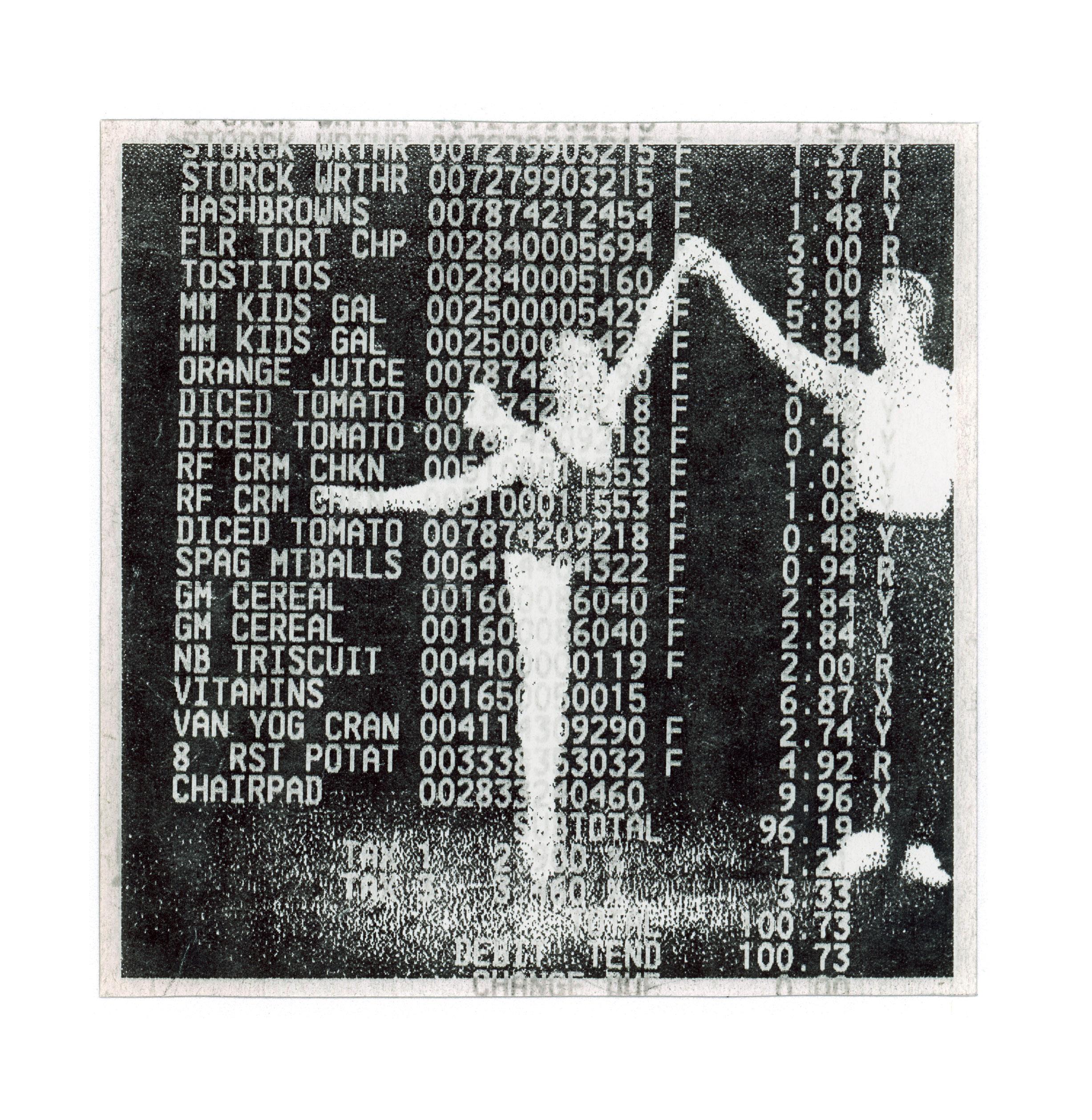
Icreate looping animations that I put in unexpected places. Sometimes I print them on old receipts, other times I scatter each frame of the animation around town, photograph them, and stitch
them together with the chaos of the world showing on the edges.The subject matter I choose is simple, ordinary moments that are easy to ignore. Insects. The flap of a bird’s wing. A dive into a pool. When these moments loop they start to feel profound because they have no beginning or end. That runner is never gonna get a break. That woman will never be finished taking out the trash. The ballerina will be eternally spinning. And when these ideas are
printed on receipts the ideas gain depth. It’s not a pristine canvas, it’s scraps of garbage. It’s not 50 megapixels, it’s barely enough dots to create an image. And showing through the video is every mundane purchase I’ve ever made: junk food, deodorant, postage stamps, diapers, and blue jeans — every penny accounted for in explicit detail. I often show my techniques as part of my videos. I create timelapse sequences that show the tedious process of
“When these moments loop they start to feel profound because they have no beginning or end.”
printing on receipts. I show my hands applying the stickers to dumpsters. I have no secrets, I feel honored when someone is inspired to try my odd activities.
Ade Hanft is a midwest-born artist practicing in Colorado whose practice uses non-traditional and experimental mediums.
Ade Hanft
001
002
003
004
005
“The ballerina will be eternally spinning”
006
007
008
Chapter Five
The Aftermath
‘Til death.
This body of work explores matrimony as more than a legal or romantic institution, though the imagery can certainly be interpreted through that lens.
Years k
YLaura Barth is an award-winning multidisciplinary artist based in North Carolina. Primary media include analog and experimental photographic processes, graphite, charcoal, watercolour, and hand-carved prints.
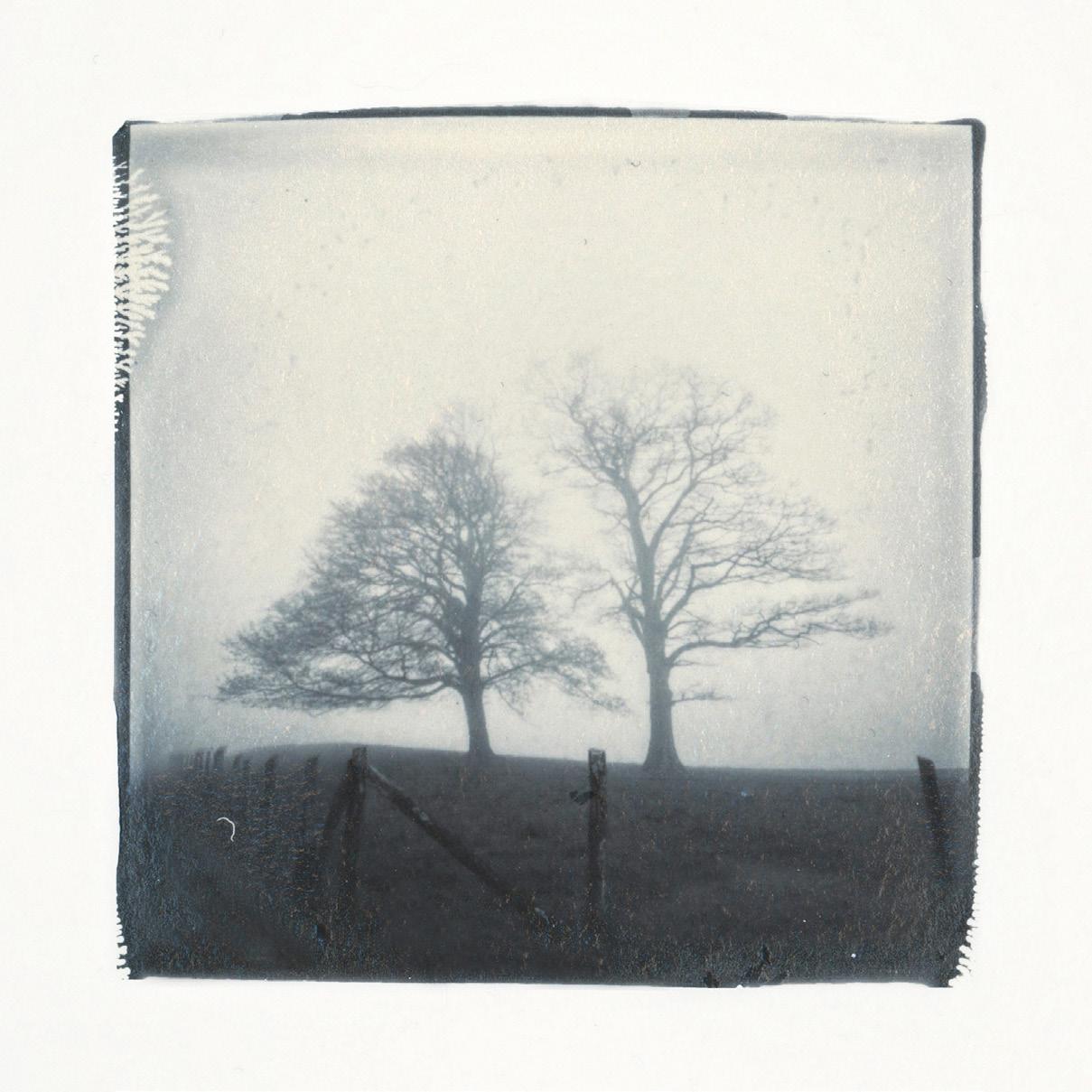
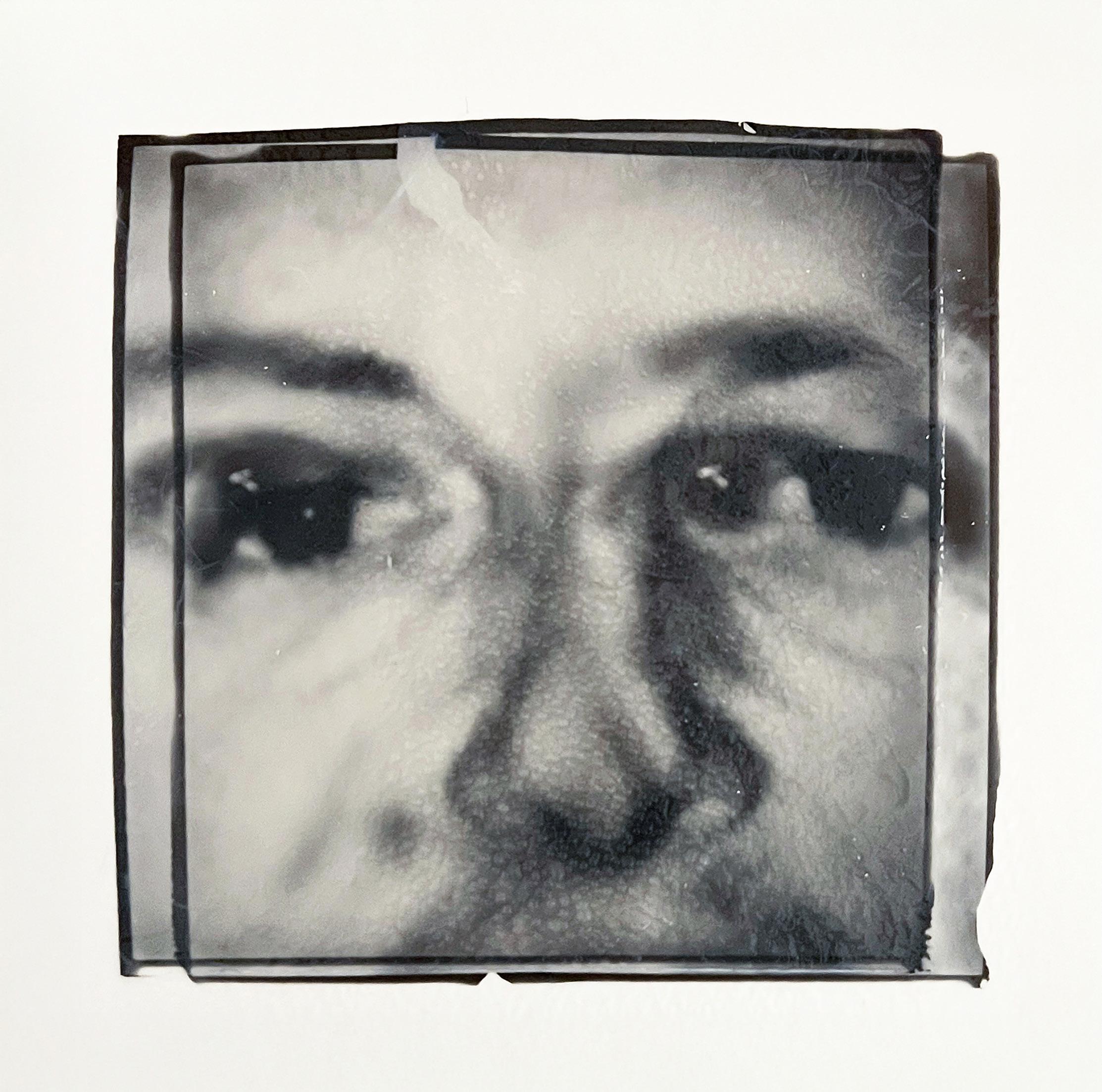
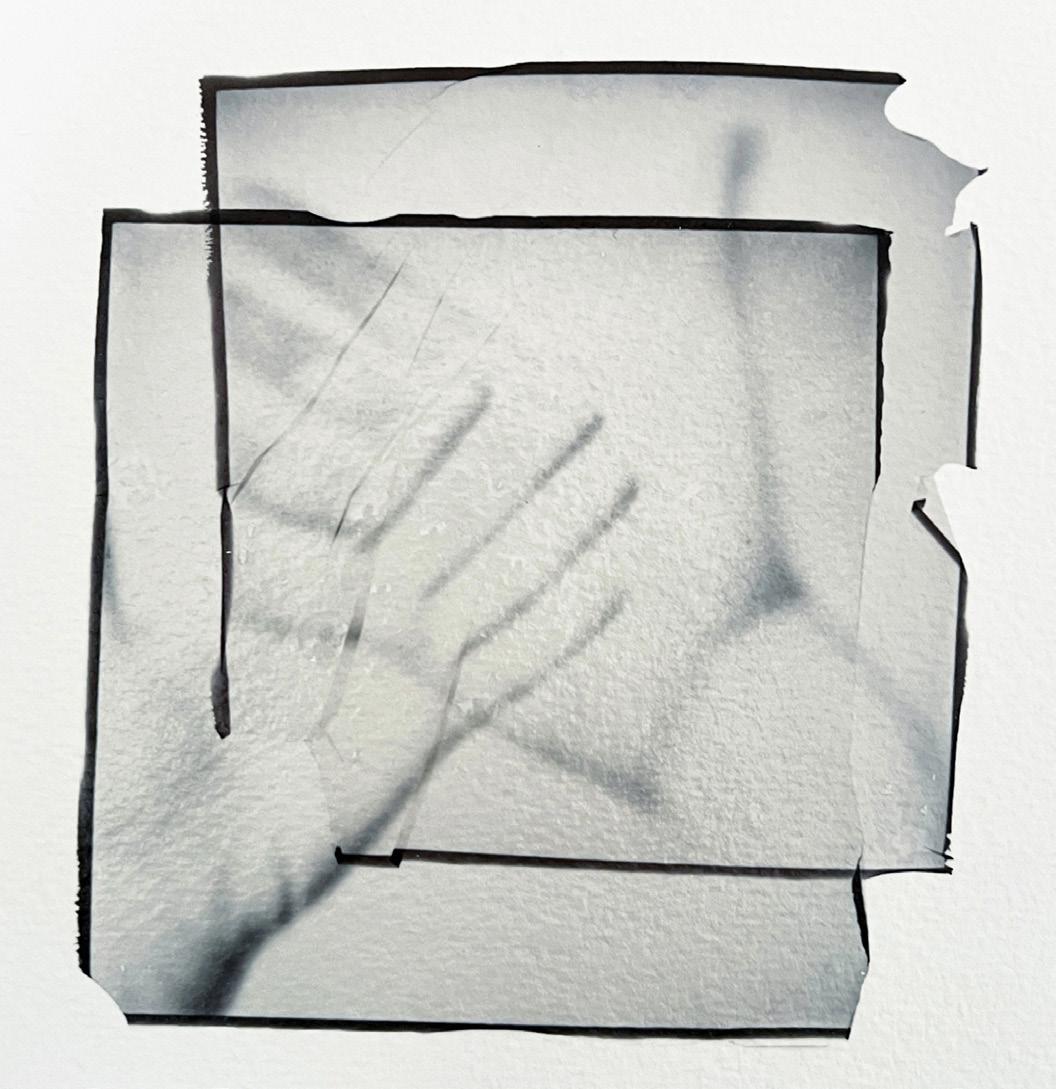
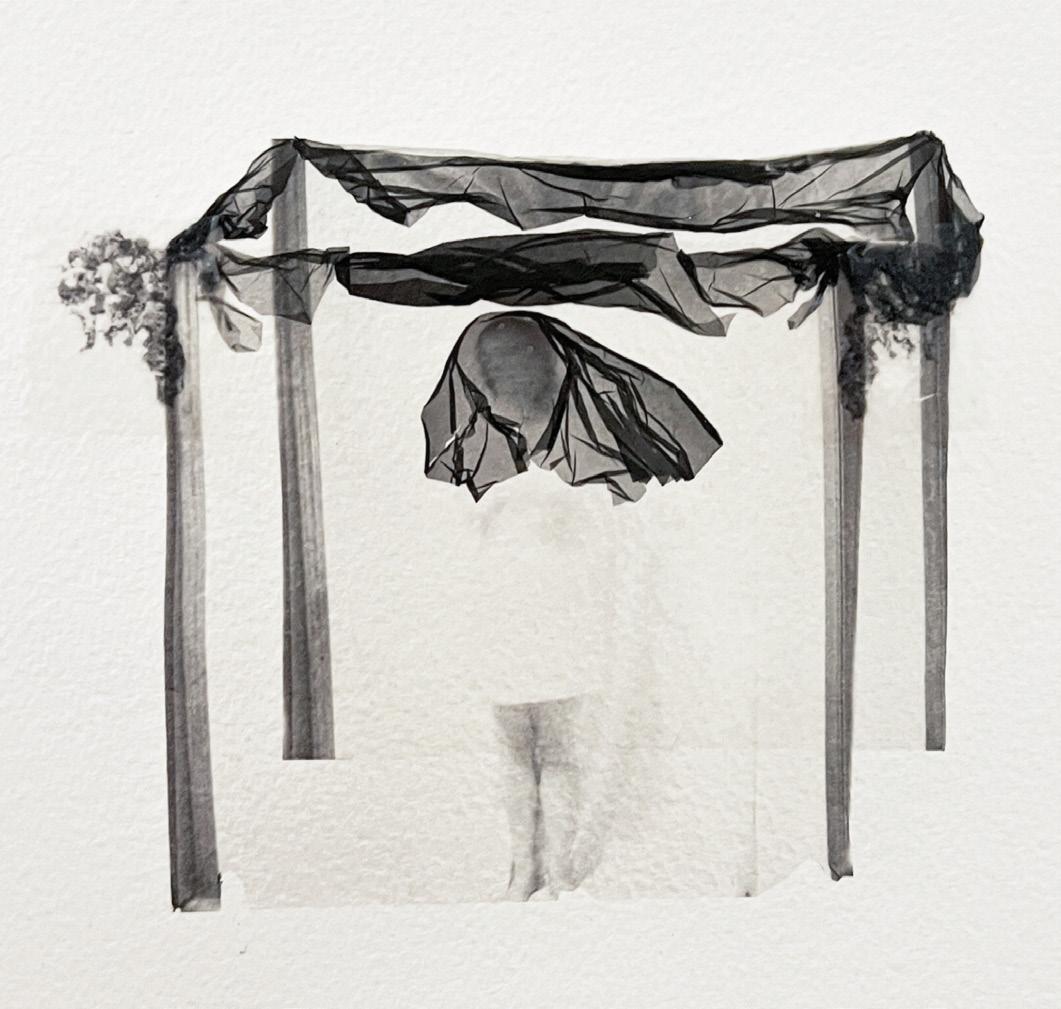
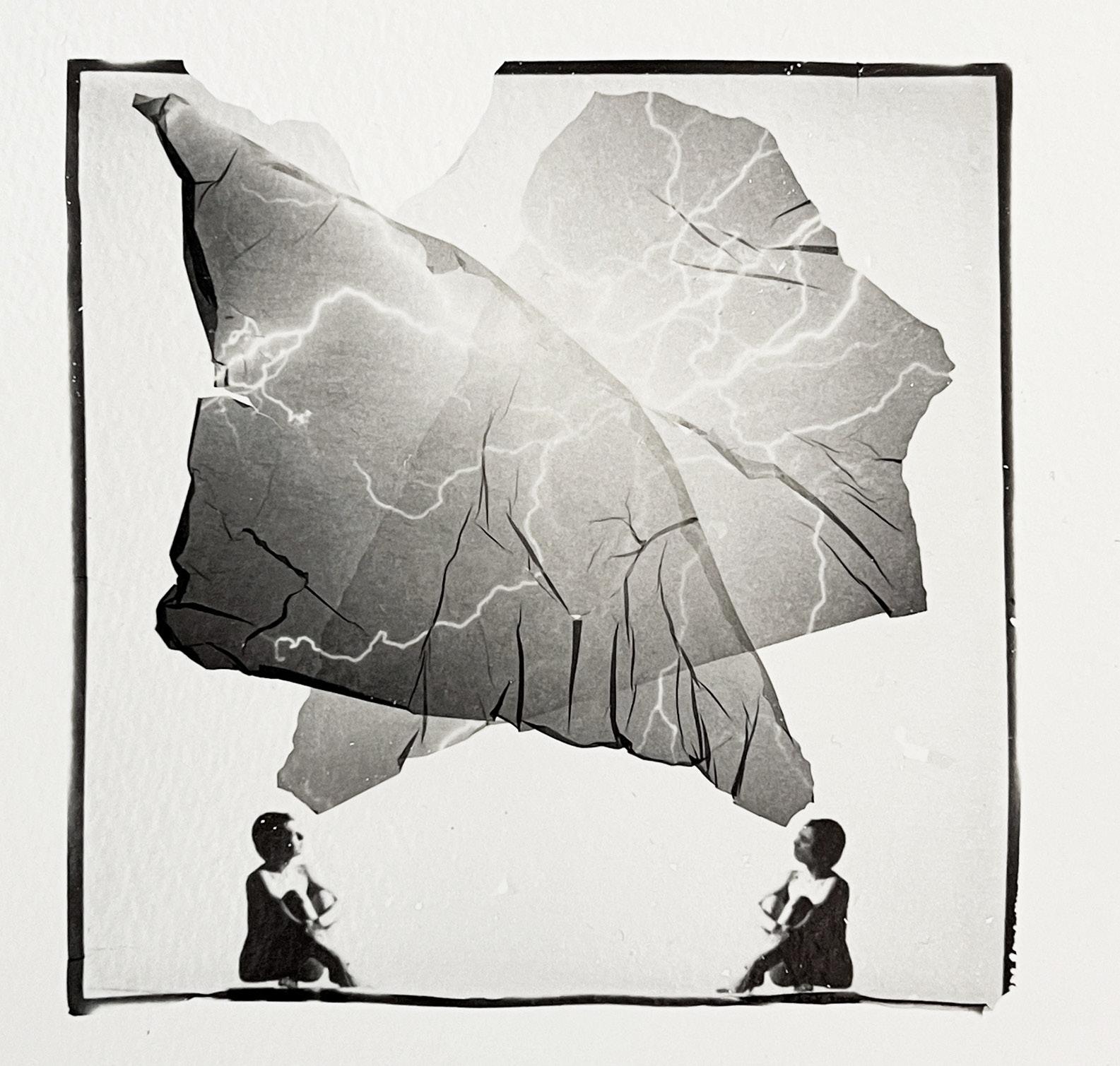
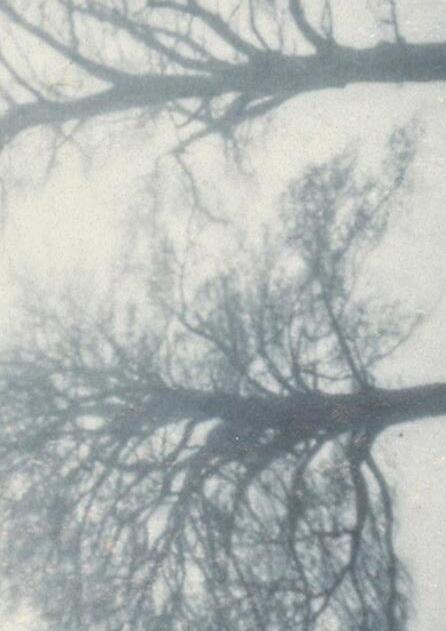
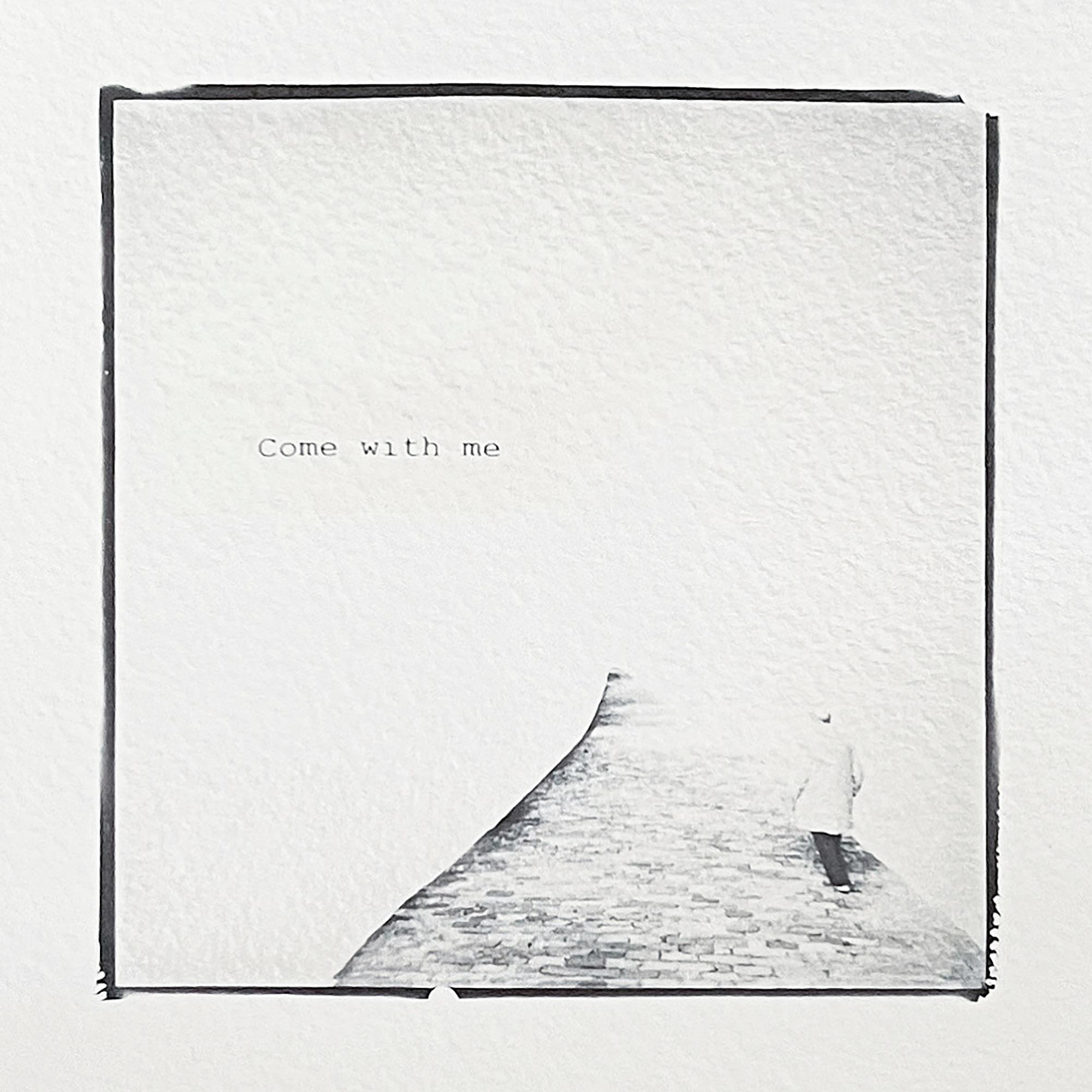
Through layered emulsions and hand-cut Polaroids, I also enact a union within the medium itself by joining disparate images, physical emulsions, gestures, and fragments into new, embodied wholes. The emulsion, once on a Polaroid, is now bound to a new medium. Each piece is a collage of relational energy: two trees reaching toward each other across a fogged field; a young figure conjuring connection; a figure in mourning under a wedding canopy.
Here, matrimony becomes a state of longing, of becoming, of binding. It reflects a yearning for physical intimacy, but also a pull beyond the body toward something more liminal: a spiritual marriage, a sacred tethering of energies across time, space, and form. It is also a meditation on the undefined yet undeniable relationships we sometimes encounter where the connection feels fated. Within the simple black borders of the Polaroid frame, I explore daydreams, longing, telepathy, unspoken desires, transformation, messages revealed only in dreams, and personal growth. Are these actually relationships with others—or with hidden aspects of ourselves?
This work is imbued with the desire to touch, to be seen, and to become part of something beyond the self. It is a ritual, a reckoning, and an invocation of what cannot be named, but can be felt.
Years
Laura Barth
Forty
Jack Kavanagh
Jack Kavanagh is a contemporary artist. The following collection of work was created using a variety of mediums.
The theme matrimony led me to think about the joining of things through deep connections. I took the traditional idea of marriage and interpreted it using things I like and things I consider inseparable from my identity.
Untitled, mixed media on canvas
This included depictions of people, internet culture, and nature. My work is heavily influenced by the internet aesthetics I was exposed to as a child. I enjoy imitating these visuals in my work. Visually they are interesting and to me they have a warm sense of familiarity.
As part of my process, I followed my usual routines and took photos that would form the basis of my work. Every piece in this project depicts something personally significant. I’ve been fascinated by the chosen themes since I was young, and I genuinely believe I wouldn’t be the same person without them.
Matrimony also made me reflect on rituals and ceremonies. The way I interact with the things I love often feels ceremonial. For instance, when I go into nature alone, I follow the same process every time. I’ll walk until I find a place that feels right, then I lie down and just exist. I’ve done this for years, returning to certain spots that feel sacred, much like how married couples might have “their place.”
I also find myself religiously rewatching and revisiting content I love online. These repeated behaviors, grounded in love made me realize that I’m “married” to these practices.
With this body of work, I simply set out to share what I love. An appreciation for the things that make my life meaningful.