






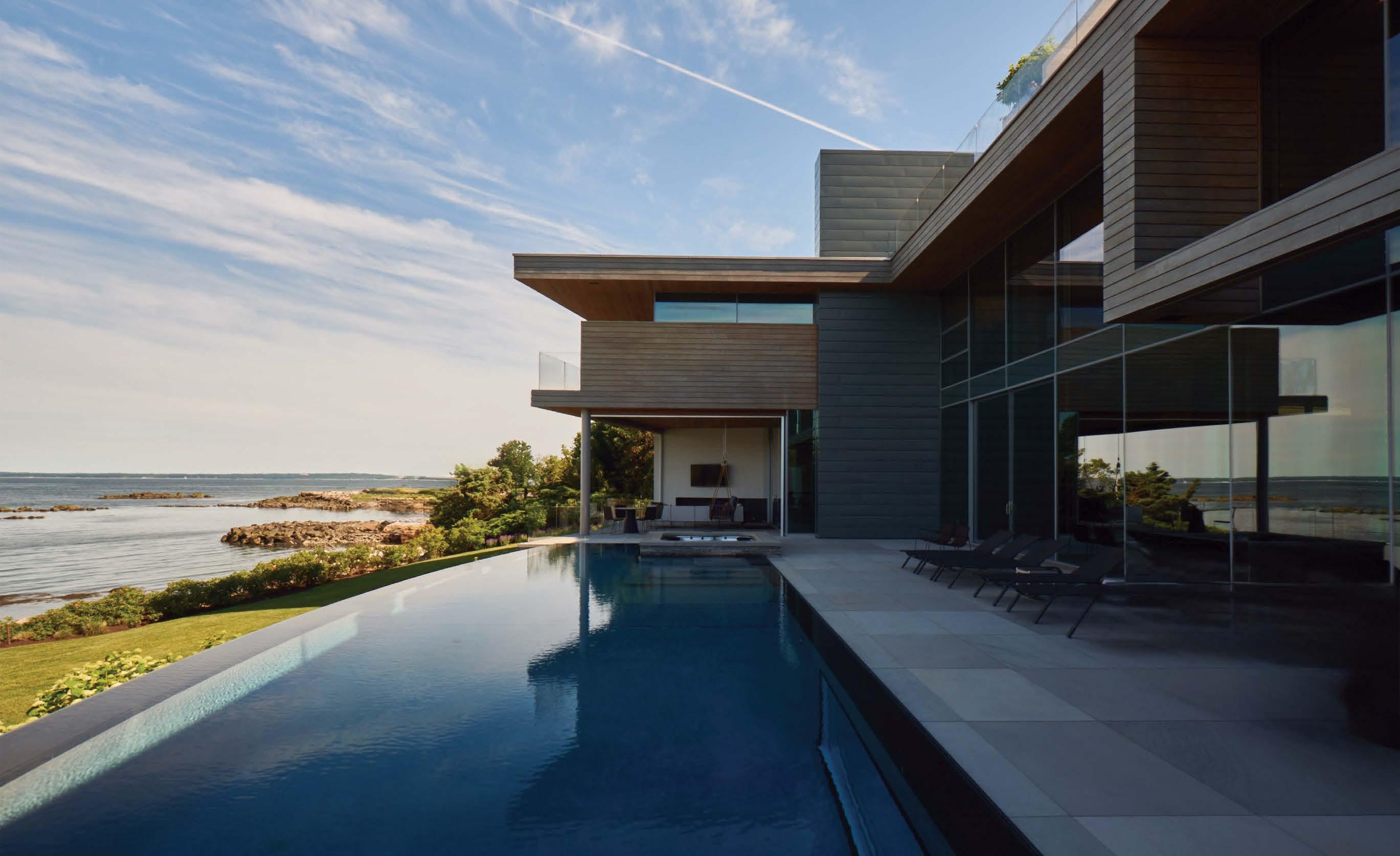

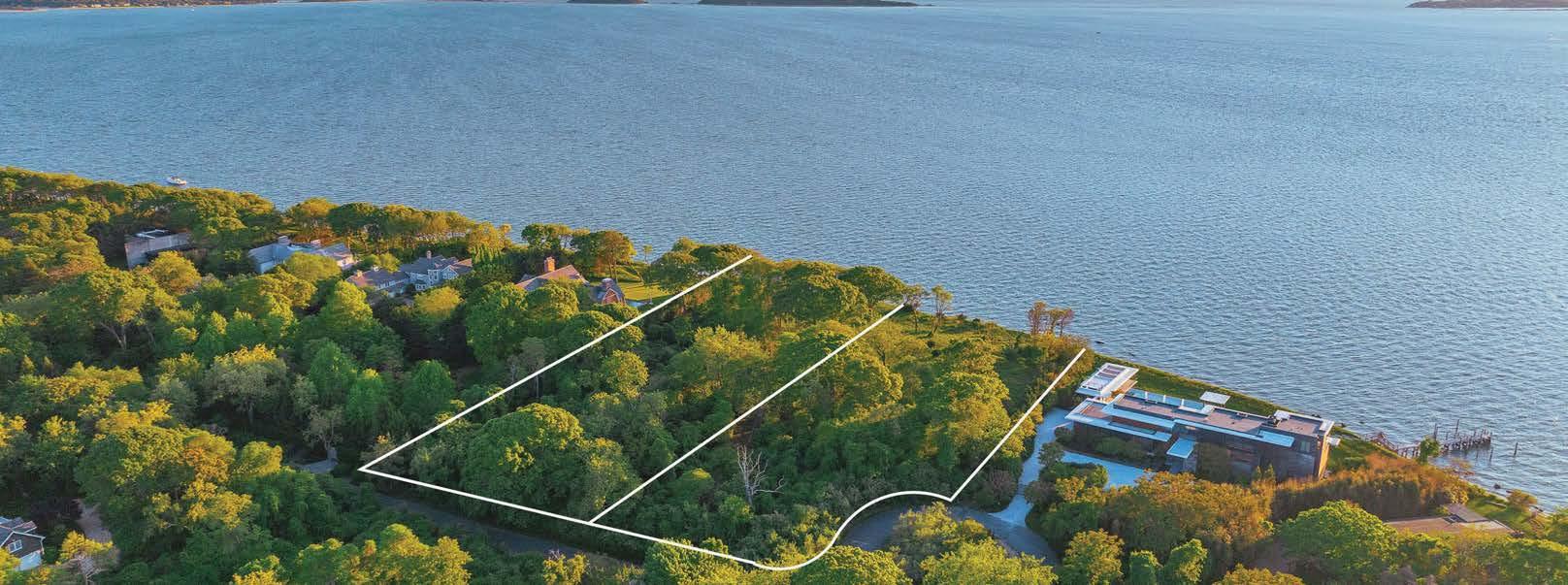



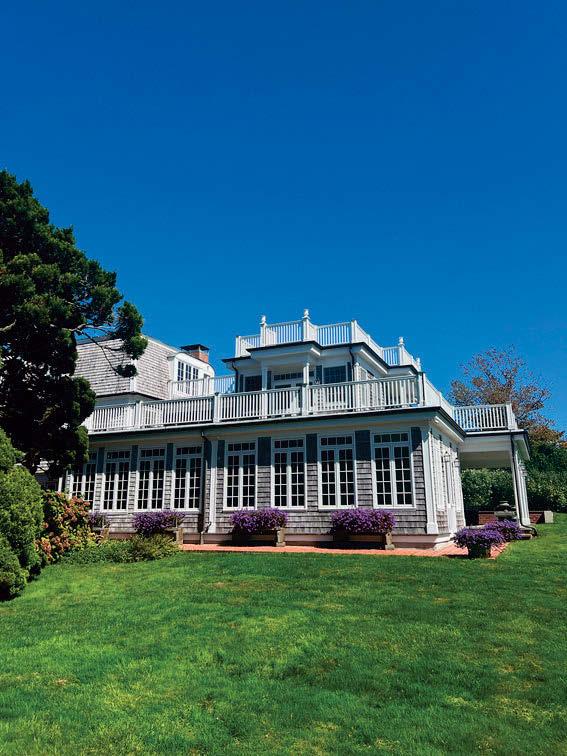
8 & 10 ON THE BLUFF, SAG HARBOR | $29,900,000 | ELLIMAN.COM/416956 TWO CONTIGUOUS LOTS JUST UNDER 4 ACRES | BREATHTAKING VIEWS OF PECONIC BAY | APPROXIMATELY 322 FEET OF PRIVATE WATER FRONTAGE | EXTRAORDINARY OPPORTUNITY TO CREATE A WATERFRONT ESTATE. 15 LITTLE COBB ROAD, WATER MILL | $9,500,000 | ELLIMAN.COM/422081 APPROXIMATELY 3,059SF | 4 BR, 3 BA | 1.4 ACRES | WATERSIDE POOL | PRIVATE FLOATING DECK | PERCHED ON A HILL OVERLOOKING BREATHTAKING MILL CREEK AND MECOX BAY | X FLOOD ZONE | FULLY BULKHEADED.
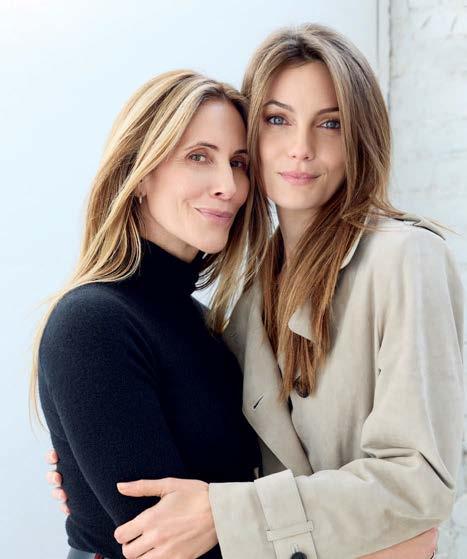
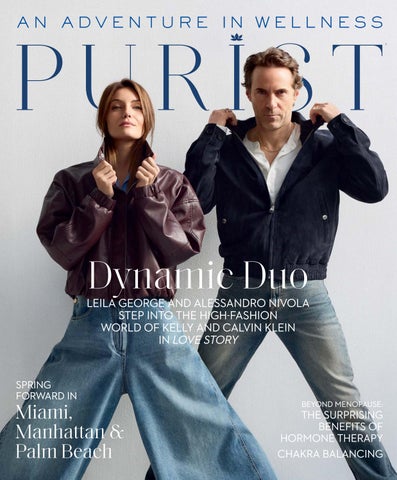
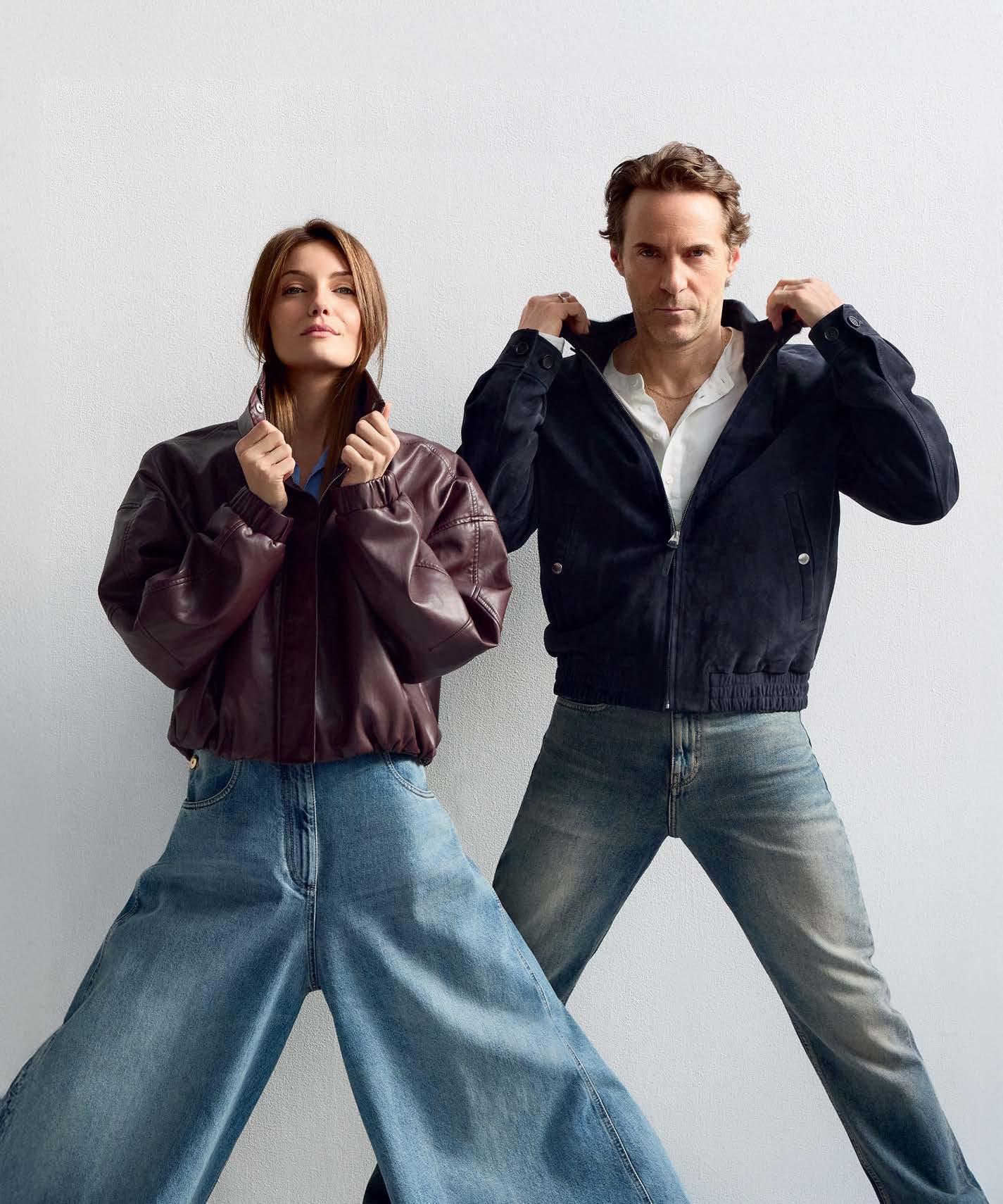
When I first met Alessandro Nivola, we were in our 20s and he was starring in a play at the Roundabout Theatre Company in New York City. The breadth of his talent shined offstage as well. He was a raconteur of the exciting moments in an actor’s life, playing out scenes with John Travolta or Helen Mirren, all the while strumming his guitar and breaking into a Radiohead melody. “Sandro,” as we called him, was the bright future of stage and screen who has since shown his depth of talent. It’s no wonder he was the perfect choice to play Calvin Klein, and a standout no less, in the popular series Love Story When my new friend, the glorious actress Leila George, told me she was taking on the role of Kelly Klein, I knew immediately that I had to pair them on the cover for this special issue—two iconic actors as two fashion icons from the ’90s zeitgeist. Some of my favorite new healing discoveries are also in this spring issue of Purist Read about TMS, transcranial magnetic stimulation, for myriad mental health issues, cravings, weight loss and perimenopause brain fog. Take a closer look at hormone therapy, which can start as soon as 10 years before menopause begins—it’s not just used as a peri-tomenopause symptom alleviator, but can help regenerate the brain, bones and the whole body. The transformative power of narrative medicine occurs through storytelling,
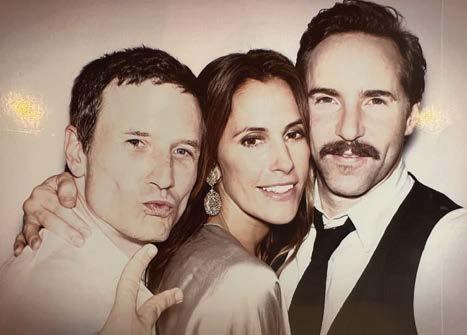
both lived and read (the subject of my recent podcast). Integrative healing modalities in pediatric medicine address the root causes of chronic conditions and mental health.
Other pathways emanate from positive thinking. I noticed that after I received my mindfulness meditation teacher certification last year from Tibet House and Dharma Moon, I experienced an elevation of nonverbal transmission—communicating with others through thought and expression. Nonverbal transmission stems from a deeper understanding of Buddhism and from learning to give pause to oneself in deference to dharma, or the way things are. In giving pause to think, I began communicating better. Thoughts direct energy and energy follows thought. I often ask my kids, Where do you want to direct your thoughts and energy? Pausing to think before acting allows us to connect to the world in a more meaningful way.






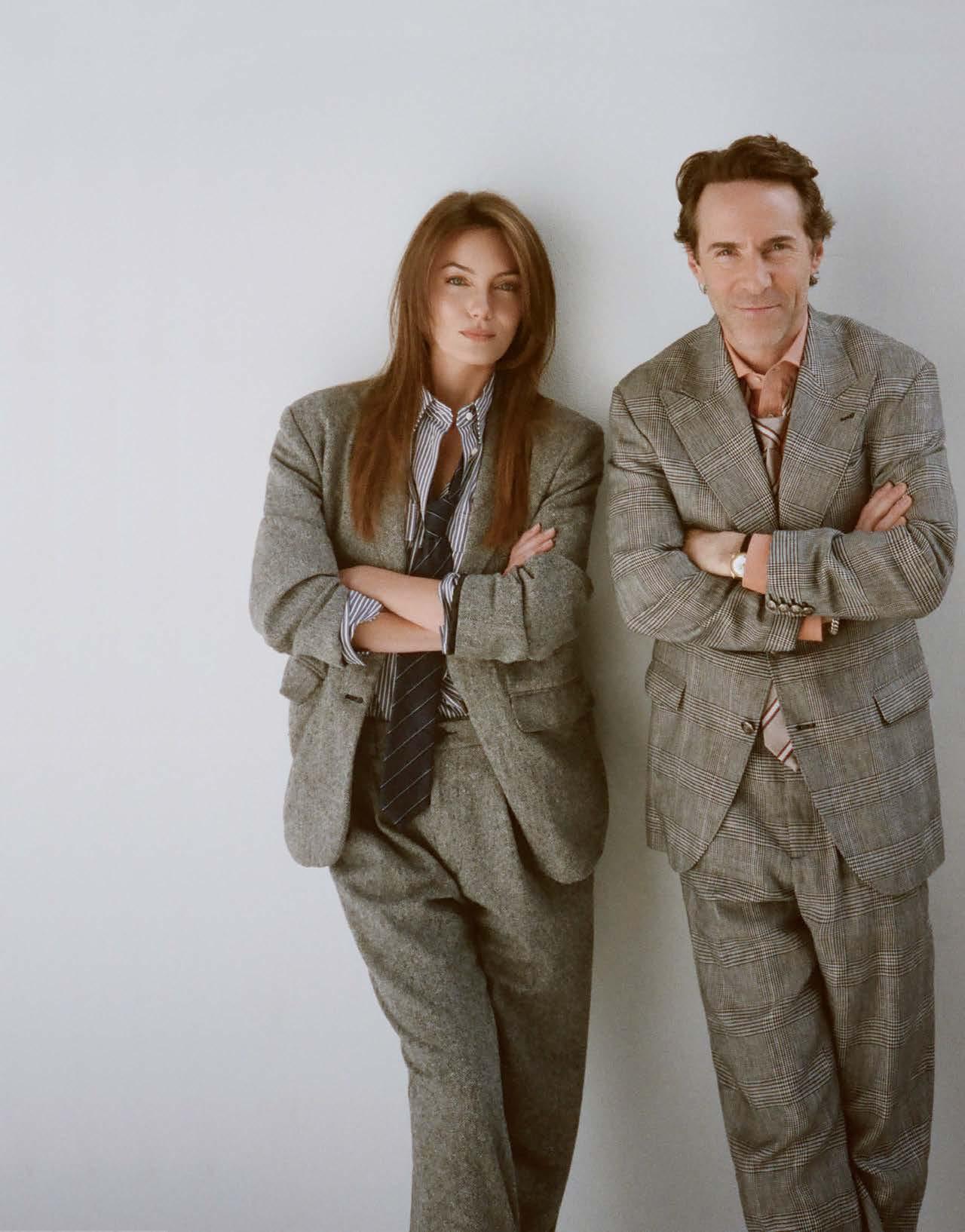
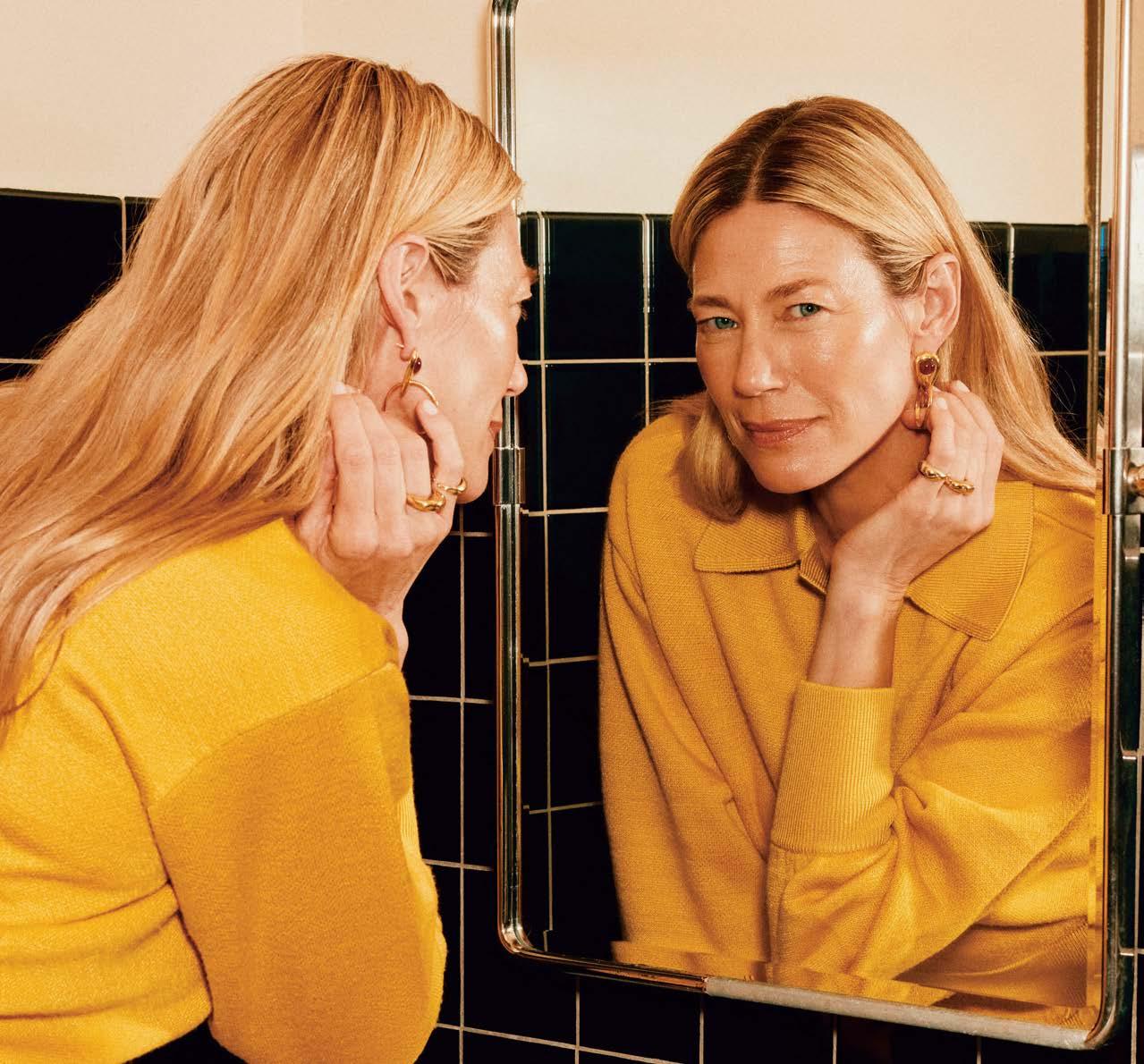
Cover stars Leila George and Alessandro Nivola embody ’90s NYC cool and the cultural allure of Kelly and Calvin Klein in Love Story: John F Kennedy Jr. & Carolyn Bessette
Fresh
Karan
Tutto
The
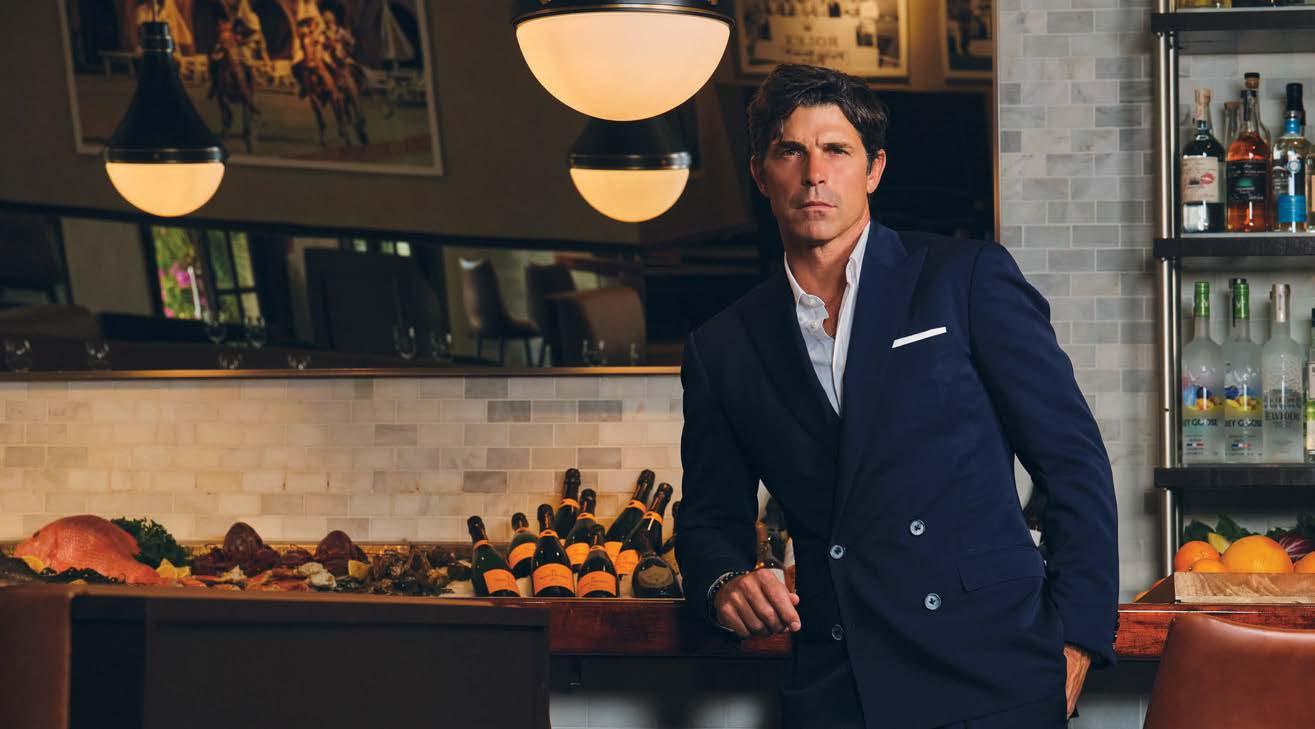
Nacho Figueras’
Clean-burning

SUPREME LOCATION, SUBLIME PRIVACY
Dive into relaxation with three pools and a pristine beach. Recharge in paradise, enjoying spa time, fitness classes, Har-Tru tennis, new padel courts, and signature Jean-Georges dining.
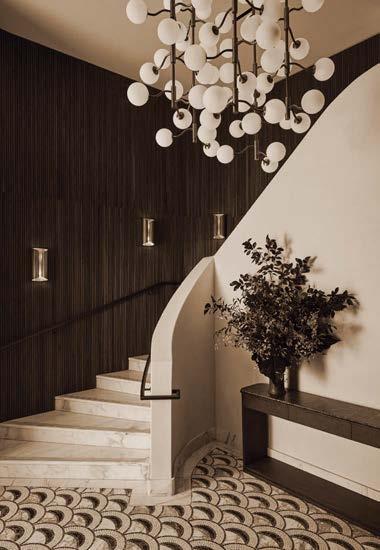
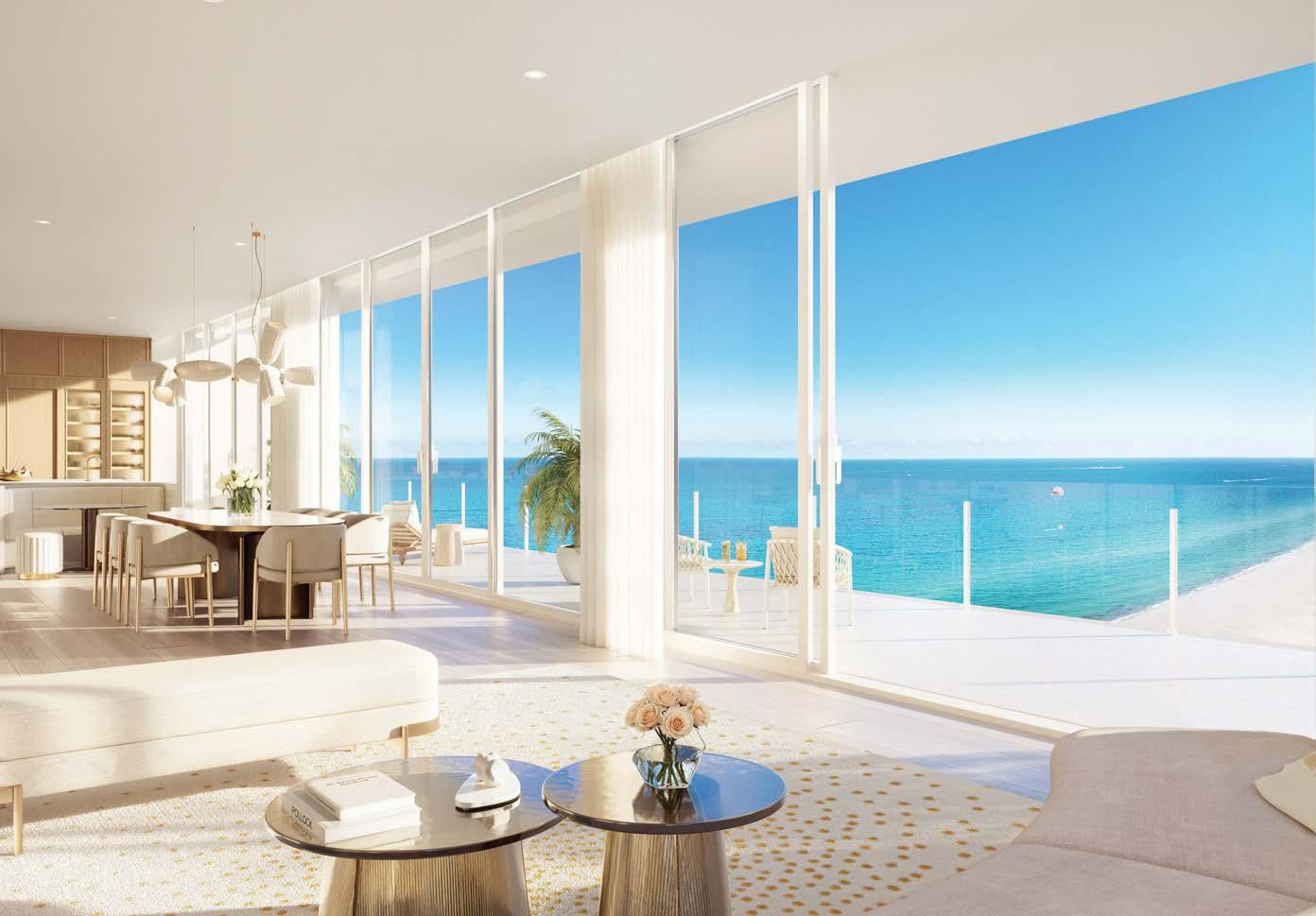
A boutique-sized and exquisitely located collection of just 30 oceanfront beach houses with over 50,000 square feet of amenities, architecture by Kobi Karp Architecture and Interior Design, refined interiors by Alessandro Munge of Studio Munge, lush landscaping by Naturalficial, and dining by Michelin-starred Chef José Andrés. Made effortlessly elegant with the legendary service of The Ritz-Carlton Residences, South Beach.
ONE- TO FIVE-BEDROOM OCEANFRONT RESIDENCES FROM $4,250,000
305.676.7123 | rcbeachhouses.com
sales gallery 1 Lincoln Road Miami Beach, FL 33139 By Appointment Only
building address 1671 Collins Ave Miami Beach, FL 33139
46 PLUMPING, PERFECTED
Mimmua!’s balanced formula restores skin volume.
48 SUBTLE REFRESH
Dr. Rian Maercks’ natural approach to facial rejuvenation
50 HIGHER GROUND
Casa de Campo redefines the Caribbean wellness escape.
53 TOP RESORTS AND RETREATS
Purist ’s guide to the best retreats across the globe
57 DEEP CLEANSE
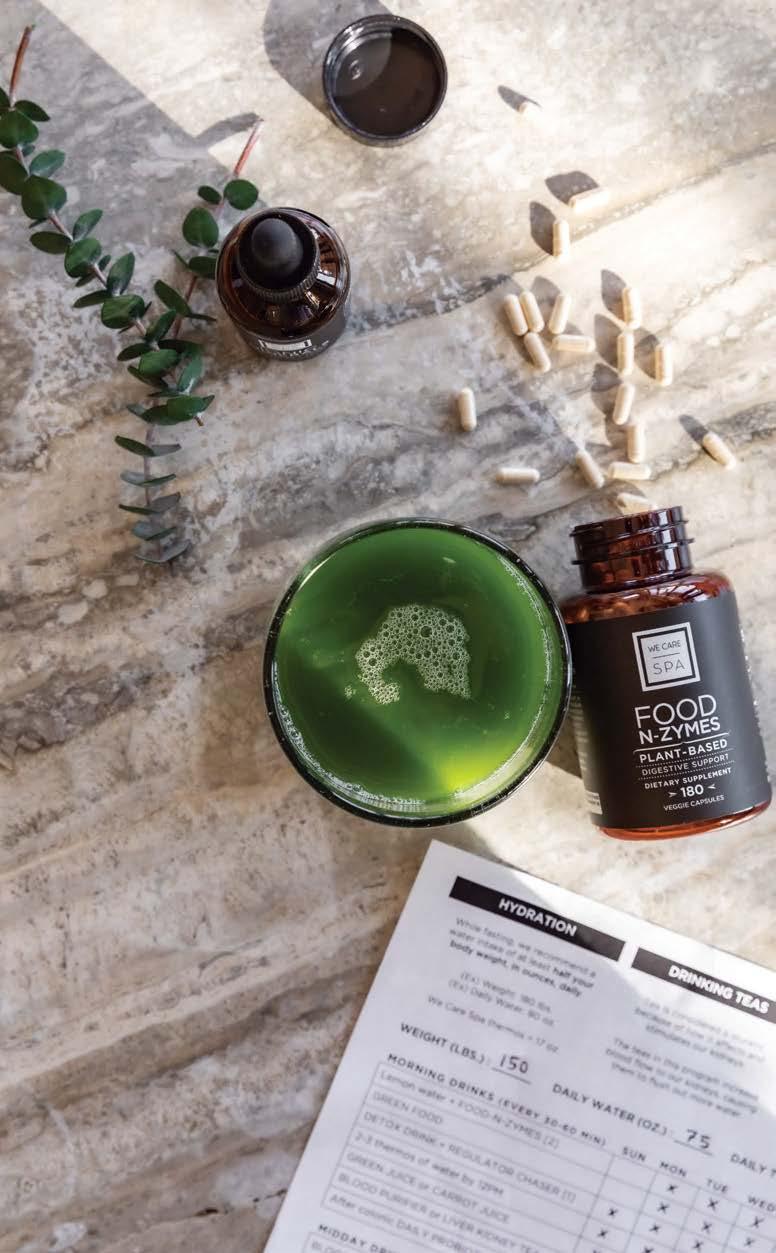
A rigorous reset at California’s We Care Spa
58 SPRING CLEANING
Refresh your microbiome
61 SPANISH FLAIR
Camilla’s latest collection
62 EDITOR’S PICKS
Seasonal must-haves
63 ULTIMATE INSIDER
The intel on Katharina OttoBernstein’s The Last Spy
64 SIMPLE ABUNDANCE
Peter Som’s perfect soup and salad combo
67 GOLDEN STANDARD
Go for pasture-raised eggs PLAY
96 NUMEROLOGY
A by-the-numbers look at Meryl Streep
Experience the 4-week skin fix.
In an independent instrumental clinical study, 100% subjects showed visible wrinkle reduction in just





MICHELE PROMAULAYKO, who shared her insights on women’s health and hormone therapy (page 36).
WHAT GUIDES YOUR STUDIES OF WOMEN’S HEALTH?
“For decades, it has been not studied enough, so I’m driven to help fill in the blanks—and excited to watch women’s lives transform as we gain the science, tools and attention we’ve always deserved.”
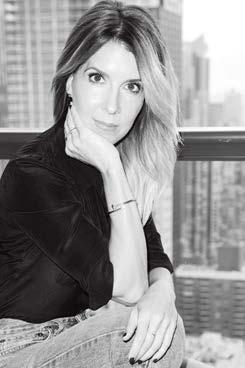
An award-winning editor and writer covering travel, design, beauty and wellness, Promaulayko was previously editor-in-chief of Cosmopolitan, Women’s Health and Yahoo Health, and served as VP of content for The Well.
ANNA KATSANIS, who styled the cover stars (page 68).
HOW DO YOU BEGIN BUILDING A LOOK?
“I like to research the talent that I am working with, and watch their projects if I’m not familiar with them, to get a sense of who they play on-screen. Sometimes I will use that as inspiration for the shoot. I need to be curious about the talent, because otherwise, what’s the point? The more I research and learn about them, the more equipped I feel to do the shoot.”
Katsanis is a New York-based fashion stylist whose work has been featured in international publications, including Vogue Arabia, Germany, Greece, Italy, Mexico and Taiwan, as well as Elle, Harper’s Bazaar, Glamour, Numero and Interview
SHIKO VUN, makeup artist of the cover stars (page 68).
WHAT DOES RADIANCE MEAN?
“A sense of inner ease and quiet confidence that naturally reveals itself. It’s the moment a client recognizes her own reflection and feels subtly elevated—not transformed, but beautifully affirmed.”

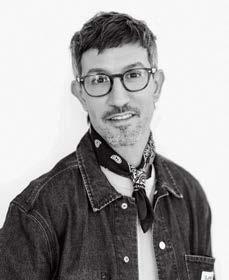
New York-based makeup artist Vun is known for his signature luxury glow and a refined, intuitive approach to beauty. Currently working at Valery Joseph Salon, he divides his time between New York, Tel Aviv and Amsterdam.
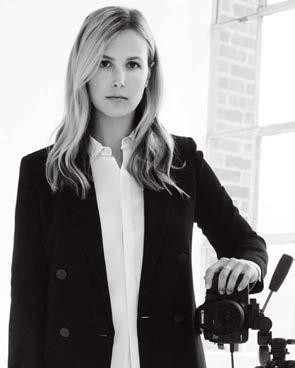
SOPHIE ELGORT, who photographed cover stars Leila George and Alessandro Nivola (page 68).
WHAT QUALITIES ARE YOU LOOKING FOR IN YOUR SUBJECTS?
“What makes them them. Often that isn’t immediately visible; it comes out in the in-between moments once they relax and you spend a little time together.”
A New York–based photographer and director known for her dynamic, personality-driven portraits, Elgort is also the award-winning host and executive producer of the television series Portrait Mode on All Arts, where she goes behind the scenes with artists and cultural figures.
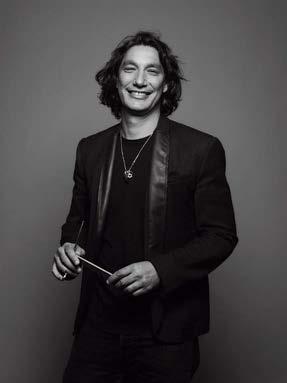
VALERY JOSEPH, the hairstylist behind the cover story (page 68).
WHAT INSPIRES YOU?
“People I meet, traveling to new destinations, great food and the world around me. Lately, I’ve been drawn to minimalist styles, especially the effortless elegance of Carolyn Bessette Kennedy. I believe that beauty doesn’t need to be overdone—there’s a quiet confidence in simplicity. The goal is always the same: to create a look that feels natural, refined and timeless.”
One of the most sought-after hairstylists from New York to Miami, Joseph is a personal favorite of celebrities, socialites, photographers and designers alike and travels between his four salons, located in New York City, Miami and Bridgehampton, to meet the needs of his clients.
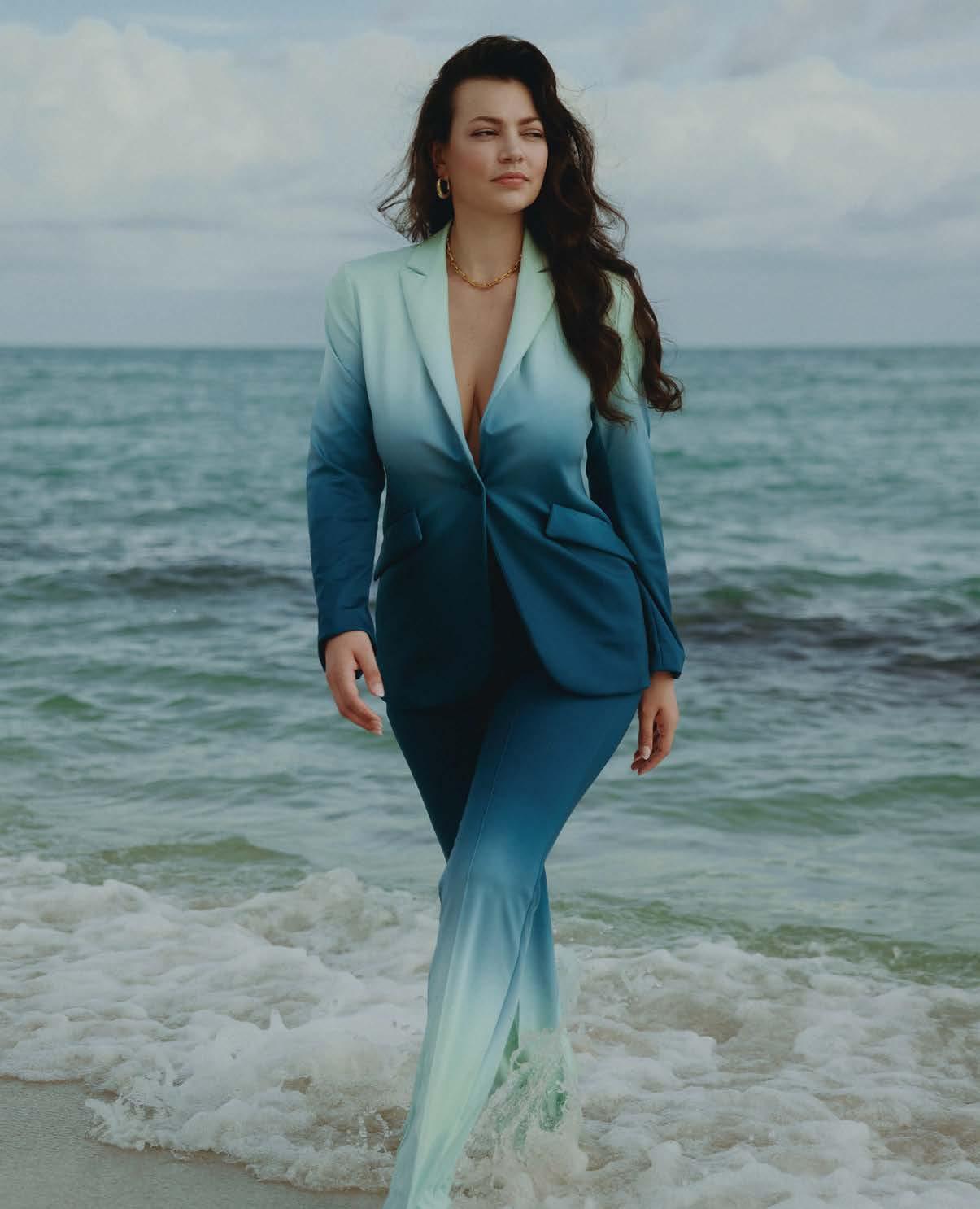


Founder + Editor Cristina Cuomo
Executive Editor Ray Rogers
Features Editor Jim Servin
Associate Editor + Photo Editor Jenna Lebovits
Editorial + Marketing Assistant Lauren Willett
Senior Wellness + Beauty Editor Amely Greeven
Beauty + Fitness Editor Beth Landman
Wellness Editor Fernanda Niven
Contributing Health Editors Dr. Jeffrey Morrison,The Morrison Center; Tapp Francke Ingolia, MS CNS Hamptons BioMed
Copy Editor Michèle Filon
Research Editor Jill Malter
Contributing Food Editor Peter Som
Special Project Editors Jenny Landey,TR Pescod
Contributing Writers Lauren Aiyana, Isaac Boots, Heidi Brod, Donna Bulseco, Christopher Coy
Michaela Kennedy Cuomo, Dr Gerry Curatola, Donna D’Cruz, Simon Doonan
Dimitri Ehrlich, Melissa Errico, Pamela Fiori, Marisa Fox, Steve Garbarino, Linda Hayes
Dr.Terrie Hope, Nancy Kane, Dr. Frank Lipman, Dr. Lea Lis, Ali Margo, Myles Mellor
Kevin Menard, Roxanna Namavar, David Nichtern, Dr. Eunice Park, Dr. David Perlmutter
Annelise Peterson, Kelly Posner Gerstenhaber, Michele Promaulayko
Dr. Christina Rahm, Lisa Roberts, Erica Schwartzberg, Biet Simkin, Jolene Star
Dr. Stacie J. Stephenson, Julia Szabo, Abby Tegnelia, Rebecca Wallwork,Tess Weaver
Regina Weinreich, Constance C.R. White, Sarah Wragge
Contributing Design Director Ben Margherita
Contributing Art Director Mikio Sakai
Contributing Designer Seton Rossini
Web Managers Tarin Keith, Aubrée Mercure
Contributing Photographers Melanie Acevedo, David Bellemere, Justin Bettman, Cass Bird, Brian Bowen Smith
Natalie Chitwood, Bob and Dawn Davis, Gregg Delman,Victor Demarchelier
Mikey DeTemple, Sophie Elgort, Francine Fleischer, Marili Forestieri, Diana Frank
Morgan Maassen, Roberto Matteo Marchese, Mary Ellen Matthews, Ryan Moore
Nino Muñoz, Matt Sayles, Claiborne Swanson Frank, Simon Upton, Cathrine White
Publisher Helen Cleland, helen@thePURISTonline.com
Chief Revenue Officer Andrea Greeven Douzet, andrea@thePURISTonline.com
Head of Partnerships Nicole Levy, nicole@thePURISTonline.com
Executive Sales Directors Tova Bonem, Andrea Garcia, Michelle Johnson,Teresa Sorkin
Eden Williams, Rosalind Zukowski
Luxury Art And Travel Partnerships Lisa Rosenberg
Aspen Publisher Alexandra Halperin
Aspen Media Consultant Cheryl Foerster
Director of Marketing Ilene Frankel
Events Director Carolyn Heft-Levinbook
Events Manager Jen Brown
Event Photographer Kristin Gray
Chief Financial Officer Caryn Whitman
Production Direction Digital Workflow Solutions
Purist is distributed in New York City, the Hamptons, Aspen, Miami, Palm Beach, Los Angeles, and now in Chicago and Scottsdale.
For advertising inquiries, please contact sales@thePURISTonline.com
For editorial inquiries, please contact wellness@thePURISTonline.com
For production inquiries, please contact production@thePURISTonline.com
Follow us on Instagram @thePurist and Facebook.com/puristonline www.thePURISTonline.com

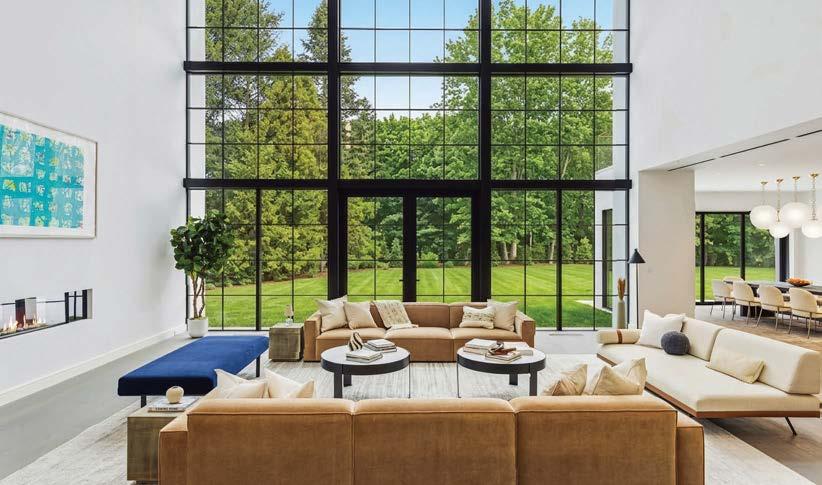




1. New & Stunning in East Hampton
$12M | 9,200± sf | 6 BR | 5 Full BA | 3 Half BA 1.78± sf Acres Moments from the Village Italian Boffi-designed Kitchen
Soaring 22.6’ Double-Height Ceilings Incredible Finished Lower Level Customized Wine Room 43OldOrchardLn.com
James J. MacMillan 516.702.5674 | jmacmillan@bhsusa.com
2. Sag Harbor Cove Waterfront
$5.495M | Bay Point Enclave
Architecturally Reimagined in 2018
4 BR | 3 BA | Private Dock 100± of Bulkheaded Shoreline
Spectacular Indoor-Outdoor Living Areas Waterside Pool and Spa 20WhalersWalk.com
Korine M. Konzet 631.258.8577 | kkonzet@bhsusa.com
3. Sprawling & Turnkey in Southampton
$3.795M | 1.35± Acres | 4 BR | 4.5 BA | 3,000± sf Renovated 2025 | New Pool Room for Tennis and Permit in Place
Landscaping has been Digitally Enhanced and May Differ | 1824MajorsPath.com
Craig Beem 917.445.1189 | cbeem@bhsusa.com
4. Prestigious Estate | Quogue South
$6.495M | 1.98± Acres | 5,600± sf 7 BR | 3 Full + 1 Half BA 1,850± sf Barn with 2 BR Guest Apartment Separate Artist Studio with Bath Property Allows for Multiple Residences
Lauren A. Battista 917.744.9382 | lbattista@bhsusa.com
5. Village Luxury in Bridgehampton
$3.595M | 1.26± Acres | Gated 3 BR | 3 BA | Refined Interior Spaces Renovations in 2023 and 2018
Heated Gunite Pool | Outdoor Shower Park-like, Immaculate Grounds 207SnakeHollowRoad.com
Timothy R. O'Connor 917.273.7099 | toconnor@bhsusa.com
David Tenenbaum
347.907.5939 | dtenenbaum@bhsusa.com





Hamptons-based Valeria Talve brings women together through movement and mindfulness.
BY LAUREN WILLETT • PHOTOGRAPHY BY DIANA FRANK
For Valeria Talve, movement has always been more than exercise—it has been a language of connection.
Originally from Mexico City, Talve first moved to New York during a gap year between high school and college, pursuing her creative passions like dancing, photography and acting. She studied, and worked in fashion, advertising and PR and eventually built a life in the Big Apple. But it was a much more personal shift, becoming a mother of two, that planted the earliest seeds of what would later become The Fitizens, a growing wellness community.

“I created The Fitizens because I truly believe women heal and rise in community,” says Talve. “So many of us move through life carrying so much on our own. I wanted to create spaces where women could show up, move their bodies, breathe, laugh and remember they’re not alone.”
After relocating full time to the Hamptons during the pandemic, Talve noticed something was missing. While the area was full of activity and new friendships, she wanted to build deeper connections beyond school pickups and social gatherings centered around children. When she began teaching fitness classes, she noticed that women didn’t just want to work out together; they wanted to stay, talk and build relationships.
That instinctive sense of connection sparked the creation of a small WhatsApp group of women looking to move, gather and support one another. What has since emerged is an ecosystem of gatherings centered around wellness, creativity and, most importantly, community.
Throughout the year, Talve hosts many mindfulness
gatherings, some rooted in fitness, like her signature Fitizens Move classes, including her dance sculpt sessions known as Baila con Val, which pop up across the Hamptons and New York City. For a more restorative practice, she hosts Fit + Zen collaborations that combine strength training with breath work, meditation and journaling. She also leads nature walks, cooking-withintention classes, and intimate social gatherings that spotlight local wellness practitioners, creatives and brands.
These gatherings often unfold in collaboration with Partners in Purpose, The Fitizens’ network of local collaborators—wellness leaders, chefs, healers, and other businesses in the Hamptons and NYC who co-host community gatherings and experiences while contributing a portion of proceeds back to The Fitizen Fund. Talve launched the philanthropic initiative in 2024, after being diagnosed with breast cancer. Through the fund, a portion of proceeds from events and collaborations supports women navigating breast cancer by providing access to healing resources and wellness experiences that are often not covered by insurance.
“What once felt like the hardest chapter of my life became the beginning of something deeply meaningful,” says Talve. “Cancer didn’t happen to me—it happened for me.”
A sense of community continues digitally through a private WhatsApp chat called The Fitizens, where members share support, inspiration and reflections between gatherings. “Movement might bring women into the room,” says Talve, “but community keeps them coming back. At The Fitizens, nobody walks alone.” thefitizens.com


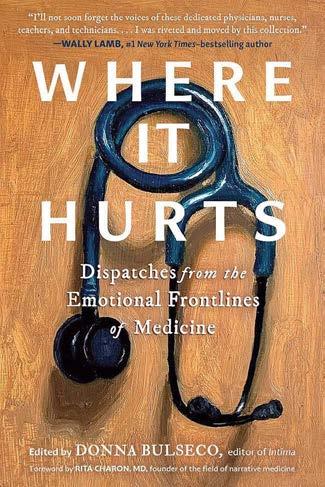
In an excerpt from Where It Hurts: Dispatches from the Emotional Frontlines of Medicine, a doctor finds a moment of unexpected grace. BY
CARA HABERMAN, M.D.
Staring blankly at the yellow-and-black checkered gate in front of me, it occurs to me that it is taking a moment too long for the parking attendant to read out my total. I glance up at her and find dark, serious brown eyes searching my face. A jolt of recognition—it’s her.
A confession: This is not, in fact, the medical faculty parking deck. My residents call it “Princess Parking,” when you pay a few dollars to park in the much closer patient and visitor lot. As a rule-follower by nature, I almost never do this. Only on weekends, when it’s nearly empty anyway, and I always wear my jacket zipped up to the neck to hide my scrubs and badge, as if the parking police are going to arrest me.
In fact, the last time I parked here was a few months ago. I remember because it was the end of a particularly exhausting week. I had been up most of the night before speaking with my resident team about an assortment of unusual admissions. My list of patients that morning held the promise of a difficult day, so as I approached the hospital, I gave myself the little treat of a shorter walk by turning into the “Princess Parking” deck.
and closed my eyes. There were tears gathering below the surface, and I quickly blinked them back. I took a deep breath and reached for my wallet.
But as I turned back to the attendant, she was staring intently at me. She cocked her head a little to the side, like a bird, and looked at me another moment. Then without saying a word she raised the gate. I was confused for a moment. With a jut of her chin she signaled, “Go on.”
Then the tears came, as I was flooded with a tremendous sense of being seen. Here I was holding it together all day long, and this woman saw in the span of a few seconds that I was barely keeping it in and so very much could use a little bit of kindness. “Thank you,” I whispered, and I drove on through.
Indeed, that day spun out as emotionally draining as I anticipated. We told one mother her child most likely had cancer, and we sat and cried with her. We gave another family a life-altering diagnosis for their newborn infant. One of my patients was removed from her mother’s custody, and we listened to the accusing wails of a family being torn apart. Knowing it was the safest choice for the child did not make it any easier to hear. Another mother, terrified in the face of her baby’s illness and lacking ways to cope, lashed out and verbally abused our team. After a long, tense talk, we managed to regain a fragile trust on both sides.
As is often the case, I did not eat lunch, go to the bathroom or really even sit down all day. When I walked out of the unit hours later, I was hollowed out, empty. I had given every last bit of myself to the work of the day. When I got to my car I just sat, feeling as gray as the concrete wall in front of me. Eventually my hands remembered how to turn the ignition, my body finding the energy to drive up to the exit gate. I handed the parking attendant my ticket, and for a second, I put my head back against the headrest
That particular day was months ago. And here we are again, another long day, another searching look from a woman who must watch hundreds of people pass through this gate. I marvel at the deep intensity of her gaze. I imagine her studying each car, calculating how many people she can bestow her benevolence on before it might be noticed. Is she trying to decipher who lost a loved one, who received bad news, who had the worst day? All this goes through my mind in a split second, and I remember that I did not, by those measures, have anywhere close to the worst day. A hard day, to be sure. But not the worst. Someone else may need her gift today. So I summon a little smile, brighten my eyes a bit, and say, “Good afternoon.”
Her gaze softens suddenly, then darts away. Her stance shifts from Bountiful Goddess of the Parking Deck to simply Parking Lot B Attendant. “That’ll be four dollars please.”
Cara Haberman is an associate professor of pediatrics at the Wake Forest School of Medicine in WinstonSalem, North Carolina. She uses narrative medicine to foster compassion and teach others about the heart of medicine. Excerpt from Where It Hurts: Dispatches from the Emotional Frontlines of Medicine edited by Donna Bulseco © 2026. Reprinted by permission of the publisher, The Experiment. Available everywhere books are sold. theexperimentpublishing.com


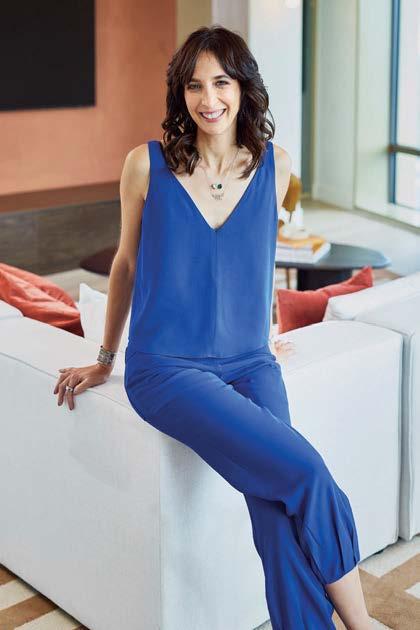
Global admissions expert Lindsay Tanne Howe on when to start, what matters and how to stand out.

Experts recommend applying to 12 colleges to balance strategy in the admissions process.
From New York to Geneva, Dubai to São Paulo, many families approach the college admissions journey with the same misconception: that there’s a way to “game” the process. Having advised thousands of families globally, LogicPrep founder and CEO Lindsay Tanne Howe knows there is no magic formula. But with a team of former admissions officers from institutions including Harvard, Stanford, MIT, Duke and Penn, LogicPrep offers something powerful—insight from the other side of the desk. Today, a clearly articulated, authentic story has become one of the most important differentiators in a crowded admissions landscape.
PURIST: How early is too early to start college planning?
LINDSAY TANNE HOWE: Starting earlier doesn’t increase pressure—it reduces it. Beginning in eighth or ninth grade consistently leads to stronger outcomes and lower anxiety.
From course selection to summer plans and SAT/ACT timing to extracurricular activities, all choices build on one another. When made thoughtfully, they help shape a coherent narrative that reflects a student’s strengths, interests and growth over time.
Why is having a “strong narrative” critical?
LTH: Colleges now use AI to help evaluate the thousands of applications they receive. With admissions officers spending only minutes on each file, clarity matters more than ever. A focused story helps an application rise above the noise and make a student truly memorable.
At LogicPrep, we help students uncover and amplify their story. One student came to us with an impressive but scattered resume, mentioning that she enjoyed her Latin class. Her adviser suggested a university course in ancient Greek. This led to an archaeological dig abroad, and ultimately acceptance at Stanford as a classics major. The narrative wasn’t planned; it was revealed.
Is being “too well-rounded” a disadvantage?
LTH: This is one of the biggest myths. Colleges aren’t choosing between well-rounded or “pointy” students—they’re building a well-rounded class. We worked with a student who was an
artist, fluent in four languages, and equally strong in advanced math and humanities. By connecting those threads through a cohesive story centered on diplomacy and international relations, his breadth became an asset, not a question mark. He was admitted to UChicago, his first-choice school.
How can families create a smart, balanced college list?
LTH: College isn’t just a place to study—it’s where your child will live, build their network and launch their career. For most, 12 colleges is the sweet spot for both strategy and sanity. Keep in mind the advantage of early decision, where acceptance rates can be significantly higher. At Dartmouth, ED applicants are roughly four times more likely to be admitted; at Duke, about three-and-a-half times more likely.
With alumni thriving across the U.S., U.K. and Europe, LogicPrep increasingly advises families exploring global options such as Bocconi in Milan or St Andrews in Scotland, sometimes as part of a broader relocation strategy.
Is legacy still a consideration in admissions?
LTH: At many of the most selective colleges, relationships and philanthropy still play a role. Many universities— including Harvard, Yale, Princeton, Cornell and Stanford—still consider legacy status. Notably, MIT does not. When families choose to leverage a relationship, discretion is essential. Timing, the messenger and the message all matter.
What sets LogicPrep’s approach apart?
LTH: Strong results are table stakes. Where we make the greatest difference is in how families experience the process. Our team of advisors, essay coaches and tutors works closely with both students and parents to provide clarity, structure and support from start to finish. When approached intentionally, the college journey can be both rigorous and joyful.
Lindsay Tanne Howe is CEO and founder of LogicPrep, a global college consultancy that advises students around the world, providing comprehensive college guidance, strategic test preparation and academic support. logicprep.com
Balance and patience are your superpowers. BY
REV. JOLENE STAR

The season of bloom asks us to stay steady and own our gifts with authenticity.

The practice of patience in times of trouble is one of the great spiritual disciplines of our time. When the world feels chaotic and uncertain, the instinct of the human nervous system is to react quickly. As fear rises, our natural reaction is to jump, defend, argue or withdraw. Yet the deeper wisdom traditions remind us that patience, though the frequency is calm, is in fact not passive. Patience is a very concrete form of power. It is the ability to stay centered in the storm, to breathe when everything around us seems to be moving too fast, and to trust that clarity often emerges through stillness rather than reaction.
As spring begins to bloom through winter’s rapid defrost, patience and balance will be tested. The understanding of these two frequencies becomes especially meaningful when we consider that we have also entered the year of the Fire Horse. In Eastern cosmology, the horse represents freedom, momentum, vitality and the life force that refuses to remain confined. Throw in the element of fire and the energy intensifies dramatically. What was once steady becomes amplified, fueling creativity, igniting passion and sparking bold expression. On the one hand, this energy can feel exhilarating and on the other hand, volatile, reminding us that fire is both a powerful creator and a force that must be tended and respected.
Fire Horse years historically have carried the feeling that as events accelerate, change happens quickly and old structures become tested by new forces, individually and collectively. The Fire Horse does not walk slowly. It feels the heat from the past and gallops, pushing us forward whether we feel ready or not. In moments like this, patience is not only helpful, but essential. The challenge of the fire energy is that it’s a blessing and a curse, igniting inspiration and also agitation, depending on how we hold it Reacting impulsively causes flames to spread into chaos, but if we ground ourselves in awareness and concentration, that same fire becomes illumination. Remember, there is always something much
larger than us in play—and in time, all will be revealed.
Patience becomes a sacred practice. When we pause before reacting, we allow wisdom to lead, instead of fear. When we take a deep breath before speaking, we create space and compassion for ourselves and those we love. And when we stay steady while the world rushes around us, we have the possibility to discover something remarkable: Our personal center does not have to move just because everything else is on hyperspeed.
This season of bloom also asks us to own our gifts with authenticity. The horse does not pretend to be something it is not. It runs with the power it was born with. In times of global uncertainty, the greatest contribution each of us can make is not hiding our talents, but sharing them more boldly and from the space of the heart. These are not small things. They are part of the medicine needed for this exact moment of time.
May we love now like the world is on fire. Not through panic, but with urgency, sincerity and grace. Love more openly. Forgive more quickly. Speak words that uplift, rather than divide. It’s time to offer your gifts without waiting for the perfect moment, because the truth is that life has always been fragile and precious. And if there is any energy that reminds us of this, it is absolutely fire.
The season of the sun is arriving, and so the eternal reminder remains. As the world turns, dynamics will rise and fall. Nations will shift, opinions will clash and events will unfold in ways that none of us can fully control. Yet there are two things that remain in our power: patience and balance.
Like the rider on a Fire Horse, the secret is to not stop in the middle of the momentum; the secret is to keep centered while riding, holding the reins with your focused awareness. Trust your instincts. Keep your heart open. And no matter how fast the world seems to move, remember that your inner stillness is what will keep you from losing your balance.
Love is the message. theenchantedheart.com, @jolenestar_ or text 551.404.8022

Photographer: CM Images
For more than 80 years, Adapt Community Network has supported individuals with disabilities through education, employment programs and lifelong services.
BY JENNA LEBOVITS
The need to belong is one of the most fundamental, universally human instincts.
Belonging is essential for our overall well-being, and deeply connected to our physical, mental and emotional health.
Yet for so many individuals living with disabilities, access to this sense of community has been limited, and it’s something that organizations like Adapt Community Network have spent decades working to change.

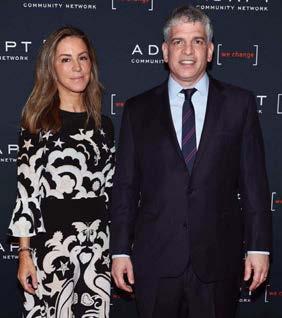
Founded in the 1940s as United Cerebral Palsy of New York City, Adapt Community Network began with a mission to support disabled relatives. “At the time the organization was founded, care for the developmentally disabled was nonexistent,” says James Hausman, Adapt’s vice president and secretary. “The call to action for the founders rested in their shared personal experience of wanting a better life for their loved ones who had disabilities.” For the thousands of team members and leadership, a steadfast belief in an individual’s right to belong is at the heart of their work.
“Those in the ID/DD [intellectual and developmental disabilities] space have challenges which shouldn’t limit their ability to be a part of any community,” says Hausman. “Inclusivity, to us, is about leveling the playing field.”
Now 80 years later, Adapt has grown into the nation’s leading nonprofit provider of programs and services for people with disabilities. Today, Adapt serves more than 20,000 individuals and families across 100 programs in and around New York City. And while the organization provides educational programs, employment training, medical services, residential support and much more, what it offers its community members isn’t a one-size-fits-all approach. The mission: individualized, person-centered care. “Best-in-class service means ensuring access to the programs that enable our population and their
families to thrive,” shares Hausman. “For one person, that might mean getting fitted to adaptive equipment that makes it easier for them to live independently. For another, it might mean fulfilling a lifelong dream of employment.”
Each year, this ethos is reflected in Adapt’s Leadership Awards Gala, a gathering that celebrates influential people whose own work embodies similar values of service and inclusion. Past honorees include the likes of President John F. Kennedy, Muhammad Ali and Princess Diana. This year’s gala, which takes place on April 20 at Cipriani 42nd Street, will recognize Liev Schreiber, whose nonprofit BlueCheck Ukraine helps identify, vet and direct funding toward more than 28 frontline organizations providing emergency services to Ukrainians. “Adapt’s leadership awards recognize good people doing amazing things,” says Hausman. “Liev is a man of action with great compassion, and the embodiment of a humanitarian.”
As the demand for Adapt’s services continues to rise, so does the need for outside support. Private philanthropy is key in sustaining the nonprofit’s work in the long term, as most of its funding comes from federal sources. “Our most urgent need is sustainable, differentiated funding,” says Hausman. “With more resources comes expanded programs, greater access to health care and education, and the ability to reach more families in need.”
At its core, Adapt’s mission lies in the belief that belonging should be a basic human right. “All people have dreams, ambitions and unique struggles,” says Hausman. “Including all voices in conversations about health, housing, employment and promoting respect and empathy benefits all of society.” adaptcommunitynetwork.org


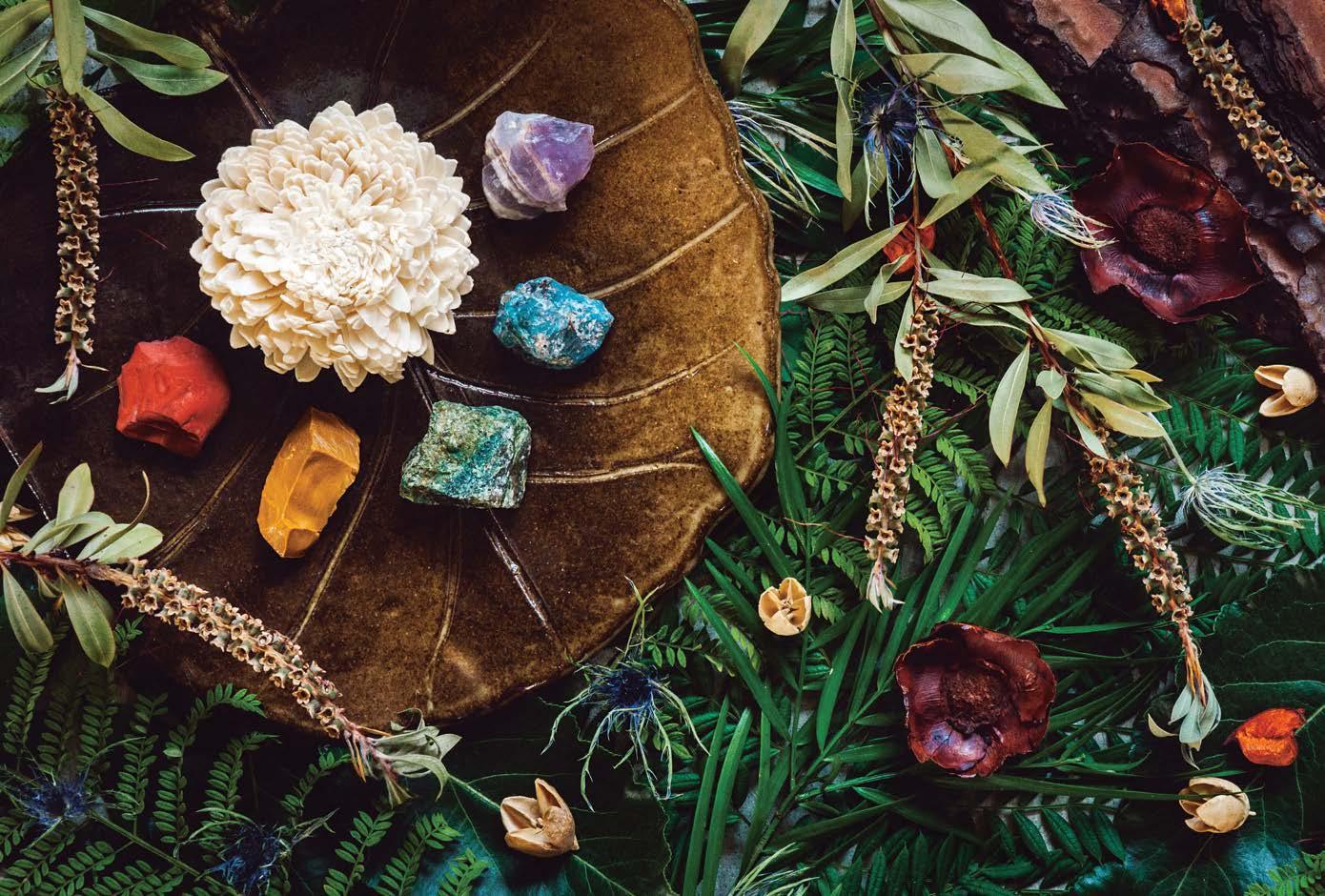



From root to crown, energy practitioner Lauren Aiyana offers a guided road map to balancing the seven chakras and awakening the soul’s natural brilliance.
Long before modern science sought to explain the human experience, ancient wisdom traditions understood something profound: We are not merely physical beings but souls, layered, intelligent, and alive within an interconnected energetic universe.
Our unique internal energy system, known as the aura and the seven chakras, has been studied across cultures, most profoundly within the traditions of India and Ayurveda, one of the oldest healing systems in human history. First encoded in the ancient Vedic scriptures and later expanded through the Yoga Upanishads and tantric traditions, these teachings describe seven primary energy centers aligned along the sushumna nadi, the central column of life force within the spine and home to the Kundalini, the sacred evolutionary energy of the soul. Each chakra is a living gateway, a powerful vortex of intelligence essential to how we grow, learn and serve. Together they form a subtle road map of human consciousness.
When activated and aligned with heartfelt intention, the chakras generate energy that rises into a higher vibration, amplifying our natural goodness and unity while dissonant energies begin to dissolve. No longer scattered like glitter,
our energy becomes luminous and focused like a beam of light ascending upward.
In modern life, we have grown accustomed to overthinking and operating primarily through logic, often overlooking the deeper reality of the soul. Yet this reconnection is not foreign to us. It is the living power and essence behind everything we are.
The soul, created by the divine, is part of the greater heart of all creation. Every human being is an intricately woven thread within a vast tapestry, and through our experiences of growth, sensitivity and transformation, we co-create it together. The awakening of soul power within each of us strengthens the light of the whole.
The chakras are a profound expression of this inner architecture. They hold the energetic signatures, what some traditions call light codes, of our unique spirit and act as gateways through the many rites of passage in life. Each center carries its own lesson of consciousness, and when approached with heart and awareness, moving through them becomes part of the natural journey of awakening. Through this unfolding, known as Kundalini awakening, the dormant power of the soul gradually rises,
guiding us toward self-realization, deeper union with higher consciousness, and ultimately the fulfillment of our purpose and service in the world.
Root Chakra — Muladhara
Bright red and located at the base of the spine, Muladhara is the seat of the soul and the foundation of our entire energetic system, governing instinct, ancestral memory, courage and our primal connection to the Earth. When balanced, we feel safe, grounded and at home within ourselves, rooted with our origins; when out of balance, fear and instability take hold, and the steady ground we need to thrive is fragmented beneath us.
Sacral Chakra — Svadhisthana
Warm orange and resting just below the navel, Svadhisthana is where life force expresses most vividly through relationships, desire, creativity, sensuality and our capacity to move in harmony with the rhythms of life. When balanced, we have strong co-creative power; when out of balance, we feel disconnected from our energetic power source.
Solar Plexus Chakra — Manipura
Brilliant yellow and located at the core of the body, Manipura is the home of associations, will, self-definition, confidence and loyalty. When balanced, we pursue our purpose with clarity and conviction, and hold our associations in positive conscious ways; when out of balance, we feel drained by outside influences, experience low self-worth, or find ourselves in recurring conflicts.
Heart Chakra — Anahata
At the center of the chakra system, Anahata is a rich green, the sacred bridge between the earthly and the divine, where unconditional love, compassion, trust and forgiveness live. When open, we give and receive love freely and move through life with grace; when out of balance, unresolved emotions feel weighted, patterns of betrayal and self-betrayal feel unresolved.
Throat Chakra — Vishuddha
Vibrating in clear blue at the center of the throat, Vishuddha is the gateway of authentic expression, truth and psychic communication deeply connected to the sixth sense and our ability to commune with higher guidance. When balanced, we speak and perceive with clarity and consciousness; when out of balance, we miss the messages meant to bring us into alignment.
Third Eye Chakra — Ajna
Deep indigo and located between the eyebrows, Ajna is the sanctuary of insight, spiritual sight and direct perception, a knowing far deeper than logic. When open, we are guided by a precise inner compass rooted in divine intelligence and insight; when out of balance, we overrely on analysis and
rational mind programming and conditioning.
Crown Chakra — Sahasrara
At the top of the head, Sahasrara the thousand-petaled lotus radiates violet and white light, where individual consciousness unifies into the infinite. When fully illuminated, we live in unity and have alliance with divine beings, because all the chakras unite here and complete the offering of ascension. When the crown chakra is out of balance, we feel disconnected, blocked from the infinite and confused about true purpose.
A Practice to Balance and Align
Find a comfortable position, sitting or standing, facing the sunlight if possible.
Begin with a simple intention: “May my energy field be in balance with the heart of creation and the highest good, because I want to shine my light and unleash the beauty and harmony of my soul to fulfill my full potential and help to lift up and be of benefit to all.”
Starting at the root chakra and slowly moving upward to the crown, bring your awareness to each chakra, one at a time. Visualize its color clearly, holding the intention to balance and align. As you do this, move your hands gently over each center in a slow, flowing motion, similar to a tai chi gesture.
Imagine the light of each chakra color merging with the light of the sun, your energy flowing outward while the sun’s energy flows back into each center, nourishing and illuminating it
If one chakra draws your attention or surfaces a particular theme, spend more time there and offer it tenderness, patience, intention and alignment.
Move through all seven chakras at least three times in this way. When you finish, place both hands over your heart, breathe deeply, and feel the energy you have cultivated within yourself.
After the practice, sit quietly with a journal and write down any insights, feelings or themes that arose. These reflections often reveal subtle guidance from the soul and can illuminate areas of growth, healing, and purpose. Practices like this allow us to reconnect with the intelligence already living within our energy field. For those who feel called to explore this work more deeply, guidance from an experienced practitioner can provide clarity, support and expanded understanding along the journey.
Working with a Practitioner
Lauren Aiyana is a spiritual adviser, energy practitioner and life coach based in the Hamptons with 18 years of experience. She offers chakra balancing sessions using special crystals, ancient wisdom traditions, energy work, and connection to the soul and subtle body. To learn more, visit thelightthread.com and follow @TheLightThread and @TheWelcomeHaus on Instagram.
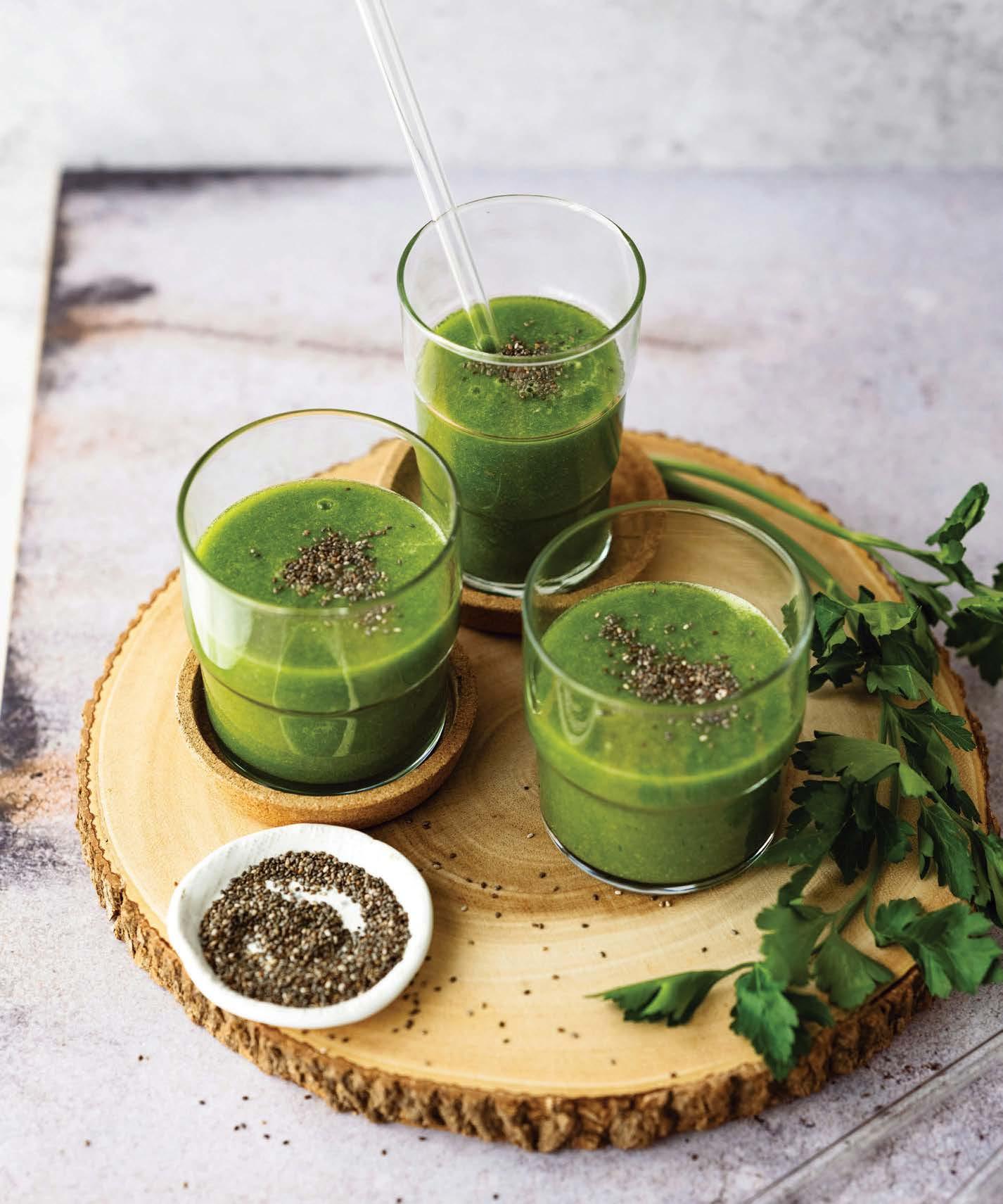
Believed to have been a staple in the Aztec diet, chia seeds deliver omega-3s, fiber and protein for sustained energy and digestive support. Add 1 or 2 tablespoons to your smoothie, yogurt or oatmeal.






Dr. Alejandro Junger, cardiologist and functional medicine
M.D., heals the gut, the starting point of all disease in the body.

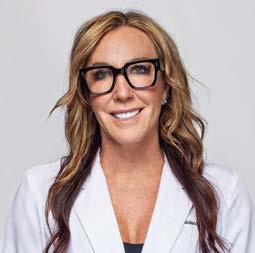
Dr.Christina Rahm, scientist, entrepreneur, and humanitarian, breaks down generational trauma and where it’s stored in the body, as well as how to heal our cells.
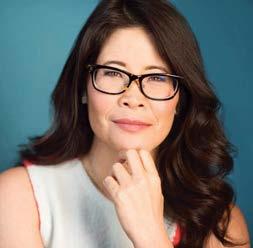
Dr. Wendy Suzuki, Neuroscientist and Dean of Arts and Science at New York University, discusses the neurobiology of love and delves into the brain and all the things we can do to make it stronger as we age.
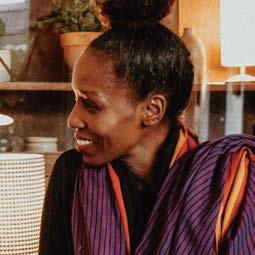
Ssanyu Birigwa, narrative medicine clinician, Indigenous bone healer and adjunct professor for the Master of Science Narrative Medicine program at Columbia, unmasks the stories our bones store and how to release their healing energy, coming this month.



BY MICHELE PROMAULAYKO
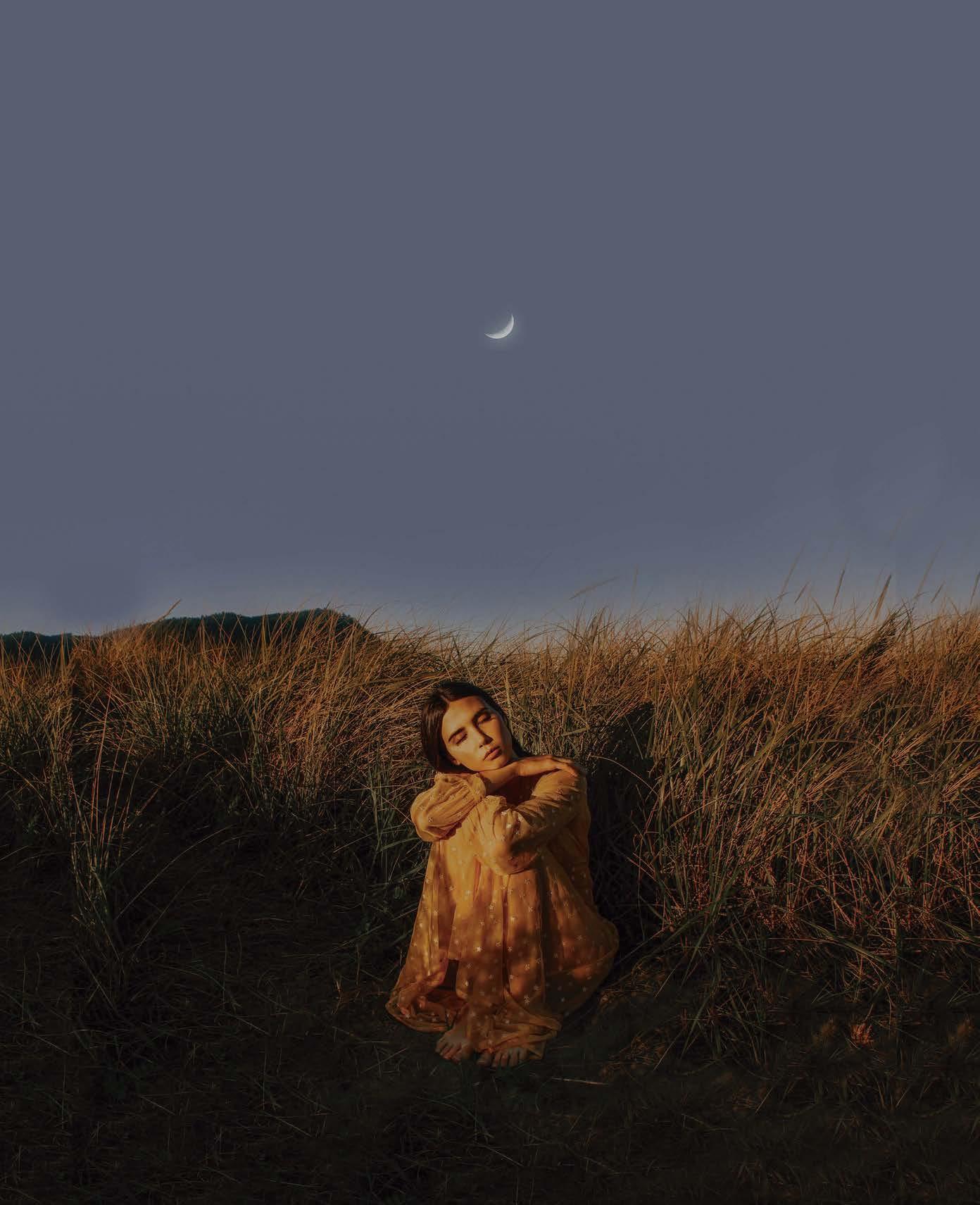
When my sister mentioned that her gynecologist—a man—told her she didn’t need hormone replacement therapy (HRT) because her menopause symptoms were “mild,” I had to put the phone down and take a deep breath. First, it’s never OK to ask a woman to quietly tolerate any amount of needless suffering. Second, and more importantly, her doctor’s comment revealed a dangerous blind spot in mainstream medicine: HRT is not just about managing symptoms, such as hot flashes and mood swings; it’s about protecting your heart, brain, bones and more for the next 30-plus years.
In fact, HRT (now commonly referred to simply as hormone therapy) is one of the most evidence-backed treatments in women’s health. And sadly, a generation of women was deprived of its remarkable benefits because of one deeply flawed report. The Study That Got It Wrong National prescribing data shows that between 1995 and 2002, roughly 15 million women were using HRT Then, in 2002, the Women’s Health Initiative
(WHI), a landmark government-funded study, announced it was stopping its combined hormone therapy trial early, citing increased risks of breast cancer and cardiovascular disease. Overnight, HRT became a pariah— doctors stopped recommending it, and women stopped asking for it.
After the WHI study was halted, HRT use cratered, dropping from roughly 1 in 4 American women to fewer than 1 in 20. But as we now know from countless documented sources, the study didn’t hold up. Robin Berzin, M.D., founder and CEO of Parsley Health, explains: “The WHI study used the wrong hormones, given to the wrong women, at the wrong time.”
The average age of participants was 63, well over a decade past the average onset of menopause at age 51 for American women. (Today, guidelines recommend starting HRT within 10 years of the final menstrual period for an ideal risk-benefit window.) The synthetic hormones used— conjugated equine estrogen paired with a synthetic progestin—behaved very differently in the body than the
bioidentical hormones most commonly prescribed today. And crucially, the reported 26 percent increased risk of breast cancer amounted to eight additional cases per 10,000 women, a statistic not widely publicized.
The fallout: One study estimates as many as 91,000 American women died prematurely between 2002 and 2011 from conditions that HRT might have helped prevent. But this study only looked at women who’d had a hysterectomy and were between the ages of 50 and 59 during those years, so that number likely grossly underestimates the real toll.
The Reckoning
In November 2025, after a review of scientific literature, an expert panel and a public comment period, the FDA removed the black box warning (its most severe safety label) from HRT products for menopause.
“Tragically, tens of millions of women have been denied the lifechanging and long-term health benefits of hormone replacement therapy because of a medical dogma rooted in a distortion of risk,” FDA commissioner Marty Makary, M.D., said when the rollback was announced.
The updated HRT labels went into effect in February 2026, but the work of undoing more than two decades of entrenched misinformation, fear-mongering and demonization is far from over.
The Whole Health Story
The tropes of menopause focus on midlife hot flashes and midsection weight gain; the truth is much more complex. “Estrogen is important throughout our lives, not just during the reproductive years, because it supports every major organ system in our body,” explains Amy Killen, M.D., a women’s health and longevity specialist and chief medical officer and co-founder of Humanaut Health.
Here, a few of the many ways HRT can improve your health span:
Estrogen supports mood, memory and cognition through its effects on serotonin, dopamine and brain-derived neurotrophic factor (BDNF)—the protein responsible for growing and maintaining the neural connections that keep thinking sharp. Its loss, notes Berzin, “is linked to brain fog and higher Alzheimer’s risk.”
This connection is no small thing: Alzheimer’s affects nearly twice as many women as men, and researchers increasingly believe the hormonal cliff of menopause is part of the reason why. Women who begin HRT close to the onset of menopause, rather than years later, show greater neuroprotective benefit.
Another aspect of HRT’s impact on the brain relates to mental health. Some research shows that approximately 10 percent of menopausal women may experience suicidal ideation. For many more, foreign feelings of anxiety and rage appear out of nowhere. These women are often handed a prescription for an antidepressant medication instead of being told their brain is undergoing a neurochemical upheaval driven by declining estrogen. Bone Density
We built an entire milk-guzzling culture with marketing campaigns about calcium while largely ignoring the hormone that actually governs how bones are made and maintained. Estrogen regulates osteoblasts, the cells that build bone, so when estrogen drops, bone breakdown accelerates. “Women can lose up to 20 percent of bone density within five years of menopause without HRT,” says Berzin, who calls the standard guideline recommending a DEXA bone density scan only at age 65 a travesty.
You can head off serious conditions, such as osteopenia and osteoporosis, by getting a baseline DEXA scan in your 40s. “HRT initiated early can increase bone mineral density by 10 percent and meaningfully reduce fracture risk,” says Berzin.
Cardiovascular disease is the No. 1 killer of women. Read that again. “Research shows that when estrogen is started within 10 years of menopause, it can cut the risk of cardiovascular disease significantly by helping to maintain flexible arteries and healthy cholesterol,” says Killen. Timing, however, is important. “Unlike the skeletal and other systems, emerging research shows that starting estrogen late—when you’re already solidly in menopause—does not appear to be as protective to the cardiovascular system as starting in perimenopause,” says Berzin.
Sleep Quality
Restorative sleep is often a casualty of menopause. Estrogen has been shown to reduce waking throughout the night, and increase total sleep time, in part because it stabilizes core body temperature, thwarting the night sweats that jolt so many women awake. Progesterone acts like a sedative by stimulating GABA receptors in the brain—the same receptors targeted by sleep and antianxiety medications. Together, the two hormones form what Killen calls the body’s natural “build and balance” system: estrogen to energize and strengthen, progesterone to calm and regulate.
“Unopposed estrogen for long periods can be problematic,” warns Killen, “so it’s important to balance estrogen with progesterone if you have a uterus.”
A decimated libido isn’t an inevitable fact of aging; it’s frequently a hormonal issue with a hormonal solution.
“Estrogen influences sexual desire and physical arousal by supporting blood flow and nitric oxide production,” explains Killen. “Testosterone, frequently underprescribed for women, can fuel libido as well as muscle strength and motivation.”
But desire is only half the equation. For many women, it’s not that they don’t want sex, it’s that sex has become uncomfortable or painful.
That’s where vaginal estrogen comes in. It can address physical changes, such dryness, by binding to estrogen receptors in the vaginal walls, rebuilding a thicker, more elastic, better‑lubricated lining. More upside: It doesn’t increase systemic blood levels of estrogen, so you can use it alone or in concert with your primary HRT.
Skin Health
Over the counter topical beauty products accomplish what estrogen does from the inside out. Estrogen stimulates fibroblasts to produce collagen, the structural protein that gives skin its firmness and elasticity. During menopause, collagen production declines by about 30 percent within the first five years, and it keeps dropping from there. Estrogen also drives hyaluronic acid production, the molecule responsible for skin’s plumpness, moisture retention and structural integrity.
The FDA’s HRT label update is only as useful as the physicians implementing it — and many haven’t gotten the memo yet. Killen notes that “fewer than 7 percent of the doctors most likely to see menopausal women feel prepared to treat them.” Berzin backs this up: “Most OB GYNs and PCPs have, unfortunately, had limited training in MHT (menopausal hormone therapy),” she says, adding, “Many doctors still believe HRT is dangerous, despite strong evidence to the contrary.” A few tips for finding a doc who gets it:
1 Search The Menopause Society’s (formerly NAMS) directory of certified menopause practitioners at menopause.org. These clinicians have passed a certification exam based on current evidence based guidelines.
2 Use telehealth platforms such as Alloy Health (myalloy.com) and Midi Health (joinmidi.com), which are
and changed once or twice a week
Topical gel: rubbed into the skin daily, usually on the arm or thigh
Topical spray (Evamist): spritzed onto the inner forearm daily
Vaginal Estrogen
Cream: applied directly to vaginal tissue with an applicator
Ring (Estring): a soft, flexible ring inserted into the vagina that releases a low, steady dose of estrogen for up to 90 days
Tablet/suppository (Vagifem): a small insert placed in the vagina with an applicator, typically used twice a week after an initial daily loading period of two weeks
Progesterone
Oral micronized progesterone: a pill taken at bedtime; the micronized form is body identical, safer and better tolerated than older synthetic progestins
Testosterone
“HRT is not just about managing menopause symptoms, such as hot flashes and mood swings; it’s about protecting your heart, brain, bones and more for the next 30-plus years.”
“Estrogen is the master regulator of female longevity,” says Berzin. “It acts as a systemic anti inflammatory; without it, cellular aging accelerates.” That includes a metabolic dimension, since estrogen helps support insulin sensitivity and lean muscle mass; when it dips, the risk of metabolic syndrome and diabetes rises. About the Big C
An analysis of 30 trials encompassing more than 26,000 women found that HRT was not associated with increased cancer mortality. And women taking estrogen alone (the therapy used for those without a uterus) actually showed a 24 percent reduction in breast cancer.
staffed by practitioners who are trained in menopause medicine.
3 Have your blood labs drawn inde‑ pendently, then reviewed by a prac‑ tice versed in analyzing hormonal health. Parsley Health offers this service. If a doctor downplays your symptoms or cites HRT risks without acknowledging current data driven guidelines, find a physician whose goal is to support your long term vitality.
Delivery Menu
Following, the safest, most prescribed forms of HRT. Always consult with your personal menopause literate doctor to decide which vehicle and dosages are best for you.
Estrogen
Transdermal patch: applied to the skin (typically the abdomen or thighs)
Topical cream: compounded and applied to the skin daily, typically in very low doses calibrated for female physiology
Topical gel: similar to cream; applied to the inner arm or thigh and absorbed transdermally
Injection: administered by a health care provider; less commonly used for women, but an option for those individuals who don’t absorb topical forms well.
Disclaimer: The information in this article is for educational purposes only and is not intended as medical advice. Consult a qualified health care provider—ideally one trained in menopause medicine—before starting, stopping or changing any hormone therapy.
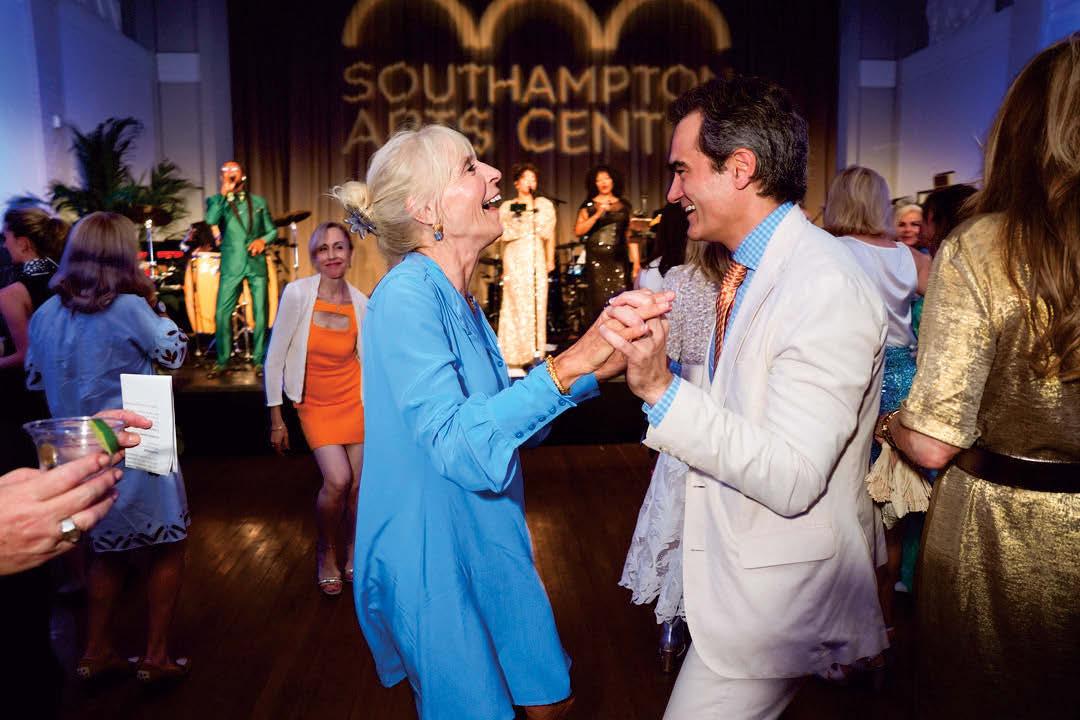
Saturday, June 27, 2026
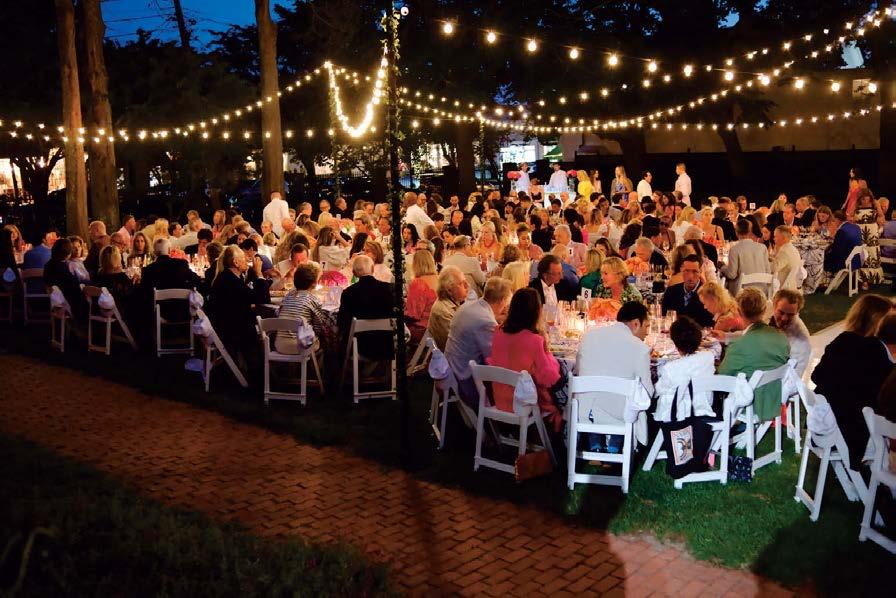
Saturday, July 18, 2026



There are many pathways through the personal journey of perimenopause. Amely Greeven investigates.
If you’re a woman in her mid-to-late 40s or early 50s, chances are you’ve asked friends, What are you taking? The topic of course, is hormones, and whether to use them during the yearslong passage toward menopause known as perimenopause.
The answer isn’t one-size-fits-all. The benefits of menopause hormone therapy (MHT) for smoothing the edges of midlife hormone change come at us fast and thick on social media and podcast episodes. It’s exciting to get more information than ever, but it can also induce anxiety. If you don’t start replacing declining estrogen and progesterone—the two hormones that change in ratio and lower significantly in this life phase and that also have important protective effects bodywide—are you screwed later in life?
There’s so much content—and so many claims— about MHT that it’s easy to get confused and miss some fundamentals, says integrative women’s health doctor Aviva Romm, M.D., currently completing a book on empowered menopause called Force of Nature Hormone therapies, which she says should always be prescribed by a provider specially trained in menopause care, and may be essential for some women, can work brilliantly for certain challenging symptoms. Estrogen in pill or patch form can help with hot flashes and night sweats, and also help prevent bone loss that can lead to osteoporosis. Vaginal estrogen can be life-changing for women struggling with challenging genitourinary symptoms.
When women find relief for these issues, a cascade of other improvements in how they feel, or sleep, or perform can follow in their wake. But these are currently the only four areas for which MHT is proven effective. Progesterone, typically prescribed alongside estrogen pills or patches, is famously calming—yet, surprisingly, not proven as a sleep therapy. As for the widely held belief that MHT in your 40s protects against dementia in your 70s—research suggests the possibility, but there’s no conclusive data to support this yet.
None of this means that MHT doesn’t help women feel better in a host of crucial ways. But it’s empowering to achieve future-proofing benefits through lifestyle choices too.
Strength and jump training can build bones’ longevity and develop muscle mass that naturally ebbing estrogen can erode. Exercise physiologist and nutrition scientist Stacy Sims, M.Sc., Ph.D., advises lifting heavy weight—give yourself months to develop proper form, gradually increasing the load. This delivers more than we think: solid sleep, mood improvements and resilience against dementia; metabolic health and body composition improvements; even neurotransmitter support that can help with hot flashes. It may reverse bone loss, which hormone therapy alone cannot. (Sims recommends the Osteo-Gains app for jump training and short high-intensity interval training too.)
Circadian habits may be even more fundamental, and require zero sweat or grit. Dr. Azra Bertrand, a medical doctor who teaches the “sacred science of body wisdom,” explains, “Your circadian coherence, or your predictable exposure to light and dark, is not a side issue in hormonal health; it is the most important issue—every cell in the body has a biological clock, including the ovaries, and the master hormone melatonin regulates all the other hormones including estrogen and progesterone, which is why melatonin is a proven treatment for peri- and menopause symptoms.” He adds, “What is already a sensitive hormonal system gets even more sensitive in this transition stage.”
The medicine that Bertrand recommends to support smooth passage is simple, and ancient. Not just shielding blue light at night, sleeping in pitch dark and getting out first thing, as all biohackers know, but also cultivating a relationship with the sun and the stars, as our ancestors did, through a personal circadian ritual. Whether through yogic sun salutations, qi gong or the Sola-Terra practices he teaches through his Biomancy University, “Try to take it beyond the mechanical. Open your sense of devotion to the sun, understand you are in connection with a living intelligent field.” Women who restore circadian harmony can be surprised by the regulation of cycles and even relief of some symptoms. Whether this practice ends up adjunct to prescribed hormone therapy or standing on its own, reveling in morning sun and immersing in melatonin-enriching darkness is a natural remedy that soothes a changing body, mind and spirit.
Pediatrician Dr. Nelli Gluzman discusses the root cause approach to allergies, gut health and chronic congestion. BY
PURIST: We’re talking about all things child-related today. With spring here, many parents are dealing with seasonal allergies and eczema. How do you treat these, and what is actually prompting the reactions?
Dr. Gluzman: In conventional medicine, we think about allergies as a symptom that needs to be resolved. But allergies, whether they be food allergies or seasonal allergies, are actually the symptoms of a bigger problem. That problem is multifactorial. Just treating the symptoms without addressing the root cause is just half the story.
In my practice, we look at how we make sure the symptoms go away and don’t come back. That means we have to give kids the building blocks they need not to have such a big reaction to things that are normal in their environment—the trees, the dogs, the cats. The problem is an overactive immune response, and there are multiple ways to address that at the root. Kids are super-resilient, and the earlier that we think about treating the root cause, the easier it is
You also help children with ADHD and sensory challenges. Can you talk about assessing the root cause through things like genetics and gut health?
NG: Getting to the root cause is the entire realm of an integrative and functional approach. If kids are relying on symptom management all the time, or if they’re relying on medications long term, addressing the root cause is crucial. One thing that is helpful for everyone is optimizing the integrity of the gut lining and the microbiome. It’s actually quite simple: Remove the things from your child’s system that may be inflaming them and then give them the building blocks they need to heal. Sometimes we do blood testing to see if there’s a micronutrient gap, or advanced testing like checking stool microbiome, or precision genomic testing to see exactly what kind of optimization needs to happen for lifelong health.
This approach also seems to help with constipation or picky eaters who only want to eat white foods. NG: Little changes, small steps—especially when it comes to kids who are a little bit pickier—can make such a world of difference. The key is to make sure that no one is being stressed out by these changes. Everyone needs to be on board, and it does not need to be hard to be extremely impactful.


CRISTINA CUOMO
What about chronic infections and congestion?
NG: Chronic congestion could be stemming from an airway issue that can be anatomical, or a chronic allergic response causing a ton of inflammation in the airway. Sometimes it means their adenoids are too large. Sometimes it means those repeat pesky infections keep happening, and the airway is not calming down in between illnesses.
We all know about how helpful probiotics may be for the gut, but there are also really helpful probiotics that can optimize the ear, nose and throat system. If kids have needed antibiotics, we want to introduce those healthy probiotic microbes that can support a healthy airway in the future. It’s not just treating infections or enlarged adenoids, but optimizing that entire system so that healthy microbes can calm the inflammation.
What is your scientific approach to vaccines?
NG: I think most parents are not actually afraid of the vaccines themselves, but the problems that can arise when a vaccine mounts an immune response. If that inflammation goes overboard, this is where we see the problems. This can be optimized and neutralized. We can do many things that are individual for each child with their family history, with their physical exam and with testing, to create an environment that, if they’re choosing to get vaccinated, they’re going to have the most optimal reaction and not have a reaction that is unnecessarily overactive.
What do you suggest for preventive measures and staying ahead of one’s health?
NG: First is making sure that you have a good relationship with your pediatrician; interview different physicians to find one you trust fully. Second, those annual visits are crucial to make sure our kids are growing, but preventively, maybe once a year, think about how their systems can be optimized before getting overwhelmed.
For parents of kids who already have issues that are chronic, think about the reasons behind these as not just symptom management, but a symptom of a bigger problem that can absolutely be mitigated. The younger that we start to optimize our kids’ health from the inside out, the easier it is. Kids don’t need to live with many of these chronic medications long term.
blossompediatrics.com





How the next generation of TMS, a noninvasive, drug-free reboot for the brain, is clearing depression, anxiety and burnout. BY JENNA LEBOVITS
What if you could hack your brain? Not in the dystopianAI-sci-fi sense, but in a totally real, targeted way, gently reactivating the neural circuits shaping how you think, feel and function day to day?
Depression is rampant. The leading cause of disability worldwide, it affects an estimated 332 million people. For many, especially the 30 percent of those living with treatment-resistant depression, the quest for lasting relief is a long, winding road of trial and error, often with conventional options falling short.
Transcranial magnetic stimulation, or TMS, offers a different path. FDA-cleared since 2008, this noninvasive, medication-free therapy uses painless magnetic pulses to stimulate the dorsolateral prefrontal cortex—the brain’s executive control center—where depression, ADHD, food cravings and impulse control issues reside. In cases of depression, this region is often underactive. By targeting this area, TMS helps to “wake up” parts of the brain that have gone quiet.
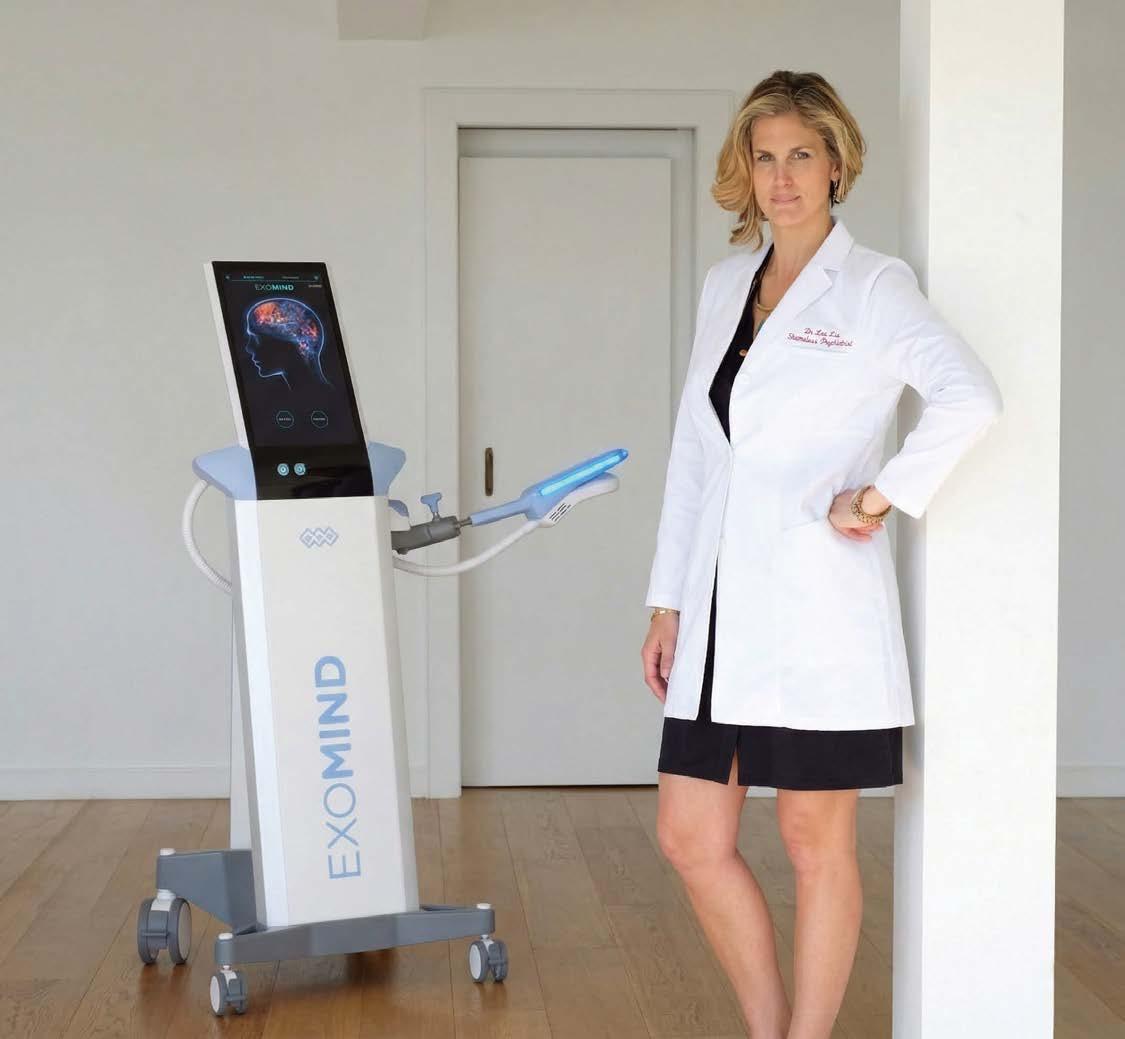
The technology itself isn’t new—it’s backed by a strong body of research supporting its efficacy—but in 2025, it received an upgrade. The sleeker, simpler Exomind builds on traditional TMS with shorter protocols and expanded applications, reaching more people. Once reserved for treatment-resistant depression and OCD, this next-gen system can now address anxiety, brain fog and more, with FDA clearances spanning MDD, OCD, certain migraines, nicotine dependence and specific anxiety disorders.
Purist speaks with Dr. Lea DeFrancisci Lis, double boardcertified adult and child psychiatrist and assistant clinical professor at New York University School of Medicine, on how TMS works, who it’s best suited for, and what it signals about the future of mental health care.
PURIST: Tell us a bit about your work, and how transcranial magnetic stimulation functions in the brain.
Dr. Lea DeFrancisci Lis: I’m a psychiatrist in the Hamptons who is transitioning my practice to focus more on integrative mental health, which means using other effective treatments besides just medications—that’s why I am so excited by TMS. The brain works on electricity, and TMS harnesses this by using magnetic fields (like an MRI does) to create electromagnetic currents.
An applicator is placed against the scalp, where it delivers a small, painless electrical current into the brain tissue. This stimulates neurons, increasing their activity to more stable, healthy levels. I’m truly enthusiastic about the new Exomind TMS machine. Unlike other machines, it’s easier to operate, and features specialized coils that deliver more targeted energy to the right part of the brain, with the benefit of AI-driven, real-time brain mapping to understand and personalize the treatment to your brain, compared to traditional TMS.
The best part about Exomind is that it has a sleek design, unlike the other TMS machines, and it has reduced treatment time. Instead of months, patients often feel improvements within two to six sessions. It’s like a jump start for your brain—it can cause neuroplastic changes without medication. It is incredibly exciting for me to be able to offer this to patients.
Is TMS best utilized for people with more generalized depression, or only major depressive disorder?
LDL: TMS is highly effective for depression, targeting the dorsolateral prefrontal cortex, a region associated with mood, to improve regulation and alleviate symptoms. When combined with ketamine-assisted psychotherapy for treatment-resistant depression, it’s a dynamic duo.
How about OCD and other mental health conditions—can modern TMS be effective in treating those?
LDL: Absolutely. While it helps with mood, TMS is also being used for OCD and binge eating. We are even seeing benefits in more subtle areas, such as perimenopausal brain fog. Athletes like Serena Williams and Tracy McGrady use Exomind for anxiety and focus—I even use it to deal with my own work stress and brain fog. It’s amazing for helping restore maladaptive sleep patterns, acting like a brain tuneup to guide your mind into an optimal state.
Who is the ideal candidate for TMS, and how do providers determine when it’s time to consider it as part of a person’s treatment plan?
LDL: I believe modern TMS, like Exomind, can be used for almost anyone. This includes people with mental health conditions like depression and anxiety, those seeking help
with binge eating and weight loss, perimenopausal women suffering from brain fog, and executives, professionals or athletes looking for improved focus or relief from burnout. The only people who are generally not candidates for TMS are those with risk of seizures or stroke, or those who have a pacemaker.
The research shows that overall, TMS is described as noninvasive and well tolerated. What is the typical patient experience like, session to session?
LDL: Straightforward and comfortable. When you come to the office, I begin by placing the applicator on your head. We next locate your motor cortex, where a small pulse causes your hand to move. Then the machine uses its AI brain mapping, and we set the program based on your specific needs. You simply sit for 28 minutes. The feeling is like a tapping on the head; it doesn’t hurt. The most common side effect is just an occasional headache.
We recommend six sessions for most people. The most common misconceptions are that it would hurt or cause damage to the brain, which it does not.
Would you consider it an emerging modality?
LDL: TMS has been well studied and around for a very long time. What makes it feel new right now is the six-session protocol, which has made it much easier to use. What is also shifting is how we are using it for mental wellness and brain health. We also have a better understanding that it can be a proactive part of a wellness and longevity program to help you live a healthier and happier life. hamptoninsight.com
Dr. Lea DeFrancisci Lis is a double board-certified adult and child psychiatrist trained at New York University School of Medicine. Throughout her career, Lis has advocated for better care for children at both the professional and political level.
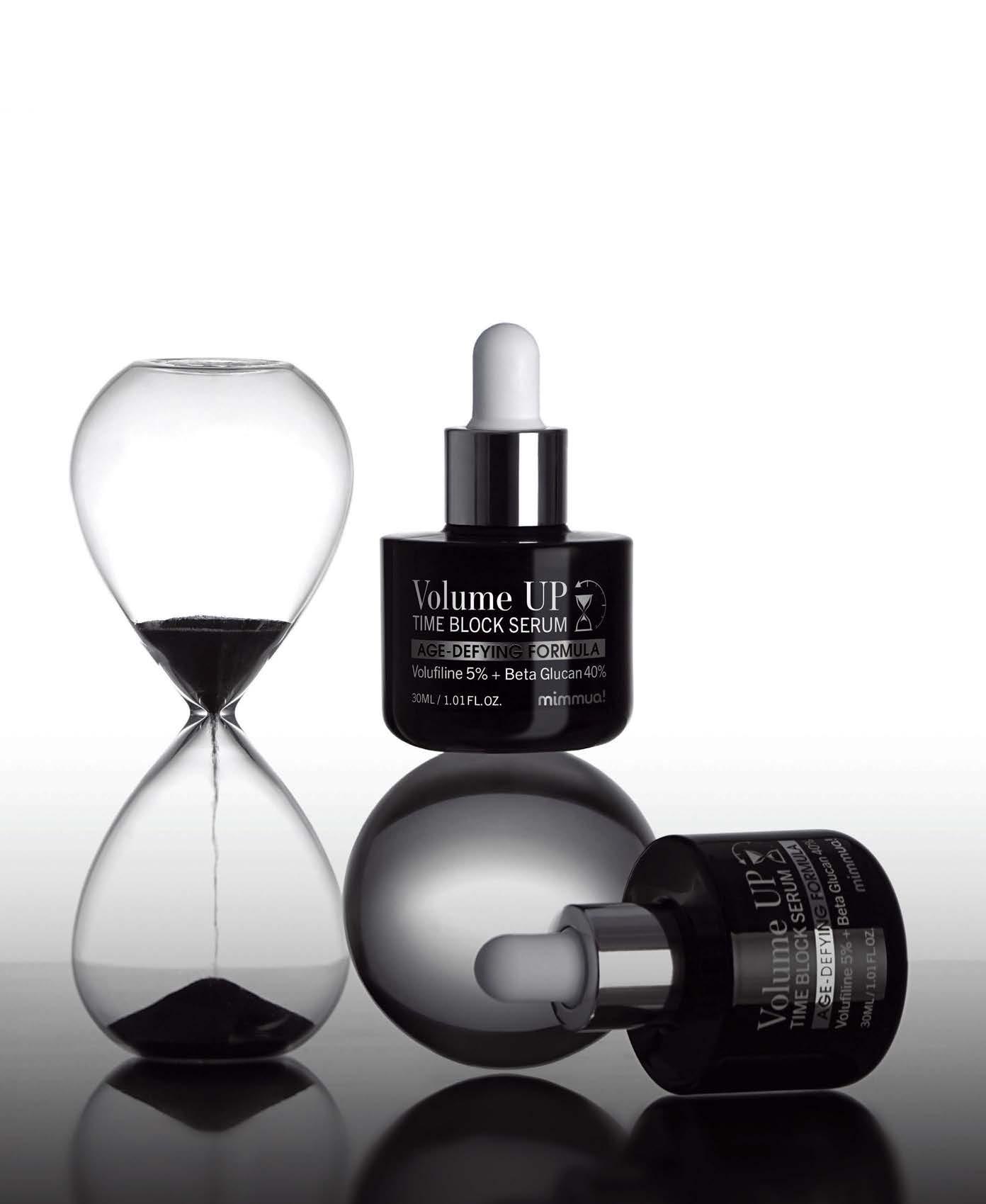
Skin care favorite Mimmua! marries French-patented Volufiline with mushroomderived beta-glucan to restore skin density through the precision of a laboratory and the soul of a New York apothecary.
BY RAY ROGERS
The corner of Greenwich Village where Charles Choi spent his formative college days at Parsons School of Design isn’t just a map coordinate; it embodies a certain aesthetic for the skin care executive. It is a neighborhood that still honors the “good-old things”—the reassuring weight of a classic apothecary bottle and the no-nonsense efficacy of a neighborhood drugstore. For Korean-born Choi, the brand director of the burgeoning beauty brand Mimmua!, those streets provided a deep immersion in the American sensibility.
When Choi set out to create the Volume Up collection, he wasn’t looking to join the trend-obsessed, high-stimulation race of modern K-beauty. He was looking for a bridge. Having cut his teeth at K-beauty retailer Nature Republic, he recognized a distinct cultural divide: While Gen Z chased the “new,” the more discerning American consumer craved something familiar, simple, and—above all—proven.
“Visual-wise, it just came naturally,” Choi says of his brand design choices. “I was constantly exposed to the general aesthetic of the American consumer market—from the food fairs at Union Square to the little cafes. It’s a more conservative market that resonates with things that feel like they’ve always belonged.”
At its heart, Mimmua! centers on a sophisticated French-patented powerhouse called Volufiline. Developed by the renowned labs at Sederma (and now owned by Croda International), it is a precise synergy of hydrogenated polyisobutene, vitamin E, and Anemarrhena asphodeloides root extract. The magic lies in the saponins within the latter. Clinical lab tests confirm these herbal compounds help differentiate fat cells in the dermis, literally plumping the skin from the inside out. In a world of topical fillers that merely sit on the surface, Volufiline offers a structural shift—a targeted, elegant approach to the hollows and fine lines that come with the intensity of city living.
But Choi understood that high-potency actives can be fickle. “Volufiline might not work for every skin,” he notes. To ground the innovation, he turned to an ingredient already familiar to health-conscious Americans: beta-glucan. Sourced from splitgill mushrooms, beta-glucan is a quiet overachiever—20 percent more hydrating than hyaluronic acid with an innate ability to soothe. By blending it with Volufiline, Choi created a “reasonable blend of actives,” employing the mushroom-derived moisture to offset potential irritation and ensure the formula is user-friendly for all skin types.
A Journey of Resilience
Choi’s path to becoming a working professional in the beauty space was anything but linear. Born in Korea and educated in his teen years in Vancouver, his trajectory shifted when his family’s financial stability collapsed during his time at Parsons. He recalls a period of pure survival in New York, living with six people in a cramped apartment and working exhausting night shifts at a karaoke bar.
“I was spiraling,” admits Choi, whose entry into the beauty world came from the most unlikely of places. One late night at the karaoke club, Choi struck up a conversation with a customer who worked at the Nature Republic store across the street. That serendipitous meeting led to a referral and a job as a sales associate, where he quickly fell in love with the science of formulas.
When the pandemic hit, and his tuition hung in the balance, it was his ex-boyfriend who stepped in with an interest-free loan of $13,000. Through relentless work in a shut-down New York warehouse, Choi paid back that debt in just one month. “I’ve been through a lot to get here,” he says. “The only reason I was able to make it was because of my ex—the one person who believed in me more than I believed in myself. I want to be that person, and I want our brand to be that person for many people.”
In an industry filled with what Choi deems “dermatological” clones—minimalist, colorless packaging— Mimmua! is striving to reclaim craftsmanship. “Beauty should be something ‘beautiful.’ It should have purpose, stand out and be desirable,” he says. To that end, the packaging carries a subtle nuance of the classic American drugstore, designed to sit comfortably on a marble vanity while delivering an elegant, plumped-skin solution.
This commitment has resonated: The signature Volume Up Time Block Serum hit $10,000 in daily sales on Amazon within just two months of launch, proving that customers are willing to invest in something that feels as good as it looks.
While Mimmua! eyes an expansion into Ulta Beauty and global markets, Choi’s heart remains focused on a mission beyond the vanity. The brand currently partners with the Salvation Army in Korea to support single mothers. “My dream is to help children in need—not just in Korea, but globally,” he says. “Since we are a global brand, my goal is to donate a portion of our profits from each country to those in need within that country.”
For Choi, skin care is about leaving a legacy of self-love. “There’s a saying in Korea: ‘Tigers leave their skin after they die.’ We all leave something behind. I want to leave my name in this industry forever.” mimmua.shop
The new beauty standard is discreet but profound.

Dr. Rian Maercks, founder of The Maercks Institute, is redefining facial rejuvenation at the highest level by approaching the face through a medically grounded, anatomically driven framework rather than cosmetic alteration. His work attracts a discreet, global clientele who understand that true luxury lies in restraint. The results are precise, balanced and virtually undetectable. Faces appear refreshed, not altered, proving Maercks’ work is subtle but profound.
Central to his work is his design philosophy, “histiocentricity,” a tissue-respecting approach that uses minimal dissection and tension-free micro closure for results that preserve identity. At the core of his practice is the Maercks Lift, a composite deep-plane face-lift developed to restore the face from within. Powered by his proprietary Kedge Suspension, a ligament-based internal support system, the Maercks Lift rebuilds the face’s internal framework rather than relying on surface tightening. Facial tissues are repositioned along anatomically correct vectors, restoring harmony, stability and longevity without tension or visible surgical signatures.
For select patients, these innovations are delivered through the Zero Experience pathway, an advanced surgical protocol performed wide awake under local anesthesia with zero general anesthesia, zero pain, nearzero downtime and zero telltale signs of surgery. This approach allows for complex surgical outcomes while

maintaining the highest standard of technical rigor and aesthetic control.
The Maercks Institute also serves as an international referral center for face-lift revision, correcting overdone or imbalanced work through ligament-based support and customized vector planning. This often restores harmony in cases previously thought untreatable.
A leader in the global “Forever 35” movement, Maercks has long championed deep-plane techniques that refresh without the “pulled” look. From early-stage Microlyft procedures to his advanced Maercks Lift with Kedge Suspension, his operations are designed to avoid visible surgical stigmata. His patients often hear they look “better, not different.” This is the hallmark of his exceptional aesthetic work.
With locations in Miami and East Hampton, The Maercks Institute has become a private destination for individuals who travel internationally in pursuit of refinement, discretion and enduring beauty. In a world increasingly defined by excess, Dr. Rian Maercks represents a quieter, rarer standard: one where subtlety signals status and beauty speaks for itself.
The Maercks Institute is located at 3050 Biscayne Boulevard, PH 1 & 2, Miami, and 66 Newtown Lane, East Hampton. Call 305.328.8256 to schedule a consultation. Visit themaercksinstitute.com, and follow The Maercks Institute journey on Instagram at @themaercksinstitute

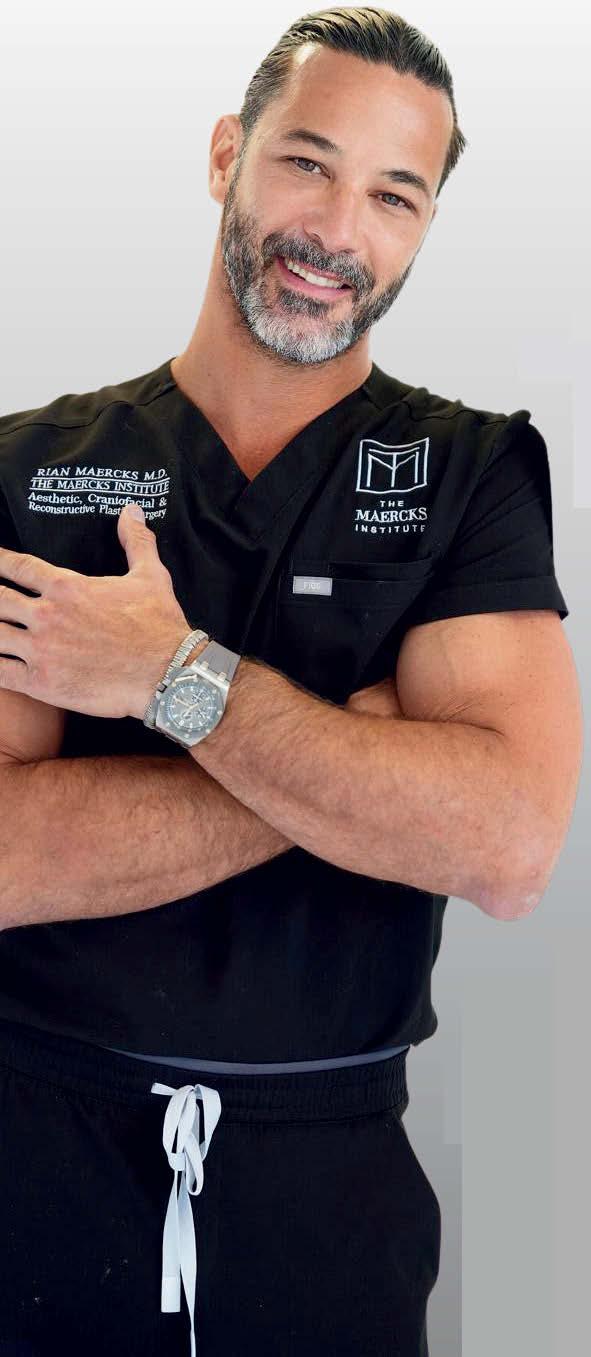
Rian A. Maercks, M.D. is an ASPS board-certified plastic surgeon with practices in Miami and the Hamptons.
His approach is rooted in anatomy, focusing on restoring the underlying structure of the face and body so results appear balanced, natural, and long-lasting. Instead of tightening or adjusting the surface alone, Dr Maercks works within the deeper support system of the face, repositioning tissue where it naturally belongs to create results that make you feel beautiful, confident, and at your best.
At the center of his work is the MAERCKS Lift™, a composite deepplane facelift built around his KEDGE Suspension™ technique. His practice also includes structural rhinoplasty and Cold Subfascial Breast Augmentation™, each approached with the same focus on harmony and long-term integrity. For select patients, procedures may be performed through his Zero Experience™ approach, using local anesthesia while the patient remains awake. This allows for a more controlled process with minimal downtime and a quicker return to daily life.
In addition to comprehensive surgical procedures, The Maercks Institute offers smaller, targeted treatments designed to refine, maintain, and enhance results over time. Every treatment plan is tailored to the individual, with a focus on precision and restraint in every detail.







Casa de Campo in the Dominican Republic offers easy access to Altos de Chavón, a replica of a 16th-century Mediterranean village and a globally recognized cultural center.

Following its landmark 50th anniversary, Casa de Campo enters a new era, where sustainable design and high-tech recovery redefine the Caribbean sanctuary. BY
In the coastal landscape of the Dominican Republic, where the Caribbean Sea meets the rugged beauty of the Chavón River, Casa de Campo Resort & Villas has long been a premier enclave for those seeking a sense of balance. Having marked its milestone 50th anniversary in 2024, the resort is moving beyond its storied social past toward a golden era of wellness, focusing on how the environment itself can help us heal.
The resort’s evolution is a masterclass in sustainable sanctuary. Spanning 7,000 acres of lush topography, the estate’s design has always felt less like a development and more like a natural extension of the earth. From the handcarved stone of Altos de Chavón—the 16th-century-style Mediterranean village that anchors the resort’s arts and
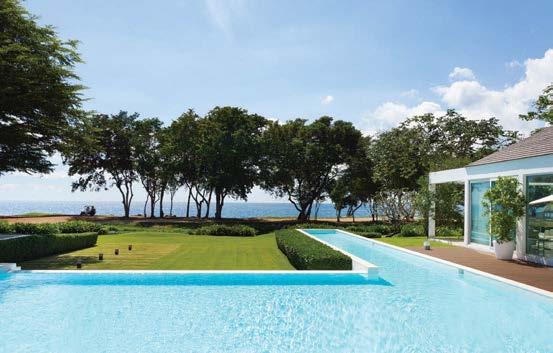
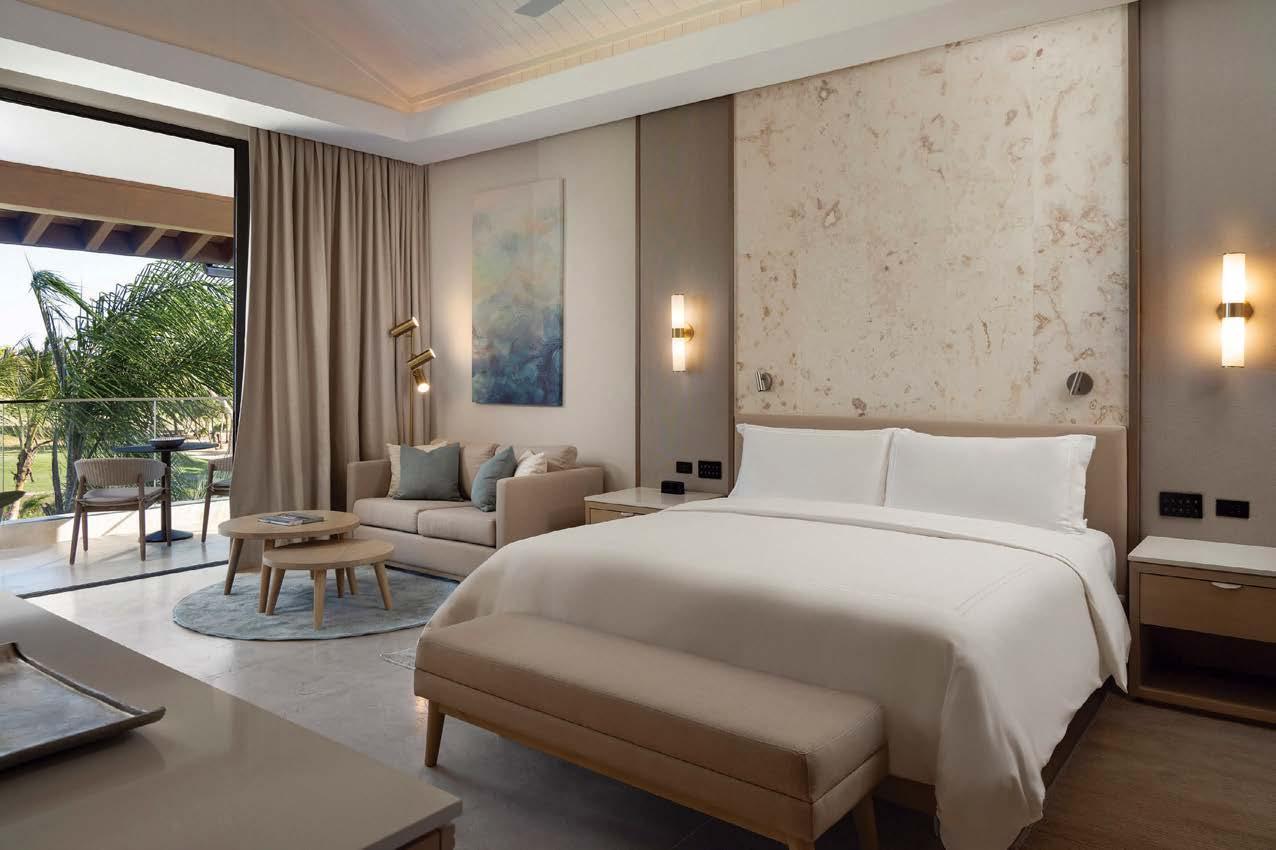
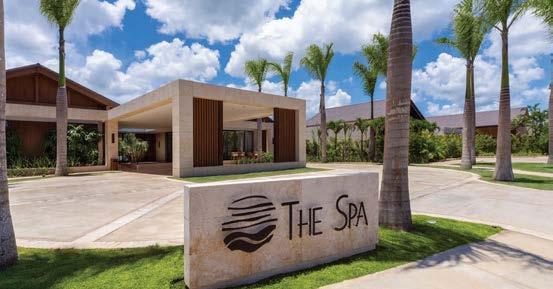
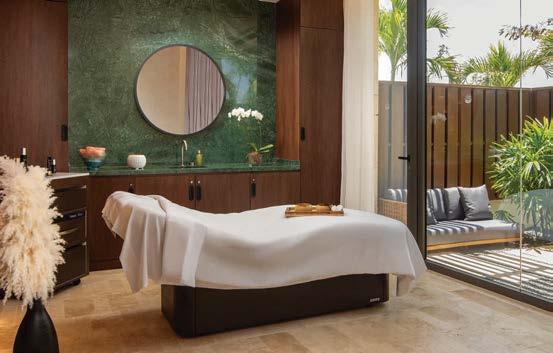
culture—to the “hotel-within-a-hotel” experience at the Premier Club, which offers a higher level of privacy and personalized service, the focus is on architectural harmony and openness. This respect for the land extends to the resort’s operations, which prioritize self-sustaining energy and zero-plastic waste initiatives to help preserve the island’s pristine beauty.
At the center of this new chapter is the 18,000-squarefoot Wellness Center, which balances modern science with traditional recovery. Guests can experience the Aescape robotic massage—a 3D-mapped, hypercustomized treatment that feels like the future of recovery—before moving through a restorative circuit of hydrotherapy and volcanic clay rituals. It is a space dedicated to physical and mental reset.
The true magic of Casa de Campo, however, is how it supports the whole family and the local community. Here, different generations can reconnect, whether through coral reef restoration projects with FUNDEMAR (a local nonprofit dedicated to marine conservation and the scientific study of coastal ecosystems) or a simple walk along the white sands or a dip in the warm, crystal-clear aqua waters of Minitas Beach. Reaching this sanctuary is now even simpler, with new daily nonstop flights from Miami directly into La Romana International Airport, landing just minutes from the resort’s gates. casadecampo.com.do
Purist’s guide to global getaways with the best in wellness to visit this season.
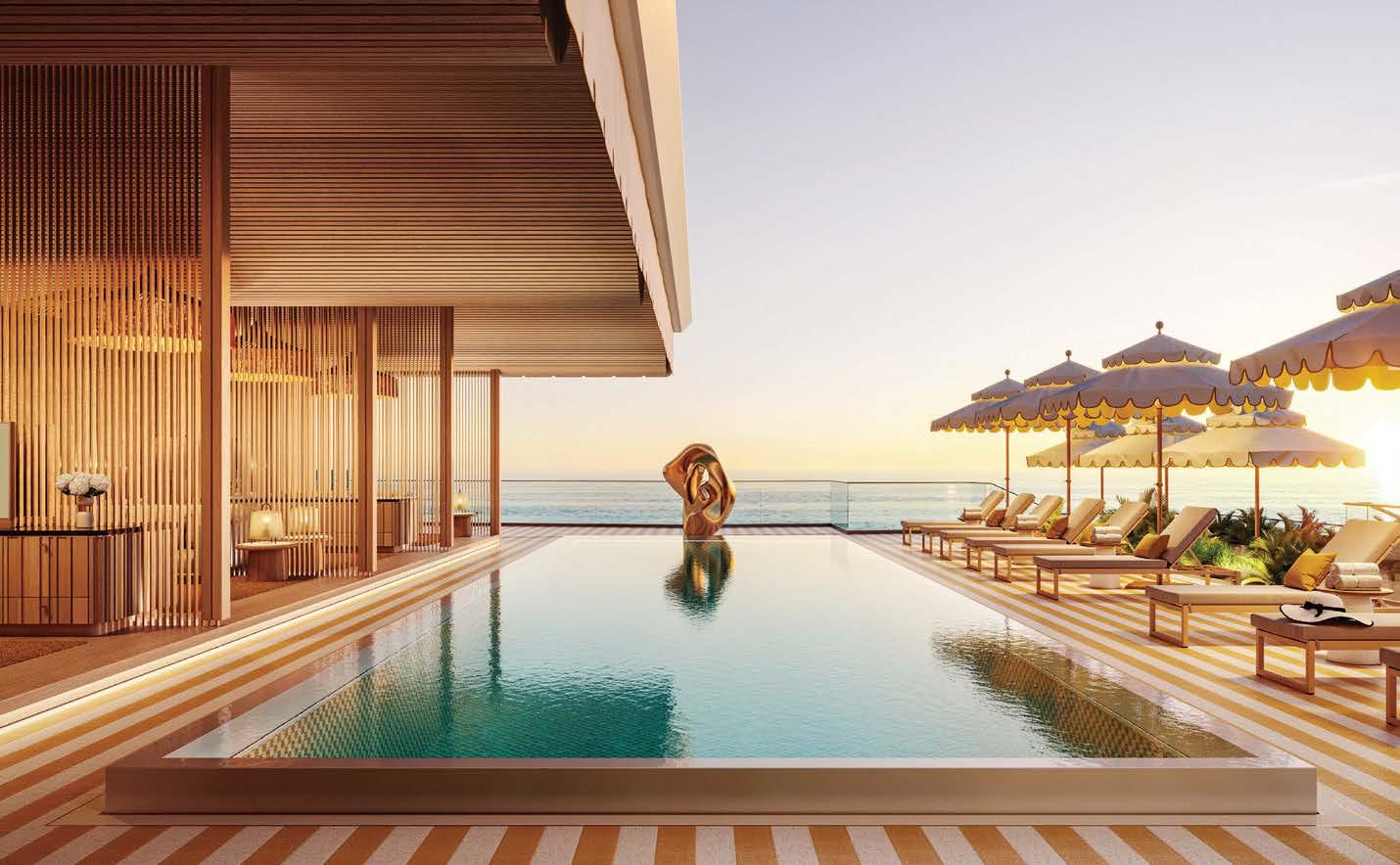
Aqua Dome
This spa-focused hideaway has sound bowl sessions, thalassotherapy (therapeutic use of seawater), a kids sauna menu, anti-cellulite treatments and seven luxury saunas. It is also located near Sölden, a renowned winter sports area. aquadome.at/en
Fasano Angra Dos Reis
After a trek up Pico do Frade or a cruise around the archipelago’s 300 islands, decompress with a guided meditation beneath a waterfall, or indulge with Costa Brazil products. fasano.com.br
Casa de Campo
Indulge in gourmet dining, rejuvenate at the state-ofthe-art spa, or unwind on pristine private beaches. It’s also home to the Caribbean’s No. 1-ranked golf course. casadecampo.com. do
Punta Cana
Find your perfect moment of rest and relaxation at Punta Cana Resort, where lush living meets nature. Enjoy gorgeous beaches, world-class golf and five-star accommodations. puntacana.com
FIJI
Six Senses Fiji
Sleep on a Naturalmat organic bed in one of 24 villas
located on Malolo Island. There is a full-service marina, a surf school and 60 luxury residences. sixsenses.com
Arctic TreeHouse Hotel
Experience a traditional Finnish sauna and ice- swimming in an Arctic Circle forest where you’ll hopefully catch a glimpse of the northern lights while staying in sustainably built housing. arctictreehousehotel.com
Amanzoe
Relish in the agricultural beauty of Greece and witness the nearby harvesting of olives and pomegranates. Also, hop in the steam and
cold- plunge pools before sipping cocktails inspired by the 12 Olympian gods. aman.com
NIHI Sumba by Chris Burch
For a minimum of three nights, engage in philanthropic work with the Sumba Foundation, embark on a spa safari, go deep-sea fishing and visit the chocolate factory. nihi.com
Aman Tokyo
Steps away from the Imperial Palace Gardens, Aman offers traditional Kampo herbal remedies, shiatsu, and acupuncture, and has an award-winning pastry chef. aman.com

Aro Ha in Glenorchy, New Zealand
Go on a wellness adventure surrounded by the beauty of New Zealand nature. Dine on vegetarian cuisine and visit the Obsidian therapeutic spa aro-ha.com
Canyon Ranch
Voted the No. 1 Wellness Resort in the Americas by the Michelin Guide 2025, with locations in Tucson, Lenox, Massachusetts, Woodside, California, Las Vegas, Nevada, and Fort Worth, Texas, each with world-class wellness menus. Choose from 1,500 services in settings that inspire holistic healing and transformation. canyonranch.com
Lanserhof
World-renowned medical wellness resorts offering advanced treatments like cryotherapy and IV nutrient therapy. With locations in Austria, Germany, the U.K., and an upcoming site in Spain, guests undergo programs focused on regeneration and longevity. lanserhof.com
A pioneer in holistic health care for nearly 50 years, this lakeside retreat specializes in Mayr Medicine, a program blending medical expertise with individualized nutrition, movement and advanced diagnostics. original-mayr.com
Palazzo Fiuggi
This state-of-the-art medical clinic boasts unrivaled views. At 700 meters above sea level, the Fiuggi water that originates within the region’s natural springs and mountains has been celebrated for its healing powers and has been scientifically proven to cleanse and purify. palazzofiuggi.com
Rancho La Puerta, Mexico
Find solace in the various wellness offerings at the Rancho: acupuncture, water shiatsu, nutrition consultations, chanting, sound healing, tai chi and guided meditation. rancholapuerta.com
The Ranch
The Ranch fosters a complete reset, based on the principles of movement, mindful nutrition, wellness in nature and authentic human connection. With two spectacular locations—in the Hudson Valley, as well as Malibu—restoration and recovery are as important as building strength. theranchlife.com
We Care Spa in Desert Hot Springs, California
We Care’s philosophy is based on four key components: prefast, detox, treatment and classes. It offers colon hydrotherapy and lymphatic stimulation. wecarespa.com
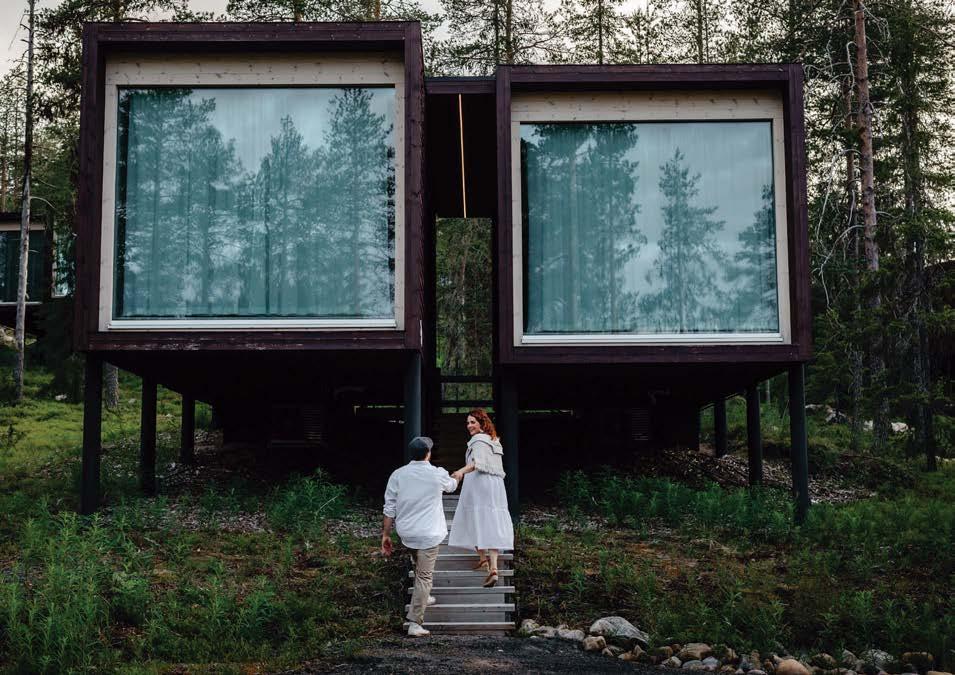
MALTA
Iniala Harbour House
A deeply restorative wellness escape set along Valletta’s iconic Grand Harbour. Sundrenched suites, private plunge pools and sweeping views of the Three Cities await. Recharge at the tranquil underground spa
COSTA RICA
Origins Astral Lodge
The wonders of nature and bespoke design come together in harmony at this serene haven. Located within 111 acres of private rainforest, the resort is designed around the earth, flora and fauna elements. originslodge.com
or dine at the two-Michelin- starred ION Harbour. inialamalta.com
Aspen Meadows Resort
Located on 40 acres beside the Roaring Fork River, this secluded sanctuary is in
Arctic TreeHouse Hotel, Finland
Aspen’s historic West End. Enjoy an art walk at the Herbert Bayer-designed property. aspenmeadows.com
MIAMI
1 Hotel South Beach
This sustainable oceanfront escape features four pools
JAPAN
Azuma Farm Koiwai
The newly opened 24-villa retreat set within the 130-year-old Koiwai Farm offers private wood-fired saunas, farm-to-table dining and immersive experiences like horseback riding and mountainside cycling. azumafarms.com
MONTANA
The Ranch at Rock Creek
Experience ranch life by glamping on a 19th-century homestead with the entire family. Find fly-fishing, archery, shooting sports, forest bathing and cross-country skiing at Discovery Ski Area. theranchatrockcreek.com
Atman Retreat
Located on a historic 18th-century property off the shores of the Montego Bay Lagoon in Jamaica. Gain emotional clarity and insight at one of the fourday experiences, which include preparation, a psilocybin ceremony, integration support and body-based practices and treatments. atmanretreat.com
Beckley Retreats Spring-clean your psyche and heal alongside a world- class team of facilitators at one of Beckley’s signature five-day programs in the Netherlands or Jamaica. A seamless blend of global wisdom traditions with clinically informed approaches to psychedelic care makes this one of the best psychedelic retreats in the world. beckleyretreats.com
SAUDI ARABIA
Banyan Tree Alula
A tranquil desert retreat nestled in the secluded Ashar Valley, the hotel is surrounded by sweeping desert sands, towering sandstone cliffs and sculptural rock formations. banyantree.com/ saudi-arabia

and the Bamford Wellness Spa, which uses only organic ingredients. 1hotels.com/south-beach
The Ritz-Carlton, South Beach
This oceanfront classic with 1950s art moderne style offers daily beach yoga classes and Pilates sessions, a full-service spa and an elevated pool scene. ritzcarlton. com/southbeach
PALM BEACH
The Colony Hotel Escape to “Pink Paradise.”
The Colony boasts a signature rose-colored exterior and is located just steps from the famed Worth Avenue. thecolonypalmbeach.com
Eau Palm Beach Resort & Spa
A private beachfront escape with tropical gardens best known for its five-star spa. Enjoy Champagne soaks and aromatherapy lounges. eaupalmbeach.com
NEW YORK Baker House 1650
CALIFORNIA
The Ranch
The Ranch fosters a complete health reset, based on the principles of movement, mindful nutrition, wellness in nature and authentic human connection. With two spectacular locations—in the Hudson Valley, as well as Malibu— restoration and recovery are as important at The Ranch as building strength and endurance. theranchlife.com
The Retreat Spa at Blue Lagoon
Receive in-water massages while immersed in revitalizing geothermal salt water, detox in the steam cave, and take in the mineral-rich spa treatments. bluelagoon.com
SWITZERLAND
7132 Hotel
Relax in the award-win-
This boutique bed-andbreakfast in East Hampton offers three pools and a modern spa amid the 17th-century architecture. Hit the sauna, and book a facial or massage. bakerhouse1650.com
Valley Rock Inn
Just an hour from NYC, this boutique retreat offers a serene escape. valleyrockinn.com
The Lodge at Woodloch Personal awakening is
ning thermal baths made from 60,000 slabs of Vals quartzite and listen to live jazz on the Steinway concert grand piano. 7132. com
UTAH
Amangiri, Canyon Point
Enter a spa based on the healing traditions of the Navajo and get flotation therapy or a crystal sound bath. Yoga classes are offered for all ages, and personalized family sessions are available. aman.com
The Lodge at Blue Sky
Set on 4,000 acres just outside Park City, the ranch-style retreat in the Wasatch Mountains centers around Edge Spa, where guided cold plunges, healing rituals, and a creekside heated plunge pool complement daily yoga, sound baths and meditation sessions. auberge.com/blue-sky
the order of every day at the Lodge, nestled in the Poconos, an hour and a half from NYC. thelodgeatwoodloch.com
TRAVEL ADVISER
Black Tomato
Specializing in bespoke itineraries focusing on personal growth and cultural immersion, Black Tomato helps travelers reconnect through slow-paced exploration and a commitment to sustainability. blacktomato.com
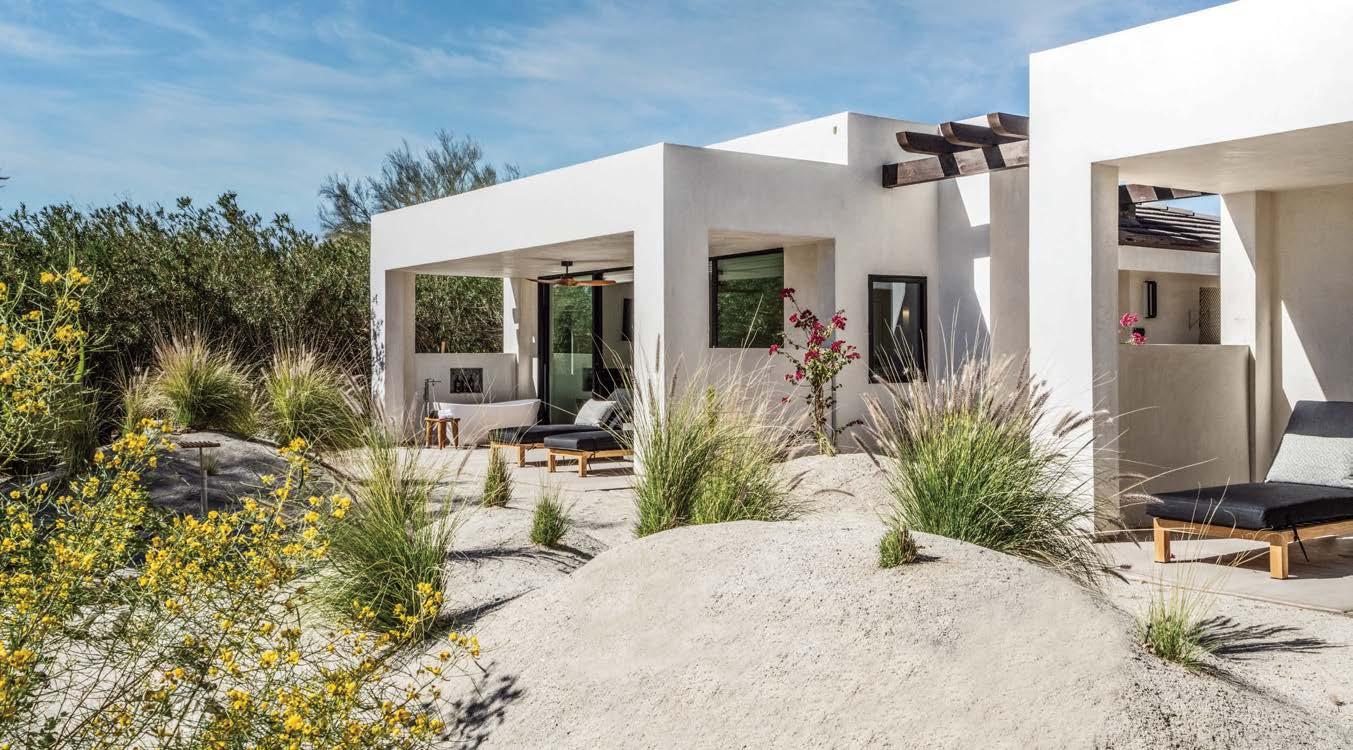





There are cleanses—and there are cleanses. What’s on offer at We Care Spa in Desert Hot Springs is no mere lightweight seasonal reset: This nutritive liquid fast goes far beyond the usual clearing away of sugar, caffeine, alcohol, gluten and processed foods, employing daily colonics to really purge whatever’s been stuck. It’s an intense protocol, but highly effective. I came out feeling refreshed and reinvigorated—and rededicated to overall health.
I lost 8 pounds, but the results go far beyond the scale. This program has done significantly more for a discreet, devoted clientele over the past four decades since Susana Belen first started We Care Spa in 1986 after seeing a dramatic turnaround in her own health, thanks to a holistic program of juice fasting and colonics.
This not-so-secret spot where Hollywood stars go to slim down quickly and reset—Liv Tyler and Matt Bomer are devotees—is also a place of profound, transformative healing. Some come as a last resort when dealing with serious illness, others to kick-start a healthy new path. I met a woman who came here in her 20s to slim down to fit into a wedding dress, returned after a cancer diagnosis later in life, and is now a regular.
Many repeat clients use it as an annual reset. It’s easy to see why people keep coming back. As you enter the secluded desert oasis, a short drive from the Palm Springs airport, the scent of jasmine wafts on the wind, and little desert hares hop down the manicured pathways. There’s an inherently calming energy every which way you turn. On its grounds, you’ll come across a beautiful walking labyrinth, designed to realign both hemispheres of the brain.
Go down another path, and you’ll find the infrared sauna and the cold outdoor shower.
The protocol of the nutritive fast and daily colonics is no joke, but you adjust quickly as your body learns to go with the flow. I felt plenty nourished from the daily detox shakes, blood-purifying and liver/kidney-supportive teas, fresh green and carrot juices, and nightly pureed organic vegetable soup dinners, spruced up with curry powder and other spices kept in the cupboards.
Throughout the days, guests are also fortified by excellent daily yoga, lymphatic and deep tissue massages, and informative nutrition and wellness workshops, many of which are still led by Belen, the indefatigable 88-yearold founder of We Care.
It’s not just about weight loss here; overall physical, mental and spiritual health is examined and nurtured throughout a stay at We Care. The program is about healing—not fitness—with an emphasis on rest and meditation. You could fill your days with fortifying activities, from leisurely desert hikes to laps in the outdoor heated pool, to any number of healing modalities on offer.
I felt tended to and cared for throughout the stay, thanks to the many incredible wellness practitioners on the We Care team, who helped guide me on this journey. On my last day, I met a guest named Heather from Laguna Beach, California, who was midway through a 16-day stay, her fourth trip to We Care. “At first I thought the name of the place was sort of corny,” she admitted, “but once you get here and do the program, you realize the name actually suits the place—they really do care.” wecarespa.com
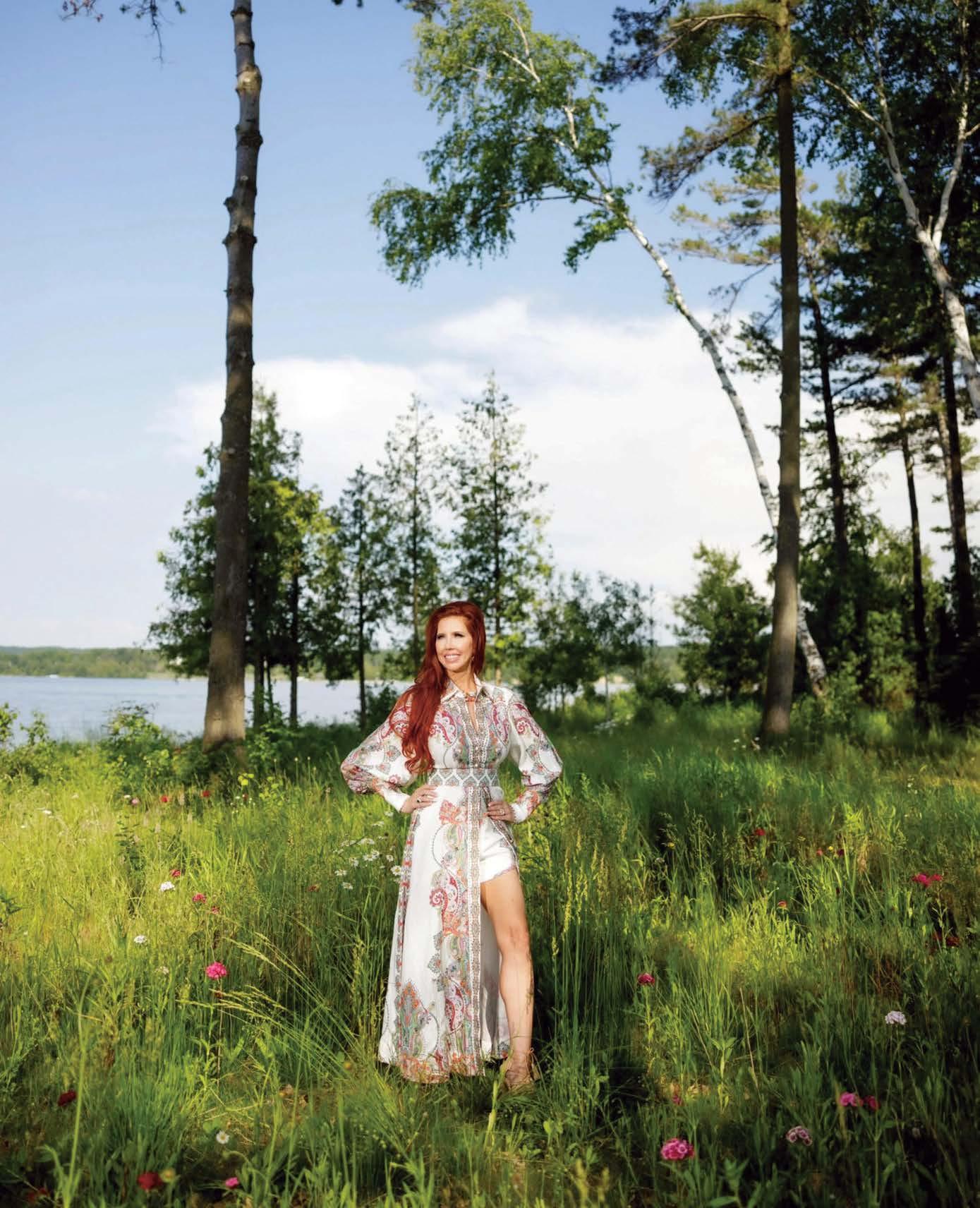
It’s that time of year again, when we all start looking around our homes and properties with an eye for sprucing up and beautifying. Something about the return of a warmer brand of sunshine and the sprouting of new growth all around us compels us to refresh our external environments. But what about our internal environments? Could those use a refresh as well? You bet they can!
The natural instinct to eat more and put on weight during the winter months plagues many of us. Central heating makes that extra fat, once so important for survival, irrelevant in our modern world. Shedding that winter weight may be on your mind this spring, but I don’t want to talk about dieting or calorie restriction because there is a better way to reset your system, and that is by “spring-cleaning” your internal environment.
The process I’m going to walk you through targets your microbiome health. This can lead to the loss of unwanted fat stores that weigh you down, while also improving your digestive health, waking your immune system, giving you more energy and boosting your mood, so you feel sunnier, right along with the weather. This isn’t “cleansing,” so much as a collection of practices that will support the beneficial microbes in your digestive tract for maximum benefit. What Is the Microbiome?
Before we start sprucing up the microbiome, let’s be sure we understand exactly what that is The microbiome refers to the trillions of microorganisms that live primarily inside your digestive tract (but also in your mouth, on your skin and elsewhere). These microbes are not technically part of you. They have their own DNA and their own circadian rhythms. Yet, we have coevolved with them. In return for living space, they assist us with digestion and nutrient absorption, immune function and protection, metabolism, and mood. They communicate with our brains via the gutbrain connection (your gut and your brain are physically connected by the vagus nerve). While some of our gut microbes are less friendly and can cause problems if allowed to overgrow, a well-balanced microbiome will keep these species under control. We would not be able to thrive
BY DR. STACIE STEPHENSON
without them, and if you want to be healthy now and well into your vibrant golden years, microbiome care is essential.
This spring, I propose that rather than putting yourself on a diet, put your microbiome on a nutrition program. Here are some simple things you can do to give your beneficial microbes everything they need this spring:
Drink More Water
It sounds like common sense, and we know that dehydration is associated with metabolic disorders like obesity, insulin resistance and diabetes. However, staying hydrated is just as important for your microbial health. Recent research looking into the impact of dehydration on the gut microbiome revealed that dehydration disrupts the delicate microbial balance, decreases immune cells in the colon and impairs the ability to eliminate pathogens in the gut, putting you at greater risk of digestive infections and disorders. Plus, being fully hydrated will help you stay regular, which can give a boost to your body’s natural cleansing mechanisms. Your first new habit this spring, if it isn’t your habit already? Be sure to drink enough water every day.
So, how much is enough? Your ideal intake depends on your age, gender, size, and activity level, and can range anywhere from 4 cups per day to a gallon. If you are petite and don’t exercise much, 32 ounces is probably enough. The taller, larger, older and more active you are, the more you need, especially if you sweat a lot. If you aren’t sure, default to the old advice to drink 64 ounces of purified water per day, adding another cup or two in very hot weather or if you have exercised intensely and sweated a lot.
The beneficial microbes in your gut microbiome thrive on certain kinds of foods that you can prioritize in your diet. These foods are good for you in multiple ways, but one of the most powerful benefits is what they do for your microbiome: Prebiotics: Prebiotics are substances that you don’t digest, but your microbiome does. These are primarily fiber and resistant starch. Fiber helps you stay regular by adding roughage to the contents of your digestive tract, but it is also particularly beneficial because it is food for microbes.
Resistant starch has less roughage but you also don’t digest it, leaving it for your microbiome to enjoy. When fiber and resistant starch reach your large intestine, your gut microbes feast on it, digest it and then produce beneficial substances like butyrate, an important energy source for cells. Butyrate helps keep your gut lining strong and healthy. It is also linked to lower colon cancer rates, better metabolic health and better mood. The best sources of fiber to help your microbes make more butyrate are vegetables, fruits, nuts, seeds and whole grains. Good sources of resistant starch are green bananas and plantains, legumes, oats and whole grains. Keep in mind that you can increase the resistant starch in certain foods by cooking, cooling and then reheating them, especially potatoes and rice. This process changes the structure of these starches so you pass them along to your microbiome undigested.
Probiotics: Probiotics contain some of the same microbes
sea salt or other natural salts in moderation, and you need healthful fats like those in salmon, mackerel and sardines, as well as cold-pressed fats like extra-virgin olive oil, avocado oil and cold-pressed nut oils. However, stay away from ultra-processed food as much as possible. If you cut out just one thing from your diet and have a meaningful positive impact on your microbiome health, eliminate all sources of refined sugars, which have been shown to cause chronic inflammation and to compromise the integrity of the gut lining (this can lead to harmful “leaky gut”).
Lead a Gut-Friendly Lifestyle
Even though they don’t seem like they would have a direct effect on gut health, other lifestyle factors can indeed impact your microbiome health:
Exercise stimulates digestion and helps to keep you regular. Research also shows that people who engage in moderate exercise typically have lower inflammation,
“Stay away from ultra-processed food as much as possible. Eliminate all sources of refined sugars, which have been shown to cause chronic inflammation and to compromise the integrity of the gut lining.”
that you want in your gut. When you eat fermented foods, like yogurt, kimchi, kombucha, miso, kefir and sauerkraut, all containing live bacteria, these pass through your digestive tract, strengthening and supporting the microbes you already have. This can help replenish and reinvigorate your microbiome so it can crowd out the more pathogenic microbes, to keep them from overgrowing. Probiotic supplements can also help.
Polyphenol-rich foods: Polyphenols are naturally occurring compounds found in deeply colored plantbased foods like berries, cocoa, green tea, coffee, olives, and the most vibrantly colored fruits and vegetables. Polyphenols are antioxidants with anti-inflammatory effects. Your gut bacteria break down these compounds and use them to increase the growth of the good bacteria and inhibit the growth of harmful bacteria. Research also shows they protect against metabolic diseases, digestive diseases, heart disease and dementia.
Avoid What Your Harmful Microbes Love
The more pathogenic microbes in your large intestine prefer sugar, fat and salt, all of which help the pathogenic microbes overgrow, causing inflammation, digestive troubles and immune issues. It’s no coincidence that ultra-processed foods, fast foods and junk foods have a reputation for being unhealthful: Their negative influence on your microbiome balance is one of the primary reasons why these foods are best avoided. It’s fine to use natural
greater diversity of microbes in their microbiome (generally associated with better health), healthier intestinal linings, fewer digestive issues and better hormone balance.
Sufficient sleep approximately seven to nine hours of good slumber per night on average—is also linked to better microbiome balance. The relationship seems to be bidirectional: A healthier microbiome leads to better sleep, and better sleep leads to a healthier microbiome.
Stress management in the form of deep breathing, spending time in nature, meditating, praying, or just taking some time in the morning and/or evening to spend in peaceful contemplation and relaxation can significantly reduce stress and break the cycle of chronic stress. This is important because there is a complex relationship between stress and microbiome health related to the gut-brain axis. Stress impacts mental health, digestive function and immune function, both through the microbiome and in response to signals from the microbiome. You know stress is bad for you in a million ways, so let this spring be a time to intervene in the stress cycle.
Each one of these practices can significantly impact the health of your microbiome. As you integrate new habits over time, the impact will be even greater. Fostering microbiome health isn’t just a practice for springtime, but this spring can be your springboard for a lifetime of microbiome care and nurturing that will pay off in good health far into your vibrant future. drstaciestephenson.com

La Casa de Camilla, the latest collection from Camilla, channels the spirit of Spain through vivid colors and handcrafted details. “Spain is a place where art is a living, breathing thing,” says founder and creative director Camilla Franks. “Every cobblestone street hums with creativity, every shawl, fan and mosaic tells a story. I wanted to capture that pulse, that spirit— what the Spanish call ‘el duende’—and infuse it into every stitch, tassel and print of this collection.” camilla.com
Purist founder Cristina Cuomo’s spring go-tos for feeling nourished from the inside out.

“I got a taste early on of this delicious nonalcoholic beer from Rande Gerber, George Clooney and Mike Meldman, and it’s better than the real thing.”
Crazy Mountain nonalcoholic beer, crazymountain.com

“I can’t travel without my skin nourishing essentials—cleanse, treat, repair—and I spray my face with Aeston West’s mist of French seawater, botanicals and fungi all day long.” Aeston West Signature discovery set, aestonwest.com
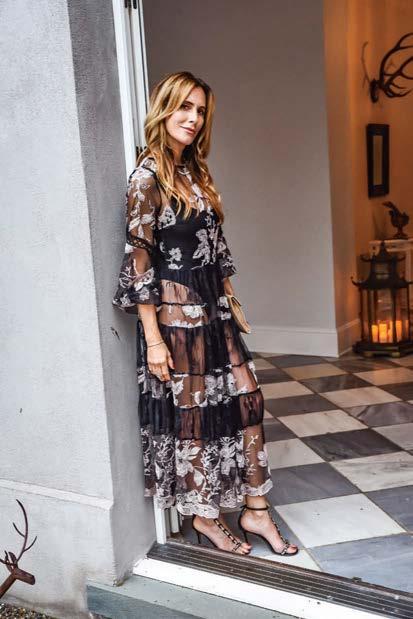
“Here are some healing pathways I prefer right now.”
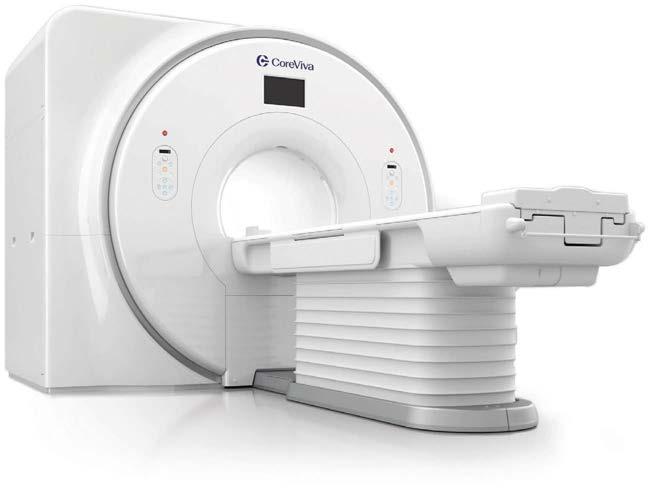

“I’m dairy-free so can’t ingest bovine colostrum. Kroma’s plant-based one works on regulating the microbiome in my gut and repairing on a cellular level.” Kroma Super Core colostrum, kromawellness.com
“Summer heat is upon us, and what better way to detox the body, boost the immune system and lose some weight by cooling the body in a sleek cold plunge therapy pool? It also stimulates blood circulation, closes pores, and reduces joint and muscle pain.” Diamond Spa’s Cold plunge therapy pools, diamondspas.com
“This whole-body comprehensive MRI scan with VIP care for prevention of disease and illness by detecting over 500 conditions early on is the fastest and most accurate of its kind, with no radiation— so worth the trip to Newport Beach, California!” CoreViva Full-body MRI, coreviva.com
Filmmaker Katharina Otto-Bernstein
’s The Last Spy unveils the extraordinary life of Peter Sichel, the Amagansett resident who helped shape American intelligence.
BY REGINA WEINREICH
Current events shine a light on the CIA: What role did it play in the mullahs’ rise in Iran?
Southampton’s Katharina OttoBernstein’s new documentary, The Last Spy, about Peter Sichel, a resident of Amagansett who died in 2025 at age 102, limns the story of American intelligence from its inception during WWII to today.
Otto-Bernstein spoke to Purist as she was leaving for Berlin to show the film at the Ministry of Culture. Researching double agents for a film about the Dulles brothers, the accomplished filmmaker, who has made newsreels for German television, met Sichel when he was a mere 95, writing his memoir. Sichel admired her film Absolute Wilson, about playwright and director Robert Wilson, founder of the Watermill Center. After the CIA heavily redacted his manuscript, Sichel agreed to a tell-all film from his vantage point, as colleagues note, “at the epicenter of history.”
Dubbed the “Jewish James Bond,” he appears in the film’s first scene, at age 100, descending the stairs at his Amagansett home in a chair lift. So much for glamorous gadgetry. Neither shaken nor stirred as in the martinis of debonair movie spies, this man’s drink may have some bearing on a fascinating career in espionage—in unexpected ways.
The Sichel family had an unusual Holocaust past, fleeing Mainz, Germany, for their vineyard in Bordeaux in the south of France, before being detained in a French internment camp, and eventually making their way to America. Settled on Manhattan’s Upper East Side, the family found
themselves situated amid American Nazis, seeing them in cafes, parading proudly in New York City.
Enlisting in the military to fight them abroad, Peter Sichel was useful as a speaker of many languages, and clever. A wunderkind, he ended up, in his 20s, becoming head of the Office of Strategic Services, the CIA precursor, in Berlin. Through the Cold War and beyond, he was a CIA spymaster, an “insider” privy to covert activities.
“Have you told me all your secrets?” Otto-Bernstein asks him.
“They can probably hang me for some of the secrets I have told you,” Sichel responds, speaking truth to America’s missteps in Iran, Guatemala and Indonesia. (No action too low, a female agent procured Indonesian president Sukarno’s stool to verify a rumor he was ill. He was not.) We messed up, he says, realizing “democratic ideals may sabotage our interests, especially economic.” He left the CIA in 1959, returning to the family business, making wines, including Blue Nun.
“It’s bad when you love intelligence; it’s like being on a drug,” he tells Otto-Bernstein. When he worked in Hong Kong, agents enjoyed cocktail parties every night, an active exchange of wives and husbands. But he loved the cuisine, and out East, he cooked for friends, accompanied—of course—by good wine.
Acclaimed in Europe, The Last Spy is making the rounds of film festivals in the U.S., and is to be released later this year. thelastspyfilm.com
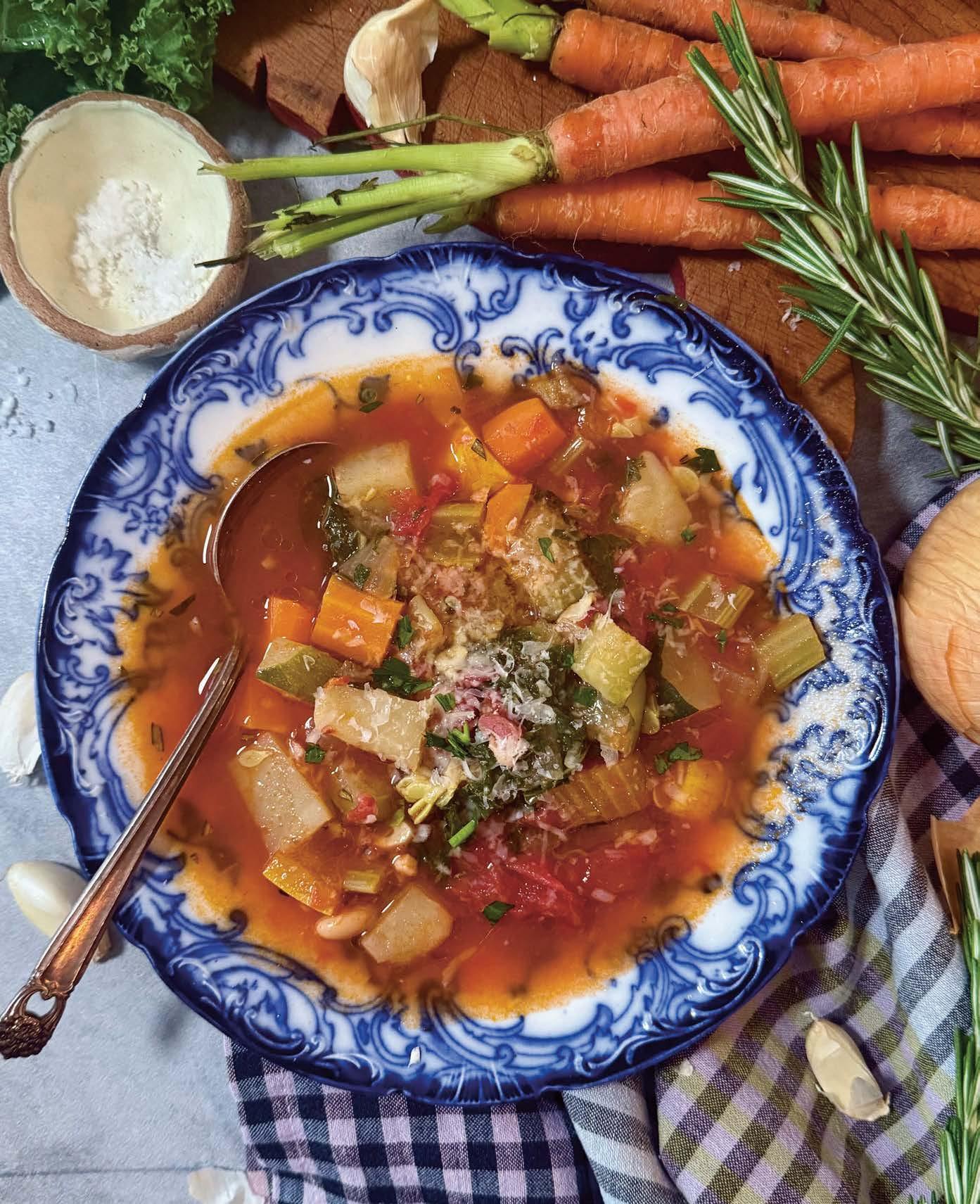
Kale supports bone health with vitamin K and is chock-full of antioxidants.
Peter Som’s perfect soup and salad combo.
Spring arrives not with a flourish, but with a quiet recalibration—a softening of edges, a return to breath, to light, to self. In this moment of gentle renewal, this step away from the last frosty wisps of winter, the kitchen becomes a place of intention, where nourishment is both ritual and reflection.
These two dishes—an abundant minestrone I’ve been making for decades, and a vegetable-forward spin on a classic Niçoise—take center stage as one-plate (or bowl)
Certain things endure for good reason. This minestrone is one of them—an ode to comfort in its purest form. Each spoonful yields tender cannellini beans, golden squash, soft potato, ribbons of deep-green kale and a whisper of pancetta. It’s humble yet deeply nourishing, a bowl that restores as much as it satisfies. Make more than you think you’ll need—it freezes beautifully, ready to bring warmth to even a chilly spring night.
Note: Homemade chicken stock isn’t required here—but it will give your minestrone a beautiful depth of flavor that store-bought can’t match. If you’re using store-bought, stir in a tablespoon of yellow miso or Better Than Bouillon to deepen the flavor.
SERVES 8-10
INGREDIENTS:
4 ounces diced pancetta
meals in their own right. Yet paired together, this soup and salad duo is lovely when shared family style. Rooted in simplicity, yet deeply expressive, these dishes speak to the beauty of slowing down: of simmering, of tending, of tasting as you go. Each ingredient carries the imprint of the season—green, tender, awakening.
Together, they offer a kind of sustenance that goes beyond the plate. Grounding yet vibrant, they invite us to begin again—mindfully, deliciously and with grace.
1 tablespoon extra-virgin olive oil, plus more for finishing
6 garlic cloves, sliced
1 yellow onion, medium diced
2 tablespoons minced rosemary
3 celery stalks, medium diced
3 carrots, medium diced
Kosher salt and freshly ground black pepper
One 14-ounce can cannellini beans, drained and rinsed
One 28-ounce can San Marzano whole tomatoes
2 medium zucchini, medium diced (about 2 cups)
2 medium yellow squash, medium diced (about 2 cups)
1 large russet potato, peeled and medium diced
8 cups chicken stock (see note)
½ teaspoon chile pepper flakes
1 bay leaf
1 or 2 Parmigiano-Reggiano rinds
1 bunch kale, chopped
Flat-leaf parsley, roughly chopped
INSTRUCTIONS:
1. In a large pot over medium heat, saute the pancetta with olive oil until slightly brown around the edges, then add garlic, onion and rosemary and saute for another minute. Add celery and carrots, season with salt and pepper, and saute for approximately 10 minutes or until the vegetables are tender.
2. Stir in beans, tomatoes, zucchini, yellow squash and potato; add salt and pepper to taste. Add chicken stock, chile pepper flakes, the bay leaf and cheese rinds. Simmer, uncovered, for about 15 minutes or until all vegetables are tender. Skim foam off the top. Ideally, here is where you fish out the bay leaf (or just warn your guests not to eat it if they find it).
3. Add the kale and continue to simmer until it’s wilted, approximately 2 to 3 minutes.Toss in the parsley. Remove the cheese rinds.
4. Serve with a hunk of ParmigianoReggiano to be grated atop at the table and extra-virgin olive oil for finishing.
A Niçoise, reimagined—where the traditional tuna steps back and the garden takes the lead. Here, tender chickpeas offer heartiness and creaminess, mingling with the bright, briny notes of olives and anchovies. Green beans, gently sauteed with shallots, become something deeper, more fragrant—a contrast of warmth against the
salad’s cool brightness. Everything gathers atop a bed of farro, so nutty and pleasantly chewy, while the vinaigrette shimmers—lemony, herbaceous, with a subtle depth of umami—marrying all those flavors together. It’s a dish that feels like a long spring afternoon: nourishing, effortless and quietly indulgent.
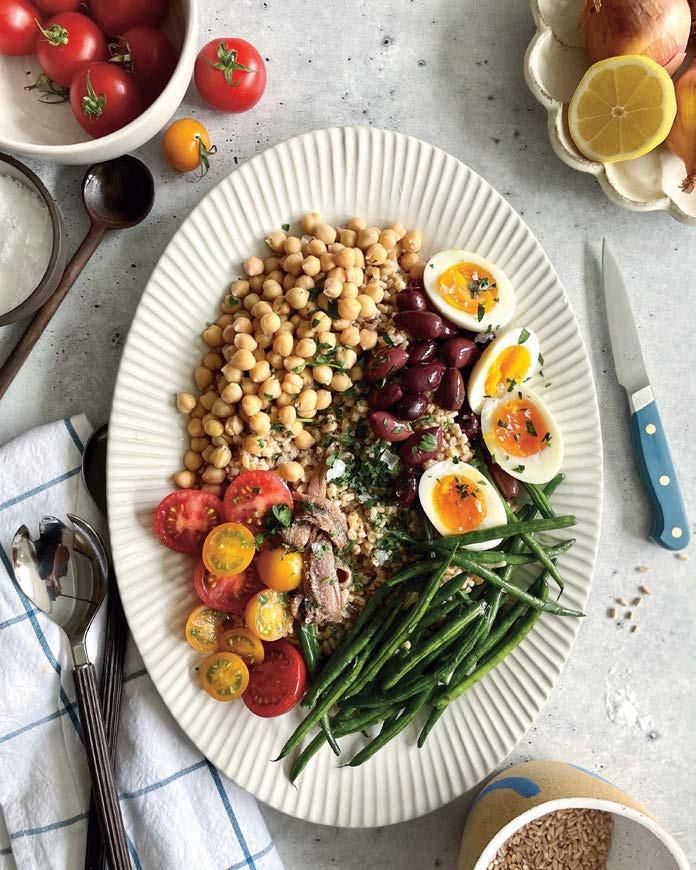
SERVES 4-6
INGREDIENTS:
For the Vinaigrette
Juice of 1 lemon
1 tablespoon anchovy oil (from the anchovy fillets; see below)
3 tablespoons extra-virgin olive oil
1 tablespoon chives, minced, plus more for garnish
1 tablespoon flat-leaf parsley, minced, plus more for garnish
1 teaspoon Dijon mustard
Kosher salt and freshly ground black pepper
For Everything Else
1 cup farro
4 eggs
1 teaspoon extra-virgin olive oil
8 ounces green beans, trimmed
1 small shallot, sliced (approximately 2 tablespoons)
1 pint cherry tomatoes, halved
1 cup canned chickpeas, drained and rinsed
½ cup niçoise olives
6 anchovy fillets (reserve 1 tablespoon of the oil from the jar for the vinaigrette)
INSTRUCTIONS:
1. To make the vinaigrette, in a jar with a lid, combine lemon juice, anchovy oil, olive oil, chives, flat-leaf parsley, Dijon, kosher salt and black pepper, then seal with the lid and shake until emulsified.
2. Fill a large saucepan with well-salted water and bring to a boil. Add the farro and cook according to package instructions. Drain, transfer to a large bowl, pour in half the vinaigrette and stir to combine. Set aside.
3. Lower eggs into a pot of boiling water and cook for exactly 7 minutes. Remove from the water and place in a bowl of cold water. Peel and set aside.
4. In a saute pan over medium heat, add olive oil, then add green beans and shallot, season with salt and pepper, and saute until cooked and tender, approximately 5 minutes.
Farro provides steady energy with fiber-rich whole grains and plant-based protein.
5. To serve, arrange farro on a serving platter. Arrange the green beans, cherry tomatoes, chickpeas and olives atop, making sure to keep each item grouped. Cut each egg in half. Arrange egg halves and anchovies atop. Drizzle with more dressing, then garnish with chives and parsley.
Find more nourishing recipes in Peter Som’s cookbook, Family Style and on petersom.com.
Pasture-raised eggs are the ultimate anti-inflammatory fuel for a lean, high-functioning body. BY
SARAH WRAGGE

Eggs are one of the simplest, most nutrient-dense foods you can add to your diet. I often tell my clients that eggs are one of the easiest ways to consume high-quality, complete protein in a whole-food form. They contain essential nutrients like choline and B vitamins, and come in at only about 70 calories each. Eggs are an easy, affordable way to support energy, muscle maintenance and overall metabolic health.
But not all eggs are created equal. When shopping, look for the balance of omega-6 to omega-3 fatty acids. Many people already consume too many omega-6 fats from processed foods and industrial seed oils. When hens are raised on conventional feed made primarily from corn and soy, their eggs tend to be higher in omega-6s and lower in omega-3s. Over time, that imbalance can contribute to inflammation in the body.
Eggs from hens raised on a more natural diet often have a healthier fatty acid profile, with higher levels of omega-3s that support heart health, brain function and recovery. For that reason, I advise my clients to choose eggs that come from hens fed a corn- and soy-free diet when possible, since these feeds tend to push the fatty acid balance toward higher omega-6 levels.
This is where the term pasture-raised is most important. Grocery store shelves are full of eggs labeled cage-free or free-range, but those terms can be misleading. Cage-free simply means
hens were not kept in individual cages, but they may still live indoors with as little as 1.5 square feet of space per bird and no required outdoor access. Free-range improves on this slightly by requiring outdoor access for part of the day, but the space allowance is still limited. Pasture-raised eggs represent the highest standard. These hens primarily live outdoors, where they can graze on a natural diet of grass and insects and engage in natural behaviors. They are typically housed in mobile coops at night for protection. Because their diet is more diverse and natural, pasture-raised eggs often contain more nutrients, including higher omega-3 levels and carotenoids that give the yolk a deeper orange color. You may also see eggs labeled Certified Humane. This certification is managed by the nonprofit Humane Farm Animal Care organization and indicates that the hens were raised according to higher animal welfare standards.
One other common misconception is that brown eggs are more nutritious than white eggs. In reality, shell color has nothing to do with nutritional value—it simply reflects the breed of the hen. For example, White Leghorn chickens lay white eggs, while breeds like Rhode Island Reds lay brown ones. Eggs are an incredible whole food. Choosing pasture-raised, thoughtfully sourced eggs with a healthier omega profile is a small step that can support better nutrition over time.
Sarah Wragge is the founder and CEO of Sarah Wragge Wellness sarahwragge.com

“The older I get, the more important it is to be close to real friends and family. That is the medicine.”
—LEILA GEORGE
MACKAGE SUEDE TRENCH
JOIN US FOR OUR FIFTH ANNUAL

SAVE THE DATE
FRIDAY, JULY 10 11AM-3PM Southampton Arts Center under the lawn tent 25 Jobs Lane
Southampton, NY
Learn from the best in wellness—from concierge integrative practitioners to Eastern and Western healing modalities, nutrition, clean beauty, sustainability, and innovators in health—all curated for you under one tent, in one day.
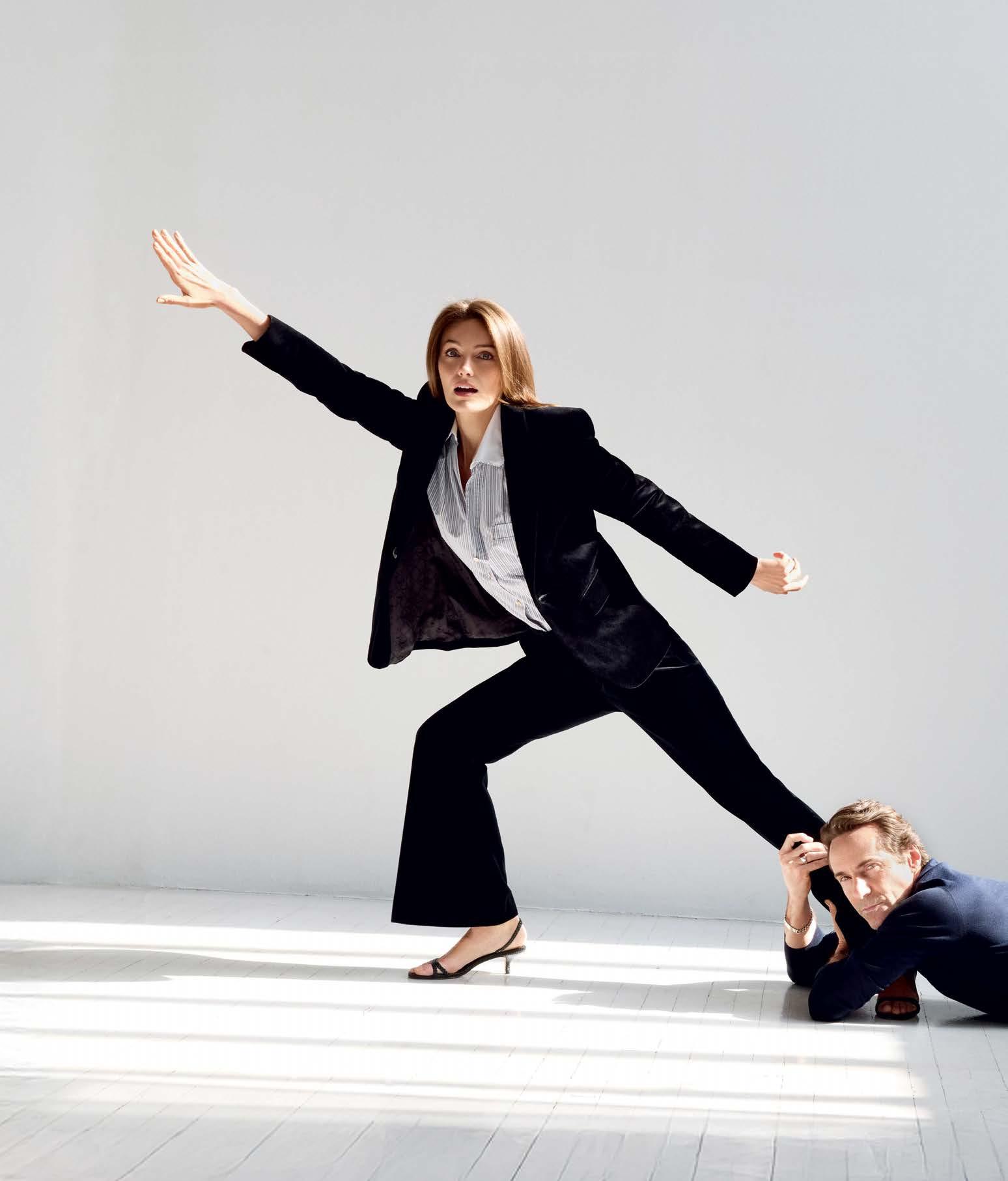
In the pop culture phenomenon that is Love Story: John F. Kennedy Jr. & Carolyn Bessette, actors Leila George and Alessandro Nivola make a strong impact as fashion icons Kelly and Calvin Klein. Australia-born George’s profile has risen since last year’s Apple TV+ series Disclaimer, in which she played a younger version of Cate Blanchett’s tormented documentarian. Nivola’s film credits include Laurel Canyon, Mansfield Park, Junebug and The Brutalist, rendered in assorted convincing accents (he’s trinational, with citizenship in Italy, the U.K. and the U.S.). Breezing into the Elgort studio in downtown Manhattan for a cover shoot, the charismatic duo speak with Purist about the success of the series, their wellness practices, and what they’ve learned from JFK Jr. and Carolyn Bessette about navigating high-profile lives.
BY JIM SERVIN • PHOTOGRAPHY BY SOPHIE ELGORT

LEILA GEORGE: Gosh, everyone watched it. I don’t think I’ve ever been a part of something consumed this widely. It was everywhere. I don’t know if it’s true because of my algorithm, because I’m in it, but all my favorite podcasts were advertising it. Alessandro and I both knew from the get-go that this show is about Carolyn and John. We are a little spice added to support the show. Playing Kelly was some of the most fun I’ve ever had. Who doesn’t love Kelly?
Have you met her?
LG: We’re in touch now, but it wasn’t until I wrapped the show. She’s been so lovely about it. We’ve decided to try and meet up for a coffee at some point, if we’re both in the same place. She refers to “us” in the show: “It’s so nice to see us,” like we’re the same person. I take that as a compliment.
Did anything about playing Kelly Klein carry over into your life?
LG: Her fashion sense. I’m obsessed with The RealReal. I go on there and search for vintage ’90s clothes, like Calvin. Usually for me, it’s hairstyle and clothes that I end up walking away with for a while.
What have you learned from the stories of JFK Jr. and Carolyn, Kelly and Calvin, as well as your own
family—your actor parents, Greta Scacchi and Vincent D’Onofrio—about handling fame in a healthy way?
LG: The only comparison that I could draw is that obviously Carolyn and JFK Jr. were hounded by the press, and they lived in one of the biggest cities in the world. Their front door led right onto the street. There were always people waiting for them.
When I was born, my mom, who had been working in Hollywood, moved us to the middle of nowhere in the English countryside, where growing up I would have to walk at least 30 minutes to get a bus to take a train to see friends. Asking for a ride to the station was usually based upon how well I had behaved that day, which was about a 50-50. Looking back now, I wouldn’t change a thing. I’ve just slowly kept learning more and more that my mom was right about everything. She’s such a great, strong woman. Going back to the English countryside now feels like a safe haven. The older I get, the more important for me it is to be close to real friends and family. That is the medicine.
I was 8 months old when my parents separated, so I don’t have memories of them together. Watching their films—The Player, Fires Within—makes me know where I belong. My dad is based in New York. When I’m
traveling, I’ll watch him on reruns of Law & Order It’s a comfort thing.
Your father cast you in the 2019 film he directed, The Kid, based on Billy the Kid. You co-starred with your mother onstage in The Seagull and in a 2024 drama, He Ain’t Heavy, for which you received a Best Actress nomination from the Film Critics Circle of Australia. LG: Neither of them pushed, or even talked about it. There was this unspoken agreement: “We will not talk about her being an actress. We don’t want her to feel pressure.” But I knew that I wanted to do something in the film industry, because I loved the community of it. I
loved being on set, the traveling circus of it. I took some production assistant jobs, and then my dad asked me, “What are you most afraid of doing?” I said, “Acting.” At the time, he was teaching at The Lee Strasberg Theatre & Film Institute in New York. I enrolled there, and stayed two years. Once I decided that I was going to Strasberg, Mom and I had a glass of champagne. She said, “Welcome to the club. We always knew.” They never said anything until I decided, and then it was like it was always meant to be. In 2014, I left acting school and moved to LA. My plan was to give it 10 years. In October 2024, Disclaimer came out, a pivotal change in my career.
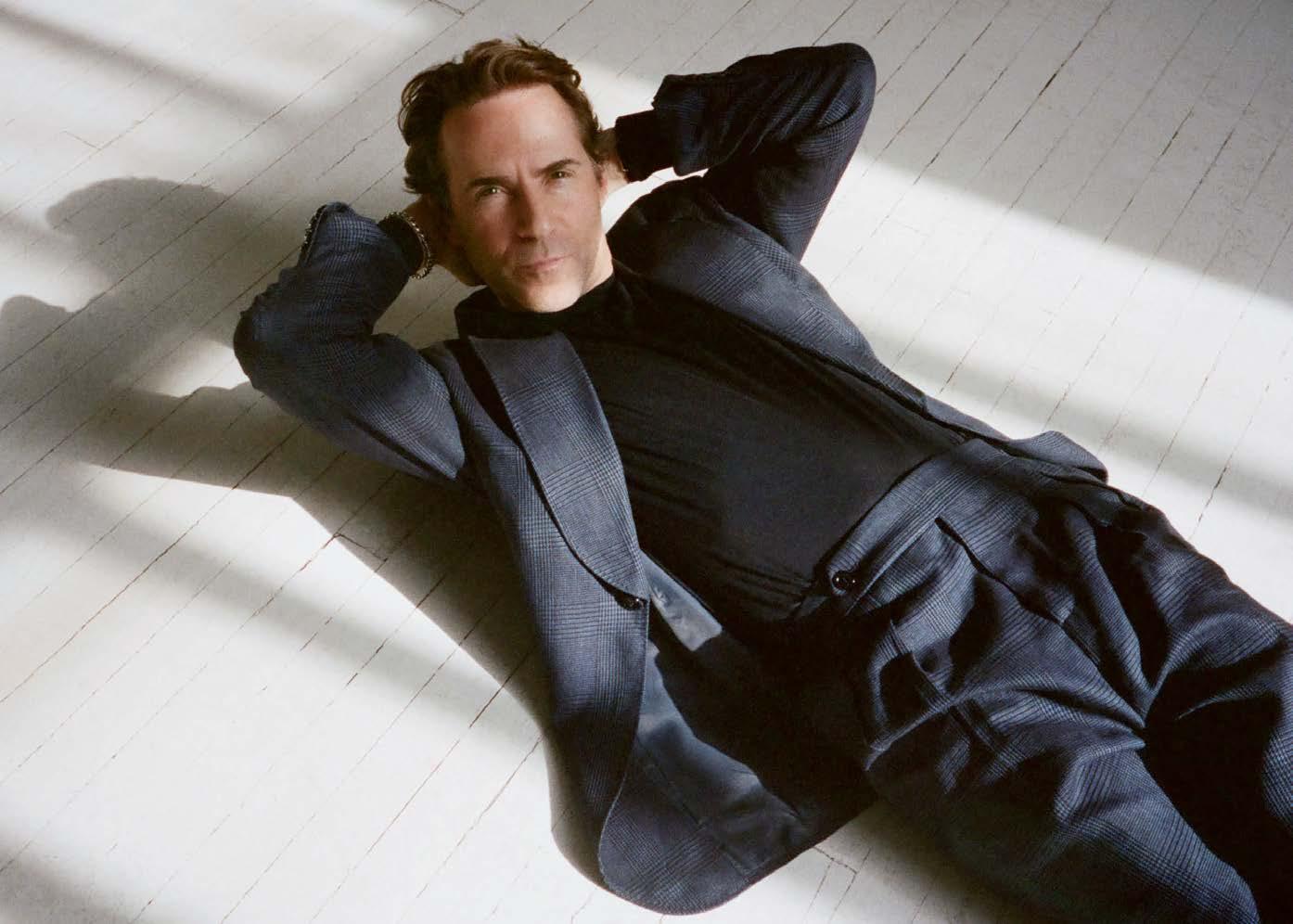
Has there been any part you’ve played that has especially benefited your well-being?
LG: Growing up, I was a dancer. I’ll still look up a dance class in every city I’m working in. I just finished making Road House 2, which involved a lot of training. For the first time, I followed a strict diet and workout regimen. I didn’t know it was going to be so hard. It’s easy to lose weight, but to gain muscle is so difficult. I learned that the more you eat, the more you burn. Eating enough of the right foods is essential. Don’t be eating too little, and don’t be eating the wrong stuff, like sugar, which I’m addicted to.
My clinician in London introduced me to the Emface and Emsculpt machines. We had both on the set of Road House 2. I noticed such a difference; my core still feels so strong. I was fighting in that movie, not like Jake [Gyllenhaal] and the real UFC champions, but I can throw a punch.
George is your middle name. JFK Jr. named his magazine George—it’s a subliminal reminder of you throughout the series.
LG: I like that. The only thing I don’t like about it is, I feel very Italian. I love my Italian roots. With a last name like Alessandro’s, you know he’s Italian. I wish mine was a bit more Mediterranean. He’ll hate me for saying this, but
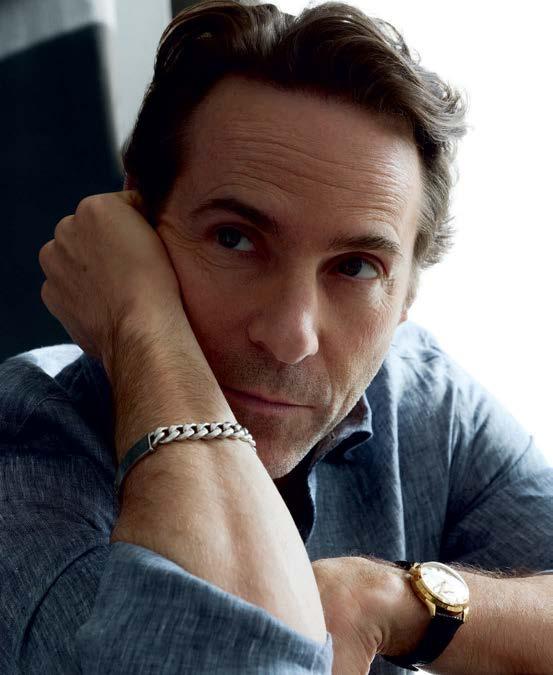
“Kelly has been so lovely about it. We’ve decided to meet up for coffee at some point. She refers to ‘us’ in the show: ‘It’s so nice to see us,’ like we’re the same person. I take that as a compliment.” —Leila George
Jurassic Park is one of my favorite movies. And as soon as I realized, Oh my god, he’s in Jurassic Park III, it’s like I was a constant fangirl over him. I loved working with him so much. In the show there are so many party scenes. What Alessandro and I would do is say our lines and then one of us would ad lib, “I just need to show you something…” so we’d get ourselves out of the scene, and wouldn’t have to stay the whole night. They’d say, “We need you to stick around because you’re in the background of the shots.” “No, no…We’re in the kitchen.” We’d be partners in crime trying to get each other home early.
PURIST: Were you part of the ’90s NYC scene?
ALESSANDRO NIVOLA: I moved to New York in 1994, after graduating from Yale. I’d been living here a couple of summers before that, when I was still in college. So, 1992 was really the first summer I was living here, which is the year this series takes place. The ’90s were the beginning
of my acting career. I got a Broadway show right after I arrived, a Turgenev play with Helen Mirren called A Month in the Country There were a whole bunch of other young actors who were making their Broadway debuts around the same time—Jude Law, Damian Lewis, Billy Crudup, Rufus Sewell, Robert Sean Leonard. We got together on a photo shoot for Vanity Fair, and started meeting up after the shows every night, just going hard until the sun came up, then sleeping all day and doing it again. I’d dreamed of living in New York and being on Broadway, and there I was.
What can be learned from that time?
AN: Information cycles are so quick now. In the ’90s, there was more sustained scrutiny and focus on celebrities like JFK Jr. and Carolyn Bessette. More of the population was directed toward all the same focal points, whereas now there are so many distractions. My son, Sam, was in the last White Lotus, and that was the first time I really paid attention to how much of an impact a show had when it was playing. There’s the same feeling with this.
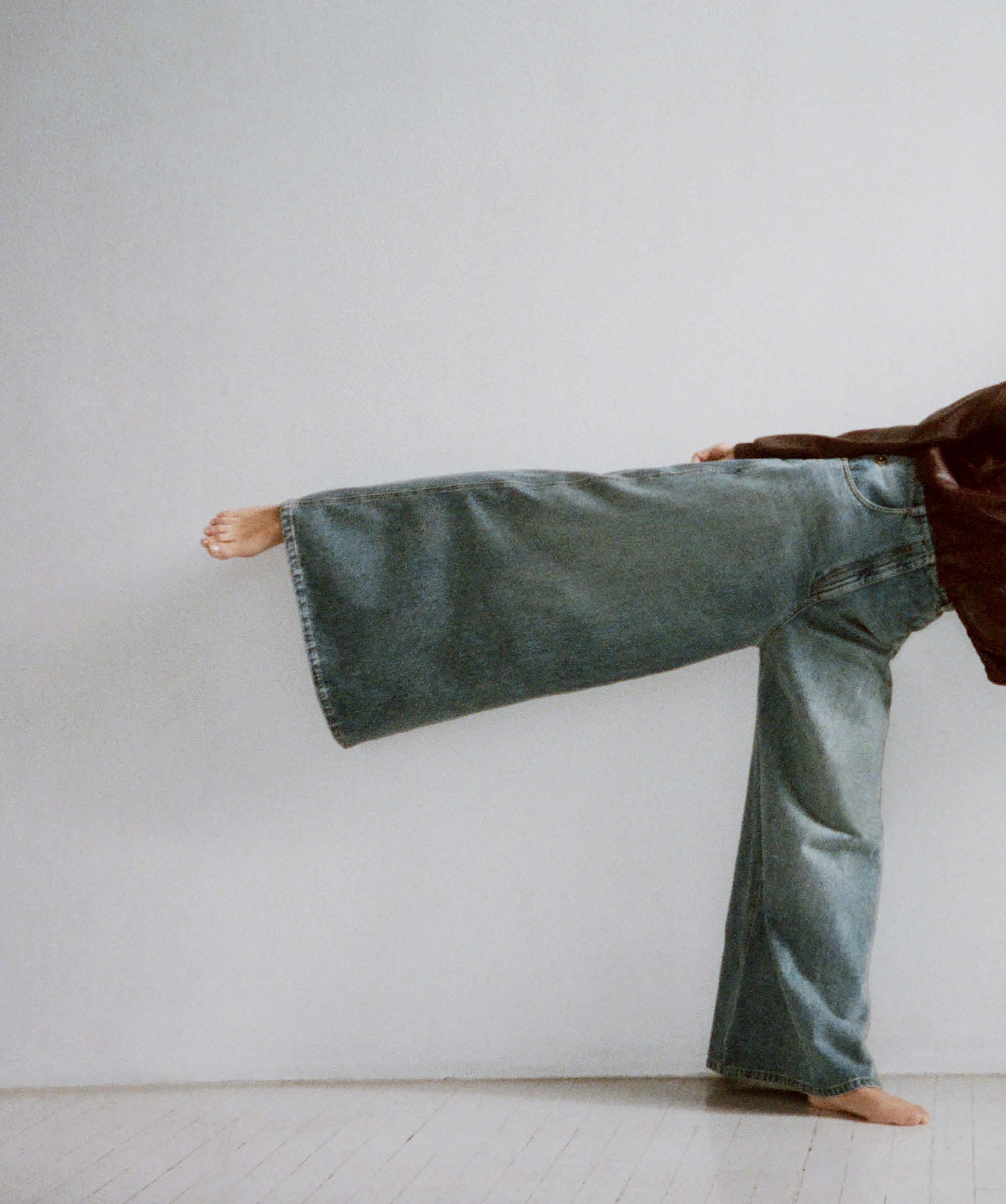
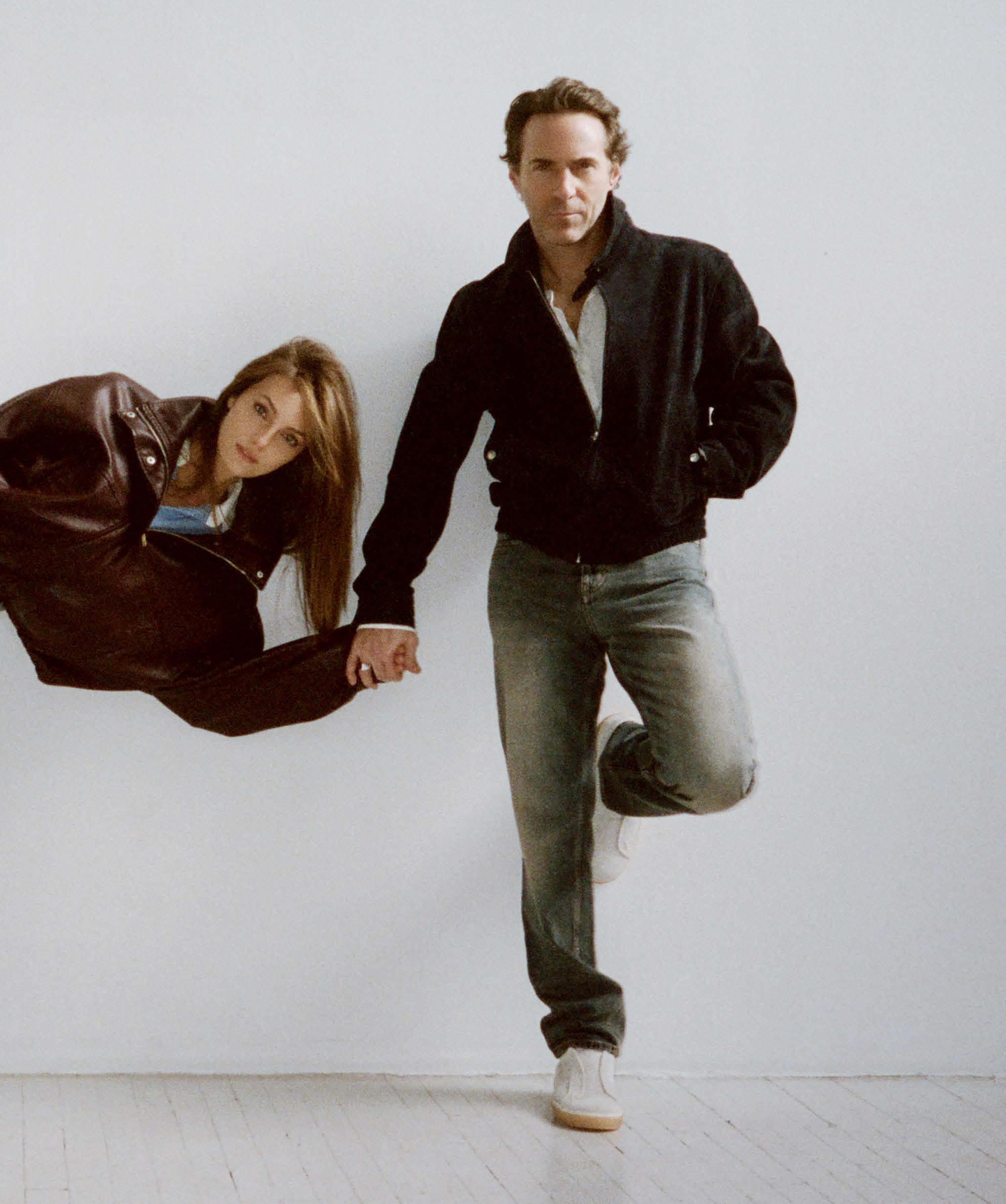

On George’s wish list: “A musical, and another action film.”
“In the ’90s, there was more sustained scrutiny and focus on celebrities like JFK Jr. and Carolyn Bessette, whereas information cycles are now so quick, and there are so many distractions. ” —Alessandro Nivola
How aware were you of Calvin Klein then?
AN: The ’90s was the era of Marky Mark and Kate Moss, which was not Calvin’s first go-round—he had an earlier burst of fame with Brooke Shields. This was his comeback moment. I got a Calvin Klein tuxedo for an event that I had to go to in the 1990s. I still have the suit in my basement. I dusted it off and wore it to the premiere of this show. Are there any lessons about fame from this series that might apply to your own experiences being in the spotlight with your wife, actress-writer-director Emily Mortimer?
AN: These are different times. Emily and I have a much more domestically focused kind of life, certainly, than Calvin and Kelly did. We’ll have periods where we’ll be promoting something, and then have long stretches where we’re almost in hibernation. We both prioritized family over a lot of the trappings of celebrity.

What are your favorite wellness practices?
AN: I do 10 minutes of exercise every day, physiotherapy stretching, to get the blood flowing. And then I speak Italian for 10 to 15 minutes a day on Duolingo, the language app. My father was Sardinian. I have a lot of cousins over there, and visit every summer. Willem Dafoe has it figured out. He’s got an apartment in Rome, a farm about 45 minutes outside of Rome, and an apartment in New York. And he only works with the coolest filmmakers. Playing Calvin Klein, did any style details make their way into your wardrobe?
AN: My boots. The boots I wear in the show are black
and pointy, with a big heel. He is tall like a string bean, and I’m average height. I kept the shoes, and wore them the night of the premiere. It’s funny, this show had a very inauspicious beginning. Photos got leaked from our camera tests, and some people were very upset with the hairstyling and clothes. The expectation was that it was going to be a disaster. I think the fact that it was good, and got some of the style right, came as a surprise.
What upcoming projects are you excited about?
AN: There’s a really funny and sweet indie I made with Amanda Peet called Fantasy Life. It won the audience prize at South by Southwest, and she won the best actress award. I’ll be doing The 99ers, a Netflix movie about the 1999 U.S. women’s national soccer team that won the FIFA Women’s World Cup and changed women’s sports forever. King Bee Productions, the production company I started with my wife, has about 15 projects in development, two of which are being made now. Emily has just written and directed her first feature, Dennis, coming out later this year. I’m going to be directing and producing a feature that I wrote called Orion, probably the biggest endeavor that I’ve ever taken on.
Have you heard from Calvin?
AN: Not at all, and I haven’t made an attempt to be in touch. I’d love nothing more than to spend an afternoon hearing his stories. He’s had one of the most fascinating lives of anyone in the past few decades. I’m sure he’s a great raconteur.

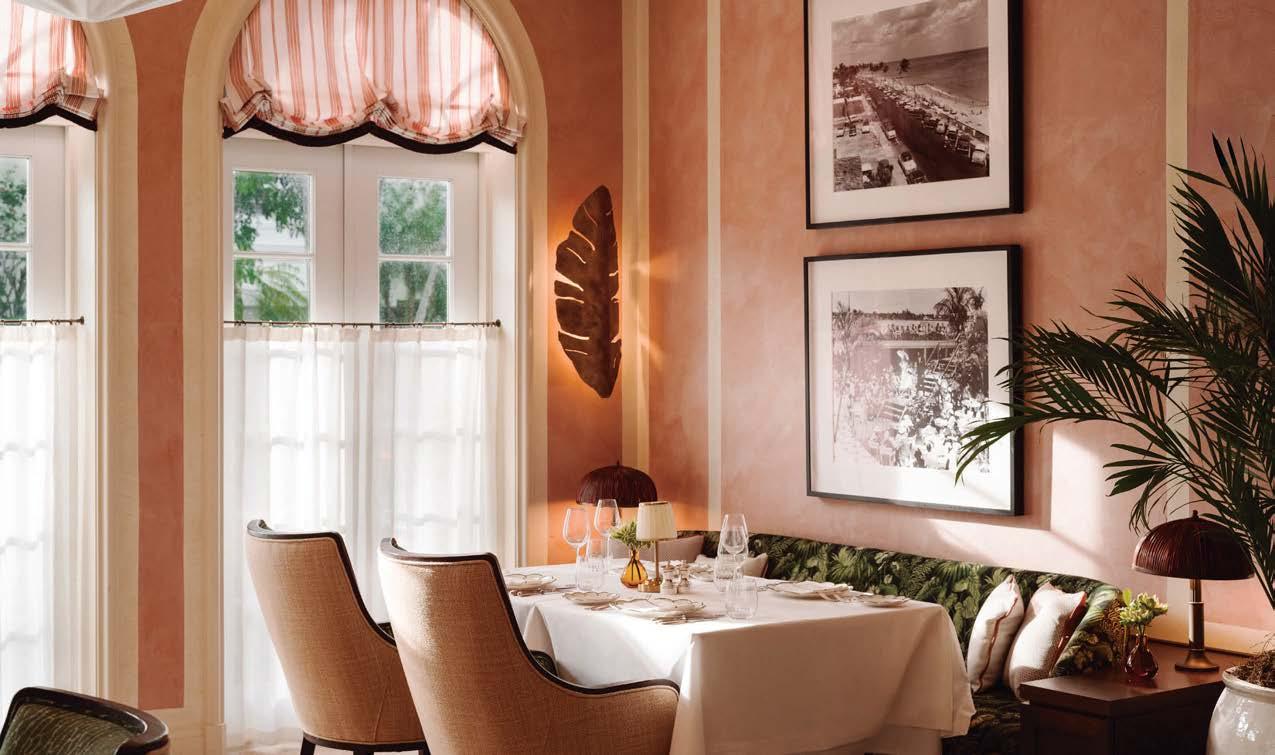
Oetker Collection’s first U.S. hotel, The Vineta, brings the French Riviera to Palm Beach.
BY ABBY TEGNELIA
Anyone who’s ever lingered over a long lunch at Hotel du Cap-Eden-Roc has surely wished they could bottle it—now the Oetker Collection’s just-opened The Vineta Hotel has, with Coco’s restaurant, the hottest new reservation in Palm Beach.
The much-anticipated hotel launched in February as the first U.S. property from the renowned hospitality group, the luxury portfolio behind Le Bristol Paris, Eden Rock St. Barths and Jumby Bay Island. Now expertly restored, The Vineta’s century-old Mediterranean revival landmark (it was formerly the Chesterfield Hotel) features 41 rooms and suites artfully appointed with island-themed flair.

It is also home to Coco’s, created in direct collaboration with the Hotel du Cap-Eden-Roc’s culinary team alongside The Vineta’s own executive chef Brian Rodriguez, who grew up in the Canary Islands of Spain and brings his own Mediterranean roots to the table.
“Coco’s is designed as a seamless indoor-outdoor dining space, with a light-filled room dressed in terra cotta and sun-washed tones, layered palms and vintage
photography, leading into a shaded, fragrant courtyard,” says Emanuela Setterberg Di Vivo, managing director of The Vineta. “The atmosphere evolves day to night: It starts relaxed in the morning, becomes more social at lunch, and then shifts into a vibrant and glamorous evening setting.”
Both Coco’s and the more casual, walkin Pool House—think lobster rolls, club sandwiches and a gelato cart—have been at near capacity since opening day, February 28.
“We were surprised and delighted that we had a line out the door on the first night to get into the bar,” Setterberg Di Vivo says.
With dishes celebrating refined flavors and coastal inspiration, Coco’s menu offers a passport straight to the French Riviera. The Steak Diane—what Setterberg Di Vivo calls “glamorous comfort food”—is prepared as it is at the Hotel du Cap, pan-fried with Dijon mustard and flambéed with cognac. “People tell me they dream about the morel mushrooms, too,” Setterberg Di Vivo says. “Think soft potato gnocchi, delicious chicken mousseline and spinach.” oetkerhotels.com/hotels/the-vineta-hotel
An inside look at the holistic hubs, new robotic recovery labs and European-inspired fare elevating the scene from West Palm to the waterfront. BY
REBECCA WALLWORK
Located in Flamingo Park, Higher Order reflects the new trend of social wellness, promoting holistic healing within community. The wellness club features a Movement Sanctuary for yoga and sound healing, a sauna, steam and cold plunge, medical
services such as functional lab testing and peptide therapy, and the Alchemy bar, serving zero-proof elixirs and adaptogenic blends for mindful socializing. higherorder.com
In Palm Beach Gardens, a new Degree Wellness flagship delivers healing services including advanced cryotherapy and NAD+ Anti-
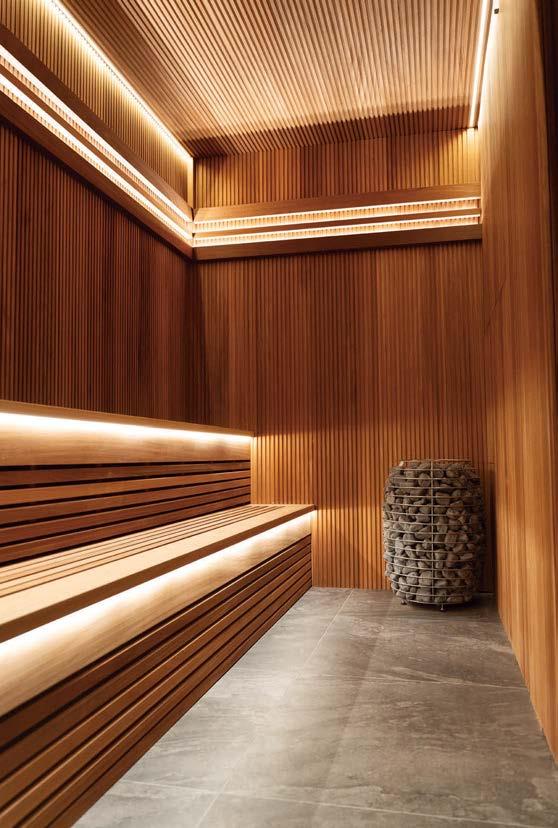
Aging and IV therapy, for those seeking a foundational membership in longevity. degreewellness.com
In West Palm Beach’s rapidly growing Nora District, new outposts of popular workout studios [solidcore] and Sweat440 reflect the neighborhood’s commitment to modern wellness. solidcore.co;
norawpb.com
Now open in Boca Raton, Protocol4 Health is an advanced wellness and longevity center that uses diagnostic testing to build personalized, sciencebased programs to address a wide range of health issues, from stress to sleep and immune resilience. protocol4health.com
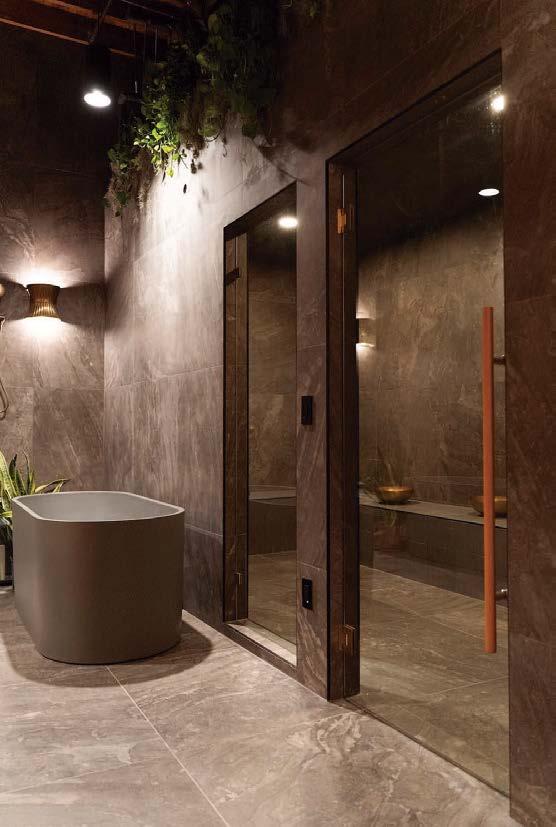
A crepe at the Parisian-style brasserie Pastis
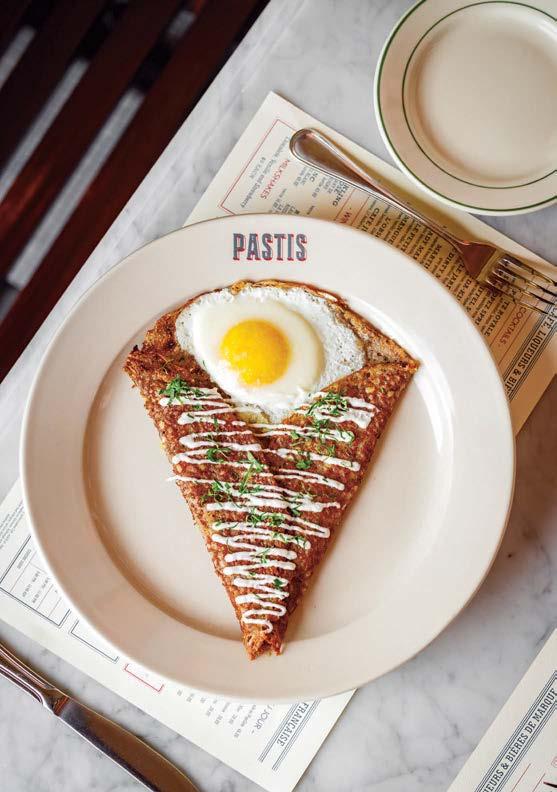
PALM BEACH PLATES
Find European flavor at the Tideline Palm Beach Ocean Resort, where Amalfi delivers a Mediterranean menu with Palm Beach polish. amalfipalm.com
Another waterfront newcomer is SeaHawk Prime by David Burke, offering the chef’s signature salt-aged steaks, fresh Florida seafood and a playful cheesecake lollipop tree. The marina-side restaurant is located inside the Nautilus 220 residence along the Intracoastal. seahawkprimebydb.com
At Mystic Table on West Palm Beach’s Clematis Street, opt for the signature Chef’s Table six-course tasting menu experience, with wine and cocktail pairings. Enjoy a blend of modern American-Italian and steakhouse dishes in
a refined, intimate lounge. mystictable.com
Craving Cuban? Emelina in West Palm Beach elevates the cuisine at a 16seat chef’s counter serving a single tasting menu. Courses are guided by the season, and the menu honors Cuban traditions while reimagining every bite. emelinawpb.com
Finally, the Nora District development continues apace, and this spring, diners can enjoy three new restaurants—rustic Italian fare at Indaco, Mediterranean-style seafood at Del Mar, and Parisian-style brasserie favorites at the latest outpost of Manhattan’s Meatpacking District’s legendary Pastis. Those on the go can grab nutritious juices and smoothies at Celis Juice Bar. norawpb.com
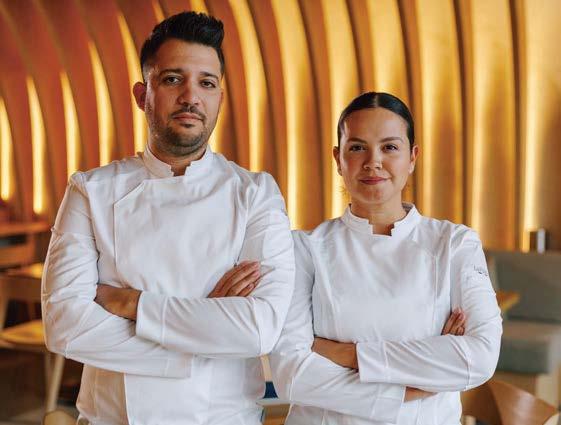
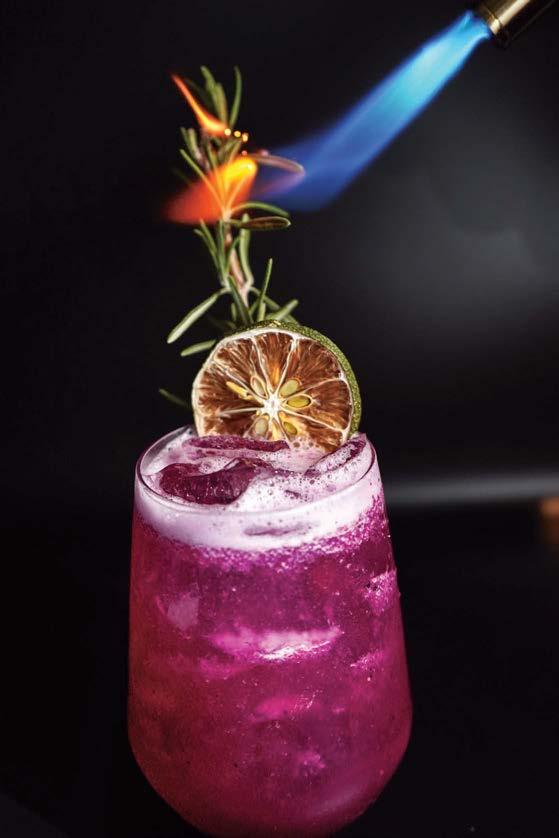
Inside the light-filled world of Tutto Mare, where Gianpaolo and Gabby Karan de Felice bring Mediterranean flavors and effortless chic to a historic Palm Beach landmark.
BY RAY ROGERS
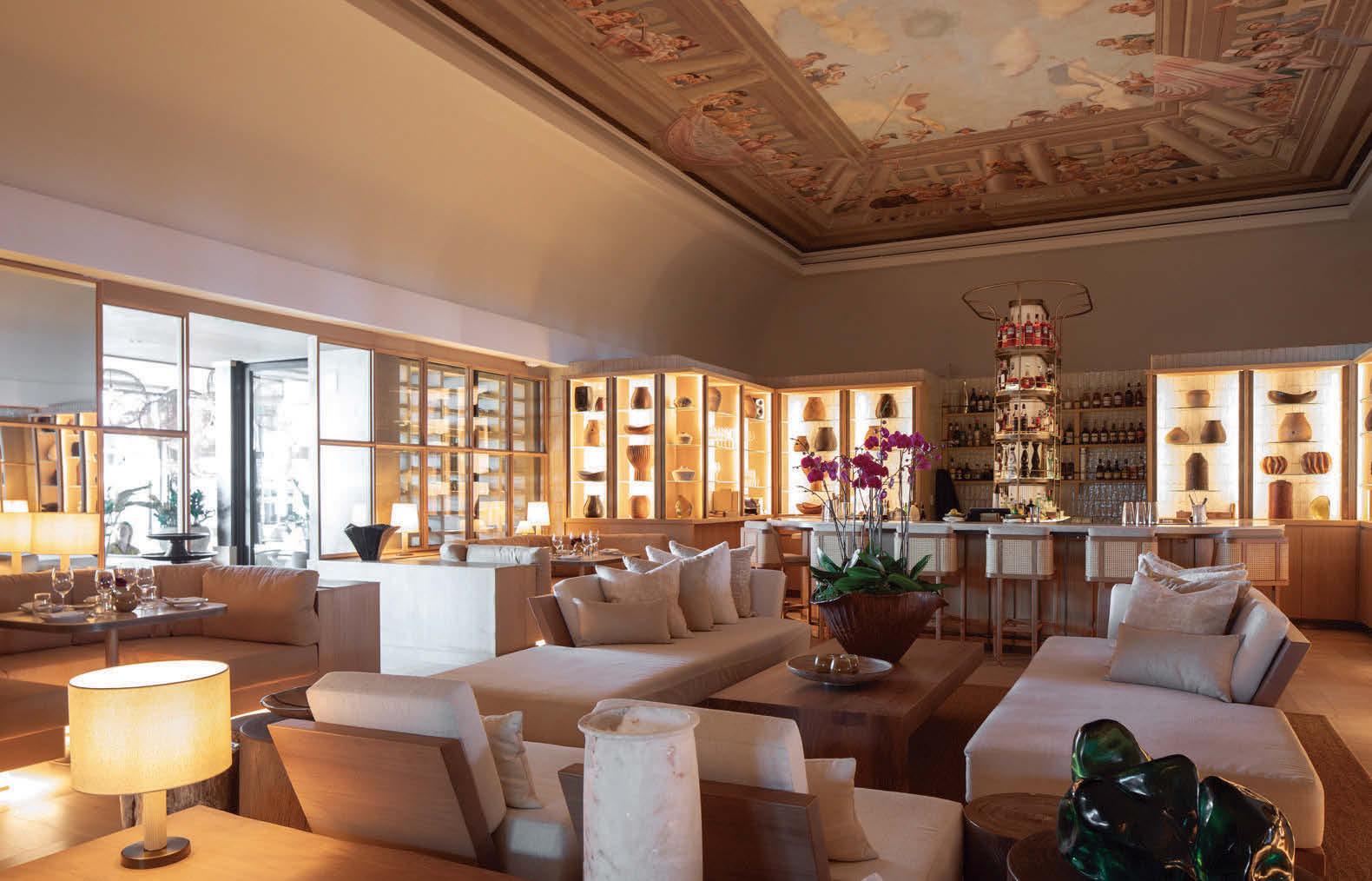
PURIST: Congratulations on the launch of Tutto Mare. Palm Beach is home to some of the culinary world’s heavy hitters and a wave of new Michelin recognition. In such a robust scene, what specific niche do you feel Tutto Mare fills? Why was this the perfect moment for the Tutto family to plant roots here?
Gabby Karan de Felice: Tutto Mare brings something truly unique to Palm Beach: the town’s first and only Intracoastal waterfront dining experience, combined with our signature approach to coastal Mediterranean hospitality. Our goal is not just to be part of the culinary scene, but to offer a place that feels both casually chic and incredibly welcoming—a true extension of our Tutto family. The timing felt natural, as Palm Beach continues to evolve into a year-round destination for a sophisticated yet relaxed lifestyle.
There is such a natural synergy and crossover between your loyal fans in the Hamptons and New York and the Palm Beach community. Do you view this space as a new seasonal home for that community? If so, how have you tailored the
experience to satisfy that familiar, “at-home” feeling?
Absolutely. Palm Beach feels like an extension of our Hamptons community. Many of our guests already move between these places seasonally, so creating a sense of continuity was essential. We’ve carried over the warmth, energy and sense of familiarity that define Tutto il Giorno, yet embraced the light, openness and coastal chic of Palm Beach. We want guests to immediately feel at home, whether you’re familiar or new to the Tutto experience. As we do in New York, we offer an Urban Zen shopping experience as well—art, furnishings, objects of desire, and my mom’s [Donna Karan] Urban Zen clothing collection—because who doesn’t love to shop when they’re out?
Beyond business, what are your personal experiences with Palm Beach? What do you love most about the area’s energy, and what does a perfect Palm Beach day or weekend look like for you both when you aren’t at the restaurant?
I love Palm Beach’s energy. There’s such a strong sense of community. What we love most is the connection to the water and the rhythm of the day. A perfect day might begin with a walk by the ocean, followed by time with family, and then transitioning into an evening centered around food, friends and conversation. And you can’t beat the beautiful weather.
You’ve taken over the waterfront space that once housed the John Volk-designed Celebrity Room at the historic Royal Poinciana Playhouse. If those walls could talk! How did you approach the indooroutdoor design to honor that history while infusing it with your signature aesthetic?
We approached the space with great respect for its historic glamour. The goal was to preserve its spirit while opening it up to the surrounding landscape. The design creates a seamless dialogue between indoors and outdoors, allowing the natural light and waterfront setting to be first and forefront. It’s about honoring memory while creating something that feels fresh, vibrant and timeless for today.
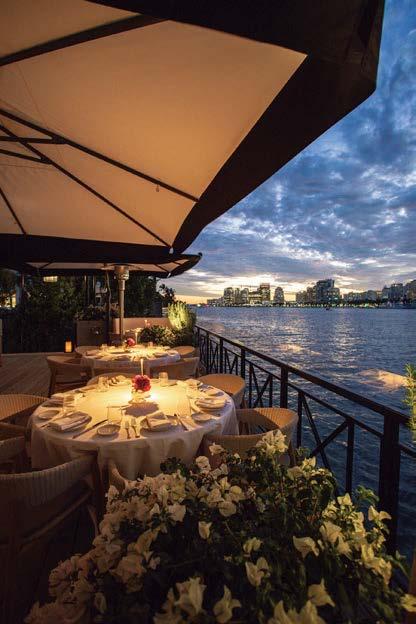
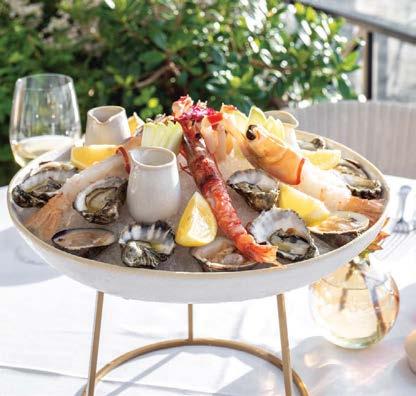
Gabby, as the designer, were there specific materials or aesthetic choices you made—perhaps reflective of the Palm Beach landscape—to ensure the space felt both fresh and deeply rooted in its environment?
The palette was inspired by the light reflecting off the water. We worked with materials like oak, travertine and teak for their texture, softness and timeless quality. We wanted a space that feels both elevated and effortless.
This project was a close collaboration with Bonetti/Kozerski Architecture. Like mine, their approach is one of understated luxury and warm minimalism. Together, we focused on editing each element down to its essence—allowing light, proportion and materiality to guide the experience.
The architecture and interiors were conceived as a dialogue between past and present. We wanted to honor the historic playhouse while opening the space to its waterfront
surroundings. It’s an environment that evolves throughout the day— capturing the softness of morning light, the brightness of midday and the warmth of evening—while always feeling intimately connected to the spirit of Palm Beach.
True to its name, the menu is beautifully seafood-centric. What specific dishes are you most excited to introduce, and are there any new additions to the Tutto repertoire that were inspired specifically by the Florida coast?
We’re especially excited about dishes like cioppino and paccheri with frutti di mare, which reflect our coastal Mediterranean roots. At the same time, being in Florida allows us to incorporate a new level of freshness and inspiration, drawing from the local waters and seasonal ingredients to evolve our menu in a way that feels both authentic and place-specific.
For a guest seeking a wellnessfocused experience, what is your personal perfect meal at Tutto Mare?
A simple meal that highlights the ingredients: starting with a light Gabriella salad followed by grilled branzino, accompanied by seasonal vegetables, and finishing with fresh fruit or tiramisu. It’s about letting the ingredients speak for themselves. Our drink menu complements the lightness and elegance of the cuisine. It includes a curated selection of wines and cocktails that feel refreshing and balanced—often with citrus and botanical notes—mirroring the coastal Mediterranean palate.
Purist readers value the story behind their food. How are you approaching sustainable sourcing for your seafood in Florida?
Sourcing is extremely important to us. We prioritize highquality, responsibly sourced seafood. We work closely with trusted purveyors to ensure freshness and integrity. Being in Florida gives us access to incredible local products, and we aim to highlight them whenever possible. tuttoilgiorno.com/tutto-mare/
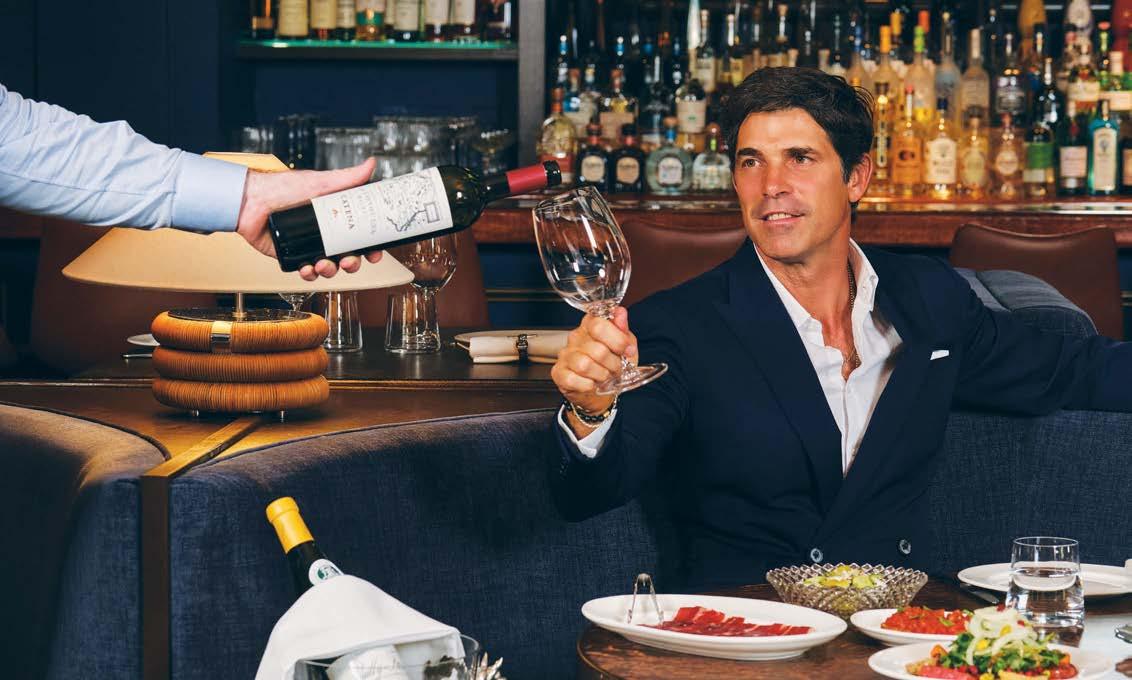
From the rolling grasslands of Argentina to the heart of Palm Beach, Nacho Figueras brings the high-energy grace and élan of the polo lifestyle to his buzziest new venture.
BY RAY ROGERS
In the soft glow of golden hour, where the manicured lawns of Wellington meet the coastal refinement of Palm Beach, a new destination has emerged that captures the soul of the equestrian lifestyle. The Polo Room—one of the buzziest launches of the season—comes galloping onto the scene at 251 Sunrise Avenue with all the grace and élan one would expect from its coowner, polo legend Nacho Figueras.
From the espresso-paneled walls and dark herringbone floors to the thoughtful equestrian flourishes—the silver horsebit napkin rings are an especially nice touch—the room, a collaboration between Figueras, Alex Gaudelet and Pat Boyle of Hopewell Design Shop—feels both
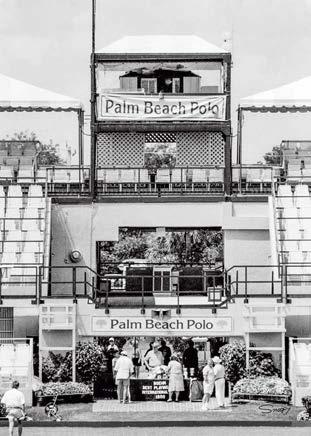
sophisticated and cozy. It is an intoxicating blend of Figueras’ Argentine heritage and Palm Beach elegance, anchored by a central art installation of archival polo photography curated with Ricardo “Snoopy” Motran.
For Figueras, this foray into the culinary world is a natural evolution of a life lived in the presence of horses. “Horses teach you very quickly that you cannot fake presence,” Figueras tells Purist. “They respond to energy, to calmness, to attention. If you are distracted or tense, they feel it immediately.” While the restaurant hums with the vibrant energy
“In Argentina, the asado is not just about cooking meat. It is about bringing people together. The Polo Room really grew from that idea. Everywhere I go, the best moments tend to happen around a table after the game. ” — Nacho Figueras
of the island’s social set, that underlying sense of connection remains the heartbeat of the experience for Figueras. “Spending your life around horses naturally teaches you to slow down and listen more,” he says. “It is a relationship built on trust, and that carries into other parts of life as well.”
Drawing inspiration from the Argentine asado, Figueras and restaurateur Thierry Beaud have created a space where the rhythm of the city meets the warmth of the hearth. “In Argentina, the asado is not just about cooking meat. It is about bringing people together,” Figueras says. “The Polo Room really grew from that idea. Everywhere I go, the best moments tend to happen around a table after the game.” Palm Beach felt like the natural home for this vision. “Wellington and Palm Beach have become such an important center for the equestrian world, and there was room for a place that reflects that lifestyle.”
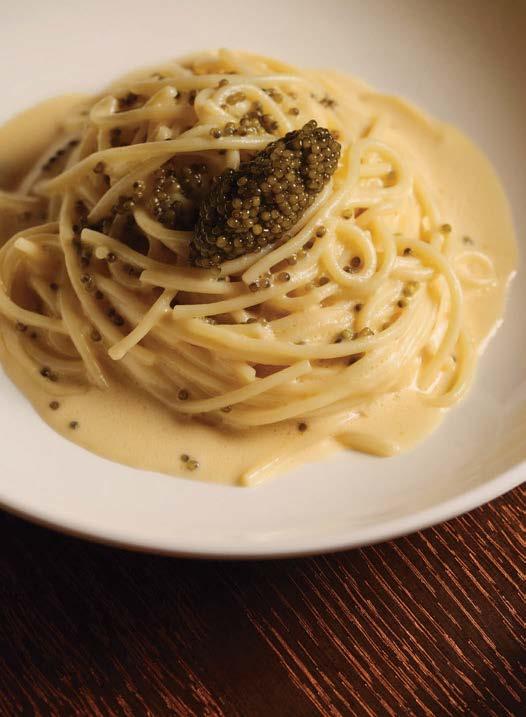
of the day. The experience is rounded out by a beverage program featuring over 300 wine labels and signature touches like a delightfully chilly Twenty-Two Below Zero (-22) Martini, served with a frozen olive, capitalizing on the sub-zero cocktail trend. In an era of “social wellness,” Figueras envisions the restaurant as a space for balance and connection. “Restaurants are still places of enjoyment and celebration,” he notes. “But people today are more conscious about how they eat...the balance comes from giving people choice.” This philosophy extends beyond the plate to the sustainability of the land itself. “Polo depends on open space, so protecting that balance is essential for the sport’s future. When you work with animals, you develop a respect for the land that supports them.”
The menu finds its perfect stride between indulgence and the modern desire for clean, nutrient-dense options. While the prime steak empanadas and asadostyle meats offer the “flavor of fire and simplicity” from Figueras’ childhood, the kitchen also honors its coastal surroundings. “I naturally gravitate toward the dishes that remind me of home,” he says, “but living in Florida, you have access to incredible fish—and the kitchen does a beautiful job keeping those dishes fresh and clean.” This global-meets-local approach shines in selections like the Red Argentinian Shrimp Cocktail and Golden Ossetra Caviar Tartelettes, which sit alongside the catch
As Palm Beach continues to grow, Figueras sees a future rooted in a more comprehensive sense of community. “What’s evolving is that people are thinking more holistically about wellness,” he says. “It’s not only about exercise, but also about community, connection and spending time in nature. Polo actually fits very naturally into that way of living.”
At its core, the perfect Palm Beach weekend for Figueras is simple: “A morning ride or time at the barn, a polo game in the afternoon, and dinner with friends or family.” And if they’re gathering at the Polo Room, that includes a homespun finish for dessert: Mima’s Chocolate Mousse, a recipe handed down from Figueras’ own mother that her grandchildren love. thepoloroompalmbeach.com

Explore the new wave of world-class spas, studios and innovative social wellness spaces in Miami.
Luce Divina’s architectural approach to clean, restorative light.
BY RAY ROGERS
For Mario Vitale, home is more than just a place to live; it is the ultimate sanctuary for well-being. The highpowered executive, who’s spent decades navigating the pressures of global leadership in the cybersecurity and insurance realms, has trained his focus on a different kind of power with his new candle company: the alchemy of clean light.
Luce Divina wasn’t born of a business plan, but a personal commitment to health. As both a cancer survivor who lost his wife to the disease, and a firsthand witness to the profound losses of 9/11, Vitale is uncompromising about what he brings into his living space. After moving into a serene Miami sanctuary, he went searching for a statement candle that matched the scale of his surroundings. Instead, he found a toxic reality.
“I discovered that 98 percent of the candles on the market were essentially petroleum products,” says Vitale. “Paraffin, lead-core wicks, synthetic fragrances—I refused to
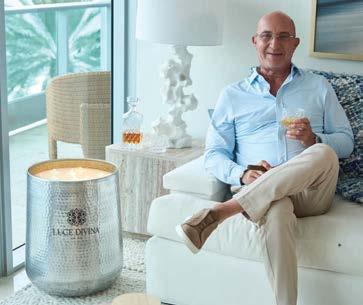
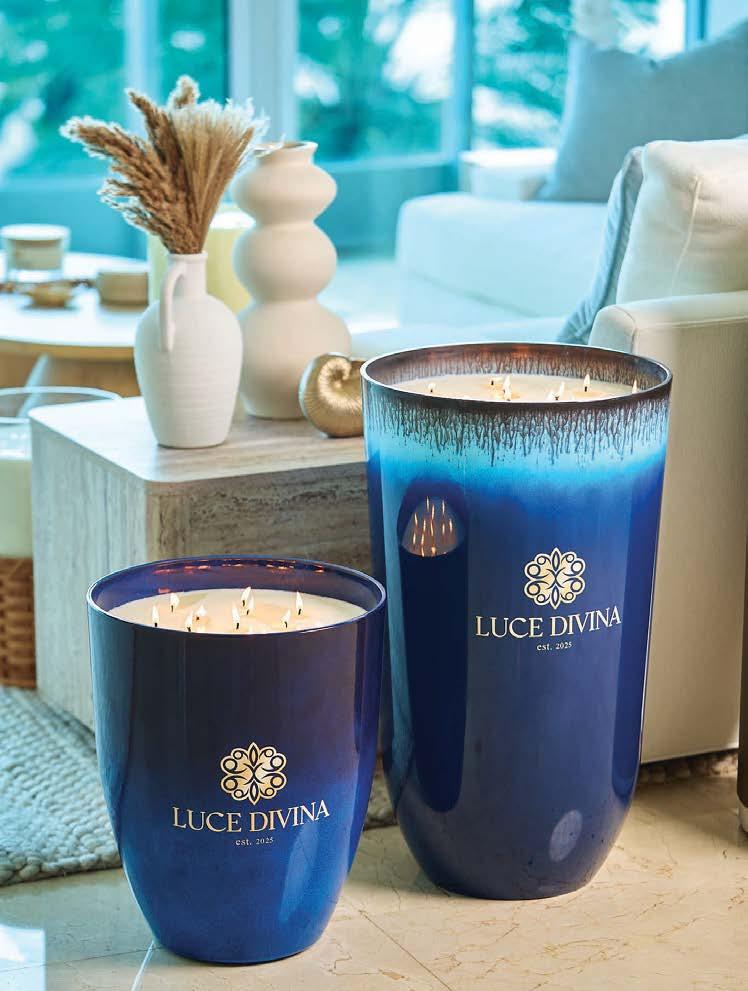
invite those carcinogens into my home.” When his search for a clean, architectural alternative yielded nothing, he built it himself.
After a serendipitous meeting with a family of local artisans in Miami, together they spent months experimenting to scale up organic candlemaking without compromising purity. The result is a line of massive, sculptural vessels—some standing 30 inches tall—made with 100 percent pure soy wax, cotton wicks and International Fragrance Associationcertified essential oils.
Growing up in a devout Catholic household on Long Island, Vitale’s first encounters with the transformative power of atmosphere were found in the flickering shadows and
incense-heavy air of the cathedral. This upbringing instilled a lifelong reverence for sandalwood, his personal favorite of a seven-scent collection that ranges from crisp, invigorating eucalyptus and bergamot to the grounding warmth of amyris and cedarwood.
These towering pieces, works of art in brushed brass, ceramic and hand-blown glass, are designed as permanent fixtures rather than disposables.
Once the roughly 1,700-hour burn time is complete, the brand offers a refill program, ensuring that the vessels become heirlooms. “It can stay in your home forever,” says Vitale. “It’s something you can pass on to generations.” lucedivinacandle.com

From cutting-edge hammams to poolside retreats, a new wave of wellness destinations is redefining the art of living in the Magic City. BY
REBECCA WALLWORK
The Delano Miami Beach reopens, introducing two new outposts for luxurious dining experiences. Italian favorite Gigi Rigolatto offers an indoor dining room, poolside tables and beach cabanas. Mimi Kakushi, the Osaka-inspired Japanese restaurant, meanwhile, will only be accessible to hotel guests and the Delano Members Club. delanohotels.com
The Design District continues to thrive as a go-to dining destination, with the recent openings of Karyu featuring a kaiseki-style menu and sake-heavy beverage menu—and Yasu Omakase helmed by the talented Yasu Tanaka, who also recently opened a handroll bar, Pari Pari, in Wynwood. Another newbie worth checking out is The Roof at The Moore, an intimate space for cocktails beneath the stars. karyu-mia.com; yasu-miami.com; pariparimiami.com; mooremiami.com
In South Beach, Dubai’s Greek-Mediterranean eatery
Gaia debuts this spring on South Pointe Drive. Fresh seafood anchors the experience, along with NYX, a velvet-textured, subterranean lounge.
gaia-restaurants.com
On the Miami River, Casa Neos Lounge and its members-only Casa Neos MM rooftop expand the area’s dining-nightlife landscape, with latenight DJs and elevated bottle service in the third-floor lounge, and a more intimate ambience in the fourth-floor members-only club. casa-neos.com
Cactus Club Miami launches its second U.S. location. The venue’s open floor plan accommodates more than 280 diners, and includes a semiprivate dining room and a lushly landscaped patio. cactusclubcafe.com
Fans of Palm Beach’s Buccan can now enjoy chef Clay Conley’s sweet corn and ricotta agnolotti and other dishes in a new Coral Gables location on Miracle Mile. The space will also include Imoto, serving sushi and Japanese small plates,
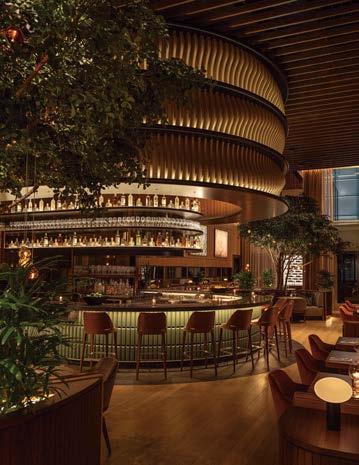
and the Buccan Sandwich Shop. buccancoralgables.com
Offering traditional Italian dishes in a contemporary setting, Seia arrives high in the sky in Brickell this season, with Biscayne Bay views from both the restaurant and the invitation-only members’ club, with a private terrace on the 55th floor. seiamiami.com

The season’s biggest wellness splash is the arrival of Miami’s first outpost of The Well in the Bay Harbor Islands. The all-in-one destination offers a bath house, fitness classes, health coaching, bodywork, IV vitamin therapy, acupuncture, and medical services to its members, residents and high-end business tenants. A second Miami location is under construction in Coconut Grove. thewellbayharbor.com
Elsewhere in the Magic City, bathing takes the spotlight with the opening of Hürrem Hammam Wellness & Spa in North Miami, and Grotto Baths on the way in Wynwood in early summer. Hürrem Hammam offers an authentic Turkish bathing experience under dome-shaped ceilings, while Grotto Baths honors the ancient tradition of communal thermal bathing, with a vast hydrotherapy circuit. hurrem hammams.com; grottobaths.com
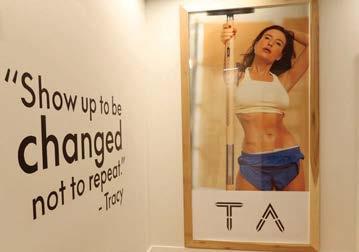
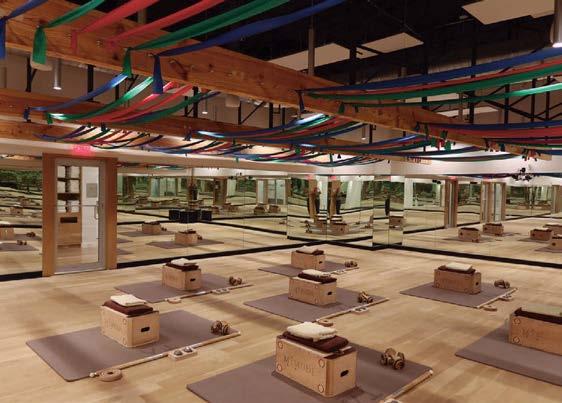
Hotels step up their spa game this season, starting with the longawaited opening of the Delano Miami Beach, which will debut a “social spa concept” called The Source by Delano, open to hotel guests and members, who will also enjoy access to a private pool and fitness studio. delanohotels.com
In North Beach, the Carillon Miami Wellness Resort has opened Cosmo Counter & Spa Miami, the nation’s first infrared sculpting studio. Treadmills, bikes and body rollers with infrared light panels turbocharge workouts, boost metabolism and enhance detoxification. Each 30-minute sculpting session can help burn up to three times as many calories as a traditional workout, and includes access to the Carillon’s thermal hydrotherapy circuit, private beach and oceanfront pools. carillonhotel.com
Downtown, Gale Wellness Spa is now open at the Gale Hotel & Residences, offering a co-ed hammam, sauna, cold-plunge pool and treatments like the Gale Fit Life body-sculpting massage. galehotelmiami.com
In Coral Gables, the gym scene glow-up includes the opening of Pause Studio, with its private infrared saunas and cold plunges, float therapy and restorative IV drips. pausestudio.com
Fellow newcomer Gratitude pairs a state-of-the-art gym, yoga and Pilates space with recovery studios offering Normatec compression therapy, redlight therapy and hyperbaric oxygen sessions. gratitudemiami.com
Tracy Anderson has landed in Miami, with a new studio in Coral Gables offering a full roster of muscular structure and dance cardio programming. tracyanderson.com
Pilates is the name of the game in Coconut Grove this spring, with the opening of Club Studio—pairing reformer Pilates with cryotherapy and red-light therapy—and BodyRok, the low-impact reformer concept with custom workouts like Buns & Guns and Six-Packs & Backs. clubstudiofitness.com; bodyrok.com
The cult-favorite Anatomy recently opened its newest and largest location in Aventura, featuring a comprehensive recovery space with hot and cold plunges, sauna, and steam room. anatomyfitness.com
Aventura is also where you’ll find Miami’s first covered rooftop luxury padel club, Icon Padel Seven custom-designed courts are complemented by private cabanas, lounges, a recovery circuit, restaurant, bar and matcha cafe. iconpadelclub.com
Nearby, the new, third location of Mimi Yoga & Pilates offers infrared heated classes. mimiyoga.com
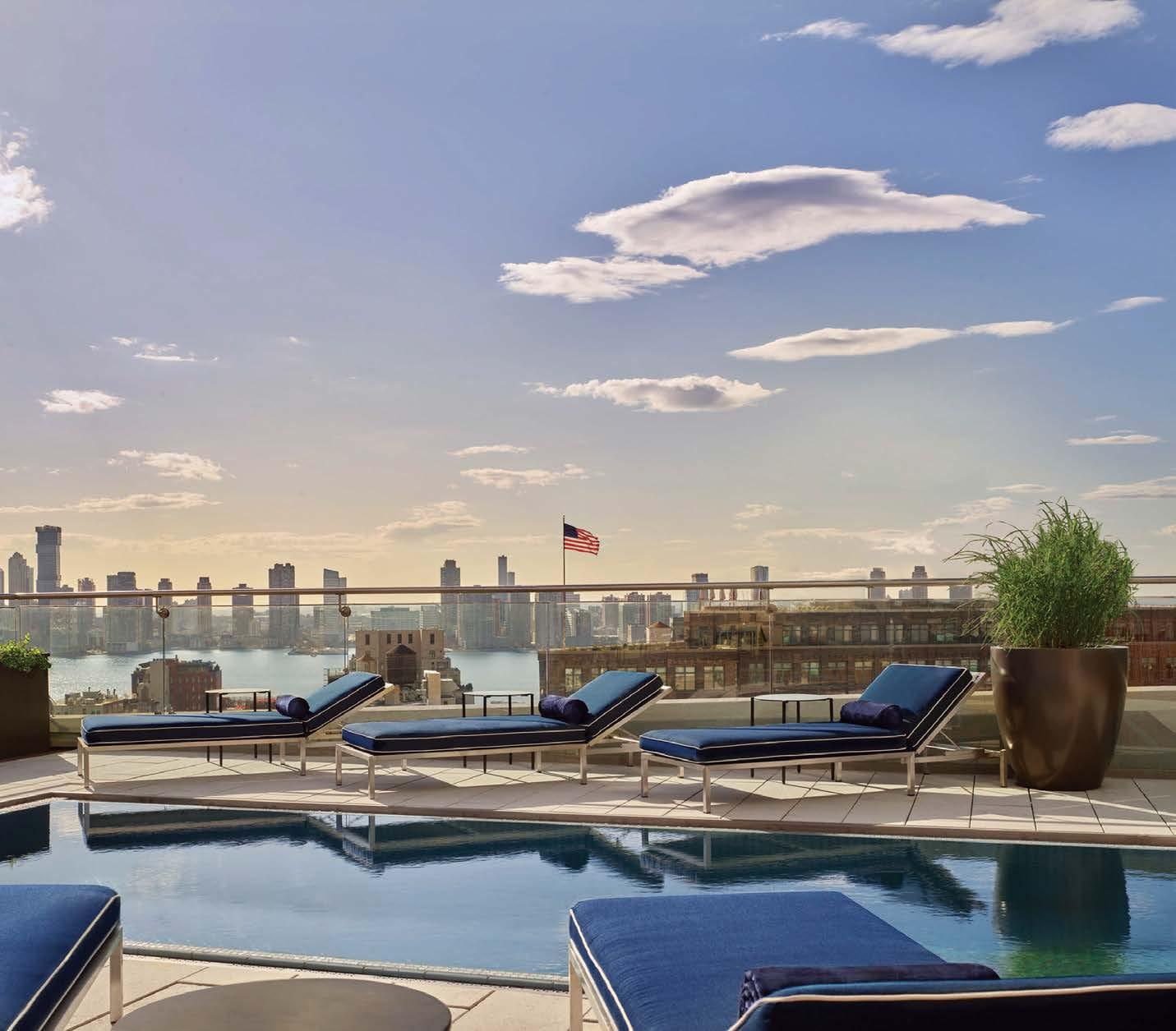
Your guide to the Big Apple’s premier wellness outposts, designed to harmonize highperformance technology with the art of restoration. Plus, new places to dine mindfully.
BY JULIA SZABO
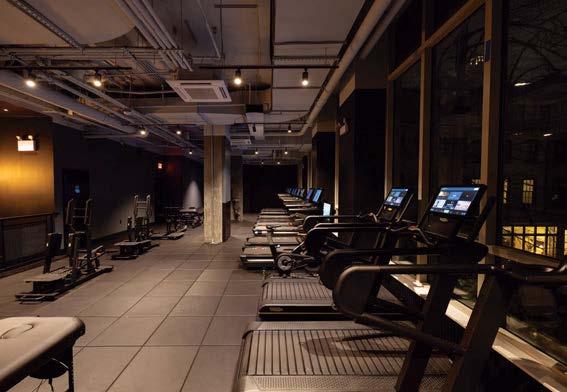
Renowned for combining high tech with haute design, New York City earns its reputation as a global wellness destination, offering residents and visitors—in every corner of the Big Apple—the best of the best, from cuttingedge treatments to deluxe dining experiences.
Continuum (West Village) applies AI to NM (natural modalities) to help optimize your lifespan, vitality and performance. Services include red-light beds, magnesium float tanks, cold plunge pools and hyperbaric oxygen chambers. Prioritizing exclusivity, Continuum caps its membership at 250. 676 Greenwich St., continuum.club
An 8,000-square-foot wellness sanctuary housed in an 1840s tunnel in Tribeca, Moonrise promises to be a rare space of silence


and healing in the bustling Big Apple when it debuts this spring, offering members a peaceful way to socialize (such as early-morning mindful dance parties to wake the body), focus on inner work and learn from cultural leaders.
Promising the most advanced longevity and regenerative treatments available, designed to enhance energy, reduce inflammation, and support cellular repair, Hamptons BioMed—co-founded by Purist ’ s contributing health editor Tapp Francke Ingolia—unveils its NYC second home: the Upper East Side’s new destination for holistic, personalized wellness. hamptonsbiomed.com
Put your renewed longevity to the test at the nearby WorkShoppe (Upper East Side), a spacious (17,000-square-foot), strength-focused gym with five-star flair.
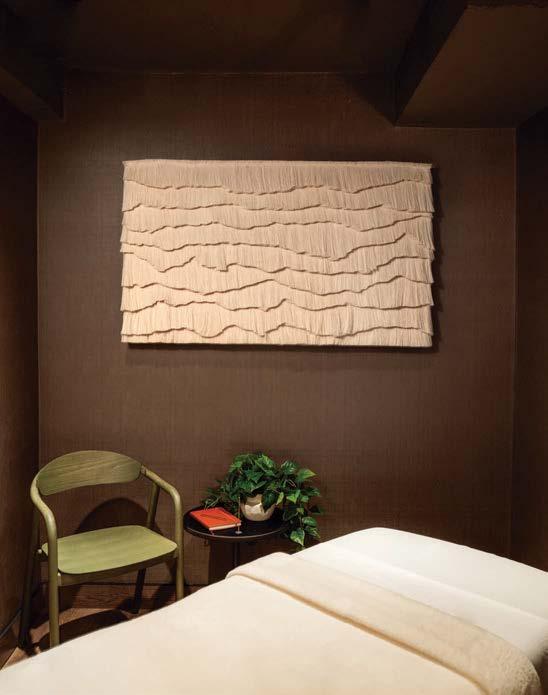
workshoppefitness.com
Kevyn Zeller Pilates+, a boutique studio that became one of the Hamptons’ most soughtafter wellness destinations, opens its first semiprivate studio in NYC at 111 ½ East 62nd Street. Its methodology, two decades in the making, is prescription-based, assessment driven and taught in an intimate fourperson format, utilizing Cadillac, Reformer and Chair apparatus.


studio.kevynzeller.com
The recently opened Life Time Fifth Avenue in Midtown offers biometric testing to customize its personalized training, breath work, yoga and recovery services. lifetime.life
Another Midtown destination for fitness fun is Moss, a five-story private membership wellness club where pickleball joins the more serious offerings (high-
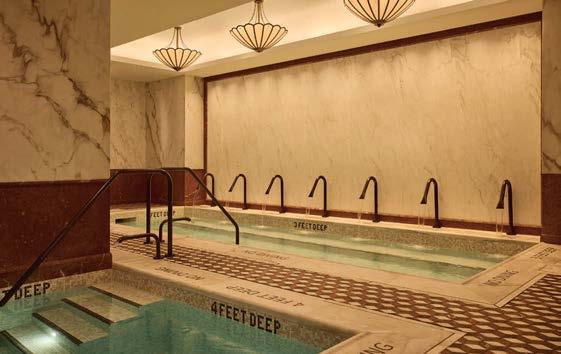
end fitness, thermal suites, Pilates). moss.nyc
The West Village’s Intuisse Spa at Maison Hudson showcases the decadence and precision of Switzerland—not with chocolates or timepieces, but with a luxury sauna, steam room and cold plunge pool. Farther north and west, at Equinox Hotel New York, a jewel of Hudson Yards, melt the winter ice for good with curated spring recovery protocols, featuring infrared sauna and cryotherapy. maisonhudson .shop, equinox-hotels.com
Meanwhile, at Saint in Chelsea, solo saunaistas may book one-hour
sessions in fully private, individual, cedar sauna and ice bath suites. April brings SweatHouz to Tribeca, specializing in private contrast therapy (infrared sauna and cold plunge). 242 W. 29th St., saint.nyc, sweathouz.com
Prefer a less solitary experience? Renowned as a “social wellness” club, Flatiron’s Remedy Place promotes community via guided ice baths, saunas, yoga, floor Pilates and red-light therapy. 21 W. 21st St., remedyplace.com
Also in Flatiron, The Well plans a grand reopening; look forward to integrative medicine and health coaching. the-well.com
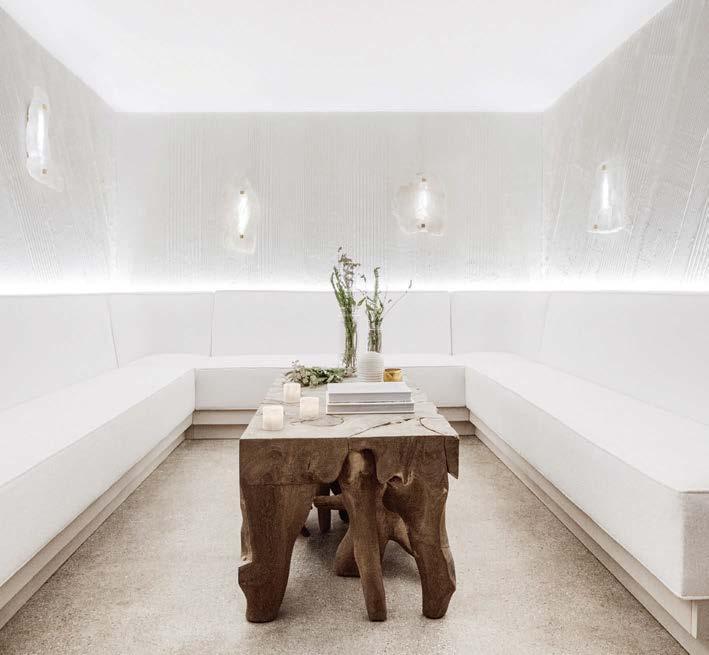
If you’re of the mind that longevity loves company, visit Othership, the “social wellness club” in Williamsburg, Brooklyn, which celebrates communal rituals with a 100-person sauna, dual communal ice baths, and a tea lounge fostering social connection sans cellphones or spirits. othership.us
For the ultimate in exclusive recovery, Kith Ivy (120 Leroy St.) looks set to revolutionize the West Village wellness scene. It pairs a five-figure membership fee and strict dress code (no shorts, please) with a bold blend of sport and high-end
hospitality. You’ll also find elevated on-premises dining that ranges from NYC’s first outpost of the Los Angeles smoothie specialist Erewhon to deluxe hearthealthy Mediterranean cuisine. The spa was envisioned by none other than the late Giorgio Armani, and the pro shop has the exclusive on Kith’s love-all partnership with legendary tennis brand Wilson. Befitting its powerhouse fashion roots, Kith Ivy rolls out pricey Persian carpets for its well-heeled members, beckoning them in for a one-stop wellness recharge they won’t soon forget. 120 Leroy St., kithivy.com
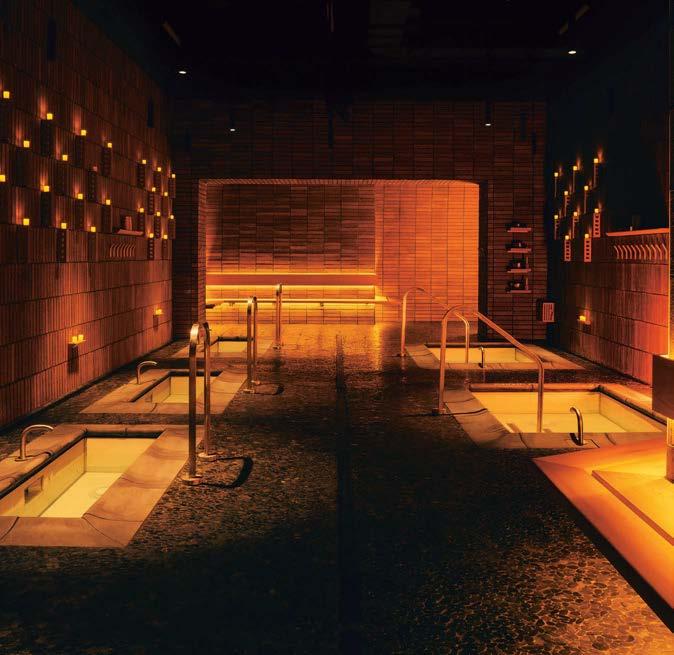
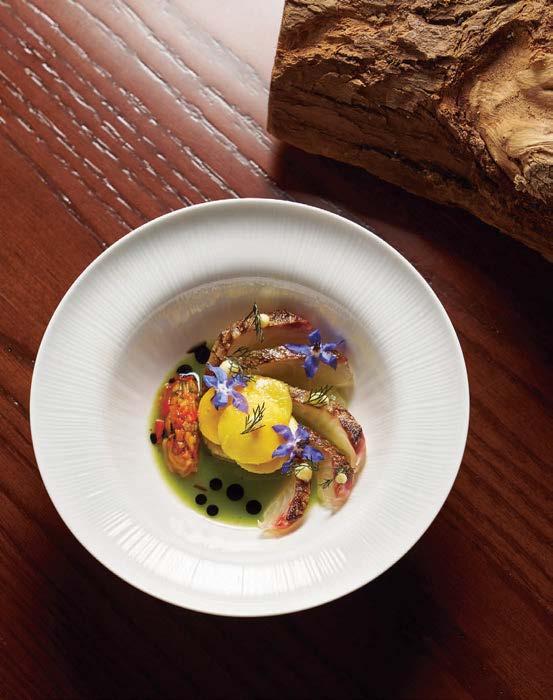
If all that regenerative action makes you hungry to refuel, rest assured that culinary connoisseurship keeps NYC front and center on the world food map, highlighting seasonal, plant-forward ingredients, farm partnerships and thoughtful preparations.
Opening in spring 2026, Oyatte is a 30-seat finedining spot helmed by chef Hasung Lee (formerly of Atomix and The French Laundry). Partnering with Crown Daisy Farm of upstate New York,
Lee delivers technical precision, fermentation and sustainable sourcing. hasunglee.com; @oyattenyc
Also slated for a spring 2026 opening, Oriana is the latest from the team behind The Noortwyck. An ode to the wood-fired grill, the menu focuses on seasonal vegetables, fresh seafood and large-format meats. The keto theme continues at Or’esh, where chef Nadav Greenberg grills on wood and coal, sourcing regional extra-virgin olive oils and processing whole lamb in-house, daily.
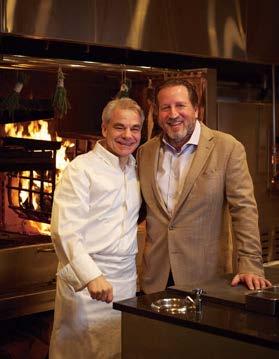
oriananewyork.com, oresh.com
More prime protein will be on offer at Cleo Downtown, a rotisserie-focused reenvisioning of the classic brasserie. The menu features day-to-evening golden rotisserie chickens served with market-driven salads, herb-forward sauces and seasonal vegetables. 621 Hudson St.
For carb lovers out to treat themselves after a wellness workout, Nolita’s Rye by Martin Auer showcases
sourdough loaves lovingly baked from the rye grain of his homeland, Austria, while Confidant now in a new Brooklyn location— plies a sensuous “seasonal culinary concept,” including desserts and house-made breads by gifted pastry chef Mariah Neston. confidantnyc.com
At Saverne, the new Hudson Yards sweet spot for the culinary cognoscenti, globally renowned chef Gabriel Kreuther applies his luminous light touch to the hearty Franco-German fare of his homeland, the legendary Alsace region that shotgun-married two very distinct culinary traditions. Look for woodfired black cod with green garbanzo beans and pimiento nage, or spaetzle (traditional German dumplings) fricassee, with Xeres soubise and char-grilled ratatouille Napoleon (très Francais). savernenyc.com
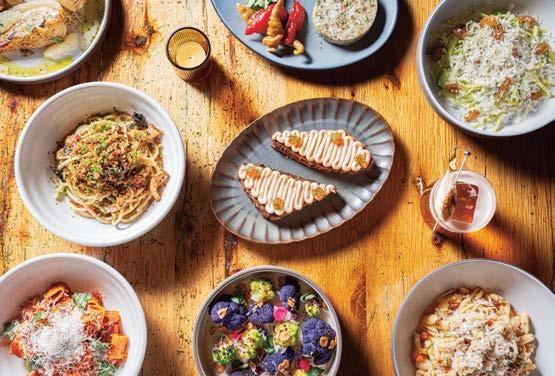


A by-the-numbers look at actress Meryl Streep, as The Devil Wears Prada 2 brings the iconic Miranda Priestly back to center stage.
13
Age the actress began formal voice training, dreaming of opera while studying with renowned vocal coach Estelle Liebling.
326,000,000
Estimated global box-office dollars earned by The Devil Wears Prada (2006), the film that transformed Miranda Priestly into a fashion archetype.
21
Record-setting number of Academy Award nominations she’s earned. Streep won Best Actress for her roles in 1982’s Sophie’s Choice and 2011’s The Iron Lady, and Best Supporting Actress for 1979’s Kramer vs. Kramer.
8
Accents she has performed in major films—ranging from Polish and Danish to British and Bronx.

“The formula of happiness and success is just being actually yourself, in the most vivid possible way you can.”
1949
The year Mary Louise “Meryl” Streep was born in Summit, New Jersey—raised by her mother, Mary Wilkinson, a commercial artist and former editor, and her father, Harry William Streep Jr., a pharmaceutical executive. She grew up in the Garden State with her two younger brothers, Dana and Harry III.
2008
The year Streep surprised audiences with Mamma Mia!, singing ABBA’s “The Winner Takes It All” and “Slipping Through My Fingers.”
5
Broadway productions that shaped Streep’s early stage career, including her debut as Miss Imogen Parrott in Trelawny of the “Wells” and her Tony-nominated performance as Lt. Lillian Holiday in the BrechtWeill musical Happy End.
1
The LSAT exam for a potential law school route that she slept through, a small misstep that redirected her toward a legendary acting career.
13
Number of productions Streep performed in while studying at the Yale School of Drama before earning her MFA in 1975. Roles included Beatrice in Much Ado About Nothing and Constance Garnett in The Idiots Karamazov






Licensed Associate Real Estate Broker m 516.380.0538 | gdp@corcoran.com
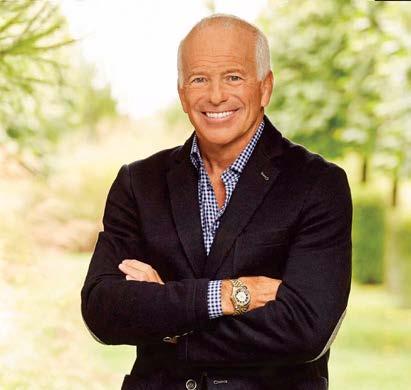


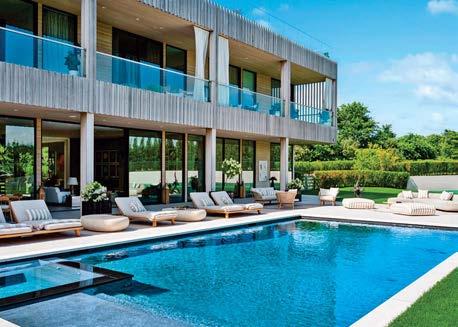
Water Mill. Set on a 50-acre reserve, this 11,200 SF modern estate by East End Building offers luxury and comfort. Completed in 2024, it features eight bedrooms, nine full and two half baths, and an elevator leading to a roof deck with 360-degree views. Expansive Fleetwood windows blur indoor-outdoor living, flooding the home with natural light. The dramatic foyer features an 11-foot entry door and a floating steel staircase. The open-concept first floor includes a living room with a 90-inch gas fireplace, a study with a wet bar and fireplace, and a state-of-the-art kitchen with Gary Ciuffo cabinetry, Gaggenau and Wolf appliances, a butler’s pantry, and a chef’s prep kitchen. A private guest suite offers a spa bath and patio access. Hydronic radiant heat extends throughout. The second level features a primary suite with dual terraces, a spa bath, and a walk-in closet, plus four ensuite bedrooms with private decks. A second full-service laundry room adds convenience. The 3,000 SF lower level is a retreat with a 1,200-bottle wine cellar, two bedroom suites, a powder room, screening room, game room, gym, sauna, golf simulator, and courtyard access. Resort-style amenities include a 20’ x 40’ heated saltwater pool with a multi-jet spa, expansive patios, a full outdoor kitchen, an all-weather tennis court, a sprawling lawn, and a 2,000 SF rooftop terrace with a putting green and Sonos audio.Premium materials include Abodo Fine Sawn Face Vulcan cladding, Timbertec sustainable decking, a Lutron lighting system, and concealed HVAC vents. Smart-home technology completes this masterpiece. Co-Exclusive. $11.995M | Inquire About Summer Rental WEB#898434