A New Spin Revolutionising the laundry industry
FOR ALUMNI AND FRIENDS OF THE PORTSMOUTH GRAMMAR SCHOOL

ISSUE 28 | 2025
Life’s a Beach Sailing off the beaten track in the Philippines
Bridging the Broken Working with survivors of genocide


A New Spin Revolutionising the laundry industry
FOR ALUMNI AND FRIENDS OF THE PORTSMOUTH GRAMMAR SCHOOL
ISSUE 28 | 2025
Life’s a Beach Sailing off the beaten track in the Philippines
Bridging the Broken Working with survivors of genocide
10 A remarkable year of giving Celebrating a record breaking year for the William Smith Fund
12 Investing in the future
An update on plans for the School site
13 Life’s a beach
Oliver Canavan on running boat tours in the Philippines
16 I’ve started so I’ll finish OPs who’ve appeared on TV game shows share their stories
20 Bridging the broken
Francis Davis on his work with survivors of genocide
23 Ghosts of the past
John Sadden shares tales of ghostly goings on at the School
26 In stitches
James Alderson is bringing comedy to your doorstep
28 Flying fish and a shrunken head
Uncovering artefacts from the short-lived School museum
30 Game on
Maddison Gould takes us behind the scenes at PlayStation Studios
32 A new spin on laundry
Washing heads into the space age courtesy of Dr Kyle Grant-Talbot
Cover image: Joffrey Vandenbussche
36 No smoke...
How a stray cigarette butt provoked a rebellion
38 Crossing the iron curtain
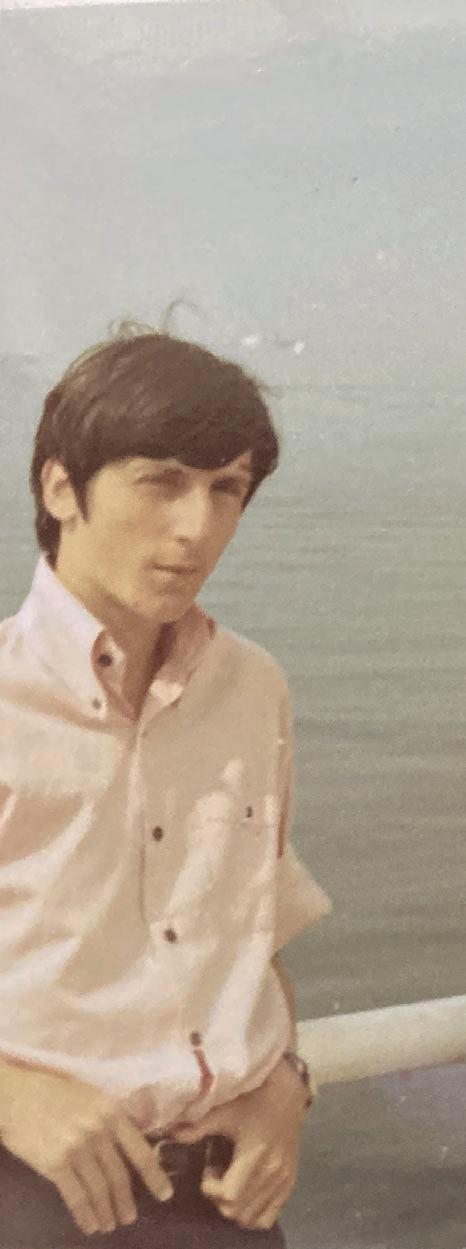
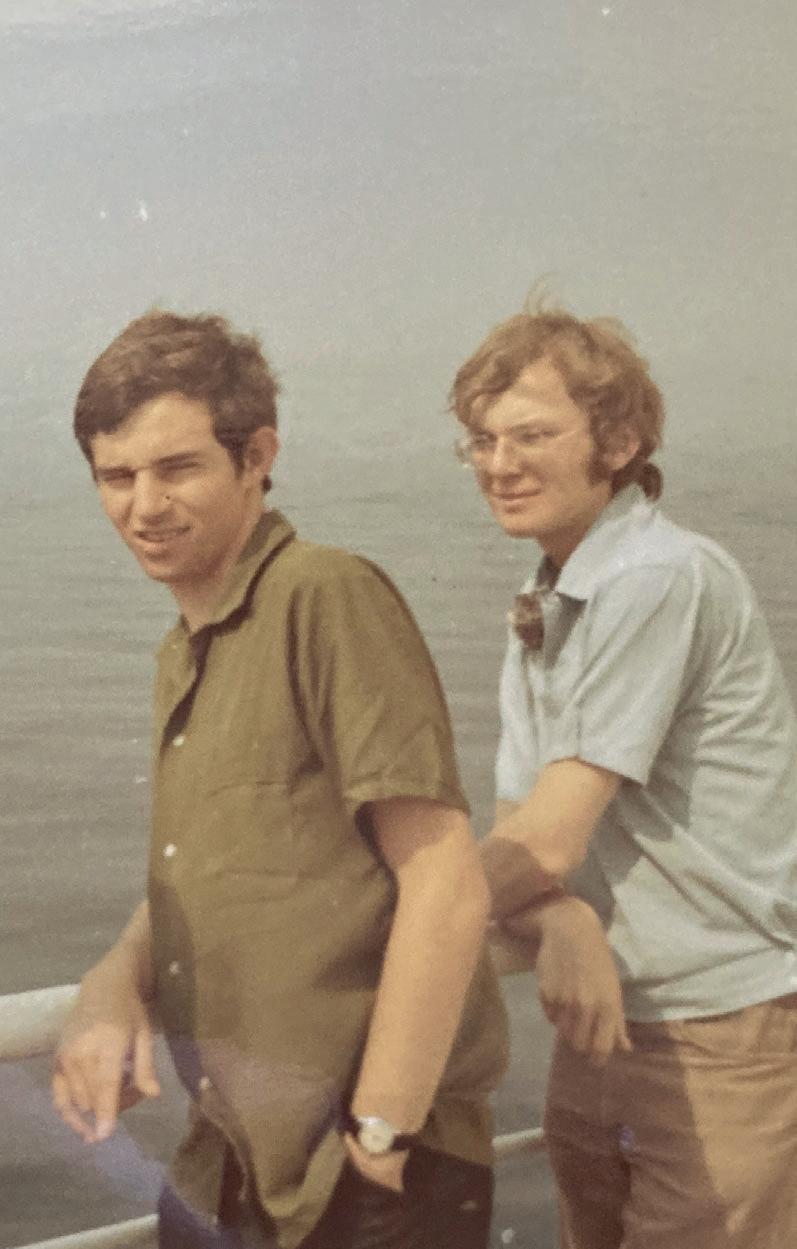
Richard Cunningham shares his memories of a school trip to Russia in 1970
42 Showing up to stand out
Harnessing the power of personal brand with Ciara O’Neil
04 School news
A round-up of PGS news and events
09 Dates for your diary
Our upcoming events
44 OP news News from Old Portmuthians
48 In memoriam
OPUS is saddened to report the deaths of alumni and friends
50 Ask the archivist
Meet our new Archivist: Sarah Speller
51 Parting shot
Do you recognise any of these familiar faces?
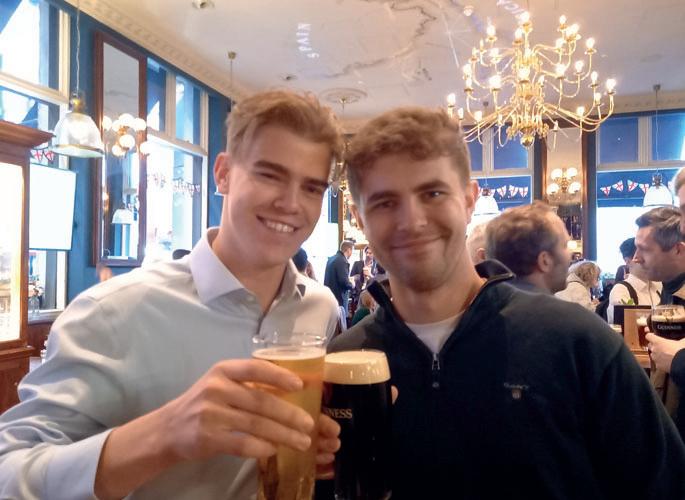
In mid-March we had the pleasure of hosting alumni and former staff down the road from the School. The Dolphin, a familiar haunt for some generations of OPs, provided the backdrop for an enjoyable evening with a good mix of OP eras. From memories of field trips and specific teachers to tales of some unbelievable pupil pranks, there was plenty to talk about.
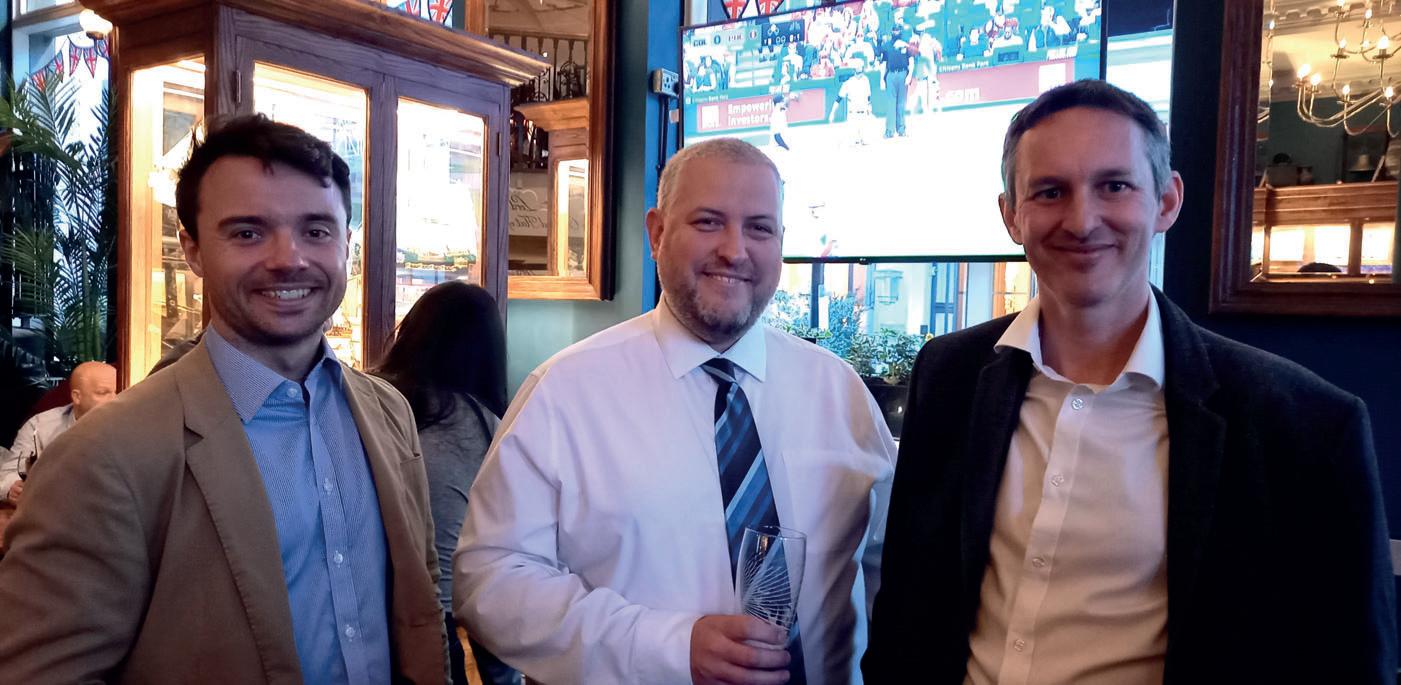
A few weeks later we headed to Trafalgar Square, London where we were joined by OPs from the Class of 1957 all the way through to our most recent leavers - the Class of 2024. It was an evening of connecting and reconnecting with plenty of conversations still in full flow as we left.
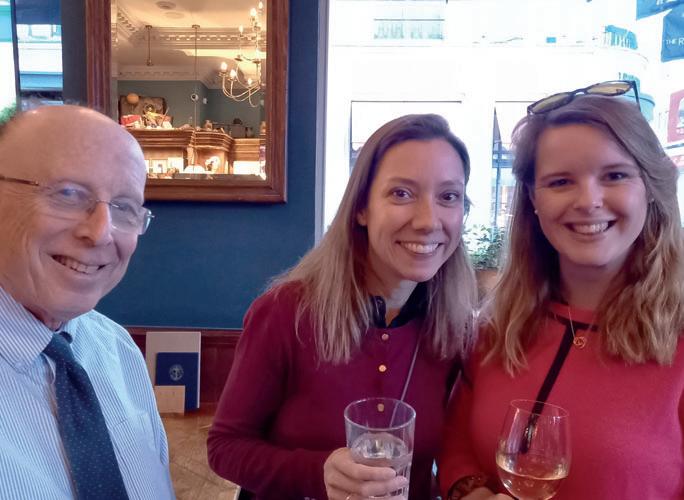
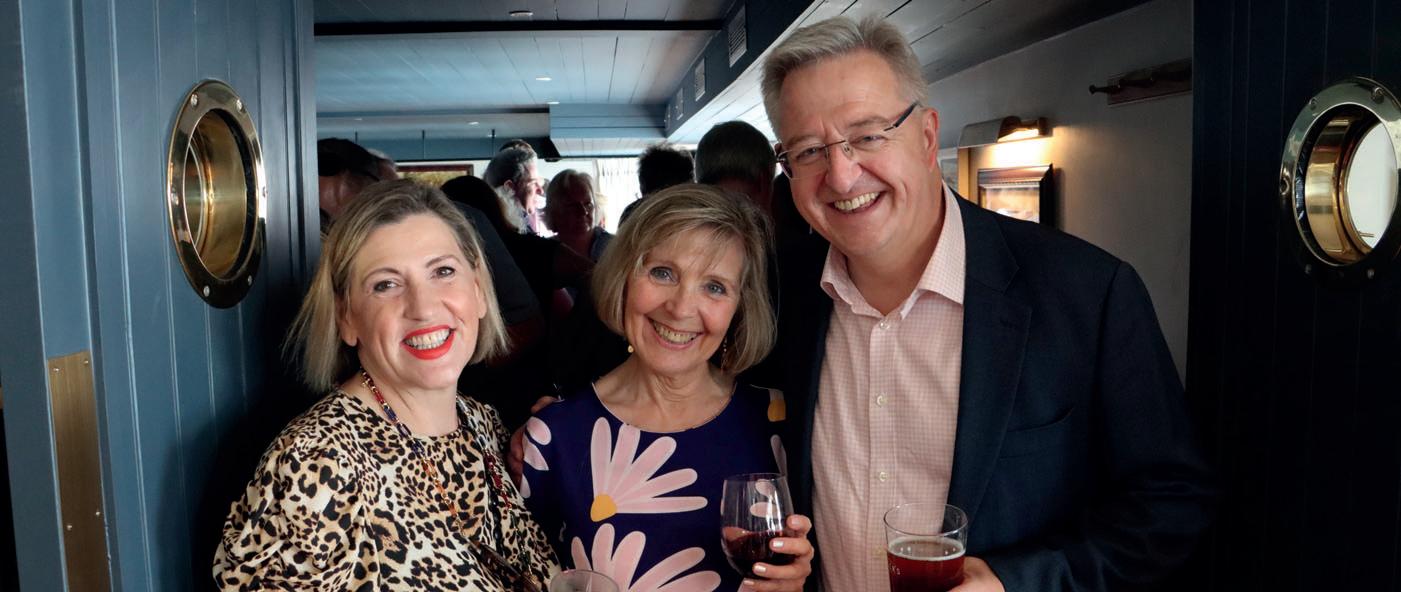
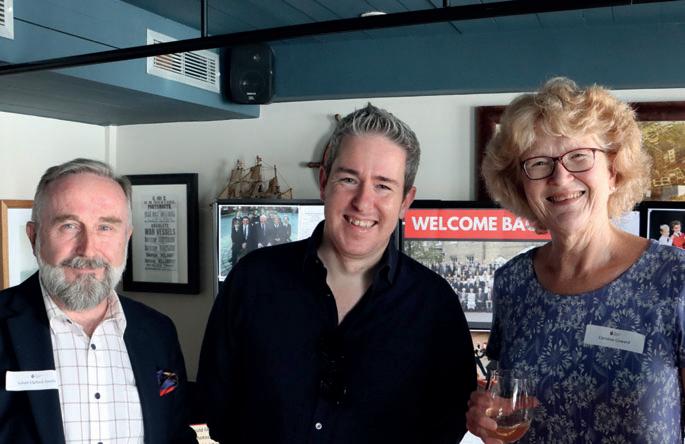
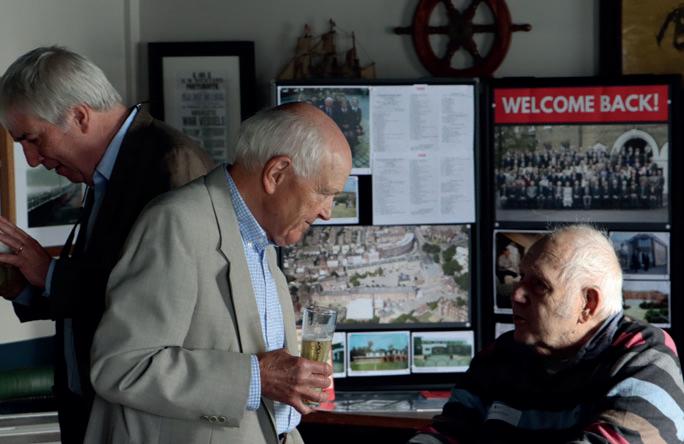
In late May over 70 current and former staff gathered at the Still and West in Old Portsmouth at the invitation of the four most recent Heads of PGS (Tim Hands, James Priory, Anne Cotton and David Wickes). With staff present from the 1960s right through to today there were, of course, a few OP teachers in the mix, some of whom met up with staff who had taught them during their time at the School. Great fun was had by all and we hope to make these a more regular occurrence.
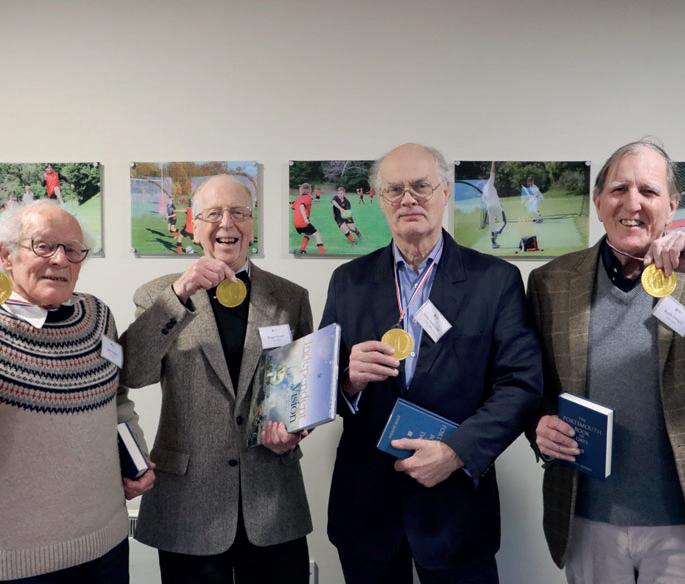
Almost 90 members of the Class of 2018 returned to the School in June for their first official reunion. There were hugs aplenty as they greeted one another and their former teachers, while the display from the Archive elicited a fair few gasps as Junior School and Year 7 photos were located. After a delicious lunch in the Dining Hall, they headed out to explore their former haunts with Mrs Clay, Mr Doyle and Mr Stone.
Class of 2019: your reunion will be on Saturday 13th June - look out for further details.
The Fawcett Pavilion at Hilsea came to life on a rather grey January day as alumni gathered for the Annual OP Lunch. A highly anticipated regular in our calendar, the event brought together OPs from the 1950s, 60s and 70s with much reminiscing over drinks and a delicious two-course lunch. Then the real business began with John Sadden’s
fiendish PGS quiz featuring, amongst many others, questions from a general knowledge test once set by Mr Keall (Lower School, 1962-69). Do you know who was the the captain of ‘Pompey’ in 1963?
Next year’s lunch will be on Thursday 15th January and places are filling quickly. Visit www.connect.pgs.org.uk/events to book yours.
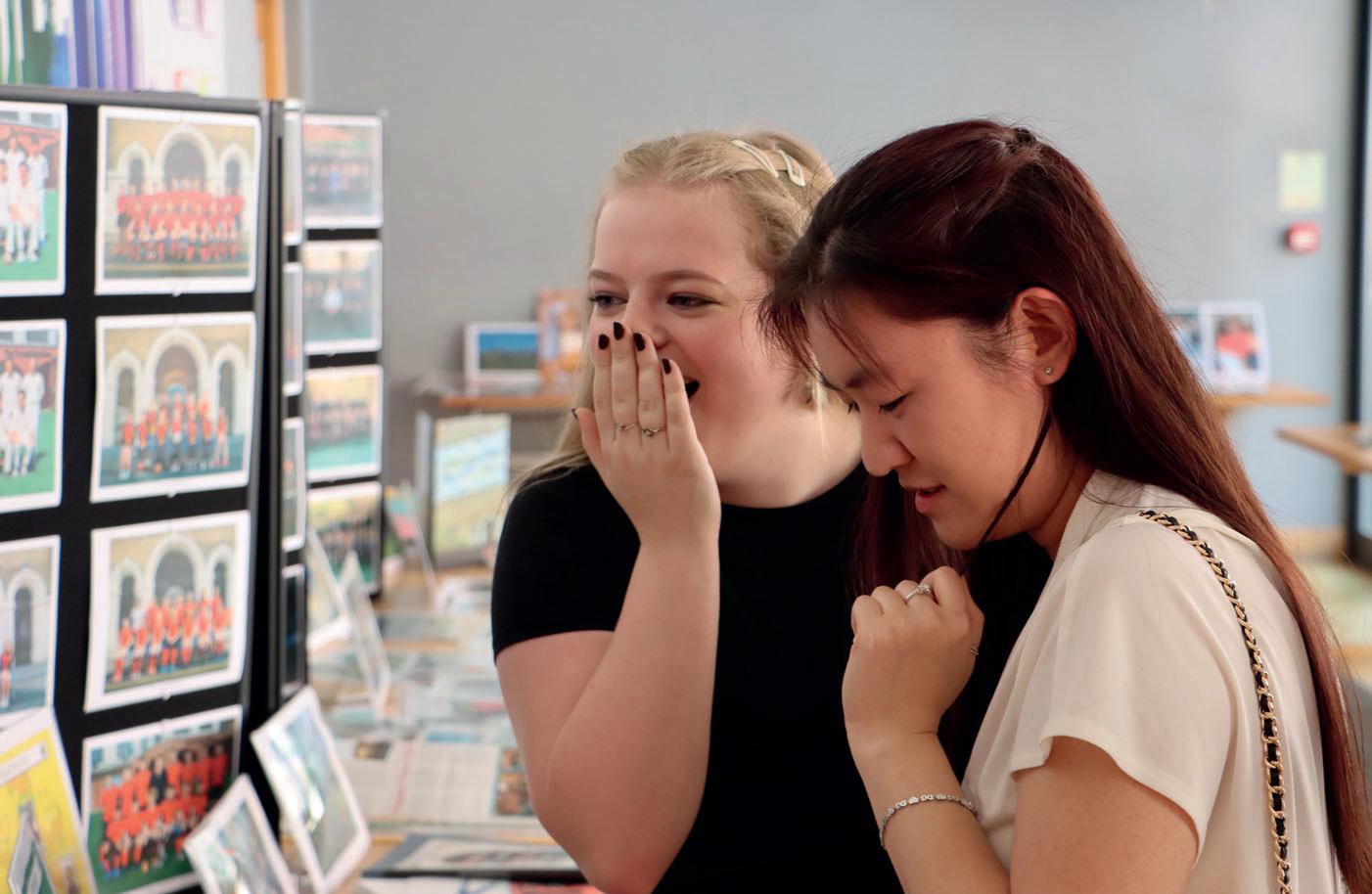
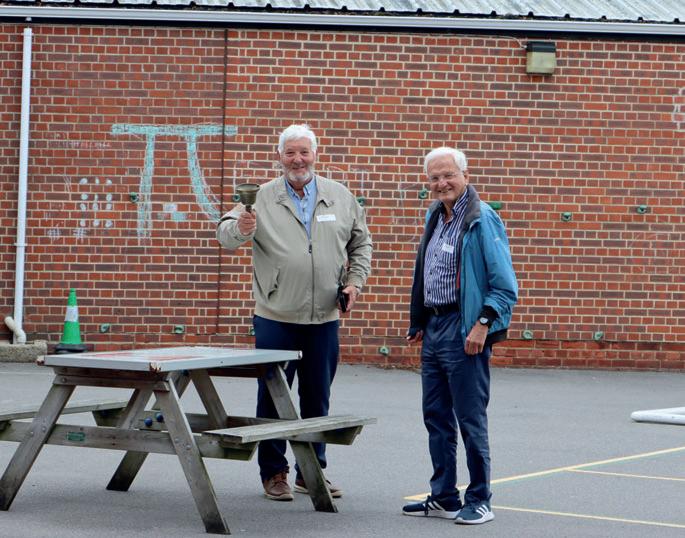
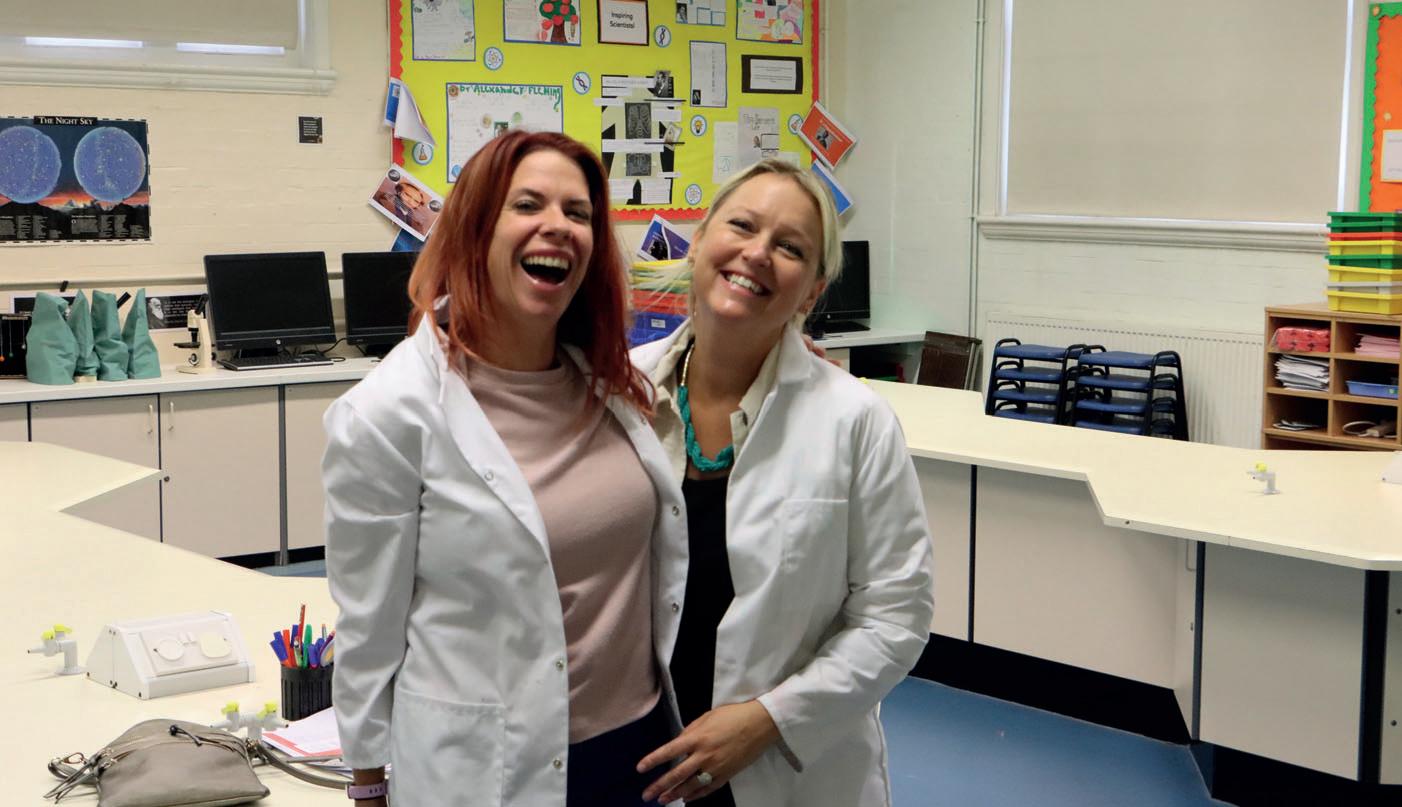
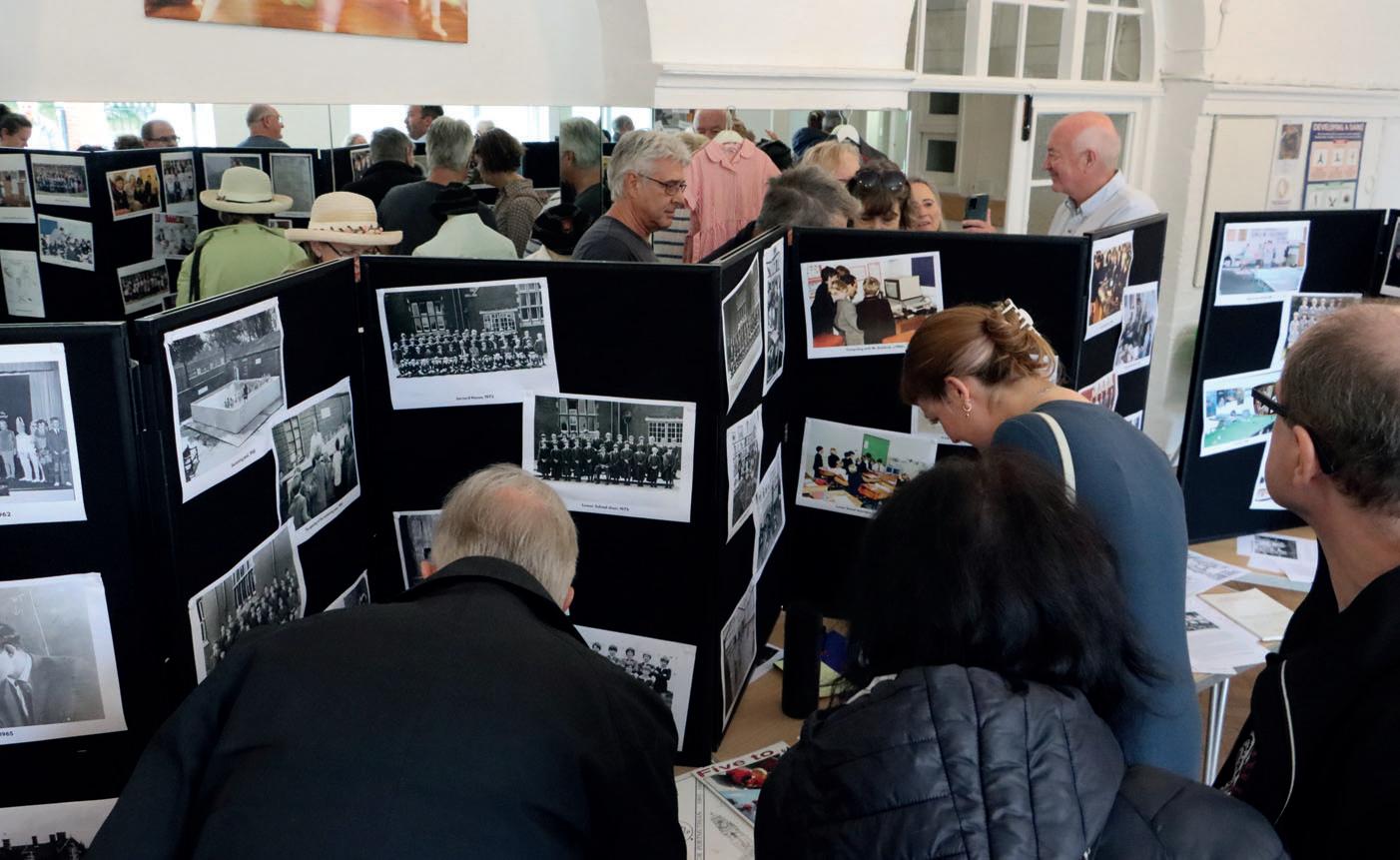
September saw over 100 OPs, former staff and guests return to the Upper Junior School (formerly the Lower School) to once again roam its corridors and relive their time there. Their trip down memory lane began in the dance studio (formerly the gym) and took in the assembly hall, form rooms, science, art and, of course, the swimming pool (now empty as the School uses the pool in the Ravelin Centre across the road). There were plenty of photos and artefacts from the Archive on display as well.
If you weren’t able to attend on the day but would like a chance to visit, please contact the Development Office: development@pgs.org.uk.
For an update on plans for the School site see page 12.
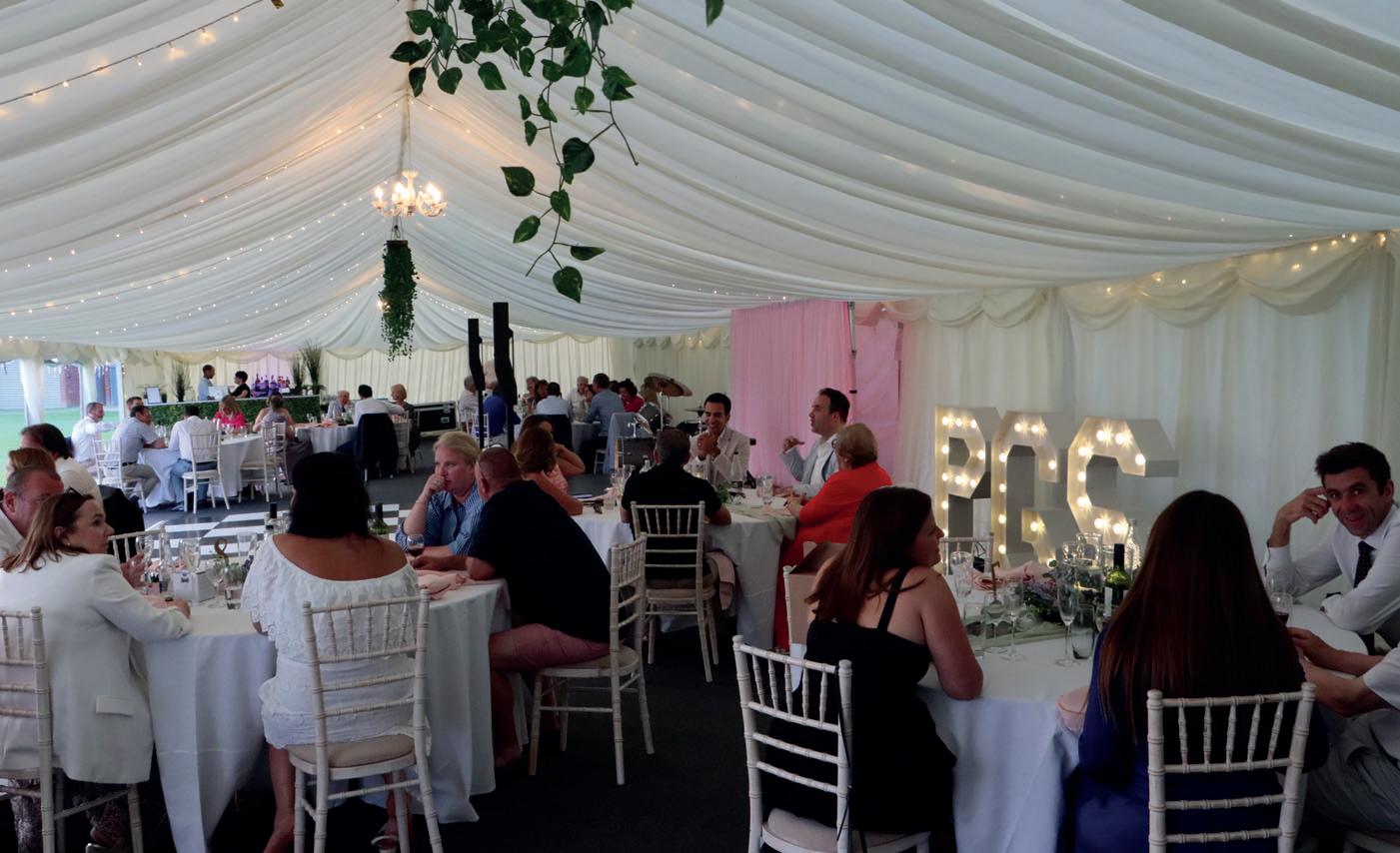
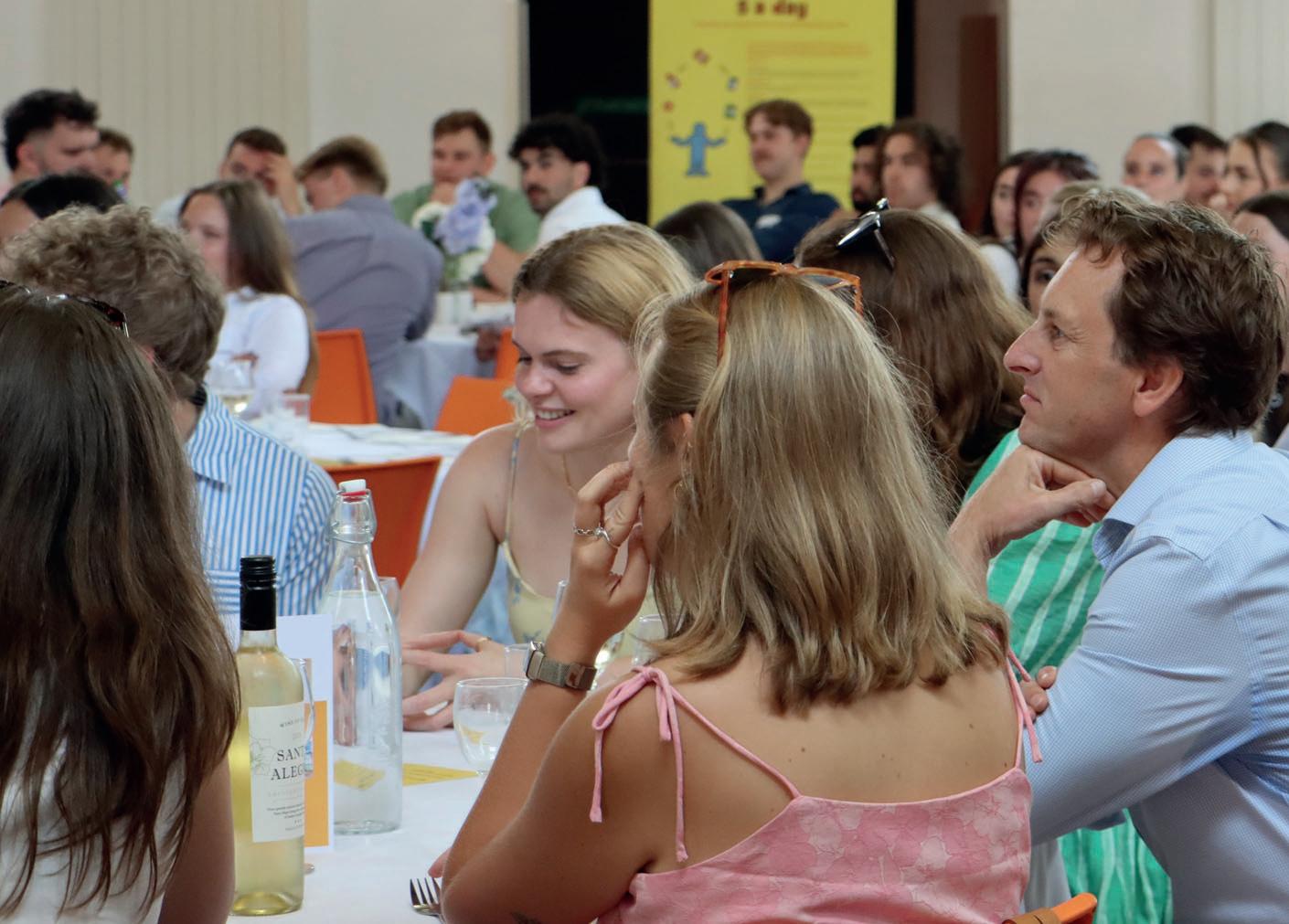
Hilsea looked delightful in the early evening sunshine as OPs, parents, staff and friends of the School gathered to celebrate 10 years of the William Smith Fund in June. After enjoying a fabulous performance from pupil band The Morning After, guests tucked into an al-fresco big pan feast before discovering whether they had won anything in the raffle. Fantastic prizes included over £1500 worth of Hackett goodies and a £500 voucher for Brittany Ferries. The evening raised over £4000 for the William Smith Fund. Thank you all so much.
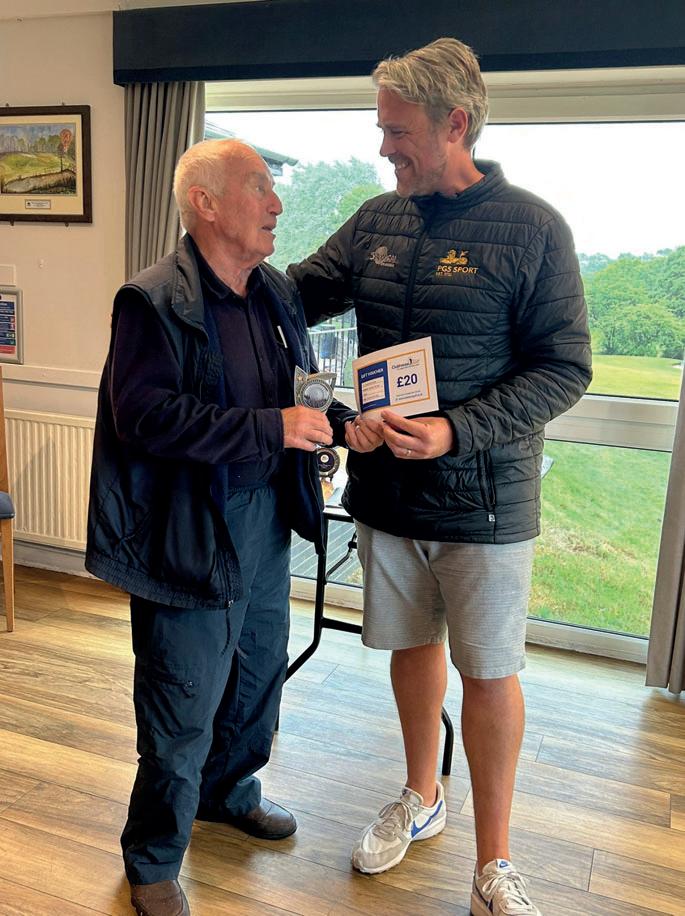
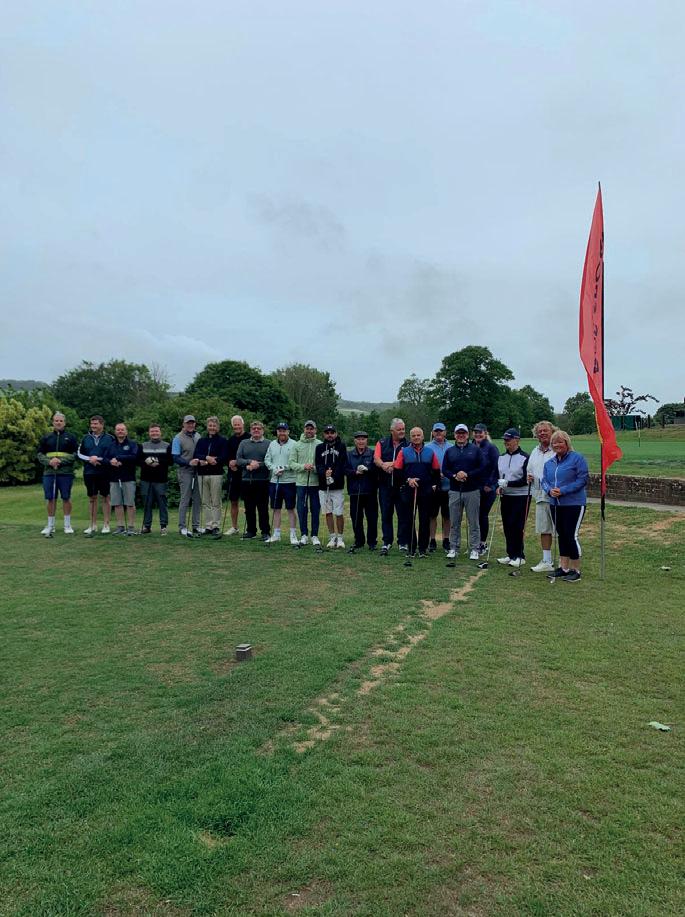
The first PGS Golf Day in over a decade was not for the faint-hearted. OPs, former staff, staff and friends of the School were battered by strong winds and rain as they hit the greens at Southwick Park Golf Course in late May. The weather failed to dampen their spirits and the six teams fought an incredibly tight contest finishing the day with less than a point between the top two teams. After warming up over fish and chips and a welldeserved drink in the Clubhouse, the day’s prizes were presented with John Bartle (OP 1957, pictured) winning Nearest the Pin on hole 15. We plan to turn this into an annual event - see page 9 for next year’s date.
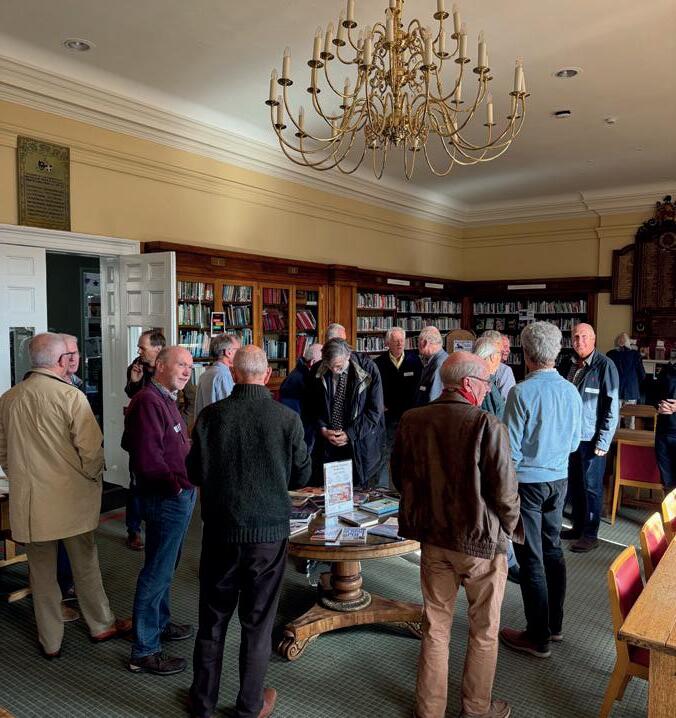
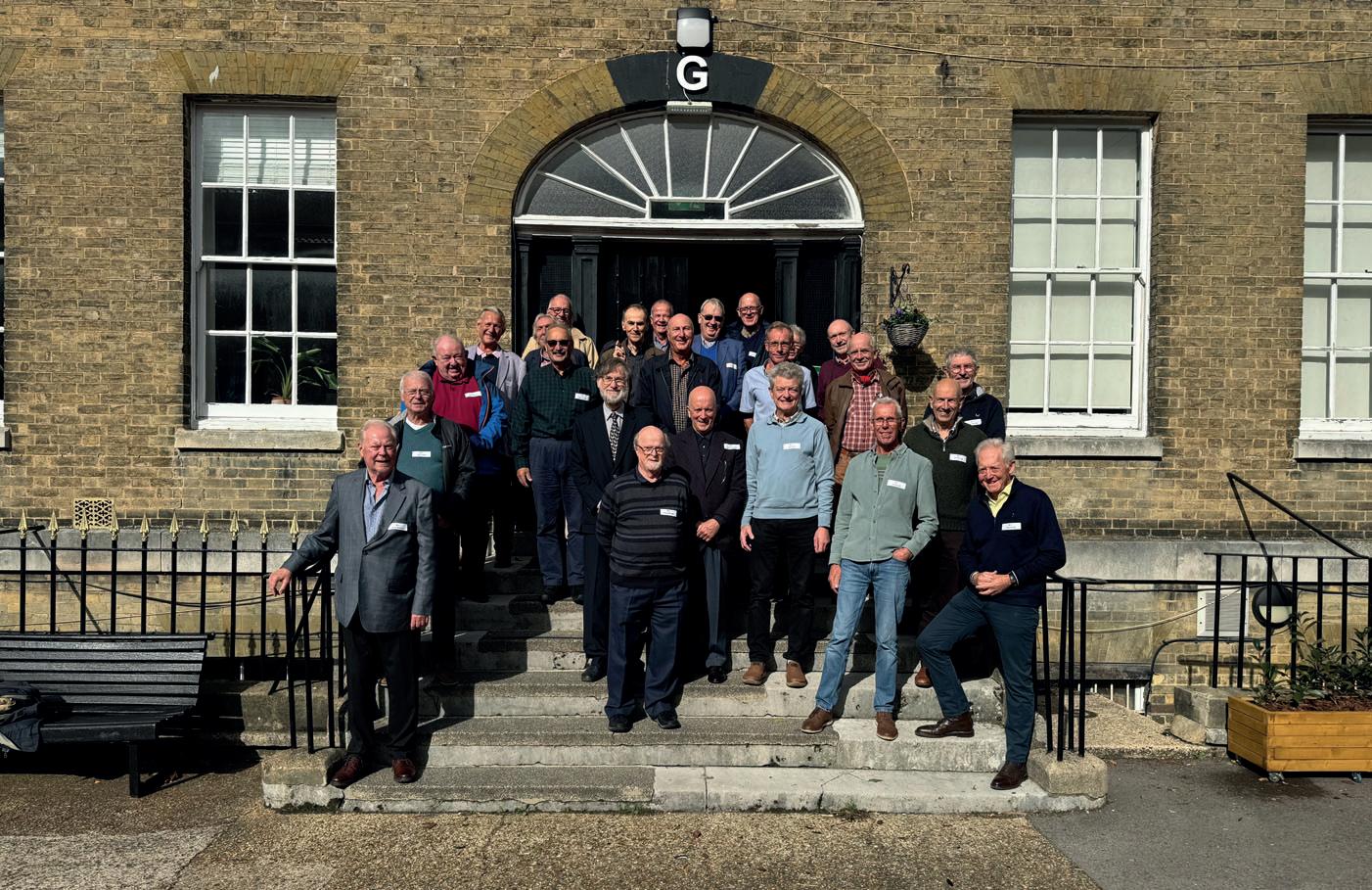
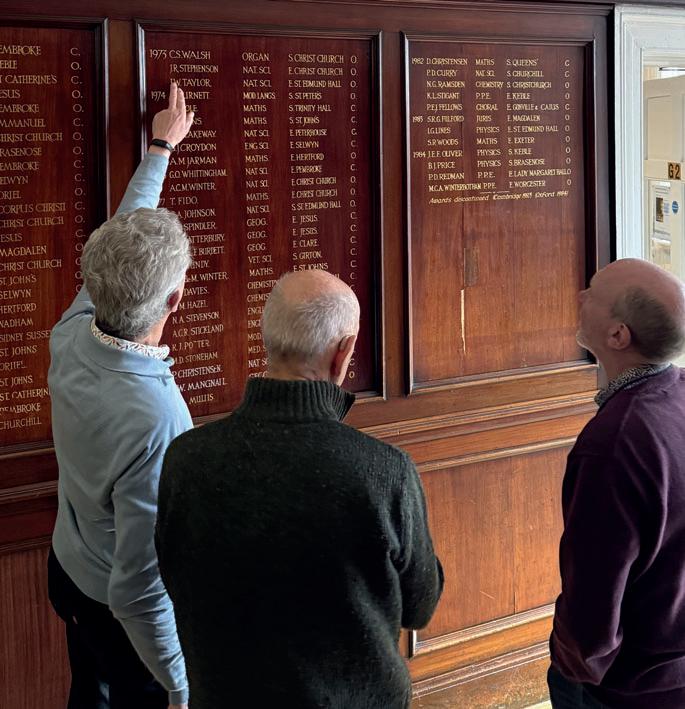
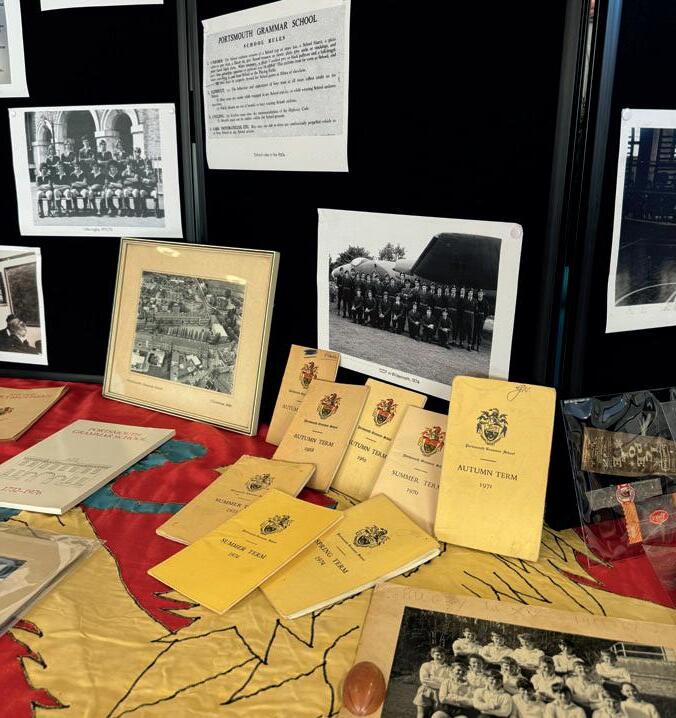
Over 50 years since they left the School, 24 members of the Class of 1974 found themselves transported back to the days of Saturday morning lessons as they arrived back through the Arch in October. Waiting to greet them was one of their former teachers, Nik Knight (Biology 1968-2008), and an Archive display full of photos and memorabilia from sport, CCF inspections, field trips and drama. A look around the School, including the previously offlimits staff room, brought back even more memories, with plenty saved for their lunch offsite. See page 50 for more on Saturday morning school.
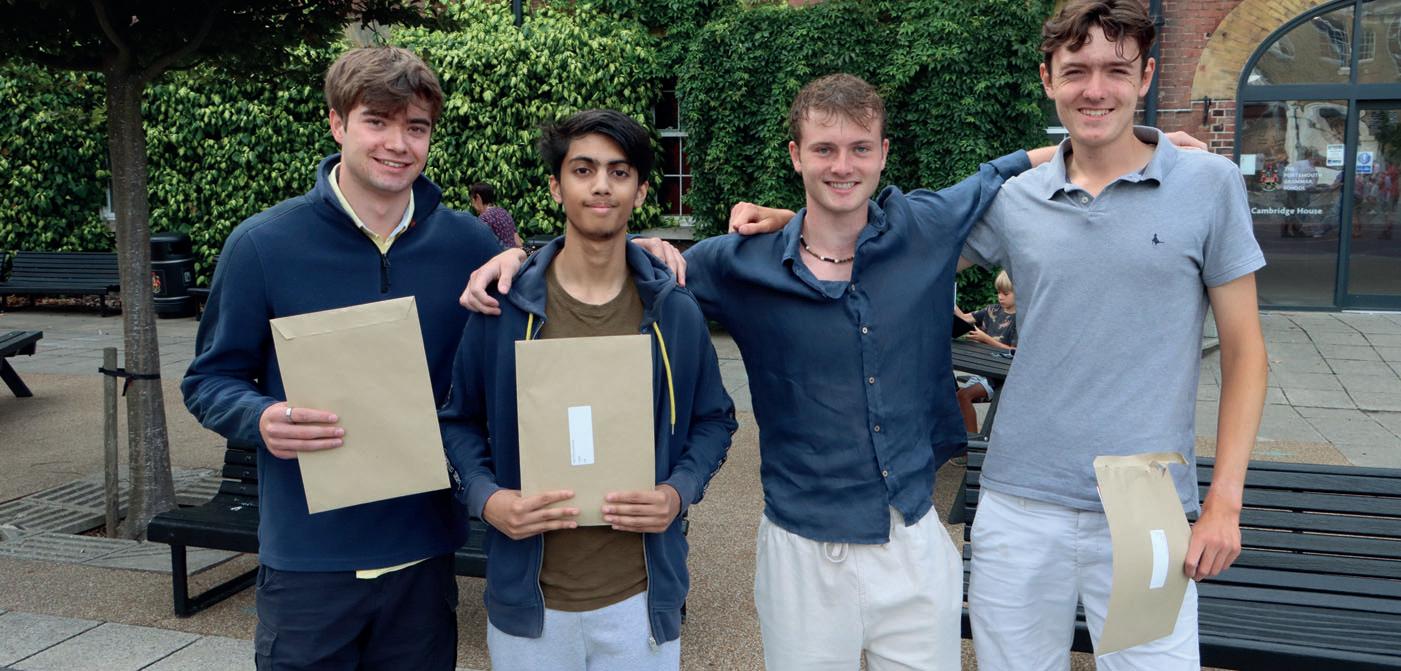
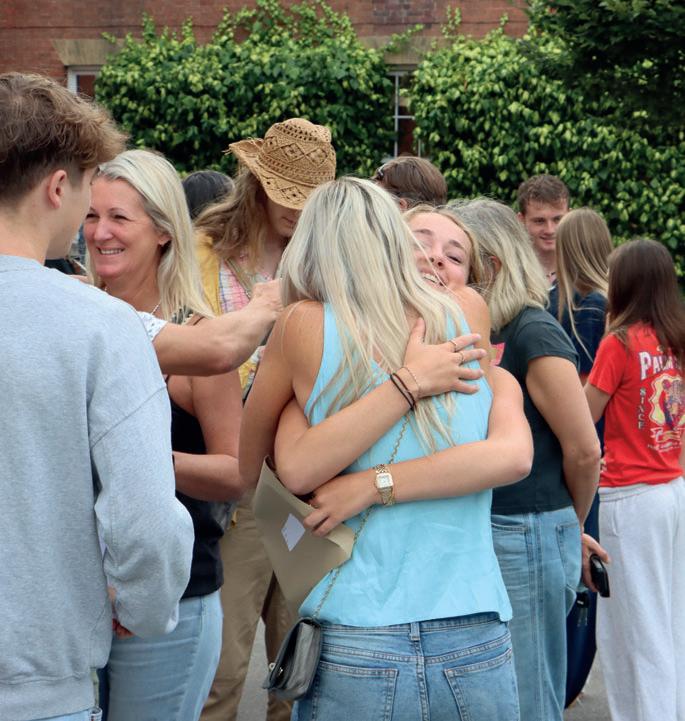
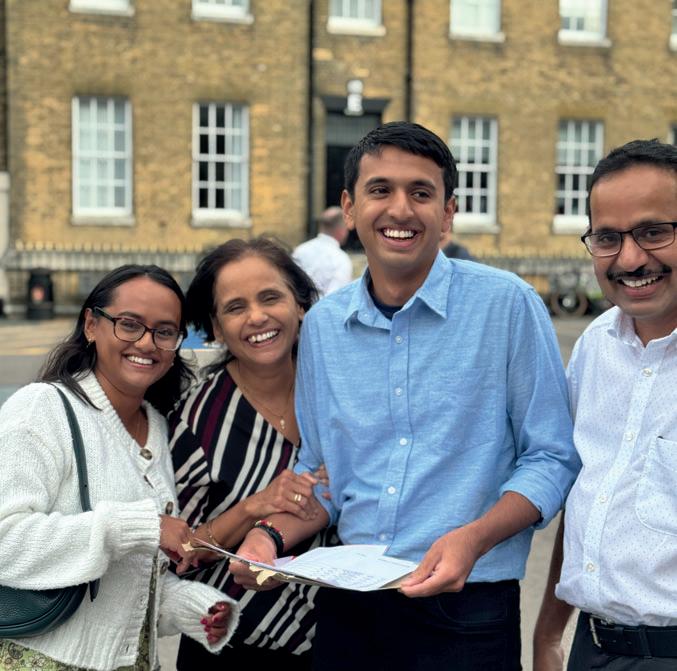
This summer our A Level pupils celebrated not only achieving the second highest A* - B grades awarded this century, with only 2009 being better (excluding Covid-19 adjusted grades), but also the highest percentage of A* - C grades ever awarded, including the years when grades were adjusted due to Covid-19.
The achievement was across a breadth of subjects, with strong performances in STEM subjects, alongside creative subjects, the humanities, languages and particularly in English, where almost a quarter of the grades were A*.
Within the STEM subjects, three quarters of all grades awarded in Mathematics
and Further Mathematics were A* - A and this was complemented by our Chemists achieving over 91% A* - B. There were also notable results within the Arts - every pupil who took Art, Craft & Design received an A* - B grade, over 87% of the grades awarded in Music were A* - B and, even more impressively, every Drama student received either an A* or an A.
In Humanities subjects, 92% of the grades awarded in Geography were an A* - B, as were 93% of Politics grades. Nearly 88% of the grades in French and 90% in Spanish were also A* - B.
“Our pupils rightly deserve to be incredibly proud of their achievements, these are an impressive set of results” said David Wickes, the Head.
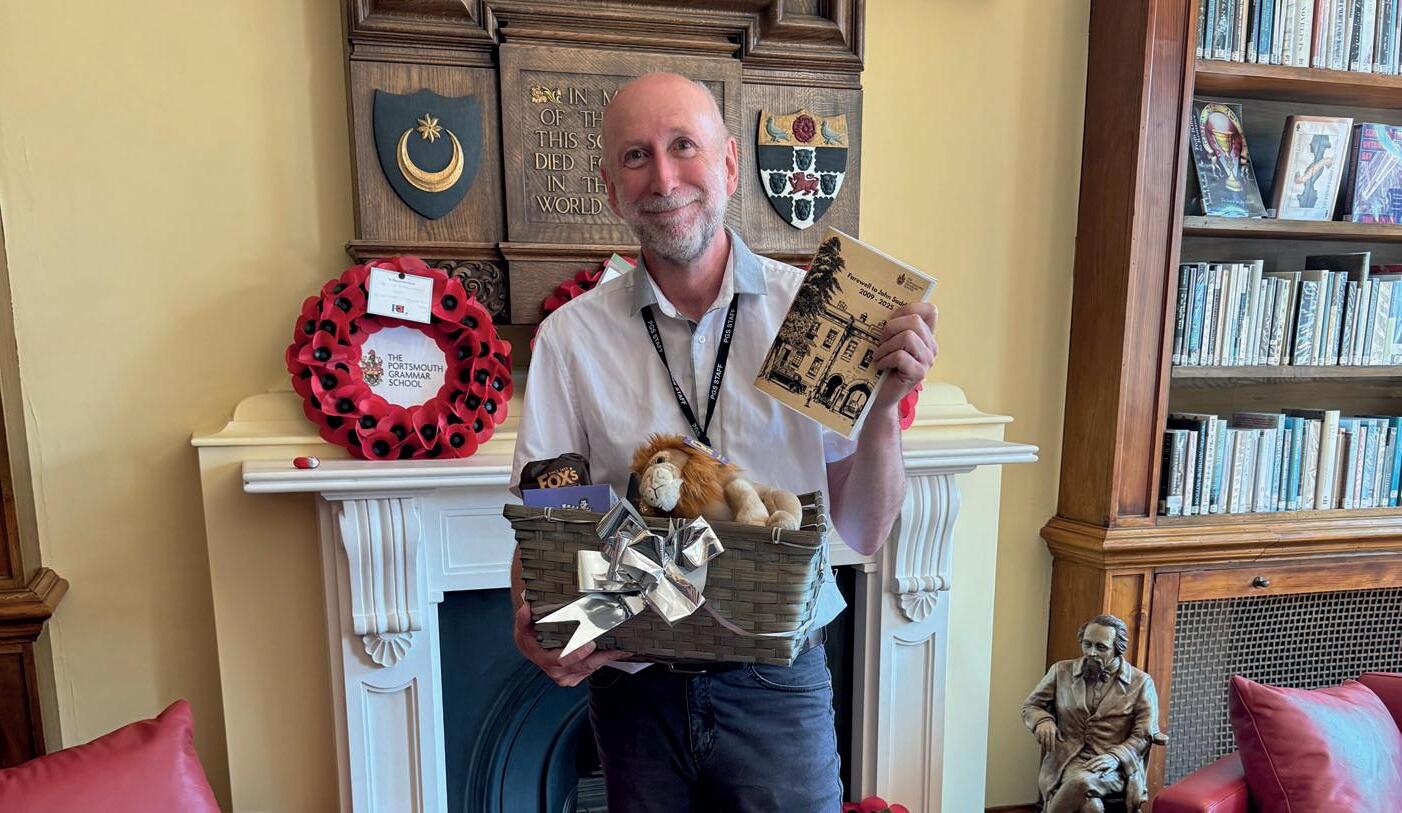
We were very sad to bid farewell to John Sadden at the end of the summer term. A PGS stalwart, John was the friendly face of the School’s Archive for over 15 years and many of you will have enjoyed his talks, articles, displays, tours and quizzes, all delivered with a dash of humour.
The role is continuing on a part-time basis and we look forward to welcoming Sarah Speller to the team in the New Year – see page 50.
Our GCSE pupils had plenty of reasons to celebrate as well. Yet again, the most awarded grade at the School was a 9, followed by a grade 8.
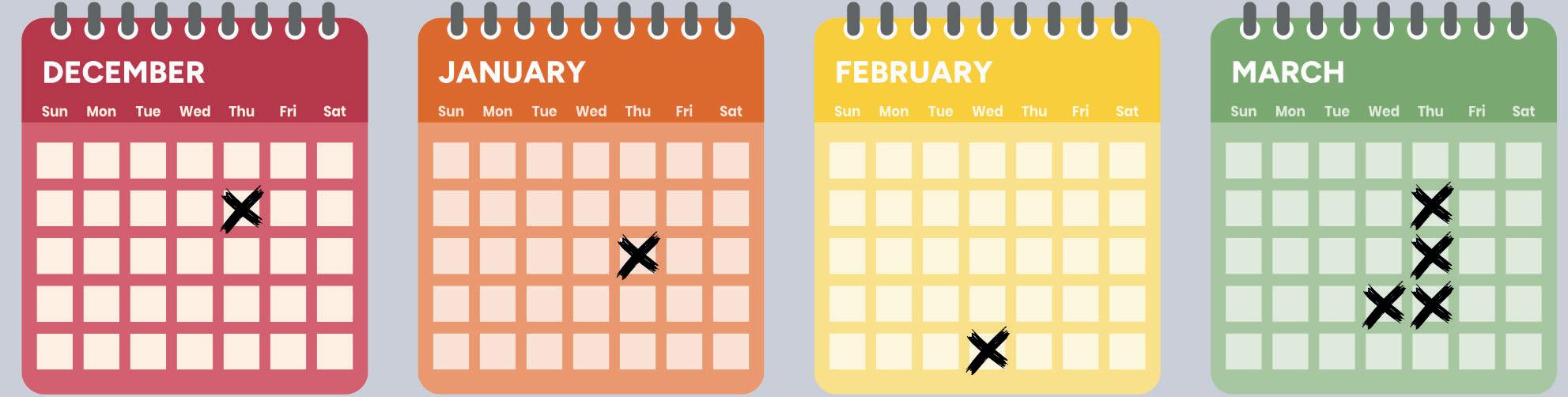
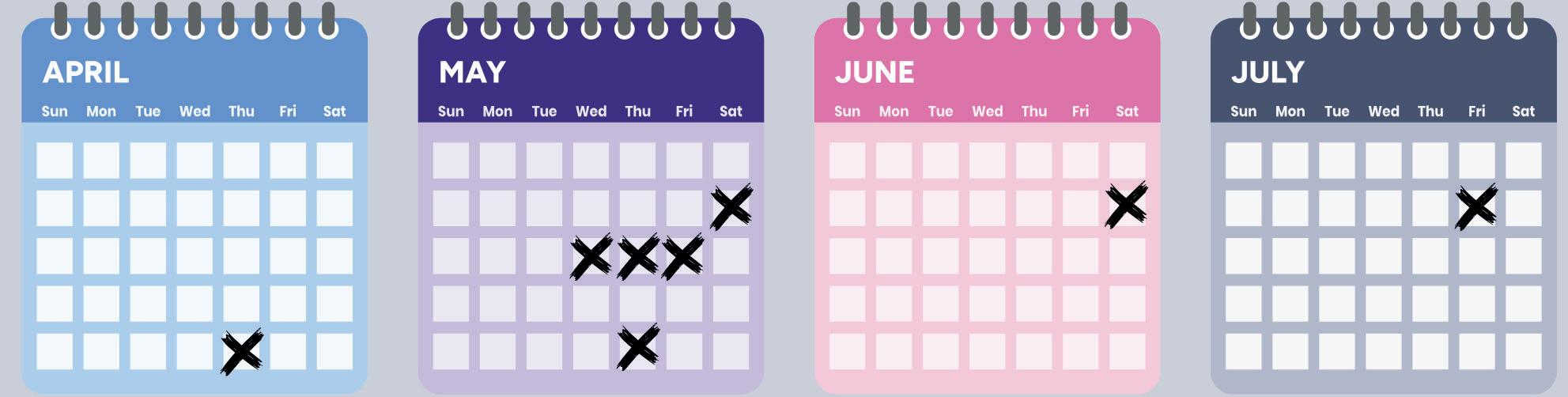
Thursday 11 OP drinks The Dolphin, Portsmouth
Christmas Carol Service Portsmouth Cathedral
Thursday 15 Annual OP Lunch Fawcett Pavilion, Hilsea
Wednesday 25 Jazz Concert
Thursday 5 OP drinks in London Venue TBC
Thursday 12 Gala Concert Portsmouth Cathedral
Weds 19 - Thurs 20
Senior School Play: Our Town
Thursday 30
Musical Theatre Cabaret Evening
Saturday 9 Decades Reunion
Weds 13 - Fri 15
Middle School Musical: The Amazing Story of Adolphus Tips
Thursday 28 PGS Golf Day
Saturday 13 Life at 25 Reunion for the Class of 2019
Friday 3 Founder’s Day Service Portsmouth Cathedral
Find out more and book at: www.connect.pgs.org.uk/events
For events several months away, please check back nearer the time.

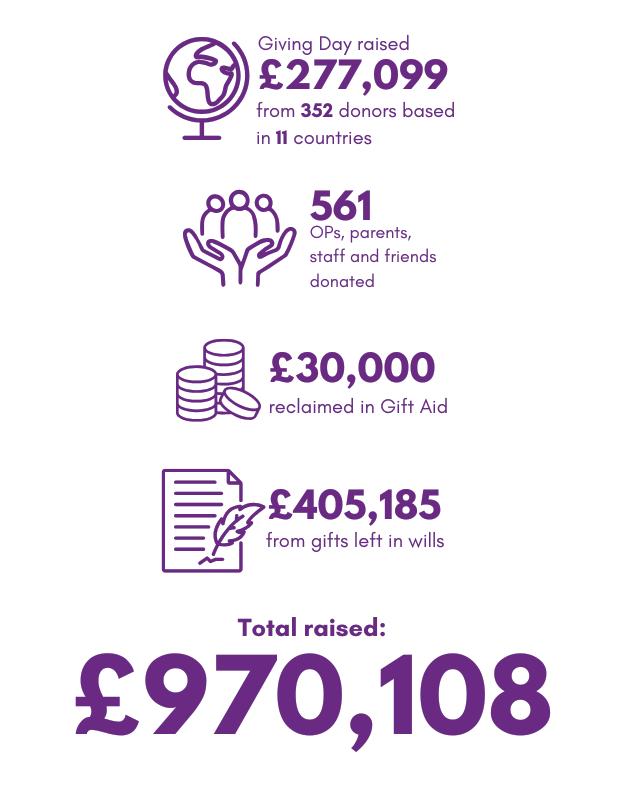
2024/25 was a landmark year for fundraising at PGS. Thanks to the commitment of our OPs, current pupils, current and former staff, parents and friends of the School, we raised £970,108. Thank you so much!
This remarkable achievement is a testament to the strength and spirit of the PGS community, especially during a time of ongoing economic uncertainty and new financial pressures, including the introduction of VAT on school fees. In spite of these challenges, our supporters have once again demonstrated their unwavering commitment to helping determined local children access a PGS education.
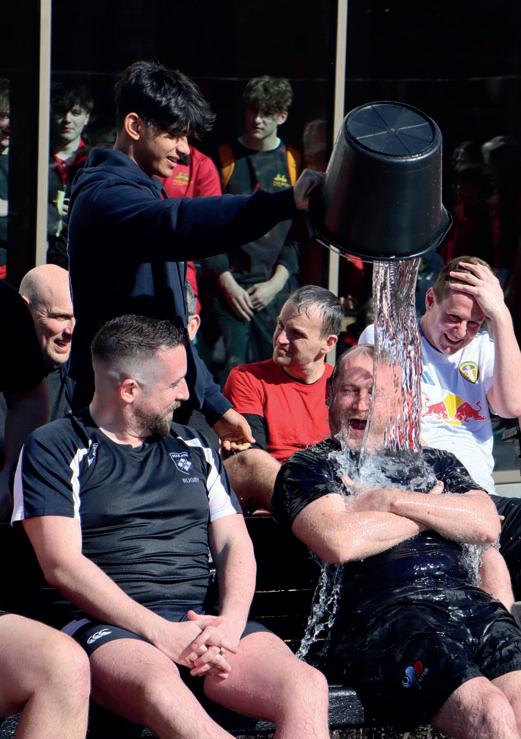
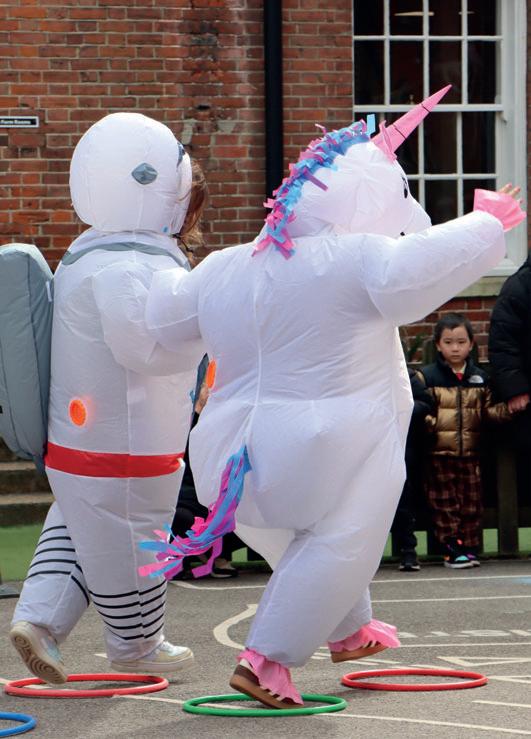
In March, we were thrilled to see alumni, pupils, parents and staff come together for our fourth Giving Day. 352 people donated across 36 hours raising an incredible £277,099. It was wonderful to see everyone get behind a shared goal – from bake sales and penalty shoot-outs to soaking the teacher, everyone played their part.
This year also marked a major milestone — the 10th anniversary of the William Smith Fund. Over the past decade, the Fund has raised more
“My life was changed by the financial support I received to enable me to be part of the PGS family. I will be forever grateful for that”
OP and donor
than £6 million, providing life-changing bursaries and funding vital projects that enrich the experience of every pupil at PGS.
We are particularly grateful to those who have left a gift to the school in their Will. Over the last year we have received over £400,000 in legacy donations. Legacies often enable people to be more generous than they can be during their lifetime and offer a way to plan their giving after knowing that their loved ones are taken care of. The School was created due to a legacy gift from our founder, Dr William Smith, and we are proud that his legacy continues through the foresight and kindness of others.
Every gift, no matter the size, has made a meaningful difference. We extend our heartfelt thanks to all our donors who continue to believe in the power of education to transform lives. Together we are shaping futures, supporting ambition, and building a stronger PGS community.
If you would like to find out more about supporting the school in this way, then please get in touch with the Development Office.
Thank you.
"As a Direct Grant beneficiary, I cannot over emphasise the doors that PGS opened for me from both an academic and extra-curricular perspective. It is so rewarding to have the opportunity to contribute towards a bursary for someone to benefit equally”
OP and donor
"Donating for all the amazing pupils who have seized the opportunities of PGS with both hands”
PGS staff member
"My daughters received a great education at the School and their experience equipped them well for the careers they have now. It would be lovely to provide this opportunity for another pupil who might not be able to afford it otherwise”
PGS parent
The Development Office were thrilled to be awarded the Schools’ Award for Ambition and Progress at The Institute of Development Professionals in Education (IDPE) Development Awards in November. We are so proud that their hard work has been recognised and are deeply grateful to everyone in our community who made it possible.
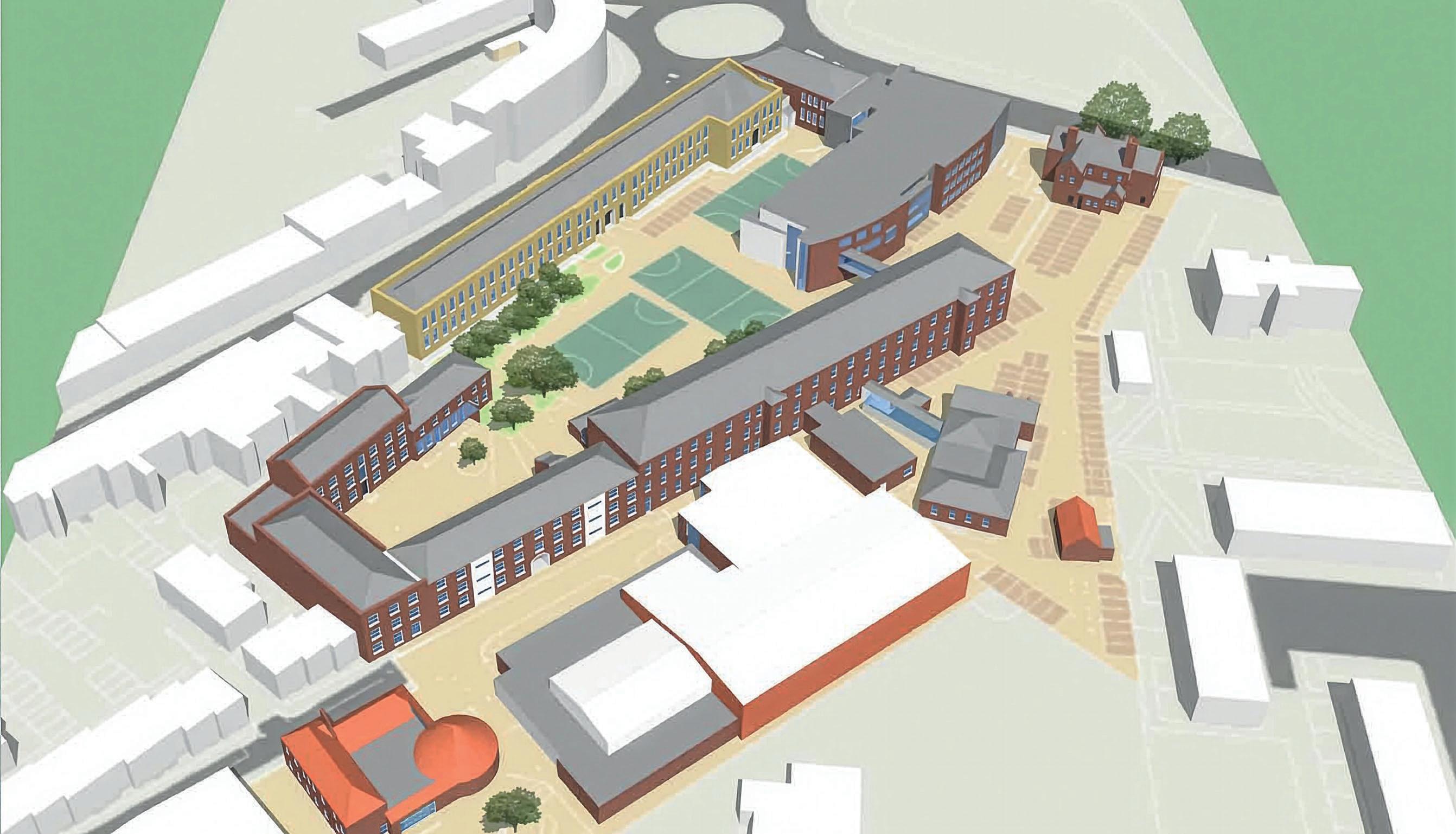
An update on our plans for the School site
As we welcome Years 5 and 6 onto the main school site, we will be investing in new facilities for the Junior School. A brand new library, art room and a design and technology classroom will be created within the current footprint of the Junior School buildings (towards the Penny Street end of the site). ‘A’ Block in the original Senior School building (A to G blocks) will then be converted into form rooms for Years 5 and 6 along with an assembly room.
This work follows a comprehensive space audit which analysed the current use and occupation levels of rooms on site, highlighting opportunities to repurpose under-utilised space. The acquisition of Cambridge House in 2000 significantly increased the size of the High Street site which has enabled us to begin this exciting work to bring the whole school back together.
There are other projects in the pipeline for the main site. These will require planning permission and we look forward to sharing these plans with you in due course - watch this space!

Oliver Canavan (OP 2009) never was any good at handing in homework on time. Clearly not much has changed – it’s taken him six years to get round to writing for us about a life-changing encounter in the Philippines...
Please accept my apologies. Doing anything asked of me by PGS was always (and clearly is still) a challenge. Truth be told, school was difficult for me. From the very start in Year One, I was not an easy customer, and by the time I left Sixth Form, I hadn’t improved much. I guess I developed an early case of the ‘knowit-alls’ and seemed convinced no adult could teach me anything I didn’t already know. There were exceptions - teachers like Mr Ford (Business Studies, 1988-2008), Mr Priory (English, Headmaster 200018), and of course Mr Doyle (Surmaster) - who managed to break through my defences and reach me as a person, but for most others it was open war. Mr Arnold (Maths), Miss Cox (Chemistry 1985-2017) Miss Bell (English), Mr Harrison (ICT 1986-2012), Mrs Jackson (Maths), Mr Dunne (English 200417) - the list is long. Teachers often warned me that my attitude wouldn’t serve me well in the real world. I heard them but didn’t believe them and by the time I finally left PGS, in a huff, not attending leavers day and vowing never to return, I was determined to prove them wrong.
out there that could help me to be at ease with myself because, honestly, it seemed that nothing else had a chance. That single decision to open my mind to such a possibility, is the most important thing I’ve ever done, and I mention it here because I believe it was the genesis for everything incredible that has happened since.
Overleaf:
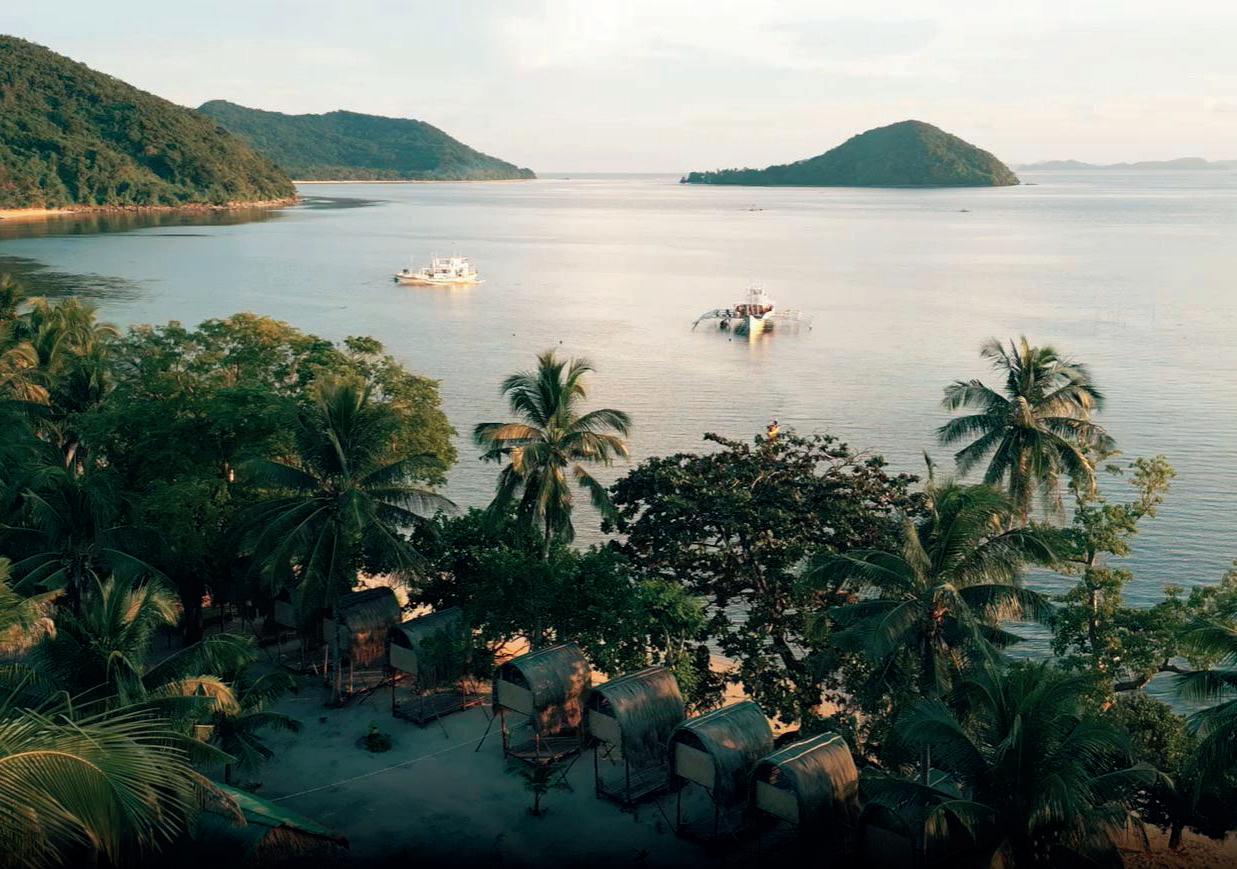
A stop on the El Nido to Coron trip. Credit: Joffrey Vandenbussche
Below:
Krish with the original business plan on scrap paper
At first, I thought I had. After university, I joined the corporate world and by the age of 24 found myself in Singapore running a team, smashing targets, earning great money and climbing the ladder fast. From the outside, I was thriving. I remember thinking smugly: “Well, guess I was right!” Yet despite all the external success, something was off. I was not happy. The echo of those teachers’ warnings began to reverberate around me.
Shortly after my 25th birthday, a series of events which you could call a quarter-life crisis led me to turn my life completely on its head. I quit my job, and I also quit the idea that I knew a thing about life, or how to live it. I somehow went from being an anti-theist, vehemently against any idea of God or a Higher Power, to becoming radically open-minded to the idea that maybe there was something
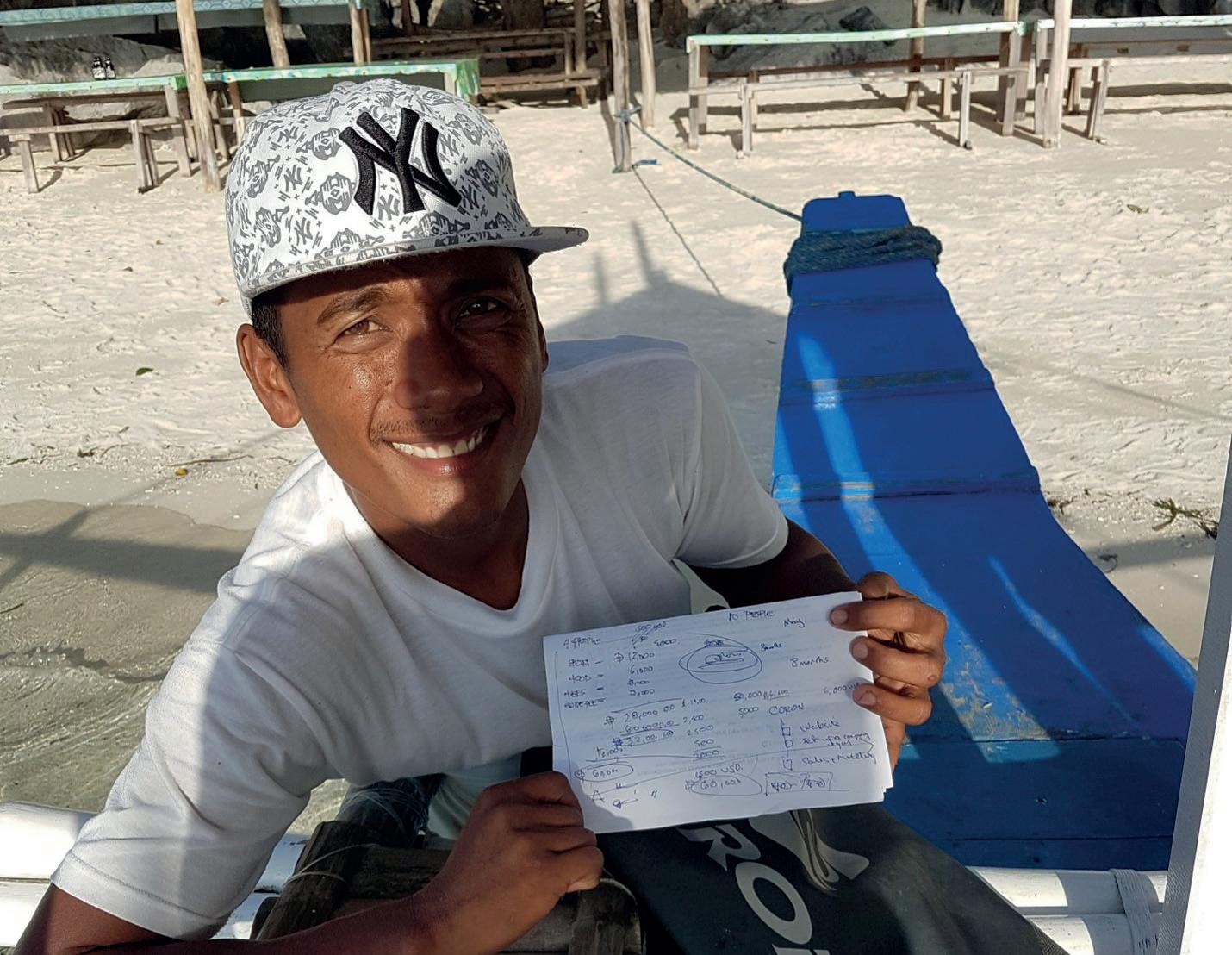
A few months later, I was on a solo trip in the Philippines and by this time I had started to experiment with meditation. As I opened my eyes in the hotel lobby, there was a Filipino man with a beaming white smile staring directly at me. His name was Krish. He was to be my guide for the day. Since I was tired of my own story, I decided to take more of an interest in his. As I rode on the back of his motorbike, I asked him questions. He told me he was a boatman, scraping by with enough income to feed his wife and twin girls. He described his dream of creating multi-day expeditions, taking travellers away from the crowded day-trip routes and going off the beaten track. He wanted to give people a deeper experience of the islands he grew up with. He had no understanding of the internet, no capital, and no idea where to start - but boy did he have passion.
Within 30 minutes of meeting, we were sitting together on a beach, scribbling out a plan on scraps of paper. Later that evening he invited me to the Boatmen’s Christmas Party. Whilst I was full of excitement at the prospect, I remember thinking to myself, I need some kind of sign that this is what I’m meant to do, that this won’t just be one of those holiday romances where, as soon as you leave the place, you never do anything about it.
At the party, out of nearly two hundred people, Krish won the raffle’s top prize: a sack of rice. I remember thinking ‘That’s good, but that doesn’t really make me feel anything’. Later, he took me to a bar. There was a band playing, and as we entered the singer shouted: “Krish!” He tried to ignore it, thinking he had to be all professional, but when I asked why they were calling his name, sheepishly, he said ‘I used to sing.’ I told him that my first love in life was music, and insisted he take the stage. Reluctantly, he agreed.
As I sat there and listened to him sing Here Without you, a rock ballad about longing to be with a distant lover, I felt something stir within me. At that moment I knew I had to try to help this person achieve his dream. I had no idea that in attempting to do that for him, I would be doing it for myself as well. As I stared at him, I pondered what name we would call the business and then I recalled something Krish had said earlier that day: ‘I’m just a boatman, but I have a big dream.’ And so it was that Big Dream Boatman was born.
I moved home, and in true hero’s journey fashion, I was back living with mum to save money. I built the website, worked out the

marketing, and convinced friends and family to test the concept. Krish and I stayed in touch over Messenger. He admits today that he had absolutely no faith in my ability to get people to go, but what he had in passion, I had in determination.
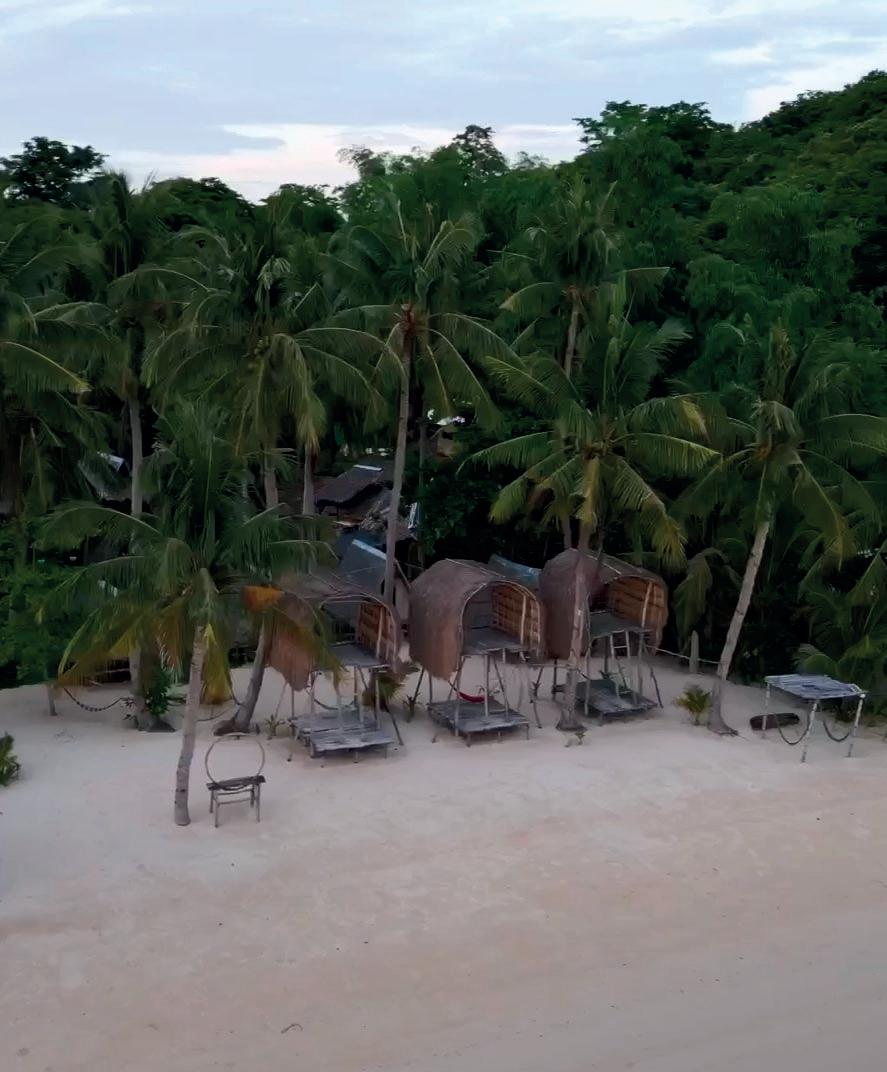
Above (left to right):
We started small. In our first year, we rented a boat and ran one trip a week. The trips were simple but special; four days exploring hidden islands, camping on deserted beaches, cooking fresh fish and sleeping under the stars. Word spread quickly and within two years, Big Dream Boatman had become the highestrated travel activity in the Philippines, featured in Lonely Planet, CNN, and more. Today, nearly a decade on, we have fourteen boats, welcome over 15,000 guests a year, and remain the top-rated experience in the country. What started with two guys in their 20s is now a 150+ person enterprise and growing.
A camping spot, evening entertainment, guests relax Credit: Joffrey Vandenbussche

One of those key figures was Clive Ford who unfortunately passed away a few years ago. He taught me Business Studies, but much more than that, he believed in me. The power of a teacher who believes in you is an incredible thing. I never got to thank him for what he did, but I would like to think somehow, someway, he knows. I would also like to especially thank Mr Doyle, Mr Priory and Miss Tab Tab (Economics).
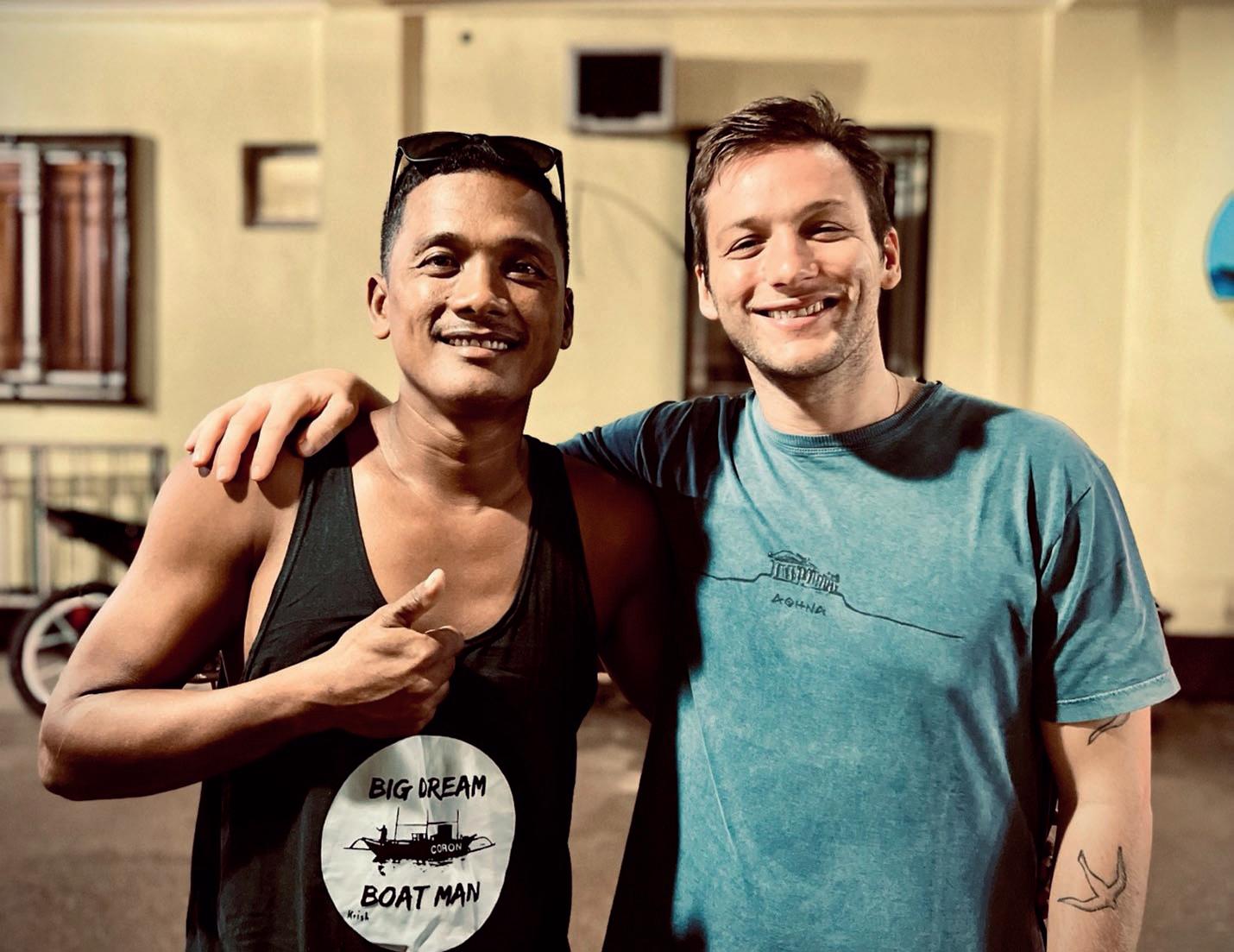
Below: Krish and Oli in 2024
The best memories I have of PGS are full of laughter. Without laughter, I don’t think I would have made it through. To this day I’m amazed at some of the things we got away with. To the teachers I disrespected, I owe a sincere apology. If I could go back and behave differently, I would. I guess life has a way of teaching us in the end, and if you fail to get the message at school, you might just be lucky enough to learn it on a beach in the Philippines.
There is much I am proud of about the business but the thing I am most proud of is that, even while we have grown so much, we have maintained the family spirit and the genuine care and passion for what we do. I don’t think I would enjoy it if either the customers or the staff didn’t love it. People often say that running a business is a hard job and I couldn’t disagree more. Even during Covid, when we came close to losing everything, I would not have traded one of those days to go back to my old corporate life.
These days, with the business more stable, I have been able to pursue other passions. I live in Bali and love to surf, cook and play blues guitar. Over the last few years I have discovered my own passion in screenwriting, acting and filmmaking. This year I’ve acted in two films and written and co-directed two more.
As time goes by, I find myself increasingly more grateful for every person and experience that led me to where I am in my life today.
We don’t know exactly how many OPs have preceded Alice Leonard (OP 2019) on University Challenge (see OP News) but rumour has it there are quite a few. Certainly, OPs have graced our screens on a wide range of quiz and game shows over the years. Here are some of the highs and lows of their performances, both at home and abroad.


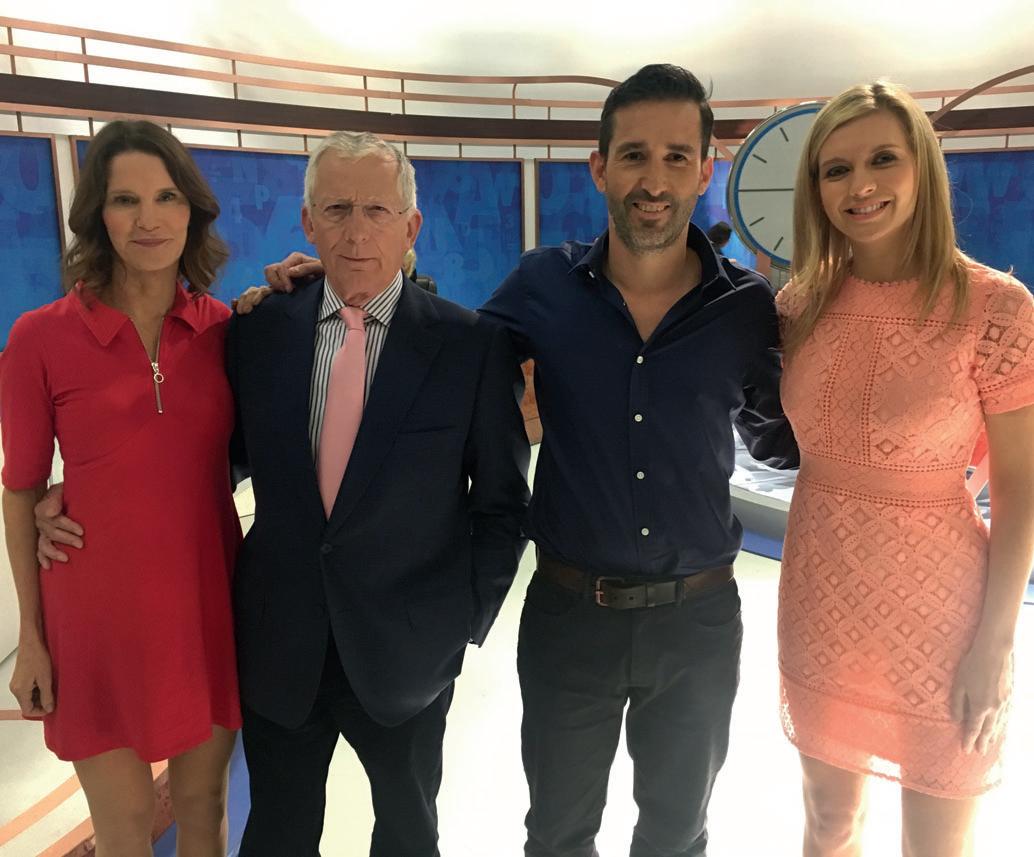
The Weakest Link was my first foray into TV quizzes and I was really nervous. It took all day to film with a lot of waiting around. As it was a competitive ‘voting off’ show, I made sure I was super friendly to all the contestants so I only attracted a couple of votes to leave. My neighbouring contestant was a lovely Welsh pensioner who barely got a question right but was so lovable no one voted for her and we made the final. Anne Robinson was her true vicious persona throughout and she dismissively referred to me as “Mr Personality the mortgage broker” but at the end she came over with the cheque, shook my hand, said “you played that very well” and winked.
Going for Gold was live on Channel 5 and it was all I could do to remember whether it was David or John Suchet - Poirot or the

Name: Ben Humphrey (OP 1995)
Shows: The Weakest Link in 2003
Going for Gold in 2009
Countdown in 2017



e than I’d ately Bedoui
newsreader! Mr Suchet was of a surprisingly shorter stature than I’d imagined and I could see the answers on his lectern. Ultimately I went out in the second round searching for the answer of Bedouin tribe which I would now never forget.
Finally, I wound up on Countdown, chaired by Nick Hewer with Rachel Riley on numbers. I ended up in make up with the fantastic Suzie Dent. The recording was much quicker, pretty much in real time, and I was in the third and last show of the day. You got to watch the other two shows in the audience, and I scored in the 90s in the second show, and beat the seven-time champion Phil, to the nine letter word, BARBECUED. Alas this was not repeated when it was my turn and Phil marched on. When the clock is behind you

and the music is playing, you do start to wonder what on earth you are doing there! I sat back with a good 7, ADVISOR, but to my horror Suzie said this was an American spelling. Apart from not winning this was probably my favourite show, I was older and wiser and frankly the presenters were great fun.






My appearance was in 2020, at the SBS studio in Sydney and I thoroughly enjoyed it. Five shows were shot in one day, so we contestants arrived early and were ushered into the green room where we could watch the shows being filmed before our turn. The staff and the presenter (Jennifer Byrne) were all charming.





Name: Derek Tickner (OP 1974)
Shows: Australian Mastermind

s my turn we were ushe d hown
When it was my turn we were ushered into the studio, shown our marks, where to enter and how to approach the chair, and filming began. I wasn’t nervous as I know my specialist subject (Admiral Nelson) well, being a Portsmouth lad. I’d been doing stand-up musical comedy for a couple of years before the show, so ‘performing’ wasn’t a problem, even though this was my first appearance in front of television cameras.
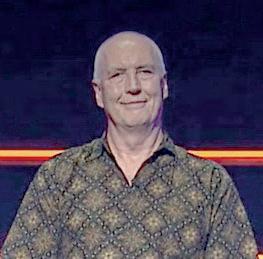

I nailed my questions on Nelson, only getting one wrong and getting 12 points. So I was leading after the first round but came a cropper on the general knowledge round. I normally do well when I’m watching at home but I had some real oddball questions and a couple on sport, which is my Achilles heel. I managed to get only three points in that round. The lady who beat me by one point had some easy questions (in my opinion!), I knew the answer to nine of them. Oh well, that’s quiz shows for you.



Name: Bruce Galvin (OP 1988)
Shows: Fifteen to One
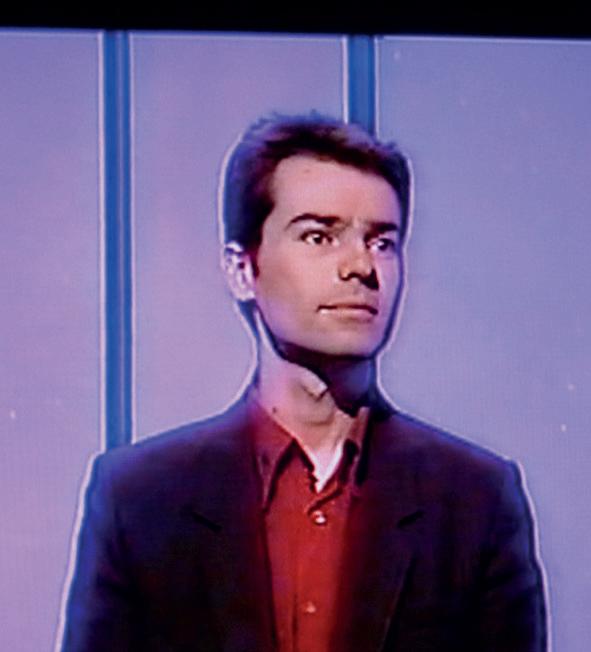
During a spell of unemployment in 2003, I attended an audition for Fifteen-to-One. They asked me for the middle names of some famous composers (easy ones like Bach, Mozart etc.), and I passed. This had gone better than my previous TV audition for Blind Date, where the producers had simply asked whether I was single (I was), and if I had a party piece. I showed them my Cossack-dancing, and they said “Next!”.
On the day of filming, I entered the TV studio in Wandsworth and met the late William G. Stewart, and the 14 other contestants. Standing behind each of our podiums, we all faced into the blackness behind the cameras, and the dazzling lighting from above. The countdown from the studio manager, before the theme tune starts, was the biggest adrenaline rush of my life.
I started well, identifying the carotid artery (thanks Nik Knight!), and the year of the Battle of Bannockburn (thank you Mr Reger, History, 1964-90). But then lost one of my three lives, represented by three lights on the podium. The wiring to them seemed crude, and being an electrical engineer, I considered rewiring the unlit one.
Just before the commercial break, I was finally eliminated and became a silhouette for the second half. But at least I had beaten my friend Ian Finn, who had been out for a duck when he had played some years before.


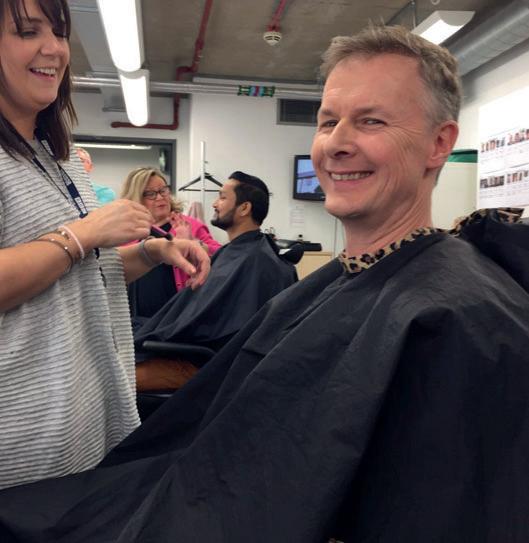


Name: Jonathan Hardisty (OP 1980)
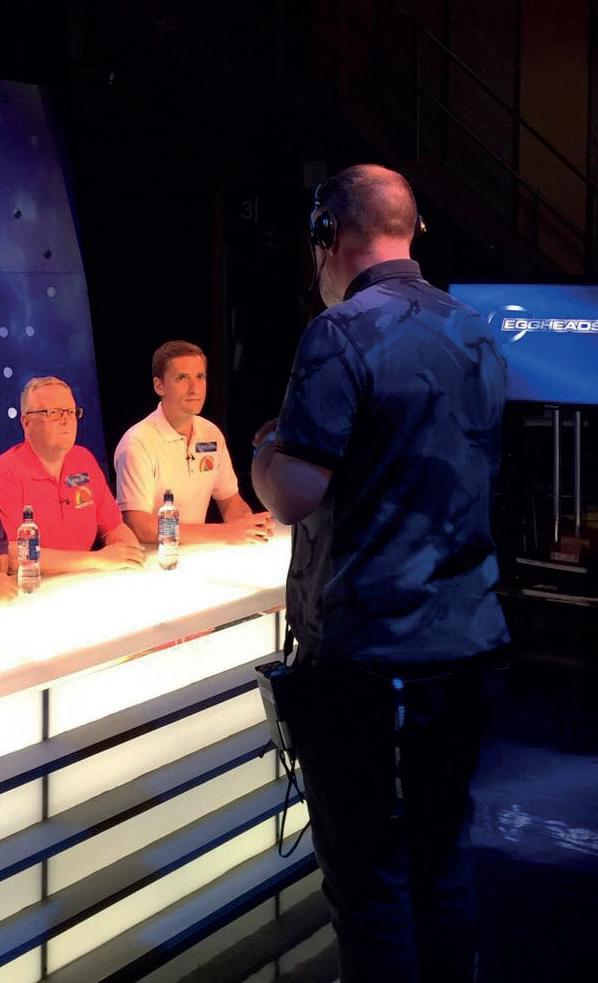
Shows: Eggheads




In 2017 I headed to Glasgow with five of my teammates from Graces Cricket Club (the world’s first LGBTQI+ team) to film our appearance on Eggheads. We had a briefing on arrival then we were shown to the green room before heading into make-up, who did their best to make us look presentable.
The studio wasn’t at all glamorous - lots of leads and cables everywhere – but thankfully there was no audience. After a long period of checks, the Eggheads then came in followed by the host, Jeremy Vine, listening to what appeared to be some motivating music on his phone. The preparation period was more relaxed than I’d feared and there was lots of chat between Jeremy, us and the Eggheads which helped with nerves. One of our team kept calling Jeremy ‘Steve’ - he was a bit put out by this!

Name: Paul Lewis (OP 1975)
Shows: Whistle Stop
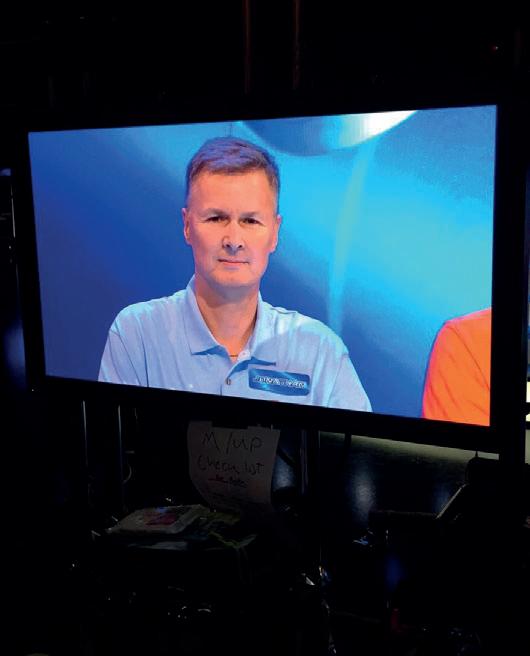
You are then asked three questions, each of which has three possible answers. Your team can only watch on their monitor and aren’t able to assist.
To my horror geography, my agreed topic, came up first. Thankfully I managed to answer all my questions correctly and Egghead Steve got one wrong so he was eliminated from the final round - I couldn’t quite believe that I had managed it. We managed to eliminate another Egghead so the final round was three of us against three of them - we got all three of our questions correct, sadly they did too. This meant it went to sudden death (with no answer options) and we came unstuck on a question about the Turner Prize so didn’t win the cash prize (£1000).
Many challengers get absolutely hammered so I was proud that we’d managed to get that far. The Eggheads were really friendly so it was great fun. We’d like to have another go! o another h the Egghead at the other end. fun




In 1967 or 1968 a party from the PGS Lower School appeared on a children’s variety tv show called Whistle Stop. The show was hosted by Roger Whittaker and was filmed in the BBC TV Theatre in Shepherd’s Bush, London. It included comedy sketches, appearances by current singers and bands, a quiz and a game. Teams from PGS competed against another school in the quiz and racing Scalextric cars around a track, while the rest of us were in the theatre audience. The guest celebrity assisting the PGS team was the actor Stratford Johns of Z Cars and Softly, Softly fame.
I cannot recall who the guest music star was but doubtless Roger Whittaker sang and whistled a tune. I remember being very envious of the participants who got some great prizes!
I represented St Catherine’s College, Oxford in 1972. There was a democratic selection process over the summer and the show was recorded in October, though I can’t recall when it was broadcast. Sadly we didn’t get past the first round, which was quite disappointing (though we did better than the last Catz team to appear on the show). What strikes me now is how totally unprepared we were – whether that was just us or whether it was par for the course in those days I can’t say - but we did absolutely no practice quizzes, and no systematic learning.

Name: Richard Cunningham (OP 1971)
Shows: University Challenge
As I recall, we were tying with Glasgow University 150-150 then the last question was about the Gaelic alphabet, which seemed a bit of a gift to them. Certainly they were more likely to get it right - not that I’m bitter or anything! Nowadays 150 would very likely earn a place in the repechage but that opportunity didn’t exist then. Nevertheless it was an enjoyable and interesting experience. Bamber Gascoigne was very affable, though I don’t remember any details of our conversation. The main surprise was getting the flimsy strip of paper with one’s surname printed on it which was fixed behind a glass or plastic screen at the front of the contestants’ desk. It’s probably t of the contes




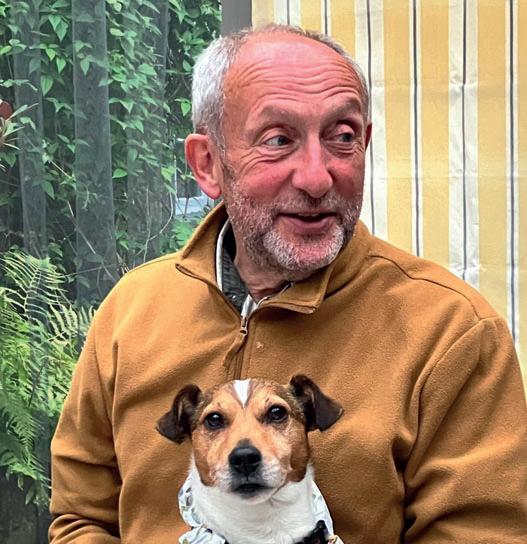
Name: Jeremy Price (OP 1973)
Shows: The Krypton Factor
Hosted by Gordon Burns, The Krypton Factor tested mental agility, physical endurance, and general knowledge. The application form was around 20 pages long but apparently they only looked at two answers: ‘Make me laugh in 100 words’ and ‘Make me laugh in three words’. I wrote an anecdote from my work then, for the second, wrote “see paragraph above.” It did the trick and I went to the next stage where we completed a whole programme (minus the Army assault course in Bury). What swayed it for me was answering a question no-one in the previous groups had. I can’t remember what it was but the answer was ‘Shazaam!’
Anyway, I progressed to the show and completed the assault course well but flunked out on the spatial awareness round – I made attempt at putting odd shaped pieces into a frame to make a perfect square. A chance for a claim to fame blown! A shame but it few days and not everyone made it through, so I was pretty philosophical about it.







Name: Sam Goodyear (OP 2003)

I started doing quizzes as part of the Quiz League of London. Lots of people I knew through that had been on these shows, so it seemed a natural thing to try. was rather stressful. I wasn’t allowed to do my preferred specialist subject ( The Next Generation) so I did ‘the Soviet Union under Stalin 1924-39’. I had studied this topic at GCSE, A Level and during my degree so it felt like reasonably safe ground but I was terrified about declaring to the nation that I knew a lot about Russian history only to seem totally ignorant about it.

Shows: Mastermind in 2012 Only Connect in 2013
lot about Russian history only to
eith t was a good
In the end it wasn’t a total embarrassment but wasn’t good either. I got 8 points. I then got 14 on the general knowledge to fi and come second in my heat. I didn’t meet John Humphrys. You sit waiting for him to arrive while a comic warms up the audience. My only interaction with him was when he was asking me the questions.
Only Connect was more relaxed and much more fun to film. The whole environment was less pressured, there was no audience, and the quiz itself was more fun to play. We wanted to win, but it felt more like doing a fun quiz down the pub. Victoria Coren was friendly and talkative between questions, she even gave me a cigarette when I ran out. My team, the Francophiles, ended up winning Series Seven. No big money prize, just a bottle of wine and the trophy between three. And bragging rights!
Francis Davis’ (OP 1985) work with survivors of genocide has its roots in the sense of community instilled in him during his years at PGS
Genocide has been called ‘the problem from hell.’ It has a tight definition in international law which is distinct from a slightly broader notion of ‘crimes against humanity.’ After the European Holocaust it took decades of advocacy to persuade the US government to adopt the Genocide Convention. Indeed, one heroic Senator, William Proxmire, gave daily speeches to raise the gravity of the cause every day the US Senate sat from 1967 until 1986.
When I arrived at PGS for senior school I already had some insight that difference drove social challenges: refugees fleeing the chaos of the end of the Vietnam War and its aftermath in Pol Pot’s Cambodian genocide were housed on nearby Thorney Island, between Havant and Chichester. As I settled into school, some five hundred families were bedded down next to the island’s RAF base. They sold wonderful East Asian foods, then rarer than today, at Emsworth St James community centre.
In the early eighties Portsmouth had a thriving Jewish community, and its sons were among us at school. Bar Mitzvahs are an incredible way marker in teenage Jewish life and joining their celebration as a guest in the Synagogue in the Thicket, Southsea was remarkable and unforgettable. I vividly remember meeting my first Rabbi, eating my first kosher meal, and hearing of Israel for the first time from a friend’s family members who had travelled especially for one such celebration. Years later when I met Chief Rabbi Jonathan Sacks at working meetings and meals focused on community cohesion in the UK, he both knew Southsea’s synagogue, and invited me to Edgware to join him in the striking Jewish ceremony of Yom HaShoah which each year commemorates those murdered in the Holocaust. I have since been a trustee of the Holocaust Memorial Day Trust which leads an annual nationwide mourning for the fallen.
Meanwhile, it can be forgotten that, after the 1964 Maoist revolution in Zanzibar, the Swahili speaking Sultan of that island fled to the Portsmouth area. In PGS too were Shia Muslims with East African
heritages along the Indian Ocean who were just at the beginning of their journey of establishing and building the community that is now centred on the Wessex Jamaat near Fareham. I played county badminton alongside an increasing number of friends from this and other Muslim communities so, when genocide returned to Europe in Bosnia, and at Srebrenica especially, the impact was electrifying.
As war exploded from 1992, I spent more than a year as a volunteer speaking at over two hundred school assemblies, business meetings, and community gatherings across the central South. Our associated fundraising campaign, that I established, was supported by The News, The Southern Echo, and BBC Radio Solent. It raised over a million pounds in today’s money for survivors of egregious sexual violence in Bosnia and southeast Europe. Subsequently I spent a good deal of time in region, including coming under Serbian fire. Sitting with unnerved survivors in draughty refugee camps, smoking the roughest tobacco and sipping on gritty coffee leaves the mind with smells, images, and moments that never pass. For three years after the war, I was a judge on a £600,000 a year prize funded by the £130 million Erste Bank Foundation to support regional pioneers in community bridge building. Among them we found world class educators, rape survivors re-founding their lives, those without sight bringing recently warring parties together for outdoor activities, plus those haunted by severe mental ill health somehow sustaining self-help groups. I am still engaged in that region through genocide remembrance.
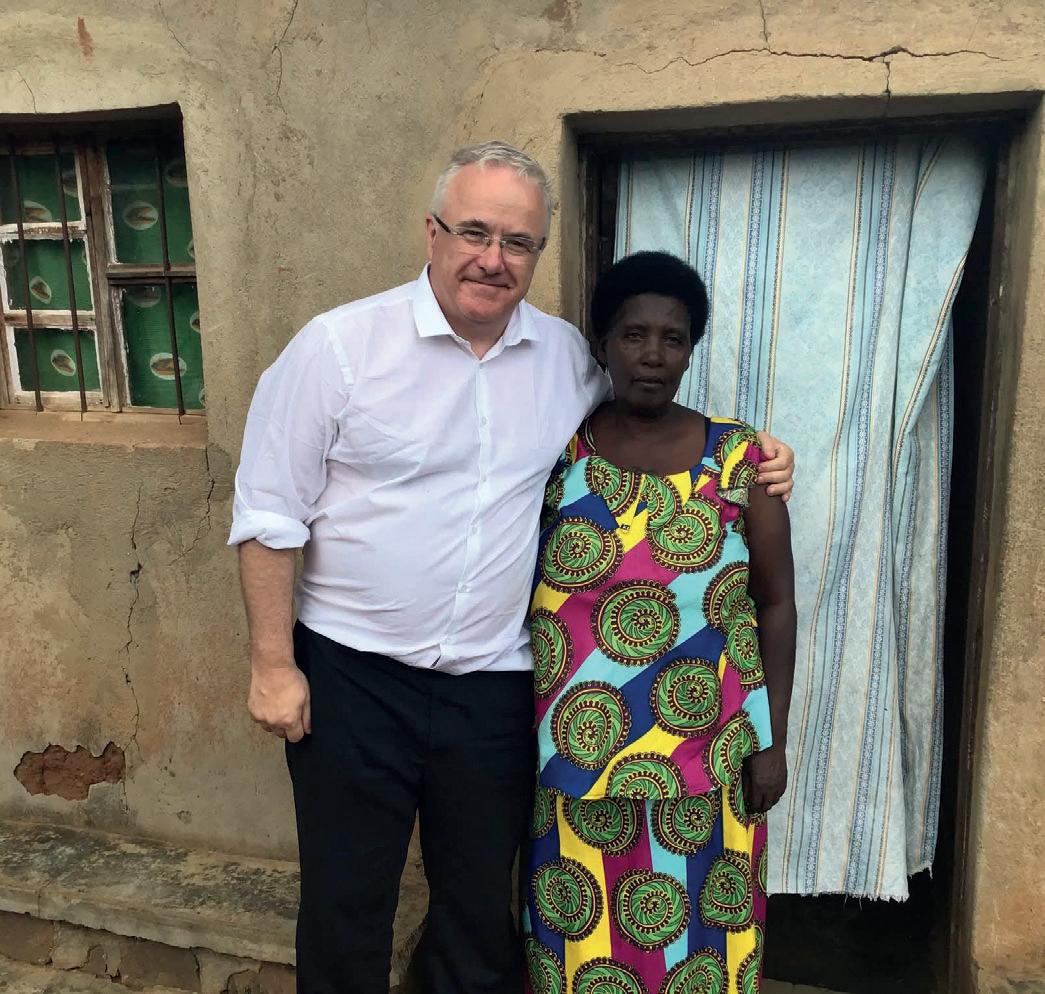
Mary, described how she had lost four sons and her husband. Breathtakingly scarred (she had been set on fire) her biggest obstacle today was high blood pressure - any effort to cultivate enough to eat caused her to pass out. Her water supply was a two hour walk away.
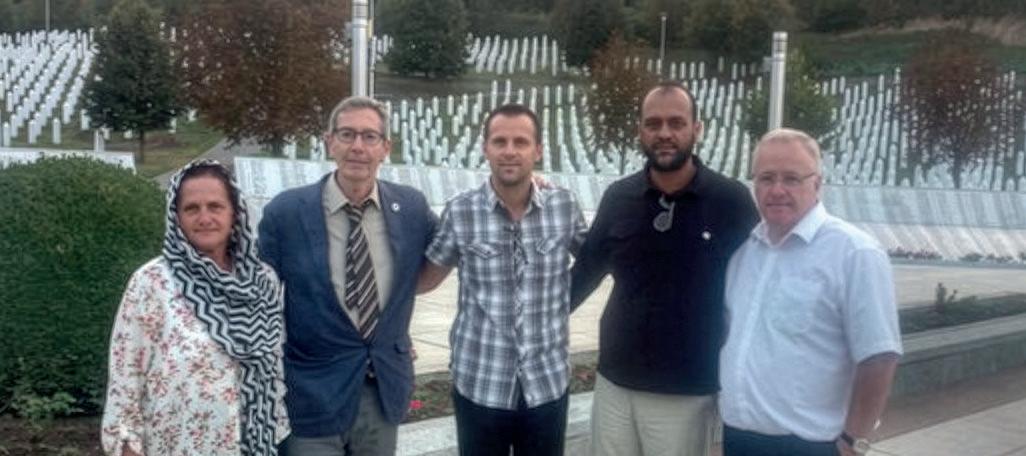
Opposite: Francis at Potcari Cemetery, Srebrenica with survivors from the genocide, Professor Javed Khan OBE and a former ITN reporter
Below: With Mary in Rwanda
Another man explained how he had adopted eleven orphans as part of the government’s drive to resettle thousands whose parents had been murdered. From very little he was giving everything. With severe trauma and psychosis omnipresent and only a few psychiatrists nationally, families were relying on tying up their kin to keep them from harming themselves. Public services were beyond fully stretched. And yet our findings have enabled the Rwandan government and partner civil society agencies to make improvements to provision and plan more strategically. All the same, and despite official denials, tension hovers in the air in locality after locality as perpetrators and victims have often had to come home and live as neighbours. Today I support HelpAge International, the global arm of Age UK, to keep the needs of Rwandan elders in the public eye.
However, despite the hopes of post European Second World War optimists, genocide has not left us. The genocide in Rwanda, for example, is sometimes discounted as a tribal conflict. The conflicting parties, however, had by tradition lived harmoniously, even with movement between them, until the arrival of German and Belgian colonial authorities. Steeped in the European ‘new anthropology’ that would later shape Nazi obsessions with racial difference, these colonial powers became parties to ever growing domestic competition, in great part aggravated by ‘pass laws’ replete with ethnic markers to assist ‘administrative efficiency.’ The genocide that occurred in 1994 worked its way through more than 800,000 bodies. Among those who placed large orders for the necessary supply of machetes were even senior church people.
While Africa is demographically very young, Rwanda is the continent’s odd nation out. The genocide decimated parts of the country’s population, removing a large number of males critical for the economy, several age cohorts ideal for generational balance, and leaving behind a significantly female population ageing three times faster than elsewhere. Recently I have led teams in the villages and urban dwellings in the country to explore this ageing process, tease out care needs and assess how Rwanda’s nascent social protection system is coping with such exponential demand. One woman,
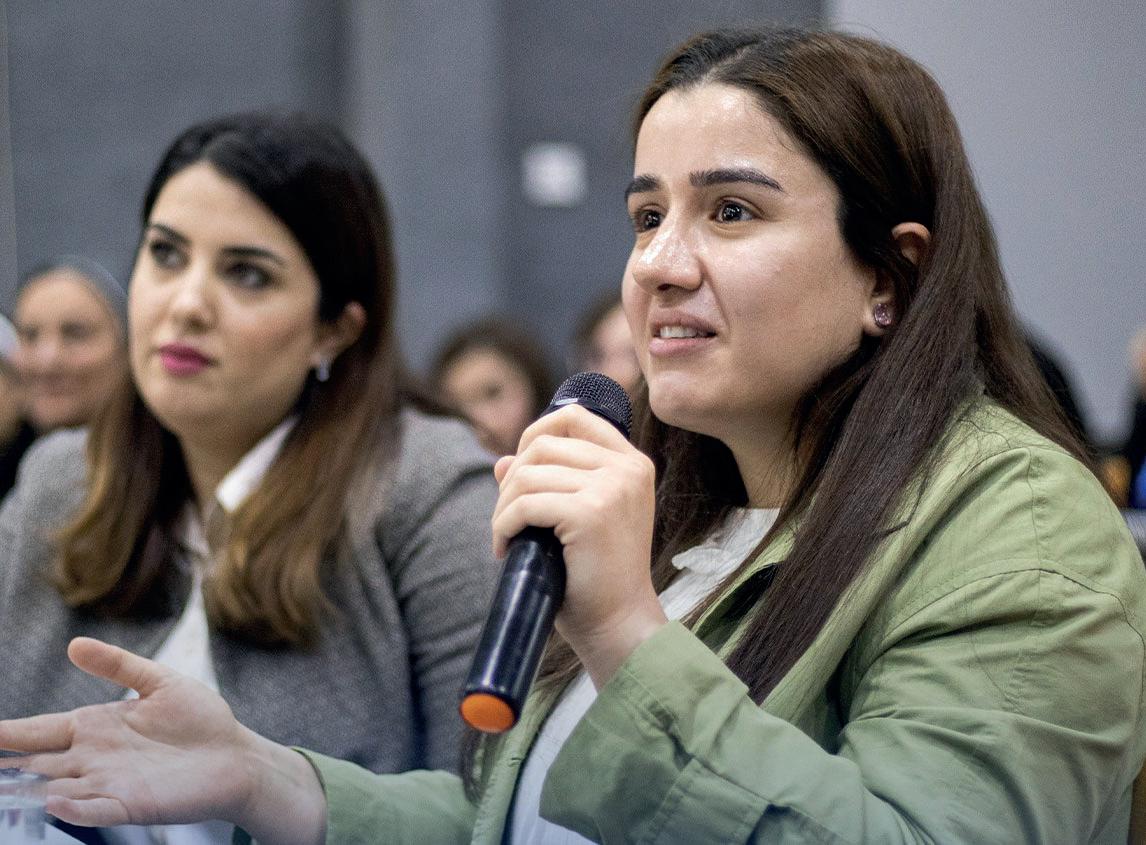
In Erbil, Kurdistan, Iraq the needs are both similar and different but are, sadly, the fruit of genocide too. Between 2014 and 2017 Islamic State (ISIS) perpetrated a series of horrors in and near the Nineveh Plains. Of particular interest to them were the Indigenous Yazidi people and other religious minorities. Sometimes accused by ISIS of being snake worshippers, the Yazidi’s holiest shrine is at Lalish where one encounters a monotheistic religion presenting strong affinities with nature. ISIS used rape as a genocidal tool, displaced half a million and kidnapped at least 5,000 more.
Together with thousands of Chaldean Christian and Assyrian
Genocide begins when ordinary neighbours no longer find the energy to act as ordinary neighbours
Christian minority groups (who both worship in distinctive Aramaic liturgical forms, heavily influenced by longer and deeper exposure to Judaism than their Western counterparts) they fled across the Nineveh plains to Erbil. Here the local churches turned their buildings, gardens, spare pieces of land and rooms above local shops into a huge network of dispersed refugee accommodation. When the fighting subsided some returned home, but thousands stayed on. Not long afterwards more refugees fleeing war in Syria arrived. A decade later, the challenge now is how to develop neighbourhoods where young people can have hope, see a pathway to work, and where those whose lives were interrupted can rebuild.
A hospital, schools and youth centres have been established to begin to address this task. So too has a new Chaldean Catholic University which, despite its name at a European distance, has specifically been designed to model open co-existence between Muslims, Yazidis, the Chaldeans and Assyrians and those of no religious affiliation. By taking each community seriously students report that they feel empowered.
Indeed, the very existence of this institution is a counterblast to the genocide that went before, and teaching and debating with the University’s fascinating weave of students is not only stimulating but also an encounter with Iraq’s future. As a governor of the University, I help lead this institution as it moves well beyond its startup phase, now providing a large Pharmacy school, nursing studies and degrees in the social sciences and humanities. Visits can sometimes be distinctive. About to land at Erbil in 2024, we were rerouted at intense speed for a while because thirteen inter-continental ballistic missiles had landed on a house next to the airport. Iran had been convinced the inhabitants had been assisting Mossad. Notwithstanding these risks it is inspiring to see the University’s work, and its students, flourish.
news and The Times front page. Another on British public service reform did the same and the year after another on the future of volunteering was heavily featured by The Sunday Telegraph. Another still was cited on what is now Laura Kuenssberg’s Sunday morning show and on BBC’s Question Time. Each in their own ways led to shifts in policies or plans among their target audiences and public institutions. Each was focused on a common theme of bridging those who had stopped talking or acting together.
Above: Female students at the Chaldean Catholic University debate in English
At PGS I joined the walking club led by David Hampshire and Martin Priestley, with Christine Giles often on hand to move us along too. I have fond memories of long hikes and camping in what is now the South Downs National Park. I still love to walk the Solent and South Downs Ways and schlep around the Isle of Wight, normally raising funds for those who struggle after war and genocide through charities like Combat Stress. When, this year, I received a national prize for educational empowerment of British Muslims by a non-Muslim, my first instinct was to dedicate the award to those I had met at PGS so many years ago and who, today, are in the leadership of the Wessex Jamaat I mentioned above. I then spent the prize money enabling inner city kids in Southampton, from a primary school where seventy languages are spoken, to enjoy hikes in the South Downs National Park like we had too.
Other commitments have taken me to Dhaka, Bangladesh to speak at a university graduation joined in person by 2500 students and family. Here I took in Friday prayers, kneeling in the streets with thousands because their Mosque was full. Bangladesh is the home to BRAC which is the world’s largest micro finance bank. It is led by a brilliant young man from the country’s tiny Hindu minority, and he talked me through how regime change was impacting business and his own life as a sector leader. In Zambia I am currently exploring the impact of new unregulated artisanal mines on the local Bemba people, and river systems, in the far North.
Closer to home, one study on migration into London led the BBC
Genocide is indeed ‘the problem from hell’. Its costs cascade across generations and repairing the damage is inordinately taxing. It can emerge anywhere. And it begins when ordinary neighbours no longer find the energy to act as ordinary neighbours, whether that is a walk or a meal or any other activity together. Even in modern Britain then, let alone in Bosnia, Rwanda or Iraq, it is probably worth us all finding a colleague, a neighbour or even an old school contemporary from a community or way of life we have never considered and taking the time to listen, or break bread, in fresh ways. Community is hard won, healthy communities often vulnerable, and when they fail the consequences can be historically catastrophic.
John Sadden explores the rumours of ghosts wandering the School site
In 1937, a Debating Society motion that “this house believes in ghosts” was lost by 40 votes to 23. By 1947, things had changed. The motion was carried 24-14 with 2 abstentions, a complete reversal of 2-1 in favour. Then again, in 1968, the same motion was carried by 24 votes to 16 with 7 abstentions.
Does this increase in belief in the existence of ghosts possibly reflect the growth in the depiction of ghosts and the supernatural in popular culture? Or did pupils have personal encounters with ghosts personally, perhaps even around the School site? Or was it just a case of certain individuals being persuasive in debates?
Of course, we can be deceived by our eyes. A mysterious white figure flitting across the quad at night could be an anguished spirit seeking some sort of solace from the material world, or it could be a science lab technician working late.
A magazine article published in 1899 entitled “Haunted schools and
college ghosts”, begins...
"All houses wherein men have lived and died are haunted, says Longfellow (the American poet). And most, if not all schools wherein boys have lived and learned and played are similarly afflicted."
Unfortunately, this article doesn’t mention PGS. There are stories of ghosts in Oxbridge colleges, at Eton and several others, some of which are illustrated.
Locally, in St Thomas’s Cathedral, there are said to be at least two ghosts – one an unidentified bearded clerical gentleman with shaven monk-like hair. The other is the ghost of St Thomas, Thomas Becket, who was, of course, murdered in Canterbury Cathedral in 1170, his blood and brains being spread over the flagstones near the stairs to the crypt. He was soon canonised, but his ghost apparently haunts the Portsmouth Cathedral from time to time. Both of these ghosts’ appearances are said to be accompanied by the sound of the tinkling
of bells, like that of a corner grocery shop when the door is opened.
The most haunted building in Portsmouth, and indeed Hampshire, is said to be Wymering Manor – which some people believe once belonged to Dr William Smith. It has at least 18 ghosts including a nun with bloody hands, the ghost of Jane Austen’s brother, and a knight called Reckless Rod who was impaled on a sword thrown by the husband of a lady he had been too friendly with. The Council couldn’t sell the house, so they had to practically give it away. The second most haunted building in the city is on the school’s doorstep - Buckingham House - next door but one, where Dr William Smith definitely lived in the early 18th century.
It’s said ghosts haunt for good reasons...often seeking justice from beyond the grave. The School site is steeped in history and truly dreadful things have happened over the centuries
could find no fox, but the crying continued without any explanation. On many other occasions Mr Hicks has noted that the window to the upstairs room where they died has been open, even when the house is unoccupied and the room was known to be not in use. Ever since these incidents, Mr Hicks is reluctant go to that area of the school in the early morning.
It’s said that ghosts haunt for good reasons. Unsolved murder victims, preventable tragedies, forced suicides, lack of proper funerals –ghosts are often seen in this light as seeking justice from beyond the grave.
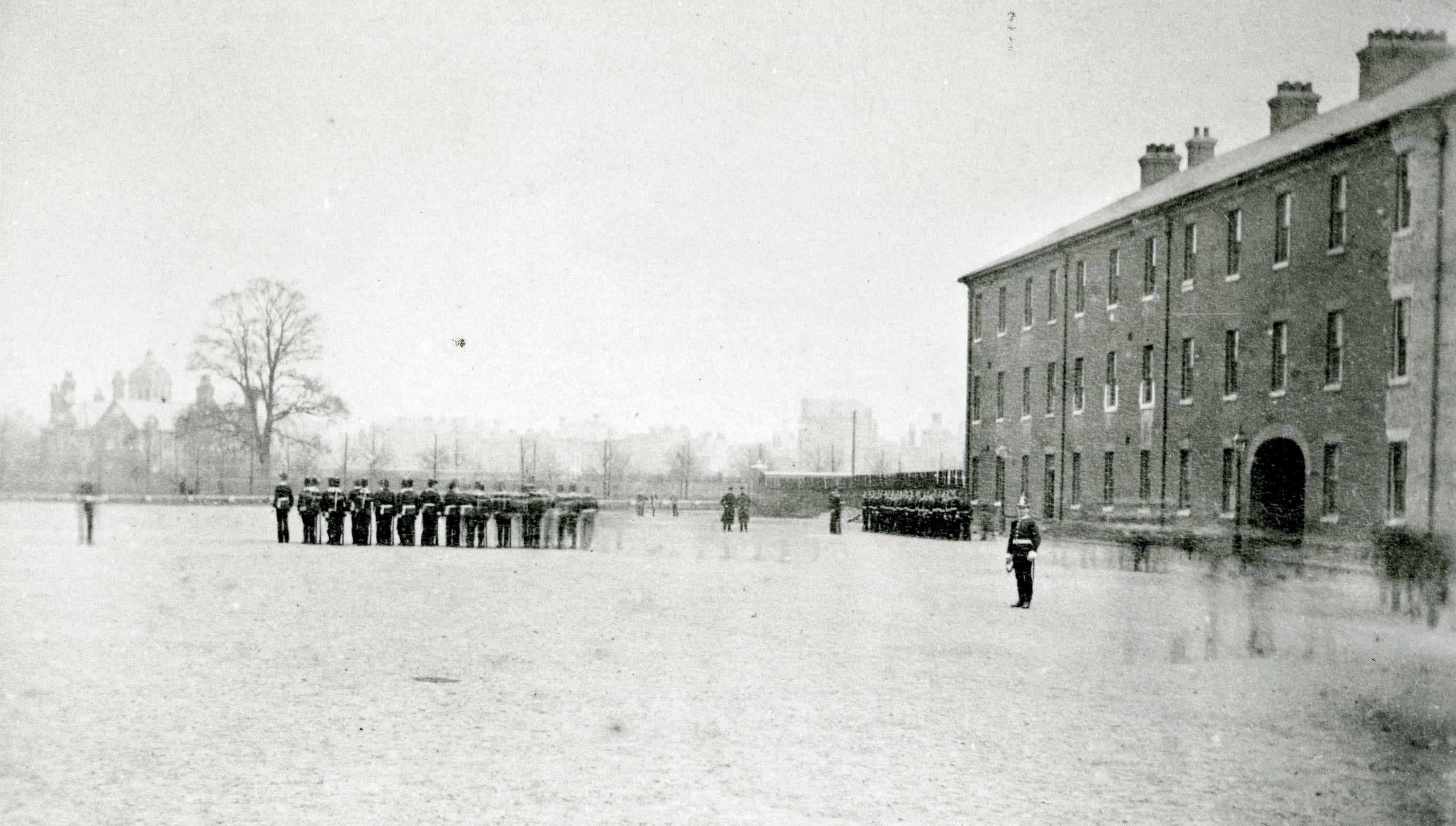
Overleaf: Cambridge Barracks in 1887
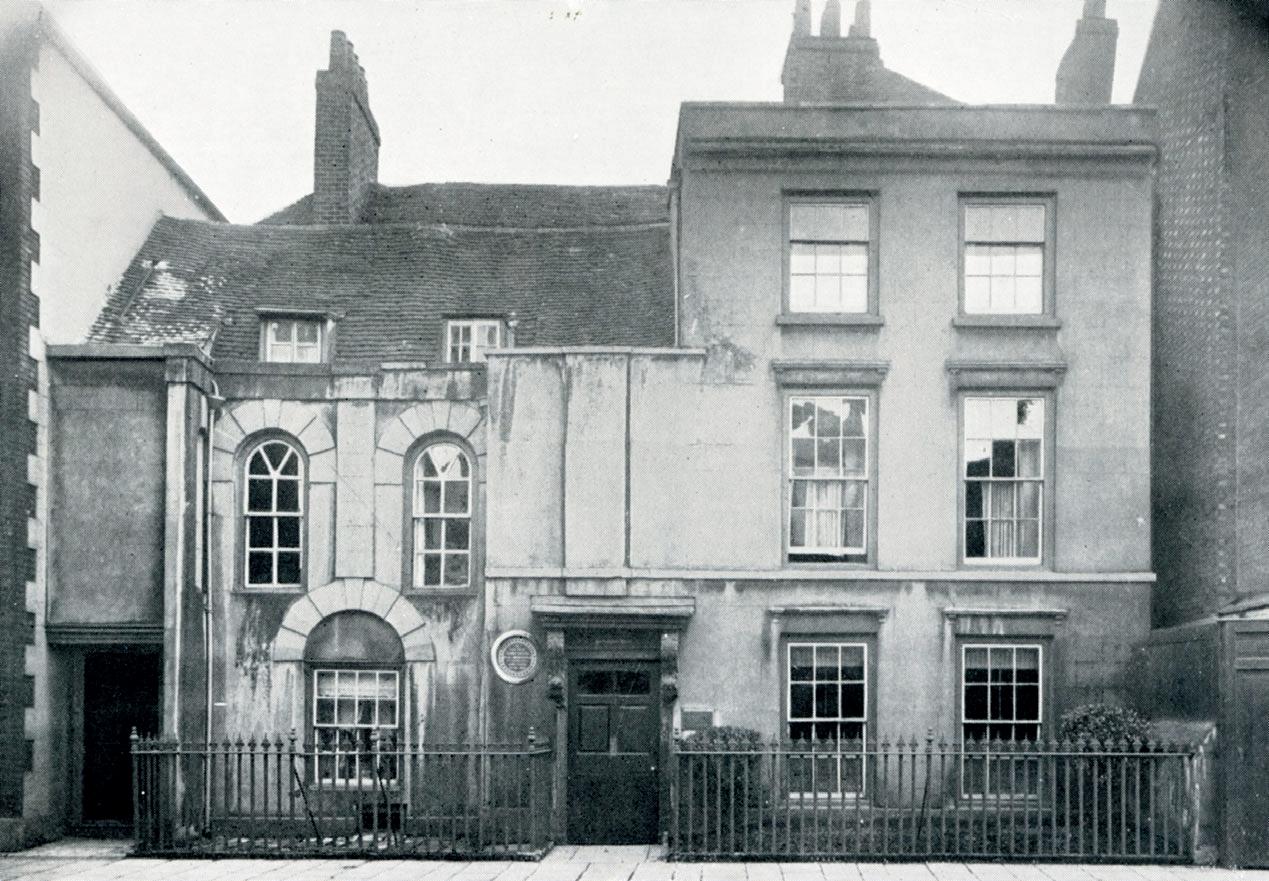
Above: Buckingham House, where the the Duke of Buckingham was assassinated, photographed in c. 1930
In 1628, this was where the gay lover of King James I, the Duke of Buckingham, was murdered, but it was not a hate crime. The Duke was in command of the army and was corrupt and incompetent. He was hugely unpopular with his men. His murderer, a soldier called John Fenton, was celebrated as a hero by many of his comrades and local people. Buckingham House is said to be haunted by murderous screams and the ghost of a man in 17th century clothing who is believed to be the restless spirit of the Duke. Whether Dr Smith - in residence there a century later - was bothered is not known.
There are also believed to be the ghosts of children in the top rooms of Buckingham house – at least three children - all girls - have died there in tragic circumstances. Some years ago, the school Marshal, Tony Hicks, and a caretaker were moving the bins near to the Health & Wellbeing Centre at about 5.30 in the morning. This was in the area that used to be part of the garden of Buckingham House. They heard a child crying, though they originally thought that it was a fox. This was repeated over several mornings and on every occasion they
The School site is steeped in history and truly dreadful things have happened over the centuries. On the site of the School theatre and dining hall prisoners were kept incarcerated in the town jail, built in 1808. Life for prisoners – both men and women – was utterly miserable. The running of the prison was privatised, and the unscrupulous wardens kept most of the money intended to feed the prisoners for themselves. As well as being half-starved, prisoners were forced to do hard physical work which was deliberately pointless. One example was the treadmill which stood around the area of the stage of the theatre. The prisoners were forced to work the treadmill – hard physical work for hours on end. If you are alone in the school theatre at night, you could imagine hearing the creak of the treadmill and the moans and screams of the starving prisoners, taunted for eternity at lunchtime by pupils gorging - a nightmarish cross between the myth of Sisyphus and Tantalus.
The main Senior School and Lower Junior Schools are housed in buildings that were once barracks, and there are many stories throughout the 19th century of soldiers’ lives ending violently, either by tragic accident, suicide or murder. The experience of war sometimes drives men to do dreadful things.
In 1863, one soldier, a John Lothian of the 1st battalion Shropshire Regiment, died after falling out of a window near the arch onto the High Street below. The coroner decided that he threw himself out
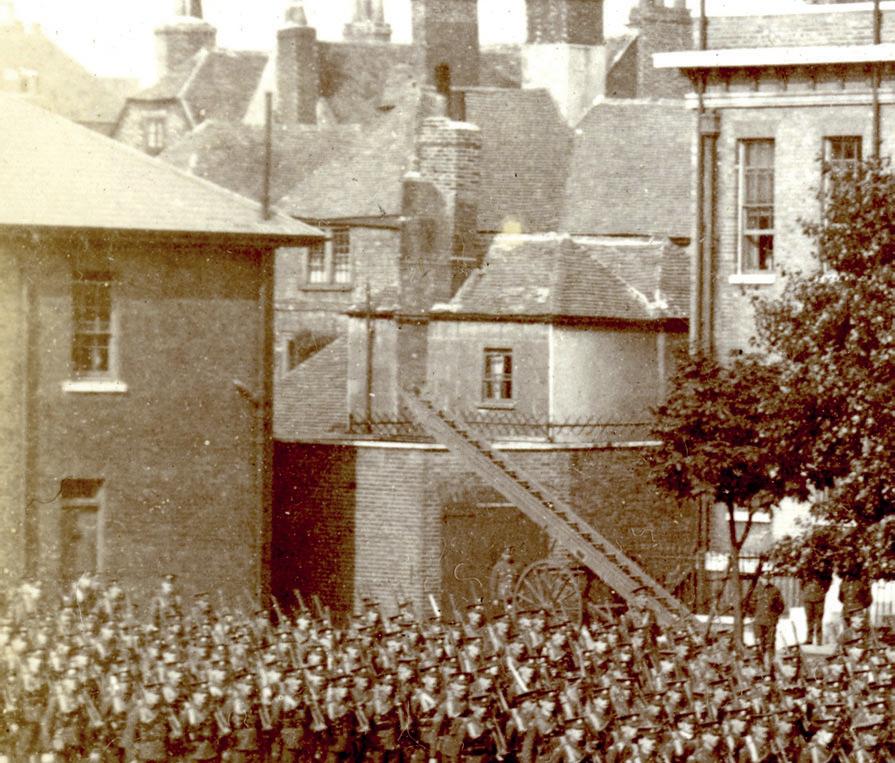
of the window in a fit of insanity, but it has been suggested that he was murdered over gambling debts. School Marshals report strange goings on in the area he fell from, believed to be the Senior Common Room. This includes footsteps and doors slamming when the area is totally unoccupied.
In December of 1886, soldiers living in Cambridge House reported the smell of gas and an inspector from the local gas company came to check it out but his visit was not followed-up. Then, on Sunday 2nd January 1887, at about 9pm, there was a massive explosion which blew out the front of Cambridge House from ground level up to the roof, completely destroying the soldiers’ rooms facing the parade ground (now the quad). Windows across the whole barracks were shattered and bricks, woodwork and rubble were thrown across the parade ground.
were found. It wasn’t realised by Mr Hicks at the time, but this happened on the very day of the 120th anniversary of the explosion.
Above left: A view showing the ‘haunted’ upstairs window of Buckingham House
Above right: The Cavalier’s staircase
As the dust settled, soldiers from adjoining barracks hurried to the rescue, searching through the rubble by lantern-light for survivors. At 3am, the rescuers were ordered to stand down. Two soldiers had been killed, 20 people had been rescued but three were not accounted for. Throughout the operation, tapping was heard coming from beneath the rubble and debris. Some rescuers wanted to continue, but were ordered not to. The following day, the soldiers redoubled their efforts to reach their comrades but, when they broke through the rubble the bodies of three young soldiers were found in the wreckage. William Gatley aged 20, Thomas Kay and Henry Spiers, both aged just 19.
In 2007, the Marshal Mr Hicks was called out by an alarm in Cambridge House. The School was closed and locked as usual and he let himself in and locked up behind him. He was alone on the premises. As he carried out a security check, Mr Hicks heard purposeful tapping from the area where the young soldiers’ bodies
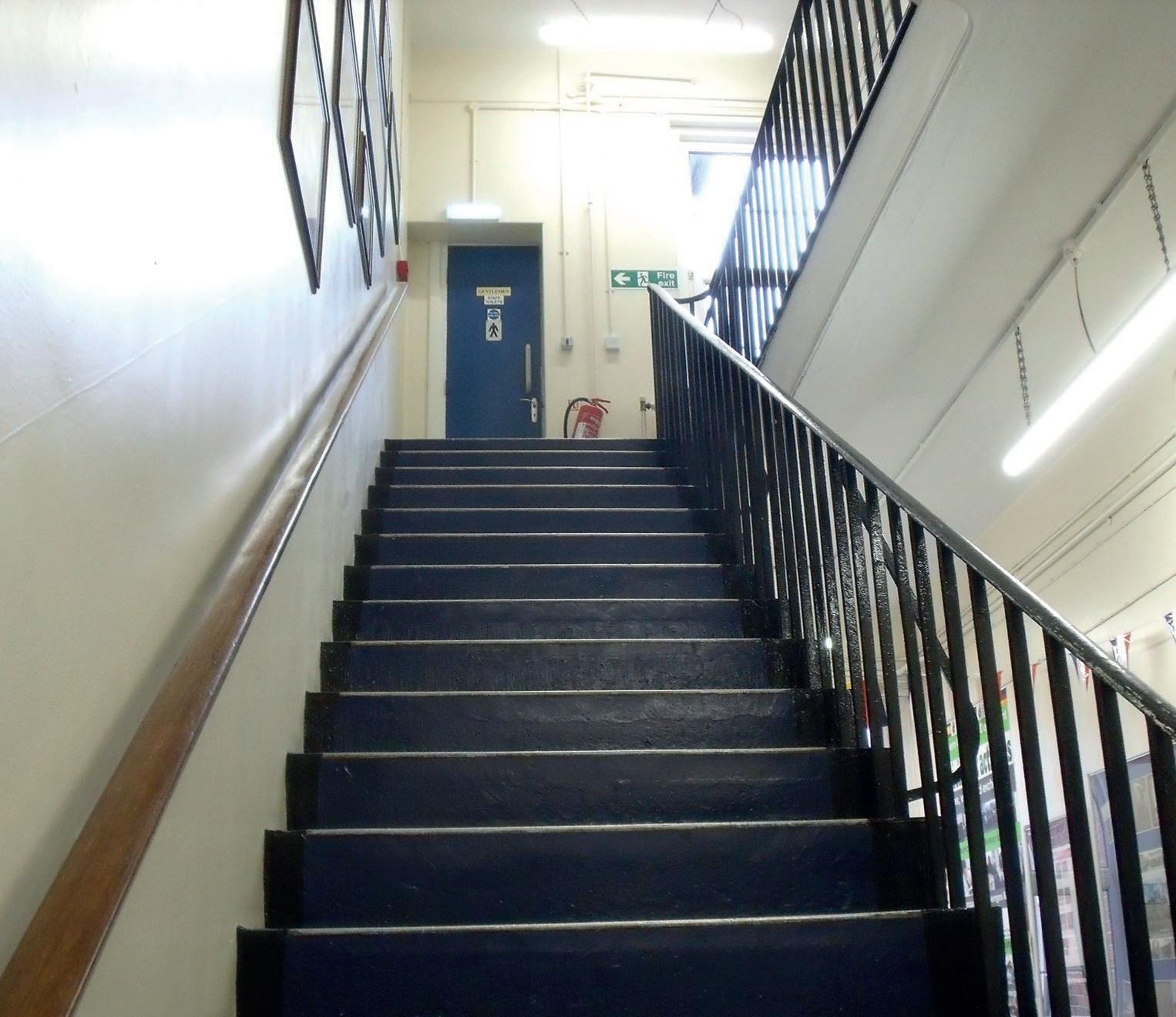
Another Cambridge House ghost takes us back to the 17th century, even though Cambridge House wasn’t built until the middle of the 19th century. Standing on the first floor near Room 2021 and looking up the staircase towards the top floor, a ghost has been seen at the top of the stairs dressed in 17th century Cavalier dress. During the English Civil war the nation was divided, with the Cavaliers, who supported the King and the Roundheads who were in favour of a form of parliament. Gosport was Roundhead and Portsmouth was Cavalier. The Roundheads fired cannons across the harbour. A multi-storey brewhouse that was being used to store gunpowder stood on the site of Cambridge House and was said to have received a direct hit. It went up with a bang and the Cavalier is believed to have been blown to smithereens. His ghost, however, is said to remain intact and identifiable, loitering outside a staff toilet.
Just before the Covid pandemic, one of the school cleaners was working in the basement of this block, near the toilets, when she saw a ghost of a man dressed in red – the same red worn by soldiers when the barracks were built in the 1850s. She was genuinely spooked and requested not to work in that area again.
For those of you who insist on having empirical evidence for everything the cover photograph of this article surely proves beyond doubt of the existence of ghosts? Taken late in 1887, it shows the newly restored brickwork of Cambridge House filling in the area blown out by the explosion. But look closely and you can see spectral figures, believed to be the spirits of those soldiers.*
*yes we are aware of long exposure!
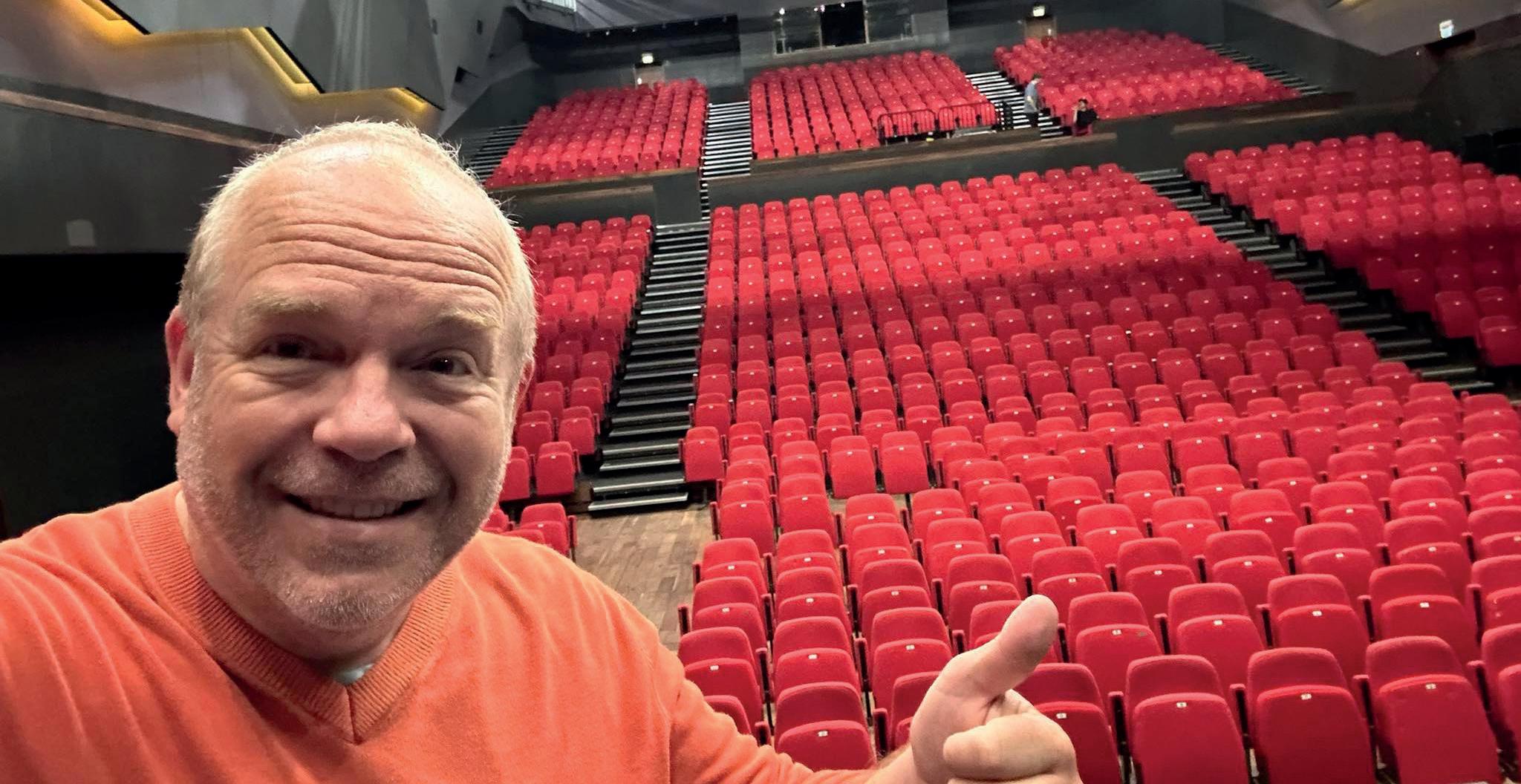
Ileft PGS in 1993 with three disappointing A levels but somehow accepted onto the marketing degree course I’d been holding out for. It was just what I needed to inspire me, and after many years of mediocrity in most subjects at school, I graduated with first class honours in Design Management and a career in marketing beckoned! Within weeks I signed on and after six long months and around 50 rejection letters, I clinched a job in Camden working in a design consultancy. Four months later I was made redundant as the company downsized, and I moved to Cambridge to work in product management. Wonderful! Four months later it was revealed that they had only taken me on to cover maternity leave, so back on the dole I went and then settled working for a design consultancy back home, only to see that go under as well. Within a year I’d lost three jobs and now found myself selling the printing of brochures and leaflets. Not ideal.
Above: James at G-Live before a Stitches Comedy Night
or business foresight I saw the recession collapse in on me. We lost everything, and I mean everything, from our dream home, to cars, and furniture and, naturally, the business itself. My brother had died just a few years earlier from cancer and now, sat in our little rented two-bed house after a fresh trip to the Co-op to raid the discounted “10p shelf” to feed our two toddlers, I settled on something. while watching Lee Evans on the telly. That was it: I was going to try stand up comedy.
After climbing the ranks at that company for eight years and achieving everything I could, I decided to go alone and start my own business. It flew and the world was my oyster, managing marketing and printing for so many businesses. Unfortunately, without maturity
I was working as a part-time consultant for a product design company an hour from home and, in my wisdom, I decided to start doing comedy on the open mic circuit around the country to see if I had it in me. Amazingly, after everything, my wife stood by me – not on the stage though, thank goodness, that would have been a very odd double act. To cut a very long story short, within eight months I was a full-time comedian travelling all over the UK performing at any pub, comedy club and small theatre that would have me.
Unlike most budding comedians, I wasn’t living with Mum and Dad with just a crippling Pot Noodle habit to feed. I had a wife,
household bills and two expectant little boys wondering why Daddy wasn’t reading them a bedtime story in the evenings anymore. So I made a New Year’s resolution: make it work and pay well within a year or give up. Why leave the family and travel a thousand miles a week whilst working part-time if it isn’t worth it?
To cut another long story short, the gamble paid off. In my second year I was performing at clubs around the world, supporting some great comedians such as Jo Brand and Eddie Izzard. I appeared in two talking head TV shows, a few adverts and had even started my own comedy club on my doorstep called Comedy All Stars - now one of the biggest comedy clubs in the country. Soon after I started Comedy At The Tower, a monthly comedy night at the Spinnaker Tower. I won a few awards for my stand up and toured my one man shows across the south (as well as the Edinburgh Festival) telling jokes about my favourite topic – the 80s. I had an amazing time, but a change was ahead.
Fast forward a few years and, with the arrival of Covid and lockdowns, I decided (as I arrived at the fat end of forty, literally and figuratively) that, after nearly ten years of travelling and building my reputation, the time had come to wind back on my own comedy skills and start my own clubs. In 2022 it happened: I established Stitches Comedy Clubs. The focus was to bring big names and hilarious nights to people’s local communities in village halls, arts centres, community centres and small theatres. Luckily for me it came at the perfect time when one of our amazing leaders (who can remember which one these days eh?) let fuel prices rocket, and nobody wanted to drive anywhere unless they had to. So guess what: a local community comedy club on their doorstep was the perfect solution to a night out!
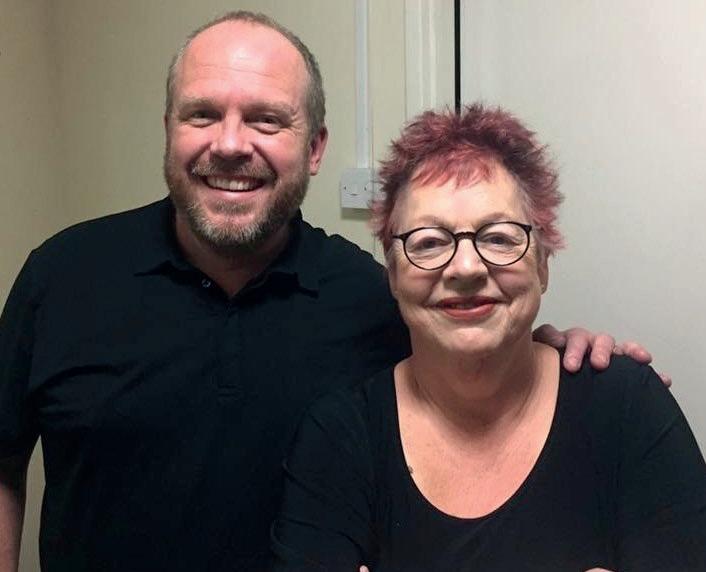
Above: With Jo Brand
Below: James on stage
comedy venues across Hampshire, Dorset, Surrey and Sussex, ranging from 100 to 1000 seaters, and a whole lot of fun! I’ve won Promoter of the Year from the comedy industry and my comedy peers and our clubs have just been voted best in London and the South East, so it’s a great time for laughter it seems. The brand and marketing of all my clubs gives me the kick I always wanted from my original plan for a career back at university. The push for ticket sales fulfils my craving generated from my sales training back at the print company. And I feed my stage ego as a comedian who once was funny in his own right, allegedly, by hosting most of the comedy nights myself and introducing some very funny (genuinely) comedians you’ve all heard of. Joe Lycett, Joel Dommett, Milton Jones, Al Murray, Sean Hughes, Ed Byrne, Katherine Ryan, Romesh Ranganathan, Chris McCausland and dozens of other famous faces have graced my stages, as well as hundreds of rising stars who may one day be famous.
Three crazy years later, and that idea has grown to over thirty regular
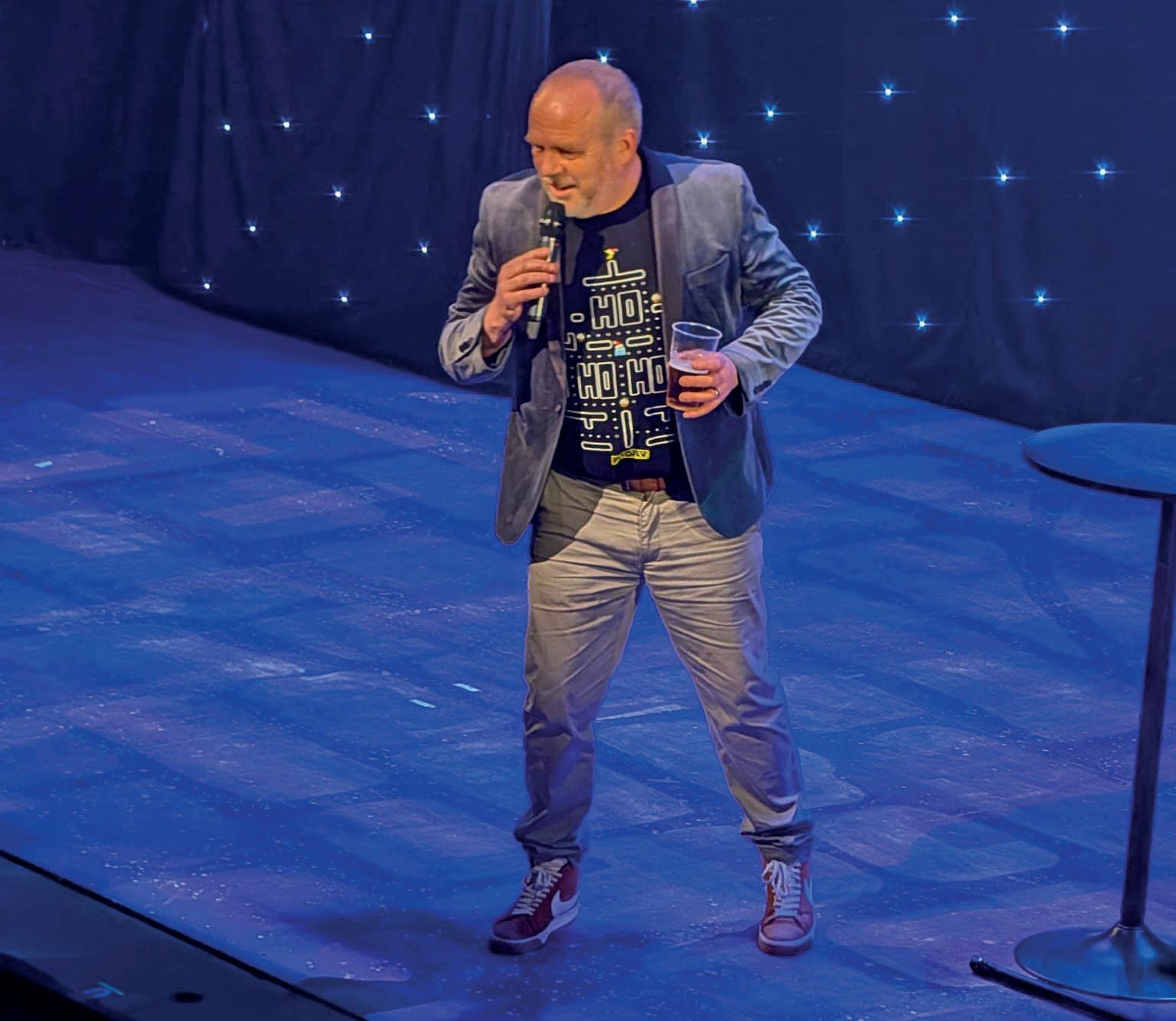
Whilst my time at PGS was riddled with me trying to distract my chums in the classroom, and get a quick laugh along the way, I would never have dreamt I was heading for the stage as a comedian, and probably neither would any of my old school friends. And yet here I am every Friday and Saturday night laughing with hundreds of people who I have to remember have paid to laugh with, and at, us. It’s a strange world that seems alien to most, but walking out from the wings is the most natural feeling for me. I appear as a host with nothing to say, except creating hilarity from whatever answers the crowd give me and introducing some brilliant comedians to do the proper job of actually telling jokes!
My career may have taken as many twists and turns and dead ends as the late night motorway journeys back from northern comedy clubs on Friday nights, but it’s ended up in a perfect place. Laughing all night. What a job! And I still smile when I think back to Mr Wilkins telling me one afternoon in a maths lesson that I would never get anywhere being the class clown.
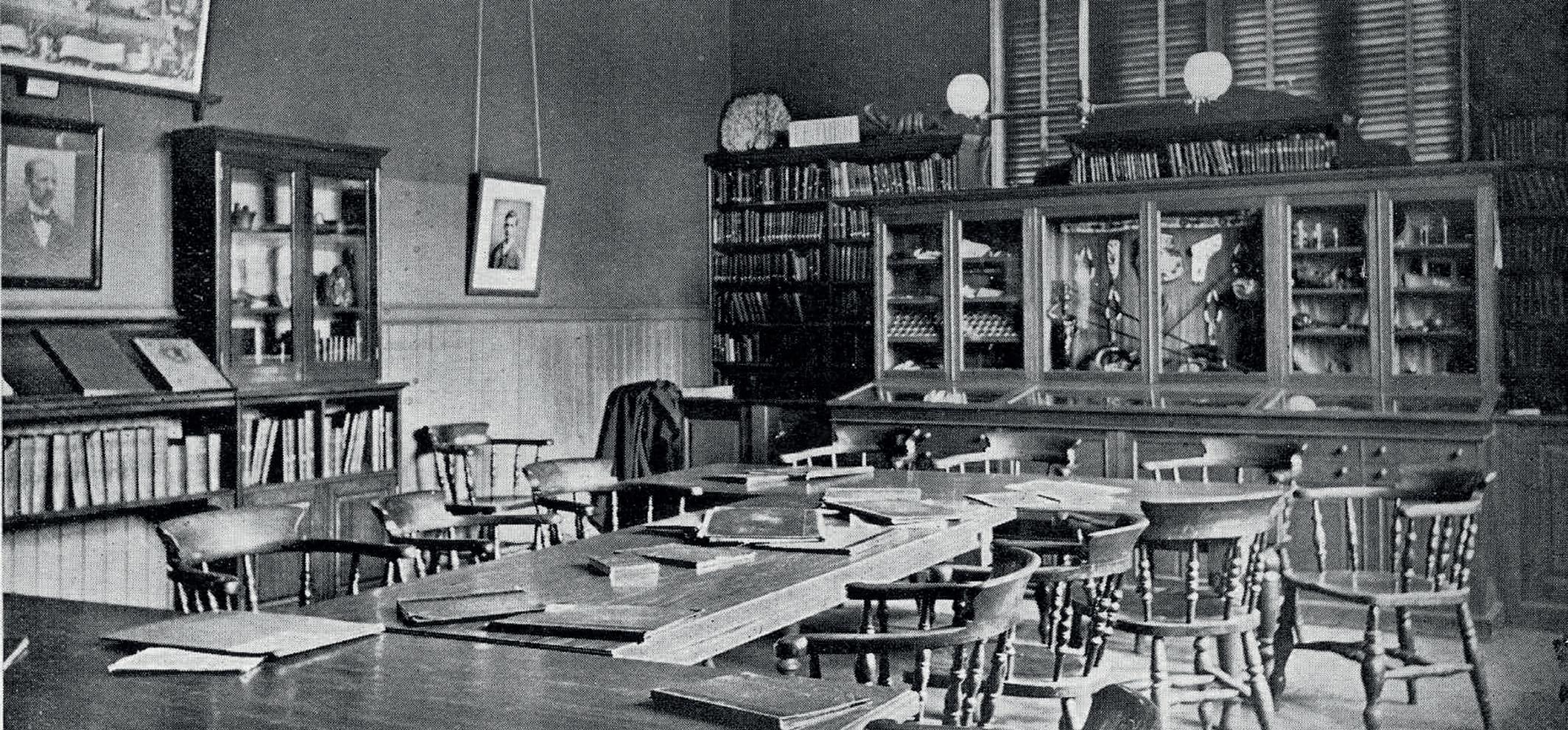
In 1883 six pupils came up with the idea of setting up a school museum to collect and display curiosities from all over the world. The Headmaster, Alfred Jerrard, recognised how educational this would be and readily agreed.
Arrangements were made to have display cases installed alongside bookshelves in the School’s new library and appeals were made for donations.
Above: The library housing the museum c. 1905
At that time the School prepared hundreds of boys for the armed services, both through the cadet corps and the officer entrance exams for the army and navy – Woolwich, Sandhurst and Dartmouth. Old boys of the school who travelled to the far-flung corners of the British Empire in the service of their country were encouraged to bring back to the School “wondrous stones and bones and bottled beasts”.
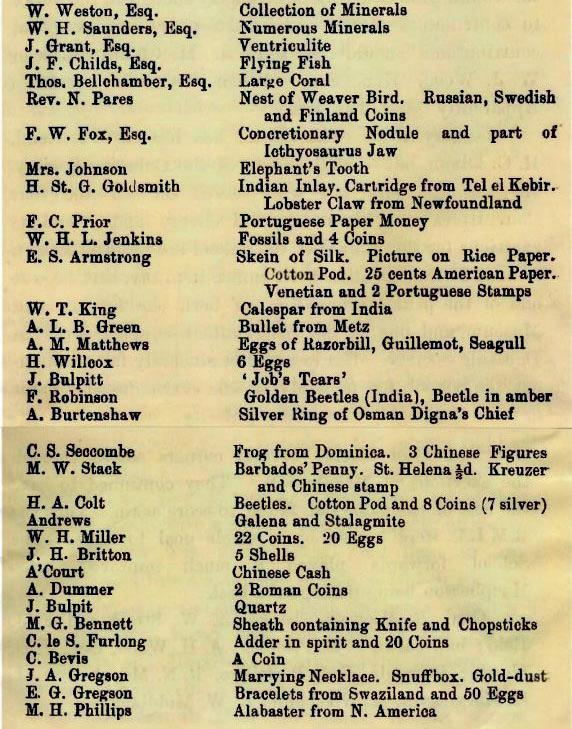
Geological specimens, bones, fossils and pickled creatures were donated, giving pupils the opportunity to learn about animal anatomy, biology and classification. Donors were acknowledged by having their name printed in the Portmuthian alongside lists of acquisitions.
As none of the objects survived, these lists are very useful in giving an insight into what was considered of interest, and also of how widely travelled OPs were. Here’s a sample of what was received: an elephant’s tooth, the teeth of a fox, tooth of a crocodile, a Buddhist prayer-wheel from Barrackpore, the nest of a weaver bird, the jaw of an icthyosaurus, an African assegai, a collection of Roman coins, golden beetles from India, a fossilised fern, a pair of Yorkshire clogs, a Queen Victoria Jubilee Medal, the skin of a boa constrictor, an Ionian Island newspaper dated 1816, a belemnite, Hindu paintings on talc, a Zulu knobkerrie from South
Africa, snails eggs from the West Indies, ants eggs, the foot of a kangaroo.
There was also a piece of wood from “a tragic shipwreck”, a flying fish, baby turtles from the Falkland Islands, a Chinese lottery ticket, a Patagonian necklace of birds’ bones, a pair of stag’s horns, a petrified cat’s skull, a kaffir pipe, a shark’s backbone, a Ju ju mask and a shrunken human head.
These objects were displayed in the School in cabinets in various locations but in 1892 the Headmaster freed up a room that was to be used solely as a museum, though this was short-lived. Pressing needs for space as the School gained in popularity and pupil numbers increased led to it, once again, sharing space with the school library.
This haphazard collection of curiosities offered the bored Victorian schoolboy the opportunity to glimpse an exotic world outside the classroom, far beyond Portsmouth, firing the imagination. Like the internet today, it brought the world into school, highlighting the interesting, the unusual, the bizarre, the freakish. Pupils were encouraged to research, classify, label and display the donations
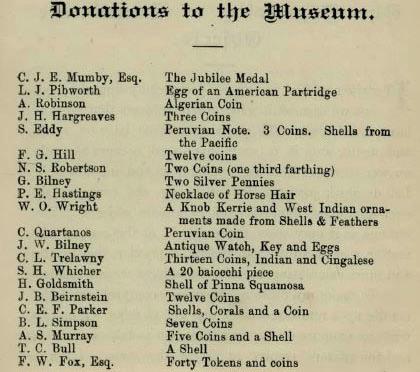
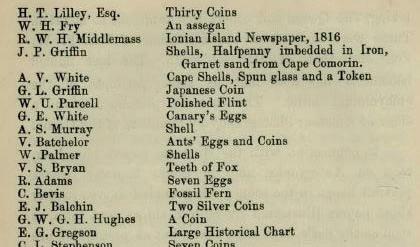
providing insights into history, geography and the natural world. Pupils were able to locate where artefacts originated on a map of the British Empire. The collection taught something about other cultures – though there is occasionally a sense of British superiority and the stereotyping of other nationalities and races by the choice of objects that were donated.
These trophies of Empire reflected the popular boys’ “ripping yarns” literature of the time, displayed alongside on the library shelves, with a preoccupation with weapons, conflict and cultures that were perceived to be strange, exotic and threatening. Explorers were celebrities in the 19th century – Henry Morton Stanley and Dr Livingstone were famous for the exploration of central Africa. Fossils and pre-historical artefacts, too, evoked the “Lost World” genre of children’s fiction. A few weeks after the Battle of Jutland in the First World War, the school magazine reported that a large iron plate from HMS Warspite, pierced by a shell during the fighting, was donated by an OP and put on display.
But, as the Empire declined, so did the museum. By the 1930s it was reported to be “very unsatisfactory both in accommodation and in contents; there is no semblance of order or arrangement to be seen anywhere. Coins and butterflies, birds’ eggs and lumps of coral are indiscriminately thrown together”. An attempt to revive it failed and the fate of the collection remains unknown.
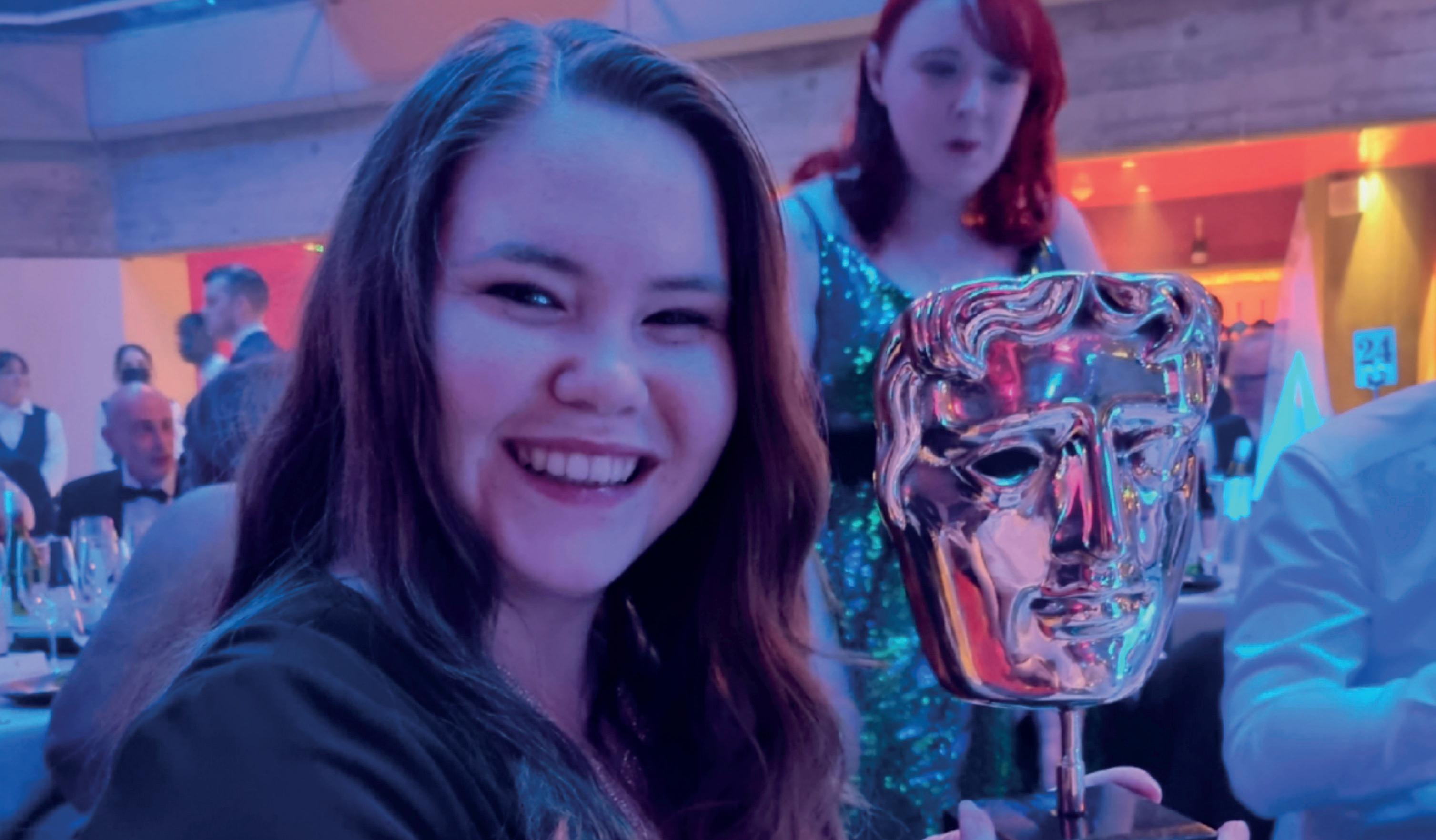
Behind the scenes of award-winning video game design with Maddison Gould (OP 2016)
Was there anything that triggered your interest in animation?
I always loved Art, Maths and Physics, which led to a lot of people saying that I should look into architecture. That didn’t interest me much so I looked into what else could involve the three and ended up with animation. I grew up as a Disney kid and wanted to help create worlds that people would love, just like I did.
What did studying it at a degree level involve?
How did you end up at Sony Interactive Entertainment?
Above: Maddison with one of the BAFTAS
I studied at Escape Studios, owned by Pearson College London, as part of the first-ever undergraduate year. The whole three years were planned to act like a studio environment, as it was created by industry professionals. The first year aimed to get all three courses to the same level and give an understanding of all parts of the industry: Games, Visual Effects (VFX), and Animation. We learnt cinematography and animation basics in compositing, hard surface modelling and more, using tools like Maya and Unreal Engine. Then everything was project-based, we would write the stories, storyboard them, source the environments and characters, animate and voice act, while producing and managing the project ourselves. This was how I fell into production. We completed all projects from start to finish, and I always ended up in the role of organiser, so that was my specialisation in the third year.
I was very lucky, one of the Studio Heads under the PlayStation Studios umbrella was on the board of directors at my university. She reached out to my tutor, who recommended a friend and me for an internship for Junior Animators, which they ended up splitting in half for the two of us. We were mentored and asked to learn more about being a producer. When our time ran out, they then recommended us to another part of PlayStation Studios as Junior Producers. Since then, I have worked my way up to Senior Producer in this part of PlayStation Studios - Creative.
Which games have you been involved in?
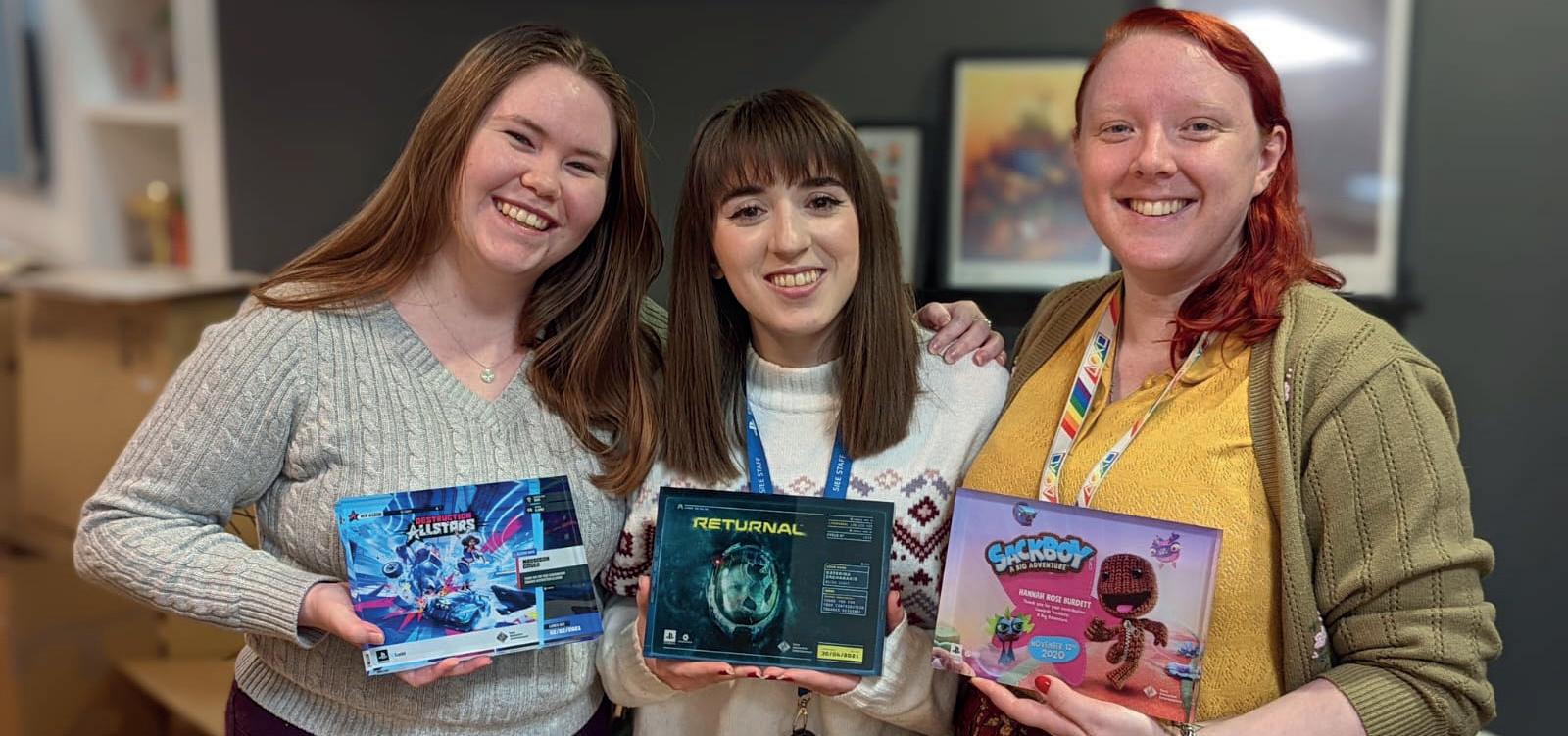
On released titles, I have credits on: Until Dawn (2024), Concord (2024), Helldivers II (2024), The Last of Us: Part II - Remastered (2024), Horizon II: Forbidden West - Burning Shores (2023), Horizon VR: Call of the Mountain (2023), Returnal (2021), Destruction AllStars (2021).
I was proud that one of the first games I worked on, Returnal, allowed me to go to the Game BAFTAs where the game won multiple awards, some of which were directly related to the teams I was helping produce. Recently, I think Helldivers II has been the team’s biggest success, having landed multiple nominations and wins this year.
Where does the initial idea for a game come from, and at what point does the studio get involved?
This varies by studio. When I was involved at London Studio, everyone got to pitch ideas to the Studio Heads. Then it was all looked through and expanded upon before the final idea was chosen, polished and then pitched to stakeholders at PlayStation Studios. This is an unusual way of going about it - the idea can come from other movies or game inspirations, Studio Directors, writers, or someone at home. There is no one way to that initial idea that kicks off a whole game.
How many different teams work on the production of a game?
Many different teams work on a game, you have Environment Designers, Audio Engineers, Musicians, Programmers, Graphic Designers, Motion Designers, Tech Artists, Animators, Writers, VFX Artists, Producers, and many more, but if I keep going it will be as long as the credits. All these teams work with the Creative Director(s) to create a game, which can range from five people to hundreds, depending on the size and complexity of the game.
Which teams have you been a part of so far, and what have your roles entailed?
I have been an Animator and a Producer. While being a Junior Animator, I mostly worked in silo as the Studio had just wrapped up on their current project Blood & Truth. This meant that we were in the exploration and pitching part of game development, where not all disciplines are as integrated as at other stages. While being a producer, I have worked with Audio, Music, Voice-over, Graphic Design, Motion, User Interface and User Experience (UI/UX). For the last few years, I have been a solely UI/UX producer, working alongside Motion and Graphic Design when needed.
What does an average day look like for you?
An average day is syncing with my team in stand-up, making sure they know what they are doing for the day, with them letting me know if there are any issues or blockers. I oversee my team’s resources, task lists, budget, feedback, and general organisation. I work alongside our team lead to make sure we are always working to the timeline, priority, and budget, while the team focuses on innovation and quality.
I do this by going to internal and client project meetings, updating timelines, and planning our tasks based on client feedback and adjusting accordingly as we go. One of the largest parts of my job is just being a problem solver, e.g. getting information that the team needs, making a new system so we can reference what we have done before, spending a lot of time in Excel/Google Sheets.
Which aspect of your role do you enjoy the most? I love working with my team and acting as a protector for them. If
they need help, they come to me so they can focus on their work. Being a problem solver comes with both frustration and reward. I get to look after my team by finding new ways of doing things, explaining limitations to clients, and offering other solutions, sometimes even playing the bad guy and saying it’s just not possible.
How is the gameplay tested? Are you involved directly?
I am not involved directly, but games are constantly being tested by User Research, who test and give feedback on the game throughout production. This is either by the team themselves or by test groups based on the target audience of the game. There are also larger tests when doing Closed/Open ALPHA or BETA testing.
What has been your proudest moment?
I think my proudest moment was the Audio and Music teams both winning awards at BAFTA and proceeding to take the awards and dance with them on the dance floor.
Any low points?
The game industry has had a tough couple of years with many redundancies. Here’s hoping things are now on the up, with lots of exciting new releases coming soon.
What is your favourite game?
I have two Dragon Age: Inquisition and Valheim. Dragon Age because I loved the story and the world of that game. Before Valhiem I had never played a survival game but it was both forgiving and challenging. I look forward to making more bases and for the final update to come out in 2026.
And your favourite animated film?
Mine has always been Beauty and the Beast, from the story to the music, it has always been a comfort film for me.
Do you have any advice for anyone hoping to work in animation or gaming?
Animation is a great place to start. I know Creative Directors, Studio Heads, VFX Artists, and many more who all started as animators. You can learn by drawing; it’s a learnt skill, most people start with a ball. Also, with 3D animation, you don’t need to be able to draw well. I know amazing animators who don’t draw well but can draw the rough idea, or don’t even need to draw and can just create it in the software.
That being said, there are so many ways to get into gaming: programming, graphic design, 2D and 3D motion, even just knowing spreadsheets and learning a little agile methodology, like me. Animation got me my first job, but my desire to learn new skills got me a lot further. Every one of the jobs is a learnt skill, a lot of which you can start learning yourself from tutorials if you have the passion and drive.
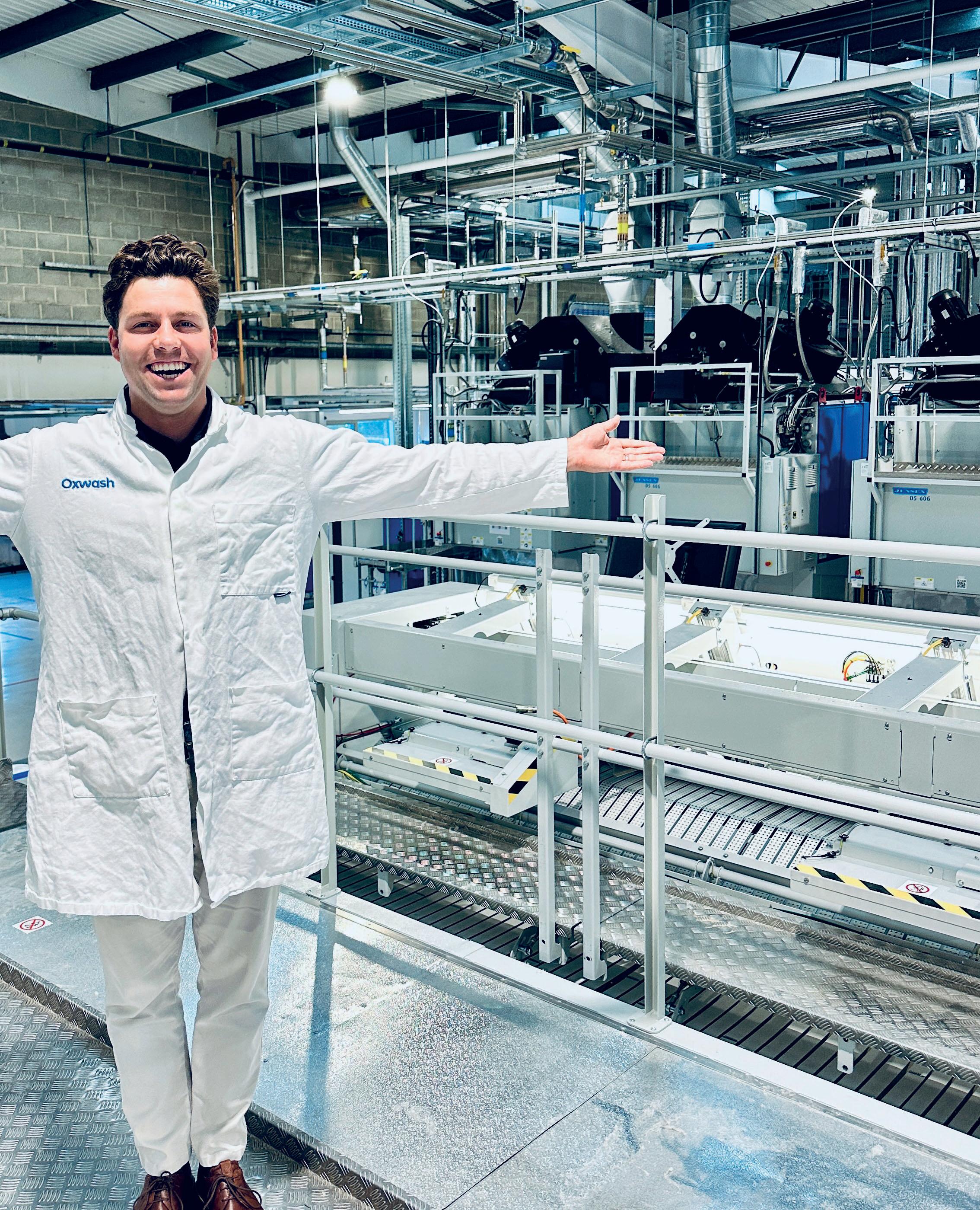





From a jerry-rigged washing machine and a bike to a dedicated 30,000 sq ft facility, Dr Kyle Grant-Talbot (OP 2009) explains how he’s using space technology to revolutionise the industrial laundry industry


What did you do after you left PGS?
I spent the summer after I left teaching sailing at a club on the Isle of Wight. My A Level grades weren’t quite what I had hoped but I managed to get a place at Cardiff University to read Microbiology. That quickly changed into an Astrobiology course which involved studying for a Microbiology degree alongside an Astrophysics one.
You didn’t end up staying in Cardiff for long –what happened?
One grey day when it was raining sideways yet again, I decided to apply for an internship with NASA. It was the first year they had opened up their programme to international students and there were only two spaces available. Somehow I secured one of them and headed over to the Kennedy Space Centre in Florida to help design, fabricate and launch a new life support system for astronauts in space.
How was it?
To say it was intense would be an understatement. I was doing a fulltime job working very long hours while still studying for my Astrobiology degree. It was great fun though. I lived in Cape Canaveral, used to go surfing before work and got to see so many launches during my time there.
engineering living things to do something useful such as getting a tree to glow in the dark so you don’t need streetlights, engineering coral to filter water or engineering bacteria to remove carbon dioxide from the atmosphere.
It was during your time in Oxford that you came up with a business idea. What was it?
I realised that the science we were developing could be used to constrain resource use on earth rather than just up in space. I had all sorts of ideas including creating a phone case with built-in solar panels for charging but the one that stuck was laundry. My company – Oxwash - was born out of the principals of the research I was doing. It is the world’s first net zero carbon and net zero water industrial laundry service.
What are the issues with the traditional industrial laundry industry that you’re seeking to address?
Opposite: Kyle inside one of
After two and a half years I was seconded to SpaceX, the company founded (and still run by) Elon Musk. There I worked on developing their life support system for the Dragon 2 Spacecraft which is used to ferry astronauts today. It was a completely different culture but I loved it. We were based in a big hanger with the Falcon rocket fuselage on one side of the space and our working space on the other.
How did you find Elon Musk?
I learnt a lot from him. He was very focused on cutting costs and getting you to think about alternatives. I remember one time we were about to spend $2.5 million on an air conditioning unit from Lockheed Martin, designed to keep the satellite on top of the vehicle cool while it sat on the launch pad in Florida. He asked why couldn’t we just buy one from Home Depot instead? So we did. It cost around $200 and it did the job! He taught me to always go back to the first principles, the basic system requirements. Who told you it needs to be done this way? Why does it need to be done that way?
What brought you back to the UK?
An international weapons regulation change meant I had to return. Space rockets are classed as weapons – they are basically intercontinental missiles without the weaponry attached. I had been really enjoying the work I was doing so I was lucky that NASA and the UK government provided funding for me to undertake a PhD at Oxford in Synthetic Biology, a new field at that time. It involves
It boils down (pun intended!) to the fact that industrial laundries clean fabrics by literally boiling them in bleach. This uses a ridiculous amount of energy and drinking water (50,000-100,000 litres a day). The drinking water ends up contaminated with chlorine which makes its way into drains damaging the environment, not to mention the harm done to workers who are breathing in the fumes every day.
So what does Oxwash do differently?
We recycle the water that we use completely – it goes round in a loop, topped up by rainwater – and the entire plant is run on renewable energy and biogas. There are all sorts of cool patents and technology involved including acoustic drying and AI stain detection which allow us to reduce the energy requirements to a household level.
Tell us about the early days
I was still working on my PhD so it all started with a bike, a Google form and a jerry-rigged washing machine. My backpack was a spraypainted Deliveroo one with ‘Oxwash’ tippexed on it!
The washing was done at my house. I’d added a heat exchanger to my machine and a very remedial water filtration system – basically a tank on top which would take the rinse water from the last load, store and filter it, then let you use it for the pre-wash of the next load. I’d also plugged an Ozone generator into the bottom to saturate the laundry with ozone to deodorise and disinfect it.
Who was your first client?
My very first client was a chap called Chris from my college at Oxford who either took pity on me or made a huge mistake! Either way, he filled out the Google form and appeared at reception with a bag of dirty laundry which I took away and cleaned for him.
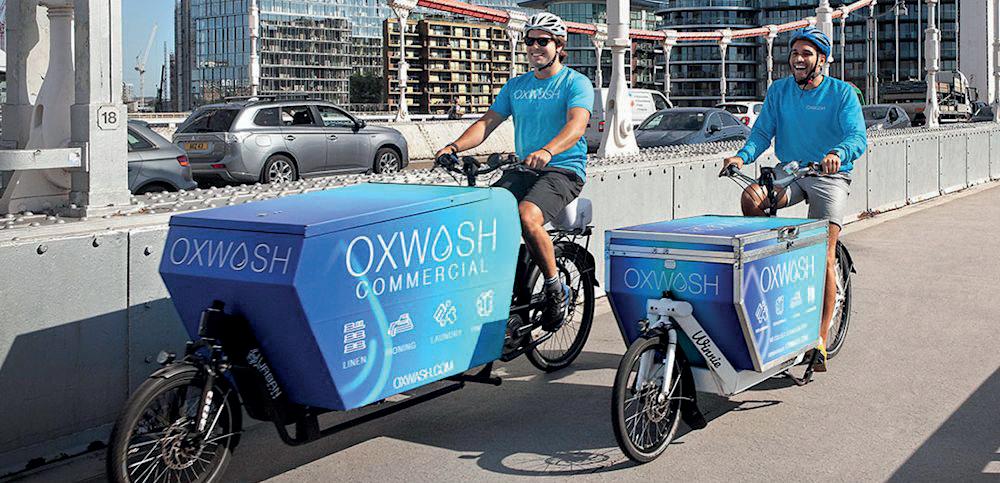
What’s changed about your business model since then?
A lot! As the business grew, that single bike became electric cargo bikes which I imported from the Netherlands and then trikes. We expanded from Oxford to London and Cambridge as well.
I managed to get an investor who I met at an entrepreneurship event at the college. He astutely drip-fed the money so that I couldn’t go and blow it all at once – it was an important lesson in the value of targets. Since then, others have come onboard with funding and we have corporate partnerships too.
About a year and a half ago we did a big pivot to serving large industrial users of laundry only – hotel chains, hospitals military bases, gym chains etc. This is where the real problem is.
Obviously you don’t do the laundry in your home any more! Where do you process it?
of electric vehicles of various sizes for short distances and then vehicles modified to run on vegetable oil for the longer distances.
Do you have plans to expand further?
Above: The e-cargo bikes in action in London
When the business grew we set up a dedicated plant which we called The Lagoon. Our first two were relatively small (around 1000 square feet) and the third a little larger at 3000 sq ft. Each one was an iteration of the technology – we’d upgrade how we cleaned, ironed, stain treated etc. Feeling happy that we’d got the design right, last year we went big and opened an almost 30,000 sq ft facility called Big Blue just outside Swindon. We serve businesses across the south but have a lot of London based clients.
With sustainability being at the heart of your business, how do you transport the laundry? The volumes are much too high to use bikes now so we use a fleet
Absolutely. Our Big Blue facility is a blueprint for replication so we’ve had a lot of interest. We’re building them in Dubai, Abu Dhabi, Riyadh, and in the UK we’re working with the NHS to build a few to service hospitals. We’re in discussions with the Defence Infrastructure Office about building them to service military bases as well. Then there are discussions with Disney World in Florida. Most excitingly though, we’re working on taking the Big Blue format, shrinking it down to the size of a shoebox and putting it in space for astronauts to use. Did you know that at the moment they wear clothes three or four times then bag them up and throw them at the atmosphere to burn up? It is ridiculously unsustainable.
Do you think the ozone technology you use might end up in people’s homes one day?
The technology does exist already in the US and China but, in all honesty, it hasn’t been done very well. For it to be effective, you need to have the gas in high concentrations for an extended period and the systems currently available for consumers only give a short burst at the beginning.
At our plant we remove the gas from the water first using vacuum membrane technology then we add ozone back in so it is in a much higher concentration than in the domestic systems. This could be adapted but it is probably too dangerous for the consumer market, certainly anytime soon.
What can individuals do to make their laundry cycles more environmentally friendly in the meantime?
You can wash in cold water (30 degrees), use eco-friendly products such as Ecover or Smol and make sure you wait until you have a full load. Small changes like that all help.
What impact did the Covid pandemic have on Oxwash?
The shorter list would be what wasn’t affected! At the time it hit we were a consumer service with a few SMEs on the books – cafes, nail salons, barbers - which all had to stop operating so business ground to a halt. Then the phone rang. It was the local NHS Trust whose laundry was down due to staff contracting the virus. We took over for them, then picked up a contract for the Astrazeneca trial. We pivoted completely into healthcare cleaning because our tech was able to destroy the virus so, actually, we got busier. It was quite something though – everyone in the facility (and on the bikes) had to be in haz-mat suits.
What have been your biggest mistakes along the way?
At school, I would have to say pursuing what I thought I should be doing rather than what I actually wanted. After school, it would have to be biting off too much in one go. The year when I started Oxwash while finishing my PhD nearly broke me. I was working all hours and barely sleeping. I would not recommend it.
And the biggest highs?
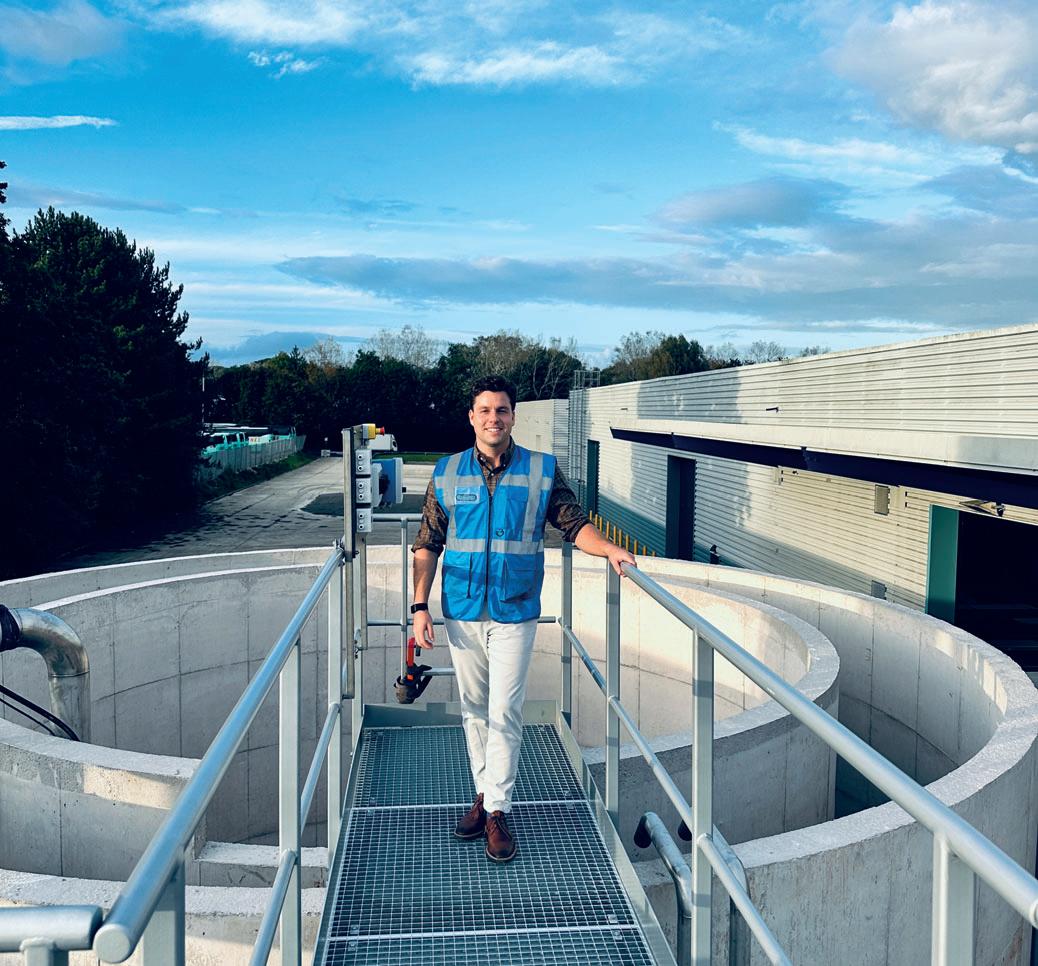
future and we’re really proud of it. Then, on a personal note, it has to be getting married to my wife last year. She’s been with me on the whole Oxwash journey and I’m really grateful for that.
Below: Cleaning in action
Most recently, it has to be opening the Big Blue facility and seeing it in action. It’s the first of its kind in the world, a blueprint for the

Speaking of highs, since your original interview, Oxwash has been acquired by Elis. How has that been for you as founder of the business?
It's been a whirlwind journey. Truthfully, we were deep in the midst of executing a global rollout strategy when the acquisition came together rapidly towards the conclusion of a significant financing process. We've had a longstanding relationship with our acquirer, Elis, built on mutual respect, which I believe was instrumental in both completing the deal and now successfully integrating Oxwash and our unique intellectual property into the broader global Elis network.
Do you have any advice for aspiring entrepreneurs?
Yes – just do it! So many people have good business ideas but play it safe and leave them on the shelf. My advice would be to take the first step – it’s the hardest one but it is so rewarding.
Is there anything that’s stayed with you from your time at PGS?
I’d have to say three things:
• The energy of the School. PGS challenged me, particularly having come from the relatively quiet Isle of Wight. I loved the sport and the science.
• The teachers. Mr Nials (Biology, 1987-2014) and Mr Doyle (Surmaster) didn’t let me get away with anything – and I tried!
• Friends
It was late Sunday afternoon in March 1958. Rehearsals were well underway for the school production of Shakespeare’s Coriolanus in the school hall. A group of Sixth Formers who were in the play – some of whom were prefects - were in the changing area in the hall and some of them were smoking. One of them flicked his fag butt out of a top window. Unfortunately, at that precise moment, a Chemistry teacher, Mr Horscroft, happened to be passing, and the cigarette butt landed on his head. This prompted Mr Horscroft to investigate – whether he was angry or just very disappointed – is not known, but he remonstrated with the group and took their names.
present. After all, how could they continue in that role when they had set such a poor example? That evening discontent and rumours were rife not least at 25 St Edwards Road, “The Shack” where pupil boarders resided under the benevolent guidance of Mr and Mrs Alf Macgregor.
Below:
The Coriolanus cast (whether this is before or after the revolt is unknown)
The headmaster at that time was Mr Denys Hibbert, affectionately known as “Slug” or “Sluggsy”, who was a chain smoker but very strict about his pupils not smoking. The School Rules (dated September 1957) were quite clear. Rule 2 (a) states “Smoking is forbidden”. And technically rule 2 (g) applied – “It is an offence to drop or fail to pick up litter”.
The next day, Monday, Sluggsy, sacked all the prefects who had been
By Tuesday morning word had spread amongst pupils that nobody was going to sing the hymn in school assembly in protest. The hymn number was duly announced by Canon Heritage, the School Chaplain, and Mr John Davison, the Music teacher, struck up the introductory bars and launched into the first verse. But only the staff sang. After a few strangulated lines, which revealed only too starkly the singing ability, or lack of it, of individual members of staff, the Headmaster raised his hand to stop the music. He proceeded to give the School a lecture and the hymn was started again from the beginning.
The result was the same. Total non-co-operation and the first hint of a ground swelling of mutiny. The staff swept out and pupils listened with awe to the former prefects who encouraged them not to go to
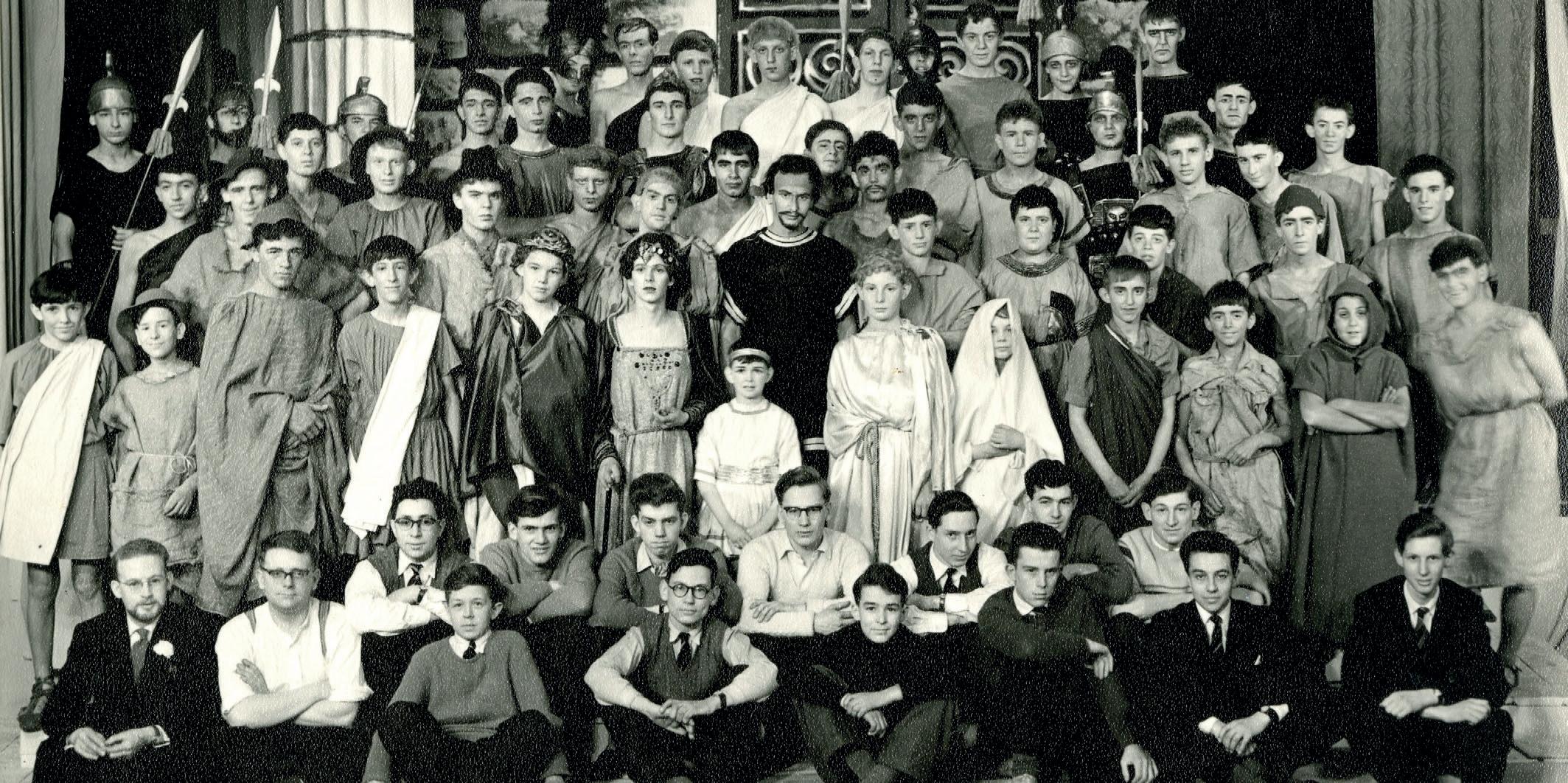
lessons but to gather in the Quad. Within an hour, cars were sweeping into the Quad carrying Governors to an emergency meeting. Amongst the Governors were the Provost of Portsmouth, the Commander in Chief of Portsmouth and the Major General of the Royal Marines from Eastney Barracks. Pupils watched the comings and goings nervously and the tuck shop did a roaring trade throughout the morning. But by lunchtime an agreement had been made. Pupils would return to lessons in the afternoon.
That evening, a large part of the British viewing public settled down in front of their black and white television sets which offered a choice of two channels. At 6pm every weekday the BBC aired a topical news and current affairs programme called Tonight, which was introduced by Cliff Michelmore.
The programme began, as usual, with a topical calypso sung by Cy Grant. To the delight of pupils, the calypso for that day began with the lyrics: The prefects of Portsmouth Grammar School, Have broken a very important rule, Threw a fag-end on a master’s head… The remaining words are not known.
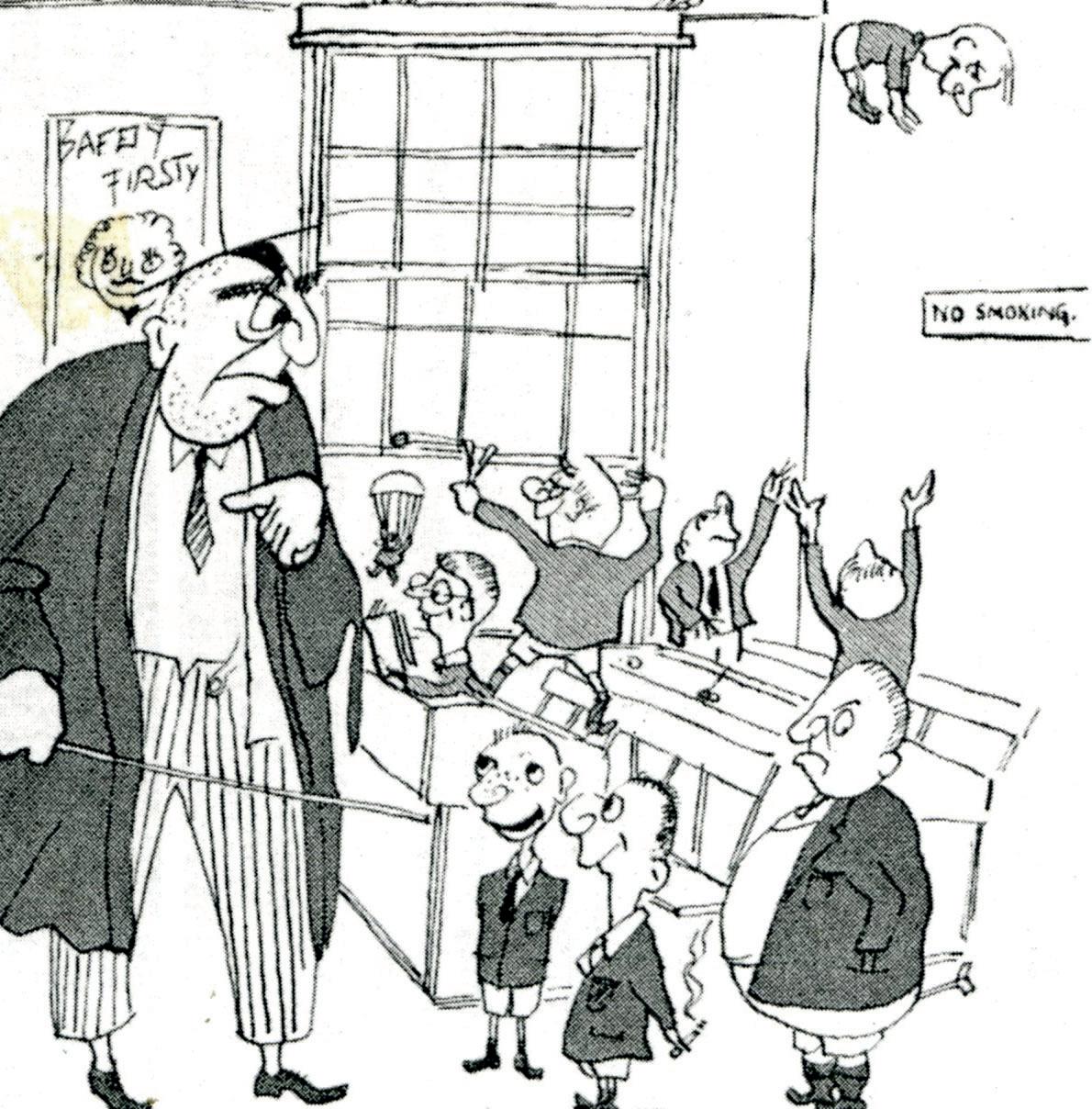
Smoking signs in the hall”. It also refers to the programme notes which draws parallels between the Roman empire, fascism and Western imperialism and oppression.
In the Daily Mail the next morning a story about the mutiny had appeared. Rumour had it that a certain member of the Sixth Form was several crisp fivers better off as a result. It was picked up by numerous other newspapers, including The Daily Telegraph and Daily Mirror perhaps stretching the adage there’s no such thing as bad publicity. The compromise that had been reached was that all but one prefect was reinstated and so peace was restored and authority reasserted. For David Burden (OP 1961) it was a first lesson in the fact that team discipline is actually a coalition of the willing and that it will break down in the face of harsh direction.
Above:
A cartoon by the late Roger Purkis (OP 1950) which clearly shows a ‘no smoking’ sign
The prefect who was not reinstated can be established with reasonable certainty by looking at the Yellow Book before and after the event. One name is missing, and it is the boy who played Tullus Aufidius in the play. The critic described his performance as a highlight. When he left the prefect took with him one of the best, most glowing references we have ever seen from a headmaster. It does not, however, mention him ever having served as a prefect.
No record of the mutiny of 1958 resides in official school records - there is no record of the emergency meeting or mention in the Governors’ minutes. There is however a veiled reference in the Portmuthian review of Coriolanus, which begins by mentioning “a field gun on the school yard and exclamation marks after the No
Interestingly, in the next edition of the School Rules that we have in the archive (from 1964), the rule about smoking has been reworded and softened, perhaps reflecting in a small way the changing attitudes of the 1960s.
With thanks to David Burden (OP 1961) and John Sadden
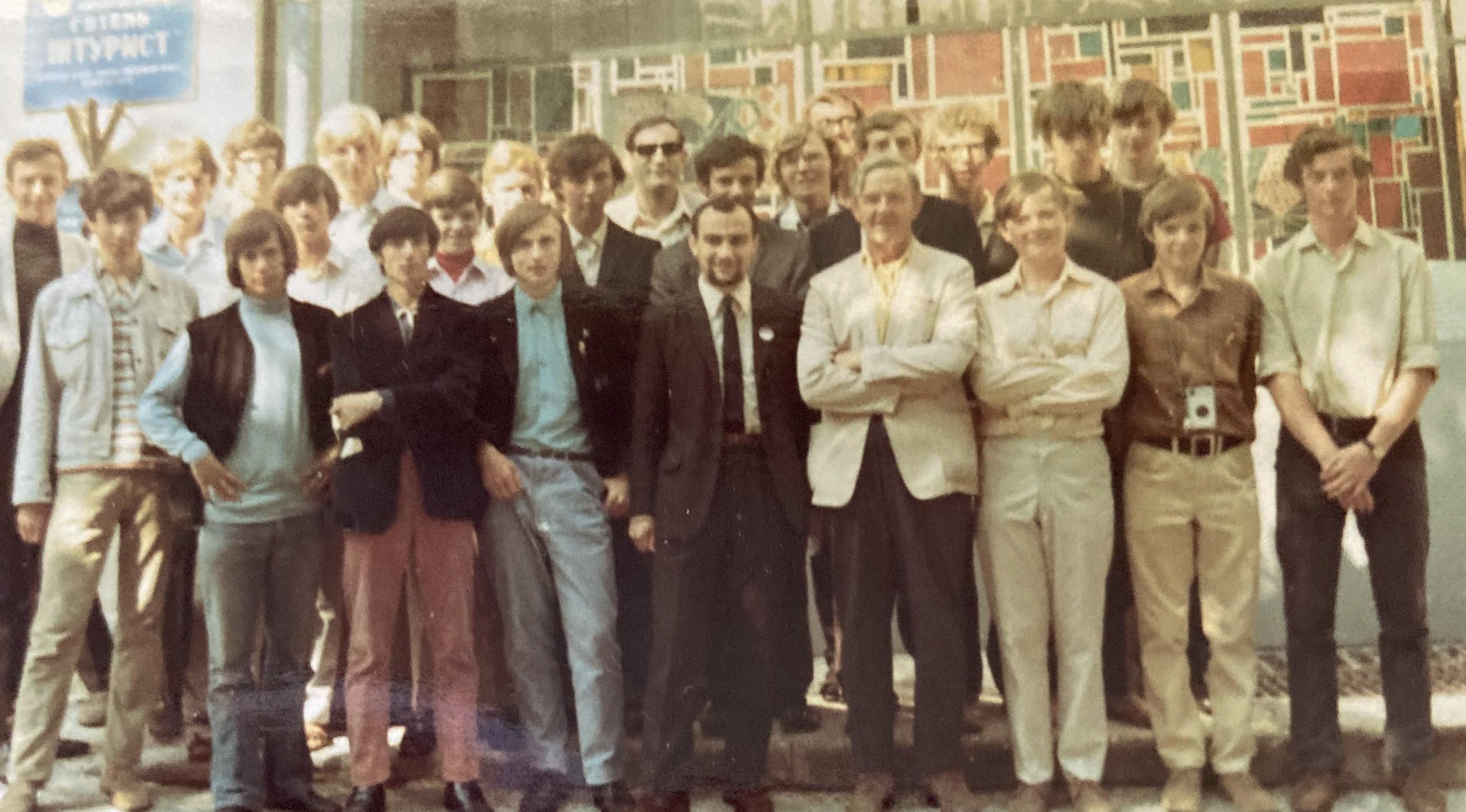
It seems a little extraordinary now, but despite my having just completed two modern language A Levels and a Russian O Level, and about to embark on a Russian A Level, I had never previously been abroad. This trip was therefore a somewhat unconventional first foreign foray. It wasn’t in fact a PGS-initiated or managed trip. John Sugden, who had taught me both French and German in the Sixth Form but who had moved on to The King’s School Canterbury, was organising the trip but was slightly short on numbers, so came to PGS to recruit a few (six, I think) additional participants.
And so it was that around 30 boys (it was of course all boys) congregated at Tilbury docks one Friday evening in late July and
boarded the TS Baltika – a vessel that gained unexpected publicity about a year later, when Edward Heath’s government expelled 105 Soviet diplomats from the UK for ‘activities incompatible with their status’ (espionage to you and me), and the expellees mostly returned home on the Baltika – originally named ‘Vyacheslav Molotov’ after Stalin’s foreign minister of Nazi-Soviet pact fame, or infamy. (I very nearly suffered the same fate as the 105 almost 20 years later while working at the British Embassy in still-Communist Czechoslovakia.) Thus, together with our new friends from King’s, we headed for Leningrad, with arrival due the following Wednesday.
First stop Copenhagen. The ship’s captain probably did his career prospects few favours by scraping the side of the vessel as we
docked early on Sunday afternoon. There was time for a wander round the city centre and the Tivoli gardens, but the eye-wateringly high prices rather inhibited activity. At around midnight we set sail across the Baltic. One memory of the voyage is of the ship’s official entertainer, a bow-tied crooner. It being 1970, when ‘flower power’ was still in the air, one of our number mischievously decided that it might be amusing to hear what the staid singer would make of Scott Mackenzie’s recent massive hippie-hit San Francisco and so made a request accordingly. The attempted joke fell somewhat flat as our singer opened up with Tony Bennett’s I left my heart in San Francisco, ideal crooning territory.
By Tuesday morning we were making the scenic approach to Helsinki through the archipelago which guards it. This time quayside and ship remained intact. There was time for an enjoyable guided tour around the (even more expensive) city before another late-night departure on the last stretch up the Gulf of Finland.
mass killing field, in which at least a million people had perished during the 900-day siege of the city. An evening at the visiting Moscow State Circus was an interesting example of the Soviet use of culture as politics, as more than one act contained strong anti-USA propaganda and references to the Vietnam War raging at the time. On Saturday night it was time to leave Leningrad and the rain which had dampened our entire stay, which must surely have been the basis of the city’s now suspended twinning arrangement with Manchester. It’s a matter of some regret to me that despite having made numerous further trips to the USSR/Russian Federation, including several to relatively nearby Archangel, I never managed to revisit the city. I can’t imagine ever doing so now.
Opposite: The group
Above: Richard
Below left: Docking in Copenhagen
Drifting up the River Neva past interminable docks gave few clues to the beauty of the city of Leningrad (now once again St Petersburg, for the benefit of younger readers, though that seemed a very unlikely prospect in 1970). Our three-day stay included visits to its major cultural sites, including of course the Hermitage/Winter Palace. The physical damage to Leningrad during the Second World War was immense, but while much had been repaired, a hydrofoil trip back down the Gulf of Finland to Peterhof, the elegant tsarist summer palace, showed that there was still much to be done. However, one couldn’t forget that we were essentially walking on a
Below right: (L-R) Pete Sykes, Richard and Robert Kelso en route
In those days all foreign visitors travelling from Leningrad to Moscow - Westerners at least – took the overnight train. Moscow’s weather treated us very differently. Accommodated in the definitely non-deluxe Hotel Turist, as in Leningrad we covered many of the key sites (but Moscow has far too many for a four-day stay), including the then-obligatory Lenin Mausoleum, and of course Moscow’s Kremlin. (Other kremlins are available!) We also bumped into David Jackson (Teacher of Russian, 1968-74) who happened to be in the city at the time.
After a couple of days came a bolt from the blue. We wouldn’t be going to our intended next destination, Yalta, on the Crimean peninsula. The Crimea was closed, under quarantine. A pandemic. Cholera. We had no further information at the time, not being regular readers of Izvestia (although it may not have added
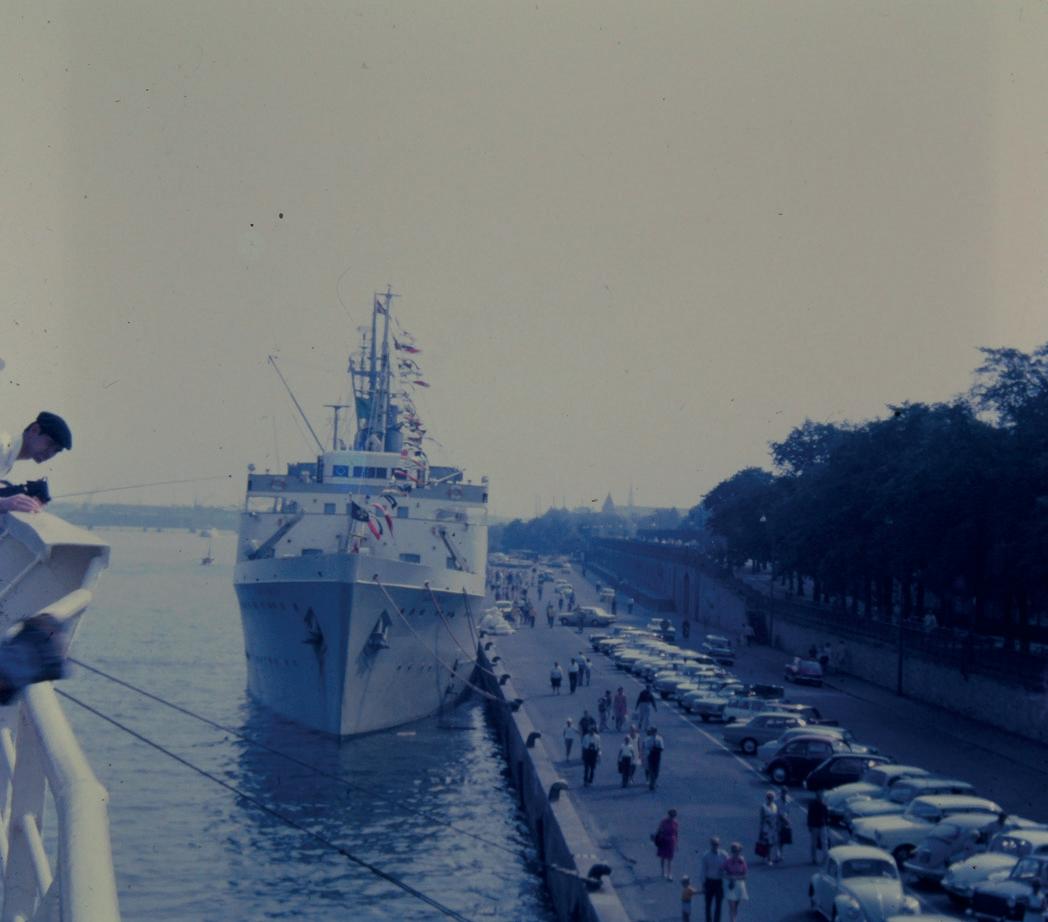


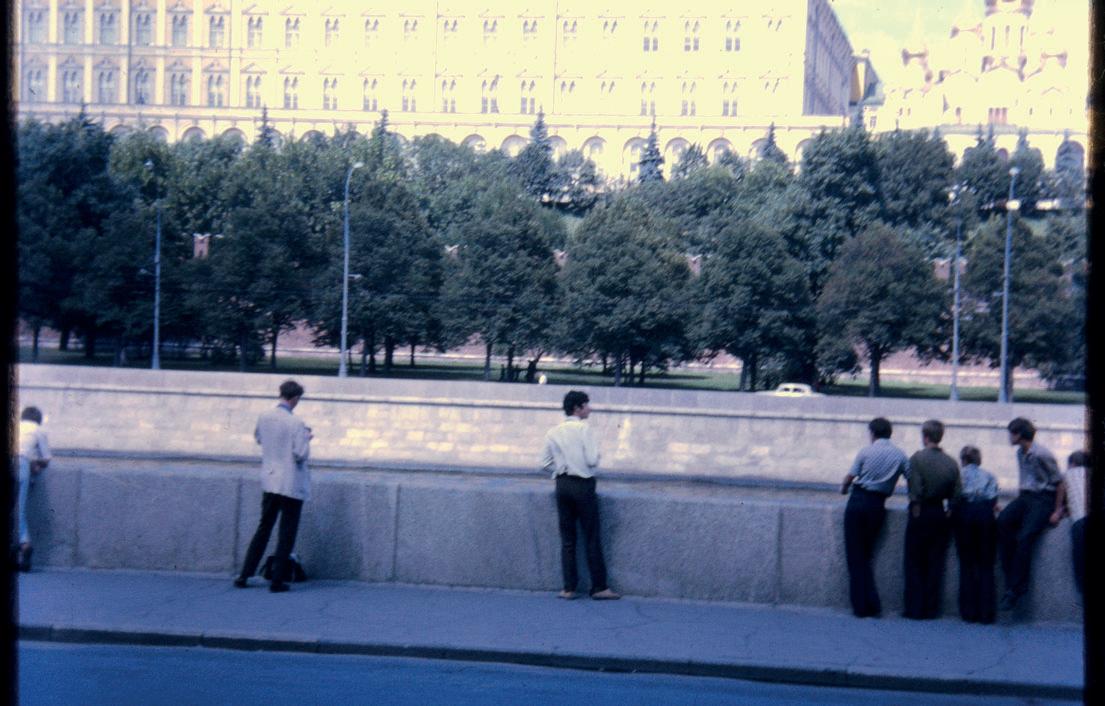
much to our knowledge even if we had been), but in preparing this piece I googled (what on earth would we have thought that word might mean, had it existed then?) ‘cholera Crimea 1970’, and there, at the top, were articles in the NewYork Times in mid-August reporting the event. Odessa, west of the Crimea on the Black Sea, and likewise part of Ukraine, was also closed.
Above:
By the river in Moscow, opposite the Kremlin
Below:
Fortunately Intourist, the state travel agency responsible for the organisation of our trip, arranged for us to fly to Sochi instead, also on the Black Sea but east of Crimea. Quite why Sochi should have been deemed any safer than other resorts in the region slightly mystifies me, unless the thinking was that no cholera bacterium would have dared spoil Brezhnev’s summer holiday there. The flight was not without incident (though one I’d completely forgotten!). Robert Kelso (OP 1969) has reminded me of “an unscheduled alarming landing on that flight before getting to Sochi and being asked to close the window blinds. I peeked and we were surrounded by soldiers with machine guns. Assume we landed at a military base before we took off again and landed in Sochi.”
The upside of the change, certainly for me, was that we were taken on a trip high into the towering mountains, plunging valleys and rushing rivers of the Caucasus, to Lake Ritsa, technically in Georgia but nowadays, in reality, part of the breakaway republic of Abkhazia (recognised only by Russia, Venezuela and a couple of the other usual suspects). I relived this a few weeks later when reading Lermontov’s great novel A Hero of Our Time as a set book for Russian A Level, in which he wonderfully captures the stunning Caucasian scenery.
One of the students from King’s, David Mitchell, with whom I have maintained a friendship which lasts to this day, records after an evening meal “missing the bus to the hotel (obviously in the loo!)” and having to find his own way back. He describes wandering about vaguely lost, but plucking up the courage to ask a couple of policemen where the place we were staying was. They thought his Russian was very amusing. He thinks they’d been drinking!
That apart, we could relax on the beach – not quite Cannes, but very agreeable all the same – though the notion that Sochi would one day host a winter Olympics would have seemed very far-fetched.
Equally far-fetched would have seemed the idea that our next and final destination in the USSR, Kyiv, then invariably known as Kiev, would have been subjected to merciless bombardment by a Russian government in Moscow. We spent just one night and day there, but it was enough to get a small flavour of the pre-Muscovite Russian state and the birthplace of Christianity in the region. From there we took a train to Berlin via Brest and Warsaw, with the middle-of-the-night fun of the train gauge change from Russian broad gauge to the standard European width.
To state the obvious, Berlin in mid-Cold War was very different from today’s city. Robert recalls the “extraordinary sensation” he felt on emerging into West Berlin after over two weeks behind the iron

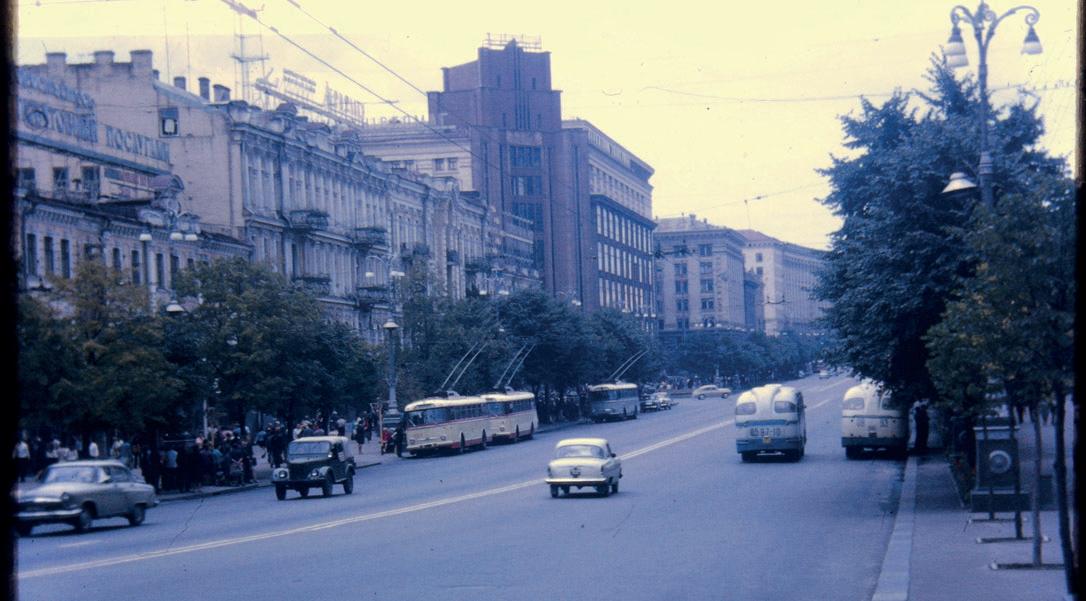
A lesson learned from history is that in difficult times one should never lose hope and when circumstances are favourable one must never become complacent
curtain, “like another world”. The three Western sectors had been largely rebuilt; the Soviet sector still had plenty of visible war damage. A tour in East Berlin took in the ‘Memorial to the Victims of Fascism and Militarism’, and crossing between Eastern and Western sectors at Checkpoint Charlie, nine years after the Wall was erected, and nearly 20 before it fell, was memorable.
The trip ended with the train to Ostend, ferry to Dover and – if memory serves – A Level results awaiting! Three weeks full of fascinating sights and experiences, and, excluding personal spending money, all for £100.
What impact did the visit have on me? I had started learning Russian just after the 1968 Soviet-led invasion of Czechoslovakia, the build-up to which had sparked my interest in Eastern Europe and the USSR. I’m forever grateful that PGS offered the option of studying the language, which, like modern foreign languages generally, is in decline in the UK. This trip made me even more curious about life in the Soviet bloc, to find out the reality behind the huge banners hanging from buildings with slogans urging citizens to fulfil the norms of the 23rd party congress, to ‘eat bread’ (no matter that they often had to import the wheat with which to bake it, given regular harvest failures), and to go forward to the victory of communism.


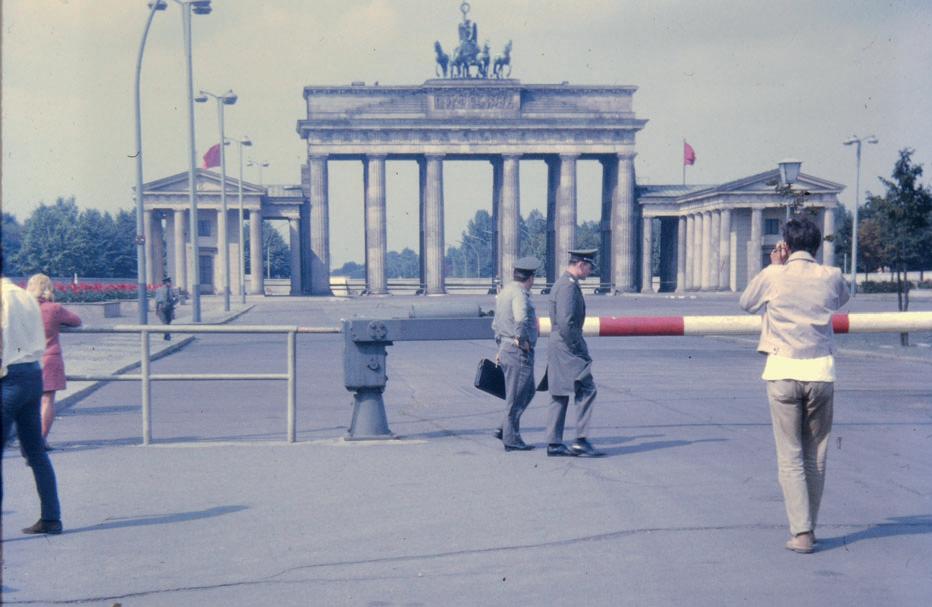
Above: Brandenburg Gate in Berlin from the east
Below: The Tsar’s bell in the Moscow Kremlin
It certainly influenced my decision to study Russian at university, and in turn my future travels and much of my career. This was noted in interviews with the security services during vetting procedures for an aborted posting to Moscow with the British Council in 1986 (visa declined!), and an actual one to Czechoslovakia a year later, from where, in 1989, I could observe the fall of the Berlin Wall and the collapse of Czechoslovakia’s Communist government at close quarters. This trip also turned out to be just the first of about 15 visits to the Soviet Union and the Russian Federation, ranging from a 1983 concert tour with the choir I sang in, at a particularly tense period in the Cold War, to numerous visits for a charity for which I later worked, to support voluntary sector and civil society development in Russia (that’s worked out well!)
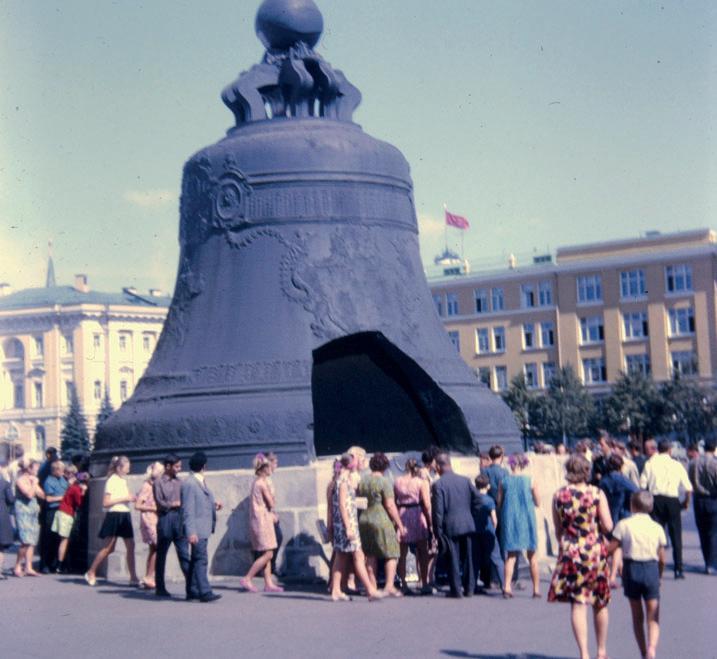
Re-reading this piece, I’m struck by the number of times I refer to something which at the time looked immutable or unimaginable. Most obviously this includes the end of the Soviet domination of Central and Eastern Europe, and the collapse of the USSR itself, leading to the independence of the 15 Soviet Republics and, ultimately and tragically, to the current war being waged by Russia against Ukraine. While even in 1970 it seemed possible to believe that the political, social and economic system would not last, it was equally impossible to spot a pathway to change. Later, when it did change, it then seemed, at least to the typical Western liberal, almost impossible to believe that, for all the chaos of the 1990s in Russia, it could so quickly become the authoritarian state which now exists. A lesson from history, perhaps often forgotten, is that in difficult times one should never lose hope, and that, when circumstances are favourable, one must never become complacent and assume that they must last forever.
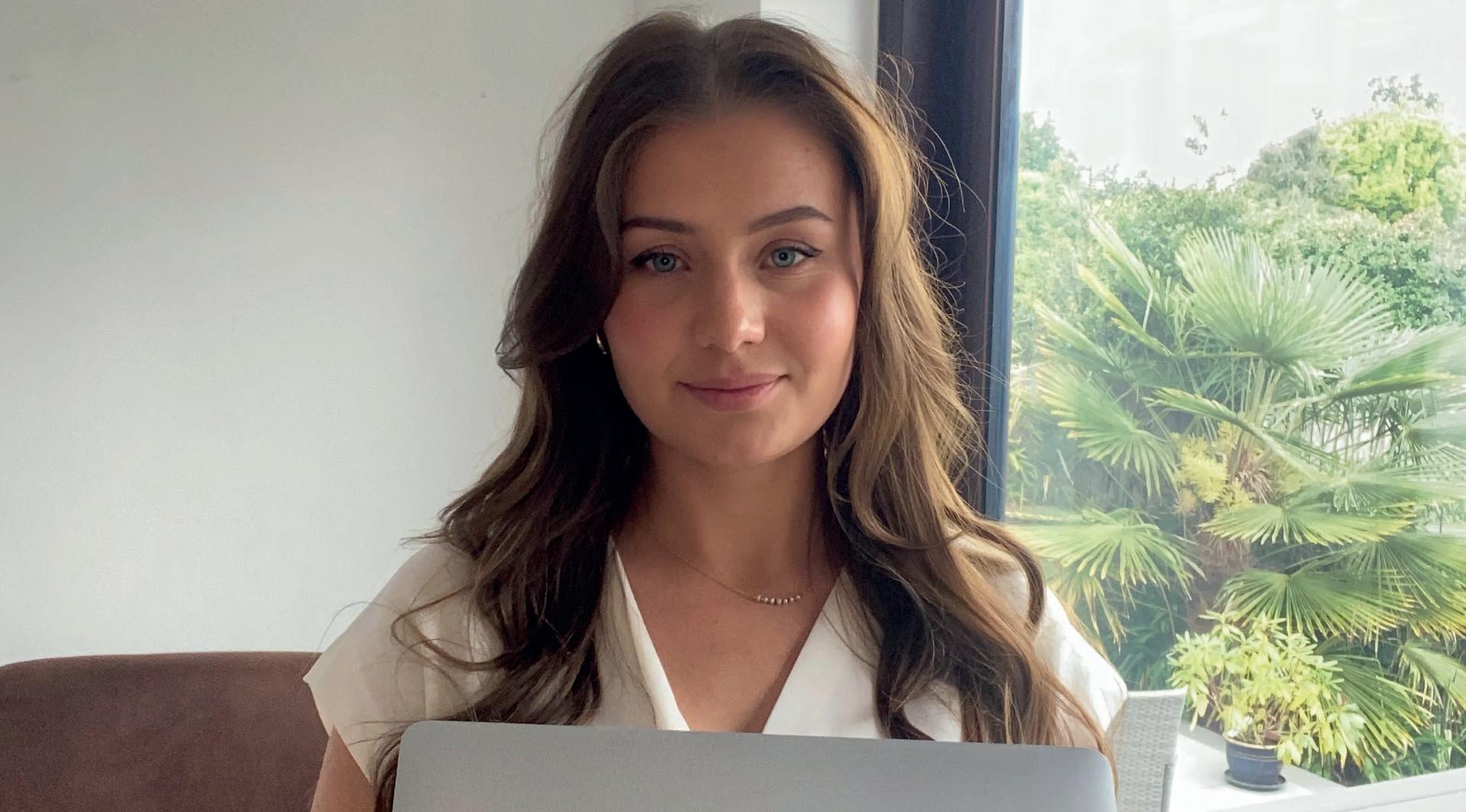
Ciara O’Neil (OP 2017) helps founders, professionals, and teams grow their reputation and attract new opportunities through their personal brand but, as she shared at this year’s Prizegiving, it’s not the career path she expected
When I left PGS my plan was to go into the legal field. At the time it felt like a great choice – it was structured, secure, and well paid – but, in reality, my career has been anything but linear. It’s been full of pivots, pauses, wrong turns, and surprising discoveries and, honestly, I’m grateful for all of them because they’ve led to where I am today.
I went on to study Law with Business at the University of Birmingham. At first it seemed perfect - the logic of law mixed with
the creativity of business – but, very quickly, I realised it was the business modules that interested me the most. Then Covid hit in my third year and everything stopped. For the first time in my life I had space to reflect. And I asked myself a question many people don’t ask early enough: ‘Am I on the path I want, or the path I think I should want?’ That question changed everything.
After graduating, I took a role in a legal consultancy in London, a job that blended law and business and felt, on paper, like the perfect next step. At first it was exciting. I was learning from ambitious people and absorbed in the start-up atmosphere. But about a year
in, that quiet voice came back. Not loud enough to completely panic me, but just persistent enough to make me pay attention. I realised I was more interested in the story behind the company than the legal work itself. So, I made a decision that felt terrifying at the time: I left my job. I went back to university to study psychology because I wanted to understand people better - what motivates us, what builds trust, and why certain ideas or brands connect instantly. While I was studying, I started designing digital products and websites on the side. What began as a creative outlet to have a break from my studies slowly became something much more than that. I quickly noticed that many people had beautiful branding but no story or message behind what they were trying to communicate. Nothing that showed who they were or why they were different. And that’s when things clicked into place for me.
I started blending what I’d learned in my psychology degree with personal brand strategy - helping founders and professionals tell their unique story, communicate what made them different and build the kind of authority that moved their career forward. Around that same time, I started showing up on LinkedIn. At first it felt really awkward. My first posts flopped. I questioned myself constantly. But I kept going - sharing what I was learning, the mistakes, the experiments, the small wins. Twelve months later, that tiny decision, just showing up, had built a community of over 17,000 people, led to clients and opened doors I never expected.
I’ve learnt that your career doesn’t have to be a straight line: it can zigzag, restart, surprise you. That doesn’t mean that you’ve failed. It means that you’ve grown. People warned me when I was younger that quitting early or pivoting industries would hold me back. It didn’t. If anything, it helped me move faster toward work that feels meaningful.
You may have heard the term ‘personal branding’ before. These days it’s become a bit of a buzzword with lots of different interpretations but, when I talk about personal branding, I don’t mean becoming an influencer. I mean building a reputation based on your skills, your ideas, and the value only you can bring. It’s about making sure people in your industry know what you do, what you’re good at, and why you’re someone worth paying attention to.
When I started growing my personal brand, I didn’t have any direct work experience in the personal branding industry. On paper I had no authority at all - and yet, by consistently sharing what I was learning, the insights I had gained, and the frameworks I was developing, I started building credibility. Slowly, people began to listen. They engaged with what I shared, they reached out for my thoughts on their ideas. Once I’d started building a name for myself, people in the industry began contacting me with collaboration opportunities, and those projects gave me the real-world experience I didn’t yet have on paper. Over time, the ideas and ways of thinking I was developing
publicly became recognised within the industry.
Personal branding lets you fill the gaps left by CVs, interviews and assessments. It’s a way to highlight what makes you different, what you’re passionate about and how you think - and importantly, it gives you control over how the world perceives you, including future employers. In today’s world, that can make a huge difference. If you’ve ever felt unsure, stuck, or like you’re just following a career path because it seems expected, personal branding gives you a tool to start shaping your own narrative.
Naturally, you need somewhere to express that. Somewhere people can see your curiosity, your skills, your projects, your ideas. For me (and for so many students and early-career professionals) that place has been LinkedIn. It has evolved into this incredible platform for learning, connecting, and building visibility, even before you’ve started your career. You can think of it as a professional portfolio, but one that actually grows with you. It’s a space where you can start sharing projects, ideas, and even reflections on what you’re learning. And the earlier you start, the easier it becomes to build real momentum.
For students, it can be hugely beneficial. You can use it to connect with people already working in the industries you’re curious about, see what kind of roles are out there, and even message someone to ask for advice or insights. People are generally far more open to helping than you’d think - especially when they see you’re genuinely interested in learning.
What’s amazing is that you don’t need to be an expert to start showing up. You can share things like: what you’re studying and why it interests you; any projects or research you’re proud of; lessons you’ve learned from part-time jobs, volunteering, or internships; or even short reflections on something you’ve read or listened to that resonated with you. These might seem like small things, but they start to paint a picture of who you are - your curiosity, your values, and the way you think. And that’s what helps you stand out.
Find Ciara at: brandfulness.co.uk linkedin.com/in/ciaraoneil



Brian Waters OP 1952
Brian left the school after A levels, still only 17, to be articled to the West Sussex County Surveyor, after which he joined consulting engineers, became a chartered civil engineer and was involved with mainly maritime works. He did take a two year leave of absence (1978-80) to undertake a major contract administration in Hong Kong, where he was accompanied by his family and met two OPs – David Milner (OP 1958) and Ken Stedman (OP 1953).
His maritime work took him overseas, including to Gibraltar, Lebanon (in the early days of the civil war, not to be recommended), Italy, Turkey, Egypt and the Ivory Coast. From the UK he conducted design reviews for overseas work, notably in Australia. In the UK his jobs ranged from the Isles of Scilly to the Shetland Isles.
Early on (1957) he was a founder member of the Cosmopolitan Car Club and he married Pat (née Allchurch) a PHS girl. They moved to Eastbourne where they remained. Sadly he lost her to cancer after 52 years of happy marriage in 2018. Neither his daughter or son took to civil engineering, although the former did marry one!
His musical upbringing with the School orchestra was tested by his election as Chairman of the Eastbourne Concert Orchestra, a position he held for ten years. He was active in his professional body, the Institution of Civil Engineers, and its Benevolent Fund and, more recently, in Eastbourne societies and his church.
He was awarded an MBE in 2008 for services to maritime engineering and looks back at a much-enjoyed career spanning from initial training in 1952 to his last paid job, a public enquiry in 2014 at the age of 80!
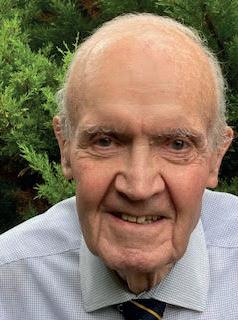
Richard McAllister OP 1957
Richard spent happy days boarding at PGS but really loathed the cross country running on Portsdown Hill. It was strange that years later he became a member of the Hash House Harriers (HHH). Army service took him to Europe, USA and the Far East. In 1963 in Brunei when things had quietened down, he was encouraged to join in the weekly paperchase. It turned out to be great fun. On return to Malaya he started a local HHH pack in Kluang, Johore. He was next posted as an instructor to the Army School of Transport at Longmoor, Hampshire where he started the first HHH in Britain. Posted to Germany he started a pack at Lübbecke, the first in Europe. He spent two years with the US Army in Virginia (their first US Hash was started by a Brit from Longmoor). Richard’s last initiation was in Dharan, eastern Nepal. His Hash Tag became ‘Mountain Rescue’ as published by the producer of the Hash History periodic magazine On On. How did he become ‘Mountain Rescue’? That’s another story…
David Hendry
OP 1958
David was the founding father of the Jericho Sailing Centre in Vancouver BC which celebrated its 50th Anniversary on 12 July 2025. David operated a sailing school (Water Rats) there for eight years. The boats were Lasers, which he was the dealer for, and they
also had Optimists which he had built locally. Originally there was just one launch ramp and the remaining structures of the original Flying Boat base.
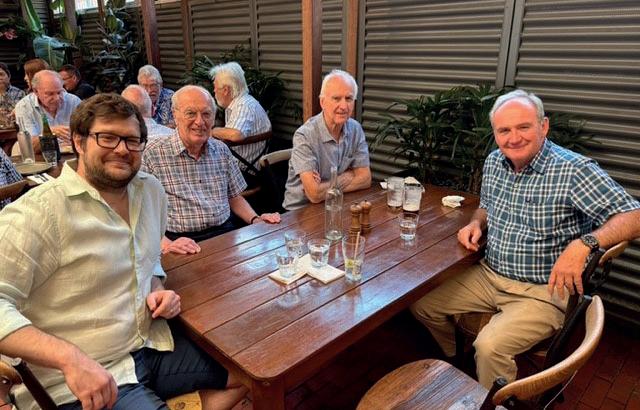
Joe Preston, Anthony Parker, John McIlwaine and Peter Richings (LR)
OP 2005, 1958, 1964 and 1973
These Adelaide based OPs had a convivial lunch at “The British” pub in North Adelaide, a new venue for them. Conversation ranged from St John’s College’s demise to Fratton Park, the Lakes Geography Field Week and even encompassed the old Portsmouth Power station which Tony actually worked in at one point. They would welcome any other OPs who are either in Adelaide or passing to join them.
Mike Critchley
OP 1962
Although now aged 80, former PGS student
Mike Critchley describes himself as a complete failure as far as work is concerned. After just over 10 years as a Royal Naval Officer (including Press Officer to Prince
Charles) and as Harbourmaster in Cornwall, Mike started writing books about the Navy. Many people purchased them for 30+ years and he set up and ran Maritime Books in Liskeard Cornwall. On selling the business for a “quiet retirement” he only lasted a few weeks before he started taking former customers on holidays round the worldfrom Hawaii to Moscow and many places in-between. When not mentoring serious ex-offenders locally, he is leading a group somewhere. This year it was to Albania in September then cruising in a small vessel round his favourite Croatian islands. January sees him lead a group to Malta where he once lived (no single supplements!) and the Caribbean in February – anything, he says, just to escape the UK weather. He has a short mini cruise from Portsmouth in April 26 heading to Dublin, Belfast and Liverpool with a coach home. Full details are on his website: www.maritimeheritagetours.co.uk
Chris Seymour OP 1965
After a career as a mining engineer in Africa, the US and Australia, Chris is retired and living in Brisbane. Recently he was re-elected as Secretary of the Royal Queensland Art Society. The Society was founded in 1881 and received a royal warrant in 1926. It represents about a thousand artists across Queensland, some of whom are known internationally, and has galleries in Brisbane, The Gold Coast and Rockhampton. Distinguished artists can become Fellows, entitled to the suffix FRQAS. They offer classes and support for young artists. One of the Society’s early Presidents was British born artist Godfrey Rivers. In 1903 he painted Under the Jacaranda Tree – described as “quintessentially Brisbane”. The Brisbane
gallery is currently hosting an exhibition of art from Papua New Guinea, which is celebrating fifty years of independence from Australia this year.
Andrew Brown, Graham Skilton, Max Lankester and Graham Allchurch (L-R) OP 1967
Andrew, Max and the two Grahams enjoyed a lunch together at 34 Mayfair, London back in July. Sadly Brian Larkman was unable to join them on this occasion.
Bruce Strugnell
OP 1967
Bruce is Chair of the Peter Ashley Activity Centres Trust which was recently awarded a plaque by the Fortress Study Group in recognition of their work conserving footbridges to the barrack blocks at Fort Purbrook and Fort Widley.
Simon Barnard
OP 1973
In addition to continuing to practise as an optometrist in North London, Simon is a Visiting Professor in Clinical Optometry at the Department of Optometry & Visual Science, Jerusalem Multidisciplinary College, Jerusalem, Israel where he teaches a number of courses on the International Masters
Optometry degree programme. He also has a busy medico-legal expert witness practice. His wife, Louise, is a psychoanalytical psychotherapist and they have four grown up children, three married and living in London and one in Tel Aviv. Their first grandchild was born in April this year. Simon is still in contact with Paul Davis and David Finlay who both live in London and his cousin, Stephen Mendel who lives in the south of Israel.
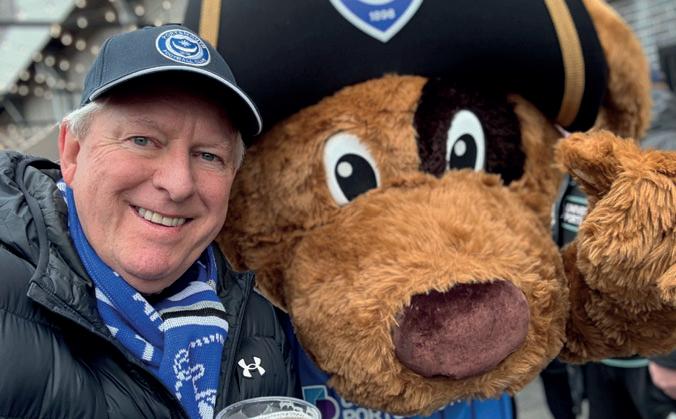
OP 1975
After leading teams in various financial services companies over the last 30 years, Tim set up his own business in 2011 which he sold in 2022. He was retained by the new company as a consultant and mentor and finished this project in early 2025. He has a long-standing interest in coaching and mentoring and gained his first coaching qualification in 1998 with an American institution. He took a five-year break from the financial world to work in the USA and Europe with Bob Proctor to recruit and train Facilitators of personal and business development programmes. Currently, Tim is one of the leads of the Shaping Portsmouth mentoring programme. He is also a longstanding (long-suffering) season ticket holder at Fratton Park.
OP 1977
Congratulations to Sandy who had a great season in Badminton Masters Tournaments this year. He was runner up in the English Nationals Singles, runner up in the Men’s Doubles at the All England Open and won with Team England at the Nations Cup in Ronda, Spain. He finished the season by
reaching the Quarter Finals of the World Championships in Thailand earlier this month. (Sandy is on the right in the photo).
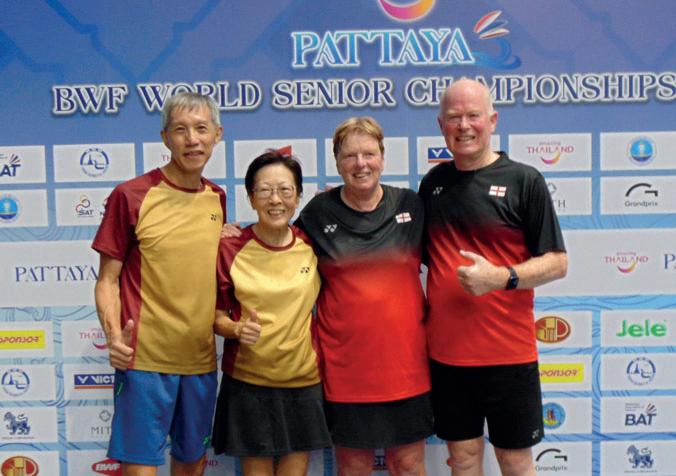
Mark appeared on the BBC’s Bargain Hunt when they were in Exmouth to speak about his prolific postcard collection. It all started when he discovered a postcard featuring the Lower School building (now the Upper Junior School) at a car boot sale on Castle Field. You can watch the clip here: www.bbc.co.uk/programmes/p0gcxzq3

Bloomsbury published Ray’s new book, Governing the Machine, the essential guide to harnessing the transformative potential of AI, while navigating and mitigating its inherent risks. Despite AI’s power to innovate daily life and revolutionise organisations, public trust in AI is low. For companies to take full advantage of AI, it is vital that
they adopt and communicate a responsible approach to build consumer, employee and investor confidence.
Drawing on their vast experience advising leading global companies, the authors demystify: the process of defining AI principles and policies, recognising and assessing risks, approaches for developing safeguards, selecting the right technical tools and training, evolving global AI regulations, laws and policies, including the EU AI Act and those in the US, UK and other key regions. Available online and from all good bookshops.
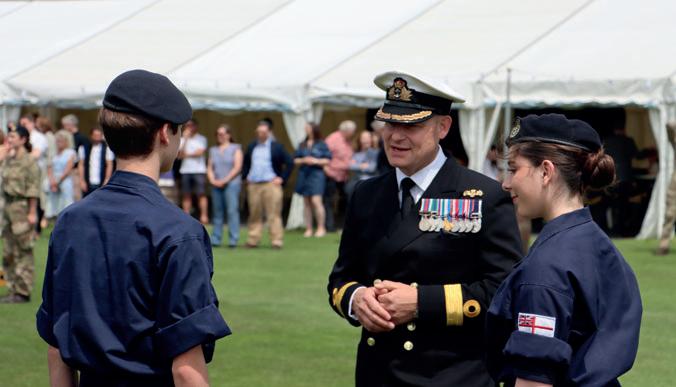
Commodore Andrew Ainsley RN was our guest Reporting Officer at the CCF Biennial Inspection at Hilsea in June. He congratulated pupils on how they conducted themselves with such verve and dynamism.
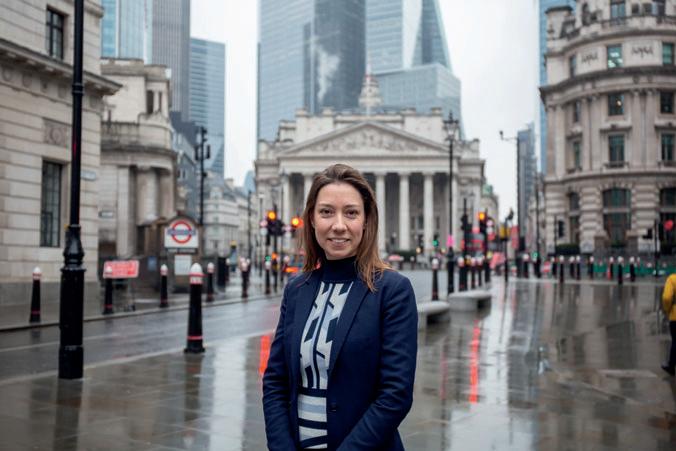
Alexandra has recently joined BJC Planning, to lead the family town planning business into its next chapter after more than 40 years in business. Having studied Geography at A Level and University, she went on to become a chartered town planner and
chartered surveyor, and spent the early part of her career at global consultancy JLL, in the Planning and Capital Markets teams.
Based near Portsmouth, BJC Planning provides town planning advice to a range of clients including major house builders, institutions and landowners. The practice continues to operate in Hampshire and the South East, and Alexandra is excited to also be growing the business in London. She is looking forward to this next chapter in her real estate career!
Virginia lives and works in Charlotte, North Carolina, USA. She is active in providing pro bono legal services to a North Carolina clientele and volunteering across the city. She is the Chair of the Board of Directors for a senior school for at risk youth, the culmination of 13 plus years of tutoring and mentoring experience. Virginia is also an Advisor for a chapter of her sorority and on the Young Alumni Board of Directors for her law school. Virginia is training for her third marathon and when not running or reading can be found outside of the continental United States.
Natalie and Owen have many wonderful memories from their time at PGS, not
least meeting each other. So they couldn’t resist some photos in front of the Arch after they tied the knot just down the road in Portsmouth Cathedral in May. Our congratulations to you both.
George recently completed core psychiatric training in North London and an NIHR Academic Clinical Fellowship at UCL, culminating in Membership to the Royal College of Psychiatrists and a few publications in the areas of psychopharmacology and psychiatric neuroimaging. George now moves on to a Clinical Researcher role at the University of Oxford, where he will continue research into the causes and treatment of schizophrenia and other psychotic disorders.
Annie’s book for children, The Snail on the Kale, was published in November last year. When a snail sneaks into your kitchen with a bag of kale, will you let out a wail, or pause to listen? This snail on the kale has a tale to tell, full of wisdom and an important message to share. Pick up a copy from Amazon or Waterstones.
Over the past year, Carl (second right) has been building Charity Accounting Partners, a financial operations business that helps charities strengthen their financial management, reporting, and strategic oversight. While growing the company, Carl has also been travelling the world, working remotely from places like Southeast Asia and the Americas. In December, he worked remotely from Colombia while attending Henri Dobbs’ (OP 2015) beautiful wedding with other PGS friends.
The experience has been incredibly rewarding - not only has he had the chance to immerse himself in new cultures, but it’s also given him the space to think more creatively and grow the business with purpose. Balancing entrepreneurship with travel has been challenging at times, but it’s helped Carl build resilience, grow a diverse team, focus, and gain a clearer vision for where he wants the business to go next to help charities tackle world issues.
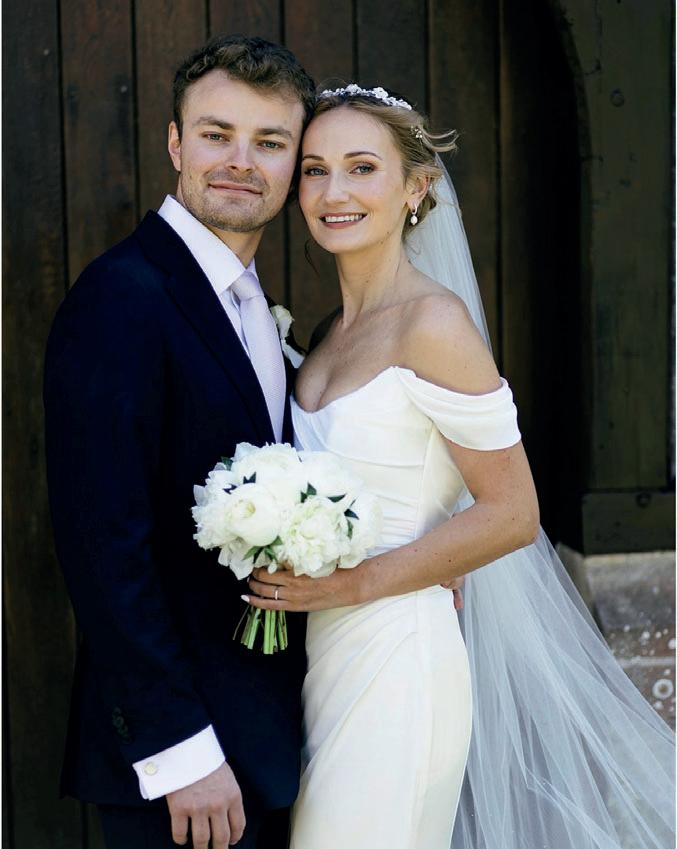
Congratulations to Ellis and Harry who got married in May this year, fulfilling the expectations of their year group who voted them most likely to get married in their Leavers’ Book. They met in Dr O’Neil’s tutor group back in Year 9, started dating in Year 12 and never looked back. Unsurprisingly the wedding was a very PGS affair with six OPs in the wedding party and a further 10 OP guests.
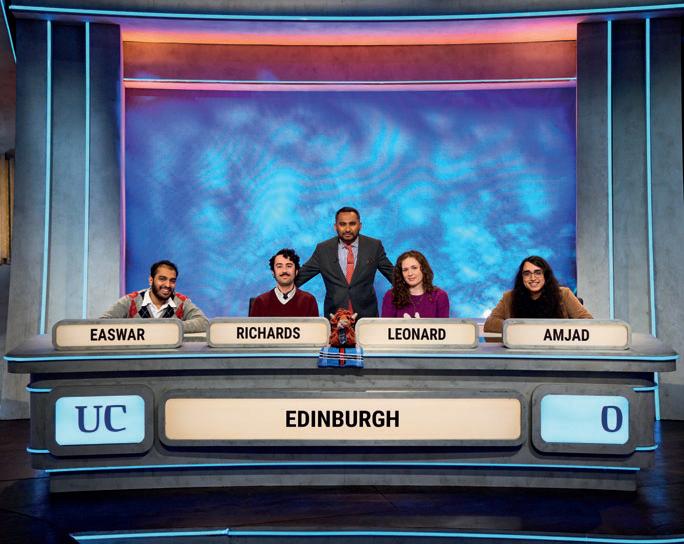
Alice is appearing on this year’s University Challenge as captain of the University of Edinburgh team. Follow her progress on BBC iPlayer.
OPUS is saddened to report the death of the following alumni and friends.
Ian Dallison OP 1945
August 1927 – 23 September 2025
John Lamond OP 1947
April 1930 – 24 January 2024
David ‘Dave’ Morey OP 1948
September 1930 – 4 August 2025
Kenneth ‘Ken’ Thresher OP 1948
June 1932 – 5 October 2025
Roger Purkis OP 1950
August 1932 – 2 October 2025
Anthony ‘Tony’ Stride OP 1951
February 1933 – 29 March 2025
Peter Blockley OP 1951
March 1933 – May 2025
Brian Shaw OP 1950
January 1934 – 2022
Anthony ‘Tony’ Schofield OP 1952
April 1934 – April 2024
John Gale OP 1953
September 1934 – June 2025
Richard Sotnick OP 1953
February 1935 – January 2025
David Sampson OP 1953
February 1935 – February 2025
Michael Bolwell OP 1953
July 1935 – January 2025
Martin Mcdonald-Woods OP 1953
October 1935 – September 2025
Brian Luter OP 1955
May 1936 – December 2022
Roger Cherry OP 1955
September 1936 – 2024
Tony Barron OP 1954
December 1936 – April 2025
David Fleming OP 1954
February 1938 – 2014
Roy Harding OP 1954
July 1938 – 2025
Geoffrey ‘Geoff’ Harding OP 1955
November 1938 – December 2024
Robert ‘Bob’ Cooper OP 1956
June 1939 – 2024
Jim Endacott OP 1959
September 1939 – November 2024
John Hunter OP 1958
January 1940 – November 2024
Barry Woods OP 1958
March 1940 – 2025
John Kidd OP 1957
August 1940 – February 2025
Clifford Coote OP 1958
October 1940 – July 2025
Michael ‘Mike’ Lambert OP 1960
September 1941 – November 2024
Peter Hann OP 1960
August 1942 – December 2023
Mervyn Mitchell OP 1960
August 1942 – October 2024
Simon Scarff OP 1960
September 1942 – January 2024
Lawrence Guyer OP 1960
January 1943 – April 2025
Michael Mackney OP 1959
March 1943 – December 2024
Andrew Titheridge OP 1959
May 1943 – November 2024
John Fifield OP 1964
Martin Fisher OP 1964
December 1946 – October 2024
George Robey OP 1966
November 1947 – March 2025
Anthony ‘Guy’ Edwards OP 1974
September 1955 – September 2024
Stephen Grundy OP 1974
Martin Leonard OP 1974
February 1956 – August 2016
Simon Williams OP 1976
October 1957 – March 2024
Nigel Rodgers OP 1976
May 1958 – November 2024
Robin Shallcroft OP 1981
March 1963 – September 2024
Christopher Allen OP 1982
September 1963 – September 2024
Deborah Jennings Former Staff 1967 – 2025
Mark Chinnery OP 1986
Thomas ‘Jack’ Freeman OP 1995
April 1977 – December 2024
Tributes (where shared) can be found online at: www.connect.pgs.org.uk/news/obituaries
If you have a question for the Archivist or would like to donate any photographs or artefacts from your time at the School, we would be very pleased to hear from you on: development@pgs.org.uk or 023 9268 1391
We are delighted to introduce our new Archivist: Sarah Speller.
Sarah, who will start in the New Year, says:
I’m delighted to be joining The Portsmouth Grammar School, bringing experience from a career that has encompassed finance, school governance and compliance as well as more than 12 years working with archives in Portsmouth and Hampshire record offices.
I grew up in the local area and have fond memories of my father telling me stories of the time he spent at PGS during World War II. My professional journey has combined organisational expertise with a deep respect for history and record keeping. I hold a postgraduate qualification in archive administration which has ensured I have a strong foundation in preserving and interpreting historic archives. I enjoy helping people connect with their pasts and to understand the stories that shape their communities.
As someone with a life-long passion for Portsmouth’s rich and varied history, I’m especially excited to contribute to a school so closely intertwined with the City’s story. I look forward to working with alumni, colleagues and pupils to ensure the School’s heritage is preserved and celebrated for generations to come, while continuing to uncover the fascinating narratives that make Portsmouth such a remarkable place
When did pupils stop having to attend lessons on a Saturday morning?
Members of the Class of 1974 who came back to the School in October (see page 7) were keen to know when the Saturday morning lessons they had endured came to an end. In the 1970s, pupils were expected to be at School by 9am on Saturday morning. At 9.10am they would be registered in preparation for their first lesson at 9.15am. Lesson two was followed by a 15-minute break before lessons three and four. Pupils were dismissed at 12.15pm.
Saturday school had been a hotly debated topic over the years. In November 1962, the motion “this house would welcome a five-day week at school” was debated by pupils. Some argued that the normal school day could be extended slightly to accommodate the time lost and that they achieved more when at home ill than at lessons on a Saturday. Others were adamant that Saturday lessons set the School apart from other grammar schools and protected pupils from ‘eye-harming television’. The motion was defeated 20 to 18.
The Quad in 1974
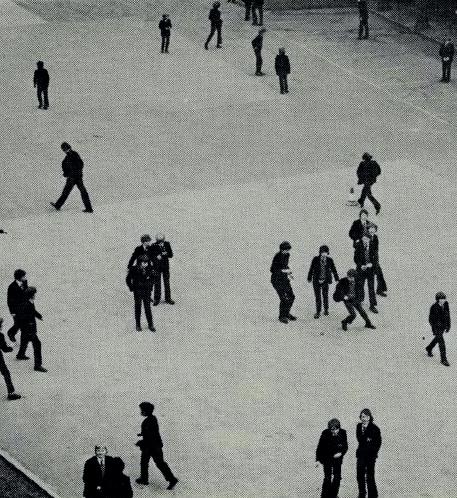
It was at the start of the Autumn term in 1979 that Saturday morning school was abolished. The Governors took the decision due to “the increasing travelling difficulties and extra expense involved, the social inconvenience caused to some by the disruption of the family weekend and the potentially adverse effect on recruitment of both pupils and staff”.
Alice Larden Development Director 023 9236 4248
a.larden@pgs.org.uk
Ruth Wade Alumni Relations and Events Manager 023 9268 1392
r.wade@pgs.org.uk
Jack Collins Development Manager 023 9268 1749
j.collins@pgs.org.uk
Editor: Ruth Wade
Do you recognise any of these competitors from a Junior School sports day in the 1990s?
We are keen to hear from alumni, former parents and other supporters and friends of the school. Please share your reminiscences with us, submit content for future issues or nominate someone to receive a copy by contacting us at: development@pgs.org.uk High Street, Portsmouth, PO1 2LN @PGS_1732 facebook.com/groups/PGSAlumni linkedin.com/groups/3796965
While reasonable care is taken to ensure the accuracy of the information in OPUS, that information is obtained from a variety of sources and neither the publishers, the printers nor any distributor is responsible for errors or omissions. Reproduction in whole or in part of any matter appearing in OPUS is forbidden except by express permission of the publisher.
© The Portsmouth Grammar School 2025
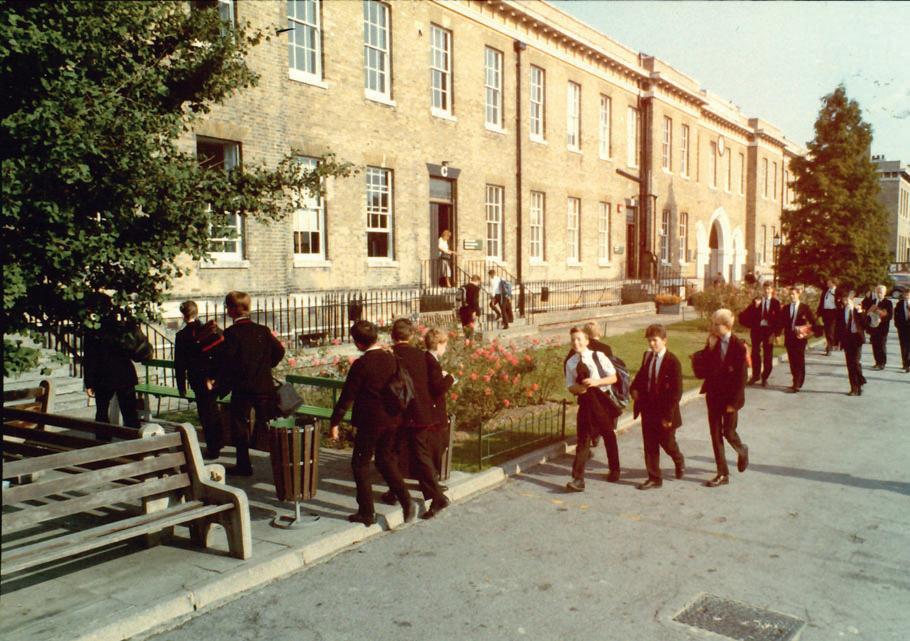
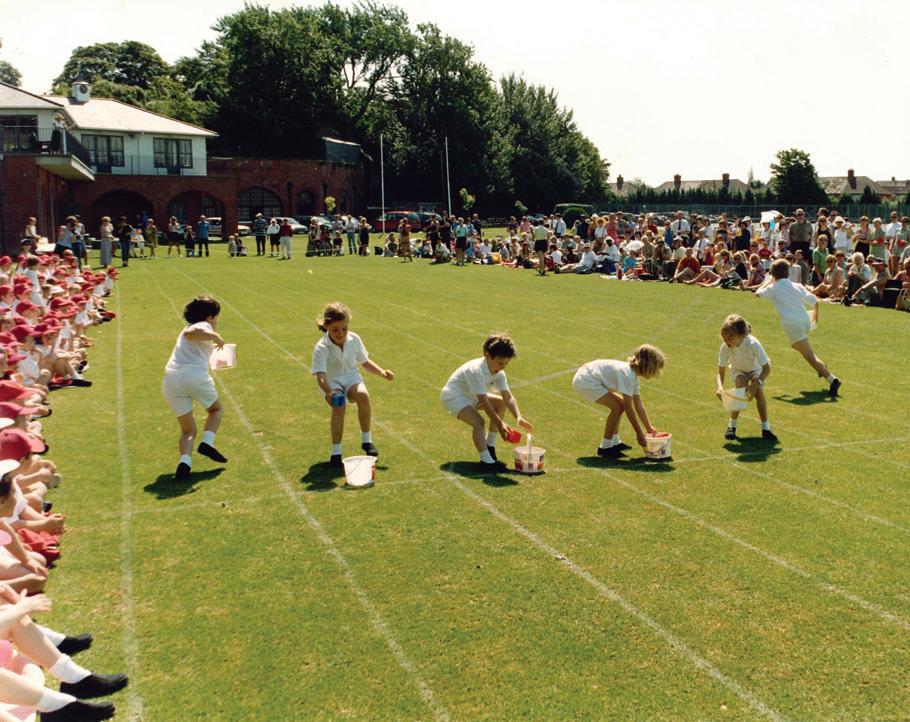



Can you spot anyone familiar in this candid shot taken on a sunny day in the quad? It is believed to date from the 1980s
Apart from confirmation that the athletics photo was taken at Alexandra Park (dating it after 1964), we’re none the wiser about the identities of the OPs pictured. Do let us know if you have any ideas.
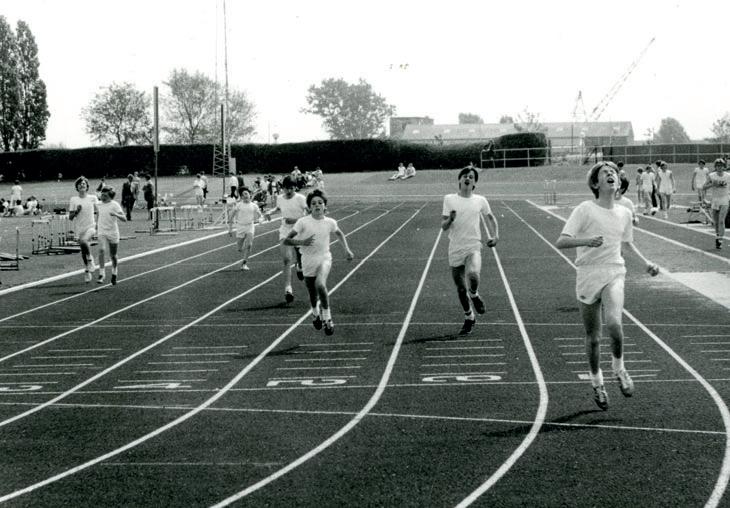

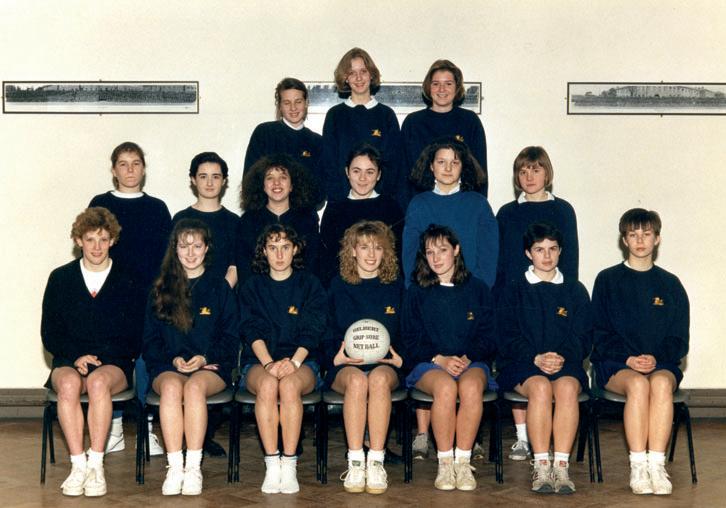

development@pgs.org.uk | Tel: 023 9236 0036 www.pgs.org.uk