Letter from the editor
Dear readers,
At the beginning of March, I decided I would ignore the groundhog’s prediction of a prolonged winter and bask in every ray of sunlight the clouds would decide to offer me. I decided that my winter hibernation ended March 1st and I was ready to take on the world. But, instead of zooming around like a busy bee, I found myself slowing down in the streets, leaving my headphones behind, and delighting in spring’s sweet, teasing kiss.
In taking my time, I think I may be trying to hold on to my last few weeks not only at Dawson, but also in The Plant. The community that built me from a shy 17-year-old girl into the confident (soon-to-be) 19-year-old woman I am today.
In slowing down, I am hoping a part of me will linger around the walls of our office. I am hoping that my perfume will cling to the pictures of our beautiful and united team for just a few more days after I am gone, just like the inspiring souls I have the honour of evolving next to have each carved out a precious spot in my heart. I thank Jackie, my co-editor-in-chief and my inspiration, for showing me kindness, patience, and unwavering support.
I tell myself I won’t cry when it's time to say goodbye. What a horrible liar I am.
Still, I could not be more grateful to have friends, team members, and experiences worth shedding a few tears. So, when the time comes, I will stop and just feel.
I invite you, readers, to do the same. Take this issue on a trip across the city. Choose a park, library, restaurant, bar, and settle down to read it. Spend a few extra minutes on the Visual Arts section and on the Creative Writing one. Spend a few extra minutes getting to know yourself and your thoughts as you take in the team’s writing.
Stop and feel.
Thank you for choosing The Plant! You’re a superstar for that!
Minola Grent Editor-in-Chief
Bangladesh: What Happens When the Youth Rises
ATIKA UME FAZAL NEWS EDITOR
Since 2024, the world has witnessed a myriad of youth-initiated protests and riots against corruption and economic instability. These uprisings, qualified as Gen Z protests, continue to demand changes in different parts of the world,uprooting the inequalities that are being endured.
All of these initiatives were led in huge part by students, often started and encouraged on different social media applications, such as Discord and TikTok.
In Nepal, the large-scale protests turned to riots, managing to successfully oust the corrupt Prime Minister, K. P. Sharma Oli. In Kenya, the decentralized mass rioting movement managed to counter an attempt at a controversial tax hike by the president. In Italy, a general strike in opposition to the country’s involvement in the Gaza Genocide also forced the government to utilize their forces in support of the Global Sumud Flotilla.
However, the first successful youthled revolution took place in Bangladesh. Thanks to common efforts, the citizens managed to overthrow the autocratic government of Sheikh Hasina Wazed. In July 2024, a series of protests opposed the quota-system established in the country that reserved 30% of government jobs for descendents of the veterans that fought Bangladesh’s independence war. The Awami League, which was in power at that time, cracked down violently on these protesters. The OHCHR estimates that as many as 1,400 people were murdered by the country’s security forces. Over 60% of the deaths accounted for were that of Gen Z, constituting what is now known as the July Massacre.
Nevertheless, the uproar in Bangladesh continued, further agitated by the systematic suppression citizens were victims of. According to Al Jazeera, schools and universities were closed down, internet blackouts widespread, and curfews on students installed. The protesters now also demanded the resignation and prosecution of Sheikh Hasina and the banning of her party from any further elections.
In fact, Hasina was known to have constantly rigged elections in her favour over the years. Coming from a family

of politicians and born to the first ever president of the country, Sheikh Mujibur Rahman in 1971, she was elected Prime Minister for the first time in 1996. After a tumultuous break from 2001 to 2008, she came back to power and stayed there until her exile in 2024.
Her fourth term, lasting from 2019 to 2024, was her most controversial yet. The elections leading up to it were widely considered some of the most unfair in the country. Organizations like Human Rights Watch accused the government of using intimidation tactics, such as kidnappings and murders, against the opposition.
Her ousting was hence a huge step towards democratic values re-entering the country and its political systems. The protesters demanded she be held accountable in court for her numerous crimes against the Bangladeshi people. Sheikh Hasina still has these charges against her in the country, but managed to avoid them by fleeing to India.
After Hasina’s fleeing and a very bloody revolution, Bangladesh needed a new leader. The interim government of Mohammed Yunus was sworn in until the next elections with the mandate of assuring fairness and freedom in voting, and organizing the constitutional reforms to be implemented.
In February 2026, the elections took place. The Bangladesh Nationalist Party (BNP), led by Tarique Rahman, won a landslide victory. Out of the 300 seats in the government, BNP managed to get 212. Jamaat-e-Islami became the main opposition, gathering 77 seats. Eligible citizens also voted in favour of constitutional reforms under the July Charter, which the BNP has claimed it will endorse, as reported by The Guardian.
“These elections receiced great praise by local and international communities for having been one of the least violent and most credible voting operations in Bangladesh in a long time.”
According to the election commission, the voter turnout had also been considerably higher from the last “elections,” reaching up to 59.4%. The youth-led revolution was successful, as they tend to be. In fact, researchers at Harvard claim that protests that involve young people tend to be 2 times more triumphant than those that do not.
The elections were not without controversy though. The Jamaat-e-Islam party has a reputation for being against the rights of women in the public space. Their leader, Shafiqur Rahman claimed, in an interview with Al Jazeera, that women should not come into leadership. Tarique Rahman, on his side, has allegations of money laundering and political interference through his mother, who was also the leader of BNP.
Nonetheless, these elections still marked an amelioration of the conditions that electors faced. There were oppositions that felt safe enough to campaign, and people’s well being was not determined based on their political affiliation. Bangladeshi Gen Z’s revolution not only ended up creating a preferable environment for themselves, they also inspired other youth around the globe to act.
VIA ASSOCIATED PRESS
Secularism on Trial
YASMINE BOUANANI SECRETARY

Laws are not abstract; they shape the livelihoods of thousands. Seven years ago, the Quebec government adopted its Act Respecting the Laicity of the State, more commonly known as Bill 21. The law prohibits certain public employees, such as public school teachers, police officers or judges, from wearing religious symbols while performing their duties. Since its introduction in 2019, the bill has generated many debates around religious freedoms and the very meaning of secularism. This strong controversy has in no way deterred our leadership from entering discussions on possible extensions.
Last November, Secularism Minister Jean-François Roberge presented the proposed Bill 9 to strengthen the application of state religious neutrality offered by Bill 21. Its details vary by drafts, but it is reported to suggest a set definition of “religious symbols,” and a broader coverage of what or who is affected across public institutions. The ban on religious symbols could be extended to more school staff such as daycare workers, secretaries, librarians, or other school employees.
The original ban has already been limiting the employment opportunities for Quebec citizens from religious minorities, and this proposed addition would multiply its effect across public employees. While existing employees were initially protected by a “grandfather clause”, they couldn’t get promoted or transfer school boards. Anyone hired after the law’s adoption had to comply or risk losing their positions. But the impact also touched on future employees. Research has found that over half of surveyed education and law students concerned by the bill in Quebec were now planning to leave the province because of the legislation. Critics warn that Bill 9 would only expand the damages. It would intensify staffing shortages and families, students, and colleagues would feel the ripple effects, as more people lose their jobs or leave Quebec.
Another restriction proposed by the new bill would be a ban on religious spaces in public institutions. This could mean that Dawson's very own campus would lose its prayer rooms. These
spaces have until now been provided to accommodate religious students and as a recognition of the diverse demographic of the college. “My schedule is super packed so being able to pray on campus between classes helps me a lot,” said a member of the student body. “Without it, I’m not sure how I would keep up with everything.” The student also added that debates around laicity initiatives can sometimes feel like they send signals about who is welcome in public institutions. They shared concerns on the future prospects of religious citizens in the province.
" 'It just feels like we are shown the door.' "
These concerns are shared by a significant portion of Quebec’s student population. According to a 2021 survey, 34% of students reported increased everyday discrimination against religious minorities since Bill 21 was passsed.
Bill 9 may also adjust administrative processes for granting exemptions or handling workplace accommodation
VIA THE CANADIAN PRESS
requests related to faith, and introduce an update on enforcement mechanisms. These changes signal a stronger regulatory approach to managing religious expression in schools and workplaces, hindering people's access to an education and a stable employment. “Stripping people of their right to learn or to work because of their faith has no place in a democracy,” affirms Harini Sivalingam, Director of the Equality program at the Canadian Civil Liberties Association.
To understand these secularism laws, it is crucial to know about the tool that enables their passage. Section 33 of our Canadian Charter of Rights and Freedoms, also known as the Notwithstanding Clause, allows Parliament or Provincial legislatures to enact laws that bypass certain provisions of the Charter: fundamental freedoms and legal and equality rights. In 2019, the Quebec government invoked the clause pre-emptively to enact Bill 21 “notwithstanding” the rights to freedom of religion, freedom of expression, and equality rights before courts had even ruled on its constitutionality.
The clause was originally created as a compromise to preserve the democratic control of elected representatives and ensure courts don’t hold the final say on all controversial laws.
As a form of safeguard, it was intended for there to be public backlash anytime the clause is used, discouraging governments from abusing it. However, critics affirm that logic fails in cases infringing on the rights of minority groups, like with the laicity laws, because they lack the political influence to generate sufficient resistance to influence governmental decisions. Their small numbers mean that their votes don’t directly sway elections, that fewer of their members hold elected office to represent their voice, and that their lack of visibility limits the impact of their protests. In short, the clause can allow minority rights to be trampled if the majority agrees to it.
From March 23rd to the 27th, 2026, a hearing is being held at 301 Wellington Street, Ottawa. Bill 21 has faced extensive legal challenges, progressing from the Quebec Superior Court to the Quebec Court of Appeal, and has now
reached the Supreme Court of Canada. Challengers to the bill, which include the Canadian Civil Liberties Association, the National Council of Canadian Muslims, individual plaintiffs, and the English Montreal School Board, argue that the law violates several parts of the Canadian Charter of Rights and Freedoms, such as freedom of religion, equality rights, gender equality, and minority language education rights. They request the Court to find Bill 21 to be unconstitutional or to force its application to be limited. They affirm that Section 33 should not allow governments to completely override discrimination protections. Over the course of the hearing, lawyers will present legal arguments before the 9 justices of the Court, who will test the legal reasoning and implications of Quebec’s secularism laws, as well as the constitutional issues surrounding the topic.
Hearings being granted five full days is highly unusual. Usually, court appeals last one or two days,depending on the severity of the case. The length of this present hearing is a testament to the constitutional importance of the case. After all, it raises multiple questions regarding Charter and the use of Section 33. No fewer than 38 interveners are set to speak, representing a wide range of legal, civil rights, and community perspectives.
The Supreme Court’s ruling could reshape Canadian constitutional principles, setting precedents that affect not only religious freedom, but also how governments across the country can go about suspending rights through the Notwithstanding Clause. The question of the relationship between democracy and minority protection is at the heart of the discussion. The Supreme Court could either fully uphold Bill 21, clarify limits on Section 33, or, in a very unlikely outcome, strike down parts or all of the law. Most experts expect the Court to uphold the bill, but clarify how far provinces can use the Notwithstanding Clause in the future.
The decision could possibly bring about a domino effect. If the Court clarifies limits on Section 33 or partially strikes down the law, it could reshape how future provincial laws are written, affect other existing laws, and shift the
balance of power between courts and elected governments. The stakes are also very high because of the Federal-Provincial tension prevailing as the hearing touches on Quebec’s claim to a distinct model of secularism. The outcome could either strengthen the province’s authority to set its own policies or place new limits on provincial power under the Charter. The final decision, however, can only be expected six to twelve months after the conclusion of the hearing, so either in late 2026 or early 2027.
Beyond the courts and the legal jargon, it is important to not lose sight of the concrete life impacts these debates have.
“While legal arguments focus on charters, clauses, and constitutional principles, the human impact is very tangible.”
Real people are affected by the restrictions and social implications of the Act Respecting the Laicity of the State. Students juggling prayer and study, teachers facing career uncertainty or stagnation, and entire communities questioning whether their identities are respected. All Canadians have now front- row seats to the shaping of legal precedents that will influence which citizens feel welcome in classrooms, workplaces, and public institutions for years to come.
What is art for? at the Warren G. Flowers Art Gallery
JOSÉPHINE SAVARD ARTS & CULTURE CORRESPONDENT
Initially a pandemic project, Kathleen Vaughan originated What is art for? by sending out 100 kits of material to artists all over the world. She received works back from 81 different artists, reveling in the discussions permitted through creating in a time when individuals had barely any contact with others.
Six years later, gallery curator, Dawson professor, and contributing artist, Natalie Olanick, decided to showcase this project which was never meant to be an exhibition, allowing visitors to challenge the role of art in a world increasingly difficult to live in.
The pandemic created isolation in people who found their human connection with others neglected. Although now far behind us, this isolation is still permitted through shared despair in the media. In a time of war, climate change, discrimination,
right-wing extremism and more, watching the news and coming into contact with reality can often seem unappealing.
One recurring theme throughout the artworks returned to Vaughan is creation as a means to escape, one even citing: “I’m breathing.” Indeed, finding breath and escapism in art might be just what society needs, as one might say this exhibit encourages.
From February 5th to March 12th of 2026, the Warren G. Flowers Art Gallery at Dawson College hosts What is art for?, an exhibition inviting the visitor to question why we make art and what purpose it serves.
To further deepen the experience, the gallery also hosts a “maker space”, providing the same sorts of materials in order for visitors to engage with mixed mediums and define what art means to them.
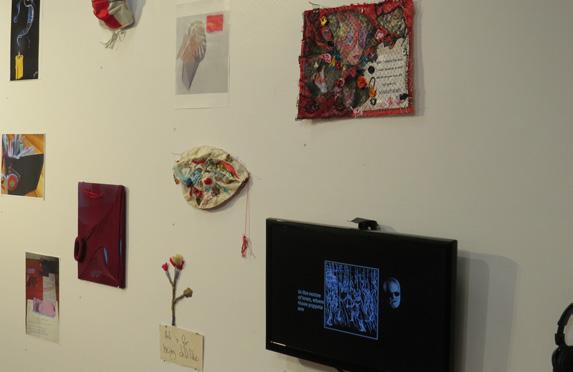
"Meant to be an interactive and contagious movement, the exposition invites the student beyond their cafeteria to escape reality for a moment."
Put gloves on, grab a glue stick, take a walk around and ask yourself, really ask yourself: What is art for?
Dawson Reads: Dive Into Pamba’s “Little Paradiso”
ATIKA
UME FAZAL NEWS EDITOR
How many of us get the opportunity to meet people doing things that inspire us? Not enough of us. Dawson Reads, a yearly event that happens in our very own Campus, is trying to change that. By being offered the rare opportunity to meet authors and expand their knowledge in the literary world, Dawson students get to have the flame of literary passion passed on to them.
This year's iteration, spearheaded by one of Dawson’s very own English teachers, Sarah Burgoyne, featured Kenyan author Gladwell Pamba.
Pamba is a decorated author of numerous short stories while also being an English PhD student at Concordia. Her pieces have won numerous awards throughout her career. Amongst others, she is the recipient of the Ibua Manuscript Prize 2025, as well as the 2025 Malahat Review Far Horizons Award for her short story titled “Little Paradiso,” which she read to the audience during the event.
The short fiction piece, narrated
by the hauntingly entrancing voice of Pamba, follows a young girl, Cheche, as she tries to make sense of her world at Little Paradiso, an orphanage in a rural part of Kenya. Through her young and naive vision of the world, we get an unfiltered version of life in her rather peculiar circumstances.
What the main character lacks in experience, she makes up for by her childish yet utterly aware critique of the world that surrounds her, whether that be in the orphanage or beyond. Cheche sees injustice all around her and isn’t afraid to speak about taboo subjects – whether it be the looks of other people or the problem with religion in her community.
The depiction of injustice is immediate. Cheche gets told she has been selected to be a child bride to a grown man. The Sisters at Little Paradiso contribute to Cheche’s helplessness by telling her women cannot be strong and worthy of protagonist roles in stories. Even
fiction holds no place for her tenacious personality. Her well-being is not entirely accounted for as well, neither by the orphanage personnel nor by the “philantropists” that visit them. Cheche claims that people give them more bibles than food, being selfish even in an action they believe to be altruistic. Pamba mentioned, in the questioning period that followed the reading, that she likes using child narrators in her stories. She explained that it allowed her to remove herself fully from the story, while also allowing her to “get away with so much” in terms of characterization and plot building. Pamba says, when offering advice for aspiring authors, that she never selected her way of life, instead she “found herself an author.” Similarly, she encouraged the Dawsonites present to “just write.” To write even when the idea isn't entirely clear. To write ignoring the judgment that may come with it. To write even if that writing never sees the light of day.
Via Romane Randria
Elsie Duque Hills Staff Writer
Few meals are as anticipated as the first bite after a day of fasting. Ramadan Mubarak to all celebrating students! The ninth month of the Islamic calendar highlights the significance of reflection and community in a universal, uniting manner. From dawn till dusk till dawn, the cultural observance practices fasting—a means to myriad spiritual rewards—with the exceptional fast-breaking feasts Suhur and Iftar. With that in mind, here are a few stand-out halal spots perfect for breaking your fast.
Café Chez Teta, a centrepiece of the Plateau’s vibrant culture, is a quaint Lebanese cafe operated by partners in business and life alike, Antoun and Mélodie. By combining a homey, warm ambiance with traditional Middle Eastern flavours, Chez Teta strives to imitate that comforting, familial sensation of grandma’s cooking.

Stand-out dishes garnished with mint and parsley accentuate the intricacies of Chez Teta’s menu. However, an undeniable highlight is the colourful arrangement of varying spreads. From the distinct acidity of Labneh to the spicy smokiness of Muhammara, Teta transports you to the Middle-East with the driving force of a pita bread. Be sure to finish your tasting with a delicate floral rose latte, an eclectic fusion of Montreal culture and traditional Arab aromas.



Pâtisserie
le Ryad, a hidden gem of sweet Moroccan pastries, sits tucked inside Marché Jean-Talon. If you’re a kindred spirit–cursed with a sugary Achilles heel and captivated by Moroccan cuisine–, you’ll easily be charmed by Ryad’s assorted sweets. Soaked in a dulcet simple syrup and enveloped by golden, flaky phyllo, these desserts will saturate your senses in the best way.
With pistachio-laced classics and rose-infused varieties, choosing just one pastry is nearly impossible. Still, nothing beats the simplicity of a perfectly crisp, honeyed baklava. The thin layers of phyllo give way to new flavours in each bite, revealing earthy, nutty notes balanced by a sweet gentleness—deceptively plain yet unforgettable. Ryad’s sweets will take you on a unique culinary voyage, an undeniable example of gastronomic excellence.

The number of exceptional halal restaurants in Montreal is boundless. These few recommendations are by no means comprehensive, but they certainly stand out as unique and delicious experiences. I encourage any curious reader to explore our culturally rich city and taste every flavour it has to offer. Here are a few special other spots that are well worth your attention.
Tesfa: Bold flavours. An Eritrean restaurant where flavours transcend borders.
Koujina Café: Study spot. A Tunisian-inspired café perfect for pre-midterm cramming.
Trippe De Bouffe: Budget Eats. A Lebanese bakery serving delicious food that your wallet will love.
Boulangerie Mr. Jreech: Local Stop. The ideal post-class treat in Alexis-Nihon.
VIA CELENA MIA, LOCAL GUIDE
VIA KAREN WAN, LOCAL GUIDE
VIA JEAN LAMBERT, LOCAL GUIDE
VIA ANJATH, LOCAL GUIDE
La Ville aux Milles Clochers… Abandonnés?
Le patrimoine religieux au Québec: ses difficultés et possibilités
SIMONE MUDIE VISUAL ARTS EDITOR
La ville de Montréal est particulière pour son architecture. Les escaliers en colimaçon en métal, les pignons colorés, et les fioritures ornementales la définissent tout autant que les églises et le patrimoine religieux qui caractérisent son paysage. Bien sûr, nous connaissons tous l'emblématique Oratoire SaintJoseph et la Basilique Notre-Dame, mais la plupart des Montréalais sont sûrement moins familiers avec le sort des nombreuses églises et couvents qui composent leur décor quotidien.
Une grande majorité des églises montréalaises sont soit vacantes, soit littéralement abandonnées. Par exemple, sur la rue Adam, dans le quartier Hochelaga-Maisonneuve, on trouve trois églises et un couvent sur une distance de seulement 900 mètres et elles ont toutes au moins une fenêtre barricadée. Ce schéma se répète à travers la ville: dans Rosemont, dans Villeray, dans N-D-G, sur le Plateau ou même dans le Centre-Ville, nous retrouvons du patrimoine religieux qui a besoin de beaucoup d’amour.
Le Québec était jadis une région très religieuse. Le catholicisme a longtemps défini la culture franco-canadienne. Les églises étaient vues comme un lieu de rassemblement et d’entraide, sous le critère de la foi. Cependant, la fin du «règne» de Maurice Duplessis et son cléricalisme extrême a créé un désenchantement avec la religion et ses valeurs traditionnelles. La culture québécoise se définit désormais par la laïcité et les familles abandonnent donc les visites hebdomadaires à l'église. Au début des années 70, un grand nombre d’églises, surtout dans les plus grandes villes comme Montréal, seront complètement délaissées et presque oubliées, et ce, malgré qu’elles soient en très bonne condition. 50 ans plus tard, ces établissements continuent à se dégrader sans que personne ne semble s’en préoccuper.
Dans les dernières années, un nouveau phénomène attire pourtant beaucoup de jeunes dans ces églises.
L’ «urbex», qui consiste entre autres à l’exploration d'immeubles abandonnés:
des usines, des écoles, mais aussi souvent des églises, fait fureur à travers le monde, et est très présent à Montréal. Malgré le jugement critique de la part des autorités publiques envers cette communauté de jeunes «explorateurs» fait face, l’«urbex» attire néanmoins de l’attention sur ce patrimoine québécois qui en a justement grand besoin. Les publications instagrams, des adeptes de l’«urbex», apportent de la visibilité

au patrimoine religieux, qui fait malheureusement maintenant plus partie du décor et n’est plus le centre de nos communautés urbaines.
Le patrimoine religieux est une entité architecturale très complexe et souvent très imposante. Il est presque impossible de conserver l’aura majestueuse de ces bâtisses sans dépenser énormément. Ce n’est pas pour rien que l’Église Catholique demandait autrefois une dîme obligatoire. La plupart du patrimoine religieux abandonné du Québec est tout de même viable en termes de structure, mais, pour les requalifier, il faut s'adapter aux normes de construction contemporaines. Transformer ces immeubles centenaires pour les utiliser à d’autres fins impose l’ajout de gicleurs, de sorties d’urgence régulées et de murs coupe-feu, ce qui est très coûteux. De plus, un aspect souvent oublié qui rend l’occupation des églises difficile est le chauffage. Les églises ont de grandioses structures et leurs très hauts plafonds rendent le chauffage extrêmement dispendieux. Le couvent des Franciscains est un établissement religieux construit en 1914 dans le quartier NouveauRosemont à Montréal et est vacant depuis presque 10 ans. J’ai eu l’opportunité de visiter ce couvent,
guidée par Sandrine Gaulin, membre de l’organisme à but non-lucratif Entremise , qui a répondu à mes nombreuses questions. Entremise est un organisme qui a pour mission de prendre en main et de requalifier le patrimoine bâti du Québec, dont celui religieux. En novembre 2025, Entremise a acquis ce bâtiment avec pour but de le ramener à vie: une charge ambitieuse mais inspirante. Comme plusieurs projets de requalification à travers le Québec, ils espèrent transformer ce lieu pour rassembler la communauté et créer un environnement d’entraide comme l’Église le faisait auparavant. Ils espèrent avec le temps réussir à créer un espace qui encourage la participation culturelle. Par exemple, Entremise planifie de « flipper » le couvent en chambres d'accueil pour les nouveaux arrivants et demandeurs d’asile, en espaces pour des organismes et ateliers, en classes de francisation, avec un café au rez-de-chaussé, le tout en gardant l’essence originale du lieu.
"L'entreprise sociale conservera l'Histoire et poursuivera la mission de rassembler la communauté."
Les projets de requalification de patrimoine religieux au Québec sont difficiles. Les églises ne sont pas dispendieuses à acquérir, mais peuvent coûter plusieurs millions de dollars à mettre à jour. Aucune entreprise qui à pour but de faire profit ne voudrait prendre en main ces magnifiques lieux remplis d’Histoire. Cependant, dans un monde où il nous manque des logements et où la planète (et les humains) auraient besoin d’amour, les organismes prêts à se lancer dans des projets communautaires et de requalification de cette envergure sont exactement ce dont nous avons besoin. Gardons notre attention sur ces immeubles pour ne pas les laisser tomber. Nous sommes chanceux, à Montréal, d’avoir la possibilité d’innover grâce à cette ressource non exploitée du patrimoine religieux, si, et uniquement si, nous avons assez de volonté et d’argent.
Via Simone Mudie
Welcome to Falsettoland: An Evening in Contact Theatre’s Immersive Magic
JOSÉPHINE SAVARD ARTS & CULTURE CORRESPONDENT
“This is where we take a stand Welcome to Falsettoland” - Falsettos
March 7th, 2026, opening night of Falsettos at the Segal Centre for Performing Arts in Montreal. Falsettos is presented by Contact Theatre, an independent company founded in 2019 by producer Ally Brumer and director/ choreographer Debora Friedmann. The company reimagines classics in contemporary ways, as seen in past productions of Cabaret in 2025 and Spring Awakening in 2024, both highly acclaimed by media.
An exceptionally marvelous queer and Jewish musical, Falsettos explores relationships in all their forms: from the fragmented dynamic between a wife and her ex-husband, to the passionate love between an ex-husband and his male lover and to the touching bonds between a male lover, an ex-husband’s chess-crazed son, and a wife’s new husband–the ex-husband’s psychiatrist. And, lest we forget, the lesbians from next door.
The experience begins upon entering, while the speakers play music from the 70s as if the audience was listening to WNBC radio in New York City. Minutes before the opening number, the wife, Trina (Amanda Caron), walks in and plays chess with her son Jason (Lucas Crelinsten) as the ex-husband Marvin (Daniel Wilkenfeld) travels the audience asking spectators to solve his Rubik’s cube. The pre-show taking place sets the tone for the immersive experience that is Contact Theatre’s Falsettos
Set in New York City at the end of the 1970s, the play presents an unconventional Jewish family as it invites the audience into their lives. Actors take their seats before the show begins. Many people are holding bouquets of flowers. Families and friends gather here. Almost everyone in the room knows someone in the show. A community has already formed around this piece of art.
Lights dim, live musicians play and
the opening number, “Four Jews in a Room Bitching” begins. This song marks the moment an uninterrupted 2h30 of musical theatre commences. Comprised of 41 musical numbers, hardly a single line goes unsung.
The set designs utilize toy playsets, plastic dolls and childlike costumes to make the show feel more comedic, and less like a heavy lesson in grief and growing up. The playfulness of the sets also rings in the absurdity that is this family: after all, how many Jewish wives divorced their gay husbands in the ‘70s without scrutiny? Probably none.
Falsettos unearths many taboo issues of the later 20th century. In an anti-semitic New York society, it was important for stories like this to exist.

With its Broadway debut in 1992, Falsettos shone a light on a Jewish family just like any other, without casting them as outsiders to the shared human experience. They go through divorce, loss, reconnection, and more, just as any other family did.
This performance also does a brilliant job at revealing the queer experience of the ‘80s, a decade marked by the beginning of the AIDS crisis in 1981.
“Falsettoland/About Time” opens the second act by introducing the audience to two new characters: Dr. Charlotte (Lily Lachapelle) and Cordelia (Emma Yee). They portray a lesbian couple who joins Wilkenfeld’s character in taking the audience through the queer community’s need to support eachother in the wake of AIDS.
During this act, Marvin and Whizzer
(Jonathan Vanderzon) rekindle their relationship, dazzling the audience in vibrato-filled songs of love and lust such as “What More Can I Say?” and “More Racquetball.” However, in intentionally dissonant harmonies, the audience discovers that Vanderzon’s lively character is ill with AIDS. It is only then that Falsettos becomes a play about grief and about a family coming together despite hardships.
At the end, the audience files out of the room, discussing how they loved the intimacy of the small cast, or how they appreciated the discreet commentary on how the queer community came together during the 1980s. Everyone stays and waits before leaving. For some, it is because they need a moment to digest the weight of this story. For others, it is because they need more time to revel in the beauty of this musical. For most, they are waiting for the actors to come out from backstage, so they can shower them with congratulations.
The lyric “Learning love is not a crime” from “Falsettoland/About Time” beautifully encapsulates the message this play conveys. No matter the shape it takes. No matter the things it must endure. Through the wonderful texts of James Lapine and William Finn.
"This show teaches the audience that love can be the most beautiful thing in the world, but only when acceptance meets community."
Falsettos runs at the Segal Centre for Performing Arts from March 7th to March 15th of 2026 and is a must-see for theatre lovers of Montreal. It will be followed by Detroit: Music of the Motor City from April 12th until May 3rd, and then Grow, beginning on May 24th.
Via Contact Theatre, Matthew Sandoval
From Left to Right: Daniel Wilkenfeld as Marvin, Jonathan Vanderzon as Whizzer, Lucas Crelinsten as Jason, Amanda Caron as Trina
In the Clerb We All Fam: How North America Went From Ballrooms to Nightclubs

ORION PEYROL MANAGING EDITOR
What makes us human if not our acts of creation? We sing, we write, we draw, and most of all we dance. Dancing has been used as a form of ritual, expression, and community for as long as humans have been human-ing.
"We’ve been dancing since 5,000 BC and we will dance far, far into the future."
Nightlife in America all started when ballroom dancing was brought in from Europe to North America by white settlers. Primarily focused on etiquette, sophistication, and networking, balls were as much political as they were for merriment. It was the main form of dance from the 1700s up until the early 1800s, when slavery started becoming more prevalent in America, birthing a new form of dance. Slaves weren’t allowed to have musical instruments and often didn’t speak the same language, so to build community they started making rhythms with their feet. Many of them came from cultures in which dancing was an important spiritual and communal experience. This style of dancing, called “jigging,” was an important act of resistance and a refusal to abandon their roots. Eventually, it got incorporated into minstrel shows, in which performers wore blackface, imitating, and mocking black people.
The most famous of these shows was the character “Jim Crow” (yes, that Jim Crow). Working class America would gather at honky tonks or juke joints to dance and watch these shows, opening the gates for lower classes to join in. This slipped dance out of the elitist Waltz of Europe and into the Foxtrot of the everyman (as long as they were white).
After World War 1 came the Prohibition and the Jazz Era. Alcohol being prohibited made nightlife harder, forcing a lot of cabarets, nightclubs and speakeasies to become more secretive. Everything was glitzy, glamorous and deliciously forbidden. Flappers and the dances they performed were scandalous and intentionally rebelling against the laws of the time. Then the Great Depression hit. Dancing was still a part of life but in a more subdued way. People didn’t have extra cash to spend at nightclubs, and instead dancing became a way to make money. Dance Marathons that promised cash prizes for staying on the dance floor the longest became a popular way to dance the Depression away.
The 1950s marked the next big shift in dance culture. There started to be a distinct generational divide: teens were Rocking and Twisting to Elvis at jukeboxes while their parents were still Chachaing. The Twist is a very important change as it was the first widespread solo dance, which allowed teens to go out and dance without being in a couple. This was the first time nightlife was intended for a younger audience, which influenced nightlife in later decades.
The jukeboxes of the 50s started the decline of live music, a phenomenon which paved the way for disco to make its way into America. Technically, discos have existed since Nazi occupied France. Nazis had banned the “decadent” American dances and
so French youths made discotheques, which were unlicensed and catered towards a very young audience, as a way of protesting the occupation. However, discos didn’t gain mainstream popularity in America until the 1970s, thanks to Disc Jockeys (DJs) and the film Saturday Night Fever (1977) starring John Travolta. Increased international violence, social upheaval, and economic recession made people want to escape their everyday lives and nightlife permitted that. DJs and drugs meant that nightclubs were able to play the top hits and keep people out on the dancefloor until the sun came up. The colorful lights and flashy costumes were made into an experience thanks to quaaludes, cocaine and many, many, more.
The drug culture persisted even when the more electronic styles of music of the 80s came around; amphetamines, LSD and ecstasy were the vices of the time. DJs adapted to these new substances and rave culture started picking up. In general, the faster tempos and synths of pop music slowly inched music towards techno, electronica and trance.
Then, in the 2000s, casinos started booking DJ’s to play in Las Vegas and EDM exploded in and out of the Strip. It was the era in which the Los Angeles partying scene took hold. People became famous solely for how much they partied. Paris Hilton, Kim Kardashian, Lindsay Lohan and Britney Spears had tabloids absolutely obsessed with them. The world was denouncing their raunchy and outrageous lifestyle and yet, they could not look away. The y2k celebrity wasn’t polished and unreachable as they are now; they were dirty, gritty and human. They made sticky, glitter-covered floors feel as glamorous as any red carpet.
From ballrooms to nightclubs, dance has been an excuse for people to gather, a mode of rebellion, and an escape from the hardships of life. It evolves and shifts to adapt to the needs of the people and it will continue to do so. Montreal itself has such a rich and vibrant nightlife and knowing how we got to this point makes the experience all that much sweeter.
Via TikTok
You’re Not Lazy, It’s Just the End of College
JACQUELINE GRAIF EDITOR-IN-CHIEF
It’s your last semester of CEGEP, you’ve probably been accepted to university, you’re finally at the age where you can go out often, you are a part of a million clubs, you likely have a part-time job… and you’re most likely exhausted.
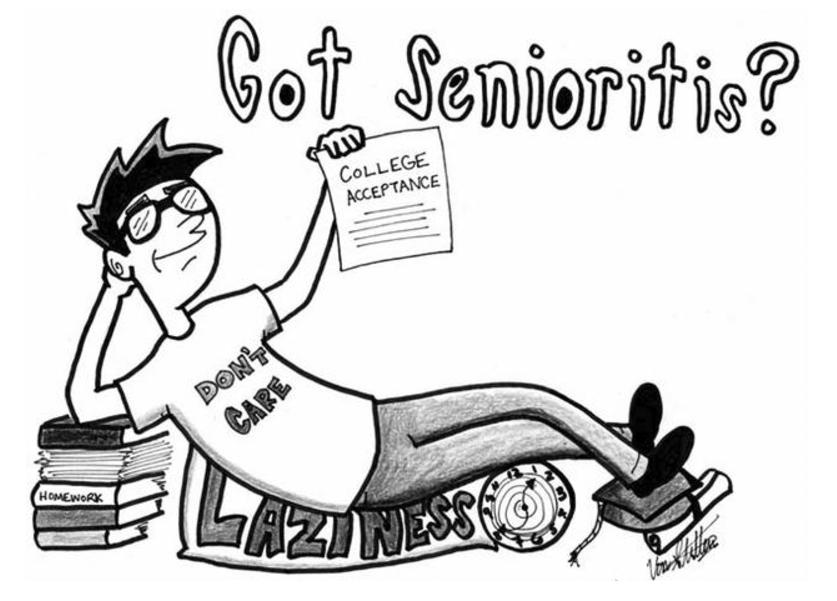
The term “senioritis” has been coined in recent years as it describes the lack of motivation felt by high school or college students in their final semesters of school. This is characterized by lower academic performance, lots of absences or tardies, procrastination, and missing assignments.
It must be first noted that “senioritis” is not necessarily a medical term, but a colloquial one used to describe “burnout,” which is a medically accepted psychological phenomena. According to Psychology Today, burnout is a form of mental and physical exhaustion stemming from repeated, untreated stress.
A 2024 report written by psychologist Dr. Elka Jacobs-Pinson elucidates 55% of college students experience some degree of academic burnout, with 20.5% reporting severe symptoms.
A study conducted by the National Library of Medicine reveals what factors affect student burnout specifically. In essence, factors such as the overall school environment, meaningful relationships with other teachers and students, feelings of belonging, and students’ self-worth can affect burnout.
Excessive internet usage is also a main cause of burnout, as those who devote lots of mental energy to “abundant internet activities” have less energy to devote to work and schoolwork. Per contra, lots of students tend to rely on the “compensatory internet use theory” where students who experience difficult personal life events use the internet to relieve themselves of negative emotions as an attempt at personal pleasure. This ends up creating a neverending circle of internet usage and burnout, according to ScienceDirect.
Burnout itself is not classified as a medical condition in accordance with the World Health Organization, but is instead a syndrome of chronic stress.
However,
"Burnout can manifest physically by reducing energy levels, increasing cynicism towards work and others, and even affecting sleep habits"
altogether ruining personal quality of life.
While I was previously aware of this burnout phenomena, “senioritis" is a term I explicitly hear more and more as I advance semesters. I find that, personally, I have a harder time paying attention in class, completing my assignments, and managing my time… Now that my peers and I have been accepted to university, we just want to go out and have fun, which is unusual, as we are typically very driven and hard-working. So why is this happening?
According to LiveScience writer, Jennifer Walsh, dopamine levels in the brain can determine one’s work ethic. Essentially, hardworking people have higher levels of dopamine in the parts of the brain that are associated with motivation, these being the anterior cingulate cortex (ACC) and the dorsolateral prefrontal cortex (DPC), says Neurology Associates Neuroscience Center. More “motivated” people have high dopamine in those areas of the brain, and lower dopamine in the anterior insula, which is linked to weighing risk and reward, according to Vanderbilt University.
Those with lower dopamine in the anterior insula tend to weigh risk and reward differently than those with lower
dopamine in the DPC and ACC. The higher the reward, the more motivated those labelled as “go-getters” would be. So once admitted to university, or with solidified plans after CEGEP, the reward may feel less significant, and that lack of motivation may then be linked to this “senioritis” phenomenon. The work has been done, there isn’t much left to do to obtain a CEGEP diploma, so why continue to work hard? There is, unfortunately, a lack of research to prove this thesis, and the data available is not specific enough to prove “senioritis,” but instead a general lack of motivation and decline in mental well-being.
However, there are ways to manage or inverse the effects of “senioritis.” Southern New Hampshire University recommends setting goals, even if they are small. Tangible goals may help the work-and-reward system set in your brain and increase dopamine levels in your anterior insula.
Taking breaks may also help to regain motivation, as your body and mind may need a physical reset. Setting a limit on your capacity can help you reach this state efficiently, without burning out.
It is always important to focus on your mental health and put yourself first. Skipping class and missing assignments may give you satisfaction in the short-term, but harm your mental well-being and academic performance in the long-run. The only real solution is to attempt to push through and complete as many assignments as possible, sometimes any grade is better than no grade. Good luck on beating “senioritis,” graduates!

SCIENCE & ENVIRONMENT
Ceci n’est pas un mosh pit: On Entropy
MARTIN KALOSHI SCIENCE & ENVIRONMENT EDITOR
My glasses are going to fall off.
I’m shoving my way past bodies shoving their way past me. Drums go feral and damp sweat gushes from our pores; I can taste the slight saline mist in the air. It’s kind of gross. I kind of like it.
Last week, my very cool friends invited me to a punk rock show (my first of the like), to which I obviously said yes. And I’m glad I did, because that's where it occurred to me that the mosh pit is a pretty special place. Moshing radiates a lovely, controlled kind of chaos; it’s a complete cathartic release, but also a space of trust where people will help fallen moshers in a heartbeat. Crowds move in all directions and arrangements, with respect only to the music. Here, chaos is the release and the connective force, and the whole point.
The universe operates similarly.
Entropy is the scientific measure of disorder. Consider particles (or moshers) dispersing about a space. The more random and chaotic their arrangement, the higher the entropy.
Entropy is involved in the process of ice melting, for example. Think back to those phases of matter diagrams from high school. Solid particles were neatly
packed together, those of liquids were a little more free to flail about, and those of gases were practically moshing mid-air. Solid ice crystals are highly ordered. When the spontaneous process of melting turns the particle order askew, we’ve reached a point of increased entropy. Enter: the liquid phase.
Similarly, entropy describes why milk spreads and mixes with coffee, why a spritz of perfume will diffuse across a room, and why your room just can’t seem to stay clean for more than three business days.
Of course, this is an oversimplification. It can be more accurate to think of entropy as a measure of probability.
Every system (an object or group of parts that work together as a whole, like an ice cube or a (moshing) human) is made up of tiny bits of matter: particles. At the microscopic level, these particles can be arranged in endless combinations.
Our moshers may be spread out across the pit, a quarter of them on each corner. They may be collected in a bundle in the center. They may be perfectly arranged in rows and columns. They may form two lines at the pit’s east and west extremities. They may be in some, any, other formation.
Probably, though, they’ll be sort of everywhere, chaotically intermingling and interbouncing and interpummelling and interyounameit.
Entropy is simply the more probable distribution of matter. For the universe, it’s much easier to keep things a little messy. In fact, the universe fundamentally tends to increase its total entropy; because, as with ice melting, and coffee mixing, and rooms filthying, and moshers moshing, and all other processes, disorder prevails.
So, if entropy is so statistically inevitable, let’s all get a bit more warmed up to disarray.
Tolstoy and Aristotle agreed some time ago that there’s strictly one path to perfection, while there are endless ways to go wrong. Now, we all have a choice to make: do we put in the impossible work to attain it, or do we come to terms with our chaos?
If you ask me, a clean room can wait until tomorrow. Tonight, you can find me in the mosh.

All photos via Martin Kaloshi
Alessandra Mercuri "Art Monsters", mixed media collage
@Aluciphos "Kal'tsit"
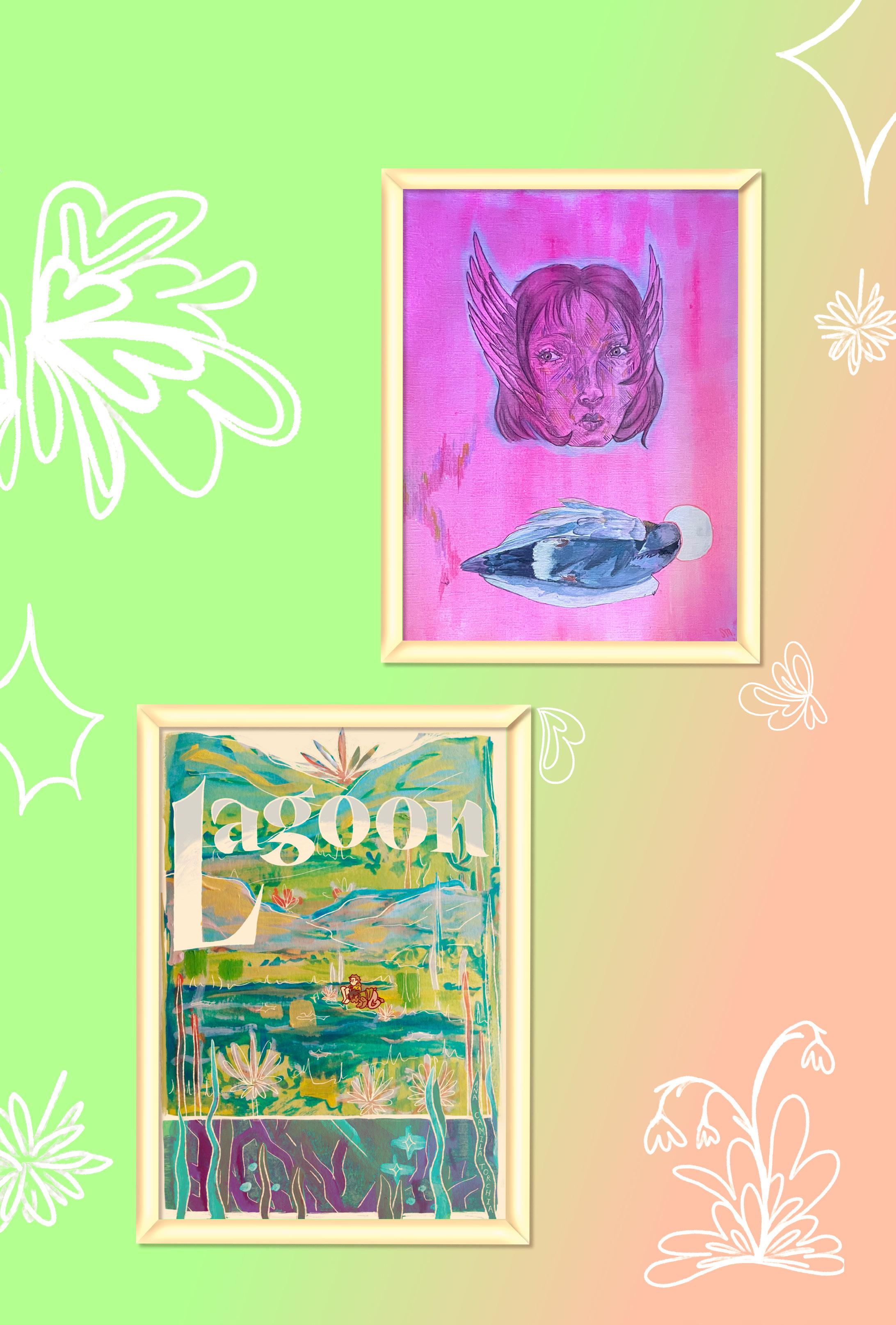
Simone Mudie, Visual Arts Editor
Ana Camila Torchia @_temmers_
Collecting or Overconsumption: Finding the Line Between
SABRINA COCCIMIGLIO COPY EDITOR
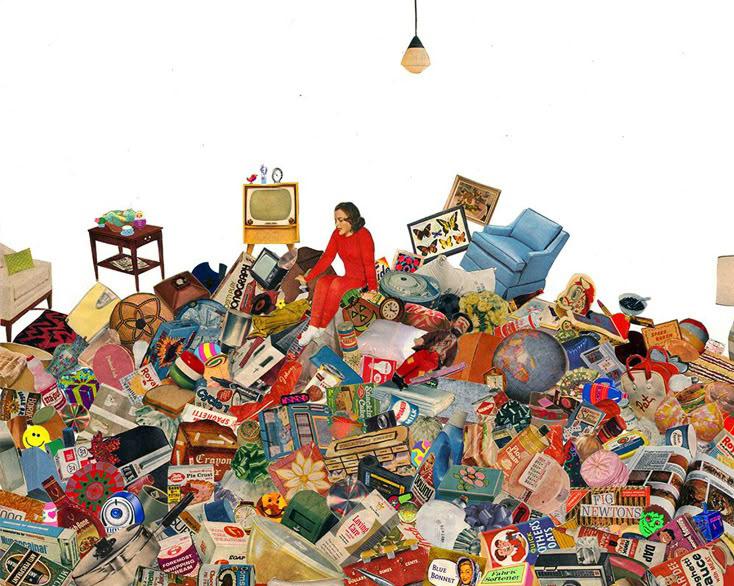
Hundreds of Jelly Cats line the wall. Someone has just bought their 50th pair of shoes. Another is proudly displaying their extensive amount of body care. Labubus paw at you from every corner. Something as simple as collecting has blurred into something completely different: overconsumption. So, what exactly is the line between the two?
The Oxford Dictionary defines collecting as “the action or process of gathering or bringing together things in one place or group.” And, in essence, this is technically what a collection is. However, if you asked someone why they collect things, they might not have a clear answer. Is it an addiction? An itch that can never be satisfied? Or is it a term masking the problem of overconsumption?
Some of the earliest collectors are children. According to psychologist Fred B. Charlatan, children naturally enjoy gathering piles of flowers or bottle caps. Which isn’t very surprising when you think about it, since most of us grew up surrounded by collections of Shopkins, Squinkies, Monster High dolls, Lalaloopsy dolls, and the list continues.
"Naturally, collecting reflects the human desire to control the resources surrounding us."
There are a multitude of reasons that drive a collector. Many scholars have dedicated their lives to finding an answer to this complex topic and continue to be puzzled by it. Although there is no conclusive agreement, there are, however, many theories and studies, one being from the psychologist Ruth Formanek, who focused on identifying the major “rubrics” of collecting from a sample of diverse collectors.
Formanek’s first rubric is the extension of self, which is separated into subcategories—the defense against negative emotions, a desire for control, and a source of self-esteem. When one tries to cover up a sense of loss or depressive state, they relieve this by adding to their collection. However, someone else may find a sense of purpose by accomplishing a challenge, developing expertise, or evoking nostalgia, while others search for the newest addition to flaunt or boost their self-esteem.
Another significant criteria in the study is collecting in relation to others. Though it is more complicated to explain, the focus is on items collected that represent a certain close relationship to others, or being part of a community of like-minded people.
Other reasons include collecting for financial investment or to preserve the historical importance of objects. However, another prominent rubric in Formanek’s study, which can be observed in today’s society, is collecting as a form of addiction. Many have the urge or develop the habit of collecting. By making a routine of shopping for collectibles, individuals often mix emotion and habit together.
Collectors, however, must be careful not to lose sight of the emotional connection with their collectibles.
According to marketing academic Russell W. Belk, being swept by the materialistic aspect of an object is when overconsumption replaces collecting. Instead, a “good” collector should seek to create meaningful relationships with objects, rather than with the symbols associated with them.
Materialism,“a value system that emphasizes the pursuit and acquisition of material goods and luxuries, typically perceived by the individual as a measure of personal worth and achievement,” according to Britannica, has become embedded in our culture today, as marketing trends promote consumerism, create desire, and associate value with material objects. Hence, collecting has a dual nature that is hard to manage, especially when living in a capitalist society.
Strictly speaking, purchasing anything that isn’t essential to a human’s survival or well-being is considered overconsumption. However, like American psychologist Abraham Maslow’s hierarchy of needs – the famous pyramid that classifies a human’s needs and wants – when we maintain necessary basic survival requirements, we also crave love and belonging, self-esteem, and self-actualisation. Thus, it is crucial instead to question whether your purchases are for yourself
Think to yourself, why do I want to buy this? If it’s because you want to fit into a new trend or just have the impulse to buy something, rethink your purchase. Give yourself at least 24 hours before making your decision. You might realize that you aren’t collecting for the right reasons.
Before the next consumerist trend comes along, think critically about the choices you make as a consumer. Collecting isn’t about the material, but a form of identity, self-expression, and emotional connection. It is not about posessing meaningless objects or filling a void by acquiring material goods. You have control over what you buy and don’t. The purchases you make reflect the collector you want to become, so choose wisely.
Jessalyn Aaland’s “In Amongst It” (2011) Via Pinterest
Mon Féminisme À Moi
ALAA ETTAOUTH STAFF WRITER
Depuis le début du mois, en l’honneur du 8 mars, journée internationale des droits de la femme, j’ai eu l’immense privilège de pouvoir échanger sur mon experience de jeune femme et de m’enrichir de celles des autres, avec la certitude qu’elle ne tombera pas dans l’oreille d’un sourd.
Ce que j’en retiens principalement, c’est que dès notre plus jeune âge, nous sommes exposées aux déboires du patriarcat, que ce soit par la manière dont on nous décrit, dont on nous catégorise et dont on nous perçoit dans notre humanité. Il nous est dit que nous sommes naturellement plus émotionnelles, moins fortes et, surtout, moins aptes à contribuer à la société que les hommes.
Mon féminisme à moi m’accompagne depuis toute petite et a grandi avec moi. Il a choisi graduellement de rejeter ce qui nous est présenté comme une vérité factuelle et d’écrire son propre livre.
Mon féminisme à moi ne tombe pas dans ce piège de l’exclusion. Au contraire, il change le disque que le patriarcat persiste àjouer, celui qui dit que le féminisme constitue un crime contre l’homme. Il reconnaît que le patriarcat ne bénéficie personne et que les hommes en souffrent aussi. Il admet quec celui-ci les rend moins humains et confinés à une case dénudée de toutes émotions. Mon féminisme à moi reconnaît que les hommes peuvent être nos alliés et que pour mener à terme ce combat, la collaboration de tous et de toutes est nécessaire. Les paroles de Thomas Sankara, ancien premier ministre révolutionnaire du Burkina Faso, marquent cette nouvelle ère : « Il n’y a pas de révolution sociale véritable que lorsque la femme est libérée. »
Mon féminisme à moi ne peut pas se permettre d’être irrationnel. Il reconnaît être une réponse à tout un système économique, politique et social contraignant, et pas seulement l’idéologie de la supériorité d’un genre. Il use principalement de l’éducation comme arme face à l’oppression, mais également en guise de sensibilisation. Il défie les stéréotypes, favorise l’autonomie des filles et brise le cercle vicieux de l’ignorance qui laisse place à l’abus.
Via Vice
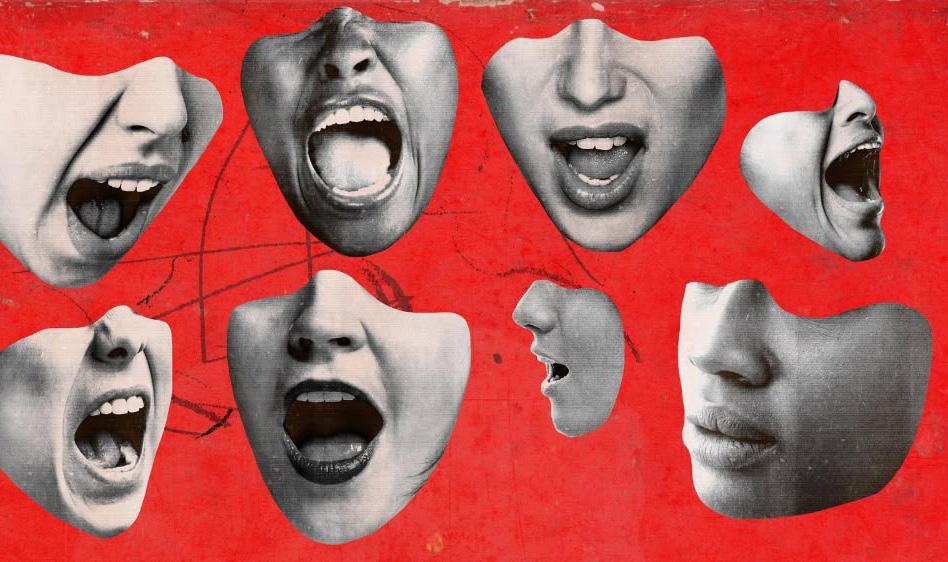
Mon féminisme à moi est instruit. Il se bat contre le recul intellectuel et sociétaire : il combat les dirigeants qui menace le droit à l’avortement ou ceux qui pensent que la femme n’a de place qu’en cuisine. Mon féminisme à moi ne se voile pas la face sur ses propres défauts. Il reconnaît la récupération politique qui en découle. En France, des femmes dont le seul crime est de croire, sont dépouillées de leurs libertés, celles-ci étant remises entre les mains de l’État.
Le gouvernement en profite pour instaurer un climat de méfiance toxique qui nous pousse à nous pointer du doigt les uns les autres au lieu de critiquer l’autorité. La population écope. Ces femmes, qui n’ont plus le droit de guérir ou d’enseigner et dont l’accoutrement de soignante ou d’enseignante est examiné à la loupe, ne guérissent plus et n’enseignent plus. Mon féminisme à moi reconnaît que cette haine voyage et qu’elle a déposé ses valises ici, au Québec, et que bientôt, des Québécoises ne pourront plus exercer ni même bénéificier de leur droit inné d’apprendre et d’éduquer.
Mon féminisme à moi ne pretend pas détenir la recette secrète. Il se nourrit de la littérature que je consomme, de la ferme conviction de ne pas détenir la vérité absolue et il me pousse à tout mettre en perspective. Mon féminisme à moi évolue avec le temps qui commence à manquer. Il se délaisse des débats incessants sur la place de la femme blanche riche dans des sphères à jamais inatteignables par vous et moi. Il s’ouvre à nous et à toutes celles un
peu plus loin de nous qui se soucient plutôt des bombes et des conflits armés que de ces questions.
Qu’elles viennent du Soudan, de la Palestine ou de l’Afghanistan, mon féminisme à moi ne les oublie pas. Il ne ferme pas les yeux sur les violences basées sur le genre et les abus sexuels dont elles sont victimes. Il dénonce les violes atroces des miliciens sur les Soudanaises, la déshumanisation et la torture des Palestiniennes et les persécutions et l’emprisonnement identitaire des Afghanes. Lorsque leurs voix ne peuvent dépasser leurs frontières, mon féminisme à moi agit comme un mégaphone, impossible à ignorer.
Mon féminisme à moi dérange. Il bouge, pousse et change les normes instaurées par ceux qui en bénéficient le plus. Il ignore ceux qui revendiquent que la cause est perdue et il continue de sortir dans les rues.
Aucune avancée dans n’importe quelle sphère de la société n’a été accomplie sans que cela ait été inconfortable ou difficile.
Que se soit par Flora Tristan durant la révolution industrielle qui connectera la misère de la société à la misère des femmes, par Kimberlé Crenshaw qui mettra sur papier son idée de l’intersectonalité ou par Fatima Mernissi qui défie cette pensée que la religion est misogyne en attribuant ce sexisme aux élites masculines, notre féminisme à nous existe depuis des siècles et il ne cessera jamais de croître.
“Mon féminisme à moi nous appartient à tous.”
What Health Means to You
MINOLA GRENT EDITOR-IN-CHIEF
A few years back, CEGEP students were required to take 4 Physical Education (PE) classes to graduate, which, in a standard 2-year pre-university program, amounted to one every semester. Though it is unclear when the shift took place, the Ministry of Education decided to remove one, leaving the PE Department with only three classes to teach every student how to lead a healthy and balanced life. In fact, Dawson, in particular, insists on making sure all students have access to this part of their education through a comprehensive accommodation system. The one thing that cannot be granted, however, is an exemption. I interviewed Layal Nakhlé, a beloved PE teacher and the department’s accessibility representative, to understand the inner workings of Dawson’s Physical Education courses and accommodations.
PE classes are rarely popular, especially when most CEGEP students’ lifestyles look more like that of overworked adults than that of teenagers. Yet, they are there for a reason. Layal explained that
“the goal is to expose students to different ways of maintaining a healthy life so that, once in adulthood, they are equipped with the tools to take care of their bodies and minds.”
The requirements for the three classes follow a growing structure: the 101 teaches students about general fitness and nutrition, while the 102 brings in the acquisition of skills and goal setting. Finally, the 103 combines the previous two into a plan the student makes to achieve a muscular and cardiovascular goal. Students are pushed to choose activities that they enjoy and can envision themselves continuing to perform in the future.
The variety of PE classes ensures most students can find something that fits their fitness level and

physical limitations. Students who are registered with the Student AccessAbility Center (SAAC) are eligible for accommodations for PE classes. However, it is important to note that Dawson College only offers exemption in extremely specific and dire situations. Outside of exceptional circumstances, the SAAC and Layal, the PE accessibility representative, pride themselves on the wide array of accommodations that can be offered to students.
Critiques have been made towards the school using clause K.3 in the fourth section of the Institutional Student Evaluation Policy (ISEP) which states: “An exemption is the action by which the College exempts a student from registering for a course normally required in their program of studies.” However, the clause explicitly mentions that the exemption policy applies to courses required in a student’s program of studies. This refers to concentration courses, not general education ones, such as English, Humanities, and PE. These classes are tightly monitored by the government, prohibiting the college from offering exemptions.
When asked about what exactly these accommodations entail, Layal explained that almost anything is possible. Layal works in collaboration with the student and their SAAC counsellor to find the best course of action. For example, if a student is recovering from an injury and has a physiotherapy plan to
follow, that can be integrated into their PE class in the stead of other physical activities they may not be able to perform. If a student has reduced mobility in their lower body, and the chosen PE class relies on exercises targeting that region, adjustments can be made to instead focus on the student’s upper body. In short, class requirements can be changed to entirely fit the student’s needs and limitations.
On top of physical disabilities, students can also receive accommodations for their mental health concerns. For instance, accommodated students may have a support person of their choice present during classes. They may also be allowed to step out when difficult or triggering topics such as nutrition and eating disorders are addressed.
Furthermore, if a student were to miss multiple classes due to a health condition, opportunities will be given to retake the missed classes throughout the semester.
In short, exemptions are not granted because it would deprive students of a part of their education that attempts to show them different ways to be healthy. Health looks different on everybody, and Layal understands and wants to continue showing this to her students.
VIA DAWSON ATHLETICS
The ‘Price’ of Womanhood: On Beauty Standards and the Instilling of Insecurity
CHLOE BERCOVITZ MANAGING EDITOR
"A very effective way to control women is to convince women to control themselves," said Glennon Doyle.
I find it hard to believe that female beauty standards have ever been about looking good. Looking beautiful, even. We can all agree that insecurities are irrational. Our pores, our cellulite, our acne, skin tone, our body hair. Who cares?
But I’m ashamed to say: I do.
And so do you.
Why is that?
Beauty standards are a bit cultural. Very political. They are, in essence, the ever-evolving norms that measure beauty. They ought to be met in order to merit successes, both personally and professionally.
The human race has always been enamoured and consumed by appearances. In ancient Greece, it was believed that the more attractive you were, the better you were emulating the Gods.
Then came the Middle Ages; beauty became intertwined with morality. From a theocentric Western scope, girls were, indeed, expected to be chaste. And, to look virginial, you ought to look young and pale. Forever. With white as the historical emblem for innocence comes a good six hundred years and counting of oppressive, systemic expectation.
Sounding at all like white supremacy yet?
Colonialism took such preferences and transformed them into a caste system, in which physical traits became a means of deciding one’s humanity and worth. So, when we talk about beauty standards in today’s world, we are often just treating and acknowledging both scars and histories.
I do believe, though, that this worldview persists: “it’s reflected on the faces in the pages of fashion magazines, which, up until recently, were almost exclusively white,” says Vogue reporter
Jessica DeFino.
And once you begin convincing people that they are less than, they become a captive market. Big corporations were quick to profit from these deep-seated, systemic insecurities. And when that doesn’t work, then you can always just create new insecurities altogether!
When you make someone believe that they don't smell good, that their hair looks disgusting, or that their skin looks strange, chances are that they’ll become insecure. Chances are that they’ll want to do something about it. That’s the beauty marketing standard, which, likewise, upholds the patriarchy.

DeFino likewise explains that, for face creams to sell, women had to become demonized as having skin that is either dry or oily. That blemishes and wrinkles are wrong. Buying creams would fix that.
Even when the sales of Gillette began to stagnate, of course, a new, female market was born. Body hair became refashioned as unhygienic. With a new problem, came its solution, and it just so happened to be conveniently packaged in a razor box.
But I can’t help but notice that beauty culture today has done more than selling insecurity, for it too, is stealing. Slick hair, gold hoops, skin prep – they are all rooted, historically, in the efforts of women of colour. The clean
girl aesthetic has been rebranded. This new label, more palatable to sell, posits a very striking irony. These practices were not born from luxury, but rather, survivalism. Developed by women navigating societies that scrutinized and forced them to appear “clean,” in order to be taken seriously – in a cruel reversal, the very aesthetics that once invited discrimination are now praised when detached from the women who created them. Only now have they become marketable.
Modern beauty standards have likewise been weaponized as a backlash against feminism. During second wave feminism, came with even more rules and regulations with regard to the female appearance. Throughout the ‘60s and ‘70s, it was the politically protected right of an employer to enforce the appearance of a female employee. This was also the same time that diet culture began; diet-related articles in magazines rose 70% from ‘68 to ‘72, according to American author Timothy Ferriss. And then the feminists who rebelled against this were suddenly wearing a new label: “the ugly feminist.” It was a cheap way to undermine the movement, attacking the desirability of the messenger rather than the message itself. But when a woman is dismissed as bitter and unattractive, it gets remarkably harder to be taken seriously. This characterization then served as a warning to others of what a rebellion ought to cost.
Today, we often perceive beauty routines as a means of self-care. And definitely, sometimes, this is true. But I’d like to suggest, here, that real self-care is intrinsically political – and begins when we stop funding a culture that torments us into thinking that our very existence is inadequate.
"I believe that self-care is subversion. Self-care equality. It is liberation."
It is when girlhood can, finally, just live and breathe amid the comfortable existence of bodies that were never even a problem to begin with.
Self Portrait with Thorn Necklace and Hummingbird, via Harry Ransom Center
“The Times They Are A-Changin’" So why Is No One Singing About Them?
ORLA JEANES STAFF WRITER
Activism has always been closely linked to music, so much so that protesting itself holds a musical quality. Whether they are heard through shouts, cries, chants, or the clanging of pots and pans, the sounds of protest rely on creating noise; in this way, they are musical.
Historically, social justice movements have depended on musicians to supply the rallying masses with their anthems, and time and time again, artists have responded by either overtly or subtly suffusing political ideas into their song. Think of Nina Simone’s “Mississippi Goddamn,” Marvin Gaye’s “What’s Going On,” or Bob Dylan’s “Blowin’ in the Wind,” all of which are tracks that denounced racial oppression during the Civil Rights Movement in the U.S.
During the counterculture movement of the 1960s, mainstream music was made up of an unprecedented number of songs that outspokenly contested the status quo. Participating in legendary music festivals like Woodstock and the Newport Folk Festival, hundreds of cultural icons would come together to decry injustice.
"It seemed as though, in that era, an integral part of the artist’s identity rested in their ability to transcend boundaries, not only creatively, but politically."
These days, much of that sociopolitical consciousness seems to have disappeared from popular music. The way in which singers now express themselves politically—that is, if they do at all— feels calculated and superficial. When it comes to recent contributions to musical activism, I find that there is an overall absence of the genuineness, raw emotion, and unabashed demand for change that once characterized protest songs. If wars, poverty, and suffering remain just as widespread and unresolved, why is it that musical activism
is no longer equally prevalent?
Ironically enough, the rise of democracy is somewhat to blame. As it neared the end of the twentieth century, the world began to see a major shift in international politics: the Soviet Union collapsed, the Berlin wall fell, both the Vietnam and the Cold War reached their ends, and at least thirty countries transitioned from authoritarian to democratic forms of government. In his 1989 article titled The End of History, the American political scientist Francis Fukuyama presented the idea that, with the dawn of this new age of liberal democracies, civilization had reached “the end point of mankind’s ideological evolution.” Essentially, the world had become ‘okay’ enough to alleviate the West of the sense of political urgency that had been fueling counterculture music for several decades.
That being said, global politics are not the only culprit. Over the course of the past two decades, digitalization has completely revolutionized the music industry, and not necessarily for the better. If you feel as though the overall quality of newly released music has gone down while the number of album releases has gone up, you are not alone. The demands of our modern-day, dopamine-addicted digital market have largely resulted in an influx of songs catered to sensationalism. Pressured by the expectations of the profit-driven music industry, many musicians have strayed from the creative and expressive aspects of music making.
Instead, they’ve turned their attention to studying consumer habits and forming business strategies, such as carefully designing a trending audio that can maximize the number of streams to their song.
In the same vein, preoccupied with becoming mainstream and avoiding public reproval, singers will sanitize and, consequently, banalize their music. Unsurprisingly, the succinct and daring lyrics of protest songs, often marked by curse words or explicit critiques of those in power, do not have a reputation for being uncontroversial. However, to protect an artist’s image in popular culture—and with it, their number of streams—a certain neutrality when it comes to their political views is required.
There is a reason for which music has been dubbed the universal language. Arguably more so than any other art form, it has the ability to convey emotion in a way that is deeply resonating and visceral; cheesy as it is, you can feel it in your soul. Fused with activism, it harnesses a unique ability to mobilize the masses and build a sense of solidarity amongst them.
So far, the 21st century has not shown itself to be much better than its antecedent: hatred, violence, and tyranny still run rampant, proving to us that the march to justice is far from over. Personally, I think it's about time we had ourselves a new rallying chant, one that will get us back in the streets, continuing the fight of past generations.
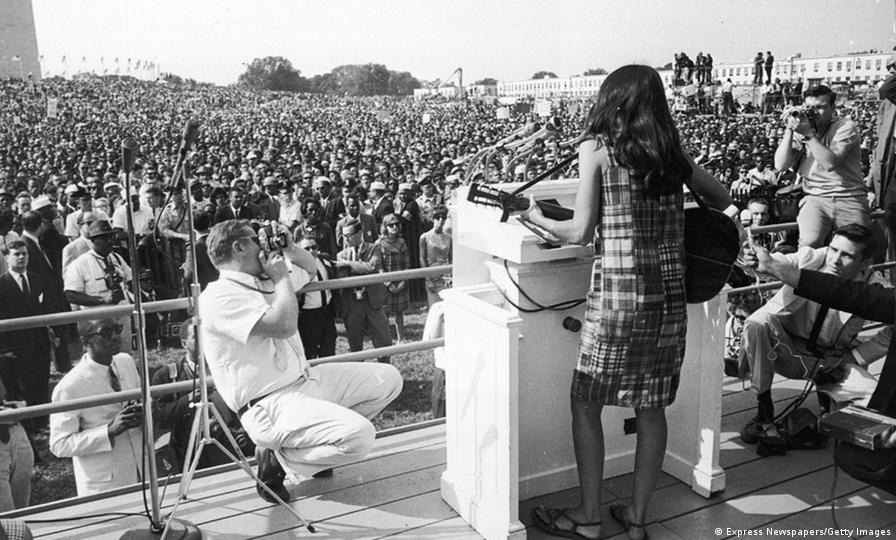
JOAN BAEZ PERFORMING AT THE CIVIL RIGHTS MARCH ON WASHINGTON IN 1963 VIA GETTY IMAGES
Call
Me
LEAH AL-SHOURBAJI CONTRIBUTOR
It will take you five minutes to read this article. Three hundred seconds.
Every forty seconds, someone dies by suicide. This issue is not unique to any one country or economic class. Not only does suicide affect those who take their own lives, but it also affects everyone around them. The notion that one will not be missed is prevalent among those who experience suicidal ideation, but it is false.
"One can never know what reach their presence has had and who they have affected in their time on earth."
Since Joiner ’s 2005 study Why People Die by Suicide, many other studies have found more reason to link suicide and social isolation.
Quebec CEGEPs present a unique opportunity for students to meet large groups of people in a setting that lies in limbo between high school and university. This environment can be conducive to growth and allow students to expand their horizons in a more gradual way, but it can also lead to social isolation. Some students may find comfort in attending the same CEGEP as their high school peers, or they may struggle to find their place in an ocean of students who seem to easily find friends.
When you walk through the hallways of Dawson, how often do you hear someone say something along the lines of “I’m going to kill myself”? The phrase is very common among young people and can be used in response to any sort of stressor or uncomfortable situation.
The use of this phrase can be jarring to some and feel insensitive or triggering to those who have personal experiences with suicide. In reality, it can be a symbol of movement in the right direction.
Its colloquialization can prove a useful tool for suicide prevention; recent studies have shown that those who use this phrase often do so in response to their own personal experiences with
the subject, whether that be their own suicidal ideation or that of a loved one. Therefore, when one uses the phrase, it can be a sign for those around them to reach out.
Furthermore, though jarring, the use of this phrase as a joke contributes to the normalization of the topic. This is important as it encourages people to be honest about their own experiences with suicide. Suicide and self-harm are often taboo, which can lead to further social isolation both for people with suicidal tendencies and those who love them.
In an ideal society, we will be able to have open conversations around mental health, which will encourage and guarantee people to feel comfortable seeking and have access to professional care. This picture of a better society starts here at Dawson with anyone reading this.
Checking in on your friends is
be successful in their attempt. A 2025 Pew Research Center study says that men turn to their social networks less often for support than women do. This means they will be unlikely to approach those close to them with an issue as serious and taboo as suicidal thoughts. Men who do speak up are often faced with emotional invalidation through comments telling them to “man up”.
Getting your friends to be comfortable with the idea of being honest about their mental health with you doesn’t mean asking prying questions or exclusively talking about these things. It simply means making sure they know you would listen. Listening to someone’s silly story about their metro ride is as important as listening to their story about their girlfriend cheating on them, because you will likely never hear the second if you don’t hear the first. Allowing your
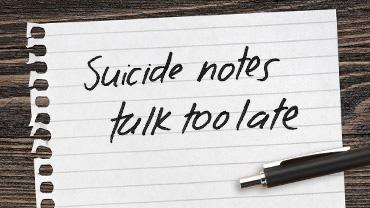
paramount to the achievement of this goal. The National Institute of Mental Health lists talking about being a burden to others, displaying extreme mood swings, giving away items or taking uncharacteristically dangerous risks, such as driving really fast, as examples of warning signs to look out for. It is especially important for men and boys to do so.
For every four suicide deaths in Canada, three are men, though women attempt suicide three times more often. This can be attributed to men using more lethal means of suicide, and to ideas related to toxic masculinity. For example, the dangerous notion that a man should always “get things done” can cause one to make sure they will
loved ones to feel comfortable calling you when they need you is part of the village-building people so often speak about.
These habits and relationships are important to build and maintain long past our days at Dawson. In fact, according to the Public Health Agency of Canada, middle-aged men (45-64) have the highest rate of suicide. As mentioned, this issue does not affect any one group of people. Not poor people, not young people, not white people or queer people. It simply affects people. It is better to ask an awkward question than to attend a funeral. If you’re having suicidal thoughts, don’t wait. Speak up. If you feel uncomfortable talking to your loved ones for any reason, talk to a professional or call 988.
VIA MOVEMBER
OPENING STATEMENT
SAL FRANCIS
CREATIVE WRITING EDITOR
I’ll keep this short because I have so many pieces to show you this month!
A common theme I’m noticing throughout the contributions this month is longing: longing for a person, a place, a trait, an accomplishment. I am no stranger to it, so I know that yearning, as painful as it can be, breeds hope. That’s what I wish we all do with these feelings, to turn it into inspiration to seek out what we long for, to ensure a better, happier existence. To the people who contributed, thank you for sharing your work, it’s a very vulnerable thing to do and I’m so proud of you all! Thank you for reading, I hope you enjoy!
Maria's Tacos
ORION PEYROL
MANAGING EDITOR
I think of you on cold nights like this when my stomach rumbles and my mind wanders Maria, your doors were always open to me. When we stepped in the warm air and smell of spices guided you to sit at a sticker and graffiti covered table.
You could see you from the highway, a siren’s call on the way home from school. On the roof of your building, you stood proud, large and imposing, arms outstretched to bring us in.
When my heart feels empty I think of you and how I’d fill my days within your walls. Playing boardgames while salsa and lime dripped from my fingers.
I think of you when I read the words of Richard Silken, he speaks of want and touch. The dirty and the sex and I relate it all back to you.
You You You
You’re gone now. No more shall your taste rest on my tongue. I think of you again when Richard speaks of missing. You are no more. No more afternoons spent dancing in the sun to live music or gossiping about the ever rotating knitting group or the waiter who knew my order by heart.
I am adrift without your lighthouse presence and I am left remembering what was. Sitting in the dark within this emptiness. I know nothing but this without you Maria
Death to Virtue Signaling
ALESSANDRA MERCURI CONTRIBUTOR
I possess esoteric knowledge no one else knows. ***
I know the entire tracklist to Midnight Marauders by A Tribe Called Quest.
I am way ahead of all of my peers.
Buzzword, Buzzword, Buzzword. I took a philosophy class in my first semester. Allegory of the Cave.
I know (think) I am smarter than you. Whoops, Freudian slip.
- “Faux intellect quote”

Oh! Montreal
COLM GRIFFIN CONTRIBUTOR
Oh Montreal, you’re killing me
Your long, drawn out winters
Your curious, communist boys
Your blacked-out, bisexual girls They’ve put me in a trance
Oh Montreal, you’re making me upset
Your shady street corners, free of judgement
Your mysterious, sadistic lexical hypocrisy
Your assorted staircases leading nowhere
They’ve sent me spiraling
Oh Montreal, you’re killing me
Your poisonous river that flows like oily hair
Your secret, alluring, homosexual underbelly
Your hill busting upwards, pierced by a cross
You’ve put me in a trance
The Small Death
ELSIE DUQUE HILLS STAFF WRITER
You don’t want me, Rather this body I must condemn.
The small death Candied exhilaration Yet, I am a vessel of hatred
For myself, For the world.
Lust embodies us as we intertwine, erasing our intrinsic selves A dulcet coalescence.
Speak to me. Speak to me.
Acknowledge the words spilling from these withered lips I try For you.
Forty-Eight Hours
TORANJ NAJAFI CONTRIBUTOR

My soft breath
A saccharine morning
new days laced, By the burden of first wake.
For I yearn to be precisely what I am not. I can’t stand this soiled husk Not anymore.
Tired eyes blush hues of soothing tides, indigo twinged. Searing tears kiss my frigid face.
Tangle your hands in my heart For I am unfeeling
Hold me gently Before I let go
Don’t love me.
Find solace in my brittle skin. pallor mortis
The one I condemn
From the moment I was born, the world around me had already been claimed. For forty-seven years, the same cruel forces called the Islamic Republic have latched onto our lives like a relentless tick, taking away our freedom with every passing year. While their children traveled the world with the stolen labor of my people, I had to learn how to protect myself from this cruel regime long before I learned to tell time.
My grandmother always told me about the bravery, courage, and drive of my people, the people of Iran. I used to listen to those stories and hope to see them for myself one day. In January 2026, I finally did. My people decided that enough was enough and stepped outside with empty hands and open voices. All they asked for was freedom.
The streets became alive in a way I had never seen before. People sang, shouted, and held nothing but their reunited voices. And yet, the response was not words. It was bullets.
In just forty-eight hours, the streets of my city were soaked in blood. Ask for a better future, and you would get shot. Hospitals became waiting rooms for grief. Mothers ran from one body bag to the next, hands shaking as they pulled at zippers, praying it wasn’t their child inside.
More than 43,000 lives were wiped out in just two days.
This is the cruel regime I lived under, a regime that takes the lives of its people as easily as it takes their voices, their dreams, and their right to simply exist.
Those who were not killed were taken. Prisons overflowed with people whose only crime was asking for basic human rights. Families weren’t given bodies. They were given prices. Pay, or your child is erased. Pay, or the earth refuses them.
Even the protesters who survived the streets and made it to hospitals were not safe. After dark, men came, not with medicine, but with more bullets to finish the work.
And yet, my people did not give up. They returned to the streets day after day, with empty hands but unbroken voices. The internet went dark. Phones stopped working. The media said NOTHING. But the truth does not live online. It lives in empty school desks, in shoes left by the door, in mothers who once dreamed of watching their children grow up. They called this “order.”
Quiet streets. Dark screens. Fewer questions. Countless lives erased.
But I have learned that order built on fear is just another kind of violence.
Stories have power. They can teach. They can hide. They can make people obey, or force them to remember. Once a story spreads, it decides what is feared, what is forgotten, and what survives.
This is my story. Whether it preserves silence or reveals truth, I leave for you to decide.
But stories do not end the way regimes hope they will.
One day, Iran will be free again.
And when that day comes, because it will, the world will remember that my people were never silent—only waiting to be heard.
How Bojack Horseman Portrays Mental Health Better Than Most Dramas
MAYA JABBARI VOICES EDITOR
When people talk about television that explores mental health, the conversation almost always centers on serious dramas. These shows often pride themselves on their authenticity, complex characters, and emotional intensity. But, arguably, that’s not always what I’ve seen. To me, there is one show that stands out in that genre: BoJack Horseman
Despite being animated and often absurd, BoJack Horseman has one of the most honest portrayals of depression, addiction, trauma, and self-destructive behaviour in modern television. It handles mental health with more openness and nuance than many live-action series that claim to be grounded portrayals of reality.
Part of what makes the show stand out is that it refuses to romanticize suffering. In many television dramas, like, for instance, 13 Reasons Why, the troubled protagonist’s struggles become a kind of aesthetic – it’s something that makes them mysterious, complex, or even admirable. The audience is, thankfully, encouraged to sympathize with their pain, but sometimes overlooks the harm they cause. BoJack Horseman rejects this entirely. BoJack’s depression does not make him intriguing or something to be studied; it makes him destructive, selfish, and frequently makes others distance themselves from him. The show can’t stress something enough: being in pain does not excuse hurting others.
With that being said, because BoJack's struggles ripple outward, characters like Diane, Princess Carolyn, and Todd are not just supporting players in BoJack’s life and the show itself; we get an insight into their lives and how they are shaped by BoJack’s actions. For instance, Diane’s storyline is, in my opinion, one of the most thoughtful depictions of depression on television. Her experience manifests into persistent dissatisfaction, burnout, and a sense that she is failing to live up to her own ideals. When Diane eventually begins taking antidepressants, the show treats
the decision with refreshing realism. It isn’t a miracle cure, and it isn’t a weakness.
With BoJack himself, specifically in the episode “Stupid Piece of Sh*t,” we hear his constant inner monologue, which relentlessly insults him, calling him worthless and incompetent in mundane moments of daily life. The show understands that mental illness is sometimes this exhausting presence of a voice in your head that never stops tearing you down. This is so incredibly refreshing to see.
Another strength of the series is how honestly it depicts long-term mental illness. Many shows treat emotional struggles as arcs that can be neatly resolved. A character spirals for a few episodes, confronts their trauma, and emerges changed, and that trauma never returns. But, of course, mental illness isn’t just something that disappears at the click of a button, and BoJack Horseman , time and time again, reminds us of that. He often (and God, I really do mean often) promises to improve, and sometimes even appears to make progress, only to fall back into the same patterns of addiction and self-sabotage. The show treats it as a psychological reality where recovery, as we see in our day-to-day lives, is rarely clean or linear.
Ironically, the fact that BoJack Horseman is animated may be one of the reasons it works so well. I think people turn away from it and maybe don’t even take it seriously because of this factor. At first glance, it appears as something you can play in the
background and indulge in unseriously. But, out of nowhere, it hooks you in, makes you cry and makes you laugh. It truly makes you feel. This surreal world where celebrities can be dogs, cats, or horses, creates a layer of distance that allows it to tackle extremely heavy themes without feeling overwhelming. Humour ties into this as well because the series is loaded with visual gags, wordplay, and absurd situations that often appear moments before or after emotionally devastating scenes. Rather than weakening the drama or the comedy's impact, this balance reflects how people may actually experience difficult situations. Humour and pain frequently exist side by side, and BoJack Horseman captures that contradiction better than most. In the end, honesty is the name of the game and it’s what makes BoJack Horseman so effective. It doesn’t promise that its characters will be fixed or redeemed in clean or satisfying ways.
"Instead, it suggests that improvement is something people must choose repeatedly, often after failing many, many times. That message may not be comforting, but it feels real."
In doing so, Bojack Horseman proves that sometimes the most insightful commentary on real life can come from the most wildy unexpected places.

Tuning In Young: How Sports Radio Is Reinventing Itself for a New Generation
MARISSA HODGSON SPORTS EDITOR

For decades, sports radio has revolved around voices, callers delivering heated takes, hosts debating stats and strategy, and breaking news reaching fans before they even saw a headline. But today, that familiar formula is shifting. Younger audiences are not waiting by the dial. They are scrolling, streaming, and reacting in real time on their phones.
Inside Montreal’s sports radio landscape, three voices represent two different generations navigating that change on TSN 690: Sean Campbell and Simon Tsalikis, two veteran broadcasters with decades of experience, and Luca Scott, one of the youngest personalities currently on air. Together, their perspectives reveal how sports radio is adapting to a digital era, all while trying to preserve its identity.
Sean Campbell remembers when sports radio was often the first place fans found out all the breaking news. If a player was traded or a coach was fired, listeners found out by tuning in. The station functioned as both a newsroom and a community forum.
“If a player gets traded, you used to find out on sports radio,” Campbell said. “Now you find out with an instant notification. But that’s just the headline. If you want the story, then you’ll flip the sports station on.”
Radio no longer competes to be first; it competes to be deeper. The headline
may reach fans instantly through their phones, but context, reaction, and sustained debate still belong to longform conversation.
Campbell has also watched audience habits change. “Fans don’t care about listening now,” he said. “They want to listen on their time.”
The rise of podcasts and streaming has reshaped expectations. Younger listeners want flexibility. They want to pause, replay, and choose topics that interest them. The idea of planning a day around a broadcast schedule feels outdated to many.
Still, Campbell believes something essential about radio remains irreplaceable. Live programming unfolds in real time. It reacts instantly to overtime goals, last-second trades, and breaking press conferences. Sports are unpredictable, and radio thrives on that unpredictability.
“Sports radio is lucky,” he said. “Sports changes hourly when it comes to whatever your favourite team is.”
Local passion continues to fuel engagement. “The station flies when the Canadiens do well,” Campbell said. Winning seasons energize callers, spark debates, and drive ratings. “When you get a passionate fan base, you get passionate answers.”
At the same time, Campbell worries about economic pressures shaping the industry. “You live in a world driven
by profit, which means there might not be local sports radio,” he said. “The business part of me worries, but the sports fan in me doesn’t understand how radio could go out of business.”
Between long-standing tradition and digital acceleration stands Simon Tsalikis. Experienced but still adapting, he has seen firsthand how technology reshapes production.
One of the clearest changes, he said, is staffing. “We’ve started hiring younger hosts and co-hosts to help connect to the younger generation,” Tsalikis explained. “We’ve also included more social media posts on platforms we haven’t used much before.”
"Reaching younger audiences requires familiarity with their platforms and language. Social media is no longer separate from radio. It is embedded within."
“It helps prepare for shows,” Tsalikis said. “Social media provides great content to use, lists, top tens, and precut highlights. I can scroll through socials the night before and the morning of and mark down ideas.”
Segment ideas increasingly emerge from online trends. Viral debates,
ranking formats, and trivia challenges often begin as short clips on digital platforms before evolving into radio discussions. “I use great podcast reels and how they do trivia questions all the time,” he said. “I ask, can I turn this style into a radio segment?”
Generational differences appear most clearly in interaction. “Older generations call radio stations still. Younger generations use the text board,” Tsalikis said. “There is a clear-cut difference. Rarely do we get a 20-year-old that calls a radio station. It’s an old-school way of interacting.”
The shift from voice to keyboard changes the sound of a broadcast. Instead of one caller dominating a segment, hosts now weave in rapidfire comments from multiple listeners typing simultaneously. The energy remains high, but it moves faster.
“Younger fans want quick, fast info,” Tsalikis added. “They want their attention grabbed early. But, both generations want to be entertained.”
At the youngest end of the spectrum is Luca Scott, who entered sports radio in a world already shaped by digital immediacy. For him, the blending of platforms feels natural rather than disruptive.
“I hope they hear someone they can relate to,” Scott said. “Being one of the younger people at 690, I want to be able to connect to that next generation.”
Before he could shape his own voice, he had to study those who built the format. “There’s definitely a ton that I’ve learned from them,” he said. “The first is preparation, seeing how much work the veteran hosts put in before the show is so vital. The second is listening back to your shows and segments to evaluate yourself.”
Behind every spontaneous debate lies hours of research. That discipline surprised him less than the mentorship he encountered. “I was surprised by how patient people are,” Scott said. “In the media world with how fast paced everything is you would think that there’s not much room for patience, but the people that were mentors to me were very patient and knew it was a process.”
Unlike previous generations, Scott grew up consuming sports content across multiple platforms at once. Highlights on social media, postgame
reactions on YouTube, and podcasts during commutes. For him, radio is not competing with those formats; it exists alongside them. “I don’t think it’s about replacing anything,” Scott said. “It’s about being part of the conversation wherever that conversation is happening.”
That generational shift is not just about technology, but about expectations. Younger fans are used to customization. Algorithms curate their timelines. Feeds refresh endlessly. Sports radio, by contrast, is linear. It unfolds whether you are listening or not. For Scott, that difference is not a weakness but a challenge. The goal is to make live radio feel just like engaging with a personalized feed, interactive and worth staying for. “You have to give people a reason not to scroll away,” he said. “That’s the reality now.”
Scott is acutely aware of how online culture shapes sports discourse. “I think online sports culture certainly has that clickbait element to it,” he said. “But I think it’s important not to get too caught up in that. There’s so much misinformation out there and people trying to get ahead of things while forsaking accuracy.”
That concern echoes across generations. Campbell noted that accuracy carries more weight than ever. With statistics and updates available instantly to listeners, mistakes are quickly identified. The pressure to be correct is constant.
Across all three voices, the story of sports radio is not one of decline but evolution. Campbell values live immediacy and communal passion. Tsalikis bridges tradition and innovation, integrating social media into daily production. Scott represents a generation fluent in both digital and broadcast spaces.
The technology may shift. Platforms could multiply. Interaction may continue moving away from phone lines toward keyboards and comment sections. Yet the foundation remains unchanged: sports generate emotion. Emotion drives conversation. Conversation sustains radio.
What ultimately connects all three broadcasters is not nostalgia or technology, but adaptation. None of them suggest that sports radio should resist change. Instead, they describe
an industry learning to coexist with digital culture, rather than compete against it. The medium is no longer defined by exclusivity of information, but by interpretation, personality, and trust. In a landscape flooded with hot takes and algorithm-driven outrage, credibility becomes currency. Listeners may discover news on social media, but they return to familiar voices for clarity and perspective. That loyalty, built over years of consistent presence, remains one of radio’s strongest assets.
All three broadcasters, in their own ways, show that sports radio isn’t about resisting change; it’s about weaving it into the core of the medium. Campbell’s reverence for live immediacy, Tsalikis’s blending of social media with tradition, and Scott’s fluency in digital culture all point to one truth: the heart of radio is still conversation, connection, and passion. Platforms may multiply, audiences may scroll, and calls may turn into text-board comments, but the essential thrill remains.
"Fans want voices they can trust, debates that make them feel included, and a sense that the game is bigger than any single app or feed."
Inside the studio, the monitors will continue to glow. The textboard will keep updating. The microphones will still turn on each morning. And whether through a phone call or a typed message, a fan will respond.
Sports radio is not fading quietly into the background. It is adjusting its volume, its pace, and its platforms. But it is still speaking. And listeners, in whatever form they choose, are still listening.
Word Search


Sudoku

Horoscopes
ARIES (MAR 21 – APR 19)
Try revisiting some old things that have been collecting dust. Maybe starting new projects isn’t the best move, considering the past is full of untapped potential. And no, it doesn’t mean you’re incompetent if not all your ideas make it past the finish line.
Movie rec: The Substance, directed by Coralie Fargeat
TAURUS (APR 20 – MAY 20)
Finding healthy outlets for negative emotions is primordial for functioning people. Feeling baseless anger, jealousy, sadness, or anything else is not wrong. But what you decide to do with it determines who you are, Taurus.
Movie rec: American Psycho, directed by Mary Harron
GEMINI (MAY 21 – JUNE 20)
Keep that innocent childlike spark of curiosity alive for as long as you can. Asking questions doesn’t make you stupid; it shows critical thinking. Acknowledging that you don’t understand something in a room full of liars who want to appear smart is the flex you think it is.
Show rec: Abbott Elementary, created by Quinta Brunson
CANCER (JUNE 21 – JULY 21)
A professional therapist is great, but so is a genuine conversation with your bestie over a sweet treat and a drink. Complain, rant, beat the dead horse, cry and yell; just do whatever it takes to lessen the burden. Your problems don’t have to be ridiculously over the top to be important.
Movie rec: Portrait of a Lady on Fire, directed by Céline Sciamma
LEO (JULY 23 – AUG 22)
Forget about the aura points and being nonchalant. Whatever happened to being nice and caring? If you need motivation to act, chase karma points by being considerate with others. Maybe hold the door for a stranger or let someone else take your seat, just because.
Show rec: Fleabag, created by Phoebe Waller-Bridge
VIRGO (AUG 23 – SEPT 22)
I see red and white in your future! Love and warmth are taking the lead roles in your life, so it’s the perfect time to take out your camera and diary to immortalize your favourite moments.
Show rec: Persona, directed by Lee Kyung Mi
LIBRA (SEPT 23 – OCT 22)
You're at that age, Libra, when saving your money is very very important. Being young and broke might be cool and relatable right now, but in your thirties, it’ll simply be sad. Maybe don’t say yes to all the concert tickets from now on. Movie rec: Hamnet, directed by Chloé Zhao
SCORPIO (OCT 23 – NOV 21)
Body so tea the British are coming! Scorpio, your gym grind seems to be bearing fruit, so keep on doing your thing. Healthy exercise and mindful eating are a time well spent. But never deny yourself a sweet treat :).
Show rec: PEN15, created by Maya Erskine & Anna Conkle
SAGITTARIUS (NOV 22 – DEC 21)
You might have watched the Winter Olympics and thought to yourself, “Wow, humans are impressive!”. Well, you're a human, and you’re impressive. So, don’t give up on the new skills you’re learning just because you aren’t an expert at them. Have fun!
Movie rec: Tinkerbell and the Secret of the Wings, directed by Peggy Holmes
CAPRICORN (DEC 22 – JAN 19)
You know who will never let you down? A cat. A dog. A little critter that can do no wrong. Find the time to shower your pet with love, and if you don’t have one, find a petting café. Hanging out with some cute little animals will make it all better.
Movie rec: Across the Universe, directed by Julie Taymor
AQUARIUS (JAN 20 – FEB 18)
Stay real, stay weird, Aquarius. Don’t listen to old, boring people who think that fitting in is the only way to be. Be bold! Wear all your fandoms on your bag, make a fan account, hang posters on your walls, buy merch from cheap resellers, and always, enjoy what speaks to your soul.
Show rec: The Owl House, created by Dana Terrace
PISCES (FEB 19 – MAR 20)
Everyone is an artist at heart, Pisces. Doesn’t have to be in the traditional sense of the word. Find an activity that will help you explore that creative side of yours.
Movie rec: Turning Red, directed by Domee Shi


Minola Grent Editor-in-Chief
Jacqueline Graif Editor-in-Chief
Chloe Bercovitz Managing Editor
Orion Peyrol Managing Editor
Cathy Wang Digital Managing Editor
Nadira Zibirov Copy Editor
Sabrina Coccimiglio Copy Editor
Atika Ume Fazal News Editor
Maya Jabbari Voices Editor
Nicole F. Motta Arts & Culture Editor
Joséphine Savard Arts & Culture Correspondent
Martin Kaloshi Science & Environment Editor
theplantnews.com theplantnewspaper@gmail.com @theplantdawson


MASTHEAD
CONTRIBUTORS
Leah Al-Shourbaji
Alessandra Mercuri
Toranj Najafi Colm Griffin

Marissa Hodgson Sports Editor
Daria Gladchii Curiosities Editor
Sal Francis Creative Writing Editor
Simone Mudie Visual Arts Editor
Orla Jeanes Staff Writer
Elsie Duque Hills Staff Writer
Alaa Ettaouth Staff Writer
Romane Randria Social Media Manager
Jiane Keizha Pau Graphic Designer
Alexander Solovyev Cover Artist
Marrie Han Cartoonist
Yasmine Bouanani Secretary
The Plant Newspaper
Dawson College 3040 Rue Sherbrooke O Montréal, QC H3Z 1A4 2C.12