Letter from the editor
Dear Reader,
**The Plant officially became incorporated as a non-profit organization over the break. This new chapter of The Plant will in no doubt be extraordinary. We are able to protect our writers, put out what we believe is true (without censorship), and continue to uplift the voices of students here at Dawson in the way that we want to. We thank everyone who voted in the referendum, and helped us earn our independence. We won’t let you down!**
I sit in our all-hands meeting at The Plant, and I admire the people in the room around me. Everyone here is so full of life; they are all passionate, creative, intelligent, and hard-working people. Tears fill my eyes, as I realize how much The Plant has shaped my time at Dawson, and without the people sitting in the room with me, I would not be where I am.
Winter semesters are extremely difficult. There is freezing cold weather, bundling up in a million layers just to boil when you get inside, lugging your heavy coat and boots everywhere with you, hot coffee cooling, feeling isolated, slipping on ice, sun setting at 4pm. I am finding this semester especially difficult, with a kick of senioritis and the depressing daily news. However, I have found that The Plant is an escape from that darkness outside, and hones a wonderful community of intellects and humanists.
I hope that when you read The Plant, you find some sort of comfort too. May the words encapsulate you, and motivate you to continue reading, to write, to hang out with friends, to strike a conversation, to read a book, to think... At the end of the day, this paper is about sharing stories and facts, while building a surrounding community.
I recently accepted my offer to study journalism at a university in Halifax this September, I could not be more excited. But this feeling is bittersweet – I look back on this wonderful community that I have been welcomed into and think about how our time is fleeting. We only get to be together for the short 2-3 years we spend at CEGEP. Yet I think that encapsulates the CEGEP experience quite well. You meet incredible people who change your life, teach you so many things about yourself, what you want, who you are, etc… And then, you move on. This ephemeral period of CEGEP is foundational to growth and young adulthood, as it is incredibly moving.
I have only been Editor-in-Chief since December, but I can already feel my grip loosening on the paper, as it slowly becomes a sweet memory. I sit in our office 2C.12 everyday as I admire the team around me, knowing that in a few short months I will have to leave. Before I walk the stage at graduation, I want to soak up every single moment of this job and spend every minute I can with this team. Along with my co-editor-in-chief, Minola, who has been my rock throughout our incorporation process and my personal transition to being an Executive. While the snow falls outside, university decisions roll in, students clack away at their keyboards, and the groggy slush slowly turns into a budding spring – I hope you find warmth in your community at Dawson.
Jackie Graif Editor-in-Chief
TikTok: Is Freedom Running out?
ATIKA UME FAZAL NEWS EDITOR
For many of us, on the 26th and 27th of January, our peaceful doomscrolling time was interrupted by videos glitching and refusing to play out in their entirety. The sound would cut off, the video would get pixelated, and the content would come to a halt. Oftentimes, the clips being affected were from explicitly anti-Trump and anti-ICE accounts, leading people to believe the new owners of the US patent of Tiktok had a part to play in it.
In fact, a new board of seven investors will be governing the TikTok USDS Joint Venture LLC, a separate entity tasked with controlling the data and algorithms of American users. The original Chinese owner, ByteDance, now only holds 19.9% of the US-patent of the app while the remaining 80.1% is shared between majoritarily American companies.
This venture had to happen in order to satisfy the US Supreme Court hearing back in early 2025 that deemed TikTok illegal per the data standards of the country. The January 2025 hearing, the cause of the day-long US ban of the app, gave ByteDance an ultimatum; either they lose their 200 million American users or they sell their ownership stake.
The opportunity cost of choosing the first was too monumental. Out of the 80.1% patent sold to American companies, 45% is shared equally between three major corporations: Oracle, Silver Lake, and MGX. Representatives from these enterprises also hold a place on the board of directors regarding this business venture. Along with them is seated TikTok CEO Shou Zi Chew. Additionally, Adam Presser, a Harvard graduate that held the role of Head of Operations, was named president of this board.
“The lack of nonpartisanship from these entities was immediately concerning”
As a matter of fact, Presser takes

pride in having moderated the use of “Zionist” in a negative context as immediate hate speech and anti-semitism, as he told his seminar attendees in AlQuds (Jerusalem) in 2024.
Additionally, Larry Ellison, Oracle founder, owner, and tech billionaire, is known for his numerous controversies over the years. When Ellison is not creating graphs out of stolen data, like he did in 2017, or trying to suggest a national ID database in 2001 that raises serious security concerns, he tends to socialize with his close friends Donald Trump and Benjamin Netanyahu.
He also demonstrated his support for Israel and its occupation by donating 16.6 million dollars to the Friends of the Israel Defence Forces organization in 2017. At the time the donation was made, it was the largest one that organism had ever received.
MGX also has incredibly controversial involvements in their short history. Created in 2024, MGX is an Abu Dhabi-backed and founded investment firm that focuses on the development and distribution of AI based technologies. Now the horrible consequences of AI are no secret–whether it be the environmental, intellectual, or social ones.
Furthermore, given the United Arab Emirates’ significant involvement in the war ravaging Sudan, the company stays far from irreproachable. The UAE is known to provide militias with arms and ammunition in exchange for resources – primarily gold - and those militias create inhumane environments
for the citizens of Sudan. This suggests that some of the funding that went towards the creation of MGX was blood money collected by the sovereigns.
Additionally, MGX also possesses its own questionable relationship with Trump and his family. In fact, there have been accusations of the company illegally investing 2 billion dollars into the US president’s crypto company for potential future deals in early 2025.
The eligibility of a foreign based and handled company holding such a big part of this new venture is also extremely doubtful. If so much of the fear behind the original banning of the app resided in the fact that foreign companies had access to American data, the decision to sell 15% to another seems peculiar.
Even the glitches possibly being a form of censorship put the entire concept of “securing Americans’s data” into question.
The people having power over the app seem to all, in one way or another, be involved in Trump’s different jurisdictions, and the glitches seemingly only affect videos that are about the I.C.E. raids and/or anti-Trump.
This excessive amount of power in the hands of a single man, especially when the United States continues to violate human rights and international law, raises many concerns.
VIA AP
Money Talks, Diddy Walks
MINOLA GRENT EDITOR-IN-CHIEF
Disclaimer: Unless otherwise stated, all information presented in the following article is alleged.
Trigger warnings: Domestic violence, sexual assault and abuse, prostitution, sex trafficking, and drug usage
Whether it be for his impact in music or his recent controversial trial, Sean “Diddy” Combs needs no introduction. In the 1990s, Diddy—who was also known as Puff Daddy, Puffy, and P Diddy—was offered an internship at Uptown Records by Andre Harrell, its founder, and worked to promote the careers of many artists of the time like Mary J Blige and Jodeci. However, after the deterioration of their professional relationship, Harrell fired Combs.
Diddy quickly retaliated not only by founding his own record label, Bad Boy Records, but also by taking with him Uptown’s newly signed and most promising artist, Biggie Smalls. His debut album was an instant hit and is still regarded today as a rap classic. With this success, P Diddy expanded his record into the empire it is known as today.
Unfortunately, in 1997, Biggie Smalls was shot and killed during one of his travels by car. Though the murder has never been solved, theories have since been floating around. Many attributed this gunning to the prevalent rap rivalry between the East and West coasts, linking it to the similar murder of rapper Tupac from the previous year.
However, since the 2010s, rumors surfaced that Sean Combs had allegedly orchestrated Tupac’s death. According to USA Today,
“Duane Keith Davis, leader of the Crips gang and recently convicted of the rapper’s murder, revealed in a police interview that Diddy had placed a $1 million bounty for Tupac’s death.”

Following this theory, Biggie Smalls would have been killed as revenge. Despite rumors and accusations made in various lawsuits throughout the years, Diddy had never been a prior suspect in Tupac’s murder and has never been indicted or convicted for it either. The only proof held by the police is a gang leader’s word.
Between 1999 and 2023, Diddy was involved in a plethora of lawsuits and legal troubles, ranging from abuse to business, most of which were either dismissed or settled “amicably” outside of court. That was the case for the lawsuit filed in 2023 by Casandra Ventura, known professionally as Cassie. Ms. Ventura was signed with Bad Boy Records by Sean Combs himself for a 10-album deal. When Cassie and Diddy became romantically involved in 2005, she was 19 and he was 37
The two quickly began a 13 year long entanglement, though Cassie describes it in her lawsuit as a “manipulative and coercive romantic and sexual relationship” given the age gap and uneven power dynamic. Sean Combs had a hand on Ms. Ventura’s career and future, leaving her with little options aside from obeying. “Within a year of signing with Bad Boy Records, Mr. Combs became deeply entrenched in Ms. Ventura’s life, almost immediately asserting possession and control over her, and inserting himself into all as-
pects of her career and her personal life,” claims Cassie’s lawsuit, numbered as case 1:23-cv-10098. “Over the next decade, Mr. Combs would violently beat Ms. Ventura, leaving bruises on her body [...] [and use] his money and power to orchestrate extensive efforts to hide the evidence of his abuse,” adds the lawsuit.
Many criticize Cassie for not leaving and taking the abuse for almost 13 years. However, it is crucial to understand the extent of Sean Combs’ power and influence in the music industry. Cassie’s case repeatedly emphasizes the immense part her ex-boyfriend’s loyal network of employees played in enabling his behaviour and making little to no effort to provide assistance to Ms. Ventura.
Though the civil case between Cassie and Diddy was settled merely a day after it was filed, an infamous video of P. Diddy beating and kicking her while she was down in a hotel lobby leaked in 2024 reignited talk of this affair. According to the BBC, P. Diddy apologized and defended himself by saying: “I was disgusted then when I did it. I'm disgusted now.”
According to Sean Combs’ sealed indictment for his summer 2025 trial, he was charged with one count of racketeering, one count of sex trafficking by force, fraud, or coercion, and one count
Sean Combs with his attorneys during final jury selection VIA THE GUARDIAN
of transportation to engage in prostitution. The most incriminating charge was that of racketeering. It is described in the American criminal code as multiple acts involving kidnapping, bribery, and arson, among other things. If found guilty, Sean Combs could have faced a life sentence. However, this charge also happens to be one of the most

Cassie Ventura testifying on the sixth day of the trial VIA THE GUARDIAN
difficult to prove. According to the BBC, racketeering was initially created as a charge to target mob bosses through their organized crime ring, making it hard to prove outside of that context.
While the high-profile case was not correlated to Cassie’s 2023 lawsuit, Ms. Ventura testified as a key witness. Over the course of their relationship, 40-yearold P. Diddy introduced his then impressionable 22-year-old girlfriend and employee to unwanted sexual encounters with male escorts during Diddy’s infamous “Freak Offs.” Oftentimes sex workers were required to travel out of state for Diddy’s “Freak Offs,” hence the transportation to engage in prostitution charge.
These parties were often described as a place of sexual and indulgent debauchery during which all participants, regardless of consent, were required to consume drugs—ecstasy, cocaine, GHB, ketamine, marijuana—and perform orgies while P. Diddy watched and masturbated to fulfill his voyeuristic fantasy. These “Freak Offs" could last for days without a break and take place every week. More often than not, these moments, which were horrifying for Ms. Ventura, were filmed for later use as blackmail.
Sean Combs’ defence team, led by some of the same lawyers that defended Luigi Mangione, the UnitedHealthCare
CEO shooter, justified to the court in their opening statement that the case was about “love, jealousy, infidelity […] money,” and “voluntary adult choices [...] and consensual relationships.” They allege that this case is closer to domestic violence than sex trafficking. The defence lawyers reduced his violent and abusive tendencies as Combs being “mean” or “a jerk” and accused the witnesses and victims of only searching for monetary gain. “I’m telling you he had a bit of a different sex life. Is that a federal crime?” said defence attorney Teny Geragos in the opening statement.
While the prosecution relied on 34 witnesses whose testimonies corroborate one another’s, the defence did not bring forward any witnesses of their own and “repeatedly sought to challenge the credibility of many of the witnesses, often questioning their recollection and the extent of Combs’s control over their decisions,” says The Guardian. Furthermore, Cassie testified against her ex-boyfriend while in her last month of pregnancy, carrying her third child with her husband Alex Fine. Diddy’s defence team raised concerns of her condition eliciting sympathy from the jury and endangering the trial. And while the defence attorney’s comment on Ms. Ventura’s condition was contentious, nothing ultimately came of it.
The trial began on May 5th, 2025 and ended with a guilty verdict for two counts of transportation to engage in prostitution on July 2nd, 2025.
"Despite extensive eyewitness and victim testimonies ranging from past girlfriends of Diddy’s to hotel employees, he was acquitted of the counts of racketeering and sex trafficking. Sean Combs was sentenced to 50 months in prison"
Diddy was convicted under the Mann Act, which targets prostitution and human trafficking. However, his defence
team quickly filed an appeal to this sentencing, claiming that the act’s racially charged background and Sean Combs' identity as a Black man had impacted the final verdict. The motion, case 1:24-cr-00542-AS, filed by the defence attorneys states as one of the arguments that “the Mann Act does not proscribe Mr. Combs’s conduct because he lacked a commercial motive and did not intend for paid escorts to have sex with him.”
While the motion was rejected, the defence attorneys proved to be sufficiently convincing to stop the jury from convicting Sean Combs of nearly all charges he was indicted for. His attorneys spun a compelling story that discredited witnesses, gave victims more power than they truly had, and undermined Diddy’s power and influence. “With an estimated billion-dollar fortune helping support his legal defence, Combs is relying on his high-powered army of attorneys to defend him in court and convince a jury to spare him a lengthy prison sentence,” says ABC News. Sean “Diddy” Combs’ money spoke louder than it should have; by 2030, he could be a free man.
Well, Stranger Things Have Happened
JACQUELINE GRAIF EDITOR-IN-CHIEF
Netflix began releasing the final episodes of its flagship show, Stranger Things, on November 26th of last year. The show had been running for almost a decade, and was adored by its audience for its mixing of coming-of-age stories with the monstrous realities of fictional Hawkins, Indiana. Season five, the final season, has received an 83% on the Rotten Tomatoes’ Tomatometer, compared to season one’s whopping 97%.
It had been over three years since the last release of a Stranger Things episode, creating high anticipation for fans to find out what happens to a burning Hawkins. Season five follows the core party (Mike, Will, Dustin, and Lucas) and their now very large crew that they’ve gathered over the years as they attempt to defeat the one thing destroying their lives, Vecna.
The final episode “The Rightside Up” was released on New Year’s Eve, and fans poured into movie theatres across the world to watch the decade-long expected series finale. Unfortunately, lovers of the TV series left theatres disappointed and unsatisfied. With a 43% decline in ratings from season one on Popcornmeter, many fans expressed their dismay at how the show wrapped.
Season five featured broken-up couples which fans thought were going to be endgame. Such as the everlasting “Mileven” (Mike and Eleven) and “Jancy” (Nancy and Jonathan). The “Jancy” split was so unclear that the show’s writers had to later clarify that their scene was in-fact a break up in an interview with Entertainment Tonight. Fans speculate that this is because writer Ross Duffer went through a tough divorce in February 2024.
Fans and critics also claim that characters lacked enrichment or the deep insight they did in previous seasons. Alison Herman of Variety writes, “By declining to enrich its characters as they age, ‘Stranger Things’ traps itself in arrested development. When you get bigger without going deeper, you end up stretched thin.” Social media users are even calling characters “lobotomized”
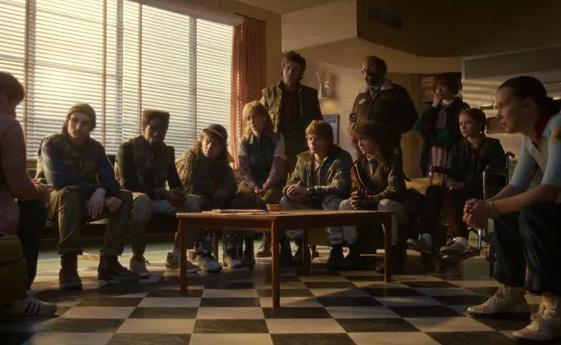
due to new cringy dialogue that feels unfamiliar to the show’s earlier seasons’ quality that fans know and love. One particularly difficult moment to watch was Mike’s cringy response after Will’s coming-out: “Friends? No, thanks. Best friends!” The scene is incredibly unsavory and awkward, which is unlike previous Stranger Things seasons.
However, the main reason for outcry was indeed Will Byer’s (Noah Schnapp) coming-out scene in episode 7. The backlash is not necessarily because of the coming out itself, but the way the writers, the Duffer brothers, wrote the scene. The scene is considered awkward and breaks a high-tension episode, as does much of the dialogue. Lots of fans also argue that a kid coming out as gay to a room full of about 20 people is not realistic for the ‘80s.
Noah Schnapp said to Entertainment Tonight, “they wrote it not just with Joyce but with the entire cast standing there… like a press conference. I gotta be honest, when everyone had to be like, ‘And me,’ ‘And me,’ I was like, err… Is that gonna work?” The Duffer brothers told The Hollywood Reporter that they originally wrote the scene as an intimate moment between Will and just his mother but ultimately decided against it.
Robin Buckley (Maya Hawke) had an incredibly well-received coming-out scene in season 3, where she tells only her best friend, Steve Harrington (Joe Keery), high on a bathroom floor, that she likes the girl that has a crush on
him. @buckleysthinker on “X” says, “robin[‘s] coming out scene remains as one of the best scenes from this entire show.” The scene feels intimate, real, and vulnerable, landing episode seven of season three the second-highest rated episode of the season with an 8.7/10 on IMDb. In contrast, Will’s coming-out scene feels awkward and distasteful compared to Robin’s, granting episode seven of season five a 5.6/10 on IMDb.
After the release of the series finale, Netflix released the documentary One Last Adventure: The Making of Stranger Things 5. The documentary chronicles the year-long filming revealing the tireless work of hundreds of actors and crew members. The Duffer brothers began filming season five without having an ending written. The crew continuously expressed their concern regarding the ending, wondering when the impending finale would be written. The rush to finish season five may explain its poorly-received writing.
The high-tension final fighting sequence of the show is even shorter than Will’s coming-out scene. The killing of Vecna and the Shadow Monster is done in an underwhelming (less than) seven minutes, despite a four-season build up to that exact scene. While Will’s coming-out is around thirty seconds longer than the fight sequence.
Fans remain disappointed by the uncomfortable writing of season five, the holes in its plot lines, its ‘lobotomized’ characters, and its lack of surviving couples.
VIA USA TODAY
Food Pho the Soul
ANGELA MAFFEI CONTRIBUTOR
If you take the Saint-Mathieu Exit of Guy-Concordia metro and cross the bustlingintersection on De Maisonneuve, continuing down the street, you will stumble upon a family-run Vietnamese restaurant called Pho Nguyen. I first discovered this diamond 3 years ago as a broke college student on lunch break, looking for something affordable and satisfying to eat near Dawson; It was love at first sip of that soul-healing broth. A waitress, who is also one of four sisters working in the restaurant, told me that their family originates from Northern Vietnam, but she and her siblings were born in the southern city of Saigon. They’ve been serving up warm bowls of comfort in this Montreal location since 2003.
The place is often packed with people of all ages, mostly students and corporate workers, chatting about drama, school projects, or the latest movie they’ve seen amongst pop music shouting from the speakers. Some arrive in large groups, others dine as couples. Many solo eaters also come to silently savour their food while watching a YouTube video or simply in their own company. It’s funny to see such an array of people, different in every observable aspect, crammed next to each other enjoying the same food.
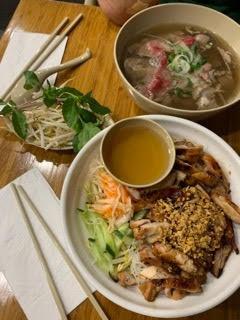
Although the dining room is small, they make maximal use of the space, filling it to the brim with wooden tables and chairs to accommodate plenty of hungry customers swarming in from surrounding offices and campuses. Several artworks adorn the walls, one of which is a wooden diagram depicting a map of Vietnam. From behind the counter, you get a direct view into the tight kitchen. Here, the workers are seen rapidly, yet caringly, assembling plates and pouring the liquid gold broth into simple beige bowls filled with noodles and meats. The ingredients are basic, but there is something magical in that broth. Steam emerging from the large metal pots infuses the air with an aroma of spices that have been simmering for hours, enveloping the restaurant in their savoury scent.
During rush hours, sounds of clinking plates, delivery drivers on the phone, noodles being slurped, water being poured, paper bags being stapled, and workers shouting in Vietnamese permeate the room as you wait in anticipation for your order. The waitresses do not ask you any questions as you chow down, only silently fill your cup of water with a slight grin, letting you relish the moment unbothered.
Sometimes in the colder months, people leave the sliding door at the entrance open,allowing a cool draft to creep in. This can be a little annoying, seeing as you go into the place seeking shelter from the cold. However, it tends to make you enjoy the food more, feeling its heat spread from your stomach throughout your whole body, quelling the goosebumps.
The fresh, aromatic food that never fails to provide me with the solace of a home-cooked meal and the simple yet cozy interior have made this restaurant my refuge in times of academic stress. It is a place where people gather to unwind, catch up on work, or laugh with friends over a delicious meal. Pho Nguyen is a true third space for many, a place outside of school, work or home where you can go to interact with individuals in your community or focus on your own pastime. This restaurant has become a spot I will always revisit to escape the rush of daily life with a kick-ass bowl of pho.
Pho Nguyen Special Beef Pho (Dac Biet Nguyen) and Grilled Chicken with Vermicelli (Bun Ga Nuong) via Angela Maffei

Elsie Duque Hills Staff Writer
With a population of nearly 1.9 million inhabitants, Montréal thrives as a cultural melting pot–overflowing with influence and diversity. Every friend, every classmate, even the strangers you fleetingly cross on the buzzing snowy streets–together make up the eclectic mosaic of identities that challenge the status quo.
However, these seemingly polarizing differences effectively behave as a cultural bind, a connection which shapes our colourful community fusion. Fascinatingly, the majority of our intimate relationships–be it whatever–are interrelated by our culinary habits: think birthdays, candle-lit dates, warm picnics in the summertime.
Retrospectively, the artful dishes and bold flavours of Montréal’s robust culinary scene cement our intrapersonal links–and thus–we should honour the ornate hole-in-the-walls and hidden gems which characterize our comestible rituals. However, in an economy of ever-so-rising price tags and conversely stagnant salaries, frequenting restaurants has become a luxury that few can afford. This harsh reality, though, has jumpstarted an entirely new age of culinary discovery–where foodies have begun to stray from high-end bisques and eccentric foams, and rather rummage the streets for once-obscured mom-and-pop shops.
Food is deeply personal—shaped by memory and community—yet it remains a universal necessity. In the spirit of Black History Month, this affordable gastronomic guide highlights Black-owned restaurants that serve as vibrant cultural hubs for Afro-American cuisine. This compilation is far from a comprehensive list—as there are myriad culinary institutions which illustrate Black excellence. But it is a great collection of student affordable restaurants, which can serve as reference points for beginning one's culinary journey in Montréal.
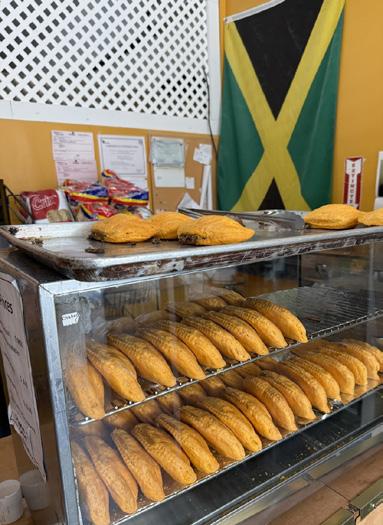
Founded in 2004 by David and Madge Bailey, Mr Patty’s has become a community staple, serving some of the best Jamaican patties in the Côte-des-Neiges area. Approaching 22 years of culinary success, the bakery credits its longevity to strong community spirit and engagement.
The homey counter is run by a warm, welcoming staff who embody the passion and hospitality of Caribbean culture. The mouth-watering display showcases a traditional variety of patties—beef, chicken, and vegetable—all wrapped in a buttery, flaky golden crust bursting with that quintessential Jamaican curry flavor. Each bite delivers a perfect balance of spiced filling and tender pastry, with the beef patty standing out for its rich, moist texture that keeps you coming back. Luckily, they’re available in bulk!
No mention of Jamaican cuisine would be complete without coco bread, and Mr Patty executes it perfectly. This fluffy yet mildly dense bun, lightly sweetened with smooth coconut milk, may seem simple but it delivers a uniquely comforting taste. Paired with a warm beef patty, the slight sweetness of the coco bread enhances the savoury spices, creating a truly soul-satisfying experience that captures the essence of Caribbean culinary tradition.
Located on Jarry Street in Villeray, Marché Méli-Mélo has been a cornerstone of the neighborhood for around 30 years. Founded in 1984 by Jean-Michel Baptiste and Jean-Marie Toussain, the market initially offered products from `vAfrica and the Caribbean. As the business grew, a restaurant counter was added, serving both take-out and eat-in plates. Today, Méli-Mélo has become a Haitian staple, reflecting the culture and diversity of the community it serves.
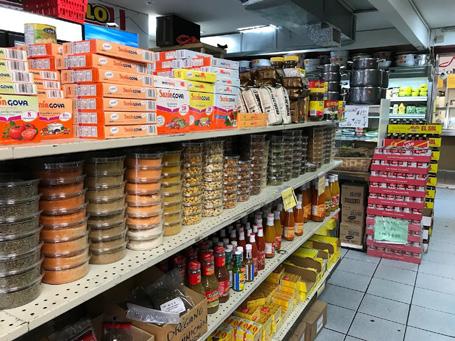
The menu, crafted by owner Jean-Marie, features a wide array of Caribbean recipes. From crispy, juicy chicken legs to savoury beef tasso, the dishes showcase the rich flavors of Haitian cuisine. One standout is the Griot—a seasoned pork shoulder bursting with flavor, evidently marinated for at least 24 hours. I highly recommend pairing the tender, moist meat with a side of sticky white rice, which is cooked to perfection.
While we simply can’t fit them all, the city is brimming with Black-owned restaurants just waiting to be discovered. From hidden gems to local favorites, here’s a quick lineup to taste more of the vibrant Afro-American culinary scene:
• Douce Kuizine, 6495 Beaubien Est, a comforting American-Caribbean fusion
• Wafka, 5900 Chemin Upper Lachine, an affordable Eritrean-Ethiopian fusion
• Lloydies, St-Viateurs and St-Henri, hearty Caribbean cuisine
• Casserole Kreole, 51 R. de Castelnau E, your local street Corner Creole
VIA YELP
VIA YELP
Why Does The New Food Court Look Like That?
JOEY SCOZZARI CONTRIBUTOR
I visited the Gare Centrale de Montréal recently because I wanted to visit a train station. I hold the opinion that one should not need a reason to wander into large buildings. I figured this arrangement would lend itself to productive work, maybe culminating in a story about infrastructure. Commuters form lines near baggage claim, mallesque Christmas decorations hide the modernist ornaments that define the building. It feels like two time periods clashing. The writing is literally on the walls; O' Canada and other national incantations serve as subtitles for the abstractions that make up the bas-reliefs ornamenting the surfaces—lumber workers, chiseled renditions of different landmarks, et cetera. What lines the station's extremities are small stores selling foodstuffs, gadgets, travel appliances, and a large food court to house commuters in limbo. It was within this hall, named Les Halles de la Gare, that the idea for this article matured.
A Touch Of Clove filtered cigarettes, and an unbridled turn-of-the-millennium optimism. Chris Standring's Kaleidoscope, Pat Metheny's And Then I Knew, Oh! Penelope's Lait Au Miel, Sixpence None The Richer's Kiss Me. Businesses line the walkways, filling space with bakeries, ready-made Italian and Greek made mall buffet style, coffee shops, breweries, and vast swaths of dining areas. Everything was brown. Brown, brown, brown. Even if it was all hogwash, it all felt right. Facades are meant to conceal a less pleasant real-

I became obsessed with the decor. Earth tones, Roman-style pillars, iron swirl tables, dark wood finishing, frescoes of the Mediterranean, painterly renditions of Art Deco caricatures sitting and enjoying each other's company, cups of coffee with wisps of steam emanating from their surfaces, cornucopias overflowing with fresh produce, facades emulating the comfort and introspection found in a study lined with mahogany, checkered floors, and the mosaics and lanterns lining the walkways. Contemporary art historians christened this the Global Village Coffeehouse: carefully manufactured sentimentality, twee and familiarity. It is not nostalgic so much as it is comfortable. GVC is functionally tasteful greenwashing, unity, fair trade, locally sourced, organic, a slice of the Mediterranean in your own home with notes of You Got Mail, Times New Roman, Nat Sherman's luxury brand of
ity, networks of wire lie behind the drywall. The food itself is of poor quality, too. Carbs kept gasping for air under a heat lamp until the world keeled over. There is always an air of deception, and it smells.
I was incredibly disappointed when Alexis Nihon opened its newly renovated food court to the public. Prior to renovations, it had embodied the Global Village. Iron twirl chairs, dark earthy tones, wood finishing, geometric storefronts (the byproduct of the limitations present in primitive computer-automated design software), warm overhead lamps, and the mall's name signed in reflective gold coloring on every food tray. It sold you the notion of confidence in the establishment. A food court is not luxurious, and any attempt to separate the connotations of such a thing from the layman is foolish and heartless. A few food courts do this; Time Out Market and Le Central come to mind. If
you had money, you would just go to a restaurant. Furthermore, the food court was incredibly spacious. This decision might have been to the detriment of the developers, as loiterers would find great solace in spending whole days staring out of the large glass panes at Maisonneuve Street. What there is now is what I can only describe as a thirdyear interior design student's summative assessment. White glossy tile on everything, fake birch wood panelling (fake wood is a stylistic decision I could get behind if it were at all friendly to the eye), hospital lighting, fake vines hung overhead, tall, uncomfortable stools, bloated pillars that reduce the seating capacity by a considerable amount, and replacing every restaurant with some variation of protein bowl and/or wrap-slop.
In this time, every publicly accessible building follows this ethos. Terrified of stagnation, they follow the millennial school of consumer design to a tee. Make every building look like a MacBook. Give it a name—BONAP sounds like some government bureau. Use a common idiom or adjective, purposely omitting letters so the reader does the heavy lifting. The mall is a mobile app that disrupts industry and builds powerful social connections, right? There's no point in making snide remarks about a building that has already been built. This hurts. I would like to find beauty in this construction—a greater question would be whether or not embracing GVC would help at all, given trends in consumer preferences—but I doubt the developers took it upon themselves to think about beauty at all through the renovation. Maybe I am foolish for deluding myself into wanting nice things. Maybe I should just go get a thirteen-dollar bowl of whatever and rice; maybe then I will be happy with an eyesore.
VIA IRHAL
Ode to the Visual: Helen Doyle à la Cinémathèque québécoise
JOSÉPHINE SAVARD ARTS & CULTURE CORRESPONDENT
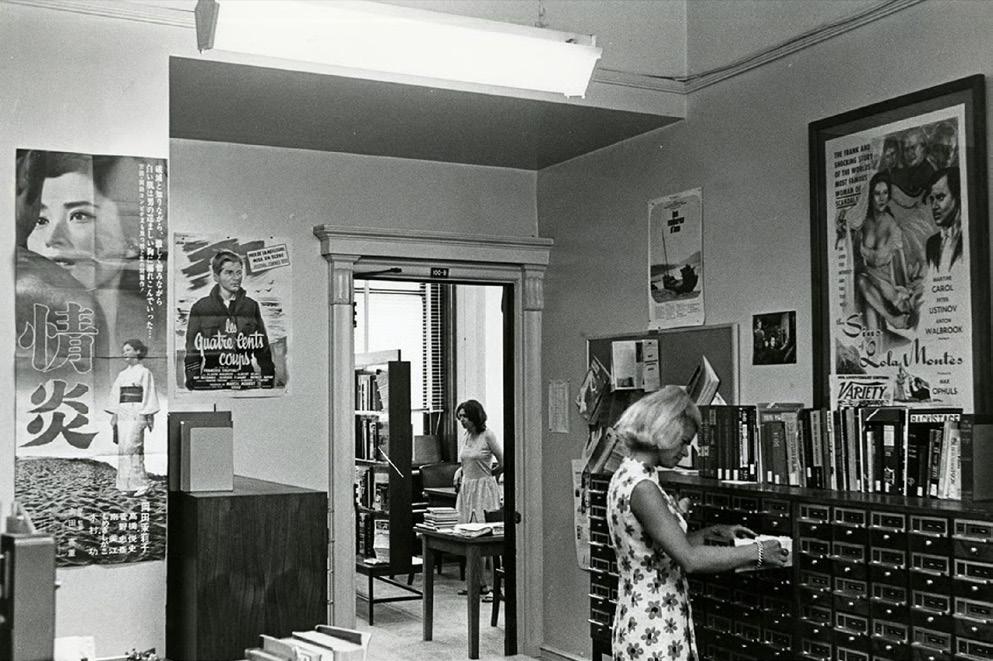
While most cultural institutions in Montréal aim for accessibility by writing their signage in English or in both English and French, the Cinémathèque québécoise uses solely French in their in-house installations. Founded in 1963 by the National Film Board of Canada (NFB), this cultural establishment acts as an archive of international and local cinema, all while remaining an attraction to young cinephiles.
Their mission to highlight Québec’s and Canada’s film culture is felt immediately upon entering: the building is an ode to the visual. Where one exhibit celebrates the colour yellow (in all its blinding canary glory), another contrasts bright red and peacock blue walls to draw eyes to pieces celebrating the history of québécois cinema. Old televisions replay nostalgic short films from McGill University, bringing back to life an era of cinema long forgotten, of experimental pellicule and analog film cameras. On a wall, grayscale movies are projected filled with beautiful actresses and overly dramatic expressions. No space is wasted.
Posters of different purple hues are hung on a lilac wall of the building’s first floor. These posters of the movies Chaperons rouges, La psychiatrie va mourir, C’est pas le pays des merveilles and Les mots/maux du silence all have one thing in common: their director, Helen Doyle. As is cited on the wall label, the Cinémathèque québécoise is celebrating her work as “A feminist and political parcel of the history of film and art in Québec.”
As the most recent recipient of the highest possible distinction of a filmmaker’s contribution to cinema in Québec (the Albert-Tessier award), Doyle attracted locals to the establishment all throughout the end of January and the beginning of February. Sequential screenings of her life’s oeuvre and discussions peppered throughout the
showings revealed aspects of what québécois films celebrate: raw humanity, liberty, community, nature, activism, and independence.
One of her most recent works, Au lendemain de l’odyssée, addresses feminist topics in a very slow and pensive documentary style. It explores issues of sex work, freedom of speech, equality of opportunity, and gendered racism. Her minimalistic artistry packs a punch, leaving the spectator to sit with what the movie makes them feel, how real it is, and how scary the depths of society can be when uncovered.
Doyle recounts being in Italy for another completely separate project when learning about the women in her documentary: how they came to European lands on boats, often escaping from Nigeria or Libya, sometimes pregnant, often young, and always scared. These women sought hiding places far from systems of trafficking and prostitution.
The director of photography in attendance, Philippe Lavalette, remembers when Doyle came back to Québec from her trip saying, “Je ne peux pas me taire.”
"I cannot stay silent"
This quote and the stories Doyle tells encapsulate a lot of what the Cinémathèque québécoise attempts with its installations. It brings light to stories otherwise lost without archivists
to carefully preserve them. It is a place where culture can be shared, where reflections of modern québécoise society arise from lesser-known art, and where film history is intentionally infused into every visitor’s experience.
With a student fee of only 12.00$ per screening, the institution offers a wide array of cinematographic culture ranging from mid-20th century Italian films, to animated children’s movies, to locally produced motion pictures— they truly have it all. On February 27th, novelty will be celebrated with the showing of Les blues du bleuet, a documentary telling tales of the LacSaint-Jean region. On March 1st, the year 1929 is brought back to screens with a restoration of Queen Kelly, a dramatic love story filled with plot twists and scandals. On March 12th, Invisibles explores modern femininity through Junna Chif’s lens. Finally, on March 22nd, Sátántangó will run for over 7 hours on the Cinémathèque québécoise’s big screen, a place where film and museum culture intersect year round.
The Second Mexican Empire is Coming Back to the Big Screen
AYAT BASMA ABOUAMR CONTRIBUTOR
Eighty-seven years ago, two major motion pictures came out dramatizing the events of the Second Mexican Empire told through the point of view of the imperial couple: Maximilien and Charlotte (later Carlota), “Juarez” and “The Mad Empress”.They depicted the implementation of this european imperial couple as the head of states of Mexico, before being defeated by the Mexican forces lead by the president Benito Juarez in about three years. Since then, no other high budget dramatization of the second Mexican empire has hit the mainstream – but but it's looking like it might happen again in 2027
Sony Pictures Entertainment has announced their most ambitious latin american series “Carlota”, which will cover the events of the empire from Charlotte’s point of view. It is set to release in 2027. Meanwhile, Big Love’s showrunners, Mark V. Olsen and Will Scheffer, are at the helm of an American production of an adaptation of the Fernando del Paso novel: Noticias del Imperio. This adaptation started development in 2021 and covers that part of Mexican history through Maximilian and Carlota’s letter. Finally, the second season of the German Netflix show The Empress, covering the reign of Maximilian’s sister-in-law, Sisi, has hinted at the Mexican debacle in its second season, with Maximilian having been told the need for European control of the Americas and multiple close-ups on Mexico specifically. The third season is set to release in 2027 and might cover the couple's Mexican debacle.
With three TVdramas in three different languages covering the events
of their short reigns, 2027 could be a year of attention for the doomed imperial couple. At first glance, it seems odd there would be such an unexpected boom in adaptations, but the story of the second Mexican empire is a compelling tragedy.
The second Mexican empire lasted from 1864 to 1867. The conservative Mexican elite and the French authority conspired to install Archiduke Maximilien of Austria and his wife Princess Charlotte of Belgium as emperor and empress of Mexico. After being told they had been elected by the Mexican people, they made their way to the country, unaware that the democratically elected president of Mexico, Benito Juarez, was already preparing to overthrow them. The empire ended with the execution of Maximilien and the start of Charlotte’s sixty-year-long madness.
There is an interesting story there: the imperial couple fits into stereotypical archetypes. The quiet but intelligent and ambitious princess and the sensitive second born prince who always had to grow in his brother’s shadow. They are dismissed from their post as rulers of Lombardy–Venetia, because of the liberal reforms they were enacting., and then an empire is served to them on a silver platter: a place away from the rigidness of the Austrian court where they can finally make a positive difference, a place where they’re in charge and they can put in place their education and healthcare reform. A promising future awaits them, only for everything to crumble as soon as they arrive. They make enemies and lose their allies, but their ideals will not let them abandon the project. The empire falls and Charlotte is left alone; a mix of grief and stress makes her lose herself. the kind of broken fantasy that can make for a compelling show.
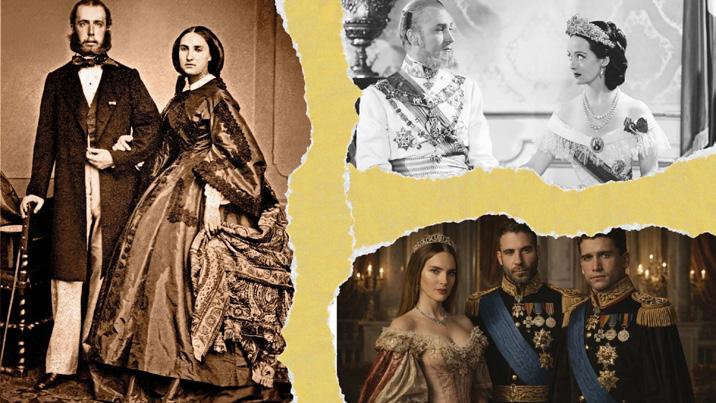
However, underneath the fantasy was a colonialist project that doesn't get examined by other retellings of the events. Older retellings of this historical event tend to get sucked into the romantic tragedy of a fallen empire. ”Juarez” And
“The Mad Empress” definitely exude an air of solace for the fallen empire. The books retelling the events are called Maximilian and Carlotta: A Tale of Romance and Tragedy as well as The Crown of Mexico: Maximilian & His Empress Carlota . The characters in the latter were described by one Goodreads user as a "star-crossed couple from Europe's best families". We cannot forget colonialism cannot be separated from royalty.
From a historic point of view, Maximilian was in the wrong. He was a foreign ruler placed by a foreign entity to eradicate the republic that was fought for by the Mexican people. Benito Juarez was the rightfully elected ruler and he was native to the land. An Austrian duke had no right to rule Mexico. His execution was just and the fall of the empire was actually a good thing — not a tragedy and nor a fairytale. If you wanted to defend Maximilian and Charlotte you could easily do it. They were deceived and were explicitly told that they were wanted. They desired to rightfully rule the land.The initial deceit could paint them as victims of the situation. They were used by France and the conservative Mexican elite: they were pawns in a game and they suffered the consequences. Despite this, the spectre of colonialism still rules their legacy.
After going mad, Charlotte was entirely unable to deal with her inheritance. So, her wealth was given to her brother, King Leopold the second, the ruler of a relatively weak and poor European kingdom made Belgium’s wealth through the colonial conquest of Congo. One of the earliest uses of the term “crime against humanity” was used to describe the atrocities of his policies in Congo. The king would not have been able to colonize it without Charlotte’s money. The individual character of a royal cannot prevent their fundamental perpetuance of a harmful system.
If 2027 is to be Maximilian’s and Charlotte's year in fiction, I hope the inherently violent nature of the empire's colonial project will take center stage instead of relying on the glamour of a fallen empire.
Heated Rivalry Shows Us How to Fuck the Patriarchy Just as Hard as Our Partners — and Women Love It
NICOLE MOTTA ARTS & CULTURE EDITOR
Did you also go to the cottage this winter break?
Oh sorry–I didn’t mean that kind of cottage. I was thinking of the one that appears on the sixth episode of a certain hit show that took North Americans by storm in late 2025. Say it with me: Heated Rivalry.
For those who aren’t familiar with the book-adaptated series (congratulations on your ability to disconnect from the online world), it follows two hockey rivals, Canada’s Shane Hollander and Russia’s Ilya Rozanov, who fall in love during a 7 year rollercoaster ride of a situationship. Intense, right? While the show started off as a small Canadian production, the world is witness to the cultural phenomenon it has grown into. Montreal’s very own McGill University boasted on its Instagram bio “Alma Mater of Shane Hollander’s dad,” following the show’s release. Both Canada’s former and current prime ministers have also praised its success. Recently, Mark Carney’s appreciation went beyond words when he affectionately cradled actor Hudson Williams' leg on the red carpet.
The Crave Original series’ impact lies in the heated topics of conversation it has ignited. The show is dense, to put it simply. Fans spent their winter break dissecting themes like queerness portrayed through joy rather than devastation, queerness within rigidly gendered spaces and sex depicted as not just a physical desire, but as an emotional language for the soul. It’s piercing to watch a piece of media manage to be revolutionary across so many dimensions.
Though, one phenomenon in particular is peaking the curiosity of many: the staggering number of women deeply invested in the show. What, exactly, are women seeing in Heated Rivalry? Though there are surely many reasons, the depiction of the two main
characters’ relationship has opened an alluring door; viewers gape at what’s inside like at the light at the end of a tunnel. Women are in awe of Heated Rivalry’s alternative model for romantic intimacy which disrupts the patriarchy’s interconnection of traditional gender performance and romantic relationships.

The concept of gender performance originates from Judith Butler’s book Gender Trouble. Building on Simone de Beauvoir’s claim that gender is socially constructed, Butler argues that gender is not something we are, but something we do. We perform gender our entire lives through gestures and actions that adhere to social expectations: it is not something expressed by actions but, rather, constituted by them.
Traditional masculinity is performed through emotional restraint, dominance and success. Traditional femininity, on the other hand, is performed through emotional vulnerability, care and self-subordination in relation to men. The framework of the heterosexual relationship functions as a central site of gender performance because each partner’s role is constructed in direct complement to the other.
The characters of Shane and Ilya feel revolutionary in the way they subvert this framework. The hockey players grow an intimacy that bypasses gender hierarchy. In fact, what’s especially remarkable is that they exhibit dominant and submissive dynamics, yet neither character feels the need to adjust the performance of his masculinity. One moment that captures this self-assurance is when Shane’s mother, once learning of their relationship, fearfully asks if he ever let Ilya win and Shane scoffs in disbelief. The question itself reveals how the patriarchy ingrains the idea that the submissive partner in a relationship must back down to their partner. The rookie of the year cann-
not fathom allowing imposed gender roles dictate his life. This foundation of equality is portrayed further through writing the characters as comical foils of one another: both men are, literally, at the top of their professional game, where hockey is not just a job, but a space in which identity, self-worth and masculinity form. Though rivals, they compete for the spirit of sport rather than in the need to assert their masculinity in relation to each other. Thus, their relationship paves a difference between sexual dominance/submission and patriarchal gender domination/subordination.
Since Heated Rivalry centers on two men, the heterosexual behavioural script is not as obvious or compulsory. However, while the intersection of queerness is pivotal to this subversion, it is not its cause. Patriarchy is a sneaky thing and infiltrates its gendered dynamics where we least expect them.
When gender performance is the organizer of relationships, emotional intimacy becomes the secondary element. Putting intimacy first, as seen in the show, is an envious model: Shane and Ilya’s connection feels unseverable. After all, performing a role requires the suppression of parts of yourself most crucial for shared vulnerability.
It's this vulnerability that humans find deep inside each other—call it a soul link, In-Yun, or a wavelength—that might be the closest thing humanity has to magic. Media like Heated Rivalry is proof enough that we all yearn for “our person”. Women watching the show are seeing the possibilities of intimacy that come with subverting gender norms and are realizing: Oh, I want this.
Ode to

MARTIN KALOSHI SCIENCE AND ENVIRONMENT EDITOR
Eleven minutes to Dawson now, and my quads are pumping ice, literally. Naked hands gripping the handlebars of my Bixi, I swerve through slush, traffic, ice, frostbite, frostbite, frostbite. -25 °C wind chill pounds a straight-i-hat vector onto my face, and it’s Newton’s third sprung into action as I blow a cloud of vapour back. I’m deep inside my Mechanics nightmares. These are the kinds of struggles boomers had to endure to get to school “when I was your age.”
Just a few moments ago, a green line metro train 20 meters below me—ordinarily destined for Atwater, ordinarily my ride to school—broke down, rendering me rideless. So I, determined to make a decent first impression in my first French class of the semester, resorted to Bixi. Bike ride through hell (the cold Canadian kind) it was.
But unlike my ordinary trips down the green line, this one successfully extinguished my commuter autopilot. With hypothermia creeping in and the clock working against me, I felt every minute of those eleven. For once, I was feeling time as I was in it, instead of catatonia in a packed subway car reeking of collective existential dread. And with the frostbite vector arrowhead piercing deep into my skin, I realise one thing: all of this is awfully weird. That I was BIKING as it was -25, that my eleven minutes to get to class actually felt like ELEVEN WHOLE MINUTES, and that my bummy ride might have momentarily cured my bummy temporal dissonance.
There is a name for weird and new experiences feeling longer. The “Oddball Effect” is the psychological phenomenon where the brain, taken aback by the unexpected “oddball” stimulus, actually perceives it to last more.
The human brain functions on prediction, assuming the next event based on the expectation built up from similar previously recurring experiences.
These identical routine stimuli are processed so efficiently by the brain that, over time, response from neurons is repressed, making these moments feel expected and short. When an “oddball” flings by, it challenges the brain’s expectations, causing a moment of “surprise” during which the brain suddenly
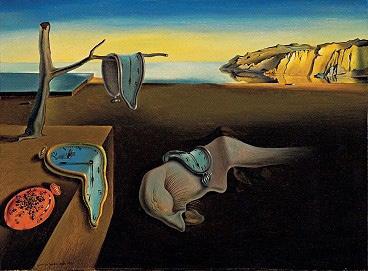
SALVADOR DALÍ’S “THE PERSISTENCE OF MEMORY” VIA WIKIPEDIA
feels the need to devote more attention to the novel situation. The moment the oddball hits, your brain will even produce a distinct P3a wave, the component denoting the switch-on of attention at the unconscious level. When it’s time for the brain to build memories, it once again overestimates the duration of the weird event.
Basically, your brain savours boring routines kind of like how you “savour” an overpriced, baby-portioned Michelin meal. Compare that to the obscure panful of eggs, tomatoes, and everything else you could find in your fridge you insisted on calling an avant-garde shakshuka.
"Orderly routines, like orderly cooking, are out. Weirdness and novelty? Welcome in."
A study conducted by psychologist Melissa E. Meade during COVID-19 set out to explore the consequences of letting the novel in among eighteen older adults. Given a mobile “HippoCamera” app, participants were asked to snapshot both routine and unique
moments over eight weeks, which included brief audiovisual cues to prompt memory. The study quantified the uniqueness of events based on location and event frequency, as well as a “typicality of day” measure that each participant filled out according to the day’s experiences. The HippoCamera and participants’ recounts captured uniqueness more qualitatively: trying a new skill or recipe or planting flowers. Memory recall was measured via an Autobiographical Interview scale, with details recalled being tagged as either internal (event-specific recollections) or external (recognition of more general information, like whereabouts and names).
The study found that more unique events significantly increased memory of internal details and, though slightly less so, of external details as well. Essentially, participants were more able to remember what they were doing and what was happening around them as they were in oddball.
They also recalled how they felt. Participants, who were asked to respond to short daily questions about their mood, mindfulness, boredom, and passage of time, correlated oddballs to increased positive affect and mindfulness, decreased boredom, and a feeling that isolation was passing faster (with individual moments within each day being longer).
Subpar shakshuka, then, is powerful.
And so are slushy Bixi rides, and accepting the odd song thrown into your playlist on your still-subscriptionless Spotify, and blurting out weird stuff because someone on TikTok said it helps you study better. So this Groundhog Day month, catch me outside my burrow, on a Bixi, playing my oddball composite of a playlist, yowling, because at least I’m able to remember the day it was, and the day it is, and that days are still a thing at all.
SCIENCE & ENVIRONMENT
Tick, Tock: Time is Running Out on Your Biological Clock
ORION PEYROL MANAGING EDITOR
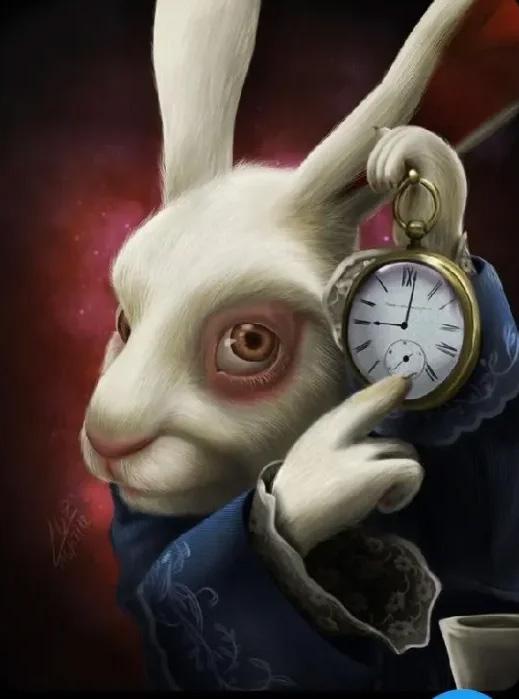
Fertility has always been considered a woman’s domain, and thus any issues conceiving have been put entirely on their shoulders for centuries. Undeniably, aging is a big part of fertility and can cause many complications. We’ve been talking about women’s “biological clock” for such a long time, assigning them a shelf life based on the amount of years they have left to have children.
"Turns out, no matter how much the patriarchy would like you to believe otherwise, men have a biological clock as well; it’s just harder to assign a deadline to."
Women are born with all the eggs they will ever have and lose them as they get older. After the age of 35, the ova (the egg cells) are rapidly dwindling; we could say the female biological clock is more of a countdown, really. Men’s, however, is more akin to a watch that will keep ticking until age and wear make it fall into disrepair. Either way, you get the same result—a clock that won’t tell us the time.
We define infertility as the inability to initiate pregnancy within a year, and it’s as likely to be caused by the female partner as it is by the male partner, with the other third of the time being due to a combination of factors from both sides. One of those factors is age. According to the Sao Paolo Medical Journal, just like women, men over the age of 35 are twice as likely to be infertile compared to men under 25. But why does age affect fertility so much?
With aging come physical changes to the testicles, seminal vesicles, prostate, and epididymis, a hormonally sensitive tissue, as well as a change in semen quality. Semen quality is determined by sperm volume, sperm motility (the ability to move effectively), and the regularity of its shape. As the clock continues to tick, men will start having a lower sperm count per ejaculate; the sperm itself will move slower (and weirder, sometimes even swimming in circles), and will be more likely to have irregular shapes caused by an increase in genetic abnormalities during spermatogenesis. These structural abnormalities make it more difficult for the sperm to penetrate the egg and fertilize it, while atypical movement means the sperm are less likely to even make it through the female reproductive tract in the first place.
Undeniably, age is not the only factor in semen quality: alcohol, cigarettes, and overall health all play a very large role, but age has been linked to quite a few negative effects. There is a direct link between increased paternal age and the risk of children having neuropsychiatric disorders, such as bipolar disorder, schizophrenia, ADHD, and dyslexia. In addition, doctors have found that when year of birth, maternal age, and socioeconomic status were controlled, the offspring of men over the age of 45 were 5.75 times more likely to have autism spectrum disorder compared to men under the age of 30. A similar link has been found between paternal age and the risk of a child being born with Down’s syndrome. Furthermore,
no matter how young or healthy the female partner is, the rate of miscarriages, premature births, and complicated births increase based on the male partner’s age.
If paternal age can cause so many issues, why isn’t it common knowledge? As stated previously, pregnancy and the ability to conceive have always been seen as a woman’s duty, but there’s also a cultural idea that a man’s masculinity is tied to his sperm; thus, to question the quality of his ejaculate is to question his masculinity. Because of this, men are generally reluctant to provide samples of their semen unless actively concerned about their reproductive health. Thankfully, this is starting to change slowly but surely, thanks to at-home testing making it more accessible and less intimidating than going to a lab.
More and more research is being done into the masculine partner’s role;advancements are being made every day. For example, hormonal therapy for men is starting to become better known. It works by increasing either FSH or LH, which both stimulate the testes into either producing more sperm (FSH) or producing more testosterone (LH). Sperm preservation is also starting to be done more and more, and it’s a great option if you know you want children later on but are afraid of the decline in the caliber of your semen.
VIA REDDIT
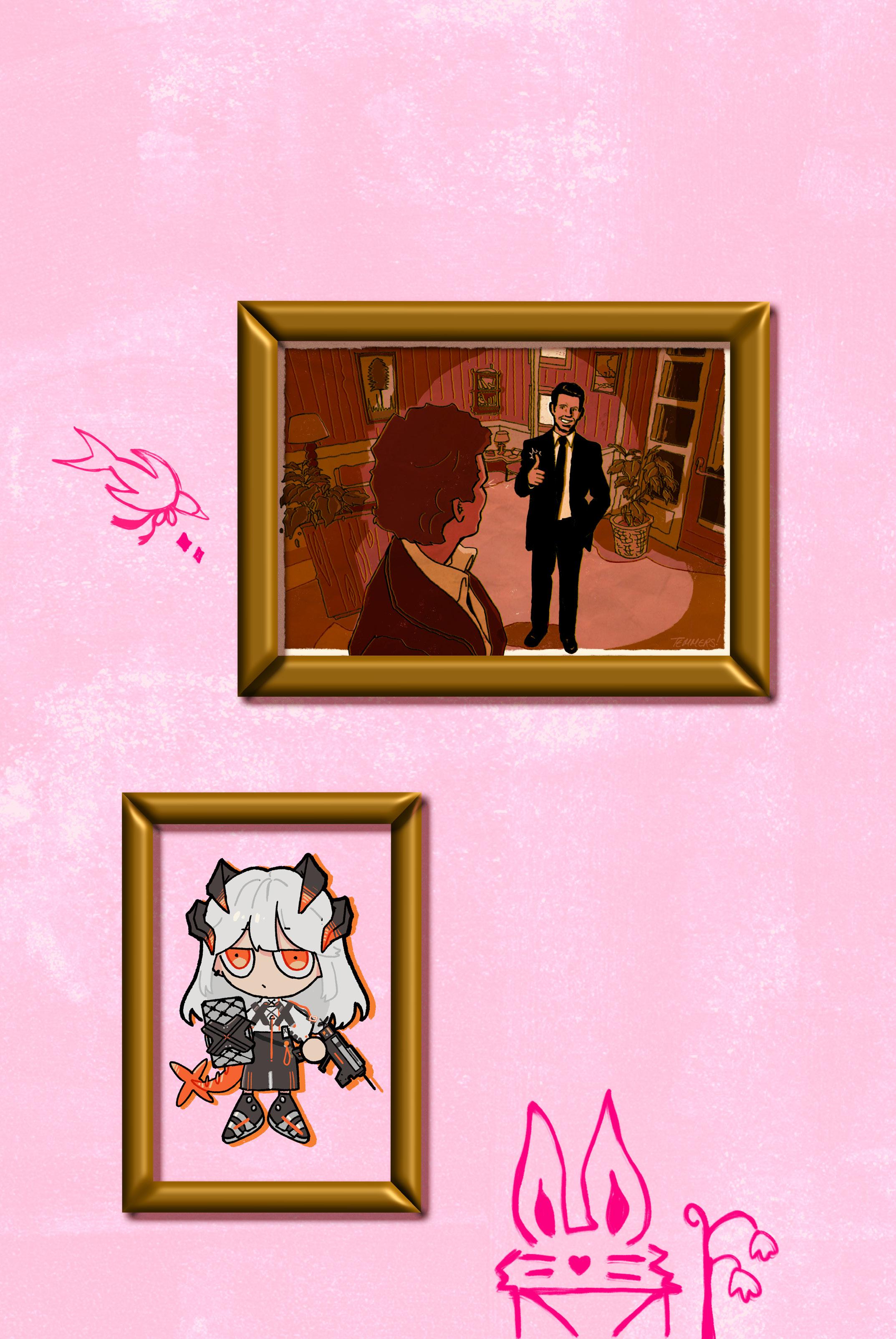
Visual Arts
@Aluciphos
Twin Peaks; Tribute to the one year of David Lynch’s passing.
By Ana Camila Torchia, @_temmers_
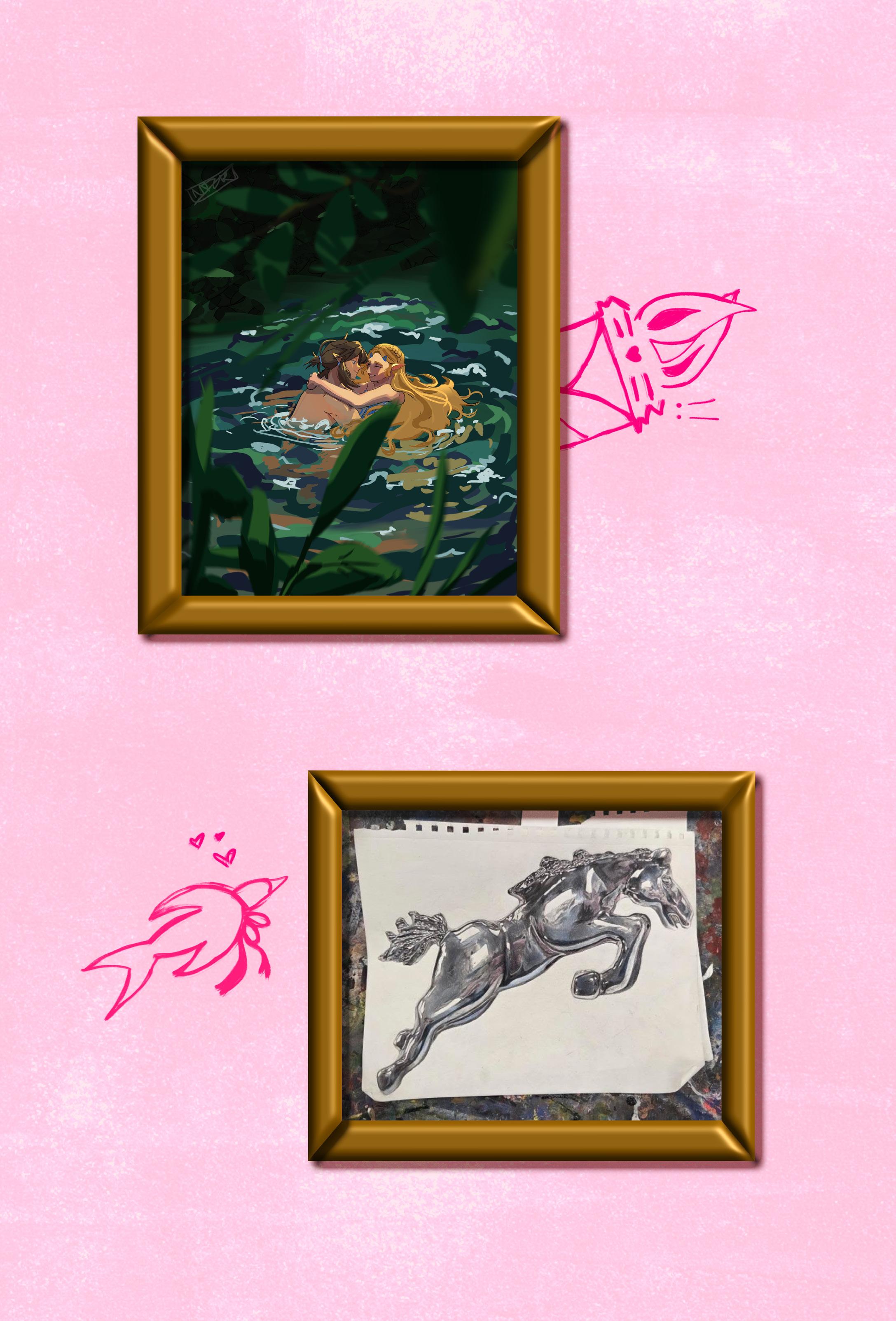
Kaitlyn Labiste, @nootyzk
Anna Drozhzhin
Being Burdened by Both: On 21st Century Motherhood
CHLOE BERCOVITZ MANAGING EDITOR
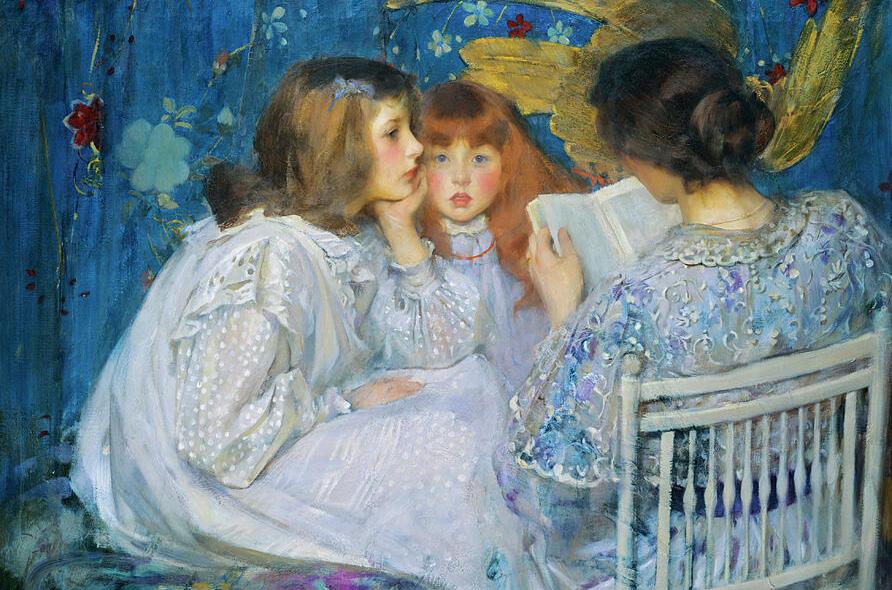
“I’ve yet to be on a campus where most women weren’t worrying about some aspect of combining marriage, children, and a career. I’ve yet to find one where many men were worrying about the same thing,” said Gloria Steinem.
Ask any child what a mother is. Their answer will come easily.
She’s a cook.
She’s a nurse.
A teacher.
A best friend.
These answers, learned, carry themselves into adulthood. These answers breed a cycle that culminates into more of an expectation, rather than a choice.
I am a product of my mother’s love and selflessness. The meals, cooked for me, sustained me. The clothes she got that adorned me. I am the bedtime stories that invited me to dream big.
But, I am also a product of the feminists that have me nestled amid the books of the school’s library, writing this article. Their bravery is why I get to look forward to continuing my education; why I can live and breathe a life shaped by choice and not expectation. This is another type of love that I, too, have the privilege of carrying with me.
However, this same love that I was writing about, prior, has been begging for me to come to realize that the very meaning of what it means to be a woman has lost something essential amidst the neverending fight.
Therein, it has come the time to redefine what it means to be a mother.
In Quebec, labour feminism was birthed by the proactive women in unions. From 1965 to 1975, the amount of women in unions increased by 144%, according to reporter Julia Métraux. These women challenged the patriarchal structures that impeded upon their
capacity to take on leadership positions. Women were finally given their place in paid labour. Protections were won, be it a higher pay, affirmative action, or maternity leave.
But now, this begs the question: what happened to unpaid labour? Who is expected to be the cook, nurse, teacher, and best friend? How has labour evolved in the past century alongside that in which we choose to value and pay?
"How have we let progress fester into this heavy burden of domesticity, instead of one that is shared? While I commend the fact that girls and women are finally being taught to believe that they can accomplish everything – who is here to help actualize this?"
VIA THE METROPOLITAN MUSEUM OF ART
I see a world in which paid work has been rightfully added to women’s lives, all while unpaid labour remains expected, invisible, undervalued, and assumed.
We live in a culture that has become exhausted by the very concept that is feminism. While at its core, the definition has not changed – it has undeniably taken on new forms. It is a personal word that connotes differently to different people. For some, feminism is yes – empowering. For others, it may be exhausting or accusatory, and that can only worry me.
Among the myriad branches of feminism include girlboss feminism, pioneered by Sophie Amoroso following the publication of her novel in 2014.
Has girlboss feminism altered our perception of womanhood?
Girlboss feminism can be attributed to a realistic mentality that treats the patriarchy as something undeniable – it would be naive to assume that it may be – can be dismantled. The only way to merit success is by emulating characteristics that are quintessentially masculine, namely that of which prioritizes individual successes.
The distinction is rather blatant then, being framed around the very concept that one must work amid a broken house instead of putting in any effort to fix it. Besides, it is getting fixed already – slowly.
In that same vein, lately, women that opt for domesticity have become mercilessly mocked on social media. A lifestyle, bound by freshly-made food, handknit sweaters and fresh laundry, is no longer valued. Instead, these women have become scorned for setting women back.
And while mocking women is undeniably a feminist failure, this shift in worldview is also, strikingly hypocritical. Because, we must ask ourselves why women are making these conscious decisions?
Every woman has unflaggingly been failed by the system. The patriarchy. We all choose to cope with this reality
differently. Work may be as precarious as it is undervalued. Childcare is a luxury for many.
You’ll either climb the ladder or retreat. However, whichever option chosen is undeniably rooted in survivalism.
Another defense mechanism is beginning to become misandry. Whether it is through sexist jokes or by getting into fewer relationships with men, women are coming together through their shared hatred towards the other sex. Many see it to be harmless – justified, even. But resentment in and of itself cannot redistribute power.
Let’s say that someone stole your pencil, so you called them out, angrily, and walked off. After the fact, if you retold this story to your friends, chances are that they would be supportive of your reaction. Yzou had every right to behave as you did. They’ll all come to the same consensus that you are, in fact, the victim.
And I understand the temptation. When something has been taken from you for so long, anger can feel like the only thing that belongs fully to you.
But you know, as well, that you could have at least tried to get the pencil back. And while the pencil thief might try to explain to you what a pencil is made out of and what it's for – and maybe this thief is wearing a Carhartt jacket and a Cocotte and you’d rather eat that same pencil if it would mean that you wouldn’t have to bear a conversation with him. You also know that with conversation, often comes a solution.
As long as women hate men the patriarchy will continue.
Include men. Hold them accountable.
A good place to start may be in the home. If the role of a mother ought to be redefined, logically, so does that of a father.
The average mother is educated. Ambitious. Capable. Working eight hours a day only to come home and begin her second shift. We’ve told her that she can have it all: a career, children, married life. She has every right to believe it.
She does.
"She burns out."
There seems to be this feminized, cultural obsession with doing it all. Girls are taught that limitation is oppression. But we seem to have forgotten to teach boys that care is not emasculating. Progress has expanded expectations, rather than redistributing them.
“I shouldn't have to ask.”
Men’s participation ought to look like emotional labour, anticipating needs far more than responding to given instructions. Feminism was never meant to look like carrying the weight, all alone.
We’ve given women – mothers – this pressure to succeed in public and to be nurturing in private. To be the cook, the nurse, the teacher – the best friend. To feel ashamed to want a break. To ask for help. And above all else, there seems to be this looming sense of guilt that comes with it all, in a sense of betraying the very progress that others thought for them to have.
But feminism stretches beyond the scope that has given women the right to work. It’s about giving men the responsibility to care. I don’t believe that the patriarchy is just a class ceiling for women, for it too, has become a class cage for the many fathers right now, that aren’t cooks, nurses, or teachers.
Brigitte Bardot: The Controversial Muse
ORLA JEANES STAFF WRITER
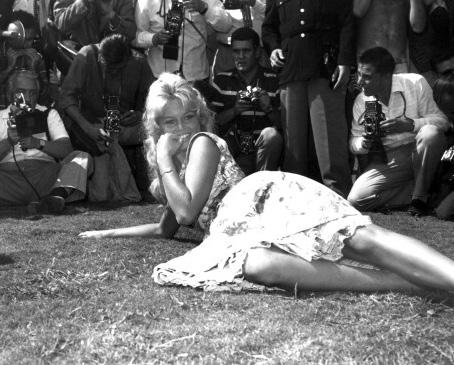
On December 28th of this past year, one of the most celebrated female icons of the 50s and 60s resurfaced in newspaper headlines. As was announced by her foundation, the French actress and international movie star Brigitte Bardot had passed away, aged 91. Despite having retired from the world of cinema in 1973 to pursue a career in animal rights activism, she never entirely disappeared from the public eye and retained much of her original fandom. While successful actors tend to slowly lose prominence as time passes and new, younger faces take both their roles and their celebrity, the name and image of Brigitte Bardot remains extremely well known, even amongst today’s youth.
Immortalized through the works of key filmmakers of the French Nouvelle Vague period, namely Louis Malle’s Viva Maria and Jean-Luc Godard’s Le Mépris, Bardot is best remembered as the compelling young woman with pouty lips, blonde hair, and bold, winged eyeliner. For the most part, she portrayed characters who, in spite of their somewhat demeaning naivety and coquettish tendencies, resented the men in their lives and, consequently, patriarchal society. These fictional women are often destructive or manipulative, questioning and upsetting their romantic relationships, or using their sex appeal to their own advantage. For instance, in the 1958 crime film En Cas de Malheur, Bardot plays a criminal who, having made her attorney fall in love with her, corrupts him into paying a fake witness to attest to her innocence.
After her big breakthrough in the French director Roger Vadim’s Et Dieu Créa la Femme, the philosopher and feminist activist Simone de Beauvoir praised her defiant nature and stated that she “challenges certain taboos” that “denied women sexual autonomy.” In the same text, a 1959 essay titled “Brigitte Bardot and the Lolita Syndrome,” de Beauvoir commented on how Bardot’s character Juliette, an orphan whose seduction of two men
results in a dramatic duel in the movie’s final scene, establishes a more egalitarian, if still problematic, dynamic between herself and her paramours, writing that “the male is an object to her, just as she is to him.”
Without wanting to disregard her contributions to the film industry, it is worth asking why Bardot is still relevant to many young women in the twenty-first century. Meanwhile there areother Nouvelle Vague greats, like Jeanne Moreau or Catherine Deneuve, who have faded to the peripheries of pop culture.
If taken as a whole, it is possible to observe certain trends in the idolatry of teenage girls, specifically when it comes to the cult followings that have emerged around women who aren’t necessarily mainstream. Names that come to mind are Sylvia Plath, Joan Didion, Jane Birkin, Patti Smith, or even fictional characters, such as Lux Lisbon from Jeffrey Eugenides’ novel The Virgin Suicides, all of whom are examples of figures that teenagers seem to gravitate towards that are, relatively speaking, more “obscure.” The question that we are then left with is: why do these women hold such strong appeal for young female audiences?
As we navigate adolescence, we slowly learn that there is comfort to be found in things that remind us of ourselves; in the face of all the hormone-induced emotional hurdles, identifying parts of ourselves in other people makes us feel less disoriented and alone.
"Concurrent to this need for connection, there is a continual search for identity and, with it, individuality"
and, with it, individuality. For inspiration, we look at those known for their unique and seemingly effortless styles, as brought to us by Birkin and Bardot’s timeless “French chic,” Didion’s simple yet elegant writer’s uniform, and Smith’s artful combination of shaggy hair, collared shirts, and loose neckties. This, of course, is in addition to their
notable accomplishments and influence in literature, journalism, cinema, music, and activism.
To have an awareness of popular culture inevitably leads to having favourite celebrities. That being said, there are certain questions to be raised as to what factors are influencing our choices. For example, many Sylvia Plath fans have fallen prey to romanticizing mental health disorders, oftentimes revering The Bell Jar as an almost sacred text. Also questionable is the selection of the American writer Joan Didion as a muse, in lieu of numerous other pioneering female authors, despite her having been accused of being an anti-feminist.
As for Brigitte Bardot, much of the fame accorded to her in recent years is owing to her public endorsement of farright political candidates and her hostility towards immigrants. She repeatedly targeted different groups with bigoted comments, calling gay people “fairground freaks,” referring to #MeToo victims as “ridiculous,” and describing Muslims as “cruel and barbaric.” However, in spite of her hateful language, she somehow managed to escape the censure of many Bardot idolizers. For a society where cancel culture is all the rage, why is it that certain people are given carte blanche to test—and often exceed—the boundaries of what is deemed politically correct? In Bardot’s case, maybe it’s that they refuse to associate the old her with the woman who once emblemized sexual rebellion or that their real admiration lies in the visual aesthetic she embodied rather than the person she was. Nevertheless, it seems almost as though teenage girls can be tolerant of controversiality on the condition that it helps them in their quest to set themselves apart.
VIA AP NEWS
47 Years and Counting: Iran’s Fight for Freedom
MAYA JABBARI VOICES EDITOR

“Woman, Life, Freedom”
I have never lived in Iran, I have not even set foot there, but I feel as though it lives in me constantly. This beautifully magical feeling of living in Iran happens through my father. Through the way he talks about the windmills in his village, the olive trees, the tea fields, the richness of saffron, his people, his family, and the once togetherness that existed there before 1979.
Being half-Iranian at nineteen means carrying a country I know mostly through stories: stories shaped by war, revolution, and a state that made staying impossible.
My father was born in 1969 in Manjil, a small town North-West of Tehran. Instability and violence ensued in Iran as he grew. My father was ten when the Iranian Revolution, which replaced the Shah with the Islamic Republic, reshaped every aspect of life. What followed was not only political upheaval but intense tightening of state control over speech, dress, belief, and identity. The government was no longer a system of trust for the Iranian people, but of fear. My father was seventeen when the Iran-Iraq War tension truly began to build up near his home. The war took the lives of hundreds and thousands and further militarized Iranian society. That same year, my grandparents decided to, like his two other brothers, send him to a land of freedom and possibility: Canada. Like that, he had to start anew. Families like mine did not leave Iran because they wanted to, but rather, they left because they felt they had no choice.
Watching what is happening in Iran today feels painfully familiar. Protests led by women and young people, especially following the death of Mahsa Amini in 2022, have been met with violent crackdowns, arrests, and executions. In an article by Amnesty International, they note that, beginning
again in late December of 2025, protests over economic collapse, inflation to the point of starvation, internet shutdown, and widespread violence at the hands of the government drew thousands of protestors together in hopes of gaining enough attention to overthrow the Islamic Republic. What began with economic discontent eventually morphed into major demands for rights and freedoms regarding equality for all. In response, lethal force by Iranian security forces was drawn, including live ammunition and mass arrests nationwide. International bodies like the United Nations Human Rights Council have condemned the killings and called for investigations into possible crimes against humanity.
The same state that made my grandparents fear for their son’s future, continues to threaten another generation. The women risking their lives in the streets are my age. I see versions of myself had history unfolded differently.
There is a strange guilt that comes with watching from afar. I have freedoms that Iranian women do not, simply because my father left. I can speak openly, dress how I want, and dream without fear of punishment. At the same time, I carry the weight of knowing those freedoms came at the cost of exile. That in-between space of existing defines a major part of my identity.
"I am Iranian enough to feel the pain, but distant enough to be safe. How incredibly complicated that has been"
“Woman, Life, Freedom” has been, with resistance, softly spoken and urgently screamed by Iranian protestors since 2022. Now, as we’re into 2026, those same words are again softly spoken and urgently screamed in Iran. Today, the Earth has taken 47 trips around the sun, that is, as I’m writing, 16,844 days of fight and resilience by the Iranian people towards the Islamic Republic. By the time you read this, it’ll be at least 16,858. But, a big part of me hopes that by the time you read this, the counting of the days will end and freedom will be unearthed. The demands for change, the decades of wanting change, will not be met solely with the help of Iranian people alone. They want, we want, and I want a revolution, and they want, we want, and I want it now.

Meat Politics: The Far Right's Culinary Culture War
ELSIE DUQUE HILLS STAFF WRITER
Food is universal to human existence, yet eating has never been confined to sustenance alone. What we eat, whether we choose to eat, how we eat, and when we eat are all shaped by the socio-economic, political, and cultural conditions that surround us. Ingredients function not only as nourishment, but as symbols – markers of class, objects of guilt, and flags of identity and belonging.
"Today, these meanings are being weaponized. Something deceptively simple as a meal has been folded into the culture war, where food–particularly meat—has become an effective rallying point for the far right."
From etiquette-bound cutlery to cultural foods unpacked at an elementary school lunch table, the ways in which individuals consume food have long been used to distinguish the ‘us’ from the ‘them.’ Deviating from these unspoken norms can immediately mark someone as different, signaling a perceived gap in status and values. Food, then, becomes a subtle political test.
This expression of consumption as identity does not exist in isolation. It predominantly overlaps with one of the most divisive symbols in contemporary American politics: firearms. Routinely illustrated as emblems of political freedom, guns occupy a vital role in national identity.
The United States’ Second Amendment has come to function as a pillar of what it means to be a “good” American– an ode to archaic ideals of self-defense. These weapons are often framed as tools for autonomy, and more frequently than not, hunting. The nationalistic identity of right-wing America is driven by a rigid patriarchal frame-
work, one in which each household's survival is secured by the presence of a provider, a hunter, a man. The image of a camo-clad, gun-bearing protestor has become increasingly common. Yet, openly invoking militias as justification for gun ownership has lost political viability. As a result, these groups turn
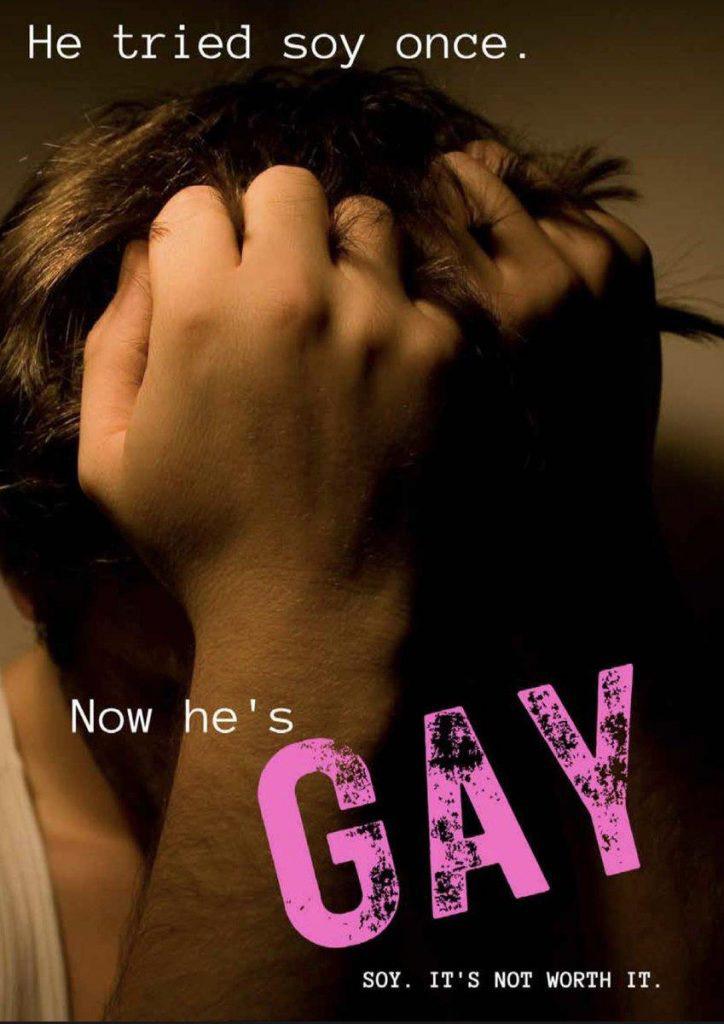
VIA X,
@MANSWOLDMAG_
to more palatable narratives–namely, blood sports.
The mythic image of the red-blooded American is neatly accompanied by the right to own a gun. To kill for sustenance is often framed as a return to something primal–a performance of masculinity that celebrates self-sufficiency and control. Raw, bloody meat has long been tied to the American man: burgers, steaks, prime ribs sizzling on a grill, and, more recently, the rise of the “carnivore diet.” Seemingly innocuous language carries subliminal connotations, ones that construct the image of the "Real Man”—one who would, if necessary, shoot his dinner dead.
In this social hierarchy, the consumption of flesh becomes an insignia of raw power, with men seeking validation from one another through displays of strength and restraint. Those sitting at the edges of conservatism have capitalised on this masculinized view of food as a subtle yet effective tool of radicalization, particularly among young men. Questionable representations of gender roles are first introduced in moderate, accessible spaces, gradually forming
a pipeline towards more extreme ideologies—where men must provide, women must submit, and deviation is to be treated as weakness.
Underlying this curation of masculinity is a biologically deterministic belief that women and men are so fundamentally different that even their culinary tastes should diverge. This policing extends beyond calorie counts and macronutrients, but goes so far as to dictate which flavours and preferences are deemed acceptable. To stray from these rigid categories is to risk one’s masculinity. Foods labelled as soft and feminine–cheese pizza, plantbased alternatives––all these choices are laughable, and don’t you dare offer a man a non-dairy milk for his coffee–presupposing it isn't black to begin with. While food policing and body image issues are often framed as concerns exclusive to women, the modern man is increasingly haunted by similar restrictive standards.
Many alt-right diets marketed towards men–emphasizing lean meats and vegetables–present themselves as seemingly harmless. Yet, by repackaging uncontroversial health advice around food, these spaces create entry-points for much more insidious beliefs. Online fitness communities, in particular, have been increasingly infiltrated by far-right advocates. Members are initially drawn in by workout routines and nutrition tips, only to be gradually exposed to extremist content through private forums and closed group chats.
Mark Townsend, global journalist for The Guardian, has noted that these communities frame individual self-improvement as a part of a broader political struggle, creating a sense of purpose rooted in physical dominance and confrontation. In doing so, they become grounds for mobilization–spaces where masculinity and diet converge into ideology.
Olympic Sports You Aren’t Watching — But Should Be
MARISSA HODGSON VOICES EDITOR
When the Winter Olympics roll around, certain sports dominate television screens, social media feeds, and everyday conversation. Hockey, in particular, remains the undisputed favourite for many young viewers. “I watch the Olympics, but only hockey,” said Joseph Chisholm, an 18-year-old second year psychology student at Dawson College. His response reflects a common pattern among students who primarily associate the Olympics with the sports they already follow outside of the Olympic Games.
For some viewers, a second familiar sport occasionally draws attention. Serena Ricci, 18, said she sometimes watches figure skating. “It’s exciting to watch them perform difficult routines,” she said, adding that her interest is influenced by her own experience in the sport as a child. The artistry, dramatic music, and visible scoring make figure skating easier to follow than many other events. Still, beyond hockey and a handful of recognizable competitions, many Olympic sports struggle to attract consistent attention from younger audiences.
Popular winter sports tend to be easy to understand and widely advertised. Hockey benefits from professional leagues that run throughout the year, well-known athletes, and long-standing rivalries that keep fans engaged even outside the Olympic cycle. Players already have established fan bases before they even step onto Olympic ice. “They’re advertised way more in other pro leagues,” Chisholm said. As a result, Olympic coverage often mirrors what audiences already know, reinforcing attention on the same events every four years while leaving little space for unfamiliar competitions.
Social media also plays a role in shaping what younger viewers watch. Highlight clips, athlete interviews, and viral moments tend to circulate from sports that already command large audiences. Hockey goals and dramatic figure skating falls are easy to clip and share. In contrast, sports with more
complex formats or scoring systems may not translate as easily into short videos. Without consistent exposure online, many events remain out of sight and out of mind.
Meanwhile, lesser known winter sports such as curling, biathlon, ski jumping, and skeleton remain on the margins. Although most students interviewed recognized these sports by name, few could explain how they worked. “I’ve heard of them before, but I don’t know the rules,” Ricci said. Olivia Zito, a 19-year-old second year Computer Science student, said she is only familiar with curling and ski jumping and does not actively seek out the others during the Olympic Games.
This lack of familiarity is one of the biggest barriers preventing these sports from gaining wider audiences. “More people watch popular sports and are familiar with them,” Zito said. Media coverage tends to prioritize events that guarantee high viewership, leaving less time to explain the rules, background, or athletes involved in niche sports. Without context, recognizable storylines, or a clear understanding of what is at stake, many viewers simply change the channel.
Yet, many of these overlooked sports offer just as much intensity and athletic ability as their more popular counterparts. Biathlon, for example, combines cross-country skiing at high speeds with precision rifle shooting. Athletes must lower their heart rates within seconds to shoot accurately after exhausting laps around the course. One missed target can add time penalties or force competitors to ski extra distance, dramatically shifting the standings. The sport demands endurance, control, and mental focus.
Skeleton may be even more visually dramatic. Athletes sprint alongside a small sled before launching themselves headfirst onto it, racing down an icy track at speeds that can exceed 120 kilometres per hour. With only subtle body movements used to steer, there is little room for error. A slight miscalculation can cost precious fractions of a second. Ski jumping, meanwhile, requires athletes to launch themselves off towering ramps, relying on precise timing, balance, and nerve to fly as far
as possible before landing cleanly on a steep slope below.
Curling, often the subject of jokes, is far more strategic than it appears at first glance. Players must calculate angles, weight, and ice conditions while coordinating sweeping techniques that influence the stone’s speed and direction. Matches can shift dramatically in a single end, rewarding patience and long term planning.
When properly explained, these sports showcase a different kind of excitement, one rooted in precision, risk, and strategy rather than constant scoring. Several students acknowledged that better presentation could make a difference. Ricci said she would be more likely to watch lesser-known sports if broadcasters took more time to break down how they worked. “If the rules were explained more and there was more interaction on social media, I’d be more likely to watch,” she said. Short explainer segments, athlete profiles, and behind-the-scenes content could make these events feel more accessible, especially to younger viewers who consume sports through digital platforms. Giving audiences someone to root for, whether through a compelling underdog story or a growing rivalry, can make even the most unfamiliar sport feel personal.
The Olympics are meant to celebrate the full range of athletic excellence, not just the most recognizable competitions. While hockey and other popular sports will likely continue to dominate viewership, broader coverage and stronger storytelling could encourage audiences to look beyond what they already know. With clearer explanations, engaging promotion, and greater visibility, the sports many viewers overlook might just become the ones worth watching next.
VIA INTERNATIONAL OLYMPIC COMMITTEE

Creative Writing
OPENING STATEMENT
SAL FRANCIS
CREATIVE WRITING EDITOR
I’ve been thinking about work a lot lately. Not just work in the career sense, but work as the vague word that it is. With the start of the semester, I’ve found my previous workload has somehow doubled, in school life and beyond, and I don’t think I’m alone. This month’s submissions seem to be lamenting this experience, many people feel they can’t keep up and if they can, they’re fearful for the possibility of a nosedive.
However, I’m an optimist at heart, and I like to think that our collective anxieties aren’t going to waste; as cliché as it is, no matter how hard we’re struggling, at least we’re doing it together. Finally, the fact that our contributors chose to make art of their situations, and especially the fact that they chose to share it with others, is a reality so touching that I find it impossible to feel bleak. So, reader, I can only wish that after reading these poems you’ll feel, at the very least, a little less alone.
Oodles of Moodles
Anonymous
What’s there to do today?
What academic penance must I pay?
Not much it seems at firs- DING!
But what could this assault convey?
That leaves in me a horrid ring
Just the start of a Dawson workday
You haven’t checked your Pearson? If you want to succeed, listen hear son: When working on Moodle or Cengate Don’t be late, Clean your plate
Lest “overdue” become your fate
Can’t get in?
Send a mio
You know that you’ve got work in Bio Have you done the two-factor?
Hold, on, we’ll send a text Now recopy our google plext We must ensure authentications For the honour of our notifications
“Can’t come in”, say the docs They think I may have chicken pox Find an absence form on omnivox
You’ll also find your locker locks, Office hours of Mrs. Cox
Why do all this separately?
"We put it all in one toolbox" Now check it all, zealously Or hurt your R-score irreparably
Well Einstein says it’s relative But Léa says it’s summative So I’d better get to work, R.I.P.- My youthful smirk I’ve got future bills to pay
I’ll just have to get through this Dawson workday
Mr. Last Bean
Hope Anonymous
Hope is a four letter word Healing of past experiences
To see is to believe And to believe is to see So believe what you see And you’ll see what you had hoped
Hope helps but hope is hard
Like a magnet so weak and brittle
With the right charge you can make great power to something so belittle
Hope takes the hop to execute
But hope with an l in its place can make help And help is hard to hope
It doesn’t fall from the sky
But hope and help have differences however
Help is given, not shared Hope is shared, not given
But what do I know, I’m just a man hopeful to help others somehow
To give the help no one gave me when I needed it
And to share hopes of success in your futures
So would it be too much for me to hope for a day where people will start to see my screams of help surrounding my spiritual caged suffering? Or will hope lead me to help mask it all away?
Only time will tell
Anyway, Hope this helps
-the somber smiling stranger

Shutting Down
Alicia J. Ferreyra Contributor
The feathers of her wings. The trails of cobblestone. Fallen. She no longer soared to the skies, And drifted far from the spotlights.
The keys she released. The words she atoned. Forgotten. She no longer sung and recited her harmonious melodies, For she offered her voice to where the shadows seeped.
The pages of the drawn and written memories she mourned. Broken. She no longer broke a heart and blew a mind.
And then, she locked the doors to hide from the World’s eyes. Within her mind, she has lost her golden spaces.
For the internal and external anomalies piercing her body, She wept in atrocious agony.
For her world going in no motion, All of her journeys were left unspoken.
For no echo emitted, silence, The idol she wished to be is crushed in defiance.
And WHAM! She has collapsed to the ground, Shutting down.
Within her heart, she has lost her golden spaces.
In her empty little world, the middle of the blank, she lays Grasping her chest, her body, her limbs in pain, Knowing she’s lost the living life in her veins. She’s shutting down.
Within her soul, she has lost. . .

The Ugly Game: When Football Becomes A Eurocentric Tool
ALAA ETTAOUTH STAFF WRITER
“Si on regarde dans l'histoire, les meilleurs c'étaient les Noirs et les Arabes.”
Extracted from a 2011 interview, young Kylian Mbappé spoke those words, a reflection of his innocent vision of the global sensation that is football. This sentiment is often echoed by fans, especially children of the African and Arab diaspora in Western countries. It is not a secret that these communities occupy a significant place in the various leagues and clubs of this sport. Players like Ivorian Dider Drogba, fourth all-time African men’s top goalscorer in international football, and more recently Achraf Hakimi, named the best right-back of Paris Saint-Germain, and the recipient of the African Footballer of the Year title, are worldwide known icons and celebrated for their achievements.
But under this veil lies a deep misunderstanding of the struggles African players faced, and still face, in their quest for ascension. Today, sports critics are so comfortable mocking the national French team and choosing whether they’re “real French people” or Africans, depending on the final outcome of the match. It is undeniable that Western sports institutions hold immense prejudice against African players, deeply rooted in racism and past colonial relationships, which creates the perfect recipe for Eurocentric dynamics to continue thriving in the beautiful game.
According to EBSCO, “Eurocentrism” is a term used to describe an excessive focus on the cultural contributions and achievements of European societies, often at the expense of recognizing the richness of other cultures, as well as their involvement in advancing society. In football, it refers to the historical, economic, and cultural dominance of European football. It often starts with a superiority narrative from Western countries, which is legitimized by the application of controlling politics and restrictions, stemming from the core of the establishment of the Football
International Federation Association (FIFA).
FIFA was created in 1904 in Zurich, Switzerland, to administer football competitions between eight founding countries: Belgium, Denmark, France, Germany, the Netherlands, Spain, Sweden, and Switzerland, which are also historically colonial powers (except for Switzerland). Those countries had a monopoly on organized competitions for years, all while establishing a damaging narrative. This injust system flourishes at the expense of the growing need for space allocated to African, Asian, and South American countries to play: it was only in 1970 that African countries were allocated its first World Cup spots.
Today, this is still a persistent problem: in the upcoming 2026 World Cup, 10 spots were alloted among the 53 eligible African countries, while Europe had 16 for 54 countries. It might not seem like a significant difference, but it’s a different story when one party comes with a historical advantage!
Surpisingly, football was initially a colonial tool to keep Indigenous populations distracted while their colonizers extracted all their resources and attempted to “civilize” them. Football was brought to Africa in the late 19th century, with the first recorded game played in 1862 in South Africa. In 1882, one of the first African clubs, the Savages FC, was founded in the same country, quickly followed by Egypt with Gezira SC. The sport rapidly spread throughout the continent via missionaries, railways, and the military.
"What was meant to control those communities was quickly reclaimed by Africans from across the continent, both as a means of resistance and to fight for their independence"
North African countries like Algeria and Morocco, which was under French and Spanish protectorate until independence in 1956, began to orchestrate gatherings
during matches, the only way for them to express their vocal opposition to the French occupation through chants and slogans.
Unfortunately, marginalized communities so violently internalized these dynamics that a reconstruction of these past colonial relationships can be observed even between African countries. When a political entity decides which countries are more deserving of attention than others, it stains the social order of the continent. One of the most blatant instances of this phenomenon occured less than a month ago, in the 2026 African Cup of Nations held in Morocco. All over the internet, anti-Blackness discourse was targeting countries deemed as “inferior,” in terms of infrastructure or economical power, reiterating colonialist views that for centuries have portrayed Africans as a subservient population.
The chaotic finale between Morocco and Senegal – resulting in Senegalese players receiving racist comments and Moroccan players being accused of cheating, put the spotlight on these tensions, emphasizing the profound conflict between North Africa and the rest of the continent. It parallels the past colonizer-colonized relations that gave value to each group: Western countries can’t fathom that each country has its strengths. A group inevitably has to dominate, just as colonial powers violently stripped the continent from their freedom. As a continent, we can choose to reject these harmful narratives and instead celebrate how rich and diverse Africa really is.
VIA THE GUARDIAN
Switching On Winning Mode: A Powerlifting Story
DEBORAH ZAMOR CONTRIBUTOR
On Friday December 5th at around 2pm, 18 year old Juliette Etienne-Labelle, can be found where she spends a good amount of her time; Verdun Fitness, where she trains. Being a powerlifter, she needs to follow a tailored training program, put together by her coach, to maximize progress and maintain strength. When I find her at the gym, she is just finishing deadlifts alongside her boyfriend, Romain. She pulls her leather weightlifting belt tight around her waist, secures black straps on her hands, and begins her last set. Her grip is firm, her stance strong, and her wavy hair loose, as she lifts the bar holding three plates on each side, repetitively, pushing until failure. “Some days I feel weak in my deadlifts," she says, and “don’t have enough energy to do accessories” which she later explains are the side exercises, “But today I’m happy, I feel good.” She invites me to do the rest of her workout with her and walks me through each exercise. It is easy to see that she is in her element, bubbly and excited, encouraging me in each exercise and warmly saluting several people at the gym. When lifting however, she is focused, counts her reps, and pushes until her body gives out.
As a first year Dawson student in the General Social Science program, Juliette is now balancing CEGEP life with her sport. When she started at Dawson this fall, school was almost immediately interrupted by her trip to Costa Rica in September for the Worlds Championships, where she represented Canada and came in 9th (in her category) in the world. However, she has been on the student-athlete grind for almost four years now. In secondary two, at Collège de Montréal, she started going to the gym at lunch time and by the next year, one of the coaches offered to make her a personal training program. After a year of training seriously, Juliette did her first competition and ended up qualifying for both provincials and nationals. “That […] really motivated me to keep
going,” she says.
“I first saw Juliette training at the gym at school with her friends, and my colleague and I noticed that she had really good potential,” says Juliette’s coach, Guillaume Charbonneau Lemaire. “[…] We pushed, pushed, pushed her and saw that she was really strong, after like a couple months she was squatting two plates on her back, and it didn’t even look hard yet.” Eventually, Guillaume trained Juliette at school four days a week, and then accompanied her through all her first competitions, creating a tight bond between the two. Guillaume remains her coach and close friend to this day. “Juliette’s resilience in difficult moments is one of the things she has the most of, but also really her capacity to want to be competitive […] in competitions she really has a switch where she gets in a mode of like “let’s go win this” and “get out of my way,” says Guillaume “it’s really special to see.”
When it came to competing at a worldwide level, Juliette was faced with the intense obstacle of managing competition stress. Throughout the spring and summer of 2025, she felt the looming competition in September like a weight on her shoulders. “It also impacted my training,” she says, “because I felt less strong, and so when I would lift something and it felt heavier, it would make me doubt myself more.”
This self-doubt made her extremely unmotivated to go to the gym, it was only her friends or her boyfriend working out beside her, being the only thing that kept her going. However, getting through the Worlds Championships itself turned out to be the thing that got her over this slump. “After I did it, I felt this weight off of me, and I was like oh my goodness that’s what was weighing on me for so long.”
In terms of her biggest supporters, Juliette counts herself lucky to be surrounded by so many of them, them being her boyfriend, friends, coach and family. “Travelling and competing, it can, you know, cost a lot of money or it can use up a lot of time” she says.
But her mom is always ready to buy the plane tickets and support from the sidelines, along with Juliette’s older sister Ella Etienne-Labelle.
“Growing up with Juliette, she was always very strong and athletic,” says Ella. “In school she always wanted to wrestle and kick a soccer ball around and play sports together.” She also mentions that Juliette had always been incredibly determined in all her sports, as well as very dynamic, and a leader, which she says, “carried through to her sport today.”
When asked why she loves this sport, Juliette mentioned that part of the reason is that anyone can do it, and she loves to see how heavy she can lift. “Through this initial spark, the passion went through more than the physical activity itself,” she explains. Her sister Ella vouches for the fact that this passion is what has brought Juliette this far. “I think why Juliette has been able to make it to the World Championships is ultimately her dedication and her enthusiasm for her sport, she just loves it so much […] it’s been so amazing to be able to support her, we are so so proud.”
VIA WHITE LIGHTS MEDIA
Word Search


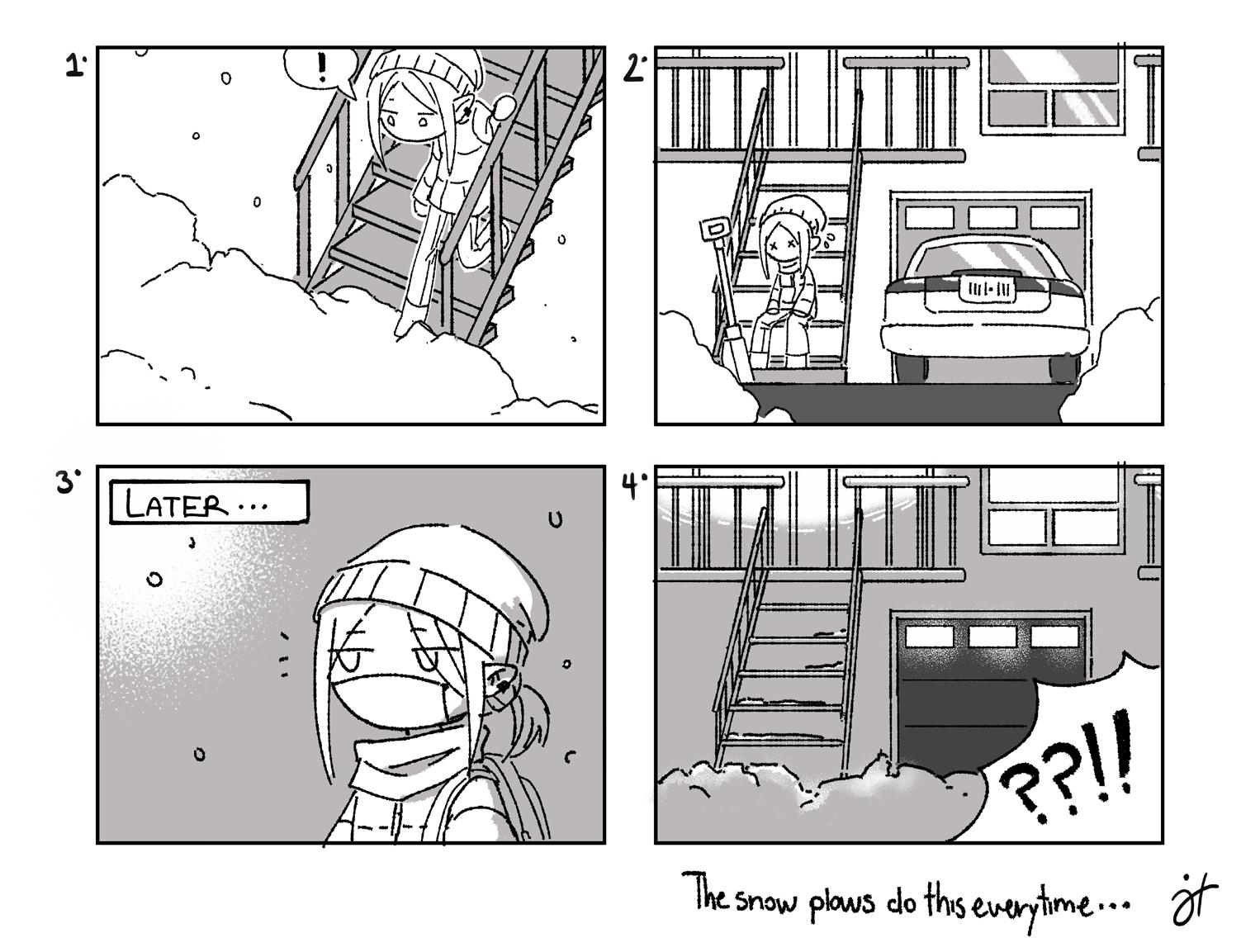
Sodoku

Horoscopes
ARIES (MAR 21 – APR 19)
Would you look at that, Aries, your social battery is finally full! You’re not home a lot, and that is a good thing. Prioritizing your friendships is both an act of love towards others and yourself.
Movie rec: Mr. Plankton (2024)
TAURUS (APR 20 – MAY 20)
This month will be full of surprises for you. The new changes in your career path, your family matters, and your personal life will be interesting and promising.
Movie rec: Past Lives (2023)
GEMINI (MAY 21 – JUNE 20)
A little change of scenery is exactly what you need right now, Gemini. You don’t need to take the plane to see something new; pack your bags with your bestie and discover a new town nearby. Who knows what adventures you might find there?
Movie rec: Saving Face (2004)
CANCER (JUNE 21 – JULY 21)
You know that managing finances is a complex ordeal, but you’ve been doing it since forever. Money is going to be a source of anxiety this month. Don’t let it overshadow your dreams and passions.
Movie rec: Hear Me Our Summer (2024)
LEO (JULY 23 – AUG 22)
Be bold and be brave, Leo. The stars are aligned in your favour this month. Whatever it is you’ve been putting off, it's time to let it rip.
Movie rec: Five Feet Apart (2019)
VIRGO (AUG 23 – SEPT 22)
The countless sleepless nights and the absurd amount of caffeine have fulfilled their purpose. Your hard work is finally getting the payoff, Virgo. You can take a break now:)
Movie rec: Prince of Egypt (1998)
LIBRA (SEPT 23 – OCT 22)
February promises to be the sweetest month of the year for you: chocolate, flowers, teddy bears, and rainbows. Nourish your relationships and remember that love is a two-way road.
Movie rec: The Devil Wears Prada (2006)
SCORPIO (OCT 23 – NOV 21)
Seems like you can’t avoid the burnout anymore, Scorpio. You’re exhausted and prone to making impulsive career-oriented decisions. However, trust your past-self’s long-term vision and continue with your initial plan.
Movie rec: Robots (2005)
SAGITTARIUS (NOV 22 – DEC 21)
Give love a chance in this cold February. You might experience romance in a way you never did before. Meaningful talks and unforgettable anecdotes are on the horizon for you.
Movie rec: Business Proposal (2022)
CAPRICORN (DEC 22 – JAN 19)
The sun is shining bright for you, so don’t hesitate to claim what is rightfully yours. Happiness comes in all shapes and forms, and only you truly know what it means to you.
Movie rec: Monster High: Why Do Ghouls Fall in Love? (2012)
AQUARIUS (JAN 20 – FEB 18)
The misunderstandings you have left in the past year might resurface sooner rather than later. Be selective with the problems you face; focus your energy on the people you care about and let go of those from the past.
Movie rec: Luca (2021)
PISCES (FEB 19 – MAR 20)
You don’t need another blind box of a bag charm or the same pair of shoes just in another color. Be mindful of how you spend your well-earned money. Tomorrow, the trend will change and you will regret that purchase.
Movie rec: The Mitchells vs. the Machines (2021)

Jacqueline Graif Editor-in-Chief
Minola Grent Editor-in-Chief
Orion Peyrol Managing Editor
Chloe Bercovitz Managing Editor
Cathy Wang Digital Managing Editor
Nadira Zibirov Copy Editor
Sabrina Coccimiglio Copy Editor
Atika Ume Fazal News Editor
Maya Jabbari Voices Editor
Nicole F. Motta Arts & Culture Editor
Joséphine Savard Arts & Culture Correspondent
Martin Kaloshi Science & Environment Editor
theplantnews.com theplantnewspaper@gmail.com @theplantdawson


MASTHEAD
Ayat Basma Abouamr
Joey Scozzari
Angela Maffei
Deborah Zamor
Alicia J. Ferreyra

Marissa Hodgson Sports Editor
Daria Gladchii Curiosities Editor
Sal Francis Creative Writing Editor
Simone Mudie Visual Arts Editor
Orla Jeanes Staff Writer
Elsie Duque Hills Staff Writer
Alaa Ettaouth Staff Writer
Romane Randria Social Media Manager
Jiane Keizha Pau Graphic Designer
Alexander Solovyev Cover Artist
Marrie Han Cartoonist
Yasmine Bouanani Secretary
The Plant Newspaper Dawson College 3040 Rue Sherbrooke O Montréal, QC H3Z 1A4 2C.12