
ETHICS IN ACTION
Values in a Changing Climate

AMELIA LIU (V)
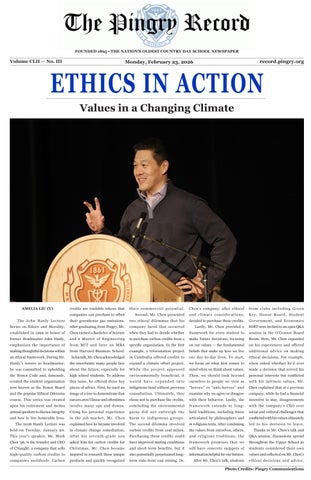
The John Hanly Lecture Series on Ethics and Morality, established in 1999 in honor of former Headmaster John Hanly, emphasizes the importance of making thoughtful decisions within an ethical framework. During Mr. Hanly’s tenure as headmaster, he was committed to upholding the Honor Code and, famously, created the student organization now known as the Honor Board and the popular Ethical Dilemma course. This series was created upon his retirement and invites annual speakers to discuss integrity and how to live honorable lives.
The 2026 Hanly Lecture was held on Tuesday, January 20. This year’s speaker, Mr. Mark Chen ‘96, is the founder and CEO of CNaught, a company that sells high-quality carbon credits to companies worldwide. Carbon
credits are tradable tokens that companies can purchase to offset their greenhouse gas emissions.
After graduating from Pingry, Mr. Chen earned a Bachelor of Science and a Master of Engineering from MIT and later an MBA from Harvard Business School.
In his talk, Mr. Chen acknowledged the uncertainty many people face about the future, especially for high school students. To address this issue, he offered three key pieces of advice. First, he used an image of a tree to demonstrate that careers aren’t linear and oftentimes involve many ups and downs.
Citing his personal experience in the job market, Mr. Chen explained how he became involved in climate change remediation.
After his seventh-grade son asked him for carbon credits for Christmas, Mr. Chen became inspired to research these unique products and quickly recognized
their commercial potential.
Second, Mr. Chen presented two ethical dilemmas that his company faced that occurred when they had to decide whether to purchase carbon credits from a specific organization. In the first example, a reforestation project in Cambodia offered credits to expand a climate offset project. While the project appeared environmentally beneficial, it would have expanded into indigenous land without previous consultation. Ultimately, they chose not to purchase the credits, concluding the environmental gains did not outweigh the harm to indigenous groups.
The second dilemma involved carbon credits from coal mines. Purchasing these credits could have improved mining conditions and short-term benefits, but it also potentially perpetuated longterm risks from coal mining. Dr.
Chen’s company, after ethical and climate considerations, decided to purchase these credits.
Lastly, Mr. Chen provided a framework for every student to make future decisions, focusing on our values — the fundamental beliefs that make up how we live our day-to-day lives. To start, we focus on what first comes to mind when we think about values.
Then, we should look beyond ourselves to people we view as “heroes” or “anti-heroes” and examine why we agree or disagree with their behavior. Lastly, the framework extends to longheld traditions, including those articulated by philosophers and in religious texts. After combining the values from ourselves, others, and religious traditions, the framework promises that we will have concrete snippets of information helpful for our futures.
After Mr. Chen’s talk, students
from clubs including Green Key, Honor Board, Student Government, and Economics HIRT were invited to an open Q&A session in the O’Connor Board Room. Here, Mr. Chen expanded on his experiences and offered additional advice on making ethical decisions. For example, when asked whether he’d ever made a decision that served his personal interests but conflicted with his intrinsic values, Mr. Chen explained that at a previous company, while he had a financial incentive to stay, disagreements with the company’s CEO over social and cultural challenges that conflicted with his values ultimately led to his decision to leave.
Thanks to Mr. Chen’s talk and Q&A session, discussions spread throughout the Upper School as students considered their own values and reflected on Mr. Chen’s ethical decisions and advice.
Photo Credits: Pingry Communications
Winter Pep Rally
CAROLINE OUYANG (III)
On Friday, January 23, the Upper School came together during community time for the annual Winter Pep Rally to celebrate our student athletes and school spirit. The event opened with shoutouts recognizing athletes and teams for their standout performances in this season so far.
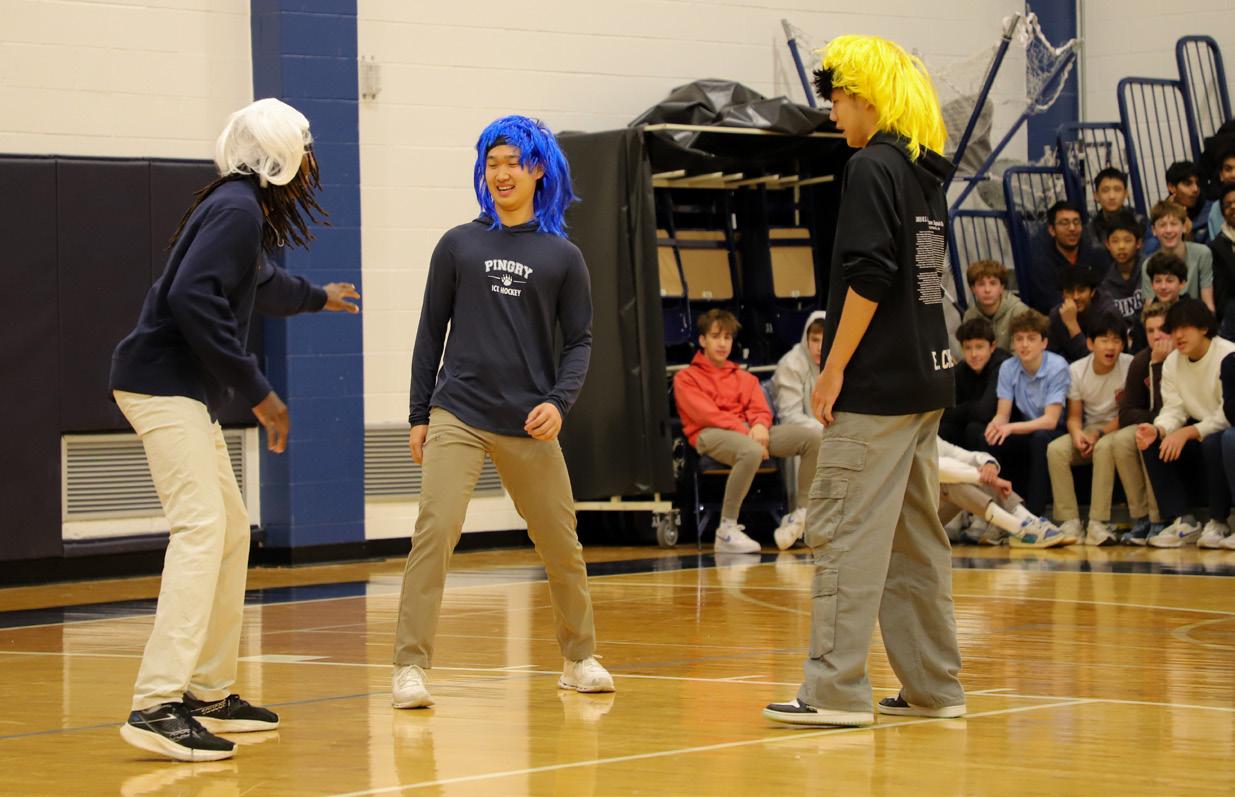
The first game of the rally was a wig-snatching contest. Two athletes from each sport took the floor with vibrant, matching wigs. One by one, wigs were snatched and tossed aside, until only Ja’Mar White (VI) for Winter Track and Evan Chen (VI) for Boys’ Squash remained. A final attack on Chen by White secured the win for Winter Track.
The next event brought chairs and inflated balloons onto the gym floor, as five boys from each winter sports team stepped out and lined up in rows. At the far end of the gym, one teammate from each row sat in a chair with a balloon on their lap, leaving the crowd confused but buzzing with anticipation. When the race began, athletes sprinted across the gym and jumped onto the balloon in their teammate’s lap until it popped. They then swapped
places with their seated teammate, who ran back to the start to tag the next person. The crowd erupted in laughter as the five athletes from the Boys’ Fencing team finished first, winning the relay. Afterwards, Evelyn Ouyang (III) expressed, “It was really funny and entertaining to watch.”
The rally continued with a knockout game featuring athletes, teachers, and coaches. As the final students were eliminated, Girls’ Basketball Coach and Dean of Student Life Robert Hoepfl and Strength and Conditioning Associate Marquis Ormond faced off. After several intense rounds, Coach Hoepfl eliminated Mr. Ormond, emerging as the winner.
To close out the event, the final game was another knockout round with a new student lineup. Eventually, the competition narrowed down to Mubarak Rufai (III) and Hana Finkelstein (III), the last two standing. A missed free throw by Rufai allowed Finkelstein to take her shot and secure the win.
Students left the Winter Pep Rally energized, congratulating the contestants and heading into the rest of their day with high spirits. Best of luck to our winter athletes as they continue their season!
CORINNE WILSON (III)
To celebrate Martin Luther King Jr. Day this year, Pingry invited an esteemed alumnus, Dr. Robert Fullilove ‘62, back to school to speak about his experiences in activism and the Civil Rights Movement. Dr. Fullilove, nicknamed Dr. Bob, was one of Pingry’s first Black graduates and the first Black senior class president. Dr. Bob served as student body vice president, editor and cartoonist for The Pingry Record, and played varsity football and ran track. After graduating from Pingry, he attended Colgate University, earning a B.A. in philosophy and religion. During his time at Colgate, Dr. Bob participated in the Mississippi Freedom Summer and worked with
A Day On: To Honor Through Purposeful Service
BRYNNE DRAGERT (V)
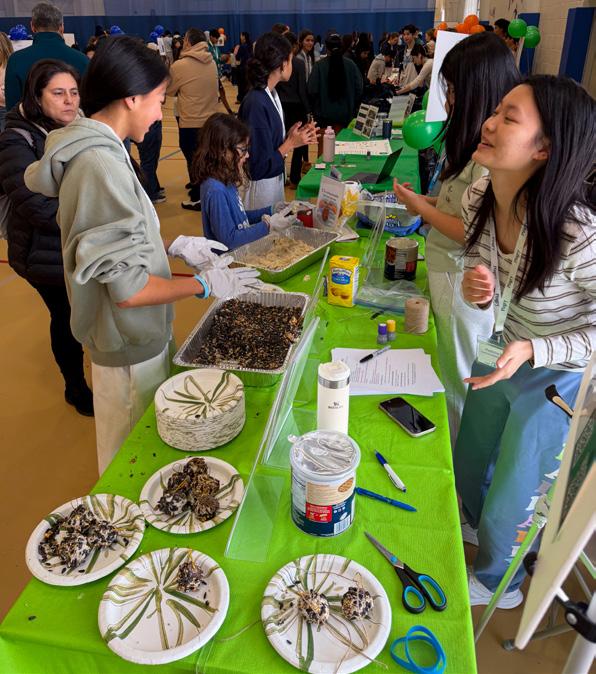
On Monday, January 19, as some were enjoying the day off in the snow, more than 600 community members trekked through the cold and gathered for the Martin Luther King Jr. Day of Service. This year, the event took place in the BAC, with tables lining all parts of the gym packed with participants. Over 300 people — students and adults — supported the event by leading tables and activities, ensuring a smooth and successful day of service for all. All the tables that ran this year supported the work of over 30 impactful organizations, all of which have an empowering mission to give back to the community, not just in New Jersey but throughout the world.
As students from all grades and their families curiously wandered around the gym, they visited all kinds of stations supporting important causes in order to complete acts of
LEAH HOLMES (V)
service. From making dog toys out of old shirts to writing meaningful cards and putting together breakfast bags, participants eagerly worked together to support all of the organizations and give back to our community. With all the participants, the gym was full, and there were always people at every station as they continued to travel to every one of the tables. It’s safe to say there wasn’t a moment of dullness as everyone engaged in all of the activities, making the day the most fun it could be.
At the end of the special day of honoring Martin Luther King Jr., the impact made was nothing short of significant. In total, there were a large number of kits assembled and items made for others, as well as very generous amounts of donations, making many stations extremely successful. Together, the Pingry community wrote more than 400 cards for different organizations, collected over 500 books,
assembled 100 winter care kits, 50 wrestling kits, 350 menstrual kits, 30 hospital care packages, made 155 dog toys, and painted 159 kindness rocks, to name just a few of the many contributions made throughout the event. Overall, the experience was very rewarding for all as participants learned about the story and meaning behind MLK day through service, providing acts of kindness through all the substantial work produced.
A Snowy Snowball
On Saturday, January 24, Upper School students gathered at The Westin Governor Morris for the annual Pingry semi-formal Snow Ball dance. In recent Pingry history, there has never been snow on the day of Snow Ball; however, lo and behold, a snowy forecast lined up with the dance this year. Winter Storm Fern was on the move, set to hit that very night, with estimates of 10 to 22 inches of snowfall. Students hoped that a “Snow Ball is cancelled” notification would not arrive in their inbox, and luckily enough, it never did.
At 7:00 p.m., students began arriving at The Westin, making their way upstairs to the dance venue. Once up the stairs, they were greeted by friends, teammates, teachers, and a vast array of food and drinks: dumplings, different pastas, and French fries,
not to mention the very popular Shirley temples and ice cream bar, complemented by M&M’s and Oreos.
As more students arrived, everyone began trickling into the ballroom, apprehensive about being the first ones on the dance floor. But after one group got to their feet and started to dance, the floor began to fill at an exponential rate. Soon enough, everyone was on their feet, jumping around to the music, trying not to get run over as the crowds surged.
The DJ played popular songs, mixing them in a way to keep the energy up and everyone on the dance floor.
Every now and then, to take a break from the energetic yet stifling dance floor, students peeled off to grab a drink or take some photos with friends at the photo booth. Some advisory groups, peer groups, and sports teams even attempted to wrangle people
MLK Day Assembly
the Student Nonviolent Coordinating Committee (SNCC). Dr. Bob is now a professor at Columbia University and the associate dean for Community and Minority affairs. Dr. Bob also did HIV/AIDS prevention work in the 1980s and currently teaches incarcerated students through the Bard Prison Initiative.
Dr. Bob began his talk with his experiences protesting and working with SNCC during Freedom Summer. He explained how he and other volunteers were working not for recognition, but to help increase African American voter registration despite knowing they may not be able to see the results of their work. Despite facing great challenges, including three of their colleagues being murdered by the Ku Klux Klan, their resilience and courage carried
them through. Dr. Bob recalled how the members of the movement sang “We Shall Overcome” to motivate and give them courage. Dr. Bob illustrated the importance of unity by explaining how the movement was only able to succeed because of the number of people
involved. He reminded us that he was just one of many, and that he only gained fame because he “didn’t die.” Dr. Bob argued that the current political climate, especially seen in ICE, is becoming very similar to the racism and civil rights struggle from the 60s. He advised that we
together for a group photo, with some having more success than others. As the night came to a close, students gathered up their belongings and headed out into the cold. Whether their plans involved hanging out with friends, heading to a party, or going home exhausted after a night of dancing, everyone remembered the impending storm and made sure to get home before snowfall. Snow Ball takes place right after the first semester ends, making it much-needed reprieve for students to let loose after months of studying, homework, and sports. This time around, many students saw over a foot of snowfall Sunday morning. And, much more importantly, students had no school on Monday and a delayed opening on Tuesday. Snow Ball 2026 was an event to remember, and this year, one that truly lived up to its name!
become more physically active, and he cautioned that we are growing too complacent and becoming observers instead of activists. Dr. Fullilove’s speech was incredibly inspiring, especially in the current climate, and it was an honor to have him speak to us for Martin Luther King Jr. Day.

Photo Credits (Top to Bottom): Pingry Communications
SARAH DIAO (III)
The Cost of Turning Sacrifice Into Obligation
through isolation and invisibility so we could “figure things out.”
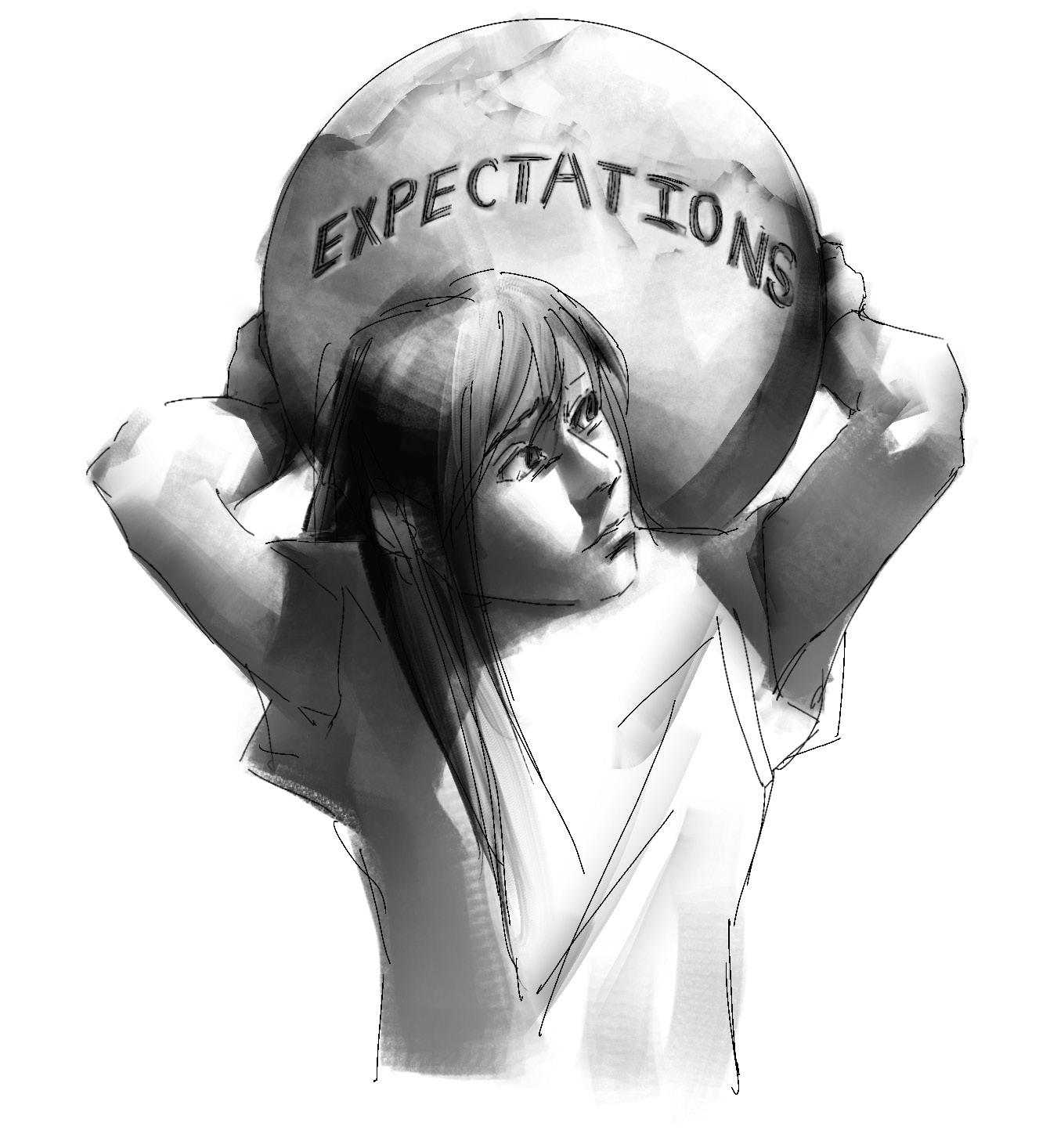
Children of immigrants are often praised as success stories, held up as proof that sacrifice works, that hard work pays off, and that the American dream is still alive. But that praise obscures a quieter truth. For many of us, success is not a choice. It feels like a moral obligation, born from guilt and sustained by shame.
My parents came to the United States from China for graduate school. They arrived with heavy accents, light suitcases, and an understanding of risk that most Americans don’t have. They crossed an ocean not for comfort or selfdiscovery, but for survival with dignity. Just simply by arriving, they accomplished something enormous. But by staying and starting a family, they proved they could create something lasting.
I was born into the aftermath of that bravery, inheriting the benefits of their sacrifice and the obligation it created. For second-generation immigrants like me, success, while aspirational, feels owed. Our parents did not leave behind families, languages, and familiarity so that we could grow up to be average, uncertain, or comfortable with mediocrity. They did not struggle
The unspoken contract is clear: their hard work and suffering must be redeemed by our success.
Children of immigrants grow up with a clear, unspoken lesson. Your parents went through hardships to grant you these opportunities. You do not get to waste them. Their sacrifice becomes the standard against which your entire life is measured. How could you complain about stress when they endured uncertainty? How could you accept mediocrity when they rebuilt their lives from nothing?
Oftentimes, immigrant parents do not demand perfection outright. Instead, this pressure appears as unspoken expectations that almost feel nonnegotiable. Because, after all, success equals stability, and stability equals worth. Education is not about exploration, but insurance. Career choices are not driven by passion, but survival. Risk feels too indulgent when your parents have already experienced so many hardships. As a result, this pressure has created a generation that is both relentlessly driven and deeply anxious.
Children of immigrants often outperform their peers academically, yet report higher
levels of stress, anxiety, and fear of failure. The “model minority” myth, which portrays Asian Americans as inherently successful and obedient, intensifies this pressure by framing achievement as both natural and mandatory. What makes this burden especially heavy is the sense that no amount of achievement will ever be enough. How do you surpass the fact that your parents left everything behind? How do you outdo survival itself? Success can feel hollow when it is fueled by the fear of disappointing people who sacrificed so much.
The narrative that children of immigrants must succeed at all costs is damaging, and it fundamentally misrepresents what our parents actually fought for. Our parents did not uproot their lives so that we could live in a permanent fear of failure. Their sacrifice was about creating possibilities. And if we reduce their sacrifice to “unquestioned success,” we misunderstand what they gave us. We must change how we talk about success in immigrant communities.
First, we must allow children of immigrants to define success beyond prestige and income. Stability matters, but so does mental health, fulfillment, and agency. Schools, in particular, should recognize that the
pursuit of high achievement often coexists with burnout and pressure.
Second, we need to challenge the idea that gratitude requires silence. Acknowledging the impacts of sacrifice is not disrespectful. Refusing to talk about its emotional consequences is. Honest conversations between parents and children, and within communities, can transform guilt into understanding.
Lastly, children of immigrants need to recognize that succeeding
is not necessarily surpassing our parents but carrying their courage forward, without letting it crush us. It could mean acknowledging that the greatest gift they gave us was not obligation, but opportunity. The shame may linger, but it will never disappear. It deserves to be spoken aloud, not hidden behind accolades and achievements. Children of immigrants are living bridges between survival and choice. And that is an accomplishment worth naming.
What the Court Has Taught Me That the Classroom Hasn’t
ARJUN SHEKDAR (III)
I’ve spent countless hours working as hard as I possibly could to be better, maybe even the best. Whether I’m at home practicing or with my friends, trying to learn their skills and expand my way of thinking, I’m always doing everything I can to improve. It shouldn’t be this hard to get better. After all, the process of learning something gets repetitive eventually. However, there are two
completely different processes I’m experiencing – one is uncomfortable and unforgiving, while the other is fully structured and prebuilt.
The struggle of working in two different systems: I see so much growth with one thing, but I put equal amounts of effort, if not more, into another, just to be stuck in cement where I am. It never mattered how many extra days I spent practicing my first serve; I could’ve been out there for ten
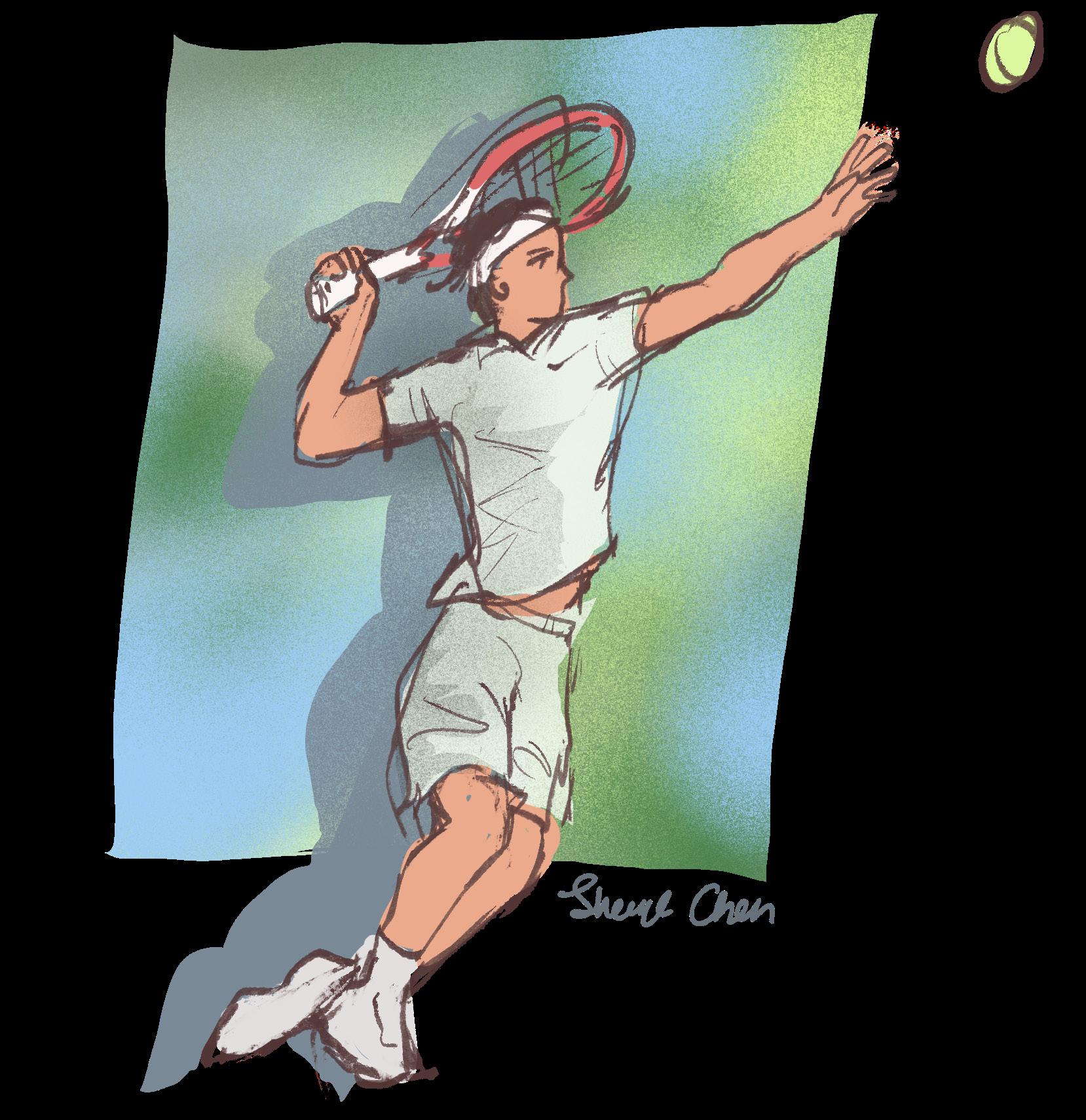
hours straight, and all that effort would feel like a waste the moment I needed to use my serve. On the other hand, if I spent even five minutes learning a new set of forty terms, I’d know it like the back of my hand. That contrast showed me that not all effort leads to improvement. Real growth depends on the environment you’re in.
Stepping onto the tennis court feels like stepping into a whole different world, a world of silence and added pressure, where you’re by yourself and expected to succeed. A major distinction between the court and the classroom is that when the inevitable failure comes your way, one life has taught me to work on that mistake to not repeat it, while the other has shown me that you may have to switch your ways to succeed.
When I don’t get the result I really wanted on a test, my teachers advise me to strictly direct my attention to what I got wrong, and in school, that works. On the court, however, working on something you’ve consistently messed up on during a match won’t work. Tennis is a sport of strategy, and knowing when to switch your approach is the key to winning.
Staying on the idea of failure in both worlds, it’s okay to come up short, whether your thought-to-beperfect project wasn’t so perfect, or you lose in straight sets after being so fired up going onto the court. Humiliation is something we have to learn to accept. What matters the most is how you bounce back from that loss, but the problem is: How do you bounce back from that loss?
Not too long ago, I took a course, one I found lots of success in early on, but my grade and confidence started to slip quickly, and there were no signs of that slowing down.
I shouldn’t have even passed that class, but I did, because my teacher saw the effort I put in and rounded me up. As great as that sounds (and, don’t get me wrong, I couldn’t be happier to have passed) all I can think is that school just teaches you how to avoid failure; tennis teaches you how to respond to it.
Tennis is an unforgiving sport, with unforgiving rules, unforgiving players, and an incredibly unforgiving net cord. School is forgiving, which in some cases is better. However, a school can only be so forgiving to its students. In real-life scenarios, such as getting
a job, failure is a high probability, one that the school system can’t protect you from forever. In an unforgiving environment, like tennis, your effort won’t be credited; no matter how hard your opponent sees you trying, they won’t just let you win because you’re trying your best. In a match, you have at most 30 to 40 seconds to think about what you’re going to do on the next point; even water breaks don’t last long enough for you to build a whole blueprint. You can’t replay that double fault you hit on 30-30 for the rest of the match; you have to keep moving forward. In tennis, you’re constantly failing with every missed serve, every win from your opponent, every easy missed put-away volley to win the set. The struggle is real. Instant. In school, you’re given so much time that failing is pretty hard to do, nearly impossible even. Failure is completely ruled out of the picture. Every player has had bad points in matches and their career, yet they still find ways to win the match, because they bounced back. Tennis and other sports teach us how to face failure, struggle with it, and find ways to come out on top. Photo Credits (Top to
The “I’m Tired” Epidemic: Reclaiming the Right to Do Nothing

TINGTING LUO (VI)
Ask anyone in the hallway how they are, and aside from a polite Good, you’ll hear the same two-word symphony: “I’m tired.” Tired has become our default setting, our social currency, and our most honest confession. This is a symptom of a culture that has
LEAH HOLMES (V)
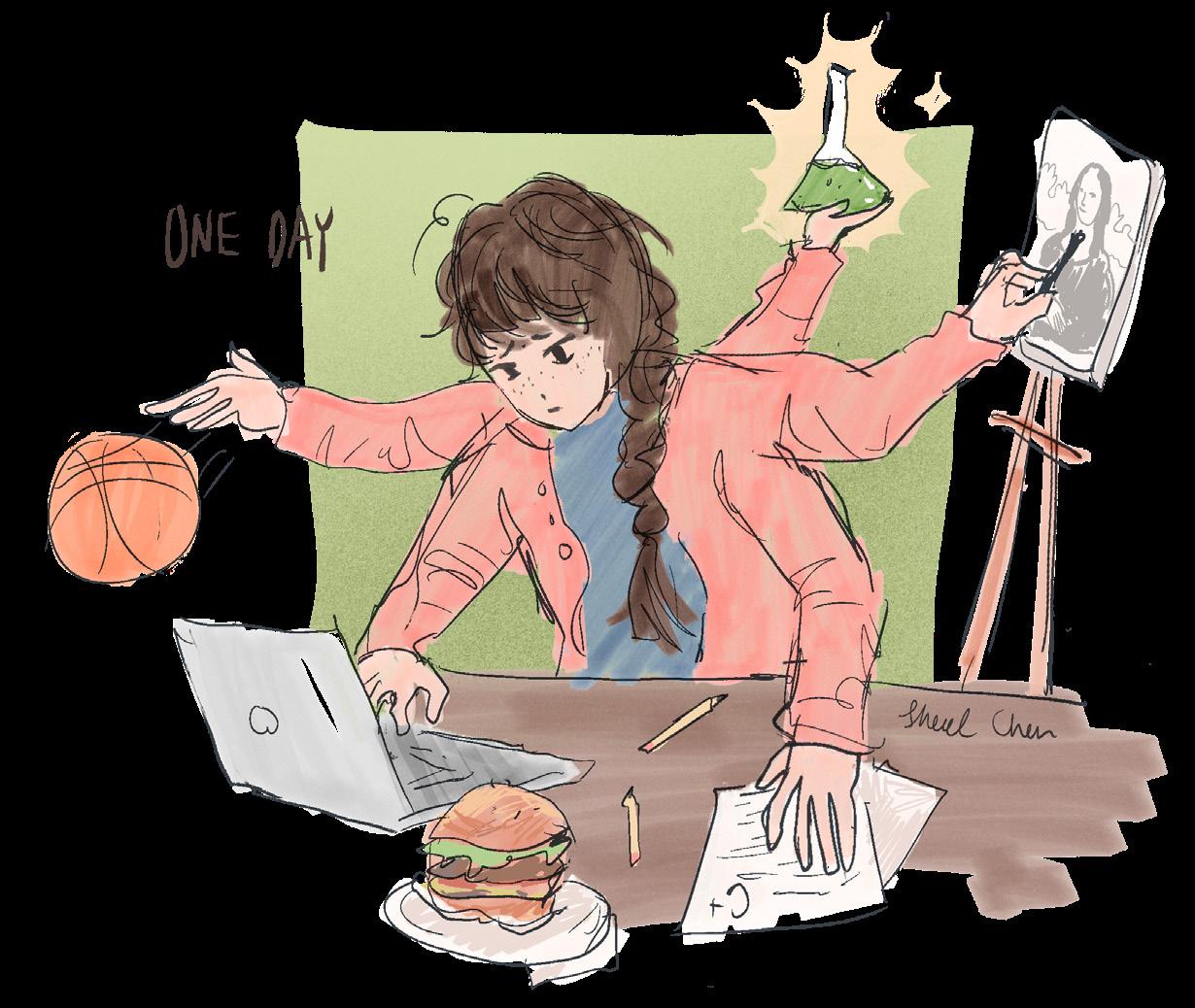
A typical school day goes by fast. Classes, Morning Meeting, lunch, flexes, CP, practice, homework; one thing runs straight into the next. By the time many students get home, there’s just enough time to eat, finish assignments, and sleep, before doing it all again. After a while, the routine starts to feel less like a schedule and more like a loop. At some point in our Pingry experience, most of us realize there just aren’t enough hours in the day. This is especially true for juniors and first-semester seniors, who are often balancing demanding classes with sports, leadership roles, standardized testing, and extracurriculars. With so many opportunities available and with a culture that encourages involvement, it’s easy to take on more than we can realistically manage.
The proposed 2026–2027 schedule naturally sparked a lot of conversation. Any change to the structure of the school day was going
SHANTI SWADIA (V)
Somewhere along the way, saying “I love reading” started sounding like a quote for people who drink matcha and post photos of annotated paperbacks. I understand the eye roll, since reading has become “performative” and a little cliché online, but I don’t think it should be labeled as an

taught us that every waking second must be “optimized” for success.
We’ve reached a point where we treat our lives like a corporate balance sheet. If we aren’t studying for a test, hitting a personal best in the weight room, or building a resume-worthy “passion project,” we feel like we’re falling behind. Hobbies? Nonexistent Socializing? Useless . Napping? Unacceptable . Productivity guilt has turned our downtime into a source of anxiety. Even during winter break or long weekends, the nagging voice in the back of our minds asks: Shouldn’t I be doing something productive right now? Yes, for the parents out there, I’m not saying we can justify countless
hours on our phones for “rest,” but what about one? We have started viewing rest as a reward, something we have to earn by crossing enough items off a to-do list. But rest shouldn’t be a trophy won at the end of a grueling week. As the American Psychological Association notes, rest is a biological requirement, similar to oxygen and water, and not just in the form of sleep. Sometimes, I’m still tired after sleeping a coveted eight hours. By making rest a luxury, we’ve created an environment where everyone — students and teachers alike — is physically present but mentally bankrupt.
The irony is that by trying to squeeze value out of every minute,
we are actually becoming less effective. A brain constantly “on” eventually loses its spark. In the world of sports, athletes must taper to allow their bodies to recover before important events. They know that actual growth happens during recovery, not exertion. We are becoming a generation of Human Doings rather than Human Beings, so attached to our digital notifications and academic portals that we’ve lost the ability to simply exist in a moment without an objective. People always say we should take breaks, and while that is correct, it is not enough. Why would anyone want to take a break if it is accompanied by overwhelming feelings of guilt?
How to Make a Balanced School Day
to raise questions, particularly when it affected start times, afternoons, and how long students spent on campus. While opinions differed, the discussion surrounding the proposal pointed to a larger issue going beyond any one schedule: how to create school days that feel more balanced and sustainable. One goal of the new schedule was to increase flexibility and student choice, especially through longer CP and flex periods. This made sense given the kind of students Pingry attracts: students who are motivated, curious, and eager to be involved. Many of us want to challenge ourselves academically while contributing through clubs, athletics, arts, and service. The issue isn’t a lack of opportunity, but how we manage it. No schedule, no matter how well designed, can create balance on its own. Simply adding more time to the day doesn’t automatically reduce stress or lighten workloads.
In some cases, it can even have the opposite effect, encouraging students
to fill every open block with another commitment. Balance depends not just on how time is arranged, but on how students choose to use it.
This is where mindset matters. A healthier school experience comes from being intentional and deciding what truly matters, permitting ourselves to focus on those priorities. It’s hard to do meaningful work when your attention is split in multiple directions. Whether that means committing deeply to a few activities, protecting time to rest, or setting boundaries around academics and extracurriculars, these choices shape our daily lives more than any bell ever could. Time outside of school matters too. Evenings at home, family dinners, sleep, and moments to decompress all play a major role in student wellbeing. As college approaches and responsibilities increase, this time becomes even more limited, making it all the more important to protect. In the end, conversations about schedules are really conversations
Reading Isn’t an
aesthetic. When my brain is going a million miles per hour, and my to-do list is screaming at me from my Notes app, a book is the one thing that actually quiets the noise. When I was younger, I was always the girl who lugged a Harry Potter book to recess and tripped on the pavement because I refused to close the chapter mid-duel. But in high school, I swapped paperbacks for videos, though I knew fifteen minutes of winding down would turn into an hour of watching social commentary videos I did not even care for. Shockingly, I always got up the next day feeling exhausted and anxious. This fall, I tried something I’d somehow forgotten: reading. I told myself I’d read a few pages before falling asleep, with no pressure and no goal to reach a certain page number. During the first week, I dozed off
It is time to reclaim the right to be “unproductive.” We must stop wearing our exhaustion like a badge of honor and start treating our mental margins with respect. If we don’t learn how to take a break that doesn’t feel like a crime, we will be empty and “tired.” Forever

about values. If success is defined only by how much we can handle, constant exhaustion becomes the norm. But if we define success by engagement, curiosity, and impact, balance becomes something to aim for, not something to sacrifice. When students are encouraged to make thoughtful choices and invest fully in what matters most to them, they don’t just do better academically – they’re able to make a real impact on their communities. And that sense of balance, more than any structural change, is what allows a school community to thrive.
Aesthetic
instantly, the book becoming my pillow. But even then, I felt the same habit resurfacing: attention locking onto one thing and staying there.
People say playing games or watching videos relaxes them, and sometimes it does, but I notice I’m still half-thinking about the next day’s APUSH quiz while playing Word Hunt on GamePigeon. A novel doesn’t let me split my attention like that. If I’m on a train with The Sound and the Fury open, the aisle turns into the Compson lawn, and I’m busy piecing the timeline together before my stop even arrives. In other words, I can’t simultaneously rehearse five ways I might embarrass myself during my Chinese presentation. Reading uses the same mental space that worry tries to colonize, and for once, worry has to find somewhere else to live.
There’s real, physical evidence
in my body. I notice that ten pages in, my shoulders slide down. My jaw unclenches. I fall asleep faster, and I dream in color again. I’m not saying books cure anxiety, but when I compare nights of reading next to nights of watching, the difference is obvious enough.
Another thing I’ve noticed is that reading makes you better at paying attention to actual people. Once you hang out inside other minds for a few hundred pages, you start noticing details you used to ignore: your friend’s silence at lunch, the new teacher who is nervous but trying to hide it, the kid who laughs too loudly at unfunny jokes. When I’ve spent a week inside a character who has flaws and feels human, I tend to stop myself from flattening real people into one adjective.
I know the argument may be, “Why bother to read when you can
get the summary?” We live in the age of the paragraph-long plot recap and the AI “key takeaways.” They’re convenient, for sure, but they shave off what makes books matter: the time they take, the uncertainty they force you to sit in, the tiny clues you gather that only make sense fifty pages later. No shortcut can do that part for you; the change happens while you’re actually reading. If reading feels like homework, you are not reading the right books. You could try a thriller or a fantasy and let the plot pull you along. If you used to be a bookworm as a kid and lost it, you can pick it back up without making it an “aesthetic.” In a year where everything comes optimized by an algorithm, I want one part of my day that asks something of me and betters me in return. For me, that part of my day lies with a novel.
Photo Credits: Google Images, Sheryl Chen (VI), Serena Shi (III)

SIMRIN SHAH
In recent months, I’ve begun to notice that some of my favorite memories feel overhandled. Like fruit passed too many times from palm to palm, its skin thinned by the warmth. I can still taste them, but I’m no longer sure which parts were there at the beginning and which parts I added later. There are a few moments in particular that I return to often. Usually, these take place sometime in the summer outside, where me and a few friends sit
The Aftertaste of Memory
on the hot gravel of the cul-de-sac, bikes parked nearby, red popsicles in hand matching the sunburn on our cheeks. Each time I remember it, the colors deepen, the air grows thicker and I wonder if I’m remembering the moment itself or the way I’ve learned to tell it.
Memory, strangely, doesn’t stay where you leave it. Every time you reach for it, pull it forward in your mind, and reminisce in its absence, you leave fingerprints behind.
There is a line I’ve been thinking about: we wait to taste life twice. The words feel generous, that nothing good is ever gone, that we get another chance to savor everything we’ve rushed through. Now, though, I think our second taste is not a repeat but a remix.
The first time we live something, we have no language to describe it yet. Just sensation. We don’t analyze the flavor, we just eat it whole.
The second taste, however, comes
after we sit with it, giving ourselves enough time to name it. By then, the initial flavor had shifted. Some notes intensify, others fade, some even become repetitive and bitter to the taste. To these second bites, we add meaning that is guided by who we are now, not who we were then. This is not a flaw of memory but just its nature.
Remembering is an act of creation as much as it is recall. It is in our human nature to smooth over edges, emphasize patterns, view things in rose or bluebell or violet colored lenses. I like to think that overtime, our memories develop from moments into explanations and stories that help us understand ourselves. They grow familiar and comfortable on the tongue. Deceivingly, memories are easy to believe. However, the more a memory feels complete the easier it is to forget that it is unfinished. What we remember so clearly now may
have actually been uncertain and unresolved in real time. Certainty, after all, is something memory develops but it is not actually there at the start. This feels especially noticeable right now, when moments barely have time to exist before they are deemed a “memory.” We are told to hold onto things while they are still happening.
As a senior, every event and moment is a last one and instinctively, I begin to label them, archive them, and feel pressure to remember them “right.”
As if memory were something fragile that requires constant preservation. Maybe memory doesn’t need to be protected from change. Writing to taste life twice doesn’t mean preserving moments in their original form. Perhaps we can instead accept that the second taste will always be altered, richer in some areas and emptier in others. We can try to recognize that every return of a memory
Why is 2026 the New 2016?
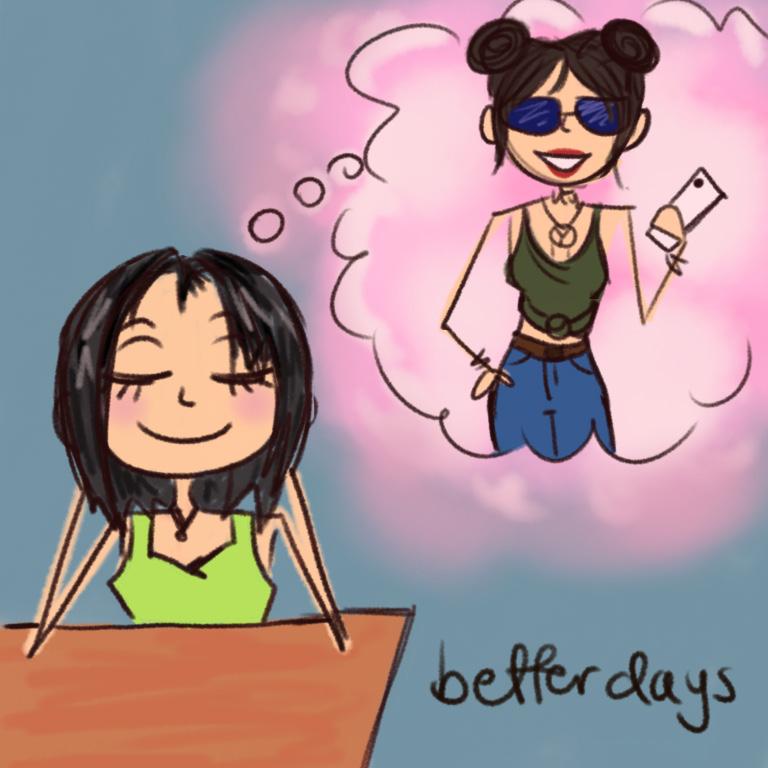
When I counted down the minutes until the clock struck midnight two months ago, I honestly didn’t know what to expect for the new year. 2025 was already a mess, full of relentless brainrot and memes generated from our collective addiction to social media. 2026 did not seem real to me. It felt dystopian, as if we were getting one step closer to aliens and flying cars (though those probably won’t happen anytime soon). Perhaps that’s why we’ve all seemed to latch onto our younger selves, metaphorically bringing us back to a world of ignorance and bliss. Earlier this year, our desire to return to 2016 skyrocketed. Phrases such as “2026 is the new 2016” circulated on social media, with users posting throwbacks to their 2016 selves.
Celebrities such as Charlie Puth, John Legend, and Reese Witherspoon also hopped onto the trend.
What exactly was 2016? Imagine this: You wake up bright and early to your alarm, which, by the way, is blasting “Side to Side” by Ariana Grande from your newest iPhone 7.
You don’t instantly open your phone to start doomscrolling on Instagram. Instead, you get dressed, putting on skinny jeans and a t-shirt that is tied in a knot above your belly button.
But don’t forget about your makeup routine, which consists of a cut crease and dark block eyebrows, and the choker that Rihanna inspired you to buy. This was an era of the Snapchat dog filter, Beyoncé’s Lemonade, and the infamous Kanye West, Kim Kardashian, and Taylor Swift feud.
The question is, why 2016?
And why, all of a sudden, have we
decided to bring nostalgia back? Regarding the first question, there’s a fairly simple answer. Besides all of the 2016 pop culture moments, 2016 was a year when everything was changing. It was a year that foreshadowed the next ten years of chaos, a major pandemic, and various presidencies. 2016 marked the rise of social media platforms such as Vine, Musical.ly, and TikTok, and the increasing popularity of Instagram and Snapchat. This was a time when many Gen Zers began to understand the significance of the world around them, often represented in social media posts. 2016 is the quintessential example of nostalgia that high schoolers and young adults alike want to relive, especially as they reach the age where responsibilities become real.
But why have we suddenly
become so obsessed with the lives of our past selves? Nostalgia is not a new concept, and oftentimes it’s a comforting trip down memory lane that brings us back to simpler and more carefree times. But as the current economic and political environment continues to spiral downward, it only makes sense that we’ve decided to subscribe to the notion that we’re living in a different era. In a study published last year by researchers in Humanities and Social Sciences Communications, nostalgic reflection was shown to buffer psychological pain and increase pain tolerance, suggesting that recalling memories can serve as relief to the obstacles we face. This study is especially relevant now because we’ve turned to nostalgia to escape the alarming decisions and policies that the
reshapes what we think we know. Rather than questioning the accuracy of our memories, perhaps we should pay attention to how they evolve. To what we emphasize or leave behind. To what our versions of the past reveal about who we are becoming. Memory is as much of a look into the past as it is a glance into our future. Memories hold our lives, they edit our lives, and every time we return to them, we decide — consciously or not — what flavor lingers.

current administration has made. By revisiting the positive and innocuous moments of 2016, we aren’t merely indulging in memory for memory’s sake but seeking comfort from the realities of 2026. Nostalgia reminds us that even in times of confusion and turmoil, there are moments worth remembering. And as we continue into 2026, maybe we’ll learn how to carry the lessons of yesterday into the challenges of today.
The City That Makes You Speak: How Seville Forced Me to Use My Spanish
GAVIN GRUNSTRA (III)
Before I went to Seville, Spain, this summer, I believed that I knew Spanish pretty well. I was not quite fluent, but I was confident I could manage having a (very short) conversation. I could conjugate a handful of verbs, and I knew the difference between ser and estar. I also knew how to say hello and goodbye, and how to order

food using simple vocabulary. But nothing prepares you for the moment when a waiter looks you straight in the eye and asks a rapid-fire question you think is about what kind of bread you want but also could be about your entire future.
Seville is the kind of city that makes you speak Spanish whether you are ready to or not. Although nearly everyone in Seville speaks English, the Sevillian people prefer that you speak Spanish. And not just any Spanish, but proper Andalusian Spanish. Seville is a city that is colorful, warm, and full of incredible architecture. But what I discovered was that it is a city that expects you to meet it where it is, not where you are from. At every interaction, it nudged me further and further out of my comfort zone.
On my first morning in Seville,
I sat with my family for breakfast and was determined to order in perfect Spanish (although maybe not Andalusian Spanish yet). What came out of my mouth was something like, “Hola, si… yo quiero un pan, por favor, y un copo de leche, please.”
The waiter smiled, not in a mocking way, but in a con permisso , let’s try that again kind of way. Within seconds, I learned the word tostada, but also the fact that Sevillians speak about three times faster than the videos I watch in Spanish class, which, if you have not experienced the world of VHL, is pretty fast.
As my days in Seville progressed, I quickly learned that every interaction I had with waiters, shop owners, and museum workers became a mini Spanish test I did not get to study for. As I continued to try and continued to struggle with my Spanish, I learned
that I needed to stop thinking so much before I spoke and just, well, speak Spanish. No one was going to judge me if I did not remember the proper vocabulary word or if I missed the correct conjugation. Instead, I found that Sevillian people were truly happy that I was trying to speak their language and learn the small lessons they were teaching me along the way.
Little by little, without realizing it and without overthinking, I began speaking more fluidly. I stopped translating in my head. I stopped hesitating before every word. I even stopped panicking when someone talked back to me. I learned that nothing boosts your confidence like having a local speaker understand your Spanish the first time you speak. By the end of the trip, I was not fluent, but I was speaking in full sentences without rehearsing
them in my head. I was having real conversations, although at a slower pace than the local Sevillian speakers. My experience in Seville taught me that learning a language is not about perfection. It is about being brave enough to try, even when your verbs are wrong and your confidence is shaky. It also taught me that people genuinely appreciate it when you make an effort to understand their culture and their history. That connection happens when you meet people where they are rather than waiting until you feel fluent enough to belong. The value of learning a language is not simply about the language itself. It is about connecting with people in ways that you may not be able to do if you don’t speak their language. That may be the biggest lesson I learned from my visit to Seville this summer.
AMELIA LIU (V)
(VI)
While it is technically still winter, it’s never a bad idea to look ahead at all the possible dishes you can make after the snow finally decides to melt. Here are eight plates so spring-coded that flowers might grow after you make them. And remember to save some for your friends and teachers as we head into the hardest quarter of the school year.
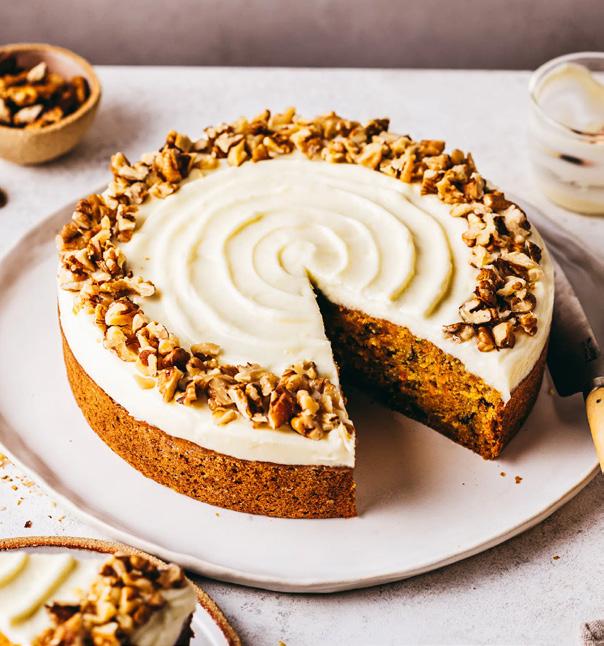
1. Carrot cake. Of course, what would a spring baking list be without carrot cake? This cake is the ultimate embodiment of spring and the perfect treat to bring to a picnic, brunch, or bake sale. The warm, spicy notes from cinnamon and ginger paired with the natural sweetness of shredded carrots create a flavorful and nostalgic treat. Add-ons such
Eight Dishes to Make This Spring
as raisins, coconut, and nuts add a burst of flavor. Finally, finish the cake with a tangy and velvety cream cheese frosting.
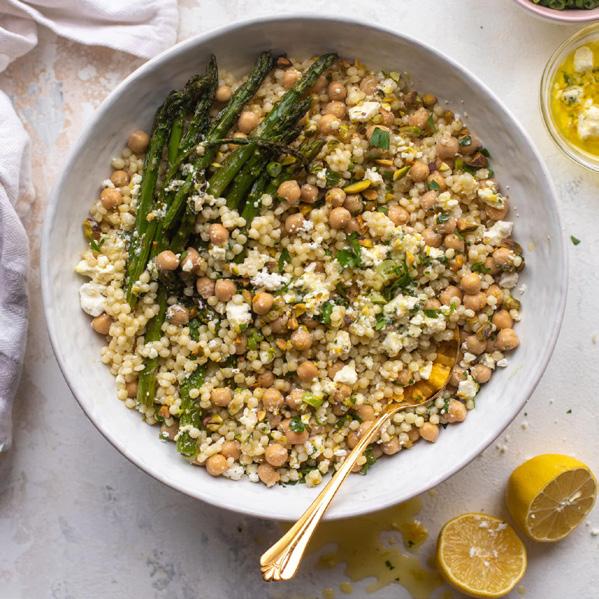
2. A spring couscous bowl. Spring is the perfect time for salads and versatile grain bowls. Colorful, light, and packed with plenty of chickpeas, spring couscous bowls are perfect for a healthy lunch or dinner. Toss with fresh herbs, feta, and pistachios to brighten the plate. Top with a homemade lemon vinaigrette or make a quick green goddess dressing if you truly want to bring that garden energy.
3. Strawberry shortcake ice cream cake. Even though spring might be a little early for ice cream, who doesn’t love a cool treat that you can bring to a gathering? Strawberries, which are in season during the spring, are the stars of this decadent dessert. Feel free to make your own strawberry ice cream or
buy one from your local ShopRite as the base of this cake. Layer in crushed shortbread cookies or a vanilla cake layer before topping with homemade whipped cream to finish this eye-catching dish.
4. Roasted salmon with spring pesto. A vibrant, fresh, and savory pesto dressing drizzled over a large roasted salmon fillet makes for the perfect spring dinner. Garnished with radishes, peas, and carrots, this dish just screams spring.

5. Lavender lemon bars. I know, I know, lavender is a complex and unexpected ingredient. But when paired with tart and acidic lemon, you might’ve just made the best dessert for spring. With a delicious shortbread crust and a fresh lemon curd, these bars only get better with lavender sugar, which adds the perfect floral twist.
6. One pot tortellini. This easyto-make pasta dish from The New York Times features cheese tortellini cooked in broth and heavy cream. Inspired by pasta
alla papalina, salty prosciutto and peas are also added for a colorful pop. Serve alongside a light salad, eat as a solo dish, or share with friends and family.

7. Hummingbird cupcakes.
Originating from Jamaica and often made in the South, hummingbird cakes are banana bread-adjacent and feature crushed pineapples and pecans. These cupcakes are bright and tropical and are named for how they make people hum with delight. And you can easily make these allergy-friendly by using gluten-free flour and dairy-free, soy-free butter. Top with dried pineapple slices for the ultimate tropical touch.
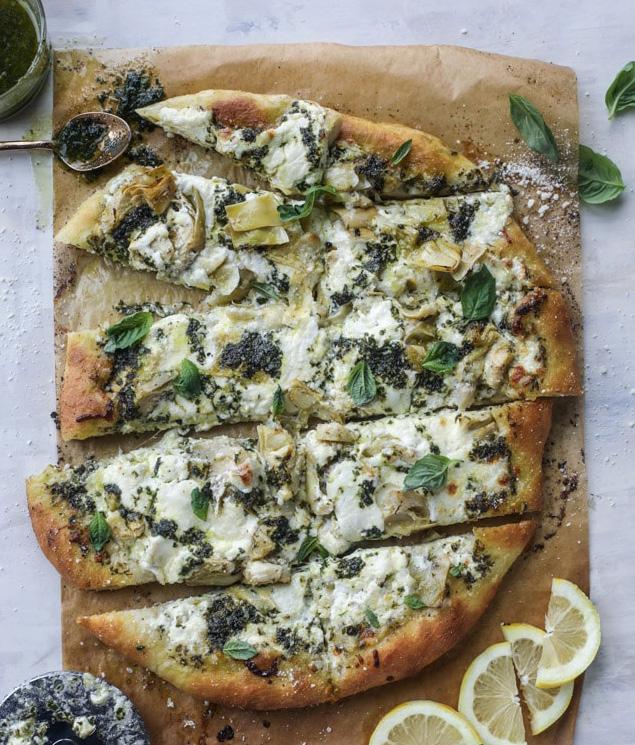
8. Artichoke burrata pizza. Homemade pizza is the best thing to make. Ever. For a spring theme, this pizza has a pesto sauce topped with balls of burrata and provolone. Finally, grilled artichokes add the
perfect earthy, tangy flavor. Not a fan of artichokes? Add asparagus, zucchini, spinach, or olives to deliver the same flavor without compromising the dish’s beauty.
That’s it. Eight sweet and savory dishes that are a must-try this spring season. Have fun making these by yourself or with a friend as a way to distract yourself from all the chaos of school!
Recipe credits: 1. https://www.howsweeteats. com/2025/03/recipes-for-spring/ 2. https://www.allergicliving. com/recipes/hummingbirdcupcakes-with-pineapple-flowers/ 3. https://www.nytimes. com/2025/03/19/ dining/delicious-springpasta-recipes.html
How Severance Made Me Rethink Balance
SHANTI SWADIA (V)
Last summer, my little brother forced me to watch the Apple TV series Severance with him. I was a little doubtful at first since I had never heard of it, and was prepared for mediocrity and him lecturing me about “prestige television.”
The first episode felt odd. Stark offices, fluorescent lights, a company that speaks in slogans… it was strange, yet a little intriguing. I figured I would keep watching it with him, with the hope of getting more sibling bonding time. But by the third episode, I was captivated.
The series’ premise, without spoilers, hooks the viewer with one big what-if. A mysterious corporation provides a procedure that splits your memory between work and home. At the office, you don’t remember your life outside. At home, you don’t remember your job. The show asks you to sit with this clean split which makes it unsettling in an unexpected way. The office looks safe and comfortable, but the hallways seem to go on forever, and rules pile up
until you’re not sure if the characters are being protected or tamed.
What kept me interested was how the story holds up a mirror to the way we talk about work. We’re told to set boundaries, to keep a “work-life balance,” and to segment our time into neat boxes: school, practice, family, and friends. However, Severance reveals what happens when that boundary becomes a wall. If the “work you” never meets the “home you,” who are you actually protecting, and what part of you gets erased?
I thought about my own schedule, the version of me who powerwalks through the day with a planner and the version who collapses when she gets home and can’t explain why she’s tired. The series makes it tempting to just outsource your stress to another self, and reveals how dangerous it is to pretend that self isn’t still you.
The part that has stuck with me six months after I finished the series was the theme of self fragmentation. The story conveys the message of the split so clearly that you start noticing all the
tiny splits in your life: the child at home versus the almost-adult in the world; the performer on the stage versus the critic in your head. Severance exaggerates this dichotomy through science fiction, but it feels uncomfortably familiar. What do we lose when we force those selves to never meet? What wisdom can the “work you” offer to the “home you,” and vice versa? The series allows you to feel the loneliness on both sides of a door that never opens. Style-wise, the series is precise.
By walking into white corridors with the characters, I kept thinking about how spaces shape behavior. Bright, clean, quiet places can be soothing, but they can also make it easy to forget you have choices. When a company (or a school, or an app) builds an environment perfectly tuned to keep you focused, it’s worth asking: focused on what, and for whose benefit?
By the end of the series, my brother and I had become closer because of our love of the story. Walking away, we were both pondering the same
unsettling question: if you could press a button and separate your stress from your joy, would you? And who would pay the price? I started Severance to humor my brother, but I finished it feeling a little braver about letting my own halves talk to each other. If you’ve ever wished you could leave the worst parts of your day at the door, I’d definitely recommend you to watch it. Afterwards, ask yourself: what kind of balance do you actually want, one built from honesty, or one built from avoidance?

Photo Credits
AMELIA LIU (V)
ZOE ARGENTIERI (IV)
The Most Controversial Play in Football
For anyone who follows football, it has been nearly impossible to avoid the “anti-tush push” movement, as many fans (including me) have become tired of the seemingly unstoppable play. For those unfamiliar, the concept of the “tush push” is when the quarterback receives the ball and is pushed from behind by multiple teammates (usually larger offensive linemen) until they cross the first-down marker, gaining a first down. The play, also known as the “brotherly shove,” is typically
used when teams need to gain minimal yardage, and it is very hard to defend against. Stephen Holder of ESPN noted that “the league average success rate for a fourth-and-1 non-tush play is 67.0% since 2022, while the league average for a tush push is 84.8%.”
The concept of pushing a runner for short yardage has existed and been implemented in college football since 2005, as Coach Bill Snyder of Kansas State experimented with several assisted sneaks. However, the play was infamously popularized and perfected by the Philadelphia Eagles’ Coach Nick

ARIELLA ALLARIEZ (V)
This winter’s fashion can only be classified as chic, simplistic, and independent. As the cold weather forces us to bundle up and intentionally pick our layers, the extra accessories and maximalist pieces we once relied on fall apart from our regular outfit rotation. Compared to the maximalist fashion year of 2020, characterized by fun prints, vibrant patterns, and experimental outfits, 2026 emphasizes the practicality of each piece. This season’s style prioritizes necessity and utility over excess without removing style from the look. I noticed many outfits as I scrolled through Pinterest ranging from practical to stylish pieces, including comfy knit sweaters and Mary Janes that can be worn anywhere. The focus on fashion is no longer on what appears aesthetically pleasing but rather on what is dependable and practical
Editors-in-Chief
Tingting Luo
Simrin Shah
Faculty Advisors
Ms. Lynne Cattafi
Ms. Sara Courtney
Sirianni in 2018. Since then, it has taken over the league, and in the 2024 NFL season, there were approximately 101 total “tush push” plays run across the league, with the Philadelphia Eagles and Buffalo Bills leading the way.
A main issue with the tush push, Green Bay Packers CEO and President Mark Murphy explains, is that there is “no skill involved and it is almost an automatic first down on plays of a yard or less.” Murphy argues that the play is bad for the game as it takes away competitiveness and strategy, reducing shortyardage situations to a nearly guaranteed outcome rather than a test of execution and skill.
Another issue with the tush push is that, because of the chaotic nature of the play, referees struggle to make accurate calls, and many teams have lost games or even titles because of inaccurate calls referring to the tush push. A key example of this inconsistency was shown on a critical fourth-down tush push play in the AFC Championship against
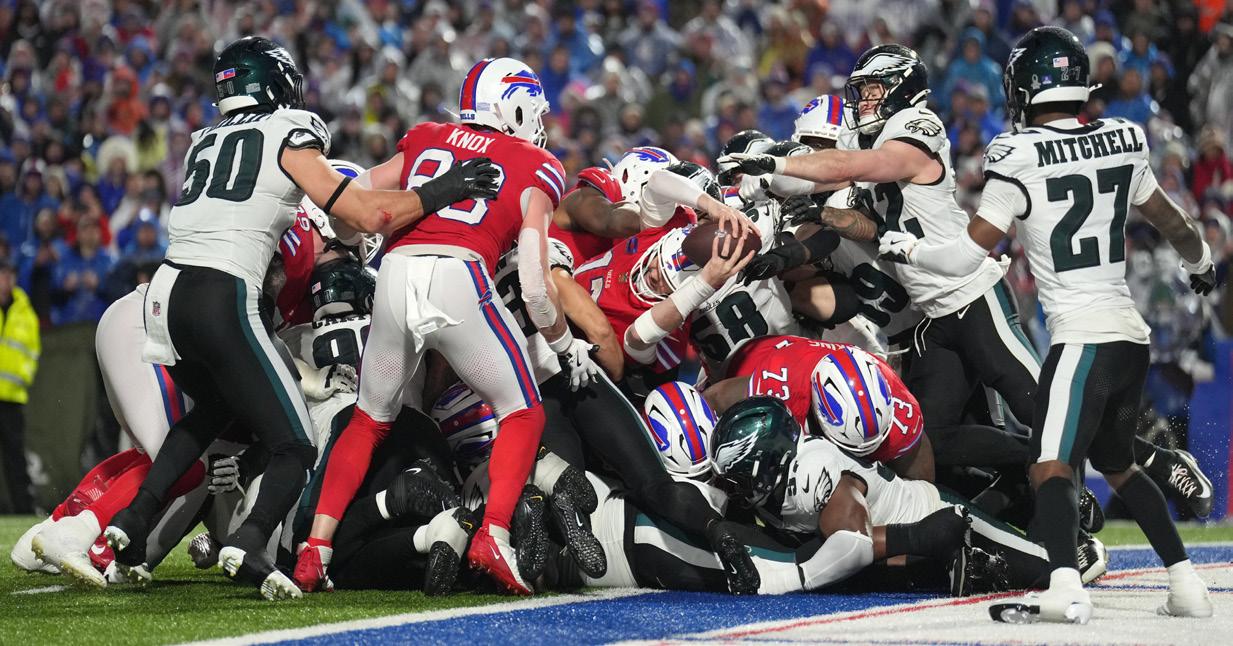
Kansas City, where there was a controversial spot on the play.
Ultimately, many (including me) argue that this controversy cost the Bills the AFC Championship and a spot in the Super Bowl. Fans and coaches argue that if referees cannot consistently and accurately call the play, it should not be legal. An extremely common issue coaches have raised with this play is its potential safety risk to players.
For those who have not seen a tush push in real time, I strongly suggest that you find some clips online, as it is quite shocking to watch. Several 300-pound men push another man into a wall of 12 bodies, where extreme weight and force collide
Practicality Over Aesthetic
in every situation. This shift from maximalism to practicality made me question whether fashion this winter is about organizing and removing anything that no longer serves us. If an accessory, such as a bag, no longer serves its function, it is left behind. Winter outfits need to be planned and intentional. Large chunky satchels, often suede or leather, detailed with metallic rings or charms, are used to carry everything and anything. Oversized bag styles range from grunge to minimalistic, yet they have the same practical purpose. Compared to the tiny handbags used solely for the summer aesthetic or the bow microtrends from last spring, this winter is about being prepared and intentional with every outfit. Perhaps these chunky oversized bags demonstrate our desire to carry only what is necessary and remove what no longer serves its purpose. Similar to accessories, clothing
designs have been reduced to simplistic patterns such as lace, polka dots, and stripes, which appear on almost every item. Inspired by the iconic 1960s, each piece has the intention to appear effortless and refined. Designs lean on a much more focused and intentional look
with minimal patterns to create timeless outfits. It seems that this year clothing is made to last instead of becoming one of the insignificant microtrends from previous years. Does simplifying outfits and accessories mirror a goal to organize and declutter our lives as well?
in a tight space, leaving players compressed and straining against one another. It quickly becomes clear that safety is a main concern. These concerns were addressed in spring 2025 when the Green Bay Packers proposed to ban the tush push. To legitimize the ban, a 3/4 majority of NFL team owners would have to vote in favor. The ban movement gained immense support, but was two votes short (22 in favor versus 24 required). However, the controversy surrounding the play has not disappeared, and it is likely that another vote to potentially ban this play will emerge in the coming seasons.
Perhaps the chunky bag or timeless clothes reflect our ideals to lean on what is functional and purposeful for us. So, next time I consider purchasing an $18 Brandy Melville tee, I will question if it will truly serve me throughout the year. If not, then maybe I should leave it behind.


Senior Assistant Editors
Durga Menon
Gabriel Raykin
Managing Editor
Aanvi Trivedi
Head Layout Editor
Gabriel Raykin
Assistant Editors
Amelia Liu
Leah Holmes
Sophie Schachter
Shanti Swadia
Layout Editor
Matias Stevenson
Cartoon Editors
Anna Ojo
Sheryl Chen
Serena Shi
Copy Editors Zoe Argentieri
Sarah Diao
Ryan Dicks
Brynne Dragert
Caroline Ouyang
Arjun Shekdar
Kallie Stern
Corinne Wilson
Victoria Xie
Valentine’s Day Crossword <3
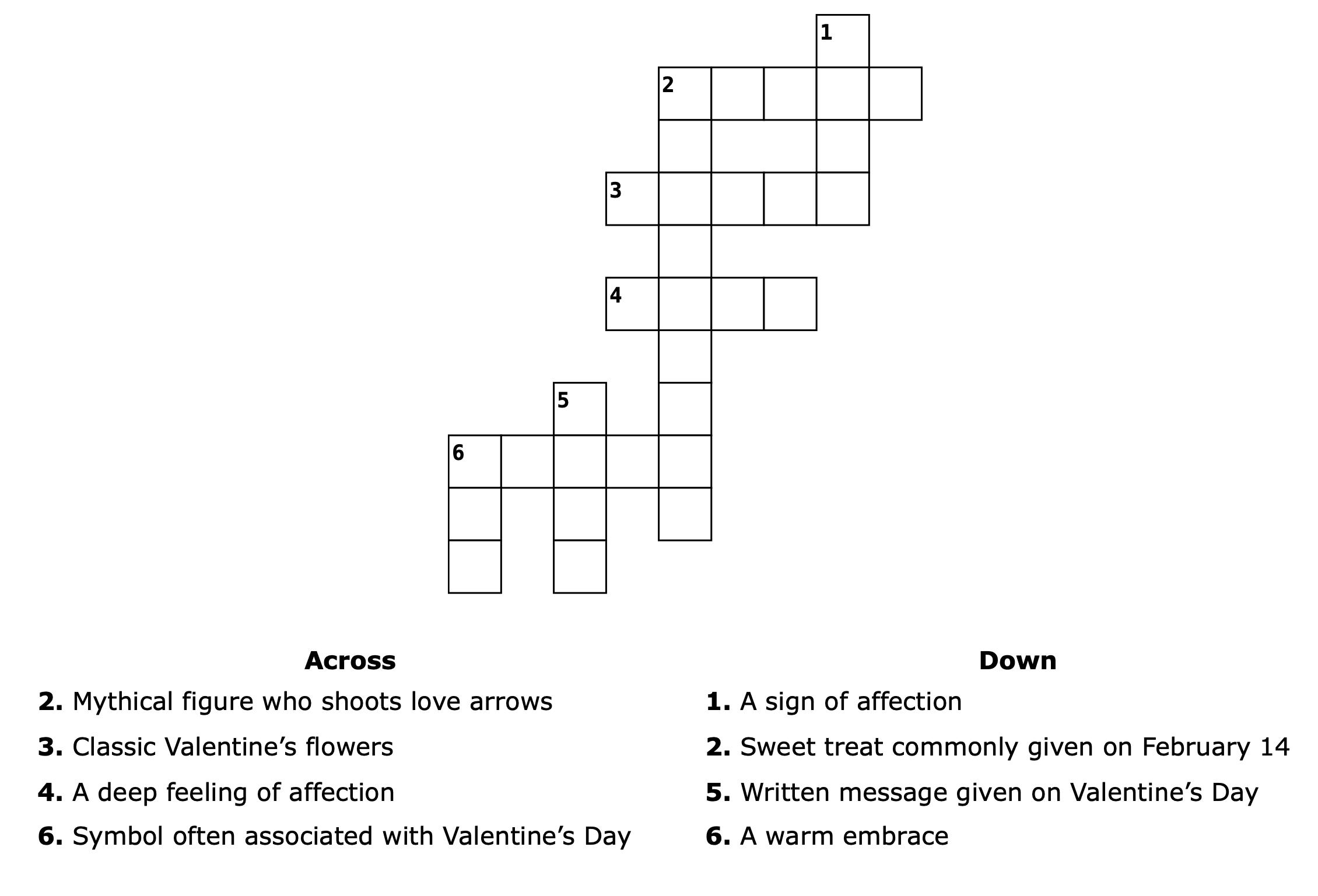
Solve the crossword for this issue! Email back your responses to tluo2026@pingry.org or sshah2026@ pingry.org when you are done. If you are the first one to respond, we will be in touch about a prize! No spaces should be included in the answers.
Winter Sports





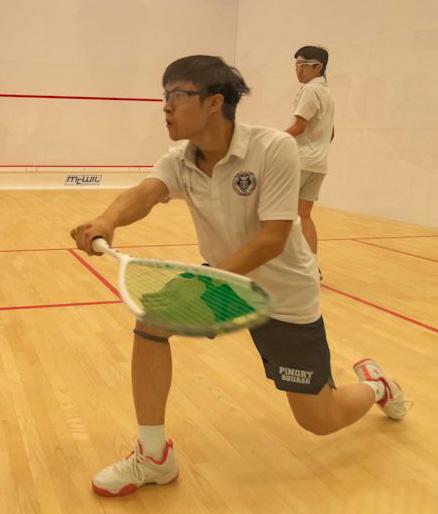
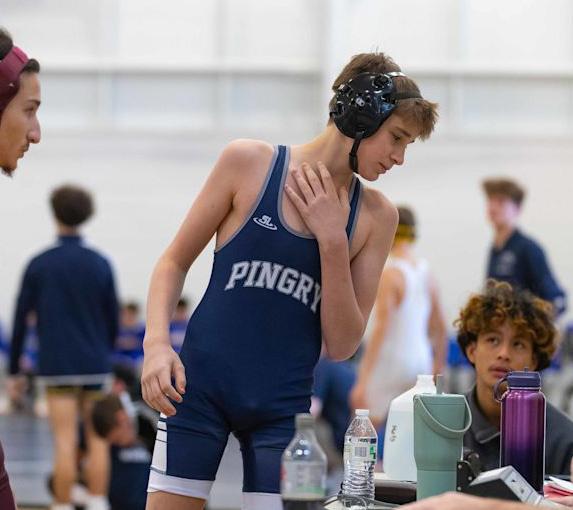
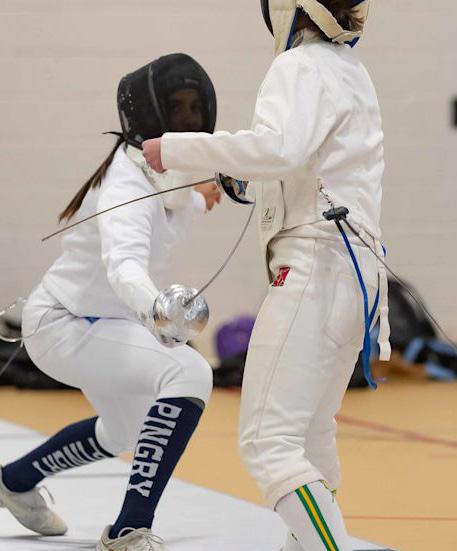
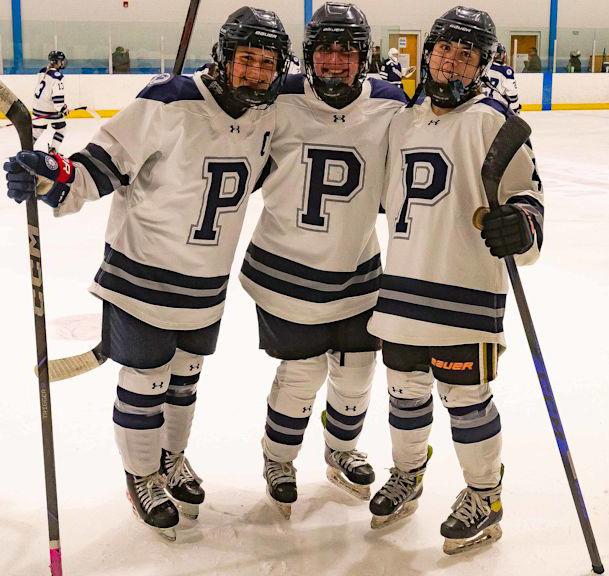
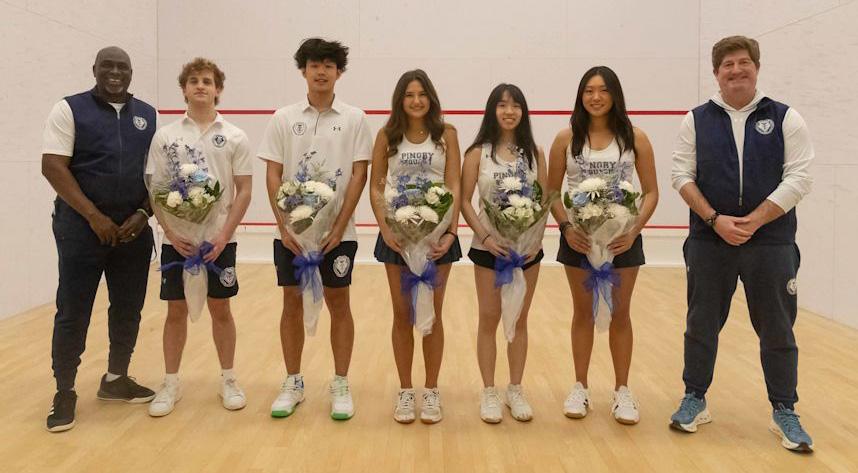


Photo Credits (Top to Bottom): Shanti Swadia (V), Pingry Communications