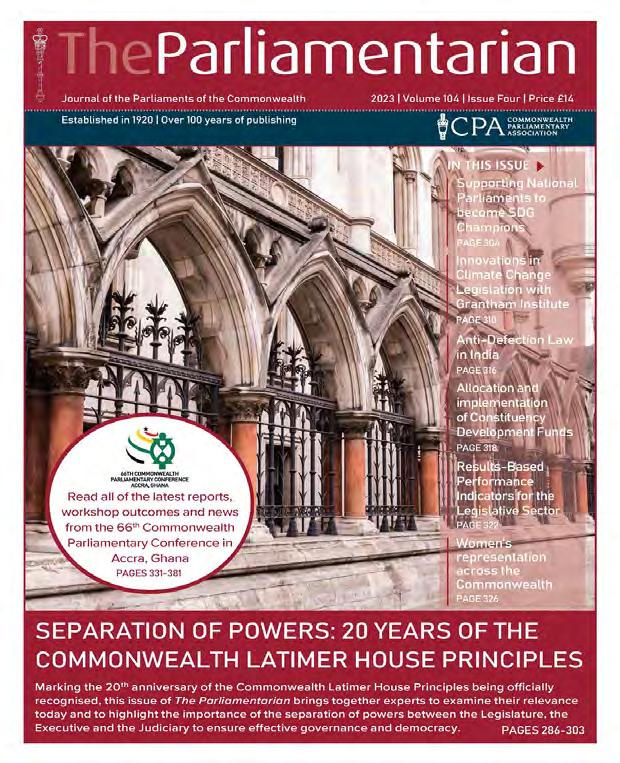
TheParliamentarian
Journal of the Parliaments of the Commonwealth
Established in 1920 | Over 100 years of publishing

Journal of the Parliaments of the Commonwealth
Established in 1920 | Over 100 years of publishing
Read our Q&A on his priorities for the year ahead PAGE 304
Read the reports from CPA’s annual conference in New South Wales PAGES 336-393 PLUS
Undertaking an Election Observation in Montserrat PAGE 320 Parliamentarians and policy advocacy: Lessons from Malaysia PAGE 306
Legislation to combat deepfake creation online that targets women PAGE 316 Measuring Online Abuse Faced by Canadian Politicians and its Impact PAGE 318
January

Updated as at 10 December 2024
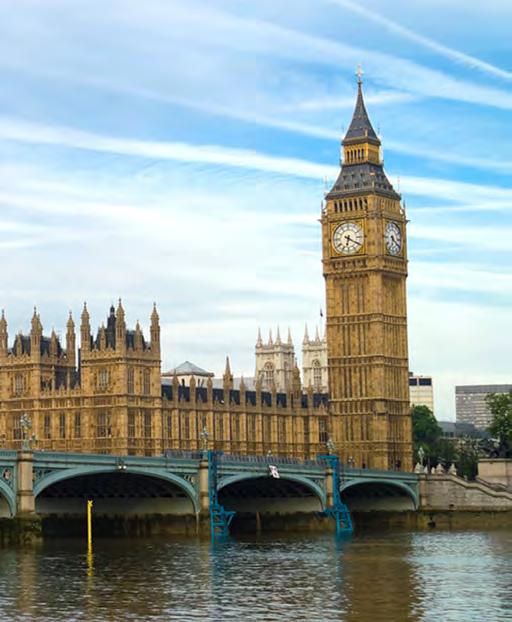
9 to 12 January 2025 Conference of Speakers and Presiding Officers of the Commonwealth (CSPOC) Standing Committee, Guernsey
February
6 to 10 February 2025 First Joint CPA Asia and CPA South-East Asia Regional Conference, Lahore, Punjab, Pakistan
23 Feb to 1 March 2025 CPA Parliamentary Academy: Advanced Professional Development and Skills-building Residency Programme for MPs, Valetta, Malta
March
8 March 2025 International Women's Day
10 March 2025 Commonwealth Day
10 to 14 March 2025 73rd Westminster Seminar, UK Parliament (CPA UK event)
10 to 21 March 2025 69th UN Commission on the Status of Women (CSW68), New York, USA
April
1 to 4 April 2025 CPA Small Branches Workshop: ‘Effective Parliamentary Democracy in Small Jurisdictions’, Douglas, Isle of Man
5 to 9 April 2025 150th IPU Assembly and related meetings, Tashkent, Uzbekistan
28 April to 2 May 2025 Commonwealth Women Parliamentarians (CWP) Workshop, Nassau, The Bahamas
June
30 June 2025 International Day of Parliamentarism / World Parliament Day (IPU initiative)
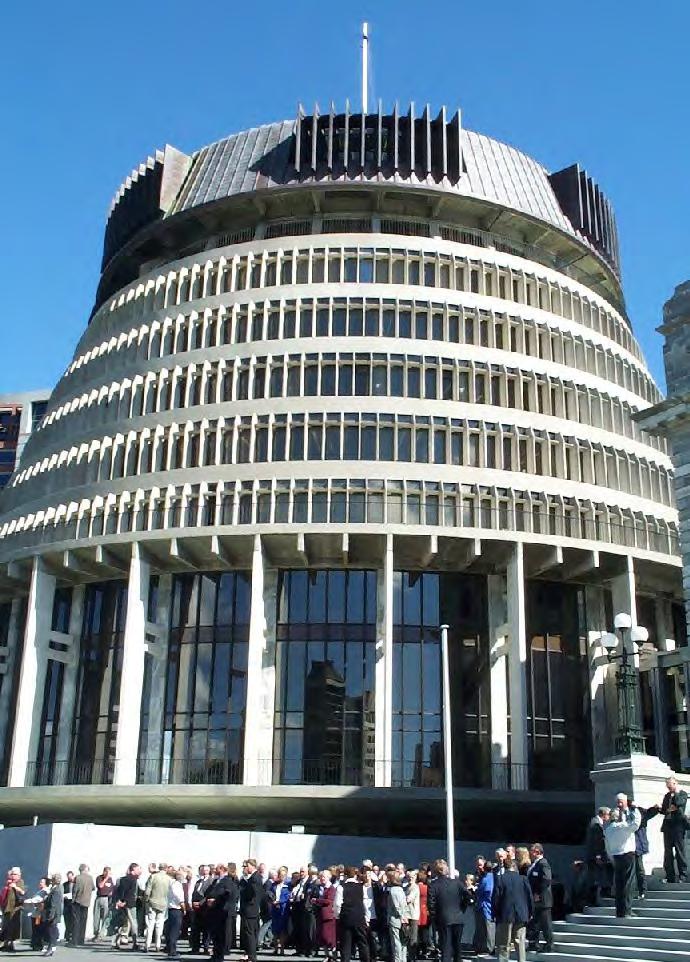
30 June to 4 July 2025 CPA Parliamentary Academy: Advanced Residency Programme for Leadership in Parliament for Clerks and Officials, Wellington, New Zealand
July
19 to 25 July 2025 61st CPA Canada Regional Conference, Québec City, Québec, Canada (plus the Commonwealth Women Parliamentarians (CWP) Canada Regional Meeting)
August
7 August 2025 2025 Parliamentarian of the Year Awards – nomination deadline closes
12 August 2025 International Youth Day
September
15 September 2025 International Day of Democracy
October
6 to 13 October 2025 68th Commonwealth Parliamentary Conference, Barbados including 41st CPA Small Branches Conference; 9th Commonwealth Women Parliamentarians (CWP) Conference; Commonwealth Parliamentarians with Disabilities (CPwD) meetings; 2025 CPA General Assembly; CPA Executive Committee meetings; and 59th Society-of-Clerks-at-the-Table (SoCATT) meetings.
The CPA calendar fosters the exchange of events and activities between CPA Regions and Branches. For further information on any events, please contact the CPA Branch concerned or the CPA Headquarters Secretariat via hq.sec@cpahq.org or visit www.cpahq.org. CPA Branch Secretaries are asked to send notices of all events to the CPA Headquarters in advance of the publication deadline to ensure the calendar is accurate.
400
THE PARLIAMENTARIAN: 2024 ISSUE FOUR
Editor’s Note
Reform and Renewal: How are Commonwealth Parliaments addressing the demands for a modern and inclusive Legislature? Page 300
Q&A: Meet the new CPA Chairperson
Hon. Dr Christopher Kalila, MP from Zambia answers questions about his previous experience and what his top priorities are in his new role. Page 304
Parliamentary Reports and Third Readings
Reports from India, Australia, Trinidad and Tobago, Canada, New Zealand, Uganda and the United Kingdom Pages 394-406
Book review
Review of 'Parliament’s Control on Subordinate Legislation in India' Page 407
View from the CPA Secretary-General
Promoting inclusive leadership and developing partnerships in the Commonwealth Page 302
CPA DIRECTORY
CPA Organisational Structure
CPA Executive Committee, CWP and CPA Small Branches Steering Committees, CPwD Regional Champions and CPA Regional Secretaries Page 408
Parliamentarians and policy advocacy: Lessons from the Malaysian Experience
The establishment of the AllParty Parliamentary Group Malaysia on Sustainable Development Goals
Page 306
Cultivating Intergenerational Solidarity through SDGOriented Youth Political Training
A case study of the Young Politicians Workshop in Malaysia Page 309
Human Trafficking, Refugees and Immigration across the Commonwealth
A case study from Cyprus
Page 313
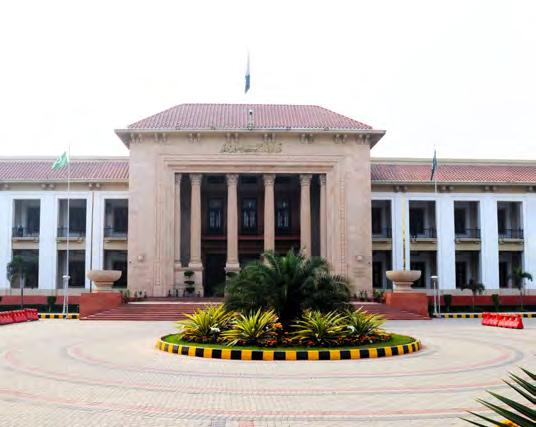
An Inclusive Assembly and Promoting Reforms
The Provincial Assembly of Punjab in Pakistan
Page 314
Combatting deepfake creation that targets women
Legislation is required to criminalise deepfake creation Page 316
Education and Media Literacy is the key Strengthening democractic resiliance in an age of fake news and synthetic media Page 325
Measuring Online Abuse Faced by Canadian Politicians
Examining the research by the Samara Centre for Democracy's SAMBOT Project Page 318
Election Observation in the Commonwealth Insights into undertaking an election observer mission in Montserrat Page 320
Strengthening Parliaments through Benchmarking, Standards and Guidelines
A case study from the KwaZulu-Natal Legislature in South Africa
Page 322
REPORTS
Declining Trust in Public Institutions – How are Parliaments tacking this issue?
A view from Pakistan
Page 324
Steering Towards Road Safety: The need for a Legislative Response
The International Parliamentarians' Congress (IPC) has given road safety and the role of Legislators a key priority in Pakistan
Page 326
Women Running For Election in Local Government
Breaking down barriers and building bridges in local politics in Canada
Page 328
LONG READ: Reflections on the 75th anniversary of the Constitution of India Examining the impact of the Constitution of India today Page 330
67th Commonwealth Parliamentary Conference in New South Wales
• 67th CPC opening Pages 336-337
• Australian Prime Minister's speech Pages 338-339
CPA Governance meetings Pages 340-341
• 2024 CPA Awards Pages 342-343
• 58th Society-of-Clerks-at-the-Table (SoCATT)
Page 342
CPA Lifaka Lecture Page 344
• Commonwealth Parliamentarians with Disabilities network Pages 345
• 67th CPC images Pages 346-347
• CPC Workshops Pages 348-369
CPA World Café Pages 370-372
• 8th Commonwealth Women Parliamentarians (CWP) Conference and Workshops Pages 373-380
• 40th CPA Small Branches Conference and Workshops Pages 381-393
The Parliamentarian: Journal of the Parliaments of the Commonwealth Volume 105 | 2024: Issue Four The Parliamentarian ISSN 0031-2282
Issued and published by the Commonwealth Parliamentary Association, CPA Headquarters Secretariat, Richmond House, Houses of Parliament, London, SW1A 0AA, United Kingdom.
Tel: +44 (0) 20 7799 1460 Email: hq.sec@cpahq.org www.cpahq.org
Twitter @CPA_Secretariat Facebook.com/CPAHQ
Stephen Twigg CPA Secretary-General
Mr Jeffrey Hyland Editor, The Parliamentarian editor@cpahq.org
Annual subscription: Four issues including supplements: UK: £44 inc. postage. | Worldwide: £46 surface post and £52 airmail
Price per issue: UK: £14 cover price plus UK or worldwide postage.
Disclaimer: Opinions and comments expressed in articles and reviews published in The Parliamentarian are those of the individual contributors and should not be attributed to the Secretariat of the Association.
Contributors: Thank you to all contributors for this issue.
Printed in: United Kingdom by Warners Midlands, PLC; and Times Printers, Singapore.
Limited print run - contact editor@cpahq.org for details of print copies for CPA Branches.

Mr Jeffrey Hyland, Editor, The Parliamentarian, Commonwealth Parliamentary Association editor@cpahq.org
The demands on Commonwealth Parliaments have never been greater with calls for inclusive Legislatures that also address the many different issues that face today’s modern Assemblies –ranging from the need for new technology in the age of Artificial Intelligence to a declining trust in public institutions, to how to engage with civil society and the wider society while also breaking down barriers for under-represented groups in society to be equally represented in the Chamber. This issue of The Parliamentarian addresses these and many other varied issues facing the CPA’s membership in almost 180 Parliaments and Legislatures.
In his View article for this issue, the CPA Secretary-General, Stephen Twigg reports back from both the 27th Commonwealth Heads of Government Meeting (CHOGM) in Samoa and the 67th Commonwealth Parliamentary Conference (CPC) in New South Wales, Australia, examining how both events promoted inclusive leadership and were an opportunity to develop new partnerships in the Commonwealth.
During the 2024 CPA General Assembly in New South Wales, the CPA membership elected Hon. Dr Christopher Kalila, MP from Zambia as the new Chairperson of the CPA Executive Committee and we asked him about his previous experience and his top priorities in his new role in our Q&A.
In Malaysia, the establishment of the All-Party Parliamentary Group Malaysia on Sustainable Development Goals (APPGM-SDG) has been crucial to engaging with MPs and key stakeholders. In two articles in this issue, Hon. Ms Isnaraissah Munirah bt Majilis, MP and Professor Datuk Dr Denison Jayasooria examine how this has impacted on policy advocacy with Parliamentarians, while a group of contributors (Zoel Ng, Professor Dato’ Dr Rashila Ramli, Associate Professor Dr Sharifah Syahirah Syed Sheikh and Philus George Thomas) look at how SDG-oriented youth political training has cultivated intergenerational solidarity.
Cyprus faces the ever-present issue of human trafficking, refugees and immigration that is common across the Commonwealth and Hon. Aristos Damianou, MP (Cyprus) provides a case study on the situation in the Eastern Mediterranean.
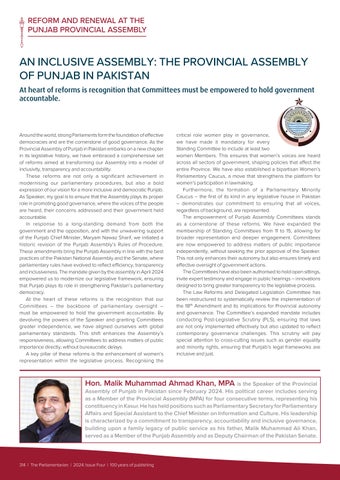
The Provincial Assembly of Punjab in Pakistan has embarked on a programme of reforms to promote an inclusive Assembly and the Speaker, Hon. Malik Muhammad Ahmad Khan, MPA writes about the changes that have taken place.
Technological change provides an ongoing challenge for Legislators. For example, the huge rise in sexually explicit ‘deepfake’ images generated by Artificial Intelligence –disproportionately targeting women - has led to calls to criminalise their creation. One of the youngest Members of the House of Lords, Baroness Owen of Alderley Edge (United Kingdom) writes about her Private Members Bill that aims to criminalise deepfake creation that targets women.
The Deputy Speaker of the People’s Majlis (Parliament of Maldives), Hon. Ahmed Nazim, MP writes how education and media literacy is the key to strengthening democratic resilience in an age of fake news and synthetic media following his intervention in the 2024 CPA General Assembly debate on this topic.
Andrea Mariko Grant from the Samara Centre for Democracy in Canada writes about their ground-breaking research which examined the online abuse faced by Canadian MPs and the findings it produced.
Hon. Shellya Rogers-Webster, MHA (Anguilla) was the Head of the CPA British Islands and Mediterranean Region’s Election Observer Mission to the Montserrat National Elections recently and she provides readers with an insight into the undertaking an election observation mission.
Many Commonwealth Parliaments are seeing the benefits of benchmarking as a method of strengthening the institution through
“The demands on Commonwealth Parliaments have never been greater with calls for inclusive Legislatures that also address the many different issues that face today’s modern Assemblies – ranging from the need for new technology in the age of Artificial Intelligence to a declining trust in public institutions, to how to engage with civil society and the wider society while also breaking down barriers for under-represented groups in society to be equally represented in the Chamber.”
the adoption of best practice, often using the CPA’s Recommended Benchmarks for Democratic Legislatures and the option of a CPAsupported self-assessment. The Secretary (Clerk) of the KwaZuluNatal (KZN) Legislature in South Africa, Ms Nerusha Naidoo provides us with a case study of the benchmarks process that they undertook with the CPA Secretariat.
Muhammad Mohsin Iqbal from the National Assembly Secretariat at the Parliament of Pakistan writes about the declining trust in public institutions and asks how are Parliaments tackling this issue?
Mr M. Naeem Murtaza from the International Parliamentarians' Congress (IPC) highlights their work on road safety and how the role of Legislators has been given a key priority in Pakistan.
Colleen James is a Regional Councillor for the City of Kitchener in Canada and has combined her electoral success with a business career. In her article for The Parliamentarian, she writes about women running for election and how to break down barriers and build bridges in local politics.
Constitutional expert, Ravindra Garimella, reflects on the 75th anniversary of the adoption of the Constitution of India (26 November 1949) and writes about its impact and importance in Inda today.
This issue also features the Parliamentary Report and Third Reading section which includes parliamentary and legislative news from Australia; Canada; New Zealand; Trinidad and Tobago; Uganda; and the United Kingdom. I would like to thank all of the parliamentary correspondents who have contributed to the CPA Journal with these reports over the years.
As always, we look forward to hearing your feedback and comments on this issue of The Parliamentarian, on the issues affecting Parliamentarians across the Commonwealth and to receiving your future contributions to this publication.
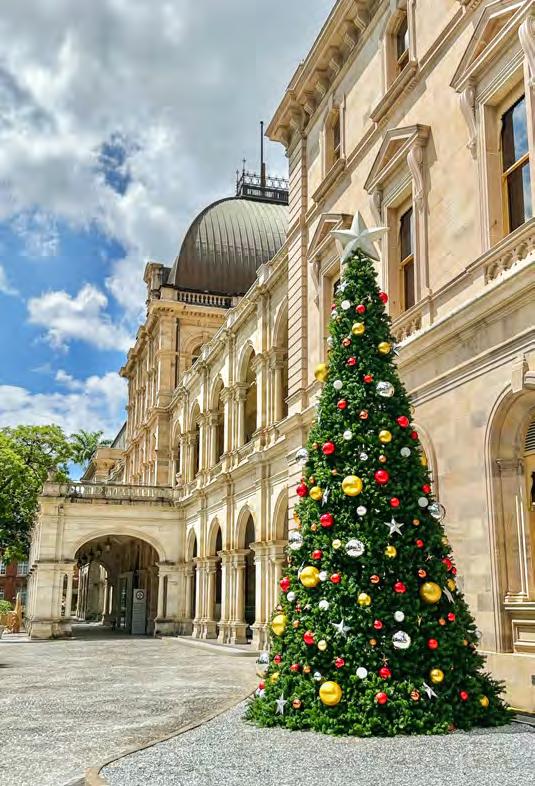
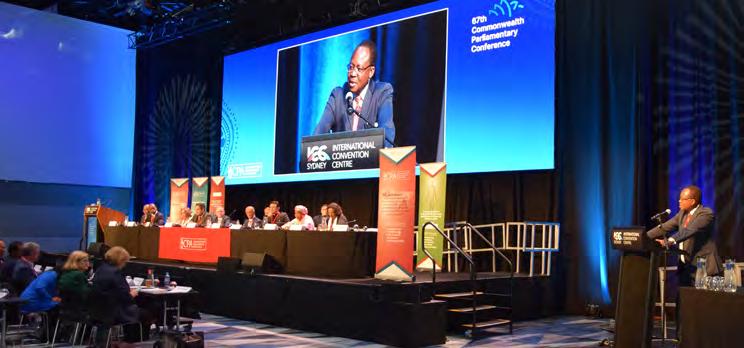
Commonwealth Parliamentarians gathered in Sydney, Australia for the 67th Commonwealth Parliamentary Conference (CPC) hosted by the Parliament of New South Wales and the CPA New South Wales Branch from 3 to 8 November 2024. The conference was held on the theme of ‘Engage, Empower, Sustain: Charting the Course for Resilient Democracy’. Over 700 Parliamentarians, Parliamentary Clerks and staff from nine CPA Regions and 128 CPA Branches attended the 67th CPC along with experts and academics for this unique conference and networking opportunity.
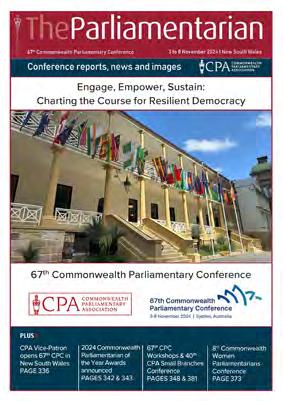
This Conference issue of The Parliamentarian reports on the 67th CPC and the subconferences and governance meetings that took place including: 40th CPA Small Branches Conference; 8th Commonwealth Women Parliamentarians (CWP) Conference; meetings of the Commonwealth Parliamentarians with Disabilities (CPwD) network; 2024 CPA General Assembly, meetings of the CPA Executive Committee; and the 58th Society-of-Clerks-at-theTable (SoCATT) meeting.
This edition also features the 2024 Commonwealth Parliamentarian of the Year award recipients and the second CPA Lifaka Lecture on human rights in the Commonwealth. This issue features detailed reports of the thematic workshops that took place in New South Wales, covering a wide range of topics and shared experiences. I would also like to thank the Rapporteurs team from the Parliament of New South Wales for their help and support in coordinating the detailed workshop reports.
Turn to pages 335 to 393 to read more.
The Secretary-General of the Commonwealth Parliamentary Association, Stephen Twigg E: Stephen.Twigg@cpahq.org
As 2024 draws to a close, it is a good time for all of us in the Commonwealth Parliamentary Association to reflect on an important year for the CPA and the wider Commonwealth.
In October, I attended the Commonwealth Heads of Government Meeting (CHOGM) in Samoa. CPA’s presence at CHOGM provides opportunities for us to strengthen our partnerships within the wider Commonwealth and to ensure that the role of Parliaments and Parliamentarians is championed, emphasised and reaffirmed.
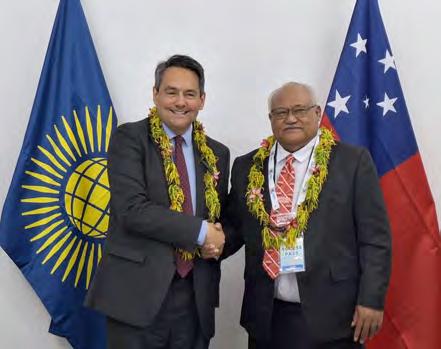
It was wonderful to visit the beautiful Pacific island of Samoa and to experience the warm and friendly welcome of its people and its Government. Whilst there, I visited the Parliament of Samoa and signed a Memorandum of Understanding with the Speaker following their recent CPA Benchmarks assessment.
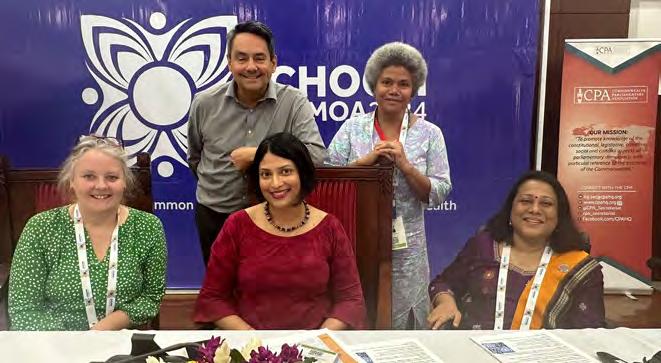
We held a side event in collaboration with the Commonwealth Disabled People’s Forum (CDPF), the Commonwealth Equality Network (TCEN) and the Commonwealth Local Government Forum (CLGF) on the theme of inclusive political leadership. An excellent panel included three Parliamentarians – Hon. Lenora Qereqeretabua from Fiji, Hon. Steve Letsike (TCEN) from South Africa and Hon. Priyanca Radakrishnan from New Zealand. They were joined by Dr Sruti Mohapatara from CDPF and CLGF Secretary-General, Lucy Slack.
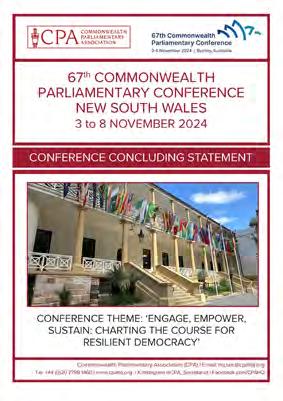
Following the 67th Commonwealth Parliamentary Conference in Sydney, Australia hosted by the Parliament of New South Wales, you can read our Conference Concluding Statement to consolidate your learning from workshops and note important decisions from our governance meetings. Visit the CPA website at: www.cpahq.org/67-cpc/
Our side event demonstrated the CPA’s twin commitments to partnership with other Commonwealth Organisations and to the importance of diversity and inclusion, both of which were common threads throughout our participation at CHOGM 2024 including in the Commonwealth Women’s Forum and in my speech at the Commonwealth Foreign Affairs Ministers Round Table.
The CPA supported a brilliant side event organised by CDPF on disability inclusion and I was delighted to see the strong commitment in the CHOGM Communique including the following reference, “Heads commended the ongoing work towards the finalisation of a Disability Inclusion Action Plan, and the important role of National Human Rights Organisations in monitoring CRPD implementation”. The CPA will work with CDPF to take this forward and to ensure that Parliaments are supported and encouraged to play their role in CRPD implementation.
Commonwealth Leaders at CHOGM 2024 elected the 7th Secretary-General of the Commonwealth, Hon. Shirley Ayorkor Botchwey from Ghana. I congratulate Hon. Shirley Botchwey on her election. There were three strong candidates, and I was pleased to hear them speak at the Chatham House debate in September which CPA helped to organise with the Commonwealth Foundation and Chatham House.
Hon. Shirley Botchwey also spoke at the opening ceremony of the 66th Commonwealth Parliamentary Conference (CPC) in Ghana in October 2023. At the September debate, she made several positive references to the CPA, and I am looking forward to working with her when she assumes office in April 2025.
The outgoing Commonwealth Secretary-General, Rt Hon. Patricia Scotland, KC has led the Commonwealth in a period of challenge and change including the COVID crisis and its economic and social impacts as well as addressing wider matters like climate change and digitalisation. I am grateful to the 6th Secretary-General for her leadership during these difficult times and wish her the very best for the future.
After CHOGM, we had the CPA’s annual conference – the 67th Commonwealth Parliamentary Conference (CPC) - which was hosted by the Parliament of New South Wales in Sydney, Australia to coincide with the bicentenary of the New South Wales Legislative Council. I am hugely grateful to our hosts for what proved a highly successful, well-organised and enjoyable week.
Right: The CPA Secretary-General, Stephen Twigg attended the 27th Commonwealth Heads of Government Meeting (CHOGM) in Apia, Samoa in October 2024, the first time that a small Pacific Island nation has hosted the event. The CPA Secretary-General joined Commonwealth Parliamentarians from New Zealand, Fiji and South Africa at several events, including panels on inclusive and diverse leadership in politics, women in leadership roles with the Commonwealth Women Parliamentarians (CWP) network and disability inclusion across the Commonwealth. The CPA Secretary-General also addressed the Commonwealth Foreign Affairs Ministers Roundtable.
The 67th CPC delegates elected a new CPA Chairperson, Hon. Dr Christopher Kalila from Zambia, and a new CPA Small Branches Chairperson, Hon. Valerie Woods from Belize. Both elections at the 67th CPC were contested with three strong candidates in each case. The first meeting of the new CPA Executive Committee at the end of the conference also elected a new CPA Vice-Chairperson, Hon. Carmel Sepuloni from New Zealand. I congratulate all of the new CPA Officers on their election at the CPC and I look forward to working with them. I also thank the other candidates who put themselves forward for these three important roles.
the CPA’s work. The issue of CPA status was under consideration during his tenure and has been the subject of debate and discussion ever since. The UK legislation will grant a new status which has great potential to provide a set of opportunities for the voices of Parliaments and Parliamentarians to be amplified internationally both in the Commonwealth and in other international bodies.
Our CPA Officers play a vital role in the organisation, and they do this as part of their busy schedules as Commonwealth Parliamentarians. In the previous edition of The Parliamentarian, I paid tribute to our former CPA Chairperson, Ian Liddell-Grainger (UK). I also thank Hon. Arthur Holder (Barbados) who served as the CPA Vice-Chairperson and then recently as the Acting CPA Chairperson, and Joy Burch (Australian Capital Territory) who was the Chairperson of the CPA Small Branches. All three served our organisation with distinction.
The 67th CPC was a momentous one for the CPA as we move towards a new international legal status in the United Kingdom. The CPA General Assembly agreed to transfer the CPA’s name, staff and non-financial assets out of the charity ahead of the passage of the UK legislation, which is now in the UK House of Commons having passed through the House of Lords. Once all the legislative stages, including secondary legislation, are completed the new status will be conferred on the non-charitable CPA and we will have a new CPA with an international legal status in the UK.
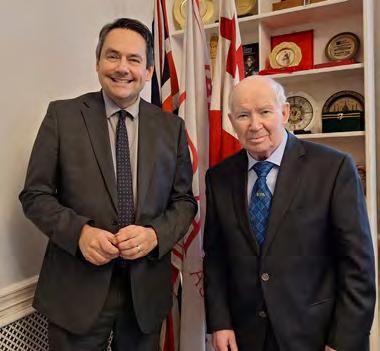
I met recently with one of my predecessors, the 4th CPA Secretary-General, Hon. Arthur Donahoe, and updated him on
In 2025, the CPA will develop its next Strategic Plan to cover the period between 2026 and 2030. We will engage and consult with our membership and with partner organisations to ensure that our strategy is ambitious, impactful and relevant for the new CPA both maximising the new opportunities offered by the new status and building upon the CPA’s long history of work to strengthen and champion the work of Parliaments across the Commonwealth.
I look forward to us all working together in 2025 to achieve our shared goals and priorities and I am pleased to take this early opportunity to wish all readers of The Parliamentarian a Happy New Year.
Below: The CPA Secretary-General visted the Parliament of Samoa in Apia on 24 October 2024 where he met with the Speaker of the Legislative Assembly of Samoa, Hon. Papalii Lio Oloipola Taeu Masipau and briefed Members of the CPA Samoa Branch on the latest activities of the CPA and its work in the CPA Pacific Region. The CPA Secretary General and the Speaker of the Legislative Assembly of Samoa signed a Memorandum of Understanding (MoU) on the outcomes of the CPA Democratic Benchmarks Assessment that took place earlier this year and outlining a roadmap for technical assistance for the Legislature over the next two years.
Left: CPA Secretaries-General meet in London: During a visit to Westminster, the 4th CPA Secretary-General, Hon. Arthur Donahoe met with the current 8th CPA Secretary-General, Stephen Twigg. Mr Donahoe was the CPA Secretary-General from 1993 to 2001 and also a former Speaker of the Nova Scotia House of Assembly (1981–1991).
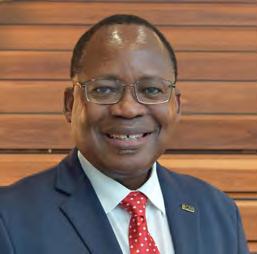
Hon. Dr Christopher
Kalila, MP (Zambia), Chairperson of the CPA Executive Committee
During the 2024 CPA General Assembly at the 67th Commonwealth Parliamentary Conference in New South Wales on 7 November 2024, Members elected Hon. Dr Christopher Kalila, MP from Zambia as the new Chairperson of the CPA Executive Committee for a three-year term. We asked him about his previous experience and what are his top priorities in his new role.
Hon. Dr Christopher Kalila, MP is a Member of the National Assembly of Zambia. A Zambian Parliamentarian with a parliamentary career spanning sixteen years, he currently represents Lukulu Constituency, chairs the Parliamentary Committee on Health, Community Development and Social Services and serves on the Committee on Cabinet Affairs. He has served in a number of CPA roles at a Branch and Regional level and champions the Commonwealth values of respect for the rule of law; individual rights and freedoms; and the positive ideals of parliamentary democracy. Prior to his political career, he served as a medical doctor and administrator in Zambia’s public and private sectors for over a decade
Q: Congratulations on your new role as the elected Chairperson of the CPA Executive Committee. You are a highly experienced Parliamentarian – can you highlight some of the lessons you have learned from your time in the Parliament of Zambia?
I would like to begin this conversation by thanking the membership of the CPA for giving me their votes and ushering me into the Office of Chairperson of the CPA Executive Committee. I would also like to particularly thank the CPA Africa Region for endorsing me as their candidate at the 53rd CPA Africa Regional Conference, held in Arusha, Tanzania. A special thank you also goes to the Speaker of the National Assembly of Zambia, Rt Hon. Nelly B. K Mutti, SC, MP, FAPRA and my campaign team from the CPA Zambia Branch. To the CPA Secretariat, I commend you for the professional manner in which you handled the elections which were peaceful and free from any controversy. In my time as a Parliamentarian, some of the important lessons I’ve learnt include:
• humility and remaining true to myself no matter the circumstances.
• loyalty to my party and endurance to wait for my turn for opportunities instead of cajoling for positions.
• continuous personal and professional development in order to remain relevant in the ever-changing Zambian society and the world around us.
• Respect for people around me.
Q: Can you tell us about your experience of the Commonwealth growing up, living and working in a Commonwealth country including your experience as a medical doctor?
I was born in Zambia two years after we gained independence from British rule. However, a number of neighbouring countries
were yet to be independent, therefore, Zambia became the strategic centre for liberation struggles. I recall attending secondary school with children of freedom fighters who had been exiled at the time. From the sixties to around the nineties, Zambia welcomed a lot of freedom fighters from countries such as Namibia, Zimbabwe, Mozambique, Angola and South Africa.
It was also not uncommon to hear sounds of bombs being dropped in liberation centres, for instance I recall that there were major attacks on some liberation camps north of the city of Lusaka, at a place called Chikumbi. I am, therefore, very familiar with the realities of fighting for self-rule.
From the eighties to around the nineties, there were negotiations for the liberation of the whole Southern African Region. We could see on television, personalities such as the then British Prime Minister, Margaret Thatcher and Pieter Willem Botha, the then Prime Minister of South Africa, engaging in discussions with liberation leaders. During this period, the City of Lusaka became a hive of activity owing to the independence negotiations. In fact, in 1979, when Southern Africa liberation talks had already begun, Her Majesty Queen Elizabeth II travelled to Zambia to attend the Commonwealth Heads of Government Meeting. When I went to secondary school, I begun to read about the Commonwealth and what it meant for Zambia to be part of it. It was also interesting to learn about the Commonwealth’s contribution to the liberation of a number of formerly colonised countries. When I proceeded to University, liberation efforts were still underway in some countries and by the nineties, the whole Africa Region became independent.
Post imperialism, the Commonwealth is playing an important role in world affairs including in matters of economic development. I should also make mention that many Commonwealth states have similar judicial systems, and they also practice the Westminster parliamentary system owing to a shared history and common values and principles that continues in the present day.
As I conclude my response to this question, I would also like to state that at one time I read about the Lancaster House talks which gave rise to the independence of Zimbabwe. I also read that the independence of Zambia and Malawi were negotiated at Lancaster House, so the next time I am in London, it’s one of the places I would like to visit.
Q: You are the fifth CPA Chairperson from the CPA Africa Region and the second from Zambia (following Hon. Lavu Mulimba, MCC, MP from 1987 to 90) since the role of CPA Chairperson was created in 1967. What is the importance of the Commonwealth and the CPA in the CPA Africa Region?
Firstly, I would like to say that it is an honour to be the second Zambian to hold this position. Following my election, I actually made efforts to reach Hon. Lavu Mulimba but learnt that he had passed away. I would have loved to learn from him about what the Commonwealth was like and to learn about his experience as CPA Chairperson. For the CPA Africa Region, the Commonwealth is an important grouping of countries with a shared history, and history is important because it helps us understand present circumstances and project the future ahead. Lessons learnt from history also help us to make informed future decisions. On account of our shared history, most Commonwealth countries in the CPA Africa Region, have similar governance systems. We also share common values and principles of friendship, democracy, the rule of law, respect for human rights and peace building. Our shared history and common values also promote unity within the CPA Africa Region.
Young people can be encouraged to participate in politics by competing for seats in Parliament; they can be encouraged to participate in parliamentary processes through avenues such as Committees and engaging with Parliamentarians in constituencies and holding them to account for their actions or inaction; young people can also be involved in politics through Youth Parliaments.
Q: You have worked on health policy in a number of global organisations. Can you tell us more about this and any lessons you have learned from this important work?
Q: The CPA networks – Commonwealth Women Parliamentarians (CWP), CPA Small Branches and Commonwealth Parliamentarians with Disabilities (CPwD) – play an important role in our work in connecting Parliamentarians. What role do you see for these networks in the CPA’s future work?
It is important to note that the CPA networks demonstrate how inclusive an Association we are. They play an important role in advancing the agenda of special interest groups such as women Parliamentarians and Parliamentarians with disabilities and they will continue to do so as we forge ahead to create a greater CPA. In fact, amplifying the voices and work of the CPA networks is among my priorities. I intend to work closely with the CPA Secretariat and the leadership of the networks to ensure that we achieve the strategic objectives of the networks espoused in the 2022 to 2025 Strategic Plan. Further as we embark on the formulation of the next strategic plan, I intend for the CPA Secretariat and I to consult widely within the CPA networks to ensure that their priorities and aspirations in general are met and that the networks have greater impact in the CPA and Commonwealth as a whole, particularly in their areas of interest.
Q: 60% of the Commonwealth’s 2.7 billion population is aged under 30. How can the Commonwealth and Parliamentarians engage with more young people? How can we involve young people in politics?
With this background on the composition of the Commonwealth population, it is important to take care that the youth are not left behind in politics and other avenues of decision making. Young people are vibrant, energetic and innovative and they want to add their voice and contribute to contemporary issues at the local and international level. The human resource that the pool of youths presents can be leveraged to achieve political and socio-economic development in the Commonwealth.
Indeed I do work with a wide network of organisations in the area of health locally and globally. Some of this work includes working with young people to prevent alcohol and substance abuse and to rehabilitate substance users; promotion and protection of sexual reproductive health rights; I am a member of the Global Tuberculosis Caucus; I work on the Commonwealth Pharmacists Association (CPA) Legislators Initiative on Antimicrobial Resistance; and I am also a campaigner for a tobacco free world, among many other causes.
An important lesson I have learnt working in the area of health is that of collaboration. Tackling health issues requires multi-sectoral approaches and collaboration at the local, regional and global levels. While working in the area of health, I have also come to realise that the CPA, like other organisations as such as the Inter-Parliamentary Union (IPU), should position itself strategically and robustly to address prevailing and emerging health issues within the Commonwealth and beyond. For instance, while working in the area of combating tuberculosis, I recently learnt that about 50% of the world’s tuberculosis cases are in the Commonwealth and the question that arose was, what is the Commonwealth doing about this health situation? Therefore, in my time as CPA Chairperson, another aspect of the CPA’s work I want to champion is that of health.
Q: As 2024 draws to a close, do you have a New Year message for the CPA membership and other readers of The Parliamentarian?
I would like to wish the CPA membership and other readers of The Parliamentarian a very Merry Christmas and a prosperous year ahead. Finally, to the CPA membership, we have a busy year ahead as we wind up the 2022 to 2025 CPA Strategic Plan and formulate the next one. I look forward to working with all the CPA Branches in making the CPA more exciting, greater and more strategic in participating in global affairs, especially as we transition to an international, inter-parliamentary organisation.
The establishment of the All-Party Parliamentary Group Malaysia on Sustainable Development Goals (APPGM-SDG) has been crucial to engaging with MPs and key stakeholders.
Introduction
On 17 October 2019, the Malaysian Parliament passed a resolution on the formation of the All-Party Parliamentary Group Malaysia (APPGM) and the first APPGM to be established was on the Sustainable Development Goals (SDGs). The APPG model was taken from the United Kingdom Parliament’s model and adopted as an effective method of engagement among Members of Parliament as well as between MPs and other policy actors such as academics, civil society and government agencies. MPs from both sides of the political divide (government parties and opposition) participate voluntarily.
In Malaysia, the Chairperson of an APPGM hails from the Government benches and the deputy from the Opposition benches. There must be a minimum of five MPs participating and they need to set up a secretariat and raise their own funds for the work. In Malaysia, the Society for the Promotions of SDGs is the legal secretariat for the APPGM-SDG that manages the funds, staff and programmes. The society was founded by academics and civil society leaders from the Malaysian CSO-SDG Alliance in early 2020.
Since 2020, the APPGM-SDG has engaged with 115 MPs (or 52% of Members) and their constituencies, out of the 222 parliamentary constituencies represented in the Malaysian Parliament. This localising of the SDGs with MPs is fully funded by the Ministry of Finance and supported by the Parliament and the Ministry of Economy that is the lead agency.
The APPGM-SDG adopted a variety of methods in localising SDGs, and it recognised that MPs have a dual role. Firstly in terms of their legislative role, in Parliament they champion concerns at the national level through parliamentary debates and Select Committee roles. Secondly, they have a constituency role, where they take up local issues.
For the first four years, the APPGM-SDG focused at the constituency level on identifying local concerns, organising micro intervention programmes with small grants of up to US$10,000 per project, organising capability building programmes as well as
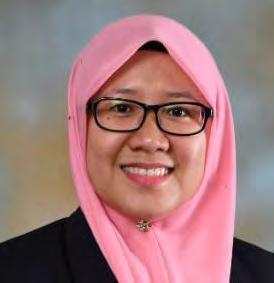
Hon. Ms Isnaraissah Munirah bt Majilis,
MP is the Chair of the All-Party Parliamentary Group Malaysia on Sustainable Development Goals (APPGM-SDG). She is the Member of the Malaysian Parliament for Kota Belud, Sabah since 2018 and is serving her second term. She is a former Deputy Minister of Energy, Science, Technology, Environment and Climate Change and was among 33 women MPs in 2021 calling for Malaysia to adopt a gender-sensitive Parliament.
dialogues with district level agencies in solving local problems. These have made a major impact at the ground level and also enabled MPs to play a major role in localising SDGs.
In 2024, we have taken a major step toward policy advocacy at the parliamentary level. Recently on 15 October 2024, the APPGMSDG Committee and the Secretariat launched a series of eight very important Parliamentary Preliminary SDG Reports arising from a series of eight SDG parliamentary focus group discussions. This effort is a major step forward in the policy advocacy work being undertaken by the APPGM-SDG since 2020. Between 2020 and 2024, we adopted a number of strategies in developing a grounded evidence-based policy advocacy approach through data gathering and analysis.
The first strategy was to undertake the mapping of local needs. Here, we undertook a conversation with MPs, the District Officer and government agencies. We organised field visits and focus group discussions with local communities over three to four days. In this exercise, we identified what are the key economic, social and environment concerns based on the SDGs framework. We shared the findings, which were published as individual mapping of local SDG needs by our Secretariat constituency researchers with the MPs as well as the government agencies for their validation of the issues identified. We also published situational analysis reports in 2022 and 2023.
This grounded approach provides a reality check as well as disaggregated data that complements the macro statistical data released by the Department of Statistics Malaysia. There is a difference between grounded data and macro national data. The latter does not give a face to poverty or real-life experiences of
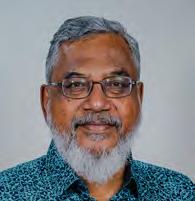
Datuk Dr
Jayasooria is Head of the APPGM-SDG Secretariat since it was established in October 2019. He holds a PhD from Oxford Brookes University and is a former Chevening scholar. He served as Principal Research Fellow and Professor of Public Advocacy at the Institute of Ethnic Studies, National University of Malaysia (KITA-UKM) where he is currently an honorary Professor. He previously served as a member of the Human Rights Commission of Malaysia.
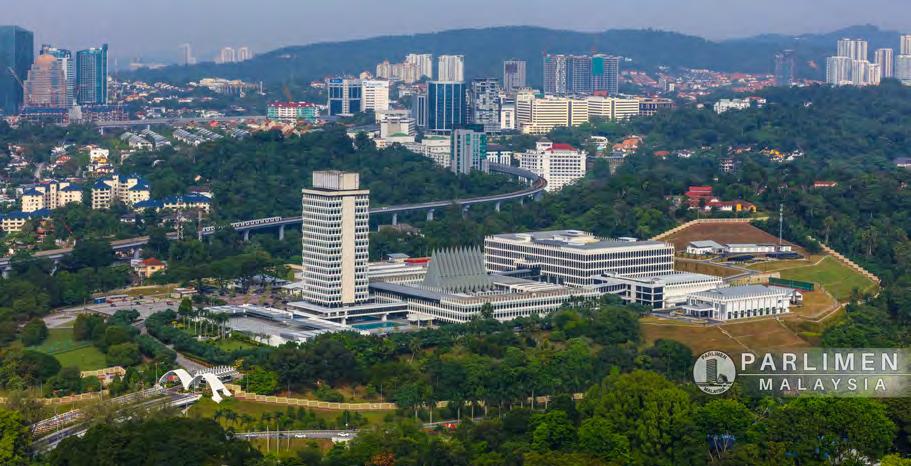
Right: The Malaysian Houses of Parliament (Malay: Bangunan Parlimen Malaysia) is a complex where the Malaysian Parliament assembles. The structure is located at the Perdana Botanical Gardens in Kuala Lumpur, close to the Malaysian National Monument.
inequality and deprivation, especially of individuals, groups and communities left behind. Therefore, an alternative approach is needed and the work of MPs and their concerns from their constituencies are helpful.
We recognise that the evidence-based approach is crucial and focus group discussions at the grassroots level is a valid method of data collection if the methodology and documentation is accurately done. In the case of the APPGM-SDG, as there is a longitudinal approach, action-based research is also a method of monitoring the changes at the ground level.
The second strategy undertaken was providing a comprehensive review of the issues across 85 constituencies (2020-2023). This was undertaken by Dr Teo Sue Ann who categorised them into 26 thematic issues under the heading of economy, social and environment concerns.
These 26 thematic issues are cross-cutting and impact a cross section of governmental agencies and target groups. The theme of poverty impacts a grouping of issues pertaining to gender, access to social welfare services, economic opportunities, land ownership among forest-based communities, the poor in small island communities as well as those in urban low-cost housing in flats. Interventions require cross agency involvements as well as multi stakeholder cooperation. These are the complexities of local issues, and our findings have been documented and collectively reviewed and presented to MPs for their feedback in parliamentary debates and dialogues with relevant agencies.
The third strategy was hosting an initial series of five APPGM-SDG Parliamentary Focus Group Discussions at the Parliament level where we secured the support of MPs to review the findings on poverty, welfare, food security, environment and statelessness, between 29 February and 21 March 2024 during the first Malaysian parliamentary sitting.
We had MPs leading these discussions with Secretariat staff from the MySDG Centre for Social Inclusion providing the review supported by subject experts. These discussions received good support from MPs.
The fourth strategy was to have dialogue sessions between MPs and relevant agencies. The Secretariat hosted many pre-dialogue sessions with both MPs and agencies separately to secure strong buy-in. Such conversations constitute a key process for better understanding as well as finding policy and legislative solutions in addressing the social, environmental and economic concerns identified.
In this context, a series of eight SDG parliamentary focus group discussions were held between 2 and 18 July 2024 during the second Malaysian parliamentary sitting. The eight thematic areas consisted of poverty (Peninsular, Sabah, Sarawak and small islands), welfare, food security, environment and statelessness. We received very good support from the relevant agencies including feedback on the needs and concerns that were highlighted. The Secretariat continued to host a series of follow-up discussions with both MPs and the relevant agencies thereafter.
Writing and Launching of the Eight Parliamentary Preliminary SDG Reports
The fifth strategy was the writing of the eight Parliamentary Preliminary SDG Reports in the national language and its launch on 15 October 2024. Further consultations were also hosted to fine tune the documents. The Secretariat staff at the MySDG Centre for Social Inclusion have been working diligently to provide comprehensive and continuous analysis on the issues in the reports. They have been in close contact with the relevant MPs to review them and to receive feedback. We see these reports as a working document requiring further dialogues and strengthening in analysis and policy recommendations.
The MySDG Centre for Social Inclusion (MySDG-CSI) hosted an SDG partnership conference with academic institutions and policy think tank groups. This conference with the theme ‘Joint Reflection & Action towards Policy Making and Advocacy’ was held from 25 to 27 October 2024.
The two main objectives of the partnership conference were, firstly, to strengthen the efforts of governmental institutions in addressing critical issues that contribute towards the achieving of the Sustainable Development Goals by 2030 and beyond. The second was to enable meaningful collaboration with policymakers, governmental institutions and grassroots communities through a whole-of-nation approach and align this with the aspirations of the Malaysian government to realise the SDGs.
In due time, we will complete this policy advocacy process and provide the findings as input to the 13th Malaysian Plan process as part of the development planning agenda for the country. We also are preparing the Voluntary Parliamentary Review (VPR) on SDGs (2020-2024) as an independent review of the APPGM-SDG on the work of localising the SDGs in Malaysia. The VPR will be ready in time for the High-Level Political Forum on SDGs to be held at the United Nations in New York between 14 and 24 July 2025. Malaysia is also presenting the country’s Voluntary National Review (VNR) for the third time.
At the APPGM-SDG, we value the policy advocacy conversations and these eight Parliamentary Preliminary SDG Reports as a key contribution of Parliamentarians at the macro policy level, alongside our efforts in localising SDGs at the micro level through micro-SDG solutions and community farming projects.
Making the SDGs Work in Malaysia with Members of Parliament: Grounding SDGs 16 and 17 in the Malaysian Context
The SDGs pertaining to poverty (SDG 1 and 2), inequality (SDG 10), health (SDG 3), education (SDG 4), gender equality (SDG 5) and decent work (8) are a popular thrust of the development agenda. There is also a clear commitment towards the climate change agenda (SDGs 13 to 15). But at the same time, there is an increased interest to governance reform by the current administration that is contained in SDG 16 such as addressing the issue of violence against children (SDG 16.2), improving the public access to justice (SDG 16.3), addressing corruption more seriously (SDG 16.5), strengthening institutional governance (SDG 16.6) and ensuring it is inclusive and participatory (SDG 16.7).
In a similar way, there is greater emphasis towards multistakeholder engagement as found in SDG 17.17 by enabling MPs to adopt local initiatives in solving local needs and issues. It also enables MPs to play an active role in the realisation of the SDGs.
We recognise the importance of multi-stakeholder engagement between Parliamentarians (bipartisan) and government agencies (Federal, State, district and local government levels), academics, civil society, private sector as well as grassroots communities. This consultative and engagement process is central to the work of the APPGM-SDG and essential to the localising process. A bottom-up process from the ground upwards as well as a top-down approach from the national level is instrumental to find lasting solutions for many ground-level issues that are complex and multidimensional.
We are convinced that there must be ‘political will’ in finding political consensus to address many of the concerns at the grassroots level. We need to build bipartisan consensus in formulating and implementing solutions. The APPGM-SDG provides the space for MPs from both government parties and opposition
parties to deliberate such consensus. As both are elected by the people, we need to build stronger synergies and partnerships through the SDGs so as to ensure no one or no community is left behind in Malaysia.
MPs are consistently making policy speeches. For instance, during the tabling of the Annual Government Budget, and other national policy and specific legislation debates, MPs express their views and articulate comments. Such exchanges are valuable, including and especially those that occur during the parliamentary question time. There is however a profound challenge. At present, there is very little opportunity for bipartisan statements on development policy as most often positions and decisions on policy agendas are taken along party lines.
Hence, for the first time and on a voluntary basis that is not in conflict with the political parties, these MPs have openly discussed SDG-related policies. While these are not consensus documents, they are nonetheless documents that encapsulate views of MPs on shared concerns pertaining to the vulnerable across the political divide. Issues such as poverty and welfare call for collective actions by MPs across the political divide to amplify the voices and views of the poor and ordinary people. There is much potential in using the SDGs as a common political advocacy tool.
In this article, we can clearly recognise the dual role of MPs in championing policy concerns in Parliament and at the same time championing local issues faced by the people. This is public advocacy at the Parliamentary level and compassionate service at the grassroots level. MPs have the opportunities and possibilities to voice development concerns from the SDG perspectives. This is a major task in public policy advocacy and MPs have a definite role in being the champions.
We have also clearly noted the importance of ground research in the cycle of identifying problems at the grassroots, formulating adequate local solutions and making relevant policies for long term intervention and change. In this context, the work of the APPGMSDG is a testament to the importance of bipartisanship and global, national and local development. The work undertaken can be a model to countries in ASEAN, Asia and the Commonwealth.
The Malaysian story and experiences of Parliamentarians and their partners can be offered as a light to the other nations in the Commonwealth where the Parliamentary and constitutional foundations are similar.
Selected References:
APPGM-SDG Annual Report 2022, Mapping local needs and field visits (page 23-24). www.parlimen.gov.my
• APPGM-SDG 2023 Location of 85 Parliamentary Constituencies (2020-2023) Annual Report (pages 6-7)
APPGM-SDG 2023 Thematic issues from qualitative findings (Page 39-50)
• Denison Jayasooria (2021), Role of Parliamentarians in Localising SDGs in Malaysia.
SDG-ORIENTED
A case study of the Young Politicians Workshop in Malaysia.
Introduction
Intergenerational solidarity is essential for achieving the Sustainable Development Goals (SDGs) and a sustainable future. Enshrined in the 2030 Agenda, this concept recognises the interconnectedness of generations and the need for collaborative action to address global challenges (Zurba et al., 2020). In Malaysia, the All-Party Parliamentary Group Malaysia on Sustainable Development Goals (APPGM-SDG) and MySDG Academy (the training centre of APPGMSDG) have taken a proactive approach to foster intergenerational solidarity by organising the Young Politicians Workshop series. This initiative aims to empower young political leaders by integrating SDGs into political practices and fostering cross-party collaboration. The programme incorporates valuable contributions from Members of Parliament who share their political experiences and insights, addressing the practical needs of young politicians within the Malaysian parliamentary context.
Hassan, Hed, and Kamilan (2021) emphasize the critical role of MPs in creating an inclusive and sustainable Parliament that effectively contributes to achieving the SDGs. MPs can foster intergenerational solidarity and promote SDG awareness by actively engaging with youth through programmes like the Young Politicians Workshop. Mentorship and guidance from experienced MPs are invaluable for nurturing leadership skills in young politicians and enhancing the inclusivity, transparency and accessibility of parliamentary processes. Collaboration with youth organisations and community leaders is crucial for facilitating grassroots initiatives and youth engagement in community development projects.
Established in 2019, the APPGM-SDG is a platform endorsed by the Malaysian Parliament with its vision to localise the United Nations Sustainable Development Goals across the 222 parliamentary constituencies in Malaysia, working together with

Zoel Ng serves as the Director of MySDG Academy within the secretariat of the All-Party Parliamentary Group Malaysia on Sustainable Development Goals (APPGM-SDG).
Associate Professor Dr Sharifah Syahirah Syed
Sheikh is the Vice-Chancellor of University Poly-Tech Malaysia (UPTM).
MPs, civil society groups, academia and grassroots communities in undertaking localised approaches to address planetary, economic and social issues in the community. In 2024, the APPGM-SDG has engaged with 115 MPs (52%) and their constituencies, focusing on localising SDGs through various methods such as mapping local needs, organising micro-intervention programmes and conducting capability-building programmes (Jayasooria, 2021).
Youth political engagement is vital for a healthy democracy. It involves young people participating in political processes, leading to increased civic responsibility and potential for bipartisan collaboration. Research highlights the importance of civic education in fostering participation and open-mindedness. Structured opportunities to examine diverse political perspectives in a safe environment can promote open-minded political engagement (Levy et al., 2019).
Recent research underscores the critical role of intergenerational political solidarity in addressing global challenges. Sieverding et al. (2023) found that "affinity with young people and legacy motivation directly explained intergenerational political solidarity." This suggests that fostering closer relationships between generations and emphasizing long-term consequences can motivate support for policies that benefit younger and future generations.
This qualitative study draws on document analysis and participant feedback. Programme materials and feedback forms were analysed thematically to identify key elements related to empowering future leaders. The central research question explored the mechanisms for nurturing and empowering the next generation of national leaders (apakah mekanisme untuk melahir & memperkasa generasi pelapis-bakal pemimpin negara?).


Professor Dato’ Dr Rashila Ramli is a Professor of Political Science at Universiti Kebangsaan Malaysia (UKM) and a Principal Fellow at the UNU-International Institute of Global Health.
Philus George Thomas is the Youth Officer at the All-Party Parliamentary Group Malaysia on Sustainable Development Goals (APPGM-SDG).
The Young Politicians Workshop in SDGs: An Overview Launched in 2023, the Young Politicians Workshop (YPW) is a joint initiative of APPGM-SDG and MySDG Academy. Its primary objective is to cultivate a new generation of political leaders equipped with the knowledge and skills to address sustainable development issues. The workshop emphasises bipartisan collaboration, recognising that effective governance requires diverse perspectives and cooperation among political factions, with a particular focus on SDG 16 (Peace, Justice, and Strong Institutions) and SDG 17 (Partnerships for the Goals).
The Young Politicians Workshop initiative consists of a three-day workshop held across Malaysia. During 2023-2024, the workshops were conducted in Langkawi, Kuala Lumpur, Petaling Jaya, Kuching and Kota Kinabalu. A total of 104 participants with diverse political affiliations have engaged in the programme, with a gender distribution of 60.6% male and 39.4% female. Each workshop hosted 20-25 participants from various political parties, including 20.8% DAP (Democratic Action Party), 18.2% PKR (Parti Keadilan Rakyat), 11.7% AMANAH (Parti Amanah Negara), 11.7% MUDA (Malaysian United Democratic Alliance), 10.4% PAS (Parti Islam Se-Malaysia), 9.1% UMNO (United Malays National Organization); others are MIC (Malaysian Indian Congress), PBB (Parti Pesaka Bumiputera Bersatu), PDP (Progressive Democratic Party) and BERSATU (Malaysian United Indigenous Party). All participants were under the age of 35 and actively involved in their respective political parties, ensuring they are future leaders and current influencers within their communities.
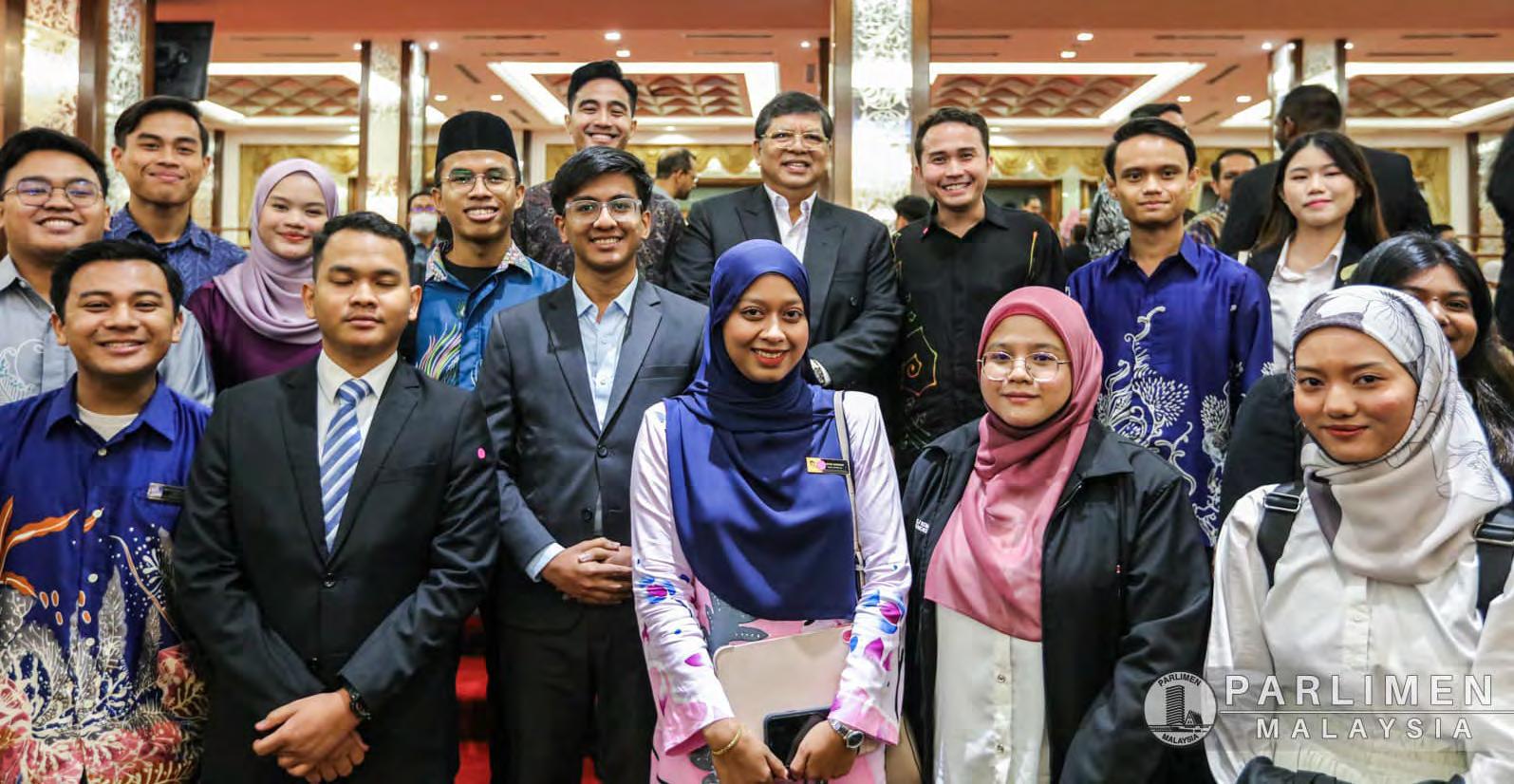
The Young Politicians Workshop has benefited significantly from the contributions of several Members of Parliament who shared their expertise and experiences. YB Munirah, the programme initiator, introduced the concept of SDGs and provided career development tips. YB Dato' Sri Saifuddin Abdullah, Deputy Chair of APPGM-SDG, engaged with participants on the role of MPs in driving societal progress, offering insights into parliamentary processes and sharing experiences as a former Minister. Other MPs, including YB Tuan Mordi, YB Dato' Wira Ku Rahman, YB Rodziah, and YB Senator Puan Susan, shared their experiences in community development,
“ The sharing of experience and insights by elder Parliamentarians is a cornerstone of effective parliamentary socialisation for young politicians. This process involves transferring critical knowledge about the informal norms, routines and values that govern parliamentary culture, fostering a deeper understanding of the legislative process. ”
highlighting the importance of grassroots engagement and bridging the gap between policy and implementation. These sessions provided participants with practical examples of how to effectively contribute to their communities and promote sustainable development at the local level.
The sharing of experience and insights by elder Parliamentarians is a cornerstone of effective parliamentary socialisation for young politicians. This process involves transferring critical knowledge about the informal norms, routines and values that govern parliamentary culture, fostering a deeper understanding of the legislative process.
Through direct interaction with senior colleagues, young politicians internalize the deeply rooted parliamentary culture, including appropriate behaviour, dress codes and interaction norms, which are critical for building credibility (Reiser et al., 2011). This insight-sharing fosters trust and collaboration across generations, enhancing the Parliament's ability to address diverse issues with a balanced perspective.
Analysis of participant feedback reveals a comprehensive understanding of the mechanisms for developing and empowering future leaders. The responses clustered around three core themes: developing individual capacity, fostering active participation and creating a supportive ecosystem.
Participants emphasized quality education focused on creative skills, ethics and political awareness. They recommended establishing specialised political academies and integrating SDGs into all educational programmes. Furthermore, they highlighted continuous learning through leadership camps, workshops and mentorship programmes that foster essential soft skills, critical thinking and a strong sense of national identity. This foundation should be complemented by character-building initiatives that instil responsibility, provide real-world exposure and leverage cultural exchange and religious institutions for moral development.
These proposals align with Hanley's (2013) findings that effective leadership requires strong communication and decision-making capabilities. These attributes enable leaders to inspire confidence, maintain calm and make ethical decisions under pressure (Samad et al., 2023). These traits are cultivated through deliberate development efforts, underscoring the importance of capacity building.
Developing individual capacity requires a focus on education and practical and participatory approaches that encourage active involvement and empowerment. Drawing insights from Balcazar et al. (2023), civic engagement programmes have demonstrated the potential to build critical awareness, foster a sense of responsibility and enhance practical skills among participants. For instance, initiatives that integrate historical analysis, community-based activities and problem-solving exercises provide participants with opportunities to connect theoretical knowledge with real-world challenges. These programmes encourage youth to develop leadership, decision-making and advocacy skills while fostering a deeper understanding of social and political issues. Such hands-on approaches align with the goals of integrating SDGs into education
by cultivating proactive and ethically grounded individuals who can effectively address local and global challenges.
Participants stressed fostering active youth participation in decision-making. This includes creating electoral opportunities and strategically appointing young people to influential positions in corporations and policy-making bodies. Participants advocated for youth-corporate partnerships and state-level youth committees to amplify their voices. Recognising the influence of social media, they suggested leveraging these platforms to promote positive content and engage youth in constructive discourse.
Active youth participation in decision-making is crucial for fostering democratic values and ensuring that the voices of younger generations are heard (Azib, 2023). Social media is a modern tool for expanding civic participation and developing the image of a youth leader (Kireeva & Filippov, 2022). Treude et al. (2017) argue that active participation in governance equips young people with a deeper understanding of political processes, enhancing their ability to contribute meaningfully. Early engagement increases their likelihood of becoming socially and politically active adults. Integrating youth into electoral and policy-making opportunities empowers them to influence systemic change. Participants stated that the workshop provided one of the few venues for bipartisan party activities where they could network across party lines.
The creation of youth committees and partnerships resonates with evidence advocating structured avenues for participation. Youth-focused organisations foster a sense of ownership, responsibility and leadership, essential for sustainable governance (Treude et al., 2017). Participation is a precondition for sustainable development, as stated in SDG 16.6. When youth are actively involved in decision-making, they contribute to innovative solutions and gain valuable skills. Youth Politicians also indicated that they
would be able to bring a new culture of engagement within the political sphere.
Participants identified the need for a supportive ecosystem to nurture future leaders. This involves implementing supportive policies such as term limits for representatives, mandatory retirement ages and increased funding for youth NGOs. Aligning state and national youth policies is vital for an enabling environment.
A leadership development ecosystem involving older and younger participants can enhance the sustainability of youth organising initiatives, contributing to social change and empowerment (Christens et al., 2022). It fosters environments where young individuals can thrive and meaningfully participate (Checkoway et al., 2005). Integrating adult allies and institutional support ensures that young leaders are guided while maintaining their autonomy.
In the five workshops, all participants got to know each other because groups were frequently reformatted to execute various activities. Indirectly, the seeds for a supportive ecosystem were planted to be nurtured in the future.
The Role of Parliamentarians in Fostering Intergenerational Solidarity and Empowering Young Politicians
Parliamentarians play a pivotal role in fostering intergenerational solidarity and empowering young politicians, particularly in addressing contemporary socio-political challenges. Intergenerational solidarity is essential for ensuring sustainable development and societal cohesion. Through legislative frameworks and policy advocacy, Parliamentarians can champion
equitable resource distribution and promote policies that enhance collective decision-making across generations.
One key mechanism for enhancing solidarity is legacy motivation, particularly among older Parliamentarians who aspire to leave a positive impact. By leveraging this motivation, Parliamentarians can advocate for policies that address long-term challenges, such as climate change, poverty and sustainable development issues, while mentoring young leaders to carry forward shared visions. Mentorship programmes are crucial in empowering young politicians and providing them with guidance and knowledge. By understanding the targets in SDG 16, participants were able to relate to the tasks that senior politicians focused on. These programmes reduce systemic barriers faced by younger leaders and foster intergenerational collaboration. Structured mentorship initiatives, leadership training and policy education ensure that young politicians are equipped to drive meaningful change (Barabaschi, 2015; De Paula Sieverding et al., 2023).
Despite these opportunities, Parliamentarians must navigate challenges such as intergenerational ambivalence and bipartisan ideology stemming from conflicting priorities between age groups and party interests. Transparent dialogue and inclusive decisionmaking are necessary to mitigate these tensions. To address societal diversity, Parliamentarians should emphasize organic solidarity, which focuses on mutual interdependence and collective well-being. By promoting such solidarity and serving as role models for ethical leadership, Parliamentarians can inspire a culture of cooperation and inclusivity (Barabaschi, 2015). By unpacking SDG 17 on promoting partnership in 5 domains, intergenerational bonding and engagement were established between party members and senior politicians.
By actively engaging with youth through programmes like the Young Politicians Workshop, Parliamentarians can foster intergenerational solidarity, nurture a sense of shared responsibility and empower young people to become active citizens. This collaborative approach is essential for building a strong and resilient society where the wisdom of experience and the dynamism of youth combine to create a better future.
The Young Politicians Workshop series initiated by APPGMSDG and MySDG Academy demonstrates the potential to foster intergenerational solidarity and promote SDGs and bi-partisan spirit among young political leaders in Malaysia. These workshops nurture a new generation of leaders committed to sustainable development and bipartisan cooperation by providing a platform for cross-party collaboration, skill development and networking. Programmes like the Young Politicians Workshop provide a valuable avenue for fostering such solidarity in the Malaysian political landscape. By bringing together young politicians and experienced Parliamentarians, the workshops create opportunities for direct engagement and mentorship, facilitating the transfer of knowledge, skills and values. This interaction can build affinity and understanding between age groups, breaking down stereotypes and fostering a sense of shared responsibility for achieving the SDGs.
The APPGM-SDG's approach to policy advocacy and localising SDGs, with its emphasis on multi-stakeholder engagement, evidence-based practices and bipartisan consensus-building, offers valuable lessons and serves as a model for other countries. To maximise impact and ensure long-term sustainability, the workshops should consider incorporating follow-up programmes, mentoring schemes and regular evaluations. Engaging with diverse stakeholders and ensuring a more balanced representation of political parties and genders could further enhance the learning experience and create more opportunities for collaboration and impact.
References:
• Azib, M. (2023). Youth Participation in Politics: Shared Vision and Democracy in India. Journal of Advanced Zoology, 44(7), 2807.
Balcazar, F., Garcia, M., & Venson, S. (2023). Civic engagement training at a school for youth with a history of dropping out. American journal of community psychology
• Barabaschi, B. (2015). Intergenerational Solidarity in the Workplace. SAGE Open, 5(4). Christens, B., Morgan, K., Cosio, M., Dolan, T., & Aguayo, R. (2022). Persistence of a youth organizing initiative: Cultivating and sustaining a leadership development ecosystem. Journal of Community Psychology, 50(11), 3648–3664.
• De Paula Sieverding, T., Merten, M., & Kastner, K. (2023). Old for young: Crossnational examination of intergenerational political solidarity. Group Processes & Intergroup Relations, 26(4), 1088–1112.
• Hanley, D. (2013). Political Leadership: From the Fourth to the Fifth Republic. In The Presidents of the French Fifth Republic Hassan, M., Hed, N., & Kamilan, I. (2021). Parliamentary reforms and Sustainable Development Goals (SDG): the way forward for an inclusive and sustainable parliament. The Journal of Legislative Studies, 28(4), 578–605.
• Jayasooria, D. (2021). Role of Parliamentarians in Localising SDGs in Malaysia. Journal of Malaysia Parliament, 1.
• Kireeva, O., & Filippov, I. (2022). Youth Leadership: problems of youth participation in political life. Communicology, 10(1), 98–106.
• Levy, Brett and Akiva, Thomas, "Motivating Political Participation Among Youth: An Analysis of Factors Related to Adolescents’ Political Engagement" (2019). Educational Theory and Practice Faculty Scholarship. 31.
• Padilla, E. (2002). Intergenerational equity and sustainability. Ecological Economics, 41(1), 69–83.
Reiser, M., Hülsken, C., Schwarz, B., & Borchert, J. (2011). Parlamentarische Sozialisation und Parlamentskultur in zwei deutschen Landtagen. Zeitschrift für Parlamentsfragen, 42(4), 820–834.
Samad, A., Al Jerjawi, K., & Dadich, A. (2023). Crisis Leadership: Political Leadership during the COVID-19 Pandemic. Sustainability, 15(3), 266.
• Treude, M., Schostok, D., Reutter, O., & Fischedick, M. (2017). The Future of North Rhine-Westphalia-Participation of the Youth as Part of a Social Transformation towards Sustainable Development. Sustainability, 9(6), 1055.
Zurba, M., Stucker, D., Mwaura, G., Burlando, C., Rastogi, A., Dhyani, S., & Koss, R. (2020). Intergenerational Dialogue, Collaboration, Learning, and Decision-Making in Global Environmental Governance: The Case of the IUCN Intergenerational Partnership for Sustainability. Sustainability, 12, 498.
With thanks for the two articles from Malaysia to Ms Mas Liza Maslan, Parliamentary Researcher at the Parliament of Malaysia and member of the Editorial Advisory Board for The Parliamentarian for the CPA South-East Asia Region.
A case study from Cyprus.
Migration in its many forms is a phenomenon as old as the history of the world. Had it not been for the constant movement of people between shores and continents, humanity would not have developed in the same manner. In today's turbulent world, the rise of conflicts in recent years has also signified a rise in the numbers of refugees and displaced people. In addition, climate change, human trafficking, modern slavery and labour migration are just a few more examples of how people and communities are in a constant flow.
In the case of Cyprus, as we are the closest EU member-state to the Middle East, we have been exposed to increasing waves of refugees, mostly Syrians arriving from the Lebanese shores. At the same time, we are confronted with Turkey's instrumentalisation of migrants of different origins channeled from the occupied areas of the Republic, through the buffer zone, to the Governmentcontrolled areas. Consequently, the Republic of Cyprus has been receiving/ hosting the highest number of asylum applicants per capita among EU member-states, which strains the country's competent services and infrastructure.
Cyprus has made considerable efforts to address this pressing challenge with due respect to human rights. A strategy has been implemented, aimed at limiting migration flows in order to maintain a sustainable system. The relocation and voluntary return of irregular migrants and asylum seekers has yielded positive results, thus allowing to better focus on speeding up the processing of the pending asylum applications (currently 22,000) and to improve infrastructure, so as to ensure humane conditions for asylum seekers.
The Cyprus House of Representatives for its part, has dealt at length with the issue of migration at the level of the competent Committee and has approved relevant legislation, including the establishment of the Deputy Ministry for Migration and International Protection in February 2024. Moreover, the House adopted a Resolution on Migration in April 2024.
It must be well understood however that dealing with the migratory crisis is not a matter for any one country alone. We must work together in solidarity to enhance partnership with the countries of origin and transit in order to address the root causes of migration,
Hon. Aristos Damianou, MP is a Member of the Parliament of Cyprus and was the Head of the Cyprus delegation to the 67th Commonwealth Parliamentary Conference.
as these are the key components of an effective response to this major challenge.
In such efforts regional and international organisations have a key role to play. Last year, we celebrated the ten-year milestone of the Commonwealth Charter which reflects our unwavering commitment to equality, prosperity and the well being of all Commonwealth citizens, guided by democratic governance, the rule of law and human rights. This can act as a guiding tool in our efforts to regulate the issue of migration in its many forms. In our diverse Commonwealth family, challenges relating to migration take many different forms as amongst us we have countries of origin, countries of transit and countries of reception, as well as, in some cases, countries that combine all instances.
In addressing the vital debate of ‘open doors vs building walls’, the remedy lies within the Commonwealth Charter and the vast number of international conventions on the protection of human rights. Any attempt at regulation should be done without encroaching on the fundamental human rights of any one individual.
Many Commonwealth countries are ‘opening doors’ through selective immigration policies that facilitate skilled and essential worker migration.
However, ‘walls’ are often built around low-skilled immigration or for those entering through informal channels, especially in countries under political pressure to limit the number of migrants. This can restrict access for vulnerable groups, including economic migrants and those seeking better opportunities outside of conflict or natural disaster zones. For instance, restrictive family reunification policies may create barriers to stable, family-supported immigration, which limits long-term integration potential.
As Parliamentarians, we have a pivotal role in upholding the Commonwealth Charter's values and to secure that the human rights of everyone within our jurisdictions are safeguarded and respected. It is incumbent upon us to conduct comprehensive legislative reviews to eliminate laws that contradict human rights principles and to hold governments accountable. All the more so, when dealing with issues of human trafficking, migration and displacement.
Our policies should incorporate both humanitarian ideals and pragmatic controls, aiming to balance national interests with international humanitarian responsibilities. As challenges grow, the direction of these policies will likely continue to evolve, influenced by both the pressures of migration and public expectations for security and support. This fine balancing act should be exercised sensibly, wisely and with care.
This article is adapted from a presentation given by the author at the CPC Workshop E: ‘Human Trafficking, Refugees and Immigration across the Commonwealth: Open Doors or Building Walls' at the 67th Commonwealth Parliamentary Conference (CPC). You can read the full report from the workshop on page 359.
At heart of reforms is recognition that Committees must be empowered to hold government accountable.
Around the world, strong Parliaments form the foundation of effective democracies and are the cornerstone of good governance. As the Provincial Assembly of Punjab in Pakistan embarks on a new chapter in its legislative history, we have embraced a comprehensive set of reforms aimed at transforming our Assembly into a model of inclusivity, transparency and accountability.
These reforms are not only a significant achievement in modernising our parliamentary procedures, but also a bold expression of our vision for a more inclusive and democratic Punjab. As Speaker, my goal is to ensure that the Assembly plays its proper role in promoting good governance, where the voices of the people are heard, their concerns addressed and their government held accountable.
In response to a long-standing demand from both the government and the opposition, and with the unwavering support of the Punjab Chief Minister, Maryam Nawaz Sharif, we initiated a historic revision of the Punjab Assembly’s Rules of Procedure. These amendments bring the Punjab Assembly in line with the best practices of the Pakistan National Assembly and the Senate, where parliamentary rules have evolved to reflect efficiency, transparency and inclusiveness. The mandate given by the assembly in April 2024 empowered us to modernize our legislative framework, ensuring that Punjab plays its role in strengthening Pakistan’s parliamentary democracy.
At the heart of these reforms is the recognition that our Committees – the backbone of parliamentary oversight –must be empowered to hold the government accountable. By devolving the powers of the Speaker and granting Committees greater independence, we have aligned ourselves with global parliamentary standards. This shift enhances the Assembly’s responsiveness, allowing Committees to address matters of public importance directly, without bureaucratic delays.
A key pillar of these reforms is the enhancement of women’s representation within the legislative process. Recognising the

critical role women play in governance, we have made it mandatory for every Standing Committee to include at least two women Members. This ensures that women’s voices are heard across all sectors of government, shaping policies that affect the entire Province. We have also established a bipartisan Women’s Parliamentary Caucus, a move that strengthens the platform for women’s participation in lawmaking.
Furthermore, the formation of a Parliamentary Minority Caucus – the first of its kind in any legislative house in Pakistan – demonstrates our commitment to ensuring that all voices, regardless of background, are represented.
The empowerment of Punjab Assembly Committees stands as a cornerstone of these reforms. We have expanded the membership of Standing Committees from 11 to 15, allowing for broader representation and deeper engagement. Committees are now empowered to address matters of public importance independently, without seeking the prior approval of the Speaker. This not only enhances their autonomy but also ensures timely and effective oversight of government actions.
The Committees have also been authorised to hold open sittings, invite expert testimony and engage in public hearings – innovations designed to bring greater transparency to the legislative process.
The Law Reforms and Delegated Legislation Committee has been restructured to systematically review the implementation of the 18th Amendment and its implications for Provincial autonomy and governance. The Committee’s expanded mandate includes conducting Post-Legislative Scrutiny (PLS), ensuring that laws are not only implemented effectively but also updated to reflect contemporary governance challenges. This scrutiny will pay special attention to cross-cutting issues such as gender equality and minority rights, ensuring that Punjab’s legal frameworks are inclusive and just.
Hon. Malik Muhammad Ahmad Khan, MPA is the Speaker of the Provincial Assembly of Punjab in Pakistan since February 2024. His political career includes serving as a Member of the Provincial Assembly (MPA) for four consecutive terms, representing his constituency in Kasur. He has held positions such as Parliamentary Secretary for Parliamentary Affairs and Special Assistant to the Chief Minister on Information and Culture. His leadership is characterized by a commitment to transparency, accountability and inclusive governance, building upon a family legacy of public service as his father, Malik Muhammad Ali Khan, served as a Member of the Punjab Assembly and as Deputy Chairman of the Pakistan Senate.
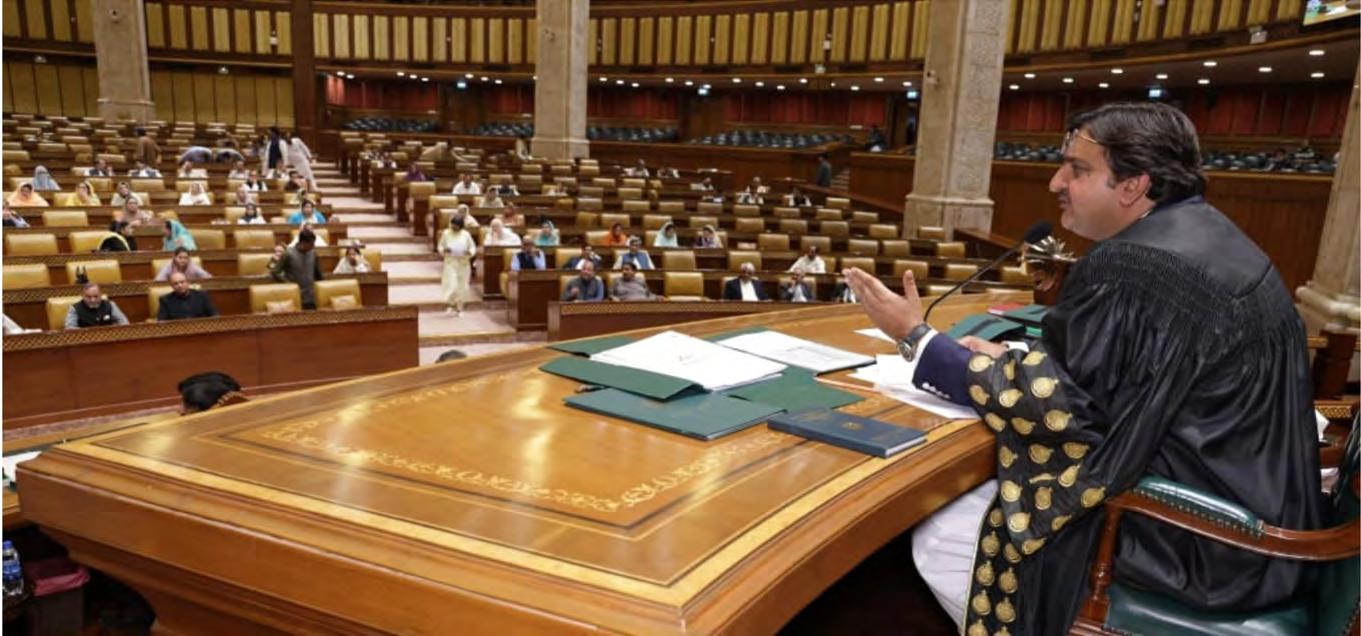
A transparent Parliament is key to a functioning democracy. To this end, we have introduced several measures to enhance the transparency of the Punjab Assembly’s workings. Audio and video recordings of all proceedings will now be broadcast live and uploaded online, giving citizens full access to the legislative process. Reports on Bills, including dissenting notes, will also be published in the official gazette, inviting public feedback and engagement.
These steps are designed to ensure that the people of Punjab can hold their representatives accountable, fostering trust between the electorate and their government.
The Punjab Assembly’s sovereignty, particularly in lawmaking and budgetary oversight, has been significantly strengthened. Under the new rules, ordinances laid before the House must be accompanied by a statement of objects and reasons, ensuring that Executive decisions are fully transparent and subject to legislative scrutiny. In addition, the Punjab Assembly will now conduct postbudget discussions on quarterly releases and the utilisation of funds, following the example of the Pakistan National Assembly’s robust budgetary oversight mechanisms.
By enhancing the Assembly’s role in these critical areas, we are ensuring that public resources are managed responsibly, and that the government remains accountable for its actions.
As part of our effort to make the Assembly more inclusive, we have removed the language barrier that previously restricted Members to addressing the House in Urdu or English. Members can now speak in any language widely spoken in Punjab, including Punjabi, Saraiki, Potohari and Mewati. This change reflects the rich cultural and linguistic diversity of our Province and ensures that Members can communicate more effectively with their constituents.
By embracing best parliamentary practices, enhancing transparency and fostering inclusivity, we are building an Assembly that is responsive to the needs of the people and accountable for its actions.
With these reforms, we are laying the foundations for a stronger, more inclusive democracy – one that serves the people of Punjab with integrity, transparency and dedication. As Speaker, I am committed to ensuring that the Punjab Assembly continues to promote good governance, upholds the rule of law and delivers on its mandate to represent the people effectively.
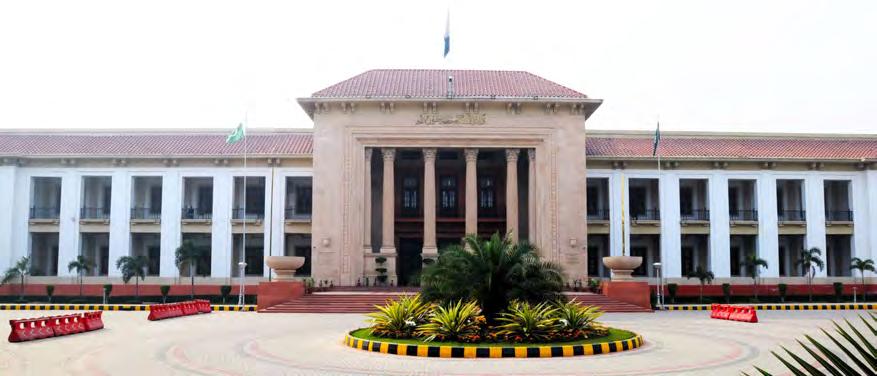
Together, we are shaping a future where the Punjab Assembly stands as a model of democratic governance, representing the voices of all its citizens and ensuring that their government works in their best interest.
The First Joint CPA Asia and CPA South-East Asia Regional Conference will be held from 6 to 10 February 2025 hosted by the Provincial Assembly of Punjab (Pakistan). Visit www.pap.gov.pk/ en/cpa-regional-conference-2025 for further information.
The
huge rise in sexually explicit ‘deepfake’ images generated by Artificial Intelligence – disproportionately targeting women
- has led to calls to criminalise their creation.
Over the last few years, we have seen a huge increase in the creation of deepfakes. The proliferation of this form of generative Artificial Intelligence (AI) means that we can no longer trust images and videos that are put in front of us. Research by Home Security Heroes found that of all deepfakes, 98% are pornographic and of those 99% are of women making it an inherently sexist problem.
Women’s images are being taken without their consent and being applied onto sexually explicit material, often causing huge alarm and distress to the victim. The advances in the technology creating this content means that it can be made with ease in a matter of seconds through both online platforms and nudification apps. Many countries across the world are facing the challenge of how they legislate against this rapidly growing form of abuse. The landscape analysis by ‘My image, my choice’ found that 80% of deepfake websites and apps have launched in the past 12 months alone, with the largest receiving an average of 13.4 million hits a month. There has also been a huge increase in the use of nudify apps and the creation of deepfake porn since the UK Law Commission stated that it was less sure that the level of harm caused by the making of these images and videos was serious enough to criminalise.
In recent years, we have seen a piecemeal approach to legislating on this issue, with up-skirting, cyber flashing and the sharing of intimate images now illegal but the non-consensual taking of sexually explicit images, as well as the solicitation to create and the creation itself of sexually explicit deepfakes, remaining gaping omissions in our patchwork of law in this area. We must become more agile in our response by ensuring that we view tech-facilitated abuse as a cohesive whole; we must work to find the balance between Parliament having legislative oversight and a regulator having the power to act quickly to not only remove harms but to anticipate and future-proof against them.
Every day that we delay introducing this legalisation is another day when women have to live under the ever-present threat that someone will steal their picture to create sexually explicit images or

Owen of Alderley Edge is a Member of the UK House of Lords since July 2023 and was the youngest recipient of a life peerage at the time of her appointment. Charlotte Owen has held various political and advisory roles in the Conservative Party and is a former Special Adviser to the UK Prime Minister. She studied Politics and International Relations at the University of York.
pornographic videos of them. It is my firm belief that every woman has the right to choose who owns a naked image of her and no one should be allowed to create sexually explicit content of a person without their consent.
Earlier this year, I was pleased to attend the CPA’s conference on deepfakes and misinformation in Singapore and it emphasised to me how important it is for countries to work together to use AI for the benefit of all but also mitigate against its worst impacts. All in attendance seemed to share the same concern about the use of this technology to mislead people and it was hugely beneficial to compare notes on how countries are seeking to tackle these issues and learn from each others’ successes.
In my work in the UK House of Lords, I have focused on writing legislation to tackle the creation of sexually explicit content in my Private Members Bill. In the UK, we already have laws in place making it illegal to share sexually explicit deepfakes without a person’s consent, however we do not have legislation preventing the creation of it in the first place. One of the great barriers facing legislating on this issue is the borderless nature of the internet, meaning that requests made on internet forums to create sexually explicit content can be responded to by anyone on that forum and they may all be situated in different jurisdictions with different legal restrictions applying.
My work with Jodie, an incredible woman who had experienced just this problem, has highlighted to me how important it is that we not only make non-consensual creation illegal but also the solicitation of this content too. Therefore, anyone trying to circumnavigate laws by asking others in different jurisdictions to create it for them would be captured within the offences in the Bill. In this way, we can begin to close the gap on the people who digitally violate the sexual autonomy of others.
My Private Members Bill will have its Second Reading in the UK House of Lords on Friday 13 December 2024 where peers will have the chance to debate it in the chamber.
The Victorian Parliament in Australia is frequently cited as an example of where the legislation seeks to future proof against the evolution of these harms in their legal definition for taking an image. I have used the same definition in my own Private Members Bill. It uses the brilliant wording to “otherwise capture”. This definition cleverly allows the law to keep up to speed with the evolution of how taking a photograph may evolve overtime and future proofs the legislation. Think of how only a few years ago we would not have imaged “screenshotting”.
This example is one of the many ways countries can learn from others’ successes and ensure that we protect against the damaging forms of AI whilst all benefitting in the successes. It is vital that we all act quickly to protect against the rapid proliferation of the AI enabled abuse.
This article is adapted from a presentation given by the author at the 2024 CPA General Assembly debate on ‘Votes vs Likes –th e Role of Parliament in Strengthening Democratic Resilience in an Age of Fake News and Synthetic Media’ at the 67th Commonwealth Parliamentary Conference (CPC). You can read th e full report of the debate on page 372.
The membership of the Commonwealth Parliamentary Association represents the diverse voices and aspirations of over 2.5 billion citizens and is a powerful testament to our shared commitment to democracy. As members of the Commonwealth, we face an unprecedented challenge in today’s digital age. The integrity of information is under threat. We have the opportunity to address how we can protect our democracies from the impact of fake news and synthetic media. In an era where truth seems increasingly elusive, our democracies face a serious test. Fake news and synthetic media aren’t just technological issues. They threaten the very foundations of democratic discourse.
Every day, millions navigate a digital world where Artificial Intelligence creates fake videos so convincing they look real. Social media algorithms amplify sensational lies and the line between fact and fiction blurs further each day. However, within this challenge lies an opportunity: to build stronger, more resilient democratic institutions. The statistics are sobering. False information spreads six times faster than truth on social media. Synthetic media, especially deepfake videos, are so advanced that even experts struggle to identify them. This isn’t just about misleading individuals. It has the potential to manipulate entire democratic processes. When people can’t trust what they see or hear, the foundation of informed democratic participation begins to crumble.
Our primary line of defense must be education. Media literacy isn’t just another subject. It’s a fundamental skill for the 21st century. Teaching critical thinking and digital literacy early on can create a generation of informed skeptics; people who instinctively question, verify and think about the information they consume. This education needs to go beyond classrooms and reach communities, creating lifelong digital awareness.
Technology created these challenges, but it also offers us tools to address them. Blockchain can authenticate content at its source, and Artificial Intelligence can detect manipulated content and flag potential misinformation. Yet, technology alone won’t solve this. We need coordinated efforts between tech companies, governments and civil society. This is where our role as Parliamentarians becomes crucial.
As Members of Parliament across the Commonwealth, we hold a unique responsibility. We’re not just observers of the fake news crisis - we are legislators empowered to shape our nations’ responses. No matter where we sit politically, we all have a stake in ensuring our citizens can distinguish fact from fiction. The integrity of our democratic institutions depends on it. Our shared heritage across 56 member states and one-third of the world’s population gives us both a platform
Hon. Ahmed Nazim, MP is the Deputy Speaker of the People’s Majlis (Parliament of Maldives) since 2024 (also 20092014) and an MP from 2009 to 2014, and again since 2024.
and a moral imperative to act. I propose that we, as Commonwealth Parliamentarians, champion a coordinated approach to media literacy, emphasizing our unwavering commitment to the free flow of information and independent media. Just as our predecessors united to face common challenges, we must now unite to protect our democracies from the corrosive effects of misinformation while preserving and strengthening press freedom. A Commonwealth-wide framework for media literacy can respect our cultural differences while addressing shared vulnerabilities. Specifically, I call on the Commonwealth Parliamentary Association to establish a working group to develop a media literacy curriculum. This curriculum should be age-appropriate - from primary school to higher education - and adaptable to each nation’s context. We can seek the expertise of the Commonwealth of Learning (COL) and the Commonwealth Broadcasting Association to ensure an effective approach. This curriculum should cover critical thinking, digital verification, synthetic media awareness and responsible digital citizenship.
As legislators, we have the power to:
1. Introduce Bills to make media literacy mandatory in schools.
2. Allocate funding for teacher training and resource development.
3. Create oversight mechanisms to measure the effectiveness of these programmes.
4. Facilitate knowledge-sharing between Commonwealth nations to exchange best practices.
This approach has a major advantage: it’s cost-effective. By developing resources collectively, we avoid duplicating efforts across 56 nations. More importantly, we create a generation of citizens ready to engage in democratic processes and contribute to our digital economies. Let me share an example from The Maldives. In our School Health Programme, students learned about disease prevention and then shared this knowledge with their families, creating a ‘household awareness cascade’. This transformed communities. If we apply this model to media literacy, the impact could be extraordinary. Imagine students learning to verify information, understand synthetic media and detect disinformation, then bringing these skills home. I call this the creation of ‘household information guardians’, a concept I believe can transform our approach to media literacy.
The time for passive concern has passed. We must support organisations that fact-check and promote media literacy. We must demand accountability from social media platforms and public officials. In this age of synthetic media and viral misinformation, every citizen must become a defender of democratic truth. Our future depends on both the systems we build, and our collective will to protect public discourse. As Commonwealth Parliamentarians, we have long been at the forefront of democratic innovation. Today, we have the opportunity to lead again, united to face one of democracy’s greatest modern challenges. Our constituents expect no less, and our democratic traditions demand no less of us. Let’s commit to building a resilient, informed Commonwealth, capable of navigating the complexities of the digital age with integrity and strength.
The Samara Centre for Democracy in Canada has examined the online abuse faced by MPs.
Canadian politicians face significant amounts of abuse, both online and offline. Over the past year alone, a number of Canadian politicians have resigned from their posts, citing online abuse as a reason. These resignations have occurred at multiple levels of government, from mayors to Members of Parliament. Yet, although we have personal reflections from politicians telling us how online abuse has taken its toll on their mental health, their staffers and their families, we have lacked sufficient quantitative data about the amount and nature of the abuse they receive to truly grapple with the endemic, systemic nature of online abuse towards elected officials.1 This data is vital not only to validate politicians’ lived experience of abuse, but also to measure the health of our democracy.
At the Samara Centre for Democracy, we track online abuse faced by Canadian politicians with our SAMbot project. SAMbot uses machine learning to measure abusive content received by candidates in Canadian elections on X (previously Twitter). With SAMbot, we use AI for civic inquiry to better understand the state of political conversations online. We track abuse during elections because we know that this is when abuse tends to be at its highest. To date, we have analyzed over 4.1 million tweets received by over 1,500 candidates across 12 elections at Federal, Provincial and municipal levels. We have authored four substantive reports, with a new publication on the 2023 Alberta election forthcoming.2
Over our many SAMbot deployments, we have developed a number of key insights about the kind of abuse that political candidates receive on the digital campaign trail and the many ways that technology is shaping our democracy. Below, we share four takeaways across our SAMbot reports.
Our SAMbot data underscores the scale of the problem: online abuse directed at Canadian political candidates during elections is prevalent. Not only that, but this abuse occurs at all levels of government, from Federal and Provincial elections to municipal ones. During the 2021 Federal election, for example, more than one in six tweets directed at political candidates were classified as toxic.3 These tweets included threats, identity-based attacks, severe

Andrea Mariko Grant is the Senior Research Associate at the Samara Centre for Democracy.
insults and inflammatory language. High-profile leaders bore the brunt of this abuse, with the Canadian Prime Minister, Rt Hon. Justin Trudeau targeted in 21% of all abusive tweets during the campaign. Similar patterns have emerged at other levels of government. In Ontario’s 2022 Provincial election, our SAMbot report equally identified high levels of abuse.4 The highest spikes in online abuse occurred on election day, reflecting the heightened tensions that arise during these critical democratic moments. Municipal campaigns are also heavily affected. During Toronto’s 2023 mayoral by-election, we monitored 53 candidates and found that 90% of abusive tweets were directed at the top nine candidates.5 What does this data tell us? It suggests that abuse - both on- and offline - has now become a condition of work for politicians across Canada. This has a chilling effect on our democracy, affecting not only who runs for office, but who stays. In addition, worryingly, this abuse seems to occur across the varying stages of candidates’ political careers. Our research suggests that even first-time candidates are targets of abuse. This means that political hopefuls can expect online abuse from the very beginning of their careers, which may, understandably, discourage them from ever wanting to step forward again.
One of the most concerning findings of our SAMbot research is the disproportionate amount of online abuse faced by candidates from equity-deserving communities. Women, racialized individuals and LGBT+ candidates face elevated levels of abuse. In our monitoring of the 2021 Federal election, we found that female candidates were more likely to receive toxicity than male candidates. Approximately 21% of all tweets directed at female candidates were toxic while 18% of tweets directed at male candidates were toxic.
Our SAMbot findings reveal that there is a clear, gendered dimension to sexually explicit comments received by candidates. Women get the most personal and misogynistic abuse. Similarly, LGBT+ issues are a worrying vector of toxicity. In the 2023 Toronto mayoral by-election, candidates addressing LGBT+ issues received increased engagement and abuse.
By creating a hostile environment, online abuse exacerbates existing systemic barriers, narrowing the pool of candidates who might consider running for office. Yet we need politicians who reflect the diverse makeup of Canada to run for office and stay there. All Canadians deserve to feel represented in our democracy.
Our SAMbot findings also reveal that a small number of highly active users generate a disproportionate amount of abuse. In our analysis of the 2023 Toronto mayoral by-election, we found that just 30
Twitter users accounted for 10% of all abusive tweets. This suggests that in some discussions, a very small number of highly abusive users is disproportionately shaping online political discourse. This matters because it reveals that online political discussions may not accurately represent the viewpoints that Canadians actually hold. We know that abusive content means more engagement and clicks, so social media algorithms amplify this material, preventing other, perhaps more nuanced, voices from being heard. This is skewing our perception of where Canadians stand on key issueswe may not be as far apart as our online discussions suggest.
Finally, our SAMbot findings suggest the need to investigate potential foreign interference in our local politics. For example, in the 2022 Brampton municipal election, we found that nearly 10% of all monitored tweets were categorised as identity attacks.6 Over 80% of these identity attacks were directed at just two candidates, incumbent mayoral candidate, Patrick Brown and city councillor candidate, Jaskaran Sandhu. Many of the identity attacks received by Brown were directed at Brampton’s South Asian communities — historically, Brown has vocally supported many of the South Asian minority groups that make up Brampton’s population. Many of the identity attacks directed at Sandhu were related to his support for Sikh self-determination in India. Our tracking of the Brampton election suggests that there may have been coordinated patterns of online abuse as a result of foreign influence. Foreign interference in our elections erodes trust in our democratic processes and leaves Canadian politicians and political hopefuls from diasporic backgrounds vulnerable to increased levels of online abuse and digital violence. This is worrying and seems to be a growing democratic threat.
How can we respond?
Online abuse does not just harm individual candidates - it threatens the health of our very democracy. Earlier Samara Centre research revealed that 47% of social media users in Canada refrain from discussing politics online out of fear of being criticized.7 Online toxicity hampers our ability to have energetic and nuanced civic discussions on issues that impact all Canadians.
1. Platform regulation: Social media platforms must be encouraged to introduce design features that promote democratic dialogue, rather than amplify abusive and divisive content. Implementing safeguards is key to curtail toxicity and protect against misinformation and foreign interference.
2. Policy interventions: Governments should enact robust legislation to tackle online abuse, at the same time safeguarding researchers’ access to social media data. This is crucial so that we can monitor the health of online conversations and make empirically grounded policy recommendations.
3. Candidate support: Political parties and civil society groups must better equip candidates with resources to navigate online abuse, including training and mental health support. This support must be extended to first-time candidates as well.
4. Enhanced public education: Canadians need education around digital media literacy that reflects the realities of our changed digital environment, one where synthetic content -

text, image or audio that is fully or partially artificially altered or generated - is a growing threat.
Tackling online abuse is not merely about protecting political candidates, although this is important. It is equally about making sure all Canadians are able to fully participate in our democracy, both online and offline.
The Samara Centre for Democracy is a non-partisan charity that produces ground-breaking research and dynamic events that advance a vibrant culture of civic engagement across Canada and supports a resilient democracy with responsive institutions, shaped by an engaged public. Visit www.samaracentre.ca for more information. This article is based on a presentation by the contributor at the 60th CPA Canada Regional Conference in Ontario in July 2024.
References:
1 Through our MP Exit Interview project, we conduct interviews with former Members of Parliament from across the political spectrum. For more information, see https:// www.samaracentre.ca/initiatives/project-mp-exit-interviews.
2 All of these reports can be accessed on our website, https://www.samaracentre.ca/ initiatives/sambot.
3 The Samara Centre for Democracy, SAMbot 2021 Federal Election Report, (Toronto: The Samara Centre for Democracy, 2022).
4 The Samara Centre for Democracy, 2022 SAMBot Ontario Election Report, (Toronto: The Samara Centre for Democracy, 2022).
5 The Samara Centre for Democracy, Engagement and Abuse on Toronto's Digital Campaign Trail: The 2023 Toronto Mayoral By-election Report (Toronto: The Samara Centre for Democracy, 2024).
6 The Samara Centre for Democracy, Online Abuse in Local Elections: The SAMbot Municipal Report, (Toronto: The Samara Centre for Democracy, 2023).
7 The Samara Centre for Democracy, Field Guide to Online Political Conversations, (Toronto: The Samara Centre for Democracy, 2019).
As the Head of Mission for the recent election observation in Montserrat, it is with great pride and humility that I share my insights on the process of overseeing such a critical function of democracy. Election observation is not simply a task of monitoring electoral processes; it is an undertaking that requires a deep understanding of the political, cultural and logistical landscape of the host country, in this case, the Emerald Isle of the Caribbean - Montserrat. As an Anguillian Parliamentarian, having had the privilege to lead this mission, I reflect upon the multifaceted role that election observers play, the challenges faced and the crucial lessons learned.
The Role of an Election Observer Mission
Election observer missions serve as independent, impartial bodies tasked with observing the fairness, transparency and credibility of the electoral process. Their objective is to verify that the elections comply with international standards and best practices. These missions generally focus on a range of elements such as the electoral framework, voter registration, campaign conditions, conduct at polling stations, counting procedures and the handling of any disputes or irregularities that may arise.
In Montserrat, the task of overseeing the election was a critical one. It was my responsibility to ensure that our team of observers were fully prepared to carry out their observations, while maintaining neutrality and cultural sensitivity throughout the process.
One of the most significant tasks in leading an election observation mission is assembling a team of skilled and impartial observers. A diverse team with varied expertise, ranging from electoral law and political science to human rights and logistics, is essential for conducting a thorough assessment of the election process. In this case, I had the privilege of working with a team of experienced professionals from Scotland, Northern Ireland, Spain, Austria and the United Kingdom. Each observer brought a unique perspective and wealth of experience.
Central to the selection of the observer team is the Commonwealth Parliamentary Association UK Branch (CPA UK). CPA UK is responsible for planning election missions, as well as
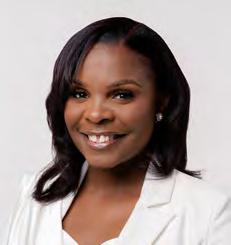
selecting and training the observers. They do this in their capacity as the Secretariat for the CPA British Islands and Mediterranean Region, a key feature of their commitment to strengthening democracy and good governance.
CPA UK officials worked closely with the team to ensure that we were thoroughly briefed on Montserrat’s political environment, the legal framework and the specific roles and responsibilities of election observers. This was an essential part of our preparation, as observers needed to be well-versed in both the expectations of the mission and the cultural nuances of the host country. Our team was made up of: two Election Analysts, Merce Castells (Spain) and Armin Rabitsch (Austria); short-term Observer, Steve Aiken, MLA (Northern Ireland); CPA UK Election Co-ordinator Martin Vickery (UK) and Election Administrator Nicky Davis (UK); Deputy Head of Mission, Jamie Greene, MSP (Scotland), and myself as Head of Mission.
Preparatory Phase: Understanding the Context
Before embarking on the mission itself, the first step was to fully comprehend the political and electoral landscape of Montserrat. Montserrat, an Overseas Territory of the United Kingdom, is unique in that it operates with a combination of British oversight and local governance. The Montserratian political system includes a Legislative Assembly with elected Members, and the Head of Government, the Premier, is chosen from among them. The 2024 election was particularly important as it followed a period of recovery from COVID19, a change in the role of the Governor’s office, significant economic limitations due to access and limited resources, as well a unique relationship with its governing power, the United Kingdom. This context shaped much of the electoral atmosphere.
Understanding these dynamics was crucial in preparing for the mission. Prior to election day, we held preliminary discussions with local stakeholders, including the Electoral Commission, government representatives, political parties, the media and civil society organisations. These interactions helped us gauge the state of political engagement, the transparency of the election process and any potential concerns that could arise during the observation period. Additionally, we observed political rallies and motorcades of all political parties and independent candidates.
Hon. Shellya Rogers-Webster, MHA is a Member of the Anguilla House of Assembly since 2022 and the District Representative for Anguilla’s Valley North Constituency. In October 2024, she was the Head of the CPA British Islands and Mediterranean Region’s Election Observer Mission to the Montserrat National Elections. Prior to her election, she served in various roles across the Anguilla Public Service for 14 years, including the Department of Youth and Culture and the Anguilla Tourist Board. She was awarded the Chevening Scholarship in 2015 and she promotes the empowerment of young women through professional development, sport and community work.
All election missions planned by CPA UK are founded on the Declaration of Principles for International Election Observation and the Code of Conduct for International Election Observers, signed at the UN in 2005. Our role was to observe Montserrat’s electoral system in light of these principles.
On Election Day, the team was deployed to various polling stations across Montserrat, ensuring coverage of all polling divisions. At each station, we observed the procedural flow of the election, from voter identification and the issuance of ballots to the voting process itself and the counting of votes after the polls closed.
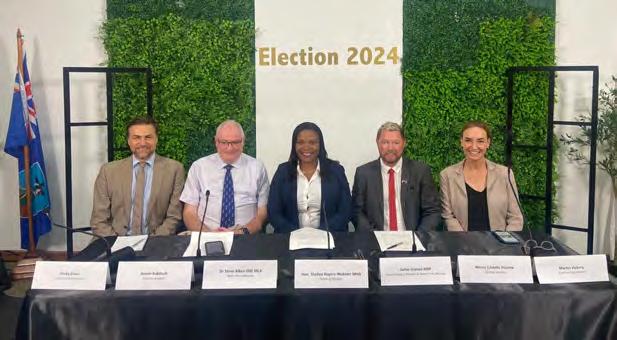
One of the most striking aspects of Montserrat’s election was the level of community engagement and voter enthusiasm. Despite the challenges the island has faced over the past decades, the electorate displayed a high level of civic responsibility and a clear commitment to democratic processes. The public’s trust in the electoral system was palpable, and it was reassuring to see that most voters expressed a deep interest in exercising their right to vote.
As observers, we noted the logistical aspects of the polling, such as checking polling station security, ensuring voting materials were in place, and that election officials were trained to manage the day’s events. It was also important to note whether voters faced any obstacles, such as long queues, insufficient information or intimidation at the polls.
After the polls closed and votes were counted, the team turned its attention to the post-election phase, where we focused on the data we collected from our observations to produce the Preliminary Statement. This is a short report sharing the initial findings of the Mission. In it, I was pleased to share “It has been a privilege to observe Montserrat’s general elections take place in a peaceful, competitive and transparent manner. We witnessed many individuals go ‘above and beyond’ in their public service to their country, ensuring election day went smoothly. This election saw the successful introduction of a mobile polling station and an increase in voter turnout. We trust this statement, and our forthcoming report, play a part in supporting Montserrat’s precious democracy.”
In December 2024, two months after Election Day, CPA UK will publish the Final Report, with the full findings and recommendations.
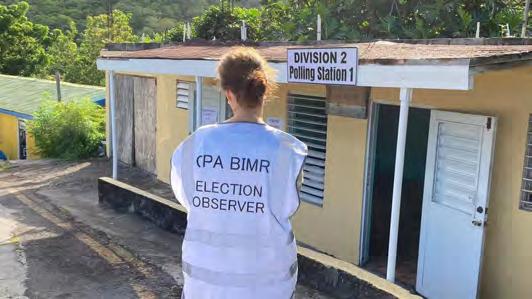
Leading an election observer mission is an inherently complex task. One of the most significant challenges during this mission was navigating the delicate balance between maintaining impartiality and engaging with local stakeholders. It was important to remain neutral while also fostering dialogue to ensure that any concerns or issues raised by citizens were addressed in a constructive manner.
Additionally, the logistics of managing an election observation mission can be challenging, particularly in small island territories such as Montserrat. The geography of the island, with its remote areas and limited infrastructure, posed slight inconveniences to our team. However, with careful planning and coordination with local authorities, the CPA team minimised inconveniences.
Finally, as a Parliamentarian from Anguilla, I was acutely aware of the importance of fostering regional collaboration and sharing knowledge and best practices among Caribbean nations. The experience in Montserrat reinforced the need for ongoing capacitybuilding in the region’s electoral processes. By supporting and learning from one another, Caribbean nations can continue to strengthen democracy in our shared region.
Election observation is an indispensable tool for safeguarding democracy and ensuring that elections are conducted fairly, transparently and in accordance with international standards. My experience as the Head of Mission in Montserrat was both enlightening and fulfilling. It has reinforced my belief in the importance of upholding democratic values, fostering transparency and ensuring that every citizen’s voice is heard.
For Montserrat, the 2024 election was a significant milestone in the country’s democratic journey. The mission was not just an exercise in oversight; it was a reaffirmation of the resilience and commitment of Montserratians to their democratic process. As we move forward, the lessons learned from this mission will continue to shape our efforts to promote free, fair and credible elections throughout the Commonwealth.
The report ‘Assessing the impact of CPA BIMR Election Observation in the UK Overseas Territories and Crown Dependencies’ was published in March 2024 and is available from the CPA UK website www.uk-cpa.org.
BENCHMARKING,
South Africa, being a young democracy had to set up a number of parliamentary systems and processes commencing in 1994, adapting from the old and changing where necessary. The Province of KwaZulu-Natal is one of nine provinces of South Africa. It is located on the eastern seaboard of the country, lapped by the waters of the Indian Ocean and is bounded to the North by Swaziland and Mozambique.
The KwaZulu-Natal Legislature is unicameral and currently has 80 Members. The Legislature is housed in historic buildings that do not satisfy the needs of a modern-day Legislature. In the most recent election, the KwaZulu-Natal Provincial Legislature saw results that brought change in the number of parties (dropped from eight to six political parties) and of the 80 Members of the Provincial Legislature, 51 new Members and 29 returning Members. As is the case in many Commonwealth Parliaments, the political environment is complex and turbulent, constantly adapting to change but also reliant on embedded systems and processes. It is in this context that benchmarks are important in the role that they play in strengthening Parliaments and consequently, enhancing democracy.
Benchmarking, in the context of parliamentary institutions, involves assessing a Parliament's practices, performance and policies against those of exemplary or similar institutions. This process encourages continuous improvement by allowing Parliaments to adopt practices from institutions that demonstrate exacting standards in areas such as legislative transparency, accountability and citizen engagement.
Benchmarking is often supplemented by standards set by international parliamentary bodies, such as the Inter-Parliamentary Union (IPU) and the Commonwealth Parliamentary Association (CPA), which have developed codes and guidelines that reflect democratic values and good governance principles.
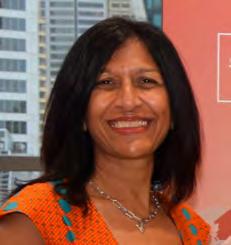
Best practice is often derived from exemplary parliamentary models that foster operational efficiency and public trust. By observing best practice in both similar and differing institutions, Parliaments can adopt proven approaches that enhance their operations. Examples include transparent budgeting processes, effective oversight of the Executive branch and a well-supported Committee system. These practices contribute to a Parliament that is responsive, efficient and able to withstand political challenges.
In short, benchmarking can:
• Enhance Accountability: By aligning with international guidelines, Parliaments can demonstrate commitment to transparency, reinforcing public confidence in their operations.
• Improve Operational Efficiency: Benchmarking and adopting efficient practices can streamline legislative processes, reducing bottlenecks and improving decision-making timelines.
• Foster Resilience in Governance: Standards and guidelines prepare parliaments to respond to crises effectively, as seen during the COVID-19 pandemic, where many Parliaments adopted virtual sessions to continue operations safely.
Benchmarks with similar institutions allow for the impetus for change to come from within rather than without. Benchmarks allow for Parliaments to assess themselves against standards developed by their peers. Beyond mere assessment, the benchmarking process has allowed Parliamentarians and parliamentary staff to reflect upon and improve the operations of their Parliaments whilst widening interparliamentary discussions.
Mao Zedong best explains it in his quote “Now, there are two different attitudes toward learning from others. One is the dogmatic attitude of transplanting everything, whether or not, it is suited to our conditions. This is no good. The other attitude is to use our heads and learn those things that suit our conditions, that is, to absorb whatever experience is useful to us. That is the attitude we should adopt.”
Ms Nerusha Naidoo is the Secretary (Clerk) of the KwaZulu-Natal (KZN) Legislature. She is an attorney by profession with a Masters in Commerce in Leadership and has served in the position of Secretary (Clerk) for four consecutive terms, totaling 19 years, making her the longest-serving Secretary in the legislative sector in South Africa. With over 27 years of management experience, she has transformed and strengthened management structures to enhance institutional performance. She is also a member of the board of the Parliamentary Institute of South Africa and the Deputy Chairperson of the Forum of Secretaries of South African Legislatures.
The KwaZulu-Natal Experience
In 2020, the KwaZulu-Natal Provincial Legislature, of its own volition subjected itself to the CPA Benchmarking exercise against the CPA’s Recommended Benchmarks for Democratic Legislatures, through the option of a CPA-supported self-assessment.
The assessment was pre-empted by parliamentary staff conducting an initial technical assessment against the CPA Benchmarks before the CPA Secretariat appointed a parliamentary consultant to undertake a review in December 2020. The CPA consultant interviewed the Speaker, the Chief Whip, the Deputy Chairperson of Committees, the Leader of the Opposition and Leaders of Parties, Members of Parliament, the Secretary, Executive and senior management, and other parliamentary staff. There were also meetings with key stakeholders including representatives of the Electoral Commission, the Auditor General, academics and civil society groups. A review of key documents was also undertaken including the Constitution of South Africa, related legislation, the Standing Rules of the Legislature, the Strategic Plan 2020-2025, and many other reports and written material.
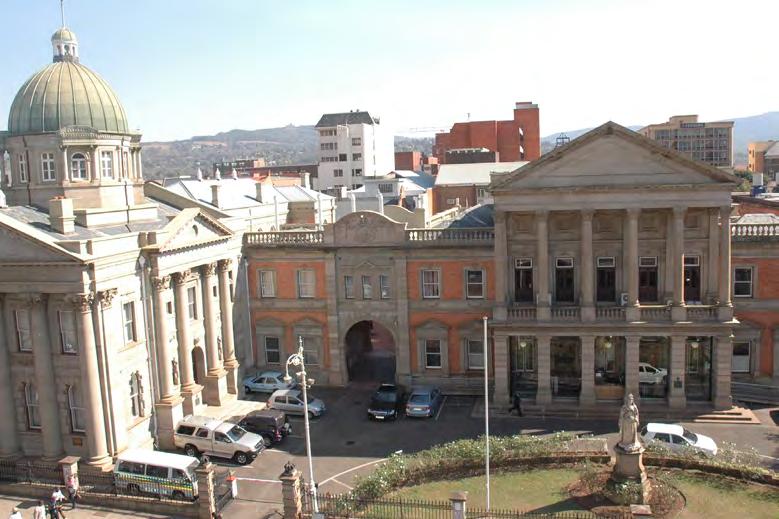
Some recommendations have been included as part of both short-term and long-term plans and feature in the Strategic Plan of the Legislature. Others have expressly not been implemented because the Legislature’s leadership believes that the system that currently prevails is appropriate and constitutional and it works for the Legislature.
Following the publication and consideration of the findings of the report, and within the boundaries of financial constraints, the Commonwealth Parliamentary Association indicated their commitment to supporting the KwaZulu-Natal Provincial Legislature in strengthening its democratic processes.
The CPA Recommended Benchmarks for Democratic Legislatures has four assessment categories: General, Organisation of the Legislature, Functions of the Legislature, and Values of the Legislature. The assessment reviewed a number of areas under the various categories and made 18 final recommendations for the KwaZulu-Natal Provincial Legislature.
The recommendations from the CPA Benchmarks assessment covered a wide range of areas from funding and support to encouraging the involvement of vulnerable groups; introducing a Chairpersonship of the Standing Committee on Public Accounts (Scopa); a higher standard of two thirds majority or consensus to amend the Legislative Rules; inclusions of programmes on the website; reports and resolutions to be published along with the response from the Government; allocation of more time for debates; secure online voting systems; online petitions; a more strategic role for the women’s caucus; introducing and scrutinising secondary and delegated legislation and regulations; access to the services of an independent budget office; a strategic approach to public engagement; and an independent Registrar of Members' Interests.
Botswana Benchmarks assessment
As a result of my work with the CPA Secretariat and as the Secretary to the KwaZulu-Natal Provincial Legislature, I was subsequently invited to join the CPA three-person team that would conduct the CPA Benchmarks assessment at the Parliament of Botswana. This took the empowerment and benefits of the CPA Benchmarks process further as now, instead of being scrutinised, I became the scrutineer. Not only did it provide first-hand exposure to the integral workings of the Botswana Parliament, but it also provided a two-way communication from a very informed position to some new learnings about their processes as well as sharing initiatives from the South African perspective.
The sharing of the outcomes of their report is the prerogative of the Botswana Parliament and they can choose how to take it forward. It is purely within the realm of the recipient to consider the recommendations based on the need to establish best practice and to understand the unique circumstances that prevail in our respective environments.
Conclusion
While standards, benchmarks and best practices provide a roadmap for strengthening Parliaments, challenges do exist including political resistance, resource limitations and regional differences in governance traditions. Addressing these challenges may require customized solutions, tailored training and partnerships with international organisations and the CPA benchmarking process can help to provide that solution.
This article is adapted from a presentation given by the author at the CPC Workshop F: 'Benchmarking, Standards and Guidelines: Strengthening the Institution of Parliaments through the Adoption of
A view from Pakistan.
In recent years, a noticeable decline in public trust in state institutions has become increasingly apparent worldwide, and Pakistan is no exception to this global trend. The perception in Pakistan is that trust in public institutions, including the Judiciary, the Election Commission, Law Enforcement Agencies and other stakeholders, are diminishing. The erosion of trust in public institutions represents a significant challenge to the stability and functionality of democratic society. Consequently, addressing this issue has become a priority for Pakistani Parliamentarians, who are actively implementing various measures to restore and bolster public trust.
The decline in trust towards public institutions can lead to profound consequences. A weakened perception of legitimacy for these institutions can undermine policy execution and result in heightened public apathy or unrest. In Pakistan, a country already facing challenges of political instability and corruption, restoring trust in public institutions is of paramount importance.
One of the most contentious areas of concern in Pakistan is the electoral process. Historically, elections in the country have been marred by controversy and scepticism. Losing parties often refuse to concede defeat or congratulate the victors, perpetuating an environment of doubt and suspicion. Allegations of electoral fraud, vote manipulation and interference from both internal and external entities continue to cast a shadow over the credibility of politicians and the integrity of the electoral process. This persistent apprehension leads to widespread voter disillusionment, which threatens and undermines the core principles of democratic governance.
The Judiciary, a crucial component of the state of Pakistan, faces significant challenges. It is frequently alleged that Pakistani courts occasionally operate under the doctrine of necessity, compromising or pursuing other interests. This doctrine, sanctioning extraordinary actions during crises, has been invoked repeatedly throughout Pakistan's history. It legitimises measures that might otherwise be considered unconstitutional, thereby casting doubt on the Judiciary's neutrality and independence to some extent. It is a commonly held view that within the judicial system, the elite receive swift and favorable justice, whereas the average person encounters considerable delays and hurdles when seeking justice. The sluggish progress of justice for the populace heightens sentiments of frustration and helplessness, thereby diminishing trust in the judicial system.
Political instability continues to be a major challenge in Pakistan, exacerbated by politicians who often engage in personal attacks and mudslinging. This type of behaviour not only derails significant policy debates but also exacerbates social divisions. Focusing on personal vendettas and character assaults detracts from the essential duties of governance and policy formulation, creating a climate of uncertainty and instability. This political deadlock impedes effective governance and undermines the public's trust in the political system.
Law enforcement agencies in Pakistan are subject to extensive criticism. The dominant perspective is that they frequently fall short of serving the public interest and instead function as tools for those in authority. Reports of police brutality, corruption and selective enforcement of laws have fostered a negative image. The lack of accountability and transparency in these institutions continues to undermine public confidence. The perception that certain agencies act with impunity and serve the interests of the elite, to the detriment of the ordinary citizen, greatly impedes the establishment of trust.
Inflation remains a persistent and pressing concern for the citizens of Pakistan. The unchecked rise in living costs profoundly impacts citizens' daily lives, leading to widespread discontent and unrest. The inability of the government to control inflation and ensure economic stability continues to weaken public confidence in state institutions. Economic strain aggravates various social issues, leading to a sense of despair and disenfranchisement within the community.
The shrinking of public trust in institutions presents a profound challenge with extensive consequences for Pakistan's societal, economic and political realms. In response, the Parliament of Pakistan has initiated multiple strategies to rebuild this trust. These strategies focus on legislative reforms and the implementation of oversight mechanisms, which are intended to improve transparency, accountability and the system's overall responsiveness.
The Parliament of Pakistan has introduced several reforms and initiatives aimed at improving the electoral process. Key measures include the Election Act 2017, which consolidated and reformed the laws relating to elections. In addition, the delimitation
Muhammad Mohsin Iqbal is Director General (Library & Research) at the National Assembly Secretariat at the Parliament of Pakistan.
of constituencies was updated to reflect population changes, ensuring more accurate and representative electoral districts. Efforts to combat electoral fraud included stricter campaign finance regulations and enhanced monitoring of campaign activities. These comprehensive reforms aim to foster a more transparent, inclusive and accountable electoral system in Pakistan.
Another approach under consideration involves further improving legislative oversight over the Executive and other branches of government. Parliamentary Committees play a crucial role in scrutinising government activities and holding public officials accountable. Strengthening the powers and effectiveness of these Committees is a key component of Parliament's strategy to promote a culture of accountability and transparency. This includes conducting regular audits, holding public hearings and investigating government activities and expenditures.
The inclusion of a Senators in the National Assembly Pakistan's Public Accounts Committee (PAC) marks a significant step towards strengthening the Federation's oversight procedures. This move underscores a commitment to fostering a more inclusive and representative governance structure. By integrating Members of the Senate into the PAC, the government is promoting a broader perspective in financial scrutiny and accountability. This decision not only enhances the transparency and effectiveness of the PAC but also reinforces the collaborative spirit between both Houses of Parliament. It symbolises a positive stride towards ensuring that Federal oversight mechanisms are robust, participatory and reflective of the diverse political landscape of Pakistan.
Legislative reforms target the disparities in the justice system. Optimising judicial procedures, minimising case delays and enhancing court efficiencies are crucial to ensuring that justice is accessible and swift for all citizens. The Supreme Court (Practice and Procedure) Act, 2023, brings several significant improvements to the judiciary system. One key enhancement is improved case management, establishing a clear process for forming panels of judges based on seniority and expertise, ensuring that cases are appropriately handled. The Act promotes enhanced fairness by providing a structured approach for cases of public importance and those involving fundamental rights, guaranteeing they receive the necessary attention and expertise. The introduction of a quick appeals process, within a 30-day filing period and a 14-day hearing schedule, ensures swift justice. It also empowers individuals with the right to choose their counsel for review applications, thereby enhancing their ability to receive competent legal representation.
In addition, the Act ensures prompt attention to urgent matters, mandating that such cases are heard within 14 days, thus providing timely relief for critical issues. By overriding conflicting laws and regulations, the Act promotes clarity and consistency, creating a more predictable legal framework. Moreover, the defined procedures and timelines enhance transparency in the Supreme Court’s processes, building public trust in the Judiciary. Overall, this Act aims to make the Supreme Court more efficient, fair and transparent in handling cases. By enhancing transparency
and minimising corruption opportunities, these measures aim to rebuild the public's trust in the justice system.
Tackling the impact of covert influences on political and judicial decisions demands a comprehensive strategy. It is crucial to fortify the autonomy of the Judiciary and law enforcement bodies. Protective measures for judges and law enforcement personnel against external influences, and merit-based appointments and promotions, are imperative. Moreover, increasing the transparency of decision-making procedures and promoting a culture of integrity within these entities are vital steps.
The National Action Plan (NAP) further underscores the commitment to improving law enforcement by coordinating efforts across various agencies to tackle terrorism and extremism effectively. These reforms are complemented by increased investment in training, technology and infrastructure for law enforcement personnel, aiming to build a more professional and accountable policing system in Pakistan.
Enhancing the public's view of law enforcement agencies requires tackling corruption, brutality and biased enforcement. Achieving this involves implementing thorough reforms, which encompass improved training, more rigorous oversight and increased accountability for wrongdoing. Initiatives in community policing that promote trust and collaboration between the police and the community are crucial. Parliament's goal in developing a more professional and responsible police force is to guarantee that law enforcement agencies act in the public's best interest.
Political stability is crucial for restoring public trust in institutions. To achieve this, political leaders must avoid personal attacks and focus on substantial policy issues. Fostering a culture of constructive debate and collaboration is imperative for addressing the nation's pressing concerns. Parliament can play a key role in fostering this culture by setting standards for political discourse and encouraging dialogue and cooperation among political parties.
Addressing inflation and securing economic stability are central for rebuilding public trust. This necessitates effective economic policies that tackle the fundamental causes of inflation and foster sustainable growth. Implementing measures to boost economic opportunities, decrease unemployment and enhance living standards is vital for reinforcing public trust in the government's economic management. By focusing on economic stability and growth, Parliament can respond to a major concern of the Pakistani populace.
In summary, the erosion of public trust in Pakistan's institutions is a complex issue that demands thorough and ongoing efforts to resolve. Parliament's strategy to combat this challenge includes a mix of legislative reforms, oversight mechanisms and initiatives designed to improve transparency, accountability and system responsiveness. By confronting the root causes of mistrust and enacting measures to regain confidence, Pakistan can establish a more stable, equitable and thriving society.
This article for The Parliamentarian was provided by the Research Directorate at the National Assembly of Pakistan Secretariat.
The International Parliamentarians' Congress (IPC) has given road safety and the role of Legislators a key priority.
The construction of ‘good’, safe roads with reliable safe transport for citizens is acknowledged as one of the most pivotal contributors to the development of a country, leading to economic growth by stimulating trade and commerce, and benefiting societies in creating wealth, generating livelihoods in general, and assisting in alleviating poverty.
Roads are the most common means of travel for people, be it market access, commuting for work in urban and rural areas, children going to school, transportation of goods, domestic tourism or simply families travelling, all require safety for people travelling from one point to another. This mass movement of people and goods has brought about a need to institutionalize traffic management systems, dedicated law enforcement, responsible and safer road users, safer road infrastructure design, mandatory safety features for vehicles and safer passenger public mobility, as well as significantly increasing the role of First Responders as a post-crash response.
The silent crisis on our roads
In 2008, the United Nations cited road traffic crashes as one of the greatest threats to human mortality, surpassing many epidemics and life-threatening diseases, and recognising this as the fourth leading cause of death for humanity. As such, the United Nations tasked itself with the noble cause of reducing death and injuries, leading to the United Nations Decade of Action on Road Safety (2011 – 2020), followed by the Global Action Plan on Road Safety (2021-2030).
Five Pillars of the UN Global Plan for the Decade of Action for Road Safety (2011): The United Nations has identified and recognised five pillars as essential for addressing road traffic safety.
1. Road Safety Management
2. Safer Roads and Public Mobility
3. Safe Vehicles
4. Safer Road Users
5. Post-Crash Response
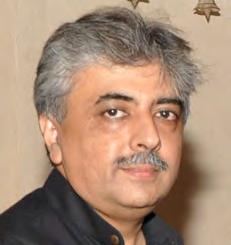
According to the United Nations, some 1.3 million people globally die in road traffic crashes every year with an estimated 20 to 50 million victims with varied injuries. Today, this represents the death of one person every 25 seconds somewhere in the world, attributed to weak or negligible road safety measures.
As a developing country, Pakistan’s safer infrastructure needs are critical, especially as construction on new roads and highways continues across the nation. The steady increase in a predominantly low-income population has raised the demand for two-wheel modes of transport like motorcycles. The number of cars, buses and trucks is constantly on the rise, while public transport access is still limited. As a result, deaths and injuries caused by road traffic crashes are on the increase.
People who sustain life-challenging injuries are, perhaps, the least acknowledged. Post-crash medical care by the State is limited and most certainly a debilitating financial strain on families of the victims. Once the traffic crash victim is home, the entire responsibility for caring for the victim falls on the families and if the injured victim is also the primary breadwinner, this constitutes another level of trauma.
Comprehensive data on road traffic crashes, and consequential mortality and injuries, is not readily available. However, the World Health Organization (WHO) estimates an annual number of some 30,000 deaths by road car crashes in Pakistan, of which some 60% involve motorized two wheelers. Human error is a major cause, as well as reckless driving, poor road infrastructure, inadequate traffic law enforcement and a lack of public awareness, while vehicle maintenance in the public sector is an ongoing factor. The solutions are quite visibly available through global best practice. This demands that the key stakeholders take action and adapt the requisite laws.
Mr M. Naeem Murtaza is the Chief Technical Advisor at the International Parliamentarians Congress (IPC). A Marketing and Business Development professional with 33 years of experience, he has an accomplished career in the automotive industry and mobility sectors working for the Land Rover brand under various managements of Rover Group, BMW Group and Ford Motors (JLR). He was assigned as the focal person for IPC on capacity building of the Legislature with a focus on the United Nations Global Plan for the Decade of Action for Road Safety (2011-2020 & 2021-2030). He is also actively involved in Rotary International, the NDU National Security Workshop and the Friedrich Naumann Foundation.
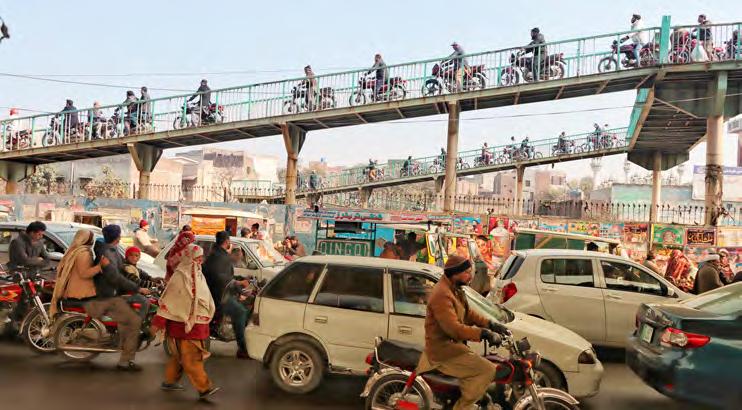
With the increase in the number of vehicles, traffic volume on roads has grown exponentially. This has created multiple hazards for road users, leading to an untenable situation resulting in more road traffic crashes. Loss of life is the most tragic consequence. The injured victims of road traffic crashes become an economic liability for effected families. They can lose the personal income of the primary earner who may not be able to work or may require life-long care. This increases poverty levels in low and middle-income countries, furthering the drain on public health systems and burdening governments financially.
Parliamentarians
In many under-developed countries and developing countries, like Pakistan, Road Traffic Crashes (RTCs) are frequently underrecognised as a leading cause of mortality. The lack of comprehensive data, informal settlement between individuals involved, fewer insured vehicles on the roads and a general apathy all contribute to the lack of awareness on how many lives are lost and livelihoods ruined. Road safety is therefore a very important subject for Members of Parliament to discuss in order to pave the way to desired legislation that will allow Pakistan, as well other countries with similar situations, to motion and approve Parliamentary Bills, allowing the authorities to implement the requisite laws that can contribute to reducing injuries and mortalities on our respective roads.
Keeping in view the sensitivity of the subject, the International Parliamentarians Congress (IPC) recognised the need for capacity building for effective legislative frameworks and took the initiative to organise the first such conference for Parliamentarians on Road Safety. This IPC initiative took place in Islamabad, Pakistan, in 2023. In this respect, the IPC recognises the support for the conference through ‘Mustehkam Parlimaan’, an EU-funded project by GIZ, and the Pakistan Institute of Parliamentary Services (PIPS).
Spread over two days, the conference brought together some 100 Members of Parliament from the Federal Parliament and all Provinces of Pakistan, including their respective government stakeholders related to Road Safety, as well as 21 Members of
Parliament from nine countries including Algeria, Azerbaijan, Chad, Guinea, Jordan, Libya, Spain, Portugal and Uganda.
The opening day’s session included a keynote address by the President of the Islamic Republic of Pakistan, Hon. Dr Arif Alvi; an inaugural address by the Chairman of the Senate of Pakistan, Hon. Mr Mohammad Sadiq Sanjrani and opening remarks by the President of the Inter-Parliamentary Union (IPU), Hon. Duarte Pacheco and the Secretary General of IPC, Senator Hon. Sitara Ayaz.
Discussions focused on the Five Pillars of the UN Global Action Plan and bringing forward deliberations, culminating with the Islamabad Declaration. Delegates shared best practices on preventive measures taken to reduce the number of deaths and injuries due to road traffic crashes. Two wheelers and pedestrians remained major victims of car crashes, with serious injuries leading to rising mortality rates, besides the sudden death traumas. Safe road infrastructure and safer vehicles were highlighted as often non-compliant. Delegates emphasised the importance of introducing legislation through Road Safety Bills and how this has helped their countries through effective law enforcement. However, in some countries, there has been an increase in the numbers of vehicles with younger, irresponsible and untrained drivers, which are offsetting their achievements in road safety.
Delegates also heard from experts that people who sustain lifechallenging injuries are, perhaps, the least acknowledged. The importance of highly trained traffic police is vital to ensure effective enforcement of traffic rules and to ensure discipline and maintaining the flow of traffic on the roads. Training for all drivers on the roads is also important as untrained, under-age drivers are a major cause of car accidents on the roads. Senator Mushahid Hussain Sayed from the Senate of Pakistan stated that Parliamentarians must take the lead in helping to reduce road traffic accidents, citing them as a major cause of deaths. He said most crashes take place in developing countries and stressed the need for a ‘Save Lives Initiative’, calling for the establishment and maintenance of universal standards for drivers, vehicles, policing and first responders. The conference provided a platform for Parliamentarians, experts and key stakeholders to collaborate and share their insights on road safety.
Islamabad Declaration:
The conference ended with the IPC Secretary-General, Senator Hon. Sitara Ayaz, presenting the ‘Islamabad Declaration’, a unanimous document outlining key steps to improve road safety in Pakistan. This declaration served as a call to action for all stakeholders to address road safety issues collaboratively and it will guide future road safety initiatives, contributing to improved road safety in Pakistan and worldwide. The IPC also committed to ongoing efforts to promote road safety globally.
For further information about the work of the International Parliamentarians' Congress (IPC), including on road safety, please visit www.ipcongress.org.
October 2022 was a night I will never forget. Watching the TV screen, my name changed from Colleen James to Colleen James, Councillor Elect for the Region of Waterloo in Ontario, Canada. I was born and raised in this region and would now represent a large urban and rural community of approximately 650,000 residents. My parents settled here over 50 years ago, and today, I am building my career and raising my own family here with my loving and supportive husband. Winning this election - especially as a first-time candidatewas monumental. It marked the culmination of months of hard work, competing against 13 others for one of four seats.
The total weight of the journey would not be felt until days later, when I had a moment to reflect. It was a victory for me, my team and the community that stood with me - those who showed up to vote and make a powerful statement about the change they wanted to see.
Running for office was never just about me. It was about creating meaningful change by bringing diverse experiences and perspectives to the table, breaking barriers to open opportunities for others and amplifying the voices of those too often excluded from decision-making spaces. Campaigning is never a simple endeavour, but it has been one of my life's most fulfilling and transformative journeys. As I navigate this new chapter as an elected official, I have come to understand even more deeply the vital role of representation and the complex challenges and rewards that come with it.
For me, community has always been where meaningful change begins. My journey started as an active youth, volunteering at a local soup kitchen, participating in community projects and working as a political staffer after university. Serving in local government is a natural continuation of those experiences, allowing me to use my knowledge, connections and skills to benefit my community.
Local government taught me to listen actively, collaborate effectively and advocate fiercely. As a municipal councillor, I am directly connected to the people I serve, hearing their stories and witnessing firsthand how policies impact their daily lives.
Perhaps most importantly, holding local office has shown me the power of representation. I’ve seen the light in young girls’ eyes when they see someone who looks like them making decisions. I’ve felt deep gratitude from community elders who know their lived experiences are being acknowledged and respected. Local politics is where you can root yourself in the community, and those roots are invaluable as you consider transitioning to broader arenas.
Transitioning from community member to local politician comes with its own set of challenges. For Black women, fundraising challenges, building coalitions and combating stereotypes get amplified for various reasons.
Fundraising is particularly daunting. Municipal campaigns are not tied to political parties, so candidates must operate independently. This means most fundraising happens at a grassroots level, often without access to networks of wealth or privilege. The challenge
Below: Colleen James pictured with the Speaker of the Ontario Legislative Assembly, Hon. Ted Arnott, MPP and Hon. Catherine Fife, MPP, the Member for Waterloo at the 60th CPA Canada Regional Conference in July 2024.
Colleen James is a Regional Councillor for the City of Kitchener in the Region of Waterloo, Ontario, Canada since October 2022. She is the Chair of the Sustainability, Infrastructure and Development Committee and a member of several Standing Committees. Her professional career includes more than 15 years experience in municipal government at both city and regional levels and as the founder of Divonify Incorporated, she is a consultant on equity and inclusion. She is also involved in many collaborative community projects, including the Caribbean Canadian Association of Waterloo Region, where she established the James STEM scholarship. Email: cjames@regionofwaterloo.ca.
is not just raising money - it’s convincing people to believe in your vision, qualifications and ability to lead, often while navigating biases and stereotypes.
Breaking into established political networks is another hurdle. The gatekeepers rarely look like us and our experiences may not align with their expectations. As a Black woman, I’ve had to push past assumptions and stereotypes repeatedly, proving that I am not only capable but highly qualified. While my race is part of who I am, it does not define the entirety of my contributions. I bring a rich, diverse range of experiences that strengthen the table.
Media scrutiny also intensifies with public office. Every word, decision and personal moment is dissected. I’ve been unfairly depicted in the media as the "angry Black woman", a trope that is far from the truth but one I know I may face again. Women in politics are often judged by double standards - labelled as too aggressive, emotional or too ambitious. Balancing authenticity with public expectations is a constant tightrope act, but one I’ve learned to navigate with grace.
Moreover, societal expectations remain outdated. At evening events or conferences, I am often asked, “Where are your children?” - a question rarely directed at my male colleagues. These inequities highlight the broader societal biases that we continue to face.
My advice to Black women considering politics is simple: build your village. Success is never achieved alone. The higher you climb, the more you’ll need a team that believes in your vision.
Identify your allies. My campaign supporters were diverse in race, gender, age and ability. Seek mentors who have walked the path before you, allies who will advocate for you in your absence and a campaign team that understands and shares your values.Lean on your community. The people who elected me remain my biggest champions, encouraging and reminding me why I entered politics. Finally, prioritise family and friends. Running for office is demanding, and a strong personal support system is invaluable. Self-care is not a luxury - it’s a necessity.
While the challenges are real, so are the opportunities. Political life allows you to create change on a larger scale - shaping policies, elevating marginalised voices and ensuring critical issues are addressed. For me, this journey is also about inspiring the next generation. When young Black girls and underrepresented groups see us in these spaces, they also begin to envision themselves there. Every step I take is for them, paving the way for future leaders.
As I navigate this journey, I always come back to my ‘why’. Why did I enter politics? What legacy do I want to leave? It’s about justice, equity and creating a world where everyone can thrive. These guiding principles keep me grounded, especially during challenging moments. I make it a point to listen and to ensure that the policies I put forth and advocate for reflect the needs of the people I serve. This includes everyone, even the ones who did not vote for me or the ones who remain highly critical.
To women considering politics: do it. Your voice, perspective and leadership are needed now more than ever. Seek mentors, build networks and trust in your ability to lead.
To current leaders: lift as you climb. Share knowledge, open doors and create opportunities for others. Together, we can shape a pipeline of leaders who will drive change at every level of government.
To the broader community: support us. Donate to campaigns, amplify voices and hold us accountable while recognising the unique challenges we face. Building a more equitable political system is a collective effort.
Transitioning into politics as a Black woman, mother, wife and entrepreneur requires resilience, grit and unwavering commitment. It is a challenge and a privilege to be offered the opportunity to redesign systems, achieve better outcomes and inspire future generations.
To every Black woman reading this: the stage is waiting for you. Step up, speak out and lead boldly. The world needs your brilliance.
Thank you to the Canadian chapter of the Commonwealth Women Parliamentarians (CWP) for inviting me to participate in the ‘Women running for election’ panel discussion at the Ontario Legislature in July 2024. That experience reaffirmed the importance of encouraging women to run for office. While we may bring diverse perspectives and lived experiences, we are united in navigating the complexities of the political arena and striving to make meaningful contributions.
This article is based on a presentation by the contributor at the 60th CPA Canada Regional Conference in Ontario in July 2024.
LONG
Examining the impact of the Constitution of India as it marks the 75th anniversary of its adoption on 26 November 1949.
The Constitution of India is bedrock of India’s Democratic Polity
The Constitution of India is one of the most progressive Constitutions in the world and was adopted on 26 November 1949. Members of the Constituent Assembly appended their signatures to it on 24 January 1950 with a total of 284 Members actually signing the Constitution.
The Constituent Assembly held in all Eleven Sessions lasting for 165 days. Beginning from 9 December 1946, the Members of the Constituent Assembly held intensive deliberations in the Constitution Hall of Parliament House (now known as Central Hall, Samvidhan Sadan) for a period of two years, eleven months and seventeen days. On 26 January 1950, the Constitution of India came into force. This historic day has ever since been celebrated as Republic Day in India.
26 November 1949, the day on which the Indian Constitution was adopted by the Constituent Assembly also assumes critical importance and is observed as Constitution Day. 26 November 2024 would mark the 75th anniversary of the adoption of the Constitution of India. On this watershed anniversary, it becomes very relevant to remember and comprehend the constitutional values that it promotes and adhere to the same. These values enshrined therein are an outcome of the collective wisdom of the Members of the Constituent Assembly and their views based on Indian ethos of a humanitarian, equitable society and individual dignity. Every Indian, which includes particularly the Indian youth, wholly needs to be aware of and comprehend the constitutional values and uphold these.
Values enshrined in Constitution of India
The Constitution of any country serves several purposes. It lays down certain ideals that form the basis of the kind of society that we aspire to live in. A country is usually made up of different communities of people who share certain beliefs, but may not
necessarily agree on all issues. A Constitution helps serve as a set of principles, rules and procedures on which there is a consensus.
These form the basis according to which the people want the country to be governed and the society to move on. The Indian Constitution has certain core values that constitute its spirit and are expressed in various articles and provisions.
The Constitution of India envisaged a representative and inclusive democracy, one that empowers every citizen, irrespective of their caste, creed or gender. It introduced the concept of the Universal Adult Franchise, enabling every citizen to vote, without any fetters based on religion, caste, community or sex. It was a remarkable step, one that set India apart from many Western democracies at the time, where the right to vote was often limited to specific groups. In India, a daily labourer and a billionaire share the same democratic power at the ballot box - a revolutionary affirmation of equality.
The vision of the Indian Constitution is clearly reflected in its Preamble
At the threshold it would be apt to know the historical background in regard to the Preamble. The Preamble is based on the Objective Resolution. On 13 December 1946, Pandit Jawaharlal Nehru moved in the Constituent Assembly, the Resolution regarding Aims and Objects (Objective Resolution) which laid down the basic principles and objectives that would guide the Constitution making process. After due deliberation this Objective Resolution was adopted by the Constituent Assembly on 22 January 1947.
The Preamble, which is the ‘soul’ of the ‘Constitution’, reflects the values enshrined in Constitution of India. What exactly is meant by the term ‘value’. Instinctively one may say truth, non-violence, peace, kindness, respect, integrity. From a common man’s perspective value is ‘that which is worth having and observing for the existence of human society as an entity’
The Indian Constitution contains all such values, the values that are the universal, human and democratic. The values expressed
Ravindra Garimella is Secretary to the Leader of the Opposition in Rajya Sabha at Parliament of India. Ravindra is a former Joint Secretary at Lok Sabha and has been involved in CPA activities for over 20 years. He has attended numerous CPCs and CPA seminars, written for The Parliamentarian many times, and contributed to the CPA Parliamentary Academy
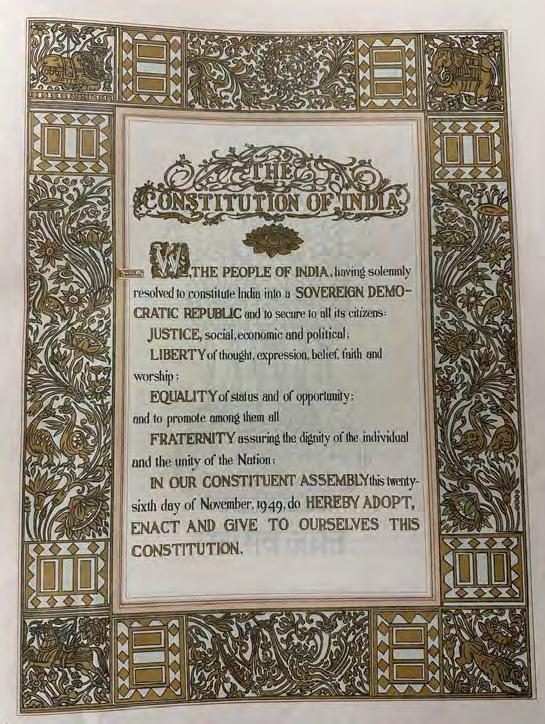
in the Preamble are expressed as objectives of the Constitution. These are: sovereignty, socialism, secularism, democracy, republican character of Indian State, justice, equity, liberty, equality, fraternity, human dignity and the unity and integrity of the nation.
A quick refresher of the Constitutional Values
1) Sovereignty: The Preamble declares India “a sovereign socialist secular democratic republic”. Being sovereign means having complete political freedom and being the supreme authority.
• It implies that India is internally all powerful and externally free. It is free to determine for itself without any external interference (either by any country or individual) and nobody is there within to challenge its authority.
• This feature of sovereignty gives us the dignity of existence as a nation in the international community. Though the Constitution does not specify where the sovereign authority lies but a mention of ‘We the People of India’ in the Preamble clearly indicates that sovereignty rests with the people of India. This means that the constitutional authorities and organs of government derive their power only from the people.
2) Socialism: The word socialist was not there in the Preamble of the Constitution in its original form. In 1976, the 42nd Amendment to the Constitution incorporated ‘Socialist’ and ‘Secular’, in the Preamble.
• The word ‘Socialism’ had been used in the context of economic planning. It signifies a major role in the economy. It also means
commitment to attain ideals like the removal of inequalities, provision of minimum basic necessities to all, and equal pay for equal work.
3) Secularism: In the context of secularism in India, it is said that ‘India is neither religious, nor irreligious nor anti-religious.’ It implies that in India there will be no ‘State’ religion – the ‘State’ will not support any particular religion out of public funds. This has two implications, a) every individual is free to believe in, and practice, any religion she/he belongs to, and, b) State will not discriminate against any individual or group on the basis of religion. (Article 15)
4) Democratic Republic: The Preamble reflects democracy as a value. As a form of government, it derives its authority from the will of the people. The people elect the rulers of the country, and the elected representatives remain accountable to the people.
• Democracy contributes to stability, continuous progress in society and it secures peaceful political change.
• It allows dissent and encourages tolerance. More importantly, it is based on the principles of the rule of law, inalienable rights of citizens, independence of judiciary, free and fair elections and freedom of the press.
• The Preamble also declares India as a Republic. It means that the head of the State is elected, and she/he is not a hereditary ruler as in case of the British Monarch. This value strengthens and substantiates democracy where every citizen of India is equally eligible to be elected as the Head of the State. Political equality is the chief message of this provision.
5) Justice: Justice promises to give people what they are entitled to in terms of basic rights to food, clothing, housing, participation in the decision making and living with dignity as human beings. The Preamble covers all these dimensions of justice – social, economic and political. ‘Social justice’ has been defined in a variety of ways.
• Social justice means equal rights for all, regardless of gender, race, class, ethnicity, citizenship, religion, age or sexual orientation.
• It implies equal rights for women and girls in workplaces, homes and public life. It implies economic justice – which means governments must take active steps to alleviate poverty and redress past injustices. Economic justice really forms a part of social justice. It seeks the equitable distribution of natural and intellectual wealth so that everyone is able to gain a fair share
6) Equity: Equity derives its spirit from the concept of social justice. It represents a belief that there are some things which people should have, that there are basic needs that should be fulfilled, that burdens and rewards should not be spread too divergently across the community, and that policy should be directed with impartiality, fairness and justice towards these ends.
• It is generally agreed that equity implies a need for fairness (not necessarily equality) in the distribution of gains and losses, and the entitlement of everyone to an acceptable quality and standard of living.
• The Universal Declaration of Human Rights (1948) states that the ‘recognition of the inherent dignity and of the equal and inalienable rights of all members of the human family is the foundation of freedom, justice and peace in the world’.
• Social equity refers to a set of standards which apply to our personal and social relationships with other individuals and/or
groups. These standards consist of a bundle of rights and duties which apply to members of certain “deprived or disadvantaged sections” in society.
• The term also covers the protection of certain fundamental rights which we all enjoy as citizens of a free society.
7) Equality: Equality is considered to be the essence of modern democratic ideology. The Constitution makers placed the ideals of equality in a place of pride in the Preamble. All kinds of inequality based on the concept of rulers and the ruled or on the basis of caste and gender, were to be eliminated. All citizens of India should be treated equally and extended equal protection of law without any discrimination based on caste, creed, birth, religion, sex etc.
8) Liberty: The Preamble prescribes liberty of thought, expression, belief, faith and worship as one of the core values. These have to be assured to every member of all the communities. It has been done so, because the ideals of democracy cannot be attained without the presence of certain minimal rights which are essential for a free and civilized existence of individuals.
9) Fraternity: There is also a commitment made in the Preamble to promote the value of fraternity that stands for the spirit of common brotherhood among all the people of India.
• In the absence of fraternity, a plural society like India stands divided. Therefore, to give meaning to all the ideals like justice, liberty and equality, the Preamble lays great emphasis on fraternity.
• In fact, fraternity can be realized not only by abolishing untouchability amongst different sects of the community, but also by abolishing all communal or sectarian or even local discriminatory feelings which stand in the way of unity of India.
10) Dignity of the Individual: Promotion of fraternity is essential to realise the dignity of the individual. It is essential to secure the dignity of every individual without which democracy cannot function. It ensures equal participation of every individual in all the processes of democratic governance.
11) Unity and Integrity of the Nation: Fraternity also promotes one of the critical values, i.e. unity and integrity of the nation. To maintain the independence of the country intact, the unity and integrity of the nation is very essential. Therefore, the stress has been given on fostering unity amongst all the inhabitants of the country.
• Our Constitution expects from all the citizens of India to uphold and protect the unity and integrity of India as a matter of duty.
12) International Peace and a just International Order: The value of international peace and a just international order, though not included in the Preamble, is reflected in other provisions of the Constitution.
The Indian Constitution directs (Directive Principles of State Policy Part IV) the state (a) to promote international peace and security, (b) maintain just and honourable relations between nations, (c) foster respect for international law and treaty obligations, and (d) encourage settlement of international disputes. To uphold and
observe these values is in the interest of India. The peace and just international order will definitely contribute to the development of India. (Dir-SI).
13) Fundamental Duties: Our Constitution prescribes some duties to be performed by the citizens. It is true that these duties are not enforceable in the court of law like the fundamental rights are, but these duties are to be performed by citizens.
• Fundamental duties have still greater importance because these reflect certain basic values like patriotism, nationalism, humanism, environmentalism, harmonious living, gender equality, scientific temper and inquiry, and individual and collective excellence.
Constitutional values also refer to the fundamental principles and beliefs that underpin a country's constitution, which serves as the supreme law of the land. These values provide the foundation for the legal and political framework of a nation, guiding its governance and ensuring the protection of the rights and liberties of its citizens. Some of the basic constitutional values are:-
• Rule of Law: This principle ensures that all individuals and institutions, including the government, are subject to and accountable under the law. It implies that no one is above the law, and everyone should be treated equally and fairly.
• Democracy: Many constitutions uphold the value of democracy, emphasising the importance of government by the people, for the people. Democratic values often include free and fair elections, the protection of minority rights, and the separation of powers among different branches of government.
• Equality: Constitutional values often promote equality before the law and equal protection of the law, ensuring that all citizens are entitled to the same legal rights and opportunities, regardless of their race, gender, religion or other characteristics.
• Individual Rights: Constitutional values typically enshrine individual rights and liberties, such as freedom of speech, freedom of religion, the right to privacy, and the right to a fair trial. These rights protect individuals from government overreach and guarantee their freedoms.
• Human Dignity: Many constitutions emphasise the inherent worth and dignity of every human being. This value underlies the protection of individual rights and the prohibition of inhumane and degrading treatment.
• Justice: Constitutional values often include principles of justice, which encompass fairness, equity and the impartial administration of the law. Access to justice and the right to a fair trial are essential components of this value.
• Secularism: Some constitutions promote the separation of religion and the state, ensuring that the government remains

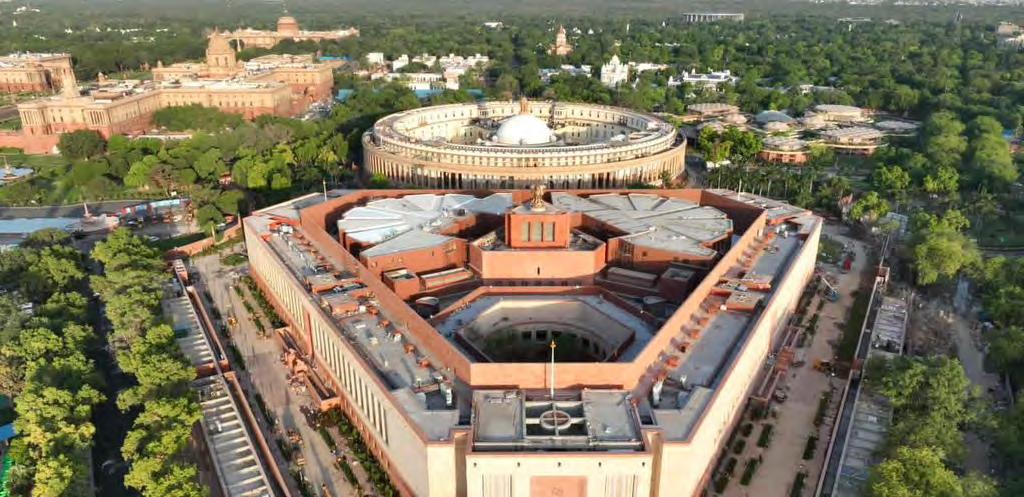
neutral regarding religious matters and protecting the freedom of religion for individuals.
• Sovereignty: Constitutional values often reflect the concept of national sovereignty, which asserts the independence and selfdetermination of a nation. This can include protection against external interference and respect for a nation's territorial integrity.
• Social Welfare and Justice: Some constitutions include provisions for social justice and welfare, emphasising the government's role in ensuring the well-being of its citizens and addressing economic inequalities.
These constitutional values are the fulcrum on which the nation's legal and political system rest and to seeks to serve as a guide for the actions and decisions of government officials and institutions. They are often protected through legal mechanisms, such as constitutional rights and judicial review, to ensure their enforcement and protection.
The commitment of Members of Constituent Assembly for upholding constitutional values is reflective from the pledge which they had taken in the special midnight session. The fifth session of the Constituent Assembly of India commenced in the Constitution Hall (Central Hall of Parliament House, now renamed as Samvidhan Sadan), New Delhi, at 11pm on 14 August 1947. In the special midnight session, Jawaharlal Nehru passed a motion requesting the Members take a pledge as the clock strikes midnight. The full resolution as read out by Pandit Nehru before the Constituent Assembly is popularly known as the "Tryst With Destiny' speech. As the clock struck twelve, all the Members took the following pledge:-
“At this solemn moment when the people of India, through suffering and sacrifice, have secured freedom, I.......... a member of the Constituent Assembly of India, do dedicate myself in all humility to the service of India and her people to the end that this ancient land attain her rightful and honoured place in the world and make
her full and willing contribution to the promotion of world peace and the welfare mankind.”
On 8 November 1948, Pandit Jawaharlal Nehru while addressing the Constituent Assembly in the context of draft Constitution, emphasised the importance of allowing adaptability in the legal and political framework of the nation. In this context, Pandit Jawaharlal Nehru inter alia observed as follows: “While we want this Constitution to be as solid and as permanent as we can make it, there is no permanence in Constitutions. There should be a certain flexibility. If you make anything rigid and permanent, you stop a nation's growth.”
It would also be pertinent to take note of the following sage cautionary observation made by Dr. B. R. Ambedkar on 25 November 1949 in the Constituent Assembly: “However good a Constitution may be, if those who are implementing it are not good, it will prove to be bad. However bad a Constitution may be, if those implementing it are good, it will prove to be good. Political democracy cannot last unless there lies at the base of it social democracy. What does social democracy mean? It means a way of life which recognises liberty, equality, and fraternity as the principles of life."
It would not be out of place to mention here that constitutional values can vary significantly from one country to another, reflecting the unique history, culture and political context of each nation.
The critical importance of constitutional values, more so in the present-day scenario, cannot be overstated. It is incumbent upon each one of us as a citizen of our own country to uphold its constitutional values.
















Produced by the History of Parliament Trust and publisher St James’s House, The Commonwealth at 75 is a beautifully presented, fully illustrated hardback book, authored by a team of distinguished academics and journalists. Marking the 75th anniversary of the establishment of the modern Commonwealth of Nations, this 564-page commemorative publication explores the origins, history and impact of the Commonwealth up to the present day. The book also highlights examples of achievement and progress across social, technological, commercial and cultural spheres.
















To order a free e-book or free* hardback copy, please scan this QR code or visit www.commonwealth75.net/promo
*For hardbacks, a delivery charge of £9.99 is payable. See terms and conditions below. For enquiries, please email publishing@stjamess.org.
Terms and conditions for hardback deliveries: This free book o er (one copy per order) is available for delivery in the UK mainland only. A delivery charge of £9.99 is payable. Please allow up to 21 days for delivery. If your order has not arrived within 21 days or you experience any di culties with the delivery of your book, please email publishing@stjamess.org. While the publisher cannot take responsibility for the condition in which your free book arrives, it can raise a complaint with the relevant courier on your behalf. This o er applies while allocated stocks last. The publisher reserves the right to end this o er without notice.
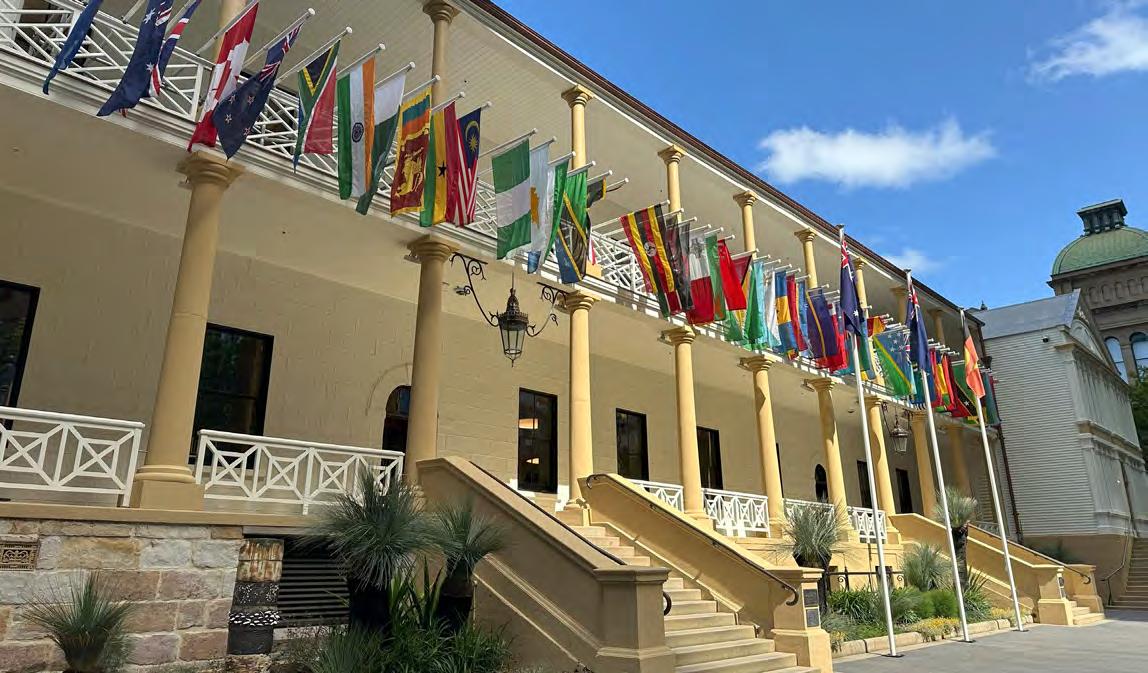
The Vice-Patron of the Commonwealth Parliamentary Association (CPA), Her Excellency the Honourable Margaret Beazley AC KC, Governor of New South Wales, urged Commonwealth Parliamentarians to work together to uphold the values of the Commonwealth as she opened the 67th Commonwealth Parliamentary Conference (67th CPC) for over 700 delegates in Sydney, Australia.
A message to conference delegates from HM King Charles, Head of the Commonwealth and Patron of the Commonwealth Parliamentary Association was also read by the CPA Vice-Patron.
One of the largest gatherings of Commonwealth Parliamentarians, the 67th CPC was hosted by the Parliament of New South Wales and the CPA New South Wales Branch. The main conference theme for the 67th CPC was: ‘Engage, Empower, Sustain: Charting the Course for Resilient Democracy’.
Delegates to the 67th CPC were welcomed by the CPA President (2023-2024), Hon. Ben Franklin, MLC, President of the Legislative Council of New South Wales who said at the opening ceremony: “As we mark the bicentenary of the New South Wales Legislative Council this year, one of our biggest celebrations will, of course, be the 67th
“ The conference will enable us all to imagine the future of democracy and ensure its resilience in the face of current and future threats. ” says CPA President, Hon. Ben Franklin.
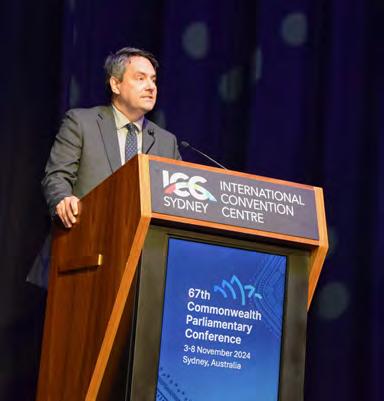
Commonwealth Parliamentary Conference (CPC) and CPA General Assembly, which the CPA New South Wales Branch is honoured to host. The conference will enable us all to imagine the future of democracy and ensure its resilience in the face of current and future threats.”
The 67th CPC is the first time that the CPA New South Wales Branch has hosted the event and is also the first time that an Australian State or Territory has hosted the CPA annual conference. The CPA Australia Region has hosted the Commonwealth Parliamentary Conference four times previously (6th CPC in 1959; 16th CPC in 1970; 34th CPC in 1988; and 47th CPC in 2001).
Delegates were also welcomed by the Speaker of the New South Wales Legislative Assembly, Hon. Greg Piper, MP and the Premier of New South Wales, Hon. Chris Minns, MP.
The CPA Secretary-General, Stephen Twigg said: “On behalf of the Commonwealth Parliamentary Association, it is my great pleasure to welcome delegates to the 67th Commonwealth Parliamentary Conference in New South Wales and to thank the Parliament of New South Wales for their generosity in hosting this year’s conference as they mark the bicentenary of the New South Wales Legislative Council. This conference offers an invaluable opportunity to come together and share best practice in addressing common issues and strengthening Commonwealth values.
As we come together, it provides us with an opportunity to review progress of the Commonwealth and its values and principles. Commitments to democracy, human rights and good governance are cornerstones of the
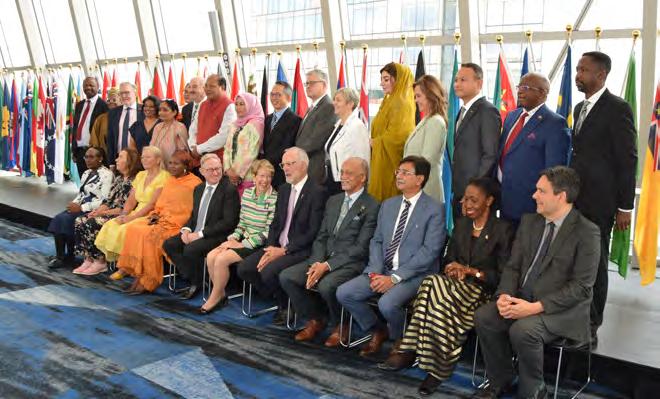

CPA’s work and we will have the opportunity to discuss these commitments as we meet this week.”
On behalf of the Commonwealth Secretary-General, Professor Luis Franceschi, Assistant Secretary-General said: “In the Commonwealth family, our governments committed to the political values and principles enshrined in our 2013 Commonwealth Charter. These values reinforce democracy and preclude our 2.7 billion people from anarchy. We are a club of nations bound together by common values and aspiration, among which dignity, freedom, and inclusive vibrant democracies stand out. Parliamentarians have a crucial role in deepening the Commonwealth Charter’s values in their jurisdictions. They are guarantors of accountability, and loudspeakers for the voice of the people. Their work should go beyond party loyalty, be rooted in integrity, allowing them to stand for what is right, just and fair for the people in our Commonwealth.”
The Vote of Thanks was given by Hon. Penny Sharpe MLC, Leader of the Government in the New South Wales Legislative Council and the opening ceremony was
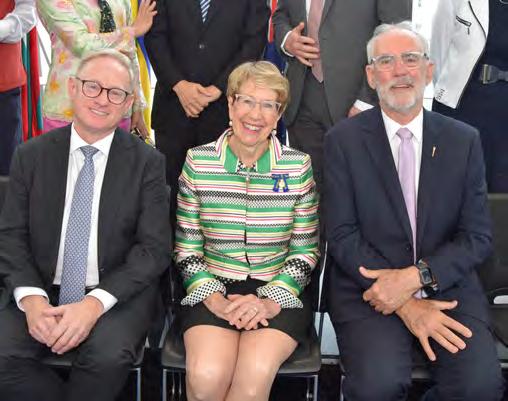

conducted by Hon. Courtney Houssos, MLC, New South Wales Minister for Finance and Natural Resources.
A ‘Welcome to Country’ and digeridoo performance was given by Matthew Doyle and subsequent performances were given by the Sydney Children’s Choirs, the Sydney Conservatorium, the Bangarra Dance Company and musician James Johnston.
MPs and parliamentary staff benefitted from professional development, supportive learning and the sharing of best practice with colleagues from across the Commonwealth together with the participation of leading international organisations. The conference also explored a wide range of workshop topics from the use of Artificial Intelligence and technology; the security of MPs; ending human trafficking; combatting discrimination legislation; supporting LGBT+ and people with disabilities to participate in Parliaments; to engaging with indigenous peoples.
Below: At the opening of the 67th Commonwealth Parliamentary Conference, Women Speakers and Presiding Officers from Belize, Quebec, St Lucia, Bermuda, Grenada, Trinidad and Tobago, Tasmania, Australia Federal, Victoria, British Virgin Islands, Malawi and Anguilla were pictured together.
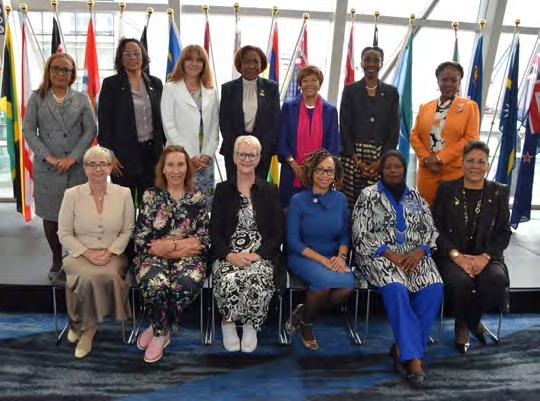
The Prime Minister of Australia, Hon. Anthony Albanese, MP, spoke to delegates at Sydney Town Hall on 7 November 2024 and said:
I am delighted that Australia is hosting this year’s Commonwealth Parliamentary Association Conference, so soon after a very warm and productive Commonwealth Heads of Government Meeting in Samoa. It was a uniquely Pacific CHOGM – the first to be convened by a Pacific island country. Our discussions focused on the threat that climate change poses to all our nations: to our environment and economy, our fishing and farming, our future security and prosperity. This is not a challenge any one of us can meet or solve alone - it demands the co-operation and commitment of us all. It requires, as King Charles said at the Australian Parliament recently: “Both ancient and new thinking”.
The ancient respect for land and waters, paired with new breakthroughs in science and technology. All of it driven by the organising and mobilising power of democracy. Looking out on this extraordinary crowd, I see proof of the enduring strength of your Association. I also see evidence of a shared determination, to learn from each other and work together, in the service and spirit of the oldest meaning of Commonwealth – the common good.
Where we are tonight, Sydney Town Hall, holds a special place in my heart. For members of the New South Wales Labor Party like myself, this is almostsacred ground. The home of our State Conference: theatre, arena and colosseum all in one. For me, the cradle of my political life. This is where I learned about putting arguments, demanding better for working people than the status quo – and respecting the outcome of democratic processes. This is where my engagement in democracy and politics began - so I’m delighted to be part of your discussions on engaging and empowering citizens to sustain democracy around the world.
That’s a challenge we all face, it’s a responsibility we all share – and it can be an opportunity we all seize. A chance to show that Parliament, politics and democracy are not part of the problems facing our world, they are central to the solution.
A few hours ago, I was in Canberra for the final Question Time of the sitting week. In our Chamber, the two despatch boxes from which questions are asked and answered were a gift to Australia from King George V. They were presented by his son, HRH The Duke of York, when he opened what we now call Old Parliament House in Canberra, in 1927, and those boxes are such faithful copies of the ones that sat in the UK House of Commons that they even bear the pattern of nicks and scratches supposedly caused by the signet ring Prime Minister
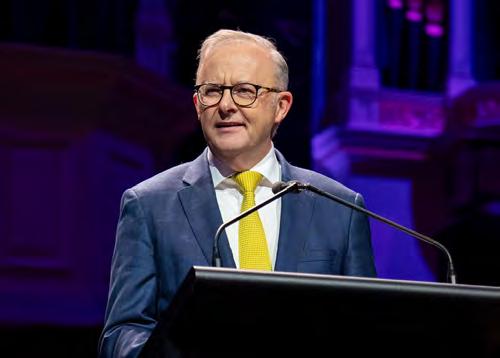
Gladstone used to wear, which would bite into the timber when he pounded the lid with his fist during speeches. The King’s gift was the second Westminster replica presented to Australia’s Parliament. The first was the Speaker’s Chair. An elaborate oak masterpiece packed into crates and shipped to Australia by the forerunner of this group, then called the Empire Parliamentary Association. That chair included timber taken from the beams of Westminster Hall, the scene of the trial of Charles I, and Nelson’s famous flagship at the battle of Trafalgar, HMS Victory. Virtually every nation and Parliament represented here, can point to a similar gift and tell a similar story.
Across the tremendous diversity of the Commonwealth we can trace this shared network of symbols and traditions, ritual and practice. Of course, what truly binds and unites us is not the architecture of our Chambers or the language of our proceedings. It is the Parliaments in which we serve and the democratic systems that serve our nations and in different ways over the years, all of us have done much more than diligently preserve the foundation stone. We haven’t kept our democracy under glass, or treated it like a museum piece. We’ve helped it grow and watched it evolve. We’ve shaped our systems to the unique needs of our own nations, the values of our people, the history and culture of our lands. We’ve expanded the right to vote and reformed the way we vote – strengthening our democracies by broadening their foundations - and we’ve learned from each other – and helped each other.
In May 1941, a German bomb landed on the UK House of Commons. It started a fire which reduced the Chamber to nothing but a smoking shell and in the years after the war, when the time came to rebuild, it was the Parliaments and peoples of the Commonwealth that made it possible. From New Zealand, new despatch boxes, using
Australia’s as the template. Australia reproduced the Speaker’s Chair, replacing English oak with Queensland timber. From the people of Zambia, the bronze brackets to hold the mace. Jamaica, the bronze bar beyond which visitors to the chamber cannot pass. Pakistan, a new door for the South Entrance. Uganda furnished the lobby for the Noes. Nigeria, the Ayes. And from the people of Sri Lanka, the chair for the Serjeant at Arms. The list goes on. All of it adding up to more than a mere reconstruction of what had been. Instead, something stronger, better, drawn from a wider world. Given shape by the aspirations of every nation that drew inspiration from that mother of Parliaments. That’s the unifying spirit of this Association. A mutual respect, a shared willingness to listen and learn. A common resolve to tackle the environmental challenge of climate change – and seize the economic opportunities of clean energy.
There is powerful diversity in the Commonwealth story and there is also a shared understanding that every nation’s history contains complexity, trauma and sorrow. No nation’s democracy is beyond improvement. Recognising that while tradition can bind us, teach us and inspire us – it is not enough to sustain us - because no system that derives its authority from the people will ever be the definite article, a complete and finished artefact.
We should never put ourselves in the position of saying that democracy peaked sometime in past. The value, power and relevance of Parliament is not something we can merely assert, it’s something we have to demonstrate, by rising to meet the challenges of the future.
We live in a time when trust in institutions is low and the media landscape is fragmented. When people are confronted online with more and more opinions and fewer and fewer verified facts. When the challenges of climate change, technology and population are complex and sometimes controversial. We cannot simply trust to the weight of tradition. Instead, just as the UK House of Commons built on its history with new materials drawn from all over the world. All of us must be willing to draw on new ideas for engaging our citizens and new initiatives for strengthening our democracies.
A great place to start is making our Parliaments look more like the nations and populations we serve. In my time in politics, one of the most significant changes in culture and representations can be traced to a decision the Labor Party took at our 1994 National Conference. I was proud to be among the delegates who voted for our party to adopt Affirmative Action with the aim of equal representation for women in our ranks. Today, I am even more proud to lead the first Government in Australian history with a majority of women.
Over those three decades, I’ve seen firsthand that such change doesn’t just mean better representation, it also
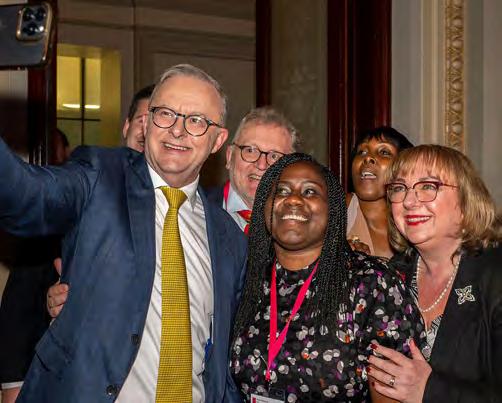
drives a better culture and better decisions, informed by a broader range of views.
The final point I want to make is that making Parliament and democracy better is not about reducing disagreement or dialling-back the contest of ideas. We serve in adversarial systems – that’s a feature, not a flaw. Parliament should be a proving ground for ideas and policies, a place where we apply the sternest possible test to the strength and rigour of propositions. A fierce contest can be a good thing, as long as it’s a contest about substance, about things that matter to people and issues that affect the country. Sometimes this means things can be loud or unpredictable, sometimes the arguments are more sledgehammer than scalpel. When the stakes are high, passions run high, but these are not warning signs, they are vital signs. Proof of life and cause for hope because only dictatorships pretend to be perfect. Democracy is proud to be human. It is, in every sense, a work in progress. That’s why I’ve always believed that the strongest antidote to the corrosive forces of cynicism and division. The most compelling argument in favour of democracy, is not an abstract, theoretical or historical one. It’s about demonstrating the capacity of government to make a positive difference. Delivering for people. Proving worthy of their trust. Living up to our shared values and taking on the big challenges – even if the causes are complex and the solutions unknown. In all of this, we must make people our partners in this task. Showing the humility to listen and explain and advocate, not just assert. The courage and capacity to push back against cynicism and extremism, division and disinformation. In many ways, this has never been more difficult. But in every way that matters, it’s never been more important. Thank you all for visiting Australia. Thank you for the contribution you make to life and strength of Parliaments around the world.
During the 67th Commonwealth Parliamentary Conference (CPC) in New South Wales, Commonwealth Parliamentarians attended the 2024 CPA General Assembly on 7 November 2024. The CPA General Assembly was presided over by the CPA President (20232024), Hon. Ben Franklin, MLC, President of the Legislative Council of New South Wales and was attended by Members from 128 CPA Branches. The CPA General Assembly, the Association’s supreme authority, is constituted by delegates to the annual Commonwealth Parliamentary Conference.
The CPA General Assembly also included a topical debate on the role of Parliament in strengthening democratic resilience in an age of fake news and synthetic media with presenters from CPA Branches including Australia Federal, Punjab (Pakistan), The Maldives, Wales, Canada Federal, New Zealand, Trinidad and Tobago, and Northern Ireland.
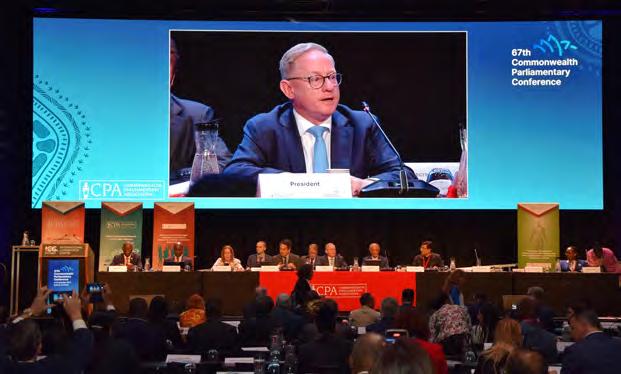
• Delegates approved the 2023 CPA Annual Report (including the audited Financial Statements), the CPA Membership Report, the CPA Budgets and Financial Management Reports.
Some of the key decisions and outcomes from the 2024 CPA General Assembly were:
• Delegates welcomed the work undertaken to enable the CPA to create a new non-charitable organisation and the passage of the CPA Status Bill in the UK Parliament to legislate to recognise the CPA as akin to an international, interparliamentary organisation.
• Delegates endorsed reports from the three CPA networks - the Commonwealth Women Parliamentarians (CWP), the Commonwealth Parliamentarians with Disabilities (CPwD) and the CPA Small Branches.
Delegates also looked ahead to the next Commonwealth Parliamentary Conference – the 68th Commonwealth Parliamentary Conference (CPC) to be hosted by the CPA Barbados Branch and Parliament of Barbados in October 2025.
During the 2024 CPA General Assembly at the 67th Commonwealth Parliamentary Conference in New South Wales, Members of the Commonwealth Parliamentary Association (CPA) elected Hon. Dr Christopher Kalila, MP (Zambia) as the new Chairperson of the CPA Executive Committee for a new three-year term. The newly elected CPA Chairperson pledged that the CPA would have a strengthened and renewed focus to promote Parliaments and Legislatures. In his acceptance remarks, he said that his election marked a time to move forward with the Association and that he wanted all CPA Brancheslarge and small - across the nine CPA Regions to work together. He thanked the Speaker of the Zambia National Assembly, Rt Hon. Nelly Mutti, and the CPA Zambia Branch for their support in his candidacy. He also expressed his gratitude to the Members of the CPA, who have shown great trust in electing him as their Chairperson. The CPA Chairperson is elected for three years by the CPA General Assembly and works with the CPA SecretaryGeneral and the CPA Headquarters Secretariat to lead the Association and to chair the CPA Executive Committee. Under CPA election rules only delegates attending the 67th Commonwealth Parliamentary Conference could take part in the vote to elect a new CPA Chairperson. There were three candidates for the position - Hon. Dr Zainab Gimba, MP (Nigeria), Hon. Arthur E. Holder, MP, SC, Speaker of the House of Assembly of Barbados and Hon. Dr Christopher Kalila, MP (Zambia). Hon. Dr Christopher Kalila is the fifth CPA Chairperson from the CPA Africa Region and the second from Zambia (following Hon. Lavu Mulimba, MCC, MP from 1987 to 90) since the role of CPA Chairperson was created in 1967. The previous CPA Chairperson was Hon. Ian Liddell-Grainger, MP (United Kingdom) who held the position from 2022 to 2024 (Acting Chairperson from 2021-2022).
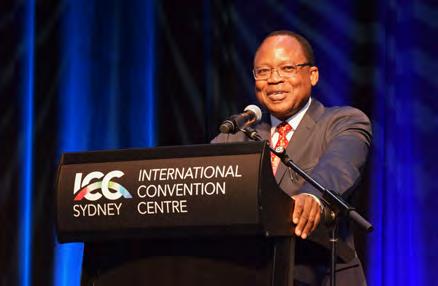
THE COURSE FOR RESILIENT DEMOCRACY
The Executive Committee of the Commonwealth Parliamentary Association (CPA) met ahead of the 67th Commonwealth Parliamentary Conference (CPC) in Sydney, New South Wales. The CPA Executive Committee represents the nine regions of the CPA - Africa; Asia; Australia; British Islands and Mediterranean; Canada; Caribbean, Americas and Atlantic; India; Pacific; South East Asia.
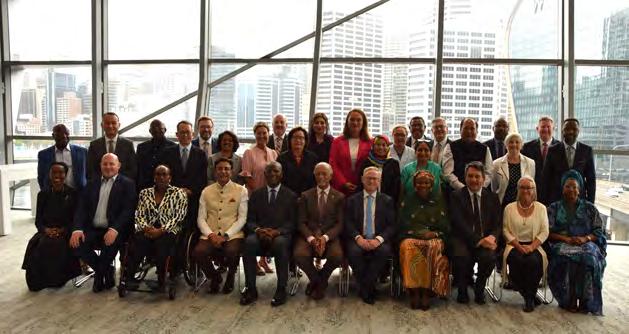
The CPA Secretary-General, Stephen Twigg said: “The CPA provides a unique platform for inter-parliamentary dialogue to take place. Our membership comprises the national, state, provincial and territorial Parliaments of the Commonwealth. The diverse nature of the membership provides the CPA with a unique position within the parliamentary community to offer a comprehensive perspective on how to strengthen parliamentary democracy across the Commonwealth and to discuss new and innovative approaches on how to do so. The 67th Commonwealth Parliamentary Conference is the most prominent event in the CPA’s calendar, as it offers a unique opportunity for the representatives of the Association’s 180 Member Parliaments and Legislatures to network with colleagues from other jurisdictions and discuss common issues of concern which affect Commonwealth Parliaments.”
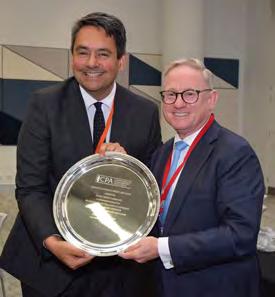
At the conclusion of the 67th Commonwealth Parliamentary Conference, the CPA President (2023-2024), Hon. Ben Franklin, MLC, President of the Legislative Council of New South Wales was presented with a commemorative silver salver to thank the CPA New South Wales Branch for their hosting of the conference. In addition, outgoing CPA Executive Committee Members were presented with commemorative plaques, traditionally donated by the CPA Malaysia Branch, to thank them for their service to the CPA.
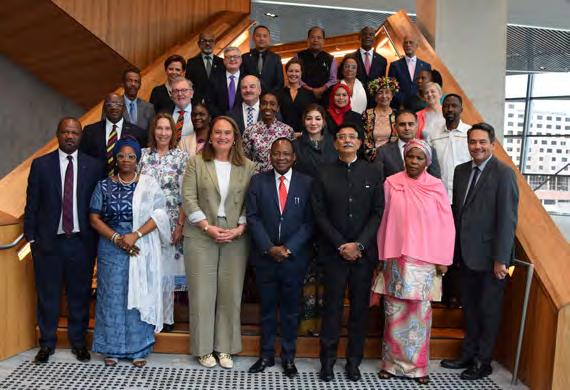
The 2024 CPA General Assembly was followed by a meeting of the new CPA Executive Committee during which Hon. Carmel Sepuloni, MP, Member of the Parliament of New Zealand and Regional Representative for the CPA Pacific Region was elected to the position of Vice-Chairperson of the CPA Executive Committee. The position of Vice-Chairperson is for a term of one year and the holder is also a Member of the CPA Co-ordinating Committee.
The Commonwealth Parliamentarian of the Year 2024 Awards have been announced at the 67th Commonwealth Parliamentary Conference in New South Wales. Hon. Khurram Ijaz Chattha, MPA, a Member of the Provincial Assembly of Punjab in Pakistan has been announced as the recipient of the 2024 Commonwealth Parliamentarian of the Year Award in recognition of his parliamentary service and promoting good governance.
Hon. Gail Teixeira, MP from the Parliament of Guyana was awarded the 2024 Parliamentarian Life-time Achievement Award after 32 years of parliamentary service and Deputy Raluca Kovacs from the States Assembly in Jersey was awarded the 2024 New Parliamentarian Award in recognition of her contribution to promoting parliamentary democracy after only being elected two years ago. Hon. Alex Greenwich, MP from the Parliament of New South Wales was awarded the 2024 Parliamentary Equality and Diversity Award in recognition of his commitment to LGBT+ Rights, reproductive rights and marriage equality in Australia.
The CPA Secretary-General, Stephen Twigg said: “The Commonwealth Parliamentarian of the Year Awards aligns with our strategic objective of promoting the Commonwealth values of parliamentary democracy and sustainable development to a wide audience. Through these annual awards, the CPA recognises and highlights the invaluable contributions that Parliamentarians are making to their local communities within the Commonwealth.”
As part of the Commonwealth Parliamentary Association’s mission to strengthen parliamentary democracy through the promotion of good governance and sharing best practice, the awards were launched in 2022 to recognise and highlight inspirational and active Parliamentarians for excelling in their field.
CPA Awards are open to nominees who are current Parliamentarians* across the Commonwealth. The Commonwealth Parliamentary Association’s unique membership includes almost 180 national, state, provincial and territorial Legislatures. The next awards will be open for nominees in 2025.
* Nominees should be sitting Members of Parliament in a Commonwealth Legislature or have been a sitting Member of Parliament in a Commonwealth Legislature in the award period. The award can be made posthumously. Please check the CPA website for full nomination criteria.
The 58th Meeting of the Society-of-Clerks-at-the-Table (SoCATT) took place in the margins of the 67th Commonwealth Parliamentary Conference (CPC) in New South Wales. The meeting brought together Parliamentary Clerks and parliamentary staff from Commonwealth Parliaments to discuss the latest legislative practices and to share best practice. The meeting was jointly chaired by Mr David Blunt, Clerk of the Parliaments of New South Wales and Honorary Secretary / Treasurer of the CPA New South Wales Branch and Ms Helen Minnican, Clerk of the Legislative Assembly of New South Wales.
Presentations were made during the two-day meeting by a number of different Parliamentary Clerks on a wide range of subjects including: citizen participation in Parliament; Parliamentary oversight of Executive undertakings; Parliamentary reform; Parliamentary privilege; initiatives to promote transparency; digital democracy; the impact of legislators in managing natural disasters; reconciliation with indigenous peoples and Legislative Assemblies; the development of relations between Parliaments and the CPA’s
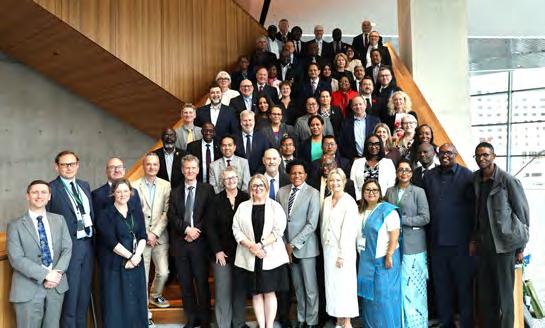
work on Standards for Codes of Conduct in the Parliamentary workplace.
At the conclusion of the meeting, the Society’s accounts for 2023 and proposals for the agenda for the 59th SoCATT General Meeting to be held in Barbados in 2025 were agreed. For further information about SoCATT please visit www.societyofclerks.org
In the nomination, it was noted that Hon. Khurram Ijaz Chattha, MPA from the Punjab Provincial Assembly in Pakistan has been a dedicated proponent of good governance, placing strong emphasis on the rule of law, transparency and accountability throughout his political career. His proactive approach in Assembly debates has contributed to the creation of laws that prioritize the public interest and his leadership in the development of public policies has also focused on improving governance systems that protect the rights of citizens and promote social equity. His leadership goes beyond the walls of the Assembly, and he spearheaded several projects in his constituency, such as the establishment of a rescue service, the construction of a college for both boys and girls and a special educational needs school, demonstrating his belief in community service and empowering future generations.
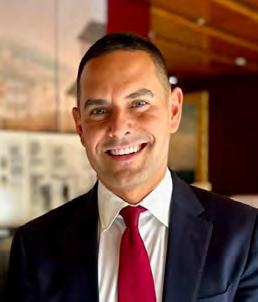
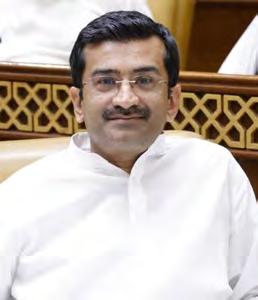
Hon. Alex Greenwich, MP from the Parliament of New South Wales was recognised for his commitment to LGBT+ Rights, reproductive rights and marriage equality in Australia. He is recognised for his role as a co-sponsor for the 2019 Bill which decriminalised abortion in New South Wales and in 2021, he co-sponsored the Bill which allowed eligible persons to access voluntary assisted dying services. He was the co-chair of the successful YES campaign that delivered marriage equality in Australia in 2017 and has campaigned for LGBT+ communities in New South Wales by amending 20 Parliamentary Acts.
Hon. Gail Teixeira MP from the Parliament of Guyana was recognised for her 32 years of parliamentary service and her commitment to the Legislature. Over these years, she has sat on Parliamentary Committees and held many Parliamentary and Ministerial roles, dealing with issues that range from constitutional reform to legislation addressing anti-money laundering and the countering of financing of terrorism. She began her political career aged 19 in Toronto, Canada, when she became an active participant in the anti-apartheid struggle in South Africa and the struggles for African liberation and the return of democracy in Chile, Nicaragua and her own native, Guyana. In 1977, she joined the women’s rights movement and has remained a strong advocate for women’s rights and participation at all levels of society.
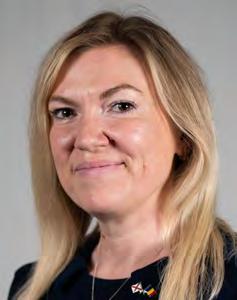

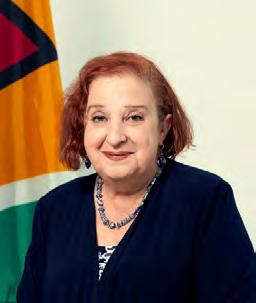
Deputy Raluca Kovacs from the States Assembly in Jersey was recognised for her contribution to promoting parliamentary democracy. Elected only two years ago, she has advanced the principles of good governance through her work with multiple Committees and steering groups, and she led the review of the 2023 Annual Report as a member of the Public Accounts Committee, holding the government to account. She has shared her expertise on a number of international forums and platforms advocating for gender equality and promoting globally Jersey’s findings of the Review commissioned by the Government on Violence Against Women and Girls. She has actively engaged with community groups and schools to promote engagement and an awareness of democracy amongst young people.
Submit a nomination to recognise inspirational Parliamentarians for excelling in their field Full award criteria, categories and nomination forms online Email hq.sec@cpahq.org | www.cpahq.org

The second CPA Emilia Monjowa Lifaka Lecture has highlighted the key role of Commonwealth Parliamentarians in protecting and promoting human rights. The 2nd Lifaka Lecture took place in the margins of the 67th Commonwealth Parliamentary Conference in New South Wales and was attended by delegates and the diplomatic community in Sydney.
This year’s keynote address was given by renowned guest speaker, Hon. Michael Kirby, AC CMG. An international jurist, educator and former judge from Australia, Michael Kirby has undertaken many international activities for the United Nations, the Commonwealth Secretariat and the Global Fund Against AIDS, Tuberculosis and Malaria. He was also a member of the Commonwealth Eminent Persons Group who examined the future of the organisation in 2011/12.
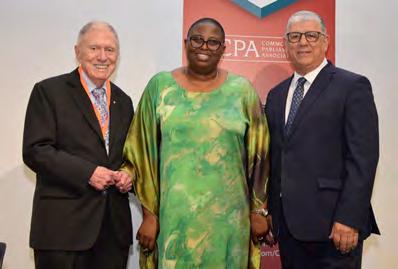
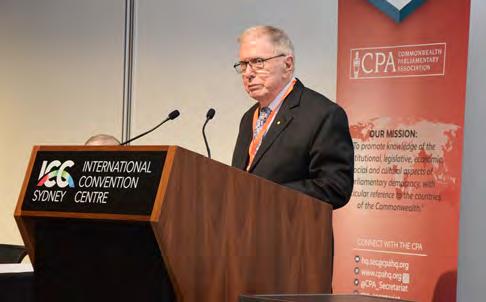
The topic for this year’s Lifaka Lecture was the complex relationship between human rights and governance within the Commonwealth, emphasising the critical role of Parliamentarians in upholding, promoting and protecting these rights. The Lecture examined the key human rights issues affecting Commonwealth jurisdictions such as freedom of speech and expression; gender equality and women's rights; the rights of marginalised groups such as indigenous populations and LGBT+ communities; and access to justice and the rule of law.
The reply to this year's Lifaka Lecture was given by Hon. Nontembeko Boyce, MPL, the Speaker of the KwaZulu-Natal Legislature and the Q&A was chaired by Hon. John Ajaka, a former President of the New South Wales Legislative Council and former CPA Vice-Chairperson. The CPA Lifaka Lecture was established in 2023 in memory of Hon. Emilia Monjowa Lifaka, the late Chairperson of the CPA International Executive Committee and Deputy Speaker of Cameroon. Hon. Emilia Monjowa Lifaka was a passionate champion of the CPA and served as CPA Chairperson from November 2017 until her untimely death in April 2021. The CPA Lifaka Lecture is intended to provide a fitting tribute to her work.
The 67th Commonwealth Parliamentary Conference began with a series of CPA governance meetings including a meeting of the CPA Interim Board, which took place in historic Jubilee Room at New South Wales Parliament with MPs from Trinidad & Tobago, Pakistan, Uganda, Malaysia, India, Saskatchewan and Scotland
Ahead of the 67th Commonwealth Parliamentary Conference in New South Wales, the Regional Secretaries of the nine Regions of the CPA met to discuss CPA activities and the year ahead, joined by CPA Secretary-General, Stephen Twigg and CPA Deputy SecretaryGeneral, Jarvis Matiya. The nine regions of the CPA are: Africa; Asia; Australia; British Isles and the Mediterranean; Canada; Caribbean, Americas and the Atlantic; India; Pacific; and South-East Asia.
The Commonwealth Parliamentarians with Disabilities (CPwD) network, led by the CPwD Chairperson, Hon. Laura Kanushu, MP (Uganda), highlighted the work of a local rehabilitation centre working with persons living with disabilities during the 67th Commonwealth Parliamentary Conference in New South Wales.
The CPwD Regional Champions went to the Royal Rehab Ryde, a rehabilitation hospital, in Sydney to see their work. During the visit, they toured the Brain and Spine Injury Units and the Royal Rehab Lifeworks Unit. Other facilities such as the Outdoor Recreation and Sports Courts were also viewed by the visiting CPwD Regional Champions and Members participated in an interactive demonstration on Wheelchair Basketball and Tennis.

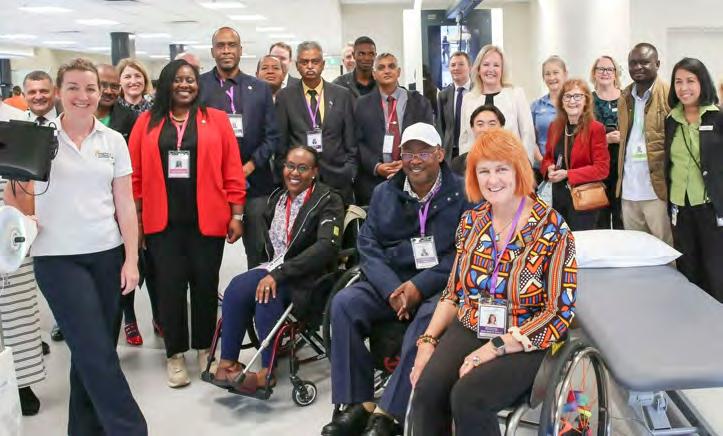
The Chairperson of the CPwD network, Hon. Laura Kanushu, MP said: “Rehabilitation centres and associated organisations are of vital importance to empowering people with disabilities globally. Any Parliamentarian, with or without a disability, must engage with such entities to develop their understanding of how they can represent the disability community within their own jurisdictions. This activity provided an excellent opportunity for the CPwD’s Regional Champions to learn more about how rehabilitation therapies facilitate persons living with disabilities in Australia and we will take back what we have learnt for our work as Parliamentarians across the Commonwealth.”
The outreach visit was organised through Hon. Liesl Tesch, MP (New South Wales Legislative Assembly) who is the CPwD Regional Champion for the CPA Australia Region.
The CPwD network was established by the CPA to support Parliamentarians living with disabilities to be more effective in their roles and to help improve awareness of disability issues amongst all Parliamentarians and parliamentary staff. The network also seeks to address inequalities facing persons with disabilities and helps to raise awareness within the parliamentary context.
The Regional Champions of the Commonwealth Parliamentarians with Disabilities (CPwD) network also met for their annual governance meeting during the 67th CPC. The CPwD Regional Champions represent each of the CPA’s nine Regions and promote the rights of Commonwealth Parliamentarians with disabilities in their respective Regions and represent disability interests within the CPA. During the meeting, the CPwD Regional Champions set the agenda of the network for the year ahead and the CPA Headquarters reported recent CPwD activities including the Capital Investment Fund supporting Commonwealth Parliaments to become more accessible.
Delegates at the 67th CPC also joined a workshop on creating inclusive elections for Persons with Disabilities (PwD) which examined practical examples of inclusion during election campaigns and processes.
VIDEO: Hon. Liesl Tesch speaks about the importance of inclusion for people with disabilities and the outreach event. Visit https:// youtu.be/apfxct-H2AA on the CPA's YouTube channel to watch.
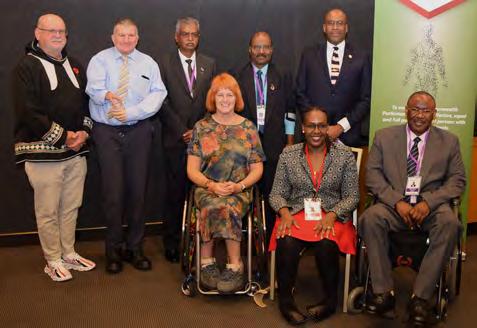
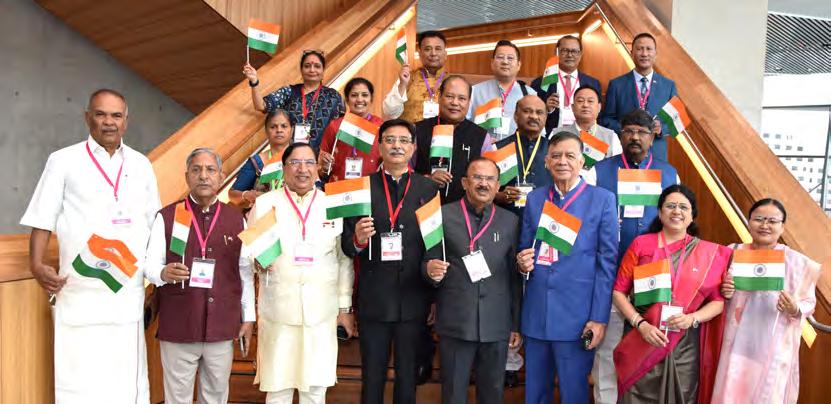
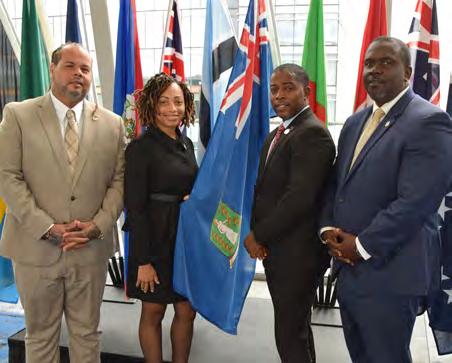
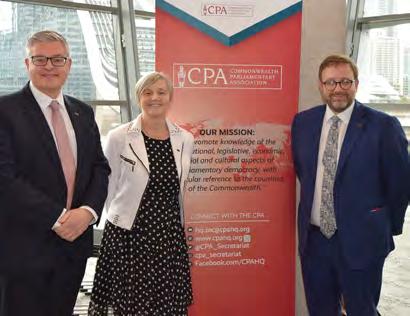
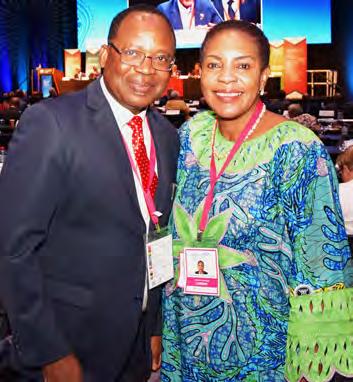
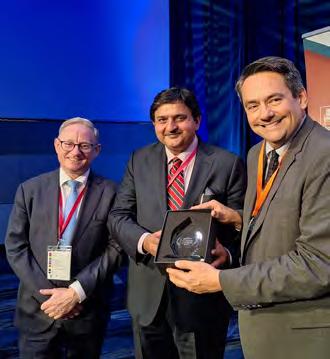
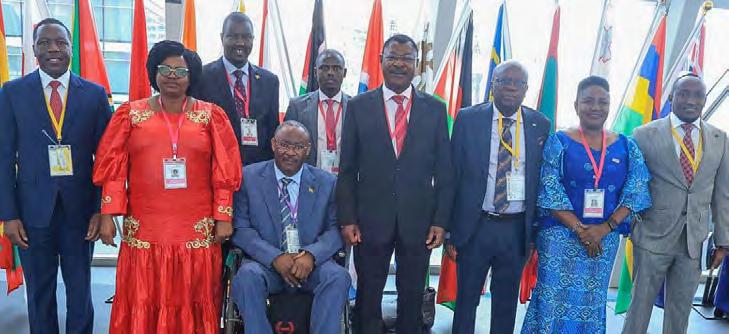
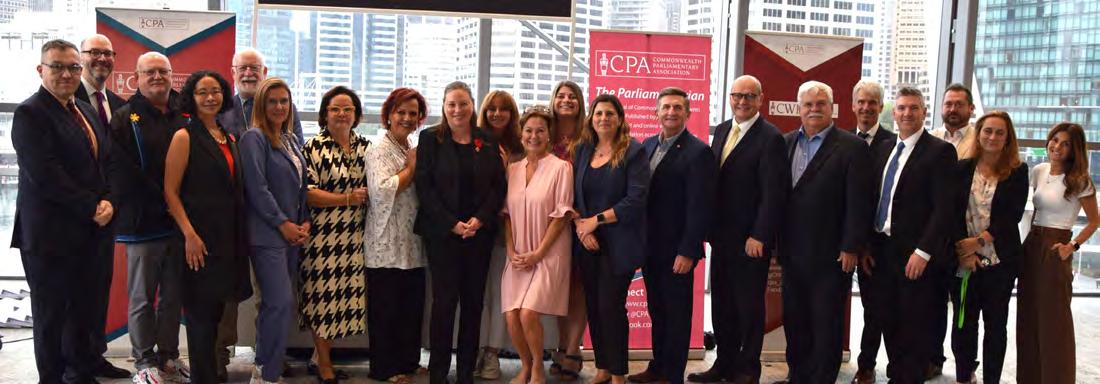
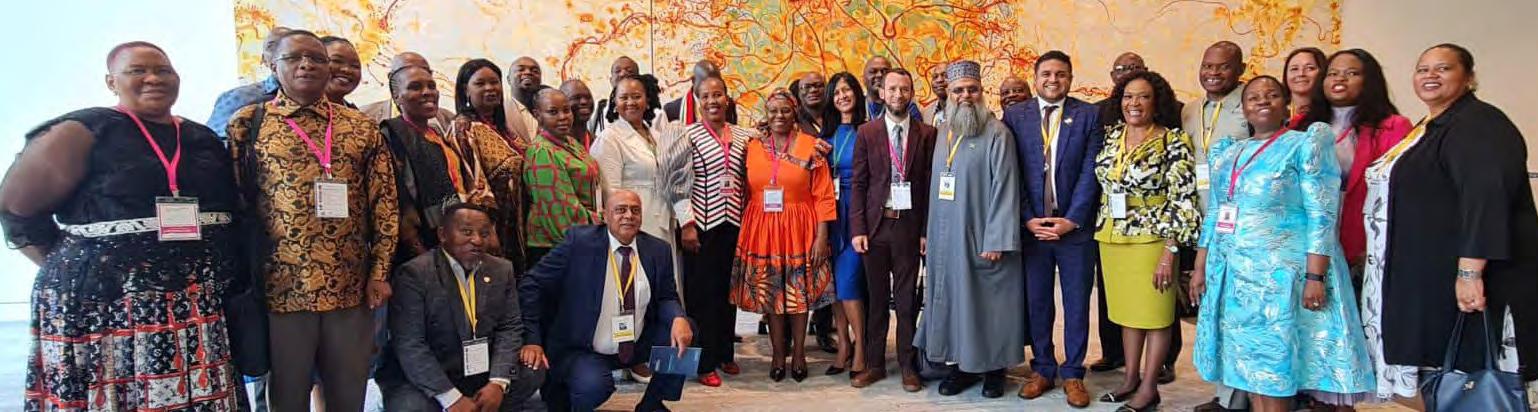
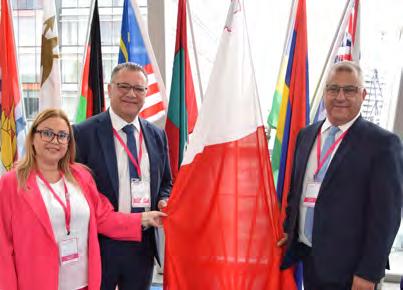
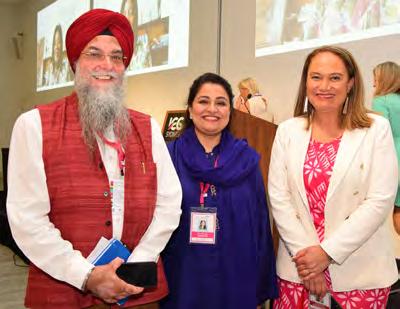
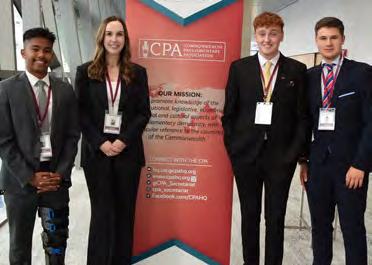
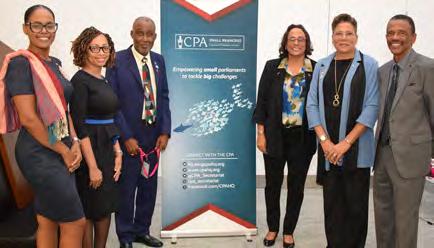
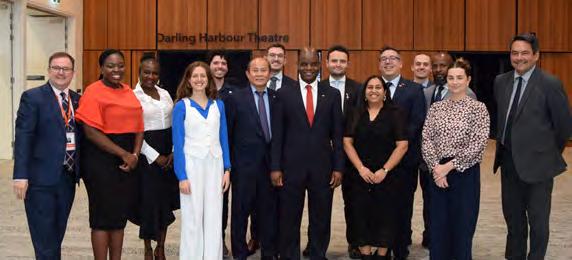
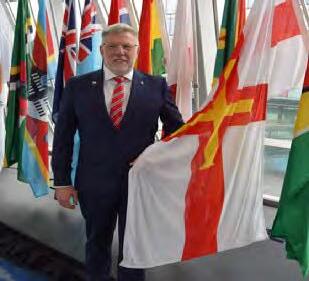
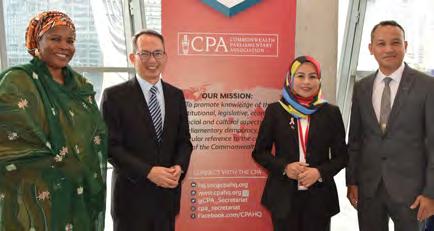
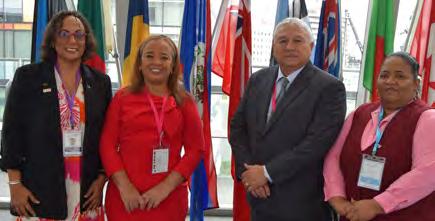
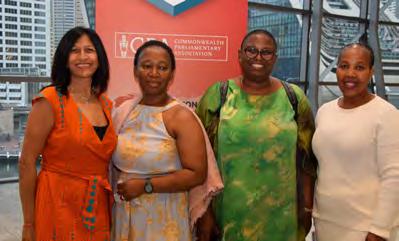
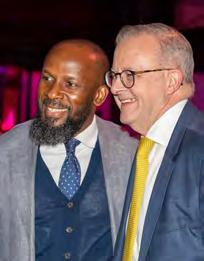
Panel Chair: Senator Hon. Sue Lines, President of the Australian Senate
Discussion Leaders:
• Professor Megan Davis, Pro Vice Chancellor Society, University of New South Wales (via videoconference)
• Mr Eddie Synot, Lecturer, Griffith Law School (via videoconference)
• Hon. Willie Jackson, MP (New Zealand)
• Ms Jennifer Kalpokas Doan, Executive Director, Balance of Power
• Facilitator: Mr Marshall Tisdale, Programmes Officer, CPA Secretariat
Rapporteur: Ms Helen Hong (Parliament of New South Wales)
This workshop focused on how Parliamentarians and society can establish and implement frameworks which allow for meaningful engagement with indigenous people. Panellists from Australia, New Zealand and Vanuatu shared their lived experiences and professional expertise in establishing such frameworks. These included discussions about ‘The Voice’ referendum in Australia, the focus on indigenous women in Vanuatu and the New Zealand example of entrenching Māori rights in the Constitution and wider society.
Professor Megan Davis (University of New South Wales) started the discussion by marking key moments in Australian history of engagement with First Nations people.
Professor Megan Davis explained that the two parts of the 1901 Constitution that referred to First Nations people gave the states power to make ‘special laws’ for Aboriginal people and that ‘aboriginal natives shall not be counted’. She explained that this wording created a racist power dynamic which expressly excluded First Nations people.
She highlighted the 1967 referendum as a key turning point in meaningful engagement. With the highest 'yes' vote in a referendum, the Australian Federal Government took leadership of Indigenous policy and set up successive consultative bodies, such as the National Aboriginal Consultative Committee and the National
Aboriginal Conference, to engage with Indigenous communities and better understand how to make the best, or right, laws for them.
Professor Megan Davis explained that as early as the 1900s, there have been calls to establish a ‘Voice’ in Parliament to inform Indigenous policy or treaty, rather than just symbolic recognition.
A major milestone in conducting meaningful and thoughtful engagement with First Nations people was the Uluru Statement from the Heart. Professor Megan Davis explained that there had been a year of intense planning to roll out a series of dialogue processes with First Nations people across 12 sites nationwide with the aim of consulting and educating. The culmination of the dialogues was to convey those issues that the regions had reached consensus on. One of these was the establishment of a Voice to Parliament.
Mr Eddie Synot (Griffith Law School) suggested that despite the referendum on ‘The Voice’ not passing, a Voice was still needed for Parliament to recognise the rights of First Nations peoples and to address social and economic disadvantage.
‘The Voice’, he said, was the result of a truly consultative process to achieve better outcomes for First Nations people and to ensure accountability of government decision-making. He explained that ’The Voice’ had been designed with community support, along with input from the legal profession, to ensure that it worked with current systems, including Parliament (which would remain sovereign). Under ‘The Voice’ model the community, from the grassroots up, would be given the right to have their say, while the bureaucracy and the Executive Government would continue to be involved in decision-making and governing the programmes that affect people’s lives.
Ms Jennifer Kalpokas Doan (Balance of Power) focused on the Vanuatu experience and provided her unique perspective as an indigenous woman. She explained that despite most, or all, of the Members of the Vanuatu Parliament being indigenous, it did not mean that everyone had equal access to Parliament and its processes, particularly not indigenous women. She said that, currently, there is only one female Member of Parliament and only six female Members in total have been elected to the Vanuatu Parliament.
Jennifer Kalpokas Doan highlighted that there are a number of cultural and societal barriers to increasing female indigenous representation in Parliament. These include the prohibitive costs of running for office. She explained that many women do not have access to the necessary financial resources to contest an election. Another barrier is the common perception that Parliamentarians should be men. This is reinforced by community expectations about traditional responsibilities for men and women, those being
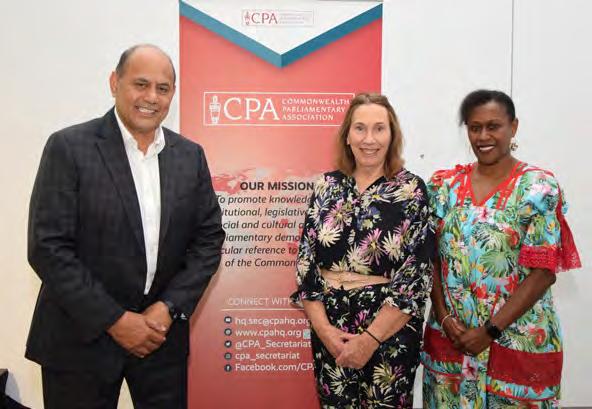
that men should work and women should do housework and raise children.
Despite this, Jennifer Kalpokas Doan explained that women are bypassing these barriers by demonstrating their leadership in other areas, such as in the community, church or government bodies. Slowly, women are being acknowledged and recognised as leaders, and this is leading to more inclusive dialogue and better representation of women in institutions and the community.
Hon. Willie Jackson, MP (New Zealand) shared his experiences of how New Zealand had legislated for positive changes for its indigenous people, perhaps more than anywhere else in the world. While in power, his party introduced a national Māori public holiday, established a Māori health authority recognising that Māori people died six to seven years before the rest of the population, and legislated for specific Māori local government seats, as indigenous people were not being elected by the popular vote. In addition, the amount of targeted government funding to certain community organisations and tribes was increased.
While the Government’s ‘unprecedented’ actions were relatively well-received by the general population, he also acknowledged that some labelled the allocation as ‘racist’ funding.
Hon. Willie Jackson partly attributed New Zealand’s unique position to the Treaty of Waitangi, which was signed by the Indigenous people and the Crown in 1840. The courts also recognised and upheld the Treaty in 1987, describing it as “akin to a partnership" which changed the face of New Zealand. The Treaty Principles were subsequently developed over the next 50 years in support of Māori, however, Willie Jackson noted that a Bill would shortly be introduced into the New Zealand Parliament which may seek to redefine or remove the principles.
He advised that the proposed legislation was leading to widespread protests in the country as it posed serious challenges to the partnership between the Government and Māori.
Hon. K Sudhakar, MP (India) asked how the involvement of tribal or indigenous people could be ensured without express recognition of them in a constitution.
Professor Megan Davis responded that tribal people would benefit from constitutional recognition, which, in turn, would enable legislation to be introduced and enacted. She suggested that
focusing on specific initiatives, such as addressing poor health or wellbeing, were insufficient for communities to achieve substantive change.
Eddie Synot also reflected that, in his experience, ‘The Voice’ was about ensuring the recognition of the voices of all First Nations people, including women, people who live in urban environments, and those who live in more traditional settings. He stated that without structural empowerment or legislation, necessary changes cannot be made.
Hon. Willie Jackson further stated that courts should entrench necessary protections because 'you can’t trust politicians', and that there was a need for a foundational document that cannot be dismantled.
Hon. Khalid Sayed, MPP (Western Cape, South Africa) asked how, within the context of a meaningful framework, can indigenous people be recognised while also recognising their tribal customs and laws?
Eddie Synot reflected that different types of rights do not have to be an ‘either/or’ situation.
Jennifer Kalpokas Doan suggested that meaningful engagement looks different in every country and that, while there will be some level of disconnect or chaos, it breeds a need for better governance.
Hon. John Paul Mwirigi, MP (Kenya) noted that Members of Parliament represent certain communities, and asked that if a constitution focuses on everyone, how can certain community groups ensure that their voices are heard?
Jennifer Kalpokas Doan acknowledged that in Vanuatu, there have been issues with naturalised citizens becoming Members of Parliament and not being perceived to adequately represent constituents and their needs.
Hon. Willie Jackson advised that one must ‘make leadership uncomfortable’ and continually fight and advocate for indigenous rights. He stated that indigenous rights have been recognised by the United Nations Declaration on the Rights of Indigenous Peoples and therefore it is an issue of justice.
Professor Megan Davis emphasised the importance of a country being equal and upholding the rule of law. She suggested that a process for institutional reform could be run in consultation with community groups, as it is those groups that know best.
Eddie Synot explained that was important to be as representative of minorities as possible, as there were very different and varied indigenous experiences. He acknowledged that the Uluru Statement had not represented the views of all Indigenous people, and that some people are better placed than others to access political processes and have their voices heard.
At the end of the workshop discussion the following recommendation was endorsed as follows:
• Parliamentarians across the Commonwealth have a responsibility to establish and implement parliamentary frameworks which enable active and meaningful engagement with Indigenous Peoples.
ENGAGE, EMPOWER, SUSTAIN:
CHARTING THE COURSE FOR RESILIENT DEMOCRACY
Panel Chair: Hon. Hany Hui Bin Soh, MP (Singapore)
Discussion Leaders:
• Lord Syed Kamall (United Kingdom House of Lords)
• Senator Hon. Rosemary Moodie (Senate of Canada)
• Ms Patricia Almeida, Deputy Chief Information Officer, Brazilian Chamber of Deputies
Facilitator: Mr Jack Hardcastle, Deputy Head of Programmes, CPA Secretariat
Rapporteur: Mr David Rodwell (Parliament of New South Wales)
This workshop focused on how Parliaments are implementing Artificial Intelligence (AI) into their processes and practices, and the opportunities and challenges this presents. While many jurisdictions have begun to introduce AI into various aspects of their processes, such as transcribing parliamentary debates and simplifying administrative tasks to improve efficiency, this is in the early stages.
Panellists agreed that AI can undoubtedly bring great opportunities and potential benefits to Parliaments, but cautioned that safeguards must be developed against dangerous or unintended consequences, such as the inclusion of bias and 'fake news' in AI-produced analysis, leaks of private and sensitive information, and the risk of hacking of AI systems by 'bad actors'.
Panellists agreed that Parliaments and jurisdictions need to develop the capabilities to take advantage of the benefits that AI can offer while mitigating the potential risks, noting that it is a complex issue and that different responses will be needed based on the individual context of each jurisdiction. Panellists suggested that scrutiny by Parliamentary Committees was an important means to scrutinise developments in AI.
The workshop also featured a presentation on AI initiatives in the Brazilian Chamber of Deputies, including AI-powered analysis of citizens' opinions on Bills, as well as AI summaries of Bills and parliamentary speeches.
Workshop participants supported a suggestion made by a participant that the CPA create a Steering Committee on the use of Artificial Intelligence in Parliaments.
Workshop Chair, Hon. Hany Hui Bin Soh, MP (Singapore) opened the session by highlighting that the emergence of AI presents both exciting opportunities and challenges. AI has the potential to increase the efficiency of legislative work, including identifying constituents' views on political issues, freeing up Members' time to focus on parliamentary debates and serving their constituents.
She said that Singapore has used AI to search past Hansard reports and create summaries, and is exploring using AI for administrative tasks such as processing questions for MPs and determining whether they are within the Parliament's Standing Orders.
However, she also cautioned that the emergence of AI carries with it concerns about the privacy of data, bias and the potential for AI systems to be hacked or manipulated. The Parliament of Singapore had passed laws to better safeguard against these potential risks and ensure that the integrity of parliamentary processes is preserved.
Lord Syed Kamall (UK House of Lords) noted that as AI is in its infancy, it is 'not truly intelligent' yet and that it is 'debatable' how far away we are from 'truly intelligent AI'. Lord Kamall shared his experience on the House of Lords Communications and Digital Committee, which has been looking at how the UK Government can take advantage of the opportunities presented by AI.
Lord Kamall is concerned that discussions about the use of AI focus on the 'precautionary principle' related to AI safety and risk, rather than the 'innovation principle'. He suggested that countries such as the United Kingdom need to strike a balance between both principles and take advantage of the opportunities presented by AI. Jurisdictions must guard against the regulatory capture of organisations lobbying Parliamentarians in favour of laws that benefit them, while making it harder to guard against dangerous AI capabilities. There is a risk of giving too much power to large companies in the development of AI laws, noting a nuanced approach to AI is needed.
Lord Kamall suggested that jurisdictions should exercise caution in relation to certain AI processes such as automated decisionmaking. While the UK Parliament is using AI for some administrative tasks, such as transcribing debates, Lord Kamall pointed out that an incorrect AI transcription may have legal consequences. Lord Kamall concluded that there is no perfect balance between the precautionary and innovation principles, and that AI should be embraced with vigilance.
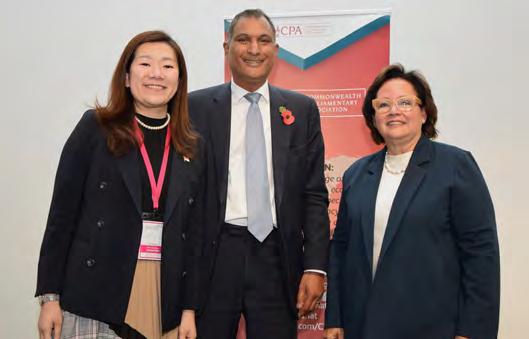
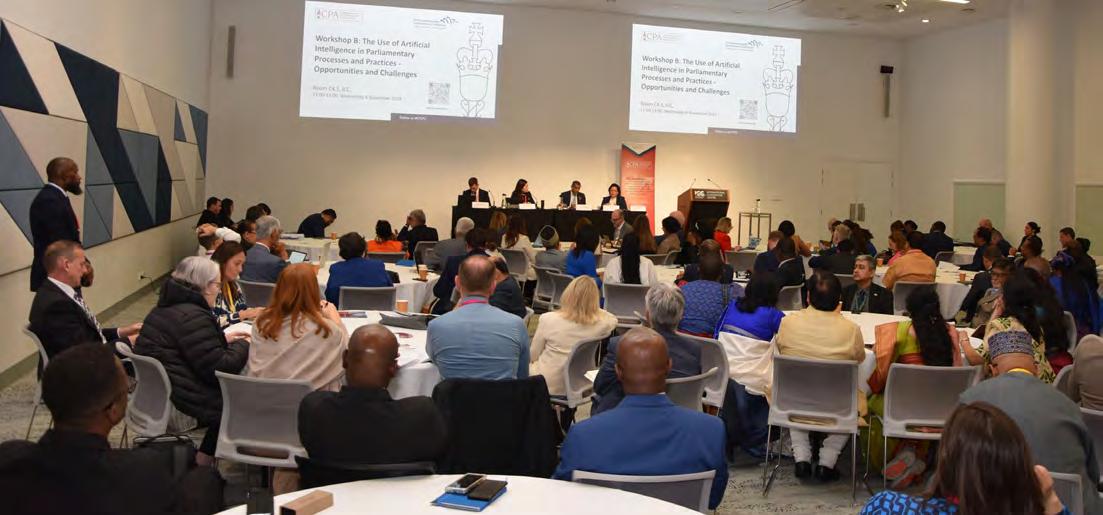
Senator Hon. Rosemary Moodie (Canada) said that AI was being used in the Canadian Senate to classify documents, transcribe proceedings, review and organise amendments to legislation, monitor political discourse, conduct parliamentary research and to power a chatbot to speak to members of the public.
Senator Moodie discussed the benefits of AI, such as increasing efficiency, increasing access to Parliament, and supporting democratic participation (such as through plain language summaries). Senator Moodie cautioned that Parliamentarians have a responsibility to ensure parliamentary AI systems do not promote misinformation which pose a threat to freedom. Additionally, Senator Moodie said consideration needs to be given to how the AI system is 'trained', and its source of knowledge. She stated that AI can fabricate information about political systems, Legislatures, elected officials and emerging political issues, which has the risk of creating doubt about the authenticity of information and challenging people's trust in Parliament. Senator Moodie also noted that while much of Parliamentarians' work is carried out in public, their work also gives them access to sensitive and personally identifiable information that must not be fed into AI systems.
Senator Moodie noted that the Canadian Government is considering AI legislation to target the private sector and a code of practice on AI use. According to her, Canada was the first country to launch a national AI strategy.
Senator Moodie said that Parliaments need to ensure their staff have appropriate training in AI processes before incorporating them, and access to best practice expertise from other Parliaments. She stated that ethics in AI is also an important consideration, and referred to the 11 policy areas identified by UNESCO where action is required by jurisdictions introducing AI.
Senator Moodie concluded that AI is here to stay, but charging along at a fast pace, and that there is a need to increase guardrails to ensure AI safety by emphasising transparency and responsibility while ensuring Parliaments do not miss out on the benefits.
Ms Patricia Almeida (Brazilian Chamber of Deputies) shared the experience of the Brazilian Chamber of Deputies' journey towards 'AI governance'. She said the Chamber's AI journey started in 2013, when it adapted its systems to enable Parliamentarians with disabilities to participate in plenary sessions and Committee meetings.
Patricia Almeida then presented on how the Chamber introduced its AI system, known as the 'Ulysses Suite' across various parliamentary processes to date. In 2018, Ulysses 2 was introduced which is now conducting analysis and research on legislation and comparison of texts. Later, Ulysses 4 was introduced which allows for the collation of amendments to legislation categorised by topic. The AI system also allows 'Smart Analysis' via e-polls on legislation, collating information on arguments in favour of a Bill compared to arguments against, from both Parliamentarians and citizens. The technology also has a lawmaking component which summarises Bills, a stenograph unit which summarises parliamentary speeches, and a communication unit which summarises public meetings.
Patricia Almeida said the Chamber's use of AI is guided by the following ethical principles: privacy, transparency, accountability, fairness and non-discrimination, robustness and safety, human autonomy and intellectual property. She noted that the InterParliamentary Union (IPU) would launch guidelines for AI in Parliaments in December 2024.
After the presentations concluded, several participants asked questions and provided input about the issues discussed, with some of these outlined below.
Deputy Tom Coles (Jersey) asked how Parliaments can be expected to manage conflicts with AI, when it is already being used across government, defence and industry. Senator Moodie responded that jurisdictions should pay attention to a UN report on AI, which called for a global framework to ensure the responsible and ethical development of AI, but that governments would need to manage their own internal conflicts.
Hon. Claire Christian, MHK (Isle of Man) asked whether Legislatures will emerge as leaders on ethics in AI and if so, whether they will be disadvantaged compared to jurisdictions that do not prioritise ethics in their use of AI. Lord Kamall responded that international coordination, potentially sharing resources via the CPA, is needed to ensure leadership on AI ethics. Lord Kamall also noted it is unclear how much jurisdictions such as China consider ethics in their use of AI but that we need to bring such jurisdictions to the table in a sensitive way.
Shri A N Shamseer, Speaker of the Kerala Legislative Assembly (Kerala, India) asked whether managing AI in a positive way required a proactive or reactive approach. Lord Kamall said both proactive and reactive approaches are required to take advantage of the opportunities of AI and also to respond to any unintended consequences.
Hon. Abdul Khader Ali Fareed Ulla Thota, Speaker of the Karnataka Legislative Assembly (Karnataka, India) asked if a revolution is needed for AI in Parliaments and whether regulation is needed against bias in AI. Senator Moodie said regulation is needed to protect privacy and ensure accountability. Lord Kammal added that Parliaments needed to think about their populations, what biases there might be and incorporate any necessary protections without 'overcompensating' the data and 'creating bias' while trying to address it.
Hon. Refilwe Mtsheweni-Tsipane, MP, Chairperson of the National Council of Provinces (South Africa) asked what regulatory measures may be needed to prevent the undermining of humility in AI processes. Senator Moodie said there are different ways
jurisdictions can identify the correct guardrails needed. She said jurisdictions should reflect internally on what those may be and to customise legislation for each jurisdiction. However, AI in defence and healthcare likely affect the global community and will require a more complex response. Lord Kamall noted it was important for jurisdictions to consult world experts in AI.
Deputy Inna Gardiner (Jersey) asked what jurisdictions need to do to prepare their systems to be ready for automatic decisionmaking. Panellists said a mixture of measures would be needed but that automatic decision-making was not suitable in some areas such as health-care decision-making.
Hon. Corine N. George-Massicote, MP, Speaker of the House of Assembly of the British Virgin Islands, suggested that a Steering Committee be established via the CPA for advancing AI among Parliaments.
Hon. Kate Doust, MLC (Western Australia) asked panellists what the best models and practices are that they had come across for parliamentary oversight of AI use. Lord Kamall and Senator Moodie agreed that Parliamentary Inquiries and Committee work is where Parliaments should start and that most jurisdictions are in the early stages of their work in this area.
The recommendations at the workshop were endorsed as follows:
• Parliaments should encourage the sharing of best practice and lessons learned from integrating AI into parliamentary processes and practices, and consider the creation of a CPA Steering Committee on the use of Artificial Intelligence in Parliaments.
ENGAGE, EMPOWER, SUSTAIN: CHARTING THE COURSE FOR RESILIENT DEMOCRACY
Panel Chair: Hon. Bilal Azhar Kayani, MNA (Pakistan)
Discussion Leaders:
• Rt Hon. Dr Moses Wetang'ula, EGH, MP, Speaker of the National Assembly of Kenya
• Mrs Sharon Hodgson, MP (United Kingdom)
• Ms Jennifer Nadel, Co-Director, Compassion in Politics; Director, Compassionate Politics; Board Member, Global Compassion Coalition
• Mr Rogier Huizenga, Manager, IPU Human Rights Programme; Secretary, Committee on the Human Rights of Parliamentarians (via video presentation)
Facilitator: Ms Charlotte Corby, Programmes Officer, CPA Secretariat
Rapporteur: Yajun Ma (Parliament of New South Wales)
Parliamentarians carry out a crucial role in democracy. Threats to their safety impact not only their physical and mental wellbeing but also their ability to speak openly and freely in the democratic systems they work in. This workshop considered issues of violence towards and the abuse of Parliamentarians, the changing trends in such behaviour, the impacts on individual welfare and wider society, and which cohorts are more vulnerable.
The discussion highlighted both the presence of combative political climates and the rise of online platforms and social media as factors contributing to modern abusive behaviour towards Parliamentarians. Social media, ‘fake news’, Artificial Intelligence and cyberbullying are some examples of threats in the online space. These can impact the mental health of those targeted and can also cross over into threats to physical safety. Moreover, they may foster a wider climate of distrust and fear of speaking out in public and in democratic institutions.
The workshop discussed those cohorts who are vulnerable to abuse, especially women and other marginalised communities. One panellist noted that any conversation about threats against Members of Parliament is also a conversation about gendered violence. Women, historically a silenced cohort, may find themselves again unwilling to speak out of fear for their safety when elected to public office.
Panellists named social media regulation, legislation around truth-telling in politics, less combative debate environments in
Parliament and policies targeting misogyny as potential solutions to the issue of abuse.
Hon. Bilal Azhar Kayani, MNA (Pakistan) introduced the session by noting that political polarisation and online exposure have exacerbated instances of violence, abuse and intimidation towards public figures. The security and health of elected representatives and their staff are integral to the strength of democratic institutions. He noted that Parliaments of the Commonwealth must be committed to providing robust security measures that respond to changing political landscapes, alongside adequate and accessible medical, physical and mental support.
Mr Rogier Huizenga (Inter-Parliamentary Union IPU) introduced, in a pre-recorded contribution, the IPU Committee on the Human Rights of Parliamentarians. He outlined its establishment, work and processes, which include the handling of cases of complaints regarding human rights abuses against Parliamentarians. These cases have increased sharply in recent years, with more than 700 now pending. He emphasised the need for parliamentary solidarity, asking Members present to use their roles as Parliamentarians and as visitors to other jurisdictions to raise issues of human rights abuses against Parliamentarians.
Rt Hon. Dr Moses Wetang'ula, EGH, MP, Speaker of the National Assembly of Kenya said that women, especially younger women, are the ‘first class’ of victims in the current environment of abuse and threats against Parliamentarians in Kenya. Female Members of Parliament are regularly bullied, online and offline, and often resist unwanted sexual advances from male counterparts. With the advent of Artificial Intelligence, they have become victims of what the Speaker referred to as ‘engineered fake nude caricatures’, which can cause irreparable damage to their reputations even when denied. This type of bullying is the single biggest threat to the empowerment of women and their advancement into leadership positions.
The Speaker also named other threats to Members' security in Kenya, including hostile campaign environments in which
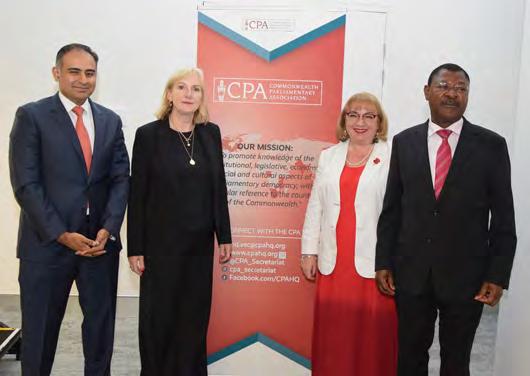
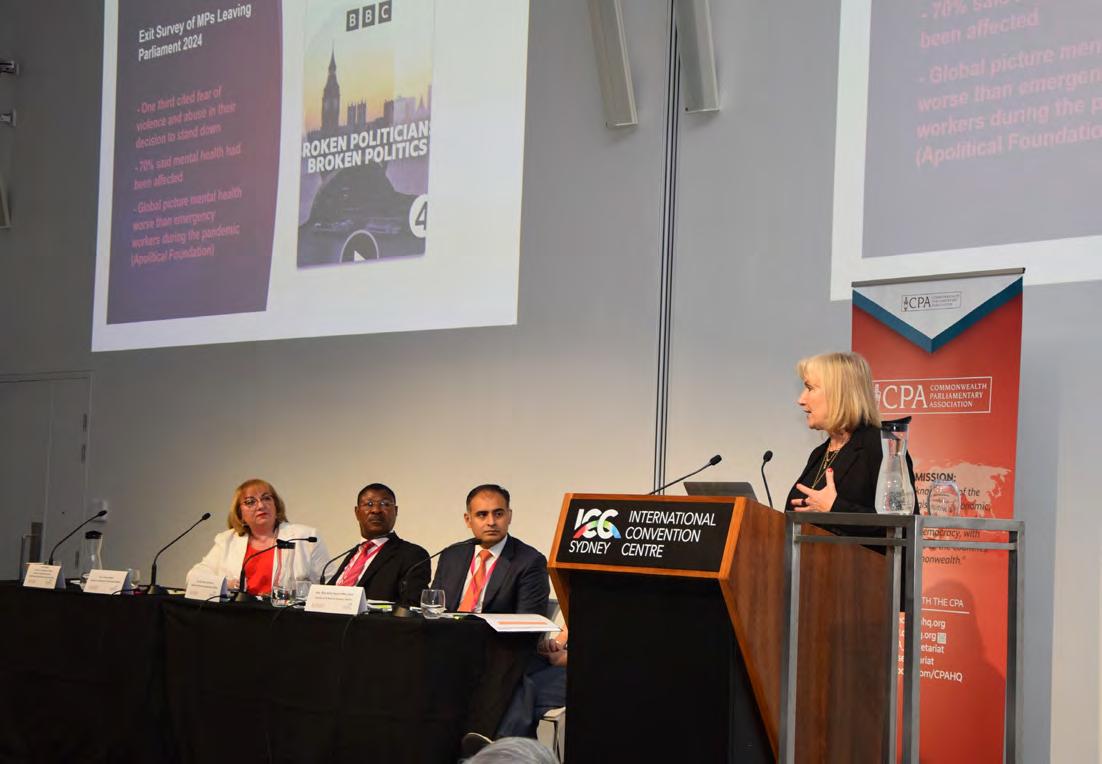
candidates are compelled to hire ‘thugs’ in order to drown out their opponents, and Members from small parties being beholden to the owners of those parties. He noted that in some countries the state revokes security for Members who speak freely, yet access to security should be a right. He spoke of situations, during his time as a Member of Parliament, in which other Members have been found dead, and emphasised that the state must provide constant protection.
He concluded by noting legislation is needed to regulate social media and online platforms and that Commonwealth Parliamentarians should share experiences of combating cyberbullying against MPs in this emerging space.
Mrs Sharon Hodgson, MP (United Kingdom) said that the rise of social media, Artificial Intelligence and malign actors has altered
the nature of threats against MPs in the United Kingdom. Women MPs are more likely to receive threats. That is compounded if they are women of colour or possess other intersectional identities. For instance, a 2017 Amnesty International study found that Rt Hon. Diane Abbott, MP, from the UK House of Commons, received almost half of all the abusive tweets directed at the over 200 female Members of Parliament at the time. In such an environment, women become silenced out of fear for their safety, and young girls may also be discouraged from pursuing public office.
Sharon Hodgson also noted the increasing amount of violence against MPs, highlighting the murders of UK MPs, Jo Cox in 2016 and Sir David Amess in 2021. After those deaths, the police set up a specialist unit investigating crimes against MPs. It registered 678 crimes from 2016 to 2020. She stated that all UK MPs now carry
“ The discussion highlighted both the presence of combative political climates and the rise of online platforms and social media as factors contributing to modern abusive behaviour towards Parliamentarians. Social media, ‘fake news’, Artificial Intelligence and cyberbullying are some examples of threats in the online space. These can impact the mental health of those targeted and can also cross over into threats to physical safety. Moreover, they may foster a wider climate of distrust and fear of speaking out in public and in democratic institutions. ”
personal alarms. All their homes and offices have security, CCTV and panic buttons. That was not the case 20 years ago.
Sharon Hodgson also mentioned the uniquely problematic circumstances of elections, during which the level of abuse and threats against Parliamentarians and candidates rise. During elections, abuse can be labelled as holding MPs ‘accountable’. Meanwhile, while campaigning MPs do not have access to security.
Ms Jennifer Nadel (Compassion in Politics) outlined a ‘threefold crisis’ of abuse and threats against Parliamentarians in contemporary politics. These are: a rise in violence, a growing mental health crisis amongst Parliamentarians, and democratic backsliding and loss of public trust. Using research from the United Kingdom, Jennifer Nadel noted, for example, that an exit survey of Parliamentarians conducted by civil society organisations found that 70% of those leaving politics had their mental health negatively impacted by their time in office. Moreover, one-third cited fear of violence and abuse as a reason for standing down. Constituent pressure is also great, especially as the public often has misconceptions about the extent of individual Members' powers, and this is particularly acute for backbenchers. Often those who are the most empathetic are driven out, yet democracy needs them. It cannot be that merely those who are ‘robust enough’ remain.
Meanwhile trust in politicians is at an all-time low. Recent Ipsos polling showed that only 9% of people trusted politicians to tell the truth. That becomes 2% for those aged 25 to 34. However, Parliaments can help reinstate trust through legislation. The Welsh Parliament, for instance, is planning to introduce laws that would disqualify any politician who deliberately misrepresents the truth. Misogyny should be made a hate crime. Threats to women MPs are trying to erase women from public spaces. Finally, jurisdictions should implement tough social media measures.
Ms Savia Orphanidou, MP (Cyprus) asked the panel about the balance between protecting freedom of expression and tackling abusive/offensive speech.
Sharon Hodgson responded that better political education is needed. Parents also have a responsibility to educate their children, especially their sons, so that they do not replicate sexist behaviours.
Jennifer Nadel responded by speaking about the no-harm principle. It is not about freedom of speech; it is about allowing people to abuse. She stated that preserving freedom of speech is akin to the abuse of public space.
Rt Hon. Dr Moses Wetang'ula responded by noting that, although freedom of expression and media is granted in many constitutions, common law systems provide a check on that through libel or slander. That is the case in various jurisdictions.
Hon. Dr Lawrence Xu-Nan, MP (New Zealand) asked about the role that male or more senior politicians ought to play when MPs who are younger or from more vulnerable communities are being targeted. He also asked about how mental health support or policies for Parliamentarians can address microaggressions, which build up over time.
Jennifer Nadel responded to the question about microaggressions by stating that we need to reform the way that we do politics so that it is more professional and modern. Often debates in the House, especially question time debates, give the public a misleading view of Parliamentarians. The public is not often
shown the collaborative approaches of Committees, for example. The current system is patriarchal and has been reformed on a piecemeal basis. Rt Hon. Dr Moses Wetang'ula agreed that senior MPs have a duty to younger colleagues to counsel and mentor them and noted his experience in Kenya.
Hon. Dr Nomafrench Mbombo, MPP (Western Cape) noted that the panellists spoke about social media; however, mainstream media also plays a role, especially when it comes to women candidates or Parliamentarians. She said that mainstream media should also take responsibility for creating violence.
Hon. Zandile Majozi, MP (South Africa) noted how Parliamentarians behave to each other in Parliament. The chaos in Parliament creates space for the public to say similar things. How can politicians control others when they cannot control themselves?
Rt Hon. Dr Moses Wetang'ula responded that society should have a value system, in which people understand that telling the truth is sacrosanct. There should be self-regulation.
Sharon Hodgson agreed that Parliamentarians have a responsibility to behave appropriately or else bring themselves into disrepute. She used the Brexit debate in the United Kingdom as an example.
Mr Rob Callister, MHK (Isle of Man) stated that the Isle of Man introduced mental health first aid training in its Parliament. He also asked for tips on work-life balance.
Jennifer Nadel mentioned developing capacity for mental health, which can be taught. There is also compassion training designed to help politicians protect themselves.
Sharon Hodgson said she ensures that she and her staff have two weeks off every year at the same time. She also does not read comments. It is worth remembering that often the people who are attacking you are generally unwell themselves.
Mr Ganesh Mahipaul, MP (Guyana) asked the Speaker of Kenya about the relationship between the Opposition and the Government in Kenya. He asked how Opposition and Government members should behave towards each other.
Rt Hon. Dr Moses Wetang'ula said that the Opposition and Government are combative during election campaigns but are more cooperative once sworn in.
Hon. Daggubati Purandeswari, MP (India Union) noted that in India, many women from rural areas are only newly exposed to technology, yet many of the threats towards women Parliamentarians are linked to social media or Artificial Intelligence. She also asked about entering into agreements for cross-border exchange of best practices.
Rt Hon. Dr Moses Wetang'ula responded by saying that there is a serious need for international conventions. He noted the Brazilian ban of X (Twitter).
Senator Hon. Datuk Wira Dr Mohd Hatta bin Md Ramli (Malaysia) proposed an amendment to the original wording of the recommendation to insert the words "and legal" before the word "support". The amendment was agreed to.
The recommendation at the workshop was endorsed as follows:
• Parliaments of the Commonwealth should commit to providing robust security measures for Members and their staff, adaptable to changing political landscapes, and supplemented by adequate and accessible medical, physical, mental health and legal support.
Panel Chair: Hon. Valerie Woods, MNA, Speaker of the House of Representatives of the National Assembly of Belize
Discussion Leaders:
• Hon. Michael Galea, MP (Victoria)
• Hon. Tina Pupuke Browne, MP (Cook Islands)
• Ms Kathryn Johnson, Policy Specialist, HIV and Health Group, UNDP
Facilitator: Mr Matthew Salik, Head of Programmes CPA Secretariat
Rapporteur: Ms Amanda Assoum (Parliament of New South Wales)
The workshop focused on how Legislatures can promote and encourage a positive environment for the political engagement of LGBT+ voices in the democratic process. Panellists discussed the importance of a diverse range of voices and experiences in both the membership of Legislatures and in the views presented to them through political engagement.
Panellists agreed that inclusive and equal political systems are fundamental to sustainable legislative development, noting the value of meaningful engagement, open dialogue and participation between parliamentary and LGBT+ communities. While there was recognition that some jurisdictions had made significant progress in this space, there was a general consensus that most jurisdictions could do more to support and promote LGBT+ participation.
The workshop highlighted the challenges some jurisdictions face in supporting and promoting LGBT+ participation. Workshop participants spoke about certain societal, cultural and religious norms being 'less welcoming' of LGBT+ participation, making it politically and legally challenging for some Legislatures to support the LGBT+ community.
Hon. Valerie Woods, MNA, Speaker of the House of Representatives of the National Assembly of Belize noted that at the previous CPA annual conference in Ghana in 2023, a workshop entitled: ‘The Commonwealth Charter: A Charter for all Human Rights, or just some?’ considered, amongst other things, the importance of equality and the protection of LGBT+ rights, with Members encouraged to promote human rights legislation and policies in their respective jurisdictions.
Hon. Michael Galea, MP (Victoria) acknowledged the different perspectives on LGBT+ participation across the Commonwealth. He submitted that LGBT+ rights in the Commonwealth is about participation and amplifying voices. The more LGBT+ people are represented, the more Legislatures 'can truly be representative democracies'.
After sharing his personal story, Hon. Michael Galea discussed two LGBT+ colleagues in the Victorian Parliament. One colleague is open about his sexuality and feels it is important to show others that you can talk or look differently and still be an effective MP. The second colleague is passionate about issues that are outside LGBT+ politics and sees his sexuality as something that should be considered as 'nothing more than an unremarkable attribute'. These stores illustrate that no singular perspective is correct.
He noted that change needs to come from culture, not from legislation, and expressed support for setting up an informal network to help advance this conversation and deliver meaningful action within the Commonwealth.
Hon. Tina Pupuke Browne, MP (Cook Islands) focused on the unique challenges and promising strategies developing in the Cook Islands and across the Pacific to build inclusive LBBT+ communities, while considering best practices and advancements from across the Commonwealth.
She discussed the importance of promoting and supporting LGBT+ representation to ensure that policies and laws reflect social diversity and ensuring there is representational space for everyone. She commented that when all communities see themselves represented in government, it strengthens democratic integrity and fosters trust and engagement. Legislators can promote dialogue and use public platforms to raise awareness of LGBT+ topics and signal to the community that LGBT+ concerns are valued in the legislative process.
Some jurisdictions, such as New Zealand and Canada, have seen significant strides in LGBT+ participation and provide strong examples of inclusion in governance. Other regions, such as the Pacific, face cultural and societal values that create tension with efforts to promote LGBT+ participation. In many Pacific jurisdictions, laws still discriminate against LGBT+ persons, and the lack of legal protection discourages participation in public life. This not only limits individuals but also sends a message that LGBT+ voices are unwelcome in legislative spaces. In the Cook Islands, there has been early but promising steps, with the recent passing of legislation
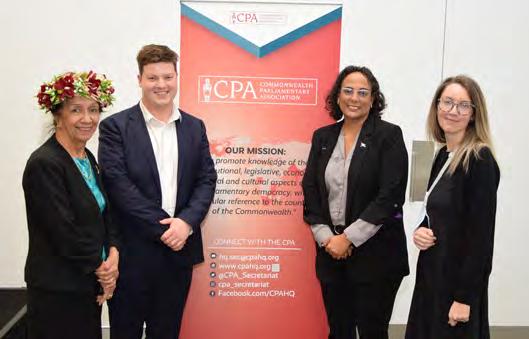
decriminalising homosexuality. This is a significant development, considering the cultural landscape, and would not be possible without the work of advocacy groups.
Hon. Tina Browne concluded by commenting on the collective responsibility to foster inclusivity in Legislatures.
Ms Kathryn Johnson (UNDP) spoke about the UNDP's commitment to ensuring 'no one is left behind'. She highlighted the UNDP's focus on inclusivity, equality, meaningful democratic participation and the engagement of groups facing marginalisation, particularly LGBT+ individuals. The strategies underpinning the UNDP's work on LGBT+ inclusion are:
• Supporting champions within government and state structures, including parliaments and the judiciary.
• Strengthening LGBT+ organisations to influence public policy.
• Leveraging UNDP's ability to safely facilitate and convene across government, civil society and the private sector.
She identified six pathways to LGBT+ inclusion – social, legal, public-sector services, democracy and governance, movement and leadership, and knowledge.
Kathryn Johnson highlighted entry points for reform, namely health. She spoke about how some nations such as Mozambique and Zimbabwe have utilised health to lead discussions on decriminalising same sex activity and promoting interaction between MPs and the LGBT+ community. She also discussed how laws that criminalise consensual same sex activity and gender expression can foster widespread social exclusion, discrimination and act as barriers to services. By contrast, a right based response helps ensure that services are accessible to those most at risk and enables LGBT+ participation which can reduce inequalities while respecting and protecting human rights. She spoke about legislative recommendations, such as decriminalisation of consensual same sex activity and anti-discrimination legislation and commented on the importance of meaningful engagement and participation of advocacy groups. She concluded by speaking about the value of intersectionality. LGBT+ individuals do not exist in isolation and face multiple forms of discrimination.
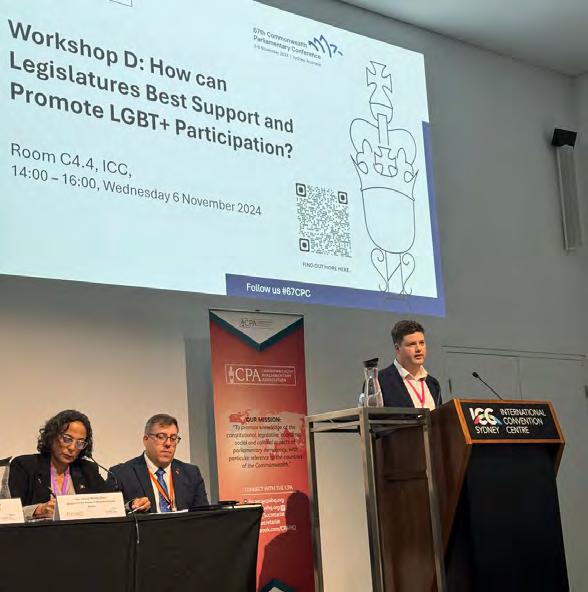
LGBT+ community and noted the need for continued parliamentary dialogue.
Hon. Tina Browne commented on starting with the politicians and having them advocate for LGBT+ acceptance to create a space for open dialogue in Parliament. Hon. Valerie Woods spoke about the importance of educating Parliamentarians, noting the religious challenges faced in Belize.
Shri Abdul Khader Ali Fareed Ullah Thota, MLA, Speaker of the Karnataka Legislative Assembly asked about economic considerations from any reforms taken to uplift LGBT+ participation.
Hon. Michael Galea responded that breaking down barriers will ensure economic opportunities are the same for LGBT+ persons as they are for anyone else.
At the conclusion of the presentations, several participants asked questions and shared insights from their respective jurisdictions about LGBT+ participation.
Hon. Dr Lawrence Xu-Nan, MP (New Zealand) spoke about how, by virtue of intersectionality, parts of the community have never seen their gender identity and ethnicity represented at the same time, noting a perceived conflict of rights in some cases. He asked how politicians can be held accountable for misinformation and spreading hate and violence against the LGBT+ community and how to ensure one set of rights is not pitted against another.
In response, Hon. Michael Galea commented on the need for patient conversations, whilst standing by and supporting the LGBT+ community. Colleagues and citizens should be free to live as they choose, with the same courtesy extended to the LGBT+ community.
Hon. Nontembeko N Boyce, MPL, Speaker of the KwaZuluNatal Legislature noted the importance of creating a safe environment to allow Parliamentarians to live their lives openly. She highlighted the issues of discrimination and lack of spaces for the
Kathryn Johnson highlighted 'equal rights, not special rights' and stressed the importance of using data to assess the cost of excluding and including groups in the community, including LGBT+ individuals.
Mr Rhun ap Iorwerth, MS (Wales) spoke about looking at new ways for participation and inclusion. He asked how the CPA can play a part in supporting new initiatives, noting the CPA British Islands and Mediterranean Region are looking at establishing an LGBT+ group. He suggested establishing a dedicated CPA network to support LGBT+ participation allowing Parliaments to share learnings and good practices and asked the panel for their views on the merits of such an initiative.
Hon. Michael Galea supported the establishment of a network within the CPA, however he noted that it's important this comes from the CPA Branches.
Hon. Osei Kyei-Mensah-Bonsu, MP (Ghana) spoke about the passing of the anti-LGBT Bill in Ghana and the need to address the cultural and religious issues that affect LGBT+ participation in some jurisdictions.
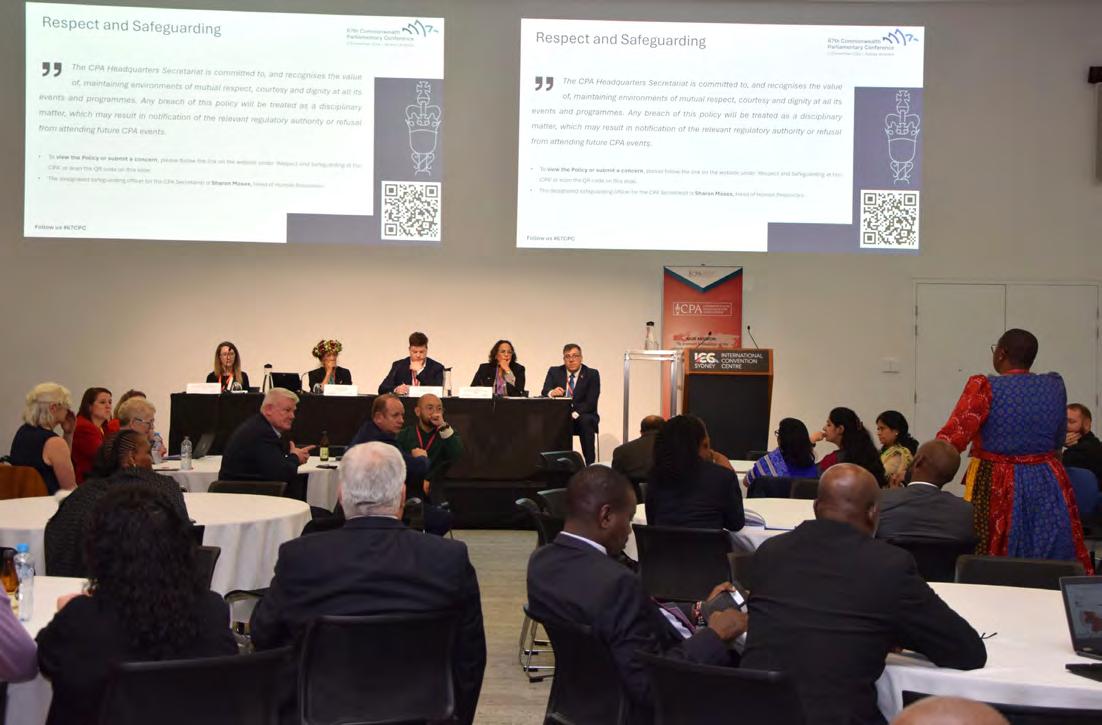
Mrs Sharon Hodgson, MP (United Kingdom) suggested that whilst the discussion is focused on LGBT+ participation the focus should be on decriminalisation. Without addressing decriminalisation, she asked how LGBT+ individuals can stand for election or participate in Parliament if they are penalised for being their true selves.
“ Panellists agreed that inclusive and equal political systems are fundamental to sustainable legislative development, noting the value of meaningful engagement, open dialogue and participation between parliamentary and LGBT+ communities. While there was recognition that some jurisdictions had made significant progress in this space, there was a general consensus that most jurisdictions could do more to support and promote LGBT+ participation. ”
Kathryn Johnson agreed that decriminalisation is critical to achieving LGBT+ participation and meaningful engagement.
Hon. Tjorn Dirk Sibma, MLC (Western Australia) echoed the suggestion to establish a dedicated CPA group or network to support LGBT+ participation. He asked to what degree do Parliamentarians lead and how can Legislatures strike a balance between advancement and cultural and societal pre-conditions. If they introduce sustainable progress how likely is this to remain embedded and not be overturned by future political change.
Hon. Arthur Holder, SC MP, Speaker of the House of Assembly of Barbados spoke about the issues from a Caribbean perspective. He commented on the 'high level hypocrisy' in some regions where constitutions embody the freedom of fundamental human rights, yet politicians will not speak out for fear of losing elections.
Hon. Tina Browne spoke about the need for increased cultural and religious engagement to better support and promote LGBT+ participation. However, she noted there is no 'one-off answer' and suggested all possible alternatives should be considered.
Hon. Michael Galea commented that the point of decriminalisation is to let people decide by allowing them to live as they are in all cultures, it is not about imposing any particular way of living.
The recommendation at the workshop was endorsed as follows:
• Political actors across the Commonwealth have a responsibility to listen to the voices of LGBT+ citizens and support their meaningful participation in the democratic process.
Panel Chair: Hon. Donna Skelly, MPP, Deputy Speaker (Ontario)
Discussion Leaders:
• Dr Gabriel Lubale, Kenya Institute of Migration Studies
• Hon. Tessa Eria Lambourne, MP (Kirabati)
• Hon. Ruth Cross Kwansing, MP (Kirabati)
• Professor Gillian Triggs, former High Commissioner for Protection UNHCR and former President of the Australian Human Rights Commission
Facilitator: Ms Charlotte Corby, Programmes Officer
CPA Secretariat
Rapporteur: Talina Drabsch (Parliament of New South Wales)
This workshop focused on the complex opportunities and challenges presented by immigration, displacement and the movement of people throughout the world, including the particular issues associated with human trafficking as well as the unprecedented number of refugees. Panellists highlighted how different countries have responded to these challenges in unique ways, and the critical role to be played by Parliamentarians in implementing change at the local level.
As Workshop Chair, Hon. Donna Skelly, MPP (Ontario) led with a video presentation that provided information on human trafficking as one of the fastest growing crimes in the world. It described the role of technology in aiding its growth, the launch of public education campaigns in Ontario and the use of community services to support victims, and the potential role of the hotel industry in identifying victims.
Hon. Donna Skelly, MPP described how Ontario has responded to the challenges presented by human trafficking, and various preventative as well as reactive strategies that have been implemented. The particular difficulties presented by forced debt and fraudulent debt were highlighted, with reference to legislative measures adopted in Ontario to wipe debt accumulated though trafficking. She further outlined the work with financial institutions to forgive such debt, as well as highlighting their ability to find a trafficked person in a much shorter time frame than authorities due to the information they hold.
Hon. Ruth Cross Kwansing, MP (Kirabati) provided an overview of Kirabati and its vulnerability to climate change due it being a nation comprised of tiny coral atolls. She spoke of the outward and
inward migration pressures it has experienced, as Kirabati is forced to adapt to a crisis they did not create.
While Kirabati is generally free from trafficking, there is a potential 'spillover effect' from the pressures associated with migration. There have been some cases involving fishing boats, but the Member noted that there are more issues of exploitation in relation to local men. She raised a number of questions around the limitations of the definition of 'refugee' in relation to climate change. The growing difficulties regarding food and water security, and coastal erosion, that are faced by those on outer islands were highlighted. This places pressure on the capital as a result, leading people to seek employment opportunities abroad.
Hon. Tessie Eria Lambourne, MP (Kirabati) also spoke of the vulnerability of low-lying island states to climate change. She spoke of the challenges particular to Kirabati as people cannot move away from the coast as the strips of land are so narrow. Saltwater is intruding on usual sources of water. She voiced that there appears to be a lack of international appreciation of the challenges faced by Kirabati, highlighting that the UN Convention does not recognise climate/environmental refugees.
Kirabati has adopted a policy of 'migration with dignity', which involves the upskilling of its people to meet international standards, enabling them to fill labour gaps in other countries. Labour mobility programmes have been established with the Australian and New Zealand governments. She concluded by stressing that climate change is a violation of the right of Kirabati people to live in their own country as they are being forced to leave.
Dr Gabriel Lubale, OGW Coordinator at Kenya Institute of Migration Studies, provided an overview of trends in the African region, with its emphasis on free movement protocols and the promotion of harmonised labour migration. He noted that migration
Below: Workshop panellists (left to right): Professor Gillian Triggs; Hon. Tessa Eria Lambourne, MP (Kirabati); Hon. Ruth Cross Kwansing, MP (Kirabati); Hon. Donna Skelly, MPP, Deputy Speaker (Ontario).
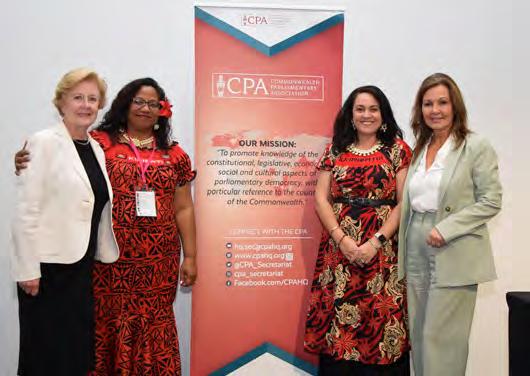
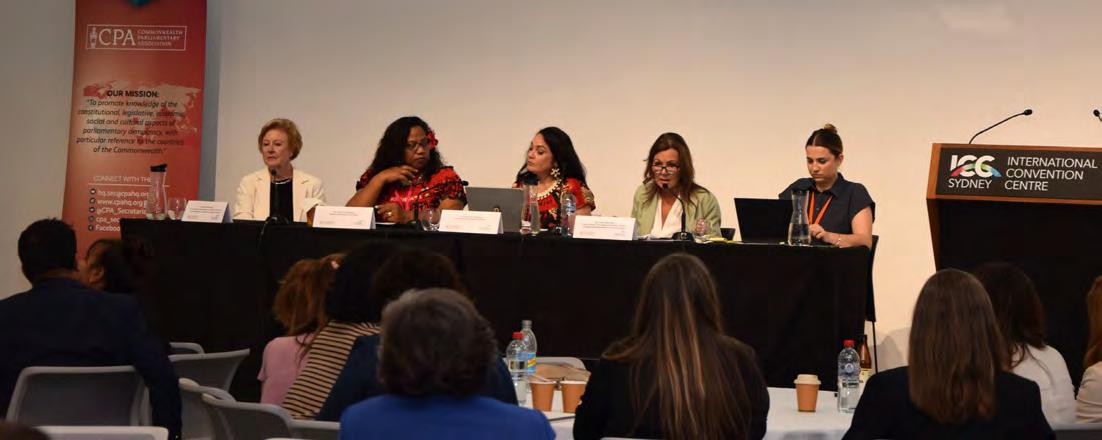
in Africa happens primarily within the region, with low numbers ending up elsewhere.
He discussed how migration is ideally a cycle that incorporates preparation to move and transition to seeking employment or asylum. The problems of radicalisation and terrorism were highlighted. The various approaches of different countries to refugees were also outlined.
Professor Gillian Triggs, former Assistant High Commissioner for Protection UNHCR and former President of the Australian Human Rights Commission, spoke of her experience with the United Nations. She described the human rights crisis resulting from an unprecedented number of refugees and asylum seekers. As governments and local communities struggle to respond to this crisis, there has been a decline in adherence to the rule of law and international treaty obligations.
Professor Gillian Triggs outlined the origins of the Universal Declaration of Human Rights and the 1951 Refugee Convention, noting the importance of the language used in relation to refugees. She highlighted the importance of political asylum to countries at the time these treaties were written and first agreed.
In addition to the escalating number of people on the move throughout the world, primarily as a result of conflict, there were also 35 million people displaced in 2022 because of climate change.
Professor Gillian Triggs noted that there is a view that the Refugee Convention is no longer fit for purpose. There has also been a shifting of responsibility for asylum seekers to poor and developing nations.
The legally binding obligations of nations in relation to a person being granted refugee status was contrasted with how migration remains a decision of sovereign nations.
She stressed that the response to the global movement of people is the responsibility of everyone, not just governments. Political will is necessary to act collaboratively to address these issues.
Hon. Dr Numal Momin, Deputy Speaker (Assam) asked whether some of the Commonwealth Parliamentary Association’s budget should be allocated for the rehabilitation of victims of human trafficking?
Hon. Donna Skelly, MPP responded by speaking about a Bill introduced in the Canadian Senate. People are currently
not prosecuted if they receive an organ that was trafficked. She suggested that it should be made a criminal act to knowingly receive an organ that was not willingly donated.
Hon. Carrie Hiebert, MLA (Manitoba) referenced the United Nations 'Blue Dot' Programme and asked how countries can work together to prepare people for the country they are going to?
In her response, Professor Gillian Triggs highlighted the examples of Guatemala and Honduras with special mobile buses, that are placed along well-known routes as people come into Mexico. She described how people need information about opportunities. In particular, many of the young people fleeing countries need information about where they can get work. This information can be provided in these mobile units. This helps to make people less vulnerable to people smugglers and traffickers.
Hon. Akierra Missick, MHA (Turks and Caicos Islands) noted that the biggest challenges in her jurisdiction are the climate crisis, sexual trafficking of women and migrant trafficking from Haiti. She asked how to balance the various issues concerning refugee, migrant and Indigenous populations?
Professor Gillian Triggs spoke of the need to focus on the human rights of every person. However, she noted that the law gives special rights to refugees as opposed to migrants. While legal status is important, she stressed that there is a need to focus on protecting every human.
Rt Hon. Baroness Lindsay Northover (United Kingdom) noted that she is gaining an idea of the scale of the problem but not how to address it. She described how the European Union did try to share taking in refugees but experienced difficulties as a result of populist politics. She asked whether there were further ideas as to how to work globally against populism?
Professor Gillian Triggs provided examples of work by the World Bank in this area, and resettlement and labour mobility programs. While respect for the rule of law is declining, the Commonwealth is an influential body and could assist in countering this.
Rt Hon. Dr Moses Wetang'Ulla, EGH, MP, Speaker of the Parliament of Kenya commented on the unique problems associated with climate induced migration. He described how Africa is experiencing serious issues with forced migration and refugees,
with people from the African continent trying to escape conflict and poverty, while Europe is erecting barriers.
Mr Davison Munga'Ndu, MP (Zambia) asked what is being done as a Commonwealth to address the root cause of human trafficking?
Hon. Donna Skelly, MPP responded that there is a need to prosecute criminals and those willing to buy and sell people. She spoke of the need to make sure laws are enacted and that police enforce those laws.
The workshop discussions then focused on the working of the proposed recommendation.
A number of suggestions - including taking the discussions to the next Commonwealth Parliamentary Conference in Barbados,
undertaking a mid-year meeting to discuss the issues raised and inviting financial institutions like the World Bank to join the discussions - were also made which are to be taken to the CPA Secretary-General for further action.
The following recommendation at the workshop (as amended) was noted as follows:
• All movements of people within the Commonwealth should be free from exploitation, within the framework of the Global Compact on Refugees and the Global Compact on Migration, and align with the commitment to universal human rights in the Commonwealth Charter.
To read an article on this topic by the Cyprus delegation at the 67th Commonwealth Parliamentary Conference (CPC) turn to page 313.
Panel Chair: Mr Jack Hardcastle, Deputy Head of Programmes, CPA Secretariat
Discussion Leaders:
• Dr K. Sudhakar MP, (India Union)
• Ms Nerusha Naidoo, Secretary to the Provincial Legislature (KwaZulu-Natal)
• Hon. Savitri Sonia Parag, MP, Minister of Local Government and Regional Development (Guyana)
• Dr Elizabeth Macharia, Acting Head of the Rule of Law Section, Commonwealth Secretariat
• Mr Andrew Young, Research Fellow, Deakin University
Rapporteurs: Janelle Taouk and Ashley Kim (Parliament of New South Wales)
This workshop focused on how the Commonwealth could explore benchmarking tools, standards and guidelines to improve governance and strengthen parliamentary institutions. Panellists discussed the value of benchmarking and adopting complementary ethical standards, such as the CPA Code of Conduct, in building institutions that are resilient to the complexities of modern democracies. Delegates heard that the use of benchmarks can build public trust as they demonstrate a Legislature's commitment to greater transparency around parliamentary processes and, therefore, to democratic values.
Dr K. Sudhakar, MP (Lok Sabha, India Union) started the discussion by introducing the panellists and speaking briefly about the importance of benchmarking, guidelines and standards for Parliaments.
Ms Nerusha Naidoo, Secretary to the Provincial Legislature (KwaZulu-Natal) presented on the value of self-assessment
in legislative processes by drawing on her own experiences implementing the CPA Democratic Benchmarks for Legislatures in her jurisdiction.
Nerusha Naidoo explained that the KwaZulu-Natal Legislature had a positive experience when it conducted a self-assessment in 2020, in response to challenges from significant changes in its membership and outdated systems. She said that while it can be difficult for a Legislature to approach the CPA for this assessment, it is valuable because it can result in identifying strengths and areas for improvement in a 'realistic and truthful' manner. This self-reflective process enabled the KwaZulu-Natal Legislature to modernise, adapt to change and assess their current systems against authoritative guidance.
Nerusha Naidoo reported that the CPA Secretariat developed a report containing 18 recommendations across four assessment categories, which covered a range of relevant issues, including funding and support, the operation of the Standing Committee on Public Accounts and the standards for amending House rules. She said that the CPA provides support for implementing these recommendations within the constraints of a Legislature's finances. She stressed that a Legislature does not have to agree with all of the recommendations, and that the KwaZulu-Natal Legislature made a conscious decision not to adopt certain recommendations, but nevertheless acknowledged their direction.
Nerusha Naidoo also spoke about her experience as a panel member facilitating the self-assessment of the Botswana Parliament, and the two-way benefit that this scrutiny process had for both the assessed Legislature and her own jurisdiction.
Nerusha Naidoo ended her presentation with a note that while standards and best practices provide a roadmap for strengthening Parliaments, each jurisdiction will need to develop tailored approaches to addressing challenges, such as political resistance, resource limitations and regional differences.
Mr Jack Hardcastle, Deputy Head of Programmes at the CPA Secretariat presented on how the benchmarking process works
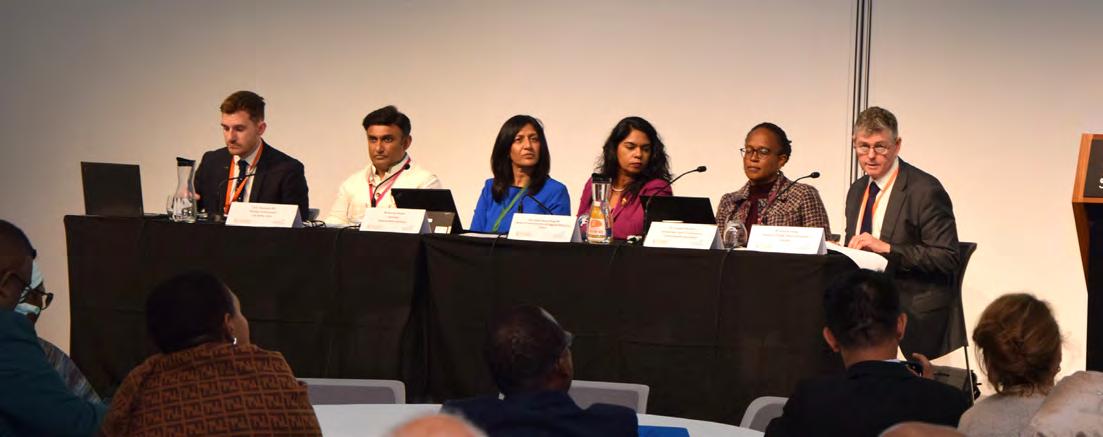
and what the CPA's role is in facilitating self-assessments. He emphasised the role of benchmarks as a practical guide for wellfunctioning Legislatures and setting standards of good governance.
His presentation included an overview of the 132 indicators that guide the assessment of Legislatures, as well as the timeline of their development since their establishment in 2006. He reported that 30 Legislatures have undertaken assessments since the CPA Benchmarks were updated in 2018.
Jack Hardcastle outlined how the assessment process works and distinguished the supported assessments (i.e. those facilitated by the CPA) from the unsupported (self-led) assessments. He said that, regardless of the chosen method, both the supported and unsupported self-assessments result in a report with recommendations that can be considered by key stakeholders in the participating Legislature.
He also went on to discuss case studies in Anguilla, The Gambia and Montserrat to illustrate how these Legislatures have benefitted from the self-assessment process. He spoke about examples of positive changes being made following the assessments, including updates to Standing Orders, the establishment of Codes of Conduct for Members, organisational reviews and the introduction of livestreaming of parliamentary proceedings.
He concluded by highlighting the CPA Benchmarks as tools for fostering continuous improvement and promoting good governance across diverse legislative contexts. He also echoed Nerusha Naidoo's comments about the flexibility offered by the CPA's processes and how they can be adopted by different Legislatures.
Hon. Savitri Sonia Parag, MP, Minister of Local Government and Regional Development (Guyana) discussed the importance of setting good standards and adopting benchmarks in building robust and accountable institutions. She spoke about the complexities and evolving challenges posed by modern governance, which require a Legislature's commitment to continuous improvement and revision of practices.
Savitri Sonia Parag emphasised that benchmarks constitute minimum standards for both emerging and established Parliaments, and that they promote transparency and accountability. She said that the relevance of benchmarks lies in their universality, as they are structured to support Legislatures irrespective of their differing characteristics.
Savitri Sonia Parag went on to say that adherence to benchmarks demonstrates a Legislature's commitment to democratic values, in that it models best practice. Delegates heard that this is particularly important as citizens are more informed and actively engaged with their Parliaments, and because they look to elected representatives for examples of good conduct. Savitri Sonia Parag gave the example of the Youth Parliament in her jurisdiction that helped foster important dialogue between the Parliament of Guyana and the young participants. She said that this participatory approach allowed young people to learn about legislative processes and encouraged deeper connections with democratic values.
Savitri Sonia Parag also spoke about the relevance of the CPA's ‘Standards for Codes of Conduct for Members of Parliament and the Parliamentary Workplace’, which complement the CPA Benchmarks by outlining ethical standards and conduct for elected representatives. She said that codes of conduct establish clear expectations and sanctions and, therefore, set a high bar for accountability, helping to maintain the dignity of institutions and build public trust.
The presentation concluded with a discussion of how this is relevant and applicable to the digital space. Savitri Sonia Parag suggested that Members must demonstrate integrity and transparency in all digital interactions, and that it is important for Members to commit to responsible online behaviour as it sets a standard for the broader community. She said that ignoring guidelines for good online behaviour may send the signal that harmful behaviour is acceptable.
Mr Andrew Young, Research Fellow, Deakin University, presented on the principles that informed the CPA’s Codes of Conduct and the context for the development of the Codes,
those being the Nolan Principles and the Commonwealth Latimer House Principles. An overarching theme of his presentation was the necessity of strong ethical frameworks within Legislatures to prevent misconduct and protect institutional integrity.
Andrew Young said there is a decline in public trust due to perceived failings in ethical conduct from elected representatives. He said it is important for all jurisdictions to set strong ethical frameworks to rebuild and maintain public trust, which will support democratic government and restore faith in the rule of law.
In sharing his learnings from a survey of 180 Legislatures around the world, Andrew Young said that while most institutions have established codes, there remains a large gap in updating these to include contemporary issues. He emphasised that as societal expectations evolve, so must standards within Legislatures, ensuring they adapt to emerging issues. This may include online behaviour and the application of equality standards.
Andrew Young spoke about the nine themes within the Code and how they are relevant to all delegates and their respective jurisdictions. During the discussion of the themes, he spoke about the explicit inclusion of 'sexual assault' as a standard of unacceptable behaviour, given the research on the negative effect that this has on parliamentary workplaces.
He also touched on social media as an extension of the workplace, and that inappropriate behaviour in the workplace is still inappropriate even if it occurs online. He spoke about minimum standards to prohibit inappropriate use of social media by Members towards other Members and others, for accountability in relation to a Member's use of third-party material, and the actions of their staff when they post on the Member's account.
Dr Elizabeth Macharia, Acting Head of the Rule of Law Section at the Commonwealth Secretariat provided an overview of the Commonwealth Latimer House Principles. She described the principles as providing critical guidance on the relationship between the three arms of government. She explained that these principles promote good governance and rule of law in different Commonwealth jurisdictions.
Elizabeth Macharia highlighted the Principles' flexibility to guide different legislative contexts. She described examples of the Barbados Latimer House Dialogues of April 2024 and the Lesotho Latimer House Dialogues of July 2023 to illustrate how the principles can be implemented into their respective legislative frameworks. She emphasised that strong institutions preserve democracy, and that we must collaborate to strengthen our institutions. She shared a Ghanian proverb with the delegates, 'the ruin of a nation begins in the homes of its people'. She went on to say that there is no greater home than the great house that is the Parliament. The discussion concluded with the message that strong countries need stable Legislatures that respect the rule of law.
Shri A. N. Shamseer, MLA (Kerala) asked about what can be done about the use of social media to bully and harass MPs.
Savitri Sonia Parag responded that, although making harassment via social media a criminal action through legislation is a positive step, more needs to be done in relation to individual conduct and making social media a more positive forum.
Hon. Manzoor Nadir, MP, Speaker of the Parliament of Guyana asked about the practical implementation of solutions and benchmarking recommendations.
Jack Hardcastle answered that a self-assessment of a Parliament with the CPA is a collaborative experience. The Parliament can use the benchmarking recommendations to move forward, and the CPA can work with Legislatures on the implementation of the benchmarks, if requested.
Savitri Sonia Parag added that the CPA Secretariat is a facilitator and any recommendations from a self-assessment will need to be internally adopted by the assessed Parliament. She further added that a self-assessment requires time and resources and is not undertaken just to be shelved. Rather, a jurisdiction would review the recommendations that they can action with the resources they have.
Hon. Gervais Henrie, MNA (Seychelles) asked if there are similarities between the CPA Benchmarks and the InterParliamentary Union's Indicators for Democratic Parliaments, and which would be the best option to align with.
Jack Hardcastle responded that the Inter-Parliamentary Union's Indicators are broader in scope and coverage. However, he did not endorse one over the other, but suggested that Parliaments review both to determine suitability.
Deputy Adrian Gabriel (Guernsey) asked about how a unicameral Parliament can hold itself to account.
Elizabeth Macharia responded that the Commonwealth Latimer House Principles are flexible and can be applied in in different environments.
Ms Sarah Green, MP (United Kingdom) asked how benchmarks can assist in addressing change and the loss of institutional memory that comes with the election of new Members and incoming political staff. She noted that more than half of the elected Members in the United Kingdom were new following a recent election in her jurisdiction.
Nerusha Naidoo spoke about a similar experience in her jurisdiction, which resulted in 51 new Members and only 29 returning Members. She suggested that institutional memory must be embedded in the parliamentary staff and administration to bridge the gap. It is a continuous engagement and investment in business continuity and one that is not achieved over a few months. One measure to preserve institutional memory is to ensure that all relevant information is available online on the Parliament's website, so it is accessible.
Savitri Sonia Parag added that in her jurisdiction there is a Ministry dedicated to Parliamentary Affairs and suggested that a Ministry like this is useful as it is referred to for parliamentary procedure and governance.
The recommendation at the workshop was endorsed as follows:
• Commonwealth Parliaments should commit to exploring relevant benchmarking tools, standards and guidelines, including but not limited to the CPA Benchmarks, that can be adapted and implemented within their respective Parliaments to strengthen their institutions and promote good governance.
To read an article on this topic by the KwaZulu-Natal delegation at the 67th Commonwealth Parliamentary Conference (CPC) turn to page 322.
Panel Chair: Ms Lynda Voltz, MP, CWP President and Member of the New South Wales Legislative Assembly
Discussion Leaders:
• Hon. Carmel Sepuloni, MP, (New Zealand)
• Hon. Fathimath Sauda, MP, (People’s Majlis of Maldives)
• Ms Seodi White, Senior Gender and Law Expert on Justice, Legal Reforms and Constitutions, UN Women (via videoconference)
• Ms Jurgita Sereikaite, Programme Manager, Ending Violence Against Women and Girls, UN Women (Pacific Region)
Facilitator: Bénite Dibateza, CWP Coordinator, CPA Secretariat
Rapporteur: Ms Julia Drake-Brockman (Parliament of New South Wales)
The workshop examined the role that Parliamentarians and Governments have in combatting discriminatory legislation, particularly that which negatively impacts women and girls, and the challenges that come with addressing persistent gender inequalities and enacting gender-responsive laws. Discussions focused on the unique ways that different countries have responded to those challenges, and addressed how the CPA membership and international organisations like UN Women could contribute to developing best practice.
Panellists from New Zealand, The Maldives, Australia and UN Women highlighted the current trends regarding the rights of women and girls in their jurisdictions. Each presented specific examples of initiatives that have been undertaken to address discriminatory laws on marriage and divorce, inheritance, welfare benefits, genderbased violence and the gender pay gap, such as the passing of Bills or resolutions, convening of subject matter Committees and unannounced visits to relevant agencies to assess work against human rights principles. All jurisdictions are experiencing similar issues, to a greater or lesser extent, and all panellists acknowledged that, despite the many successes, there is still much work to be done. Impediments to the swifter implementation of law reform include insufficient data collection due to weak reporting mechanisms, inadequate education of the public on the relevant issues and ineffective communication of legislative change, as well as the costs and difficulties typically associated with making change.
At the conclusion of the presentations and the Chair’s comments, participants from India, Pakistan, South Africa and Canada shared
the progress their respective jurisdictions have made with respect to addressing discriminatory legislation.
Hon. Carmel Sepuloni, MP (New Zealand) noted that New Zealand is proud of its early advancements on women's rights. It was the first country where women were able to vote in 1893 and it ratified the Convention on the Elimination of all Forms of Discrimination Against Women (CEDAW) in 1985. Hon. Carmel Sepuloni was a Government Minister when the representation of women in the New Zealand Parliament, and later in the Cabinet, reached 50%.
Despite those early advancements, affronts to women's rights continue. Policy change could be effected in four key areas: welfare, gender pay gap, gender-based violence and data collection. Women comprise 59% of welfare recipients, and children living in poverty are more likely to live in single mother households. Harsh welfare measures disproportionately impact women and children and exacerbate poverty. As a Welfare Minister, Hon. Carmel Sepuloni overturned a 1936 policy that discriminated against women based on relationship status. Any unpartnered, sole parent receiving both benefits and child support payments had the latter taken away to subsidise the former, while those that had re partnered did not. Change was complicated and costly, at NZ$350 million over four years, but it was achieved.
While 24% of women have experienced intimate partner violence and 38% sexual harassment, 92% of sexual assault offences are unreported. Of those reported, only 31% result in a charge and only 8% lead to a conviction. A new portfolio with a Minister focusing solely on family and sexual violence was created to combat the issue, leading to more money for prevention.
Insufficient data entrenches women's disadvantage. An analysis of claims made to the Accident Compensation Corporation [ACC] found that women are less likely to make claims, more likely to be declined when they do and given less compensation. The data collected created an evidence base upon which to make changes, one of which was to introduce coverage for women who had experienced birth injuries - probably the most significant shift for the ACC since it began.
Hon. Fathimath Sauda, MP (People’s Majlis of Maldives) stated that The Maldives has similar problems regarding human rights and gender equality. Equal opportunity is enshrined in the Constitution, including access to education, and the right to vote and be elected, but women still face challenges. The Maldives has the highest divorce rate in the world and single parents experience many social issues, such as access to child support. Other major social issues include the high number of expatriate workers, both male and female, and the huge percentage of youth engaged in drugs and gang violence.
On 3 June 2024, the Human Rights and Gender Committee of the 20th People’s Majlis was established. It is mandated to review and provide recommendations on matters relating to human rights,
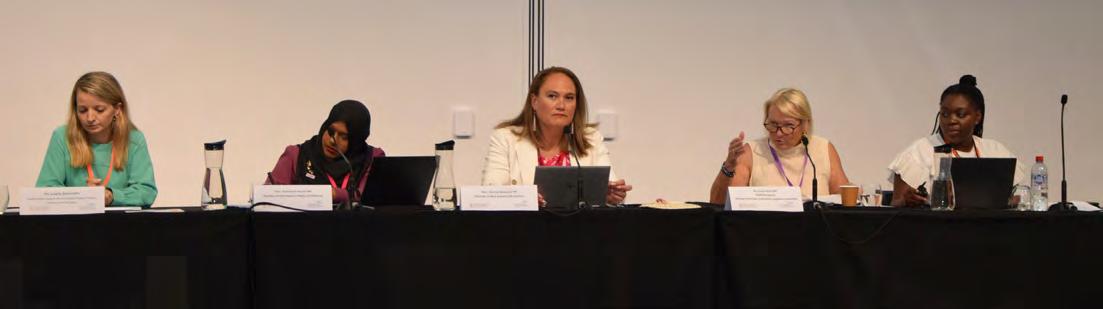
gender equality and juvenile justice and has evidence-gathering powers under Article 99 of the Constitution. It also oversees the work of several institutions and makes unannounced visits to assess operations against international human rights principles.
The Committee is currently working on its strategic work plan, which includes post-legislative scrutiny of the Child's Rights Protection Act, the Juvenile Justice Act and other oversight and accountability work. Current parliamentary inquiries include the impact of violence against women in politics, which aims to understand the social and legal context for representative political participation, forms of violence and its effect on women's political participation and develop recommendations to improve protections and support mechanisms for women in politics.
Ms Jurgita Sereikaite (UN Women) shared examples of work that UN Women is undertaking on eradicating laws that discriminate against over 3.7 billion women and girls around the world. In 2019, UN Women launched the ‘Equality in Law for Women and Girls by 2030’ strategy, which aims to fast track the repeal of discriminatory laws in 100 countries. It encompasses all aspects of the legal system and addresses the legal needs of over 50 million women and girls.
Firstly, UN Women is undertaking a comprehensive legal assessment of government and civil society organisations to form a roadmap of discriminatory laws that directly or indirectly impact women and girls. Secondly, a task team has been established to provide support to UN Women teams in individual countries to combat discriminatory laws. Finally, the Gender Justice Platform fosters global collaboration between UNDP and UN Women to bridge the gender justice gap, with work done particularly in Tanzania, Zanzibar and Uganda on violence against women. To date, 91 laws have been adopted, revised or repealed, and 63 countries have invested greater resources into policies and programmes that advance gender equality.
Turning to reforms in the Pacific, Jurgita Sereikaite spoke of how prevalence studies conducted between 2009 and 2013 revealed the extent and forms of violence against women. In response, in 2018, the governments of several Pacific nations established the Regional Working Group on the Implementation of Domestic Violence Legislation. Jurgita Sereikaite noted that one of the biggest challenges in the Pacific Region is climate change. Implementation timelines for gender reforms must be flexible enough to prepare and respond to the impact of climate change, such as the increasing number of natural disasters.
Ms Seodi White (UN Women) spoke about legal reforms achieved through the ‘Equality in Law for Women and Girls by
2030’ initiative, which is aligned to UN Sustainable Development Goal 5 on Gender Equality. Reforming laws and eliminating those which are discriminatory is critical to achieving gender equality.
Although a majority of Commonwealth countries have ratified CEDAW, analysis needs to be undertaken as to whether it is being truly observed. The treaty embodies a multi-dimensional concept of equality that includes not just formal equality (abolition of discriminatory laws) but also substantive equality (actual outcomes and women's experience of equality).
To date, practical progress has been made across the globe in implementing legal reforms to address women's inequality, although 28 of the target countries have not enacted reforms allowing women to be the head of a household (as at 2022).
There is still much to be done to address gender equality in the Commonwealth and the role of Members of Parliament is key. Most obviously, Parliaments can enact gender-responsive laws and they can also use the Parliamentary Committee structure to ensure that those laws achieve substantive equality. Parliaments can also partner with UN Women for support.
At the conclusion of the presentations, several participants shared the progress that their respective jurisdictions had made towards combatting discriminatory legislation.
Hon. Vasudev Devnani, MLA, Speaker of Rajasthan Legislative Assembly (India) said that India is committed to the elimination of all discrimination and violence against women. It has signed and ratified CEDAW, the Declaration on the Elimination of Violence Against Women and Safe Cities and Safe Public Spaces. Policies implemented by the Indian Parliament to safeguard women's rights include the Scheme for Empowerment of Adolescent Girls. At the state level, the Rajasthan State Women Policy 2021 seeks to protect the human rights of women and girls.
“
Discussions focused on the unique ways that different countries have responded to those challenges, and addressed how the CPA membership and international organisations like UN Women could contribute to developing best practice.”
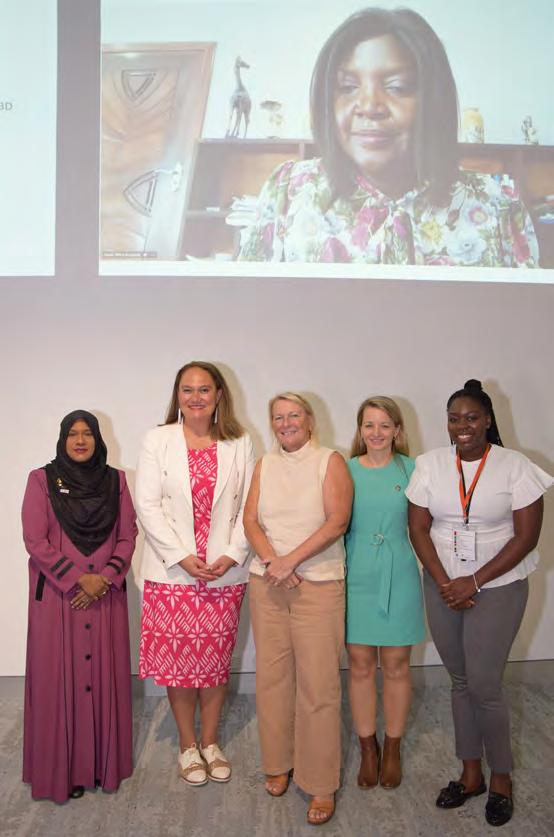
Hon. Zeb Jaffar, MNA (Pakistan) spoke of the steps that Pakistan has taken towards gender equality, such as the Protection Against Harassment of Women at the Workplace Act 2010; the Pakistan Women's Parliamentary Caucus, a collective voice on relevant legislation; and amendments to the Election Act 2017 to increase women's political participation. When she started in politics, genderbased harassment on social media was not commonplace, but it has increased in recent years. In response, the Parliament of Pakistan introduced the Prevention of Electronic Crimes Act in 2016 to curb the harassment of women online.
Hon. Dr Nomafrench Mbombo, MP (Western Cape, South Africa) spoke about how perpetrators of gender-based violence are often known to their victims. Efforts to dismantle the patriarchal system are limited, especially in African and Asian countries. She spoke of the efforts made by Tanzania and Rwanda to increase female representation in their Parliaments, with Rwanda having the highest number of women MPs in the world. Women Parliamentarians are role models for girls and increased representation will help reduce gender-based violence.
Hon. Carmel Sepuloni, MP responded that an important part of lawmaking is communication and education. The population must be brought along. It cannot just be Parliamentarians talking about
Left: Workshop panellists (left to right): Hon. Fathimath Sauda, MP, (People’s Majlis of Maldives); Hon. Carmel Sepuloni, MP, (New Zealand); Ms Lynda Voltz, MP, CWP President (New South Wales); Jurgita Sereikaite (UN Women Pacific); Bénite Dibateza (CWP Coordinator, CPA Secretariat); on screen: Seodi White (UN Women).
gender-based violence, men need to educate the young men in their communities. Government campaigns such as ‘It’s not OK’ and those run by non-profit organisations such as White Ribbon New Zealand's ‘Boys will be Boys’ campaign are helping to support that.
In response, Ms Jurgita Sereikaite (UN Women) highlighted progress in the Pacific Region. Last year, Fiji launched ‘National Action to Prevent Violence Against All Women and Girls’, which seeks to transform attitudes and behaviours of men and women in sectors such as faith, education, sports and media. Samoa recently launched a violence prevention framework. UN Women remains cautious because the more primary prevention work it does, the greater the demand for essential services in health, education and other sectors.
Hon. Fatimath Sauda, MP responded that she was moved by what the Member from Western Cape had shared about representation in Parliament. There are similar issues in The Maldives. As you go higher in the political sphere, the percentage of women decreases. Equal opportunity is not just about reporting mechanisms and pathways, we must implement preventative mechanisms to stop violence from happening in the first place.
CWP President, Ms Lynda Voltz, MP responded that school students in Australia are taught about what is and is not acceptable in respectful relationships. Most male-dominated sporting codes, many of which are popular across the Pacific Region, have automatic standdown policies for domestic violence charges, sending the message that that behaviour is unacceptable. Education is most the important preventative measure.
Hon. Carrie Hiebert, MLA (Manitoba, Canada) agreed that there is a dire need in every country for preventative education. Every six days, a woman is killed in Canada due to intimate partner violence. One response to that was C233, a bill that amended the Judges Act to expand judicial education about intimate partner violence so that judges can better understand what that violence looks like.
Hon. Sardar Kultar Singh, MLA (Punjab, India) said that India's position on the Gender Equality Index has improved in recent years. Several relevant Acts have been passed, including The Constitution (One Hundred and Sixth Amendment) Act, which seeks to increase female representation in several Legislative Assemblies to 33%, however more needs to be done on implementation.
In response, Ms Seodi White (UN Women) said that laws that maintain forms of violence other than physical also need to be addressed, such as laws that deal with rights within marriage, rights to own property, the right to pass on nationality to children and the right to start a business and get a bank loan.
The recommendation at the workshop was endorsed as follows:
• Legislatures across the Commonwealth should ensure that they have CEDAW-compliant policies and legislation in place to effectively tackle all forms of harassment, discrimination and abuse
Panel Chair: Hon. Laura Kanushu, MP, Commonwealth Parliamentarians with Disabilities (CPwD) Chairperson (Uganda)
Discussion Leaders:
• Senator Hon. Isaiah Jacob (Malaysia)
• Mr Jeremy Balfour, MSP (Scotland)
• Keara Castaldo (ODIHR - Office for Democratic Institutions and Human Rights, OSCE - Organisation for Security and Co-operation in Europe) (via videoconference)
Facilitator: Ms Avni Kondhia, CPwD Network Coordinator, CPA Secretariat
Rapporteurs: Jerson Balaton and Ilana Chaffey (Parliament of New South Wales)
This workshop focused on the need for inclusivity in the electoral process to allow full participation by people with disabilities (PwD). Panellists discussed actions, strategies and practices to make elections inclusive.
Panellists from Uganda, Malaysia and Scotland discussed their experiences as Members of Parliament with disabilities, and a representative of the Organisation for Security and Co-operation in Europe (OSCE) spoke about their work monitoring elections.
The first panellist, Senator Hon. Isaiah Jacob (Malaysia) spoke about how people with disability were perceived by political parties, in reference to his own experiences in Malaysia. He spoke about how not all political parties are accepting of PwD, and how PwD wanted equality rather than sympathy from people.
He then spoke about how PwD are represented in political parties, by recounting his background in politics. He had been involved in politics from a young age, and at that time learned that political parties did not allow participation from PwD. After the reformasi movement in 1998, he joined a political party, but it took him 16 years to set up a group for participation by PwD. Senator Isaiah Jacob stated that most PwD do not join political parties, because of the fear that their benefits and rights would be taken away if they are a member of an opposition party. PwD need to struggle and stand up regardless of whether they are in government or opposition.
Senator Isaiah Jacob spoke of the need to encourage PwD to stand and run, with confidence that they can do a good job. He stated his community were not ‘beggars’ and contributed to both the party and the Government.
Senator Isaiah Jacob then outlined work underway in Malaysia to support PwD. He was appointed as a Senator last year to represent the PwD community. The Malaysian Government will announce
a blueprint for PwD next year, focusing on actions for the next 25 years. He concluded with a call for political parties to make room for PwD, for PwD to have social equality rather than ‘charity’, and for workshop attendees to establish PwD departments in their own political parties.
The next panellist, Mr Jeremy Balfour, MSP (Scotland) discussed the need for Parliaments to be more representative of PwD. To proportionately represent the 20% of people in all countries that have some form of disability, Parliaments should have 20% of Members with disabilities as well.
He then discussed how more PwD could get elected, and how political parties could better support PwD. He discussed the physical and social barriers experienced by PwD when being selected as a candidate, when campaigning for election and on election day.
He spoke about how depending on someone's disability, some political activities may be difficult. Jeremy Balfour recounted how his party's office in Edinburgh had stairs up to the office, so someone with a mobility issue would struggle to get into the office, let alone campaign. He also raised the potential issue of 'indirect discrimination', where party selectors may presume PwD are not able to do certain things.
PwD in Scottish elections have the Access to Elected Office Fund, which funds assistance with certain tasks, for example hiring helpers to distribute leaflets for candidates with a mobility issue. While it was removed by the UK Government before the last election, it is still in place in the Scottish Parliament and Jeremy Balfour stated he had a Bill to make it a statutory requirement. He believed that it could help ‘even the playing field’ for candidates with disabilities.
The need for quotas or targets was also discussed, noting that some UK parties have all-women lists in certain seats. Jeremy Balfour was not personally convinced of this model but stated some system should be in place to increase the number of candidates with disability. He noted that in his experience, electorates did not care whether he had a disability, and there was a need to educate
Below: Workshop panellists (left to right): Hon. Laura Kanushu, MP, CPwD Chairperson (Uganda); Jeremy Balfour, MSP (Scotland); Senator Hon. Isaiah Jacob (Malaysia).
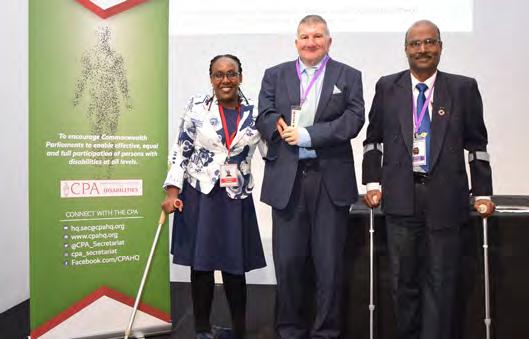
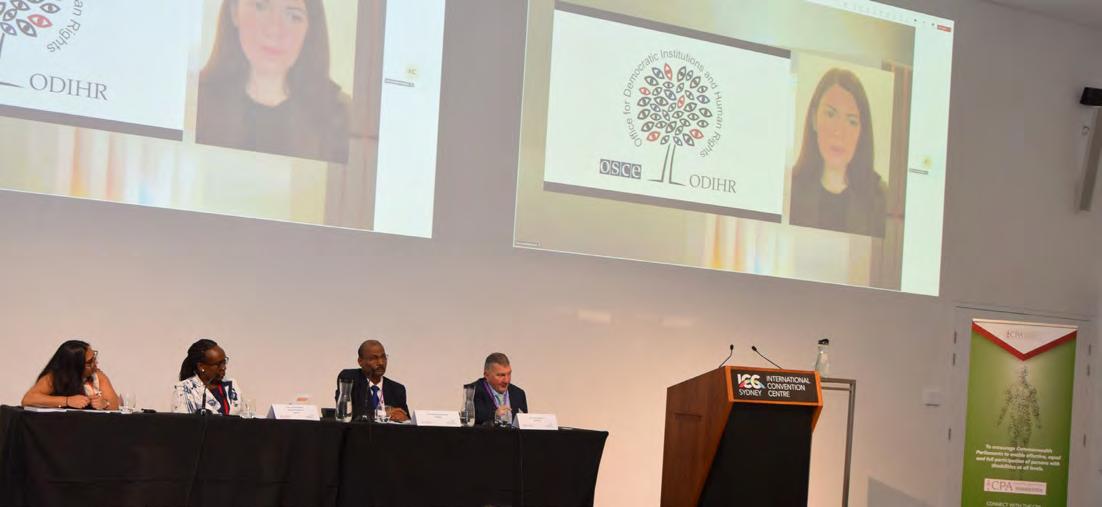
political parties rather than the electorate. He hoped that things were changing and that one day we will have 20% of Members of Parliament being PwD.
The final panellist, Keara Castaldo (Senior Advisor, ODIHROffice for Democratic Institutions and Human Rights, Organization for Security and Co-operation in Europe (OSCE)) provided an overview of the Office for Democratic Institutions and Human Rights (ODIHR)'s work monitoring elections, focusing on how the ODIHR assesses electoral participation by PwD.
ODIHR teams observe elections in member states, undertaking activities before, during and after an election. Teams specifically consider accessibility and participation by PwD as part of this process. A report is produced with recommendations for the state, aiming to bring all elections into line with international best practice.
The process includes examining legal frameworks, such as directives about the accessibility of public buildings. Teams meet with administrative bodies and civil society associations, including those representing PwD, and examine campaign materials and media. They consider the implementation of voting processes, including if polling stations allow autonomous entry by anyone regardless of ability, and if assistive tools are available to allow autonomous casting of ballots.
The adoption of inclusive practices, such as the accessibility of polling stations and ballots, and diversity of candidate lists,
encourages and supports PwD to participate in electoral processes. Inclusive practices must also be incorporated into political parties' internal practices, particularly around the selection of candidates. Keara Castaldo acknowledged Jeremy Balfour's comments about the Scottish Access to Elected Office Fund, noting the usefulness of mechanisms subsidising additional costs incurred by candidates with disabilities.
Legislation should be generally universal in the right to vote. There should be no individualised exceptions on the basis of any type of disability for participation in the election process.
The ODIHR observed a number of challenges to the inclusion of PwD in electoral processes. There is common public misperception of the capacity of PwD, and a lack of training and awareness to address this. Legal frameworks do not address barriers to PwD participation, such as setting information accessibility requirements. There is a reliance on assisted voting instead of allowing voters to cast autonomous votes. Decentralised systems also create differences in accessibility within states. There is significant underrepresentation of PwD, which is compounded by issues with disaggregated data collection by states.
Practices to promote inclusion were then discussed. States should start with the foundations of frameworks and legislation, and rules should be adopted following meaningful consultation. Election bodies have a role to play, to provide information, civic education
“ Legislation should be generally universal in the right to vote. There should be no individualised exceptions on the basis of any type of disability for participation in the election process ...
States should start with the foundations of frameworks and legislation, and rules should be adopted following meaningful consultation. Election bodies have a role to play, to provide information, civic education and training for political parties; they should also collect meaningful data. The media also has a role in outreach and increasing visibility and diversity in programming. ”
and training for political parties; they should also collect meaningful data. The media also has a role in outreach and increasing visibility and diversity in programming.
The presentation concluded with a discussion of examples from OSCE member states, which currently use a range of assistive technologies, including ballot marking, sip and puff, and audio guides (United States), tactile templates, magnification, large grip pencils, and adapted candidate lists (Canada). Many states are innovating with use of technology in election processes, such as audio guide modules (Netherlands) and mobile applications providing assistance at polling stations (Lithuania).
However, sustained political and financial commitment to accessibility is vital. It was noted that Belgium discontinued the use of assistive technologies in its recent election for this reason. Decentralised election management, such as in the United States, also creates wide variation in the use of accessible technologies.
Participants then discussed the issues raised by workshop panellists.
Senator Dr Paul Richards (Trinidad and Tobago) noted the timing and location of the workshop in the 67th CPC schedule, and that this impacts attendance and the opportunity to advocate to the broader population of delegates. Panellists and other participants supported this comment.
He also noted that there is a mismatch between discussions that Parliamentarians are reluctant to identify as PwD due to concerns around marginalisation, and that PwD need to be encouraged to participate in politics.
Jeremy Balfour shared comments by colleagues in response to a disability survey, that they were 'not disabled enough' to take part, and worries that if they declared their disability, they might lose government roles. He reflected that he doesn't know what the answer is, but the issue exists in every jurisdiction, particularly for people with hidden disabilities. The impact of living with disability –for some, all their energy is used on basic daily tasks – can be very limiting on PwD's capacity to participate, which also should be taken into account.
Hon. Ram Niwas Goel, MLA (Speaker of the Delhi Legislative Assembly) commented that the Election Commission of India has improved inclusivity and accessibility in the election process, including issuing the Strategic Framework on Accessible Elections. This has improved voter turnout for India's nine million voters with disability.
Dr Lawrence Xu-Nan, MP (New Zealand) asked whether the OSCE had collected data indicating if early voting had increased overall voter turnout, particularly for people with hidden disabilities.
Keara Castaldo replied that the OSCE has seen an increase in policies permitting early voting but there is very limited data to connect this to disability, even though some jurisdictions require justification for early voting.
Dr Lawrence Xu-Nan then asked panellists whether they found their Parliaments accessible, and if their Parliaments provided support for neurodiverse Members.
Jeremy Balfour reflected that his experience as an MSP with disability has been very positive, and the hardest part was getting elected. Many Parliaments are historic buildings, so are not accessible, unlike the newer Scottish Parliament building. Accessibility needs to be addressed before a PwD is elected.
He also noted there is still stigma attached to hidden disabilities, so people are less willing to declare them. The 'hierarchy of disabilities' also means physical disabilities trump other disabilities in accessibility planning.
Senator Isaiah Jacob commented that Parliaments must set an example. He also noted the Commonwealth Parliamentarians with Disabilities (CPwD)’s Capital Investment Fund, which aims to make CPA member Parliaments more accessible.
Hon. Laura Kanushu reflected that all Members have an obligation due to their position, and need to work to make Parliaments accessible.
Keara Castaldo said a small number of OSCE countries have experimented with use of quotas to increase representation of PwD. There are concerns about tokenism and a need to prevent political parties taking advantage of state benefits without delivering for PwD.
Ms Liesl Tesch, MP (New South Wales) asked Senator Isaiah Jacob what changes allowed PwD party participation. The Senator commented that hard work 'opened the door'. He also discussed the public perception of PwD as unfit for political participation, partially because PwD receive a government allowance.
Hon. Laura Kanushu commented that Uganda has a similar issue with public perception. To address this, governments should work to engage PwD in valid employment and encourage PwD to be active participants in society.
Hon. Viam Pillay, MP (Fiji) said that although the Fijian parliamentary building is accessible, laws and policies need to improve to comply with ratification of the Convention on the Rights of Persons with Disabilities (CRPwD). Members must work together.
Hon. Joelle Ladislaus, MP (Gibraltar) asked panellists how Parliamentarians can support others with hidden disabilities to selfidentify and speak up.
Jeremy Balfour reflected that, in his opinion, change will be driven by more elected politicians taking the 'brave step' and identifying publicly. All jurisdictions need positive role models to stand up and say 'I have X condition but I can still do my job as politician'.
Hon. Laura Kanushu agreed that it is difficult to identify hidden disabilities, so it is important to create a space where people feel safe and empowered to speak and identify themselves. More education is needed, particularly to support community members and improve the understanding of hidden disabilities. Limited data collection means that planning and advocacy can be difficult.
Senator Isaiah Jacob agreed and commented that early education for school students is important.
Hon. Laura Kanushu also noted that there are discriminatory laws against people with psychosocial disabilities in many jurisdictions, so people are worried that disclosing their disability puts them at risk of losing their space and their voice. Frameworks such as the UN's CRPwD are important guides for preventing, improving and repealing discriminatory legislation.
The recommendation at the workshop was endorsed as follows: • Commonwealth Parliaments should commit to integrating technological solutions and adjustments to allow for inclusive participation in electoral processes and practices for all persons living with disabilities.
Discussion Leaders:
• Hon. Syed Naveed Qamar, MNA (Pakistan)
• Hon. Corine George-Massicote, MHA, Speaker of the House of Assembly of the British Virgin Islands
• Hon. Grace Kwelepeta, MP (Malawi)
• Hon. Sashi Kiran, MP (Fiji)
• Deputy Tom Coles (Jersey)
Facilitators: Mr Matthew Salik, Head of Programmes, and Mr Marshall Tisdale, Programmes Officer, CPA Secretariat
Rapporteur: Ms Kate McCorquodale (Parliament of New South Wales)
Introduction
The World Café at the 67th CPC was an opportunity for discussions about contemporary challenges faced in the Commonwealth. The discussions focused around five different topics: 'From Ukraine, Sudan to the Middle East, challenges to global stability'; 'Overcoming or addressing the colonial past'; 'Time is running out on the Sustainable Development Goals'; 'Corporate lobbying against climate change'; and 'Assisted Dying – the ultimate Human Right?'. Discussion leaders from Pakistan, British Virgin Islands, Malawi, Fiji and Jersey guided the individual group discussions to generate collective ideas to address these issues and share real world experiences from their jurisdictions.
From Ukraine, Sudan to the Middle East, challenges to global stability
The group led by Hon. Syed Naveed Qamar, MNA (Pakistan) explored the daunting task of discussing the impact that ongoing conflicts and political unrest have on global stability. The group considered conflicts beyond those in Ukraine, Sudan and the Middle East to discuss conflicts generally along with examining examples from Commonwealth jurisdictions.
When discussing potential solutions to these pressing issues, the group opined that there was one commonality with a number of ongoing conflicts which is that international institutions tasked with resolving conflict have all failed. The group then asked the difficult question 'who will be able to effectively get this thing done?'. An approach presented was the need to work as individual Parliamentarians to reach a common goal, bringing in the human factor of talking as individuals, and not talking state policy.
The group recognised that this method may not be effective in resolving conflict that is already raging, but there is the potential to resolve pending conflicts and disagreements that threaten our global stability. There would be a benefit to collectively working as humans for common goals and putting aside politics.
The group also discussed how the Commonwealth Parliamentary Association (CPA) could be part of the response and gave the comparison of Parliamentarians coming to CPA conferences as individuals to share experiences and not talk state policy. There may be a need for individual Parliamentarians to slightly distance themselves from the states they represent to discuss issues, resolve conflicts or come to reach common goals.
Overcoming or addressing the colonial past
Hon. Corine George-Massicote, MHA, Speaker of the House of Assembly of the British Virgin Islands highlighted the importance of acknowledging that to some communities, colonialism is not in the periphery of their past but is instead an enduring and complicated reality that is being presently experienced. While some member nations may have 'moved on', others continue to feel and suffer from the effects of colonialism. It is therefore important to recognise the complex legacy of colonialism within Commonwealth jurisdictions and have honest and open conversations as a starting point, before considering any reparation or redress. This can help identify who should be responsible to help overcome the effects of colonialism and how it should be addressed.
Another key discussion was the role that education can play to bridge the disconnect between younger generations' understanding of colonialism and the historical context within which older generations have made decisions that have impacted their nations. Colonialism and its legacy should be entrenched in the educational curriculum across nations. Information about historic colonial violence and the continued negative impacts, however painful, should be taught in schools in an honest and legitimate manner.
The group also discussed how the legacy of colonialism is not one that can be fully overcome via reparation. However, they agreed that it can offer some assistance, especially if provided in a meaningful way that endeavours to 'make things right'. It is crucial that countries follow through with promises of reparations and colonised nations are provided with adequate resources to support their economic development and bridge the inequality gap.
The group agreed that the CPA can be a space that helps to confront the issue. The CPA can drive decolonial policy reform on a global scale and assist countries that have yet to break away from the oppression of colonialism.
out on the Sustainable Development Goals
The group, led by Hon. Grace Kwelepeta, MP (Malawi), explored seven of the 17 Sustainable Development Goals (SDGs) from the 2030 Agenda for Sustainable Development adopted by all United Nations Member states in 2015. The group reflected on the experiences in Malaysia, Uganda, Malawi, Lesotho and Scotland and discussed what has been accomplished and what is yet to be done to reach the goals by 2030.
SDG 1: No Poverty; SDG 2: Zero Hunger: It was reported that Malaysia has introduced a minimum wage (MYR1700). Malaysia has also subsidised fuel and food, and provides monthly grants to
households which are in the bottom 40% in terms of income in the country. Uganda has set up the ‘Water for Production’ Projects, promoting costeffective and sustainable water supply and water management with a focus on poverty reduction. With the support of international organisations, the Ugandan Government hopes to accomplish more in achieving SDG 1 and SDG 2.
SDG 3: Good Health and Well-Being: In Scotland, a proposal for a Member's Bill named, Wellbeing and Sustainable Development (Scotland) Bill was put forward in November 2023. The Bill, which is yet to be considered in Parliament, will introduce a duty for public bodies to promote the principles of sustainable development and wellbeing. In Uganda, the Government passed the National Health Insurance Scheme (NHIS) Bill in 2021 in a move to meet SDG 3 by promoting universal health coverage for the wellbeing of all regardless of age. The NHIS Bill is yet to be assented to.
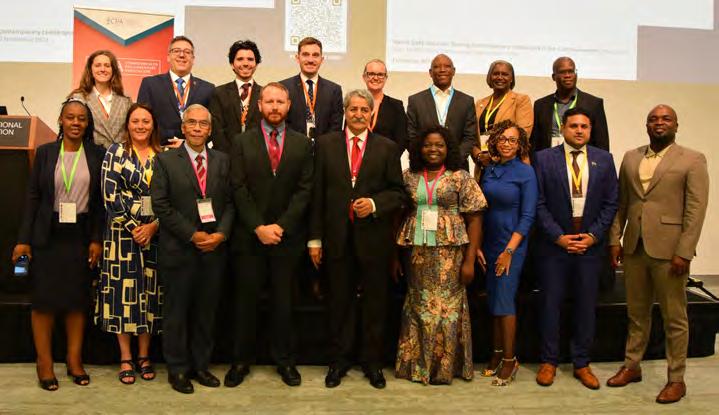
SDG 4: Quality Education: The Government in Malawi provides students with academic loans which allows them to pay back their debts when they obtain employment. The Lesotho Government provides payments to students and requires them to pay 50% of the loan back when they start working. Additionally, Lesotho provides food support in schools to students between the age of five and ten years old. As for Scotland, local residents are eligible to free education at all levels. Uganda is endeavouring to develop similar education schemes for primary, secondary and university students.
SDG 5: Gender Equality: In Uganda, there are 189 women MPs constituting 34% of their 11th Parliament. Despite the fairly high number of women in Parliament, gender-based violence is still a prevalent issue in the country. Women’s representation in the Parliament of Lesotho is low (about 25% of the Parliament) despite the fact that women are more educated than men in the country.
SDG 6: Clean Water and Sanitation: Scotland has a water supply and treatment system that ensures clean water supply to all its citizens.
SDG 7: Affordable and Clean Energy: Most countries recognise that clean energy and achieving affordable, reliable, sustainable and modern energy for all is not an easily achievable goal. This is mainly due to the fact that it is an expensive task, and most governments lack adequate resources and funding.
The group agreed that more efforts and resources are needed to achieve the SDGs and keep on track for 2030. For instance, Hon. Grace Kwelepeta, MP suggested that government budgets should allocate specific funds to the health and education sectors to reach these goals as they directly impact the poverty rate and inequality.
The group discussed how corporate lobbying works in different Commonwealth countries, particularly in relation to climate change policies. Participants highlighted the influence of big corporations in policy decisions and the impact this can have on goals of combatting climate change. The group also noted examples of corporations delaying or weakening climate action.
The group asked themselves 'what role can Parliamentarians play in scrutinising corporate influence in climate policy, and how can they hold governments accountable to ensure they prioritise climate goals?' Rules and guidelines do exist, but unfortunately there has been little to no implementation. The group opined that an implementation gap may exist because of corporate lobbying. A number of jurisdictions provided examples of the implementation gap. In Uganda for example, The National Environment Act 2019 was enacted to provide the legal framework to address environmental issues, including climate change. However, since its operation there has been discord between policy around climate change and industrialisation.
Similarly, South Africa encouraged public participation through environmental assessments and suggested a Special Commissioner on the environment, which would provide some pressure on law makers. However, it was discussed that corporate lobbying pushed back on these hearings, so nothing was achieved in the grand scheme of the climate change initiatives. As a result of climate change policy, South Africa have both legislation and taxes in place relating to the environment but there has been little to no accountability.
Participants put forward a number of opinions on the best way that governments and Parliamentarians can address the influence of corporate lobbying to ensure effective climate action as well as realigning corporate priorities with climate goals. Some of these ideas involved the input of the CPA, including a benchmark for
“ A common theme across most groups was the need for Parliamentarians to work across party lines to achieve global scale goals. Similarly, groups saw the potential for the CPA to act as a scrutiny tool or an accountability measure.”
best practice, teaching materials or climate change audits at the Executive level.
A small group led by Deputy Tom Coles (Jersey) explored the complex and sensitive issue of assisted dying and whether it was considered 'the ultimate Human Right'. The participants from Jersey were able to share the example of their jurisdiction and recent legislation presented to their Parliament related to assisted dying.
The question posed by law makers in Jersey was whether assisted dying should exist, and if it should, in what form. Two options of potential participants were considered; those with a terminal illness with less than 12 months to live, and persons who were in a state of unbearable suffering. The inclusion of this second group of potential participants was defeated in the States Assembly.
The group shared that Jersey opened discussion and debate over a number of important issues, including the discussion of safeguards. Much of the debate revolved around the introduction of coercion and the need to identify what that may look like and how to safeguard against it. The moral and ethical dilemma faced by doctors was also discussed as a big issue. For example, doctors and physicians take the Hippocratic Oath and traditionally abide by
the ethical oath of 'do no harm'. When compared with the notion of respecting a person's autonomy, a difficult ethical question is presented. If assisted dying were considered to be the ultimate human right, the ethical, legal and social dimensions of the concept results in rigorous debate.
Overall, the example presented by Jersey highlighted the difficult practical aspects of legalising assisted dying and the discussions that law makers and Parliamentarians need to have to ensure that all ethical perspectives are heard, considered or debated.
A common theme across most groups was the need for Parliamentarians to work across party lines to achieve global scale goals. Similarly, groups saw the potential for the CPA to act as a scrutiny tool or an accountability measure. They generally expressed how the CPA could be a catalyst for change. The CPA may act as a sounding board to generate ideas and share successful initiatives. Parliamentarians can then be better equipped to canvas and influence innovative ways to resolve problems in their respective jurisdictions.
In the digital age, Artificial Intelligence, misinformation and synthetic media — notably including deepfakes — are increasingly shaping public opinions, influencing behaviours and challenging democratic institutions in new and unprecedented ways. These tools, while innovative, carry risks to democratic norms and the integrity of public discourse. The rapid spread of fake news and AI-generated content creates obstacles for informed decision-making and can erode trust in decision-making bodies and traditional sources of authority, including Parliaments.
A topical debate on this topic took place during the 2024 CPA General Assembly providing a platform for Commonwealth Parliamentarians to address critical and contemporary issues. Delegates were able to share their insights and potential mitigation strategies and regulatory approaches and considered best practices for building resilience against these emerging threats.
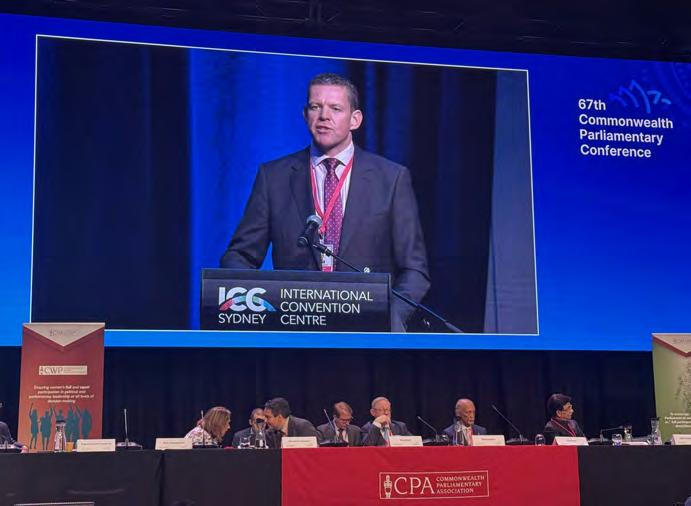
The topical debate heard from presenters from a number of CPA Branches including Australia Federal, Punjab (Pakistan), The Maldives, Wales, Canada Federal, New Zealand, Trinidad and Tobago, and Northern Ireland.
Turn to page 317 to read the contribution from the delegate from The Maldives.

Women Parliamentarians from across the Commonwealth held their 8th Commonwealth Women Parliamentarians Conference in Sydney, New South Wales to discuss women’s representation in Parliaments, gender sensitisation and quotas amongst a wide range of topics. The main theme of the conference was: 'Engaging, Promoting and Retaining Women in Power'.
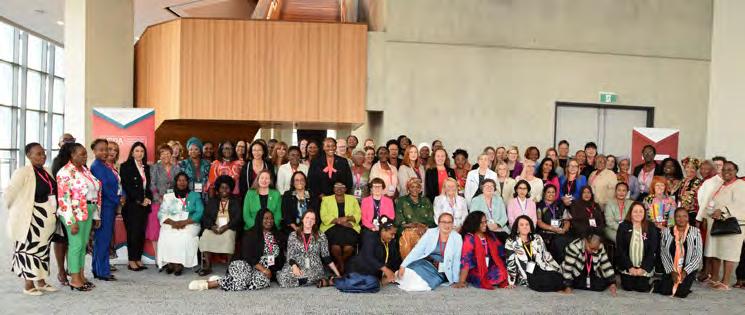
The 8th CWP Conference brought together Members of Parliament to discuss equal representation in Parliaments through a series of workshops and governance meetings including four learning and development workshops for delegates. The CWP Conference was opened by the CWP Chairperson, Hon. Dr Zainab Gimba, MP, Member of the House of Representatives at the National Assembly of Nigeria who welcomed delegates. The CWP President (2024), Ms Lynda Voltz, MP (New South Wales) spoke to delegates about her experience as a legislator.
Over 100 Commonwealth Women Parliamentarians attended the conference from across the Commonwealth. The CWP conference saw leading figures in Commonwealth Parliaments addressing the conference and included four wide-ranging sessions for delegates on the following issues: Promoting the Political Participation of Young Women and Girls; Future-Proofing Democracy: Innovations in Security and Support for Women Parliamentarians; The Retention of Women in Parliaments: How to Keep Women in Politics?; and a joint workshop with the CPA Small Branches network – Gender and National Climate Planning: moving from commitment to scalable action
The CWP Conference also heard from Members from the Parliaments of Canada, India, Australia, Pakistan,
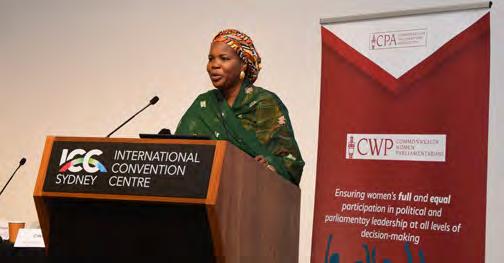
Trinidad and Tobago, United Kingdom and New Zealand as well as experts from UN Women, Compassion in Politics, and the Universities of New South Wales and Western Australia.
The CWP Business meeting updated on the CWP network’s activities during the previous year and the plans for the year ahead. The CWP Chairperson also pledged to renew the effort to increase women’s representation and political participation in Parliaments across the Commonwealth.
The CWP Conference was previously triennial (every three years) but in 2023, CWP Members agreed to hold an annual conference to held in the margins of the Commonwealth Parliamentary Conference.
Ahead of the 8th CWP Conference, the CWP Steering Committee met in New South Wales representing the nine CPA Regions: Africa; Asia; Australia; British Islands and the Mediterranean; Canada; Caribbean, Americas and the Atlantic; India; Pacific; and South East Asia. CWP Steering Committee Members discussed activities for the year ahead as well as key themes for future conferences and meetings. The CWP Steering Committee elected Hon. Kate Doust, MLC from the Parliament of Western Australia as the CWP Vice-Chairperson for another one-year term.
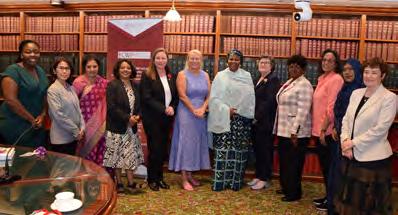
Panel Chair: Hon. Dr Zainab Gimba, MP, CWP Chairperson and Member of the National Assembly of Nigeria
Discussion Leaders:
• Hon. Ume Kalsoom, MP (Balochistan)
• Hon. Catherine Fife, MPP (Ontario)
• Hon. Ritu Khanduri Bhushan, MLA, Speaker of the Uttarakhand Legislative Assembly
• Professor Rosalind Dixon, Programme Director of Pathways to Politics New South Wales and Director of the Gilbert & Tobin Centre of Public Law, the University of New South Wales (UNSW)
Facilitator: Bénite Dibateza, CWP Coordinator, CPA Secretariat
Rapporteur: Bethanie Patch (Parliament of New South Wales)
At the Opening Ceremony of the 8th CWP Conference, Hon. Dr Zainab Gimba, MP, Commonwealth Women Parliamentarians (CWP) Chair and Member of the National Assembly of Nigeria, reflected briefly on the origins of CWP and provided an overview of the key barriers to women's political participation. The CWP President, Hon. Lynda Voltz, MP (New South Wales) gave an Acknowledgement of Country.
The workshop sought to respond to the question ‘why are there so few young women in political leadership?’ by highlighting some of the current challenges that girls and young women face when trying to engage with and participate in politics. The workshop explored current initiatives and strategies from Commonwealth Parliaments and organisations to promote the participation of girls and young women in political leadership.
Hon. Ume Kalsoom, MP (Balochistan, Pakistan) started the discussion by highlighting some of the obstacles to political participation that women in Pakistan face, condemning negative state policies that limit the role of women in public life. She reflected that women are often not given the support or opportunity to be involved in decision-making or policy development.
She explained that she is an elected member of the National Party, a party which promotes collective decision-making and strives to involve women in the development of legislation. At the age of 26, Hon. Ume Kalsoom highlighted that she is the youngest Parliamentarian in Balochistan and in Pakistan. She credited leaders around her, including her father, for their support and encouragement to join politics.
Hon. Ume Kalsoom acknowledged that change in the sociopolitical landscape for women is slow. She stated that there is limited
access to education in Pakistan, and education is an important factor for women to get involved in politics.
Hon. Ume Kalsoom reflected that she looks forward to the day that women in Pakistan will be able to make decisions freely, and easily occupy leadership roles.
Hon. Catherine Fife, MPP (Ontario) explained that the reasons that women and girls may not run for politics are different depending on the jurisdiction. She recounted some of the Canadian Parliamentarians who inspired and supported her own political journey, including Alexa McDonough, a Canadian politician who became the first woman to run a major, recognised party of Nova Scotia in 1980. She also spoke of Elizabeth Wittmer, a former Deputy Premier of Ontario, as an exemplary role model – strong, calm and competent. Hon. Catherine Fife expressed that Ms Witmer offered to be her mentor and suggested that she do the same to other women, noting that we need strong women to support strong women.
Hon. Catherine Fife emphasised the need for visible representation of women in Parliament to serve as role models for future generations. In sharing the experiences of women recently elected in Ontario, she also reflected on the importance of supporting women when they have attained office, noting that working at Parliament has unique challenges.
Hon. Ritu Khanduri Bhushan, MLA, Speaker of the Uttarakhand Legislative Assembly (India) explained the current representation of women in India's Federal Parliament and noted the importance of drafting government policies which reflect women's perspectives.
She stated that since 2014 the Indian Government has promoted a holistic approach to encourage and support girls and young women to pursue political leadership roles. This approach has involved reform in four key areas – education, health, self-help and finance. In regard to finance, Hon. Ritu Khanduri Bhushan explained the concept of 'self-help groups', a group of 10-12 women from similar socio-economic backgrounds, who form alliances to pool their financial resources to take up joint economic activities, or to lend money to members for various business endeavours.
Professor Rosalind Dixon from the University of New South Wales highlighted some of the important reasons why girls and
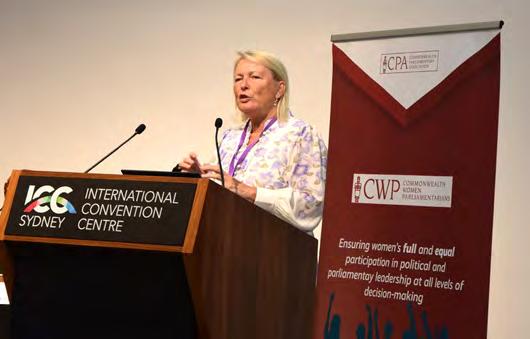
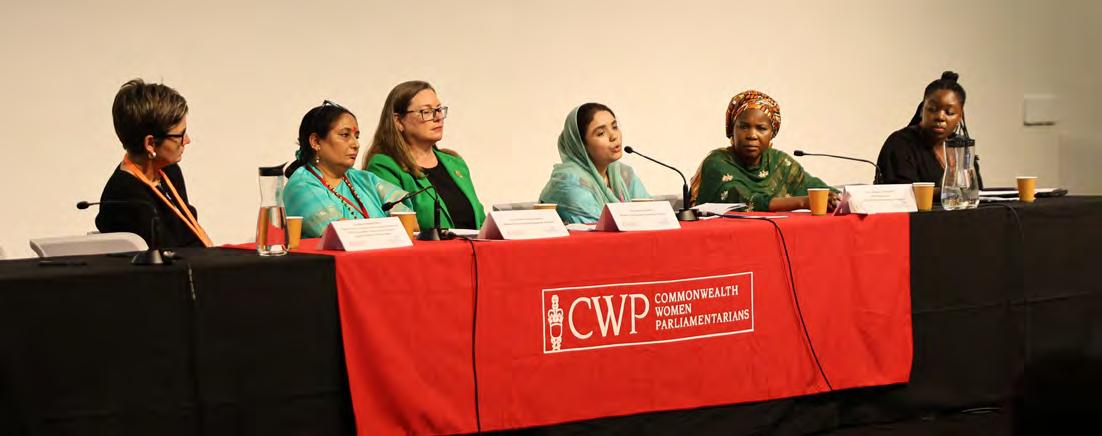
young women should be involved in politics, including increasing public confidence in democracy. She suggested engaging girls early and highlighted the great success of ‘Girls Take Over Parliament’, a programme to help Australian young women and girls have a political voice.
Professor Rosalind Dixon also referenced training programs in New South Wales which assist women to build skills, confidence and networks, including the one-day programme ‘Women for Election’, and the more extensive ‘Pathways to Politics for Women’ programme. Professor Rosalind Dixon suggested that support should also include helping women to find the right place in the political system to which they can best contribute.
During the question-and-answer session and subsequent discussion, the following points were raised:
Hon. Sarah Green, MP (United Kingdom) questioned how to better prepare women and help them to gain resilience in order to have a successful political career. In particular, she asked about how to assist women to recharacterise 'failure' as a positive concept, noting that for elected officials there are always going to be challenges.
Hon. Makoma Makhurupetje, MPL, Speaker of the Limpopo Provincial Legislature (South Africa) agreed that there should be effective strategies to involve girls in politics at a young age, however, questioned which age is best to start encouraging girls to participate in and join Parliament.
Hon. Basetsana S.R Dantjie, MPL, Speaker of the North West Provincial Legislature (South Africa) prompted that we need to remember to empower the boychild, given that the challenges affecting the girlchild are often at the forefront of discussion.
Hon. Daggubati Purandeswari, MP (India) referenced the Department of Youth Affairs’ programme in India which provides training to young people to get involved in politics.
Beth Kalunda Syengo (Kenya) commented on recruiting women at university into Parliament and also questioned what actions are being taken to socialise the boychild.
Hon. Newrene Claudine Klaaste, MPL, Speaker of the Northern Cape Provincial Legislature (South Africa) asked how the CPA, as an oversight body, can ensure Commonwealth Parliaments are collaborating with civil society organisations in this space.
Hon. Mary Muyali Boya, MP, Deputy Speaker of the National Assembly of Cameroon argued that the recommendation should specify what is meant by 'effective strategies'.
Hon. Tolulope Sadipe, MP (Nigeria) raised that if we want to get young people involved in politics, we need to consider educating parents too.
The recommendation at the workshop was noted as follows:
• Parliaments should have effective strategies in place to promote the political participation of girls and young women, including collaboration with civil society organisations.
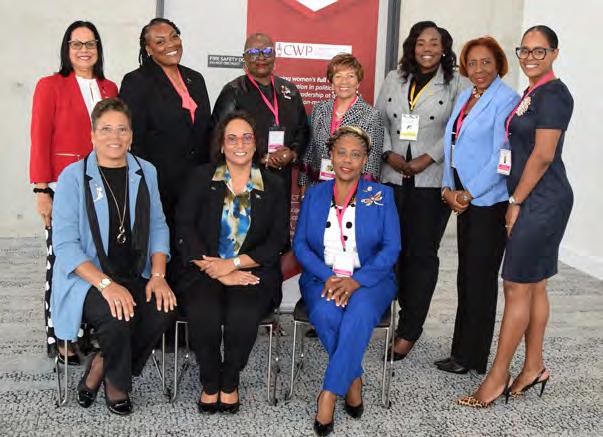
Panel Chair: Hon. Kate Doust, MLC, Member of the Legislative Council of Western Australia
Discussion Leaders:
• Hon. Lynda Voltz, MP, CWP President and Member of the Parliament of New South Wales
• Baroness Ann Taylor, Member of the UK House of Lords
• Jennifer Nadel, CEO of Compassion in Politics
• Hon. Bridgid Anisette-George, Speaker of the House of Representatives, Parliament of Trinidad and Tobago
Facilitator: Bénite Dibateza, CWP Coordinator, CPA Secretariat
Rapporteur: Madeleine Dowd (Parliament of New South Wales)
This workshop examined the increasing risks faced by women Parliamentarians in recent years, including risks to both physical and psychological safety. Panellists discussed the kinds of escalating threats that women Parliamentarians are experiencing and considered why this escalation is occurring and what potential impacts it could have. This workshop also considered potential options for innovation and reform that could be explored in order to address these complex issues.
The CWP President, Hon. Lynda Voltz, MP (New South Wales) discussed the impact, frequency and seriousness of online threats and viral misinformation campaigns on women Parliamentarians. She referred to research undertaken in this area in recent years, which has consistently shown that behaviour of this kind is increasing. For example, in one study, 46.9% of women Parliamentarians reported having received death threats or other threats of sexual and physical violence. It was also reported that female Members of Parliament under the age of 40 are most at risk, not just in terms of threats, but physical harm in the form of sexual attacks, violence and druggings. With regard to online violence, Hon. Lynda Voltz referred to data from the United Nations that estimates that 99% of online harassment is directed at women. She then made the point that legal protections against cyber harassment are generally quite limited around the world, with only 12% of global economies having established legal protections specifically addressing cyber sexual harassment.
In terms of what action can be taken to address this kind of behaviour, Hon. Lynda Voltz explained that steps can be taken by Parliamentarians and their teams to engage in fact checking exercises and utilise Artificial Intelligence to determine what may be misinformation online and to then report it as such. She also referenced the role of large social media companies in labelling
information as false but noted the risks of these companies not engaging meaningfully with government regulation. She also referred specifically to the New South Wales Parliament and recent efforts made to address the physical and psychological safety of women Parliamentarians. This has included security reviews of offices and homes, the establishment of an Independent Complaints Officer and the undertaking of an Independent Review into bullying, harassment and sexual misconduct at the Parliament of New South Wales.
Rt Hon. Baroness Ann Taylor (UK House of Lords) began by outlining that while in the United Kingdom, there has been significant growth in the number of women Parliamentarians over the past 30 years, this does not mean that all issues impacting women in the political environment have been addressed. Baroness Ann Taylor specifically drew attention to the difficult dynamic between prioritising the physical safety of women Parliamentarians with additional security protections, and ensuring that women are able to fulfil their duties to constituents and have meaningful engagement as Members of Parliament.
In explaining the severity of the safety risks for women Parliamentarians, Baroness Ann Taylor referred to the murder of Ms Jo Cox, a British Labour Party politician and Member of the UK Parliament for Batley and Spen, in June 2016. Baroness Ann Taylor explained that this had a significant impact on politics in the United Kingdom and characterised it as a 'wakeup call'. She explained that since then, there has been a more serious focus on security for new Members of Parliament, while again noting that increased security can, for some Members, feel like something that limits their ability to meaningfully engage with the community.
Jennifer Nadel, CEO of Compassion in Politics explained that the unique challenges experienced by women Parliamentarians in terms of safety and online harassment has the impact of causing some women to avoid meaningfully engaging in politics. Jennifer Nadel referred to studies showing that safety concerns impacted a range of choices and decisions of women considering political
Below: Workshop panellists (left to right): Hon. Kate Doust, MLC (Western Australia); Hon. Lynda Voltz, MP, CWP President (New South Wales); Baroness Ann Taylor (UK); Hon. Bridgid Anisette-George, Speaker (Trinidad and Tobago); Jennifer Nadel (Compassion in Politics).
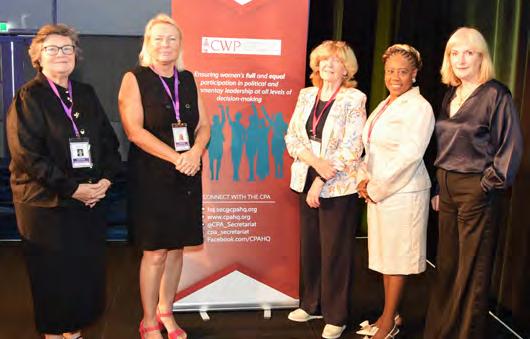
involvement, including their discussion of controversial issues or being comfortable campaigning alone. She also explained that this was experienced even more severely by women of colour, noting that black women reported 35% more abuse than white women.
Jennifer Nadel discussed the connection between the Westminster system and the existence of safety risks. She explained that the Westminster system is an inherently adversarial system and often relies on conflict and divisiveness. She explained that this system can encourage negative behaviour, which in turn, impacts wellbeing and psychological safety. She also made the case for a shift towards a 'new politics', which is collaborative, values-led and focuses on consensus. She concluded her contribution by discussing the role political parties have in protecting women and made an argument for more advocacy for support for women Parliamentarians and the classification of misogyny as a hate crime.
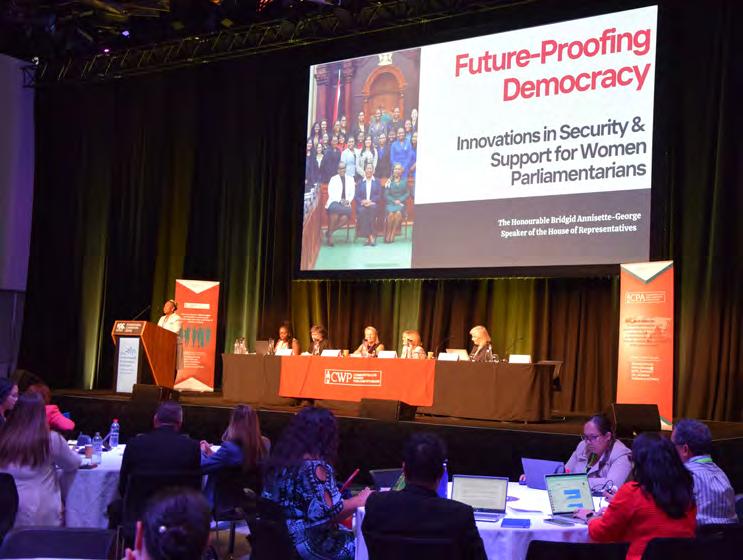
Hon. Bridgid Anisette-George, the Speaker of the House of Representatives, Parliament of Trinidad and Tobago made the point that there is no democracy without gender equality and explained that democracy needs to be both inclusive and representative. She discussed the need to future proof democracy by ensuring the safety of women Parliamentarians and ensuring they feel supported to engage fully in politics. The Speaker of Trinidad and Tobago examined why women stay away from politics and how those underlying issues could be addressed. To adequately do this, she explained it was necessary to consider both psychological and physical security. She told the workshop about the parliamentary police unit in Trinidad and Tobago which routinely escorts Parliamentarians to their cars and gives advice on security protocols, both physically and online.
Hon. Bridgid Anisette-George also highlighted the existing mechanisms that can be leveraged in order to address the safety and security of women Parliamentarians, including using Standing Orders to set standards for appropriate language in Parliament. She also stressed the importance of supporting women Parliamentarians in a range of ways, including the establishment of breastfeeding and nursery facilities, the setting up of a female parliamentary caucus and the promotion of education and outreach for women Parliamentarians. All of these efforts are aimed at promoting the participation of women in Parliament and ensuring democracy can be adequately upheld by enabling engagement from the entire community.
Following these presentations, questions were asked of the panellists. Hon. Mariama Bangura, MP (Sierra Leone) asked about what social media platforms should be doing to protect women from harassment. Hon. Lynda Voltz, MP suggested that companies could be issuing takedown orders and certifying information as authentic or false. Jennifer Nadel stated that Artificial Intelligence could be used productively in this context, in that hate speech or
misinformation could be identified and blocked before it is even published.
Senator Beth Syengo (Kenya) asked about what happens when violence and threats against women are coming from media organisations or public figures. Hon. Lynda Voltz acknowledged this issue and characterised it as significant and difficult to address.
Senator Hon. Sue Lines, President of the Australian Senate, remarked that the journey towards a more compassionate and values-led political environment seems difficult, especially in the context of an adversarial Westminster system. She asked what steps could be taken to get to that ‘new system of politics’. Jennifer Nadel stated that by making Parliament more professional and establishing behavioural standards and new rules, progress could be made to bring Parliament more into line with community expectations of modern workplaces. Baroness Ann Taylor remarked that there is also an issue with what the media cover, in that situations where politicians are being productive and collegial are not highlighted or focused on. Hon. Bridgid Anisette-George then stated that while debate should be robust, given the nature of politics, this does not mean that there should not be standards, especially in relation to offensive language. She noted that what is understood to be offensive can be fluid and evolve over time.
Hon Bernadette Wuyatta Songa, MP (Sierra Leone) asked panellists about how women Parliamentarians can better support each other and share resources, and stressed the need to work across parties to improve the safety of women in Parliament. Jennifer Nadel supported this sentiment and echoed the need to support other women as a priority.
The recommendation at the workshop was endorsed as follows:
• Commonwealth Parliaments should, with the support of experts, put in place protective measures that address the multifaceted security challenges that women Parliamentarians face.
Panel Chair: Hon. Nelly Mutti, SC, MP, Speaker of the National Assembly (Zambia)
Discussion Leaders:
• Rt Hon. Elin Jones, MS, Llywydd of the Senedd (Wales)
• Hon. Nathalie Roy, MNA, Présidente de l'Assemblée Nationale (Québec)
• Ms Marilyn Bromberg, Associate Professor (University of Western
Facilitator: Bénite Dibateza, CWP Coordinator, CPA Secretariat
Rapporteur: Stephanie Mulvey (Parliament of New South Wales)
This workshop examined the challenges faced by women Parliamentarians and how these impact on whether women remain in politics. While the focus has often been on encouraging women to enter politics, proactively exploring efforts to retain women Parliamentarians is important if we are to reach near equal, or equitable, representation. Women may leave politics because of toxic and abusive cultures and a lack of support for caregiving roles. The increasing prevalence of deepfakes, cyberbullying and nonconsensual distribution of intimate images also impacted women Parliamentarians.
From hybrid participation to on-site childcare, a range of approaches to supporting women Parliamentarians were canvassed. Practical approaches to addressing online harm were also discussed, including the importance of referring instances of online abuse to the appropriate authorities. While politics is a competitive arena, workshop delegates agreed that women Parliamentarians should work together across party lines to support and celebrate each other, to address barriers that prevent women from staying in politics, and to work towards a common agenda.
Hon. Nelly Mutti, SC, MP, Speaker of the National Assembly of Zambia made some opening remarks in her capacity as Chair and introduced the panellists. She observed that at the current rate of progress gender parity in Parliaments globally will not be achieved until 2063. Encouraging women to enter Parliament tended to be the focus of conversations about equal representation, rather than supporting women to stay in politics. Women Parliamentarians left politics for a range of reasons, but they are more likely to leave due to a toxic and abusive culture and a lack of appropriate infrastructure and support. In contrast, male Parliamentarians were more likely to simply retire. We need to explore how we can better support women to remain in politics.
Rt Hon. Elin Jones, MS, Llywydd of the Senedd of Wales highlighted that the Welsh Parliament was the first in the world to
achieve equal representation in 2003. Near equal representation had been more or less maintained, and in 2006 women actually outnumbered men. However, she also spoke to the ongoing difficulties of persuading female candidates to enter politics, especially mothers of young children.
Women Parliamentarians are also much more likely to be abused on social media, which can hamper retention efforts and dissuade women from politics. She encouraged women to refer such abuse to the appropriate authorities as she had successfully done recently with a malicious communication, resulting in the perpetrator serving a short prison term.
Although technology presented challenges to attracting and retaining women Parliamentarians, it also represents an enormous opportunity. Enabling hybrid participation in parliamentary proceedings, as occurs in the Welsh Parliament, means that anyone with caring responsibilities for young children or elderly parents can participate from home as necessary. Video conferencing with constituents could also make it easier to balance home responsibilities with the demands of a large electorate.
Raising awareness of the unique health challenges that can affect women at different life stages, including menopause, was critical if we are to properly support women Parliamentarians. She shared her own experience of menopause-related ‘brain freeze’ during a live television interview and the detrimental impact it had on her confidence at the time, causing her to consider leaving politics.
Most importantly, women should work across party lines to find common solutions to challenges, create new norms and embrace modern ways of working. Improved retention of existing women Parliamentarians meant that there were more 'wise and experienced heads' who could support newer entrants. Although hailing from a different political party, she praised Ms Jane Hutt, MS as an incredible example of a long-serving woman in the Welsh Parliament, who had accumulated 25 years of Ministerial
Below: Workshop panellists (left to right): Bénite Dibateza, CWP Coordinator (CPA Secretariat); Hon. Nathalie Roy, MNA, Présidente (Québec); Hon. Nelly Mutti, SC, MP, Speaker (Zambia); Rt Hon. Elin Jones, MS, Llywydd (Wales).
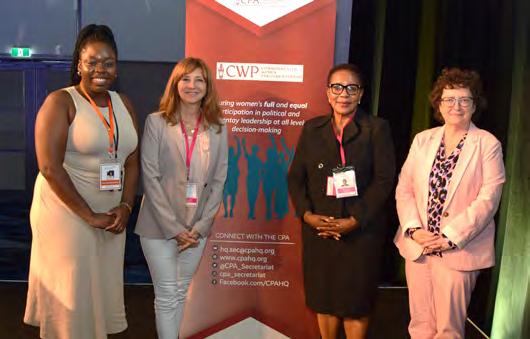
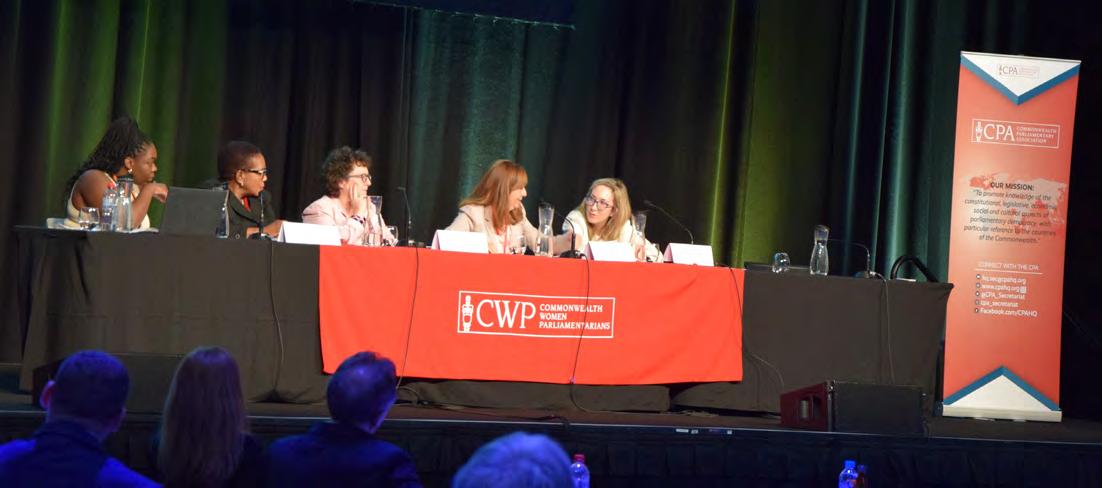
experience. All Parliaments need women with this depth of expertise and experience.
Rt Hon. Elin Jones concluded by calling for all ‘to make Parliaments work for women, so women can work for Parliaments’.
Hon. Nathalie Roy, MNA, Présidente de l’Assemblée Nationale du Québec shared some of her Legislature's recent initiatives to help keep women in politics. She is only the second female Presiding Officer in 230 years of Québec's parliamentary history and dreams of the day when being presided over by a woman is no longer the exception. Although it had been attained in many jurisdictions, near equal representation is fundamentally insecure. In Québec near equal representation was also insecure as it had largely been achieved through public pressure and was not enshrined in law.
Being involved in politics means sacrificing elements of family life and this can weigh more heavily on women. Across the globe, some retention initiatives include quotas, parity lists of candidates, proxy votes for those with family commitments and financial penalties for parties without enough female candidates. To keep more women in politics, Parliaments need to be modern, healthy workplaces free of harassment. Since 2015, the National Assembly of Québec has had anti-harassment policies, awareness campaigns, complaints procedures and a Commissioner for Respect. She praised the Commonwealth Parliamentary Association's Anti-Harassment Policy Guidelines: A Toolkit for Commonwealth Parliaments
To support parents, the National Assembly of Québec has adjusted its sitting schedule so that night sittings are very rare. Other efforts to support women Parliamentarians include improved parental leave, breastfeeding rooms and unsupervised family rooms. A major initiative under her leadership has been the establishment of an on-site childcare centre for 10 children. This provides practical support but also sends an important message: women of young children belong in politics too. She underscored the pivotal role that female Presiding Officers play in driving measures which support the retention of women Parliamentarians. In conclusion, she announced that Québec would be hosting the
Associate Professor Marilyn Bromberg, from the University of Western Australia, summarised her research on the increasing abuse of women online and shared some practical tools. Deepfakes, the non-consensual distribution of intimate images and cyberbullying is increasing and is usually targeted at women. Online abuse involving women Parliamentarians caused some to leave politics and discourages women from entering Parliament.
Research shows that deepfakes – which are often used to create sexual images or videos of women without their consent –can be hard to detect but shape perceptions of whether a woman candidate or Parliamentarian is credible.
Non-consensual distribution of intimate images could happen through hacking or by sharing legally obtained content after a break-up. There are examples of women Parliamentarians leaving office after such images are shared.
Evidence shows that cyberbullying of women Parliamentarians was more likely to be personalised while abuse of male Parliamentarians focused on policies. Alarmingly, UK research showed that cyberbullying of female Parliamentarians had increased from 10% to 90% from 2010 to 2018/19. Cyberbullying has detrimental psychological impacts, including depression, anxiety, lowered self-esteem, reduced job satisfaction and increased negativity.
Importantly there are practical steps women Parliamentarians can take to prevent and address harm. All Parliamentarians can push for change in social media content policies, which must address the issue of non-consensual distribution of intimate images and deepfakes. More social media moderators are needed. Women Parliamentarians should ensure they have strict privacy settings, strong passwords and the latest software. If you become a victim of online harm, take evidence, including screenshots, and refer it to the appropriate authorities, such as police or an e-safety commissioner. Research shows victims should not engage with the alleged perpetrator as this can exacerbate the problem. Devise
policies about who you interact with online and train your staff accordingly.
In the discussion that followed Hon. Akierra Missick, MHA (Turks and Caicos Islands) observed that the topic of retention of women in Parliaments needed to be part of the CPA General Assembly, because we need male allies in the room. She sought advice on how the assembled women Parliamentarians could best extend their hands to the next generation.
Rt Hon. Elin Jones advised that women should not doubt themselves, as fear and doubt can hold you back and strength is gained through experience. Importantly, look to other women for support as most will provide it.
Hon. Nathalie Roy agreed that women Parliamentarians had a responsibility to keep the door open for other women regardless of their political views. She also emphasised the importance of bringing male colleagues on the journey as many are allies.
Associate Professor Marilyn Bromberg noted research showing that Parliaments are better when there is more diversity and so it is crucial that young women consider political careers.
Hon. Alexandra Mendès, MP (Canada Federal) shared that for twenty years the Parliament of Canada has had a full-time daycare for the children of Parliamentarians and their staff.
Ms Farah Azeem Shah, MP (Balochistan) emphasised that women Parliamentarians should focus on their strength, bravery and influence rather than despairing at the obstacles in their way. For example, as mothers, we are uniquely placed to raise our children to work towards a better society. We can also support newer women Parliamentarians.
Deputy Inna Gardiner (Jersey) observed that some believe that hybrid participation puts more pressure on Parliamentarians to participate when they are unwell or are caring for a sick child. How should we address this concern?
Ms Savia Orphanidou, MP (Cyprus) agreed that breastfeeding rooms and childcare were very important, but also highlighted fertility preservation, including IVF and egg freezing. She shared that she is a single parent through a sperm donor.
Rt Hon. Elin Jones agreed that we need to celebrate women in politics. To make hybrid Parliaments work optimally, we must treat remote participation equally. Presiding Officers are responsible for encouraging respect for remote contributions. She agreed that openly discussing fertility and menopause encourages women to make decisions about their own health.
Hon. Nathalie Roy cautioned that politics is inherently competitive. Once elected you can work with fellow women to achieve change from the inside.
Hon. Cathy Launa Nori, MP (Solomon Islands) sought further advice on how women can remain in politics. In her view, politics in the Pacific came with different expectations, including that women Parliamentarians be kind and generous. She wanted to hear strategies that could help in her jurisdiction.
Rt Hon. Elin Jones suggested that the same solutions apply but could be adapted to local contexts. Women working together across political lines and embracing new approaches was critical. Solutions
could include childcare, proxy voting, improved parental leave and hybrid participation.
Senator Hon. Dr Dessima Williams, President of the Senate of Grenada observed that women could work across party lines to achieve a more compassionate, meaningful politics.
Ms Zaneta Mascarenhas, MP (Australia Federal) asked what legislators should be doing to combat the damaging impact of pornography on teenage girls and young women.
In response, Associate Professor Marilyn Bromberg noted that this year Australia had criminalised the creation of sexual deepfakes. However, the sharing of sexual deepfakes must also be criminalised. Legislative change should be accompanied by social change.
Hon. Nathalie Roy acknowledged that social media is a problem. However, in her view the main drivers of women leaving Parliament are harassment and their role in caring for children. Political life is inherently challenging, but progress will come from small solutions and women working together.
The Workshop Chair shared her reflections on the session. She acknowledged that while politics is competitive, women must work together across party lines, implement a variety of solutions, embrace technology and adapt to changing circumstances.
Discussion turned to the draft recommendation. Hon. Tessie Lambourne, MP (Kiribati) suggested that instead of making a recommendation to the CPA General Assembly, the CWP network should be pushing a CPA-wide mentoring programme and policy for women Parliamentarians. In her view, the CWP should be working across all Parliaments.
Several amendments to the draft resolution were proposed and briefly discussed. The following recommendation was endorsed by workshop delegates:
• Parliaments should proactively explore all necessary measures and support systems to allow Parliamentarians to undertake their term in office.
Below: Members from the CPA Canada Region pictured with the CWP President for 2024, Hon. Lynda Voltz, MP, Member of the Parliament of New South Wales (centre).
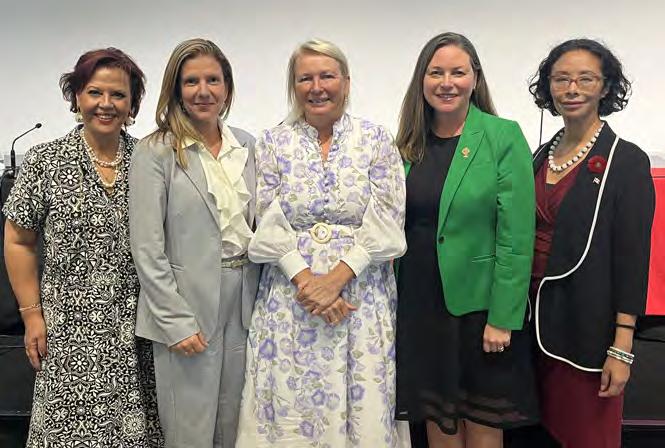
Commonwealth Parliamentarians met at the 40th CPA Small Branches Conference from 4 to 5 November 2024 to examine practical solutions for building a sustainable and innovative future for the smallest jurisdictions. The conference discussed strategies to meet the unique developmental needs of the CPA’s smallest Legislatures through key thematic workshops that helped to build parliamentary capacity for Members and parliamentary staff while also creating greater opportunities for the sharing of knowledge, parliamentary strengthening and cooperation across the network.
The outgoing CPA Small Branches Chairperson, Joy Burch, MLA, Speaker of the Australian Capital Territory Legislative Assembly said: “The CPA Small Branches Conference helps to build capacities for the small Parliaments and Legislatures of the Commonwealth and create greater and more constant opportunities for the sharing of knowledge and cooperation across the CPA network. The network comes together to address their common difficulties, common strengths and their shared experiences.”
The CPA Secretary-General, Stephen Twigg said: “The CPA works with its Small Branches network across the Commonwealth in strengthening parliamentary democracy. The smallest of the CPA’s Legislatures seek to meet the same expectations of service delivery as larger Legislatures and in doing so, they recognise the importance of constantly innovating in the face of fiscal and human resource constraints; and the threats in the face of natural disasters and climate change to some of the Commonwealth’s most vulnerable.”
The CPA Small Branches Conference included four plenary sessions exploring key themes proposed by the Membership: Strengthening Parliaments through twinning: Lessons from the Australia-Pacific Partnerships; Accelerating digital innovation for resilience and growth in small jurisdictions; Balancing tradition and innovation: Modernising the Westminster system in small jurisdictions; and a joint workshop with the CWP network
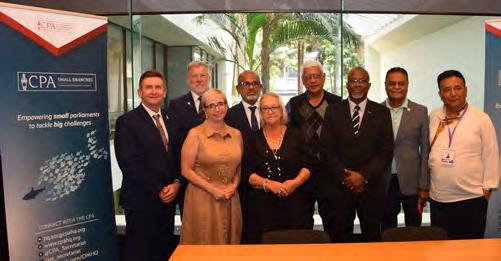

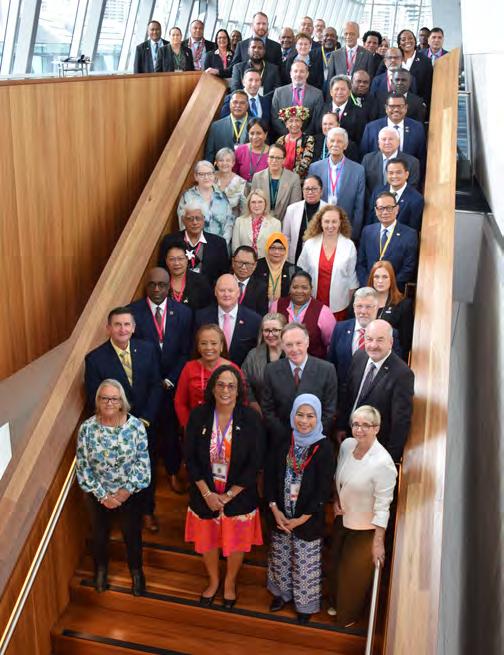
– Gender and National Climate Planning: moving from commitment to scalable action.
In the margins of the conference, the CPA Small Branches Steering Committee met to discuss the strategic direction for the network. The Steering Committee comprises the CPA Small Branches Chairperson and nine MPs who represent the nine CPA Regions. Of the almost 180 Branches of the CPA, fifty Branches are classified as ‘Small Branches’. The classification for was changed by the CPA General Assembly in 2022 to raise the population threshold to one million people. Examples of CPA Small Branches include countries such as Barbados and Tonga, as well UK Overseas Territories such as Turks and Caicos or states and provinces within larger countries like Northwest Territories in Canada.
The 40th CPA Small Branches Conference took place as part of the wider 67th Commonwealth Parliamentary Conference in Sydney, New South Wales, Australia.
ELECTED CPA SMALL BRANCHES CHAIRPERSON SPEAKS ABOUT THE IMPORTANCE OF SMALL LEGISLATURES WITHIN THE COMMONWEALTH COMING TOGETHER TO ADDRESS COMMON CHALLENGES AND TO SHARE EXPERIENCES OF THEIR PARLIAMENTS AT 40th CPA SMALL BRANCHES
The newly elected Chairperson of the CPA Small Branches network, Hon. Valerie Woods, Speaker of the National Assembly of Belize pledged that the Commonwealth Parliamentary Association (CPA) would have a strengthened and renewed focus on assisting CPA Small Branches and their Parliaments and Legislatures.
The Members of the CPA attending the 40th CPA Small Branches Conference elected Hon. Valerie Woods (Belize) as the new CPA Small Branches Chairperson. The role of Chairperson of the CPA Small Branches is an Officer role within the CPA’s governance structure and the new incumbent will sit on the CPA International Executive Committee to bring a voice for the CPA Small Branches to the governing body of the Association.
In her acceptance remarks, the newly elected CPA Small Branches Chairperson expressed her gratitude to the Members of the CPA Small Branches, who have shown great trust in electing her as their Chairperson.
Hon. Valerie Woods, MNA is the Speaker of the House of Representatives of the National Assembly of Belize. She was first appointed to the National Assembly as a Senator from 2016 to 2019 and was then elected in December 2020 as the Speaker of the House of Representatives. As the Speaker, she has been a lead facilitator on the CPA’s Administrative Review of the
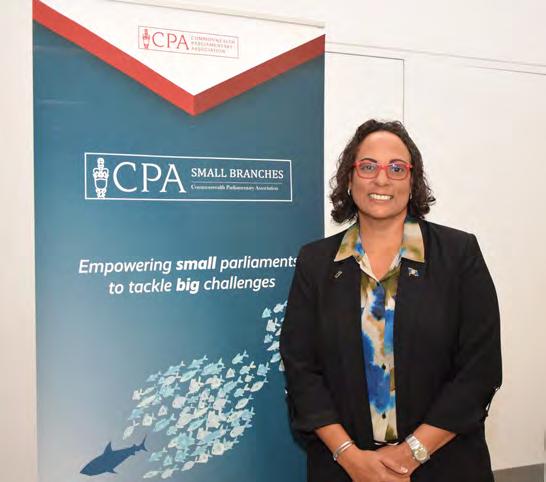
Parliament and on the proposed draft changes to the Standing Orders.
She is also pursuing her professional development studies in parliamentary service through the CPA Parliamentary Academy and Gender Studies through the Caribbean Institute in Gender and Development (University of the West Indies). She has also served on the Steering Committee for the Commonwealth Women Parliamentarians (CWP) representing the Caribbean, Americas and Atlantic Region and as CWP ViceChairperson.
The outgoing CPA Small Branches Chairperson is Joy Burch, MLA, Speaker of the Australian Capital Territory Legislative Assembly and previous holders were: Hon. Niki Rattle (Cook Islands) and Hon. Angelo Farrugia (Malta).
The Secretary-General of the Commonwealth Parliamentary Association, Stephen Twigg said: “I congratulate Joy Burch, the outgoing CPA Small Branches Chairperson, for the important achievements she has delivered during her term in office. On behalf of the entire CPA membership, we are incredibly grateful to her for the leadership of the CPA Small Branches network. I very much look forward to working with Hon. Valerie Woods, the new CPA Small Branches Chairperson during the next three years and wish her all the very best in this important role.”
Under CPA election rules only delegates from CPA Small Branches to the 67th Commonwealth Parliamentary Conference could take part in the vote to elect a new CPA Small Branches Chairperson. There were three candidates for the position of CPA Small Branches Chairperson: Deputy Adrian Gabriel (Guernsey); Hon. Shane Thompson, MLA, Speaker of the Northwest Territories Legislative Assembly; and Hon. Valerie Woods, MNA, Speaker of the House of Representatives of the National Assembly of Belize.
The election of the new CPA Small Branches Chairperson took place at the 40th CPA Small Branches Conference held in New South Wales, Australia as part of the 67th Commonwealth Parliamentary Conference.
BUILDING A SUSTAINABLE AND INNOVATIVE FUTURE FOR CPA SMALL BRANCHES
Panel Chair: Ms Joy Burch, MLA, CPA Small Branches Chairperson and Speaker of the Australian Capital Territory
Discussion Leaders:
• Mr Wilson Orisi, Committee Secretary (Solomon Islands)
• Mr Simon Johnston, Clerk Assistant and Serjeant-atArms of the Legislative Assembly (New South Wales)
• Mrs Kauae Been Sam, Public Accounts Committee Secretary (Kiribati)
• Mr Robert Tapi, Clerk of the House of Representatives (Autonomous Region of Bougainville)
Moderator: Ms Flora Longley-Cook, CPA Small Branches Network Coordinator, CPA Secretariat
Rapporteurs: Tina Higgins and Rhia Victorino (Parliament of New South Wales)
This workshop focused on the value of parliamentary twinning, with a focus on the twinning programmes currently operating between Australian and Pacific Legislatures. The discussion started with each panellist commenting on the highlights of the twinning programme from their region.
Mr Wilson Orisi (Solomon Islands) reflected positively on the twinning programme operating between the New South Wales Parliament and National Parliament of the Solomon Islands, explaining that the institution as a whole has been greatly strengthened. He noted that the programme has led to a number of new offices being established within the department of the National Parliament of the Solomon Islands to provide greater support to Members and to the Speaker. The twinning programme also facilitated a review of the Parliament's Standing Orders to modernise the Parliament. Staff from each jurisdiction have also been exchanged in secondments.
Mrs Kaue Been Sam (Kiribati) also reflected positively on the twinning relationship between Kiribati and the Australian Capital Territory Legislative Assembly. She explained that formal ties between the Parliaments through the twinning programme have promoted mutual benefits and collaboration, with Parliamentarians able to provide good insights into each other’s Legislatures.
Mr Robert Tapi (Bougainville) also discussed the benefits associated with Bougainville being twinned with the New South Wales Parliament. He noted that there have been Member
exchange programmes between the jurisdictions, and that twinning has helped with the development of the Parliament in Bougainville.
Like other panellists, Mr Simon Johnston (New South Wales) also spoke positively about the twinning programmes operating between the New South Wales Parliament and both the Bougainville House of Representatives and the National Parliament of the Solomon Islands. With five years' experience as the twinning co-ordinator at the New South Wales Parliament from 2010 to 2015, he explained that the benefits of twinning centre on the long-term multi-level connections that can be developed between Members and parliamentary staff of each jurisdiction and that the benefits of twinning are reciprocal, with both Legislatures developing important skills via the twinning relationship. Simon Johnston also highlighted how the New South Wales Parliament, as a well-established and well-resourced organisation, can work with other jurisdictions to share knowledge and support the development of locally based solutions to the unique challenges faced by smaller regions.
The panellists were asked how twinning arrangements were originally established with their Parliaments and whether the arrangements started slowly to begin with. Wilson Orisi noted that the twinning arrangements between the National Parliament of the Solomon Islands and New South Wales Parliament commenced in 2007, taking a bit of time to get underway. Robert Tapi advised that a partnership agreement was signed between Bougainville and the New South Wales Parliament in 2010, with the agreement setting out the objectives of the programme.
Hon. Robert Cutajar, MP (Malta) asked the panel about the intersection between ‘friendship groups’ and twinning programmes, noting that in Malta there are ‘friendship groups’ although these do not have any CPA Members. The Member also asked what would be the best way forward to establish a twinning programme with another CPA Branch.
Simon Johnston distinguished between friendship groups and twinning arrangements in the New South Wales Parliament, explaining that in New South Wales, friendship groups are nonpartisan groups on various issues that are very different to twinning partnerships. He explained that the genesis of the twinning programme came from the CPA who matched up Legislatures in the CPA Pacific Region with Parliaments at state and federal level in the CPA Australia Region. Ms Joy Burch, CPA Small Branches Chairperson added that in deciding which jurisdictions could be matched for twinning, the CPA would consider a range of issues, including what may be a natural fit with respect to a state Parliament versus a national Parliament, as well as travel considerations.
Deputy Inna Gardiner, MP (Jersey) asked what the benefits and challenges would be of having formal twinning arrangements in place, in comparison to informal networks.
Robert Tapi discussed how formal twinning arrangements provide for specific and focused activities. However, he also acknowledged that the broader idea of friendships beyond the
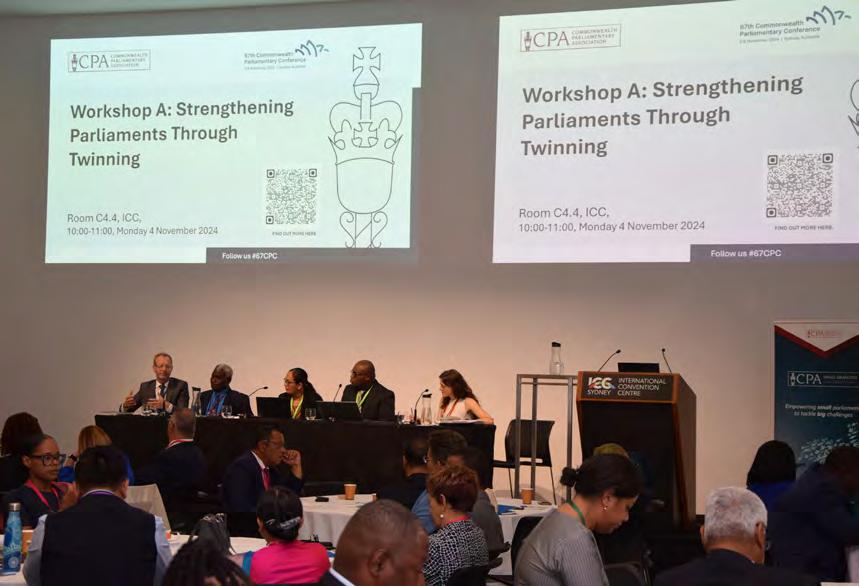
formal twinning programme are worth exploring to determine the best arrangements for a particular circumstance.
Kaue Been Sam highlighted that formal twinning programmes can assist smaller jurisdictions to engage with larger countries, enabling culture to be showcased and expertise shared.
Wilson Orisi also explained that twinning programmes can create co-operation and opportunities for understanding and improvement. He referred to the twinning programme operating between the New South Wales Parliament and the National Parliament of the Solomon Islands, which he said enabled his Parliament to identify areas of process and procedure to improve.
The panellists also discussed timeframes for twinning programmes, along with Parliamentarians' views on the programme.
Simon Johnston highlighted how the twinning programmes involving the New South Wales Parliament are open ended, with no time limit. He noted that a successful programme needs commitment from the Speaker, the Clerk of the Parliament and individual Members. On the latter, he also explained that Members from the New South Wales Parliament had travelled to Solomon Islands and Bougainville as part of the twinning programme. The experience not only provided them with insights into how Parliaments in other jurisdictions operate but highlighted some shared experiences, such as engagement with constituents and the election process. He advised that it is important to have the support of key stakeholders to get commitment to the programme. Joy Burch also noted that she has visited Kiribati and seen the benefit of exchange programmes and activities involving Members. The core function of working with constituents is common to all Parliamentarians.
The panellists also touched upon the involvement of third parties in twinning programmes, particularly with respect to funding. Robert Tapi noted that as funding for the next phase of twinning has ended, Bougainville has been fortunate to secure support for some
activities through the United Nations Development Programme (UNDP). This support was arranged through the Australian Department of Foreign Affairs and Trade, via the Parliamentary Strengthening Project. Wilson Orisi also spoke of the Parliamentary Strengthening Project, noting that both the project and twinning arrangements share the common objective of strengthening the oversight and legislative functions of Parliament.
Simon Johnston explained that, with the financial capacity for twinning programmes being constrained now, the Parliamentary Strengthening Project is a good example of how the UNDP can leverage off the twinning programmes and use existing relationships between twinned Parliaments to assist with its initiatives.
Mrs Faagasealii Sapoa Feagiai, MP (Samoa) noted that twinning arrangements between the Parliament of Samoa and the Parliament of Tasmania have assisted with staff development and improvements to practice and procedure. The programme was valued as it helped with CPA benchmarking, along with amendments to the Standing Orders and legislation.
In terms of lessons for the future, Wilson Orisi explained that one of the challenges has been a high turnover of staff. Funding and resourcing is also a challenge. For Robert Tapi, the challenge moving forward is to keep linkages between the jurisdictions, particularly to help engage Members to be effective. Simon Johnston discussed how even without direct and structured funding support, there are still plenty of opportunities for information and resource sharing. For example, the Floating Budget Office, arranged by the UNDP, which brings parliamentary staff in to assist Pacific nations with the budget. He also noted that through the CPA’s support, there has been various delegations and visits to Bougainville and Solomon Islands, and to New South Wales. In terms of the benefits, he noted that there is much to gained by all parties from a twinning programme. In particular, learning how the Westminster system is adapted in other countries with traditional practices steeped in history and culture has been a humbling and valuable learning experience for parliamentary staff from the New South Wales Parliament.
At the end of the workshop discussion, the following recommendation was endorsed:
• Parliaments should explore the potential to establish twinning arrangements with another CPA Branch to build upon crossparliamentary relationships.
BUILDING A SUSTAINABLE AND INNOVATIVE FUTURE FOR CPA SMALL BRANCHES
Panel Chair: Hon. David Agius, MP, Deputy Speaker (Malta)
Discussion Leaders:
• Deputy Elaine Millar (Jersey)
• Hon. Ahmed Nazim, MP, Deputy Speaker (The Maldives)
• Hon. Bernie Bush, MP (Cayman Islands)
Facilitator: Ms Charlotte Corby, Programmes Officer, CPA Secretariat
Rapporteurs: Frances Arguelles and Christine Thai (Parliament of New South Wales)
This workshop discussion focused on practical strategies to accelerate digital transformation, including forming partnerships with technology firms, investing in digital literacy programs, and developing a comprehensive digital strategy across Parliament, government and industry.
The session also addressed common innovation barriers and presented real-world examples of successful digital solutions that enhance community services and stimulate economic growth, with special attention given to the importance of these innovations for small jurisdictions.
The first panellist, Deputy Elaine Millar (Jersey) presented on the project 'Digital Jersey', a part Government-funded innovation agency set up to diversify Jersey's economy and support industry with technological adoption and diffusion. Following the banking and financial crisis, Digital Jersey was launched in 2013 as a sustainable tech hub to support growth in the digital industry and accelerate a digital future through three key pillars focusing on Industry, Innovation and Skills.
Deputy Elaine Millar shared examples of the initiatives that Digital Jersey has delivered to date, such as the development of Data Trusts, the use of drones in the agricultural industry as well as the delivery of online programmes and training courses to improve digital literacy in business and the public sector. She also presented on Jersey's Data Trust, a world-first initiative that used Trust Law to collect data from cyclists via an attached light device while on their routes across Jersey. With 650 cyclists signed up and data collected over 17 months, the Data Trust initiative was a resounding success which has been widely endorsed by several agencies across both government and private industry.
Deputy Elaine Millar also spoke about the fact that data is often unstructured, inaccessible and scattered across multiple organisations. She shared experiences relating to the Jersey Data Exchange initiative, a facility created to revolutionise the sharing of
data by providing the necessary infrastructure so that agencies can easily transfer data between entities. This highlighted how Digital Jersey has continued to facilitate digital transformation and growth across government, business, infrastructure and people, to support greater use of digital technology, ultimately contributing towards a more productive economy.
The second panellist, Hon. Ahmed Nazim, Deputy Speaker of the People's Majlis (Parliament of Maldives) provided an overview of 'Maldives' National Digital Identity', the roll-out of an electronic digital identity platform by the Government, whilst highlighting the unique geographical challenges of their region. Hon. Ahmed Nazim stated that since its introduction in 2012, the Maldives National Digital Identity platform 'eFaas' had successfully created an inclusive digital society that is accessible, protective, service-oriented and people-centric. He spoke about the realised benefits and ease of use of a Digital ID platform for citizens, describing how simple it is to create, use and verify, empowering citizens to share information with agencies securely through multifactor authentication.
Hon. Ahmed Nazim spoke about the rollout as an opportunity for innovative and improved service delivery, a standardisation of the official registry of legal identity across the nation which offers protections on data privacy and cybersecurity. He had also observed that over the past 10 years, the 'eFaas' Digital ID platform had an upward trajectory with up to 70% of the population now actively accessing over 450 services remotely, such as social welfare, health care and banking services, and that many of The Maldives' citizen's daily problems were easily solved through the Digital ID platform.
Below: Workshop panellists (left to right): Hon. Bernie Bush, MP (Cayman Islands); Deputy Elaine Millar (Jersey); Hon. Ahmed Nazim, MP, Deputy Speaker (The Maldives); Hon. David Agius, MP, Deputy Speaker (Malta).
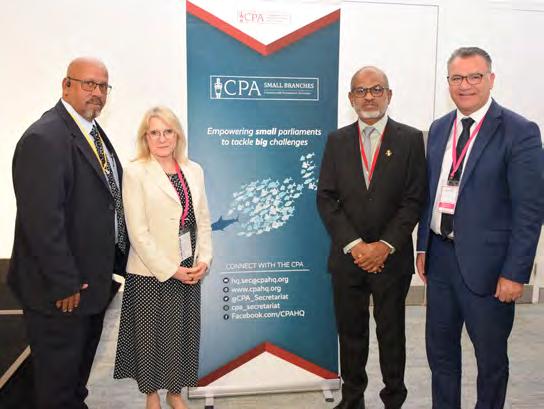
In the second half of his presentation, Hon Ahmed Nazim also presented on the establishment of the eGovernment GEMS workspace, an electronic mail service system that was prompted by the COVID-19 pandemic in 2019. The eGovernment GEMS workspace rollout has allowed for greater efficiency and digital adoption in the workplace, allowing government officers to access documents and complete their work from home. This initiative has provided a positive and safe transformative hybrid working experience, revolutionising the work-life balance for public servants in The Maldives.
The third panellist, Hon. Bernie A. Bush, MP, (Cayman Islands) discussed the creation of an 'eGovernment Unit', a government department specialising in improving online accessibility of key government services. Hon. Bernie Bush spoke about the establishment of the eGovernment Department in 2017, which at the time had 16 employees delivering project management and direction, business process analysis, in-house services and licensing to operating businesses with a common focus on the provision of online services across the public sector. During the COVID-19 pandemic there was a greater need for online and digital adoption and the government extended transactions via their eServices portal, further empowering civil servants. Hon. Bernie Bush also highlighted that there was also a greater need to access technology during the pandemic, with laptops supplied to students so that they could learn from home, and Wi-Fi services strengthened across the Cayman Islands. The eGovernment Department now covers 41 new online services managing various services including birth, death and marriage certificates, planning inspections, health services, new vehicle and driver licencing, and police checks.
Hon. Bernie Bush also spoke about the rollout of the Cayman Islands Digital ID program, a government initiative facilitated through two pieces of legislation in December 2022 which paved the way for the creation of ID cards and a digital identity register. Hon. Bernie Bush highlighted how the Digital ID program aimed to transform how residents interact with government and businesses, and focused on enhancements to digital infrastructure, service delivery and overall economic competitiveness.
Hon. Bernie Bush also provided practical advice for small regions that may be interested in the implementation of new digital
technologies. He spoke about the need to look into agile and scalable technologies, mobile and data analytics and cloud-based technologies that can be quickly deployed. He also emphasised the importance of:
• Fostering an environment for developing local talent
• Enhancing digital literacy through programmes and training services
• Having the skills to building the digital infrastructure
• Ensuring Members of Parliament are discussing technology in legislation where possible.
Hon. Bernie Bush concluded his presentation by discussing the importance of assisting smaller regions to adapt to new technology to make their economies more resilient to change and challenges such as economic downturns or natural disasters. He also highlighted the need to leverage ‘niche’ opportunities to tailor digital solutions based on the unique strengths and characteristics of each jurisdiction.
During the question and answer session which followed Senator Dr Paul Richards (Trinidad and Tobago) asked the panel about data protection, strategies against data harvesting from social media platforms such as Facebook, and strategies to eliminate risk management.
Deputy Elaine Millar noted that data was not centralised in Jersey, multiple systems exist separately and that there have been data protection laws in place since the 1980s compatible with EU standards to ensure data is protected. She mentioned it is also important to ensure efficient cyber security measures are developed, and the specific work that data security agencies and the police are doing to provide more information to citizens about online scams and to respond to other cyber security crimes.
Hon. Ahmed Nazim also emphasised that greater protection is an ongoing focus in The Maldives, with legislation introduced to ensure data was protected. Hon. Bernie Bush responded that social media is the biggest challenge worldwide and that the Cayman Islands have not yet gone after any social media platforms. He also explained that there were well-established data protection laws and a strong emphasis on cybersecurity in the Cayman Islands.
Deputy Adrian Gabriel (Guernsey) asked a question on the digital ID platform, noting that two systems need to be maintained,
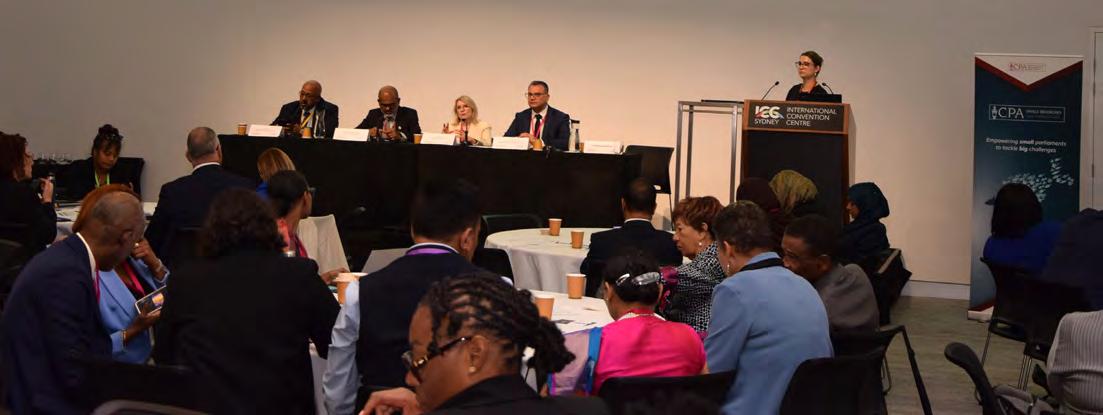
both analogue and digital, to ensure support for an ageing population or citizens who do not want to engage digitally. He also asked how regions can ensure that those citizens are not left behind.
Deputy Elaine Millar responded that maintaining two systems is challenging, however it is also apparent that an ageing population may also gradually lose their ability to use technology over time, and that it is always best to have a way to support everyone in the population whether it be face to face or digitally.
Hon. Bernie Bush responded that it is important to ensure the older population is included and supported through a gradual transition when introducing new digital technologies and services. He also noted the challenges in the Cayman Islands during the uptake of the national ID rollout, such as the fact that there was a lot of workarounds justifying and educating citizens to use the new systems being introduced.
Hon. Ahmed Nazim responded that the government is continually working to promote an enabling environment to encourage all citizens, young and old, to use the online and digital ID platforms for service delivery and a streamlined experience for all.
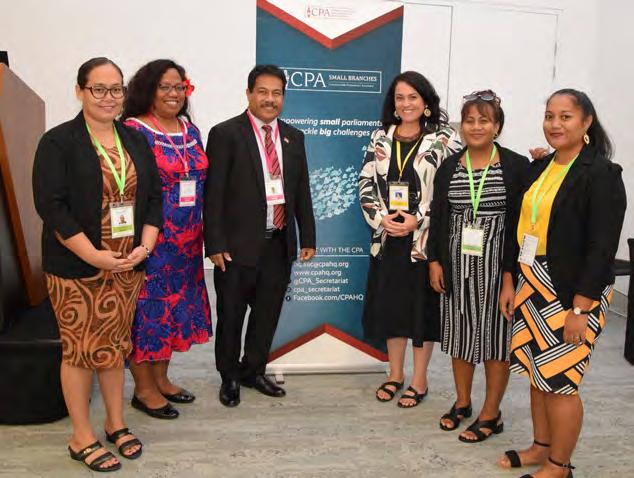
Deputy Tom Coles (Jersey) asked a question about working from home arrangements and strategies to combat the recruitment and retention issues experienced in recent years post pandemic. He also asked whether there were any new initiatives relating to training and upskilling in the professional environment.
In her response to the question, Deputy Elaine Millar acknowledged that the pandemic forced employers and businesses all over the world to be flexible and enable workers to work from home. Through that experience, everyone now has laptops and flexibility in the workplace is now considered valuable and is widely recognised norm. She expressed that nowadays workplaces need to focus on having people in the office to train and ensure a level of competence before they can commence their working from home arrangements. In turn, businesses need to be conscious of this and manage accordingly, ensuring staff are well-trained and supported in the workplace.
Hon. Bernie Bush noted that post-COVID, there were complaints from Government departments and Ministries had requested civil servants to return to the office. He noted that some employees were
“ The session also addressed common innovation barriers and presented realworld examples of successful digital solutions that enhance community services and stimulate economic growth, with special attention given to the importance of these innovations for small jurisdictions.”
seen to be taking advantage of the work from home arrangements, and the government sector has now mandated all employees return to work in the office.
Hon Tauanei Marea MP, (Kiribati) asked a question in relation to the costs associated with implementing digital innovations such as the National ID systems and noted that the CPA should consider providing a standardised software for small island jurisdictions to ensure affordability, instead of each jurisdiction developing their own.
Deputy Elaine Millar responded stating that the cost of the Digital Jersey is partly funded by the government as well as through subscriptions and industry. Hon. Ahmed Nazim noted that in The Maldives the identity platform was funded with the help of the World Bank and added that although a lot of capital is required to develop and roll out a large scale national ID system, it is worth it for the ease of service and convenience to both governments and citizens.
Hon. Bernie Bush responded that the cost to set up digital innovations costs millions of dollars to ensure cyber security measures are met.
Hon Tessie Eria Lambourne MP (Kiribati) requested an amendment to the workshop recommendation, stating that together the CPA Small Branches network should explore and engage with practical strategies to accelerate digital innovations that build resilience and drive economic growth and foster social well-being.
The following recommendation at the workshop was endorsed as follows:
• Together, the CPA Small Branches network and Parliaments of the Commonwealth should explore and engage with practical strategies to accelerate digital innovations that build resilience, drive economic growth and foster social wellbeing.
Panel Chair: Ms Claire Christian, MHK (Isle of Man)
Discussion Leaders:
• Hon. Manzoor Nadir, Speaker of the National Assembly of Guyana
• Hon. Hima Douglas, Speaker of the Niue Assembly
• Hon. Kate Reid, MLA (Northwest Territories)
Moderator: Ms Flora Longley-Cook, CPA Small Branches Coordinator CPA Secretariat
Rapporteur: Caroline Hopley (Parliament of New South Wales)
The workshop focused on how the Commonwealth’s smallest jurisdictions are able to balance tradition and innovation under the Westminster System.
Hon. Manzoor Nadir, Speaker of the National Assembly of Guyana began the discussion by giving an overview of Guyana. He noted that the country is the fastest growing economy in the world today, due to the discovery of oil, which is forecast to grow to 1.3 billion barrels in the next three years. He also noted that Guyana will remain in a zero neutral position until 2050 as the country is made up of 85% forest cover.
In 1980, the Guyanese Constitution introduced a novel system with an Executive President and 65 seats in a unicameral House with a Prime Minister. The President could also appoint four technocrat Ministers and two Parliamentary Secretaries with no voting rights. However, Hon. Manzoor Nadir indicated that many felt that the President had too much power.
In 2000, Guyana underwent major constitutional reform for better scrutiny. This included Members having more oversight of the Executive and the introduction of four sectoral Committees: Social Services, Economic Services, Foreign Relations and Natural Resources. These Committees are chaired alternately, on a yearly basis, by Government and Opposition Members. No more than two Committees are chaired by an Opposition Member or Government Member in any one year. Senior appointments, such as the Police Commissioner and members of the judiciary, must be made by the President in consultation with the Leader of the Opposition to prevent corruption and ensure timeliness.
Hon. Manzoor Nadir outlined the key challenges for Guyana as it moves forward as a small Westminster jurisdiction. First, there are no full-time Parliamentarians. Instead, Parliamentarians juggle fulltime jobs, consultations with constituencies, and attending sittings and meetings.
Second, the Guyana Parliament often has very small majorities, for example, a one seat majority following their last election. Third, there are ongoing challenges to innovation. For example, there is an inability to gain agreement by the Leader of the Opposition since the establishment of the new constitutional structure in 2000, resulting in significant lags in appointment times for the Chancellor and the judiciary.
Fourth, accommodation of Guyana's indigenous population, which comprises 15% of its total population. In 2006, the Amerindian Act was introduced, which recognises and protects the collective rights of Amerindian Villages and Communities, the granting of land to Amerindian Villages and Communities, and the promotion of good governance. Importantly, the Act established the Ministry of Amerindian Affairs, which is made up of indigenous people, appointed on merit and selected by the two major political parties. The Ministry guarantees the principle of free, prior and informed consent to all Amerindian People regarding policies that affect them. In particular, the principle enables recognition and protection of Amerindian lands by setting out the process by which Amerindians can apply for legally protected grants of land which they have traditionally occupied, as well as providing for applications for extensions to Village lands. In addition to these changes, representation of indigenous people in the Guyana Parliament has also increased and is currently close to 30%.
Fifth, the significant challenge of border issues with Venezuela over a disputed territory that makes up one third of the country and has been under Venezuelan law since December 2023. The disputed area contains close to 40,000 indigenous people spread over 300 villages. Hon. Manzoor Nadir noted that the issue is draining financial resources from other areas of the country.
Hon. Kate Reid, MLA (Northwest Territories) presented on how the Legislative Assembly of the Northwest Territories operates using its multilevel governance (MLG) system.
The Northwest Territories uses a unique consensus government system. There are no political parties. Instead, all Members of the Legislative Assembly (MLAs) are independent Members. Following each election, the MLAs elect a Speaker and a Cabinet to set priorities for the parliamentary term. By its nature, the Cabinet is always in minority government. 'Regular Members', who are not part of the Cabinet, act as an unofficial opposition. The Constitution is set out in the federal Northwest Territories Act, which can only be amended by the Parliament of Canada.
The Northwest Territories Government is the product of significant 'devolution'. In 1967, the Capital of the Northwest Territories was established in Yellowknife. In the 1980s, the Canadian Government transferred responsibility of several policy areas to the Northwest Territories Government, including forestry and fire suppression, healthcare services, fisheries, airports and highways. In 2014, after decades of negotiations, the Northwest
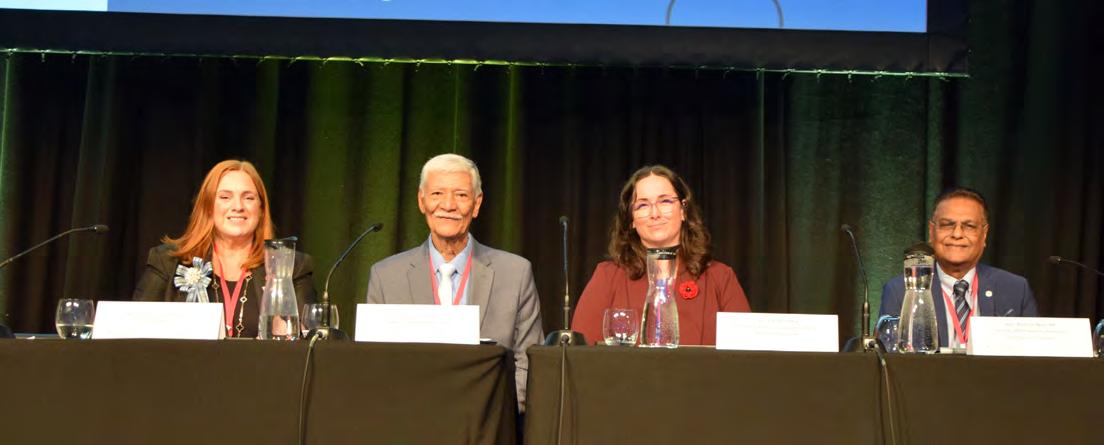
Territories took responsibility for land and resources from the Canadian Government. The final Northwest Territories Lands and Resources Devolution Agreement was signed on 25 June 2013, and the Northwest Territories Devolution Act officially came into force on 1 April 2014.
The Devolution Agreement places more control over land in the hands of northerners. The Northwest Territories Government now amends and replaces mirrored legislation such as the Protected Areas Act, Public Lands Act and acts regarding environmental rights. Through a unique revenue sharing plan, it also ensures that Northwest Territories residents and Aboriginal groups directly benefit from the responsible development of the region's resource potential.
The Devolution Agreement also established an Intergovernmental Council (IGC) allowing collaboration between indigenous governments on land and resources management. In 2020, the IGC entered into a legislative development protocol with the Northwest Territories Government to respect indigenous populations. The Protocol formalises the collaborative development process of Northwest Territories land and resource legislation. The Opposition is encouraged to engage and contribute, and each indigenous organisation determines their level of involvement in the Bills drafted.
To ensure the involvement of indigenous people, co-development of legislation was introduced in 2023, known as the Process Convention. Once a Bill is introduced, a Standing Committee must review it within 180 days in consultation with Indigenous governments, including on the floor of the House during Committee of the Whole review of a Bill. This Process Convention has five guiding principles:
1. decisions are made cooperatively
2. indigenous governments are not stakeholders
3. convention does not undermine self-government
4. doesn't detract from privileges of Committees
5. doesn’t detract from privileges of the Executive or individual Members.
So far, only one piece of legislation has undergone this process, that being the Forest Act, which followed the worst wildfire in the Northwest Territories causing 70% of the Territory to be evacuated. Further expansion for co-development is being considered, particularly for social policy with indigenous governments to modernise the Education Act.
Hon. Kate Reid noted that she hopes that 'devolve and evolve' will continue.
Hon. Hima Douglas, Speaker of the Niue Assembly presented on the challenges of adapting to the Westminster system as the smallest state in the Pacific Region. The Speaker noted that 'The smaller the state, the more messaging you need to make the Westminster System work for you.'
Niue is a self-governing state in free association with New Zealand. This arrangement allows the Niue people to govern themselves and retain New Zealand citizenship, with the New Zealand Government having responsibility for foreign affairs and providing necessary economic assistance. More recently, in recognition of recent times, Niue has been allowed to establish diplomatic relations with a number of other countries.
The basic structure of government in Niue consists of a Head of State, the British monarch, who is represented by the GovernorGeneral of New Zealand, with the Executive function being exercised by the Prime Minister and Cabinet, and a House of elected representatives.
Niue has adapted the Westminster system to accommodate the traditions of its people. For example, the electoral system has been adapted to reflect the customary village-based decision-making process. 14 villages can elect one representative each to the Assembly. The whole electorate then elects 6 additional Members. This gives a total of 20 Members plus the Speaker, who is elected from outside the ranks of the elected Members. In the absence of political parties, the Prime Minister is elected by an absolute majority of the Members, then the Prime Minister selects three Members to be in their Cabinet.
Hon. Hima Douglas emphasised the importance of adapting and integrating traditions and culture (which are a ‘living entity’ in Niue) into governance systems, and explained how this facilitates trust.
Another feature of the Niue system of government is that there are no political parties. Some have been established in the past; however, they were never successful in convincing voters of the benefits of the party system. Instead, voters viewed it as a threat to their direct line of access to the Parliament and decision-making processes.
Niue recently completed a self-assessment against the CPA’s Recommended Benchmarks for Democratic Legislatures to ensure their processes are still relevant after 50 years of self-governance.
Ms Claire Christian MHK (Isle of Man) asked what are the pros and cons of the Westminster System in small legislatures?
Hon. Hima Douglas responded that it can be a challenge to use existing structures as a basis for adapting the Westminster System. Traditional leaders have taken a while to accept that decisions of Parliament need to be agreed to by a vote, rather than by a village consensus.
Hon. Kate Reid agreed and noted that more voices can make it a more complicated process, but also a positive one.
Hon. Manzoor Nadir responded that in the National Assembly of Guyana they experience the challenge of effective parliamentary oversight of the Executive in a Parliament with a slim majority where almost every member of the Executive is a Minister, which results in significant delays to Committee proceedings.
Hon. Robert Cutajar, MP (Malta) asked if the panellists have the same Standing Orders as the UK House of Commons and if the Speaker's rulings referred to other Westminster rulings.
Hon. Kate Reid responded 'yes'. Hon. Hima Douglas responded that the Niue Assembly's Standing Orders are based on the New Zealand Parliament's Standing Orders, but they have been adapted to suit local requirements. Hon. Manzoor Nadir responded that 'yes', the National Assembly of Guyana has similar Standing Orders to Westminster and cooperates with other Caribbean Parliaments in relation to the Speaker's rulings.
“ A workshop participant asked how small jurisdictions can strike a balance between preserving the principles of the Westminster System and innovating to meet contemporary governance challenges? Another workshop participant asked if legislation has ever been prevented from being introduced since adapting to the Westminster System. ”
A workshop participant asked how small jurisdictions can strike a balance between preserving the principles of the Westminster System and innovating to meet contemporary governance challenges?
Another workshop participant from the Isle of Man asked if legislation has ever been prevented from being introduced since adapting to the Westminster System.
Ms Tina Browne, MP (Cook Islands) asked how the panel balances older traditions with newer innovations.
All panel members responded that they did not recall an example where legislation has been blocked from being introduced.
Hon. Hima Douglas responded that where there is a conflict between traditional and new systems, a decision is reached by talking 'until they are exhausted'. Fortunately, this doesn't often happen.
Hon. Manzoor Nadir responded that it can be difficult, especially when Private Members' Bills do not progress. However, there has been little traction for change to an alternative system, such as a Presidential system as in the United States.
Hon. Kate Reid responded that as the Northwest Territories Government has only existed for 57 years, the Legislature is always in question and continually trying to find the best balance between public government and the traditions of its indigenous people.
Hon. Tessie Lambourne, MP (Kiribati) asked whether each villager votes, or does the village as-a-whole make decisions? How is an Opposition determined if there are no parties?
Hon. Hima Douglas responded that the Government is the Cabinet and everybody else either supports the Government or is in Opposition.
A workshop participant asked whether it is a challenge that there is only a thin separation of powers, and how this is dealt with?
Hon. Akierra Missick, MHA (Turks and Caicos Islands) stated that Government Members on the backbench should 'toe the party line', as the only reason they are able to hold their positions is because of their electorate and the party.
Hon. Manzoor Nadir responded that ‘toeing the party line’ or ‘not toeing party line’ has consequences. For most candidates under the Westminster System, the party has all the power. Members have to be exceptional to challenge the existing system.
Hon. Kate Reid responded that she represents her constituents, she does not represent a party. Parties have failed in her Legislature and consensus is rooted in the history of indigenous groups and the importance of talking until you reach agreement.
Hon. Hima Douglas responded that the separation of powers has become blurred over time. However, the current terms of reference for the Niue Assembly's Public Accounts Committee includes the 'proper scrutiny of the Government's budget and holding it to account'.
The recommendation at the workshop was endorsed as follows:
• Parliaments should continue to adapt and innovate to strengthen their governance systems, while ensuring these efforts respect and engage with tradition and local content.


CPA SMALL BRANCHES AND CWP JOINT WORKSHOP
Panel Chair: Senator Hon. Alvina Reynolds, President of the Senate of Saint Lucia
Discussion Leaders:
• Hon. Gervais Henrie, MNA, Deputy Speaker of the National Assembly of Seychelles
• Hon. Dulcie Tei, MP (Tonga)
• Ms Marianne Gilchrist, Strategic Partnerships and Networks Manager, ASU Julie Ann Wrigley Global Futures Laboratory
Moderators: Ms Bénite Dibateza, CWP Coordinator and Ms Flora Longley-Cook, CPA Small Branches Coordinator, CPA Secretariat
Rapporteur: Alex Read (Parliament of New South Wales)
This workshop explored the intersection of gender equality and climate change. While everyone is impacted by climate change, each person faces different impacts based on gender and other social vulnerabilities. Women will experience greater impacts, which will potentially worsen existing gender inequalities. Panellists highlighted how drivers of gender inequality lead to unequal exposure to the effects of the climate crisis and natural hazards. However, they warned against treating women as ‘just victims’ in climate action planning as women can be powerful agents of change.
Panellists from smaller island nations highlighted how gender is factored into their National Climate Plans and policies. Although island nations bear the smallest responsibility for the climate crisis, their nations are already facing the worst impacts of climate change. These nations must continue to advocate for global climate action while progressing their own national plans.
The first panellist, Hon. Gervais Henrie, MNA, Deputy Speaker of the National Assembly of Seychelles provided an introduction to how climate change is impacting The Seychelles and an overview of the initiatives being implemented as part of its climate planning. He explained that The Seychelles is taking committed action in water management, renewable energy and other sustainable practices in response to climate change.
Firstly, he explained that water demand is high and currently unsustainable. The Seychelles has a National Water Policy designed to protect water reserves and manage them for social and environmental benefits that are equitable and sustainable. The Seychelles will need significant funding from international loans to implement their strategies. One of the main projects is raising the height of the main dam by six metres.
Secondly, he outlined the actions that The Seychelles is taking to develop renewable energy resources through installing wind turbines and solar panels. A wind farm was commissioned in 2013 and is operating well. The Public Utilities Corporation is also commissioning a solar farm in line with its energy policy drafted in 2010. The projects were funded through concessional loans with US$8.5 million raised on the international financial market.
The third action he discussed focused on individual responsibility and programmes that promote personal and collective actions. He explained that action needs behavioural change and The Seychelles government developed programmes to educate people to make positive contributions by decreasing their water and energy consumption. In the 2025 budget, significant funds have been allocated for low interest loan schemes for households to improve energy and water efficiency.
The Seychelles also has a gender plan for 2019-2024 which specifically mentions the importance of gender issues. Hon. Gervais
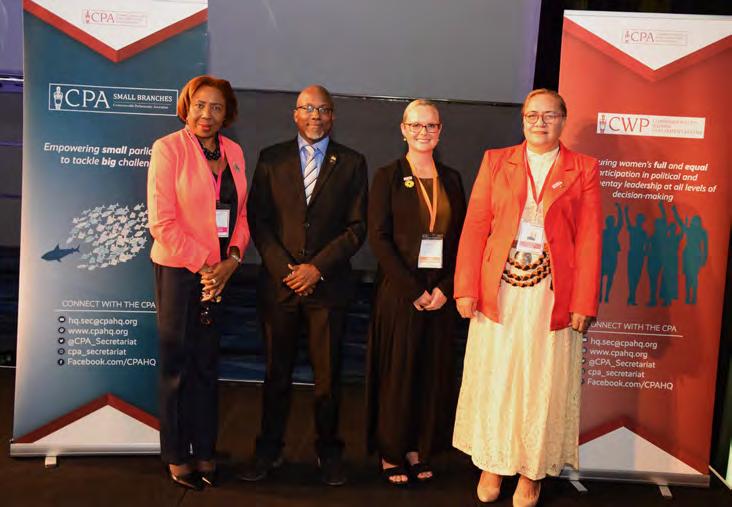
Henrie concluded his presentation by reiterating that we all need to be doing as much as possible as politicians and that the climate should be conserved for future generations.
The second panellist, Marianne Gilchrist, Strategic Partnerships and Networks Manager, ASU Julie Ann Wrigley Global Futures Laboratory, talked about the global perspective on integrating gender issues into climate change planning for countries and the intersection of gender and climate change for small nation states. Marianne Gilchrist explained that women disproportionately experience the impacts of climate change due to structural inequality.
However, she highlighted the importance of women in driving resilience and noted that they are making significant contributions to climate change action. She said that while women are underrepresented in decision making processes, climate action will be more effective if women are more able to contribute to and make decisions about climate change strategies.
She also talked about nations' National Determined Contributions (NDC) and ensuring that gender considerations are incorporated into these. Nations should collect better data about gender and climate change which will inform the way that gender is considered in their national climate plans and strategies.
Universities and scientists can be valuable in providing support to Parliamentarians so they can make informed decisions on climate strategies. Small states have limited access to those resources, so it is important they are supported by research institutions.
Ms Marianne Gilchrist concluded her presentation by identifying key objectives: to mainstream gender in policies, support women entrepreneurs and ensure equal representation of women at decision making levels.
The third panellist, Hon. Dulcie Tei, MP (Tonga) talked about the unique climate change challenges that Tonga is experiencing and the key strategies and policies that it is developing to integrate gender issues into their development objectives. She highlighted that Tonga is the second most ‘at risk’ nation in the world to climate change and the Pacific Region is facing enormous challenges. However, Tonga has made significant steps to recognise how gender plays a role in mediating climate change action.
“ Panellists
from smaller island nations highlighted how gender is factored into their National Climate Plans and policies. Although island nations bear the smallest responsibility for the climate crisis, their nations are already facing the worst impacts of climate change. These nations must continue to advocate for global climate action while progressing their own national plans. ”
Tonga's National Action Plan recognises that climate change impacts a range of demographics, particularly vulnerable populations of people. Those vulnerabilities must be at the centre of climate action. She explained that the Legislative Assembly of Tonga held its first survey on gender and environmental issues in 2022. The survey found that women have distinct and different roles in environmental management but their roles in developing environmental policies is limited. She called for an increase in women's participation in the development of environmental policies. She outlined further examples of work to address the impacts of climate change, such as the 2019-2025 Climate Change Policy, community resilience training, long term recovery programmes and gender and disability inclusion guidelines. Hon. Dulcie Tei concluded her presentation by emphasising that there are opportunities for Parliamentarians to educate each other with their learning.
The fourth panellist was the moderator, Senator Hon. Alvina Reynolds, President of the Senate of Saint Lucia. She provided an overview of the links between gender inequality and sustainable development and highlighted the commitments that Saint Lucia has made regarding gender in its National Climate Planning. She talked about how they are implementing those commitments and noted Saint Lucia's unique position and its vulnerabilities to climate change.
She then outlined the key instruments and legislative frameworks that Saint Lucia has developed to address climate change and gender issues. Their National Adaptation Plan includes a range of measures to address climate change, encourage sustainable development and address gender issues. This Plan guides implementation of programmes based on a coordinated and participatory approach. Section 4.9 of the Plan sets out gender considerations and calls for mainstreaming of gender in all climate change action policies.
Major achievements of the National Adaptation Plan include: waste to product pilot programmes supporting public awareness of waste, reforestation and rehabilitation of lands, improvements to agricultural productivity, improvements in water management and climate resilient infrastructure.
Senator Hon. Alvina Reynolds concluded her presentation by emphasising that nations must follow through with their commitments to provide financial support to other countries for climate change measures. Small developing nations are resilient and will continue to be represented and advocate on the global scale.
The question-and-answer session following the panel presentations included a discussion on holding governments and corporations accountable and the importance of education and other social policies.
Hon. Akierra Missick, MHA (Turks and Caicos Islands) asked how can Members of Parliament hold Executive bodies accountable for direct investment for islands and countries without harming their fragile ecosystems? As most development is funded by foreign countries, how can smaller nations hold governments accountable to protect the environment?
Hon. Gervais Henrie answered that Parliamentarians must take this risk seriously and ensure they understand the terms of
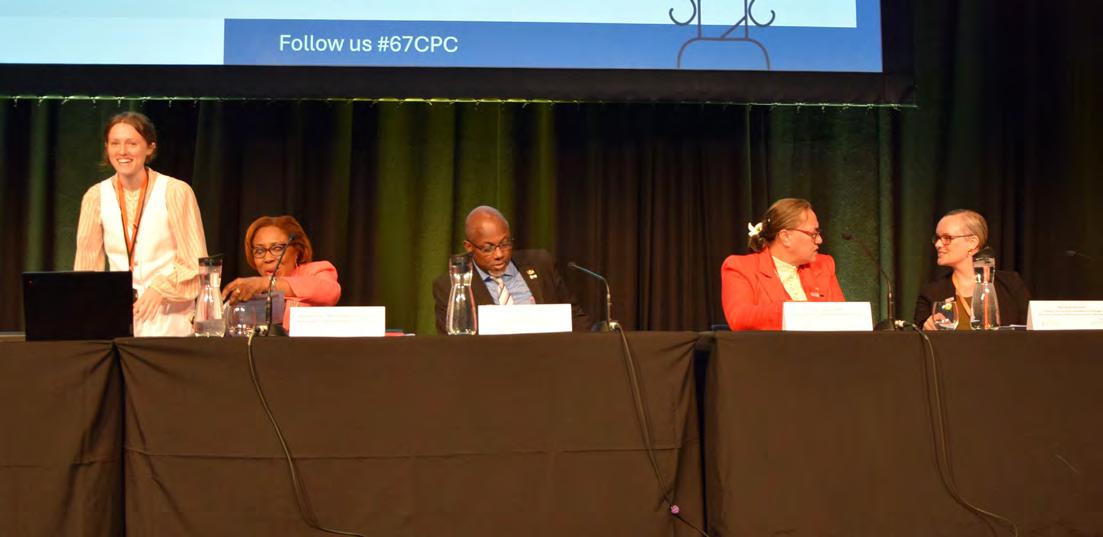
investments. It is important to have relationships with the Executive to hold them accountable and remain informed about projects. They should also be mindful of personal ethics and ensure integrity in decision making. Hon. Dulcie Tei discussed the importance of Standing Committees to scrutinise the Executive and hold them accountable to the decisions they make. She also reiterated the importance of personal relationships with Members of the Cabinet. Senator Hon. Alvina Reynolds suggested that if formal accountability approaches aren't successful then Parliamentarians can try working with the media, challenging the government to release information and otherwise do whatever is necessary.
Hon. Kate Reid, MLA (Northwest Territories) asked how do Parliaments keep corporations accountable for climate change action, particularly as they are responsible for the majority of greenhouse emissions? Marianne Gilchrist answered that legislative interventions are needed to ensure corporations are accountable. Hon. Gervais Henrie answered by talking about the importance of corporate social responsibility. Governments should continue to develop policies that make it attractive for corporations to take action.
Senator Hon. Beth Syengo (Kenya) asked about whether there is such a thing as climate democracy? Marianne Gilchrist answered by giving examples of how Kenya has mainstreamed gender in its climate change policies. She said there is no climate change democracy as those most impacted by climate change are often the least responsible. Hon. Gervais Henrie said that it is an ongoing battle to get climate change democracy. Countries need to keep advocating to have their voices heard. He also suggested that bigger countries need to invest but smaller nations can't afford to wait for help to come. One initiative that The Seychelles is employing is imposing a ‘bed tax’ for tourists to help raise revenue that can be invested in infrastructure projects. Hon. Dulcie Tei noted the importance of forums like the CPA and the UN as platforms for countries most impacted by climate change to cooperate and
advocate for action. Senator Hon. Alvina Reynolds talked about the importance of education and noted examples of programmes that are important to addressing gender equity and climate change. She encouraged Parliamentarians to use their voice to discuss the impacts and experiences of women.
Hon. Akierra Missik, MHA (Turks and Caicos Islands) asked a question about the economic advantages of planting trees. She also asked about education in changing mindsets and about how to incorporate childcare, aged care and a Universal Basic Income as climate strategies. Senator Hon. Alvina Reynolds answered that it is important to work with women who are supporting vulnerable women such as pregnant women, childcare workers and aged care workers. She said a multipronged approach is needed to care for those women to support their personal health. Hon. Dulcie Tei talked about examples in Tonga of programmes for women and children such as education and support programs supported by the Ministry.
Senator Hon. Dr Dessima Williams, President of the Senate of Grenada asked a question about climate planning and for more examples of successful scalable actions so obligations to the international community can be fulfilled. She commented that legislators from the global north should pay attention to companies that operate in the global south and support them to comply with environmental policies. Senator Hon. Alvina Reynolds said that time had run out to answer this question but that panellists had given some examples of scalable action.
The wording of the workshop recommendation was then discussed in some detail with suggestions from Grenada, Guyana, Kenya, Western Cape, Belize and Canada Federal.
The following recommendation at the workshop was endorsed by participants:
• Parliamentarians should advocate for the further mainstreaming of gender into National Climate Plans.
PARLIAMENTARY REPORTS AND THIRD READINGS FROM PARLIAMENTS AROUND THE COMMONWEALTH
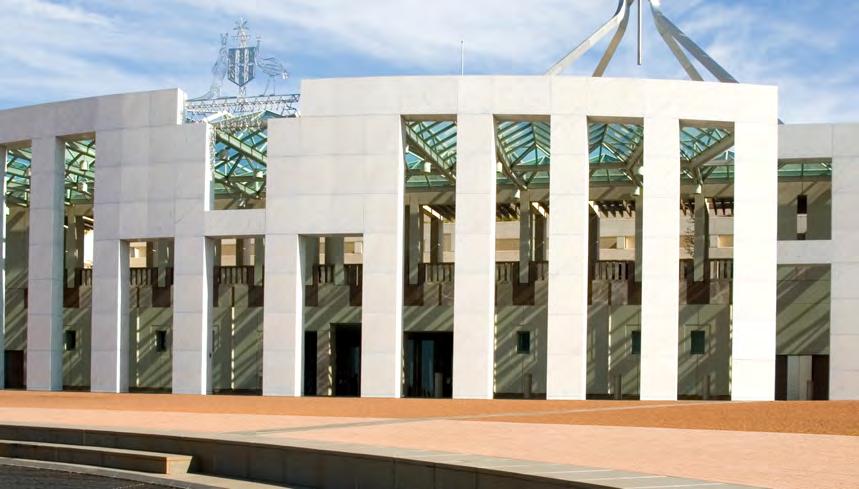
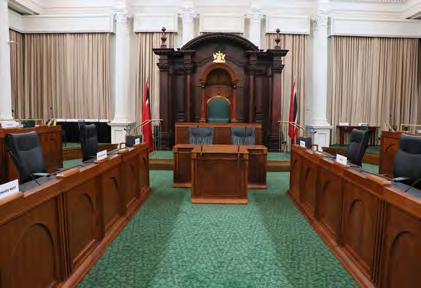
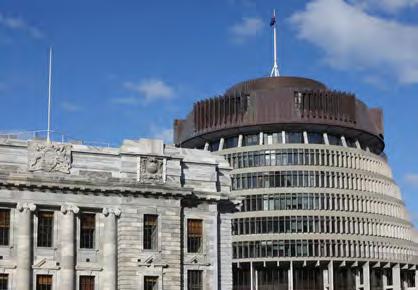
Online Safety Bill and last sittings of the year Page 395
Planning a Regional
Parliament Sitting in Gulu City Page 400
Finance Minister presents 2025 Budget Page 404
Changes in the Senate and the House of Commons Page 399
Budget measures and 25 years of Westminster Hall debates Page 402
THIRD READING REPORTS
• Australia Federal Page 397 New Zealand Page 405
BOOK REVIEW
Subordinate Legislation in India Parliament Page 407
Parliamentary Report by Fleur Hall, Parliament of Australia.
The final sitting fortnight for the Parliament of Australia for the year commenced on 18 November 2024. During the fortnight, valedictory remarks were made in the House of Representatives by the Member for Higgins, Dr Michelle Ananda-Rajah, MP, the Member for Forrest, Hon. Nola Marino, MP, the Member for Parkes, Hon. Mark Coulton, MP, the Member for Grey, Mr Rowan Ramsey, MP, the Member for Maribyrnong, Hon. Bill Shorten, MP, the Member for McPherson, Hon. Karen Andrews, MP, the Member for Lyons, Mr Brian Mitchell, MP, the Member for Lyne, Hon. Dr David Gillespie, MP and the Member for Leichhardt, Hon. Warren Entsch, MP. Several other Members have also announced they will not be contesting next year’s federal election.
In the Senate, Senator Hon. Simon Birmingham (South Australia); Senator Catryna Bilyk (Tasmania); Senator Louise Pratt (Western Australia); and Senator Hon. Linda Reynolds CSC (Western Australia) have announced that they are retiring. Senator Anne Urquhart (Tasmania) has announced she is planning to contest, at the upcoming federal election, the seat of Braddon (in the state of Tasmania) in the House of Representatives.
A large volume of legislation was considered during the fortnight – 45 Parliamentary Bills in total passed both Houses in the final week. The Senate sat until 11.18 pm on the final sitting Thursday, having earlier agreed to a ‘guillotine’
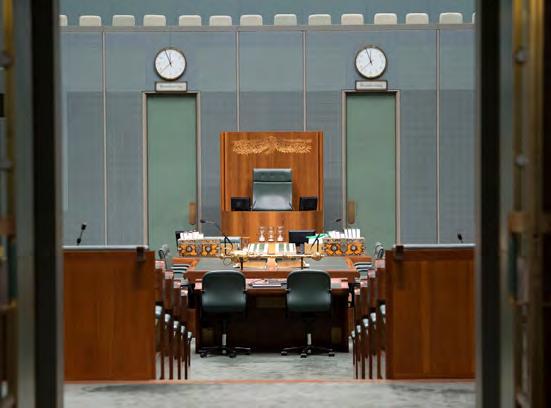
motion which enabled legislation to be passed with minimal or no debate. The House of Representatives was suspended at 7.01 pm, and resumed the following morning, Friday 29 November, at 7.00 am, to consider messages from the Senate. Eleven messages were individually reported, returning House Bills with amendments, to which the House agreed in all cases. In relation to the Treasury Laws Amendment (Responsible Buy Now Pay Later and Other Measures) Bill 2024, the Speaker, Hon. Milton Dick, MP, made a statement drawing to the attention of the House that the Senate amendments conveyed by the message raised an important constitutional principle. He told the House that his advice was ‘that Senate amendments (13) and (14) increase a “charge or burden on the people” and are contrary to the requirements of section 53 of the Constitution’ and that, as such, these amendments should have been made to the House as requested amendments. The Speaker then said he would leave it in the hands of the House as to how they wished to proceed. The Leader of the House, Hon. Tony Burke, MP, moved that the House endorse the statement of the Speaker in relation to the constitutional questions raised by the Senate message in respect of the Bill; that the House, having regard to the public interest in the early enactment of the Bill, refrain from the determination of its constitutional rights in respect of the matter; and that the House consider the amendments immediately. This motion was agreed to, and on a subsequent motion of Mr Burke, the amendments were agreed to, on the voices.
A further 21 messages from the Senate were reported returning House Bills without amendments or requests. The House then adjourned until 12 noon on Tuesday 4 February 2025.
On Thursday 21 November 2024, the Online Safety Amendment (Social Media Minimum Age) Bill 2024 was introduced in the House of Representatives by the Minister for Communications, Hon. Michelle Rowland, MP
The Bill amends the Online Safety Act 2021 by introducing a minimum age of 16 to have an account on age-restricted social media platforms, which the Minister said was aimed at ‘protecting young Australians at a critical stage of their development.’ She explained that the Bill ‘establishes an obligation on social media platforms to take reasonable steps to prevent agerestricted users from having an account.’ The Minister said that Bill was intended to enable young people to use the internet in a safer and more positive way, and would ‘signal a set of normative values that support parents, educators and society more broadly.’
The Bill was referred to the Senate Environment and Communications Legislation Committee on 21 November. The closing date for submissions was the following day, 22 November, with a single public hearing held on 25 November. In the Committee’s report, dated 26 November 2024, the Chair,
Senator Karen Grogan (Australian Labor Party), noted that ‘the evidence presented to the inquiry, including findings from the eSafety Commissioner, is clear: there is no robust evidence that social media is safe for children under 16, and significant data points to the harms it can cause. Adolescence is a time of critical development, and the fact that social media introduces or increases risks of harm from cyberbullying, sextortion, predatory behaviours, misogynism and concentration difficulties must be addressed.’
Senator Grogan further added that ‘the Senate Inquiry process, though brief, was targeted and brought together a diversity of perspectives. It has also leveraged the work of other inquiries such as that of the Joint Select Committee on Social Media and Australian Society.’
By Friday 29 November, the Bill had passed both Houses, after the House agreed to amendments made by the Senate the previous evening. The legislation, which has received international media coverage as a world-first, provides for an implementation timeframe of 12 months.
On 17 September 2024, the Parliamentary Workplace Support Service Amendment (Independent Parliamentary Standards Commission) Bill 2024 received royal assent. Many Parliamentarians contributed to the Second Reading debate on the Bill – details are in this issue’s Third Reading report from Australia.
The Act establishes the Independent Parliamentary Standards Commission (IPSC) as a workplace investigation framework for Australian Federal parliamentary workplaces, pursuant to a recommendation made by the Australian Human Rights Commission in Set the Standard, the report on the Independent Review into Australian Federal Parliamentary Workplaces, that was established in 2021. The IPSC will enforce the behaviour standards and codes for Parliamentarians and their staff, and for Australian Federal parliamentary workplaces, which were endorsed by both Houses of Parliament in February 2023.
The Act also provides for the review of the behaviour codes within one year of the first session of each new Parliament. The IPSC commenced on 1 October.
The UK Parliament Study Programme 2024 (UKPSP), hosted by the International Parliamentary Relations Office in the UK House of Commons took place throughout the year. The UKPSP brings together parliamentary staff from around the world to learn about the procedures and practices of the UK Parliament and to share knowledge, ideas and experiences of parliamentary processes and administration.
During 2024, parliamentary officers from Australia, Canada, France, Germany, India, Ireland, Mongolia and Sierra Leone
participated in five online meetings, presented by staff from the UK House of Commons and House of Lords, on the following topics:
• Introduction to the programme and the UK Parliament.
• Supporting the UK House of Commons Chamber.
• Scrutiny in Parliament.
• Engagement and parliamentary outreach.
• Culture in Parliament.
The online meetings were followed by a five-day in-person visit to Westminster in the last week of October 2024. During the visit, participants saw both Houses of the UK Parliament at work, and had meetings with the Speaker of the UK House of Commons, Rt Hon. Sir Lindsay Hoyle, MP, as well as with Heads of Offices and other UK colleagues. Participants were also taken on tours of the Palace of Westminster and watched Prime Minister’s Question Time from the UK House of Commons Gallery. On the final day of the programme, a concluding seminar was held, in which participants each gave a short presentation to the group, and UK colleagues, about an aspect of their own Legislature’s work, reflecting an element of common interest. Details about the UK Parliament study programmes on offer for 2025 can be found at: https://www.parliament.uk/ business/parliaments-international-work/ new-parliaments-international-work/ uk-parliament-study-programme/.
The annual conference of the Australasian Study of Parliament Group (ASPG) was hosted by the New Zealand Parliament from 2 to 4 October 2024. The ASPG annual conference brings together those with an interest in Parliament and parliamentary affairs, such as parliamentary officers, academics, staff and former and current Members of Parliament, and the media. The theme for this year’s conference was ‘Te Manawaroatanga o Pāremata i tea o Hurihuri – Parliament’s Resilience in a Changing World’. Conference attendees were warmly welcomed with a mihi whakatu (a speech of welcome), conducted by the New Zealand Parliament’s principal cultural adviser, Mr Kura Moeahu, after which the ASPG
Executive Committee and Annual General meetings were held. Over the course of the two days, there were many interesting presentations and panel sessions, grouped under discussion topics including ‘Transforming parliamentary practice’; ‘Parliamentary preparedness’; ‘Resilience – challenges and opportunities’ and ‘Safeguarding Members and staff’.
Established in 1978, the ASPG is a politically non-partisan body, focused on encouraging and stimulating research, writing, teaching and discussion about parliamentary institutions, particularly those of Australia, New Zealand and the South Pacific. The ASPG has a main Executive body and has established Chapters in all States and Territories of Australia and in New Zealand. The official journal of the ASPG, the Australasian Parliamentary Review, is available at https://www.aspg. org.au/a-p-r-journals-2/. Next year’s conference will be held in Adelaide, South Australia, from 1 to 3 October 2025. The topic is ‘Modern Parliaments: Changing Roles, Expectations and Challenges’.
On 19 October 2024, electors in the five electorates of the Australian Capital Territory voted in the ACT election. The Chief Minister, Hon. Andrew Barr, MLA claimed victory for the incumbent ACT Labor Party for a record seventh consecutive term, describing it as an ‘extraordinary achievement.’
Final results took some time to come in, but the numbers in the 25-seat Legislative Assembly are ACT Labor, which has formed a minority government: 10 seats; Canberra Liberals: nine; ACT Greens: four. Two independents were also elected: Mr Thomas Emerson and Ms Fiona Carrick. Unlike the previous Assembly, the ACT Greens have announced they will sit on the crossbench rather than enter into a powersharing arrangement with Labor.
The Leader of the ACT Liberals, Ms Elizabeth Lee, MLA, offered her congratulations to Labor, and observed that ‘being a Liberal in Canberra is hard.’ On 31 October, Ms Leanne Castley, MLA was elected as leader of the Canberra Liberals,
and Mr Jeremy Hanson, MLA was elected as deputy. When the 11th Legislative Assembly of the Australian Capital Territory met on 6 November 2024, Mr Mark Parton, MLA was elected as Speaker in succession to Ms Joy Burch
Queensland’s general election was held on 26 October 2024, in which 93 Members, representing 93 electorates, were elected to the Queensland Parliament.
The Premier, Hon. Steven Miles, MP (Australian Labor Party), who had been in the job for less than a year, had sought to secure a fourth consecutive term in office for Labor. However, Mr David Crisafulli, MP (Liberal National Party of Queensland) led his party to a comfortable victory, with a campaign focusing on youth crime. Mr Crisafulli said that in voting for a majority LNP government, had voted for ‘hope over fear’, promising to govern with ‘humility and decency and vision and tenacity.’ Mr Miles, conceding defeat, said ‘it was always going to be a challenging election for Labor’ but that he had no regrets about the campaign or his previous ten months as Premier.
The final results were: Liberal National Party of Queensland: 52; Australian Labor Party (State of Queensland): 36; Katter’s Australia Party: 3; Queensland Greens: 1; Independent: 1. Mr Crisafulli was sworn in as Premier on 28 October and Hon. Pat Weir, MP was elected unopposed as the Speaker of the Parliament.
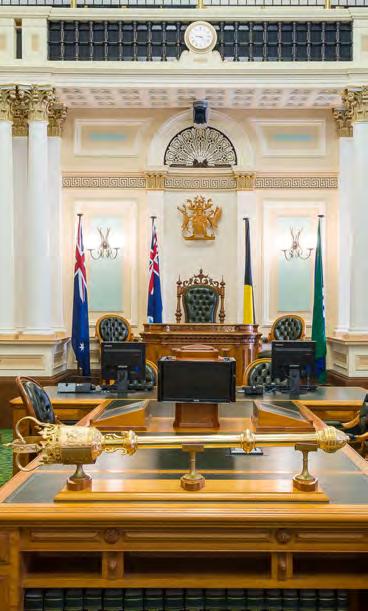
Parliamentary Workplace Support Service Amendment (Independent Parliamentary Standards Commission) Bill 2024
The Parliamentary Workplace Support Service Amendment (Independent Parliamentary Standards Commission) Bill 2024 was introduced in the Australian House of Representatives on 21 August 2024. It gives effect to recommendations of the Australian Human Rights Commission’s ‘Set the Standard: Report on the Independent Review into Commonwealth (Australian Federal) Parliamentary Workplaces’ by amending the Parliamentary Workplace Support Service Act 2023 to establish the:
• Independent Parliamentary Standards Commission (IPSC) as a workplace investigation framework for Commonwealth (Australian Federal) parliamentary workplaces.
• Parliamentary Joint Committee on Parliamentary Standards to provide oversight of the IPSC. The Bill also amends five other Acts consequential on the establishment of the IPSC.
The Assistant Minister to the Prime Minister, Hon. Patrick Gorman, MP (Australian Labor Party), observed that the Parliamentary Workplace Support Service (PWSS) commenced as a statutory agency on 1 October 2023 to provide centralised human resources support to Parliamentarians and their staff and to provide a confidential support service and a complaint resolution service services to a broader cohort of people who work in the Parliament. The Assistant Minister explained that the PWSS’s interim function to undertake workplace investigations would sunset on 1 October 2025, and would be replaced by the IPSC, established by this Bill. The Assistant Minister said that the IPSC would enforce the Behaviour Codes for Parliamentarians and their staff, and the Behaviour Standards for the Commonwealth (Australian Federal) Parliamentary Workplaces, which were endorsed by both Houses of Parliament in February 2023. Where expected standards of conduct have not been upheld, he said, the IPSC would be able to impose or recommend
sanctions set out in the Bill, or to make a referral for further action in the case of Parliamentarians. Mr Gorman said that enforcement of the Codes would ‘improve safety and wellbeing across Commonwealth (Australian Federal) parliamentary workplaces.’
The Member for Wentworth, Ms Allegra Spender, MP (Independent), described the Bill as ‘a critical step forward in addressing misconduct in parliamentary workplaces’ [which] ‘sends a clear message that inappropriate behaviour will no longer be tolerated and that those who engage in misconduct will be held accountable’. However, Ms Spender argued that the Bill had limitations. She said one was that there would be no mechanism for the IPSC to recommend sanctions against Parliamentarians for the most serious breaches of the code of conduct, which would instead be referred to the Privileges Committee, which would in turn then recommend a sanction to Parliament. Ms Spender said that this ‘creates a risk that the most serious offences could go unpunished or indeed be covered up for political expediency’. Another limitation, she said, was that the Bill ‘does not address conduct within the Parliamentary Chamber’, and she cited Question Time as a time when conduct falls short of standards.
During consideration in detail, seven Government amendments agreed to, and the Bill was read a third time on 11 September 2024.
The Bill was introduced in the Australian Senate the next day. In her contribution, the Leader of the Australian Greens in the Senate, Senator Larissa Waters, said that the Codes are ‘not as strong as the Greens would have liked them to be and pushed for them to be … the Codes need to be strengthened. And until today there’s been no enforcement mechanism for them. So we do welcome the fact that there will now be sanctions for badly behaved Parliamentarians who act in a way that constitutes serious misconduct, harassment or bullying, but the sanctions are not as strong as they should be. They’re less transparent than they should be.’
The Deputy Leader of the Nationals in the Senate, Senator Perin Davey, congratulated the Government on the work done to implement the Set the
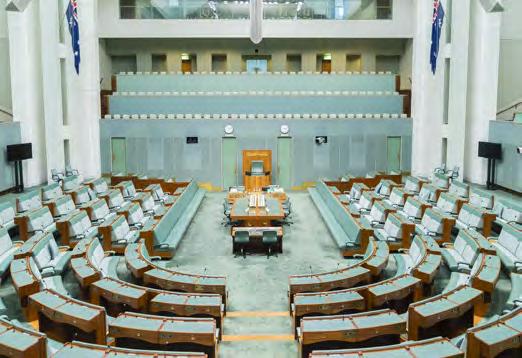
Standard report, noting that there ‘has been a bipartisan approach to ensuring that we make this place a safer and more respectful place to work.’ Senator Davey said that ‘this has been a long and drawn-out process, but I’m comfortable that we have taken the time to make sure we now have a process that can be implemented and that provides procedural fairness to both complainants and respondents.’
Senator Hon. Jane Hume (Liberal Party of Australia) told the Senate that it had been ‘noted in the other place that this Bill is not perfect. That’s not unusual for any legislative solution to a human problem. Yet, unlike any other Bill the chambers debate, this Bill is less about our alignment or our party; it has significant implications for us all as individual Parliamentarians. It’s about how we as Parliamentarians carry and conduct ourselves in our roles and go about the business of running the small businesses that are our offices. It’s about our staff and our expectations of them. Indeed, it’s about the standards of behaviour expected from everyone, from the Prime Minister right through to journalists, security guards, lobbyists and visitors.’ Senator Hume concluded her remarks by saying that she believed that the Bill ‘manages to get the balance right. We will no longer decide whether our conduct in our workplaces was a breach of community expectations. That will now be done by an independent commission. That is a very big change for this place. But we will determine what happens when those breaches of the standards occur, and the electorate will expect that we deal with those breaches appropriately.’
The Bill was passed by the Senate later that day. It received royal assent on 17 September 2024.
Introduced in the House of Representatives on 16 November 2023, with the Australian Naval Nuclear Power Safety (Transitional Provisions) Bill 2023, the Bill establishes a framework to regulate the nuclear safety aspects of Australia’s nuclear-powered submarine enterprise. The Bill was referred to the Senate Foreign Affairs, Defence and Trade Legislation Committee, which tabled its final report on 13 May 2024. The Committee recommended that, after due consideration by the Government of its seven recommendations, the Bill be passed.
The Deputy Prime Minister and Minister for Defence, Hon. Richard Marles, MP (Australian Labor Party), told the House that it was ‘the second legislative step in support of Australia’s acquisition of conventionally armed, nuclear-powered submarines.’ Mr Marles said that ‘deciding to acquire conventionally armed, nuclearpowered submarines is a hard choice, but it is actually a clear choice’, arguing that ‘to maintain a leading-edge capability in the future, then we simply have to take the step of nuclear propulsion.’ He said that the activities that the Bill will regulate include:
• Facility activities - that relate to particular facilities in Australia that are relevant to AUKUS submarines.
• Submarine activities - that relate to AUKUS submarines themselves.
• Material activities - that relate to certain material, plant and equipment that emit or produce radiation that come from (or are for use on) AUKUS submarines.
Mr Marles also said that under the Bill, regulated activities can only occur within ‘designated zones’, with two zones to be designated initially: one at HMAS Stirling in Western Australia and another at the Osborne Naval Shipyard in South Australia. He concluded by saying that, consistent with the first tranche of AUKUS related legislation that passed the Parliament earlier this year, the Bill would not affect the moratorium on civil nuclear power in Australia.
The Shadow Minister for Defence, Hon. Andrew Hastie, MP (Liberal Party of Australia)
described the Bill as enabling a ‘critical’ part of AUKUS, which he said is ‘a multigenerational nation-building task that has bipartisan support in the House.’ He told the House that ‘by the early 2030s Australia needs to be sovereign ready. We need to be able to own, operate and maintain a nuclear reactor which will sit inside the Virginia class submarines that we’re purchasing from the United States, and we also need to be able to operate our own submarines, SSN-AUKUS, which will be produced here in Australia. Speed is of the essence, so we support this Bill.’
The Member for Kooyong, Dr Monique Ryan, MP (Independent), said that she was ‘concerned that this Parliament has not had an opportunity for a detailed and transparent inquiry into AUKUS - into its rationale, its costs and the implications for nuclear proliferation for Australia, or even just related to the questions related to safe handling and storage of nuclear waste.’ She added that another concern was that ‘all the oversight and regulation of AUKUS will be through Defence, which does, after all, have a very significant stake in its success. An independent overseer of the safety aspects of AUKUS - such as ARPANSA, which has decades of relevant expertise and experience but no conflict of interest - might well be more appropriate.’
The House agreed to 27 Government amendments, which Mr Marles said addressed the recommendations of the Senate Foreign Affairs, Defence and Trade Legislation Committee, adding that the Government also ‘initiated amendments strengthening the new regulatory scheme, reflecting additional advice and recommendations from experts and stakeholders since the introduction of the legislation in November last year these amendments underscore the Government’s commitment to ensuring the Bills establish a robust, effective regulatory framework to maintain the highest standard of nuclear safety for decades to come.’ The Bill, as amended, passed the House on 12 September.
The Bill was introduced in the Australian Senate on 16 September. On 10 October, the Senate agreed to a guillotine motion which had the effect of removing Senators’ ability to contribute to the Second Reading debate on the Bill, and limiting the ability for Senators to move Committee of the Whole amendments without leave. The Bill passed the Senate that day, and received royal assent on 24 October 2024.
Four new Senators were appointed to the Senate of Canada in recent months. Two of these Senators, Hon. Daryl Fridhandler and Hon. Kristopher Wells were appointed on 31 August 2024 to represent the Province of Alberta. Prior to joining the Senate, Hon. Daryl Fridhandler worked as a corporate lawyer and was active on the boards of directors of numerous private and public companies and non-profit organisations. He joined the Progressive Senate Group on 22 October 2024. As an educator and advocate for the 2SLGBTQI+ community, Hon. Kristopher Wells spent his career promoting human rights. He currently sits as an unaffiliated Senator.
On 10 September 2024, Hon. Pierre Moreau was appointed to represent the senatorial division of The Laurentides, in the Province of Québec. He spent the first part of his career working as a lawyer, specialising in public and administrative law. In 2003, he entered political life, serving as a Member of the National Assembly of Québec until 2018. During that time, he held a variety of cabinet positions, including Minister of Transport, President of the Treasury Board and Minister of Energy and Natural Resources. On 21 November 2024, he joined the Progressive Senate Group.
On 25 September 2024, Hon. Suze Youance was appointed to represent the senatorial division of Lauzon, also in the Province of Québec. Born in Haiti, she moved to Canada in 2006, where she worked as an engineer and a teacher, as well as serving on the board of directors of several non-profit organisations in Montréal. On 27 November 2024, she joined the Independent Senators Group. Four Senators retired or stepped down from the Senate over the same period. On 12 October 2024, Hon. Diane Bellemare retired from the Senate after having represented the senatorial division of Alma, in the Province of Québec, since 2012. Over the course of her career, she served on many Standing Senate Committees and, between 2016 and 2019, she was the Legislative Deputy to the Government Representative in the Senate. At the time of her retirement, she was a member of the Progressive Senate Group.
Parliamentary Report by Gabrielle de Billy Brown, Parliament of Canada.
On 20 October 2024, Hon. Frances Lankin stepped down from the Senate, having represented the Province of Ontario since 2016. During her time in Parliament, she held several roles, including Government Liaison in the Senate and Vice-Chair of the Standing Committee on Rules, Procedures and the Rights of Parliament. She was also a member of the National Security and Intelligence Committee of Parliamentarians. At the time of her retirement, she was a member of the Independent Senators Group.
On 4 November 2024, Hon. Ratna Omidvar retired from the Senate, having first been appointed to represent the Province of Ontario in 2016. Over the course of the 44th Parliament, she was an active member of nine Standing Senate Committees and chaired the Standing Senate Committee on Social Affairs, Science and Technology. At the time of her retirement, she was a member of the Independent Senators Group.
On 18 November 2024, Hon. Jane Cordy stepped down from the Senate of Canada, having represented the Province of Nova Scotia since 2000. She was the third woman Senator to have represented Nova Scotia since Confederation. At the time of her retirement, she was a member of the Independent Senators Group.
Some Senators changed affiliation in recent months. On 16 October 2024, Hon. Victor Boudreau joined the Independent Senators Groups, having sat as an unaffiliated Senator since his appointment in June 2024. On 25 October 2024, Hon. Clément Gignac left the Progressive Senate Group to join the Canadian Senators Group. The same day, Hon. Paulette Senior joined the Independent Senators Group, having sat as an unaffiliated Senator since her appointment in 2023. On 20 November 2024, Hon. Tracy Muggli joined the Progressive Senate Group, having sat as an unaffiliated Senator since her appointment.
In addition, on 5 September 2024, Hon. Iris G. Petten was named Government Liaison in the Senate and, as such, is no longer a member of the Independent Senators Group. First appointed to the Senate of
Canada in 2023, Senator Petten represents the Province of Newfoundland and Labrador.
As of 2 December 2024, the standings in the Senate were: Independent Senators Group 42, Canadian Senators Group 19, Progressive Senate Group 14, Conservative Party of Canada 12, and non affiliated 10. Eight seats were vacant.
Two by-elections occurred on 16 September 2024. The first was in the constituency of LaSalle-Émard-Verdun, in the Province of Québec. The seat, which had been vacant since 31 January 2024, was won by Louis Philippe Sauvé, MP. A member of the Bloc Québécois, he worked in communications prior to being elected. He had also previously served as Chief of Staff to the leader of his party and as a parliamentary staff to Marilène Gill, MP
The second by-election was in the constituency of Elmwood-Transcona, in the Province of Manitoba. The Member for the New Democratic Party of Canada, Leila Dance, MP won the seat, which had been vacant since 31 March 2024. Prior to her election to the House of Commons, she worked in the non-profit sector, supporting the town of Transcona’s local business improvement zone as well as various charities.
On 18 September 2024, Hon. Pablo Rodriguez, MP left the Liberal Party of
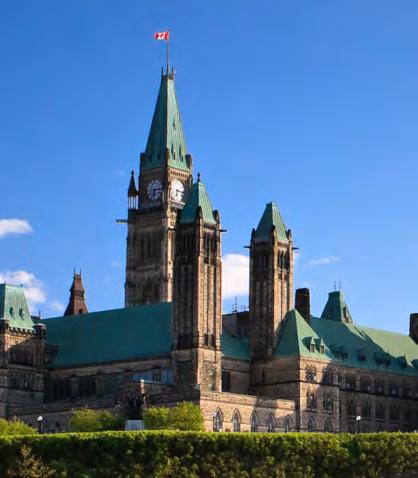
Canada to sit as an Independent in the House of Commons. He has been the Member of Parliament for the constituency of Honoré-Mercier, in the Province of Québec, twice: once between 2006 and 2011, and a second time since 2015.
On 31 August 2024, Andy Fillmore, MP, stepped down from his role as a Member of Parliament. Mr Fillmore had represented the constituency of Halifax in the Province of Nova Scotia since 2015. He was a member of the Liberal Party of Canada. A by-election has not yet been announced. After leaving the House of Commons, Mr Fillmore contested and won the mayoral election for the Halifax Regional Municipality.
A by-election for the constituency of Cloverdale-Langley City, in the Province of British Columbia, has been called for 16 December 2024. It has been vacant since 31 March 2024. The standings in the House of Commons as of 2 December 2024 were: Liberal Party of Canada 153, Conservative Party of Canada 119, Bloc Québécois 33, New Democratic Party 25, Independent 4 and Green Party of Canada 2. Two seats were vacant.
On 10 October 2024, Bill C 64, An Act respecting pharmacare, received Royal Assent. It was sponsored by the Minister of Health, Hon. Mark Holland, MP. The Bill sets out the principles which the Minister of Health must consider when
working towards the implementation of a national, universal pharmacare programme. While Canada has a universal health care system, it does not currently include prescription drug coverage.
The renewal of the mandates of two Agents of Parliament was announced in October 2024. Firstly, Nancy Bélanger was reappointed as Commissioner of Lobbying for a second seven-year mandate effective 30 December 2024. Secondly, Caroline Maynard was reappointed as Information Commissioner, effective 1 March 2025. Agents of Parliament are independent from the government and report directly to the Parliament of Canada.
On 4 November 2024, Senator Hon. Calvin Murray Sinclair passed away. Anishinaabe and a member of the Peguis First Nation, Senator Sinclair held his seat in the Senate from 2016 to 2021. Prior to being nominated to the Senate, he worked as a lawyer and then as a judge. He was the first Indigenous judge to be appointed to the Court of King’s Bench (then Queen’s Bench), the highest trial court in Manitoba. Among other accomplishments, he served as Chair of the Indian Residential Schools Truth and Reconciliation Commission, which operated between 2009 and 2015.
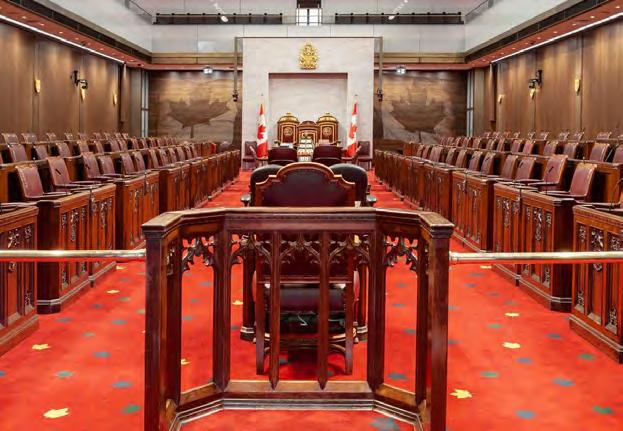
When the Speaker, Hon. Anita Annet Among, announced that the Parliament of Uganda would hold regional sittings starting with Northern Uganda, she set in motion a series of activities in preparation for the same scheduled for mid-July 2024. Northern Uganda is one of the four regions of Uganda and was much affected by the war between the Lord’s Resistance Army and government in the1990s. Gulu City is over 300km by road from Kampala, the capital.
The three sittings were scheduled on consecutive days starting on Wednesday 28 August 2024, having been moved from July, as budgetary and procurement requirements would be difficult to meet just at the start of the new financial year.
At Parliament House, meetings commenced in earnest in May 2024. On behalf of the Clerk to the Parliament of Uganda, the Deputy Clerk, Mr Henry Waisswa, called the first meeting of what became the main Organising Committee. This Committee constituted Subcommittees to commence preparations including: venue and security, ICT, Hansard, protocol, publicity, accommodation and welfare.
The Subcommittee on venue and security was asked to liaise with the Gulu City authorities to secure the required permissions as well as the requirements for the Kaunda Grounds, the chosen venue for the sittings. The Subcommittee was also required to plan for power, vehicle parking space and management, coordinate and plan for security requirements the venue and to organise the venue for the sittings. The Subcommittee resolved that Parliament sponsor the construction of a bio-digester public toilet at Kaunda Grounds, as part of Parliament’s corporate social responsibility and environmental considerations.
Ahead of the sittings, the various Subcommittees made pre-visits to Gulu to assess availability, suitability and readiness of various facilities for the activities. As all this happened, the Publicity Subcommittee had also embarked on its duties to publicise the sittings and respond to negative publicity from some legislators and sections of the public about the sittings. An X-spaces (live session on X/Twitter) was held to answer questions on budgeting and the need to move the House to Northern Uganda.
In August 2024, a Parliamentary team met with selected journalists based in Northern Uganda, to brief them about Parliament and the legislative process. It was intended to bring journalists up to speed about key Parliament procedures, processes and legislative terms ahead of their coverage of the sittings. Teams of researchers were dispatched to Northern Uganda to assess the needs and concerns of the people there,
Parliamentary Report by Mohammed Katamba, Parliament of Uganda.
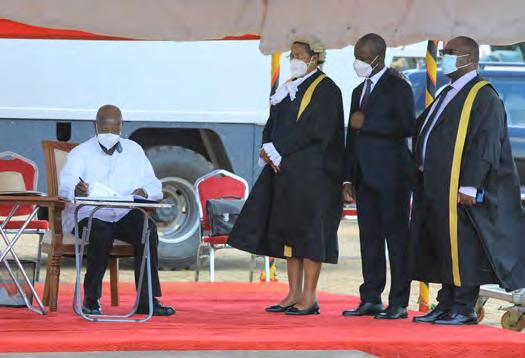
which would form the basis for business for the House during the sittings. Later, accommodation and security advance teams together with teams delivering required equipment were facilitated to travel to Gulu City.
On 23 August 2024, staff and members started the trek north for the sittings and related events and on 28 August 2024, the sittings commenced at Kaunda Grounds, presided over by the Speaker.
Kaunda Grounds, a 30-acre field formerly used for farming by the adjacent government prisons, gets its name from the former Zambian independence hero and first President of Zambia, Kenneth Kaunda. Ordinarily it would host public events, but this time, following days of preparation, it would be the setting for the Regional Sitting of Parliament, with Ministers, the Leader of Government Business, the Leader of the Opposition, legislators, parliamentary staff and invited guests all in attendance.
The sittings
Slightly before 10.00am on Wednesday 28 August 2024, the scheduled time for the Regional Sitting of the Parliament of Uganda at Kaunda Grounds in Gulu City, the procession began with the Speaker, Hon. Anita Among, walking to the House led by the Sergeant At Arms and accompanied by the Clerk to Parliament, Hon. Adolf Mwesige and Leonard Okema, the Executive Director, in the Office of the Speaker. The same ceremony occurs at sittings at Parliament House.
The Speaker explained that the decision to hold Parliamentary sittings in the country’s traditional four regions was a strategy to bridge the gap between Parliament and
Left: The President of Uganda, H.E Yoweri Museveni signs the guest book upon arrival at Kaunda Grounds for the Regional Sitting of the Uganda Parliament and is welcomed by the Speaker, Hon. Anita Annet Among; Deputy Speaker, Hon. Thomas Tayebwa; and the Clerk to Parliament, Adolf Mwesige Kasaija.
the people, and was based on an elaborate cost-benefit analysis and attention to the specific and varying nature of the distinct realities affecting the different regions of Uganda. She said that in the regional sittings, Parliament will prioritise matters of urgent and utmost importance to the specific region hosting the sitting.
She added that Parliament is an arm of government not just a stationary building and can convene in any part of the country; and that the current Parliament had vowed to put the people at the centre of legislative process and decisions. “A peoplecentred Parliament must be responsive to the needs of its citizens or else society will be without effective parliamentary representation. Remember our roles, as Parliament, are: representation, legislation, appropriation and oversight,” she said.
She urged legislators from across the political divide to actively debate and deliberate on the issues affecting the Northern Region, such that solutions for the benefit and wellbeing of the people of the area are attained. “In the spirit of constructive engagement, we encourage all stakeholders to desist from opposing progressive initiatives aimed at fostering cohesion and growth, and embrace unity and cooperation in the furtherance of inclusive decision-making and progress,” she said.
The Regional Sitting continued over
three days with MPs raising various issues such as the problems in the tea sector, infrastructure in region, the suffering of fishing communities in Busoga (eastern Uganda). Other Members thanked the President, the army and government in general for ending the war and restoring peace in northern Uganda. Several Members requested that the next Regional Sitting be taken to their districts.
The Minister of State for Works, Hon. Musa Ecweru, presented the Engineering Professionals Bill, 2024 for its Second Reading in the House and the Speaker refers it to the Committee on Physical Infrastructure for consideration.
Two other motions - one for the adoption of the ‘Report of the Sectoral Committee on Physical Infrastructure on the state of transport infrastructure (roads, bridges, railways, and airfields) in Northern Uganda’; and the other for adoption of the ‘Report of the Sectoral Committee on Agriculture, Animal Industry And Fisheries on the state of water for production facilities in Northern Uganda’ – are moved and adopted.
Elsewhere, a medical camp was held at a local primary school at which over 3,000 persons were seen and attended to in four days and a photo exhibition was also held at this school showcasing regional initiatives.
Members of Parliament and parliamentary staff returned to Kampala following the adjournment of the Regional Sitting of Parliament on Friday 30 August 2024.
Below: The Deputy Speaker of the Uganda Parliament, Hon. Thomas Tayebwa (in black jacket) with pupils of Credo Nursery and Primary School, located in Gulu City. The pupils visited the Regional Sitting of the Uganda Parliament and watched House proceedings from the public gallery on 30 August 2024.
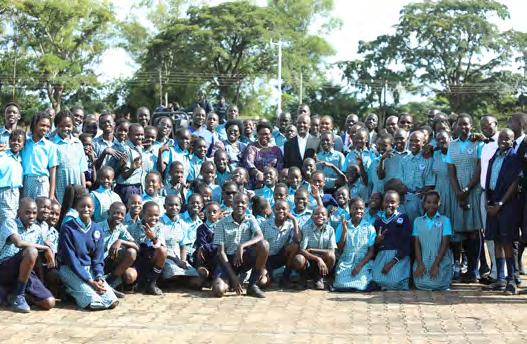
The first Bill to receive Royal Assent after the August recess—and only the second Act of Parliament of the new session that began in July 2024, after an earlier Supply and Appropriation (Main Estimates) Bill was passed by both Houses of Parliament—was the Budget Responsibility Act 2024
This Act, which became law on 10 September 2024, comprised a single substantive clause designed to fulfil the 2024 Labour Party manifesto commitment that any significant changes to taxation or central public spending must be subject to a forecast from the independent Office for Budget Responsibility (OBR). (The OBR, created in 2010, provides independent analysis of the UK’s public finances and is often described at the ‘UK’s public finances watchdog’). In particular, section 1 of the new Act amends the Budget Responsibility and National Audit Act 2011 to require the UK Government to request a forecast from the OBR before it makes fiscally significant announcements. It also requires the OBR to produce an assessment of the impacts of fiscally significant measures if the UK Government fails to request a forecast while also notifying the UK House of Commons Treasury Committee of its opinion. The requirements would not apply to temporary measures made in response to an emergency.
The Labour Government has referred to such a forecast requirement as a ‘fiscal lock’. It argued such a mechanism was needed to maintain financial stability after a previous Conservative administration declined to commission an independent OBR forecast to accompany the measures contained in the September 2022 fiscal statement. This is known as the so-called ‘mini-Budget’ and was followed by a period of market volatility. At the time, both the Labour Party and the Conservative Chair of the Treasury Committee had said the statement should have been accompanied by independent OBR forecasts.
The UK Government introduced the Bill in the UK House of Commons on 18 July 2024, and it received its Second Reading without division on 30 July 2024. Opening the Second Reading debate on behalf of the Government, Rt Hon. Darren Jones, MP, Chief Secretary to the Treasury, said
Parliamentary Report by Thomas Brown, Parliament of the United Kingdom.
the fiscal lock provided for in the Bill was an “essential part” of the new Government’s “mission to deliver economic stability”. He added: “The Bill will reinforce credibility and trust by preventing large-scale unfunded commitments that are not subject to the scrutiny of an OBR fiscal assessment. This delivers on a key manifesto commitment to provide economic stability and sound public finances by strengthening the role of the independent OBR. This is a crucial first step to fix the foundations in our economy, so that we can achieve sustained economic growth and make every part of the country better off.”
Responding on behalf of the Opposition, Hon. Gareth Davies, MP, then Shadow Exchequer Secretary, said the Conservative Party was “supportive of the OBR” but had concerns about the Bill’s limited scope. He explained: “We note that nowhere in the Bill or the surrounding documents is the OBR empowered to prevent a Government from taking fiscally significant action of any kind. The effect of this Bill is to ensure that an OBR costing accompanies any fiscally significant action the Government take—nothing more, nothing less. The way in which the Chancellor [of the Exchequer, Rt Hon. Rachel Reeves, MP, the UK’s first female Chancellor] described this Bill as a so-called lock to prevent certain activity is […] overly ambitious […] There is no fiscal lock, and if anything, it is a forecast lock.”
During the Bill’s Committee Stage, which was taken in a Committee-of-the-Whole House on 4 September 2024, the House divided on two amendments. The first, tabled by the Conservative Party as the Official Opposition, would have expanded the forecast requirement to apply to any change in the Government’s fiscal rules in addition to changes in taxation or central public spending. The amendment was defeated by 366 votes to 109. The second, tabled by the Liberal Democrats who now hold third-party status in the UK House of Commons, would have required the OBR to notify the Independent Adviser on Ministers’ Interests when it considered any failure to request a forecast “may give rise to consideration of compliance with the Ministerial Code”. The amendment was defeated by 375 votes to 73. Third Reading then took place before the Bill passed to the House of Lords.
The Speaker of the House of Commons, Rt Hon. Sir Lindsay Hoyle, MP, certified the Bill as a Money Bill. This limited the extent to which the House of Lords could propose significant changes, and the Bill was passed after Second Reading and all remaining stages took place on 9 September 2024. The Bill received Royal Assent the following day. In line with the Act’s requirements, the Government requested an OBR forecast ahead of the Autumn Budget delivered on 30 October 2024.
The third Bill to pass through all of its stages in both UK Houses of Parliament in the current session was the Passenger Railway Services (Public Ownership) Act 2024, which became law in November 2024. This is a relatively short Act which provides for the nationalisation of franchised passenger railway services when existing contracts with private sector operators come to an end. The Act implements a Labour Party manifesto commitment to bring franchised passenger rail services into public ownership. (Previously, under provisions in the Railways Act 1993 there was a presumption in favour of franchised passenger railway services being provided by the private sector). The UK Government expects all rail franchises currently operated by private operators to expire and return to public ownership under the provisions in the Act by the end of 2027. The UK Government introduced the Bill in the House of Commons on 18 July, the same day it introduced the Budget Responsibility Bill, with Second Reading taking place a week and a half later, on 29 July 2024. Opening the debate on behalf of the Government, the Transport Secretary, Rt Hon. Louise Haigh, MP, argued that transport was critical to achieving the new Labour Government’s priorities across all areas and that the earlier privatisation of rail services had failed to deliver reliable and affordable services for passengers. She added that the Government would bring forward a further Bill during the session to implement other aspects of its rail reform agenda, including to facilitate the running track and the trains as one integrated system, simplifying fares for passengers
and rolling out digital pay-as-you-go ticketing.
Responding on behalf of the Opposition, Hon. Helen Whately, MP, Shadow Transport Secretary, said the Conservative Party agreed the rail system needed reform. However, she argued that the UK Government’s plans to return rail franchises to public ownership represented “ideological nationalisation” and there was no evidence that public ownership would improve service capacity or reliability. She said the UK Government should instead have used parliamentary time to pursue other rail reforms it said would come in a future Railways Bill. After debate, the Bill was passed by 351 votes to 84.
The Committee Stage took place in a Committee-of-the-Whole House on 3 September 2024. Three amendments were voted on. The first two, tabled by the Conservative Party, had concerned considering the needs of stakeholders when making changes to service levels and establishing an independent body to advise on public sector pay and conditions. The third, tabled by the Liberal Democrats, had concerned requiring an annual report on ticketing. None were agreed. The Bill received its Third Reading the same day before it passed to the House of Lords.
The Second Reading in the second chamber took place on 7 October 2024 with the Committee Stage following on three dates later that month. The Report Stage took place on 6 November, when three amendments were made to the Bill, including two Opposition amendments and one Government amendment. The two Opposition amendments concerned, respectively, placing a duty on Ministers to “have regard to the purpose of the Act, namely the improved performance of passenger railway services in the UK” and requiring Ministers to “nationalise the worst performing operators first, while enabling services that were currently working well to continue”. However, both were subsequently overturned by the House of Commons and the House of Lords did not insist on them remaining as part of the Bill during ‘ping pong’.
The UK Government introduced a number of other Bills, which it trailed in the King’s Speech delivered in July 2024, following the August recess. These included:
• an Armed Forces Commissioner Bill, to establish, and confer functions on, an Armed Forces Commissioner;
• a Data (Use and Access) Bill, which contains many provisions that are similar or identical to clauses in an earlier Data Protection and Digital Information Bill that failed to complete all its stages before the 2019–24 Parliament was dissolved;
• an Employment Rights Bill, which would introduce significant changes to employment law around issues including but not limited to zero hours contracts, flexible working, statutory sick pay, family leave, duties on employers to prevent harassment, unfair dismissal, trade union rights and enforcement mechanisms;
• a Financial Assistance to Ukraine Bill, which would make provision for loans or other financial assistance to be provided to, or for the benefit of, Ukraine;
• a Football Governance Bill, which would introduce a new regulatory regime for men’s football in England;
• a House of Lords (Hereditary Peers) Bill, which would remove the remaining Members of the House of Lords who sit by virtue of hereditary peerages, and remove the jurisdiction of the House of Lords in relation to hereditary peerage claims;
• a Mental Health Bill, to update the Mental Health Act 1983 following earlier prelegislative scrutiny of a draft Bill;
• a Product Regulation and Metrology Bill, which contains measures seeking to update the UK’s product safety, regulation and metrology framework;
• a Renters’ Rights Bill, to reform the regulation of the private rented sector in England, including abolishing so-called ‘no fault’ evictions;
• a Terrorism (Protection of Premises) Bill, to strengthen the security of public events and venues following a campaign by the family of one of the victims of the bombings at Manchester Arena in 2017;
• a Tobacco and Vapes Bill, which would, among other provisions, regulate the supply of tobacco, vapes and other products to persons born on or after 1 January 2009; and
• a Water (Special Measures) Bill, to give regulators new powers to regulate the way private water companies operate in England and Wales.
Members of the UK Parliament have celebrated 25 years of the UK House of Commons’ parallel Chamber. The first Westminster Hall debate took place on 30 November 1999 and since then, hundreds of MPs have spent thousands of hours discussing issues of local, national and international importance with the debates becoming a regular and integral part of parliamentary business.
Westminster Hall debates can cover almost any issue, providing UK MPs from all parties with the chance to highlight constituents’ concerns, debate policy or discuss matters of national and local significance. MPs can use Westminster Hall debates to raise an issue directly with a Minister and attempt to influence Government policy. They take place in the Grand Committee room at the UK Parliament, which sits off the historic Westminster Hall.
The Speaker of the UK House of Commons, Rt Hon. Sir Lindsay Hoyle, MP, said: “I am one of the few MPs who can remember the introduction of Westminster Hall debates a quarter of a century ago. To my mind, it instantly opened another opportunity and space for backbenchers like me at the time to raise issues that were important to our constituents – and to hear a response from a Minister.”
The Principal Deputy Speaker and the Chairman of Ways and Means, Hon. Nusrat Ghani, MP has responsibility for coordinating the sittings in Westminster Hall and said: “Westminster Hall debates are a fantastic opportunity for MPs from every corner of the country to raise an issue of importance to them and their constituents. The debates play such an important role in Parliamentary democracy, and I am delighted to play my part.”
TRINIDAD AND TOBAGO
Parliamentary Report by Paras Ramoutar, Freelance Journalist based at the Parliament of Trinidad and Tobago.
The Minister of Finance, Hon. Colm Imbert has announced that the Government of Trinidad and Tobago is expected to spend TT$59.741 billion for 2025. It is expected that 2025 will also see elections in Trinidad and Tobago, with the last one being in 2020. In a lengthy session in Parliament on 30 September 2024, the Finance Minister spent five hours and fifteen minutes delivering his presentation, the longest in the Parliament’s history.
Notwithstanding the economic plans outlined, there is expected to be a deficit of TT$5.517 billion (which will be sourced from internal and external borrowing), with the total revenue expected to be TT$54.224 billion. The Finance Minister told MPs that the deficit will be 2.91% of the Gross Domestic Product (GPD), falling within the international benchmark of three per cent.
The Finance Minister also announced that government workers will receive a five percent wage increase with 2,000 additional cars for the police service, and the introduction of e-passports/online departure forms and digital medical records. Significant investment would be aimed at preserving ecosystems, conserving biodiversity and protecting natural resources to mitigate the negative effects of climate change.
The Finance Minister noted that the domestic economy grew by 1.3% following a growth rate of 1.5% in 2022. In 2024, real GDP growth has increased to 1.9%. “There has been three consecutive years of real growth which signifies a renewal of economic activity, a rebound in confidence and a promising trajectory towards a positive economic environment.”
The Opposition Leader in the Parliament of Trinidad and Tobago, Hon. Kamla Persad-Bissessar has termed the nine years of PNM rule as one of ‘bankruptcy and brutality’ in her contribution to the 2024-25 budget debate. She added that the Government has allowed certain ‘elitist groups’ to live off the land while other parts of the populace are struggling to make
ends meet. The Opposition Leader went on to say that the Government has placed Trinidad and Tobago’s future generations in a ‘debt trap’ with no plans to generate revenue, lower food prices or a reduction in the escalating crime figures.
She proposed a series of projects for a United National Congress Government targeted at healthcare including the purchase of modern equipment at all medical facilities, fixing the supply chain issues to prevent the shortage of drugs, equipment and supplies that hinder the work of doctors and nurses.
Member of Parliament for Chaguanas West, Hon. Dinesh Rambally, MP has termed the 2024-25 budget as a ‘banal budget’ statement that fails to improve the quality of lives of its citizens during the Parliamentary debate. He focused mainly on the escalating crime in the country, saying that it was a management issue as the TT$6.113 billion allocated will not be spent wisely, as was the case with previous budgetary allocations. Rambally called for an urgent need to modernise the judicial system, including more courts and a greater efficiency in the judicial system. He also called for greater use of the alternate dispute resolution and restorative justice practices, and an examination of unemployment to address crime.
The Minister of Social Development and Family Service, Senator Donna Cox has hailed the Government of Trinidad and Tobago’s initiatives aimed at poverty alleviation. She was speaking in the House of Representatives on the 2024-25 budget speech in response to the Minister of Finance. Senator Cox said that Government continues to do everything in its
power to protect the vulnerable in society, and this was reflected in an estimated TT$5.2 billion budget for the Ministry. However, Opposition Member, Hon. Vandana Mohit, MP described the budget “as the same failed promises wrapped in the same tired rhetoric.” She said that there are insufficient services to help disabled persons and wondered whether anyone actually listens to the plight of the needy. She also lamented the lack of programmes to prevent the risk of young people falling into a life of crime and called for the Government to adopt a holistic approach.
Newly appointed Minister in the Ministry of National Security, Hon. Keith Scotland outlined a series of projects aimed at enhancing policing in Trinidad and Tobago during his contribution to the budget debate in the Parliament of Trinidad and Tobago. He spoke about some of the measures being introduced including the establishment of police youth clubs, a police outreach programme unit and the Prion Youth Club. He said that a special anti-crime operation unit will be established, and this unit will assume the responsibility for the elimination and disruption of home and business invasions. The Minister added that 13 police stations will be refurbished along with canine and mounted branch buildings in Trinidad and Tobago.
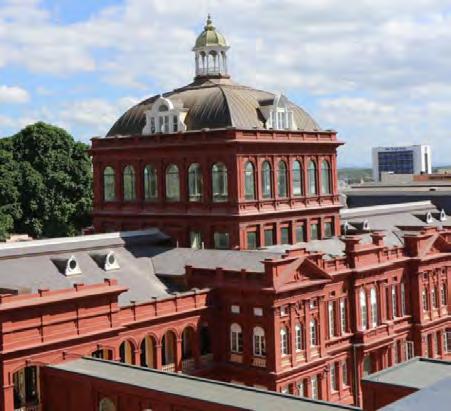
The Pae Ora (Healthy Futures) (Improving Mental Health Outcomes) Amendment Bill was read for a third time on 23 October 2024. The Bill requires the Minister of Health to determine a Mental Health and Wellbeing Strategy, which would provide a framework to guide health entities for the long-term improvement of mental health and wellbeing outcomes, including minimising harm from addiction. The strategy must contain an assessment of the current state of the health sector in relation to mental health and wellbeing outcomes, as well as medium- and longterm trends and priorities, and priorities for improvements, including workforce development.
The Bill is a Member’s Bill, drawn from the ballot and introduced by Katie Nimon, MP (National) who said: “my vision and my hope is that this Bill is more than just a legal amendment. I see it as a commitment to our future. It’s a recognition that mental health is a vital part of our overall health and wellbeing as a nation. We need systemic change, long-term planning and continuous improvement in how we face mental health challenges.”
Hūhana Lyndon, MP (Greens) agreed that “it’s important that we do have that strategy as a clear beacon for where we’re heading as a country to support the mental health, addictions and wellbeing of all New Zealanders.” She added that “This strategy requires buy-in from across Governments, and, as Members of this House, may I implore us to consider this being a long-term strategy, that it cannot be just for one term.”
Ingrid Leary, MP (Labour) asked “how will the strategy work in an environment where we have seen cuts to the front line in mental health? We have seen a mental health hiring freeze despite the protestations from the Government.”
Hana-Rawhiti Maipi-Clarke, MP (Te Pāti Māori) talked about the importance of the Bill to Māori, noting that “mental health distress among Māori is almost 50% higher than among non-Māori. Māori are 30% more likely than other non-Māori to have their mental illnesses undiagnosed. Māori are less likely to access mental health and addiction services than non-Māori.”
Cameron Luxton, MP (ACT) talked about his experience as a farmer in an isolated rural area, saying “It’s very important that we have things like mental health and wellbeing strategies to make sure we can address what is faced by many people in rural communities who feel isolated, not just physically and geographically but also very often from broader society.”
When originally drafted, the Bill designated the Mental Health and Wellbeing Commission as a health entity. Health entities have a range of obligations including giving effect to Government policy statements. In the Bill’s Second Reading, Jenny Marcroft, MP (New Zealand First) explained that “We’ve heard a range of useful submissions on this Bill through the Committee and agree with the recommendation to remove the classification of the commission as a health entity. This recommendation allows for the commission to maintain its independence, which is critical for it, and, therefore, the effectiveness of its oversight role.”
Nimon said that this “was an original drafting oversight, but I’m pleased for that to be corrected. Maintaining the commission’s independence is a very important part of this Bill.”
The Bill was read for a third time without dissent and received the Royal Assent on 24 October 2024.
The Education and Training Amendment Bill was read for a third time on 24 September 2024. It amends the Education and Training Act 2020 to introduce a framework for charter schools or kura hourua, as a third school type in New Zealand alongside State and private schools. Charter schools, like State schools, are Government-funded, but have more autonomy in areas including the curriculum, teacher pay rates and term dates. They were previously introduced in 2012 by a National-ACT Government and were subsequently abolished by the Labour Government in 2017 on the basis that there was no evidence they were more beneficial than State schools. The Bill also repeals the early childhood education network approval provisions, taking away Government oversight for starting or merging early childhood education centres.
The Minister in charge of the Bill, ACT party leader and Associate Minister of Education, Hon. David Seymour, MP explained his motivation for reintroducing charter schools, saying “we’re introducing the simple idea that not every insight into how to engage children in learning and pass that knowledge from one generation to the next can be found in the Ministry of Education… sometimes the best knowledge exists out in the community.”
The Bill spent two and a half months with the Education and Workforce Committee, a shortened time frame to allow the Bill to be passed and implemented ahead of the next school year starting in January 2025. Despite limited time, the Select Committee received a high number of submissions and the majority opposed the Bill. The Minister proposed an Amendment Paper for the Committee to consider, which among other things added a provision that restricts bargaining for a multi-employer collective agreements between unions and sponsors of charter schools. The Committee, by majority, incorporated the Amendment Paper in the Bill.
The Bill was not supported by Opposition parties. Teanau Tuiono, MP (Greens), gave his reasoning at the Bill’s Third Reading: “The Green Party wants to see a wellfunded public education system where all students are able to thrive, particularly those with diverse backgrounds, hence why we strongly oppose the reintroduction of charter schools, on the grounds that there is no evidence … that charter schools are a successful model for schooling. It has been tried and it has failed.”
Hon. Jan Tinetti, MP (Labour) also opposed the amendment to network approval provisions on the basis that it favours businesses: “This is worse than 2013, because not only today have we got back the introduction of charter schools; we also have the repeal of the network planning as part of the early learning network in this country… We’re not putting kids at the centre.”
Mike Butterick, MP (National) argued that the number of State schools wanting to convert to a charter school showed a nationwide support for this new style of education: “An appetite for participation - 78 so far, likely counting - shows we’re on the right track to getting educational performance back on track. Charter schools are one way of wanting to lift
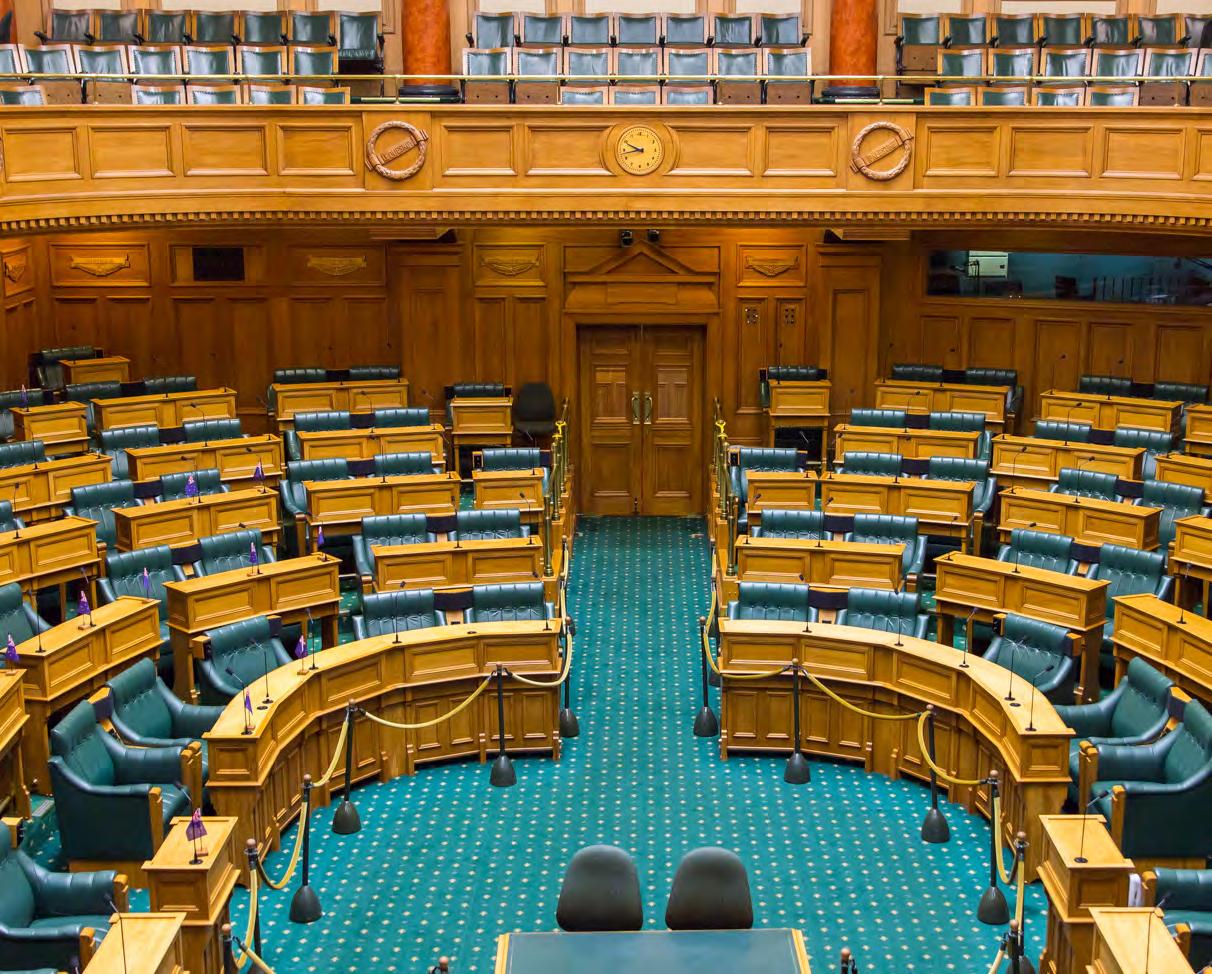
student achievement and ultimately to help deliver a better economy in the future.” His support was echoed by Katie Nimon, MP (National) who thought the repeals were about taking away administrative barriers and giving New Zealanders more choice, saying, “There are all sorts of things we are doing to remove barriers to give people choices, and that is what this Bill is about. I am excited to see what’s going to happen, I am excited to substantiate evidence, and I am excited to give parents and students a choice to do something different.”
The Bill was read for a third time with 68 votes in favour and 55 against, and received the Royal Assent on 30 September 2024.
of
or Civil
The Family Proceedings (Dissolution of Marriage or Civil Union for Family Violence) Amendment Bill is a Member’s Bill that seeks to reduce harm caused by family violence by creating a ground for dissolving a marriage or civil union on the basis of family violence, and by removing the requirement for the parties to live apart for two years before a dissolution on the
ground of family violence. The eligible applicant must be a protected person under a protection order made against the applicant’s partner under the Family Violence Act, the Sentencing Act or a registered foreign protection order.
Hon. Dr Deborah Russell, MP (Labour), the Bill’s sponsor, spoke about Charlotte Abrial, whose petition was the inspiration for the Bill: “In Charlotte’s words from the petition, speaking from her own experience, she said that the two-year stand-down period makes leaving an abusive spouse even more difficult because victims feel an obligation to go back and try to work things out. She said that in many cases, each time the victim returns is worse, as the abuser’s control increases. She also commented that some women are not able to leave again because they may not survive the abuse. Thank you, Charlotte, for bringing the petition to the House and for making the House take notice of this matter.”
Dr Parmjeet Parmar, MP (ACT) talked of the effect the change would have for would-be applicants: “sometimes with this system it feels that they are going through this process again and again, … this Bill is going to provide huge relief to womenthose who are really wanting to come out
of that trap, come out of that relationship and start their lives again.”
Rima Nakhle, MP (National) expressed a desire for cultural change more broadly in society, noting: “there’s a lot that we can do. There’s a lot that the gentlemen - or not so gentle men - in Aotearoa can do with respect to leading that cultural change.” This call was echoed by Dan Bidois, MP (National): “Us men have to do better. We’ve got to do better in terms of role-modelling better behaviour, and we have to do a better job of taking personal responsibility for our actions, right across this country.”
Tamatha Paul, MP (Greens) suggested eventually broadening the scope of allowable evidence required: “What we would like to see next is whether we can incorporate different forms of evidence … this one focuses on protection orders, which is great. That’s one mechanism, but also how could we open up that scope of evidence to include things like written evidence from doctors or police or other trusted people that are involved in those processes. So we can look at that evidence, but today is such a crucial and important first step towards that.”
Hon. Chris Bishop, MP (National) noted the House’s unanimity: “Today, we are righting a wrong. Deborah Russell talked about future reform to divorce law … That’s for another day, and reasonable people can disagree about some aspects of it. But what I don’t think people will disagree on is this change, and the fact that it’s passing the Parliament unanimously, I think, speaks to that. It’s interesting, whenever you raise it with people, people are quite staggered to discover it’s not the law. They expected that Parliament would have fixed this before now, and it turns out that we haven’t, but now we have an opportunity to do it.”
The Bill was passed without dissent and received the Royal Assent on 17 October 2024.
‘Parliament’s Control on Subordinate Legislation in India’ - by N. K. Singh, Manak Publications Pvt Ltd, 2024, 340 pages, Price Rs 1000.
Book review written by Rup Narayan Das, a retired Joint Secretary of the Lok Sabha Secretariat of the Indian Parliament and also a former Senior Fellow of the Indian Council of Social Science Research. Currently he is resource person with the Institute of Constitution and Parliamentary Studies in New Delhi
At a time when democracy of all variants, including parliamentary democracy, is passing through trying times, subordinate legislation or delegated legislation, which is derivative of democracy, has assumed a critical space in supplementing and complementing the functioning of democratic institutions.
It is against this backdrop that the book under review, written by N. K. Singh, an experienced, knowledgeable senior officer of the Rajya Sabha Secretariat of the Indian Parliament, merits attention. Although the focus of the study is on the Indian Parliament, the author also presents a synoptic view of subordinate legislation of other Parliaments, including the ‘mother’ Parliament of the United Kingdom. The book not only gives a theoretical perspective of subordinate legislation, but also empirical case studies from the pulsating Indian Parliament.
The practice of delegated or subordinate law-making existed in India even prior to the adoption of the Constitution in 1950 and owes its origin to the Government of India Act 1935, enacted by the UK Parliament. The author mentions that Article 13(3) of the Indian Constitution provides ‘laws in force’ that will include those made by the Legislatures (or other competent authorities) before the commencement of
the Constitution and not previously repealed. The author also writes that the word ‘law’ may include the principal laws made by a Legislature as well as by subordinate authorities as delegated legislation.
In India, as elsewhere in the world, there are independent and autonomous bodies (and also state entities) who make their own rules for their functioning and such rules have the mandate of laws of the land, as well as of the Constitution and the judiciary. Thus, subordinate legislation deals at the micro level, under the rubric of the Constitution and laws enacted by Legislatures. A supreme body like Parliament, or the State Legislatures as the case may be, is entrusted with the task of overseeing through its Committee on Subordinate Legislation, the Constitutionality and legality of such rules and bye-laws. Neither is it possible nor desirable on the part of the Parliament to go into the ‘nitty-gritty’ of such rules and regulations. The author elucidates these dimensions in detail quoting authoritative sources.
Subordinate legislation sometimes can have a flipside to it. The author quotes Justice Hewart of the UK who describes it as ‘new despotism’, meaning the possible abuse of this authority by the administrative official. According to Justice Hewart, “Parliament having transferred so much of its legislative powers, ought still to do
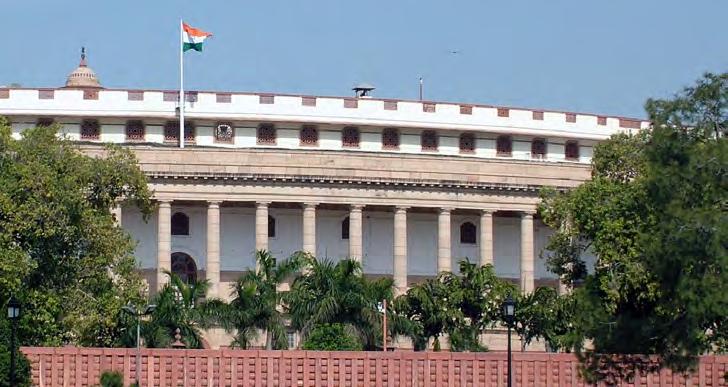
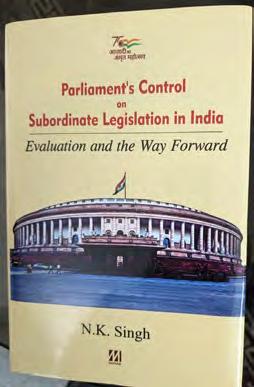
what it can to keep an exercise of that power by the transferees with a view to all cases of suspected abuse.” Thus, without holding the entire civil service as ‘dark and insidious’ which generally consists of people with long experience and required domain knowledge, the exercise of power delegated to them for making subsidiary laws needs to be supervised by Parliament for ‘common sense reasons’.
Drawing attention to practices followed in India, the author writes that unlike in other countries such as the UK, the USA, New Zealand and Australia, there exists no specific statute regarding major stages of subordinate legislation, such as drafting, registration, laying, interpretation, power to disallow and other such ‘countryspecific’ control mechanisms. In India, the procedures take their origin mainly from the Guidelines and Manuals issued from time to time by the Government, the Parent Acts, the Rules of Procedure and the Conduct of Business of both the Houses of Parliament, and directions issued by the Presiding Officers of both Houses of Parliament.
In chapter 12 of the book, the author offers a slew of proposals to revitalise parliamentary oversight of subordinate legislation, such as the need to sensitize Ministries and departments of the Government, the need to have a standard law, reforming the pre-legislative stage, and the need for appointing legal Counsel to the Committee, etc. The book is a significant original contribution to the corpus of literatures on the subject with particular relevance to the Parliaments of the Commonwealth with Anglo-Saxon trading.
PATRON:
His Majesty King Charles III Head of the Commonwealth
VICE-PATRON: Vacant Barbados
Dates of membership below. Some Members are completing terms started by other Members. *TermdatesextendedasnoCPAGeneralAssemblyheldin2018,2020and2021.
CPA PRESIDENT: (67th CPC to 68th
CPC - 2024-2025): Senator Hon. Reginald Farley, JP, President of the Senate of Barbados
CPA VICE-PRESIDENT: (67th CPC to 68th CPC - 2024-2025): Vacant
CHAIRPERSON OF THE CPA
EXECUTIVE COMMITTEE: (67th CPC to 70th CPC - 2024-2027): Hon. Dr Christopher Kalila, MP Zambia
CPA VICE-CHAIRPERSON: (67th CPC to 68th CPC - 2024-2025): Hon. Carmel Sepuloni, MP, New Zealand
CPA TREASURER: (65th CPC to 68th CPC - 2022-2025): Hon. Shri
Anurag Sharma, MP, Lok Sabha, India Union
COMMONWEALTH WOMEN
PARLIAMENTARIANS (CWP)
CHAIRPERSON: (65th CPC to 68th CPC - 2022-2025): Hon. Dr Zainab Gimba, MP, Nigeria
CPA SMALL BRANCHES
CHAIRPERSON: (67th CPC to 70th
CPC - 2024-2027): Hon. Valerie Woods, MP, Speaker of the House of Representatives, Belize
COMMONWEALTH
PARLIAMENTARIANS WITH DISABILITIES (CPwD)
CHAIRPERSON: (65th CPC to 68th CPC - 2022-2025): Hon. Laura Kanushu Opori, MP, Uganda
CPA AFRICA REGION
Hon. Lukas Sinimbo Muha, MP Chairperson of the National Council, Namibia (65th CPC to 68th CPC - 2022-2025) Completing term started by another Member.
Hon. Raymond Nkhata, MP, Malawi (65th CPC to 68th CPC - 2022-2025)
Hon. Angel Thandeka Mavuso, MP, Eswatini (66th CPC to 69th CPC2023-2026)
Vacant, Mauritius (66th CPC to 69th CPC - 2023-2026)
Hon. Tolulope Akande-Sadipe, MP, Nigeria (67th CPC to 70th CPC2024-2027)
Hon. Mary Muyali Boya, MP, Deputy Speaker, Cameroon (67th CPC to 70th CPC - 2024-2027)
CPA ASIA REGION
Hon. Bilal Azhar Kayani, MNA Pakistan (65th CPC to 68th CPC - 2022-2025) Completing term started by another Member.
Hon. Farah Azeem Shah, MPA Balochistan (66th CPC to 69th CPC2023-2026)
Hon. Ahmed Nazim, MP, Deputy Speaker, The Maldives (67th CPC to 70th CPC - 2024-2027)
CPA AUSTRALIA REGION
Hon. Mark Shelton, MP, Tasmania (65th CPC to 68th CPC - 2022-2025)
Hon. Pat Weir, MP, Speaker of Queensland (66th CPC to 69th CPC - 2023-2026) Completing term started by another Member.
CPA BRITISH ISLANDS AND MEDITERRANEAN REGION
Hon. Stuart McMillan, MSP, Scotland (65th CPC to 68th CPC2022-2025)
Deputy Mary Le Hegarat, Jersey (66th CPC to 69th CPC - 2023-2026)
Rt Hon. David Mundell, MP, United Kingdom (67th CPC to 70th CPC2024-2027)
CPA CANADA REGION
Hon. Donna Skelly, MPP, Deputy Speaker, Ontario (65th CPC to 68th CPC - 2022-2025) Completing term started by another Member.
Hon. Raj Chouhan, MLA Speaker of the Legislative Assembly of British Columbia (66th CPC to 69th CPC - 2023-2026)
Hon. Alexandra Mendès, MP, Assistant Deputy Speaker, Canada Federal (67th CPC to 70th CPC2024-2027)
CPA CARIBBEAN, AMERICAS AND THE ATLANTIC REGION
Hon. Arthur Holder, MP, SC Speaker of the Barbados House of Assembly (65th CPC to 68th CPC2022-2025)
Senator Hon. Dr Dessima D. Williams, President of the Senate, Grenada (66th CPC to 69th CPC2023-2026)
Hon. Dennis P. Lister, JP, MP, Speaker, Bermuda (67th CPC to 70th CPC - 2024-2027)
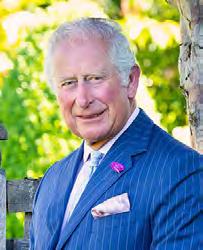
CPA INDIA REGION
Smt. Ritu Khanduri Bhushan, MLA Speaker of Uttarakhand Legislative Assembly (65th CPC to 68th CPC2022-2025)
Shri Biswajit Daimary, MLA Speaker, Assam (66th CPC to 69th CPC - 2023-2026)
Hon. Shri Vishnu Dutt Sharma, MP Lok Sabha, India Union, (67th CPC to 70th CPC - 2024-2027)
CPA PACIFIC REGION
Hon. Carmel Sepuloni, MP, New Zealand (65th CPC to 68th CPC - 2022-2025) Completing term started by other New Zealand Members. Also: CPA ViceChairperson (2024-2025)
Hon. Dulcie Tei, MP Tonga (66th CPC to 69th CPC2023-2026)
Hon. Tina Pupuke Browne, MP, Cook Islands (67th CPC to 70th CPC - 2024-2027)
CPA SOUTH-EAST ASIA REGION
Hon. Dato’ Seri Law Choo Kiang, MLA, Speaker, Penang (65th CPC to 68th CPC - 2022-2025)
Hon. Mohd Fahmi Aliman, MP Singapore (66th CPC to 69th CPC2023-2026)
Hon. Dr Dato’ Noraini Ahmad, MP, Malaysia (67th CPC to 70th CPC2024-2027)
The CPA Coordinating Committee comprises the CPA Chairperson, Vice-Chairperson, Treasurer, CPA Small Branches Chairperson and the Chairpersons of the Commonwealth Women Parliamentarians (CWP) and the Commonwealth Parliamentarians with Disabilities (CPwD) networks.
Senator Hon. Sue Lines, President of the Senate, Australia Federal (67th CPC to 70th CPC - 2024-2027)
CPA SMALL BRANCHES CHAIRPERSON
Hon. Valerie Woods, MP, Speaker of the House of Representatives, Belize (2024-2027)
CPA AFRICA REGION
Hon. Churchill Gill, MNA Seychelles (2021-2024)
CPA ASIA REGION
Hon. Ahmed Nazim, MP, Deputy Speaker, The Maldives (2022-2025)
CPA AUSTRALIA REGION
Hon. Michelle O’Byrne MP Speaker, Tasmania (2023-2026)
CPA BRITISH ISLANDS AND MEDITERRANEAN REGION
Deputy Adrian Gabriel Guernsey (2023-2026) - Also: CPA Small Branches Vice-Chairperson
CPA CANADA REGION
Hon. Derek Bennett, MHA Speaker of the House of Assembly, Newfoundland and Labrador (2022-2025)
CPA CARIBBEAN, AMERICAS AND THE ATLANTIC REGION
Hon. Lanien Blanchette, MP Speaker, St Kitts and Nevis (2024-2027)
CPA INDIA REGION
Shri Mingma Narbu Sherpa, MLA Speaker, Sikkim (2022-2025)
CPA PACIFIC REGION
Hon. Lord Fakafanua Speaker, Tonga (2022-2025)
CPA SOUTH-EAST ASIA REGION
YB Tuan Kerk Chee Yee, MLA Deputy Speaker, Melaka (2024-2027)
CWP PRESIDENT Vacant
Barbados (2024-2025)
CWP CHAIRPERSON
Hon. Dr Zainab Gimba, MP Nigeria (2022-2025)
CPA AFRICA REGION
Hon. Madina Ndangiza, MP, Rwanda (2022-2025)
CPA ASIA REGION
Hon. Dr Harini Amarasuriya, MP
Prime Minister of Sri Lanka (2024-2027)
CPA AUSTRALIA REGION
Hon. Kate Doust, MLC
Western Australia (2022-2025)
Also CWP Vice-Chairperson (2024-2025)
CPA BRITISH ISLANDS AND MEDITERRANEAN REGION
Hon. Sarah Boyack, MSP (Acting) Scotland (2025-2028)
CPA CANADA REGION
Hon. Susan Leblanc, MLA Nova Scotia (2023-2026)
CPA CARIBBEAN, AMERICAS AND THE ATLANTIC REGION Vacant (2025-2028)
CPA INDIA REGION
Smt. Daggubati Purandeswari, MP Lok Sabha, India (2024-2027)
CPA PACIFIC REGION
Hon. Lenora Qereqeretabua, MP, Deputy Speaker, Fiji (2023-2026)
CPA SOUTH-EAST ASIA REGION
Hon. Rodiyah Binti Sapiee, MP Malaysia (2022-2025)
Commonwealth Parliamentarians with Disabilities (CPwD) Regional Champions
CPwD CHAIRPERSON
Hon. Laura Kanushu Opori, MP Uganda (2022-2025)
CPA AFRICA REGION
Hon. Timothy Wanyonyi, MP Kenya (2020-2023)
CPA ASIA REGION Vacant Sri Lanka (2024-2027)
CPA AUSTRALIA REGION
Hon. Liesl Tesch, MP New South Wales (2020-2023)
CPA BRITISH ISLANDS AND MEDITERRANEAN REGION
Hon. Jeremy Balfour, MSP Scotland (2024-2027)
CPA AFRICA REGION
Mr Baraka Ildephonce Leonard Parliament of Tanzania
CPA ASIA REGION
Mrs Kushani Rohanadheera Parliament of Sri Lanka
CPA AUSTRALIA REGION
Ms Alex Cullum Parliament of Australia
CPA BRITISH ISLANDS AND MEDITERRANEAN REGION
Ms Sarah Dickson, OBE Parliament of the United Kingdom
CPA CANADA REGION
Hon. Shane Thompson, MLA Northwest Territories (2024-2027)
CPA CARIBBEAN, AMERICAS AND THE ATLANTIC REGION
Senator Hon. Paul Richards Trinidad and Tobago (2020-2023) Also: CPwD Vice-Chairperson (2024-2025)
CPA INDIA REGION
Smt. Supriya Sule, MP India (2020-2023)
CPA PACIFIC REGION
Hon. Priyanca Radhakrishnan, MP New Zealand (2024-2027)
CPA SOUTH-EAST ASIA REGION
Senator Hon. Isaiah Jacob Malaysia (2020-2023)
CPA CANADA REGION
Mr Jeremy LeBlanc Parliament of Canada
CPA CARIBBEAN, AMERICAS AND THE ATLANTIC REGION
Mr Sherlock Isaacs Parliament of Guyana
CPA INDIA REGION
Shri Utpal Kumar Singh Parliament of India
CPA PACIFIC REGION
Ms Amber Walters Parliament of New Zealand
CPA SOUTH-EAST ASIA REGION
Ms Nur Diyana Indah binti Khudri Parliament of Malaysia
Stephen Twigg
CPA Secretary-General Commonwealth Parliamentary Association, CPA Headquarters Secretariat, Richmond House, Houses of Parliament, London SW1A 0AA, United Kingdom
A full A-to-Z listing of all CPA
Tel: +44 (0)20 7799 1460
Email: hq.sec@cpahq.org www.cpahq.org
Twitter @CPA_Secretariat
Facebook.com/CPAHQ
Instagram @cpa_secretariat
LinkedIn | YouTube
InformationassuppliedbyCPABranchesandCPARegionstoCPAHeadquartersSecretariat