Reimagining Parking Delivery at the University of California, Berkeley By Mickey
Ankhelyi, AIA
28
Sustainable Campus Parking Design Tips
Reducing Environmental Impact By Beth
32
Turbocharging a Municipal Parking Network
From 9 to 550 EV Chargers in Three Years By
Jarrett McDonald
Bryan, PE, STP
By JC Porter, PTMP, and Gabe Mendez, PTMP
Beatrice Hiner
Conor Burke
Rachel Yoka, PTMP,
SUSTAINABILITY in parking, transportation, and mobility has always been synonymous with going green: solar panels, EV chargers, energyefficient lighting, etc. While those approaches to sustainability remain essential, our understanding of sustainability today is far broader and more dynamic . It’s about building systems that endure — financially responsible operations, equitable access, resilient infrastructure, data-driven decision-making, and policies that support both people and the places they travel to and move through.
In this issue, we explore sustainability not as a single initiative, but as a mindset. For the parking, transportation, and mobility industry, sustainability balances environmental stewardship with long-term viability, adaptability, and community impact.
We will examine how the University of California, Berkeley, had sustainability top of mind when planning and executing its new parking structure. We look at the planning process for new parking facilities, how sustainability must be accounted for from day one, and how to incorporate the push towards alternative, sustainable transportation options. And we visit the Toronto Parking Authority, for whom EV charging was intentionally integrated alongside their core parking and mobility operations. This was designed to strengthen asset longevity, enhance customer experience, and ensure municipal parking facilities remain relevant well into the future: all goals of sustainability.
The content in this issue shows that sustainability isn’t a destination; it’s an ongoing commitment to smarter, stronger, and more resilient systems. Whether you’re looking for inspiration, validation, or actionable strategies, you’ll find it in the pages ahead. We hope you’ll explore every article and walk away with insights you can apply today and build on tomorrow.
As always, thanks for spending some time with us! Please share your thoughts, questions, or ideas with me at editor@parkingmobility.org . Turn the page, dig in, and discover how sustainability is redefining the future of parking, transportation, and mobility.
Melissa Rysak, editor rysak@parking-mobility.org
PUBLISHER
Shawn Conrad, CAE s.conrad@parking-mobility.org
EDITOR-IN-CHIEF
Melissa Rysak rysak@parking-mobility.org
MANAGING EDITOR
Courtney Turner turner@parking-mobility.org
TECHNICAL EDITOR
Rachel Yoka, PTMP, LEED AP BD+C yoka@parking-mobility.org
ADVERTISING SALES AND SUBSCRIPTIONS
Tina Altman, CEM taltman@parking-mobility.org
PUBLICATION DESIGN
BonoTom Studio info@bonotom.com
For subscription changes, email editor@parkingmobility.org
Parking & Mobility (ISSN 0896-2324 & USPS 001436) is published bi-monthly by the International Parking & Mobility Institute P.O. Box 3787 Fredericksburg, VA 22402
The subscription rate is included in IPMI annual dues. Subscription rate for non-members of IPMI is $500 per year (U.S. currency) in the U.S., Canada, and Mexico. All other countries, $750.
Driving the Future of Sustainable Mobility Net-Zero Insights from UW–Madison and ASU
By JC Porter, PTMP, and Gabe Mendez, PTMP
IN THIS SPRING ISSUE, JC and Gabe are teaming up — just like the old days — to share a board perspective on sustainability. In this column, they explore how parking, transportation, and mobility professionals can help their organizations meet net-zero emissions goals through innovative programs and practical initiatives. They’ll highlight current efforts at their respective institutions and hope you’ll find ideas worth borrowing for your own journey.
Gabe will discuss the University of Wisconsin-Madison’s (UW-Madison) approach to reducing emissions from its more than 800-vehicle campus fleet, while JC will showcase Arizona State University’s (ASU) preparations for safe, scalable micro-mobility charging infrastructure, an often-overlooked but critical component of sustainable transportation systems.
UW–Madison: Advancing Fleet Sustainability
At UW–Madison, one of our key sustainability goals is to achieve net-zero emissions by 2048. For Transportation Services, that means reducing direct carbon emissions from campus-owned vehicles and equipment to lower our Scope 1 emissions and contributing to reductions in Scope 2 and 3 emissions wherever possible.
Our fleet is still predominantly gas- and diesel-powered, with a small but growing number of hybrids and a few plug-in EVs. To move the needle, we’re focusing on three core strategies:
● Transitioning to low-emission vehicles
● Optimizing fleet composition and efficiency
● Electrifying vehicles and equipment where operationally feasible
Low-Emission Vehicles
We partnered with our campus sustainability office and local utility to conduct an electric suitability study. Over four to five months, we analyzed 50 campus-owned vehicles to identify opportunities for full electrification, plug-in hybrids, or smaller, more efficient replacements. As vehicles come up for replacement, these findings help guide recommendations for the most sustainable option that still meets operational needs.
Fleet Optimization
Our Fleet and Vehicle Services teams maintain detailed maintenance records and proactively schedule preventive service, keeping engines tuned, fluids topped off, tires properly inflated, and filters clean to maximize efficiency.
We also are collaborating with departments to explore shared-vehicle options or motor-pool usage to reduce unnecessary purchases. On the technology front, we are evaluating asset-tracking and fleet-management tools to optimize routes, monitor fuel consumption, and improve driver behavior, all with the aim of reducing emissions and improving operational efficiency.
Electrifying Fleet and Equipment
Preparing for electrification starts with infrastructure. We completed a campus-wide study to assess existing electrical capacity and identify upgrades needed to support EV charging, not just in parking facilities, but across campus. In parallel, we review available hybrid and EV options during each purchasing cycle to ensure alignment with both operational requirements and long-term sustainability goals.
Arizona State University: Preparing for MicroMobility Charging at Scale
At ASU, sustainability efforts extend beyond traditional fleet electrification to include the rapid growth of micro-mobility devices, such as electric scooters and bikes. As adoption increased, ASU identified a critical safety and infrastructure challenge: how to support charging needs while complying with campus policies and minimizing risk.
To address this, ASU has proactively installed dedicated charging stations for electric scooters and bikes outside residence halls. This infrastructure supports campus policies that prohibit charging micro-mobility devices inside buildings, significantly reducing the risk of battery-related fires and improving overall safety for residents.
By providing safe outdoor charging options, ASU not only mitigates fire hazards but also enables continued use of low-emission transportation modes, reducing reliance on personal vehicles. This approach aligns operational safety, policy compliance, and sustainability goals, demonstrating how thoughtful infrastructure investments can support net-zero objectives in practical, highly visible ways.
ASU’s micro-mobility charging strategy highlights an important lesson for institutions pursuing sustainability: netzero is not achieved solely through fleet electrification. It also requires planning for emerging transportation trends, managing risk, and ensuring that infrastructure keeps pace with user behavior.
Closing Thoughts
Whether reducing emissions from an 800-vehicle fleet or preparing campuses for safe micro-mobility charging, transportation and parking professionals play a pivotal role in advancing institutional sustainability goals. UW–Madison and ASU demonstrate that progress toward net-zero is built through a combination of data-driven planning, infrastructure investment, and operational foresight, approaches that can be adapted by campuses of all sizes.
Learn more about UW–Madison’s and ASU’s net-zero commitment here:
JC PORTER, PTMP , is the Director of Parking & Transportation at Arizona State University and is a member of IPMI’s Board of Directors. He can be reached at j.porter@asu.edu
GABE MENDEZ, PTMP , is the Director of Transportation Operations for the University of Wisconsin, Madison, and is a member of IPMI’s Board of Directors. He can be reached at gabe.mendez@uwisc.edu
REINFORCING THE FUTURE: HOW NSC’S INNOVATIVE CONNECTIONS ARE REDEFINING PRECAST PARKING STRUCTURES
By Northford Structural Connections (NSC)
Northford Structural Connections (NSC), a leading developer and manufacturer of advanced connection systems, has stepped forward with innovative solutions designed to eliminate these chronic issues. Their flagship products—the Double-Tee Flexible Connection (DTFC) and the Double-Tee Connection (DTC)—represent the next generation of resilient, field-ready technology for both retrofit and new construction.
In the world of precast concrete construction, structural connections are the unsung heroes that determine a parking structure’s long-term performance. Over time, the industry has seen a recurring challenge—shear connection failures in single- and double-tee flanges that compromise safety, durability, and seismic stability.
UNDERSTANDING THE CHALLENGE: WHY FLANGE CONNECTIONS FAIL
Precast-tee flange connections often fail for three fundamental reasons:
• Corrosion of embedded or exposed reinforcement
• Restrained tension during temperature changes, especially in colder months
• Fatigue loading from daily vehicular traffic
The results are familiar to engineers and owners alike—joint movement, bouncing at the seams, and water infiltration. These visible symptoms often mask a deeper problem: once the flange connection fails, the cantilevered precast elements become unsupported, compromising the deck diaphragm’s seismic integrity and overall safety of the structure.
WHY TRADITIONAL REPAIRS FALL SHORT
For decades, repair approaches have focused on addressing the symptoms, not the cause. Spall repairs attempt to bond new concrete to a stressed substrate—a losing battle from the start. Likewise, weld repairs at fatigue fractures simply restart the clock without resolving the underlying issue of cyclic stress and tension restraint.
The result? Short-lived fixes that delay, rather than prevent, structural deterioration.
THE NSC APPROACH: ENGINEERING FOR MOVEMENT AND LONGEVITY
Recognizing that rigid connections were part of the problem, NSC’s engineers sought a new path—a connection that could move when the structure moved.
The result was the Double-Tee Flexible Connection (DTFC), an underside-mounted, stainless steel system designed specifically for retrofit applications. Its flexible geometry allows controlled movement across the joint, relieving tensile stress while maintaining shear integrity.
The DTFC’s corrosion-resistant stainless steel design and fatigue-resistant construction ensure that it performs reliably under the demanding conditions of parking decks, all while allowing installation without garage closures or traffic disruption—a critical advantage for owners and
A PARALLEL SOLUTION FOR NEW CONSTRUCTION
Building on the success of the DTFC, NSC developed the Double-Tee Connection (DTC)—a modern evolution of the traditional slug weld used in precast fabrication. The DTC’s refined geometry enhances fatigue resistance, reduces stress at the weld interface, and significantly improves out-of-plane bending performance.
Designed for new precast production, the DTC not only simplifies fabrication but also extends the service life of the structure, representing a proactive rather than reactive approach to connection design.
INNOVATION THROUGH COLLABORATION
Both the DTFC and DTC were developed in collaboration with industry experts, laboratories, and field professionals who understood the practical realities of parking structure performance. This partnership-driven approach allowed NSC to bridge the gap between theoretical engineering and real-world construction demands, creating products that are both technically advanced and field-friendly.
CONTINUING EDUCATION: BUILDING AWARENESS THROUGH AIA-CES
NSC is committed to collaborating with engineers, architects, and contractors on the evolving science of connection performance. Through its AIA Continuing Education (CES) program, NSC offers accredited webinars and presentations that explore fatigue behavior, connection mechanics, and modern retrofit strategies—empowering design professionals to make informed, durable choices.
A LASTING IMPACT
From restoring aging garages to constructing the next generation of precast decks, NSC’s mission is clear: build stronger, smarter, and longer-lasting connections.
To learn more about the DTFC and DTC systems, access technical data sheets, or schedule an AIA-CES presentation, visit nscclips.com or contact admin@nscclips.com.
Moving Cleaner & Smarter
Where the U.S. is Headed Next
By Beatrice Hiner
WHEN PEOPLE TALK ABOUT SUSTAINABLE MOBILITY, the conversation often begins with electric vehicles and alternative fuels. But around the world, some of the most impactful gains come from something less visible: how cities manage parking, access, and the curb itself.
Parking is no longer passive infrastructure. It has become a powerful mobility tool, one that reduces congestion, emissions, and friction simultaneously.
What Other Countries Are Doing Right Now
Automated, paperless enforcement as congestion management
Leading cities no longer treat enforcement as punishment. Instead, it is a core function of traffic management. Cities such as London, Stockholm, Milan, and Singapore rely on automated vehicle identification, especially license plate recognition, to manage access, pricing, and compliance. This dramatically reduces vehicles circling for parking, cuts idling at kiosks, and eliminates massive amounts of paper waste. Paperless enforcement also lowers operational costs. Officers are no longer tied to printers, physical citations, or manual reconciliation. Drivers experience clearer rules and faster resolution, which increases voluntary compliance and public trust.
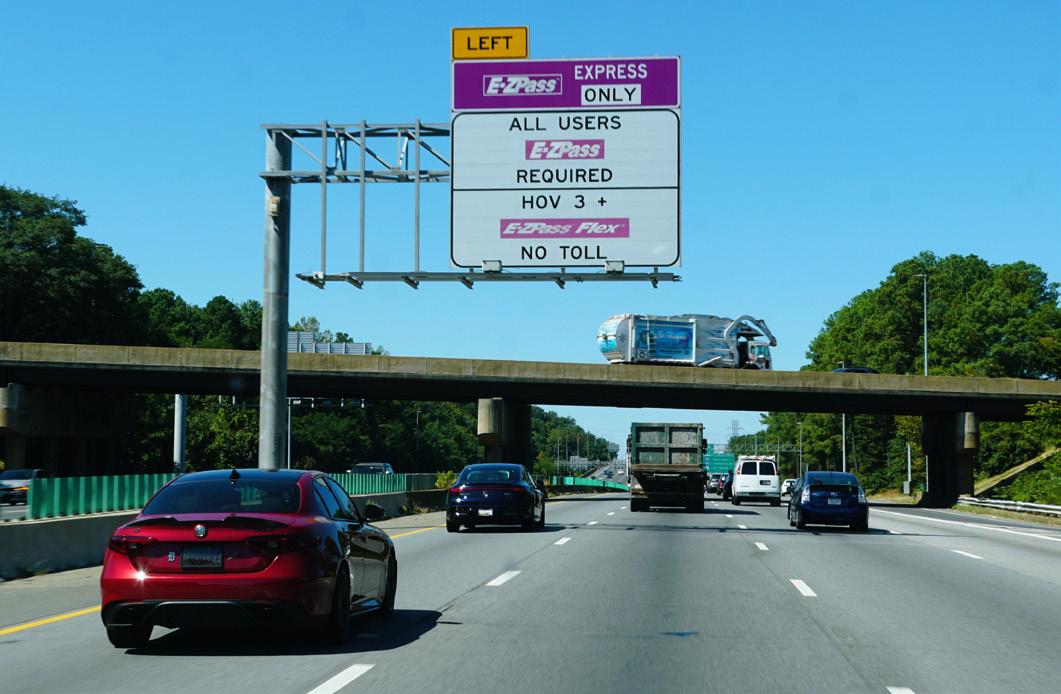
Parking that works like EZ-Pass (without the transponder)
One of the biggest behavioral shifts in transportation came from moving toll roads from cash booths to EZ-Pass-style, account-
based travel. Drivers no longer stop to pay; they simply move.
International parking systems are adopting the same model: no paper permits, no decals or hangtags, and no transponders. Instead, the vehicle itself becomes the credential. Residents, employees, and visitors hold digital permissions tied to their license plates. The system recognizes eligibility automatically and applies rules in real time. Friction disappears for both drivers and cities.
This model enables new strategies, such as park-and-walk programs, in which drivers park in designated zones and then walk or use micromobility, reducing downtown congestion without building new garages.
Smarter merchant validation for targeted turnover
Globally, parking validation is evolving from “free parking” into precision validation. Merchants can now validate specific vehicles, define time windows and custom rules, and complete validation instantly via QR code. This keeps spaces turning over, supports local businesses, and aligns parking policy with economic development — without paper chits or manual reconciliation.
Because everything is digital and auditable, cities can measure outcomes: dwell time, turnover, compliance, and even emission reductions from reduced circling, without sacrificing revenue.
Where the U.S. Is Headed in the Next Five Years
The U.S. is rapidly moving toward the same model, with strong emphasis on equity, privacy, and customer experience. Expect these changes:
● Pay-by-plate becomes the default. Physical permits and paper tickets continue to disappear, and are replaced by platebased, account-driven systems that are simpler for both users and cities.
● Automated enforcement will be used as a congestion management tool. Automation increasingly targets doubleparking, blocked curb zones, and overstays to keep traffic moving and emissions down.
● EZ-Pass-style parking permissions scale. Digital permits will become invisible to users and flexible for use by residents, employees, and events.
● Park-and-walk programs gain momentum. Downtowns, waterfronts, and entertainment districts expand park-once strategies, supported by digital permits and dynamic pricing that encourage walking and micromobility.
● Main Street becomes part of the parking ecosystem. Through validation and reservation programs, merchants and local businesses are formally integrated into cities’ parking ecosystems as essential stakeholders.
● Sustainability includes operations, not just vehicles. True sustainability means not only cleaner engines, but fewer trucks, less paper, reduced disputes, and smarter use of existing curb spaces.
The Takeaway
Around the world, cities are proving that sustainable mobility starts at the curb. By removing friction through paperless systems, automated compliance, and EZ-Pass-style parking experiences, parking becomes part of the solution rather than the problem.
The next generation of U.S. parking will be cleaner, quieter, and smarter — not because drivers are forced to change, but because the system finally works the way modern mobility does. ◆
BEATRICE HINER is the Vice President of Sales for CivicSmart and a member of the IPMI Technology Committee. She can be reached at bhiner@civicsmart.com
Leave No One Behind Barriers to Equitable Sustainable Parking & Mobility
By Conor Burke and Leslie Stone, PTMP
WHEN “SUSTAINABLE MOBILITY” IS MENTIONED, most parking and transportation professionals immediately think of zero-emission vehicles (ZEVs), trains, bike lanes, scooters, and walkable street projects. If implemented thoughtfully and operated with the community they serve in mind, these options, and a host of others, can work synergistically to reduce emissions and create healthier, greener cities. However, for our neighbors navigating their daily lives with some type of disability or inequity, sometimes these “improved” systems can feel less like sustainability and more like barriers.
When Sustainable Mobility Creates Barriers Instead of Access
Consider the implications of uneven sidewalks without navigable curb ramps, lack of multisensory wayfinding and traffic controls, and route information in shelters available only for the sighted. For the differently-abled, these challenges can be insurmountable, leaving access to a personal vehicle or isolation as the only options.
Even when providers strive to be inclusive, challenges remain. Micro-mobility options such as e-scooters or bike sharing rarely consider adaptive design, wheelchair lifts can experience maintenance issues, and on-board spaces for mobility devices can be limited. While these alternative options can be excellent for reducing carbon footprints, without proactive inclusivity, they potentially exclude those who need options the most.
Well-meaning policies can also cause unintended effects. For example, low-traffic neighborhoods sound great for cutting pollution, but if they restrict car access without offering reliable alternatives, people with disabilities can find themselves without access to needed services and important social interactions. The “first and last mile” can be particularly challenging, as getting from home to a bus stop or train station can be nearly impossible without accessible infrastructure.
Equity as Infrastructure: Designing Mobility Systems That Work for Everyone
At its core, mobility is about access to jobs, healthcare,
and social interactions. When sustainable systems fail to include the entire community, economic and social inequities are reinforced, and environmental issues may be deprioritized. Universal design is a means of creating transportation systems that work for everyone, regardless of ability. It focuses on integrating accessibility features into the design process, rather than adding them later. This approach ensures that buses, trains, sidewalks, shared spaces, and even micro-mobility options are designed to accommodate all users, making sustainability truly inclusive.
Ultimately, there is good news — conversations are happening, and solutions are being implemented. Universal design, better and more comprehensive planning, and accessible technologies can ensure that sustainability and inclusivity are not mutually exclusive. Future sustainable mobility will include accessible shelters, real-time service updates utilizing assistive AI, and bike-share programs with adaptive options, among many other emerging improvements. Most importantly, involving disability advocates in transportation planning from project inception ensures that sustainability and accessibility go hand in hand.
The Often Forgotten Few
An often overlooked population that can face barriers to entering the ZEV market are the EV owners who live in rentals, who may face limitations on their at-home charging capabilities. Today’s housing market is made up of one-third renters, two-thirds of whom own EVs.
Unfortunately, they have little to no control over the available electrical infrastructure in their rentals.
While EV owners on average charge at home 80-90% of the time, a dedicated 5% rely solely on public charging stations. As the share of EVs has grown and policy responses have built infrastructure for both property owners and renters, the renters’ side still lags. Recent studies suggest that most in the market for a new vehicle, regardless of housing situation, would consider a ZEV; however, the ceiling for at-home charging capabilities is a hurdle that must be cleared.
The Future of ZEVs
As the push towards sustainability becomes a regulatory mandate, it is important to examine some of the limiting factors. Parking and mobility professionals have implemented features for meeting these mandates in many areas. However,
not all modern living situations have adapted to the ZEV market.
Ultimately, these issues are fundamental for the parking and mobility industry, shaping both capital investment decisions and the pursuit of parking and micromobility solutions that are truly utilitarian and equitable. ◆
CONOR BURKE is the General Manager of VPNE Parking Solutions and a member of IPMI’s Allyship & Equity and Education Development Committees. He can be reached at cburke@vpne.com
LESLIE STONE is the Special Projects Manager, Operations at MV Transportation and a member of IPMI’s Allyship & Equity Committee and the Conference Program Task Force. She can be reached at leslie.stone@mvtransit.com
Why Parksmart?
By Rachel Yoka, PTMP, LEED AP BD+C
PARKSMART CERTIFICATION delivers measurable sustainability, efficiency, and operational benefits that enhance performance, reduce costs, and strengthen both community value and environmental impact. While taking the first step can feel daunting, the advantages are clearly defined within the current Parksmart standard and supported by established industry guidance.
Key Benefits of Parksmart Certification
1. Reduced Environmental Impact.
Parksmart is the only certification system purposebuilt to evaluate and recognize sustainability in parking garages. It provides a structured framework that helps facilities reduce emissions, minimize waste, and adopt greener operational practices — turning sustainability goals into measurable, achievable outcomes.
2. Improved Energy Efficiency.
Parksmart-certified garages operate more efficiently than conventional facilities by optimizing lighting, ventilation, and building materials. The updated Parksmart standard further strengthens this impact by awarding different point values based on verified energy savings, encouraging the adoption of energyefficient technologies and smarter building systems that reduce long-term energy use and operating costs.
3. Lower Operating Costs.
Efficiency improvements often translate into longterm cost savings, particularly in lighting, HVAC, and ongoing maintenance. Parksmart encourages integrated strategies, such as lighting retrofits that combine upgraded fixtures with daylight-responsive sensors and variable timers, to maximize both sustainability and financial returns.
4. Better Parking and Mobility Management.
Parksmart promotes strategies that optimize space utilization, reduce congestion, and support alternative mobility options. Features such as EV charging, bike facilities, and car-sharing programs help decrease reliance on single-occupant vehicle (SOV) trips.
5. Enhanced Community and User Experience.
The Parksmart certification framework includes measures that improve safety, accessibility, and wayfinding, strengthening community relationships while creating better experiences for drivers, cyclists, and pedestrians.
6. Future-Ready, High-Performing Design.
Parksmart provides a clear roadmap for both new and existing garages to adopt forward-thinking design and technology. The program supports sustainable mobility networks and long-term infrastructure planning that can adapt to evolving needs.
7. Recognition and Market Differentiation.
Parksmart certification signals leadership and commitment to sustainability, helping facilities stand out in the marketplace while demonstrating measurable performance and environmental responsibility.
Updates and Next Steps
The pilot Parksmart standard aligns directly with the latest version of LEED.
LEED v5 is the newest — and most transformative — update to the LEED green building rating system, emphasizing rapid decarbonization, resilience, equity, and improved quality of life. It represents the largest structural overhaul in more than a decade and aligns the system with today’s climate and industry realities.
● Decarbonization: Accelerating progress toward nearzero-carbon buildings and alignment with global climate targets.
● Resilience: Greater focus on buildings that can withstand climate, social, and economic disruptions.
● Equity and Quality of Life: Expanded attention to human well-being, community impact, and equitable access to healthy environments.
● Ecological Conservation & Restoration: Increased emphasis on biodiversity, ecosystem health, and naturebased solutions.
System-wide changes in LEED v5 include the most significant reorganization since LEED 2009, modernizing the framework and integrating new performance metrics and pathways. The update also strengthens integration with the Arc platform, a software that allows users to track, understand, and improve building and portfolio performance, enabling more streamlined documentation and ongoing performance tracking.
A Roadmap to Certification (or Just Better Design and Performance)
Whether your organization pursues Parksmart certification or not, IPMI can help you achieve meaningful sustainability improvements across your facilities and the broader community. The following steps provide a practical framework for planning and optimizing new or existing parking facilities.
Step 1: Feasibility and Gap Assessment
● Review the Parksmart Scorecard and Planning Worksheet.
● Conduct a baseline assessment of current operations and design.
Step 2: Prioritize HighImpact Measures
● Identify measures with the highest point value and lowest implementation cost.
● Focus early on lighting, ventilation, mobility programs, and management policies.
Step 3:
Implement Improvements
● Roll out operational changes first (low cost, high impact).
● Plan (and budget for) capital improvements (EV charging, solar, ventilation upgrades).
Step 4: Documentation and Submission
● Collect required documentation for each measure.
● Submit to GBCI for review and certification. If you aren’t ready to apply for certification, be sure to set your own internal goals and set KPIs to track your performance.
Step 5: Continuous Improvement
● Track performance annually (at a minimum).
● Update programs, policies, and technologies as mobility trends and best practices evolve.
Your Invitation Awaits, and Your Expertise is Needed
The next generation of Parksmart is currently in pilot and being market-tested in various industry segments. As part of this process, IPMI will host a series of roundtables and focus groups to share details and gather expert feedback prior to the official release of the version.
To request an invitation to participate in the roundtables, email parksmart@parkingmobility.org
RACHEL YOKA, PTMP, LEED AP BD+C , is Deputy CEO of the International Parking & Mobility Institute. She can be reached at yoka@ parking-mobility.org
Keep Encounters from Becoming Incidents
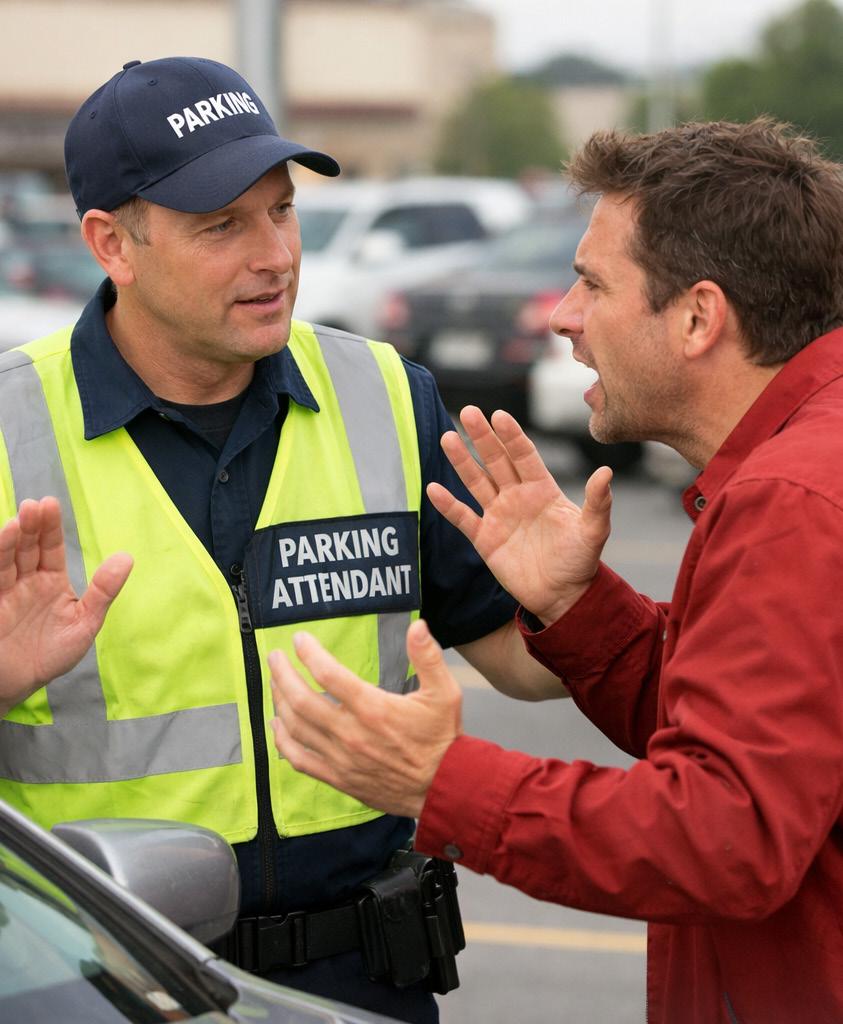
De-Escalation — Distance, Language, and Boundaries
By Captain Nick Nicholas, PECP
In the January/February 2026 edition of Parking & Mobility, we took a deep dive into situational awareness: heads up, hands free, options open. De-escalation is the next layer because awareness gives you the most valuable resources in a tense moment: time, space, and choices.
De-escalation is often pitched as “say the right thing.”
In reality, it is a sequence of small, repeatable actions that reduce risk and keep you in control, even when you cannot control the other person. Sometimes it ends with a calm resolution. Sometimes it ends with you disengaging, calling for help, or running away. All those outcomes count as success if they keep a moment of anger from becoming a moment of violence.
De-escalation Starts Before You Speak
Distance is your best friend. Your first move is rarely a sentence; it is a position. Step away to a better spot, identify your best avenues of escape, and keep your options open.
This matters at the curb and inside structures, where people get boxed in between cars, walls, pay stations, and blind corners. It also matters behind a counter, where the instinct is to stay seated and “finish the transaction” while someone’s emotions climb. When you can, stand up, create space, and use barriers and controlled access to maintain separation.
A simple internal checklist works everywhere:
● Position: one step to improve safety
● Space: widen the distance without provoking
● Plan: if this turns in three seconds, where do I go?
When you do this early, you rarely need dramatic moves later.
De-escalate Yourself Before You Try to De-escalate Anyone Else
This is the part most people skip, and it determines whether your words work.
When your body shifts into stress mode, your voice tightens, your face hardens, and your brain narrows. You start reacting. Reaction is contagious. Before you manage someone else’s emotional state, manage your own.
A three-second reset:
● Breathe on purpose: slow inhale, longer exhale
● Unclench: shoulders down, jaw loose, hands open
● Name the mission: safety and professionalism, not winning the argument
● Choose your tone: calm, neutral, controlled
Increase your parking revenue potential
Today, about 250 million personal vehicles travel U.S. roads.1 That’s millions of potential customers looking for a more convenient way to park and pay.
Accepting Discover® Network connects you to millions of loyal cardholders worldwide2 and helps deliver a more seamless payment experience to the 51% of consumers who prefer to use debit cards for everyday purchases. 3 Access the Discover Network Acceptance Toolkit to test terminals, order signage, and more.
1.Federal Highway Administration. (2023). Annual Vehicle Distance Traveled... (Table VM-1). U.S. Department of Transportation. Retrieved 05 January, 2026. https://www.fhwa.dot.gov policyinformation/statistics/2023/vm1.cfm
2.Total cards include open cards on Discover Network, Diners Club International and network alliances. Based on information provided by network participants, and RBR Data Services published as of 2024.
3.Datos Insights Merchant and Consumer Debit Industry Trends 2024 Survey commissioned by Discover Network, May 13, 2024.
Under stress, people reach for sarcasm or sharpness. Those choices can inflame the encounter and damage trust, even if you “win” the argument. De-escalation begins with you staying professional enough to think clearly.
The
De-escalation Stack:
Five Tools That Work Together
Think of de-escalation as stacking small advantages. You do not need to do all these perfectly. You just need to do a few of them consistently, while maintaining distance and an exit plan.
1. Active listening: let them empty the tank
Focus entirely on the person speaking. Paraphrase and affirm what you can. Avoid interrupting; let them express frustration fully. A simple line lowers intensity: I hear that you’re upset about the citation. Listen for the underlying issue (money, embarrassment, feeling ignored). If you can name the real concern, you can steer toward solutions.
2. Remain calm: your tone is contagious
Keep facial expressions neutral, voice steady, and body language open, so you are clearly non-threatening. Keep gestures predictable and maintain physical space — “at least six feet” is a helpful benchmark when possible. This is especially important for individuals with impairments, where calm tones and predictable movements reduce the risk of a sudden spike.
3. Empathy and validation: acknowledge feelings without surrendering facts
Acknowledge feelings without necessarily agreeing: I understand how this situation might feel unfair to you. Validate the feeling, not the behavior: I can see you’re frustrated, which is different from it’s okay to yell
4. Boundaries: calm, clear, and respectful
Boundaries are structure, not threats. State them plainly and keep your tone respectful: I’m happy to continue this conversation, but I need you to lower your voice. In lobbies, boundaries include standing up for reaction time, never allowing someone behind the desk, and calling for help early if someone refuses to leave or makes threats.
5. Redirect attention: move from emotion to next steps
Shift the focus from the emotional state to problem-solving: Here’s what we can do to address this — you can appeal the citation, and I’ll walk you through the process. Even when you cannot fix the issue on the spot, you can give the next step and a path forward.
Non-verbal Communication, Silence, and the Power of Space
Use non-threatening gestures, such as nodding and keeping hands visible, to convey openness and reduce anxiety. Do not be afraid of silence. Sometimes silence is an opportunity to breathe. A brief pause gives you time to reset and prevents you from saying something you cannot take back.
Knowing When to Call for Help, and When to Leave
Know when to ask for help. There is no shame, and the request should come sooner rather than later. Sometimes the correct deescalation choice is not more talking, it is leaving — especially if your physical safety is at risk. Know when to escape and run. In the field, that might mean moving toward populated areas, better lighting, cameras, or a partner. In an office, it may mean moving toward a pre-planned escape route, locking a door, and calling for assistance.
Putting it All Together
De-escalation is a skill set. Create distance early. De-escalate yourself so you can respond instead of react. Stay calm, listen actively, and reflect concerns. Show empathy while setting firm boundaries. Use neutral tone and language to avoid emotional escalation.
Ask for help early. Leave when leaving is the safest move.
Our column in the last issue was about noticing sooner; this column is about responding smarter. In the next installment, we will continue building the playbook with advanced concepts to keep you safe and well.
Disclaimer: This column shares general safety concepts and does not replace agency policies, procedures, or training. Strategies are not universally applicable; assess local conditions and adapt to your jurisdiction, facilities, staffing, and agreements. Behavioral descriptions are for situational awareness, not diagnosis or legal advice. When in doubt, choose distance, dignity, and policy compliance.
NICK NICHOLAS, PECP , is a Captain with the City of Seal Beach, CA, Police Department and a member of IPMI’s Policy & Legislative Cohort. He can be reached at nnicholas@sealbeachca.gov
Removing the App Barrier
How TEXT-TO-PAY™ Increased Compliance to 93%
By Amanda Zimmer, Director of Marketing, IPS Group, Inc.
One West Coast–based private operator recently explored the approach of deploying IPS TEXT-TO-PAY™ alongside a traditional parking app within the same lot. Within two months, text-based payments accounted for 72% of all mobile transactions, proving that when payment is fast and intuitive, drivers adopt it.
Mobile payments are most effective when friction is removed. App downloads, account creation, and logins can be barriers for many parkers. Especially in time-sensitive parking environments.
Text-based payments remove these barriers entirely. By enabling drivers to pay via SMS and a web browser, operators deliver a faster, easier, and more convenient experience that drives adoption, improves compliance, and keeps parking moving.
CHALLENGE: A Friction-Filled Parking Experience Drives Inconvenience and Non-Compliance
Requiring a single mobile app to pay for parking creates unnecessary friction at the curb. What should be a quick, seamless transaction instead becomes a time-consuming obstacle - searching for an app, downloading it, creating an account, and navigating an unfamiliar interface. For short stays or one-time visits, parkers are left asking, “Is this worth the hassle?”
For many, the answer is no. International visitors face app store restrictions that can make downloading an app impossible, while less tech-savvy users struggle to complete the process at all. When payment takes longer than the parking session itself, the experience feels inconvenient rather than elevated. This friction has real consequences. Faced with delays and barriers, quick parkers may choose to risk a citation rather than pay, while others avoid the location altogether. Without an accessible alternative way to pay, operators lose revenue, and enforcement becomes harder, turning what could have been a simple transaction into a liability for both operators and parkers.
SOLUTION: Multiple Payment Options Boosts Convenience and Compliance
TEXT-TO-PAY was quick and easy for the operator to deploy. IPS provided turnkey set-up complete with clear, customized signage, dependable backend support, and complimentary training for a seamless upstart within the IPS Data Management System. The client deployed TEXT-TO-PAY™ alongside the IPS MSX Multi-Space Kiosk to facilitate a more convenient experience for everyone, including parkers who prefer physical payment infrastructure.
With fewer barriers, it’s just as easy for parkers: no app download or account creation needed. Customers simply scan a QR code or text PAY to 77447 and enter a zone number to receive the secure payment link. TEXT-TO-PAY takes less than a minute! Plus, the system automatically sends a digital receipt and expiration reminder with an option to remotely extend the session.
Even when we were new to the system, we looked like experts because we had such great support.
IPS is just an email or quick phone call away, and we get help immediately. We’re not waiting hours or days to get a response.”
“With TEXT-TO-PAY, you don’t have to leave your car. You can do everything while you’re sitting there. That’s valuable, especially in bad weather or areas where people may not feel safe pulling out a credit card.” Just like IPS, our client recognizes that customer convenience and comfort are key drivers for compliance.
“When we only offered mobile app payments, our compliance was less than 70%. Now, with the IPS MSX kiosk and TEXT-TO-PAY, we’re at 93% compliance.”
Skills That Go the Distance Turning Parking Experience into Career Momentum
By Kathleen Laney
IN THE PARKING WORLD, managing chaos with ease is just another day on the job. Parking and mobility professionals must master a wide range of skills, ranging from daily operations and tech-savvy problem-solving to diffusing customer frustrations and financial management. However, many in our industry fail to fully appreciate how valuable and transferable these skills are.
If you’re feeling stagnant in your current role or simply want to safeguard your career for a long and bright future, it’s time to recognize the breadth of your experience and learn how to leverage it for career advancement.
The Diverse Nature of Parking Roles
Parking isn’t just about storing cars and issuing citations. Those working in parking, transportation, and mobility often handle a wide range of responsibilities, such as:
● Operations & Logistics: To make a parking operation successful, industry professionals are involved in everything from managing facilities to staffing and day-to-day execution.
● Technology Integration: Whether it’s overseeing hardware, software, mobile apps, or payment systems, parking now relies heavily on technology.
● Customer Service & Public Engagement: The diplomacy and tact required to navigate complex public interactions is no small feat.
● Finance & Budgeting: From monitoring revenue to predicting future needs and overseeing capital projects, parking professionals can’t help but develop strong financial management skills. Each of these areas fosters skills applicable across many fields. The real challenge is recognizing and redefining them.
Identifying Transferable Skills
If you’re managing assets for a university, city, airport, or commercial property or implementing a new parking revenue control system (PARCS), your work
isn’t confined to a single discipline. It’s strategic, crossfunctional, and carries meaningful influence.
Many parking professionals already have a strong foundation of transferable skills. Whether they’re forecasting demand or planning a new facility, they think several steps ahead. They know how to bring together diverse departments such as IT, enforcement, finance, and customer service and guide them toward a shared goal. When working with others, they balance the interests of city councils, vendors, and other key stakeholders with confidence and clarity.
These are not just parking professional skills. These are leadership skills.
Career Pathways and Pivots
Recognizing transferable skills can open a whole new world of opportunities. One path forward might be to focus on growth within parking, advancing from midlevel management to director or VP roles, exploring sales or consulting, or even moving between the public and private sectors.
Another direction is to transition to an adjacent industry, seeking out opportunities in smart city initiatives, mobility-as-a-service ventures, real estate, or facilities management.
Tech skills are great for trying out the vendor side of the business. Consider roles in sales, customer success, product management, or operations at parking, transportation, and mobility tech firms.
Packaging and Marketing Your Experience
Understanding your own experience is important but positioning it with purpose is what sets you apart.
They stopped seeing their work as ‘just parking’ and started to appreciate the full scope of their experience. These are not just parking professional skills. These are leadership skills.
Begin by identifying key accomplishments and clearly defining goals. Whether pursuing a new role, exploring a different direction, or aiming for leadership, knowing what you want helps you communicate your value more effectively. Update your resume and LinkedIn to showcase results, not just responsibilities. Frame your career as a story of growth, with each step building on the last. Strengthen your skills where needed through courses or mentorship, and make yourself visible by engaging in industry events, associations, and online conversations. Be ready to tell your story in a way that resonates.
Real-World Examples
Need some examples? Consider these individuals who turned their parking backgrounds into career advancement:
● A municipal parking manager transitioned into a customer success position at a mobility tech firm.
● An enforcement supervisor parlayed their operational knowhow into a strategic consulting role.
● A parking operations director now runs sales at a parking technology company.
The common thread? They stopped seeing their work as “just parking” and started to appreciate the full scope of their experience.
Final Thoughts
The parking industry can be a launchpad for career growth, not a dead end. The skills developed in overseeing complex operations, embracing new technologies, and navigating publicprivate partnerships are exactly what employers in the parking and mobility sector are looking for.
What are you waiting for? Take the wheel of your career. ◆
KATHLEEN LANEY is President of Laney Solutions. She can be reached at kathleen@laneysolutions.com
EXPERTS ASK THE
What is the most impactful step to move toward a more sustainable future?
What is the most impactful step parking and mobility professionals can take today to move cleaner and smarter toward a more sustainable future?
Tony Jordan President Parking Reform Network
Always keep the pedestrian, shared mobility, and shorter trips at the top of mind. A sustainable future is going to be very tough to achieve unless we shift away from the individually owned and operated car focus of the last 60+ years. Managing existing parking resources properly can facilitate that shift, sticking with the status quo will make it impossible.
Maria Tamayo-Soto, PTMP
Parking Manager
City of Las Vegas, NV
The parking industry should focus on using policy and data to reduce unnecessary driving. If we manage parking supply, pricing, and access appropriately based on real demand, we can reduce congestion, lower emissions, and encourage cleaner travel options. Supporting shared mobility, EV infrastructure, and technology that improves turnover and wayfinding will assist drivers park faster and drive less. The most impactful step is making intentional, datadriven decisions that align our parking operations with sustainability goals while meeting the needs of our communities.
Fernando Sanchez
Integrated Design Director
McCarthy Building Companies, Inc.
The most impactful step we can take today is to champion project-level decisions that treat parking as a strategic support for regional mobility and economic goals, especially in complex, dense markets like California’s Bay Area. By right-sizing and locating facilities so they complement transit, walking, biking, and shared mobility, using tools like Parksmart and careful functional and aesthetic design, professionals can help developers and owners make thoughtful, incremental progress. When we approach projects with this in mind, parking begins to stitch together into a cleaner, lower-carbon regional system rather than a series of isolated facilities.
Debbie Lollar, PTMP
Associate Vice President
Texas A&M University
Transportation Services
To move toward a more sustainable future from our current stage of development of our rural campus and community, we are focused on growing relationships and partnerships with our cities, Metropolitan Planning Organization, and Department of Transportation to create collaborative projects that provide better infrastructure to help our constituents more easily choose a lower carbon footprint for getting to and from campus. On campus, we completed five projects this past year that set the example for improving space and separation for multiple transportation modes.
HAVE A QUESTION? Send it to editor@parking-mobility. org and watch this space for answers from the experts.
Gary A. Means, PTMP
Executive Vice President
Pivot
Parking
The most impactful step can be summed up in one word: flow. We should enhance vehicular flow through prepay systems and park-then-pay options, with express exits to reduce congestion and emissions, while also preventing the discharge of contaminated runoff from stormwater and facility washdowns. Focusing on both types of flow can drive cleaner, smarter, and more sustainable operations.
Richard Chaves President/CEO
Parking Company of America (PCA-KC)
The most impactful step parking and mobility professionals can take today is to operate parking smarter by actively managing demand in dense urban cores rather than simply adding supply. In downtown markets like Kansas City, where offices, events, housing, and entertainment overlap — using real operational data to reduce circulation, idle time, and confusion at entry points immediately lowers emissions and improves the experience for drivers and cities alike. Cleaner outcomes are achieved when parking is treated as a dynamic system that adapts to how people move across multiple markets, rather than as a static piece of infrastructure.
Lisa Copeland, PTMP
Associate
Director
for Data & Administration
Old Dominion University
Transportation & Parking Services
An important step that parking and mobility professionals can take today to move towards cleaner and smarter operations for a more sustainable future is to offer options. There is no one-size-fits-all solution, so we need to allow our constituents to make their own choices, knowing that those choices will vary from person to person and possibly day to day. We all feel empowered when we have choices to make.
Julie Dixon President Dixon Resources Unlimited
If we want a sustainable future, we need to focus on the legislation. Without legislative updates, we are limiting our capabilities and handcuffing our futures.
Mark A. Vergenes Consultant MIRUS Consultants LLC
Most Impactful? Engage, and work with your community, you can’t do it alone, all need to be rowing in the same direction. Additionally, use pricing and policy to encourage mode shift, deploy smart parking tech to cut emissions, and integrate parking into a multimodal master plan.
Nancy Kobielski
Associate Director, Business Services and Communications University at Buffalo
Education is the most effective step we can take as a parking and mobility professional. By understanding new programs, trends, and community needs, we can explain to our communities how these initiatives support a sustainable future. When they understand the purpose and long-term benefits, trust grows and meaningful change becomes possible.
Jono Clark
Technical Partnerships Manager
Unity5
The future of mobility isn’t built in isolation — it’s built on integration and partnerships. As an industry, creating an open data ecosystem, uniting real-time parking and curbside insights with EV infrastructure, enabling us to transform ‘isolated assets’ into intelligent transit systems. If we collaborate, bringing modern tech together with data insights, we can deliver better user experiences, improve journeys, and make sustainable travel available to everyone.
2026 WebinarLeadership Series
The series includes all 2026 webinars. Complete the full series to earn a Certificate of Completion and 6 Certification Points.
Register today and train your team all year long!
JANUARY 14
Discover Your Leadership Edge
(Will be available online.)
MARCH 11
The Future Is Now: Understand How to Leverage AI in Your Operations
MAY 13
Strategic Thinking:
Taking Operations to the Next Level
JULY 8
The Full Lot: How Your Leadership Capacity Impacts Team Flow
SEPTEMBER 9
Leading with Authenticity: The Power of Introverted and Extroverted Leadership
NOVEMBER 18
Communicating Through Change: Leading Teams and Customers with Clarity and Confidence
Matt Sumpter Engineer Kimley-Horn
There’s no single silver bullet. The most impactful step is the next one each of us takes — and keeps taking. Progress comes from many small, varied contributions, starting with reflection: Where can I reduce impacts and champion smarter choices? For me, that means designing lower-carbon concrete and using cementitious materials such as Type IL (portland-limestone) cement. It also means deploying technologies that cut idling — real-time space detection and operational practices that reduce emissions. Bottom line: there’s no “right” answer; we all have a role, and together, those practical steps will move us toward a sustainable future.
Zac Ryan General Manager, Ground Transportation and Parking Calgary Airports
Use the fee structure to drive sustainability. We offer lower GT fees for electric and hybrid vehicles, while charging more for oversized and high-emission vehicles. We have already applied this for TNCs, with lower fees for green options and higher fees for XL. This strategy reduces emissions, encourages adoption of sustainable choices, and positions the organization as a leader without compromising revenue. On the parking side, we offer 21 EV chargers at no additional charge, giving EV users peace of mind when parking at the airport.
Patrick Robbins Solutions Leader TAPCO
Taking a digital-first approach in the parking and mobility industry has a significant impact on creating a cleaner, smarter future. By utilizing realtime parking occupancy data, accurate parking availability information can be delivered to drivers, reducing unnecessary circling and, in the long term, emissions. Parking occupancy data also allows parking professionals to analyze lot occupancy trends to plan for peak parking demand without adding more pavement, while saving green space.
Position Yourself as a Thought Leader
We are building our Parking & Mobility magazine “Ask the Experts” resource list for 2026, and we invite you to join and share your expertise. Our experts will be emailed six times in 2026 to answer a question related to the theme of the monthly magazine edition. Throw your hat in the ring and become a trusted resource for the parking, transportation, and mobility community.
Email editor@parking-mobility.org to be added to the Ask the Experts list.
What’s Your Next Step?
“Parking is more than a place to stop; it’s a vital part of mobility and customer experience.
The PTMP credential empowers you to lead the future of parking and validates your expertise in a rapidly evolving landscape.”
Rami Arafat, PTMP, MBA
Sr. Division Manager
ParkHouston, Texas
Scan the qr-code to find out why Rami earned his PTMP and how it impacted his career.
Speed, Safety, and Long-Term Resilience
By Mickey Ankhelyi, AIA
Reimagining Parking Delivery at the University of California, Berkeley
GROWING STUDENT POPULATIONS, sustainability mandates, and increasingly complex construction environments are prompting higher education institutions to rethink not just what they build but how they build it.
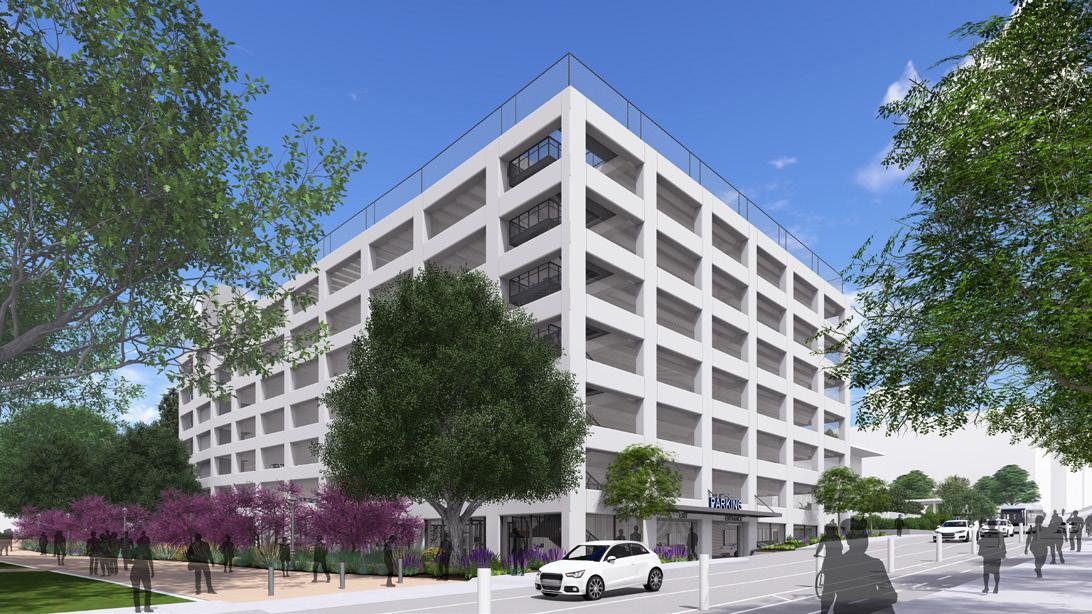
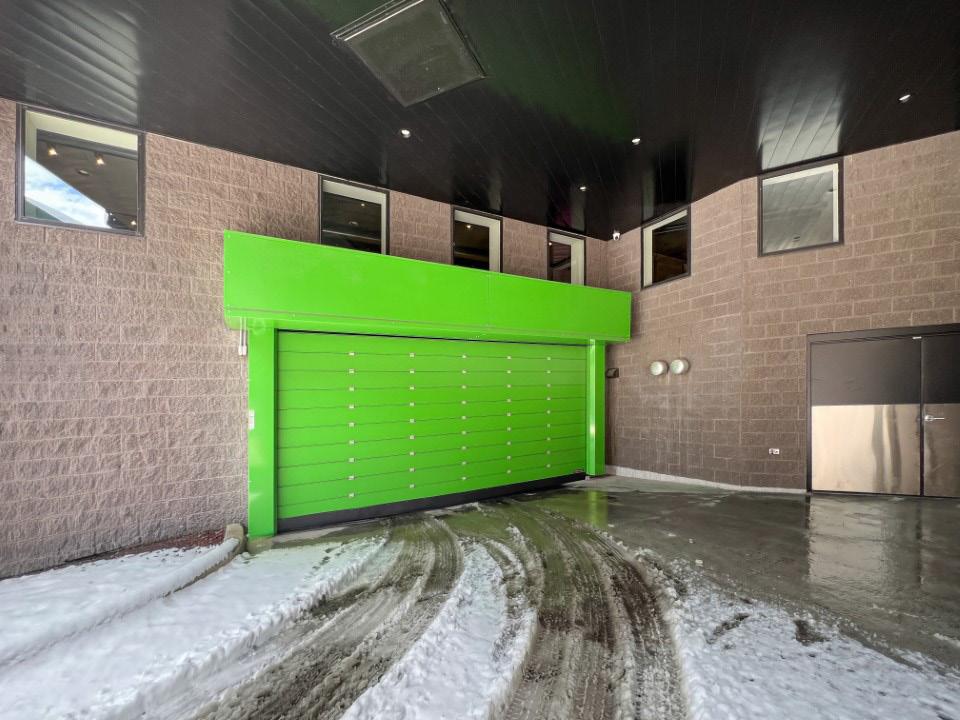
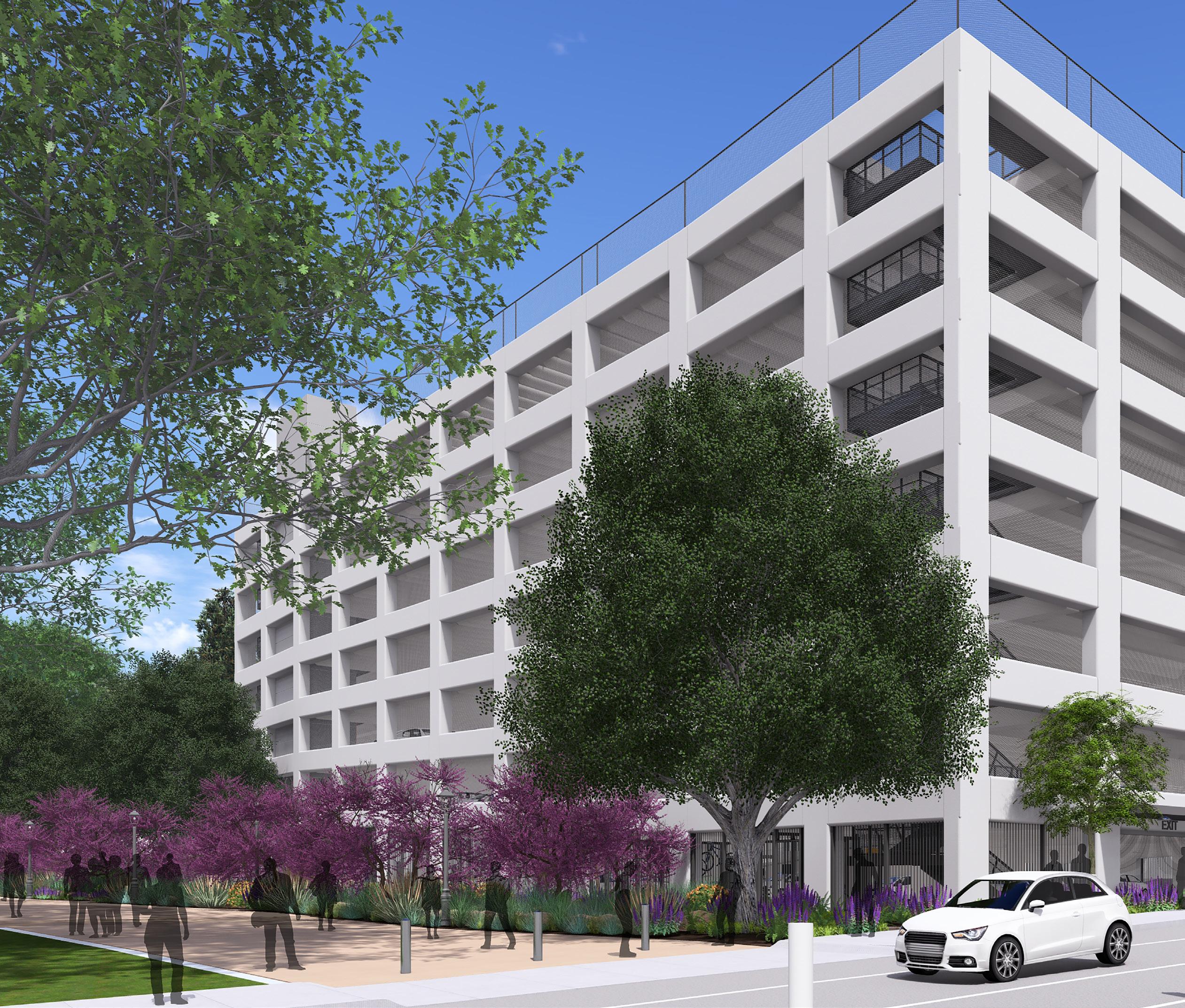
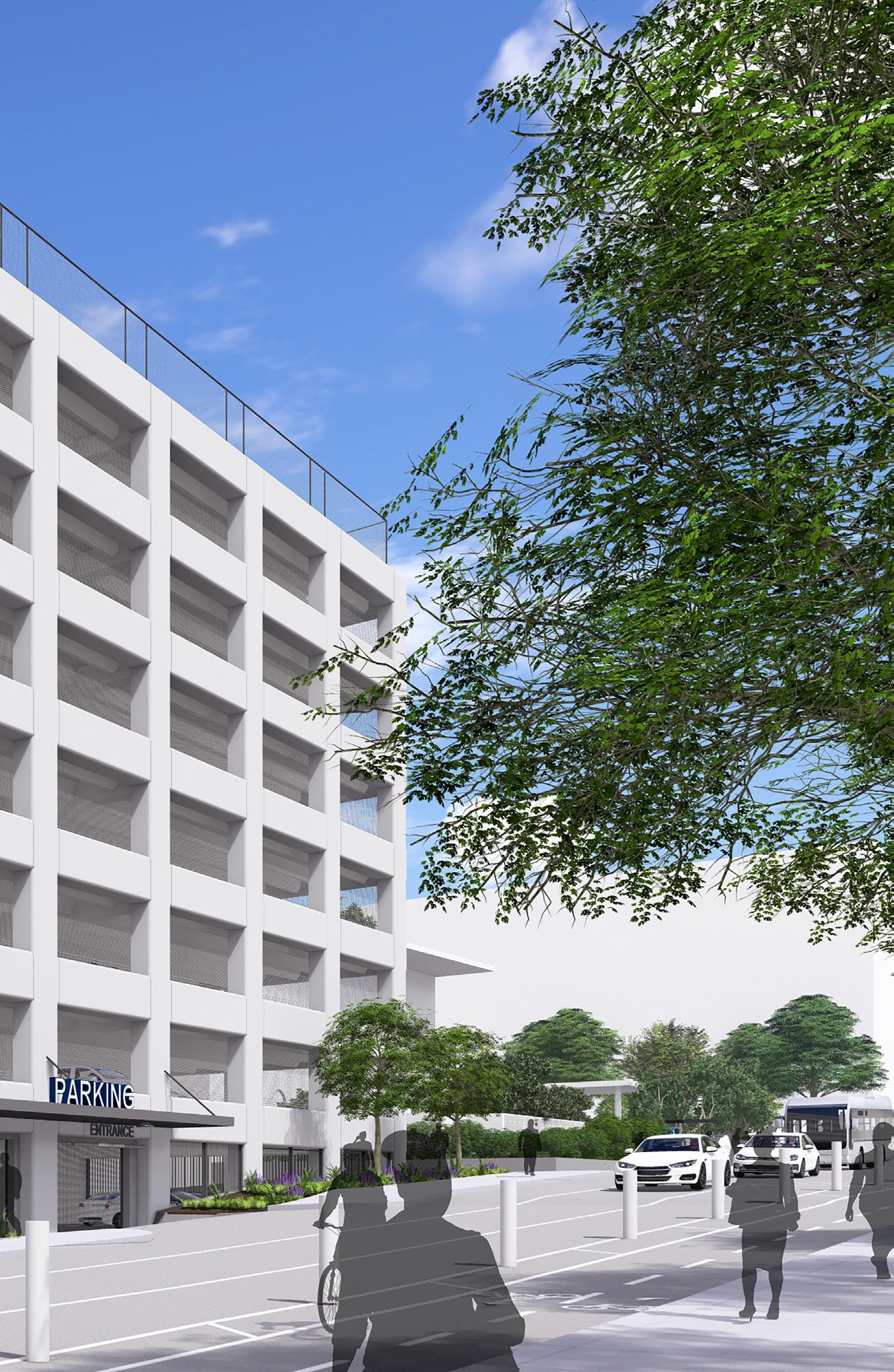
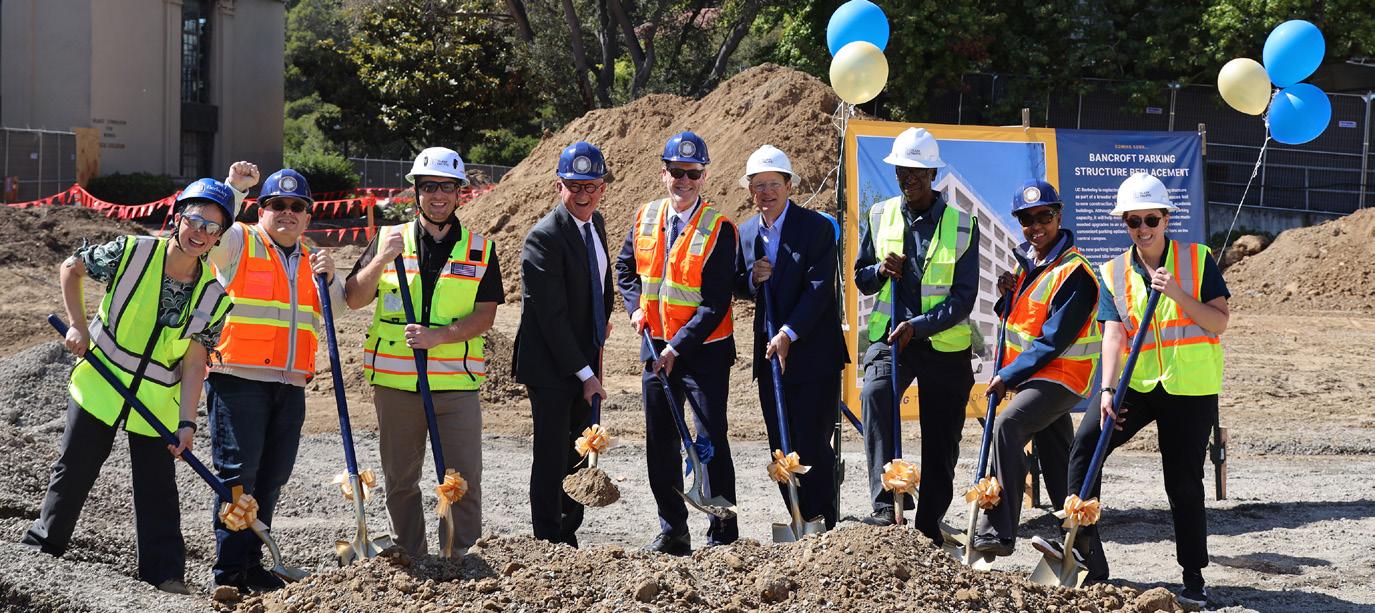
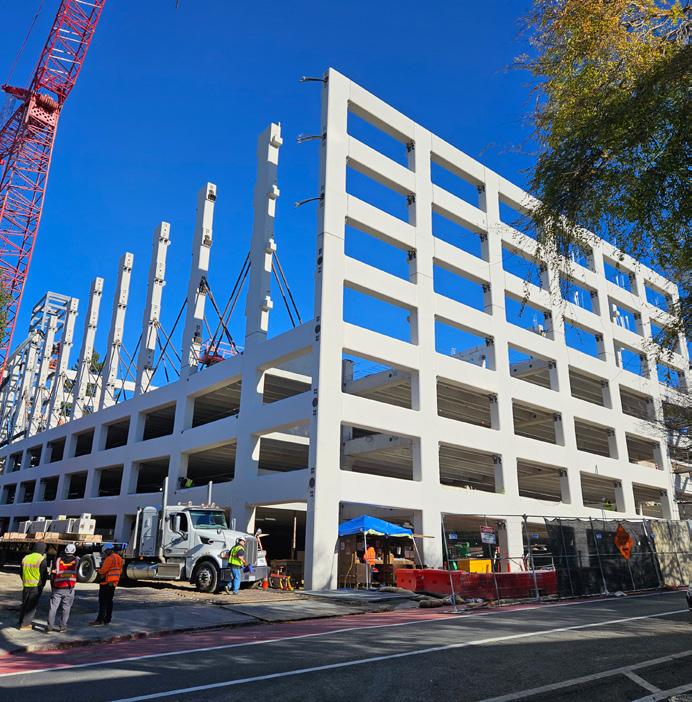
At the University of California, Berkeley (UC Berkeley), the development of a 663-stall Bancroft Parking Structure illustrates how higher education institutions are reconsidering longstanding assumptions about construction methods. Prompted by declining inventory, the structure has evolved into a blueprint for delivering critical infrastructure faster while also prioritizing seismic resilience, sustainability, and aesthetics.
feat,” said Seamus Wilmot, Assistant Vice Chancellor and Executive Director of Business Operations for UC Berkeley’s administrative division.
Another challenging aspect is the project’s tight construction window. With multiple campus projects already consuming parking inventory, the 2026 Fall semester was on track to mark the University’s lowest parking availability to date.
“We knew that if this structure wasn’t ready by the start of the Fall semester, the impact to campus would be severe,” said Wilmot.
Seeking to meet the project’s complex demands, the University treated the construction method as a strategic decision rather than defaulting to traditional methods.
Prefabrication as a Strategic Delivery Method
Defining the Modern Campus Parking Structure
From the outset, UC Berkeley was clear that the new parking structure would do more than simply accommodate vehicles. It would be a long-term campus asset and meet several performance goals:
● High parking capacity in a compact footprint
● Visibility and situational awareness on each level, from one end to the other
● Intuitive circulation paths to help reduce confusion and improve egress
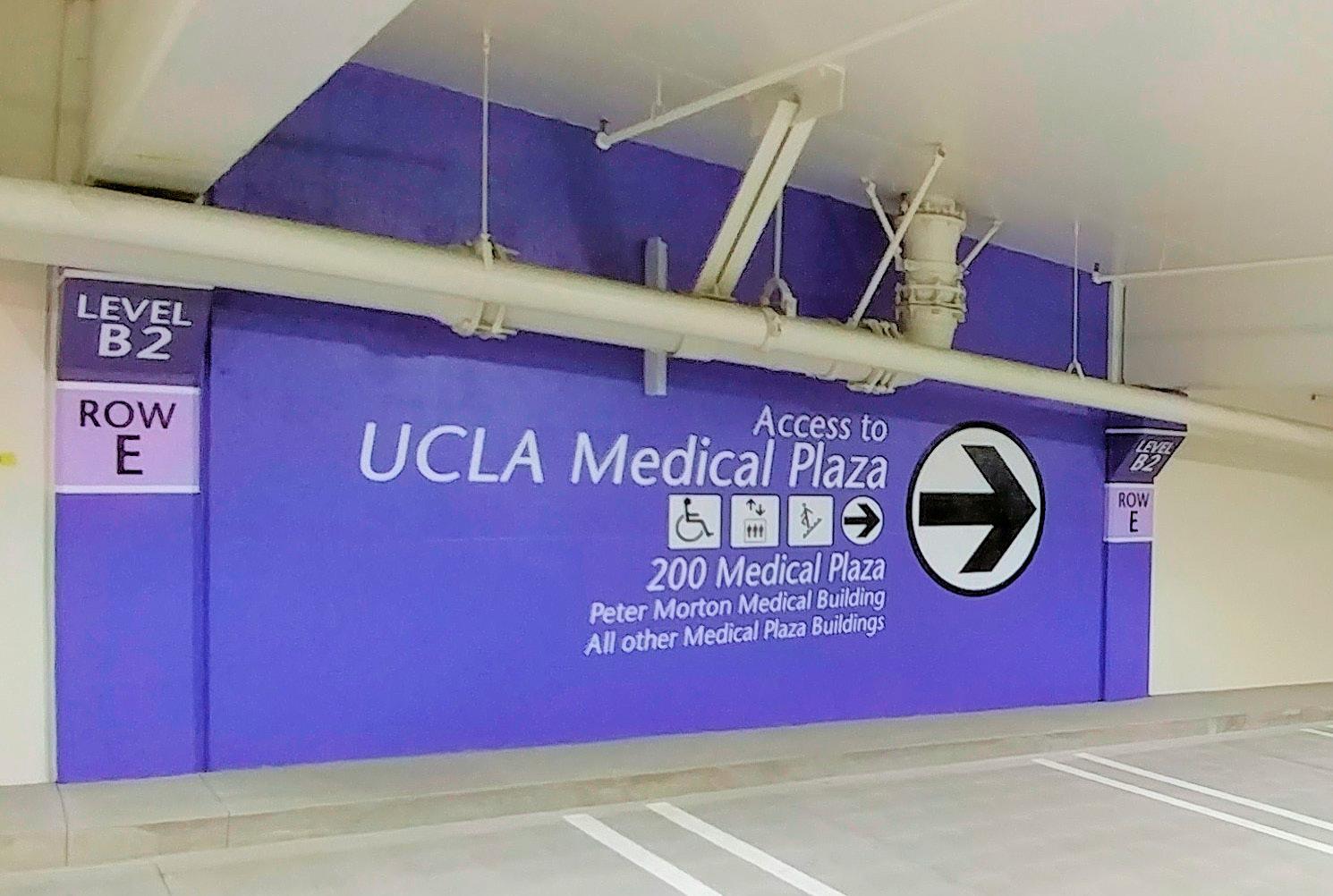
● Smart parking technology, including occupancy detection and guidance systems
● EV readiness, with charging available at opening and infrastructure for expansion
● Seismic resilience for safety and post-event functionality
● Flexibility to enable future integration with campus energy systems
While the parking structure’s location on campus, adjacent to one of the city’s major thoroughfares, makes it well-suited to serving students, faculty, and visitors, it also complicates construction.
“Building a large parking structure in the heart of campus safely and with minimal disruption to students, faculty, and city traffic is no small
After evaluating multiple delivery methods, UC Berkeley decided to pursue prefabricated construction and engaged Clark Pacific, a Sacramento-based designbuild manufacturer that specializes in prefabricated building systems.
“We were familiar with prefabrication from other projects on campus, so we made it part of the conversation from the very beginning,” said Wilmot. “We wanted prefabrication to be a real option, not an afterthought.”
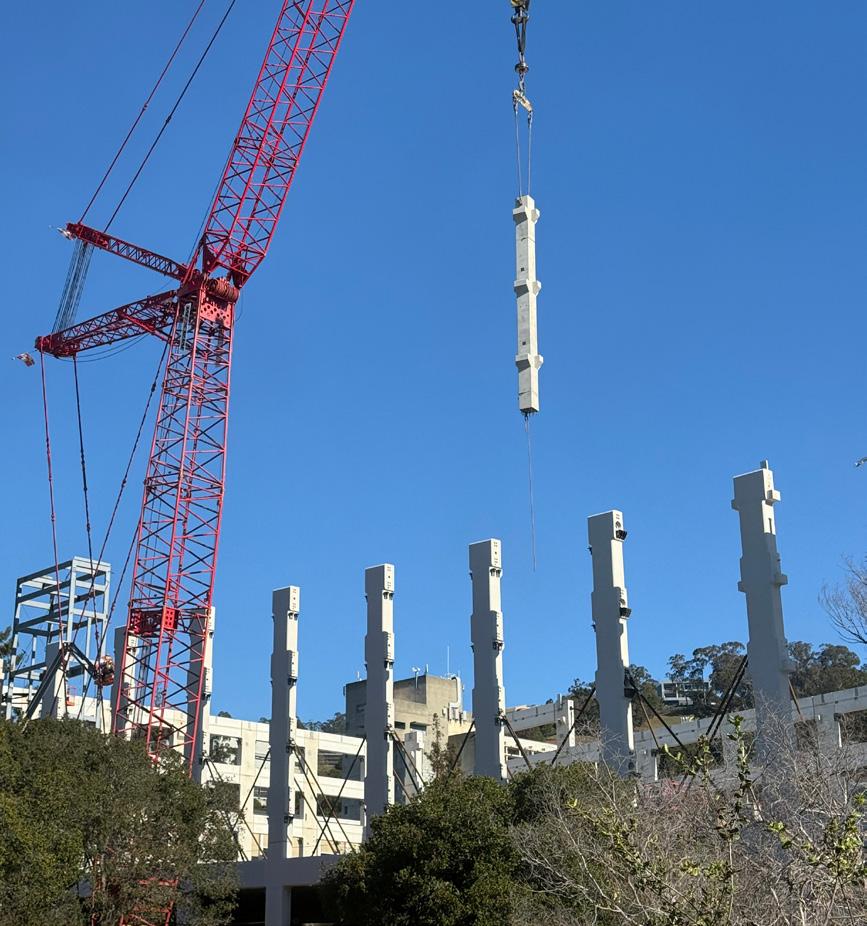
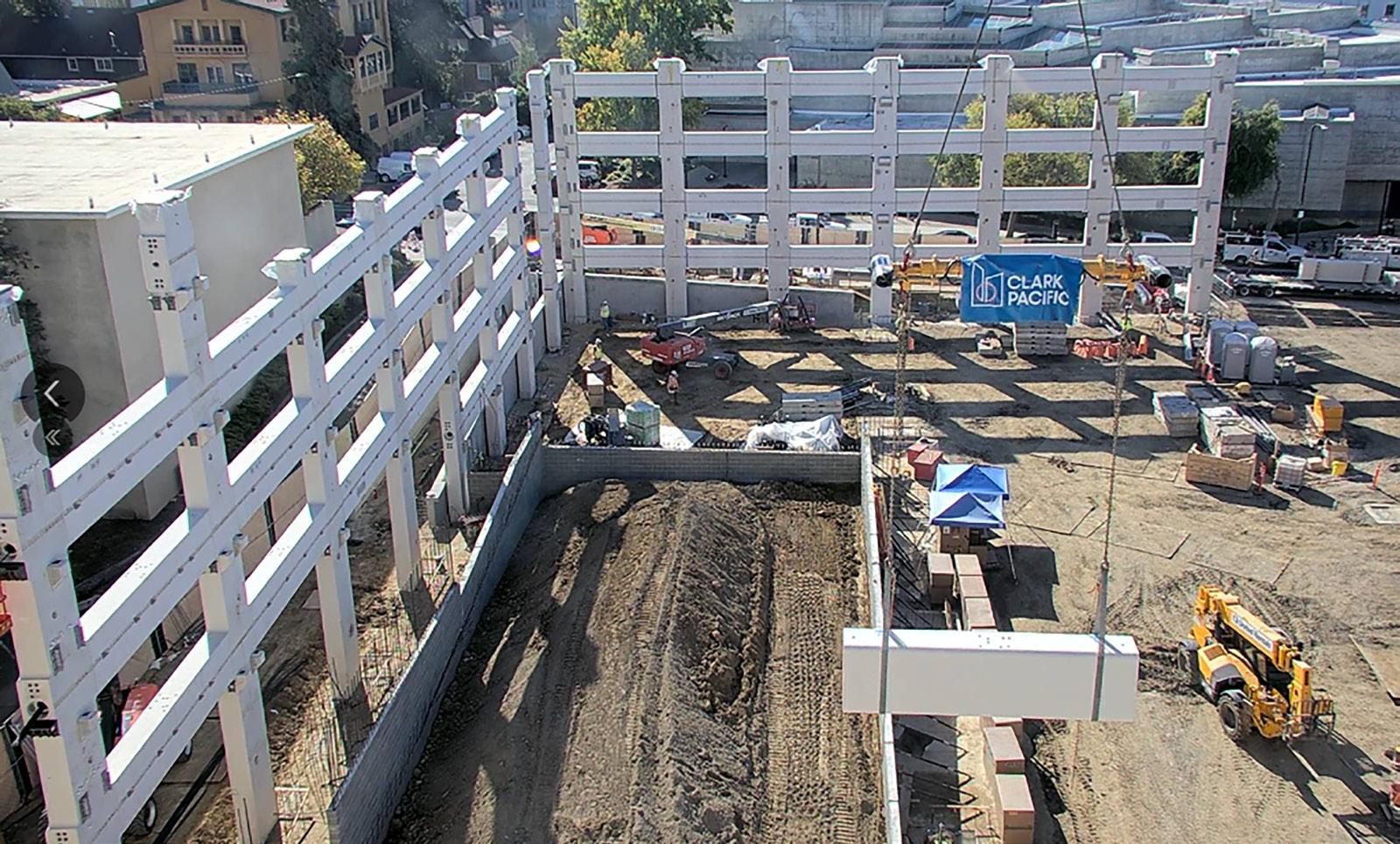
The appeal was both practical and strategic. With prefabrication, most heavy work is completed offsite, allowing site preparation and foundation work to proceed in parallel with manufacturing.
“In a dense campus environment where road closures, noise, and equipment staging can ripple far beyond the jobsite, it gave us peace of mind knowing that most of the heavy work would happen off-site,” said Wilmot. “Instead of cement trucks pouring for hours on end, we would have trucks arriving, pieces being set, and trucks leaving.”
Benefits of a Single Source Provider
Working with a consolidated project team helped reduce coordination complexity and maintain alignment across design, fabrication, seismic engineering, and installation. The design-builder served as the architect of record, manufacturer, and general contractor.
“With one team responsible for design, manufacturing, and delivery, we weren’t managing multiple separate entities,” said Wilmot. “We spent less time coordinating, tracking down information, and problemsolving. It was seamless.”
The team’s parking access and revenue control system (PARCS) played a central role in shaping the project. PARCS, a structured, front-end design process based on proven standards and prefabrication strategies, brings architects, engineers, manufacturers, and the project owner together early, before fabrication begins.
Rather than advancing a single design in isolation, the team explores multiple architectural and structural options side by side to evaluate constructability, cost, schedule, seismic performance, and aesthetics simultaneously.
For UC Berkeley, this meant the ability to test different layouts, structural systems, and facade concepts in real time and understand the implications of each choice immediately. “The early collaboration was a big benefit for us,” said Wilmot. “We were able to see options, ask questions, and get instant feedback instead of waiting weeks for answers.”
According to Wilmot, the handson process allowed teams to address challenges before construction, such as when crane-lifting requirements for large precast elements revealed that a visible seam would appear on the front facade. “It was important that we figure out a way to make sure the seam wasn’t visible,” said Wilmot. “The design-build team dug in and came back with a solution. To us, this illustrates the value of a highly collaborative process.”
By resolving issues early, UC Berkeley avoided rework, delays, and added disruption. The result is a parking structure that meets architectural expectations while fully leveraging the rapid delivery and cost certainty benefits of prefabrication.
Sustainable Design Considerations
Sustainability was a core consideration throughout the project. During procurement, UC Berkeley specified that the parking structure would pursue Parksmart certification, targeting a silver rating or higher.
“There are many factors that go into Parksmart, so we made sure sustainability was part of the conversation from the beginning,” said Wilmot.
Beyond certification, the structure was designed to support long-term campus
sustainability goals. EV charging would be available on day one, with electrical infrastructure size to double capacity as demand grows, avoiding future trenching, demolition, and construction impacts.
The structure is engineered to support future rooftop solar installations, recognizing the value of parking structures as renewable energy platforms and land-constrained environments.
In addition, it was designed to accommodate mechanical cooling towers for the University’s forthcoming clean energy plant. “The cooling towers needed to be adjacent to the energy plant, and the parking structure turned out to be the perfect location,” said Wilmot. “It was quite a challenge to design the structure to handle that load.”
Seismic Resilience without Compromise
In California, seismic performance is non-negotiable, and at UC Berkeley, every major project is also reviewed by a dedicated seismic committee.
The Bancroft Parking Structure utilizes the design-builder’s precast hybrid moment frame as the lateral resistance system. Unlike conventional systems that dissipate earthquake forces through yielding, the precast hybrid moment frame uses elastic, unbonded post-tensioning to restore the structure to its original alignment after a seismic event.
“A lot of parking structures are designed so people can get out safely after an earthquake,” said Wilmot. “The precast hybrid moment frame gave us confidence that people could evacuate safely, and the structure could get back up and running quickly.”
Because the system provides seismic resistance without requiring interior shear walls or cross-bracing, it enables long,
open sightlines from one end of each level to the other, improving situational awareness and safety.
Advice and Lessons Learned
The Bancroft Parking Structure was designed and manufactured in just 14 months. Prefabrication allowed for most of the structure to be manufactured off-site before breaking ground. Construction is on track for completion in July 2026.
Wilmot advises organizations planning new construction to challenge assumptions and weigh every option early in the process. “For example, don’t ignore prefabrication,” he said. “Make it part of the bid process.” He also emphasizes the importance of partnership. “No matter how well you think you’ve designed something, challenges will come up. Having a trusted partner and a collaborative process makes all the difference.”
Wilmot also notes that the Bancroft project illustrates just how far prefabrication has evolved. “There is still a misconception that prefabrication isn’t suitable for seismic zones,” he said. “While that might have been true decades ago, it’s not true today.”
As campuses continue to modernize parking infrastructure, the Bancroft project offers insight into what can happen when assumptions are challenged, collaboration is prioritized, and parking structures are treated not as functional necessities but as long-term assets.
MICKEY ANKHELYI is the Director of Architecture at Clark-Pacific. He can be reached at mankhelyi@ clarkpacific.com
Sustainable Campus Parking Design Tips
Reducing Environmental Impact
By Beth Bryan, PE, STP
Sustainable Campus Parking Design Tips
By Beth Bryan, PE, STP
HE NEXT TIME YOU ARE STUCK IN TRAFFIC
during your daily commute, take a moment to safely assess how many vehicles near you have only a single occupant. According to 2025 data from the U.S. Census Bureau, nearly 114.5 million people commute daily in single-occupant vehicles. Despite efforts by many state Departments of Transportation to encourage carpooling through high-occupancy vehicle lanes, approximately 70% of U.S. workers drive to work alone — a figure that has remained consistent from 2023 to 2025.
A typical single-passenger vehicle emits about 4.6 metric tons of carbon dioxide per year. Per the U.S. Environmental Protection Agency, transportation, including vehicles, aircraft, and rail, accounts for nearly 28% of total greenhouse gas emissions in the United States. This evidence clearly supports the fact that single-occupant vehicles and other modes of transportation may not be the most sustainable way to move people or goods. However, the nation relies on these transportation methods, so the question remains: despite the influx of electric vehicles, what can be done to encourage other modes of transportation? In terms of design, how can campus, building, and property owners develop or reconfigure their sites to encourage people to drive less and use more sustainable modes of alternative transportation more frequently?
Why Parking Placement is Critical
To be good stewards of natural resources, sustainability should be at the forefront of campus planning, especially regarding parking structure placement. The location of a parking structure on a campus should be addressed very early, ideally during the design and planning phase, so that any major changes to the campus design will
Walmart Home Office Campus
result in a minimal impact on the project budget. While each campus is unique, there are universal elements that can be addressed during the design phase to create a more sustainable campus.
One example is the placement of parking structures along the campus perimeter. Not only does the placement of parking structures on the edges of campus make them easier to find, but it also gets drivers out of vehicles faster and encourages them to use more sustainable modes of transportation to reach their destination. There is also much less vehicular traffic on campus as drivers look for surface-street parking, making it safer for pedestrians.
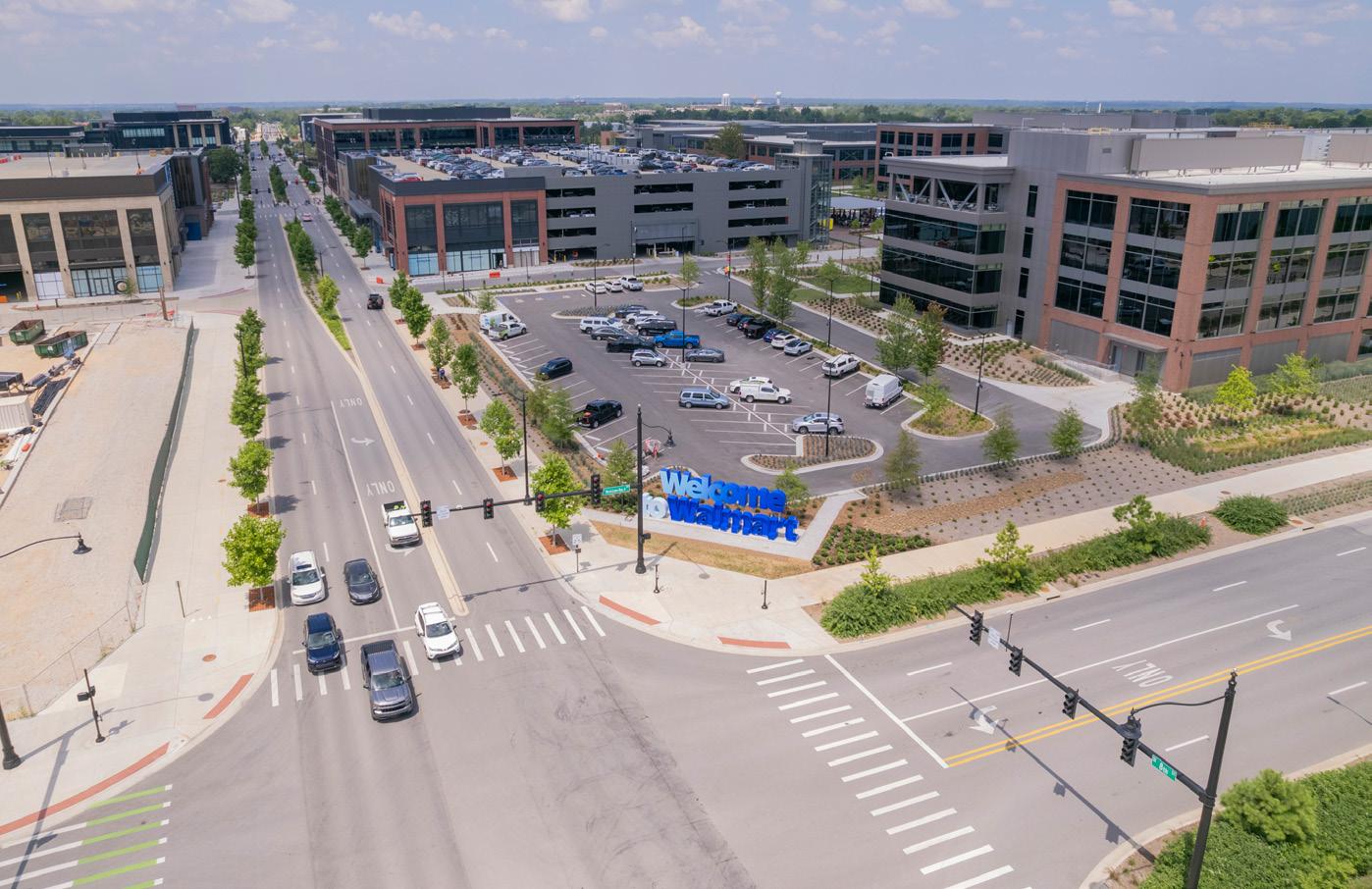
In 2025, the new Walmart Home Office Campus opened in Bentonville, Arkansas. The open campus design, which includes several entry points to nearby walking and biking trails, prioritizes walkability and active transportation to support the company’s goal of having at least 10% of the campus employees commute by bicycle, promoting sustainable mobility while reducing carbon emissions. The campus design includes 10 parking structures, all of which were strategically placed on the edge of the campus. Each parking structure includes more than 1,000 parking spaces and was carefully designed to fit the campus aesthetic. Additionally, 298 EV charging stations were strategically located across the campus to prioritize the use of EVs and other low-emission vehicles.
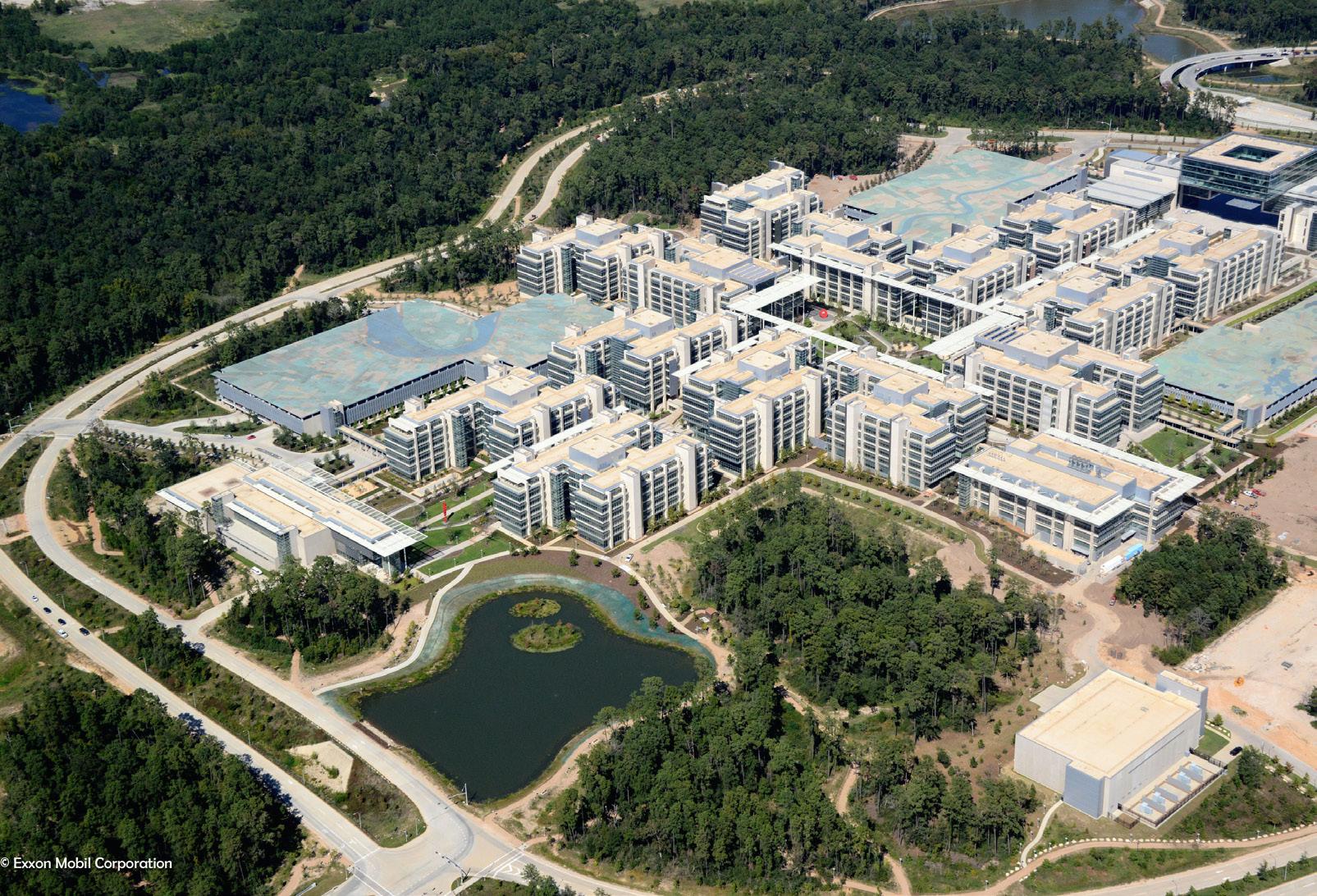
The goal was to reduce the number of vehicles on the campus interior to improve safety for pedestrians and cyclists. Similar design aspects were incorporated into the ExxonMobil Corporate Campus in Spring, Texas, where a two-mile ring road around the campus provides access to parking structures, while separating buildings and pedestrian areas. Ample trails and pathways allow all buildings to be no more than a seven-minute walk from each other.
In both cases above, as well as for campus design work at the University of Texas at Austin and Rice University, the roadways within campus boundaries require strict speed limits, speed bumps, and frequent signage to warn drivers of pedestrians and bicyclists.
Parking Structure Design
The design of the parking structure itself must leverage smart design principles, including the placement of elevators, stairs, ingress/egress points, and ramps, to
enhance safety and security. Typical sustainability-related applications within the structure include enhanced LED lighting equipped with sensors and dimmers to minimize operational costs and conserve energy, solar panels to offset the structure’s energy use, and water-conscious landscaping around the structure.
Other sustainable parking structure design features to consider include low-VOC concrete, paints, and adhesives. Specifically, the concrete admixture is critical for reducing the carbon footprint of a parking structure. The design team can draw on their experience and local knowledge to establish environmental requirements for the concrete mix design. In concert with recycled materials used in the design of the structure, the concrete mix may allow the parking structure and
the surrounding infrastructure to achieve the embodied carbon impact reduction threshold required for sustainable certification programs such as Parksmart, SITES, Envision, and LEED, depending on the size and scope of the overall project.
Wayfinding In & Around Parking Facilities
To ensure drivers spend less time circling a campus in their vehicles, the wayfinding must be clear, concise, and consistent. Because parking structures may serve a diverse range of patrons and modes of transportation, wayfinding signage must be appropriately scaled for vehicular or pedestrian use. Signage should provide patrons with turn-by-turn directions to and from their parking spaces, ensuring a safe, efficient trip.
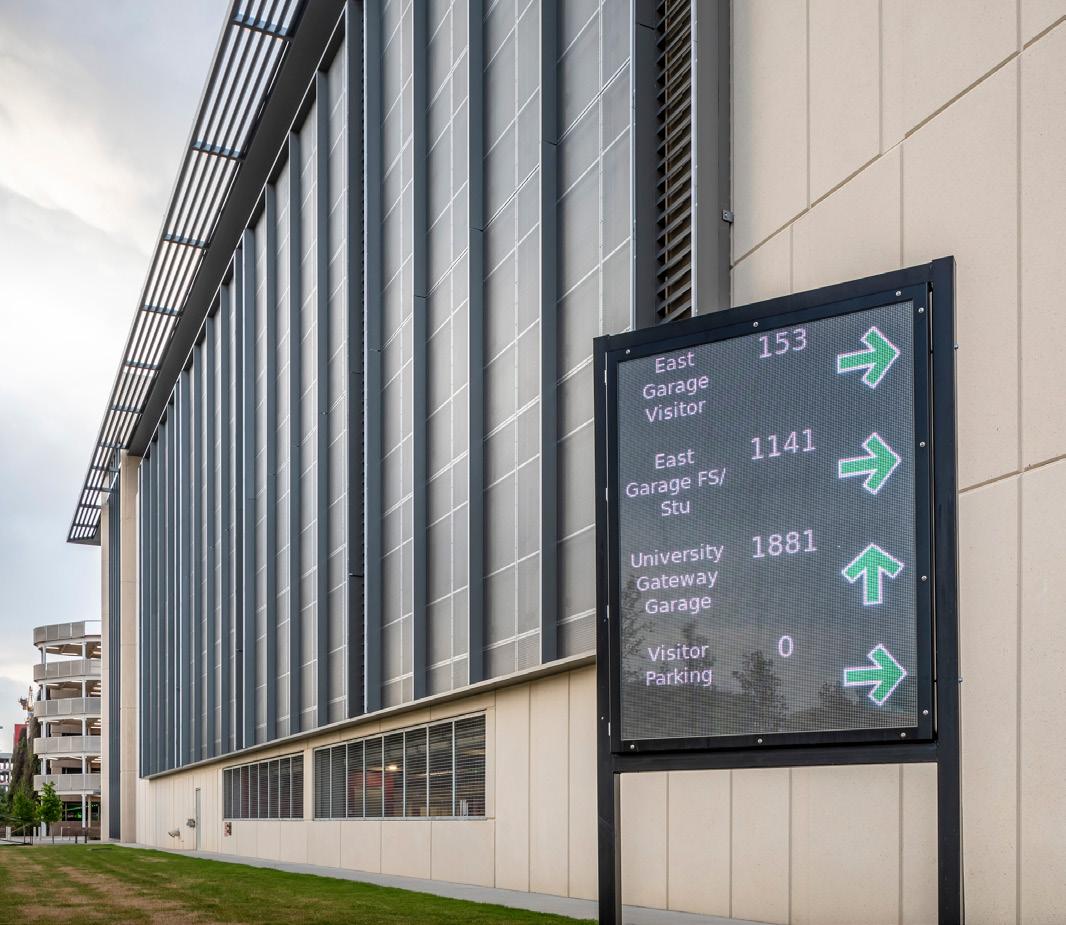
Additionally, high-visibility parking count and guidance systems located outside of the parking structure provide patrons with space-by-space availability information in real time.
These systems offer several benefits to patrons, including reduced stress and frustration when finding an available parking space, as well as reduced traffic congestion and carbon emissions within the structure. Ultimately, the systems provide
Campus parking structure wayfinding signage.
ExxonMobil Corporate Campus.
accurate data that helps patrons select their parking destination while increasing parking space utilization within the structure.
Finally, to ease vehicular traffic on campus, other modes of transportation should be prioritized. As mentioned earlier, Walmart set a goal of having at least 10% of its workforce commute to work by bicycle. Sustainable parking goals can also be met by encouraging drivers to park off-site and use a shuttle bus to drop them close to their intended destination. Dedicated rideshare areas on campus can be geofenced with virtual boundaries so riders can be dropped off or picked up only in designated areas. However, a rideshare area must be strategically located on campus to reduce traffic congestion and facilitate adequate pedestrian access.
Communicating with Patrons
When parking is at a premium on a campus, for example, during a football game or other high-profile event, there are essential steps that must be taken to ensure that patrons can secure a spot in their preferred parking structure.
The University of Houston (UH) recently overhauled its entire football game-day parking strategy to improve the overall fan experience while reducing traffic congestion on game days.
To ensure that a limited number of parking spaces were available to accommodate upwards of 40,000 fans, the UH strategy included increasing prepaid parking pass utilization, as less than 1% of single-game ticket holders purchased parking in advance. UH improved its “Know Before You Go” information by updating its website to streamline prepaid parking purchases and provide directions to specific parking structures and lots. Incentivizing pre-payment for parking on game days by offering a discount on the full price reduces wait times in parking queues.
When fans bought tickets to the game, a link to purchase parking was included in the ticket confirmation e-mail and in the “Know
Before You Go” e-mail sent in the days before the game. Additionally, a text-to-pay option was available at lots across the campus.
Apps are another method to communicate with patrons to reduce campus traffic congestion. The app must include presale parking options for events, an interactive parking map, and additional parking options, such as a park-and-ride shuttle bus with real-time status and arrival information.
Benefits of Sustainable Parking
Incorporating sustainable parking must be discussed early in the design process. The examples mentioned previously can significantly impact campuses by reducing CO2 emissions. Every vehicle on the road releases an average of 400 grams, or approximately one pound, of CO2 per mile driven — so sustainable parking designs can help reduce environmental pollution by reducing the miles driven while searching for parking. Better air quality benefits the general population.
Fewer single-passenger vehicle miles traveled reduces the stress on already overcrowded roadways. The combination of sustainable transportation options in concert with sustainable parking designs results in more people travelling and parking in less space.
BETH BRYAN , PE, STP , is a Principal and Project Manager in Walter P Moore’s Parking Group. She can be reached at bbryan@walterpmoore.com
UH Garage real-time parking information.
Wayfinding signage.
Turbocharging a Municipal Parking Network
From
9 to 550 EV Chargers in Three Years
By Jarrett McDonald
By Jarrett McDonald
From 9 to 550 EV Chargers in Three Years
From Parking Operator to Urban Mobility Enabler
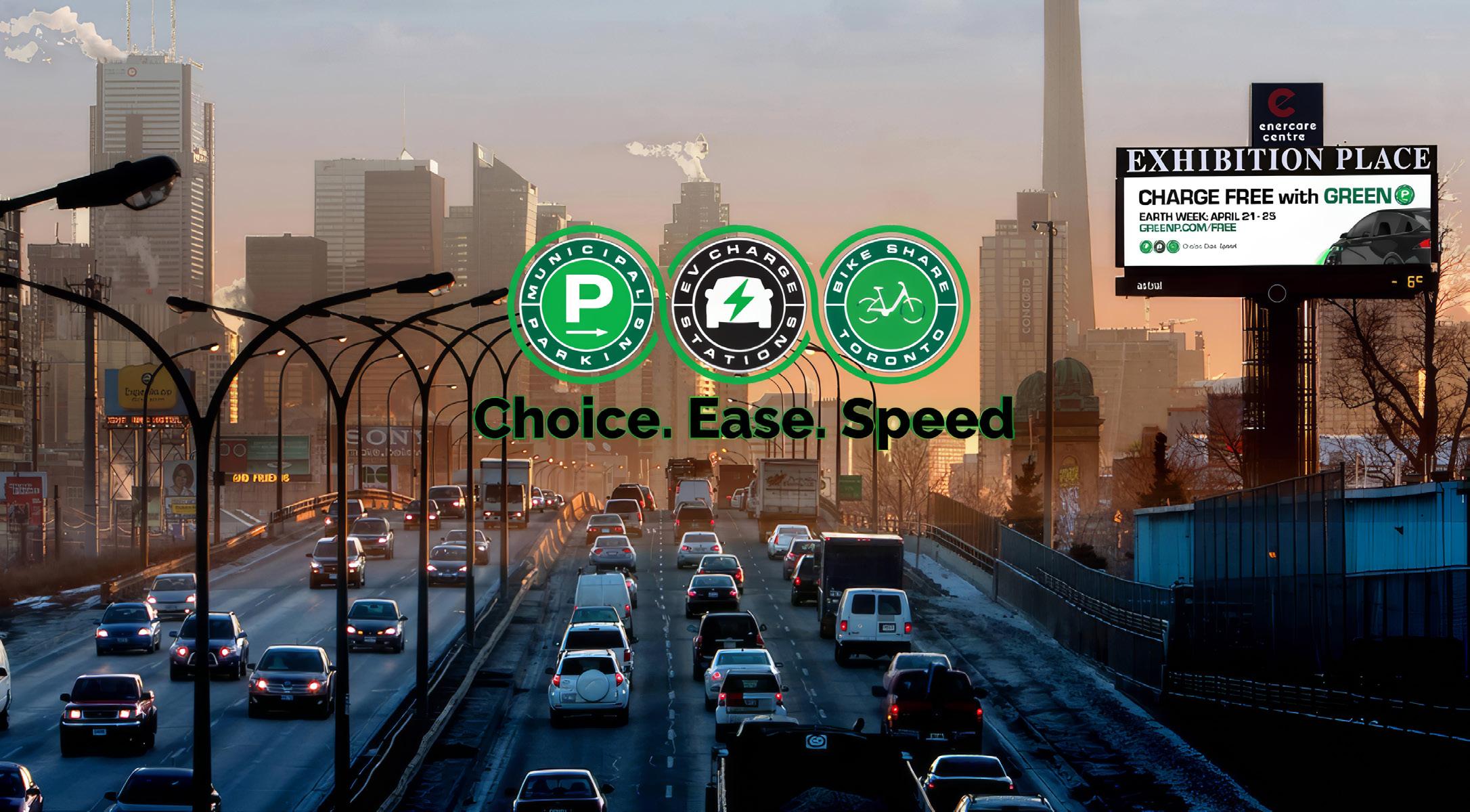
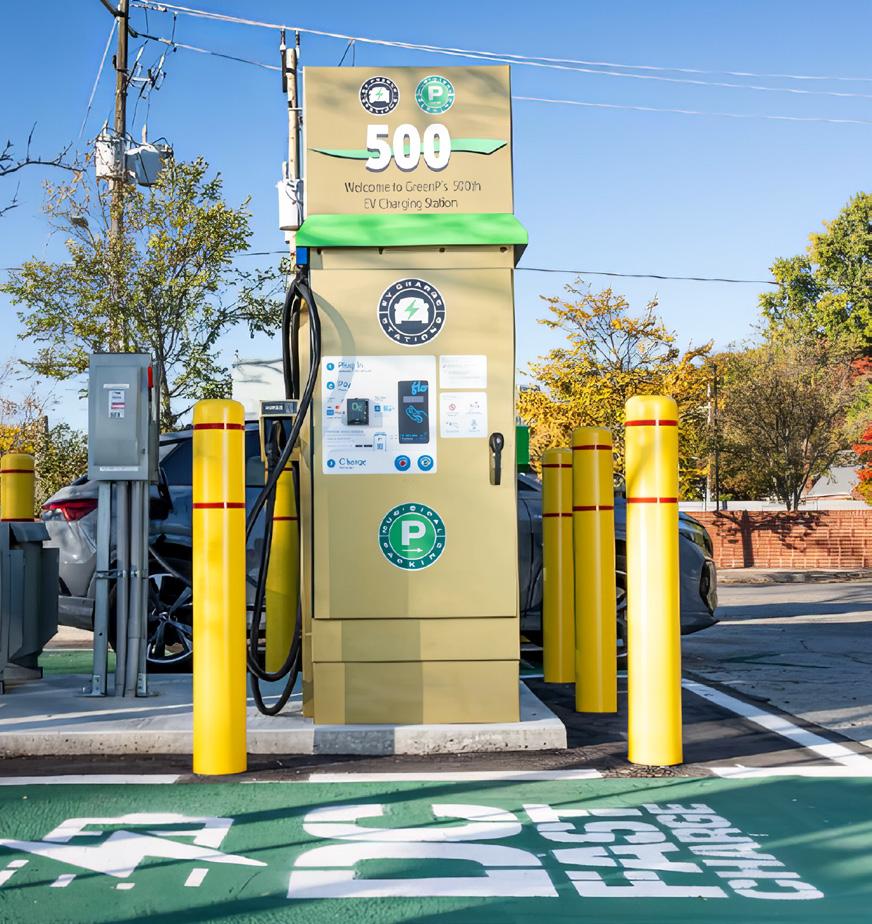
Established in 1952, the Toronto Parking Authority (TPA), known locally as Green P Parking, has supported Toronto’s growth for more than seven decades, evolving from a traditional parking operator into an integrated, customer-focused mobility solutions provider. Today, TPA manages the largest municipally owned parking system in North America, serving one of the continent’s most economically significant cities.
The Toronto metropolitan region, home to approximately seven million residents, ranks among the largest urban economies in North America. Its high density of multi-unit residential buildings (MURBs), limited access to private home charging, and ambitious municipal climate policies, including targets to reduce greenhouse gas emissions by 65% and achieve 30% electric vehicle adoption by 2030, position Toronto as one of the most EV-addressable urban markets on the continent.
EV Charging as Strategic Municipal Infrastructure
For TPA, EV charging is not an end. Our objective is to position municipal parking assets as a core enabler of zero-emission urban mobility, supporting EV adoption, strengthening the relevance of existing parking infrastructure, and ensuring long-term financial sustainability.
TPA did not enter EV charging to become a charging network operator. We entered it as a strategic adjacency to our core parking and mobility business, designed to future-proof our assets, increase customer loyalty, and preserve the long-term relevance of municipal parking locations.
By integrating EV charging into existing facilities, we leverage three structural advantages: real estate at scale, an established customer base, and operational expertise in managing highvolume, time-based assets. EV charging increases dwell time, supports repeat usage, and enables diversified revenue streams, while reinforcing parking facilities as essential nodes in the urban mobility ecosystem.
This perspective, treating EV charging as enabling infrastructure rather than a standalone utility, has shaped every aspect of our strategy from portfolio design and pricing principles to performance measurement and partnership models. The result has been a rapid expansion from nine chargers to more than 550 ports in less than three years, with a focus on operational excellence, customer engagement, and financial rigor.
A Customer-Centric Model Serving Residents, Drivers, and Fleets
To deliver on our EV charging objectives, TPA structured its approach around three operating imperatives, each aligned to a core user group. This ensured the network remained customercentric, equitable, and financially sustainable as it scaled.
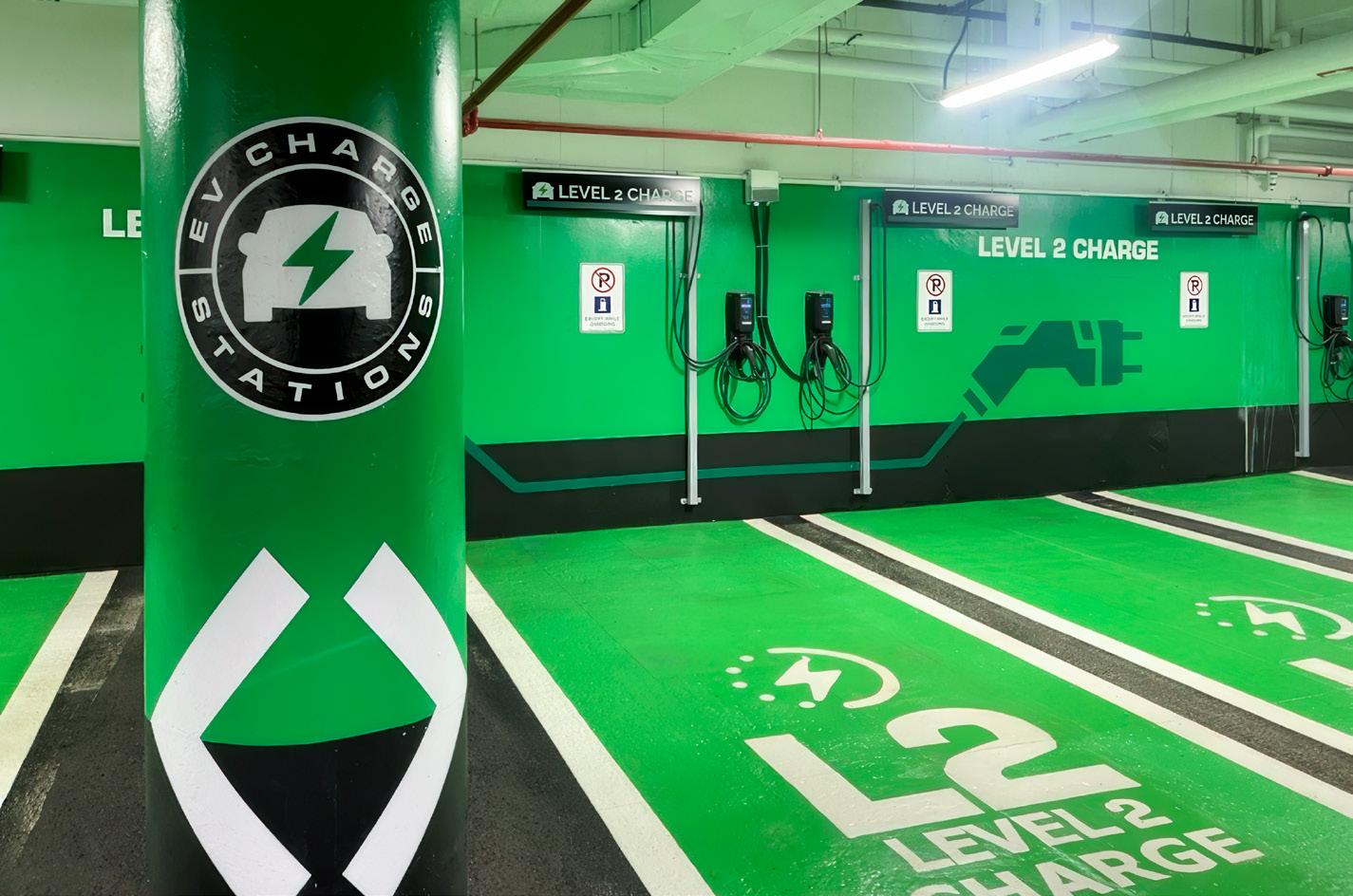
First, we focused on existing parking customers by integrating reliable Level 2 and DC fast charging at high-demand off-street facilities. This approach increases dwell time, supports repeat use, and drives incremental parking revenue without displacing core demand.
Second, we expanded access for city residents, particularly those living in MURBs without home charging, by positioning
municipal parking assets as neighborhood charging hubs. This has proven critical in addressing equitable access in dense urban environments.
Finally, we supported the electrification of high-volume fleets, including ride-share, taxi, and commercial operators, by offering scalable, high-reliability charging aligned with corporate decarbonization goals and municipal zero-emission mandates.
Measuring Performance, Reliability, and Long-Term Value
Success is measured through five core indicators:
1. Share of city-wide EV charging demand supported by municipal assets (targeting 10–15%);
2. Proportion of chargers located at MURBs to address equity of access;
3. Network utilization using a composite of utilization rate, sessions per port per day, kWh delivered per port, repeat user rate, and time of day use;
4. Customer satisfaction and reliability outcomes; and
5. Long-term financial sustainability of municipal parking assets.
From the outset, our first-to-market approach anchored network design and site selection to available utility capacity, with intentional overbuilding in highpotential locations to mitigate future grid constraints and de-risk financial exposure to high civil and electrical infrastructure costs. This approach enabled rapid, large-scale deployment, accelerated the identification of high-performing sites, and surfaced the strategic conditions that drive long-term charging performance.
For example, significant Level 2 deployment at public parking facilities near high-density multi-unit residential buildings revealed that more than 50% of charging users lived within one kilometer (0.62 mile) of the charger. In 2023, this resulted in approximately half of the 35,000 EV “park-and-charge” sessions being delivered to customers new to Green P parking, a pattern that has remained consistent through 2025. These results reinforce EV charging’s role in expanding the parking customer base, while also confirming that existing customers increasingly view Level 2 park-and-charge as a convenient, reliable option when
moving through the city for work, errands, or leisure.
As DC fast charging (Level 3) capacity expanded across the network, we observed a corresponding increase in “charge-andgo” customer behavior. Demand for DC fast charging was particularly pronounced during cold weather, when reduced battery efficiency increased the need for rapid top-ups, and at locations with nearby amenities such as coffee shops and quickservice retail. Analysis also revealed a clear correlation between parking dwell time and charging preference: shorter dwell durations consistently favored DC fast charging, while longer parking stays aligned more closely with Level 2 charging.
Pricing and Reliability Aligned with Customer Experience
TPA initially adopted flat-rate pricing to accelerate early adoption, reduce customer friction, and simplify market entry at a time when public EV charging behavior was still emerging. As the network matured and usage diversified across vehicle types, charger power levels, and dwell patterns, the limitations of flat-rate and time-based pricing became increasingly apparent. These models obscure the true cost of service, can advantage or penalize users based on factors outside their control, such as vehicle charge acceptance rates or charger power, and result in different effective prices for the same unit of energy.
Transitioning to per-kWh pricing will provide a more transparent, equitable, and defensible approach, particularly in a publicly accountable context. By charging strictly for the electricity consumed, per-kWh pricing aligns cost with value delivered and treats electricity as a true commodity: fungible, standardized, and comparable across locations and charger types. It decouples pricing from dwell time, infrastructure complexity, and equipment characteristics, enhances
customer understanding, supports price parity across the network, and withstands audit and Freedom of Information (FOI) scrutiny. For both public users and B2B customers, per-kWh pricing enables fair, cost-reflective, and financially sustainable charging at scale.
At launch, TPA set an ambitious target of 99.9% uptime, recognizing that reliability is essential when customers depend on public charging. However, benchmarking and customer feedback quickly revealed a disconnect between reported availability and lived experience. Chargers often appeared “online” but failed to deliver a usable charge due to reduced power, mid-session failures, or authentication issues.
While uptime remains a valuable operational indicator, it does not capture what matters most to customers: the ability to successfully complete a charging session. From a user perspective, availability has value only if it results in a reliable, uninterrupted charge.
Session, or charge, completion rate is therefore a more meaningful primary metric. It directly measures whether a customer can plug in, charge at expected power levels, and depart with confidence. In contrast, uptime definitions vary widely across networks, with some excluding downtime caused by grid outages,
planned maintenance, or derated power delivery, which limits comparability and transparency.
TPA now treats uptime as a supporting indicator, with session completion rate serving as the primary measure of reliability and customer success. Used together, these metrics provide a more accurate, customer-centered assessment of network performance.
As the network scaled, we observed a consistent utilization pattern over time. Chargers in service longer demonstrated materially higher utilization rates, while newly deployed chargers required a market “soak period,” even with active marketing and integration into charging aggregators.
Early utilization at new sites, often below 6% of daily capacity, initially raised concerns regarding site performance. Longitudinal data, however, tells a different story. As awareness grows, driving behavior adapts, and repeat usage is established, utilization steadily increases. Over one to two years, well-sited chargers routinely ramp to utilization levels approaching or exceeding 30%, particularly in dense urban locations.
This insight reinforces two lessons for municipal operators. First, charger performance must be evaluated over an appropriate time horizon; early underperformance is not predictive of long-term value. Second, investment and governance frameworks must account for market maturation dynamics rather than relying solely on short-term utilization snapshots.
TPA now evaluates performance using a composite utilization framework that includes utilization rate (by Level 2 versus DC fast charging and by weekday versus weekend usage), sessions per port per day, kWh delivered per port, repeat-user frequency, and time-of-day patterns. This approach provides a more complete and decision-useful view of network health.
Future-Proofing Municipal Assets Through Electrification
TPA’s expansion from nine to more than 550 EV charging ports demonstrates how municipal parking assets can be strategically repurposed to enable zeroemission urban mobility at scale. By treating EV charging as an adjacency rather than a standalone business, TPA aligned infrastructure, pricing, and performance management with customer behavior, equity objectives, and long-term financial sustainability. The result is a resilient, customer-centered network that supports residents, fleets, and visitors while future-proofing public assets. As cities confront electrification, grid constraints, and evolving travel patterns, TPA’s experience shows that disciplined portfolio design, transparent pricing, and customer-relevant performance metrics are essential to scaling EV charging responsibly and successfully.
JARRETT MCDONALD is Vice President of Operations for the Toronto Parking Authority. He can be reached at jarrett. mcdonald@greenmobility.com
Wheels of Change
By Leslie L. Stone, PTMP
HAVE YOU HEARD ABOUT THE Bike Bus movement? In simple terms, a Bike Bus is a coordinated group bicycle ride designed for children traveling to and from school, led and supervised by adults. Along the way, the Bike Bus makes scheduled stops to pick up additional children. Like a bus. On bikes. With music. How brilliant is this?
The current Bike Bus movement began in Spain in 2020, when two teachers began accompanying a small group of children through busy streets to provide a safe, secure way to get from home to school. This original group in Barcelona has grown from nine children on the first ride to almost 800 kids on 40 organized routes as of Fall 2025.
As the movement continued to grow and expand across Europe, the United States found its first Bike Bus champion in Sam Balto, a physical education
teacher and cycling enthusiast in Portland, Oregon. Balto, inspired by what he saw in Spain and motivated to minimize the car pick-up/drop-off traffic at Alameda Elementary School, where he worked, organized his first Bike Bus for Earth Day in April 2022.
Seventy-five students and parents joined Coach Balto’s inaugural Bike Bus ride. A 2024 article reported that over 300 kids regularly participate in the Alameda Elementary group. (eBikes International, 2024) As the bike bus phenomenon continued to gain followers and
Ultimately, the youth who use a Bike Bus to get to school today are healthy, socialized, and helping green their communities… shaping their future mobility choices as adults.
supporters, Sam Balto co-founded Bike Bus World in 2023 to help communities build their own bike bus programs.
Biking to school versus getting a ride — either in a car or on a traditional school bus — represents a healthier alternative for students who participate. Childhood obesity has climbed to one in five, according to the Centers for Disease Control and Prevention website, and regular exercise could help reverse this trend. In addition to the direct health benefits, being part of a Bike Bus can help foster a sense of community and camaraderie that may be missing in this digital age. This social interaction can result in children who are mentally and emotionally healthier. According to Coach Balto, after riding their bikes to school, “they’ve already had an opportunity to socialize, to get the energy out, so they’re just more prepared to start the day and learn.” (Johnson, 2024)
As a parking and mobility professional, I am intrigued by the sustainability potential offered by Bike Bus. Kids participating in a Bike Bus today may lessen community traffic, particularly around their schools, in the present, but do their choices to bike today impact their transportation choices in the future? The evidence says yes A Green Streets survey revealed that while childhood driving behavior does not correlate with the decision to drive in adulthood, biking behavior does, and those who biked to school in both elementary and high school are twice as likely to bike to work today (Katz-Christy, 2022).
According to Coach Balto, “Being part of a bike bus at a young age normalizes active transportation during a formative period when habits and identity are being built. When children experience biking or walking as safe, social, and joyful, they internalize it as a viable and default way to move through their community, not as a niche or risky activity. Over time, this shapes confidence, spatial awareness, and a sense of agency in the public realm. As adults, those early experiences
often translate into a greater willingness to bike, walk, or use transit, and a higher tolerance for non-car options because the mental barrier was never created in the first place.”
Ultimately, the youth who use a Bike Bus to get to school today are healthy, socialized, and helping green their communities. The children arrive at school ready to learn and start their school day. These kids are also shaping their future mobility choices as adults and building a more sustainable future. The only question now is — Bike Bus commute, anyone?
For more information on the amazing work being done by Coach Balto and his team, or for help with starting a Bike Bus in your own community, check out https://bikebus.world ◆
LESLIE STONE is the Special Projects Manager, Operations at MV Transportation and a member of IPMI’s Allyship & Equity Committee and the Conference Program Task Force. She can be reached at leslie.stone@mvtransit.com.
REFERENCES:
1. eBikes International. (2024, August 22). Coach Sam Balto’s inspirational bike bus & how to start your own to transform your community. eBikes International. https://ebikes-international.com/ coach-sam-baltos-inspirational-bike-bus-how-to-start-your-ownto-transform-your-community/
2. Johnson, R. (2024, October 24). An interview with Sam Balto the teacher who started Portland’s bike bus. Momentum Mag https:// momentummag. com/a-feature-interview-with-the-teacher-who-started-portlandsbike-bus/
3. KatzChristy, J. (2022, October 25). Does childhood mode experience influence today’s work commute? GoGreenStreets. https://www. gogreenstreets.org/post/ does-childhood-mode-experience-influence-today-s-work-commute
4. Johnson, R. (2025, August 26). Everything you need to know about the Bike Bus and why kids are loving it. Momentum Mag. https:// momentummag.com/what-is-the-bike-bus-movement/
5. Saslow, R. (2025, November 26). Sam Balto has made Portland’s bike buses famous. Can they last? Willamette Week https://www.wweek. com/news/2025/11/26/ sam-balto-has-made-portlands-bike-buses-famous-can-they-last/
Why Parking Enforcement Matters
The Hidden System That Keeps Communities Moving
By Julie Dixon
PARKING ENFORCEMENT IS ONE OF THE MOST misunderstood and essential functions in any city. While it rarely makes headlines unless something goes wrong, effective parking enforcement is foundational to mobility, local economics, safety, and equity. It ensures that residents, businesses, and visitors can reliably access their community, and it sustains the delicate balance between policy goals and daily human behavior. When done well, parking enforcement is not about citations; it is about access, turnover, fairness, and keeping our cities functional.
The Purpose: Access and Turnover
Every parking system is designed with one core goal: to provide access. The curb is a finite resource, and most communities were not built to support the volume and diversity of demand they experience today. Enforcement exists to support the intention behind the regulations, ensuring that parking spaces turn over, people have places to park, and businesses have the customer flow they rely on.
Without enforcement, the people who follow the rules lose access to the curb, and those who ignore the rules reap the benefits. When vehicles sit in prime curb spaces all day, turnover evaporates, and commercial districts suffer. Deliveries cannot get in, quick-stop visitors circle for blocks, and residents grow frustrated by the sense that the system is unfair. Enforcement restores that balance. It reminds everyone that parking rules exist for a reason: to ensure access for as many people as possible.
The Economic Impact: Parking Fuels
Local Business
Parking enforcement is an economic strategy as much as an operational function. High turnover in commercial districts supports foot traffic, customer spending, and business vitality. When curb spaces turn over, customers cycle in and out, employees avoid taking prime stalls, and visitors experience a wellmanaged, welcoming environment.
Unmanaged parking does the opposite. Vehicles that remain parked for hours in time-limited zones
reduce customer access and can hurt small businesses that rely on quick turnover. Enforcement protects this local economic engine by ensuring the system operates as designed.
The Safety Component: More Than Most People Realize
People rarely associate parking enforcement with public safety, but the connection is undeniable. When fire lanes, ADA spaces, loading zones, school zones, and crosswalks are ignored, safety is compromised. Enforcement prevents drivers from blocking visibility, violating ADA access, obstructing emergency routes, and creating conflicts that can lead to accidents or injuries.
Parking enforcement officers are also “eyes and ears” for the community. They identify hazards such as
Crystal Washington, CSP, CPAE Futurist, author, and Hall of Fame
Speaker Crystal Washington equips organizations with the knowledge they need to become “future-proof.”
Early Bird Registration Ends Soon!
June 14 -17, 2026
Baird Center
downed signage, malfunctioning meters, roadway obstructions, and suspicious activity. Many provide assistance during emergencies and support police and fire personnel in real time. Parking enforcement is not separate from safety; it is embedded in it.
The Equity Argument: Fairness at the Curb
Parking enforcement is also an equity issue. Regulations ensure access for people with disabilities, preserve residential parking in crowded neighborhoods, and maintain loading zones for businesses that depend on them. Without enforcement, these protections collapse.
Fairness matters. Community trust erodes when people see others taking advantage of the system. Consistent and respectful enforcement reinforces fairness and ensures that everyone (residents, business owners, visitors, and vulnerable users) operates under the same rules.
A Career’s Worth of Perspective: Why Resources Matter
My understanding of why parking enforcement matters didn’t emerge from textbooks or policy papers; it started on the street.
I began my career as a parking enforcement officer more than 30 years ago. I patrolled by bike through the (still) densely populated streets of Isla Vista. I navigated my way through the commercial loop, issued citations, and offered countless verbal warnings as I listened to community frustrations and saw firsthand how quickly a parking system can unravel when rules are ignored. Those early experiences shaped my entire career. They taught me that most parking problems aren’t really parking problems; they are compliance and resource problems.
When enforcement resources are adequate, predictable, and visible, compliance follows. But when staffing is stretched thin and officers cannot cover the areas they are responsible for, or when agencies are asked to “just do more with what they have,” compliance erodes almost immediately. In more than three decades of working with cities across the country, I have seen the same pattern repeat itself: Where staffing is strong, compliance is strong. Where staffing is insufficient, chaos begins at the curb.
This isn’t about being punitive. It is about ensuring the system serves the community fairly. My frontline experience taught me that parkers quickly learn whether an agency enforces its own rules. If they believe enforcement is unlikely or inconsistent, behavior changes accordingly. Once noncompliance takes hold, it is incredibly difficult to correct without investing in officers, training, technology, and community education.
The Community Experience: Parking Shapes Perception
Most residents will experience their local government through streets, sidewalks, and parking, not through strategic plans or council meetings. Parking enforcement affects that experience directly. When visitors can’t find parking, when business districts feel disorganized, or when curb regulations are unclear or unenforced, a city feels chaotic.
But when the system works, when parking is available, signage is clear, and enforcement is consistent, the entire community benefits. A well-managed curb enhances a city’s identity and supports a sense of place.
The Consequences of Non-Enforcement
When enforcement is deprioritized:
● Turnover disappears
● Businesses lose customers
● ADA access is compromised
● Fire lanes, bus stops, and loading zones are blocked
● Congestion increases
● Residents grow frustrated
● Safety risks multiply
● Trust in local government erodes
The absence of enforcement is not neutral; it is a choice that disproportionately harms rule-following residents, vulnerable populations, and local businesses.
Parking Enforcement as a Professional Discipline
Today’s parking enforcement is not simply about writing citations. It is a modern, professional discipline rooted in customer service, conflict resolution, data-driven deployment, and technology integration. Communities that invest in these programs see measurable improvements in safety, access, economic vitality, and community satisfaction.
Parking enforcement matters because the curb matters. And after more than 30 years in this industry, from the frontline to consulting with cities nationwide, I continue to believe that when communities take enforcement seriously, everything else works better.
JULIE DIXON is the President of Dixon Resources Unlimited and is a member of the IPMI Board of Directors and the Board Liaison for IPMI’s Planning, Design, & Construction Committee. She can be reached at julie@ dixonresourcesunlimited.com
IPMI’s Elite Partners invest $50,000 or more in supporting IPMI’s programs, events, and initiatives.
Interested? Email sales@parking-mobility.org
What’s Your Next Step?
“Obtaining my PTMP credential has significantly expanded my ability to address parking challenges that I previously had limited exposure to. It’s deepened my knowledge and boosted my confidence in navigating complex scenarios.”
Lauren Nelson, PTMP Parking Consultant, Walter P Moore
Scan the qr-code to find out why Laura earned her PTMP and how it impacted her career.
IPMI Events Calendar
2026
MARCH
MARCH 3
Free Member Roundtable
Planning, Design, & Construction
Interactive Mobility MythBusters
MARCH 11
Webinar
The Future Is Now: Understand How to Leverage AI in Your Operations
MARCH 17
Free Industry Chat
Advertising & Sponsorship Chat
MARCH 19
Free Member Chat
APO Chat
MARCH 31, APRIL 2
Online, Instructor-Led Training
APO Site Reviewer Renewal Training
APRIL
APRIL 7, 9, 14, & 16
Online, Instructor-Led Training
2026 Parksmart Advisor Training
APRIL 7
Free Member Roundtable
Higher Education
Achieving Operational Excellence: Best Practices for Campus Parking Professionals
*Open to members from academic institutions
APRIL 8
Frontline Fundamentals
Smarter Enforcement: Modernizing Operations for Today’s Parking and Mobility Landscape
APRIL 16
Free Member Chat
New Member Chat
APRIL 21
Online, Instructor-Led Training
Master Your Operations: Protect and Lead Your Organization with Critical Skills
APRIL 23
Free Member Chat
PTMP Chat
MAY
MAY 5
Free Member Roundtable Cities & Municipalities
The Role of Parking in a Growing City: Managing New and Old Expectations
*Open to members from cities and municipalities
MAY 13
Webinar
Strategic Thinking: Taking Operations to the Next Level
JUNE
JUNE 3
Free Member Chat Conference & Expo First-Timers Chat
JUNE 3
Frontline Fundamentals
Designing Your Career with Intention: Strategies for Sustainable Success
How to Respond to the 2027 Call for Articles, Frontlines, and Webinars
JULY
JULY 1
Free Member Roundtable
Higher Education Transportation Demand Management (TDM): Behavioral Strategies to Reduce Single-Occupancy Vehicle Use
*Open to members from academic institutions
JULY 7, 9, 14, & 16
Online, Instructor-Led Training 2026 Parksmart Advisor Training
JULY 8
Webinar
The Full Lot: How Your Leadership Capacity Impacts Team Flow
JULY 16
Free Member Chat APO Chat
AUGUST
AUGUST 11
Free Webinar
Prepare a Winning Entry for the Awards of Excellence
AUGUST 12
Frontline Fundamentals
Stronger Together: Building Solid, Supportive, and Successful Teams
IPMI Events Calendar
2026 (continued)
AUGUST
AUGUST 18
Free Webinar
Best Practices for Winning Entries for the Professional Recognition Awards
AUGUST 20
Free Member Chat
New Member Chat
AUGUST 25
Free Industry Chat
How to Respond to the #IPMI2027 Call for Presentations
AUGUST 27
Free Member Chat
PTMP Chat
SEPTEMBER
SEPTEMBER 1
Free Member Roundtable
Cities & Municipalities
Staffing, Recruitment, and Retention:
Overcoming Challenges to Build a Great Lasting Team
*Open to cities and municipalities
SEPTEMBER 8, 10
Online, Instructor-Led Training
APO New Site Reviewer Training
SEPTEMBER 9
Webinar
Leading with Authenticity: The Power of Introverted and Extroverted Leadership
SEPTEMBER 14
Industry Events
Call for Entries: 2027 Awards Program
SEPTEMBER 15
Free Member Chat
Advertising & Sponsorship Chat
OCTOBER
OCTOBER 6, 8, 13, & 15
Online, Instructor-Led Training
2026 Parksmart Advisor Training
OCTOBER 14
Frontline Fundamentals
Ask, Observe, and Improve: The Power of Curiosity on the Frontline
OCTOBER 15
Free Member Chat
New Member Chat
NOVEMBER
NOVEMBER 3
Free Member Roundtable
Cities & Municipalities
Using the Data You Already Have to Improve Operations
*Open to cities and municipalities
NOVEMBER 10
Online, Instructor-Led Training
APO Site Reviewer Renewal Training
NOVEMBER 12
Free Member Chat APO Chat
NOVEMBER 18
Webinar
Communicating Through Change: Leading Teams and Customers with Clarity and Confidence
DECEMBER
DECEMBER 1
Free Member Roundtable
Higher Education
Preparing Your Campus and Team for 2027: Anticipating Trends and Challenges
*Open to members from academic institutions
DECEMBER 3
Free Member Chat
PTMP Chat
DECEMBER 9
Frontline Fundamentals
See Something, Do Something: Empowering Frontline Staff to Protect and Enhance Facilities
DECEMBER 10
Free Member Chat
New Member Chat
STATE & REGIONAL CALENDAR
Industry Events and State & Regional Calendar 2026
APRIL 27–29
Texas Parking & Transportation Association (TPTA) Annual Conference & Trade Show San Antonio. TX
MAY 26–29
Parking & Transportation Association of Pennsylvania (PTAP) Annual Conference & Trade Show Bethlehem, PA
SEPTEMBER 15–18
Carolinas Parking & Mobility Association (CPMA) Greenville, SC
SEPTEMBER 28-30
New England Parking & Transportation Council (NEPTC) Annual Conference Providence, RI
OCTOBER 13–16
Mid-Atlantic Parking & Transportation Association (MAPTA) Fall Conference & Trade Show Williamsburg, VA
OCTOBER 18-21
Campus Planning & Transportation Association (CPTA) Annual Conference Columbia, SC
OCTOBER 20–22
Pacific Intermountain Parking & Transportation Association (PIPTA) Conference & Expo Spokane, WA
OCTOBER 26-28
Southwest Parking & Transportation Association (SWPTA) Annual Conference Las Vegas, NV
NOVEMBER 2-6
California Mobility & Parking Association (CMPA) Annual Conference Los Angeles, CA
NOVEMBER 30–DECEMBER 4
Mid-South Transportation & Parking Association (MSTPA) and Florida Parking & Transportation Association (FPTA) Joint Conference & Tradeshow Miramar Beach, FL
Stay up to date on industry events and activities! Visit parking-mobility.org/calendar for the latest updates.
Conference & Expo
2026 MI LWAUKEE
Kickstart your Conference adventure.
Join us at the one and only Harley-Davidson Museum in Milwaukee, WI, for an unforgettable launch to #IPMI2026. Immerse yourself in the rich legacy of an American icon, featuring interactive exhibits, historic bikes, and camaraderie with your parking, transportation, and mobility pack. Celebrate at the ultimate, high-octane venue!
Date: Sunday, June 14
Time: 6:30 p.m.- 9:0 0 p.m. CDT
Attire: Casual
Fees: Included with Full registration or Sunday Daily registration. Additional tickets can be purchased. Transportation will be provided. Please see mobile app for details.