

By Trystan Henry, PECP

Eric Luttmann, AIA, and Raymond Smith
Matt Howard
Paul Whetzel,

By Harvey Figueroa


Matt Brooker
Cambell
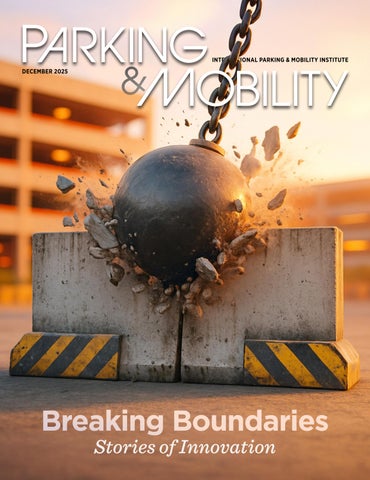
AS WE BRING 2025 TO A CLOSE, and I look back on what was a transformative year for parking, transportation, and mobility, I am inspired. That inspiration was the driving factor for the December issue of Parking & Mobility. This month, we celebrate a theme that captures where we are and where we are going: Breaking Boundaries
Across the world, in communities large and small, parking and mobility professionals are pushing beyond traditional ideas and methods, defying expectations, reimagining the curb, reshaping urban access, and redefining how people move to increase efficiency and equity.
This issue shines the spotlight on the remarkable creativity and ingenuity that continue to push our profession forward. From groundbreaking technological deployments to fresh approaches in policy, planning, and operations, we are showcasing those who aren’t afraid to challenge norms and forge new paths. What once seemed futuristic is quickly becoming essential, driven by collaboration, bold thinking, and a shared commitment to improving how our cities function.
Looking ahead, it’s clear that the parking and mobility landscape is evolving faster than ever. Yet one constant remains: the ingenuity of the professionals who make this progress possible. Their ideas and their willingness to break boundaries are shaping a resilient, efficient, and future-ready mobility ecosystem. And I hope that after reading the content in this issue, you will be inspired as well.
On behalf of my incredible colleagues on the staff of IPMI and our Board of Directors, happy holidays to you and yours. I am so excited for the year ahead, and I am honored to take it on with you. Together, we will do great things.

Melissa Rysak, editor rysak@parking-mobility.org





PUBLISHER

Shawn Conrad, CAE
s.conrad@parking-mobility.org
EDITOR





Melissa Rysak rysak@parking-mobility.org
TECHNICAL EDITOR




Rachel Yoka, PTMP, LEED AP BD+C yoka@parking-mobility.org
ADVERTISING SALES AND SUBSCRIPTIONS

Tina Altman taltman@parking-mobility.org

PUBLICATION DESIGN
BonoTom Studio info@bonotom.com

For subscription changes, contact Tina Altman, taltman@parking-mobility.org or 888.IPMI.NOW

Parking & Mobility (ISSN 0896-2324 & USPS 001436) is published monthly by the International Parking & Mobility Institute
P.O. Box 3787
Fredericksburg, VA 22402

Phone: 888.IPMI.NOW
Fax: 703.566.2267
Email: info@parking-mobility.org
Website: parking-mobility.org
Send address changes promptly via email to editor@ parking-mobility.org
Interactive electronic version of Parking & Mobility for members and subscribers only at parking-mobility. org/magazine
Copyright © International Parking & Mobility Institute, 2025. Statements of fact and opinion expressed in articles contained in Parking & Mobility are the sole responsibility of the authors and do not necessarily represent an official expression of policy or opinion on the part of officers or the members of IPMI. Manuscripts, correspondence, articles, product releases, and all contributed materials are welcomed by Parking & Mobility; however, publication is subject to editing, if deemed necessary to conform to standards of publication.
The subscription rate is included in IPMI annual dues. Subscription rate for non-members of IPMI is $120 per year (U.S. currency) in the U.S., Canada, and Mexico. All other countries, $150. Back issues, $10.
Aby Robert Ferrin, PTMP

S HUMAN BEINGS, we tend to be creatures of habit. Whether it’s our daily routine, the morning coffee, or that parking space we always park in and think is ours, we like the comfort that comes along with routine and the status quo. When our routine gets interrupted, when our route to work gets rerouted, and when someone parks in “our” parking space, we get uncomfortable. It doesn’t feel good. It may lead to stress or anxiety.








But it can also lead to adaptability, flexibility, and innovation. It makes us think outside the box and forces us to view things from a different perspective. And over time, it can make us comfortable being uncomfortable.
In the parking and mobility industry, we often find ourselves in uncomfortable situations. Advanced technologies, evolving customer demands and expectations, and doing more with less can create operational pain points. However, these situations also put us at the forefront of innovation, ever evolving to meet customer needs and often serving as a forward-facing example in our broader organizations of adaptability and perseverance. As practitioners, we bring a healthy dose of practicality and bravery to conversations around change management, process improvement, and embracing “what’s next.” As we become comfortable with being uncomfortable, exciting new developments have emerged to the benefit of our operations, customers, and agencies.
Think about how different our operations look compared to two, five, and certainly ten years ago. How we meet and exceed customer expectations using digital communication platforms, whether for payment, citation adjudication, or assistance accessing a parking facility, has been enhanced. Understanding our program performance? Aside from the now readily available AI tools at our disposal, practitioners are using cameras, drones, sensors, and LiDAR to quantify the complexity of our operations, thereby enabling performance-based decision-making for our teams. Professional development and educational opportunities? It is remarkable to see our industry embrace and provide learning tools to our front-line, supervisory, and management staff to continue a process of continuous improvement in our operations.
In this month’s issue, we read stories of how our industry continues to break boundaries by embracing the comfort of being uncomfortable. Once you’ve had a chance to read these great examples, think about ways you can work outside the norm, try something new, work on improving a process, and contribute to the innovation revolution that we are all part of as parking and mobility industry professionals. ◆








By Matt Brooker
THE PARKING AND MOBILITY INDUSTRY is evolving faster than ever, driven by new technologies, changing travel patterns, and growing demands for safer, more efficient, and more equitable streets. Cities are using data, automation, and collaboration to reimagine mobility, offering inspiration and a roadmap for others looking to modernize and create more livable communities.
Columbus, Ohio, is one of the fastest-growing cities in the Midwest. It has rapidly modernized its parking and mobility operations over the past decade, and continues to lead in developing a more holistic, multimodal transportation system.
“We’re moving away from the traditional parking system that’s focused on time limits and payment, toward multiple different
Through collaboration with the Mid-Ohio Regional Planning Commission and the Central Ohio Transit Authority, the Parking & Mobility team is advancing bold initiatives to enhance downtown livability, including new Bus Rapid Transit (BRT) routes, bike lanes, and pedestrian plazas. These projects make downtown more vibrant and inviting, but they also involve trade-offs, such as removing on-street parking in some of the city’s busiest areas.
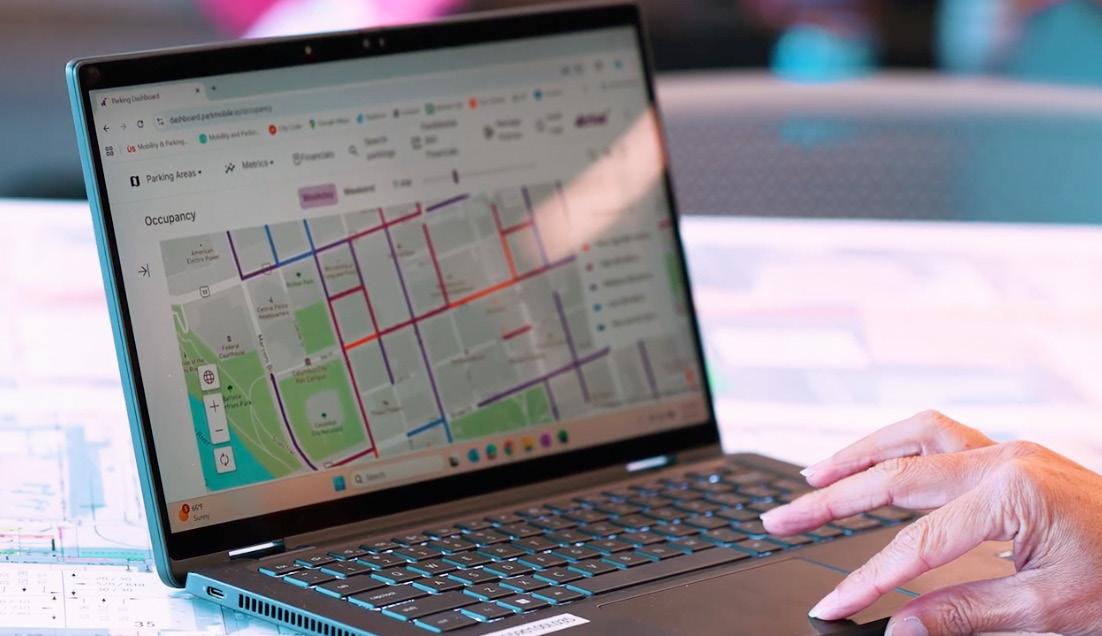
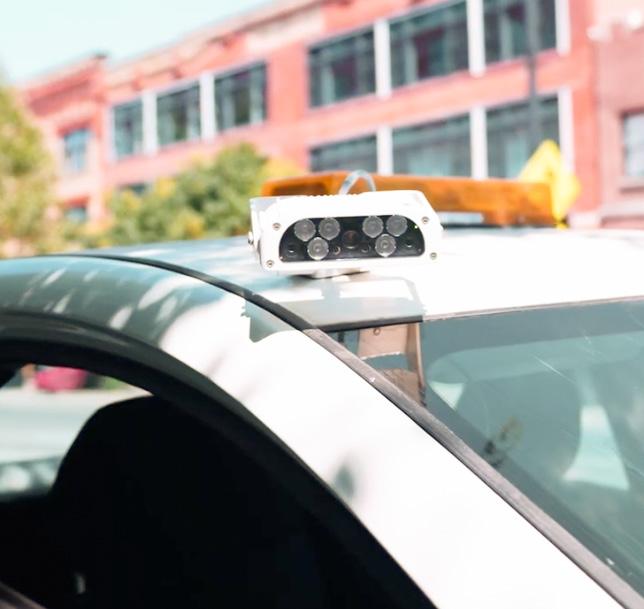
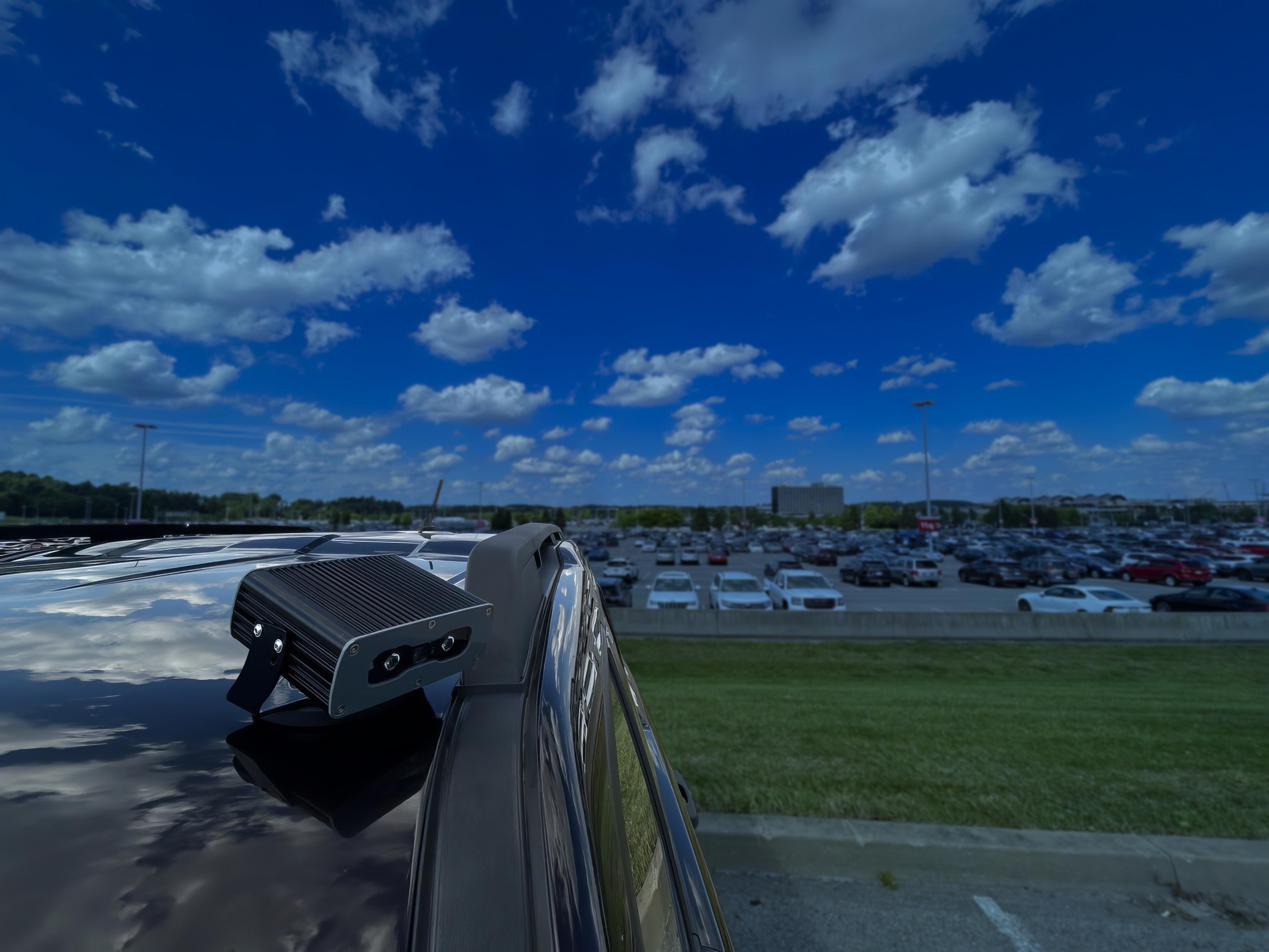
The city leverages data not only to guide decisions but also to communicate its rationale and build public support. A fully license plate–based parking system with over 90% mobile payment adoption provides a strong data foundation for planning, but Columbus’s true innovation lies in how it expands and applies that data. Recently, Columbus launched a new program to collect continuous occupancy data by equipping enforcement vehicles with LiDAR sensors. When combined with existing payment and enforcement data, these insights give staff a more complete picture of activity, even in areas without managed parking, enabling more informed and equitable mobility planning. For example, this data helps identify where parking demand can shift when spaces are removed for other curb uses. By gathering information continuously rather than through one-time studies, the city can also better evaluate the real-world impact of changes over time.
Over the past year, the Philadelphia Parking Authority (PPA) has launched several initiatives to improve safety, reduce congestion, and support multimodal
mobility through automated curbside management. These efforts target short-duration violations, such as double parking and blocked bus stops, which have an outsized impact on congestion, safety, and transportation equity in dense urban areas.
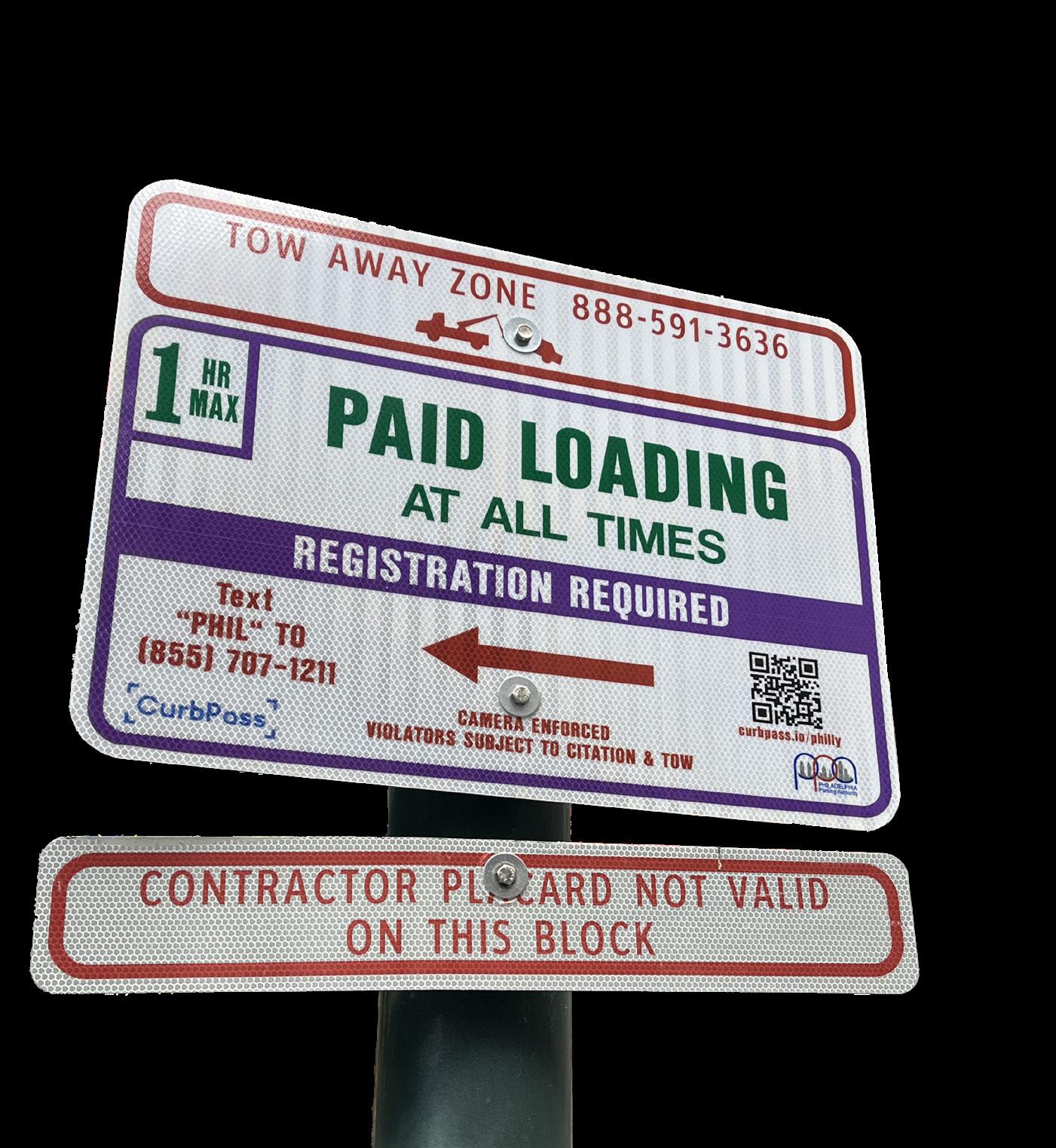
Like many cities, Philadelphia has seen a steady increase in curb-side commercial activity. Freight, delivery, and gig-economy drivers all need access to high-demand areas to load and unload. This growing demand for limited curb space prompted PPA to implement a new approach to managing commercial activity: Smart Loading Zones.
“On any given day, our Center City streets are severely congested, often due to delivery vehicles parking wherever they can, whether legal or not. We believe our Smart Loading Zone Initiative is a significant step toward resolving these issues, bringing delivery drivers into compliance, and reducing illegal parking that leads to daily gridlock.”
—Rich Lazer, Executive Director, Philadelphia Parking Authority1
Smart Loading Zones address both the symptoms of rising commercial demand, congestion and illegal parking, and the root cause: insufficient turnover and limited short-term access for commercial drivers.
To promote quick stops and discourage long-term parking, the program uses a pay-by-the-minute fee structure with rates higher than those of nearby metered parking. This encourages turnover and prioritizes access for drivers who need short-term loading and deliveries.
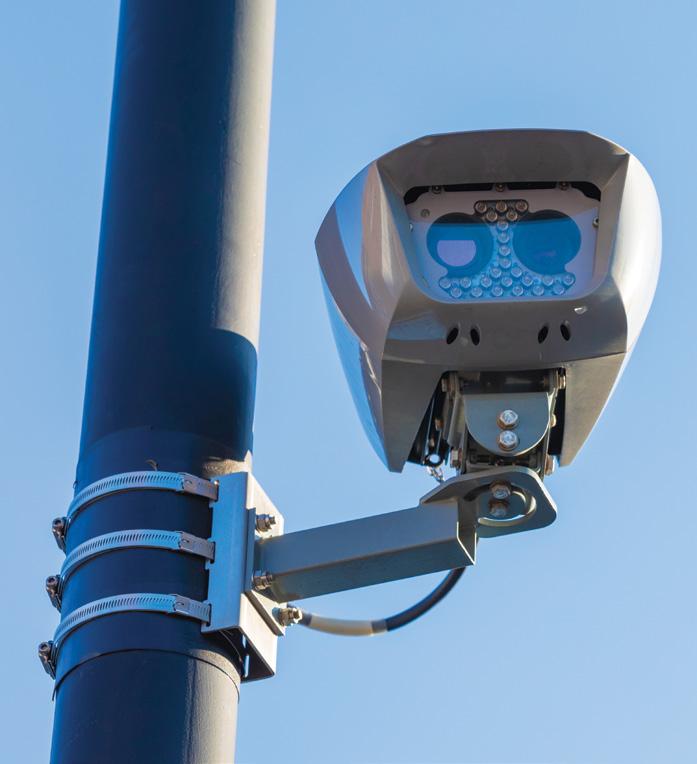
The program leverages AI-powered camera technology to automate payment and enforcement, creating a seamless experience for both drivers and PPA staff. Registered drivers and fleets link their license plates to a digital wallet and are billed automatically for the exact time used, a frictionless process similar to a toll road. Violations for unregistered parking, overstays, or double parking are automatically captured for review by PPA staff, and approved citations are mailed directly to vehicle owners.
Within the first five months, the program increased commercial vehicle use of loading zones by 102% and reduced double parking by up to 50% in some of Philadelphia’s most congested corridors. 2
In partnership with the Southeastern Pennsylvania Transportation Authority (SEPTA) and the Office of Transportation, Infrastructure, and Sustainability (OTIS), PPA also launched an automated bus camera enforcement program that uses cameras mounted on SEPTA buses to identify vehicles blocking bus lanes, stops, or trolley zones. These violations go through the same review and approval process as those generated
1 Source: NBC Philadelphia: PPA takes aim at Center City Congestion with camera-monitored loading zones
2 Source: Automotus-PPA Smart Loading Zone Program data
by the Smart Loading Zone program before being mailed to vehicle owners.
“Vehicles parked illegally in bus lanes and in bus stop zones threaten the safety and accessibility of all bus riders, but especially riders with disabilities. If a bus cannot pull up to the curb because the bus stop is blocked by an illegally parked vehicle, it is impossible for bus operators to safely deploy wheelchair access ramps to the curb. It also forces transit riders to step into active travel lanes to board and exit the bus, where it is both dangerous and difficult for bus operators to see them.”
—Rich Lazer, Executive Director, Philadelphia Parking Authority3
Automated enforcement isn’t about issuing more tickets; it’s about changing behavior. Data from similar programs in peer cities shows that 87–91% of drivers who receive one automated
citation never receive a second citation, demonstrating that automation fosters long-term compliance and helps create safer, more efficient streets.4
Across these examples, one theme is clear: the future of parking and mobility extends far beyond parking itself. Cities are reimagining how people, goods, and services move using technology, data, and collaboration to make that movement safer, more efficient, and more sustainable. Just as importantly, these efforts are helping cities become places where people want to live, work, and spend time, rather than simply passing through as quickly as possible. ◆

3 Source: PPA Press Release: PPA and SEPTA Team Up to Launch Automated Bus Camera Enforcement Initiative
MATT BROOKER is a Regional Director of Account Management for Arrive and a member of the IPMI Technology Committee. He can be reached at matt. brooker@arrive.com
4 Source: Automotus SLZ program data from Pittsburgh, Hayden AI automated bus camera enforcement program data from New York City

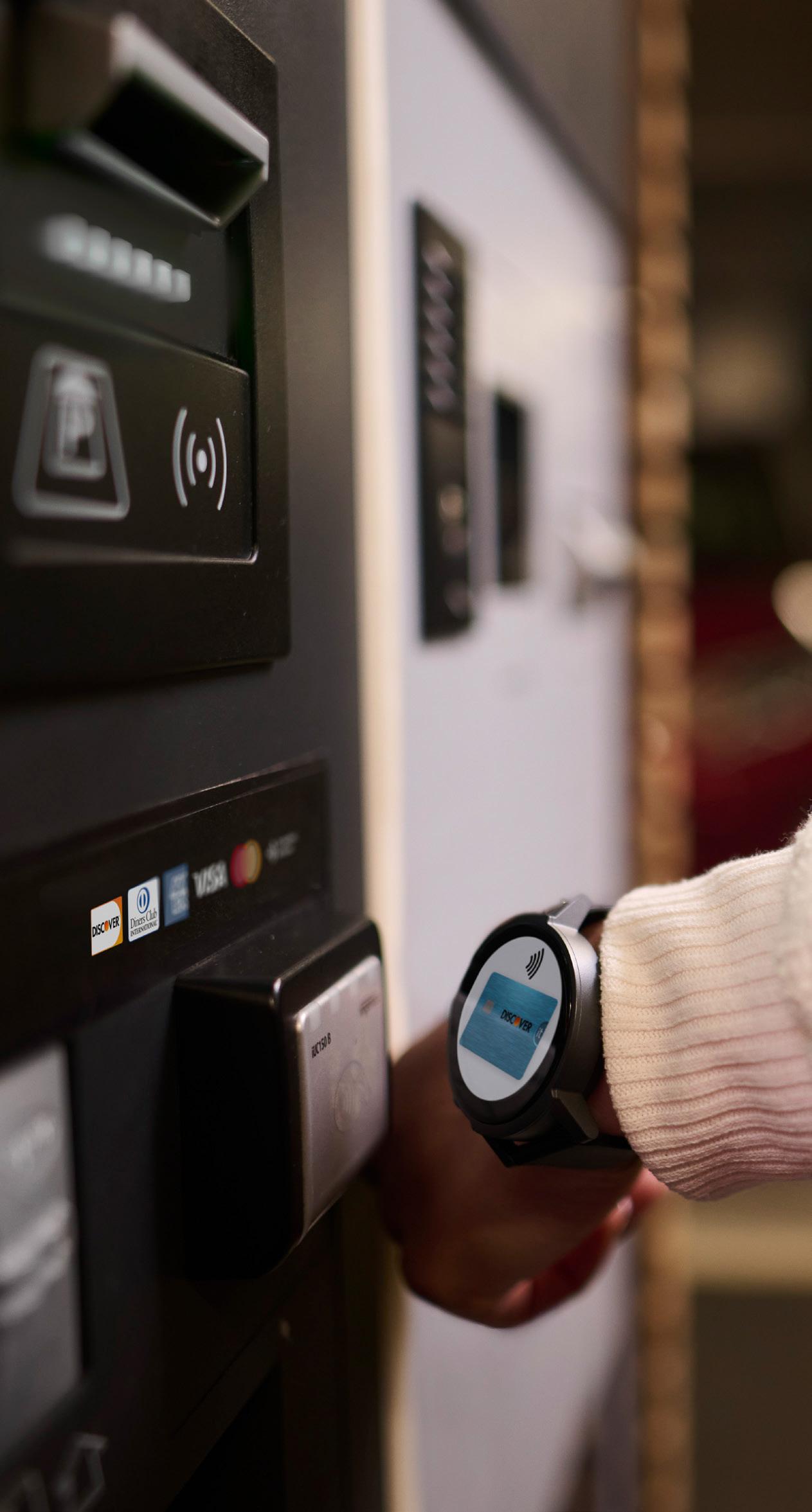
Realize your parking lot’s full potential. With millions of cardholders worldwide1, Discover® Network has a vast customer base ready to make payments—including for parking.


by Leslie L. Stone, PTMP
IN THE CONTEMPORARY LABOR MARKET, diversity, equity, and inclusion (DEI) are not abstract ideals; they are central to how successful organizations attract, retain, and engage employees and the communities they serve. Yet the DEI landscape in 2025 looks very different from even a few years ago. Across the country, the federal government and many corporations have begun pulling back from formal DEI initiatives, reshaping the conversation about what inclusion looks like in practice.

Amid these changes, Employee Resource Groups (ERGs) have emerged as one of the most powerful and resilient tools for maintaining progress, building belonging, and connecting people across departments, roles, and the broader communities that shape their daily lives. For organizations in the parking and mobility sector where teams range from bus operators to engineers, planners, enforcement professionals, and everything in between, ERGs can be a bridge that keeps inclusion real and relevant.
In January 2025, the current U.S. administration issued executive orders that effectively rolled back federal DEI programs:
● Executive Order 14151, “Ending Radical and Wasteful Government DEI Programs and Preferencing,”
directed federal agencies to terminate programs tied to DEI and accessibility.
● Executive Order 14173 rescinded requirements for federal contractors to maintain nondiscrimination and affirmative action policies.
While these orders are subject to ongoing legal challenges, the mandates have created profound ripple effects throughout federal institutions, corporate workplaces, and the communities they influence. Public and private organizations alike have begun scaling back DEI offices or rebranding them under new names to avoid political controversy and potential repercussions. In this climate, ERGs have taken on a new role, not just as social or professional affinity groups, but as the backbone of inclusion and advocacy work. As budgets shrink or DEI departments are dissolved, ERGs can step forward to continue the
conversation, support employees, and advise leadership on maintaining equitable practices.
Employee Resource Groups, sometimes called business, affinity, or colleague resource groups, began more than 50 years ago when Xerox founded the National Black Employee Caucus in 1970. It was the first corporate body of its kind to give employees of color a platform to share their life and professional experiences and advocate for change.
In the decades since their inception, ERGs have evolved from small, identity-based gatherings into strategic partners in recruitment, retention, policy, and innovation. Today, ERGs are workplace communities established around shared experiences of race, gender, LGBTQ+ identity, veteran status, accessibility, and more.
In the parking and mobility industry, an ERG might bring together women in operations, veterans in enforcement, or employees with disabilities to share insights and improve accessibility. These groups not only promote belonging but also strengthen understanding and advocacy of customer and community needs, an invaluable asset in an industry that serves everyone.
In times of political tension or uncertainty, ERGs become both a safety net and a catalyst.
● They create psychological safety, giving employees space to share their perspectives and be heard.
● They improve retention, helping employees feel connected and valued, particularly in support roles that are often behind the scenes.
● They surface innovation, offering diverse perspectives that can improve operations, customer engagement, and policy design.
● They reinforce accountability, helping leaders see how their decisions affect people on the ground.
● They uplift diverse voices and can catalyze inclusion beyond the workplace and into the communities we serve.
For organizations in parking and mobility, this can mean everything from reimagining accessibility in facility design to improving communication with frontline staff who serve diverse communities. ERGs translate DEI principles into practical actions that lead to tangible improvements for employees and the communities they serve.
The rollback of federal DEI initiatives has created uncertainty for organizations that have long depended on formally established frameworks for guidance, support, and consistency. ERGs, while increasingly essential, face their own set of challenges:
● Reduced funding or institutional support as DEI offices lose resources.
● Increased scrutiny or political pushback, with some viewing ERG activities as “partisan.”
● Volunteer burnout, as ERG leaders juggle regular workloads with advocacy responsibilities without training and support.
● Lack of measurable goals can make their impact harder to quantify.
In many organizations, ERG leaders are now the de facto keepers of equity, maintaining momentum through community, conversation, and collaboration, even when formal structures falter.
To thrive in this new environment, ERGs need more than good intentions; they need visible, ongoing support. Here are a few ways organizations can make that happen:
1. Secure executive sponsorship. Senior leaders should serve as advocates, helping connect ERG work to organizational strategy.
2. Provide structure and resources. Budgets, administrative support, and clear goals keep programs sustainable.
3. Align with business objectives. ERGs should be tied to company values, customer service, and community impact.
4. Promote collaboration across groups. Shared initiatives, such as mentoring programs or cultural awareness campaigns, help avoid silos.
5. Measure impact. Track outcomes like engagement, retention, and community partnerships to demonstrate business value.
6. Recognize and reward ERG leaders. Their contributions to organizational culture and morale deserve visibility and appreciation.
When managed intentionally, ERGs don’t just promote inclusion; they also improve communication, morale, and operational excellence across the organization.
Our industry has invariably depended on people from diverse backgrounds and disciplines working together: operations professionals, planners, engineers, enforcement officers, and customer service teams. Yet, leadership pipelines and decisionmaking spaces still don’t always reflect that diversity.
ERGs can help close that gap. A Women in Parking Leadership ERG, for instance, might mentor new managers or facilitate
discussions about work-life balance. A Veterans in Mobility Group could advocate for skills-based hiring or create awareness about accessibility improvements in parking facilities.
By empowering these networks, organizations can strengthen both their workforce and the communities they serve - aligning equity with performance. In the parking and transportation industries, many leaders have risen through the ranks — from bus operators and enforcement officers to executive roles — reflecting a trend of growth and opportunity. Yet there is always room for continued progress to ensure leadership teams fully reflect the diverse communities they serve.
As the national conversation around DEI continues to shift and evolve, one truth remains: inclusion cannot depend solely on mandates or political trends. It must live within an organization’s culture, and ERGs are
among the most effective ways to make that happen.
In parking and mobility, where our mission is to move people efficiently and equitably through shared spaces, the principles of inclusion, access, and respect are inseparable from our work. ERGs give employees the voice, structure, and support they need to keep those principles alive - no matter what’s happening at the policy level.
When we empower ERGs, we do more than sustain diversity efforts; we create stronger teams, better leaders, and more inclusive communities. And that benefits everyone.

LESLIE L. STONE, PTMP , contributed
on behalf of IPMI’s Allyship & Equity Committee.


By Cindy Cambell
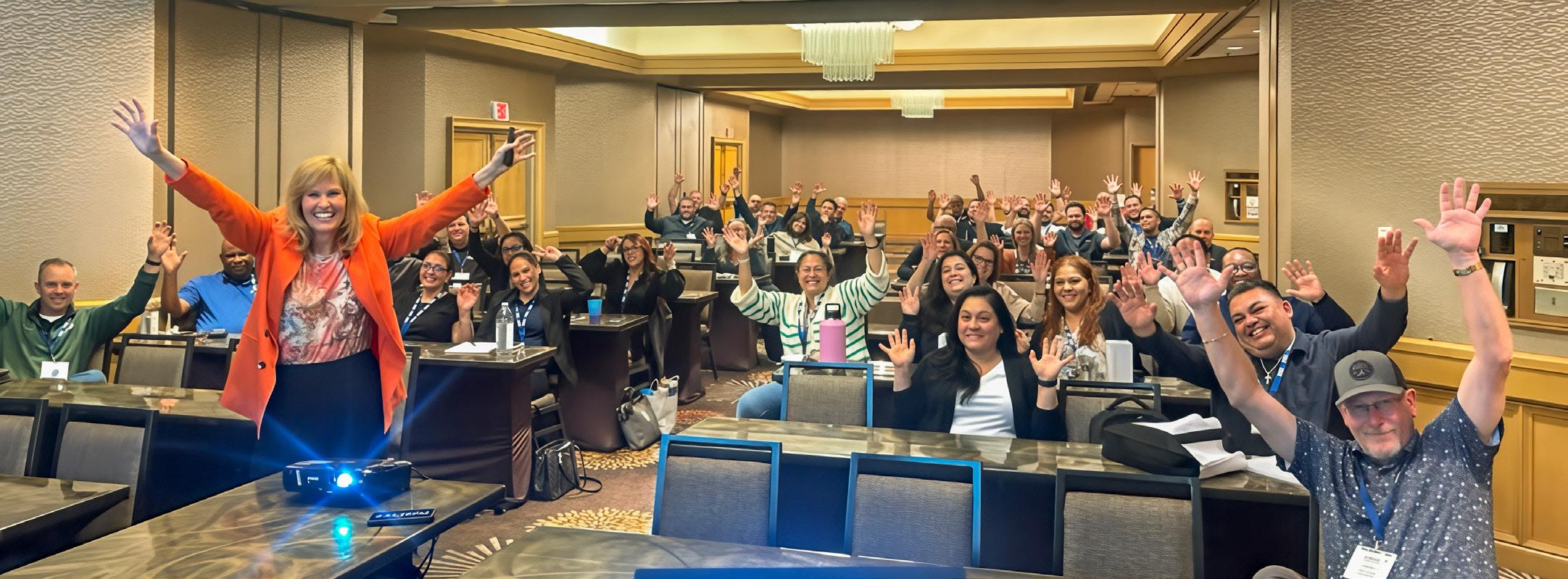
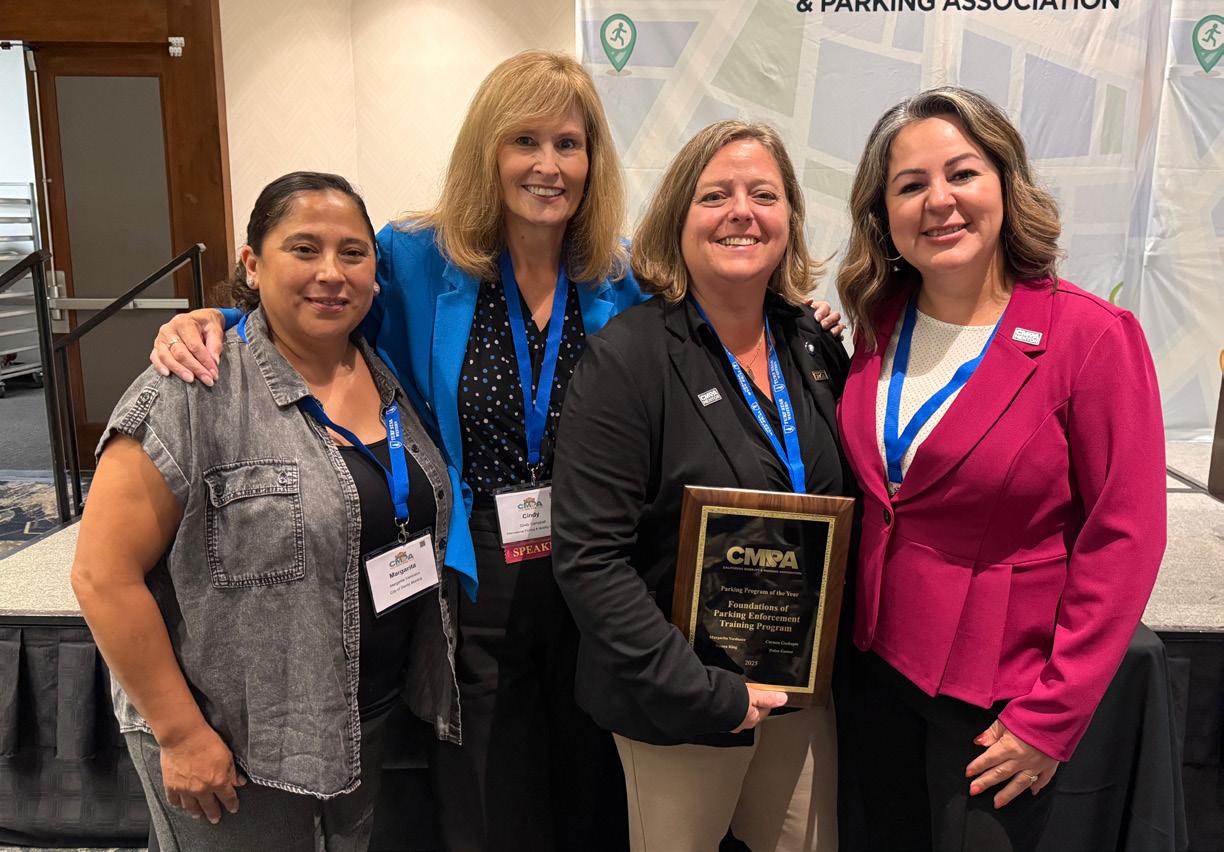
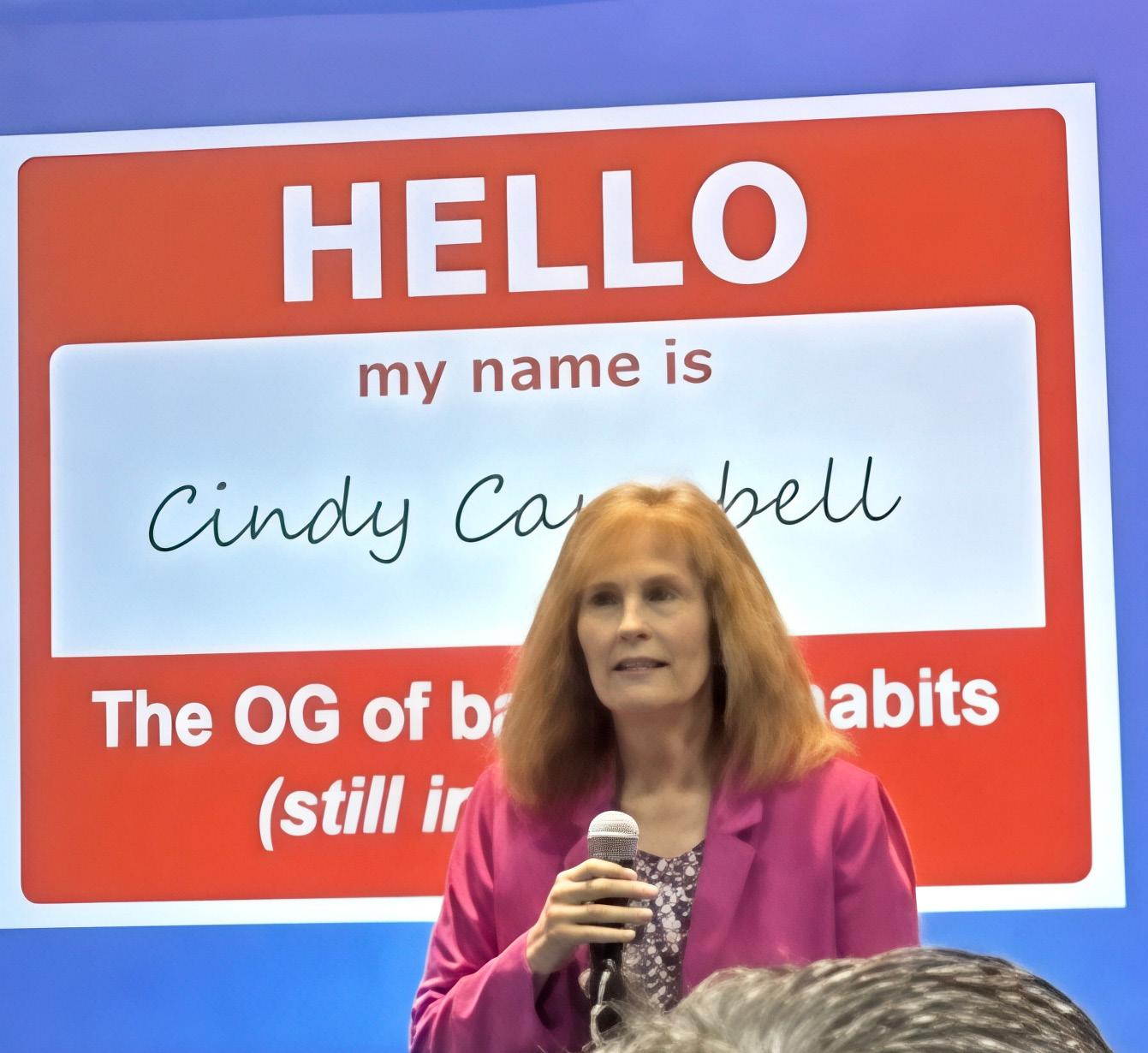
IN MY WORK WITH IPMI OVER THE LAST DECADE, I’ve been a regular attendee at many of the industry’s affiliated state and regional association (SRA) conferences. Of course, I get to participate in these conferences representing IPMI, but for me, it has never been just an assignment; there’s much more to it than that. Certainly, conference participation is part of the job, but let me share a little secret with you.
I LOVE THEM. No, really… LOVE them. These industry conferences are my happy place.
Now, before you go thinking that I seriously need to find a hobby or two (which may be true), hear me out on this.
Let me use an analogy to explain my feelings about SRAs. Let’s say you plan a trip with extended family or friends to visit Disney World. You’re excited about the visit because not only is it one of the happiest places on earth, but you’ll get to enjoy the experience with some of your favorite people. You’ll see and hear new things, meet new friends, enjoy great conversations, smile a lot, laugh, get a ton of steps in, perhaps get less sleep than normal, and probably eat way too much good food. At the end of the trip, you’ll stop and reflect on all the events and special moments that made it such a memorable experience. And, while
you’re happy to be headed back home, there’s also the feeling of excitement about planning your next visit.
That’s how I feel about attending state and regional association meetings.
I know I’m not the only one who leaves an industry event feeling a little giddy and maybe in need of a nap (or two). Albeit tired, you leave the event feeling recharged and inspired to try new things.
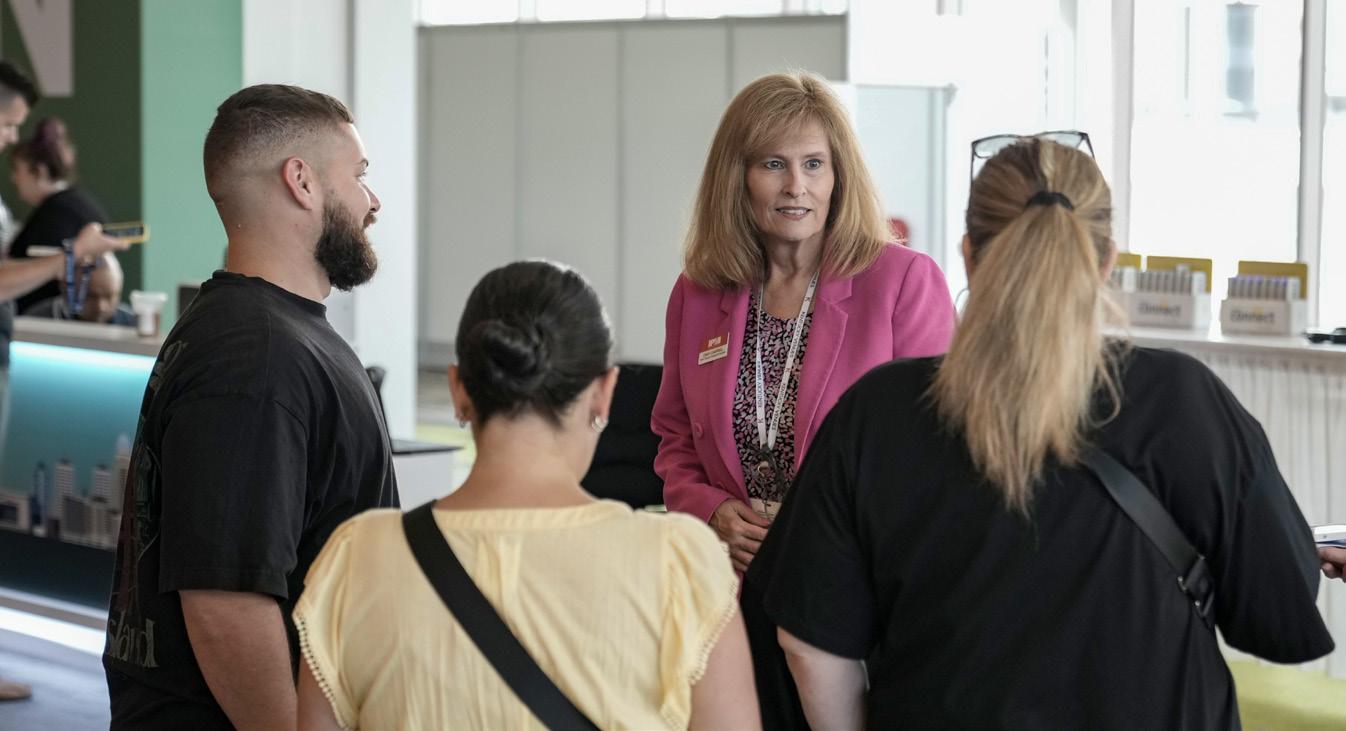
In my opinion, SRA gatherings present some of the best opportunities for thoughtful conversations with vendors, consultants, and peers. Since becoming a member of the staff, I have less time to enjoy these in-depth conversations at our annual IPMI Conference & Expo, so I genuinely look forward to the opportunity to have them at the SRA events.
Before joining IPMI, I managed a university parking and transportation program. Most of my equipment,

software, and purchasing decisions were made after attending the IPMI Expo. SRA gatherings are where many of us have cut our parking teeth. Earlier in my career, my manager encouraged me to participate in my state’s regional association. Of course, I benefited from attending educational sessions, but I also built relationships, both personal and professional, through opportunities to connect and enjoy conversations with vendors, consultants, and fellow attendees. I may not have fully recognized it at the time, but these conversations with my contemporaries provided me with a broader understanding of parking and mobility. I recall being invited into conversations where colleagues thought I could benefit from being a part of the discussion.
As my career progressed, I was able to pay forward by inviting others new to parking, mobility, and transportation into discussions when the opportunity presented itself. When you attend an industry conference, don’t skip the shoptalk/roundtable sessions, social events, or casual “huddles” between activities. There’s plenty of knowledge offered for us to absorb, but the informal discussionswell, those can be equally magical.
I don’t offer this as a casual observation, but instead, to leave you with some advice. Think about your own experiences at regional industry gatherings. With respect, if you believe you’re not yet at a point in your career where you could relate and benefit from attending an SRA meeting, you’re mistaken. Alternatively, if you think you’re beyond the offerings of your regional conference, you are also wrong. Our industry, just like our world, continues to evolve. No matter how much time you have in our industry, there will always be new lessons, new approaches, and a fresh take on how we might accomplish our tasks. Industry conferences, international or regional, are worth the investment. ◆

CINDY CAMPBELL is the Senior Specialist, Training & Development, for the International Parking & Mobility Institute. She can be reached at campbell@parking-mobility.org
What innovation will have the most impact on the future of parking and mobility?
What innovation or breakthrough do you believe has the most impact on transforming the future of parking and mobility?

Chris Donus CEO Flash
The breakthrough is the realization that driver experience is the ultimate key to unlocking industry transformation. Innovation enables the experience with AI-powered LPR cameras, integrated with open standards digital ecosystems and business intelligence through data optimization. What’s most exciting is that this is not a project; it’s a principle: the sustained transformation of our industry relies entirely on the self-fueling loop of innovation, where every breakthrough we deliver instantly raises the bar for the next driver experience.

Lisa Nisenson
VP New Mobility & Connected Communities WGI Inc.
Autonomous transit, especially mid-sized shuttles, is poised to cost-effectively and conveniently service the most common trips, which are three miles or less. In larger areas, connected vehicle technology will facilitate platooning, where multiple vehicles form a “train” in high-ridership cores, traveling close together, then separate into multiple lines. This can solve transit’s age-old dilemma between frequency and coverage.

Chuck Boddy, PTMP
Facilities Director
Revenue Authority of Prince George’s County
AI-driven technology is being used for better efficiency, ease of access, and predictive analytics.

Senior Division Manager
ParkHouston
Emerging technologies such as intelligent parking systems, AI mobility platforms, and LPR systems are redefining transportation and mobility by transforming static infrastructure and systems into dynamic, connected networks. These technologies enable real-time optimization, predictive modeling, and proactive enforcement. By leveraging data and automation, cities can reduce congestion and increase equitable access to mobility, thereby elevating parking from a logistical challenge to a strategic asset in the evolution of parking ecosystems.

Deputy Director, CFO
Pittsburgh Parking Authority
AI mapping, AILPR, and camera technology are revolutionizing parking and mobility enforcement. These tools automate vehicle identification, monitor curb usage in real time, and deliver precise, data-driven enforcement. Together, they shift cities from manual operations into proactive, efficient, and scalable mobility management.

Brooke Krieger
Regional Sales Director
Arrive
The most significant breakthrough isn’t a single technology; it’s interoperability. When data, platforms, and infrastructure communicate, cities can manage curbs dynamically, balance competing demands, and prepare for the next era of autonomous and shared mobility.
A QUESTION? Send it
editor@parking-mobility.
and watch this space for answers from the experts.

Oswaldo Tosado, PTMP
Deputy Director
Allentown
Parking Authority
The implementation of digital payments is one of the most transformative for the future of parking and mobility. As many cities around the world continue to advance in using technology to improve parking for visitors, digital payments have led the way in providing this convenience. In Allentown, we have recently worked on many projects involving vendors that offer digital payment options. These projects have allowed visitors to reserve parking spaces for an event in advance or to start a session upon entry at one of our parking facilities. This allows for quick arrival and exit without waiting. As cities grow and move towards a more sustainable, eco-friendlier environment, the use of digital payments will reduce the hardware needed for parking payments, thereby lowering costs and creating more curb space. We have seen the implementation of digital payment apps in newer vehicles introduced to the market as well. This shows the future climate, with the potential to transform the world of parking and mobility.

Debbie Lollar, PTMP
Associate Vice President
Texas A & M University
Transportation Services
Although it has not always been an easy or smooth transition, the thing we are seeing most transforming our transportation networks now and in the future is personal electric vehicles. They are becoming more reliably constructed in alignment with UL guidance and are becoming a prominent component in our network. Some riders drive in ways that make them less welcome. Still, we have a burgeoning campus-wide transportation safety and etiquette campaign to help our community accept and appropriately integrate this newer mode.

Parking Services Manager
City of Las Vegas
The most significant breakthrough in parking and mobility today is the integration of AI, which is transforming how many cities and communities manage traffic, space, and curbside activities. These innovations are not just about convenience, but also efficiency, equity, and sustainability. Smarter parking limits vehicle emissions by reducing circling, adaptive pricing encourages turnover, and curb management ensures fair access for businesses, services, and residents. Parking is evolving into a dynamic, intelligent layer of urban infrastructure. Communities and cities that embrace innovation and new technology will see better traffic flow, cleaner air, and more livable spaces.

Victor Hill, PTMP
Consultant
Walker Consultants
Artificial Intelligence is the easy answer because it’s already become an integral part of analytics and drives exponential gains in operational efficiencies when used effectively. It’ll continue to get better faster and drive innovation. The thought leaders of our industry will be the ones who keep up.

Associate Director for Data & Administration
Old Dominion University Transportation & Parking Services
As a “numbers” person on a university campus, data analytics offer the greatest potential to transform parking and mobility. Analytics help identify peak parking demand, which, in turn, informs faculty/staff, students, and campus guests about space availability. The analytics also form the foundation for fee calculations, budget forecasting, and future infrastructure planning.

Steve Rebora President & CEO DESMAN, Inc.
The integration of advanced camera recognition technology with machine learning is poised to be a game-changer for the parking and mobility industry, fundamentally transforming payment, security, and operational efficiency. These advancements are already enabling sophisticated applications such as 3D vehicle recognition, enhanced facial recognition for access control, and comprehensive environmental safety monitoring.

Director of Parking and Transportation
Washington University in St. Louis
I believe one of the most transformative innovations in the future of parking and mobility is the development and implementation of smart parking systems. Systems that combine IoT (Internet of Things) sensors, real-time data analytics, and mobile applications to optimize the parking experience. Over my 30 years in the industry, I have seen migration, and smart parking systems have brought together all of these features (realtime availability, automated payment, dynamic pricing, autonomous vehicle integration, environmentally friendly solutions, EVs) to provide a more efficient, sustainable, and user-friendly solution.

by Trystan Henry, PECP
In 2023, the University of Southern Maine (USM) undertook one of the most ambitious infrastructure transitions in its history: modernizing its entire parking system, introducing License Plate Recognition (LPR) technology, and building a new parking garage that would host the largest collection of Level 2 EV chargers in the State of Maine.
At the time, the university operated only three chargers, relied on manual permitting, and had never fully enforced parking compliance. The initiative was not just about modernization; it was about rethinking how parking, transportation, and sustainability could coexist as one system.
For more than a decade, USM’s parking program had operated with an annual deficit exceeding $1.5 million. Paper permits, disconnected databases, and unpredictable enforcement eroded trust and efficiency. By 2023, leadership recognized that the solution wasn’t more parking, it was more precision

USM leadership defined clear, measurable goals:
● Cut fraudulent activity by 75% or more.
● Achieve 90% compliance through education and automation, not tickets.
● Eliminate the decade-long budget deficit within two years.
● Integrate parking operations with sustainability and mobility planning.
This wasn’t just a financial exercise. It was an institutional redesign aimed at aligning parking operations with the university’s broader mission of accessibility, sustainability, and fiscal responsibility.
This transformation grew from the university’s first comprehensive Transportation Demand Management (TDM) Plan. Developed with consultant VHB, the TDM plan created parking, transit, and emissions as parts of one interconnected ecosystem.
By coordinating policy reform, commuter incentives, and infrastructure upgrades, USM created an adaptable model that balanced growth with environmental stewardship. Parking became a critical component of the school’s long-term sustainability framework—a system capable of adjusting dynamically to demand, class schedules, and behavior.
All permits, validations, and enforcement data were unified under 88 adaptive rule sets governing faculty, commuters, contractors, resident students, ADA users, and events.
Instant permit issuance replaced manual registration. The moment a student or employee registers, the system automatically generates a digital permit linked to their license plate. No waiting, printing, or manual activation.
This single feature virtually eliminated first-week citations, reduced calls, and ensured that users began compliant from day one.
USM introduced a proactive validation process that verifies every vehicle upon arrival. If a permission is missing or expiring, the system sends an alert to those who have visited campus at least once and opted in, giving the parker a chance to selfcorrect before enforcement intervenes. This subtle change redefined parking culture.
● Compliance reached nearly 97%.
● Adding truststart and fastrack also nearly eliminated nonpayment violations.
Behavior changed not through punishment, but through predictability.
LPR became the backbone of transparency. Every scan captured time-in, time-out, and session validation, creating an auditable trail for every space.
The data exposed long-standing inefficiencies: some lots were overallocated while others sat underused. Adjusting rules and pricing lifted effective capacity by 30% without building a single new space.
LPR also recognized specialty plates, such as ADA placards and visiting legislators, emergency vehicles, and logo-identified
vehicles, automatically applying appropriate privileges and validations while maintaining equity and compliance.
AI analytics now forecast demand by cross-referencing class schedules, event calendars, and weather data. The system recommends adjustments to staffing, rates, and messaging before congestion occurs. This predictive approach reduced circulation, improved occupancy balance, and minimized emissions, turning parking into a real-time mobility management tool rather than a static operation.
Digital workflows gave USM unprecedented flexibility.
● Post-session payments allow drivers to reconcile or extend sessions after leaving, reducing violations while maintaining revenue.
● Event grace-period controls enable staff to adjust rates instantly for extended games or weather delays.
For users, it feels transparent and fair; for administrators, it’s fully adaptable.
As part of its sustainability commitment under Second Nature’s President’s Carbon Commitment, USM built a new 506-space garage featuring 29 dual-head Level 2 chargers (58 total plugs), the largest EV hub in Maine.
Designing that network required careful planning. The project team categorized users into three groups:
1. Visitors: chargers placed on ramps and inner walls for high visibility and easy access.
2. Daily Commuters: an entire dead-end
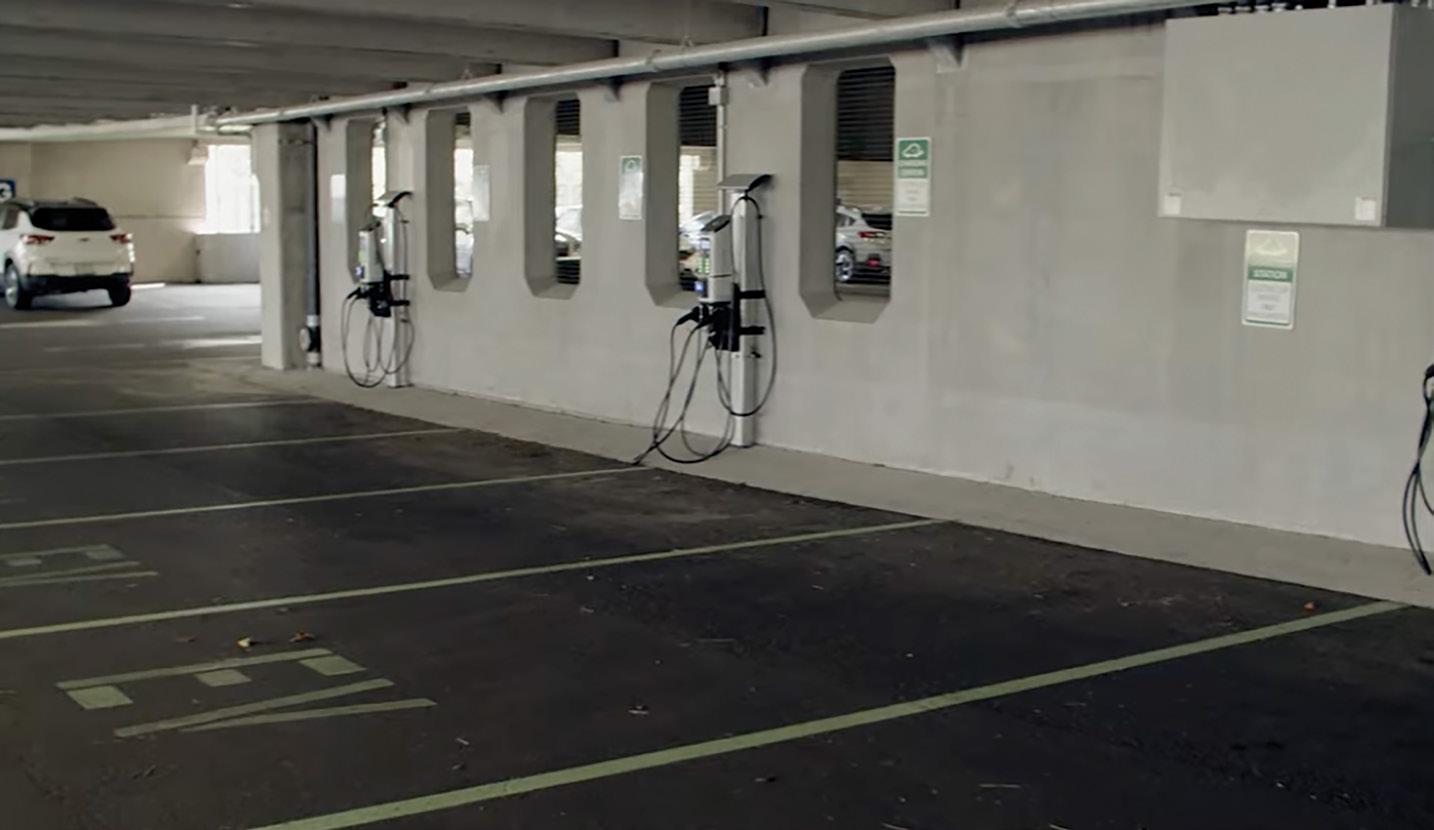
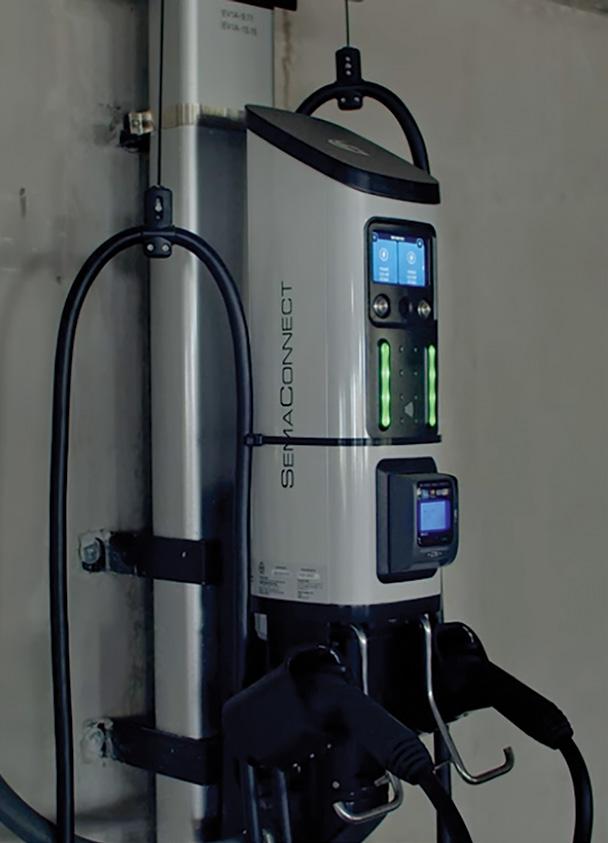
3. Resident Students: overnight charging located on an upper floor, protected from snow and weather.
Electrical infrastructure was designed to support near-maximum simultaneous charging, trading higher upfront cost for faster turnover and longer-term flexibility.
The placement plan also improved garage circulation by clustering user types, reducing confusion and unnecessary searching.
To balance sustainability with affordability, USM conducted a regional market analysis with Competitive Energy Services (CES). The initial rates — $1.75 per hour by day and $1.25 at night — were chosen to break even on electricity and network costs while encouraging turnover.
After the first year, utilization data and community feedback prompted a modest rate reduction to $1.25 by day and $1.00 at night. The result was improved fairness and steady utilization without subsidy.
USM also implemented a “plug-in only” rule, ensuring EV spaces were used efficiently and not occupied by noncharging vehicles.
Launching the new systems required precision communication. The Offices of Sustainability and Parking Services worked together to roll out the EV program, LPR system, and digital permits through segmented email campaigns, social media, and on-campus tabling events.
Each communication focused on one major change at a time to prevent information overload. This intentional strategy accelerated adoption and reduced confusion during one of the most complex operational transitions in university history.
USM’s digital event portal consolidates all temporary access — sports, conferences, performances — into one platform. Event coordinators can now create digital passes, assign inventory, and monitor real-time occupancy without paper credentials.
This unification prevents event overflow from affecting commuter and resident zones while capturing valuable data for future event planning.
To reduce single-occupancy trips, USM deployed an AI-supported, self-managed carpool program. Drivers and riders match by ZIP code and class schedule, forming verified carpools that require no administrator intervention.
AI dynamically reallocates spaces: converting unused carpool stalls to general use during off-peak hours and restoring them when demand returns.
This flexibility increased carpool participation by 40% and contributed to measurable reductions in campus CO2 emissions.
USM’s parking transformation directly advanced its goal of becoming carbon neutral. Since baseline tracking began in 2006, the combined effects of EV adoption, carpooling, bikeshare, and hybrid class schedules have achieved a 40% reduction in per-capita greenhouse gas emissions.
The university now uses realtime parking and charging data in its sustainability reporting, turning operational data into environmental accountability.
Prior planning studies had proposed a new multi-million-dollar garage to meet projected demand. But once USM implemented AI analytics, the data revealed that inefficiency, not shortage, was the real problem.
By optimizing occupancy and dynamically adjusting policies, the university met demand goals without new construction, saving millions in capital costs and avoiding years of disruption.
Within seven months of full deployment, the parking and transportation budget achieved a surplus for the first time in more than a decade.
● Compliance: ~97%
● Revenue increase: 412%
● Operating expenses reduced: 93%
● Effective capacity: +30%
● Carpool participation: +40%
The deficit that once seemed structural disappeared through automation, governance, and behavioral intelligence.
Automation reduced manual workloads by more than 80%, freeing staff to focus on customer service and analytics. Parking administrators evolved from permit processors to policy analysts, leveraging data to anticipate needs rather than react to complaints.
Real-time dashboards now inform daily decisions, transforming the department into a proactive mobility partner rather than a back-office function.
Dynamic pricing ensures part-time employees and commuter students pay only for the time they use. LPR recognition instantly validates ADA and legislator plates, granting seamless access without physical credentials. These updates combine dignity, compliance, and operational consistency, ensuring fairness while maintaining oversight.
The modernization is intentionally iterative. Each year, analytics guide updates to policy, pricing, and infrastructure.
USM is evaluating integrating its EV platform with its digital parking system and introducing prepaid annual EV passes for frequent users. Plans are also underway to install a dual-headed Level 3 fast charger on the Gorham campus, operated by Gridwealth.
By embedding adaptability into its design, the university ensures that technology evolves alongside behavior and sustainability targets.
1. Start with data, not concrete. Perceived shortages often reveal management inefficiencies.
2. Lead with education. Predictive validation systems reduce conflict and build trust.
3. Codify rules as logic. Dynamic governance allows for quick, data-driven adaptation.
4. Empower users to self-manage. Instant permits and carpool automation cut errors.
5. Make sustainability measurable. Real-time data turns carbon goals into operational metrics.
What began as a campus initiative to modernize a few outdated systems became a blueprint for integrated, data-driven mobility management.
From a $1.5 million deficit to a budget surplus, and from three chargers to the largest EV hub in Maine, the University of Southern Maine proved that when data, design, and sustainability align, parking can become a driver of institutional progress.

TRYSTAN HENRY, PECP , is Vice President of Business Development at ParkEngage Inc. He can be reached at trystan. henry@parkengage.com
By Eric Luttmann, AIA, and Raymond Smith
is writing a new chapter in its story with the completion of its first structured downtown parking garage. This functional and symbolic centerpiece will anchor growth, improve accessibility, and support the city’s evolving character.
Georgetown has long struck a balance between the pastoral and the progressive. On one hand, it’s a “rural city” in spirit: verdant surroundings, open spaces, and a strong sense of local identity. On the other hand, it is unmistakably a “growing city,” with increasing development pressure on its downtown, rising demand for housing and services, and a downtown square that draws more foot traffic than ever. The new parking garage is the product of that contradiction and transition: a strategically developed facility that bridges rural charm and urban growth, while triggering a new phase of downtown revitalization.
For decades, Georgetown’s downtown square has been a magnet for locals, tourists, festivals like the Red Poppy Festival, and small businesses. It represents a slice of Texas history, where preserved architecture meets lively local culture. But as
the city has grown, so has the strain on parking and pedestrian circulation. The narrow, historic street grid that once served a smaller population now faces far greater demand from residents, employees, and visitors alike. In 2019 alone, the city welcomed 40 new businesses to downtown, and city planning estimates suggest that, had those businesses been built farther out, they would have required nearly 700 additional parking spots. But because they are downtown, visitors, staff, and patrons have had to rely on existing parking resources, often parking on neighboring residential streets or looping repeatedly around the square in search of open spaces.
This parking shortage was not simply an inconvenience; it was a constraint on growth. Businesses depend on predictable, convenient parking to thrive, and the city’s ability to attract future
with growth.
Hence, the city’s 2015 Downtown Parking Study recommended the development of structured parking to support the downtown core. The study was a blueprint for future mobility, envisioning a system of strategically placed garages to support long-term development while reducing reliance on surface lots. The new garage is the first of two planned parking facilities, setting the tone for a downtown that is not only accessible but also designed for the future.
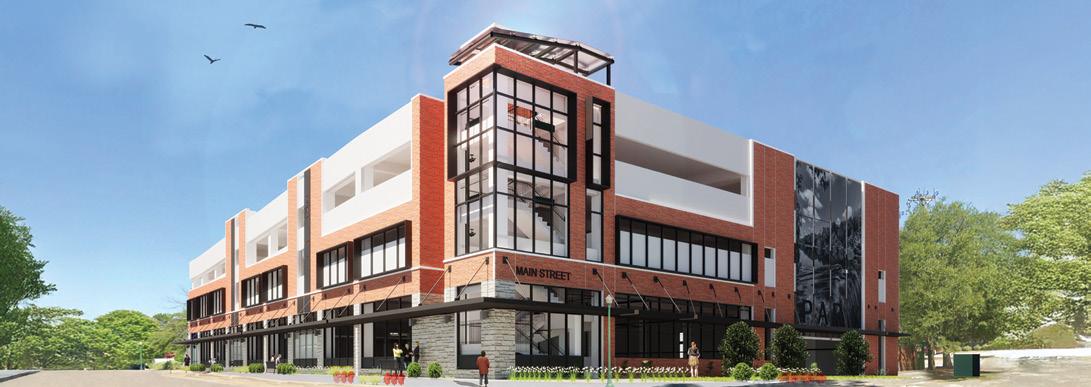
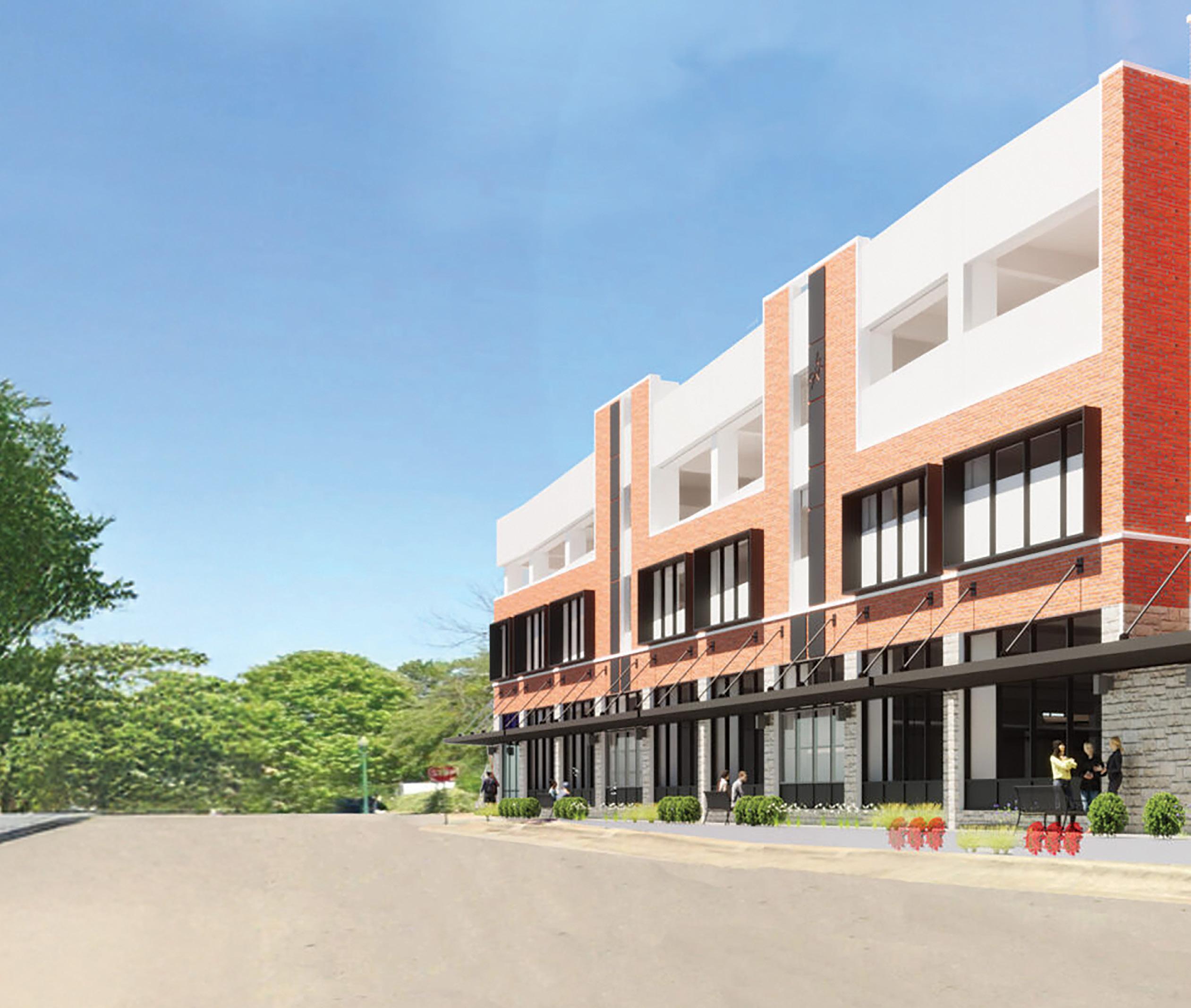
The garage is Georgetown’s first truly structured downtown parking facility. The mixed-use design includes four parking levels with 315 spaces coupled with public amenities and commercial space intended to house city offices and meeting rooms. It is, in many ways, the city’s first significant investment in vertical
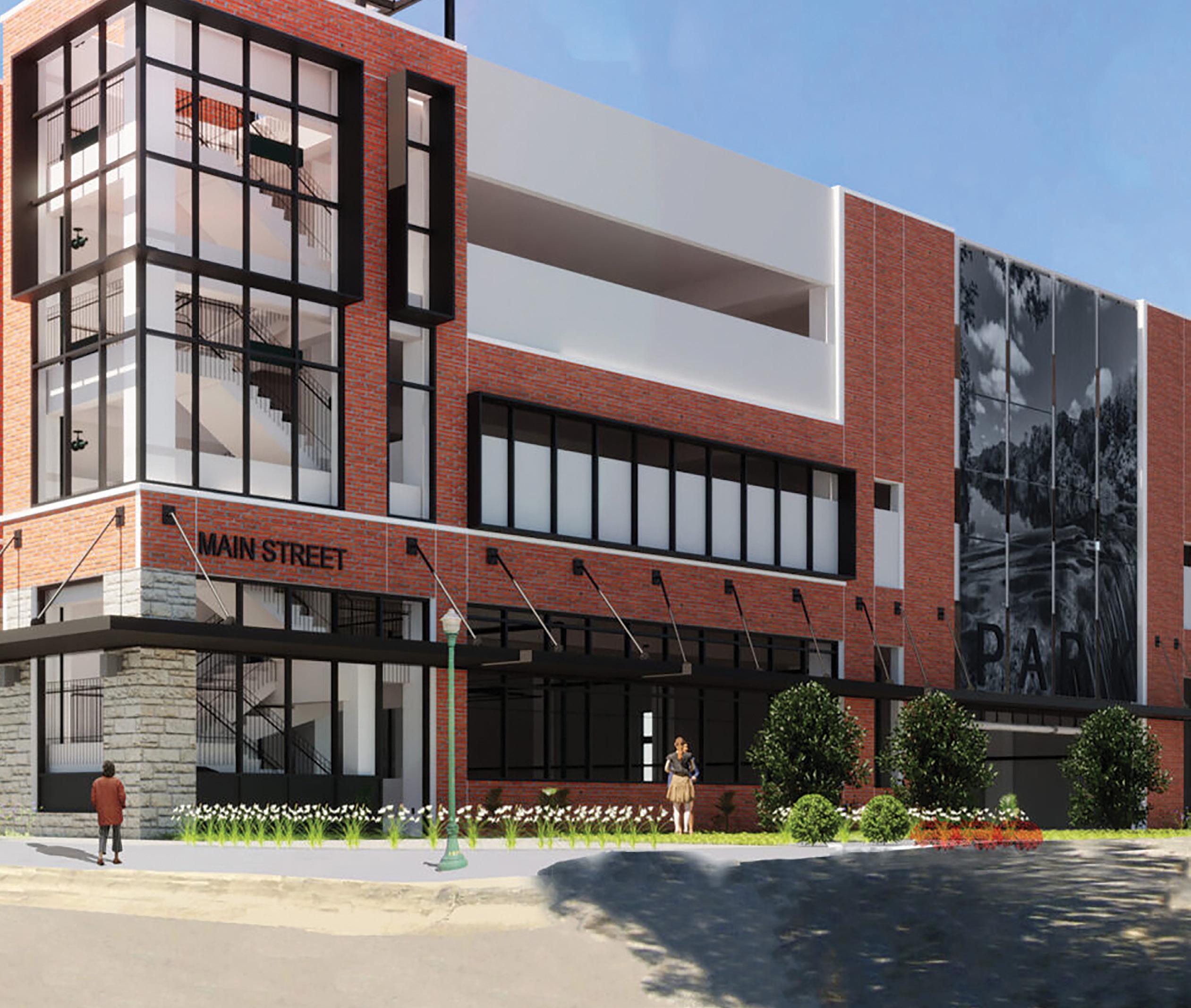
● Dual entry points / vertical circulation: The garage is accessible from Main Street at one corner and Austin Avenue at the opposite corner, with each entry zone offering stairs and an elevator to facilitate pedestrian movement. These dual access points improve both convenience and safety, ensuring that vehicles and pedestrians can flow through the site without congestion. They also serve as connectors to the broader downtown grid, allowing users to step directly into the rhythm of city life.
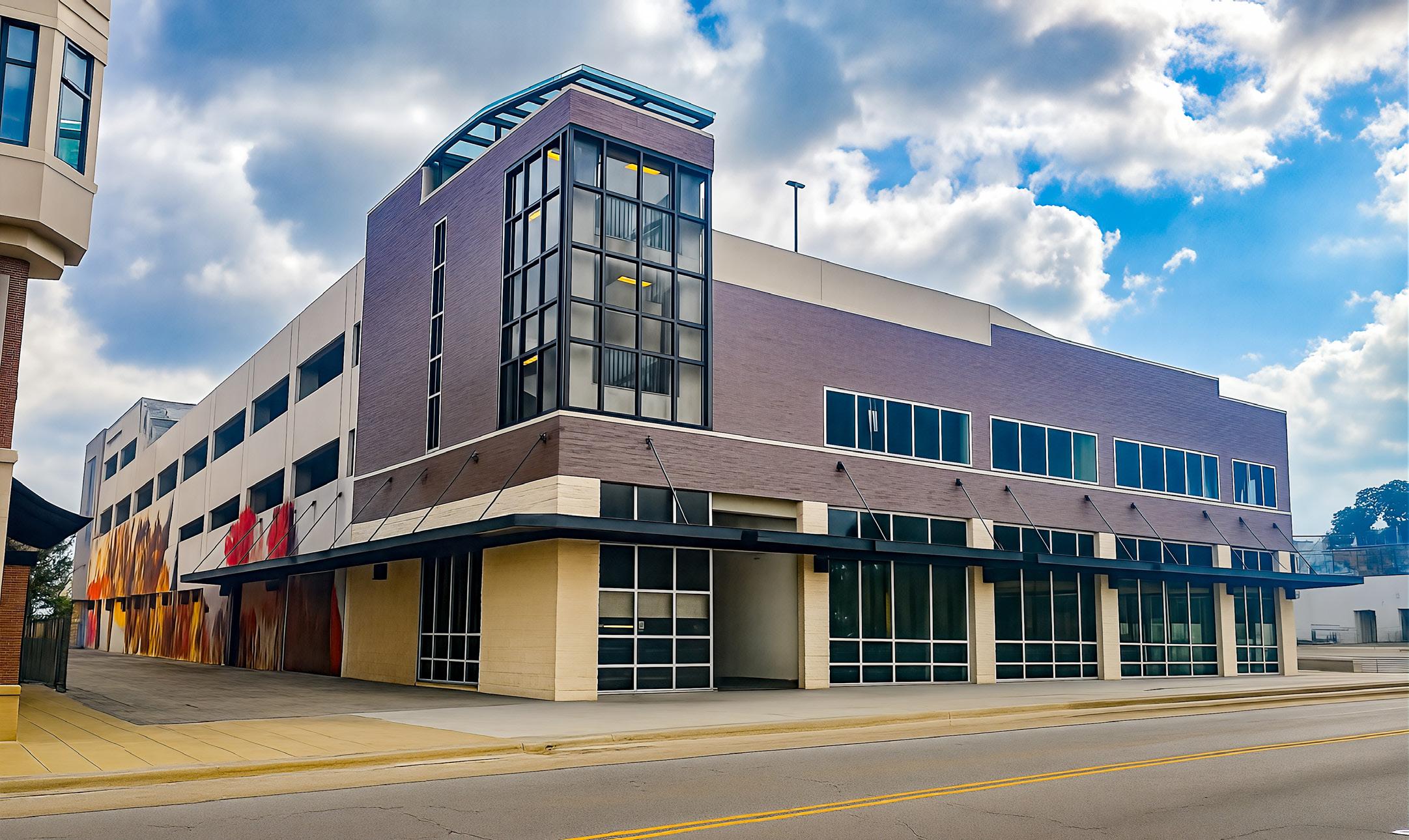
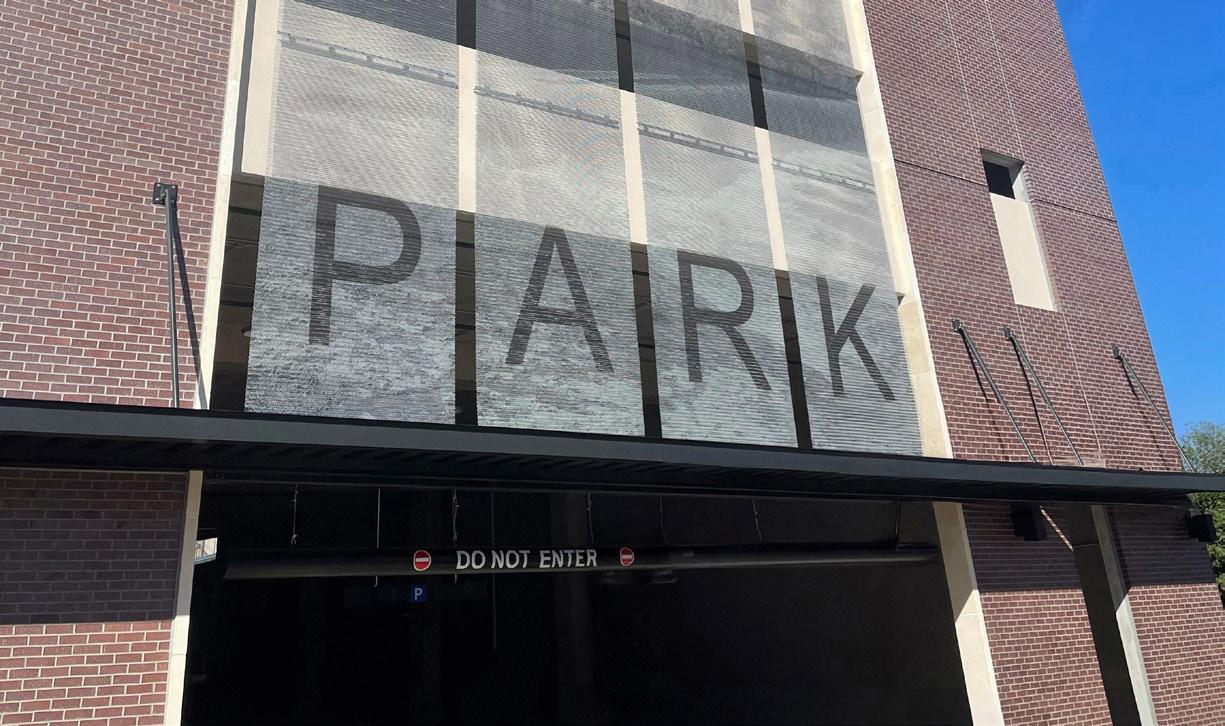
● Facade and materials: Although built of concrete, the design incorporates brick and limestone accents to echo the architectural character of the town square. Deep aluminum canopies and storefront facades on the first and second levels help to animate the streetscape and frame active frontage. It’s intended to stand on its own as a community landmark—one
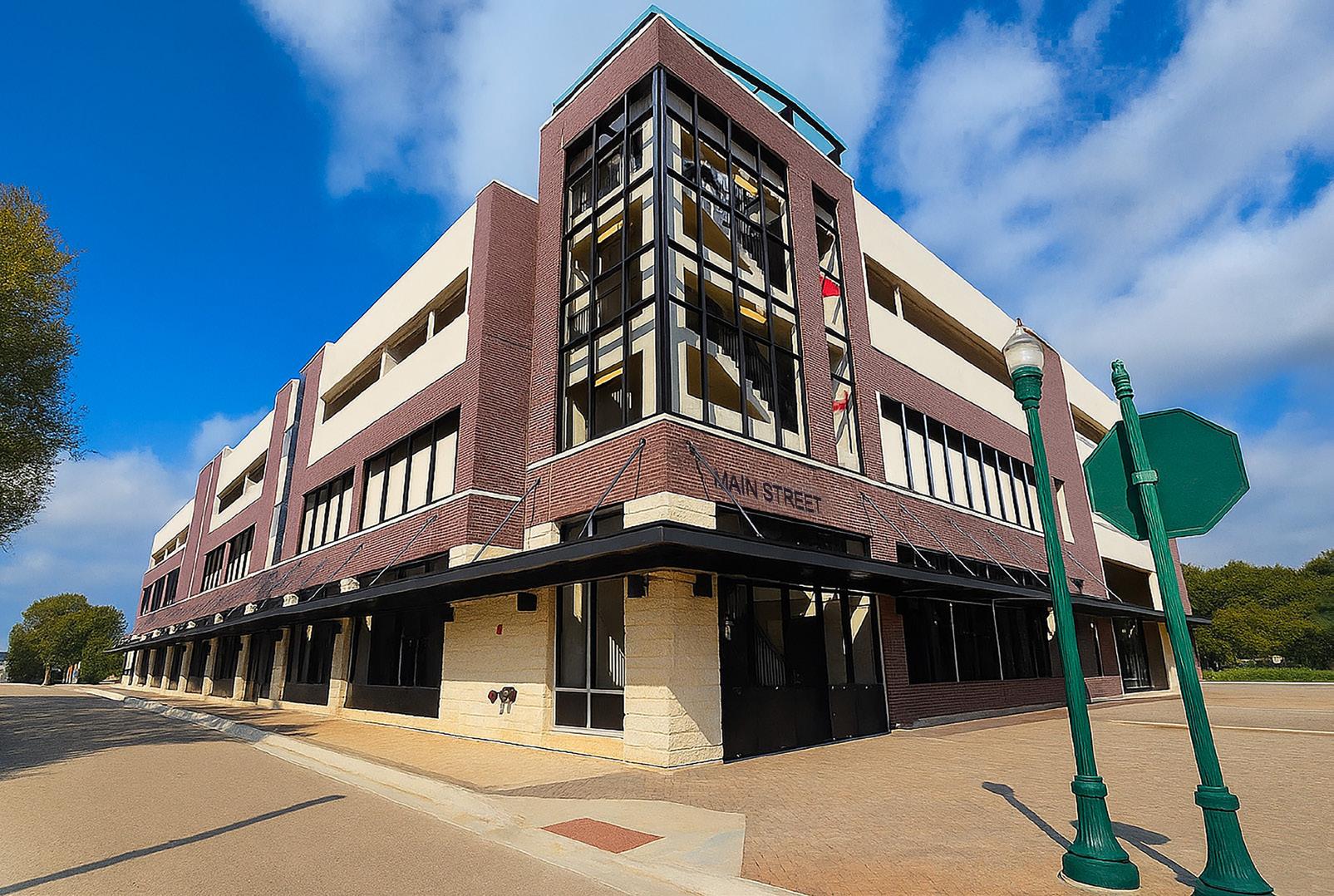
that respects Georgetown’s historic fabric while introducing a forwardlooking architectural statement.
● A true mixed-use development: The building offers roughly 4,000 square feet of commercial and city-function space (e.g., offices, meeting rooms) on the lower levels. These spaces will bring daily foot traffic and year-round activation, helping to ensure that the structure is more than a passive place for vehicles to park.
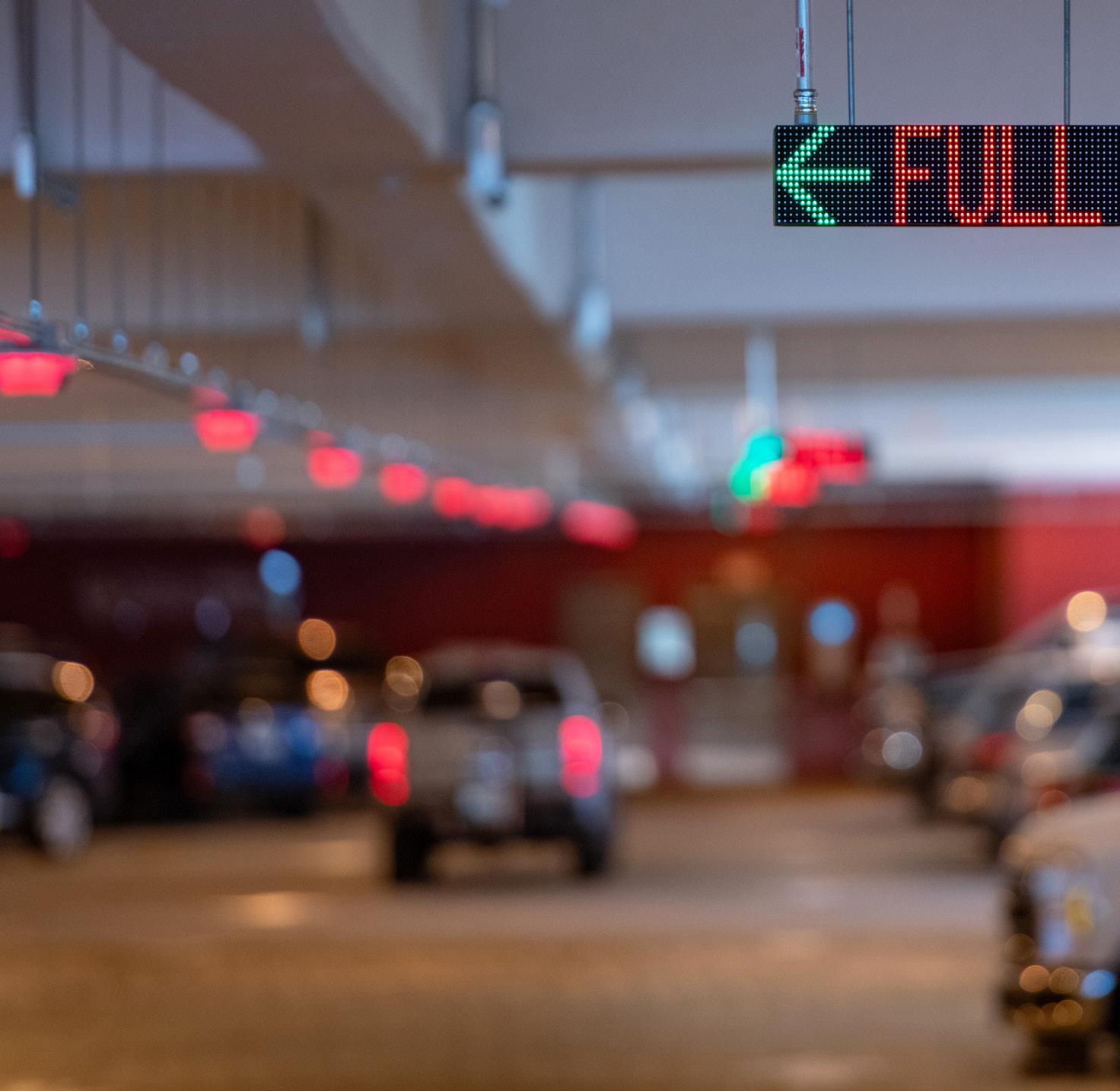
● Future-proofing and enhancements: The garage is outfitted with infrastructure to facilitate future electric vehicle charging stations, and it includes motorcycle parking at street level. Also, it supports a parking count system with dynamic signage to guide drivers to available parking spaces. This technology-driven approach reflects Georgetown’s desire to make parking responsive, efficient, and adaptable to future transportation modes.
● Scale and setback: The creative design includes a below-grade level and an upper level that is set back to reduce the perceived height. So, while the garage
offers an impressive amount of parking, it doesn’t overwhelm the architectural essence of downtown. The proportions have been carefully considered so that from a pedestrian’s perspective, the building feels like a natural extension of downtown, not a departure from it.
Funding for the $19.8 million project came from a variety of sources, including the American Rescue Plan Act, certificates of obligation bonds, and the Georgetown Downtown Tax Increment Reinvestment Zone (TIRZ). Every dollar invested in this project is expected to generate returns through increased downtown commerce, property values, and tourism.
The garage is much more than a place to park; it’s a deliberate piece of infrastructure designed to help the city achieve its broader vision of a walkable, connected downtown. In fact, it’s a key element of the city’s long-range downtown strategy, and it will impact the community in several important ways.
Perhaps the most direct benefit is that it will relieve pressure on neighboring streets by diverting visitors away from parking in residential areas. As more foot traffic and destination visits concentrate downtown, the tendency for people to find “unofficial” parking in adjacent blocks has grown. This garage, conveniently located, should reduce that pressure and restore the neighborhood’s quality of life.
The garage will also support downtown businesses and neighborhood activation. With storefronts on lower levels and modern façade elements, the structure is intended to integrate into the pedestrian experience. It will not be an isolated deck set back from activity, but a natural extension of the downtown environment. Office and meeting spaces for city and tourism staff will mean more day-in, day-out presence downtown, further animating the area. That steady presence is crucial for sustaining vitality beyond weekends and special events.
Georgetown’s downtown has a distinct architectural identity: historic brick, pedestrian scale, and visual harmony. By wrapping the concrete structure with brick and limestone veneer and employing setbacks and façade treatments, designers have created a garage that “fits in” rather than stands out as a monolithic intrusion. This thoughtful approach ensures the garage supports the downtown experience rather than detracts from it. The result is a building that respects context while quietly reshaping it.
The design also enhances connectivity. The dual access points (Main and Austin) are more than practical; they connect major pedestrian corridors. Elevators and stair towers allow seamless movement vertically, helping integrate the garage into the walking network, and dynamic signage will guide users efficiently. As Georgetown continues to invest in walkability through improved sidewalks, lighting, and street amenities, the garage becomes an anchor for a connected, human-scale downtown.
The garage is also intended to provide long-term solutions and to be scalable for evolving mobility. Incorporating EV charging infrastructure and space for motorcycles reflects the garage’s design as adaptable to emerging transportation trends. As electric vehicles become more common and as shared mobility options evolve, this structure is ready to accommodate those changes without requiring major retrofits.
Finally, the project reflects Georgetown’s confidence and momentum. Such a prominent public project signals commitment to downtown development and sets the stage for further private investment and densification. The city has already seen renewed interest from small developers and entrepreneurs looking to establish a presence near the square. The garage communicates that Georgetown is “open for business” while protecting the qualities that make it special.
The new garage’s value extends well beyond mere convenience: it will be a catalyst for business development, creating a more walkable city, and improving the quality of life for residents. By freeing
up parking constraints, it encourages more people to confidently visit downtown Georgetown, stay longer, and explore side streets, supporting local businesses. It underpins the city’s vision to make downtown a dense, vibrant place rather than a weekend destination alone.
At the same time, it benefits residents, reducing the risk that visitors will park on residential streets. So, while the garage will encourage more visitors to come to Georgetown, it will also ensure that residential parking spaces are available to residents. This balance between attracting activity and maintaining neighborhood integrity is essential to the city’s longterm livability.
In designing the structured parking facility with mixed uses, street-level activity, and pedestrian integration, Georgetown is signaling that its downtown is not merely a historic relic, but a dynamic heart for the city’s present and future. The garage stands as a physical reminder that smart growth doesn’t happen by accident. It’s the product of foresight, collaboration, and commitment to design excellence.
Just as importantly, the project represents a philosophical shift in how Georgetown approaches
infrastructure. The city could have built a simple, utilitarian parking structure, but instead it invested in something that contributes to urban life. It treats parking not as a problem to be solved but as an opportunity to be leveraged.
This new garage is the first structural infrastructure investment in the evolving downtown. It is a statement: Georgetown is not merely letting growth happen; it is shaping it with intention. When visitors glide into one of its 315 parking spaces and walk out into a lively, connected square, they’ll see a physical manifestation of a city that honors its past while building for tomorrow.
The completion of this facility also marks a milestone in Georgetown’s journey toward becoming one of the region’s most thoughtfully planned cities. As growth continues across Central Texas, many communities struggle to balance expansion with identity. Georgetown’s approach—anchoring growth through
facility is more than a garage. It’s an investment in the kind of city Georgetown aspires to be: connected, forward-looking, and distinctly its own. ◆

ERIC LUTTMANN, AIA , is Director of Architecture at WGI Inc. He can be reached at eric.luttmann@wginc.com


What’s Your Next Step?

“Earning an industry credential shows commitment, goal achievement, and technical excellence; qualities that build credibility both within the organization and across the industry.”
Jodi Hart, PTMP, CPA, CFE CFO, Pittsburgh Parking Authority
Click here to find out why Jodi earned her PTMP and how it impacted her career.
Digital Platforms that Power Efficiency and Equity
By Matt Howard
By Matt Howard
Digital Platforms that Power Efficiency and Equity
HISTORICALLY, city and university parking operations have managed growth by adding new, independent tools for specific needs: separate systems for permits, different vendors for mobile payments, standalone enforcement apps, and aging Parking Access and Revenue Control Systems (PARCS) solutions. While each tool solved a n immediate problem , they unfortunately created a long-term issue of operational f ragmentation that led to parker dissatisfaction, lost revenue, and staff frustration
New integrated parking technology platforms are emerging to combine these tools into best-in-class solutions for greater operational efficiency, compliance, and revenue generation. Parking operators can now choose between sticking with the tools they’ve invested in for years or replacing them with a unified platform that may entail upfront costs but deliver long-term gains and help future-proof their increasingly integrated parking management strategy.
While point solutions offer a quick fix for certain services, they come with hidden costs. When data doesn’t flow seamlessly across independent systems, staff must manage duplicate records, manually reconcile payments, and deal with customer satisfaction issues.
Managing point systems involves working with multiple vendors. Given increased administrative overhead, duplicate systems, and contract minimums, this approach is typically more expensive than working with a single supplier. These costs all impact the bottom line.
Beyond financial implications, disjointed systems can create problems for customers and staff. Consider a commuter who purchases a monthly permit online, only to receive a ticket the next day because the two systems that manage these processes aren’t integrated. This leads to a negative user experience and impacts the overall trust and credibility of the parking operation.
The Village of Pelham, NY, transformed its parking operations after struggling with outdated, fragmented
systems and poor vendor support. Using unreliable enforcement hardware with limited functionality and processes that slowed collections and service, Pelham adopted a unified platform approach. By managing all its operations in one place, along with photo-backed citations, online permitting, integrated court access, and real-time data reporting, the town has delivered an improved parking experience that keeps revenue strong and operations efficient.
An enterprise approach unifies core functions across the parking ecosystem —permits, enforcement, payments, access control, and data —into a shared platform. It eliminates redundant processes, automates more tasks, and delivers a single source of truth.
With a platform, data flows in real time between various point solutions, such as mobile payments, license plate readers (LPR), enforcement, and PARCS devices. Customer accounts, permit records, and transaction histories sync automatically; reports, financial data, and dashboards are integrated and up to date.
The University of Montana saw this advantage firsthand. The university needed a user-friendly solution to accelerate payment and improve the experience for students, staff, and visitors. An enterprise-wide parking solution was added to manage permits, enforcement, and fees. As a result, the university saw a 32% yearover-year increase in total violation revenue and a 22% reduction in citation appeals.
A modern parking management platform can also deliver value beyond parking. For example, handheld devices that issue parking permits can also support code enforcement. The Town of Gettysburg, PA, uses a single system to manage violations for landscape infractions, animal control, and unsafe structures, adding efficiency and consistency across departments.
Data management is essential for cities and universities when making budget decisions or reporting to officials and trustees. The Lancaster, PA Parking Authority moved to an enterprise platform and now relies heavily on dashboards and reports to track officer productivity, permit sales, and garage revenue, rather than manual spreadsheets. This readily available information has simplified communication with the parking authority’s stakeholders and enabled more intelligent decision-making.
Managing parking permits is a constant and evolving challenge for parking operators due to changing consumer needs and outdated, often manual systems. These legacy systems are frequently fragmented and lack integration with enforcement and payment platforms. The absence of a unified system for permit management, access control, and LPR leads to lost revenue and administrative inefficiencies.
Most operations manage multiple permit categories:
● Long-term permits (annual, semester, or monthly) for staff or students
● Guest or visitor permits that require short-term digital issuance
● Unknown or transient parkers who pay by plate or via mobile apps
Point systems typically can handle one of these categories well, but struggle when users move between them. A university might have one vendor for student permits, another for visitor passes, and a third for enforcement, forcing administrators to manually reconcile data.
A unified platform, by contrast, treats all permits as part of the same parking management ecosystem. Whether a vehicle is parked for 10 minutes or 10 months, its credentials, payment history, and eligibility live in a single system of record. Enforcement automatically checks that record, mobile apps reference it for rates, and finance teams can report on utilization by category.
Customers expect user-friendly solutions that address most of their needs, such as online renewals, mobile payments, and real-time updates. Obsolete processes and legacy systems are not suited for these demands.
Automation and reliability are key to running a successful PARCS operation. Automating processes helps staff focus on the most critical aspects of the operation, while reliability and uptime provide customers with a streamlined, positive experience. Having a single system to manage your entire parking operation —from permits to gate equipment to citations —is one of the best ways to automate your operation. Additionally, having a single system rather than multiple integrations reduces complexity and failure risk.
Connecting individual point solutions through a single platform eliminates manual data entry, enables real-time communication between systems, and lets you monitor your entire operation in one place rather than gathering information from multiple systems. Connecting LPR technology, online parking payment options, remote cashiering, and other
solutions allows you to monitor your entire operation in one place, rather than gathering information from several different systems.
Today’s parker expects access to multiple payment options, especially mobile pay. For operators, integrating mobile payments with other parking solutions, such as enforcement, permits, and on-street and off-street pay stations, provides a seamless end-to-end solution that can be managed from a single place.
The University of Utah Commuter Services oversees more than 30,000 parking spaces across 88 surface lots and 20 garages and shuttle services for students, faculty, staff, and visitors. Before adopting mobile payments, the University of Utah used staffed pay booths in visitor lots. It later transitioned to a pay-by-phone system that required users to download an app and find their stall number.
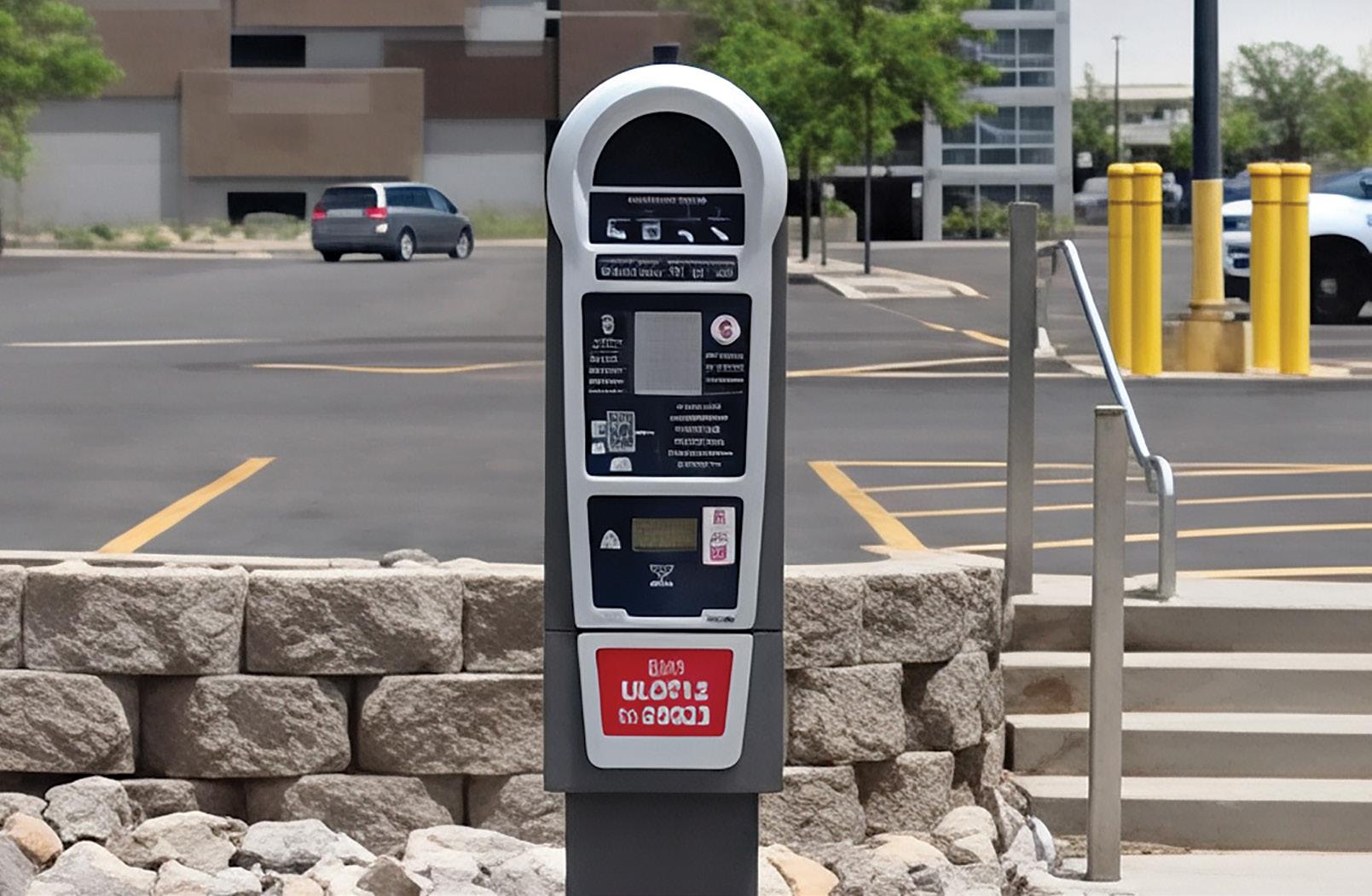
The university implemented a mobile pay system that offers an app-free way for visitors to pay for parking simply by scanning a QR code or using text-to-park. The university has seen strong adoption growth and operational improvements, including mobile pay usage, which grew from 27% in FY2022 to 70% in FY2025, and lower maintenance costs thanks to reducing the number of kiosks and service calls, fewer abandoned sessions, and fewer customer service calls due to self-service receipts and easier account management.
Balancing centralized systems with multiple integration points, such as enforcement tools, mobile payments, permit management, and payment processing, in parking management is often challenging. A centralized platform addresses this by providing a single data source for all stakeholders, including parking administrators, enforcement teams, finance, and customer service. This ensures that policy updates, such as pay-by-plate rates, permit renewals, violation codes, or payment timelines, are applied once and automatically across the entire platform
In a disbursed environment, updates occur manually or through integration touchpoints across multiple systems. One vendor handles mobile payments, another manages enforcement handhelds, and a third oversees permitting. Updates are not made consistently or in real time, so there is likely more system downtime, reconciliation issues, and lost or slow revenue.
The City of Aspen, Colorado, illustrates how a centralized model was chosen to ensure it could deliver the best possible customer experience. Using a best-in-class platform that integrates LPR enforcement, residential permits, visitor passes, and citations in a single
environment, Aspen’s residents are delighted because they can manage everything online. For the city, compliance increased and revenue stabilized.
Data visibility across systems is now the top technology goal for nearly 60% of parking leaders, according to the International Parking & Mobility Institute’s 2024 Mobility Benchmark Report.
Unified data leads to more intelligent decision-making by revealing usage trends across all parking assets through a platform’s analytics. Agencies can analyze data to learn about utilization of accessible spaces, identify discrepancies, and adjust, fostering fair practices and equity.
Customers seek seamless interactions with their parking as they do with other services. This means no hassles, applications, or permits. Concurrently, staff require clarity and tools that simplify their tasks, rather than complicating them.
A platform-centric approach effectively addresses both these needs. It provides residents, visitors, and students with a single interface for all their requirements,
including purchasing permits, settling citations, and managing renewals. Meanwhile, administrators benefit from fewer logins, reduced data exports, and more insightful, actionable information.
The result is increased efficiency and trust. When enforcement and finance personnel share access to real-time permits and payment data, errors decrease. Also, allowing parkers to easily view photo evidence and manage payments or appeals online increases trust and public confidence.
For organizations still relying on a patchwork of systems, the question isn’t whether to modernize, it’s when. The cost of staying fragmented increases each year through lost efficiency, revenue, and goodwill.
In a time when budgets are tight and expectations high, the best investment is one that unites, not divides. Unified platforms enable proactive, data-driven decisions, reduce operational overhead, and deliver transparency, reinforcing trust.
The next wave of parking innovation won’t come from more standalone apps but platforms capable of connecting them all. The need for flexible, scalable systems will intensify as mobility trends such as EV charging integration, ride-hailing zones, new curb management technologies, and invehicle payments continue to grow.
The shift to a platform isn’t just a technological upgrade; it’s an investment in future-proofing parking operations for today and tomorrow. ◆

is Head of Product at T2 Systems. He can be reached at matthew.howard@ t2systems.com
by Paul Whetzel, PTMP
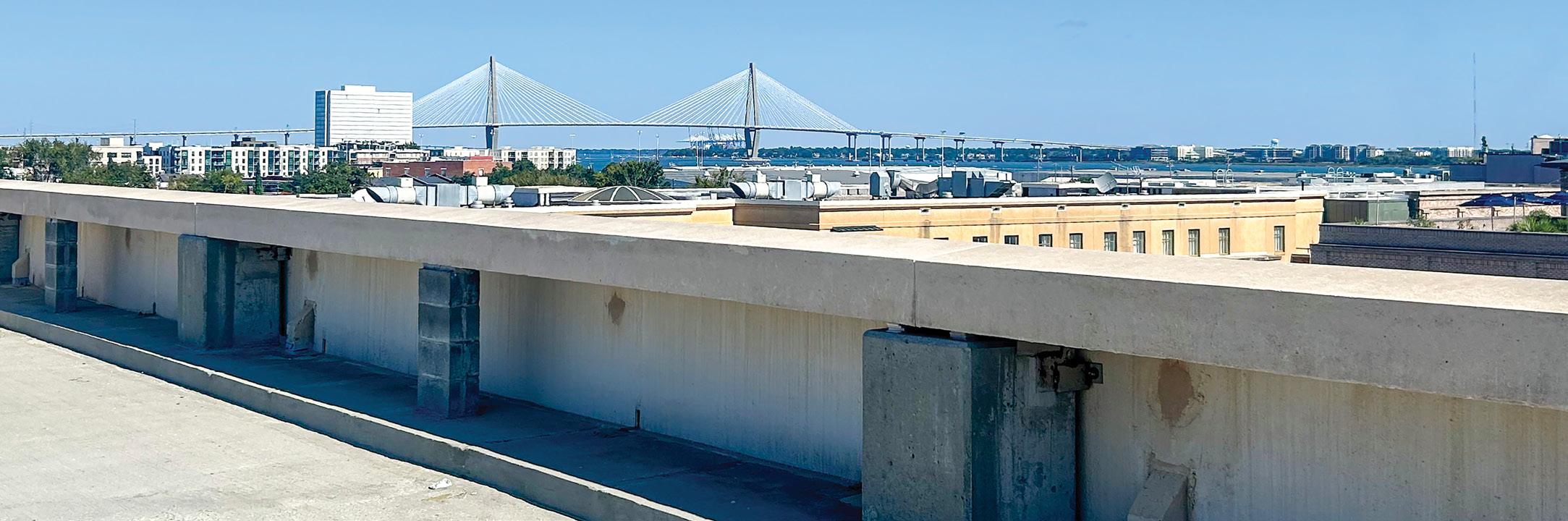
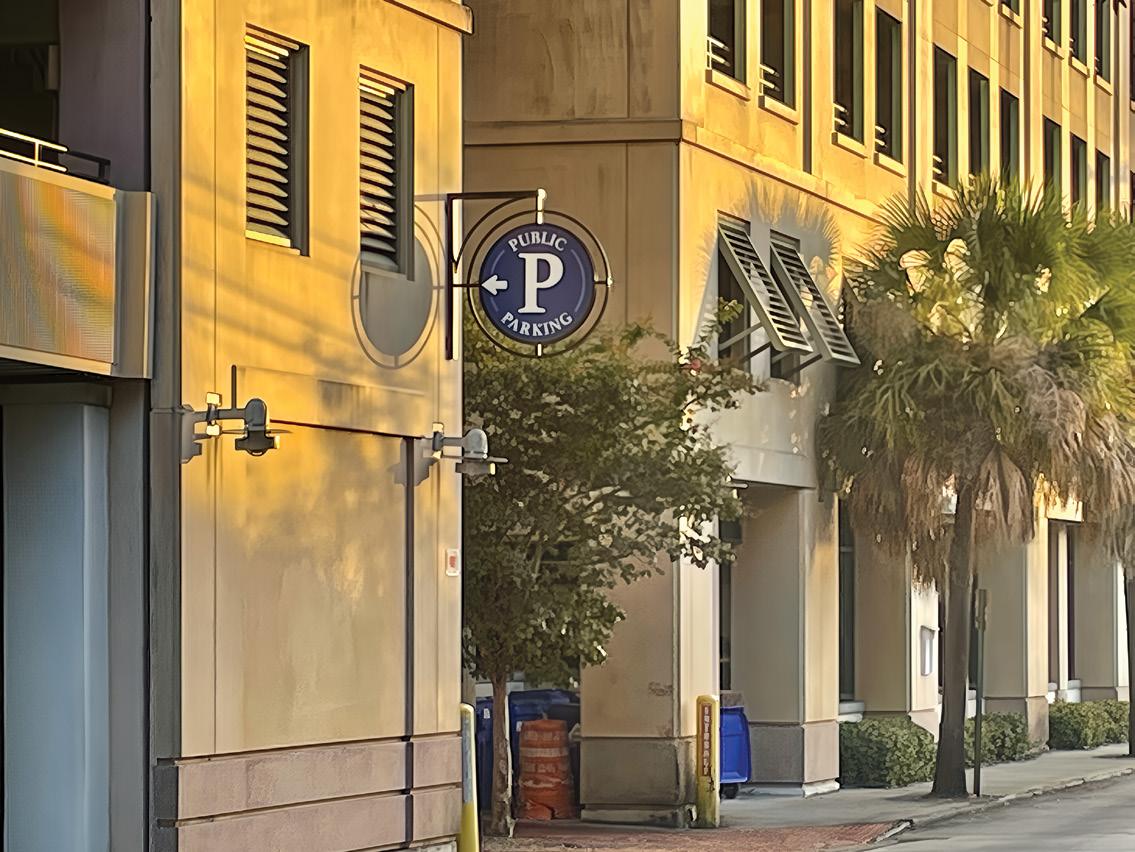
CHARLESTON, SOUTH CAROLINA, is known for its rich history, beautiful architecture, and delicious food. Charleston is located on a peninsula, and as in most cities, parking is at a premium. While the City of Charleston is the largest public parking provider, the Charleston County Parking Division also plays a vital role in supporting downtown.
Although our operation is modest in size, the Charleston County Parking Division is responsible for managing two strategically located parking garages within the city limits. These facilities primarily serve the County Office Building and the County Courthouse. We provide parking for county employees, jurors, tourists, businesses, citizens, etc. We are a 24/7 operation with 21 employees. Our team is committed to providing safe, reliable, and responsive service to all visitors and staff.
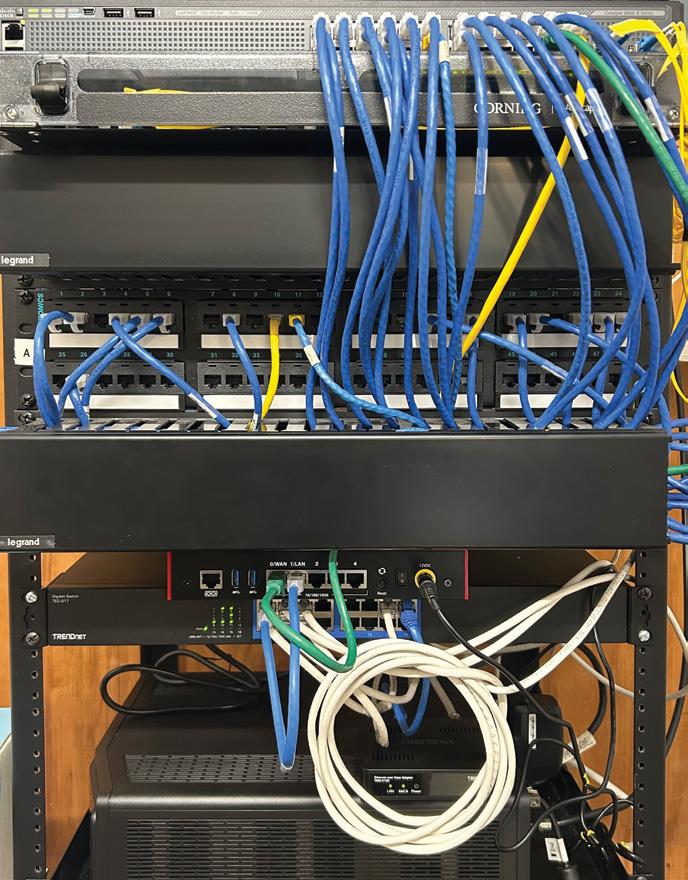
A dedicated command center located within one of the garages handles more than 50,000 phone calls per year and monitors daily operations.
With more than 19 years of experience in the parking and mobility industry, I’ve witnessed tremendous growth and change. One constant throughout my tenure at Charleston County Parking has been the importance of a reliable security camera system. Over the years, we’ve implemented several upgrades to ensure they remain effective and up to date.
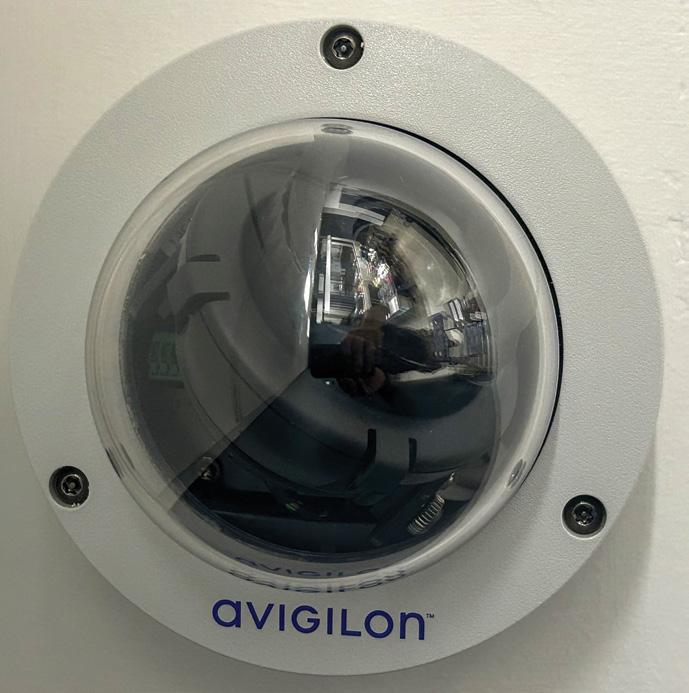
Currently, we have 168 cameras using Avigilon software across two parking garages. Our staff utilizes our cameras for each customer who calls the command center for assistance. Some of the ways
that our frontline staff use the cameras to provide excellent customer service include:
● Verifying the credentials of those using South Carolina’s free parking for those with disabilities so that their parking can be validated.
● Assisting customers who are unable to locate their vehicle.
● Assisting customers with locating left behind personal belongings such as phones, purses, wallets, souvenirs, etc.
● Assisting customers with lost tickets.
● Providing basic instructions on how to use pay stations, entry/exit lane devices, and assisting with other parking system-related issues.
● Providing customers with directions to city landmarks, county offices, and other locations throughout the city.
These are just some of the many ways our frontline staff utilize the camera system.
An outstanding example of this use occurred a few years ago when one of our customers had a medical emergency in one of our elevators. One of our frontline staff members saw the individual collapse on camera and immediately called 9-1-1. EMS was on-site within a few minutes to
transport the individual to the hospital. Our staff’s actions and use of the cameras may have saved the individual’s life.
Another example: an employee was assisting a customer with a transaction when, while the employee was distracted, a security guard was caught on camera reaching in and stealing cash. The footage was instrumental in highlighting necessary process changes to prevent this from happening again and in leading to the officer’s swift termination.
From a management perspective, utilizing our camera system to provide excellent customer service requires a slightly different approach than typical day-to-day operations. Below are several key ways that upper management leverages the camera system to support operations and assist both customers and law enforcement:
● One of the most common requests we receive involves hitand-run incidents. Our standard policy is for the victim to file a police report first. Once the report is filed, the case is typically assigned to an investigator, who then contacts us for relevant footage. In many cases, we have captured the suspect’s vehicle, including the make, model, and license plate. Victims often express gratitude for the extensive camera coverage in our garages, which can significantly aid in resolving these cases.
● In addition to cameras located inside the garage, we also have cameras positioned around the exterior. These cameras have been instrumental in assisting police investigations, including tracking suspects involved in robberies and supporting other types of detective work.
● Our garages can also experience vandalism, such as broken gates, discharged fire extinguishers, graffiti, and other property damage. Identifying suspects can be difficult if the individuals are on foot and not associated with a parked vehicle. However, our video footage can be used to identify those responsible and assist in holding them accountable
During this current fiscal year, we have budgeted to add 17 additional cameras. This will include all stairwells that currently don’t have coverage. This brings the total to 175 cameras across both of our parking garages.
In the future, we would like to utilize LPR within our garages. Our current challenge is that we lack the distance required to have LPR vend the gate, and we would need extensive physical changes to make this option work. However, with advances in technology, we plan to utilize LPR for entry/exit. In the meantime, we hope to use LPR at our facility to charge customers for lost tickets accurately. With LPR, we would be able to identify when a car first appears in the garage and then assess it properly at exit.
Finally, as video analytics improve, we can use software to enhance overall security and flag events such as theft and fire as they occur, without human input.

PAUL WHETZEL, PTMP , is the Parking Operations Manager for Charleston County, South Carolina. He can be reached at pwhetzel@charlestoncounty.org.
-17, 2026
Milwaukee, Wisconsin
Baird Center







By Harvey Figueroa

ENFORCEMENT is often seen as a necessary but burdensome task, focused on penalties rather than service. But the City of Hallandale Beach, Florida, is reframing the conversation. By adopting a community-centered approach to enforcement, not only has the city stabilized parking revenue, but it’s also on a mission to improve traffic safety and public perception for the better.
The parking transformation in the City of Hallandale Beach began with a switch from manual to plate-based enforcement and in-house adjudication. This first phase was soon followed by the implementation of automation in two high-volume parking areas, South City Beach and North City Beach. The city installed fixed license plate recognition (LPR) cameras, and the new technology quickly delivered significant results.
The eye-catching numbers speak for themselves: after phase two, the city saw a 117% increase in revenue with LPR and Ticketby-Mail almost instantly. City officials stress that revenue spikes are only temporary. Over time, the pattern tends to shift, leading to fewer tickets, more compliance, and a traffic environment that’s more disciplined by design.
The bigger win is time. With routine enforcement automated, officers could shift their focus to sensitive areas where their presence was most needed.
Safety concerns are consistent throughout the city and don’t disappear because enforcement personnel must spend time at South City Beach or North City Beach. With fixed LPR and Ticket-by-Mail as permanent parking enforcement solutions for the two properties, enforcement officers can more effectively address critical issues across the city, such as parking against traffic or parking in the 25-foot visibility triangle. Cars are less likely to block bike lanes, hydrants, or driveways. And pedestrians navigate intersections more safely.
Technology is the tool; people are the driving force. In the City of Hallandale Beach, every step toward remote enforcement with LPR and Ticket-by-Mail required careful planning, a structured approval process, and strong backing from city leadership.
Parking enforcement operates as part of the police department, with a chain of command that runs from the parking supervisor to

With fixed LPR and Ticketby-Mail as permanent parking enforcement solutions for the two properties, enforcement officers can more effectively address critical issues across the city, such as parking against traffic or parking in the 25-foot visibility triangle.
a captain, then to the deputy chief, the chief of police, and ultimately the city manager. Each proposal must navigate this multitier process before it reaches the legal department for review and approval.
The effort was led by digging into the details: analyzing processes, identifying gaps, and asking the “who, what, when, where, why, and how” questions that shape better enforcement strategies. But success depended on more than one person.
Backing from the Mayor, City Manager, and City Commission has been essential. Their support has legitimized the program and signaled a unified commitment to managing city assets more effectively. With leadership aligned, the parking unit could implement changes with confidence, knowing that institutional trust was behind them.
This upgrade to new parking technology has quickly become proof of concept. Parking enforcement, when done right, can smooth traffic flow and increase voluntary compliance. Once drivers realize that rules are consistently enforced, they’re more likely to follow them.
That success has given the city the confidence to think bigger. What started with fixed cameras in two areas is now snowballing into a citywide strategy built on digitized curb management and scalable remote enforcement.
The third phase of the city’s enforcement program will introduce curb digitization efforts and expand enforcement to more fixed locations (to monitor fire zones, for example) and mobile units into the city’s flow.
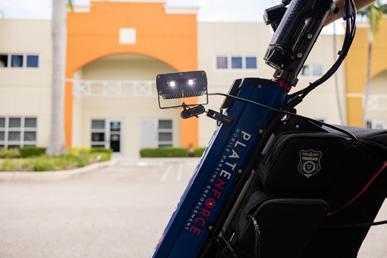
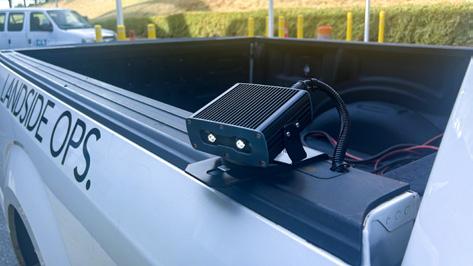
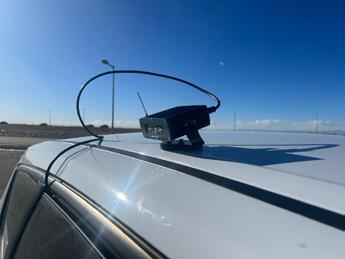
With vehicle-mounted license plate recognition (LPR) systems, enforcement staff can patrol entire districts rather
than being limited to specific parking areas. As they move through the city, cameras mounted on enforcement vehicles automatically scan license plates and cross-check them against parking regulations in real time.
When a parking violation is detected — such as a car parked in a no-parking zone or overstaying a timed curbside space — the system takes photos as proof of the violation. This generates a digital record without requiring an officer to approach the vehicle. A supervisor then checks the record for accuracy, and through Ticketby-Mail, the citation is issued directly to the registered owner, arriving in the mail days later.
The City of Hallandale Beach doesn’t measure success by how many tickets are printed but by whether, over time, those numbers decline as compliance improves.
One vehicle equipped with LPR can cover hundreds of spaces in the time it would take an officer on foot to check a handful. Fewer face-to-face interactions reduce the risk of conflict for both drivers and staff. And, because enforcement becomes more visible and predictable, drivers are more likely to follow the rules voluntarily.
For the City of Hallandale Beach, this expansion isn’t about writing more tickets.
The long-term trend in cities with similar systems is that violations decline as compliance rises. The city expects to see the same outcome: smoother traffic flow, safer curbsides, and a more disciplined parking culture.
The real goal is to influence behavior. Every citation issued can act as a reminder, nudging drivers to form better habits and understand what is acceptable and what isn’t. The City of Hallandale Beach doesn’t measure success by how many tickets are printed but by whether, over time, those numbers decline as compliance improves.
Parking enforcement officers will continue to remind drivers that tickets are avoidable infractions. Moreover, an unpaid ticket can incur late fees, which can spiral into collection notices. That domino effect is unpleasant for everyone, but it underscores the importance of following the rules from the start.
Remote enforcement creates a fair and predictable system. Everyone is subject to the same reminders and the same consequences. There’s no grey area or selective enforcement. Each step of the process is designed to encourage voluntary compliance.
Ultimately, this benefits the entire community. Fewer cars block hydrants or bike lanes. Safer passage for pedestrians. Less conflict for enforcement staff. The goal is a city that runs more smoothly, where people understand and respect the rules, and where enforcement plays the role it was always meant to play: keeping the community safe, accessible, and fair for all.

HARVEY FIGUEROA is the Parking Supervisor for the City of Hallandale Beach Police Department. He can be reached at hfigueroa@cohb.org
DECEMBER 9
Free IPMI Member Roundtable
Hosted by the IPMI Planning, Design, & Construction Committee: a discussion on Municipal Event Parking and Curb Operations.
DECEMBER 10
Free IPMI & Partner Webinar IPMI, OMF, and NACTO present Curb Control: Building Modern Programs for Dynamic Streets

DECEMBER 11
Free Member Chat New Members
DECEMBER 17
Free Virtual Frontline Training Real-time GEO Data Mapping: Overcome Workforce Shortages While Boosting Enforcement Productivity.
In 2026, Parking & Mobility magazine will publish six issues, all available in both print and digital. To get your print copies, members can subscribe free now!
to get your print copies of Parking & Mobility magazine
STATE & REGIONAL CALENDAR
APRIL 27–29
Texas Parking & Transportation Association (TPTA) Annual Conference & Trade Show San Antonio. TX
MAY 26–29
Parking & Transportation Association of Pennsylvania (PTAP) Annual Conference & Trade Show Bethlehem, PA
SEPTEMBER 15–18
Carolinas Parking & Mobility Association (CPMA) Greenville, SC
OCTOBER 13–16
Mid-Atlantic Parking & Transportation Association (MAPTA) Fall Conference & Trade Show Williamsburg, VA
OCTOBER 20–22
Pacific Intermountain Parking & Transportation Association (PIPTA) Conference & Expo Spokane, WA
NOVEMBER 30–DECEMBER 4
Mid-South Transportation & Parking Association (MSTPA) and Florida Parking & Transportation Association (FPTA) Joint Conference & Tradeshow Miramar Beach, FL