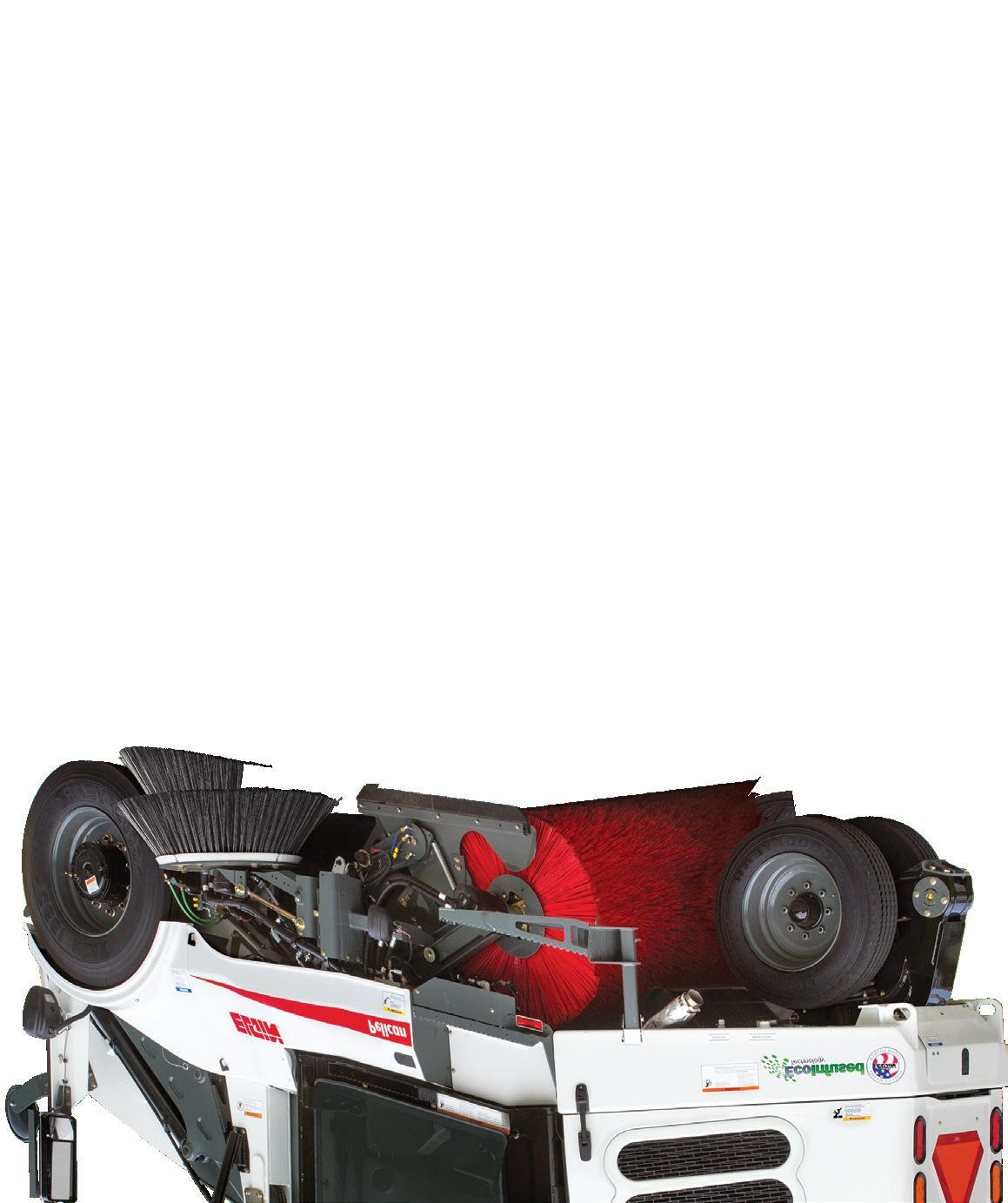






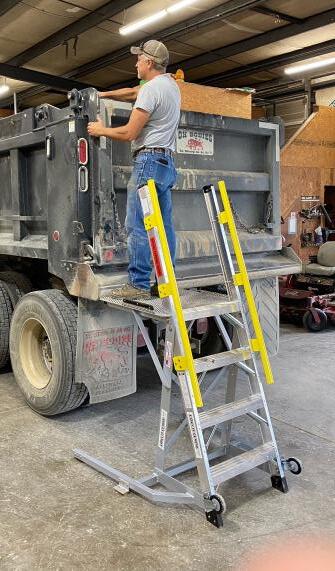


The LockNClimb 44LNCTRKENG platform ladder is used to access many hard to reach maintenance and repair points on work trucks with 24.5 tires, such as solid waste trucks, dump trucks, utility trucks, redi-mix and others. Allows stable close working access to engines, windshields, side chute doors, booms and more.
Specifications
OSHA rated 375-lb. Special Purpose Ladders. • Industrial 6061-grade aluminum support base, frame and plate. • Commercial grade hard rubber wheels. • Yellow safety handrails. • Brass feet to allow easier sliding. • Stickers indicate OSHA/ANSI compliance. • Made one at a time by skilled craftsmen in the USA.

q Plastic top end caps
q Yellow safety handrails
q Safety stickers
q Joined aluminum single ladder sections
q Large service platform
q Patented 6061 aluminum fixed base frame
q Replaceable Brass Feet
q Replaceable rubber feet
q Hard rubber wheels

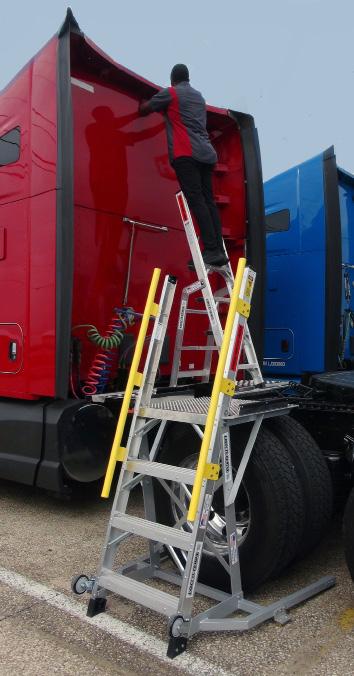
43LNCTRKENG is used on trucks, and other vehicles with 22.5 tires.




18 Fleet Service & Maintenance: Laguna Beach tackling fleet electrification goals
20 Fleet Service & Maintenance: Huntsville Fleet Services Department connecting with qualified candidates via creative recruitment tools
22 Fleet Service & Maintenance: Meals on wheels: Arlington, Texas, completes food delivery pilot program
24 Fleet Service & Maintenance: Leasing option helps Amarillo, Texas, replace fleet vehicles more efficiently
28 Fleet Service & Maintenance: Chandler welcomes AVs to connect residents with transportation
34 Public Safety: Neighborhood Resource Officer program brings continuity, quick response times to Spokane
36 Parks & Environmental Services: Skate park enhances amenities for current, future Crown Point residents
40 Municipal Management: New Bedford strengthens emergency preparedness through comprehensive plan
44 Public Works: Burlington embarks on unique upgrade of wastewater treatment plant
48 Building & Construction: Infrastructure project brings stability, beauty to Kingsport, Tenn.
One of the most destructive threats to fleet longevity often goes unnoticed until failure occurs: corrosion. While visible rust and cosmetic deterioration are concerning, the real danger of corrosion lies beneath the surface. VALUGARD® corrosion protection products by Automotive International are engineered specifically to combat aggressive environmental conditions faced by municipal fleets. Learn how Automotive International’s products can keep your fleet running on page 10.

Fleet Service & Management


publisher RON BAUMGARTNER rbaumgartner@the-papers.com

editor-in-chief DEB PATTERSON dpatterson@the-papers.com
editor SARAH WRIGHT swright@the-papers.com

publication manager CHRIS SMITH chris@themunicipal.com
graphic designer MARY LESTER mlester@the-papers.com
business manager ANNETTE WEAVER aweaver@the-papers.com
mail manager KHOEUN KHOEUTH kkhoeuth@the-papers.com



director of sales and marketing KRISTIN DEVITTORIO kdevittorio@the-papers.com
marketing assistant REAGAN NICHOLS rnichols@the-papers.com
editorial assistant JODI MARLIN jodimarlin1241@gmail.com
Contributing Writers
Jennifer Barton, Beth Anne Brink-Cox, Lauren Caggiano, Nicholette Carlson, Denise Fedorow, Danielle Lund, Janet G. Patterson, Julie Young


PO Box 188 • 206 S. Main St., Milford, IN 46542 866-580-1138/Fax 800–886–3796
Editorial Ext. 2307; Advertising Ext. 2505, 2408





Sarah Wright | Editor
Ioften struggle to keep up with one vehicle’s oil change schedule, let alone an entire fleet. From purchasing to maintenance, municipal fleets have many tasks and assets to keep up with to ensure citywide operations continue without interruption. It’s not simple even in the smoothest of times, and many municipal managers are facing many challenges, from staffing to funding.
Securing qualified technicians is no easy feat, and even if a fleet department secures them, keeping them becomes its own herculean effort, as many technicians leave the public sector for the private sector. It is critical to operations to bring talented candidates onboard, especially as fleets lose experienced technicians to retirement. In this issue, writer Nicholette Carlson spoke
with Huntsville, Ala., which has taken a proactive approach to bringing on board new technicians.
The city’s fleet services hosted a meet-andgreet event to give interested candidates a peek into how the department operates, and the chance to ask questions and meet their potential co-workers. Carlson provides the fleet services department’s retrospection on how this recruitment effort went.
Expenses are a constant headache for any city department, but doubly so for fleets, with the price of fuel, parts and equipment fluctuating. Cities have sometimes chosen to prolong their replacement cycles because of high prices and limited availability. To stretch and use taxpayer money well, fleet superintendents are making tough decisions and often uncovering creative solutions. Carlson also brings Amarillo, Texas’, experience shifting toward leasing its vehicles, intending to have a fleet of newer vehicles. The community expects the move to provide long-term savings while maintaining operations.
In the time that I have served as the editor of The Municipal, fleet electrification has been a constant push, especially as batteries and ranges improve. We’ve really come a long
way from those early days, though infrastructure to support EVs still lags in many parts of the country. To compound this, the federal government has cut credits for EVs. However, many cities are pressing forward with electrification building the infrastructure and welcoming EVs into their fleets. In this issue, writer Denise Fedorow spoke with Laguna Beach, Calif., which is one city doing so. While infrastructure will take time, the city has brought in some EVs for its lifeguards and animal services fleet.
Innovations still abound. Writers Julie Young and Janet Patterson share the stories of two different cities that are connecting citizens with new transportation technology autonomous vehicles. Young highlights Arlington, Texas, which is using AVs to deliver groceries to underserved residents. As part of this two-year pilot program, AVs delivered more than 300 boxes of donated groceries. Patterson then relays Chandler, Ariz.’s, use of AVs to expand its public transit system with an affordable micro-transit option.
As Billy Ocean once sang, “When the going gets tough, the tough get going.” Fleet professionals truly answer the call and go the extra mile, embracing innovation.


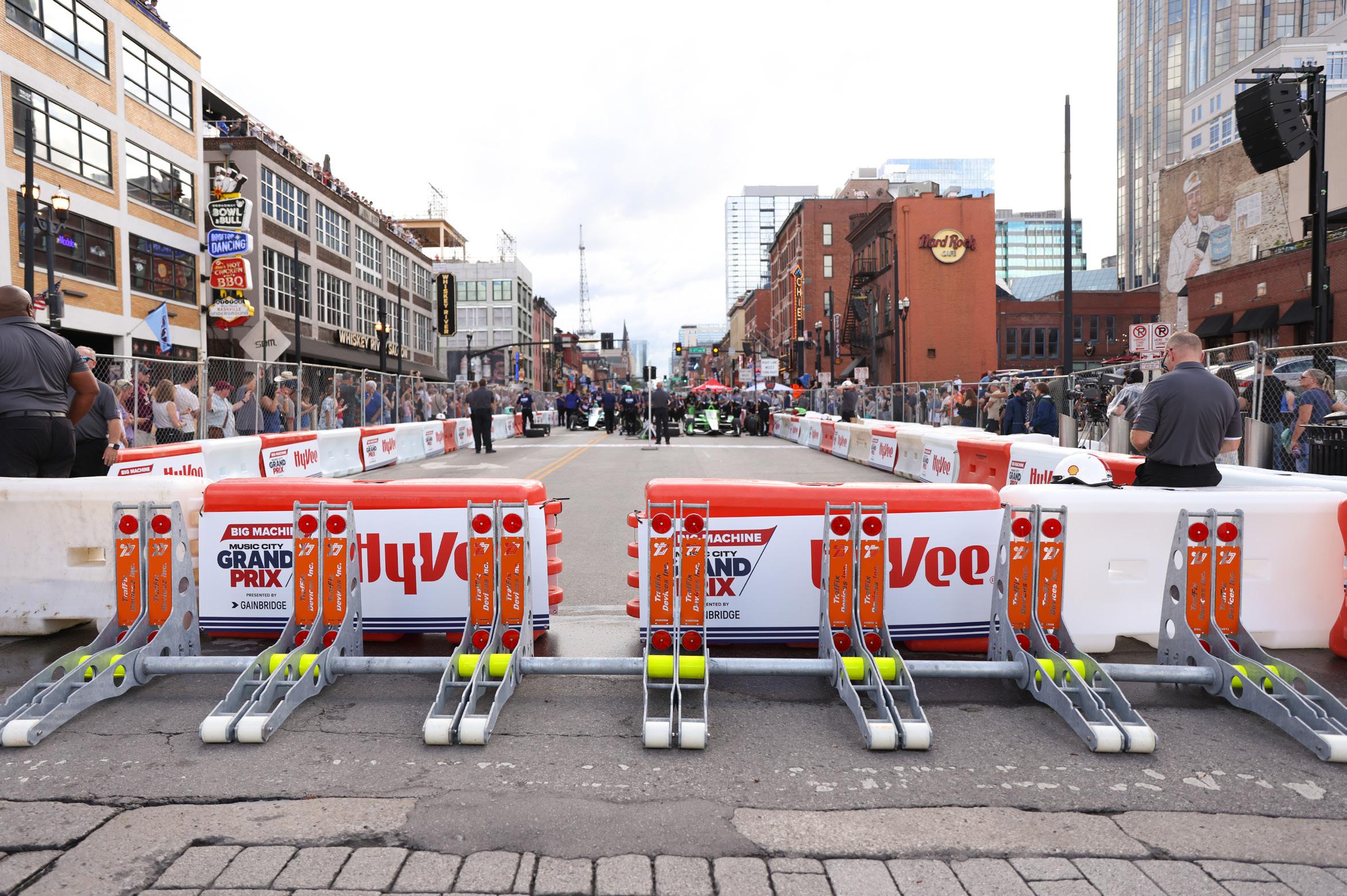

Block Axess comes with the Sentinel, plus one year of free monitoring!
The Sentinel™ Impact Tracker allows you to get immediate notification of an impact to the Block Axess. Connect to create intelligent security technology, managed entirely through your phone, computer, or tablet.

VizCon stands as a trusted partner for public safety and traffic management, offering a comprehensive portfolio of solutions now readily available through the Sourcewell cooperative purchasing program.

By ALEX STEIDLE,
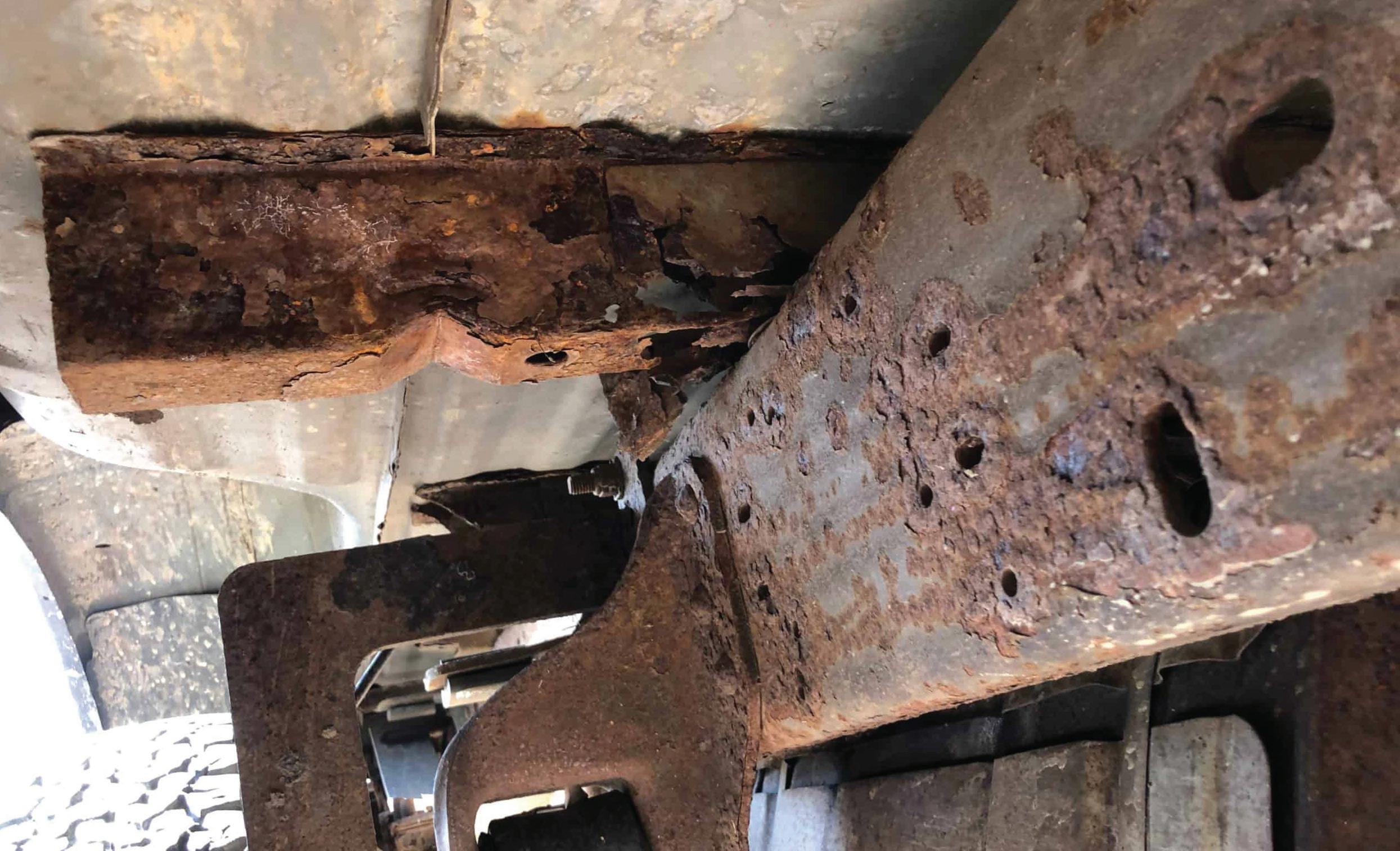
A well-structured maintenance program is essential to maximizing the service life of fleet vehicles and equipment. Regular oil changes, tire and brake inspections, and the replacement of worn components all play an important role in keeping fleets safe and operational. Yet despite these efforts, one of the most destructive threats to fleet longevity often goes unnoticed until failure occurs: corrosion.
While visible rust and cosmetic deterioration are concerning, the real danger of corrosion lies beneath the surface. Critical components, such as brake lines, suspension systems, frames and crossmembers, can degrade silently over time. These failures frequently go undetected until they result in catastrophic breakdowns, creating serious safety risks for drivers, passengers and the public. Severe corrosion can also compromise a vehicle’s structural integrity, reducing its ability to absorb impact forces during a collision and increasing the likelihood of severe outcomes. Beyond safety implications, corrosion significantly impacts fleet operating costs. Accelerated component wear leads to higher repair expenses, while vehicles removed from service for corrosion-related repairs disrupt operations and strain already tight municipal
budgets. When essential assets are sidelined, the entire system feels the impact.
The primary driver of vehicle corrosion in municipal fleets is winter road treatment. Deicing chemicals are essential for maintaining safe road conditions, but they dramatically accelerate the oxidation of metal components. Traditional rock salt (sodium chloride) has long been used during winter storms and remains common today. In recent years, however, many municipalities have adopted liquid chemical brines as part of their winter maintenance strategies. These brines often contain sodium, calcium or magnesium chloride and are frequently blended with organic additives, such as beet juice, to improve adhesion to road surfaces. From an operational standpoint,
ABOVE: The harsh reality of an unprotected truck. (Photos provide by Automotive International, Inc.)
brines offer clear advantages. They are more cost-effective than rock salt, reduce bounce and scatter, and remain effective at lower temperatures. However, these benefits come with a significant downside: increased corrosivity. While rock salt residue can generally be washed off relatively easily, magnesium chloride is particularly problematic. Its sticky nature allows it to cling to vehicle components and penetrate hard-to-reach areas. Studies have shown magnesium chloride to be up to 13 times more corrosive to automotive components than traditional sodium chloride*. Its hygroscopic properties allow it to attract moisture from the air and remain active at humidity levels as low as 25% meaning corrosion can continue even in dry, warm conditions.
Corrosion typically begins in areas where moisture and de-icing chemicals accumulate. These include undercarriages, wheel wells, brake lines, frames and suspension components. Even more vulnerable are internal cavities, such as frame rails, rocker panels, doors and crossmembers. These internal

cavities often have very minimal, if any, paint coating, but rather are exposed bare metal, leaving them unprotected from the aggressive nature of these brines.
While regular washing may remove contaminants from exterior surfaces, it does little to address corrosive materials trapped inside enclosed spaces. Once de-icing chemicals enter these cavities, they adhere to the exposed metal surfaces and continue corroding the metal from the inside out, often undetected until significant damage occurs. Due to the low visibility in these hidden areas, initial corrosion signs often go undetected, even during regular maintenance checks. This process continues until significant damage has occurred and emerges onto exterior surfaces.
Proactive prevention: A smarter approach
There is no single solution that completely eliminates corrosion, but proactive prevention can dramatically slow its progression and reduce long-term costs. One of the most effective strategies is the use of anti-corrosion coatings as part of a comprehensive fleet maintenance program.
These coatings should be applied not only to vehicles such as plow trucks, dump trucks, buses, refuse and emergency vehicles, but also to equipment including trailers, street sweepers, dumpsters and heavy machinery. Undercoatings and cavity rust inhibitors create a protective barrier between metal surfaces and corrosive agents, significantly reducing exposure. They also help mitigate galvanic corrosion, which occurs when dissimilar metals come into contact.
Proven corrosion protection solutions
VALUGARD® corrosion protection products by Automotive International are engineered specifically to combat aggressive environmental conditions faced by municipal fleets.
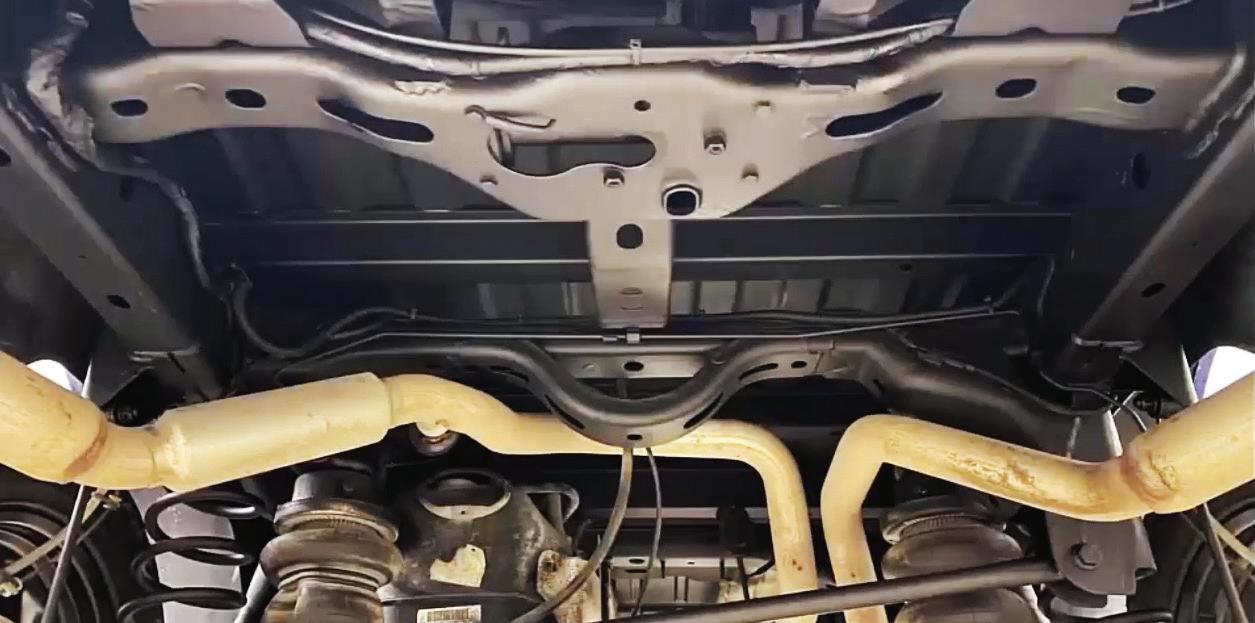
VG-160 MIL SPEC Undercoating applied to the undercarriage of a service truck as a protective barrier against de-icing chemicals, abrasion and other environmental factors.
Formulated with highly refined resins and multiple corrosion inhibitors, VALUGARD coatings have passed and exceeded rigorous industry testing standards, including ASTM B117, SAE J2334, and NACE TM-01-69. These products have been evaluated and approved by leading automotive manufacturers and are referenced in numerous OEM corrosionrelated technical service bulletins and recalls.
The VALUGARD corrosion prevention process begins with protecting internal cavities, an often overlooked but critical step, to prevent corrosive brines from attacking inside out. The VALUGARD MIL-SPEC Cavity Rust Inhibitor is applied using a jet-atomized fogging process that utilizes existing manufacturer drain holes, eliminating the need for drilling and preserving the factory paint barrier. This non-invasive application allows the thixotropic coating to creep into seams, joints, and tight spaces, forming a semi-firm protective layer. The coating also provides dielectric strength of up to 800 volts per dry mil, helping protect electrical wiring and connectors from corrosion.
The second step involves undercoating the vehicle’s undercarriage. VALUGARD offers a wide range of options, including annual nodrip oil applications, traditional asphalt-based coatings and both water-based and solventbased formulations, allowing municipalities to select solutions best suited to their operational needs.
Routine washing remains an important component of corrosion prevention, but not
all soaps are effective against magnesium chloride. Specialized detergents, such as VALUGARD ProGard™ Truck & Trailer Wash, are formulated to break down and remove the persistent film left by de-icing chemicals. This special blend also effectively removes tar, organic contaminants and brighten aluminum surfaces without etching, and leaves treated surfaces charged to repel dirt after rinsing.
Anti-corrosion protection should not be viewed as an added expense, but as a longterm investment in fleet reliability and safety. Municipalities and fleet operators invest millions of dollars in vehicles and equipment. Extending the service life of those assets through proactive corrosion prevention is significantly more cost-effective than premature replacement.
When a plow truck, bus or service vehicle is sidelined due to corrosion-related failure, the consequences ripple throughout the entire operation. Preventative measures taken today can help ensure fleets remain safe, reliable and on the road where they belong.
If you’re now a little less confident about your current vehicle corrosion protection program or worse yet, haven’t implemented one visit our website at www.valugard.net or call (800) 543-7156 for more information on how to stop rust!
*Source: Department or Transportation report, No. CDOT-DTD-R-2002-4, Corrosion Effects of Magnesium Chloride and Sodium Chloride on Automobile Components
By JULIE YOUNG | The Municipal
How did a simple trip through western Connecticut lead to the television phenomenon “Gilmore Girls”? According to writer Amy Sherman Palladino, it all began at the Mayflower Inn and Spa in Washington, Conn., where she and her husband Dan stayed during their travels. Inspired by the resort, breakfast at the local diner and the charm of the small town’s camaraderie, the pair created the fictional town of Stars Hollow based on this very real part of Lichfield County.
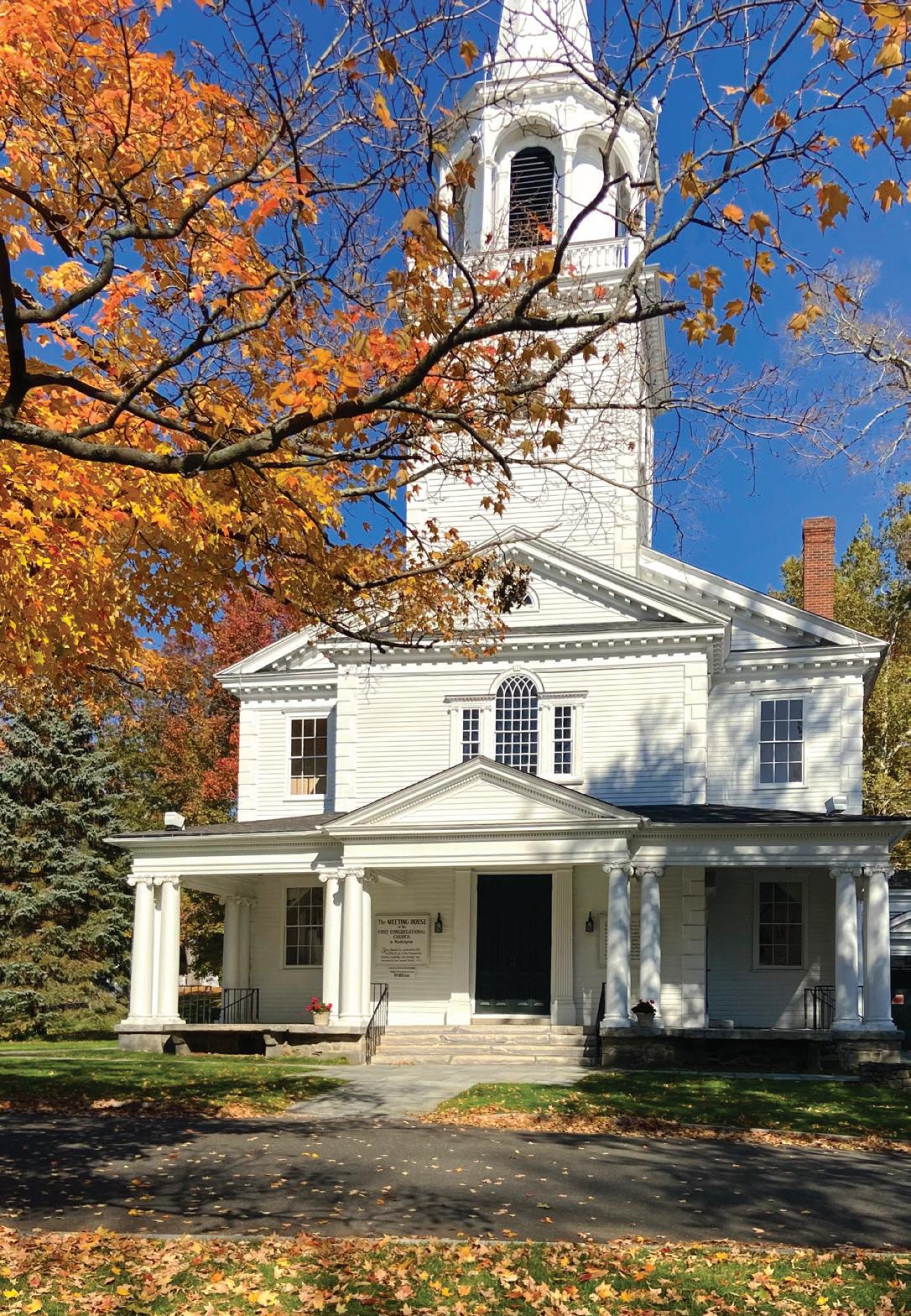
Washington, Conn., is synonymous with small-town Americana. Whether a visitor is in town to admire the fall foliage or indulge on a Stars Hollow girls’ trip, there is plenty to see and do in the Connecticut town. (Photo courtesy of ExploreWashingtonCT)
Set against the backdrop of the Berkshire Mountains, Washington is a picturesque community of 3,646 that embraces its ties to “Gilmore Girls” and is thrilled to welcome fans of the show. Looking for echoes of Stars Hollow? The official tourism and community website has a Gilmore Getaway guide that leads to all of the sites that inspired the show.
Significant spots
Anyone planning to be in the area for a while might consider booking a stay at the place where it all began the Mayflower Inn and Spa, a 28-acre property that was originally the Ridge School for Boys in 1894. As the inspiration for Lorelai Gilmore’s Independence Inn, guests experience not only an exquisite country retreat that defines New England elegance, but also farm-fresh cuisine and one-of-a-kind experiences that make the inn a go to place for rest and renewal.
While it’s not Chilton Rory Gilmore’s prep school in the show the Frederick Gunn School is a college preparatory and boarding school that has been a staple among Washington families for generations. Founded as a “home school” in 1859 by abolitionist Frederick Gunn and his wife Abigail, today’s students become principled, active citizens and lifelong learners who stand up for what they believe in and hopefully become tomorrow’s leaders.
A favorite among the locals and a great place to grab breakfast or lunch, Marty’s Café is a cozy place to enjoy renown food in a relaxed atmosphere. Although it is not housed in a former hardware store, like its fictional counterpart Luke’s Diner, Marty’s is a community-driven establishment that strives to support local farmers and suppliers to ensure that its ingredients are sourced responsibly. Come in for the best coffee in town, breakfast plate, lunch wrap or panini. And for a vintage hardware experience, stop by the Washington Supply Company.
“We had a great time at Marty’s,” said Matt Duncan in a Facebook review. “Delicious food and coffee, but above all else is the customer service. We will definitely be coming back the next time we are in CT.”
Looking for Gilmore-related gifts? The Hickory Stick Bookshop is a must-stop. With over 60 years of experience, a wide selection of titles and a friendly, knowledgeable staff, the quaint bookstore is known for its author-signing and other events as well as the smell of books that hits patrons upon entering. Pick up a Gilmore Trivia Deck and Episode Guide as well as cookbooks, knitting books, cast memoirs and more. For anyone eager to tap into their inner Rory without the travel, The Hickory Stick Bookstore website offers a “Rory Reads List” of all the books featured in the series. There are over 300 books on the list.
Just like Stars Hollow, Washington’s Town Green is the event space and social hub of the town. It hosts various festivals, fairs and concerts throughout the year while also serving as a recreational space where people can rest, relax or enjoy a picnic lunch from The Po Café. Sadly, there is no gazebo, but the nearby town of New Milford does have one.
A real-life Doose’s Market can be found at the Washington Food Market, the only fullservice grocery store in town and where residents go to buy pantry staples. The Washington Food Market is a family-owned and-operated business that has been in the same location for over 100 years. Who knows? A customer just might find Rory’s boyfriend Dean stocking the shelves, provided it’s not a Wednesday afternoon.
For something sweet, be sure to stop by The Pantry. The Pantry evokes the charm of Stars Hollow’s Weston’s Bakery and is the perfect place to get a dessert by the slice or a great cookie. A full menu can be found online.
Founded by Michael and Nancy Ackerman in 1977, the store was passed to Keith Biscotti and Zoe Velush-Rogers in 2021. The Pantry offers fresh food, great selection and a convenient location, so be sure to stop and say hello.
Fans looking to connect with other Gilmore Girls fans can attend the 2026 “A Weekend in the Life” festival Sept. 4-6 in New Milford, which will include appearances by Sean Gunn who played Kirk Gleason in the series as well as Scott Patterson, who played Luke Danes. Patterson said he had a great time meeting and chatting with the fans who attended last year’s event, and those who attended said it was
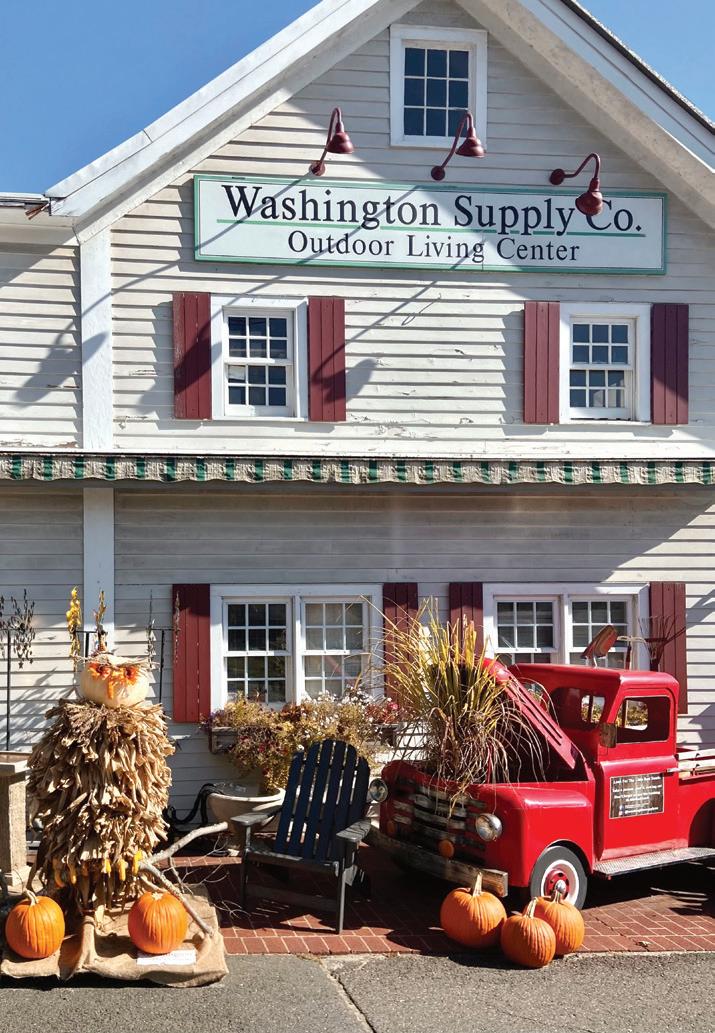
Although it’s not a front for Luke’s Diner, the Washington Supply Co Outdoor Living Center is as close as it gets in Washington, Conn. (Photo courtesy of ExploreWashingtonCT)

As the inspiration for the setting of “Gilmore Girls,” Washington, Conn.’s, Hickory Stick Bookstore has a dedicated Gilmore section where patrons can find books inspired by and written by people associated with the show. (Photo courtesy of ExploreWashingtonCT)
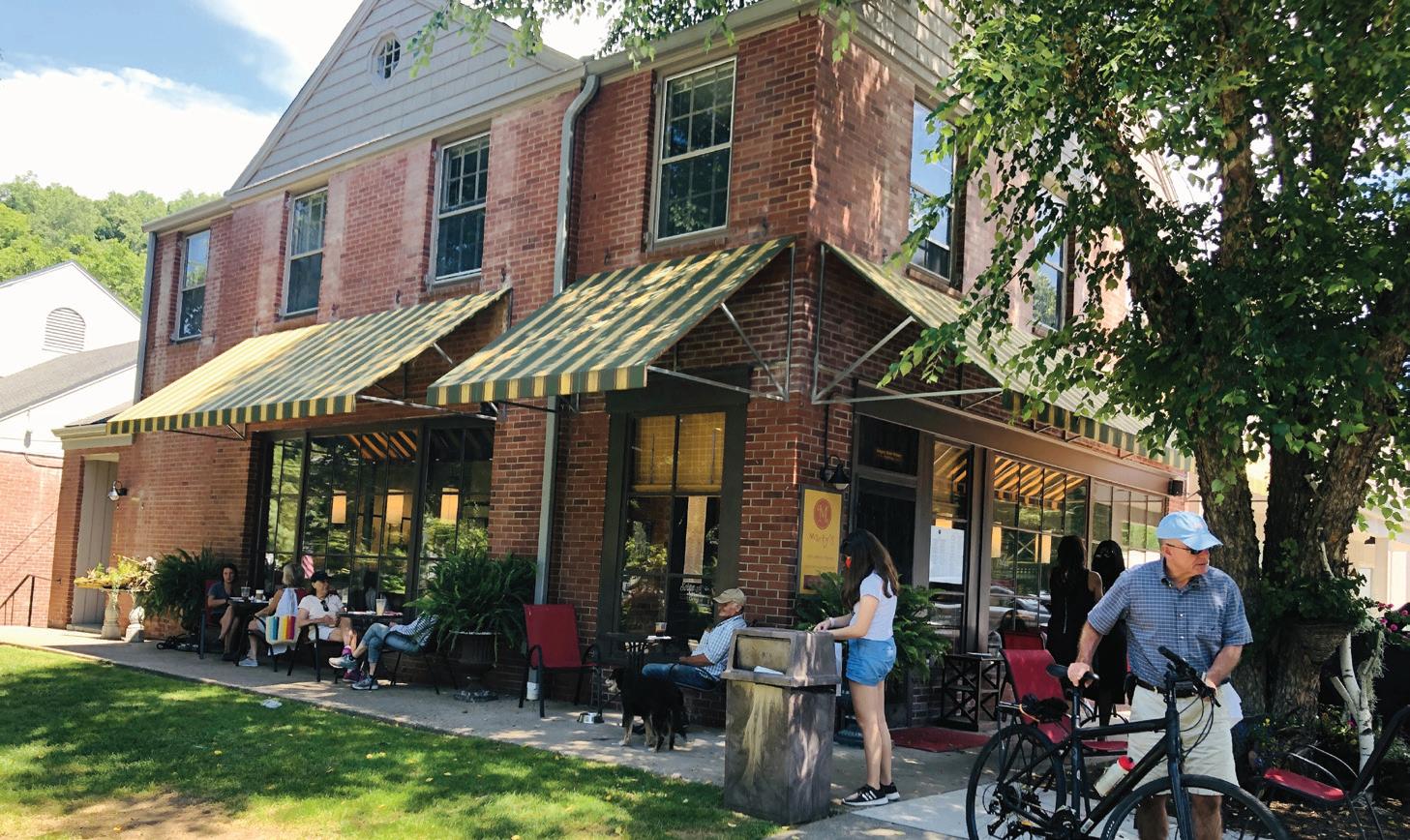
Looking for great food in a casual atmosphere that’s reminiscent of Luke’s Diner? Marty’s Cafe is a favorite among locals and visitors alike and is a must-stop during a visit to Washington. (Photo courtesy of ExploreWashingtonCT)
great to meet one of their favorite characters from the beloved show.
“The series is still very much loved, and in many ways the cast has become part of our family,” said Ester Engly Jacobson on Facebook.
Why not take the time to visit the real small-town inspiration for Stars Hollow and follow in the footsteps of Lorelai and Rory Gilmore? The coffee is waiting, and the friendly folks of Washington will be glad to welcome any visitor “home.”
















2,200

The Huntsville, Ala., Fleet Service Department oversees every aspect — from purchasing to maintenance — of 2,200 assets used by multiple departments.
$6.53 million
Laguna Beach, Calif., has set the goal to be net zero by 2040. The estimated cost of replacing the non-emergency vehicles with EVs could be approximately $6.53 million.

Learn more about Laguna Beach’s electrification efforts on page 18.

4,000 to 5,000
Of the 4,000 to 5,000 Chandler Flex rides provided each month, about 50% to 60% of the riders who were proposed Waymo rides accepted them.

2040
Year by which Roseville, Calif., aims to have a 100% zero-emissions transit fleet of 41 buses and 1,000plus vehicles. It took a significant step toward that goal last year by implementing a comprehensive smart charging platform powered by the locally owned utility.
$780,182
Arlington, Texas, recently completed a two-year pilot program that used innovative, autonomous vehicles to deliver groceries to underserved residents. This project was possible because of a $780,182 grant from the U.S. Department of Energy Vehicle Technologies Office in addition to support from the local community and technology partners who provided in-kind contributions to the project.

Read more about this pilot program on page 22.
10- to 15-plus years

Amount of time many public works agencies keep a truck in service. So, planning to right-size a fleet keeping in mind the tightness in the CDL market has to be done with a long lens
For one experienced opinion, visit https://apwa.partica.online/reporter/ september-2025/flipbook/20/

Source: https://www.placersentinel.com/2025/08/15/542815/the-city-of-roseville-implements-betterfleet-charge-management-software-for-electric-buses-and-municipal-fleetvehicles
Last year, the city of Buffalo, N.Y., adopted a Climate Action Plan with the goal of reducing greenhouse gas emissions from operations by 40% by 2030. 40%

Learn more at https://www.buffalony.gov/m/newsflash/Home/Detail/1503.

By DENISE FEDOROW | The Municipal
Laguna Beach, Calif., set a goal to be net zero by 2040 or sooner, and it is taking the necessary steps to get closer to meeting that goal. Assistant City Manager Jeremy Frimond said he believed the council passed a resolution around 2022 that set the goal to be net zero by 2040.
“Or sooner we’d rather it be sooner,” Frimond said.
He reported that Laguna Beach had 185 vehicles in the fleet that are internal combustion engines that they’d need to convert to electricity.
Laguna Beach initiated a Fleet Electrification Implementation Plan and completed that plan in 2023. In 2024, city officials worked with SoCal Edison on the underground improvements needed.
“And we’re hoping to break ground soon,” he said.
Getting the infrastructure in place is going to take some time, Frimond shared. “In the
meantime, we have been bringing in some electric vehicles.”
For example, the lifeguard’s vehicles and the animal services fleet now have electric vehicles. The animal services fleet has three F150 Lightning electric vehicles, according to Frimond.
Frimond said when it comes to replacing vehicles, the first focus is non-emergency vehicles, which consists of 125 of the 185 vehicles in the fleet. Funding for replacing the vehicles will come from the city’s vehicle replacement fund. The estimated cost of replacing the vehicles was said to be $6.53 million.
ABOVE: Two of the Rivian Marine Safety EVs are shown at sunset at Laguna Beach, California. The lifeguards and animal services have been the first to get their fleets electrified as the city is now focusing on charging infrastructure. (Photo provided by Laguna Beach, Calif.)
According to an article by Sara Hall in Stu News Laguna, Laguna Beach’s online newspaper, the council awarded a $139,000 contract to ICF in March 2024 to be the consultant firm for the project. That same article stated that the total cost of transitioning the entire Laguna Beach fleet to electric, including vehicle replacement and the required infrastructure updates, is estimated to be $32.7 million over 15 years.
Frimond was asked about electrifying the trolley system. He acknowledged that the city has a “trolley network we rely on to reduce congestion, especially in the summer.”
He said that the network of 19 trolleys runs on natural gas, and officials would like to electrify them.
“We’re evaluating our transit service to see if we need to resize our program. We may need more trolleys, so we have them running while others are charging,” he said. So far, officials have found some options they are looking at.
“We’re really excited about it,” Frimond said. “We’re figuring out how to do it so we don’t have a disruption in service.”
Along with electrifying the trolley network, officials are also looking at a micro-grid system of solar panels and batteries, which would allow the city to operate off the grid and act as a generator, so it could store solar energy to use during peak hours. Frimond said the city is forecasting what that energy load would look like. Because they would need to do DC super-fast charging with the trolleys, they’d prefer to use solar panels. The goal is to replace the trolleys between 2026 and 2030. The estimated cost to replace the trolleys with electric trolleys is $6.43 million.
“It’s exciting; we’re just trying to figure out logistically how to do it,” Frimond said.
They are planning on having charging stations in two locations 16 chargers at city hall and 31 chargers at the Courtyard.
Laguna Beach’s present focus is on the development of charging infrastructure.
“Changes at the federal level have slowed the process down; it’s been bumpy. But we’re still committed,” Frimond said. “We can’t plug in 120 vehicles at once now; we might take down the system. We need more capabilities, so the infrastructure upgrade has to be done first.”
Officials anticipate the infrastructure upgrade to be about a 19- to 24-month process, and they hope to break ground in the next 12 months. SoCal Edison has a CRT (Charge Ready Transport) program, and Laguna Beach is receiving some funding from the program to help pay for the infrastructure.
“That’s our main program leveraging outside dollars; the rest is coming from general funds,” he said.
Frimond acknowledged, “This is the non-sexy part of EV conversion all the underground infrastructure.”

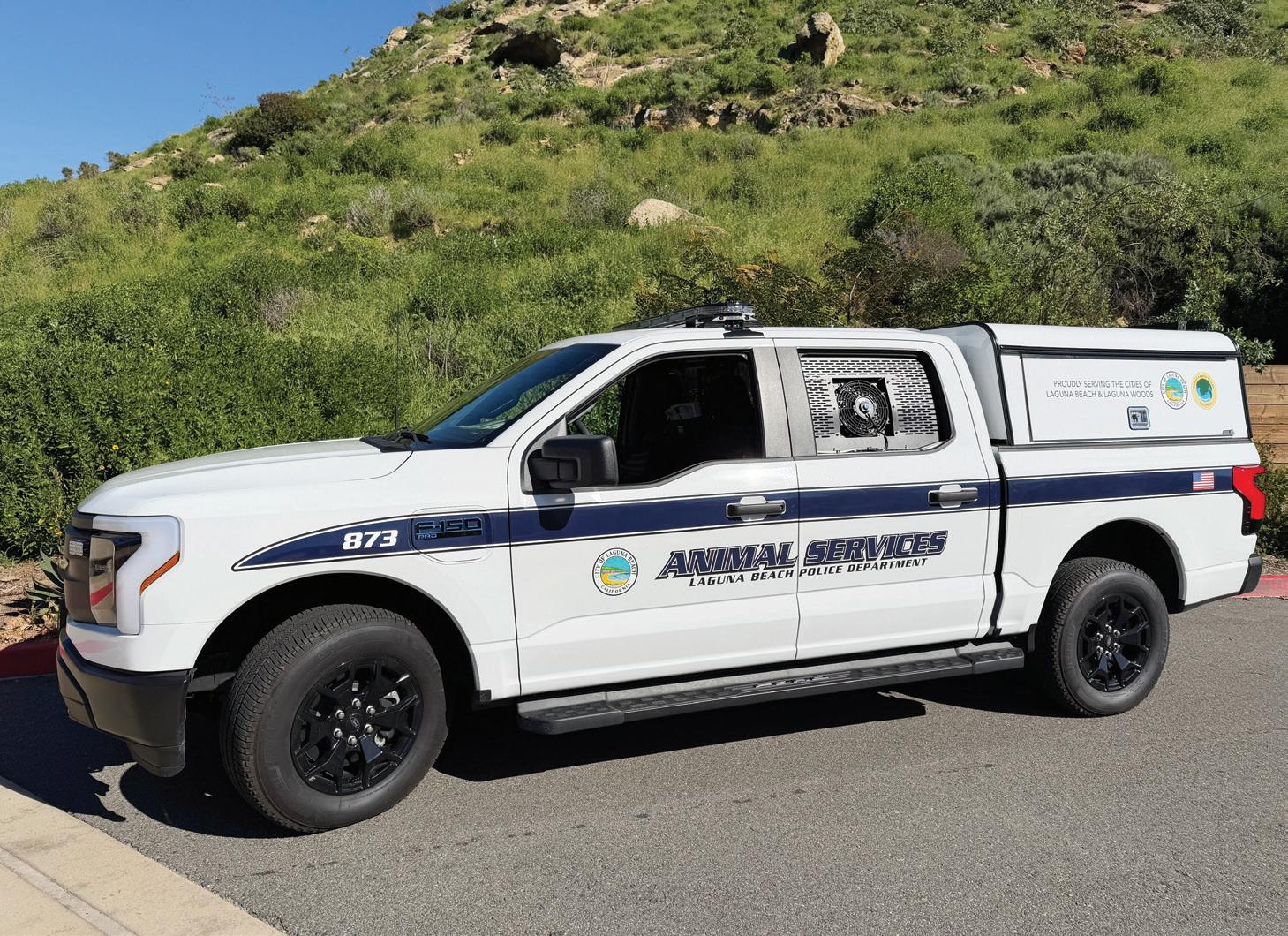
Laguna Beach’s Police Department’s animal services officers have all-electric vehicles Ford 150 Lightning. The city is slowly adding electric vehicles to its fleet, but must first concentrate on getting the infrastructure in place so the vehicles can be charged.
(Photo provided by Laguna Beach, Calif.)
In terms of completion, Laguna Beach is at the front end of the process. Once it gets the infrastructure in place, it can start adding more electric vehicles.
“We’re excited to do it. The city is committed to sustainability, green initiatives and energy initiatives, so we look forward to completing the project,” Frimond said.
By NICHOLETTE CARLSON | The Municipal
The Fleet Services Department of Huntsville, Ala., is attempting a new method of finding qualified and interested individuals for its team. This team is integral to the city as it is in charge of the purchase and maintenance of a safe, usable fleet for Huntsville.
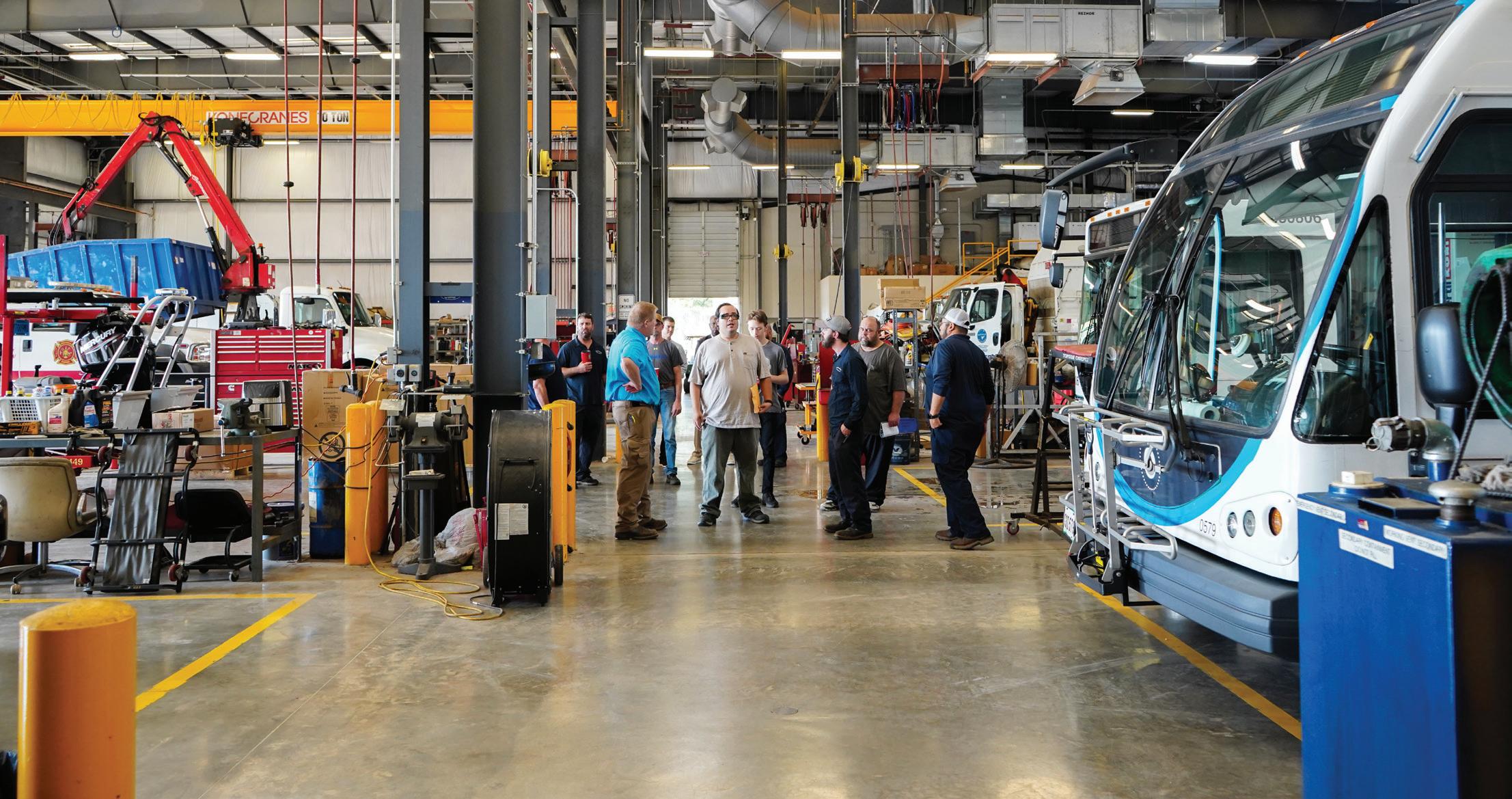
To attract potential team members, the department held an interactive meet and greet last July. This meet and greet allowed potential candidates to tour the Fleet Services Management facility, meet the fleet services team and learn more about open positions on the team.
It is important to keep the fleet services team staffed since it oversees every aspect of approximately 2,200 assets used by multiple departments. These departments include the police department, fire department,
sanitation, public works, construction, landscaping and more. The department is responsible for any task related to fleet vehicles or equipment. This includes the necessary specifications and purchase of new equipment, fueling vehicles and any required repairs and maintenance throughout the life of the vehicles until a vehicle is surplused. The goal is to maintain a fleet that is ready to go 365 days a year in any weather condition.
“There is an increasing demand for safe, functional equipment utilized by city
ABOVE: The Huntsville, Ala., Fleet Services Department is in charge of all aspects of the city’s fleet, including the purchase, fuel, maintenance and repairs of fleet vehicles. This includes police and fire vehicles, sanitation, public works, mowers and street sweepers. (Photo provided by the city of Huntsville, Ala.)
departments,” Matt Gardner, fleet services manager, stated. “Fleet works on equipment that the city uses every day to maintain the quality of life that the citizens of Huntsville have come to appreciate. From police and fire equipment to mowers and street sweepers, all equipment is important.”
Therefore, it is important to keep this department properly staffed. In order to do so, the department posts jobs actively on the
city website, NeoGov, social media, LinkedIn and other creative recruitment efforts.
Depending on the technician’s area of work, employees must undergo various training certifications. These certifications include automotive service excellence, emergency vehicle training and equipment and engine training. There are also administrative positions. Levels within the department vary from entry level technicians to master technicians with 40 or more years of experience.
“We look for a good attitude along with mechanical job knowledge,” Gardner shared. “We prefer ASE certifications and the ability to grow in a positive, productive environment.”
In order to put together the meet and greet, the fleet services department worked with human resources and the city’s communication team. While discussing possible recruitment strategies, the meet and greet was suggested.
“We want to be approachable and offer prospective candidates the opportunity to speak with us before they apply,” Gardner explained. “We can answer their questions, and they can get a better sense of what a rewarding career with the city of Huntsville is all about.”
Other departments had also successfully used the meet and greets as a recruitment tool. In order to get the word out about the meet and greet, the communications office sent out news releases to local media and launched a series of advertisements on LinkedIn and the city’s social network channels.
The meet and greet was deemed a success, with five individuals coming out to learn more about a career with the fleet services department. Of these five, three of the individuals applied for a position.
“The meet and greet is one component of our recruitment campaign, and we have been interviewing additional applicants who have seen our social posts and advertisements,” Gardner mentioned. “We are actively pursuing creative new ways to demonstrate what we have to offer qualified candidates interested in a career in this field. Technical skill sets in the automotive market are highly sought after and highly compensated, which makes it a competitive environment for recruitment.”
It is a tool the department would try again in the future. Recently, fleet services was able to find two qualified candidates. However, it is still looking for three more qualified heavy equipment technicians.
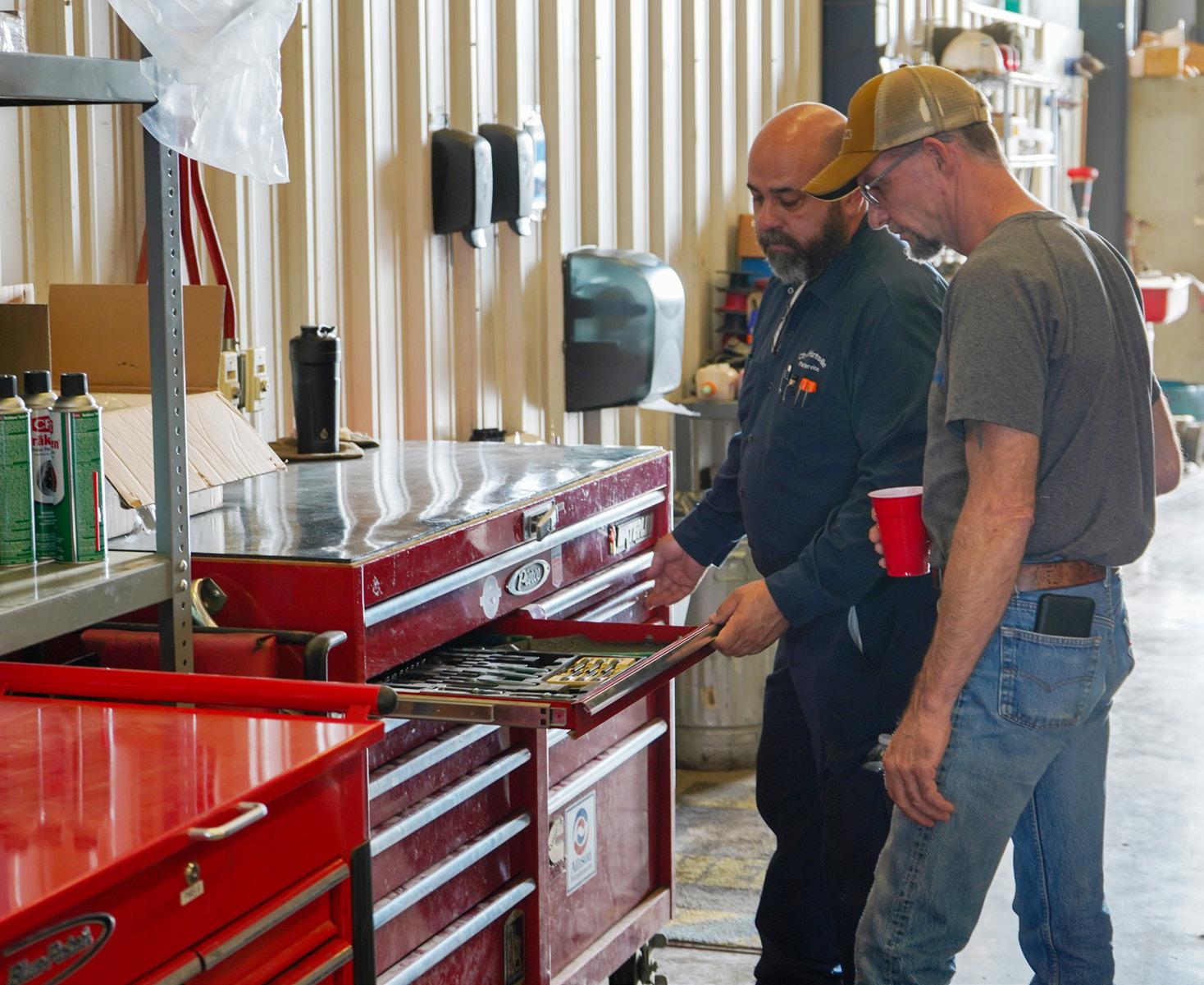
The fleet services department needs qualified administration and technicians. Certifications, depending on job position, include automotive service excellence, emergency vehicle training and equipment and engine training. The goal is to find individuals with good mechanical knowledge who enjoy working in a positive, productive environment. (Photo
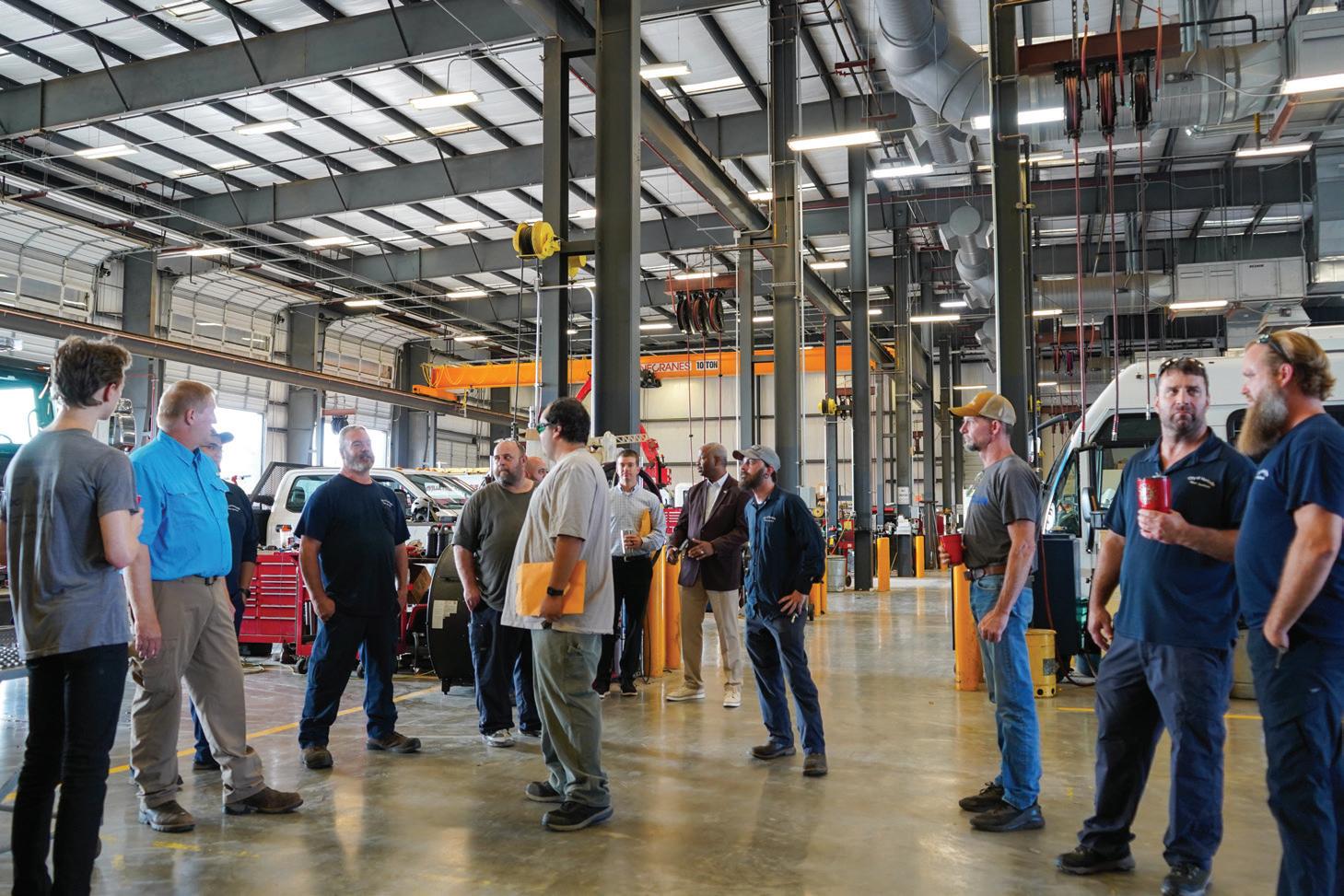
As a creative recruitment strategy, the department teamed up with human resources and the city’s communication team to hold a meet and greet last year. This allowed potential candidates to meet the team, tour the facility and learn more about the possible jobs. Since then, two qualified individuals have been found to join the team. There are still three positions available. (Photo provided by the city of Huntsville, Ala.)
By JULIE YOUNG | The Municipal

As a leader in innovative transportation, the city of Arlington, Texas, recently completed a two-year pilot program that used innovative, autonomous vehicles to deliver groceries to underserved residents.
According to Ann W. Foss, Ph.D., the planning and programming manager for Arlington’s transportation department, the project was possible because of a $780,182 grant from the U.S. Department of Energy Vehicle Technologies Office in addition to support from the local community and technology partners who provided in-kind contributions to the project. Foss said that from the moment the city heard about the
grant opportunity, it knew it was a great fit for its clean energy interests.
“We identified an area of Arlington that lacked easy access to affordable and healthy food, and the project was designed around the use of innovative electric vehicles to provide grocery delivery,” she said.
Planning is everything
The project officially kicked off in October 2023 with a planning phase. The Tarrant
ABOVE: Clevon is one of the technology partners that helped Arlington conduct its pilot program to deliver groceries to underserved residents using clean-energy, autonomous vehicles. (Photo provided by Arlington, Texas)
Area Food Bank was a key partner in helping the city understand the food needs of the area and donated the 300 grocery boxes that would be delivered to residents. They also helped recruit participants for the project, including those who were already receiving food deliveries and the wider community. The program was then built around robust
community engagement to educate residents about the project and the vehicles that would be used.
In the spring of 2024, the city conducted a broad community survey through the University of Texas at Arlington to gauge community perception of autonomous and electric vehicles. Overall, the participants were very accepting of the new technology and were excited about trying it out.
Arlington chose an autonomous electric aircraft, provided by Aerialoop to move the boxes from a central hub to a point in the neighborhood. Afterward, autonomous ground robots provided by Clevon and Mozee would transport the boxes to the recipients’ homes. Airspace Link provided operational coordination and oversight for the vehicle providers.
“We held a community showcase event in May 2024 and then two one-week long demonstration periods in September 2024 and May 2025,” Foss said. “Over the course of the two demo periods, we delivered over 300 grocery boxes to residents in Arlington who signed up to participate.”
In order to qualify for grocery delivery, residents must live in the service area, be home during the day to retrieve the delivery and be able to walk to their curb for pickup. The service area included the 76010 zip code in East Arlington, roughly bounded by Abram Street on the north, Highway 360 on the east, Pioneer Parkway on the south and Collins Street on the west. Based on the community response in a follow-up survey, residents really seemed to enjoy the novel technology and were quick to capture the moment.
“They took pictures of the ground robot as it arrived with their delivery and selfies with the robot after receiving their grocery box,” Foss said. “The city has a long history of testing and piloting autonomous vehicles, starting with passenger service in 2017, which we believe has helped with community acceptance of the technology.”
Foss said that the city learned a great deal from the project, including the state of technological readiness of air and ground robots for grocery delivery, levels of community acceptance of new technologies and the benefits of providing home delivery of groceries to those in need. However, the costs involved with the technology and the operational oversight required are still quite high, so the city does not have immediate plans to continue or grow the service.
“However, as the technology matures, lessons learned from this project will help us prepare for and evaluate future delivery services,” Foss said.
Foss said that cities considering a similar project should have a clear use case for the project: Who do you want to serve? Why is the technology best suited to the need? Where does it make sense to deploy? It is also vital to have strong partnerships to support the project from organizations that are committed to the goals; ensuring robust community engagement and education throughout the project to help increase acceptance of the new technologies; and developing clear, measurable metrics for success.
“With new technologies, it may not always be possible to serve all people or locations in need, but doing demonstrations and pilot projects can provide valuable lessons learned to grow and expand services in the future,” she said.
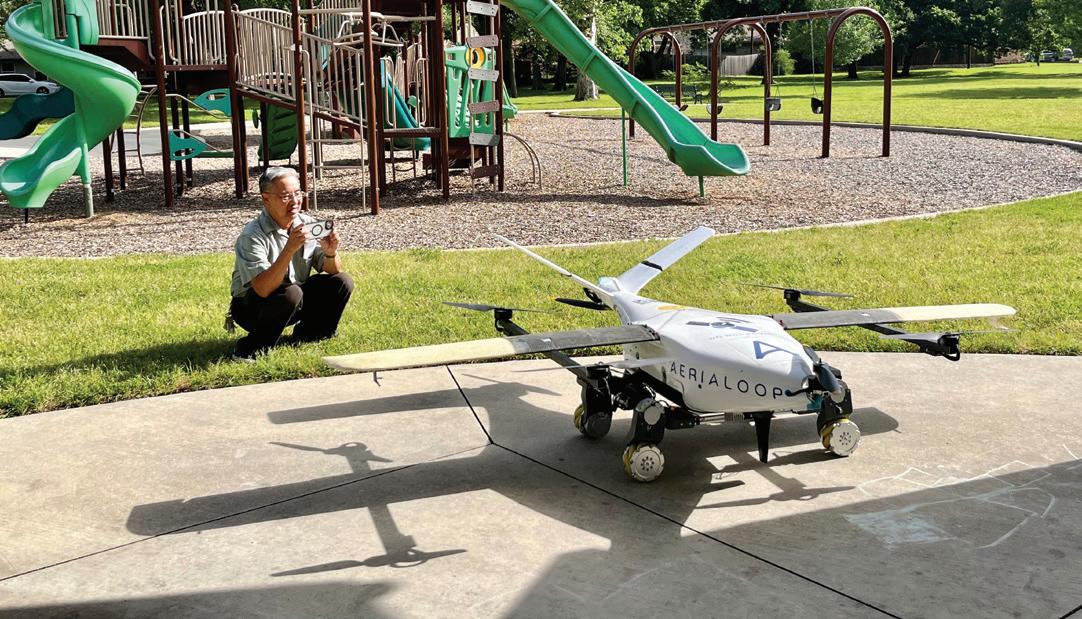
Aerialoop provided aircraft that helped conduct Arlington’s twoyear pilot program to deliver groceries to underserved residents. (Photo provided by Arlington, Texas)
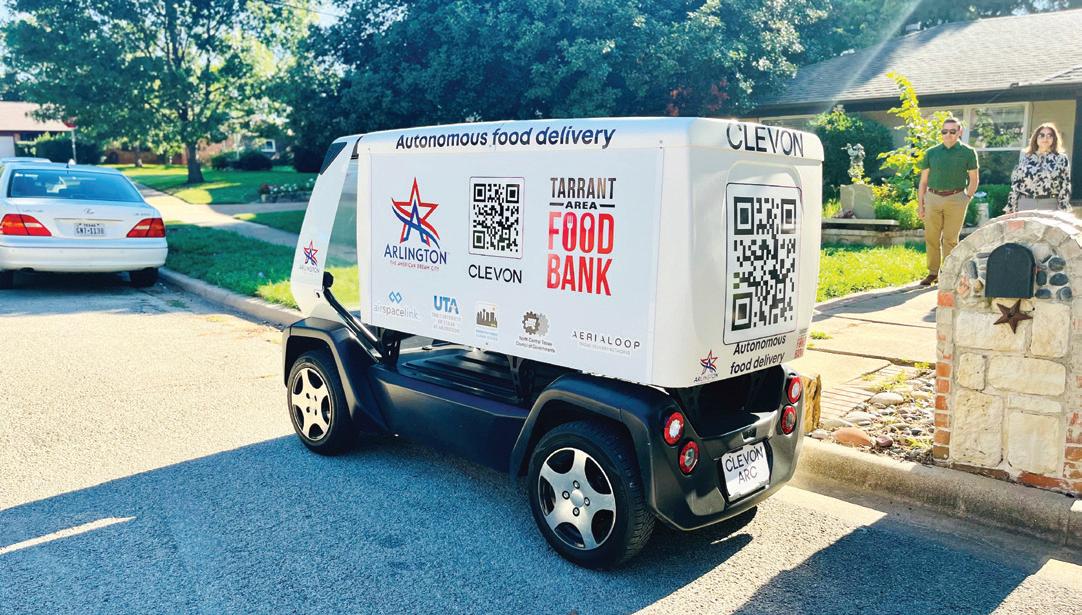
Resembling a small bus, the autonomous vehicles transported over 300 boxes of groceries from the Tarrant Area Food Bank to residents in an East Arlington neighborhood. The two-year pilot program was made possible through a $780,182 grant from the U.S. Department of Energy. (Photo provided by Arlington, Texas)
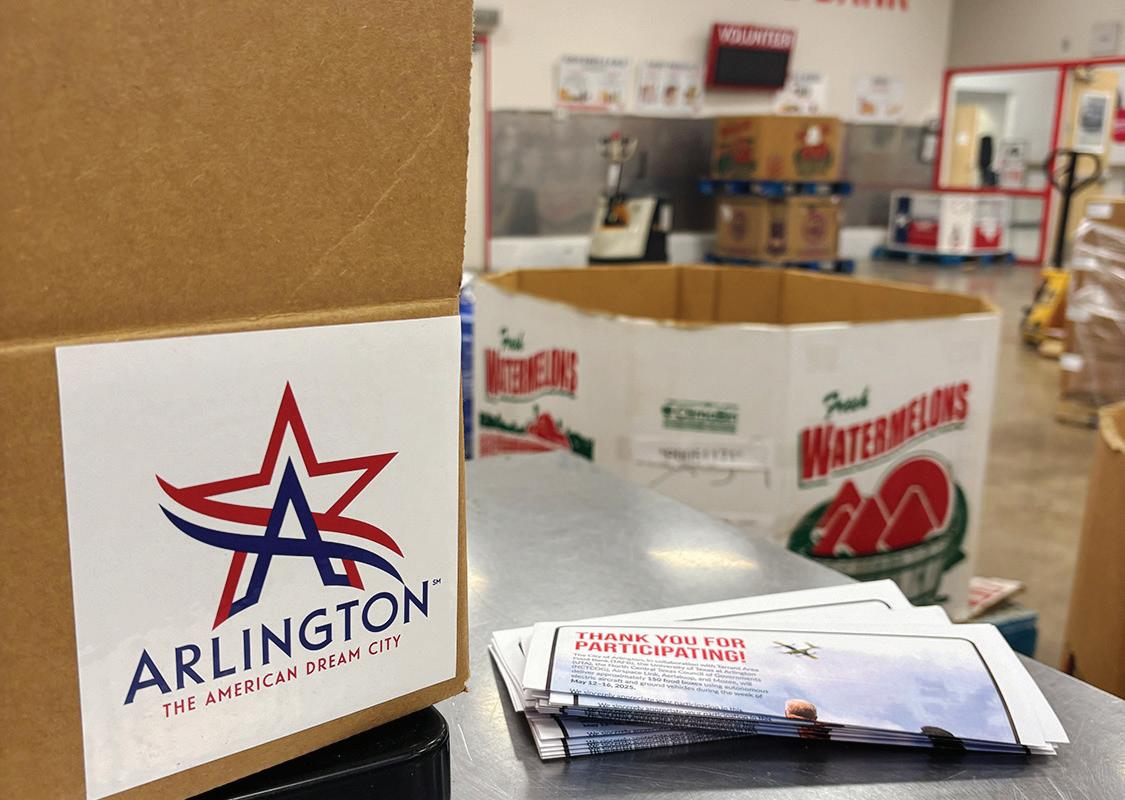
A box of groceries and pamphlets about the project are readied for delivery in East Arlington. The boxes were part of a two-year pilot program to deliver provisions to those who lack easy access to affordable and healthy food. (Photo provided by Arlington, Texas)

By NICHOLETTE CARLSON | The Municipal
Purchasing and maintaining fleet vehicles can be very expensive for cities, so Amarillo, Texas, chose another option — leasing fleet vehicles. When purchasing a fleet vehicle, there is the cost of purchasing the vehicle as well as maintenance and more frequent upkeep costs for it as the vehicle gets older. There is also the wait time between purchasing and receiving, as well as waiting for any repairs to be done. Leasing the vehicles has helped to fix many of those issues.
“We were trying to solve a very practical problem,” Donny Hooper, Amarillo, Texas, assistant city manager, stated. “An aging fleet with rising maintenance costs and a growing replacement backlog, while capital dollars were also being pulled in multiple directions, particularly toward heavy equipment needs. Leasing gave us a way to put more reliable vehicles back into service faster and smooth costs over time instead of waiting until we could cash-fund large replacement cycles.”
Before coming to this decision, the city went through many detailed meetings with departments. During these meetings, the city
discussed vehicle types, job function, load capacity, passenger needs, annual mileage, operating environment and required upfits, such as light bars, lift gates or service bodies, to ensure that each department had the proper vehicles to match their workload.
“Those discussions helped ensure we weren’t just replacing vehicles one-for-one but actually improving how the fleet supports daily operations,” he said.
It also helped the city determine opportunities to downsize where appropriate, which helped to reduce costs and improve fuel efficiency without affecting service delivery.
ABOVE: The process of switching to leasing took approximately four years, between finding the right leasing partner and multiple meetings with the city and various departments to determine the right vehicles for each department’s needs. (Photo provided by the city of Amarillo, Texas)
The process of switching to leasing from purchasing took approximately four years. During the process, the public works department worked closely with the finance department to develop a funding strategy to meet the needs of the city’s growing fleet and expanding operations while also working on the fleet’s replacement program. The city’s budget process helped to develop the leasing option with various right-size meetings between the departments and the leasing partner to ensure the city and department needs were met. During the budget adoption, the city council reviewed the overall strategy and funding, which allowed the program to move forward without having to bring back individual leasing decisions at a later date.
One of the primary differences between the purchasing and leasing processes is the payment plans. When purchasing, the city uses capital funds, receives bids, orders and receives a vehicle, and then provides all maintenance and repairs for the life of the vehicle. Much of the repair and replacement of vehicles depends on the capital funds available. If capital funds are unavailable, the city puts the vehicle’s replacement on hold. The fleet had rental rates passed down to departments in order to cover maintenance and replacement once there was enough funding.
“The issues we faced are that the approved budget for fleet was not experiencing the level of increases that matched the level of vehicle purchase prices and inflationary maintenance costs, therefore forcing us to extend the life of the vehicles, which increased our maintenance costs,” Hooper explained.
Due to this lack of funding, the city was forced to keep and maintain fleet vehicles well past their useful life. With leasing, once the vehicles are ordered, the payments are structured over a period of time and the vehicles are replaced based on a pre-planned cycle before the cost of maintenance gets too high.
“We also account for manufacturer order bank schedules and delivery timelines. Many vehicles arrive in the first quarter of the year, and units requiring service bodies or other upfits are delivered first to an outfitter and then returned to the city.”
Choosing the right leasing partner was critical to making the leasing option a good fit for Amarillo. The partner would need to
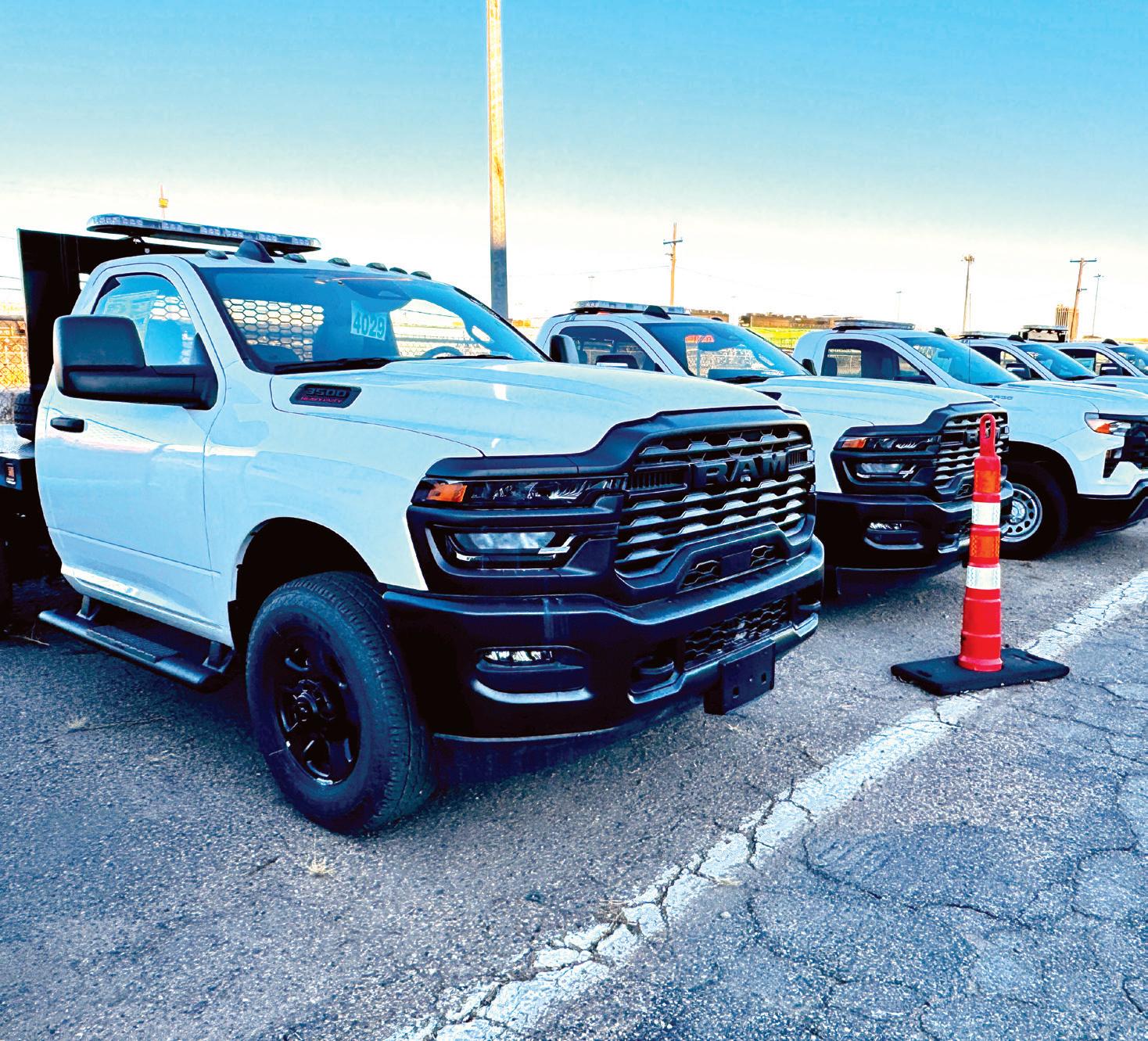
One of the biggest differences between purchasing and leasing has been the payment plan over a set period of time and a set replacement schedule to ensure vehicles are replaced before maintenance costs get too high. (Photo provided by the city of Amarillo, Texas)
support a fleet for an entire municipality, manage upfits and work well with city staff.
Partnership and long-term planning were just as important to consider as financing options. Ultimately, the city chose D&M Leasing, which worked alongside city leaders, fleet services and multiple department representatives to ensure each department was matched with the right-sized vehicle to meet its needs.
“The partner was selected based on their experience with municipal fleets, ability to accommodate varied vehicle types and duty cycles, the ability to fully partner with us in evaluating our actual needs, not wants, and their willingness to work closely with all of our individual departments throughout the process,” Hooper described.
Amarillo is planning a multiyear approach to leasing. Currently, the city is using the leasing program for light-duty and some medium-duty vehicles. Replacement for heavy-duty equipment has different cost
structures and financing and is being considered separately. As replacements are needed and manufacturer ordering allows, leasing will continue. The city will continue to evaluate the performance and cost-effectiveness of the leased vehicles. The goal is to have the fleet on a better replacement schedule rotation after five years.
“The leasing program has allowed the city to replace significantly more vehicles in a shorter timeframe compared to traditional purchasing,” Hooper shared. “This has improved reliability and reduced the strain on fleet services caused by maintaining older, high-mileage units. Challenges have primarily been logistical and market-related, including manufacturer order windows, pricing finalized when order banks open and additional lead time for upfitting. Despite these challenges, the benefits include improved fleet uptime, reduced maintenance burden and better alignment between vehicle use and vehicle type.”
For the city, this option creates a much more predictable fleet replacement cycle and ultimately reduces capital spikes, reduces maintenance costs over time and improves reliability. It also provides residents with a better service delivery experience. City services, such as utilities, streets, inspection and public safety, can be delivered more efficiently and consistently with less breakdown and downtime.
Other cities that may be considering a leasing option for fleet vehicles should conduct a thorough right-sizing review with city departments.
“Make sure to involve departments early so vehicles truly meet operational needs,” Hooper recommended. “Spend time to plan carefully around lead times for manufacturing and upfitting. We felt it was a good idea to separate light fleet strategies from heavy equipment planning due to the replacement cycles and cost per unit. Some units are not advantageous to lease. Finally, track performance metrics, such as maintenance costs, downtime and replacement adherence, to evaluate the success of the program.”
RIGHT: In order to fix the problem of fleet replacement backlogs, rising maintenance costs and limited capital dollars, the city of Amarillo, Texas, switched to a leasing option for light-duty and medium-duty vehicles. Heavy-duty vehicles are considered separately. (Photo provided by Amarillo, Texas)



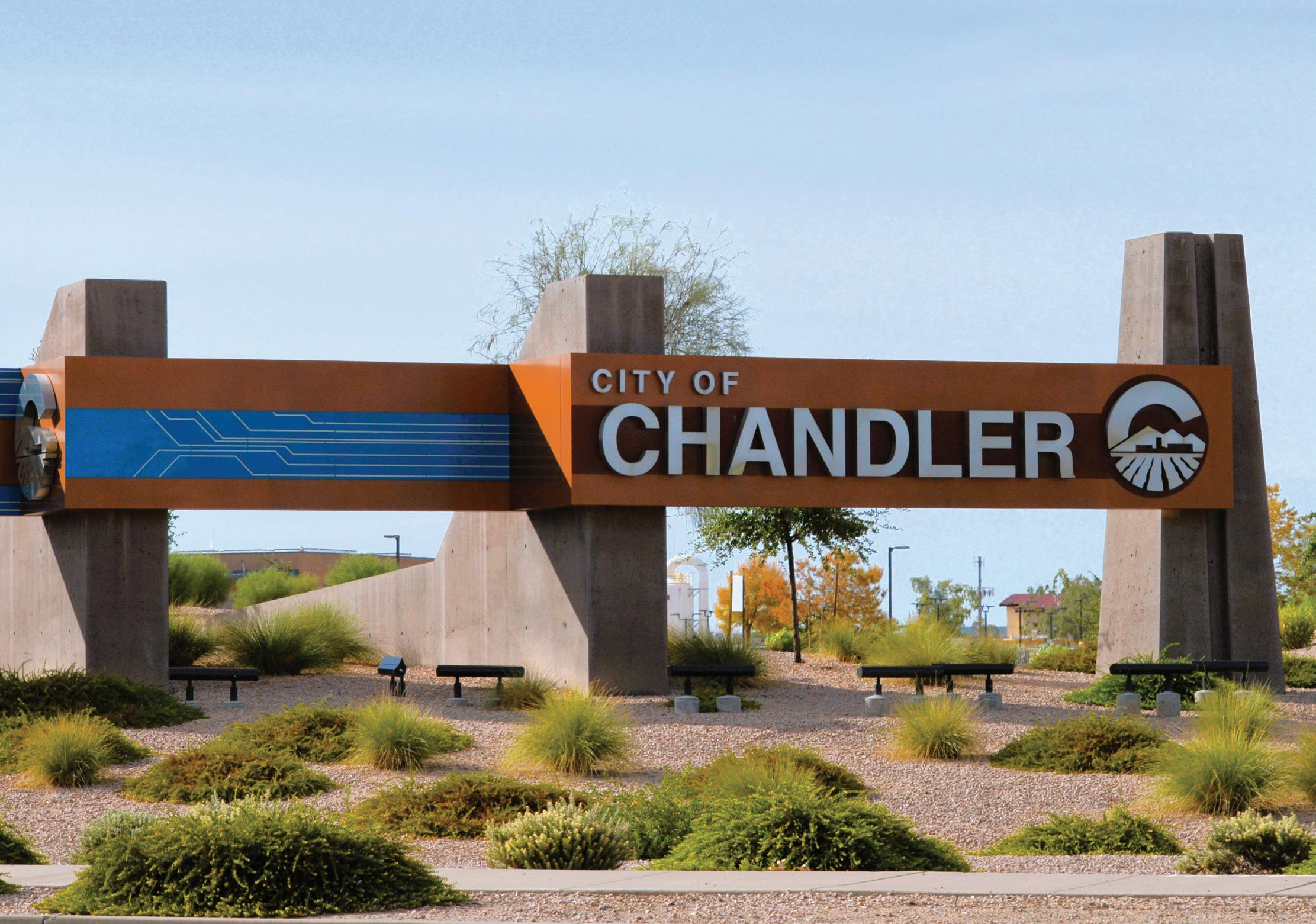
By JANET G. PATTERSON | The Municipal
Chandler, Ariz., has taken a new step in expanding its public transit system by adding affordable micro-transit to its menu of services.
The municipality’s mass transit system consists of a regional bus network called Valley Metro as well as Chandler Flex, a demandresponsive micro-transit service.
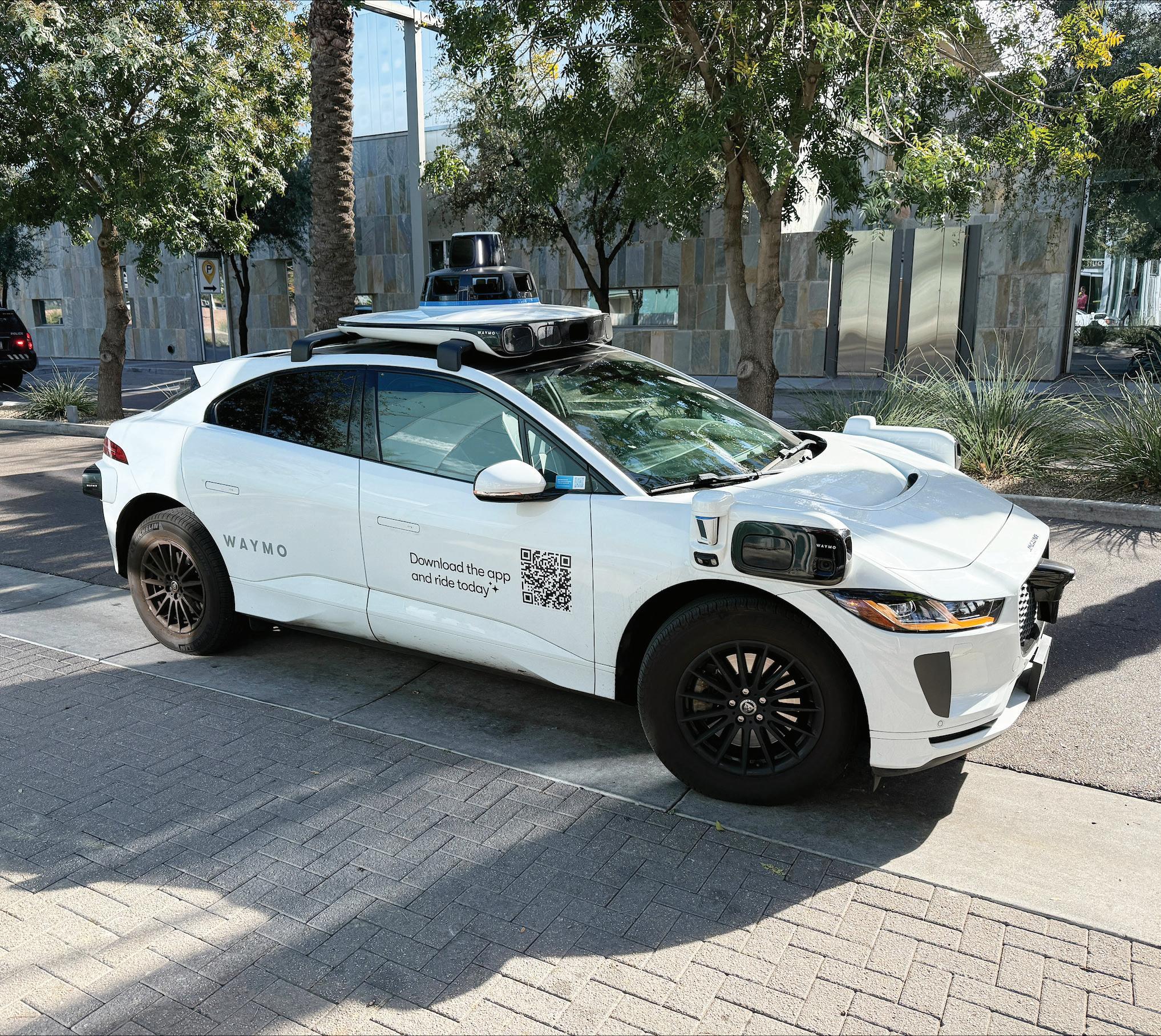
In September 2025, the city became the first to integrate Waymo autonomous vehicles (AVs) into its micro-transit service. The city of 280,000 on the outskirts of Phoenix is viewed as a test site for how AVs can become a part of everyday public transit in mid-sized cities.
For $2 a ride, Waymo’s AVs provide a hybrid service that falls between mass transit and Uber or Lyft service, said Jason Crampton, Chandler’s transportation planning manager.
“Chandler Flex is the core service that provides shared rides within a particular service area,” he explained. This service
offers on-demand rides in nine minivans with human drivers. With Waymo AVs, riders now have an additional transport option that obviates the requirement for shared journeys.
According to Crampton, if the minivans are operating at capacity or are on a scheduled service break, riders booking Chandler Flex transportation have the option of being matched with a Waymo vehicle. Via provides the technology for the Chandler on-demand system. The Waymo vehicles are owned by Google. Via’s scheduling engine matches riders with vehicles by considering their specific needs, such as time and location for a trip within the service area.
To use the demand-responsive system, a potential rider needs to load the Chandler Flex app onto his or her phone. To summon a
vehicle, the caller enters the point of the trip’s origin and the address or business destination. The system will then produce a proposal of when the rider can expect to be picked up and where he or she will be dropped off. The rider pays for the trip in the app or by calling Chandler Flex when accepting the proposal. Crampton said that if the drop-off point is not right at the destination, it is always within a short walk. The rider can follow the vehicle along the route it is taking for pickup and an estimated time of arrival. If the outing involves several stops at shops or appointments, the rider will have to summon the system at each location.
Crampton said the parameters for the system were mapped about 10 years ago, covering Chandler’s road system in anticipation of self-driving vehicles. One advantage of AVs is that the Waymo vehicle can usually reach a rider in 10 minutes or fewer, where
a human-driven minivan with another passenger may take longer.
When Chandler Flex was launched in mid-2022, the system was funded by an A for Arizona Transportation Modernization grant. Since then, the program has been paid for by a variety of specialized grants, including assistance for senior citizens and people with disabilities as well as a Federal Transit Administration grants. There is also a state grant to provide rides for students, making it possible for them to go to a school of their choice.
“The system is very costly, but it is a very valuable service that the community provides,” said Crampton, adding that one advantage of subcontracting the AVs is savings that could be as much as 50% of operating the city’s own vehicles.
He noted that the response to the AVs has been positive. “Before Waymo, there was no trip proposal,” an innovation that riders appreciate.
The city has conducted no surveys yet, but based on ridership and the number of trips since September 2025, it seems the Waymo integration is successful so far. Of the 4,000 to 5,000 Chandler Flex rides provided each month, “about 50% to 60% of the riders who are proposed Waymo rides are accepting them.” This amounts to about 50 rides per week in the AVs. “And we’ve had no complaints,” Crampton added.
He said ridership includes commuters going to and from work, senior citizens needing transportation for shopping and medical appointments, as well as students. Waymo riders under 18 must be accompanied by an adult.
He noted that certain areas of Chandler use the on-demand system more than others since bus routes are limited in some sections of the city.
Crampton’s advice to municipalities considering adding AVs to their fleet is to look into their geography and what areas could benefit from on-demand transit. He said Via provides the application and software, drivers, vehicles and project managers and supervisors. He added that Chandler’s inhouse staff participates in making sure that the transit system suits the demographics of the municipality and its needs. “We’re constantly working with (the subcontractors) to improve the system.”

driven by humans were the first on-demand vehicles introduced to the Chandler Flex transit system in Chandler, Ariz. The municipality’s Transportation Planning Manager Jason Crampton has been an important part of the project from its beginning in 2022. (Photo provided by Chandler, Ariz.)



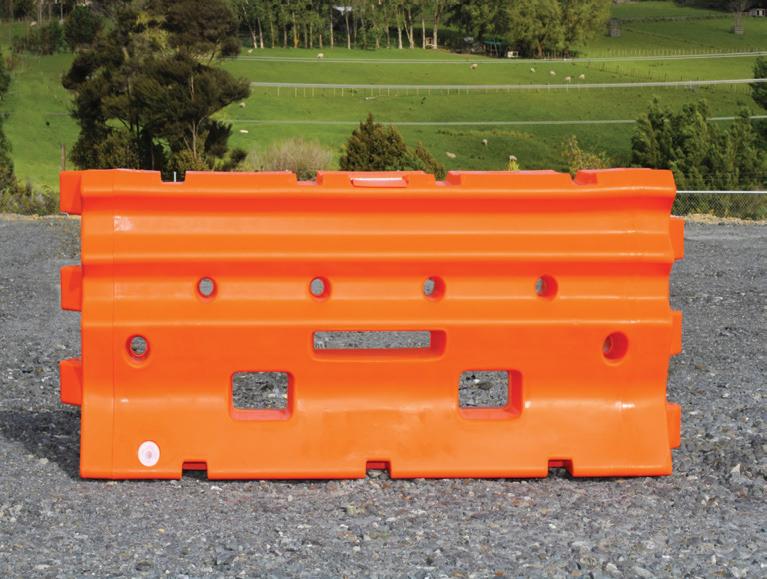
• The 2001, 2001M, and 2001MB barricades are MASH Tested as a Longitudinal Channelizing Device (LCD).
• Accessorize with Lights and Fence Panels.

• Transform unstable ground into stable and weatherproof surfaces for easy transport and staging of heavy equipment.
• Protect Turf & Grass During Events and Projects.
• Create Accessible Walkways for Pedestrians or Crew.
• Portable, High-Performance, interlocking water filled Barrier sections.
• MASH TL-2 Tested for Redirective Applications.


By BETH ANNE BRINK-COX | The Municipal
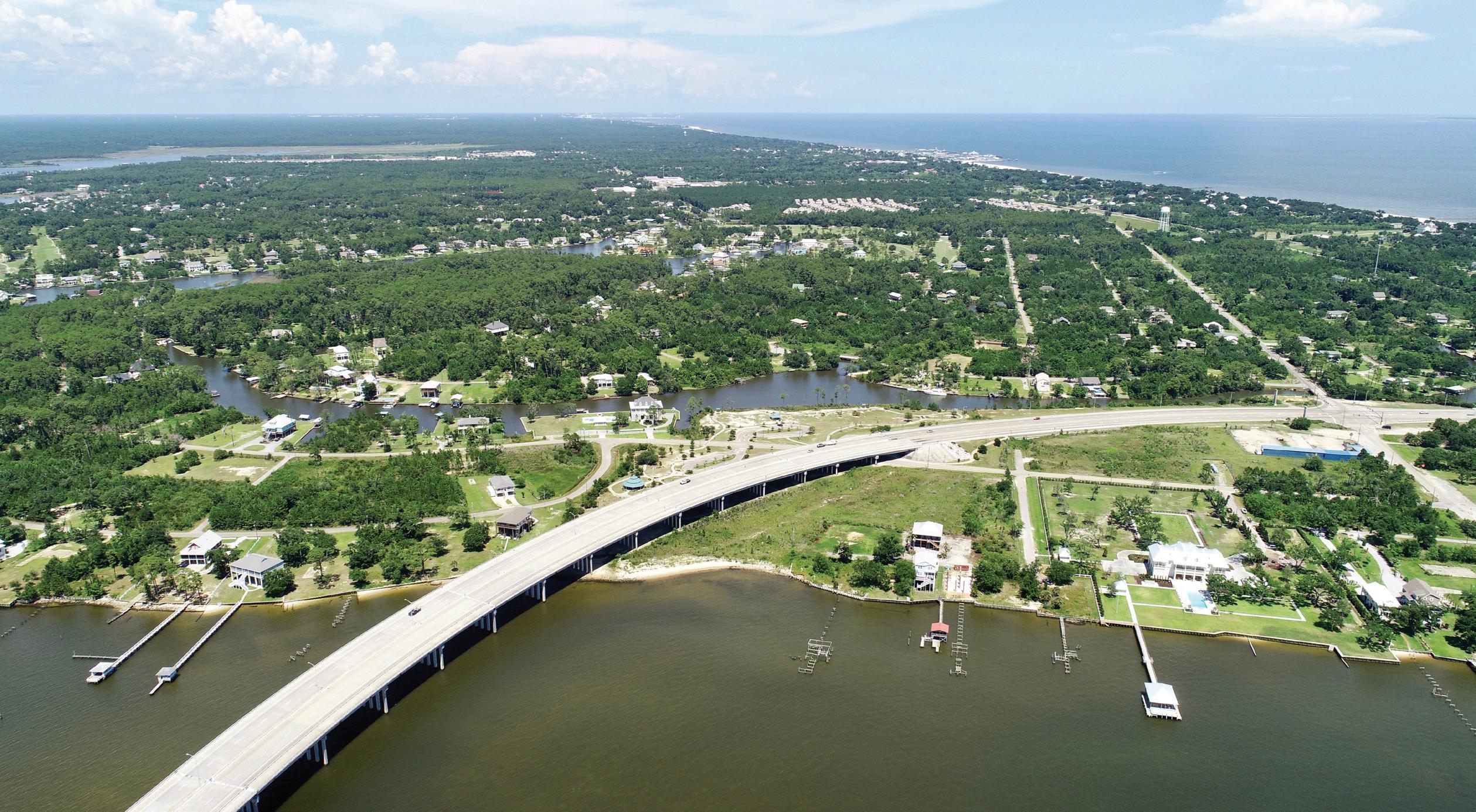
The name “St. Louis,” is often associated with the city in Missouri. But another city, Bay Saint Louis in Mississippi, also claims the name.
Bay Saint Louis is a small town of less than 10,000 people, according to the 2020 census. It was settled by French colonists whose influence is still felt. And like many coastal towns, it has been hit hard more than once by historic hurricanes: Camille in 1969 and Katrina in 2005, which virtually wiped the town off the map.
The town was rebuilt with the help of federal funding and the determination of residents who live knowing the risks for half of every year. There are hundreds of businesses in Bay St. Louis today that weren’t there before Katrina, and there is so much to see and do year-round.
The Historical Haunted Bayou Cruise, with old souls and the tales of Mystic Molly, is a popular recreational option. Or a person could go on foot for the Spirit Ghost Walking Tour, hearing about paranormal activity among the eeriest sites in the district. One could try the Cemetery and Ghost BYOB Bus Tour in nearby New Orleans, just across the bridge, after sundown; a ghost
walk or ride; or the Adults-Only Ghost, Vampire and Voodoo Walking Tour, also in New Orleans.
Those for whom scary things to do are not their cup of tea, possible Bay St. Louis diversions include the Coastal Stroll Walking Tour. And the Bay Saint Louis Discovery Boat Tour is a marvelous way to learn about marine life ecosystems and witness an oyster shucking demonstration. The French Quarter Historical Sights and Stories Walking Tour takes people through the heart of the neighborhood, and there is the Beyond the French Quarter Bike Tour, the Freaky Tiki Bayou Boat Tour, the New Orleans Music Heritage Tour and a Citywide Driving Tour with local jazz musicians.
Those with interest in the arts will want to check out the Alice Moseley Folk Art Museum, a little, bright blue house just across the street from the train depot. After several decades of teaching, Moseley retired and began painting at the age of 65; her bright and whimsical works are sweetly
ABOVE: New Orleans is only a short drive from Bay St. Louis, over the Rigolets or Twin Span bridge. (Shutterstock.com)
reminiscent of Grandma Moses, but not at all derivative. In a favorite painting of the little blue house itself, there’s the self-portrait of Moseley dancing joyously by a sign that says, “The house is blue but the old lady ain’t!” A person could see the Mardi Gras Museum or attend a play at the Bay Saint Louis Little Theater, in the old Starr Boarding House.
Smith and Lens Art Gallery features different artists every month. Owned by a jeweler, Smith, and a photographer, Lens, the two sell their own pieces as well.
There are two casinos, the Silver Slipper Casino Hotel and the Hollywood Casino and Resort Gulf Coast. There are golf courses too, as well as treehouse yoga, pontoon rentals and fishing charters of all kinds.
Partaking of food and drink in Bay St. Louis often involves seafood, which can be found just about everywhere. There’s the Blind Tiger, Sycamore House, 200 North Beach Restaurant and the Bar or the Thorny Oyster, which has an intriguing
name and should not be missed. One can find blueberry pancakes at the Sunrise Cafe or a meatloaf sandwich at the Parrot Head Bar and Grill, where there’s an interesting description of a sandwich made with roast beef debris. Try the Ugly Pirate or Brooklyn Pizzeria for pizza, or Bogart’s Steakhouse too. And don’t forget PJ’s Coffee.
If shopping is a visitor’s bag, they’ll want to go to Identity Vintage, which has curated collections of vintage and imported things such as clothing and accessories, jewelry, decor, collectibles and curiosities. There are three floors in the Shops of Century Hall, a conglomeration of boutique establishments that offer beautiful clothes, and the Antique Maison LLC is filled with booths that will keep anyone browsing for hours. Clay Creations has been offering small ceramic sculptures of regional homes, schools and churches along the Gulf Coast since 1980, and visitors will certainly find unique keepsakes to take home.
As with any travel, one can plan it with an agent. Or, when it comes to Bay Saint Louis, a person could avail themselves of the free publication Shoofly Magazine available at bslshoofly.com which features community calendar pages, upcoming events, fishing reports, parade routes and schedules and even nature notes filled with iconic photography. There are more interesting ideas for things to do inside than anyone has time for, but they might owe it to themselves to try. And there are weekly farmer’s markets, theater workshops for those aged 9 to 90, literary festivals, guitar festivals, story slams, and workshops to make one’s own individually unique Mardi Gras headpiece.
And don’t forget, there’s always time to just relax on the beach when the weather is right. Stop by one of the local bookstores for some new books Bay Books, the Book Bag and Faulkner House Books, to name just three. A reader would be bound to find, as Mary Engelbreit once said, that the books fall open and the reader falls in. However, for those for whom relaxation means something different, Renewing Touch Therapies or Coastal Bliss Massage and Esthetics can oblige.
The best time to visit Bay St. Louis? It depends on what one would like to be able to do and see. Go in the spring or fall when temperatures are perfect for walking, biking and exploring. And definitely check out

Bay St. Louis, Miss., was settled by French colonists whose influence is still felt. Around 10,000 residents live there today, according to the 2020 census. (Shutterstock.com)

The white-sand beaches in the Gulf Coast town are beautiful, but hurricanes have devastated the community more than once which is why many local buildings are new construction instead of original. (Shutterstock.com)
Mardi Gras. In summer, a person can enjoy the beaches and all sorts of water activities including carboard boat races or Pirate Day in the Bay, which actually lasts an entire weekend. In the winter there is Christmas in the Bay, the Santa Stroll and the New Year’s
Eve celebration, which all include beautiful decorations.
Whenever a person goes in Bay St. Louis, it’s pretty certain he or she will find it difficult to do everything the city offers. But it’s a good time to try!

By NICHOLETTE CARLSON | The Municipal
In the 1990s, the Spokane, Wash., Police Department began its Neighborhood Resource Officer program based on the broken window theory of policing. This theory states that if police officers address minor offenses, such as broken windows and graffiti, it will help prevent larger instances of crime.
In the Spokane NRO program, there is a specific unit dedicated to serving city neighborhoods, with one officer assigned to each neighborhood.
Due to staffing issues in 2023, the city was forced to eliminate the program. With multiple retirements that year, the department struggled to have proper staffing for the patrol staff, so the officers in the NRO program had to help fill patrol staff needs. However, thanks to a community safety
sales tax being passed, the city was able to restart the program in 2025.
When the program was eliminated, Officer Dan Strassenberg of the public information office stated that the loss of the NRO program was felt by the community because when calls come in, if it’s a busy day, they are triaged. This meant that there could be a delay in officers coming out to respond to a problem or complaint. In addition, the officers that came out were not the
ABOVE: Spokane, Wash., Police Department has used its Neighborhood Resource Officer program to assign officers to serve specific neighborhoods, allowing positive relationships to be formed. This program was restarted in 2025 with additional funding becoming available. (Mark Agnor/ Shutterstock.com)
same each time. As soon as staffing was back up, the city knew the program needed to be reinstated.
“Community safety is paramount in everyone’s mind,” Strassenberg said. “Every city is trying to fix these issues.”
Since the program had already been in place for so long previously, reinstating it provided no real challenge. Once the community heard the program was back up

The Spokane, Wash., Police Department recently restarted its Neighborhood Resource Officer program. These officers consistently cover response calls in a neighborhood for repetitive issues, such as gang activity, tenant complaints, drugs or nuisance properties, and show up to neighborhood meetings. Officers are Deanna Storch, left, and Micah Prim. The city is hoping for a few more NRO officers to be full staffed by mid-2026. (Photo provided by the Spokane, Wash., Police Department)
and running, residents had a highly positive response.
Officers are chosen for the NRO program if they have an active interest in addressing consistent, repetitive problems in neighborhoods. The job involves, for example, gang activity, drugs and patrolling nuisance properties, along with any special assignments from the patrol captain. Patrols are based out of a location near the assigned neighborhood and the officer needs to be able to work independently on his or her caseload and on any calls that come in from or regarding that neighborhood.
“It’s the same face that everyone gets to see every day, and it helps build connection within that neighborhood,” Strassenberg emphasized.
Currently, there are three neighborhood resource officers. The city needs five or six to be considered fully staffed with the program. It is hoped that the program will be fully staffed by mid-2026.
Social media and the different methods of communication can be both positive and challenging. With multiple communication

Police officers are chosen for the NRO program if they have an active interest in consistent, repetitive problems in neighborhoods along with some experience in law enforcement.
(Kirk Fisher/Shutterstock.com)
methods available, officers are typically able to learn about incidents quickly so they can respond fast if reports are coming through in multiple ways. However, this can also present a challenge when officers learn about an incident simply because it is posted on social media. The most important thing to do, the officers stress, is reach out and call to ensure the NRO can respond quickly and appropriately.
The position can be a bit labor intensive, and officers need to be able to switch what they’re doing as soon as needed. NROs attend a great number of community meetings, and some neighborhoods have large caseloads with many issues affecting the residents. While the goal is to try to mediate as much as possible with homeowners or property managers and tenants, sometimes the only resolution is to go through the legal process of abating a property. If that occurs, the officers then attends abatement meetings and hearings.
Strassenberg served as an NRO from 2008 to 2013, and members of his neighborhood still recognize him. One of the most important things he learned was that it is important to meet face to face with residents in the neighborhoods that need the most help: If he was keeping an eye on a home that had received nuisance calls, as soon as a call came up on the screen regarding that home, he would make sure that he went and personally showed up. That ensured that he was
visible to the residents of his neighborhood and that they knew he was paying attention. During his time, it was also important to him to spend one day out on the streets, walking and visiting property managers and community members to ensure everyone knew he was there and that he would show up when needed.
Spokane also has a behavioral health unit with a total of seven officers and the assistance of a countywide grant that handles only behavioral health and mental crisis calls. This offers residents the same benefits as the NRO program, with the same officers showing up and talking to those in need of assistance each time and being able to guide them toward proper community resources. In addition, the city has a homeless outreach team that partners with community resources and Veterans Affairs. Together, these communitybased programs help one another as needed.
While many other police departments have similar community outreach programs under different names, the most important factor in determining if a program like Spokane’s is right for a department is staffing. If a department does have the staffing available for a neighborhood resource officer program, Strassenberg highly recommended it.
“People are dealing with the same face every time, so it doesn’t cause that initial anxiety,” he noted. “And you already have a good rapport, which makes it easier to solve problems.”

By BETH ANNE BRINK-COX | The Municipal
In a town of almost any size, someone will say there’s nothing to do. Maybe it means there really isn’t much to do, or maybe it means that what’s there isn’t something those kinds of voices wanted to do.
At any rate, Crown Point, Ind., affectionately known as “the Hub of Lake County” and with a population of 34,884, according to the 2023 American Community Survey, offers plenty to do, and the list keeps lengthening.
One of the city administration’s most recent accomplishments is a new skate park, part of a larger Sportsplex. According to hungerskateparks.com, the park “complements existing recreation amenities on the 95-acre Sportsplex campus … The park features a 14,5000-square-foot skateable area, three street-style lanes, coping, a 5,000-squarefoot flow bowl, a peanut pool, lighting and a pedestrian entrance from the expanded Veterans Memorial Trail.”
Crown Point Parks and Recreation’s mission statement is “Providing Health, Inspiration and Education While Enriching Quality of Life.” The city goes on to say, on its website, that it is committed to preserving and improving quality of life for the community through programming and leisure activities for all ages, as well as providing quality and well-maintained parks and facilities.
Jennie Burgess, parks director, has worked with the city for 26 years. She said, “We feel like we hit a home run with this. We opened late in the year, and we haven’t even had a full season yet!”
ABOVE: Jennie Burgess said the park would be covered for promotion using drones and GoPros as well as ordinary photography; there is nothing ordinary about this view. (Photo provided by Crown Point, Ind.)
The skate park addition has been in the works since the late 90s and early 2000s, Burgess said. “It sort of was an idea on a napkin at lunch, talking about four acres of empty brownfield. Most of our events were downtown in the square, which is awesome, but that made for a lot of labor and there was traffic to consider. And the original park was showing age. It was time for something new.
“We were working with HungerSkate Parks, whom I can’t even say enough good about. We started asking, ‘What do you want?’ ‘What would you like?’ We took that information and worked to get some designs, because Hunger Skateparks is all skaters and engineers.”
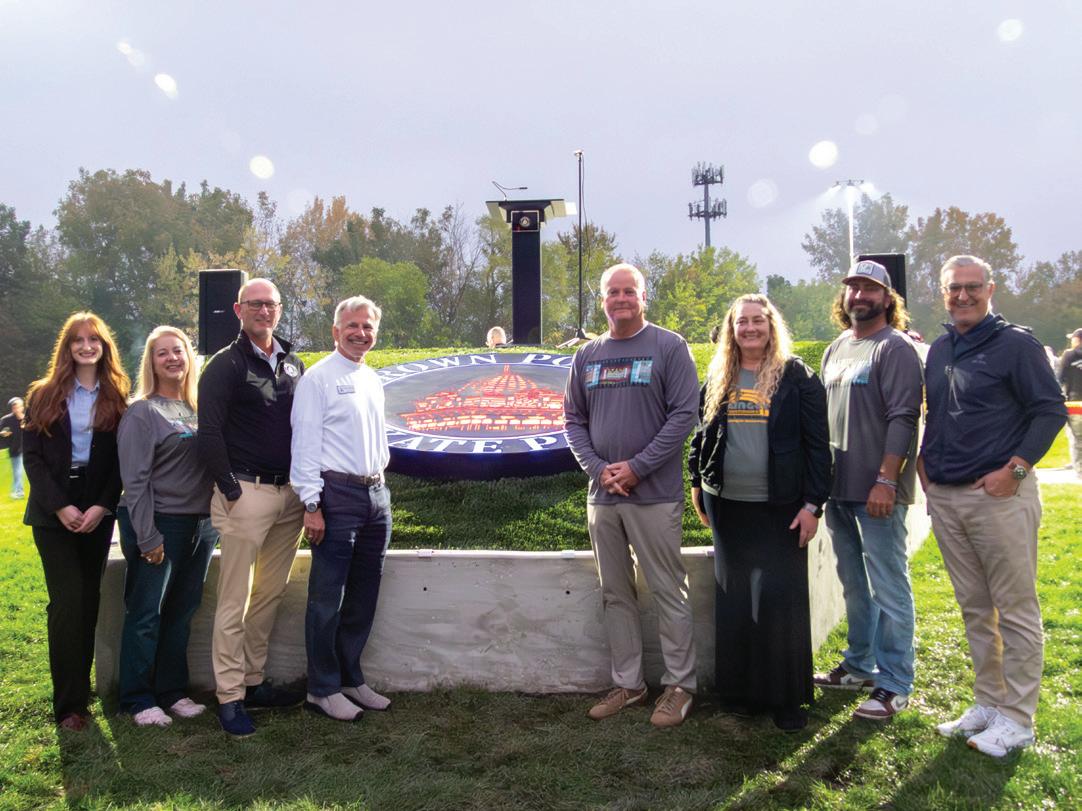
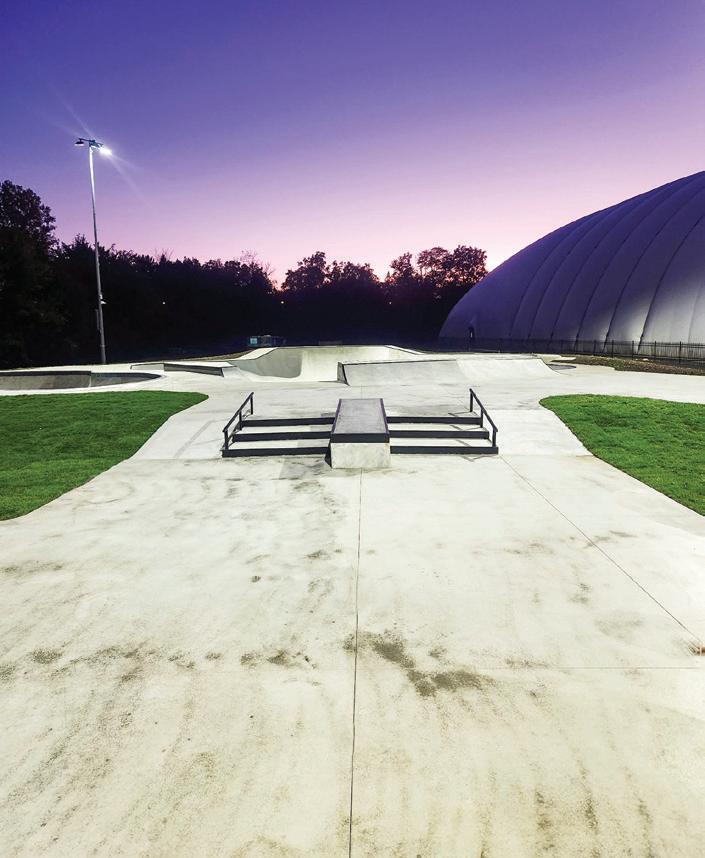
The resulting design was “incredible,” Burgess said. “We were really happy with the designs and put it out to bid, but it was out of our price range.”
Then, Mayor Peter D. Land came into office. “He’s known as Mayor Pete, and this issue became one of his focuses. We were able to secure funding through a grant from the Dean and Barbara White Family Foundation $2.81 million in 2023.”
So, the bid process began again.
“That was in October, and the earthwork started in November 2024. We had several quality-of-life projects in the works then, including another park, and we were ready to hit the ground running.”
While it isn’t always so with big projects, the city didn’t run into any major obstacles. No supply shortage, no crew shortage, and the weather mostly cooperated. All deadlines were met.
Sometimes things have to be done in phases, but Burgess noted, “We were able to move straight ahead.” Work progressed steadily, keeping the energy and excitement about it high. The park opened in October.
“Our opening was kind of a week before the official date,” Burgess noted. “We held it in the evening and had a coffee truck because it was a little chilly. I’d say there were 300 or so people there, and many of them had their skates and bikes and blades and boards. We felt really good about it and had a good amount of interest in the project, even from outside the county.”
Regarding the average age of those using the park, which is open from 6 a.m. to 10 p.m. daily, Burgess said, “We had 7-year-olds and 55-year-olds. The older and more experienced skaters, like the 17-yearolds, were helping both younger and older so they wouldn’t be afraid and would know how to use everything properly. It’s a really cool circle.”
With the park basically being constructed of concrete, and it being so new, upkeep should be minimal.
“Obviously, we’re surrounded by grass, and our full-time staff keeps it all clean. But when we first opened, I would be checking in on it and see maybe some water bottles or lunch bags left around. Then I started to see users gently suggesting to each other, ‘Hey, can you clean that up?’”
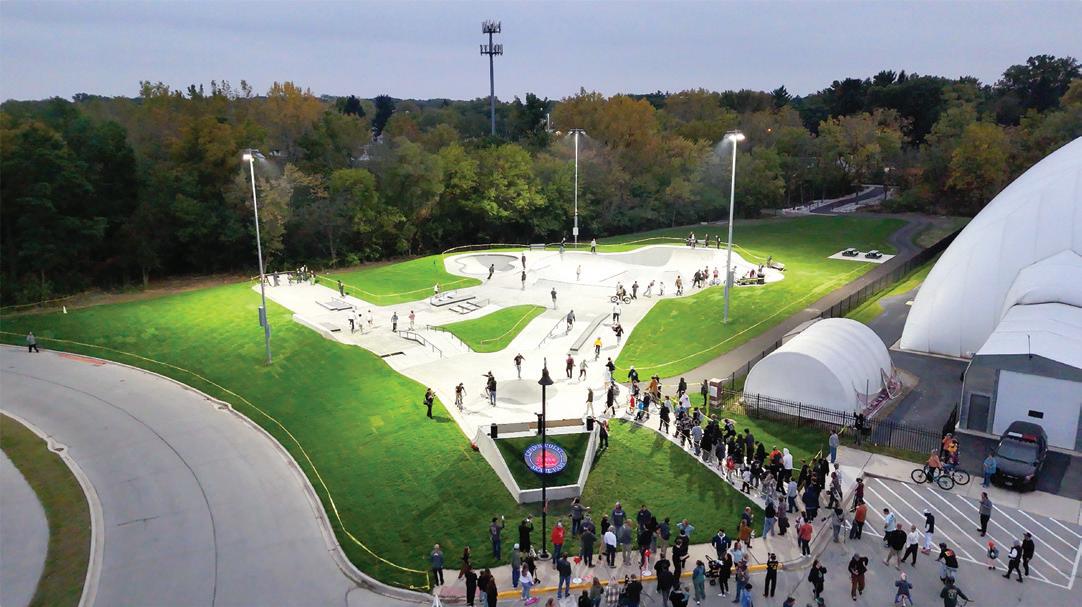
Burgess noted that Crown Point’s process was to get the community involved early in the process.
“Without knowing what was wanted, we couldn’t know what it cost. Community involvement is so important. Did we make everyone happy? Probably not, but we listened to the masses. We’re talking about a 12,000-square-foot park, so we reached most, hopefully.”
Parks department staffers hope to offer skate lessons for free in the future so little ones aren’t intimidated.
“We can show them how to use this or that and not get hurt. We’re working on plans for regular programs, classes and competitions. We hope to have it in place this year; if not, 2027 for sure.” When the weather is nice, she noted the new park is packed.
Now, it’s on to the next quality-of-life project. “We’re always looking to offer things to people who live here, so there’s never really a break. We’re always talking ideas and thoughts.” Other potential projects include an amphitheater and a farmer’s market.
“Mayor Pete is seriously committed to the quality of life,” Burgess said. “Once a month we have a coffee thing where anyone can come and meet and bring their questions and concerns and ideas. The city team is there, too, and whoever’s in the room has a solution to the problem that will make Crown Point a better place to live.”









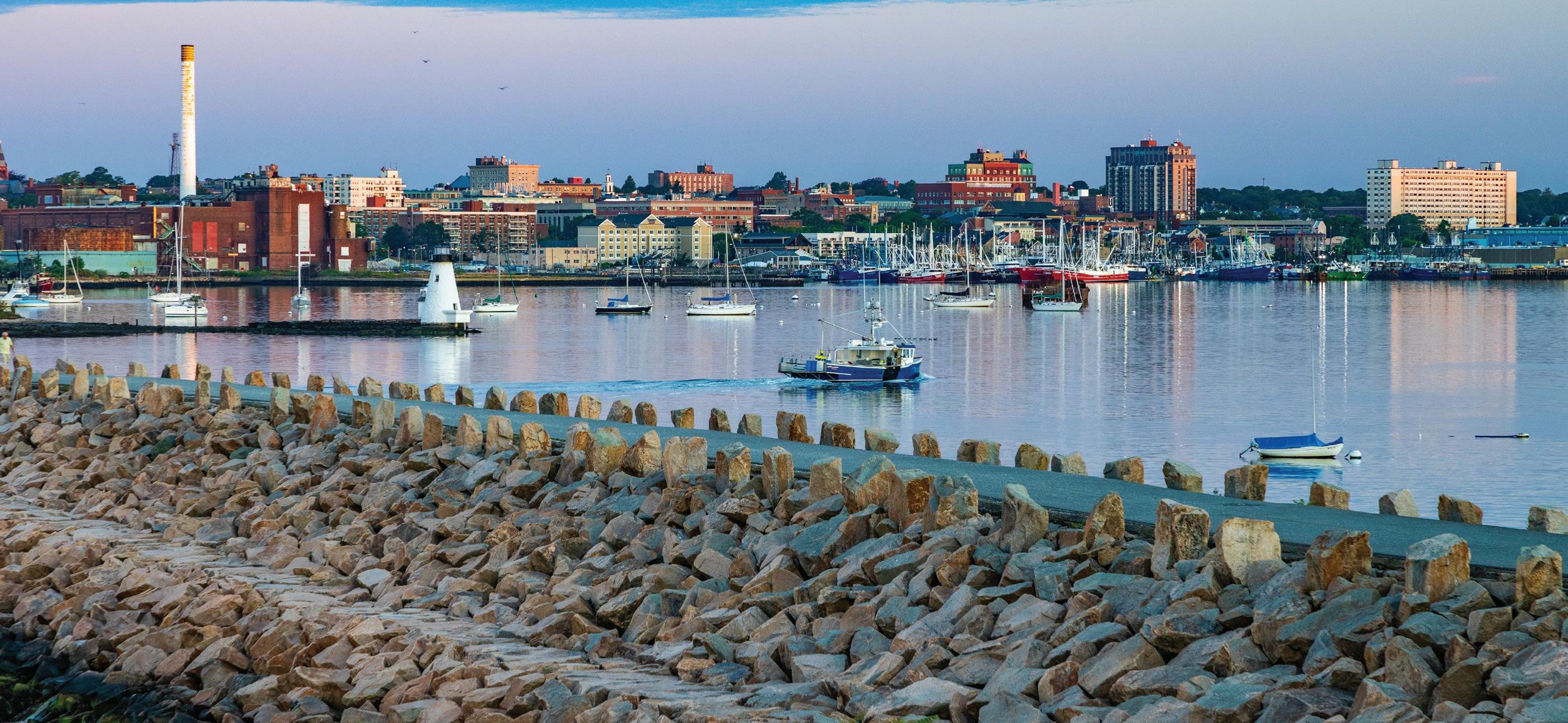
By DANIELLE LUND | The Municipal
When New Bedford, Mass., officials began revisiting the city’s emergency management plans, they weren’t responding to a single storm, crisis or headline. They were preparing for the reality that emergencies rarely follow a script.
At the center of the effort was the city’s updated Comprehensive Emergency Management Plan, a document designed to guide New Bedford through a wide range of anticipated and unexpected incidents from hurricanes and snowstorms to cyberattacks and hazardous materials emergencies.
According to Brian Nobrega, New Bedford director of emergency management, the plan represents a shift from event-specific preparation to a more holistic, coordinated approach.
“The previous plan dated to 2016,” Nobrega explained. “After the pandemic, we started working right away on updating to something that reflected today’s risks and how the city actually operates during an emergency.”
The new plan is built around an “all-hazards” framework, a standard approach encouraged by the Massachusetts Emergency Management Agency. Every municipality in the state develops a similar type of plan, often using a shared template and, in many cases, working with a consultant.
While the structure may be familiar across communities, Nobrega emphasized that the real work happens in the details.
“This plan identifies the threats to our community and lays out how we prepare, mitigate and respond,” he said. “But more importantly, it brings all departments together to determine who is responsible for what when something happens.”
That clear definition of roles and responsibilities is one of the most significant improvements in New Bedford’s plan. In any emergency, confusion can be as dangerous as the incident itself. The CEMP establishes an incident command structure, ensuring that leadership and decision-making are clearly identified, even in less-traditional scenarios such as a cyberattack.
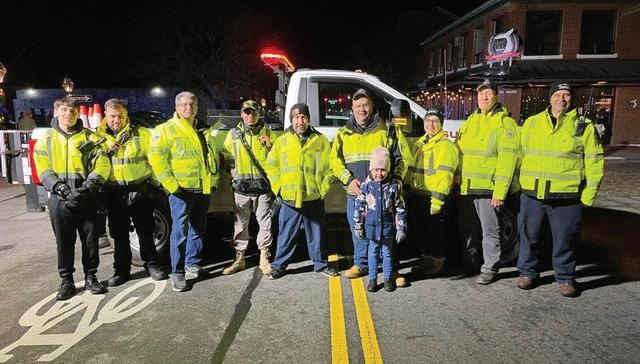
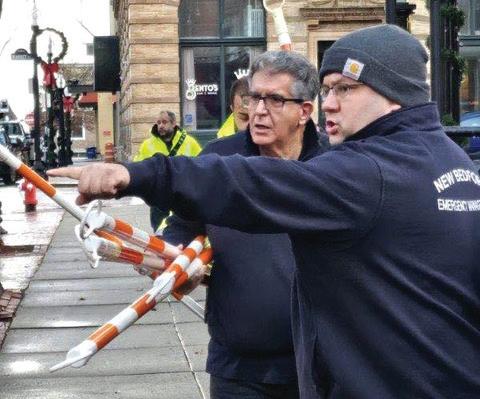
New Bedford employees pose in front of one of the department’s trucks. Recently, New Bedford, Mass., revamped its emergency management plans. (Photo provided by New Bedford, Mass.)`
“It’s not just about storms,” Nobrega noted. “We have to think about incidents that don’t look like a natural disaster but can still disrupt city services or put people at risk.”
The CEMP is designed as a five-year document, with the expectation that it will be reviewed regularly and updated whenever it is activated in a real-world situation. That flexibility is critical in a city like New Bedford, which has a wide range of vulnerabilities, environments and infrastructure to protect.
The CEMP is only one piece of a much larger preparedness puzzle. New Bedford also maintains several highly detailed, incident-specific
plans, including a hurricane plan, shelter plan, evacuation plan and an all-hazardous mitigation response plan. The latter is particularly important in a city with Tier II facilities that store substances such as ammonia.
“These plans are very in-depth,” Nobrega said. “You want to make sure the right people are at the table when you’re developing them because during an emergency, you don’t have time to figure out who should be involved.”
Developing the comprehensive plan was not a quick process. From start to finish, it took approximately a year and a half to complete. By comparison, New Bedford’s hurricane plan required only a few months.
The difference, Nobrega explained, lies in the scope.
“The comprehensive plan touches every department and covers so many scenarios,” he said. “That takes time.”
Time, however, also introduced one of the biggest challenges. Over the course of the planning process, department heads and staff members changed. Some left their positions, others took on new roles, and new people had to be brought up to speed.
“There’s always turnover,” Nobrega said. “Making sure that knowledge doesn’t walk out the door is a challenge. You have to keep people informed and engaged, even as things change.”
Balancing the demands of daily operations with the intensive work of emergency planning was another hurdle. Much of the plan was developed in collaboration with a consultant, requiring coordination, meetings and follow-through from already-busy city departments.
“Finding the time and energy to do this work while still serving the community every day isn’t easy,” Nobrega said. “But it’s necessary.”
As New Bedford worked through the process, the city looked outward for guidance. Officials reviewed plans from other municipalities and found that many were similar in structure, reinforcing the value of the shared template provided through MEMA. Still, those comparisons sparked new ideas and refinements.
“One of the best things other cities can do is find a community that’s willing to share their experiences,” Nobrega said. “Take your time, really think through the details and don’t rush it just to say it’s done.”
He also emphasized the importance of involving community groups in the planning process. Organizations such as interfaith councils and other local partners can play a critical role during emergencies, particularly when it comes to communication, sheltering and supporting vulnerable populations.
Much of the feedback on New Bedford’s updated plan has come from within city government, where the changes have helped build confidence across departments. That confidence, Nobrega said, is rooted in preparation.
“We’ve taken a very proactive approach,” he said. “We do tabletop exercises, we’re training, and we’re constantly reinforcing the idea that it’s not a matter of if something happens — it’s when.”
Quarterly department meetings and ongoing partnerships are now central to maintaining readiness. Rather than viewing emergency management as a standalone function, the city has integrated it into regular operations, ensuring that preparedness remains an active, shared responsibility.
For New Bedford, the updated Comprehensive Emergency Management Plan is more than a document on a shelf. It is a living framework shaped by collaboration, experience and an understanding of the city’s unique risks. As emergencies grow more complex and unpredictable, the city’s approach reflects a simple but powerful idea: Preparation works best when everyone knows their role, and practices it, before a crisis begins.





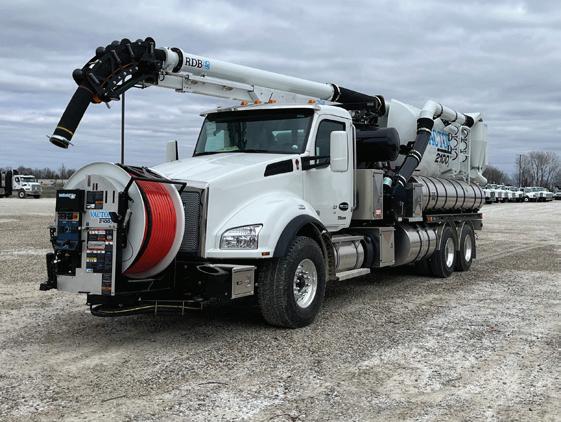




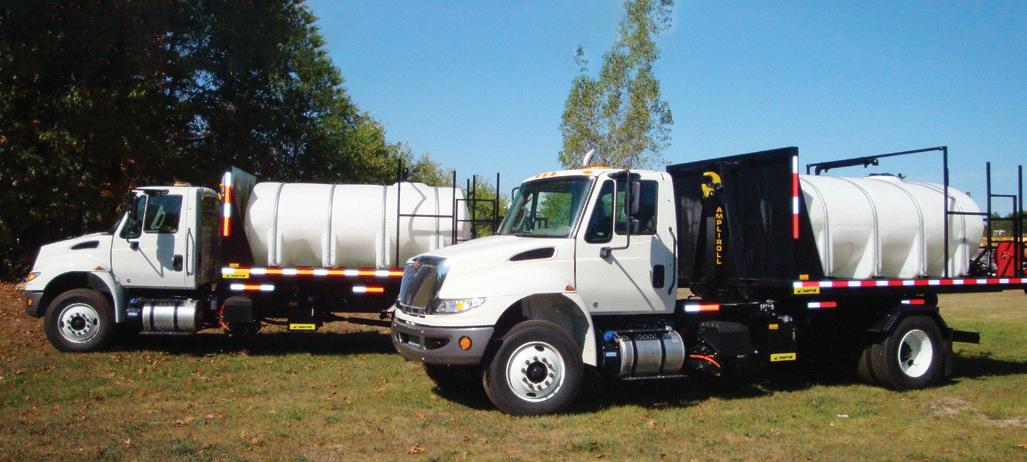

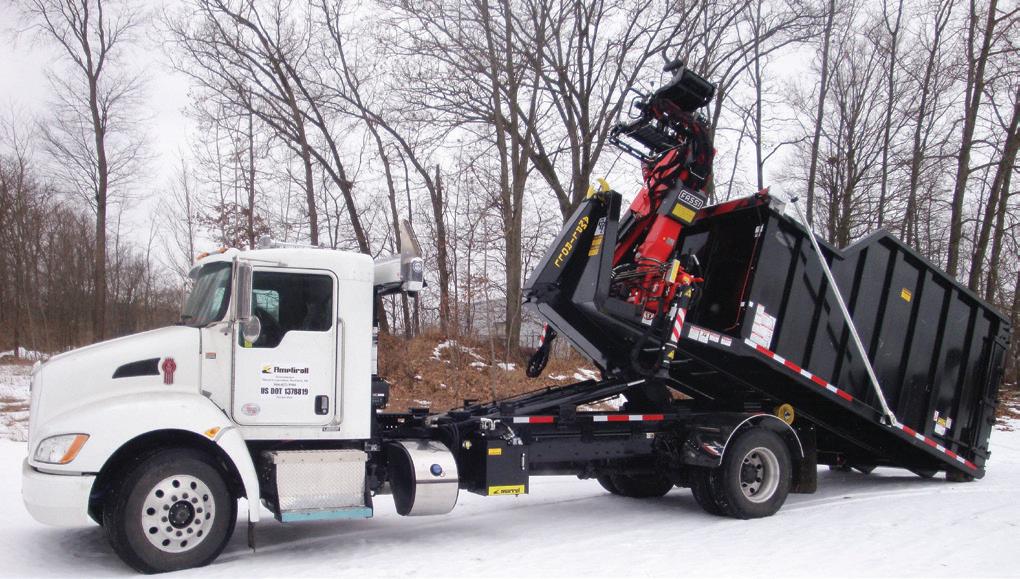


A long overdue overhaul of the city’s wastewater treatment plants is underway in Burlington, Vt. Considered a once-in-a-generation upgrade, the improvements in this multiyear project have been decades in the making and are essential to creating a more resilient state while also protecting the community’s vital water resources.
The project technically began in 2018, when the main facility experienced three separate disinfection failures and a Supervisory Control and Data Acquisition system failure because of aging infrastructure. In response, staff leadership put together an initial $30 million bond request based on a 2016 facility evaluation exercise that was required for Vermont wastewater plants.
“We now know that wasn’t necessarily a comprehensive review,” said Megan Moir, water resources division director for the city of Burlington. “Once the disinfection and SCADA upgrades were complete, our staff and the city’s consultant, Wright Pierce, started the preliminary engineering phase to program the remaining bonding authority.”
It was quickly apparent that the funding wasn’t commensurate with the needs, a situation was only compounded by the cost escalations associated with the COVID-19 pandemic, discussions about additional growth at the main plant sewer shed and the decision to pursue tertiary treatment in order to meet Environmental Protection Agency and state phosphorus reduction obligations. Moir said that the staff pivoted and split the project into multiple stages so they could move forward with the previously approved upgrades at all three facilities known as Stage 0 in July of last year and then pursue a significant upgrade to the main plant in Stage 1.
In March 2025, the city passed a $124 million bond known as the LAKE bond, so named because it aimed to upgrade aging wastewater and stormwater infrastructure in and around Lake Champlain. Of that amount, $124 million will be used to upgrade a large wastewater treatment plant a 5.3 Membrane Degasification System plant with wet weather treatment capacity on Lavalley Lane. The upgrades include replacing plant infrastructure that is past its useful life, adding tankage so that additional flow can be treated and adding a new tertiary cloth media filtration system to meet the phosphorous reduction obligations under the Lake Champlain Phosphorous Total Maximum Daily Load.
“This is not comprehensive, but it is a major treatment plant upgrade that is intended to set us up for future success,” said Martin Lee, water resources engineering manager.
Matt Dow, director of wastewater facilities, said there are two more stages to the upgrades that have yet to be bonded. Stage 2 will include the consolidation of two service areas through the conversion of the 1.2 MGD East plant into a pump station and pumping the flow to the Main plant, which will effectively decommission the former. Stage 3 will be a comprehensive upgrade of the North plant.
“Stage 2 is planned in the next few years, stage 3 is further out,” he said. “This overall project has been in the works for the last seven years and continues. It had changed and adjusted over time as more processes and equipment have been found to be obsolete, or no longer adequate.”
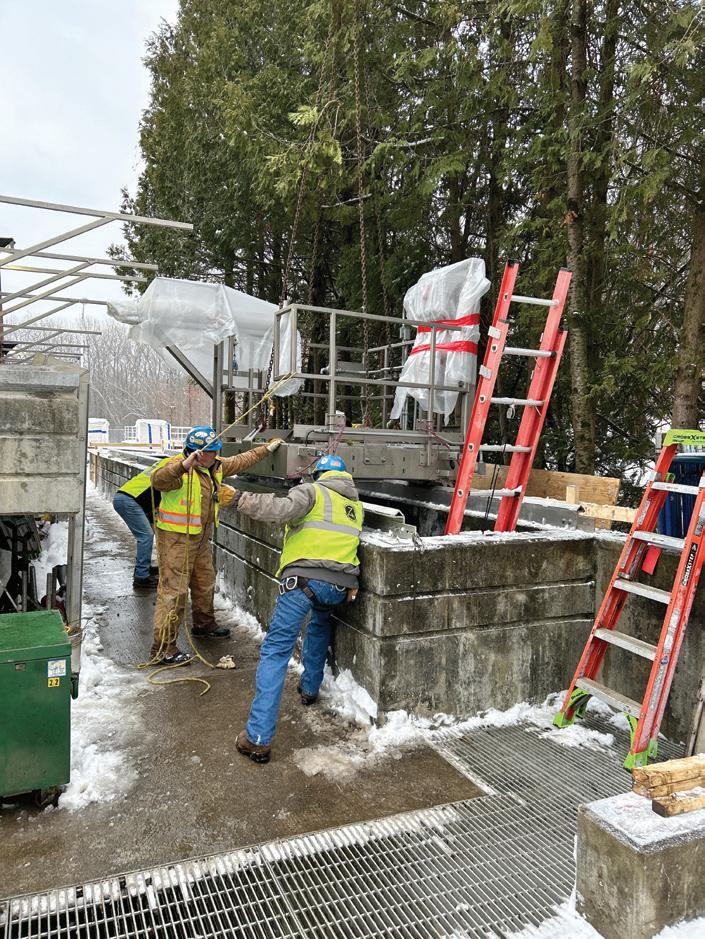
As part of several years-long upgrades to the wastewater treatment plants in Burlington, Vt., a new grit bridge at the North plant was placed on the grit channel. (Photo provided by Burlington, Vt.)
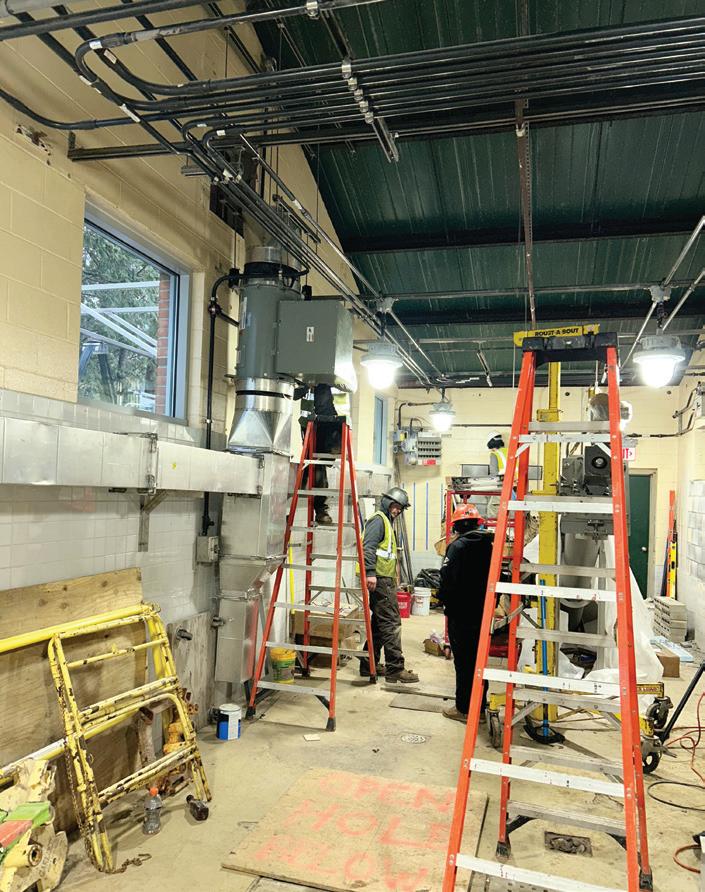
Workers move along Burlington, Vt.’s, North Headwork project, which began in July. The project included new windows, air handling, lights and conduit. This occurred before the larger equipment was installed. (Photo provided by Burlington, Vt.)
Burlington has found that looking at the big picture as soon as possible is important to ensure that necessary improvements are not overlooked early in the engineering process. While every community wastewater system is unique and requires a customized solution, Burlington has had many complex issues to work through prior to making decisions regarding final infrastructure design.
Lee said that the long-term economic benefit of centralizing some of Burlington’s wastewater treatment at the main plant is an example of an engineering evaluation that was not foreseen when work started seven years ago, but by prioritizing critical work that needs to be done promptly, planning the correct long-term solution and avoiding delays helped the process go smoothly.
Even with careful planning, challenges still occurred at every step of the process. Dow said that the disinfection/SCADA project was the first wastewater construction project for himself and all the wastewater staff.
Working with the engineer and contractor to operate the facilities while also completing the upgrade was eye-opening, and at times, challenging. That being said, according to Dow, the operational staff learned to adjust and adapt quickly to issues that arose during construction.
“We have learned that the best laid plans still have issues and challenges that need to be figured out,” he said. “Flexibility and a good relationship with the engineer and the contractor are the most important aspects of dealing with issues that arise during design and construction, but you also have to advocate for what is best for your system and find innovative or creative solutions to make the project successful.”
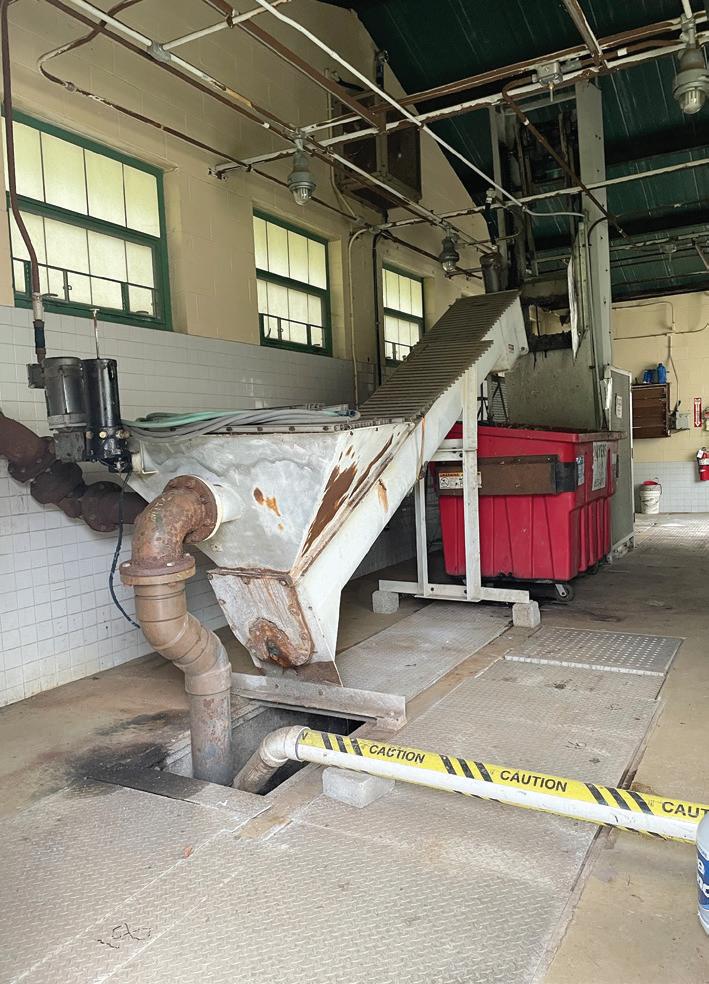
Burlington, Vt.’s, North Headworks is shown before demolition began and improvements were under construction. (Photo provided by Burlington, Vt.)

A ’70s-era aeration tank was retrofitted in Burlington’s last upgrade. Pictured is an example of some of the tank’s structural issues. It will be replaced as part of Stage 1 with a completely new aeration tank in a different location, with this location being used for tertiary filtration. (Photo provided by Burlington, Vt.)
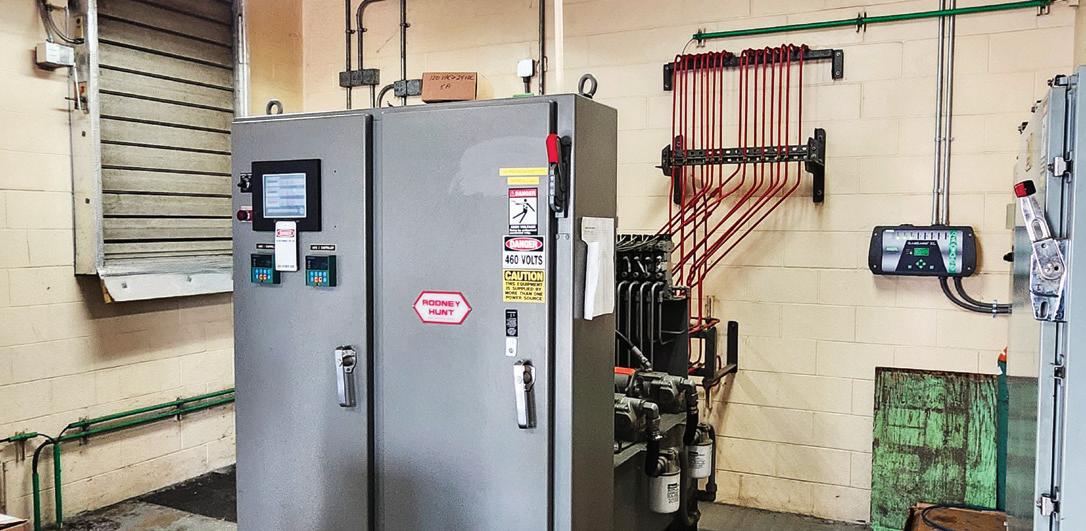
The 35-year-old Rodney Hunt hydraulic unit is used to operate the influent and CSO gates. It will be replaced with individual electric and Electraulic gate actuators. This is part of Stage 0 the first stage of the city’s extensive wastewater treatment overhaul. (Photo provided by Burlington, Vt.)





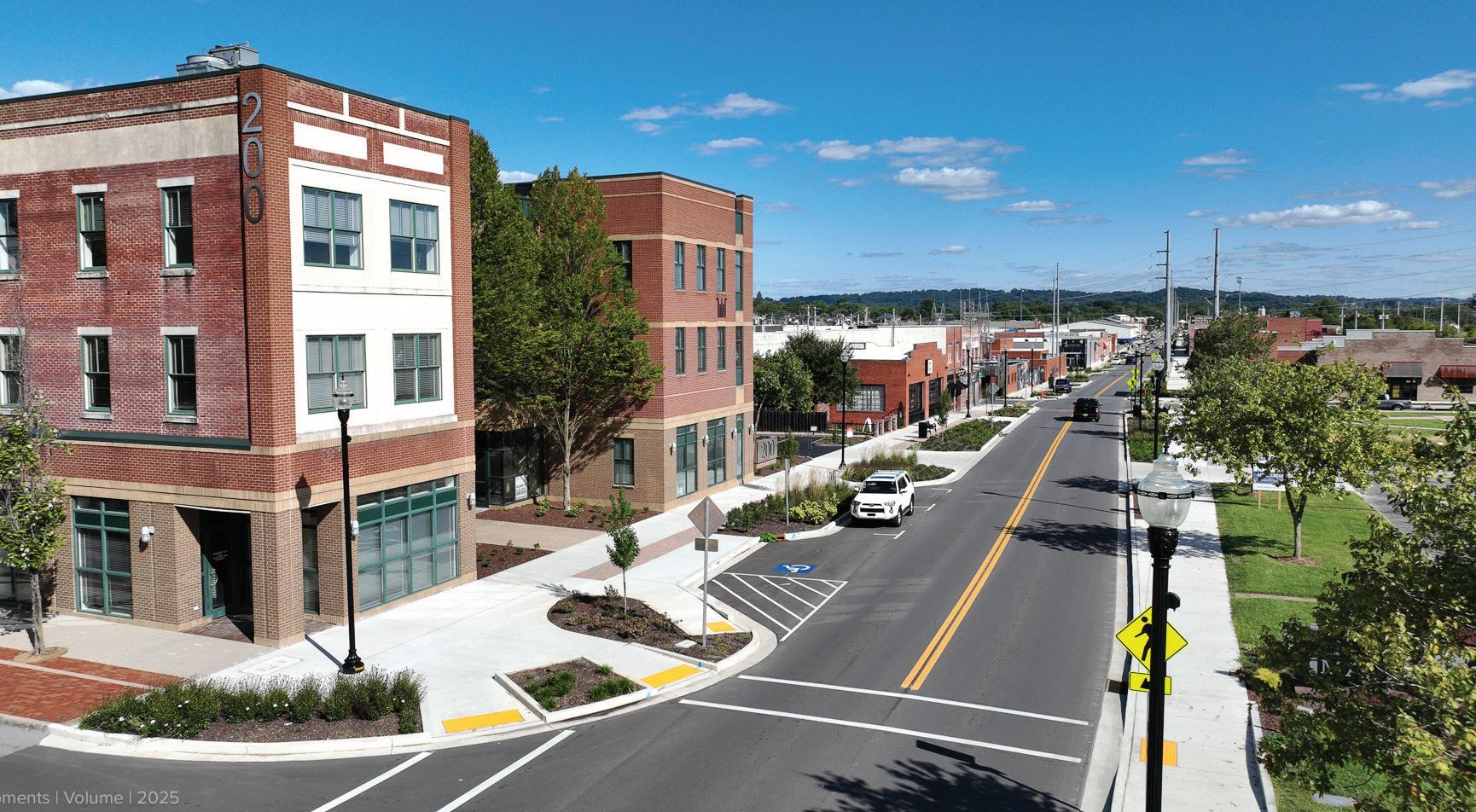
By JENNIFER BARTON | The Municipal
Sometimes a simple road repair can turn into a much bigger project — a greater opportunity to provide for the future and visually improve a cityscape in need of a facelift. Such was the case in Kingsport, Tenn., a mid-sized town of about 55,000 residents along the northern border of Virginia.
According to Michael Thompson, public works director for the city of Kingsport and project manager for its $20 million Main Street Rebuild, in 2015 the city utilized half a million dollars to literally dig into a problem a major road that had fallen into disrepair. What workers found was poor soil and an opportunity to revitalize the area for the future.
“We realized that it’s a functionally classified roadway, so it was eligible for the service transportation program,” Thompson said.
The city applied for a grant and began to develop the project, which grew in scope into a massive redevelopment.
“There was a downtown core of about three or four blocks, and there was another area that was more industrial. We wanted to make it a more cohesive streetscape,” he continued.
ABOVE: Kingsport, Tenn.’s, Main Street Rebuild project launched in October 2022 and wrapped up in November 2025. The end results speak highly of the work completed by multiple city departments. (Photo provided by Michael Thompson)
Construction began in October 2022, ended in November 2025 and involved multiple city departments. Public Works managed the project until the construction phase; the planning department ensured the right vision of the overall final appearance. The utility companies jumped on board to cover the cost of replacing old water and sewer lines. American Electric Power paid to place most of its electrical wires underground, and the city worked with a railroad company to bore under two sets of train tracks that formed a switching area, or wye.
Curbs, street furniture and landscaping all followed, with Americans with Disabilities Act-compliant sidewalks and other pedestrian safety features.
City departments were not the only ones with a voice in the final product. Thompson said that he and the other officials involved
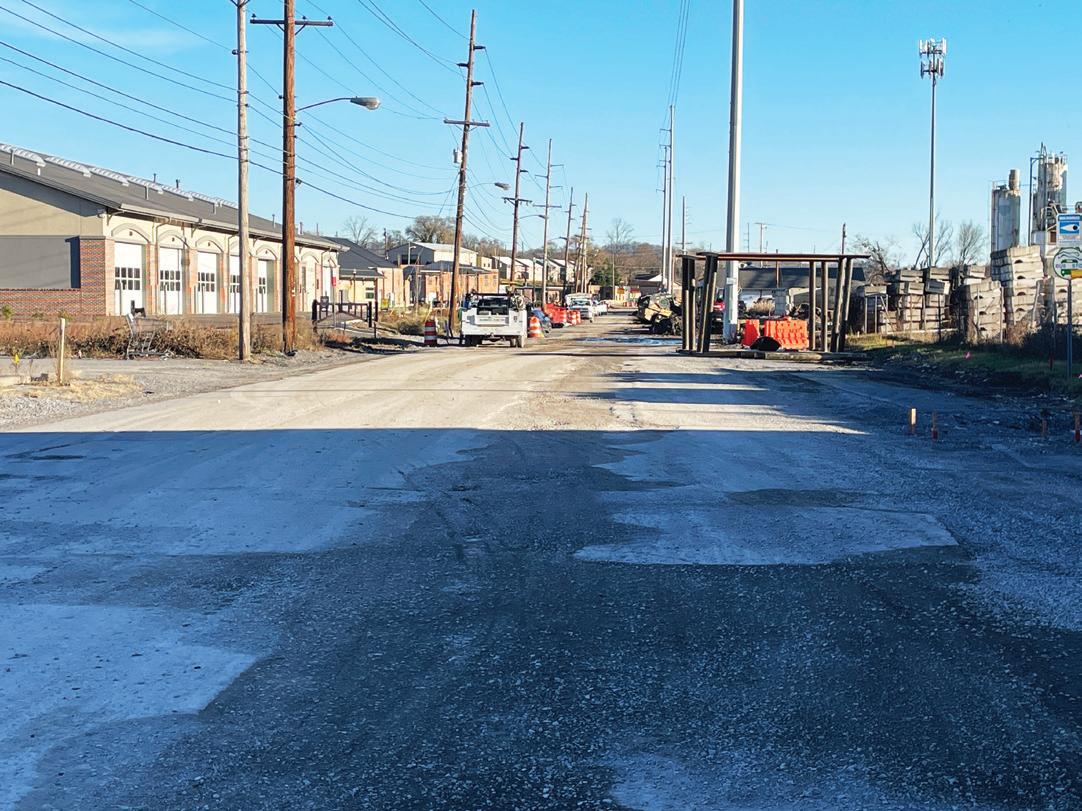
The rebuild project targeted Main Street, which had deteriorated because of poor soil. Pictured is how Main Street appeared in December 2023. (Photo provided by Michael Thompson
sought “as much input as we could get” from citizens and involved the “strong downtown association,” the Downtown Kingsport Association in planning all additional aspects of the project.
Thompson considers this outreach a major success of the overall project. DKA kept the public abreast of traffic pattern changes and updates through its newsletter, and the city maintained a Facebook page and website.
While construction projects of this magnitude and timeframe inconvenience the general population, most of the feedback he received was either positive or neutral.
“The whole point is, we’re trying to make it better for the businesses that are there and property owners and residents, so we want to champion the project,” he said. He noted that construction can be a long and difficult undertaking, but “all that work you do on the front end to build those relationships makes the hard part easier.”
The final result is a visually appealing downtown sector with a focus on sustainability and cost-effective upgrades.
Of course, rarely does a revitalization project come without setbacks. Securing funding was an issue, which necessitated time extensions. An underground tank that didn’t pass inspection needed to be replaced, and contaminated soil had to be landfilled properly.
While such obstacles might have slowed the process, they did not deter the city of Kingsport from completing the ambitious undertaking. Thompson credits everyone connected to the project for the collaborative work done on it.
“If you didn’t have it, forming those good relationships between your designer, your construction inspector and your contractor would have been critical. It takes a whole team and a ton of paperwork to do a job like this,” he said.
Thompson is proud that the Main Street Rebuild was the largest local project that Kingsport has completed on its roadways. The total cost came in at $20 million, from city funds and grants from

A hydraulic excavator lifts asphalt as work begins in April 2023. As part of the project, old water and sewer lines were replaced, and electrical wires were buried underground. (Photo provided by Michael Thompson)
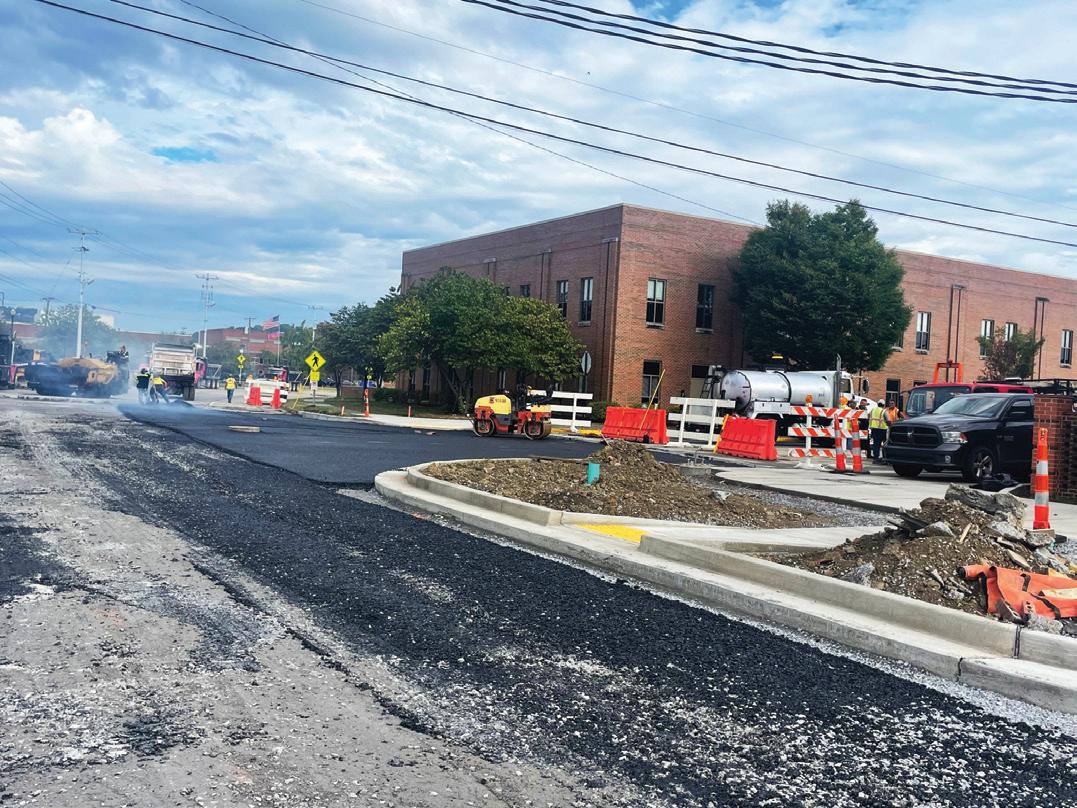
Pictured is Main Street as it is partially repaved in September 2024. (Photo provided by Michael Thompson)
such sources as the Carbon Reduction Program and Transportation Alternatives Program.
According to a news release, Kingsport improved efficiency by updating roadways, utilities and streetscaping in one comprehensive project, which saved taxpayer money and enhanced the overall appearance and the reliability of utility services to the Main Street community.
For its efforts, the Tennessee Municipal League presented Kingsport with an award for Excellence in Economic and Community Development in August.
“I’m proud of what we’ve accomplished, and that we’ve gotten through it,” Thompson concluded. But more than that, “I’m really proud of what we provided for businesses and residents, and that’s a whole lot more important than any award.”

March 1-3 IEDC Leadership Summit
Washington, D.C.
https://leadership26.iedconline. org/
March 2-5 LIFT Conference
2026
L’Auberge Casino Hotel, Baton Rouge, La.
https://laffmembers.com/page18133
March 3-5 Missouri Rural Water Association Annual Conference
Branson Convention Center, Branson, Mo.
https://moruralwater.org/ conferences/
March 3-7 CONEXPO-CON/AGG
Las Vegas, Nev.
https://www.conexpoconagg. com/
March 4-5 Healthy Worksite Summit
Lynnwood, Wash.
https://wacities.org/
March 4-5 Michigan Parks Conference & Trade Show
Lansing Center, Lansing, Mich.
https://members.mparks.org/ atlas/events/1953277/details
March 4-6 Operations & Maintenance & Safety Conference 2026
Orlando, Fla.
https://cleanpower.org/events/
March 6-7 FETA Equipment Show
Louisiana Fire & Emergency
Training Academy, Baton Rouge, La.
https://laffmembers.com/page18133
March 9-11 Utah Recreation & Parks Association Annual Conference
St. George, Utah
https://urpa.org/annualconference.html
Mar. 9-12 ARFF Leadership Symposium
Renaissance Hotel, Addison, Texas
https://members.arffwg. org/calendar/Details/2026arff-leadership-symposium1403873?sourceTypeId=Website
March 10-11 Michigan Municipal League Capital Conference
Lansing Center, Lansing, Mich.
https://mml.org/event/2026capcon/
March 10-13 2026 Work Truck Week
Indiana Convention Center, Indianapolis, Ind.
https://www.worktruckweek. com/register
March 12-14 Wisconsin Firefighters Association Convention
KI Center, Green Bay, Wis. https://www.wistateff.org/2026wsfa-convention
March 14-15 NLC Congressional City Conference
Washington, D.C. https://ccc.nlc.org/
March 15-18 ARWA Annual Technical Training Conference
Montgomery, Ala.
https://alruralwater.events/ event/20
March 16-18 NLC Congressional City Conference
Washington, D.C. https://ccc.nlc.org/
March 16-19 ARWA 47th Annual Technical Training Conference Montgomery, Ala.
https://alruralwater.events/
March 16-19 AASHTO GIS for Transportation Symposium Chicago, Ill.
https://transportation.org/ meetings/events/
March 16-19 IWCE Connecting Critical Communications Conference
Las Vegas Convention Center, Las Vegas, Nev. https://iwceexpo.com/
March 17-20 MRWA Annual Conference
Soaring Eagle, Mt. Pleasant, Mich.
https://www.mrwa.net/annualconference

March 18-19 36th Annual National Fire & Emergency Services Symposium & Dinner
Washington, D.C. https://www.cfsi.org/
March 18-20 FLAGFA Spring 2026
The Shores Resort & Spa, Daytona Beach, Fla. https://www.flagfa.org/future_ dates.php
March 19 Rhode Island League of Cities & Towns Annual Convention
Crowne Plaza Hotel, Warwick, R.I. https://rileague.org/page/ annualconvention
March 22-25 ICMA Williamsburg Leadership Institute
Williamsburg, Va. https://icma.org/events/ williamsburg-leadershipinstitute
March 22-25 MO-AWWA-MWEA Joint Annual Meeting
Margaritaville at Lake of the Ozarks, Osage Beach, Mo. https://awwa-mo.org/eventstraining/joint-conference.html
March 23-24 First Responder Mental Health & Wellness Conference
Ashore Resort & Beach Club, Ocean City, Md. https://www.1strc.org/eventdetails/cda-id-first-respondermental-health-wellnessconference






Whether

offers a complete line of labor-saving tractor-mounted implements to tackle your chores and to fit your lifestyle.




Sports fans live everywhere, and rivalries cross city and state lines. Some cities are home to high-performing, popular professional teams, while others rally around local college teams or have stadiums that regularly draw sellout crowds.
WalletHub compared these small cities those with a population of 100,000 or less — across more than 50 key metrics related to the five largest sports in the U.S.: football, baseball, basketball, soccer and hockey. The metrics were used to determine which were the best for sports fans. Each sports category was assigned a weight corresponding to the total

percentage of adults in the U.S. who claim to follow that particular sport according to Gallup.
One of the top small cities for sports, Clemson, S.C., is great for college sports enthusiasts. Clemson University has very strong athletic programs, including its highly successful football team. The Clemson Tigers have won 15 ACC conference championships since 1978, along with three national titles, and they have a large stadium capacity and extremely engaged fans.
But Clemson isn’t alone in its athletic fervor. The small U.S. cities with a strong sports scene are: