Shriya Bhargava-Sears Director of Constituent Relations and Development Operations
Anna Cohen
Development Associate
Ronnette Hope ’07 Director of Alumni Engagement
Katherine Block Director of Annual Giving
Aaron Heflich Shapiro Manager of Development Services
Communications Office
Anne Conway Director of Communications
Ana Tiwathia
Assistant Director of Communications
Tori Gibbs
Taylor McNelis Communications Specialists
Visit us online at www.packer.edu
Make A Gift: www.packer.edu/giving
Board of Trustees: www.packer.edu/trustees Alumni Association: www.packer.edu/alumni
English Teacher Todd Johnson Named Babbott Chair
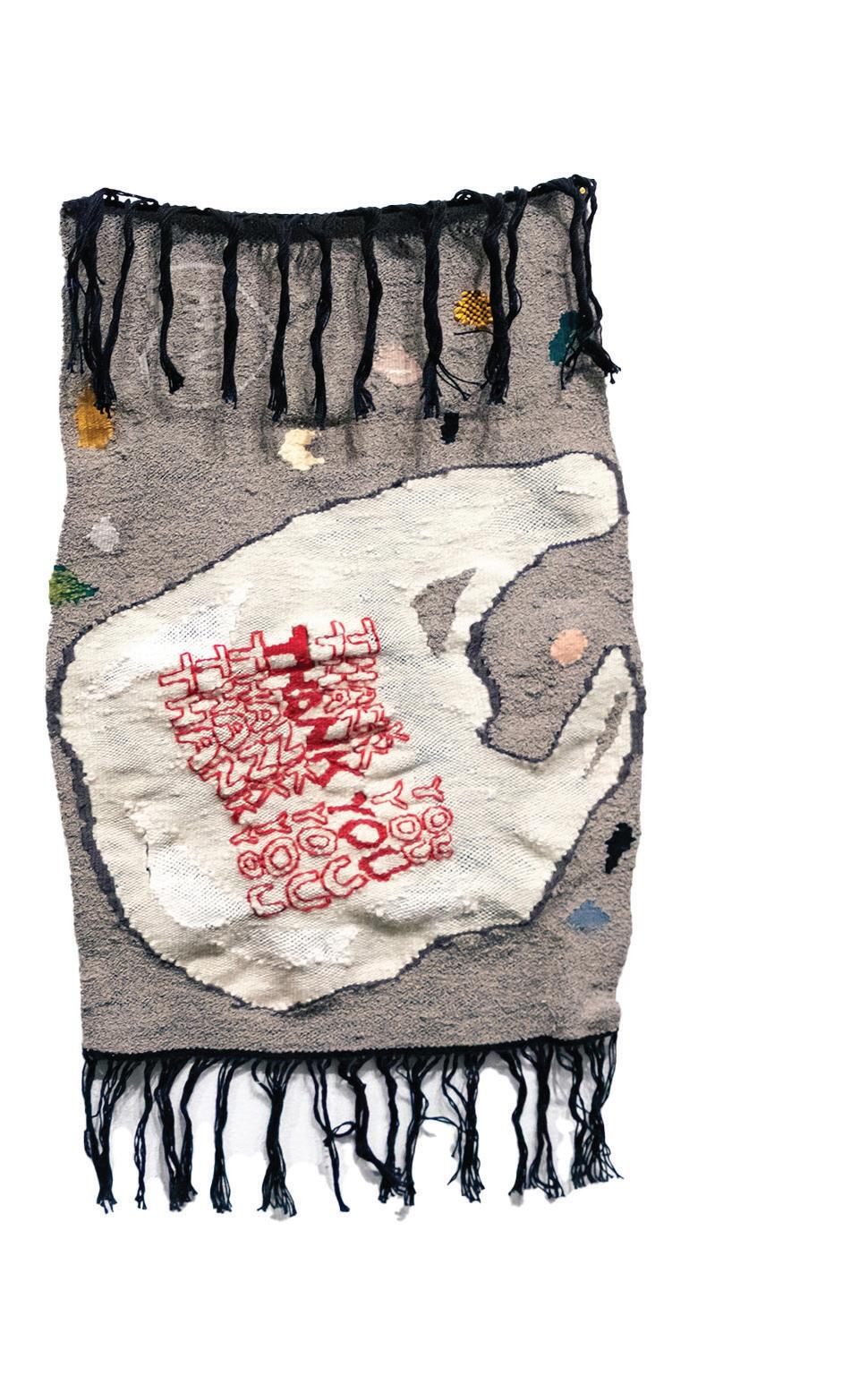
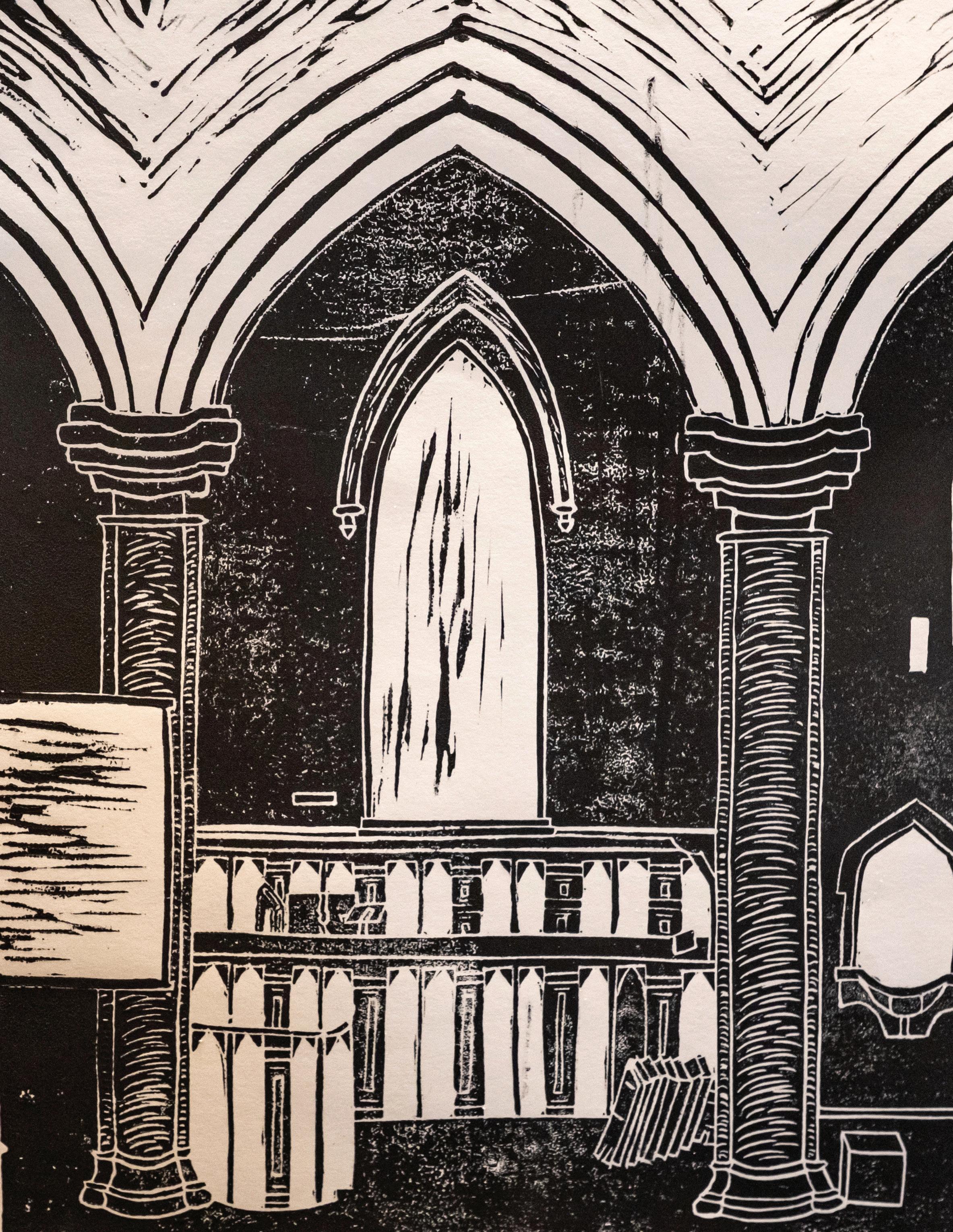
Gallery: Arts at Packer
Everybody, Every Body: The Kinetic Community at Packer
177th Commencement
Honoring Retiring Faculty and Staff
Roots and Ribbons: May Day in the New Garden
A Home for the Future: Celebrating the Completion of the Garden House and Garden Renovation News
the Board of Trustees
Still ‘Growing’ 40 Years Later: Reflections on Dance at Packer
A Legacy of Service: Founder’s Day with Nicole Rodriguez Leach ’93
Reunion 2025: Spirit Unwavering Alumni Events
Connect, and Advance are the priorities of Packer’s strategic framework. Read more at learningtogether.packer.edu.
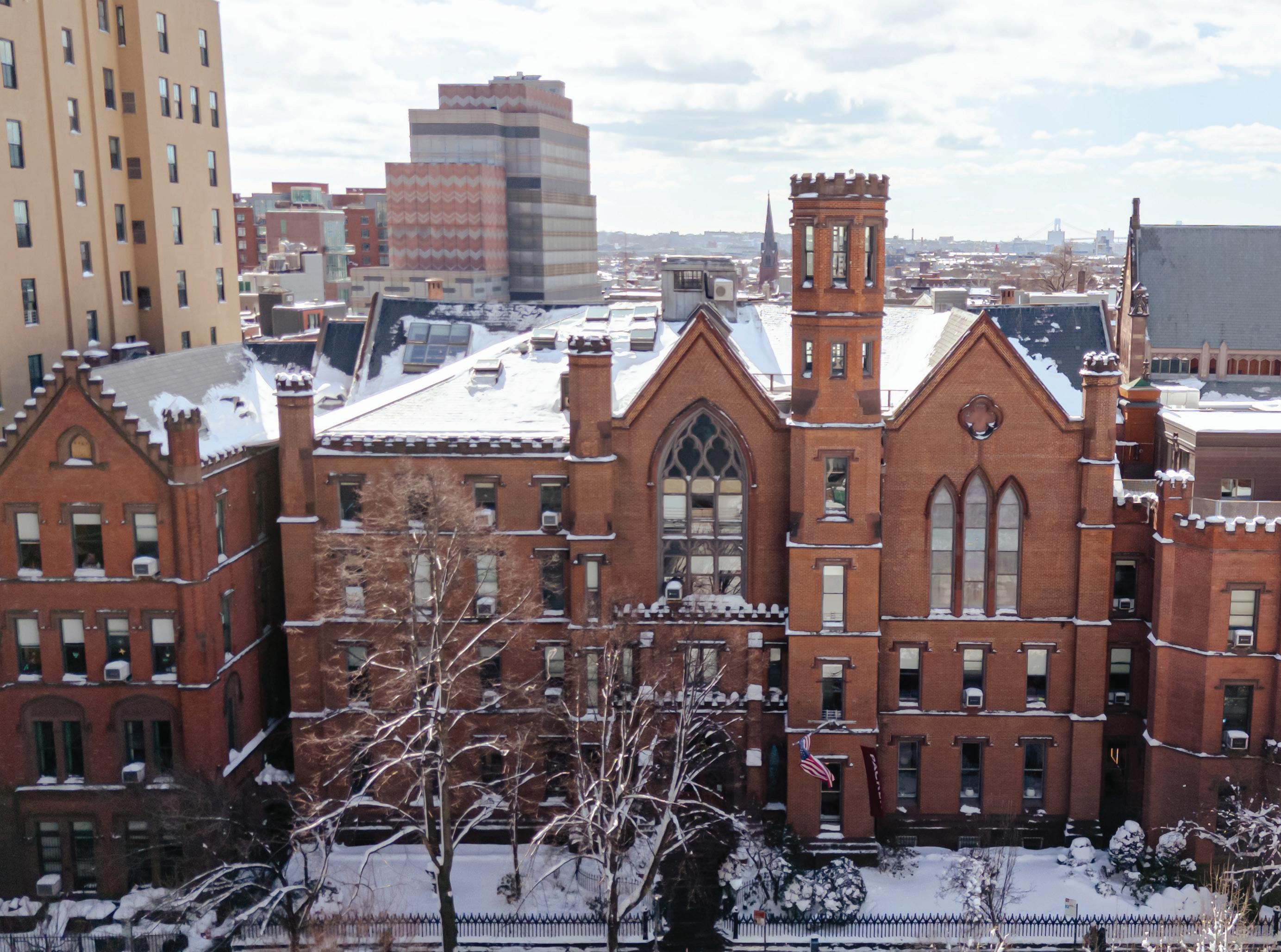
Above: With the removal of the old St. Francis College building, the front façade of Packer is visible from Remsen Street for the first time in a long time. Seen here after the 2026 blizzard.
Head’s Message
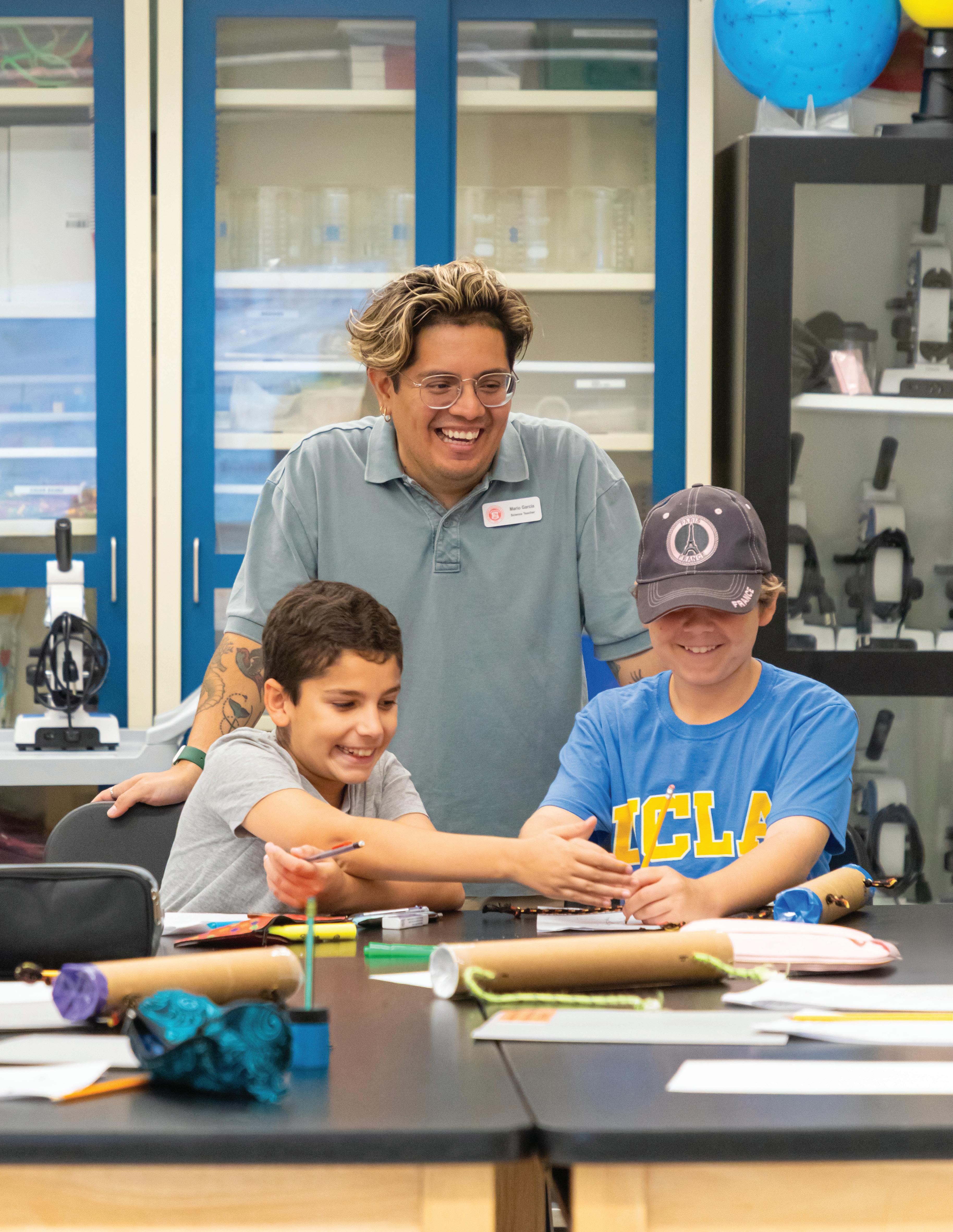
Following a foundational lesson on the distinction between observation and inference, 5th Grade scientists tackled the “mystery tube” challenge. By manipulating external strings and documenting the resulting movements, student teams collaborated to “see” the invisible. The exercise culminated in the creation of detailed internal diagrams, requiring students to translate raw data into a cohesive scientific model of the tube’s hidden mechanics.
On a particularly gorgeous evening last September, we celebrated the opening of the new Garden House, home to our Lower School. As our community gathered in the renovated Garden, the sun gave way to twinkling overhead lights, and a distinct energy buzzed as parents, faculty, and alumni toured the grade-level “neighborhoods” that make up each floor of the new building. Toasting the occasion with our Board of Trustees in “the connector”— the physical bridge between our historic main building and our future-forward expansion—I was moved by how meaningful it was to mark this moment in our school’s history together in person.
As we navigate an era defined by the rapid ascent of AI, people often ask me about the future of education. Our mission charges us to graduate “knowledgeable, empathetic, and engaged members of an interconnected and dynamic world.” While the pace of change means none of us truly knows the world our students will inherit, I am certain that the engagement we seek must be an embodied act. In an age of artificiality, Packer remains committed to the beautiful, messy work of learning together in human form.
I witnessed the power of this approach firsthand when I joined one of four 11th-grade International Symposium trips this January. Twenty-four juniors, several colleagues and I cast off the snowy New York winter to explore community, culture, and sustainability in Martinique (while three other groups decamped to locations in Costa Rica and Belize). I had a chance to reawaken my dormant French—dusting off high school lessons buried somewhere in my addled brain!—and experience the absolute joy of
In an age of artificiality, Packer remains committed to the beautiful, messy work of learning together in human form.
learning alongside our intrepid students. For nine days, they lived without cell phones, away from the relentless hum of digital life. Upon our return, several didn’t want their phones back. During the journey, we had all discovered a different frequency. In interactions unmediated by screens, students experienced the powerful learning and sense of belonging that only happens in proximity to others.
I’m delighted that you’ll read about this kind of embodied learning throughout this issue of The Packer Magazine. Babbott Chair honoree Todd Johnson shares a wonderful reflection on the “liminal space” of the swimming pool, where the requirement of rhythmic breathing creates a profound calm. A piece about the history of our dance program finds that it has long been a “big tent” site of community building. A roundtable conversation about weaving together our health, athletics, and physical education programs envisions our alums reaching age forty feeling “kinetically intelligent,” strong, and grounded.
Whether in the warmth of Chapel or the rush of the basketball court, we are practicing the quiet art of being together in person here on Joralemon Street. I hope these pages offer a window into the “organic hive” of life at Packer today and a reminder of the all-too-human pulse that still connects us all as Pelicans.
Dr. Jennifer Weyburn Head of School
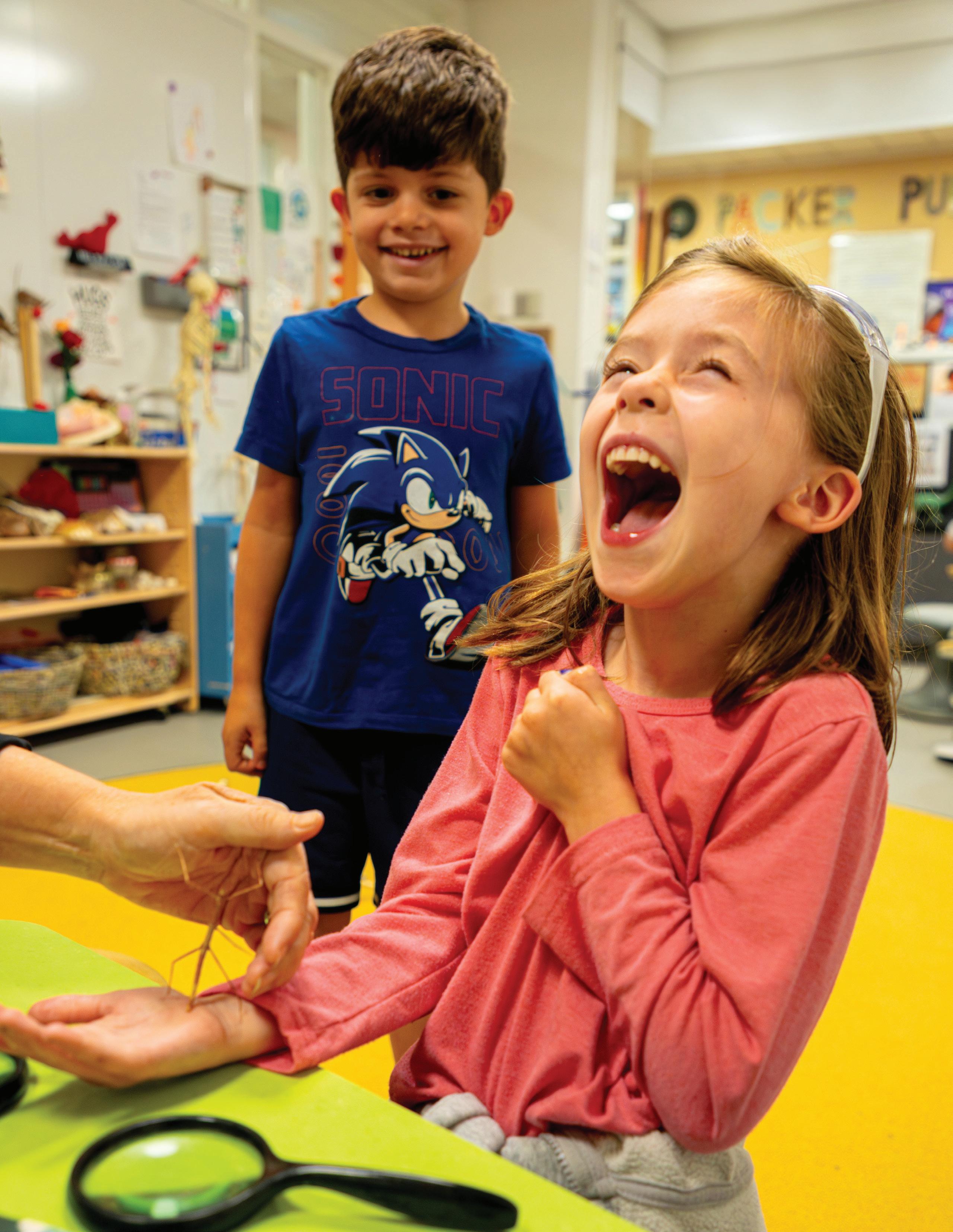
Encountering a stick bug in the Early Learning Center Innovation Lab.
English Teacher Todd Johnson Named Babbott Chair
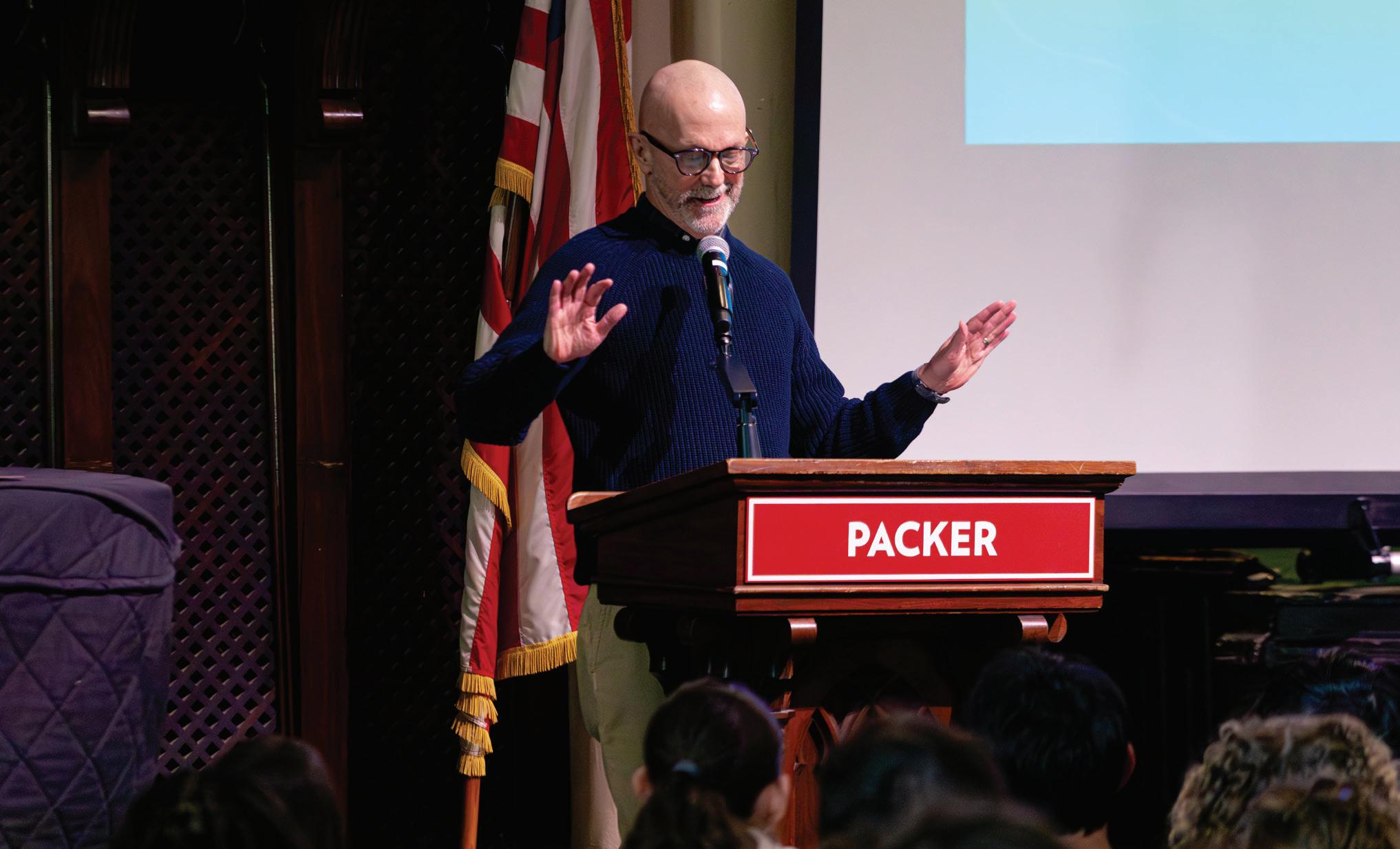
Todd Johnson has been a quiet cornerstone of the English department for over twenty years. He was recently recognized with the Babbott Chair, an honor awarded every two years to a faculty member who demonstrates excellence in teaching in Literature or the Arts. In the first of two scheduled presentations, Mr. Johnson delivered an address that held the Chapel in a state of rapt silence. While he is known for his soft-spoken nature, his words carried a resonant power as he spoke on the “liminal” spaces of the swimming pool and the writing desk, reflecting on the “betwixt and between” moments that characterize both adolescence and the creative process.
Mr. Johnson’s own creative renewal was sparked, in part, by a Juilliard playwriting course he attended last summer with Packer’s support—the fruits of which will be seen this May when students perform an excerpt from his first original play. We are delighted to share an excerpt of Mr. Johnson’s moving Chapel remarks titled “Something Like Metamorphosis” below.
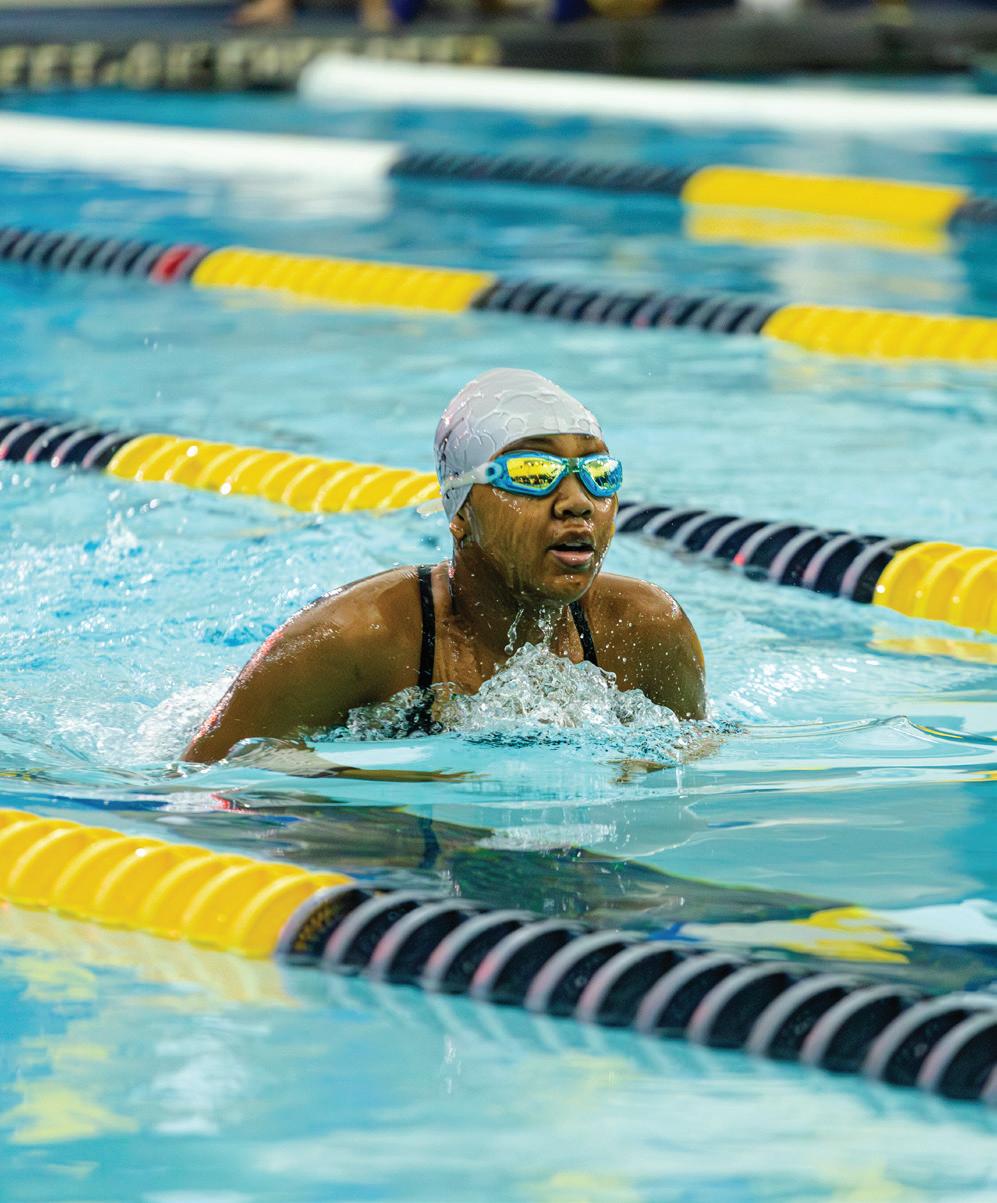
If you know anything about me, you’re probably aware that I fancy myself something of a swimmer. Most mornings before school, you can find me at the Dodge Y, swimming my requisite mile.
What is it about a swimming pool that centers me in a way so few things can? What, exactly, is the allure? For my money, the cerulean blue of a sun-dappled pool in the height of summer is bested only by the effect of a
pool at night lit artificially from beneath. But this is the vacation pool, not the lap pool. The lap pool is something altogether different. The uniformity of the lane dividers, each lane marked with the appropriate speed, the rhythmic sloshing of the water as I open the door to the pool, hoping for the quietude that signals fewer swimmers. Truth be told, swimming laps is the only time I am able to concentrate on my breathing. In my life on land, I am a shallow breather, perhaps a
remnant of my midwestern upbringing, where the prevailing ethos seems to be Don’t take up too much space feel free to shrink into yourself. Or maybe I’ve simply spent my life holding my breath in anticipation— though of what, I couldn’t be sure. But the minute I leave dry land, I am forced to take deep breaths at regular intervals, and the result is a sense of great calm I rarely experience in any other aspect of my daily life.
Perhaps Julie Otsuka put it best in her 2022 novel The Swimmers: “The shock of the water—there is nothing like it on land. The cool clear liquid flowing over every inch of your skin. The temporary reprieve from gravity. The miracle of your own buoyancy as you glide, unhindered, across the glossy blue surface of the pool. It’s just like flying. The pure pleasure of being in motion. The dissipation of all water. I’m free. You are suddenly aloft. Adrift. Ecstatic. Euphoric. In a rapturous
and trancelike state of bliss. And if you swim for long enough you no longer know where your own body ends and the water begins and there is no boundary between you and the world. It’s nirvana.” I couldn’t help but be struck by this idea of swimming as a transcendent state.
Of course, this idea of transcendence, of transformation, is crucial to storytelling. Because without transformation, whether big or small, what’s the point of even telling stories? If a character doesn’t grow or change—regardless of whether it’s for the better or the worse—we’re left without conflict. As a reader, it’s those in-between moments that most interest me—the space between the inciting incident, where the conflict is ignited, and the resolution of that conflict. The period of discomfort due to the transformation that is occurring. Change is nothing if not hard, which is why our first impulse is often to resist it. To doubt ourselves. Think of Luke
Skywalker’s Jedi apprenticeship with Yoda in the swamps of Dagobah in The Empire Strikes Back, or Frodo and Sam leaving the safety of the Shire and about to enter the Old Forest as they begin their journey to Mordor to destroy the One Ring in The Fellowship of the Ring. They doubt themselves, but they move forward nonetheless. These are liminal spaces, both physically and psychologically.
For those unfamiliar, the word “liminal” comes from the Latin limen, meaning threshold. In anthropological terms, it refers to the in-between stage of a ritual or transition, when a person is no longer who they once were but not yet who they will become. In literature, liminality refers to states, spaces, or moments that exist in the in-between—neither here nor there, but “betwixt and between.” Liminality is an ambiguous state, one where a person is challenged to let go of old certainties, where a transformation is happening.
Adolescence is, perhaps, the perfect example of a liminal state. Adolescents are standing on a threshold, poised between childhood and adulthood, dependence and autonomy, innocence and experience. Or, as we English teachers are perhaps all too fond of saying, coming of age. Roger Deakin, in his book Waterlog, a beautiful account of swimming across the natural waterways of his native England, writes, “So swimming is a rite of passage, a crossing of boundaries: the line of the shore, the bank of the river, the edge of the pool, the surface itself. When you enter the water, something like metamorphosis happens. Leaving behind the land, you go through the looking-glass surface and enter a new world.” The swimming pool as the perfect liminal space, the perfect coming-of-age symbol. One enters into the shallow end—childhood—and exits the deep end—on the cusp of adulthood. The act of immersing yourself in water becomes a metaphor for taking the leap into maturity.
Perhaps, subconsciously, my own adolescent experience on the eighth grade swim team was an attempt to make sense of a formative time in my life. I’m sure I’m not the only one here in Chapel today who struggled as a thirteen year old. Hearing other people’s stories is, after all, a way for us to make sense of our own. It’s a bit like reaching back into the past, telling your younger self that everything is going to be OK. That yes, this may be hard, but that this, too, shall pass. That transformation is challenging, but that it might very well lead to transcendence. Even if you never master the butterfly stroke. But I think it’s more than this.
Allow me to return to the beginning here, to the meditative aspect of swimming that I love so much. I think it’s akin to the creative process, which is a liminal state in and of itself. Without a doubt, I do my best thinking in the pool. In many ways, it’s how I prep for classes each day. It’s where I come up with some of my best ideas. And, while a number of them are lost in the ether, what with the lack of a notepad and pen being handy, coupled with my aging brain, some of them do manage to stick. Perhaps this is due to the meditative nature of swimming, the trancelike state that lap swimming, at its best, induces. Water is, after all, a metaphor for the subconscious.
I’m going to be completely honest with you here. When Dr. Weyburn first approached me about giving me the honor of the Babbott Chair, I fully intended to politely decline. Just the thought of giving two presentations to the Upper School community frightened me to a degree that was hard to admit. And not so much the public speaking aspect of it—as a teacher, I engage in public speaking every day. I mean, sure, the classroom is a much smaller scale than the Chapel, but still. No, it was more about making myself vulnerable on a creative level. Because before working on this presentation, I think it’s safe to say I’d lost touch with my creative process. And while I’d be lying if I claimed never having regretted my decision to say yes to this incredible honor, at the end of the day, I am so grateful to Dr. Weyburn for bestowing it upon me. And not just for all of the obvious reasons. Working on these presentations has brought me closer to having a consistent writing practice than I’ve had in years, and how transformative this simple act has been.
When I am locked into a project, on my best days, the writer in me enters the same trancelike state of mind as the swimmer in me. When I sit down at my desk, all systems firing, my internal critic turned off, my imagination flourishing. It’s not surprising that in his essay “The Crack Up,” F. Scott Fitzgerald likened “all good writing…to swimming underwater and holding your breath.” Picking up a pen to begin can feel intimidating, not unlike stepping onto a high dive. And the act of beginning to write is not unlike jumping into the deep end. But despite this trepidation, I dive in and enter into the unknown, unsure of what I’ll discover. The stroke of the pen begins to feel unconscious, much like my stroke as a swimmer. The paper becomes the pool, a liminal space. Where something like metamorphosis just might occur.
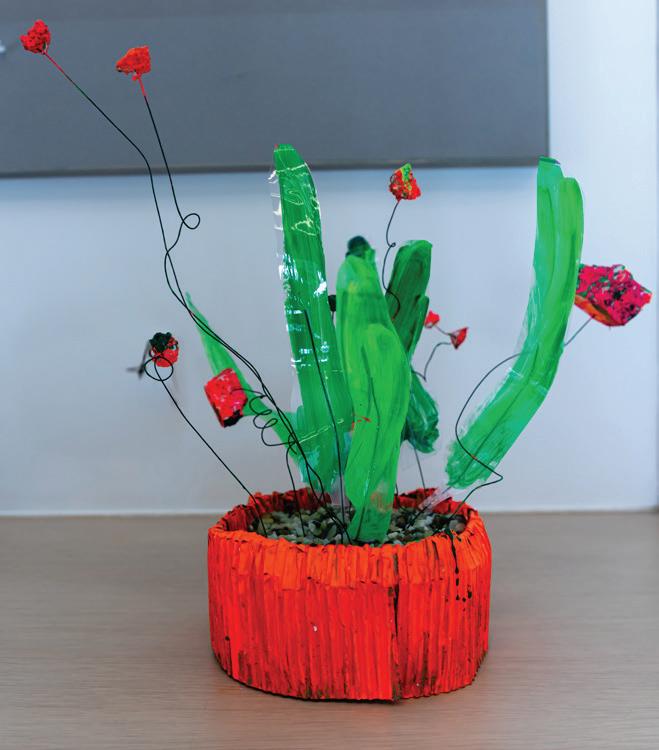
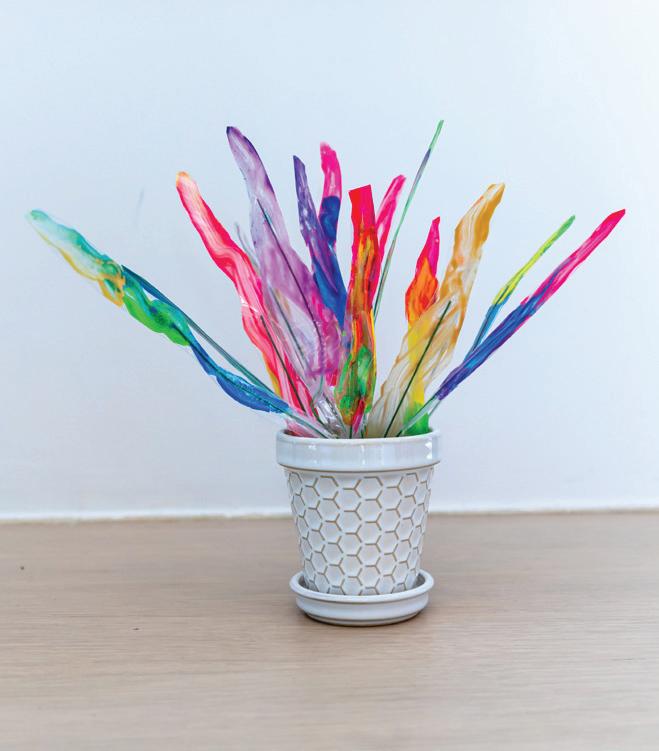
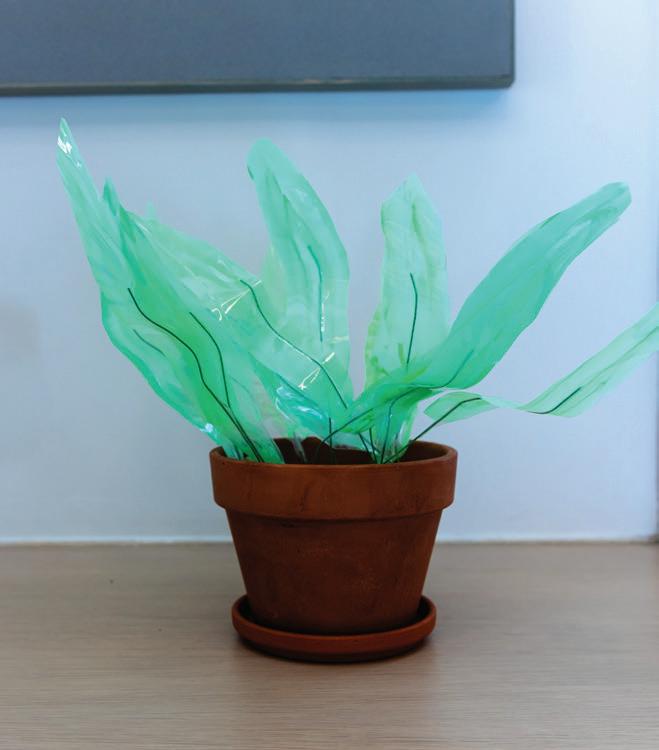
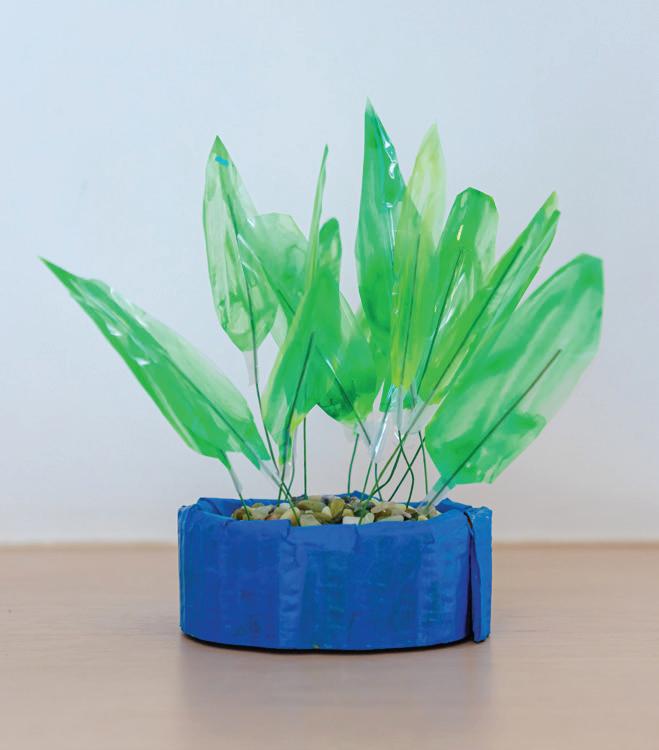
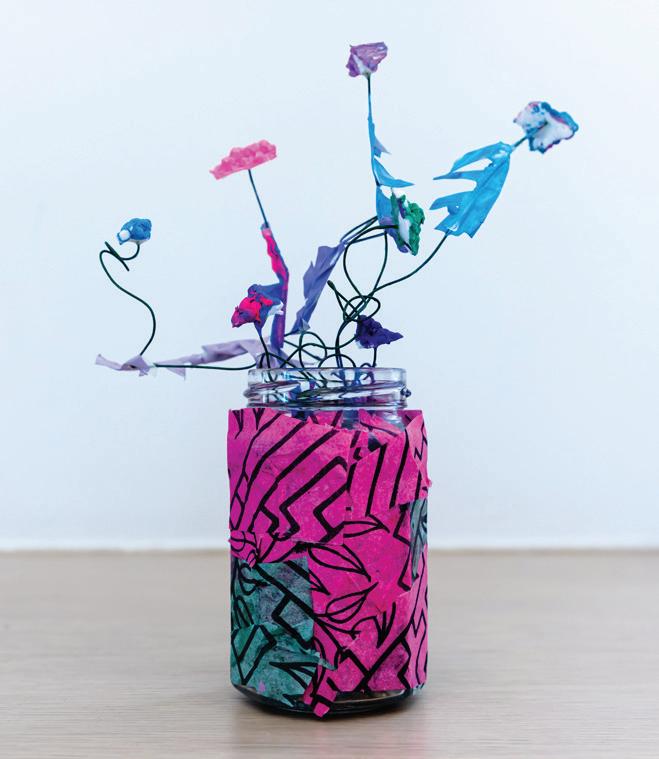
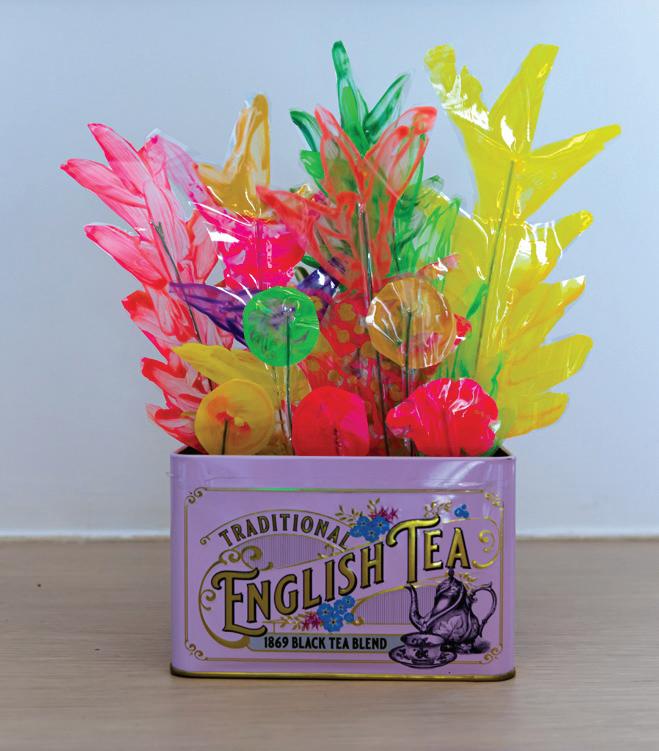
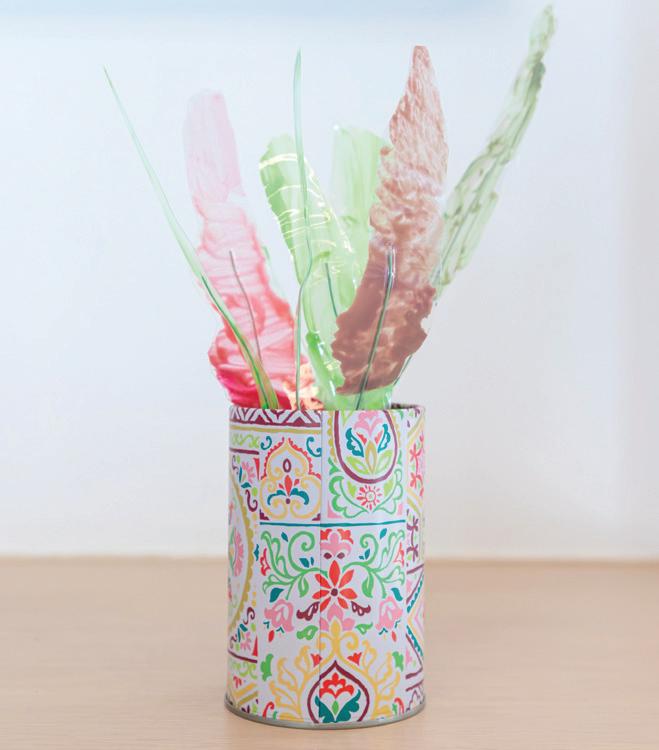
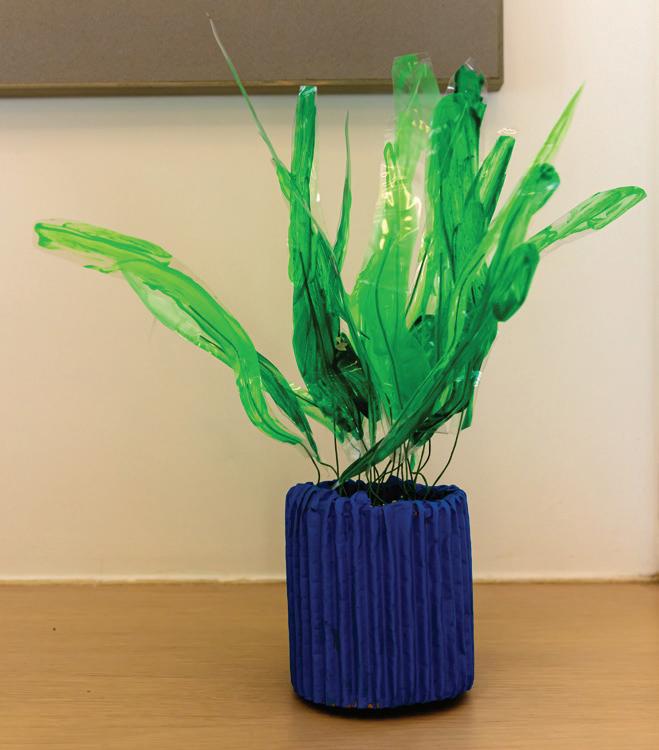
Second Grade artists practiced their close observational skills by looking at live plants. After drawing them, in oil pastels and watercolor, they explored form by creating the plants in 3D using donated and recycled materials. The unit was inspired by the art of Nina Katchadourian, who creates plants from found materials.
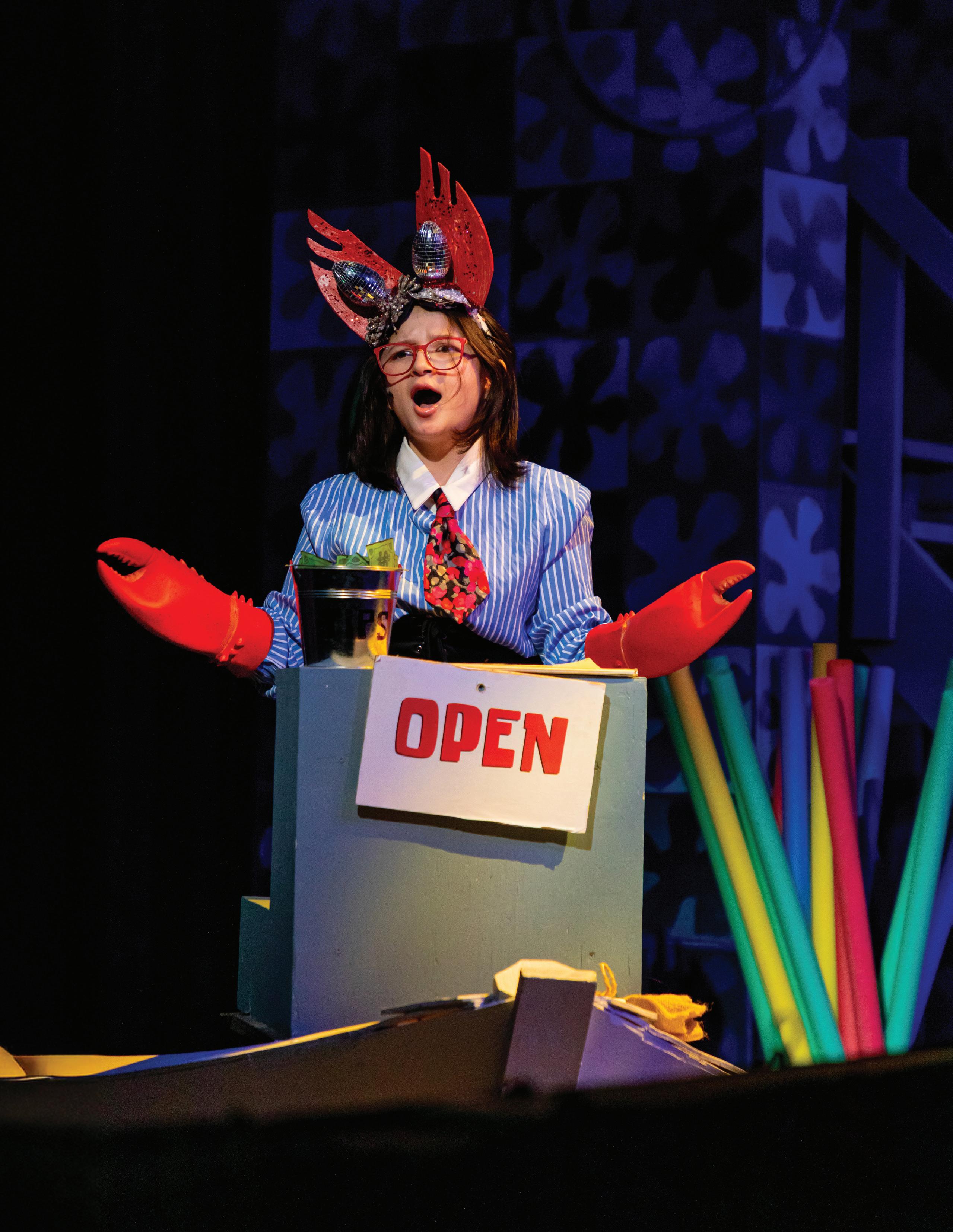
The Middle School production of The Spongebob Musical this fall blended comedy, imagination, and real emotional depth to tell a story about choosing hope even when the odds feel overwhelming.
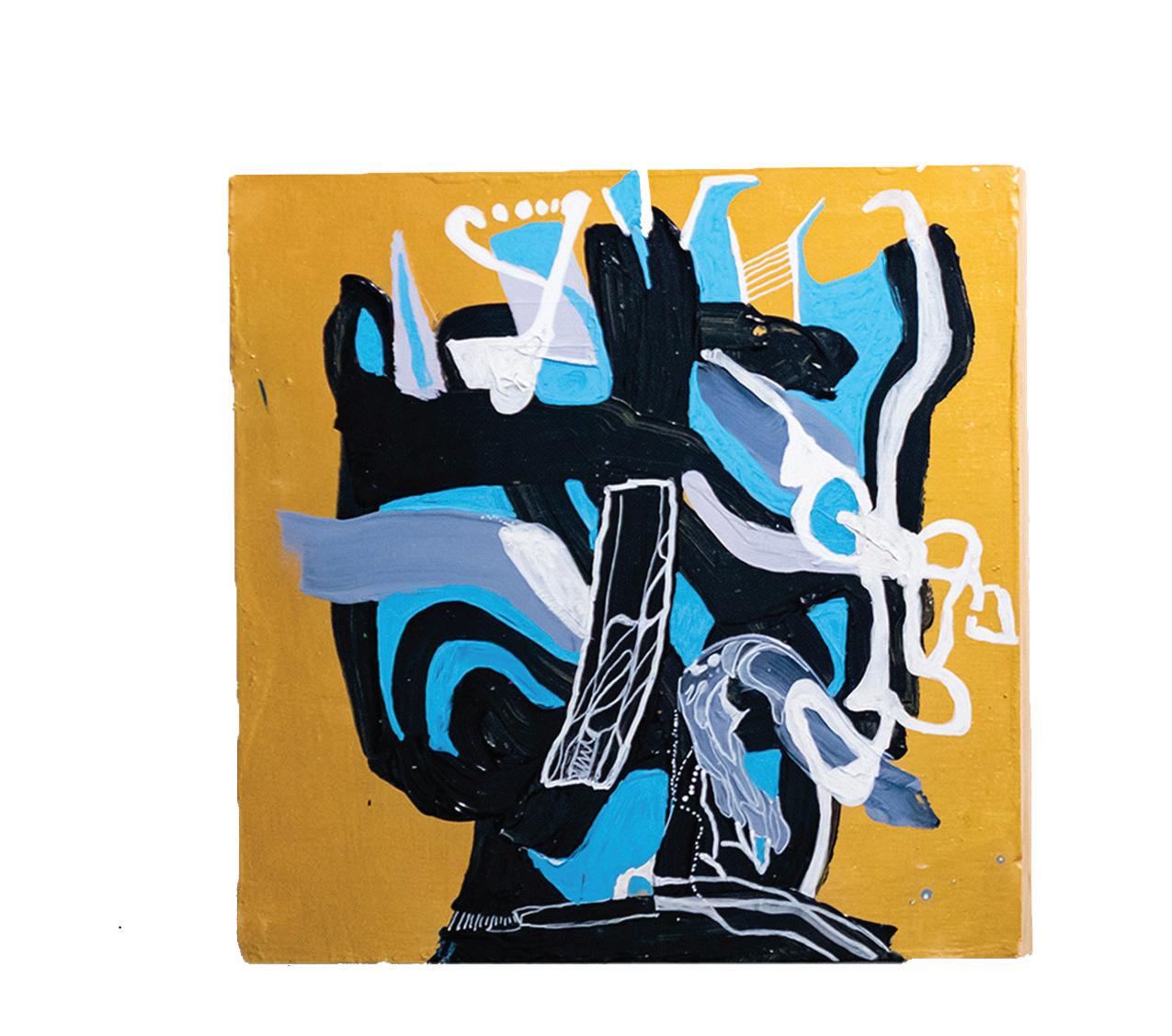
This fall, the Shen Gallery celebrated the theme of “Joy” during the annual Faculty and Staff Art Exhibition. The showcase invites all employees— from professional artists to hobbyists—to share their creative spirit, revealing the impressive hidden talents of the Packer community. Top: “Joy” and “Gratitude” by Anna Glaser, Learning Specialist; Bottom: “Owl” and “Dog” by Michael Miller, Digital Video Teacher
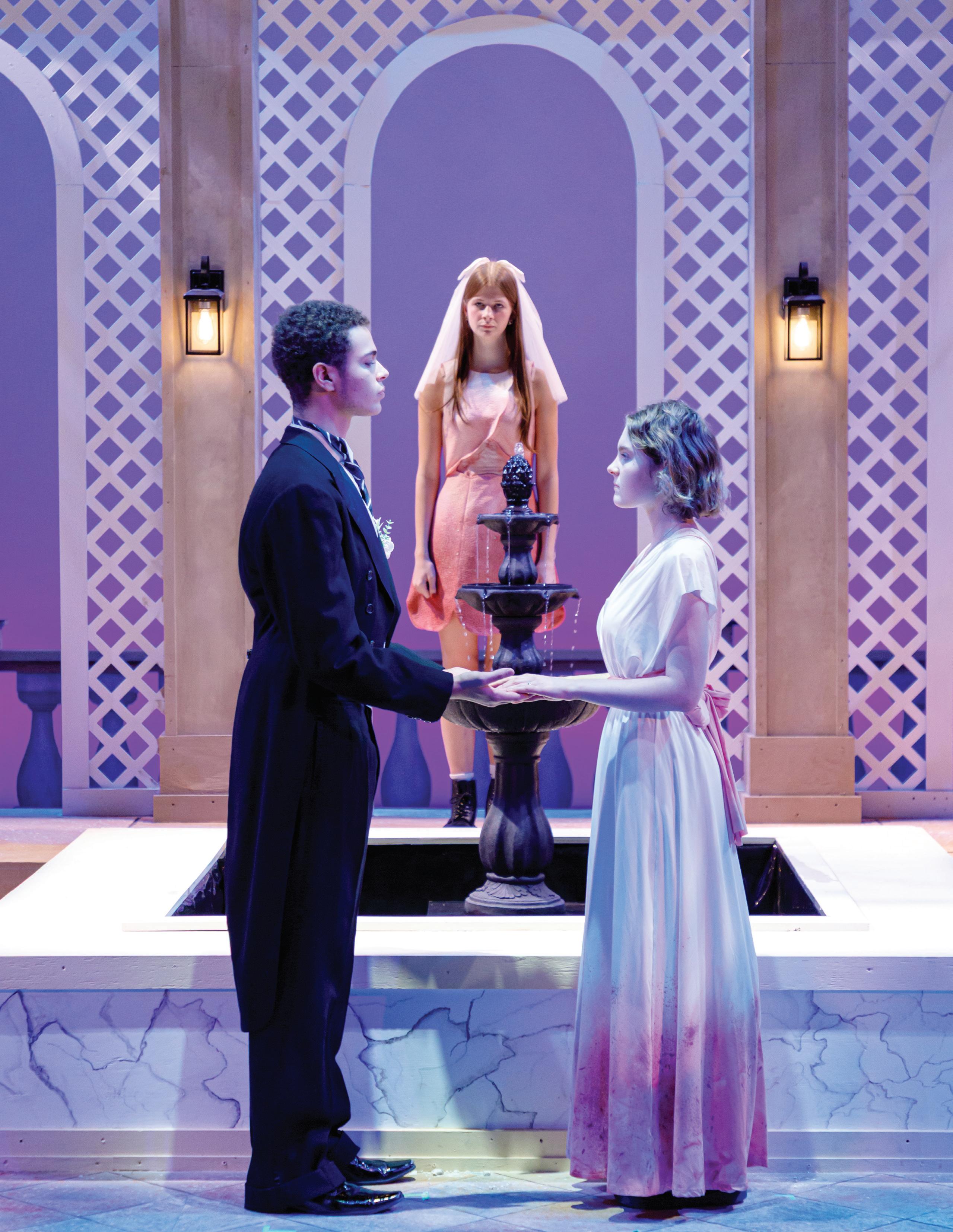
The Upper School staged Big Love in November, a wild mash-up of romance, comedy, and chaos inspired by Aeschylus’s The Suppliants. The Pratt Theater was brilliantly transformed to tell the story of 50 brides who flee to Italy to escape forced marriages to their 50 cousins, debating gender, relationships, and what it means to find freedom along the way.
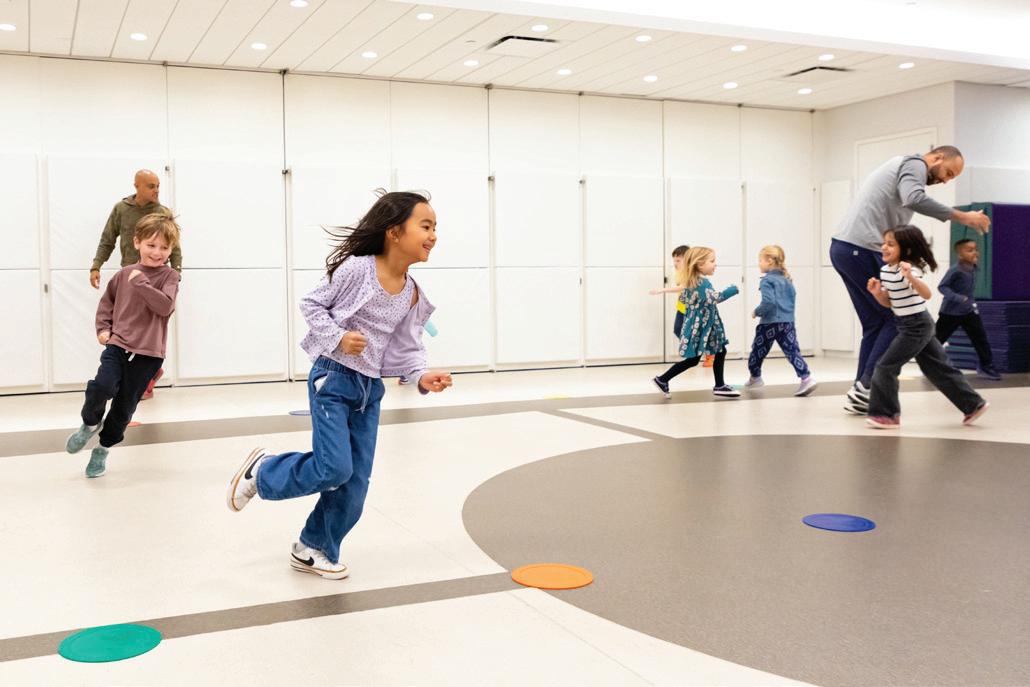
Everybody, Every Body: The Kinetic Community at Packer
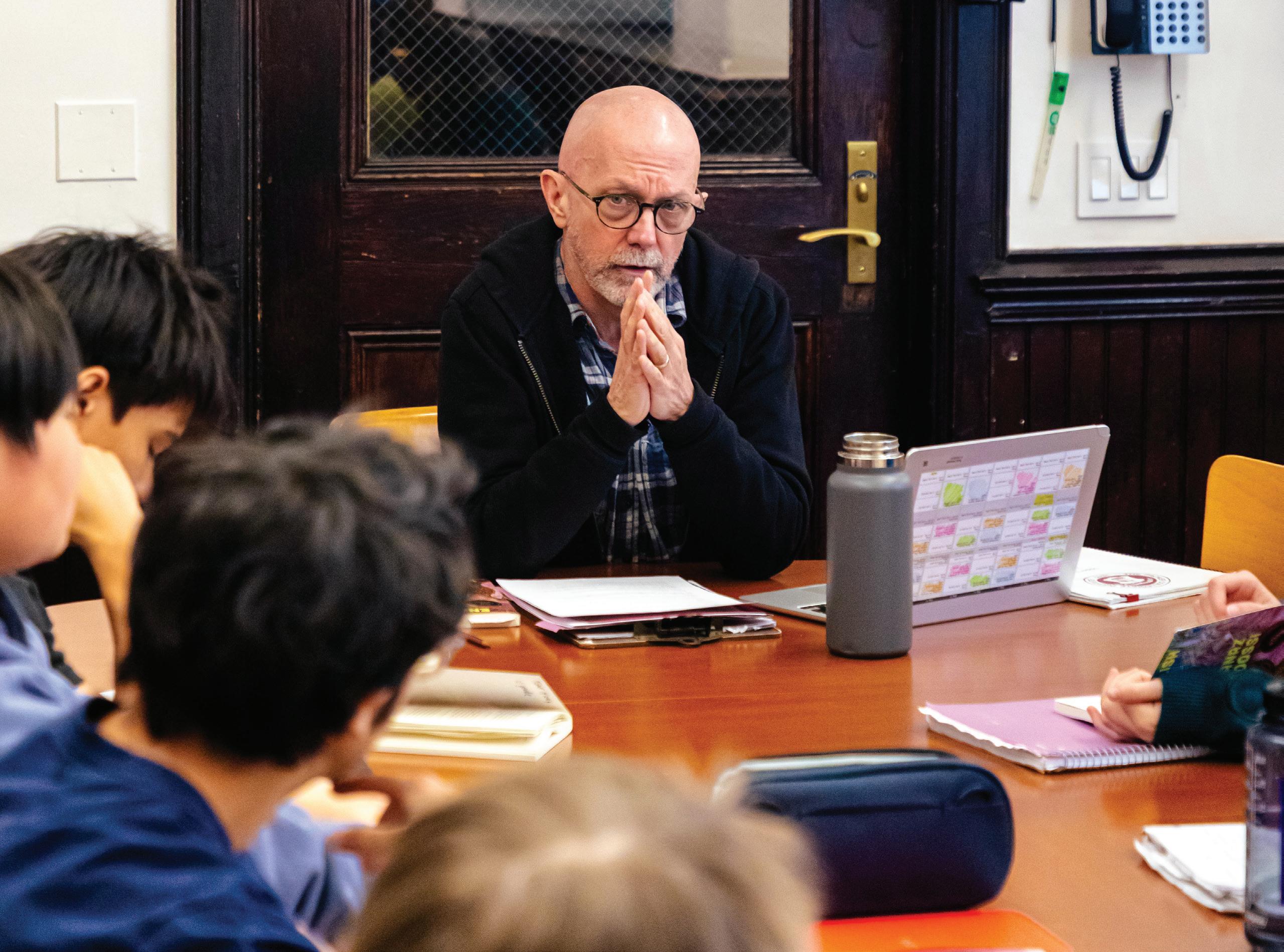
Gathered around Dr. Weyburn’s conference table, a group of Packer educators wrestle with a question that transcends the traditional boundaries of the school day: “Who do we want our students to be at age 40?”
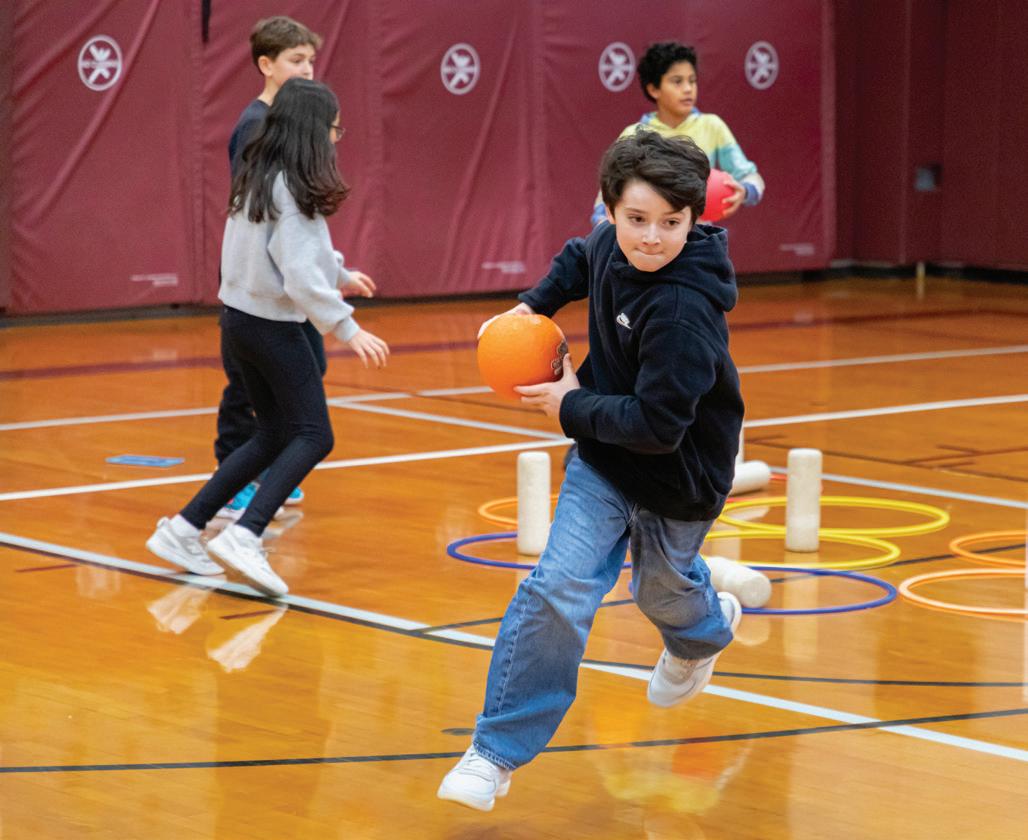
Over the course of several months, The Packer Magazine had the opportunity to “sit in” on a series of roundtable discussions among leaders from our Health and Wellness, Physical Education, and Athletics teams. These weren’t meetings about schedules or scoreboards; instead, participants brainstormed how Packer could better serve the “embodied learner.” The school recently opened a new Health and Wellness Center and evolved our student support structure to bring nurses, mental health practitioners, and learning support under one umbrella. These conversations envision a potential next step: a future where Physical Education, Athletics, and Health and Wellness are less siloed individual departments and instead share a unified programmatic approach.
“We want a cohesive future vision for an integrated health, wellness, PE, and athletics strategy,” says Head of School Jen Weyburn. “At age 40, I want Packer alums to feel strong physically and mentally—to have all the tools they need to lead a healthy and engaged life in an interconnected world.” The goal is simple yet radical: to ensure that at a school known for creating deep and empathic thinkers, we treat the physical body with the same scholarly rigor as the mind and the heart.
The Foundations of Thriving
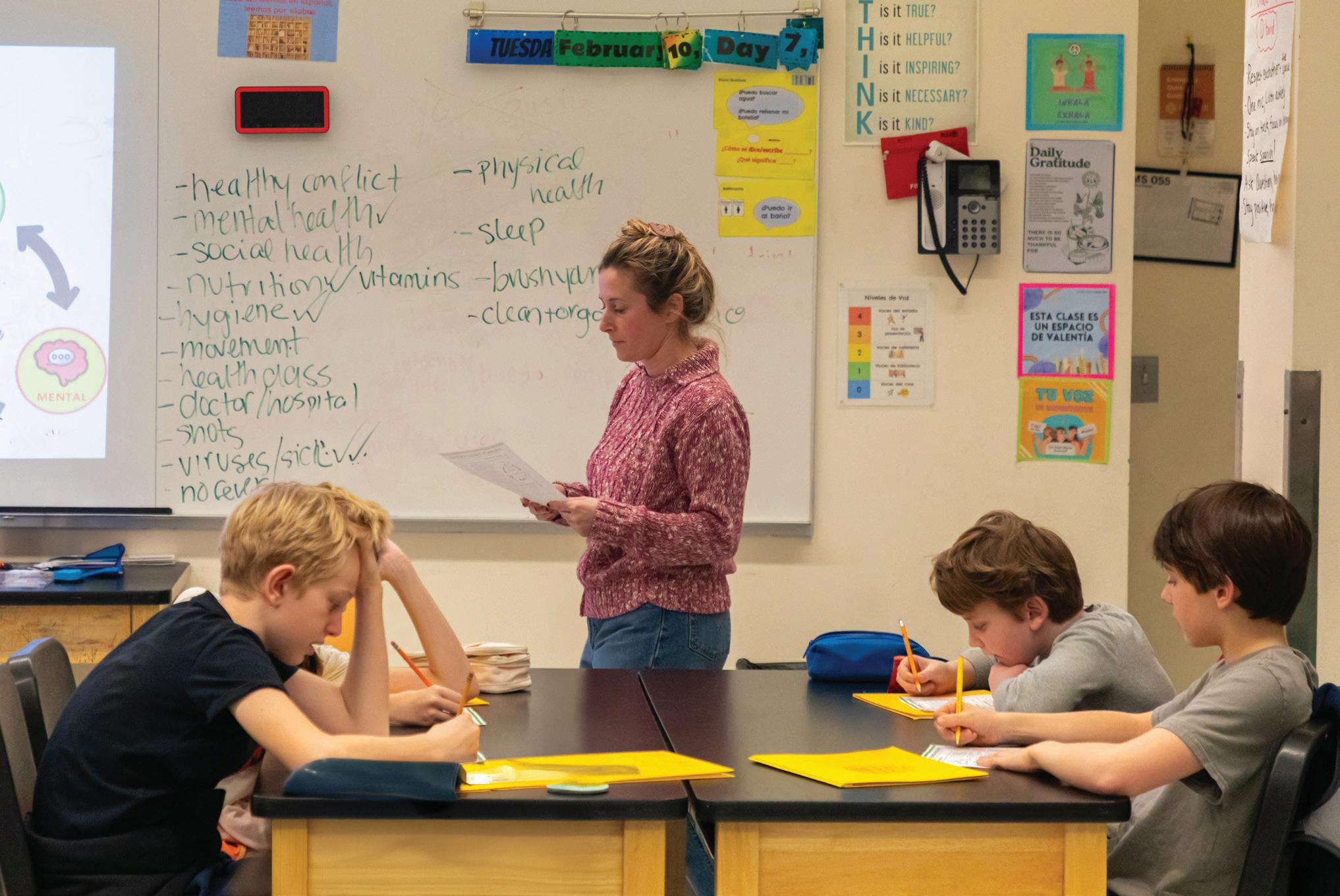
The group’s conversations highlighted that the work begins long before a student ever considers taking a high school yoga class or playing a varsity sport. Bridget noted that habits introduced at a young age are more likely to become lifelong commitments, building an essential early foundation: “Physical movement improves sleep [and] sleep improves learning. There’s no way to pull any of it out. It’s all connected.”
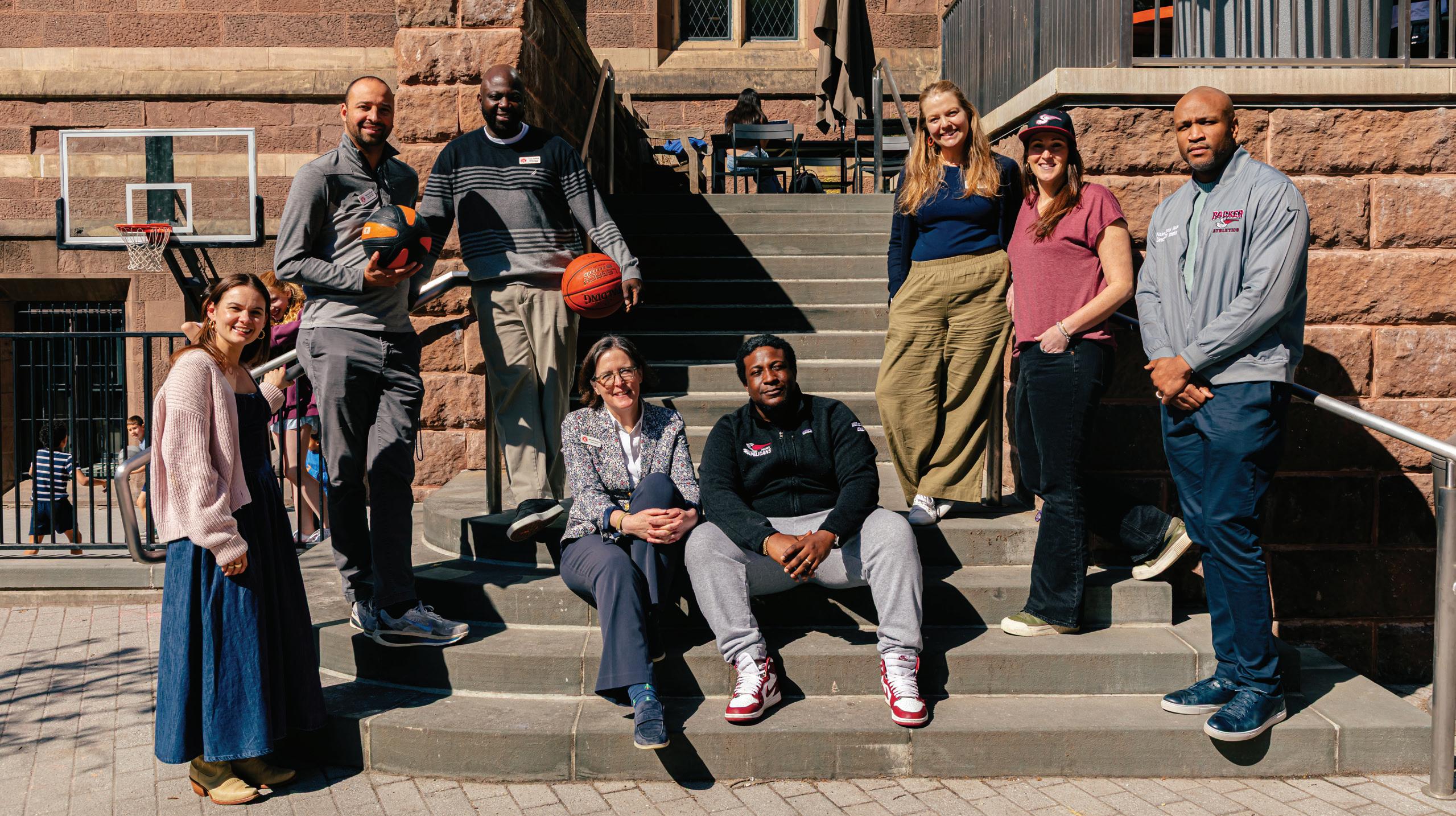
Roundtable participants from left to right: Ashleigh Petillo, Health Department Head; Zach Wright, PE Department Head; Yves Kabore, Head of Middle School; Jen Weyburn, Head of School; Andrae Hines, Assistant Athletic Director; Bridget Londay, Head of Health and Student Support; Kate Gilfillan, Upper School Dean, Health Teacher, and Athletics Liaison; Naim Abdul-Malik, Athletic Director
Ashleigh also linked physical health to school success. She noted that students need to have eaten and slept and “be in a good place physically” to handle the complexities of social relationships and conflict resolution at school. When students are physically well, it “relieves the cognitive burden,” allowing them to engage more meaningfully in their academic work.
Achieving the vision of Packer graduates as thriving 40-year-olds means providing a continuous, sciencebacked foundation for physical and emotional thriving: starting with the first gross motor milestones in Lower School all the way to the high-stakes collaboration of a varsity team championship.
A Laboratory for Life Skills
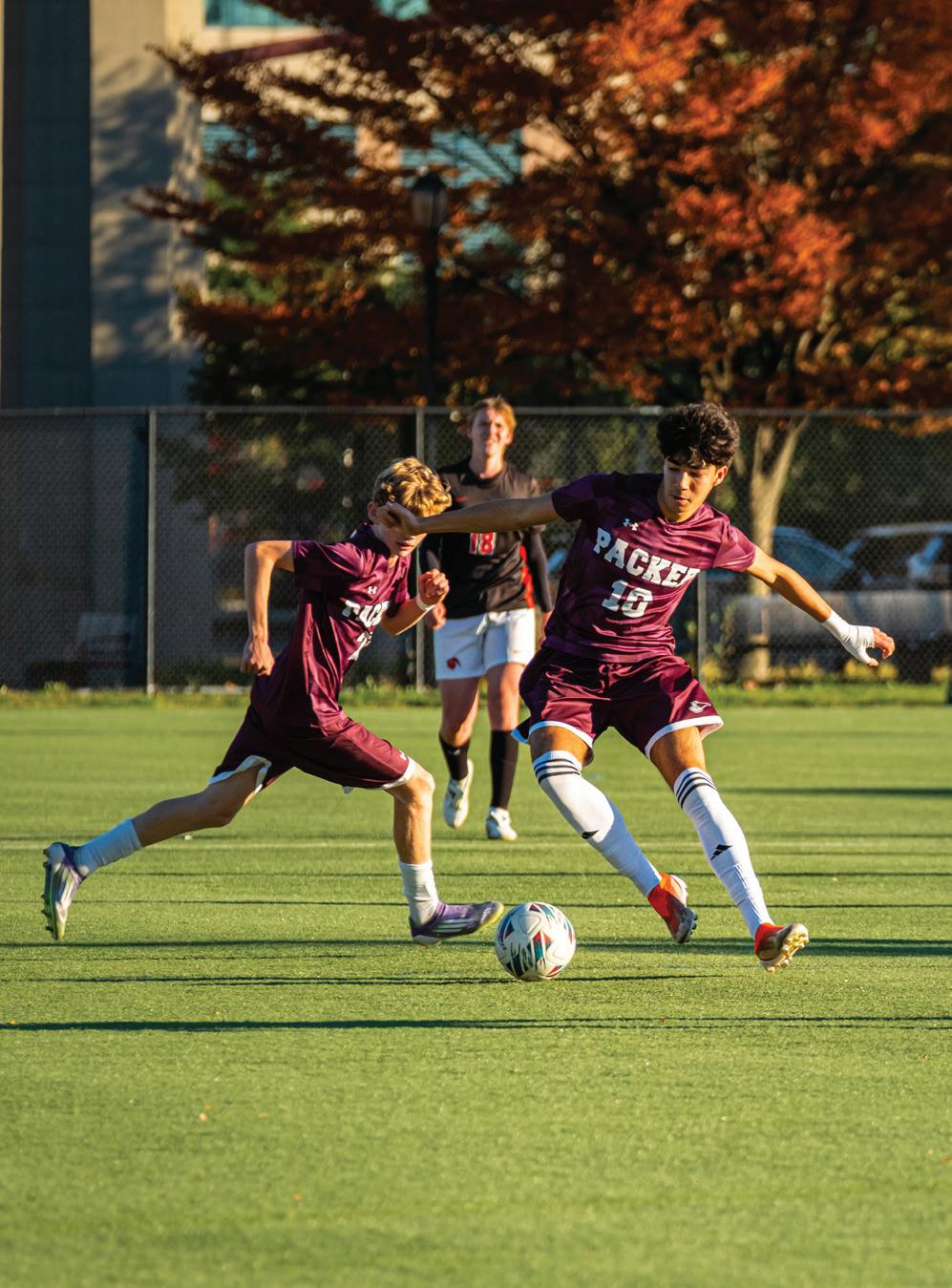
These professionals from across the school share a belief that the field and the gym serve as vital classrooms for character. PE and athletics are often “where the skills that we try to teach in an intellectual way come into practice,” Bridget noted—skills like grit, resilience, communication, and teamwork. Zach emphasized that participating in PE or competitive athletics helps students “understand how to live in and care for their bodies for their whole lives.”
A significant portion of the group’s dialogue focused on the ways competitive athletics can teach the
“Being healthy relieves the cognitive burden. You can’t sit in math class if you are exhausted because you are not taking care of your body. The foundation is feeling healthy, and everything goes from there.”
—Yves Kabore, Head of Middle School
“transferable life skill” of navigating disappointment. A missed free throw or being cut from a team can be reframed as opportunities for growth. Competitive athletics test students’ resilience in front of fans and peers. “Sports puts you on the stage... and sometimes it’s really difficult to display resilience in that space,” noted Andrae. By further integrating athletics with health and wellness, we could help students develop the “mental toughness” to stay grounded when things don’t go their way—on the field or in life.
Developing A Shared Language
The move toward integration is already taking practical shape through efforts to develop a “common language” across departments. For example, the teams collaborate to ensure that the way Packer adults talk about nutrition and self-care is consistent across the school. Health teachers, PE teachers, coaches, and athletic trainers all educate students about how food “fuels the body” and how specific foods can support maintenance and recovery, rather than labeling specific foods “good” or “bad.”
The focus is on transparency and student partnership. Kate noted that Packer students are “smart” and “want to know why” when their coaches and teachers make recommendations. By explaining the physiology of recovery or the impact of hydration, we can help students move away from fitness fads and supplements
toward science-backed, lifelong habits. Naim highlighted the success of student-driven initiatives, such as having “re-fueling” snacks available in the Athletics office, which empower students to take ownership of their own physical needs.
The Digital Sanctuary
One of the most resonant themes to emerge was movement as a “sanctuary for wellbeing” in an era defined by “digital saturation.” The group discussed how physical spaces like the gym, the field, and the yoga mat offer rare opportunities for students to experience “human connection and belonging” in ways that a screen simply cannot replicate.
The team discussed the value of “hard focus”: the flow state achieved during physical activity where students can truly disengage from the “next, next, next” of digital life. Jen described seeing this humanizing effect during games, where students communicate in the dugout or on the court in subtle, non-verbal ways that feel “more human” than how we interact on social media or through email. Away from screens, students have the opportunity to “flex the muscle of being there for other people.”
The group bounced around ideas to even more deliberately integrate screen-free collaboration in team sports. For example, it could become standard practice to put phones aside for a mindful moment as a team before getting on the bus, allowing students to “take a beat” and switch their mindset from the frantic pace of the school day to the focused presence of the team.
Redefining Excellence:
The Antidote to “Club Culture”
The group spoke candidly about the sometimes unhealthy pressure students experience in modern youth sports, where early specialization and “pay-toplay” club teams prioritize profit and outcomes over a child’s growth. Packer has an opportunity to provide the “antidote” to this model, building a program rooted in skills, values, and whole-child wellness that “complements rather than consumes” the rest of a student’s education.
“We don’t want to be the place where we only rely on outside development,” Jen noted, reminding the group that providing high-level skill development in-house means equity of opportunity. “We’re not a sports academy. But we do strive for excellence in competition, and we want to ensure that every student’s athletic
and health goals feel within reach, and that they leave Packer with a deep appreciation for their own ‘kinetic intelligence.’”
An integrated model could further expand students’ sense of possibilities. Zach shared how the PE department is already piloting “Sport Education” in the fifth and sixth grades, where students don’t just play, but take on roles as “referees, coaches, and athletic trainers.” The approach teaches that there are many ways to be a part of a kinetic community.
The Power of Mentorship and Alumni Legacy
A key component of this shift already in practice is the evolution of the role of team coaches and PE teachers. These adults must be expert professionals and mentors who model Packer’s values for students, bringing a sense of respect, integrity, equity, and joy to the classroom or the court. Naim summarized his philosophy in a simple phrase: “coaches build culture.”
The group reflected on a recent panel of alums who came back to speak to Upper School students taking “Welcome to SportsCenter,” a class about the business of sports offered through our annual Symposium program. The alums traced their professional success
“I think the health piece is the connecting vibe between both the PE piece and athletics. If you’re emotionally healthy and physically healthy, you can transcend to that next step.”
—Naim Abdul-Malik, Athletic Director
back to skills they had developed as athletes at Packer and beyond.
One alum noted that as a hiring manager he often gravitates toward former team athletes because he knows that “when things get hard... [the former athlete is] not going to say, ‘I did my part and I exit.’ They’re going to say, ‘What else can I do to help the team get to our goal?’” These “grown-up” perspectives land powerfully with current students, proving that the grind of a varsity season teaches essential skills that they can take with them when they leave Packer.
Looking Ahead
The energy and eagerness in the room during these exploratory conversations reflect a deep appetite among Packer professionals to collaborate in ways that best serve our students. This year, we’ve begun feasibility studies to evaluate whether our current facilities can support the ambitions of such a unified vision. We’re exploring the potential for evolving the environments where our students move and connect to reflect our high standards and deepen embodied learning at Packer. Whatever the future holds, whole child thriving will remain at the forefront of our vision as a school— for everybody and every body!
Connect
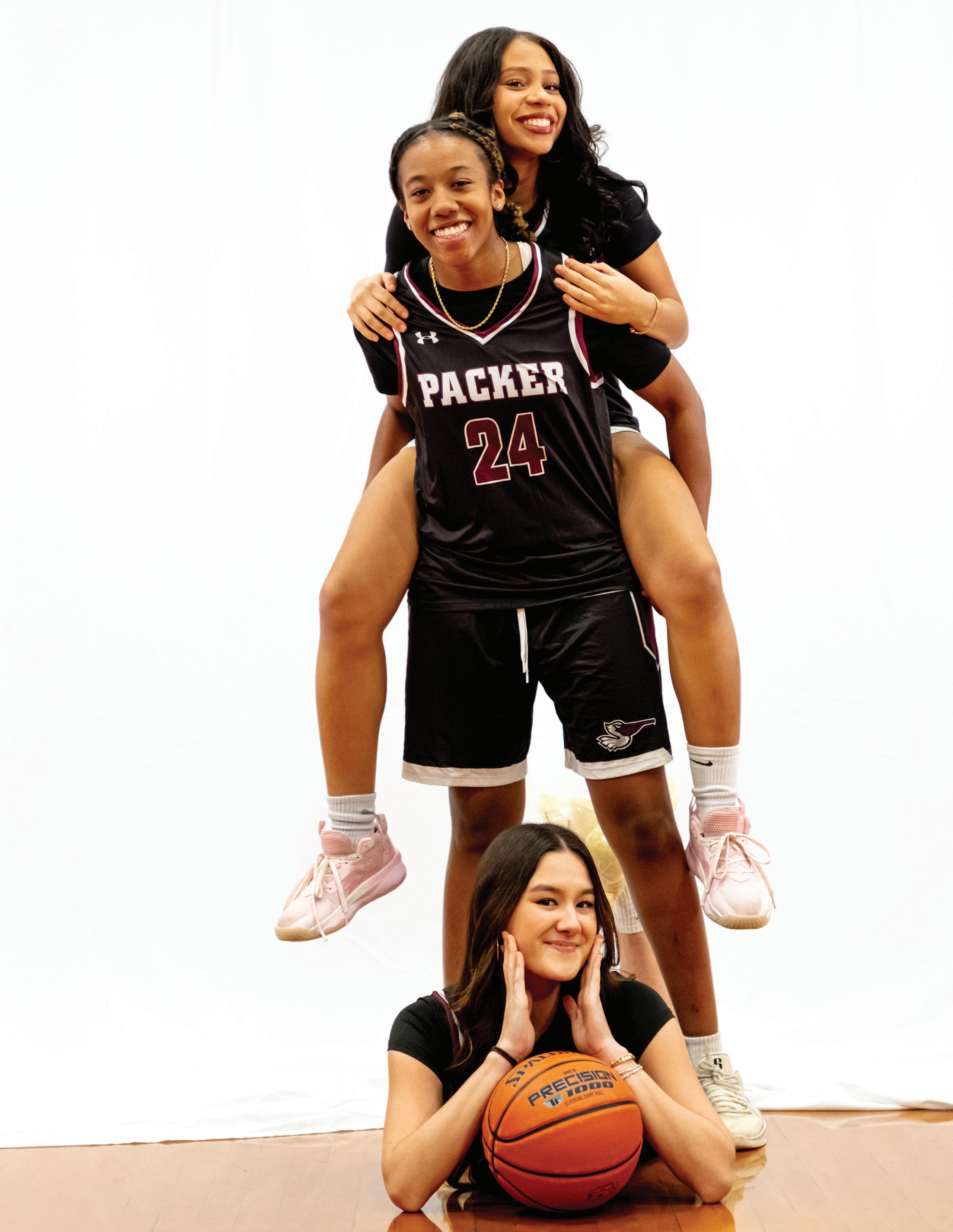
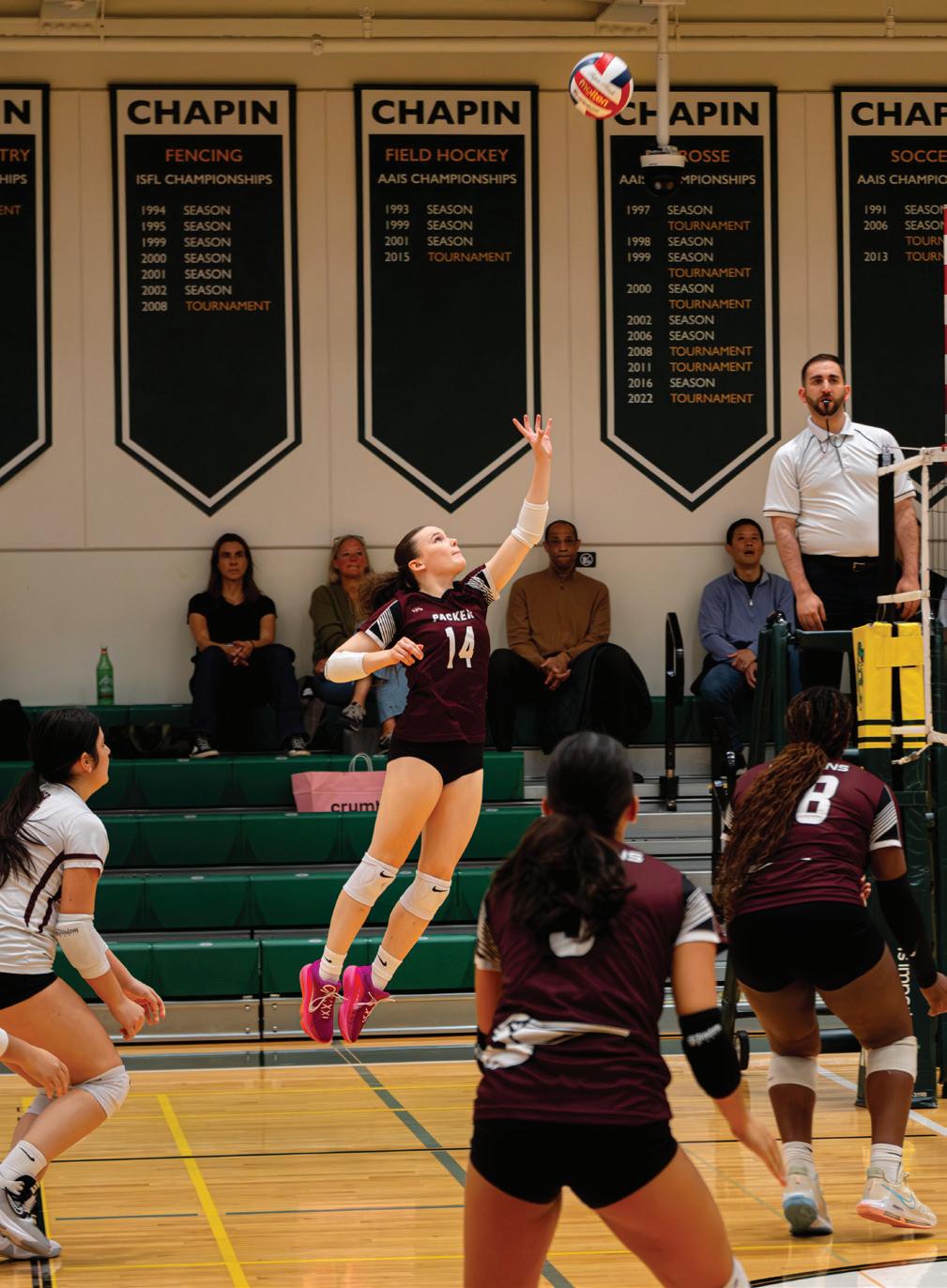
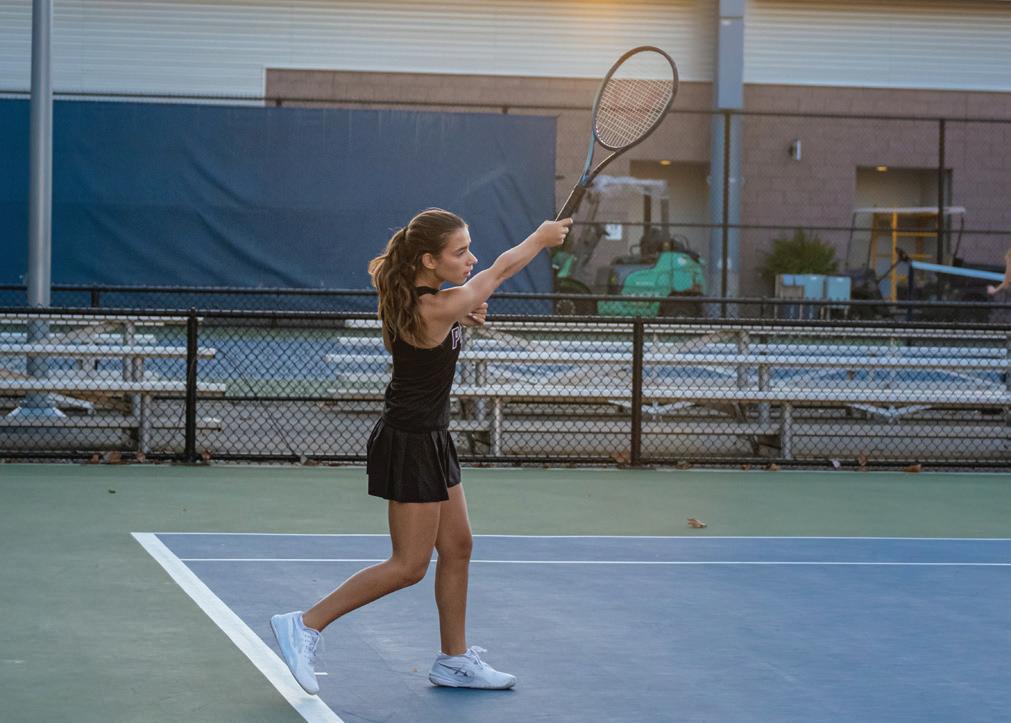
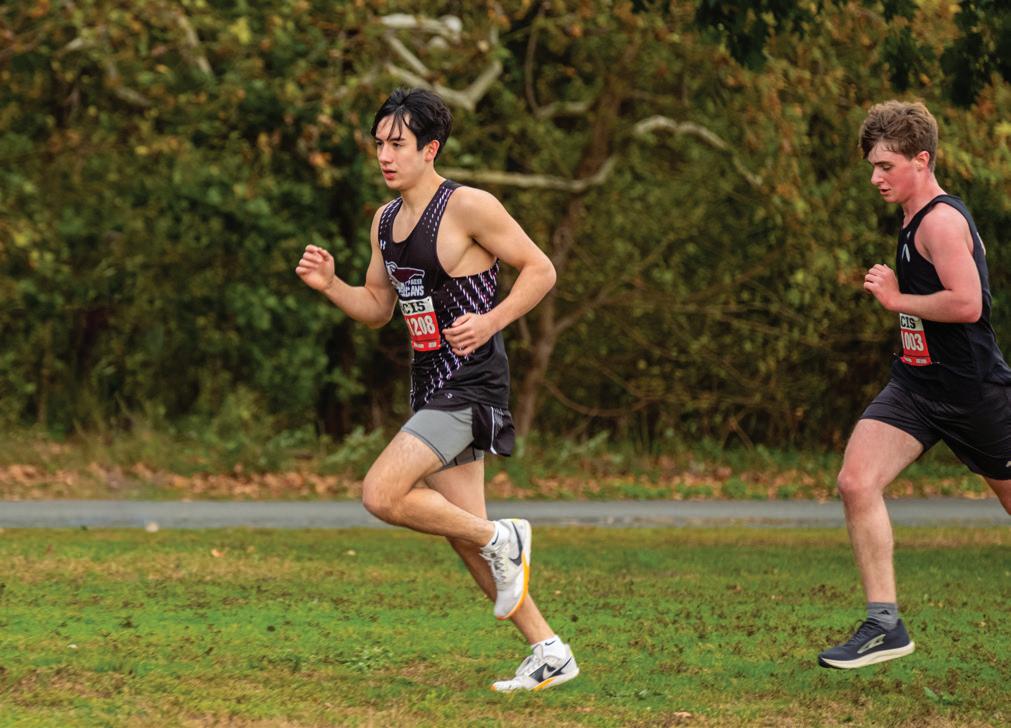
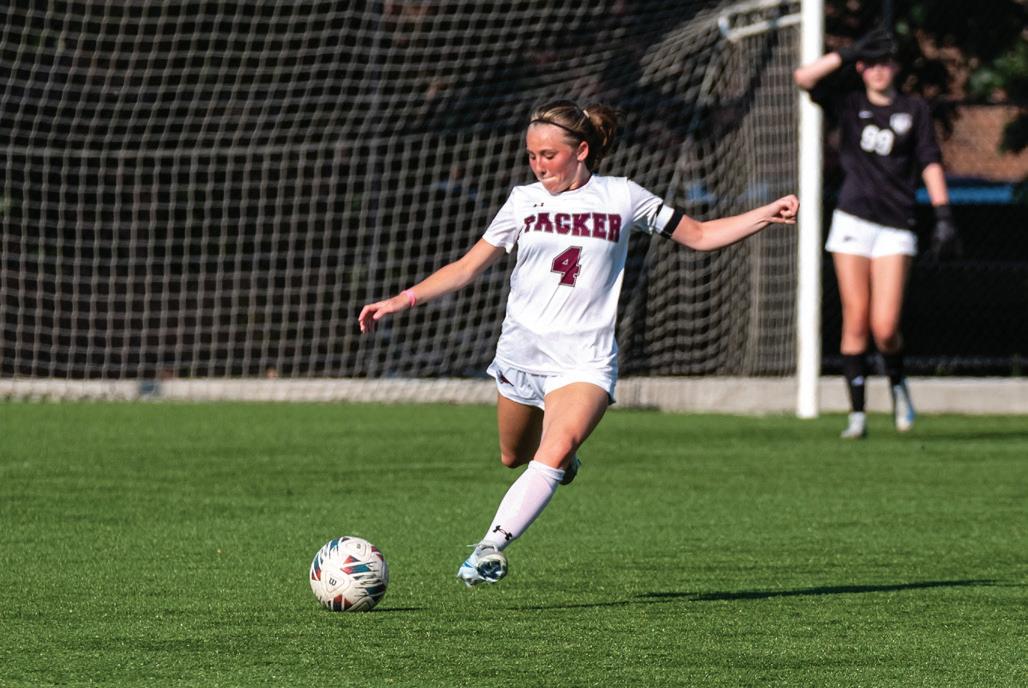
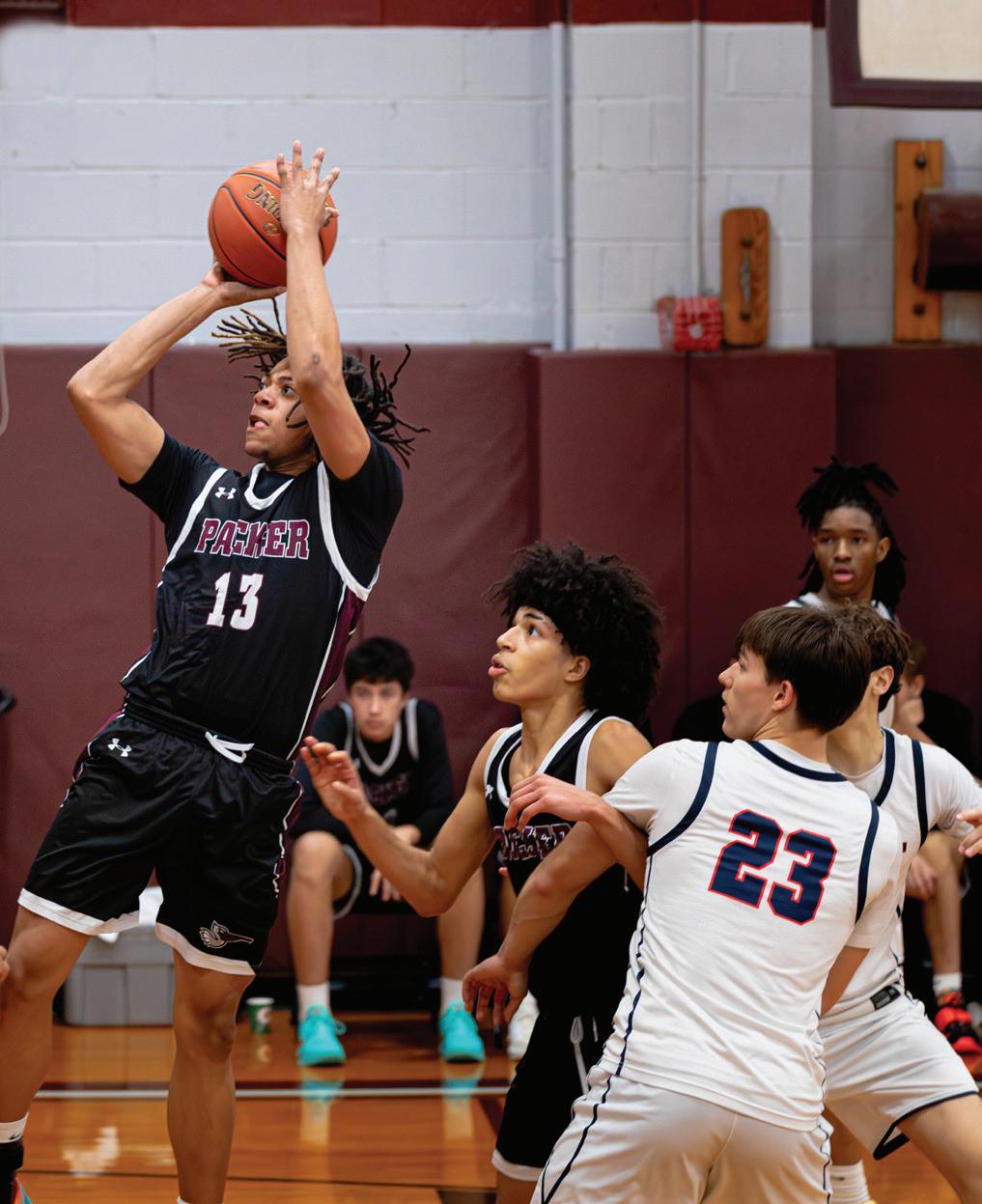
PACKER ATHLETICS continues to achieve historic milestones across several teams. Last spring, Varsity Baseball captured a regular-season championship with a flawless record, while Varsity Softball made the conference playoffs and Boys Varsity Tennis finished as runners-up in the conference championship. In the fall, our powerhouse Girls Varsity Soccer team pulled off an incredible feat, finishing the season undefeated with a 12-0 record and a trip to the state playoffs, while Girls Varsity Tennis had their best season in program history with 6 team wins. This winter, Girls Varsity Basketball secured a historic second consecutive AAIS Championship title, and the boys team advanced to the conference semifinals. Pelicans also remained a formidable force on the trails and in the water, with ten swimmers qualifying for NYSAIS, and five Track & Field athletes advancing to the state level. On every team, from the squash courts to the ultimate frisbee fields, Packer student-athletes played with purpose and heart, filling the fans with #PelicanPride.
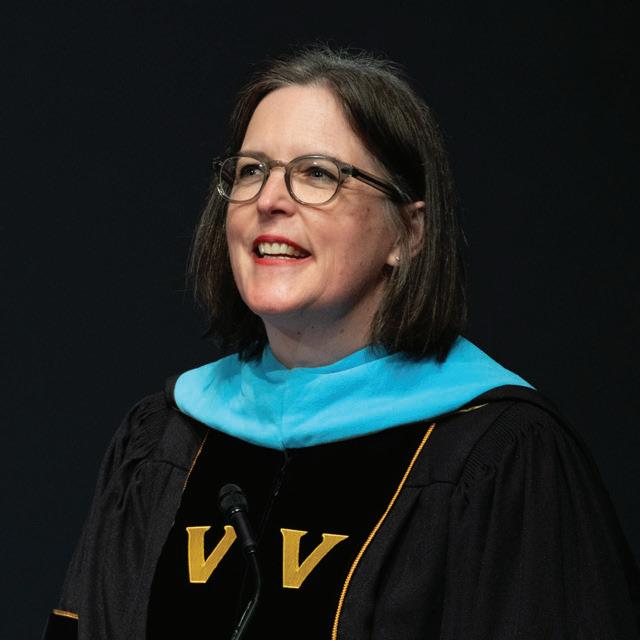
“As you leave Packer and enter your new communities, I hope you remember the impact of your individual actions. That with your actions, you go out of your way to shape those communities for good; that you approach difference with curiosity, not judgment; and that you hold on to the value of dialogue and resist the false comfort of interacting only with those who agree with you.”
Maria
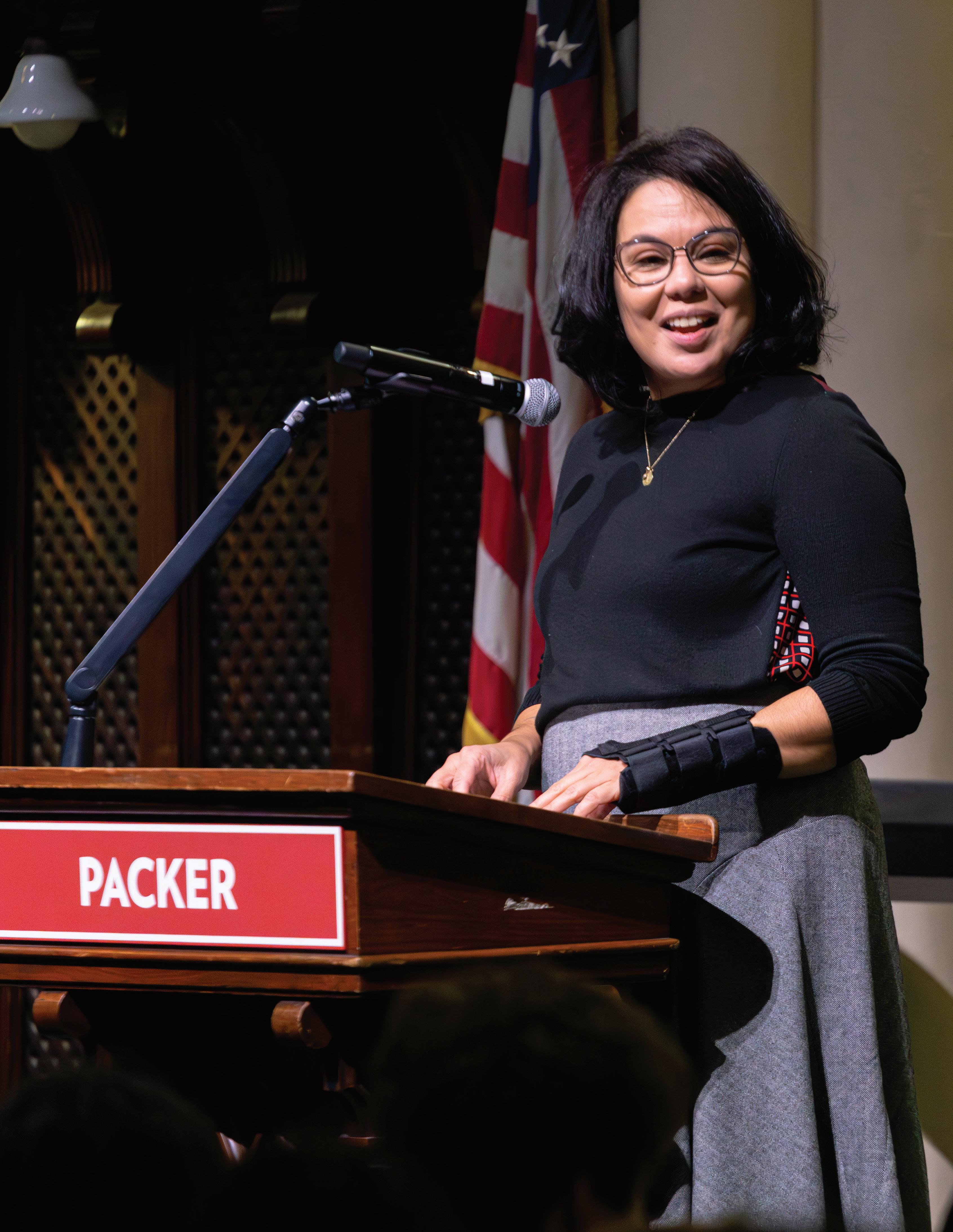
Valentina Nunes, Upper School Division Head
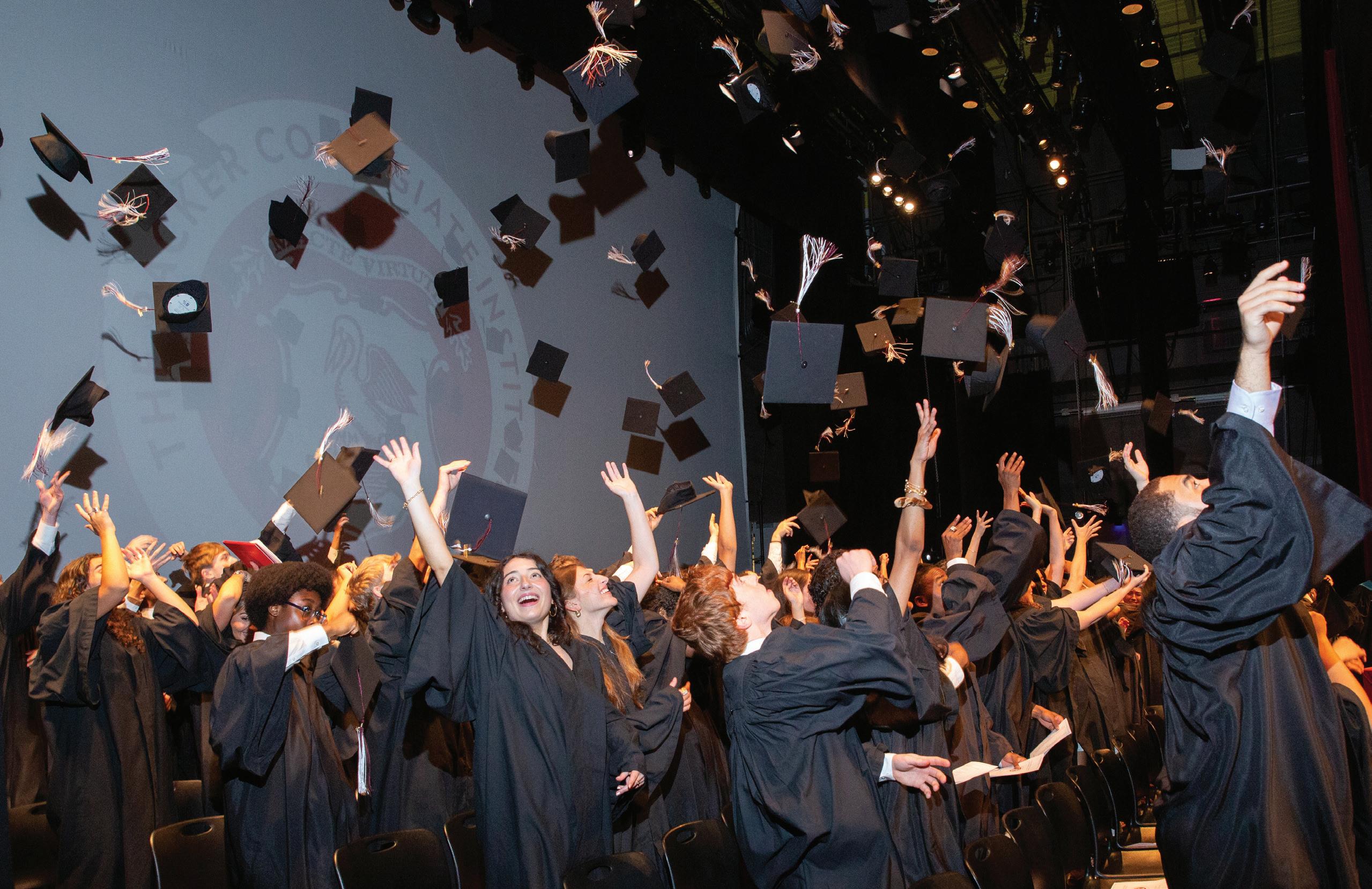
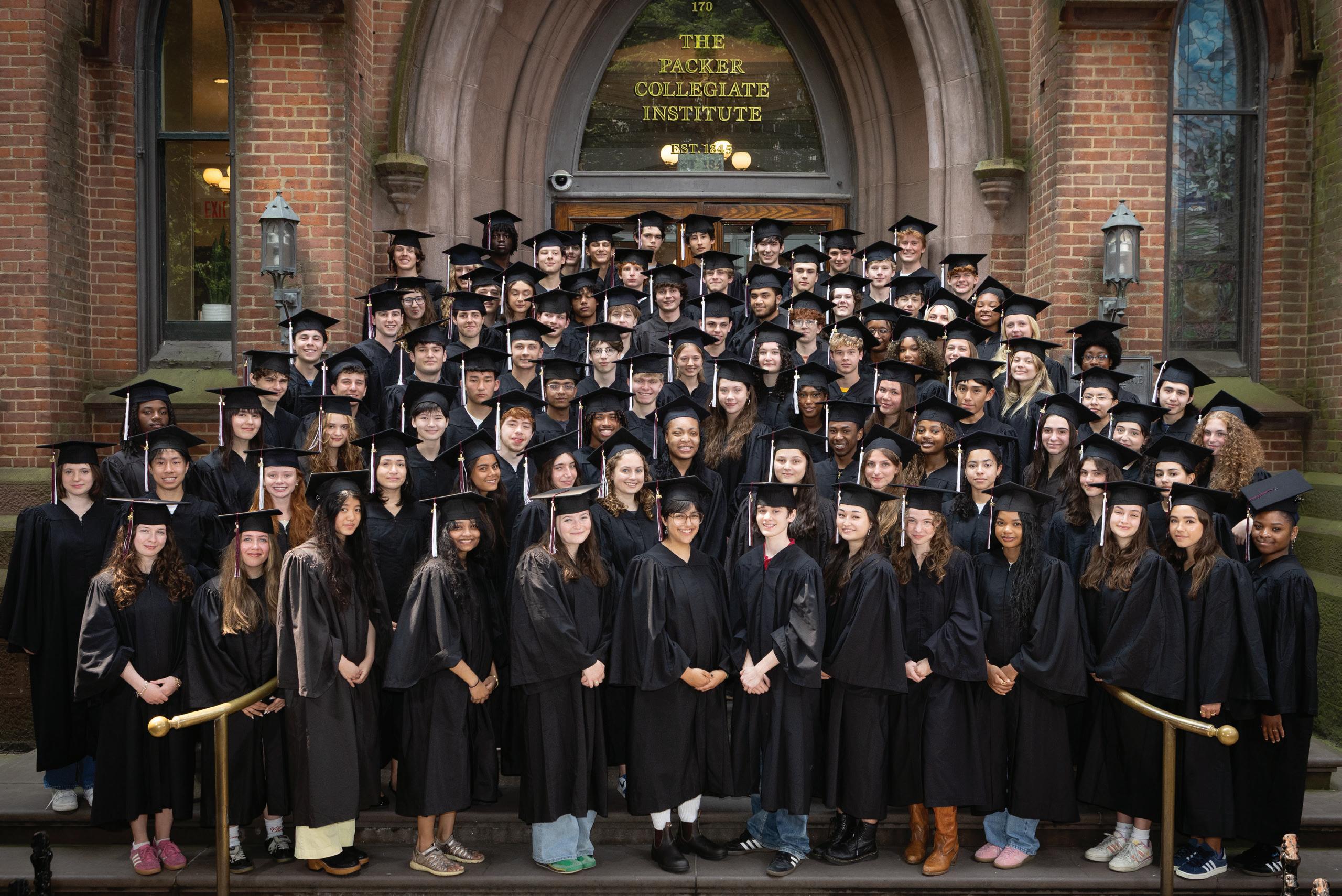
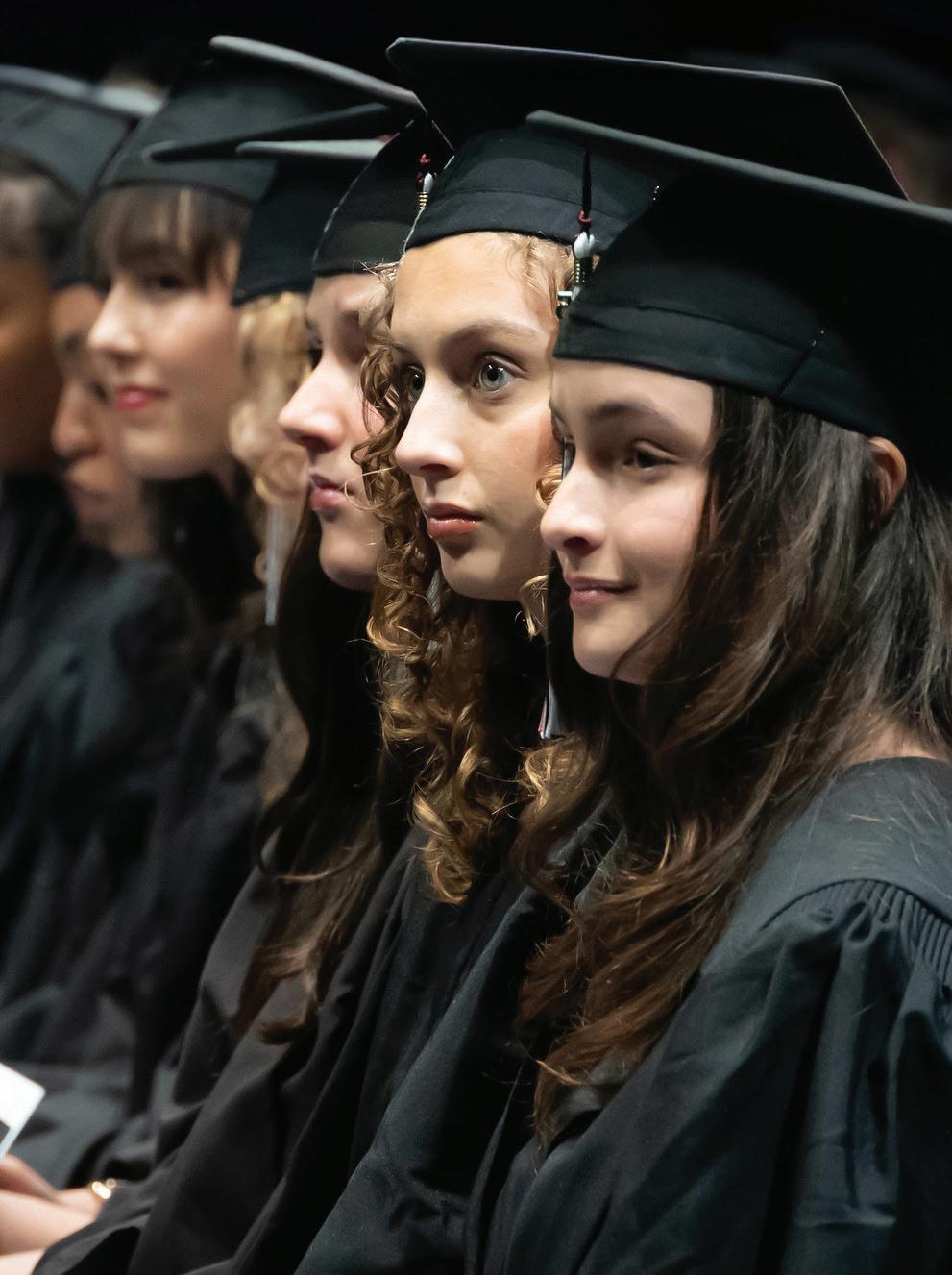
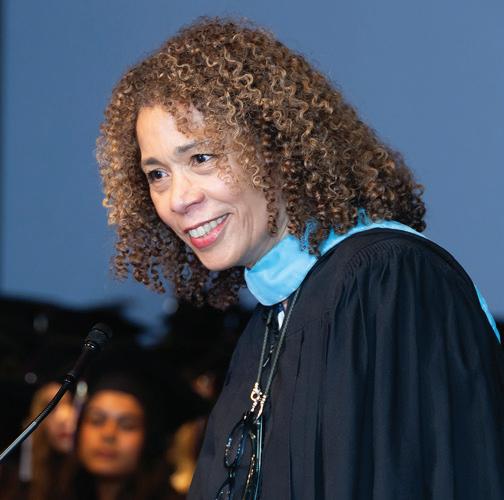
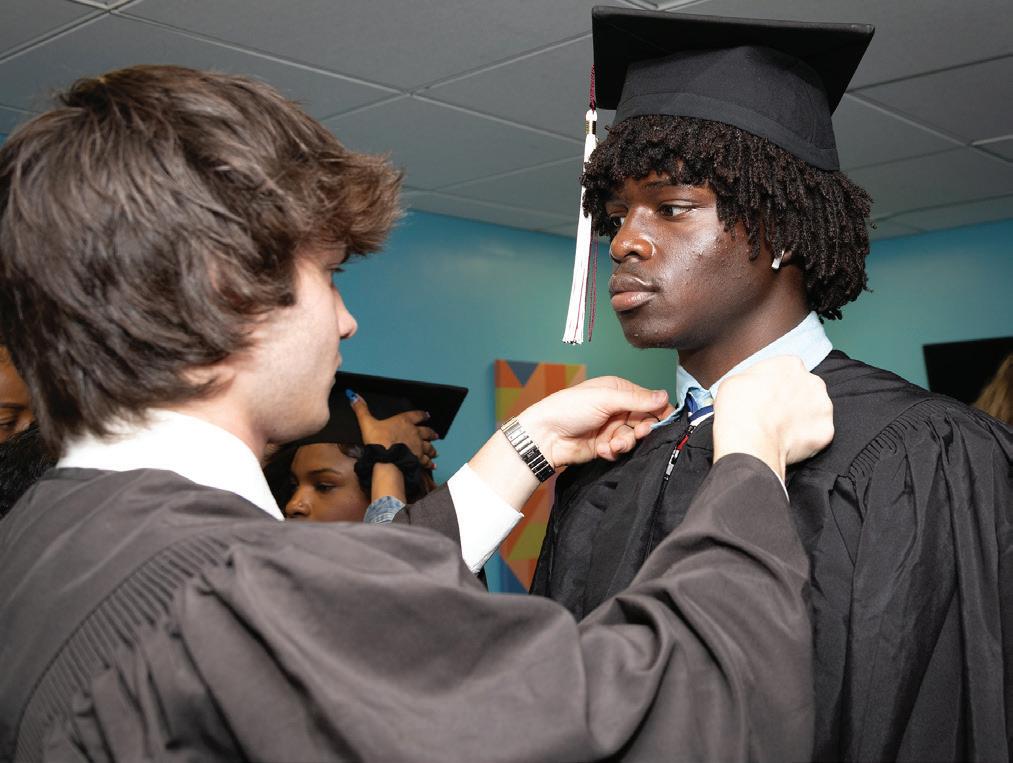
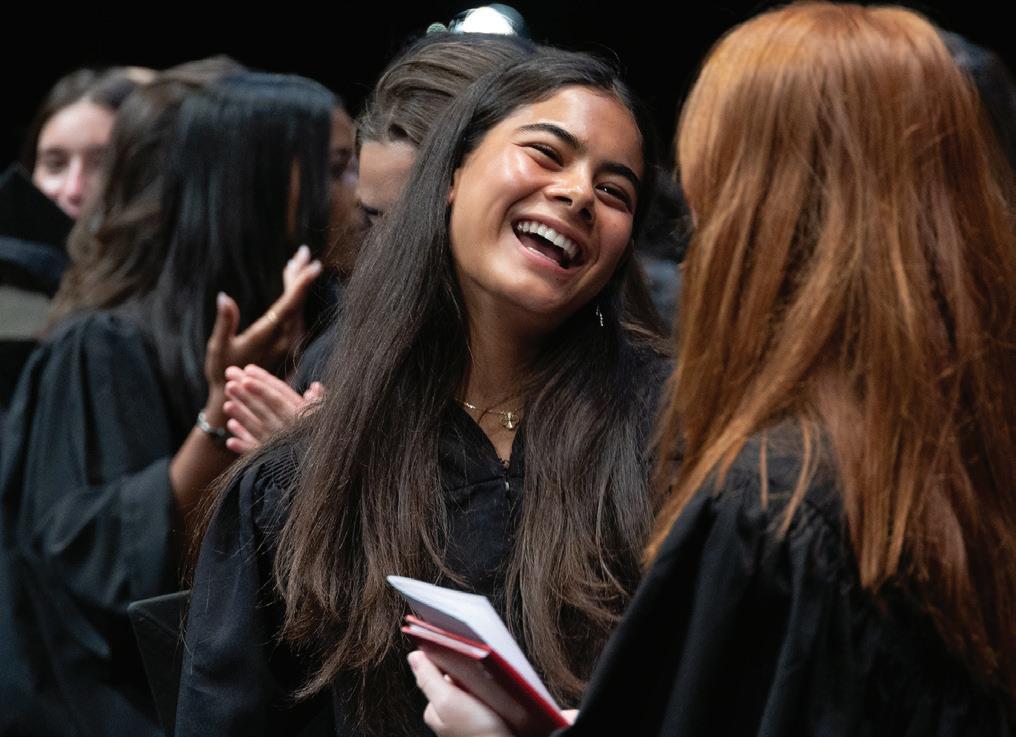
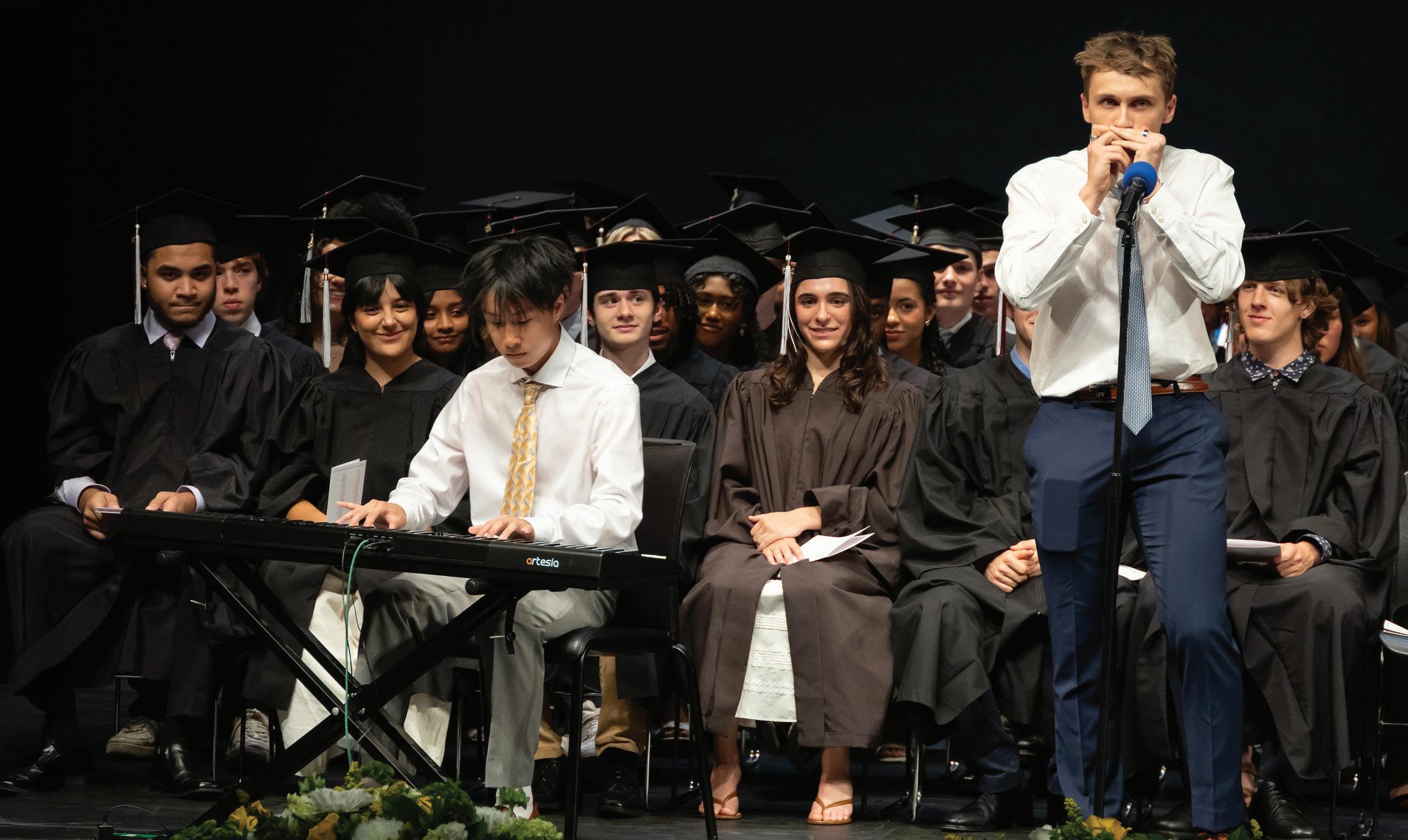
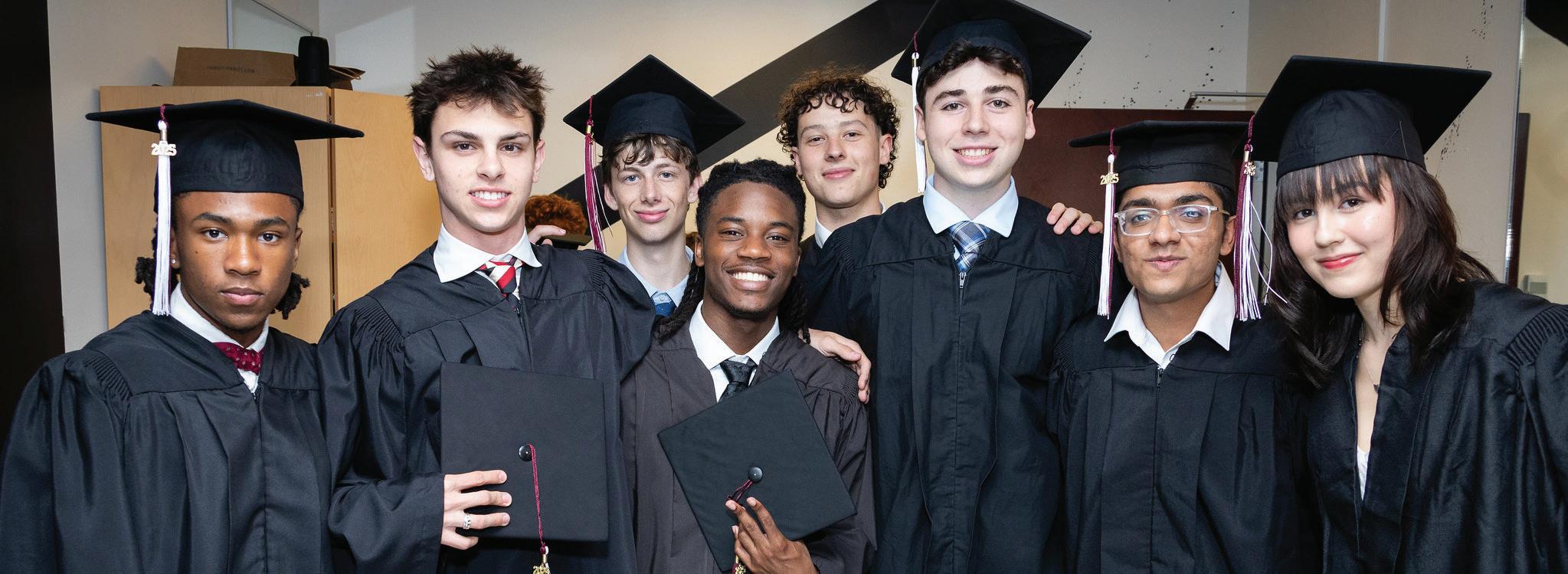
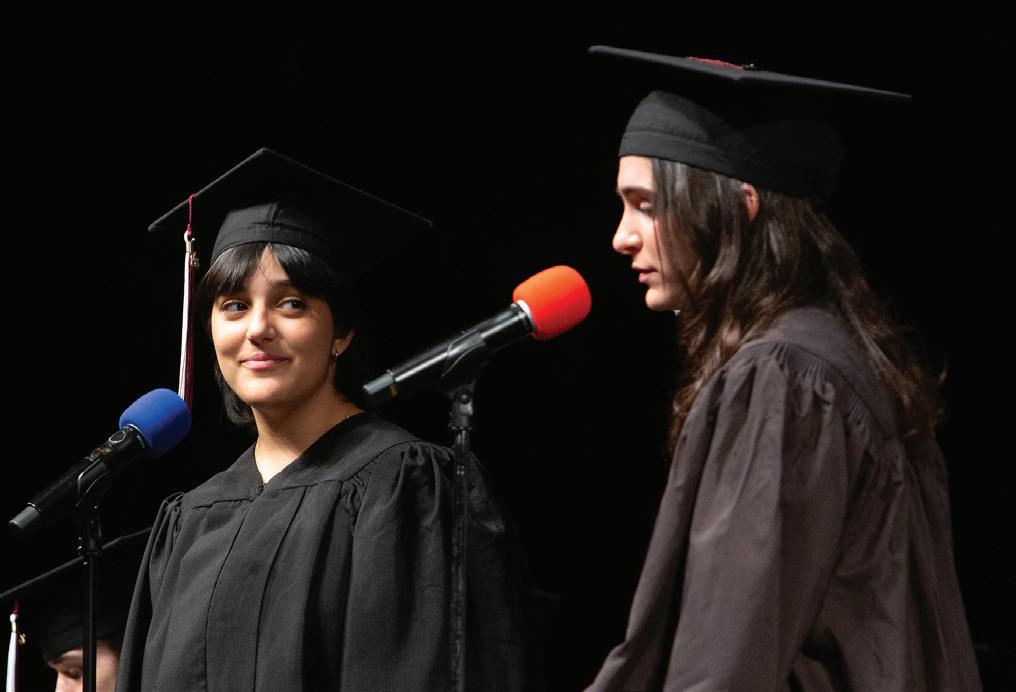
On a humid Thursday evening in June, family, friends, faculty, and staff gathered in the City Tech Theater in downtown Brooklyn to celebrate the class of 2025 as they prepared to set out on their next great adventure.
Speakers touched on several recurring themes throughout the evening—the seniors’ consistent willingness to help others, the importance of active listening and building bridges, and the legacy the Class of 2025 will leave at Packer.
Several members of the graduating class performed on stage, with Eli Haider-Bierer, Sean Robertson, and Jane Siegel singing You’ve Got a Friend by Carole King, Ben Harrington and Jasper McLaughlin performing their original piece Lampposts, and Caius Ko and Daniel Warren delivering their rousing rendition of Piano Man by Billy Joel. The musical performances culminated with The Circle Game by Joni Mitchell, sung by the group of “lifer” seniors who had performed the same song at their Fourth Grade Moving Up Ceremony at Packer eight years previously. It was a poignant moment of reflection on the remarkable impact Packer has had in students’ lives.
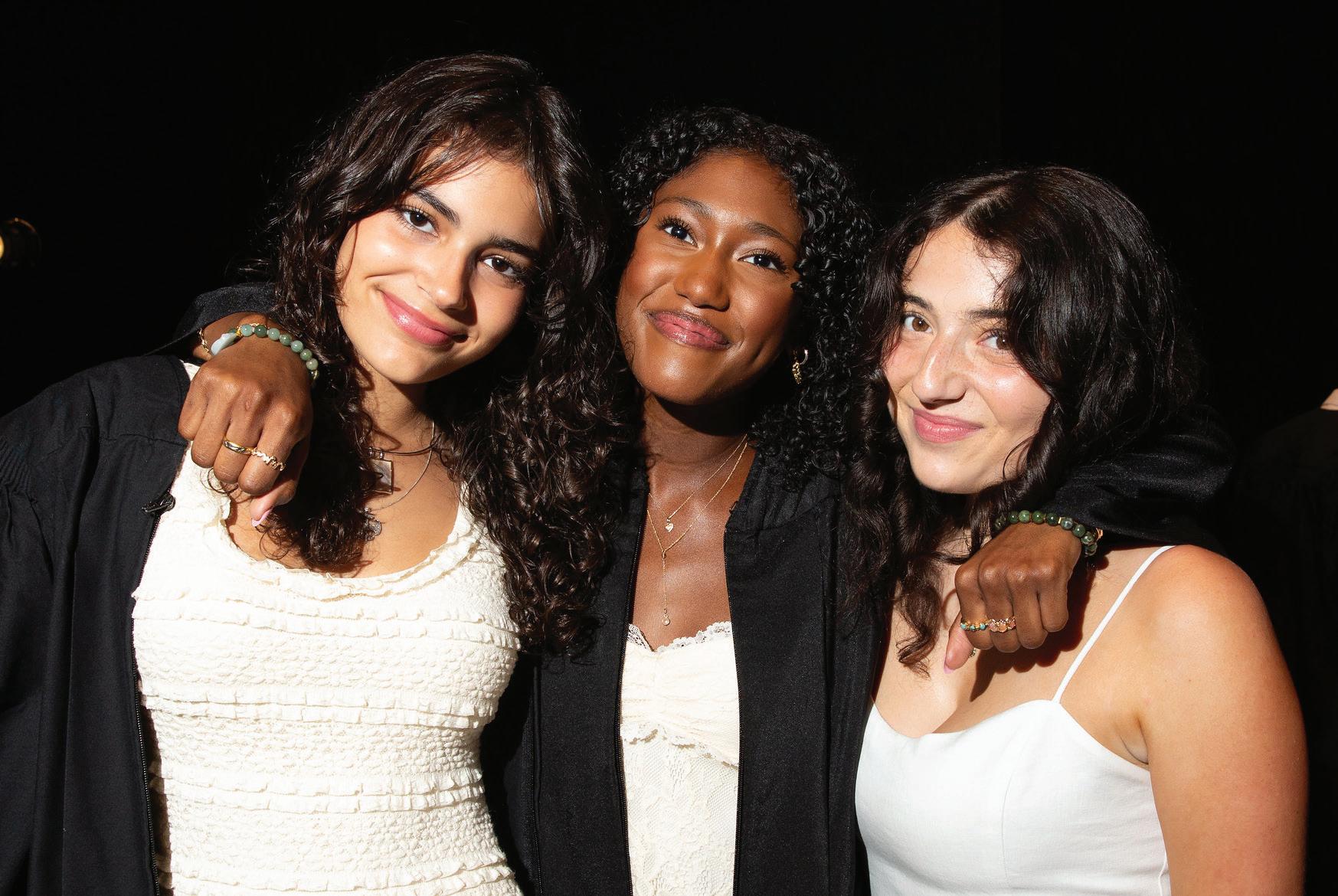
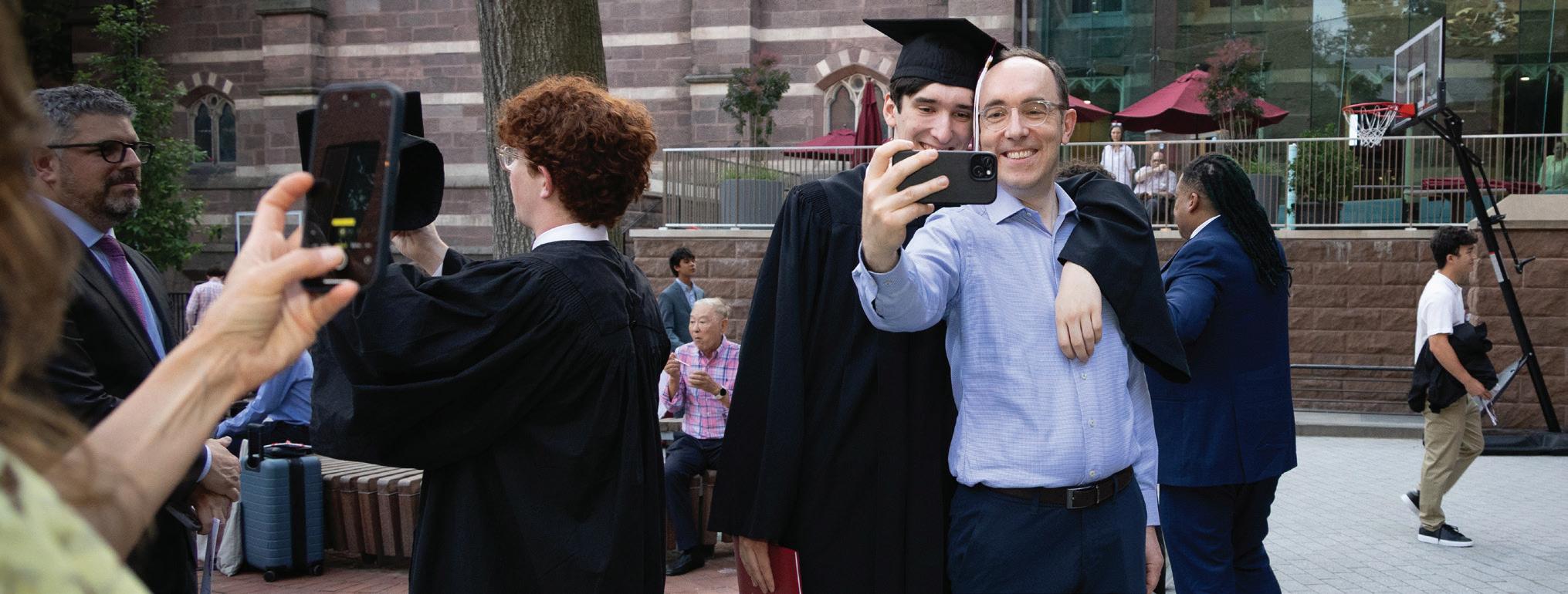
After Commencement, seniors and their families ambled back to campus, where they gathered in the newly renovated Garden for post-ceremony hors d’oeuvres, drinks, pictures, and reminiscing.
Find complete coverage and photos at packer.edu/news
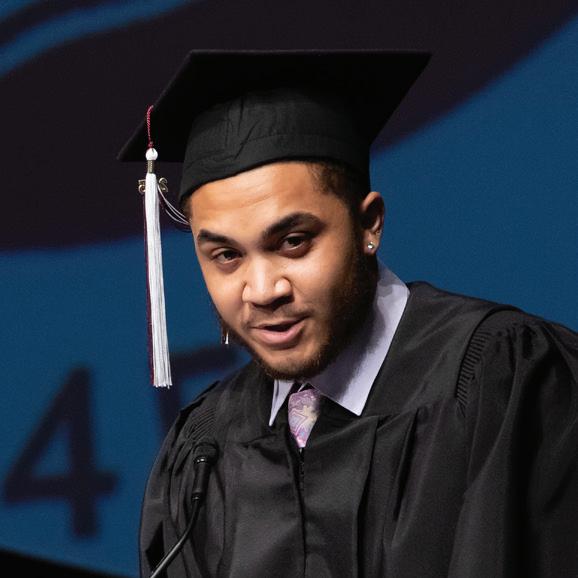
“Senior year is supposed to be stressful. College applications, decisions about the future, the fear of leaving everything we know. It would have been easy and honestly understandable to pull back... But we didn’t. Instead of turning inward, we leaned into each other. We gave this place, this school that helped raise us, everything we had left. We made time for one another. We made time for joy. For service. For leadership. For reflection. We stayed present. We didn’t let the pressure of the future steal the beauty of the now. We poured our energy, our care, our attention back into the community that shaped us. And I think that’s part of why this year felt so meaningful. Why this goodbye feels so full, even though it’s hard.”
–Aaron Paul, Senior Speaker
“We tend to think of speaking courageously as making a bold statement, a proclamation —a mic drop. Sometimes this is what is called for.
And, as Packer graduates, I know you are prepared to speak up in the face of injustice.
But I think you will find, much more of the time, speaking courageously is quieter than that. It is about making an invitation, signaling curiosity, offering kindness, drawing others in. This kind of courageous speaking often doesn’t result in applause or acknowledgement, in “likes” or “reposts.”
In fact, it is often entirely unseen.”
—Dr. Jennifer Weyburn, Head of School
Honoring Retiring Faculty and Staff
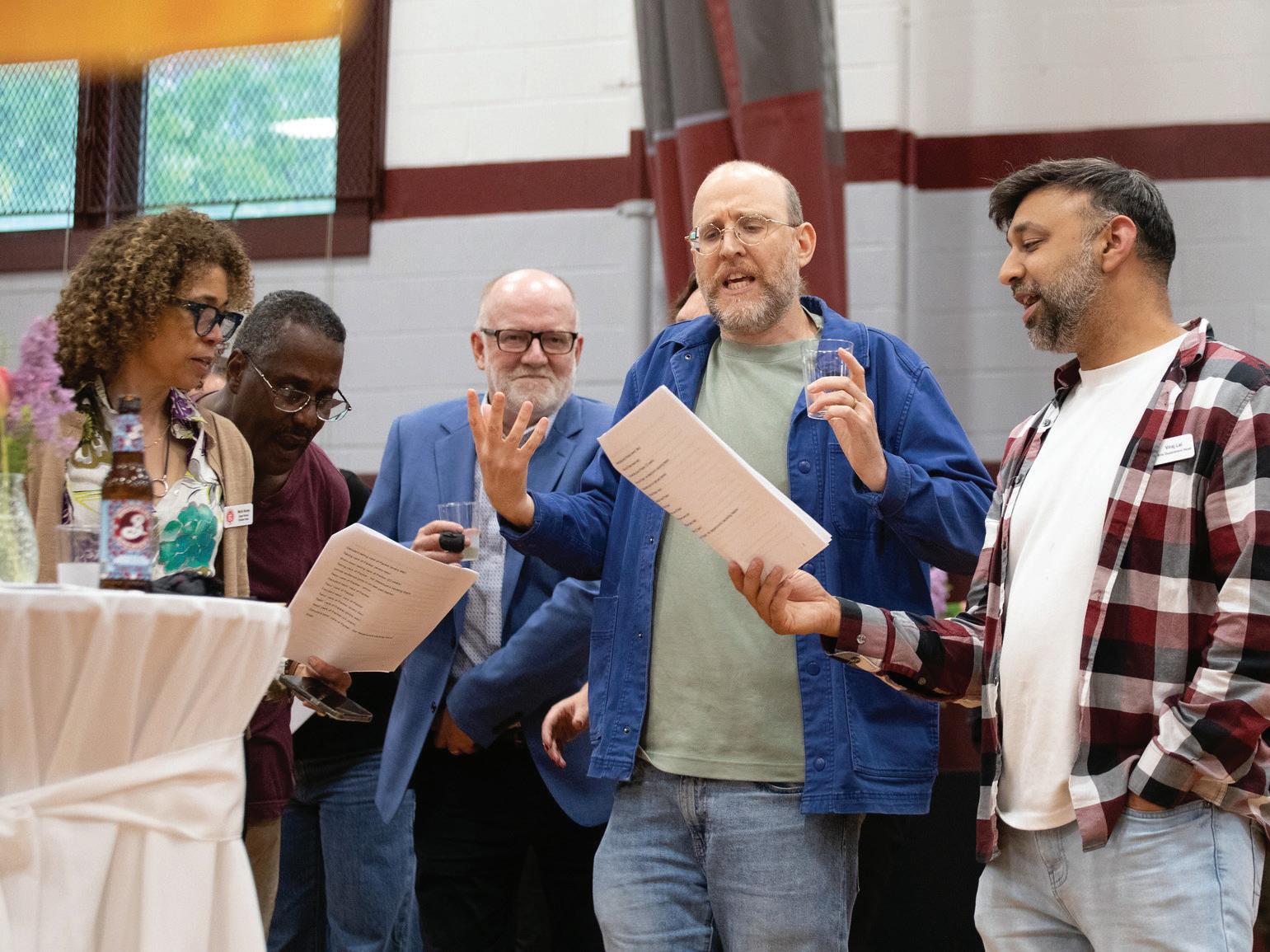
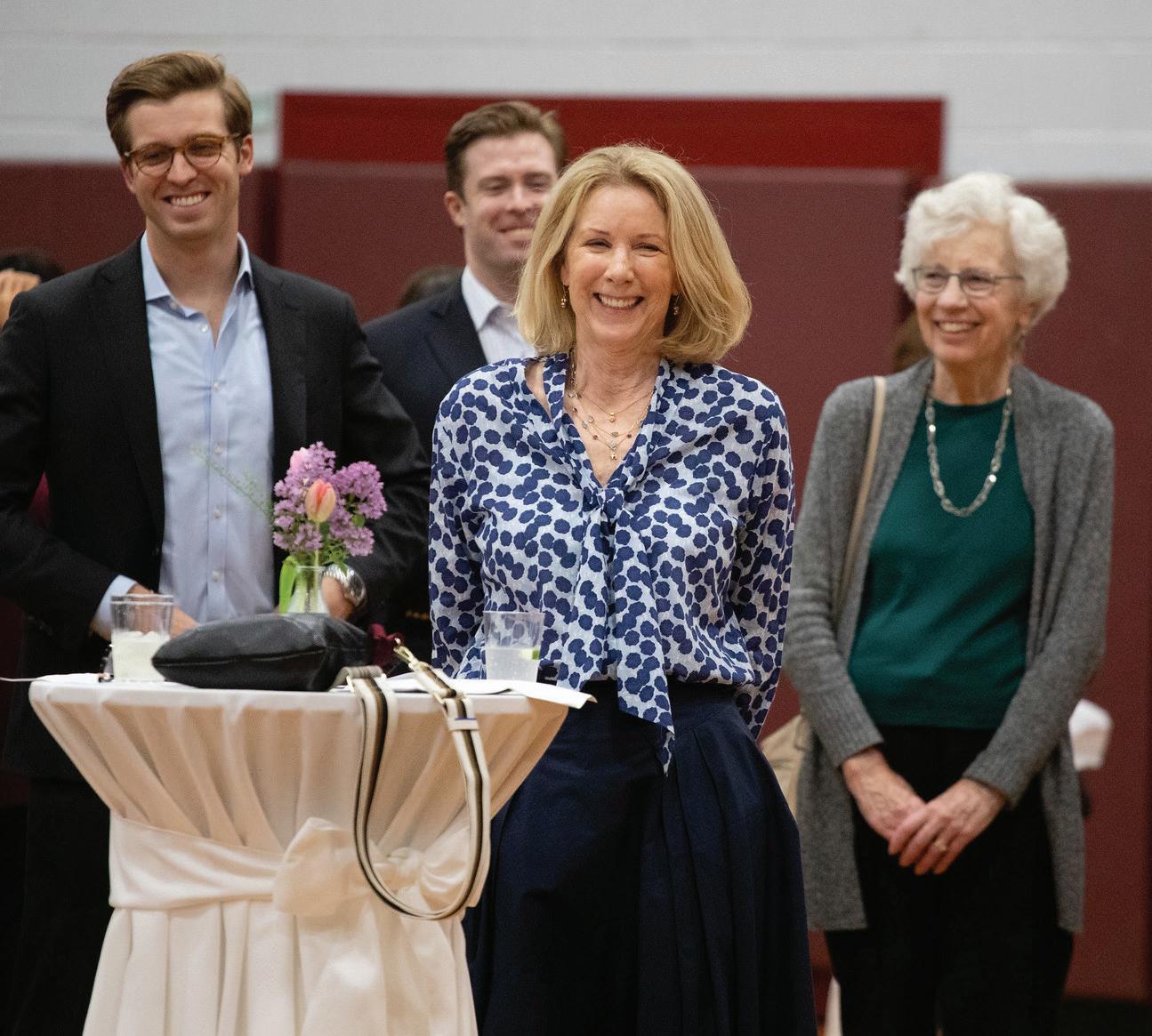
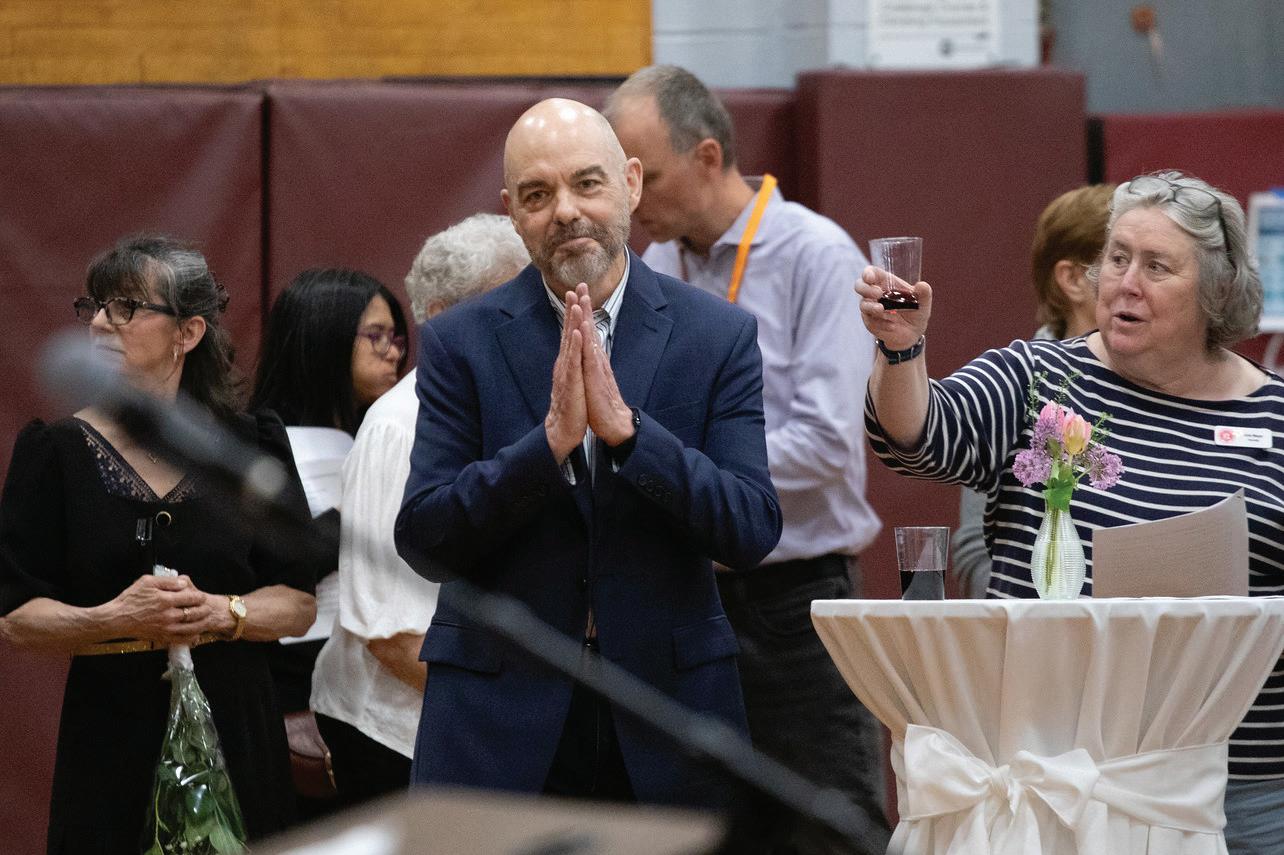
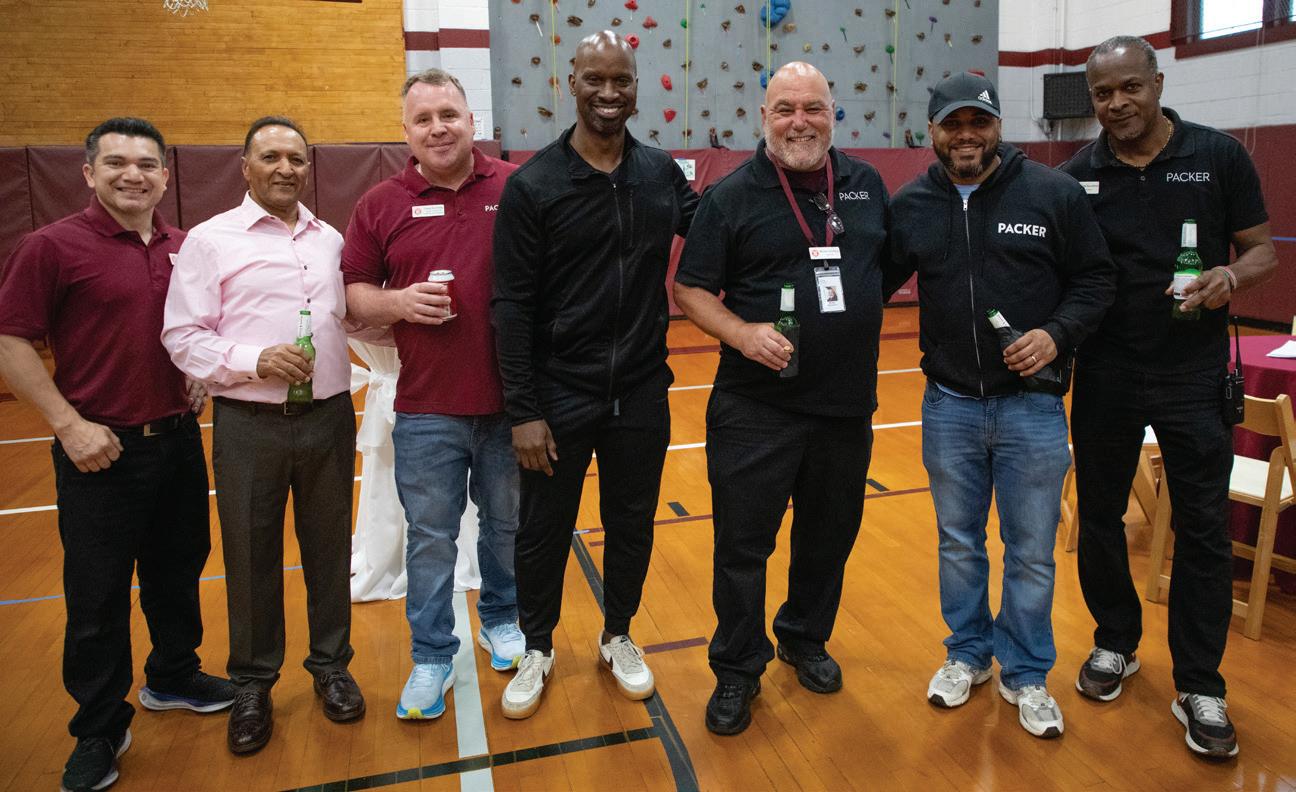
Each spring, Packer says goodbye and thank you to retiring colleagues, recognizing their many decades of service to our community. Last May, we bid farewell to five incredible stalwarts with music, laughter, heartfelt toasts, and a few tears at the annual retirement party.
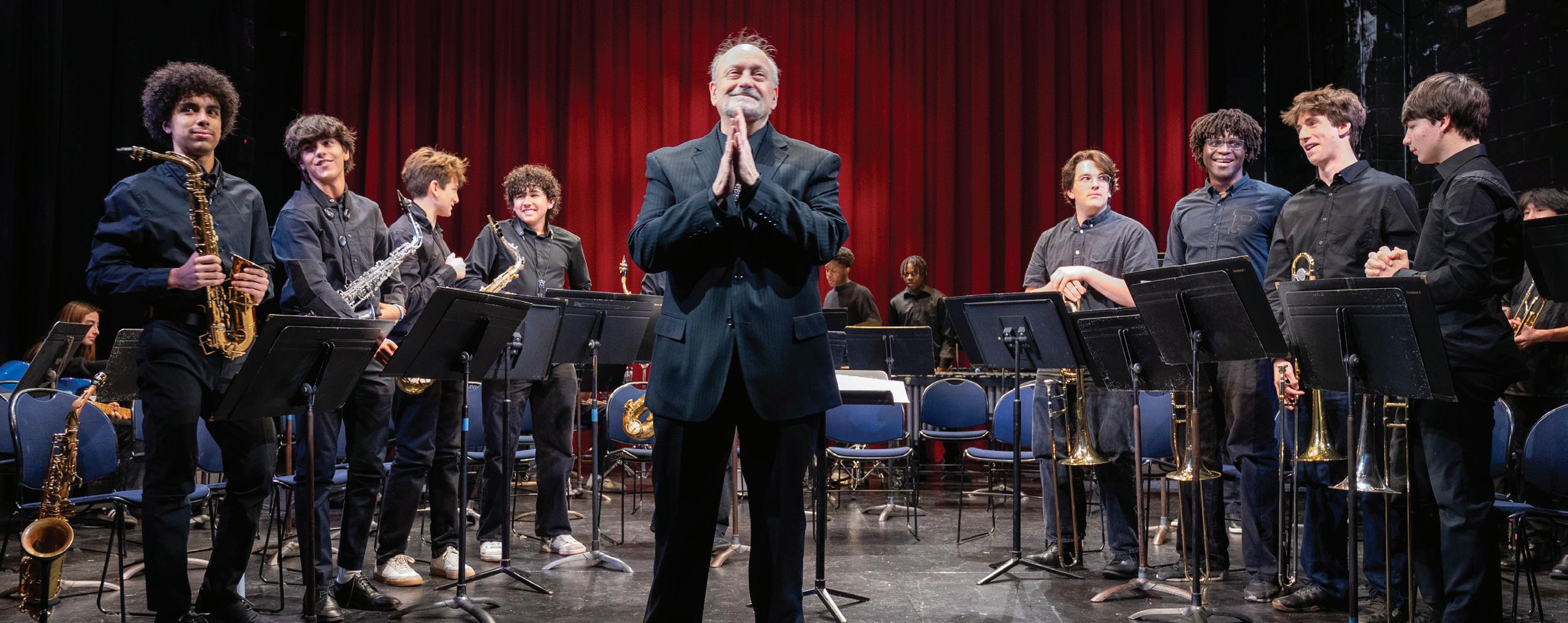
Paul Riggio was a revered teacher and cornerstone of Packer’s music program for a remarkable 45 years, serving as Instrumental Music Coordinator for the last 25. A nationally recognized performer, composer, arranger, and conductor, Paul founded the Packer brass choir, composing hundreds of original pieces for them, grew the jazz program, and launched a beloved annual jazz pilgrimage to New Orleans. Over the decades, Paul has inspired countless students to pursue musical excellence.
Liz Ann Doherty retired after 18 years as a Packer nurse. Throughout her tenure, she was a steadfast source of care, expertise, and warmth, tending not only to the health of students but to the well-being of the entire community. Liz Ann’s leadership was never more evident than during the Covid pandemic, when she worked tirelessly to keep our doors open and our school safe. Over the years, Liz Ann was also a lifeline on countless school trips, providing expert medical attention and comfort away from home for sick and injured students.
After 16 years of dedicated service—much of it behind the scenes—Jim Anderson retired from his role as Chief Technology Officer last June. Jim’s impact on Packer was immeasurable, from spearheading the transition to the Google-sphere and modernizing our network infrastructure, to ensuring our digital safety and implementing crucial platforms like Zoom and Veracross. He rose to every challenge Covid presented, and championed the integration of technology into every facet of school life, from grading systems to emergency notifications, driving the institutional shift from paper to digital. Long before “maker spaces” were commonplace, Jim fostered early coding initiatives and empowered countless students through tech internships.
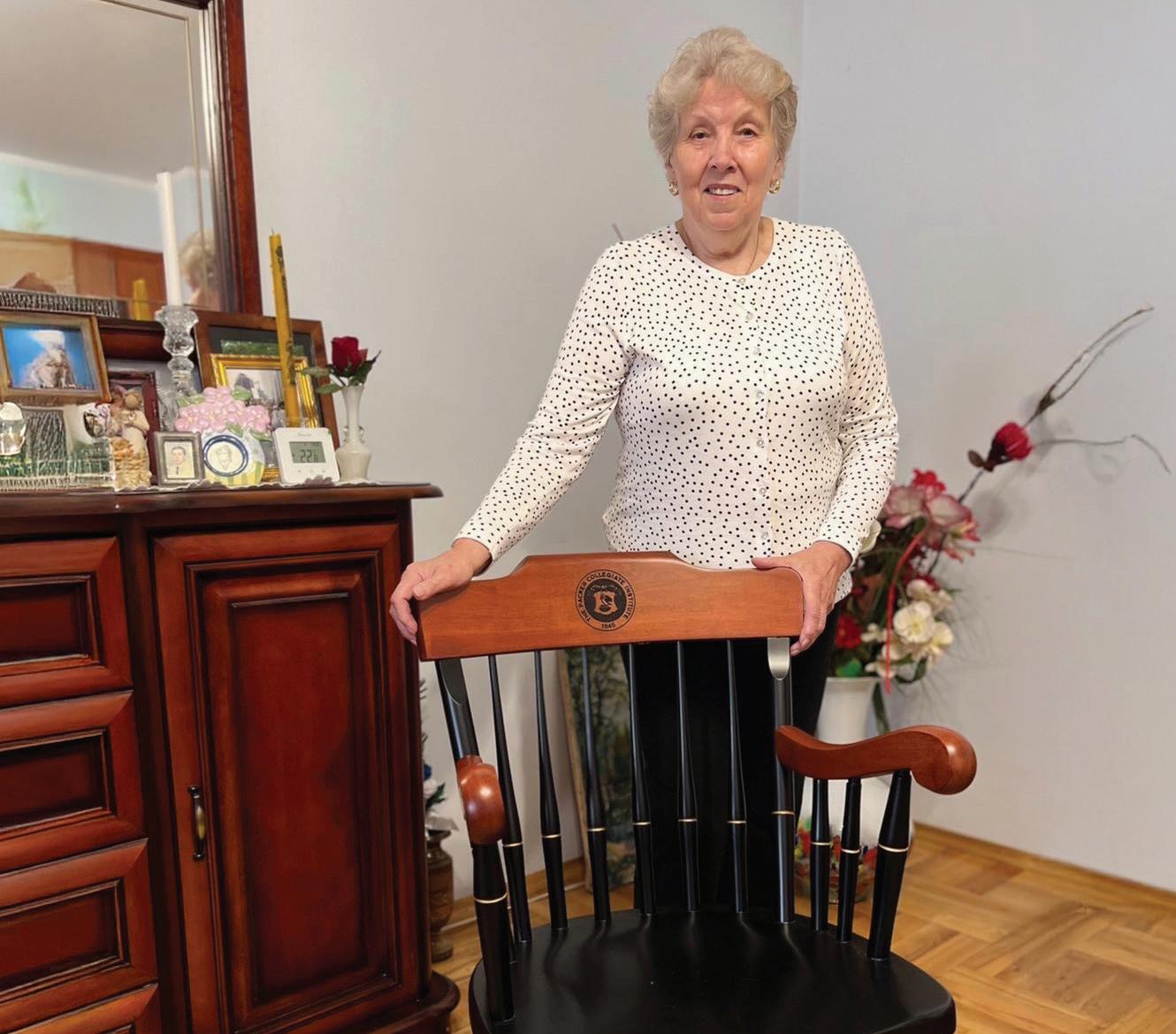
Danuta Piszczatowska served 23 years as a trusted member of the Packer facilities team. Her quiet care helped create the warm, welcoming campus we all hold dear. After saying goodbye, Danuta retired to her native
Poland, where she was sent a classic Packer chair for when nostalgia strikes.
Michael Giammanco also retired last spring after 25 years of dedicated service as Packer’s evening security guard, ensuring the safety and care of our community after hours. With his direct, no-nonsense style but unmistakable warmth, Mike always knew when it was time to nudge students to finally pack up and head home. He will be missed.
We are deeply grateful for all Paul, Liz Ann, Jim, Danuta and Mike contributed to the Packer community over many years, and wish them all best as they embark on their next chapters.
To see photos from the 2025 retirement party visit flickr.com/packercollegiateinstitute
Roots and Ribbons: May Day in the New Garden
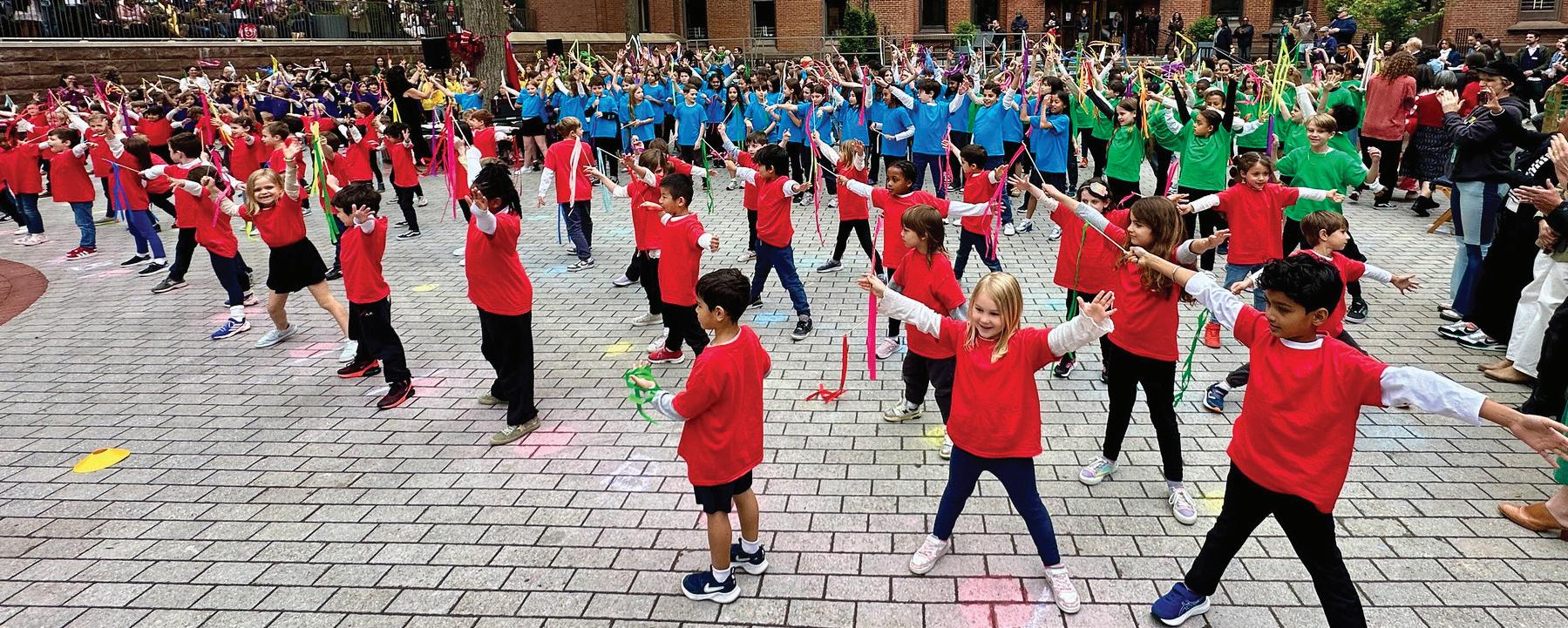
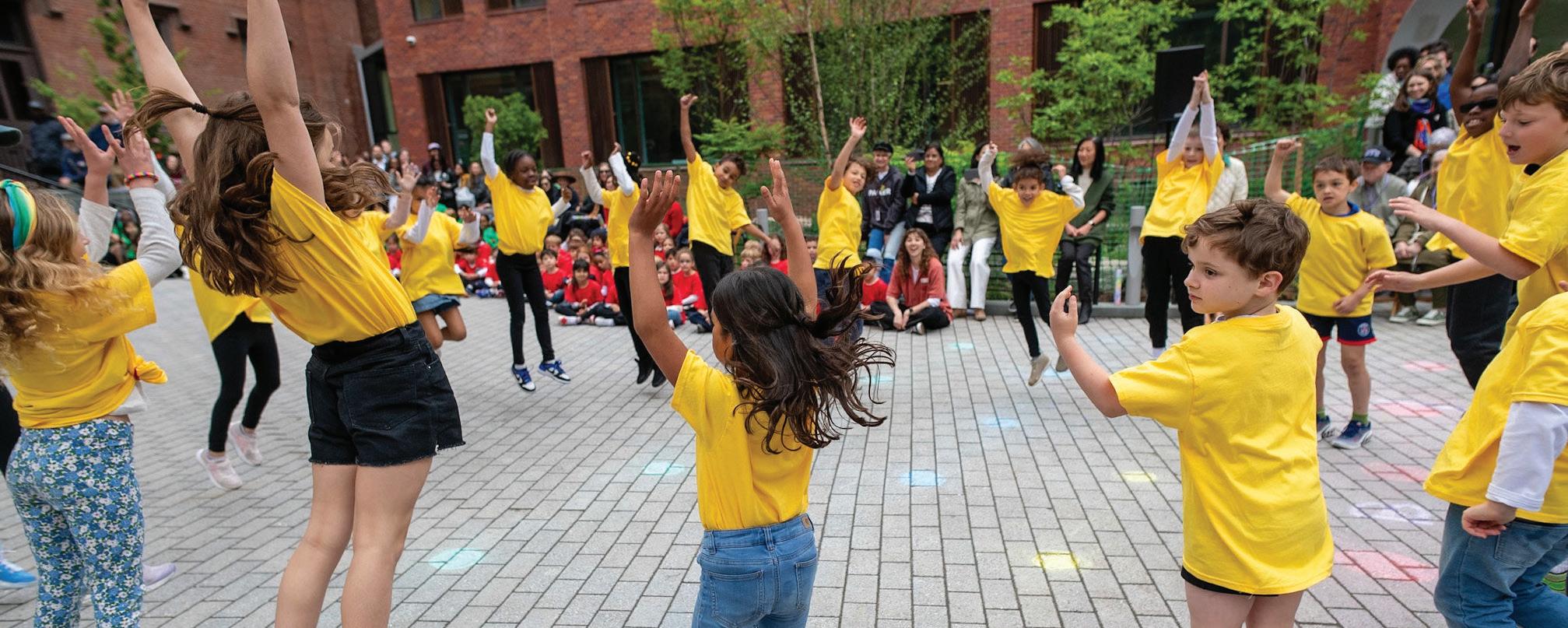
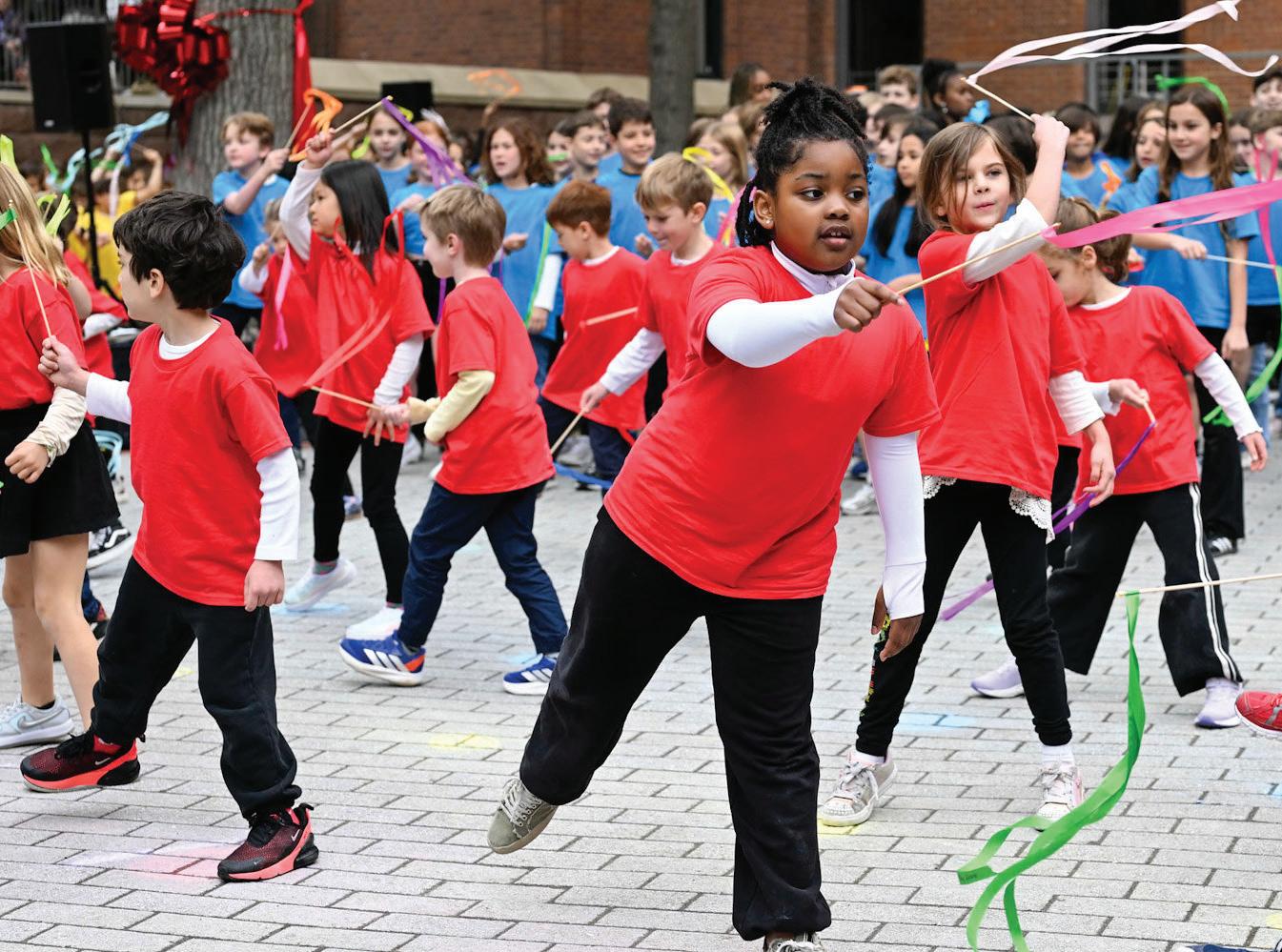
The newly renovated Garden came to life at the May Day Arts Festival last spring, which beat the rain and filled the space with color and joy. Kindergarten and Lower School students belted out songs, twirled, and shared beautifully choreographed dances.
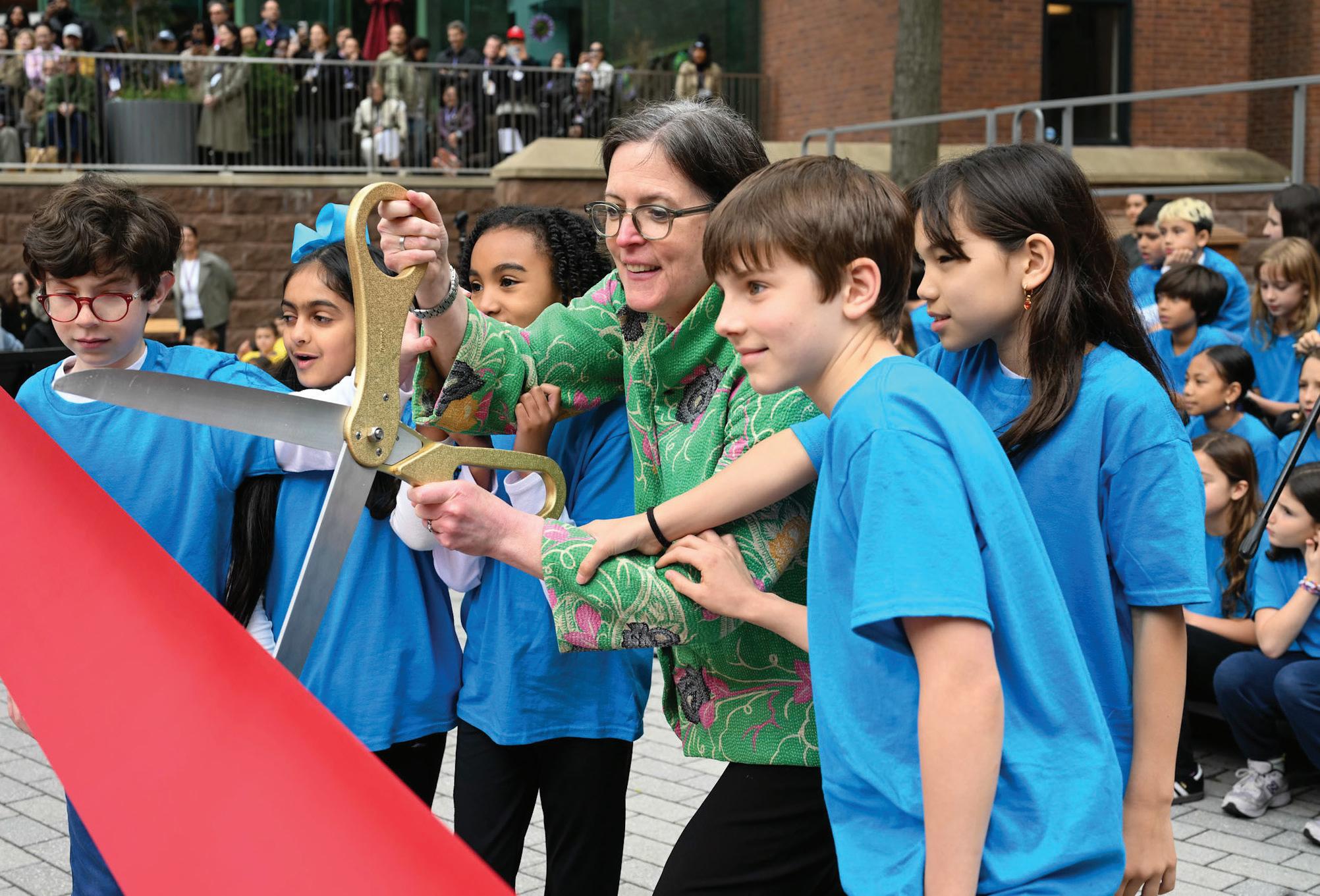
The performance marked a milestone at Packer. The “Roots and Ribbons” theme included a ribbon-cutting ceremony to officially open the new Garden and welcome everyone back into the cherished community space, which is now also a model of sustainable landscape design. Featuring permeable surfaces for better water management and new plantings that create a resilient local ecosystem and improve air quality, the transformed Garden provides more ways for students to play and connect. New state-of-the-art play structures and seating have improved accessibility and created a more open plan. There is now better flow throughout the Garden, and ramped entries to both the Garden and the Founder’s Hall patio. May Day was a perfect—and very Packer—way to unveil such a special space.
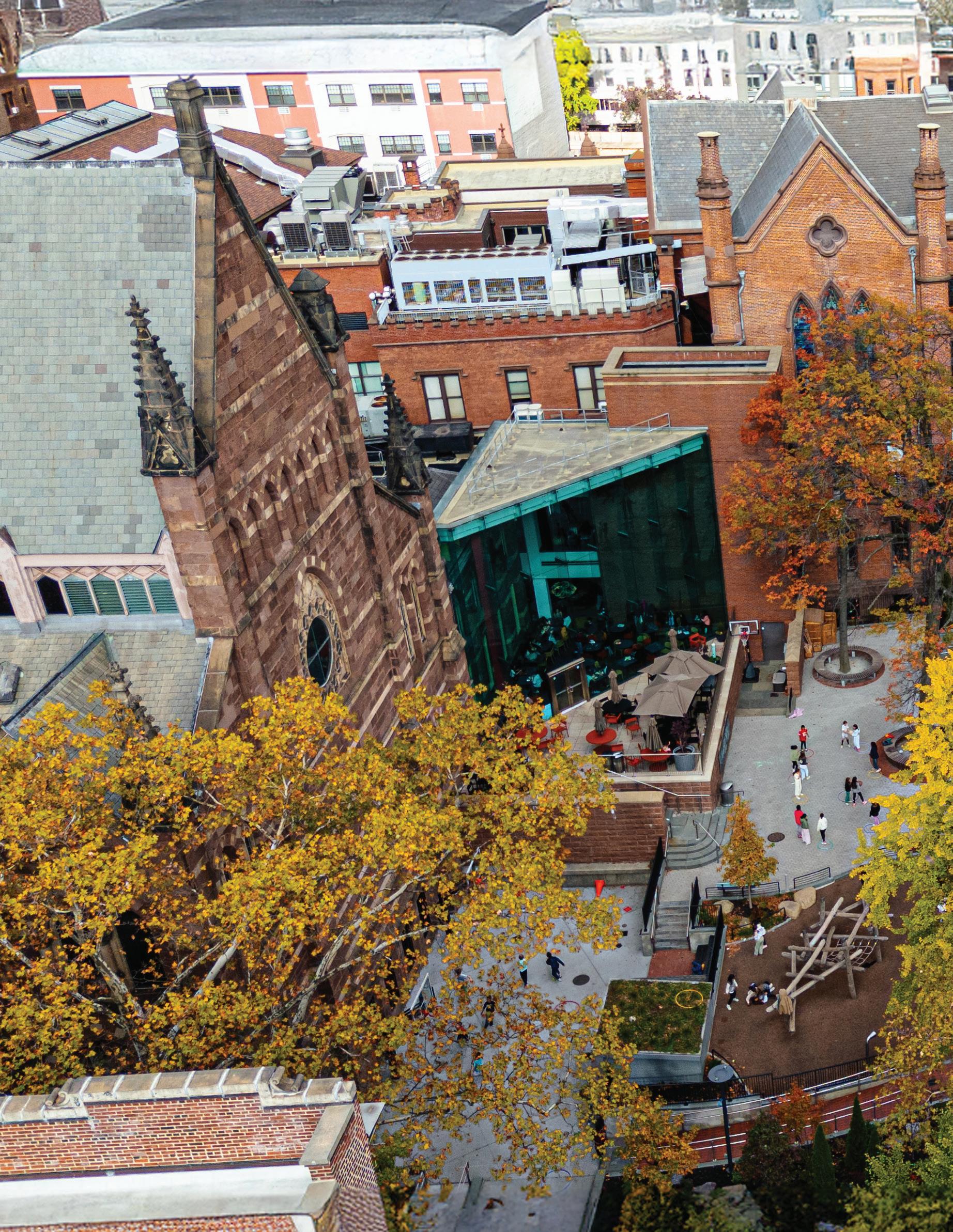
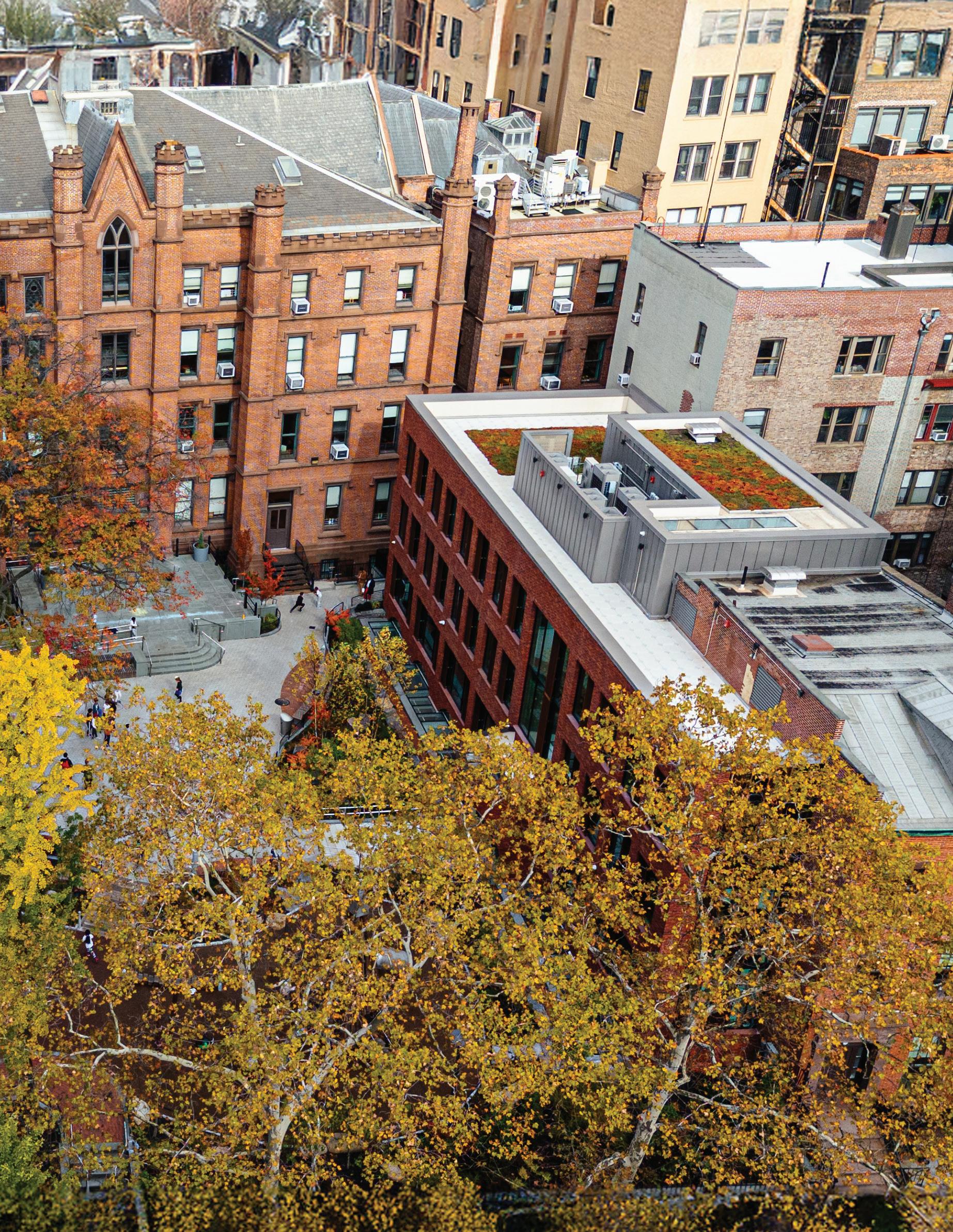
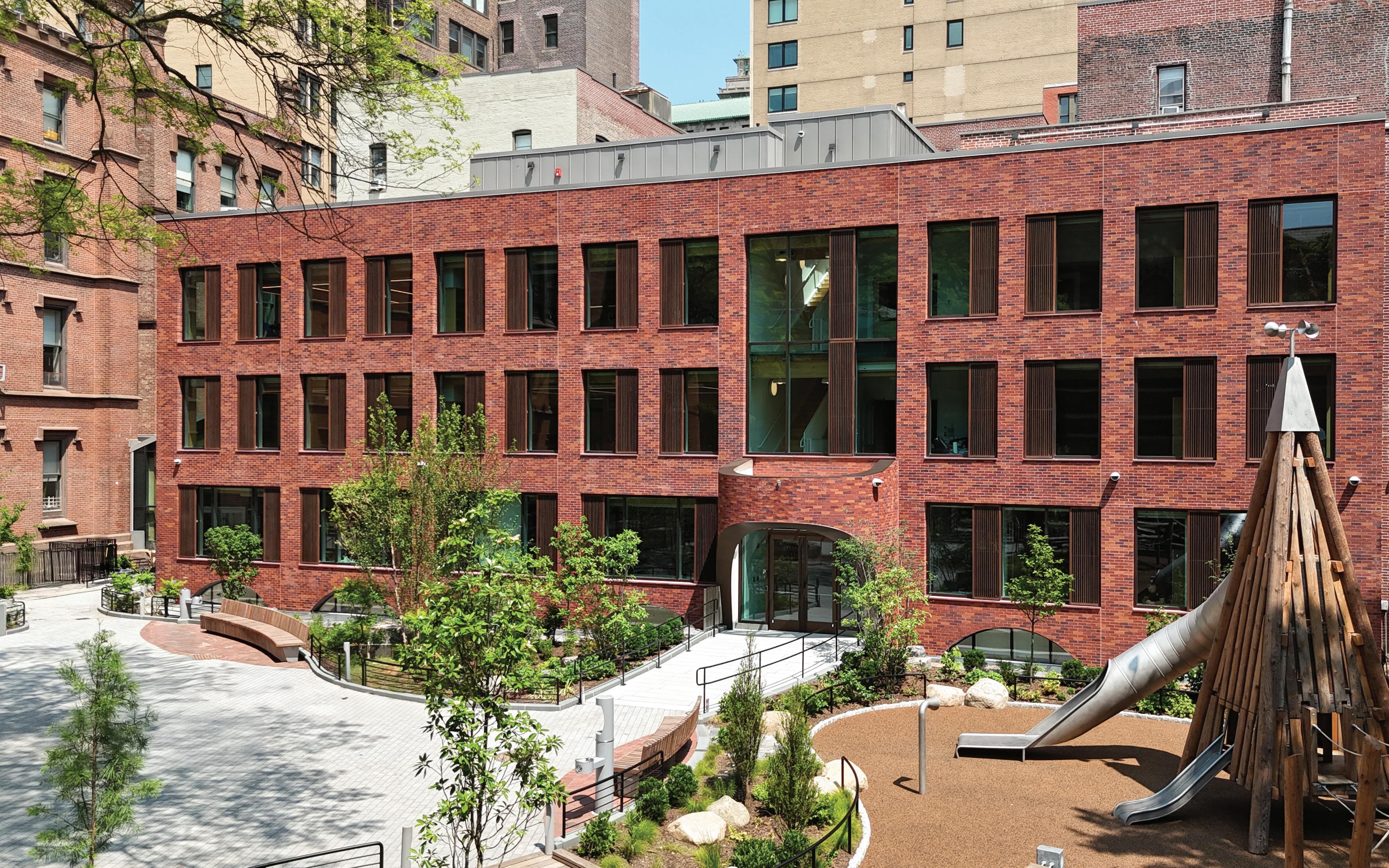
Aerial view from Livingston Street, featuring the new Garden House and renovated Packer Garden.
A Home for the Future: Celebrating the Completion of the Garden House and Garden Renovation
In the fall of 2025, the Packer campus reached a transformative milestone with the grand opening of the new Garden House and the fully renovated Garden. The effort involved the renovation of an existing 8,200-square-foot landmarked brownstone, paired with a 17,250-square-foot expansion. The project is the culmination of over 20 years of visionary planning to provide a “home base” on campus for every age of student we serve. By nesting the Lower School in this innovative new space, we also unlocked vital capacity for our Upper School program in historic Founder’s Hall.
“From Harriet’s time to today, our campus has reflected what’s possible when extraordinary generosity is paired with inspired design. That combination makes powerful education for our students possible.”
—Jen Weyburn, Head of School
Where History Meets Innovation
The Garden House story is a uniquely Packer narrative, one that honors a 181-year history while leaning boldly into the future. At a festive grand opening celebration, Head of School Jen Weyburn drew a direct line from the school’s founder, Harriet Packer, to the present day. Just as Harriet hand-selected one of the 19th century’s most influential architects to build Founder’s Hall in 1854, the choice to partner with WXY architecture + urban design for the Garden House renovation ensured that inspired design continues to power excellent education at Packer.
“We bring our past along, lifting up cherished historical spaces and bridging them with modern design,” noted Dr. Weyburn. This philosophy is visible in the physical connector—an all-weather bridge that joins the new expansion to the main campus, fostering the intentional
cross-divisional interactions that help relationships and belonging flourish at Packer.
A Purpose-Built Home for the Lower School
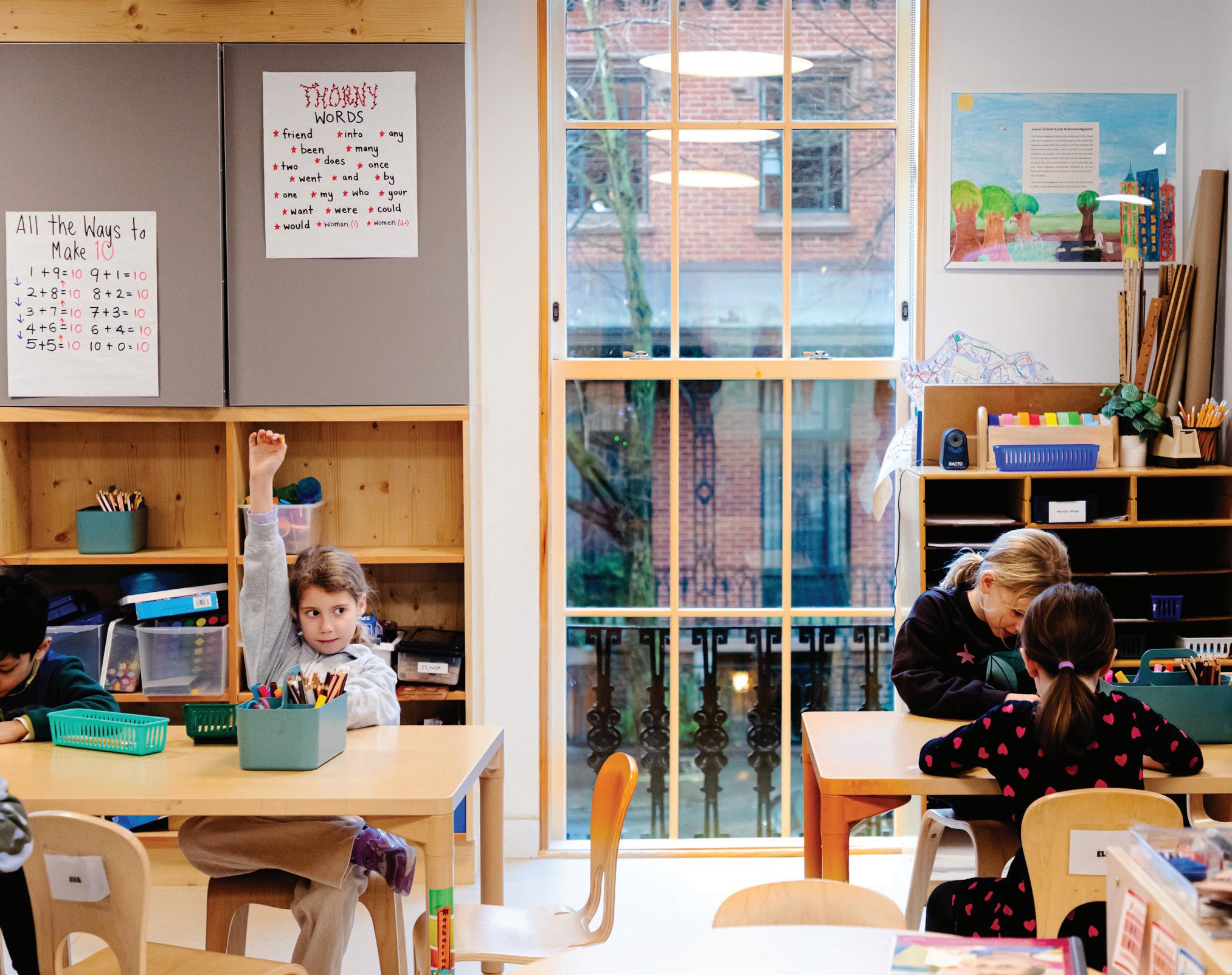
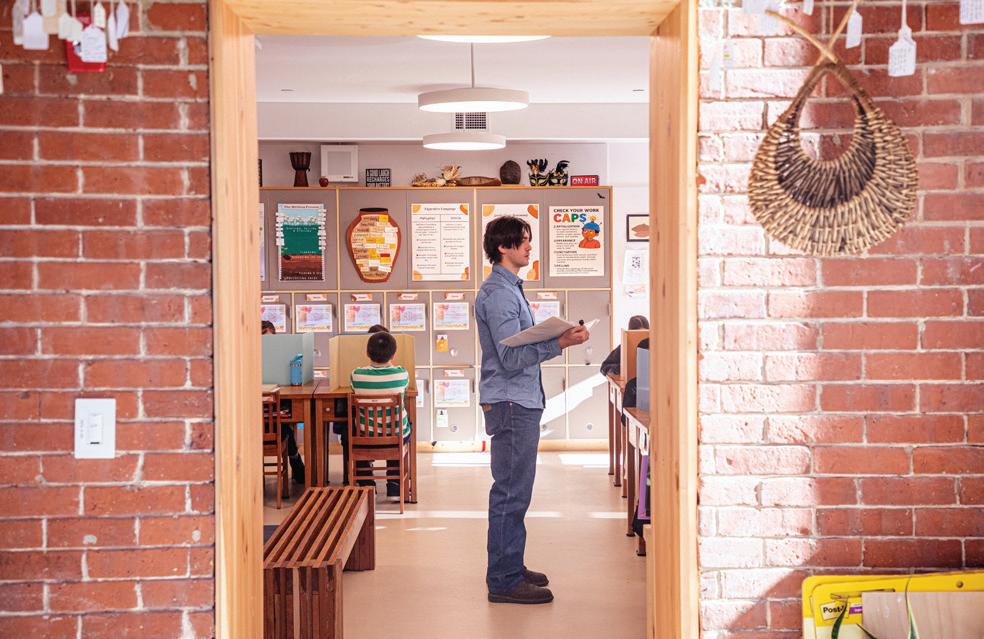
While the architecture is striking, the Garden House was designed from the inside out with a focus on how children learn best. The building functions as a series of grade-level communities, where dedicated floors offer students a sense of belonging and “neighborhood.”
Within these spaces, flexible in-room areas and hallway breakout zones support differentiated instruction, allowing teachers to adapt to students’ individual needs.
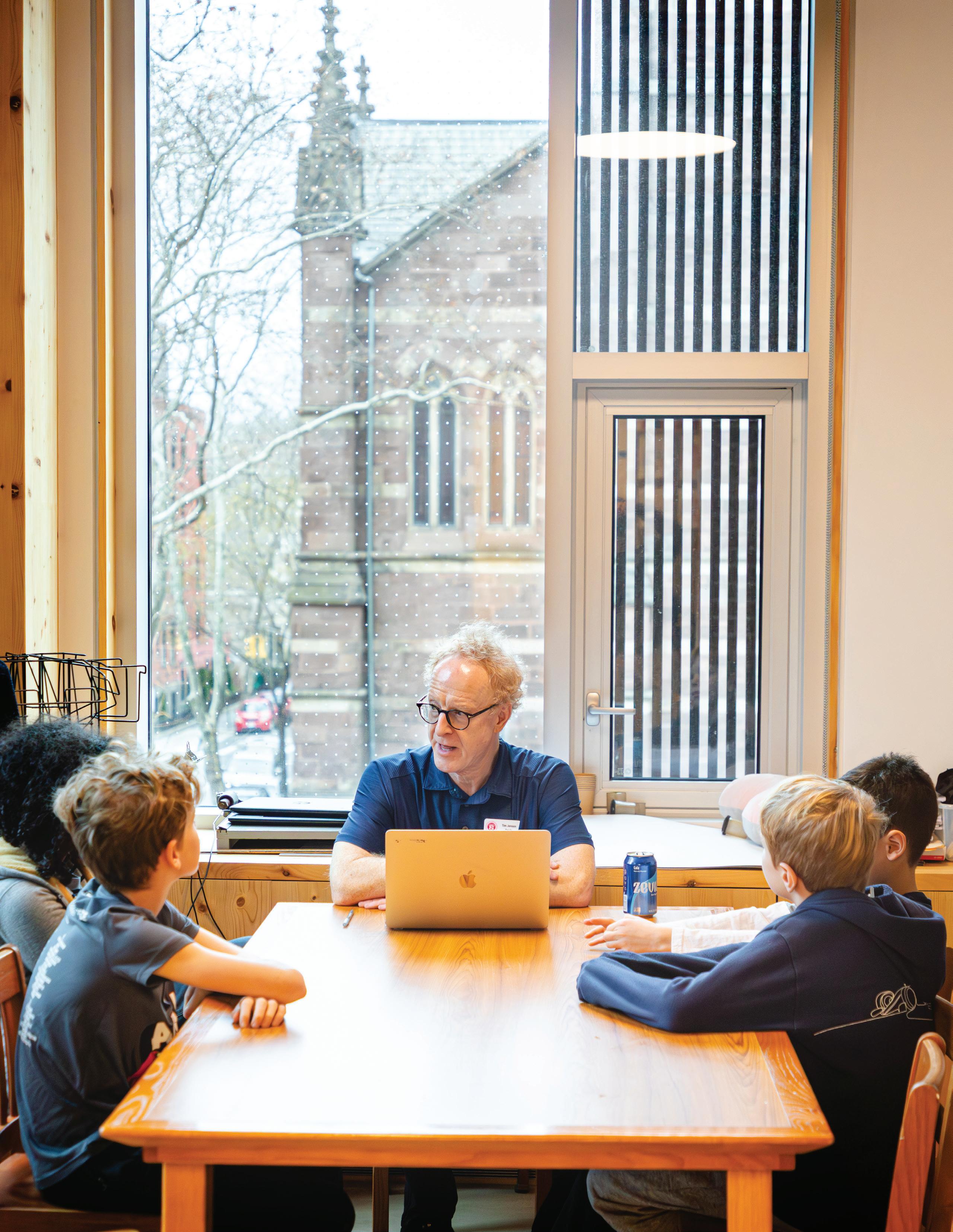
The power of the environment is felt in the abundance of natural light and the warmth of the exposed wood structure, creating a calm, organic atmosphere that research suggests improves student focus and wellness. By treating the architecture as an educational tool, Packer has ensured that the building remains as dynamic and adaptable as the generations of students it will serve.
Leading in Sustainability
The Garden House stands as a model of environmental responsibility, one of the first school buildings in New York State to feature a Cross-Laminated Timber (CLT) structure. By choosing naturally renewable wood over carbon-intensive steel or concrete, the project significantly reduced its “embodied carbon”—the energy required to create the building materials themselves.
The facility also prioritizes long-term health and wellness through its all-electric mechanical systems. By anticipating a renewably sourced electrical grid and eliminating on-site combustion, the building provides a net-zero ready environment with optimized indoor air quality. Even the building’s exterior reflects this commitment, featuring a brick façade composed of 100% recycled clay content that mirrors the aesthetic of the historic campus through a contemporary lens.
The Garden: An Urban Forest for Play and Science
The renovated Packer Garden has been reimagined as a thriving ecosystem that serves as both a playground and a living laboratory. Designed in collaboration with Starr Whitehouse, this “urban forest” features over 40 new trees and 1,000 perennials, with nearly 90% of the species being native or climate-adaptive.
Sustainability is woven into the ground itself through a sophisticated water management system. Permeable surfaces and a series of swales collect and reuse stormwater, naturally managing runoff while irrigation for the lush greenery is handled on-site. For the students, however, the technical marvels are a backdrop to the “important business of play.” As one remarked
upon encountering a new state-of-the-art play structure in the Garden: it’s more than just wood and rope—it is a “rocket ship” into the future.
National Recognition and a New Beginning
The design and academic communities have taken note of Packer’s commitment to excellence. The new Garden House was honored with a Merit Award from the AIA New York Center for Architecture and was featured in the November 2025 issue of Architectural Record, which praised the project for pointing the way toward a more sustainable, human-centered future for urban schools. Ultimately, these accolades are a testament to what is possible when the Packer community comes together with a shared purpose. The Garden House came to life through a transformative capital campaign and the steadfast support of a community willing to invest in Packer’s next century. As Board Chair Marnie Worth ’88 noted during the dedication, the completion of the Garden House marks both an end and a beginning. It is the successful conclusion of a significant chapter of construction, but it also serves as the cornerstone for a new path forward—a first step in ensuring that Packer’s historic campus continues to evolve in service of its students for many years to come.
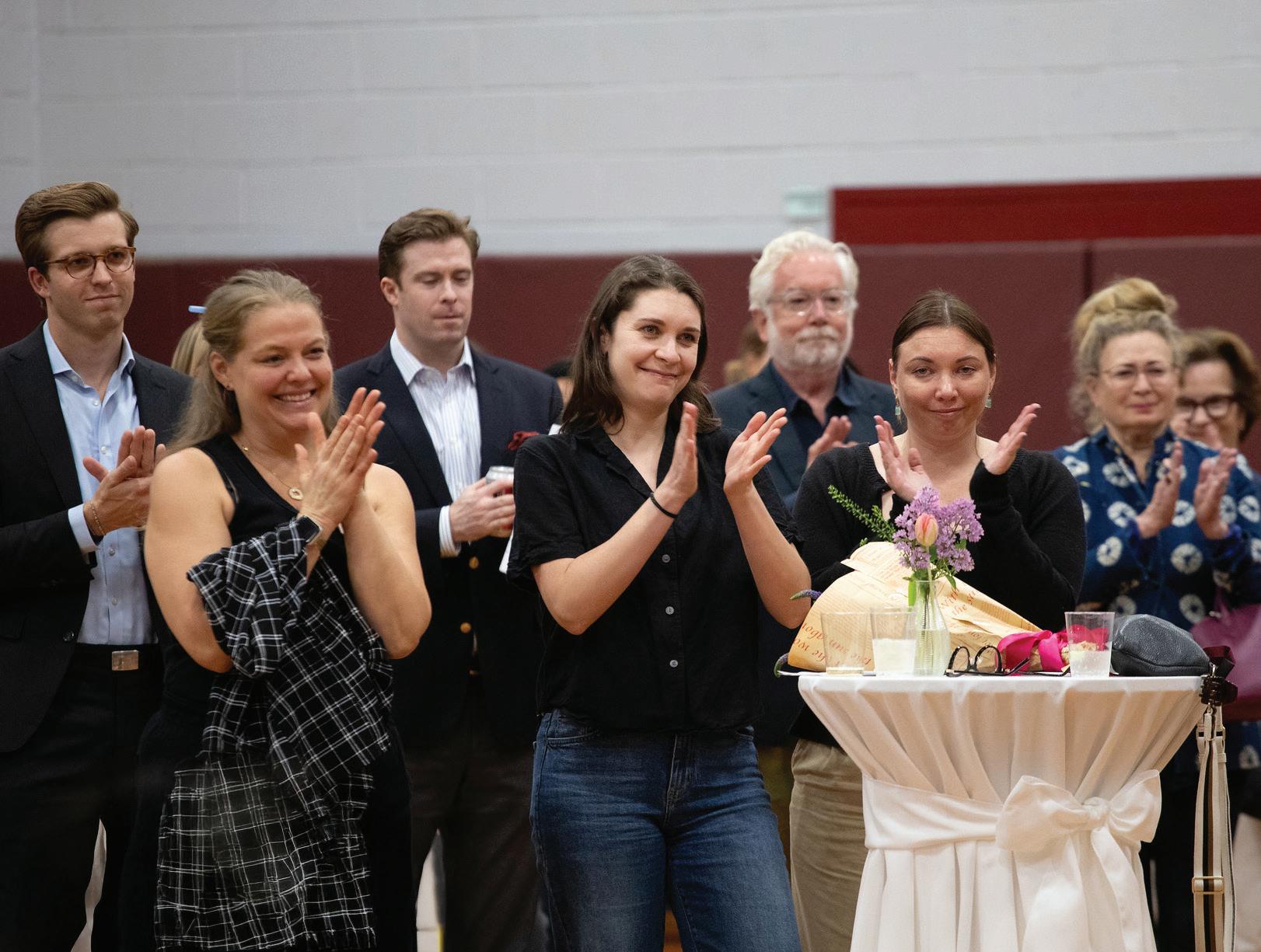
The Garden House grand opening celebration
News from the Board of Trustees
Packer’s Board of Trustees periodically elects new members, while the service of other members comes to an end. Our trustees serve three-year terms, many serving for more than one term. In June 2025, the Board welcomed two Packer parents and two alumni.
Roy Astrachan
Roy has been a Packer parent since 2017 and has daughters in the classes of 2030 and 2032. He is a Managing Partner and Portfolio Manager at Hudson Bay Capital Management. He holds a BA in Applied Math from Harvard. Roy sits on the Finance and Diversity, Equity, Inclusion and Belonging Committees.
Mandeep Singh ’11
Mandeep has led business operations and strategy at high-growth startups. He currently helps lead sales strategy at Rippling, where he develops and implements crossfunctional systems that support sustainable growth and align teams around shared goals. Previously, he held similar roles at Dropbox and Zenefits. Alongside his work in the tech sector, Mandeep is deeply committed to creating social impact through critical community organizations. He holds a BA from Columbia University. He sits on the Diversity, Equity, Inclusion and Belonging Committee and the Development Committee.
Betsy Mallow
Betsy has been a Packer parent since 2017, with children in the classes of 2030 and 2032. Betsy has dedicated her professional career to issues of social justice and currently serves as the Chief Operating Officer and Executive Deputy Commissioner of NY State’s
Affordable Housing Agency, HCR. Betsy also chairs the board of the Violence Intervention Program, a non-profit that serves mostly Latinx survivors of intimate partner violence, and sits on the Board of Governors of the Brooklyn Heights Association. Betsy graduated from Brown University with a degree in International Development and went on to receive an MBA from Harvard. She sits on the Building and Grounds Committee and the Diversity, Equity, Inclusion and Belonging Committee.
Marleina Cohen ’17 Marleina was a Packer lifer, and graduated from Bucknell University in 2021 with a BA in Psychology and Education. She is an Assistant Vice President within the Professional Services Practice at Aon. She joined the Packer Alumni Board in 2023 and now proudly serves as its president. Marleina serves on the Committee on Trustees and Governance and the Risk Management and Audit/Pension Plan Committee.
Jamillah Hoy-Rosas ’94 P’22, P’27, Safiya Mitchell ’10, Evan Roth P’27, and Jeremy Schiffres ’07, whose terms concluded at the end of the 2024-25 school year, were thanked for their service.
Four trustees were re-elected to new three-year terms: Anne Marie Lubrano ’87 P’24, P’25, Neal McKnight P’15, P’18, P’23, Anjan Sahni P’28, P’32 and Hank Mannix P’29, P’31, P’33.
In addition to Board Chair Marnie Worth ’88, P’20, P’22, officers for 2025-26 are: Neal McKnight P’15, P’18, P’22, Vice Chair; Reed Lowenstein P’24, P’26, Vice Chair; Meera Marti P’30, P’31, P’34, Secretary; Hank Mannix P’29, P’31, P’33, Treasurer, Aaron Reliford P’32, P’36 and AJ Pires P’28, P’30, At Large.
We are grateful to all of our trustees, who volunteer their expertise, time, and resources so generously to our community. Learn more about all the members at www.packer.edu/trustees.
Alumni News
of Alumni Engagement, Ronnette Hope
Commencement.
Dear Fellow Alumni,
With the passage of time, one truth becomes increasingly clear: change is constant. None of us are quite the same person we were six months after graduation or even decades later. And yet, amid all that change, one thing remains remarkably steadfast—this community.
A Packer education is not just a moment in time; it is a lifelong commitment to connection. Whether your memories were made over lunch in the Commons, in the classroom, or on the athletics field, they were made alongside friends who continue to shape your story.
This year brings a moment of transition for our alumni community as we usher in a new Alumni Board President. We are deeply grateful to Jeremy Schiffres ’07 for nearly a decade of devoted leadership, and we are excited to welcome Marliena Cohen ’17. What has not changed, and never will, is the enduring love Pelicans have for Packer and for one another. Please join me in welcoming Marliena.
As always, if you’d like to reconnect with Packer, receive correspondence and alumni news, or send me a Class Note for next year’s magazine, there are many ways to get in touch:
• Join us for Packer Reunion: Friday, April 24 + Saturday, April 25.
• Contribute to our new Reunion Giving Program in support of auxiliary financial aid for current students: https://boostmyschool.com/PackerReunionGiving
• Follow us on Instagram @packer_alumni and @packercollegiate or Facebook. Find our LinkedIn group: “Packer Collegiate Institute Alumni”
• Check out Packer’s website at www.packer.edu/news to read about the latest happenings on campus.
• Watch your inbox for periodic Alumni Newsletters and your mailbox for The Packer Magazine
• Email me at rhope@packer.edu, if you have ideas about new ways for alumni to connect to each other or the school. Want to speak to a class, connect with Packer teachers, or host a regional meetup? Reach out!
Macte virtute,
Ronnette
Hope ’07
Director of Alumni Engagement
Director
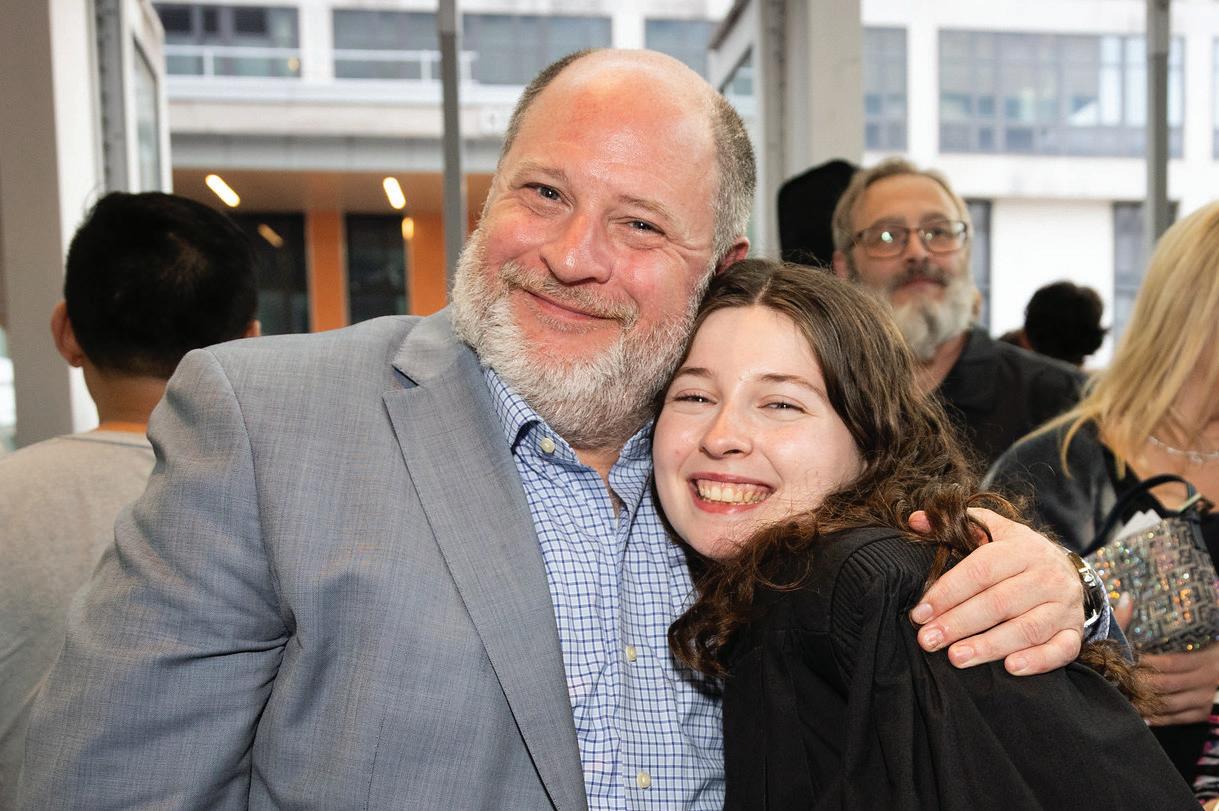
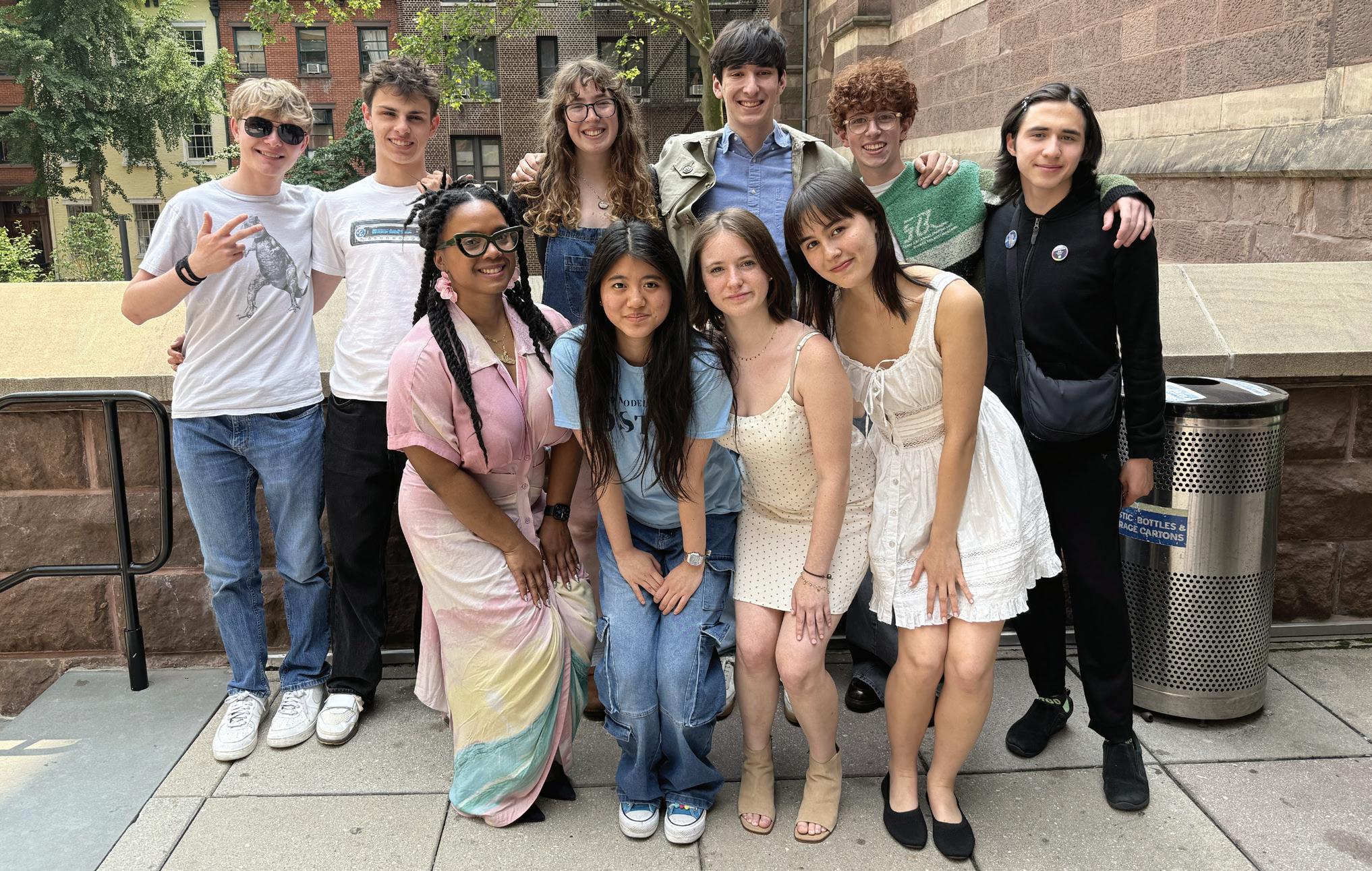
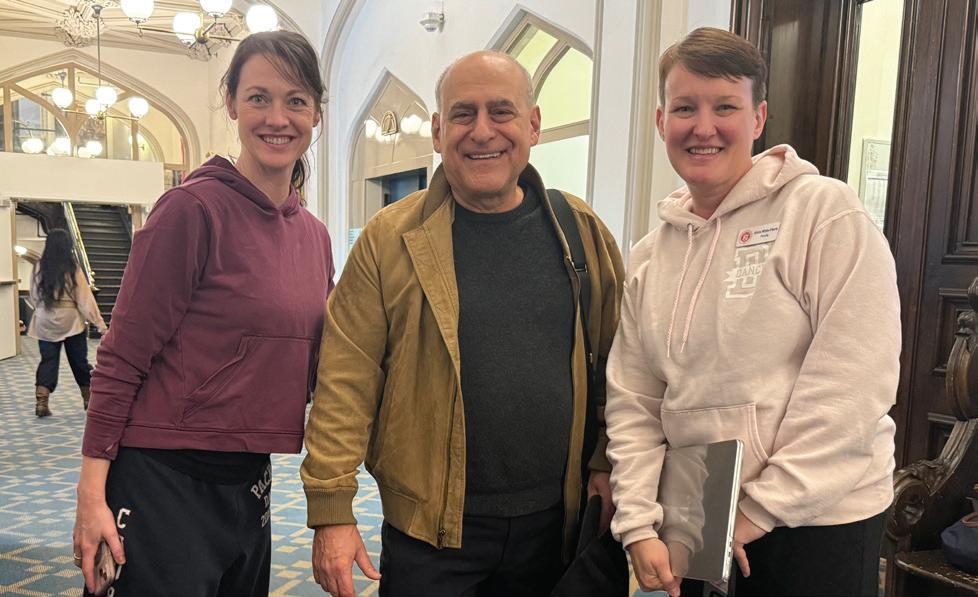
’07, with some of our newest alumni from her Class of 2025 advisory at the Senior Soirée, the day before
My Fellow Pelicans,
I am Marleina Cohen, Class of 2017, and I am proud to serve as the new President of Packer’s Alumni Association. I want to take this moment to introduce myself to our community.
I am a proud lifer, having attended Packer for 15 years. My experience here instilled in me the core values I rely on every day: the desire to be a lifelong learner, the confidence to speak deeply and clearly, and a strong sense of empathy and community.
My gratitude for Packer is truly endless. It shaped every aspect of my life, from my education to my personal relationships—I met the love of my life, my fiancè Matt Coletta ’17, at Packer during our senior year.
I never played one sport consistently, instead trying different ones, even waking up extra early for yoga before school. I joined various clubs—I especially loved my time in “Cooking for a Cause” when we all baked for one another. However, the most consistent part of my Packer experience was hanging out with my friends every day after school, whether it was in the Commons or at Harry’s. Packer has always fostered a true sense of community in my life.
My relationship with Packer deepened after graduation. After reconnecting with Ronnette Hope ’07, I was inspired to become more involved and soon joined the Alumni Board.
I look forward to building upon the incredible work of past presidents, including Jeremy Schiffres ’07, Geoff Brewer ’82, and Cynthia Gardstein ’66IVAc. I am also excited to serve as the Alumni Association’s representative on the Board of Trustees alongside Recent Graduate Trustee Mandeep Singh ’11.
My hope is to encourage every alumnus to cherish their Packer memories while also working together to be better stewards of our alma mater—for current and future students.
I look forward to meeting many of you at upcoming events!
Warmly, Marleina Cohen ’17 Alumni Association President
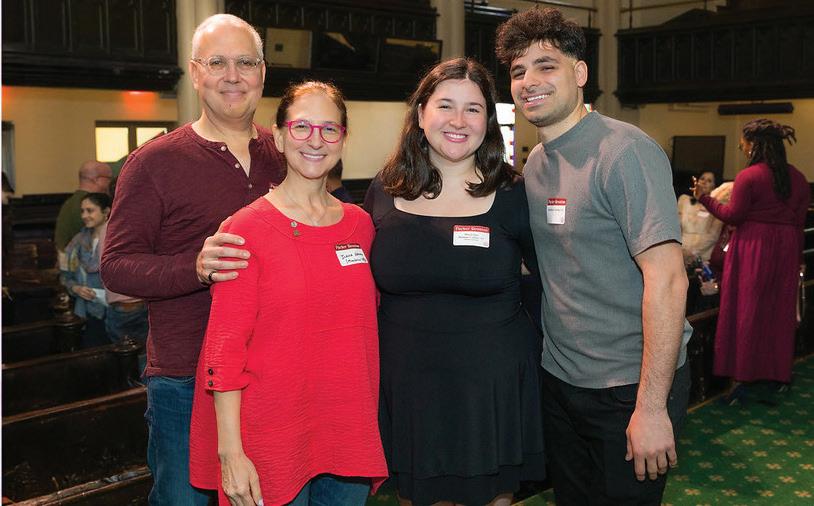
Marleina Cohen ’17 with her parents and fiancè, Matt Coletta ’17, at Reunion 2025
Still ‘Growing’ 40 Years Later: Reflections on Dance at Packer
By Scott Enman ’11
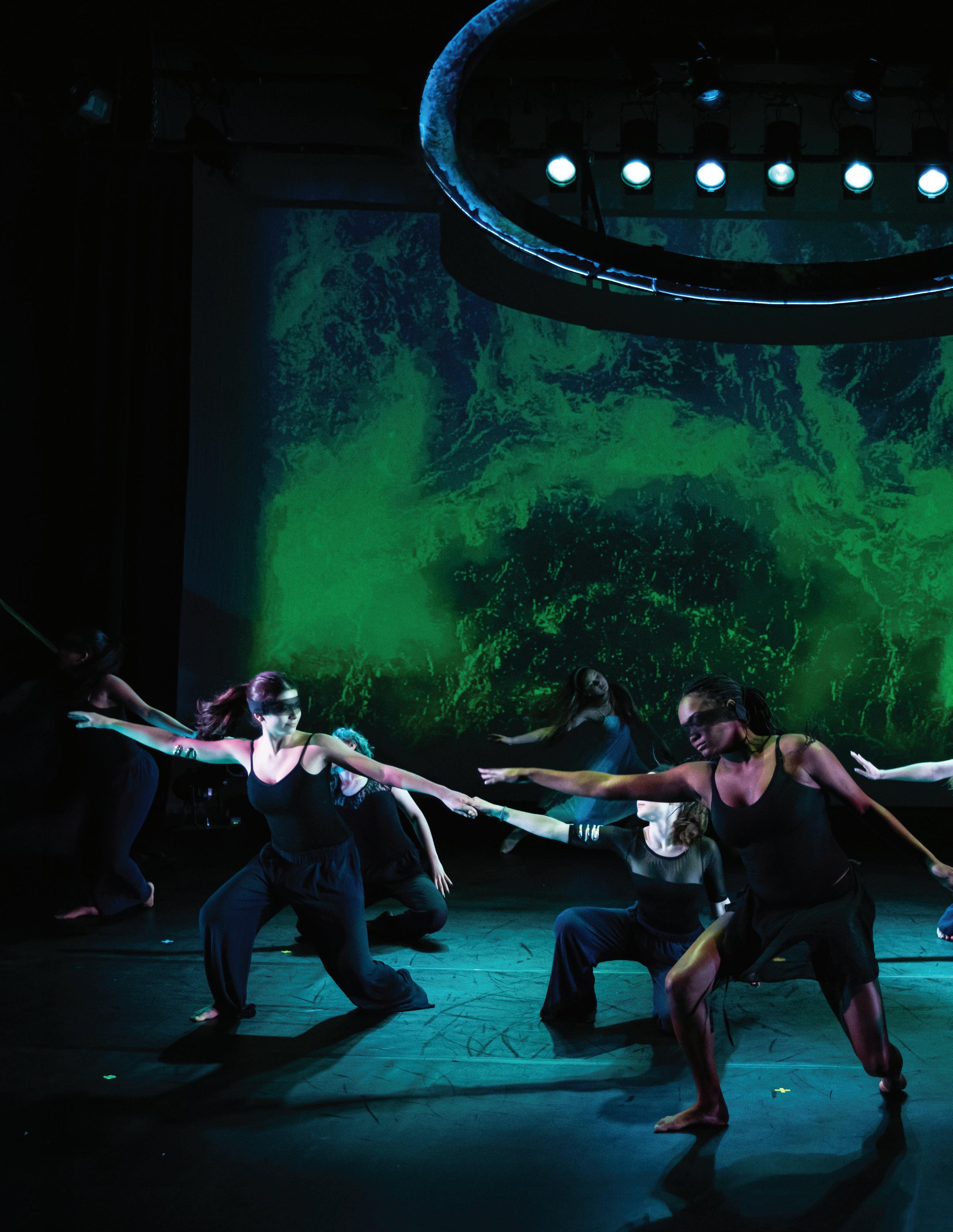
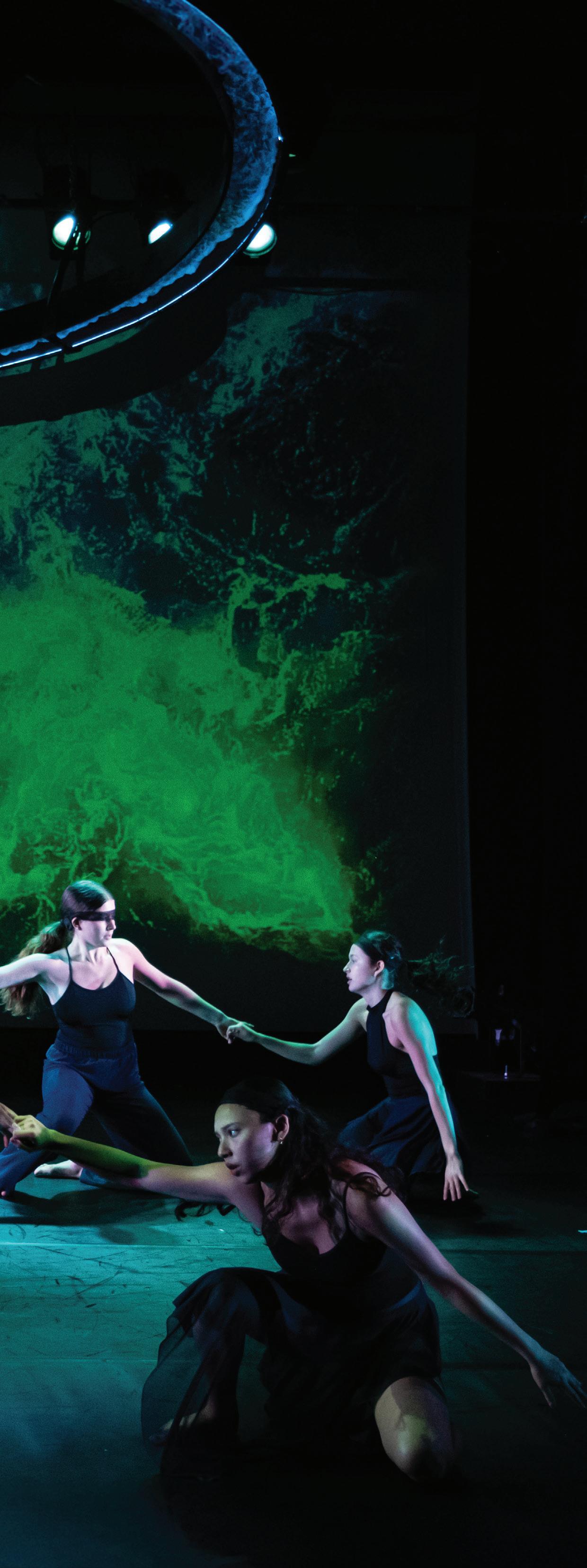
A scene from the 2026 Dance Concert “Embodied Elements: Earth, Water, Air, Fire.”
Dance at Packer has always been more than a performance art; it is a laboratory for leadership. From 19th-century pioneer alumna Ruth St. Denis, widely considered the mother of modern dance, to the contemporary, transformative co-leadership of Mandy Stallings and Alicia White P’37, Packer has long empowered students to find their voices through movement.
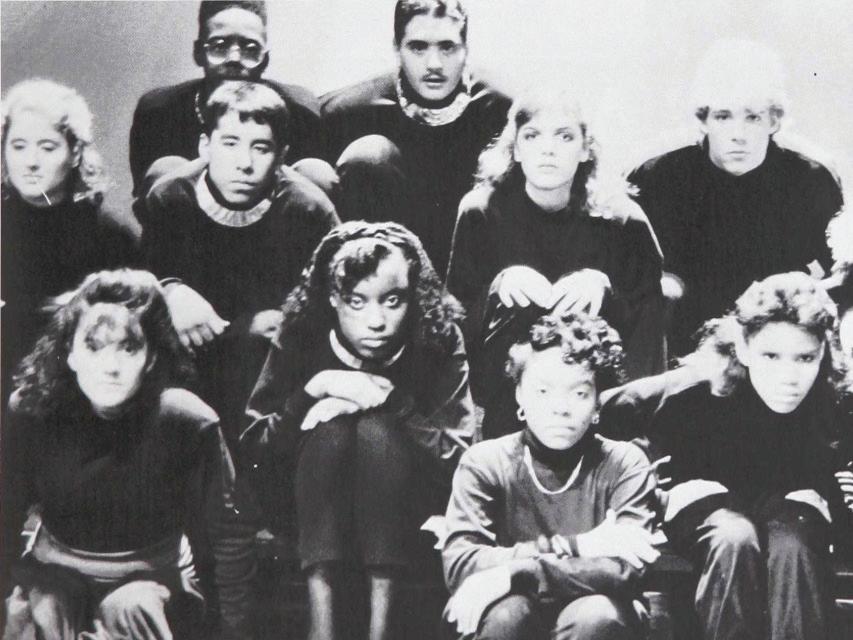
This culture of creative agency is perhaps best captured by a milestone celebrated at last spring’s Reunion: the 40th anniversary of “I’m Growing.” Choreographed in 1985 by then-teacher Stephan (Steve) Koplowitz who would go on to become an internationally acclaimed artist—the piece featured an all-male student cast, part of the school’s inclusivity efforts after becoming fully co-educational in 1972. While the faces and the faculty change, the core of the experience remains constant. Here, The Packer Magazine looks back at that specific moment in time to explore how our dance program continues to foster the “heroic” in every student.
Humble Beginnings
Shortly before Steve Koplowitz came to teach at Packer full-time in the fall of 1984, he was at a bit of a crossroads.
After graduating from Wesleyan University and earning his MFA at the University of Utah, he returned to New York hoping to establish himself as a professional choreographer. But things didn’t exactly go according to plan.
“I get to New York to try and make it as a successful artist, and I have a complete—it wasn’t a full nervous breakdown—but it was a major crisis of confidence,” Steve says. “I panicked. I’m thinking, ‘I’m not gonna make it. Maybe I should’ve listened to my parents and gone to law school.’”
But a conversation with his dad—and a chance opportunity at a certain Brooklyn school—would change everything.
“I went to see my parents and admitted to them just how depressed I was about my life, that I’d made a bad decision to try and be an artist,” Steve recalls. “And my father said, ‘Steve, what is it that you would like to do? What would make you happy?’
“I said, ‘I’ve been a part-time replacement teacher at Packer, and they offered me a full-time job, and I’d like
at
to take that job.’ And my dad said, ‘Go to Packer. Be the best dance teacher you can be, and don’t think about anything else. Good things will follow.’”
It didn’t take long for Steve to leave an indelible mark on the program. The first piece he choreographed for the annual Dance Concert would end up jumpstarting his career as an artist.
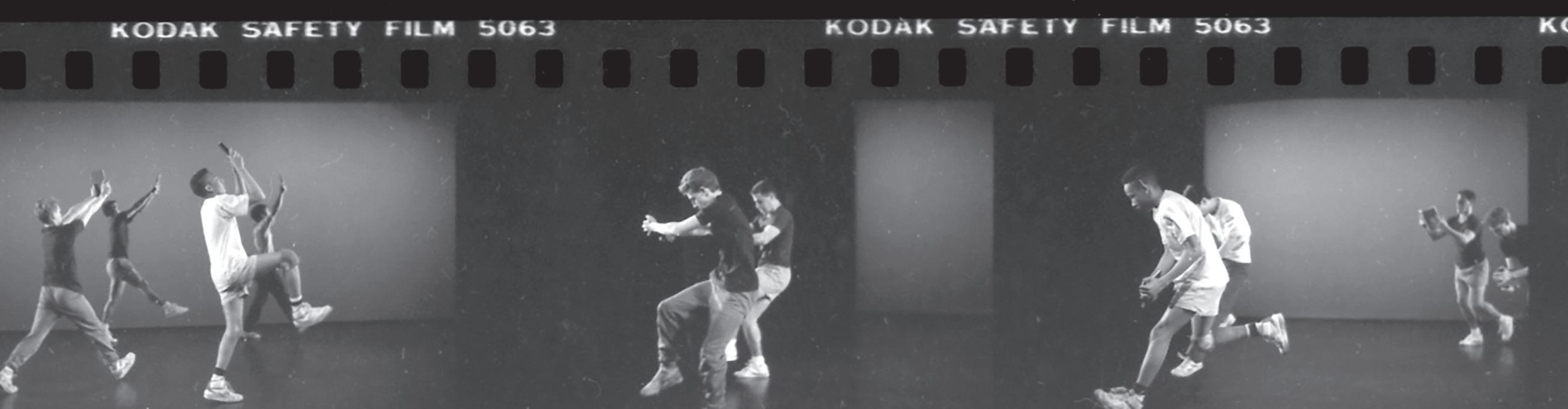
“I’m Growing” brought together Middle and Upper School boys, some with no experience in dance, and introduced them to an expansive, collaborative approach to choreography. The 12-minute piece aimed to capture “a day in the life of a boy”: the battle of waking up in the morning, the demands of classes and homework, competing in sports after school, and the fear of being drafted in a war. It incorporated theatrical elements and featured recorded snippets of students talking about their days against the soundtrack of Conan the Barbarian
“I thought it would give a sense of these boys as heroes,” Steve recalls. “‘I’m Growing’ was created out of my desire to communicate the energy, the urgency, and the fun of adolescence. I wanted the dance to speak not only to the young but to adults as a reminder of their own rites of passage.”
The original cast included Clark Buckner ’86, Eulie Chambers ’89, Jeffrey Jordan ’85, Jonathan Kinzel ’86, Seth Margolis ’89 and Michael Poster ’89. Jeffrey, a student athlete who scored 1,000 points on the Packer basketball court, said he initially got involved as a way to increase his flexibility and enhance his basketball game. Many years later, he realized just how influential Steve’s piece was on his life. The community, commitment, and dedication reminded him of sports. The rehearsals were like basketball practices. The dancers, choreographers, and production personnel were just another version of a team.
“What I noticed right away is the title of it,” Jeffrey says. “‘I’m Growing’ was so appropriate for me because it took me out of my comfort zone. It stretched me. It made me appreciate other perspectives, people with different interests, all with a common goal. It fostered a new sense of security and a new sense of community.”
Cultivating a Creative Home
After “I’m Growing” premiered at Packer, a friend suggested Steve submit it to the Celebrate Brooklyn Festival in Prospect Park. The New York Times gave it a rave review, and it went on to be performed in over a dozen other venues from 1985–1996. Steve continued to teach at Packer for over twenty years while pursuing a career as a professional choreographer.
“Packer was instrumental in nurturing me and informing me as an artist,” he says. “All of a sudden, people were looking at me like I was a choreographer. In my mind I was just following my dad’s advice, focusing on being a teacher, not focusing on my career.”
Packer students and faculty members continued to appear in later iterations of “I’m Growing,” including two alumni who now sit on the school’s Board of Trustees: Daniel Feigin ’88 and Francisco Tezen ’93.
“In a sense, Packer was my laboratory,” Steve says. “I would keep making dances for the Dance Concert, and then see if they were good enough to translate to the professional world. Looking back, I was really able to weave Packer into the fabric of my art making and into my life. I learned that maybe I wasn’t meant to make dances with conventional, classically trained technical dancers, but [instead] make dances out of my community—and my community was Packer.”
Steve credits former Head of School Geoff Pierson and Packer’s focus on professional development for the flexibility to balance his teaching with his work as an
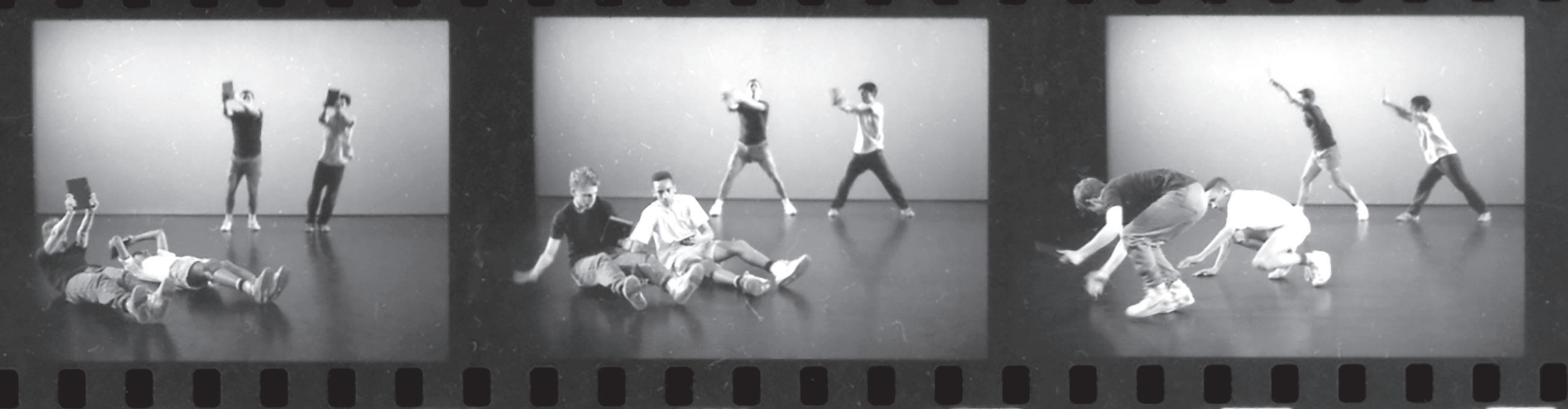
Above and
right, contact sheets from the original 1985 production of “I’m Growing”
artist. The school allowed him to take short leaves to pursue his growing career.
He went on to become a globally recognized artist specializing in site-specific multimedia. Perhaps his most famous work was “Fenestrations,” an acclaimed 1987 performance in the windows of Grand Central Terminal that he reprised in 1999 after the station reopened following a renovation. He also spent a decade as Dean of Dance at The California Institute of the Arts. Steve’s work has been recognized with National Endowment for the Arts Choreography Fellowships, Bessie and Herb Alpert awards, and a Guggenheim Fellowship, among other honors. At Packer, he was recognized with the Babbott Chair in 1990.
The Next Movement
The success of “I’m Growing” was not an isolated event, but a reflection of a program with deep roots. Steve is quick to note that he inherited a robust tradition from predecessors like Katherine Stoessel and Karen Burley, while Anne Sullivan, Kathleen Hill, and Katie Gibson continued to nurture and evolve the program after he left. “We had very high standards,” he recalls. “I always used to say that the choreography students were learning was at a college level.”
That high bar was matched by a radical sense of inclusivity. Then and now, the beloved annual Dance Concert has served as a “big tent” for the Packer community. In a unique move for any arts program, it has never required students to be enrolled in a formal dance class to participate. It remains a space where any student can step onto the stage, provided they are ready to commit to the process.
This “student-first” philosophy is most evident in the choreography itself. The program empowers students to take the lead, shifting the role of the faculty from directors to mentors. “It was really about creating
leadership,” Steve says. “It was about young students taking on the responsibility of leading a group through a creative process.”
Today, current teachers Mandy Stallings and Alicia White P’37—the first co-recipients of the Babbott Chair for excellence in arts teaching—have taken that inclusive DNA and expanded it across every division. “We are really interested in engaging the full community,” Mandy says. From introducing dance to Preschoolers to staging exuberant cross-divisional performances like “The Ties that Unbind,” they have ensured that dance at Packer is a shared language.
By bringing icons like Misty Copeland to campus to read to the Lower School and mentor Upper Schoolers, Mandy and Alicia continue to bridge the professional dance world with the Packer classroom. It is a lineage of leadership that remains true to the spirit of 1985 while moving forward into the future.
Reflecting on his decades at the school, Steve sees a program that hasn’t just survived, but flourished: “The older I get, the more I appreciate what Packer was and is—its commitment to culture, its professionalism, and most importantly, its abundantly talented students.” At Packer, the dance never ends; it just keeps growing.
Steve with current dance teachers Mandy and Alicia
A Legacy of Service:
Founder’s Day with Nicole Rodriguez Leach ’93
“That’s what education can do. That’s the power of learning. It shapes not only what we know, but who we are becoming. And that idea—that education helps us become—has been at the heart of my work, my service, ever since. You see, a combination of good luck, strong networks, and my own skillful strategy, has allowed me a career where I get to live my service.”
—Nicole Rodriguez Leach ’93
On November 11, the Packer community gathered in the Chapel for our 114th Founder’s Day, an annual opportunity to honor the generosity of Harriet Packer and the enduring educational foundation she established. Hosting an alumni speaker each year allows us to reflect on our roots and reaffirm Harriet’s conviction that education is a transformative force, capable of shaping not only individual lives but entire communities.
This year, we welcomed back Nicole Rodriguez Leach ’93, Executive Director of Grantmakers for Education. As the leader of a national philanthropic network dedicated to educational equity, Nicole stands as a powerful embodiment of the Packer mission in action. Addressing students in the Chapel, she reflected on how her time at the school wove together a “braid” of curiosity, creativity, and confidence—qualities that became the catalyst for her career in social justice. She encouraged students to view learning not just as a personal achievement, but as a lifelong civic commitment and a tool for collective liberation.
The celebration concluded in the Commons with a nostalgic nod to Packer’s heritage. In a tribute to the “alumnae of yore,” guests enjoyed Founder’s Day cookies—a tradition inspired by the 1917 practice of mailing a signature recipe to any graduate unable to attend the fall reunion. It was a fitting end to a day that celebrated the unbreakable threads connecting Packer’s past, present, and future.
“Your
Packer education is still a radical opportunity today. It will be at the foundation of what you become. Founder’s Day isn’t just about looking back at history; it’s about recognizing the living thread that runs from Harriet Packer’s vision to the lives you’re shaping right now, and keeping that thread alive.”
—Director of Alumni Engagement Ronnette Hope ’07
Founder’s Day cookies, adapted from the original 1917 recipe
Reunion 2025: Spirit Unwavering
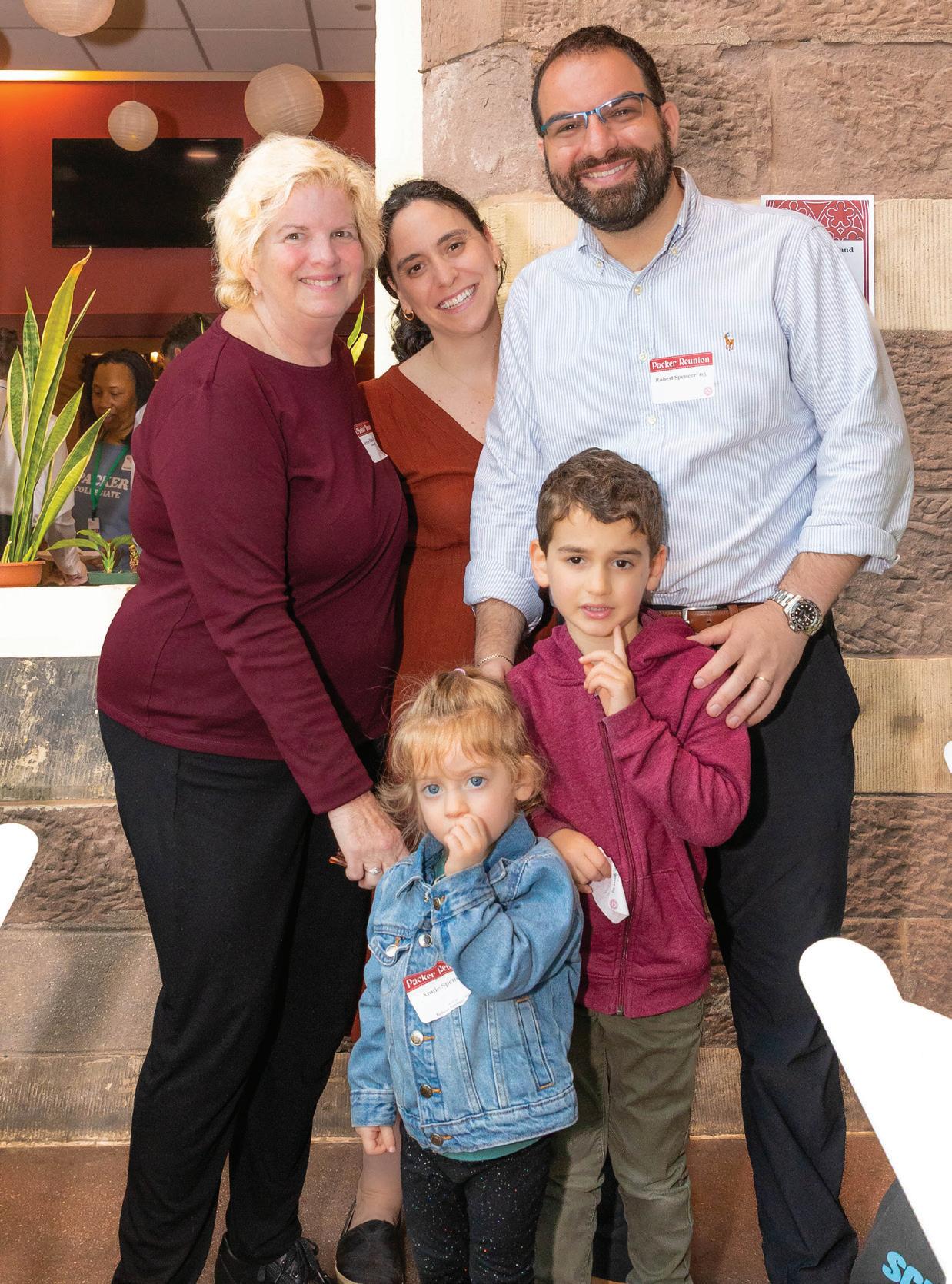
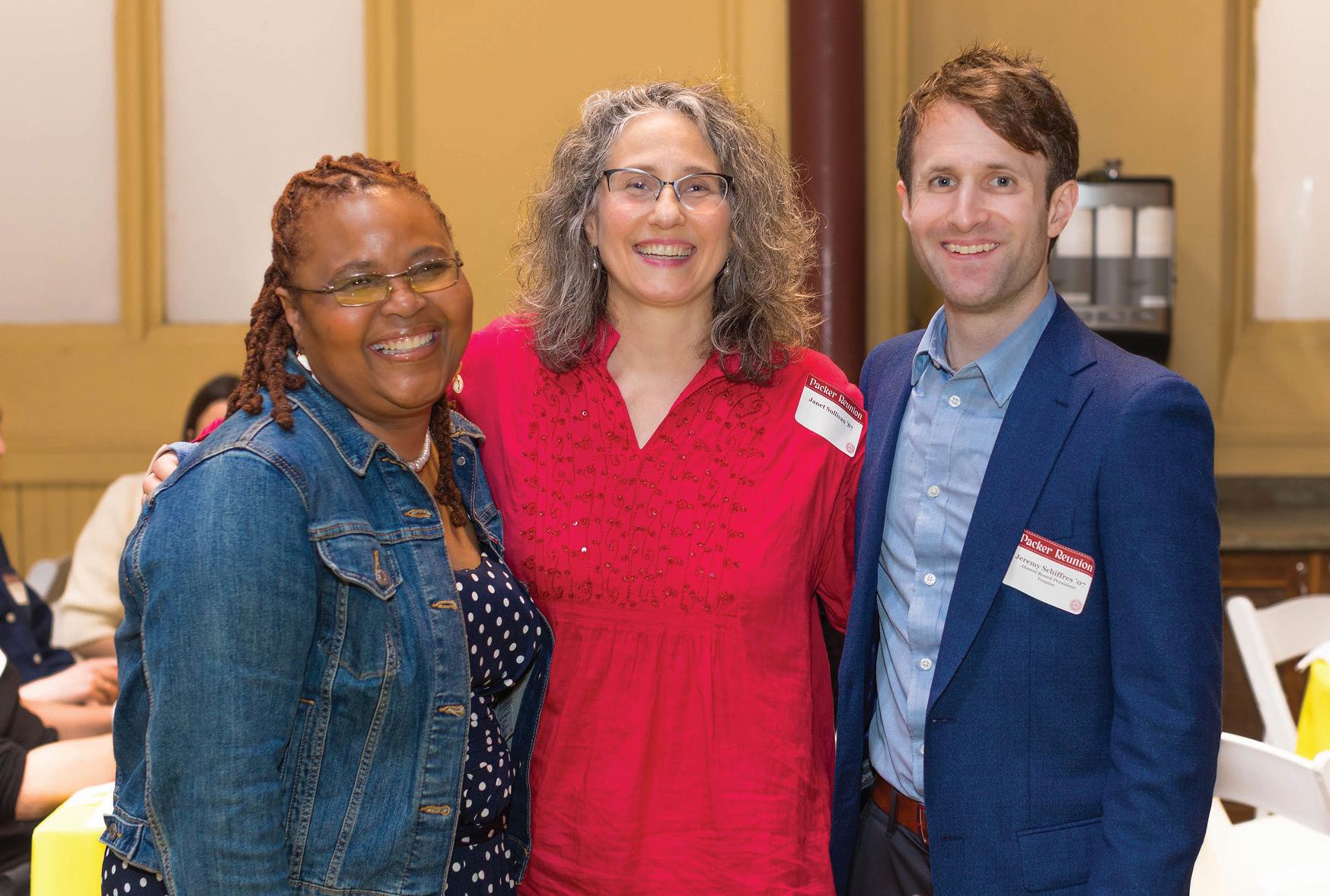
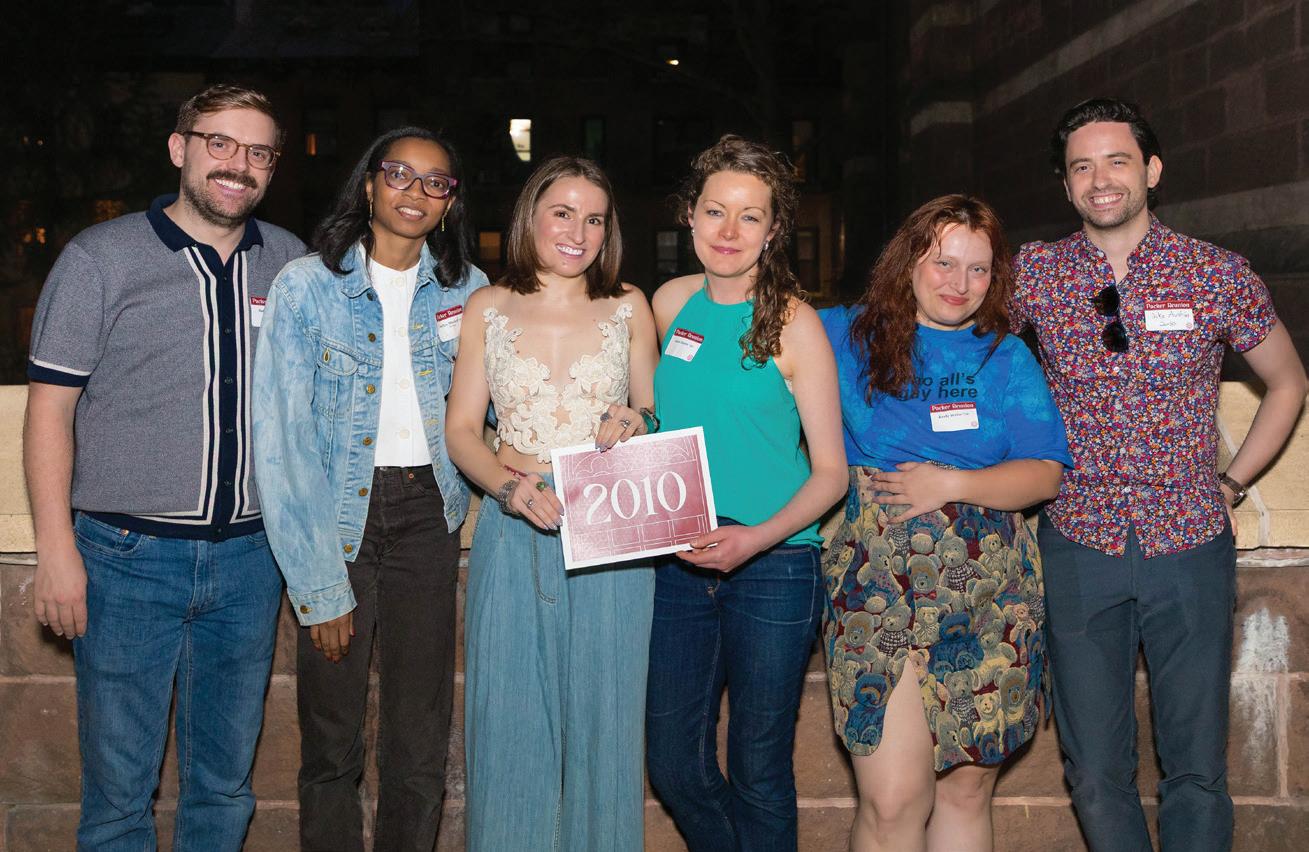
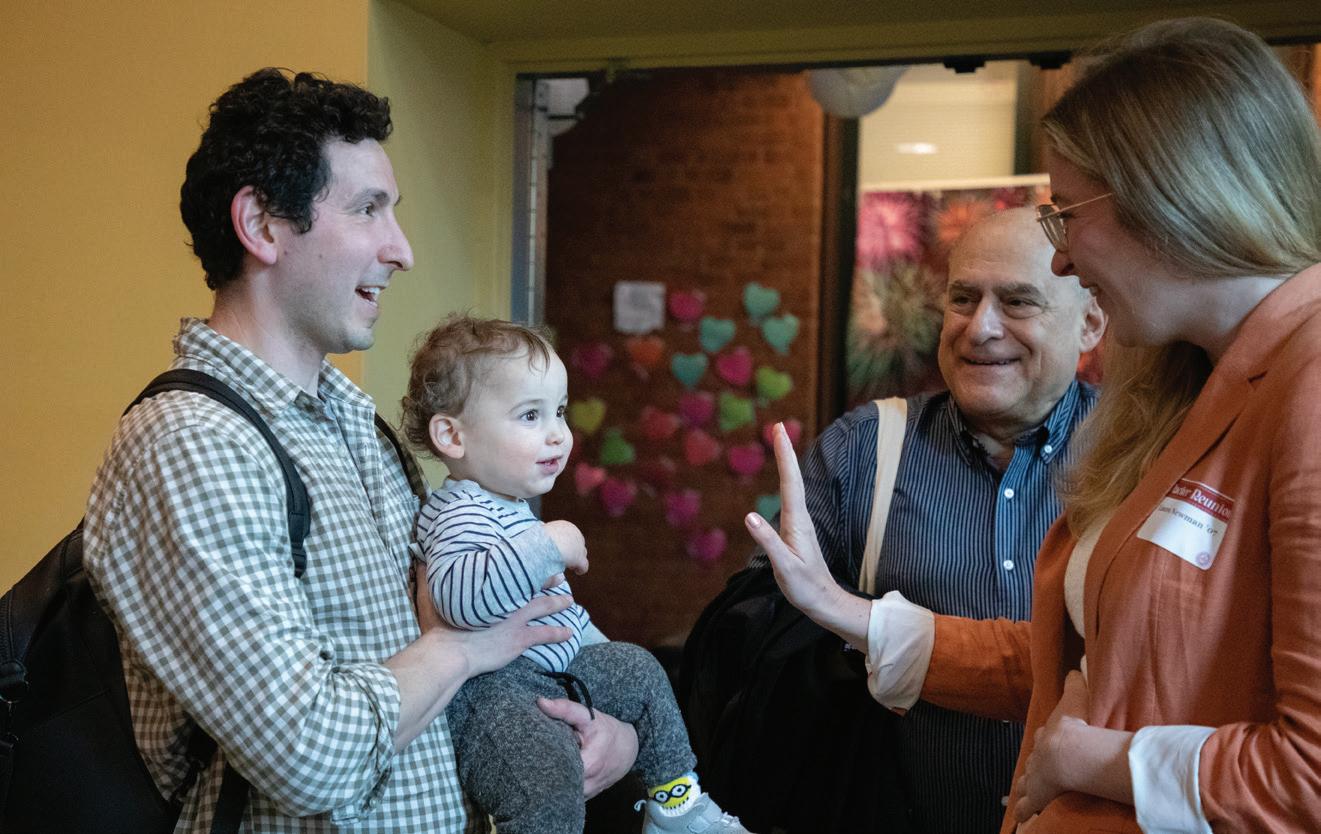
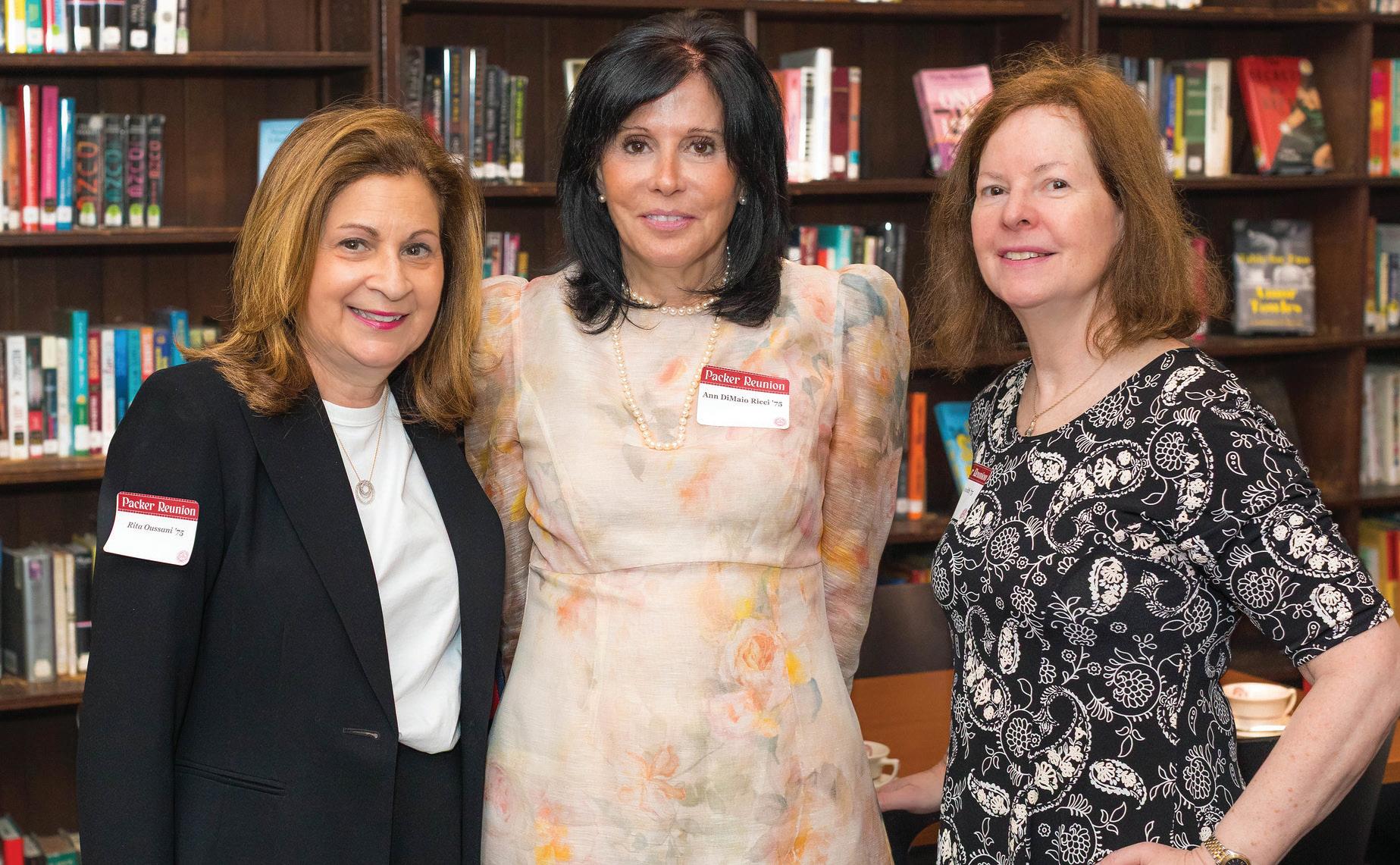
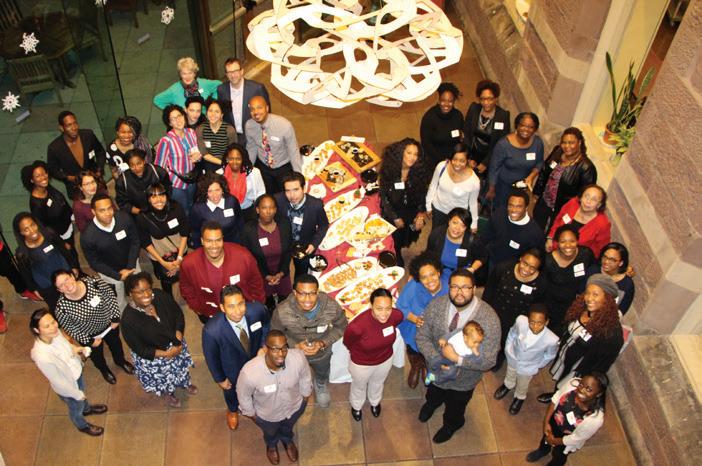
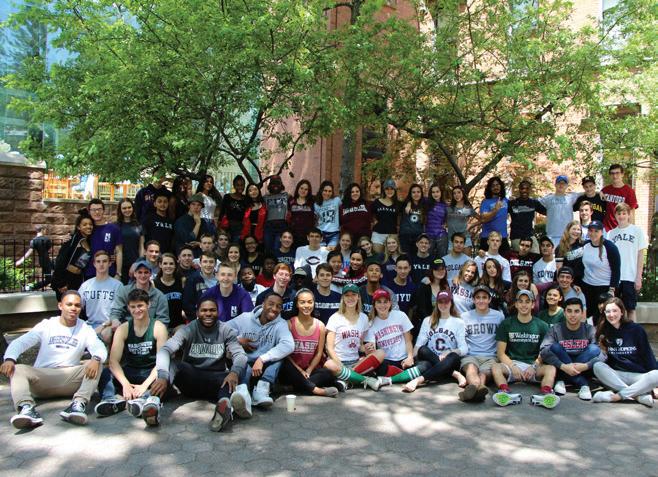
Packer welcomed Pelicans of all ages back to the nest last April for Reunion. Even after a slight hiccup when the elevator decided to sit this one out, the spirit of the weekend never wavered. Parts of the festivities were live-streamed for those who couldn’t attend in person.
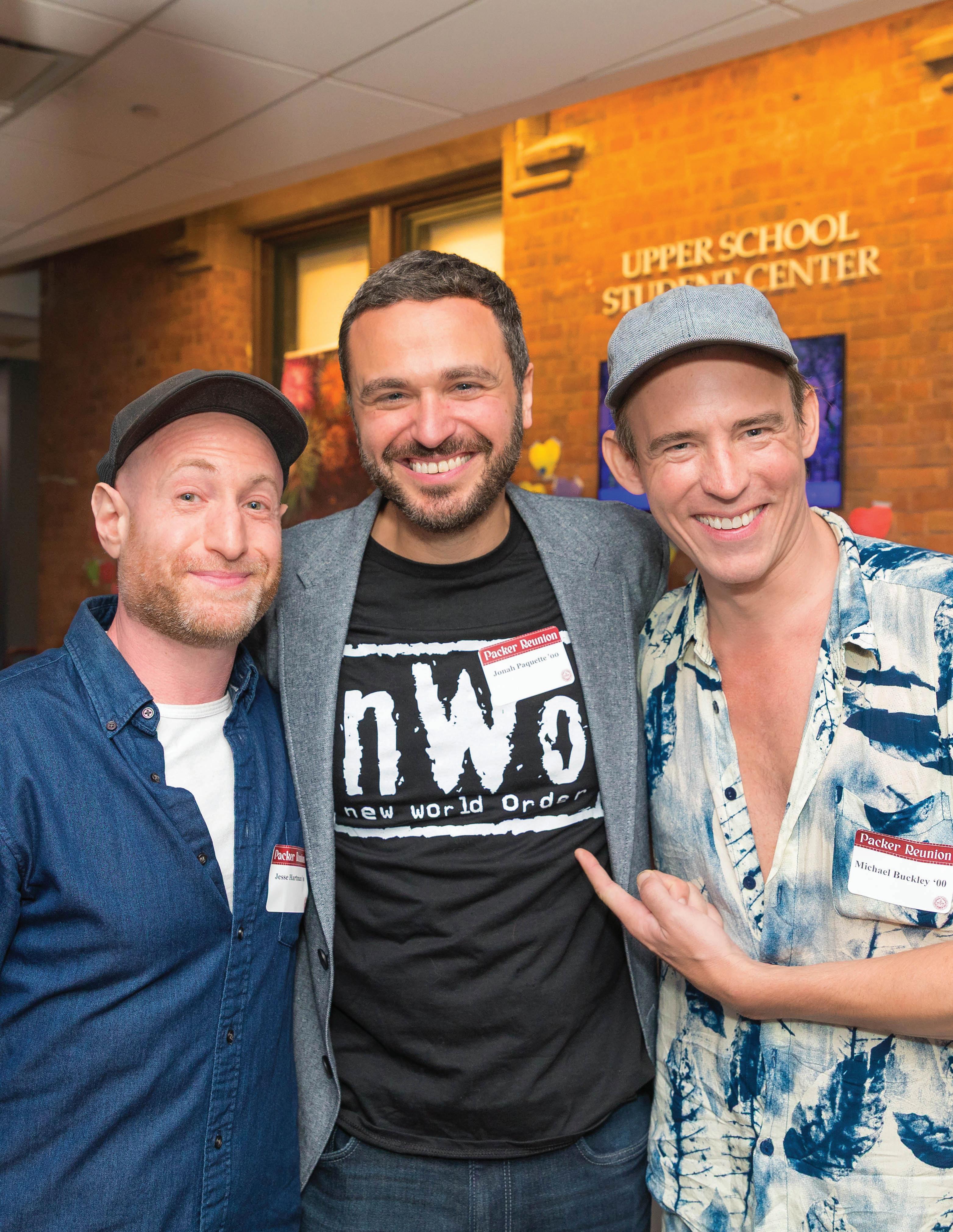
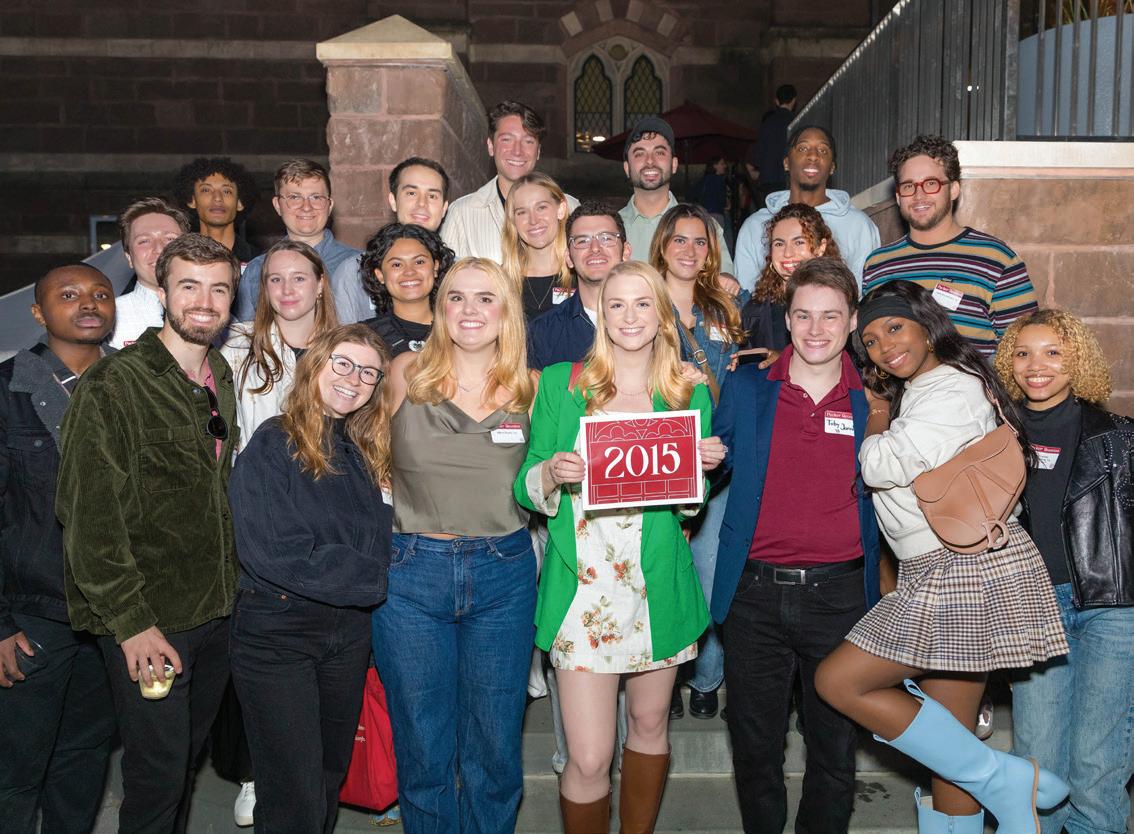
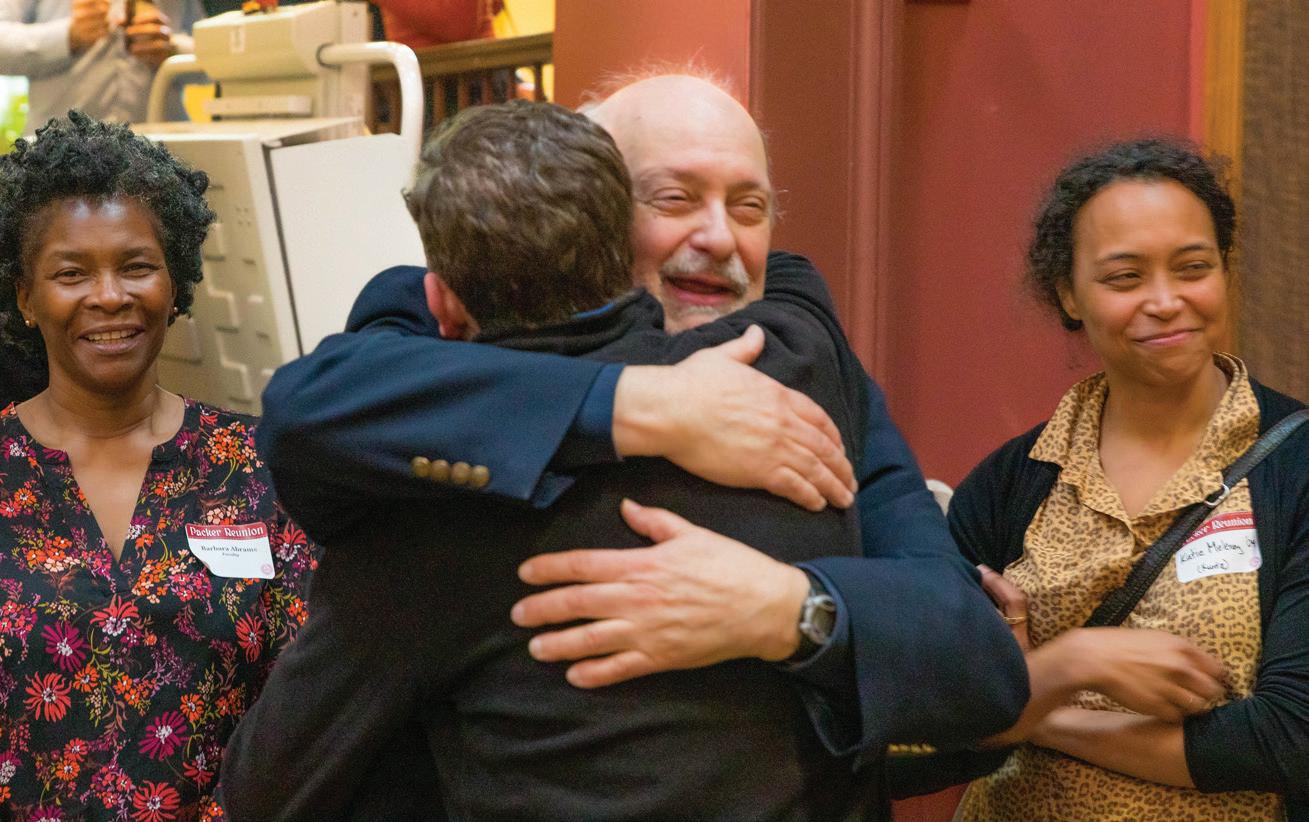
Reunion 2025 was particularly special for classes ending in zero and five, who were eager to make up for celebrations postponed during the pandemic. The weekend kicked off with a lively cocktail reception on Friday night. Stephan Koplowitz, a former Packer dance teacher, reconnected with his original dancers from the 1985 site-specific piece, “I Am Growing.” The evening built to a beautiful crescendo as Pelicans flocked from near and far to celebrate retiring music teacher Paul Riggio during the final notes of his time at Packer, with a rousing surprise rendition of “When the Saints Go Marching In” by the Upper School band.
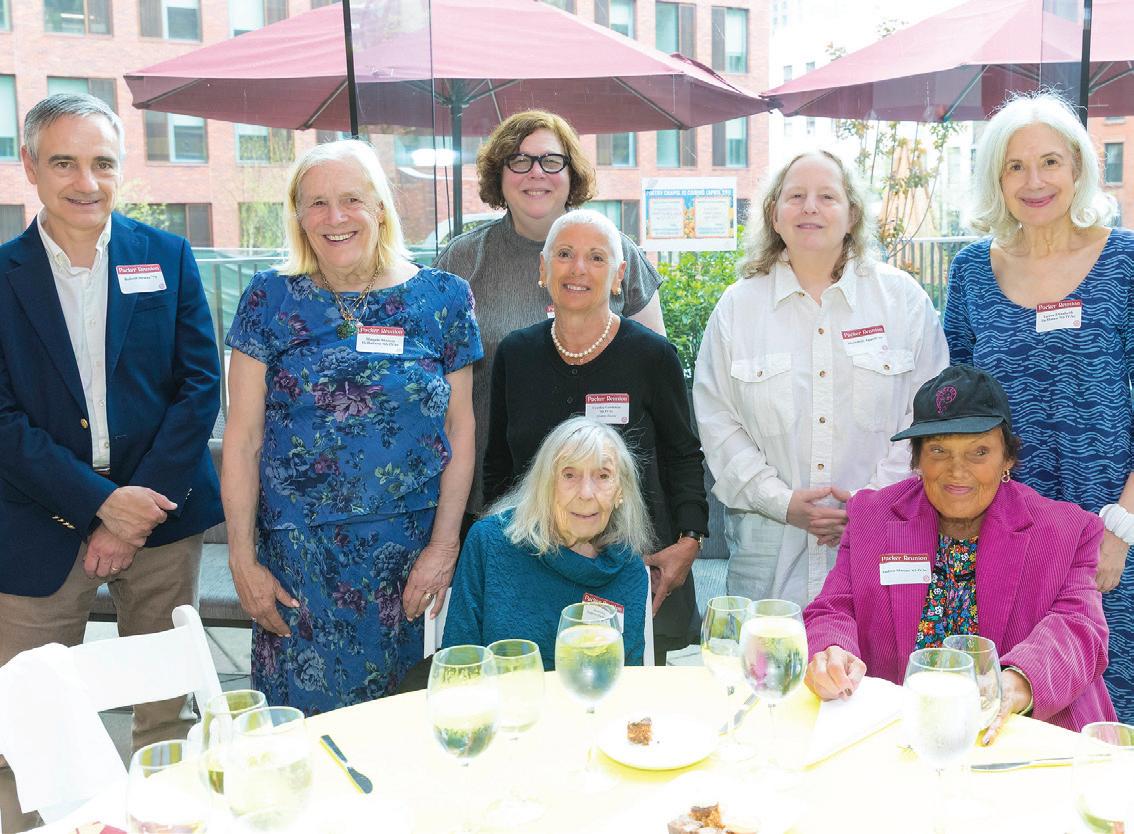
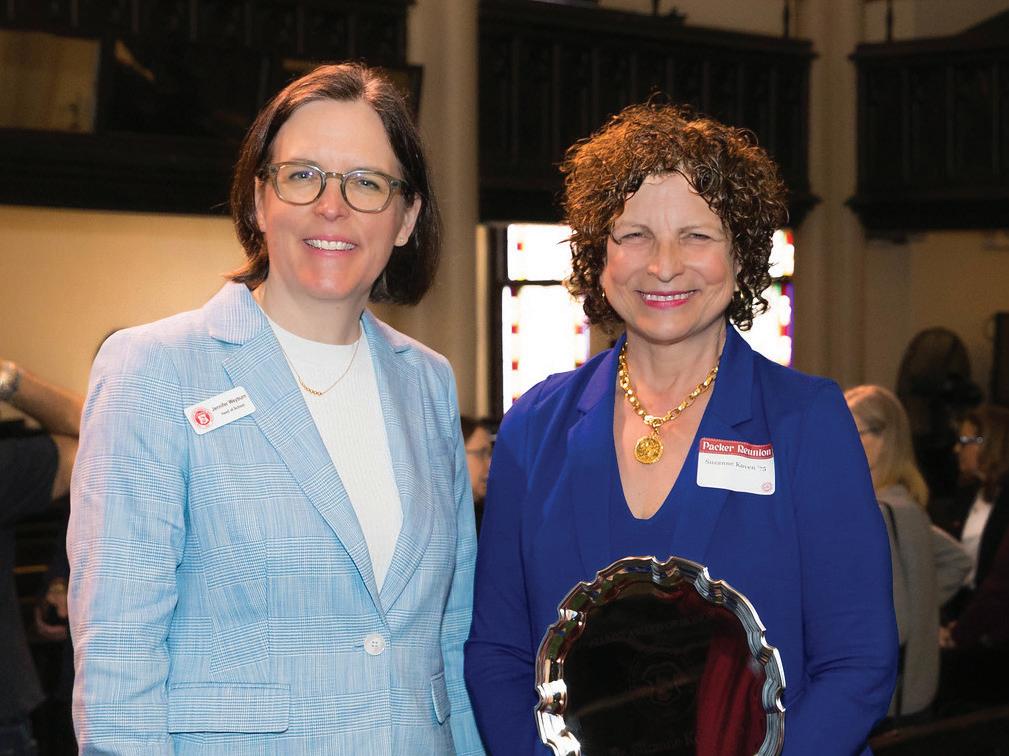
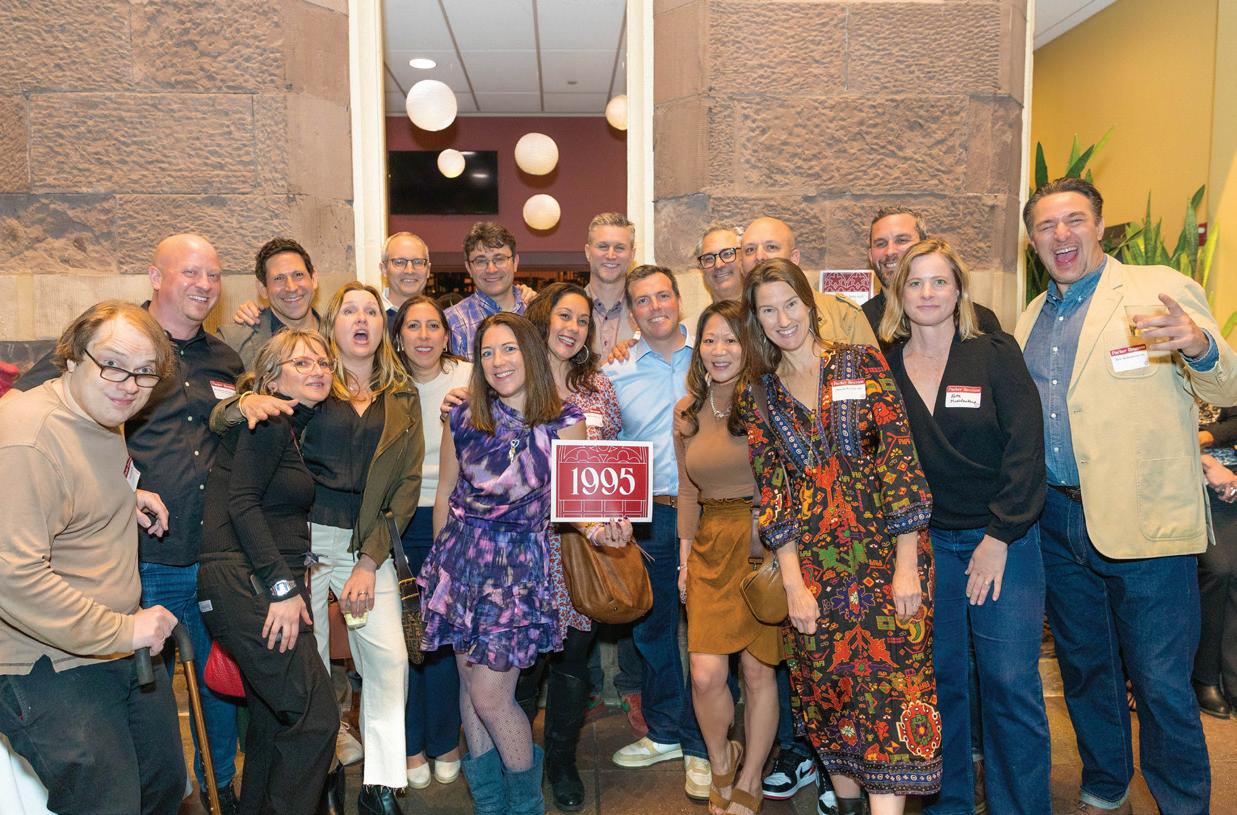
A little rain didn’t slow the momentum on Saturday. We began with a joyful Chapel and the annual Alumni Association Meeting, where we celebrated community, opportunity, and resilience. The class of 1995 showed up in force both Friday and Saturday, doubling down on their commitment to Packer to secure the Alumni Plate for highest attendance. They also proudly cheered their classmate, Marissia Alperin ’95, who received this year’s “Joanie” Award for outstanding service to Packer. Meanwhile, the women of the class of 1975 showed us exactly how to mark your 50th Reunion with heart, generosity, and plenty of style. They captured the Alumni Champagne Challenge Cup, awarded to the Reunion class with the highest percentage of donors. Their classmate, Dr. Suzanne Koven ’75, while accepting the 2025 Alumni Award of Honor, spoke with deep gratitude for Packer, reflecting that it gave her and her classmates the gifts of risk-taking, critical thinking, and, of course, no longer having to wear those ugly yellow gym uniforms.
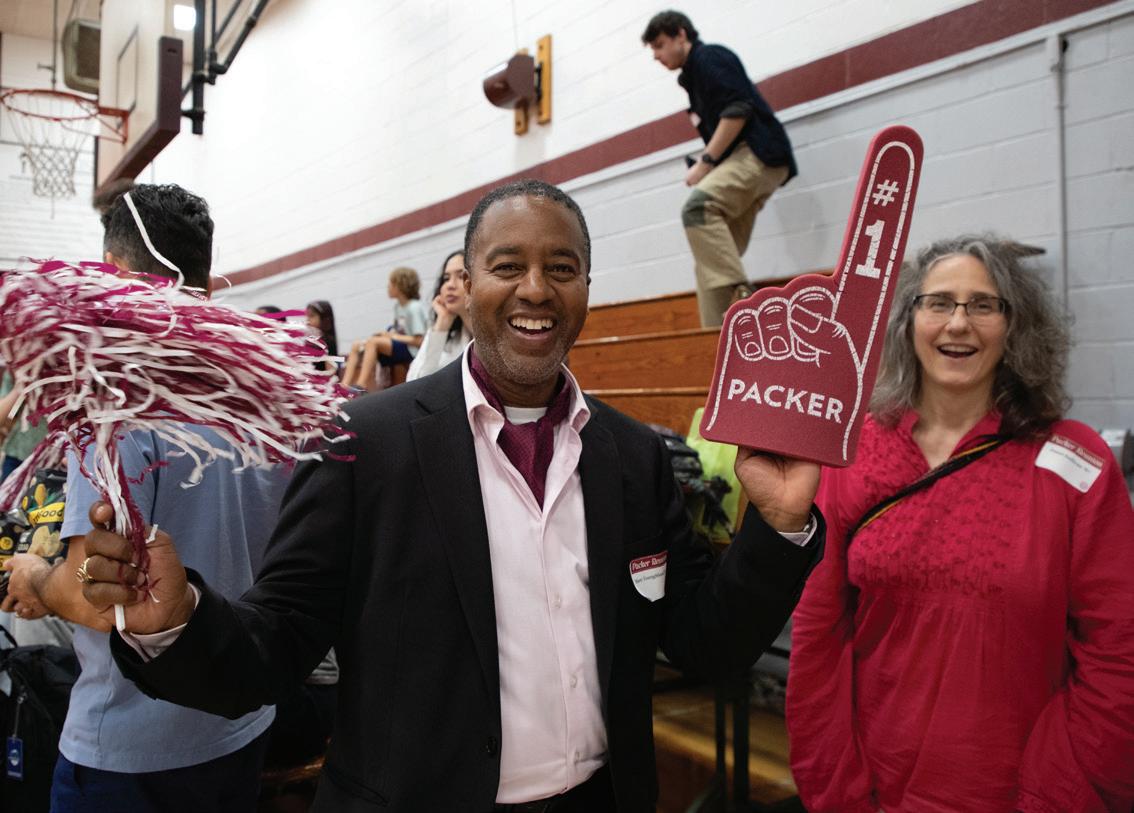
The weekend ended with the annual Alumni vs. Student basketball game. Current students are beginning to understand that alumni are serious about this annual scrimmage: it wasn’t even close, as the more seasoned hoopers were able to secure a clear victory.
To see more photos from the weekend visit flickr.com/packercollegiateinstitute
Alumni Events
Senior Soirée, June 2025
The Alumni Office hosted the second annual Senior Soiree on June 12, officially welcoming our newest Pelicans into the alumni community. Alongside alumni trustees, the Class of 2025 participated in a meaningful new tradition: writing letters to their future selves to be opened at their five-year reunion. This gesture echoes a turn-of-the-century practice of burying affirmations in the Garden, connecting this modern cohort to generations of graduates past.
Independent Science Research
Speaker Series, October 2025
The Independent Science Research (ISR) program kicked off the year by welcoming back “lifer” Becca Horwitz ’18 for an engaging look at oceanography and climate science. Now a graduate student at Rutgers, Becca shared how her foundation at Packer prepared her for a career in oceanography—from piloting undersea gliders to an upcoming expedition to Antarctica. Her journey from the classroom to
marine research served as a powerful reminder of how curiosity can bridge the gap between student life and real-world impact.
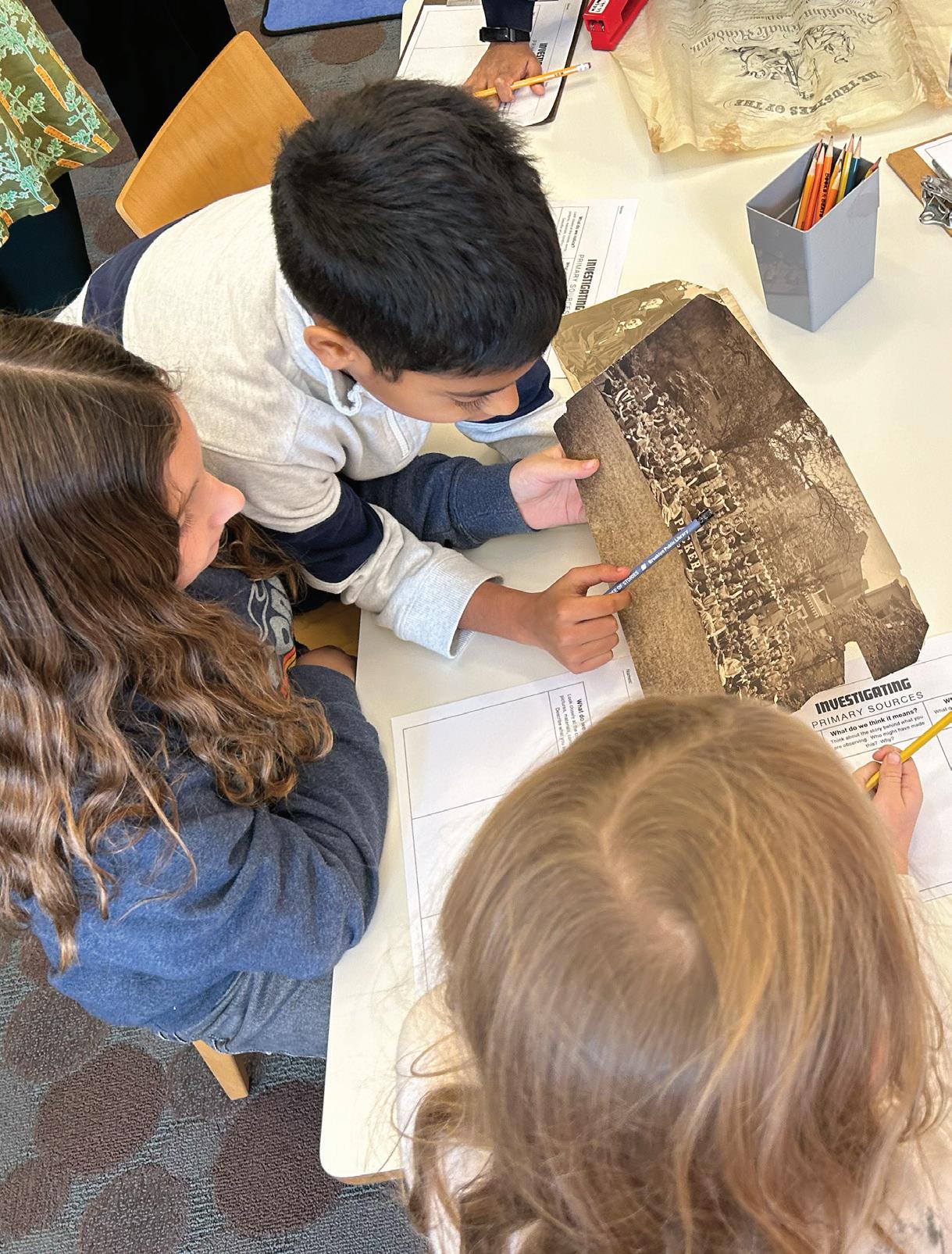
Primary Sources Archive Workshop
November 2025
Fourth graders recently stepped back in time to become scholars of Packer history. Guided by Director of Alumni Engagement Ronnette Hope ’07, students explored original primary sources from the Packer archives, including a 19th-century diploma, a 1960s “Home Economics” cookbook, and century-old student publications. By examining these artifacts, students sharpened their media literacy and research skills, learning to evaluate information with a critical eye.
Philadelphia BKIS Meetup, November 2025
On November 18, Packer alumni gathered in Philadelphia alongside fellow graduates of Brooklyn Independent Schools network (BKIS) for a regional reception that celebrated connections across campuses
and generations. The evening was a lively mix of familiar faces and new introductions, grounded in shared Brooklyn roots and a deep sense of community.
Recent Graduates Return, January 2026
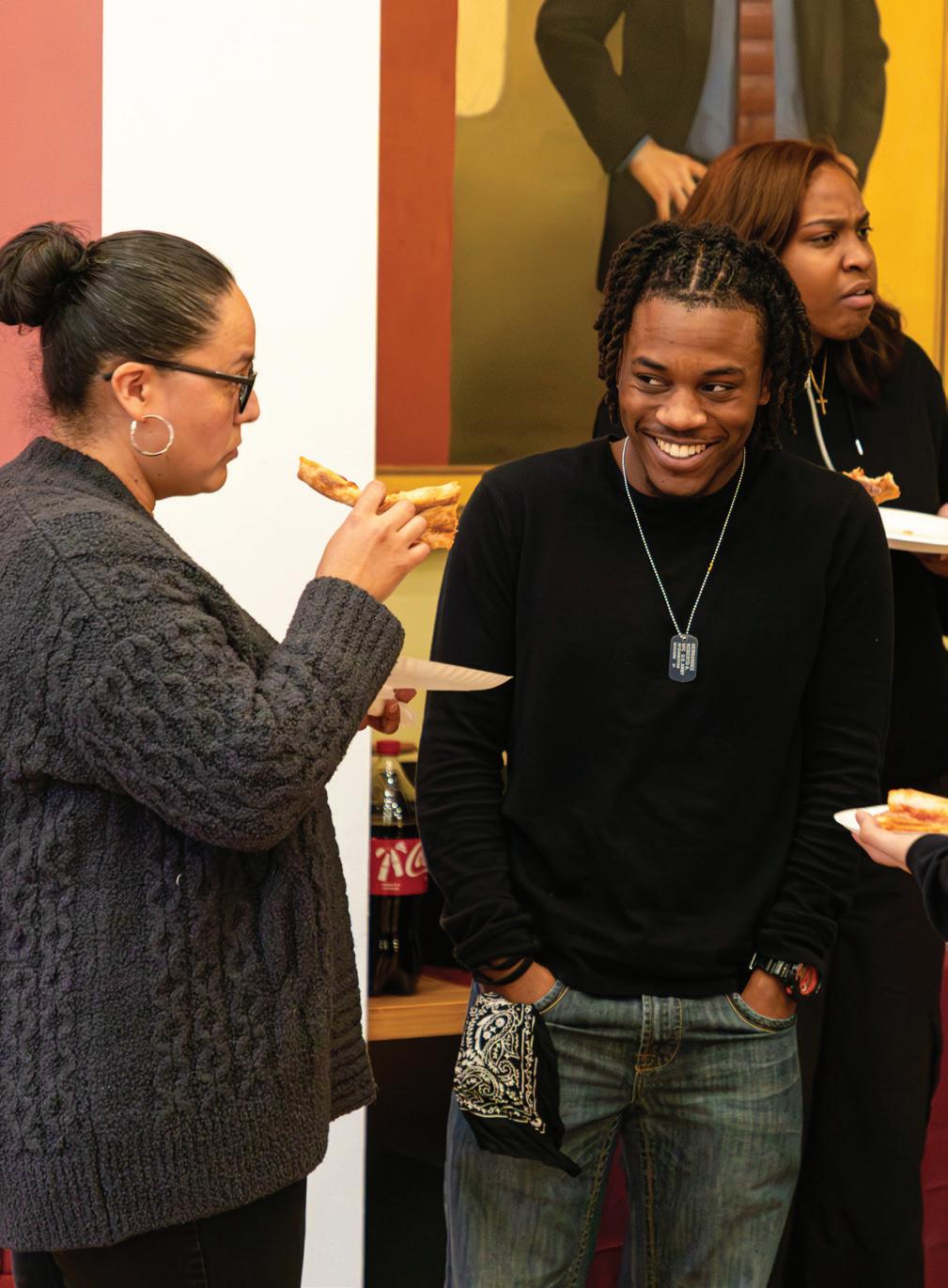
The new year kicked off with a joyful homecoming as recent graduates returned to Joralemon Street. The day began with a candid college panel for the Class of 2026, followed by a pizza party where alumni reconnected with beloved faculty and staff. The gathering included a heartfelt send-off for Upper School Division Head Maria Nunes, complete with Italian cookies to celebrate her upcoming relocation to Rome. The festivities culminated in a high-energy “Blackout Night” basketball doubleheader, where alumni joined the community to cheer on our teams. It was a spirited reminder that the Packer nest remains a lifelong home.
SportsCenter Alumni Panel, January 2026
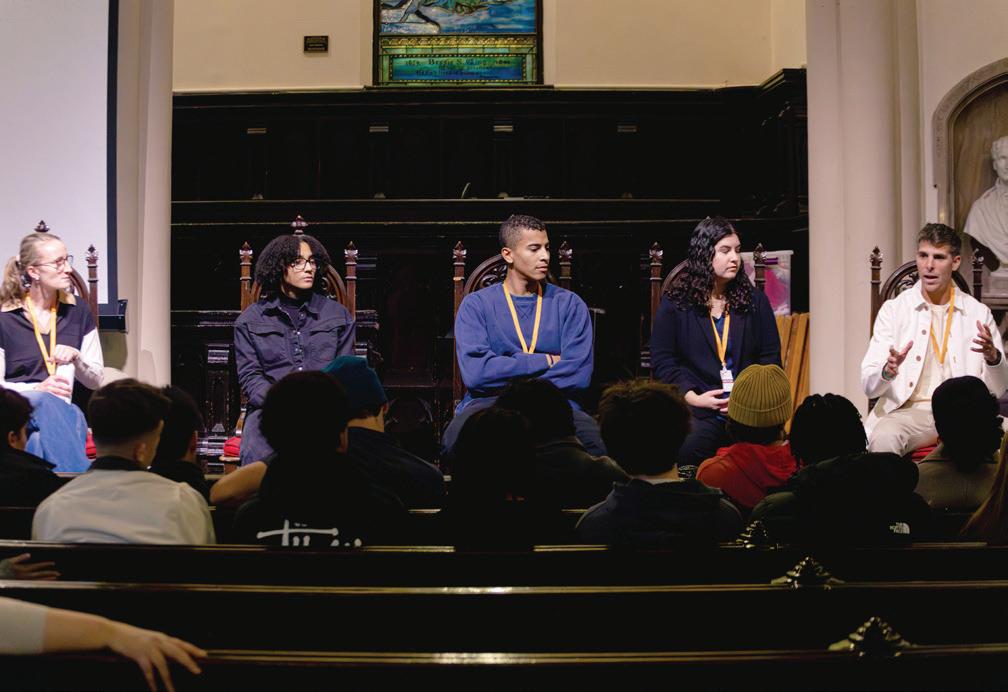
As part of this year’s Upper School Symposium program, students in “Welcome to SportsCenter” got an immersive
look at the business of sports—from marketing and athlete representation to data analysis and facility management. Five distinguished alumni returned to campus for a panel exploring the industry’s many facets. Haley Mendez ’11, Adam Marcu ’09, Julian Juantorena ’19, Shannon Rhodes ’12, and Olympic medalist Lauren Scruggs ’21 reflected on how their athletic experiences continue to shape their careers and lives beyond the game. The discussion ranged from Paris Olympic highlights to significant professional pivots, like Haley’s decision to leave professional squash and Adam’s shift from practicing law to coaching at Next Gen Soccer. The panel helped students envision how many different paths a career in sports can take and how lessons learned on the field continue to reverberate off of it.