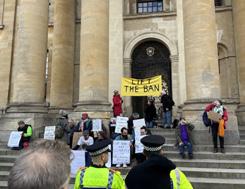

On Sunday several student groups gathered outside the Oxford Union to protest former Israeli Prime Minister Ehud Olmert’s visit. This protest was organised by several Pro-Palestine students shortly after his visit was announced. Olmert had previously visited Oxford in November 2023.
These groups included Oxford Action for Palestine, the group responsible for multiple encampments last year on various university sites, including the Radcliffe Camera and the Pitt Rivers Museum. Additionally, the protest was supported by Oxford Students Palestine Solidarity and Oxford Against Genocide.
Olmert served as Prime Min-
ister of Israel from 2006 to 2009, and led Israel through the 2006 Lebanon War and the First Gaza War, the latter of which was an Israelwi military victory. His premiership faced allegations of corruption and bribery, which ultimately led to his imprisonment from 2014 to 2017. More recently, Olmert has accused the current Netanyahu government of war crimes in the 2023-present Gaza War.
In an Instagram post, the student groups highlighted the 1,400 Palestinian deaths in the First Gaza War, and alleged that “he is a war criminal”. Additionally, the groups said: “[He] is a staunch advocate of a two state solution. We know this is a strategy… to normalise the Zionist regime”.
The protest was timed to coincide with Olmert’s address in the chamber, which was due
to begin at 4pm. The protestors chanted “Union, union, you can’t hide, we charge you with genocide”, “war criminal, arrest him”, and “we are the people, we won’t be silenced, stop the bombing now, now, now”, aiming to be heard from inside the chamber in order to aurally disrupt Olmert’s address. They singled out both Olmert and Oxford Union President Moosa Harraj by name, and criticized Olmert for his actions in the 2006 Lebanon War.
Beginning at about 4:15pm, the protestors picketed outside the main entrance to the Oxford Union grounds in an impromptu but collective effort to prevent Union members from entering the event. One organiser announced: “If you’re here to see the Zionist, the war criminal, you’re free to leave.”
Continued on page 4
Oxford University students experienced disruption to IT services today, 18th November, due to an international Cloudflare outage.
Students were unable to access Canvas, ChatGPT, and some university websites, while also experiencing disruption to Microsoft 365 services. Cloudflare is an American IT management company who provides a wide range of services including cybersecurity and content delivery.

According to Cloudflare, 20% of all websites use its services in some form.
Cloudflare’s Chief Technology Officer Dane Knecht wrote on X today that the outage was due to a “latent bug” that “cascaded into a broad degradation of [Cloudflare’s] network and other services.”
In addition to University services, the Cloudflare outage affected many popular websites such as Spotify, X, referencing website MyBib, Zoom, Quizlet, and Canva.
Continued on page 4. Read more at www.oxfordstudent. com
College libraries get boring quickly, so why not study in a cafe? In these chilly winter months, the only thing that gets some Oxfordians out of bed is the promise of a sweet treat and a hot chocolate, or a quick coffee before your far-away tute. Next time you’re itching to escape an old, stuffy library, consult our section editor’s selections of their favourite spots in Oxford.
Nala: Providing perhaps the best river view in Oxford, The Paper Boat Café is definitely worth a visit – especially during the warmer months and when you bring enough time for some relaxation in their garden.
Esme: Tucked in the trail to Jericho, don’t judge this cafe by its small size. Tree Artisan Cafe is a cozy, warm space with incredible coffee and story-worthy latte art - just don’t bring your laptops.
Continued on page 14
Studying with a cup of strong coffee. Image credit: Arturo Anez


Newsletter
Scan this code to receive weekly top stories and more!
Features
Hold the (Night)line: insight into volunteering at the Oxford Nightline 13
Sport

It’s 4:47am as I’m typing this editorial (and sipping on my tropical-flavoured Red Bull). I’m in the process of surviving one of the busiest and most sleep-deprived weeks of my life - can’t wait to finally hibernate for a few days soon!
This week has been such a fun one, though: Oxmas was technically on November 25, and – to all our Americans readers – by the time you’re seeing this, Thanksgiving will also have passed.
will be signing off as the OxStu’s Editor-in-Chief in a few days. That said, I’m sure that our next Editors-in-Chief will make the paper “blow a hole in the cosmos” (using the words of a one-of-a-kind avant-garde jazzer I have absolutely no comments on).

Baptism of fire, what a term you’ve been. We’ve been tested nerve by nerve, we’ve been wounded in the blaze, and I’ve gotten used to hopping around light-footed, grumbling in Journalese, in bolt of a story; now, I wonder what else in heaven and earth could feel like a worthwhile way to fill the time.

Are you a real fan? The hidden test for women in sport 23
Culture
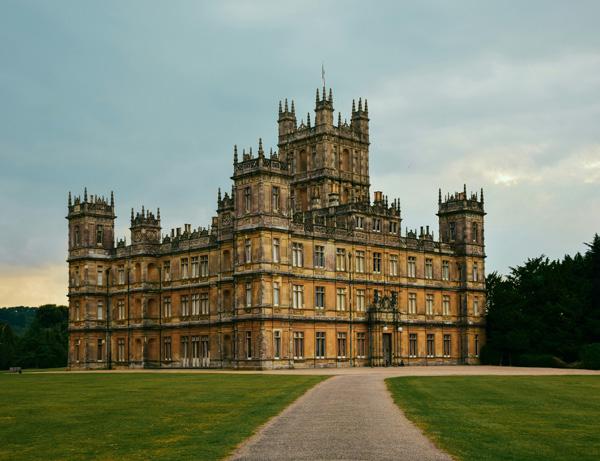
Farewell Downton Abbey!
17
Hope you’ve had or are about to have fun celebrations with wholesome people. It was also this week when it really occurred to me that this is our last print issue of the term. I can’t believe I

We’ve finally reached our last print edition for Michaelmas Term 25, and what a term it has been. There’s been a load of juicy stories for our excellent team to pick up on and
Editorial Board
Canqi Li and Christina Scote (Editors-in-Chief)
Harry Aldridge and Hannah Stewart (Associate Editors)
Yashas Ramakrishnan (Director of Strategy)
News and Investigations
Will Lawrence and Christine Savino (Heads of News)
Aamina Thava, Abhipsa Panda, Audrey Miu, Christine Savino, Gabriella Bedford, Julia Stacey, Jun Lee, Makkunda Sharma, Marcus Swinerd, Olivia Miller, Vincent Chang (News Section Editors)
Lila Robinson (Head of
As I’m about to have my delayed Friendsgiving in a few days, I just wanted to express my deepest gratitude to my OxStu colleagues – this term wasn’t without challenges, but you guys have shown me that everything is survivable. Although this is our last Michaelmas 2025 print issue, we are still working on some beyond exciting stories that we’re planning to publish online over the next few weeks. So make sure to check out our website (and our Instagram) every now and then – I’m 100.1% sure you won’t regret it!
Canqi Li Pembroke College
sink their teeth into over the last term, especially with how tumultuous the Union proved to be. It’s good to know that after a long, hard term of stories, features, and hard work, we can settle down with a nice hot chocolate or a mulled wine. From features on our favourite Oxford colleges, to my culture article on Richey Edwards and parasociality, we’ve had an array of unique and brilliant articles thrown into the mix. For a term that’s been such a learning curve for many, I’m glad that l’ve come
Investigations)
Daniela Braw-Smith, Ngoc
Diep Bao, Rishima Cheepala (Investigations Section Editors)
Comment
Ellie Apostolidi (Deputy Editor)
Arun Lewis, Ellie Davies, Emily Dillon, Gabriela Austin, Guilherme Lopes, Niyanthri Arun, Oscar Moore, Qasim Ahmad, Saara Lunawat (Section Editors)
Profile
Meira Lee (Deputy Editor)
Audrey Miu, Beth Riding, Guilherme Lopes, Kinoli De Silva, Martha Kiyan, Isla Jenman, Sophie Verai (Section Editors)
Onwards we went with the plan to expel the word “I” from articles. Onwards we went with the plan to cut the length of the print. And onwards we went with the plan to make sure at least one powerful actor gets a mauling in each edition. I wonder if journalists are especially disliked in England, where the greatest sin of all is to be nosey. Either way, we nosey on.
out the other side still loving what I do.
This print edition has been the last of the term, and it was a brilliant send off to a Michaelmas filled with fun pieces and challenges. I hope you enjoy the fruits of our labour for the last time this term, and I’m optimistic for what we can bring you in the coming term. Lie back and relax, as the winter term is coming to a close, so why not celebrate by having a peruse through what we have to offer in this newspaper? As my
Features
Esme Thomson (Deputy Editor)
Beth Pearson, Chaewon Kang, Emily McPhee, Isobel Wanstall, Martha Kiyan, Nala Holland (Section Editors)
Culture
Sophie Harrison (Deputy Editor)
Esme Thomson, Isobel Wanstall, Ivett Berényi, Jack Wharton, Lili Myers, Richard Kuehl (Section Editors)
OxYou
Kit Renshaw-Hammond (Deputy Editor)
Bao Ngoc (Alice) Diep, Sam Bankole (Section Editors)
Since I don’t like to monologue, I make it a rule to never speak more than five sentences in one go. Because of this, writing editorials feels like an alien form of conversation. All I can do is lay out some disparate writerly thoughts. Merry Christmas, and a happy new year to all of you: all the writers, all the readers, and all the men whose new year’s resolutions will be to go more often to the gym when their personalities are such that they have more pressing matters to attend to. The world is what it is and in my exalted moments I don’t mind it so much. I know now how everyone in a national newsroom must feel, like they’ve been walking on water. It’s been vivid and vociferous. We’ve soldiered on through changing weather, through the storms of the Union, to the gentle snowfall of slow press releases. Soaked with sorrow, I give you my final footnote, my ultimate farewell. It’s been a joy.
Christina Scote Trinity College
last editorial for Michaelmas 2025, I’m signing off with a bang. And, in case I don’t see you, good afternoon, good evening and good night!
Hannah Stewart Associate Editor Keble College
Identity
Ivett Berenyi (Deputy Editor)
Ansu Bhattarai, Bao Ngoc (Alice) Diep, Celine Leung, Rodin Bantawa (Section Editors)
Science
Yuhan Wang (Deputy Editor)
Ansu Bhattaraj, Becca Su, Caitlin Turnbull, Clemmie Watkins, Lanna Khadim, Nour Bouzidi (Section Editors)
Sport
Ava Doherty (Deputy Editor)
Charles Prestwich, Charlie Aspinall, Michelle Luo, Makkunda Sharma, Tamar Okunhon (Section Editors)
news@oxfordstudent.com | Heads of News: Will Lawrence, Christine Savino
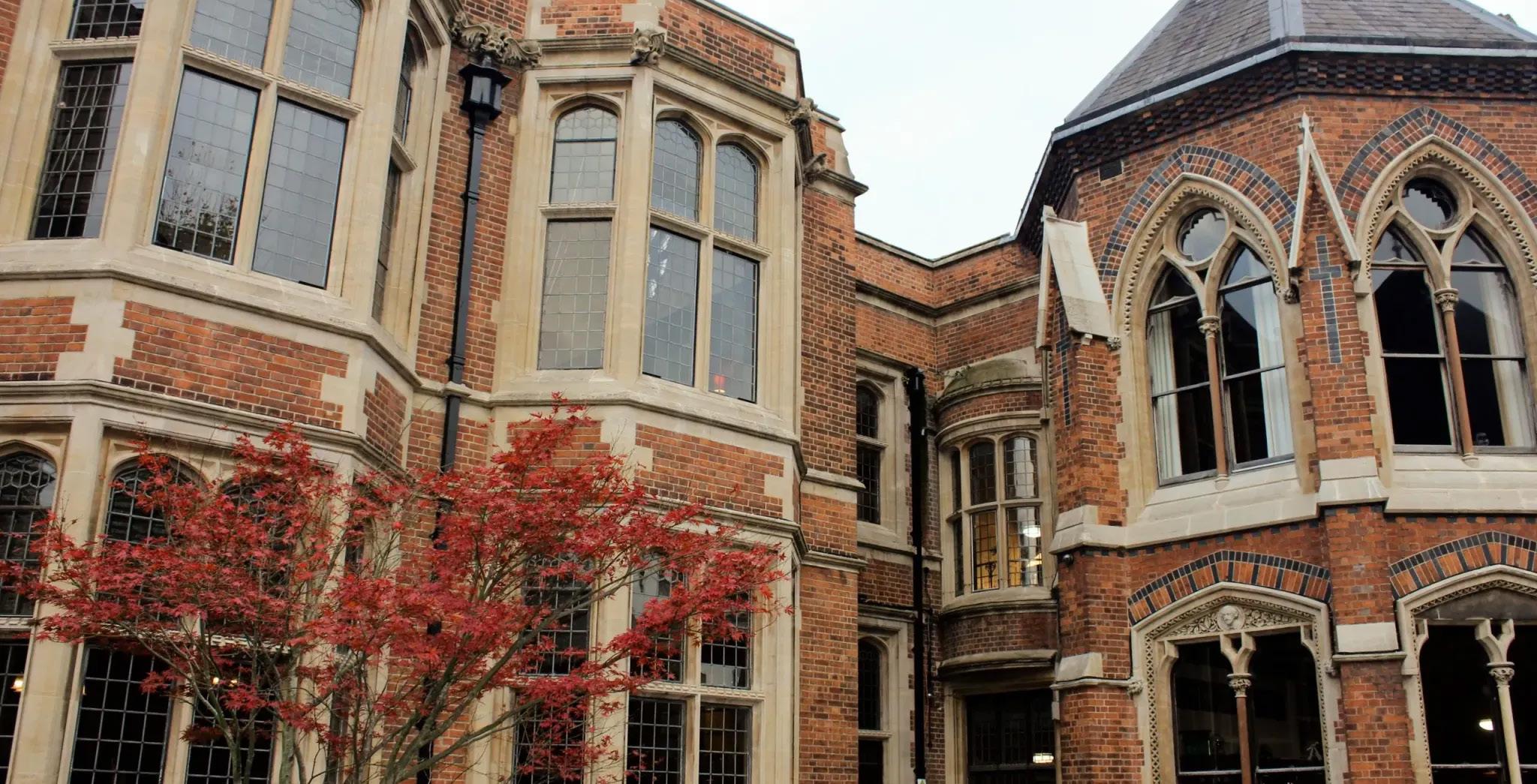
On Thursday, 13th November, the Oxford Union debated the motion “Israel is a greater threat to regional stability than Iran”, voting 265-113 in its favor.
Evaluating the threats emanating from both countries, the debate’s key topics included recent escalations in the Israeli–Palestinian conflict as well as the Iranian nuclear program. Both houses linked the issue of regional stability in the Middle East to global safety and international concerns.
Speakers for the proposition included Lincoln College’s Alex Webster, Jessica Rowe, former Palestinian Prime Minister and specialist in Middle East politics Mohammad Shtayyeh, and former Iranian Minister of Culture and reformist politician Ata’ollah Mohajerani. The opposition’s speakers were St John’s History student Katie Pannick, St Hugh’s History Masters’ student William Rome, international human rights lawyer and executive director of the UN Watch Hillel Neuer, and Dominick Chilcott, Middle East specialist and former British ambassador to Turkey and Iran.
Alex Webster set the stage for
the proposition, commencing his speech by declaring, “I stand here as someone who respects [...] and admires the state of Israel”– a clarification that was met with disapproving noise from part of the chamber. He further stressed that, although an “uncomfortable” position to be in, Israel needed to be identified as the bigger threat to regional stability as its actions tended to pull in global powers. Regarding the selective justice
“ “To vote against the motion is to recognize where the deeper threat lies.”
afforded to the state by other countries, he commented: “They get all of the guns but none of the consequences”. This was followed by Katie Pannick opening the case for the opposition. Throughout her speech, she consistently referred to Iran’s proxy network and deemed it “capable of systemic disruption”. She also notedIran’s nuclear missile program and the country’s “high appetite for risk”,, arguing that Israel tended to act in a more state-centered way and, “though imperfect”,
was still embedded in the international community and displayed a democratic core. “To vote against the motion,” she concluded, “is to recognize where the deeper threat lies.”
Continuing the line of the proposition was Jessica Rowe, who described Israel’s actions as “aggression dressed up as defence”. She illustrated her arguments with historic context such as that of the 2006 Lebanon War, and characterised Israel’s pattern in regional action as “brutally predictable”. Furthermore, she made the claim that Israel continuously strove for disruption of stability for the sake of its foreign policy and concluded that “without conflict, Israel has no leverage to hold over its allies”.
William Rome then proceeded to elaborate for the opposition on the threats emanating from Iran, discussing the country’s systematic repression of minorities such as the LGBTQ+ community, women and political opposition. In relation to this, he directly addressed the presence of Ata’ollah Mohajerani, who left Iran in 2009. By recalling his own visit to Auschwitz, he indirectly reminded the audience of the historic circumstances under which the state of Israel was founded originally.
Olivia Miller & Christina Scote
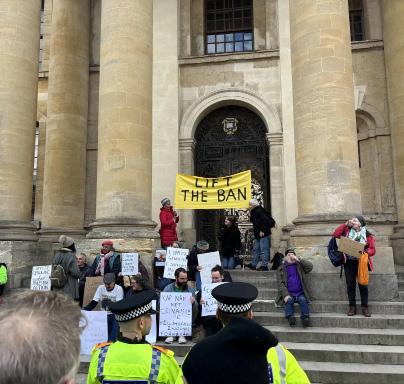
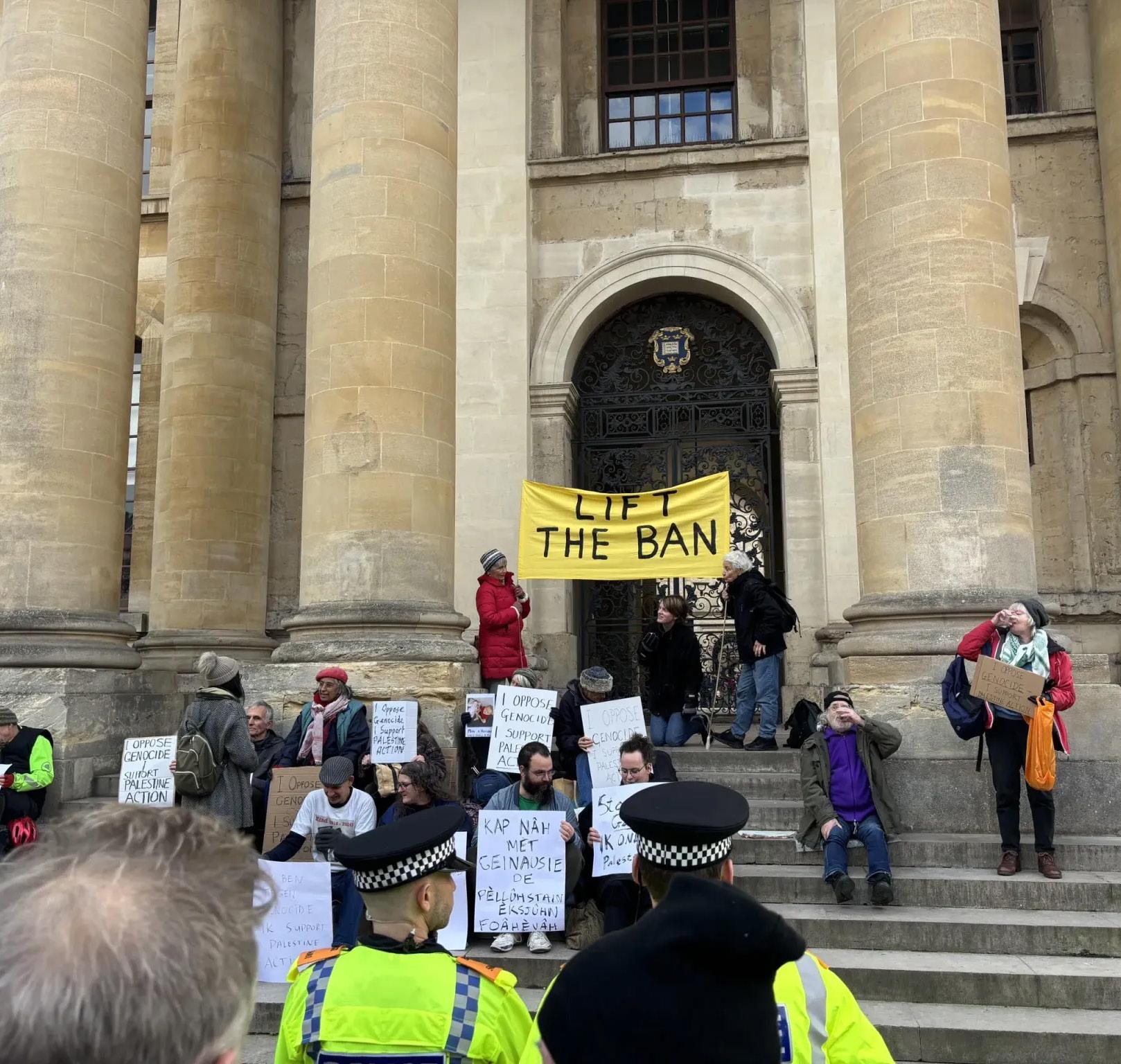
Police arrested protesters on Broad Street for allegedly expressing support for Palestine Action on the afternoon of 18th November.
On 2nd July 2025, the UK amended the Terrorism Act 2000 to proscribe, or ban, the group Palestine Action. This made membership in the group or intentionally expressing support for it a criminal offence punishable by up to 14 years in prison.
The Oxford Student spoke with a police officer at the site of the protest. “There were arrests, and I believe there will be more,” the officer said, and confirmed that the protesters were arrested because of their alleged support for Palestine Action.
Several of the arrested protesters went limp in order to make the arrests more difficult, and police had to carry them away.
Approximately 40 people in total gathered for the protest. They carried signs allegedly supporting Palestine Action and chanted “from the river to the sea, Palestine will be free”.
Upon the arrests, the protesters cried “shame” at the police. “I’m here to support the people getting arrested. I think it’s a very important thing to do: to protest what I believe to be an abuse of terrorism legislation,” the protester said. “The most effective way to challenge a law is simply not to follow it.”
“An amendment passed that added three groups to the list of proscribed terrorist groups.
“ Upon the arrests, the protesters cried “shame” at the police.
One of them was Palestine Action. Another was the Maniac Murder Cult”, a violent neo-Nazi organization. She alleged that: “MPs felt strongarmed into [supporting the amendment] because by voting against it they would be voting against the proscription of those groups”, which “are really serious militant groups that have taken steps like getting weapons”.
Will Lawrence
Today, the Student Union (SU) released a statement launching a new scheme to help students who have been victims of bicycle theft in Oxford.
The scheme was proposed by SU President for Welfare Equity and Inclusion, Alisa Brown, who said that: “This was something I promised in my manifesto after hearing from so many students how bike theft was affecting them.”
According to the SU press release, the scheme offers bike loans for up to eight weeks, meaning students at the start of term who are victims to bike theft will not need to reapply or give up their loaned bike until the end of term.
The scheme requires a £25 refundable deposit. Students also receive a bar lock, identification stickers and bike lights.
Bikes will be issued on a first-come-first-serve basis, and students will need to provide their Bodleian card, student email, and police crime reference number.
At the time of writing, there have been 1,177 incidents of bicycle theft within Oxford Central, according to Thames Valley Police. Crucially, this area does not include Headington, Summertown, or Cowley Road, which means this number is likely much higher.
In the entire Thames Valley Police Area, just over 4% of bicycle theft incidents ended in a “positive outcome.”
According to the SU’s press release, “this low rate of resolution makes theft feel not only disruptive but demoralising especially when reporting seems unlikely to lead to recovery or justice.”
Continued from page 1
“If you’re here to see the Zionist, the war criminal, you’re free to leave. We’re not letting you in,” one organizer announced to Union members who attempted to bypass the picket line. At 4:30pm, police began to direct Union members to an alternate entrance at Clarendon House, and the protestors split up in order to stage demonstrations at both locations.
Back at the main entrance, several protestors climbed over the walls and on to the Union grounds but were promptly removed. According to speakers at the protest, at least another three individuals were removed from within the chamber, including two Union members.
The Oxford Student interviewed several protesters with the Youth Equality Coalition. “We’re here to stand against
injustice. It’s shameful that Olmert has been invited by
“ Additionally, the groups said: “Ehud Olmert is a staunch advocate of a two state solution. We know this is a strategy… to normalise the Zionist regime”
the Oxford Union. Palestine should be free,” one protestor said. “He shouldn’t be speaking at an event like this. He should be in jail. Nobody is free until we’re all free,” another added.


Continued from page 1
Users attempting to access services received an “internal server error” message.
A message was posted on the University’s Service Status Page at 12:08pm today which stated: “A number of our services are currently impacted by intermittent issues with a global internet service Cloudflare. Affected services include some University websites, Nexus / Microsoft 365, Canvas and ChatGPT. Cloudflare are aware and working to resolve the issues.”
A spokesperson from the University said: “Like many other companies and institutions worldwide, Oxford University uses an external CDN, or Content Delivery Network, to deliver web content to users quickly and reliably.”
They continued: “Our CDN Cloudflare experienced an outage of their London serv-
er around 11:50am today and have been working hard to
“
“A number of our services are impacted by issues with Cloudflare... including some University websites, Nexus, Canvas and ChatGPT”
restore service […] We believe service has now been restored but are cautiously monitoring the situation. We apologise for the disruption.”
As of 6:00pm, 18th November, all services have been fully restored and are operational.


Former US Vice President Mike Pence addressed the Oxford Union on the evening of 17th November, speaking on topics ranging from free speech and conservatism to the events of 6th January, climate policy, and the Israel–Hamas war.
Pence opened by praising the Union as a space for robust debate, remarking that “no viewpoint here at the Oxford Union is declared unwelcome.”
He reaffirmed his political identity, describing himself as “a Christian, a conservative, and a Republican, in that order.”
He argued that American politics has moved beyond a simple left–right divide and now reflects deeper “fissures” within both major parties.
According to Pence, the Democratic Party has been “overtaken by progressive or outright socialist elements,” while on the right “traditional
conservatism is being challenged by a new form of populism unmoored in conservative principle.”
When pressed by Union President Moosa Haraj on the attack on the US Capitol, Pence described 6th January 2021, as a “tragic day.”
He rejected the idea that it amounted to a constitutional crisis, pointing to the fact that Congress reconvened later that same evening as evidence of what he called the “resilience of our institutions.”
Asked about former President Donald Trump’s role in the events, Pence said he “never imagined” such a situation would unfold.
Reflecting on his time in the Trump administration, he said there was “never a dull moment” and that he remained “proud of our record,” even though he and Trump were “different people in different ways.”
He described working with Trump using the metaphor: “I just skied behind the speedboat.”
On the Trump administration’s response to COVID-19, Pence said he was “proud of what the American people did,” while acknowledging that “of course mistakes were made.”
He argued that a temporary pause intended to allow the healthcare system to cope, which he compared to “taking a knee in the game,” turned into a prolonged shutdown that harmed the economy. He added that he did not support nationwide school closures.
Pence also defended the US withdrawal from the Paris Climate Agreement. He argued that the accord placed unfair burdens on Western nations while granting China a decade without binding obligations.
He claimed that during his four years in office, the United States reduced emissions “far more than what the Paris agreement required,” attributing this to innovation and private enterprise rather than government mandates.
Lord Peter Mandelson has resigned as an Honorary Fellow of St Catherine’s College following his dismissal from his role as US Ambassador earlier this year.
Mandelson studied Philosophy, Politics and Economics (PPE) at St Catherine’s from 1972-1976. From there, he became a stalwart of the Labour Party, especially under Tony Blair.
His political success led to him being appointed as an Honorary Fellow at St Catherine’s in 2018.
His involvement in Oxford University life deepened when Mandelson stood in the 2024 election to be Chancellor of Oxford University but came fourth in the election, losing to Wil-
liam Hague.
However, earlier this year Mandelson came under scrutiny for his involvement and friendship with convicted sex offender Jeffrey Epstein.
“ “His involvement in University life deepened when he stood in the 2024 election to be Chancellor”
Not only was Mandelson a friend of Epstein’s during his time working in government for Blair, he continued correspondence with him. Emails were leaked in


“Freedom, private property and innovation,” he said, produce better environmental outcomes than “dictates.”
Turning to the Middle East, Pence said he “grieves for the loss of every life after October 7,” but insisted that casualties in Gaza were the result of Hamas’s actions.
He described the 7 October attacks in graphic terms, saying that Israelis were “bound
and assaulted and murdered in front of their friends.” He argued that Israel “had no choice” but to pursue Hamas, which he said seeks “to eliminate the Jewish state of Israel,” and accused Hamas of diverting humanitarian aid to build military infrastructure. In the final question of the evening, Pence was asked about his unsuccessful 2024 presidential campaign.
which Mandelson had said Epstein should, “fight for early release,” shortly before he was sentenced to 18 months in prison.
Following these revelations, Mandelson was fired from his role as UK ambassador to the US and began to step away from public life, including the recent development that he is to resign his position as an Honorary Fellow at St Catherine’s.
The college said in a statement: “Lord Mandelson informed St Catherine’s College that he has decided to step back from public life.”
It continued: “The college has accepted his resignation as an honorary fellow.”
In addition to this, Manchester Metropolitan University stripped Mandelson of the honours which they awarded him.


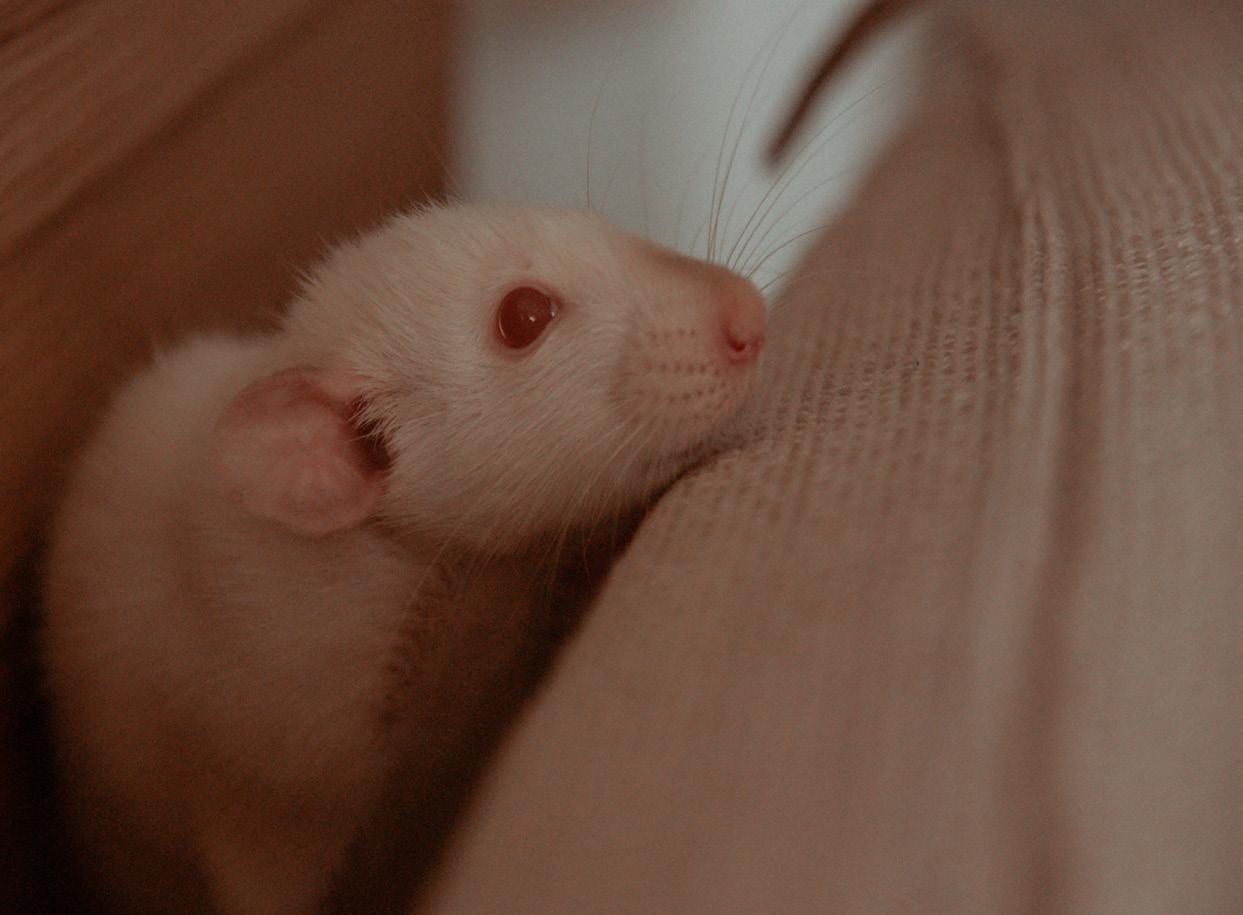
Are colleges doing enough to protect their students? Whether student accommodation is inhabitable or not significantly influences students’ academic performance and social life at the University of Oxford. This investigation examines infestation reports over 10 years, from 2015 to 2025, across Oxford colleges, focusing on the number of incidents and how each college records and resolves them. More than half of the colleges did not respond, and among those that did, four colleges had no records regarding the matter. This exposes a gap in college administration: how are students to receive consistently safe accommodation if their college does not keep track of any trends of infestation?
Keble College reported 279 pest control incidents over seven years, by far the highest figure. However, the college emphasised these were “reports, not infestations,” noting that “more than one complaint may be made about the same incidence”, and around 94 entries were follow-up visits, routine checks, or cases where no evidence was found. Therefore, it is fair to presume that Keble has had more than 185 pest control reports in the past decade. Despite their high number of reports, they have a robust ‘process of investigation and proportionate action’ in place which is highly detailed and contains plans for any type of infestation. New College reported 57 cases over
the past ten years, the second-highest number among the colleges who responded. It also has the greatest variety of infestations recorded: rodents, moths, wasps, wood lice, ants , flies, bird mites, bedbugs, and cockroaches. Corpus Christi College reported 21 cases over two years, 2024 and 2025: two bedbugs, seven moths, eight mice or rodents, and the rest were insects, wasps, and ants. All cases were resolved through the College’s actions, and the effects on the student body are meticulously recorded and monitored. The College does not hold any records before 2024.
Exeter College has reported the presence of cockroaches in their off-site accommodation, Cohen Quad, with a high recurrence rate. The first instance was recorded in October 2022 and recurred in October 2024.
“ Keble College reported 279 pest control incidents over seven years , by far the highest figure.
In their accommodation on Turl Street, bedbugs were reported in September 2025 and again in October 2025. All of these infestations were treated by the implementation of ‘additional pest control measures’.
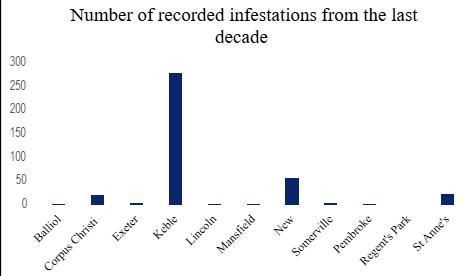
Balliol College has disclosed just one infestation in the past decade. This was related to bedbugs which were reported in April 2025. This was managed by a “series of treatments from a pest control specialist.”
Pembroke College reported there was only one case reported in the past ten years. This involved bed bugs being reported in a small area of one of their buildings. To combat this infestation, the college had all of the rooms and corridors in the area professionally heat treated by an external company.
Regent’s Park College claims to have had no infestations in the past 10 years and has maintained continuous pest control service contracts even so.
St Anne’s College has had 23 reports of infestations since 2022. In 2022, there were reports of three wasp nests, three ant infestations, two reported incidents of mice or rats, and one moth sighting. In 2023, this increased to four incidents of moth infestations, two mice or rats sightings, one incident of ants, and one of ladybirds. In 2024, there was one wasp nests reported as well as an incident with mice or rats. In 2025, there have been two incidents of wasp nests, one incident of
mice, and one incident of a fox. Their incident log contains notes from their routine inspections as well as individual reports, showing a heightened commitment to pest control. They utilise their contracted pest control specialist on a monthly basis to identify any points of concern, such as access points or indicators of pest activity.
Mansfield College reported two cases of bedbugs, the first in November of 2023 and the second in July of 2024. Action from the college took place in the form of a professional cleaning heat treatment which “solved the issue effectively and in a timely manner.”
Lincoln College reported three incidents since 2023, which is the first year their data goes back to. The first took place in October of 2023, where there were sightings of rodents. Following this, brush strips were installed on all doors and one student was moved into alternative accommodation. In December of 2023, carpet moths were reported. As a temporary measure, the college had the carpets cleaned with a chemical treatment. In August 2024, the affected carpet was replaced to further reduce the risk of recurrence.
Somerville College reported four cases over the past two
years, which is as long as they keep data for. In February of 2024 a mouse was seen and sticky pads were placed in the suspected area. However, no bait was taken and this case was closed the same month. In October 2024, ghost ants were reported; three bait traps were placed to control this infestation, they were monitored weekly for six weeks, and then monthly until the case was closed in June 2025. In August 2025, a wasp nest was treated by their pest control team. Finally, in September 2025, a mouse was spotted - bait was left but did not appear to be taken after a week. Additionally, Somerville claims to take the best precaution of all the colleges we have investigated: pest control checks all accommodation monthly and during the closure period over the winter to monitor any risks present. Four colleges, Hertford, Queen’s, Lady Margaret Hall, and Merton, stated they had no registers or records concerning such issues. However, more than half of the colleges did not respond to the Freedom of Information requests from The Oxford Student
Read the full article at www.oxfordstudent.com.
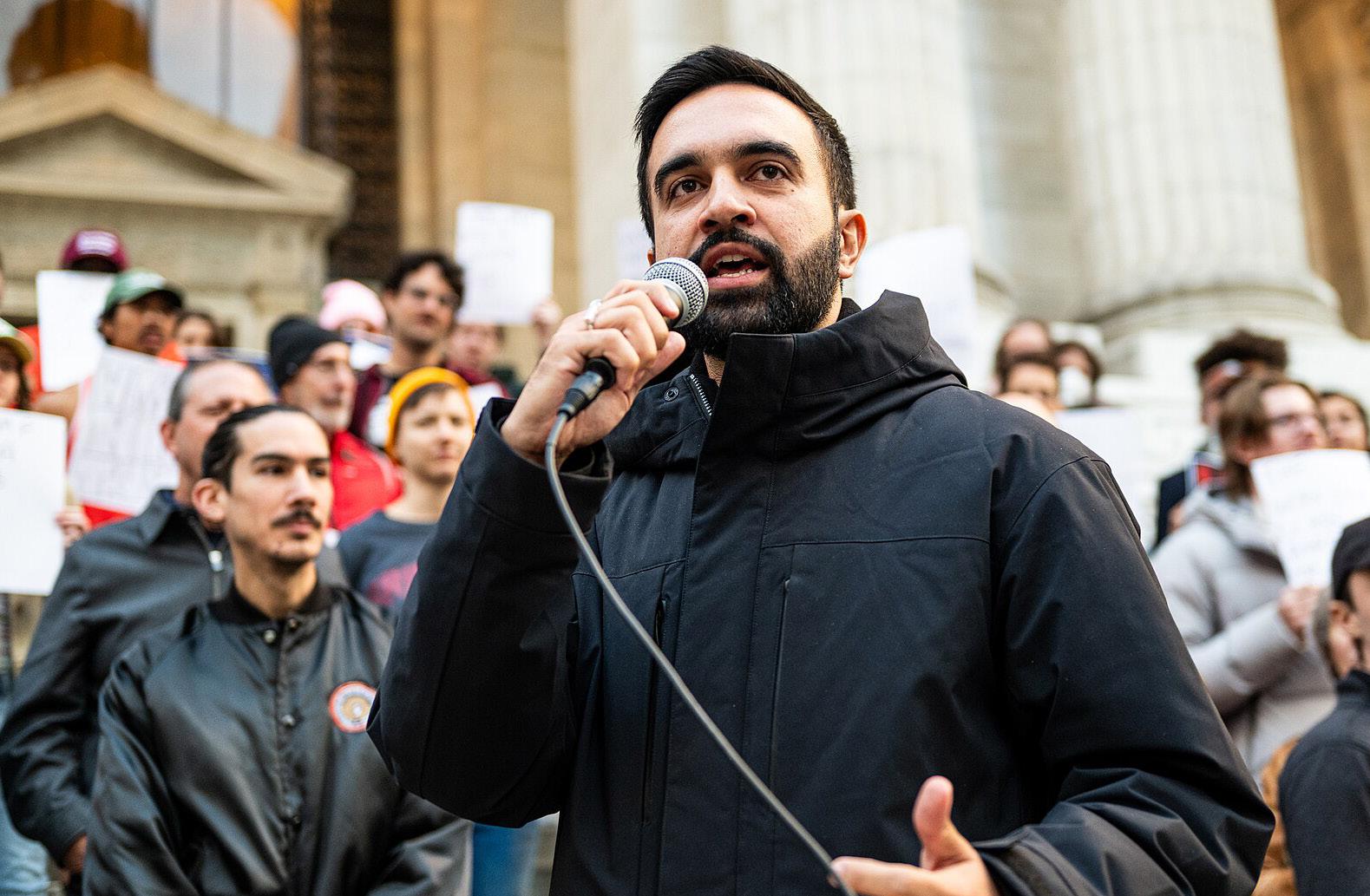
Zohran Mamdani. Credit: Bingjiefu He via Wikimedia Commons. License: https://creativecommons.org/licenses/by-sa/4.0/deed.en
Yanis Varoufakis, once referred to the left as ‘the great losers of history’. We disagreed with his statement when we first heard it. At the risk of getting ahead of ourselves, we disagree even more today. Those of us partial to left-wing politics woke up to the rare good news out of the United States on 4th November, when Zohran Mamdani, a self-described democratic socialist, was elected Mayor of New York City.
Mamdani’s victory offers a glimmer of hope in what is otherwise a grim political scenario for leftists. Across the globe, the far-right is gaining power at an alarming pace, most obviously in the US itself with Mr Trump’s agenda (which has recently included a suggestion that opposition politicians should be executed). Being elected to lead the country’s largest city is therefore no small feat, especially given that it was achieved in a city ripe with financial and real-estate elites, which are naturally antagonistic to Mamdani’s housing and tax plans. Beyond his policies, which have been widely discussed, there is something to be said about his style of politics: it is radically anti-populist. We are used to politician talk - the one where, as a listener, you not only gain nothing, but feel like you’ve actively wasted time hoping for something concrete to be said. Mamdani, on the other hand, focuses on concrete policies, and more than that, on the way to achieve and finance them. Take, for exam-
ple, how he responds when asked about small businesses. Instead of reusing the same old platitudes about the humble business owner or the evil big corporation, he mentions specific policies he seeks to enforce – namely, cutting fines and fees for small business by 50% and reducing regulation around permitting. Or how he repeatedly explains how he seeks to finance his plans, mentioning specific taxes he plans to raise or introduce. It is refreshing to see, frankly. What can left-wing politicians in the West take from Mamdani’s success? The most obvious lesson of his campaign is the power of messaging, of which two aspects stand out. The first lesson from his campaigning is his use of socia media. Unlike the meaningless
“ [His style of politics] is radically anti-populist.
content posted by other politicians, Mamdani is great at actually explaining the issue, whilst maintaining an engaging communication style. This point hits on an important misconception about social media. Trying to seem relatable (we’ve all seen Labour’s reels) fails when videos lack an actual message. Mamdani’s campaign posts were characterised by an honest, eye-to-eye conversation. His communication style
comment@oxfordstudent.com | Deputy Editor: Ellie Apostolidi
Section Editors: Arun Lewis, Ellie Davies, Emily Dillon, Guilherme Lopes, Niyanthri Arun, Qasim Ahmad, Saara Lunawat, Bora Turkkorkmaz
This piece is a collaboration between Ellie Apostolidi and Guilherme Lopes .
works, because he presents himself as someone people can trust; someone with a plan, who knows what they are doing. This brings us to our second point. Mamdani’s responses in interviews and speeches are almost always policy-based rather than ideological, a sharp contrast with the vague, culture-war-inflected discourse that often dominates left-wing arguments. This more ‘practical’ way of doing politics generated support for Mamdani, and it seems that figures like Zack Polanski are drawing on it too. Polanski, like Mamdani, focuses his responses on the two main crises of current society, housing and cost of living, and skillfully centres his points on the Green Party’s proposed solutions. The same can be said about his responses to the question of trans rights, which is often posed to him. Replying to Piers Morgan’s question “Can women have a penis?” Zack responds with a direct “Yes”, going on to say that “It’s going to take them a long time on the National Health Service to get rid of it, but that’s another problem.” He then quickly brings the conversation back to wealth inequality, just as Mamdani repeated that his focus was on New York and its citizens when repeatedly asked questions regarding Benjamin Netanyahu. There is also a broader lesson that Mamdani’s success ought to teach mainstream ‘left-ofcentre’ parties. We have seen Labour make a hard right-wing turn, believing this may make them more appealing to Re-
form supporters. However, for a party which finds its traditional base of support among the left, this has proven disastrous and ineffective, leaving Labour in a no-man’s land of impopularity. Mamdani’s success within the Democratic Party’s framework is proof of this. The Democrats in the US and Labour in the UK ought to learn from these lessons, or else they may find themselves in a similar situation as the Danish Social Dem-
“ Mamdani’s responses in interviews and speeches are almost always policy based rather than ideological.
ocrats, who adopted a hard stance on immigration and promptly lost control of Copenhagen City Council for the first time in 100 years, and to a Green-Red alliance at that! Zohran Mamdani will bring significant change to New York City, but we would be amiss if we failed to mention how he has also at times been disappointing for the left. The left is often accused of ‘purity testing’, and while we agree that this may be a problem, there are red lines which Zohran risks stepping on. For one, his position on Gaza has moderated. It is also true that his policies are
fundamentally reformist, and do not challenge the property relations which create inequality.
However the current situation in US politics makes it almost impossible to adopt another path – one which is more radical and unapologetically socialist. Zohran’s relative moderation may have played an important role in his victory. This is important, but Mamdani must be wary of falling into the same traps as the US’s former socialist champion, Alexandria Ocasio-Cortez. His approach of popular involvement and direct messaging may make him particularly suited for promoting socialism in what is a highly hostile political moment: by explaining his policies and how they will directly improve people’s lives, Mamdani can avoid ideological labels which are taboo, and often serve to dismiss left-wing politics as ‘utopian’. Instead of being a socialist/ communist/anarchist, Mamdani portrays himself as a down to earth, empathetic politician who cares above all about improving the lot of ordinary people.
There is one final question to address. What should we make of Mamdani’s meeting with President Trump on 21st November? Apart from Cuomo as the only candidate who would stand up to Trump, the scenes from the Oval Office were bizarrely cordial, perhaps even sympathetic. Patting the mayor-elect on the arm, he said that he was “fine” with Mamdani calling him a fascist.
The weaponisation of BBC impartiality
Corry Traynor
Imust admit that I’ve observed the unfolding BBC ‘scandal’, over the editing of a 2021 speech by President Trump, with a certain degree of bemusement. This is, we’re told, all very serious; an ‘egregious error’, ‘designed to deceive’, prompting resignations among the BBC’s own leadership. Assailed for its wrongdoing, the corporation’s only defence has been to meekly suggest that this was a one-off mistake, rather than symptomatic of the sort of institutional bias of which it is routinely accused by the right-wing media.
I’m struggling to view the whole thing with quite the same level of gravity as we’re apparently supposed to. It doesn’t help that those egging this all on don’t exactly have a great track record of telling the truth themselves, but perhaps they’ve all had a Damascene realisation of the importance of impartial reporting. Personally I find more likely the hypothesis that this rather minor incident has been seized on to orchestrate a nakedly political attack on the BBC.
Maybe I am being unfair. Even those in glass houses can sometimes throw accurate stones. A hypocritical accusation can still be a valid one, and we should consider it on its own merits. What is the BBC alleged to have done wrong? The offence in question was committed in a Panorama programme earlier this year. It concerns Trump’s speech on January 6th 2021, just before many of the assembled crowd marched up to the Capitol and stormed the building, seeking to disrupt the certification of the 2020 election results. Panorama took an excerpt from near the start of the speech – ‘We’re going to march up to the Capitol’ – and
“ Maybe I am being unfair. Even those in glass houses can sometimes throw accurate stones.
spliced it together with an excerpt from near the end – ‘and
How much context, and presented in what way, constitutes ‘accuracy’? Should longer clips have been used? Perhaps, just to be safe, viewers should’ve been made to sit through the entire 72-minute speech, for
“ We can only hope that the BBC will not bow to the pressure.
I’ll be there with you. And we fight. We fight like hell.’ It is not made clear that these actually occurred around 50 minutes
“ Good luck finding any objective truth out there.
apart, and that Trump also enjoined his supporters to ‘peacefully and patriotically protest’. The president is thus presented as directly inciting the riot when he did no such thing. Cue outrage.
The optics of this, admittedly, aren’t great. But is this really so egregious an error?
The BBC has apologised and said it should’ve made the edit clearer, for example by inserting a white flash between the excerpts. But if all that was needed to achieve ‘accuracy’ was such a minor change, all the opprobrium and righteous fury seems rather disproportionate.
There are more fundamental questions at play here, I think.
full and complete context. Except, of course, we cannot understand its significance, and evaluate Trump’s sincerity, without the wider backdrop of his attempts to overturn the election, of his demonisation of political opponents, and of his erosion of democratic norms. This takes us into the vast territory of Trump as a political figure, into the polarised political and cultural landscape which enabled his rise, and ultimately into the 21st-century zeitgeist of American malaise – the imperative to ‘Make America Great Again’. Good luck finding any objective truth out there.
In a sense, splicing up the speech to make it appear as if he directly incited the riot is actually more representative of the broader alleged ‘truth’ –that, as confirmed by the January 6th Committee, whatever he said on January 6th, it was Trump’s overall post-election rhetoric that inspired violent masses to storm the Capitol –than including his superficial calls on the day for ‘peaceful’ protest. More precisely, it clearly and pithily conveys the meaning of his speech as it was interpreted by its intended audience, the wannabe-insurrectionists of the day; and is it not as a demonstration of Trump’s central role in inspiring the riots that the speech is being reported on in the first place?
Now, this is not to dismiss factual accuracy as unimportant. My point is rather that to criticise the BBC on the basis of a crude standard of impartiality as just ‘telling the truth’ is naive at best. As with any
piece of reporting, Panorama’s attempt to present a coherent narrative of a complex issue was predicated on processes of abridgement, editing and selective presentation; the necessary evils by which we can sort, from the infinite mess of detail, what is (for any given purpose) significant and meaningful, and what is not. This process will always be subject to critique, and we can always identify areas in which more context could be added. But to say there is a point at which we can suddenly exclaim ‘Enough! No more! Now the viewer understands the truth!’, and to insist on only this as genuine impartiality, is simply nonsense.
Unfortunately, I suspect this is all rather irrelevant to those leading the moralising crusade. It is the BBC’s very reputation for fair and impartial coverage that makes it a target; as the most popular and most trusted English-language media organisation not just in the UK but globally, it constitutes a bulwark against the sort of
“ More precisely, it clearly and pithily conveys the meaning of his speech as it waas interpreted by its intended audience.
media polarisation that has enabled and fuelled the incendiary, highly partisan political environment in the US. For the American president, for his would-be imitators like Farage, and for the right-wing British press jealous of the BBC’s enduring popularity, this opportunity to smear one of the world’s most venerable and well-respected broadcasters, and in so doing promote their own divisive agendas, is too good to pass up. We can only hope that the BBC will not bow to the pressure. They must not shut their doors on the world.
“

The first time I tried Tibetan cuisine was at the Gloucester Green Market. I had ordered thenthuk from one of the food stalls and was served a bowl of silky hand-pulled noodles with mixed vegetables, the whole dish bursting with flavour. The stall, Nomad Bite, is run by Tenzin and Tsering. Originally from Tibet, the pair has spent over two decades in the UK. One cloudy afternoon, I found myself returning to speak with Tenzin – this time, not as a customer, but for an interview.
prepares his lunch – a hearty noodle soup – sneaking bites between serving the last of the lunch crowd. When I ask
to the spiritual kingdom described in ancient Buddhist texts – a place of serenity and enlightenment, often depicted in Tibetan art as lush and magnificent.
Meira Lee talks to Tenzin about life in the Himalayas, childhood stories and Tibetan cuisine. “ Life is so beautiful there. Everything is healthy and organic. “ Things like childhood favourite foods are always in your head. of the
he explains: “It’s natural! We were born to do these things. You just learn from your mum or your dad – you just watch and you learn.”
Despite the idyllic picture he paints of Tibet, life must not have been all sunshine and rainbows. When it comes to why he left home, he is more reserved. “There were many reasons. So many reasons.” He falls silent for a bit, expression inscrutable. “It was difficult. Very challenging. It was a life challenge, you know. Either you die on the way, or you survive and live. But yeah, I’m one of the lucky ones to have survived.”
Focusing on food and cooking, he says: “When I was a child, I really liked food. I’m a food-lover. I always sat there and watched [my parents] cook, and the memories are always there. Things like your childhood favourite food[s] are always in your head.” One of his favourites is labu sha dre, a slow-cooked yak stew with radish and seaweed, served with rice.
horse-back; a little boy with a “big heart”. “At home, I had many horses. Not here, unfortunately. Sha rta ‘byong li was
At 3pm, the market is still lively, though beginning to quiet down. I watch as Tenzin
about his home, he tells me that he comes from Tongkor, and speaks of its beauty with awe in his voice, gesturing to evoke the vast, rolling mountains and winding rivers. “It’s beautiful. It looks like Shambhala,” he says, likening it
“Life is so beautiful there,” he continues. ‘It’s all natural. The food is organic, the water is better than it is here. Everything is healthy, organic and beautiful.” Daily life consisted of helping out on the farm, looking after animals, or going into the mountains. Tenzin had been a bold, adventurous boy, earning the nickname ku se rgya po, which roughly means ‘mischievous, daring child’. He recalls riding through the Himalayas on
one of my favourite horses,” he laughs. “It ran very fast and was not easy to handle.” Even as a small kid, he could “jump on top” of the horse in one swift motion. There were no formal lessons for things such as horse-riding or cooking,
On business days, Tenzin arrives at 6am to prepare the hand-pulled noodles (always made on the spot), chop vegetables and make shapaleys – semi-circular, deep-fried pastries stuffed with seasoned meat and cabbage. Still, he says: “It’s fun, it’s really fun [...] especially because my foods are all fresh, and I really like to work with fresh things”. When the market is closed, he spends his time at the pub. “That’s English culture; you have to go into the pub to enjoy.”
Speaking about his aspirations, Tenzin smiles and tells me that he has “many hopes for the future”. “I want to open many restaurants, big restaurants! Restaurant life is easier than market life.”
With that, I wish him all the best with his business, and head off with every intention of returning for a shapaley or two.
Read the full article online at www.oxfordstudent.com
12th
November 2021,
by Madeline Ross
St Edmund Hall, or ‘Teddy Hall’, has been criticised for advertising a scout job paying £9.90 an hour, which is less than the Oxford Living Wage of £10.31 an hour.
The University of Oxford adopted the Oxford Living Wage, which is decided by the Oxford City Council, in 2020.
Recently The Oxford Student reported that Brasenose College had been criticised for advertising jobs at less than the Oxford Living Wage by the Oxford Worker Justice Campaign.
Teddy Hall advertised the job in a tweet that was posted on Wednesday. The tweet read:
“We have 6 #jobs at St Edmund Hall, on of @UniofOx-
ford’s colleges, with great staff benefits. Take a look and/or spread the word!”
“Scout (Cleaner), Accounts
“ Advertising a scout job paying £9.90 an hour, which is less than the Oxford Living Wage of £10.31 an hour.
Assistant, Chef De Partie, Executive Head Chef, Director of Development, College Regis-
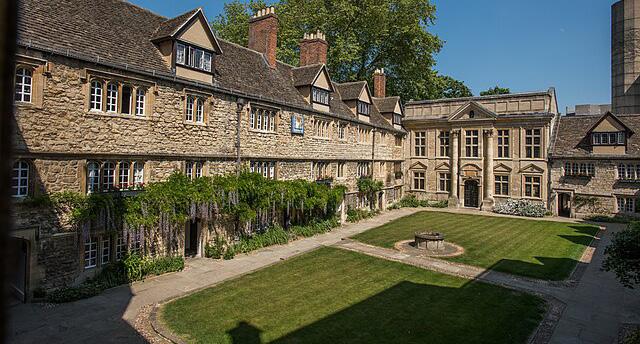
trar”. he job advertisement website for Teddy Hall reads:
“St Edmund Hall is an accredited Living Wage Employer”. The Living Wage Foundation’s logo is prominently displayed on the website.
The Oxford Worker Justice Campaign criticised the College in a tweet on Wednesday afternoon.
“Look guys, @StEdmundHall you can’t pretend you don’t know about @LivingWageOx
£9.90/hr is not a living wage in this city, so stop waving your ‘real living wage’ nonsense
in our face. Accreditation is not worth the paper it’s written on.” In a statement to The Oxford Student, the Oxford Worker Justice Campaign further stated:
“This latest example of a college offering a job well below the Oxford Living Wage is just further proof off what we in the Worker Justice campaign already knew: accreditation is not worth the paper it’s printed on. The fact that the OLW is due to be uprated on the 15th of this month, with inflation running high, only adds insult
to injury. Hardworking college staff (many of whom are precariously employed migrants) have put themselves at risk by working to support students and colleges throughout the pandemic, and to suggest that they aren’t worth a liveable wage is disgraceful. We hope St. Edmund Hall live up to their supposed standard and re-list this job at the Oxford Living Wage level.” St Edmund Hall have been contacted for comment.
St John’s to consider fate of controversial statue
St John’s College is considering removing a statue of John the Baptist made by Eric Gill in the wake of a protest at the BBC’s Broadcasting House headquarters over the artist’s paedophilia. Referred to by the Guardian as ‘one of the great British artists of the 20th century’, Gill is also known for his sexual abuse of his teenage daughters, sister, and family dog following the publication of personal diaries in the 1980s.
The Gill sculpture of John the Baptist hangs over the Front Quad of St John’s. Discussions have now begun
6th February 2022, by Alex Foster
“ Appeals to remove Gill’s work from public buildings have been raging.
within the College over the artist’s controversial legacy to “consider what action, if any, is required”.
These discussions come following a protest in London last month, in which a man attacked another Eric Gill
sculpture with a hammer. He also defaced the work with the words “Noose all peados” (sic). The statue, which features Prospero and a nude version of the sprite Ariel from Shakespeare’s play The Tempest, has been installed over the front entrance of the BBC’s Broadcasting House in Westminster since 1933. Another statue by Gill, ‘The Sower’, sits in the Broadcasting House’s main reception. When approached for comment by The Oxford Student Zoe Hancock, the principal bursar at St John’s College Oxford, told us that “the re -
cent protest at the BBC has led us to consider the Eric Gill statue of St John the Baptist that faces onto Front Quad. It is right that we consider such matters as these and consider what action, if any, is required. These discussions have begun but they are likely to continue for some time so that we can fully engage with our college community”.
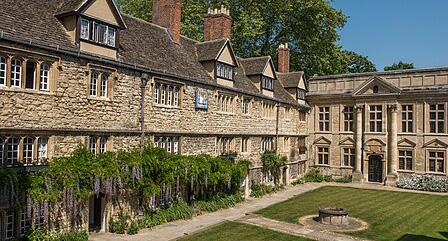
The statue of St John the Baptist sits in the niche of the gate tower in the College’s Front Quad. While sculpted by Gill in 1936, it was donated to the College in 1961 by the architect Sir Edward Maufe, who also designed
the next-door Dolphin Quad. Maufe further commissioned religious sculptures by Gill for Guildford Cathedral, who are also reviewing his work after the “pain caused” by his “abhorrent” legacy. Appeals to remove Gill’s work from public buildings have been raging since 1998. Margaret Kennedy, a campaigner for Ministers and Clergy Sexual Abuse Survivors, then challenged Gill’s Stations of the Cross in Westminster Cathedral to be removed, stating that “the very hands that carved the Stations were the hands that abused”.
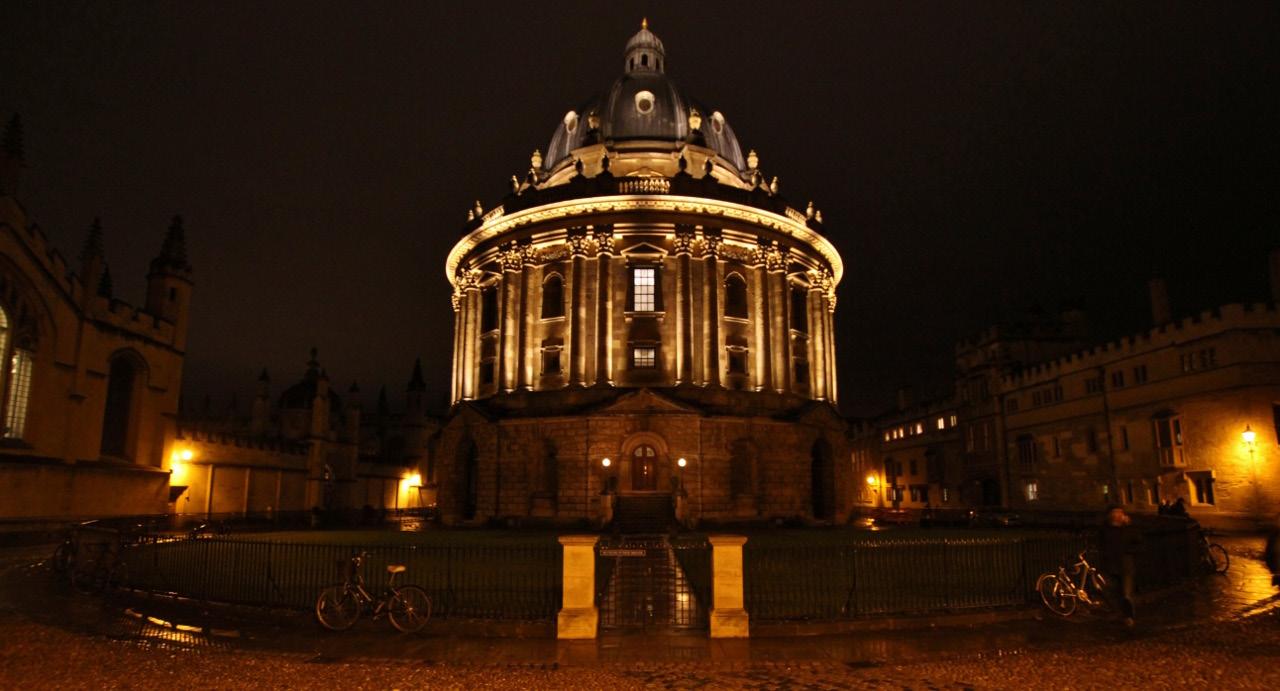
Image credit: Motacilla via Wikimedia Commons. License: https://creativecommons.org/licenses/by-sa/4.0>)
by Nala Holland
On the back of our Bod cards or on the other end of the phone: the Oxford Nightline has been an essential part of the city and its disproportionally high student population for decades now. And although it’s easy to imagine the complexities and challenges the volunteers might encounter, what stands at the center of the Nightline is a message and community that appears wonderfully hopeful. An ordinary night during term-time: precious hours some might spend hunched over a library desk, cramming that last-minute essay. Coming home from an evening out with friends, trying not to slip on the wet cobblestone. Or simply curled up in bed, ready to catch up on some sleep. But should that deadline feel too unmanageable, the darkness too daunting, and the walls of those accommodation rooms too narrow, the remarkable thing about Oxford is that there is always someone to talk to. Or rather: someone to call. Between 8pm and 8am, the Oxford Nightline – a completely independent and entirely student-run listening, support and information service – is open to
all students in Oxford.
Founded by a second year St Anne’s student in 1971, Oxford Nightline volunteers have provided young people throughout the city with confidentiality, discretion and a complete lack of judgement for more than fifty years now. This means that out of all the perfectly valid things to do with a (more or less) free evening, there are, and have been for quite some time, hundreds of students willing to
“ Hundreds of students willing to dedicate their nights to creating a safe space...
dedicate their nights to creating a safe space for complete strangers – and willing to do so without any external recognition. The Oxford Nightline is entirely anonymous; its volunteers have no access to callers’ phone numbers, IP addresses or locations and share no identifiers of their own. Volunteers are even reminded not to tell their friends of the work they do for the Nightline. This gives callers complete freedom: the
option to address what needs to get out. The Oxford Student has asked some of the volunteers how it feels to integrate such a huge – and yet in ways invisible – role into their lives.
“Sometimes the listening hours affect my social and academic life by messing around with my sleep schedule”, one volunteer said, “but it’s so worth it – I love shifts and really look forward to them.” However, when asked whether the listening hours directly affect the volunteers’ academic or social life, most indicated that it doesn’t. “We have a minimum of two shifts a term and many don’t even do that”, explained one volunteer. The assignment of shifts is relatively flexible – the Oxford Nightline states that due to having many volunteers, they are able to cover even last-minute drop outs. “It honestly shouldn’t be affecting your life! We have processes if it is!” These students applied to be a Listening Volunteer for a variety of reasons. “I felt like I could be insensitive at times, and I wanted to learn how to be a better and more empathetic listener”, someone acknowledged. Another volunteer praised the option to give something back, learn new skills, and meet like-minded people. In general, many replies
surrounded the community within the Nightline, its positive impact on time spent in Oxford. “I met the most lovely people in training that inspired me to keep going and become a listening volunteer”, one listener explained. Another stated: “How hard all of the volunteers work is inspiring, and I am so grateful for the support and warmth that the [...] community offers.” But the Oxford Nightline doesn’t only allow its volunteers to connect and motivate each other – it also acts as an internal support system. The prospect of guiding someone through a crisis appears intimidating in itself. But doing so for a person you maybe even don’t know the name of? Luckily, that scenario doesn’t seem to be entirely appropriate. Before starting their listening shifts, volunteers receive an in-
“ The prospect of guiding someone through a crisis appears intimidating in itself.
troductory training and access to the organisation’s policies and guidelines at any time. Additionally, volunteers can acquire counsel and support from others currently on-call – there are even situations in which they are required to speak to a volunteer who is more experienced and has received accredited additional training. This might include advice on whether to offer calling an ambulance or reassurance to the volunteers themselves. “In the moment, I just make sure that I am calm with deep breaths”, one listener explained. “If that doesn’t help, I’ll look over my notes on call-taking. However, it is very rare that I have to do this.” They also described
the direct support they receive from fellow volunteers while on a hard call – even if that just means offering to make a cup of tea for the other listeners. Still, it is easy to imagine the pressure a volunteer could find themselves under. “It’s a very privileged position, and I never take that for granted”, one volunteer commented. “There is such a responsibility in that moment, and it’s so important to use the training and the guidelines to be the most supportive and empathetic listener possible in that moment.” The Oxford Nightline guidelines include being non-directional, meaning that volunteers are not to give advice. But what about situations that are genuinely extreme? What if someone is in immediate danger? In calls where there are safeguarding concerns –such as children or adults at risk – usually an Oxford Nightline coordinator would pass the information they obtain onto the relevant services under UK law. However, it is important to remember that the Oxford Nightline is not 999. Even though listeners can offer to call an ambulance, the organisation’s primary goal is to establish a space to talk.
And fortunately, not all calls taken by the Nightline’s volunteers include medical or personal emergencies. “It’s very lovely to be able to make a connection with someone across a phone line, even if it’s just for a short period in the night”, one listener described. Possible hardships aside, this is a very beautiful notion – and maybe what the Oxford Nightline appears to stand for at its core. A connection in the middle of the night, whether between listener and caller or amongst the volunteers. Support, solidarity amidst darker hours – and the certainty that someone will pick up should you need to call.
In this week’s Feature’s Favourites, our section editors pondered their favourite café spots. College libraries get boring quickly, so why not study in a café? In these chilly winter months, the only thing that gets some Oxfordians out of bed is the promise of a sweet treat and a hot chocolate, or a quick coffee before your far-away tute. Next time you’re itching to escape an old, stuffy library, consult our section editor’s selections of their favourite spots in Oxford.
Nala suggests – Providing perhaps the best river view in Oxford, The Paper Boat Café is definitely worth a visit – especially during the warmer months and when you bring enough time for some relaxation in their garden.
Esme explains- Tucked in the trail to Jericho, don’t judge this cafe by its small size. Tree Artisan Café is a cozy, warm space with incredible coffee and story-worthy latte art- just don’t bring your laptops.
Emily says – New Ground Coffee, located on Ship Street in central Oxford, has hands down the best coffee in Oxford - approved by a former Melbourne barista. However, if it’s brunch you want, nothing beats The Handlebar Kitchen on St Michael’s street.
Martha reccomends – Vaults & Garden Café- tuck into hearty meals and soothing aromas–from spiced soups to moreish cakes–in the sacred dwelling of student-monks and let yourself be être èpoustouflé by it all! Beth mentions – Overlooking the Cherwell River, with seating inside and out, the Magdalen ‘Old Kitchen Bar’ is a gorgeously quintessential cafe; the prices are as attractive as the decor, making it my favourite place for a cafestudy-date with a friend.
Isobel states – Can one really call a café blatantly in OX1 ‘underrated’? Maybe not. But Theo’s is my favourite place when I need to back away from the bustle of Broad Street. Many an afternoon’s gossip has been shared over their irresistible coffees and Greek treats that are impossible to choose between, gazing lovingly (or loathingly) over at college from the window seats.
This is a simulation, and you’re in it
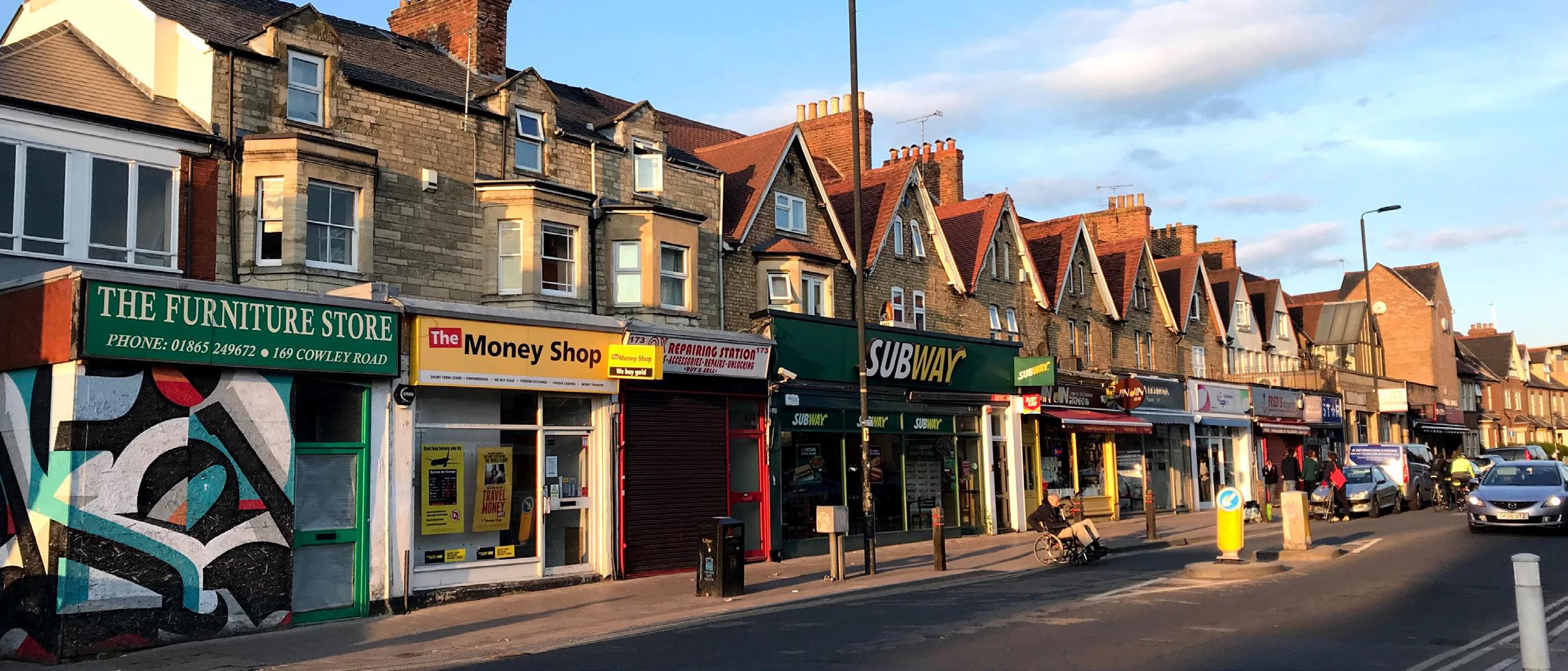
(https://crativecommons.org/licenses/by-sa/4.0)
As a fresher, now that the sixth week of term is upon us, I am beginning to understand what it means to be trapped in the – slightly claustrophobic – Oxford bubble. My weeks are a whirlwind of 6am rowing, 9am lectures, relentless 2 hour logic tutorials, late night library sessions, netball crewdates and evening pub trips. All aspects of my personal, social and academic life revolve around this university. This is an experience unique to Oxbridge students. We exist within an essentially independent world of higher education. In many ways, it
“ We exist within an essentially independent world of higher education.
is an idealistic world - everyone is in the pursuit of knowledge, engaging critically with the world around them and interacting with people from a myriad of different backgrounds with a myriad of different views, values and opinions. Moreover, all our
academic ambitions are fostered by the tutorial system which ensures every student is equally challenged and supported. However, this is not reality. In a sense, we students are like fish trapped inside a fishbowl - watching the world go by through the glass but ultimately separated from it. It’s disconcerting how quickly I have adjusted to this new life that only weeks ago was so far removed from the reality I was accustomed to. The unique Oxford lexicon – which initially felt so foreign - now rolls off my tongue without a second thought. Hall dinners are essential to my daily routine and I don’t remember a time when I didn’t have to carry a box of toiletries with me every time I needed to shower. Crewdates – a bizarre concept only weeks prior – are now a cherished pastime – I think I’ve seen my friends do more shoes than they have written essays! As much as I am enjoying all these weird and wonderful aspects of Oxford life, I am beginning to recognise the importance of taking a step back from the university to note the absurdity of our situation. My friends back home (in Melbourne, Australia) work
part-time jobs, participate in local sports teams and pur-
“ I am beginning to recognise the importance of taking a step back from the university to note the absurdity of our situation.
sue passions separate from their degrees. Consequently, their networks reach far beyond their university sphere and university for them is only one small aspect of their lives - not the point upon which they revolve around. Reflecting on the abnormal circumstance of being a student at The University of Oxford, leads me to question whether it is healthy to anchor one’s life to a singular institution. Superficially, the Oxford student body is representative of a diverse array of viewpoints and beliefs - but is it really a true cross-section of society as a whole? According to the June 2025 Annual Admissions Statistical Report, 80.5% of students admitted to the university in
2024 were from the UK and only 16.3% of admitted students were from outside the EU. Furthermore, of those UK applicants, 47.8% came from London or the South East. While you will certainly encounter people different from yourself at Oxford, the student body is assuredly not an embodiment of society as a whole. Moreover, the reputation carried by each college speaks to the tendency for similar individuals to be attracted to the same college environment. It is all too easy to build yourself an echo chamber and stay safely inside – that is until it comes time to emerge into the real world and face the harsh reality that it is filled with people who do not reaffirm your every belief. In this way, Oxford can become a simulation of reality: we go through the motions of living our lives out in the ‘real’ world away from the comfort of our homes – many of us for the first time – but really we are existing within a controlled environment of mostly like-minded individuals from similar backgrounds all living almost identical dayto-day lives.
Read the rest of this article on www.oxfordstudent.com.
culture@oxfordstudent.com | Deputy Editor: Sophie Harrison
Section
Sophie Harrison is a Culture Deputy Editor.
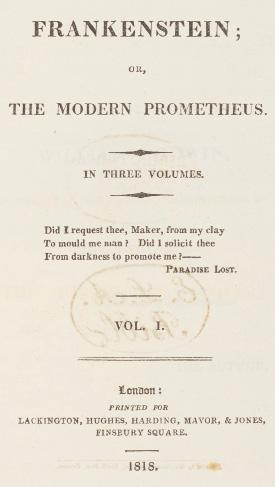
Frankenstein is one of those stories you think you know before you’ve read it. In part, this speaks to the place that Mary Shelley’s 1818 novel still occupies in our cultural consciousness. There’s a whole mythology around Frankenstein, one that has been shaped by the numerous adaptations produced over the years. Guillermo del Toro’s latest version, however, is far from the iconic image of a green Boris Karloff with bolts in his neck (from the 1931 film). Where many directors have denied the creature a voice, arguably producing a caricature in the process, del Toro returns to the source material, where the ‘monster’ thinks, feels, and narrates. The director is not afraid to change elements of the story, though these choices may unsettle devotees of the nov-
el. For instance, Shelley presents Frankenstein’s response to the awakening creature as one of instinctive horror – he does not reflect; he is simply repulsed. Yet, if anything, del Toro’s Frankenstein (Oscar Isaac) is more sinister. He is no stranger to the unsightly (as his gruesome experiments have shown). As such, it is not the monster’s appearance that instantly repels him, but the long-term responsibility that comes with it. He never considered the fact that he would have to raise a ‘child’, nor does he have the selflessness to do so.
In this sense, he is unlike Elizabeth (Mia Goth), who –similarly out of place and unmoored in society – is able to sympathise with the creature (Jacob Elordi). With subtle nods to James Whale’s 1935 film Bride of Frankenstein, del Toro reimagines Elizabeth’s role, making her more active and positioning her as one of
the only people who shows the monster love.
Isaac’s performance as Victor, angry and tortured, is rather reminiscent of what we’ve seen before. Goth and Elordi are more interesting – though perhaps their roles provide greater scope for this. Initially intended for Andrew Garfield, the role of the monster relies on eye acting, which Elordi masters. Before the monster learns to speak, his gaze becomes a means of expressing hurt and confusion.
The Independent remarks that “Elordi plays the creature as a misunderstood […] outsider […] rather than as an agent of evil and chaos,” as if this were not precisely the point of the original story. Mary Shelley’s novel has long questioned what makes a monster and what makes a man. If a common cultural mistake is to confuse Frankenstein, the name of the creator, with the nameless creature,
this is surely fitting. Frankenstein isn’t the creature, but he is the monster. Ironically, it is the creator’s actions, rather than any innate quality, that start to turn the creature into one, as Elordi’s character is driven to violence by neglect, desperation and vengeance.
My favourite scene is a gentler moment which sees the monster feeding a deer – subsequently shot dead, before the hunters start firing at him too. It’s a microcosm for what the tale is all about: man as a creature with some natural goodness within him, becoming painfully aware of the world’s injustice, particularly through his own confrontation with it. The final shot of Elordi’s tears in the Arctic light, as creation mourns creator, shows just how much human there is in the ‘monster’. At its core, Frankenstein is about the importance of showing love to others, rather than treating them as something less than human. In this
Never before have I been escorted to a theatre entrance by a fake drunk man asking me, “You got a boyfriend?” (I don’t know. Have you got three hours?) Entering the Michael Pilch theatre for Frequent Flier Productions’ SQUAT was like walking down Cornmarket at 4am with students acting drunk, and normal residents of Balliol walking past, entirely perplexed. The transcendence into the SQUAT world largely works; the actors do not break character like the tin man in a European city. Having seen the work of SQUAT’s director, Juliet Taub, previously, as well as that of some of the actors, I
walked in with high expectations, and they were met. SQUAT follows five friends as they navigate the inebriation and the post club-night, startling sobriety of young life when one (or many!) of them has committed a murder. Over an hour or so, the play unravels their inner tensions, well-locked secrets, and endearment towards each other. Don’t be fooled by the intensity of the synopsis. This play is cool. You know dark comedy is done well when it is implicit in the acting, such that the dialogues could be entirely sober while their delivery leaves the room roaring with laughter. It was suggested by my company, as we walked in, that to achieve the same level of drunkenness as the actors, we should have been offered alcohol. It was
thoughtful when this plea was addressed towards the end of the play as the actors reached for a spoonful shot, excluding the audience with “it wasn’t in the budget”.
The five friends fit the classic Spice Girls trope. Tom seems like the leader of the pack, the one staring down each Pilch entree, the one who would bring them all back to each other, and back to the main argument. Theo Joly plays the role with ease, balancing vulnerability with humour when expressing his love to his girlfriend, and her brother’s feelings for him. Reggie was my favorite character, with Ediz Atilla bringing a spark to the fun-loving character. He’s the person that you can rely on to source the mushrooms when you need them. He’s the one
sense, its message remains as vital as ever. If Guillermo del Toro’s passion project breathes new life into an old story, it is clear that Mary Shelley’s creation was never really dead.
Read the full article at www. oxfordstudent.com
that does what others only chat about. Jenny is your responsible, hero-complex friend, encapsulated snappily by Caeli Colgan in “Name a time I’ve been wrong. You can’t.” David pulls the thread of the plot as he maintains his state of fear and tension while everything else around him teeters into hilarious chaos. Aaron Gelkoff’s rendition of a relatively normal boy with lingeringly fear-filled eyes and a quip that would break the trance is a brilliant balance for comedy. As for Dan, he seemed like kind of a dick at first, but then I warmed up to him because, well, you can’t hate a gay man. Cohen Rowland successfully doesn’t give it away, and Dan’s complicated relationship with his sister and low self-esteem is delicately done.
A relevant and creative way of soft-launching the play, the Instagram promotion was very on theme with each character’s own Hinge profile. I left the play feeling like I’d experienced a dramatic night of fun, endearment and even relatability. The standing ovation was deserved, and the vision did justice to kinetic theatre. With dialogues better fleshed-out, and fewer unnecessary nods to breaking the fourth wall because many filmmakers do it, SQUAT could have landed an even stronger finish. I can confirm all of the cast and the crew of SQUAT were on a league higher than most other plays that I’ve watched. It might just be better than a night out. Read the full article at www.oxfordstudent.com
Content warning: self-harm, suicide, eating disorder references.
In an age of mental health awareness, ‘mindfulness’ has been the hottest topic on the scene for a while. Finding a creative outlet often comes to the forefront in discussions about the arts, with questions about the validity of music as a coping mechanism. There are tonnes upon tonnes of optimistic takes on the therapeutic usefulness of catharsis in music. Yet, the topic of whether or not music can be a negative coping mechanism is rarely discussed in the correct way. Sure, one can find a plethora of ‘think of the children’-esque takes on the cultural impact of music, echoing pearl-clutching sentiments of moral panics in days past, but the diverse emotional effects of music are rarely addressed comprehensively.
Identifying with the subject matter can be a brilliant way to feel seen, and there’s no denying that music can express the unspoken about people’s emotional lives. The archetype of the ‘Tortured artist’ can be a great way to feel seen. Finding someone who can capture and dissect exactly what’s bothering you in their lyrics can create a bond that feels intimate and personal. However, feeling seen through musical musings on despair can be a precarious tightrope to walk. How far are we willing to gaze into the abyss through the eyes of our idols before it begins to gaze back?
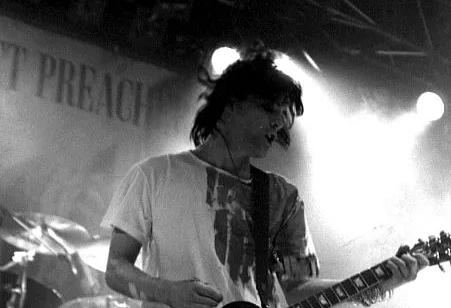
It’s 1992, and the Manic Street Preachers have burst onto the scene with their debut album, ‘Generation Terrorists’. Covered in lipstick, leopard print and a truckload of eyeliner, the band were a learned mix of Hanoi Rocks meets The Clash. The first album was a blend of the macho sounds of mid-80s hard
rock with the feminine and politicised poetry of punk. The band aimed to make their debut album ‘the greatest rock album of all time’ and then split up. The Manics became the Black Sheep of the
“
How far are we willing to gaze into the abyss through the eyes of our idols before it begins to gaze back?
rock world, a world that had grown tired of masculinised ‘Cock Rock’. Clad in outfits that screamed political slogans and affronts like ‘Kill Yourself’, the Manic Street Preachers were radical, reeking of teenage abandon and the fatalism often inherent in post-industrial areas such as Blackwood, South Wales. Sensitive, yet daring and offensive, the Manics became trailblazers of the emerging ‘Cool Cymru’ scene, shaking up the status quo through the bitingly articulate lyrics of songwriter Richey Edwards.
In a time when self-harm was rarely acknowledged and mostly relegated to hushed discussions behind the walls of a psychiatrist’s office, Richey Edwards became a poster child of the taboo, vocalising the unspeakable at the time. Most infamously, Edwards’ subsequent carving of ‘4 REAL’ into his arm following an interview with NME’s Steve Lamacq made music history overnight. Physical self-harm was rarely publicised in the music press, bar the traditional affair of sex, drugs and rock ‘n’ roll lifestyle. When previously publicised instances of
self-harming behaviour, like that of Sid Vicious or Julian Cope, were usually tarred with the brush of performance art, Richey Edwards addressed the question of whether the behaviours were actually ‘4 REAL’. Through his unabashed and often comedic tackling of the subject matter, Edwards opened up introspective discussions of taboo topics in the music media for the first time. For better or for worse, incidents such as the NME altercation punctuated the early career of the manics, making Richey, as stated by Caitlin Moran, a cause celebre among depressives, alcoholics, anorexics and self-mutilators’. As Richey’s mental health struggles worsened, as one of the band’s seminal songwriters, the band’s musical flirtation with self-destruction and suicidality increased tenfold.
For those who suffered quietly, their 1994 masterwork, ‘The Holy Bible’, became an acknowledgement of the issues, but also, unfortunately, provided a gaze into the abyss.
The Manic’s third, and darkest album, drew influences from
outfits such as Wire and Gang of Four and from American groups such as Alice in Chains and Girls Against Boys. The album was aggressive, abrasive and directly confronted issues that the Manics had addressed in passing over their past two albums. Offering an exploration into the darkest corners of the human experience, the album tackles topics of Self-Harm, Anorexia, the Holocaust, and Human trafficking. Rightfully earning the number 1 spot on NME’s ‘50 Darkest albums ever’ list, the piece is widely recognised to be reflective of Richey’s declining mental state preceding his disappearance. Despite limited commercial success, the album had a profound effect on the Manic Street Preachers’ fans, signalling a new foray into post-punk and industrial sounds that the band would never pursue with such rigour again. Becoming an instant cult classic, the terrifying soundscape of ‘The Holy Bible’ remains one of the most covertly influential pieces of music history of the 90s. Arguably overshadowed and
marred by the disappearance of Edwards on the 1st of February 1995, ‘The Holy Bible’ marked the final collective effort of the manics as a 4-piece and their best work, despite being swallowed up by numerous pop-culture mythologies.
The music of the Manic Street Preachers and the lyricism of Richey Edwards is a unique phenomenon, offering an entirely honest depiction of the goings on of one of the most interesting minds in music. Albeit one of the most misunderstood minds in music, the glimpse into the darkness offered by the words in the Holy Bible, acting as some sort of cryptic suicide note, can be ‘too much’ for a social demographic that now appreciates faux emotional intimacy and parasociality. Acknowledging and, in some instances, enabling the self-destruction it takes to identify with and understand Edwards, what benefit is feeling heard when you destroy yourself in the process?
Read the full article at www.oxfordstudent.com
Wicked: For Good is in cinemas now.
Seabass Theatre stages Doctor Faustus at the Keble O’Reilly from 26th29th November.
Mamma Mia: The Musical is showing at New Theatre Oxford from 25th November
Corpus Christi drama society presents Richard III from 27th-29th November
Boulevard Productions is staging Annie Baker’s Circle Mirror Transformation at the Michael Pilch Studio from 1st-4th December.
The Old Fire Station presents Before the Millennium from 1st-21st December
Contact oxstu.culture@ gmail.com if you would like to write a review of a cultural event in Oxford.
Ivett Berényi is Identity Deputy Editor.
Earlier this term, I experienced a slightly awkward instance of passion meeting profession. With my cohort having entered our final year as English Language and Literature students, our personal tutor reminded us that last year was the “time to fall in love”, whereas now we need to recenter, focus, and put the work in. Immediately, I remembered all the authors who had swept me off my feet last year: George Herbert, Julian of Norwich and John Keats, just to mention a few. A course mate of mine thought of her boyfriend. My second year allowed me to bypass the passionate adulteration of my undergraduate studies, but my third year has brought with it the revelation that love cannot sustain an extended essay, a dissertation, or a portfolio. In this weird, final-year
limbo, how far can I hold onto passion while preparing for a professional career in academia?
This is all the more complicated by the fact that I have fallen in love in a perpetual, postcolonial elsewhere. I cannot untangle myself from verses and universes in magical realism or the Otherworld of Irish folklore. What claim can my passion lay on literature inspired by lands I have barely visited or never even seen, on texts produced by people I have not, and won’t ever, belong to?
I cannot ignore the yearning as I read; everything I know about love I learned from Salman Rushdie’s fiction. The transcendence, the impurity of worlds created through love affairs, the intrigue, the curiosity – all that I have derived from the fiction of an American-British-Indian man, one who told me about his eleventh hour only about a week ago. I
have never been to New York, nor Cambridge, nor Bombay, nor Pakistan, but I carry bits of visions to Oxford, to the Hajógyári Island in Budapest, to County Clare. Rushdean love strikes me wherever I go, and our cultural differences are erased in the process.
Rushdie and Sigerson bring me the “consolation” that J. R. R. Tolkien praised in fairy stories, the ending that feels like “a catch of the breath, a beat and lifting of the heart near to […] tears.” I lost control of my tear ducts reading Lisa Carey’s The Stolen Child… but such an emotive response is resolutely irrelevant to any sort of literary analysis.
In that way, I am a terrible academic. I need to fall in love before I can produce the work, but traces of my rose-coloured glasses are often palpable on my laptop screen. Then, of course, criticism and feedback pull on my heartstrings before I can properly respond
Sciences Doctoral Researcher.
Last June, the Oxford University Filmmaking Foundation (OUFF) hosted a much-anticipated guest speaker: Liz Trubridge, the producer of Downton Abbey. First airing in 2010, the series soon became an international success, with audiences across the globe eagerly following the lives of the Crawley family and their staff. Six series and three films later, the series recently saw its final instalment in cinemas.
Many of the audience’s questions for the producer revolved around the third and final Downton Abbey film, which had its release date in autumn 2025. “It was real-
ly a special project for all of us who’ve been working on Downton for the last decade and a half. It’s a goodbye to a world that has greatly shaped our lives and careers.”
Downton Abbey first caught my attention as a teenager, and I soon became one of the many enthusiastic fans sharing their thoughts and theories about the upcoming episodes on online platforms. While over the years I have managed to ‘keep up with the Crawleys’, Liz Trubridge’s hints about the upcoming film intrigued me anew. I was curious as to how the filmmakers would decide to tackle the challenge of meeting the expectations of such a large fanbase, many of which had been following the franchise’s development for fif-
teen years.
I approached the film with a certain scepticism, unsure if I would encounter a wish fulfilment film stringing together nothing but a series of happy endings targeted at a specific audience. But my fears were soon allayed.
A real labour of love in costuming, cinematography, and screenwriting, the film feels well fleshed out and delivers the interlinked story arcs with subtlety and elegance. The writing shines especially in showcasing the development in Mary and Edith’s relationship, from their intense sibling rivalry in the first season to sisters who support and stand by each other’s choices by the end.
During her event at Oxford, Trubridge remarked on the
in the manner of a calm and collected undergraduate. I am suspended, like Keats’s lovers in ‘The Ode to Psyche’, fairies, jinn, transcendent lovers, and I “had touch’d not, but had not bade adieu / As if disjoined by soft-handed slumber.” I am still unsure what sort of “slumber” I am sharing with these authors, but in the realm of dreams, no land is too far.
Nevertheless, these texts still give me an apt reason to wake up every day. Words of love are my lullaby and the song of the “morning dove” greets me at seven o’clock. Then, once I’m awake, I must do my best each day to translate tears, heartache, and unbearable excitement into well-structured, coherent, concise pieces of literary analysis, allowing an influx of other critical voices who surely do not love these texts as I do.
Read the full article at www.oxfordstudent.com
film, “It [has] a message of hope, despite the uncertainties of the future,” aiming for the audience to find itself reflected in the parallels of the past. Lady Mary, too, insists: “We all depend on each other, the way people should.” Her words not only ring true in the
microcosm that Downton is, but also remind us of the social solidarity that we all truly rely on, particularly in times of uncertainty and precariousness.
Read the full article at www.oxfordstudent.com
Highclere Castle, the setting of the fictional Downton Abbey.
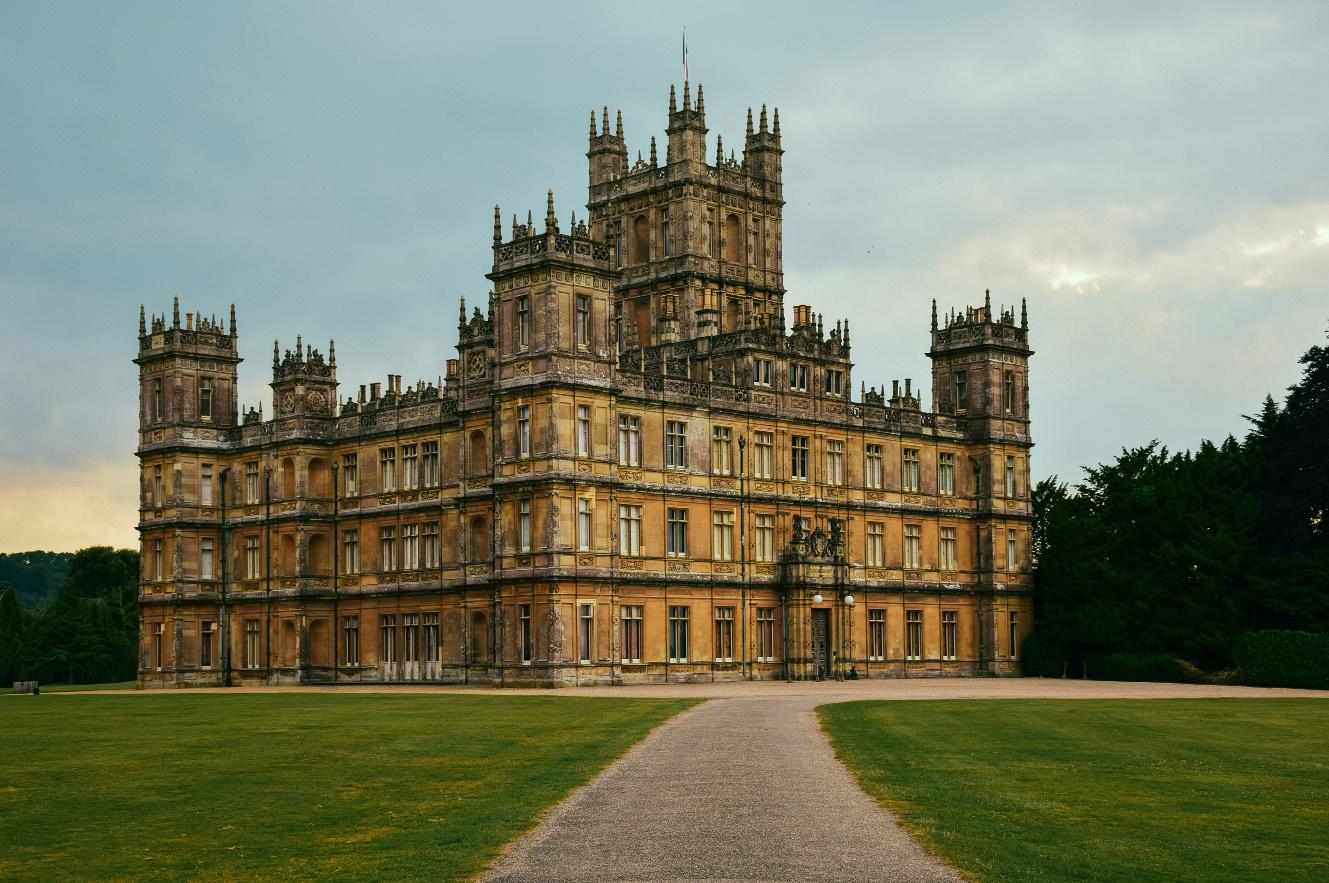

identity@oxfordstudent.com | Deputy Editor: Ivett Berényi Section Editors: Ansu Bhattarai, Bella Brown, Celine Leung, Ngoc Diep, Rodin Bantawa

Ivett Berényi discusses select extracts from Palestinian authors in
an effort
to engage with stories rooted in Gaza and in the West Bank.
On 10th October 2025, a ceasefire deal in Gaza was signed. However, the war, the devastation, and the immense loss of life did not stop at that moment, just as they did not start with the October 7 attacks in 2023. An Al Jazeera article reported a couple of days ago that, within the 30 days following the agreement, Israeli forces have violated the ceasefire terms 282 times. Therefore, resistance, protest, and solidarity cannot halt either. Though it is easy – convenient, even – to feel overwhelmed and look the other way, there are several ways to protest, including engagement with Palestinian literature.
The student-led team behind the Heart of a Protest mini-documentary held a screening in Oxford about a month ago. I had the privilege of an illumi -
nating conversation with the team, emphasising the importance of listening to anecdotes, stories, and personal experiences from the region, coming from people who have to suffer the atrocities committed day by day. Admittedly, I have derived most of the following literature from a reading list compiled by Penguin and my English Language and Literature degree – a rather Eurocentric approach. Nevertheless, everyone needs an anchor, a starting point, a solid ground from which further points of engagement may branch out.
First on the list is a poetry collection published in 2024 authored by Mosab Abu Toha, the winner of the Pulitzer Prize for Commentary in 2025. I do not mean to suggest that The Forest of Noise is only worth reading
the border, “hid in the dark of the night.” He fears that his shadow, representative of the fragmented identity of exiled Palestinians, will remain unattended, “bleeding black blood / through its memory / now, and forever.” Toha draws us in with this sense of urgency, with the ethical imperative of tending to living voices as well as the shadows left behind, the shadows later destroyed.
Jordanian authorities. Palestinians were opposed and oppressed at literally every turn over the course of the later twentieth century –but Aziz never gave up his diplomatic efforts against any regime, Arab or Israeli. Even after two instances of unjust imprisonment, he continued to fight.
due to its critical acclaim; I rather seek to highlight the importance of sustaining visibility, as well as remembering and honouring Palestinian voices.
“ Neither shadows, nor bones, nor memories seem to be safe.
Indeed, visibility and legacy form sources of continuous, inextinguishable anxiety throughout the poems. The second poem, ‘Obit’, highlights the personal dimension of the looming invisibility that the Palestinian people are cast under. The speaker reduces himself to a “shadow [...] left alone” before crossing
Toha sustains a dual commitment to his craft and the Palestinian people, even as his faith in the force of poetry wavers. ‘My Library’ figures his penned annotations in books as “a ventilator / for a dozen patients” such as Haifa, oranges, Beirut and books; however, his optimism takes a dark turn in the final work, ‘This is Not a Poem.’ The elegiac tone in his final words transforms his collection into a “grave, not / beneath the soil of Homeland, / but above a flat, light white / rag of paper.” Substituting Palestine for “Homeland” at once reaffirms his connection and mourns the prospect of Palestine as a nameless state (or a stateless name?), as a region destined for conflict at the cost of Palestinian self-determination and the very ability of its people to survive Israeli occupation and offensives.
For some, poetry provides solace, while others may feel alienated in its abstractions and figurative language. Though Toha’s Forest of Noise works through historically and culturally precise moments of the occupation, it is still understandable that some readers may lean towards an even more personal account. Raja Shehadeh’s memoir, We Could Have Been Friends, My Father and I (2022), is one such example.
While Toha keeps our eyes on Gaza, Shehadeh brings us into the Occupied Territories and the injustices of
“ The state of exile never settles, and our eyes and minds must follow.
Potentially the most Palestinian cornerstone of the memoir is the title of its final chapter: ‘To be continued.’ In the first chapter, we learn about Aziz’s assassination, but the final page reveals that decades after the murder, Raja “is still waiting to hear confirmation” about the assassin and “why the Israeli police closed the file before the investigation was completed.” The text is concerned with legacy, visibility, and memory in every line, much like Toha’s poetry. The resistance to erasure is a testimony not only to the resilience of these individual authors but also to the urgency of wider audiences to listen to perspectives cast under unspeakable threats for over a hundred years now.
I wholeheartedly encourage you all to branch out into further essays, novels, and poetry. The state of exile never settles, and our eyes and minds must follow its course with empathy and urgency. The next item on my list is Suad Amiry’s 2022 novel, Mother of Strangers. Please keep Palestine in mind as you browse through the wealth of books available in this country.
Read both articles at www.oxfordstudent.com
science@oxfordstudent.com | Deputy Editor: Yuhan Wang
Section Editors: Ansu Bhattarai, Caitlin Turnbull, Clemmie Watkins, Lanna Kadhim, Nour Bouzidi, Rebecca Su
First item on the list: a cup of coffee or tea to start the day. While coffee has recently surpassed tea as the UK’s preferred drink of choice, the morning routine remains the same. It just isn’t complete until we’ve had that first cup. Have you ever wondered how it works? What is this stimulatory drink consumed for centuries, travelling from its origins in Ethiopia to China, the Middle East, Europe, and the Americas? A common love language, maybe even a lovehate relationship, or perhaps something you feel indifferent about altogether. But do we really understand the science behind it? Because there might be more to it than caffeine content.
Your intake of caffeine, whether through coffee or tea, triggers alertness in the brain. Caffeine elevates the extracellular concentration of dopa-
Nour Bouzidi discusses the potential of medical devices Friday 28th November 2025
mine, the brain’s pleasure and reward hormone, by binding competitively to adenosine receptors and blocking adenosine’s ability to bind and promote relaxation. In other words, caffeine does the opposite and keeps you awake rather than calming you down. Over time, your receptors adapt, becoming dependent on it, which explains its addictive quality.
Of course, caffeine has its benefits and drawbacks. A study looking at college students taking early morning exams found that caffeine improved memory retention during non-optimal times of the day. Still, caffeine comes along with its accepted side effects, including anxiety, increased heart rate, and digestive issues. However, the chemistry isn’t the whole story.
Studies suggest that when, where, and with whom you
take caffeine can also impact your mood. Research from the University of Warwick found that the first cup of the day does, in fact, influence how you feel. Two and a half hours after waking, caffeine consumption was associated with positive emotions, particularly happiness and enthusiasm, and lower levels of sadness. The effects are partly chemical, acting as a psychostimulant, but also psychological. Does it make a difference whether it’s coffee or tea? Caffeine content is typically higher in coffee than in a standard black tea, but both are rich in antioxidants that benefit your health. Around 99% of the caffeine in coffee is absorbed within 45 minutes of drinking it. Tea, on the other hand, is rich in L-theanine, which is a powerful antioxidant and promotes relaxation by increasing the brain’s alpha waves.

The combination of chemicals present in tea decreases the bioavailability of caffeine and slows its absorption. Overall, tea offers a calmer, more balanced boost compared to coffee’s go-go-go energy. Which one is “better” depends on the person, the timing, and the desired outcome.
Caffeine’s relationship with cortisol, our stress hormone, also depends on timing and dosage. It varies from person to person too. Desensitization of adenosine receptors can make some people less sensitive to caffeine’s effects... Read the full article online at www.oxfordstudent.com.

Medical devices have become essential in diagnosing, preventing, monitoring or treating medical conditions, revolutionising the approach to patient care. They have become routine; from cardiac
pacemakers for arrhythmias, kidney dialysis for renal failure, to deep brain stimulation (DBS) in Parkinson’s Disease. Medical devices also offer a promising avenue in personalised medicine, particularly with the rise in precision diag-
nostics and wearable health devices.
Medical devices are carefully regulated according to their associated risks, categorised into: ‘Low Risk’ Class I (e.g bandages, hospital beds), ‘Medium Risk’ Class II (e.g. contact lenses, syringes) and ‘High Risk’ Class III (e.g. prostheses, implantable devices). The latter undergo extensive testing and safety checks, requiring systematic pre-market approval and clinical trial data before commercialisation. Class III medical devices appear to hold the most promise for future technologies in precision medicine, by pushing boundaries in healthcare innovation.
Personalised medicine aims to tailor treatments to individ-
uals, taking into account their unique biological differences, such as genetic or metabolic profiles, to maximise effective treatment. In the UK, the personalised medicine market is estimated to grow to £45 billion by 2035, a sharp rise from £20 billion in 2024. In July 2025, the Medicines and Healthcare products Regulatory Agency (MHRA) implemented a new framework to facilitate the access to personalised treatments. MHRA Chief Executive Lawrence Tallon stated “It’s a landmark moment that opens the door to a future where highly personalised treatment - becomes part of routine care.”
Today, long-established medical devices are being reimagined with the rise of
personalised medicine to enhance their efficacy and patient outcomes. A key example is the pacemaker, which has long been used to support heart function in patients with cardiac arrhythmias. However, traditional pacemaker devices remain largely unspecific with recent research highlighting that this generic approach may fail to maximise outcomes. Building on this, researchers at the University of Leeds are developing personalised pacemakers, which adapt to each person’s individual heart rate and provide feedback control, thereby optimising pacemaker efficacy...
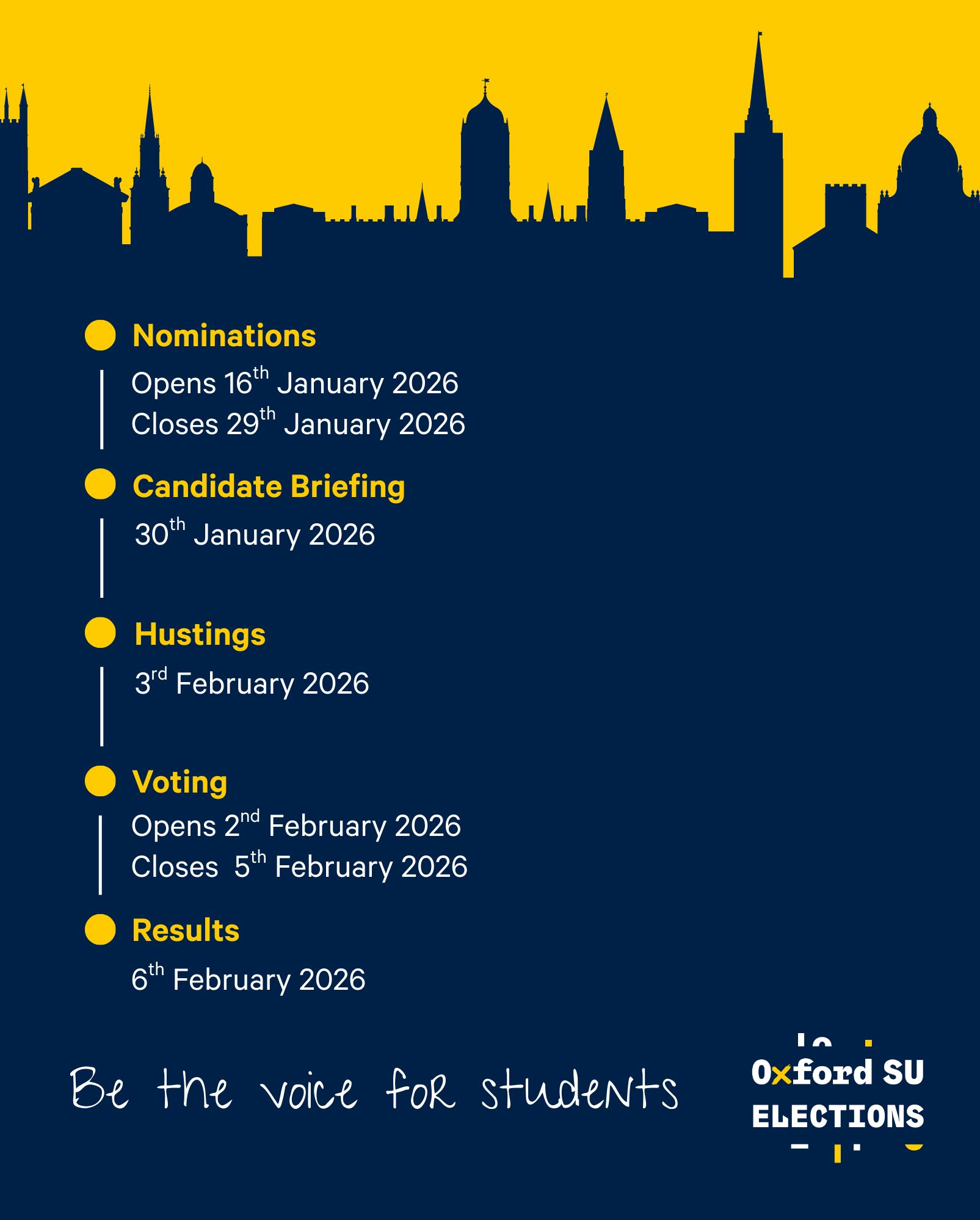
Read Rordon Gamsay’s reactions on Twitter @OxYou and the Sunday Roast on the OxStu Instagram
THE ISIS CRISIS
A play in verse for 3 voices
Act 1
James is in the car with his Mother
James:
Mum, I’ve got a suggestion - I might sound weird, but hear me out
You know that guy called jihadi John? Well I want to go where he’s just gone.
Mother:
My son, my son, you drive me crazy
You’re only 15 and you’re still my baby If you went away it would break my heart in half,
Why can’t you act your age, stick to playing Minecraft?
James:
She won’t let me go, well that’s just grand I’ll figure it out myself!
I’ve got a computer and a VPN By the end of the week she won’t see me again.
James is at his desk.
James:
My laptop’s my home and it’s been that for years
I love sending threats and fear, I found 4chan for the first time when I was ten.
All these lonely people make me feel less lonely
They hate women to and it feels so homely
They hate these people but I think they’re friends
I stumbled on the website for Islamic State
And I was confused by the colour palette
But the deadline’s soon to submit my first draft!

I didn’t think ISIS liked confessional fiction I don’t even think that’s permitted by religion
But the caliphate seemed to be modernising fast
Is Oxford in the Middle East, I don’t know Did Lawerence of Arabia name it so?
Either way, I need to write before the deadlines past.
Isis, I hope you look on me kindly Cause that came from my soul I need you more than I want you, please, Only you can make me whole.
Fern, an editor for ISIS Magazine, is sat at their desk in Oxford.
Fern:
My name is Fern, You’ll have to wait your turn! I’m an ISIS editor causing mayhem.
So you think journalism’s pretty cool
But for you to even try, well your a fool To join our profession there’s only one rule:
Rule number one: go to private school.
I do an English degree
So free time is my only luxury
So that’s why I’m the EIC It’s the only thing on my CV.
What’s this that I see?
It’s a little confessional philosophy. With a little bit of a satirical twist… The boy thinks he’s a terrorist!
You hate the west? Well I hate it too! My parents won’t let me get a Cavetown tattoo
Little boy, you don’t need to feel alone Come join us. The ISIS
Rordon Gamsay replies to your ethical dilemnas in the OxStu newsletter, sign up on our website

I, as a budding political satirist for The Oxford Student Newspaper (est. 1991), believe that critiquing those in power is a crucial aspect of free speech. In my very Oxford Year so far, I have come to realise that those in power are the Union Hacks. As someone who has little to no experience in the Union and no grasp of the inner workings of the society, I believe it’s time to put my sociology goggles on and write a satirical piece passing judgment on these people. As an Oxford student who is very representative of the rest of the population of Oxford, someone who goes to every lecture and tutorial, and goes to sleep at 10pm, I feel like we’re horribly misrepresented by a vocal minority, the hacks. Due to this, in this article, I will very accurately represent the union hacks in good faith by mischaracterising them, because that’s what satire is for. As someone who wants to get a high first, and drink my new variant of matcha latte while pretending I’m better than everyone, I don’t see why these Union hacks are bothered about all this week 7 nonsense. These lecherous networkers seem to be missing the point of what it means to be at Oxford,
which is broadening your educational horizons, and doing fuck all in lectures. As a small, good natured girl, who keeps her head out of all of this irrelevant student politics stuff, I can’t see the appeal of elections and doing anything other than what I consider to be cool. I’d rather diss on hacks while I sit in my darkened, LGB lit room and get aroused by my abstinence from aspirationalism. Overall, as an academic and a social scientist, I would say my hypothesis is correct, the union is quite absurd. As an ethnographer of the networking class, I can, as someone who dedicates hours of study into my essays of extreme use, state that these hacks are infact, bad. While I’m on my way to my extremely rigorous 7th week subject social, I can’t helped but be disturbed by an onslaught of the university’s brightest all asking me to vote for them. As if I don’t have enough essays to sit all night and do, I now also have to dim the brightness of young freshers who have a hankering for politics in an Article published for The Oxford Student’s satire section. The verdict is in, and just like in my incredibly important moots, the verdict reads GUILTY AS CHARGED.
sport@oxfordstudent.com | Deputy Editor: Ava Doherty
Section Editors: Michelle Luo, Charles Prestwich
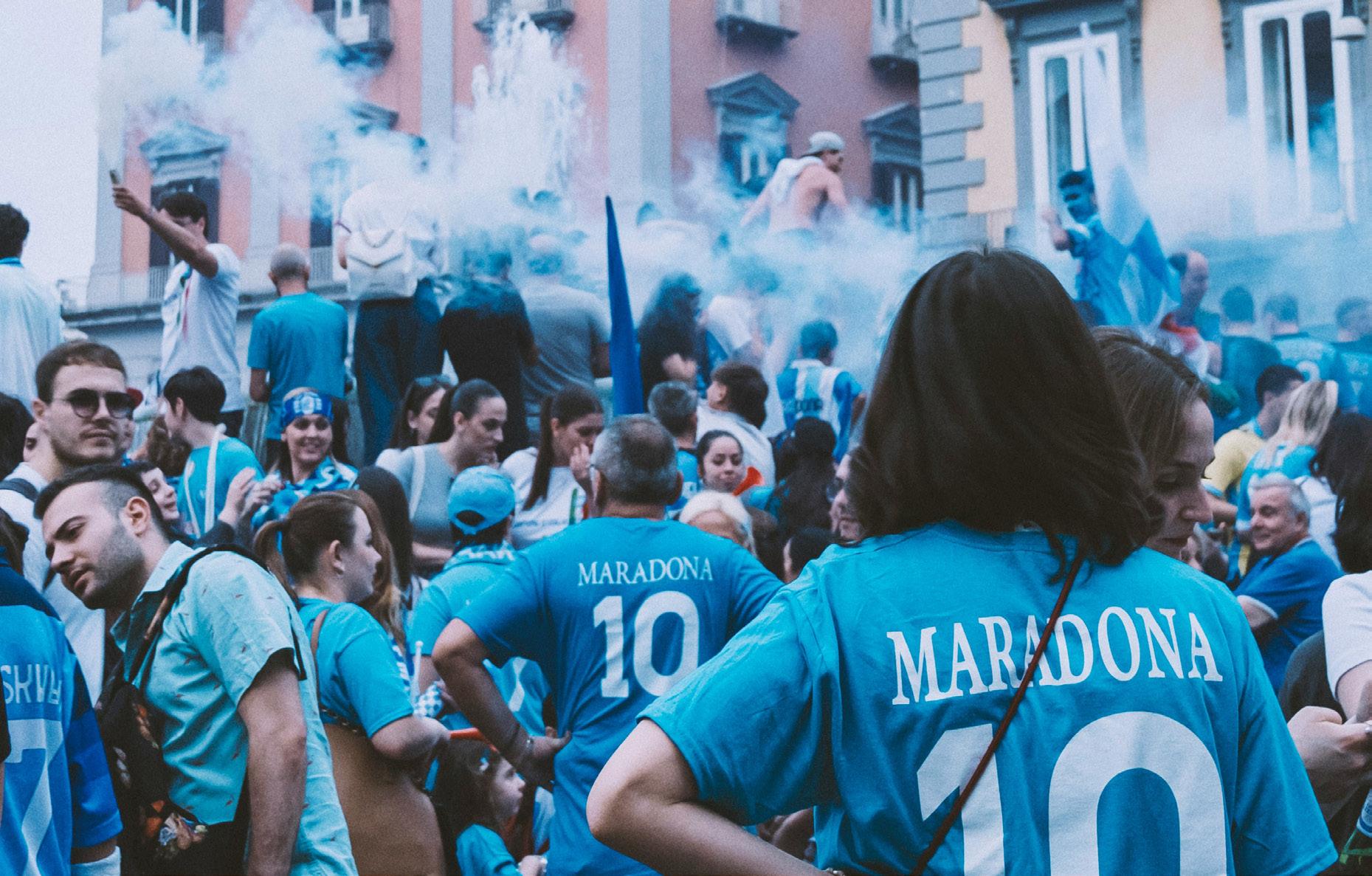
Ava Doherty
There is a trend on TikTok where women wear Pink Floyd T-shirts and are immediately interrogated by men about whether they “actually” like the band. The question is always the same: “Are you a real fan?” It happens in New York and in Britain too. Spend an evening at an indie night in Bristol, in a Camden bar, or somewhere as remote as Aberystwyth, and you will hear the same snide quizzes, kindly dressed up as curiosity. It is annoying enough when people police your taste in music. But it becomes something else entirely when they police your right to support a football team.
I have been a Liverpool supporter since childhood. No if, no buts. My family are loyal to Liverpool in the way some families are loyal to political parties. Everton supporters are spoken about with a seriousness usually reserved for serious illness, in hushed tones and with quiet despair. However, despite that lifelong upbringing, I have spent years being asked to prove my loyalty. People fire ques-
tions at me like exam papers: when did Liverpool last win the league, who managed them in a particular season, what year did they collapse in the title race?
I do not know everything. Only my father comes close to that level of encyclopedic obsession. However, I know the stories. I know what it meant for him to stand in the cold to see Bill Shankly walk
into the stadium. I can still attempt (poorly) a Shankly impression, and I know the heart of what it means to support Liverpool. Still, I am exhausted by the constant demand to prove it.
Why should I have to list trophies and dates to earn permission to care? Why do people look at me and assume I could not possibly know? Who exactly is this mythical
fan who is never questioned? These interrogations always appear mid-game or in a casual conversation. “What did you think of …?” sounds harmless, but often carries the expectation that I will not know the answer. Things have improved in recent years, but the attitude still exists. It opens up a more uncomfortable question: who gets to decide what makes a “real” fan? If I tattooed Liverpool across my chest and still did not know a single Shankly quote, would I suddenly qualify? If I leaned into every stereotype of an England fan, drank myself silly, and disgraced a public monument after a match, would that make me more believable?
This is not just anecdotal. According to research by Kick It Out, over half of female football fans reported experiencing sexist behaviour at matches, including being asked to justify their knowledge of the game. Moreover, the scale of support for the women’s game is undeniable. The Lionesses’ Euro 2022 final drew a peak TV audience of 17.4 million in the UK, making it the most-watched women’s football game in UK television history. In 2025, their Euro final win was watched by a peak of 16.2 million across BBC and ITV. However, even as audiences grow, women’s football continues to receive less coverage and investment than the men’s game. People often ask why women’s football “is not watched as much,” but they rarely question the attitudes that shape which matches are promoted, funded, and celebrated. If someone wears an England shirt for the men’s Euros but not the women’s, what does
“ I have been a LFC supporter since childhood. No ifs, no buts. “ Euro 2022 final drew a peak TV audience of 17.4 million.
For women, the bar for epistemic legitimacy is far higher than for men. One gap in knowledge, and suddenly your entire identity as a supporter is up for debate. Meanwhile, a man can loudly insist he “would have played Premier League if not for that injury,” drink three pints of lager, and no one questions his passion for the game.
that say about their so-called “passion”? Are they truly the die-hard fans they claim to be, or only interested when the spotlight already looks like them?
This is not gatekeeping for trivia. It is a gatekeeping identity. It is telling women they are guests in a space they grew up in, sang in, cried in, and believed in.
Living in the modern age means being alive to all prejudices not those that you are can easily tackle. Even if an issue does not affect you does not mean you should ignore it. Being a fan means being there for the highs and lows of the game so if you can stop others lows, everyone can enjoy the highs. Football has always called itself the people’s game; women are people. We should not have to sit a test every time we walk into a pub to prove we belong.
Match results: Everton (1) v Manchester United (0)
It was a shock result at Old Trafford - Idrisa Gueye was sent off in the 13th minute for striking teammate Michael Keane, but Kiernan Dewsbury-Hall curled in a 29th-minute winner.
Jordan Pickford produced crucial saves to keep United out. The victory marked Everton’s first win at Old Trafford since 2013 and David Moyes’ first away success there in 18 attempts, while United dominated possession but lacked cutting edge and were booed at full-time.
Flashback:
Serie A meeting on 13 April, Como edged Torino 1–0 at the Stadio Giuseppe Sinigaglia. Tasos Douvikas rose to head in the decisive goal just before half-time, converting a precise cross from Vojvoda.
In July 2021, when I was fifteen, I watched the postponed UEFA Euro 2020 final, in which England lost to Italy on penalties at Wembley. Three Black England players, Marcus Rashford, Jadon Sancho, and Bukayo Saka, missed their kicks, but the aftermath revealed something far uglier than disappointment: a flood of online racial abuse.
Twitter removed 1,622 abusive tweets in the 24 hours after the match, rising to 1,961 within three days. Most came from the UK, and 99 per cent of the suspended accounts were real people, not bots. Police received over 600 reports, 207 of which were treated as criminal, resulting in 11 arrests. Twitter permanent-
ly suspended 56 accounts, though many users returned with new ones. One man publicly apologised for sending racist emojis to Saka, but apologies could not undo the harm.
Saka responded with courage, calling on social media platforms to do more and insisting the hate would not break him. He reminded the nation that racism should have no place in society. His experience exposed a cruel truth: for some, Black British athletes are embraced only when they win, celebrated under the Union Jack, but questioned, demeaned, and dehumanised the moment they fall short.
This is not new. When Beck-
ham was sent off in the 1998 World Cup, criticism focused on his performance rather than his identity. Saka’s case was different: the backlash extended to his very belonging, proving that in the eyes of the prejudiced, race is permanent, but Britishness is conditional.
Reports like the UK Commission on Race and Ethnic Disparities (March 2021) acknowledge that perception and lived experience matter, but critics argue they downplay how racism and structural inequality intertwine. The Saka incident shows that racism is not a glitch in modern Britain. Black identities are policed, and acceptance is

credit: Markus Spiske
provisional. the experiences of players like Saka show that racism is still embedded in British society. The abuse following the Euro 2020 final was not a digital anomaly. Change requires action: media diversity, stronger social
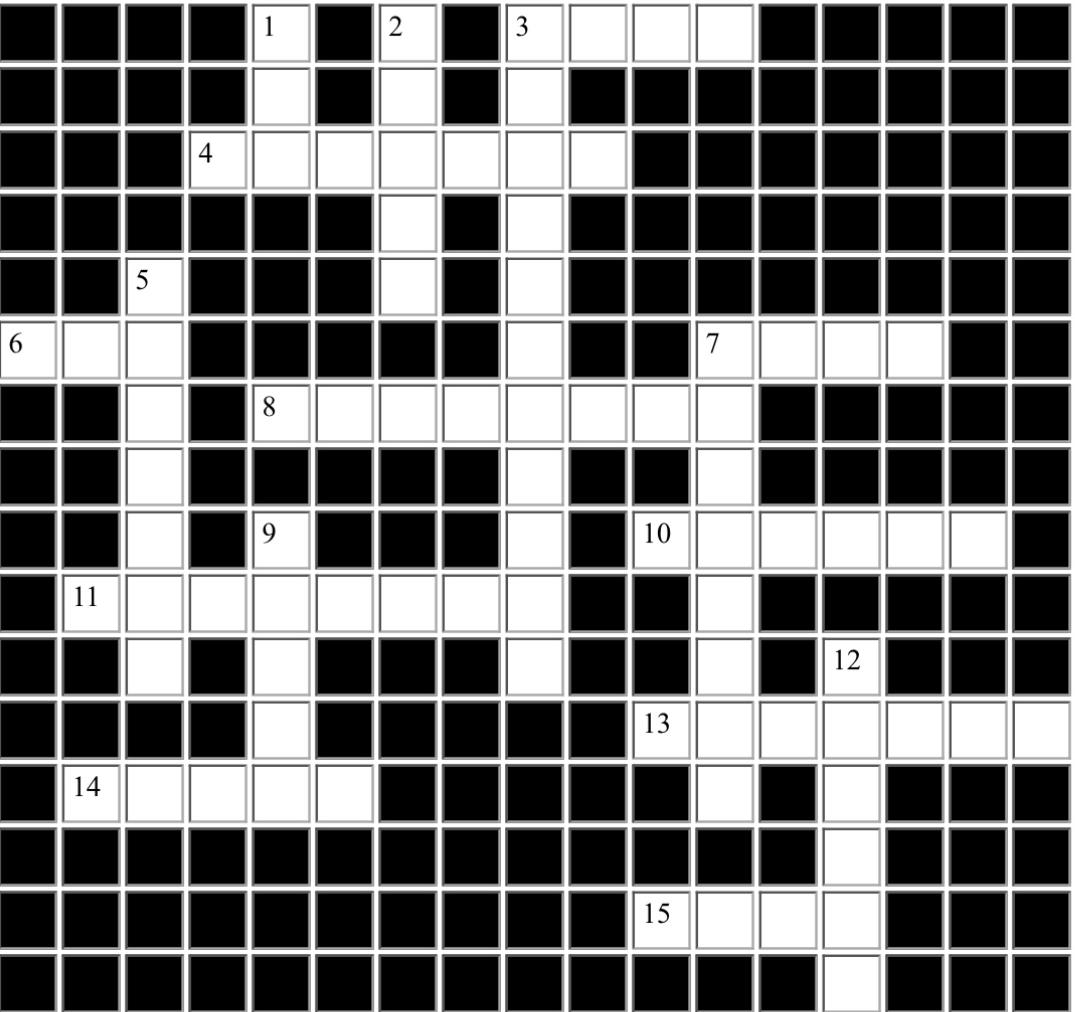
3. Famous 70s video game, a bad smell. (4) 4. Six-sided. (7) 6. Earl Grey is a variant of this. (3) 7. Found in trail mix, think Brazil, Pea and Chest.
media accountability, proactive moderation, and education from schools to sports grounds. Their Britishness is real, but for some , only race is permanent in the eyes of the prejudiced.
13. The largest and heaviest of their species, it cannot fly. (7)
14. A group of witches. (5)
15. Biblical Bad Place or alternatively, MT25.(4)
Down
1. Makes Honey (3)
2. Set for the morning. (5)
3. The practice of taking pictures. (11)
5. A building where goods are manufactured, think Tony Wilson. (7)
7. Favouring relatives or friends, Billie Eilish is a result of this. (8)
9. A snack for a horse, a phone or a Charli XCX song. (5)
12. Land that is useful for growing crops.(6)