





On
the Cover
the Cover
by BRIAN KNAPP
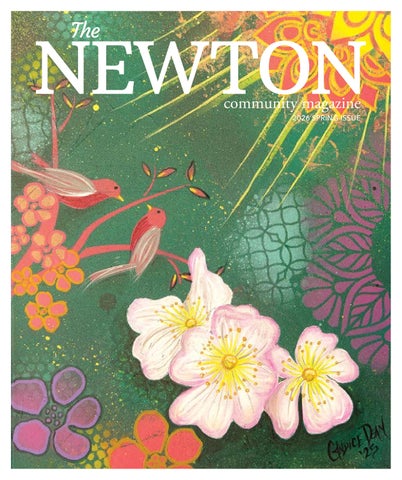
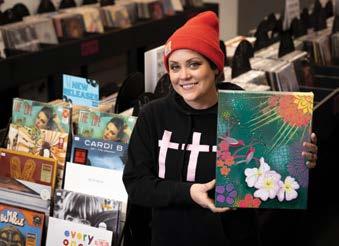
The late great Ray Charles released his version of “Georgia on My Mind” in September 1960. More than six decades later, the iconic song serves as the inspiration behind the cover of the Spring 2026 issue of The NEWTON Community Magazine. Candice Dean, the owner of Candi Warhols on Floyd Street and The House of Nosh & Brew restaurant on U.S. 278 in Covington, took roughly 40 hours to complete the work. She titled it “Mr. Charles” in honor of the Grammy Award-winning singer and songwriter, who died in 2004.
“The flowers in the bottom right-hand corner are Cherokee roses, the state flower,” Dean said. “The colors are meant to invoke the feeling of spring, renewal of the earth and the warmth of the sun.”
An East Point native, Dean moved to the area at the age of 5 when her father started a position as lieutenant paramedic with Newton County EMS services. She graduated from Eastside High School in 2003 and opened Candi Warhols— a hybrid retail store with a main focus
on vinyl records and band apparel that also includes skateboards and accessories, as well as local artwork—alongside her husband Justin in 2023.
“Growing up and going to school here, I’ve made some amazing friendships along the way and met my amazing husband while working here,” Dean said. “The people of this community are truly some of the most loving and caring people. They look out for one another and take care of each other.”
Dean has been an artist for 15 years under her art company The House of Old and New. Her work includes paintings, murals and furniture restoration. Some of it can be viewed on her website at www.candicedean.com.
“My style as an artist is more that of street and abstract,” Dean said, “with added components of realism.”
A special thank you to Candice Dean for providing the artwork for the 2026 spring cover of The NEWTON Community Magazine.
This guy received an award for being the humblest person but had to return it because he showed it to someone. Do you like pie? My personal favorite is pecan pie, but this year, a new flavor has risen to the top: humble pie.
Most of my life I’ve found my security by relying on my own understanding. That’s often the foundation on which I stand. It’s something I can see, touch and hold. It’s tangible, or so I believe. This is called pride, and I have a terrible problem with it. Pride has infected my whole life, especially in my relationships with my wife Meredith, our kids, family and friends. It’s the cause of my many character flaws. I hate it when I’m challenged or corrected by anyone, especially by Meredith. My kids? Well, they better not even think about it.
Being challenged shakes my perception of reality. When that happens, my emotions take over. I panic and will do anything to regain my false sense of reality. I continue to eat the same flavor of pie because I know what to expect. Some pecan pies will be worse than others, but all in all, I’ll be comfortable with the result. Am I really that comfortable? Maybe, but how boring.
Life is better because of the challenge, and I don’t want a fixed mindset. I want a growth mindset. Life has proven to be spiritually rich when I trash my pride, so I’ll eat that delicious humble pie and enjoy every bite. Why? Because God makes the best pies.
Have a great day today.
Scott Tredeau





Stories by Kari Apted
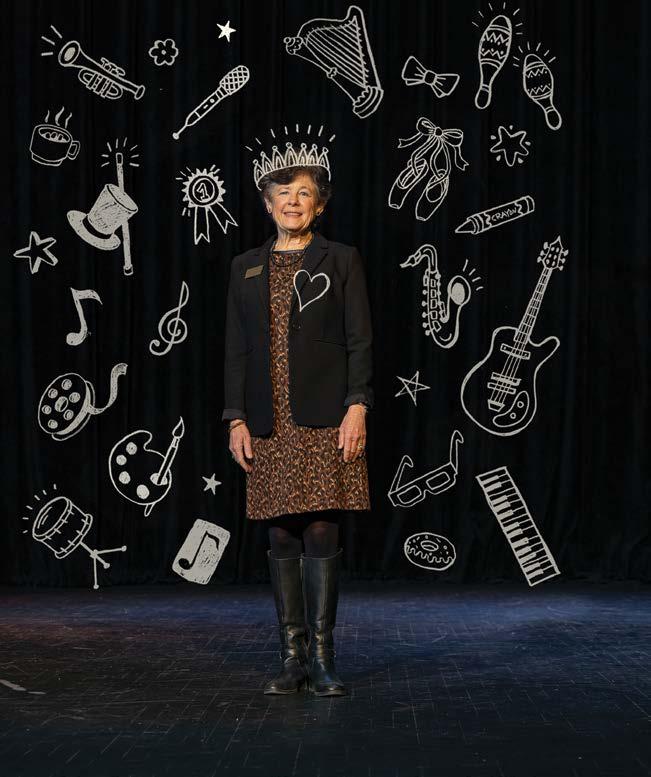
As Buncie Hay Lanners exits the stage from her 25-year position as executive director of the Arts Association in Newton County, she leans into her memories and shares hopes for the future.
by KARI APTED
On a cold and sunny afternoon in February, people from Newton County and beyond poured into the Porter Performing Arts Center, not for a show but to pay tribute to a local legend.
Buncie Hay Lanners, the executive director of the Arts Association in Newton County, was retiring after dedicating 25 years to expanding and cementing a fine arts presence in the East Metro area. Students, present and past, showed up to honor their mentor in a variety of creative ways. A wall of photographs told a visual story of the association’s work under her direction, while a slideshow and video clips shared collective memories and individual greetings from those whose lives she has touched. Highlights of the event included Lanners’ gracious speech and a surprise presentation by the Oxford Youth Singers, who sang songs from “The Sound of Music” to honor her performance in the musical during high school.
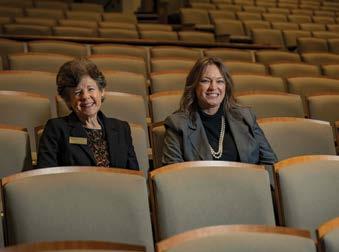
It was a fitting farewell to the Georgia native, whose retirement became official on March 15. Lanners refuses to see it as an ending. Instead, it’s more like turning the page in a fine story, where one scene ends but the principal characters continue to thrive. Lanners transferred her role to Abigail Morgan Coggin,
PICTURED ON FACING PAGE
who has been with the Arts Association for 24 years and most recently served as the operations officer. The two women have deep roots in Newton County.
Lanners’ family tree extends back five generations in Covington and bears the names of many well-known locals, including the Dearing, Turner, Fowler and Hay families. Her father owned a farm on Dearing Road, and as a child, Lanners was active in 4H. She graduated from Newton High School, then followed in her father’s footsteps by attending Davidson College in North Carolina. She married Jaymes Lanners, who hails from New Orleans. The couple has two children: Sarah and Jay Jr. Both of their children served as valedictorians of their high school and took advantage of opportunities to work and serve abroad. Sarah married Paul Avinger, another Davidson College graduate, and they settled in North Carolina. Now, the elder Lanners are moving to be closer to the Avingers, their grandson, Morgan, and another grandchild on the way. Because of Lanners’ deep roots in Covington, relocating to another state at the age of 63 seems somewhat surreal. However, she is already quite familiar with North Carolina, and the desire to be closer to her grandchildren is strong.
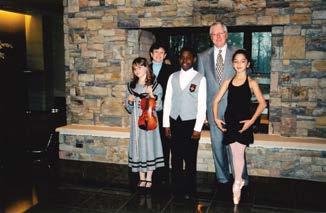
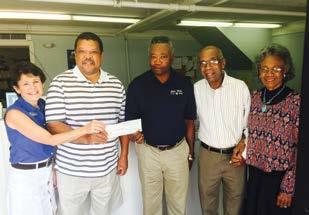
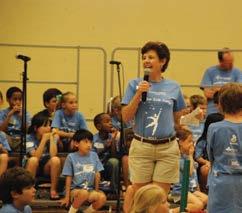
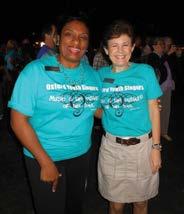
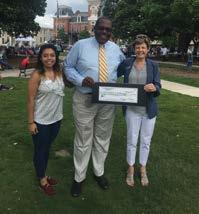
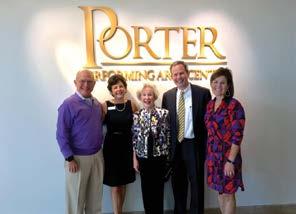
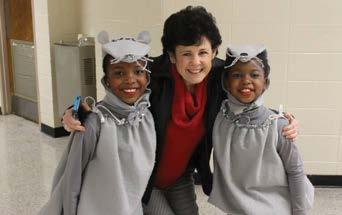
TOP LEFT: PRESENTATION AT KOMATSU WITH STUDENTS FROM ARTS ASSOCIATION YOUNG ARTIST PROGRAMS. TOP RIGHT: (L-R) BUNCIE HAY LANNERS, MICHAEL SYPHOE, EZELL BROWN, TK ADAMS AND LOUISE ADAMS. MIDDLE LEFT: BUNCIE SPEAKS WITH THE CAMPERS AND PARENTS AT CREATIVE KIDS CAMP 2012. MIDDLE CENTER: (L-R) MICHELLE BRYANT JOHNSON AND BUNCIE HAY LANNERS. MIDDLE RIGHT: (L-R) AMANDA BONILLA, LATE JUDGE HORACE J. JOHNSON, BUNCIE HAY LANNERS. BOTTOM LEFT: (L-R) ROB FOWLER, BUNCIE HAY LANNERS, LOULY FOWLER HAY, SAM HAY III, LOULY HAY-KAPP. BOTTOM RIGHT: (L-R) STAR BAKER, BUNCIE HAY LANNERS AND SARAI BAKER
When Lanners discusses her role as executive director, she speaks as someone who has received a precious gift. “Second only to my children and my husband, this has been the joy of my life,” she said. “It’s work that hasn’t felt like work.” Lanners has full confidence in the team’s ability to move forward with Coggin at the helm. “I have no doubt I am leaving the organization in a good position. Abigail is a logistical planner extraordinaire. We have a younger staff now,” she said, praising the 20- and 30-somethings for their energy and ongoing commitment to the vision. “They’re passionate, and many were students here themselves.” Additionally, the Association’s offerings will remain a unique opportunity for seekers of fine arts programs on this side of Atlanta.
“The ‘in’ is an important part of our name,” Lanners said. “It’s [Arts Association] ‘in’ Newton County, not ‘of’ Newton County. People come from Athens, Madison and other places, sometimes driving more than 30 miles to participate in our programs. Yes, there are classes in those communities but not complete programs like we have here.”
Strong teamwork remains a key factor in the ongoing success of the Arts Association in Newton County. Lanners and Coggin have deliberately made the transition between their roles slow. They started a few years ago, co-signing emails and hiring Ivy Bohn as director of development and community relations. Lanners has been the face of the Arts Association for so long that she and Bohn found it helpful to attend rehearsals, meetings and other events together to help people grow accustomed to the new staff.
Lanners gradually progressed from attending every rehearsal herself to allowing other team members to take over. She showered praise on many of her colleagues, especially James

Johnson, president of the board of directors. They first met when Johnson, a high school football player, took ballet and performed alongside Lanners’ daughter, Sarah. “He was the one who lifted her,” Lanners said with a smile. Johnson expressed sadness over Lanners’ retirement while showing appreciation or what she has meant to the community.
“Buncie’s unmatched passion and empathy have made the Arts Association a beacon of progressive, community-minded leadership in Covington for many years, and her impact on broadening perspectives across this community simply cannot be overstated,” Johnson said. “In true Buncie fashion, she has ensured the Arts Association’s mission will endure long after her retirement by carefully placing the right people in the right roles, leaving behind both a thriving organization and a legacy that has made this community undeniably better.”
Lanners compared the association’s unity to that of a thriving sports team. “We each have a distinct role to play, and I have played just about every role imaginable, from coach to quarterback to waterboy,” she said. “I can see how the core pieces come together, and it’s been my greatest honor to lead our team.”
Lanners maintains that another secret to success is that those who represent the Arts Association are just regular people, not the highbrow stereotype some may expect to encounter. “We pride ourselves on being friendly to parents. We are a family-first organization. We never let finances or family circumstances prevent a child from participating in our programs.”
Lanners firmly believes that the impact of arts education on a child’s life cannot be overemphasized. “We’re not in this to create prima donnas,” she said. “We’re here to expose kids to the arts because art helps kids process real life.” Those efforts have not gone unnoticed.
“Second only to my children and my husband, this has been the joy of my life.”
Buncie Hay Lanners
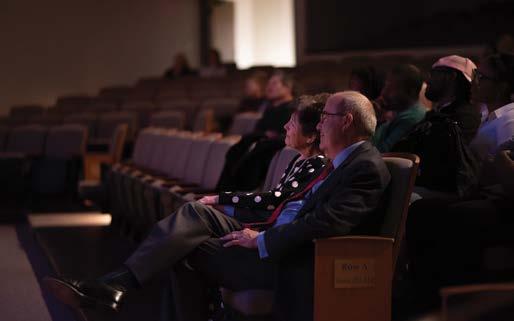
“Growing up at Covington Regional Ballet has been more than just dance. It has been a second home for our family,” said Rebecca Baird, 14. She has studied with the Covington Regional Ballet since she was a preschooler. “Under Buncie’s steady, loving leadership, I didn’t just learn technique. I learned discipline, grace, resilience and the value of community. Buncie’s beautiful smile, embracing hug and encouraging words after every performance will forever be etched in my heart. She has been a pillar and, most of all, like a mom to us all. The friendships, the life lessons and the memories we’ve built through the studio walls have woven dance into the fabric of who we are. What she created isn’t just a ballet company. It’s a lasting impact that will continue to influence our family for years to come.” Baird’s mother, Michelle, could not praise Lanners’ leadership enough. “Buncie’s legacy has shaped generations of dancers,” she said, “and our family is forever changed because of it.”
Such testimonies fill Lanners’ heart with pride and joy.
“I will miss the kids the most,” she said. “I’ve seen generations go through our programs.” Lanners also fondly remembers the many shy students who avoided eye contact when they first started but became strong public speakers because of the welcoming environment and their positive experiences onstage. “It feels the greatest when a child says, ‘This is my family. This is where I can be myself. I can leave my worries at the door,’” she said. Lanners expressed deep gratitude for the donors and volunteers who have made it possible to reach students in such
an impactful way. “Everything we do is about partnership,” she said. “We would not be who we are without the city’s involvement or without corporate and individual donors. Fundraising gets harder every year, but community involvement can make it easier.”
Lanners went on to outline how programs such as the Live at Legion concerts bring everyone together, regardless of age, race or income.
“We have three to five thousand people at these [Legion Field] concerts, and everyone is dancing together, enjoying great music,” she said. “The arts are the fabric and texture of this community. We never take art funding for granted.”
Lanners encourages lovers of the arts to visit www.newtoncountyarts.org and consider supporting the association’s work. While one-time gifts are always welcome, a commitment to a monthly gift—no matter how small—provides the ongoing resources needed to continue the legacy Lanners has so ardently built.
“You can hold great sadness at the same time you hold great joy,” she said. “Legacy is so often spoken about as being something in the past, but in my book, it’s about the future. Legacy is about love. It’s about kids, donors, the community, the arts association board, the schools, everyone coming together to make this strong presence in Newton County. Looking back, it needs to be in thanksgiving for all the people who made it happen and looking forward to seeing the organization going on. With that perspective, things look different about letting go.”
New Arts Association in Newton County Executive Director Abigail Morgan Coggin, like her predecessor, has dedicated over 20 years to expanding fine arts offerings in and around Covington. However, when she started working for the association, she arrived without an arts background.
“The flexibility to work parttime and enjoy a good work-home balance drew me to the job. I organized our first Kids Camp in 2002 while I was six months pregnant,” Coggin said. “All of our staff are part-time, and all except me are moms to young children. We’ve had five babies born over a period of two years.” Most current staff also grew up singing or dancing with the association. “That really tells you something,” Coggin said, “when former students want to come back and support you.”
Logistics and organization come more naturally to Coggin than singing or dancing. She describes her partnership with former director Buncie Hay Lanners as wonderfully symbiotic one.
“Buncie is very passionate about the arts,” Coggin said. “She was the outgoing cheerleader, the one with big ideas. I was the one in the background providing the reality checks: Do we have the resources to make sure this works?” Lanners stepped back to a more consultative role over the past year, a gradual shift that allowed her to build a new home in North Carolina while still guiding the association’s team up until her retirement in March.
by KARI APTED
“Even when she was out of town,” Coggin said, “we could call and ask for her advice.”
Coggin believes open communication will continue well beyond Lanners’ exit. The new director holds a degree in political science and has served on the Newton County School Board since 2010. Though she has chosen not to run for reelection at the end of her current term in December, the sixth-generation Newton Countian remains committed to seeing local youth succeed in all areas. Her role as the Arts Association’s executive director allows her to continue doing so.
“It’s amazing when you see a student who is so shy [that] their face turns red when you ask them a question, but then you see them speaking so confidently onstage.
One student came back years later and said it was a life-changing experience. The arts provide a completely different background knowledge,” Coggin said. “They learn strengths such as how not to be fearful when put on the spot.”
Coggin’s vision for the future matches Lanners’ legacy: to continue providing the best local access to fine arts education. “We have phenomenal partnerships with the City of Covington, donors and volunteers,” she said. Whether it’s the Summer Concert Series, an Oxford Singers concert or a ballet or theater performance, the power of the arts can be found in the unity it creates.
“Each event brings together people from widely different backgrounds,” Coggin said. “We are very good at that.”









Stories by David Roten

A radiant young woman’s joy, courage and generosity continue to move a community determined to carry her light forward after her death at the age of 22.
by DAVID ROTEN
Tiffany McWaters spoke with heartfelt conviction when discussing the life and legacy of her beloved daughter. “Shelby was the absolute best of us,” she said. Just over a year after 22-year-old Shelby Faith McWaters passed away, her memory continues to inspire and energize a community forever changed by her zest for life and love for others.
“Anybody who ever met her would tell you she was just the brightest, happiest person in the world,” Tiffany said. “She was just keenly aware of people and wanted everybody to be happy.” It seems remarkable that someone so compassionate toward others would have come into the world with so many needs of her own. “We knew at 18 weeks [pregnant that] there were going to be severe issues,” Tiffany said. “We made it to 34 weeks.” Shelby was born one minute after her sister, Ivy, and weighed almost twice as much at seven pounds, seven ounces. “The first presenting issue was her head was much larger than it needed to be,” Tiffany said. Fluid continued to accrue inexplicably in various parts of her body. “For the first couple of years, we didn’t know what it was,” Tiffany said. “She didn’t fit in any boxes.” Finally, Shelby was diagnosed with Klippel-Trenaunay Syndrome, an extremely rare congenital disorder characterized by capillary and venous malformations and limb overgrowth. There is no known cause or cure for KTS. “Physically, if you looked at her, you could tell something was a little bit off,” Tiffany said, “with the right side of her body uniformly larger all the way down.” Shelby received speech, occupational and physical therapy multiple times a week throughout her life.
There would be more surgeries and challenges in the years ahead, but they would do little to diminish Shelby’s cheerful disposition.
“She was completely oblivious to all that she had to fight and endure,” Tiffany said. The perception that she might not be “like everyone else” did not faze her, according to her father, Chris. “Shelby was very outgoing, very sure of herself,” he said. “[Her attitude was], ‘I came a little different, that’s OK,’ and she moved on.” If there was the rare occasion when she thought someone was “being ugly” to her, she would respond as her mother had taught her. “‘You must be having a bad day because I’m fabulous,’” Tiffany said. “She fully believed it.”
Shelby required cognitive support throughout her school years but thrived in the welcoming environment of Covington Academy, where there was a sizable special-needs population.
“Physically, she could do pretty much what everybody else could do,” Tiffany said. Shelby participated in karate and golf and served as the high school football manager. She was also involved in the Builders Club and Drama Club, and she ultimately graduated with honors.
From the time she was a little girl, Shelby displayed a generous spirit, which may have shined brightest at Christmas. Whether filling gift boxes at church, handing out Chick-fil-A gift cards to first responders or making sure the family’s Candy Cane Lane did not run out of candy canes, she gave with pure joy—apparently keeping the family focused and on task in the process. As Ivy said, “She was the CEO of Christmas.”

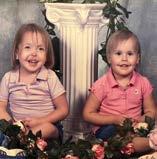

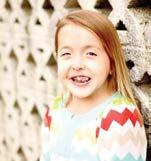
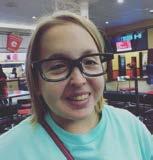
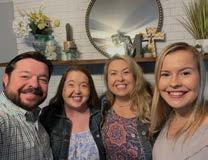
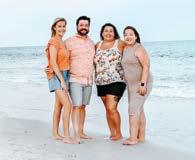

Chris’ successful career as a national director with J.E. Dunn Construction provided the family needed flexibility. When Shelby faced multiple surgeries as a fifth-grader, Tiffany cut short her career as an educator to care for her. “Chris has made it to where I could always be at home with the girls,” Tiffany said. “He’s been our calm and steady the whole time.” Chris frequently took Tiffany and Shelby along with him on business trips. “Shelby loved to see new places, try new foods, meet new people,” Tiffany said. “As she got older, she loved to tell dad jokes,” Chris said. It was a game she thoroughly enjoyed playing with her father and his business associates.
The sisters were always close.
“To Shelby, Ivy was the coolest person in the world,” Tiffany said. “They did everything together.” The two often went on “sister dates” to get theme-painted fingernails for a holiday or season. “Shelby never didn’t have her nails done—ever,” Tiffany said. “If it wasn’t a holiday, it was cheetah print, because everything in her life was cheetah print.” After Ivy left for college at Georgia Southern University in Statesboro, she sometimes invited her sister down for a visit. As Shelby put it, she got to “go and be a college kid for a weekend.”
With Ivy living three hours away, the rest of the family moved from rural Social Circle to downtown Covington, in part, to give the extroverted Shelby more opportunities to connect socially.
Shelby thrived in her new surroundings, happily cruising around The Square on the family golf cart, chatting with friends and working part-time at The Soapbox.
“She absolutely loved it,” Tiffany said, “because she was such a people person.”
Tragically, on Dec. 13, 2024, five days after suffering a stroke, Shelby’s life was cut short. On the way home from the hospital the day she died, the grieving family resolved that the light Shelby had brought into the world would not go out. “We didn’t want people to forget who she was and how much joy she brought people,” Tiffany said. On Jan. 14, 2025, just a month and a day after Shelby’s death, the Shelby Shines On Foundation was launched. The newly formed 501c3 charity began with the primary purpose of facilitating enriching experiences for those with disabilities. “It was important to us to provide the means for families with special needs to participate and do things that their peers get to do: Go to Braves games, go ice skating, just do what everybody else does,” Tiffany said. In addition, scholarships are awarded to high school students who demonstrate inclusion and respect for peers with special needs. The foundation also funds efforts to advance research and awareness for KlippelTrenaunay Syndrome.
Three major fundraising events reflect Shelby’s passions and vibrant personality. Thanks to over a hundred players and numerous corporate and local sponsors, the Shelby Shines On Golf Tournament was the highest grossing tournament ever at Ashton Hills Golf Course. The SSO Glitz and Gears Car Show also impressed. “I think we had over 50 cars show up in the rain,” Chris said. “Fair food, nice cars and people—to Shelby, that was a perfect day,” Tiffany said. Shelby loved to dress up for daddy-daughter dates and she adored Christmastime, making the SSO Christmas Gala’s night of celebration and connection a fabulous and fitting finish to the year. Beyond all expectations, over $100,000 was raised to fund the foundation’s objectives for 2025. “That’s a testament to Shelby and the impact she had on people,” Tiffany said.
The McWaters are forever grateful for the love shown to Shelby while she lived and for the support received since her passing through the foundation bearing her name. Chris called Tiffany’s sister, Shannon, “a big part of Shelby’s life” and a rock through difficult times. Those who have helped with the foundation and its mission to carry Shelby’s light forward form a long list.
“Our slogan is ‘Love Loudly, Live Boldly’ because that’s what she did,” Tiffany said. “She was unapologetically Shelby.”
For information on Shelby Shines On Foundation, visit shelbyshineson.org.


“Anybody who ever met her would tell you she was just the brightest, happiest person in the world.”
Tiffany McWaters
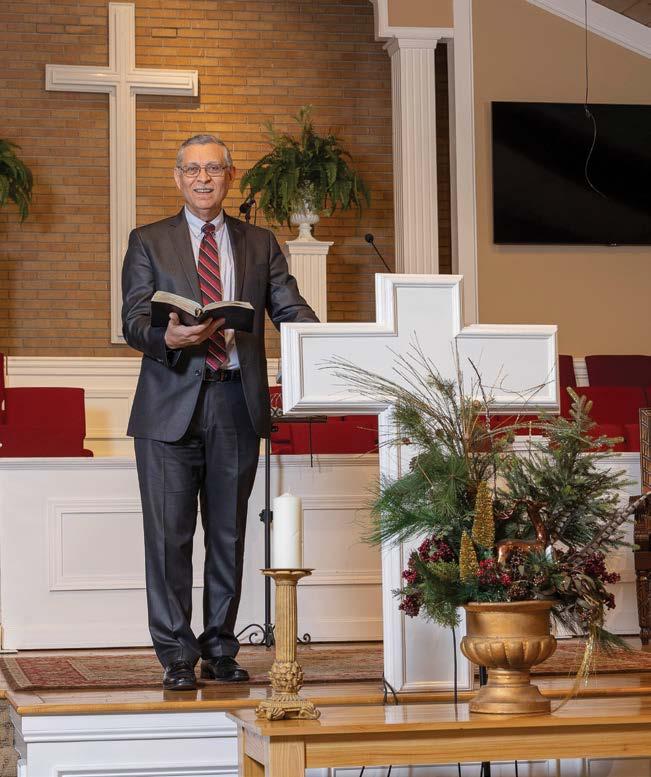
The unseen power that guides choices, sustains courage and shapes lives—from the founders’ journey to a survivor’s testimony— warrants reflection from every believer.
by SERGIO AGUIRRE
The Bible says in Hebrews 11:1, “Now faith is the substance of things hoped for, the evidence of things not seen.” Therefore, by Biblical definition, we all have faith because we make decisions based on circumstances as if we were already living through them, although they’re not yet within our reach.
Faith is a gift from God given to all mankind, and I’m making this statement because we all believe in things we have not seen with our physical eyes before. That’s also why we make daily plans for tomorrow with present living conviction.
No doubt, our faith is real and constantly exercised, but faith is not learned from parents, at school or through any other means. It’s a gift from God. The reason I’m writing about faith is not to call your attention to a subject you may already know. Perhaps the importance of my writing is to share with you a reflection on the power of faith and how much it can help us make wiser decisions in our daily lives.
Faith was the reason why the founding fathers of the greatest country in the whole world, the United States, decided to embark on a journey across the ocean with their families without any assurance that they were going to survive. They also had no idea how God was going to use them to transform so many lives around the world, including mine and yours. Faith was the light that guided the armies of independence, which, in many instances, were under-equipped and at a disadvantage against the enemy yet managed to find victory. Faith is what gives us the conviction that God is the Creator of everything,
“Faith is a gift from God given to all mankind.”
Sergio Aguirre
and it also allows us to see a different reality, where death is not the end for the human soul.
It’s inspiring to reflect on how faith has played a crucial role in humanity’s history and in my testimony as a cancer survivor since 2024. I consider myself a blessed person because I have experienced the wonderful power of faith in my own life through many circumstances, and I have also witnessed miracles of faith, as real as those performed by Jesus and the apostles described in the Holy Scripture. If I could compare faith to some earthly power, I would compare it to electricity or the Internet, because everyone has access to them. That doesn’t mean they’re used solely as resources given by God for blessing. Faith can help us when used properly, but it can also be wasted or used destructively.
Faith is what keeps this world and everything within it moving forward, but this power does not belong to any human being, nor has there been any brilliant mind able to destroy it. We can place our faith in other humans, in material things and in powers of all sources and nature, but at some point, those powers will also have limits. Those limits have been established by the Creator of faith, and they cannot be exceeded. Therefore, they’re unable to provide answers for all needs.
Yes, faith is powerful and real. However, let us all never forget that it’s a gift we have received from God. It’s our reasonable responsibility to trust it back to whom it belongs: Jesus Christ, the author, sustainer and finisher of our faith (Hebrews 12:2). Therefore, by grace through faith we are saved, in the name that is above all names, the name of Jesus. Let’s live by faith in Jesus Christ. May you all be blessed.
Sergio Aguirre is the director of the Spanish ministry Viviendo por Fe at The Baptist Tabernacle in Covington. For information, visit thebaptisttabernacle.com.
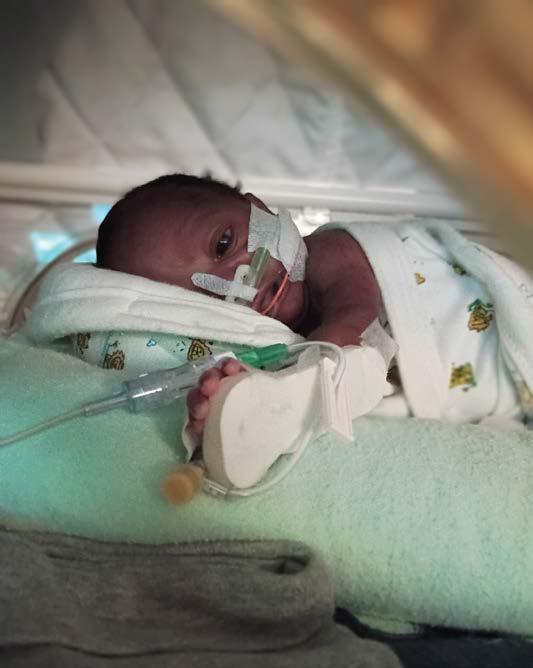
“My village showed up, in ways I didn’t even know how to ask for.”
Mytisha Onyia
When her son arrived prematurely, Mytisha Onyia discovered that the First Steps program at Piedmont Newton Hospital and a determined community could turn her thoughts away from fear and toward the promise of a bright future.
by AVRIL OCCILIEN-SIMILIEN
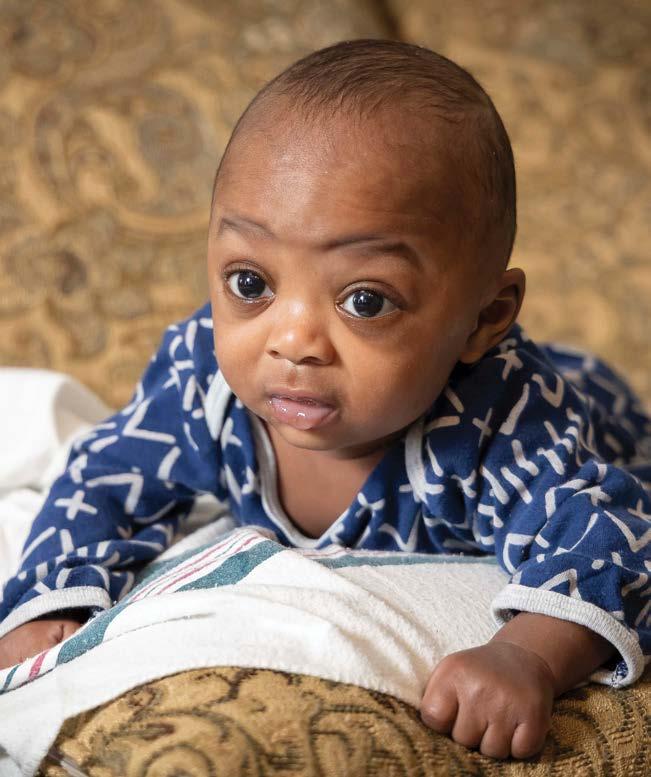
A Covington native and Salem High School graduate, Mytisha Onyia knows what it means to rebuild after loss. Years ago, she was the lone survivor of a devastating car accident that took the lives of her mother and siblings. The road to recovery was long, marked by physical therapy, lingering health challenges and the daily work of learning how to live with grief. Still, nothing quite prepared her for what came next. In the summer of 2025, Onyia discovered she was pregnant at around 26 weeks when she unexpectedly went into labor. Her son, Aiden, arrived prematurely and weighed just two pounds, eight ounces. He spent the next two and a half months in the Neonatal Intensive Care Unit at Piedmont Newton Hospital.
“I was scared,” Onyia said. “Everything happened so fast.”
Those early weeks blurred together. The steady beeping of monitors, long hours at the hospital and constant updates from doctors became her new normal. Like many NICU parents, Onyia found herself living in two worlds at once, holding onto hope while managing exhaustion and fear. However, she was not alone. From the nurses who became familiar faces to the hospital staff who checked in on her daily, Onyia was surrounded by quiet, steady care.
One of those supports came through Piedmont Newton’s First Steps program—a long-standing initiative designed to make sure new parents leave the hospital not just with a baby but with resources, guidance and a sense that they have someone in their corner. The First Steps program has been part of Piedmont Newton for nearly 30 years. Launched in collaboration with the Department of Public Health, it was created to connect new parents with local resources from the very beginning. While the program receives grant funding from the Department of Public Health, it relies heavily on community partners and donors to meet families’ practical needs.
Parents are screened to gain an understanding of their situation, whether that means providing baby items like diapers, wipes and clothes or helping them navigate insurance, food assistance and community services. Moreover, every family also receives a children’s book and a resource packet, along with guidance focused on safety, including safe sleep and car seat education. Piedmont Newton is also fortunate to have a certified child passenger safety technician on staff who can check car seats and, when available, provide one to families in need. For Onyia, the support from program coordinator Lori Dickerson arrived at exactly the right time.
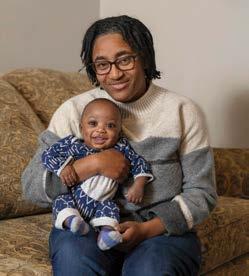
“Lori from First Steps was there for me,” she said. “She helped me figure out what I needed and made sure Aiden had things like diapers, wipes and clothes. When you have a baby in the NICU, those things matter more than you realize.”
Dickerson remembers Onyia well.
“Mytisha is great and has done such a good job making sure her baby is well taken care of,” she said. “I feel truly blessed to have been a part in ensuring they had the items they needed and were able to find resources that could assist. We’re very thankful for our community partners and their generous donations that make this program possible.”
The assistance did not stop at the hospital doors. Through Park Place Church in Snellville, Onyia was connected to Alicia Brown, who became a crucial guide during an overwhelming season. Brown helped her navigate available resources and stepped in with practical help, including clothes, toys and information that made the transition home feel less daunting. Other community members filled in the gaps where they could. Denise Ridgeway provided essential items, including a crib that gave Aiden a safe place to sleep. Jewel Porter made sure there was food in the house, easing one more worry during a time when worries were already in oversupply. Looking back, Onyia does not talk about one single moment of rescue. She talks about a series of small, faithful acts by people who saw a need and met it.
“My village showed up,” she said, “in ways I didn’t even know how to ask for.”
Onyia also leaned on her boyfriend, Deontre Hart, who supported her during Aiden’s NICU stay. Church members and even employees from a local company, Grit and Grace, stepped in when they heard her story. In moments when isolation could have easily taken over, community showed up instead. Onyia now lives in Conyers with Angelique Knight, a woman she affectionately calls “Miss Angela” who has been a steady presence and guide since September. Her days are full, centered on caring for her son and finding her footing in motherhood, but she has not lost sight of who she is beyond that role. A writer and lover of music, Onyia had begun shaping her story through words long before Aiden was born. She has already written a poetry book and is now working on a mixed fiction and nonfiction project titled “Life Without My Mother,” inspired by her life experiences. The idea began in high school, and in the midst of diapers and feedings, she is slowly returning to it with plans to self-publish. Thanks to a hospital program built on decades of service, a church community that mobilized and a handful of people who said yes when it mattered, Onyia and her son are taking their first steps into a future that finally feels possible.
For information on the First Steps program at Piedmont Newton, visit piedmont.org/get-involved/ volunteer/volunteer-at-piedmont-newton/piedmontnewton-hospital-first-steps-program.






Stories by Chris Bridges

An award-winning robotics team at the Newton College and Career Academy pushes the limits of design, discipline and collaboration while proving what students can achieve through relentless preparation and shared purpose.
by CHRIS BRIDGES
Success has become the norm when it comes to the robotics team at Newton College and Career Academy.
VEX Robotics reveals a completely new game challenge each year. It is the task of the robotics teams to analyze the game, create a strategy to play it, design a robot capable of executing that strategy and build and program their custom design. They test themselves in local competitions across the state, as well as in regional contests called signature events, which are held throughout the nation. VEX Robotics is a premier robotics platform for pre-K through university students, focusing on STEM education through designing, building and programming robots.
With a season defined by championships, top honors and global rankings, VEX Robotics Team 8682A from the Newton College and Career Academy has emerged as the top-ranked squad in the state of Georgia and one of the most competitive student robotics teams in the world. Its success reflects a relentless commitment to engineering excellence, strategic thinking and collaboration at the highest level of competition.
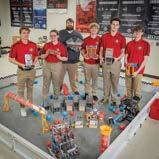
Team 8682A is comprised of students Logan Knight, Ian Carter, Derek Gawlinski, Nathanial Igarashi and Chloee Yaple, whose collective efforts have driven the team’s remarkable performance throughout the 2025–26 season. The team is coached by Zach Pitts.
“I started coaching VEX robotics in the county in 2015,” he said. “I arrived at NCCA for the 2019–20 season and took over
coaching the 8682 teams. This team, 8682A, was formed last year.” Pitts described how the complex process works. “Just as important as building and programming, the team also creates documentation using the engineering design process—a step-by-step problem-solving method used by engineers,” he said. “This documentation includes all research, decisions, team meetings, CAD designs, testing procedures, results, reflections and iterations the team has completed throughout the year.”
In addition, team members must also prepare for interviews with judges, which are conducted at every tournament.
“To give you an idea of the scope of work Team 8682A has taken on, they have created nearly 900 pages of documented evidence spanning three different robot designs,” Pitts said.
“Moreover, the time and energy these students devote to their sport is impressive. Early in the season, team members arrived as early as 6:30 a.m. before school to work on their robot. They stay after school daily until 5 p.m. They have taken robots and competition fields home over breaks. They have worked tirelessly and selflessly to create not only a great robot but what I describe as a great product.”
The product of a robotics team is all-encompassing: teamwork, team management, documentation, interviews, programming, collaboration and decision making. The five students on this team share one focus: To define what greatness looks like when individuals truly become a team.
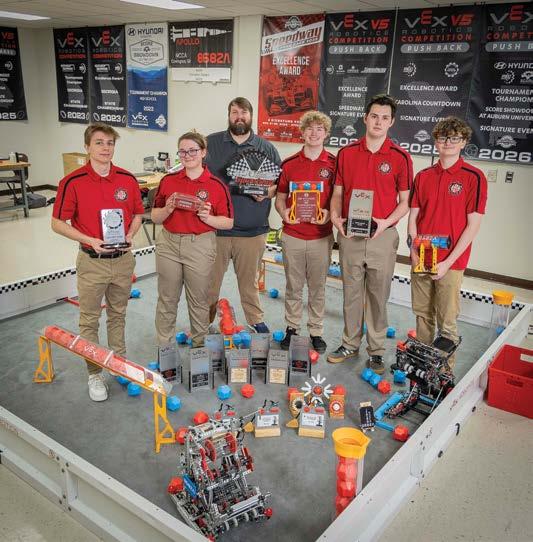
“From day one, this team has committed itself to nothing short of perfection, knowing that perfection is not a destination but an expedition into what is possible,” Pitts said. “Few teams take this challenge as far as I have witnessed 8682A take it. For them, every day is an opportunity to get better at their craft. Every day is a chance to answer the question of what is possible. They do this through solid, unyielding focus on teamwork, exemplary communication, mastery of roles and sharing the responsibility of leadership.”
Students began preparation as soon as the new challenge was revealed at the World Championships.
“They were already sketching and prototyping ideas that very night,” Pitts said. “The team continued early in the season, working over the summer prototyping different ideas in Ian’s garage. NCCA held a VEX camp during the summer to provide concentrated time for research, experimentation and mentorship. The team came in early and stayed late to take full advantage of the opportunity.”
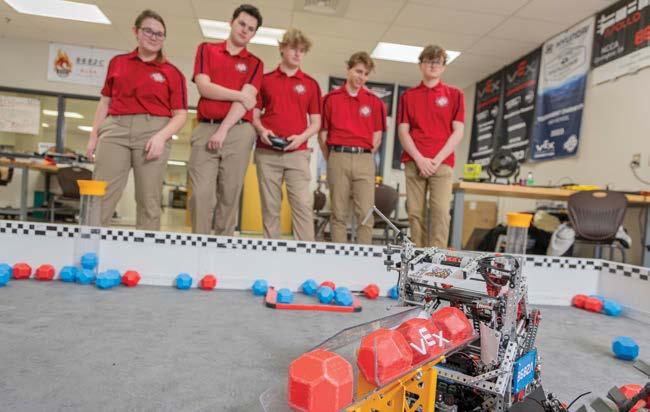
The students push themselves to be the best.
“From day one, this team has committed itself to nothing short of perfection, knowing that perfection is not a destination but an expedition into what is possible.”
Zach Pitts
“Logan and Ian, principal builders of the robot, started coming in early to complete a fully working prototype robot for testing,” Pitts said. “Their teammates, Derek and Chloee, worked tirelessly to keep up with the fever pace of the builders to record the engineering design process and create the framework that would become the team’s engineering design notebook. Nathan, the coder, also prepared programs to help the team test robots and documented his efforts in running routes and preparing autonomous programs. Together, they vetted robot designs, reflected on their work and, when the time came, started the entire process over again. This was all done with one goal in mind: to be the best.”
There are many sides to preparation. In VEX, tournaments require scouting, evaluating teams, participating in judges’ interviews, keeping a competition robot running and speaking with potential alliance partners for elimination rounds. Planning and developing strategies for navigating all these situations truly separates prepared teams from their ill-prepared counterparts.
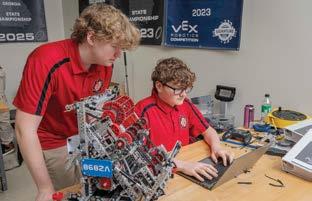

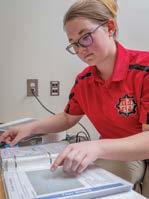
Preparation has certainly paid off for the NCCA team. It has become one of the most successful squads in Georgia history, accumulating awards while winning both regional and local tournaments. In 11-plus competitions, 8682A has amassed eight excellence awards, seven tournament championships, four robotics skills awards and a design award. It has qualified for the VEX Robotics World Championship in April.
“NCCA Robotics has enjoyed much success over the years,” said Pitts, who credited RESRG, Meta and the Station Springs Data Center for their support. “Historically, we have had three different teams each year, all working on their own unique designs and ideas. Across those teams, NCCA Robotics has won numerous tournaments and awards over the past seven years, including qualifying for the world tournament six years in a row. Among those teams, the program has produced four separate state championship teams. Of those four teams, two have also earned the excellence award at the state level. The program has additionally had one world division finalist and one world division quarterfinalist.”
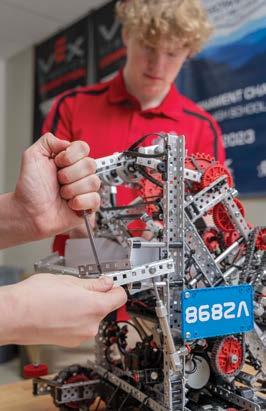
Winning first place is only part of the story.
“The true measure of success is the number of students who graduate from the program prepared for the workforce or to attend college,” Pitts said. “Students in the program discover a passion for engineering and mechatronics. Our success stories include Natalie Henderson, a 2023 state champion who went straight to work for RESRG as an industrial engineer immediately after high school. We also have success stories like Bobby Stephenson, a former programmer and state champion who received a scholarship from Amazon to continue his passion for programming and learning at Georgia Tech. I could go on and on.”
NCCA Principal Chad Walker honors the work the students have done.
“What these students have accomplished is truly remarkable,” he said. “Their success reflects not only their talent and work ethic but also their ability to collaborate, problem-solve and perform at the highest level. Team 8682A is representing our school and the Newton County community with pride on the world stage, and we could not be prouder of them.”
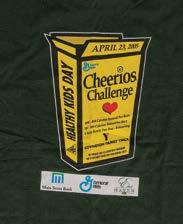
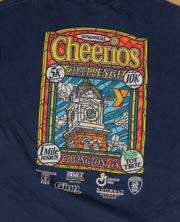
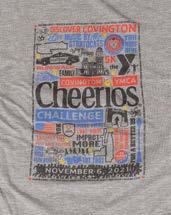
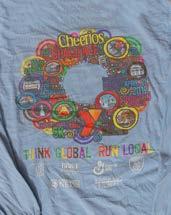
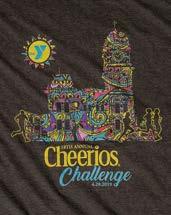
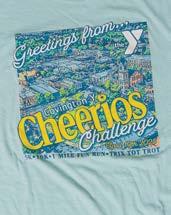

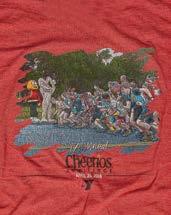
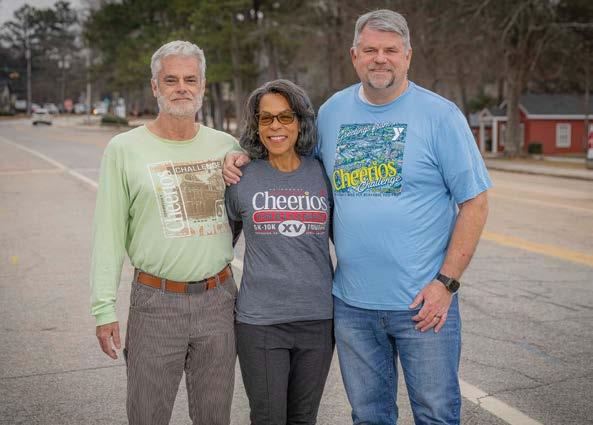
While Cynthia Eagan, Mark McGiboney and Ken Malcom come from different backgrounds, they are connected by an undying love for their community and their unwavering service to the Covington Family YMCA’s annual Cheerios Challenge. The race turns 25 in 2026.
by PHILLIP B. HUBBARD
Long before the first runner approaches the start line at the Covington Family YMCA’s Cheerios Challenge, Mark McGiboney, Cynthia Eagan and Ken Malcom have already wiped away sweat, not from running the race but from preparing the course—a commitment they have upheld for all 24 years of the event’s existence. From the start time to the day’s end, the trio watches as the race comes alive. It begins with the early-bird arrivals and concludes with a packed field of community members. The moment the race commences offers Malcom his favorite part of the day.
“There’s something about standing at the start line and watching 1,000 people run by you, or standing at the top of the hill watching that number of people be at an event,” he said. “That’s something I really enjoy seeing.”
The number of runners that pass Malcom has significantly increased over the past quarter century. Fewer than 50 people crossed the finish line in 2001. Meanwhile, the 2025 race had the highest participation ever with 1,470 runners. The event includes 5K and 10K races, a one-mile Fun Run and a Trix Tot Trot. Prior to the day of the event, training clinics are offered for first-time runners, too. Eagan admits she could not have foreseen the growth that has taken place with the Cheerios
Challenge. However, she did anticipate the effect she and her fellow volunteers could have on Newton County.
“We’re all visionaries,” Eagan said. “We all want the best for our community in which we live. We want to bring in programs and services that are going to benefit the community.”
Each volunteer invests considerable time to ensure this particular vision unfolds, and they have done it in their own ways. Eagan helped secure the corporate partnership with General Mills to use the Cheerios brand. She has developed various corporate partnerships and served as a race-day volunteer. Malcom was hands-on in setting the original route for the race, assists with any troubleshooting and works as a general advisor while also performing activities near the finish line. McGiboney has hung banners, set up water stations for the finish line, handed out day-of-race packets and performed course monitoring to help ensure racers’ safety. All of their efforts have established the Cheerios Challenge as a Peachtree Road Race qualifier.
However, Mother Nature has not always cooperated over the years. Even when rain sets in or a heat wave hits the area, McGiboney takes note of everyone’s uplifting demeanor around him.
“It’s just real positive,” he said, pointing out that the affirming nature of the race has remained intact despite its many alterations. “Even on rainy volunteer weekends, the crowds and the volunteers all seem to have a really positive vibe about them, very family oriented, because that’s the Y anyway. It’s big on [being] family oriented, and it always has that same positive, cheerful vibe.”
“ We all want the best for our community in which we live.”
Cynthia Eagan
Eagan, McGiboney and Malcom have gained more than just something to do on a weekend every April, though. They all have helped develop a tight-knit community within Newton County, and it starts with their shared passion for volunteerism. Assisting with the Cheerios Challenge only scratches the surface of their involvement in the area. Eagan has been on the Newton Trails board, along with McGiboney’s wife, Jill. She also has supported Malcom’s efforts with the Covington Fuzz Run, served on the tourism board and worked on the 2050 Plan for the City of Covington. They have been on the YMCA board of directors together, too. All three demonstrate
a strong love for their community throughout the entire year, but they have their own personal reasons for doing so. Malcom credited his mother for instilling into him and his siblings the importance of serving the common good. Eagan’s mother was also a notable influence. She encouraged Eagan at one point by telling her she had the personality to help others. McGiboney’s motivation stems from his own desire to be integrated where he lives. He views involvement as a way of showing appreciation for the community around him.
Being a part of the Cheerios Challenge while serving alongside her counterparts makes Eagan feel like she has been adopted into another family.
“Not everybody can participate in the Cheerios Challenge because it is a fee-based race, but you can still come to the Y and participate in the activities that they have,” Eagan said. “They have never turned anybody away. I have told many people over the years, ‘Oh, you should come to the race.’ [They might say], ‘Oh, I can’t afford that.’ [I will respond with], ‘Bring your kids because we still have music, bouncy houses and bananas— and community.’ So, yes, you do feel like you’re a part of a big family, and I try to push that, as well.”
Covington’s YMCA adds another facet to the trio’s sense of pride in volunteerism. Malcom stressed that the organization’s dedication to its cause provides a major reason why he comes back to share his time.
“Knowing what the Y does for the community, what it does for families who otherwise couldn’t be involved in these types of activities, it’s just something very special about what they’re doing,” he said, “and I believe in the Y and their mission and their commitment to our children and our community.”
Many memorable moments have occurred during the Cheerios Challenge’s existence. Times have changed, the event has grown and trophies have been awarded, but one instance still stands out to McGiboney through it all. Ten years into the Cheerios Challenge, he was in charge of the water station at the finish line. Toward the end of the race, a man was approaching the completion of his race with great determination. McGiboney recognized that, while he was not a top finisher, something was different about him. Everyone who had gathered around the finish line started cheering his efforts, and the man went from tears to smiles. This one memory provides a reminder to McGiboney of why he returns year after year to volunteer.
“This was a life-changing thing for him,” he said. “It was like going from the person he used to be to somebody he wanted to be, and that really sticks in my mind—how much people encouraged him at the end.”




The Museum of Art near Madison brings Georgia’s creative legacy to life, hosting a rare traveling exhibit that unites rural communities through contemporary creativity.
by KARI APTED
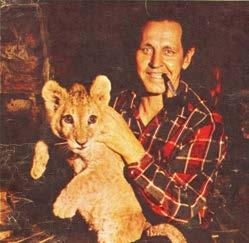
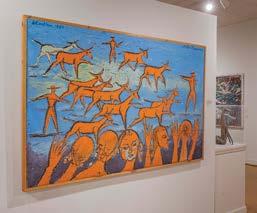
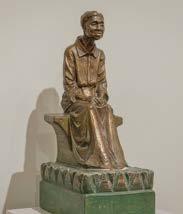
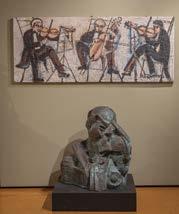
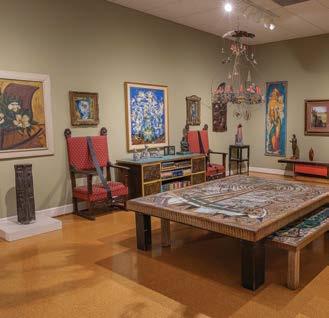
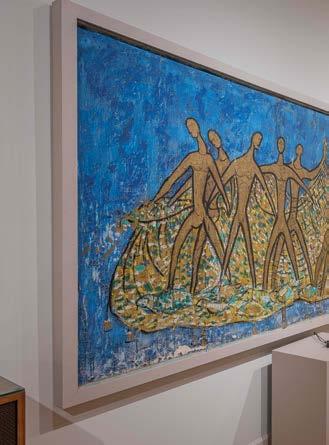
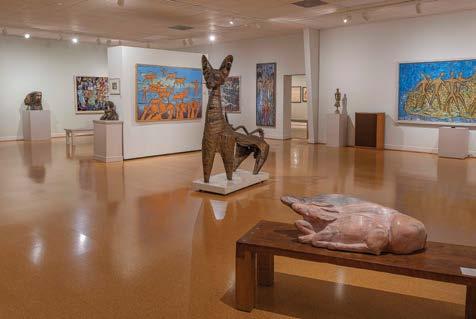
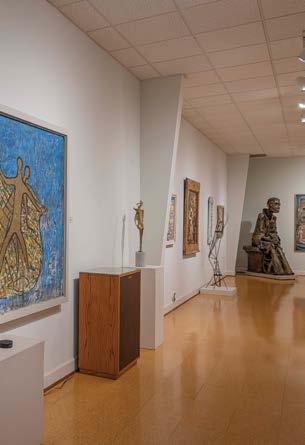
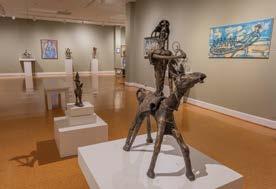
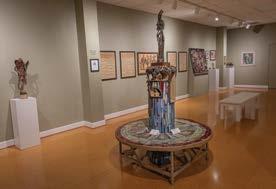
An easy 30-minute drive from Covington will take you to one of the best hidden gems in Georgia’s art scene. The Steffen Thomas Museum of Art is tucked among Morgan County’s rolling hills and expansive pastures, 10 minutes from historic downtown Madison. One of the few single-artist museums in the country, it has a simple exterior that belies the treasures within, though the sprinkling of sculptures provides a hint. Once inside, visitors find themselves transported into a serene, expansive gallery dedicated to the life and work of Steffen Wolfgang George Thomas, a German-born American artist who made Georgia his creative home.
From April 21 through May 29, the museum will host Reimagine: Contemporary Georgia Artists, a traveling art show featuring 20 works curated from the Georgia State Art Collection.
“We are delighted to be one of 10 venues chosen to host this exhibit,” said Lisa Conner, the founding director of the museum and Thomas’ youngest daughter. “Reimagine is meant to bring art to more rural communities. It will not be shown in any big cities, and this is the only opportunity to see it in this area.”
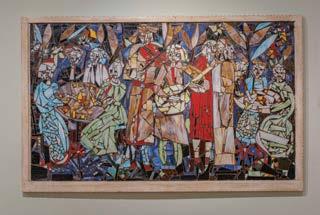
“This world is too small for less than brotherhood, too dangerous for less than truth.”
Steffen Thomas
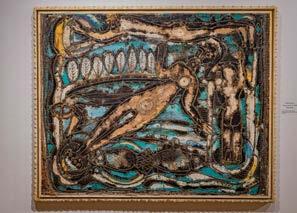
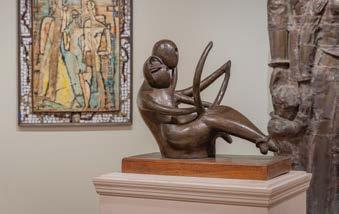
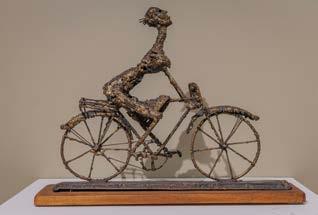
The 20 featured works in Reimagine were chosen for their ability to uplift and connect Georgia’s diverse southern art histories and communities. The exhibit includes work from three area art guilds: Southern Heartland Art Gallery, the Madison Artists Guild and the Artisans Village Guild. Featured media include painting, fiber art, sculpture, photography, pottery and more. These works are from the Georgia State Art Collection, a vibrant chronicle of over 600 pieces created by Georgia artists.
Admission to the museum is free during the traveling exhibition, which will kick off with an opening reception on April 19, from 2 p.m. to 5 p.m. All are welcome to attend, and Conner invites educators to bring student groups to view Reimagine. A teacher’s guide with curriculum connections is available at www.gaarts.org.
“We want to engage the community during Reimagine by hosting several creative workshops led by local artists,” Conner said. Planned artmaking events include a simple textile project with Jackie Kelley from the Southern Heartland Art Gallery Guild and a watercolor workshop led by retired art teacher April Hendricks. The museum will also host a presentation by sculptor Brian Danson.
The Reimagine “art is for everyone” theme echoes Thomas’ personal belief that art is one of the world’s strongest uniting forces. A prolific expressionist, Thomas created thousands of works of art over his lifetime in every available medium, including painting, mosaic, sculpture, printmaking and stonework. His public works can be viewed across the Southeast at a number of locations, from the Georgia State Capitol, Piedmont Park and the United States Military Academy to several universities, including Auburn, Emory and Tuskegee.
The Steffen Thomas Museum of Art is located at 4200 Bethany Road in Buckhead. It is open Tuesday through Saturday from 11 a.m. to 4 p.m.
Call 706-342-7557 to arrange a group tour and visit steffenthomas.org to learn more about the museum.
For information about Reimagine: Contemporary Georgia Artists, visit gaarts.org/ programs/state-art-collection-tour.




A grassroots effort born in a church hall now unites families, mentors and donors in an effort to open doors. The brainchild of Michelle Norrington and Monica Banks, Building Strong Futures helps students reach out and touch higher education.
by WENDY RODRIGUEZ
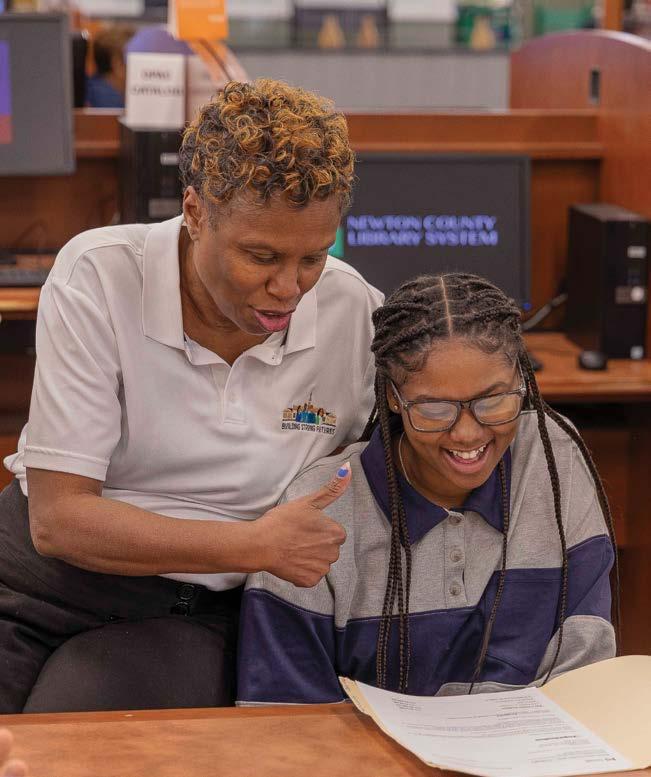
What began as a small etiquette class for young girls inside a church fellowship hall has grown into a nonprofit organization committed to expanding access to higher education. Building Strong Futures equips teenagers with confidence, exposure and tangible tools to see college not as a distant idea but as an attainable goal.
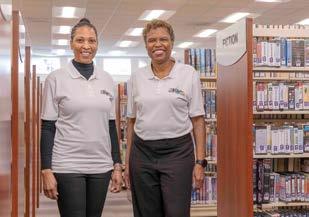
Founders Michelle Norrington and Monica Banks met through church, where both were active in ministry and the dance team. As their daughters grew up, they noticed a gap in social opportunities designed to empower young girls with the confidence and skills to successfully navigate academic and professional spaces. Norrington, originally from Chicago, had grown up attending etiquette classes and cotillions. After relocating to Georgia, she realized those same experiences were far less accessible.
“We wanted our girls to know how to go out into society,” Norrington said. “We wanted to make them better people so they could be ready to handle the world.”
“ We don’t want this to end with us.”
Michelle Norrington
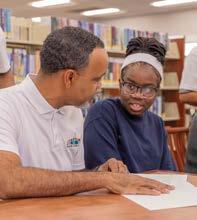
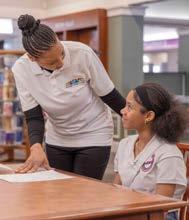
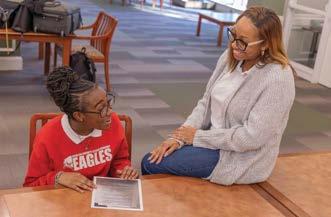
Norrington and Banks began hosting etiquette classes for young girls under the name Building Strong Women in 2002. The program culminated in a gathering to celebrate the participants and a small dinner where the girls dressed up and practiced what they had learned. Interest quickly grew beyond their congregation, with families eventually inquiring about opportunities for young men, as well. The program formalized as a 501(c)(3) nonprofit in 2007, and nearly a decade later, community interest and an evolving vision prompted a pivot. Norrington and Banks were thinking beyond etiquette and cotillions. Instead, they started doing annual college tours. In 2016, the organization was rebranded as Building Strong Futures.
Each tour is intentionally curated. Students visit at least two Historically Black Colleges and Universities and two Predominantly White Institutions, ensuring exposure to diverse academic
and cultural environments. Rather than focusing on local metro Atlanta schools, the organization prioritizes regional and outof-state campuses to broaden students’ sense of possibility. The inaugural tour included Duke University, North Carolina A&T University, the University of Tennessee-Knoxville and Fisk University. Subsequent tours traveled to Florida, Louisiana and Washington, D.C.
There was a brief pause to the tours due to the coronavirus pandemic, but they resumed in 2022 with a transformative trip to New York. It included 36 students—the largest group with which they had ever traveled. Many were flying for the first time. Many had never visited New York. For some, it provided the opportunity to see their first Broadway show. They navigated public transportation, explored Central Park, visited Ground Zero, toured campuses and moved through one of the world’s busiest cities with growing independence.
(L-R) KENDRICK DIXON, DERRICK MULLEN, NWAKA HUGHES, MONICA BANKS, MICHELLE NORRINGTON, NICOLAS JONES AND KIRSTIE HARVEY
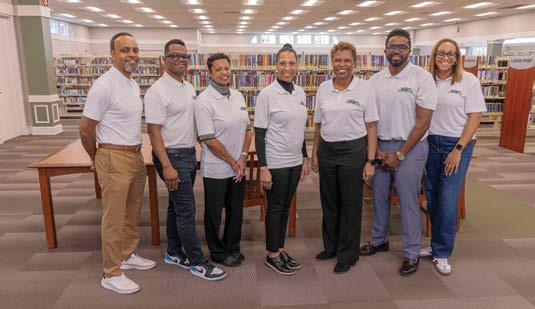
“By the time they left, they could catch a train like the best of them,” Norrington said. “They were like New Yorkers.” It was an invaluable experience. “For many students,” board member Nwaka Hughes said, “this was an opportunity they may not have had before.”
Hughes and other board members emphasized that many families face economic or time constraints that make it difficult to take students to visit colleges. The 2022 New York tour cost families just $249 per student. This fee covered airfare, lodging, meals, transportation and programming. Today, even accounting for inflation, the cost is capped at $449, with the remaining expenses subsidized through fundraising efforts that include an annual gala, golf tournament, community sponsorships and donor-supported scholarships.
“It’s one of the reasons we also fundraise as much as we do and as hard as we do,” Norrington said. “Because the more money we raise, [the more] we’re able to keep costs down.” When families cannot afford the fee, donors step in. “People who know us,” she added, “they are more than willing to [serve as a] sponsor when somebody can’t pay for it.”
Lasting relationships are often built in the process.
“When the tour is over,” Banks said, “typically the students connect and look forward to coming back together, and we love that.”
Building Strong Futures serves rising ninth through 12th graders. Students apply through a parent or guardian and may participate in multiple tours, with returning students receiving early registration access. Tours consistently cap at 36 participants.
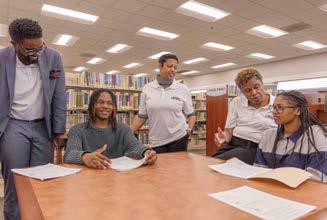
In addition to the tours, the organization hosts a pre-tour career workshop to teach students essential financial skills, helping them prepare for navigating a college environment. For many students, higher education exists only as an idea. Building Strong Futures changes that reality by placing students directly on campuses. The participants walk the quads, sit in admission informational sessions and have the opportunity to imagine themselves there.
Behind the scenes, Norrington and Banks’ complementary leadership styles continue to move the organization forward, supported by a deeply engaged, community-driven board. Banks leads with creative vision and innovation, while Norrington provides operations and logistics. Together, they hold one another accountable to the greater mission that first inspired the nonprofit’s founding, ensuring that every initiative will be for the greater good of the students with which they work.
Looking ahead, Norrington and Banks want to pass down the knowledge and passion for what they do to the future leaders of Building Strong Futures.
“We don’t want this to end with us,” Norrington said. “In 2060, students should still be going on college tours with Building Strong Futures, and it should feel automatic.” Banks agrees. “I think it’s time for a new generation who understands and can speak to this younger generation,” she said. “I still want to be in the shadows to help, but I plan on passing the torch.”
For information on Building Strong Futures, visit buildingstrongfutures.org.
Stories by Michelle Floyd
Blending science, literature and community research, an Oxford College student forged connections with local farms to explore climate challenges and deepen her environmental engagement.
by MICHELLE FLOYD
Kaela Moscati, now a third-year student at Emory University in Atlanta, spent part of her second year at Oxford College studying climate and environmental studies. While she was taking natural science classes during the spring, she also found an English course that piqued her interest: Climate Grief, Climate Hope, which was taught by Professor Stacy Bell McQuaide. Students in the class read Octavia E. Butler’s “Parable of the Sower,” Emily St. John Mandel’s “Station Eleven” and Lisa Wells’ “Believers: Making a Life at the End of the World,” among other speculative fiction works that showcased a world transformed by climate change and catastrophes.
“Our connection is cross disciplinary,” said McQuaide, whose syllabus indicated that the class envisions alternatives to nihilism. “It really highlights the function or goal of liberal arts at Oxford.”
Students wrote a reflective-analysis piece for each work they read, a capstone personal narrative and, in lieu of a final, an experiential narrative that reflected the class.
“We were able to have roundtable discussions,” said Moscati, who is studying environmental science on a social science and policy track, with English as a minor. “I was so interested in the class material that I thought it would be cool to extend that.”
During her spring semester, Moscati received an email about the invitationonly Summer Oxford Research Scholars program and decided to apply. She consulted with McQuaide and wrote a proposal that included her coursework and interest in science and English, as well as environmentalism and the overall climate crisis.
“I’m really enjoying environmental education and bridging the community together with social science research and environmental justice,” said Moscati, who grew up in her native New York with memories of picking cherry tomatoes with her family, and later in Conyers, where she foraged figs from her grandmother’s garden. “I’ve always loved the environment and spending time in nature.”

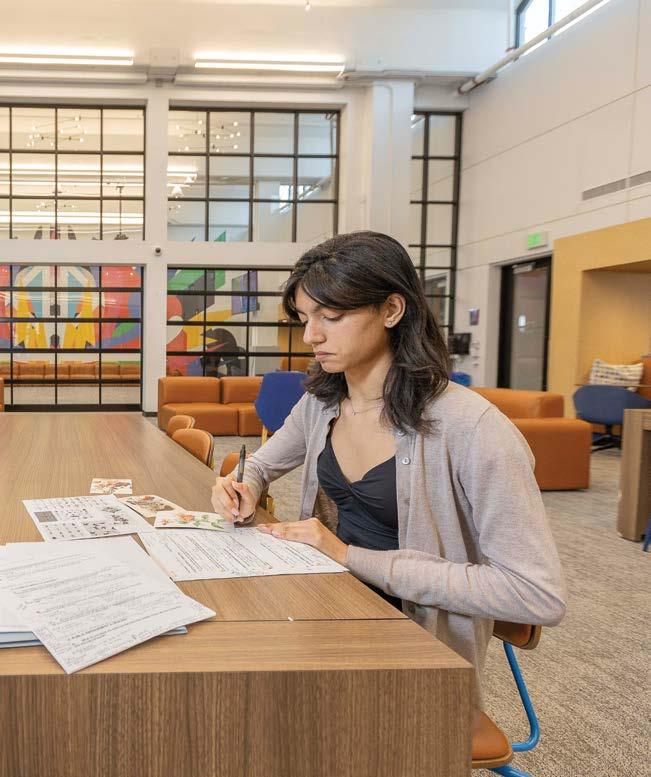
“I’ve always loved the environment and spending time in nature.”
Kaela Moscati

Once her proposal for the Summer Oxford Research Scholars program was accepted, she and McQuaide, as the faculty advisor, used a stipend and spent time with farmer and educator Daniel Parson at the Oxford College Farm, owner Sara Vinson at Yellow Hen Farm in Covington and co-owners Jeni and Nicolas Donck at Crystal Organic Farm in Newborn. They discussed climate problems and improving the future.
“We have a network of farms. They’re all connected; [the project] really showed the connectivity,” said Moscati, who was involved in environmental work and started an environmental club with her friends while at Rockdale County High School.
“People connect and solve issues by sharing stories. Personal experiences are valuable to work that we do.”
Vinson notes that she has had Oxford students volunteer to work at her garden in the past and now enjoys connecting with them through Sustainable Newton, where she serves as co-founder and secretary. The community organization remains committed to local responses to global environmental issues.
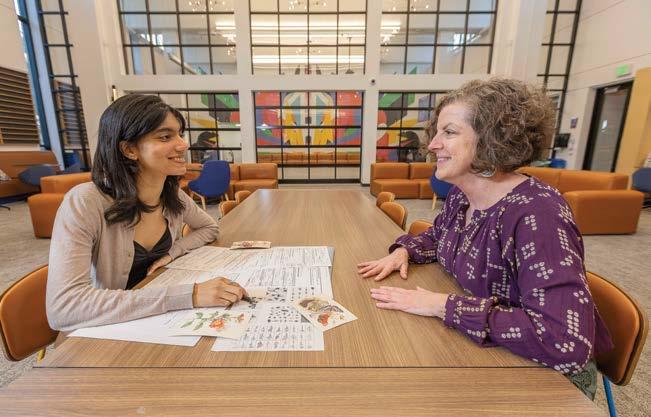
“It was nice to have them out for a day of work on the farm. They’re willing to pitch in wherever needed, especially in more recent years,” said Vinson, whose small farm features greens, tomatoes, carrots, beets and other seasonal produce throughout the year. “I can tell they’re making an effort to get students involved in the community in many ways, especially in service areas.”
Vinson recalls how Moscati toured her farm with McQuaide, one of her customers, over the summer and discussed the importance of farming.
“It’s become part of my life. I wouldn’t know what to do without it,” said Vinson, who has run the farm for about 15 years at her home, where she has lived for roughly three decades. “It connects me to the environment. It connects to me the outside. It connects me to the community. I always say that I’m your personal farmer.”
Moscati’s project included a multi-page written synopsis and photos from her time at the farms. In addition, she presented her research at a summer symposium.
“This project demonstrates the most meaningful effects of high-impact, liberal arts teaching and learning. It brought together a humanities faculty member and natural science major to show how combining different disciplinary approaches to social problems like climate chaos deepens students’ critical-thinking capacities, preparing them for solving complex problems in the real world,” said McQuaide, who provided feedback and focus for Moscati’s project. “She had an idea for it, and she conceived it. Kaela’s enthusiasm, compassion, kindness and intellect inspire me daily. Students like her keep me devoted to this work and this institution.”
Although she completed the project, Moscati continues to reference it in her studies at Emory and wants to connect with more people when working with the environment.
“It really pushed me to realize how the importance of this moment [involves] navigating crisis and engaging with local communities to tackle bigger societal problems,” said Moscati, who indicated that the project “added soul” to the work she has been doing and allowed her to creatively plan future endeavors. “It enriched my college experience, and I feel more connected to greater Atlanta areas.”
McQuaide pointed out that the project represents just one example of ongoing efforts from Oxford students which involve the community. She encourages residents and businesses to use students for similar research and projects instead of viewing the campus as a bubble.
“Students like Kaela are very inspiring to me. They give me motivation to continue coming into work and doing this job. They fill me up,” McQuaide said. “There’s a connection between the college and the community. There’s a lot of really good kids there that care about people and community work.”








Stories by Kari Apted

Joy, laughter and trials fill the Apted family’s adoption story. The international union led to an outreach that provides assistance to more vulnerable people in Uganda.
by KARI APTED
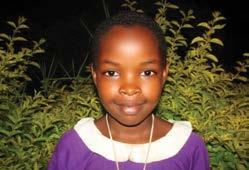
We met in a guesthouse lobby on a hot January afternoon in Uganda, with laughter, tears and lingering hugs. It seemed surreal that after so many years of waiting, my husband Donnie and I could finally hold our new daughter, Violet. There would be more months of paperwork and legalese before it was finalized, but there, under the blazing African sun, our days were filled with the joy of discovering our new lives together. We bonded over Disney movies and Barbie dolls, plates of tilapia and matooke, fresh mangos and avocados plucked straight off the tree. We swam, played and made jewelry. These are golden memories.
Even so, international adoption is not for the weak. It’s filled with hellos and goodbyes and more patience-building than one could imagine. For Violet, who bravely hopped on a plane to start her new life in America at the tender age of 12, the struggles began after the joyous airport reunion that May. She met her new brothers, Zach, Eli and Jonah, along with many of our friends, but communication proved difficult. “The language barrier was tough,” she said. Although English is the official language of Uganda and children learn it at school, their primary communication takes the form of their tribal language, in her case Luganda. “I was trying so hard to make people understand me,” Violet said, “but I kept butchering my words. I always had to repeat myself. It seemed better to stay to myself.” Culturally, Ugandan children are not allowed to complain, so it broke my heart to learn later how much of an ongoing struggle this was for Violet. Yet she almost always maintained a sunny disposition despite the overwhelming task of learning and unlearning the idiosyncrasies of a new culture.
“The unlimited amount of food was a good thing, though,” Violet said with a laugh. “I opened that refrigerator door and couldn’t believe it. I’d gone from having one or two meals a day to this? At boarding school, it was just beans and posho (boiled cornmeal) every day. We only had meat during the holidays. Now I could have it all the time.”
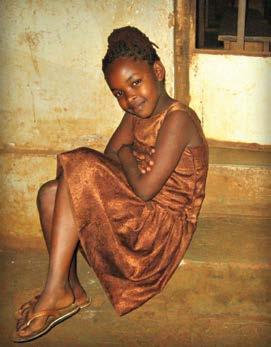
She indulged in eggs and chicken for weeks, as if her little body was making up for all the protein she had missed. The kitchen became one of our favorite places. She taught me how to make perfect rice and chapati, her favorite flatbread, and I taught her how to bake and decorate cakes. Violet was also shocked to see that she shared her new home with our dog, Annie. “Dogs in the house?” she said, again through laughter. “Dogs stay outside in Uganda. I was afraid of Annie at first, but she was sweet. She never barked at me or anything. I fell in love with her the next day.” Later, we rescued a smaller dog, Stella, and Violet carried her around in a baby wrap she fashioned from a large scarf. It was quite a lot of progress for a girl who was initially afraid even to touch Annie. Because Violet arrived at the end of our school year, we enjoyed a long summer off together. It was exactly what we all needed as our family grew from five to six, and she rapidly made new friends at church. In the fall, she joined her brothers in a homeschool-private school hybrid program. We and her teachers were blown away by her work ethic. She arrived several years behind grade level but was determined to catch up; and she did. She graduated in 2021 with all As and Bs and is now in her third year of nursing school. We couldn’t be prouder of the young lady she has become, and her birth family in Uganda feels the same.


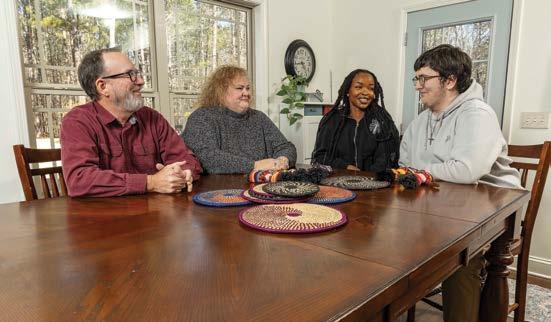
(L-R) DONNIE, KARI, VIOLET AND JONAH APTED
“I’m grateful for the opportunities I’ve been given.”
Violet Apted
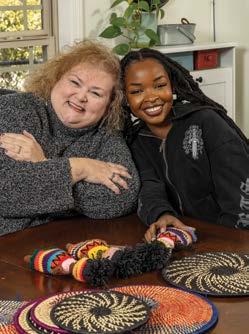
There isn’t enough time to explain the complexities that allowed us the privilege of adopting while maintaining contact with Violet’s birth family. Still, it is a unique and beautiful blessing. Her birth mother, Harriet, is my bonus sister, and her siblings are my bonus kids. I even have honorary grandbabies there that call me Jjaja (grandmother). Though the coronavirus pandemic prevented us from returning to Uganda as soon as we wanted, Violet and I returned together in 2024, and that reunion will always be one of my happiest memories. I can’t even express how lovely it is to have family on two sides of the globe, to have the privilege of living this unexpected gift from God. Grateful is not a big enough word, but gratitude requires giving back.
Violet’s brother, Dan, works in the medical field and has always had a heart for the deaf community. Uganda is working to become more accepting of people with disabilities, but it’s also a cultural battle. Deafness, blindness and birth defects are often seen as curses, and it’s not unheard of for people to abandon disabled children at schools or churches and never return for them. Accessibility and job opportunities are also sorely limited or non-existent for differently abled adults, but due to the work of Dan and others, the situation is changing.
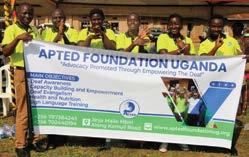
We were humbled to learn that Dan had created an NGO with an acronym that used our last name: Advocacy Promoted Through Empowering the Deaf. The APTED Foundation provides sign language classes, advocates with government


officials on behalf of the needs and rights of people with disabilities and offers vocational training opportunities. Dan was instrumental in establishing the Sikia Café in Jinja that employs hearing-impaired people. During our 2024 visit, I had the honor of presenting diplomas to graduates of APTED Foundation classes. We also joined Dan at Walukuba West Primary School, one of the few schools that welcomes deaf and disabled children. Dan remains an active mentor there. We brought sodas and snacks, and I showed the special-needs class how to do simple watercolor paintings. They had never painted before, nor had they had a special day set aside for them, so imagine the joy in that room. I cannot wait to return and do it again. It’s an odd thing to have pieces of your heart thousands of miles apart, but that is our family’s current situation.
“I plan to become a travel nurse after I finish my degree,” Violet said. “I want to buy land in Uganda and build cottages there so my family can stay together. I also want it to include
the APTED Foundation headquarters. Life is so hard in Uganda. People here don’t understand. I’m grateful for the opportunities I’ve been given. I believe everything happens for a reason.”
In her book, “Out of Africa,” author Isak Denisen wrote, “When I was a young girl, it was very far from my thoughts to go to Africa, nor did I dream then that an African farm should be the place in which I should be perfectly happy.” That’s exactly how I feel, and I don’t even like hot weather. However, our purpose and our connections in Uganda call to us daily, and it will be an honor and a pleasure to continue on this path God created.
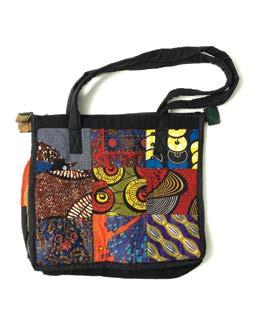
Join us on our journey. We have handmade Ugandan items for sale and welcome new fundraising opportunities. Learn more about the APTED Foundation by following us on Facebook.

A daughter’s love of Highland Cows led her family to create a small farm in Social Circle where people can visit and learn more about the beautiful animals.
by KARI APTED
It’s a childhood rite of passage to beg one’s parents for a pet. Many kids are delighted when their folks agree to adopt a dog or a cat, but when Taylor Rose Bramlett, now a junior at Social Circle High School, asked her parents for an animal to love, she did not have a canine or feline companion in mind. She had fallen in love with a special breed of “fluffy cows” and longed to call one of them her own.
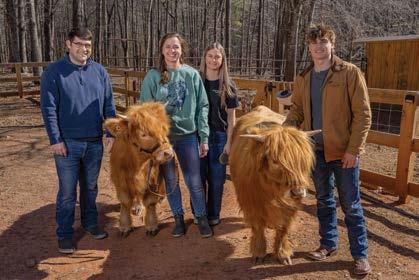
Her parents, Steve and Teresa, not only said yes to one Highland cow in 2025. The family ended up with three of the Scottish gentle giants and may acquire more in the future.
“Cows don’t like living alone,” Teresa said. However, adopting Highland cows is a far more complicated process than heading to the local animal shelter. It required the Bramletts to move from their home in Newborn to the countryside of Social Circle and clear acres of woodland to create an expansive pasture. So it was that Chasin’ Shade Farms was born. Teresa had grown up with horses, so she already had some experience caring for livestock. Even so, she delved into research and learned all she could about this breed of cattle.

“They have 360-degree vision and can smell scents originating six miles away.”
Teresa Bramlett
Highland cows have been a common sight on the hills of Scotland for thousands of years, as their long, double-layered woolly coats protect them from the cold and damp weather. They have the longest hair of any cattle, and it comes in a range of colors, including yellow, ginger, red and black. Their dossan— lengthy emo-style bangs—cover most of their face and fall between long, distinctive horns. Highland cows have a stocky build and take four years to reach full adult size, which ranges from 1,100 pounds for females to 1,750 pounds for bulls.
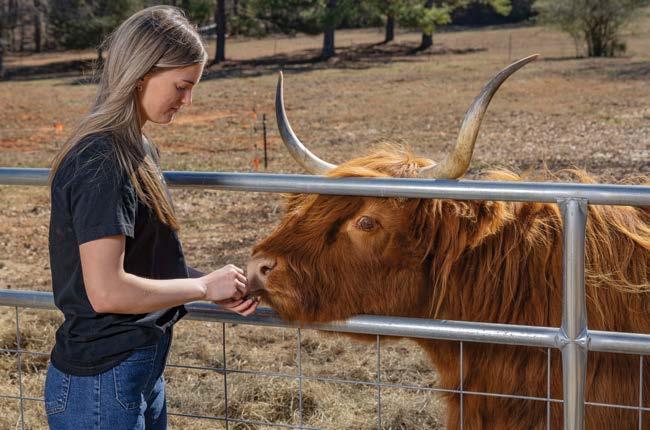
“They’re very smart animals,” Teresa said. “They have 360-degree vision and can smell scents originating six miles away. They’re also the most docile breed of cows. They want human attention and will gently eat treats out of your hand. They’re very food-driven.”
The first cows to join the Bramlett family were 4-year-old Aile and her young calf, Edan. Aile has a red coat while Edan’s is yellow. Both have sweet, playful personalities. “Edan is my emotional support cow,” Teresa said. Soon after, little Nova, another yellow calf just one month younger than Edan, joined
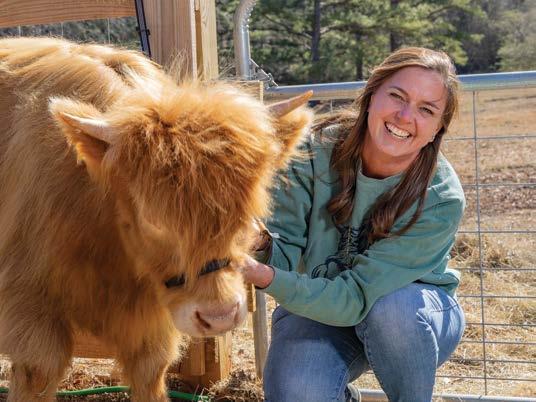
the fold. Nova’s personality is a bit spunkier and more rebellious than Edan’s. Still, Taylor Rose—self-proclaimed as the “bougiest cowgirl ever”—claims that’s why Nova is her favorite of the three cows.
“I mean, look at that,” she said, pointing to Nova gnawing on the rope that kept her tethered to the fence. “How can you not love her?”
Their overall quiet nature makes Alie, Edan and Nova ideal for interacting with people. Chasin’ Shade Farms has hosted adorable Highland cow photo sessions during the holidays, complete with props such as the cow kissing booth built for Valentine’s Day. People can also schedule one-hour visits to hang out with the cows. In preparation for farm visitors, Teresa bathes the cows and blow-dries their hair, often adding flower wreaths or bows. She also started a TikTok account to share them with the world. Most mornings, she takes her coffee out to the pasture and videos whatever the cows are up to. The cows are the stars of the videos. Taylor Rose and brother Barrett, 18, mostly stay in the background when it comes to social media. “People ask me a lot of questions,” Teresa said, emphasizing that she enjoys learning more about her beloved animals as she finds the answers.
The Highland cattle’s arrival was a bright moment after a difficult two years during which the Bramlett family split their time between Georgia and their original home in Mississippi. Teresa’s mother, Margaret Touchstone, had been diagnosed with stage four breast cancer. Teresa wanted to be with her during her treatments and surgeries. That season of life closed with a month of hospice care at Touchstone’s home.
“We spent a lot of time together on her back patio watching the birds,” Teresa said. The activity gave the Bramlett family farm its name. “Mom was in a wheelchair, and we said we spent our days ‘chasing the shade,’ rolling her from one section of the porch to another to stay in the shade while she enjoyed the fresh air. My mom passed away on June 7, 2024. She had a beautiful Japanese maple tree in her yard. That’s the tree that’s on our logo.”
As the calves adjusted to the heat and humidity in the summer of 2025, the Bramletts made it easier by installing fans in the barn. Mama Aile went on her own quest of “chasin’ shade” and chose a patch of bare earth beneath a wide cypress tree, a perfect spot to waste the hot afternoons away.
Keep up with Aile’s, Edan’s and Nova’s adventures on TikTok by following @chasin.shade. farms. Email chasinshadefarms@gmail.com for information on photo shoots or to schedule a time to visit the cows.


As the chef and owner of Bar Oscar in Covington, I started my culinary career as a bread baker. I’ve enjoyed making these cookies wherever I’ve worked, and they’re always popular. This is my grandmother’s recipe, and it’s the type of food on which we hang our hat: simple foods done really well. I believe in sourcing the best ingredients I can from local farmers—people
who care about what they do. For this biscotti, buy the best almonds and chocolate you can find. I like to tell people that a recipe is a guideline. Adjust it to your preferences. If you like pistachios, use those instead of almonds. If you prefer white chocolate, use it. As long as you keep the proportions the same, you will likely create something really delicious.
• 2¾ cups all-purpose flour
• 1¾ teaspoons baking powder
• ½ teaspoon salt
• 3 large eggs
• 1 teaspoon vanilla extract
• 5 tablespoons unsalted butter, softened
• 1 cups granulated sugar
• 2¼ cups chopped toasted almonds
• ½ cup chopped chocolate
(I use a 70% dark chocolate bar)
• 1 egg, beaten for egg wash
Preheat oven to 325°F. Combine flour, baking powder and salt. Sift together, set aside. Combine eggs and vanilla extract, set aside. Beat the butter and sugar together in a stand mixer fitted with a beater attachment on medium-low speed for about three minutes, until the mixture resembles wet sand. Reduce the speed to low and gradually add eggs (one at a time) until the mixture is smooth. This will take another two minutes. Add the sifted-together dry ingredients (not the almonds and chocolate yet) and mix on low speed until the mixture is mostly uniform but some dry bits of flour remain. Add almonds and chocolate. Mix for 30 seconds until the mixture is uniform. Feel free to do this part by hand to avoid overmixing the cookie dough and making it tough. Turn out the mixture on a very lightly floured surface, and roll into a log, roughly eight inches in length. It should have the thickness of a soda can. Place the log onto a baking sheet lined with parchment. Lightly press down on the log to flatten the top. Brush the top with the beaten egg. Bake for 35–40 minutes until it’s a deep shade of brown and the top has split. Allow to cool for 20 minutes, then slice the log into one-inch strips on a bias. Place the cookies back into the oven for 10–15 minutes, until well toasted. Allow the cookies to cool, then store them in an airtight container. Makes 12–15 one-inch-thick cookies.