A new housing bill reignited a longstanding battle between dense cities and small towns. When Connecticut needs more affordable housing, who is responsible for building it?
Dear Readers,
Volume 58, Issue 3 of The New Journal examines the city through different lenses: aerial, retrospective, and fish-eyed, to name a few. We pull our focus back to longstanding conflicts in the city and long-gone moments on campus. Coming into the new year, our writers offer new angles on old issues.
In the cover story, Kade Gajdusek ’27 scrutinizes a decades-long rift over the character of Connecticut’s cities and towns. After Governor Ned Lamont signed a controversial housing bill two months ago, new mandates on suburbs may alleviate New Haven’s affordable housing crisis. Josie Reich ’26 bursts out of the archives and into a meeting with members of the New Haven women’s liberation movement from the 1970s, asking, What now?
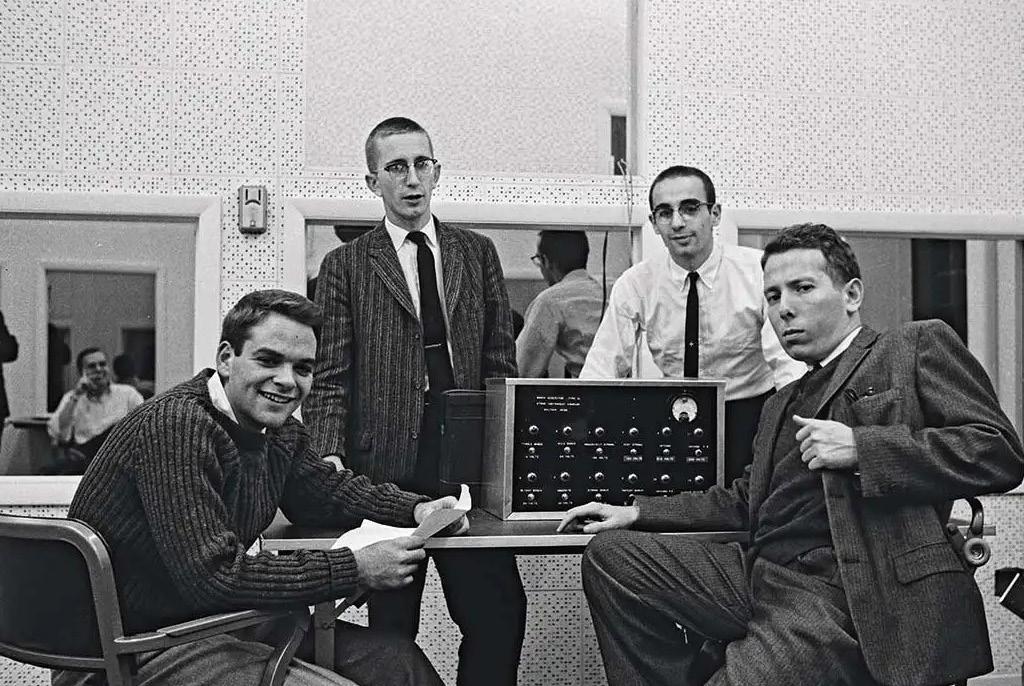
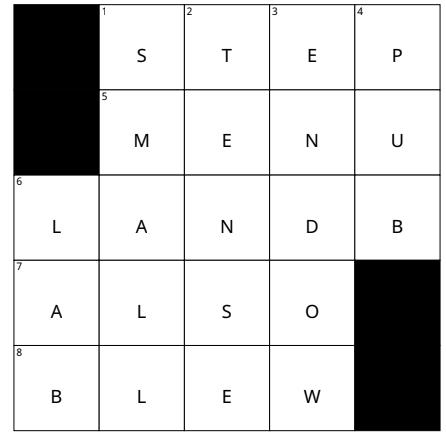
Elsewhere, writers peek into diorama boxes scattered across the city, grapple with opening up to a pastor at the New Haven Church of Latterday Saints, and tiptoe toward the remains of Stanley Milgram’s obedience experiments in the basement of Linsly-Chittenden Hall. Join us from these new vantage points.
With hope for warmer days soon, Chloe, Calista, Tina, Mia
Thank you to our donors
The Elizabethan Club The Hull Barrett Family Fund
Mark Badger
Jean-Pierre Jordan
Aliyya Swaby
Laura Heymann
Jeffrey Pollock
Julia Preston
Armand LeGardeur
Katie Hazelwood
Benjamin Lasman
R. Anthony Reese
Andrew Court
Kathrin Lassila
Fred Strebeigh
Peter Phleger
Steven Weisman
David Greenberg
Suzanne Wittebort
Romy Drucker
James Carney
Makiko Harunari
Laura Pappano
Editors-in-Chief
Chloe Budakian
Calista Oetama
Executive Editor Mia Rose Kohn
Managing Editor Tina Li
Publishers
Ethan Kan Alex Moore
Creative Director
Verse Editors
Matías Guevara Ruales
Senior Editors
Vivian Wang
Sophia Liu
Maggie Grether Samantha Liu
Chloe Nguyen Josie Reich
Jack Rodriquez-Vars
Associate Editors
Odelya Bergner-Phillips Ella Piper Claffy
Adele Haeg Dani Klein
Margot Kohn
Harry Lowitz
Kelly Kong
Kate Rodriguez
Moe Shimizu Drew Storino
Sabrina Thaler
Copy Editors
Kade Gajdusek Zoya Haq
Smile Jiang Sophie Molden
Julian Raymond Will Sussbauer
Designers
Dani Klein
Erin Lee
Celina Qu
Mercuri Lam
Brianna Magtoto
Serina Yan
Associate Business Manager Tiona Zeng
Photography
Web Design
Marilynn Sager
David Gerber
Daniel Yergin
Jonathan Lear
Barak Goodman
Elizabeth Sledge
Sally Sloan
Leslie Dach
Jodi Kantor
Rollin Riggs
Hilary Callahan
Colin Kim
Daphne Joyce
Samhita Kumar
Members & Directors: Haley Cohen Gilliland • Peter Cooper • Andrew Court • Jonathan Dach • Susan Dominus • Elizabeth Sledge • Fred Strebeigh • Aliyya Swaby
Advisors: Neela Banerjee • Richard Bradley • Susan Braudy • Lincoln Caplan • Jay Carney • Joshua Civin • Richard Conniff • Ruth Conniff • Elisha Cooper • David Greenberg • Sophie Haigney • Daniel Kurtz-Phelan • Laura Pappano • Jennifer Pitts • Julia Preston • Lauren Rawbin • David Slifka • John Swansburg • Anya Kamenetz • Steven Weisman • Daniel Yergin
Friends: Nicole Allan • Margaret Bauer • Mark Badger and Laura Heymann • Anson M. Beard • Susan Braudy • Julia Calagiovanni • Elisha Cooper • Peter Cooper • Andy Court • The Elizabethan Club • Leslie Dach • David Freeman and Judith Gingold • Paul Haigney and Tracey Roberts • Bob Lamm • James Liberman • Alka Mansukhani • Benjamin Mueller • Sophia Nguyen • Valerie Nierenberg • Morris Panner • Jennifer Pitts • R. Anthony Reese • Eric Rutkow • Lainie Rutkow • Laura Saavedra and David Buckley • Anne-Marie Slaughter • Elizabeth Sledge • Caroline Smith • Gabriel Snyder • Elizabeth Steig • John Jeremiah Sullivan • Daphne and David Sydney • Kristian and Margarita Whiteleather • Blake Townsend Wilson • Daniel Yergin • William Yuen
The women’s rights revolution in New Haven was a five-year frenzy of sisterhood and schism, vision and pragmatism. Then the group splintered. Fifty years later, a writer brings the women back together.
By Josie Reich
Where the Housing Goes
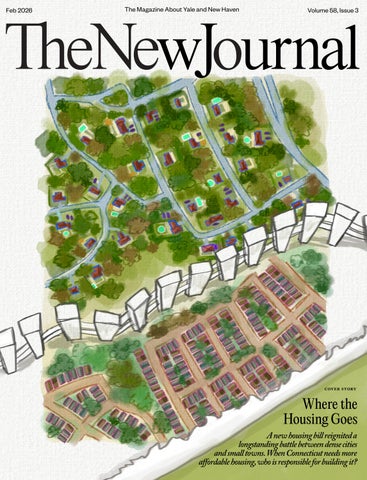
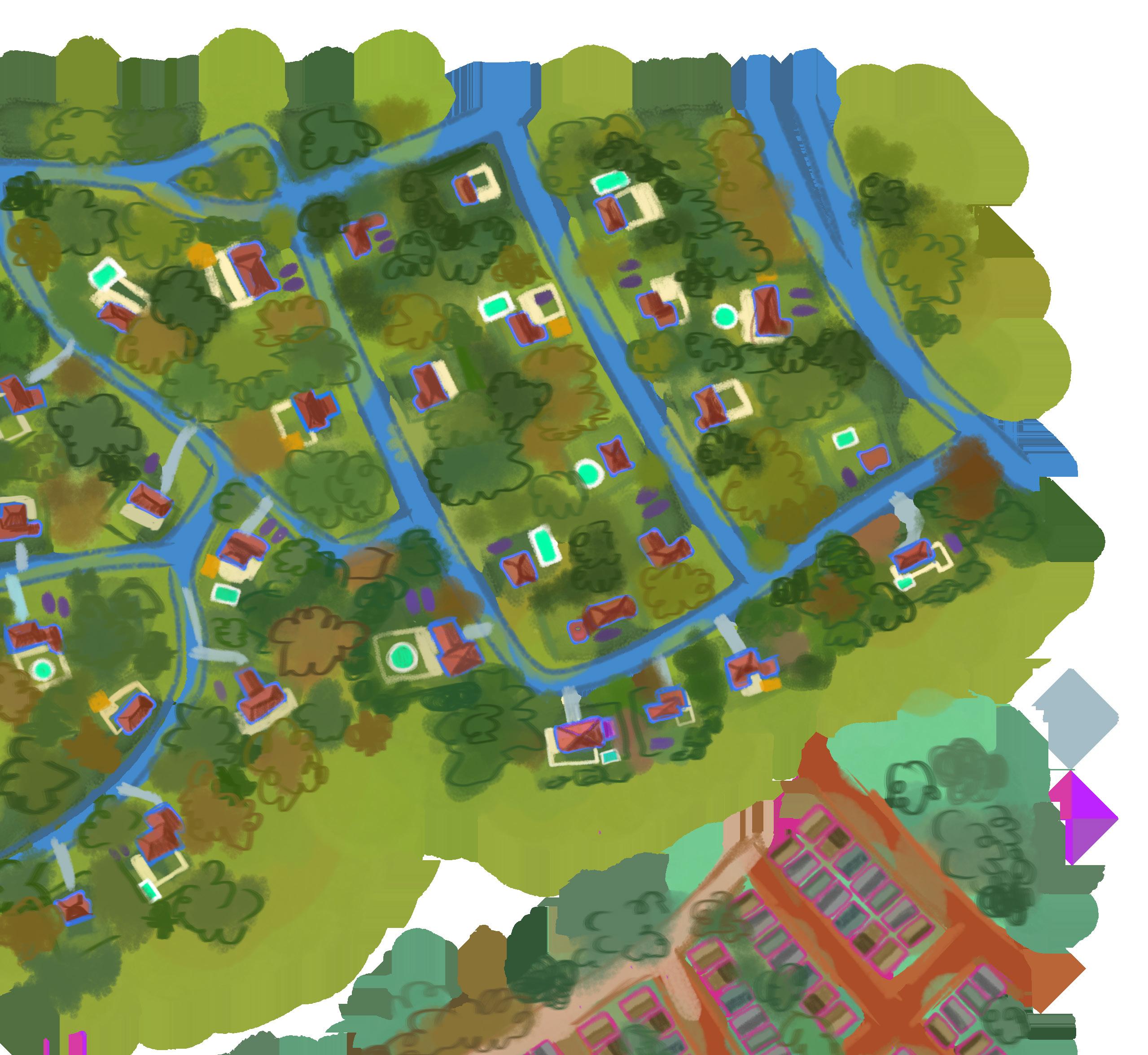
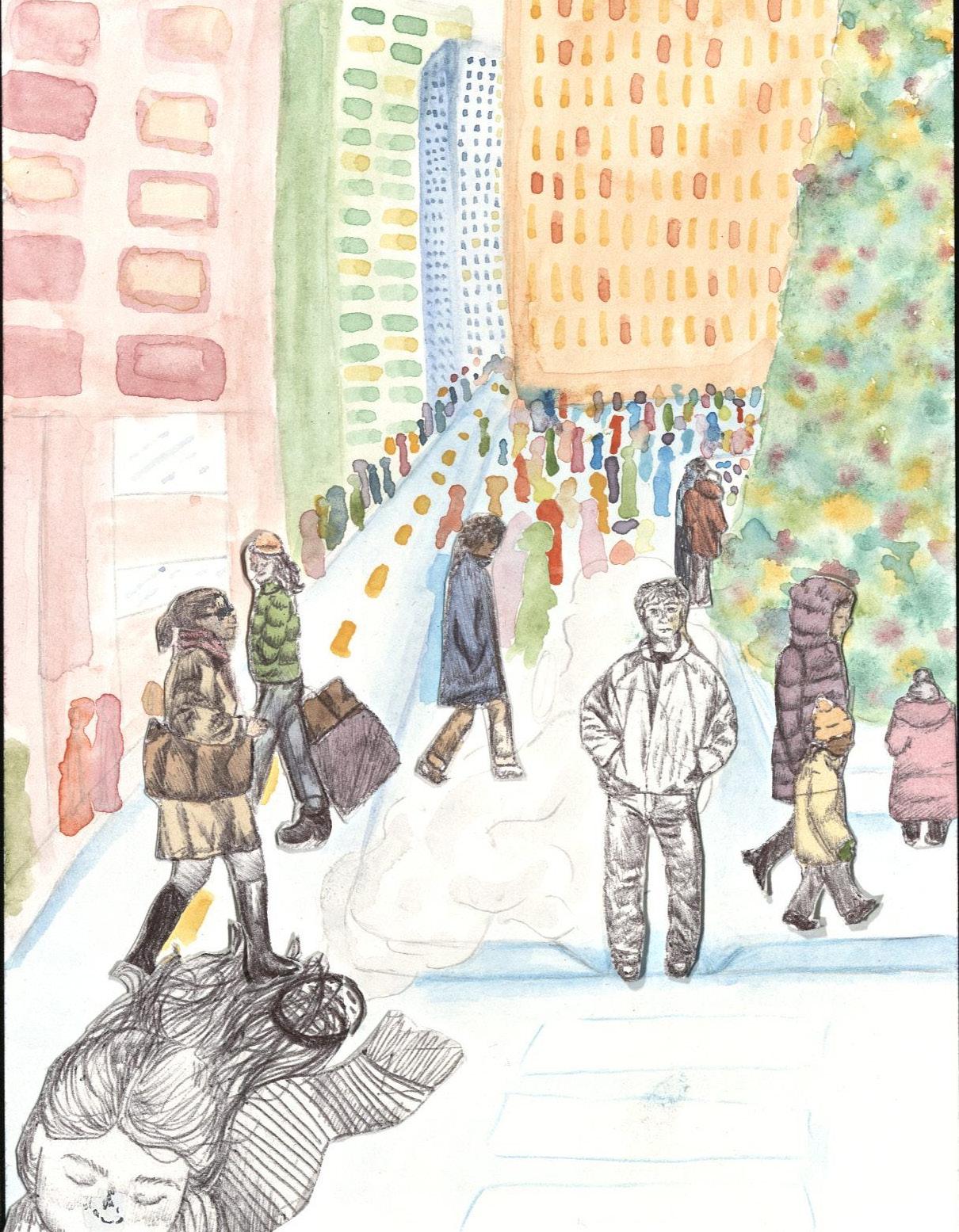
A new housing bill reignited a longstanding battle between dense cities and small towns. When Connecticut needs more affordable housing, who is responsible for building it?
By Kade Gajdusek
Ethan Kan
Emiliano Cáceres
Fiona Jin
Dani Klein
Anna Koonz
Sussbauer
Knife Stick Word Arrow
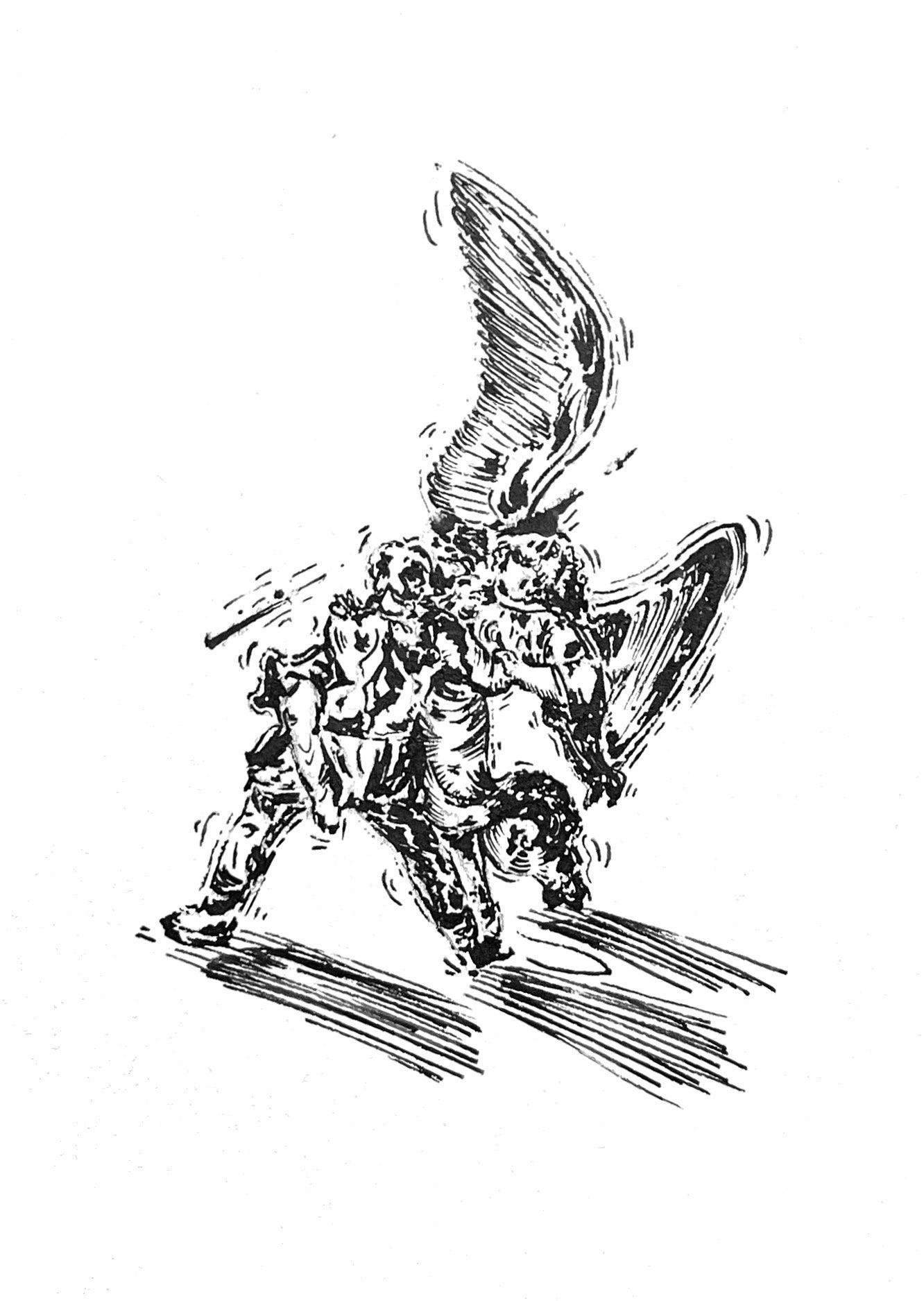
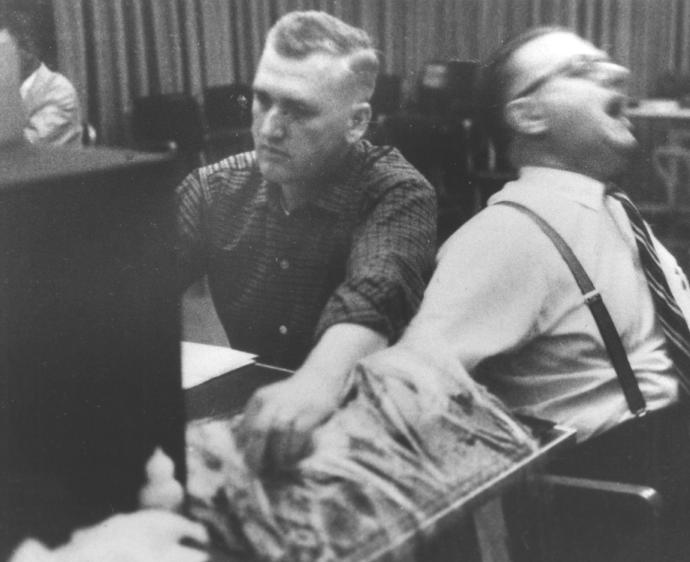
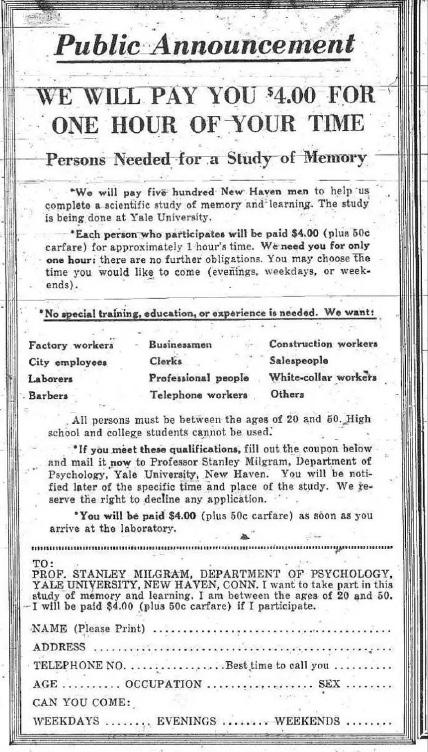
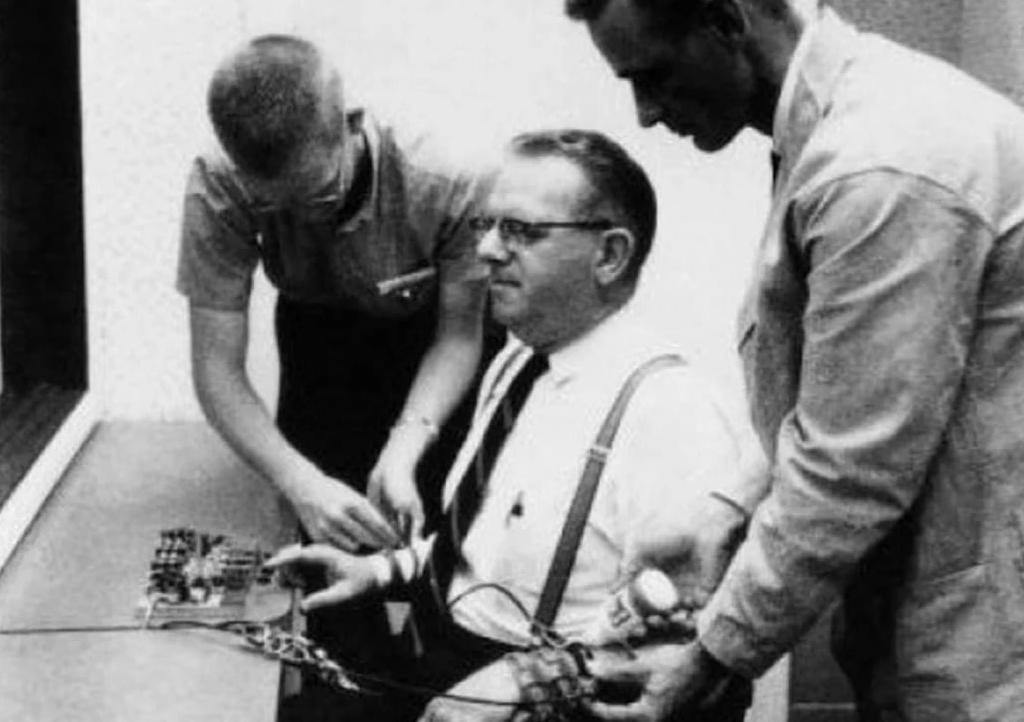
In 1961, a chilling and notorious experiment exposed human beings’ universal capacity for evil––and the ease with which we look away. Now, in the same basement of Linsly-Chittenden Hall, professors and students go cheerfully about academic life.
By Maggie Grether
Aside Someone Else’s Tuesday
By Dani Klein
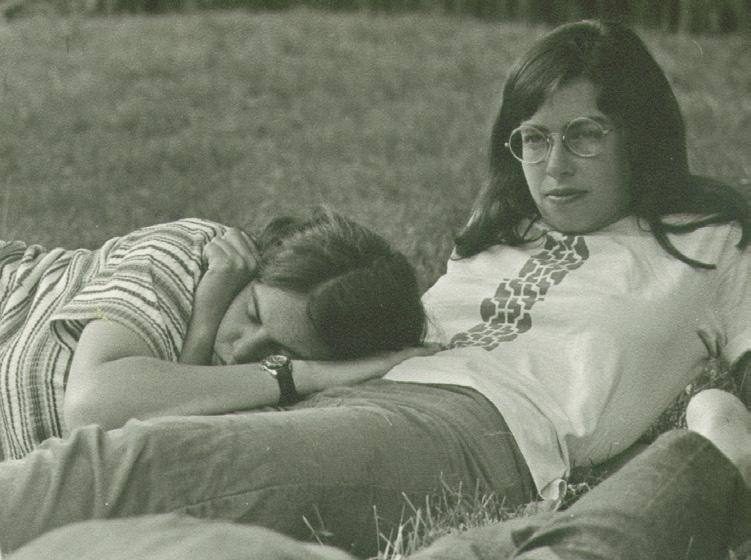
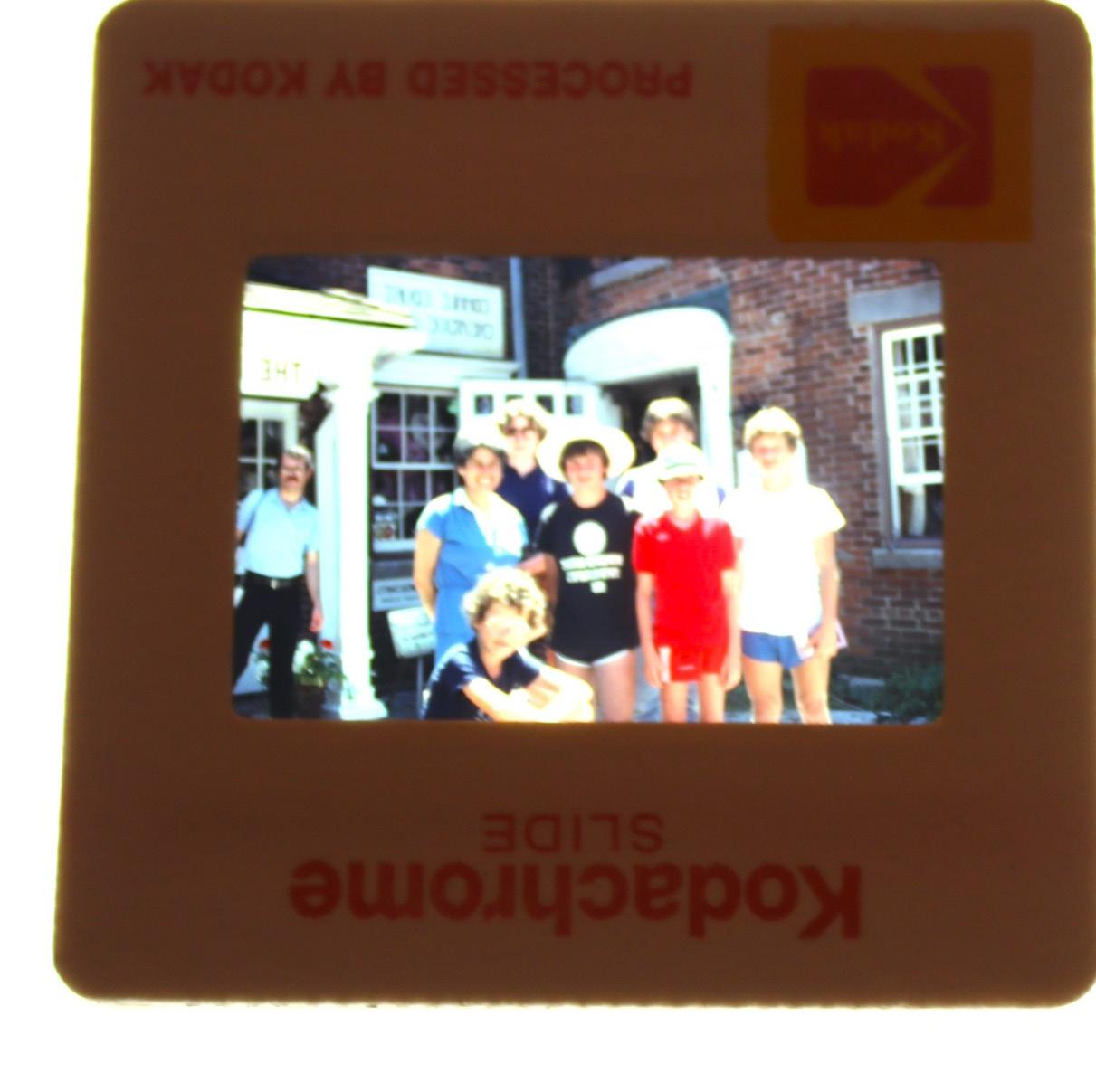
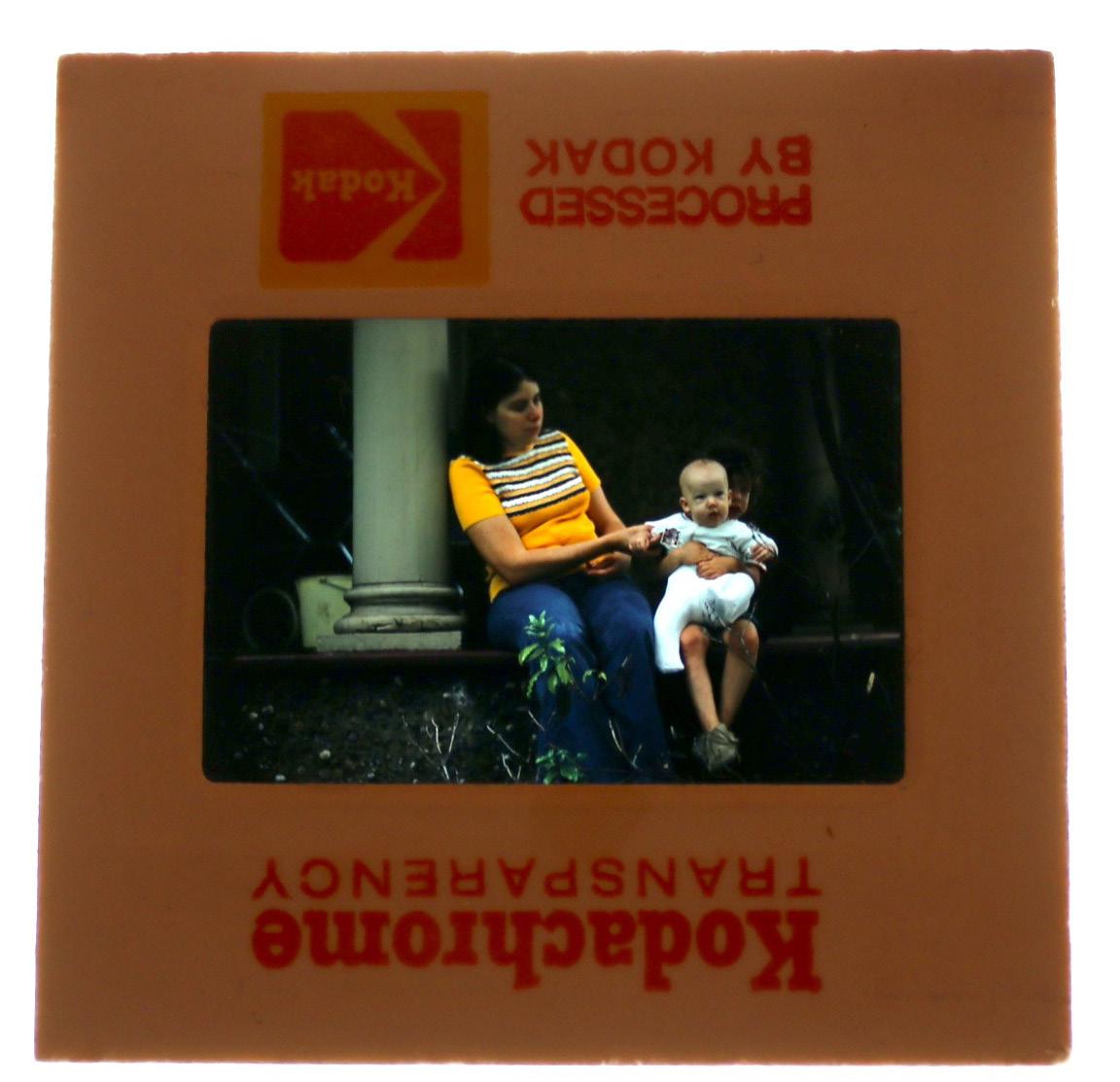
AKodachrome transparency is a murky plastic window inside a white frame. Pick one up and you might be able to make out a smiling face, a tree, the outline of a roof. Slide one into a projector and the technicolor world it contains will burst onto the wall, the colors that inspired Paul Simon to sing, “Mama, don’t take my Kodachrome away.”
Inside EBM Vintage on Chapel Street, walk past antique bookshelves and star-shaped lanterns and you’ll find a bin full of hundreds of Kodachrome transparencies. They’re designed to be projected and magnified on a screen, but EBM Vintage makes do with a suitcase-sized lightbox, laid flat on a table. The bin is deep enough for several hours of voyeurism. You can peer at countless moments captured before Kodachrome discontinued production of these slides in 2010. If you have a dollar in your pocket, you can also buy one: your very own freeze frame of somebody’s Tuesday thirty years ago.
The first photo I see, already laid on the lightbox, features four elderly women eating brunch, dressed in polka dots and gaudy jewels, grinning widely. Just above it is a photo of a disgruntled toddler sagging under the weight of the baseball bat on his shoulder. On the frame, someone has scribbled “Jonny.” Two slides to the left is a man kneeling next to a gravestone, staring at the camera. That one seems private. I tuck it back into the bin.
Another slide shows a family of brunettes standing around a small old woman, probably the family matriarch, a great-grandmother. The young man standing right behind her, holding her wheelchair, rocks one of those mustache-haircut combos that you mostly see in documentaries about Vietnam War protests and seventies counterculture.
The family looks like mine. Their hair is a little straighter, their men a little taller, but I know I’ve posed for a similar
photo standing next to my grandmother’s wheelchair. I have the photo somewhere on my phone, and I think about how I haven’t looked at it since the day we took it. I guess it’s nice to know it’s there if I want to remember what she looked like, and I wouldn’t need a fancy lighting setup to relive that moment.
I push my hand into the bin and watch the synthetic photo tiles consume it. I wonder why there are hundreds of transparencies here. I wonder what could drive someone to bring a box of these to an eclectic store on Chapel Street. I wonder if someone found them while cleaning out their attic—little black squares with wisps of shape and color—and didn’t bother to hold them up to a light.
The family photo keeps catching my eye. Earlier that day I had found a dollar in my back pocket, brittle from being washed and dried. I decide to become the next person in the life cycle of this photo to own it and to look at it if I ever feel like it. Maybe I’ll hold it up to my desk lamp as soon as I get home. Or maybe it’ll live in the bottom of a drawer until I donate it to a vintage store in sixty years.
I set my dollar on the counter next to the cash register and place a square inch of someone else’s life in my pocket.
Snapshot
After Liberation
The women’s rights revolution in New Haven was a five-year frenzy of sisterhood and schism, vision and pragmatism. Then the group splintered. Fifty years later, a writer brings the women back together.
By Josie Reich
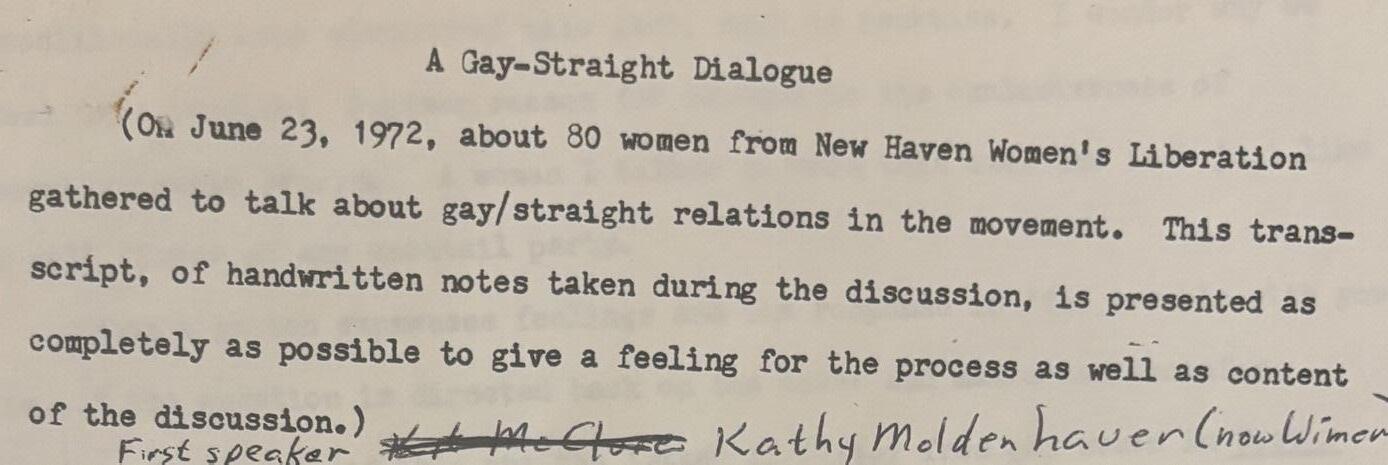
OI.n a summer day in 1972, about eighty of New Haven’s most ardent feminists thronged into the poster-plastered New Haven Women’s Center. Threading through the pack, sister Rhea Hirshman saw “a crowd of women hanging over the furniture.” This was the home base of the city’s women’s liberation movement. “It was a real hub of activity,” Hirshman said. “There were meetings there all the time.” But this wasn’t a routine meeting of the sisterhood. An existential crisis was growing.
Some sisters were lesbian, some were straight, and some were “choosing.” Each contingent had a different vision for the group, and gay-straight relations were fraying. They called a meeting. Was the movement too fractured? What was their message? Should women just “leave all men and become lesbians,” as sister Kit McClure put it?
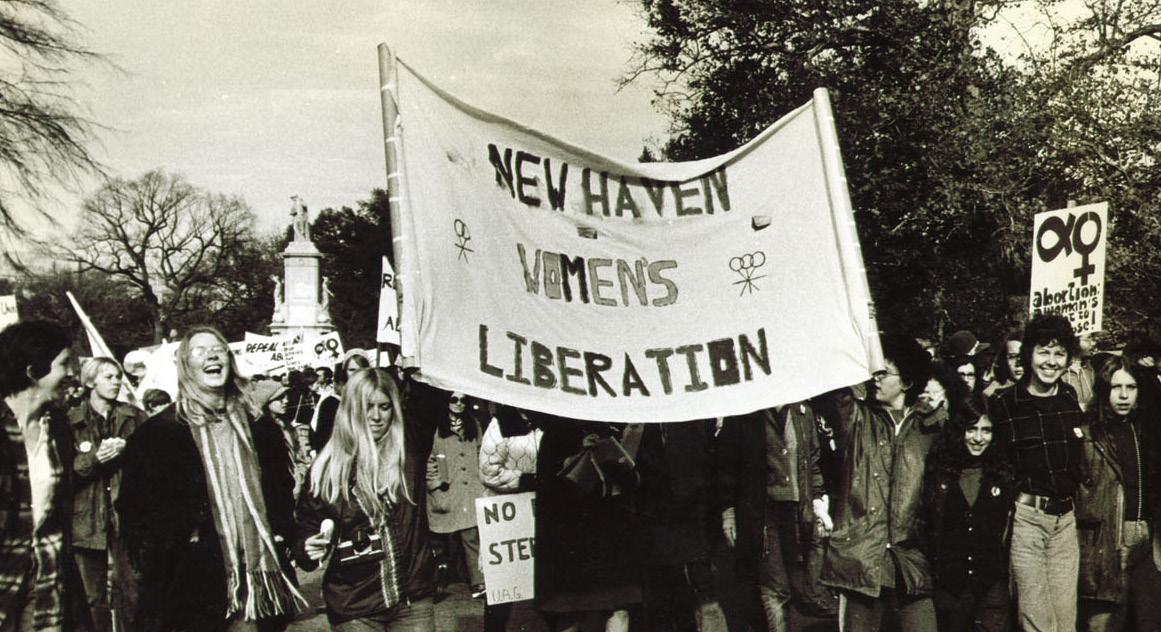
The movement began four years earlier, when a group of women steeped in the lively New York feminist scene hosted a meeting in New Haven—then another, and another. The women came to New Haven for a variety of reasons: studying at Yale, working local jobs, following boyfriends. Initially the group spanned races and economic classes, but it shifted away from this inclusiveness in the 1970s. With a few exceptions, the women in the movement were largely white, college-educated, and in their twenties or early thirties. Around fifteen women in the first co-ed class of Yale College formed a campus-based sisterhood that operated separately from the New Haven movement, but activities and participants often overlapped.
They banned men. These meetings were sanctuaries where women could speak unguardedly, often for the first
time in their lives. “We said it’s because they were so horrible. It’s actually that we couldn’t deal with them and hold our own. We had been so trained to be pleasing,” Harriet Fraad, one of the founders of the women’s liberation movement, told me. They debated intellectual questions: Is the cause of society’s problems the divide between men and women? How much should women continue to engage with men in their lives? They shared personal experiences, domestic and professional and sexual. They read and discussed books like Our Bodies, Ourselves.
It was the early 1970s. Crowds encircled the New Haven courthouse where the Black Panthers were on trial. The American Independent Movement handed out newsletters emblazoned with bright red text decrying the Vietnam War.
The city stirred as left-wing activism swept across the nation. But its political groups were male-dominated and didn’t
incorporate feminist causes, and some women found it hard to speak up, members would tell me half a century later. At the time, women couldn’t open their own bank accounts. Abortion was illegal and birth control was hard to access. Some public spaces were male-only, and harassment was rampant. “We grew up in the repressive fifties,” said Judy Berkan ’71, a women’s rights activist in the first co-ed Yale graduating class. Women were taught to “button up, don’t show any skin, don’t dare touch anybody.” Members of women’s activist groups began to wonder if they needed a revolution for themselves. Soon, the New Haven women’s liberation movement’s mailing list reached over three hundred women.
One member was Rika Alper. An adventurous young activist, Alper first settled in New Haven in 1968 and opened a coffee house, Bread and Roses, as a “third place” for young people in the city to gather. In the
winter of 1970, she moved to Cuba to cut sugarcane as part of an American solidarity movement supporting the Cuban Revolution. There she met “militant” feminists for the first time. But she brushed off their lifestyle. She felt independent enough already.
When she returned to New Haven in the spring, Alper found the city awash in the activism of the 1970s. She took a job as a secretary in the OB-GYN department at Yale-New Haven Hospital, where she answered phones for a doctor who was “known throughout Connecticut through the underground illegal abortion pipeline,” she told me. “Ten or twelve women a day were calling, and instead of getting him, they got me.”
Women often cried on the other end of the phone, and Alper listened to their stories. She remembered counseling a fourteen-year-old who showed up four months pregnant (“he said he wasn’t doing anything,” the girl told Alper), and an Italian Catholic mother of eighteen who couldn’t handle caring for another child. “That was an eye-opener for me. It was incredible to hear, all day long, the stories of these women.”
Alper found the women’s movement when McClure, a Yale freshman, coldcalled her to speak at a feminist conference. “What the hell, why not,” Alper thought, and gave the speech in the work boots and khakis she’d worn in Cuba. Her time in the movement really began when she heard McClure was starting an all-woman rock band and auditioned. “They were like, ‘Well, this woman can’t really play, but we don’t have anybody else.’”
At the height of the movement’s work, a young graduate student named Christine Pattee—a short-haired lesbian
at Yale’s School of Public Health—began taking notes. She called herself “the list keeper.” Her documentation habit started when she was too shy to approach her fifth-grade crushes, so she’d invite the girls to her parents’ basement photography dark room and take their portraits. Her grandmother had written an autobiography, so recording everything “just seemed the most natural thing in the world” to Pattee. Her notes are raw, intimate transcriptions of the movement’s discussions, scrawled in real time. The women shared heady visions of liberation, and their relationships with each other were intense, Pattee would tell me many years later. She hoped to capture their spirit while she could.
She documented meetings, conducted interviews, and wrote timelines of the movement. At some point, those records came to rest in prim beige folders in Yale’s archives. That’s where I found them.
The second-wave feminist movement always existed in my imagination as a spot in time when women presented a united front and won real rights. But in Pattee’s archives of the New Haven alliance, I read records of fights and division and deep uncertainty in the years leading up to the group’s split. What happened, I wondered? Was the movement not as influential as I thought? Were the women not as bonded as it seemed? What became of them? They seemed to have just faded away.
I kept reading. The archives document a period of intense activity. “The personal is political” was a popular refrain of second-wave feminism, and the women acted on it. They hosted a “child-in” on the New Haven Green, bringing their children with them
to protest childcare inequities. They threw “Season of the Witch” dances. They gave presentations on women’s he alth using their own bodies for live demonstrations. “I was giving talks on pelvic self-examination, getting up on tables in front of groups of women I had never met before and sticking a plastic speculum up my vagina and inviting everybody to look at my cervix,” Alper recalled. Around the room, each woman had a mirror to look at her own vagina, too.
The women also knit themselves into other social movements of the crusading seventies. One night they staked out New Haven’s now-demolished WNHC radio station—a squat building that once stood next to the Yale Repertory Theater— demanding air time to protest the Vietnam War. They rallied for the Black Panthers and joined boycotts against soaring meat prices. “It was such a time of upheaval,” Alper said.
But the women’s feverish work stirred upheaval within the group as well.
Four years after the formation of the New Haven women’s liberation movement, the motley crew of necktie-wearing lesbians and apron-shedding wives thrived as a self-sustaining biosphere. It seemed that none could function without the others. Women left their boyfriends and husbands and moved into group houses. Alper recalled that in her consciousness-raising group of about twenty-five women, only one remained married. They sacrificed conventional lifestyles and
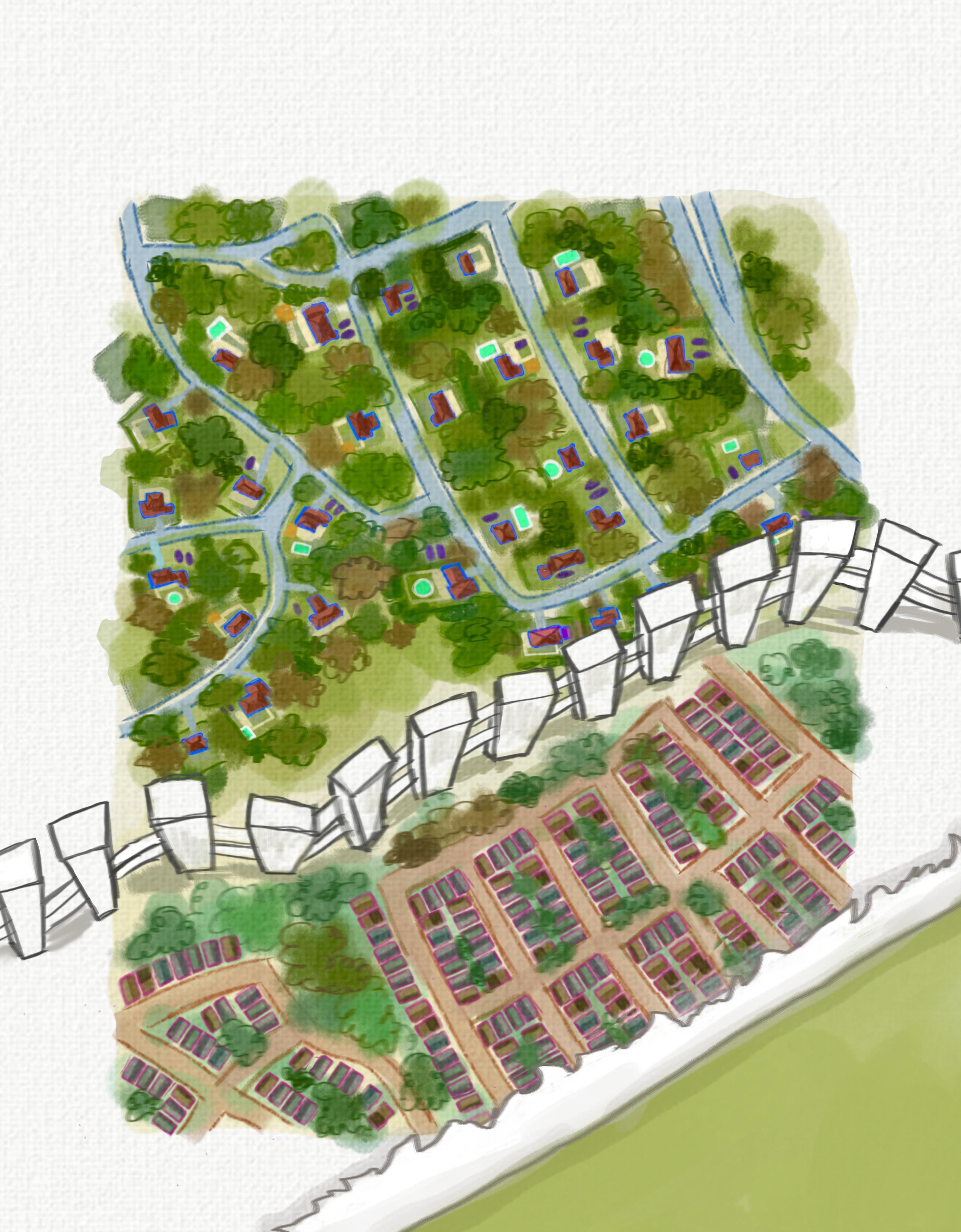
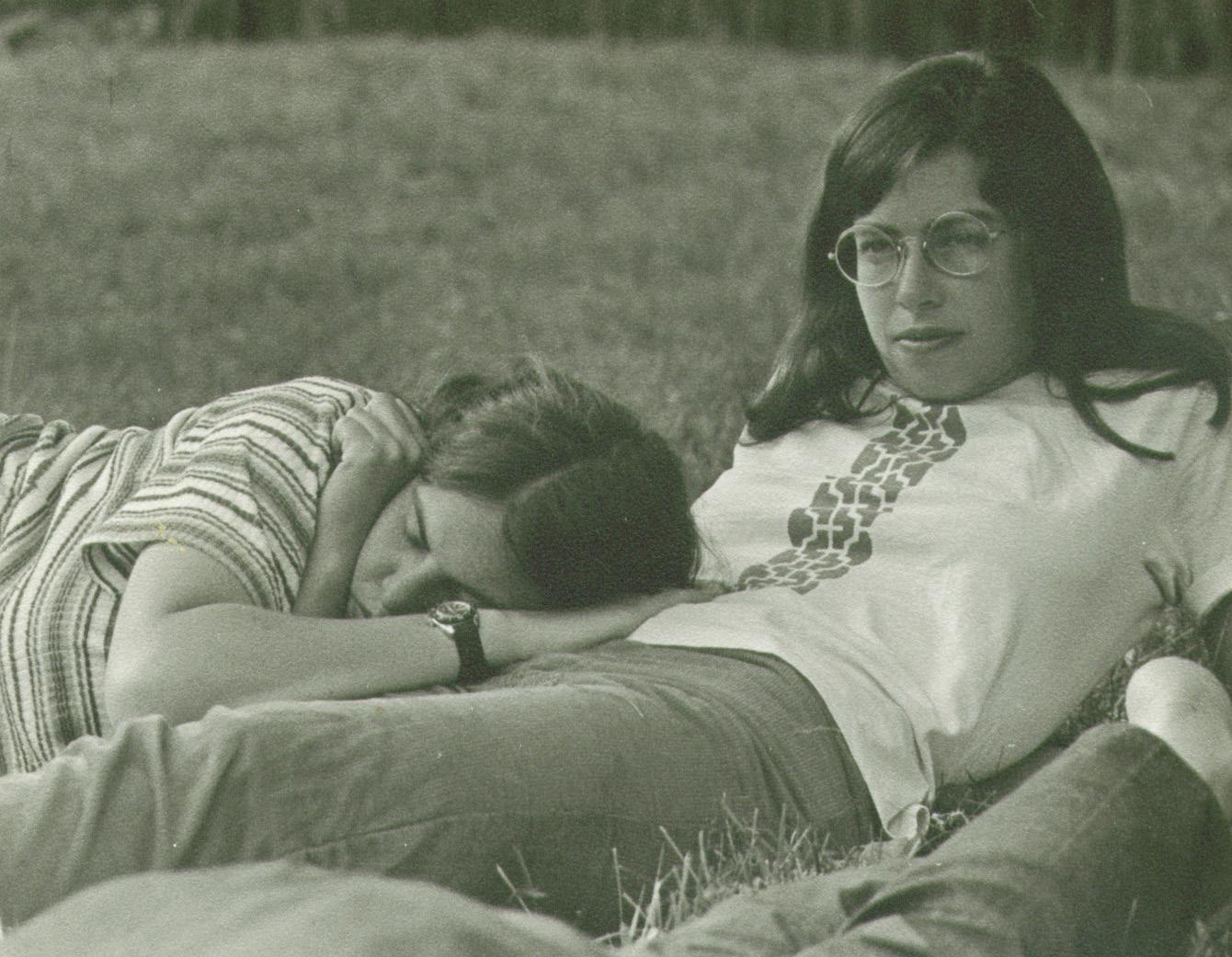
Rika Alper, in glasses, lies on the grass.
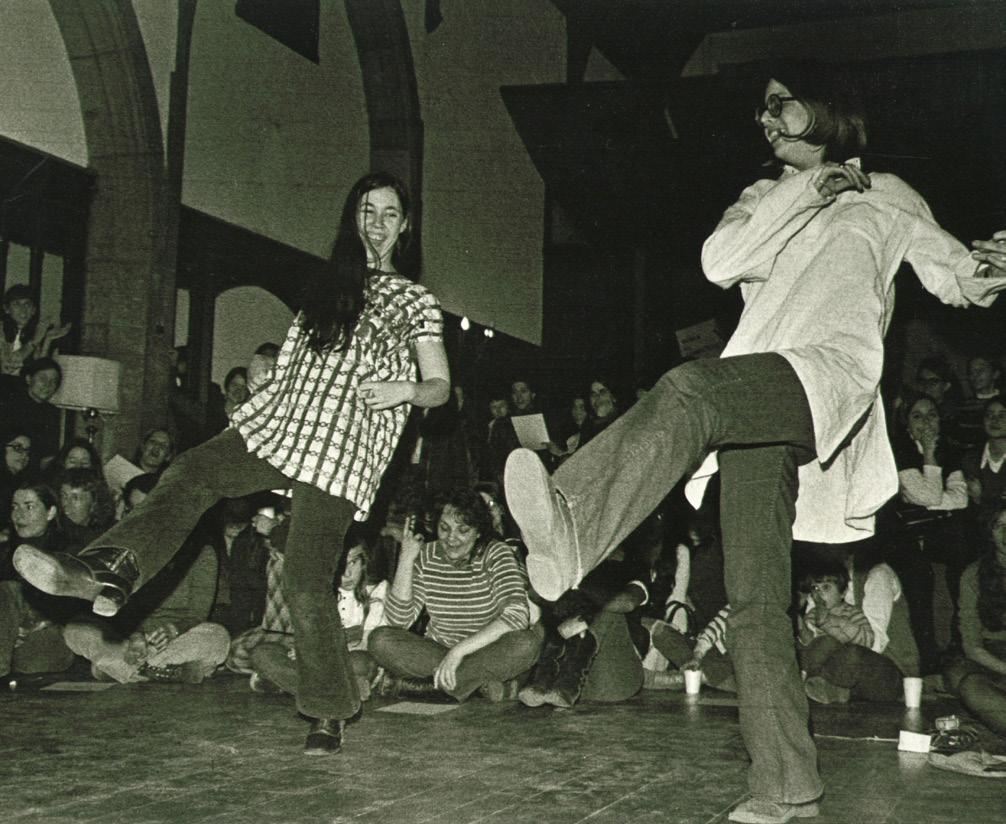
Judy Berkan and Barbara Deinhardt dancing.
societal approval, trusting the movement to fill the gaps. On the surface, unity propelled the sisterhood.
But an issue had become too contentious to ignore. Across the country, women’s liberation movements began to splinter over the question of sexuality. Lesbian and straight contingents began to emerge. “Women were making out with each other at the meetings,” Fraad said. “It was a little bit of a turnoff for some heterosexual women.” Some members thought of lesbianism as a political choice instead of a sexual one, believing that true feminism meant a total rejection of men. They urged the whole sisterhood to adopt that lifestyle.
The lesbians said they faced social ostracization the non-lesbians couldn’t understand. The non-lesbians thought the lesbians made it hard for the movement to gain traction. The lesbians thought they needed space from the non-lesbians’ non-understanding of lesbian struggles. And so on, until the whole tangled thing made the women wonder whether relations were too fractured to survive.
Yet, as groups across the country fractured over this divide, the New Haven movement fought to remain a united group. They decided to hold “gaystraight dialogues” where women could express their feelings to the group and forge a path forward.
It wasn’t an issue of support for gay women, Berkan said, but rather a strategic question of how to present the movement. “It’s a different kind of analysis, and today it would be inconceivable to me as a feminist-slash-activist to not support gay rights.”
That summer day in 1972—when eighty-some women gathered in the Women’s Center—marked the first gaystraight dialogue. Had the group splintered too deeply to repair? The painful question bubbled under the surface as the conversation began.
A chorus of voices and personalities filled the room. Twenty-five of the eighty present women lodged complaints, according to a record of the dialogue Pattee transcribed in real time. She cloaked some of the women in anonymity in her transcript, or perhaps she scrawled their words too frantically to even look up.
McClure, a maverick saxophonist with an explosion of red curls, spoke first. I used to be straight and made a conscious decision to change my sexuality two and a half years ago, she proclaimed. Puffed-up Yale men and male musicians disillusioned her, she explained, and any lingering fantasies about men were obstacles to overcome. I feel like all women should leave all men and become lesbians.
Barbara Deinhardt, who felt that lesbian women (as she defined herself at the time) should separate from the sisterhood, spoke after Kit. When thinking of a split of the gay community, it’s important to realize that gay women need support from gay sisters, Deinhardt reasoned. This will mean hurt to some
Someone countered:
Gay women should understand how overwhelming it would be for straight women to leave men. I am all too aware of the contradictions of living with a man, and knowing that you compromise yourself everyday would be intolerable if we didn’t feel we were getting some support from it.
Another person cut in:
The prospect of being a freak among freaks terrifies me. It’s because of the movement that I’m [gay] and I want the movement to relate to that. I want straight women to pretend to be lesbians for our sake.
A fourth voice:
I feel very close to the women’s movement but I relate to a man whom I love and we have a child. I’ve always tried to support and reach out to women, although I don’t always know how to show my support without
Someone else:
Most of us live in the real world and gay women face a lot of shit all the time. I also feel oppressed by lesbian equaling SEX and by being defined sexually.
Did the dialogue successfully reconcile the group? Hirshman wrote in a 1980 article in the New Haven Advocate that it led to an “agreement among many women to disagree.” The discussion did kick off weekly general group meetings, according to the archives. And there was a second gay-straight dialogue, a week after the first. But there wasn’t a third.
Ultimately, most straight women left, other members told me. The movement started to splinter. The dissolution became especially pronounced after Ronald Reagan was elected in 1980, which brought backlash against the social justice movements of the past two decades.
In New Haven, Fraad was among the women who found the gay-straight dynamic too difficult and left for alternative activist groups. Today, many of the women who “became lesbian” in the 1970s have husbands.
Audacious women’s movements formed and dissolved across the country, not just in New Haven. They were energetic and innovative, and because the members were so close, also fraught and taxing. Policy-focused women’s rights groups pushed legislation: Title IX in 1972. The Equal Pay Act of 1963. Roe v. Wade in 1973. The Equal Credit Opportunity Act of 1974. Sisterhoods like New Haven’s aimed to fundamentally change American culture.
III.
Not long after the gay-straight dialogue, many of the women lost track of each other. I wondered where they went, if they were out there somewhere still living in women-only communes. Armed with the names in Pattee’s archive and Google, I discovered that they all seemed to be living very conventional lives. Many became lawyers or psychologists. Their LinkedIn bios weren’t exactly anti-men manifestos.
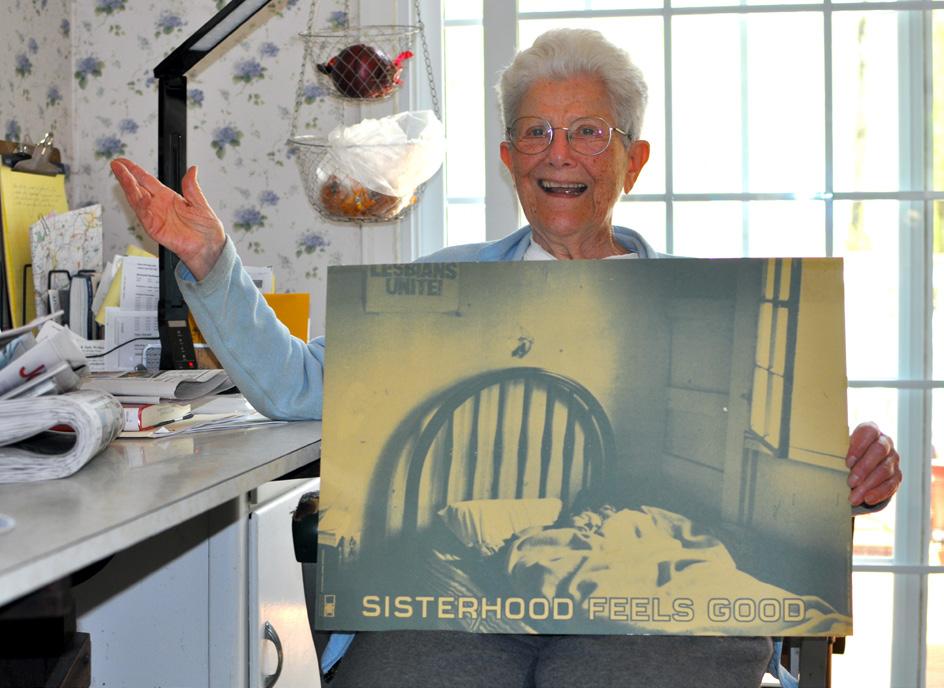
I found Pattee, now 84, in a testimony she gave opposing a Connecticut zoning bill a few years ago. I dialed the listed number; three days later I headed upstate to rural Coventry.
The main attractions on the town’s Main Street are two antique stores, positioned directly across the road from each other. As I pulled up in front of Pattee’s paneled blue house, she shuffled onto her lawn, squinting at me. Her sweatpants were bunched up inside tall white socks. “So tell me,” she said. “What do you want me to talk about?”
We talked in her kitchen, among bobbleheads of female basketball players and printout pictures of “women connecting,” as Pattee put it. Pattee is retired and spends her time in Coventry advocating for senior and affordable housing in rural Connecticut. She told me she’d fallen out of touch with her sisters from the 1970s.
I contacted some of the others. Almost all were excited to talk about their memories. We met over Zoom. Most of them, it turned out, had also drifted apart. So the split had lasted. I asked the women: would they like to speak to each other again?
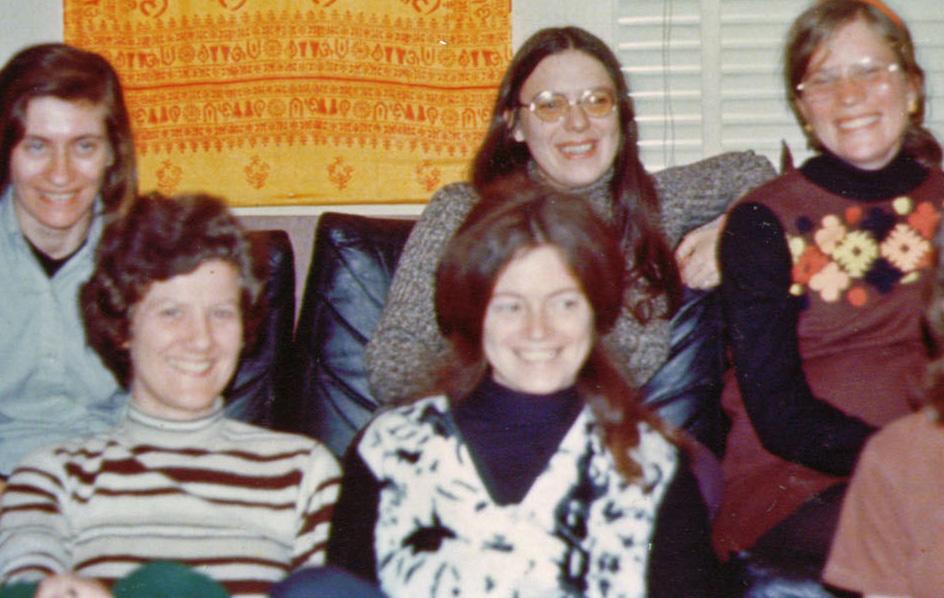
The resulting group call of six former members was an hour of overlapping voices and zigzagging topics. McClure darted around her living room as someone vacuumed. Berkan, in fiery red glasses and stacks of silver rings, looked every bit the indie Brooklyn dweller despite joining from San Juan, Puerto Rico. Deinhardt watched reservedly from a wood-paneled room.
I asked for a lightning round of introductions and soon realized I would not be in control of this Zoom. Pattee wanted to share her archival photos; a few minutes into Fraad’s detailed introduction, Berkan unmuted and said: “I don’t want to interrupt, but I thought we were going around?” Maybe this was a doomed effort on my part.
Then, without my prompting, the women started talking about the sexuality question that had hounded the movement.
Pattee: “ Whatever your sexual orientation or preference is now, back then, a lot of you on this screen identified as lesbians. 50 years later, I still identify as lesbian. But I even more strongly identify
as feminist, and it’s important to me now that you be who you are. Some of you— and I won’t, at this point, name names— told me that they were such fierce lesbians in their youth because they were, in fact, in their heads, heterosexual.”
Alper: “I mean, beyond the question of who you had sex with was the question of your relationship to your own body. We were dealing with a reality of deep shame and inferiority and self-hatred as women. When Chris gave that first talk in the first ‘Women and Our Bodies’ series, she said the word vagina. It was the first time I heard the word spoken out loud in my life. She talked about orgasm, something I had never even heard of, and the word clitoris. I went with [a friend] and after this talk we were so completely mind blown. We talked until one o’clock in the morning in the car.”
deinhardt: “Looking back on it, I think one reason for what may have been a political choice to relate to women rather than men was that it was a very safe place to be. Being at Yale was very alienating. Being around those men was very alienating. Being with women was community and was solidarity and was feeling known and appreciated and seen. At the time and for a while after, to me it translated into identifying as a lesbian and relating primarily to women. Since then, I’ve been married to a man for 45 years, but I don’t think it depreciates who I was or what I was feeling at the time. You know, I read back in these transcripts and there is a certain level of naivete and presumptuousness of saying at age 20 or whatever, this great immutable truth about the world, about me, about my life, about what my life is going to be. But it
A New Haven women’s liberation movement demonstration on the New Haven Green, 1970.
was absolutely sincere and passionately felt and was what I needed to do and what I wanted to do at the time. And I respect that.”
Most of the movement alumnae told me they joined the meeting out of curiosity. They wanted to know what had happened to the other women. I asked them about this—what’s changed over the years, and what legacy the movement left for women in New Haven and at Yale. “I actually can’t stay for that big of a question,” Fraad said, and logged off.
Deinhardt: “Once we experienced this connection and this community, and learned about all the different ways in which women are oppressed in the world, and once we learned about our bodies and once we knew all that, there’s a certain way in which you can’t ever go back. Having that source of this core of sisterhood, I think stays with you for the rest of your life. In my relationships with people, with my friends, with my family, with my husband, with my children, I like to think that I model and demand equality and respect and autonomy.”
Pattee: “I was watching your face, Rika, and you were reacting so strongly. Please answer Josie’s question.”
Alper: “My face is hopeless. I’m so sorry.”
Pattee: “It’s also very photogenic, but we’ll put that off to later.
Alper: “Anyway, I’m sorry. I don’t know. That’s a really, really hard question because it’s so global. And it’s a hard question to answer right now when it feels like stuff that we thought was solved fifty years ago is taking a leap back. We thought we had really made abortion
legal with all that implies about women’s choice, and now we’re fighting this fight again.”
As the call wound down, Pattee beamed at the group and asked the others to raise their hands if they’d like to meet again. The Zoom was silent for the first time in an hour. “You don’t? Some of you don’t? Then we won’t,” she said with a frown, “but it would be a shame to have you not participate.” Alper slowly lifted her hand, then McClure, reluctant. “Barbara, what about you? Don’t feel pressured for anything.” Deinhardt said maybe.
After the call, I sat puzzling over my notes for a while. These women hadn’t seen each other in fifty years, but they were back to their old ways of fighting. And they hadn’t really wanted to talk about being a woman today. These women, who had started rock bands and demonstrated vaginal healthcare on themselves and read feminist theory for fun.
I video-called Alper again to ask directly: Why didn’t anyone want to give me advice? She laughed and sunk her head in her hands. “Oh god, I mean, ugh,” she groaned. “It’s such a different time that it almost seems like anything we could think [of] is inapplicable,” she said.
The most emotional change for Alper, after counseling all those women seeking abortions, was the overturning of Roe v. Wade. “I think [I’m] personally still reeling from that,” she said. “So it’s like, how do you give advice? We thought we had done something huge. And it turns out it could be undone fifty years later. Like, you’ve been trying to make social change, and an absolutely capstone success can be trashed after a half a century. It’s a little bit staggering.”
Her change in attitude isn’t just the result of demoralization. Internal fracture also led to the movement’s decline. “I feel like we messed some things up so badly,” she said. In retrospect, she thought the provocative opinions of some members in the group seemed like a play for attention. People felt alienated by this all-or-nothing militancy, she thought. “There was quite a bit of showmanship and grandstanding and glamor associated with extremism. If you could take some fire-throwing position, it was cool… If we agree about everything, why can’t we get along for five minutes?”
Today, Alper also thinks the women
had unrealistic expectations. They foresaw immediate change, and made decisions assuming the demise of capitalism and patriarchy was imminent. “You know, it’s like, OK, this is it. This is happening. And that was a rather consequential misjudgment.”
I’m struck by Alper’s self-consciousness when she talks about the movement. She isn’t sure how their politics and activism are interpreted today. But this doubt doesn’t cloud the immense pride with which she speaks about the movement’s achievements.
The week before we talked, Alper’s college roommate wrote to her asking if she wanted to see the Broadway play Liberation. The two weren’t friends after college, but they had recently reconnected at their fiftieth reunion. Alper said yes.
In the play, it is 1970 and six members of the women’s liberation movement convene in a consciousness-raising gathering. Alper watched as the actors rehashed familiar dialogues on race, class, motherhood, leaving their husbands, their careers, lesbianism. It was the most accurate and vivid depiction of the movement’s energy she’d ever seen. The play is set in Ohio, she said, “but it could’ve been New Haven.”
In the play, fifty years after the movement’s heyday, the daughter of a liberation member tries to understand where things fell apart. Her fundamental question was the same as mine, Alper tells me: What came out of this?
To Alper, Liberation has an answer. “These women supported each other through a very significant time in their lives and [each] came out of it with different careers and different choices,” she said.
But Alper thought Liberation got one thing wrong: she and her peers fought a lot more. Still—or perhaps because of this conflict—she can’t remember the last time she felt the spirit of revolution that intensely.
“The force of the cultural, political change and tumult that was happening then was so powerful,” Alper said. “That’s not happening now. I don’t know if, in my lifetime, that has happened since. So I guess it was kind of intoxicating, in a way. And also deceptive.” ∎
Josie Reich is a senior in Davenport College and a senior editor for The New Journal
Christine Pattee in 2025, at her home in Coventry,
photo by josie reich
Personal Essay
Cathedral of Sweat
By Ethan Kan
One green ball. One blue ball. Twenty-four students at Yale raring to get off their asses. In other words, pandemonium.
We’re in Payne Whitney playing Two-Ball, aptly named because there are two balls: one we may only kick and one we may only throw. Our goal is total annihilation, i.e., using both balls to knock over an army of foam rollers. We stop at nothing. Chris screams as he grabs the blue ball. Emma lunges for the green ball. I leap to intercept, looking like a rabid dog. And leading the vanguard is Aron, our instructor, who is perfect. They dart around, kicking and tossing like the balls have personally wronged them. To add insult to injury, they look like a Greek god under the evening light streaming through the windows. The fucker.
This is Thursday night Bootcamp. Every week, Aron teaches high-intensity interval training to a motley crew that just happens to be quite queer in composition: hunky lesbians, band-playing fems with bangs, tote-bag carrying Australians with mullets, plant-loving gays who study the queer swamp ecology of Doechii’s Alligator Bites Never Heal, enthusiastic allies, and malnourished twinks (me). After warming up, we launch into the sort of games we haven’t played since we were eleven: Two-Ball, dodgeball, Pizza Tag. Then comes the main workout, where Aron reveals their sadistic tendencies. This week’s workout is a mini-version of Hyrox, a fitness competition featuring eight weighted workout stations that are really more like medieval torture racks. So, half an hour after Two-Ball, I am on my hands and knees attempting something that somewhat resembles a pushup, dripping all over the floor, nostrils vacuuming up all the dirt and shoe dust.
to move. There Bootcamp was, conjuring images of camo uniforms, combat boots, and a detestable, screaming sergeant who was also kind of sexy. Aron was not detestable and neither did they scream, but they were kind of sexy, making us run and leap down the length of the hall with a chirpy “Alright, my friends!”
Painful? Yes. Do I still go? Absolutely. It’s not just about exercising—if that were true, I’d already be besties with gym bro alphas. No, the difference in Aron’s class is that we’re all moving like kids. “I really do believe there’s a 5-year-old part of you, who’s a really natural mover, who just got very self-conscious,” Aron says. “What if the gym becomes a place where I enjoy moving my body?”
At the end of class, after the cooldown, Aron makes sure to high-five everyone—a little affirmation after they have systematically torn apart our muscle fibers. These highfives are contagious. It’s like, we just did a hard thing, but we did it together. There’s no better way to bond.
“When we sweat together, it’s a different type of quality time,” Aron says.
That magical formula of moisture, body heat, and bacteria makes us close fast. We go out to Three Sheets for a beer every other week. We gab about The White Lotus predictions, the massive prosthetic penis in Nosferatu (the real star of the show), and the sexual proclivities of Italians in the School of Management. This type of bond is only possible when we lose ourselves in the movement. For an hour each week, we almost forget it’s a tough time to be queer. Drag queens are pedophiles, trans people are evil, the children, the children—! We leave all of that at the gym doors and run. Leap. Scream. Pant. High-five. Lunge for green balls and blue balls like rabid dogs. It’s how we survive. ∎
I remember my first Bootcamp. I was but a spritely young flower who feared their ass had started to sag. In a last-ditch effort to salvage any remaining gluteal perkiness, I looked for a class under the Payne Whitney catalogue that would force me
Ethan Kan is a sophomore in Saybrook College and publisher of The New Journal.
City in a Box
By Anna Koonz
I’mon the hunt with Ethan Rodriguez-Torrent BA/MA ’13, a tall man wearing an “Escape New Haven” t-shirt. Our target? Five dioramas scattered downtown.
Rodriguez-Torrent began experimenting with puzzlemaking around 2015 when he opened Escape New Haven on Whitney Avenue. In response to the COVID-19 pandemic, he expanded his escape room business to include outdoor adventures.
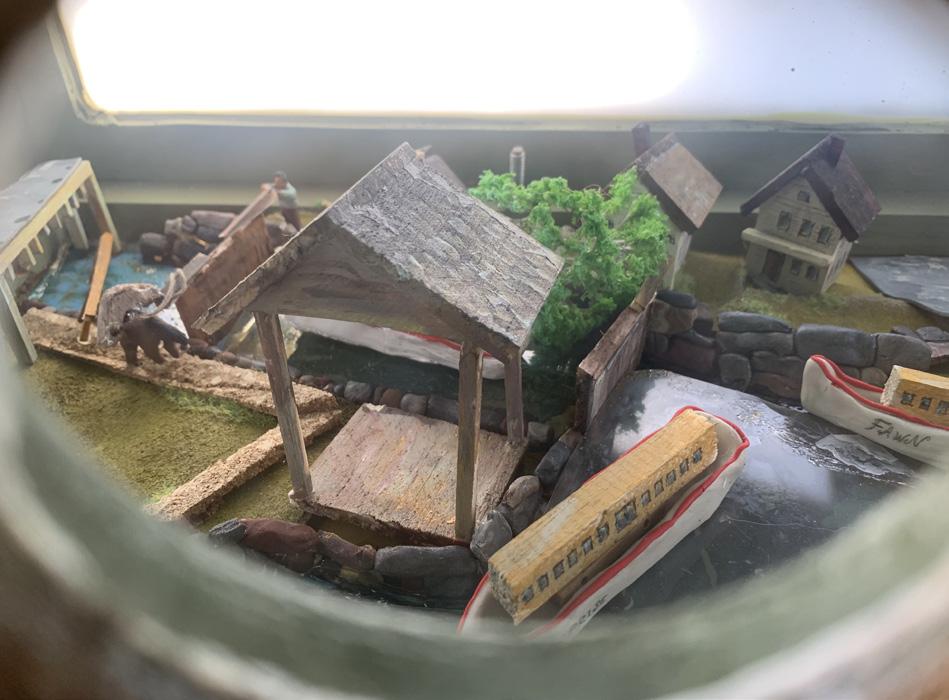
“Time Crimes” is one such example: a scavenger hunt of diorama boxes imagining what New Haven surroundings looked like in past eras of history. The word diorama comes from Greek roots, meaning “seen” and “through.” Players chase a time-traveling villain and engage with the dioramas, uncovering a story about the city’s transportation evolution, from canals to railroads to trolleys to cars.
Each of these dioramas required research at the New Haven Museum, about twenty hours of design, ten hours of construction, and a precise hand—the boxes are only a couple feet wide. Rodriguez-Torrent invited Sooo-z Mastropietro, a multimedia artist based in Connecticut, to construct the miniatures with historical themes and game clues.
Players can pay to rent a large wooden briefcase with clues guiding them through the scavenger hunt’s narrative. However, the dioramas are free for the public to enjoy.
“Not everything is commercially a huge success. But that’s not the only reason to be doing things,” Rodriguez-Torrent said. He plans to leave the boxes around as long as possible.
Peering into the diorama transports me through centuries of history. In a miniature recreation of the same location in 1828, small clay mules pull boats down a resin-filled canal, surrounded by fuzzy trees, mossy fields, and pebble walls. I can almost hear the bray of livestock and shouts of boatmen.
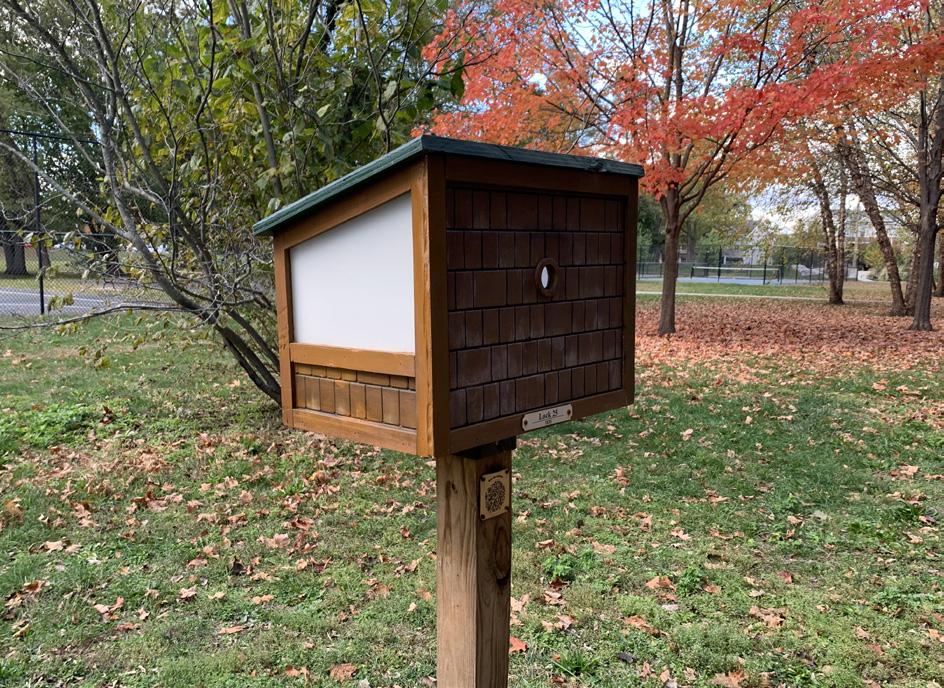
We huddle around a small wooden box in Phelps Triangle Park, at the intersection of Whitney Avenue, Trumbull Street, and Temple Street. It looks more like a birdhouse than a time machine, with a rustic slanted green roof resting upon a waisthigh post.
We walk down the Farmington Canal Trail and spot a woman peeking inside the second diorama, by Scantlebury Park. “I really like seeing that. I really like that they function as independent pieces of art or education,” said Rodriguez-Torrent. However, there is also a “secret layer of information” for official players, Rodriguez-Torrent said. He tosses Escape New Haven’s briefcase onto the grass and opens a locked compartment, revealing instructions and tools specific to this diorama.
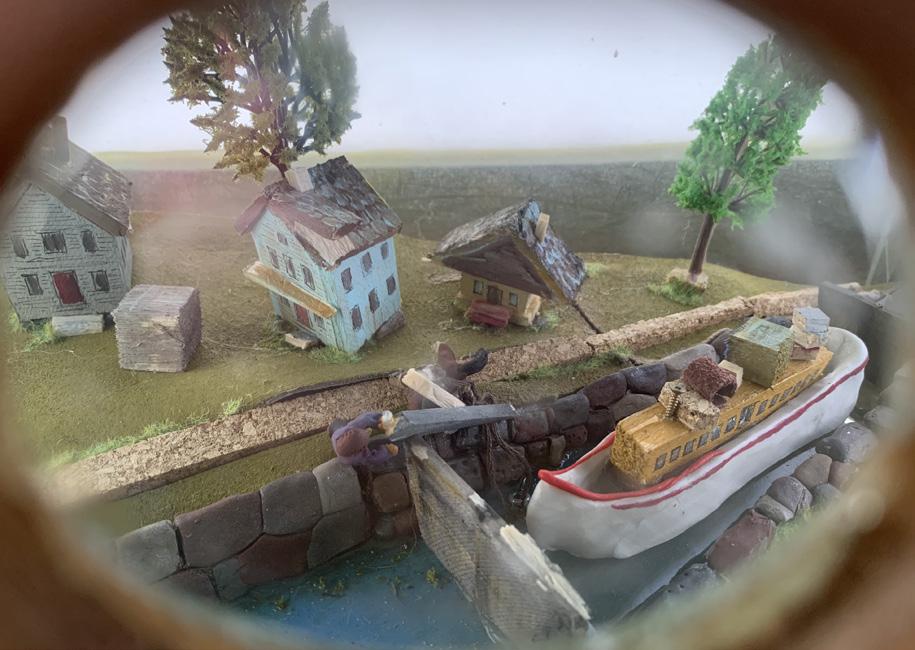
I peer through the diorama’s viewfinder and discover an 1835 scene: a large cargo ship floating in a canal lock, or “boat elevator,” operated by a townsperson. Behind the canal is a row of houses with hand-painted shingles. Rodriguez-Torrent passes me a handheld mirror from the briefcase, and I slip it into the diorama scene through a hidden slot. I glimpse an array of colors and letters etched onto the back of each house— clues leading to the next stage of the puzzle.
I take a step back. Pickleballs ping back and forth on a nearby court. Bikers whiz by. Rodriguez-Torrent and I continue our journey down the asphalt path, our shadows stretching out behind us.
Where the Housing Goes
A new housing bill reignited a longstanding battle between dense cities and small towns. When Connecticut needs more affordable housing, who is responsible for building it?
By Kade Gajdusek
State Rep. Tony Scott Rose to the stand, prepared to condemn a housing bill he’d had only one hour to read. It was November 12, 2025, and the Connecticut House of Representatives had gathered in an emergency session to debate HB 8002, which State Senator Ryan Fazio would later call “the most consequential piece of housing legislation [Connecticut] has passed in decades.”
Democrats made HB 8002 public only an hour before the special session was called. Governor Ned Lamont and Democratic leaders argued that Connecticut’s housing crisis was dire enough to justify the emergency meeting.
But critics weren’t convinced. After all, in June, Lamont had vetoed HB 5002, an omnibus housing affordability bill that had already passed the House and Senate. Now, representatives were back in the House, debating what some perceived as a near-replica of the original bill.
“How many housing units will this bill create in the next twelve months?” Scott—representing Monroe, Easton, and Trumbull—asked the speaker, Rep. Antonio Felipe.
The bill wouldn’t create more housing, Felipe said, but it would mandate that towns create plans to build housing.
“So we’re here in an emergency session,” Scott responded, “for something that is not guaranteed at all to [build] any more housing, let alone affordable housing.”
Under HB 8002, Connecticut municipalities must either create their own plans to develop more affordable housing or join regional ones. The state will withhold substantial funding from towns that don’t sign on.
The debate over HB 8002 rehashes a perennial conflict in Connecticut. Cities believe they’re burdened with resolving the statewide housing crisis. Towns
argue that cities have the capacity and responsibility to do it.
Fourteen days after the House session, Lamont signed the bill into law.
I. THE AERIAL VIEW
From2023 to 2024, New Haven’s registered homeless population doubled to 633. Half of the city’s renters are considered cost-burdened, spending over 30 percent of their income on housing. Solutions to New Haven’s housing shortages typically address burdened homeless shelters, the boom of luxury housing, outdated zoning laws, and Yale’s expansion. But some advocates argue that to understand the city’s affordable housing crisis, we have to look statewide.
Connecticut’s housing stock has only marginally increased since the early 2000s. Some estimates report that the state lacks between 120,000 and 380,000 units.
Advocates and public officials from denser cities such as New Haven and Hartford argue that urban areas are already afflicted by their own shortages. Meanwhile, affluent towns such as Greenwich and Darien have the space— and a wealthy, taxable population—to fund new mixed-use housing projects. For the bill’s advocates, HB 8002 is a step toward rebalancing the responsibilities of cities and towns.
But critics of the bill argue that towns lack the infrastructure to support rapid housing development. They worry that uncontrolled housing projects aimed at affordability would infringe on local control and suburban character, that high rises will sprout up next to their three-bedroom homes. Their mantra? Let cities be cities and towns be towns.
II. NEW HAVEN’S BURDENS
Susanarrived in New haven about five years ago, eager to conduct biology research at Yale. But after two years of growing frustrated that her academic pursuits weren’t contributing to meaningful social change, she decided not to renew her contract. For the next two years, she moved from job to job, looking for something that would let her serve others. (Susan asked to be identified with a pseudonym, fearing repercussions from her current employer.)
During this time, Susan dealt with the city’s unforgiving shortage of jobs and housing. She couldn’t keep her small room in East Rock. For a few weeks, she couch-surfed. Then she left for a farm with free housing, then an apartment in Dwight, then one in Westville, and then to wherever was cheapest. At each place, she encountered a new difficulty: no heat, no windows, negligent landlords, basements flooded with sewage. All the while, rent went up.
Finally, Susan got the job offer she’d been waiting for. She now works as a housing coordinator, helping renters with mental health struggles find affordable housing. But even with the wage increase, her own housing security remained uncertain. “I came very close to not having any place to move, even though I had a job,” Susan said. She currently lives in a windowless studio in Middletown and commutes forty-five minutes to her office in West Haven.
Susan’s job offers her a ground-level view of New Haven’s turmoil. She’s watched waitlist numbers for affordable units and housing subsidies climb into the thousands. Landlords, Susan said, often try to make it difficult for the renters she works with. In some cases,
they discriminate against those on social security or housing vouchers. There are also the renters caught in between, not earning enough by some landlords’ standards but earning too much to qualify for federal support. And last October, the Trump administration laid off half the staff at the Department of Housing and Urban Development—the agency that manages federal housing aid and monitors compliance with the Fair Housing Act.
“People are generally struggling to afford housing, but they want to be here so badly,” Susan said. “At the same time, people are really beaten down by the system that we have right now.”
While the city has tried to address homelessness, opening two new warming centers and maintaining eight shelters last year, its remedies do little to address the root cause. By all metrics, New Haven has been put in a difficult situation. In last year’s State of the City Address, Mayor Justin Elicker argued that New Haven, one of the few municipalities to welcome new developments, has to pick up the slack of other towns that won’t.
Legislators designed the original omnibus bill, HB 5002, to specify housing growth targets for every region. These targets were based on local and state housing needs, factoring in variables such as income, population, and property value. Wealthier regions with less affordable housing would’ve had higher goals to achieve.
HB 8002, the more recent bill, lacks these specifics. Instead, municipalities can set targets on their own or sign on to a regional plan. Proponents of the bill recognize that it is a watered-down version of HB 5002. But they knew something had to be done, and they believe the new bill accounts for both cities and towns.
“[HB 8002] ensures towns can achieve the housing growth necessary to support our state’s population on their own terms,” Rep. Bob Duff, the Senate Majority Leader and a Democrat representing Norwalk and part of Darien, wrote in an email to The New Journal. “It’s far from a monolith, and it’s our best opportunity to carve into the housing shortage impacting so many in Connecticut.”
III. ALL ZONED OUT
Connecticut has a medieval political structure with 169 towns—all equal from a legal point of view and radically unequal from every other point of view,” said Alan Plattus, a professor at the Yale School of Architecture.
In 1924, the federal government granted states the ability to zone their own land. States then devolved this power to towns, letting them decide where a shopping mall could be built and how far they wanted the mansions from it.
Throughout the 1900s, suburbs established themselves as an alternative to cities, zoning their land to accommodate almost exclusively one- to two-acre single-family homes. From the suburban perspective, this split gave homebuyers the privilege of choice: to live in the hustle and bustle of a city or to retreat into peaceful town life. Cities were cities; towns were towns.
Critics of this model point to the segregationist undertones of suburban escape.
In a 2020 op-ed titled “Let’s Tax Connecticut’s Segregation,” Elicker wrote that affluent suburban towns perpetuated racial and economic segregation through exclusionary zoning. “The overwhelming majority of Connecticut towns,” he wrote, “use their zoning codes to actively prevent construction of [safe, quality, multifamily, and affordable] housing and, in turn, block Black families from moving in.”
In 2022, Yale Law School students and faculty filed a lawsuit against Woodbridge for this very tactic. They claimed the town had an “exclusionary zoning” ordinance that prevented the development of multifamily housing and supported segregation. For many proponents of HB 8002, it’s impossible to separate the classic definitions of cities and towns from the history of discrimination.
Senate Majority Leader Bob Duff (left), D-Norwalk, and Matt Lesser (right), D-Middletown, during special session on November 13, 2025.
IV. IN TRANSIT
Robert bates has visited all but three states in search of work and secure housing. On the New Haven Green, I approach Bates as he concentrates on piling the perfect bite of rice and chicken onto a flimsy fork. His eyebrows furrow as he squints from the sunlight reflecting off the snow.
Bates grew up in Philadelphia. He served four years in the Air Force; played piano at restaurants; manufactured parts for airplanes; and worked as an accountant on “Black Wall Street,” a historic corridor of Black-owned businesses in Tulsa, Oklahoma. He wound up in New Haven in 2001. The city’s housing market wasn’t much better than elsewhere, but he had given up. He was here to stay. For his first two decades in New Haven, he was homeless.
“You have to live like a roach,” Bates said, motioning to the government buildings on the park’s perimeter. “You have to be somewhere where hopefully no one’s going to find you for the time you sleep. You’ve gotta wake up early in
the morning before anybody sees you. And, basically, you walk like a nomad in a city [in] one of the wealthiest states in the country.”
In 2011, he got on the list for a Section 8 housing voucher. Ten years later, he secured a place. While better than sleeping in parks, Bates’s new downtown apartment came with its own complications. It lacked heat and a functioning stove. Rain trickled down from the ceiling and windows, destroying his beloved Yamaha synthesizer. Without a lawyer, he said, landlords wouldn’t listen to him.
When I asked Bates about HB 8002, he seemed skeptical, pausing for a moment to think about the brief time he’d spent in Connecticut suburbs.
“You can’t be seen there if you don’t have money,” he said, referring to Greenwich, Darien, and New Canaan. “[Residents there] call us transient. They know you don’t belong. You don’t dress like nothing. You don’t have a car. They’re going to whisk you out of there.”
While HB 8002 might promote new housing development in the suburbs, it doesn’t address the other reasons Bates
can’t afford to live there. Especially during the coldest months, Bates said, walking everywhere to meet basic needs is untenable. It costs money to get around town.
V. BUILDING ON SHAKY FOUNDATIONS
Back in the House session, Senator Tony Hwang, representing Fairfield, took the mic. “The state holds the purse strings,” he said. Not complying with HB 8002 “means risking access to essential state resources—infrastructure funding, planning support, and housing investment. That is not a choice. That is pressure dressed up as flexibility.”
These state resources are crucial for suburban towns. They help fund infrastructure development, housing growth, school construction, and any plans that might require more money than a budget permits.
Some critics of the bill say that many towns will be forced to sign onto a regional housing growth plan— which they see as one-size-fits-all state
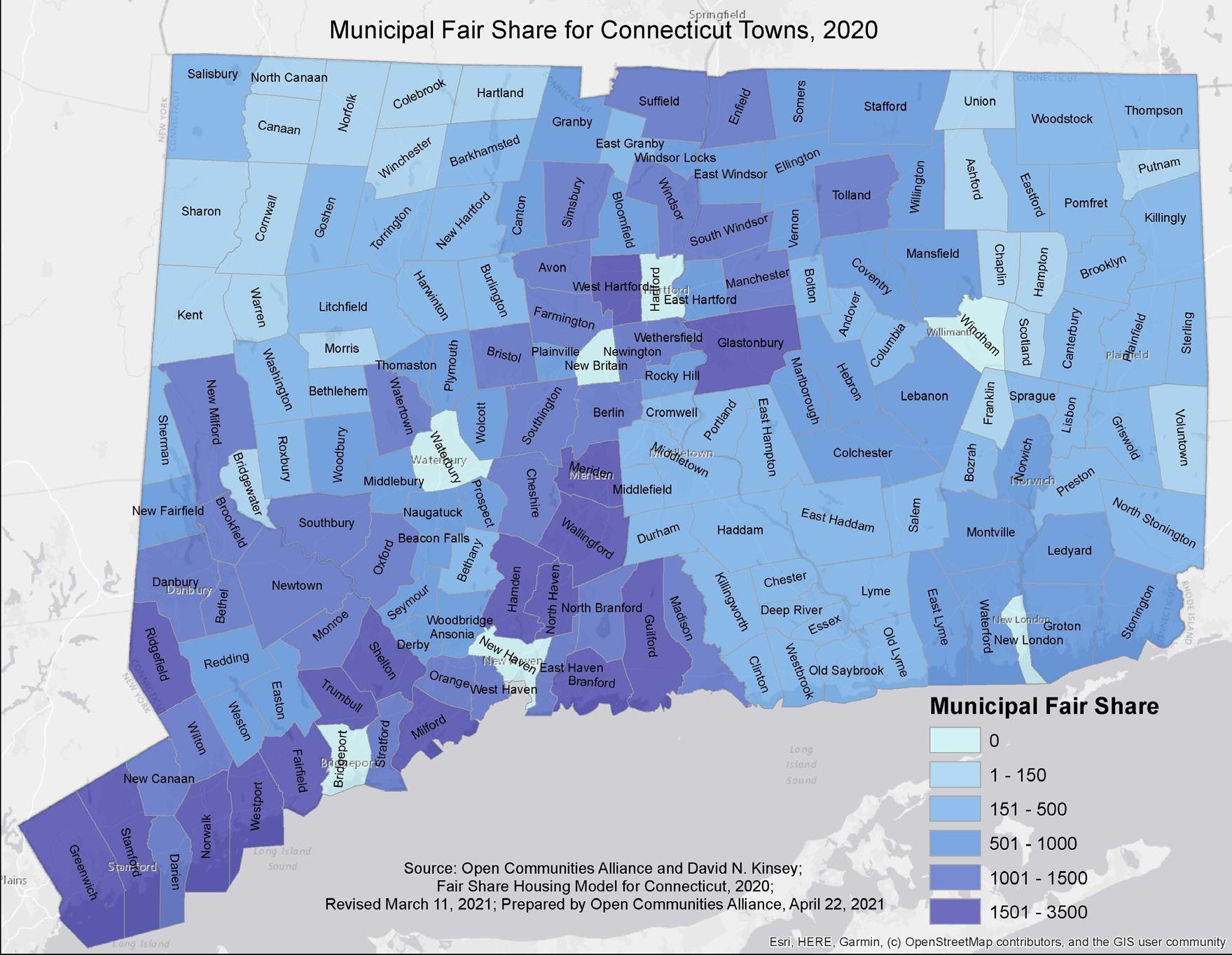
A graph representing the distribution of municipal fair share in Connecticut by county.
interference. For instance, Greenwich would fall under the same category as Stamford, Norwalk, and Danbury. Under these regional plans, critics say that out-of-state developments might haphazardly spawn in areas that lack the roads, fire safety, and sewage systems to accommodate them.
Jon Zagrodsky is the first selectman of Darien, a quaint, affluent coastal town nestled between Stamford and Norwalk. Shingled Cape Cod homes lounge on the Sound’s sprawling beaches.
Building affordable housing would require updating the town’s infrastructure to accommodate increased car traffic. It could strain the sewage system and pollute green spaces, Zagrodsky said. He worries that Darien is not able to handle these demands because they’re already scrambling to keep up with new developments.
Instead, critics believe that states should subsidize affordable housing in places that already have the requisite structure, such as New Haven, North Hartford, or Granby. And besides, there are unique incentives to live in cities: job opportunities, access to nightlife and culture, and proximity to universities. It doesn’t make sense for supply to rapidly increase in places where people aren’t particularly inclined to live.
“You can’t just drop 300,000 people into the same congested corridors and then pretend traffic and school and sewers will somehow sort themselves out,” Zagrodsky said. “It’s ridiculous. I’m not saying places like Darien can’t do part of this. We will. But in my view, you need a balanced approach.”
VI. THE CHARACTER OF SUBURBS
Since 2019, Fred Camillo has served as the first selectman of Greenwich, where he grew up in a blue-collar Italian neighborhood. He’s spent his life coaching baseball and volunteering. For the past eleven years, he has advocated for Greenwich in the state legislature.
To Camillo, HB 8002 is an opportunity for cities to assert unchecked control over places they’ve never taken the time to understand.
Greenwich is the 34th wealthiest suburb in America, with an average household income of nearly $300,000. But Camillo is bothered by the oversimplified characterization of the town as a refuge for the wealthy. He claims it ignores their socioeconomic diversity and housing progress. Over the course of six years, he noted, Greenwich has nurtured its housing authority and raised its affordable housing stock from 5.2 percent to 6 percent, with hundreds of new units already approved.
Greenwich’s numbers don’t do well when stacked up against cities such as New Haven and Hartford, where 33.4 percent and 40.8 percent of units are deemed affordable, respectively. But as critics of the bill note, suburbs and cities might just need different standards. Greenwich wasn’t designed to accommodate affordable housing, they say, and altering that reality, whether it be by city or state, takes time.
Greenwich makes no comparable attempt to govern the cities, the argument goes, so why should the inverse be allowed? “You have to let Greenwich be Greenwich. Right? You have to let Stamford be Stamford,” Camillo said. “And if Hartford wants to build a zillion units, then let them do it.”
Anika Singh Lemar is a clinical professor at Yale Law School and the head of several legal aid clinics. She sees the suburbs’ lack of infrastructure as the outcome of continued resistance to development. Since 2024, Greenwich has shut down three affordable housing projects over environmental concerns, blocking the development of more than two hundred units.
“It is incredibly disingenuous to say, We can’t do it,” Lemar said. “You don’t have the infrastructure [because] over the course of your town’s history, you’ve resisted or rejected the construction of that infrastructure at every opportunity.”
She also believes that the bill is misunderstood. It’s not as if colossal highrises are going to replace neighborhood parks overnight, she said. HB 8002 only intends to promote multifamily housing, which could take the form of condos and twelve-unit developments.
The larger reluctance underlying resistance against HB 8002 is, once again, motivated by the dictum: Let cities be cities and towns be towns. At one point, suburbs set out to define themselves as a reactionary alternative to cities. Even as the world changes, towns have stuck true to that traditional mentality. “What they’re hoping to do is say that because a place looked a certain way at a random point in time, it has to look that way forever,” Lemar said.
Camillo said he’d be happy to personally take any critic around town, showing them the progress Greenwich has made and engaging in debate. But in every case, he’s been either turned down or ghosted.
Lemar said she’s received no personal invitation from Camillo, but if she did, she’d be happy to go. She doubts that she’d be convinced. “They’d have to eliminate minimum four-acre lots, eliminate discretionary review processes that have held up a gazillion projects, and they’d have to build four thousand units of affordable housing in order for me to take that tour and feel like, Oh, wow, Greenwich has really done a lot.”
And while suburbs remain comfortable with preserving what they’ve
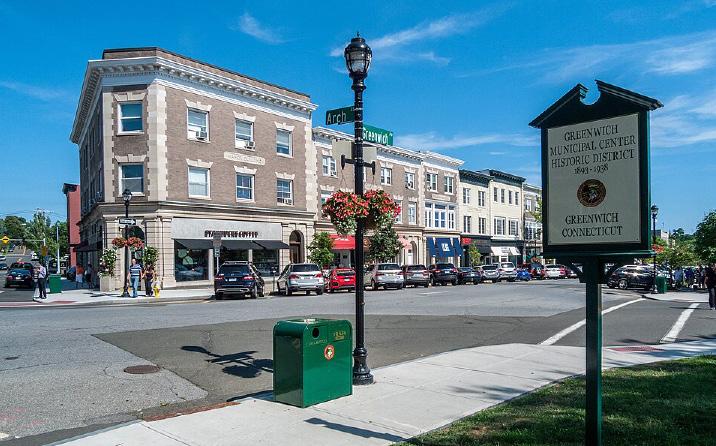
Greenwich Municipal Center Historic District, Connecticut.
defined as their character—a sanctuary of serenity marked by quiet streets and large parks—New Haven is rapidly losing its own.
VII. HEART OF THE CITY
Sylvia Cooper moved into the Dwight-Edgewood Avenue community with her mother and sister when she was 3 years old. She grew up walking down Day and Chapel Street, wandering the Yale University Art Gallery, playing on the New Haven Green, and checking
and use mortgage discounts. At no point did she consider leaving New Haven. Here, in these multi-cultural neighborhoods, she said, she has always felt like she belonged.
Cooper has attended the Housing Services’ courses for three years. It paid off. She has a house lined up in Newhallville. “I’m a stakeholder now. I have to pay taxes. I want to be invested in what’s going on in my community, what crime looks like, the lighting on the street, beautification projects,” Cooper said. “I’m not just buying a piece of property. I’m investing in my community.”
out books from the Ives Main Library. For the fifty-nine years she’s lived here, there has always been a couch to sleep on and a cup of sugar to borrow.
But crippling rent forces her to make impossible choices all the time. “Do I buy food? Do I pay for transportation? Do I have a place for my children to stay?”
Cooper is one of the many New Haven renters who earn too little to keep up with market-rate housing prices and too much to qualify for units designated affordable. She feels that she spent years paying taxes to a state and city that didn’t offer any help in return. Then a five-year illness took her out of the workforce, leaving her with debt and a low credit score. Something had to change. So Cooper pivoted, setting her sights on homeownership. Through Neighborhood Housing Services, she learned how to increase her credit score
But New Haven apartments are changing, she said. New out-of-state developers threaten to overwhelm the city’s historic streets with large luxury apartments.
“I look at myself as one of the old mom and pop landlords,” said Robert Megna, a former state legislator and a landlord in New Haven since the nineties. “But the mom-and-pops have disappeared, and you’ve got these big syndicates taking their place.”
Since 2020, New Haven has approved the development of ten thousand housing units––some of which are mixed-income. Twenty-four percent of these units are projected to be affordable.
John Lockhart, the director of investments and operations for Catalina Buffalo Holdings—a new player in the New Haven real estate market—believes that it has become increasingly difficult to build affordable apartments outright.
Instead, to make a profit, developers
must sell expensive units. Affordable housing is being built, but only when supplemented by luxury and market-rate units. A 200-unit apartment complex opened downtown at the end of 2024, offering forty affordable units; last July, Dixwell welcomed a 176-unit complex with fifty-eight; in January, New York-based developer LMXD unveiled a 283-unit complex in Science Park with fifty-seven.
In this way, the buildings are split. Some of the units are affordable, but most are not. The large glass apartments stand out in the heart of New Haven. And as Lemar said, new housing in the suburbs would look different, with condos and townhouses instead of skyscrapers.
“People should be able to live wherever they want to live,” Cooper said. “But at the same time, those of us who’ve been here through the struggle, the changes of the housing stock—like wow, is this New Haven? Is this us as a city and as a people?”
Cooper is not against affordable housing development. Far from it. But these necessary housing projects are reshaping her city. Gone are the familiar windows of local storefronts. Today, when Cooper walks through her old neighborhood streets, she often looks through the glass windows of new luxury apartments. Each time, she’s unsettled by the sight of recently transplanted residents running on recently transplanted treadmills.
Towns are worried that the bill will change their local character. Will HB 8002 also change the character of cities? It depends on how you define cities. Cities are expected to densify. Residents are supposed to enjoy the excitement of progress.
Yet, Cooper and other New Haveners might want to access the same unchanging “character” that suburbs cling to. They might want to continue appreciating the parks, walking space, and historical buildings.
“I just happened to be a person, a girl, young woman, and now an older woman who happened to like the city,” Cooper said. “Fell in love with New Haven, you know, that’s just where my heart is. I have the heart of the city.” ∎
Kade Gajdusek is a junior in Berkeley College and a copy editor at The New Journal
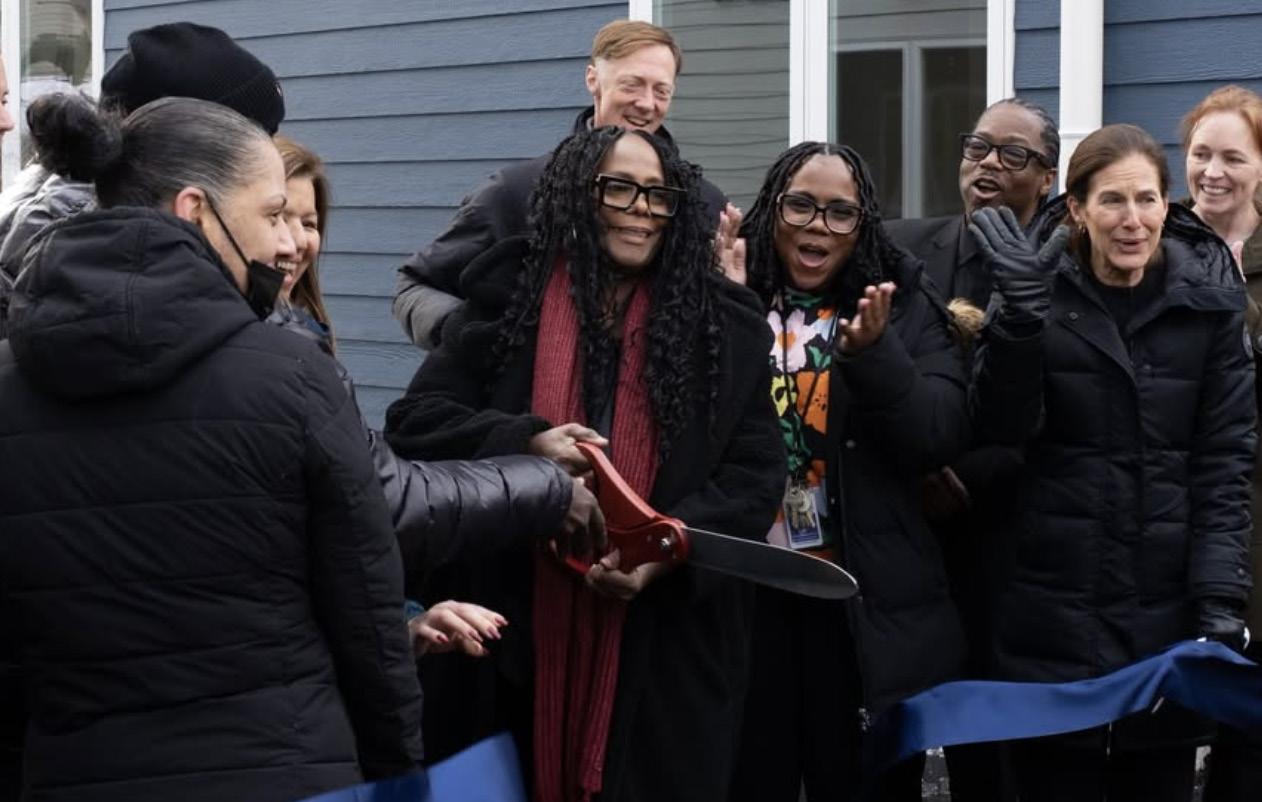
Sylvia Cooper eventually became a homeowner through the collaborative program at the Neighborhood Housing Services.
Poem
Requiem (II)
This is more than memory: the stop-motion boys playing war along the old cul-de-sac, angel lawn ornaments matte in the February light, pink tricycles in the weeds; wheels slicing the dirt. Once I could unstitch the sky. Once the clouds were winding white gauze, each drainage ditch a new center for the end of the world. I could’ve been ruined concrete, charred plastic, a blast radius of final flower fields —& the alliteration would gleam beautifully, at least to me. Instead, the sun rises every morning, & I go on detours without a coat. What I do know: beautiful words. Empty words. The wheat fields, swaying; how even my shadow blinks & blurs into periphery. How much remembrance is anything worth, when this memory continues so bright & cold & real?
Fiona Jin
I Did Not Jaywalk
We whiff the stink of the grate and hold our tongues. A throng freezes across the street. Having pummeled through our own crowd to the curb, now we breathe heavy and stand still. No cars pass, but the collective default at this corner is cowardice. No worries. Waiting means we can be exactly parallel, staring straight and sneaking looks. Transit through crowds is necessarily staggered, if not single-file: words get sucked into the din, as I lose sight of my companion and the whole lovely shock gets dissolved by the urgency of our impending splintering, when I am torn towards the train station, and she towards dinner with a friend. For we are not here together. She’s staying with a mutual friend right around the corner from the rink, and I’m here for the day, having spent the day uptown. We have twenty minutes, tops. Just enough time to brush up on why we bothered seeing each other for such a brief spell. Four months of separation crushed under the weight of seven years of knowing each other. Her purple-panted legs rock in the light mid-autumn chill. Shit-heat not enough for ya? I ask.
She laughs, feigns stepping right onto the grate. A taxi whizzes past, and I grab her arm, pull her back onto the curb. Bruh, she says. I over-shrug. Her eyes roll. My eyes roll a beat later, above the smirk she expects. This is our charade. She steps back, and we stare parallel. It’s twilight over the thronging plaza, kids carrying skates, flags crinkling in light wind, black-nosed dogs sniffing through the crowd, and the sun about to set behind window-speckled apartments—I almost feel her lean against me. I twist my neck, hoping to meet her head with mine, feel her hair against my cheek, but she is gone. Halfway across the street, lost in the crossing jostle. I follow, stepping over the grate, and join the crowd of cowards.
Personal Essay
A Bedazzled Book of
A Confession
At New Haven’s Mormon Church of Latter-Day Saints, kindness is abundant, belief is disciplined, and a writer –– a lapsed, gay Catholic ––decides whether or not to come out to
By Emiliano Caceres Manzano
At New Haven’s Church of Latter-day Saints, a gay, lapsed Catholic decides whether or not to come out to the director of the chapter.
By Emiliano Cáceres Manzano
layout design by Dani KleiN
illustrations by Lu arie
illustrations BY Lu Arie
LAYOUT DEISGN BY DANI KLEIN
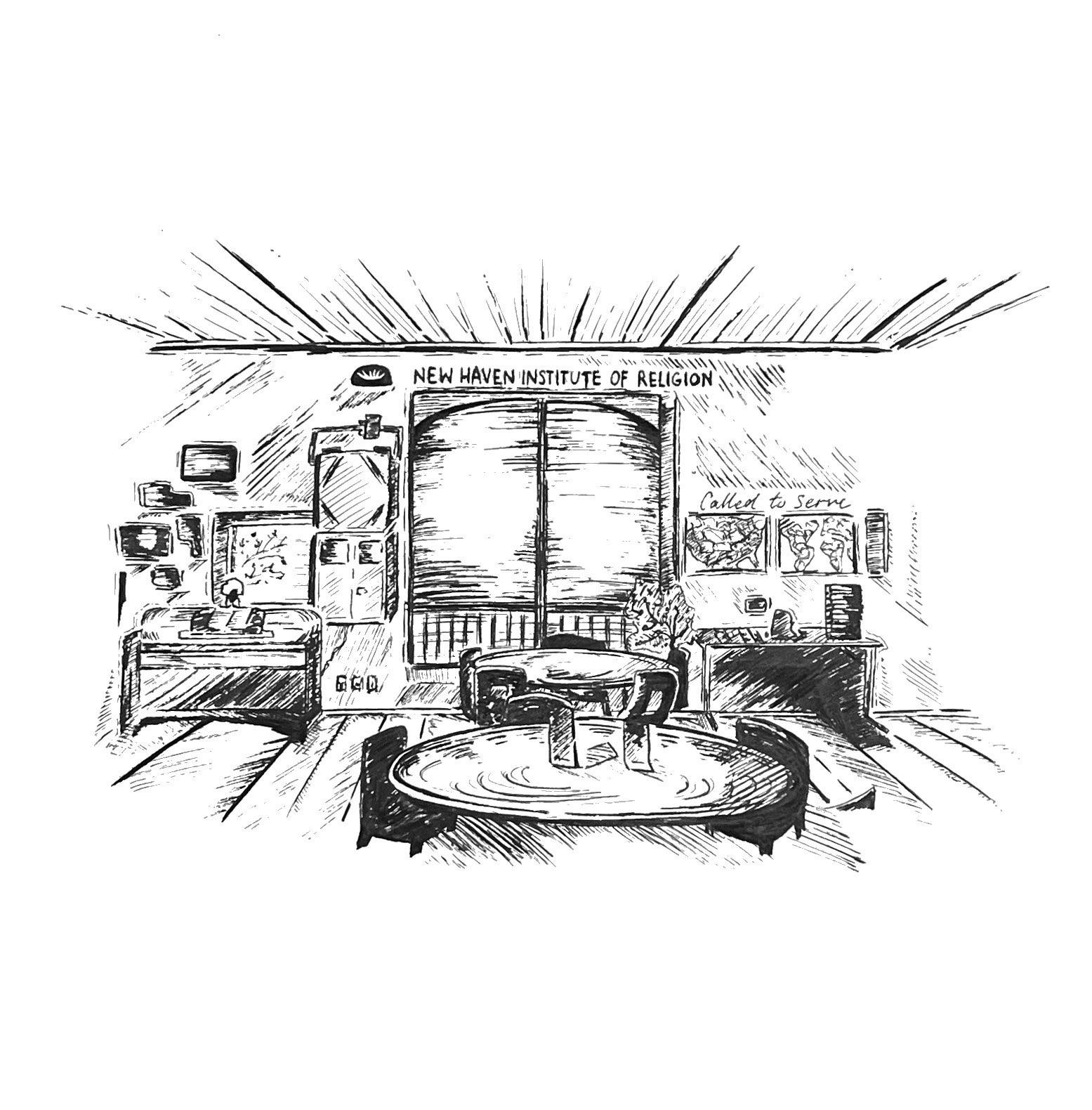
The first time I walk into the Church of Latterday Saints’ Institute for Religion, Brother James Williams sits at a circular table with his congregation and everyone already knows my name. Whiteboards on the walls command me to remember things like “the Godhead” and “the priesthood keys.” The room smells like Play-Doh and microwave lasagna. Brother James stands up from the table, puts his manly hands around my shoulders, and brings me into the circle.
Today, as on most days I’ll see him, Brother James wears a blue checkered shirt buttoned all the way up. It’s not at all the black-and-white, name-tagged Book of Mormon look I was expecting from a member of the Church of Latter-day Saints. As he pulls me over, I become conscious of the fact that I am wearing a short-sleeve black linen shirt, unbuttoned an inch below my collarbone. The A/C blows, and I feel the hair on my chest bristle.
Brother James is the director of the Institute, which means his job is half operational and half devotional. He teaches scripture study—confusingly, the Church also calls this “Institute”—every Thursday but, these days, he’s in charge of making dinner too. This is typically someone else’s job, but the Institute is “in-between” senior missionaries, he tells me. Before I know it, we’re cutting pumpkin pie together in the kitchen by the lounge.
The congregation is having a watch party for the General Conference, their twice-yearly broadcasted address from the Prophet, the head of the LDS Church. Hence the snacks. The familiar conversation and clatter of dishes in the kitchen remind me of the moments before Thanksgiving dinner: everyone around a table, warm, expectant, food-oriented. Meanwhile, Brother James opens the fridge and explains that in every Mormon church kitchen you can always find ice, ketchup, mustard, and ranch.
After we’ve sliced the pie, we set it down on a long table covered by a crunchy plastic tablecloth and, for the second time since I arrived, Brother James pushes me into a large circle of Mormons who simultaneously exclaim how excited they are to see me. These are the Sisters. They all wear thick sweaters and long skirts, as though they were swallowed by a Free People store. Sister Hiatt’s mother was from Mexico, Brother James makes sure to point out, just like my family. One by one, they take turns asking me how my day has been. I ask them how they ended up on missions to New Haven of all places and they tell me church officials prayed about it and decided it was what God wanted.
Brother James gives me a tour of the four-story building. There are pianos and religious paintings everywhere. I ask him if the paintings are originals and he tells me that, actually, every Mormon interior designer picks from the same fixed list of replicas. In the nursery, I spot a half-finished coloring sheet of big bubble letters that say SCRIPTURE POWER and wonder what became of the child who was working on it.
The building’s design seems to promise that anything you could ever need to have a good life is here. At the same time, I find the level of devotion here disorienting. I can’t tell if things are actually ominous or if I just interpret them that way because I’m gay and have a general distrust of institutional religion. When Brother James asks if I consider myself religious, I say I was raised Catholic. He assures me that Mormonism and Catholicism are actually very similar. I am no longer particularly Catholic—my mom thought people got too rowdy at American church, so we stopped going—but he doesn’t catch on to that. Instead, he welcomes me into the circle.
BrotherJames was born in Rexburg, Idaho. Brother James was raised in Idaho Falls. Brother James went to college at Brigham Young University–Idaho and dreamt of teaching in Idaho. There’s a statue of Brother James’s great-great-great-greatgrandpa in Paris, Idaho, and much of his education led to him teaching at BYU Idaho. As you can tell, Brother James Williams rarely left Idaho.
In college, Brother James wrote his undergraduate thesis on religious college students experiencing crises of faith after attending secular institutions. He conducted nearly one hundred interviews for the paper and devoted his days to reading philosophy and psychology about cognitive dissonance. But one day, as Brother James sat surrounded by books in his study, his biological brother pointed out to him that he was spending more time researching than praying, more time reading Aristotle than Joseph Smith.
At one point, he looks me in the eyes and says,
“Gosh, I hope that Yale doesn’t destroy the faith of Emiliano.” I turn away, blushing, diving deeper into my lie.
He was just like the subjects in his thesis, swept up by the demands of the secular world. Brother James pointed to this moment as his own crisis of faith. It was here that he asked himself: do I believe in a Supreme Being?
The answer was yes.
But first, he had to think through why it worked for him. Why monotheism instead of another kind of religion? Why Christianity? Why Mormonism? Why, why, why?
“I see God’s fingerprints within my religion,” he says. “This cannot be just man-made.” He talks about Mormonism with an appreciation for its order and design. When you talk to Brother James, Mormonism’s intricate bureaucracy does seem like a means to carry out the will of God. Walking through the carefully organized Institute with him, I understand why he believes this. Even the carpet is so pristine it seems it’s been purified.
In the Institute, Brother James wears his religious authority practically and reliably, like his checkered shirt. He often refers to the “common sense” test when he talks about his religion: he only
believes in things that make sense to him. Faith is something he must prove first and foremost to himself. Brother James realized he needed to leave BYU when he asked his students to apply the “common sense” test to original sin. The Church teaches that it was all part of God’s plan, but Brother James wanted to know whether his students thought the Fall had been for better or for worse. The question made one student so uncomfortable that he complained to BYU ’s religion department.
Soon after the student complained, Brother James requested that university administrators consider him for a position elsewhere. They interviewed him, then prayed and approved his request—partly, he thinks, because of his thesis on college students and also because that paper turned him sort of Mormon micro-famous. But I can tell this memory left him wary. He keeps anticipating the way his approach to faith might be viewed, even by me. Throughout our time together, he often half-jokingly calls himself a heretic. At one point, he looks me in the eyes and says, “Gosh, I hope that Yale doesn’t destroy the faith of Emiliano.” I turn away, blushing, diving deeper into my lie.
Icome back again for scripture study.
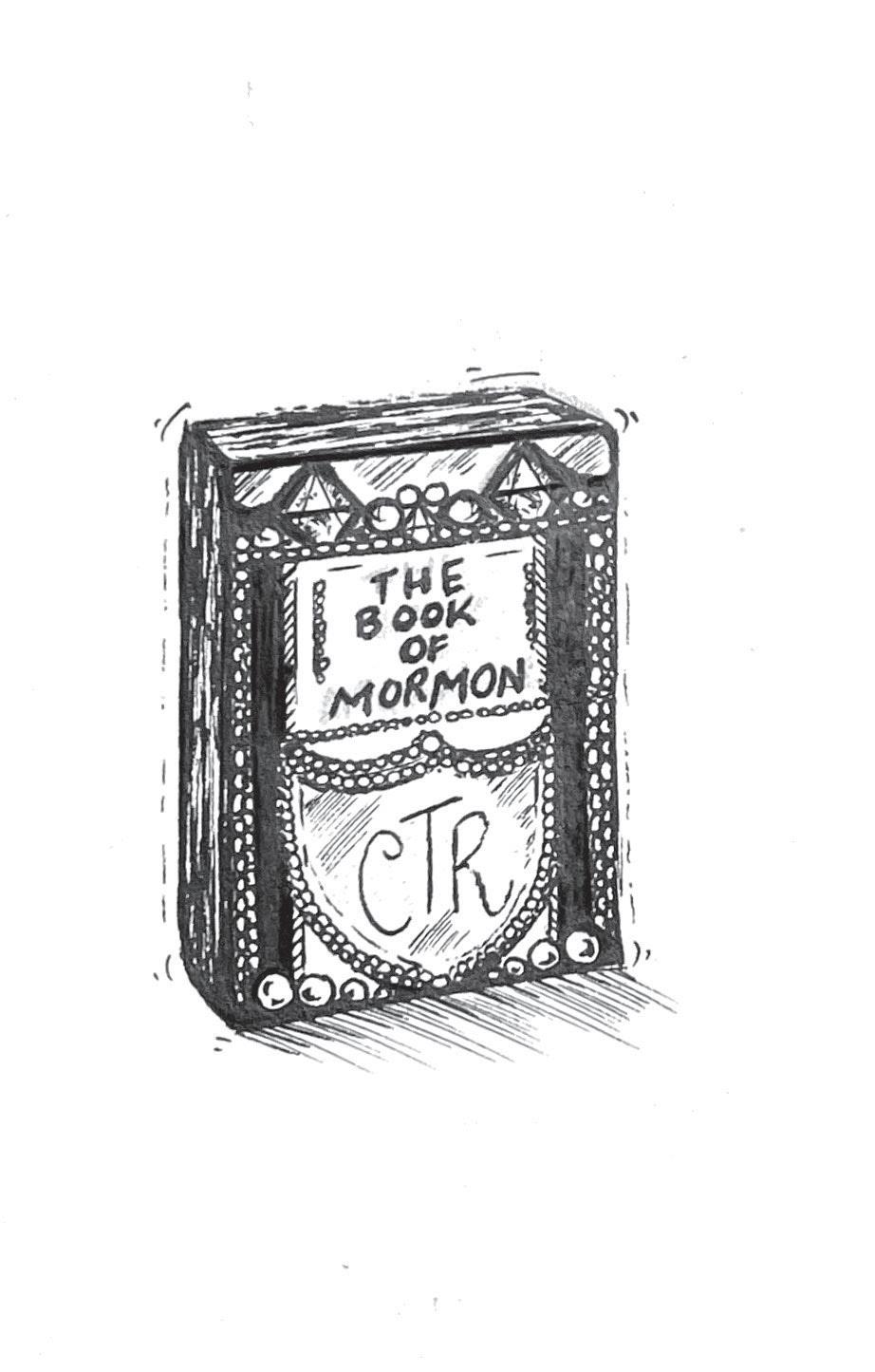
Tonight, the meal is breakfast for dinner. On the fourth floor, everyone welcomes me again. In a corner, I spot the President of this LDS ter wearing a rugby shirt I’d totally own. I go to greet Brother James, who’s flipping pancakes. I offer a hug to Sister Hiatt, who politely declines, telling me sisters can’t hug men. I apologize and we start chatting. She offers to bedazzle me a Book of Mormon.
“ EVERYBODY GET YOUR BUTTS OVER HERE SO WE CAN PRAY OVER THE FOOD,” a young woman yells from the lounge. For blessing the bacon, she and Brother James call over a lanky, red headed boy named Tanner Bacon.
The bacon is, in fact, heavenly. Everyone wants to know how my day has been and they are delighted that Brother James is worthy of journalistic interest. I grew up around a lot of Mormons—there was a Mormon temple less than a mile from my house—and they have always struck me as exceptionally nice people. Middle schoolers in a Texas public school can be particularly unkind, but many of the Mormons I knew were round-faced and smiling, like cher ubs wearing Justice and Under Armour.
Around the time I met the middle school Mormons, I also began to understand my sex uality as a legible marker of difference. As the social hierarchy concretized, I realized the people around me understood I was gay long before I had put real words to it. And still, the Mormons never stopped being nice to me. Their kindness began to unnerve me and I wondered if they would be so kind if I had said it out loud.
Sitting around this table eating pancakes reminds me of middle school all over again. I can’t decide whether they can’t tell I’m gay or if they do and are just refusing to acknowledge it. What I do know is that a gay couple at my high school got invited to Mormon Prom and had to go with separate female dates. But God, these pancakes are so good. And I am mesmer ized by Brother James’s enthusiasm as he speaks, the seductive force of his belief. At some point, we break to go look at the northern lights out side and I feel like a little kid as I run to the fire escape. In fact, I am so swept up that I don’t real ize it’s past 9 p.m. Shit. I have a date to get to. Margaritas with some guy I was set up with. I pull out my phone to text him. * † *
Ilike Brother James. He seems to really like me too. The more time I spend with him, the more hesitant I am to ruin our blossom ing inter-faith relationship. I imagine Brother
James applying the common sense test to my life if he knew I were gay.
Mormonism, like many religions, structures its beliefs around a prophet, in this case Joseph Smith. In 1820, Joseph Smith received a series of visions
Even commandments from a prophet sometimes require clarification. In 1995, the President of the LDS Church and the Quorum of the Twelve Apostles published “The Family: A Proclamation to the World.” In it, they reminded the members of the Church that “God’s commandment for His children to multiply and replenish the earth remains in force.” They proclaimed with extra emphasis that “God has commanded that the sacred powers of procreation are to be employed only between man and woman, lawfully wedded as husband and wife.”
In 1999, then-President of the LDS Church, Gordon B. Hinckley, led Mormons in a coordinated national effort to oppose the legalization of same-sex marriage. Under his supervision, Church spokesmen encouraged congregations to “do all you can by donating your means and time” to banning same-sex marriage in California. At that year’s General Conference—just 25 years before the one I watched—Hinckley gave a speech titled “Why We Do Some of the Things We Do.”
“Some portray legalization of so-called same-sex marriage as a civil right,” Hinckley said. “This is not a matter of civil rights; it is a matter of morality.”
The Mormon Church centers on a particular vision of family: holy, multiplicative, condiment-stocking. A family in which a mother is “primarily responsible for the nurture of their children” and where a father is “the priesthood leader of his family,” according to one of the Church’s manuals. Over the hearth in Brother James’ home, he keeps a sign that says “familia es todo.” Family is everything. He smiles at me when he speaks in Spanish and I know he knows he just earned points from me. I think about the Proclamation, the “sanctity of marriage.” I marvel at how sanctity can mean such different things. To Brother James, it’s stability and warmth. To the Church, it’s a means of enforcing heterosexuality.
Since the 1990s, the Church has evolved slightly in its attitudes toward homosexuality. In fact, today, Church pamphlets specify that homosexual thoughts aren’t a sin unless you act on them. “People inquire about our position on those who consider themselves so-called gays and lesbians,” a pamphlet called “The Law of Chastity” reads. “If they do not act upon [their] inclinations, then they can go forward as do all other members of the Church.” This makes me feel better about my tendency to read scripture as vaguely homoerotic—God always commanding men to do unto others what they would want done to themselves. Another pamphlet reads: “Through your covenant connection with Him, you will find strength to obey God’s commandments and receive the
blessings He promises.” Reading these words, I feel bizarrely held. I’m not Mormon, but still, I want strength. I want a covenant connection.
When Brother James describes the impact of the Church’s policies on homosexuality, he uses playground words like “mean” or “hurtful” which makes me feel as though he has sent all the gay people in the world back to third grade and told their bullies to go stand in the corner. It isn’t that the Church doesn’t believe homosexuality exists or that it’s a genetic flaw (“that would be hurtful,” says Brother James). It’s just that they have traditions they have to follow. When he says this, he seems protective and stern and all the things a Mormon father should be. He says “family” and I can’t tell whether he’s using it in the way the Church does to enforce heterosexuality. He keeps his interpretation just beneath the surface, just out of reach. I wonder if he’s ever doubted the Church’s concept of family.
And I wonder if he knows I’m lying to him— about my sexuality, about being a Catholic, about a hundred small things that have cropped up since. When I am with Brother James, I feel his investment in my goodness. I can’t help but wonder whether this relationship is real, when he’s been so open about his life and I haven’t been about mine.
* † *
Idecide to come out to Brother James the day of our final interview. The day is unseasonably sunny. I sit in the same chair where Sister Hiatt offered me a bedazzled Book of Mormon. And I tell him.
“One of my big challenges with my faith has been my relationship to organized religion, in particular, because I’m gay,” I say. “So what would it be like, hypothetically, for somebody to be gay in the Mormon church?”
He doesn’t skip a beat. “That is, in my opinion, the biggest wrestle right now, within not just the LDS church, but I think in most Christian churches.” He says “wrestle” and I think of the story of Jacob, spending a night wrestling with an angel often painted beautiful and shirtless, with an impossible number of abs.
“I think that the LDS church is very clear in saying you have a place here.”
I sigh in private relief.
“But again, two-edged sword,” he says. “We have these time-tested, honored beliefs that go back thousands of years that basically say marriage is between a man and a woman.”
I have to give it to Brother James. It takes me a while to realize he hasn’t said anything outside of published Church doctrine, but his words don’t feel exclusionary. He admits that in the Church, there is a distinction between what you feel and what you do. He gives me examples of
Mormons who have come out and been celibate, or gay Mormon men who have married women anyway, proof that it is possible to be both Mormon and queer at once.
After I come out to Brother James, I do some research and realize just how extensive the gay Mormon community is. There’s a journal that publishes extensive scholarship on queer feminist Mormon studies. Recently, a valedictorian came out on stage at BYU. And there’s been a Mormon LGBTQ+ support group since 1977 that offers additional verses to hymns with lines like “Come, come, ye gays and lesbians rejoice!” I wonder why so many people have set themselves on reconciling seemingly impossible things. D. Michael Quinn, for one, believed that to be a gay Mormon, “you have to develop a private faith, which I have, that God accepts all loving relationships,” as he said in a PBS interview in 2007. He came out to his wife and they divorced in 1985. It is unclear whether he ever engaged in romantic relationships again.
“It’s so hard, because I recognize that I fit the perfect demographic for a happy, successful Mormon life,” Brother James says. “Everything that I need to be happy within my faith, it was all just—I hate to say it—it was handed to me. I was literally born into it.”
I am taken aback by Brother James’s self-awareness. I also am overwhelmed by what Mormonism asks gay people to do. Sure, priests go celibate all the time, but as a choice. I imagine for a second being asked to make that separation of mind and body: no kisses on blue bean bags, no hand touches across margarita-stained tables, no morning pecks with jazz playing in the kitchen, forever. It strikes me that maybe I am lucky, too, to have been born into something different.
* † *
TheSunday after I come out to Brother James, I go to service. Three people get up to the pulpit to testify about Jesus Christ. First, the church President. Then, a guest: a sleepy Dominican man who whispers his testimony and won’t stop smiling. He tells the story of meeting his wife, an American woman, who convinced him to convert to Mormonism with her. “I knooooow I am a child of God,” he says.
This is the Young Single Adults service—married people have their own—so everyone in the back rows is on their phones. The girl next to me plays FarmVille for the whole hour, stopping only to take communion. A few chairs over, I spot a high-school couple: a Latino boy and his blonde-haired, blue-eyed girlfriend. She has her arm around him and slips her fingertips in and out of the cuff of his shirt sleeve. It feels a little possessive and a lot unchaste. In front of me, a man stretches. I catch my breath as his sleeve rides up to reveal a frankly very attractive forearm tattoo.
The whole room thrums with subdued desire. I wonder if discipline is part of the appeal. In this communion silence, every member of the congregation could be thinking anything, feeling anything, but we are all doing the same thing. We sit in our chairs. We look ahead. We listen to the A/C turn on and off as we strive toward the divine.
I do not feel religious so much as awed at the steadiness of collective belief in the room. Somehow, here, the sense of sacrifice feels familiar to me. I’ve felt it every time I’ve chosen to withhold my sexuality from someone. I’ve felt it every time I’ve disclosed it too. Though I am not a Mormon, I understand what it’s like to acknowledge desire without acting on it.
“Our wildness is going to become like Eden,” promises the last testifier. I watch the sunlight turn the trees outside into shadows on the wall. I think of the moment right after I came out to Brother James. I sensed a shift in his eyes. I think they narrowed, or maybe he blinked. There’s no way to tell, so I convince myself I imagined it and we keep talking. ∎
Emiliano Cáceres Manzano is a senior in Benjamin Franklin College.
Impressions (at the Equinox)
A lost tabby cat turns calico in the sun.
Teach me a model to track this type of regression.
Broken leaves expose and smother memories. Squirrels pair up to brace for winter.
The steam train nudges up, then down, over redwood hills. A boy follows alone on foot.
Steel pipes in the city exhale. Only plumes of vapor warm the homeless here.
At my homecoming, the lake is fenced in and sealed with duckweed.
In1961,achillingand notoriousexperimentexposed humanbeings’universal capacityforevil––and the easewithwhichwelookaway. Now,inthesamebasement ofLinsly-ChittendenHall, professorsandstudentsgo cheerfullyaboutacademiclife.
Endnote
Knife Stick Word Arrow
By Maggie Grether
My first descent into the basement of Linsly-Chittenden Hall was James Joyce’s fault. The spring of my sophomore year, I took a seminar where we read Ulysses. I was struggling to wrest meaning from sentences that seemed to have no internal logic and words that swam aimlessly across the page. I visited my professor, Craig Eklund, for guidance.
Eklund’s basement office had a narrow window looking out onto a charming collection of trash cans. A white pillar skewered the room through the middle. As we discussed protean form and the ways ancient epics haunted modern life, I tried to ignore a growing sense of unease.
During my first year at Yale, I’d learned about an infamous experiment that unfolded in the basement of the building we all call LC. Some sixty years before, in the rooms below the lecture halls, a series of tests had exposed an enormous capacity for violence latent in us all.
After hearing the story—from a source I can no longer remember—I’d quickly forgotten about it. I preferred to stay upstairs, amid the sunlight and the poetry. * * * * *
IN THE SUMMER OF 1961, while the students were away, an unusual experiment was unfolding in LC. The test was simple: a series of word associations in which a “learner” was tasked with
memorizing pairs of words: Soft Hair. Nice Day. Fat Neck. Hard Hit.
An advertisement seeking five hundred male participants had appeared in the New Haven Register that June. WE WILL PAY YOU $4.00 FOR ONE HOUR OF YOUR TIME, read the ad. (That’s equivalent to more than $43 today.) We want: factory workers, businessmen, construction workers, city employees, clerks, salespeople, laborers, professional people, white collar workers, barbers, telephone workers.
Prospective applicants were directed to a 27-year-old assistant professor of psychology who had arrived at Yale less than a year earlier––a man by the name of Stanley Milgram.
Milgram was born in the Bronx in 1933, the son of two working-class Jewish immigrants from Eastern Europe. (Milgram attended James Monroe High School in the Bronx, where he was classmates with Philip Zimbardo, who would later conduct the Stanford Prison Experiment). After studying Political Science at Queens College, he pursued a PhD at Harvard’s Department of Social Relations, despite never having taken a psychology class in college. He arrived at Yale in 1960, where he soon began organizing an ambitious psychological experiment. Disturbed by the horrors of the Holocaust, which had unfolded when he was a child, he sought to understand the nature of human evil.
The men who answered Milgram’s ad arrived through the High Street entrance of LC, where Milgram taught introductory psychology. They then descended the wide stone steps to the basement, where the university had opened the new elegant interaction laboratory.
Milgram had spent May through July furiously preparing. He’d sent letters and telegrams to companies that sold electrical and psychophysiological equipment, asking for instruments to be shipped “as soon as possible” on “urgent order.” He even prepared to film a documentary titled Obedience that he would release in 1965.
shock generator. Switches were ordered by electrical impulse: Slight Shock, Moderate Shock, Strong Shock, Very Strong Shock, Intense Shock, Extremely Intense Shock, Danger: Severe Shock, and finally, XXX—450 volts of electricity.
In the experiment setup, a “learner” was tasked with memorizing pairs of words. The unknowing participants acted as “teachers,” feeding the learner word-association questions and administering shocks for incorrect answers.
The learner, however, was a hired actor: a New Havener named Jim McDonough. Before the experiment began, McDonough, a jolly, heavy-set man, would tell subjects he had a heart condition. Milgram’s documentary features video footage where subjects administer fake shocks to McDonough. He reacts with grunts, screams, and then a terrifying silence.
In the video, a dispassionate “experimenter,” cloaked in a lab coat, prompts the subject to administer increasingly dangerous shocks. Continue, the experimenter commands. The experiment requires that you continue teaching. It is absolutely essential that you continue. Sixty-five percent of the participants did, administering the maximum shock level. Milgram observed it all from behind a one-way mirror, disturbed but enthralled.
“The tension created is extraordinary,” Milgram wrote that August in a letter to an assistant director at the National Science Foundation. “Subjects sweat, tremble, stutter and groan; but they obey.”
Down in the elegant interaction laboratory, the barber or telephone worker or businessman sat in front of a large
Milgram later described the results as “highly reminiscent” of philosopher Hannah Arendt’s concept of the “banality of evil,” which she developed in her 1963 report on the trial of the Nazi Adolf
Eichmann. Eichmann defended himself on the grounds that he acted as a mindless technocrat carrying out orders from above. To Arendt, Eichmann showed how mundane order-following could escalate to unfathomable violence. “The essence of totalitarian government, and perhaps the nature of every bureaucracy, is to make functionaries mere cogs in the administrative machinery out of men, and thus to dehumanize them,” she wrote.
In September 1961, Milgram had finished a new iteration of the experiment, which asked the teacher to force the learner’s hand onto an electrical plate connected to the shock generator. Before Milgram had begun his research, he had doubted there were enough “moral imbeciles” in the United States to orchestrate the sort of atrocities committed by Nazi Germany. In a letter to the assistant director that September, Milgram wrote that his view of human nature had transformed. “I am now beginning to think that the full complement could be recruited in New Haven,” he wrote.
Milgram died of a heart attack at the age of 51. The experiments remain some of the most controversial psychological studies of the 20th century. Following the study, the American Psychological Association mandated that institutional review boards must approve experiments involving humans. In 2004, experts referred to Milgram’s experiments when explaining the abuse of prisoners by U.S. soldiers in Abu Ghraib. Critics have accused Milgram of traumatizing his unknowing subjects, lying about his experimental procedures, and manipulating his results to exaggerate obedience levels in his subjects.
But Milgram’s connection to Yale is often forgotten, both at Yale and in the public consciousness. Eklund, my sophomore year English professor, was unaware that the obedience experiment took place in the basement of LC until I contacted him for this piece. He was less than thrilled: Now, I guess I can have authoritarian nightmares when I drift off to sleep at my desk, he wrote in an email. Thanks for that. :(
“It’s like I’m in the dark basement of human cruelty,” he said, when I spoke to him the following day. He thinks it’s ironic that the experiment took place in what is now Yale’s English building—supposedly
a temple to humanity’s literary heights. But then again, “literature is full of all sorts of dark shit too, it just happens in art, where it gets redeemed in some ways,” Eklund said.
Kate Bolick occupies the office next to Eklund’s. She calls her office “the dungeon.” To Bolick, Milgram’s renegade experimental tactics and his warning against the violence of conformity align with her teaching philosophy as a creative writing instructor. “What I try to impress upon my students is that we are all deeply original—it’s a matter of tapping into our originality and letting go of what other people are telling us to think and care about.”
After talking with Eklund and Bolick, I decided to take my own trip underground. Video footage of the Milgram experiment frames the subjects in front of a dark curtain, making it difficult to place the experiment within the building’s current layout. But wandering the basement, might I find something forgotten, some vestige of the elegant interaction laboratory?
After descending the stairs, I turned into an alcove opposite Ecklund’s office and came face-to-face with an unlabeled wooden door. It swung open at my touch. On the other side of the door, the tiled floor turned to concrete, and the air took on a gaseous, metallic tinge. Six wooden lecture chairs, all maimed in some way, lay splayed about the room, as if abandoned during a violent game of musical chairs. A handleless metal door across from me led to a larger room, with a low ceiling strung with water pipes and
hundreds of white wires twisted into ropes. Air churned out of a vent, and I heard a low electric hum.. In the middle of the room, a metal cage trapped stacks of blue books, a broken desk, and other objects no one wanted.
Milgram’s word associations appeared in my mind, forming a strange poetry.
Blunt. Knife Stick Word Arrow.
Wet. Night Grass Duck Cloth.
Fat. Man Lady Tub Neck.
Suddenly, I saw a movement in the shadows. I remembered a conversation with Kim Shirkhani, senior lecturer in English, who has occupied an LC basement office for over a decade. Shirkhani doesn’t dwell on the basement’s history. Terrible things happen everywhere, she pointed out to me. Plus, she doesn’t believe in the poetic idea of history lingering in physical spaces. The real danger in LC, she said, is wildlife. Mice roam her office. Roaches half the size of her palm crawl out of water pipes.
Brave. Woman Soldier Dog Horse.
I turned and fled.
Crossword
ACROSS
1 Whitney , Peabody Museum St.
4 “Saturday Night Fever” setting
9 Like some exclusive communities
14 Prodigal
15 Tatum of “Paper Moon”
16 Texas place to remember
17 Mac competitors
18 Word before eye or man
19 acid (B vitamin)
20 Relationship between action and consequence
23 Help with a crime
24 Hula hoop?
25 Mooch
26 “Honest” prez
28 Boxer Muhammad 30 Comfort 34 Paella base
38 Permit 39 Thumbs down
40 Bailout key
41 Cinephile’s channel
43 “Little piggy”
44 Onions and tulips
46 “Just Do It” and “I’m Lovin’ It”
49 United Emirates
50 Genetic letters
51 Glass of “This American Life”
52 Ho Minh City
54 Utterly dominate, in gamer slang
56 Elated
60 Double agent ... or a hint to the circled letters
64 Runway walker
65 Like champagne in a bucket
66 Max’s partner?
67 In need of Atticus sound
68 Owl City purchase
69 Treat like a dog?
70 Like many a dorm room
71 Painter Frida
72 Among Us word
1 Pet adoption org.
2 MCAT terminology, say
3 Come after
4 Shower affection
5 Asthma treatment devices
6 Left Bank river
7 Matter of the heart?
8 Ye Shoppe
9 Blunder 10 Sunburn soother 11 Soft mineral
12 Give off
13 YSM graduate
21 “RN”
22 J. Edgar Hoover office
27 Honey bunch?
29 “It’s a date!”
31 Baja’s opposite
32 Before you know it
33 Lambs’ moms
34 The Sun and Mercury are in it: Abbr.
35 One of 24
36 Tierra en el mar
37 “I think___ ,” little train refrain
38 Love, in Oaxaca
42 Like some trials
45 Channel that introduced colour TV in 1969
47 Genus of crustaceans named for a classical nymph
48 Improv bits
50 Racket
53 Christmas decoration
55 Ponder
57 Walks awkwardly
58 French goodbye
59 Fender bend flaws
60 “The ___, the merrier!”
61 Disturbances
62 Tick follower
63 Fiddling emperor
64 “The Wizard of Oz” film studio
"It's a date!"
Baja's opposite
Before you know it
Lambs' moms
The Sun and Mercury are in it: Abbr.
One of 24
Tierra en el mar
47 Genus of crustaceans named for a classical nymph 48 Improv bits 50 Racket
Christmas decoration
Ponder
Walks awkwardly 58 French goodbye
The New Journal, founded in 1967, is a student-run magazine that publishes investigative journalism and creative nonfiction about Yale and New Haven. We produce five issues a year that span reportage, personal essays, and creative work.
"I think ____," little train refrain
Love, in Oaxaca
Like some trials
Fender bend flaws
"The ___ the merrier!"
Disturbances
Email chloe.budakian@yale.edu and calista.oetama@yale.edu to join our writers' panlist and get updates on future ways to get involved. We're always excited to welcome new writers and artists to our community. You can check out past issues of The New Journal at www.thenewjournalatyale.com.
Channel that introduced colour TV in 1969
Tick follower
Fiddling
64 "The Wizard of Oz" film studio
The New Journal was founded in 1967, under the following mission statement: “This university has once again reached that stage in history when people are talking about the New Yale, presumably to be distinguished from the Old Yale, which in its own day was presumably considered new. Wishing to share in this modernity, we have chosen The New Journal as the name for our publication. Besides, things seemed slow around here.”
Today, The New Journal is published five times during the academic year by The New Journal at Yale, Inc. One thousand copies of each issue are distributed free to members of the Yale and New Haven community. The New Journal is printed by TCI Press, Seekonk, Massachusetts; bookkeeping and billing services are provided by Colman Bookkeeping of New Haven. Office Address: P.O. Box 3311, New Haven, CT 06515.