ISSUE 369 MARCH 2026
ISSUE 369 MARCH 2026

“The happy life is thought to be one of excellence; now an excellent life requires exertion, and does not consist in amusement. If Eudaimonia, or happiness, is activity in accordance with excellence, it is reasonable that it should be in accordance with the highest excellence; and this will be that of the best thing in us.”
ARISTOTLE, THE NICOMACHEAN ETHICS


“Everyday I discover more and more beautiful things. It’s enough to drive one mad. I have such a desire to do everything, my head is bursting with it.”
CLAUDE MONET
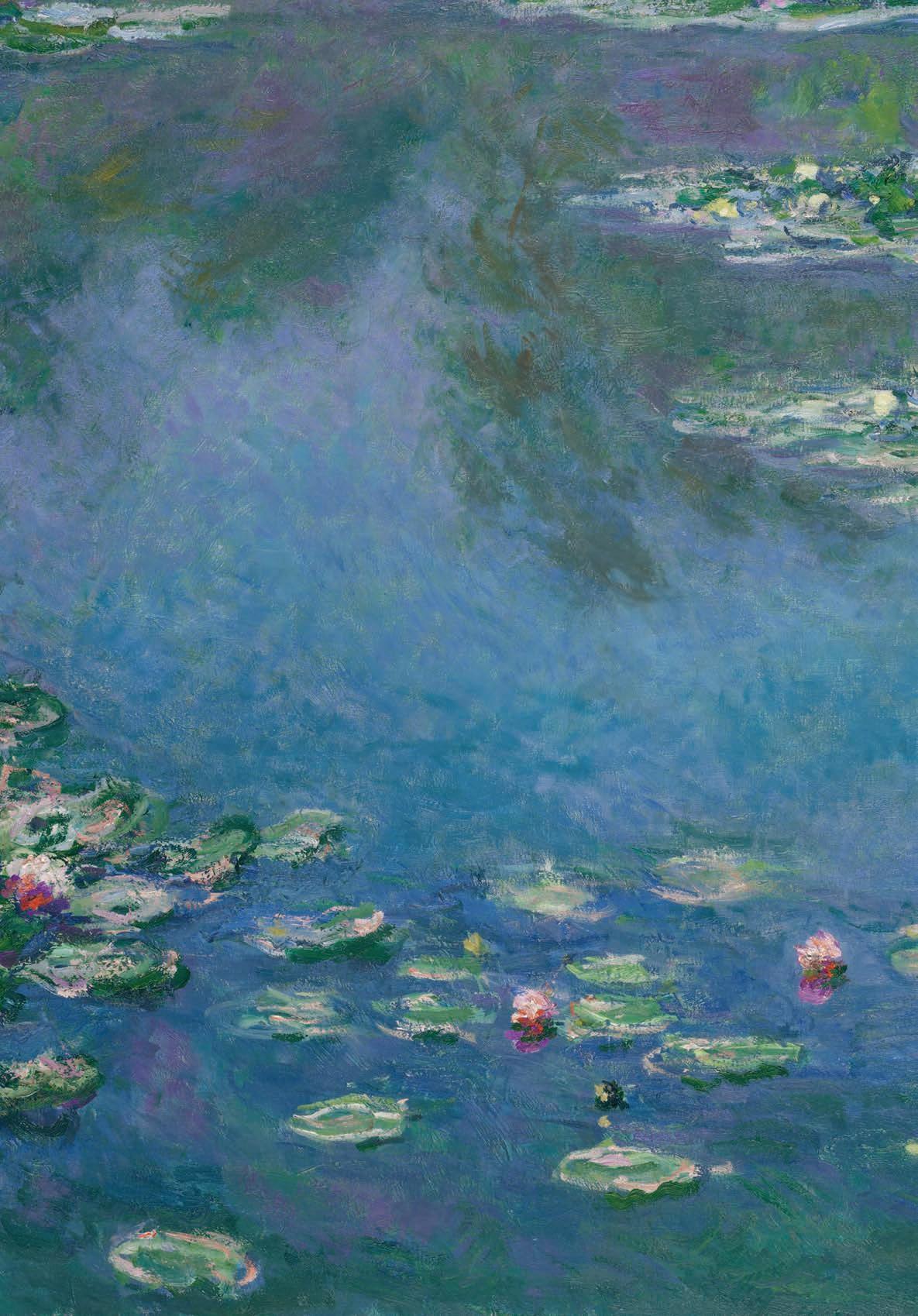
“The light constantly changes, and that alters the atmosphere and beauty of things every minute.”
CLAUDE MONET
The Musée de l’Orangerie will mark the centenary of Monet’s death this year with an exhibition that revisits his lifelong study of time. Monet’s paintings trace a steady shift towards an almost analytical approach to changing light and passing hours. The Water Lilies push this further, dissolving the moment into something continuous, where perception becomes a form of contemplation. Nearly forty works will be brought together to explore these phases, offering a renewed perspective on an artist whose pursuit of harmony, attention and presence continues to shape how we think about the conditions of a fulfilled life.
MONET, PAINTING TIME, MUSÉE DE L’ORANGERIE, PARIS.
30 SEPTEMBER 2026 TO 25 JANUARY 2027.

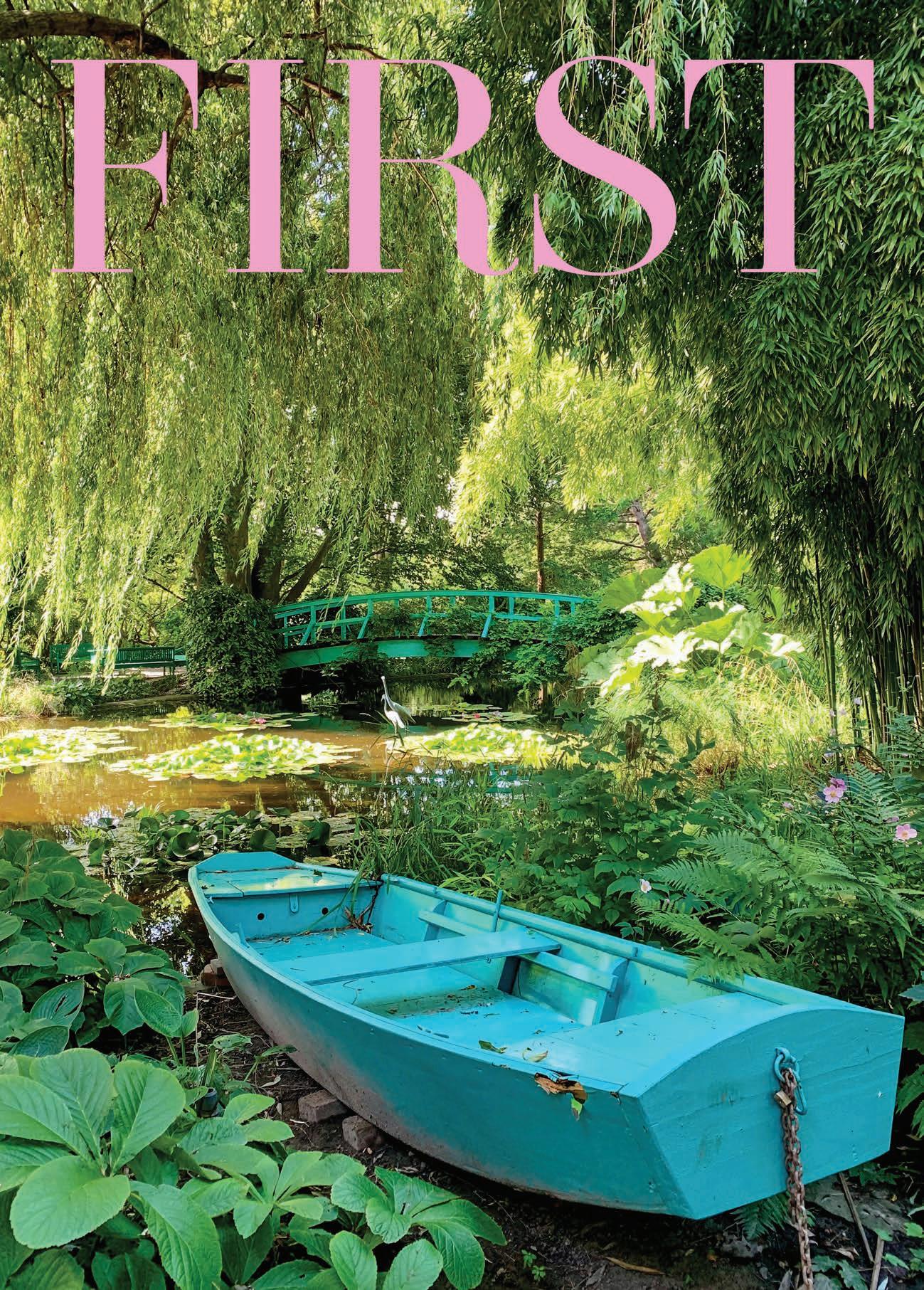
ON THE COVER: The Claude Monet Garden of Impressionism at Kagran School Gardens, Vienna, modelled on his
THIS PAGE: Water Lilies, 1906, Claude Monet. Oil on canvas. Mr. and Mrs. Martin A. Ryerson Collection, Art Institute of Chicago. Photo Art Institute of


8
LA DOLCE VITA
Villa San Michele, Florence. A Legendary Retreat.
20 INTERIORS
Bungalow Living. A Curated Sanctuary in the Black Forest.
36
ARTS &CULTURE
The Sagrada Família. Gaudí’s Vision Elevated.
45
ROLEX MIDDLE SEA RACE
Beauty, Challenge and Maritime Theatre.
57 WEALTH MANAGEMENT & RETIREMENT PLANNING
Educational Pension Planning.
Thinking Ahead: A Modern Guide to Retirement. The Behaviour Behind Building Wealth. Jesmond Mizzi on Evolving Wealth.
70 GASTRONOMY
2026 MICHELIN MALTA
The Michelin Guide, A Hundred Years Of Stars. Michelin Guide Malta 7th Edition, Stars Over the Islands. SPOTLIGHTS
Marsovin’s Cheval Franc Estate.
De Mondion, Mdina. Rosamì, Balluta Bay. AYU Traveller’s Kitchen, Gzira Seafront.
Al Sale, Xagħra, Gozo. Legligin, Valletta.
88 THIS IS WINE TASTING NOTES
Massetino 2020. Faiveley Bâtard-Montrachet 2017. Soldera 2015.

“And when I thought of Florence, it was like a miracle city embalmed and like a corolla, because it was called the city of lilies and its cathedral, St. Mary of the Flowers.”

Swann’s Way, Marcel Proust
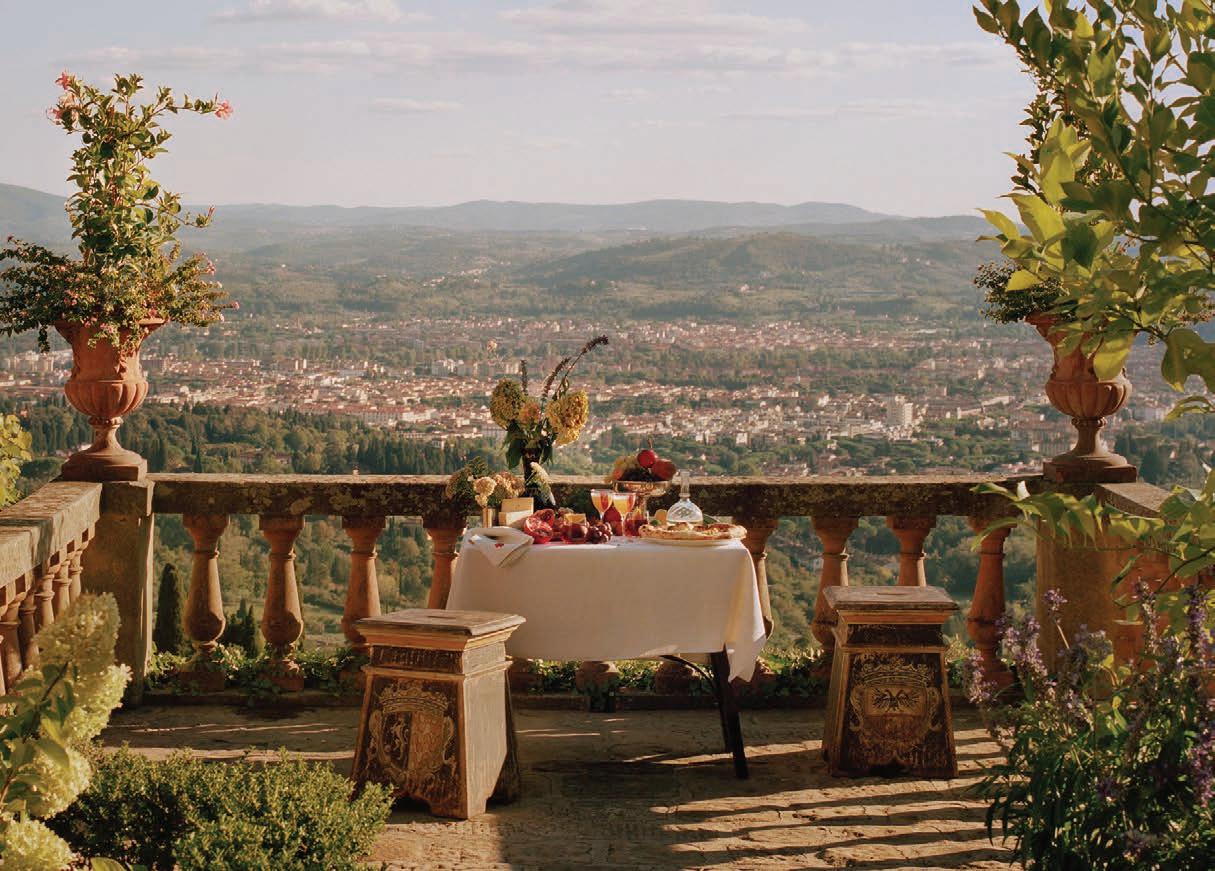
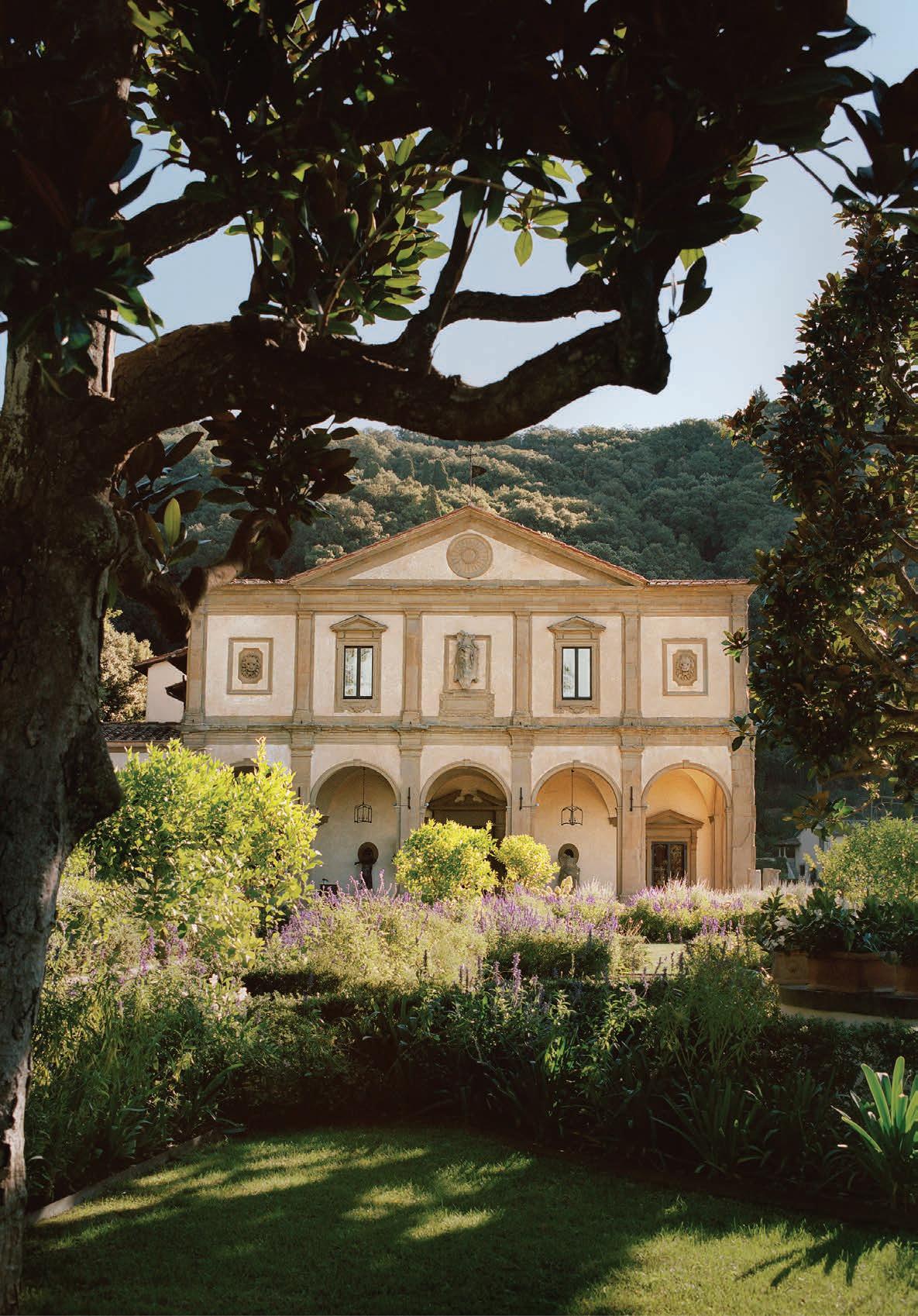
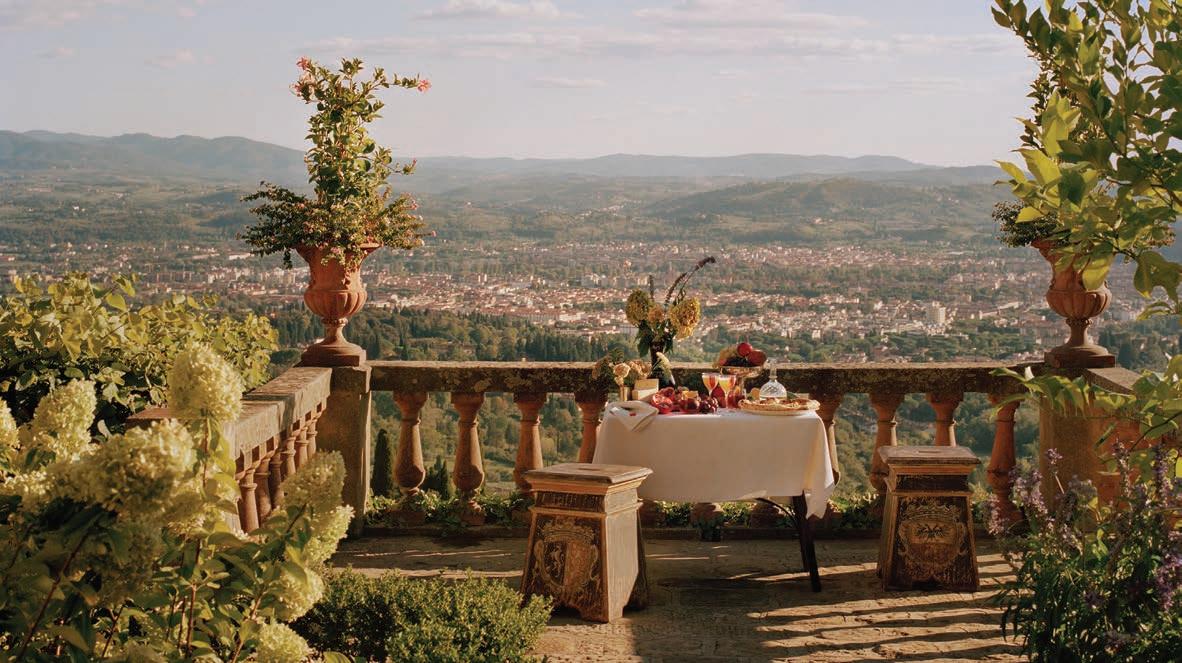
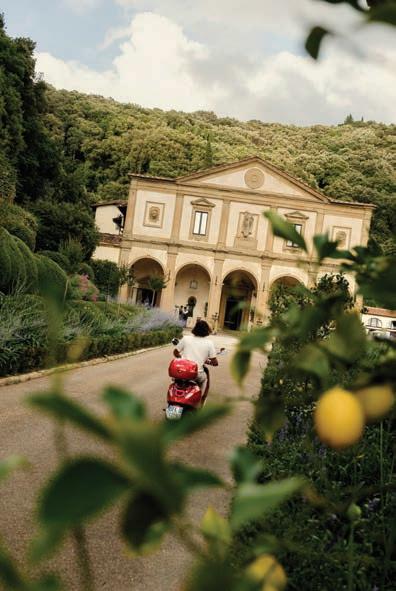
High in the hills of Fiesole, where the cypress lined slopes rise above Florence, Villa San Michele has a magnetic presence. Its 15th century Michelangelo-inspired façade, greets visitors with the poise of a Renaissance palazzo, while terraced gardens cascade towards the city’s domes and spires. This spring, the storied villa reopens after an 18 month renovation that highlights its architectural charm and deepens its relationship with the landscape that has shaped it for six centuries. Inspired by its storied heritage and idyllic hillside setting framing a picturesque vista, the hotel’s reimagination sees an emphasis on Tuscan craftsmanship, refined cultural curation and a harmonious connection to nature.
Photography courtesy Belmond.
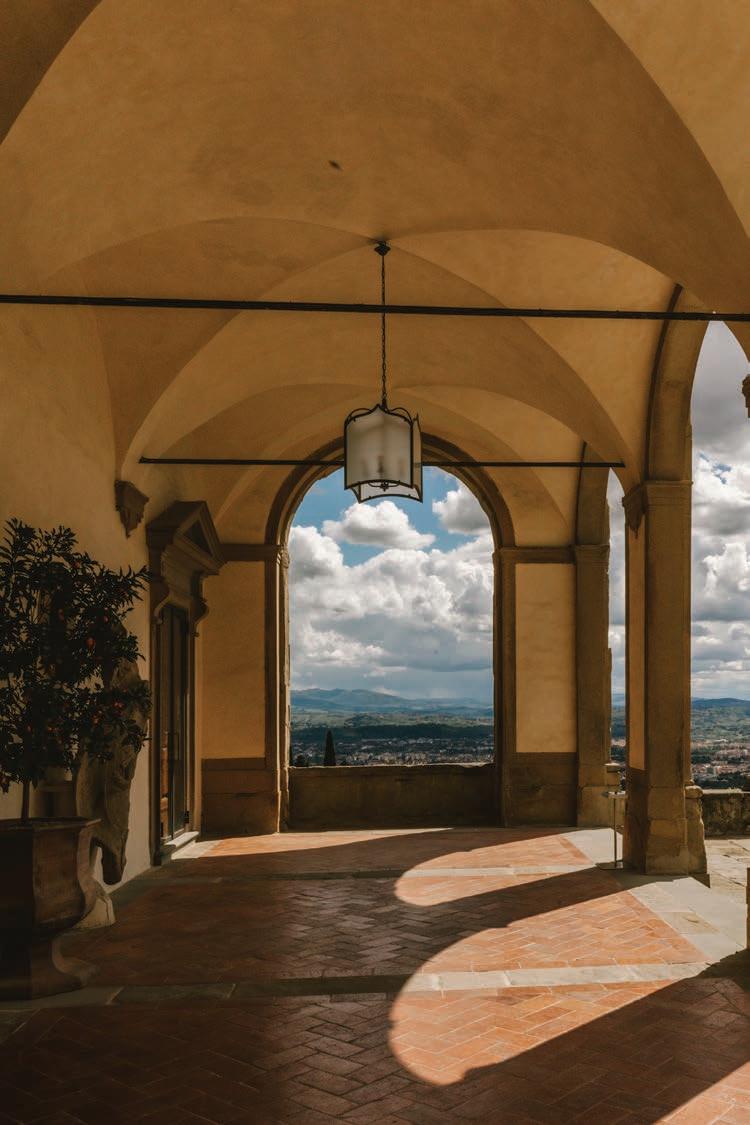
Once a 15th century monastery, the property still boasts its chapel, cloister, loggias, and frescoes, all lovingly preserved. The renovation emphasizes subtle elegance over drastic
change, letting the building’s history shape a modern take on Florentine craftsmanship. The outcome is a renewed atmosphere where the villa’s monastic roots blend seamlessly with its later role as a haven for aristocratic travelers, all while embracing a contemporary style.
The reimagined interiors, led by Luigi Fragola Architects in collaboration with Belmond’s design team, unfold across 39 rooms and suites in both the main building and the surrounding gardens. Fragola’s approach is rooted in a dialogue with the villa’s setting and the cultural rhythms of Florence. As he explains, “Each project is conceived with its own identity –in colour, composition and proportion –yet all share a common narrative: a continuous dialogue with nature, curiosity, memory and
imagination. These interiors do not merely evoke the Villa’s history; they interpret it, renew it and project it into the restless dynamism of Florence. Authentic materials, including Tuscan textiles, artisanal ceramics, marble, terracotta and wood, become the vocabulary of a contemporary language that reimagines the Renaissance ideals of beauty, rebirth and discovery.”
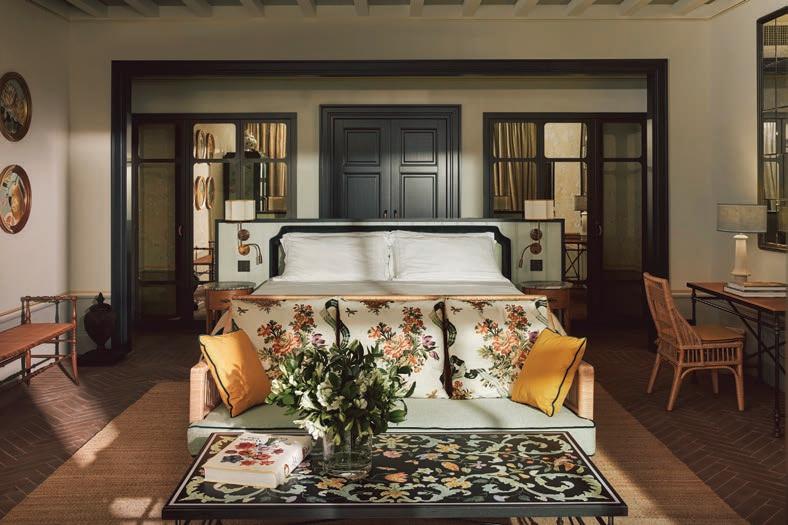
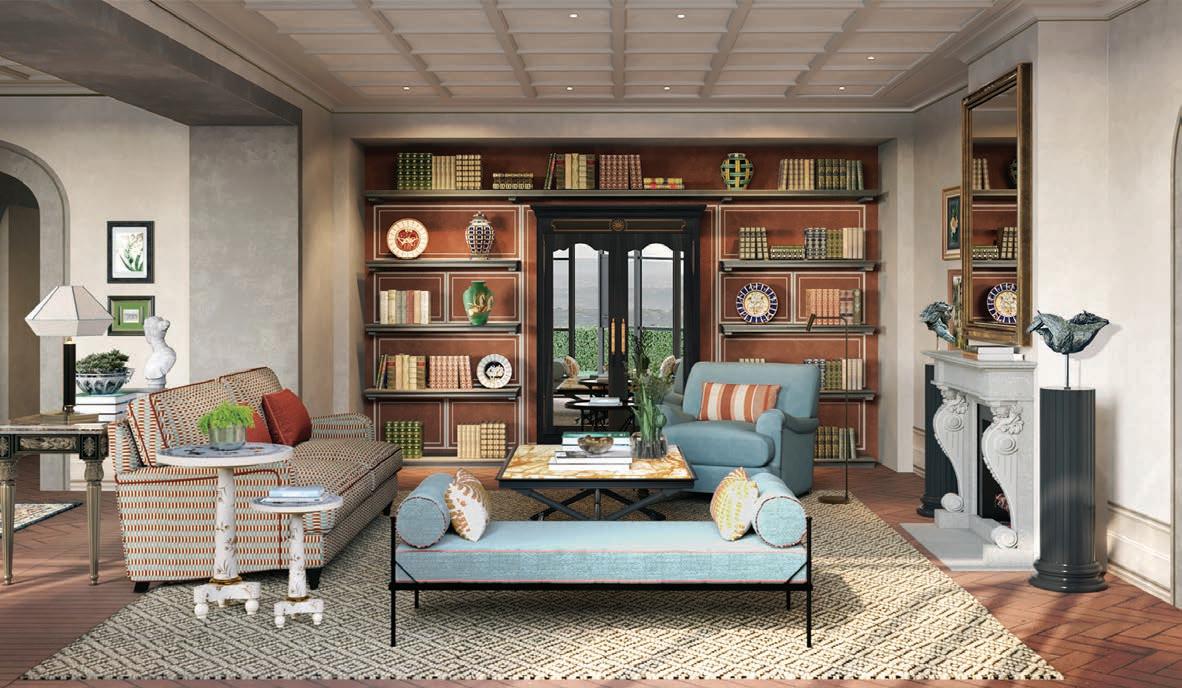
This philosophy is most vividly expressed in the three new signature suites. Limonaia, set within the former orangery, feels like a private Fiesole villa, complete with a personal library, curated artworks and a heated plunge pool
overlooking the gardens. The Grand Tour Suite, once Napoleon Bonaparte’s private residence, stretches across the entire first floor, its windows framing the same views that captivated 18th century travellers. Tuscan marble, neoclassical tapestries and antique furnishings create a residential atmosphere, softened by a chalk toned palette. Botanica, meanwhile, draws inspiration from the villa’s gardens and the surrounding woodland. Frescoed boiserie, scagliola tables by Florentine artisans Bianco Bianchi, and botanical textiles create a playful interplay between art and nature.

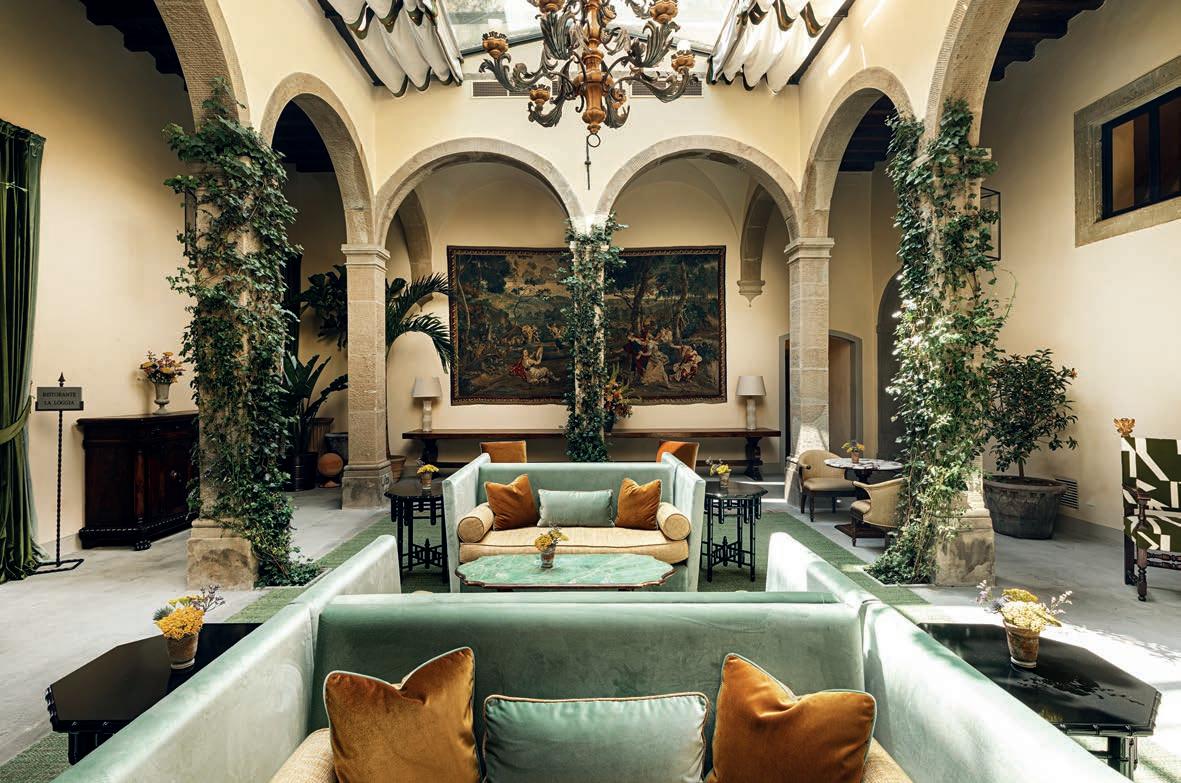
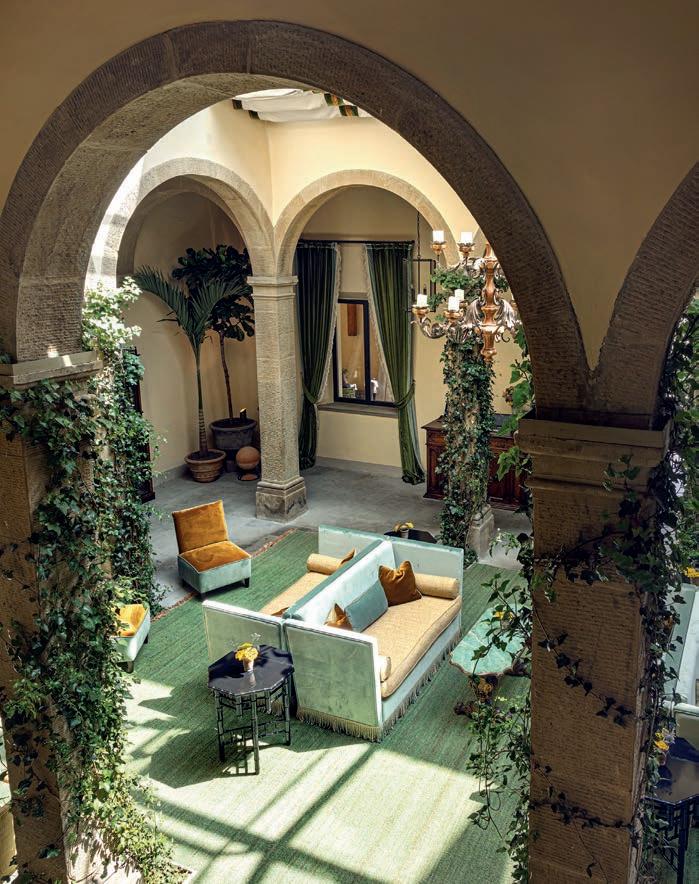
Beyond the signature suites, the remaining rooms and standalone retreats, including the Monastery Suite and Chapel Room, have been reworked with an emphasis on natural textures, antique pieces and artisanal detail. Handmade tapestries in the garden suites add a further layer of craftsmanship, reinforcing the villa’s connection to the region’s artistic traditions. The renovation also introduces a new chapter in wellbeing with the debut of the Villa San Michele Spa by Guerlain. Long associated with spiritual retreat, the villa now offers a dedicated space for restoration shaped by the French maison’s two century heritage. The spa’s entrance, a “Secret Garden” adorned with hand painted murals by Elena Carozzi, sets a contemplative tone. Inside, natural stone, onyx, straw marquetry and polished marble create a serene interplay of texture and light. Guerlain has developed exclusive treatments inspired by the monks who once lived here and by the Renaissance ideals that permeate the property. The result is an experience that feels true to the villa’s thoughtful, sensory, and deeply rooted character.
The gardens, redesigned by Luca Ghezzi Garden Design, extend this sense of immersion. Covering nearly a hectare, they follow the traditional aesthetics of Fiesole’s hillside estates while introducing new layers of colour and movement. Hidden nooks, fresh viewpoints and the return of Renaissance era blooms bring renewed vitality. Potted citrus trees, once prized by the Medici, punctuate the pathways, while irises, rambling roses and an abundant herb garden enrich the landscape. The surrounding woodland, known as the Leonardo woods after the artist’s early flying experiments here in 1506, adds a sense of depth and discovery. Guests can explore the grounds through curated outdoor activities designed to encourage reflection and engagement with the natural environment.
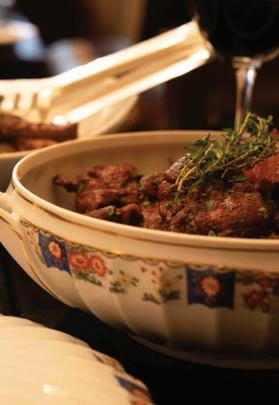
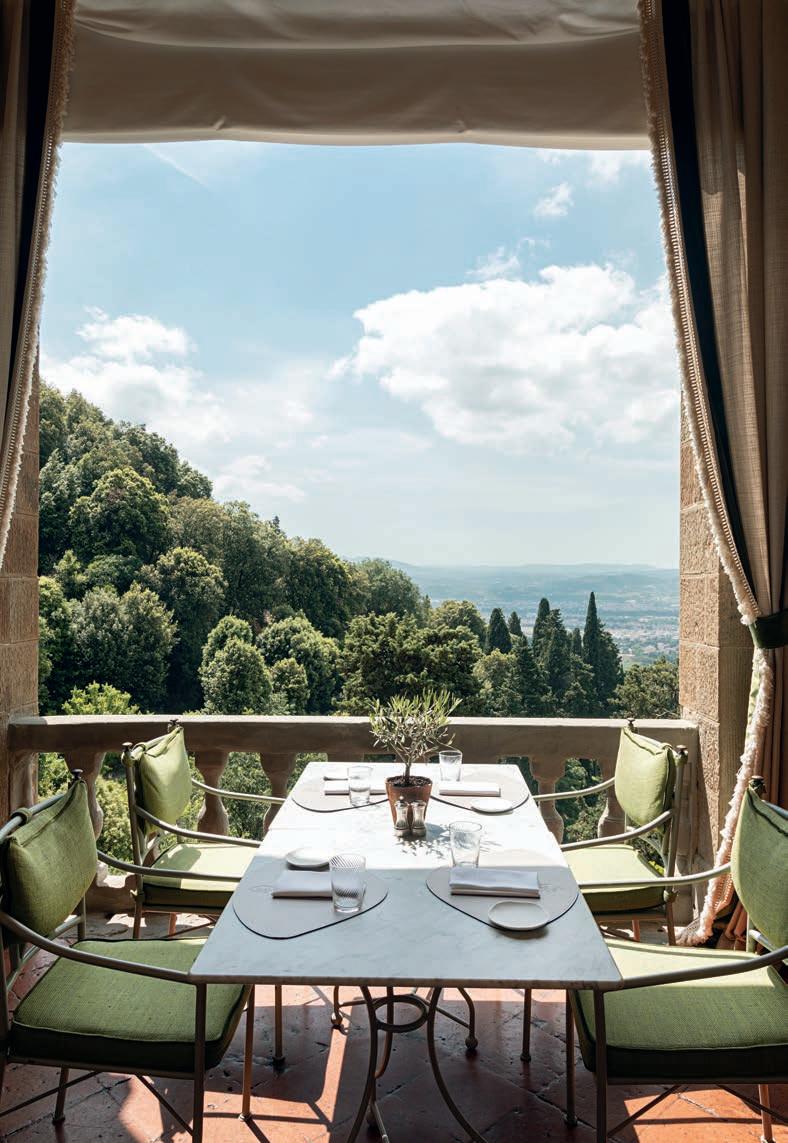
Dining at Villa San Michele has also evolved. Executive chef Alessandro Cozzolino introduces a gastronomic concept that draws on Tuscan produce and regional traditions, interpreted with contemporary finesse. Across the villa’s three dining spaces, each with views over Florence, guests can experience tasting menus shaped by research, creativity and a strong sense of place. The wine list spans regional favourites, Italian classics and international labels, offering breadth without overshadowing the cuisine.
Above right: Housed under the historical 16th-century loggiato, the bright and airy Ristorante San Michele, offers traditional Tuscan cuisine for a relaxed lunch or dinner with a view over Florence.
Belmond /
Aquila.
Throughout the renovation, Belmond has focused on preserving the villa’s architectural integrity while enhancing its relevance for modern travellers.
The hotel will now remain open from spring through winter, inviting guests to experience the property across the seasons, from the wisteria draped terraces of April to the crisp, contemplative atmosphere of late autumn.
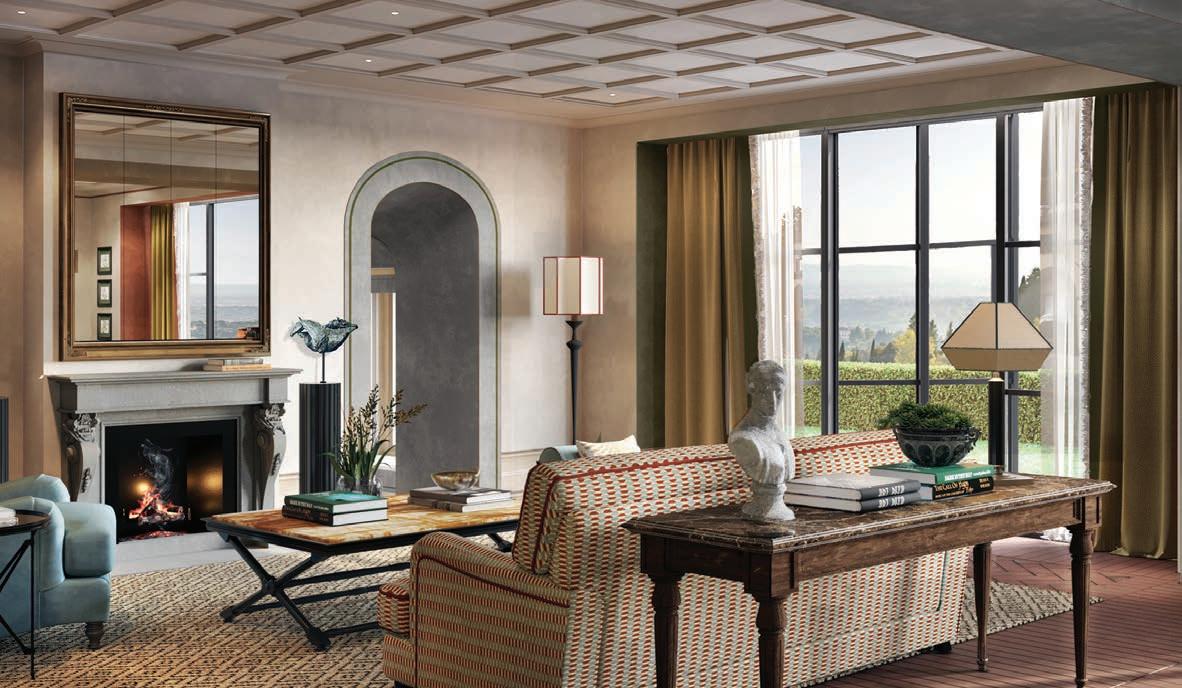

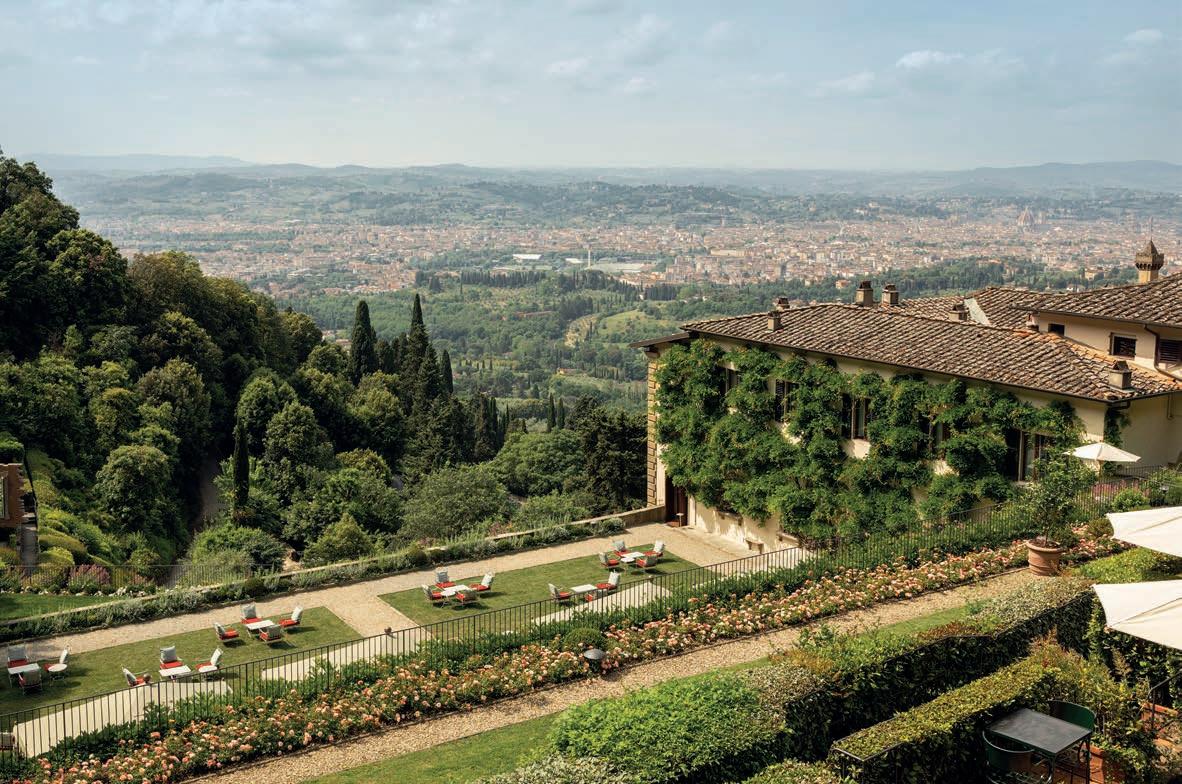
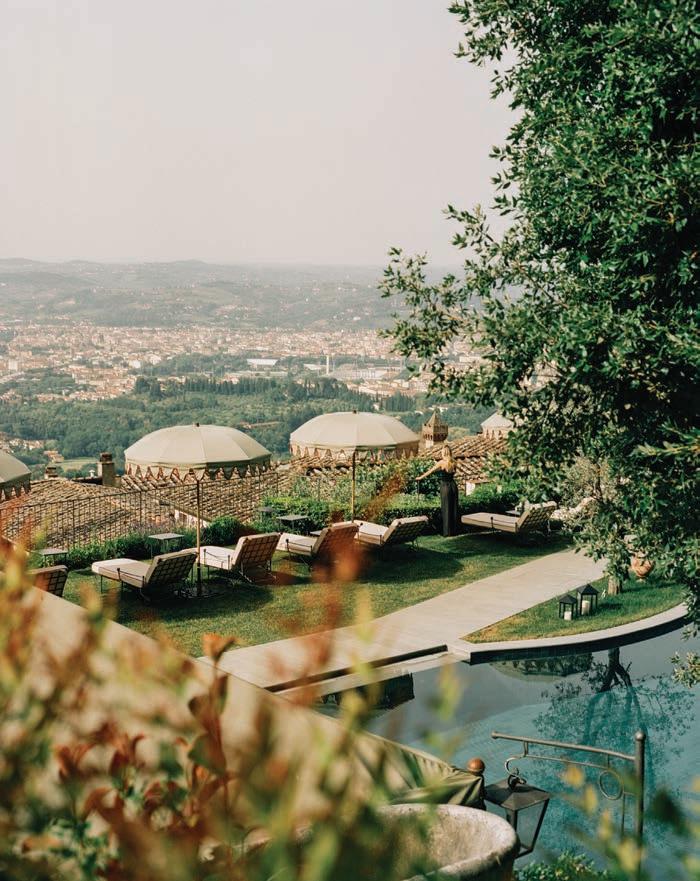
Villa San Michele has emerged from its transformation with sense of coherence. The Renaissance contours, the contemplative calm of its monastic past and the gardens that spill towards Florence remain central, while the interiors, spa and culinary direction bring a modern cadence. The result is a place where Florence’s artistic heritage, the craftsmanship of Tuscany and the villa’s own layered history converge in a setting shaped for thoughtful, unhurried travel.
ABOUT BELMOND Belmond has been a pioneer of luxury travel for over 45 years, building a passion for authentic escapes into a portfolio of one-of-a-kind experiences in some of the world’s most inspiring destinations. Since the acquisition of the iconic Hotel Cipriani in Venice in 1976, Belmond has continued to perpetuate the legendary art of travel. Its portfolio extends across 24 countries with 50 remarkable properties that include the illustrious Venice Simplon-Orient-Express train, remote beach retreats like Cap Juluca in Anguilla, Italian hideaways such as Splendido in Portofino, or unrivalled gateways to world natural wonders such as Hotel das Cataratas inside Brazil’s Iguazu National Park.

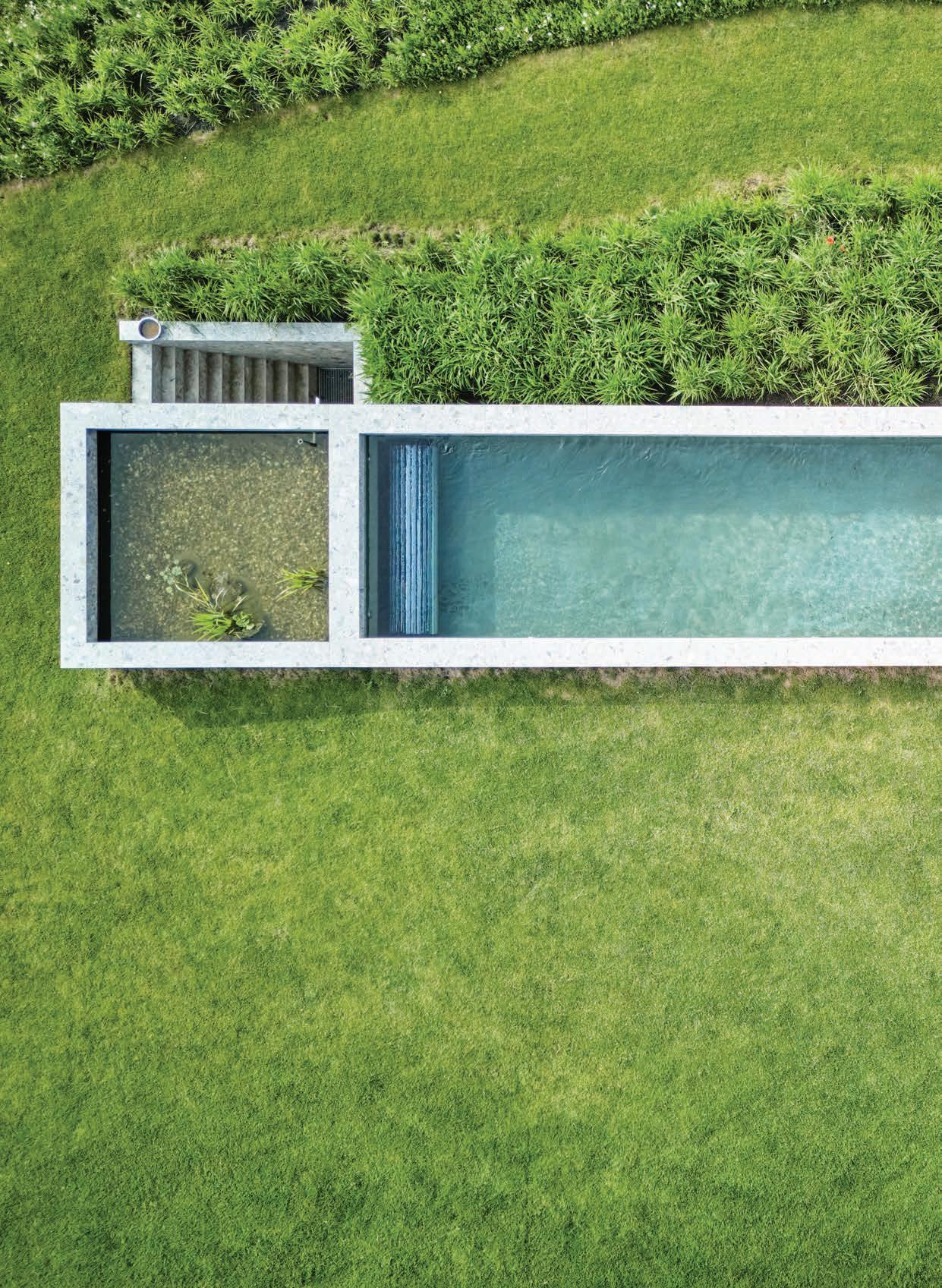
COUNTERPOINT HOUSE –BLACK FOREST

A contemporary bungalow in the Black Forest becomes a personal retreat, where IPPOLITO FLEITZ GROUP’s expressive, material-rich interiors meet THOMAS FABRINSKY ARCHITEKTEN’s architectural precision. The result is a home shaped by bold design choices, sculptural objects and a seamless dialogue between landscape, architecture and the client’s evolving sense of style.
Photography Philip Kottlorz, courtesy Ippolito Fleitz Group –Identity Architects.

In the Black Forest, where dense woodland gives way to pockets of open terrain, a contemporary bungalow has taken shape as the dream home of a successful entrepreneur returning to his hometown. The plot was chosen and the architecture took shape while his business life continued at full pace. Only after stepping back from day-to-day
business did he finally have the time to consider how he wanted to live, and the kind of environment that would support the next chapter. It was at this moment that Ippolito Fleitz Group joined the project, guiding the interior design with a sensitivity to both the architecture and the client’s evolving sense of self.
The building, designed by Thomas Fabrinsky Architekten, is conceived as a contemporary bungalow with a strikingly linear presence. Four garages
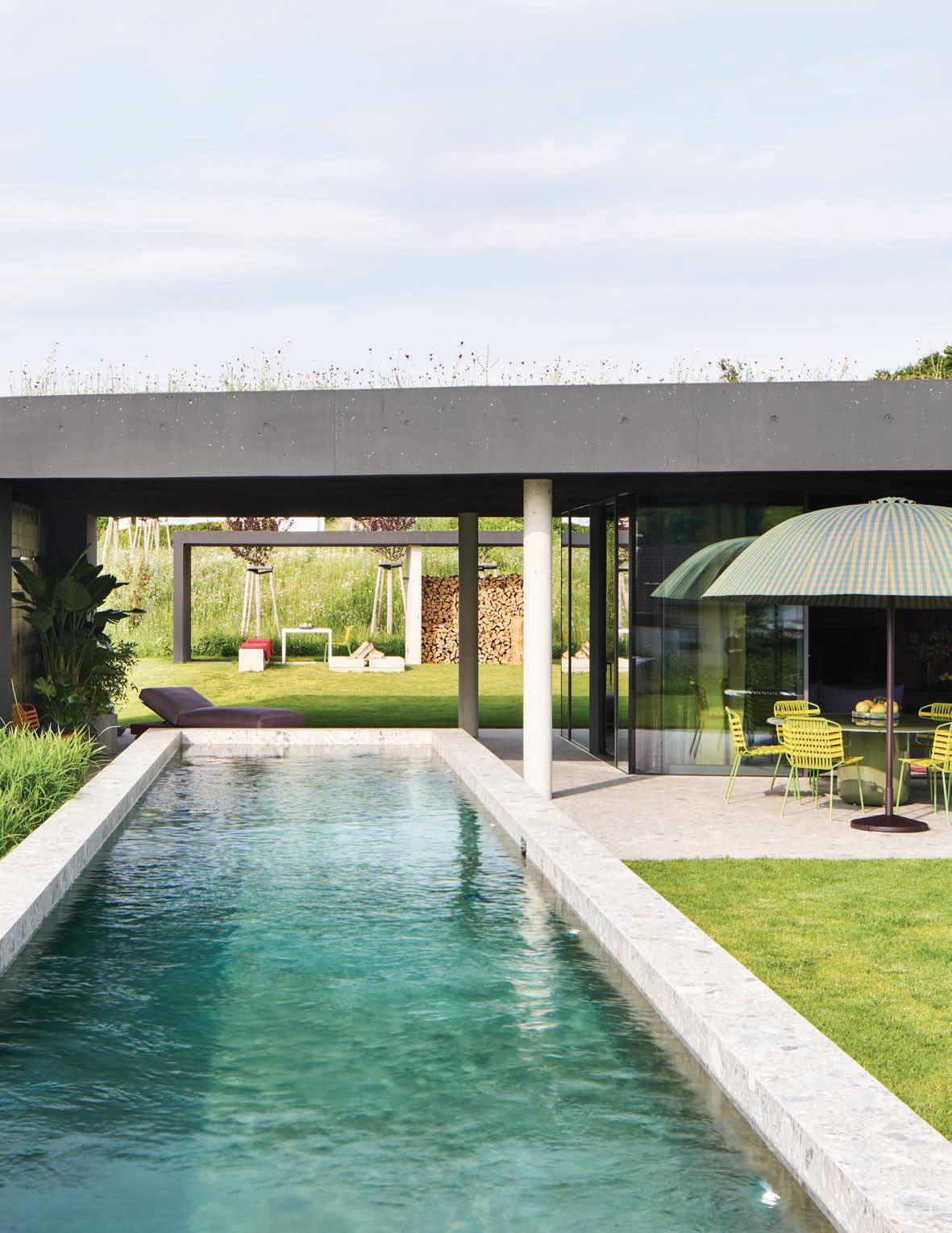
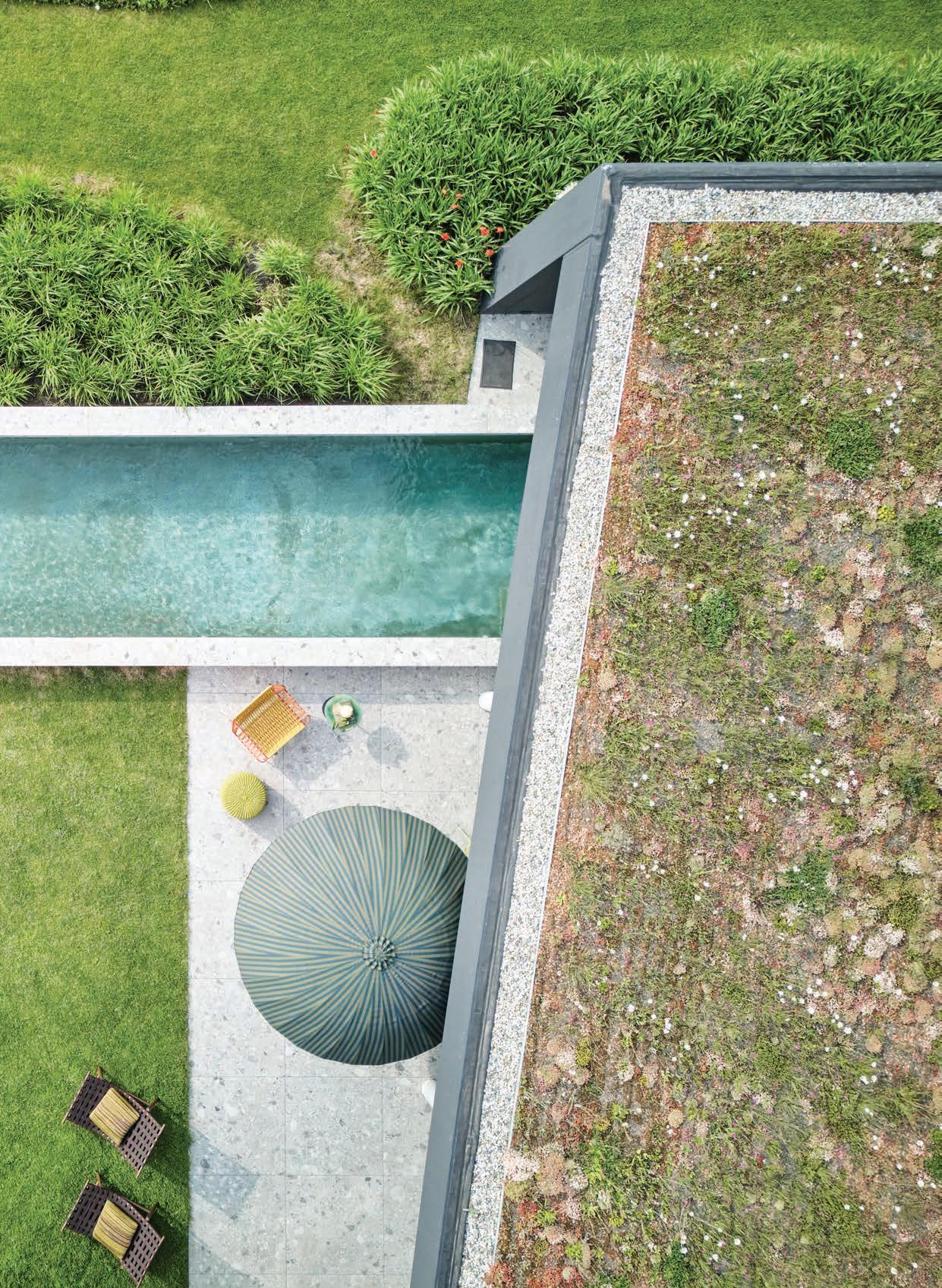
accommodate the client’s car collection, while a lap pool, expansive glazing and barrier-free access anticipate long-term comfort. The architectural language is defined by exposed concrete, stripped of conventional façade details, forming a crisp, angular volume. The decision to render the structure in black gives it a composed, almost meditative presence in the landscape, allowing the surrounding greenery to take visual precedence.


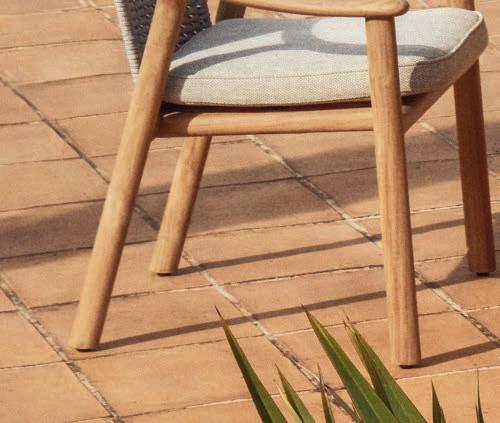
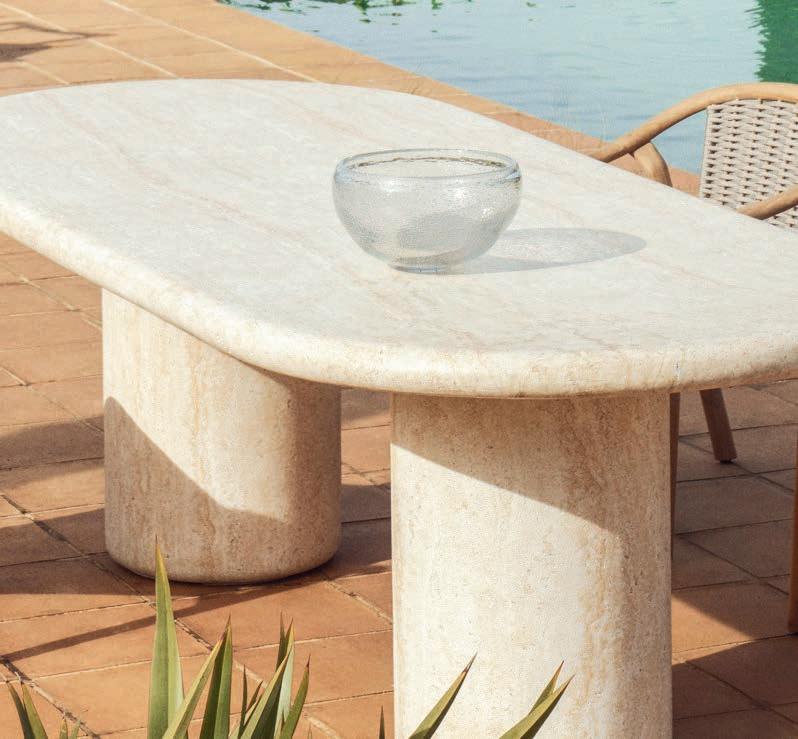
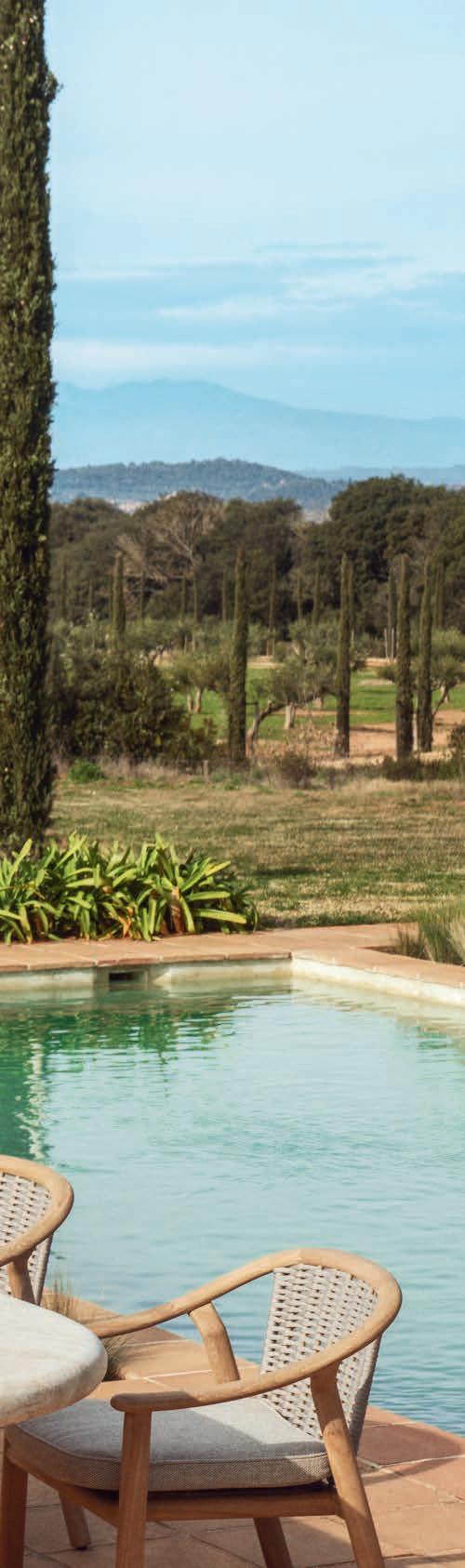

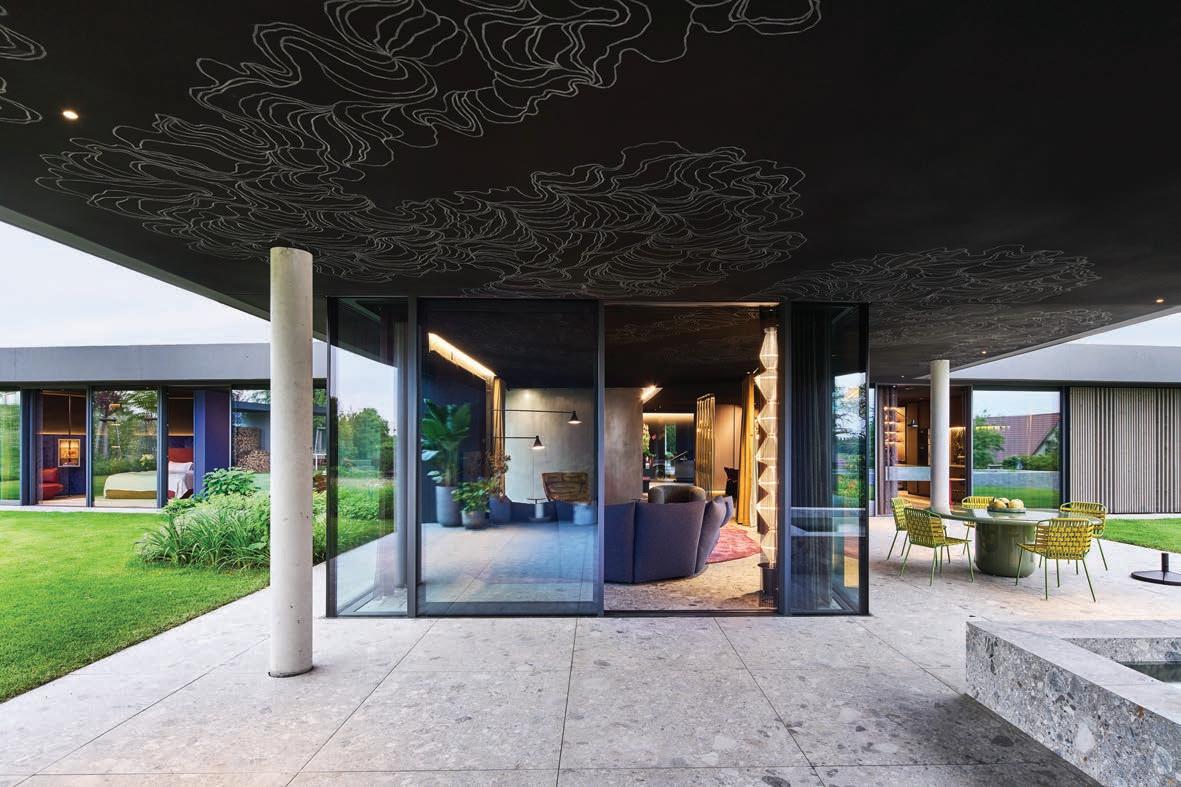
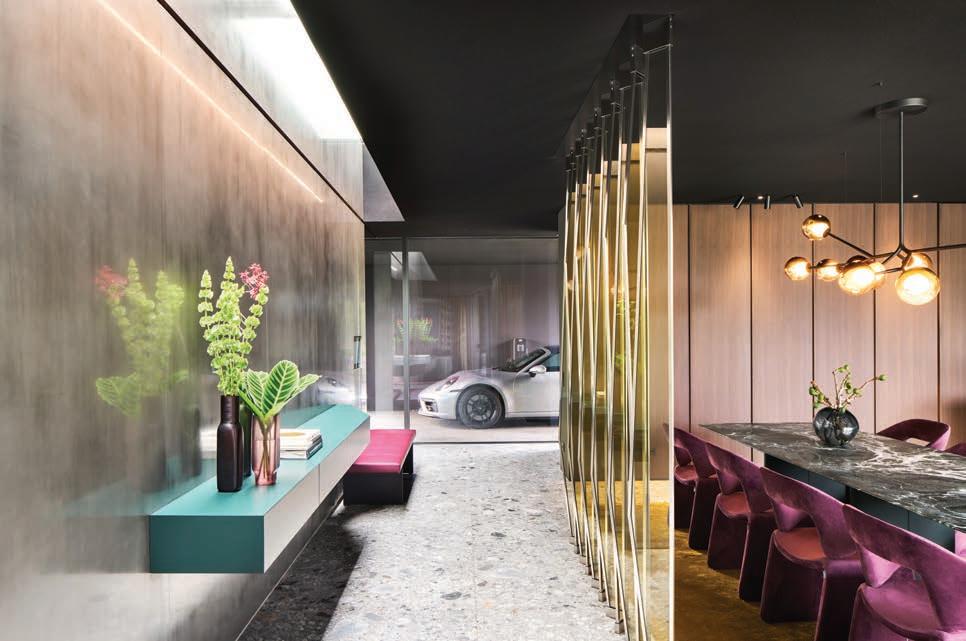
Above: The building’s crisp geometry frames four distinct outdoor zones, each with its own atmosphere and function. In the projecting lounge, floor to ceiling glazing opens the interior, creating a space suspended between indoors and out. Below: The building, designed by Thomas Fabrinsky Architekten, is conceived as a contemporary bungalow with a strikingly linear presence. Four garages accommodate the client’s car collection.
The plan unfolds as a cross-shaped composition, dividing the exterior into four distinct outdoor zones: the entrance and driveway, a
guest area, a sheltered garden with a fireplace, and the main garden with its terrace and pool. The garages occupy the north-south wing, while the carport and covered terrace run eastwest. All functions sit on a single level, ensuring seamless, barrier-free movement throughout.



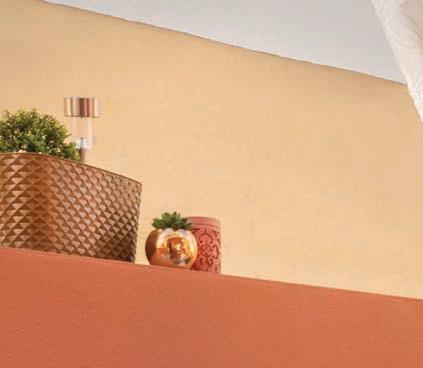



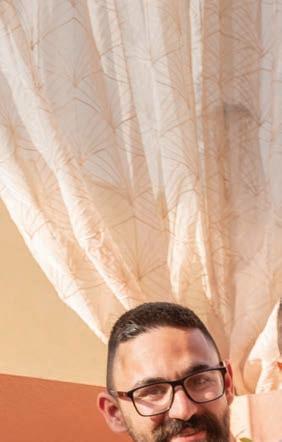







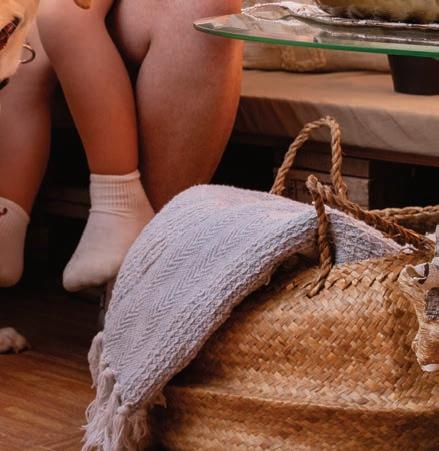
“We chose this copper colour for the terrace because we find it relaxing and feel that it has a Mediterranean vibe that fits well with the space. My partner and I did everything ourselves over three days, from choosing the colour and painting the walls to setting up and decorating it as a cosy barbecue area where we look forward to hosting family and friends a lot this summer!
Dylan Agius


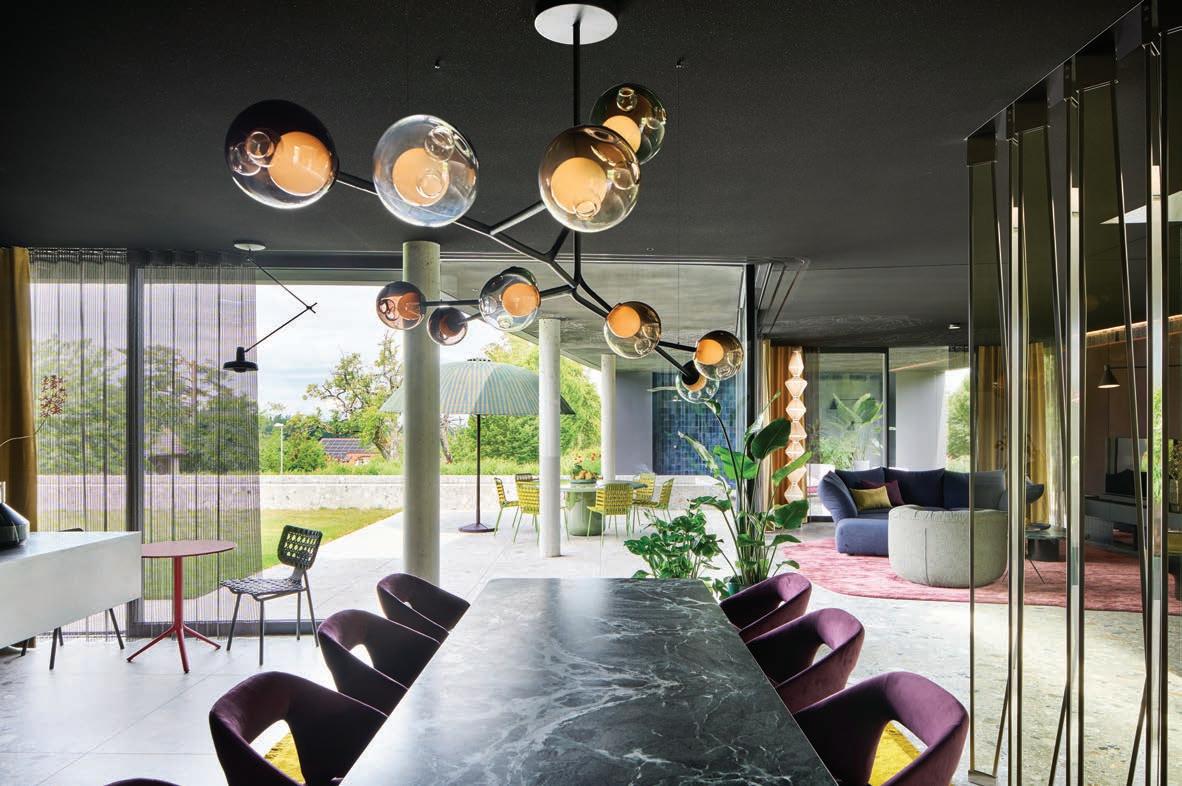
Approaching the house, a wall of timber slats leads towards the covered entrance. Crossing the threshold, the interior opens into a continuous spatial sequence defined by a restrained palette and a strong sense of cohesion.
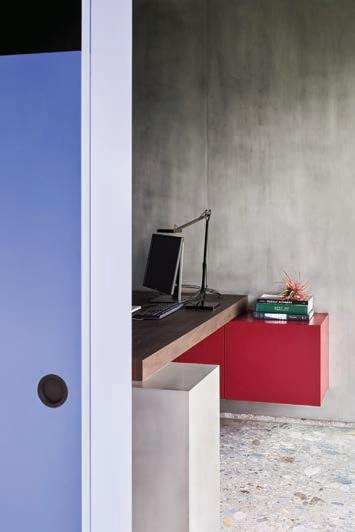
Floors and walls are clad in the same stone tile, creating a calm, uninterrupted surface. Black
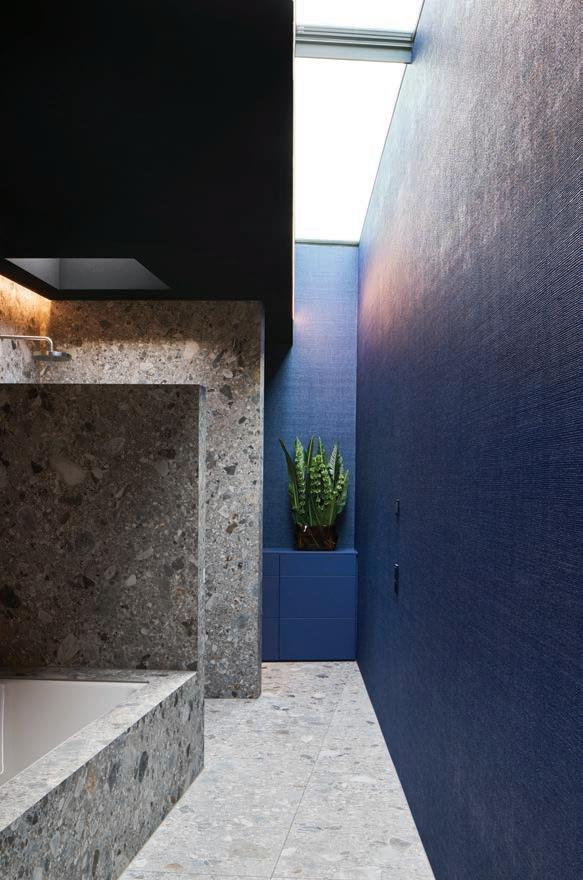
acoustic ceilings recede into the background, softening the volume and allowing daylight to take centre stage. Frameless skylights draw light down the walls, while the floor-to-ceiling glazing is reduced to the thinnest possible profiles. Inside and outside share the same flooring, and even the pool carries the same surface, reinforcing the architectural continuity. The black ceilings extend outdoors, further dissolving the boundary between interior and landscape.
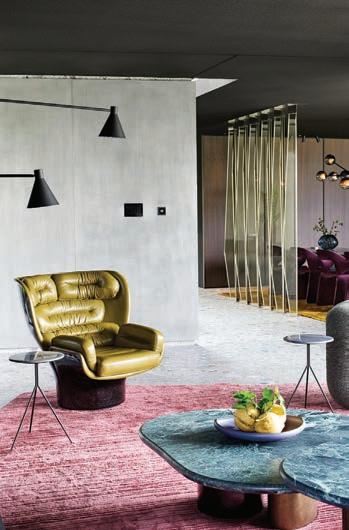








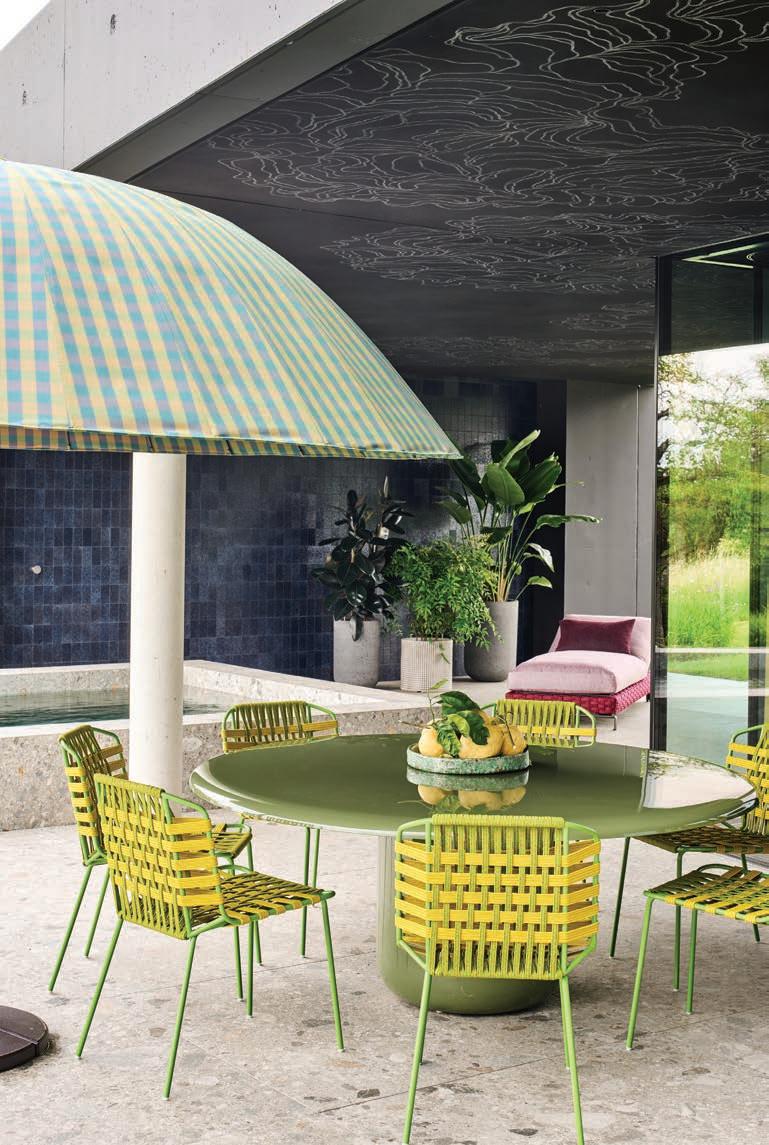

The pool, cast in exposed concrete, is narrow and elongated for swimming, beginning beneath the covered terrace and stretching outwards to follow the natural topography. Its height is calibrated so that one can sit directly at the water’s edge, creating a subtle connection between body and landscape.
When the time came to shape the interiors, the client approached the process with patience and curiosity. Working closely with Ippolito Fleitz Group in their Material Lab, he discovered a growing affinity for bold colour, expressive objects and finely crafted materials. What began as a practical exercise evolved into a personal exploration of taste, texture and atmosphere.
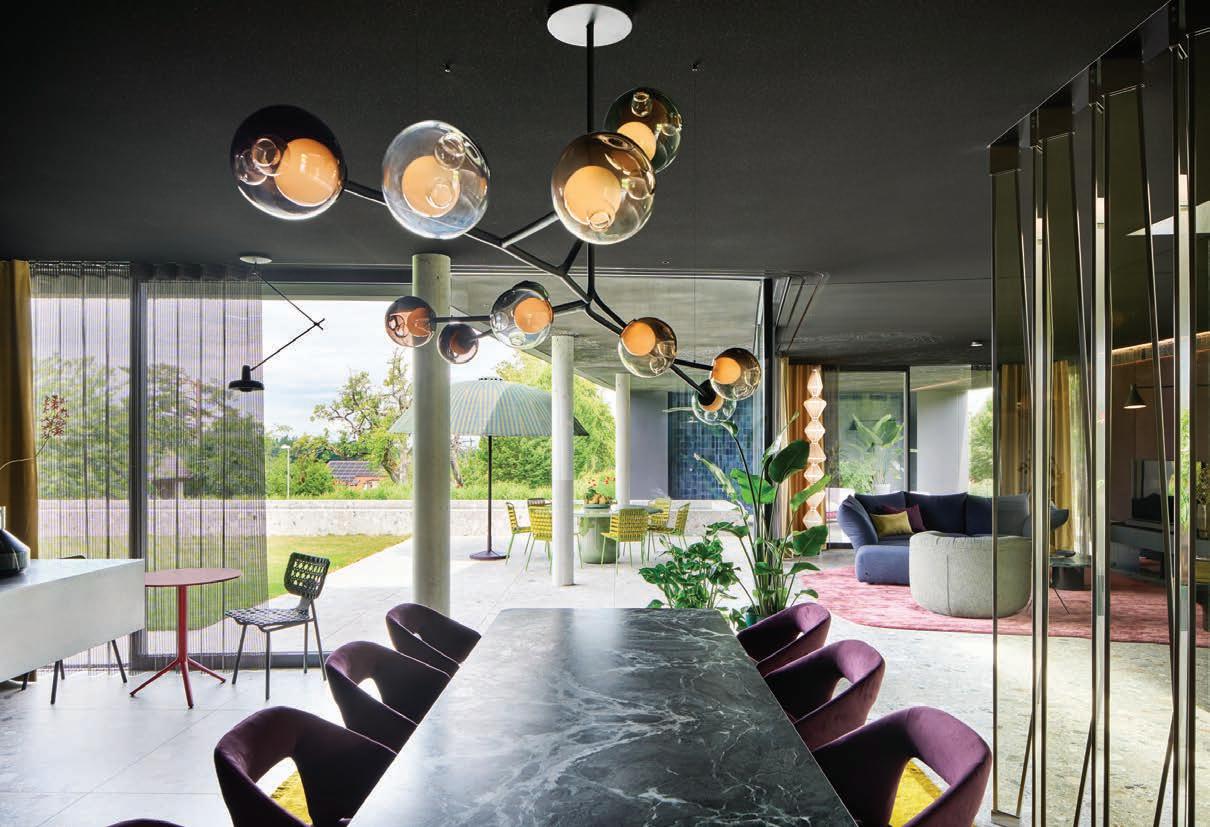
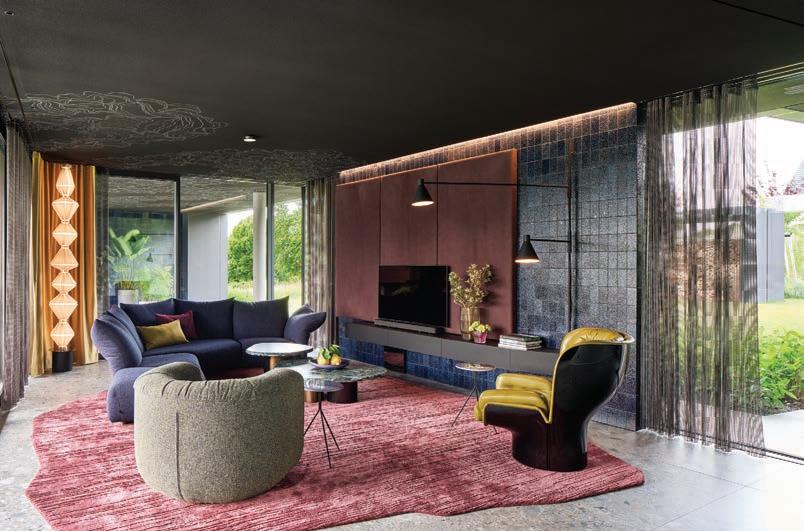
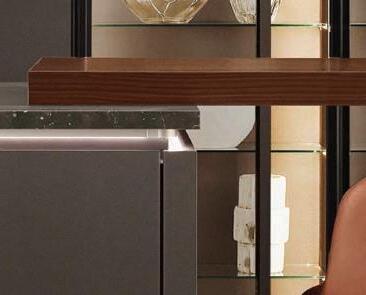
The resulting interior is open-plan, with zones that flow into one another while maintaining distinct identities. The black ceiling acts as a unifying element, setting a dramatic backdrop against which sculptural pieces take on a heightened presence. Furniture, lighting and objects are treated almost as characters within the space, each defined by its form, colour and materiality. Glossy surfaces, matte finishes and softly absorbent textures interact with daylight in shifting ways, subtly altering the perception of depth and scale throughout the day.
Left: Interior and exterior share the same stone flooring, creating a seamless transition from living spaces to terrace and pool. A black acoustic ceiling with fine graphic linework introduces a subtle rhythm that unifies the lounge, terrace and pool area.
Right: A covered terrace creates a sheltered threshold between the interior and the pool, offering a shaded vantage point over the garden.
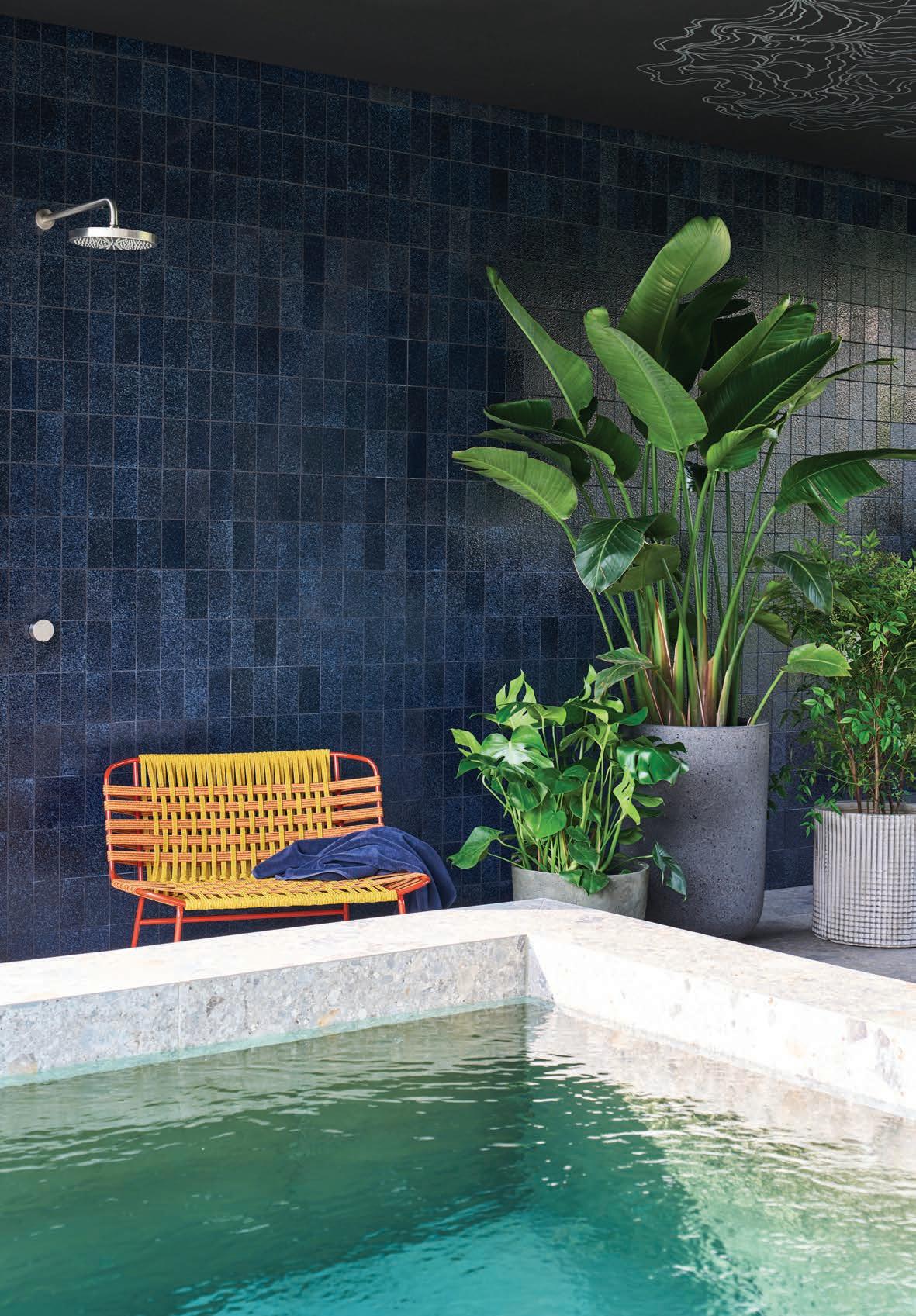
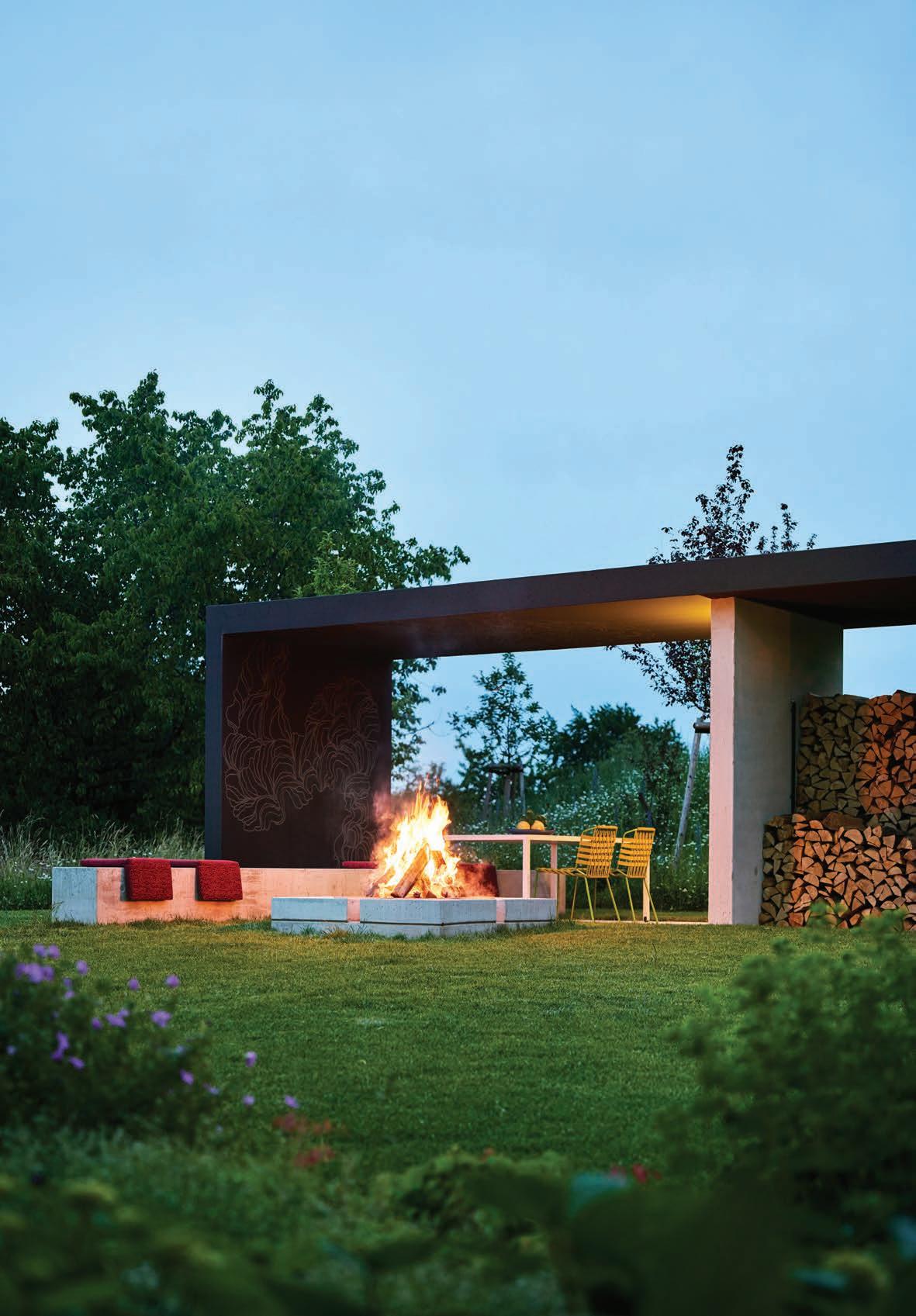
In the projecting lounge area, the architecture reaches out into the landscape, creating a space that feels suspended between interior and exterior. A continuous material language reinforces this connection, while a graphic ceiling design introduces a layer of visual rhythm. The finely drawn linework extends from the lounge to the covered pool area and onwards to the outdoor fire pit, which sits slightly apart from the main volume. The graphic motif, animated and seemingly spontaneous, provides a counterpoint to the strict geometry of the glazing and the disciplined lines of the pool.












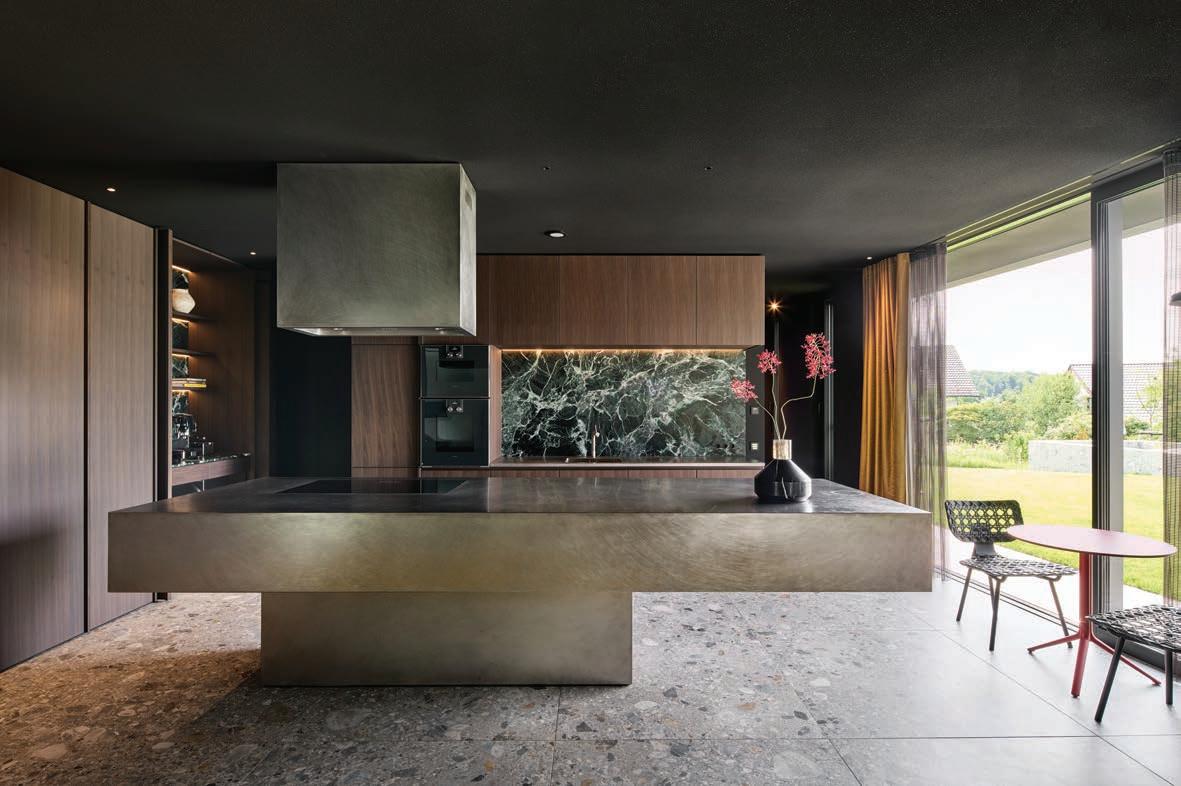
Above: Sculptural pieces act as focal points, their forms and colours standing out against the restrained architectural backdrop. A consistent palette of stone, black ceilings and refined finishes creates a calm, expansive spatial experience.
Left: Frameless skylights draw natural light down the walls, enhancing the home’s sense of openness and flow.
Throughout the home, the interplay of natural and artificial light shapes the experience of each room. Surfaces respond differently depending on the time of day, guiding the eye along edges, planes and transitions. The interiors introduce a sense of tactility and warmth that reflects the client’s personal journey. The collaboration between the client and Ippolito Fleitz Group unfolded gradually, with ideas tested, refined and expanded over time. What emerged is a home that embraces expressive colour, sculptural form and a rich layering of materials. The architecture provides the framework; the interiors bring nuance, sensuality and character.


















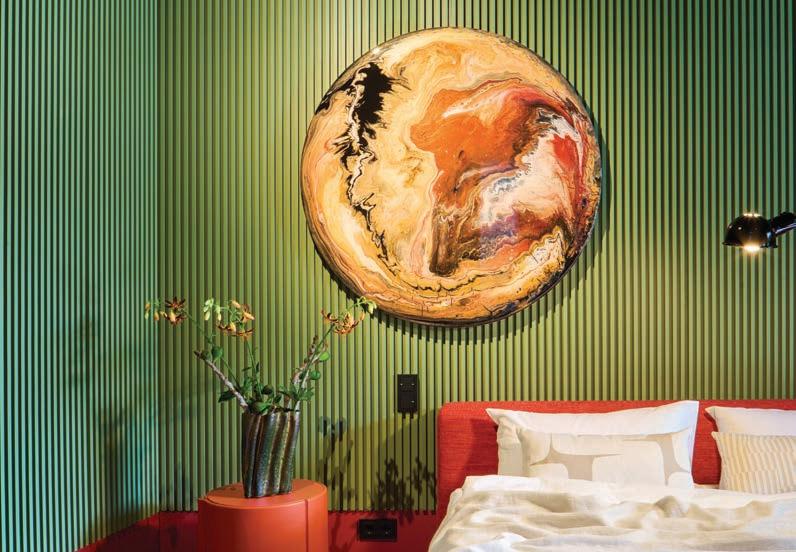
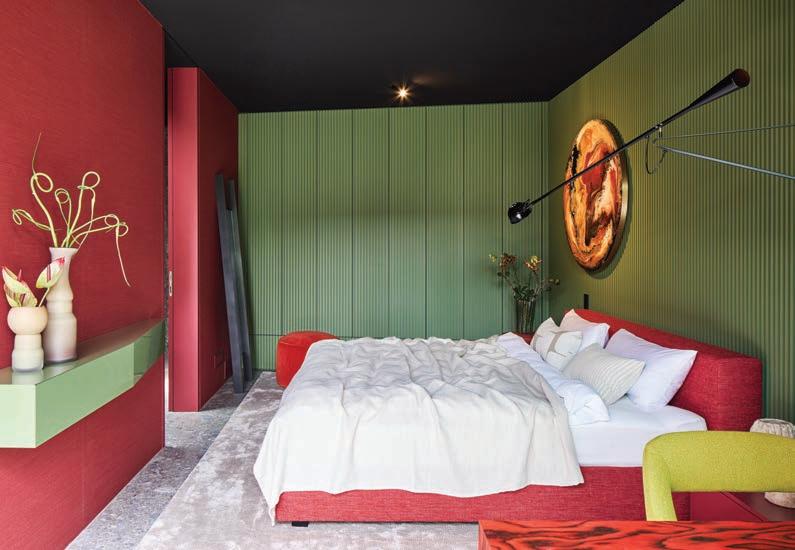
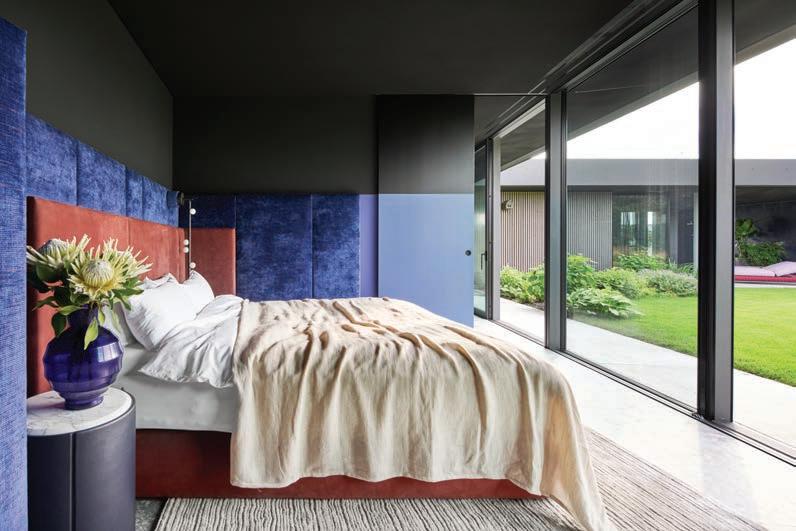
Ippolito Fleitz Group and the client embarked on a journey in design, and the end could not have been anticipated at the outset. Together, they explored and refined the client’s growing affinity for expressive objects and bold colour. The result is a confident, sensual space defined by layered surfaces, rich materiality and a strong spatial presence. A dream home that is a true, authentic expression of the client’s identity.
INTERIOR DESIGN
IPPOLITO FLEITZ GROUP.
TEAM: Lana El Khouri, Gunter Fleitz, Lisa Forster, Jana Grubic, Axel Knapp, Maria Carmela Padol, Eylül Özyar.
PARTNER
THOMAS FABRINSKY
ARCHITEKTUR –Architecture, TEXTURWERK –Ceiling painting.
PHOTOGRAPHY
Philip Kottlorz.
This page: The interiors reflect a collaborative journey between the client and Ippolito Fleitz Group, shaped by a growing appreciation for expressive colour and crafted materials Each object and surface contributes to a layered, sensual interior language that mirrors the client’s personal evolution.












“The straight line belongs to Man. The curved line belongs to God.”
ANTONI GAUDÍ
This February, Barcelona witnessed a defining moment as the final element of the Sagrada Família’s central tower was set in place, elevating the basilica to its full height of 172.5 metres. After 144 years of construction, Gaudí’s most ambitious project has reached the summit he imagined, a convergence of design, craftsmanship and devotion now visible across the city.
The Sagrada Família has occupied a singular position in the cultural imagination for over a century. Construction began in 1882, and Gaudí assumed control of the project the following year, reshaping an initially neo-Gothic scheme into a structure that would redefine Catalan Modernisme. His
approach fused Gothic lineage with radical geometry, replacing flying buttresses with angled interior columns and vaults shaped by hyperboloids and parabolic curves. The result was a new architectural language, one that sought structural efficiency while shaping light with extraordinary precision.
For decades, the basilica was an open-air construction site, its skeletal towers rising slowly above Barcelona’s Eixample grid.
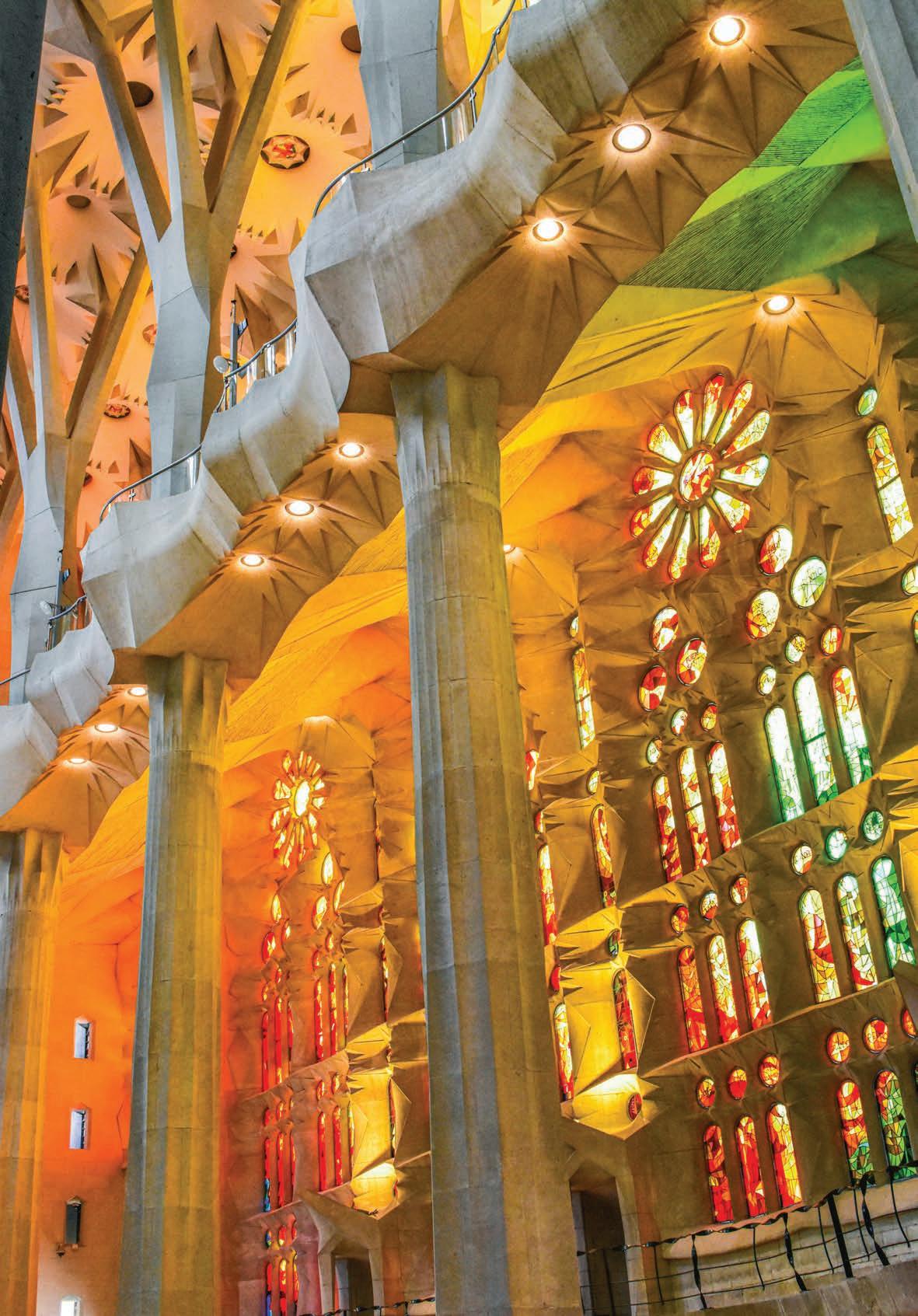
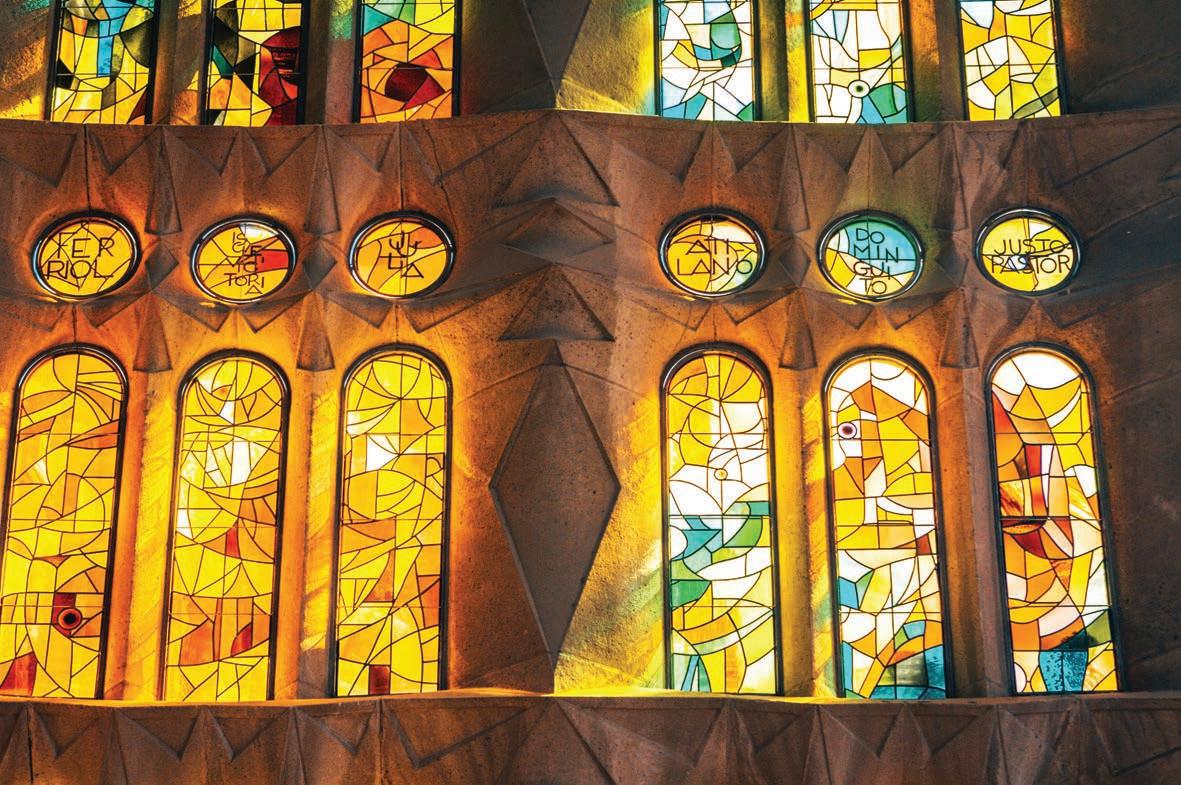
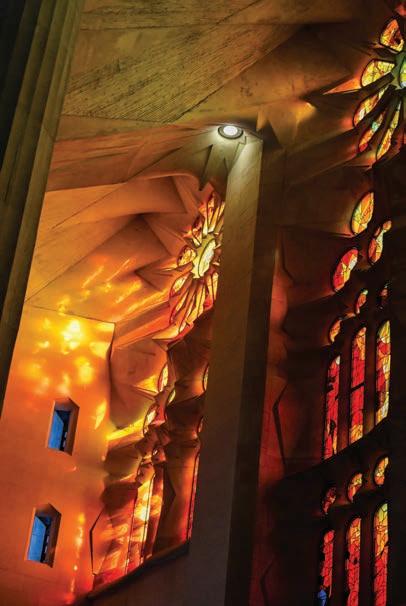
Generations of craftsmen worked around the steady flow of visitors whose entrance fees funded the ongoing works. Only in the past fifteen years, with the completion of the interior, did the building begin to feel like a functioning church rather than a perpetual work in progress. Inside, the forest of branching columns, the luminous stone surfaces and the stained-glass windows that wash the space in shifting colour are emblematic of Gaudí’s vision.

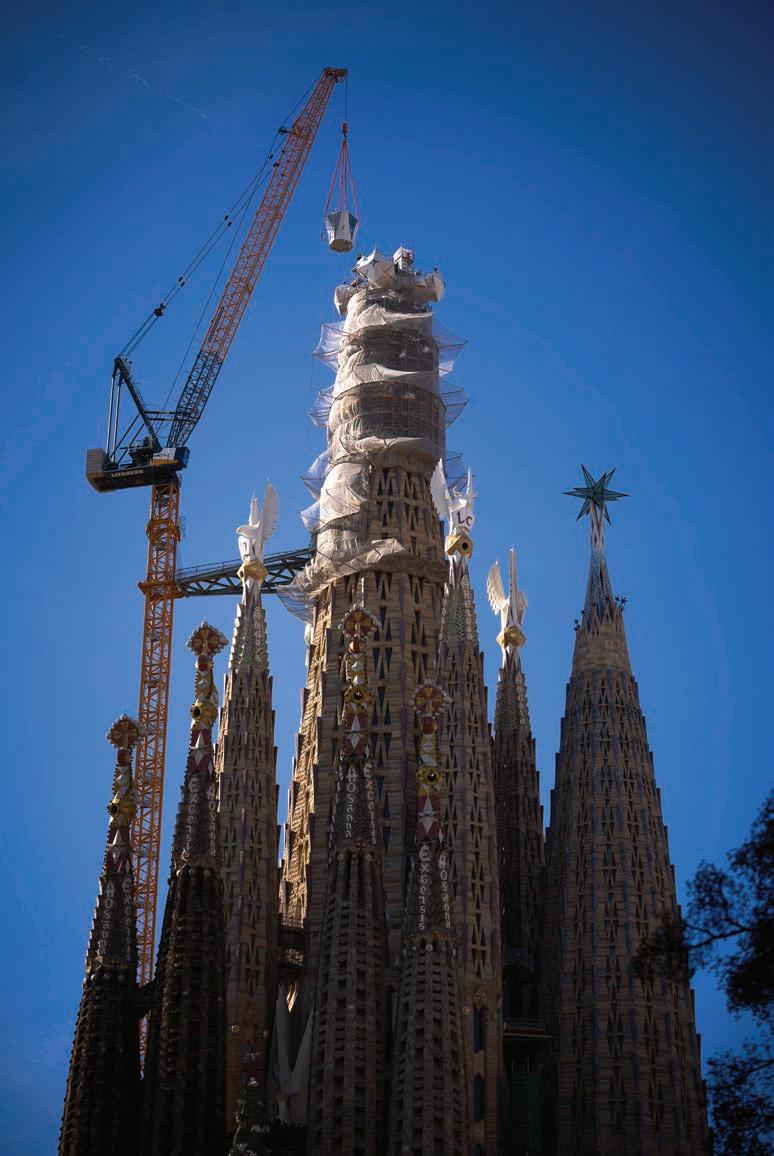
The recent installation of the upper section of the 17-metre-high steel and glass cross this February marks a decisive step towards the project’s completion. The cross crowns the Tower of Jesus Christ, the tallest of the basilica’s eighteen planned towers, and its four arms are designed to be recognisable from every direction.
Once the scaffolding is removed this summer, the tower will reveal its full presence above the transept.
Discussions continue with the city regarding Gaudí’s original intention to illuminate the cross with beams of light extending from each arm, a gesture he imagined as a beacon over Barcelona.
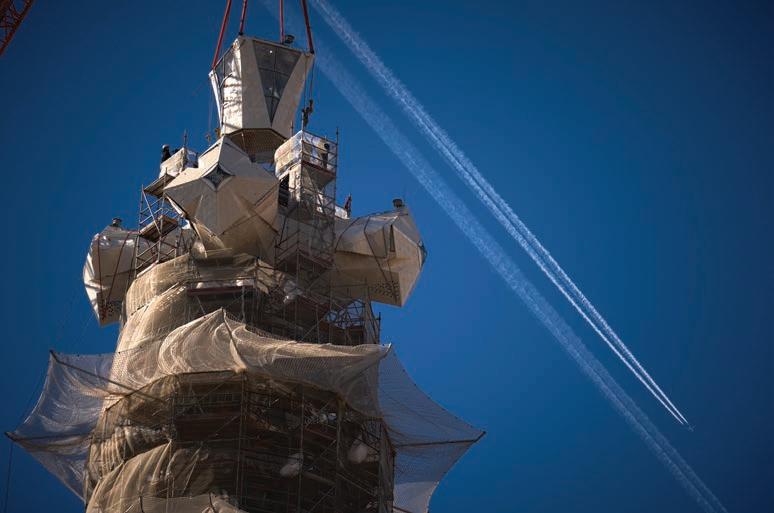
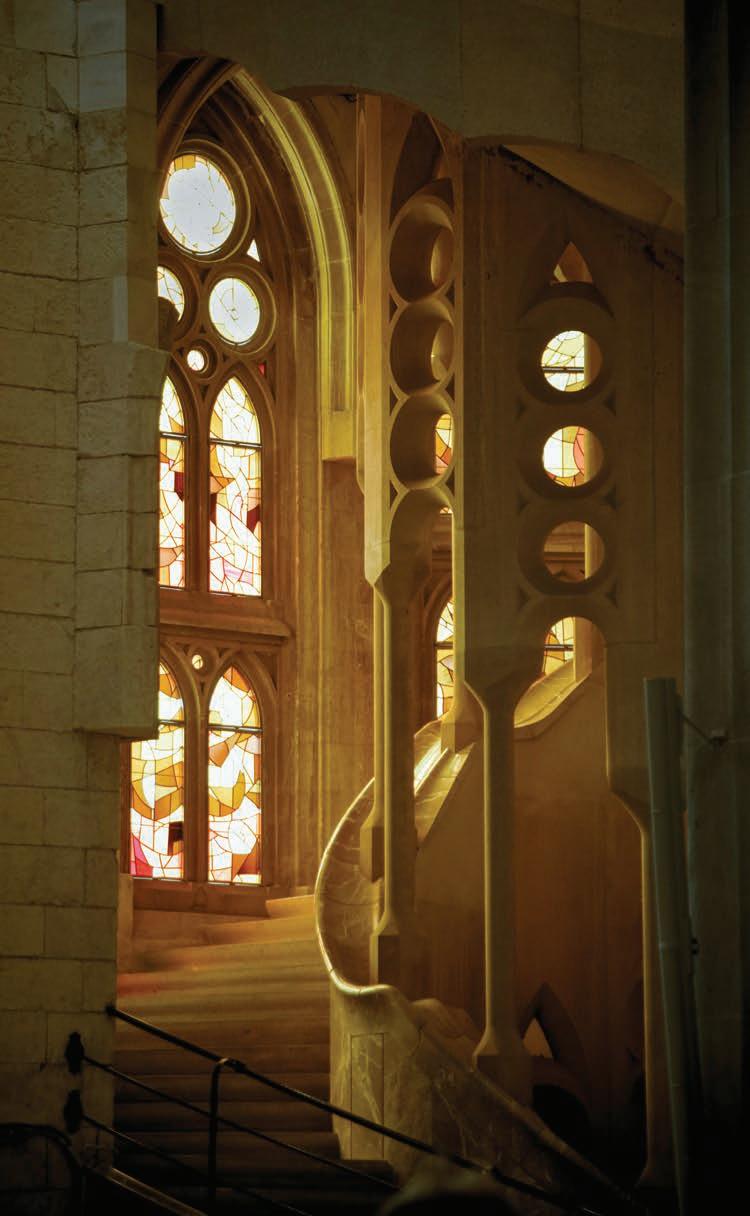
Left: The basilica’s interior, completed in recent years, reveals Gaudí’s geometric language in stone, light and colour. Photo Bo Zhang.
Above: Sun ignites the windows, bathing the Sagrada Familia in warm, saturated colour. The interior’s sculpted surfaces catch the light at different angles, revealing the complexity of Gaudí’s design.
Photo Soham Banerjee.
The Sagrada Família became the world’s tallest church last year, surpassing Ulm Minster in Germany when the first section of the cross was installed. The milestone confirmed the basilica’s ascent into architectural history, not only for its height but for the extraordinary duration of its
construction. Gaudí himself never expected to see it finished; when he died in 1926 after being struck by a tram, only one tower had been completed. The continuation of the project has relied on his surviving drawings, models and the interpretive work of successive architects and artisans.
Today, the basilica attracts millions of visitors each year, and this steady flow of interest has accelerated construction in recent
decades. The interior of the Tower of Jesus Christ is still being completed, and the tower’s inauguration is planned for this summer. The timing aligns with a significant anniversary: June marks one hundred years since Gaudí’s death, and the city is preparing a series of commemorative events and exhibitions. The centenary also coincides with Barcelona’s designation as UNESCO World Capital of Architecture 2026.







FOOD SUPPLEMENT with sweetener & without added sugars.
GOOD TROPICAL TASTE.
ACTIVE INGREDIENTS:
• Magnesium 450 mg
• Potassium 165 mg
• Taurine 500 mg

MAGNESIUM:
It is a modulator of the electrical activity of molecules and participates in the transmission of nerve impulses. An adequate dose of Magnesium improves resistance to fatigue and counteracts the development of muscle cramps.
POTASSIUM:
It participates in important cellular functions such as contraction of muscle myofibrils, transmission of electrical impulses, acid-base balance and water-salt balance. Excessive water loss can cause the lowering of the concentration of this mineral with consequent development of fatigue, weakness, muscle pain.
TAURINE:
It has antioxidant and anti-catabolic properties, stabilizes cell membranes, and regulates ionic fluxes. It also intervenes in energy metabolism.
IDEAL FOR:
• Neuromuscular tiredness
• Cramps in athletes
• Heavy perspiration
1 e ervescent tablet dissolved in a glass of water once a day or when necessary.


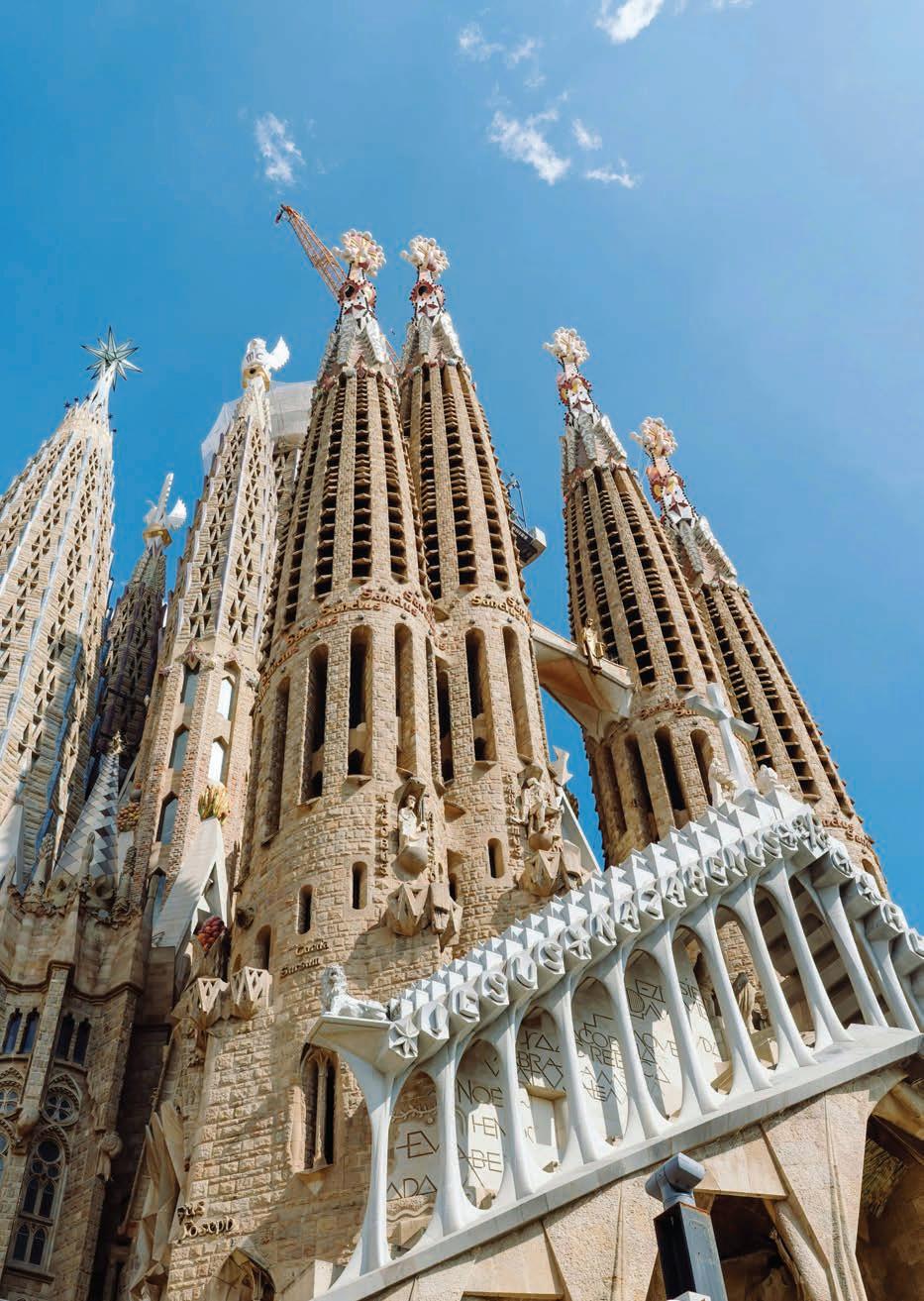
While the main structure is expected to be completed in 2026, work on the Glory Façade will continue for at least another decade. The façade’s monumental entrance stairway remains a subject of debate, as its construction would require the demolition of existing residential buildings, and the question of how to reconcile Gaudí’s original plan with the contemporary urban fabric remains unresolved.
Despite these challenges, the basilica continues to evolve. Each new element brings the building closer to the vision Gaudí set in motion, guided by his models and the principles he established. The recent installation of the cross includes a prayer verse at its base: “You alone are the Holy One, you alone are the Lord, you alone are the Most High.” It is a reminder that, for all its architectural innovation, the Sagrada Família remains a place of worship at its core.




















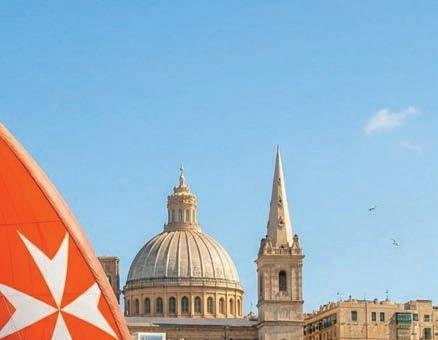
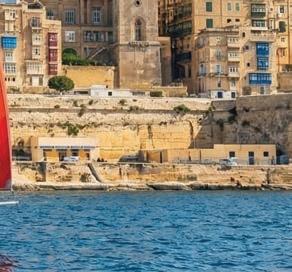
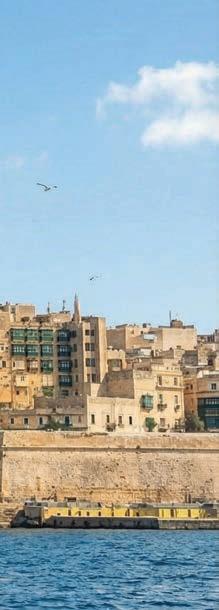
The approach to the Rolex Middle Sea Race has a particular energy and sense of anticipation that builds each year as the Royal Malta Yacht Club opens entries for one of offshore sailing’s most admired challenges. With the Notice of Race for the 47th edition now published, preparations begin once again for the fleet that will gather in Grand Harbour on 17 October, ready to take on a course that has shaped reputations and tested resolve for more than half a century.
Photography Rolex/Kurt Arrigo, courtesy Royal Malta Yacht Club.

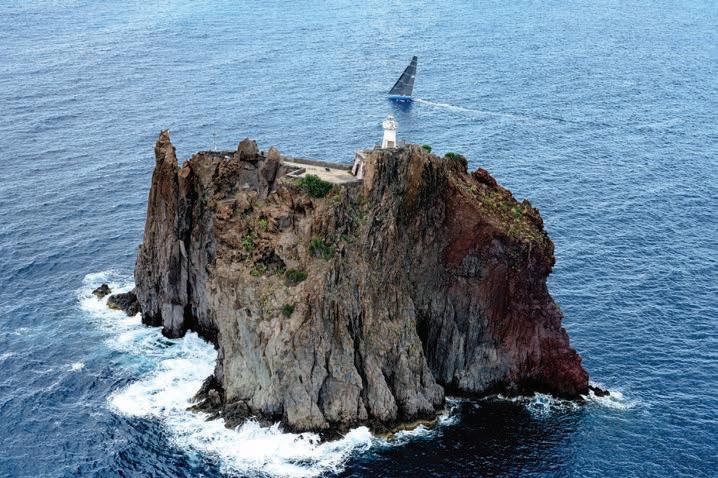
The race holds a distinctive place in the offshore calendar. Its 606 nautical mile route traces an anti clockwise loop through some of the Mediterranean’s most evocative waters, linking Malta with Sicily, the Aeolian Islands, the Aegadian Islands, Pantelleria and Lampedusa before returning to the Maltese archipelago. The idea was born in 1968 from a spirited rivalry between members of the Royal Malta Yacht Club and the Royal Ocean Racing Club, and although the race paused between 1983 and 1996, its character has remained consistent: demanding, strategic, and shaped by the moods of the autumn weather.






87% PLUMPER SKIN* Apply daily



Beneath the Saluting Battery in Valletta, the fleet gathers for the start, watched by crowds lining the bastions. In an instant, cannon fire echoes across the harbour and the yachts accelerate towards the open sea, their bows pointing north to Sicily with Mount Etna appearing port side, a brooding presence that sets the tone for the drama to come. The Strait of Messina follows, a narrow and unpredictable passage where currents and wind shifts can transform fortunes within minutes. Beyond it lies Stromboli, the second active volcano on the course, its eruptions sometimes illuminating the night sky as the fleet rounds the island and turns west along Sicily’s northern coastline. The route continues to the Egadi Islands, then south to Lampedusa, before the final push towards the South Comino Channel and the finish in Marsamxett Harbour.
For Commodore Mark Napier, the opening of entries marks the beginning of a familiar rhythm. “Opening entries is always an exciting milestone for the Club,” he says. “Each year we see returning competitors alongside many newcomers discovering the Rolex Middle Sea Race for the first time. The strength of this event lies in its diversity, different nationalities, different ages, different yachts, and different
ambitions, all unified by a shared passion for the sea.”
That diversity is reflected in the early expressions of interest already reaching the Royal Malta Yacht Club. As in previous years, the fleet is expected to include highperformance maxi yachts capable of recordbreaking passages alongside the smaller contenders that form the traditional
backbone of the race and frequently challenge for overall victory. The doublehanded division is always hotly-contested, and the Rolex Middle Sea Race remains one of the only classic 600 mile races open to short-handed crews yet to have been won overall by a two-person team. Red Ruby came closest in 2023, losing out by 24 seconds on corrected time.

















The race’s appeal lies not only in its scenery but in its complexity. Autumn in the central Mediterranean can be capricious, and the fleet has seen everything from gentle breezes to violent squalls capable of reshaping the leaderboard in a single night. The course demands stamina, tactical discipline and a willingness to adapt. It is not unusual for the early stages to unfold in light winds, only for the fleet to encounter thunderstorms or heavy seas later in the race. These contrasts have become part of the event’s identity, adding a layer of unpredictability that keeps even the most seasoned offshore sailors alert.
Napier captures this blend of beauty and challenge with characteristic precision. “Set against the dramatic backdrop of the Mediterranean, the Rolex Middle Sea Race offers one of offshore sailing’s most iconic and unforgettable courses. From the start in Malta’s historic Grand Harbour, the race leads competitors past a sequence of legendary landmarks, the looming presence of Mount Etna, the passage through the Strait of Messina, the unforgettable sight of Stromboli erupting through the night sky, the remote beauty of Lampedusa and Pantelleria, and the demanding stretches of open sea that test both skill and endurance. These moments leave indelible memories for all who take part, and it is this unique blend of natural beauty, strategic complexity, and challenge that continues to define the race.”


The Royal Malta Yacht Club continues to refine the competitor experience, both onshore and offshore. The online entry system allows teams to manage crew details, documentation and administrative
requirements with ease, while collaboration with the Royal Ocean Racing Club ensures continuity in race management. An experienced international jury, chaired this year by Liz Proctor, will oversee proceedings.
The fleet typically ranges from 9 to over 30 metres, with monohulls racing under IRC and ORC, multihulls competing under
MOCRA, and open classes such as Class40s increasingly represented. The race forms part of the RORC Season’s Points Championship, the International Maxi Association’s Mediterranean Maxi Offshore Championship and the Class40 Mediterranean Trophy, reinforcing its position within the broader offshore racing landscape.


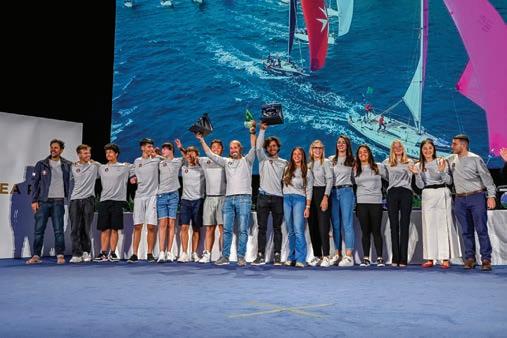
While line honours often capture public imagination, the overall victory under IRC Time Correction remains the race’s most coveted achievement. Recent history has shown that smaller yachts are more than capable of outperforming their larger rivals; three of the past ten winners
have measured under 14 metres. As Napier notes, “The Rolex Middle Sea Race rewards preparation, seamanship and perseverance. Whether racing a cutting edge maxi or a well sailed cruiser racer, every team has the opportunity to write its own story.”
As the 47th edition approaches, anticipation for the event builds once again, and although the course remains unchanged, each year brings new conditions, new
rivalries and new ambitions. For sailors preparing to gather in the Grand Harbour this October, the Rolex Middle Sea Race offers a rare combination of beauty, challenge and maritime theatre shaped by the sea and the enduring spirit of those drawn to the race.
The 47th Rolex Middle Sea Race will start on Saturday, 17 October 2026
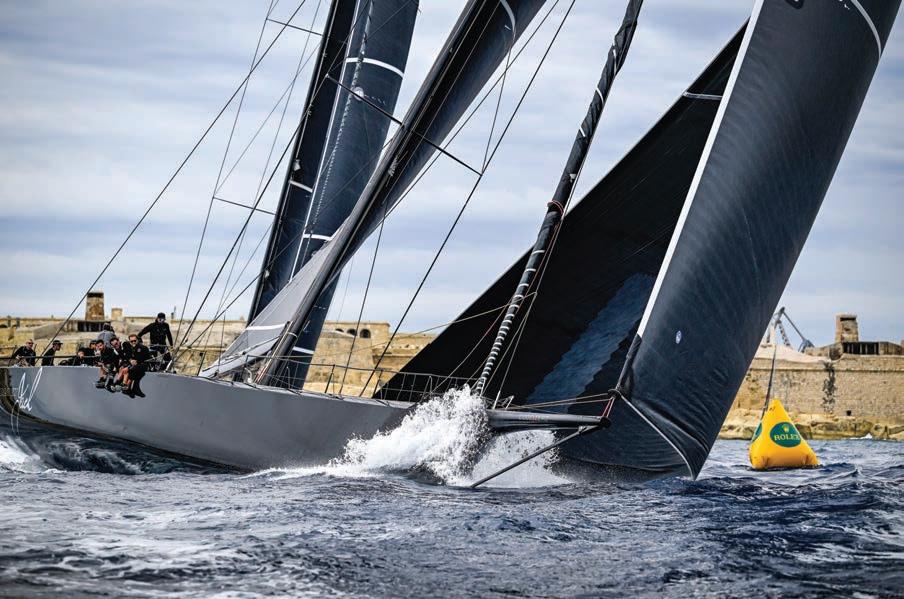
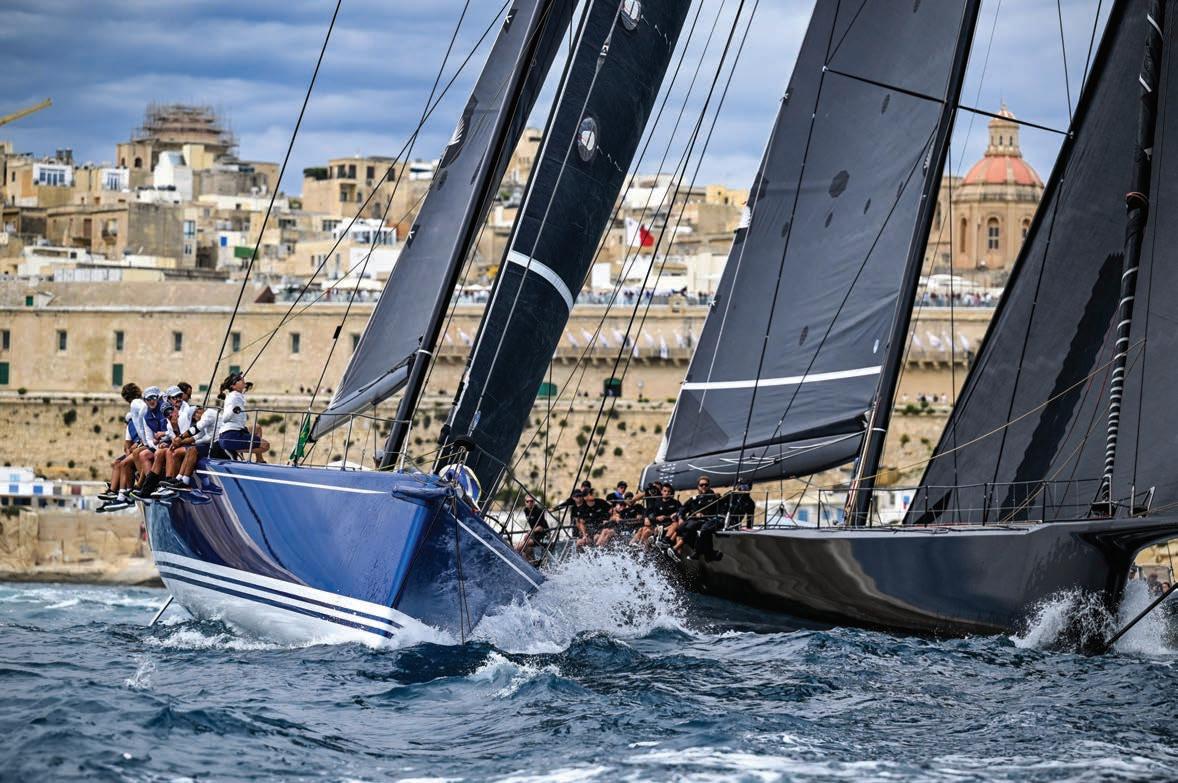
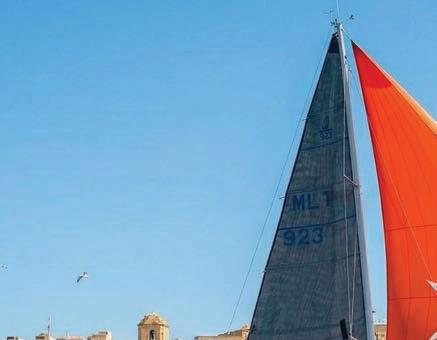
Above: BALTHASAR, Sail No: MLT5, LOA: 21.96, Design: Maxi 72 Mills, 2013, Skippers: Louis Balcaen, Owner: Filip Balcaen, Country: Malta.46th Rolex Middle Sea Race start, 2025.
Left: BLACK JACK 100, Sail No: 525100, LOA: 30.48, Design: Reichel/Pugh 30.5, 2005, Skippers: Tristan Le Brun & Jelmer Van Beek, Owner: Remon Vos, Country: Monaco. 46th Rolex Middle Sea Race start, 2025. Photography © Rolex/Kurt Arrigo.


















If you invest in this Product, you will not have access to your money before the retirement date. If you stop paying your plan before the selected retirement date, you may not get back as much as you invested as plan charges will continue to apply. The value of your investment may go down as well as up and you may get back less than you originally invested. Changes in currency exchange rates may also affect the value of investments.




Uncertainty about future income and confusion about how pensions are calculated often make it difficult for individuals to understand what their financial situation in retirement might look like. The RetireSmart calculator addresses this issue and is designed to guide users through the process step by step. Photo courtesy ĠEMMA.
With the launch of the RetireSmart App, ĠEMMA introduces a tool designed to bring structure and transparency to one of life’s most significant financial considerations. The platform offers users a clear view of their projected state pension while guiding them through the broader landscape of long term planning, including the role of second pillar schemes. Rather than presenting a single static figure, RetireSmart maps how real world circumstances, from career breaks and shifts in employment to gaps in contributions or the timing of retirement, shape future income. The result is an experience that encourages users to understand the impact of their choices and to approach retirement planning with greater confidence and awareness, writes the team at ĠEMMA.

Retirement planning is one of the most important financial decisions a person can make during their lifetime. Yet for many people it remains something that is postponed or avoided altogether. Uncertainty about future income, confusion about how pensions are calculated, and a lack of accessible information often make it difficult for individuals to understand what their financial situation in retirement might look like. To help address this challenge, RetireSmart offers a free online retirement calculator designed specifically to help people in Malta better understand what they can expect from their future pension.
Following its launch on 16th March, the RetireSmart calculator is designed to guide users through the process step by step. It asks for basic information such as age, employment status, and contribution history. Based on these details, the tool provides an estimate of a person’s potential state pension as well as an indication of their expected retirement age. By presenting this information in a clear and structured way, the calculator helps users gain a more realistic understanding of their future financial position.
One of the key advantages of the tool is that it does more than simply produce a single figure. The calculator also illustrates how different life circumstances may influence retirement outcomes. For example, it highlights how periods without contributions, career breaks, changes in employment status, or decisions about when to retire can affect the final pension amount. This allows users to explore different scenarios and better understand the long-term consequences of financial and career decisions.
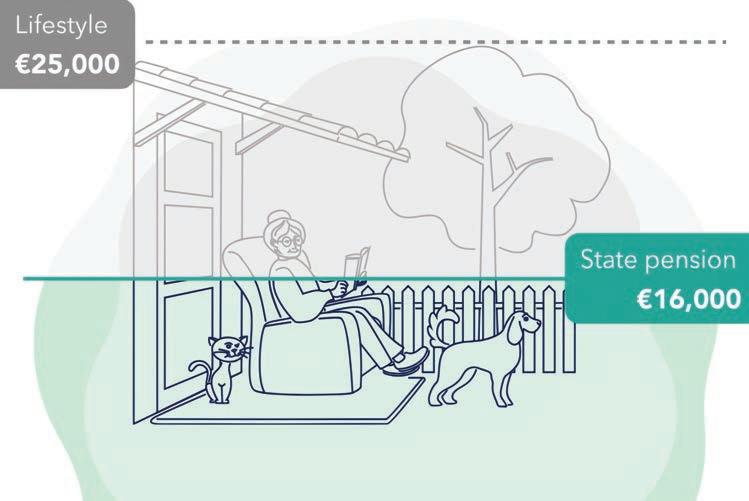
The RetireSmart experience. RetireSmart is a web and mobile tool that allows you to understand and learn about state pensions in Malta through a simple, interactive experience. In a few simple steps, you'll find out what your state pension might look like, and how much you'll need to live your desired retirement lifestyle.

One of the key advantages of the RetireSmart tool is that it does more than simply produce a single figure. The calculator also illustrates how different life circumstances may influence retirement outcomes. For example, it highlights how periods without contributions, career breaks, changes in employment status, or decisions about when to retire can affect the final pension amount.
Education is another central element of the RetireSmart platform. Throughout the process, users are provided with clear explanations that help simplify complex pension concepts. Retirement systems can often seem technical and difficult to navigate, but the tool breaks down these ideas into straightforward language that is easier to understand. This educational approach helps individuals become more financially aware and confident when thinking about their long-term planning.
Because of this, the calculator can be particularly useful for younger workers who may not yet be thinking seriously about retirement. Starting early is one of the most effective ways to build longterm financial security, and tools like RetireSmart help raise awareness about the importance of planning ahead. At the same time, the platform is also valuable for people who are already mid-career and want to review their expected pension outcomes or consider adjustments to their plans.
Accessibility is another important feature of the platform. The calculator can be used both on desktop computers and mobile devices, making it easy for users to access it whenever they wish. The interface is designed to be simple and intuitive, meaning that no specialised financial knowledge is required. Users can move through the steps at their own pace and explore different possibilities in a comfortable and user-friendly environment.
Privacy has also been taken into account. The calculator does not store personal data, ensuring that users can explore their retirement projections without concerns about their information being retained or shared.
While RetireSmart does not replace professional financial advice, it provides a valuable starting point for individuals who want to better understand their retirement outlook. By encouraging early awareness and informed decisionmaking, it helps people take practical steps toward building a more secure and sustainable financial future.
Calculate your State Pension in a few simple steps. Access RetireSmart online here: retiresmart.gov.mt/calculator
















“Predicting rain doesn’t count, building the ark does.” WARREN BUFFETT
Longer lives and shifting pension structures have made preparing for retirement a more deliberate part of modern living. With so many choices to weigh, from spending patterns to future lifestyle ambitions, understanding the steps involved can help turn later life into something comfortably designed rather than left to chance.
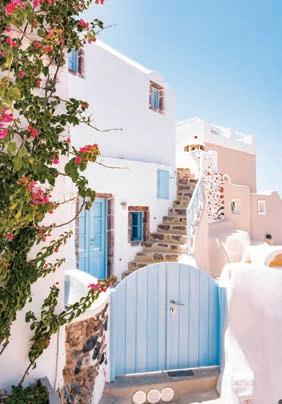
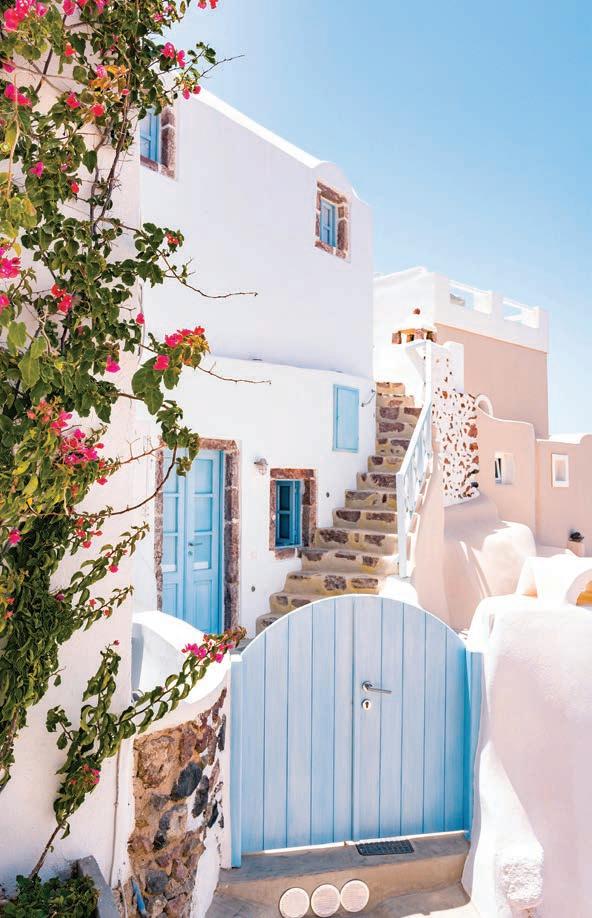
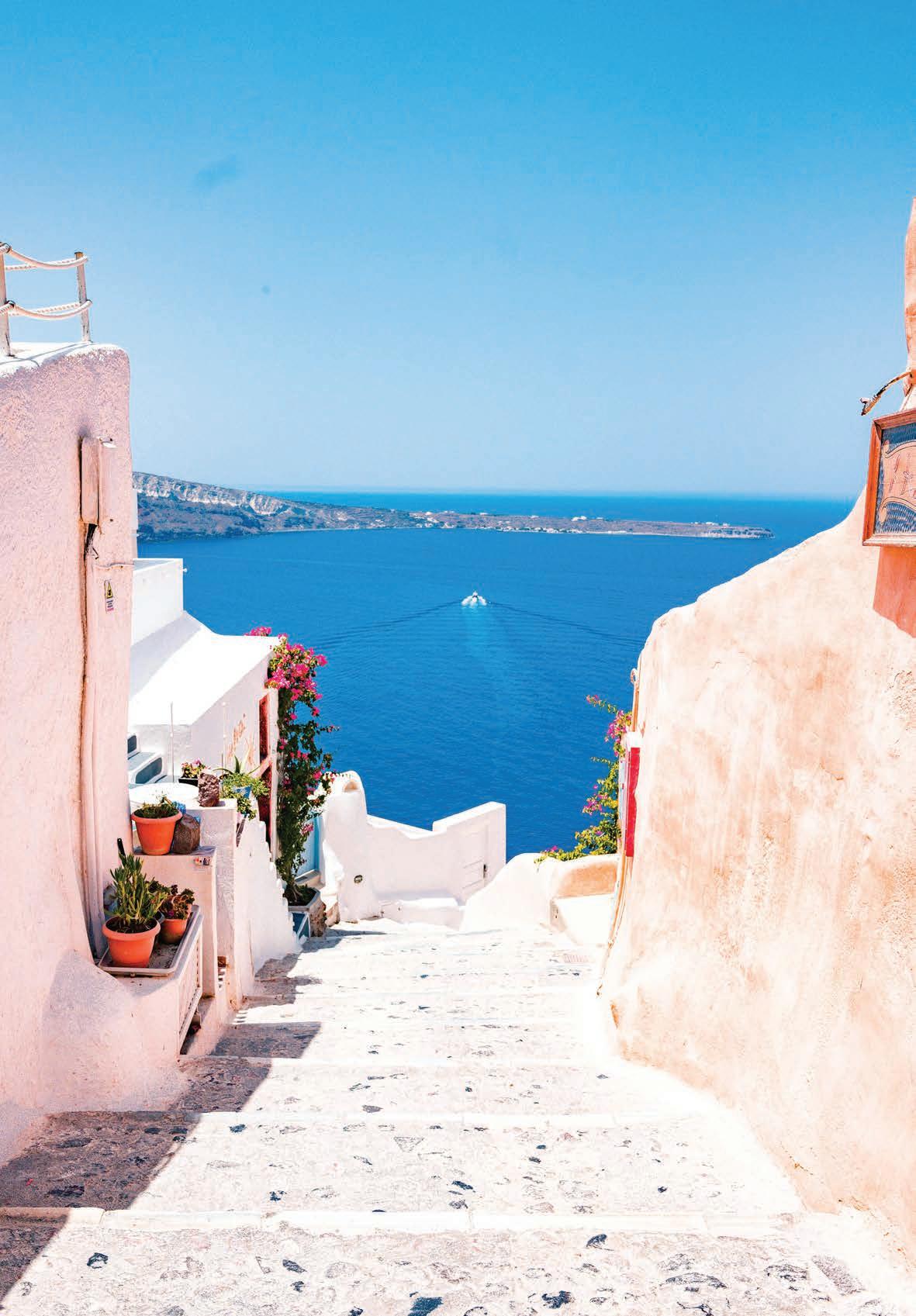
Photography Oia, Greece –Ryan Spencer.
Planning for retirement has become one of the most significant financial decisions of modern life, shaped by longer lifespans, shifting pension structures and increasingly unpredictable markets. The principle remains simple enough: the earlier you begin, the more time your money has to grow. Income from a first job is often the first real opportunity to set something aside, and the habit of saving early can make a marked difference decades later. As Warren Buffett puts it, “Predicting rain doesn’t count, building the ark does.” The point is to construct a plan resilient enough to withstand market cycles so that future income feels dependable rather than uncertain.
Knowing when you can afford to retire has become more complex. People are living longer, and many will need their savings to support them for several decades. At the same time, global volatility has made investment decisions feel less straightforward. Pension systems have changed too, placing greater responsibility on individuals to ensure they have sufficient funds. Research
consistently shows that those who organise their finances in advance are more likely to maintain their standard of living once they stop working.
Retirement planning begins with understanding what you want life to look like when work is no longer the central structure of the day. Some people set a target age; others focus on the income they hope to receive. Wealth means different things to different people, so for many the goal is simply to preserve or improve their current lifestyle. Once those aims are defined, the SMART framework, specific, measurable, attainable, relevant and time-bound, can help turn broad intentions into something workable.
There are various ways to save, depending on personal circumstances. In Malta, private pensions are voluntary and designed to supplement the state system. These plans, regulated by the MFSA, offer tax incentives and allow contributions starting from around €40–€60 per month, with benefits generally accessed between the ages of 61 and 70. Professional advice can help determine which structure suits your needs and how it fits alongside other investments.
With goals in place, the next step is to assess whether your current
savings rate will get you there. Retirement calculators can be useful for tracking progress and adjusting contributions as circumstances change. According an article on the FTspending in retirement often follows a “smile” pattern: higher in the early years, lower in the middle, and rising again if long-term care becomes necessary. Lifestyle choices also play a role. Some people want to retire with their mortgage fully paid; others may still be supporting children or considering major expenses such as home
improvements or a new car. Healthcare costs deserve particular attention, as they tend to increase with age and can be overlooked by those who assume they will continue working indefinitely. Planning with these needs and choices in mind can help create a more realistic picture of future income needs. Retirement may feel distant, especially when more immediate financial demands compete for attention, but the decisions made today will shape the options available later. Starting early gives your future self room to breathe, and the freedom to choose how those later years unfold. In the words of Warren Buffett, “you only have to do a very few things right in your life so long as you don’t do too many things wrong.”
This page: For many, the early years of retirement are imagined through long awaited travel, lingering dinners and the freedom to enjoy time differently. Spending often rises at the start of retirement, a pattern the FT describes as the “retirement smile”, with higher outlays in the first phase and again later in life if care is needed, with a gentler period in between.





“Use money to gain control over your time, because not having control of your time is such a powerful and universal drag on happiness. The ability to do what you want, when you want, with who you want, for as long as you want to, pays the highest dividend that exists in finance.”
MORGAN HOUSEL,
THE PSYCHOLOGY OF MONEY


HOW TO BUILD WEALTH WITH THOUGHT, NOT NOISE. THE PSYCHOLOGY OF LIVING WELL WITH MONEY
Wealth management is often associated with private banks, multi million portfolios and the rarefied world of high net worth clients. Yet the principles that underpin it, including discipline, structure and an understanding of how people behave around money, offer lessons that apply to anyone, at any age. At its core, wealth management is a way of thinking: a framework for making decisions that support long-term stability rather than short-term impulse. It begins with a clear picture of your financial life, from income and spending to assets, liabilities and future ambitions. That overview allows for better choices, whether you are managing a complex portfolio or simply trying to build a more resilient financial foundation.
The

Wealth management is often seen as a service for those with substantial assets, but
the principles that guide it have a far wider reach. At its heart lies a way of approaching money that blends structure, discipline and an understanding of human behaviour. The techniques used by private banks, from
diversification to long-term planning matter, but the mindset behind them is what really shapes outcomes. Anyone, regardless of income, can draw on these ideas to build a more resilient financial life.


The process begins with a clear view of your financial position: what comes in, what goes out, what you own and what you owe. Wealth managers use this to design strategies that reflect a client’s goals, risk appetite and values. They consider how investments should be allocated, how tax can be managed efficiently, and how to protect assets through insurance and legal structures. But the underlying lessons are universal: keep things simple, avoid unnecessary risk, and build habits that support long-term stability.
Warren Buffett is quoted as saying that “Risk comes from not knowing what you’re doing.” It’s a reminder that uncertainty often stems from behaviour rather than markets. His marginof safety principle,buying assets at a price that leaves room for error, remains one of the most enduring ideas in modern investing. It encourages patience, discipline and a refusal to be drawn into speculation. A often quoted example of Buffett using the margin of safety principle was his investment in Coca-Cola in the late 1980s. Back then, the stock was trading below its true long-term earnings potential. By buying at a reasonable price, Buffett reduced his
downside risk while maximizing long-term rewards as the company kept growing around the world.
Morgan Housel’s 2020 bestseller The Psychology of Money–Timeless Lessons on Wealth, Greed and Happiness adds to this thinking. Housel argues that financial success depends less on technical knowledge and more on behaviour, the “soft skills” that shape how people respond to uncertainty, temptation and opportunity. According to Housel, “doing well with money isn’t necessarily about what you know. It’s about how you behave.” In the book he shares 19 short stories exploring the different ways people think about money, teaching how to make better sense of one of life’s most important topics. His stories illustrate how personal history, emotion and ego influence decisions far more than spreadsheets.
One of the most striking examples opens the book, and comes from his early twenties, when he worked as a valet at a high end Los Angeles hotel. He recalls a tech executive worth hundreds of millions who carried a stack of $100 bills several inches thick, peeling them off for strangers on a whim. One day, Housel’s colleague was sent to buy $1,000 gold coins. “An hour later, gold coins in hand, the tech executive and his buddies gathered around by a dock overlooking the Pacific Ocean. Then they proceeded to throw the coins into the sea, skipping them like rocks, cackling as they argued whose went further. Just for fun.” The behaviour didn’t last. “I learned years later that he went broke.” Housel’s point is clear: “Doing well with money has little to do with how smart you are and a lot to do with how you behave. And behaviour is hard to teach, even to really smart people. A genius who loses control of their emotions can be a financial disaster. The opposite is also true.”
His key ideas echo the foundations of wealth management: the importance of consistency, the value of controlling your time, and the distinction between getting wealthy and staying wealthy. The former often requires optimism and risktaking; the latter depends on restraint, humility and the ability to avoid catastrophic mistakes. Real wealth, he says, is often invisible, the money not spent, the options preserved, the freedom to make choices without pressure. Taken together, these perspectives illustrate that wealth management is less about the size of a portfolio and more about the habits that support long-term wellbeing. A simple strategy executed consistently will outperform a complex one driven by impulse, and a plan anchored in personal goals will feel more sustainable than one built around comparison. The principles that guide the world’s most successful investors are accessible to anyone willing to adopt them: think clearly, act patiently, and build a structure that supports the life you want to lead.
SUGGESTED READING: The Psychology of Money: Timeless Lessons on Wealth, Greed, and Happiness by Morgan Housel, The Intelligent Investor by Benjamin Graham, and The Warren Buffett Way by Robert G. Hagstrom.
Wealth management has evolved over the past few decades and has undergone a significant transformation, moving away from a transactional, product-driven model towards a far more holistic and client-centric approach. Where financial advice once focused primarily on recommending individual products, it now encompasses comprehensive financial planning, bringing together investment strategy, retirement planning, tax efficiency, and intergenerational wealth transfer. While technological advancements have enhanced accessibility and transparency, the essence of wealth management remains rooted in building trusted, long-term relationships and delivering consistent, personalised advice, says Jesmond Mizzi, managing director of Jesmond Mizzi Financial Advisors Limited.
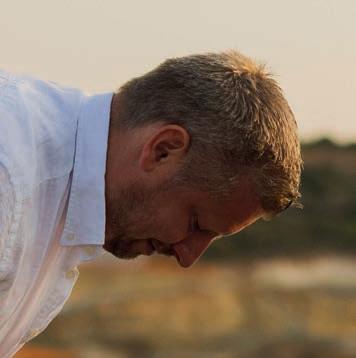
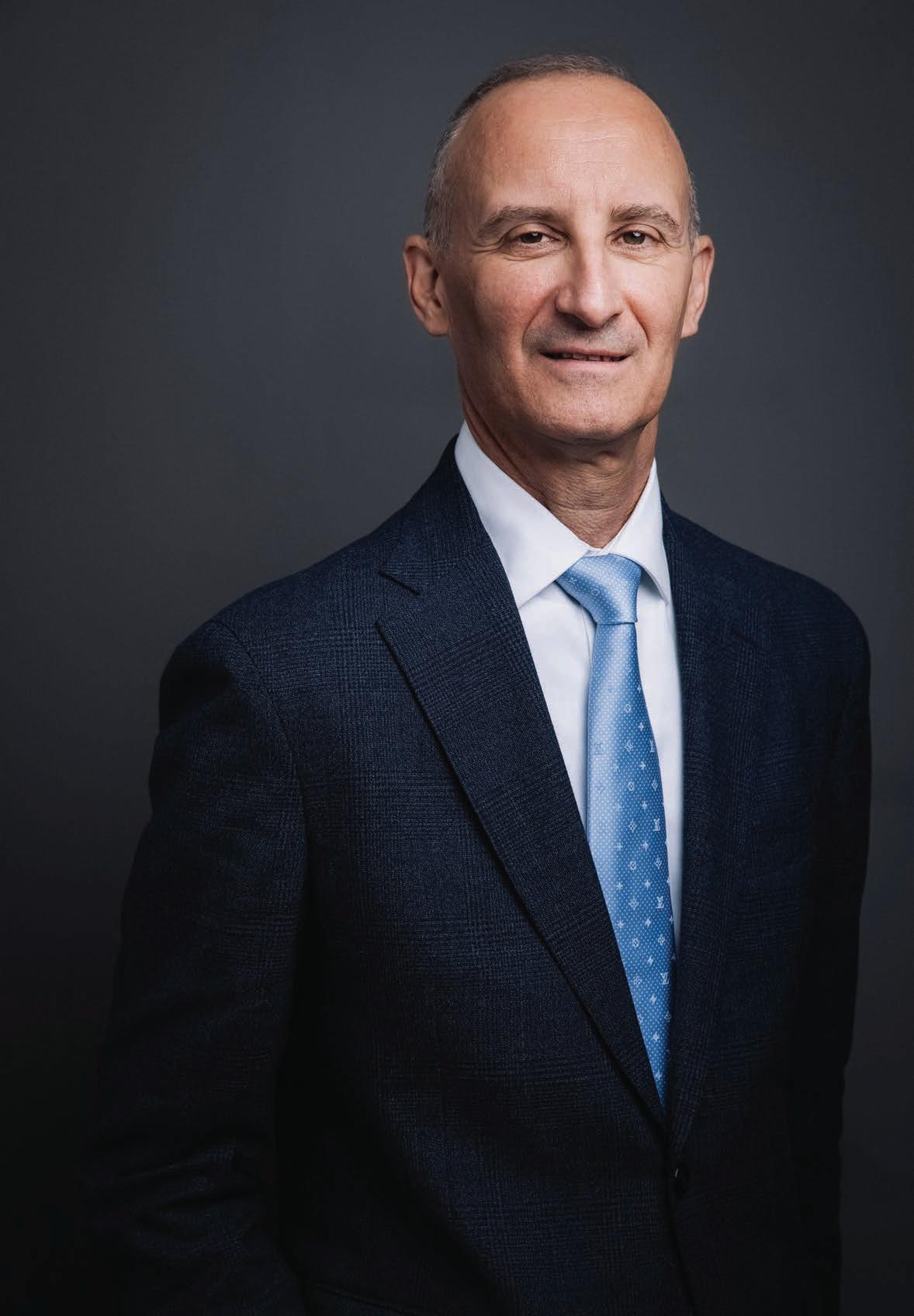
Portrait Jesmond Mizzi, photo courtesy Jesmond Mizzi Financial Advisors Limited.
How do we approach client service today?
At Jesmond Mizzi Financial Advisors, client service is built around a deep understanding of each individual’s circumstances, objectives, and risk appetite. This ensures that every recommendation is tailored and evolves alongside the client’s changing needs. The firm’s managed strategies reflect this philosophy, combining its in-house funds –now celebrating their 10th anniversary –with a carefully selected range of third-party fund managers from across global markets. This approach enables the delivery of diversified, actively managed solutions designed to adapt to shifting market conditions while maintaining a clear focus on long-term outcomes.
Despite continued development within the financial services sector, long-term retirement planning in Malta remains relatively underutilised. With increasing life expectancy and mounting pressure on state pension systems, individuals need to take a more proactive role in securing their financial future.
A well-structured retirement plan provides more than just additional income –it offers financial independence and the ability to maintain one’s desired lifestyle in later years. As such, it should form a central pillar of any long-term financial strategy, integrating savings, investments, and income planning in a way that reflects individual goals and life stages.
The move to a new, modern office in Attard marks an important step in enhancing both operational efficiency and client experience. By consolidating advisory, asset management, and support teams within a single location, the firm has strengthened internal collaboration while improving accessibility for clients.
This centralised approach allows Jesmond Mizzi Financial Advisors to deliver a more seamless and consistent service across institutional, corporate, and retail segments. It also reflects a broader shift within the industry, where the emphasis is no longer on multiple physical branches, but on providing highquality, personalised service from a unified hub.
This article does not intend to give investment advice, and the contents therein should not be construed as such. Any products/services referred to in this interview may not be suitable or appropriate for every investor. Jesmond Mizzi Financial Advisors (IS30176) is licensed to conduct investment services business by the MFSA under the Investment Services Act and is a member of the Malta Stock Exchange. For more information, contact Jesmond Mizzi Financial Advisors Ltd of 16 Central Business Hub, Level 3, Mdina Road, Attard ATD 9036, on tel. 2122 4410, or email Jesmond.mizzi@jesmondmizzi.com
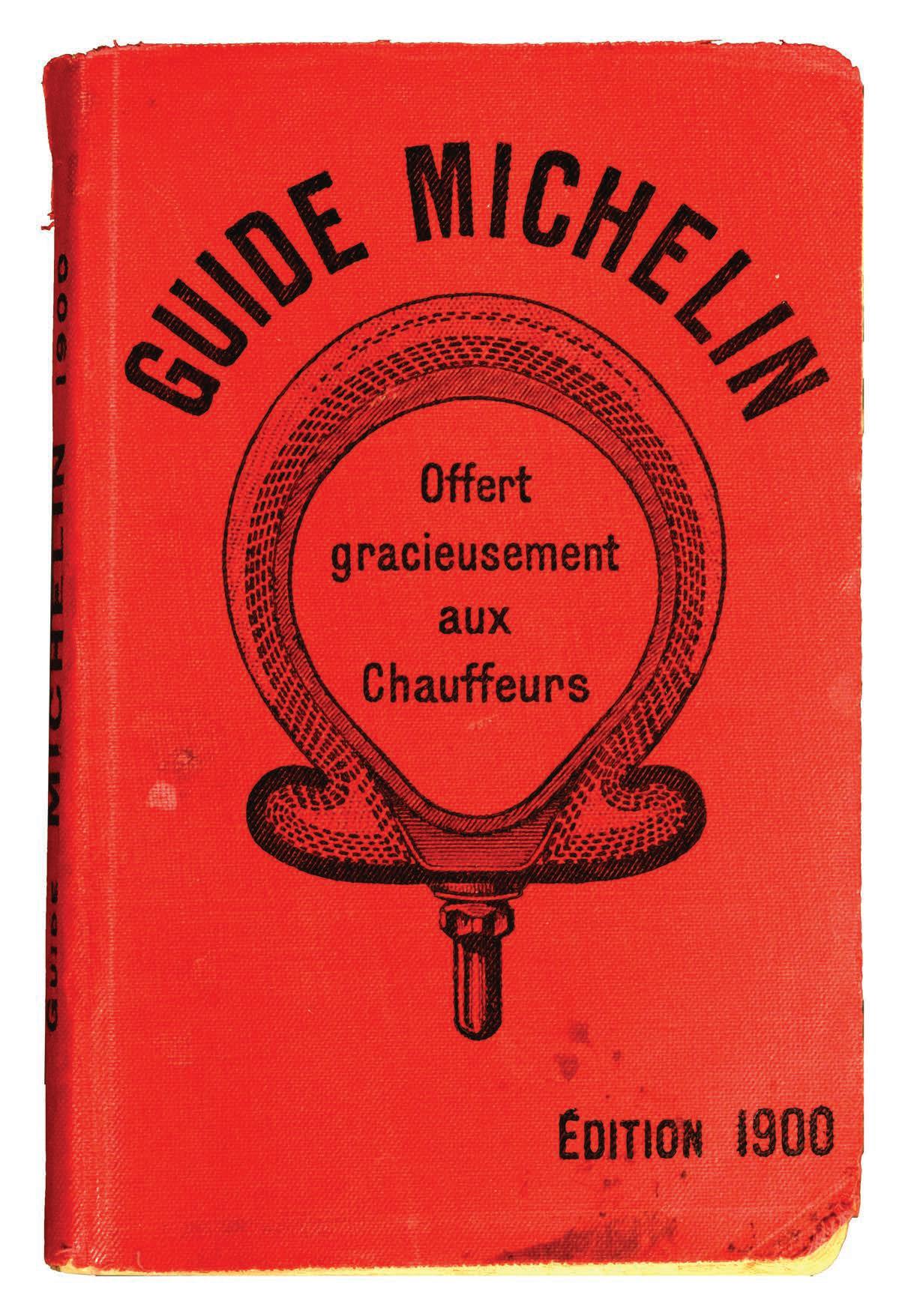
How a modest motoring guide shaped a century of dining, from grand restaurants to street-side counters
A century after the first Michelin stars were awarded, the small red guide that began as a motoring companion continues to influence how the world eats. The anniversary highlights an evolution few could have predicted: a practical booklet for early drivers has become one of the most recognisable arbiters of culinary ambition, shaping restaurants from rural France to the hawker centres of Singapore.
The story begins in 1889, when André and Édouard Michelin founded their tyre company in Clermont-Ferrand. France had fewer than 3,000 cars, and the brothers saw an opportunity to encourage travel, and, by extension, tyre sales. Their guide offered maps, instructions on changing a tyre, petrol stations and, crucially, places to eat and sleep. It was free, until André Michelin discovered copies propping up a workbench in a garage.
Convinced that value required cost, he relaunched the guide in 1920 at seven francs, adding hotel listings, restaurant categories and removing advertisements.
By 1926, the restaurant section had grown influential enough to warrant a new system of recognition. Forty-six French establishments received a single star, awarded by anonymous inspectors whose identities were kept secret. Five years later, the now-familiar hierarchy of one, two and three stars appeared, with definitions published in 1936: one for very good cooking, two for food worth a detour, three for cuisine worth a special journey. The phrasing has barely changed since.
As the guide expanded, so did its categories. The Bib Gourmand arrived in 1997 for restaurants
offering high-quality food at good value, followed by the Michelin Plate (now Selected Restaurants) for places serving well-executed dishes without star status. In 2020, the Green Star was introduced to highlight sustainable practices, first in France and then across the Nordics. Today, Michelin rates thousands of establishments in more than forty countries, reflecting a global dining culture that ranges from grand dining rooms to street food.
The breadth of the selection has produced some unexpected stars. Mexico City’s El Califa de León, a taqueria with no seating and a handful of standing places, has held a star since 2024. Its tacos, made with fresh corn tortillas and house salsas, cost only a few euros. These inclusions have broadened the guide’s reach, demonstrating that excellence can appear in settings far removed from traditional fine dining.
France remains central to the Michelin story, and its culinary institutions have shaped the guide’s identity. Paul Bocuse, born in 1926, the year the first stars were awarded, became one of the country’s defining chefs. His restaurant near Lyon held three stars for fifty-five consecutive years, a record that reflected his influence on nouvelle cuisine. Today, the twostar establishment continues to serve refined versions of his
classics. In Vonnas, the Blanc family has maintained Michelin recognition for nearly the entire lifespan of the guide. Élisa Blanc earned the first star for La Mère Blanc in 1929; her grandson Georges later secured a third, which the restaurant held until 2025.
The guide has long attracted strong opinions and has also had its own share of controversial moments. Some chefs have criticised the pressure associated with maintaining stars, while others have questioned the opacity of the judging process.
Marco Pierre White famously returned his stars in 1999 when he stepped away from the Oak Room. Yet for many, Michelin recognition remains a defining professional achievement, whether awarded to a grand dining room or a modest familyrun kitchen.
As the Michelin Guide enters its second century of star-giving, its reach is broader than the founders could have imagined. The little red book that once helped drivers plan their road trips has become a cultural reference point globally, and now maps travel shaped by curiosity, appetite and the pursuit of memorable experiences. The stars may be small symbols on a page and on plaques outside restaurant doors, but their impact on the world of gastronomy is unmistakable.
Facing page: The little red book. What began as a tool for motorists has become a global cultural reference point. More than thirty million copies of the guide have been sold, and its influence now reaches into the way people think about dining itself. It shapes expectations, fuels debate and continues to evolve with shifts in taste, sustainability and the widening definition of what constitutes exceptional cooking. The first Michelin Guide, 1900. Photo Wikipedia Commons.
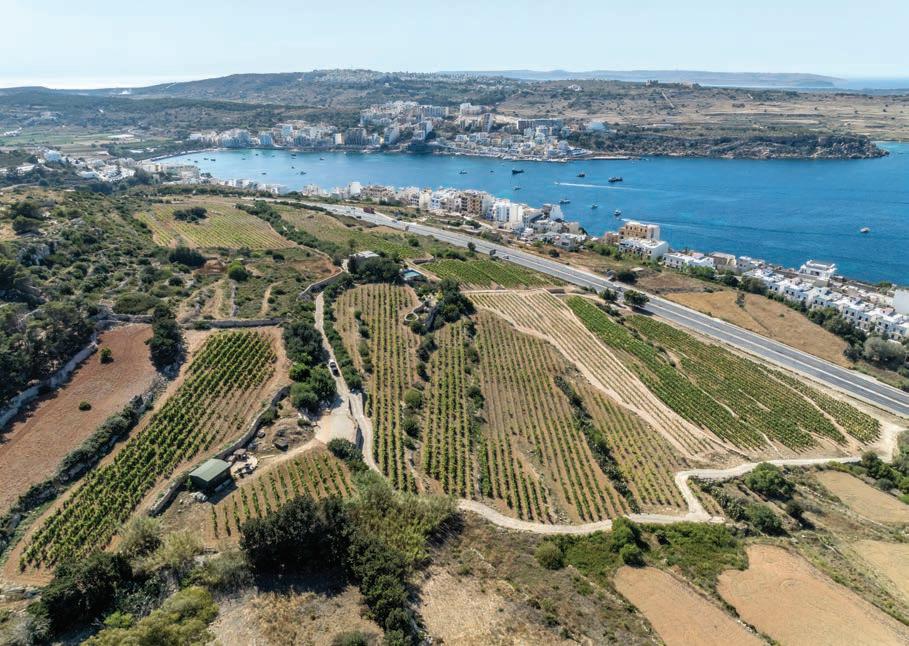
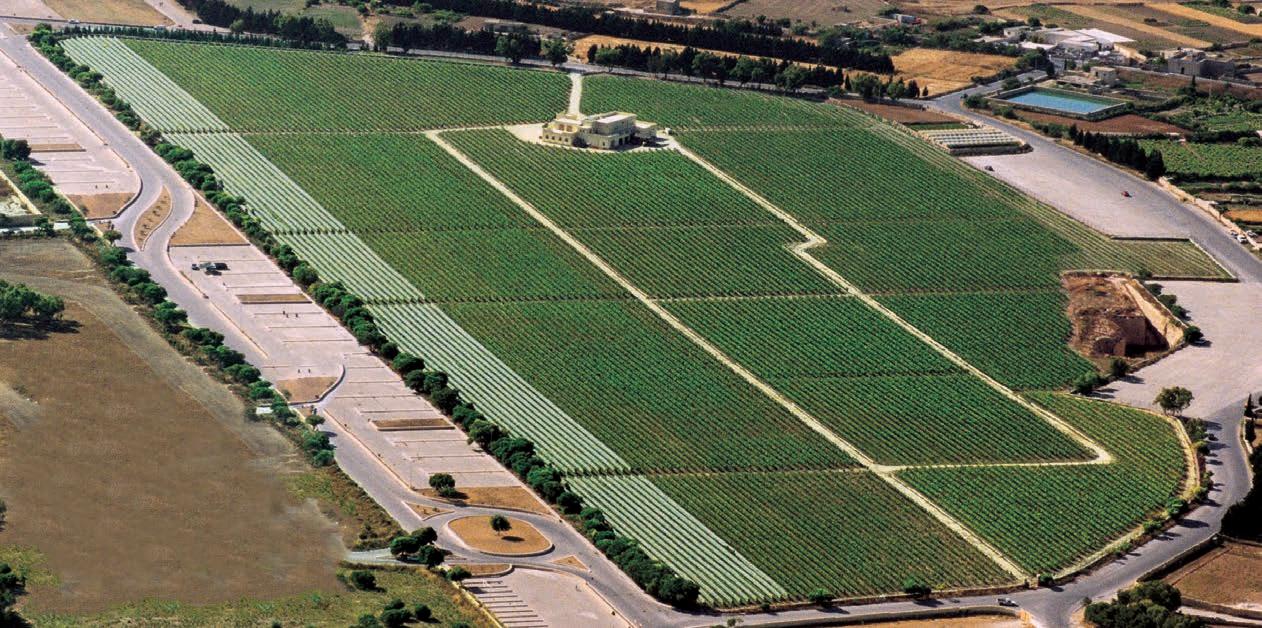
On 20 June 2005, overlooking the idyllic view of St Paul’s Islands, Marsovin officially inaugurated the Cheval Franc Estate. During the ceremony, Marsovin's then chairman, Tony J. Cassar, explained how and why Għollieq was chosen as the home for this exceptional vineyard –a site where soil, sunlight, and sea breeze come together to shape one of Malta’s most distinctive wines. Today Tony’s son, Jeremy, continues to lead the winery with the same vision and dedication.
Photography courtesy Marsovin.
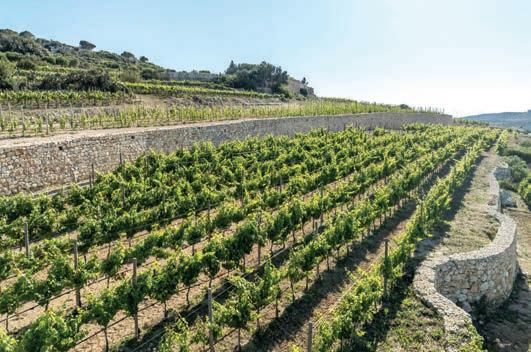
Nestled along the Burmarrad-Xemxija bypass, the Cheval Franc Estate spans 4.5 hectares of gently sloping land facing St Paul’s Bay. The location was selected for its unique microclimate and clay-based soils interwoven with about 20% terrarossa. This combination provides excellent drainage, minerality, and subtle salinity, lending the resulting wine both structure and vitality. The constant sea breeze moderates the summer heat, preserving the fruit’s natural freshness and aromatic complexity.
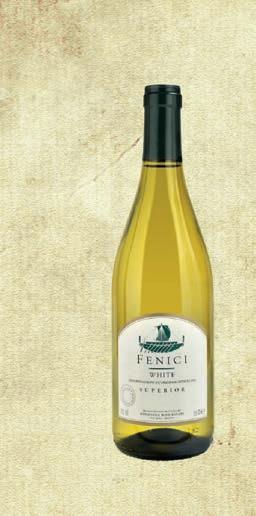
Entirely planted with Cabernet Franc, the estate produces grapes of exceptional concentration and character. It remains the only Maltese wine made exclusively from a single-estate Cabernet Franc variety - a testament to Marsovin’s dedication to quality, tradition, and the pursuit of excellence. From these vines emerges Cheval Franc: a medium to full bodied ruby red wine that captures both the generosity of Maltese terroir and the restraint of thoughtful craftsmanship.
Fermented in stainless steel vats under precise temperature control, the wine expresses aromas of ripe blackcurrants and soft red fruits, balanced by peppery and herbaceous notes that are typical of the variety. On the palate, it shows fine minerality and earthy undertones –a quiet reflection of the clay and terrarossa soils from which it was born.
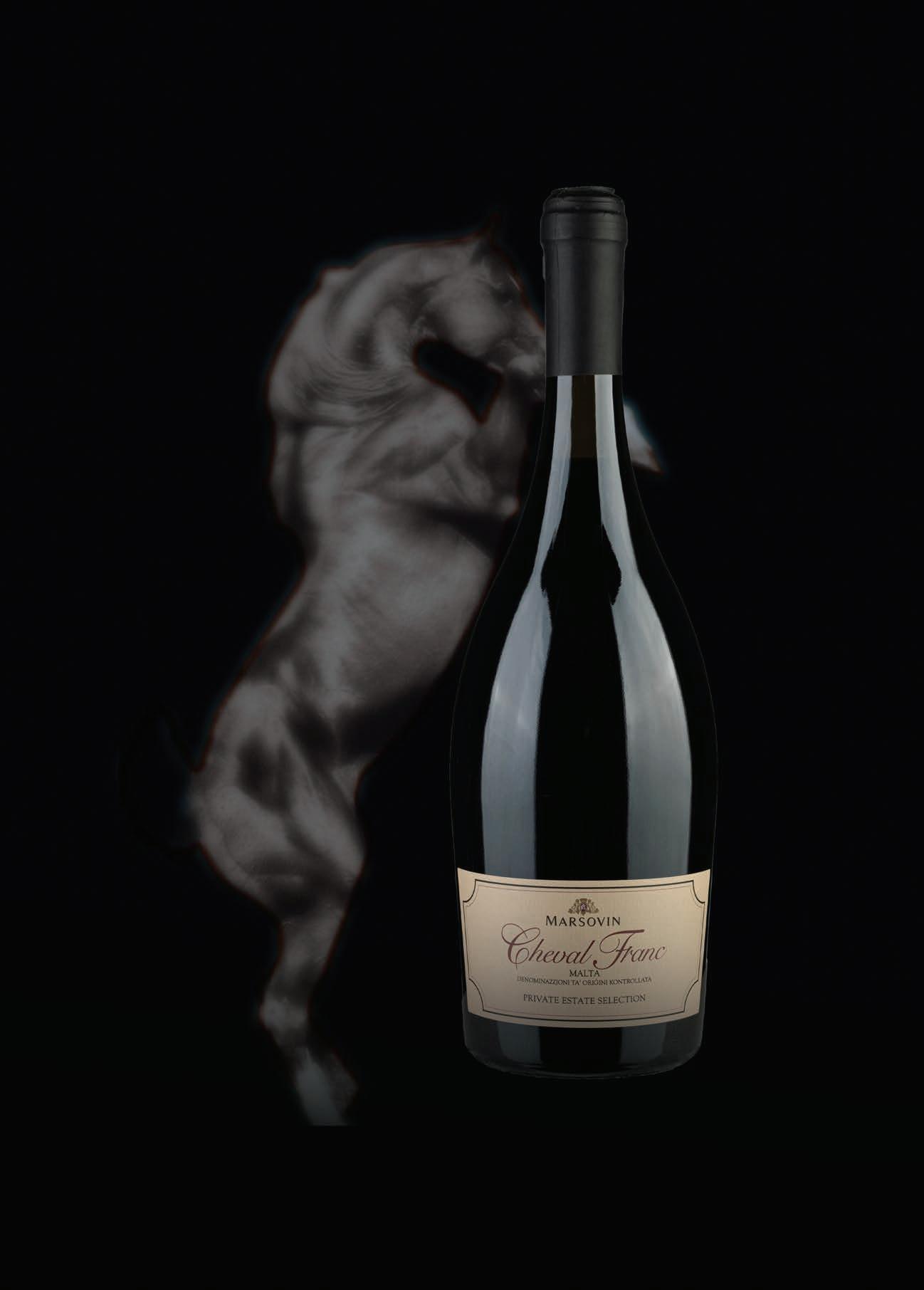
The name “Cheval Franc” itself carries deep family meaning. “Franc” denotes the grape variety, while “Cheval” recalls the late Joseph Cassar’s lifelong love for horses. “Cheval Franc is dedicated to my grandfather, who was the prime instigator behind the development of this estate,”
stated Jeremy. “He devoted his final years to his other passion, horses, and that inspired us to give our thoroughbred the name of Cheval Franc.”
Today, Cheval Franc embodies the philosophy of Marsovin –a commitment to crafting wines that are both rooted in tradition and expressive of Malta’s unique terroir. It is a wine not merely to be tasted, but to be experienced –a reflection of varietal character, terroir and legacy that define it.
Rea rming its position as a leading force in Malta’s culinary landscape, The Xara Collections’ distinctions this year reflect the unwavering dedication, creativity, and craftsmanship that define each kitchen within the collection. Among them, The Medina Restaurant continues to be recognised as a Michelin Recommended establishment for 2026.
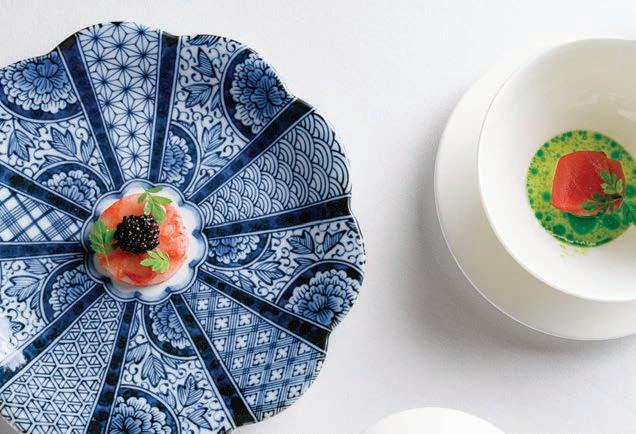


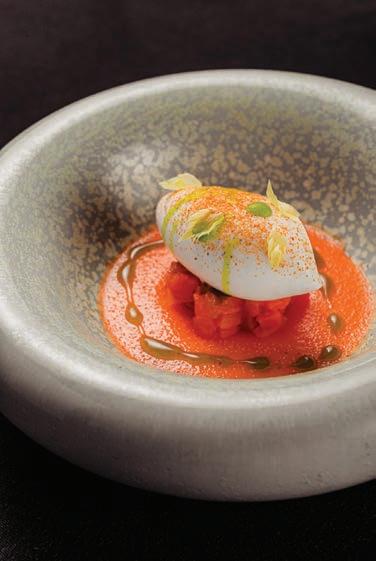
At the heart of this achievement stands de Mondion Restaurant, which celebrates retaining its Michelin Star from the year 2020. This prestigious recognition marks a defining moment in the restaurant’s journey, one driven by relentless pursuit of culinary mastery, precision, and exceptional service


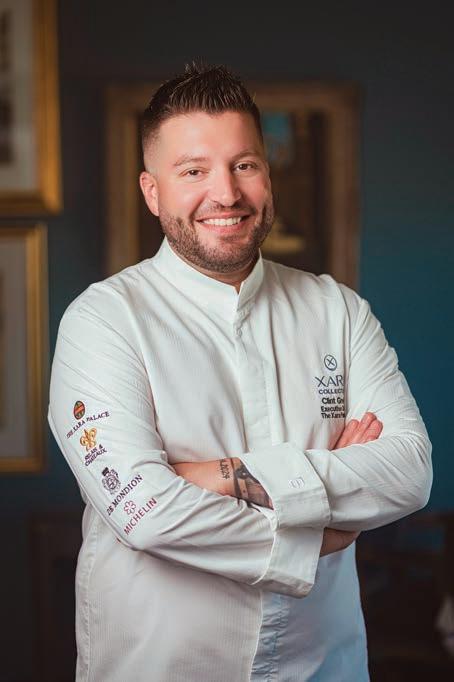
It is a recognition that honours not only the cuisine, but the collective passion of the team behind every detail of the dining experience.


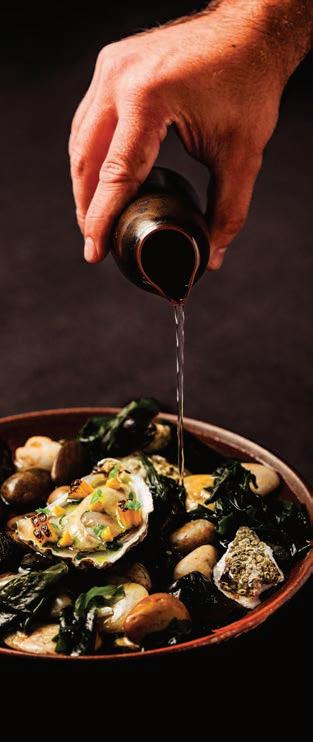


A very special mention goes to the Service Team at Rosami, who have been awarded The Michelin Service Award. This award shines a light on individuals who provide memorable hospitality, going beyond the food. As well as Sommelier Miljan Radonjic at de Mondion, for winning the MICHELIN Guide Sommelier Award, which recognises professionals whose expertise enhances the guest experience through wine selection, pairings, and service.
This undeniable success in the realm of Michelin-approved dining stands as a testament to the talent and dedication of the chefs and service teams. As The Xara Collection looks ahead, these honours serve as inspiration, driving an ongoing pursuit of excellence and a continued promise to guests from around the world.
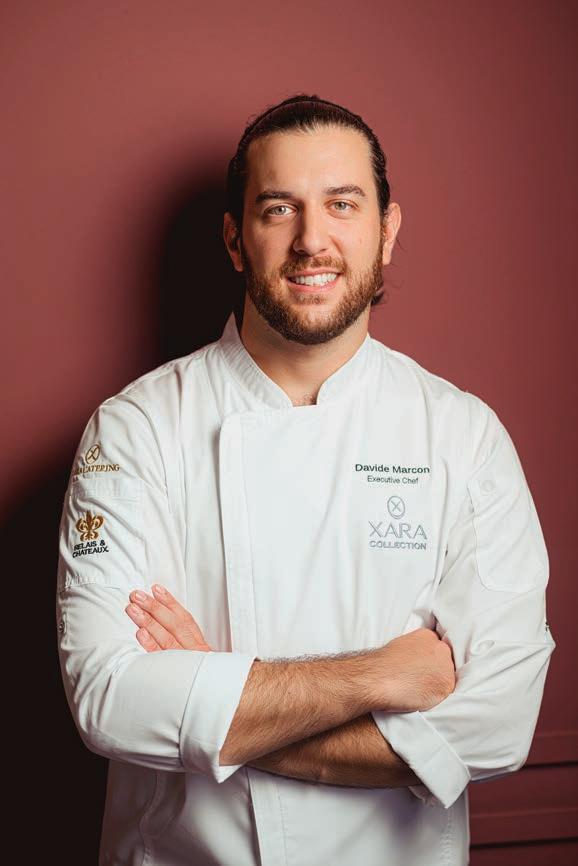
Alongside this accomplishment, Rosami Restaurant proudly retains its Michelin Star, rea rming its place among the country’s most distinguished dining destinations. This continued recognition reflects the restaurant’s unwavering commitment to culinary precision and thoughtful innovation, elements that have become synonymous with the Rosami Restaurant experience. Each season builds upon this foundation, ensuring that every guest encounter remains both memorable and meticulously crafted.


MICHELIN GUIDE MALTA 7TH EDITION

Now in its seventh edition, the MICHELIN Guide Malta continues to chart the evolution of the islands’ dining culture with a selection that reflects consistency and momentum. The 2026 guide features 48 restaurants, including six new recommendations, one of which is a new Bib Gourmand, while all seven starred restaurants retain their distinctions. It is a snapshot of a scene that has grown steadily since the guide’s Maltese debut in 2020, when just three restaurants held a star and the list of recommended addresses was still compact.

In February, the MICHELIN Guide revealed the 2026 selection for Malta, celebrating its vibrant and exceptional culinary scene. The new edition features 48 restaurants, including six fresh recommendations and a new Bib Gourmand, bringing the total in that category to five. All seven of Malta’s starred restaurants retained their distinctions, while three professionals were recognised with the ‘MICHELIN Special Award‘. The culinary scene has certainly evolved over the past few years since the first First Michelin Star Awards in Maltain 2020, when the list comprised three one-star restaurants,De Mondion, Noni and Under Grain, alongside three Bib Gourmands and 20 recommended addresses.
The inspectors’ latest visits coincided with a period of rapid development across the islands, a shift that has brought new investment, new openings and a broader appetite for ambitious cooking. According to Gwendal Poullennec, International Director of the MICHELIN Guide, “During their visits, the inspectors note that the islands are undergoing a period of extraordinary
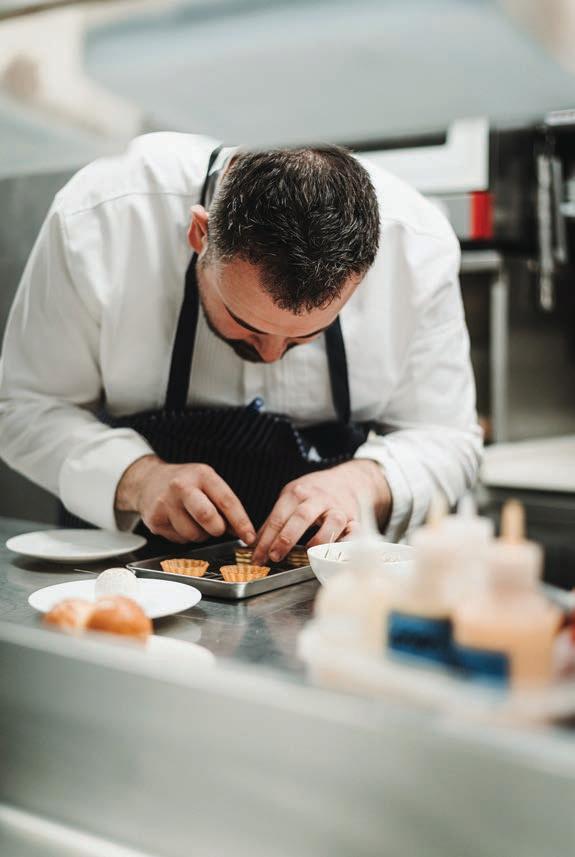
tourist dynamism and infrastructural development. As a result, it is reasonable to expect a wave of high-profile new openings that will further elevate the gastronomic offerings of the archipelago. Consequently, all seven starred restaurants have been reconfirmed, now demonstrating culinary consistency and a level of quality that remains consistently excellent”.
Among the highlights, ION Harbour by Simon Rogan maintains its two stars with a style rooted in precision and a strong
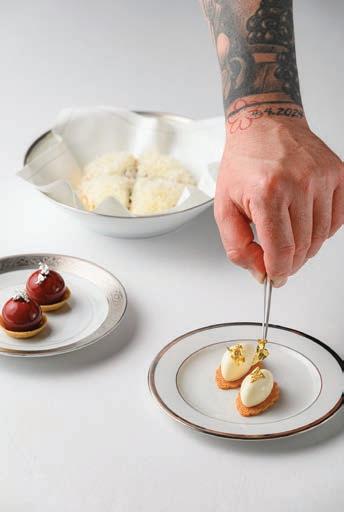
farm-to-table ethos. The cooking is modern and tightly composed, with dishes that balance technique and restraint while drawing on produce sourced through long-standing relationships with growers. Rosamì also retains its star under the direction of new chef Davide Marcon, whose Mediterranean sensibility brought a fresh direction to the menu. His arrival has added a new layer to the restaurant’s approach, blending refinement with a confident sense of place.
This page: ONE MICHELIN STAR.
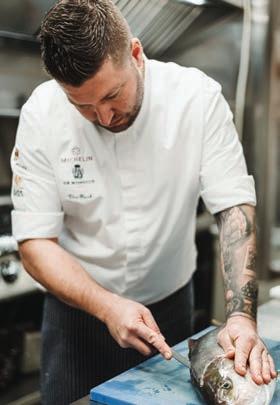
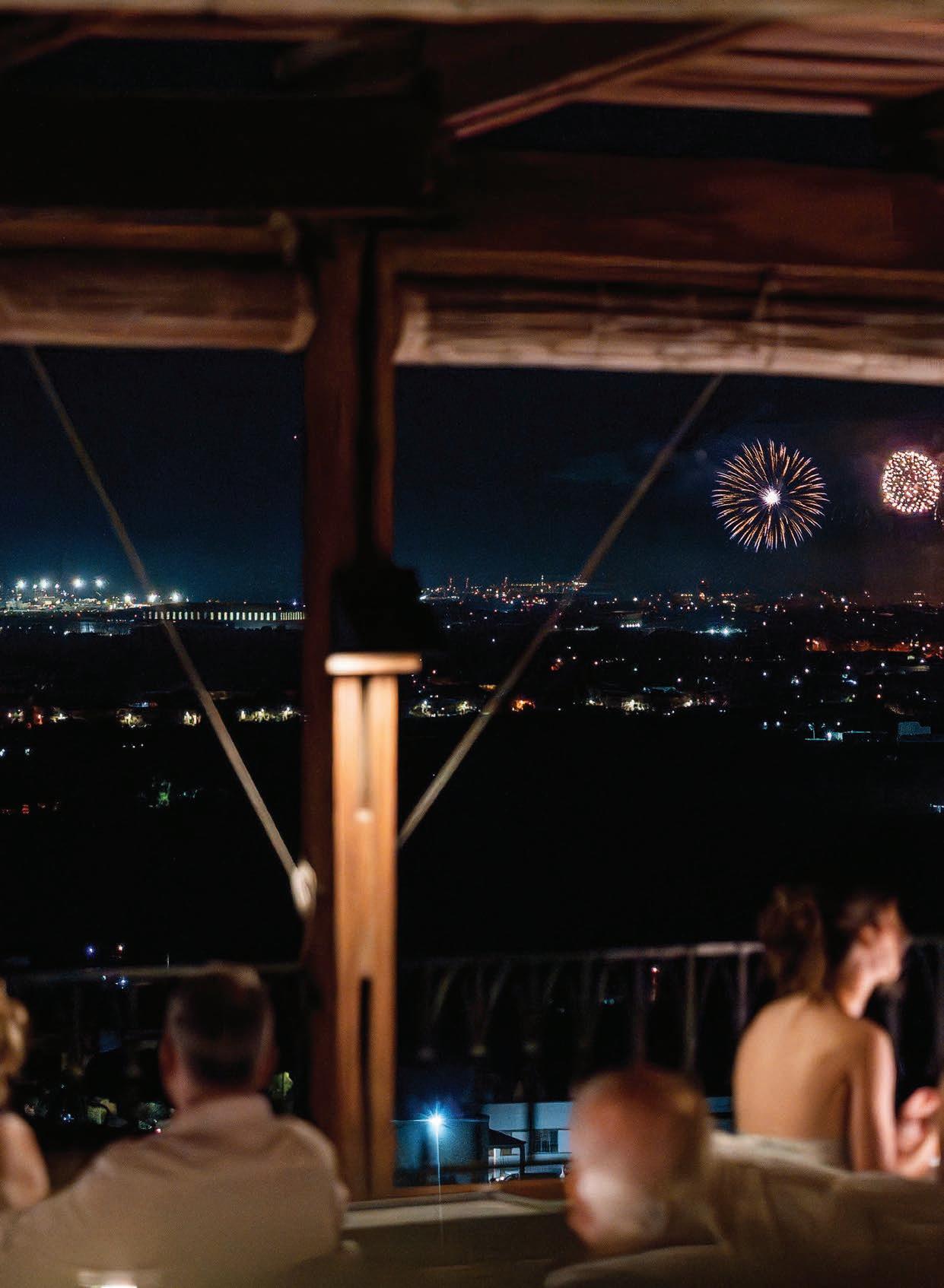
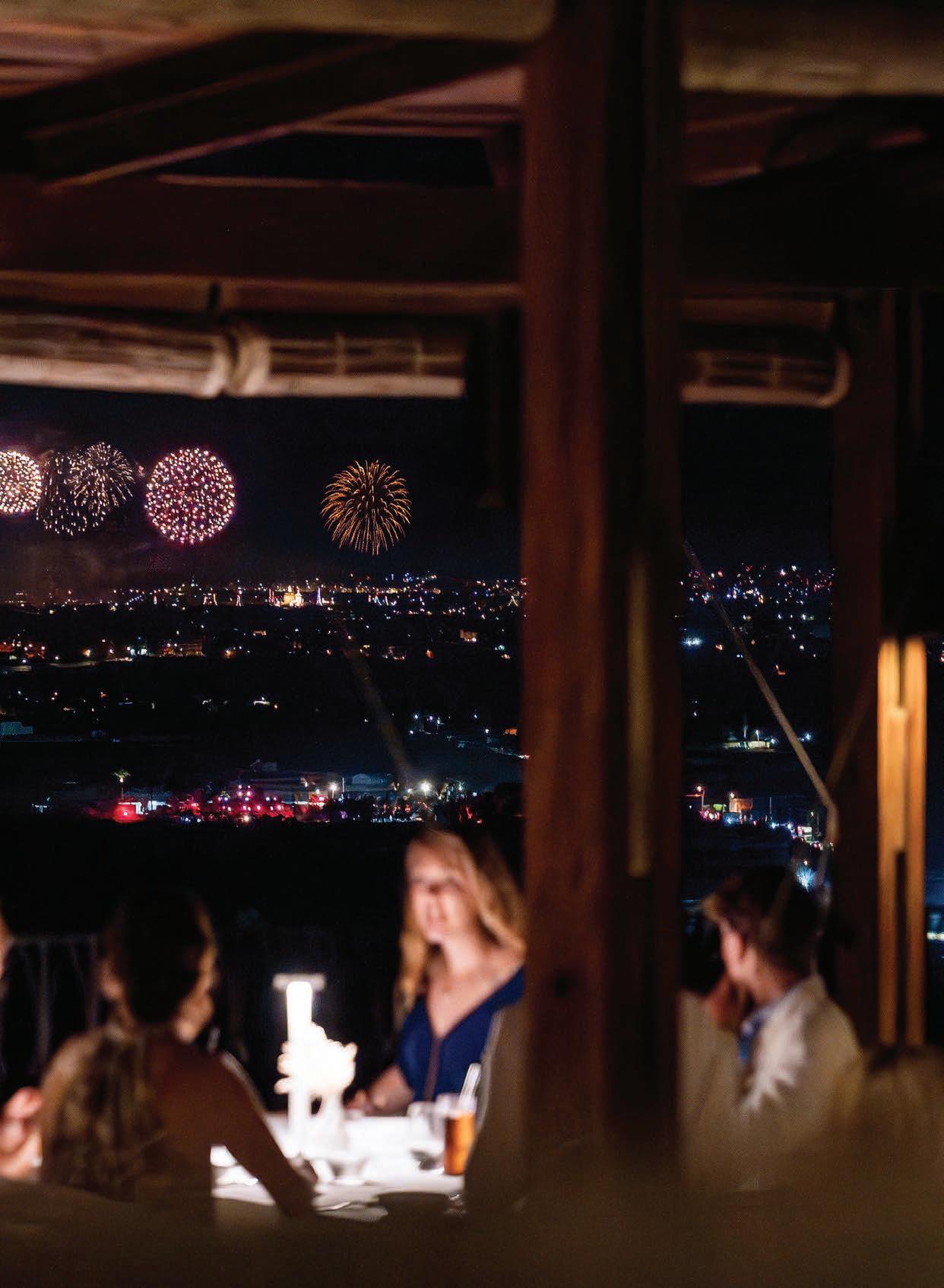
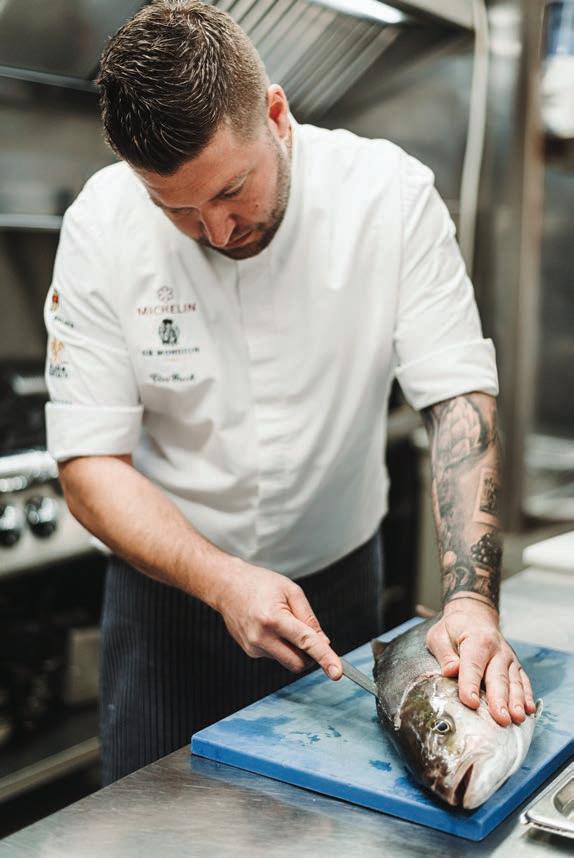
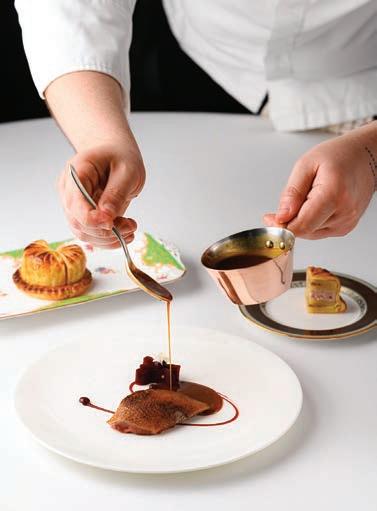
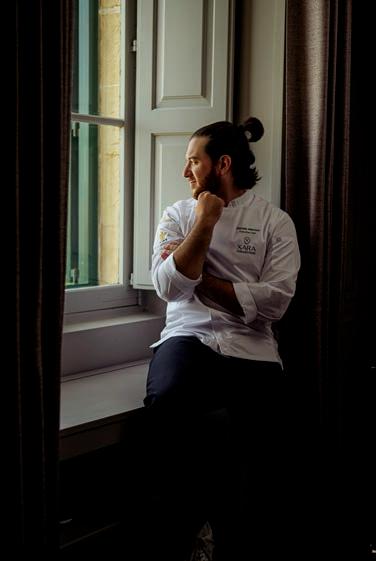
At De Mondion, under the direction of Executive Chef Clint Grech (top left), together with Head Chef Gabriel Caruana (top right), seasonal and locally grown produce is skilfully transformed and masterfully presented. The care and attention to each dish reveals the Grech's inspirations. Mediterranean, local, sustainable, and fresh, with a nod to traditional French cuisine. At De Mondion sommelier Miljan Radonjic earned the MICHELIN Sommelier Award. Miljan has come to the attention of critics for an extremely polite approach, capable of putting the guest at ease naturally. His professionalism blends with a vast wine culture, making him a real point of reference for the dining room and for customers with the right and interesting combinations. Indeed at De Mondion, a contemporary wine list showcases over 500 premium wine references from renowned regions around the world. Photography courtesy De Mondion / Xara Collection.
















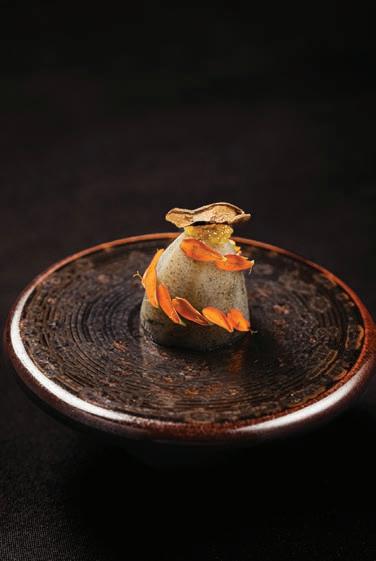
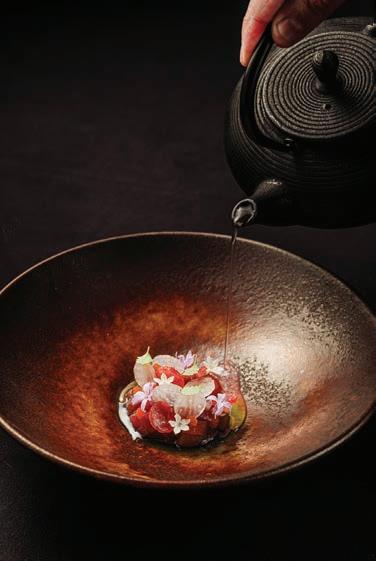
This page: ONE MICHELIN STAR. Rosamì retains its star under the direction of new chef Davide Marcon (below), whose Mediterranean sensibility brought a fresh direction to the menu. His arrival has added a new layer to the restaurant’s approach, blending refinement with a confident sense of place. Rosamì also received the MICHELIN Service Award, acknowledging the atmosphere created by director Charlo Cachia and his team. The award is based on the incredible atmosphere that the experienced and passionate team offers during the entire meal with the staff who present the menu with sobriety and professionalism, thus enhancing a gastronomic experience from welcome to the final farewell. Photography courtesy Rosamì / Xara Collection.
This year the guide also recognises individual talent through threeMICHELIN Special Awards.This year’s MICHELIN Young Chef Award goes to George Attard, who returned to Gozo after international experience to lead Level Nine at The Grand. His cooking is contemporary and visually assured, shaped by local ingredients and a clear understanding of flavour. The inspectors singled out his lamb rump with anchovies, shallots and parmentier sauce, a dish that captures his instinct for balance and detail.
Rosamì receives the MICHELINService Award, acknowledging the atmosphere created by director Charlo Cachia and his team. The award is based on the incredible atmosphere that the experienced and passionate team offers during the entire meal with the staff who present the menu with sobriety and professionalism, thus enhancing a gastronomic experience from welcome to the final farewell.
At De Mondion in Mdina, sommelier Miljan Radonjic earns the MICHELIN Sommelier Award for his thoughtful pairings and calm, intuitive presence in the dining room. Miljan has come to the attention of critics for an extremely polite approach, capable of putting the guest at ease naturally. His professionalism blends with a vast wine culture, making him a real point of reference for the dining room and for customers with the right and interesting combinations.
The addition of a new Bib Gourmand brings the total to five, reinforcing the guide’s recognition of restaurants offering well-crafted cooking at accessible prices. Alongside the starred and recommended
selections, it contributes to a Maltese dining scene that is increasingly layered, with chefs drawing on local produce, Mediterranean influences and international experience.
As the MICHELIN Guide Malta enters its seventh year, the islands’ gastronomic landscape continues to expand. The 2026 selection reflects a scene that is confident, outward-looking and ready for the next wave of openings, shaped by chefs and teams who are defining what Maltese dining can be in the years ahead.
THE SELECTION AT A GLANCE: 48 restaurants, including:1 restaurant with TWO MICHELIN STARS, 6 restaurants with ONE MICHELIN STAR, 5 BIB GOURMAND restaurants (1 new), 36 restaurants RECOMMENDED by the MICHELIN Guide (5 new).
MICHELIN GUIDE AWARDS –OFFICIAL SELECTION. ONE MICHELIN STAR: De Mondion, Fernandõ Gastrotheque, Le GV, Noni, Rosamì, Under Grain. TWO MICHELIN STARS: ION Harbour by Simon Rogan. BIB GOURMAND: AYU, Commando, Grain Street, Rubino, Verbena.
MICHELIN SELECTED
RESTAURANTS: 59 Republic, Aaron’s Kitchen, AKI, Al Sale, Anima, Bahia, Bistro Boca, Caviar & Bull, Chophouse, Giuseppi’s, Grotto Tavern, Guzé, Kaiseki, La Majoliche, La Pira, Legligin, Level Nine at The Grand, LOA, Marea, One80 St. Christopher Street, Rebekah’s, Risette, Root 81, Scala, Scottadito, Ta’ Frenc, Tartarun, Terroir, Terrone, The Fork and Cork, The Golden Fork, The Harbour Club, The Medina, The Seafood Market Grill, Tmun, Zest.






































BIB GOURMAND
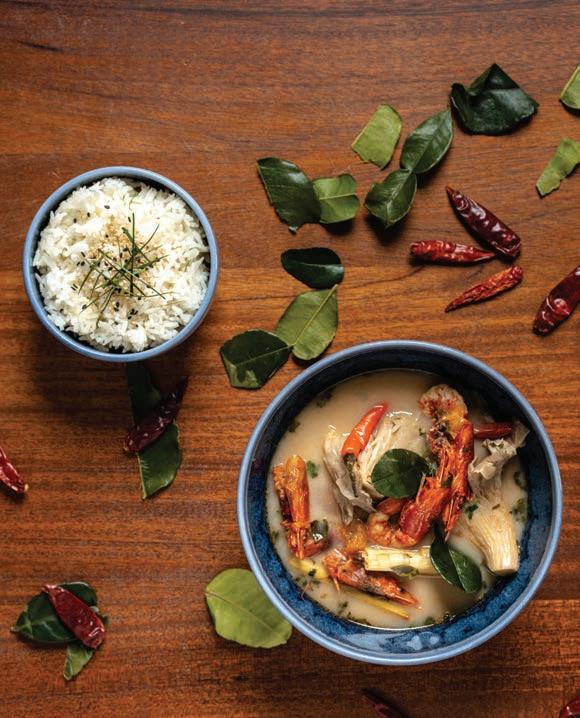
209 The Strand, Gzira. Tel +356 2133 7141, ayu.mt
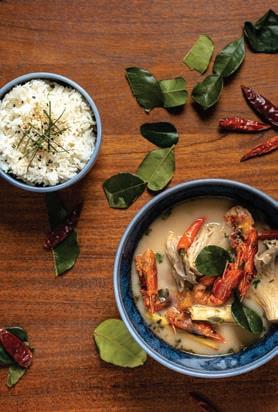
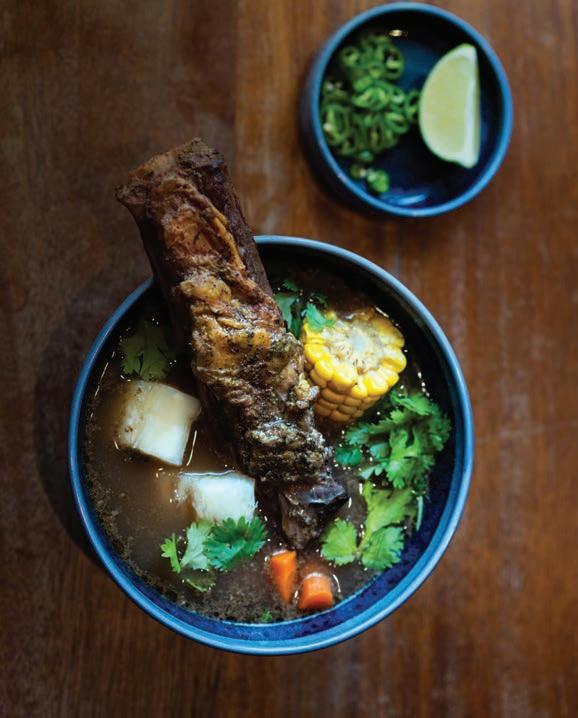
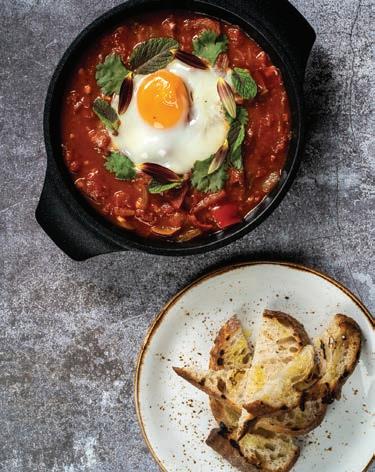
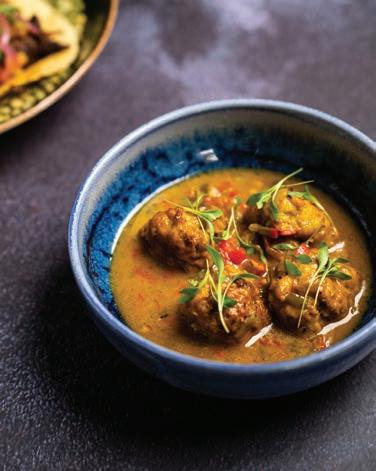
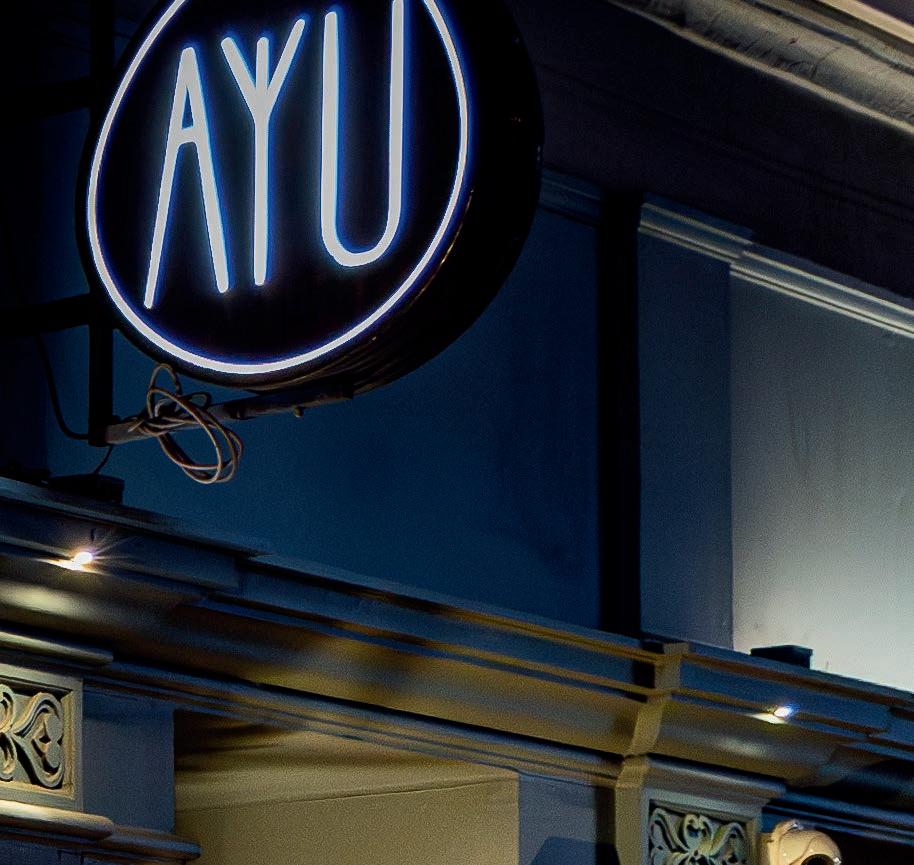
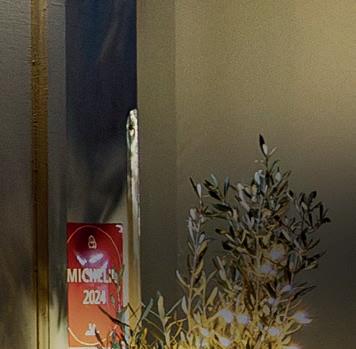
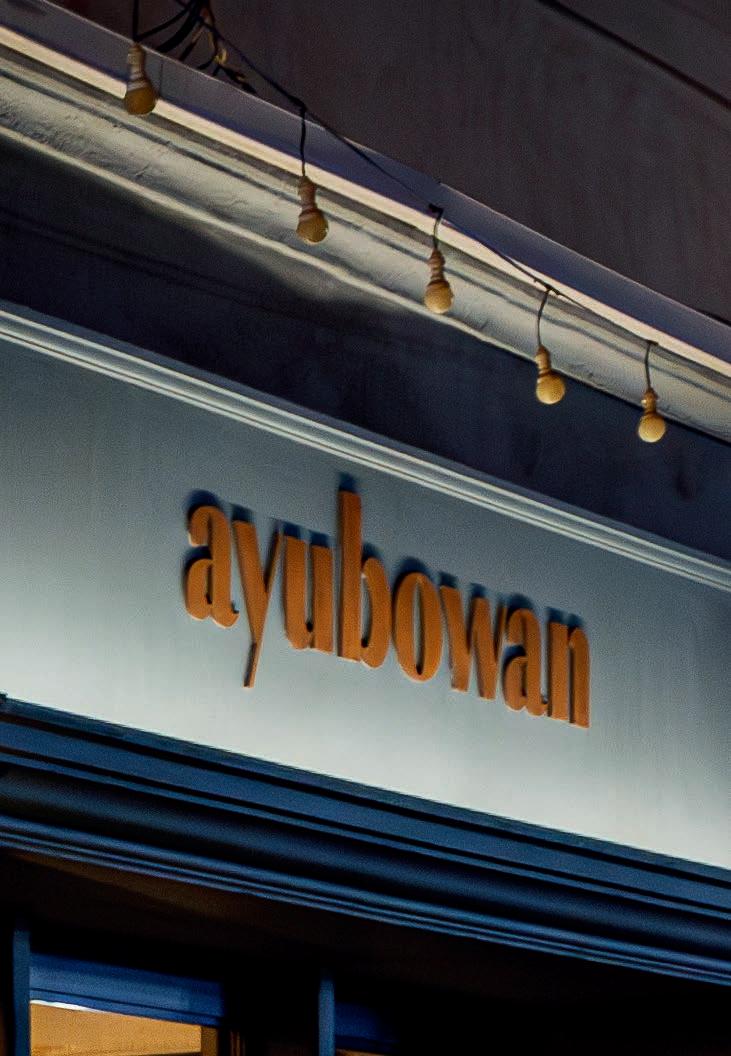
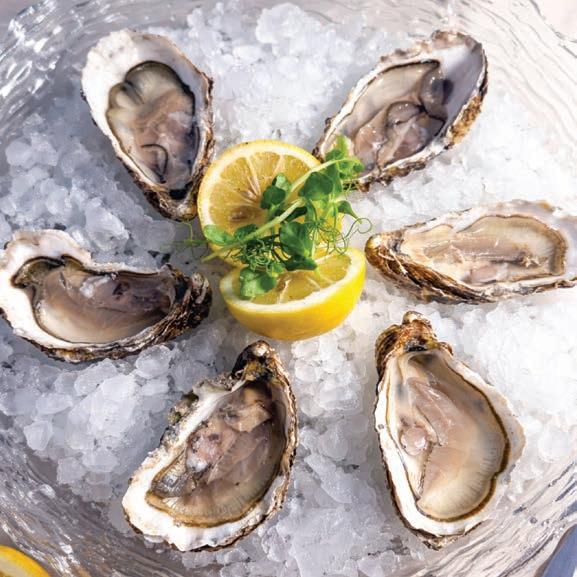
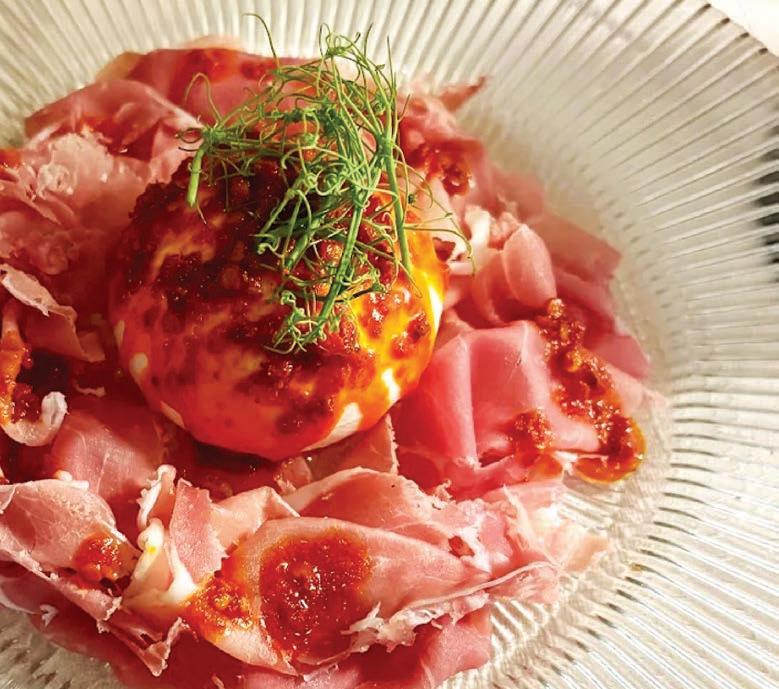
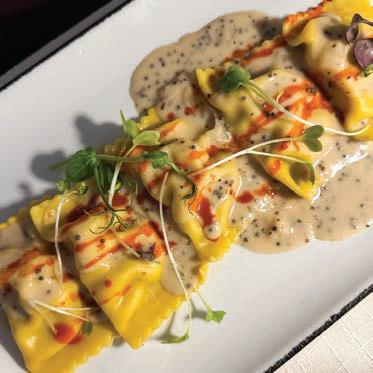
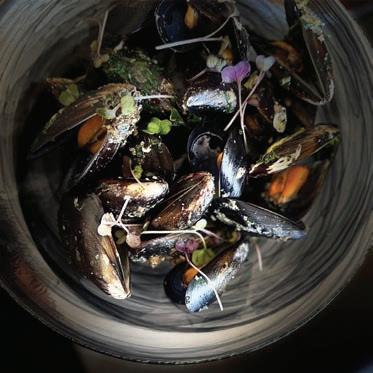
Ayubowan. A traditional Sinhalese greeting from Sri Lanka, it translates to ‘long life’ or ‘may you live long.’ Set on the Strand of the Gżira seafront, AYU brings a vibrant, globespanning spirit to Malta’s dining scene. First awarded a MICHELIN Guide Bib Gourmand in 2024, this lively restaurant channels the wanderlust of the Scicluna brothers, Alex, Mario, and Anthony, who founded the Jubilee Group in 1998.
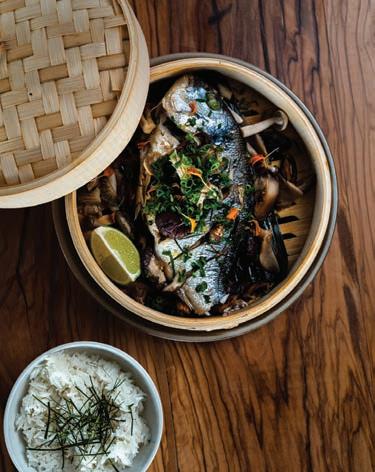
Their travels across continents have inspired a repertoire of menu items shaped by discovery, curiosity, and cultural exchange. This ‘traveller’s kitchen’ draws on flavours from Morocco to Japan, Lebanon to Venezuela, and Italy to Iran;each dish is rooted in authentic techniques and passionately crafted with a sense of adventure.
Founded in 2021, AYU grew from the brothers’ long-standing Jubilee Group legacy and their belief that food is the truest expression of place. The menu
evolves seasonally, introducing dishes learned from chefs, home cooks, and street-food artisans encountered on the brothers’ journeys. Warm, youthful, and full of energy, AYU offers excellent value and a dining experience that feels like paging through a culinary passport, a spirited invitation to taste the world through the Jubilee brothers’ perspectives.
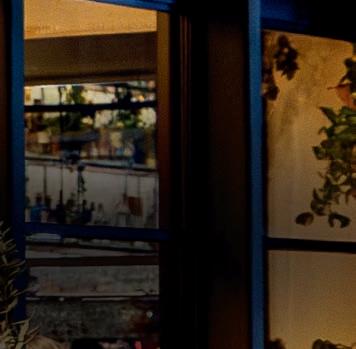
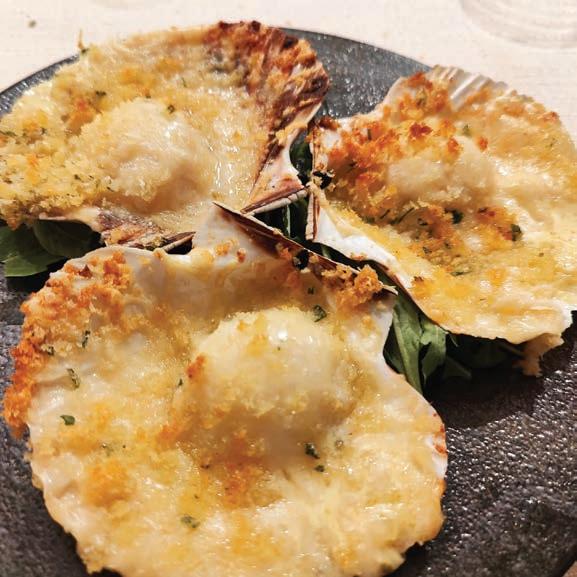
Photography this page courtesy AYU Traveller’s Kitchen.




Open Tuesday to Sunday Booking recommended









MICHELIN SELECTED
32 Victory Square, Xagħra, Gozo. Tel +356 2720 0509, facebook.com/al.sale.restaurant al sale
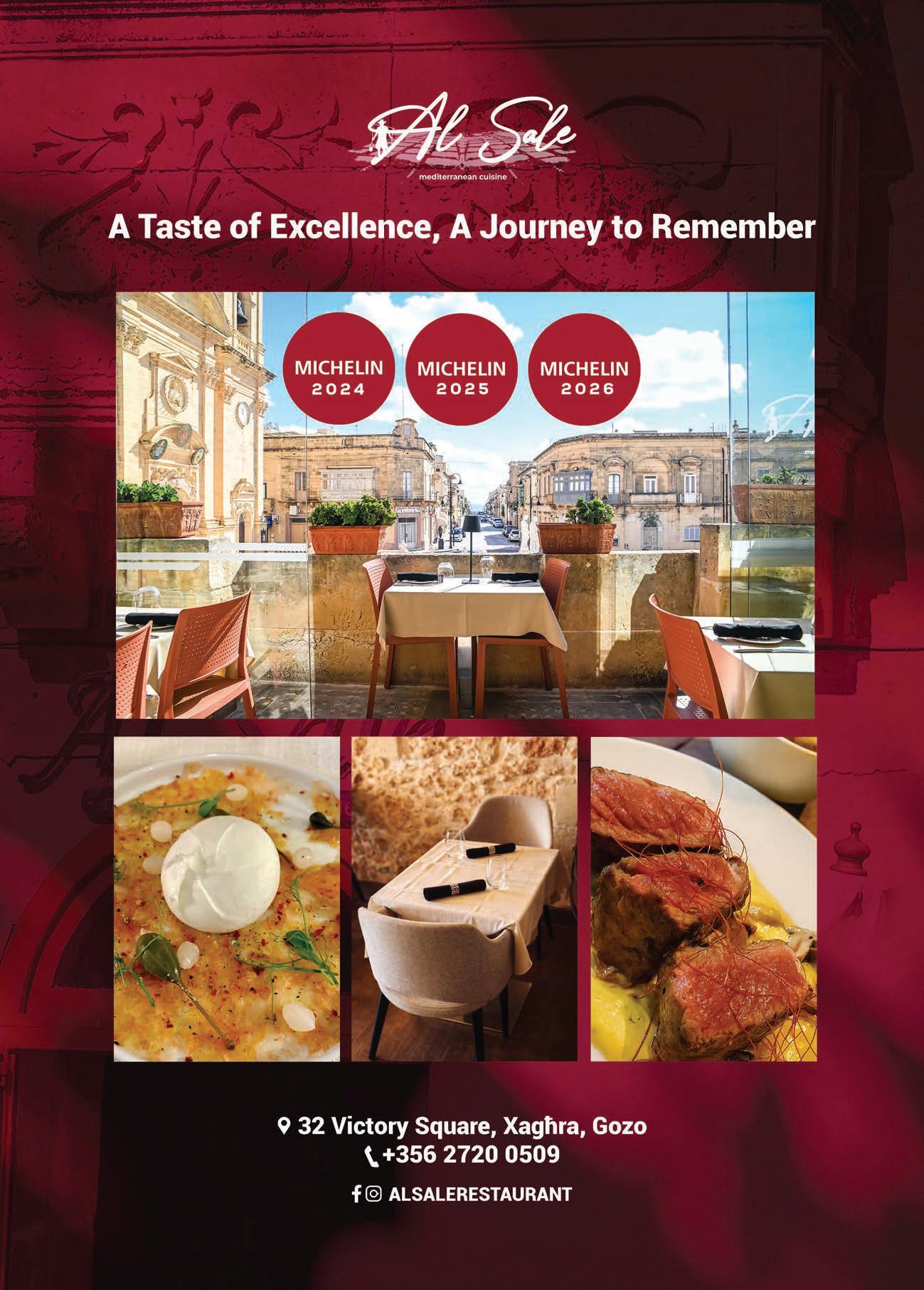
In Xagħra’s main square, Al Sale offers a poised yet informal approach to Mediterranean cooking. Now recognised by the MICHELIN Guide Malta for the third consecutive year, it reflects chefowner Christopher Pace’s ingredient-led philosophy, built around fresh produce, aged meats and light, flavour-driven dishes. Olive oil takes precedence in the kitchen, giving the food a clean, direct character. The menu shifts with the seasons, from seabass Al Sale to prawn-and-scallop ravioli with prawn bisque and carefully handled cuts of meat, supported by a carefully curated wine list with options by the glass. Pace’s focus on good food and genuine hospitality shapes the atmosphere, whether on the sunlit terrace or within the warm stone-clad interiors. As the guide notes, everything here is “uncomplicated, ingredient-led and freshly prepared. An international wine list and friendly, attentive yet unstuffy service round off the overall experience.“
Photography this page courtesy Al Sale.
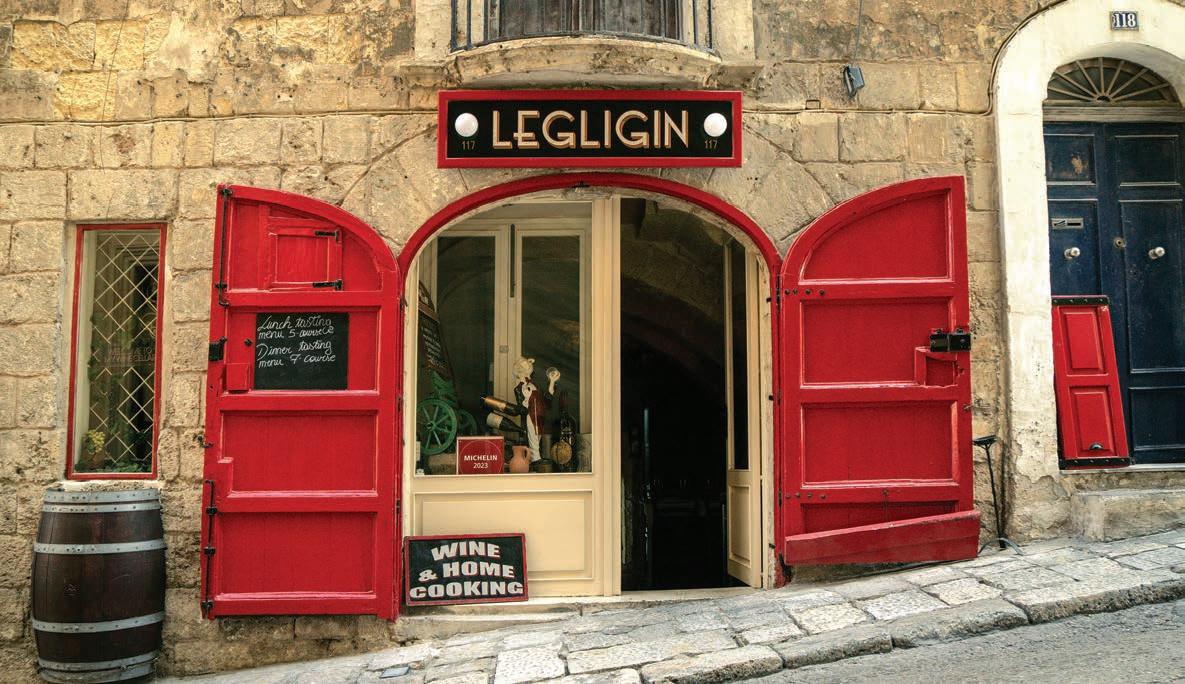
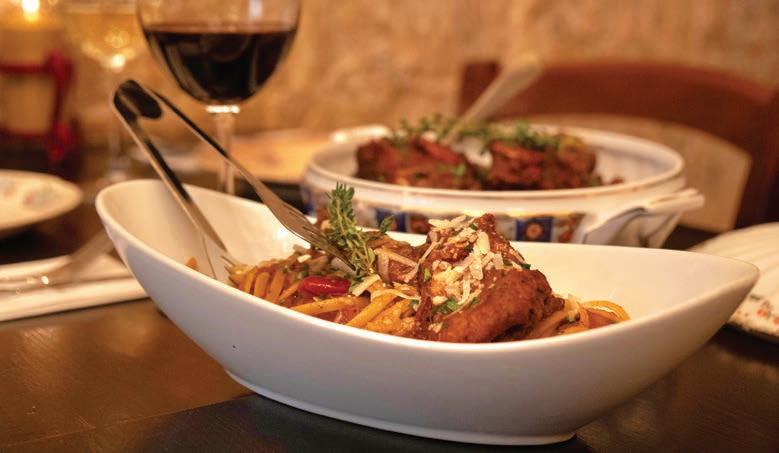
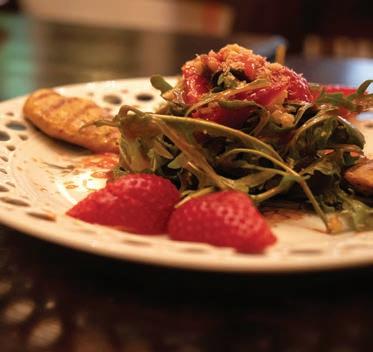
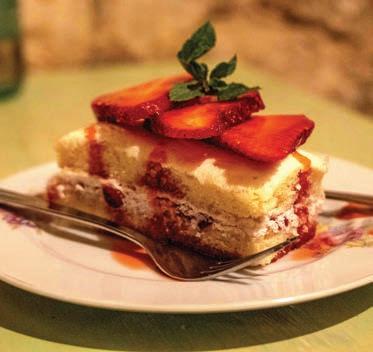
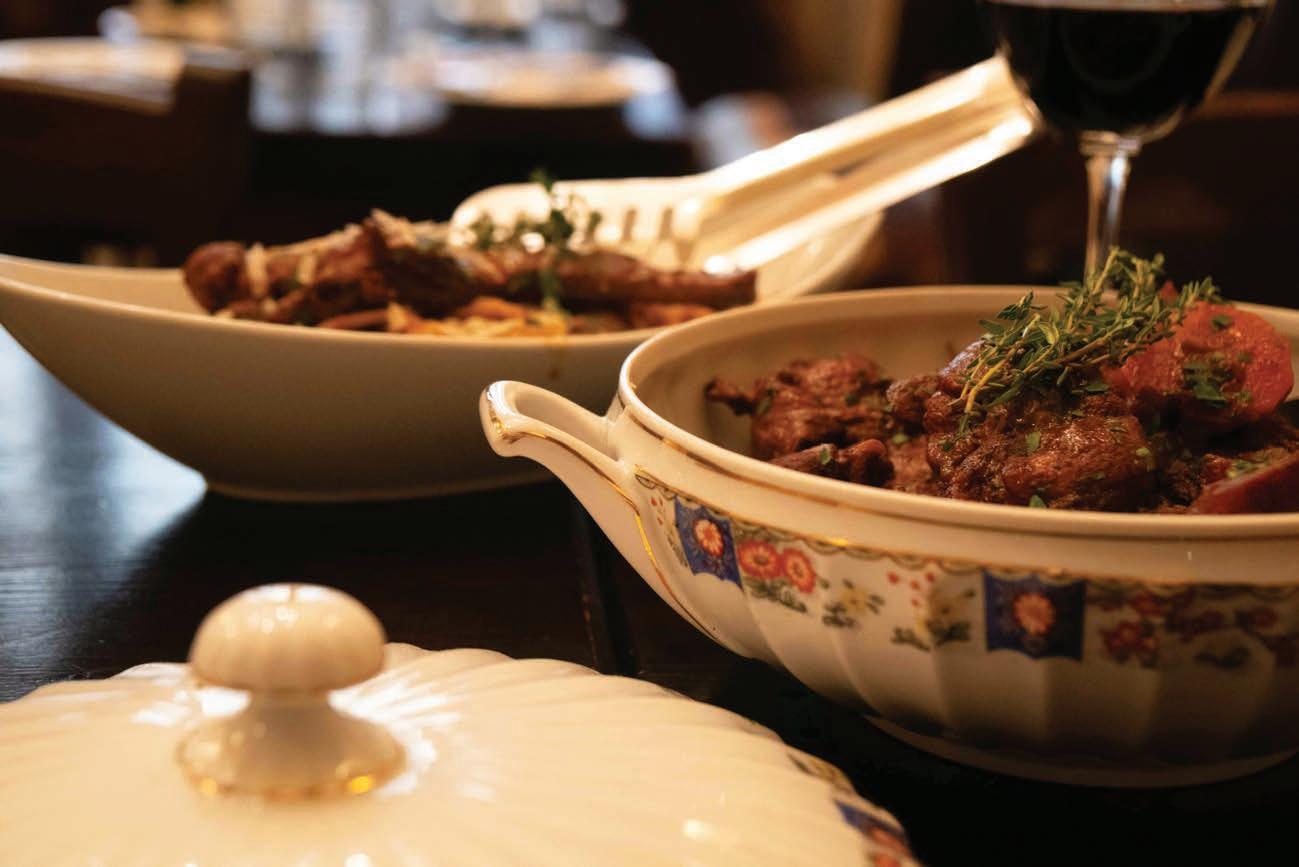
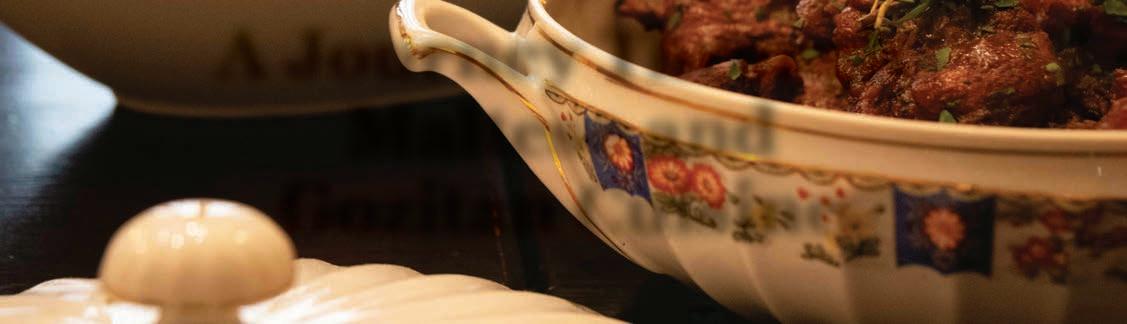
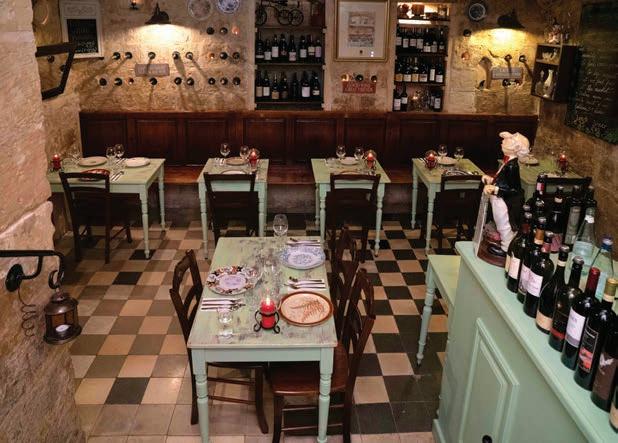
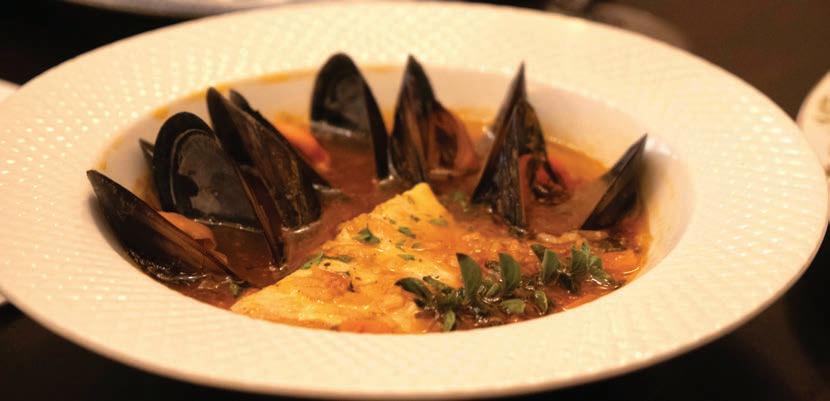
In the heart of Valletta, Legligin offers a soulful journey through Maltese home cooking. What began in 2007 as a one-man labour of love by founder Chris Mifsud Bonnici, who cooked, prepped, and served entirely on his own, has since evolved into a warm, multi-room, family-run restaurant. The spirit, however, remains unchanged: heartfelt food, slow-cooked flavours, and a deep respect for local ingredients. Legligin serves a blind tasting menu that shifts almost daily, built around fresh market produce and recipes rooted in Maltese tradition. Expect fragrant herbs, rustic stews, and comforting Mediterranean dishes presented with charming mismatched plates that evoke a visit to a Maltese grandmother’s home. With five courses at lunch and seven at dinner, paired with a wine list that proudly champions local bottles, Legligin delivers an intimate, nostalgic, and distinctly Maltese dining experience.
Photography this page courtesy Legligin.


For over 20 years, LEGLIGIN has been celebrating the flavours, traditions, and warmth of Maltese and Gozitan home cooking.
Now in its second generation, our family-run restaurant continues a passion for showcasing the island's culinary heritage through a unique dining experience inspired by old family recipes and the freshest seasonal ingredients from local suppliers.
At LEGLIGIN, there is no menu to choose from. Instead, we invite you to trust the kitchen and enjoy our BLIND TASTING EXPERIENCE.
Each day's dishes are inspired by traditional Maltese and Mediterranean flavours, changing with the seasons and what is freshest at the market.




MONDAY TO FRIDAY (12:30–16:30)
Five-course tasting menu at 37 Euro per person
MONDAY TO SUNDAY (18:00–21:30)
Seven course tasting menu at 48 Euro per person
“Men did not love Rome because she was great. She was great because she was loved.”
G.K. Chesterton
One of the greatest expressions of Merlot comes from Italy’s Bolgheri coast. Masseto has its humble origins in being just a table wine with the IGT status of being born in Tuscany. The winery has its own fairy tale beginning in the 1980s when an abandoned quarry tract rich in clumpy blue clay and marine fossils, a stone’s throw away from the Tyrrhenian Sea; blessed by cool summer breezes, bright sun sea reflection and milder balmier winters, was entirely planted in the commonest of grapes Merlot, writes Kris @ FirstThisIsWine.
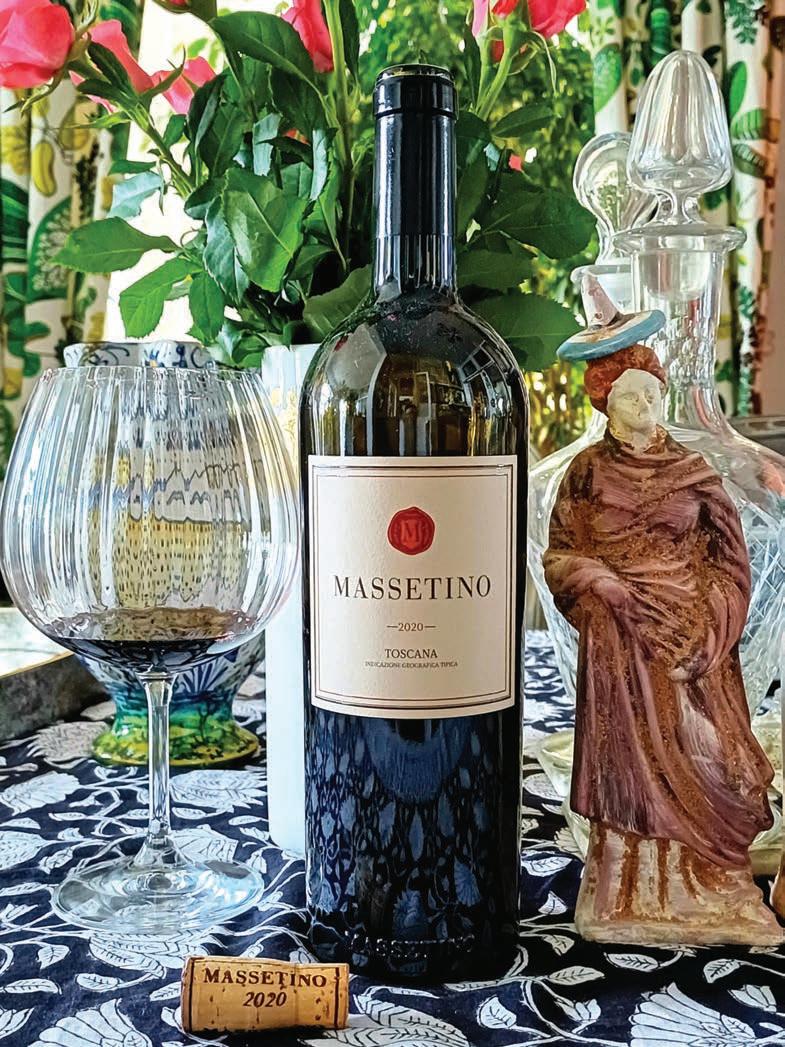
Masseto was born from the order of rejection as a single variety wine in contrast to the blending style favoured by other Super Tuscan go to names or the local Chianti holdall. The clumpy primitive clay is fiendishly difficult to cultivate and only through meticulous methods in the field and chai is a wine of such deep elegance and power possible.
Here we taste Massetino 2020 the fourth vintage of the second iteration from younger vines made from Merlot with a dash of Cabernet Franc. The nose is a floral bouquet of Bolgheri sandalwood and white flower aromatics with an entry of ripe black cherries and berries leading to a mid-palate bearing of pure fruit with good chew to end in a pencil baked spice and tobacco finish. This has some of the restraint of Masseto but also due to the cosy vintage is more approachable especially with a few hours breathing. You get all the lyrical intensity and mineral composure expected from the blue clay origins but the mid palate swag of seductive contours around a columnar core of solid strength speaks loudly of a modern style vaunting ready power and opulence. There is a caged wild beast feel to this, as a thin line lies between what speaks of a precise terroir but equally transcends the lands it hails from to be worldly, mondaine even. The evolution on the palate basks in the shifting sands of studied time. Instead of just abeyance there is a vision of moving parts with a pneumatic intensity; a panopticon of things to come in one noble glance. Fleetingly simple but with a gnawing enigma.
“Think of yourself as dead. You have lived your life. Now take what’s left and live it properly.”
Marcus Aurelius
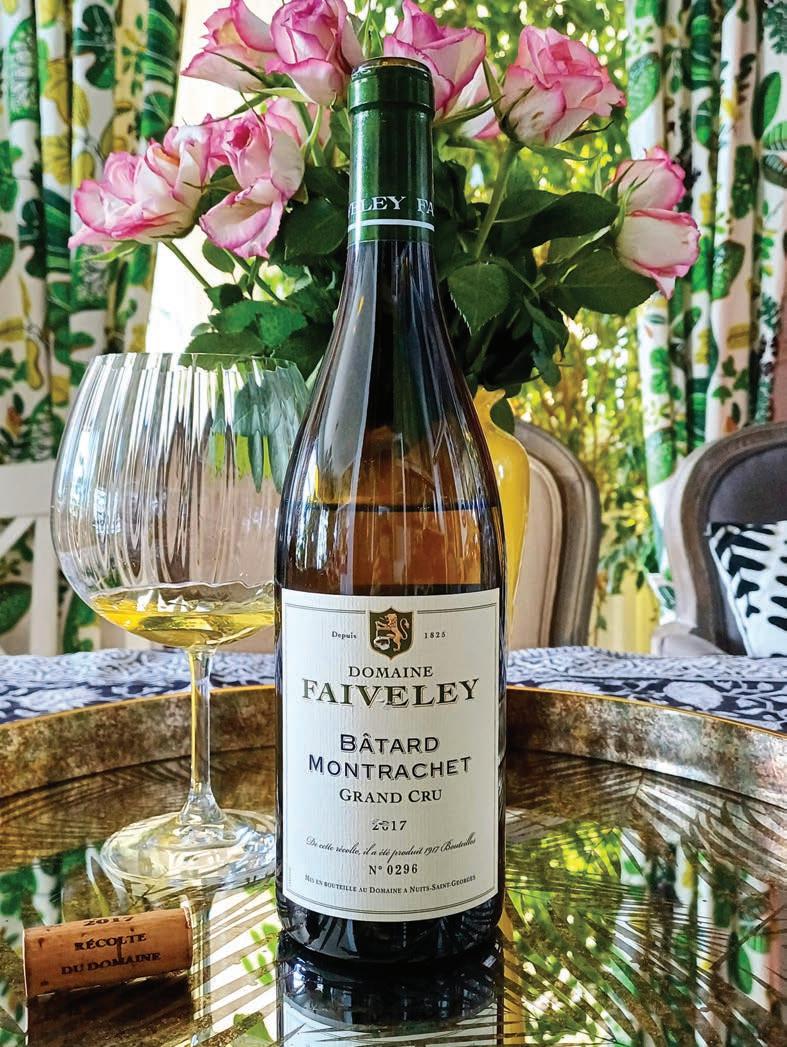
Nature grooms itself before any encounter and with wine it is as much about introspection as it is about catharsis; a falling beyond oneself to realms hitherto unknown. The Montrachets consisting of five grand crus are always altering experiences being the peak of what white wine can achieve by way of extreme geology and handcraftsmanship, so any tasting pushes boundaries of one’s knowledge however expert or amateur, writes Kris @ FirstThisIsWine.
While the Montrachets are known for their perfect balance between tensile structure and rich sublimity, Bâtard at the base of the slopes still owning the same Jurassic limestone geology has deeper darker soils, part awash from the slope itself part clayish alluvium with sun reflective pebbles that help in ripening. Indeed the depth and warmer mesoclimate offer a similar Montrachet flavour profile but with a richness, ripeness, fattiness and approachability especially in solar vintages and an advantage in cooler but drier years.
Faiveley Bâtard Montrachet 2017 opens to a restrained bouquet of honeysuckle and white stone fruit. In contrast the attack is more expressive with a beckoning smorgasbord of winter peaches and pears, hazelnut praline, lemon curd, tinged in a caramel meringue creamy pastry full bodied roundedness and baked spice finish. There is a ripe concentration, saturated layers of satiating flavours and buttery textures all hinged around a saline flinty wet stone streak for good measure, and despite the generosity the format is elegant classical youthfully vibrant even if somewhat lax in the nervosity of its upper slope cousins.
There is something all too human in its flickering affability of peak rotund flavours melding into each other and something all too divine in the way this treads water with a sumptuousness and opulence all together magical. This drifts from the elemental and sensory to levitating incandescence to be somewhat of an epiphany. Not all grand crus need to be structured and restrained some can be entirely lovely just by not being so.
Faiveley is available at Farsonsdirect.
“I want to live for immortality, and I will accept no compromise.”
Alyosha Karamasov
Everything and nothing is important. Knowing all you know is no passport to appreciation and knowing nothing at all may be the most judicious way of savouring a wine which in Soldera’s acute case above its generic Tuscan labelling transcends both the grape and region it comes from. Indeed it is when you forget everything you know that you can fall in love once again with a bottle, writes Kris @ FirstThisIsWine.
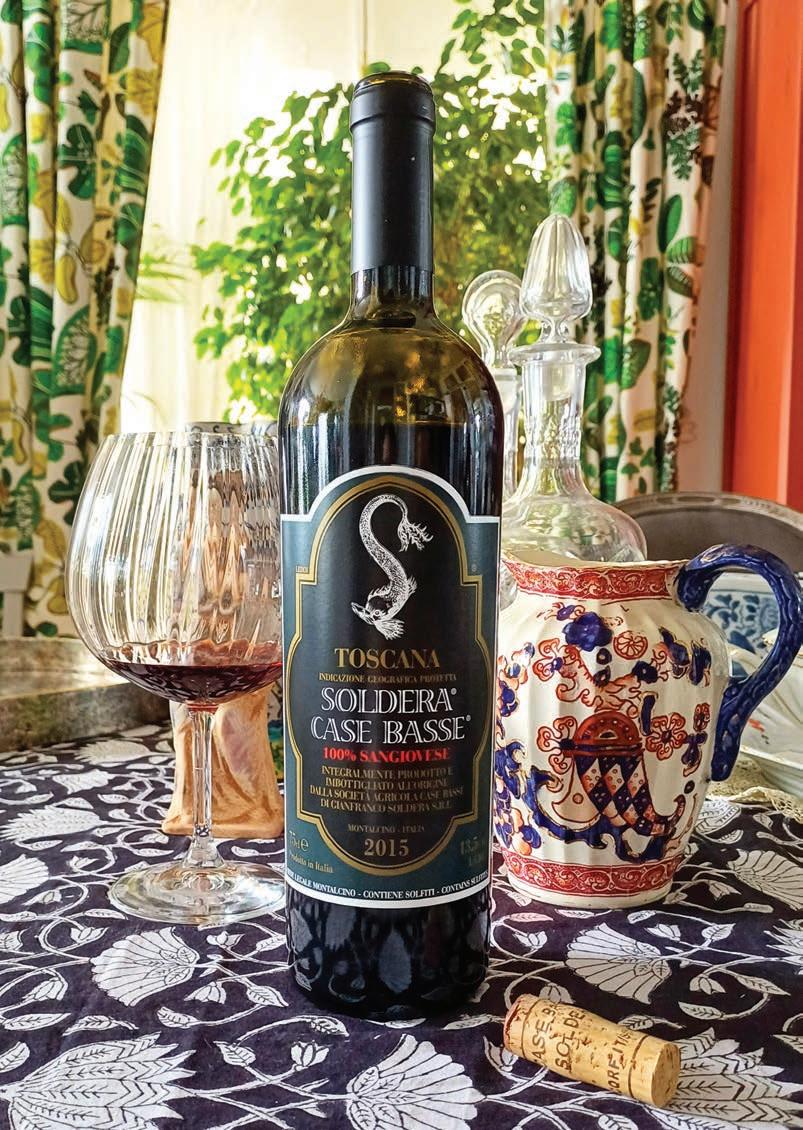
By way of introduction a Milanese insurance broker bought in the 70s promising land near Montalcino with his botanist wife in mind. The relentless pursuit of perfection by way of biodynamic farming within a larger idyllic setting of botanical parklands and rose gardens with Leroy style crushingly low yields has given rise to in Gianfranco’s words ‘one of the world’s greatest wines’. Case Basse’s motto reads like a big wine dance card: harmony, elegance, complexity, naturalness, typicity, uniqueness, rarity and longevity, with one caveat it walks the walk. This is Gianfranco’s swan song as one of the great man’s last vintages. Soldera 2015 opens to a brooding attack of veal gravy despite a summer flower and fruit bouquet with an elegant transparent streak of treacly wooded red cherries and sweet berries before a delicately mineralized creamy soft finish. The DNA of this lies somewhere between the cosy heart of a Masseto and the aromatics of a Clos de Beze. Monolithic in shape with an expansive mid palate that with time added light weight, excitement and complexity to reveal more forest fruit, small herbs, grenadine molasses, forest floors; this transpires and transcends by being extremely pure, on point, precise but effusively multi sensory. There is a Delphic slant to this; it speaks in oracles with a sphinx like demeanour, with more enigma than discovery, in its marriage of unadulterated umami and pure abandon energy. There are nuances of times gone by, ripe fruit, old polish, cold nights; but equally something shockingly futuristic; a nostalgia in reverse for times that have not yet come to pass. The remains of a day not yet dawned. Edifying.