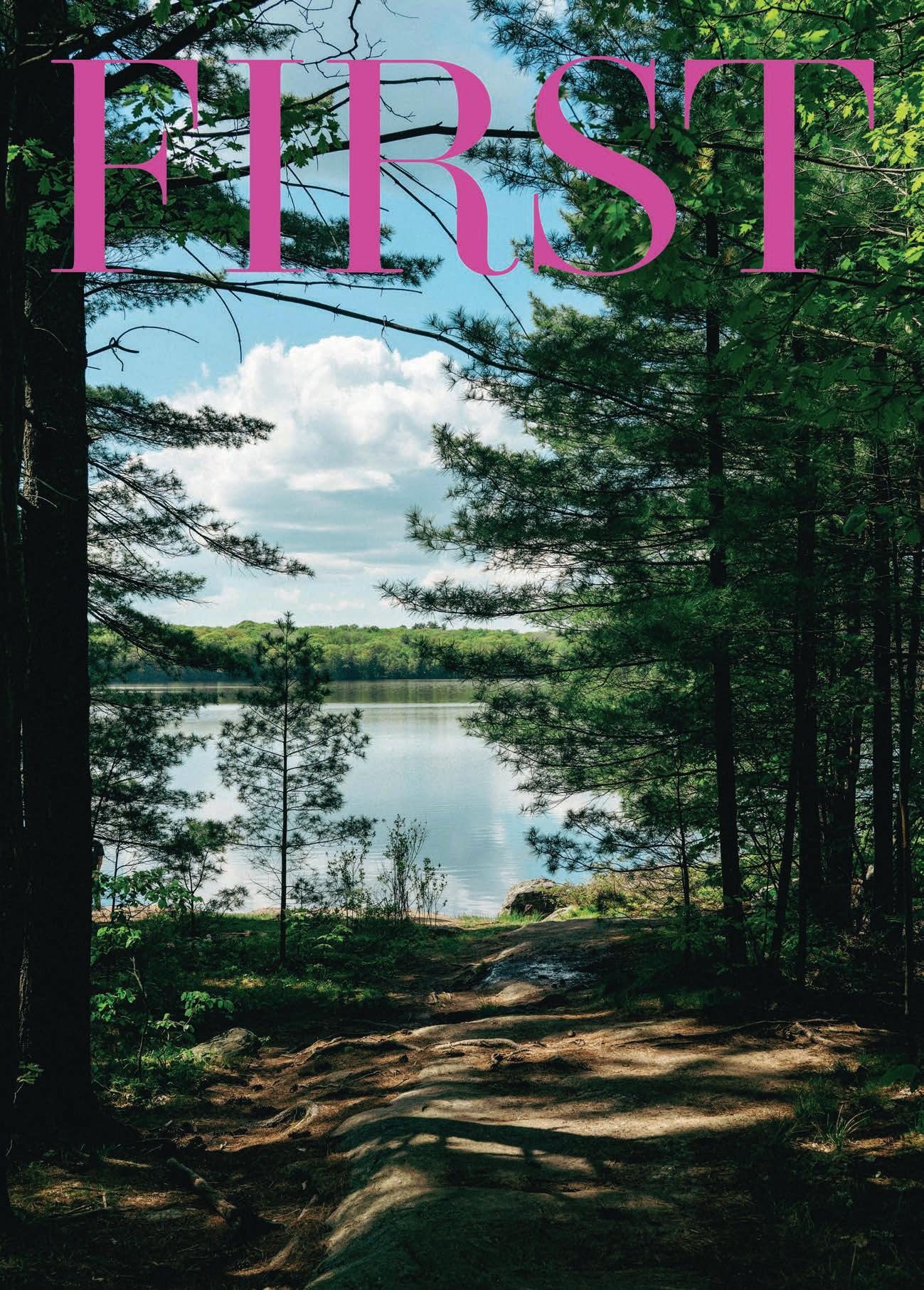

“At any moment you choose you can retire within yourself. Nowhere can man find a quieter or more untroubled retreat than in his own soul.”
MARCUS AURELIUS, MEDITATIONS











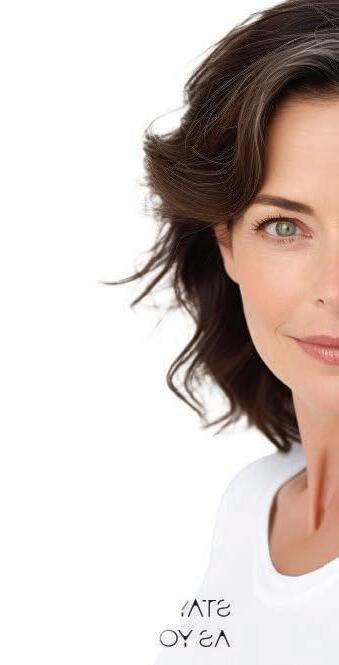
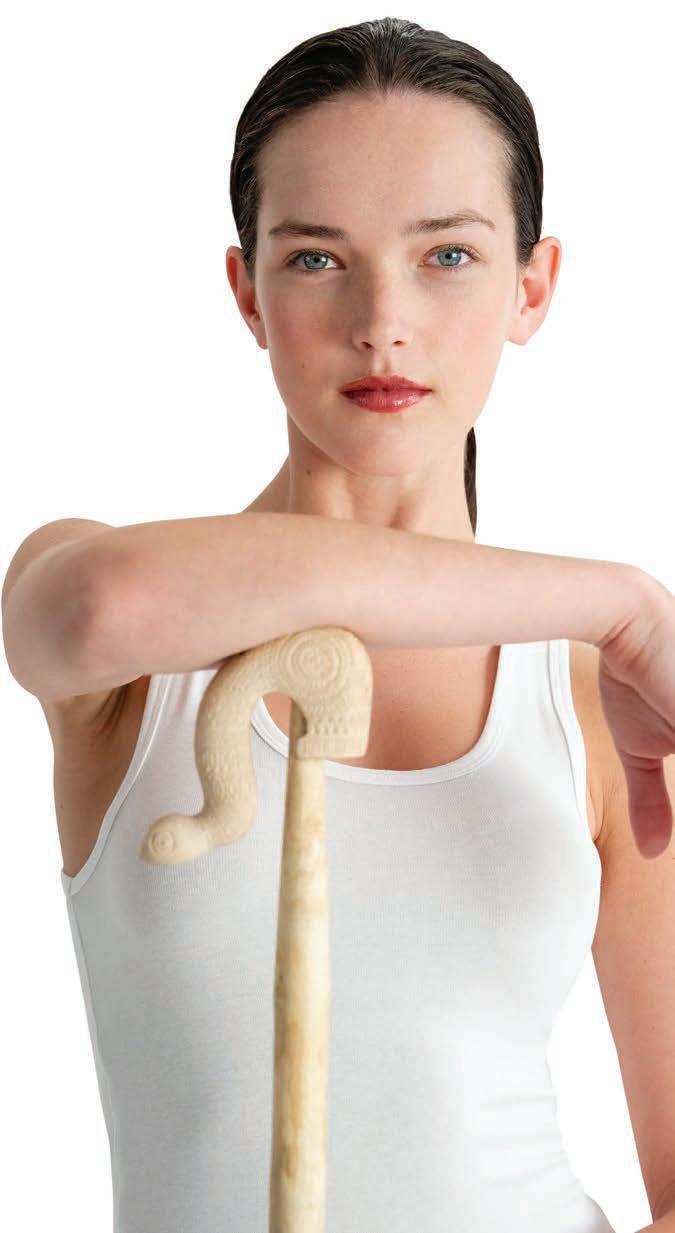
Developed with aesthetic dermatologists, the HYALURON ACTIV PROCEDURE Lifting Cream is formulated with a powerful active ingredient: Retinal, 3 times more active than Retinol(2). The powerful complementary effect of Retinal and hyaluronic acid fragments in this formula helps boost epidermal hyaluronic acid production compared to Retinal alone. The Lifting Cream activates cellular performance and lifts facial contours. Alone or in addition to an aesthetic procedure(3)
(1) Pharmaco-clinical study on 42 women, product applied once daily for 2 months. (2) External publication: J.H. Saurat & al, J Invest Dermatol, 1994; 102: 770-774. Clinical study on biopsies, 5 subjects, applied once daily for 4 days. (3) After re-epidermalization. (1)

“I
do not share the belief in indefinite progress for society as a whole; I believe in man’s improvement in himself.”
HONORÉ DE BALZAC





en seek for seclusion in the wilderness, by the seashore, or in the mountains –a dream you have cherished only too fondly yourself. But such fancies are wholly unworthy of a philosopher, since at any moment you choose you can retire within yourself. Nowhere can man find a quieter or more untroubled retreat than in his own soul; above all, he who possesses resources in himself, which he need only contemplate to secure immediate ease of mind - the ease that is but another word for a well-ordered spirit. Avail yourself often, then, of this retirement, and so continually renew yourself.”

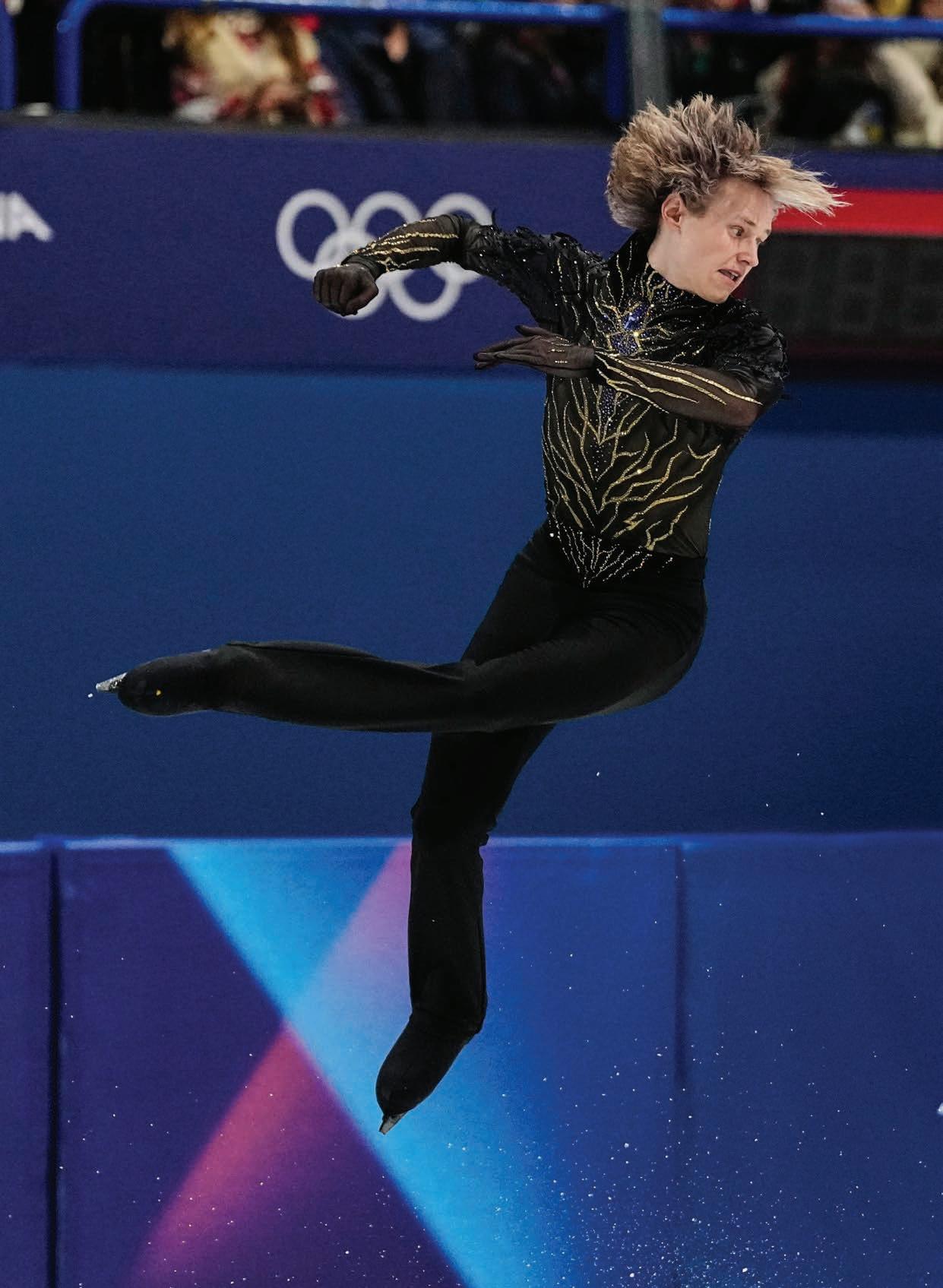

“On the world’s biggest stage, those who appear the strongest may still be fighting invisible battles on the inside. Even your happiest memories can end up tainted by the noise. Vile online hatred attacks the mind and fear lures it into the darkness, no matter how hard you try to stay sane through the endless insurmountable pressure. It all builds up as these moments flash before your eyes, resulting in an inevitable crash. This is that version of the story.”

Ilia Malinin,
This February, Ilia Malinin stunned the world at the 2026 Milan Cortina Winter Olympics, but not for another record breaking performance. After helping Team USA secure gold in the team event, the two time World Champion faltered in the men’s individual final, falling twice and finishing eighth. His candid message afterward revealed the immense psychological weight behind the slip. “The nerves

just went, so overwhelming, and especially going into that starting pose, I just felt like all the traumatic moments of my life really just started flooding my head. So many negative thoughts that flooded into there and I could not handle it.” By speaking openly about his struggle, Malinin shows a different kind of strength that transcends medals, and in confronting his mental health head on, he reminds the world that “those who appear the strongest may still be fighting invisible battles on the inside.”
8
LA DOLCE VITA
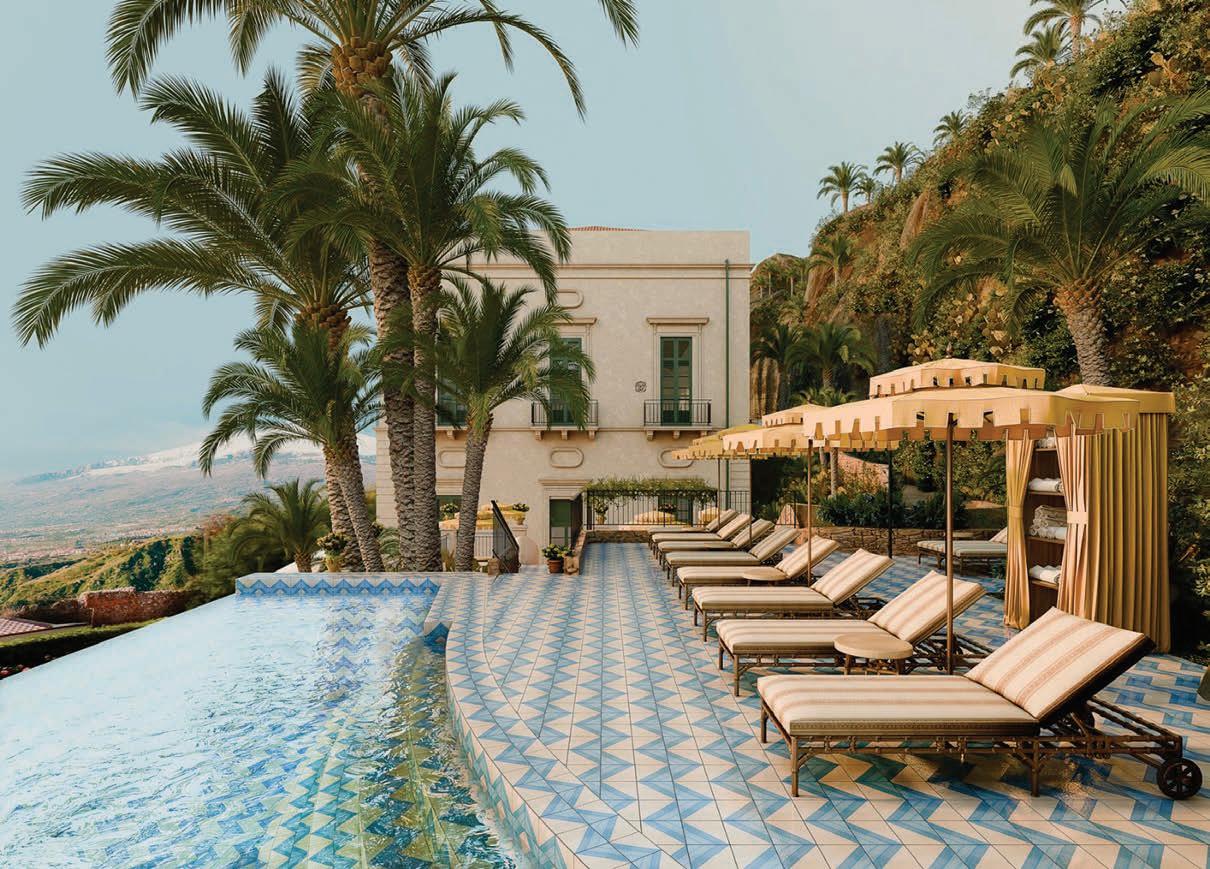
Taormina. Inside Villa Timeo.
20 INTERIORS
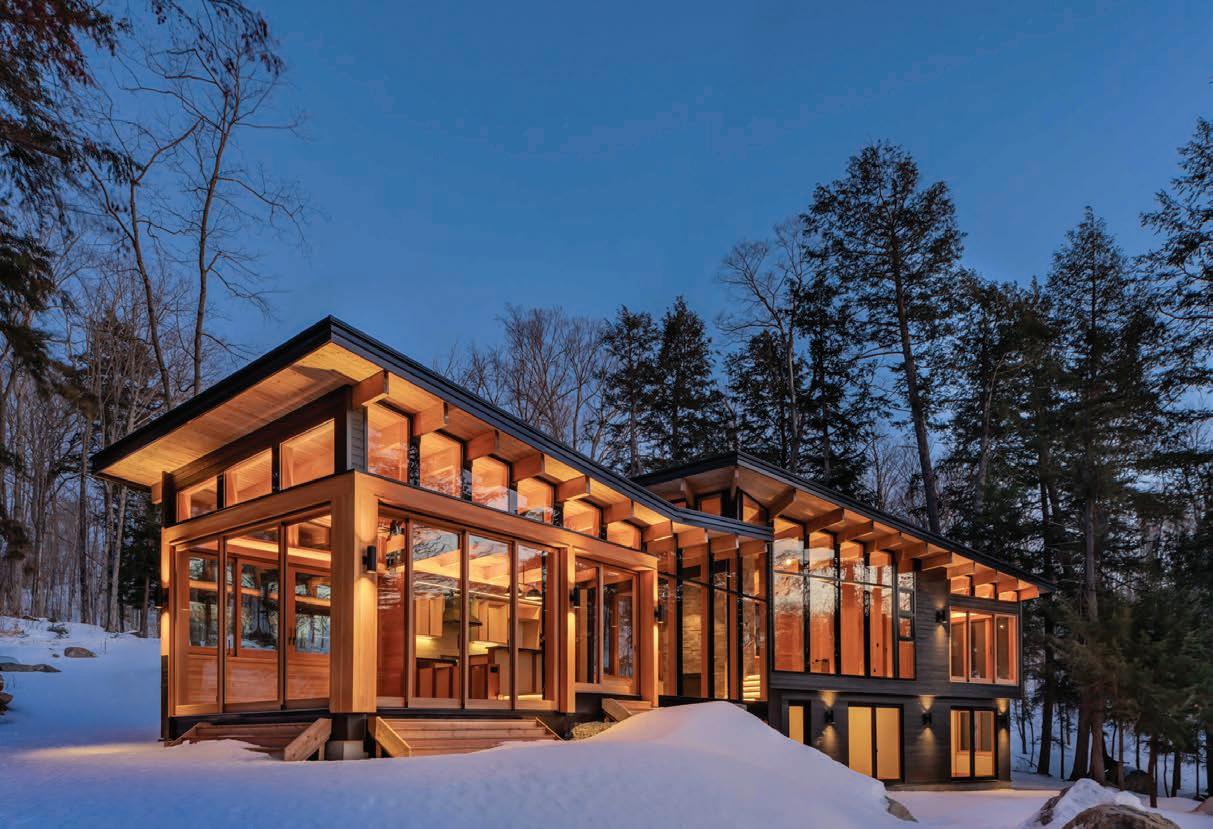
Coming To The Cottage. A Lakeside Home at the Heart of Heated Rivalry Finds Its Moment.
40 STYLE Valentino. The Last Emperor of Italian Fashion.
52
ARTS & CULTURE
Palazzo Barberini, Rome. Bernini and the Barberinis.
64 HEALTH & WELLBEING
Brain Health. A Mindful Approach to Taking Care of Your Brain.
70 GASTRONOMY
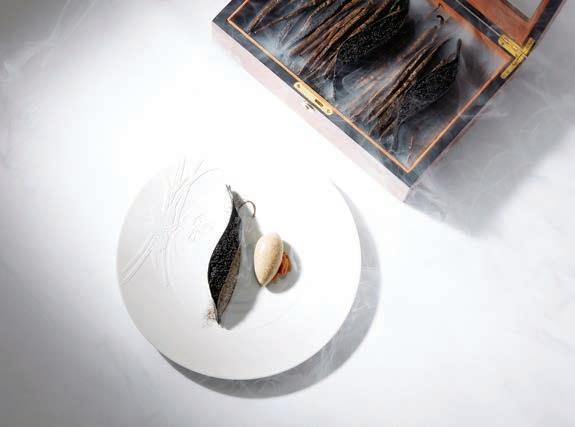
Chef Arnaud Faye at Le Bristol Paris’ Epicure.
81
THIS IS WINE FINE WINES
Domaine Leflaive Puligny Montrachet Clavoillon 2016. Château Angelus 2016. Chateau Palmer 2019. Solaia 2019. Gaja Sperss 2011.
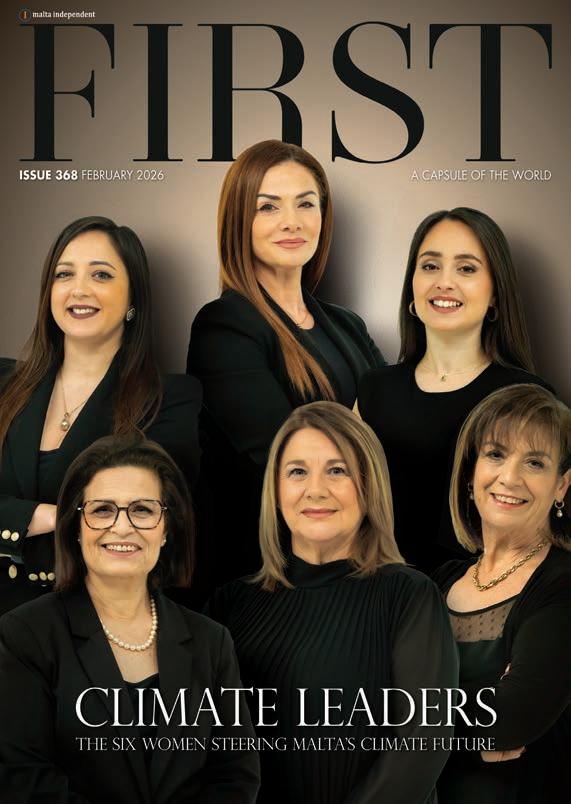
TURN THIS EDITION 180° SPECIAL REVERSE COVER FEATURE CLIMATE LEADERS. The Six Women Steering Malta’s Climate Future.
Top row (left to right): Ing. Abigail Cutajar, Environment and Energy Minister Miriam Dalli, and Ing. Maria Aquilina. Bottom row (left to right): Career Civil Servant Nancy Caruana, Lawyer Dr. Helen Caruana, and Professor Simone Borg. Photo Rene Rossignaud.
CLIMATE LEADERS
The Six Women Steering Malta’s Climate Future.
GASTRONOMY.
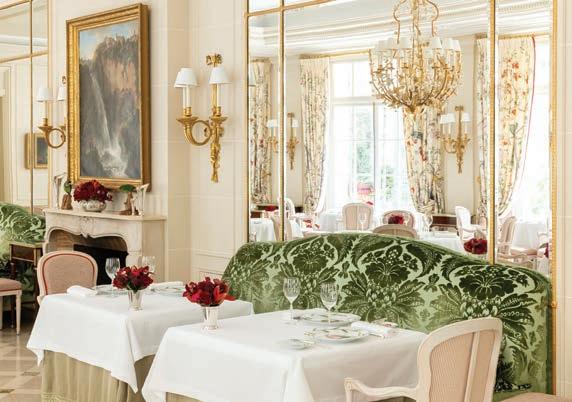
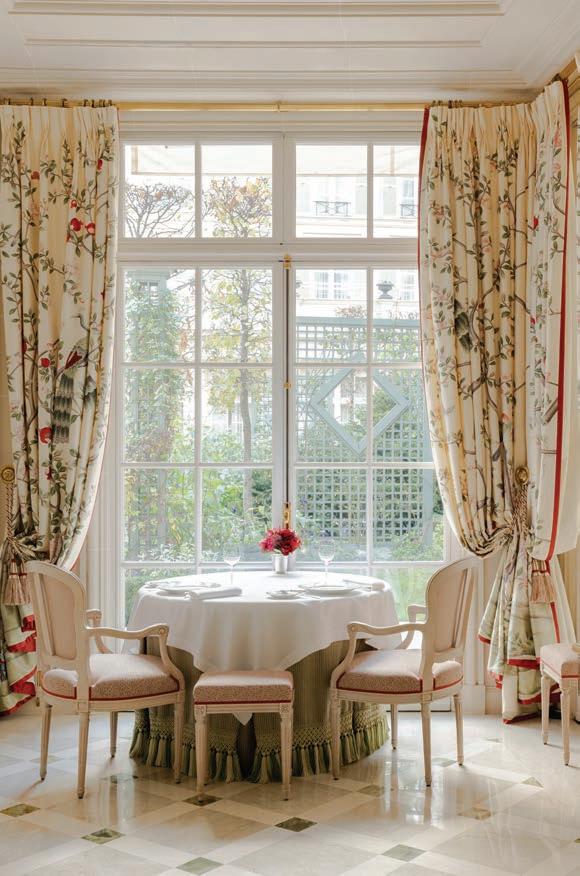
Le Bristol Paris’ Epicure. Epicure’s luminous dining room overlooks a formal garden. Photo © Pierre Baëlen, courtesy Le Bristol Paris
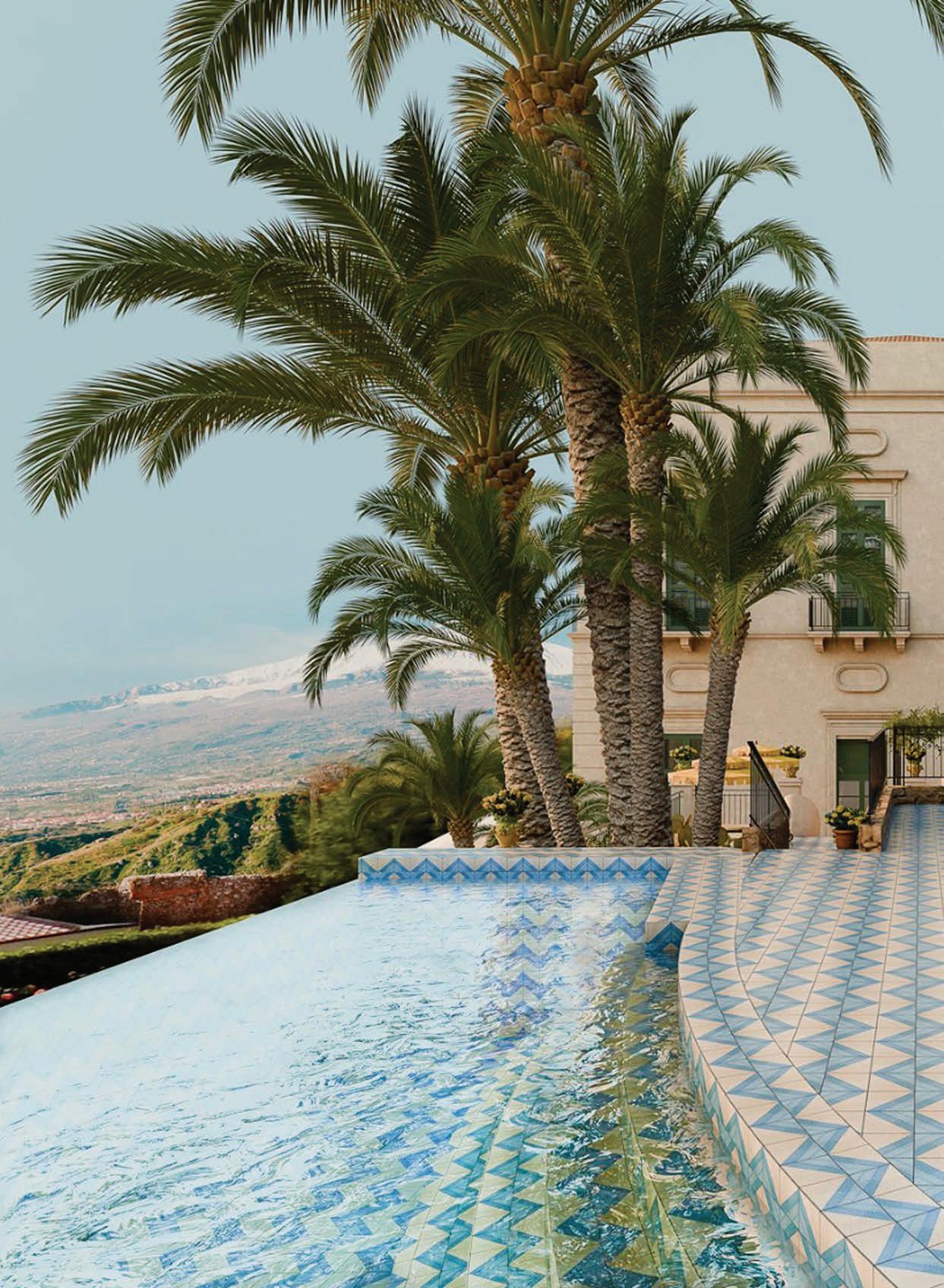
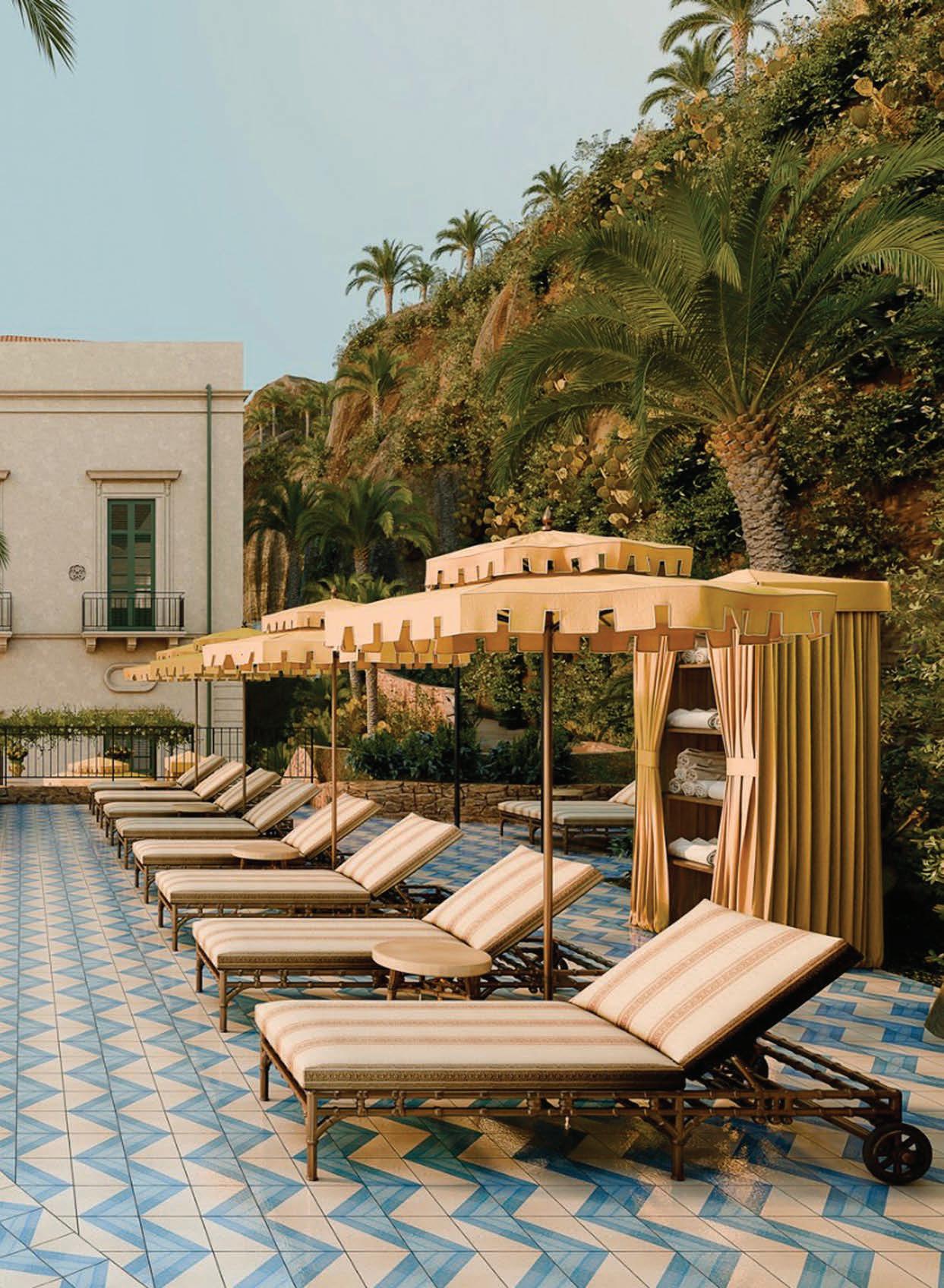
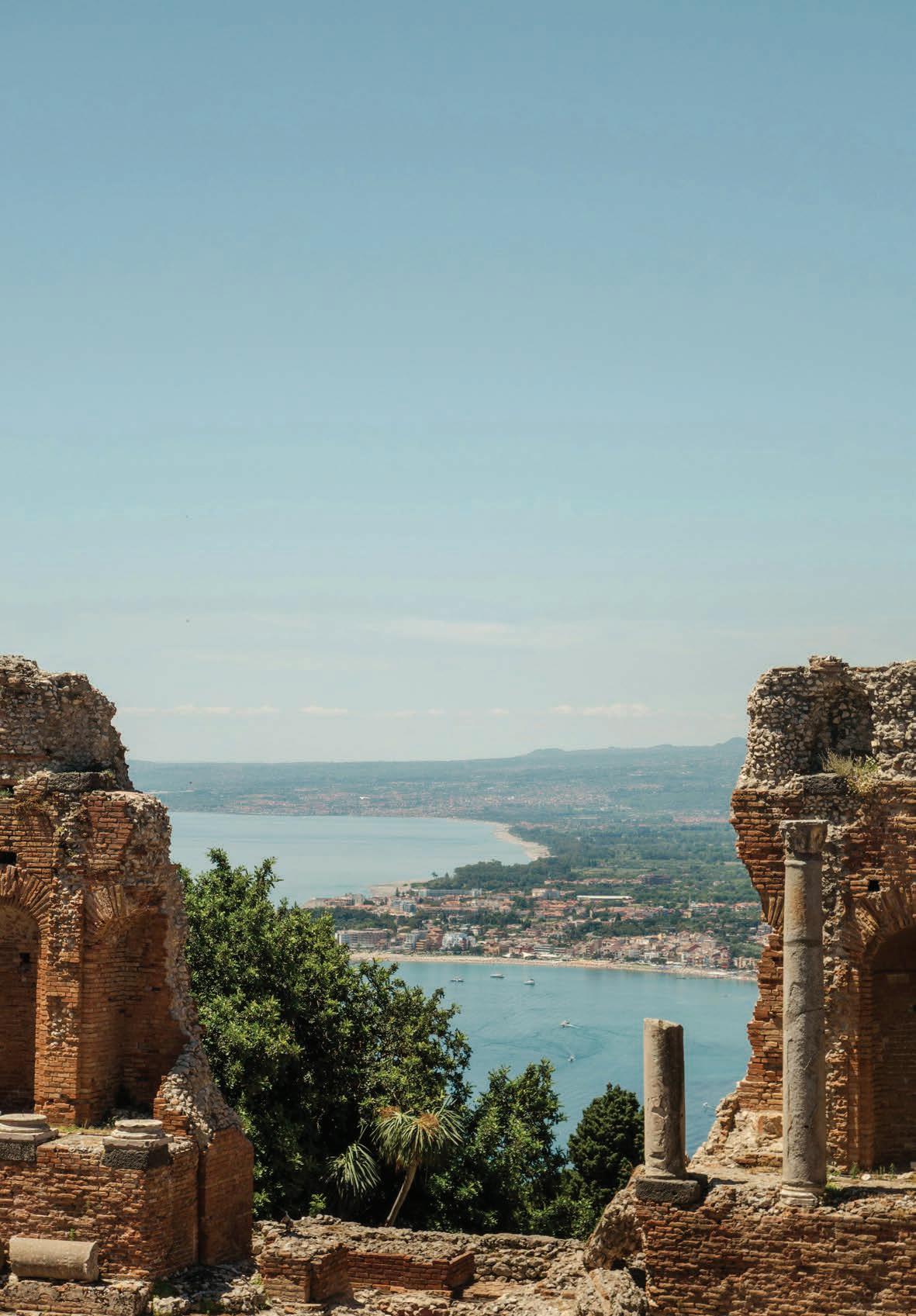
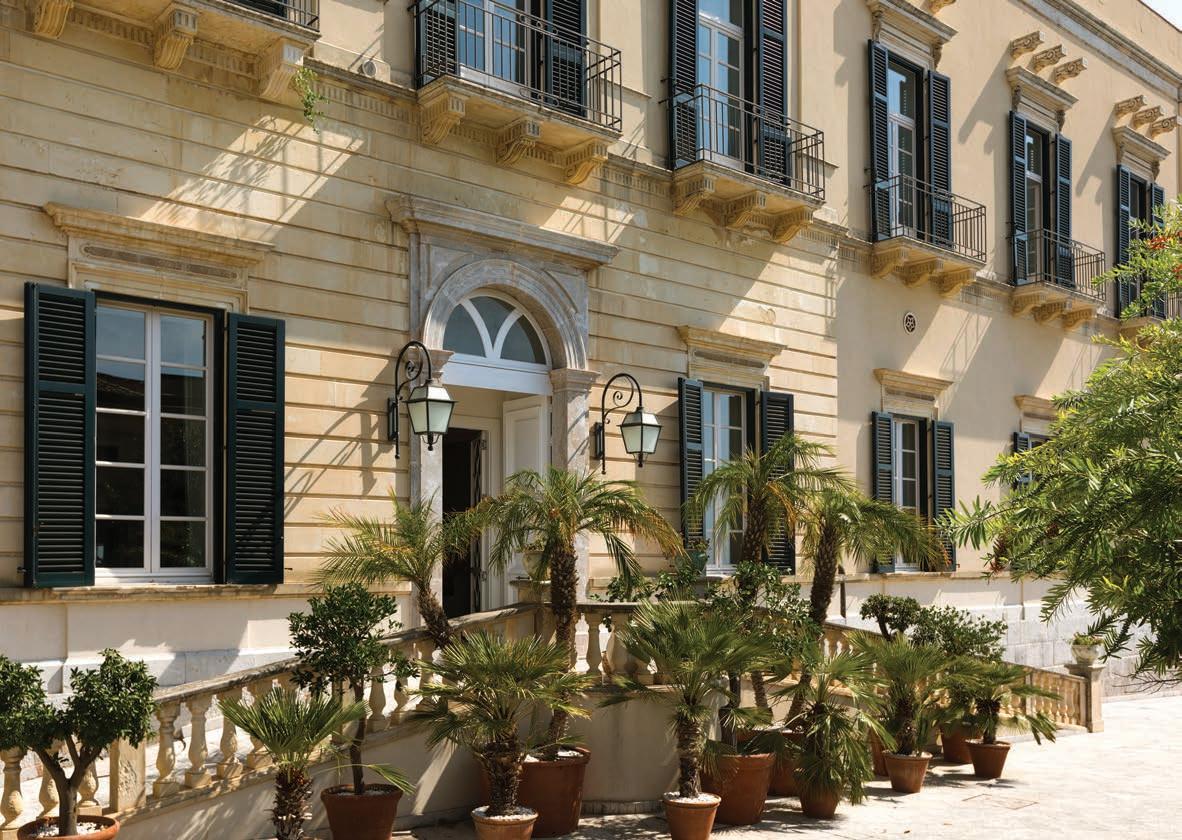
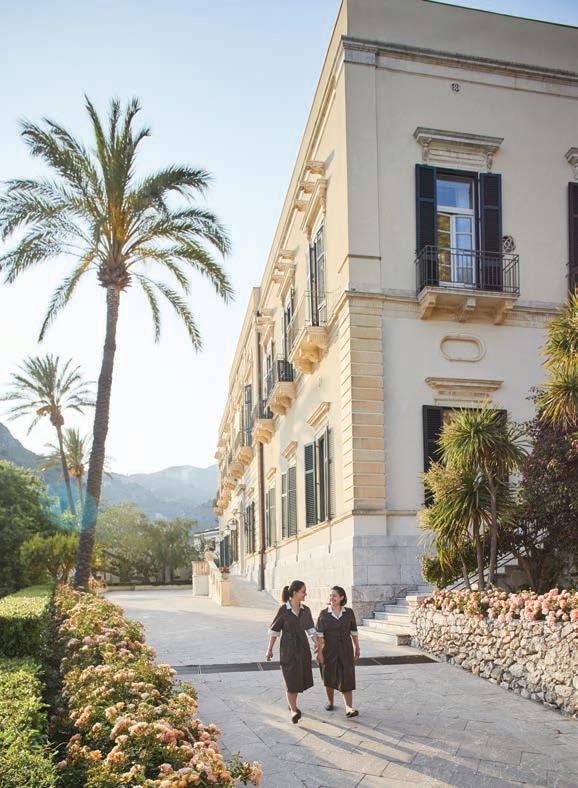
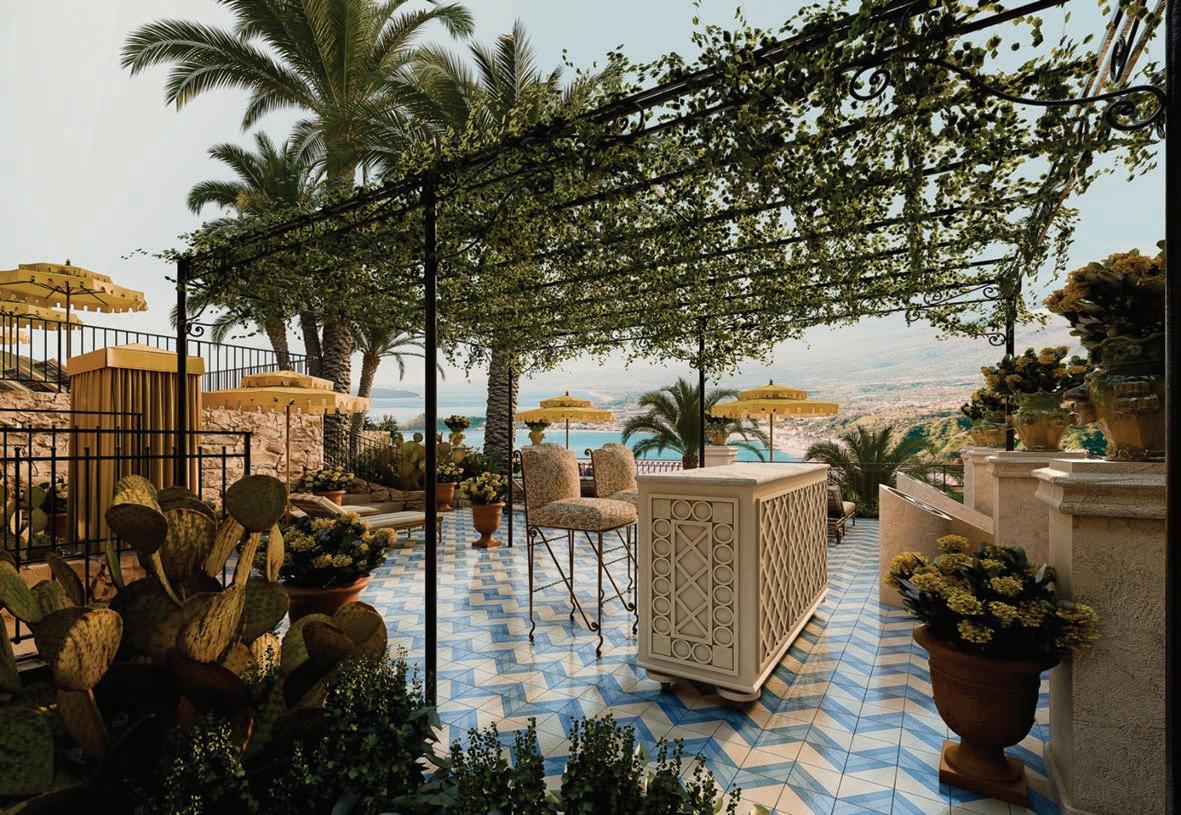
Blending vibrant Sicilian heritage with a fresh, contemporary touch, Villa Timeo is an exclusive 21 room residence reopening its doors in May 2026, following a lavish redesign by acclaimed interior designer Laura Gonzalez. Just steps away from the iconic Grand Hotel Timeo, A Belmond Hotel, Taormina, Villa Timeo boasts stunning views of the Mediterranean, Taormina, and its ancient Greek amphitheatre.
Photography courtesy Belmond.
“Were a man to spend only one day in Sicily and ask, “What must one see?” I would answer him without hesitation, “Taormina.” It is only a landscape, but a landscape where you find everything on earth that seems made to seduce the eyes, the mind and the imagination.”
Guy de Maupassant
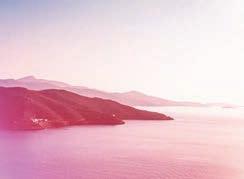
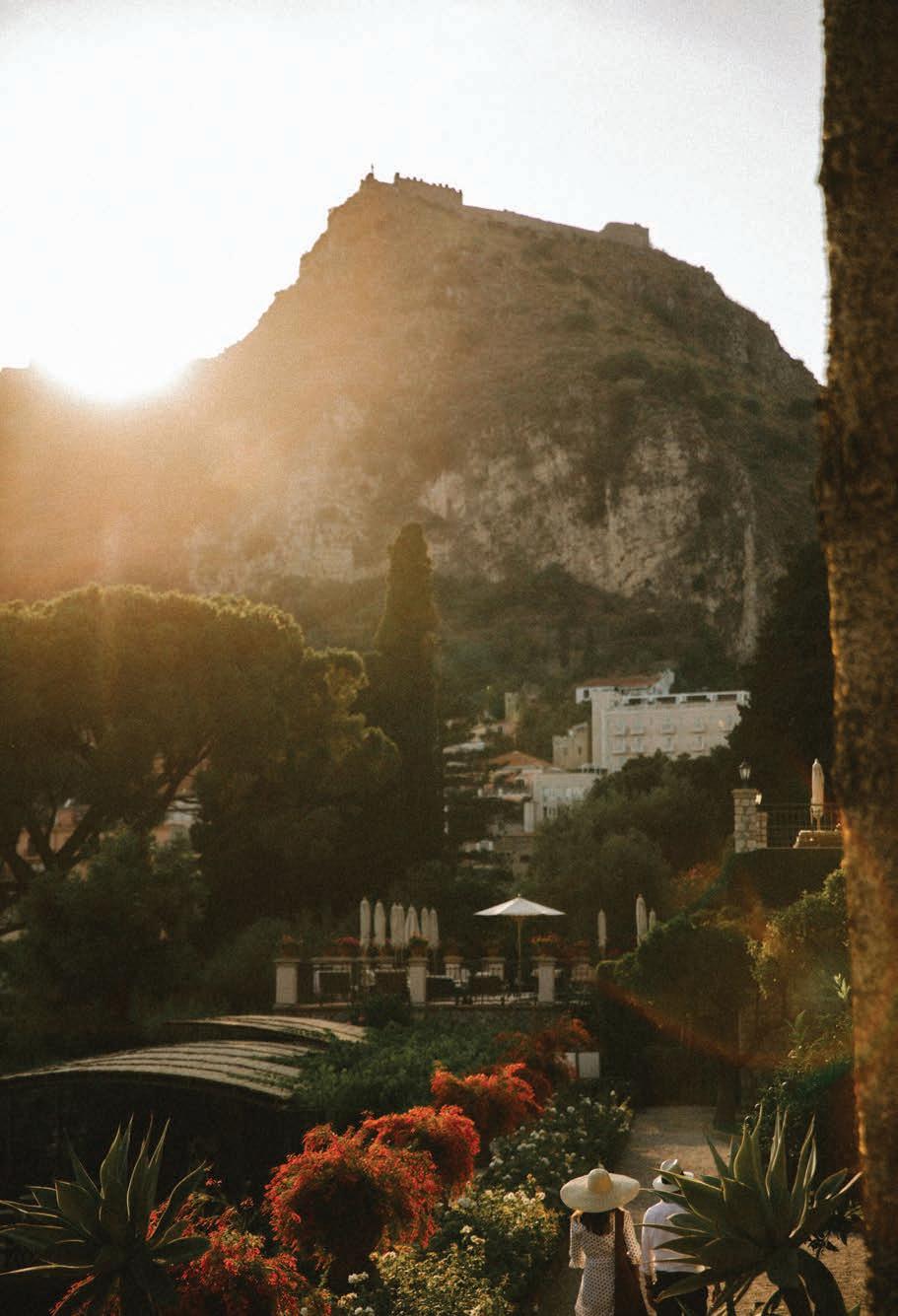
Perched high above the curve of Naxos Bay, where the Ionian Sea sparkles beneath Taormina, Villa Timeo is set to reopen this May, restoring a noble Sicilian residence to its place within one of the island’s most storied addresses. Just steps away from the legendary Grand Hotel Timeo, A Belmond Hotel, Taormina, Villa Timeo’s terraces opentowards the sea capturing dramatic views, while the villa itself seems to capture the memory of generations who shaped Taormina as a place of escape, conversation and cultivated leisure.
The villa’s reawakening follows an extensive redesign by Paris-based interior architect Laura Gonzalez, whose work brings a painterly softness to historic spaces without sanding away their patina. The result is a 21-room retreat that balances aristocratic ease with contemporary fluency, conceived as a private house rather than a conventional hotel. Guests may reserve individual rooms or take over the entire villa, a flexibility that reflects its origins as a family residence and lends itself to long, unhurried stays.














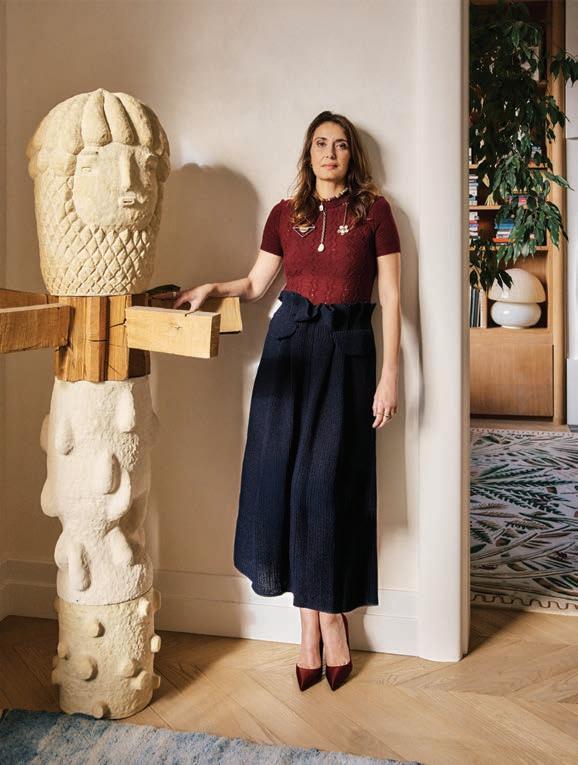
Gonzalez was the natural choice to infuse Villa Timeo’s interiors with a creative sensibility thanks to her ability to balance one-of-a-kind craft textiles with design classics and vintage pieces. Known for her work alongside artisans, woodworkers, upholsterers, sculptors, ceramists and decorative painters, the
designer drew inspiration from Sicily’s rich heritage, reimagining the beauty of the island through a softly contemporary lens. Inspired by the iconic archeological gems of Taormina and from the aristocratic Siclian past, her design choices echo the soft white stone of ancient Greek theater and the hand-decorated Sicilian maiolica, reminescent of the grand terraces of Palermo’s noble villas, infused with warm, inviting colours.
“I wanted to celebrate the beauty of Sicily through a storytelling approach,” says Gonzalez. “Villa Timeo is a place of contemplation and culture: it conjures the air of a home that embodies the warmth, poetry and elegance of the island. My intention was to create a balance between heritage and modernity, nature and art, resulting in a design that reflects light, softness and the true soul of Sicily.”
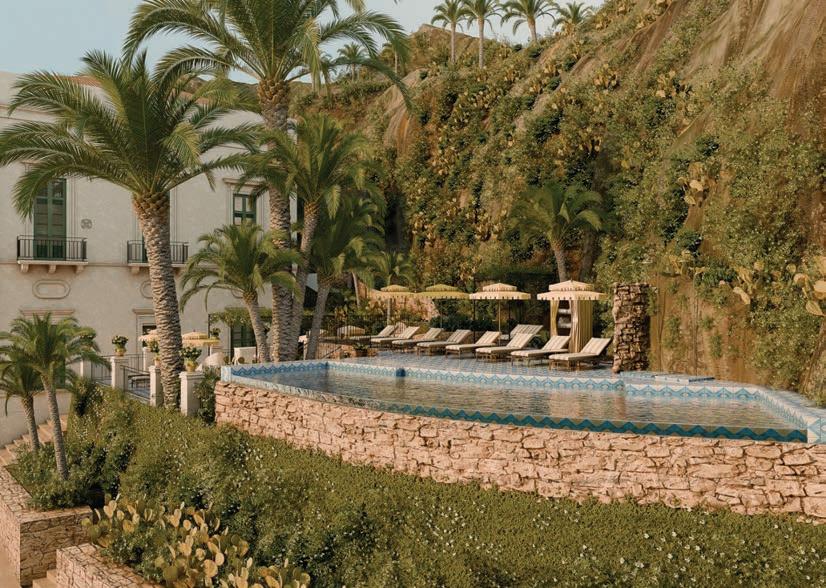
Above: Villa Timeo's pool terrace bar.
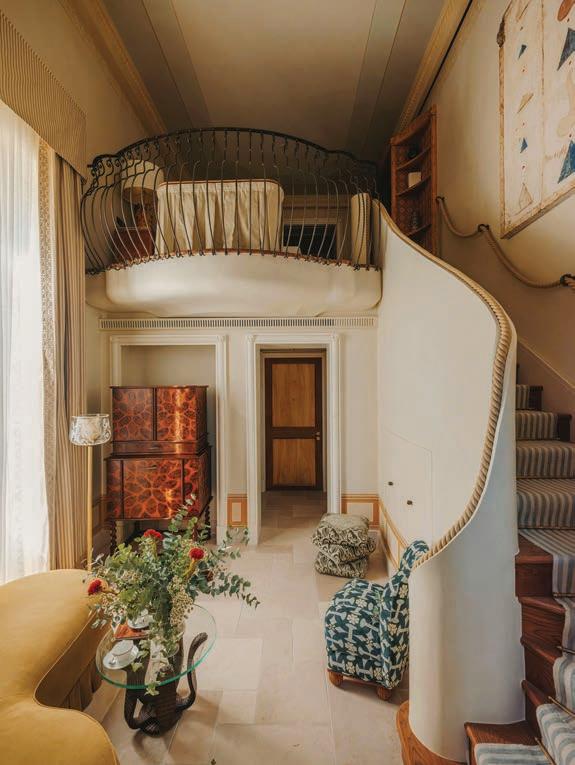
Below: Natural textures, organic finishes and gentle curves effortlessly connect the Villa's interiors to the lush sun-kissed terraces and pool beyond, overlooking Naxos Bay.




































thanks to her ability to balance one-of-a-kind
below
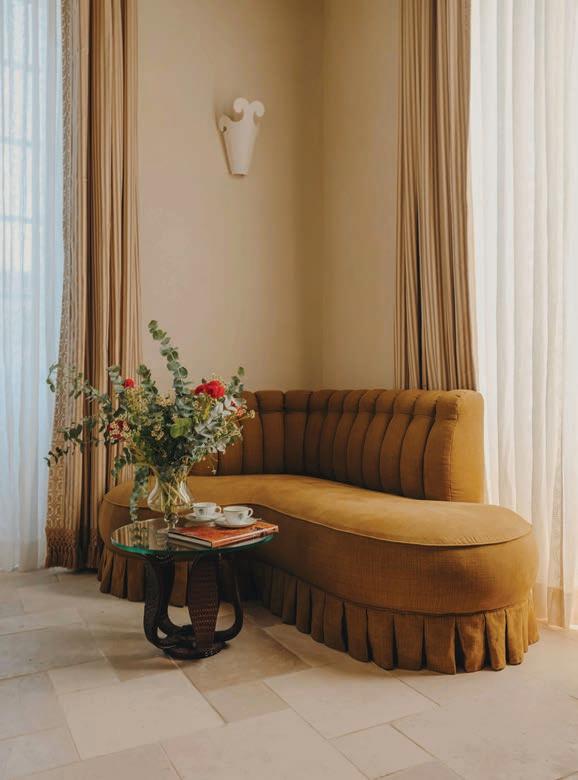
page: Each of the 21 rooms and suites blend traditional
striking mid-century
from
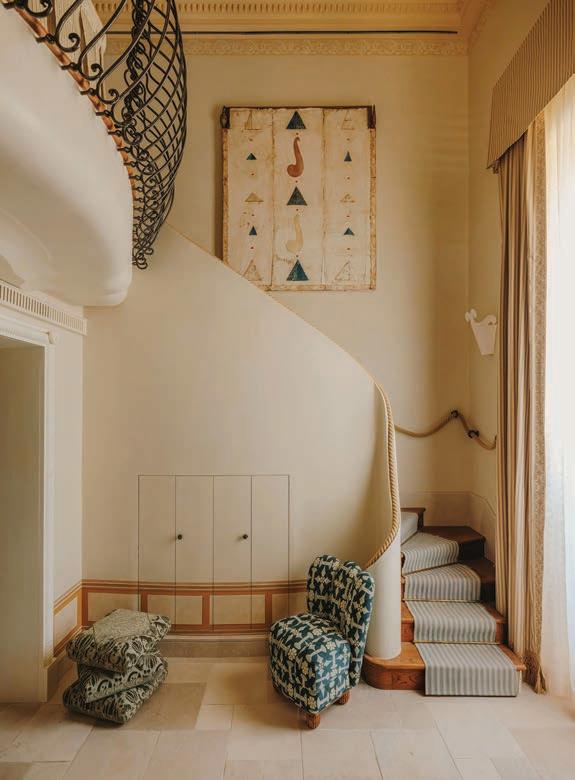
This sense of narrative unfolds from room to room. Each of the 21 rooms and suites has its own personality, yet a shared language emerges through gentle curves, natural textures and a palette that echoes the pale stone of the Greek theatre nearby, the blues of the sea, and the sun-warmed hues of Sicilian earth. Ceramic floors, antique mirrors and marble marquetry reference local craftsmanship, while raw plaster finishes and simple geometries keep the mood relaxed rather than reverential. Taorminan artist Alessandro Florio collaborated with Rubelli on tapestries created for the rooms, weaving contemporary artistry into the villa’s fabric.
The Clementina suite, named for the daughter of the Famà family who once owned the house, stands apart in scale and serenity. With hillside views and a generous private terrace, it captures the villa’s residential spirit. Elsewhere, terraces and loggias open seamlessly from interiors, leading towards a newly reimagined pool terrace framed by pergolas and seablue geometric tiles. Days here move naturally between sun and shade, indoors and out, with the Mediterranean always present as a shifting backdrop.
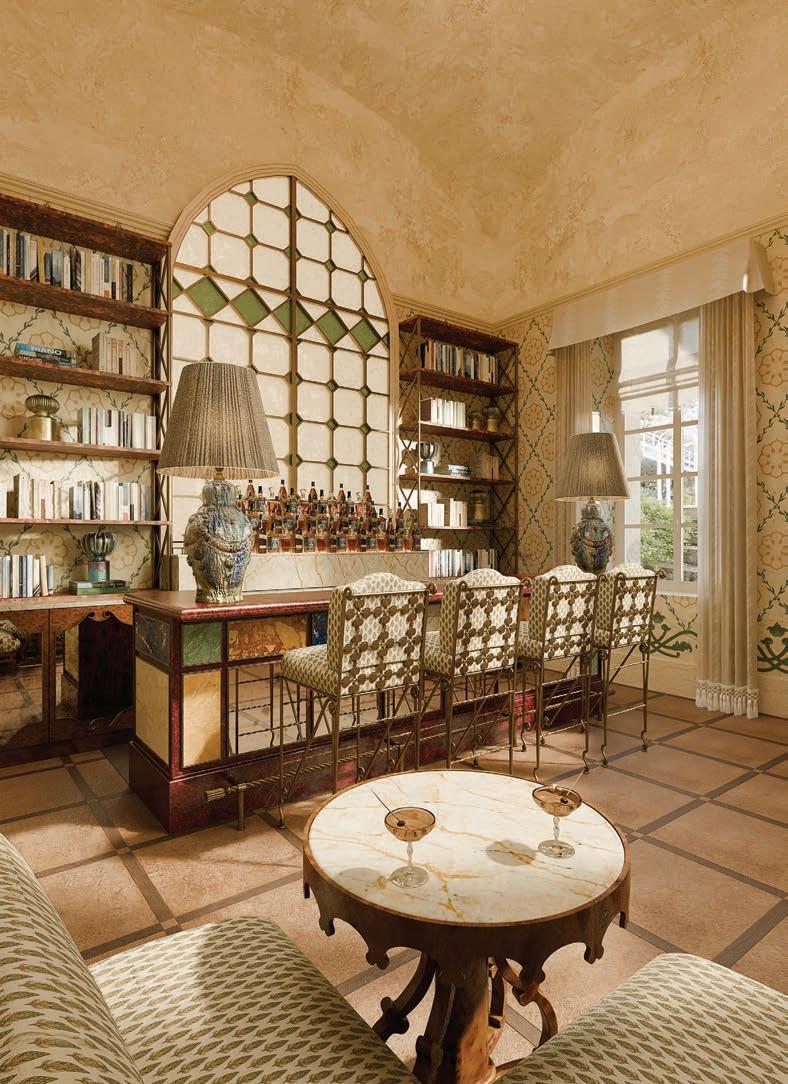
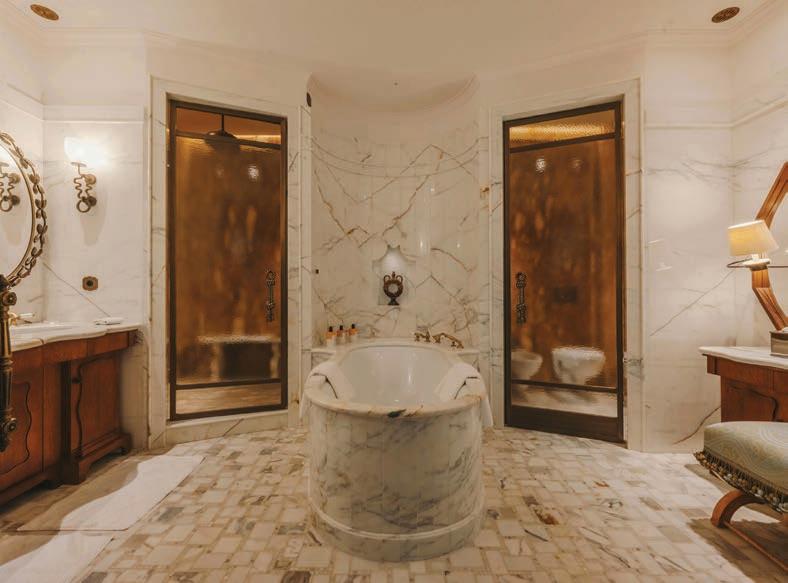
At the heart of the villa sits Bar Clementina, an intimate space shaped by Moroccan-inspired latticework, polished plaster and a domed ceiling that nods to the many cultures that have passed through Sicily. It is designed for the rituals of the early evening, when conversation gathers over an aperitivo and the light fades across the bay. While Villa Timeo offers privacy and discretion, guests enjoy full access to the neighbouring Grand Hotel Timeo, from its terraced gardens to dining at Michelin-starred Otto Geleng and the new Dior Spa, opening as part of the wider Timeo experience.
The villa’s story is inseparable from that of Grand Hotel Timeo itself. Opened in 1873 by the La Floresta family, the hotel was Taormina’s first and quickly became a meeting place for writers, artists and travellers drawn to Sicily’s particular light. DH Lawrence wrote here while working on Lady Chatterley’s Lover, and over the decades stars of classical Hollywood cinemasuch as Elizabeth Taylor and Cary Grant passed through its terraces. Villa Timeo came to be part of the family’s estate through marriage in the late 19th century, when Clementina Famà wed Francesco La Floresta, uniting two of Taormina’s most iconic and prestigious historical buildings.
This page: Villa Timeo invites guests to embrace the spirit of Taormina, surrounded by the beauty of the natural world and the richness of the Sicilian history infused with Greek, Spanish, Roman and Byzantine heritage.

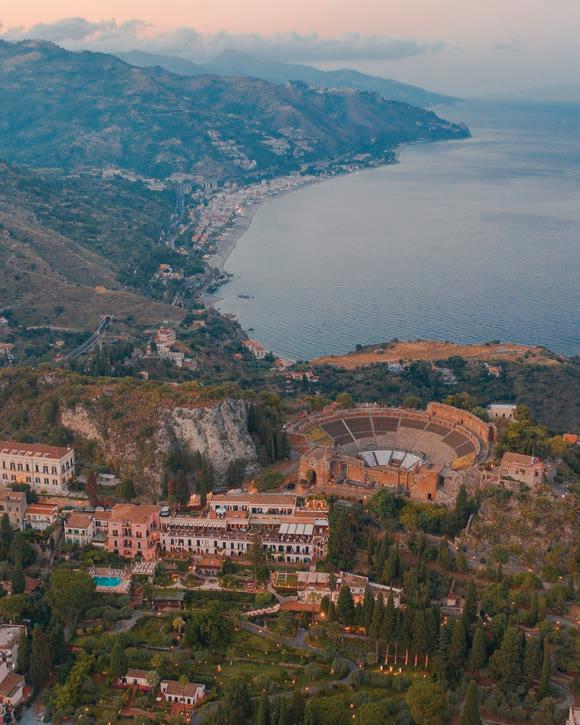
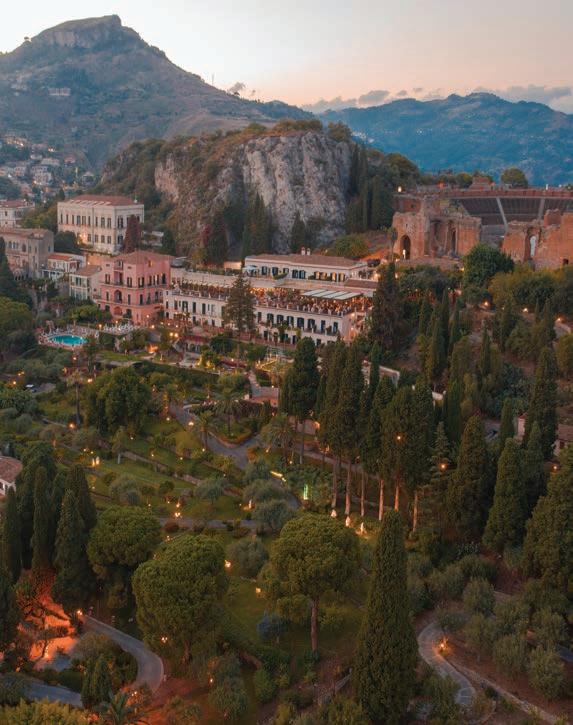
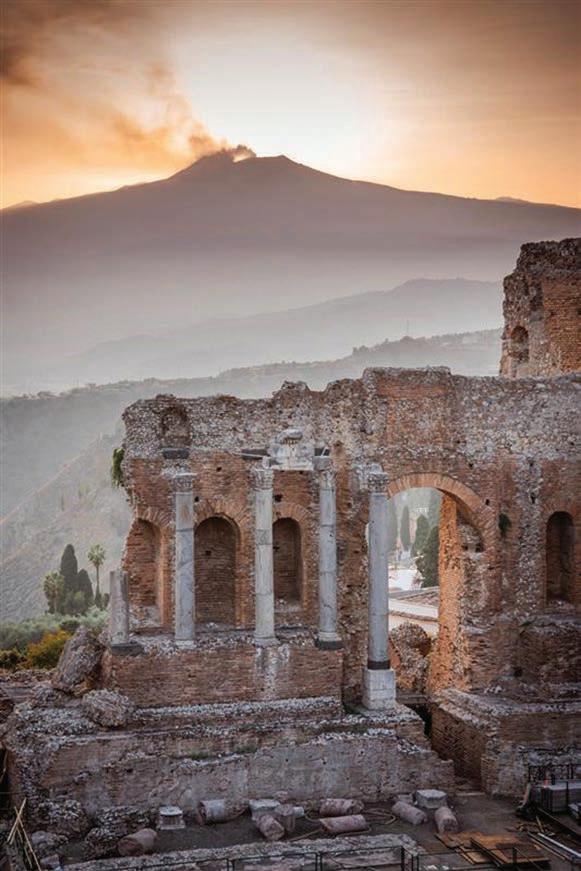
Villa Timeo’s rich history creates a feeling of timelessness. Guests can immerse themselves in experiences that celebrate this cultural heritage, from painting classes with Alessandro Florio to sunrise yoga by the pool, mindful mixology sessions at the bar, and guided tours of the Greek theatre just steps beyond the garden. Beyond Taormina, private sailing adventures and journeys along the Sicilian coast bring the villa’s lifestyle into the broader landscape.
Villa Timeo invites guests to embrace the spirit of Taormina, surrounded by the beauty of the natural world and the richness of the Sicilian history infused with Greek, Spanish, Roman and Byzantine heritage. Still as intimate as an elegant family home but set apart through its attention to detail, Villa Timeo takes its guests on a journey of imagination. The result is a place where history, nature and culture intertwine in an atmosphere that is both refined and comfortingly familiar.
ABOUT BELMOND Belmond has been a pioneer of luxury travel for over 45 years, building a passion for authentic escapes into a portfolio of one-of-a-kind experiences in some of the world’s most inspiring destinations. Since the acquisition of the iconic Hotel Cipriani in Venice in 1976, Belmond has continued to perpetuate the legendary art of travel. Its portfolio extends across 24 countries with 50 remarkable properties that include the illustrious Venice Simplon-Orient-Express train, remote beach retreats like Cap Juluca in Anguilla, Italian hideaways such as Splendido in Portofino, or unrivalled gateways to world natural wonders such as Hotel das Cataratas inside Brazil’s Iguazu National Park.

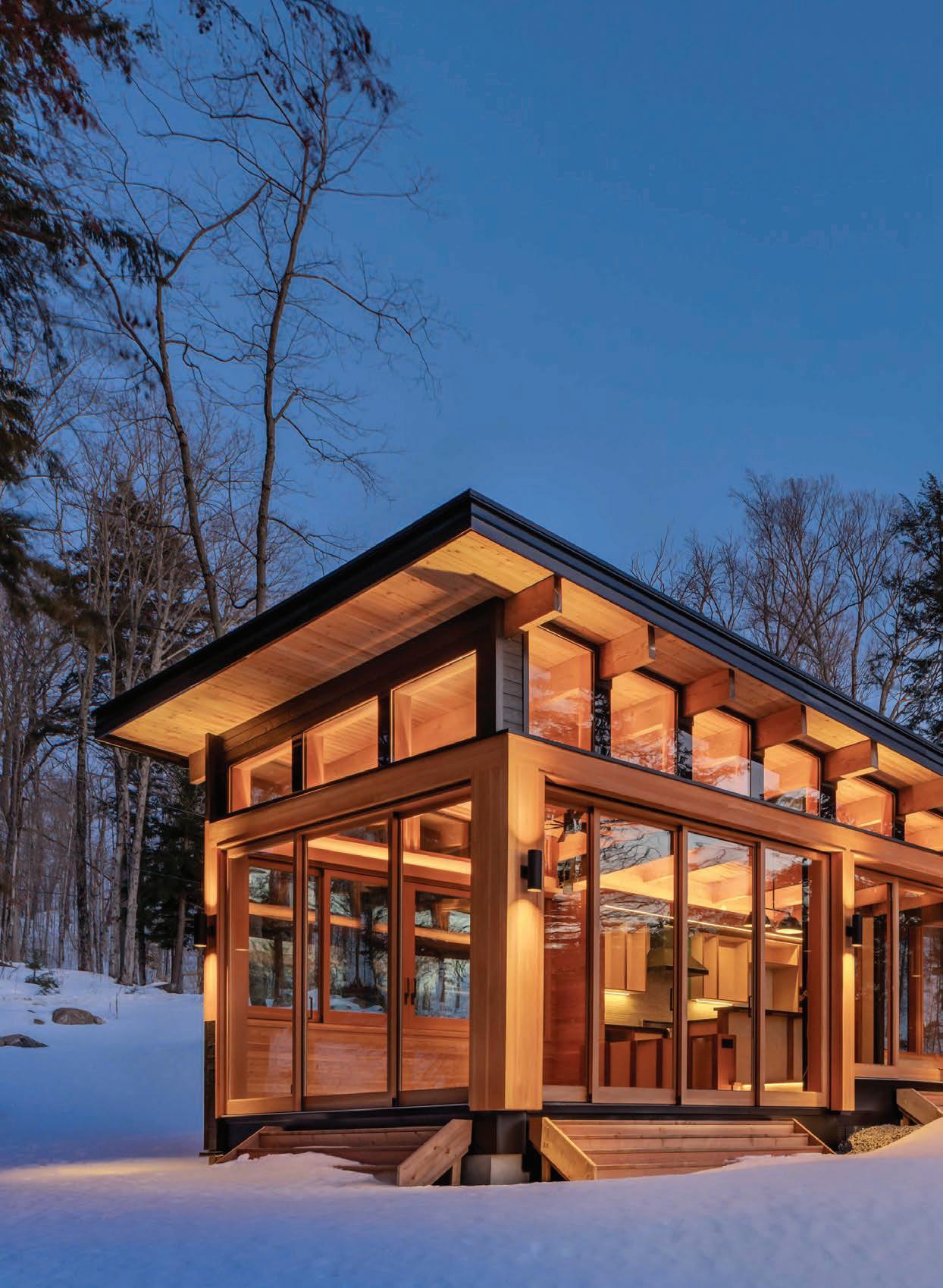
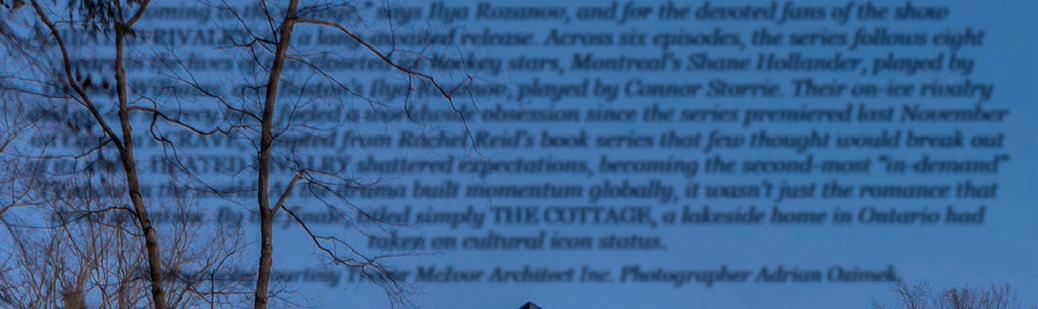
“I’m coming to the cottage,” says Ilya Rozanov, and for the devoted fans of the show HEATED RIVALRY, it’s a long-awaited release. Across six episodes, the series follows eight years in the lives of two closeted ice hockey stars, Montreal’s Shane Hollander, played by Hudson Williams, and Boston’s Ilya Rozanov, played by Connor Storrie. Their on-ice rivalry and off-ice secrecy have fueled a worldwide obsession since the series premiered last November on Canada’s CRAVE, adapted from Rachel Reid’s book series that few thought would break out of its niche. HEATED RIVALRY shattered expectations, becoming the second-most “in-demand” TV show in the world. As the drama built momentum globally, it wasn’t just the romance that drew attention. By the finale, titled simply THE COTTAGE, a lakeside home in Ontario had taken on cultural icon status.
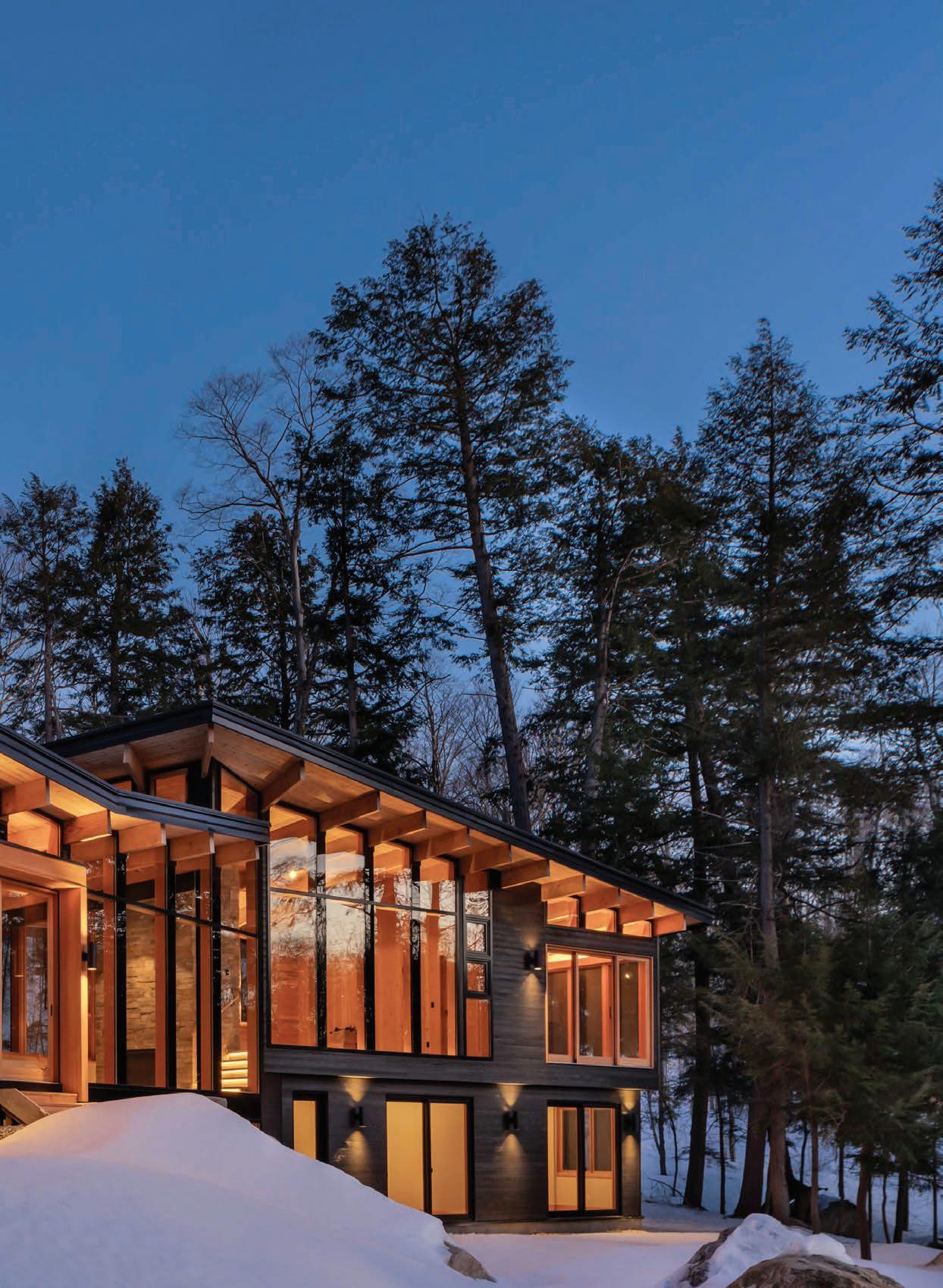
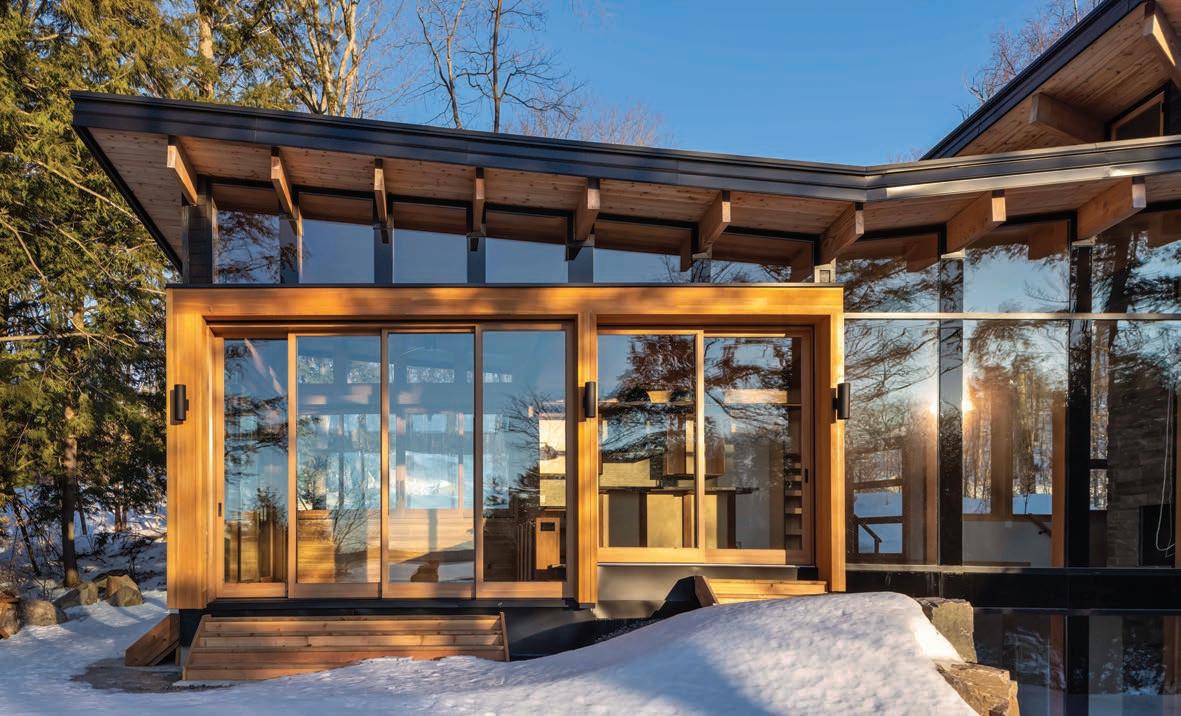
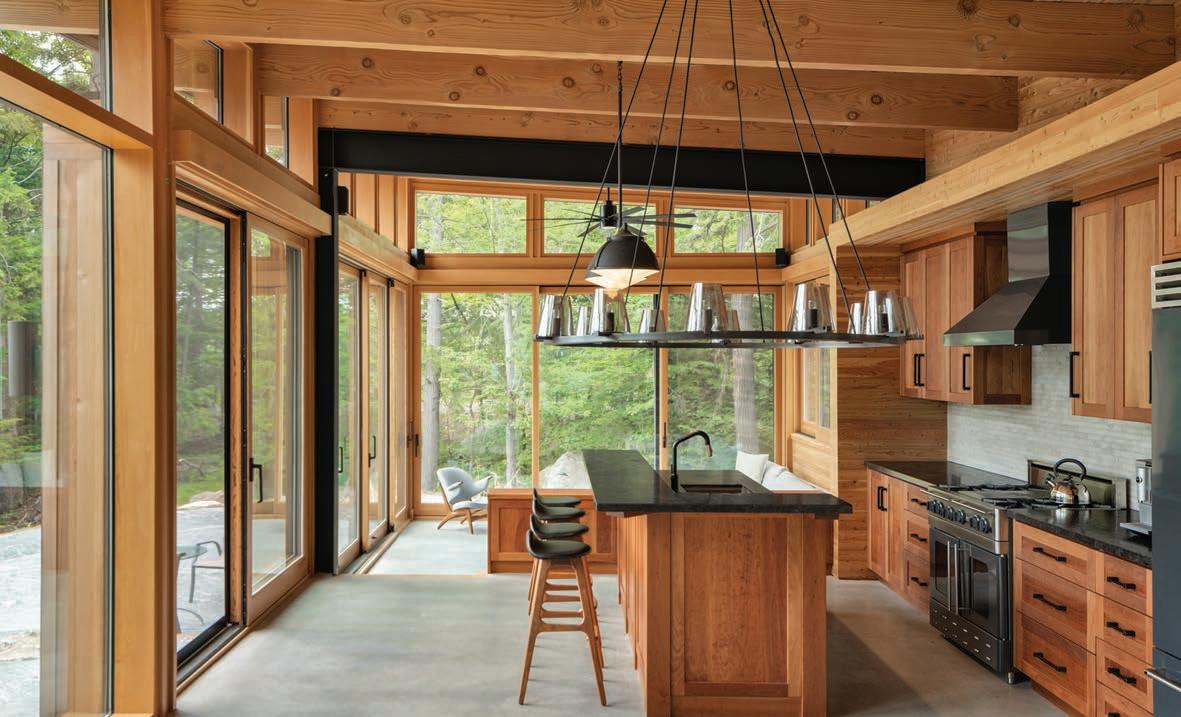
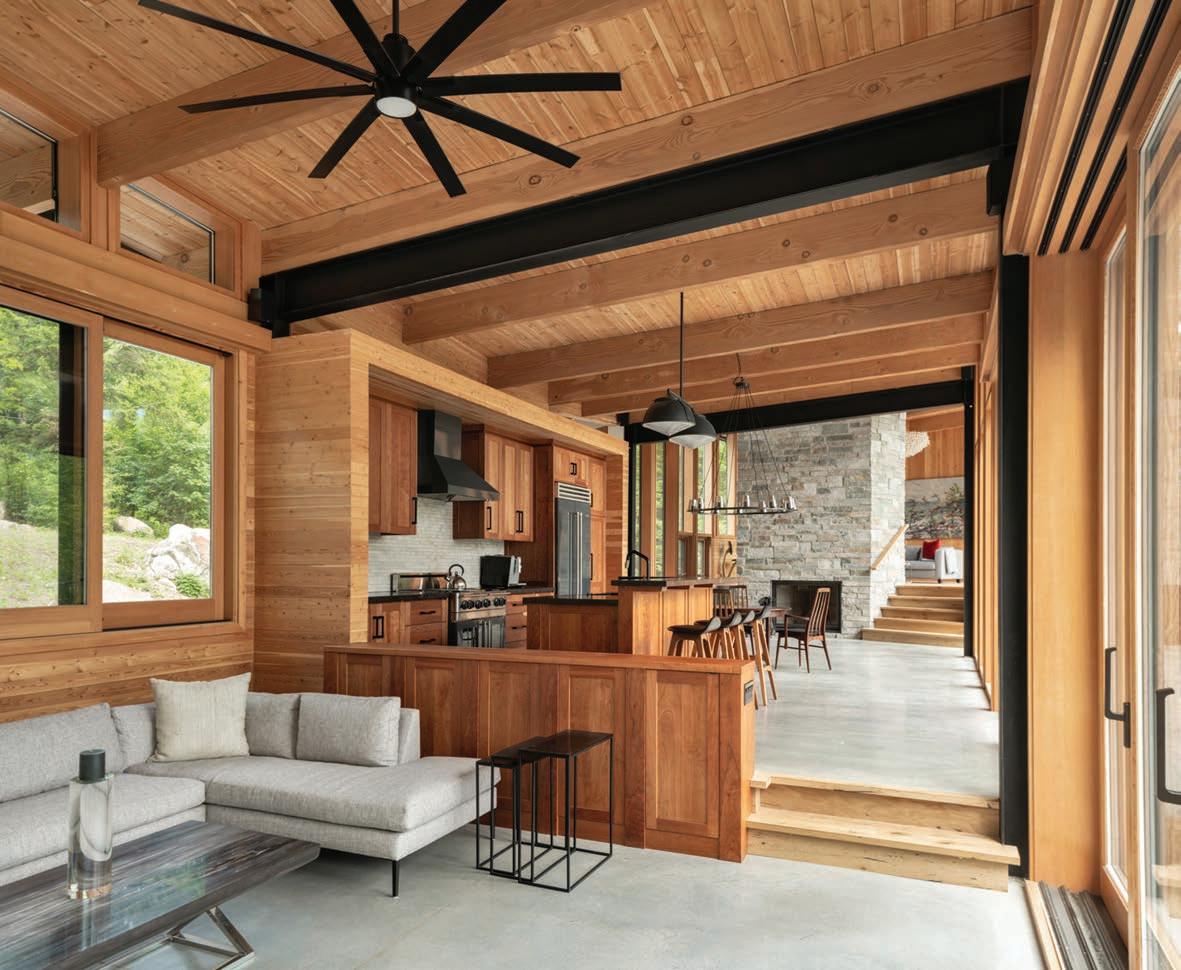
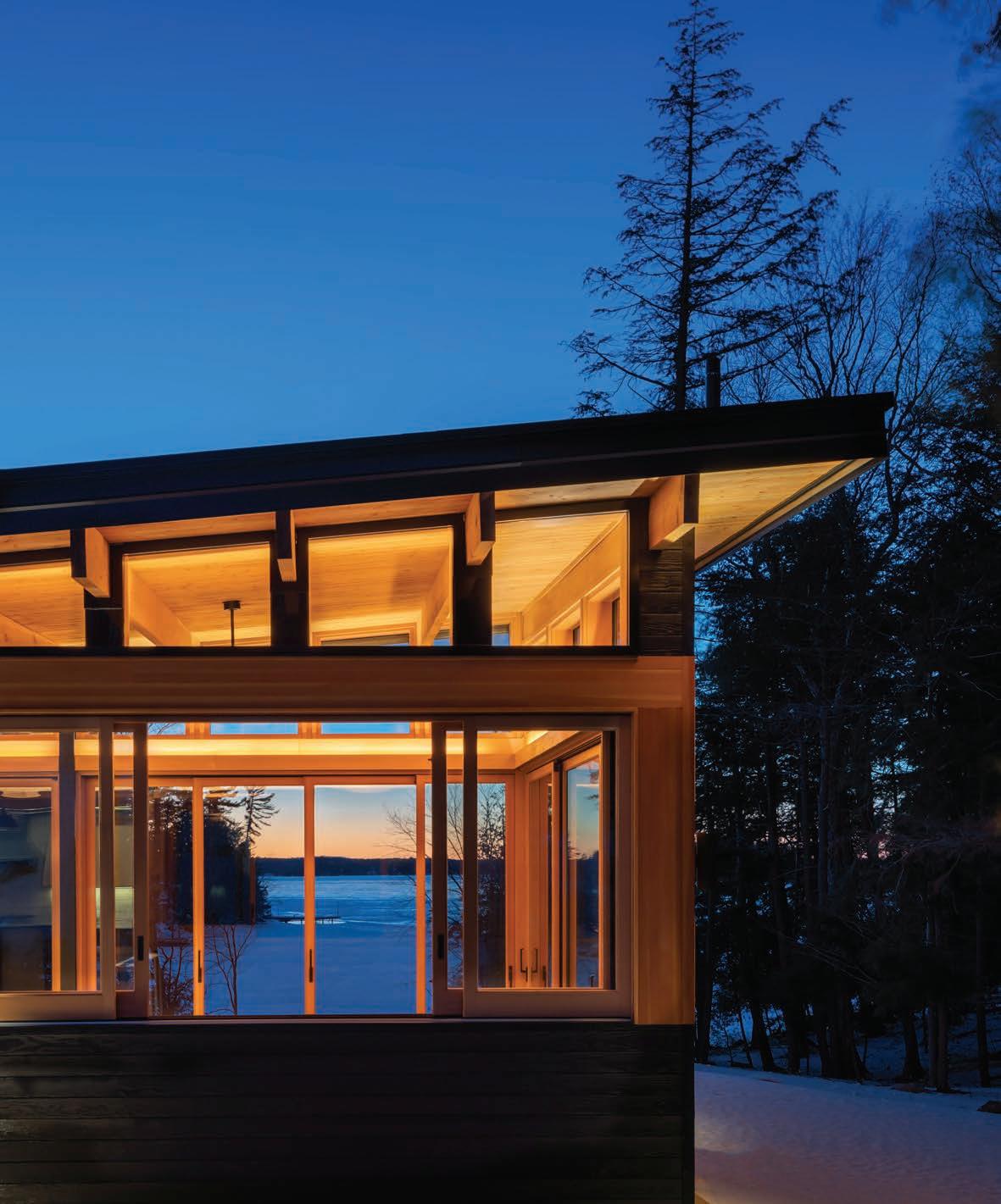
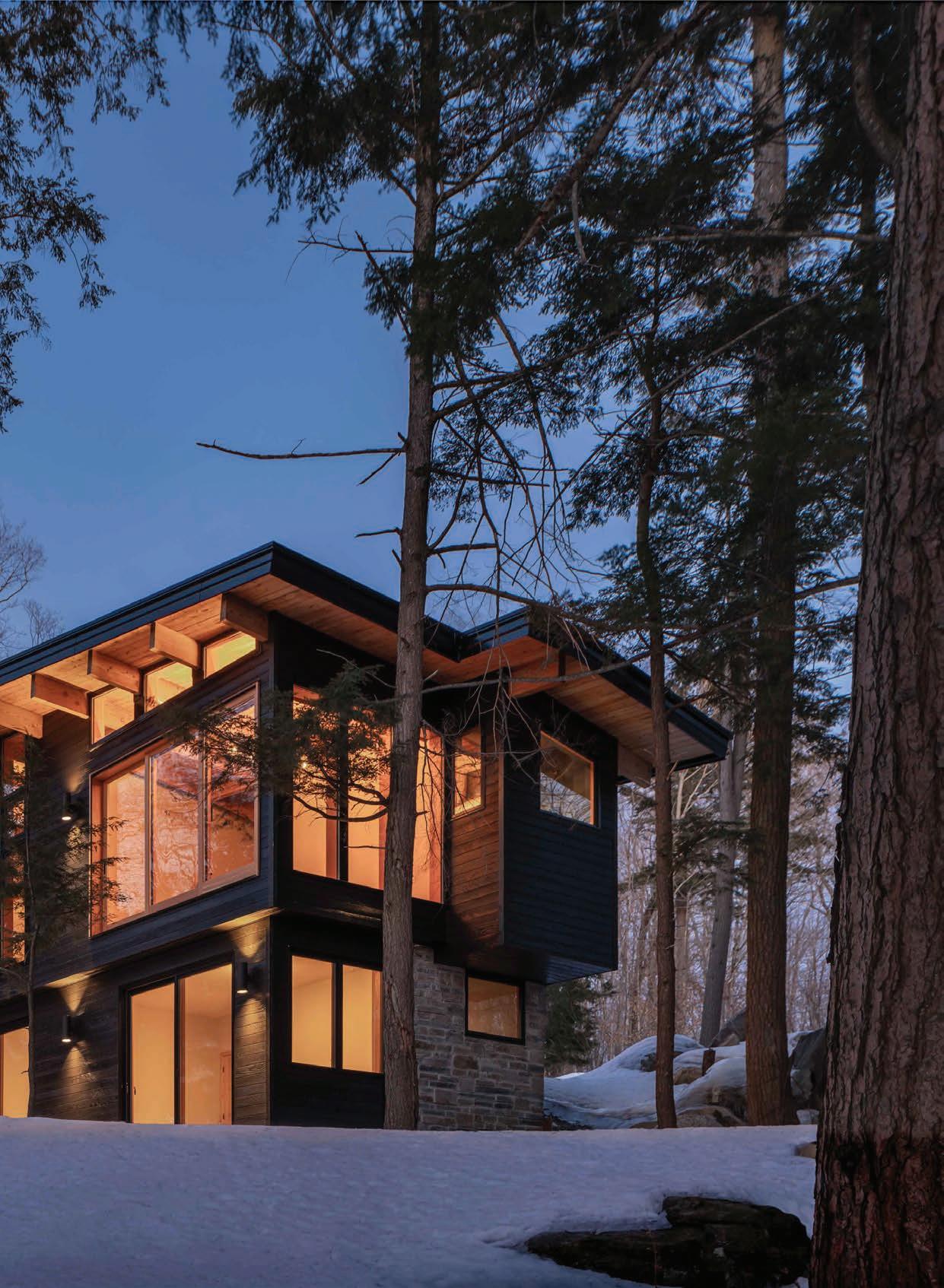
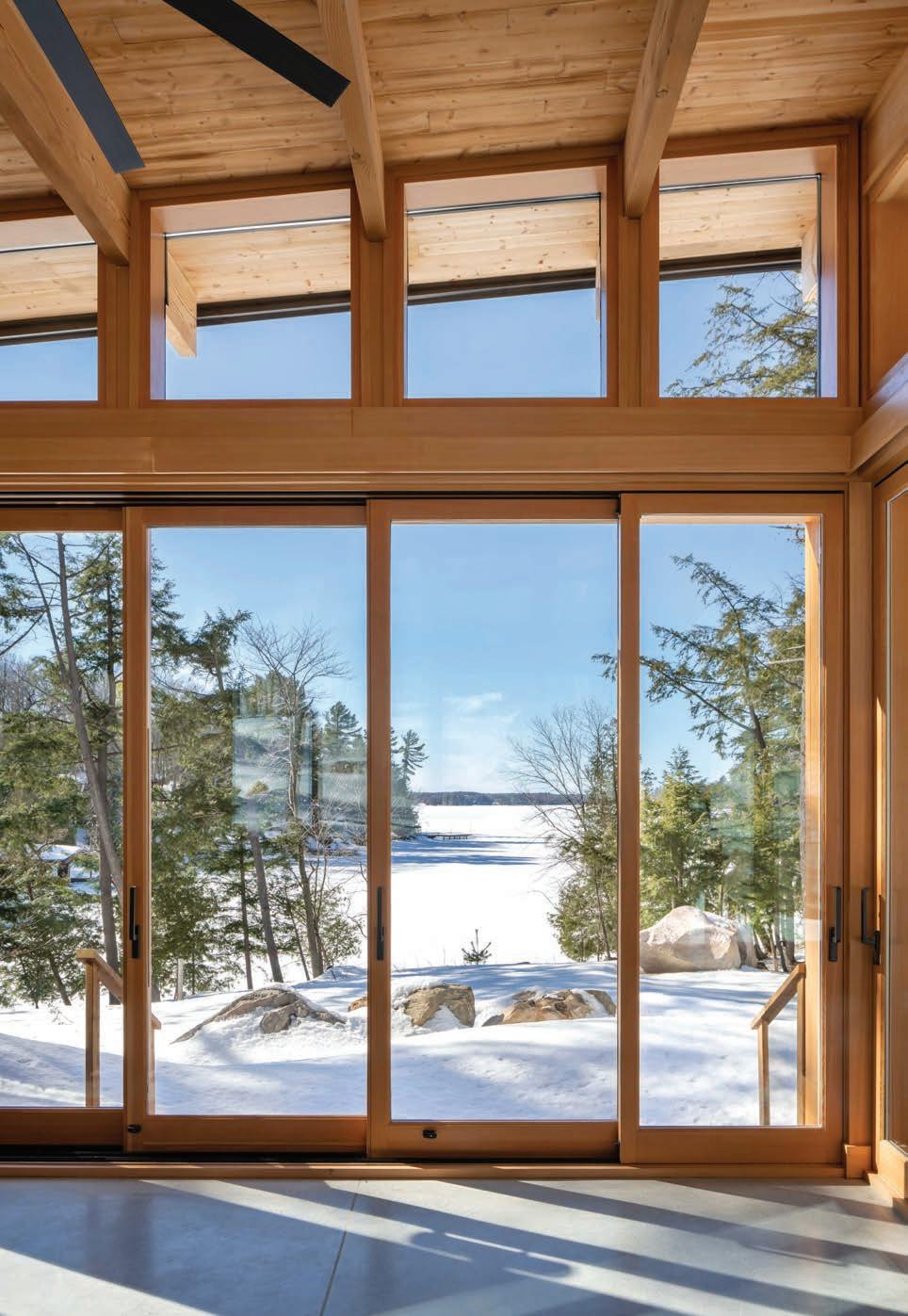
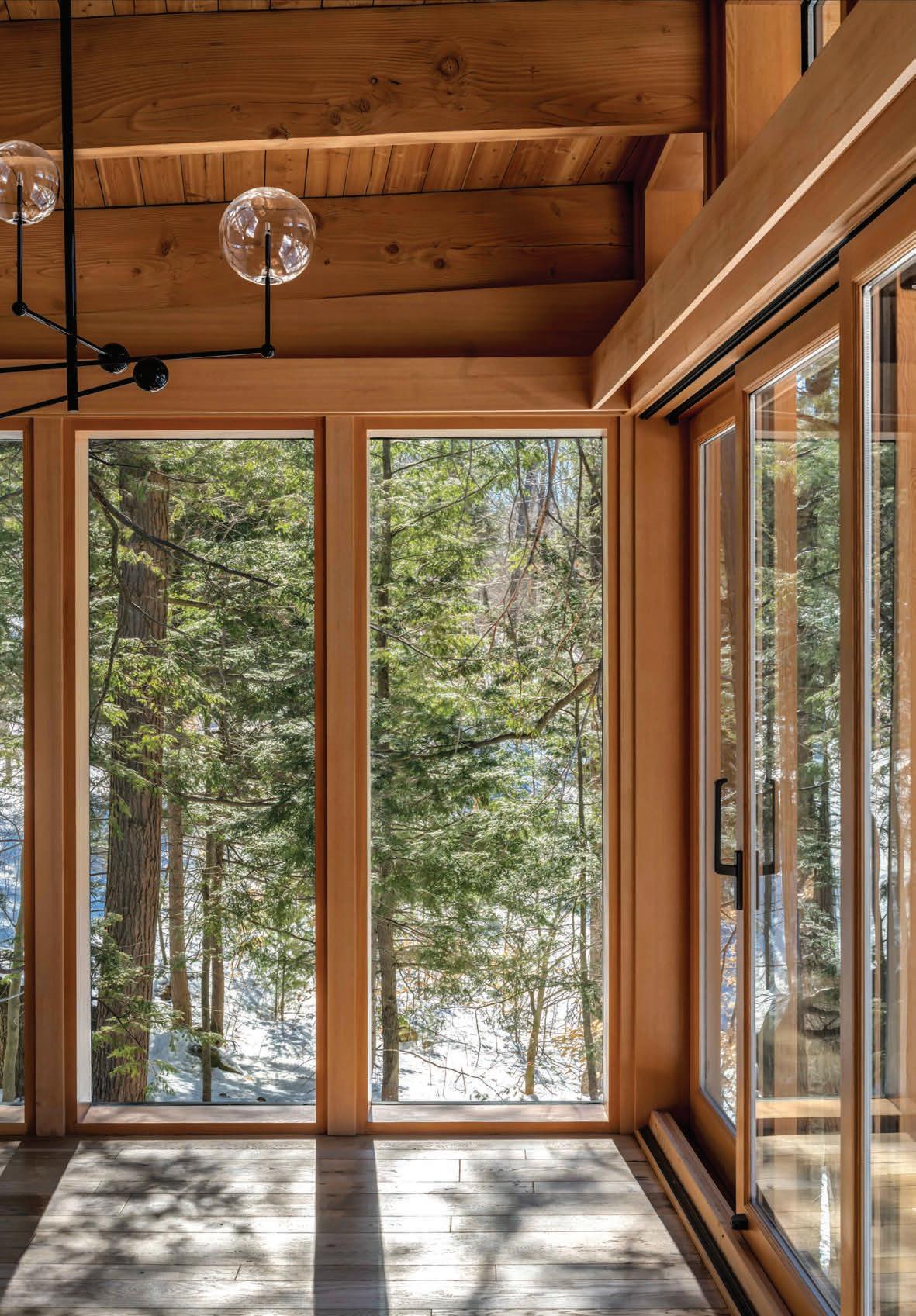
Above: The design seamlessly integrates structural columns, beams and windows which allow for an extraordinarily light roof to float and fold like waves above the glazed structure. Below: The floors of the common areas are concrete, durable and great for the constant flux between indoors and out. The private areas are made more cozy with the use of wood flooring.
Shane and Ilya’s reckoning unfolds at Barlochan Cottage, a 2,500-square-foot, four-season retreat on the shore of Lake Muskoka in Ontario, designed by Toronto-based firm
Trevor McIvor Architect Inc. On screen, the house functions as sanctuary and threshold, its glassy openness and elemental materials mirroring the emotional exposure of its inhabitants. Off screen, it’s a finely crafted example of contemporary Canadian architecture, shaped with an attentiveness to landscape that is deliberate and instinctive.
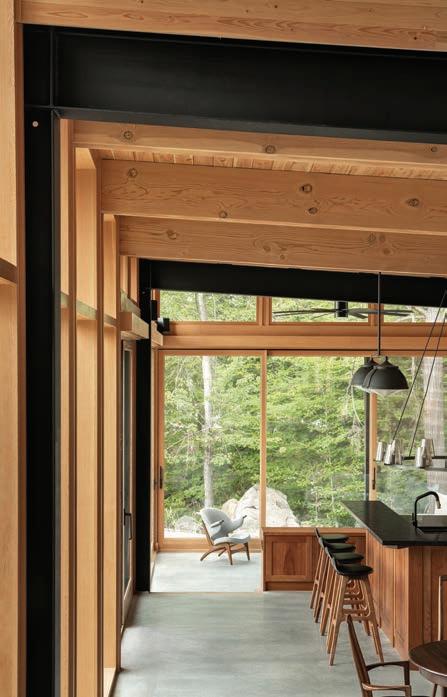
Above: Cooling systems are not required, as the overhangs keep the sun out of the building in the summer, and the openings are carefully laid out to facilitate cross ventilation. Left: The design of the roof is totally unique; there are no standard or typical beam sizes that could accommodate the structure, so prefabrication was the best way to ensure everything was milled to precise dimensions to fit together perfectly.
Seen from the water, Barlochan Cottage sits low and sculptural, its profile stepping down in harmony with the contours of the Canadian Shield. Its clean, simple look hides a design which has been deeply shaped by its surroundings. “The design of Barlochan Cottage is completely influenced by the site landscape,” says
Alisha Bishop, Senior Associate at Trevor McIvor Architect Inc. “The contours of the Canadian Shield dictate the volumes of levels, the views of the forest, rock and lake are strategically framed with the glazing, and the rippled roof design is inspired by lapping waves on the lake and the functionality of providing the correct overhangs to keep the sun out of the building in the summer, while maximizing solar gains in the winter.”

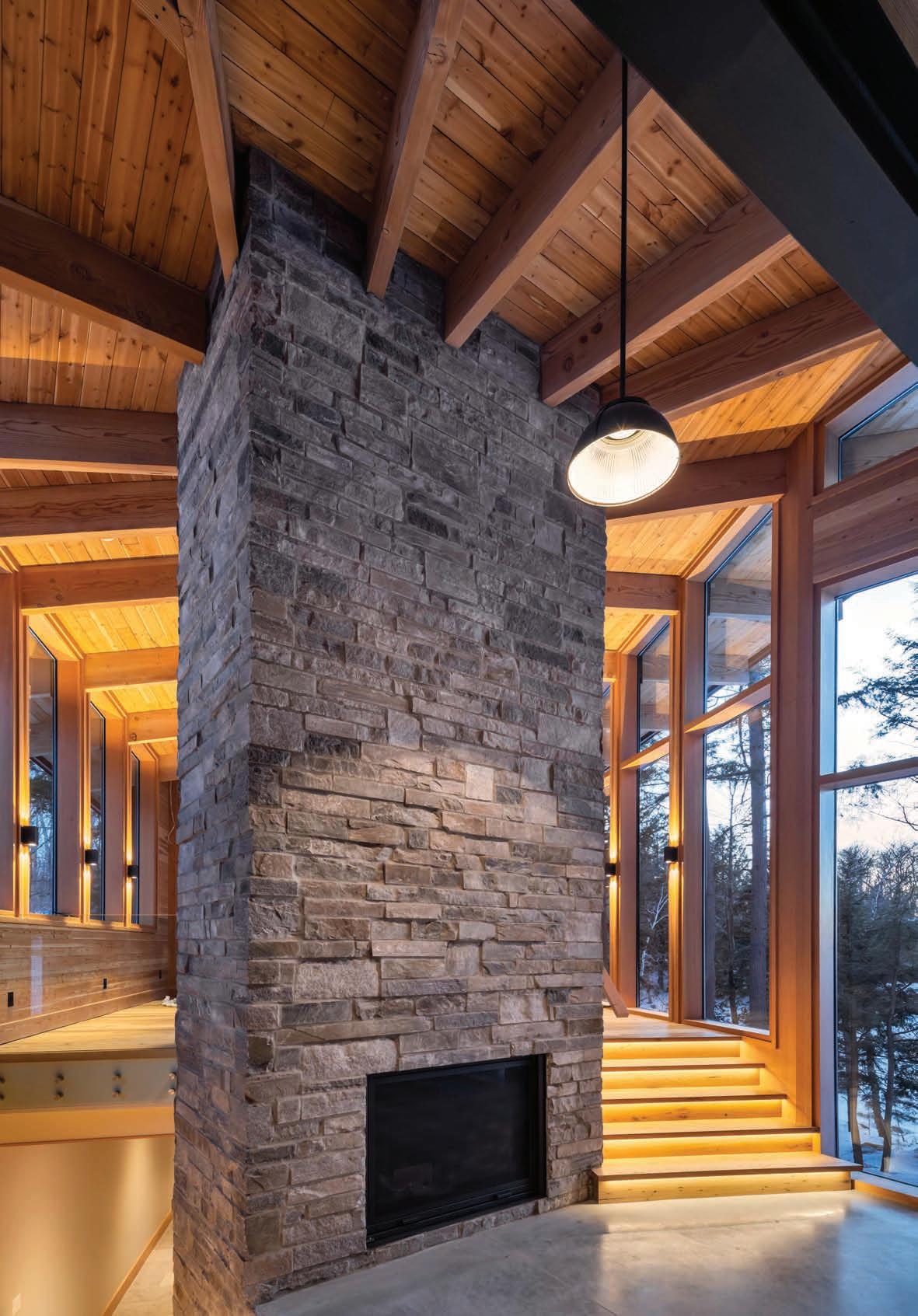
Facing and this page: The central fireplace is a grounding pillar for the spaces, marking a break between the common spaces and the private spaces while also being a central part of the building's structure.
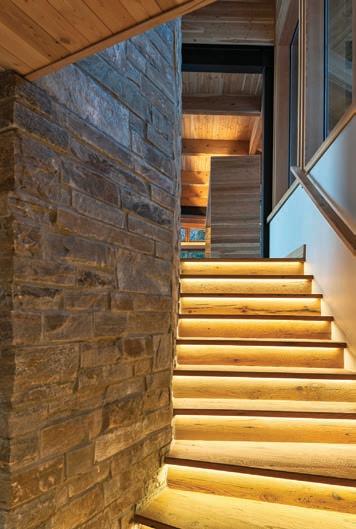
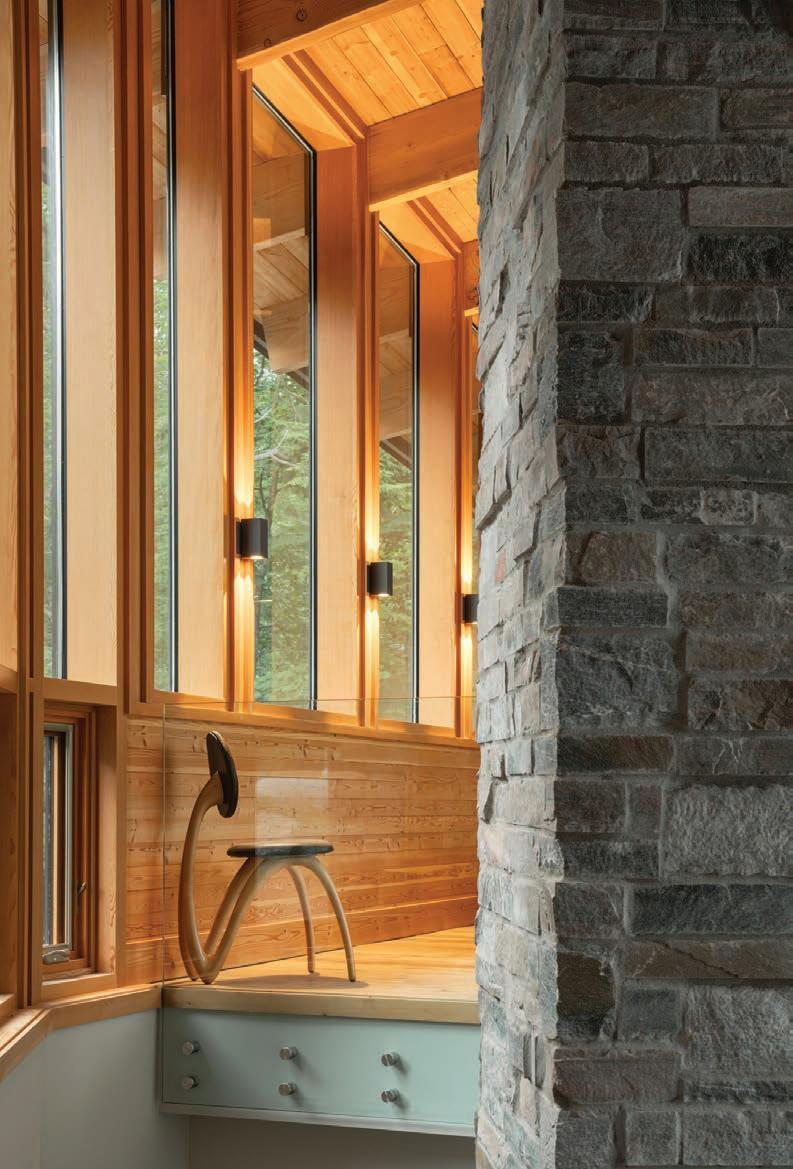
At the heart of the house stands a monumental granite fireplace, quarried locally and rising through both storeys. It acts as a visual anchor and a spatial hinge, organising the plan around it. “The central fireplace is a grounding pillar for the spaces,” explains Bishop. “It marks a break between the common spaces and the private spaces while also being a central part of the building’s structure.” In the colder months, its thermal mass contributes to the house’s sense of warmth, complementing the radiant in-floor heating beneath the concrete floors of the living areas.
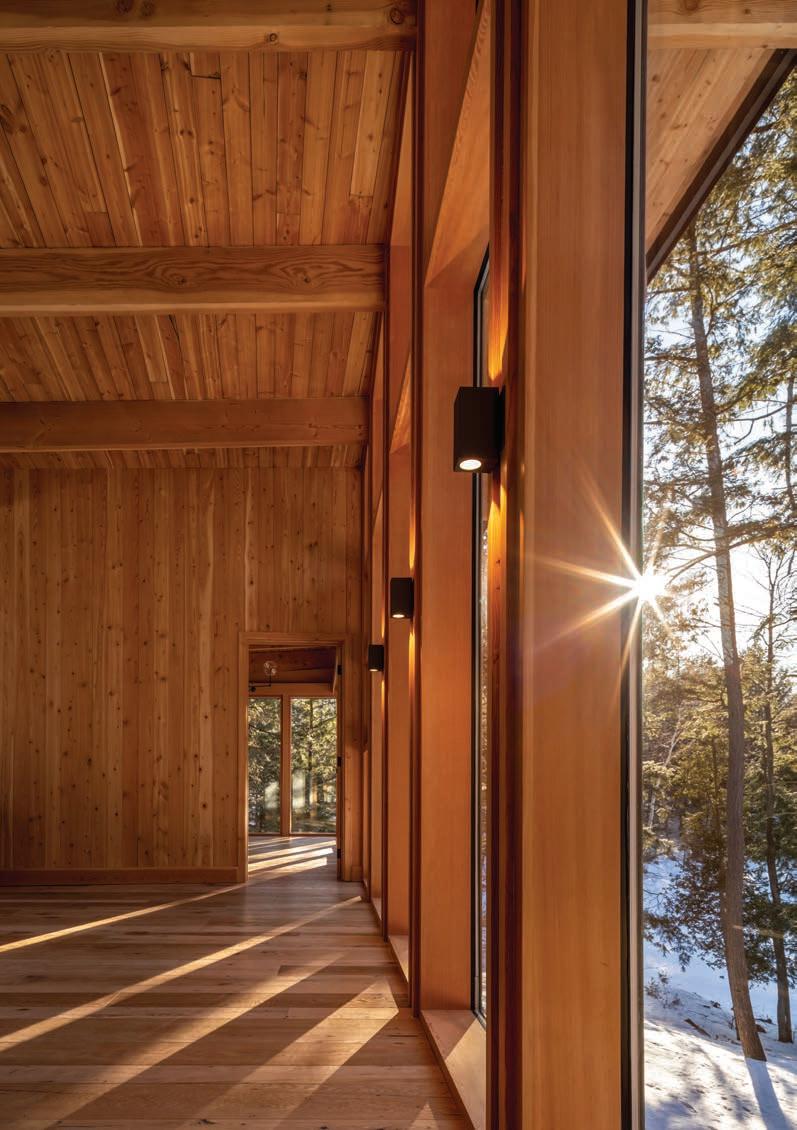
Here, structure and material go hand in hand. The cottage uses a prefabricated Douglas fir system, chosen as much for its architectural appeal as for practical reasons. “The design of the roof is totally unique; there are no standard or typical beam sizes that could accommodate the structure, so prefabrication was the best way to ensure everything was milled to precise dimensions to fit together perfectly,” says Bishop. The approach reduced time on site and ensured a clarity of execution that is palpable in the finished building.
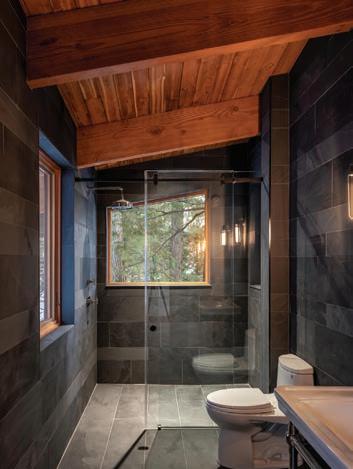
Left: Glazing can be the biggest asset or downfall to a building. The windows and doors in the Barlochan Cottage are all top of the line with high thermal performance. Below: All tile and stone textures were chosen to reflect the colour of the natural granite shield throughout the site's topography.
Externally, the Douglas fir is finished in Kindl, a traditional Japanese charred wood technique. The darkened cladding gives the cottage a tactile, almost geological quality against the pale granite outcrops. It also addresses durability head-on. “The Kindl product is fantastic for weathering the elements,” Bishop says. “It allows you to use the natural beauty of real wood siding while addressing all concerns about maintenance over time. The siding is just as beautiful now as it was when it was installed.” Paired with local granite at the base, the house feels anchored, as though it has always belonged to this stretch of shoreline.



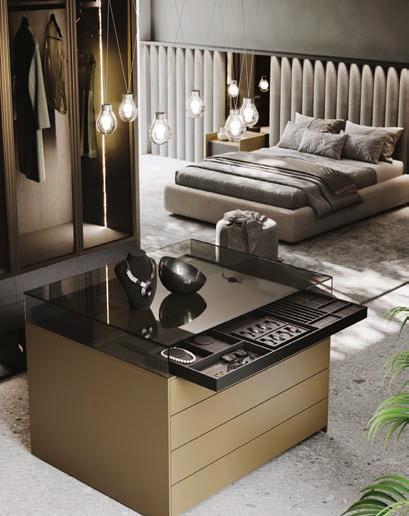
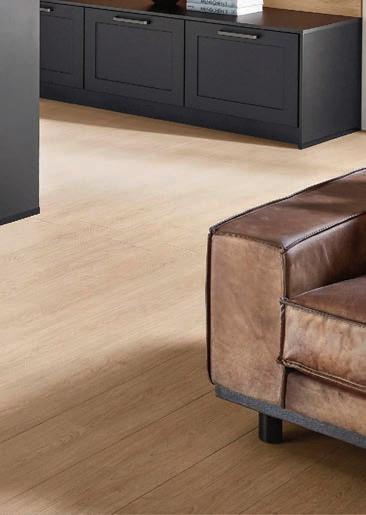

Inside, the material palette shifts subtly to reflect patterns of use. Polished concrete floors run through the main living spaces, chosen for resilience and ability to mediate
between interior and exterior. Private areas are softened with timber flooring, while bathrooms and tiled surfaces draw their tones from the surrounding stone. “All tile and stone textures were chosen to reflect the colour of the natural granite shield throughout the site’s topography,” Bishop explains.










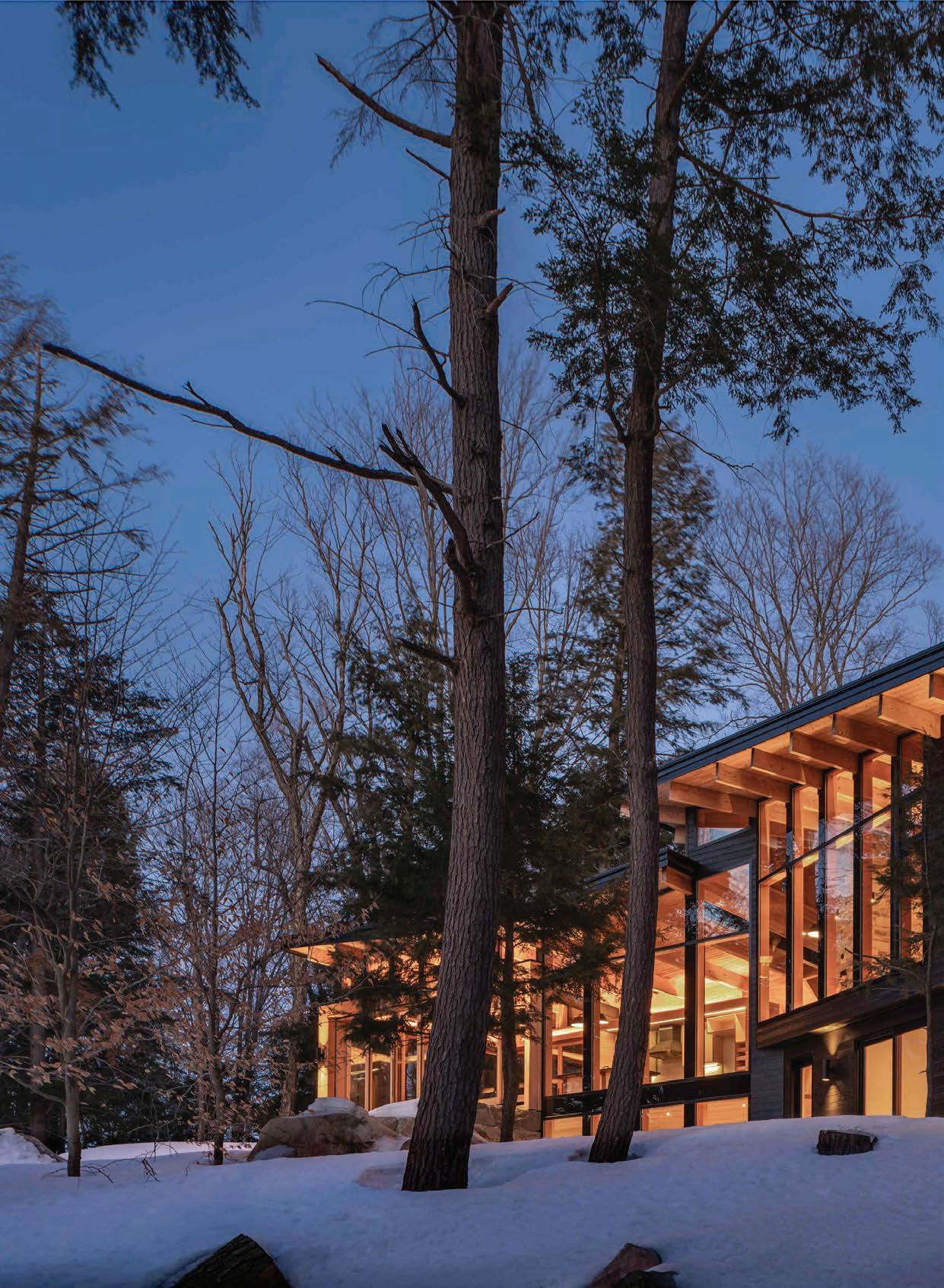
The most striking feature remains the expanses of floor-to-ceiling glazing, that blurs the line between home and nature. Surprisingly, this design boosts privacy instead of reducing it. Set back from the water, the cottage is shielded by existing greenery and thoughtfully positioned to capture views without revealing its interior. “We thoughtfully placed the building within the landscape to open up the views of the lake and forest from inside the space, while maintaining a depth of growth between the cottage and the lake to maintain privacy,” says Bishop. The effect is a sense of seclusion, even in full transparency.


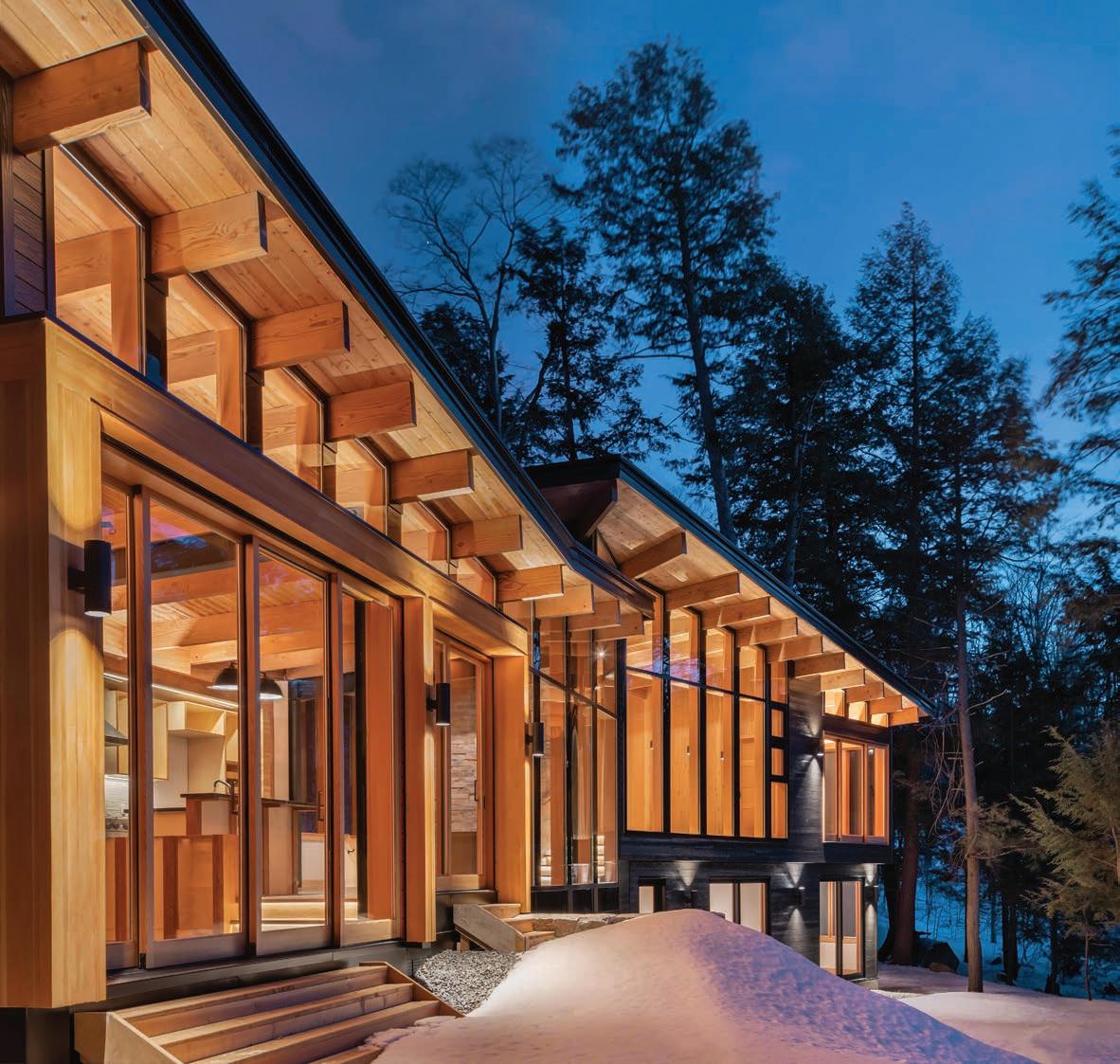
Thermal performance has been calibrated with equal care. Highspecification glazing, deep roof overhangs and cross-ventilation work together to moderate temperature yearround. “Glazing can be the biggest asset or downfall to a building,” Bishop reflects. Here, orientation allows winter sun to wash across the concrete floors, which store and slowly release heat overnight, while summer cooling relies on shade and airflow rather than mechanical systems.
These qualities shine vividly on screen. In Heated Rivalry, the cottage’s open design captures moments of vulnerability, while its protective roofline and central hearth create a feeling of welcome and belonging. Bishop takes the building’s surprise fame in stride. “We treat every project as something new,” she says. “We don’t like to repeat old designs or follow trends. We are so appreciative of all the love that the building has received and can only imagine it is because it stands out from the norms of what people perceive contemporary residential architecture to be.”
and facing:
Set against the forest surrounding Ontario’s Lake Muskoka, Barlochan Cottage has become both a backdrop and a protagonist, a place where architecture has taken on a
personal, emotional role. For viewers it marks a turning point where rivalry gives way to new intimacy, while for architects it demonstrates how a house shaped by its surroundings, climate, and materials can resonate far beyond its physical boundaries, living on in cultural imagination.
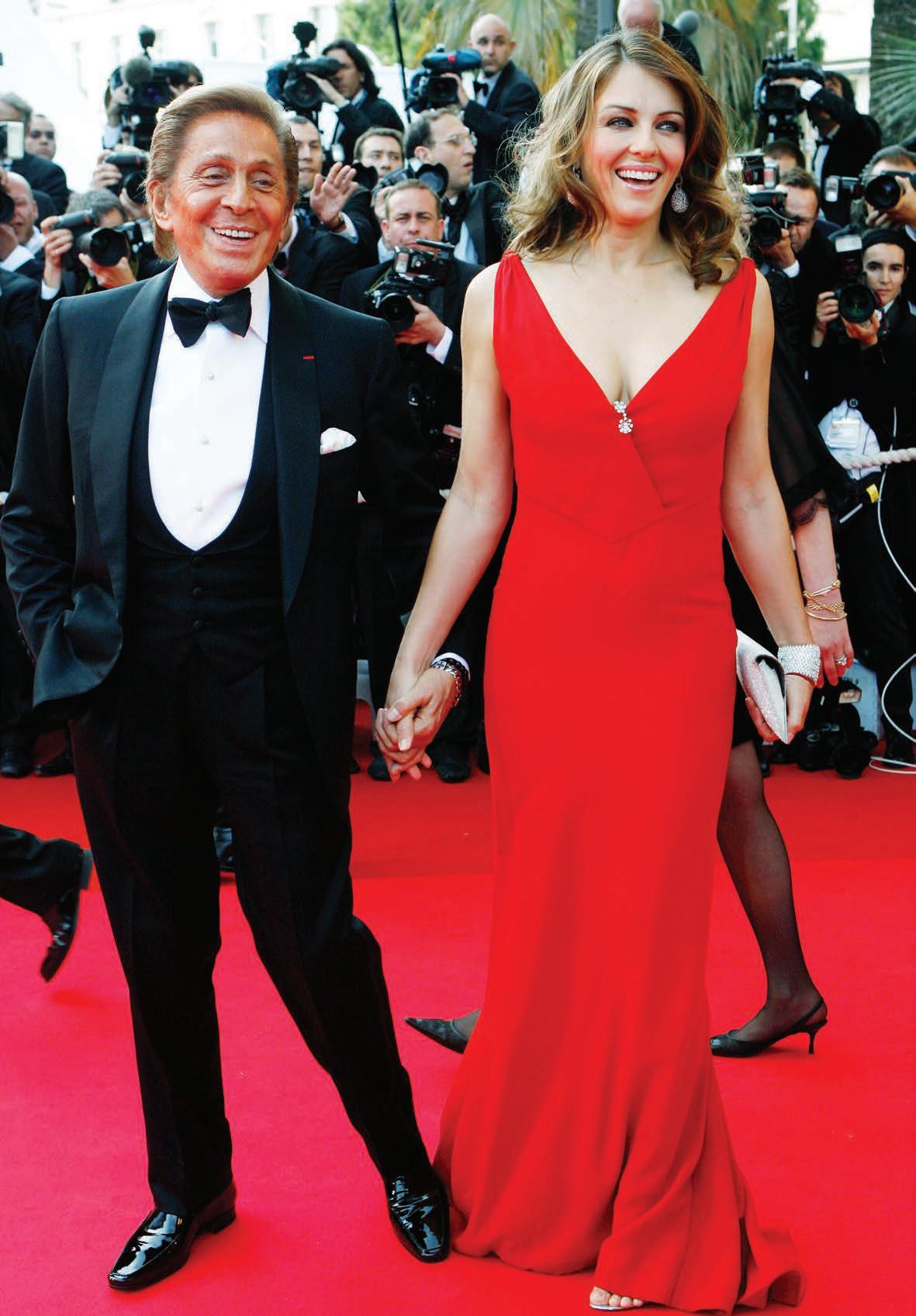
“The red dress is always magnificent.”
Valentino

Bathed in Roman winter light, the fashion world paused this January to bid farewell to Valentino Garavani, a designer whose very name conjured a universe of elegance, precision, and rich, sensual colour. He passed away at his home in Rome at 93, closing a chapter that stretched from post-war couture ateliers to red carpets that defined modern glamour. Universally known by his first name, Valentino built a visual language so confident it needed no explanation. As he once put it, “I know what women want. They want to be beautiful.”


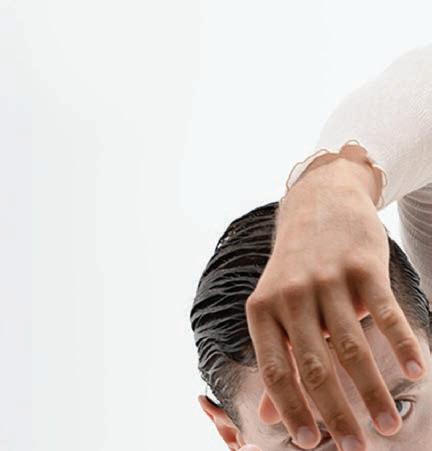
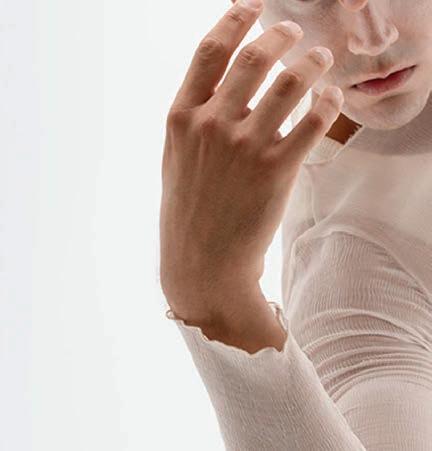
Over two weekends, experience the breath of ŻfinMalta’s work, and the distinct visions of three European choreographers.
NÁCAR by Paloma Muñoz BORDER by Matthew William Robinson Mortal Heroes by Sita Ostheimer





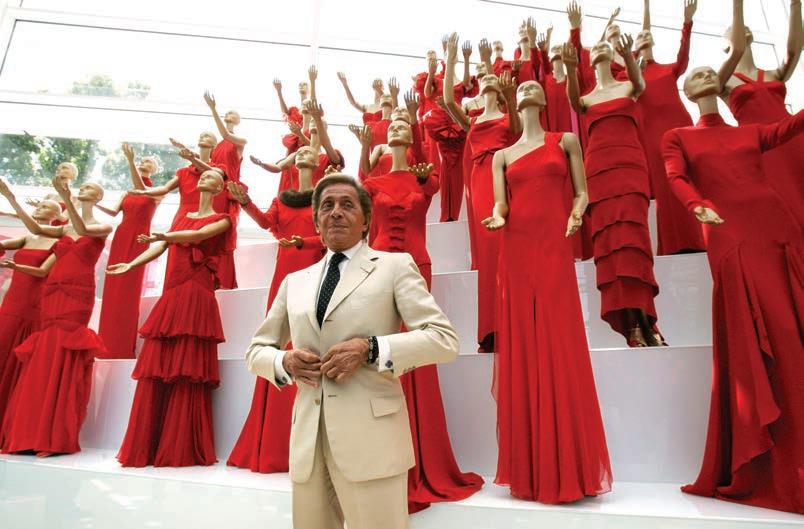
From the start, beauty was his main pursuit, not as an abstract idea but as something to be lived. Born in 1932 in Voghera, northern Italy, Valentino was captivated early on by cinema, remembering his childhood awe at film stars who always seemed “perfect.” This passion led him to study fashion in Milan and Paris before working with Jean Dessès and Guy Laroche. By 1959, he had opened his own atelier on Via Condotti in Rome, and within a decade, his name was known among aristocrats, actresses, and editors who admired his exceptional sense of proportion and flawless finish.
While Rome was always his home base, Valentino often showcased his collections in Paris, placing himself firmly in the tradition of European haute couture. His atelier became a goto for women who appreciated a mix of elegance and quiet confidence, names like Jacqueline Kennedy Onassis, Princess Diana, Elizabeth Taylor, Audrey Hepburn, and Queen Rania of Jordan. Kennedy, a close friend, asked him to create the lace gown she wore to marry Aristotle Onassis in 1968 and, for a while, wore almost nothing but Valentino. He returned such loyalty with designs that highlighted the woman rather than overshadowed her, dresses that moved gracefully and wore their embellishments with ease.
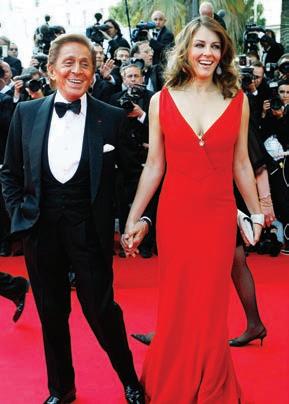
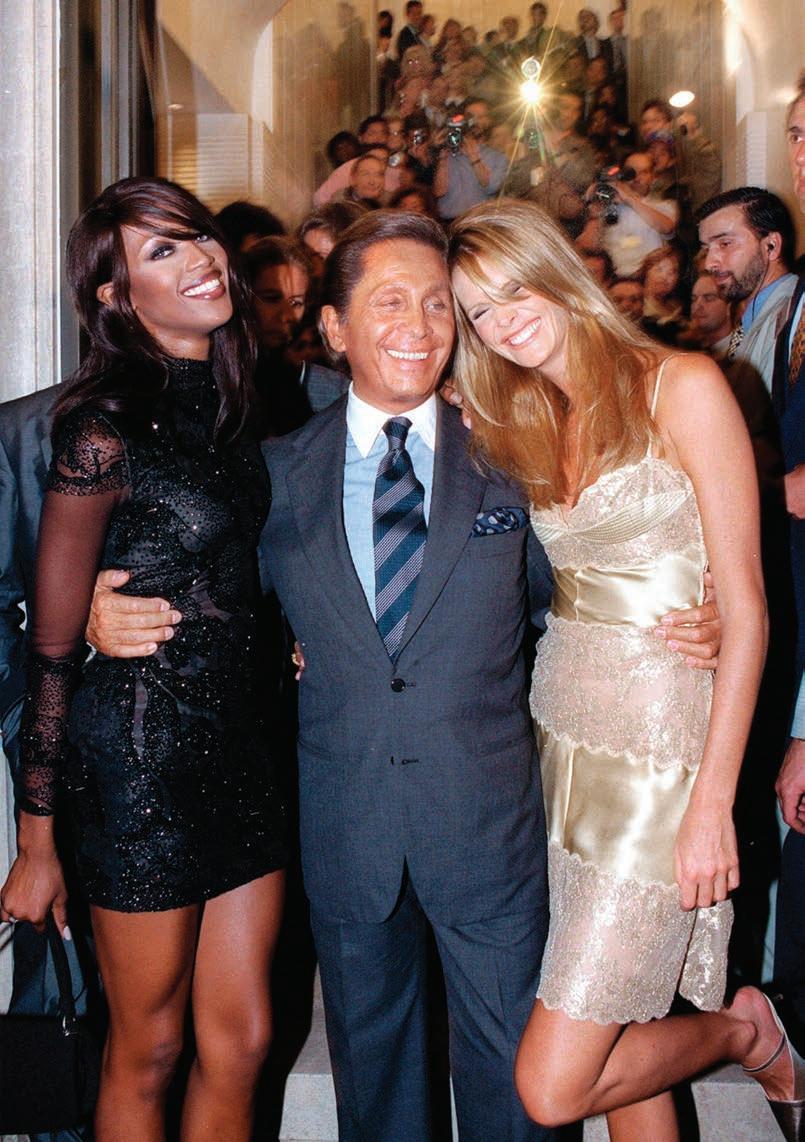
Above: Valentino with top models Naomi Campbell, left, and Elle Macpherson during the inauguration of Valentino’s new boutique in central Rome in 1995. Photo Domenico Stinellis/AP Photo, File. Left: Valentino at an exhibition of his best creations at the Ara Pacis museum, part of the fashion designers 45th anniversary celebrations in Rome, July 2007. Photo Pier Paolo Cito/AP Photo, File.









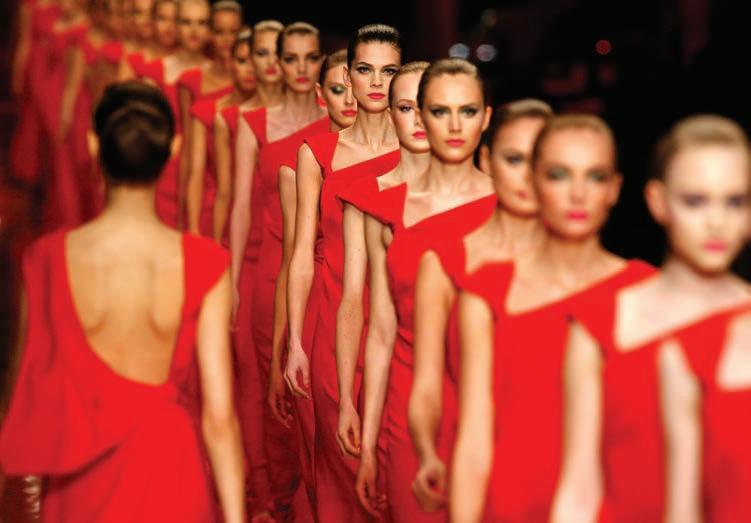
If one colour defined his work, it was red, a shade so iconic it became known as Valentino Red. Its story began with a moment of youthful inspiration. In a 2009 interview, Valentino recalled traveling to Barcelona at eighteen and attending an opera premiere. “I used to work for a lady that used
to make dresses and she sold these clothes in Spain. And once she said, ‘listen do me a favour, go to Spain and do this job for me.’ So I went to Spain and they invited me for the premier of the opera house. And I’ve seen around me all these beautiful women, and I’ve seen lots of red. You know Spanish they love red... And at that moment I told myself, ‘This is the day I start my career. Red will be
my lucky colour,’” he said. He instinctively understood its emotional impact. “And I think it is a colour so good for everybody. And believe me, when you are in a party, and you see all those women now dressed in black, when you see two women dressed in red coming in, you have a sort of big joy in your heart because they look sensational. It’s a very happy colour.”
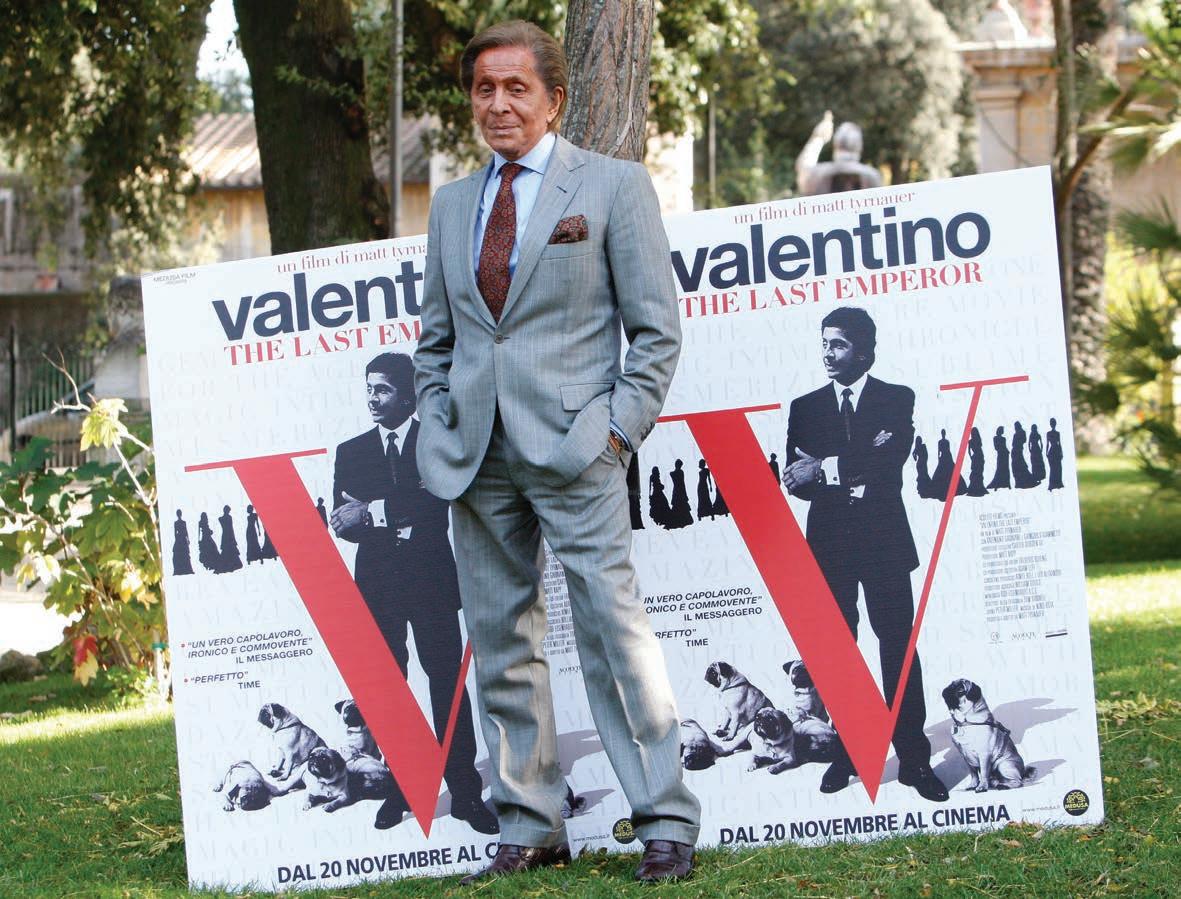
Above: Valentino at a photo-call to present the documentary film “Valentino: The Last Emperor” in Rome, November 2009. Photo Alessandra Tarantino/AP Photo, File. Left: Models take to the runway after the presentation of Valentino’s Haute Couture Spring-Summer 2008 collection, in Paris, January 2008. Photo Jacques Brinon/AP Photo, File.

Valentino’s sharp vision carried far beyond the runway, shaping a life lived with style and flair. Always sun-kissed and impeccably dressed, he embraced the tastes of his jet-set crowd, splitting time between homes in Rome, Paris, New York, London, Capri, and Gstaad, often with his beloved pugs in tow. Alongside his
longtime partner Giancarlo Giammetti, whom he met in 1960, he built a world where work, friendship, and beauty blended seamlessly. With Giammetti’s architectural eye and careful business management, Valentino was free to focus on designing. Together they grew Valentino SpA into a global brand, adding readyto-wear, menswear, and accessories before selling it in 1998, though Valentino stayed creatively involved until retiring in 2008.






Their relationship was captured with rare closeness in Valentino: The Last Emperor, the 2008 film by Matt Tyrnauer, which followed the designer in the final chapter of his career. Tyrnauer called Valentino “a born dreamer,” someone who placed himself at the heart of the stories he told, living with the same lavishness he shared with his clients. The film ended with a standing ovation at the Venice Film Festival, a moment Tyrnauer later described
as cathartic, when Valentino finally saw his own life mirrored back to him as a love story. Tributes following his death showed just how far his influence reached. Alessandro Michele, now the creative director at the Valentino house, spoke of sensing the designer’s presence while working on his latest collection. He described Valentino as “a man who expanded the limits of the possible,” praising his rare delicacy, with a silent rigor and a limitless love for beauty,” and reflected that for Valentino, creating was about deeply caring for form, time, and the human body.
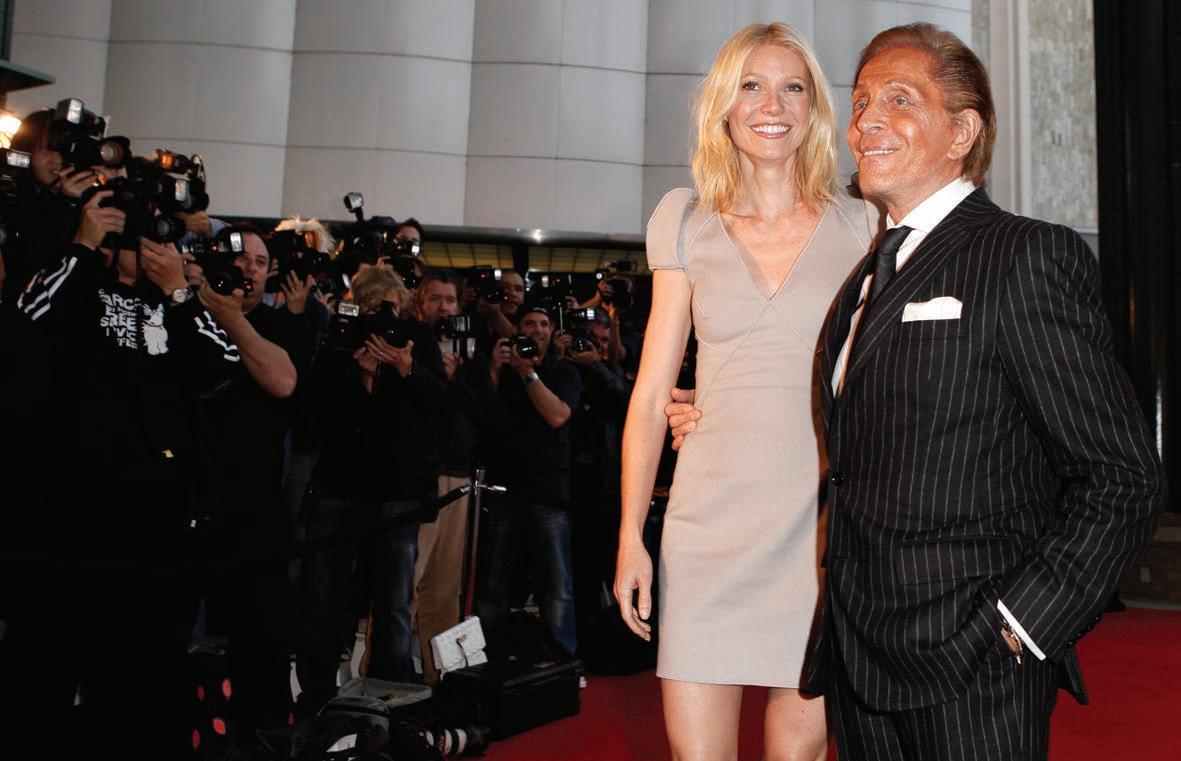
Above: Valentino and Gwyneth Paltrow at the premiere of “Valentino: The Last Emperor” in Los Angeles, April 2009. Photo Matt Sayles/AP Photo, File.
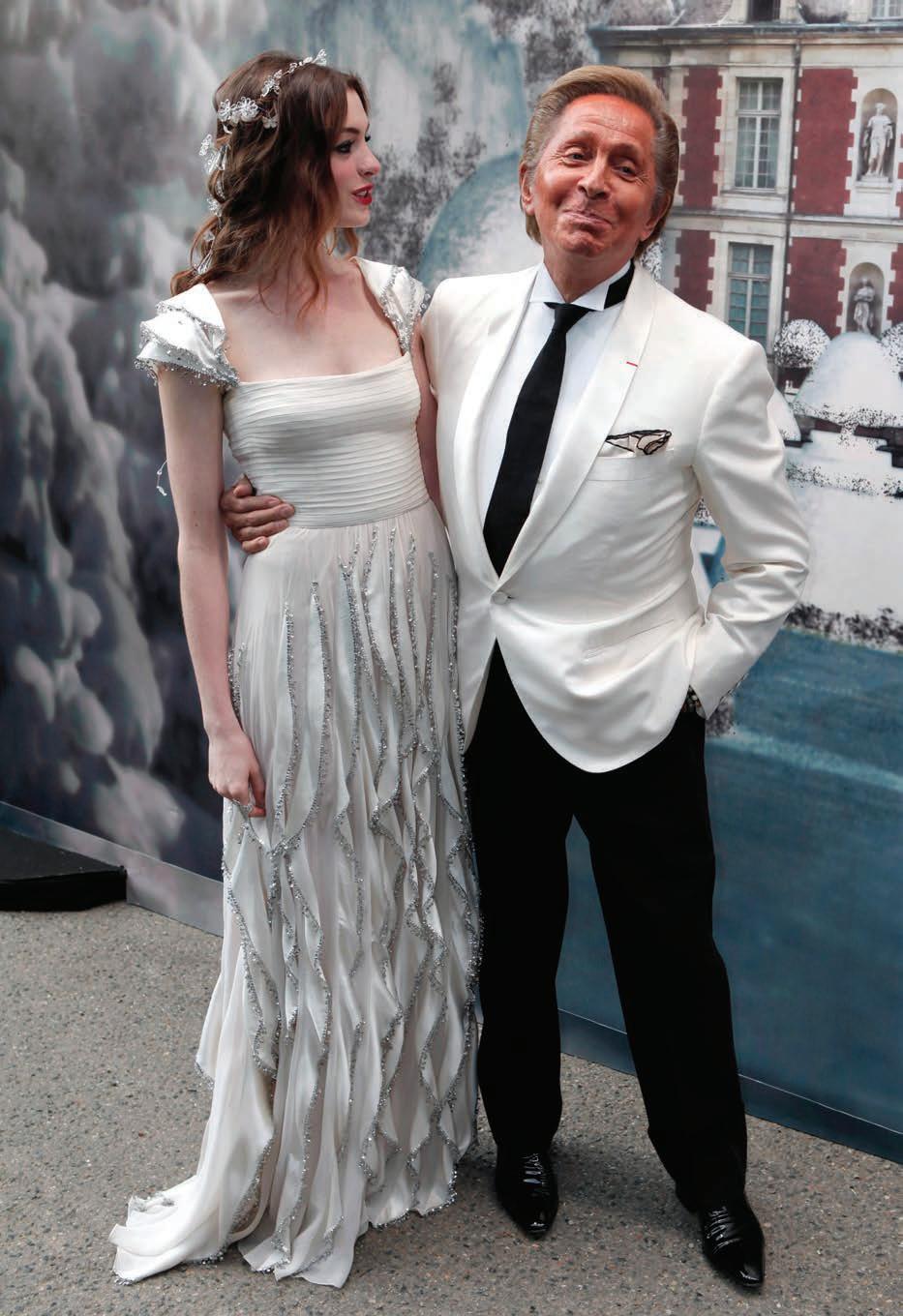
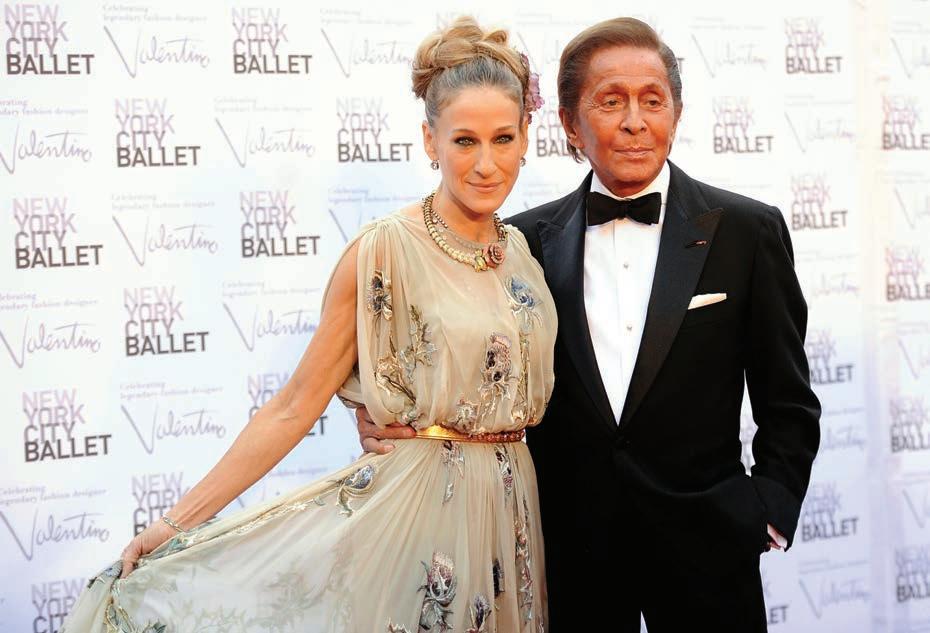
Left: Sarah Jessica Parker with Valentino Garavani at the New York City Ballet Fall Gala honouring Valentino at Lincoln Center, September 2012.
Photo Evan Agostini/Invision/AP File.







Let your immunity PROTECT you with the right intake of Vitamin C
To counteract the first symptoms of colds & flu.
Reducing the duration of illness.
Effective in improving the immune system.
Marvit Vitamin-C 1000MG is a Food supplement in convenient effervescent tablets.
Active Ingredients:
Vitamin C available in concentrations of 1000 – 180 mg
Zinc 12.5 mg
Vitamin C available in concentrations of Zinc
Echinacea 10 mg
Echinacea
Selenium 55μg
Great taste with red blood orange.
1 Effervescent tablet daily before a meal.
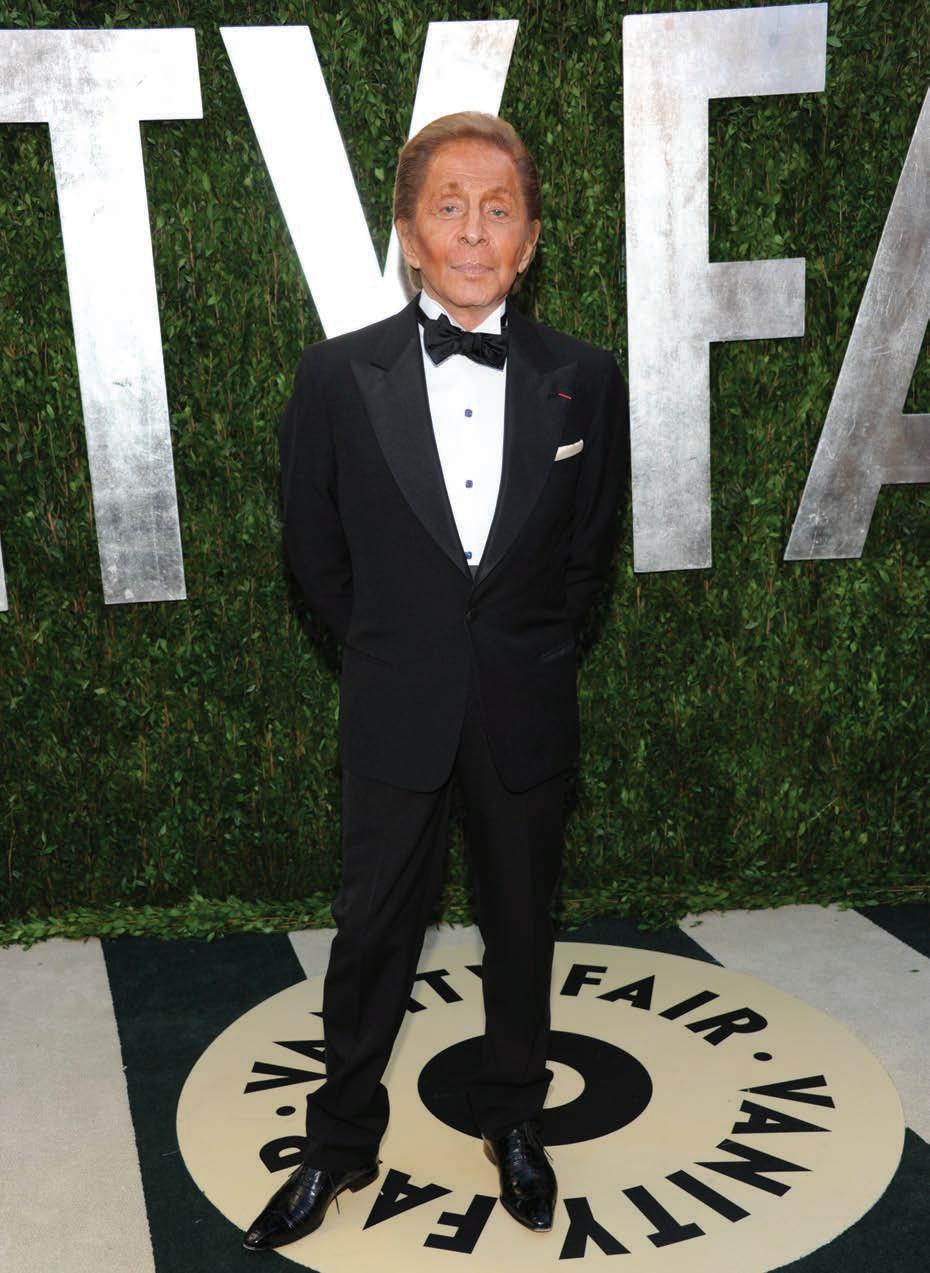
For Pierpaolo Piccioli, who led the house through a time of renewed emotional depth, Valentino was a mentor whose wisdom was felt rather than formally taught. “For you, beauty was never a luxury nor an ornament,” Piccioli wrote. “It was a form of defence, a place of safety, the only one possible.” He recalled learning joy from Valentino, “though a profoundly serious kind of joy”, and even of mastering the most delicate of couture gestures: “the most beautiful bows in the world.” Valentino’s designs steered clear of provocation, embracing elegance over shock, and they ruled the red carpet for decades. Julia Roberts accepted her Oscar in a black-and-white Valentino column in 2001; Cate
Blanchett wore butter-yellow silk Valentino when she won in 2005. Bows, ruffles, lace, and embroidery showed up time and again, not as overkill, but as subtle accents that highlighted movement and shape. His gowns stayed timeless, ignoring fleeting trends in favor of lasting charm.
The final farewell was held at the Basilica di Santa Maria degli Angeli e dei Martiri in Rome, attended by designers, editors and actors who had shaped, and been shaped by, Valentino’s world. Giammetti shared a heartfelt tribute, capturing a lifetime of memories. “I want to thank Valentino for teaching me beauty,” he said, his voice breaking with emotion. “It was a beauty that followed us throughout our lives. We met when we were kids, we dreamed of the same things, and we achieved many of them. Our journey will always continue.”
7 - 8 March 2026
Tours, Games, Yoga and Educational workshops for all ages
10am - 6pm
MICAS, Floriana
Ospizio Complex
Bieb il-Pulverista
Triq Joseph J. Mangion
Floriana FRN1830, Malta
“What we have is given by God and to teach it to others is to return it to him.”
Gian Lorenzo Bernini
PALAZZO BARBERINI,
ROME
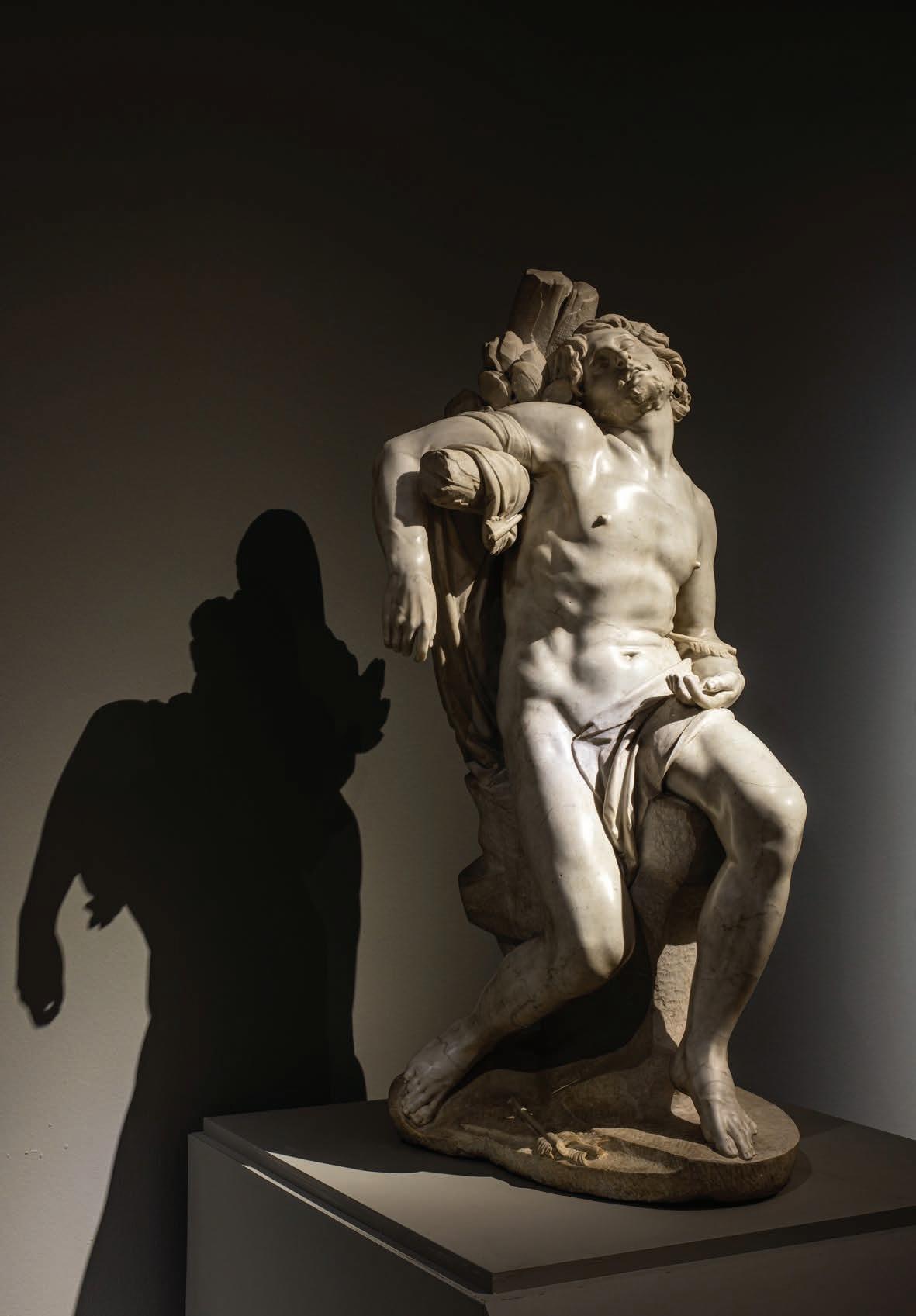
In the grand halls of Palazzo Barberini in Rome, an exhibition hosted by Gallerie Nazionali di Arte Antica retraces one of the most consequential artistic relationships of the seventeenth century. BERNINI AND THE BARBERINIS, on view until 14 June 2026, unfolds as an exhibition and an intellectual portrait: the story of how Gian Lorenzo Bernini and Pope Urban VIII shaped each other, and in doing so redirected the course of European art.
Photography courtesy Gallerie Nazionali di Arte Antica –Palazzo Barberini.
INSTALLATION VIEWS: BERNINI E I BARBERINI, 2026. Photographer ALBERTO NOVELLI.
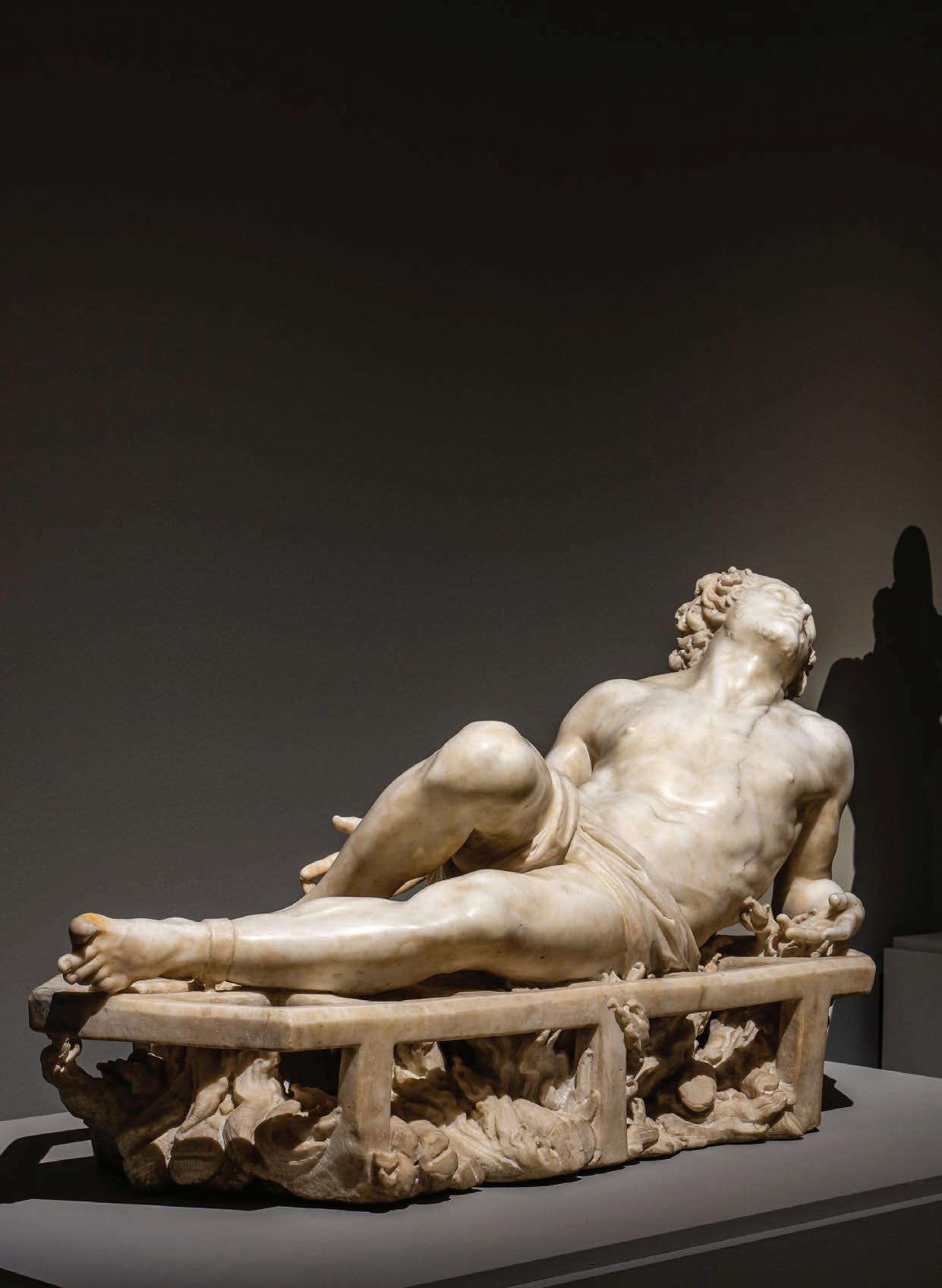




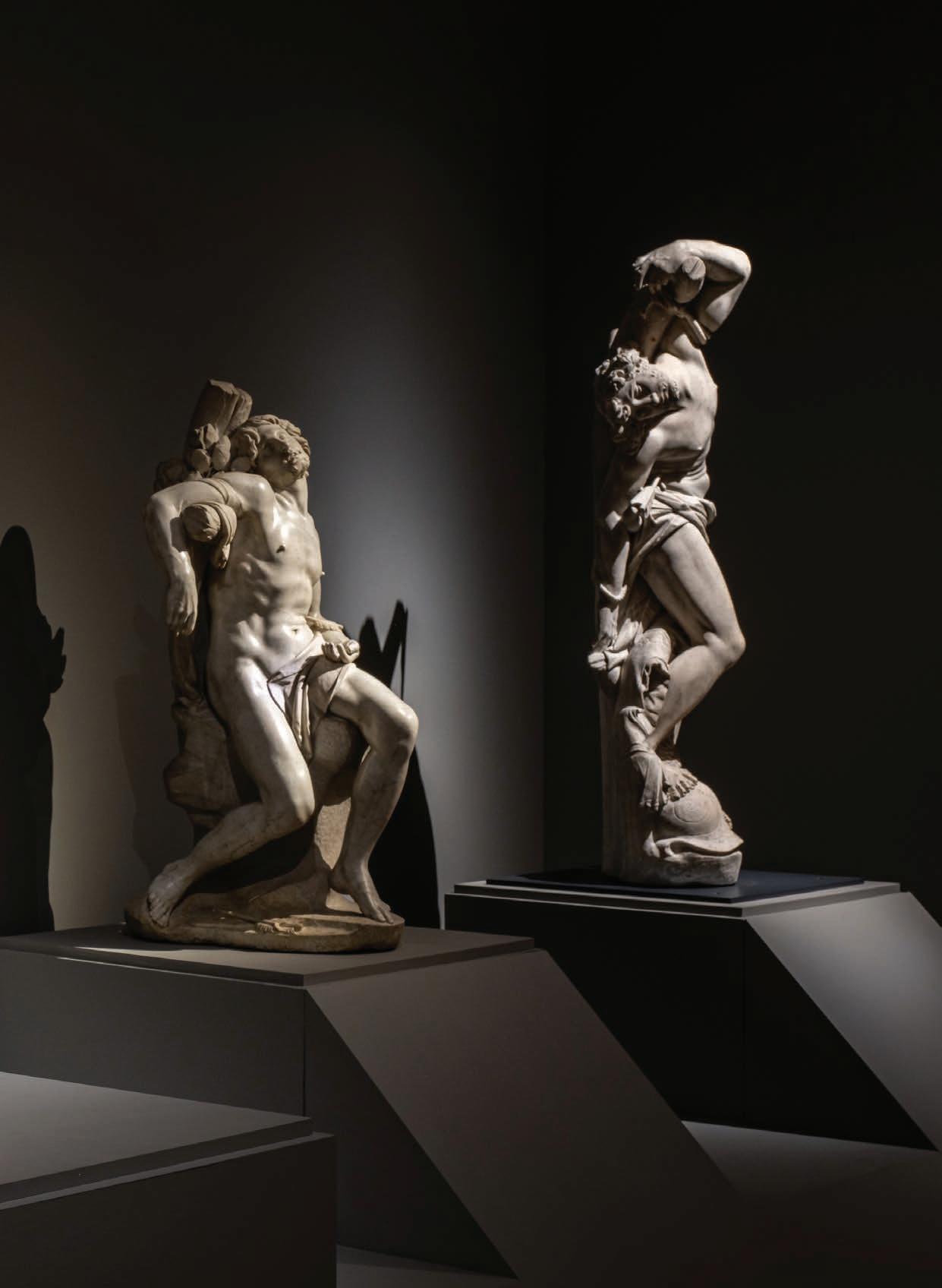
Timed to coincide with the four-hundredth anniversary of the consecration of the new Saint Peter’s Basilica in 1626, the exhibition situates Bernini’s career within what Galileo Galilei described as a marvellous conjuncture. In the early seventeenth century Rome was recalibrating its image and authority after the Council of Trent, and art became a primary instrument in that endeavour. At its centre stood Maffeo Barberini, elected pope in 1623 as Urban VIII, a poet, intellectual and shrewd political operator who understood culture as a form of governance.
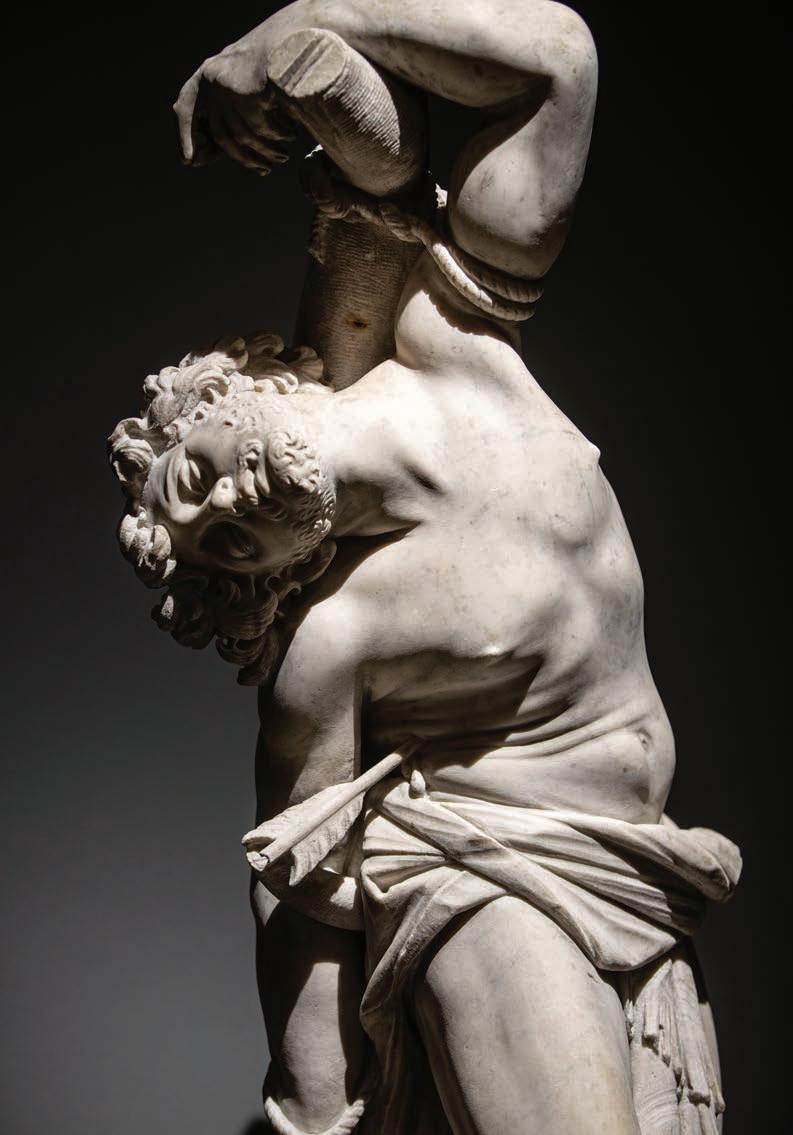
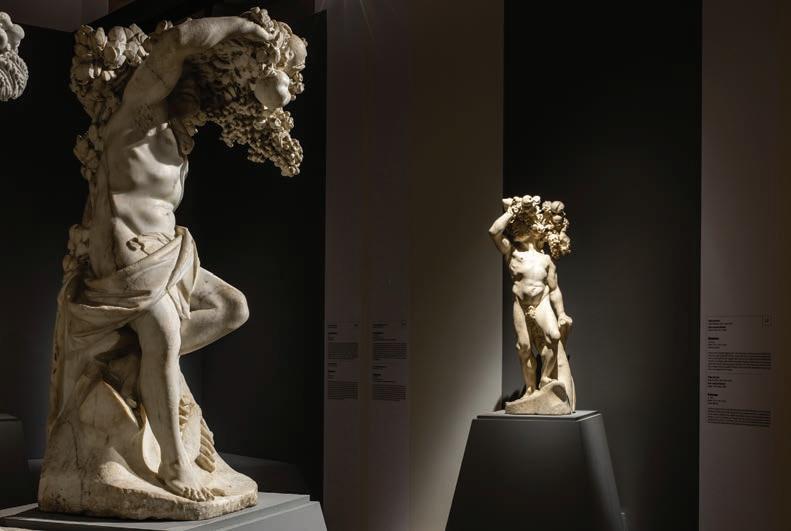
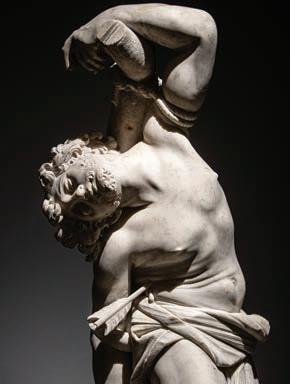
Long before the conclave elevated him to the throne of St Peter, Barberini recognised Bernini’s extraordinary promise. The young sculptor, still working alongside his father Pietro, possessed a technical brilliance that bordered on precocious. Barberini did not simply commission him; he liberated him. By drawing Bernini out from his father’s workshop and placing him within his own intellectual orbit, Barberini helped shape a transformation from gifted artisan to universal artist. The first section Claiming Him as His Own: Maffeo ‘discovers’ Bernini reconstructs the foundational moment in the relationship between Maffeo and the young artist, when the future Urban VIII sensed the revolutionary potential of this child prodigy and helped emancipate him from his father’s workshop. On view, early collaborations and independent works that already display an emotional immediacy foreign to late Renaissance restraint. Marble softens into flesh, bodies breathe, and the viewer is drawn in.

mdia.gov.mt/services/boost-your-coding-scheme/
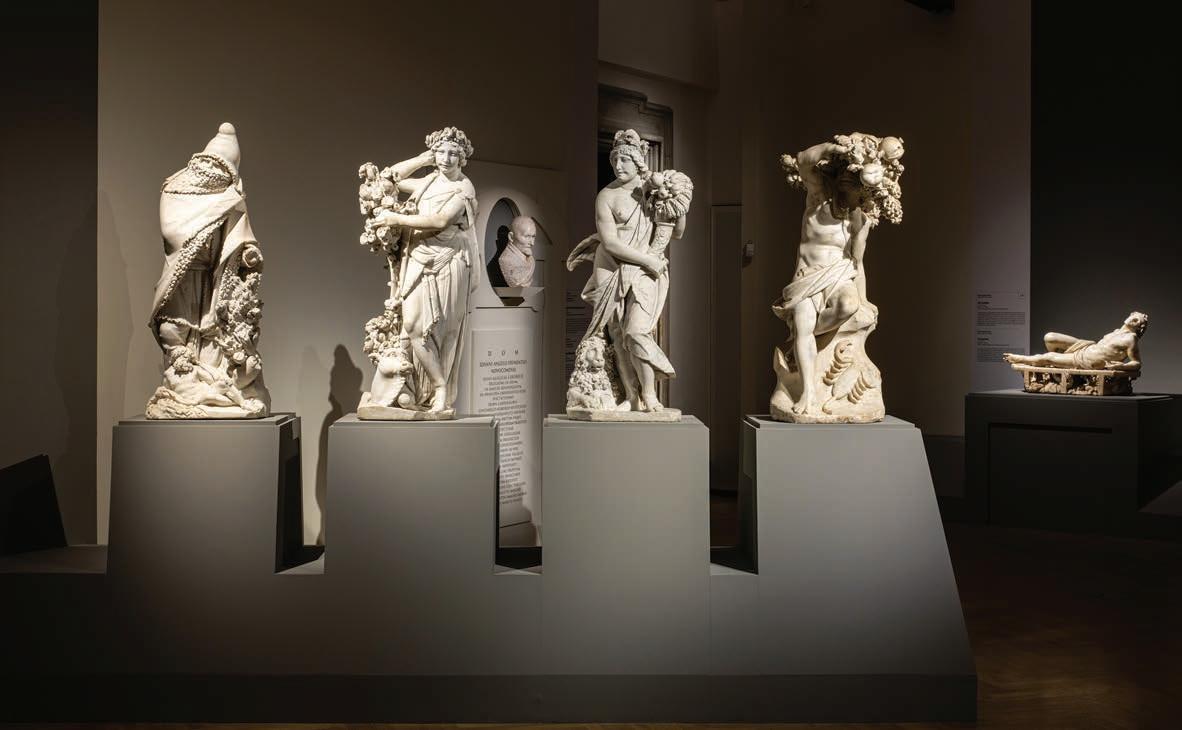
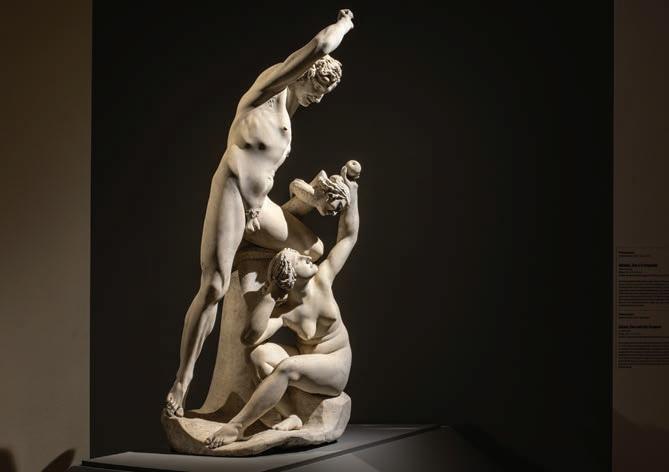
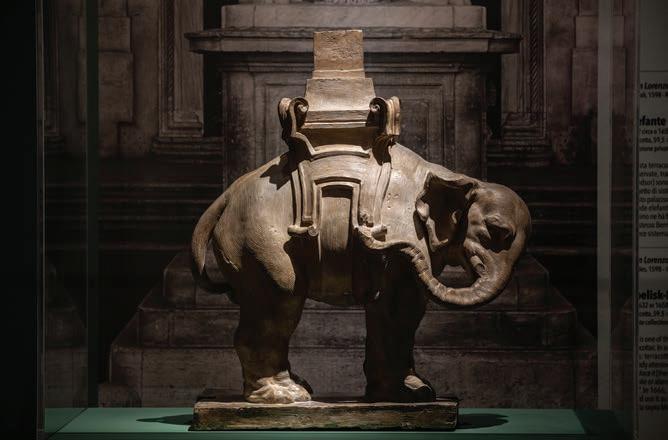
This relationship deepened once Barberini became pope. Urban VIII surrounded himself with artists, writers and thinkers; there is no doubt, however, that Bernini was his favourite, a “lost son”.Under papal protection, the sculptor expanded his practice across disciplines, moving fluidly between sculpture, architecture, painting and theatre. The exhibition makes clear that the Baroque did not emerge as a gradual stylistic shift but as the product of a shared vision, in which art was designed to persuade, to move, and to assert authority through sensation and scale. Their alliance is most evident in Bernini’s work at Saint Peter’s Basilica. The second section of the exhibition, Ne plus ultra: The New Saint Peter’s is dedicated to Bernini’s work on Saint Peter’s Basilica, a symbolic site where the alliance between Urban VIII and Bernini is evident. After the new basilica was built in 1626, Urban VIII and his favorite artist set about reinventing the interior. The section centers on Saint Peter’s Baldacchino, commissioned to Bernini, who was just over twenty-five years old at the time. It is a highly original piece blending architecture, sculpture and decoration in a unique treat for the eyes. Drawings, models and carvings document the genesis of the piece, along with studies for the Saint Longinus, sculpted directly by Bernini for one of the columns of the canopy. This section also illustrates the visual and symbolic dialogue between the Baldacchino, the Loggias of the Relics and the future Throne of Saint Peter, showing how Bernini transformed this sacred space into a unified narrative, a beautiful whole that engaged the faithful emotionally while celebrating the universal nature of the Church and the power of the Barberini papacy.
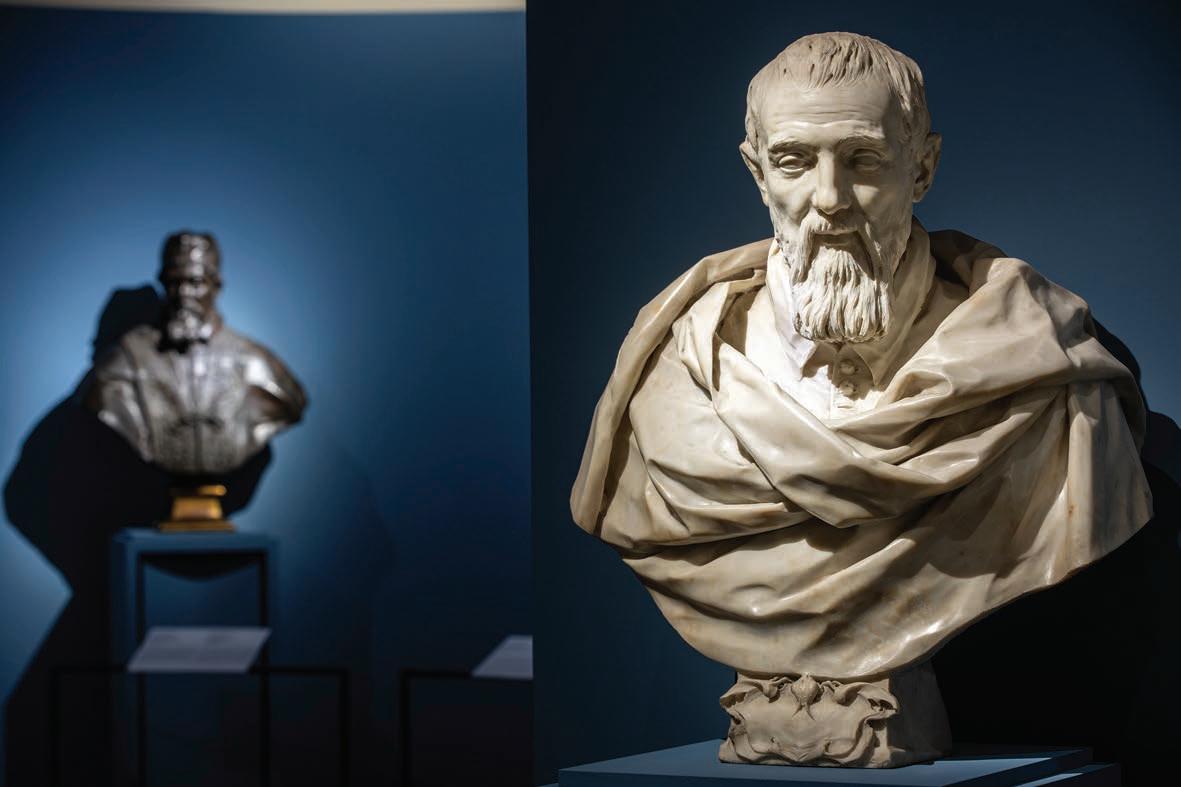
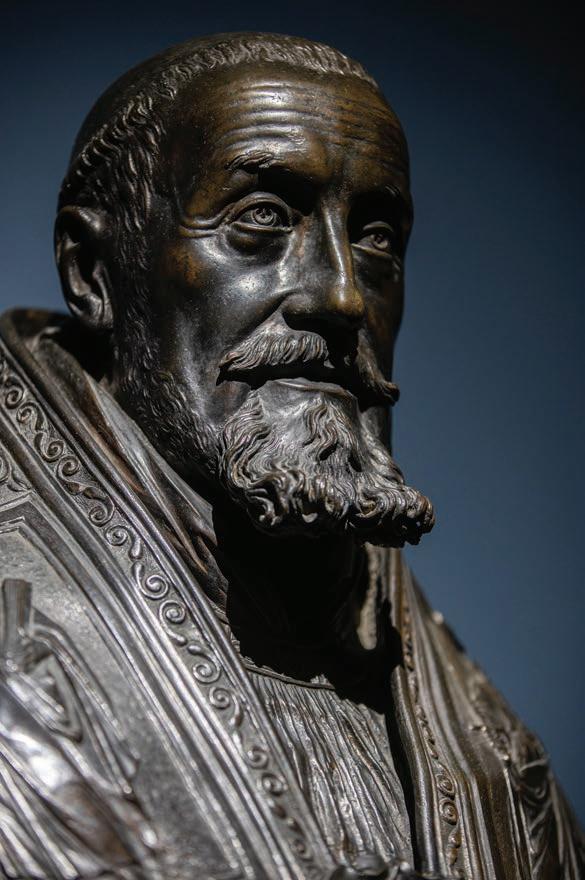
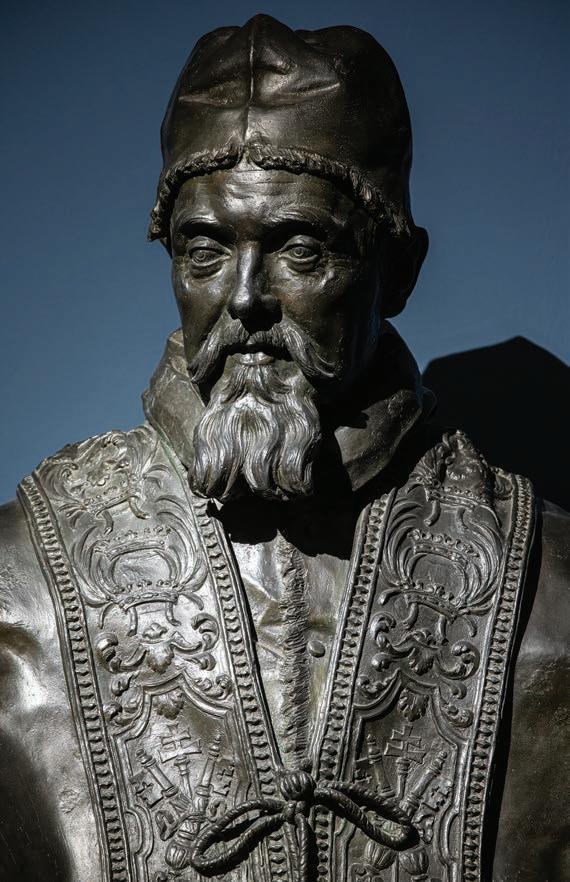
The third section follows Bernini’s work as the papal portrait artist, and offers a different lens through which the partnership is examined. An extraordinary assembly of busts traces Bernini’s evolving depiction of Urban VIII, from uncovered head to camauro and mozzetta, each variation refining an image of spiritual and temporal authority. These portraits do not freeze the pope in idealised stillness; they animate him, capturing alertness, intelligence and psychological presence. In these works, power becomes expressive rather than static, a hallmark of Bernini’s approach.
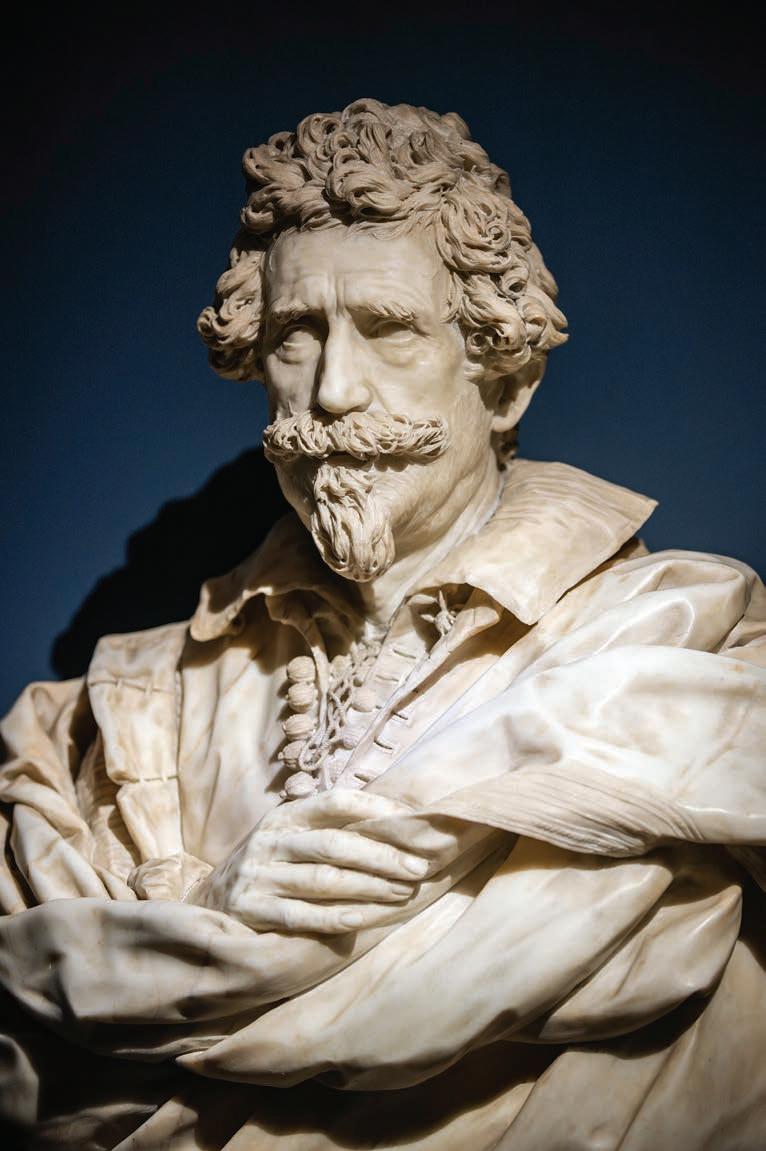
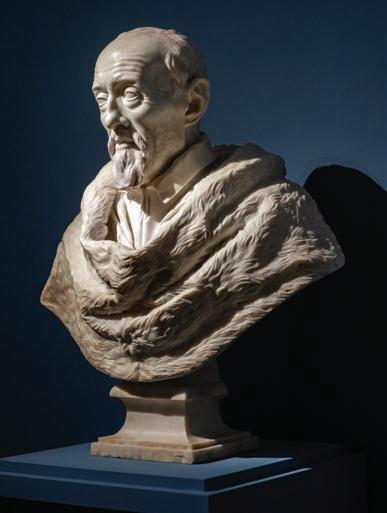
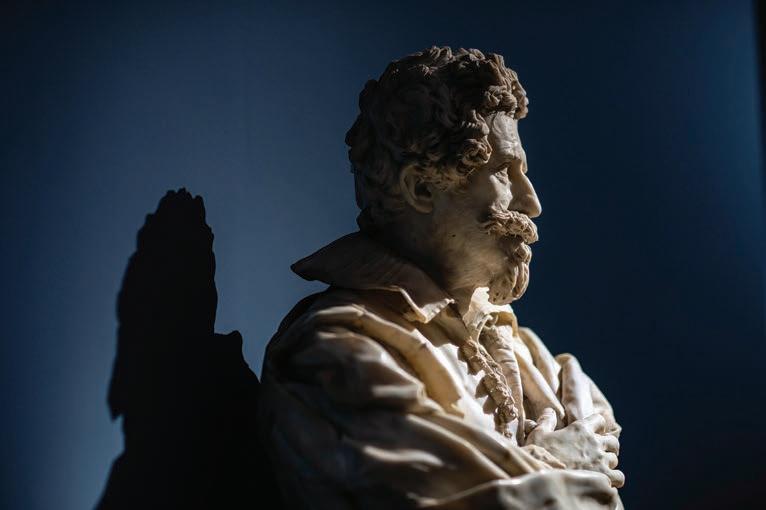
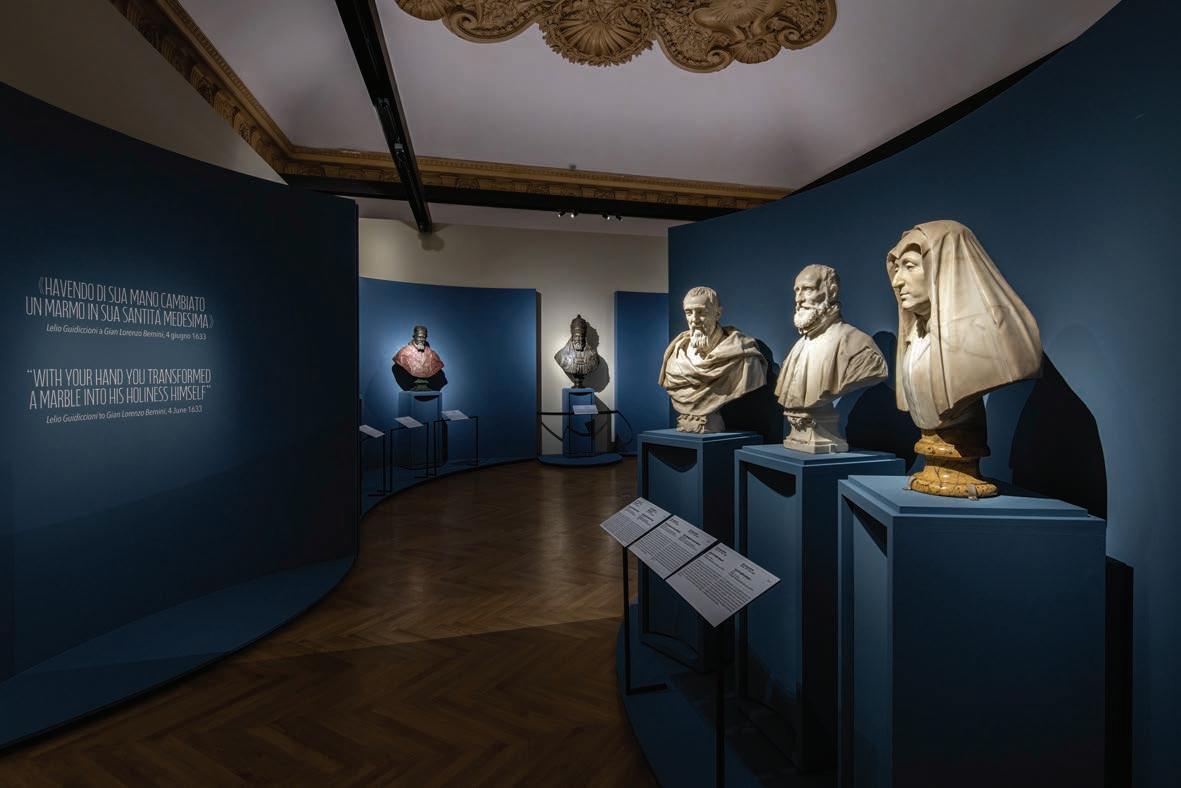
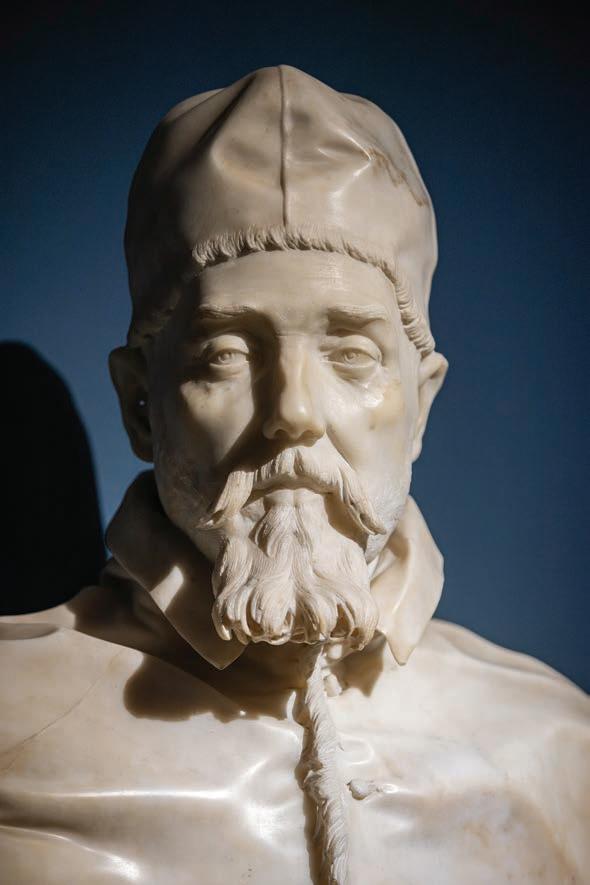
Palazzo Barberini itself forms the exhibition’s architectural heart. Conceived as a collaborative project involving Bernini, Francesco Borromini and Pietro da Cortona, the palace embodies the competitive yet fertile environment fostered by the Barberini court. Drawings and models reveal Bernini’s role as sculptor as well as a conceptual force, shaping interiors, furnishings and spatial rhythms. The building stands as a manifesto of Baroque ambition, an urban palace and suburban villa.
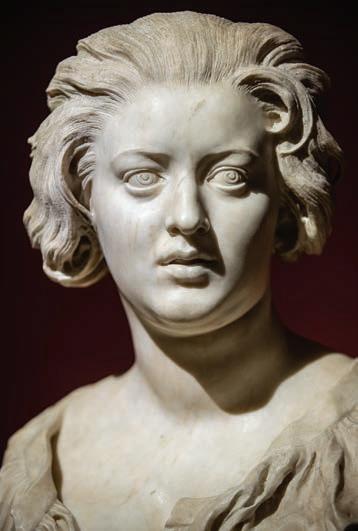
The exhibition’s final rooms turn inward, exploring moments where Bernini worked beyond formal commission. The bust of Costanza Bonarelli, carved without patronage, confronts the viewer with an intensity that borders on the intimate, reminding that creative freedom and personal tension coexisted alongside papal favour. A more private painted portrait of Urban VIII closes the narrative, revealing a relationship marked by protection, control, complicity and mutual dependence.








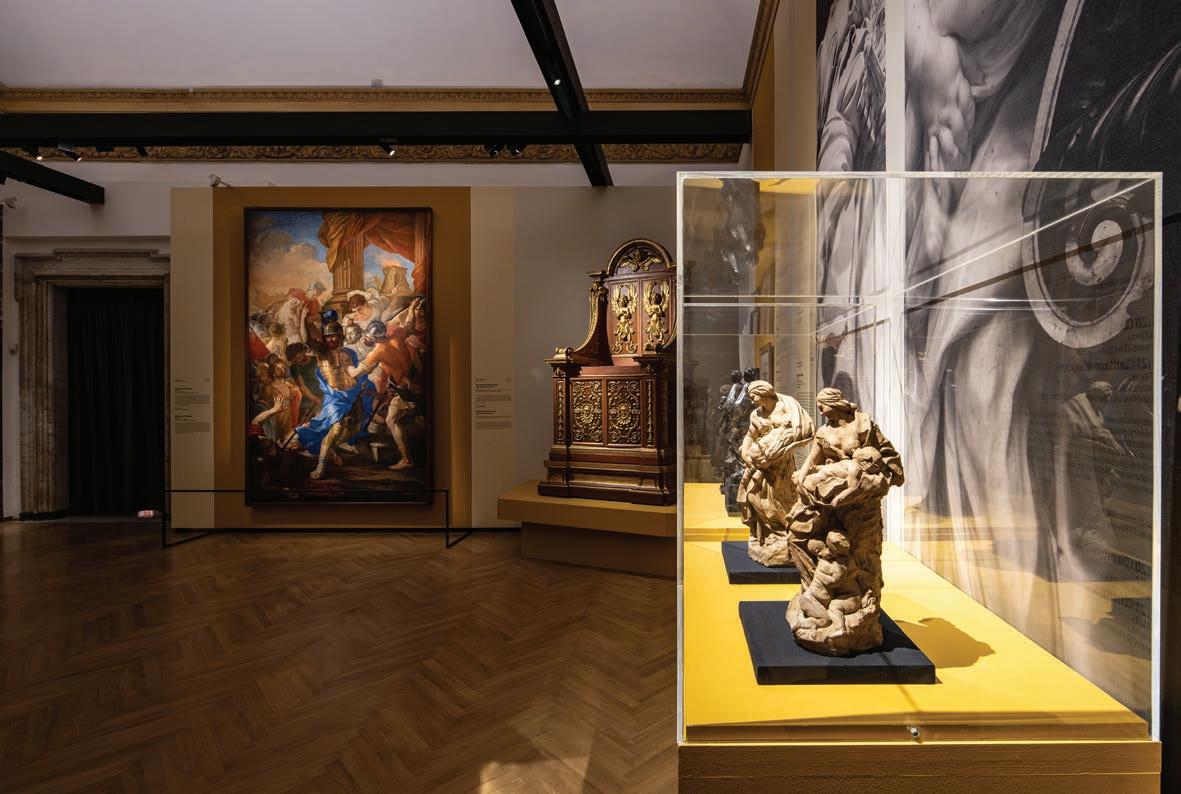
“You are very fortunate, Sir, to see Cardinal Maffeo Barberino as pope, but we are even more fortunate that Cavalier Bernini lives during our pontificate.” According to Domenico Bernini, son and biographer of the great artist, these were the words with which the newly appointed Pope Urban VIII celebrated Gian Lorenzo’s genius.The
exhibition at Palazzo Barberini substantiates these words, presenting a dialogue between artist and patron that forged a visual language capable of uniting emotion, spectacle and authority, and in doing so offers a compelling portrait of how art, power and intellect converged in seventeenth-century Rome.
BERNINI AND THE BARBERINIS, until June 14, 2026, Gallerie Nazionali di Arte Antica –Palazzo Barberini, Via delle Quattro Fontane 13, Rome.
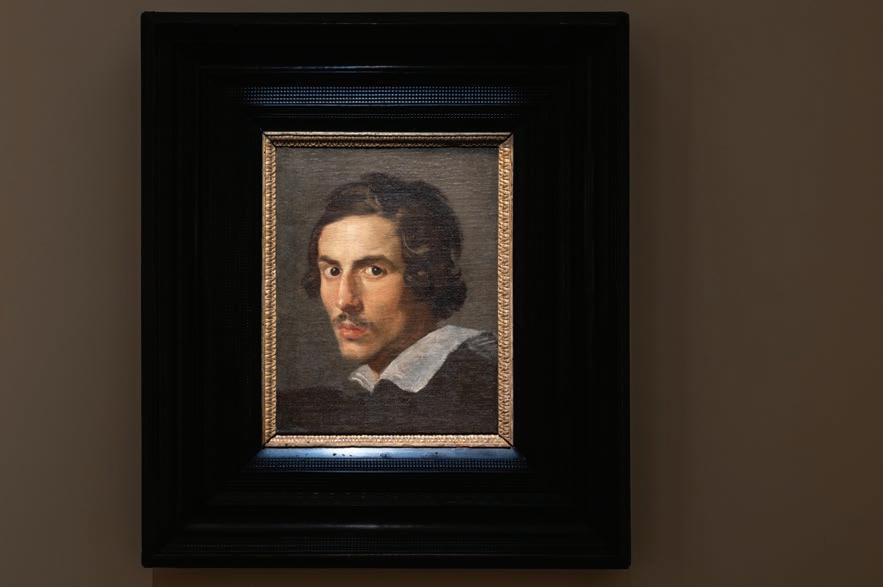
“You are very fortunate, Sir, to see Cardinal Maffeo Barberino as pope, but we are evenmore fortunate that Cavalier Bernini lives during our pontificate.”
According to Domenico Bernini, son and biographer of the great artist, these were the words with which the newly appointed Pope Urban VIII celebrated Gian Lorenzo’s genius. A young and extremely talented sculptor, Bernini enjoyed a unique friendship with Maffeo Barberini long before the conclave that elected him to the throne of St. Peter. It was an intellectual partnership that, under the pressing guidance of the head of the Church, led the sculptor to become an architect, painter, universal artist, and director of that figurative language that has been recorded in the annals of history as the Baroque, of which Bernini was the creator and principal interpreter, embodying for the seventeenth century what Michelangelo had represented for the sixteenth.

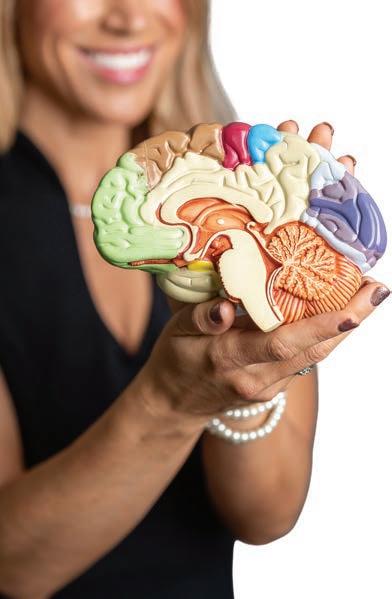
This page: Exercise has emerged as one of the most powerful tools for cognitive vitality. According to Harvard Health Publishing, people who exercise regularly have larger volumes in the brain regions responsible for thinking and memory than those who remain sedentary, and even moderate intensity activity over six months can increase the size of key areas involved in cognition, a finding linked to improved recall and slower cognitive decline.
Photo FRANCO.
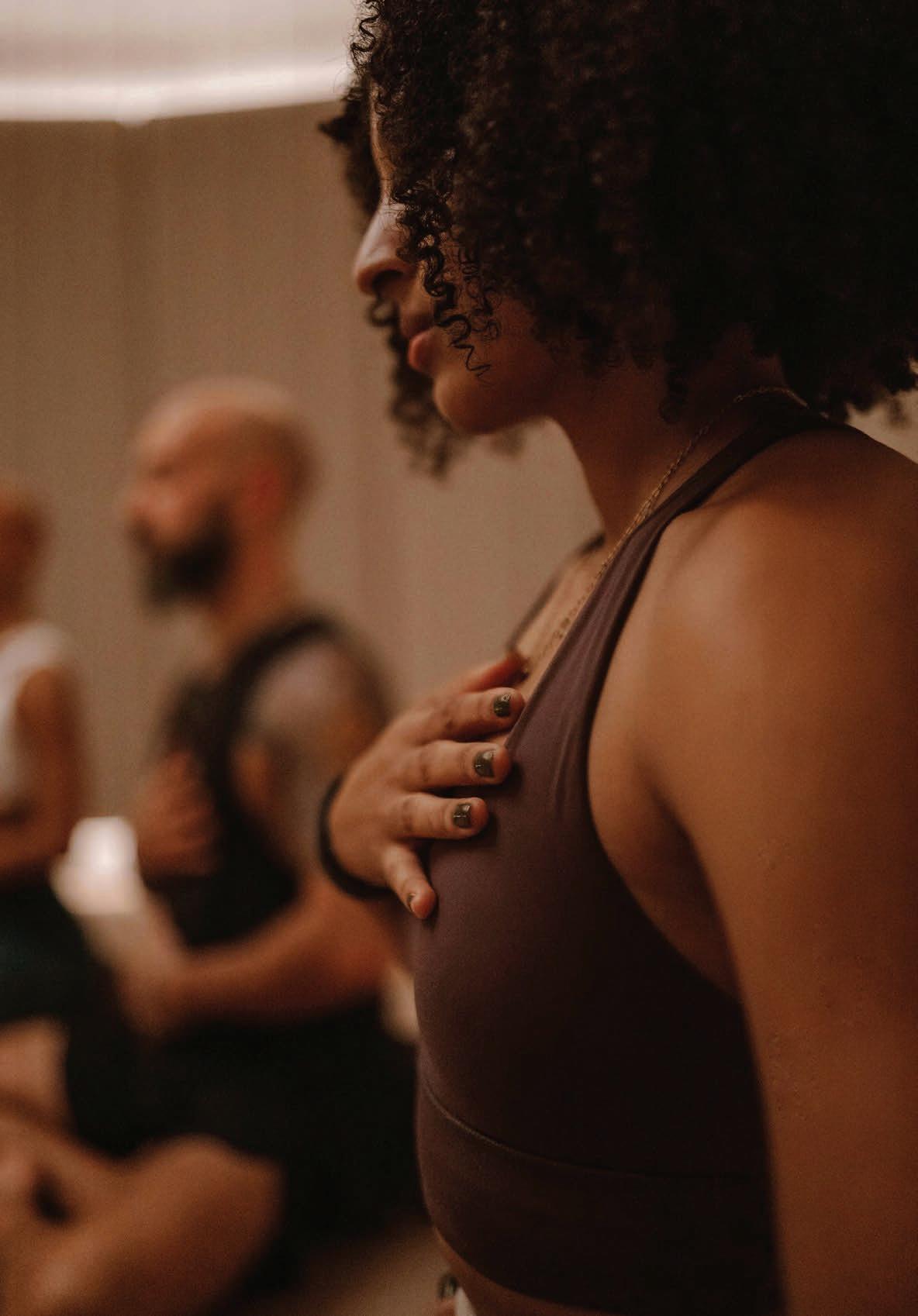
How movement, food, sleep, and connection reshape your mind at every age.
We often imagine brain health as something fixed and mysterious, shaped mostly by genetics or luck. Yet modern research paints a far more hopeful picture: the brain is exquisitely responsive to how we live. The rhythms of our days, how we move, what we eat, how we sleep, the people we connect with, sculpt our neural landscape over time. According to The New York Times, “Practicing basic healthy behaviors… is the best way to enhance your brain power and protect the longevity of your neurons.” And the science behind that message is richer than ever.
In conversations about longevity, the brain is often discussed in abstract and perhaps complicated terms, yet its care is shaped daily by the most ordinary of decisions. How we move, what we eat, when we sleep, whom we see, and how attentively we live. Increasingly, research suggests that brain health responds best to steady, cumulative habits that support the mind across decades, instead of dramatic interventions.There is no short cut here –you and your brain are in it for the long haul. But quick fixes and small steady changes can make big differences.
This philosophy underpins The New York Times’ recent 5-Day Brain Health Challenge, which distils decades of neurological research into practical, achievable actions. Its premise is straightforward: small, sciencebacked lifestyle choices can significantly reduce the risk of dementia and stroke while strengthening memory, attention and emotional regulation at any age.
Physical movement sits at the centre of this approach, and exercisehas emerged as one of the most powerful tools for cognitive vitality. According to Harvard Health Publishing, people who exercise regularly have larger volumes in the brain regions responsible for thinking and memorythan those who remain sedentary, and even moderate intensity activity over six months can increase the size of key areas involved in cognition, a finding linked to improved recall and slower cognitive decline. The benefits begin almost immediately: a single workout can sharpen focus and improve memory for hours. A sweeping meta analysis reviewed on Psychiatrist.com, covering more than 2,700 randomized trials, found that every form of movement, from brisk walking to yoga to exergaming (fitness games), boosts cognition across all ages. Children and people with ADHD showed some of the strongest gains, but improvements appeared
universally.Exercise also supports the brain indirectly, easing anxiety, improving sleep quality and regulating stress hormones that otherwise impair cognition.
What matters most, researchers note, is consistency rather than intensity. Walking briskly, cycling, swimming or practising tai chi for around 150 minutes per week appears sufficient to stimulate neuroplasticity. An article in the Journal of the American Geriatrics Society, cited by Harvard Health Publishing, suggests that tai chi’s slow, deliberate movements offer additional benefits by engaging memory and executive function through learned sequences and balance control. Even more intriguing, research highlighted by National Geographic suggests that endurance and strength gains may depend on brain changes as much as muscular ones, showing that exercise reshapes not only muscles and lungs but also neural circuits governing endurance and energy regulation. Studies on mice demonstrate that repeated movement activates neurons in the hypothalamus responsible for adapting the body to physical demand. While human research is ongoing, the implication is persuasive: movement trains the brain to support the body, reinforcing the idea that physical and cognitive resilience evolve together.
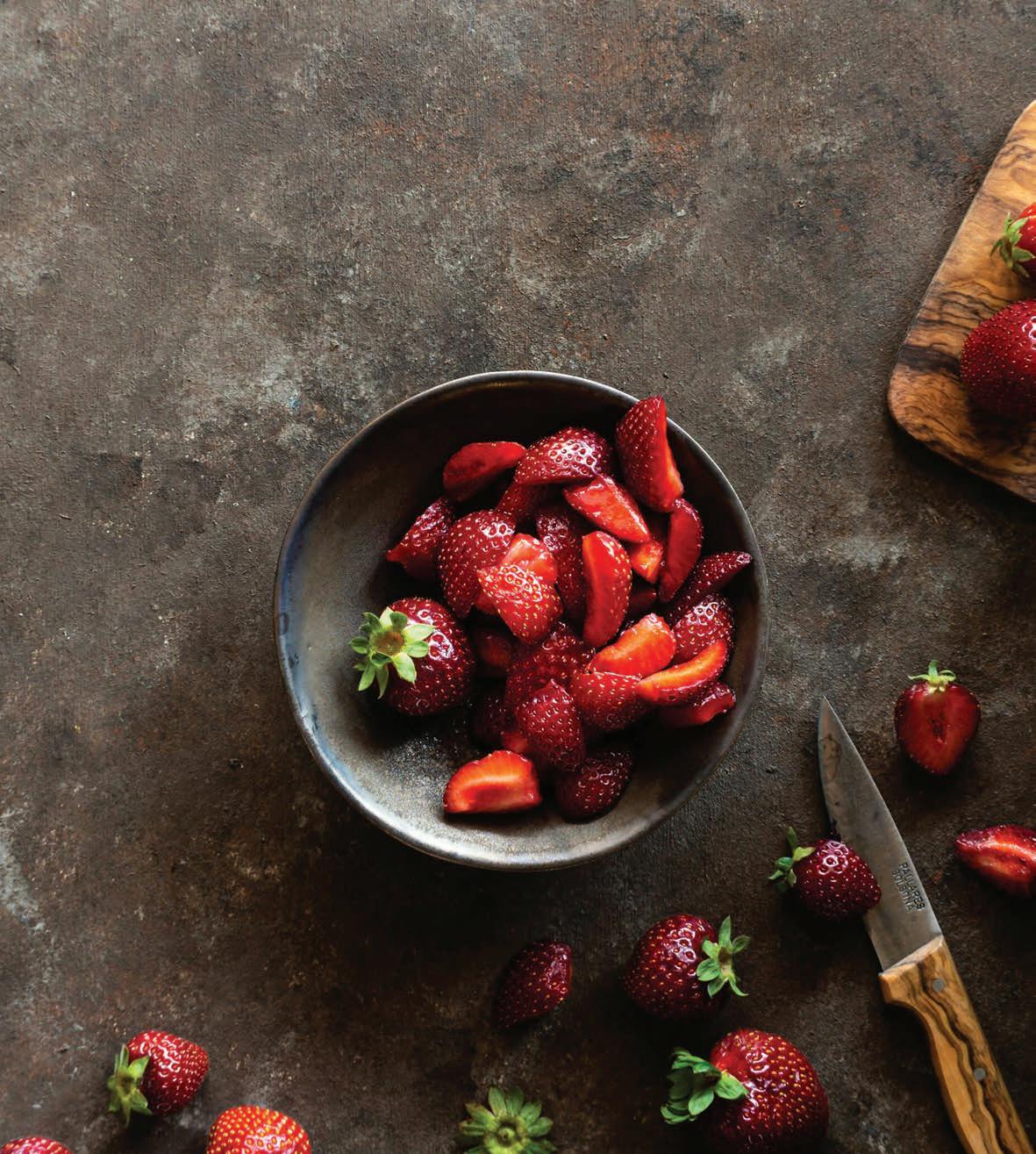
Nutrition plays an equally central role. The brain may represent only about 2 percent of our body weight, but it consumes roughly 20 percent of our energy, making food a direct line to cognitive health. The MIND diet, developed at Rush University and widely reported by both TheNew York Times and Healthline, combines elements of the Mediterranean and DASH diets (Dietary Approaches to Stop Hypertension) with a specific focus on neuroprotection. Long-term studies following nearly 1,000
older adults found that those who ate more leafy greens, berries, nuts, whole grains, beans, fish, poultry and olive oil (and less red meat, butter, cheese, sweets, and fried foods) experienced significantlyslower cognitive decline, regardless of whether dietary changes began in midlife or later years.
Nutrition researchers emphasise that these foods work together. Berries and greens contain polyphenols and antioxidants that cross the blood–brain barrier, helping counter inflammation and oxidative stress associated with dementia. Fatty fish and nuts supply omega-3 fatty acids essential for maintaining myelin, the insulating sheath that allows efficient communication between neurons. Fibre-rich whole grains and legumes nourish gut bacteria, whose metabolic by-products influence brain health through the gut–brain axis.
Importantly, neurologists quoted by TheNew York Times stress that perfection is unnecessary. “MIND-ifying” familiar meals, adding berries to breakfast or swapping butter for olive oil, delivers measurable benefit without requiring wholesale dietary change.
Sleep, often compromised by modern schedules, performs critical neurological maintenance. Seven to nine hours of quality sleep enables the brain’s glymphatic system to clear metabolic waste, including amyloid proteins linked to Alzheimer’s disease. REM sleep also consolidates memory, transferring new information from short-term storage into long-term networks. Chronic sleep deprivation, by contrast, leaves this clearance system underperforming, increasing longterm cognitive risk.Adults who routinely get less than seven hours of sleep show higher risks of dementia, not because sleep is optional, but because it is a biological requirement for neural maintenance.
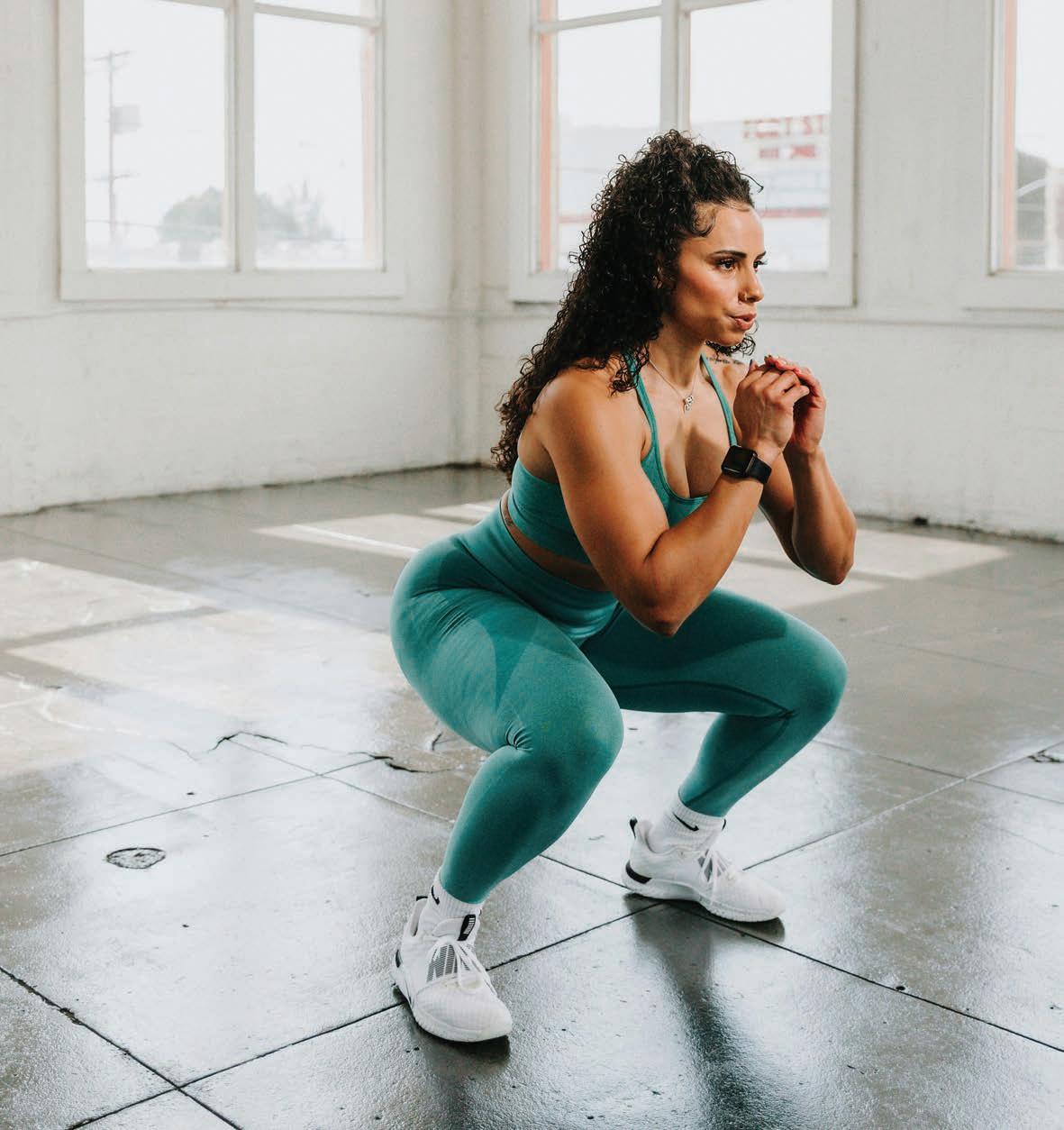
This page: The benefits of exercise begin almost immediately: a single workout can sharpen focus and improve memory for hours. A sweeping meta analysis reviewed on Psychiatrist.com, covering more than 2,700 randomized trials, found that every form of movement, from brisk walking to yoga to exergaming (fitness games), boosts cognition across all ages. Photo SUNDAY II SUNDAY.
Yet brain health is not only shaped by what happens inside the body. According to Harvard Health Publishing, people with strong social networks or regular social engagement have significantly lower risks of cognitive impairment and dementia. One large European study found that socially
active older adults experienced significantly less cognitive decline over five years than those with minimal engagement. Neurologists attribute this to the sheer complexity of social interaction, which simultaneously activates memory, language, emotional interpretation and sensory processing, strengthening neural connections. As neurologist Andrew Budson puts it, “Social activities cause us to use our
brains more than almost any other activity.” Even simple outreach, sending a message to an old friend, sharing a memory, arranging a walk or a telephone call, can rekindle the sense of belonging that supports emotional and neurological well-being. Social connection reduces stress hormones, stabilises mood, and reinforces our sense of identity and competence.




























































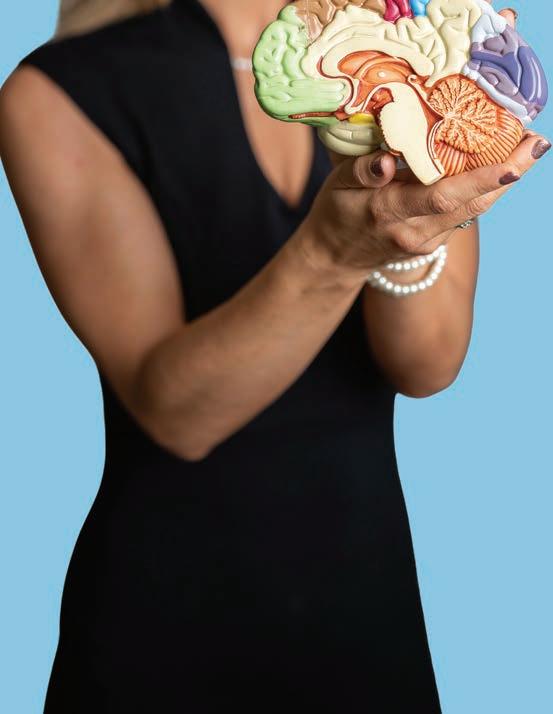
















Enhanced Social Connection
Improved Communication
Enhanced Brain Health
Better Sleep Patterns
Healthier Food Choices








Increased Understanding & Mental Clarity


Better Mood & Emotional Well-Being



This page: Nutrition plays an equally central role for brain health. The brain may represent only about 2 percent of our body weight, but it consumes roughly 20 percent of our energy, making food a direct line to cognitive health. The MIND diet, developed at Rush University and widely reported by both the New York Times and Healthline, combines elements of the Mediterranean and DASH diets (Dietary Approaches to Stop Hypertension) with a specific focus on neuroprotection. Long-term studies following nearly 1,000 older adults found that those who ate more leafy greens, berries, nuts, whole grains, beans, fish, poultry and olive oil (and less red meat, butter, cheese, sweets, and fried foods) experienced significantly slower cognitive decline, regardless of whether dietary changes began in midlife or later years.
Even sensory and physical health play a role.Protecting sensory health forms another, sometimes overlooked, component of brain care. Hearing and vision loss can accelerate cognitive decline, partly because they reduce the sensory input the brain relies on and partly because they can lead to social withdrawal. Regular checkups for hearing, vision, and vascular
health help maintain the systems that support cognition. Protecting yourself from falls and head injuries is equally essential; the brain is resilient, but it is not invincible.Preventing head injuries through fall-proofing homes, using seatbelts and helmets, and maintaining balance and strength protects brain tissue from trauma that can have cumulative consequences over time.
Taken together, this research offers a remarkably empowering message. Brain
health is not predetermined. It is shaped by the choices we make every day, what we eat, how we move, how we sleep, how we connect, how we challenge ourselves. These habits don’t guarantee immunity from cognitive decline, but they dramatically reduce risk and enhance quality of life at every age. In doing so, the brain is supported not as an isolated organ, but as the centre of a well-lived, attentively designed life.And the best part? It’s never too early or too late to begin.
















I
I
B
S
D


TECH
DIGITAL
CORPORATE SOCIAL RESPONSIBILITY
POSTURE 101
SCREEN HABITS
BRAIN HEALTH 101
LIFESTYLE WORKSHOPS
TEAM BUILDING TRAININGS
BRAIN NUTRITION
OPTIMAL WORKSPACE DESIGN
HEALTH STRATEGY
MEDICAL EXAMINATION AND MORE...!








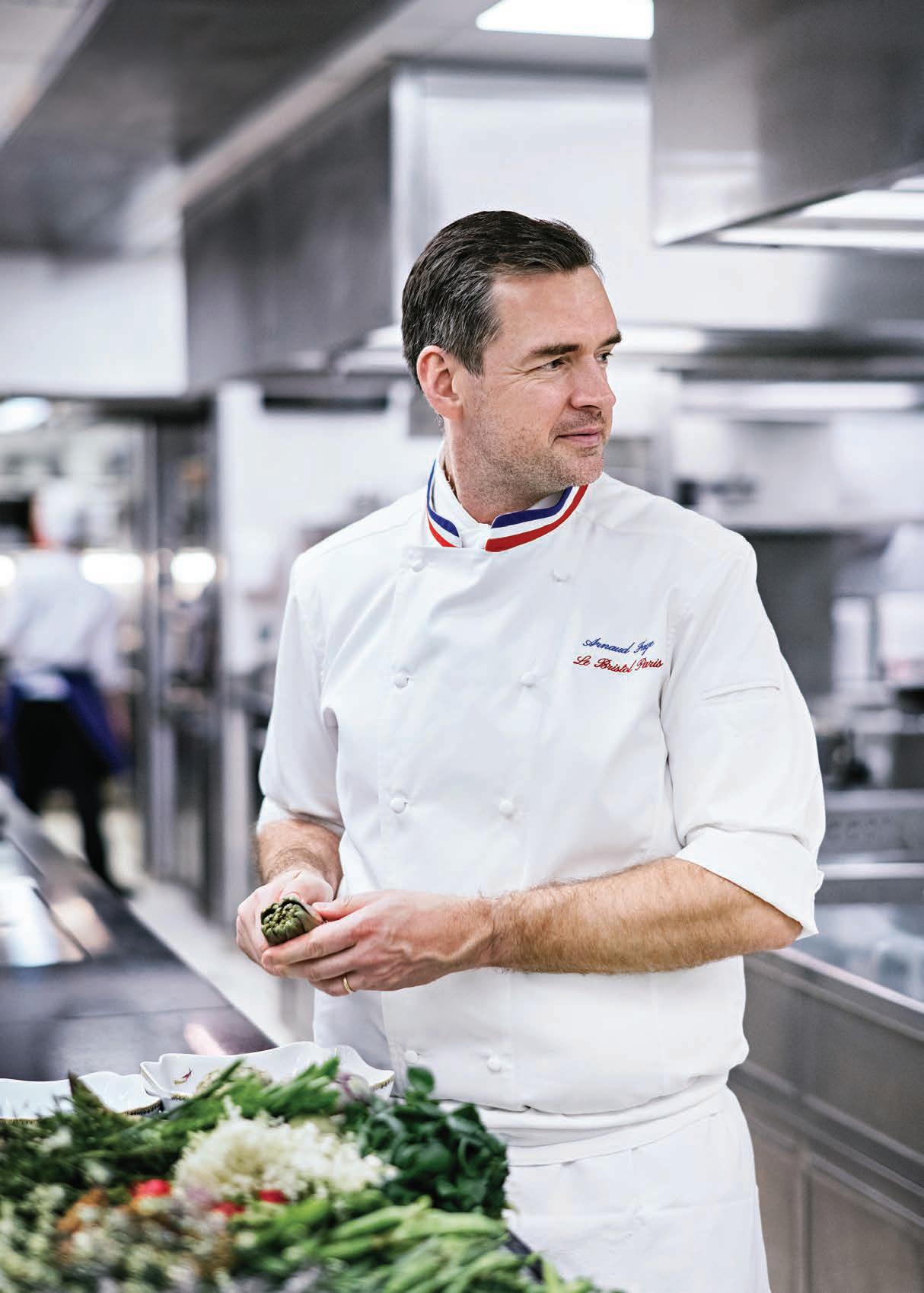
“A matter of trust in those who respect nature, its riches, and its cycles, without disturbing their natural rhythms.”
Chef Arnaud Faye
FOR MORE THAN A DECADE, LE BRISTOL PARIS’ EPICURE HAS BEEN A BEACON OF FRENCH GASTRONOMIC EXCELLENCE. A STANDARD BEARER FOR INNOVATION AND AN ARDENT PRESERVER OF TRADITION, WITH THREE MICHELIN STARS TO ITS NAME SINCE 2009.
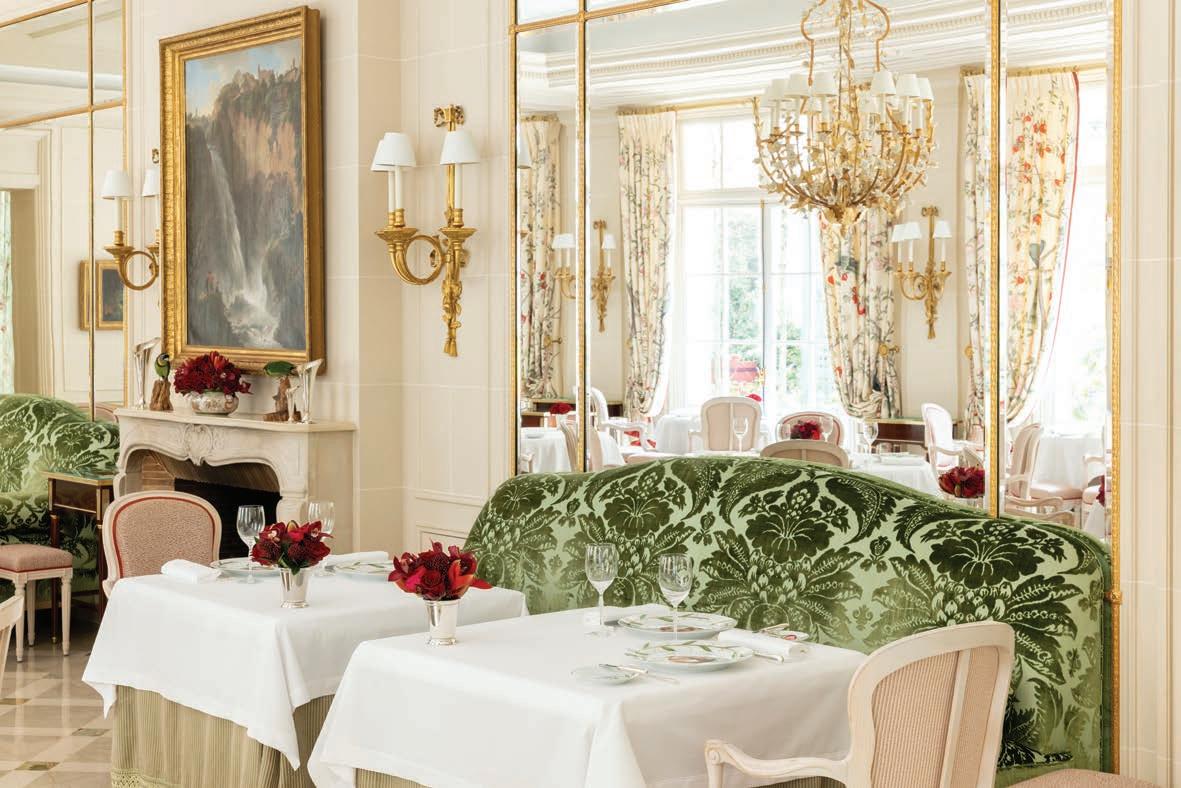
At the heart of one of Paris’s most ceremonious addresses, Epicure continues to define the lexicon of contemporary French gastronomy. Set within Le Bristol Paris, the restaurant occupies a luminous dining room overlooking the hotel’s formal garden, where tall French windows, Louis XVI details and measured elegance frame an experience defined by restraint, clarity and precision. Since 2009, Epicure has held three Michelin stars, first under the direction of Eric Frechon and, since 2024, under Arnaud Faye, whose arrival marked a thoughtful and assured new evolution.
Photography courtesy Le Bristol Paris.
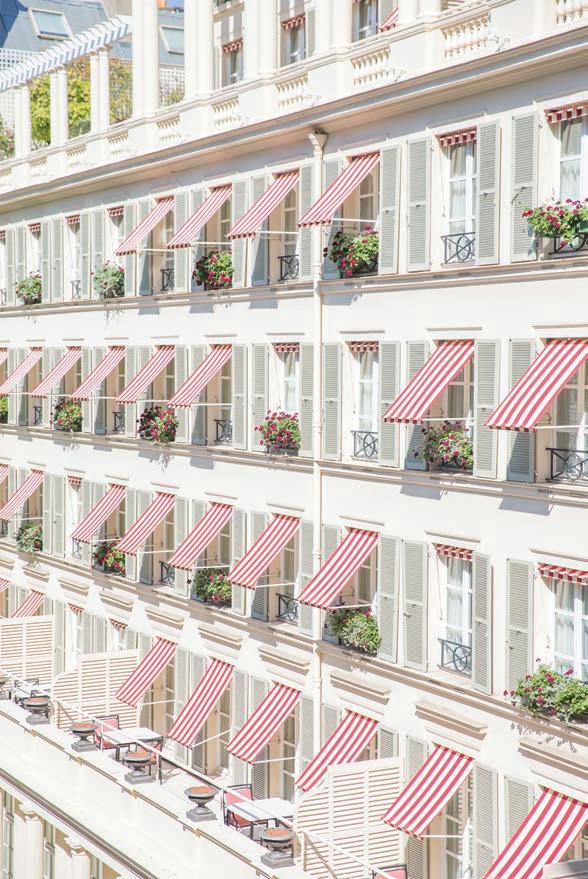
For a century, Le Bristol Paris has stood at the heart of a city synonymous with audacity and elegance. Born in 1925 on rue du Faubourg SaintHonoré, amid the vibrancy of the Roaring Twenties and the rise of the Art Deco movement, it has grown into the very embodiment of Parisian sophistication. As one of the world’s last familyowned grand hotels, it carries forward a remarkable legacy. Initially founded by the Jammet family, the hotel was later entrusted to the German Oetker family, who have lovingly upheld its celebrated traditions and preserved its timeless allure. Within this setting, Epicure has long served as the hotel’s culinary heart, a place where the codes of haute cuisine are mastered and shared with fluency and grace.
Arnaud Faye’s approach aligns naturally with this environment. Born in 1976 in ClermontFerrand, Faye’s culinary journey began in the heart of the Auvergne. Growing up surrounded by the earth’s bounty, he developed a deep appreciation for fresh produce and natural flavours. Trained under renowned Chefs like Antoine Westermann and Bernard Loiseau, Faye honed his skills in creating complex sauces and celebrating regional delicacies. His talent led him to prestigious positions at the Ritz Paris and L’Auberge du Jeu de Paume, where he earned Michelin stars for his innovative cuisine. In Èze, at the Château de la Chèvre d’or, Arnaud Faye continued to elevate his culinary artistry, earning two Michelin stars for his Mediterranean-inspired dishes. His commitment to excellence was recognised in 2019 when he was awarded the prestigious title of Meilleur Ouvrier de France.







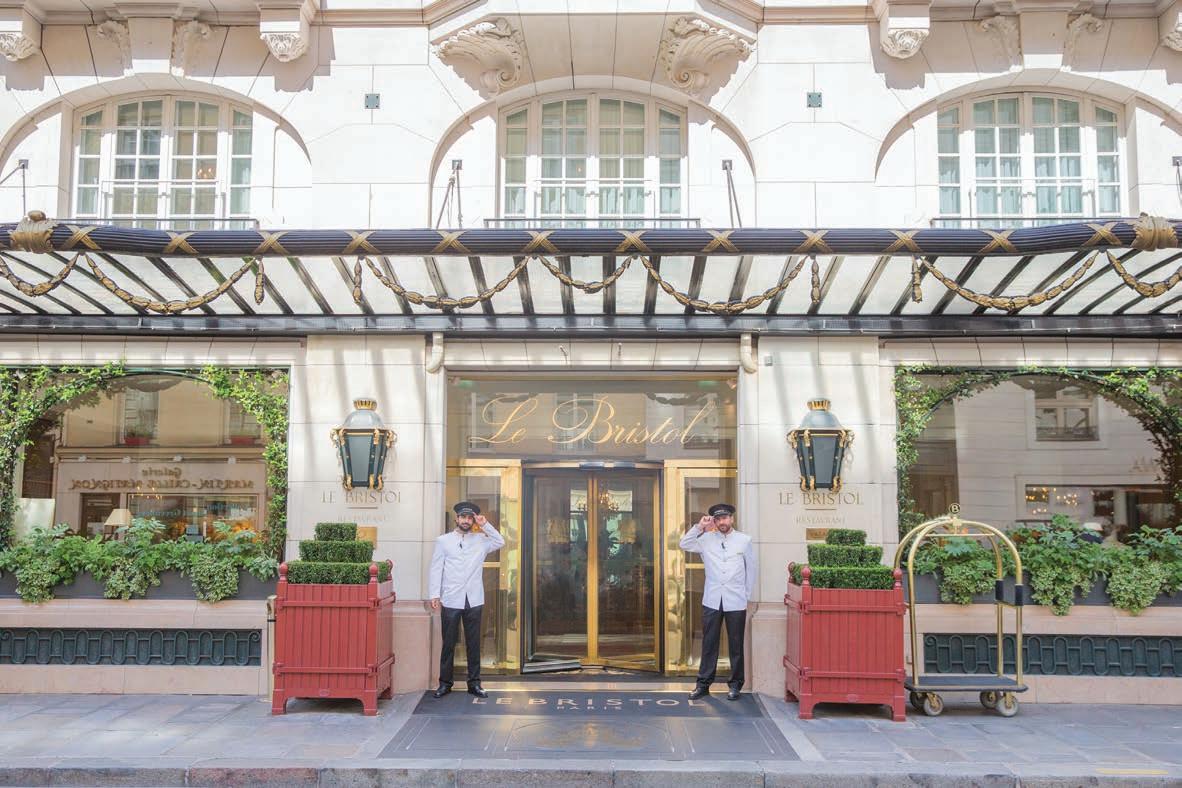
Appointed Executive Chef at Epicure in April 2024, his cooking reflects both technical mastery and a deeply rooted connection to the land, shaped by close relationships with growers, fishermen and artisans across France. These partnerships inform every decision on the plate, from the selection of vegetables to the sourcing of fish and meat. Placing nature’s harvest at the centre of his menus, the Chef is deeply engaged with the seasons and selecting vegetables and fruits at the perfect moment, when they are at their most flavourful and nutritious.
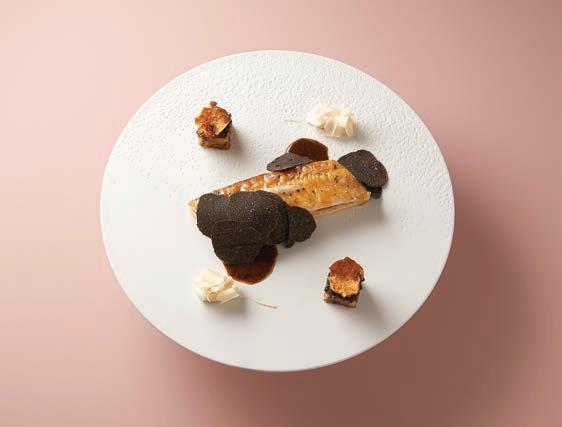
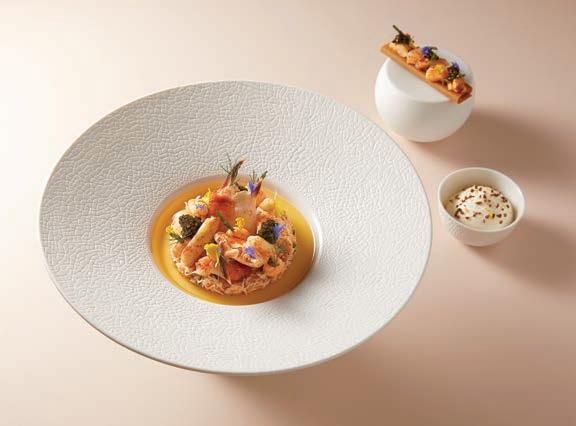
Chef Arnaud Faye’s vision for Epicure reframes classic codes of French gastronomy for the contemporary era, favouring seasonally harvested, plant based ingredients as the basis for every creation.He considers fish and meat as secondary ingredients, there to
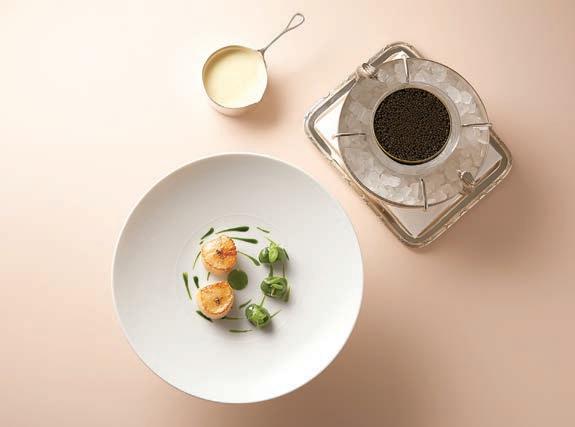
support his plant-focussed creations rather than the other way around.Far from being a limiting factor, this seasonal approach expands the possibilities for creativity, surprise and delight, allowing Faye to chart new territory for Epicure, always embedded in the excellence and diversity of French terroir, producing dishes of generosity and depth, built on flawless technique and a
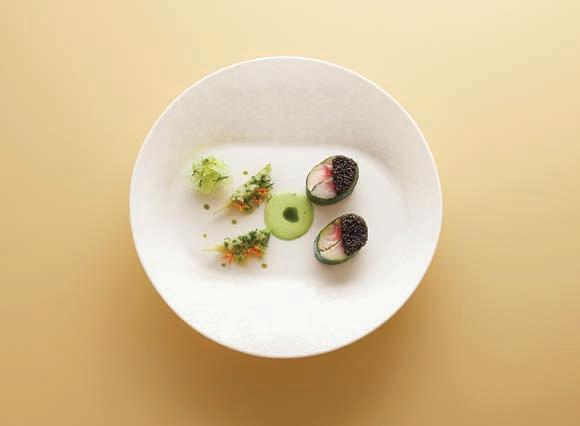
precise understanding of flavour. Sauces are concentrated yet weightless, breads are made in-house from heritage wheat varieties, and cooking temperatures are controlled with almost scientific attention. There is an ease to the compositions that belies their complexity, an impression reinforced by plating that feels architectural, not decorative.
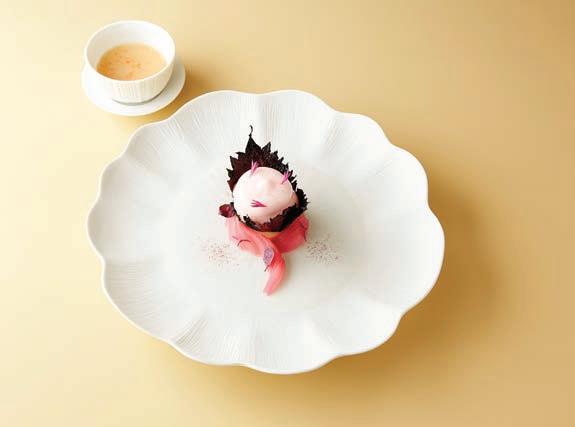

































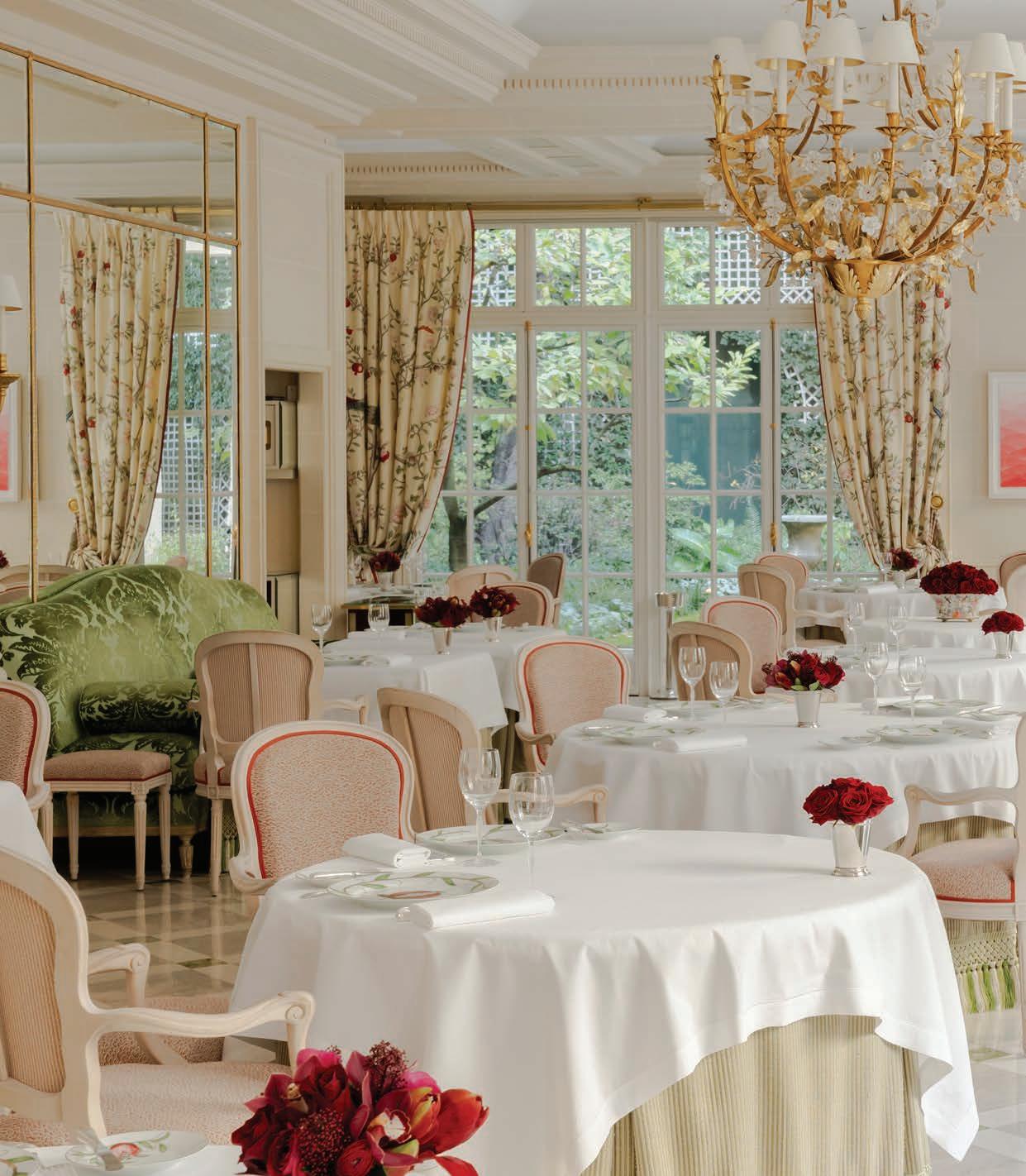
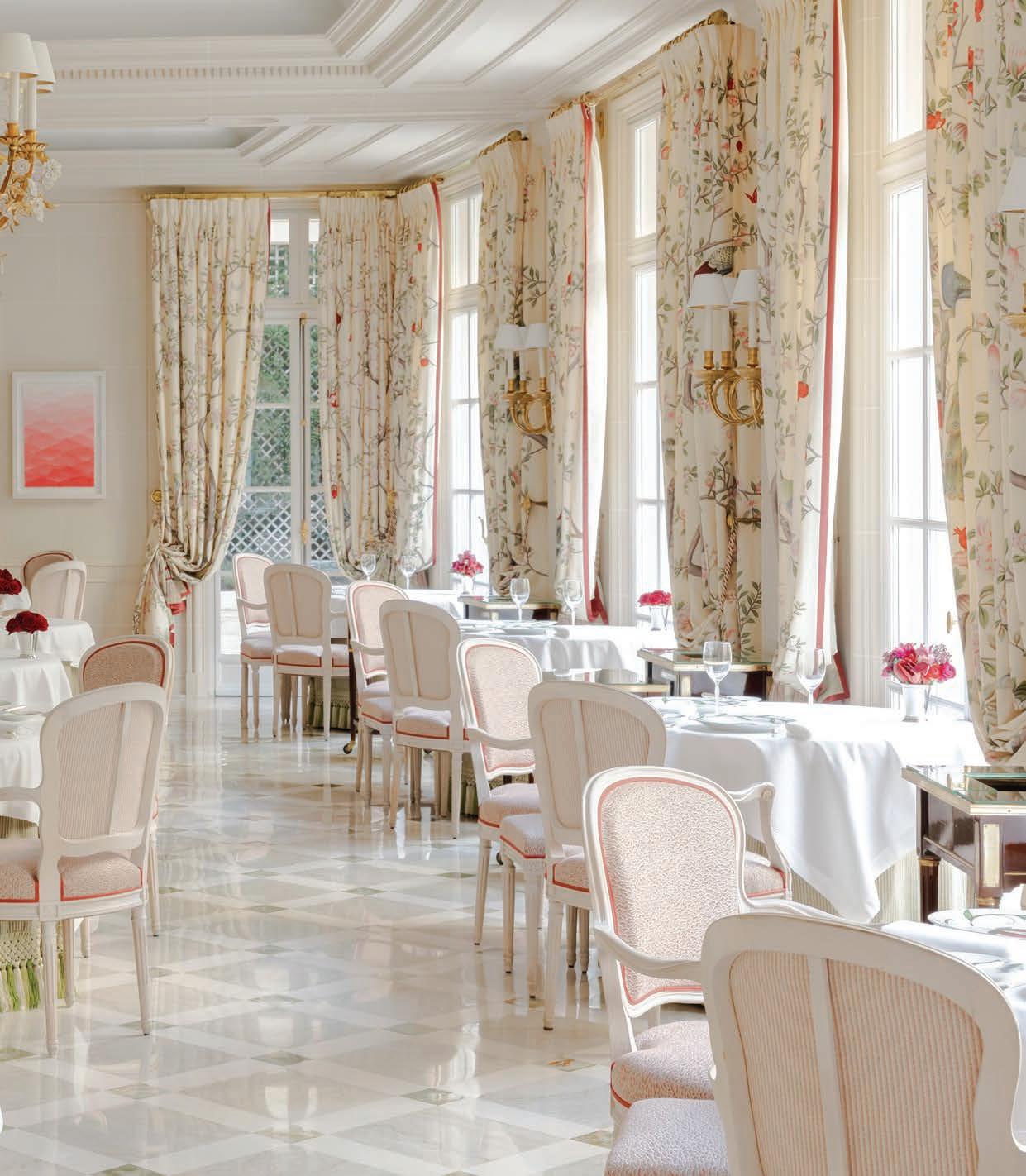
The dining room itself reinforces this sense of balance. Flooded with natural light and opening onto the hotel’s magnificent courtyard garden, it offers a visual counterpoint to the meticulous work emerging from the kitchen, an immersive experience where colours, aromas, flavours,
sounds, textures and gestures unfold like a coordinated symphony to stimulate and transport all five senses. Seamless and perfectly timed, the table service is a reflection of Chef Arnaud Faye’s cuisine, incorporating traditional ]protocols of Grand Service where appropriate, from cutting and plating to seasoning dishes in the dining room for guests to witness.
Wine plays an integral role in this dialogue. Le Bristol’s cellar is among the most respected in Paris, and pairings are approached as a continuation of the kitchen’s seasonal narrative. The sommelier’s role extends beyond selection, offering context and nuance that mirror the structure of Faye’s cuisine, matching varietals and vintages to the precise character of each dish.
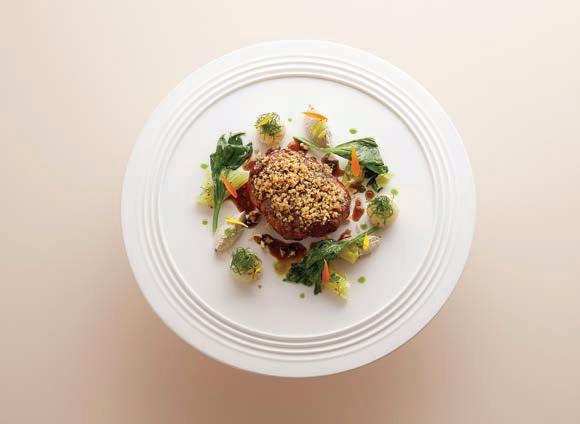
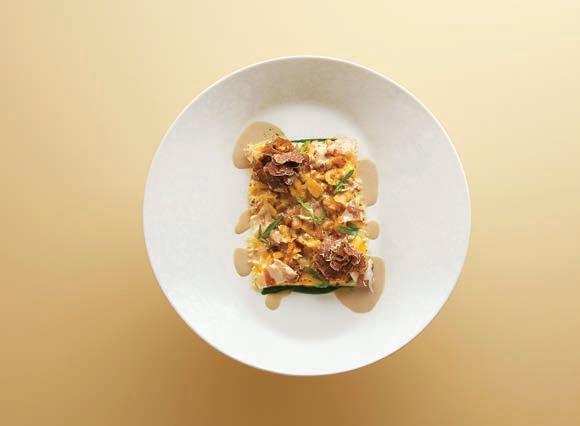
For Epicure’s new chapter, Faye honours the foundations laid before him, while steering the restaurant toward lightness, freshness and botanical expression. His menus evolve in step with the calendar, responding to shifts in climate and harvest, allowing repetition only when ingredients demand revisiting at their peak, offering a vision of French gastronomy that is both assured and contemporary, a vision built on trust in produce and respect for artisanship. Within the walls of Le Bristol, Arnaud Faye shapes a forward thinking cuisine while remaining deeply anchored in traditions that ultimately define Paris as one of the world’s great gastronomic capitals.












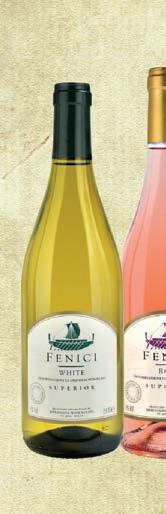
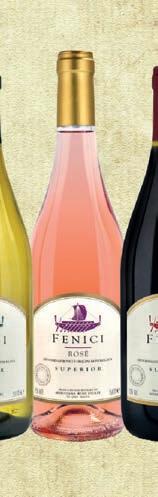
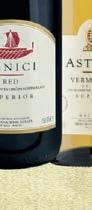
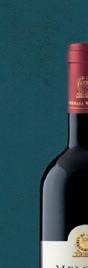
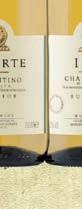
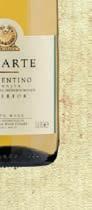
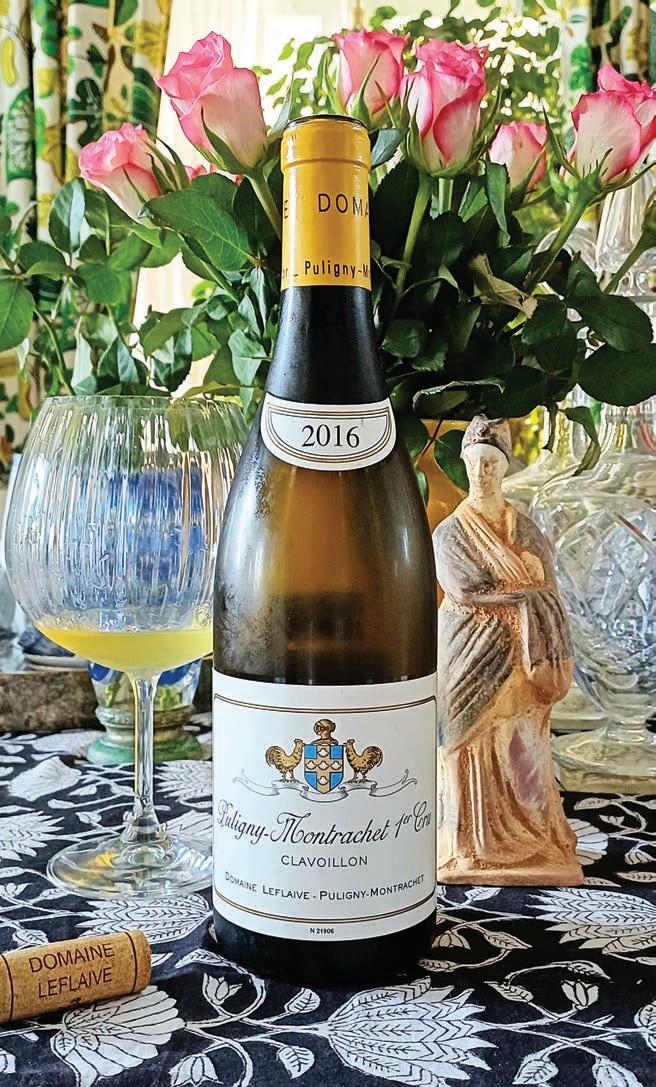
In an Icarian twist of fate, the closer you fly towards the sun the more your waxen wings are likely to melt only to crash and burn. So it is with white wine. There is no room to hide. Where red can feign behind heat and tannic force, white can go by unnoticed. There is a fine line between brilliance and nothing at all; just the candid truth to under whelm or exalt, writes Kris @ FirstThisIsWine. Photography Sean Gabriel Ellul.
Puligny is the crown jewel in the Burg white constellation harbouring four Montrachet grand crus known for their buttery sweetness, delicacy and mineral intensity. In the premier cru league the wines are loved for their floral/steely nervosity/ageability. Limited plots, poor soils, ideal exposure, metal rich complex geology, good drainage, old vines with small clusters and tiny yields are the order of the day.
Leflaive needs no introduction but the founder started life as an engineer whose factory helped build France’s first submarine. The happy misfortune of bankruptcy would send Joseph to Burgundy buying plots on the cheap post phylloxera outbreak. What was essentially red wine country was replanted in white and the rest is history.
Leflaive quasi monopole Clavoillon 2016 has an intimate bouquet of honeysuckle, brioche and summer fruit. The attack is moorish butterscotch popcorn, winter peach, yellow pear. White flowers, toast barley, lemon sherbet, sesame honeycomb, almond praline, home baked cookie spices gradually surface but intrinsically a white stoned fruit smorgasbord fat buttery and effusive. A touch of gunflint, salted rabbit fur, siphon a creamy tapered finish. The oak is affably undetectable, the minerals more so. This is all fruit but opulently in many dimensions. There is a sumptuous weight but with gilded candle lit mirrored hall waxy hedonistic cadence, persistence and slow evolution, creating emotion, magic, beauty. 2016 threw everything at the vignerons but Leflaive forged gold from mercurial nature. To the terroir-ist in me this fails in the steely tension of a Puligny premier cru, instead it flirts with a relaxed fully rounded grand cru Batard, so it’s simply gorgeous.
This was good from the word go... a few hours in the bottle it did improve but per se the excitement of the first pop and pour makes this ideal to drink in a restaurant... cork was immaculate coming from good provenance.
Clavaillon at the base of the grand cru hills is considerably different from other premier cru slopes with a chalky limestone deep soil of high clay, producing broad wines with mid palate richness. Location wise we are at the northern end of Puligny abutting Meursault’s Perrieres, with Folatieres to the west, Pucelles and the Batards on its southern flank. Clavaillon is a difficult field to make majestic wine. Deep soils give you the ease of maxing out on ripe primaries with heavy macerations but Leflaive chose to go down the narrower biodynamic path giving us mellifluous grapes capturing drop by drop sunlight with clarity.
We need to talk about Angelus if we are to appreciate the breadth of vision Bordeaux has undergone in recent decades. Yes the lands of Eleanor of Aquitane were always famous, giving the English the word claret to refer to its fine fare; but Bordeaux has come a long way from the deep maceration heavy bottlings needing long cellaring to the more sophisticated renderings of late. A lot of this has to do with a wave of vignerons; chief amongst which would be Angelus’ Hubert de Bouard pupil of Peynaud fame whose turn around vision to express terroir is unmatched. Manicured organic farming in the vineyard; parcel by parcel vinification; and sharp light handedness in the chai; have changed everything. Not to go all Pollyanna on you, the world may be going to warm places in a Birkin but vinously we are in the best of times, writes Kris @ FirstThisIsWine. Photography Sean Gabriel Ellul.
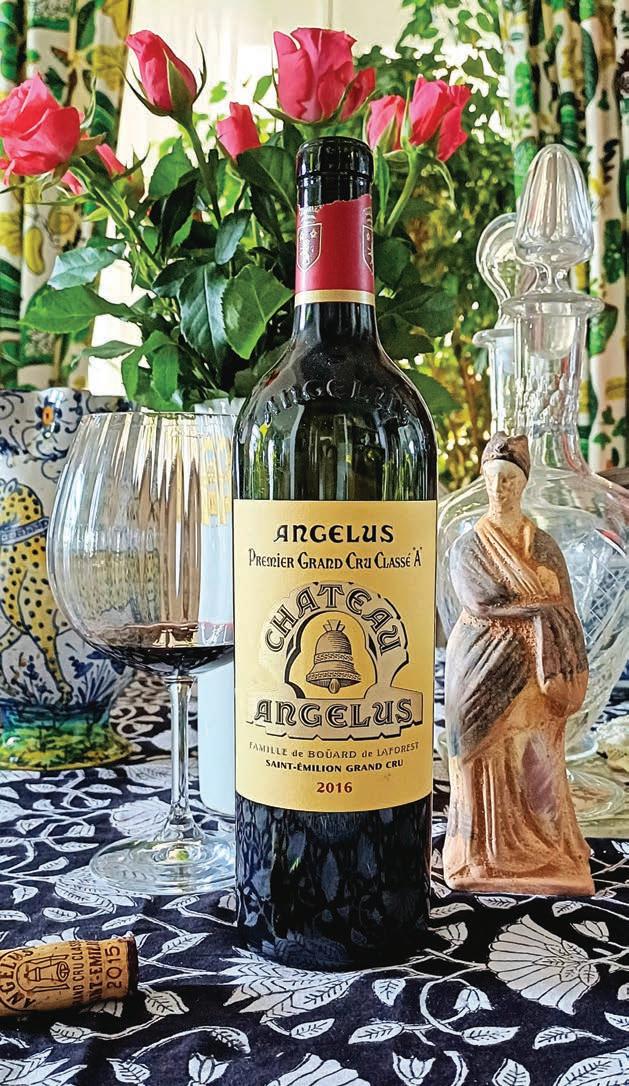
Recent stylings of Bordeaux are more nuanced expressing terroir, the land, grape variety and vintage with a profound subtlety. The makings of a modern Angelus would see the grand maison elevated to premier cru classe A in 2012; and as a jurade friend of mind said “Angelus is always good”. You may quibble about the variations of vintage, but each year lends itself to the terroir. The minerality of classic 14, the virtuosity of Merlot in ripe 15, Hubert’s balancing act in stellar 16 or Cab Franc’s virtuosity in 17 are essentially what Angelus does best.
Angelus 2016 is a broadly structured wine of billowing elements on slow-release mode. Dark plum, cherry and cassis on the attack; cigar wrapping, cedar and some flowers on the nose. A mid palate grace of baked spices, menthol, cinnamon and clove ends with a treacle dark chocolate saline gamey streak on the creamy finish. Thirst-quenching acidity wraps your tongue while explosively soft tannins blossom holding your gaze to what is a very layered wine hiding its complexity in elegance. Goldilocks 2016 has a vertigo inducing linear opulence with a gravity defying balance between all elements showing lots of promise all at once in an energetic wrap of ethers and fine unfurling textures rather than flavours and tertiary resolutions expectedly. As a top plateau wine, the basic structure is linear in shape, needing time to release some of its backbone austerity of dense sublime fruit tapered by a saline streak of limestone minerality with an equally gravity defying ethereal secondary perfumed profile. Angelus needs time so by all means dip in now but keep some for future generations.
The village of St Emilion is situated on a large limestone high elevation plateau blessed with a terrific mineral vein where most of the well-established wineries are located; rarely more than a stone’s throw away from the village. In particular one part of the plateau gives way to a series of slopes or cotes where three of the top five Angelus, Pavie and Ausone are situated. The limestone soils provide good drainage in wet weather while their depth ensures the vines’ roots have access to water, calcium and other nutrients during the summer ripening months. It is this fortunate combination that gives St Emilion wine its rich textures and signature minerality. Merlot grown on limestone tends towards lusciously rich almost sweet but soft tannins veering to the earthy mid palate flavours with good structure and aging potential. Cabernet Franc adds a racy floral and secondary backbone and bouquet complementing Merlot well. The slopes or hills with their varying limestone clay and sand mix grow grapes with a fuller spectrum of fruit, floral and wood spice aromas noticeable in the initial palate and finish. Angelus grows its Merlot on the limestone clay rich topsoil hills where the Cab Franc is planted lower down the slopes in sandier gravel soils.
“The old world is dying, and the new world struggles to be born: now is the time of monsters.”
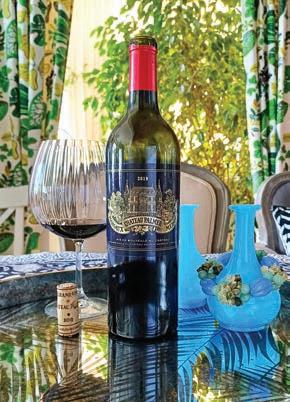
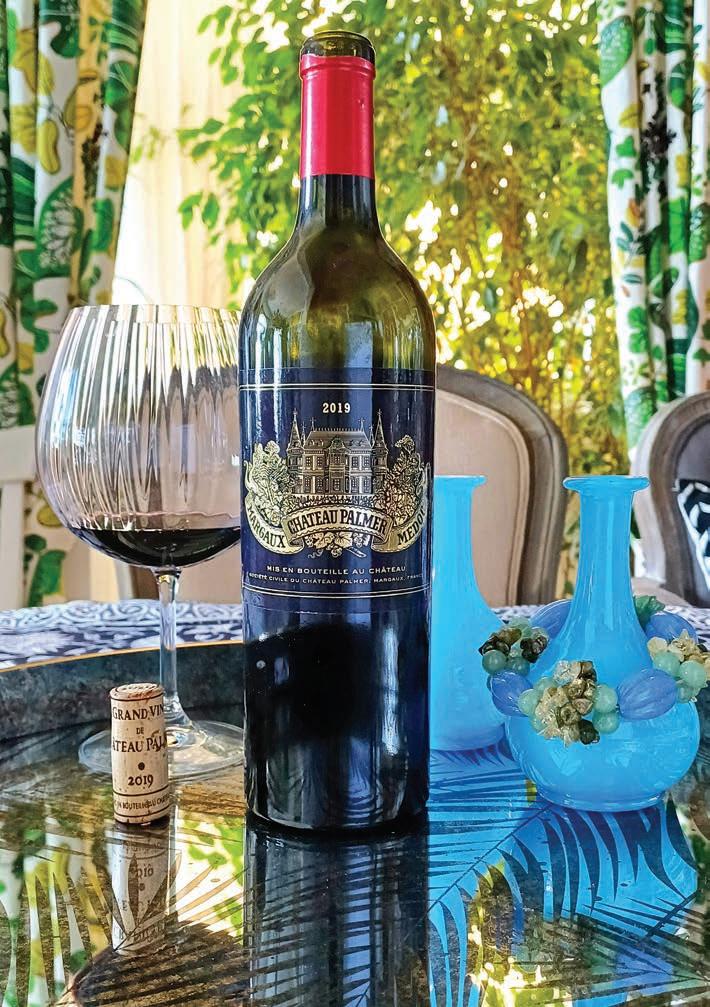
Cabernet Sauvignon grown in Margaux hits different to that in Pauillac. Instead of the power, full bodied purity and linear structure around a few key high notes this rather more heterogeneous appellation in terms of terroir and chateaux calibre makes a name for itself in floral diplomacy, a more gracile indeed intimate mid tone soft weight roundedness abetted by a larger helping of Merlot. The gravel is there but it is finer and over a number of terraces has a variation in geological origins with a mix of sand and clay lending itself to a more approachable expression of left bank prowess. Within that range if we are to talk of super seconds we have to talk about Chateau Palmer and how it plays tango to first growth Margaux as the primus ante pares. Where Margaux is the ethereal iron gauntlet in a silk glove, Palmer dovetails to a rather more effusive less linear but dexterously seductive shape, writes Kris @ FirstThisIsWine. Photography Sean Gabriel Ellul.
Chateaux in Margaux in more recent years have seriously upped the ante and are indeed now offering unprecedented value and better calibre, yet the wunderkind of the block and trailblazer is Palmer. From a mere third growth in classification various owners’ subsequent purchases of choice holdings and the leadership of one man Thomas Duroux in 2004 have catapulted the chateau to being the most loved, highest rated and priced left banks after the big five and with good reason.
A heroic adoption of bio-dynamics, meticulous vine growing and precision in the chai, a hyper sensitive understanding and response to the soils and grapes to give their best expression, low sulphur use and resort to only indigenous yeasts are your go to recipe but essentially it also is down to having very good hectarage to choose from so much so Palmer has no less than two grand vin.
Palmer 2019 is a powerhouse of flavours, aromatic textures, ethereal elements and arching contours all working towards a grandiose finale. The intense bouquet is there in droves purple flowers, violets and peonies, a silky attack of berries plums and cherries gives way to a mid-palate cotton candy heft of plush weight and candour before a pleasingly terroirdriven pencil shaving spiced cedar tobacco earthy dark chocolate anise finish. This is all about sensuous power depth and density with powdered tannins married to seamless oak and lots of lift harking to a prodigiously classical vintage.
There is a deft of structure with common points of affability in generous elements, a flamboyant style and fine filigree. This is about capturing both light and darkness in a chiaro scuro effect of clashing contrasts to make theatre, fantasy. A rich colouration of both ripe and racy fruit, mid tones of neatly integrated flavours, limpid epiphanies of good taste, beam scintillating terroir and much vaunted pedigree. No sharp corners here. This is Palmer. Palmer is available at Farsonsdirect.
“We don’t see things as they are, we see them as we are.” Anais Nin
In the tragi-comedy of life there are rare moments of clairvoyance where not so much the future is clear but rather a sense of how things are now and that is as good as knowing all of time, writes Kris @ FirstThisIsWine. Photography Sean Gabriel Ellul.
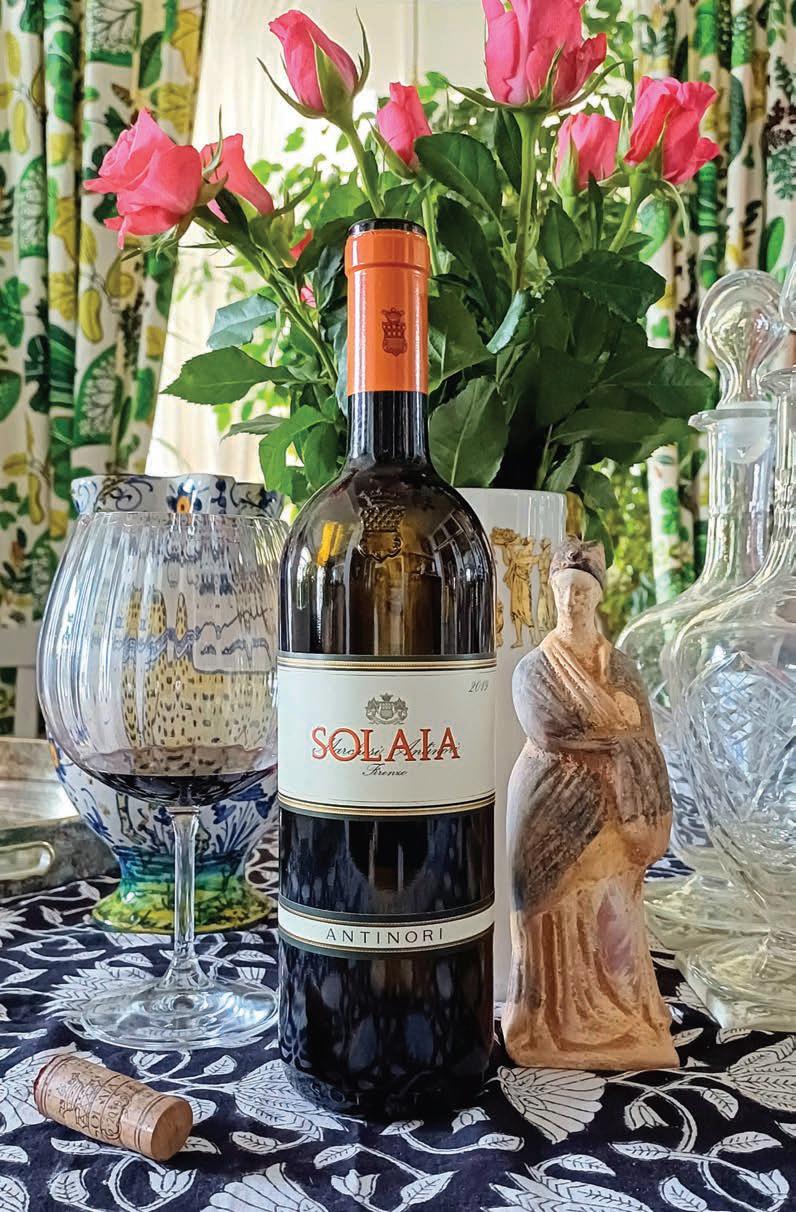
Amongst the panoply of Antinori holdings, Solaia is their grand vin, the crowning achievement of an estate known more casually for its Tignanello, arguably the first Supertuscan; the initial success of which led the family to create a Cabernet Sauvignon dominant blend with a dose of Cabernet Franc and Sangiovese. Solaia true to its name comes from the sunnier side of the Tignanello estate grown on galestro and alberese soils a mix of flaky calcerous clay and hard limestone. In contrast to Sassicaia and Ornellaia both strict French blends, Solaia is the quintessential Tuscan showing good structure, Italian summer aromatics, a galestro minerality yet with freshness making it one of the best wines of Italy. Solaia 2019 is a fragrant bouquet of purple flowers and red berries. The attack is wild cherries, raspberries and plums with a tobacco, cigar and herb mid palate neatness all held together by a rolling finish of mint eucalyptus olive anise chocolate and baked spice. The fruit are bold and pure, the minerals are clean and soothing and the structure is expansive, vibrantly fresh, silky and with depth. An arresting calmness in the mid palate invites contemplation; traversing worlds in large strides big emotions with lots of colour and light and a head whirling limpidity. In part it metonymically tastes of the whole of Tuscany metaphorically we are bang centre in Bordeaux.
There is a Venus in furs feel to this, sculptural elements sport a fine shape of purity fashioned with powerful strokes of rich flavour and arching balance and yet it is all delicately put together with a textural fineness hiding the power behind the grace. An optimal vintage offers a wistful opining of where this is going and yet you can already enjoy the promise of where it is already. Chiseled austere yet racily near at hand to the touch.
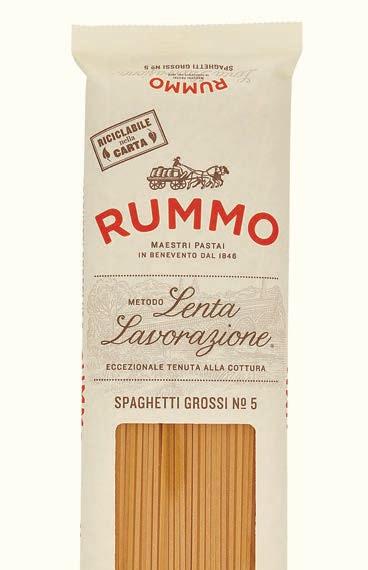




























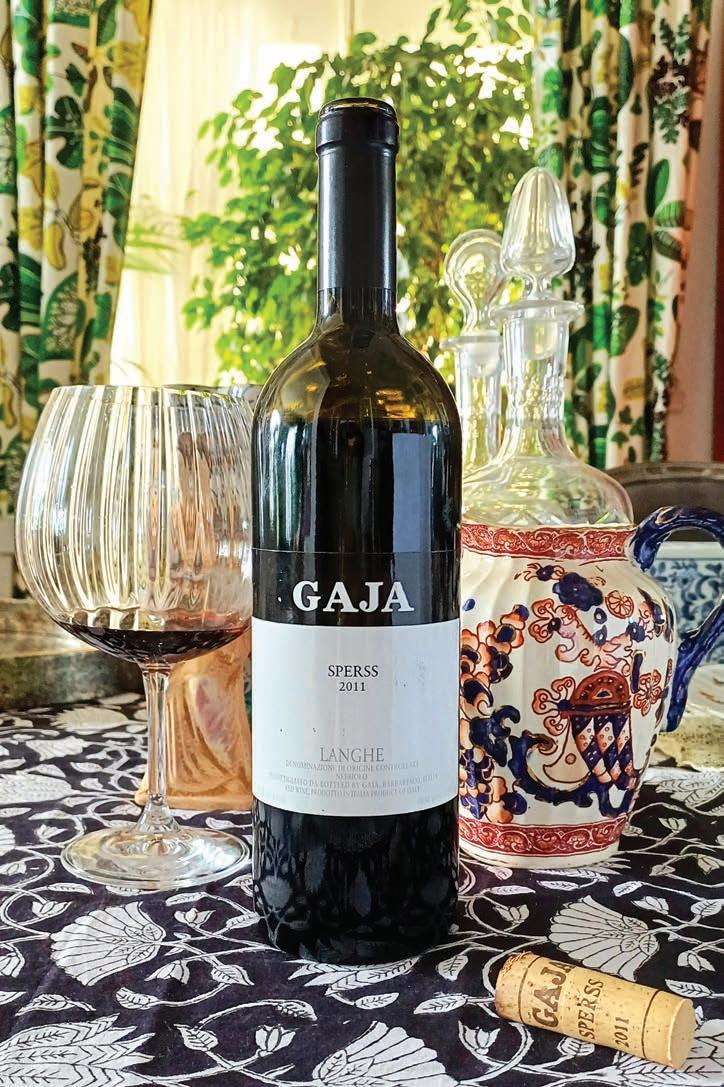
Sometimes less is more with wine. A double negative can be the greater positive. Not to wade deep into the Barolo wars between tradionalists and modernists that shook this neck of the Piemonte hills in the last decades, but between the long macerations with hefty tannins of the early Barolos and the tech savvy quick to harvest, barrel and drink garage boys; Gaja took the middle ground and conquered the world with a grape. Nebbiolo the more complex of Italian grapes is finicky like the mid Alpine weather it grows in as its own foggy name implies and Gaja seems to have hit its stride between ripe extraction with cool elegance and acidity with oaked roundness, writes Kris @ FirstThisIsWine. Photography Sean Gabriel Ellul.
The Gajas have made wine for almost two centuries but its primarily Angelo in the 1970s who introduced Barbaresco wines to a wider audience and inversely introduced Piemonte to technology, without discarding the generational nous of severe tradition, even going so far as to declassify his own wines to the more general Langhe label to have the freedom to blend a touch of Barbera to Nebbiolo to rectify acidity. Sperss is their chief Barolo holding in the Serralunga commune, famed for its large proportion of limestone resulting in big wines that need cellaring (think Conterno’s Monfortino Francia).
Gaja Sperss 2011 initiates with an elegant slew of ripe red stoned fruit with a seductively racy mid-palate of soaring cashmere textures finishing in a brood of flowers, green herbaceous cedar tones, vanilla, anise and clove. There is a beautiful marbling in its concurrence of high acidity with clean rose and tar notes and an umami core of cherries flecked with wet earth, poultry game, mushrooms and white truffles. This is still frightfully young but soothingly polished. The talent of nebbiolo is to enamour by exclusion and this lets you in but only just and instead of evolution there is a spiralling involution or coming together of things with firm grip yet melting edges. Serralunga is there in its powerful broad brush strokes and plumy depths and despite the inclement weather of the vintage, Gaja’s on brand consistency rules the day. I can agree with its Musigny of Piemonte status.
Shorter macerations, cooler fermentation to preserve the primaries, some heat towards the end to aid malolactic fermentation and soften the acidity; and new oak in small barrels for less time to avoid smothering the aromatics yet still soften the grip are what makes Gaja Gaja. Vineyards have a complex geology, but Barolo can be happily divided between hills having Helvetian less fertile compact sandstones of broad-shouldered robust power and the Tortonian clay rich soils of earlier maturing aromatically lighter fare. FOR CONSTANT REVIEWS ON WINES FOLLOW INSTAGRAM/ FirstThisIsWine
Globally, climate policy is increasingly influenced by political cycles, and while major economies may occasionally reverse regulations and accept the associated uncertainties, small island states cannot afford this. Their vulnerability is immediate and tangible: energy dependence, heat stress, and water scarcity all threaten their economic competitiveness.
This is clear to Environment and Energy Minister Dr Miriam Dalli, who recognises the urgency for ongoing action. One of her first steps after her appointment as Minister for the Environment was to establish the Climate Action Authority, an authority responsible for guiding the nation’s climate policies, based on scientific data and practical implementation.
However, the transition cannot rely on a single entity; it requires a collective, nationwide effort to invest in cleaner, more efficient energy systems, improve waste management practices, enhance building standards, and foster an overall shift towards zero-pollution systems.
Within her portfolio, Dr Dalli has consistently assembled a team focused on implementation. The Climate Action Authority is headed by Ing. Abigail Cutajar, while longterm policy guidance is provided by the National Climate Action Council chaired by Professor Simone Borg. Energy and water regulation is also overseen by an engineer, Ing. Maria Aquilina, with the board managed by career civil servant Nancy Caruana. Leading the board at WasteServ Malta is Dr Helen Caruana.

ENVIRONMENT AND ENERGY MINISTER DR MIRIAM DALLI. Globally, climate policy is increasingly influenced by political cycles, and while major economies may occasionally reverse regulations and accept the associated uncertainties, small island states cannot afford this. This is clear to Environment and Energy Minister Dr Miriam Dalli, who recognises the urgency for ongoing action. “Malta has just experienced the serious effects of Storm Harry, which caused problems for fishers, destroyed agricultural land, and damaged coastal infrastructure. Being exposed to climate impacts means that adaptation and resilience are not separate from economic planning but integral to it,” the Minister states. “Stability relies on preparation rather than reaction.”
Six women helping to shape how Malta sets policy targets, directs investment and implements its climate transition, balancing urgency with long-term economic and institutional stability.
Photography Rene Rossignaud.

ING. ABIGAIL CUTAJAR. According to Ing. Abigail Cutajar the pace of change is limited not by innovation itself but also by the capacity of institutions and society to adapt. “The transition takes time and is not immediately obvious. In a world of social media and instant gratification, it can sometimes be difficult to convince people that this is about improving wellbeing and improving the livelihoods of citizens. It is also often misunderstood as an increase in investment costs rather than as a capital investment towards long-term adaptation and resilience.”
Climate transition is often seen as technological progress, yet those implementing it call for something closer to coordination. For Ing. Maria Aquilina, the climate transition is often misunderstood as merely introducing new solutions, when in fact it requires transforming entire systems simultaneously –behavioural change, infrastructure, and coordinated implementation – a process that naturally takes time and meticulous structural planning. “Policy only works when the public understands it, but misinformation or oversimplification can slow down acceptance,” she states.
At the Climate Action Authority, Ing. Abigail Cutajar highlights this from a policy implementation point of view. She explains that the pace of change is limited not by innovation itself but by the capacity of institutions and society to adapt, meaning decisions often need to prioritise long-term impact over immediate visibility.
“The transition takes time and is not immediately obvious. In a world of social media and instant gratification, it can sometimes be difficult to convince people that this is about improving wellbeing and improving the livelihoods of citizens. It is also often misunderstood as an increase in investment costs rather than as a capital investment towards long-term adaptation and resilience,” she states.

HELEN CARUANA. Dr Helen Caruana traces her environmental awareness back to early work connected to initiatives on keeping seas clean, where responsible waste handling prevented pollution before it occurred. The lesson is practical: systems build credibility through reliability, and behaviour follows when people trust the process.
Taken together, these perspectives describe climate policy less as a single environmental programme and more as a management challenge –aligning infrastructure, regulation and public acceptance while preserving economic stability.
This framing reflects the approach adopted by Minister Miriam Dalli. Rather than presenting the transition as a one-off reform, policies are being introduced with a longterm vision, supported by measures that also meet shorter-term aims: efficiency

CAREER CIVIL SERVANT NANCY CARUANA. Nancy Caruana stresses the need for clarity and decisiveness so institutions can move forward with confidence in a field defined by uncertainty. Delays, she notes, often arise from bureaucracy, limited capacity building, and communication breakdowns. “Providing stable, long-term incentives and grants that go beyond political cycles are essential. Policy only succeeds when the public understands it, and when administrators fully support and streamline implementation to accelerate progress.”
requirements, incentives for clean energy, waste separation structures, and regulatory adjustments that build up over time. The goal is continuity, with change introduced at a pace that institutions can manage and society can comprehend.
“Malta has just experienced the serious effects of Storm Harry, which caused problems for fishers, destroyed agricultural land, and damaged coastal infrastructure. Being exposed to climate impacts means that adaptation and resilience are not separate from economic planning but integral to it,” the Minister states. “Stability relies on preparation rather than reaction.”
ON THE REVERSE COVER
Top row (left to right):Ing. Abigail Cutajar, Environment and Energy Minister Miriam Dalli,and Ing. Maria Aquilina.
Bottom row (left to right): Seasoned Civil ServantNancy Caruana, Lawyer Dr. Helen Caruana, and Professor Simone Borg. Photography Rene Rossignaud.


For Professor Simone Borg climate change concerns lives and livelihoods that must be protected from its causes, such as crop failures threatening food security, destruction of critical infrastructure, displacement of people, disruption of supply chains, and the availability of commodities.A key tool, she explains, is empowering citizens with knowledge: “Market change is very difficult because global markets do not,
unfortunately, operate within one set of rules. But markets depend upon consumers, and so it actually depends upon our choices as citizens - informing ourselves and being responsible in what and how much we consume if we truly respect our planet.” Even waste policy reflects the same principle. Dr Helen Caruana traces her environmental awareness back to early work connected to initiatives on keeping seas clean, where responsible waste handling prevented pollution before it occurred. The lesson is practical: systems build credibility through reliability, and behaviour follows when people trust the process.
Across administrations, continuity becomes just as important as innovation. Senior public servant Nancy Caruana stresses the need for clarity and decisiveness so institutions can move forward with confidence in a field defined by uncertainty. Delays, she notes, often arise from bureaucracy, limited capacity building, and communication breakdowns.“Providing stable, long-term incentives and grants that go beyond political cycles are essential. Policy only succeeds when the public understands it, and when administrators fully support and streamline implementation to accelerate progress,” she says.